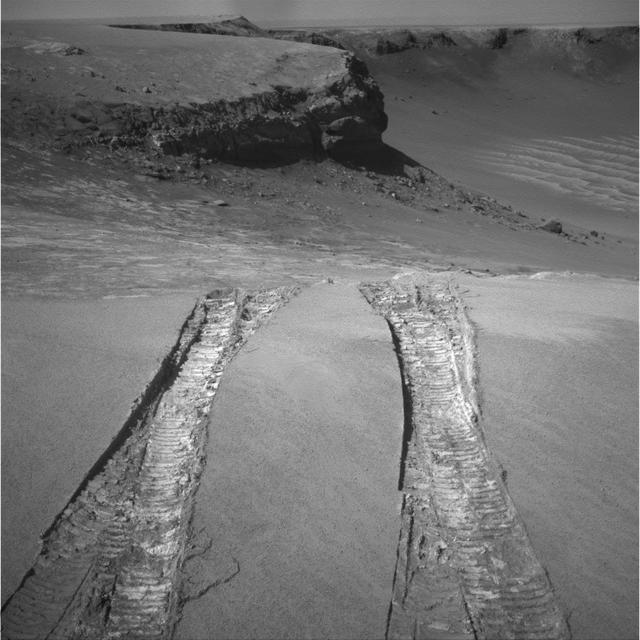
Looking Back at Arena of Exploration
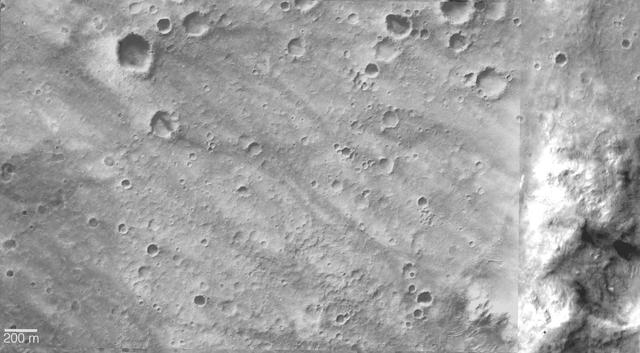
Plains and Hills Explored by Spirit
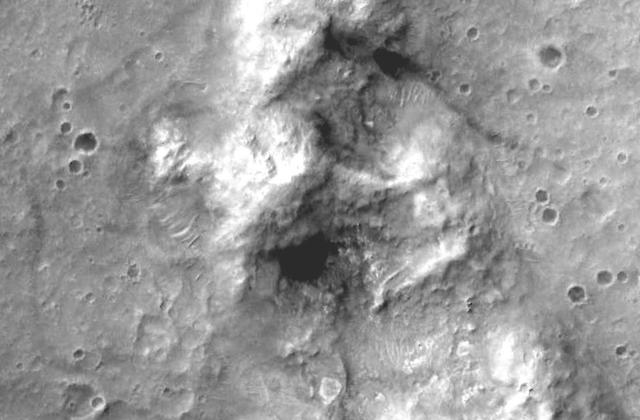
Hills Explored by Spirit
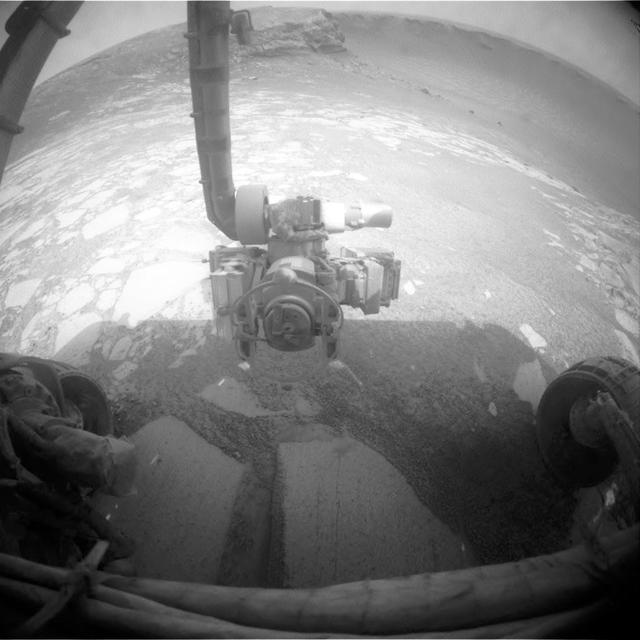
Inside Victoria Crater for Extended Exploration
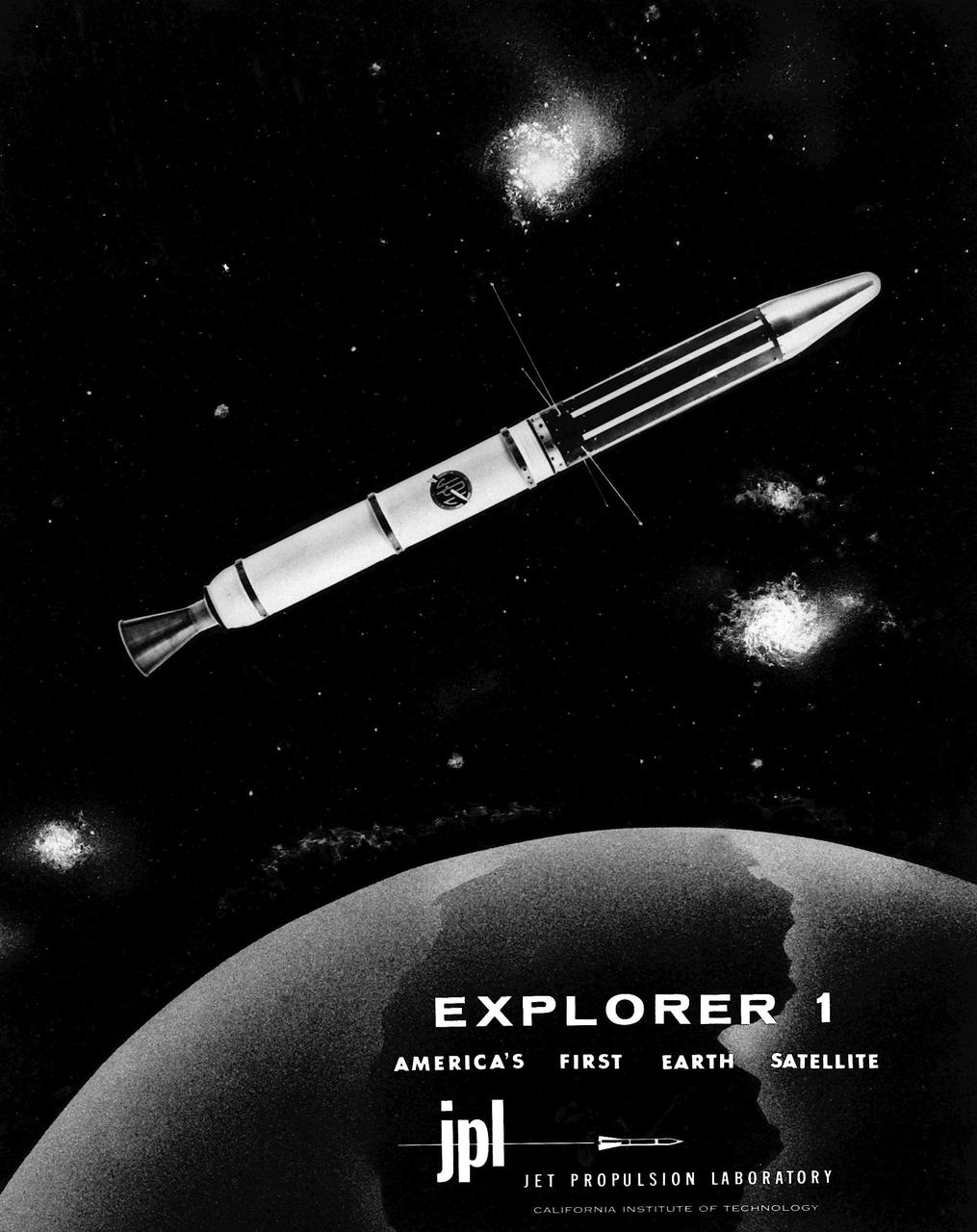
America first satellite, Explorer 1. America joined the space race with the launch of this small, but important spacecraft. http://photojournal.jpl.nasa.gov/catalog/PIA04601
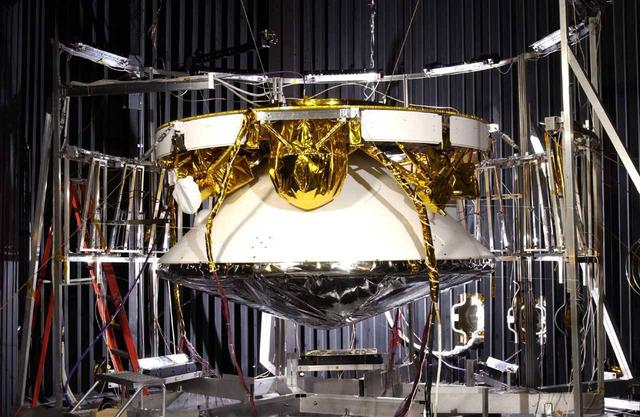
Mars Exploration Rover MER spacecraft -- areoshell encapsulating the rover and lander plus cruise stage.
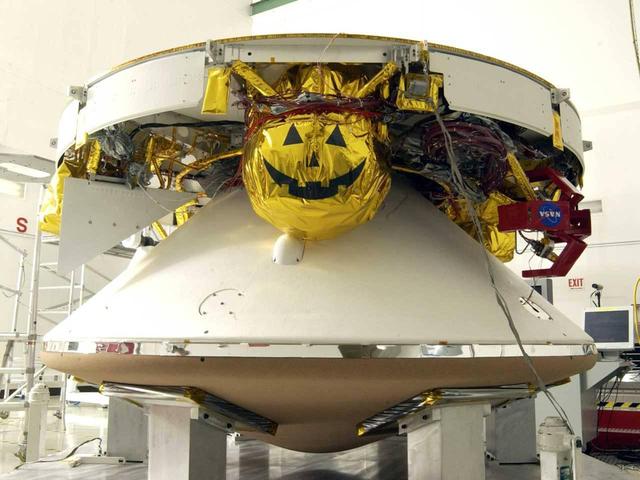
Mars Exploration Rover MER spacecraft -- areoshell encapsulating the rover and lander plus cruise stage.
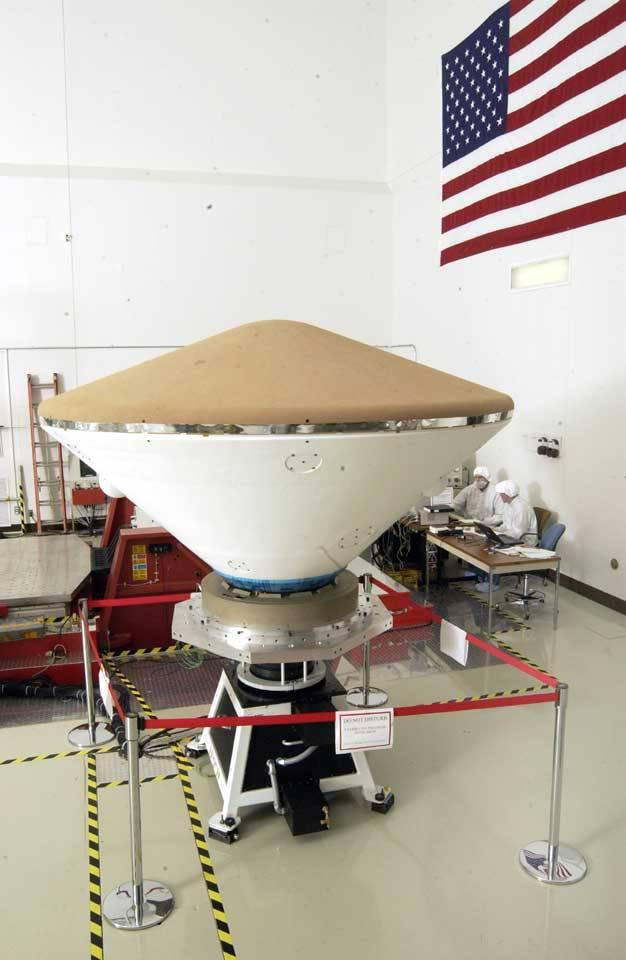
Mars Exploration Rover MER spacecraft. This image shows the aeroshell, which includes the backshell as well as the heatshield.
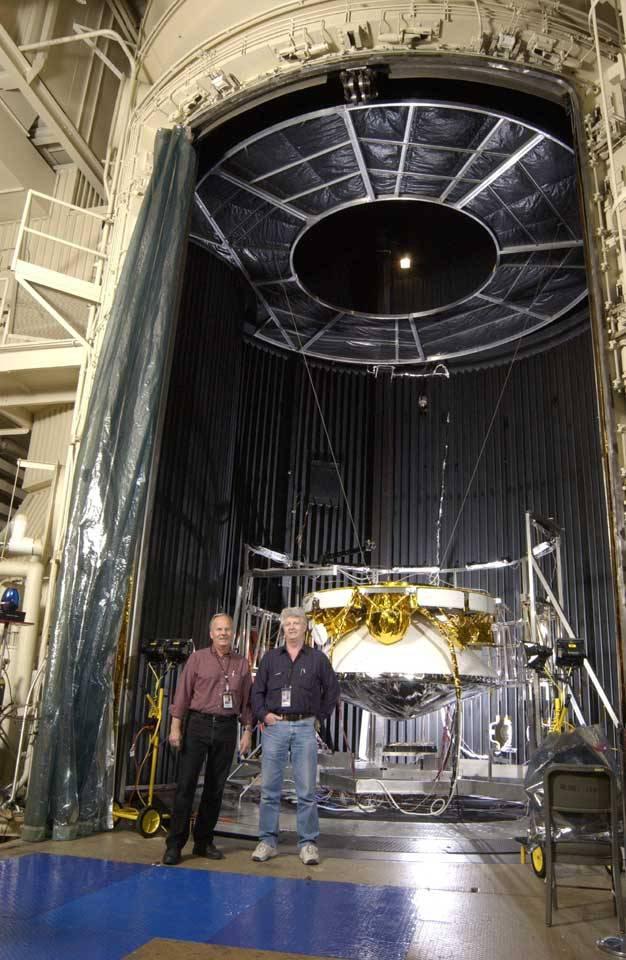
Mars Exploration Rover MER spacecraft -- areoshell encapsulating the rover and lander plus cruise stage.
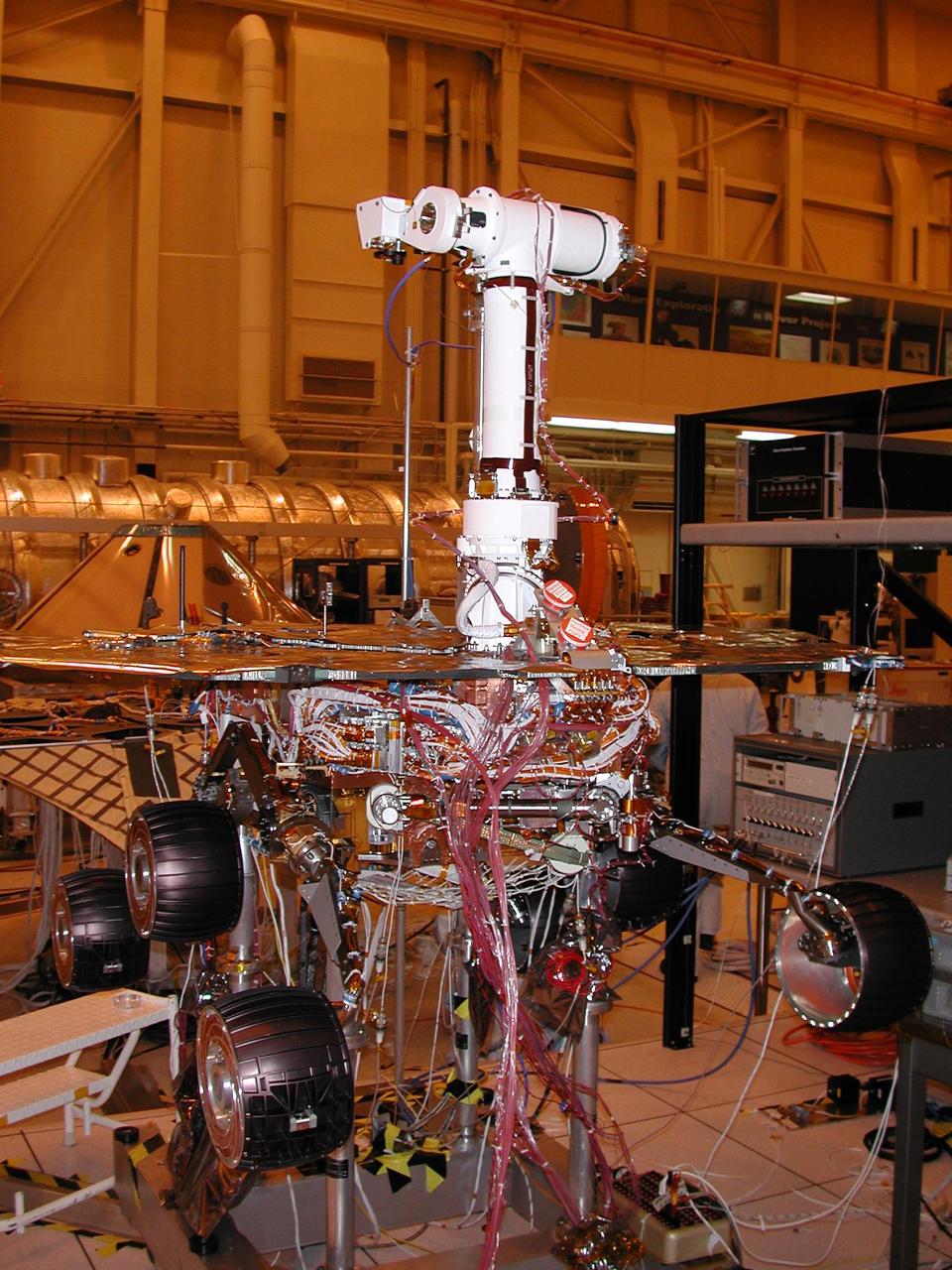
Engineers for NASA Mars Exploration Rover Mission are completing assembly and testing for the twin robotic geologists at JPL.
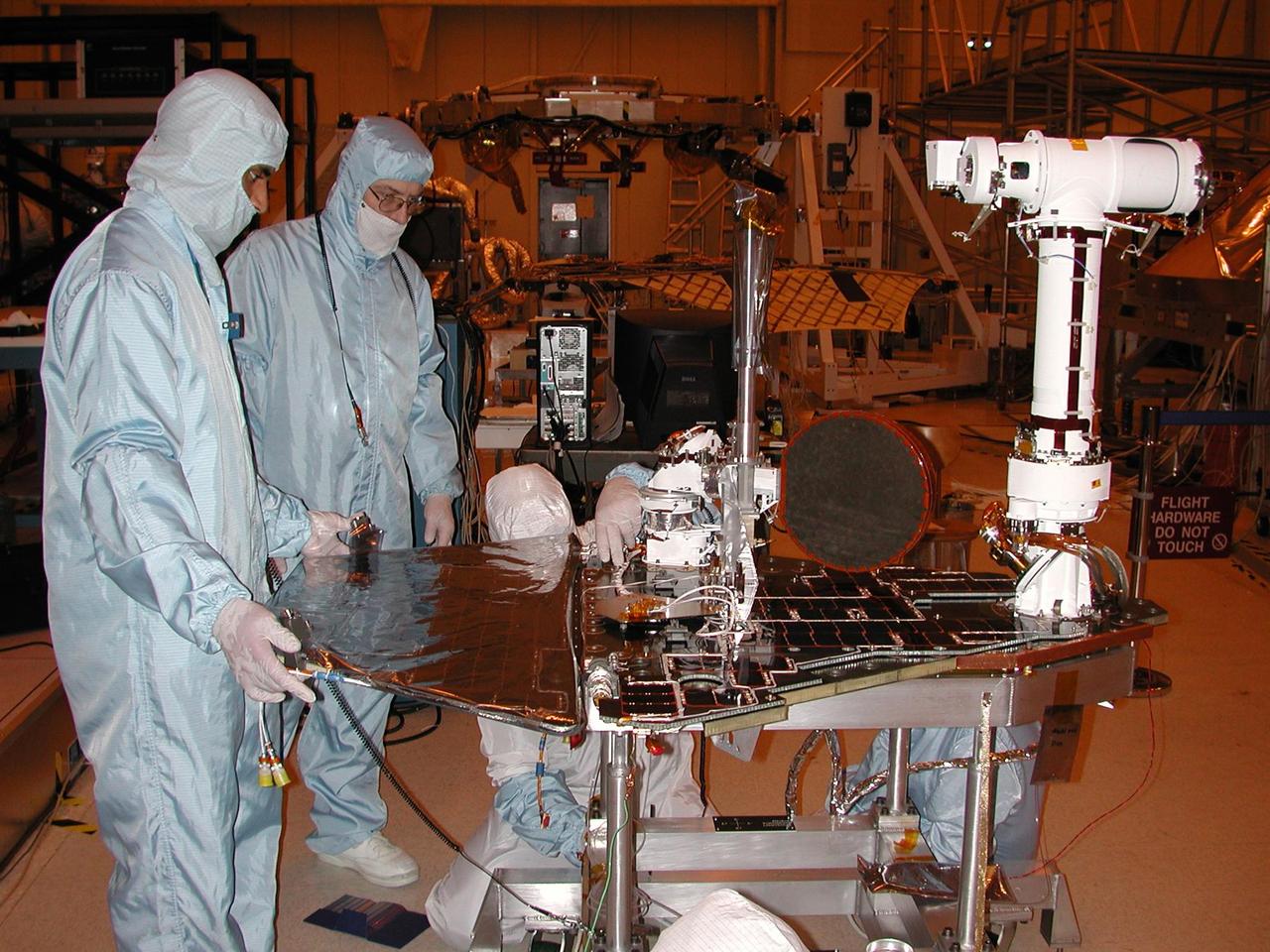
Engineers for NASA Mars Exploration Rover Mission are completing assembly and testing for the twin robotic geologists at JPL.
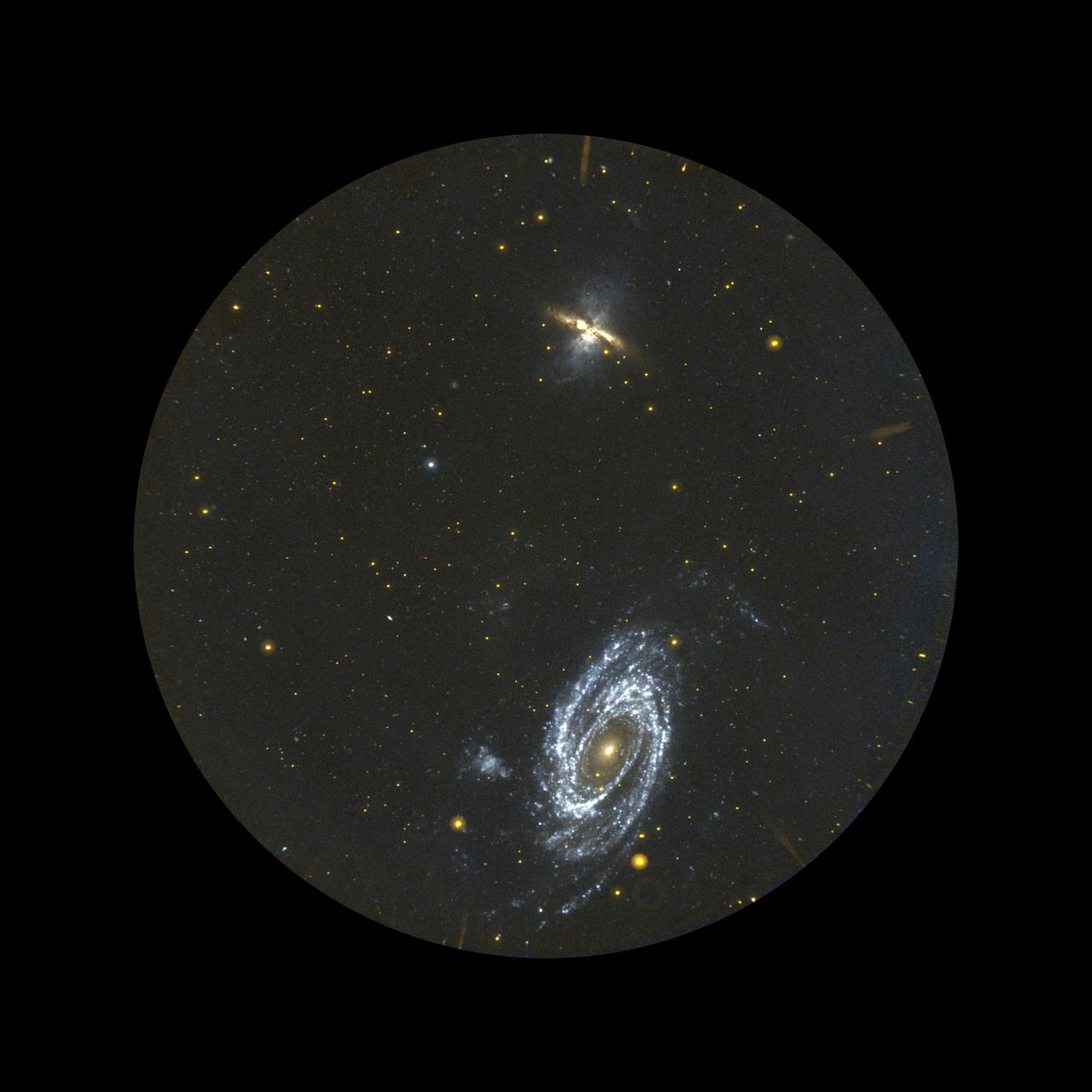
The Galaxy Evolution Explorer specializes in surveying galaxies in ultraviolet light. Its telescope, 50 centimeters (19.7 inches) in diameter, has a field of view that is much wider than most ground-based and space-based telescopes. This field of view, nearly three times the diameter of the Moon, allowed the Galaxy Evolution Explorer to discover seemingly newborn galaxies in our local universe. The telescope surveyed thousands of galaxies before finding three-dozen of these newborns. http://photojournal.jpl.nasa.gov/catalog/PIA05979
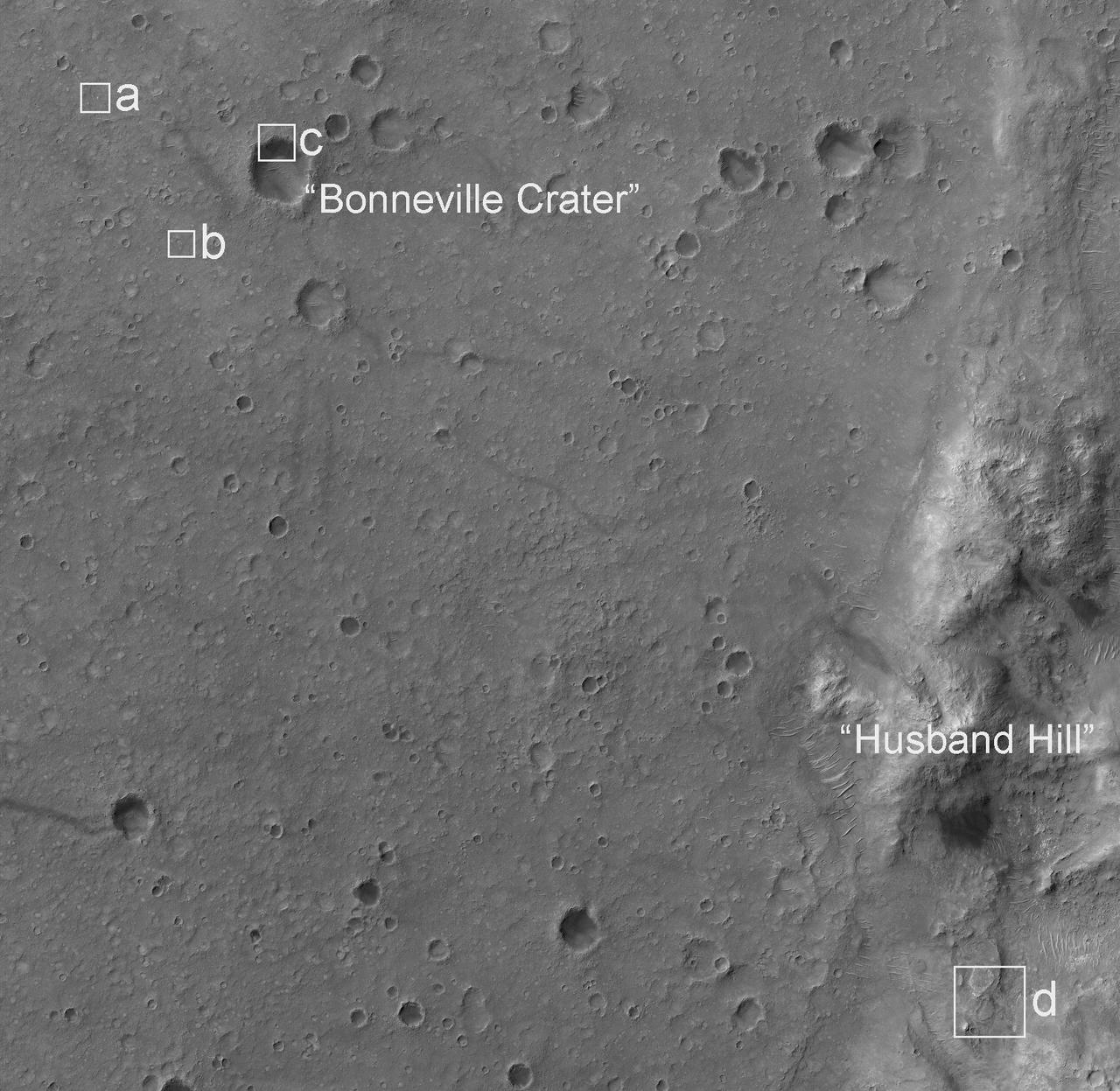
Mars Exploration Rover Landing Site at Gusev Crater

Brian Holz, CEO of OneWeb Satellites, speaks during the groundbreaking ceremony at Kennedy's Exploration Park for OneWeb. The company, in partnership with Airbus, is building a 150,000-square-foot factory to manufacture satellites that will connect all areas of the world to the Internet wirelessly. Photo credit: NASA/Kim Shiflett
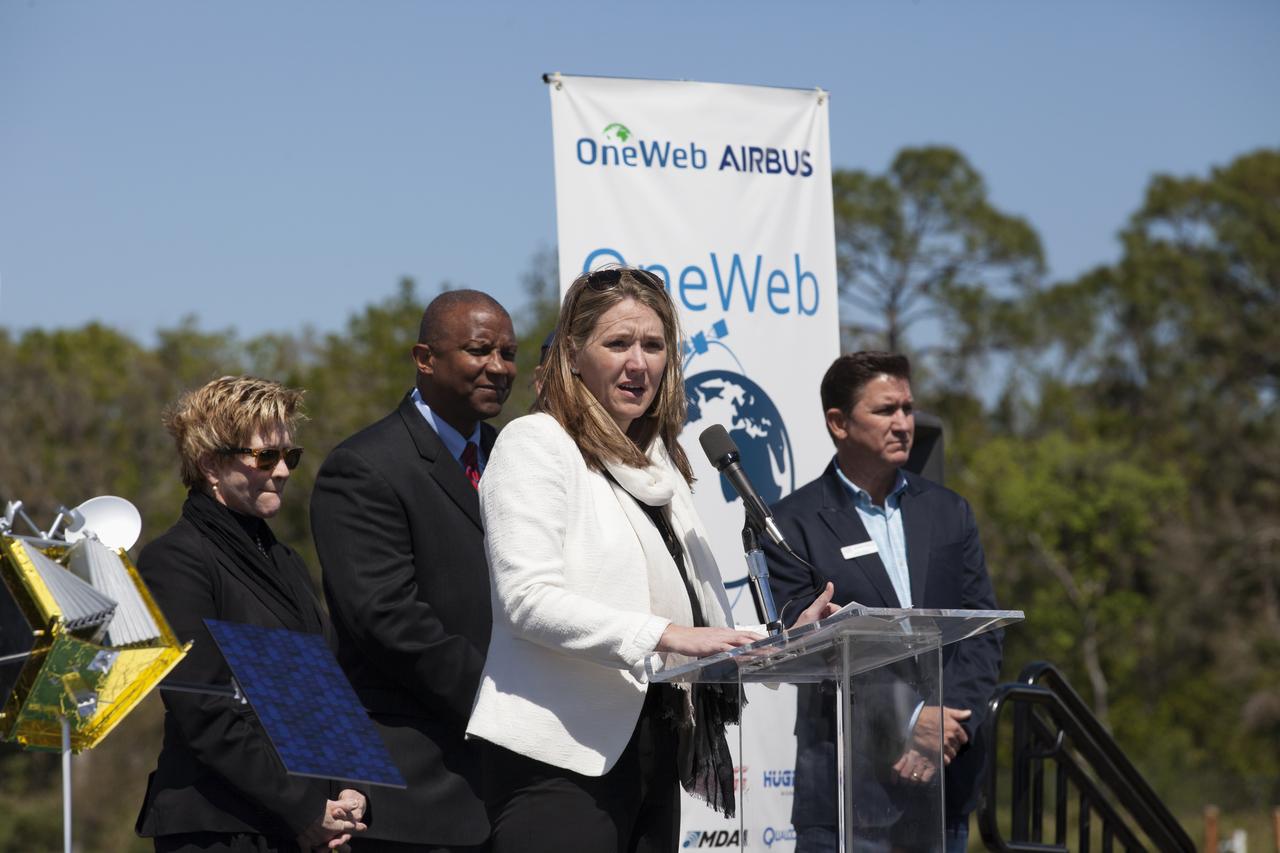
Cissy Procter, executive director of the Florida Department of Economic Activity, speaks during the groundbreaking ceremony at Kennedy's Exploration Park for OneWeb. The company, in partnership with Airbus, is building a 150,000-square-foot factory to manufacture satellites that will connect all areas of the world to the Internet wirelessly. Photo credit: NASA/Kim Shiflett
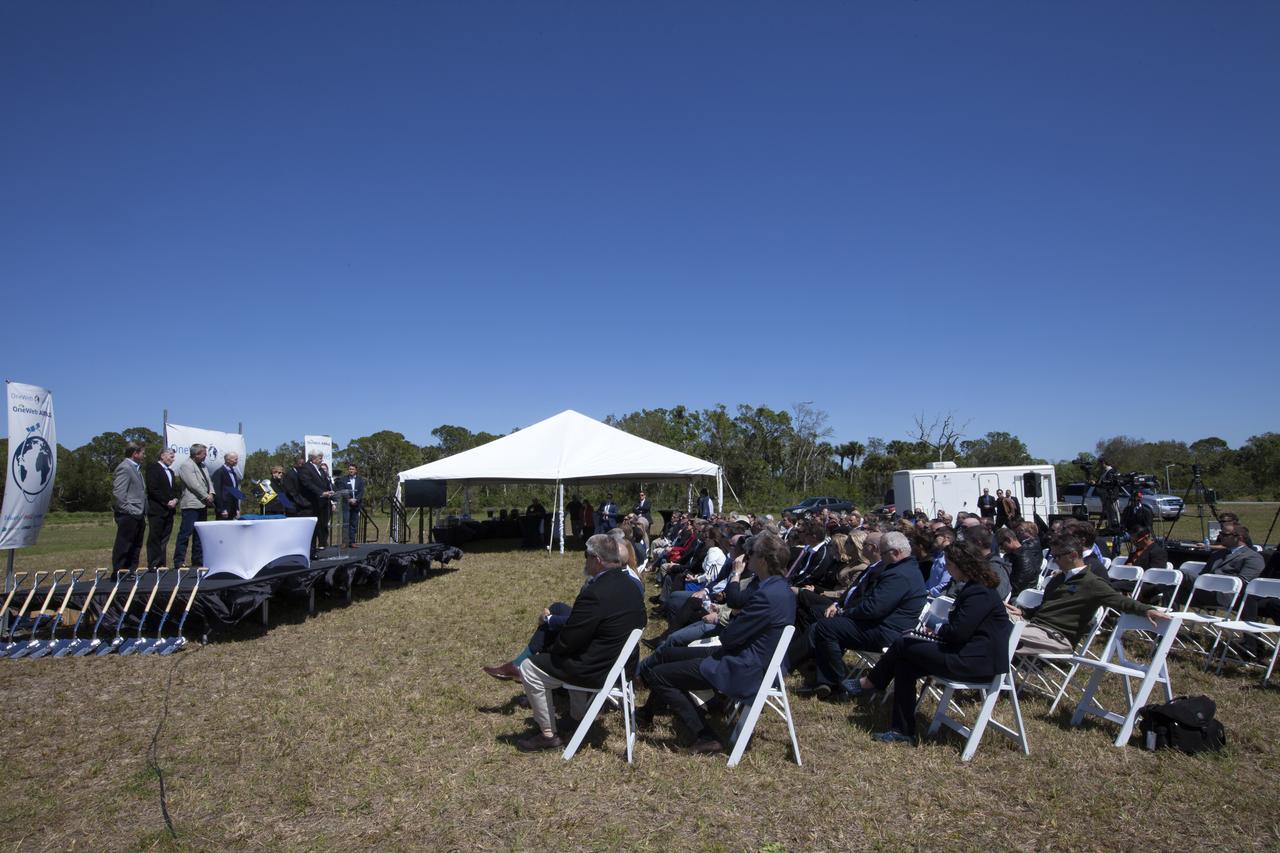
Jim Kuzma, COO of Space Florida, speaks during the groundbreaking ceremony at Kennedy's Exploration Park for OneWeb. The company, in partnership with Airbus, is building a 150,000-square-foot factory to manufacture satellites that will connect all areas of the world to the Internet wirelessly. Photo credit: NASA/Kim Shiflett
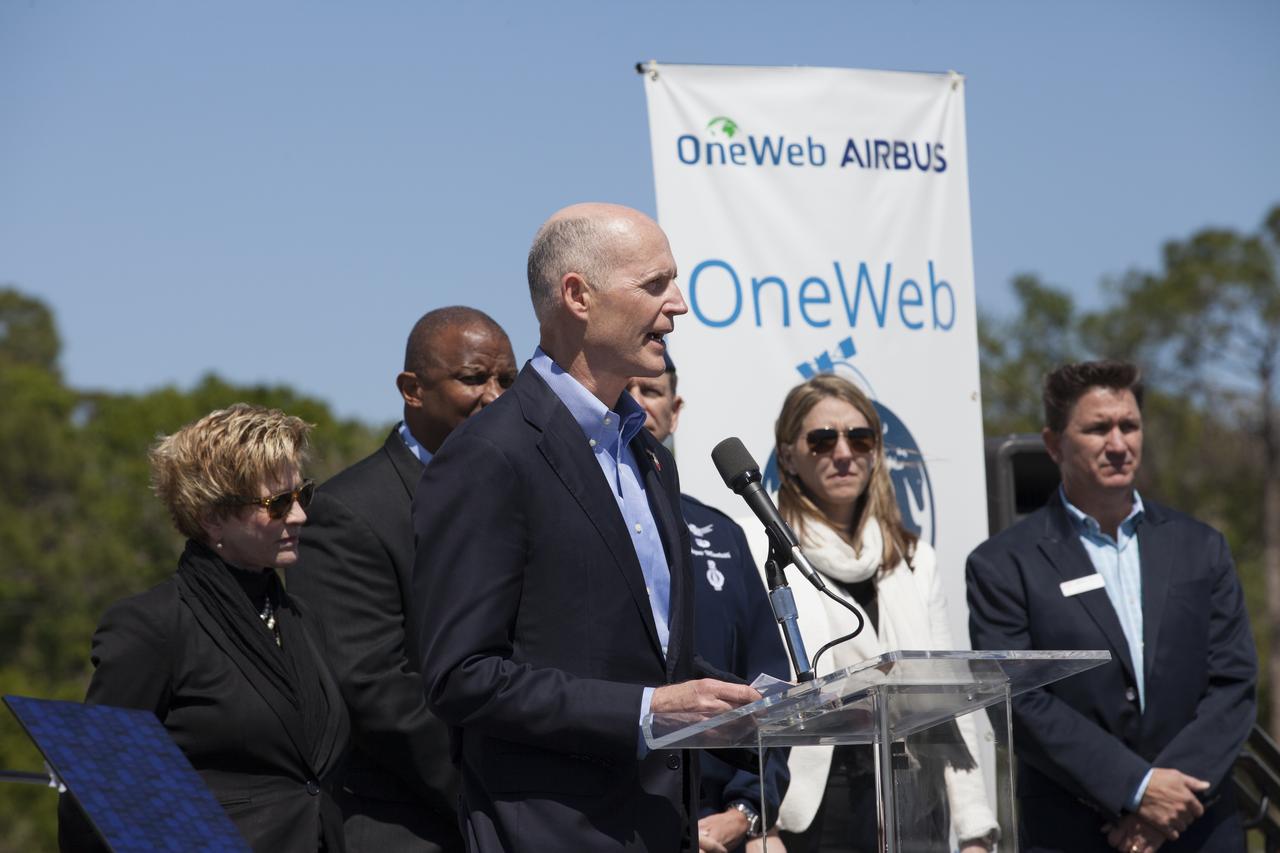
Florida Governor Rick Scott speaks during the groundbreaking ceremony at Kennedy's Exploration Park for OneWeb. The company, in partnership with Airbus, is building a 150,000-square-foot factory to manufacture satellites that will connect all areas of the world to the Internet wirelessly. Photo credit: NASA/Kim Shiflett
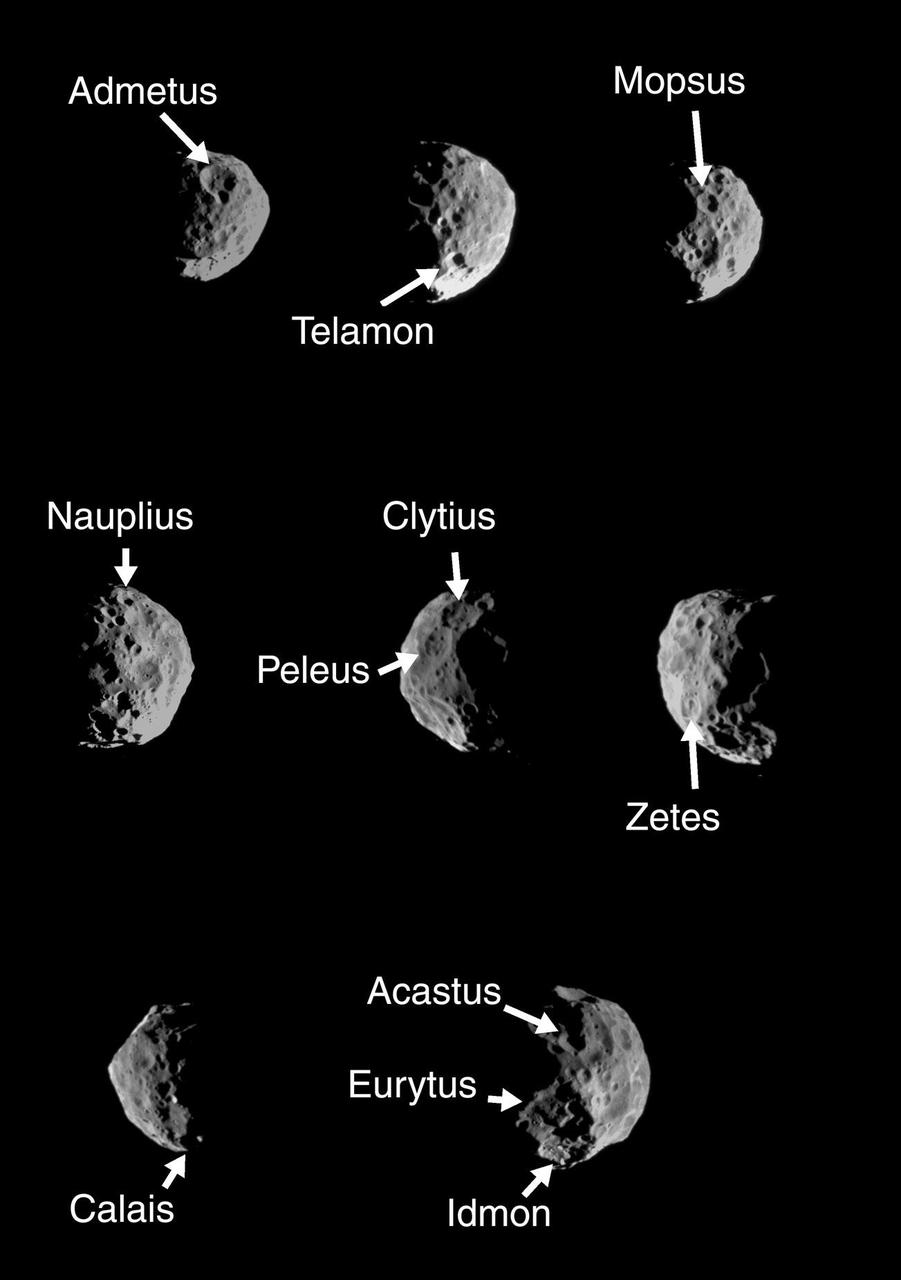
Phoebian Explorers 2
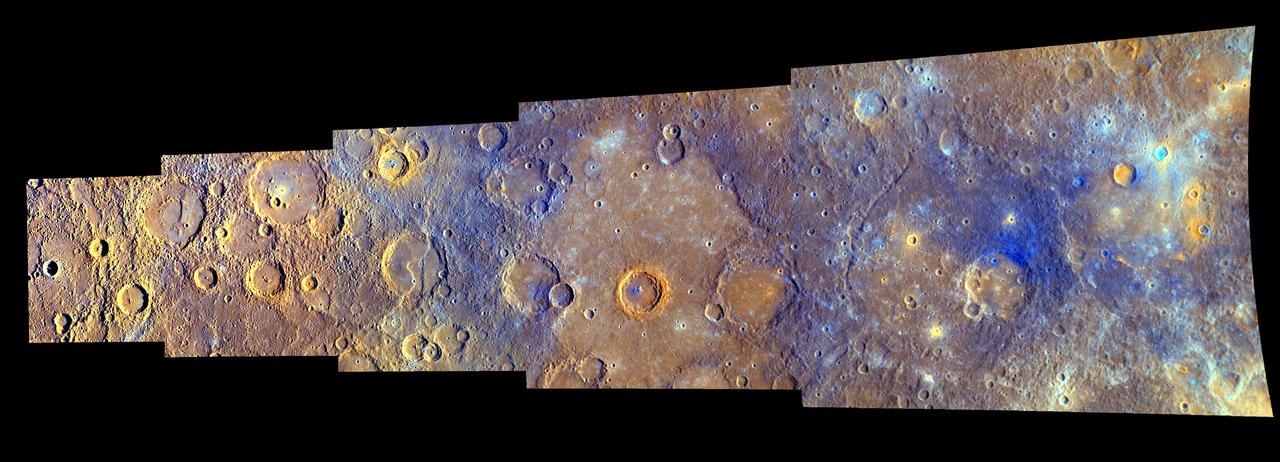
MESSENGER Explores Mercury - In Color
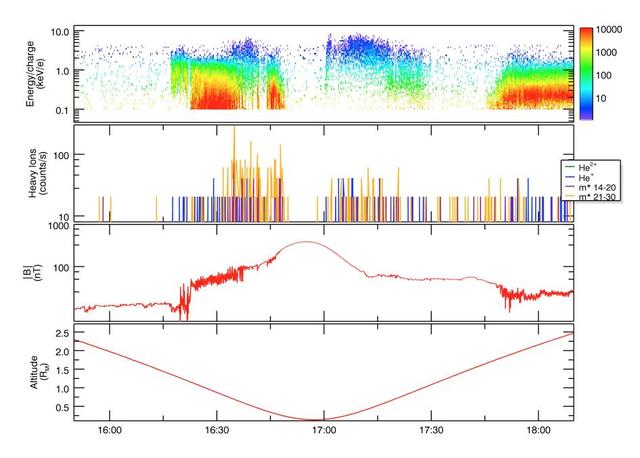
Exploring Mercury Plasma Environment
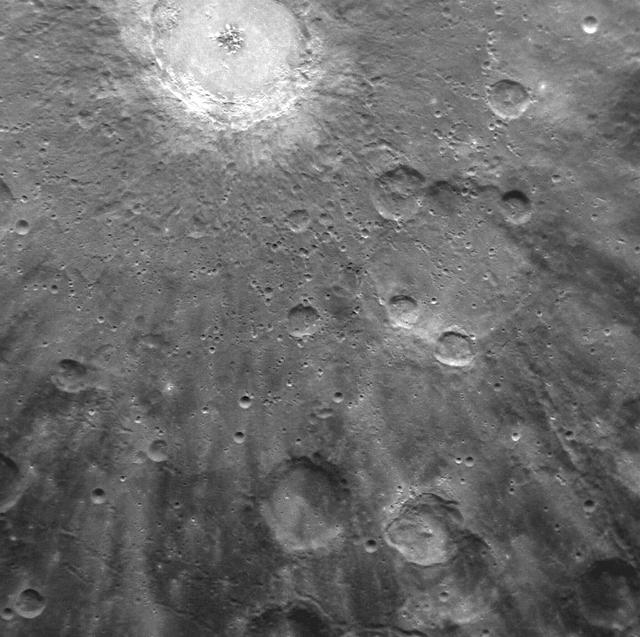
Exploring the Rays of Debussy
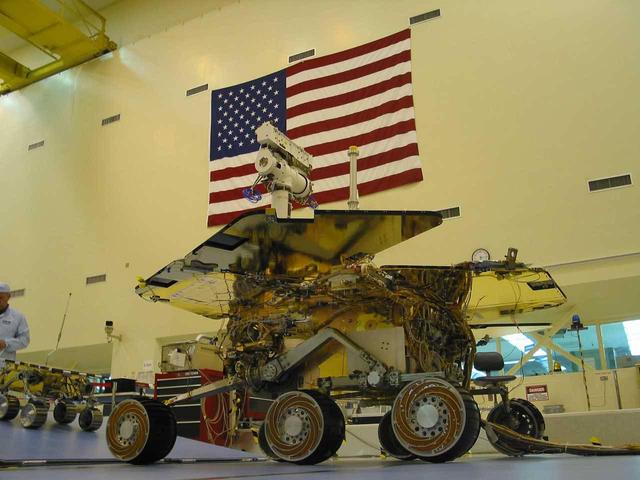
One of two Mars Exploration Rovers sits inside its cruise stage waitingto undergo environmental testing at NASA Jet PropulsionLaboratory.
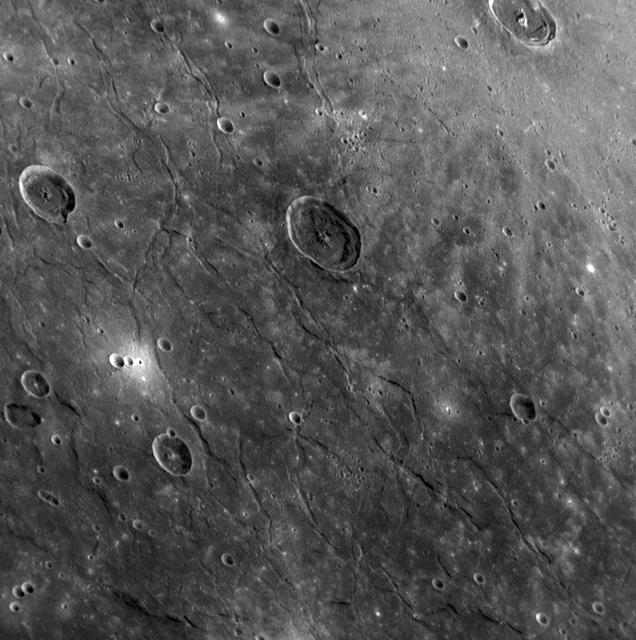
Exploring the Evolution of the Caloris Basin http://photojournal.jpl.nasa.gov/catalog/PIA10606
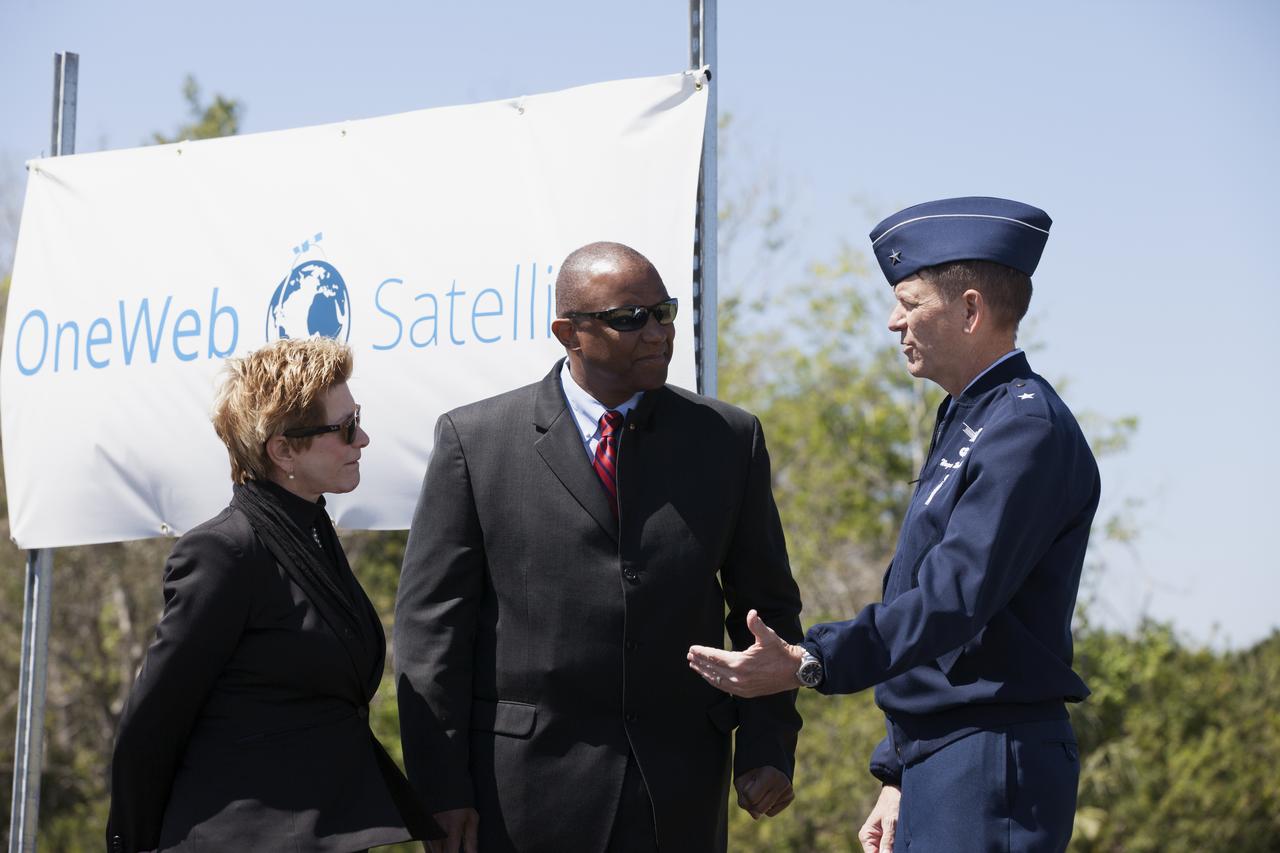
Lynda Weatherman, president and CEO of the Economic Development Council of the Space Coast, talks with Kelvin Manning, associate director of NASA's Kennedy Space Center, and Gen. Wayne Monteith, commander of the 45th Space Wing of the U.S. Air Force, prior to a groundbreaking ceremony at Kennedy's Exploration Park for OneWeb. The company, in partnership with Airbus, is building a 150,000-square-foot factory to manufacture satellites that will connect all areas of the world to the Internet wirelessly. Photo credit: NASA/Kim Shiflett
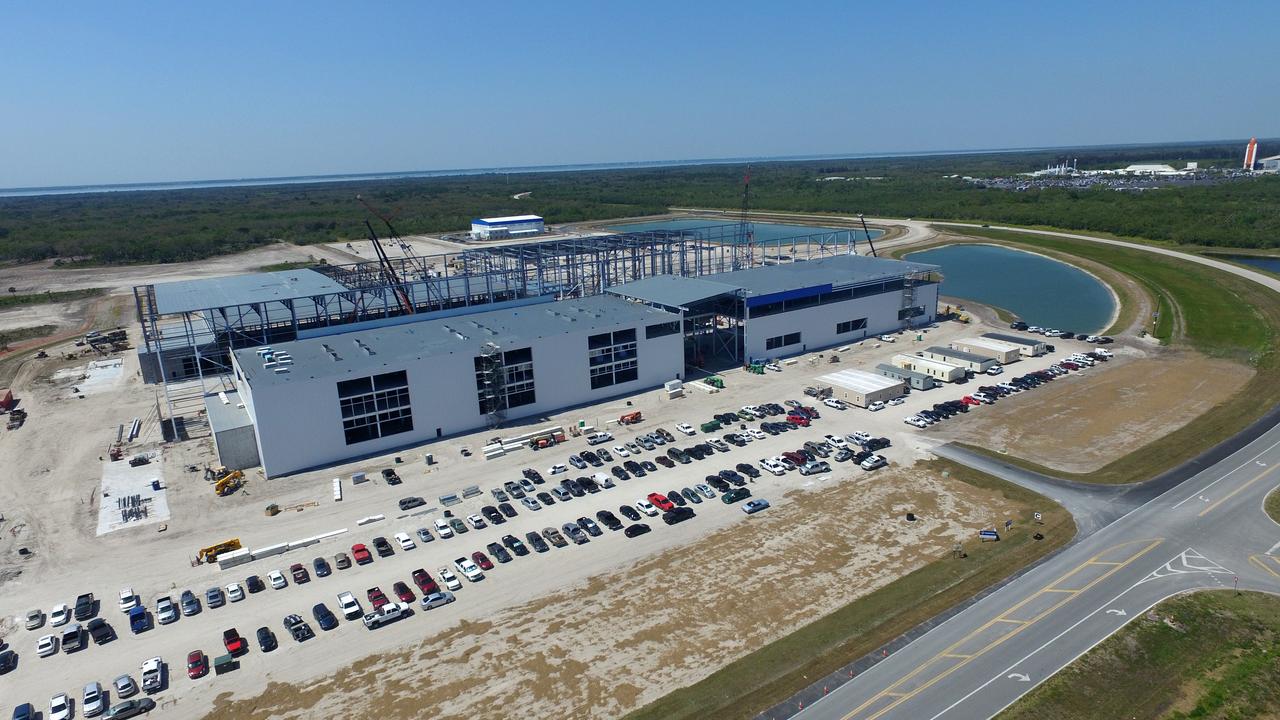
Construction is progressing on Blue Origin's 750,000-square-foot facility being built at Exploration Park on NASA Kennedy Space Center property in Florida. Blue Origin will use the factory to manufacture its two-stage super-heavy-lift New Glenn launch vehicle and launch the vehicles from Space Launch Complex 46 at Cape Canaveral Air Force Station.
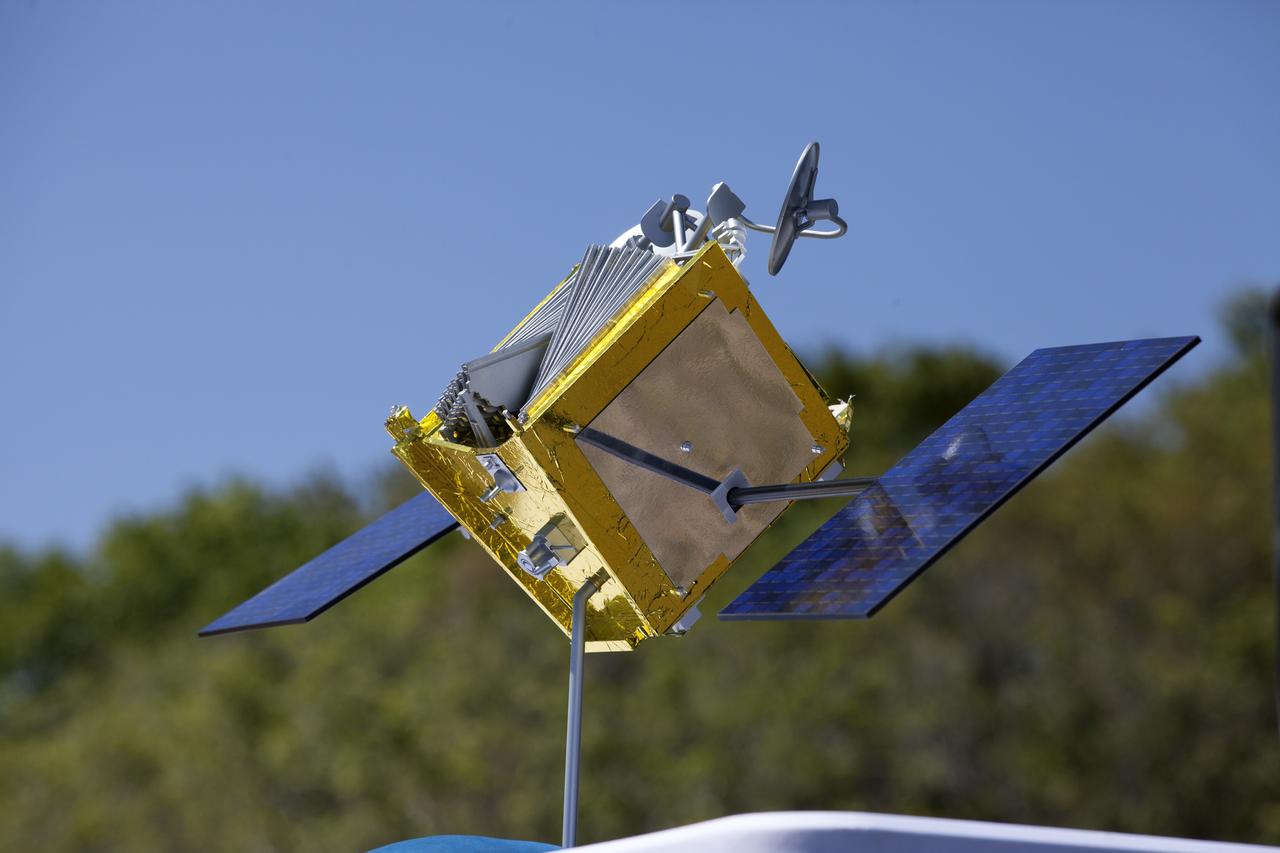
A model of a OneWeb satellite like those the company will build to will connect all areas of the world to the Internet wirelessly. The company plans to launch 2,000 of the satellites as part of its constellation. The satellites will be built at a new factory at Exploration Park at NASA's Kennedy Space Center. The company held a groundbreaking ceremony for the factory. Photo credit: NASA/Kim Shiflett
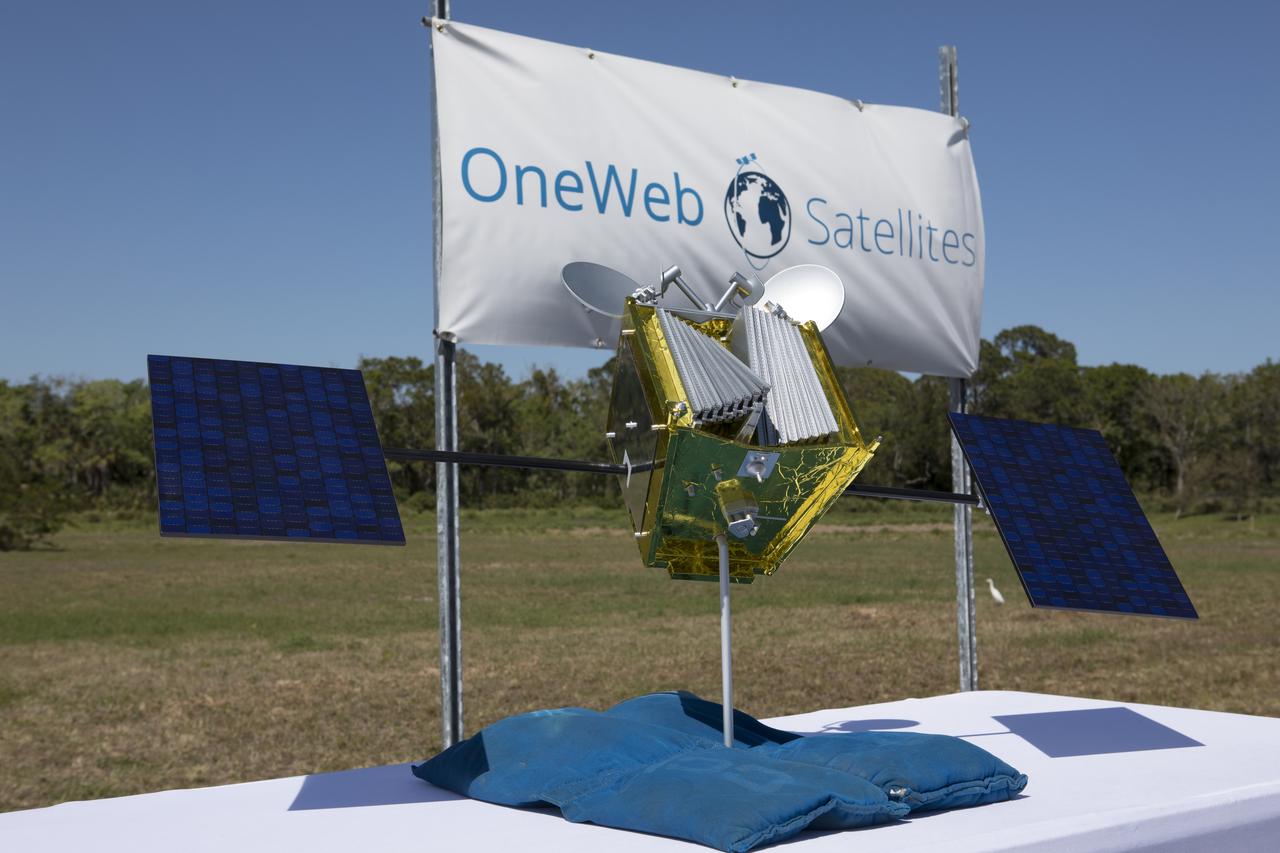
A model of a OneWeb satellite like those the company will build to will connect all areas of the world to the Internet wirelessly. The company plans to launch 2,000 of the satellites as part of its constellation. The satellites will be built at a new factory at Exploration Park at NASA's Kennedy Space Center. The company held a groundbreaking ceremony for the factory. Photo credit: NASA/Kim Shiflett
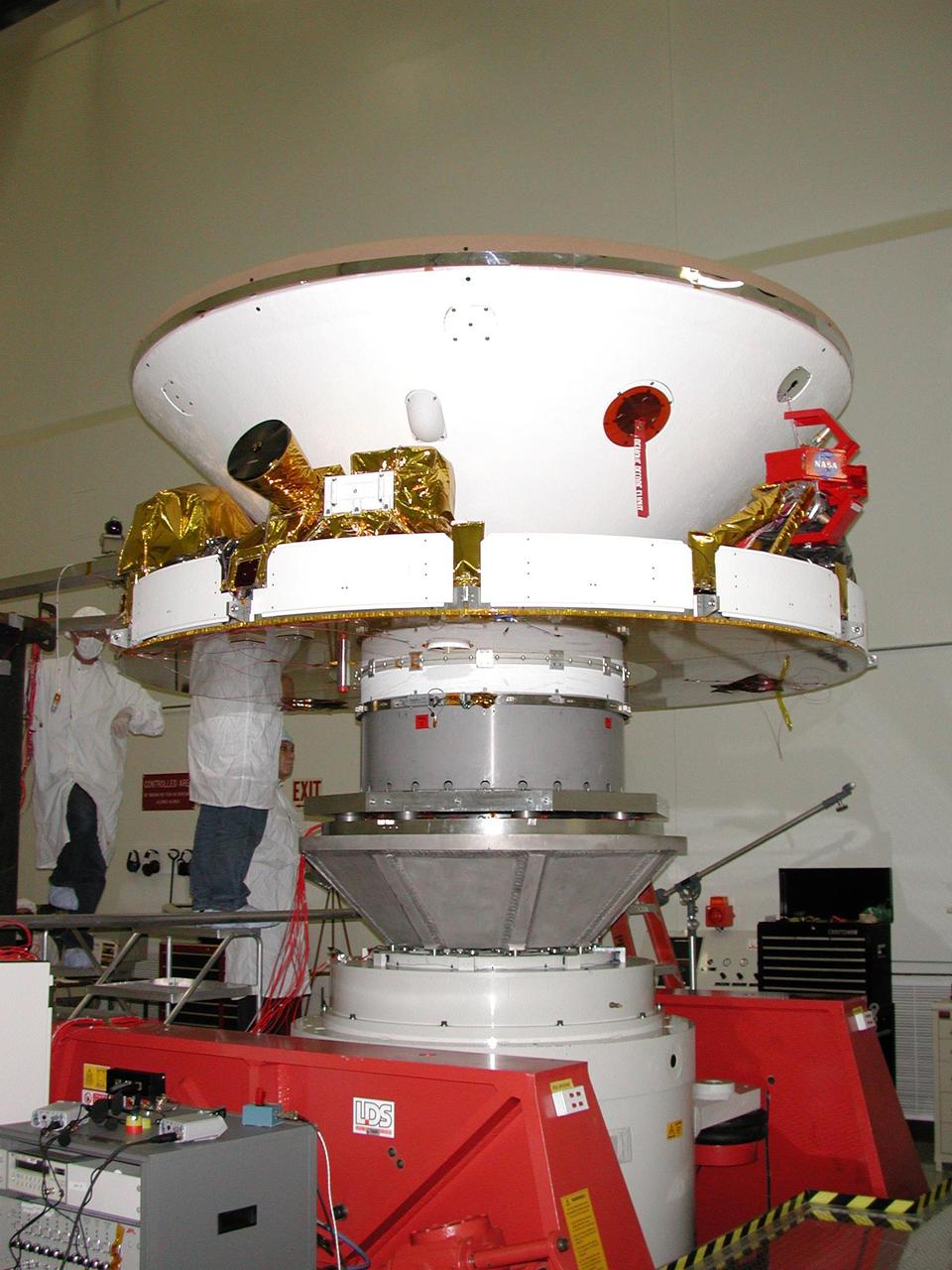
One of two Mars Exploration Rovers sits inside its cruise stage waiting to undergo environmental testing at NASA Jet Propulsion Laboratory.
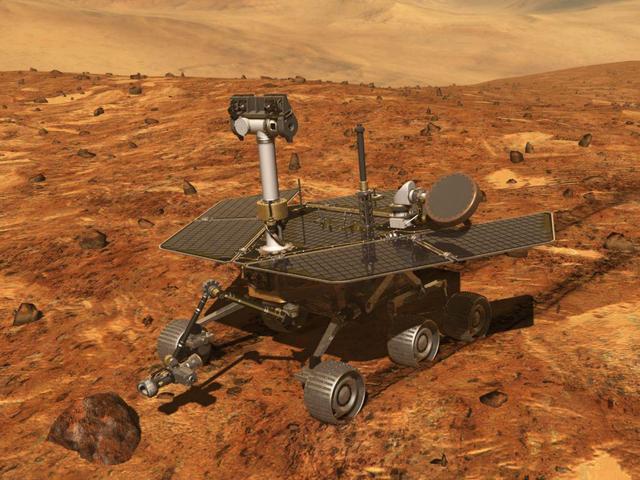
Artist concept of NASA Artist concept of Mars Exploration Rover MER from December, 2002. http://photojournal.jpl.nasa.gov/catalog/PIA04239
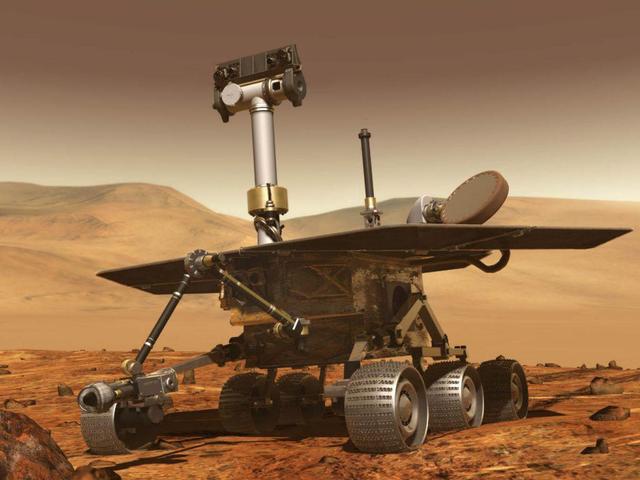
Artist concept of NASA Artist concept of Mars Exploration Rover MER from December, 2002. http://photojournal.jpl.nasa.gov/catalog/PIA04240
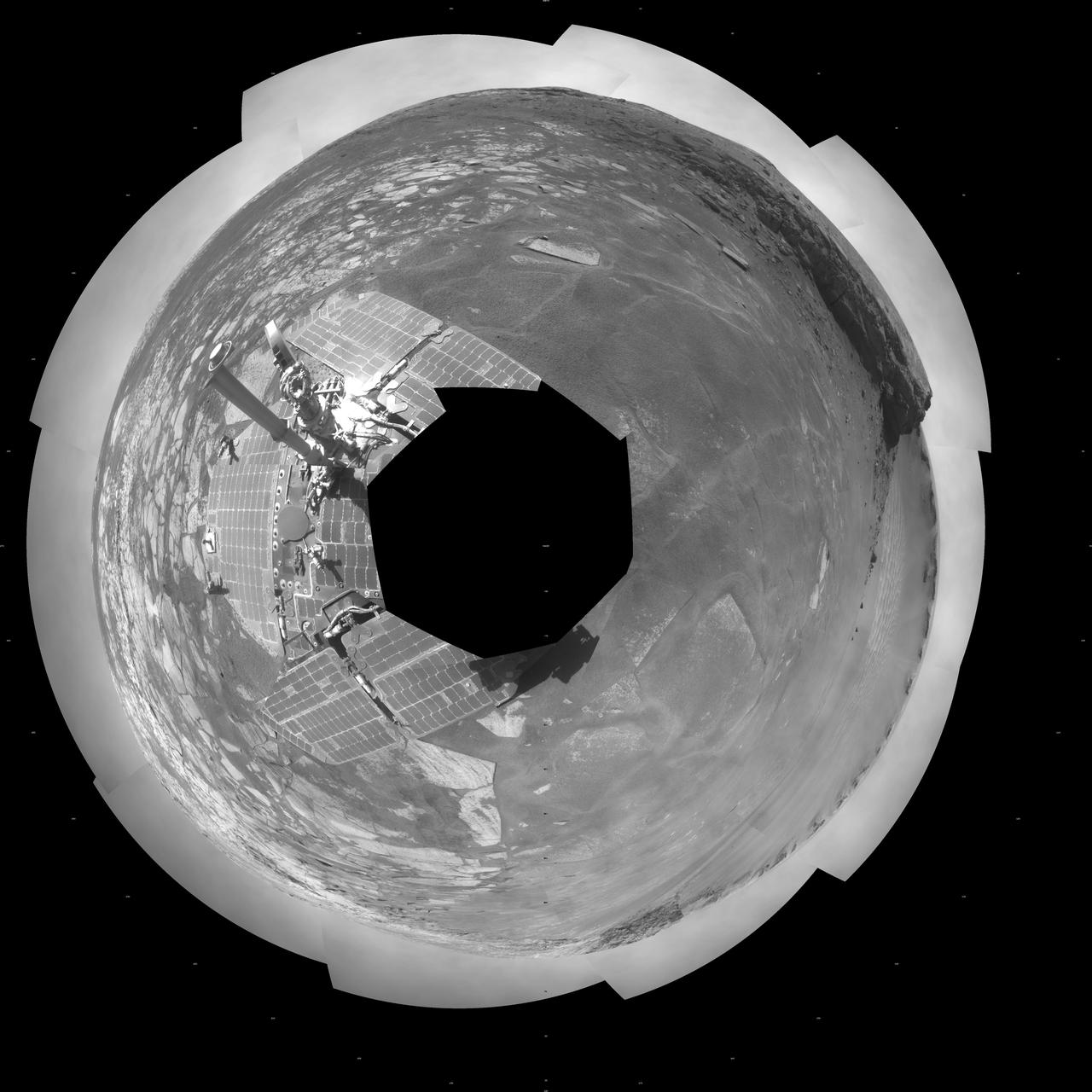
Opportunity View During Exploration in Duck Bay, Sols 1506-1510 Polar
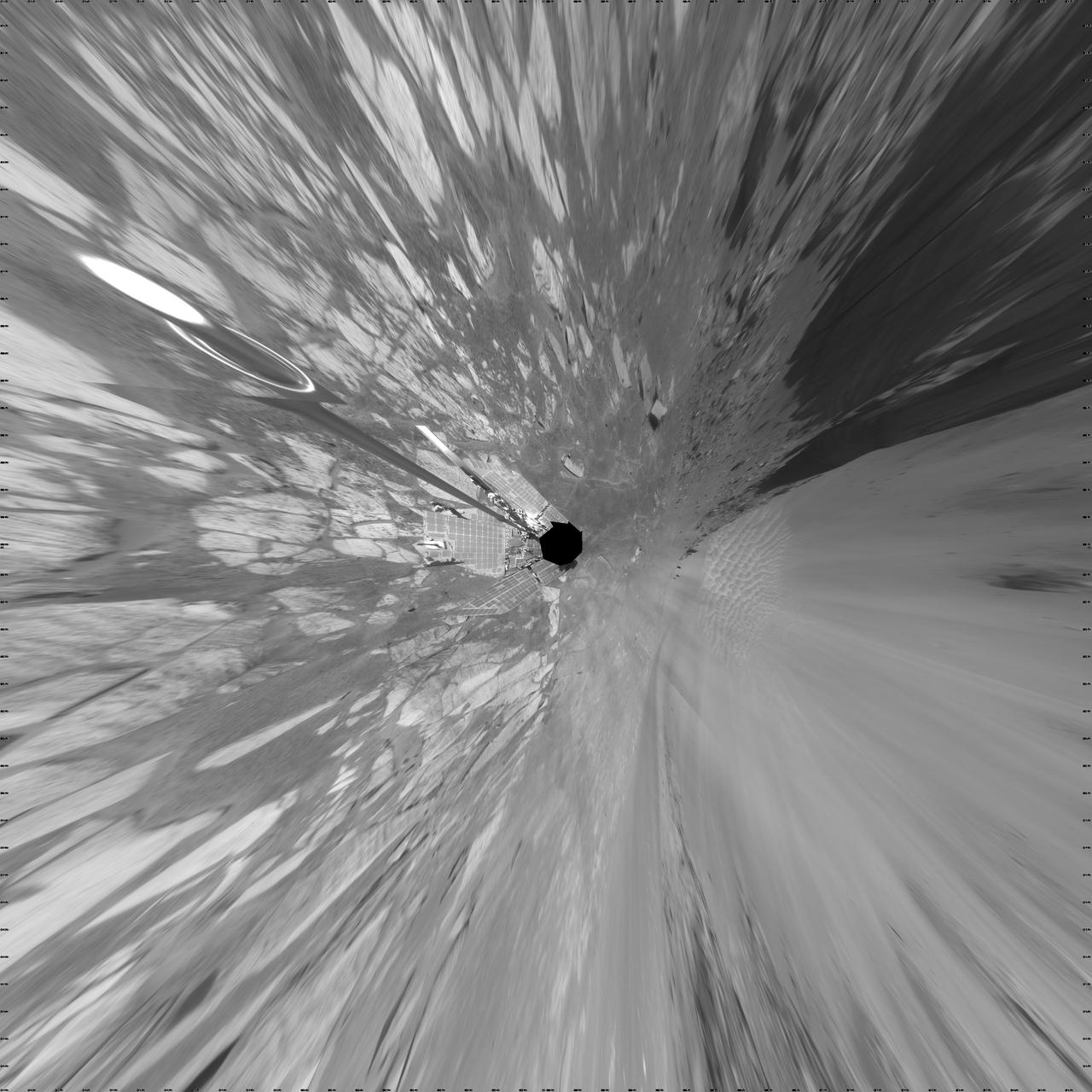
Opportunity View During Exploration in Duck Bay, Sols 1506-1510 Vertical
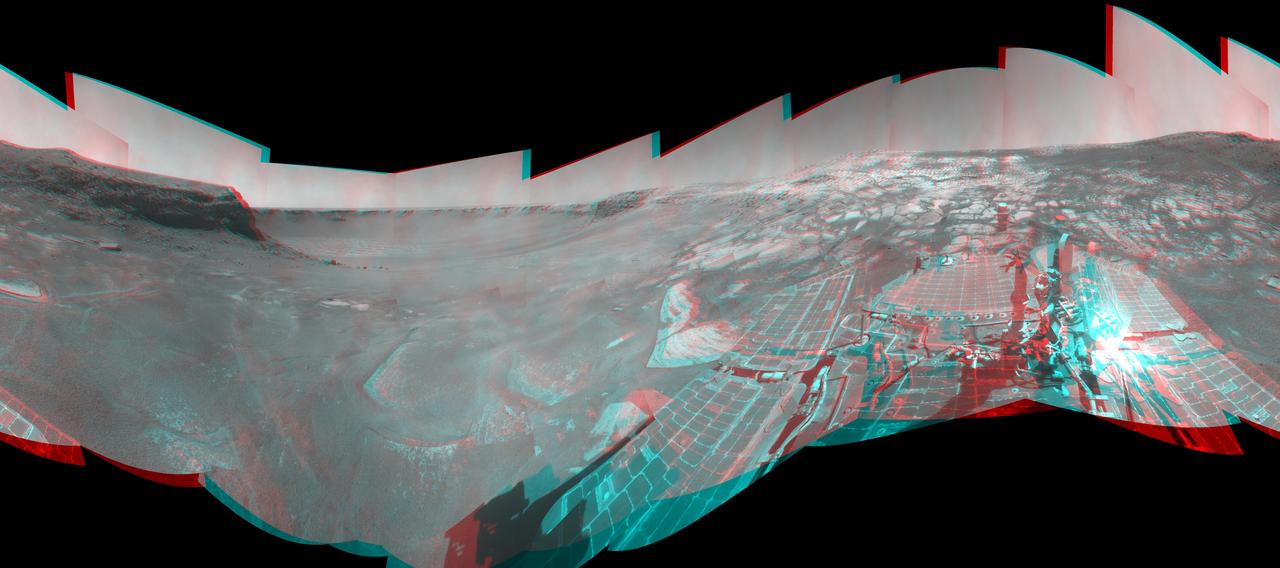
Opportunity View During Exploration in Duck Bay, Sols 1506-1510 Stereo
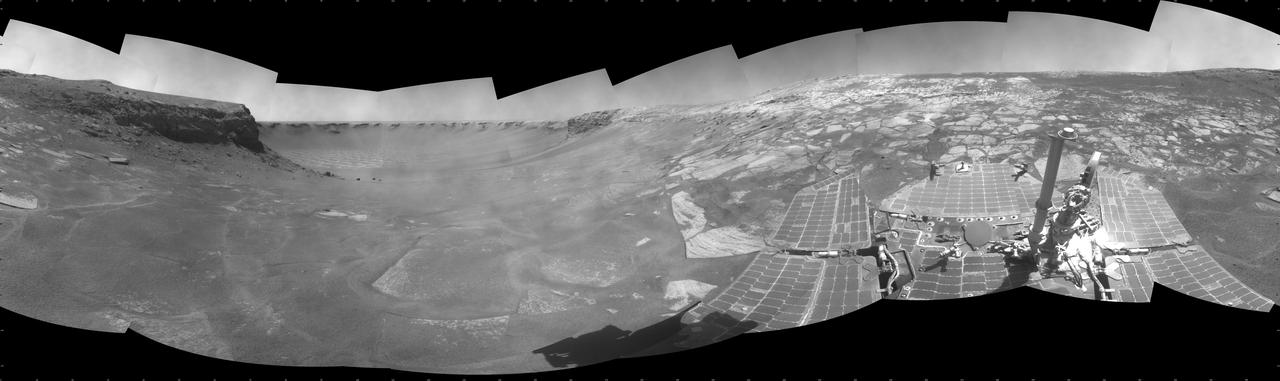
Opportunity View During Exploration in Duck Bay, Sols 1506-1510
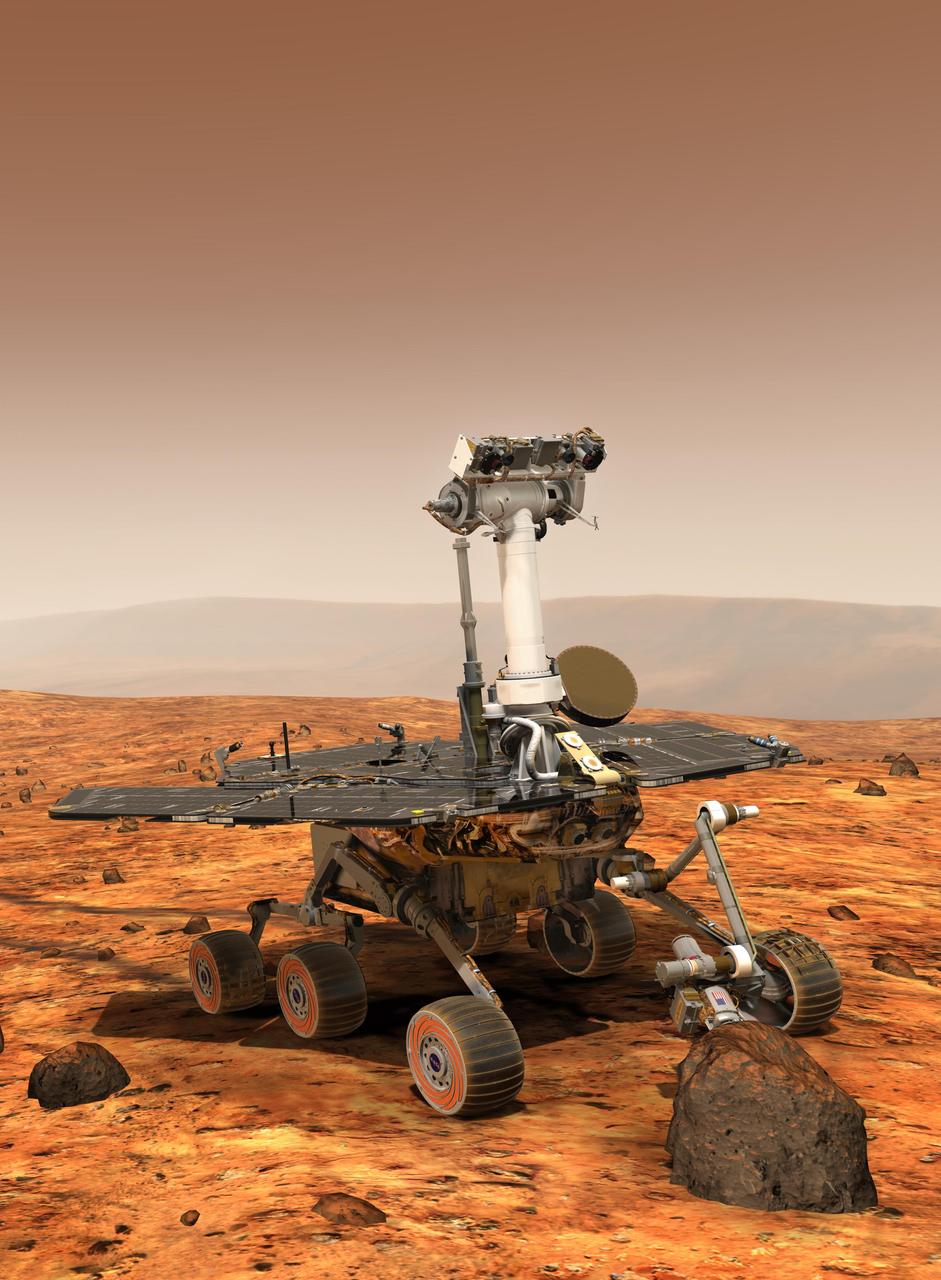
An artist's concept portrays a NASA Mars Exploration Rover on the surface of Mars. Two rovers, Spirit and Opportunity, will reach Mars in January 2004. Each has the mobility and toolkit to function as a robotic geologist. http://photojournal.jpl.nasa.gov/catalog/PIA04928

Officials break ground for a 150,000-square-foot manufacturing facility for OneWeb Satellites at Exploration Park at NASA's Kennedy Space Center. The company, in partnership with Airbus, is building a 150,000-square-foot factory to manufacture satellites that will connect all areas of the world to the Internet wirelessly. The officials are, from left, John Saul, operations manager of Hensell-Phelps; Kelvin Manning, associate director of NASA's Kennedy Space Center; Brian Holz, CEO of OneWeb Satellites; Rick Scott, governor of Florida; Lynda Weatherman, president and CEO of the Economic Development Council of the Space Coast; Mike Cosentino, president, Airbus Defense and Space; Cissy Procter, executive director of the Florida Department of Economic Activity; Gen. Wayne Monteith, commander of the 45th Space Wing of the U.S. Air Force; and Jim Kuzma, COO of Space Florida. Photo credit: NASA/Kim Shiflett

Dale Ketchum of Space Florida opens the groundbreaking ceremony at Kennedy's Exploration Park for OneWeb. The company, in partnership with Airbus, is building a 150,000-square-foot factory to manufacture satellites that will connect all areas of the world to the Internet wirelessly. Behind him are, from left, Jim Kuzma, COO of Space Florida; Mike Cosentino, president, Airbus Defense and Space; Brian Holz, CEO of OneWeb Satellites; Rick Scott, governor of Florida; Lynda Weatherman, president and CEO of the Economic Development Council of the Space Coast; Kelvin Manning, associate director of NASA's Kennedy Space Center; Gen. Wayne Monteith, commander of the 45th Space Wing of the U.S. Air Force; Cissy Procter, executive director of the Florida Department of Economic Activity; and John Saul, operations manager of Hensell-Phelps. Photo credit: NASA/Kim Shiflett
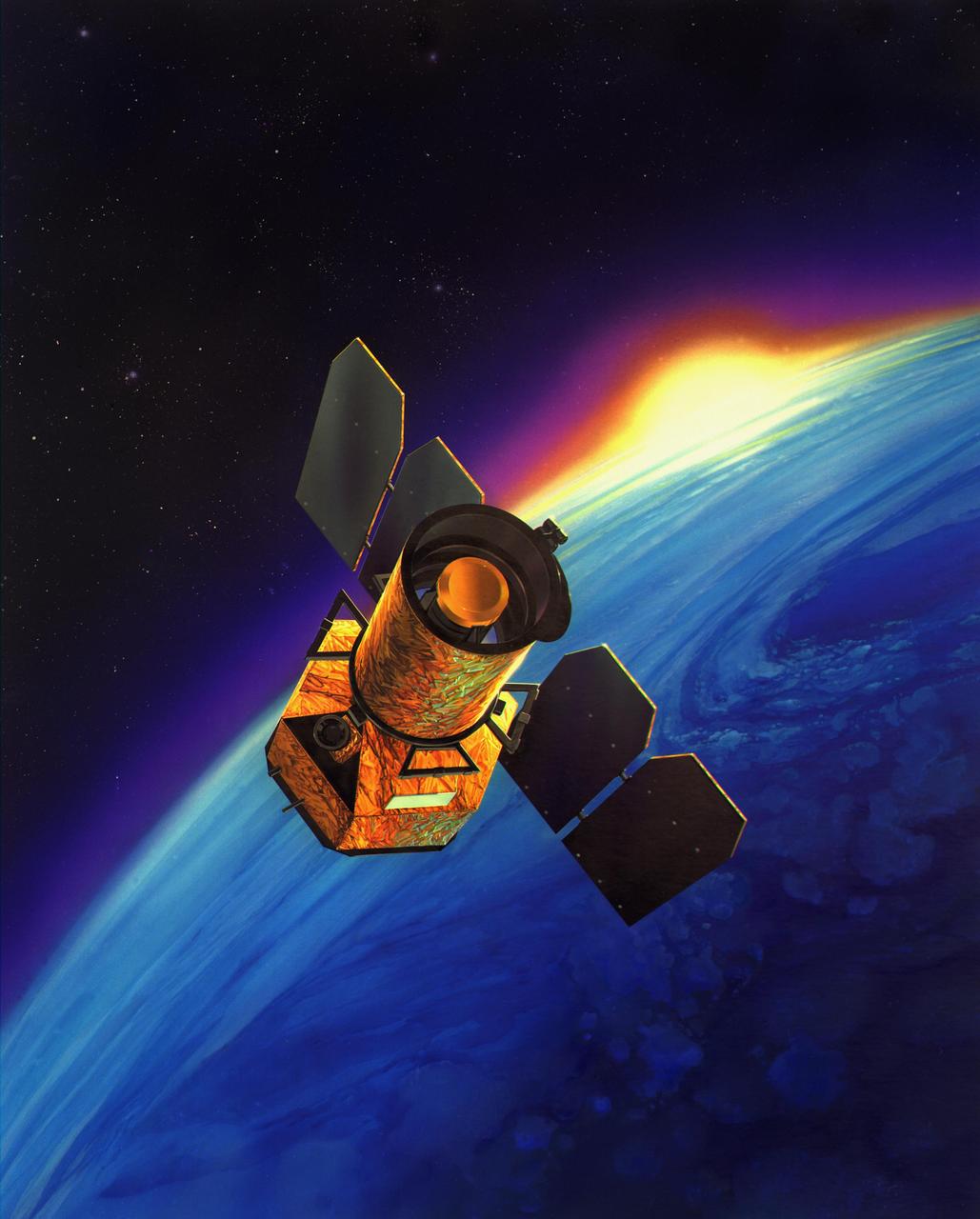
The Galaxy Evolution Explorer was launched on April 28, 2003. Its mission is to study the shape, brightness, size and distance of galaxies across 10 billion years of cosmic history. The 50-centimeter-diameter (19.7-inch) telescope onboard the Galaxy Evolution Explorer sweeps the skies in search of ultraviolet-light sources. Ultraviolet is light from the higher end of the electromagnetic spectrum, just above visible light in frequency, but below X-rays and gamma rays. While a small amount of ultraviolet penetrates Earth's atmosphere, causing sunburn, the Galaxy Evolution Explorer observes those ultraviolet frequencies that can only be seen from space. http://photojournal.jpl.nasa.gov/catalog/PIA04234
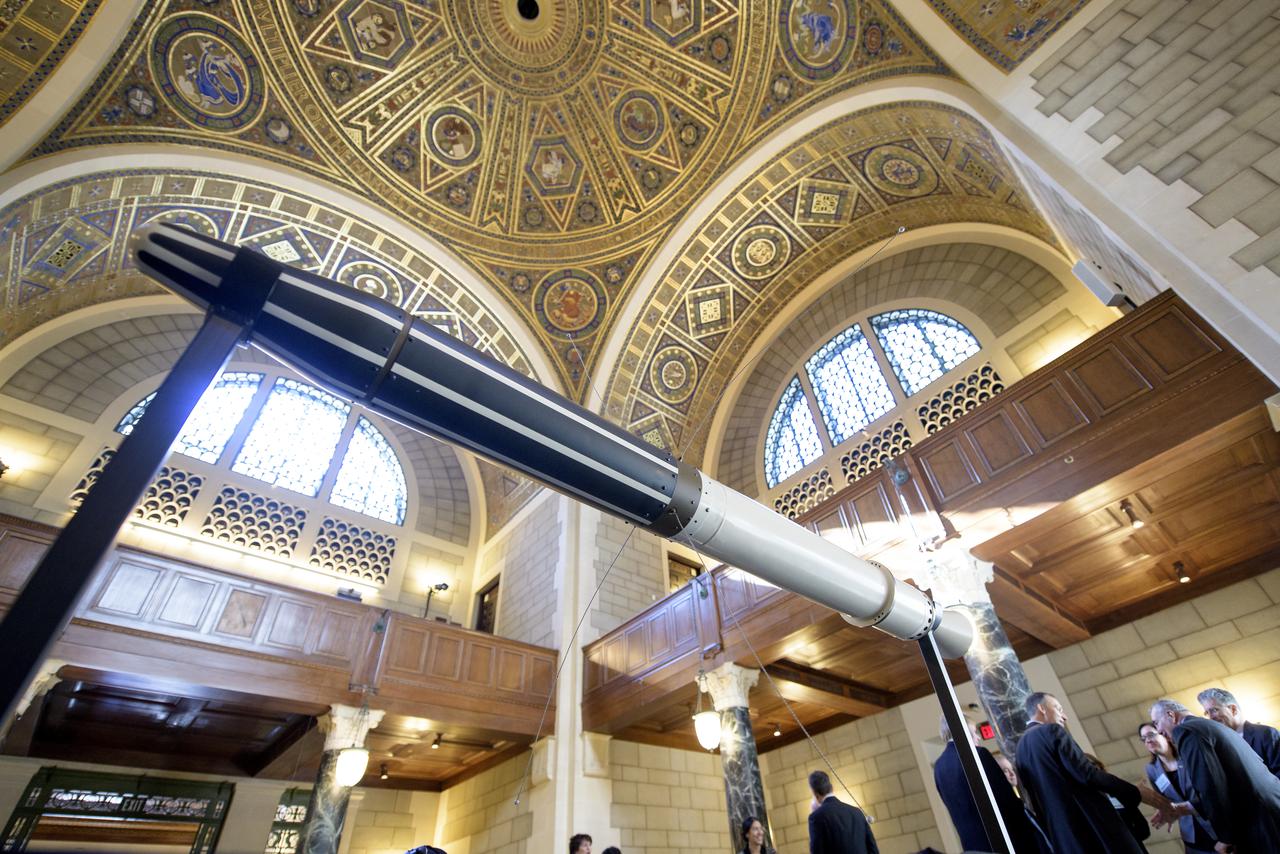
A replica of the Explorer 1 satellite is seen on display during an event celebrating the 60th Anniversary of the Explorer 1 mission and the discovery of Earth's radiation belts, Wednesday, Jan. 31, 2018, at the National Academy of Sciences in Washington. The first U.S. satellite, Explorer 1, was launched from Cape Canaveral on January 31, 1958. The 30-pound satellite would yield a major scientific discovery, the Van Allen radiation belts circling our planet, and begin six decades of groundbreaking space science and human exploration. (NASA/Joel Kowsky)
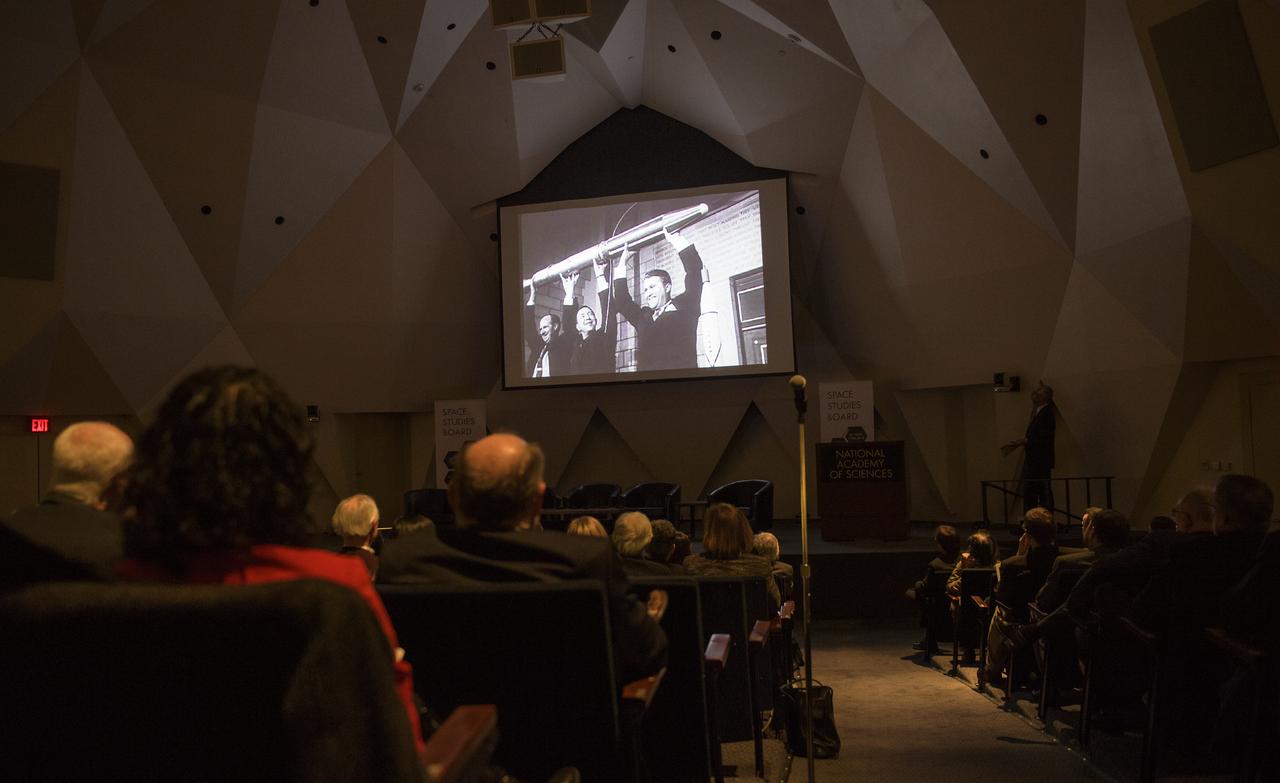
Attendees watch a short video on Explorer 1 during an event celebrating the 60th Anniversary of the Explorer 1 mission and the discovery of Earth's radiation belts, Wednesday, Jan. 31, 2018, at the National Academy of Sciences in Washington. The first U.S. satellite, Explorer 1, was launched from Cape Canaveral on January 31, 1958. The 30-pound satellite would yield a major scientific discovery, the Van Allen radiation belts circling our planet, and begin six decades of groundbreaking space science and human exploration. (NASA/Joel Kowsky)
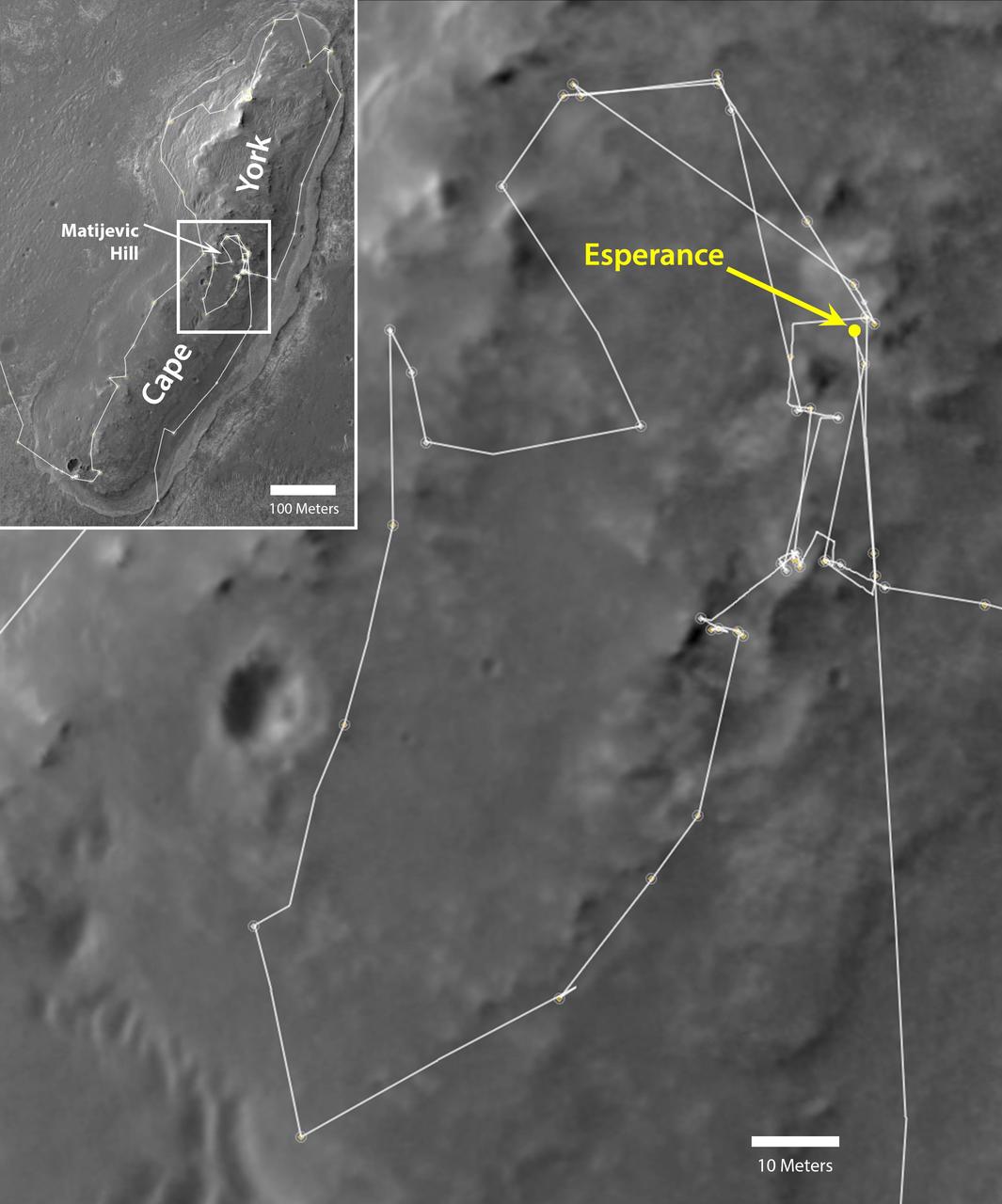
NASA Mars Exploration Rover Opportunity drove onto the Cape York segment of the rim of Endeavour Crater in August 2011 and departed Cape York in May 2013. The location of a rock target called Esperance is indicated in the main map.
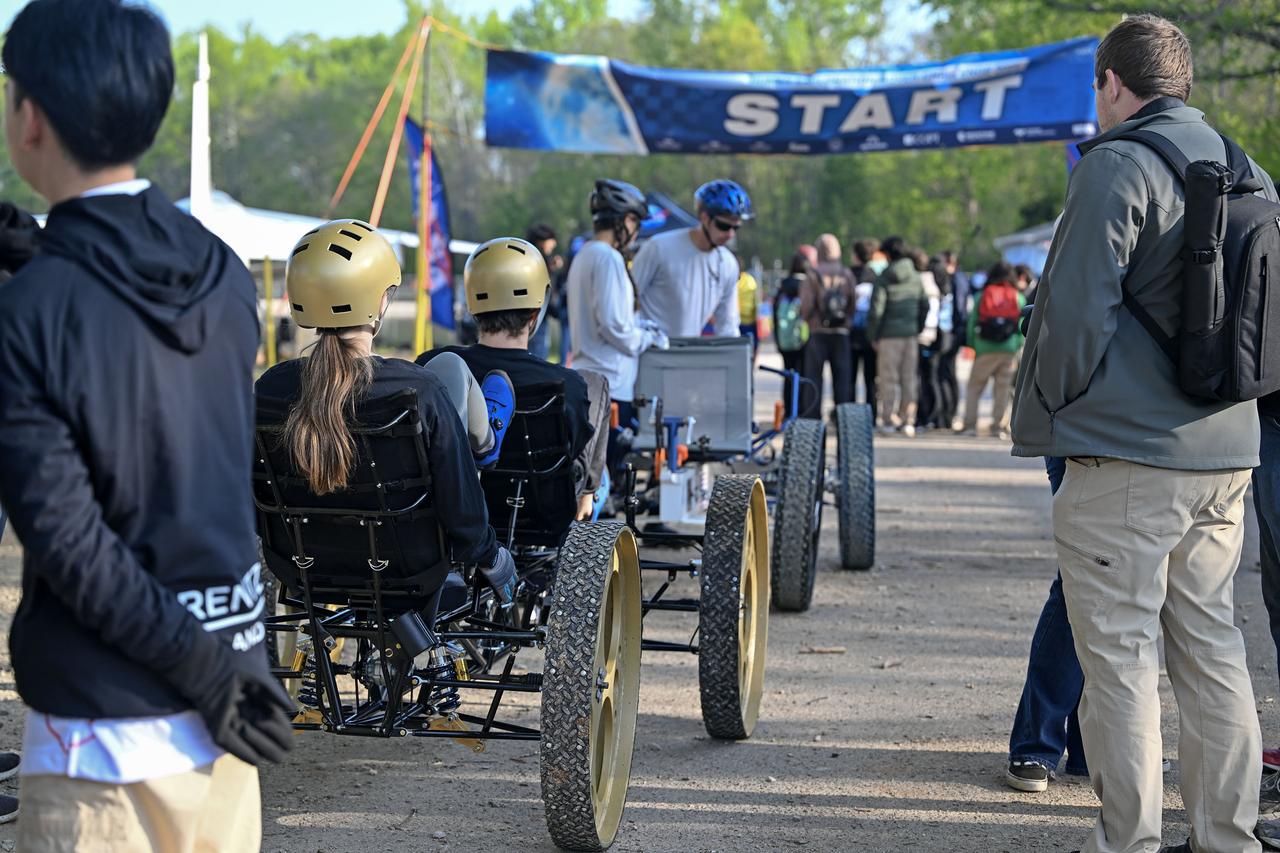
More than 500 students with 75 teams from around the world participated in the 31st year of NASA’s Human Exploration Rover Challenge (HERC) on April 11 and April 12, 2025, near NASA’s Marshall Space Flight Center in Huntsville, Alabama. Participating teams represented 35 colleges and universities, 38 high schools, and two middle schools from 20 states, Puerto Rico, and 16 other nations. NASA expanded the 2025 challenge to include a remote-control division - named Remote-Operated Vehicular Research - and invited middle school students to participate. Teams were awarded points based on navigating a half-mile obstacle course, conducting mission-specific task challenges, and completing multiple safety and design reviews with NASA engineers.
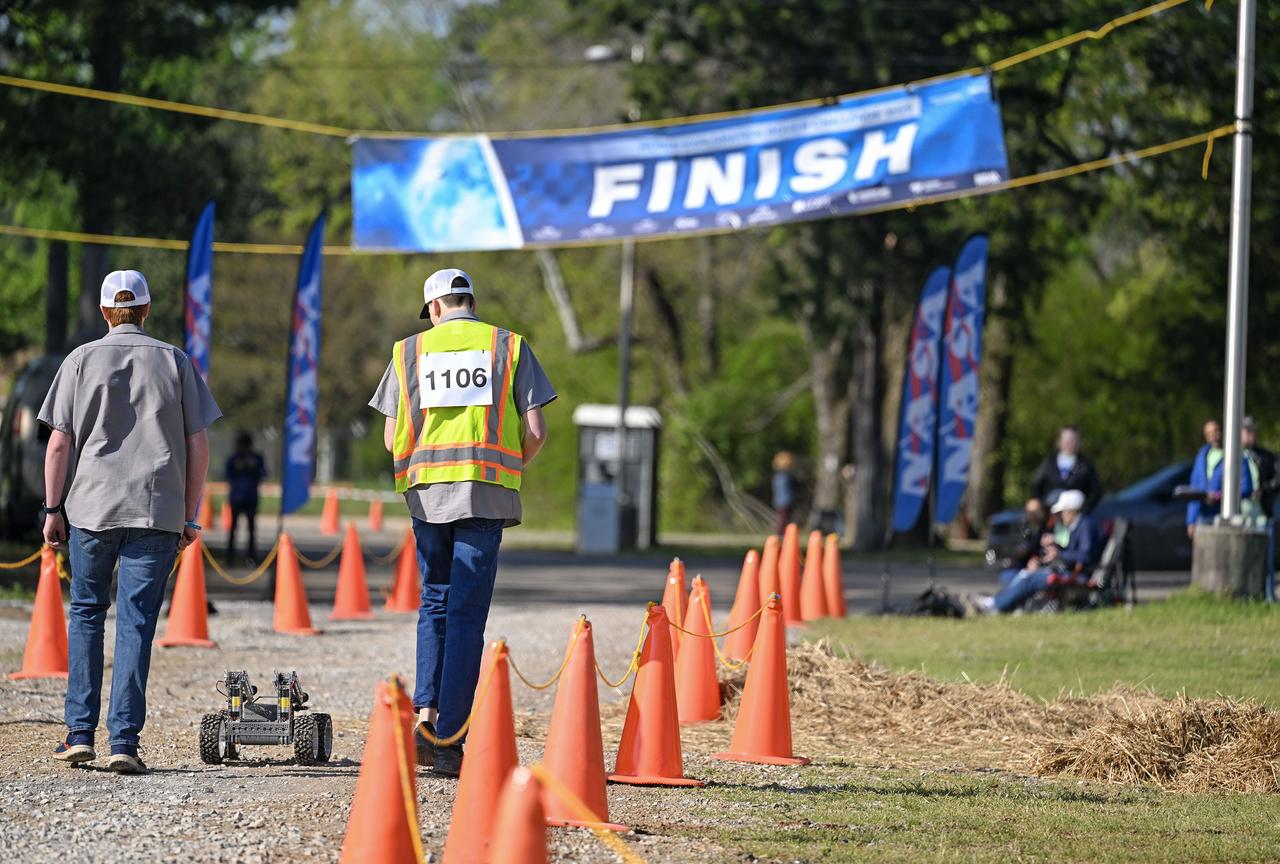
More than 500 students with 75 teams from around the world participated in the 31st year of NASA’s Human Exploration Rover Challenge (HERC) on April 11 and April 12, 2025, near NASA’s Marshall Space Flight Center in Huntsville, Alabama. Participating teams represented 35 colleges and universities, 38 high schools, and two middle schools from 20 states, Puerto Rico, and 16 other nations. NASA expanded the 2025 challenge to include a remote-control division - named Remote-Operated Vehicular Research - and invited middle school students to participate. Teams were awarded points based on navigating a half-mile obstacle course, conducting mission-specific task challenges, and completing multiple safety and design reviews with NASA engineers.
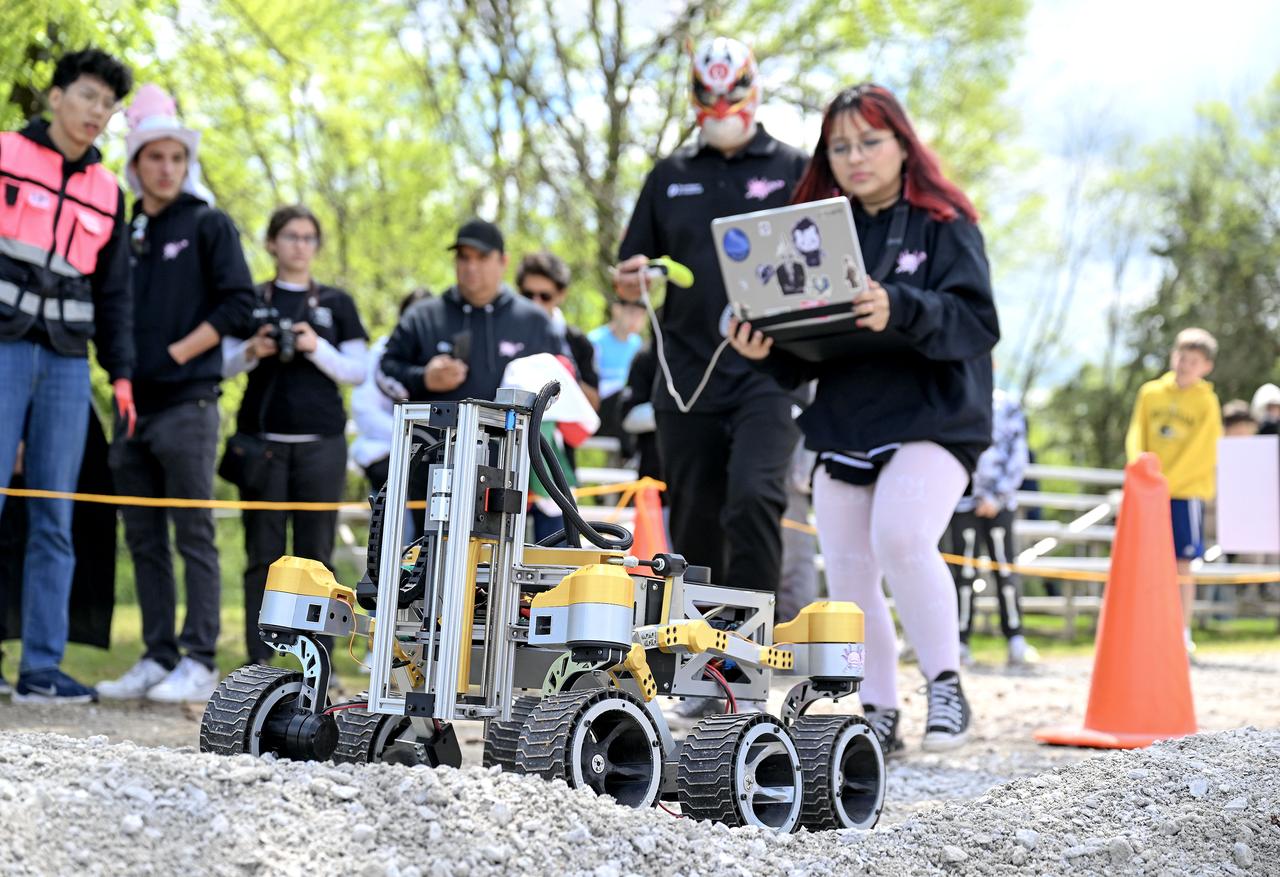
More than 500 students with 75 teams from around the world participated in the 31st year of NASA’s Human Exploration Rover Challenge (HERC) on April 11 and April 12, 2025, near NASA’s Marshall Space Flight Center in Huntsville, Alabama. Participating teams represented 35 colleges and universities, 38 high schools, and two middle schools from 20 states, Puerto Rico, and 16 other nations. NASA expanded the 2025 challenge to include a remote-control division - named Remote-Operated Vehicular Research - and invited middle school students to participate. Teams were awarded points based on navigating a half-mile obstacle course, conducting mission-specific task challenges, and completing multiple safety and design reviews with NASA engineers.
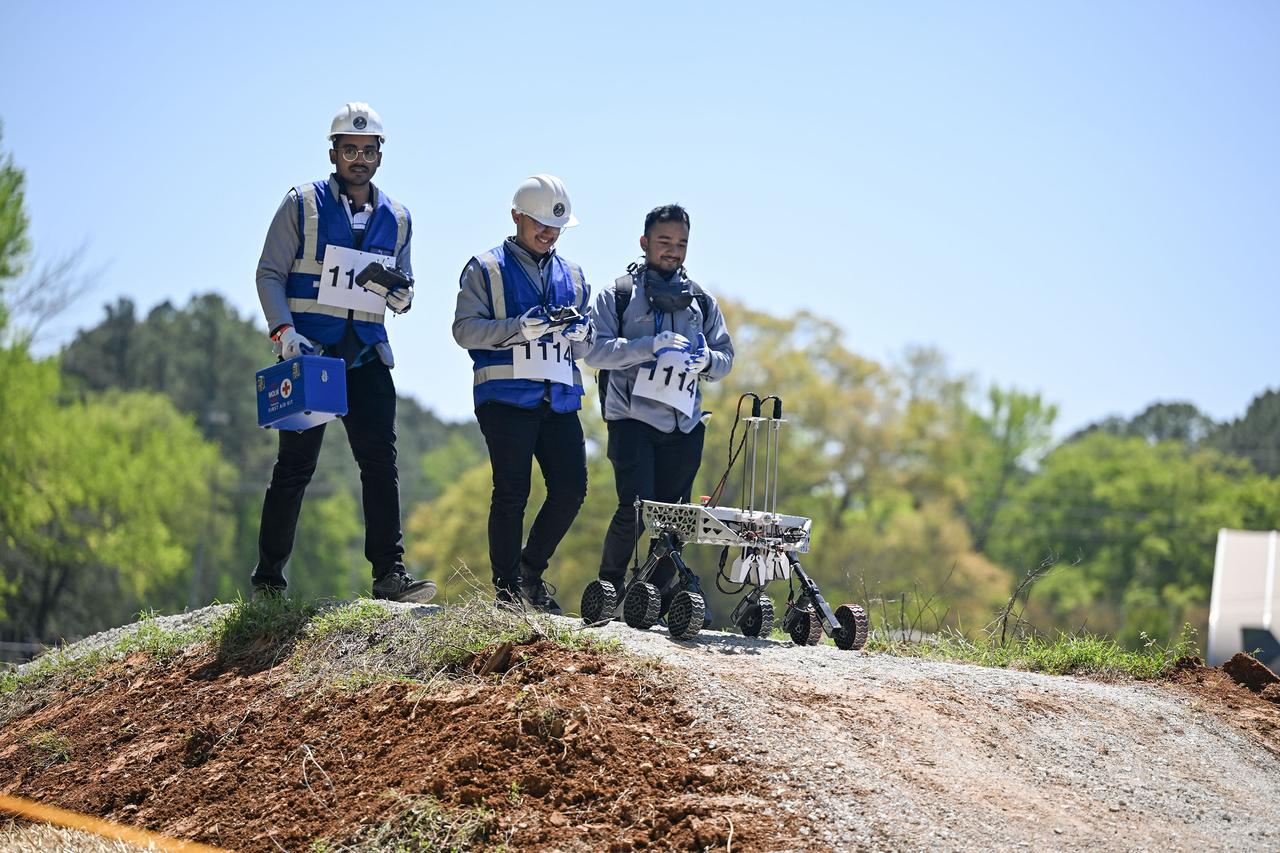
More than 500 students with 75 teams from around the world participated in the 31st year of NASA’s Human Exploration Rover Challenge (HERC) on April 11 and April 12, 2025, near NASA’s Marshall Space Flight Center in Huntsville, Alabama. Participating teams represented 35 colleges and universities, 38 high schools, and two middle schools from 20 states, Puerto Rico, and 16 other nations. NASA expanded the 2025 challenge to include a remote-control division - named Remote-Operated Vehicular Research - and invited middle school students to participate. Teams were awarded points based on navigating a half-mile obstacle course, conducting mission-specific task challenges, and completing multiple safety and design reviews with NASA engineers.
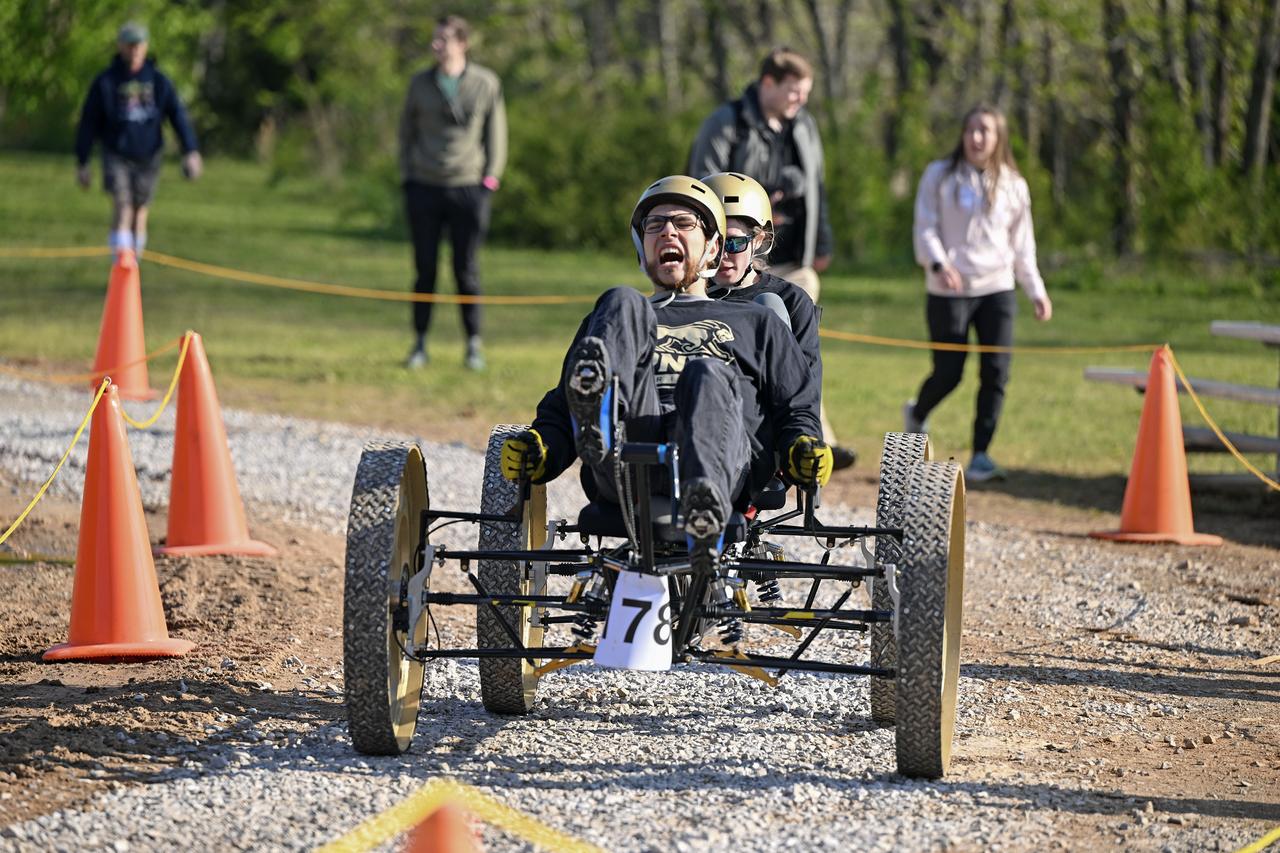
More than 500 students with 75 teams from around the world participated in the 31st year of NASA’s Human Exploration Rover Challenge (HERC) on April 11 and April 12, 2025, near NASA’s Marshall Space Flight Center in Huntsville, Alabama. Participating teams represented 35 colleges and universities, 38 high schools, and two middle schools from 20 states, Puerto Rico, and 16 other nations. NASA expanded the 2025 challenge to include a remote-control division - named Remote-Operated Vehicular Research - and invited middle school students to participate. Teams were awarded points based on navigating a half-mile obstacle course, conducting mission-specific task challenges, and completing multiple safety and design reviews with NASA engineers.
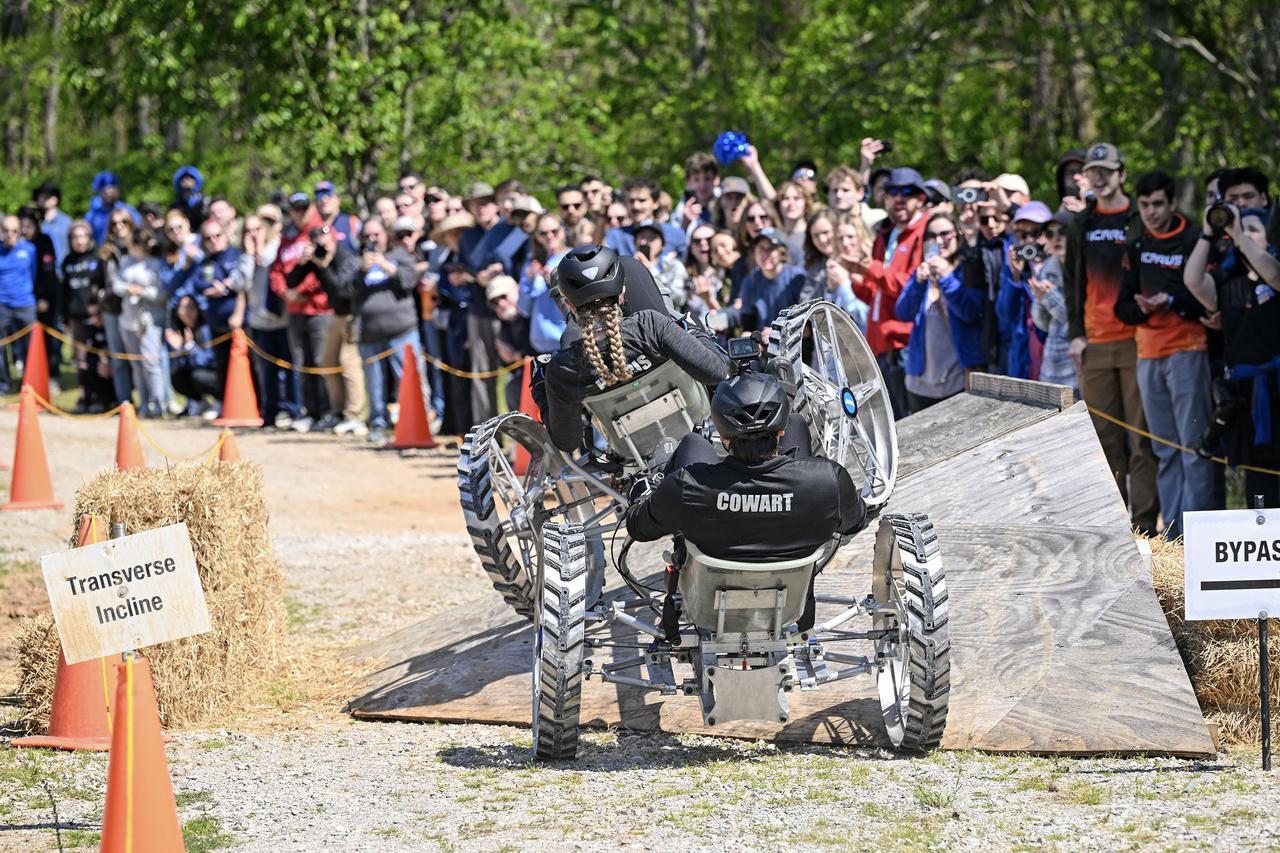
More than 500 students with 75 teams from around the world participated in the 31st year of NASA’s Human Exploration Rover Challenge (HERC) on April 11 and April 12, 2025, near NASA’s Marshall Space Flight Center in Huntsville, Alabama. Participating teams represented 35 colleges and universities, 38 high schools, and two middle schools from 20 states, Puerto Rico, and 16 other nations. NASA expanded the 2025 challenge to include a remote-control division - named Remote-Operated Vehicular Research - and invited middle school students to participate. Teams were awarded points based on navigating a half-mile obstacle course, conducting mission-specific task challenges, and completing multiple safety and design reviews with NASA engineers.
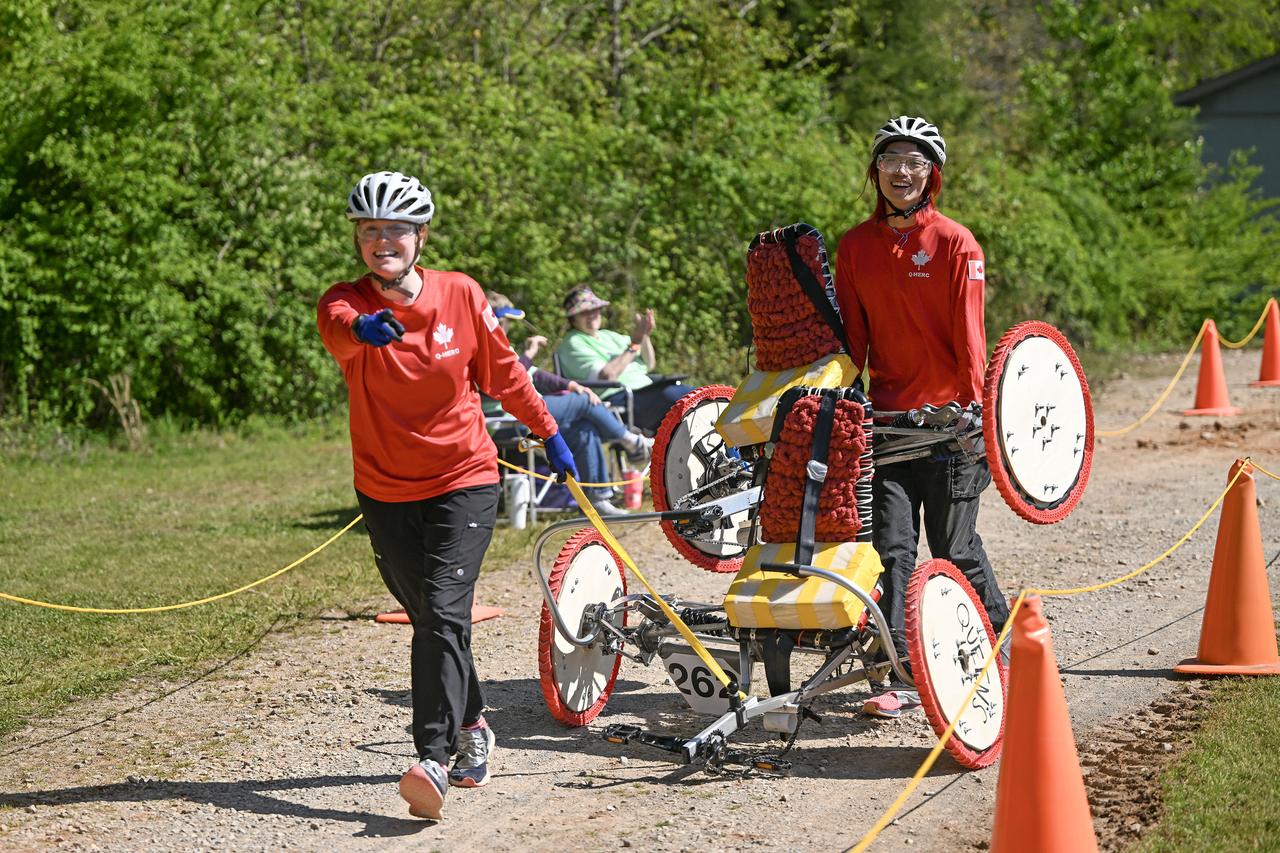
More than 500 students with 75 teams from around the world participated in the 31st year of NASA’s Human Exploration Rover Challenge (HERC) on April 11 and April 12, 2025, near NASA’s Marshall Space Flight Center in Huntsville, Alabama. Participating teams represented 35 colleges and universities, 38 high schools, and two middle schools from 20 states, Puerto Rico, and 16 other nations. NASA expanded the 2025 challenge to include a remote-control division - named Remote-Operated Vehicular Research - and invited middle school students to participate. Teams were awarded points based on navigating a half-mile obstacle course, conducting mission-specific task challenges, and completing multiple safety and design reviews with NASA engineers.

Japan Aerospace Exploration Agency (JAXA) President Hiroshi Yamakawa discusses the historic agreement signed April 9th at NASA Headquarters, between the United States and Japan to advance sustainable human exploration of the Moon, Wednesday, April 10, 2024, at the Japan Aerospace Exploration Agency (JAXA) offices in Washington. Under the agreement, Japan will design, develop, and operate a pressurized rover for crewed and uncrewed exploration on the Moon. NASA will provide the launch and delivery of the rover to the Moon as well as two Japanese astronaut missions to the lunar surface. Photo Credit: Photo Credit: (NASA/Bill Ingalls)

Thomas Zurbuchen, Associate Administrator for NASA's Science Mission Directorate, speaks during an event celebrating the 60th Anniversary of the Explorer 1 mission and the discovery of Earth's radiation belts, Wednesday, Jan. 31, 2018, at the National Academy of Sciences in Washington. The first U.S. satellite, Explorer 1, was launched from Cape Canaveral on January 31, 1958. The 30-pound satellite would yield a major scientific discovery, the Van Allen radiation belts circling our planet, and begin six decades of groundbreaking space science and human exploration. (NASA/Joel Kowsky)

Alexander Moiseev, a research scientist at NASA's Goddard Spaceflight Center, speaks during an event celebrating the 60th Anniversary of the Explorer 1 mission and the discovery of Earth's radiation belts, Wednesday, Jan. 31, 2018, at the National Academy of Sciences in Washington. The first U.S. satellite, Explorer 1, was launched from Cape Canaveral on January 31, 1958. The 30-pound satellite would yield a major scientific discovery, the Van Allen radiation belts circling our planet, and begin six decades of groundbreaking space science and human exploration. (NASA/Joel Kowsky)
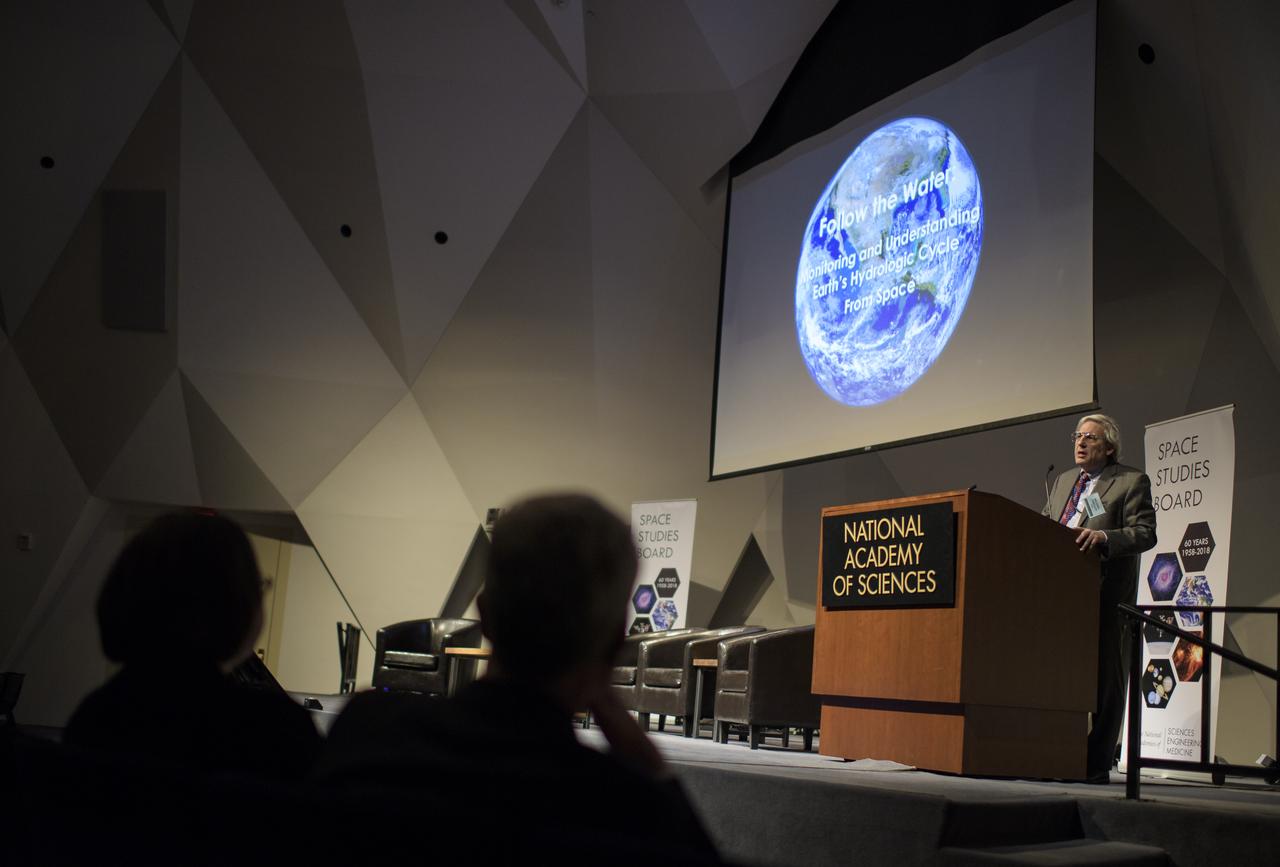
Michael Freilich, Director of the Earth Science Division of NASA's Science Mission Directorate, speaks during an event celebrating the 60th Anniversary of the Explorer 1 mission and the discovery of Earth's radiation belts, Wednesday, Jan. 31, 2018, at the National Academy of Sciences in Washington. The first U.S. satellite, Explorer 1, was launched from Cape Canaveral on January 31, 1958. The 30-pound satellite would yield a major scientific discovery, the Van Allen radiation belts circling our planet, and begin six decades of groundbreaking space science and human exploration. (NASA/Joel Kowsky)
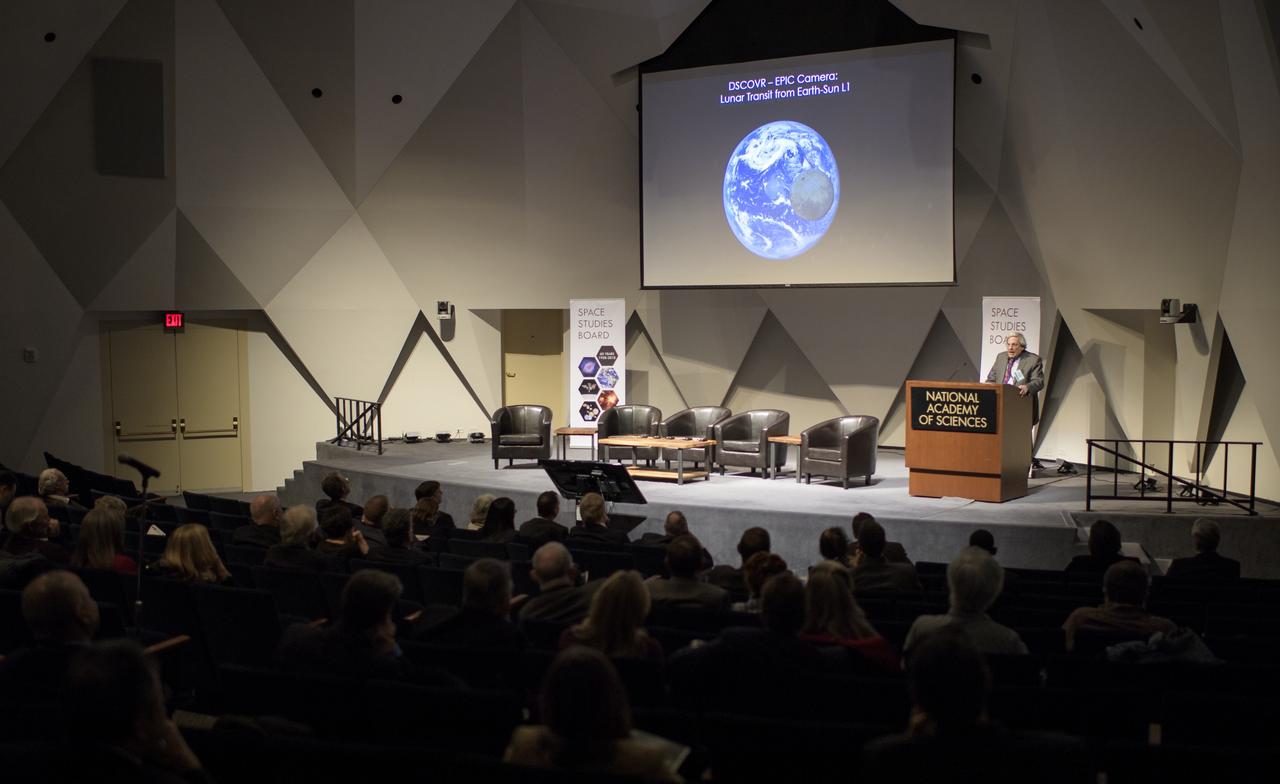
Michael Freilich, Director of the Earth Science Division of NASA's Science Mission Directorate, speaks during an event celebrating the 60th Anniversary of the Explorer 1 mission and the discovery of Earth's radiation belts, Wednesday, Jan. 31, 2018, at the National Academy of Sciences in Washington. The first U.S. satellite, Explorer 1, was launched from Cape Canaveral on January 31, 1958. The 30-pound satellite would yield a major scientific discovery, the Van Allen radiation belts circling our planet, and begin six decades of groundbreaking space science and human exploration. (NASA/Joel Kowsky)
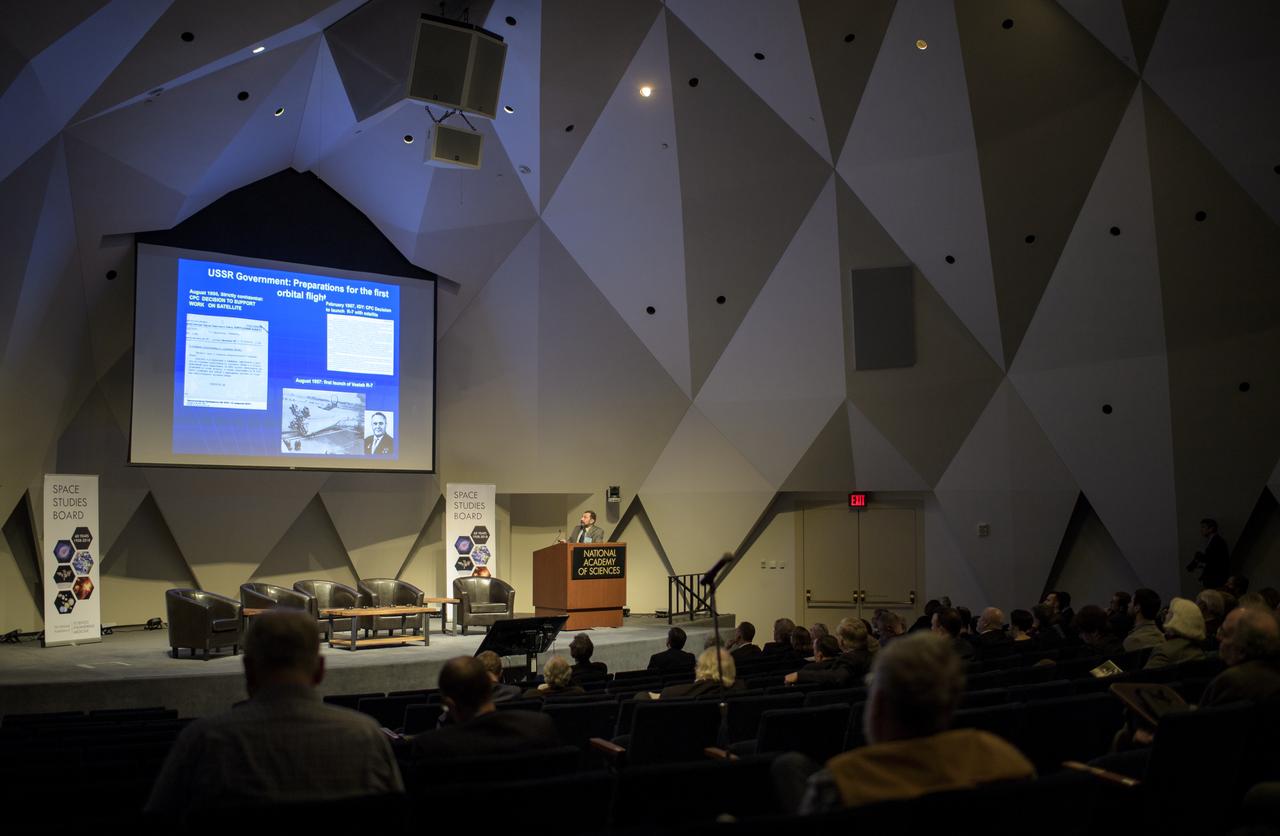
Alexander Moiseev, a research scientist at NASA's Goddard Spaceflight Center, speaks during an event celebrating the 60th Anniversary of the Explorer 1 mission and the discovery of Earth's radiation belts, Wednesday, Jan. 31, 2018, at the National Academy of Sciences in Washington. The first U.S. satellite, Explorer 1, was launched from Cape Canaveral on January 31, 1958. The 30-pound satellite would yield a major scientific discovery, the Van Allen radiation belts circling our planet, and begin six decades of groundbreaking space science and human exploration. (NASA/Joel Kowsky)
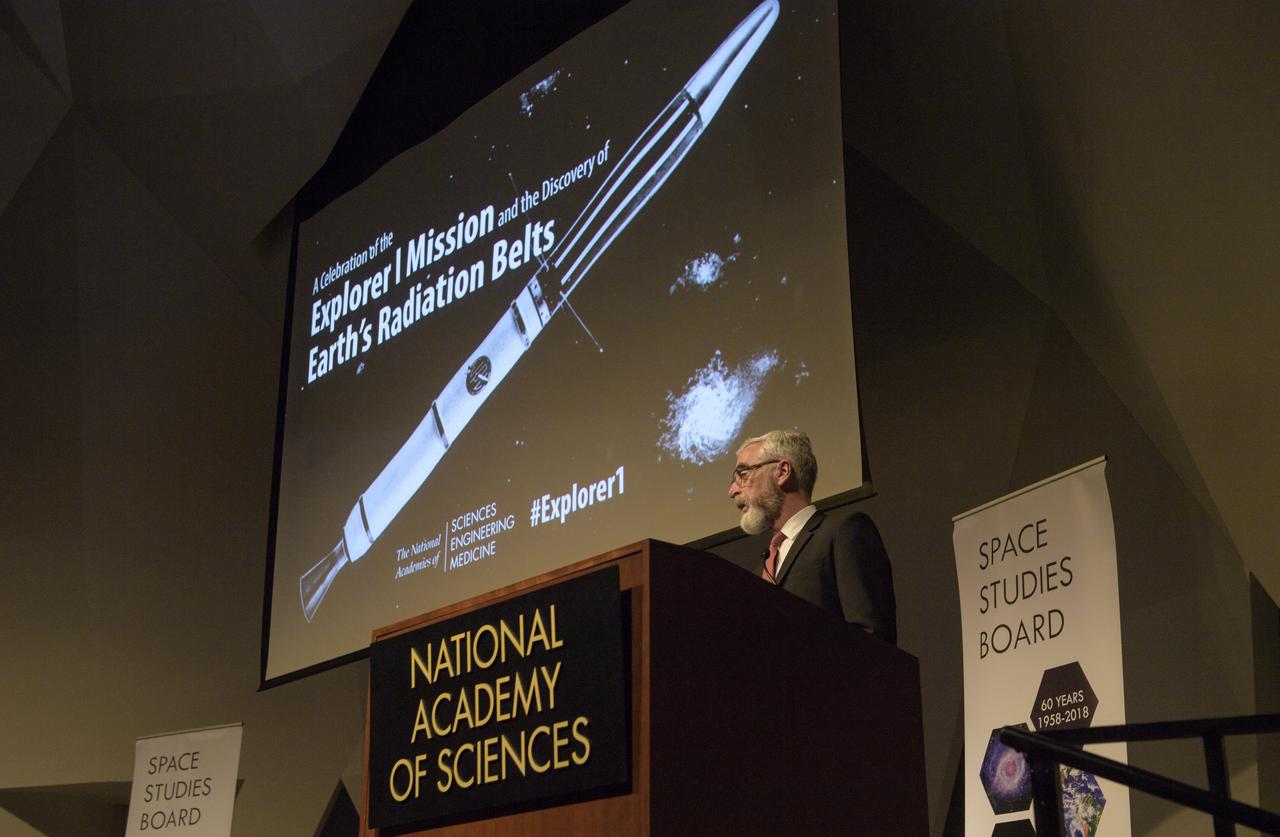
Michael Moloney, Director for Space and Aeronautics at the Space Studies Board and the Aeronautics and Space Engineering Board of the U.S. National Academies of Sciences, Engineering, and Medicine, delivers opening remarks during an event celebrating the 60th Anniversary of the Explorer 1 mission and the discovery of Earth's radiation belts, Wednesday, Jan. 31, 2018, at the National Academy of Sciences in Washington. The first U.S. satellite, Explorer 1, was launched from Cape Canaveral on January 31, 1958. The 30-pound satellite would yield a major scientific discovery, the Van Allen radiation belts circling our planet, and begin six decades of groundbreaking space science and human exploration. (NASA/Joel Kowsky)
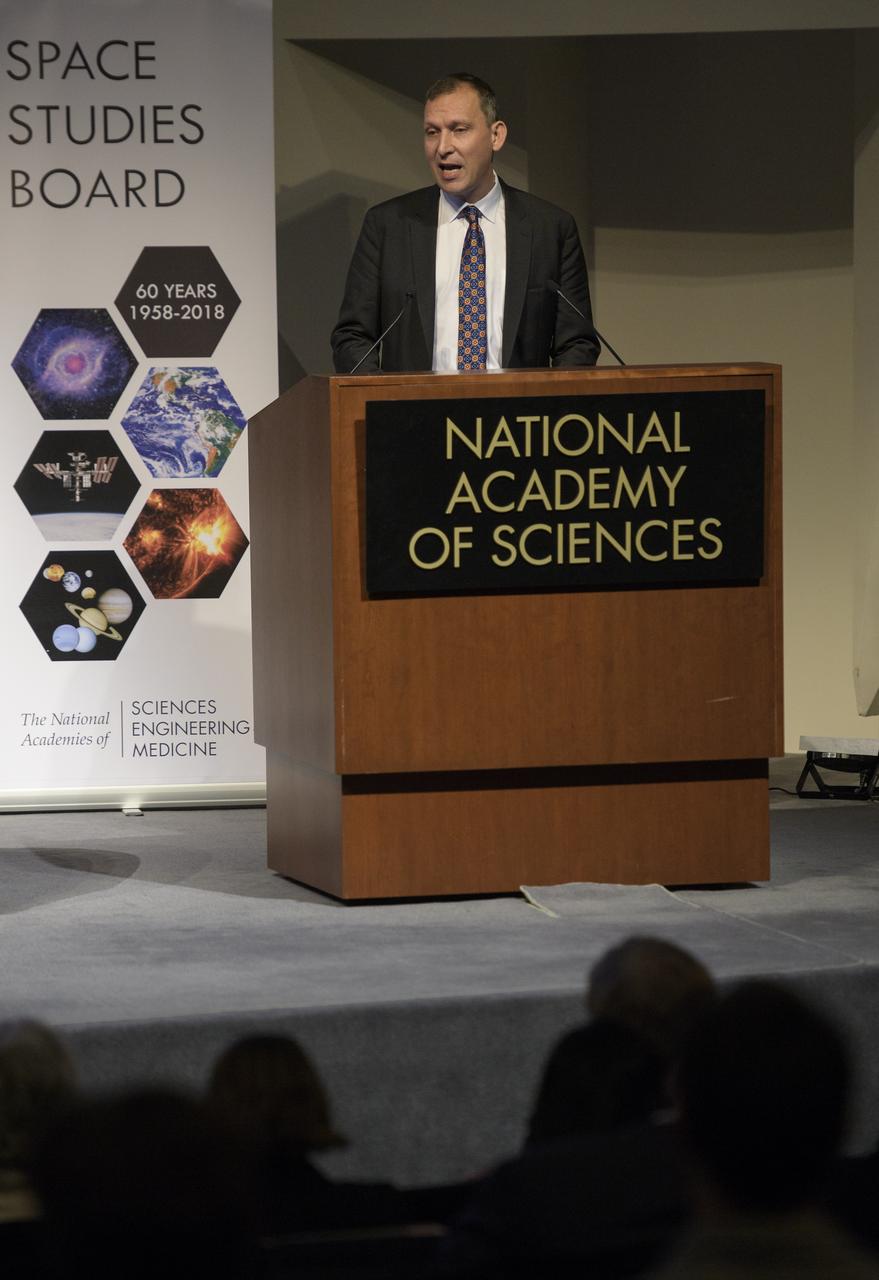
Thomas Zurbuchen, Associate Administrator for NASA's Science Mission Directorate, speaks during an event celebrating the 60th Anniversary of the Explorer 1 mission and the discovery of Earth's radiation belts, Wednesday, Jan. 31, 2018, at the National Academy of Sciences in Washington. The first U.S. satellite, Explorer 1, was launched from Cape Canaveral on January 31, 1958. The 30-pound satellite would yield a major scientific discovery, the Van Allen radiation belts circling our planet, and begin six decades of groundbreaking space science and human exploration. (NASA/Joel Kowsky)

NASA Pressurized Rover Project Manager Danny Newswander discusses the historic agreement signed April 9th at NASA Headquarters, between the United States and Japan to advance sustainable human exploration of the Moon, Wednesday, April 10, 2024, at the Japan Aerospace Exploration Agency (JAXA) offices in Washington. Under the agreement, Japan will design, develop, and operate a pressurized rover for crewed and uncrewed exploration on the Moon. NASA will provide the launch and delivery of the rover to the Moon as well as two Japanese astronaut missions to the lunar surface. Photo Credit: Photo Credit: (NASA/Bill Ingalls)

A model of the Pressurized lunar rover is seen during a briefing discussing the historic agreement signed April 9th at NASA Headquarters, between the United States and Japan to advance sustainable human exploration of the Moon, Wednesday, April 10, 2024, at the Japan Aerospace Exploration Agency (JAXA) offices in Washington. Under the agreement, Japan will design, develop, and operate a pressurized rover for crewed and uncrewed exploration on the Moon. NASA will provide the launch and delivery of the rover to the Moon as well as two Japanese astronaut missions to the lunar surface. Photo Credit: Photo Credit: (NASA/Bill Ingalls)

NASA Extravehicular Activity and Human Surface Mobility Program Lara Kearney discusses the historic agreement signed April 9th at NASA Headquarters, between the United States and Japan to advance sustainable human exploration of the Moon, Wednesday, April 10, 2024, at the Japan Aerospace Exploration Agency (JAXA) offices in Washington. Under the agreement, Japan will design, develop, and operate a pressurized rover for crewed and uncrewed exploration on the Moon. NASA will provide the launch and delivery of the rover to the Moon as well as two Japanese astronaut missions to the lunar surface. Photo Credit: Photo Credit: (NASA/Bill Ingalls)

A model of the Pressurized lunar rover is seen during a briefing discussing the historic agreement signed April 9th at NASA Headquarters, between the United States and Japan to advance sustainable human exploration of the Moon, Wednesday, April 10, 2024, at the Japan Aerospace Exploration Agency (JAXA) offices in Washington. Under the agreement, Japan will design, develop, and operate a pressurized rover for crewed and uncrewed exploration on the Moon. NASA will provide the launch and delivery of the rover to the Moon as well as two Japanese astronaut missions to the lunar surface. Photo Credit: Photo Credit: (NASA/Bill Ingalls)

Japan’s Minister of Education, Culture, Sports, Science and Technology Masahito Moriyama discusses the historic agreement signed April 9th at NASA Headquarters, between the United States and Japan to advance sustainable human exploration of the Moon, Wednesday, April 10, 2024, at the Japan Aerospace Exploration Agency (JAXA) offices in Washington. Under the agreement, Japan will design, develop, and operate a pressurized rover for crewed and uncrewed exploration on the Moon. NASA will provide the launch and delivery of the rover to the Moon as well as two Japanese astronaut missions to the lunar surface. Photo Credit: Photo Credit: (NASA/Bill Ingalls)
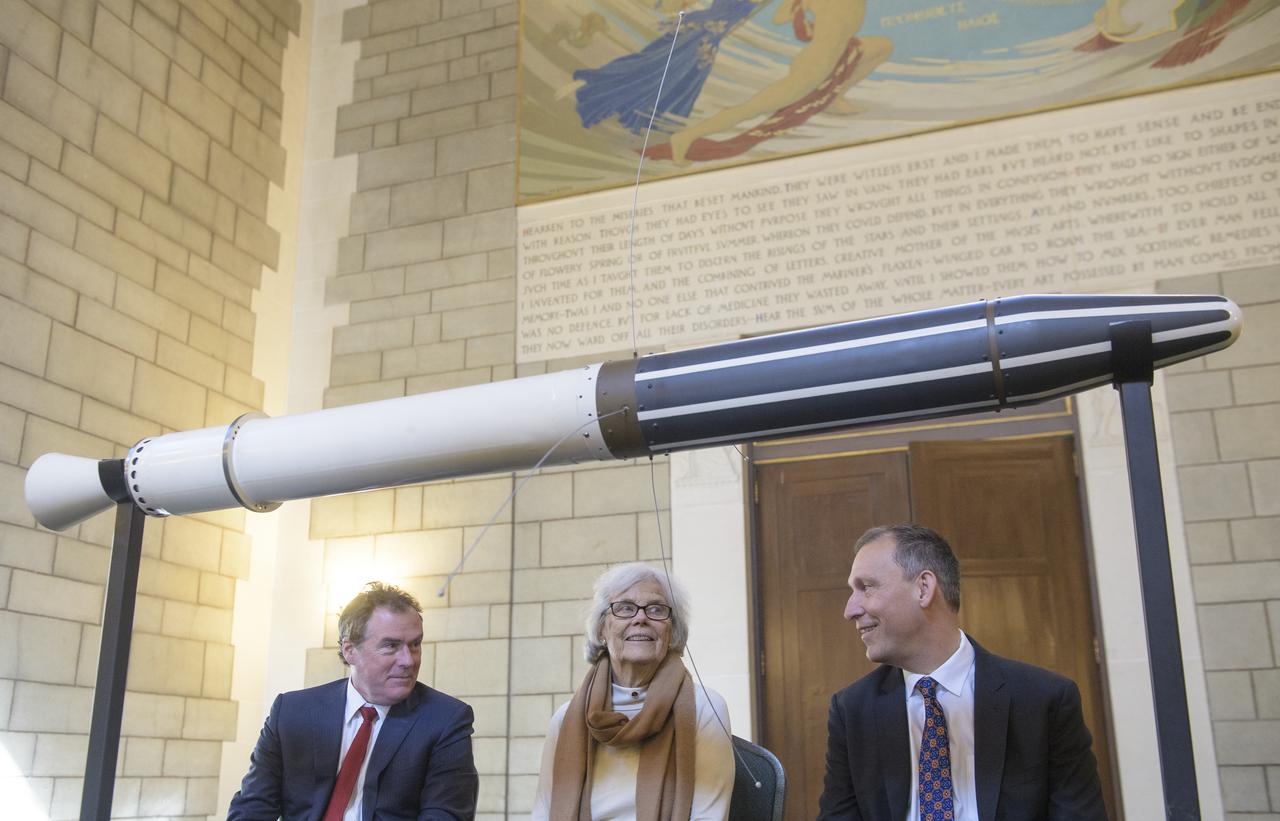
Michael Watkins, Director of NASA's Jet Propulsion Laboratory, left, Susan Finley, who began working at NASA's Jet Propulsion Laboratory in January 1958 as a "human computer", center, and Thomas Zurbuchen, Associate Administrator for NASA's Science Mission Directorate, right, pose for a picture with a replica of the Explorer 1 satellite during an event celebrating the 60th Anniversary of the Explorer 1 mission and the discovery of Earth's radiation belts, Wednesday, Jan. 31, 2018, at the National Academy of Sciences in Washington. The first U.S. satellite, Explorer 1, was launched from Cape Canaveral on January 31, 1958. The 30-pound satellite would yield a major scientific discovery, the Van Allen radiation belts circling our planet, and begin six decades of groundbreaking space science and human exploration. (NASA/Joel Kowsky)
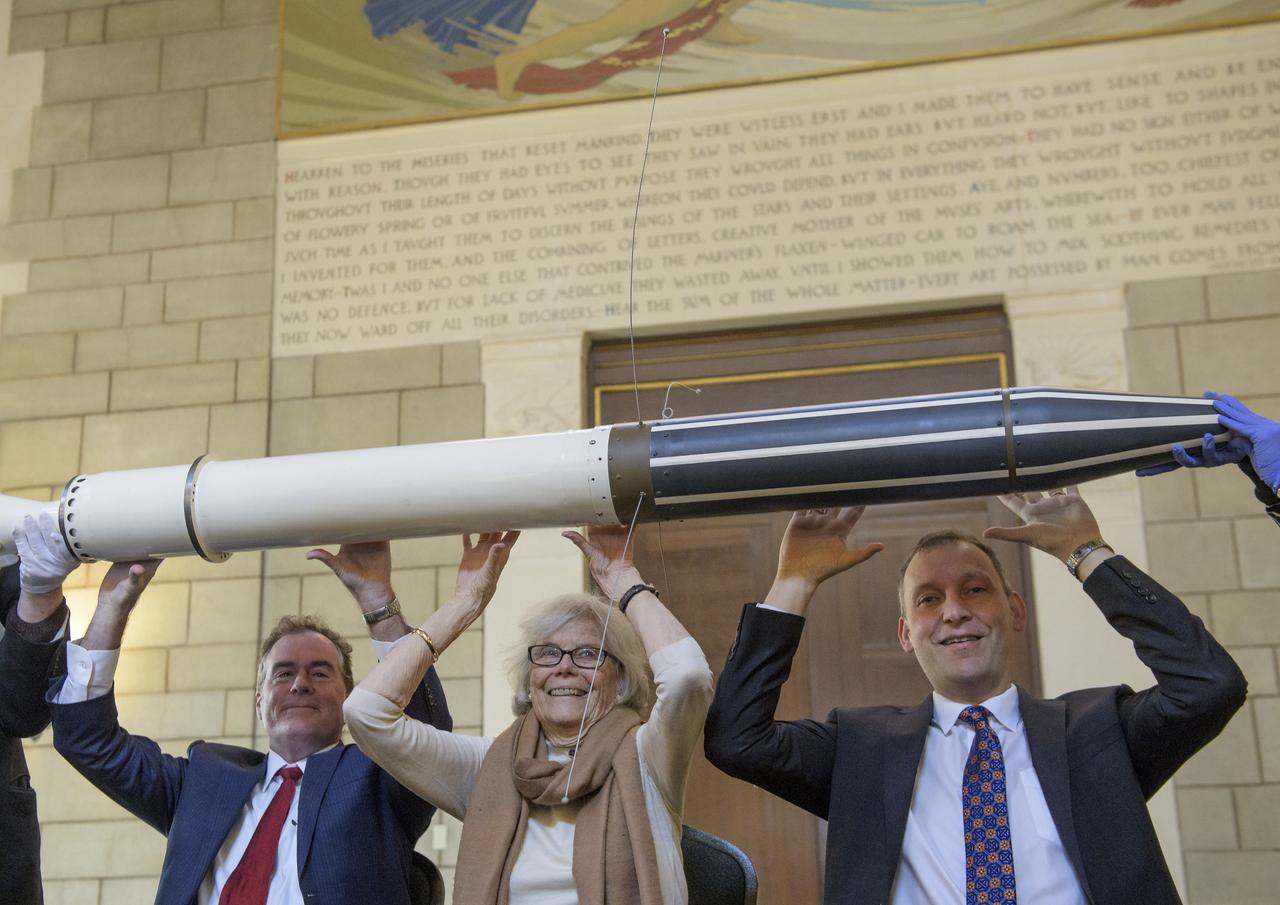
Michael Watkins, Director of NASA's Jet Propulsion Laboratory, left, Susan Finley, who began working at NASA's Jet Propulsion Laboratory in January 1958 as a "human computer", center, and Thomas Zurbuchen, Associate Administrator for NASA's Science Mission Directorate, right, reenact the famous picture of Dr. William H. Pickering, Dr. James A. van Allen, and Dr. Wernher von Braun, hoisting a model of Explorer 1 above their heads at a press conference announcing the satellite's success with a replica of the Explorer 1 satellite during an event celebrating the 60th Anniversary of the Explorer 1 mission and the discovery of Earth's radiation belts, Wednesday, Jan. 31, 2018, at the National Academy of Sciences in Washington. The first U.S. satellite, Explorer 1, was launched from Cape Canaveral on January 31, 1958. The 30-pound satellite would yield a major scientific discovery, the Van Allen radiation belts circling our planet, and begin six decades of groundbreaking space science and human exploration. (NASA/Joel Kowsky)
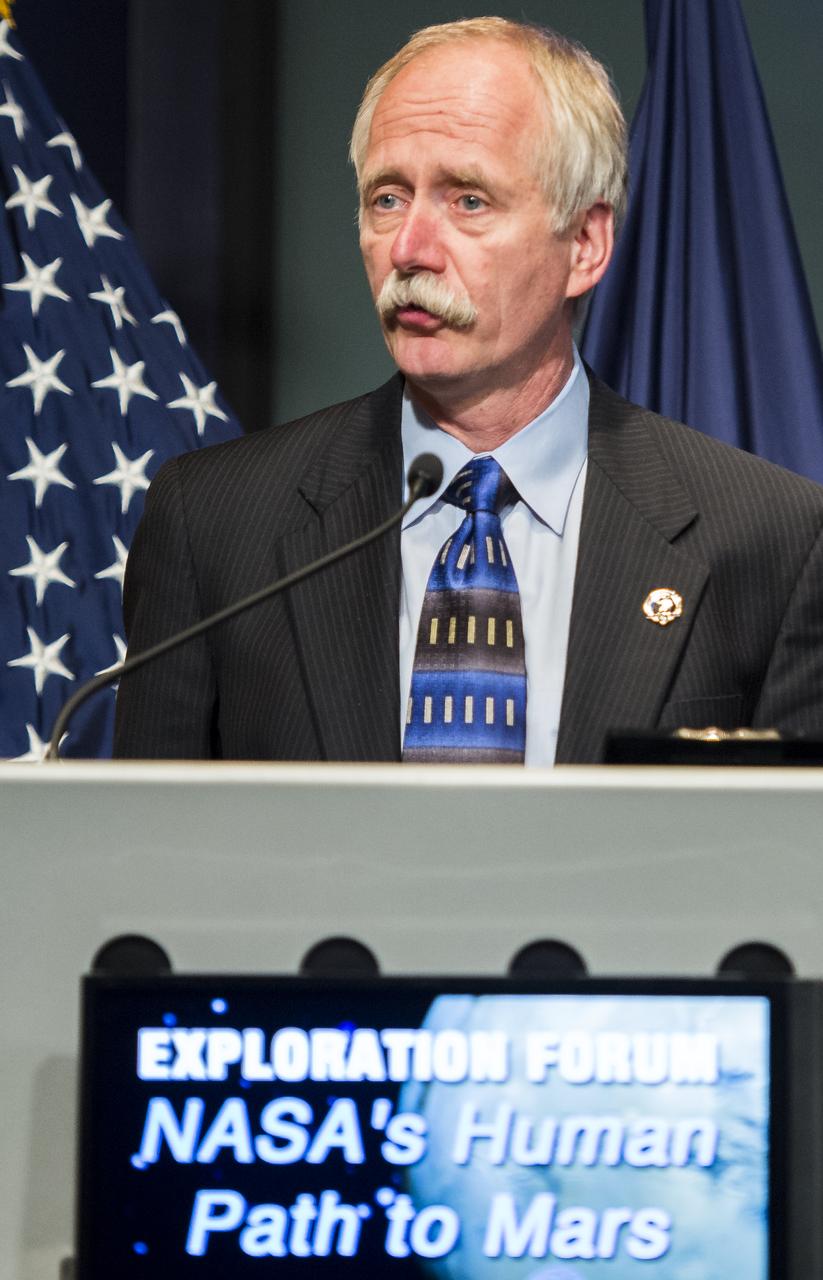
William Gerstenmaier, NASA Associate Administrator for Human Exploration and Operations, speaks during an Exploration Forum showcasing NASA's human exploration path to Mars in the James E. Webb Auditorium at NASA Headquarters on Tuesday, April 29, 2014. Photo Credit: (NASA/Joel Kowsky)
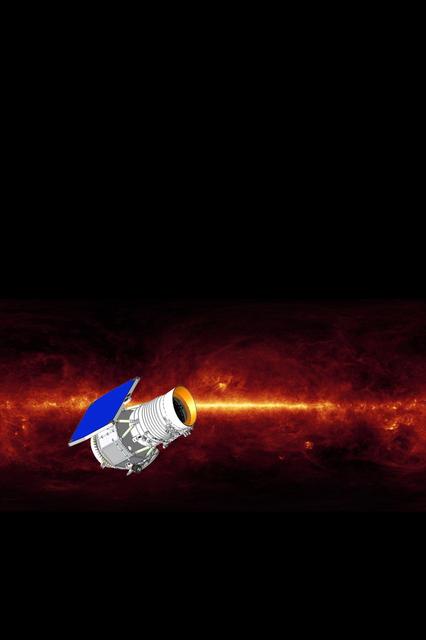
NASA Wide-field Infrared Survey Explorer mission will survey the entire sky in a portion of the electromagnetic spectrum called the mid-infrared with far greater sensitivity than any previous mission or program ever has.

NASA Administrator Bill Nelson discusses the historic agreement signed April 9th at NASA Headquarters, between the United States and Japan to advance sustainable human exploration of the Moon, Wednesday, April 10, 2024, at the Japan Aerospace Exploration Agency (JAXA) offices in Washington. Under the agreement, Japan will design, develop, and operate a pressurized rover for crewed and uncrewed exploration on the Moon. NASA will provide the launch and delivery of the rover to the Moon as well as two Japanese astronaut missions to the lunar surface. Photo Credit: Photo Credit: (NASA/Bill Ingalls)

NASA Administrator Bill Nelson discusses the historic agreement signed April 9th at NASA Headquarters, between the United States and Japan to advance sustainable human exploration of the Moon, Wednesday, April 10, 2024, at the Japan Aerospace Exploration Agency (JAXA) offices in Washington. Under the agreement, Japan will design, develop, and operate a pressurized rover for crewed and uncrewed exploration on the Moon. NASA will provide the launch and delivery of the rover to the Moon as well as two Japanese astronaut missions to the lunar surface. Photo Credit: Photo Credit: (NASA/Bill Ingalls)

NASA Administrator Bill Nelson discusses the historic agreement signed April 9th at NASA Headquarters, between the United States and Japan to advance sustainable human exploration of the Moon, Wednesday, April 10, 2024, at the Japan Aerospace Exploration Agency (JAXA) offices in Washington. Under the agreement, Japan will design, develop, and operate a pressurized rover for crewed and uncrewed exploration on the Moon. NASA will provide the launch and delivery of the rover to the Moon as well as two Japanese astronaut missions to the lunar surface. Photo Credit: Photo Credit: (NASA/Bill Ingalls)

NASA Administrator Bill Nelson discusses the historic agreement signed April 9th at NASA Headquarters, between the United States and Japan to advance sustainable human exploration of the Moon, Wednesday, April 10, 2024, at the Japan Aerospace Exploration Agency (JAXA) offices in Washington. Under the agreement, Japan will design, develop, and operate a pressurized rover for crewed and uncrewed exploration on the Moon. NASA will provide the launch and delivery of the rover to the Moon as well as two Japanese astronaut missions to the lunar surface. Photo Credit: Photo Credit: (NASA/Bill Ingalls)

Illustration of the SLS Exploration Upper Stage, or EUS. This configuration of the rocket, with the Exploration Upper Stage, will provide in-space propulsion to send astronauts in NASA’s Orion spacecraft and heavy cargo on a precise trajectory to the Moon. The evolution of the rocket to SLS Block 1B configuration with EUS enables SLS to launch 40% more cargo to the Moon along with the crew. Manufacturing both the core stage and Exploration Upper Stage is a collaborative effort between NASA and Boeing, the lead contractor for EUS and the SLS core stage. SLS is the only rocket that can send Orion, astronauts, and supplies to the Moon in a single mission. The SLS rocket, NASA’s Orion spacecraft, Gateway, and human landing system are part of NASA’s backbone for deep space exploration. Under the Artemis program, NASA is working to land the first woman and the next man on the Moon to pave the way for sustainable exploration at the Moon and future missions to Mars. (NASA)
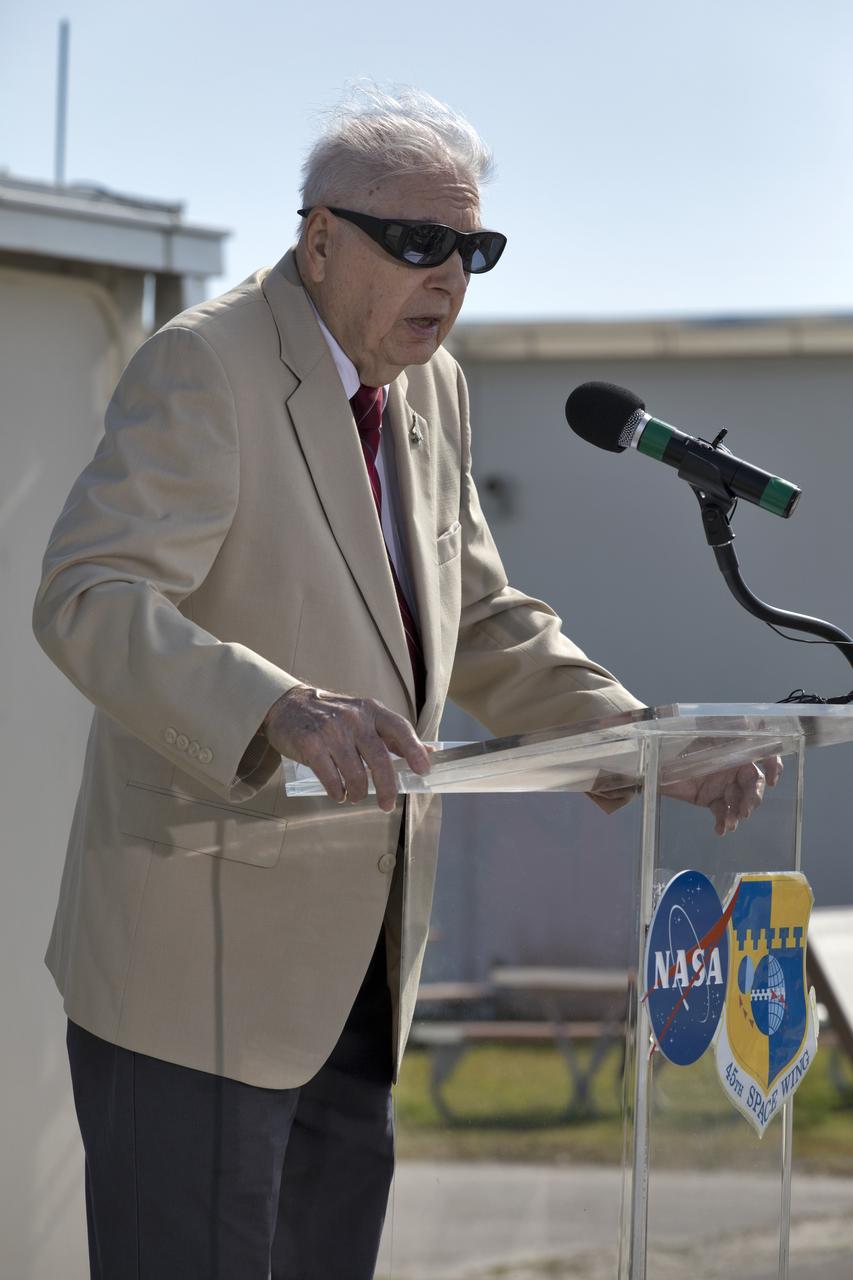
Dr. John Meisenheimer, launch weather officer for Explorer 1, speaks to guests at an event celebrating the 60th anniversary of America's first satellite. The ceremony took place in front of the Space Launch Complex 26 blockhouse at Cape Canaveral Air Force Station where the Explorer 1 satellite was launched atop a Jupiter C rocket on Jan. 31, 1958. During operation, the satellite's cosmic ray detector discovered radiation belts around Earth which were named for Dr. James Van Allen, principal investigator for the satellite.

Dr. John Meisenheimer, launch weather officer for Explorer 1, speaks to guests at an event celebrating the 60th anniversary of America's first satellite. The ceremony took place in front of the Space Launch Complex 26 blockhouse at Cape Canaveral Air Force Station where the Explorer 1 satellite was launched atop a Jupiter C rocket on Jan. 31, 1958. During operation, the satellite's cosmic ray detector discovered radiation belts around Earth which were named for Dr. James Van Allen, principal investigator for the satellite.

Japan Aerospace Exploration Agency (JAXA) President Hiroshi Yamakawa, left, Japan’s Minister of Education, Culture, Sports, Science and Technology Masahito Moriyama, and NASA Administrator Bill Nelson, right, are seen during a briefing where they discussed the historic agreement signed April 9th at NASA Headquarters, between the United States and Japan to advance sustainable human exploration of the Moon, Wednesday, April 10, 2024, at the Japan Aerospace Exploration Agency (JAXA) offices in Washington. Under the agreement, Japan will design, develop, and operate a pressurized rover for crewed and uncrewed exploration on the Moon. NASA will provide the launch and delivery of the rover to the Moon as well as two Japanese astronaut missions to the lunar surface. Photo Credit: Photo Credit: (NASA/Bill Ingalls)

An artist concept of NASA Mars Science Laboratory left serves to compare it with Spirit, one of NASA twin Mars Exploration Rovers

Japan’s Minister of Education, Culture, Sports, Science and Technology Masahito Moriyama, center, discusses the historic agreement signed April 9th at NASA Headquarters, between the United States and Japan to advance sustainable human exploration of the Moon, Wednesday, April 10, 2024, at the Japan Aerospace Exploration Agency (JAXA) offices in Washington. Under the agreement, Japan will design, develop, and operate a pressurized rover for crewed and uncrewed exploration on the Moon. NASA will provide the launch and delivery of the rover to the Moon as well as two Japanese astronaut missions to the lunar surface. Photo Credit: Photo Credit: (NASA/Bill Ingalls)
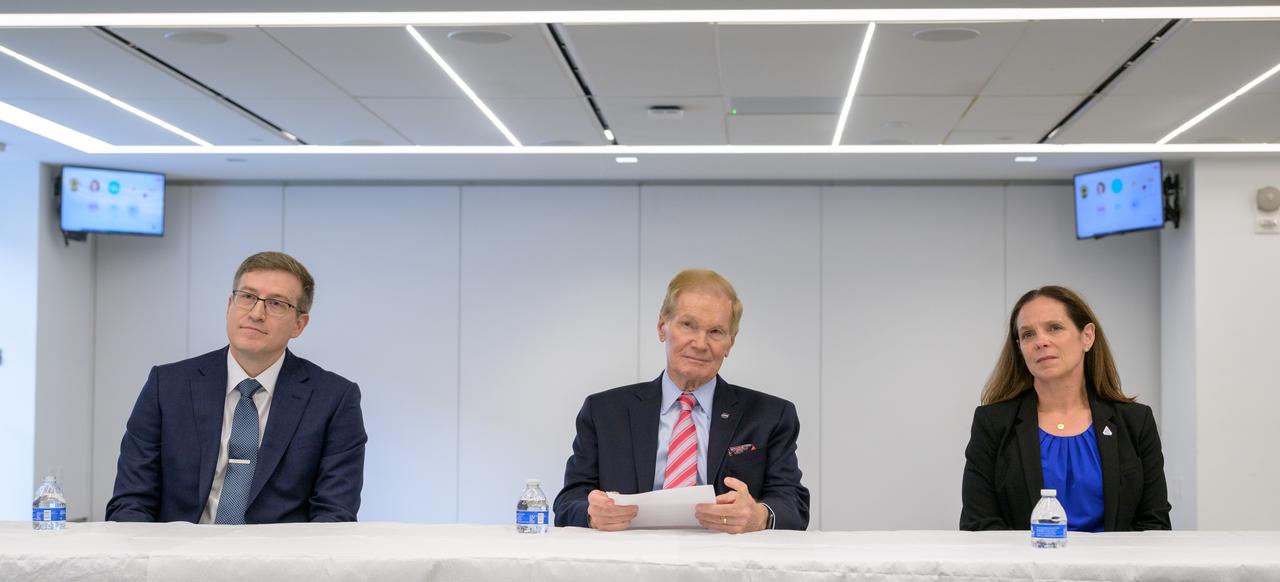
NASA Pressurized Rover Project Manager Danny Newswander, left, NASA Administrator Bill Nelson, and NASA Extravehicular Activity and Human Surface Mobility Program Lara Kearney, right, discuss the historic agreement signed April 9th at NASA Headquarters, between the United States and Japan to advance sustainable human exploration of the Moon, Wednesday, April 10, 2024, at the Japan Aerospace Exploration Agency (JAXA) offices in Washington. Under the agreement, Japan will design, develop, and operate a pressurized rover for crewed and uncrewed exploration on the Moon. NASA will provide the launch and delivery of the rover to the Moon as well as two Japanese astronaut missions to the lunar surface. Photo Credit: Photo Credit: (NASA/Bill Ingalls)

NASA Pressurized Rover Project Manager Danny Newswander, left, NASA Administrator Bill Nelson, and NASA Extravehicular Activity and Human Surface Mobility Program Lara Kearney, right, discuss the historic agreement signed April 9th at NASA Headquarters, between the United States and Japan to advance sustainable human exploration of the Moon, Wednesday, April 10, 2024, at the Japan Aerospace Exploration Agency (JAXA) offices in Washington. Under the agreement, Japan will design, develop, and operate a pressurized rover for crewed and uncrewed exploration on the Moon. NASA will provide the launch and delivery of the rover to the Moon as well as two Japanese astronaut missions to the lunar surface. Photo Credit: Photo Credit: (NASA/Bill Ingalls)

NASA Pressurized Rover Project Manager Danny Newswander, left, NASA Administrator Bill Nelson, and NASA Extravehicular Activity and Human Surface Mobility Program Lara Kearney, right, discuss the historic agreement signed April 9th at NASA Headquarters, between the United States and Japan to advance sustainable human exploration of the Moon, Wednesday, April 10, 2024, at the Japan Aerospace Exploration Agency (JAXA) offices in Washington. Under the agreement, Japan will design, develop, and operate a pressurized rover for crewed and uncrewed exploration on the Moon. NASA will provide the launch and delivery of the rover to the Moon as well as two Japanese astronaut missions to the lunar surface. Photo Credit: Photo Credit: (NASA/Bill Ingalls)
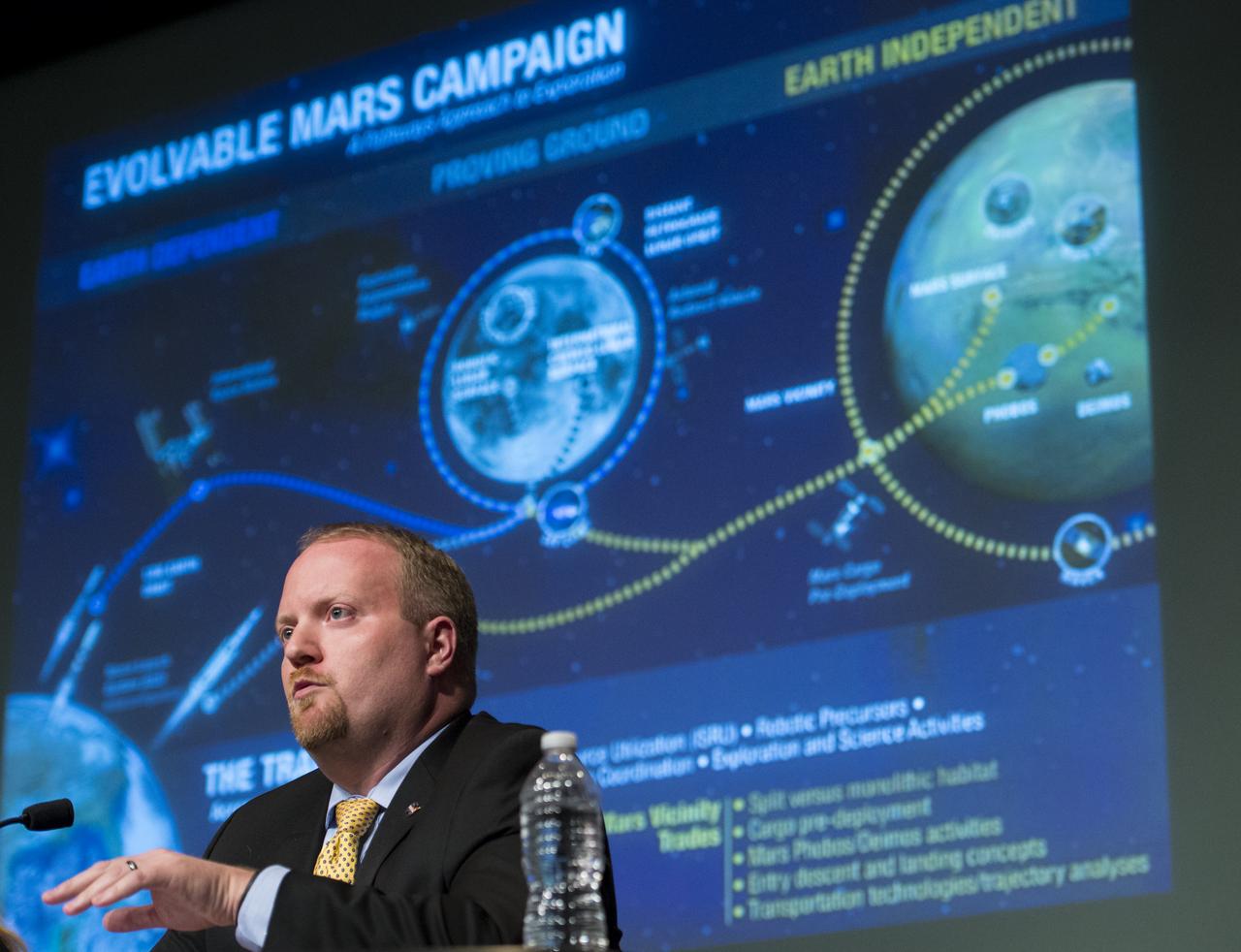
Jason Crusan, Director of NASA's Advanced Exploration Systems Division, speaks during an Exploration Forum showcasing NASA's human exploration path to Mars in the James E. Webb Auditorium at NASA Headquarters on Tuesday, April 29, 2014. Photo Credit: (NASA/Joel Kowsky)
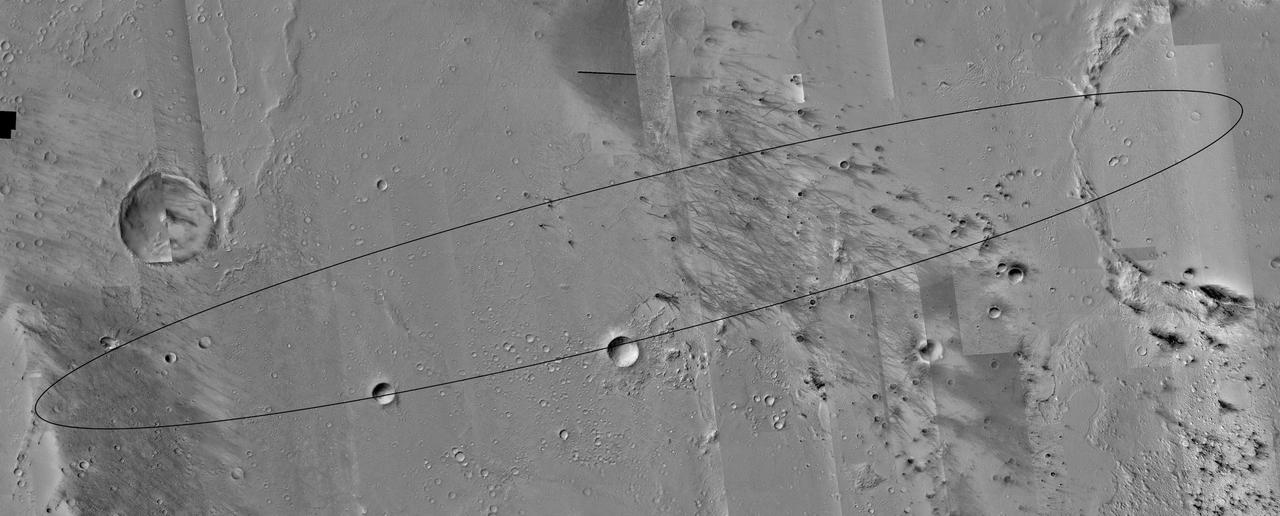
Mars Exploration Rover MER-A Spirit Landing Site
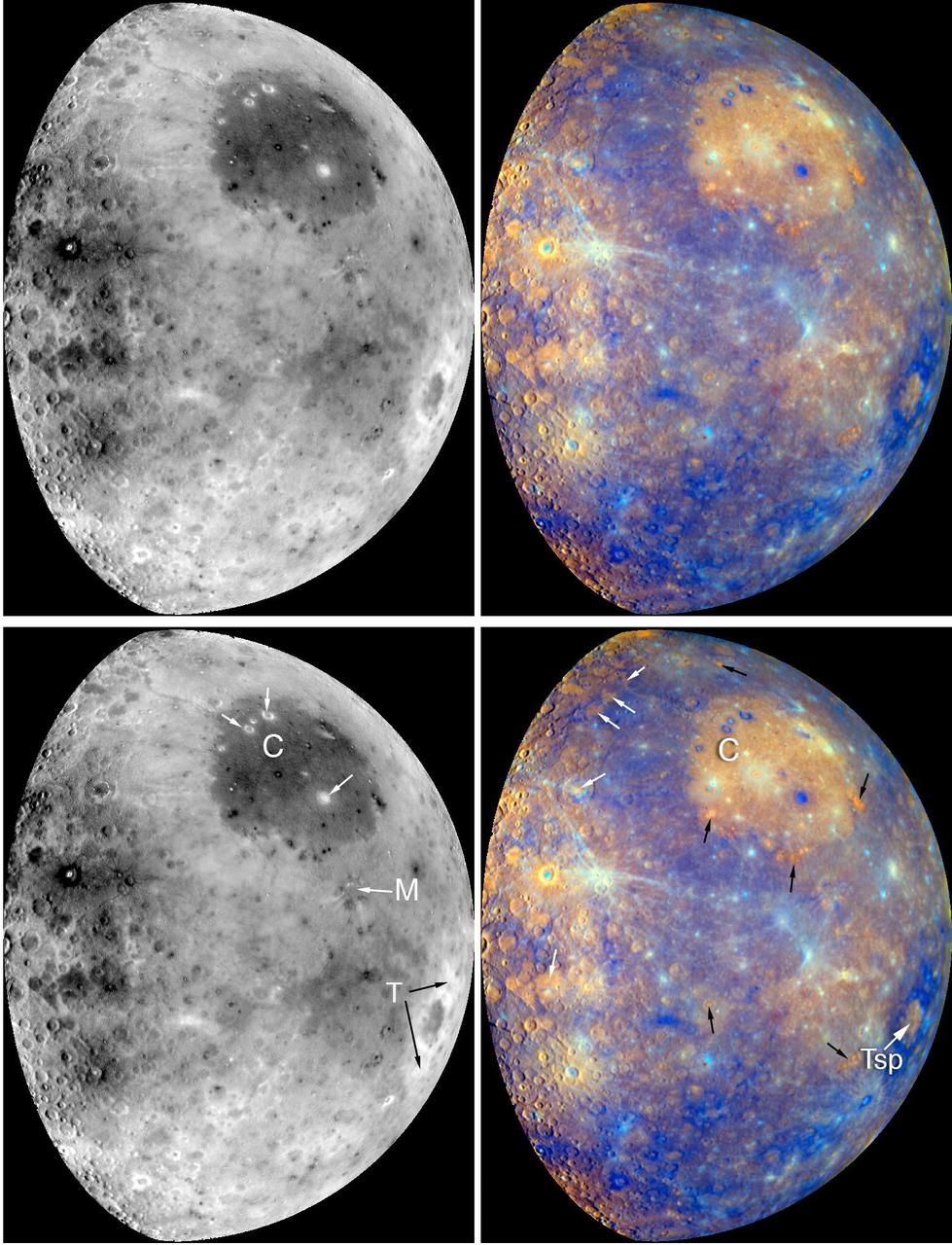
Exploring Mercury Surface with MESSENGER Color Images
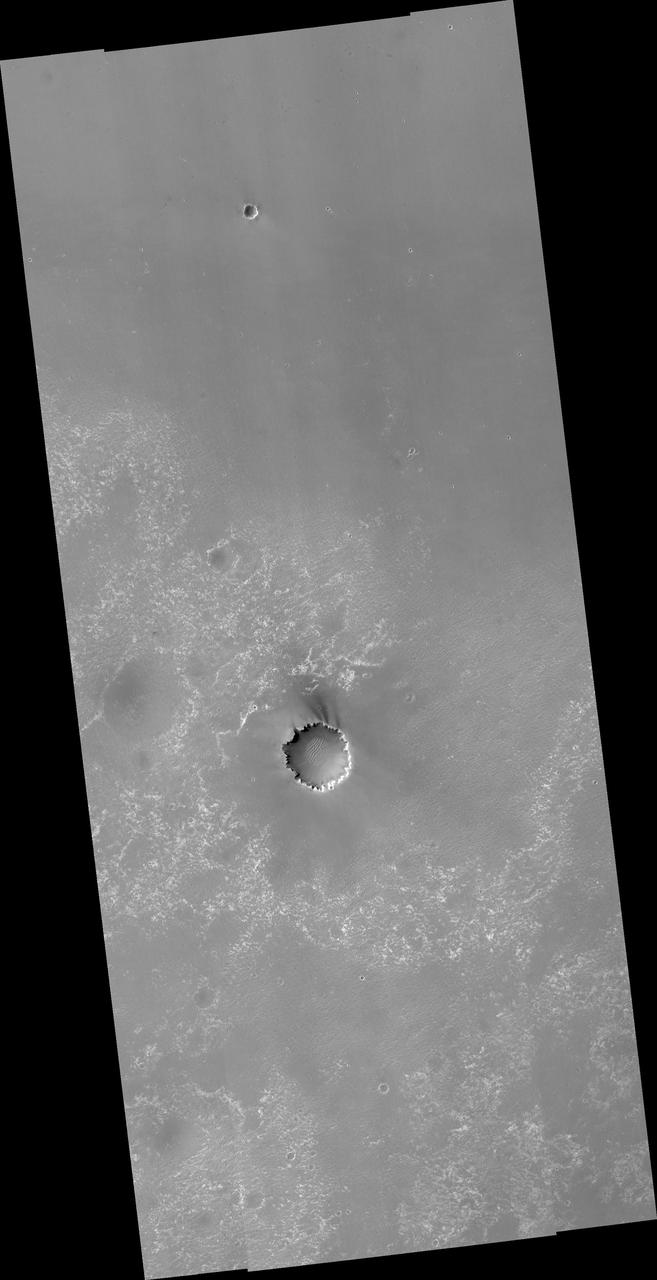
Mars Exploration Rover Landing Site at Meridiani Planum
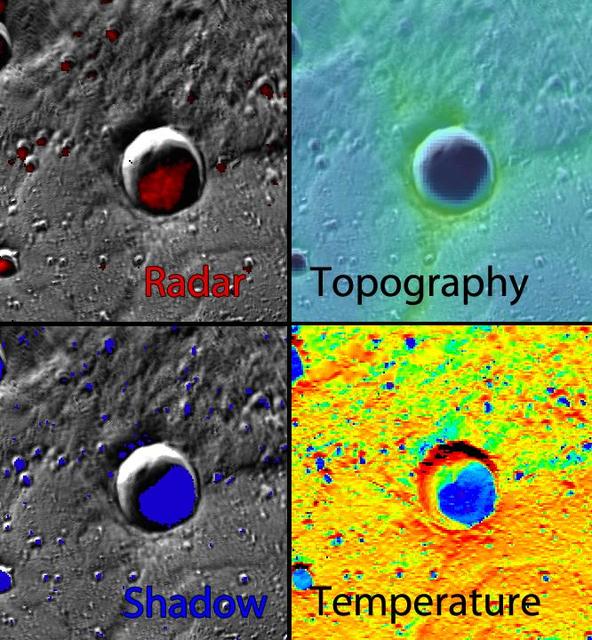
Water Ice Data Exploration WIDE Tool
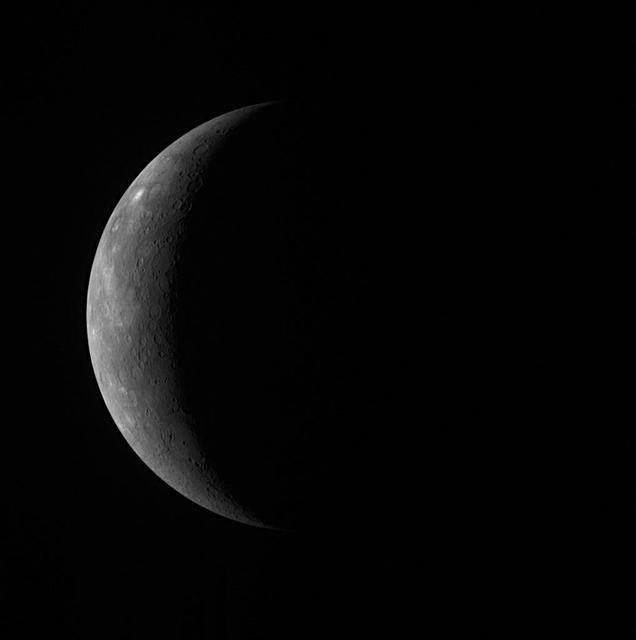
Exploring Mercury Newly Seen Surface and Waiting for More
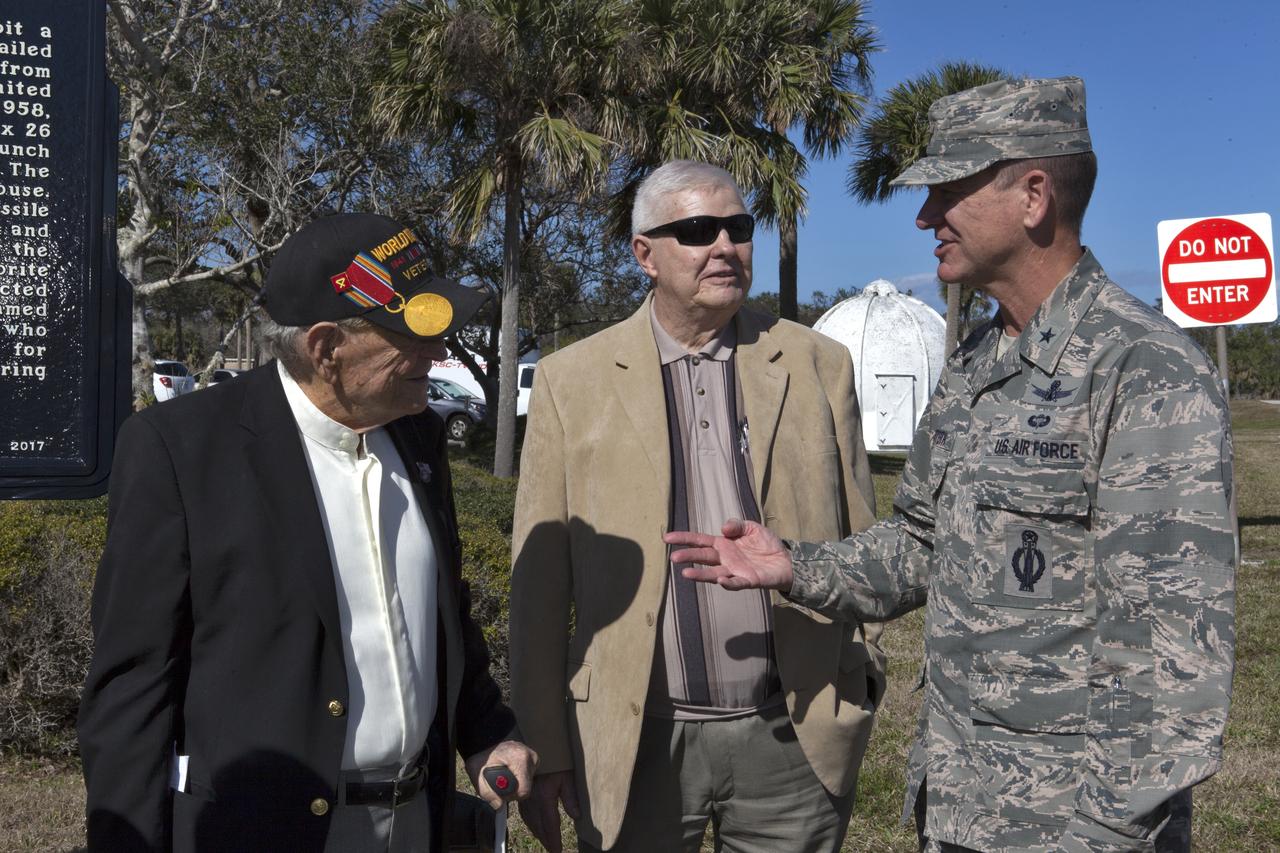
Brig. Gen. Wayne Monteith, 45th Space Wing commander and director of the Eastern Range, right, speaks with Launch team members who supported the launch of America's first satellite, Explorer 1. They spoke following an event celebrating the 60th anniversary of America's first satellite. The ceremony took place in front of the Space Launch Complex 26 blockhouse at Cape Canaveral Air Force Station where the Explorer 1 satellite was launched atop a Jupiter C rocket on Jan. 31, 1958. During operation, the satellite's cosmic ray detector discovered radiation belts around Earth which were named for Dr. James Van Allen, principal investigator for the satellite.
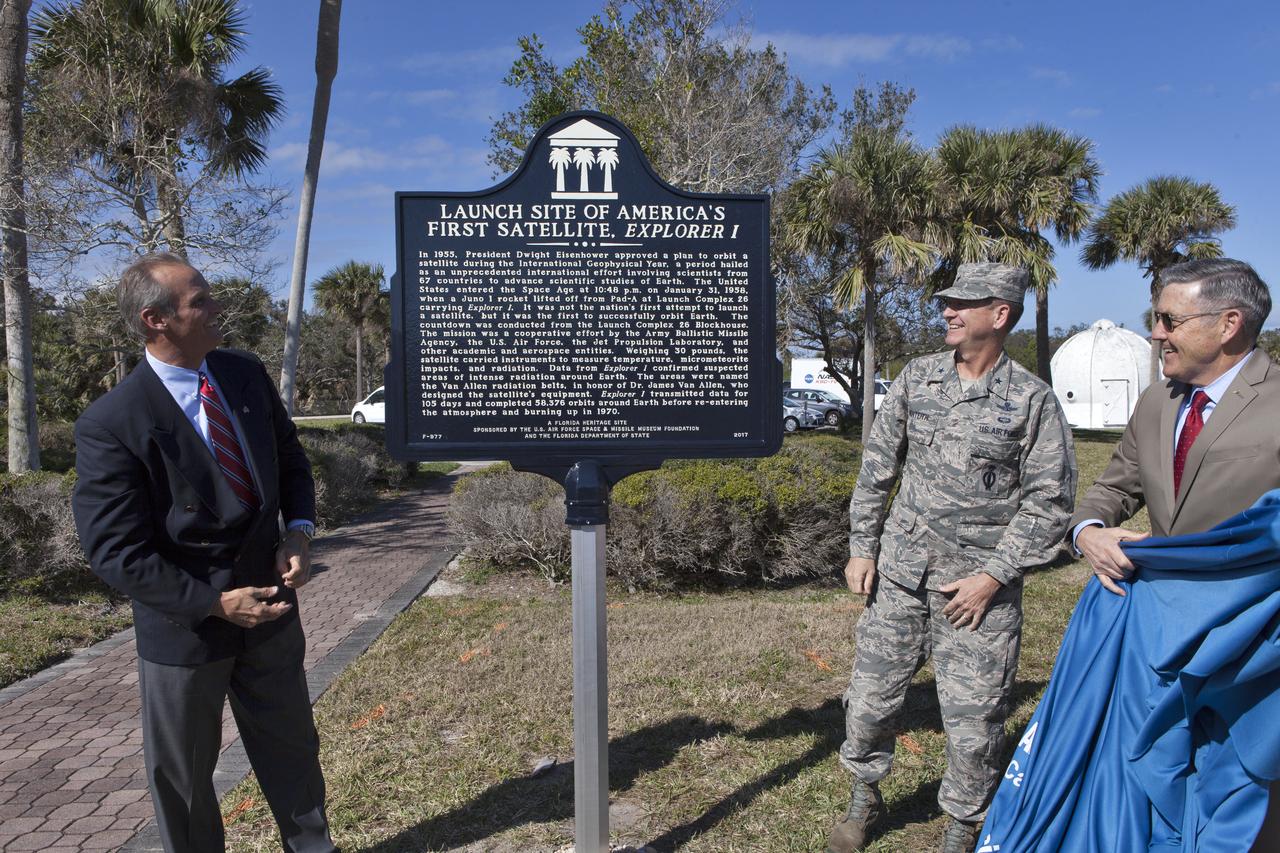
During a ceremony at Cape Canaveral Air Force Station's Space Launch Complex 26 a historical marker is unveiled noting the launch of America's first satellite, Explorer 1. From the left, Ray Sands, chairman of the Air Force Space and Missile Foundation -- sponsor of the marker, Brig. Gen. Wayne Monteith, 45th Space Wing commander and director of the Eastern Range and Kennedy Space Center Director Bob Cabana. The Explorer 1 satellite was launched atop a Jupiter C rocket on Jan. 31, 1958. During operation, the satellite's cosmic ray detector discovered radiation belts around Earth which were named for Dr. James Van Allen, principal investigator for the satellite.
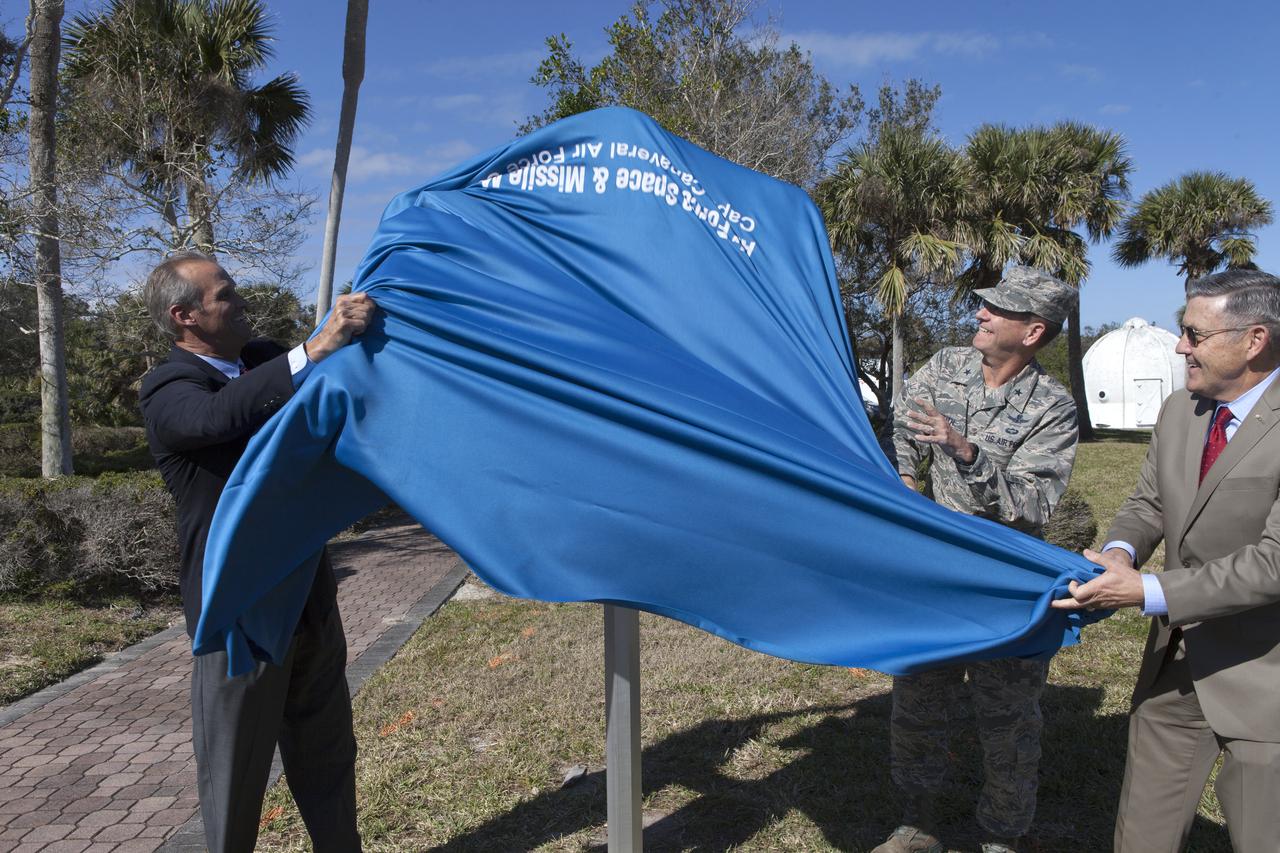
During a ceremony at Cape Canaveral Air Force Station's Space Launch Complex 26 a historical marker is unveiled noting the launch of America's first satellite, Explorer 1. From the left, Ray Sands, chairman of the Air Force Space and Missile Foundation -- sponsor of the marker, Brig. Gen. Wayne Monteith, 45th Space Wing commander and director of the Eastern Range and Kennedy Space Center Director Bob Cabana. The Explorer 1 satellite was launched atop a Jupiter C rocket on Jan. 31, 1958. During operation, the satellite's cosmic ray detector discovered radiation belts around Earth which were named for Dr. James Van Allen, principal investigator for the satellite.
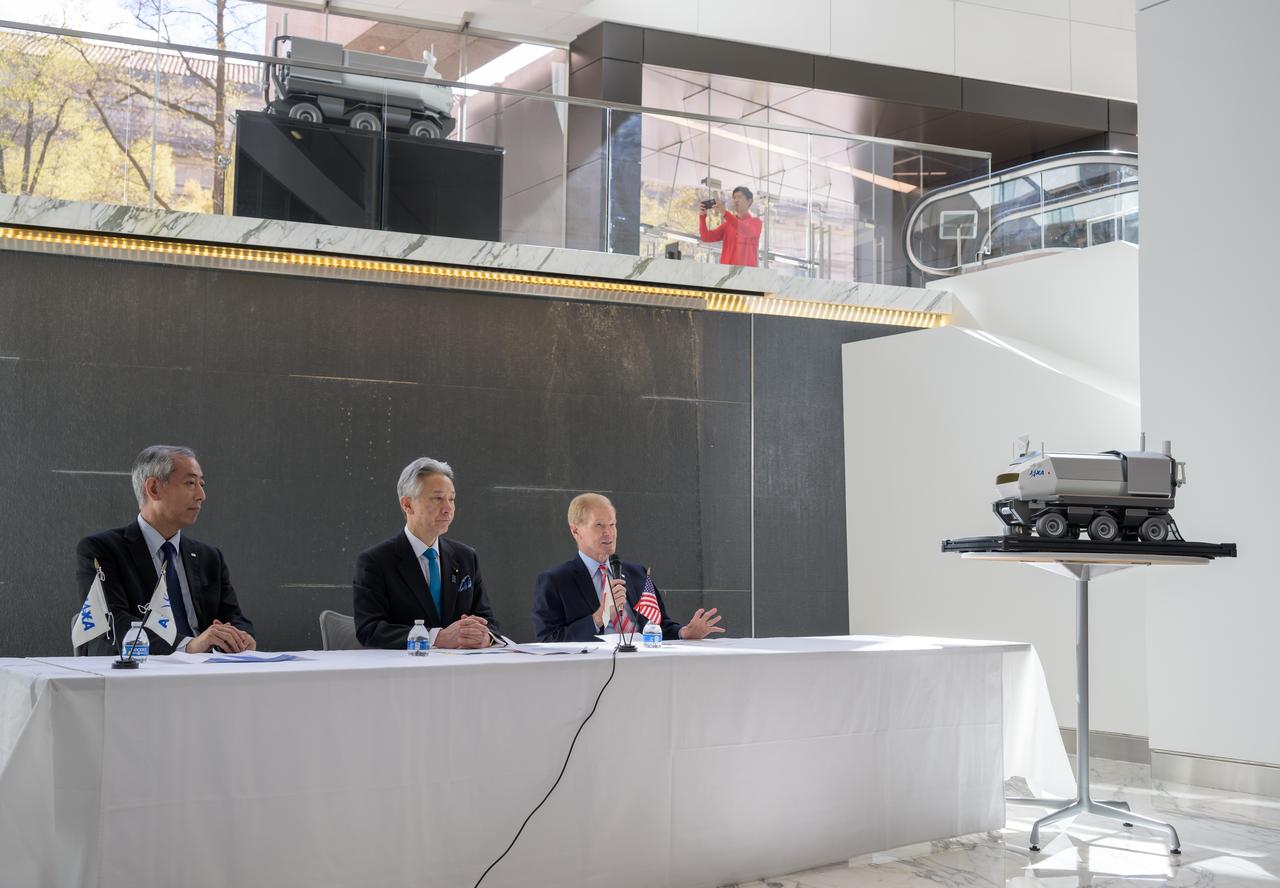
Japan Aerospace Exploration Agency (JAXA) President Hiroshi Yamakawa, left, Japan’s Minister of Education, Culture, Sports, Science and Technology Masahito Moriyama, and NASA Administrator Bill Nelson, right, are seen during a briefing where they discussed the historic agreement signed April 9th at NASA Headquarters, between the United States and Japan to advance sustainable human exploration of the Moon, Wednesday, April 10, 2024, at the Japan Aerospace Exploration Agency (JAXA) offices in Washington. Under the agreement, Japan will design, develop, and operate a pressurized rover for crewed and uncrewed exploration on the Moon. NASA will provide the launch and delivery of the rover to the Moon as well as two Japanese astronaut missions to the lunar surface. Photo Credit: Photo Credit: (NASA/Bill Ingalls)
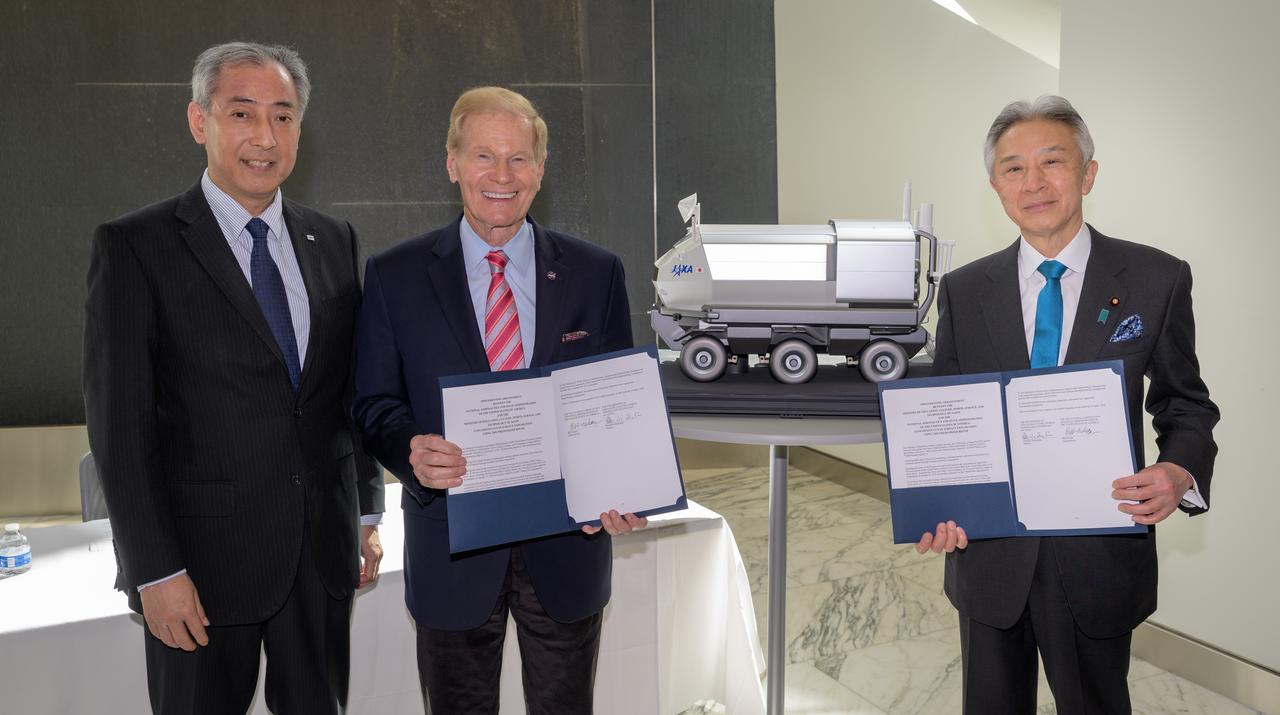
Japan Aerospace Exploration Agency (JAXA) President Hiroshi Yamakawa, left, NASA Administrator Bill Nelson, and Japan’s Minister of Education, Culture, Sports, Science and Technology Masahito Moriyama, right, pose for a group photograph holding the historic agreement signed April 9th at NASA Headquarters, between the United States and Japan to advance sustainable human exploration of the Moon, Wednesday, April 10, 2024, at the Japan Aerospace Exploration Agency (JAXA) offices in Washington. Under the agreement, Japan will design, develop, and operate a pressurized rover for crewed and uncrewed exploration on the Moon. NASA will provide the launch and delivery of the rover to the Moon as well as two Japanese astronaut missions to the lunar surface. Photo Credit: Photo Credit: (NASA/Bill Ingalls)
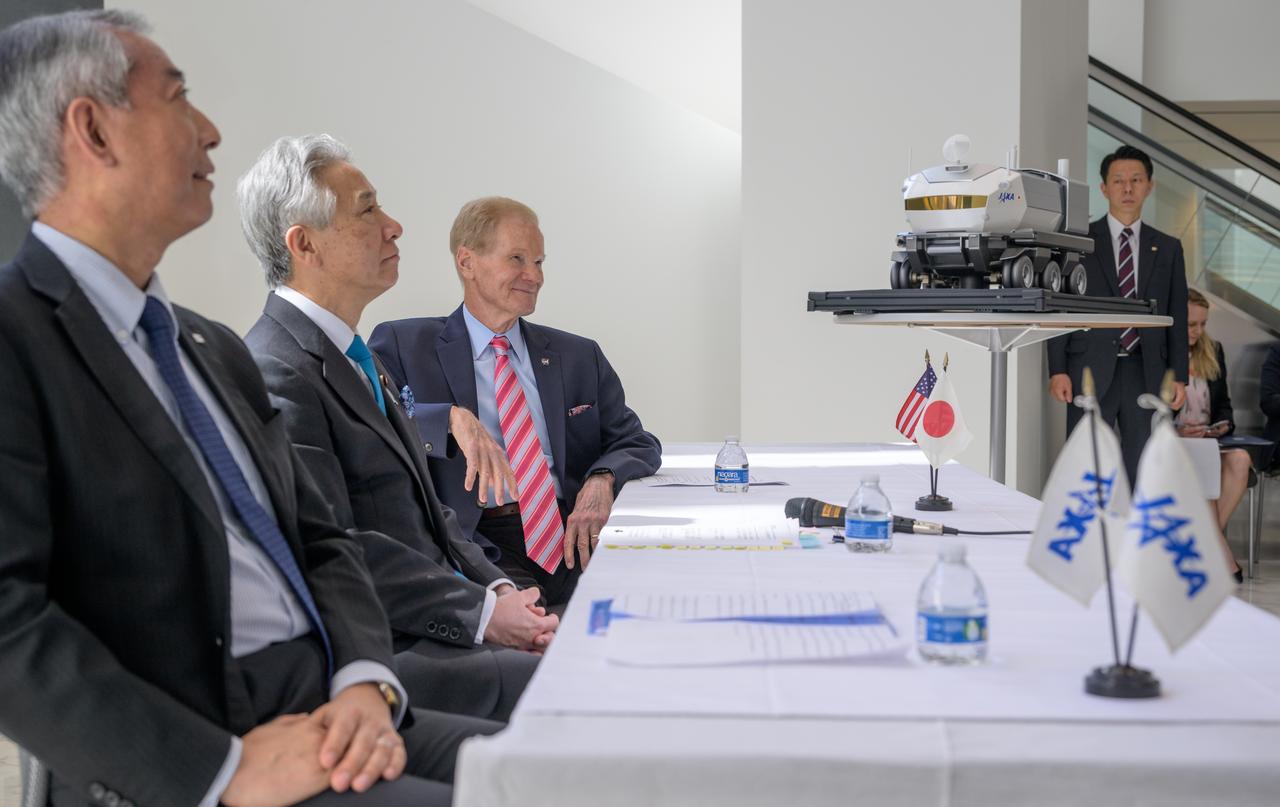
Japan Aerospace Exploration Agency (JAXA) President Hiroshi Yamakawa, left, Japan’s Minister of Education, Culture, Sports, Science and Technology Masahito Moriyama, and NASA Administrator Bill Nelson, right, are seen during a briefing where they discussed the historic agreement signed April 9th at NASA Headquarters, between the United States and Japan to advance sustainable human exploration of the Moon, Wednesday, April 10, 2024, at the Japan Aerospace Exploration Agency (JAXA) offices in Washington. Under the agreement, Japan will design, develop, and operate a pressurized rover for crewed and uncrewed exploration on the Moon. NASA will provide the launch and delivery of the rover to the Moon as well as two Japanese astronaut missions to the lunar surface. Photo Credit: Photo Credit: (NASA/Bill Ingalls)

Randy Lillard, Program Executive for Technology Demonstration Missions of NASA's Space Technology Mission DIrectorate, speaks during an Exploration Forum showcasing NASA's human exploration path to Mars in the James E. Webb Auditorium at NASA Headquarters on Tuesday, April 29, 2014. Photo Credit: (NASA/Joel Kowsky)
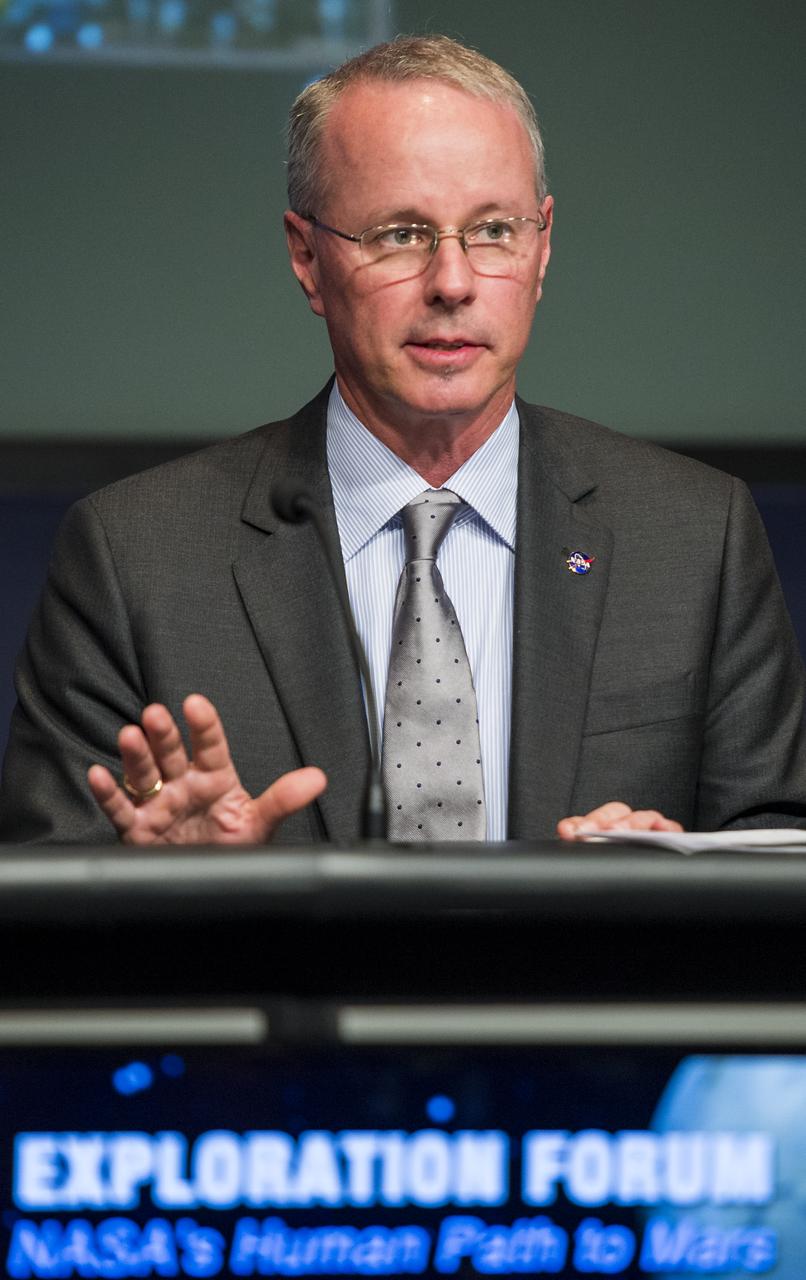
David Miller, NASA Chief Technologist, participate in a panel discussion during an Exploration Forum showcasing NASA's human exploration path to Mars in the James E. Webb Auditorium at NASA Headquarters on Tuesday, April 29, 2014. Photo Credit: (NASA/Joel Kowsky)
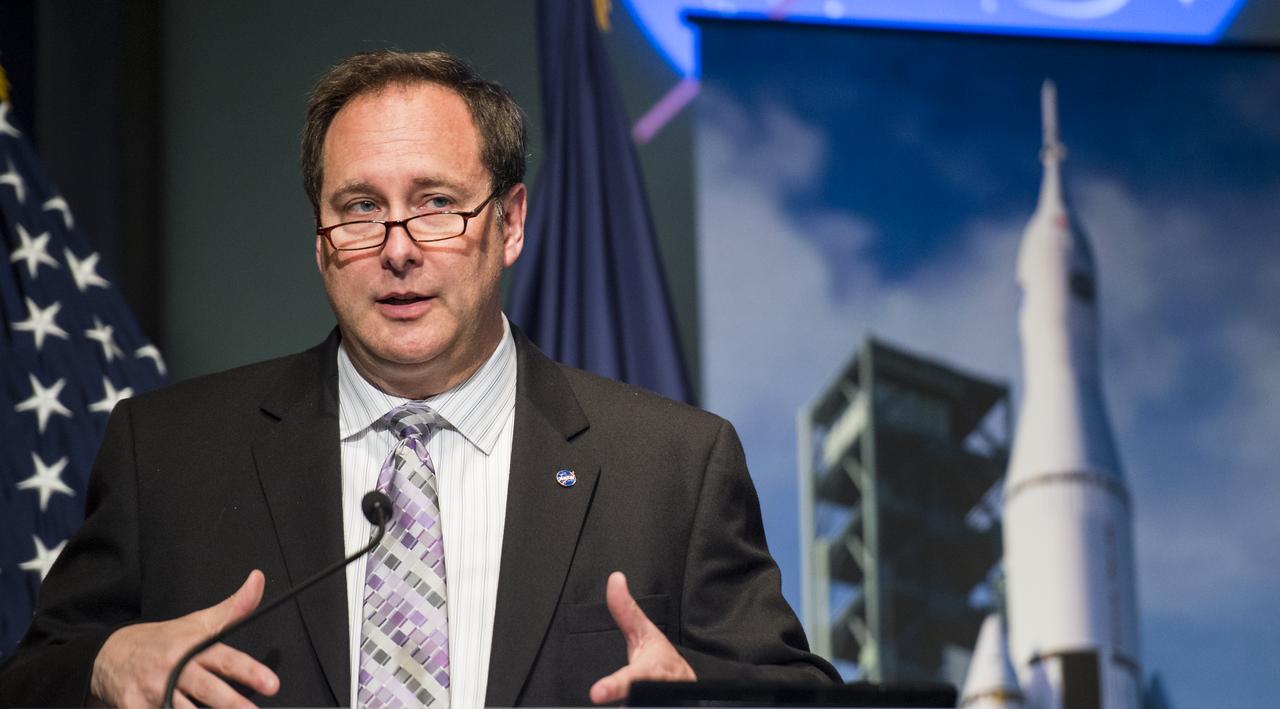
Robert Lightfoot, NASA Associate Adminstrator, delivers closing remarks at an Exploration Forum showcasing NASA's human exploration path to Mars in the James E. Webb Auditorium at NASA Headquarters on Tuesday, April 29, 2014. Photo Credit: (NASA/Joel Kowsky)
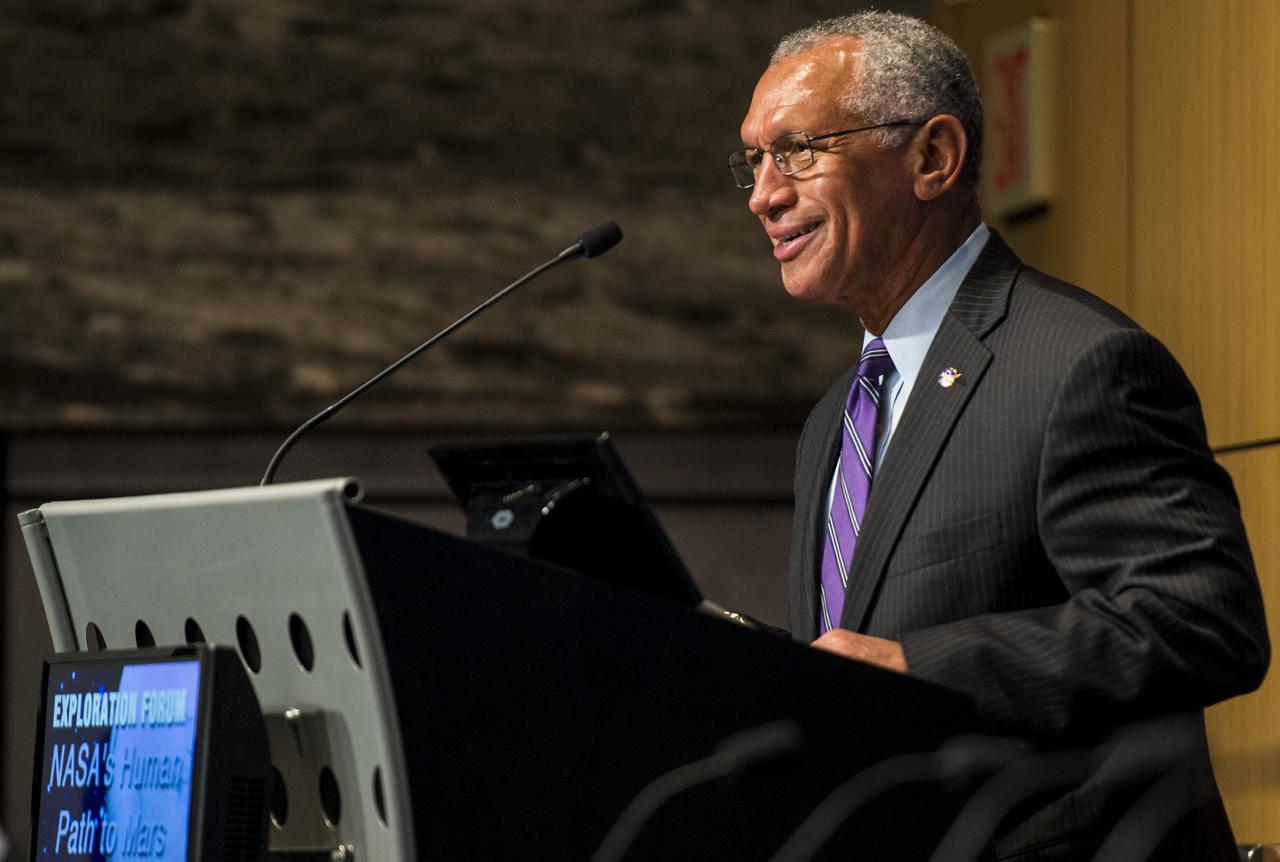
NASA Administrator Charles Bolden speaks during an Exploration Forum showcasing NASA's human exploration path to Mars in the James E. Webb Auditorium at NASA Headquarters on Tuesday, April 29, 2014. Photo Credit: (NASA/Joel Kowsky)
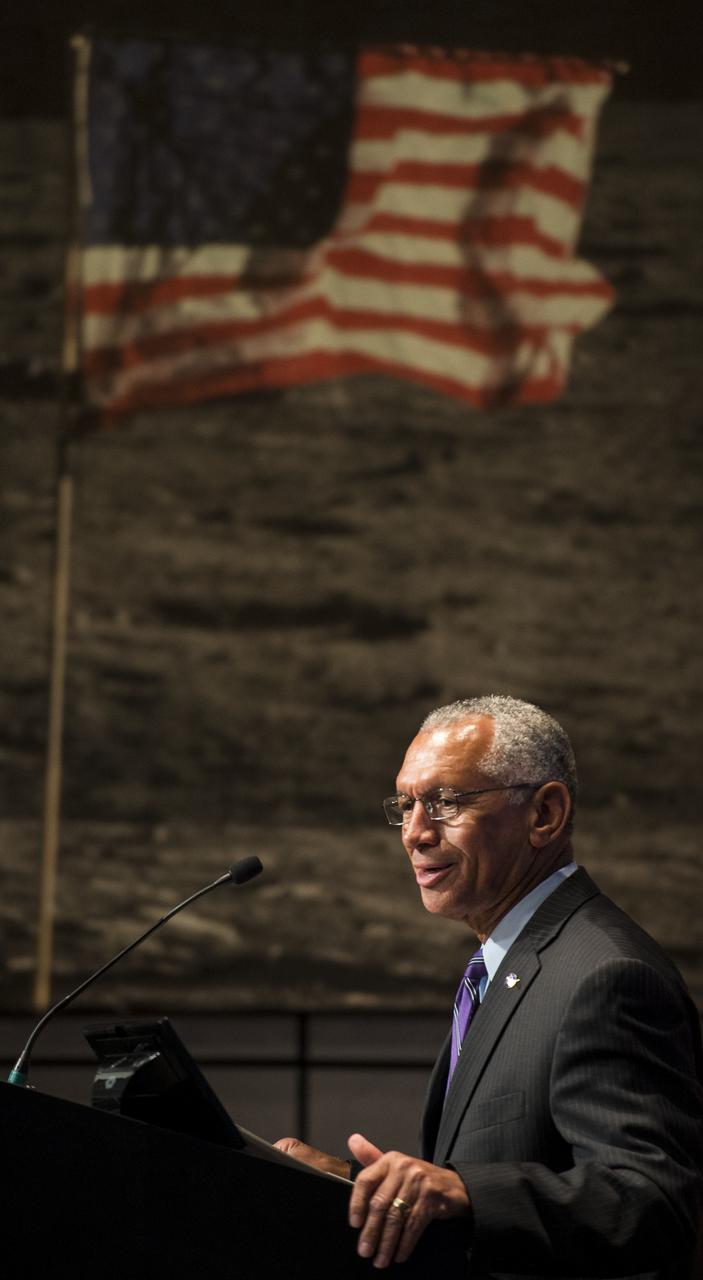
NASA Administrator Charles Bolden speaks during an Exploration Forum showcasing NASA's human exploration path to Mars in the James E. Webb Auditorium at NASA Headquarters on Tuesday, April 29, 2014. Photo Credit: (NASA/Joel Kowsky)
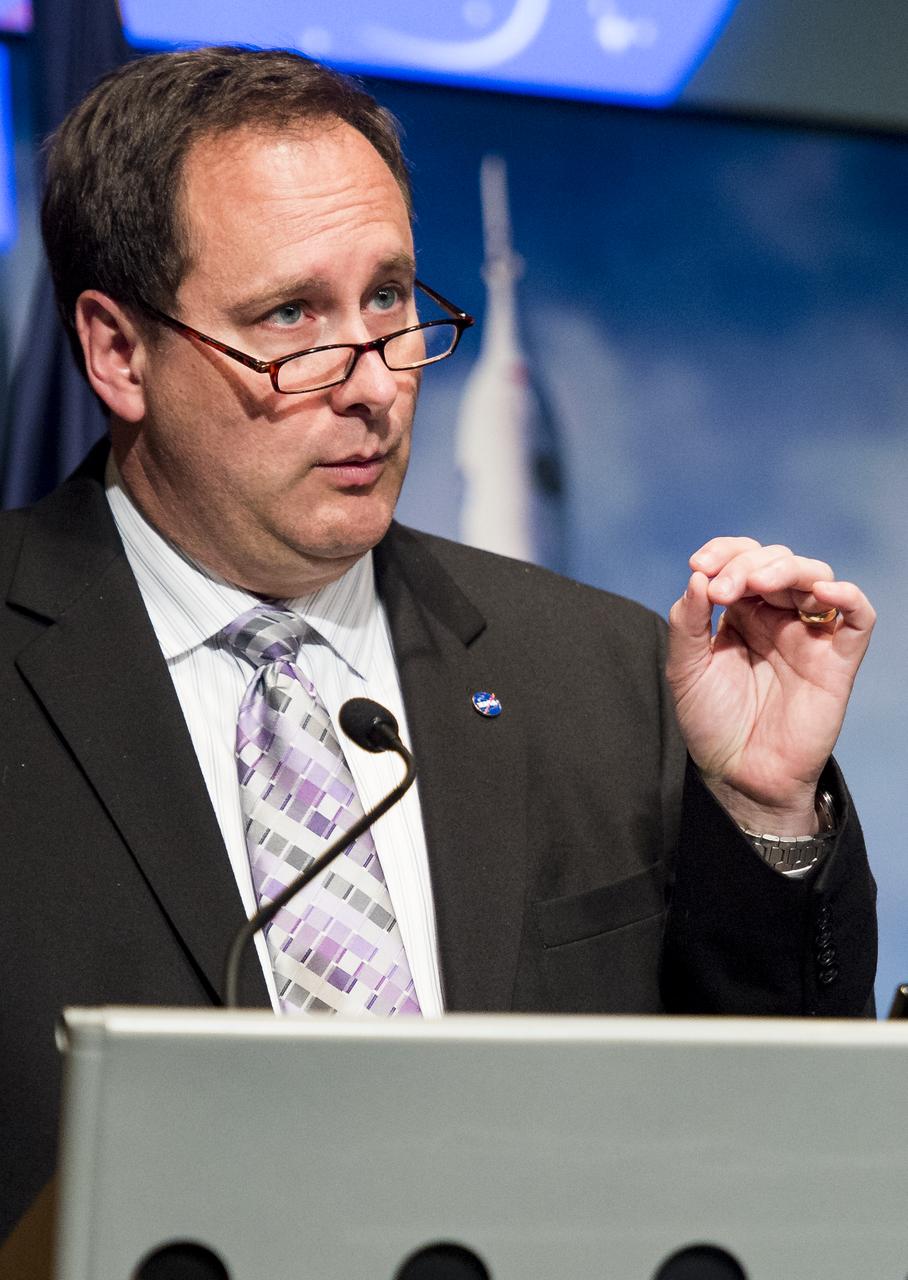
Robert Lightfoot, NASA Associate Adminstrator, delivers closing remarks at an Exploration Forum showcasing NASA's human exploration path to Mars in the James E. Webb Auditorium at NASA Headquarters on Tuesday, April 29, 2014. Photo Credit: (NASA/Joel Kowsky)
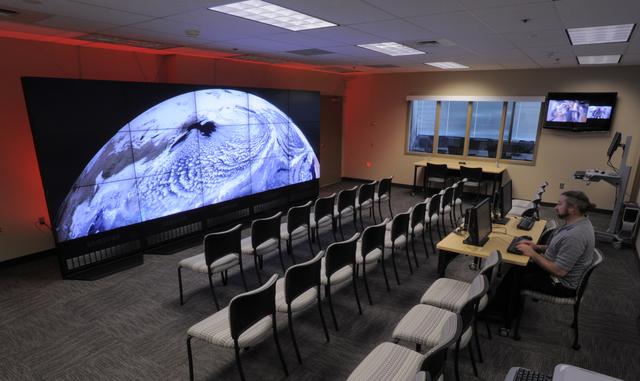
The NASA Center for Climate Simulation (NCCS) Data Exploration Theater features a 17- by 6-foot multi-screen visualization wall for engaging visitors and scientists with high-definition movies of simulation results. Here, the wall displays a 3.5-kilometer-resolution global simulation that captures numerous cloud types at groundbreaking fidelity. Credit: NASA/Pat Izzo To learn more about NCCS go to: <a href="http://www.nasa.gov/topics/earth/features/climate-sim-center.html" rel="nofollow">www.nasa.gov/topics/earth/features/climate-sim-center.html</a> NASA Goddard Space Flight Center is home to the nation's largest organization of combined scientists, engineers and technologists that build spacecraft, instruments and new technology to study the Earth, the sun, our solar system, and the universe.
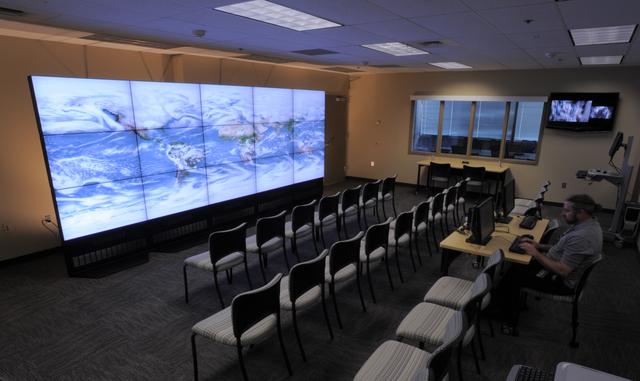
The NASA Center for Climate Simulation (NCCS) Data Exploration Theater features a 17- by 6-foot multi-screen visualization wall for engaging visitors and scientists with high-definition movies of simulation results. Here, the wall displays a 5-kilometer-resolution global simulation that captures numerous cloud types at groundbreaking fidelity. Credit: NASA/Pat Izzo To learn more about NCCS go to: <a href="http://www.nasa.gov/topics/earth/features/climate-sim-center.html" rel="nofollow">www.nasa.gov/topics/earth/features/climate-sim-center.html</a> NASA Goddard Space Flight Center is home to the nation's largest organization of combined scientists, engineers and technologists that build spacecraft, instruments and new technology to study the Earth, the sun, our solar system, and the universe.
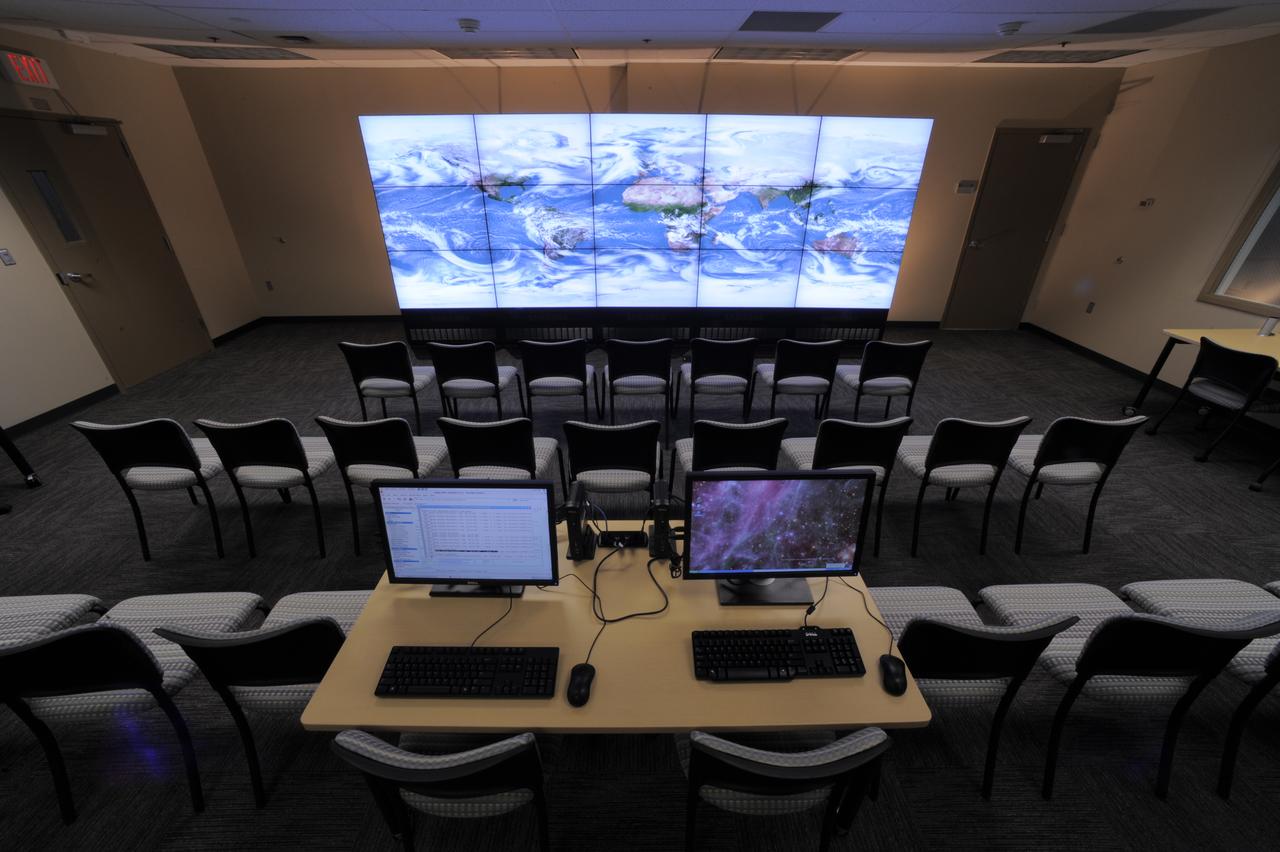
The NASA Center for Climate Simulation (NCCS) Data Exploration Theater features a 17- by 6-foot multi-screen visualization wall for engaging visitors and scientists with high-definition movies of simulation results. Here, the wall displays a 5-kilometer-resolution global simulation that captures numerous cloud types at groundbreaking fidelity. Credit: NASA/Pat Izzo To learn more about NCCS go to: <a href="http://www.nasa.gov/topics/earth/features/climate-sim-center.html" rel="nofollow">www.nasa.gov/topics/earth/features/climate-sim-center.html</a> NASA Goddard Space Flight Center is home to the nation's largest organization of combined scientists, engineers and technologists that build spacecraft, instruments and new technology to study the Earth, the sun, our solar system, and the universe.
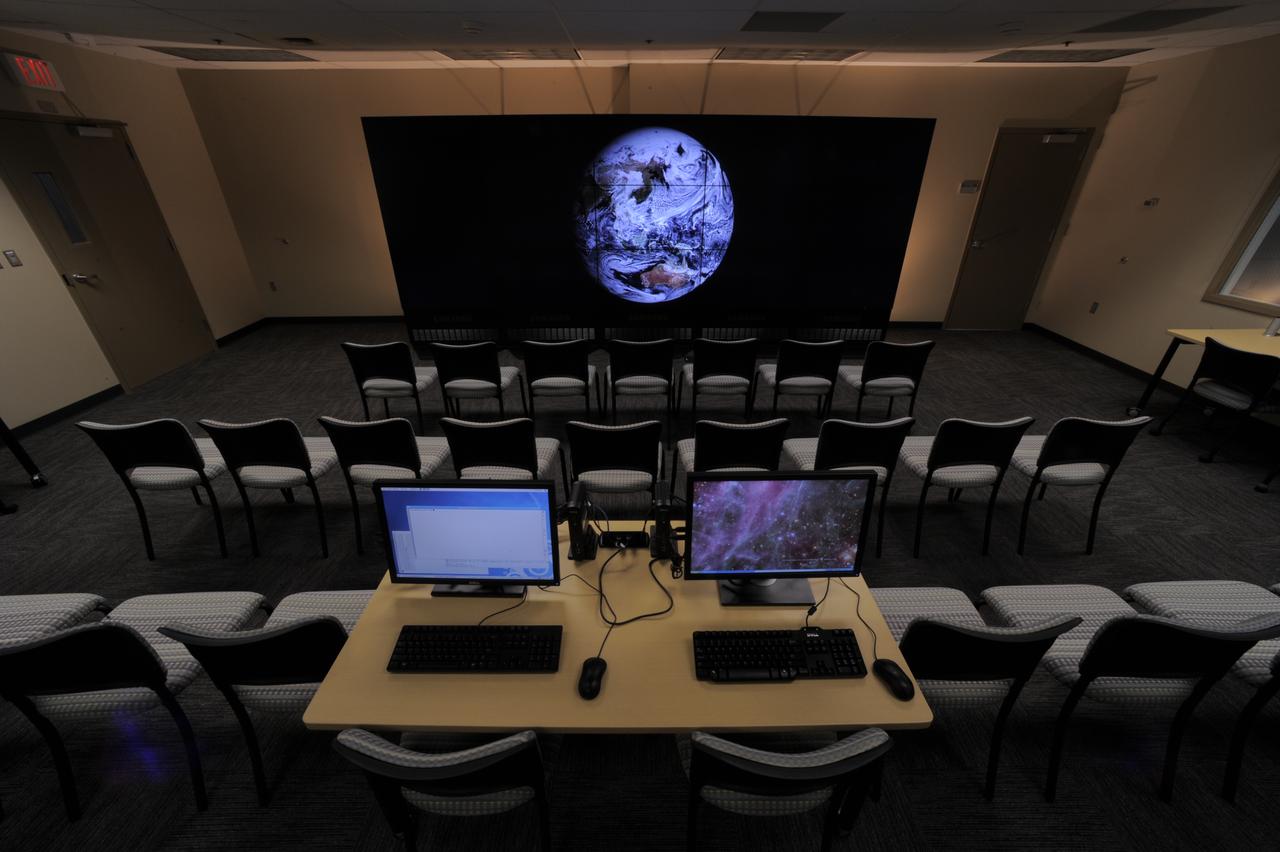
The NASA Center for Climate Simulation (NCCS) Data Exploration Theater features a 17- by 6-foot multi-screen visualization wall for engaging visitors and scientists with high-definition movies of simulation results. Here, the wall displays a 3.5-kilometer-resolution global simulation that captures numerous cloud types at groundbreaking fidelity. Credit: NASA/Pat Izzo To learn more about NCCS go to: <a href="http://www.nasa.gov/topics/earth/features/climate-sim-center.html" rel="nofollow">www.nasa.gov/topics/earth/features/climate-sim-center.html</a> NASA Goddard Space Flight Center is home to the nation's largest organization of combined scientists, engineers and technologists that build spacecraft, instruments and new technology to study the Earth, the sun, our solar system, and the universe.