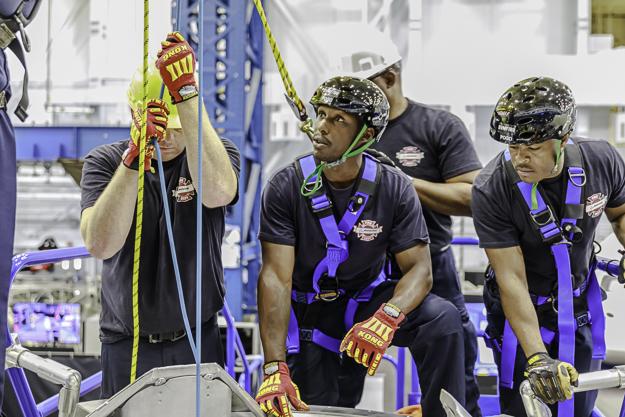
The Boeing extrication team train on the Boeing Mock-up Trainer from May 25 through May 28, 2018, at NASA's Johnson Space Center in Houston. The extrication team is comprised of firefighters from various U.S. Boeing sites. Each member of the team brings an expertise in Aerospace Confined Space Rescue, are Emergency Medical Technicians and have years of rescue experience. The team is highly motivated to getting the crew out quickly, safely and efficiently. The training at Johnson included suit training, side hatch egress, and Intravehicular Activity (IVA) rigging and egress. The week included a run for record on IVA egress for a testing requirement. Participants also included NASA Medical, the 45th Operations Group's Detachment 3, based at Patrick Air Force Base, and U.S. Air Force pararescue representation.
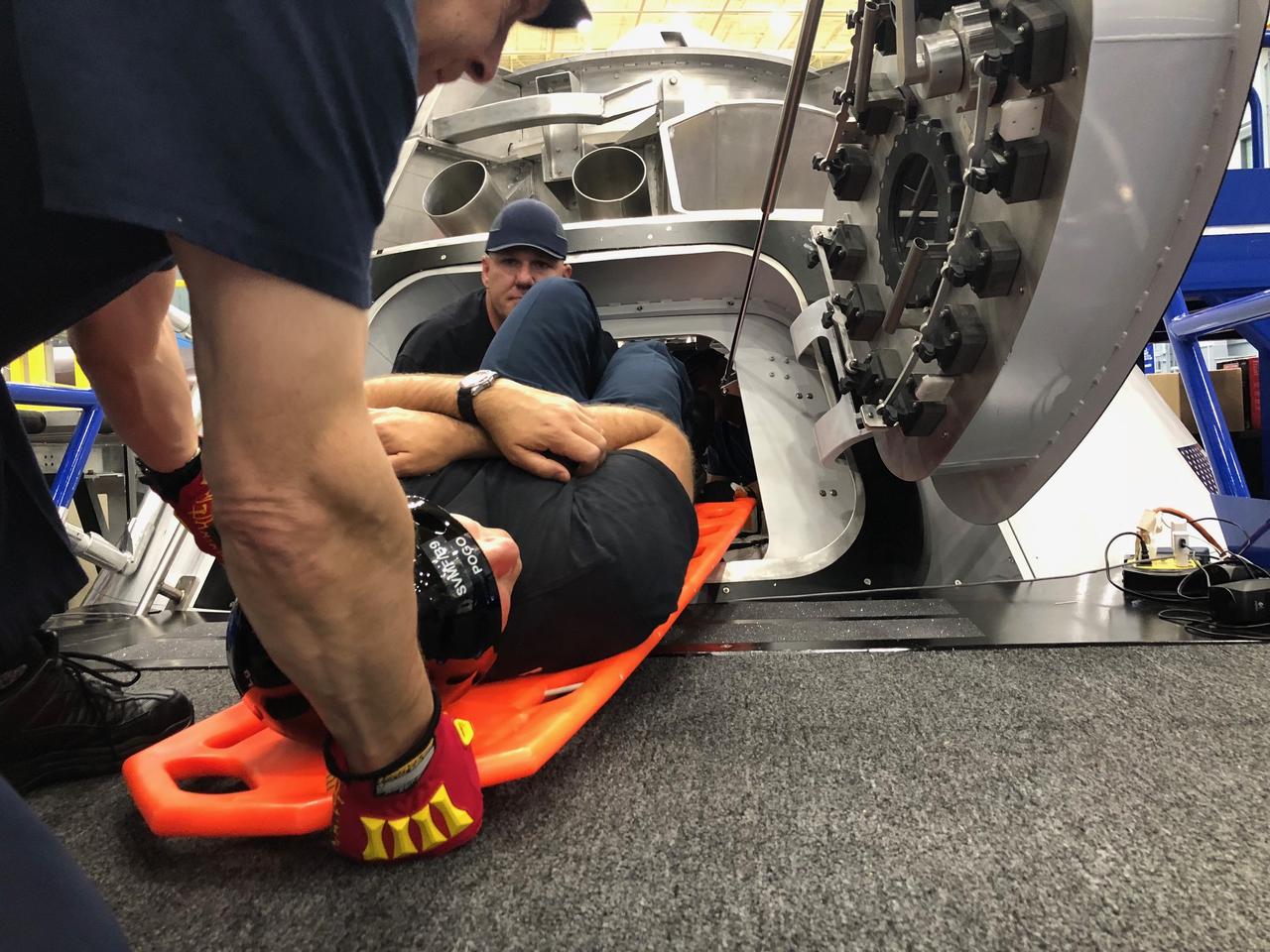
The Boeing extrication team train on the Boeing Mock-up Trainer from May 25 through May 28, 2018, at NASA's Johnson Space Center in Houston. The extrication team is comprised of firefighters from various U.S. Boeing sites. Each member of the team brings an expertise in Aerospace Confined Space Rescue, are Emergency Medical Technicians and have years of rescue experience. The team is highly motivated to getting the crew out quickly, safely and efficiently. The training at Johnson included suit training, side hatch egress, and Intravehicular Activity (IVA) rigging and egress. The week included a run for record on IVA egress for a testing requirement. Participants also included NASA Medical, the 45th Operations Group's Detachment 3, based at Patrick Air Force Base, and U.S. Air Force pararescue representation.
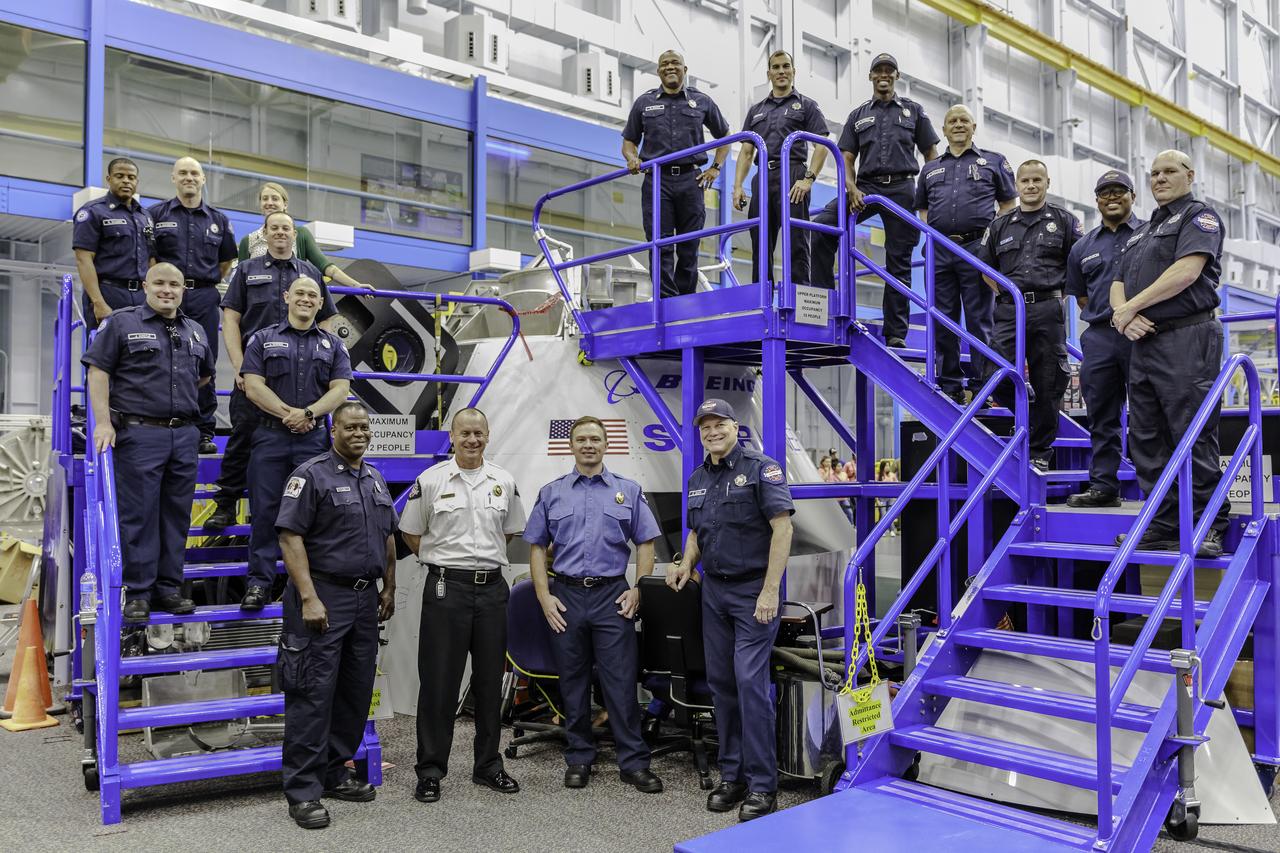
The Boeing extrication team train on the Boeing Mock-up Trainer from May 25 through May 28, 2018, at NASA's Johnson Space Center in Houston. The extrication team is comprised of firefighters from various U.S. Boeing sites. Each member of the team brings an expertise in Aerospace Confined Space Rescue, are Emergency Medical Technicians and have years of rescue experience. The team is highly motivated to getting the crew out quickly, safely and efficiently. The training at Johnson included suit training, side hatch egress, and Intravehicular Activity (IVA) rigging and egress. The week included a run for record on IVA egress for a testing requirement. Participants also included NASA Medical, the 45th Operations Group's Detachment 3, based at Patrick Air Force Base, and U.S. Air Force pararescue representation.
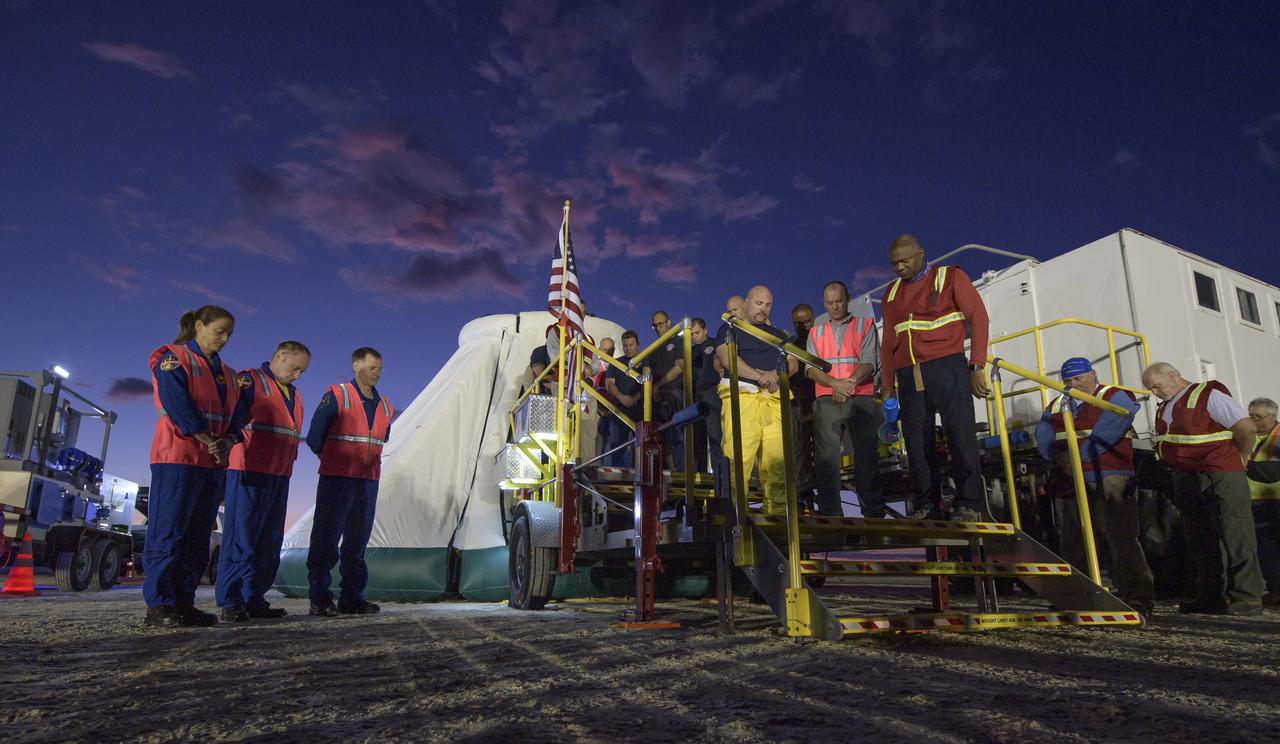
NASA astronauts Nicole Mann and Mike Fincke and Boeing astronaut Chris Ferguson observe a moment of silence with teams from NASA, Boeing and the White Sands Missile Range, honoring the victims of the Sept. 11 terrorist attacks, Wednesday, Sept. 11, 2019 at the White Sands Missile Range outside Las Cruces, New Mexico. The joint teams gathered in the desert to rehearse landing and crew extrication from Boeing’s CST-100 Starliner, which will be used to carry humans to the International Space Station. Mann, Fincke and Ferguson will fly to the space station aboard the Starliner for the Boeing Crew Flight Test mission. Photo Credit: (NASA/Bill Ingalls)
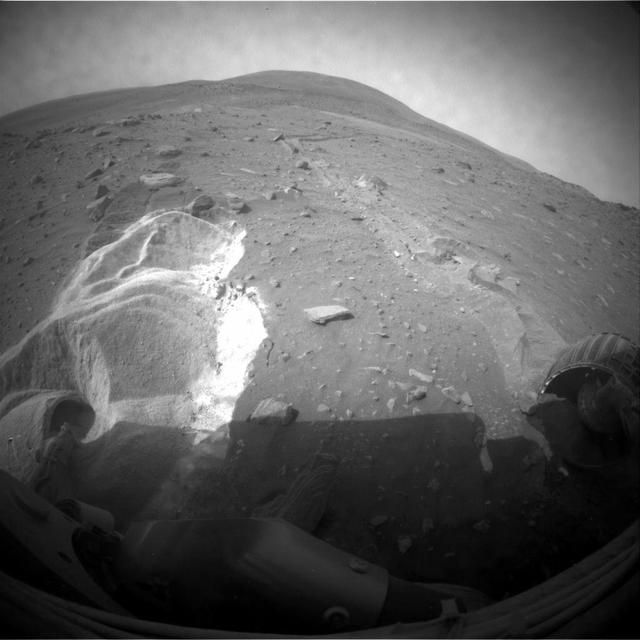
Wheel slippage during attempts to extricate NASA's Mars Rover Spirit from a patch of soft ground during the preceding two weeks had partially buried the wheels by the 1,899th Martian day, or sol, of the Spirit's mission on Mars (May 6, 2009). Spirit took this image with its front hazard-avoidance camera on Sol 1899. With Spirit in the position shown here, the rover team temporarily suspended driving attempts while studying the ground around Spirit and planning simulation tests of driving options with a test rover at NASA's Jet Propulsion Laboratory in Pasadena, Calif. Driving attempts between the time Spirit took a similar image (PIA12002) 10 sols earlier and when this image was taken moved the rover a total of about 36 centimeters (14 inches). While driving backwards, the rover drags its right front wheel, which no longer rotates. For scale, the distance between the wheel tracks is about 1 meter (40 inches). This view is looking northward, with Husband Hill on the horizon. http://photojournal.jpl.nasa.gov/catalog/PIA12007