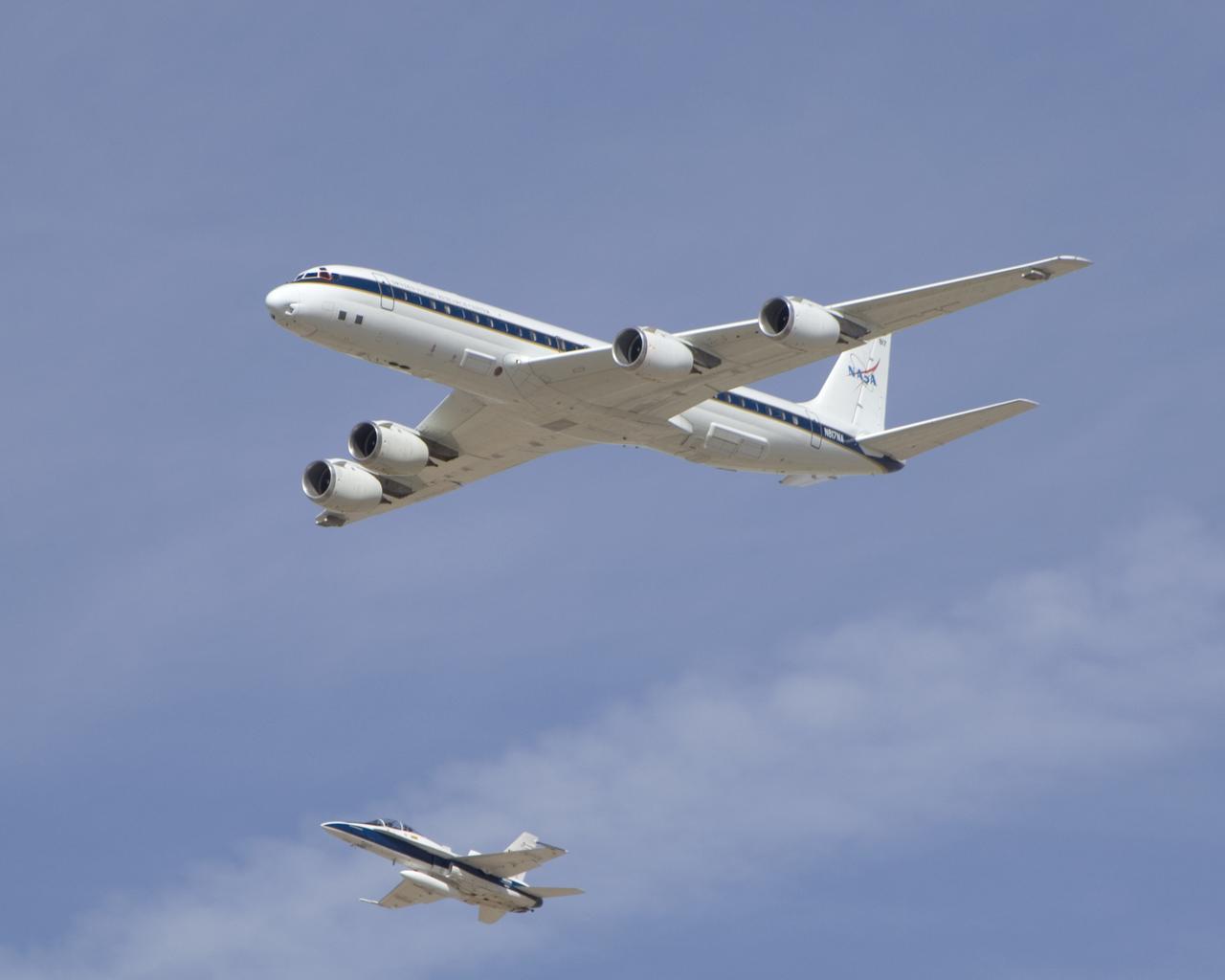
NASA's DC-8 airborne science laboratory is shadowed by a NASA F/A-18 chase plane during a flyover of the Dryden Aircraft Operations Facility in Palmdale, Calif.
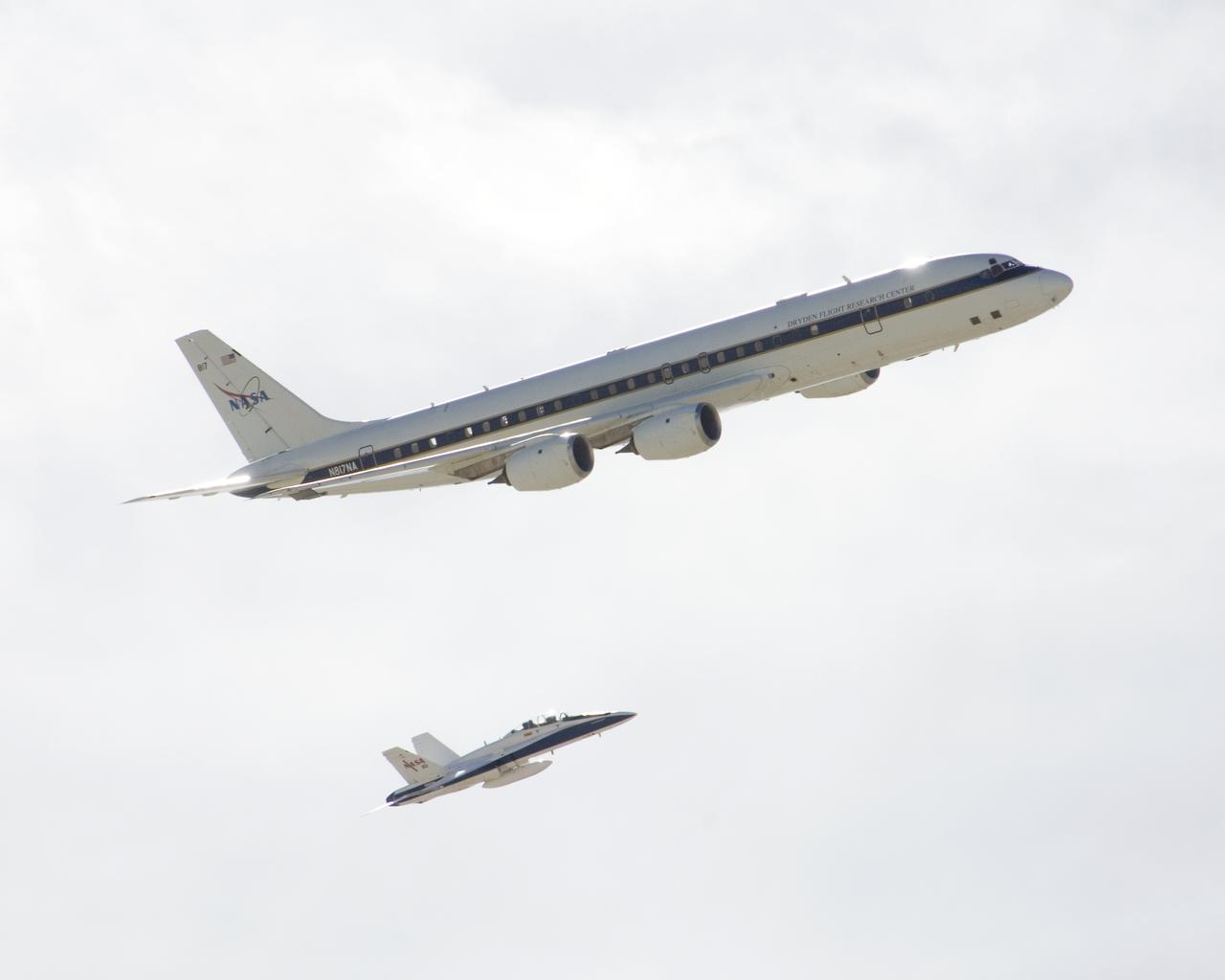
NASA's DC-8 airborne science laboratory is shadowed by a NASA F/A-18 chase plane during a flyover of the Dryden Aircraft Operations Facility in Palmdale, Calif.
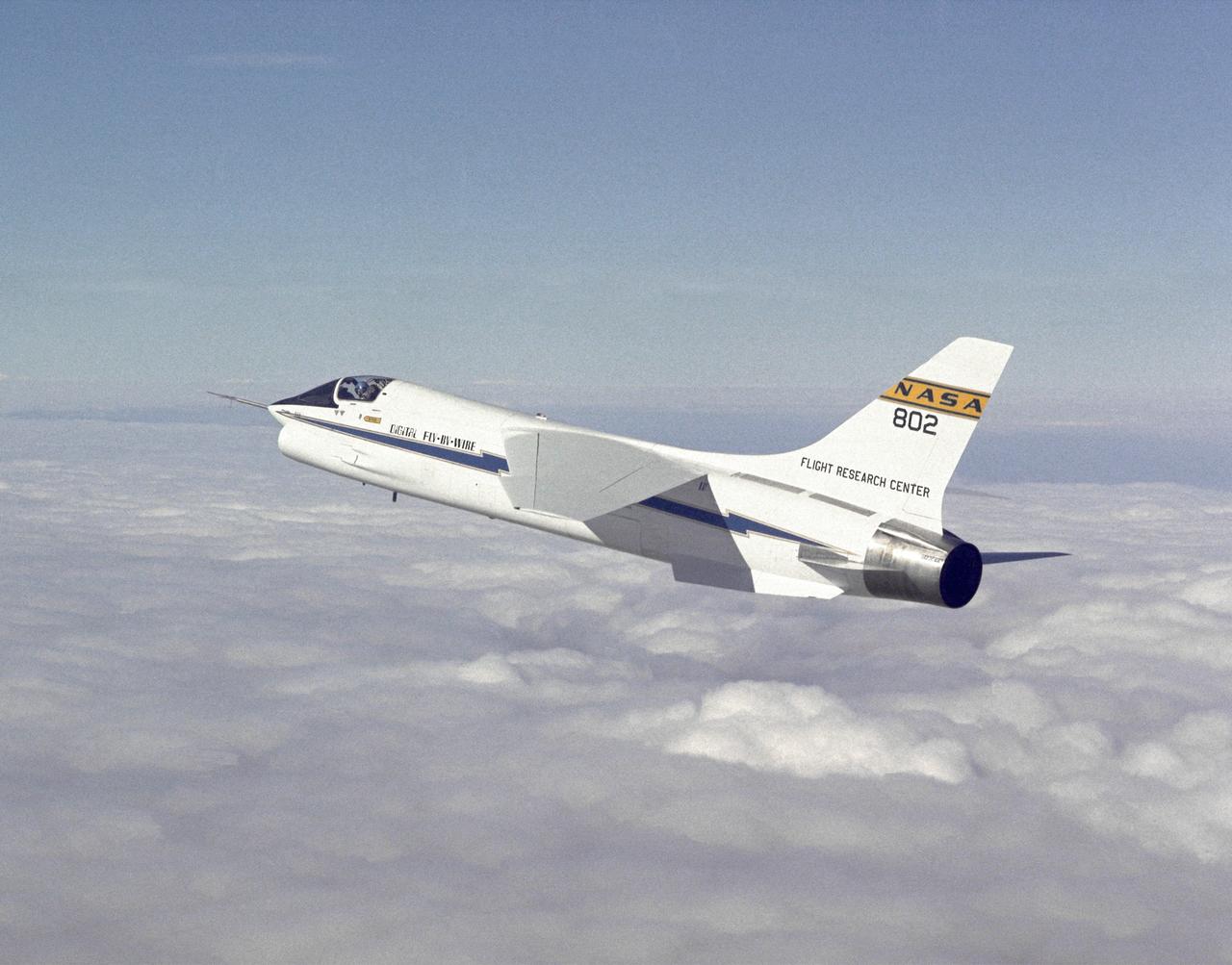
F-8 Digital Fly-By-Wire aircraft in flight. The computer-controlled flight systems pioneered by the F-8 DFBW created a revolution in aircraft design. The F-117A, X-29, X-31, and many other aircraft have relied on computers to make them flyable. Built with inherent instabilities to make them more maneuverable, they would be impossible for human pilots to fly if the computers failed or received incorrect data.
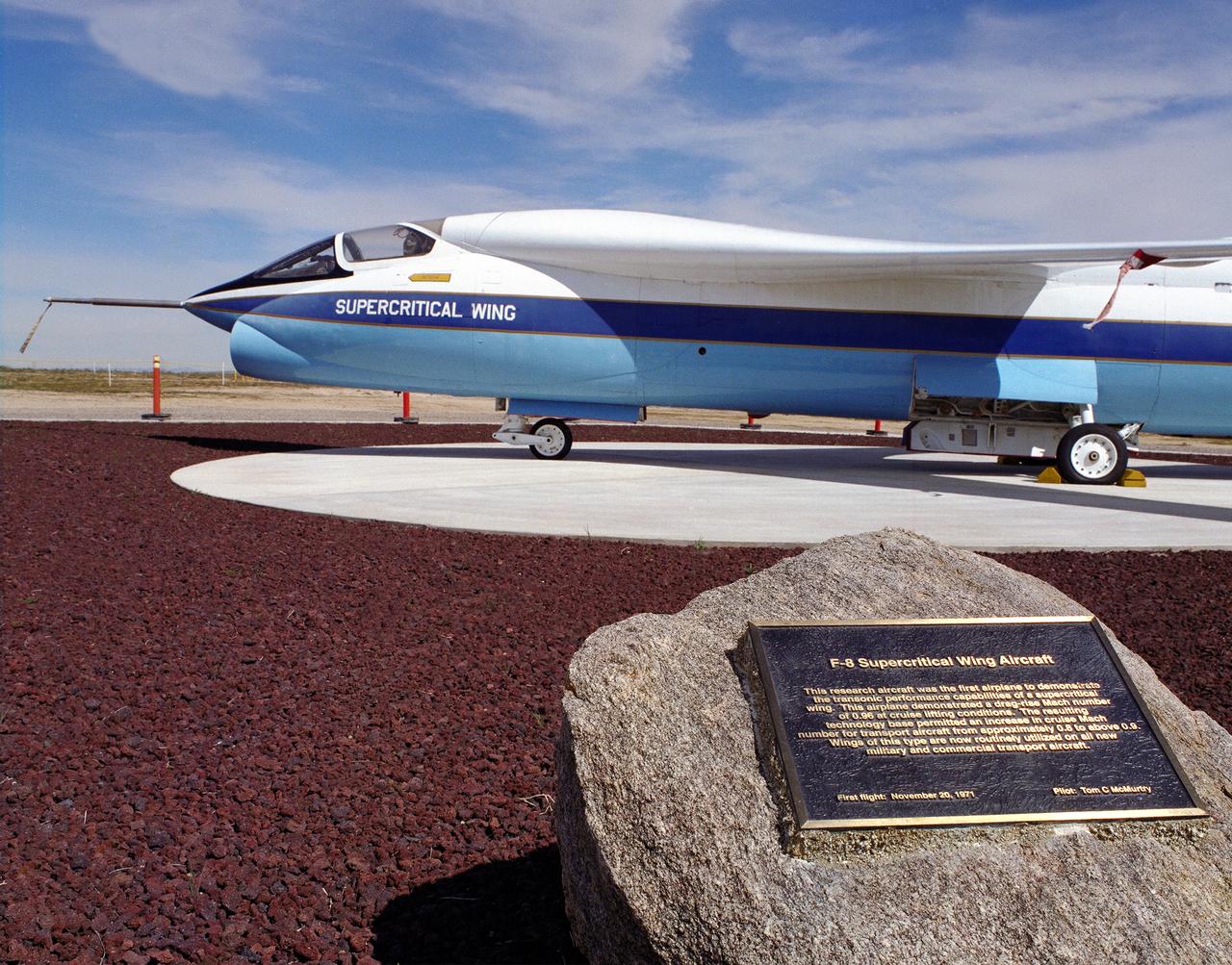
A Vought F-8A Crusader was selected by NASA as the testbed aircraft (designated TF-8A) to install an experimental Supercritical Wing (SCW) in place of the conventional wing. The unique design of the Supercritical Wing reduces the effect of shock waves on the upper surface near Mach 1, which in turn reduces drag. In the photograph the TF-8A Crusader with the Supercritical Wing is shown on static display in front of the NASA Dryden Flight Research Center, Edwards, California. The F-8 SCW aircraft, along with the F-8 Digital Fly-By-Wire aircraft were placed on display on May 27, 1992, at a conference marking the 20th anniversary of the start of the two programs.

The F-8 Digital Fly-By-Wire aircraft had its hydro-mechanical control systems replaced by an Apollo Guidance Computer for the first such control system to fly.
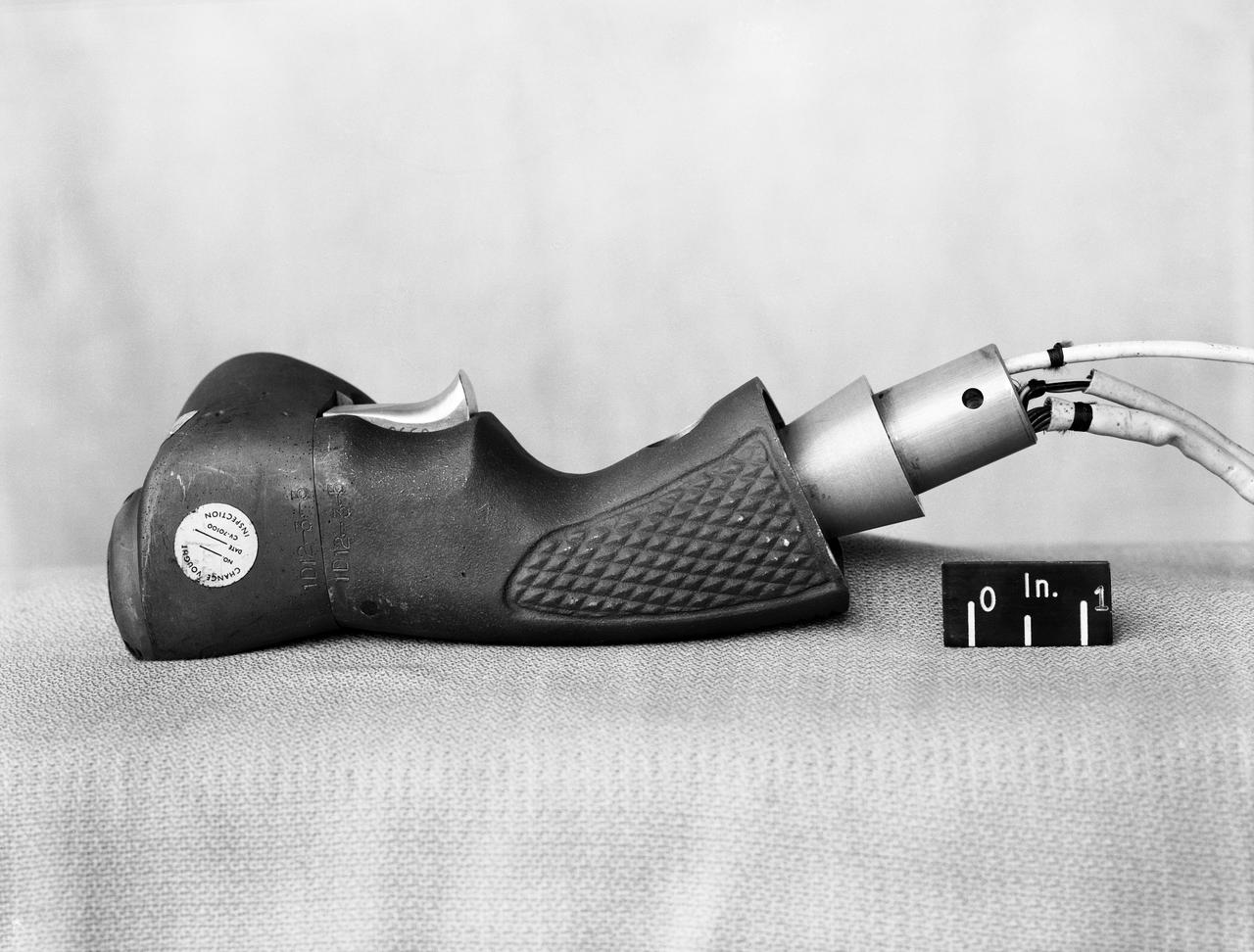
F8U-3 stick modifications - Stick controls in studio.
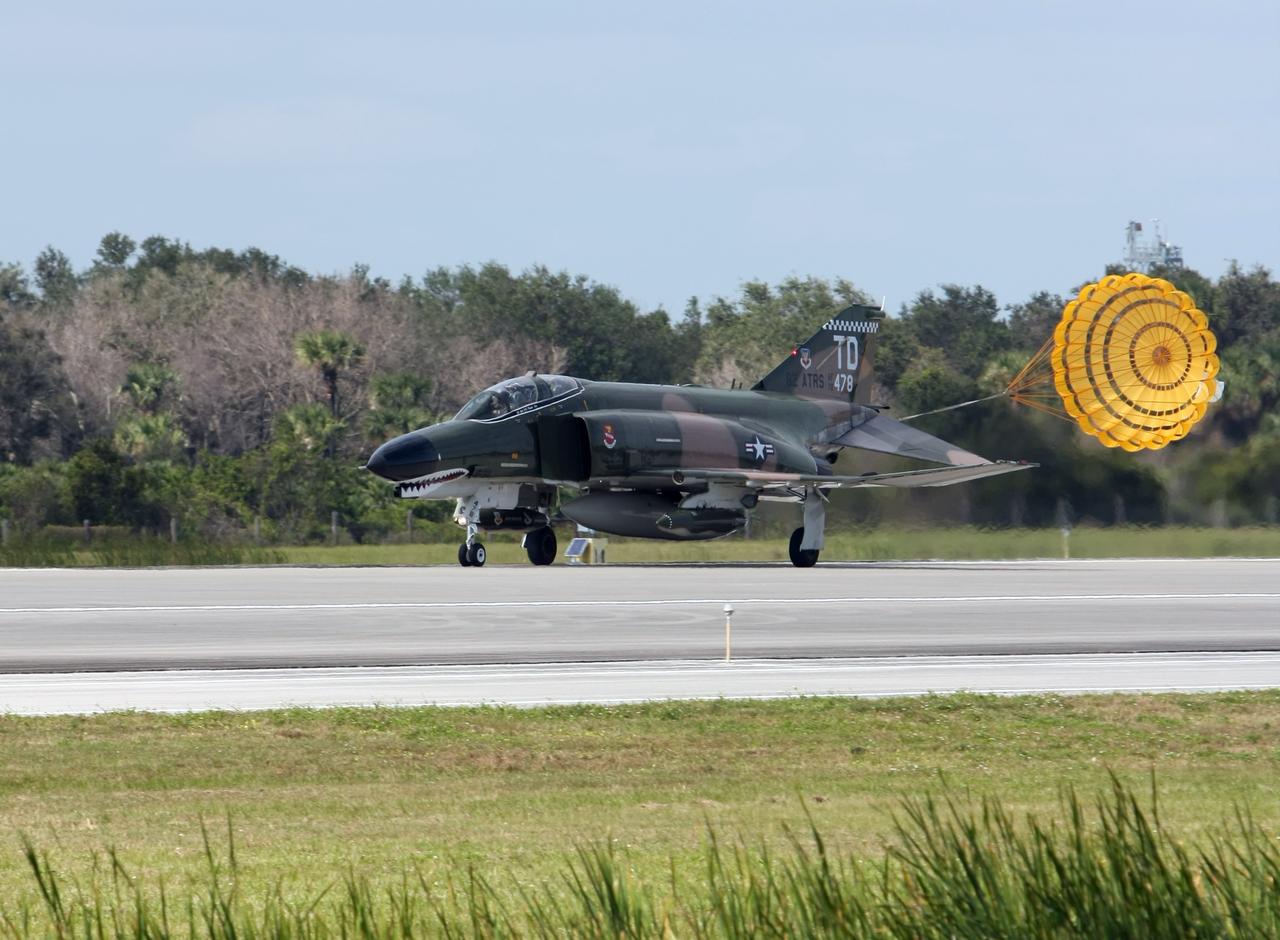
CAPE CANAVERAL, Fla. – An F-4 jet aircraft lands at NASA's Kennedy Space Center in Florida. It will join the U.S. Navy's Blue Angels and other aircraft for demonstrations at the Kennedy Space Center Visitor Complex Space and Air Show Nov. 8-9. The Navy's elite flight demonstration squadron will take to the skies in military aircraft demonstrations by the F-16 Fighting Falcon and F/A-18 Super Hornet jets for the second annual Space & Air Show at Kennedy. This year’s show brings together the best in military aircraft, coupled with precision pilots and veteran astronauts to celebrate spaceflight and aviation. The event includes military aircraft demonstrations by the F-16 Fighting Falcon and a water rescue demonstration by the 920th Rescue Wing. Photo credit: NASA/Kim Shiflett
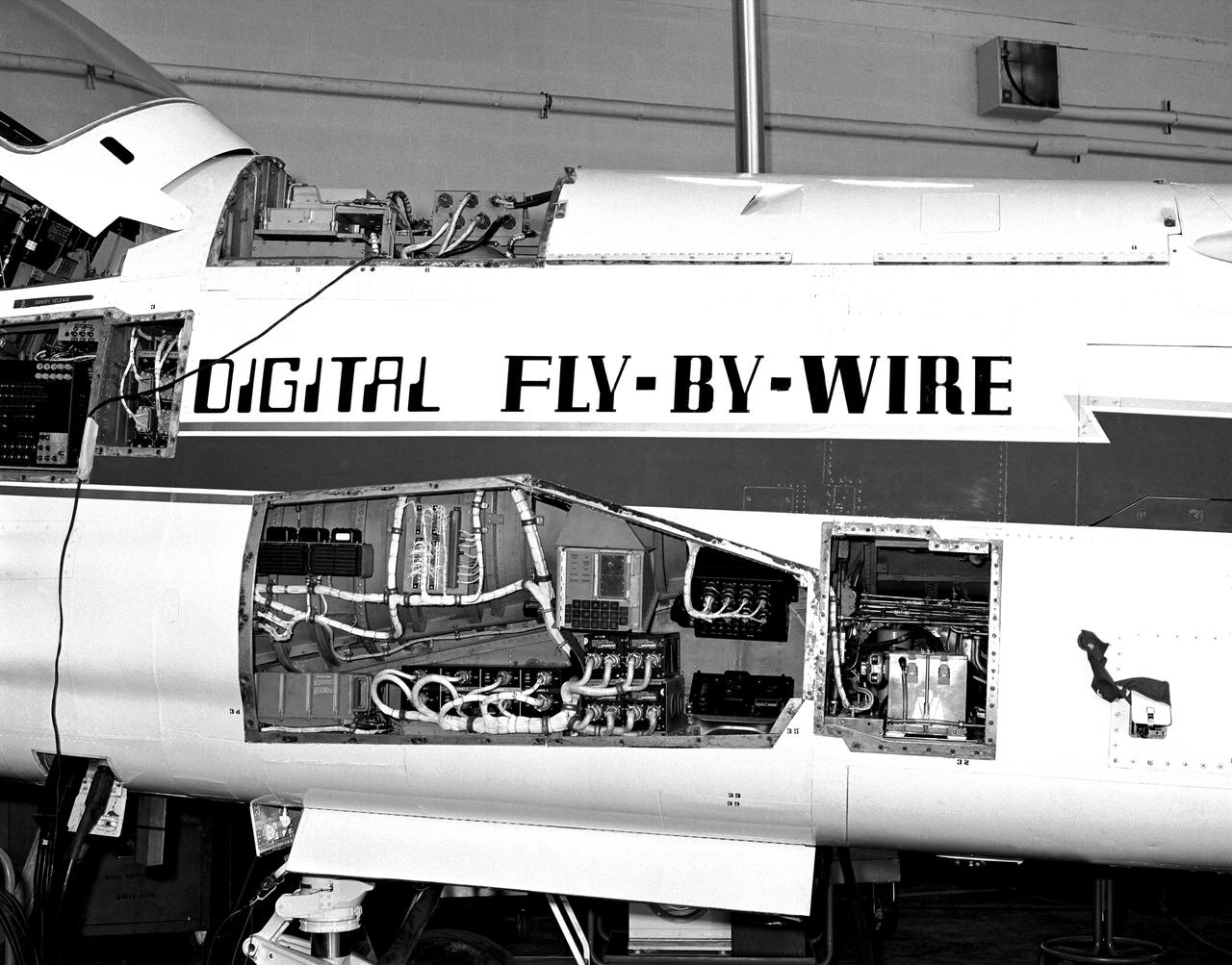
The Apollo hardware jammed into the F-8C. The computer is partially visible in the avionics bay at the top of the fuselage behind the cockpit. Note the display and keyboard unit in the gun bay. To carry the computers and other equipment, the F-8 DFBW team removed the aircraft's guns and ammunition boxes.
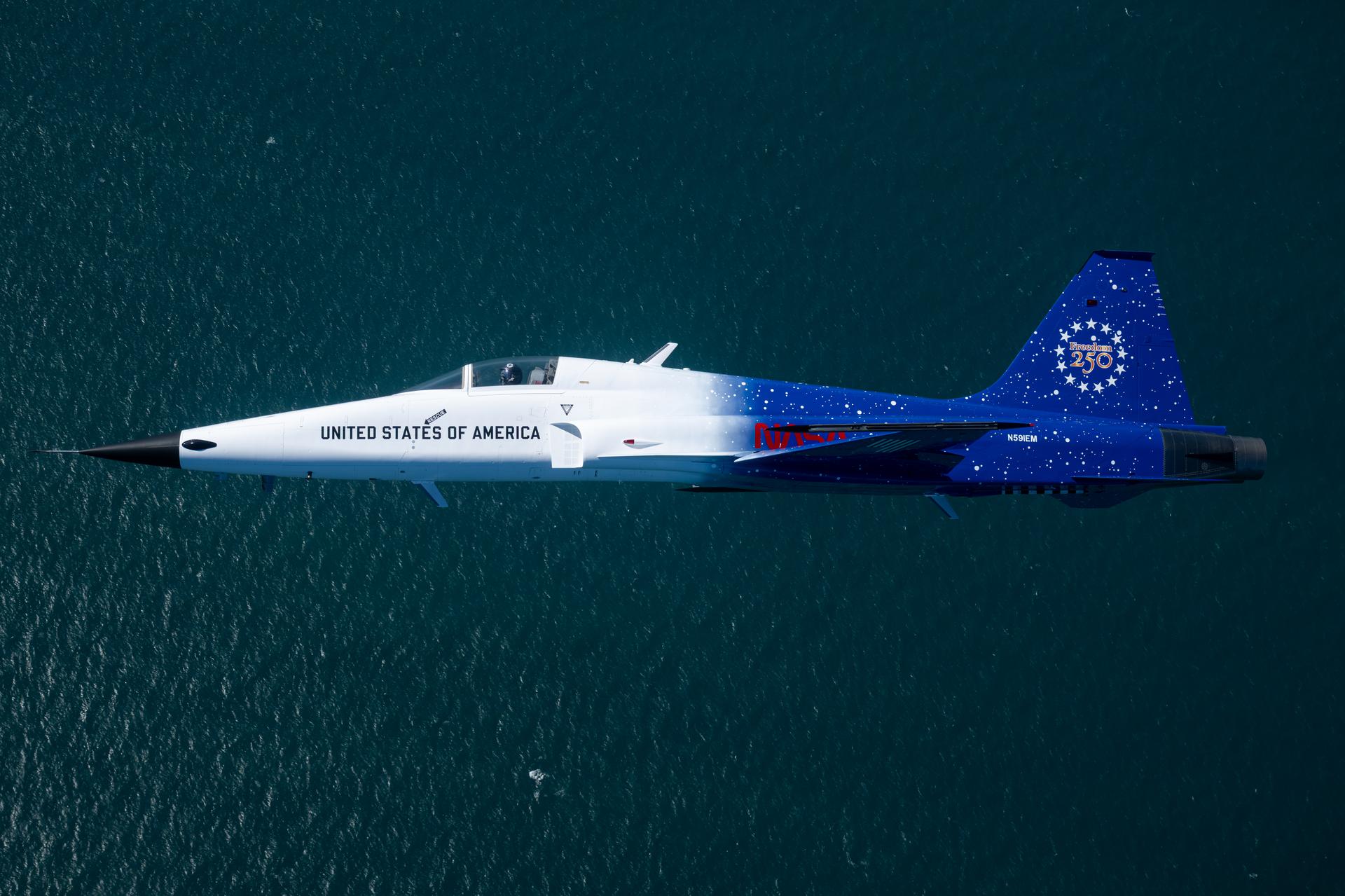
NASA Administrator Jared Isaacman is seen flying his personal F-5 aircraft, Sunday, Feb. 8, 2026, at NASA’s Kennedy Space Center in Florida. Photo Credit: (NASA/John Kraus)
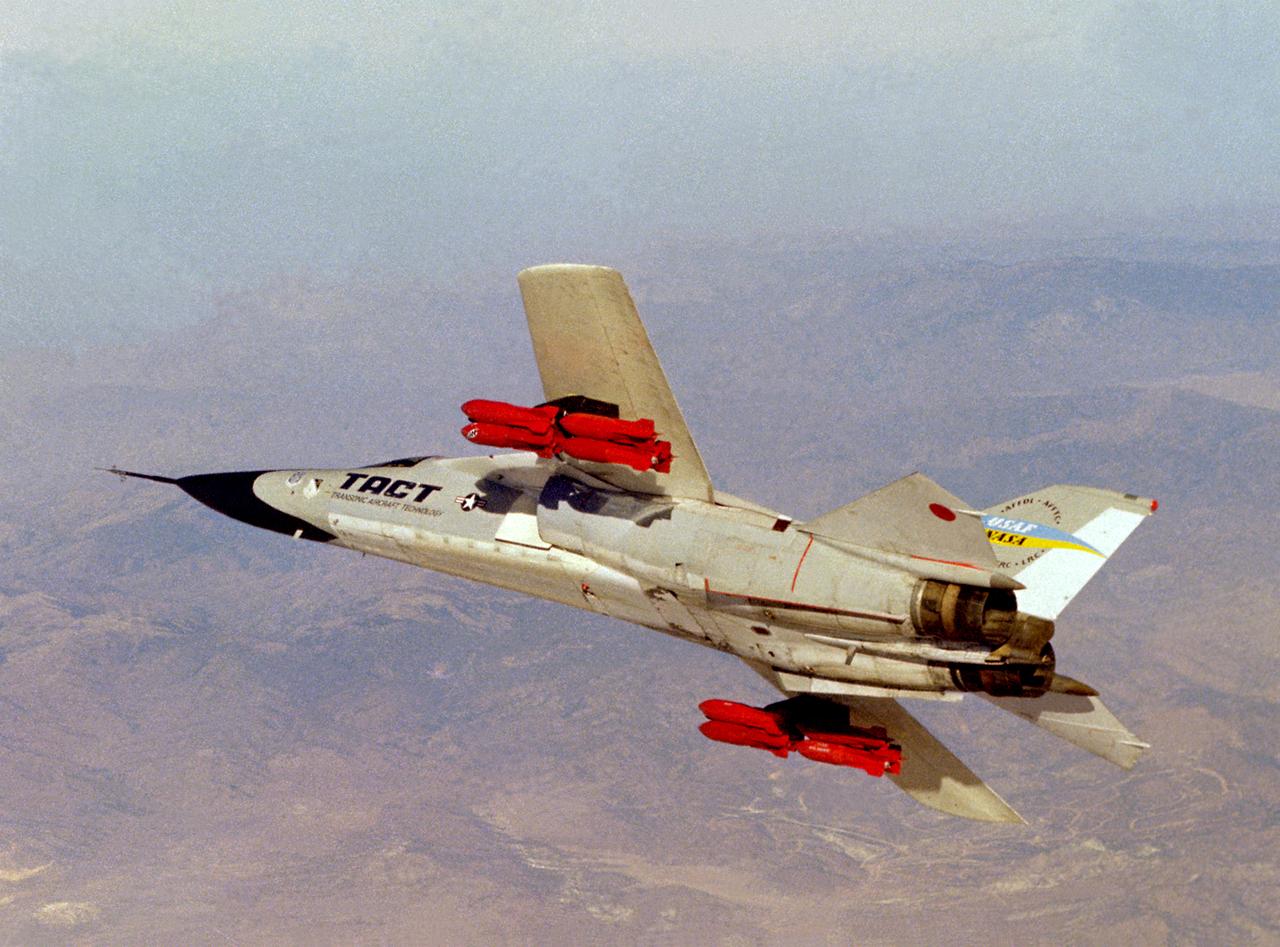
The General Dynamics TACT/F-111A (Serial #63-9778) banks over the Mojave Desert. Note the fully loaded racks of inert pratice bombs which were carried for weapon loads evaluations on the supercritical wing (SCW) that was the main feature of the Transonic Aircraft Technology F-111 research program. Intense interest in the results of the earlier F-8 SCW program spurred NASA and the U.S. Air Force to modify the number 13 F-111A for the TACT program. This aircraft participated in a major research and flight testing program that spanned nearly 20 years, beginning in 1971 at the NASA Flight Research Center at Edwards AFB, California.
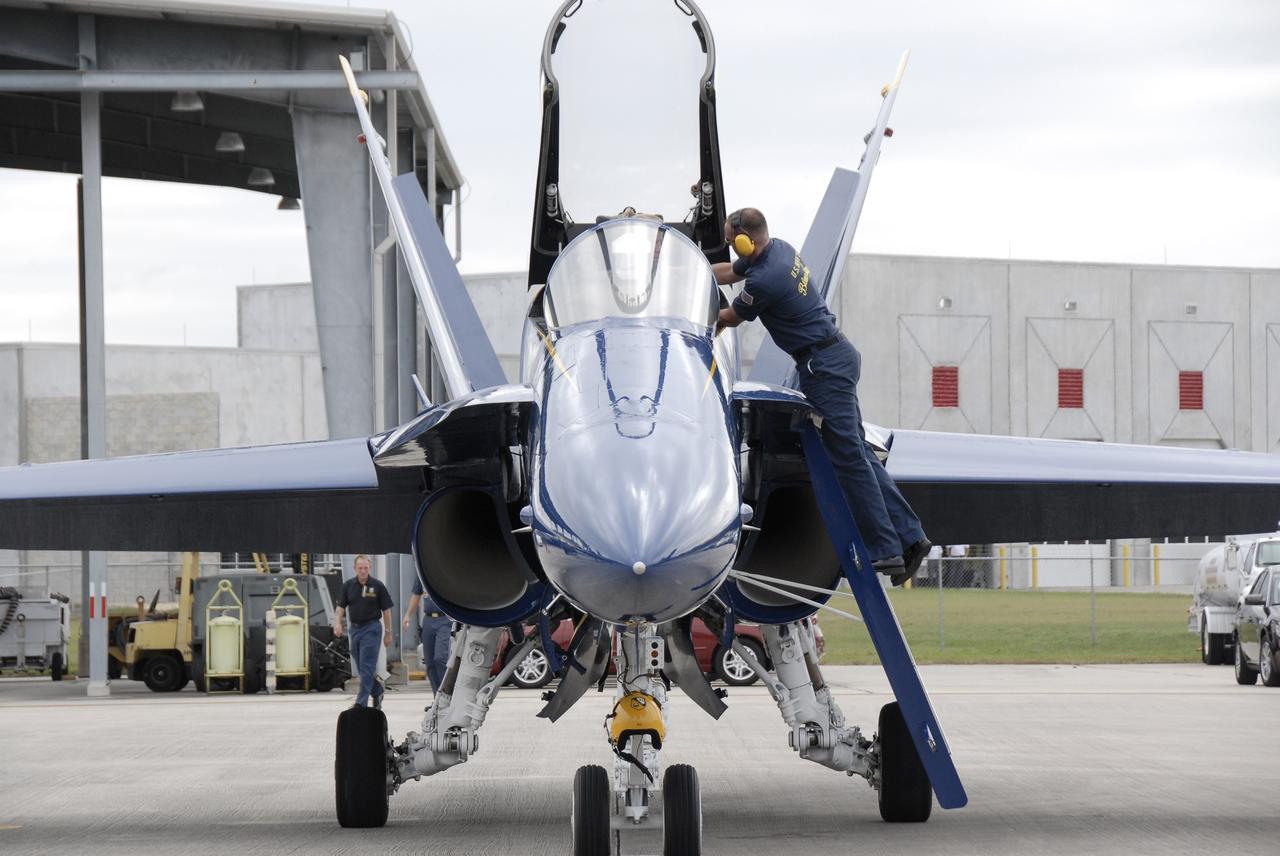
CAPE CANAVERAL, Fla. – At the Shuttle Landing Facility at NASA's Kennedy Space Center in Florida, ground support personnel work on an F/A-18, one of the U.S. Navy's Blue Angels aircraft. The demonstration squadron will perform at the Kennedy Space Center Visitor Complex Space and Air Show Nov. 8-9. The Navy's elite flight demonstration squadron will take to the skies in military aircraft demonstrations by the F-16 Fighting Falcon and F/A-18 Super Hornet jets for the second annual Space & Air Show at Kennedy. This year’s show brings together the best in military aircraft, coupled with precision pilots and veteran astronauts to celebrate spaceflight and aviation. The event includes military aircraft demonstrations by the F-16 Fighting Falcon and a water rescue demonstration by the 920th Rescue Wing. Photo credit: NASA/Kim Shiflett
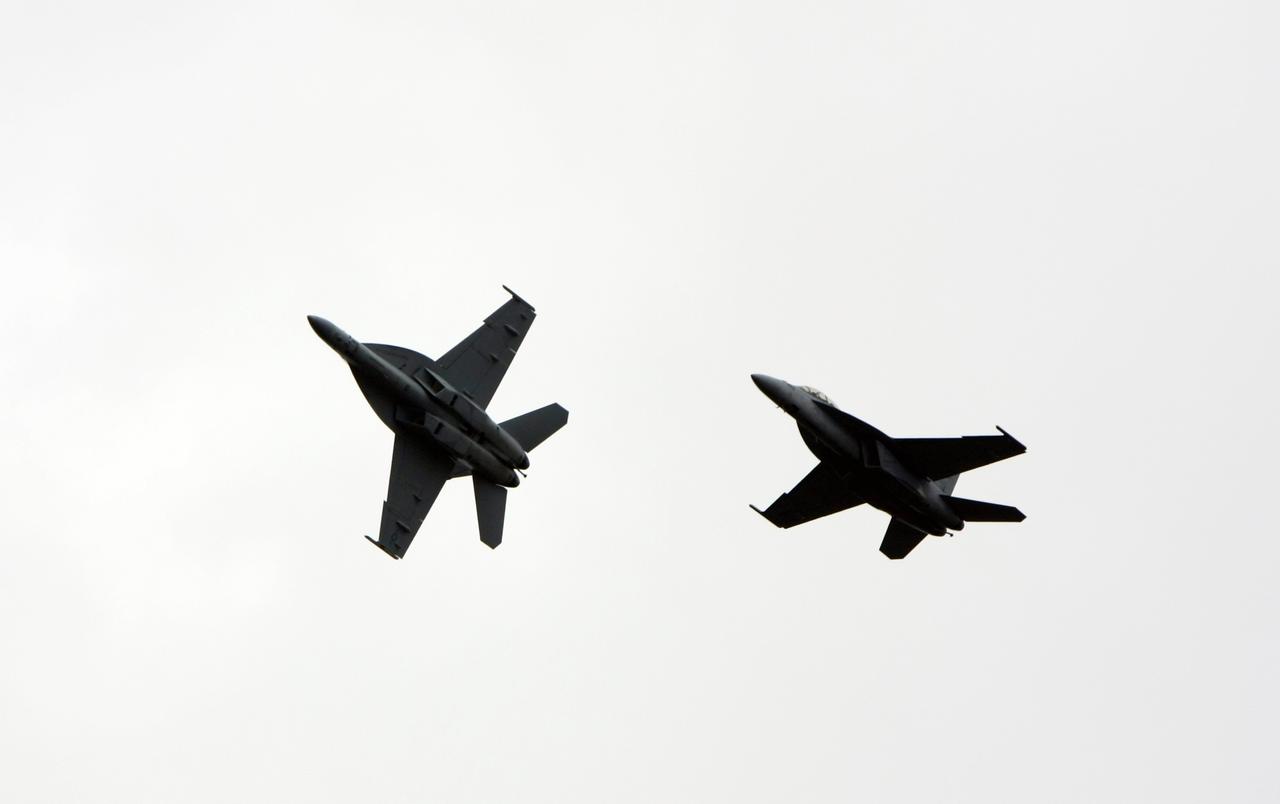
CAPE CANAVERAL, Fla. – Two F/A-18 jets fly over the Shuttle Landing Facility at NASA's Kennedy Space Center in Florida. They will join the U.S. Navy's Blue Angels and other aircraft for demonstrations at the Kennedy Space Center Visitor Complex Space and Air Show Nov. 8-9. The Navy's elite flight demonstration squadron will take to the skies in military aircraft demonstrations by the F-16 Fighting Falcon and F/A-18 Super Hornet jets for the second annual Space & Air Show at Kennedy. This year’s show brings together the best in military aircraft, coupled with precision pilots and veteran astronauts to celebrate spaceflight and aviation. The event includes military aircraft demonstrations by the F-16 Fighting Falcon and a water rescue demonstration by the 920th Rescue Wing. Photo credit: NASA/Kim Shiflett
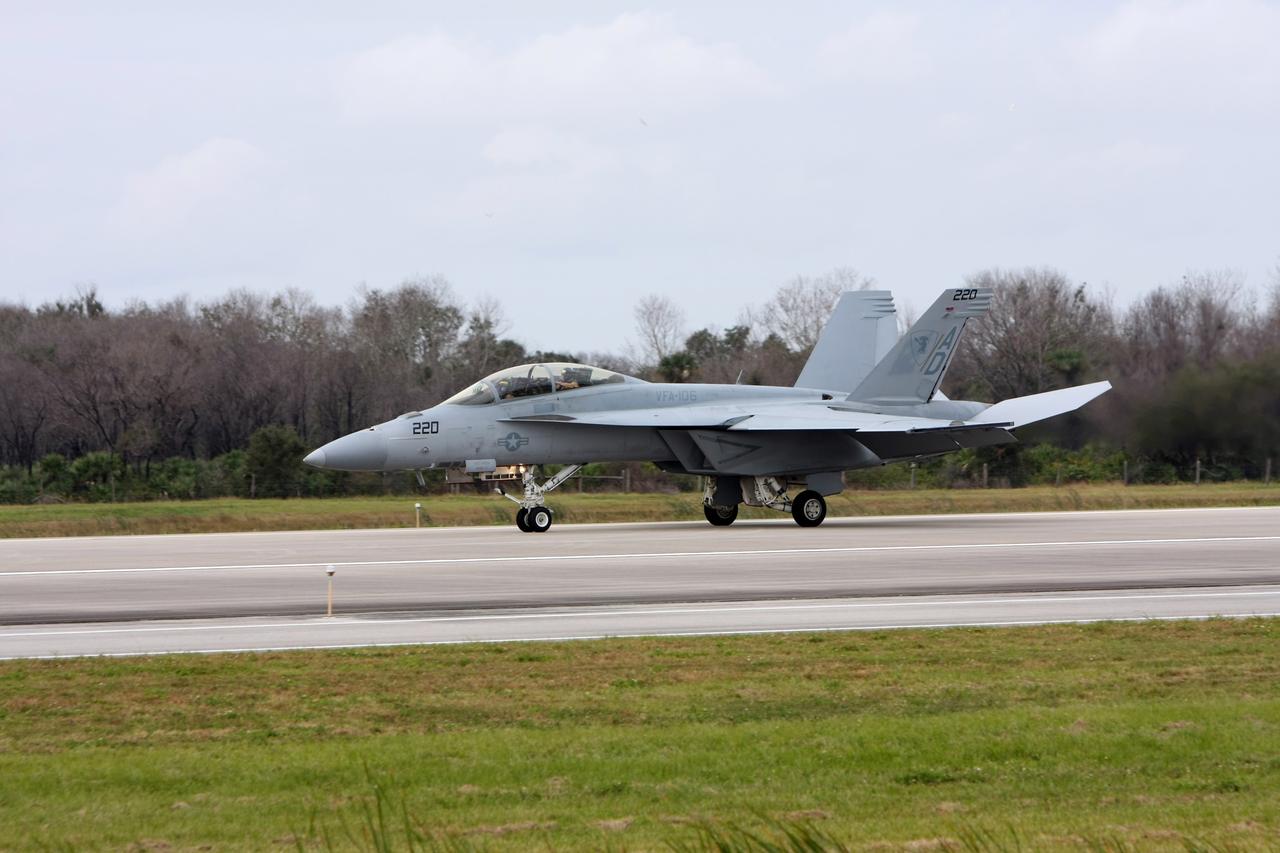
CAPE CANAVERAL, Fla. – An F/A-18 jet lands at NASA's Kennedy Space Center in Florida. It will join the U.S. Navy's Blue Angels and other aircraft for demonstrations at the Kennedy Space Center Visitor Complex Space and Air Show Nov. 8-9. The Navy's elite flight demonstration squadron will take to the skies in military aircraft demonstrations by the F-16 Fighting Falcon and F/A-18 Super Hornet jets for the second annual Space & Air Show at Kennedy. This year’s show brings together the best in military aircraft, coupled with precision pilots and veteran astronauts to celebrate spaceflight and aviation. The event includes military aircraft demonstrations by the F-16 Fighting Falcon and a water rescue demonstration by the 920th Rescue Wing. Photo credit: NASA/Kim Shiflett
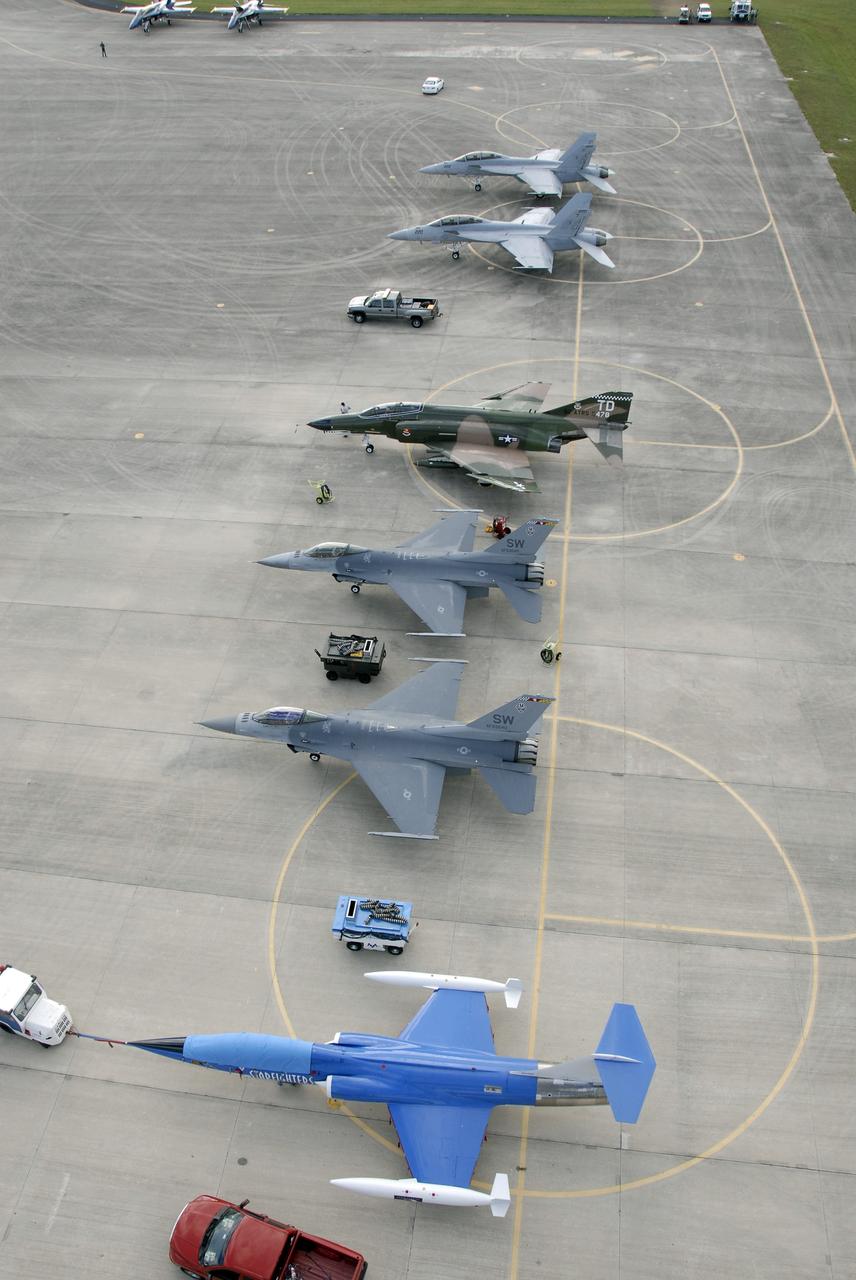
CAPE CANAVERAL, Fla. – Military aircraft are lined up on the Shuttle Landing Facility at NASA's Kennedy Space Center in Florida. The F/A-18s, F-4, F-16 and F-104G Starfighter will take part in demonstrations at the Kennedy Space Center Visitor Complex Space and Air Show Nov. 8-9. The Navy's elite flight demonstration squadron, the Blue Angels, will take to the skies in military aircraft demonstrations for the second annual Space & Air Show at Kennedy. This year’s show brings together the best in military aircraft, coupled with precision pilots and veteran astronauts to celebrate spaceflight and aviation. The event also includes demonstrations by the F-16 Fighting Falcon and a water rescue demonstration by the 920th Rescue Wing. Photo credit: NASA/Kim Shiflett
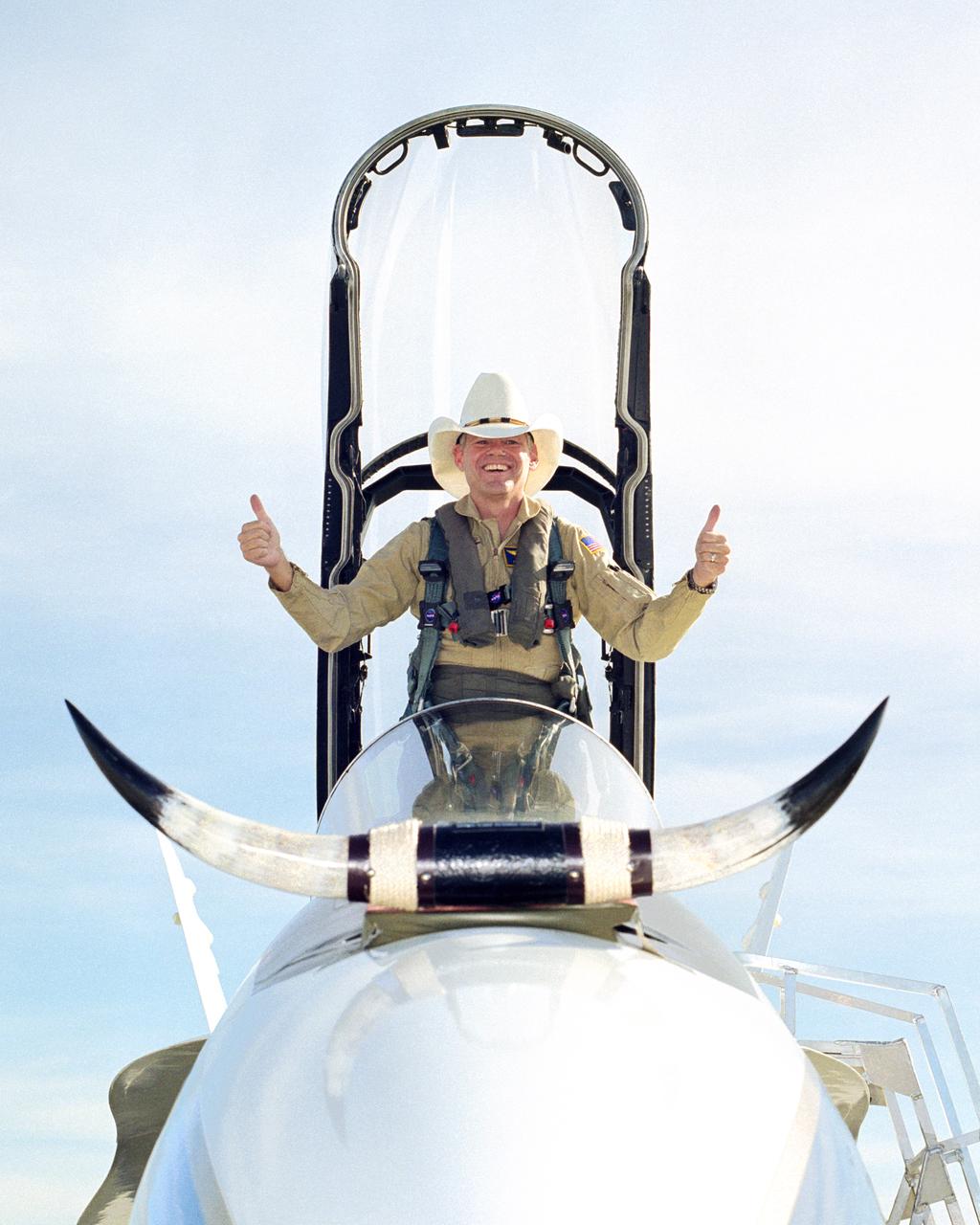
In a lighter mood, Ed Schneider gives a "thumbs-up" after his last flight at the Dryden Flight Research Center on September 19, 2000. Schneider arrived at the NASA Ames-Dryden Flight Research Facility on July 5, 1982, as a Navy Liaison Officer, becoming a NASA research pilot one year later. He has been project pilot for the F-18 High Angle-of-Attack program (HARV), the F-15 aeronautical research aircraft, the NASA B-52 launch aircraft, and the SR-71 "Blackbird" aircraft. He also participated in such programs as the F-8 Digital Fly-By-Wire, the FAA/NASA 720 Controlled Impact Demonstration, the F-14 Automatic Rudder Interconnect and Laminar Flow, and the F-104 Aeronautical Research and Microgravity projects.
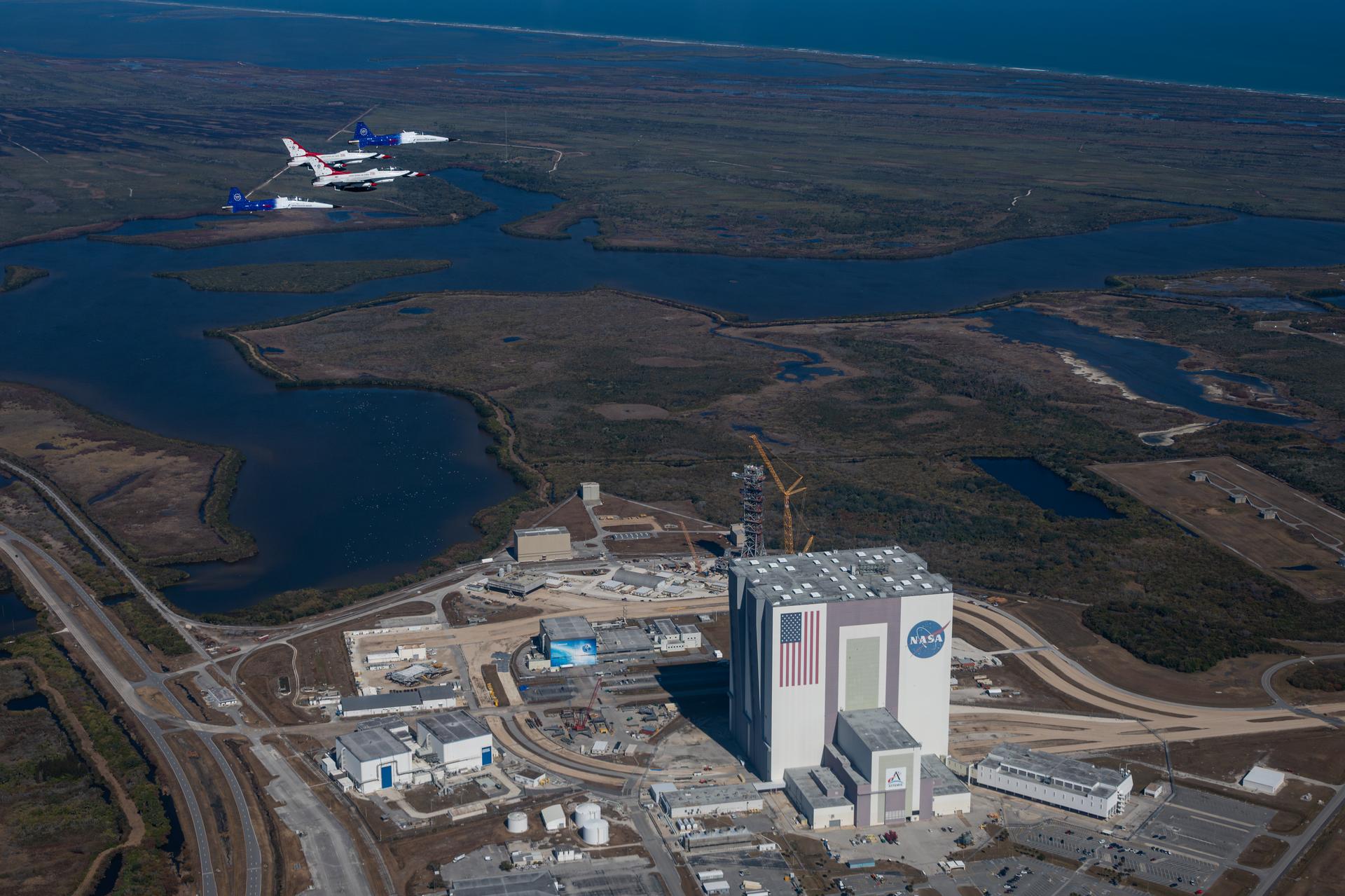
NASA Administrator Jared Isaacman conducts a formation flight with two of his personal F-5 aircraft, piloted by Isaacman and Sean Gustafson, senior advisor to the administrator, and two U.S. Air Force Thunderbirds F-16s, piloted by Thunderbird 7 Lt. Col. Tyler Keener and Thunderbird 8 Maj. Samuel Larson, Sunday, Feb. 8, 2026, at NASA’s Kennedy Space Center in Florida. The formation flew near the Vehicle Assembly Building and the surrounding area at Kennedy. Photo Credit: (NASA/John Kraus)
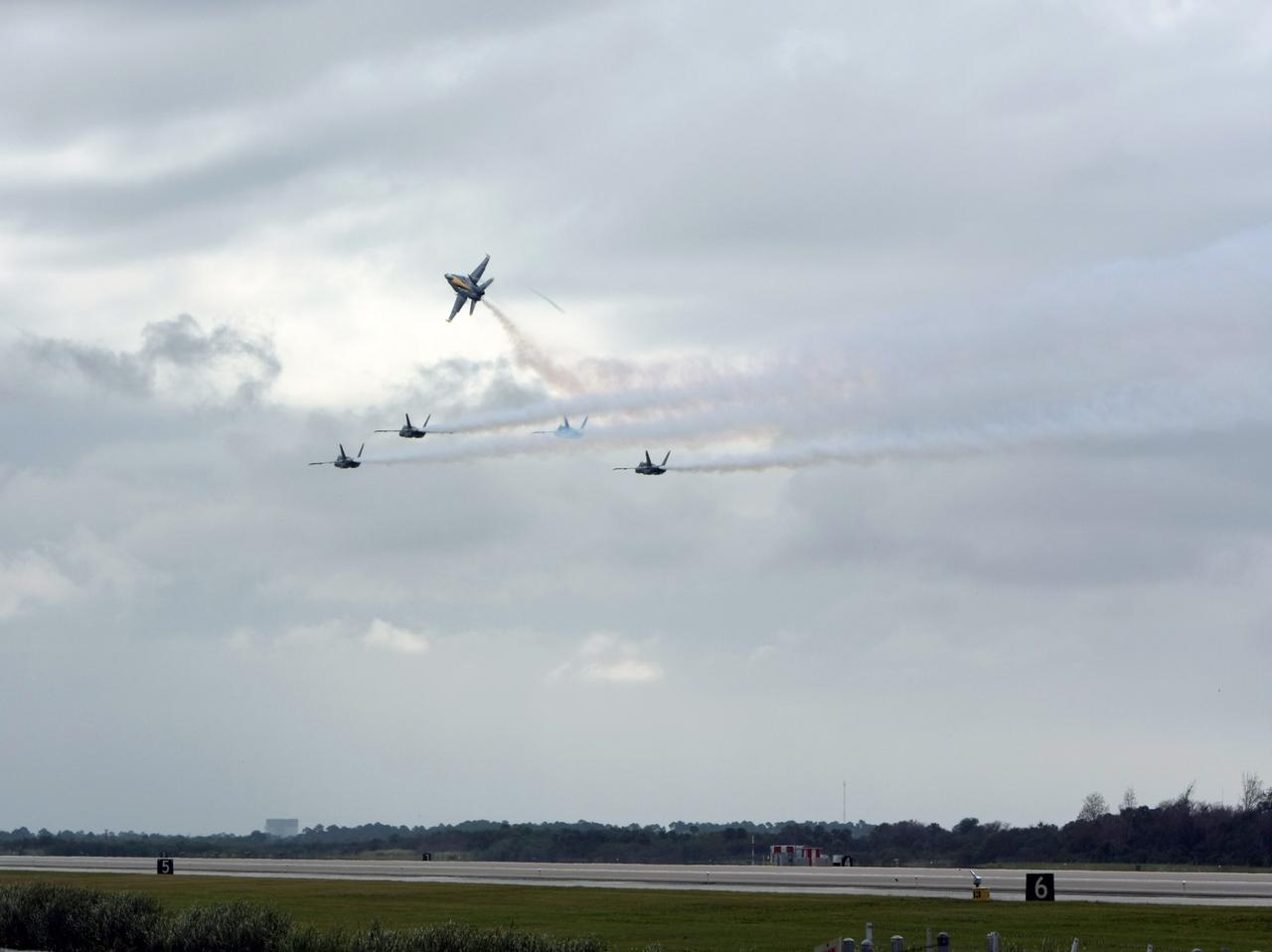
CAPE CANAVERAL, Fla. – The U.S. Navy's Blue Angels F/A-18 jets fly in formation over the runway at NASA's Kennedy Space Center in Florida before landing. They are at Kennedy to perform in the Kennedy Space Center Visitor Complex Space and Air Show Nov. 8-9. The Navy's elite flight demonstration squadron will take to the skies in military aircraft demonstrations by the F-16 Fighting Falcon and F/A-18 Super Hornet jets for the second annual Space & Air Show at Kennedy. This year’s show brings together the best in military aircraft, coupled with precision pilots and veteran astronauts to celebrate spaceflight and aviation. The event includes military aircraft demonstrations by the F-16 Fighting Falcon and a water rescue demonstration by the 920th Rescue Wing. Photo credit: NASA/Kim Shiflett
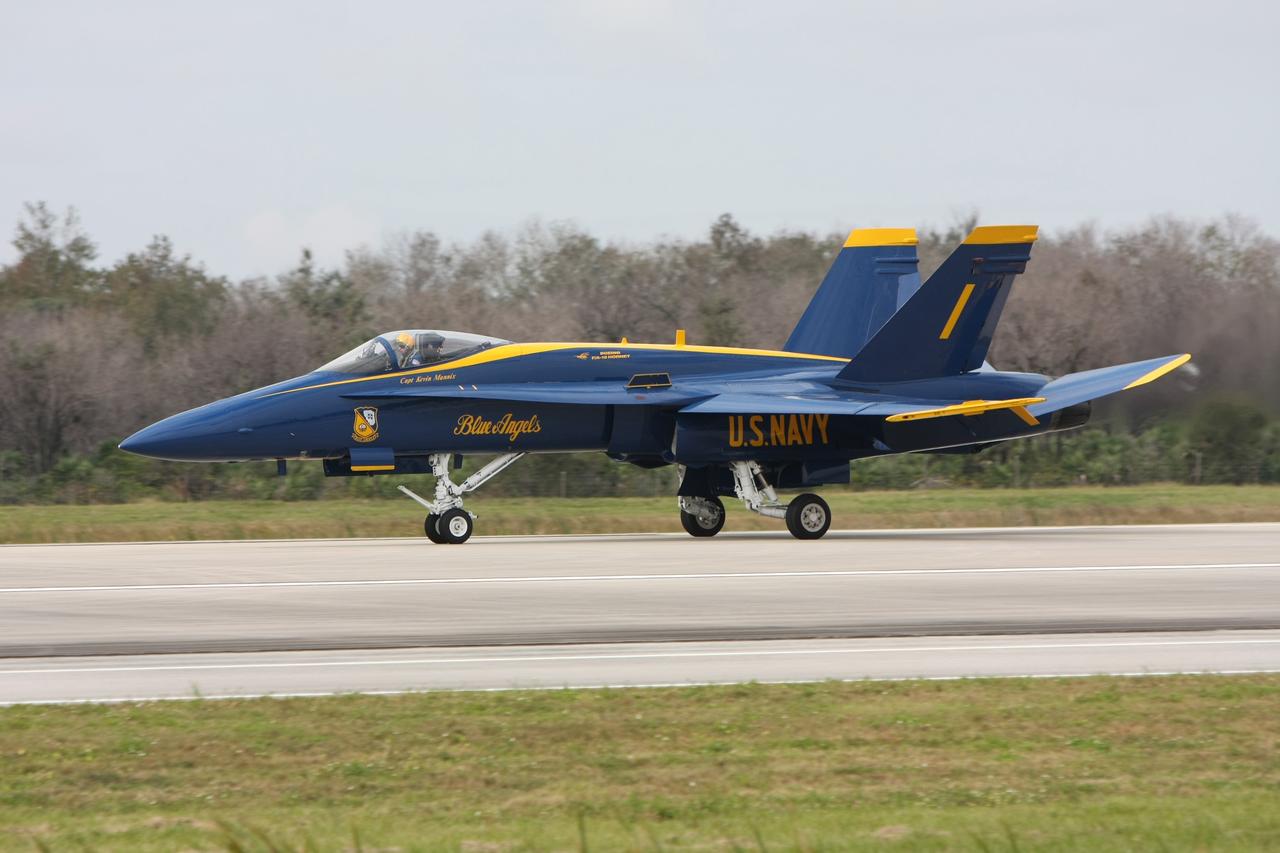
CAPE CANAVERAL, Fla. – The U.S. Navy's Blue Angels F/A-18 jet No. 1 lands on the runway at NASA's Kennedy Space Center in Florida. The Blue Angels are at Kennedy to perform in the Kennedy Space Center Visitor Complex Space and Air Show Nov. 8-9. The Navy's elite flight demonstration squadron will take to the skies in military aircraft demonstrations by the F-16 Fighting Falcon and F/A-18 Super Hornet jets for the second annual Space & Air Show at Kennedy. This year’s show brings together the best in military aircraft, coupled with precision pilots and veteran astronauts to celebrate spaceflight and aviation. The event includes military aircraft demonstrations by the F-16 Fighting Falcon and a water rescue demonstration by the 920th Rescue Wing. Photo credit: NASA/Kim Shiflett
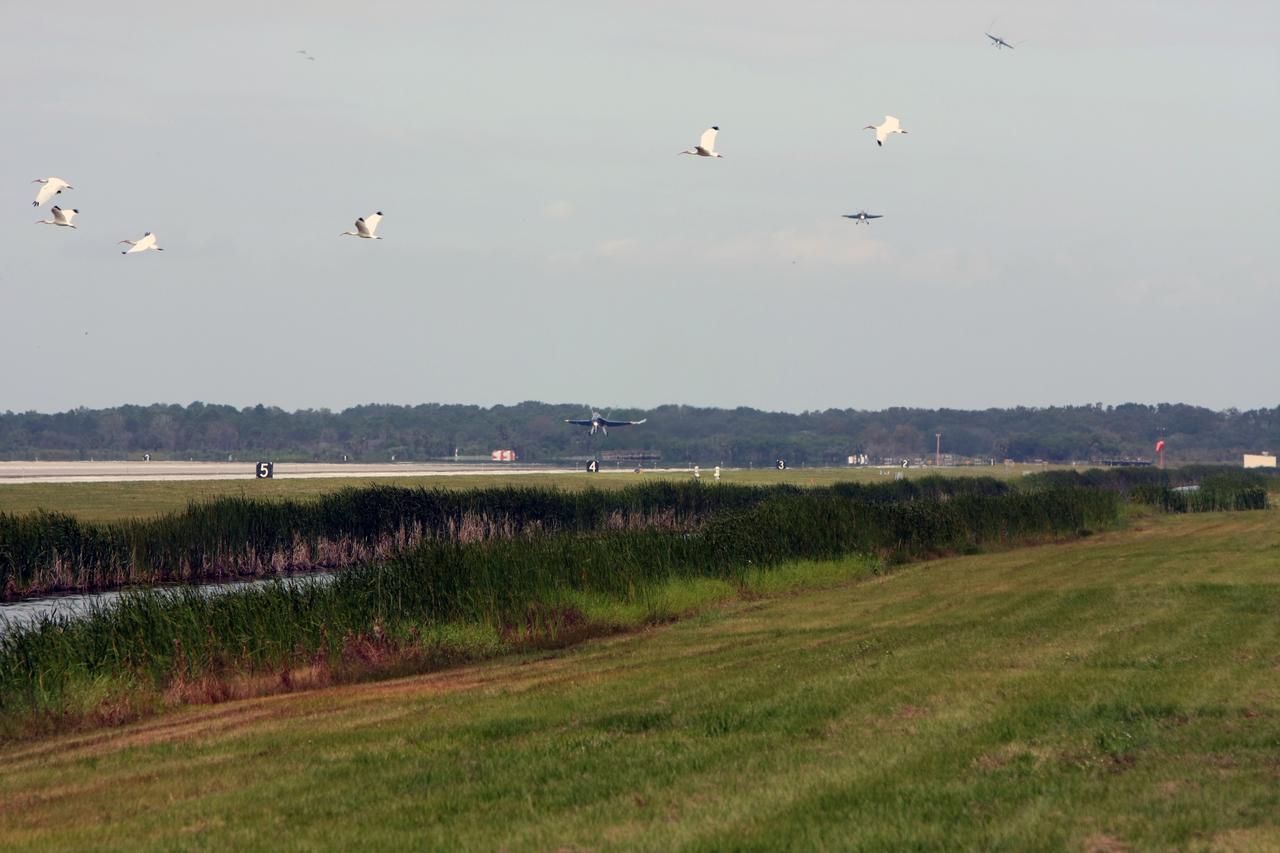
CAPE CANAVERAL, Fla. – Storks seem to join the formation as the U.S. Navy's Blue Angels F/A-18 jets land on the runway at NASA's Kennedy Space Center in Florida. The Blue Angels are at Kennedy to perform in the Kennedy Space Center Visitor Complex Space and Air Show Nov. 8-9. The Navy's elite flight demonstration squadron will take to the skies in military aircraft demonstrations by the F-16 Fighting Falcon and F/A-18 Super Hornet jets for the second annual Space & Air Show at Kennedy. This year’s show brings together the best in military aircraft, coupled with precision pilots and veteran astronauts to celebrate spaceflight and aviation. The event includes military aircraft demonstrations by the F-16 Fighting Falcon and a water rescue demonstration by the 920th Rescue Wing. Photo credit: NASA/Kim Shiflett
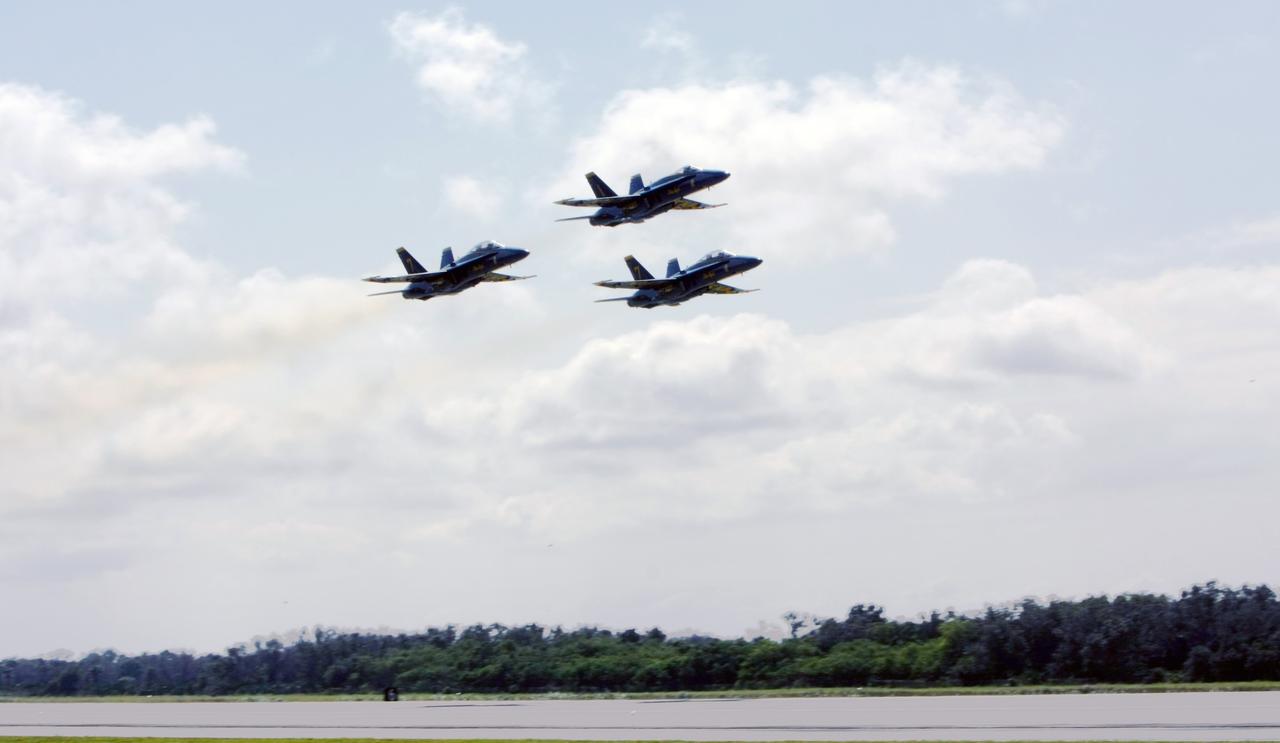
CAPE CANAVERAL, Fla. – Three of the U.S. Navy's Blue Angels F/A-18 jets fly over the runway at NASA's Kennedy Space Center in Florida. The Blue Angels are at Kennedy to perform in the Kennedy Space Center Visitor Complex Space and Air Show Nov. 8-9. The Navy's elite flight demonstration squadron will take to the skies in military aircraft demonstrations by the F-16 Fighting Falcon and F/A-18 Super Hornet jets for the second annual Space & Air Show at Kennedy. This year’s show brings together the best in military aircraft, coupled with precision pilots and veteran astronauts to celebrate spaceflight and aviation. The event includes military aircraft demonstrations by the F-16 Fighting Falcon and a water rescue demonstration by the 920th Rescue Wing. Photo credit: NASA/Kim Shiflett
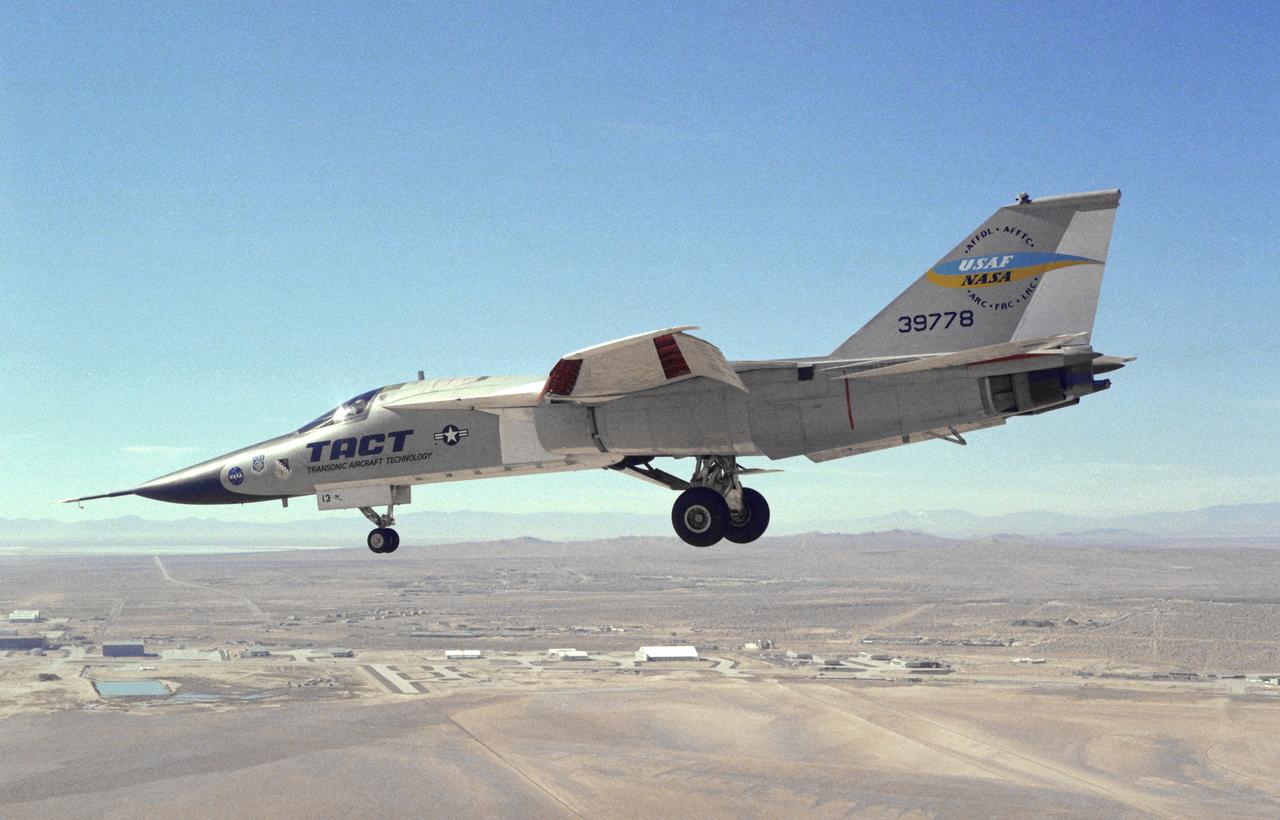
This photograph shows a modified General Dynamics TACT/F-111A Aardvaark with supercritical wings installed. The aircraft, with flaps and landing gear down, is in a decending turn over Rogers Dry Lakebed at Edwards Air Force Base. Starting in 1971 the NASA Flight Research Center and the Air Force undertook a major research and flight testing program, using F-111A (#63-9778), which would span almost 20 years before completion. Intense interest over the results coming from the NASA F-8 supercritical wing program spurred NASA and the Air Force to modify the General Dynamics-Convair F-111A to explore the application of supercritical wing technology to maneuverable military aircraft. This flight program was called Transonic Aircraft Technology (TACT).

CAPE CANAVERAL, Fla. – Three of the U.S. Navy's Blue Angels F/A-18 jets fly in formation over the runway before landing at NASA's Kennedy Space Center in Florida. The Blue Angels are at Kennedy to perform in the Kennedy Space Center Visitor Complex Space and Air Show Nov. 8-9. The Navy's elite flight demonstration squadron will take to the skies in military aircraft demonstrations by the F-16 Fighting Falcon and F/A-18 Super Hornet jets for the second annual Space & Air Show at Kennedy. This year’s show brings together the best in military aircraft, coupled with precision pilots and veteran astronauts to celebrate spaceflight and aviation. The event includes military aircraft demonstrations by the F-16 Fighting Falcon and a water rescue demonstration by the 920th Rescue Wing. Photo credit: NASA/Kim Shiflett
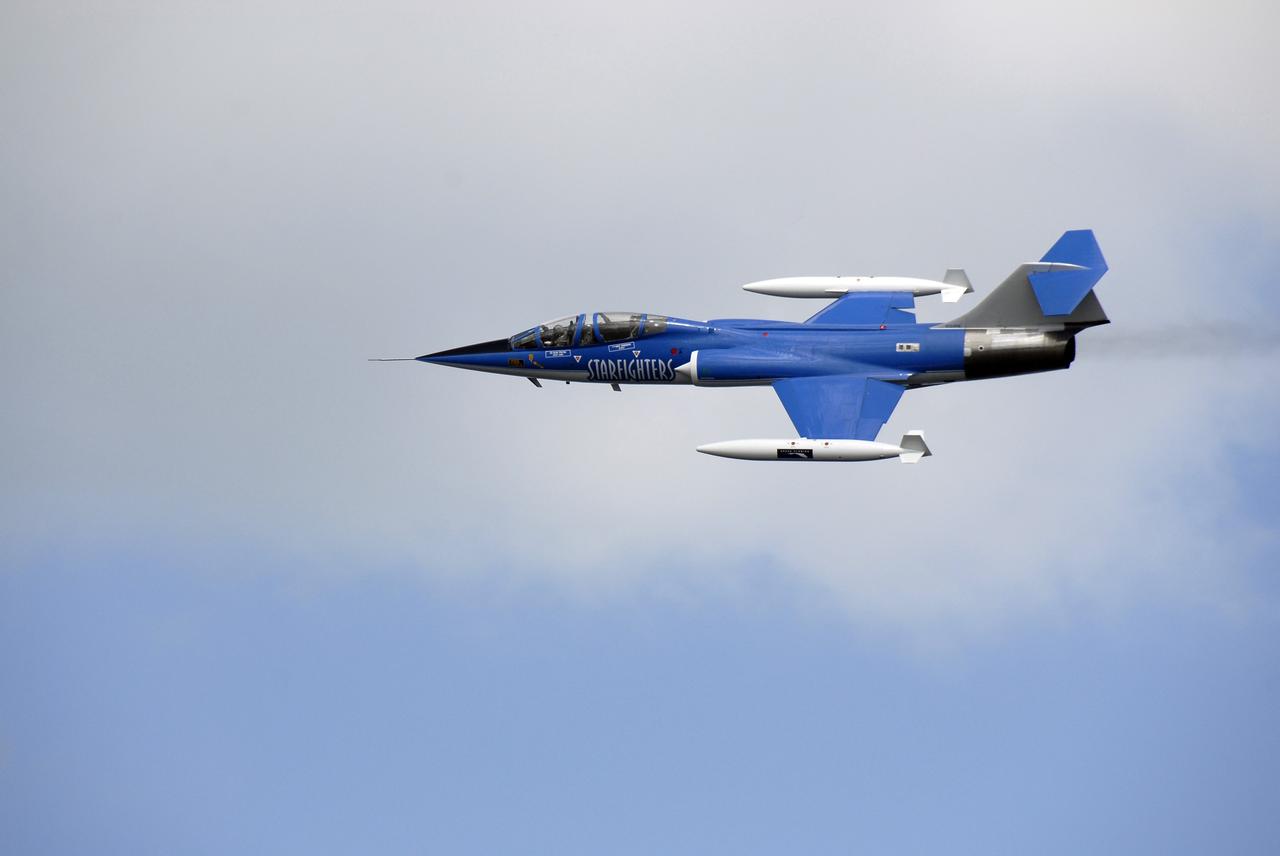
CAPE CANAVERAL, Fla. – An F-104G Starfighter races through the sky over NASA's Kennedy Space Center in Florida during the Kennedy Space Center Visitor Complex Space and Air Show Nov. 8-9. This year’s show brought together the best in military aircraft, such as the F/A-18 Super Hornet and F-16 Fighting Falcon, coupled with precision pilots and veteran astronauts to celebrate spaceflight and aviation. The event included a water rescue demonstration by the 920th Rescue Wing. Photo credit: NASA/Kim Shiflett
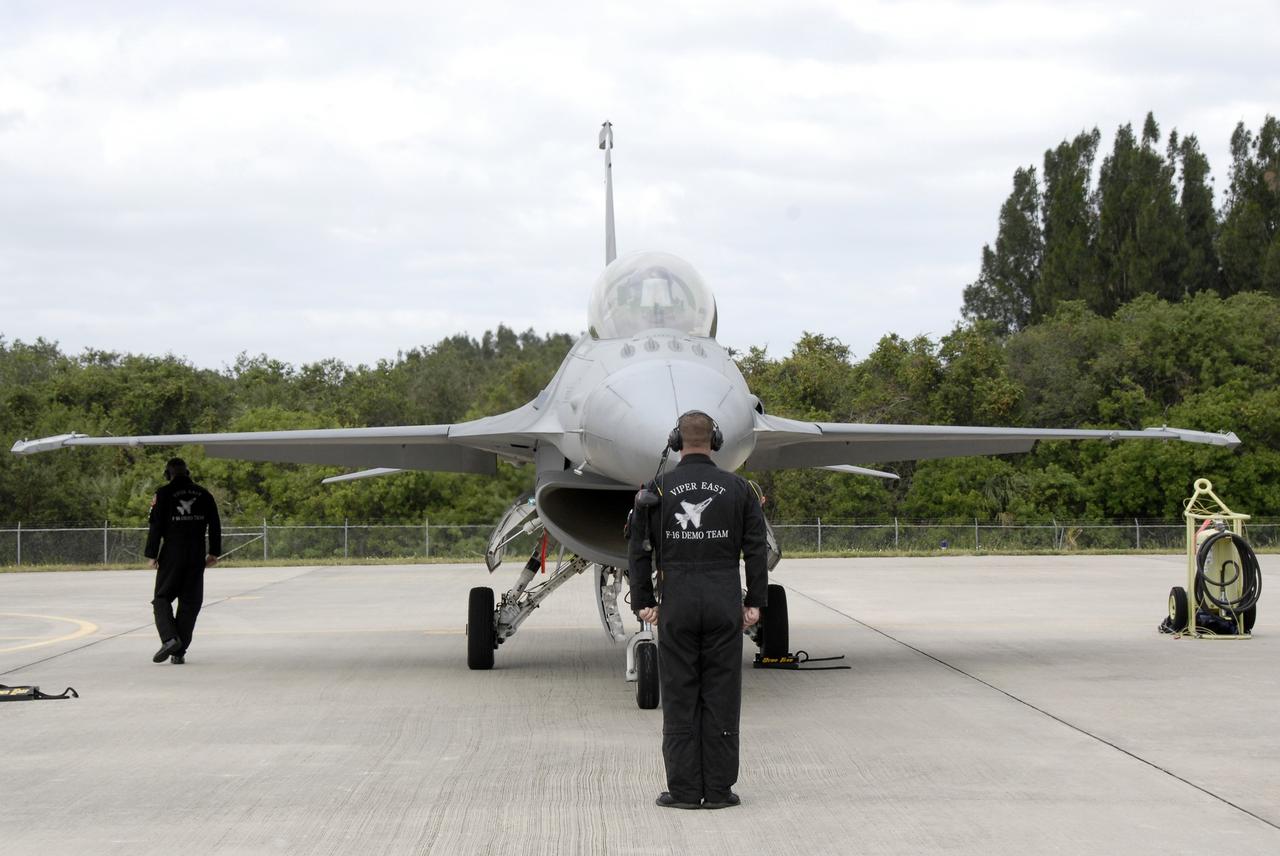
CAPE CANAVERAL, Fla. – Aircraft of the 920th Rescue Wing are lined up at the Shuttle Landing Facility at NASA's Kennedy Space Center in Florida to take part in the Kennedy Space Center Visitor Complex Space and Air Show Nov. 8-9. They will join the U.S. Navy's Blue Angels for the show. The Navy's elite flight demonstration squadron will take to the skies in military aircraft demonstrations by the F-16 Fighting Falcon and F/A-18 Super Hornet jets for the second annual Space & Air Show at Kennedy. This year’s show brings together the best in military aircraft, coupled with precision pilots and veteran astronauts to celebrate spaceflight and aviation. The event includes military aircraft demonstrations by the F-16 Fighting Falcon and a water rescue demonstration by the 920th Rescue Wing. Photo credit: NASA/Kim Shiflett
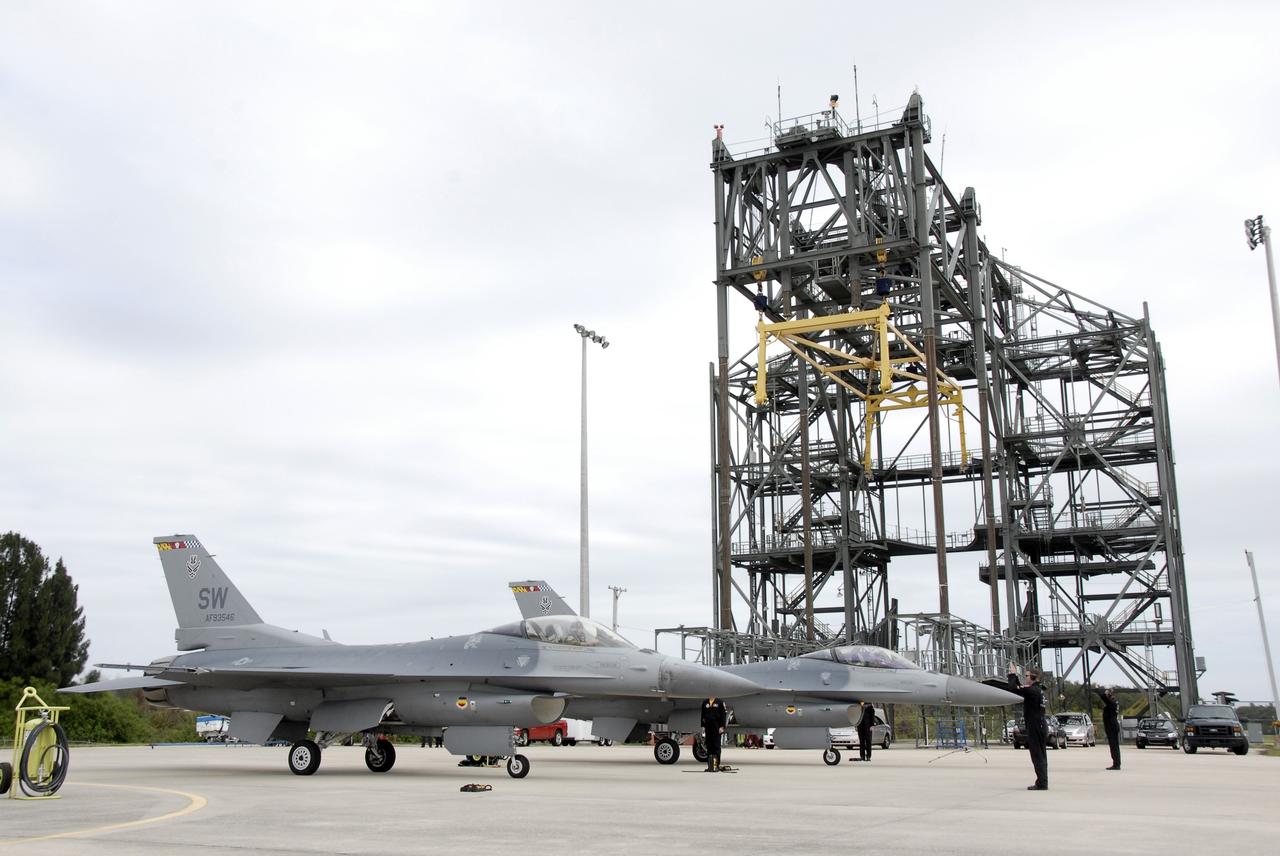
CAPE CANAVERAL, Fla. – Aircraft of the 920th Rescue Wing are lined up at the Shuttle landing Facility at NASA's Kennedy Space Center in Florida to take part in the Kennedy Space Center Visitor Complex Space and Air Show Nov. 8-9. They will join the U.S. Navy's Blue Angels for the show. The Navy's elite flight demonstration squadron will take to the skies in military aircraft demonstrations by the F-16 Fighting Falcon and F/A-18 Super Hornet jets for the second annual Space & Air Show at Kennedy. This year’s show brings together the best in military aircraft, coupled with precision pilots and veteran astronauts to celebrate spaceflight and aviation. The event includes military aircraft demonstrations by the F-16 Fighting Falcon and a water rescue demonstration by the 920th Rescue Wing. Photo credit: NASA/Kim Shiflett
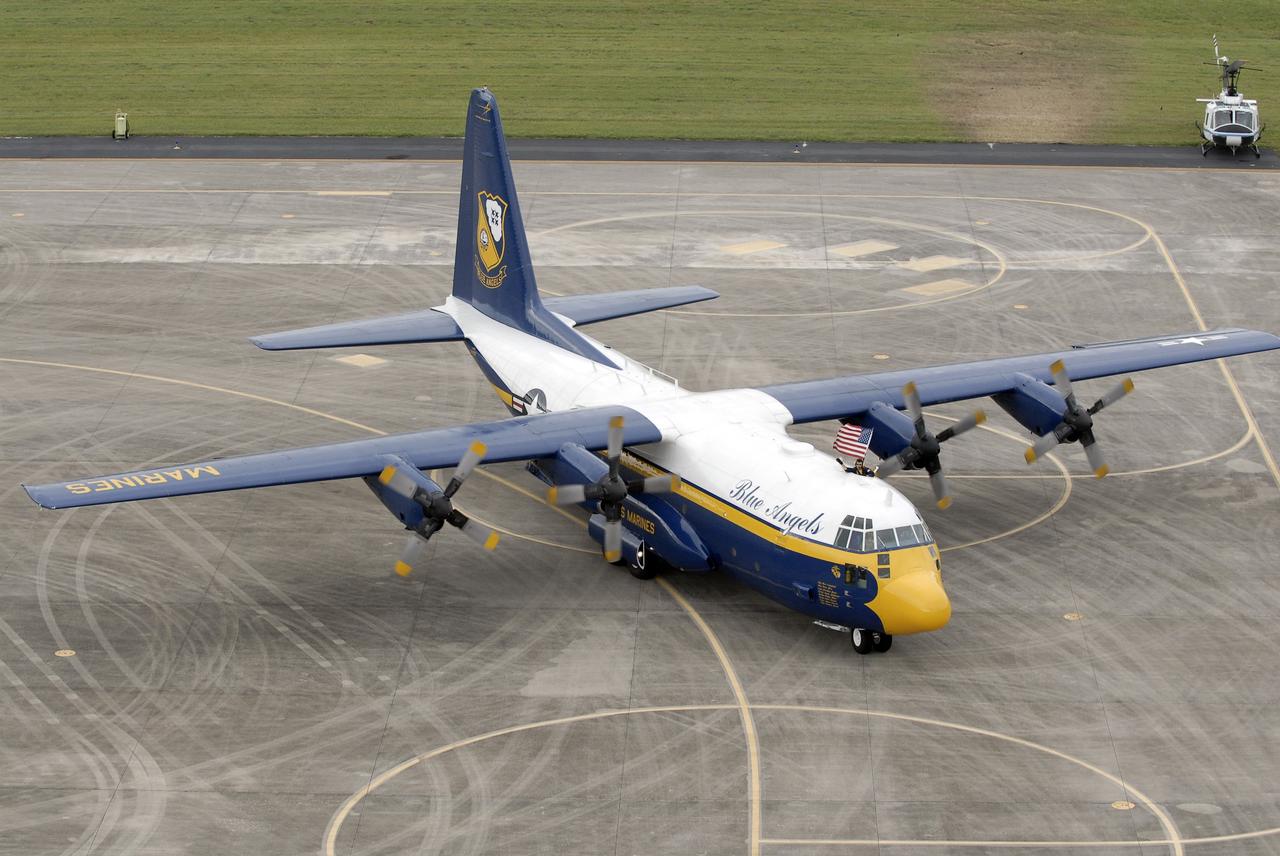
CAPE CANAVERAL, Fla. – A C-130 airplane flown by U.S. Marines lands at the Shuttle Landing Facility at NASA's Kennedy Space Center in Florida. The plane carries the support team for the U.S. Navy's Blue Angels, who are going to perform at the Kennedy Space Center Visitor Complex Space and Air Show Nov. 8-9. The Navy's elite flight demonstration squadron will take to the skies in military aircraft demonstrations by the F-16 Fighting Falcon and F/A-18 Super Hornet jets for the second annual Space & Air Show at Kennedy. This year’s show brings together the best in military aircraft, coupled with precision pilots and veteran astronauts to celebrate spaceflight and aviation. The event includes military aircraft demonstrations by the F-16 Fighting Falcon and a water rescue demonstration by the 920th Rescue Wing. Photo credit: NASA/Kim Shiflett
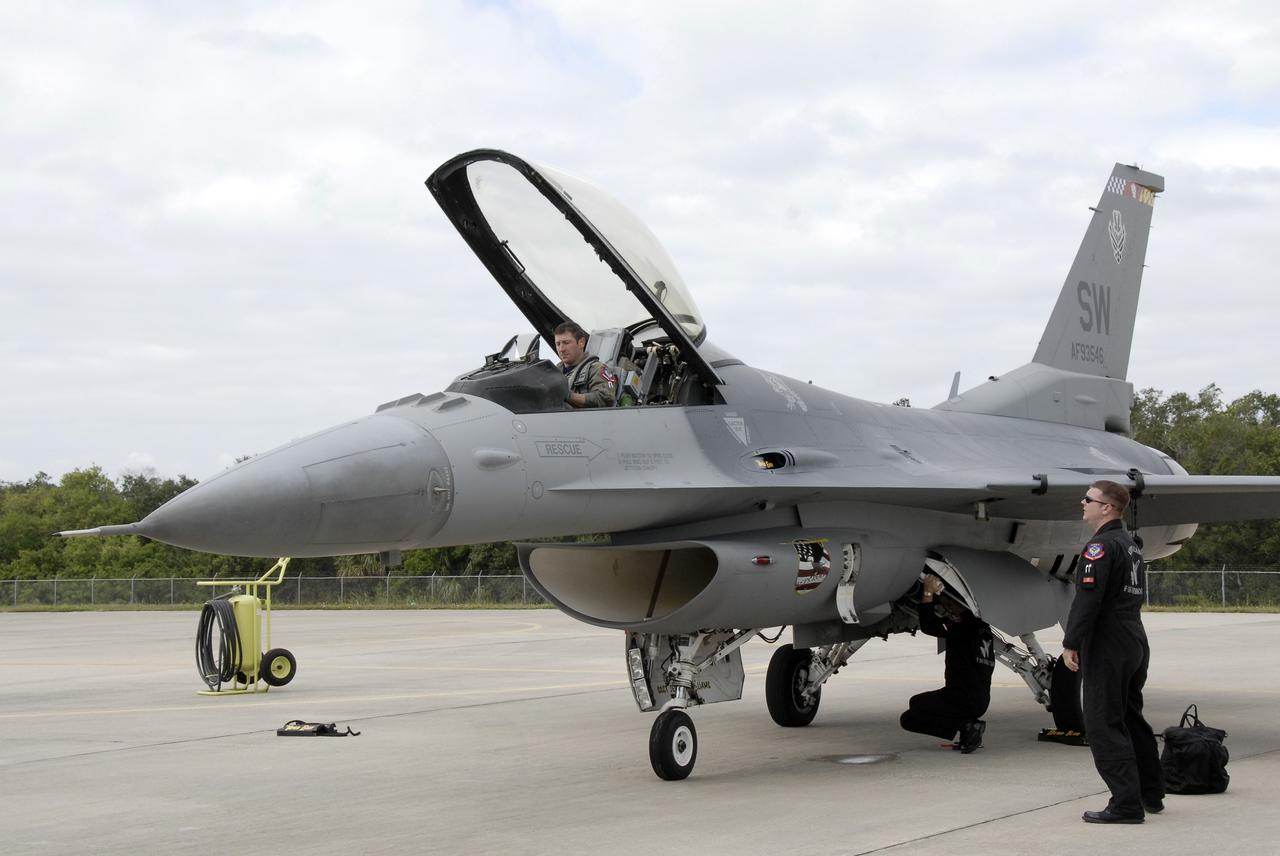
CAPE CANAVERAL, Fla. – A pilot with the 920th Rescue Wing gets ready to disembark his plane after landing at NASA's Kennedy Space Center in Florida. The Rescue Wing will join the U.S. Navy's Blue Angels for the Space and Air Show Nov. 8-9 at the Kennedy Space Center Visitor Complex. The Navy's elite flight demonstration squadron will take to the skies in military aircraft demonstrations by the F-16 Fighting Falcon and F/A-18 Super Hornet jets for the second annual Space & Air Show at Kennedy. This year’s show brings together the best in military aircraft, coupled with precision pilots and veteran astronauts to celebrate spaceflight and aviation. The event includes military aircraft demonstrations by the F-16 Fighting Falcon and a water rescue demonstration by the 920th Rescue Wing. Photo credit: NASA/Kim Shiflett
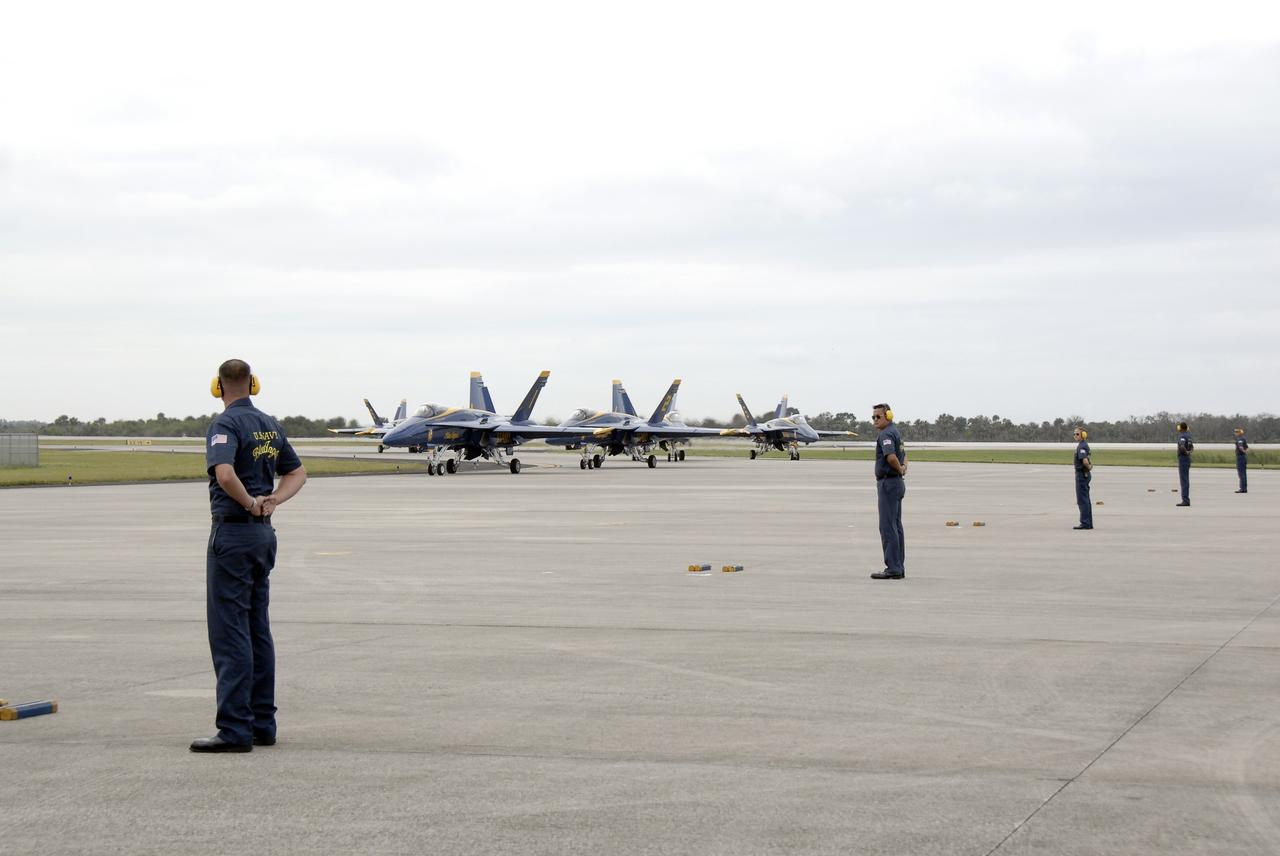
CAPE CANAVERAL, Fla. – The U.S. Navy's Blue Angels demonstration squadron lands at the Shuttle Landing Facility at NASA's Kennedy Space Center in Florida. They will perform at the Kennedy Space Center Visitor Complex Space and Air Show Nov. 8-9. The Navy's elite flight demonstration squadron will take to the skies in military aircraft demonstrations by the F-16 Fighting Falcon and F/A-18 Super Hornet jets for the second annual Space & Air Show at Kennedy. This year’s show brings together the best in military aircraft, coupled with precision pilots and veteran astronauts to celebrate spaceflight and aviation. The event includes military aircraft demonstrations by the F-16 Fighting Falcon and a water rescue demonstration by the 920th Rescue Wing. Photo credit: NASA/Kim Shiflett
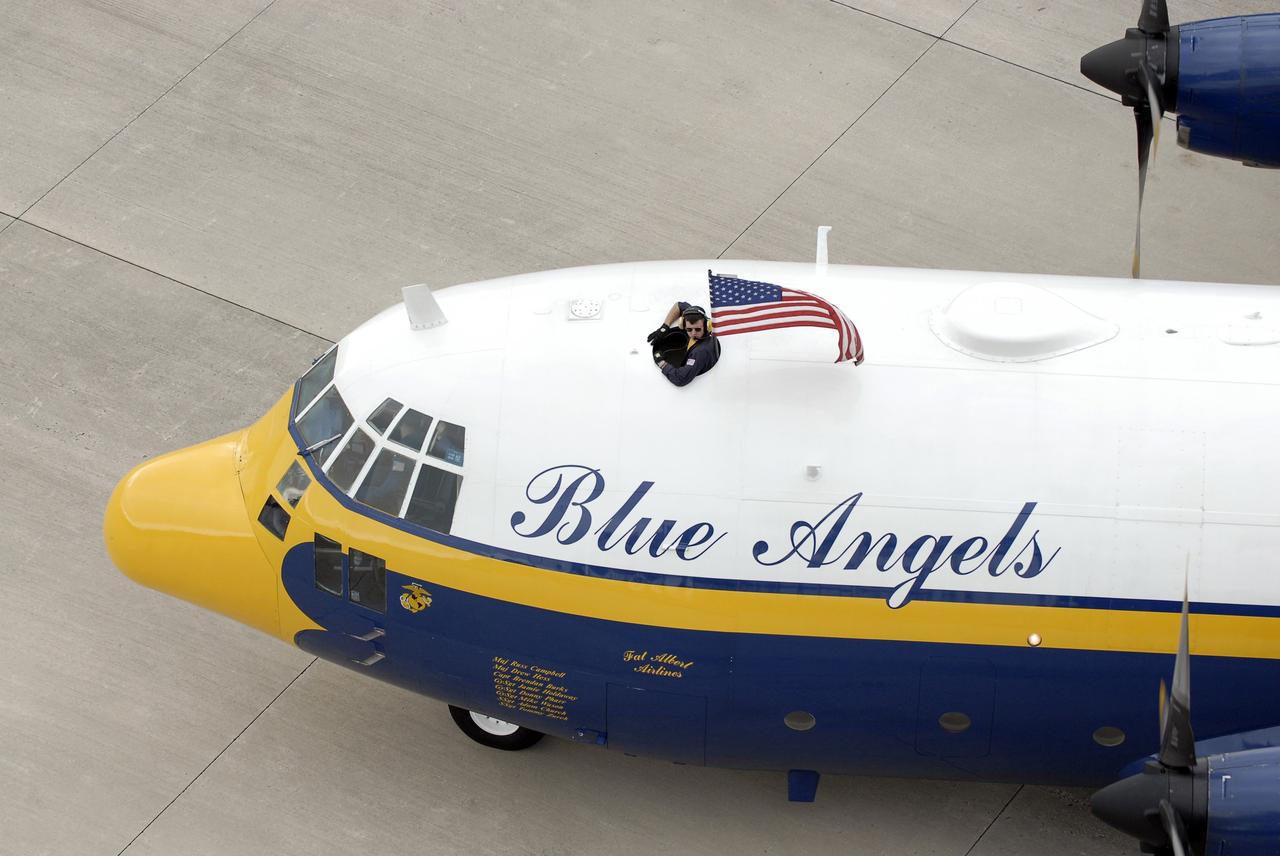
CAPE CANAVERAL, Fla. – A C-130 airplane flown by U.S. Marines stops at the Shuttle Landing Facility at NASA's Kennedy Space Center in Florida. The plane carries the support team for the U.S. Navy's Blue Angels, who are going to perform at the Kennedy Space Center Visitor Complex Space and Air Show Nov. 8-9. The Navy's elite flight demonstration squadron will take to the skies in military aircraft demonstrations by the F-16 Fighting Falcon and F/A-18 Super Hornet jets for the second annual Space & Air Show at Kennedy. This year’s show brings together the best in military aircraft, coupled with precision pilots and veteran astronauts to celebrate spaceflight and aviation. The event includes military aircraft demonstrations by the F-16 Fighting Falcon and a water rescue demonstration by the 920th Rescue Wing. Photo credit: NASA/Kim Shiflett
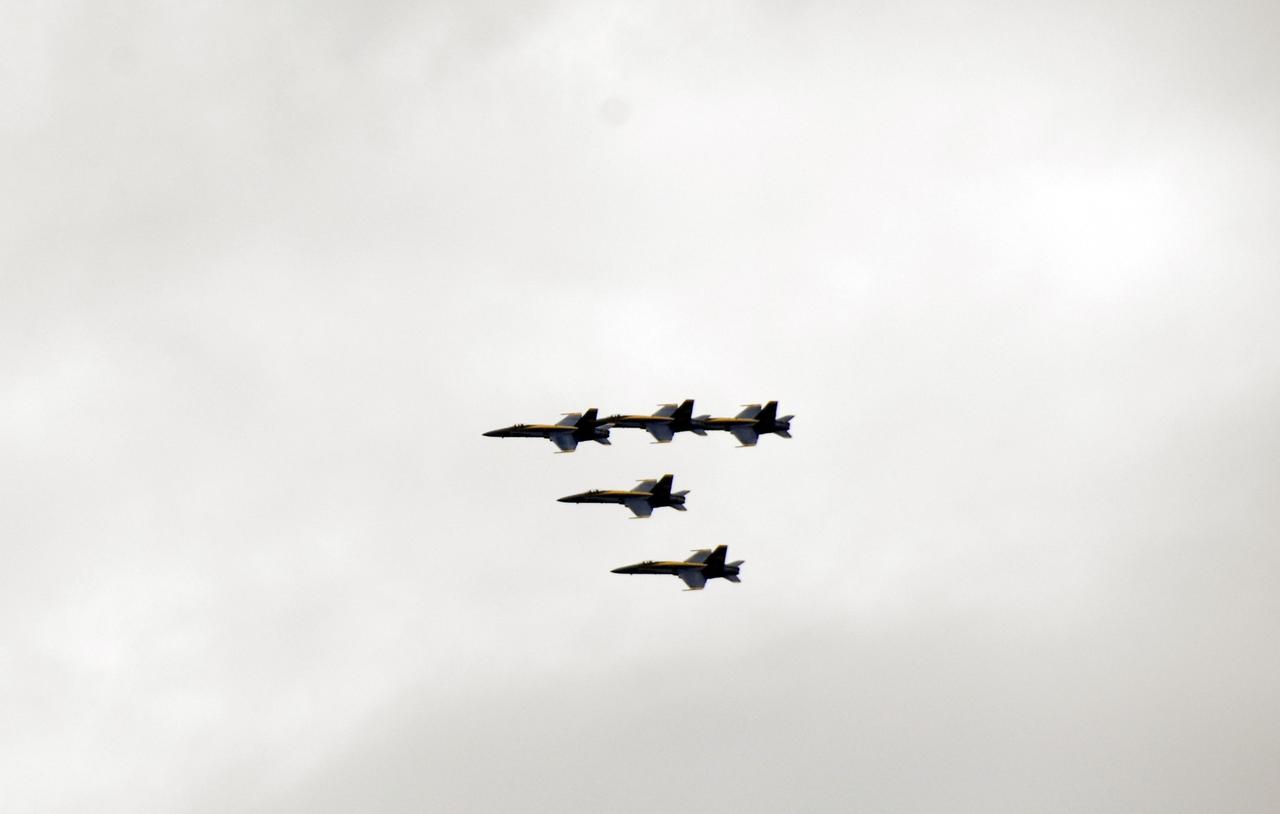
CAPE CANAVERAL, Fla. – The U.S. Navy's Blue Angels approach the Shuttle Landing Facility for a landing at NASA's Kennedy Space Center in Florida. They will perform at the Kennedy Space Center Visitor Complex Space and Air Show Nov. 8-9. The Navy's elite flight demonstration squadron will take to the skies in military aircraft demonstrations by the F-16 Fighting Falcon and F/A-18 Super Hornet jets for the second annual Space & Air Show at Kennedy. This year’s show brings together the best in military aircraft, coupled with precision pilots and veteran astronauts to celebrate spaceflight and aviation. The event includes military aircraft demonstrations by the F-16 Fighting Falcon and a water rescue demonstration by the 920th Rescue Wing. Photo credit: NASA/Kim Shiflett
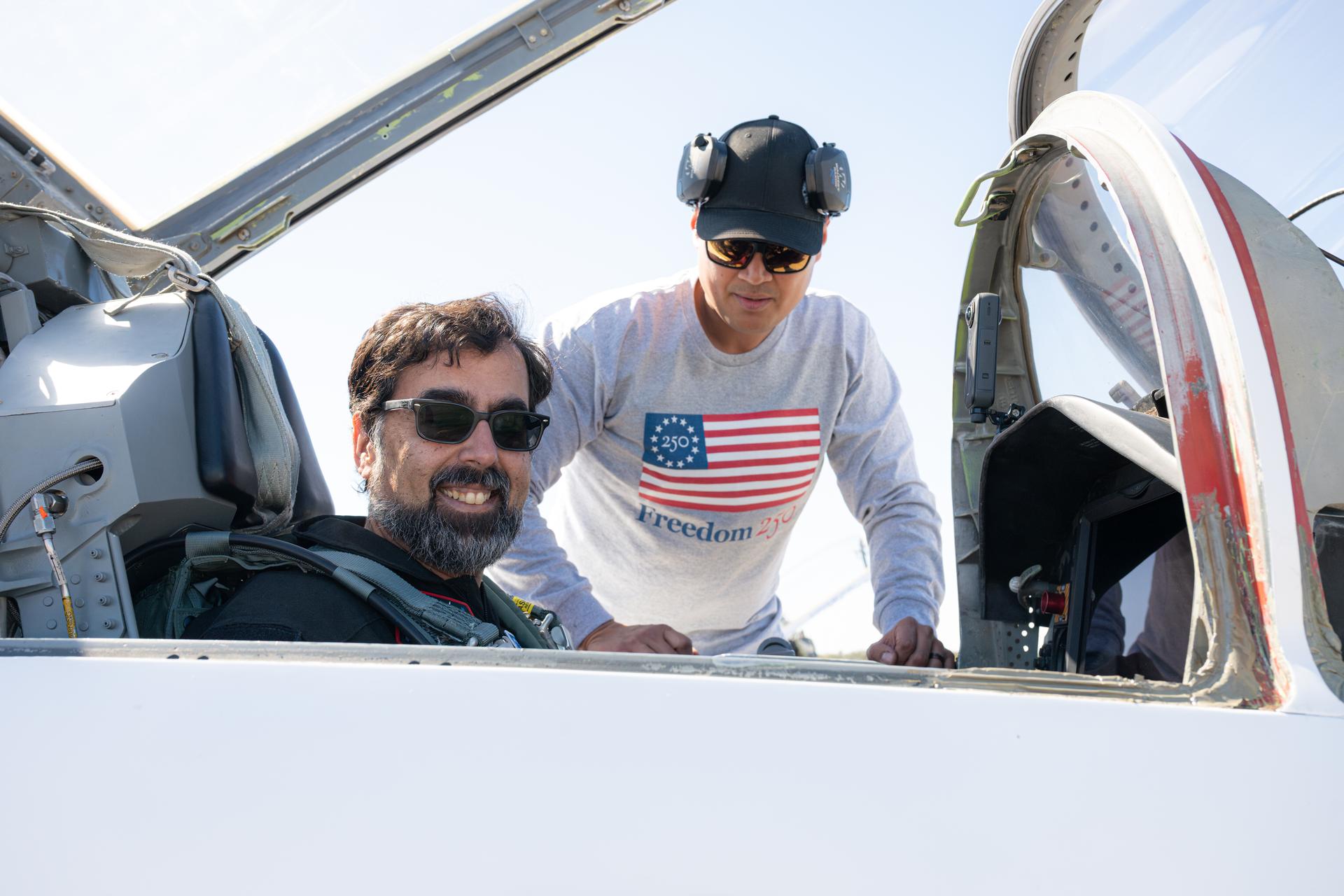
Amit Kshatriya, NASA associate administrator, poses for a photograph in NASA Administrator Jared Isaacman’s personal F-5 aircraft, Sunday, Feb. 8, 2026, ahead of a formation flight at NASA’s Kennedy Space Center in Florida. Photo Credit: (NASA/John Kraus)
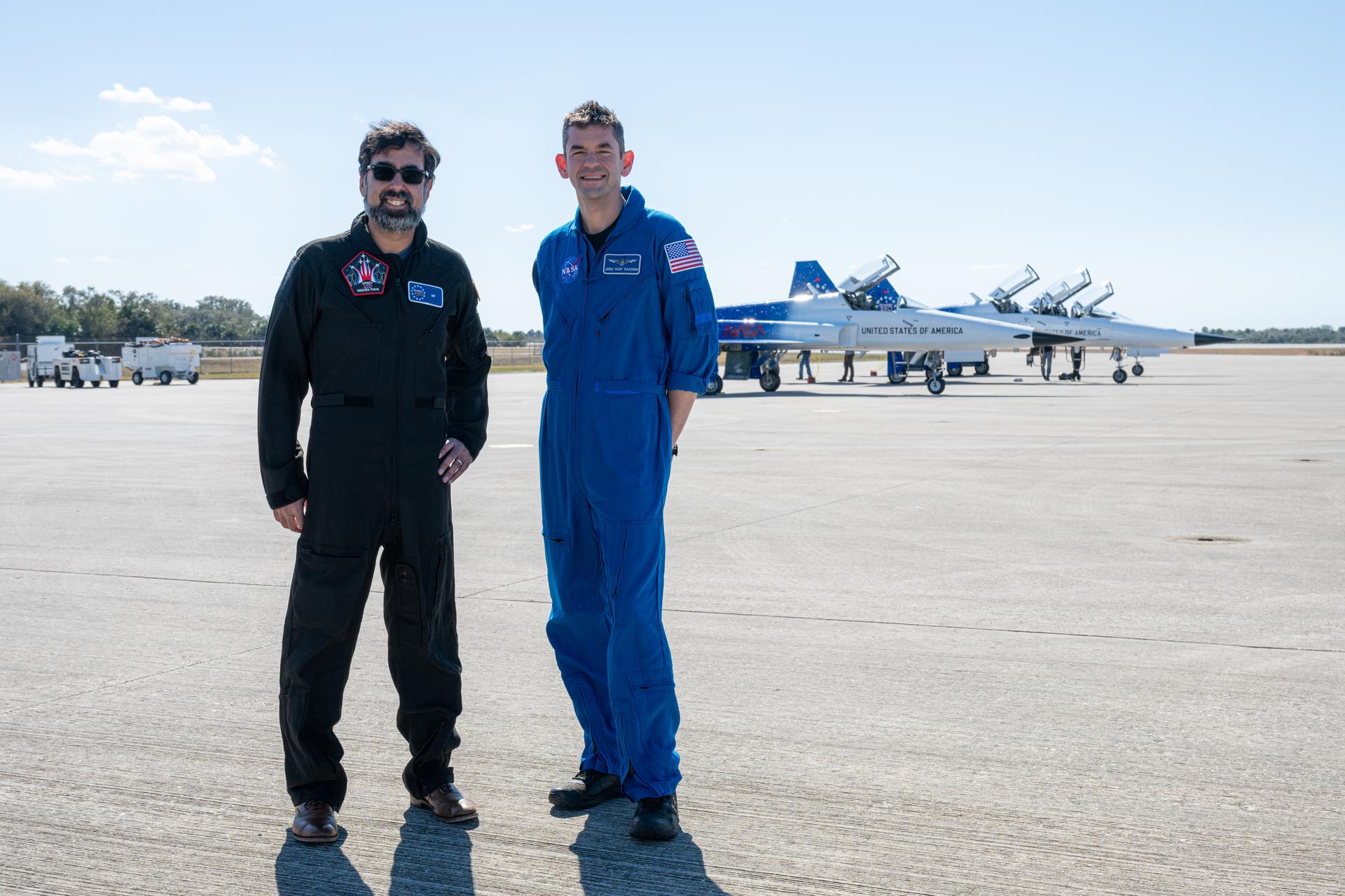
NASA Administrator Jared Isaacman and Amit Kshatriya, NASA associate administrator, pose for a photograph following a formation flight in Isaacman’s personal F-5 aircraft, Sunday, Feb. 8, 2026, at NASA’s Kennedy Space Center in Florida. Photo Credit: (NASA/John Kraus)
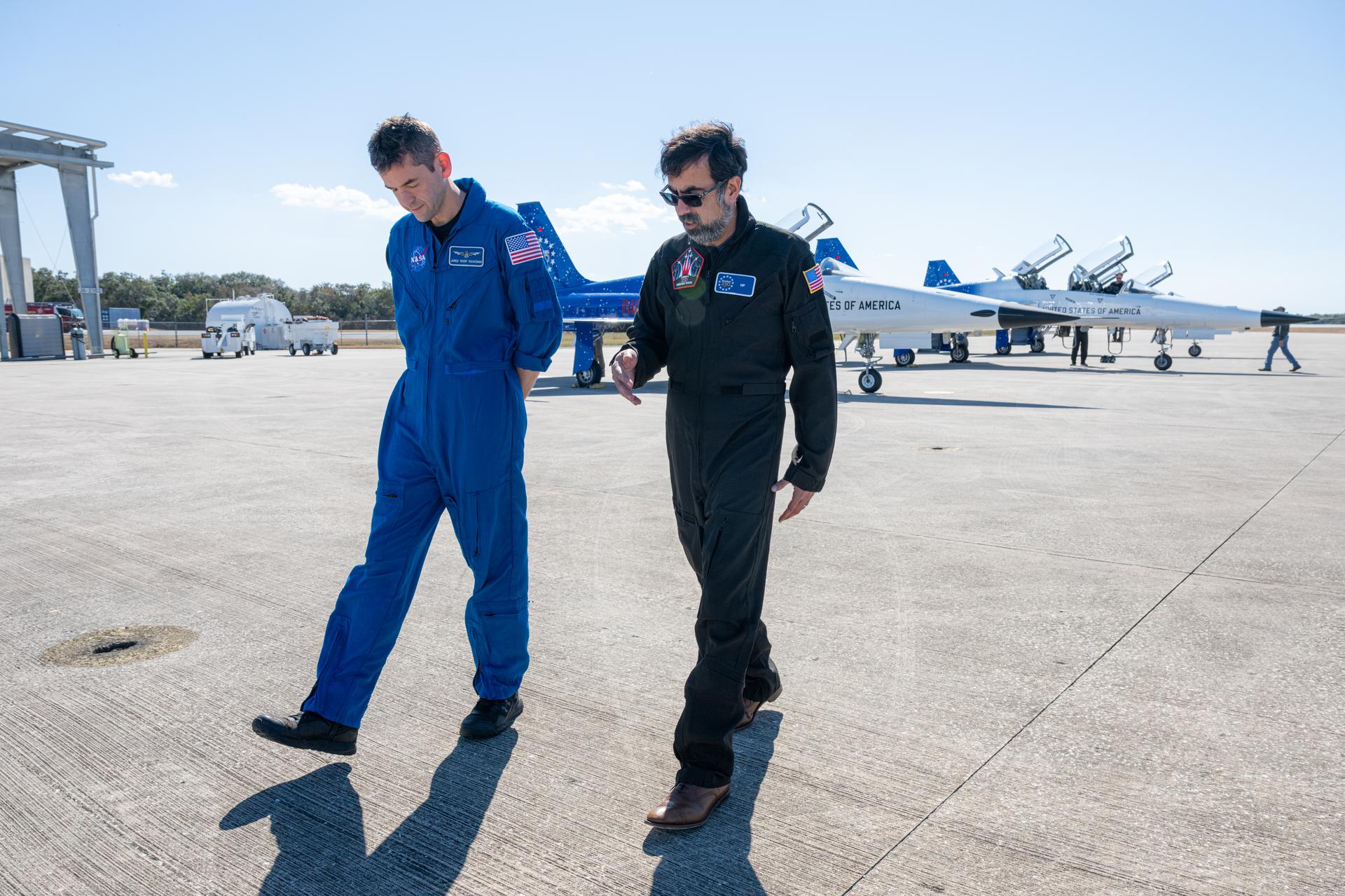
NASA Administrator Jared Isaacman and Amit Kshatriya, NASA associate administrator, are seen following a formation flight in Isaacman’s personal F-5 aircraft, Sunday, Feb. 8, 2026, at NASA’s Kennedy Space Center in Florida. Photo Credit: (NASA/John Kraus)
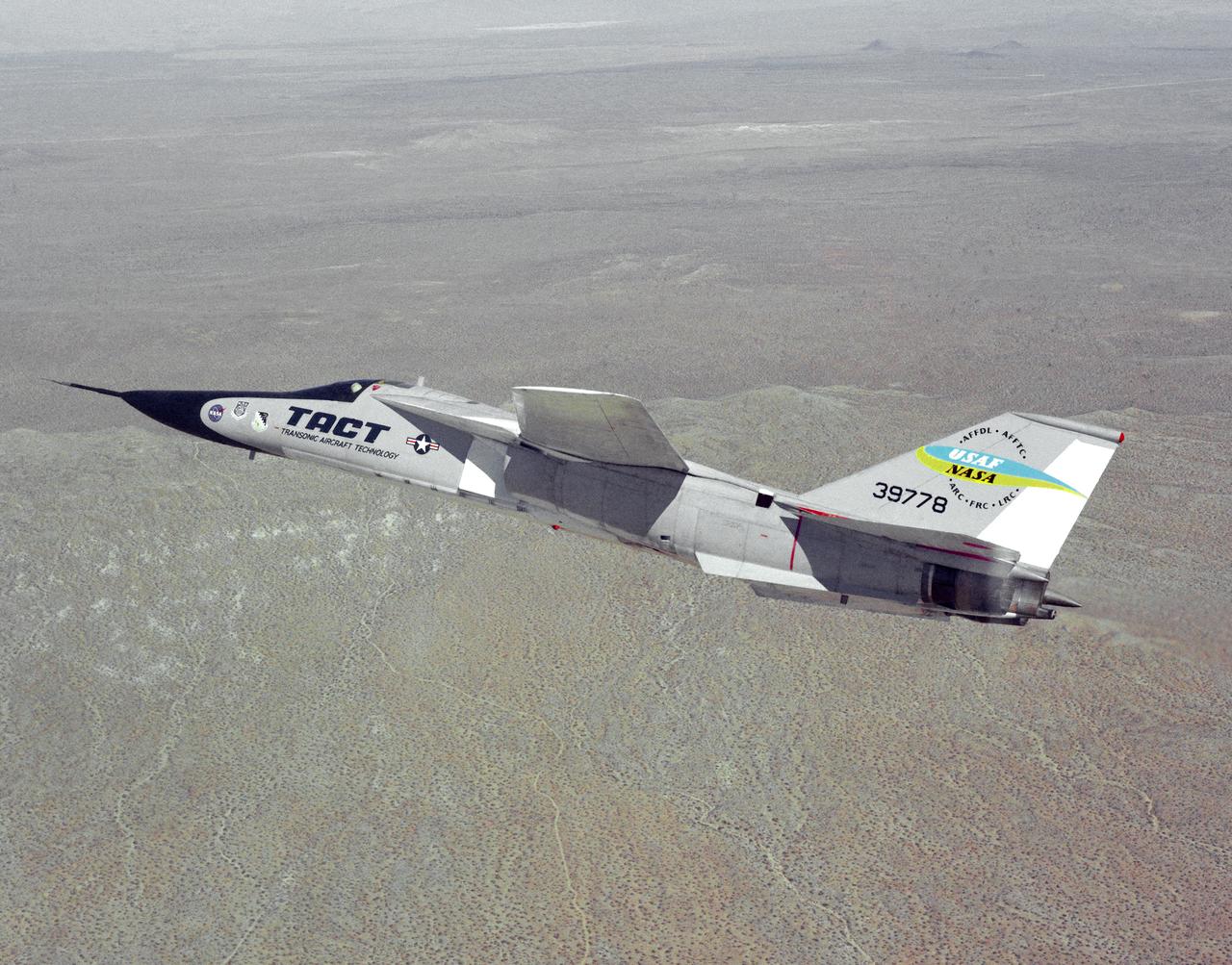
The General Dynamics TACT/F-111A Aardvark is seen In a banking-turn over the California Mojave desert. This photograph affords a good view of the supercritical wing airfoil shape. Starting in 1971 the NASA Flight Research Center and the Air Force undertook a major research and flight testing program, using F-111A (#63-9778), which would span almost 20 years before completion. Intense interest over the results coming from the NASA F-8 supercritical wing program spurred NASA and the Air Force to modify the General Dynamics F-111A to explore the application of supercritical wing technology to maneuverable military aircraft. This flight program was called Transonic Aircraft Technology (TACT).
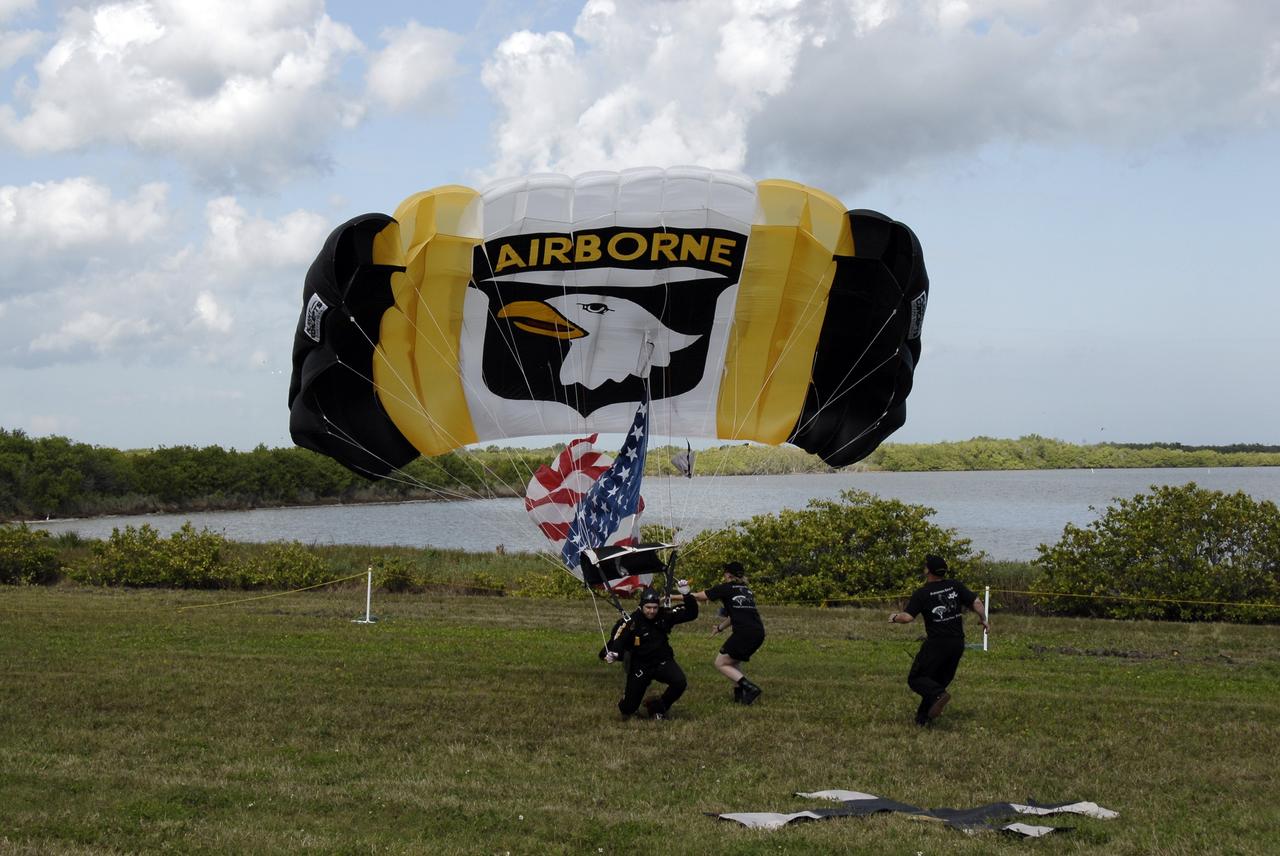
CAPE CANAVERAL, Fla. – A member of the 101st Airborne parachute demonstration team lands at NASA's Kennedy Space Center in Florida. The team performed at the Kennedy Space Center Visitor Complex Space and Air Show Nov. 8-9. This year’s show brought together the best in military aircraft, such as the F/A-18 Super Hornet and F-16 Fighting Falcon, coupled with precision pilots and veteran astronauts to celebrate spaceflight and aviation. The event included a water rescue demonstration by the 920th Rescue Wing. Photo credit: NASA/Kim Shiflett
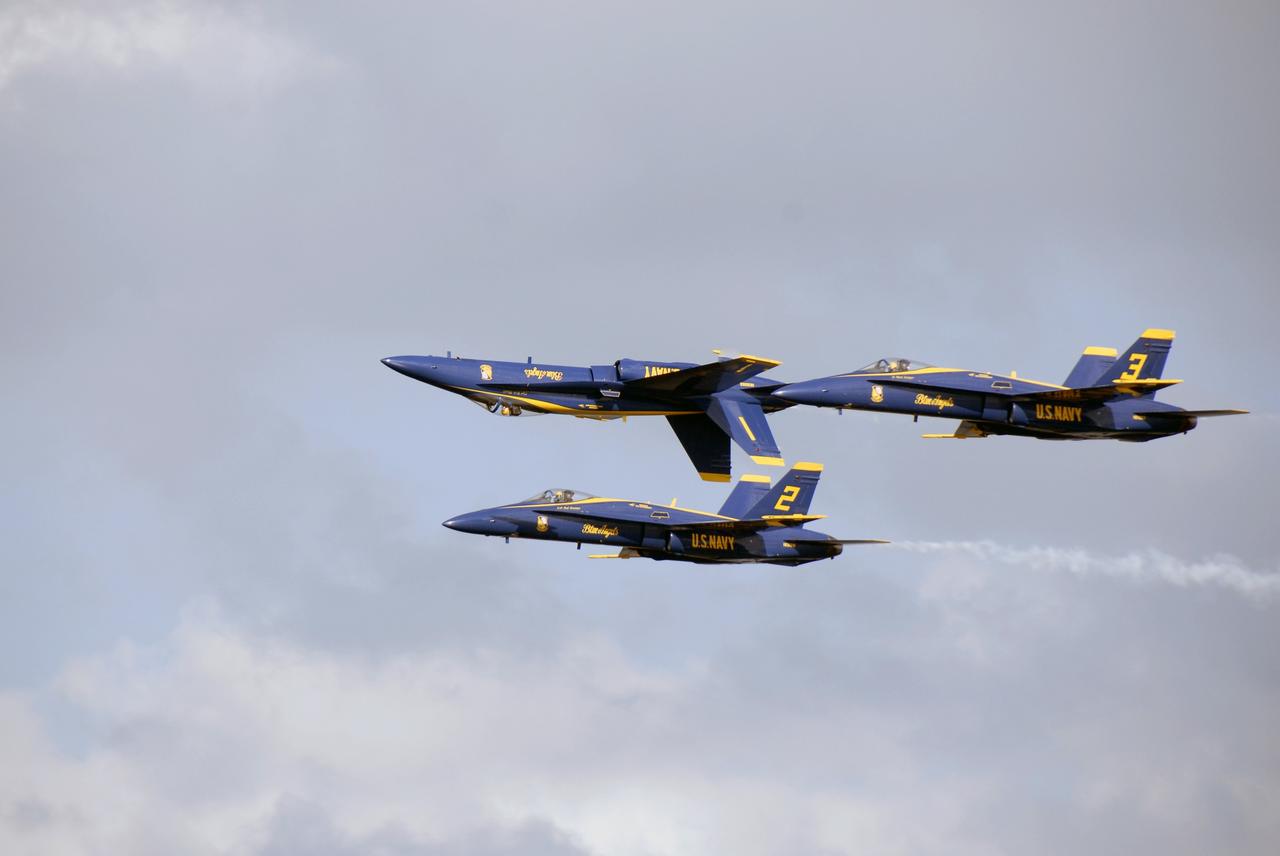
CAPE CANAVERAL, Fla. – The U.S. Navy's Blue Angels perform their tight maneuvers over NASA's Kennedy Space Center in Florida during the Kennedy Space Center Visitor Complex Space and Air Show Nov. 8-9. This year’s show brought together the best in military aircraft, such as the F/A-18 Super Hornet and F-16 Fighting Falcon, coupled with precision pilots and veteran astronauts to celebrate spaceflight and aviation. The event included a water rescue demonstration by the 920th Rescue Wing. Photo credit: NASA/Kim Shiflett
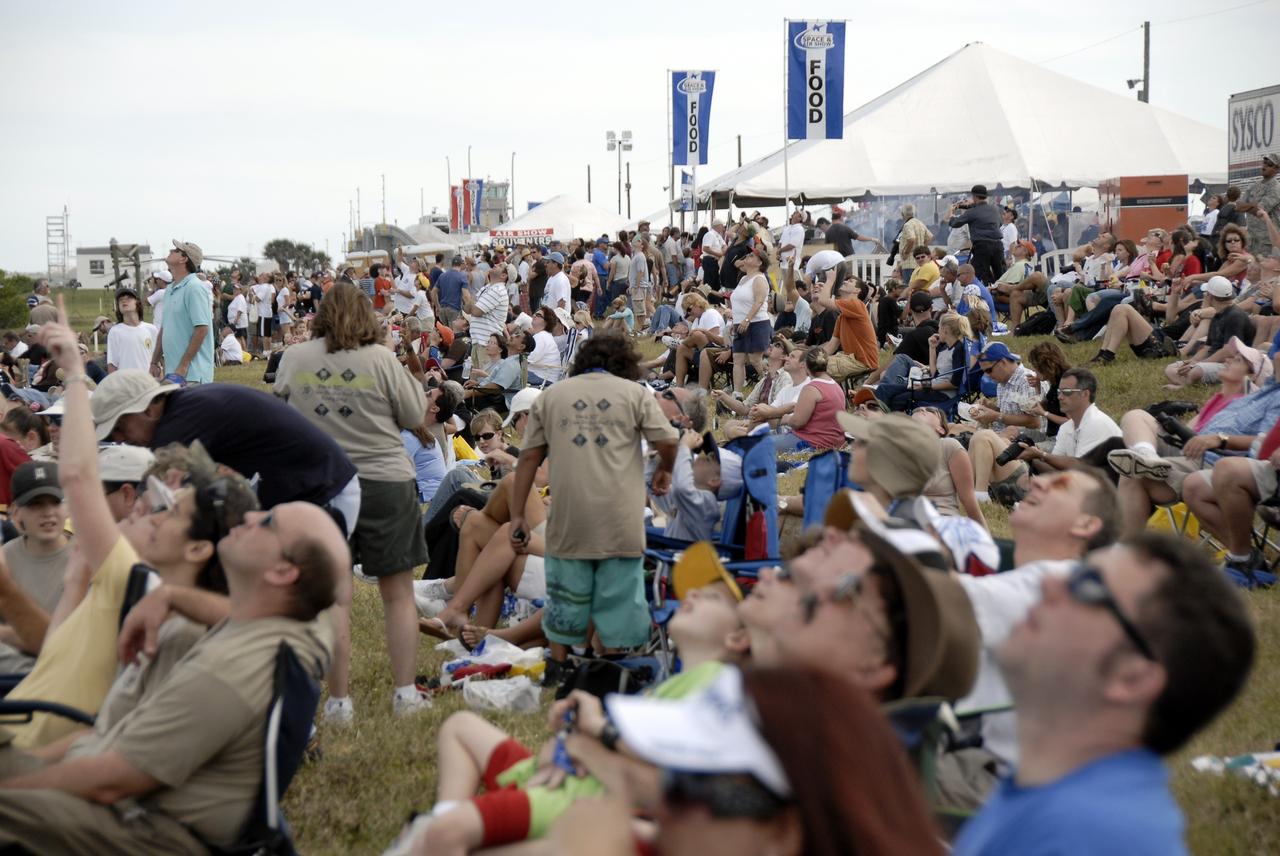
CAPE CANAVERAL, Fla. – Eyes and hands of the crowd of visitors are pointed toward the sky at NASA's Kennedy Space Center in Florida during the Kennedy Space Center Visitor Complex Space and Air Show Nov. 8-9. This year’s show brought together the best in military aircraft, such as the F/A-18 Super Hornet and F-16 Fighting Falcon, coupled with precision pilots and veteran astronauts to celebrate spaceflight and aviation. The event included a water rescue demonstration by the 920th Rescue Wing. Photo credit: NASA/Kim Shiflett
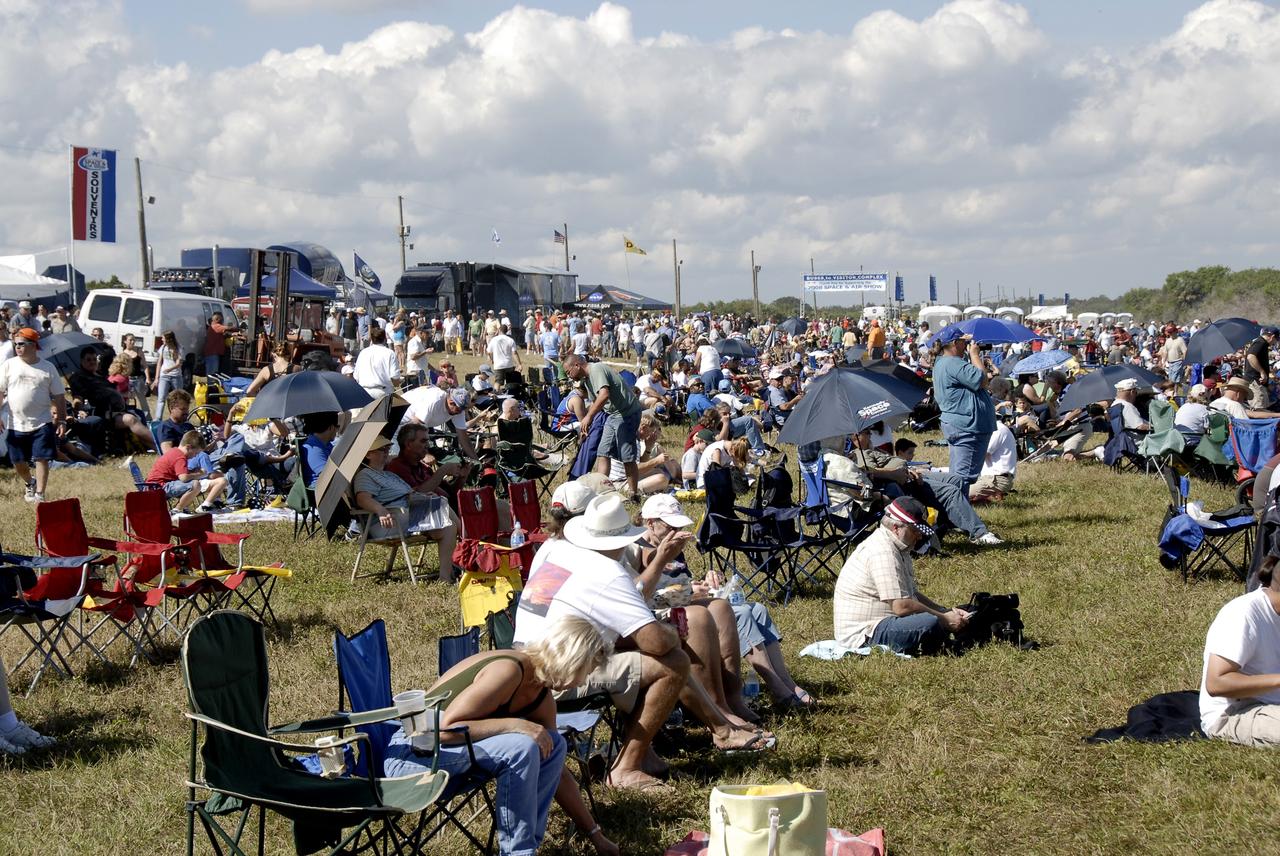
CAPE CANAVERAL, Fla. – Crowds are gathered at NASA's Kennedy Space Center in Florida to watch the U.S. Navy's Blue Angels perform at the Kennedy Space Center Visitor Complex Space and Air Show Nov. 8-9. This year’s show brought together the best in military aircraft, such as the F/A-18 Super Hornet and F-16 Fighting Falcon, coupled with precision pilots and veteran astronauts to celebrate spaceflight and aviation. The event included a water rescue demonstration by the 920th Rescue Wing. Photo credit: NASA/Kim Shiflett
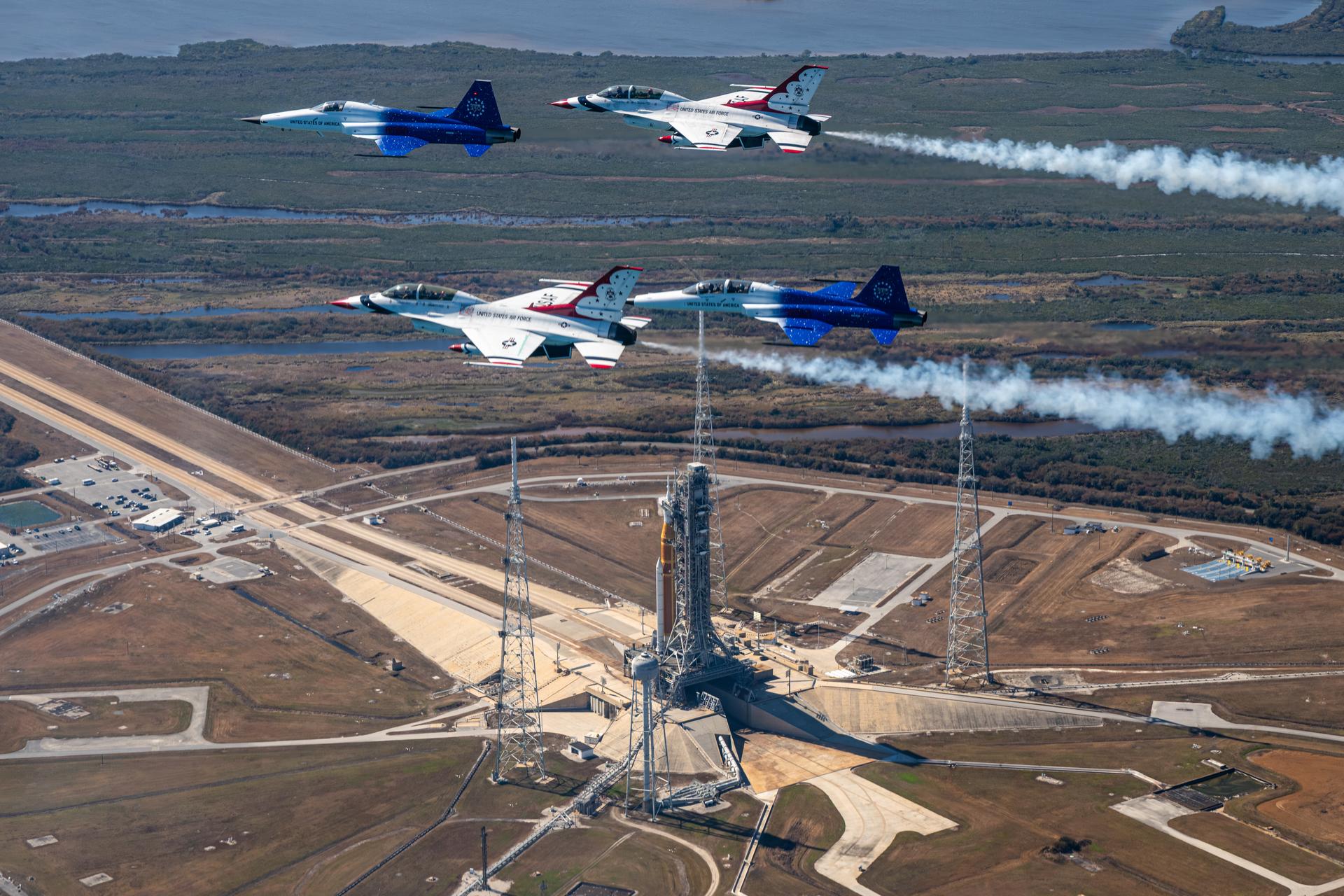
NASA Administrator Jared Isaacman conducts a formation flight with two of his personal F-5 aircraft, piloted by Isaacman and Sean Gustafson, senior advisor to the administrator, and two U.S. Air Force Thunderbirds F-16s, piloted by Thunderbird 7 Lt. Col. Tyler Keener and Thunderbird 8 Maj. Samuel Larson, Sunday, Feb. 8, 2026, at NASA’s Kennedy Space Center in Florida. The formation flew near the Artemis II SLS (Space Launch System) rocket and Orion spacecraft at Launch Complex 39B and the surrounding area at Kennedy. Photo Credit: (NASA/John Kraus)
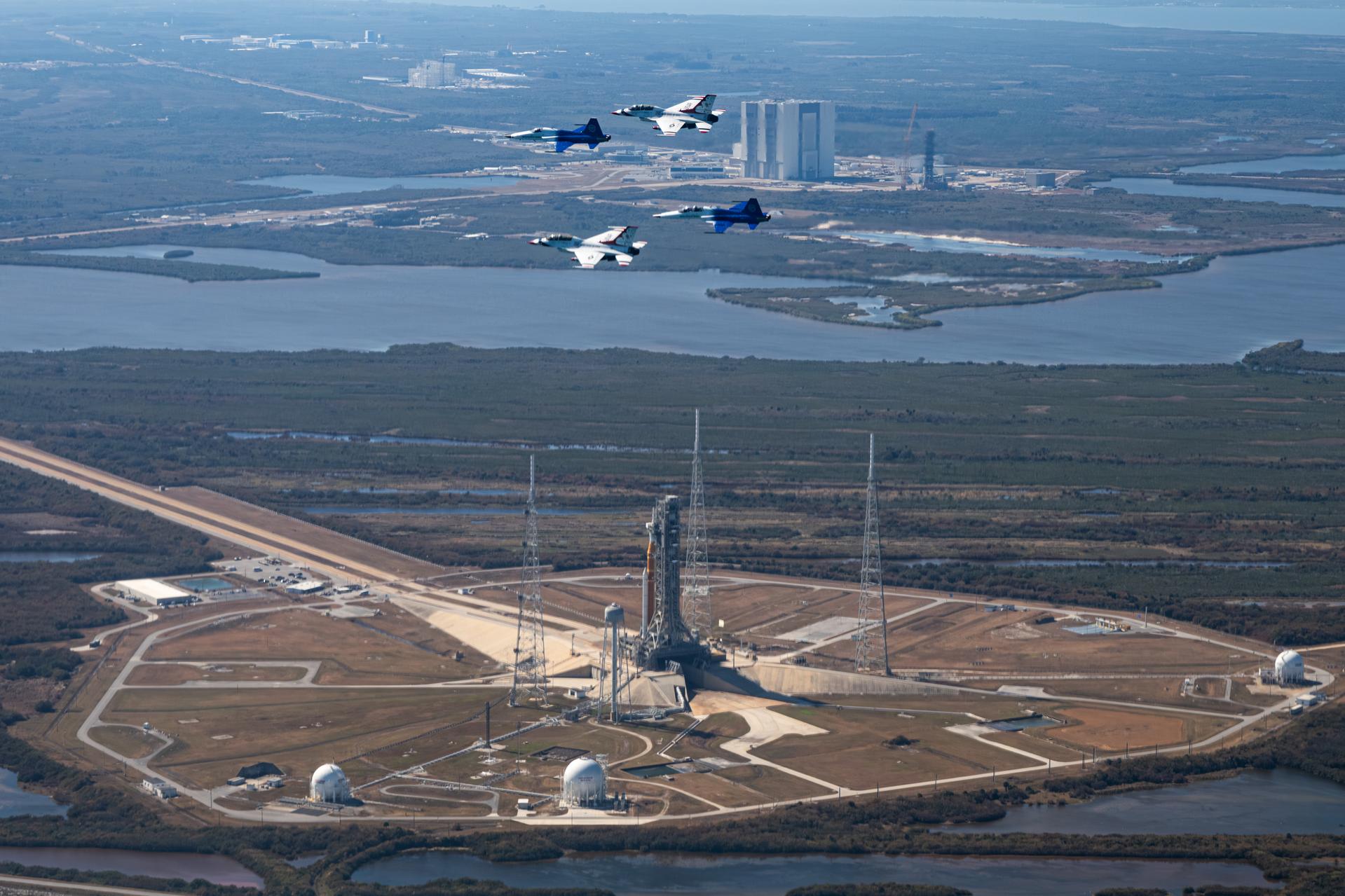
NASA Administrator Jared Isaacman conducts a formation flight with two of his personal F-5 aircraft, piloted by Isaacman and Sean Gustafson, senior advisor to the administrator, and two U.S. Air Force Thunderbirds F-16s, piloted by Thunderbird 7 Lt. Col. Tyler Keener and Thunderbird 8 Maj. Samuel Larson, Sunday, Feb. 8, 2026, at NASA’s Kennedy Space Center in Florida. The formation flew near the Artemis II SLS (Space Launch System) rocket and Orion spacecraft at Launch Complex 39B and the surrounding area at Kennedy. Photo Credit: (NASA/John Kraus)
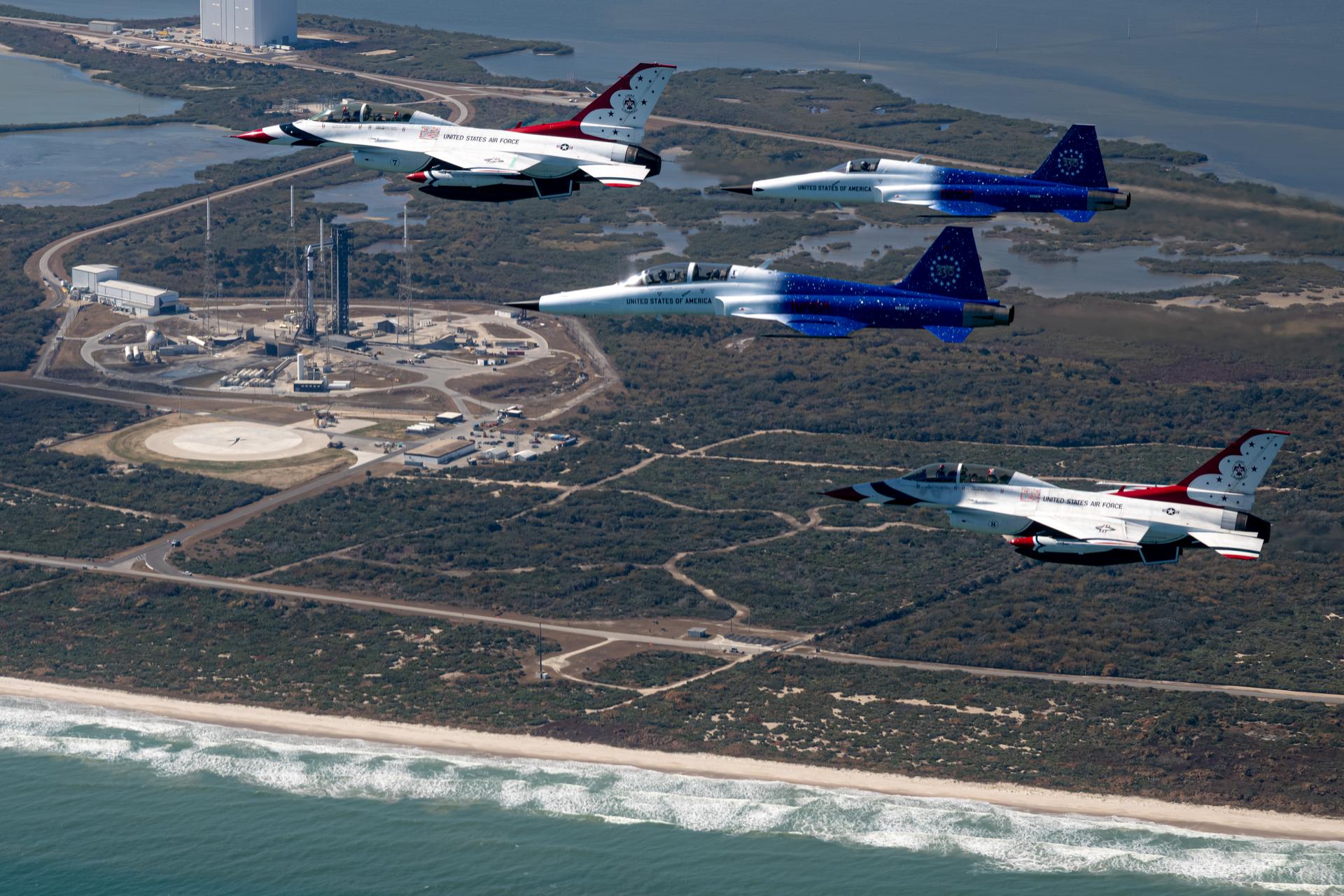
NASA Administrator Jared Isaacman conducts a formation flight with two of his personal F-5 aircraft, piloted by Isaacman and Sean Gustafson, senior advisor to the administrator, and two U.S. Air Force Thunderbirds F-16s, piloted by Thunderbird 7 Lt. Col. Tyler Keener and Thunderbird 8 Maj. Samuel Larson, Sunday, Feb. 8, 2026, at NASA’s Kennedy Space Center in Florida. The formation flew near Space Launch Complex 40 at Cape Canaveral Space Force Station and the surrounding area at Kennedy ahead of Crew-12’s mission to the International Space Station. Photo Credit: (NASA/John Kraus)
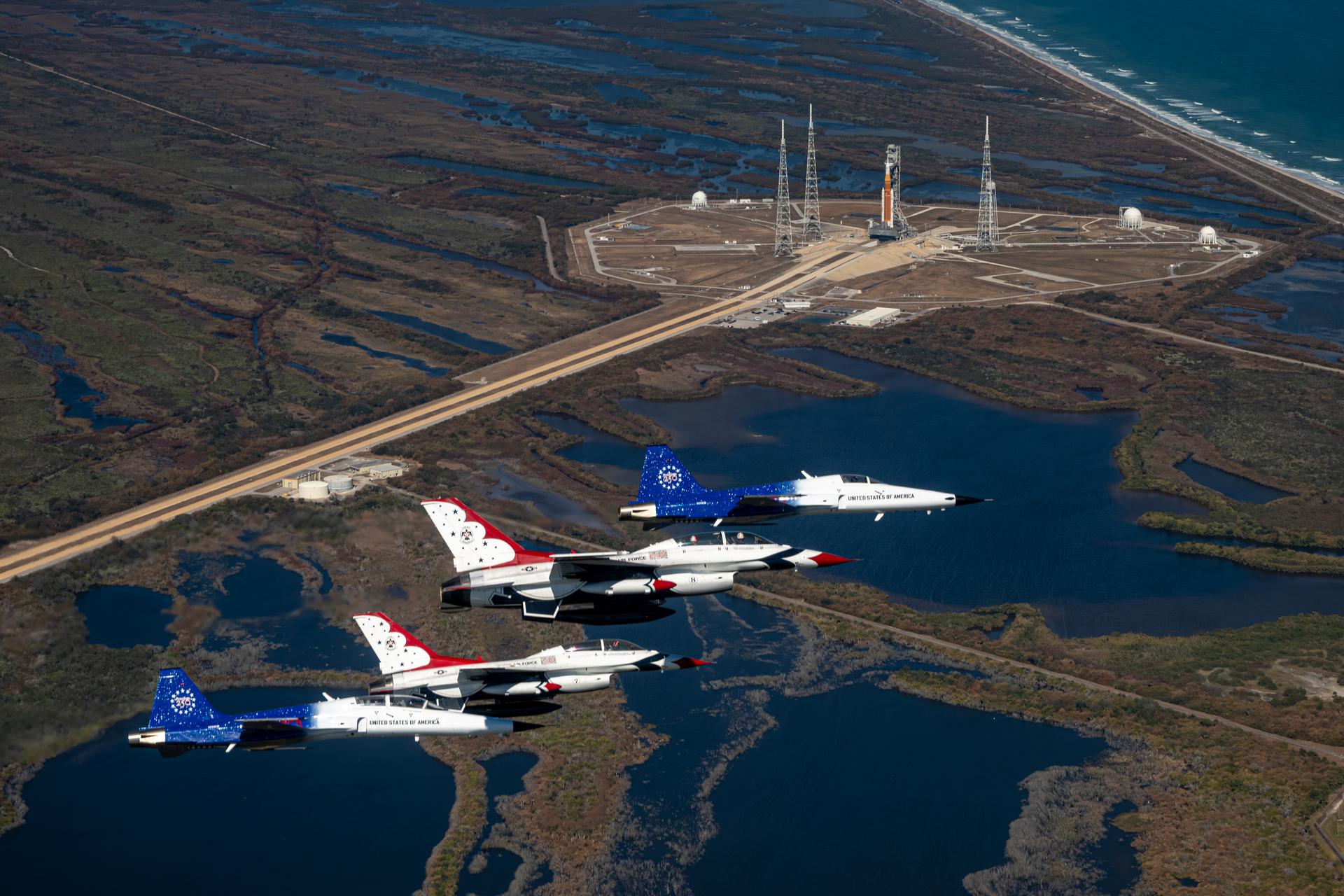
NASA Administrator Jared Isaacman conducts a formation flight with two of his personal F-5 aircraft, piloted by Isaacman and Sean Gustafson, senior advisor to the administrator, and two U.S. Air Force Thunderbirds F-16s, piloted by Thunderbird 7 Lt. Col. Tyler Keener and Thunderbird 8 Maj. Samuel Larson, Sunday, Feb. 8, 2026, at NASA’s Kennedy Space Center in Florida. The formation flew near the Artemis II SLS (Space Launch System) rocket and Orion spacecraft at Launch Complex 39B and the surrounding area at Kennedy. Photo Credit: (NASA/John Kraus)
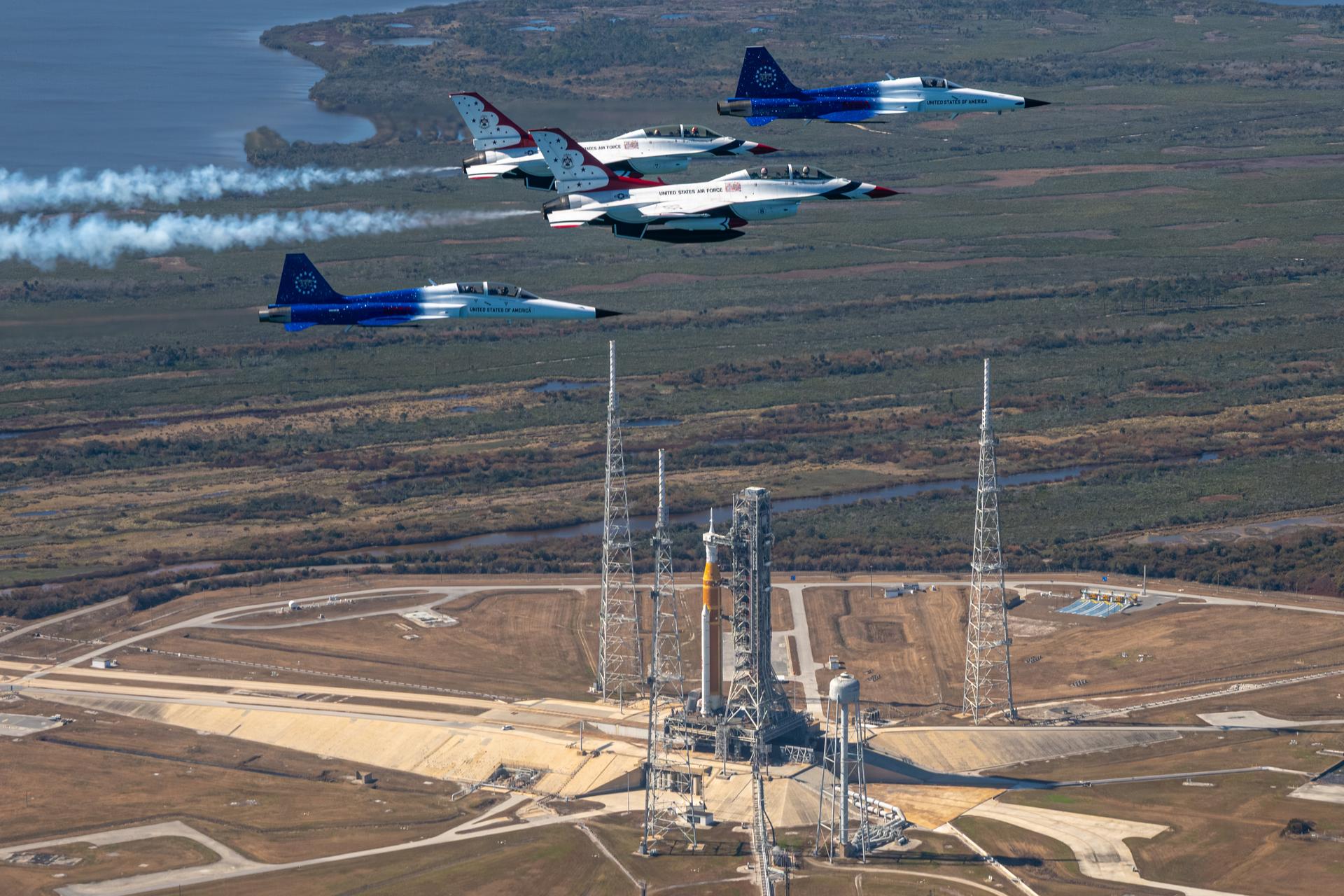
NASA Administrator Jared Isaacman conducts a formation flight with two of his personal F-5 aircraft, piloted by Isaacman and Sean Gustafson, senior advisor to the administrator, and two U.S. Air Force Thunderbirds F-16s, piloted by Thunderbird 7 Lt. Col. Tyler Keener and Thunderbird 8 Maj. Samuel Larson, Sunday, Feb. 8, 2026, at NASA’s Kennedy Space Center in Florida. The formation flew near the Artemis II SLS (Space Launch System) rocket and Orion spacecraft at Launch Complex 39B and the surrounding area at Kennedy. Photo Credit: (NASA/John Kraus)
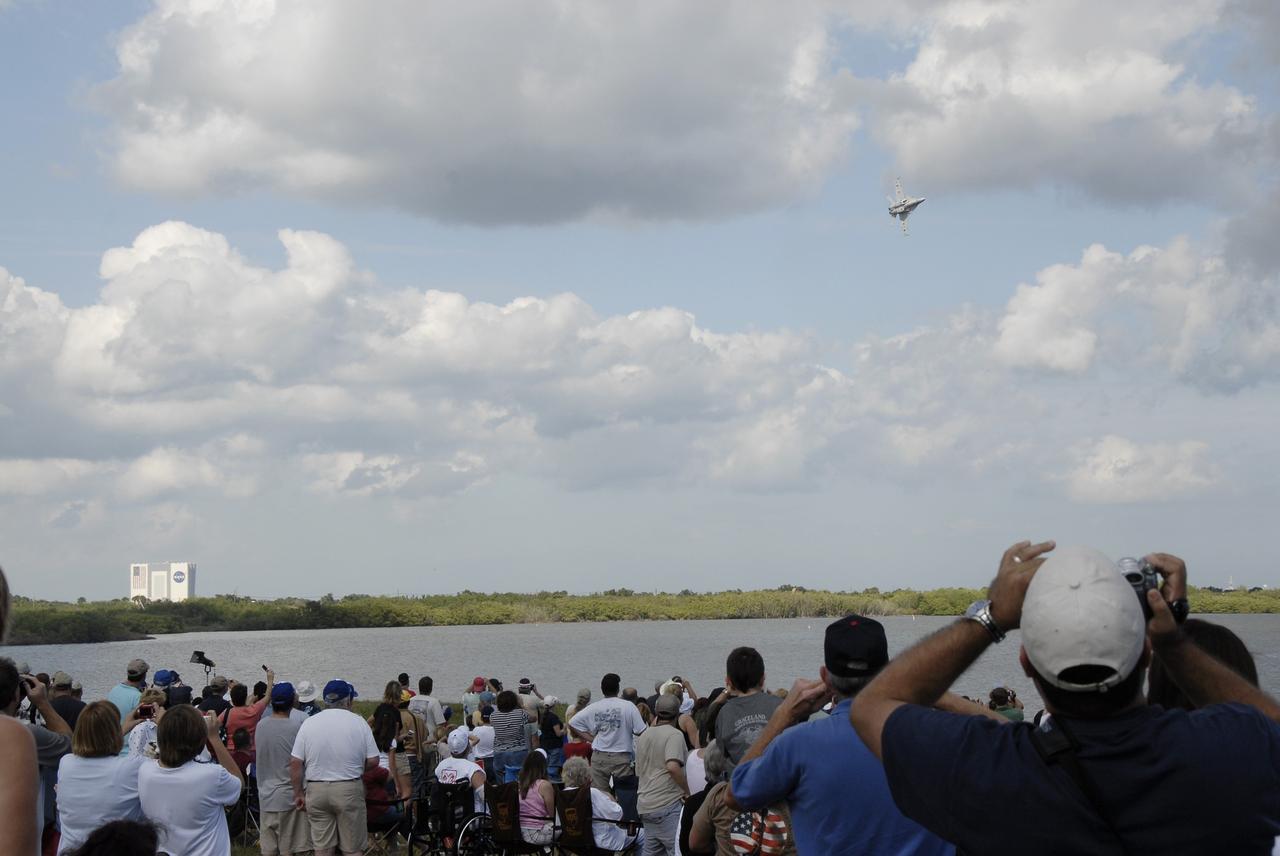
CAPE CANAVERAL, Fla. – Crowds on the banks of the Banana River at NASA's Kennedy Space Center in Florida watch as an F/A-18 Super Hornet jet shows its maneuvers. The Super Hornet was part of the Kennedy Space Center Visitor Complex Space and Air Show Nov. 8-9. This year’s show brought together the best in military aircraft, such as the F/A-18 Super Hornet and F-16 Fighting Falcon, coupled with precision pilots and veteran astronauts to celebrate spaceflight and aviation. The event included a water rescue demonstration by the 920th Rescue Wing. Photo credit: NASA/Kim Shiflett
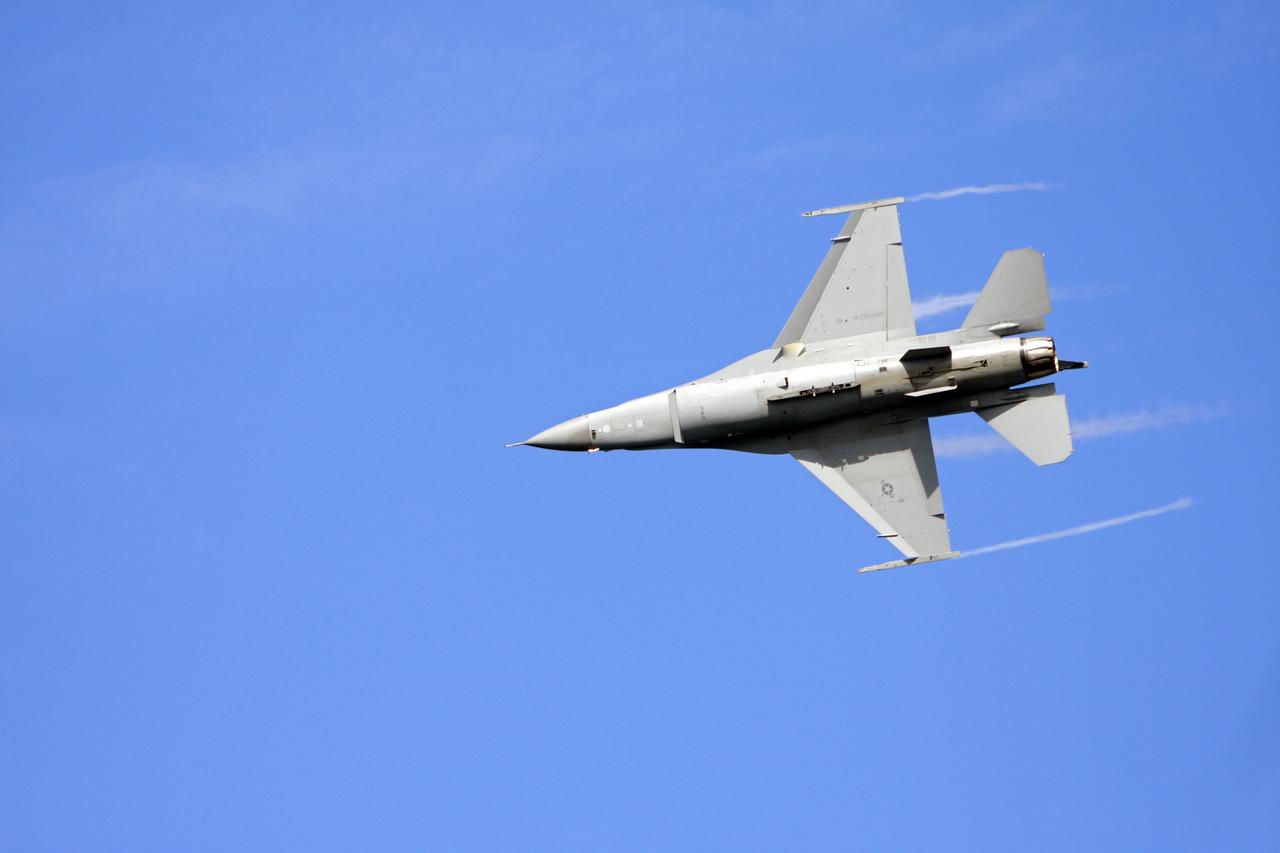
CAPE CANAVERAL, Fla. – During the Kennedy Space Center Visitor Complex Space and Air Show held Nov. 8-9 at NASA's Kennedy Space Center in Florida, this F/A-18 Super Hornet demonstrates its flying capabilities. This year’s show brought together the best in military aircraft, such as the F/A-18 Super Hornet and F-16 Fighting Falcon, coupled with precision pilots and veteran astronauts to celebrate spaceflight and aviation. The event included a water rescue demonstration by the 920th Rescue Wing. Photo credit: NASA/Troy Cryder
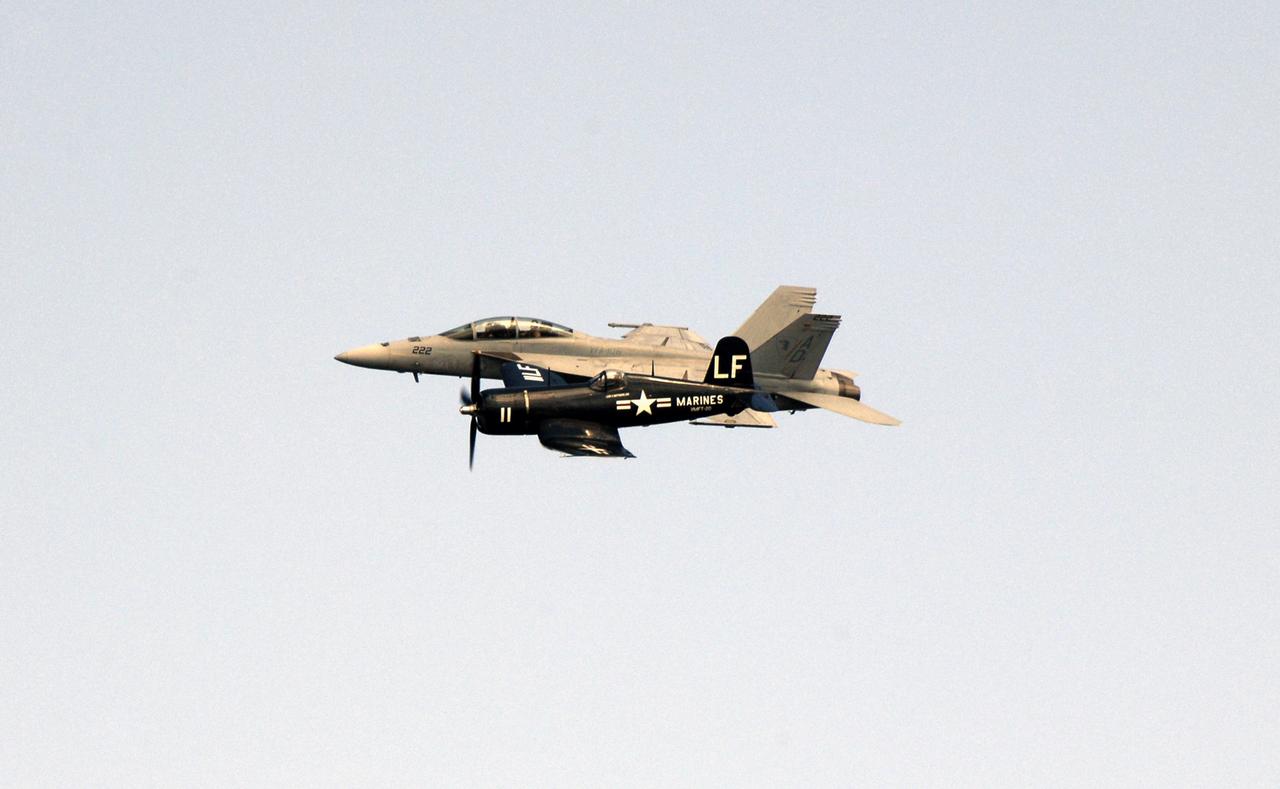
CAPE CANAVERAL, Fla. – A contrast in speed and design, the F/A-18 Super Hornet jet (behind) flies alongside a World War II Vought F4U Corsair during the Kennedy Space Center Visitor Complex Space and Air Show Nov. 8-9 at NASA's Kennedy Space Center in Florida. This year’s show brought together the best in military aircraft, such as the F/A-18 Super Hornet and F-16 Fighting Falcon, coupled with precision pilots and veteran astronauts to celebrate spaceflight and aviation. The event included a water rescue demonstration by the 920th Rescue Wing. Photo credit: NASA/Kim Shiflett
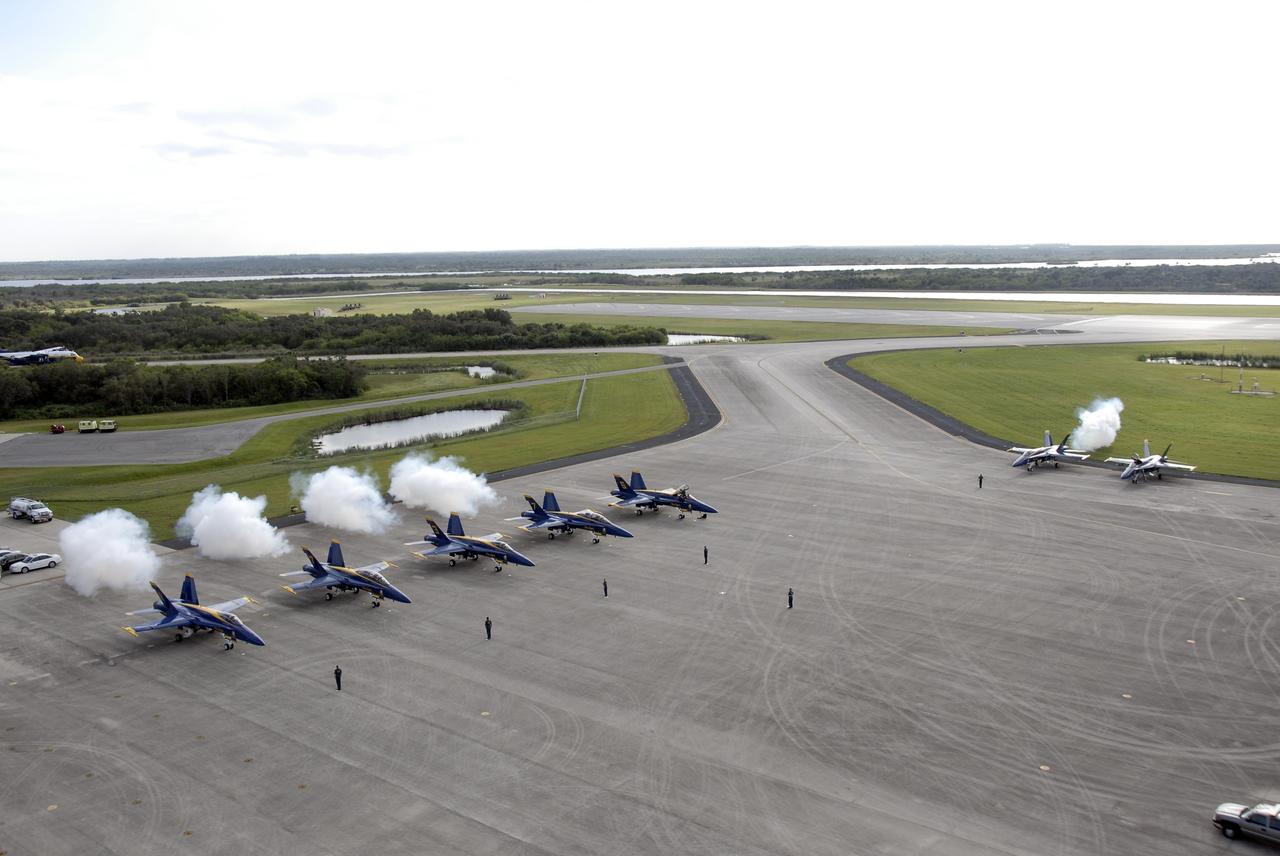
CAPE CANAVERAL, Fla. – The U.S. Navy's F/A-18 Blue Angels (left) and other military aircraft fire their engines on the Shuttle Landing Facility at NASA's Kennedy Space Center in Florida before taking off. They will be rehearsing their demonstrations for the Kennedy Space Center Visitor Complex Space and Air Show Nov. 8-9. The Navy's elite flight demonstration squadron will take to the skies in military aircraft demonstrations for the second annual Space & Air Show at Kennedy. This year’s show brings together the best in military aircraft, coupled with precision pilots and veteran astronauts to celebrate spaceflight and aviation. The event also includes demonstrations by the F-16 Fighting Falcon and a water rescue demonstration by the 920th Rescue Wing. Photo credit: NASA/Kim Shiflett
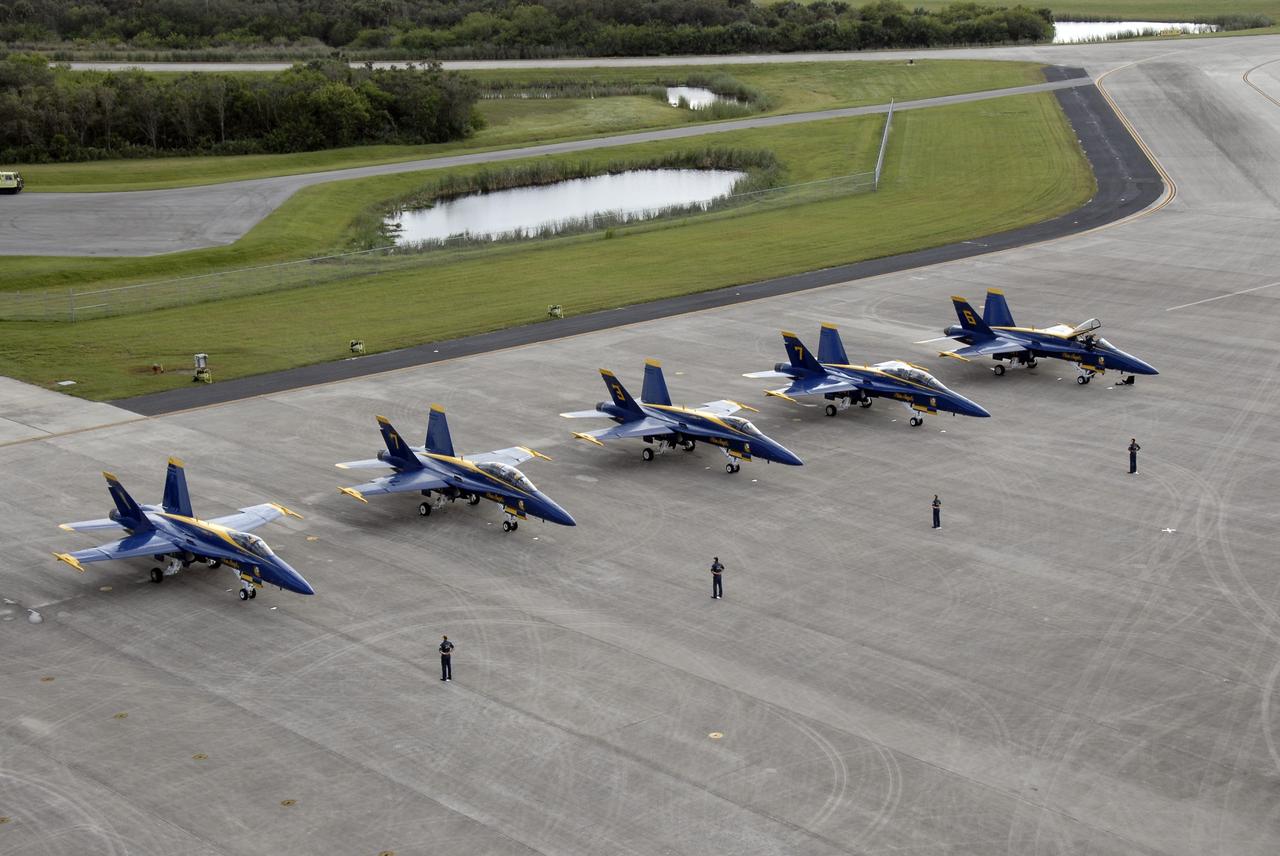
CAPE CANAVERAL, Fla. – The U.S. Navy's F/A-18 Blue Angels are lined up on the Shuttle Landing Facility at NASA's Kennedy Space Center in Florida. The Blue Angels and other aircraft are at Kennedy for demonstrations at the Kennedy Space Center Visitor Complex Space and Air Show Nov. 8-9. The Navy's elite flight demonstration squadron will take to the skies in military aircraft demonstrations for the second annual Space & Air Show at Kennedy. This year’s show brings together the best in military aircraft, coupled with precision pilots and veteran astronauts to celebrate spaceflight and aviation. The event also includes demonstrations by the F-16 Fighting Falcon and a water rescue demonstration by the 920th Rescue Wing. Photo credit: NASA/Kim Shiflett
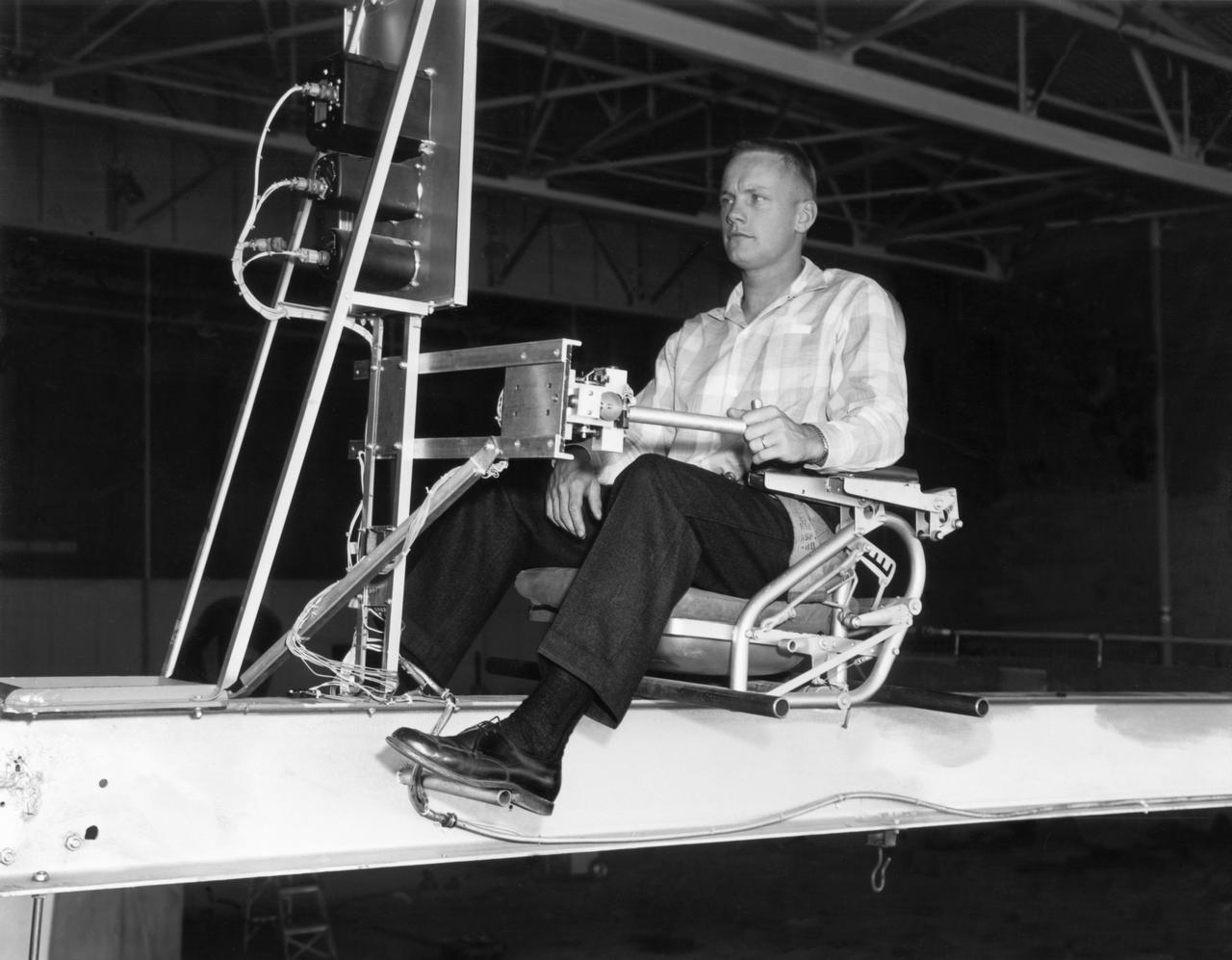
Famed astronaut Neil A. Armstrong, the first man to set foot on the moon during the historic Apollo 11 space mission in July 1969, served for seven years as a research pilot at the NACA-NASA High-Speed Flight Station, now the Dryden Flight Research Center, at Edwards, California, before he entered the space program. Armstrong joined the National Advisory Committee for Aeronautics (NACA) at the Lewis Flight Propulsion Laboratory (later NASA's Lewis Research Center, Cleveland, Ohio, and today the Glenn Research Center) in 1955. Later that year, he transferred to the High-Speed Flight Station at Edwards as an aeronautical research scientist and then as a pilot, a position he held until becoming an astronaut in 1962. He was one of nine NASA astronauts in the second class to be chosen. As a research pilot Armstrong served as project pilot on the F-100A and F-100C aircraft, F-101, and the F-104A. He also flew the X-1B, X-5, F-105, F-106, B-47, KC-135, and Paresev. He left Dryden with a total of over 2450 flying hours. He was a member of the USAF-NASA Dyna-Soar Pilot Consultant Group before the Dyna-Soar project was cancelled, and studied X-20 Dyna-Soar approaches and abort maneuvers through use of the F-102A and F5D jet aircraft. Armstrong was actively engaged in both piloting and engineering aspects of the X-15 program from its inception. He completed the first flight in the aircraft equipped with a new flow-direction sensor (ball nose) and the initial flight in an X-15 equipped with a self-adaptive flight control system. He worked closely with designers and engineers in development of the adaptive system, and made seven flights in the rocket plane from December 1960 until July 1962. During those fights he reached a peak altitude of 207,500 feet in the X-15-3, and a speed of 3,989 mph (Mach 5.74) in the X-15-1. Armstrong has a total of 8 days and 14 hours in space, including 2 hours and 48 minutes walking on the Moon. In March 1966 he was commander of the Gemini 8 or
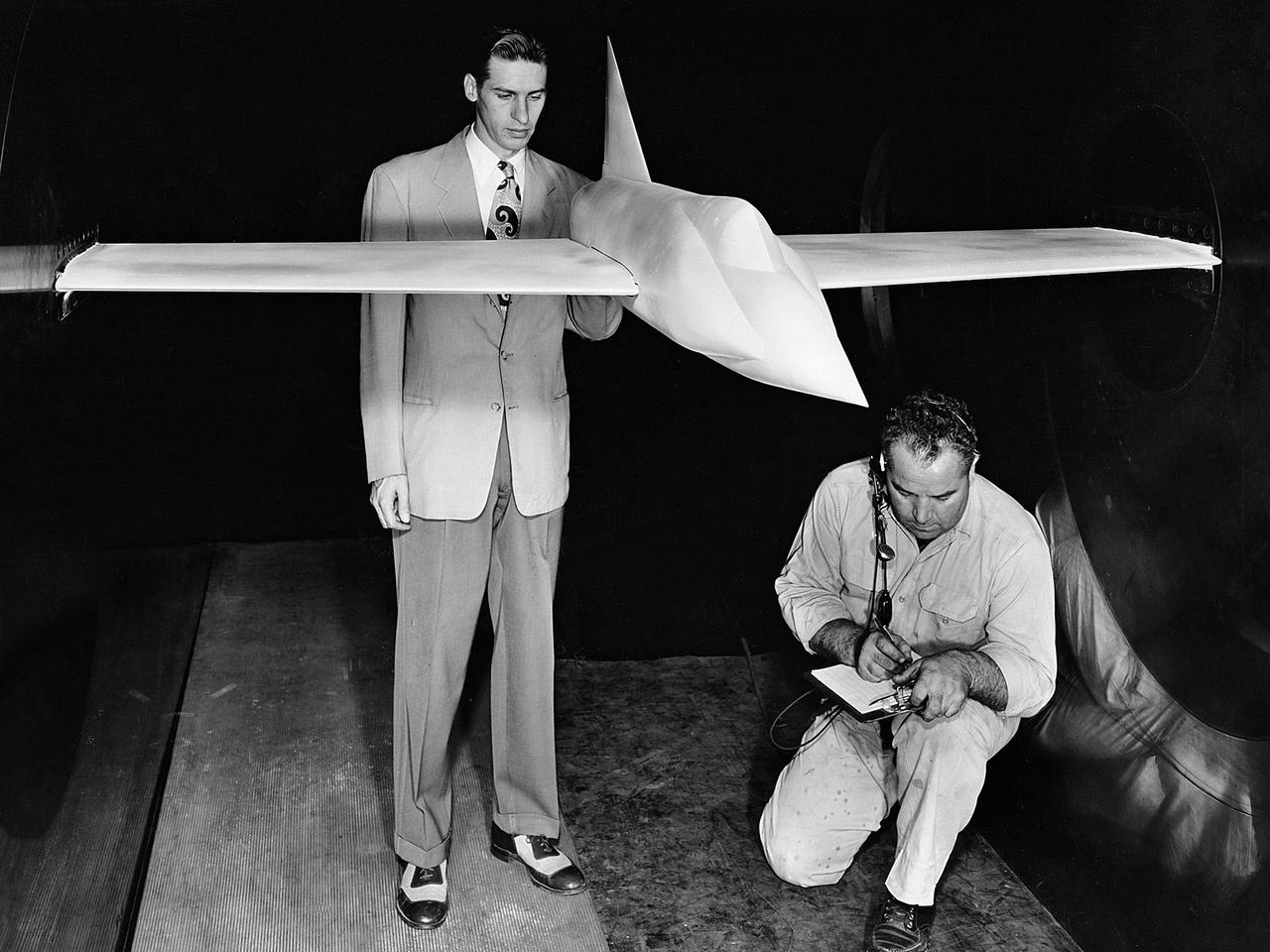
A .10-scale model of Convair’s XF-102 in the 8- by 6-Foot Supersonic Wind Tunnel at the National Advisory Committee for Aeronautics (NACA) Lewis Flight Propulsion Laboratory for jet exit studies. The XF-102 was a prototype of the F-102 Delta Dagger. The F-102 served as an interceptor against long range bombers from the Soviet Union. The aircraft was powered by a Pratt and Whitney J57 turbojet. The first prototype crashed two weeks after is first flight on October 24, 1953, just months after this photograph. Engineers then incorporated the fixed-wing design to reduce drag at supersonic speeds. The production model F-102 became the first delta-wing supersonic aircraft in operation. The 8- by 6-Foot Supersonic Wind Tunnel is used to study propulsion systems, including inlets and exit nozzles, combustion fuel injectors, flame holders, exit nozzles, and controls on ramjet and turbojet engines. Flexible sidewalls alter the tunnel’s nozzle shape to vary the Mach number during operation. A seven-stage axial compressor, driven by three electric motors that yield a total of 87,000 horsepower, generates air speeds from Mach 0.36 to 2.0.
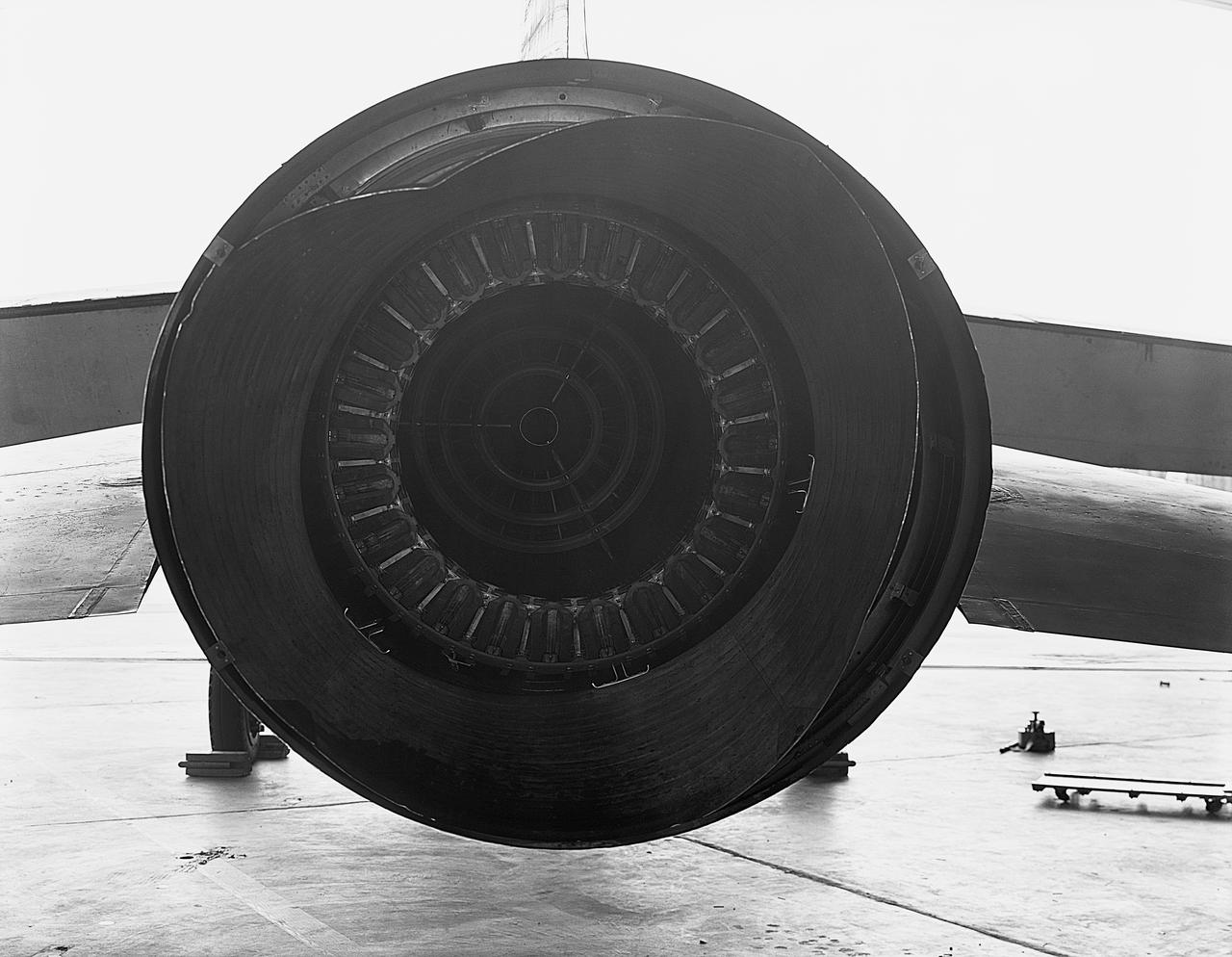
Exhaust cone damage.
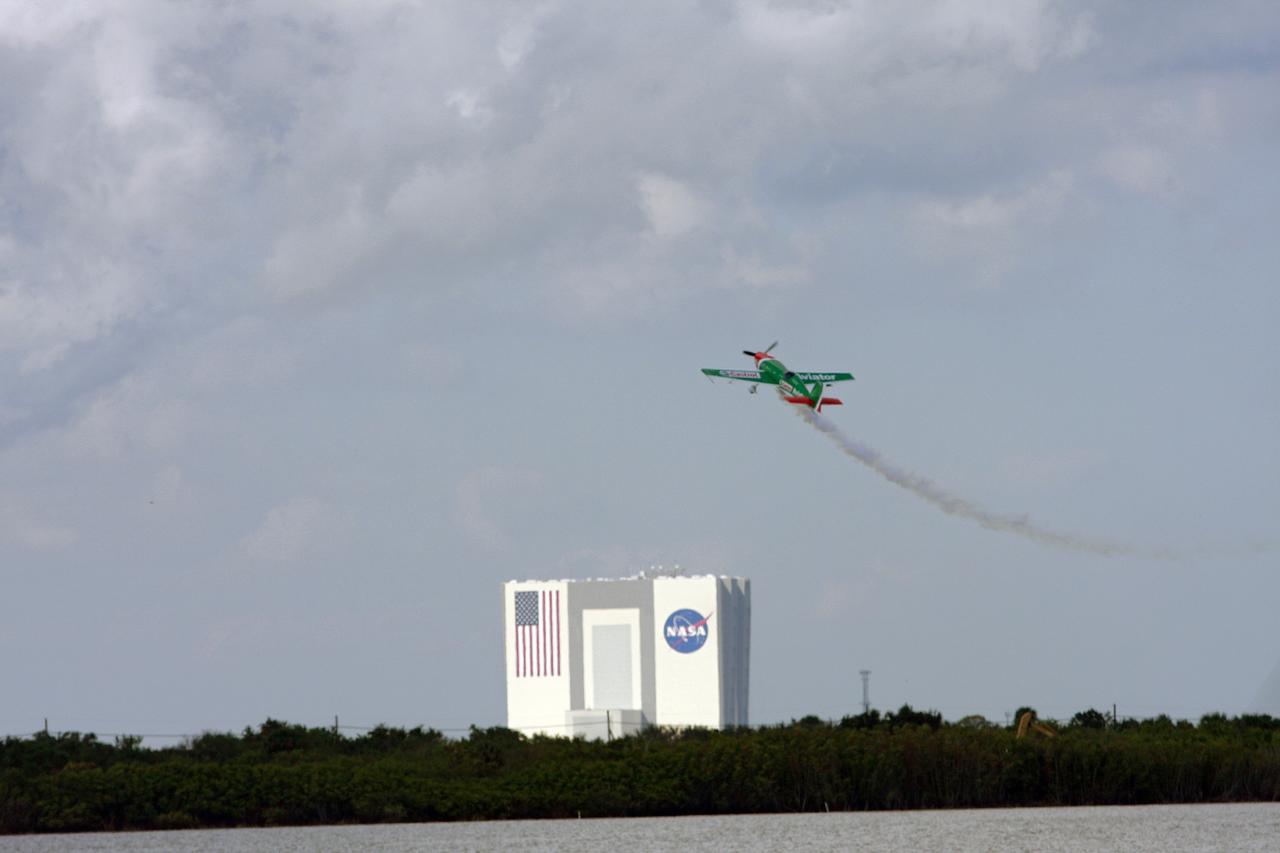
CAPE CANAVERAL, Fla. – With the Vehicle Assembly Building at NASA's Kennedy Space Center in Florida as a backdrop, this Castrol Aviator EXTRA 300SHP stunt plane, an unlimited-level aerobatic two-seat monoplane, performs aerobatic maneuvers during the Kennedy Space Center Visitor Complex Space and Air Show held Nov. 8-9. This year’s show brought together the best in military aircraft, such as the F/A-18 Super Hornet and F-16 Fighting Falcon, coupled with precision pilots and veteran astronauts to celebrate spaceflight and aviation. The event included a water rescue demonstration by the 920th Rescue Wing. Photo credit: NASA/Troy Cryder
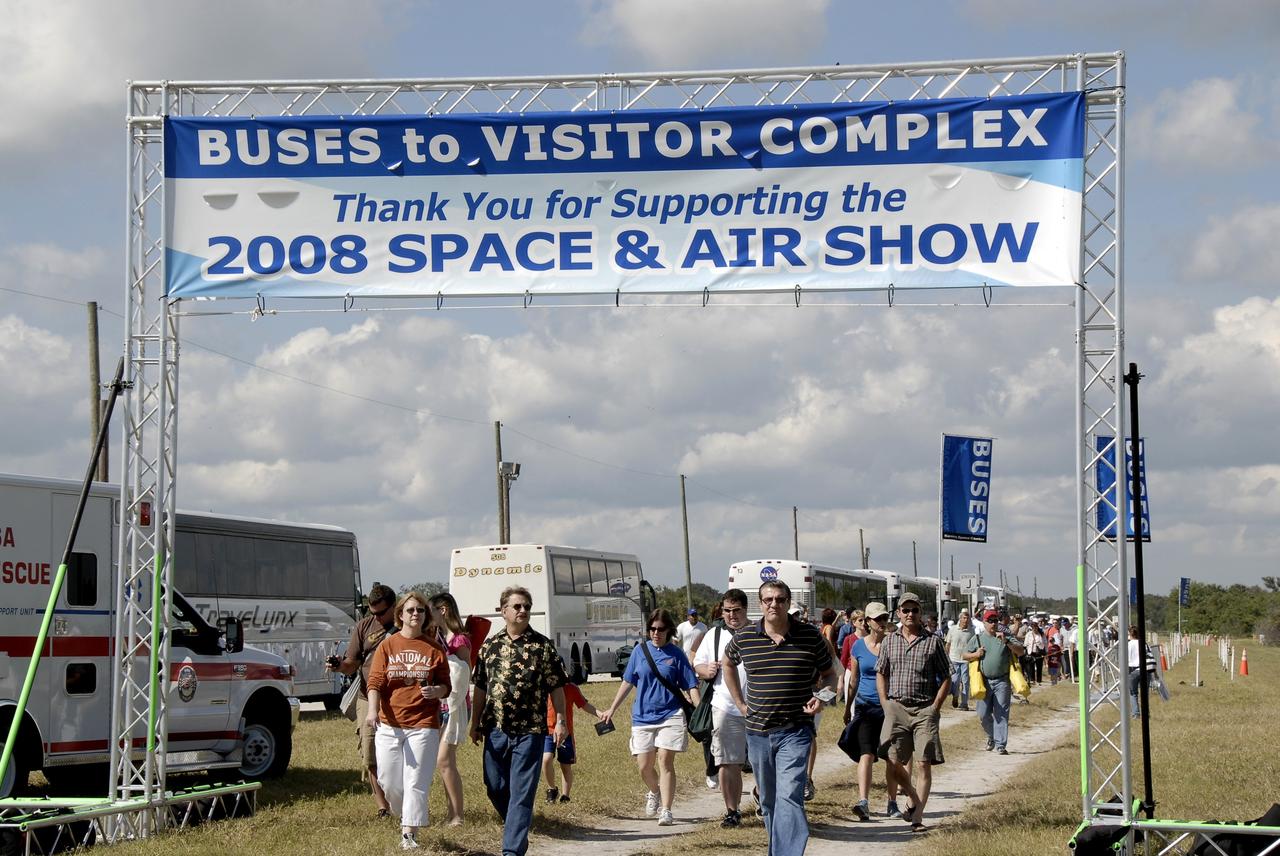
CAPE CANAVERAL, Fla. – Crowds head for the best viewing sites they can find at NASA's Kennedy Space Center in Florida to watch the U.S. Navy's Blue Angels perform at the Kennedy Space Center Visitor Complex Space and Air Show Nov. 8-9. This year’s show brought together the best in military aircraft, such as the F/A-18 Super Hornet and F-16 Fighting Falcon, coupled with precision pilots and veteran astronauts to celebrate spaceflight and aviation. The event included a water rescue demonstration by the 920th Rescue Wing. Photo credit: NASA/Kim Shiflett
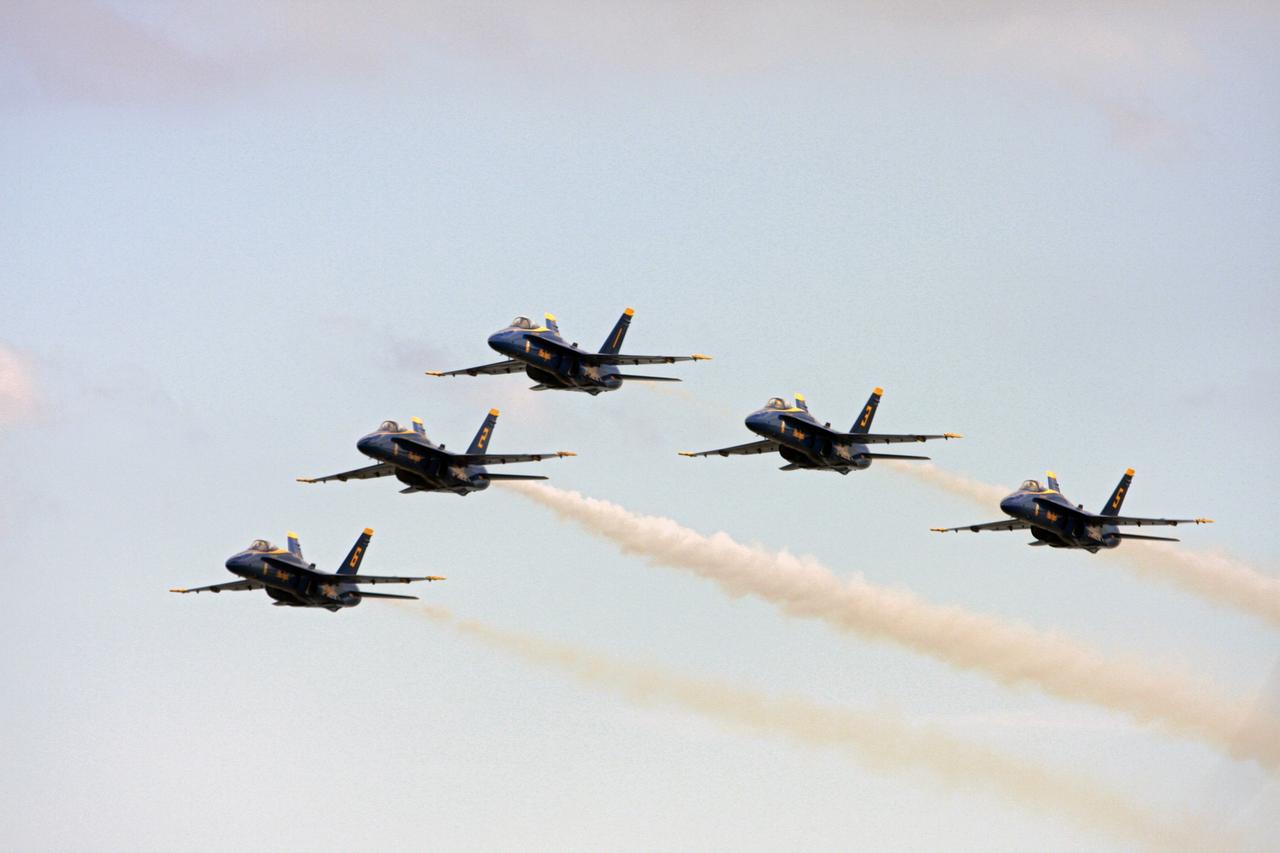
CAPE CANAVERAL, Fla. – The U.S. Navy's Blue Angels perform their tight maneuvers over NASA's Kennedy Space Center in Florida during the Kennedy Space Center Visitor Complex Space and Air Show held Nov. 8-9. This year’s show brought together the best in military aircraft, such as the F/A-18 Super Hornet and F-16 Fighting Falcon, coupled with precision pilots and veteran astronauts to celebrate spaceflight and aviation. The event included a water rescue demonstration by the 920th Rescue Wing. Photo credit: NASA/Troy Cryder
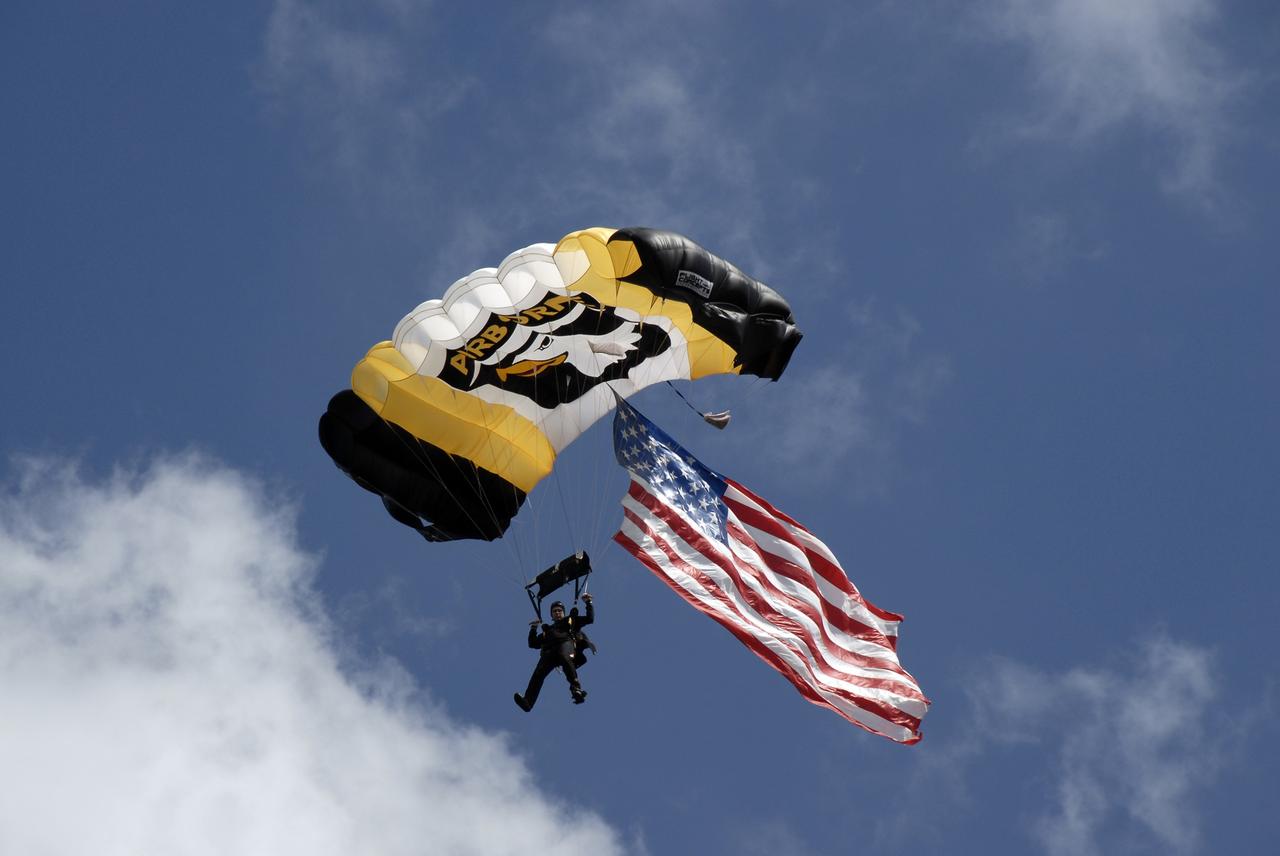
CAPE CANAVERAL, Fla. – A member of the 101st Airborne parachute demonstration team heads for landing at NASA's Kennedy Space Center in Florida. The team performed at the Kennedy Space Center Visitor Complex Space and Air Show Nov. 8-9. This year’s show brought together the best in military aircraft, such as the F/A-18 Super Hornet and F-16 Fighting Falcon, coupled with precision pilots and veteran astronauts to celebrate spaceflight and aviation. The event included a water rescue demonstration by the 920th Rescue Wing. Photo credit: NASA/Kim Shiflett
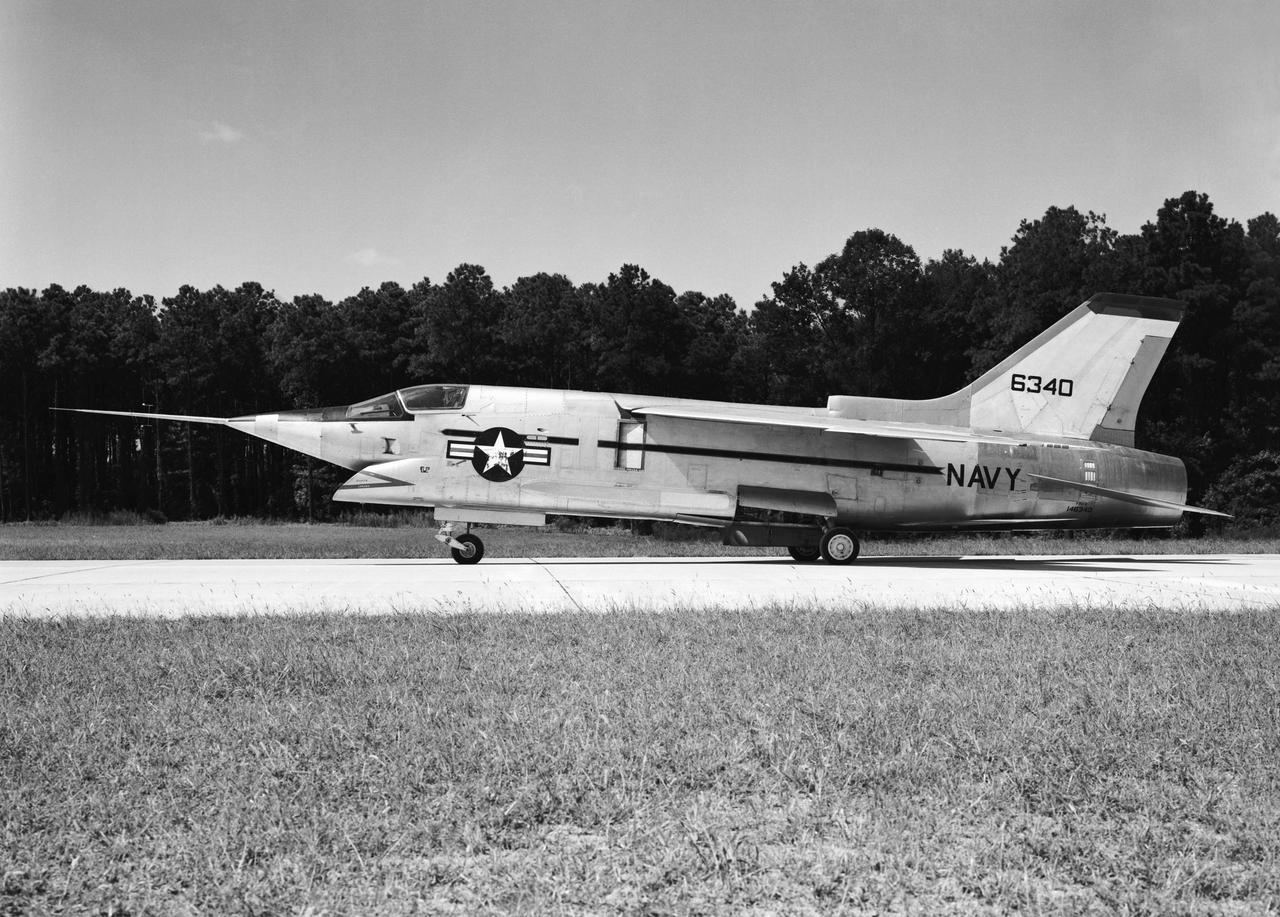
Crusader on runway. Navy aircraft number 6340. L59-6101 caption: The Navy's Vought XF8U-3 Supersonic Fighter was an entirely new design as compared to the earlier F8U Crusader series. This jet plane lost in competition with the McDonnell F4H, however, and was never put into production. Langley used the XF8U-3 in some of the first flight measurements of sonic boom intensity. Photograph published in Engineer in Charge A History of the Langley Aeronautical Laboratory, 1917-1958 by James R. Hansen. Page 507. Caption: Chance Vought F8U-3 airplane used in sonic boom investigation at Wallops, June-August 1959. Photograph published in A New Dimension Wallops Island Flight Test Range: The First Fifteen Years by Joseph Shortal. A NASA publication. Page 672.
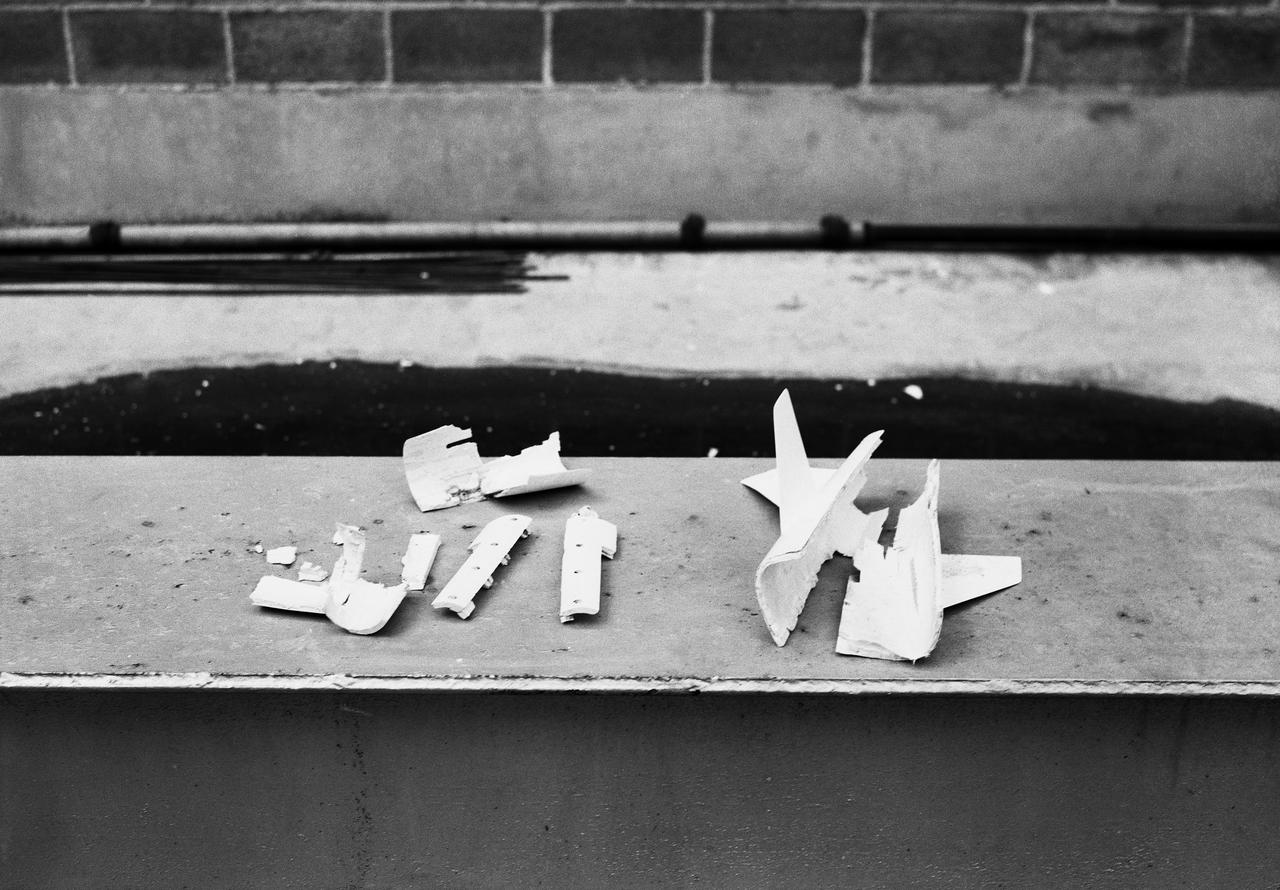
Pieces of small scale model broken in 16 Foot Transonic Tunnel.
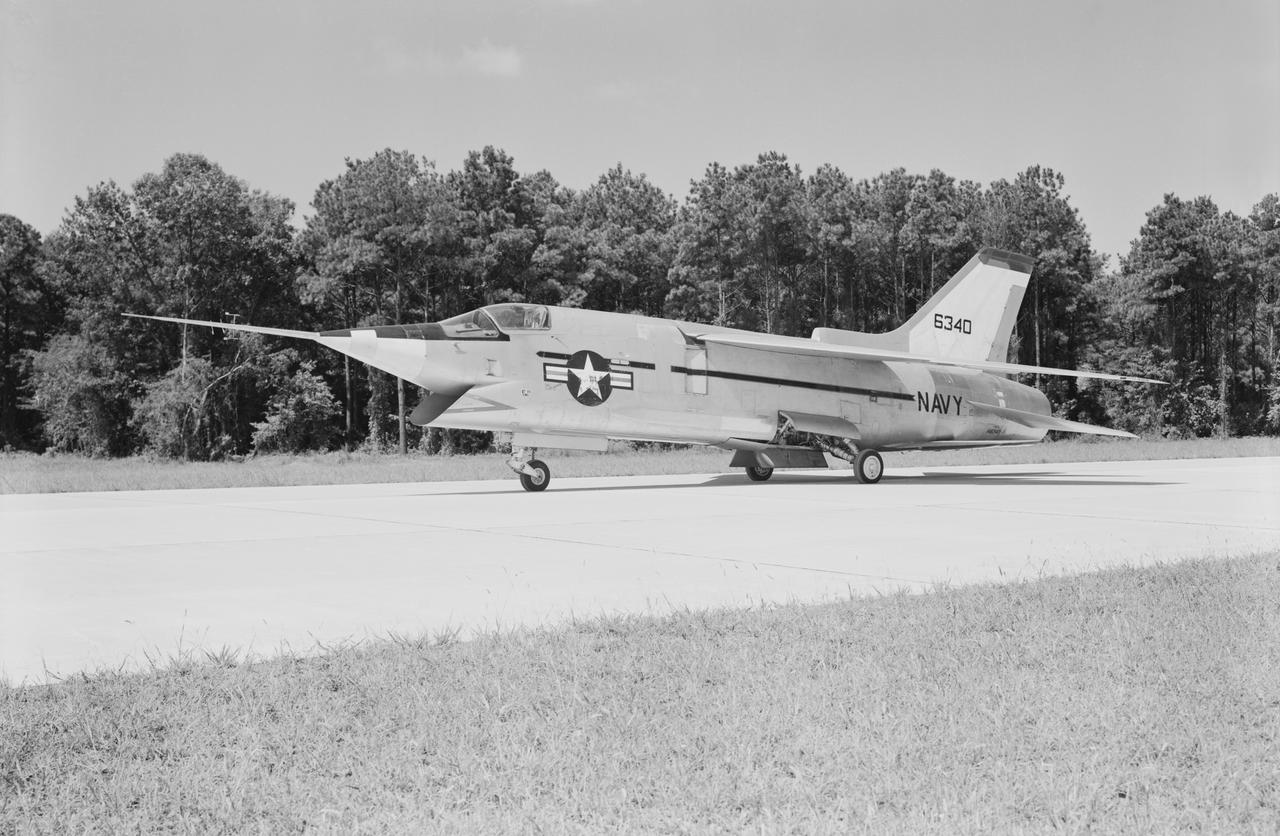
Crusader on runway. Navy aircraft number 6340. L59-6101 caption: The Navy's Vought XF8U-3 Supersonic Fighter was an entirely new design as compared to the earlier F8U Crusader series. This jet plane lost in competition with the McDonnell F4H, however, and was never put into production. Langley used the XF8U-3 in some of the first flight measurements of sonic boom intensity. Photograph published in Engineer in Charge A History of the Langley Aeronautical Laboratory, 1917-1958 by James R. Hansen. Page 507. Caption: Chance Vought F8U-3 airplane used in sonic boom investigation at Wallops, June-August 1959. Photograph published in A New Dimension Wallops Island Flight Test Range: The First Fifteen Years by Joseph Shortal. A NASA publication. Page 672.
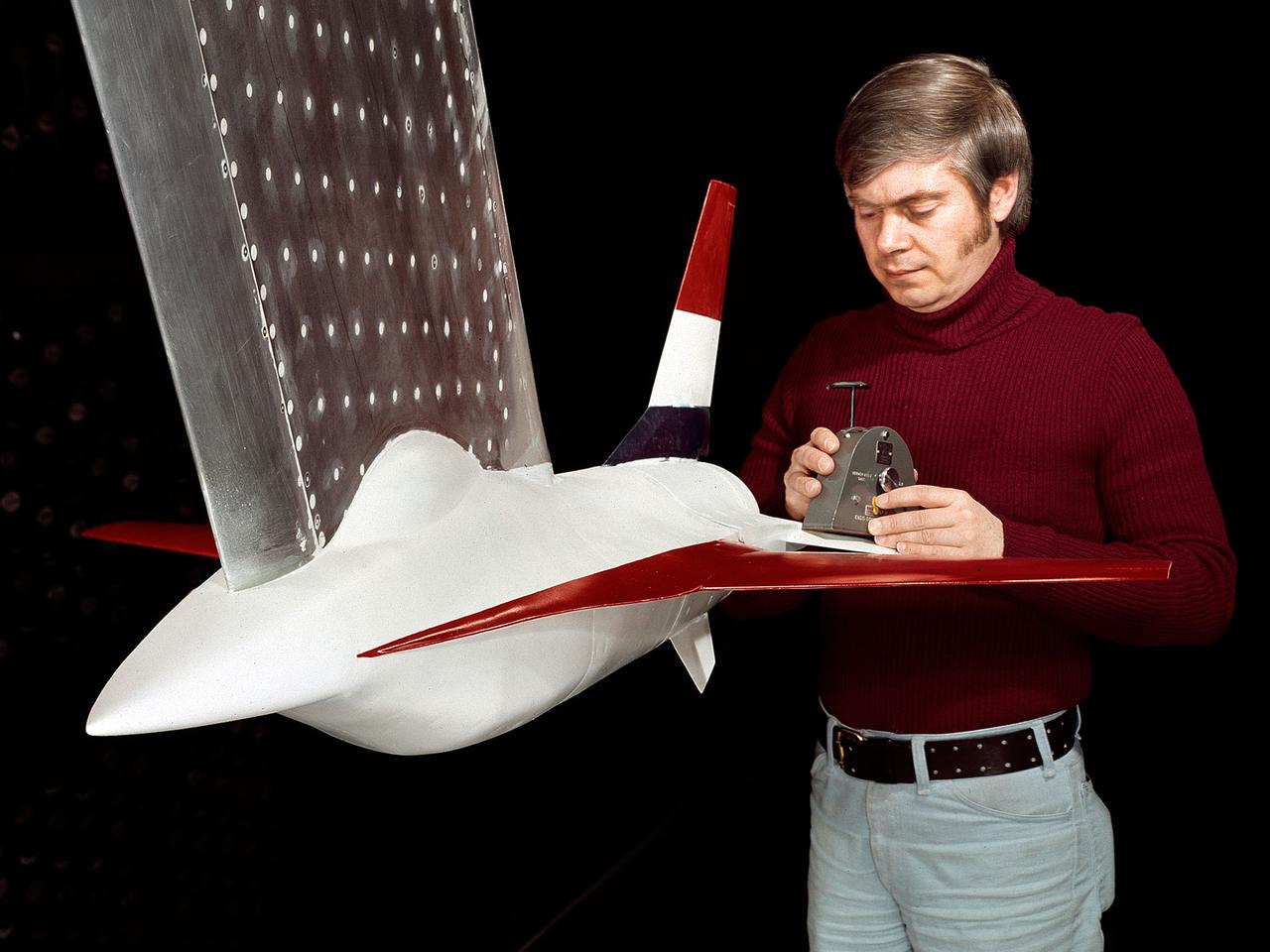
A model of the General Dynamics YF-16 Fighting Falcon in the test section of the 8- by 6-Foot Supersonic Wind Tunnel at the National Aeronautics and Space Administration (NASA) Lewis Research Center. The YF-16 was General Dynamics response to the military’s 1972 request for proposals to design a new 20,000-pound fighter jet with exceptional acceleration, turn rate, and range. The aircraft included innovative design elements to help pilots survive turns up to 9Gs, a new frameless bubble canopy, and a Pratt and Whitney 24,000-pound thrust F-100 engine. The YF-16 made its initial flight in February 1974, just six weeks before this photograph, at Edwards Air Force Base. Less than a year later, the Air Force ordered 650 of the aircraft, designated as F-16 Fighting Falcons. The March and April 1974 tests in the 8- by 6-foot tunnel analyzed the aircraft’s fixed-shroud ejector nozzle. The fixed-nozzle area limited drag, but also limited the nozzle’s internal performance. NASA researchers identified and assessed aerodynamic and aerodynamic-propulsion interaction uncertainties associated the prototype concept. YF-16 models were also tested extensively in the 11- by 11-Foot Transonic Wind Tunnel and 9- by 7-Foot Supersonic Wind Tunnel at Ames Research Center and the 12-Foot Pressure Wind Tunnel at Langley Research Center.
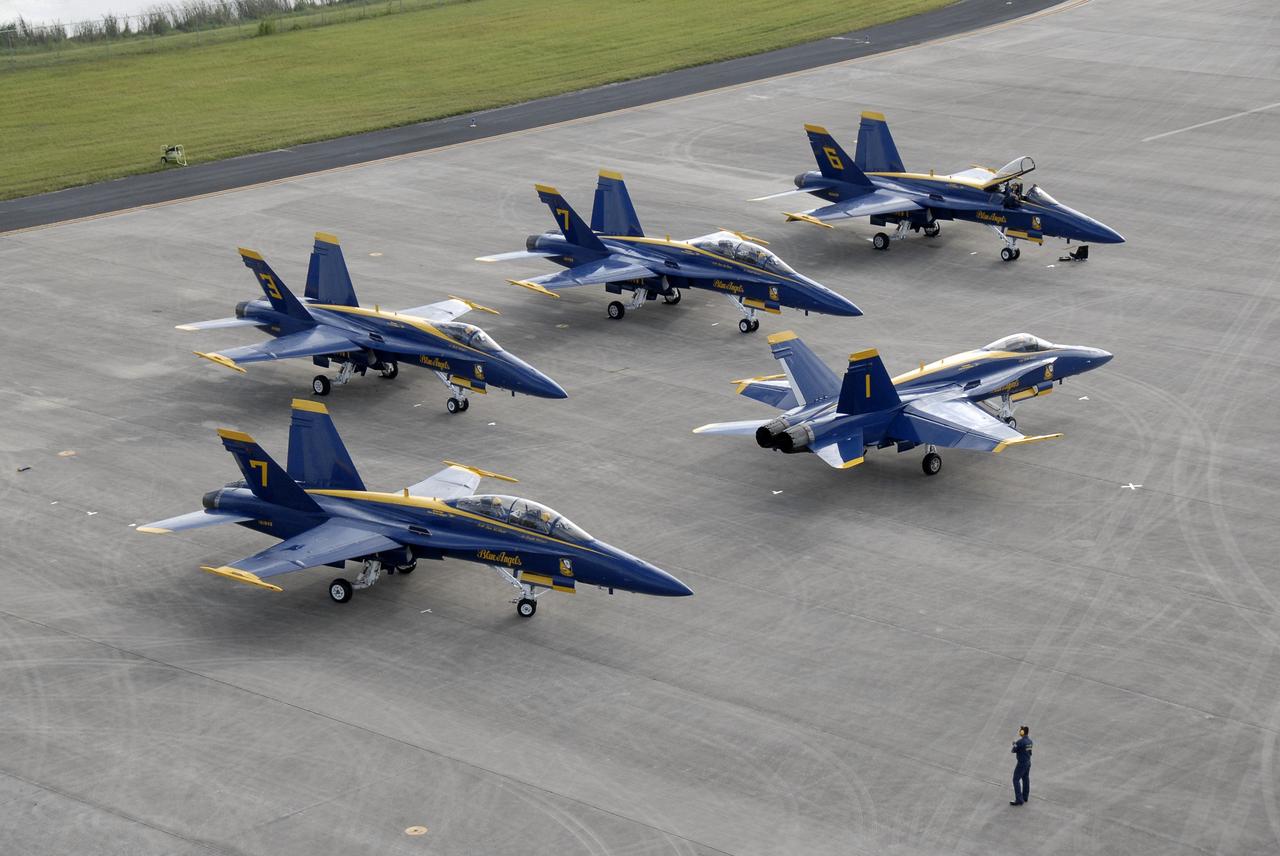
CAPE CANAVERAL, Fla. – The U.S. Navy's F/A-18 Blue Angels begin taxiing toward the runway at the Shuttle Landing Facility at NASA's Kennedy Space Center in Florida. They will taking off to begin rehearsing their demonstrations for the Kennedy Space Center Visitor Complex Space and Air Show Nov. 8-9. The Navy's elite flight demonstration squadron will take to the skies in military aircraft demonstrations for the second annual Space & Air Show at Kennedy. This year’s show brings together the best in military aircraft, coupled with precision pilots and veteran astronauts to celebrate spaceflight and aviation. The event also includes demonstrations by the F-16 Fighting Falcon and a water rescue demonstration by the 920th Rescue Wing. Photo credit: NASA/Kim Shiflett
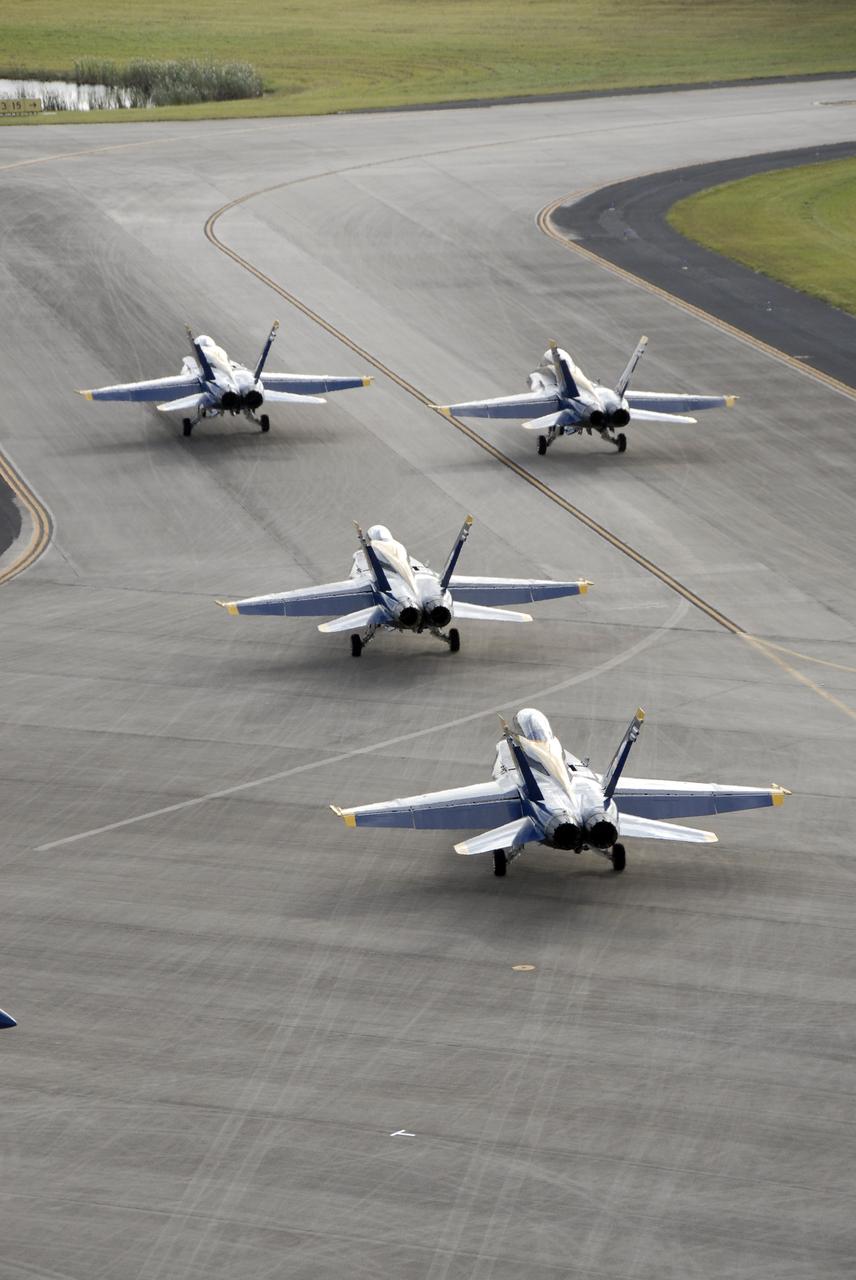
CAPE CANAVERAL, Fla. – The U.S. Navy's F/A-18 Blue Angels taxi toward the runway at the Shuttle Landing Facility at NASA's Kennedy Space Center in Florida. They will taking off to begin rehearsing their demonstrations for the Kennedy Space Center Visitor Complex Space and Air Show Nov. 8-9. The Navy's elite flight demonstration squadron will take to the skies in military aircraft demonstrations for the second annual Space & Air Show at Kennedy. This year’s show brings together the best in military aircraft, coupled with precision pilots and veteran astronauts to celebrate spaceflight and aviation. The event also includes demonstrations by the F-16 Fighting Falcon and a water rescue demonstration by the 920th Rescue Wing. Photo credit: NASA/Kim Shiflett
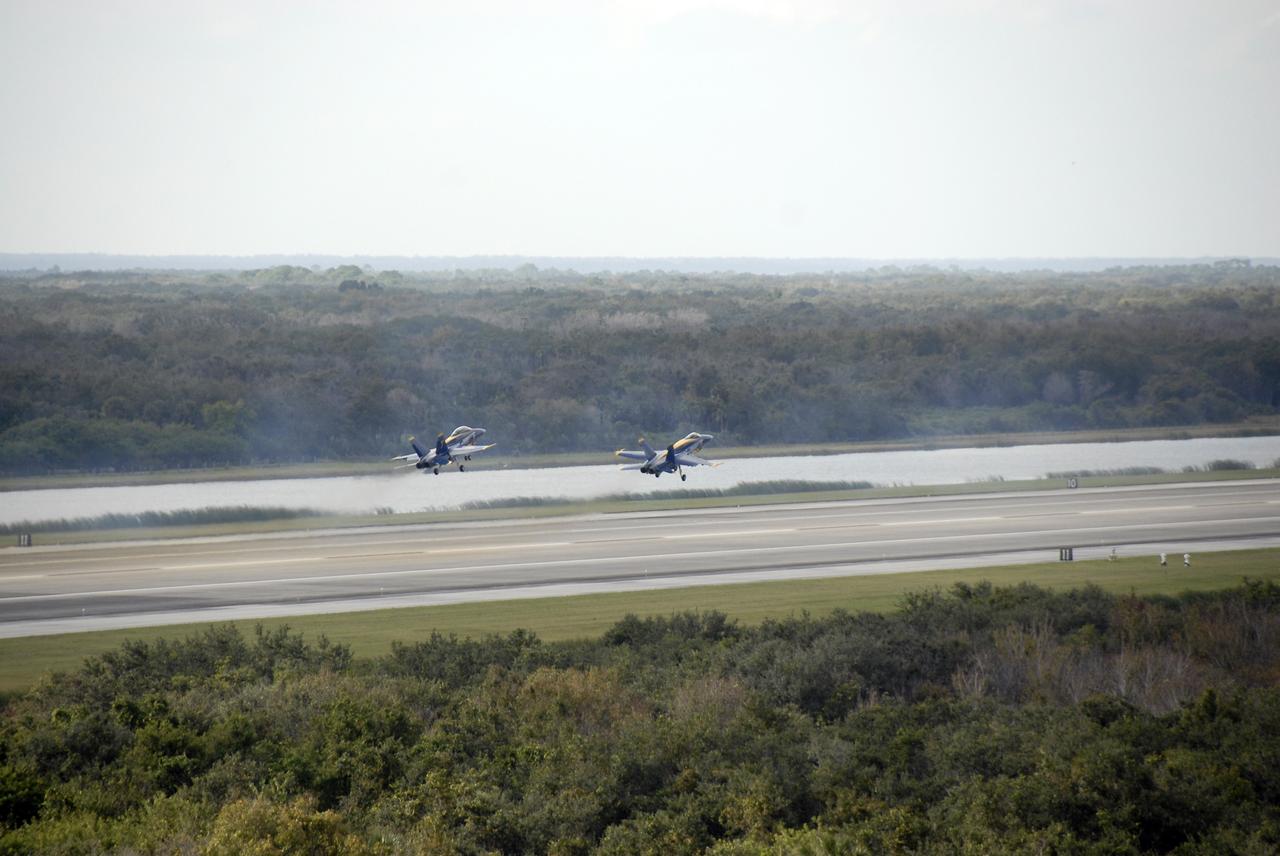
CAPE CANAVERAL, Fla. – The U.S. Navy's F/A-18 Blue Angels take off from the runway at the Shuttle Landing Facility at NASA's Kennedy Space Center in Florida to begin rehearsing their demonstrations for the Kennedy Space Center Visitor Complex Space and Air Show Nov. 8-9. The Navy's elite flight demonstration squadron will take to the skies in military aircraft demonstrations for the second annual Space & Air Show at Kennedy. This year’s show brings together the best in military aircraft, coupled with precision pilots and veteran astronauts to celebrate spaceflight and aviation. The event also includes demonstrations by the F-16 Fighting Falcon and a water rescue demonstration by the 920th Rescue Wing. Photo credit: NASA/Kim Shiflett
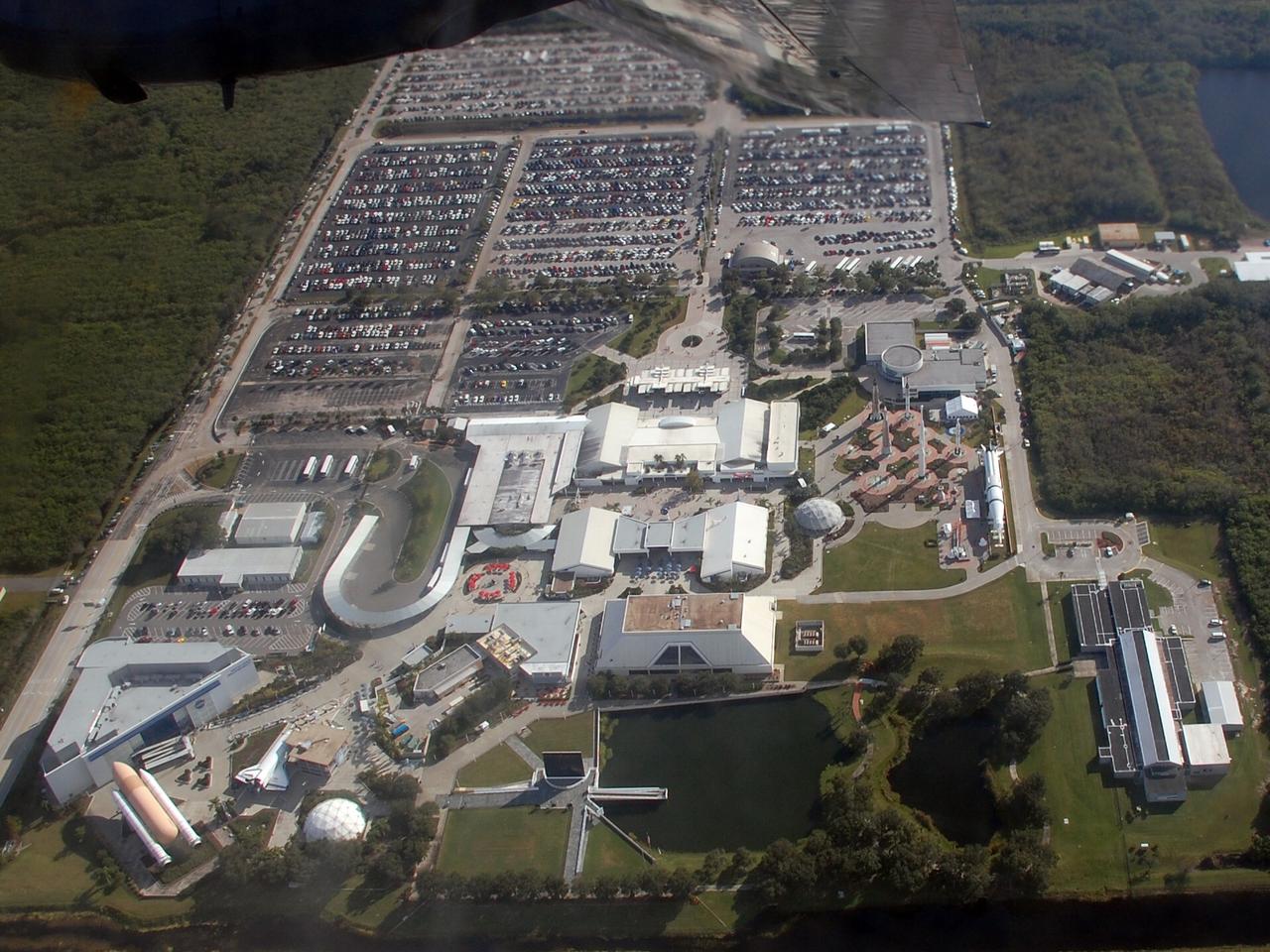
CAPE CANAVERAL, Fla. – During a flight aboard the U.S. Navy Blue Angel's support aircraft, a C-130T Hercules known as "Fat Albert," the photographer was able to capture the entire Kennedy Space Center Visitor Complex. Well-known structures are the genuine, full-size solid rocket boosters and external tank at left, Astronaut Memorial Mirror at center in the foreground, and the Rocket Garden at center right. The Blue Angels performed during the Kennedy Space Center Visitor Complex Space and Air Show held Nov. 8-9. This year’s show brought together the best in military aircraft, such as the F/A-18 Super Hornet and F-16 Fighting Falcon, coupled with precision pilots and veteran astronauts to celebrate spaceflight and aviation. The event included a water rescue demonstration by the 920th Rescue Wing. Photo credit: NASA/Ben Smegelsky
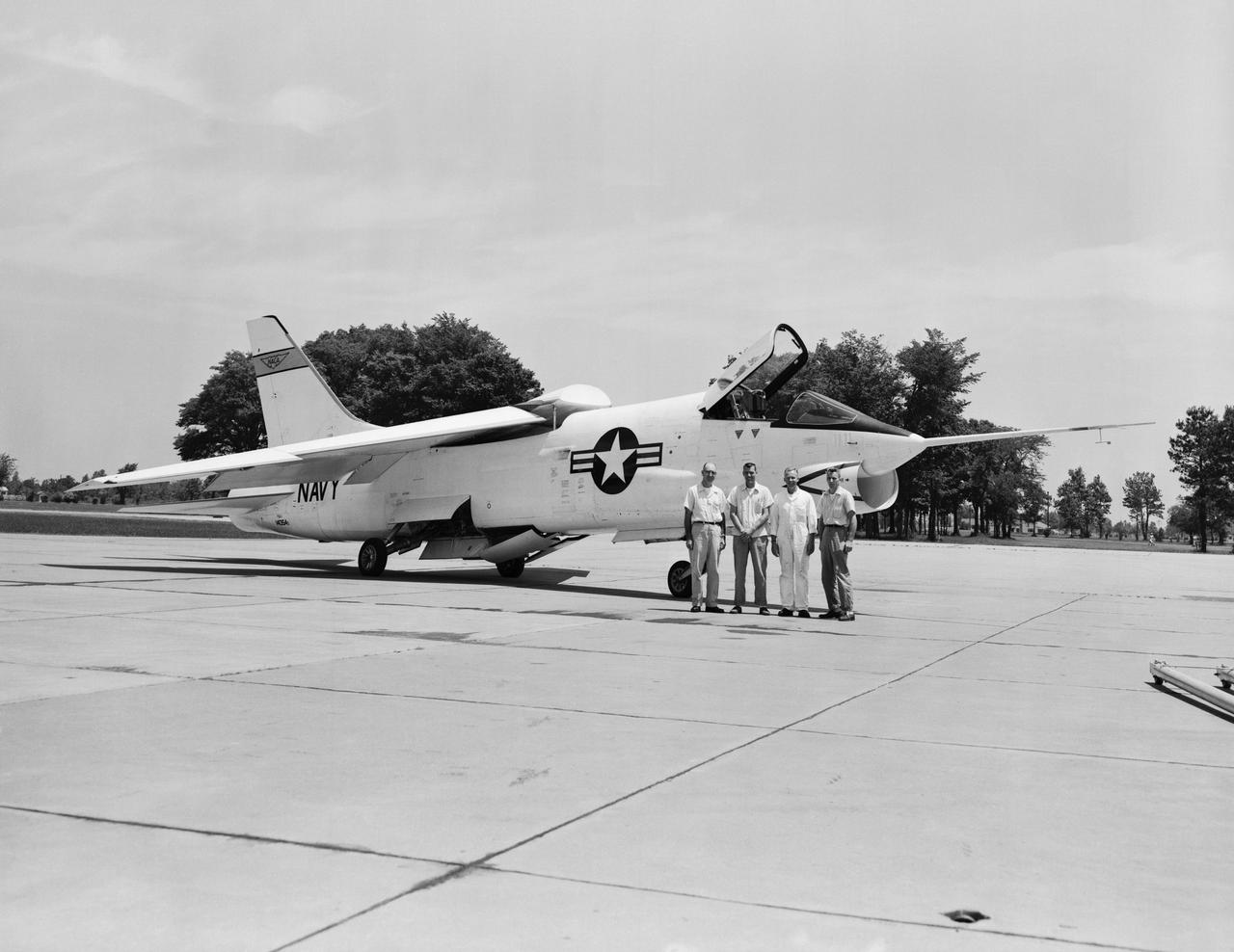
Views of F-8U Crusader Aircraft at NASA Langley
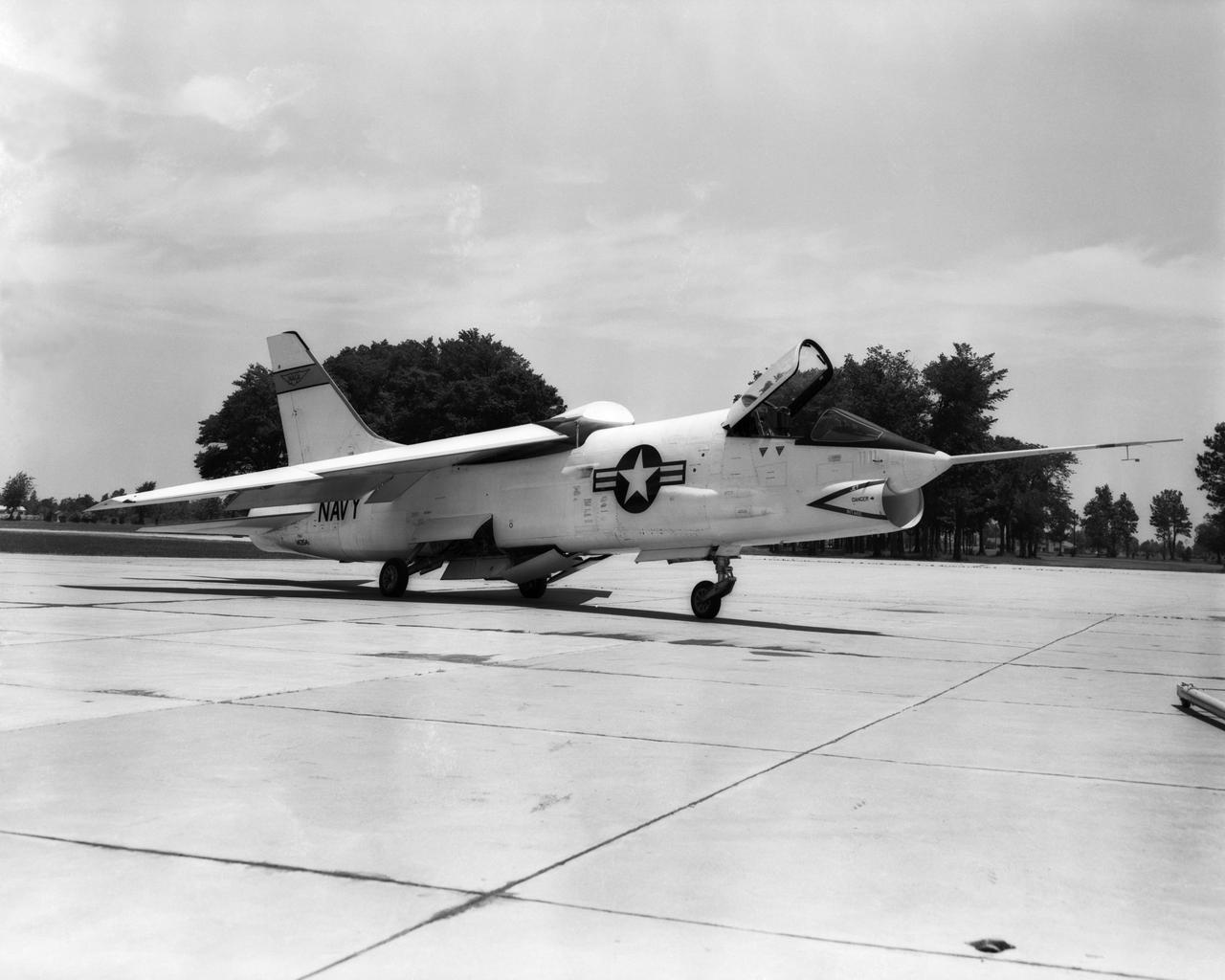
Views of F-8U Crusader Aircraft at NASA Langley
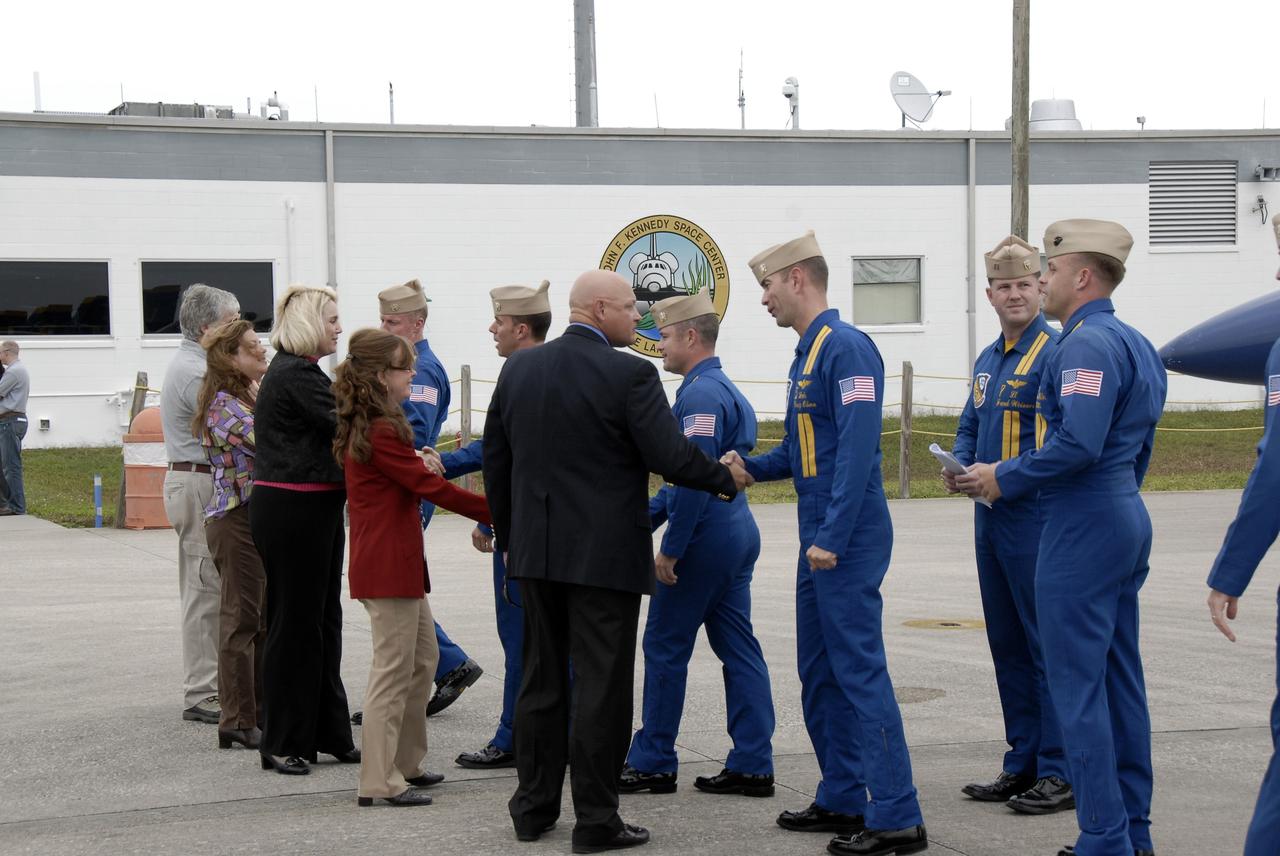
CAPE CANAVERAL, Fla. – At the Shuttle Landing Facility at NASA's Kennedy Space Center in Florida, the U.S. Navy's Blue Angel pilots and support team are greeted by (from right) Special Operations Director Joe Dowdy, External Relations Director Lisa Malone, External Relations Acting Deputy Director Cheryl Hurst and Pam Steele, chief of the Public Services Division at Kennedy. The Blue Angels will perform at the Kennedy Space Center Visitor Complex Space and Air Show Nov. 8-9. The Navy's elite flight demonstration squadron will take to the skies in military aircraft demonstrations by the F-16 Fighting Falcon and F/A-18 Super Hornet jets for the second annual Space & Air Show at Kennedy. This year’s show brings together the best in military aircraft, coupled with precision pilots and veteran astronauts to celebrate spaceflight and aviation. The event includes military aircraft demonstrations by the F-16 Fighting Falcon and a water rescue demonstration by the 920th Rescue Wing. Photo credit: NASA/Kim Shiflett
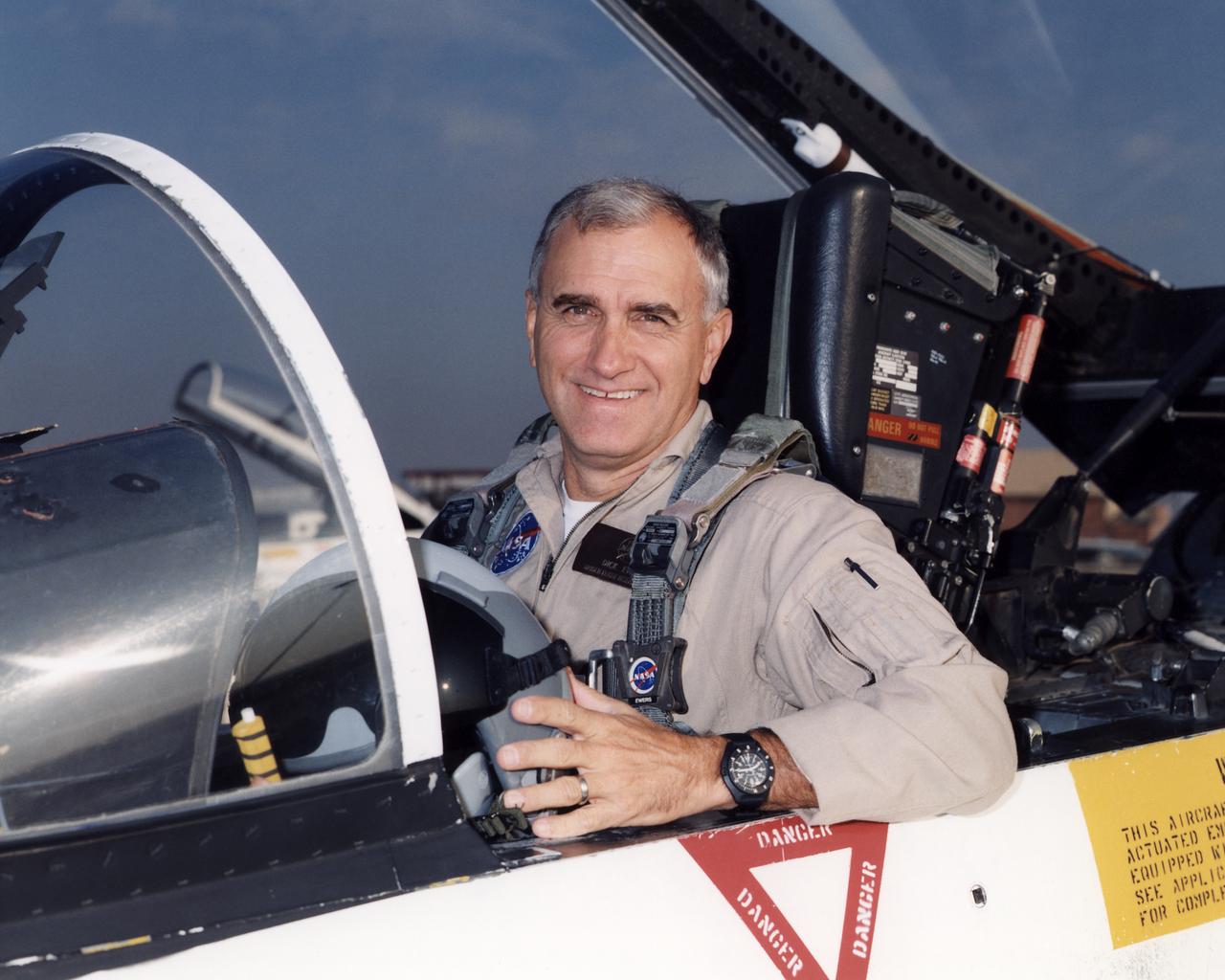
Richard G. (Dick) Ewers became a pilot in the Flight Crew Branch of NASA's Dryden Flight Research Center, Edwards, California, in May 1998. His flying duties focus on operation of the Airborne Science DC-8 and Systems Research F/A-18 aircraft, but he also maintains qualifications in the King Air and T-34C. He has more than 32 years and nearly 9,000 hours of military and civilian flight experience in all types of aircraft from jet fighters to blimps. Ewers came to NASA Dryden from a position as an engineering test pilot with Northrop Grumman's Electronic Sensors and Systems Division (formerly Westinghouse's Electronic Systems Group). He spent eight and a half years with Westinghouse flight testing radar and forward looking infrared systems under development for military and civilian use. Before going to work for Westinghouse, Ewers served for more than 21 years as a U.S. Marine Corps fighter and test pilot, flying F-4, A-4, and F/A-18 aircraft. He underwent flight training at Naval Air Station Pensacola, Fla., in 1969-70. He was subsequently assigned to both fighter/attack and reconnaissance squadrons before ultimately commanding an F-4S squadron for two years. Additionally, his flying included combat service in Vietnam and operational exchange tours with both U.S. Navy and U.S. Air Force squadrons flying F-4s around the world, including off aircraft carriers. Ewers graduated from the U.S. Naval Test Pilot School in 1981 and subsequently served two tours as a test pilot at the Naval Air Test Center, Patuxent River, Md. Most of his flight test experience was with the F/A-18 Hornet. He retired from the Marine Corps in 1989 with the rank of lieutenant colonel. Ewers graduated from the U.S. Air Force Academy in 1968 with a bachelor of science degree in engineering mechanics. He earned a master of science degree in aeronautical systems from the University of West Florida in 1970.
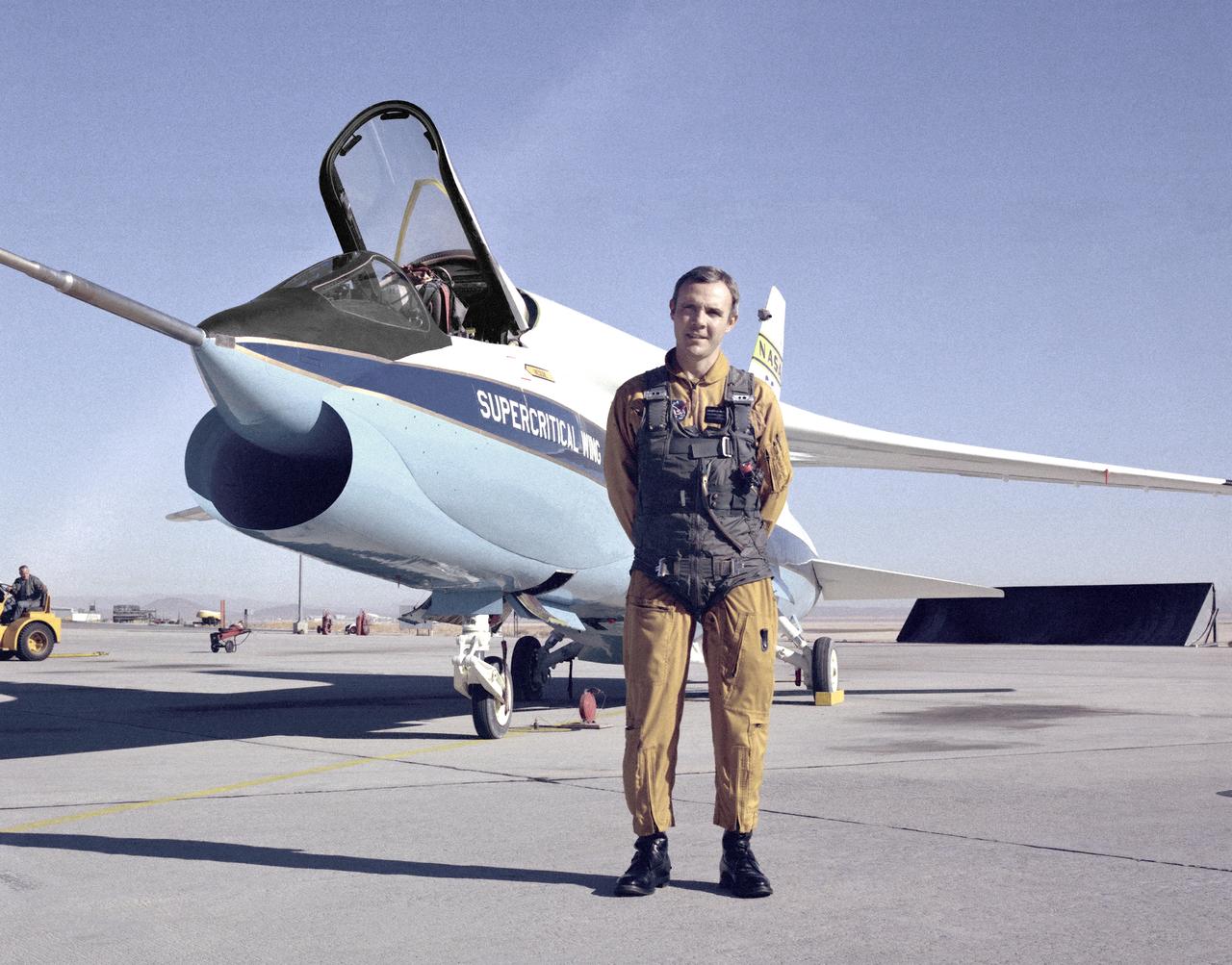
A Vought F-8A Crusader was selected by NASA as the testbed aircraft (designated TF-8A) to install an experimental Supercritical Wing (SCW) in place of the conventional wing. The unique design of the Supercritical Wing reduces the effect of shock waves on the upper surface near Mach 1, which in turn reduces drag. In this photograph the TF-8A Crusader with Supercritical Wing is shown on the ramp with project pilot Tom McMurtry standing beside it. McMurtry received NASA's Exceptional Service Medal for his work on the F-8 SCW aircraft. He also flew the AD-1, F-15 Digital Electronic Engine Control, the KC-130 winglets, the F-8 Digital Fly-By-Wire and other flight research aircraft including the remotely piloted 720 Controlled Impact Demonstration and sub-scale F-15 research projects. In addition, McMurtry was the 747 co-pilot for the Shuttle Approach and Landing Tests and made the last glide flight in the X-24B. McMurtry was Dryden’s Director for Flight Operations from 1986 to 1998, when he became Associate Director for Operations at NASA Dryden. In 1982, McMurtry received the Iven C. Kincheloe Award from the Society of Experimental Test Pilots for his contributions as project pilot on the AD-1 Oblique Wing program. In 1998 he was named as one of the honorees at the Lancaster, Calif., ninth Aerospace Walk of Honor ceremonies. In 1999 he was awarded the NASA Distinguished Service Medal. He retired in 1999 after a distinguished career as pilot and manager at Dryden that began in 1967.
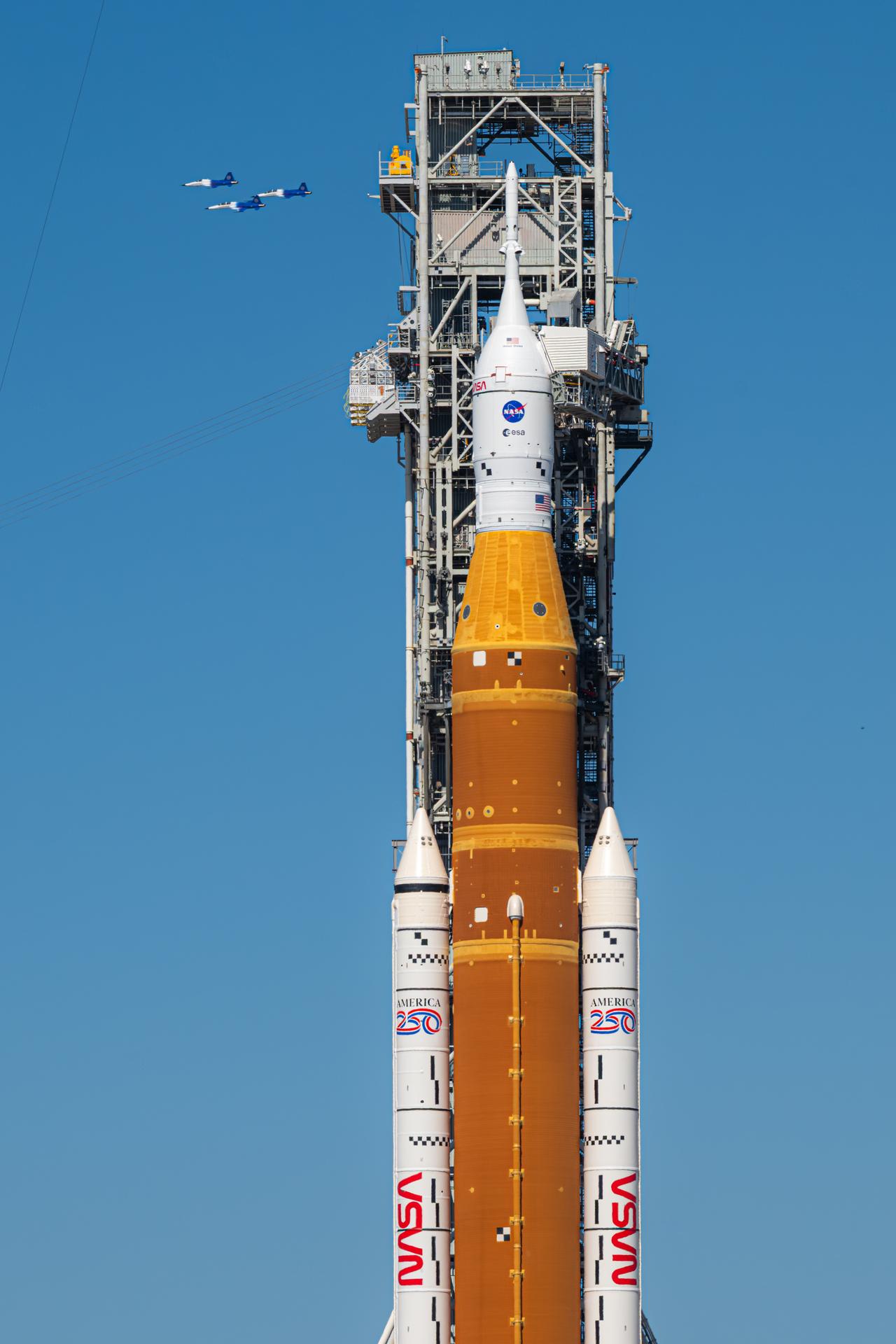
NASA Administrator Jared Isaacman conducts a formation flight with three of his personal F-5 aircraft, Sunday, Feb. 8, 2026, at NASA’s Kennedy Space Center in Florida. The formation flew near the Artemis II SLS (Space Launch System) rocket and Orion spacecraft at Launch Complex 39B and the surrounding area at Kennedy. Photo Credit: (NASA/John Kraus)
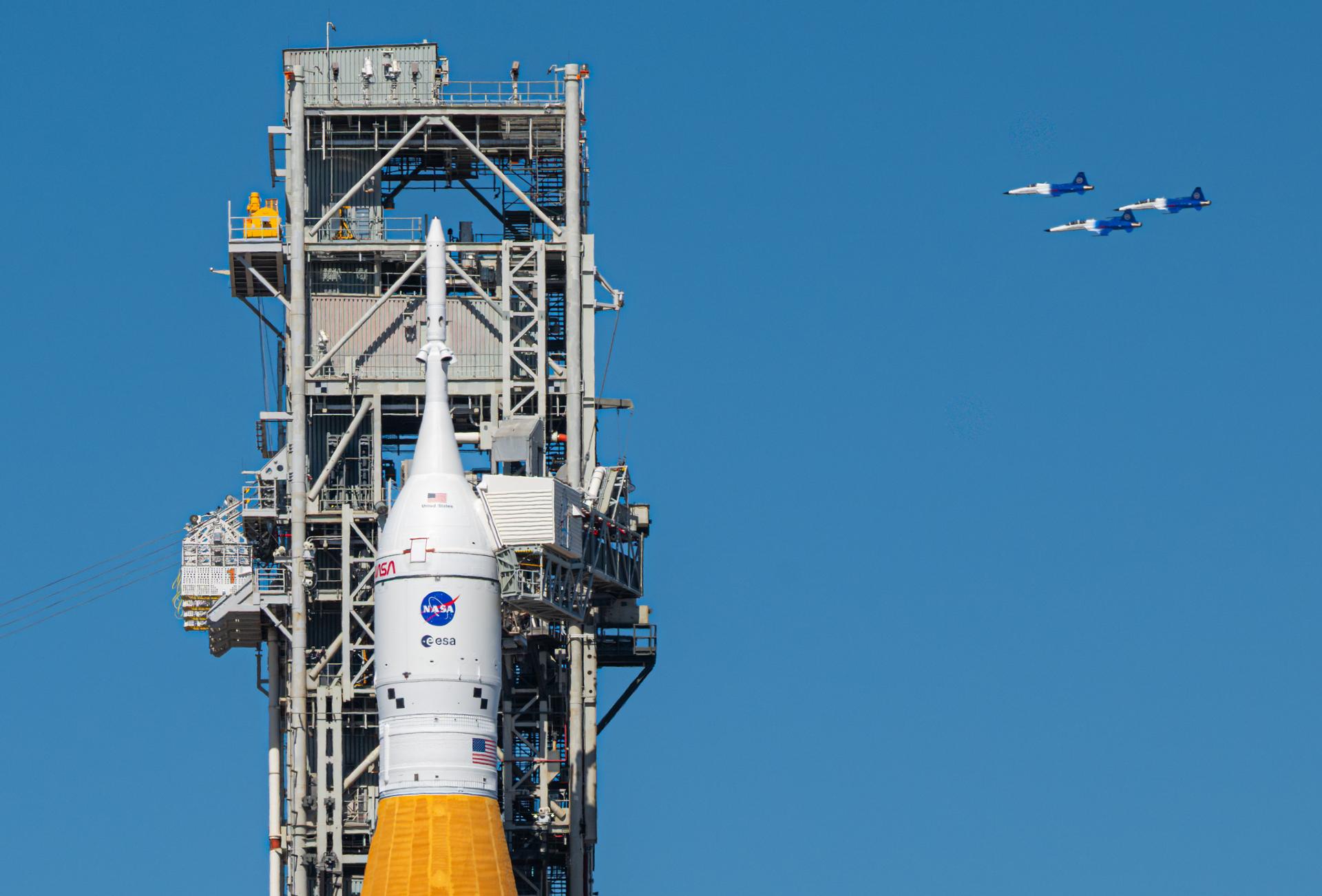
NASA Administrator Jared Isaacman conducts a formation flight with three of his personal F-5 aircraft, Sunday, Feb. 8, 2026, at NASA’s Kennedy Space Center in Florida. The formation flew near the Artemis II SLS (Space Launch System) rocket and Orion spacecraft at Launch Complex 39B and the surrounding area at Kennedy. Photo Credit: (NASA/John Kraus)
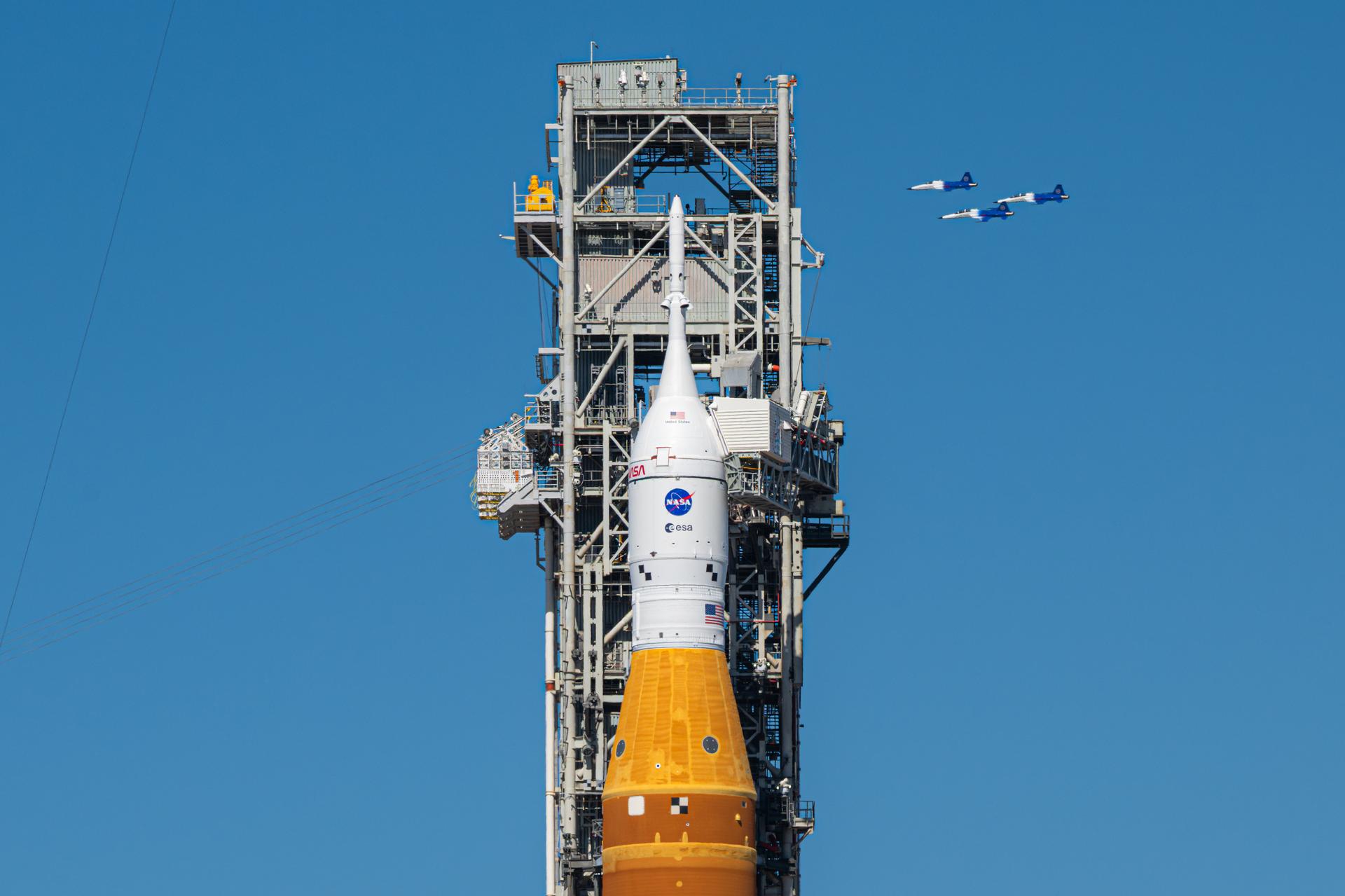
NASA Administrator Jared Isaacman conducts a formation flight with three of his personal F-5 aircraft, Sunday, Feb. 8, 2026, at NASA’s Kennedy Space Center in Florida. The formation flew near the Artemis II SLS (Space Launch System) rocket and Orion spacecraft at Launch Complex 39B and the surrounding area at Kennedy. Photo Credit: (NASA/John Kraus)
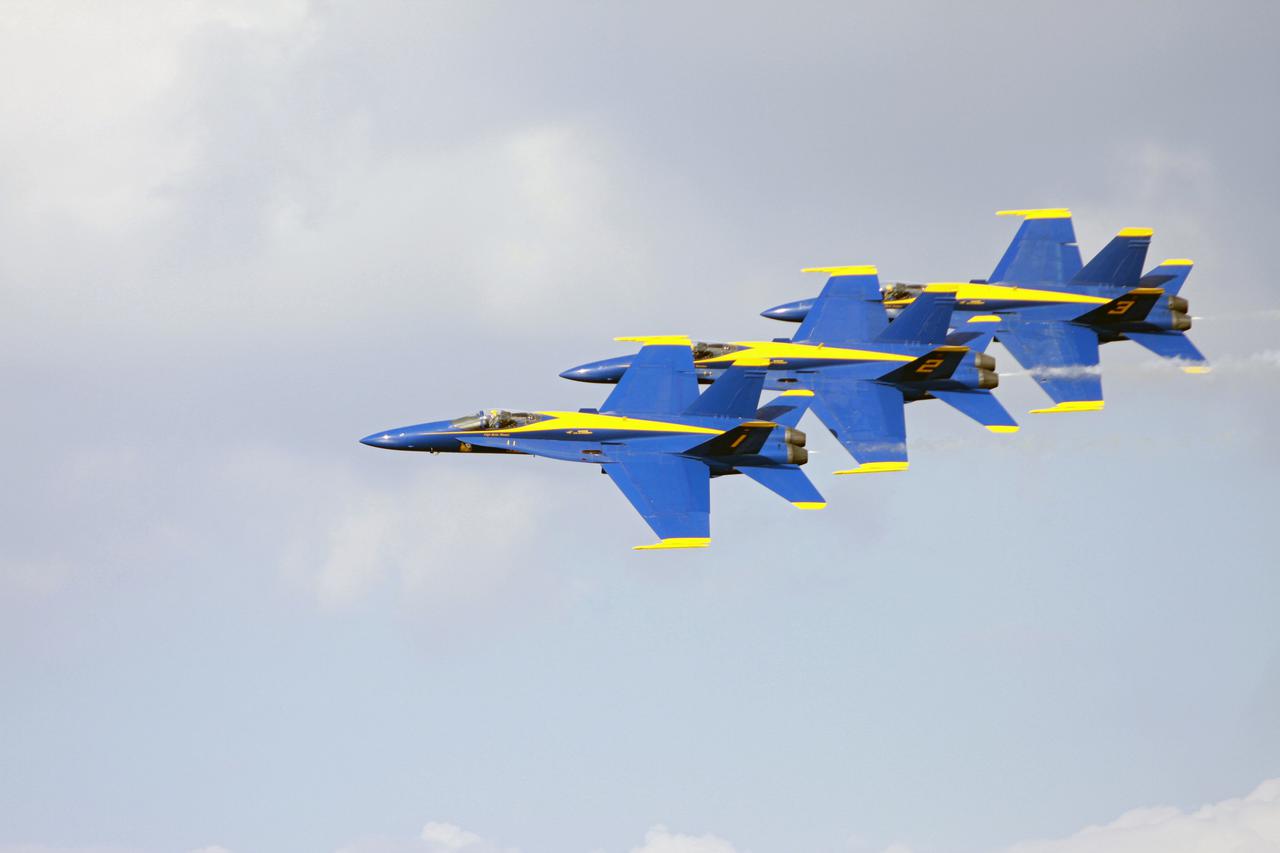
CAPE CANAVERAL, Fla. – The U.S. Navy's Blue Angels perform their tight maneuvers over NASA's Kennedy Space Center in Florida during the Kennedy Space Center Visitor Complex Space and Air Show held Nov. 8-9. This year’s show brought together the best in military aircraft, such as the F_A-18 Super Hornet and F-16 Fighting Falcon, coupled with precision pilots and veteran astronauts to celebrate spaceflight and aviation. The event included a water rescue demonstration by the 920th Rescue Wing. Photo credit: NASA_Troy Cryder
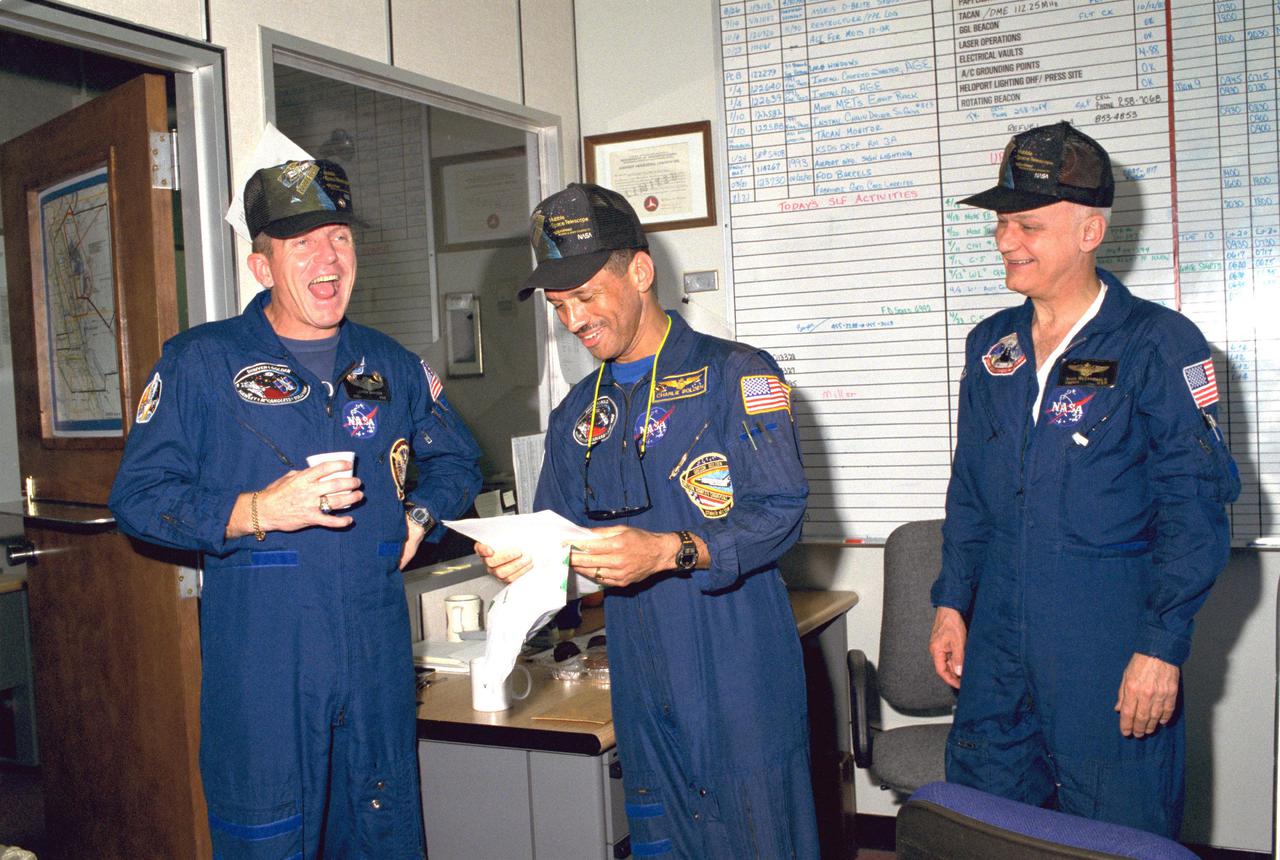
KENNEDY SPACE CENTER, FLA. -- Loren J. Shriver (left), commander of Space Shuttle Mission STS-31, enjoys a laugh with fellow crew members Pilot Charles F. Bolden Jr. and Mission Specialist Bruce McCandless II after practice runs in the Shuttle Training Aircraft. STS-31 is set to lift off April 10 at 8:47 a.m. EDT.
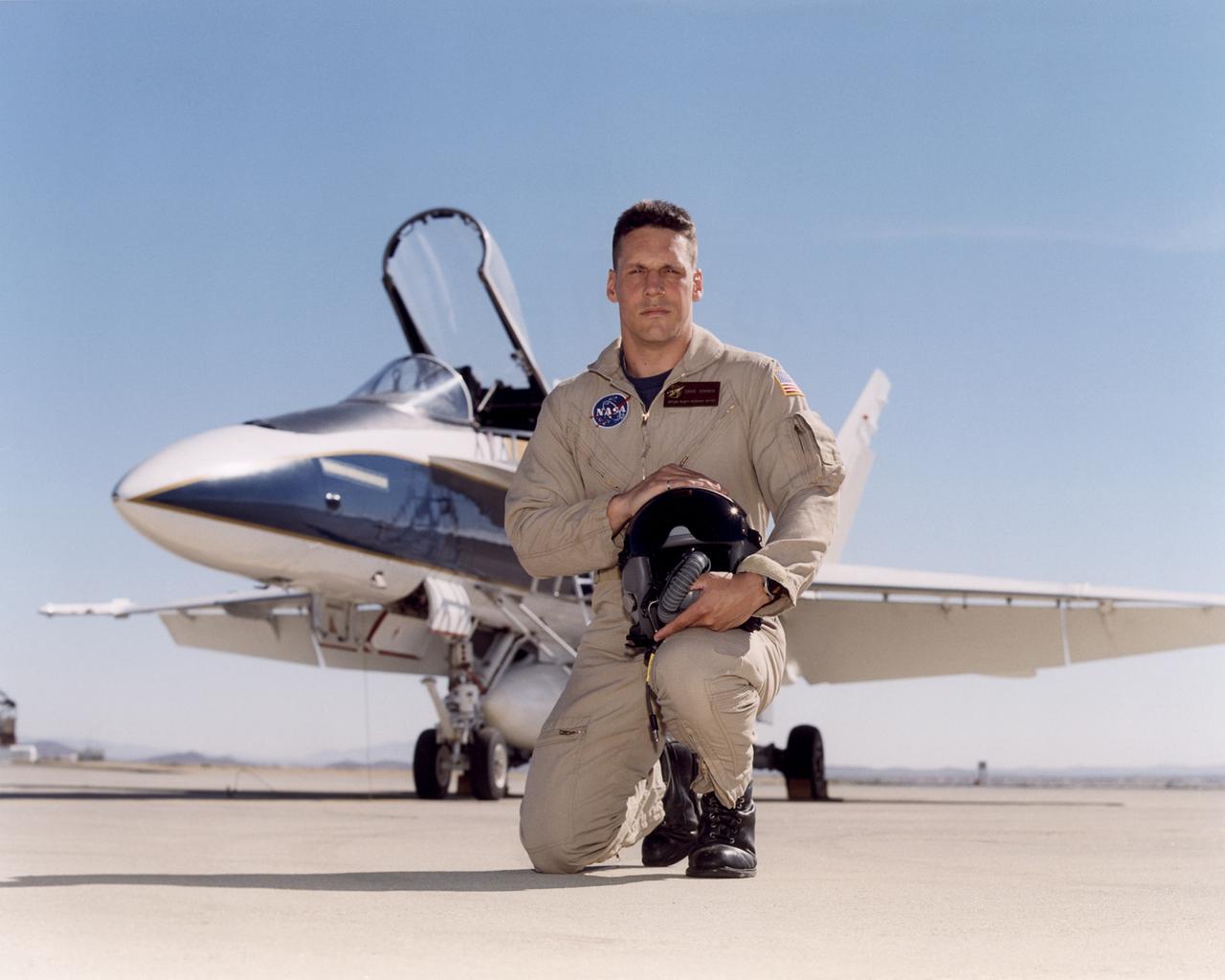
Craig R. Bomben became a pilot in the Flight Crew Branch of NASA's Dryden Flight Research Center, Edwards, Calif., in June 2001. His flying duties include a variety of research and support activities while piloting the F/A-18, DC-8, T-34C and King Air aircraft. He has more than 17 years and 3,800 hours of military and civilian flight experience in over 50 different aircraft types. Bomben came to NASA Dryden from a U.S. Navy assignment to the Personnel Exchange Program, Canada. He served as a test pilot in the Canadian Armed Forces located in Cold Lake, Alberta. He participated in numerous developmental programs to include CT-133 airborne ejection seat testing, F/A-18 weapons flutter testing and F/A-18 night vision goggles integration. Bomben performed U.S. Navy fleet service in 1995 as a strike-fighter department head. He completed two overseas deployments onboard the USS George Washington and USS Stennis. As a combat strike leader, he headed numerous multi-national missions over Iraq in support of Operation Southern Watch. Bomben graduated from the U.S. Naval Test Pilot School in 1992 and was subsequently assigned to the Naval Weapons Test Squadron at Pt. Mugu, Calif. During this tour he developed the F-14D bombsight and worked on various other F-14D and F/A-18 weapon systems developmental programs. Bomben is a 1985 graduate of Washington State University with a bachelor of science degree in electrical engineering. He graduated from naval flight training in 1987 and was recognized as a Commodore List graduate. His first assignment was to Naval Air Station Pensacola, Fla., where he was an instructor in the T-2B Buckeye. When selected to fly the F/A-18 in 1989, he joined a fleet squadron and deployed aboard the USS Forrestal. Bomben is married to the former Aissa Asuncion. They live in Lancaster, Calif., with their 3 children.
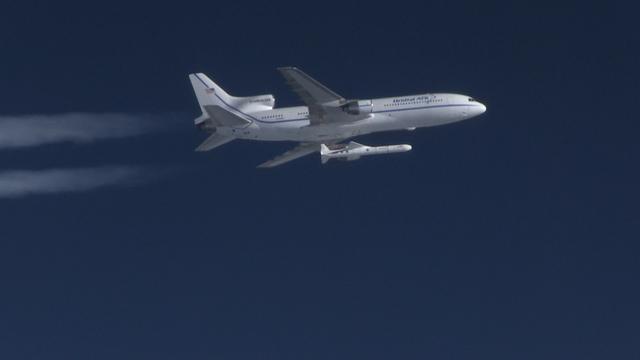
The Orbital ATK Pegasus XL rocket carrying NASA's Cyclone Global Navigation Satellite System, or CYGNSS, spacecraft is released and the first stage ignites at 8:37 a.m. EST. The rocket was released from the Orbital ATK L-1011 Stargazer aircraft flying over the Atlantic Ocean offshore from Daytona Beach, Florida following takeoff from the Skid Strip at Cape Canaveral Air Force Station. This image was taken from a NASA F-18 chase plane provided by Armstrong Flight Research Center in California. The CYGNSS satellites will make frequent and accurate measurements of ocean surface winds throughout the life cycle of tropical storms and hurricanes.
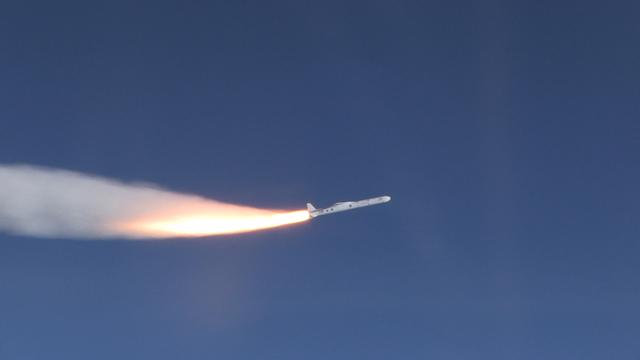
The Orbital ATK Pegasus XL rocket carrying NASA's Cyclone Global Navigation Satellite System, or CYGNSS, spacecraft is released and the first stage ignites at 8:37 a.m. EST. The rocket was released from the Orbital ATK L-1011 Stargazer aircraft flying over the Atlantic Ocean offshore from Daytona Beach, Florida following takeoff from the Skid Strip at Cape Canaveral Air Force Station. This image was taken from a NASA F-18 chase plane provided by Armstrong Flight Research Center in California. The CYGNSS satellites will make frequent and accurate measurements of ocean surface winds throughout the life cycle of tropical storms and hurricanes.
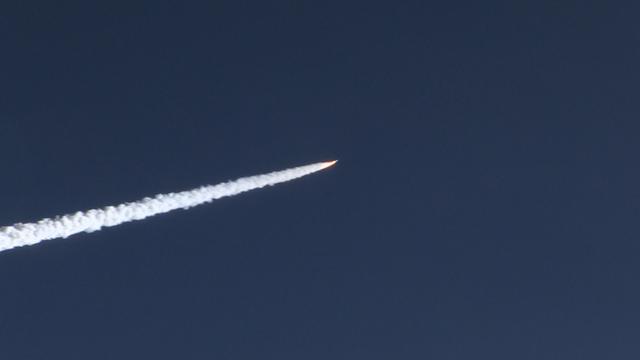
The Orbital ATK Pegasus XL rocket carrying NASA's Cyclone Global Navigation Satellite System, or CYGNSS, spacecraft is released and the first stage ignites at 8:37 a.m. EST. The rocket was released from the Orbital ATK L-1011 Stargazer aircraft flying over the Atlantic Ocean offshore from Daytona Beach, Florida following takeoff from the Skid Strip at Cape Canaveral Air Force Station. This image was taken from a NASA F-18 chase plane provided by Armstrong Flight Research Center in California. The CYGNSS satellites will make frequent and accurate measurements of ocean surface winds throughout the life cycle of tropical storms and hurricanes.
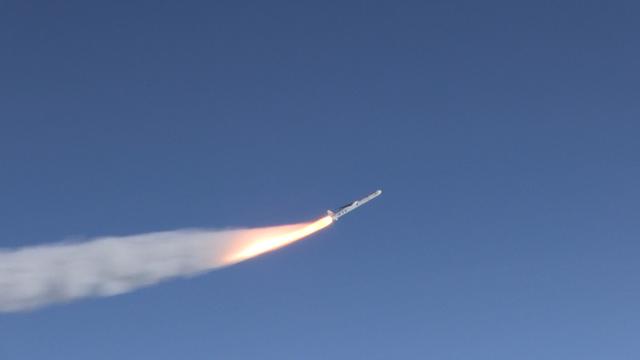
The Orbital ATK Pegasus XL rocket carrying NASA's Cyclone Global Navigation Satellite System, or CYGNSS, spacecraft is released and the first stage ignites at 8:37 a.m. EST. The rocket was released from the Orbital ATK L-1011 Stargazer aircraft flying over the Atlantic Ocean offshore from Daytona Beach, Florida following takeoff from the Skid Strip at Cape Canaveral Air Force Station. This image was taken from a NASA F-18 chase plane provided by Armstrong Flight Research Center in California. The CYGNSS satellites will make frequent and accurate measurements of ocean surface winds throughout the life cycle of tropical storms and hurricanes.
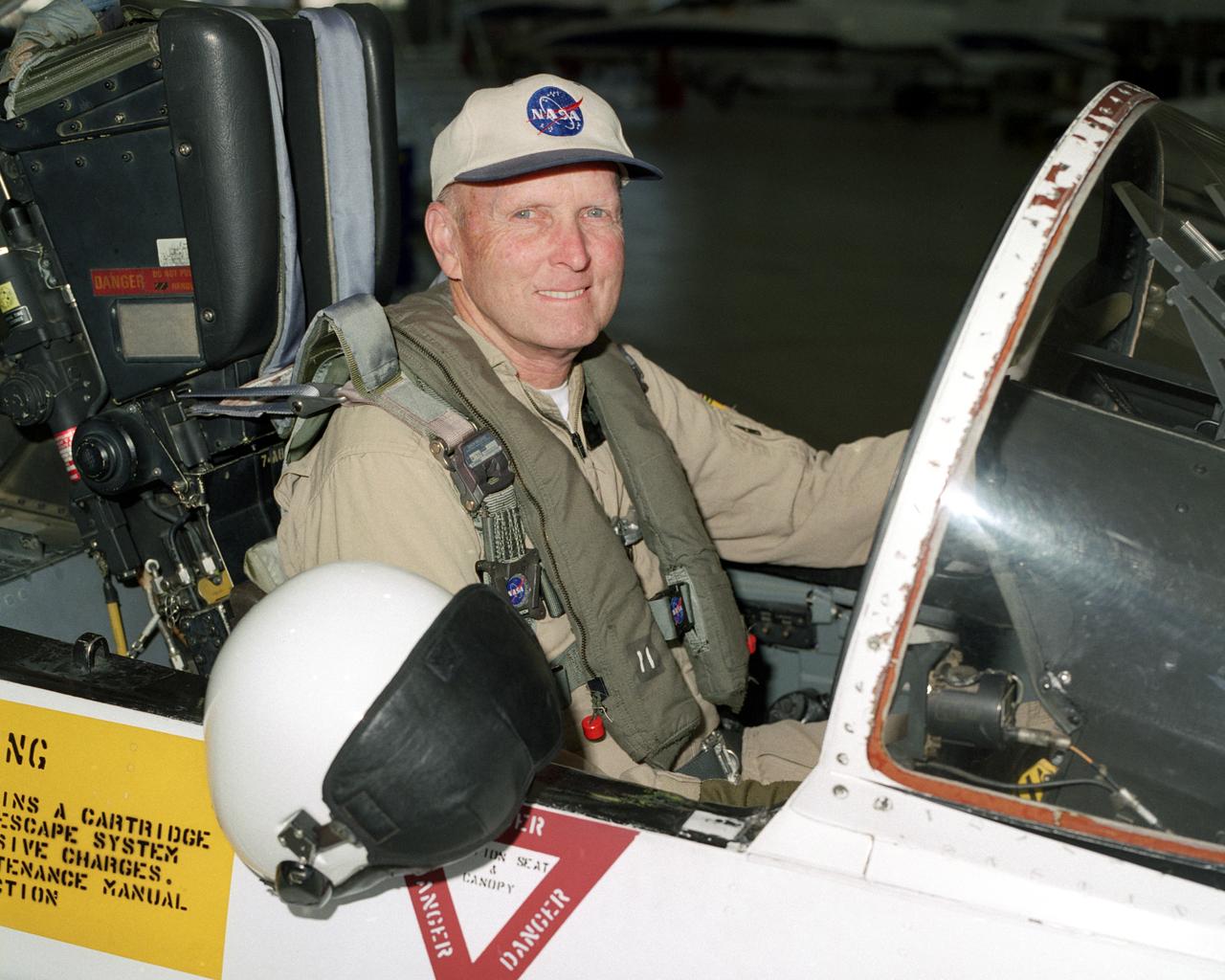
Former NASA astronaut C. Gordon Fullerton, seated in the cockpit of an F/A-18, is a research pilot at NASA's Dryden Flight Research Center, Edwards, Calif. Since transferring to Dryden in 1986, his assignments have included a variety of flight research and support activities piloting NASA's B-52 launch aircraft, the 747 Shuttle Carrier Aircraft (SCA), and other multi-engine and high performance aircraft. He flew a series of development air launches of the X-38 prototype Crew Return Vehicle and in the launches for the X-43A Hyper-X project. Fullerton also flies Dryden's DC-8 Airborne Science aircraft in support a variety of atmospheric physics, ground mapping and meteorology studies. Fullerton also was project pilot on the Propulsion Controlled Aircraft program, during which he successfully landed both a modified F-15 and an MD-11 transport with all control surfaces neutralized, using only engine thrust modulation for control. Fullerton also evaluated the flying qualities of the Russian Tu-144 supersonic transport during two flights in 1998, one of only two non-Russian pilots to fly that aircraft. With more than 15,000 hours of flying time, Fullerton has piloted 135 different types of aircraft in his career. As an astronaut, Fullerton served on the support crews for the Apollo 14, 15, 16, and 17 lunar missions. In 1977, Fullerton was on one of the two flight crews that piloted the Space Shuttle prototype Enterprise during the Approach and Landing Test Program at Dryden. Fullerton was the pilot on the STS-3 Space Shuttle orbital flight test mission in 1982, and commanded the STS-51F Spacelab 2 mission in 1985. He has logged 382 hours in space flight. In July 1988, he completed a 30-year career with the U.S. Air Force and retired as a colonel.
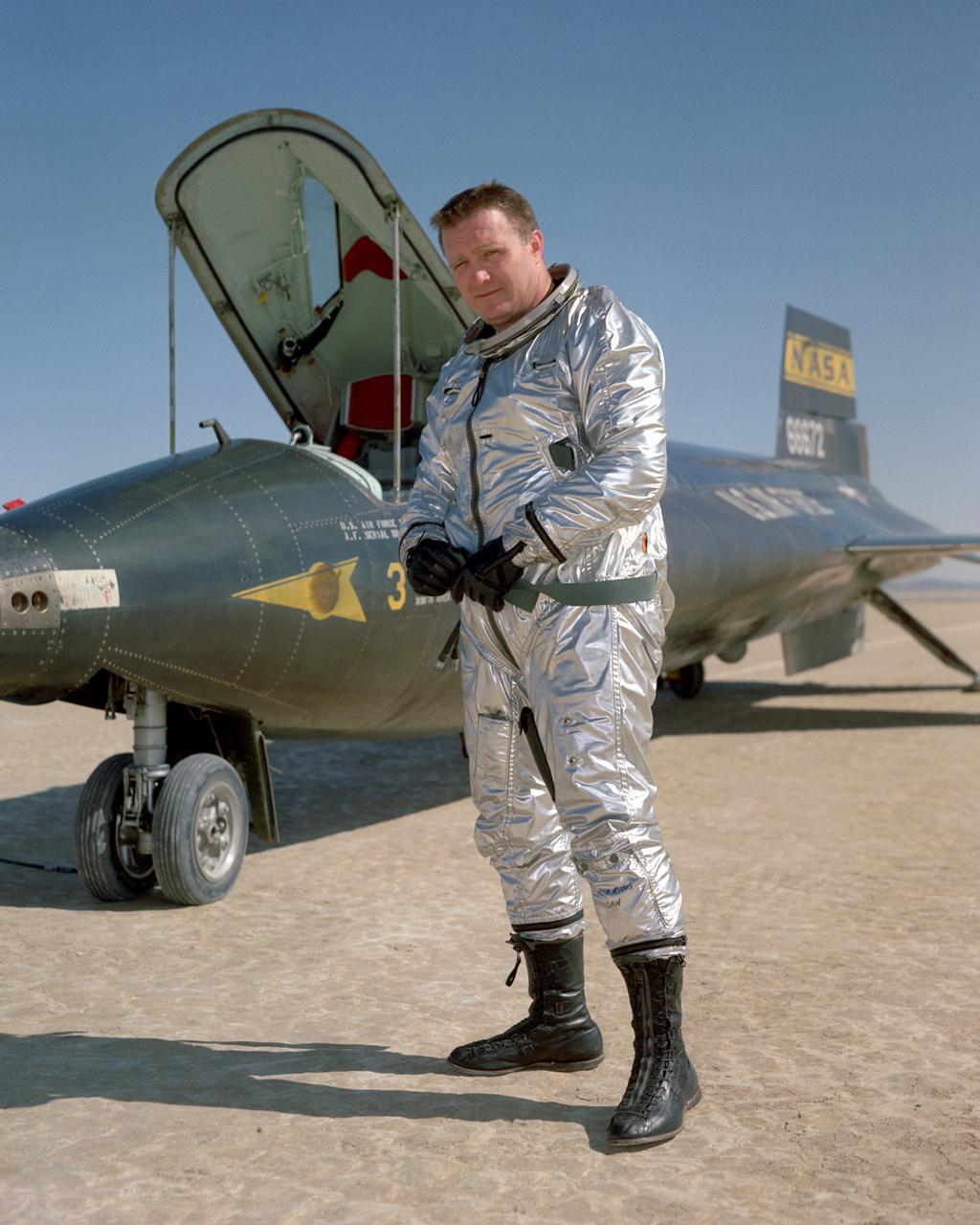
John B. McKay was one of the first pilots assigned to the X-15 flight research program at NASA's Flight Research Center, Edwards, Calif. As a civilian research pilot and aeronautical engineer, he made 30 flights in X-15s from October 28, 1960, until September 8, 1966. His peak altitude was 295,600 feet, and his highest speed was 3863 mph (Mach 5.64). McKay was with the NACA and NASA from February 8,1951 until October 5, 1971 and specialized in high-speed flight research programs. He began as an NACA intern, but assumed pilot status on July 11, 1952. In addition to the X-l5, he flew such experimental aircraft as the D-558-1, D-558-2, X-lB, and the X-lE. He has also served as a research pilot on flight programs involving the F-100, F-102, F-104, and the F-107. Born on December 8, 1922, in Portsmouth, Va., McKay graduated from Virginia Polytechnic Institute in 195O with a Bachelor of Science degree in Aeronautical Engineering. During World War II he served as a Navy pilot in the Pacific Theater, earning the Air Medal and Two Clusters, and a Presidential Unit Citation. McKay wrote several technical papers, and was a member of the American Institute of Aeronautics and Astronautics, as well as the Society of Experimental Test Pilots. He passed away on April 27, 1975.
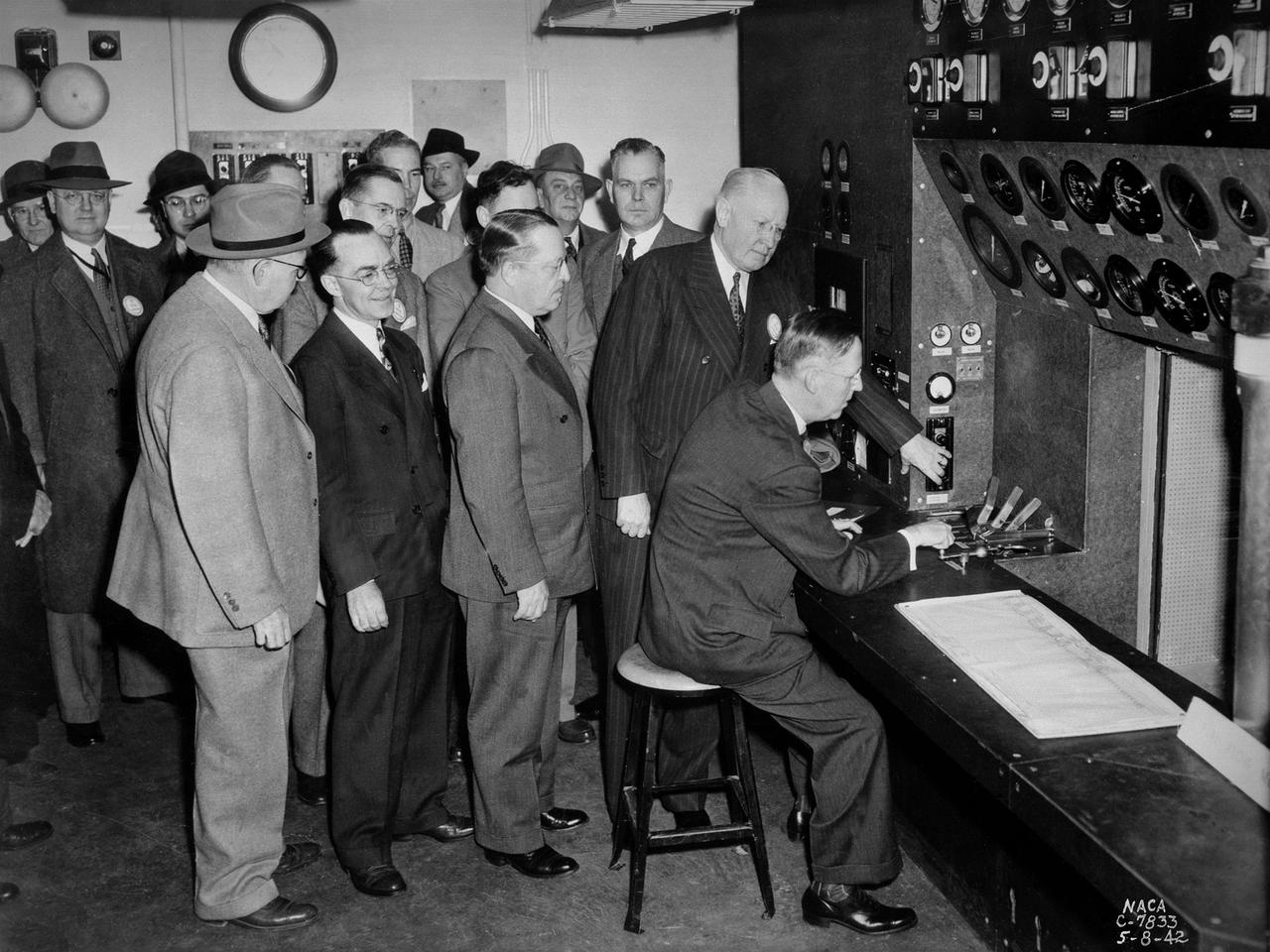
A group of National Advisory Committee for Aeronautics (NACA) officials and local dignitaries were on hand on May 8, 1942, to witness the Initiation of Research at the NACA's new Aircraft Engine Research Laboratory in Cleveland, Ohio. The group in this photograph was in the control room of the laboratory's first test facility, the Engine Propeller Research Building. The NACA press release that day noted, "First actual research activities in what is to be the largest aircraft engine research laboratory in the world was begun today at the National Advisory Committee for Aeronautics laboratory at the Cleveland Municipal Airport.” The ceremony, however, was largely symbolic since most of the laboratory was still under construction. Dr. George W. Lewis, the NACA's Director of Aeronautical Research, and John F. Victory, NACA Secretary, are at the controls in this photograph. Airport Manager John Berry, former City Manager William Hopkins, NACA Assistant Secretary Ed Chamberlain, Langley Engineer-in-Charge Henry Reid, Executive Engineer Carlton Kemper, and Construction Manager Raymond Sharp are also present. The propeller building contained two torque stands to test complete engines at ambient conditions. The facility was primarily used at the time to study engine lubrication and cooling systems for World War II aircraft, which were required to perform at higher altitudes and longer ranges than previous generations.
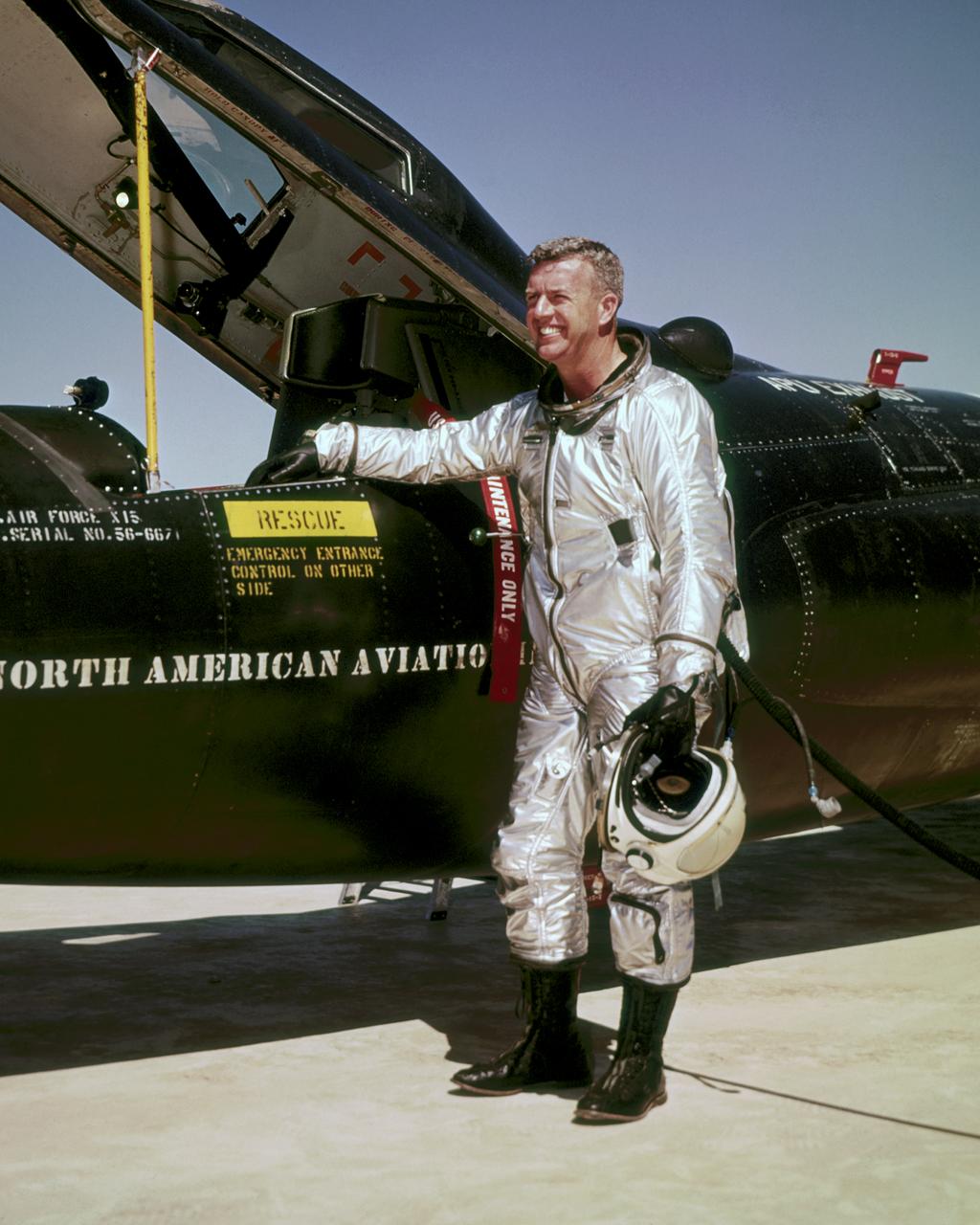
Joseph A. Walker was a Chief Research Pilot at the NASA Dryden Flight Research Center during the mid-1960s. He joined the NACA in March 1945, and served as project pilot at the Edwards flight research facility on such pioneering research projects as the D-558-1, D-558-2, X-1, X-3, X-4, X-5, and the X-15. He also flew programs involving the F-100, F-101, F-102, F-104, and the B-47. Walker made the first NASA X-15 flight on March 25, 1960. He flew the research aircraft 24 times and achieved its fastest speed and highest altitude. He attained a speed of 4,104 mph (Mach 5.92) during a flight on June 27, 1962, and reached an altitude of 354,300 feet on August 22, 1963 (his last X-15 flight). He was the first man to pilot the Lunar Landing Research Vehicle (LLRV) that was used to develop piloting and operational techniques for lunar landings. Walker was born February 20, 1921, in Washington, Pa. He lived there until graduating from Washington and Jefferson College in 1942, with a B.A. degree in Physics. During World War II he flew P-38 fighters for the Air Force, earning the Distinguished Flying Cross and the Air Medal with Seven Oak Clusters. Walker was the recipient of many awards during his 21 years as a research pilot. These include the 1961 Robert J. Collier Trophy, 1961 Harmon International Trophy for Aviators, the 1961 Kincheloe Award and 1961 Octave Chanute Award. He received an honorary Doctor of Aeronautical Sciences degree from his alma mater in June of 1962. Walker was named Pilot of the Year in 1963 by the National Pilots Association. He was a charter member of the Society of Experimental Test Pilots, and one of the first to be designated a Fellow. He was fatally injured on June 8, 1966, in a mid-air collision between an F-104 he was piloting and the XB-70.
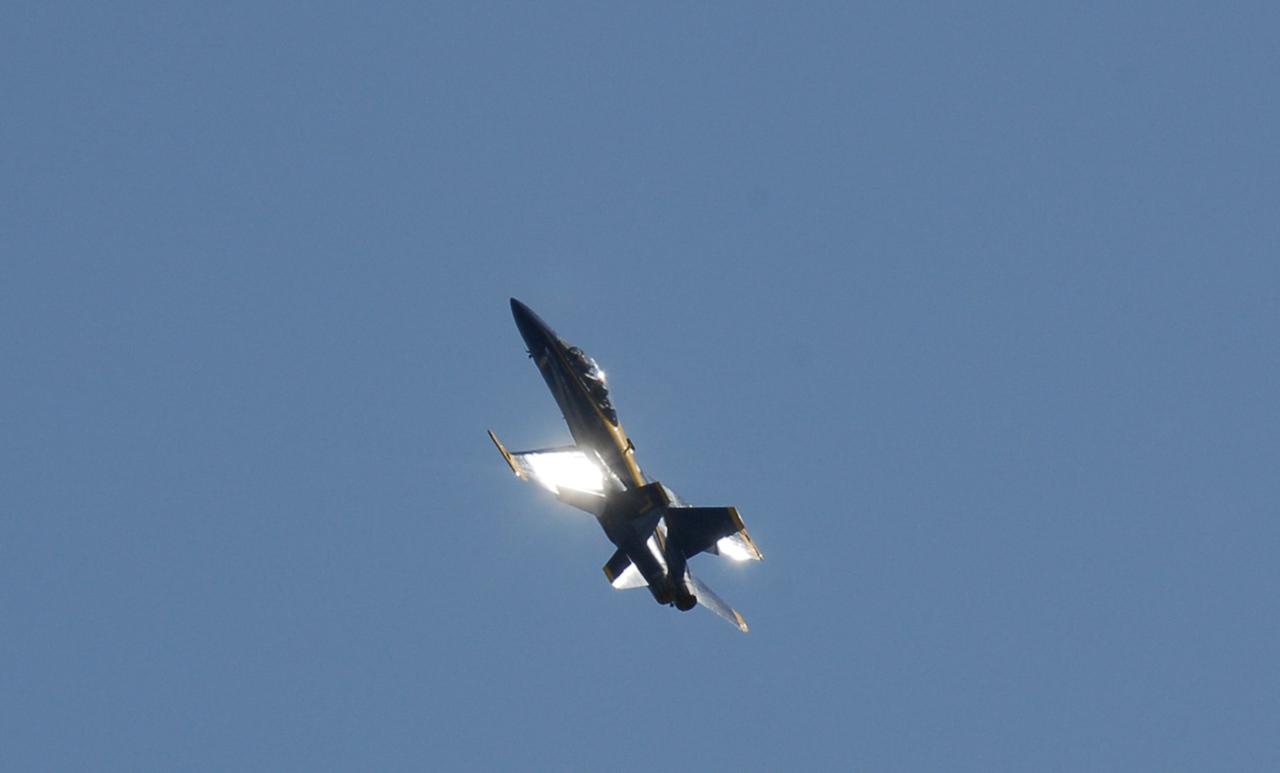
CAPE CANAVERAL, Fla. -- After meeting with NASA officials about their involvement in the second annual Space & Air Show at Kennedy Space Center Nov. 8-9, Blue Angel pilots Lt. Frank Weisser and Lt. Dan McShane take off from the Shuttle Landing Facility aboard their U.S. Navy F-18 Hornet for the return flight to their home base in Pensacola, Fla. The air show will be only the second time the Blue Angels have performed at Kennedy. Their precision flight team will perform high-speed passes, fast rolls, mirror formations, tight turns and their signature Delta formation showcasing the capabilities of the powerful aircraft. The 2008 Space & Air Show will include aircraft displays and space-related exhibits on the ground and plenty of action in the skies over Kennedy. Returning to the show is the 920th Rescue Wing, an Air Force Reserve Command combat search and rescue unit based at Patrick Air Force Base in Central Florida. Also, more than 20 astronauts and special guests will be on hand to personally meet guests, pose for photos and sign memorabilia. Photo credit: NASA/Kim Shiflett
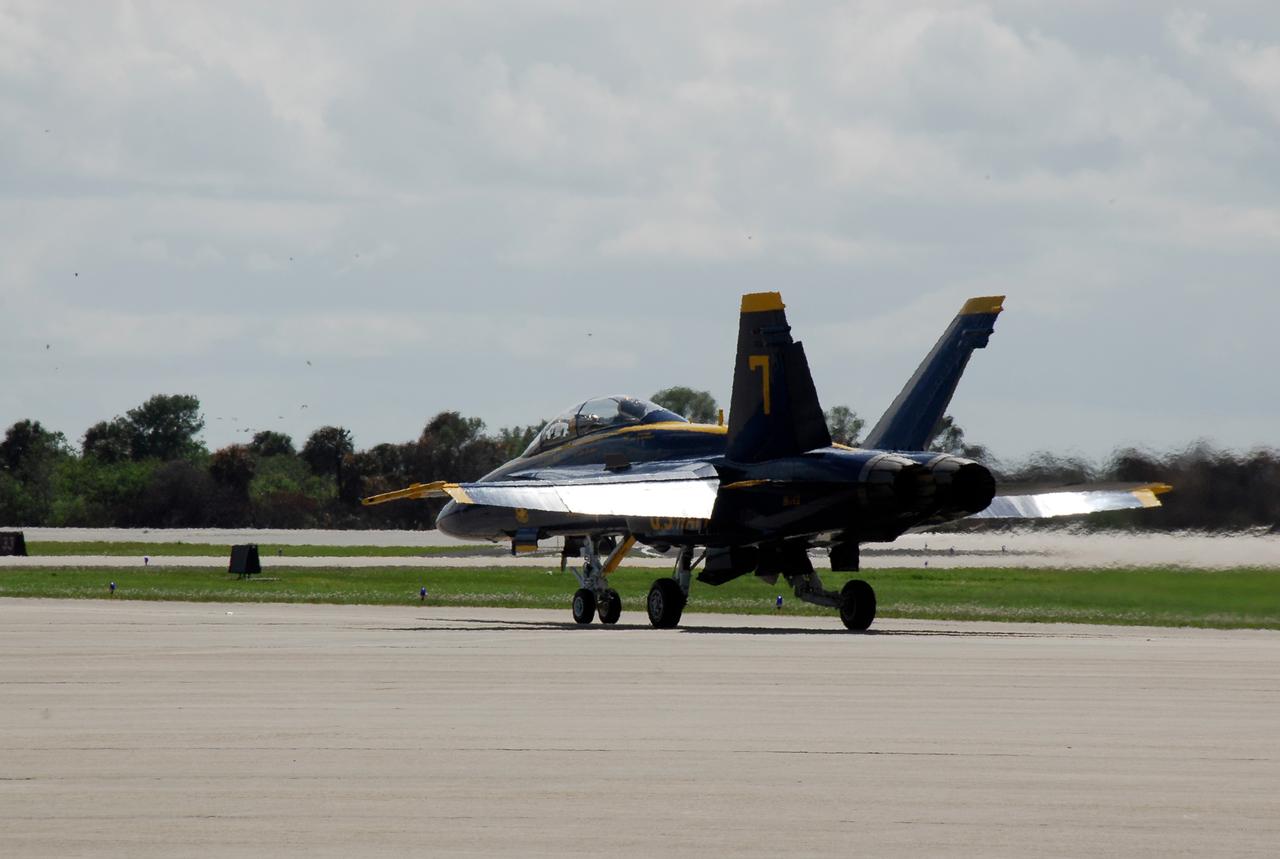
CAPE CANAVERAL, Fla. -- After meeting with NASA officials about their involvement in the second annual Space & Air Show at Kennedy Space Center Nov. 8-9, Blue Angel pilots Lt. Frank Weisser and Lt. Dan McShane prepare for takeoff of their U.S. Navy F-18 Hornet from the Shuttle Landing Facility for the return flight to their home base in Pensacola, Fla. The air show will be only the second time the Blue Angels have performed at Kennedy. Their precision flight team will perform high-speed passes, fast rolls, mirror formations, tight turns and their signature Delta formation showcasing the capabilities of the powerful aircraft. The 2008 Space & Air Show will include aircraft displays and space-related exhibits on the ground and plenty of action in the skies over Kennedy. Returning to the show is the 920th Rescue Wing, an Air Force Reserve Command combat search and rescue unit based at Patrick Air Force Base in Central Florida. Also, more than 20 astronauts and special guests will be on hand to personally meet guests, pose for photos and sign memorabilia. Photo credit: NASA/Kim Shiflett
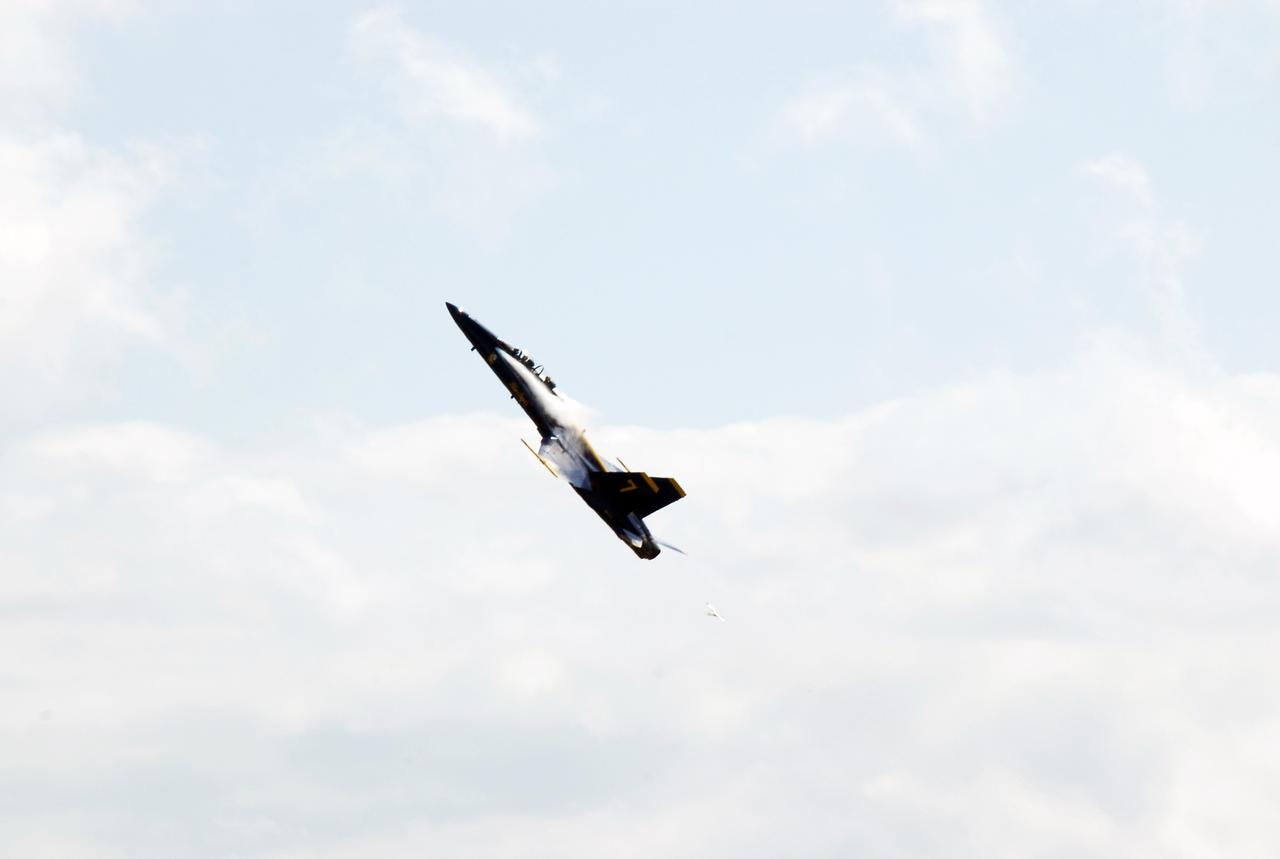
CAPE CANAVERAL, Fla. -- After meeting with NASA officials about their involvement in the second annual Space & Air Show at Kennedy Space Center Nov. 8-9, Blue Angel pilots Lt. Frank Weisser and Lt. Dan McShane take off from the Shuttle Landing Facility aboard their U.S. Navy F-18 Hornet for the return flight to their home base in Pensacola, Fla. The air show will be only the second time the Blue Angels have performed at Kennedy. Their precision flight team will perform high-speed passes, fast rolls, mirror formations, tight turns and their signature Delta formation showcasing the capabilities of the powerful aircraft. The 2008 Space & Air Show will include aircraft displays and space-related exhibits on the ground and plenty of action in the skies over Kennedy. Returning to the show is the 920th Rescue Wing, an Air Force Reserve Command combat search and rescue unit based at Patrick Air Force Base in Central Florida. Also, more than 20 astronauts and special guests will be on hand to personally meet guests, pose for photos and sign memorabilia. Photo credit: NASA/Kim Shiflett
CAPE CANAVERAL, Fla. -- After meeting with NASA officials about their involvement in the second annual Space & Air Show at Kennedy Space Center Nov. 8-9, Blue Angel pilots Lt. Frank Weisser and Lt. Dan McShane fly over the Launch Complex 39 area in their U.S. Navy F-18 Hornet as they return to their home base in Pensacola, Fla. The air show will be only the second time the Blue Angels have performed at Kennedy. Their precision flight team will perform high-speed passes, fast rolls, mirror formations, tight turns and their signature Delta formation showcasing the capabilities of the powerful aircraft. The 2008 Space & Air Show will include aircraft displays and space-related exhibits on the ground and plenty of action in the skies over Kennedy. Returning to the show is the 920th Rescue Wing, an Air Force Reserve Command combat search and rescue unit based at Patrick Air Force Base in Central Florida. Also, more than 20 astronauts and special guests will be on hand to personally meet guests, pose for photos and sign memorabilia. Photo credit: NASA/Dimitri Gerondidakis
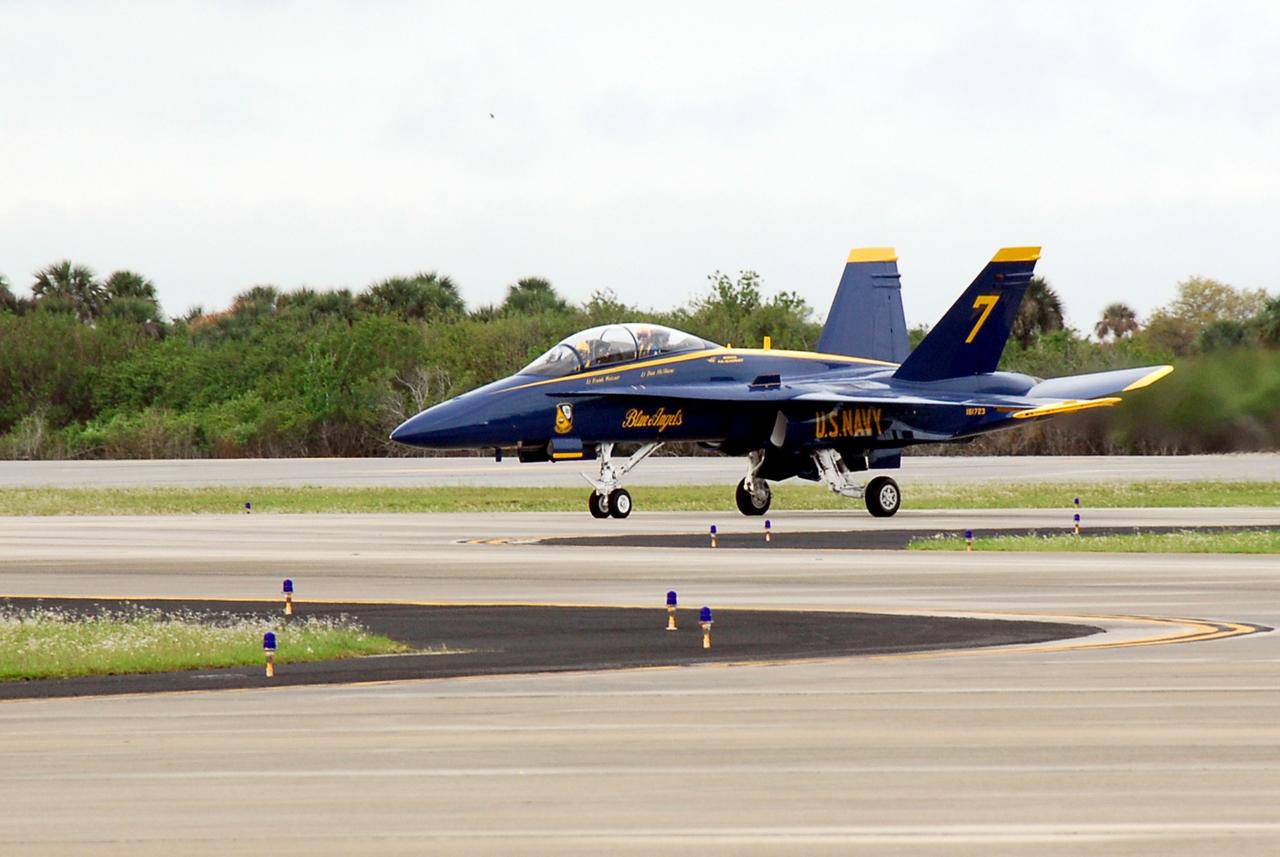
CAPE CANAVERAL, Fla. -- A U.S. Navy F-18 Hornet lands at the Shuttle Landing Facility at NASA's Kennedy Space Center. Aboard are Blue Angel pilots Lt. Frank Weisser and Lt. Dan McShane. They flew into Kennedy to begin preparations for their involvement in the second annual Space & Air Show at Kennedy Space Center Nov. 8-9. The air show will be only the second time the Blue Angels have performed at Kennedy. Their precision flight team will perform high-speed passes, fast rolls, mirror formations, tight turns and their signature Delta formation showcasing the capabilities of the powerful aircraft. The 2008 Space & Air Show will include aircraft displays and space-related exhibits on the ground and plenty of action in the skies over Kennedy. Returning to the show is the 920th Rescue Wing, an Air Force Reserve Command combat search and rescue unit based at Patrick Air Force Base in Central Florida. Also, more than 20 astronauts and special guests will be on hand to personally meet guests, pose for photos and sign memorabilia. Photo credit: NASA/Kim Shiflett
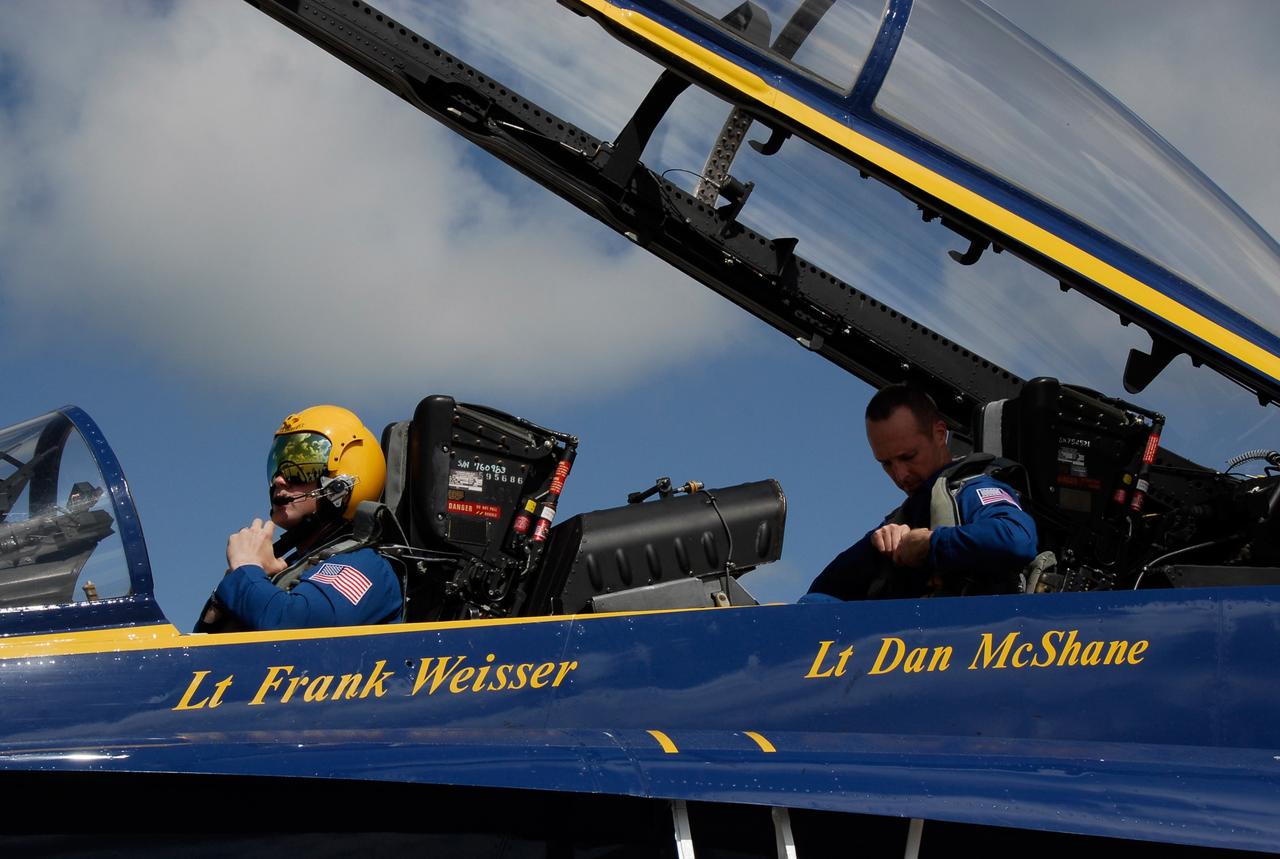
CAPE CANAVERAL, Fla. -- After meeting with NASA officials about their involvement in the second annual Space & Air Show at Kennedy Space Center Nov. 8-9, Blue Angel pilots Lt. Frank Weisser and Lt. Dan McShane board their U.S. Navy F-18 Hornet as they prepare to return to their home base in Pensacola, Fla. The air show will be only the second time the Blue Angels have performed at Kennedy. Their precision flight team will perform high-speed passes, fast rolls, mirror formations, tight turns and their signature Delta formation showcasing the capabilities of the powerful aircraft. The 2008 Space & Air Show will include aircraft displays and space-related exhibits on the ground and plenty of action in the skies over Kennedy. Returning to the show is the 920th Rescue Wing, an Air Force Reserve Command combat search and rescue unit based at Patrick Air Force Base in Central Florida. Also, more than 20 astronauts and special guests will be on hand to personally meet guests, pose for photos and sign memorabilia. Photo credit: NASA/Kim Shiflett
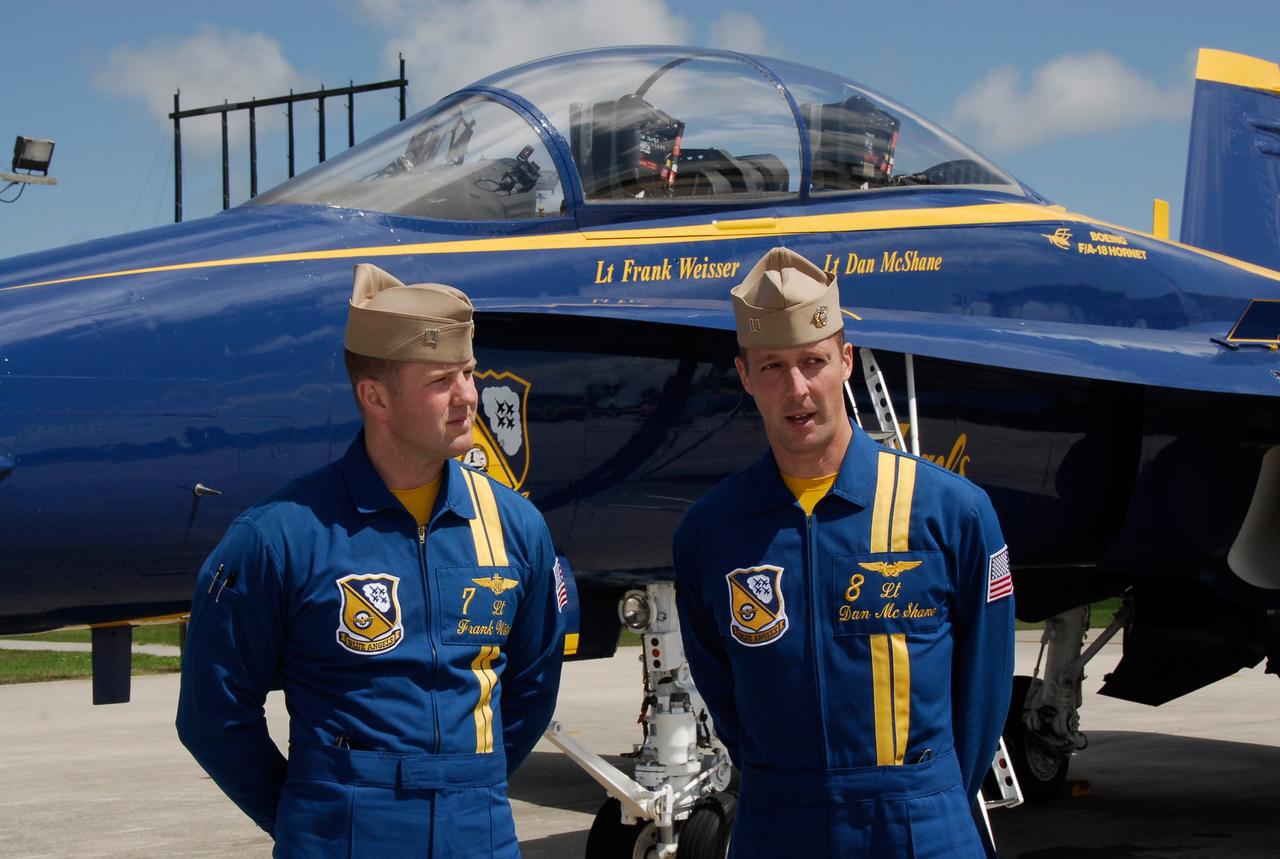
CAPE CANAVERAL, Fla. -- Blue Angel pilots Lt. Frank Weisser and Lt. Dan McShane arrive at NASA's Kennedy Space Center. Behind them is one of the U.S. Navy F-18 Hornets flown by the Blue Angels. The pilots flew into Kennedy to begin preparations for their involvement in the second annual Space & Air Show at Kennedy Space Center Nov. 8-9. The air show will be only the second time the Blue Angels have performed at Kennedy. Their precision flight team will perform high-speed passes, fast rolls, mirror formations, tight turns and their signature Delta formation showcasing the capabilities of the powerful aircraft. The 2008 Space & Air Show will include aircraft displays and space-related exhibits on the ground and plenty of action in the skies over Kennedy. Returning to the show is the 920th Rescue Wing, an Air Force Reserve Command combat search and rescue unit based at Patrick Air Force Base in Central Florida. Also, more than 20 astronauts and special guests will be on hand to personally meet guests, pose for photos and sign memorabilia. Photo credit: NASA/Kim Shiflett
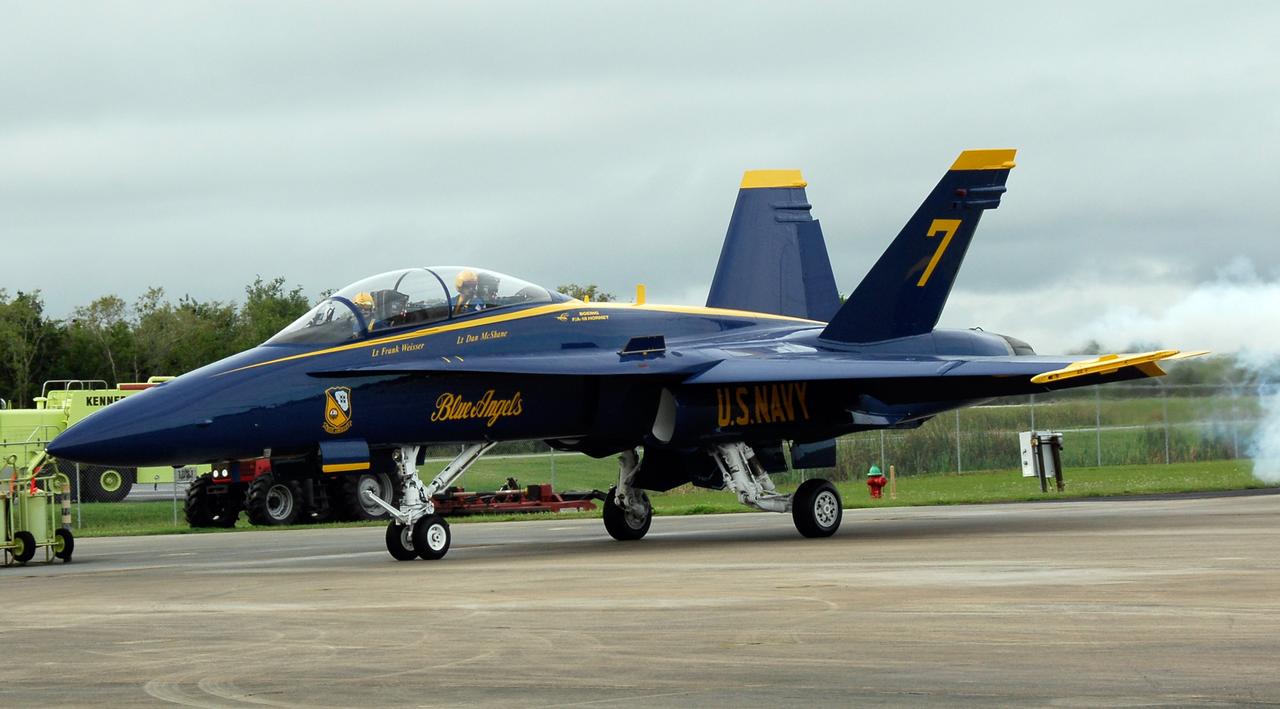
CAPE CANAVERAL, Fla. -- A U.S. Navy F-18 Hornet taxis on the Shuttle Landing Facility runway at NASA's Kennedy Space Center. Aboard are Blue Angel pilots Lt. Frank Weisser and Lt. Dan McShane. They flew into Kennedy to begin preparations for their involvement in the second annual Space & Air Show at Kennedy Space Center Nov. 8-9. The air show will be only the second time the Blue Angels have performed at Kennedy. Their precision flight team will perform high-speed passes, fast rolls, mirror formations, tight turns and their signature Delta formation showcasing the capabilities of the powerful aircraft. The 2008 Space & Air Show will include aircraft displays and space-related exhibits on the ground and plenty of action in the skies over Kennedy. Returning to the show is the 920th Rescue Wing, an Air Force Reserve Command combat search and rescue unit based at Patrick Air Force Base in Central Florida. Also, more than 20 astronauts and special guests will be on hand to personally meet guests, pose for photos and sign memorabilia. Photo credit: NASA/Kim Shiflett
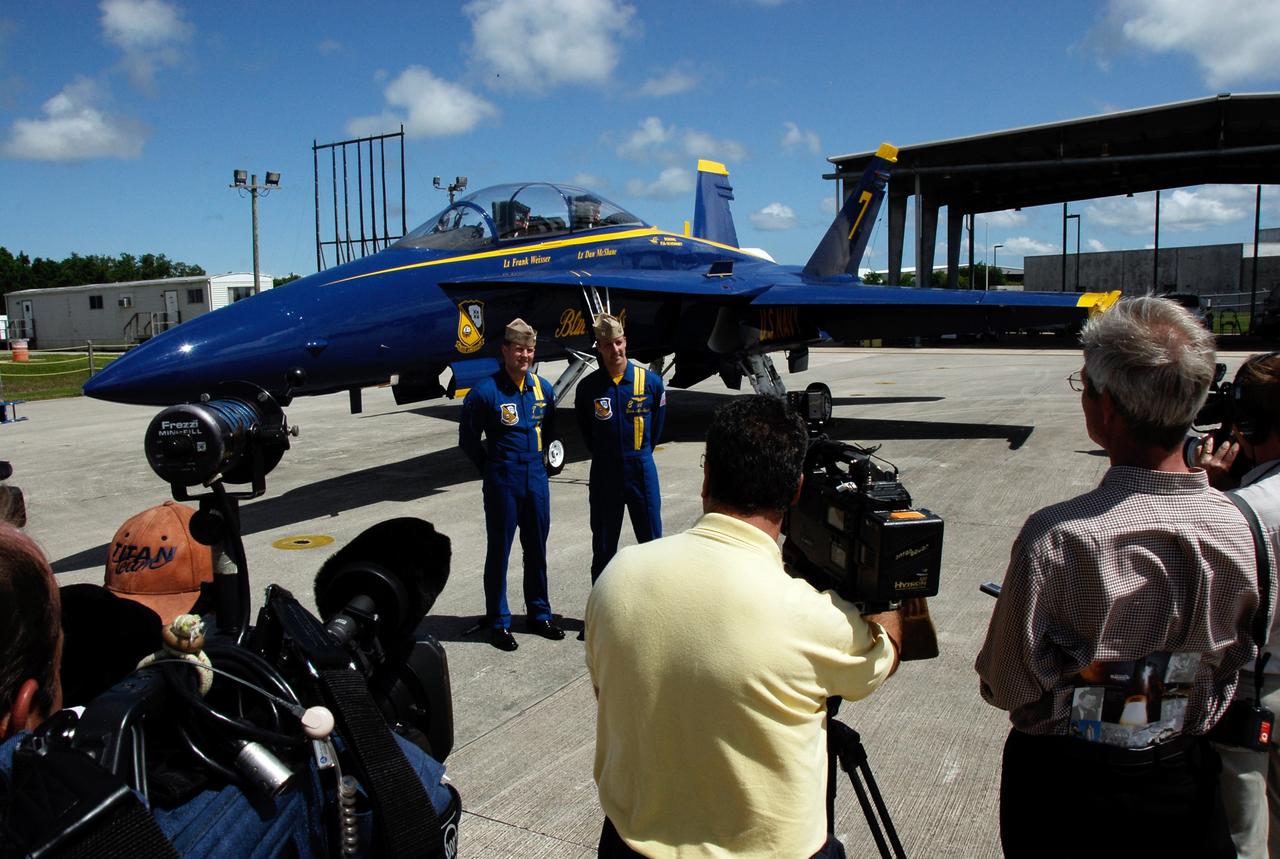
CAPE CANAVERAL, Fla. -- Blue Angel pilots Lt. Frank Weisser and Lt. Dan McShane pose for the media in front of one of the U.S. Navy F-18 Hornets flown by the Blue Angels. The pilots flew into NASA's Kennedy Space Center to begin preparations for their involvement in the second annual Space & Air Show at Kennedy Space Center Nov. 8-9. The air show will be only the second time the Blue Angels have performed at Kennedy. Their precision flight team will perform high-speed passes, fast rolls, mirror formations, tight turns and their signature Delta formation showcasing the capabilities of the powerful aircraft. The 2008 Space & Air Show will include aircraft displays and space-related exhibits on the ground and plenty of action in the skies over Kennedy. Returning to the show is the 920th Rescue Wing, an Air Force Reserve Command combat search and rescue unit based at Patrick Air Force Base in Central Florida. Also, more than 20 astronauts and special guests will be on hand to personally meet guests, pose for photos and sign memorabilia. Photo credit: NASA/Kim Shiflett
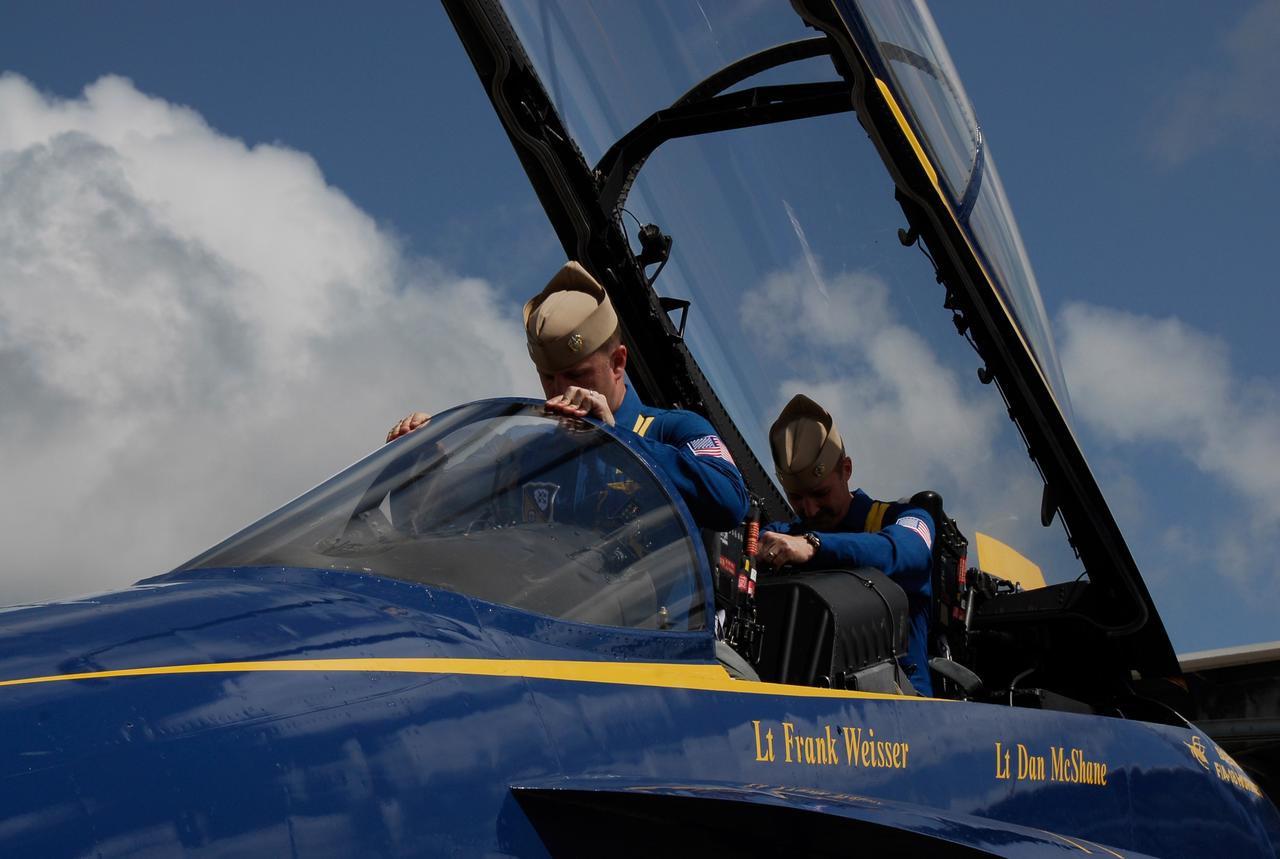
CAPE CANAVERAL, Fla. -- After meeting with NASA officials about their involvement in the second annual Space & Air Show at Kennedy Space Center Nov. 8-9, Blue Angel pilots Lt. Frank Weisser and Lt. Dan McShane board their U.S. Navy F-18 Hornet as they prepare to return to their home base in Pensacola, Fla. The air show will be only the second time the Blue Angels have performed at Kennedy. Their precision flight team will perform high-speed passes, fast rolls, mirror formations, tight turns and their signature Delta formation showcasing the capabilities of the powerful aircraft. The 2008 Space & Air Show will include aircraft displays and space-related exhibits on the ground and plenty of action in the skies over Kennedy. Returning to the show is the 920th Rescue Wing, an Air Force Reserve Command combat search and rescue unit based at Patrick Air Force Base in Central Florida. Also, more than 20 astronauts and special guests will be on hand to personally meet guests, pose for photos and sign memorabilia. Photo credit: NASA/Kim Shiflett
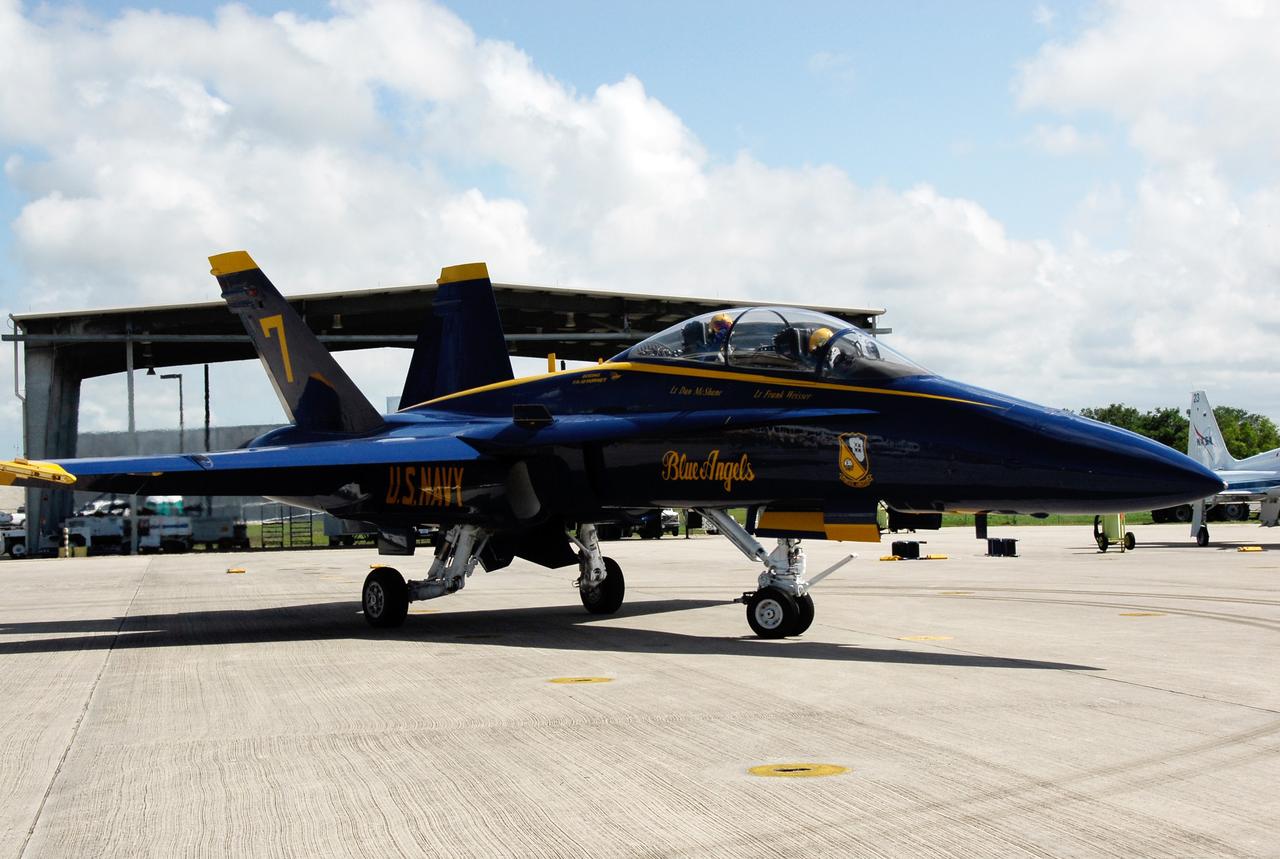
CAPE CANAVERAL, Fla. -- After meeting with NASA officials about their involvement in the second annual Space & Air Show at Kennedy Space Center Nov. 8-9, Blue Angel pilots Lt. Frank Weisser and Lt. Dan McShane prepare for takeoff of their U.S. Navy F-18 Hornet from the Shuttle Landing Facility for the return flight to their home base in Pensacola, Fla. The air show will be only the second time the Blue Angels have performed at Kennedy. Their precision flight team will perform high-speed passes, fast rolls, mirror formations, tight turns and their signature Delta formation showcasing the capabilities of the powerful aircraft. The 2008 Space & Air Show will include aircraft displays and space-related exhibits on the ground and plenty of action in the skies over Kennedy. Returning to the show is the 920th Rescue Wing, an Air Force Reserve Command combat search and rescue unit based at Patrick Air Force Base in Central Florida. Also, more than 20 astronauts and special guests will be on hand to personally meet guests, pose for photos and sign memorabilia. Photo credit: NASA/Kim Shiflett
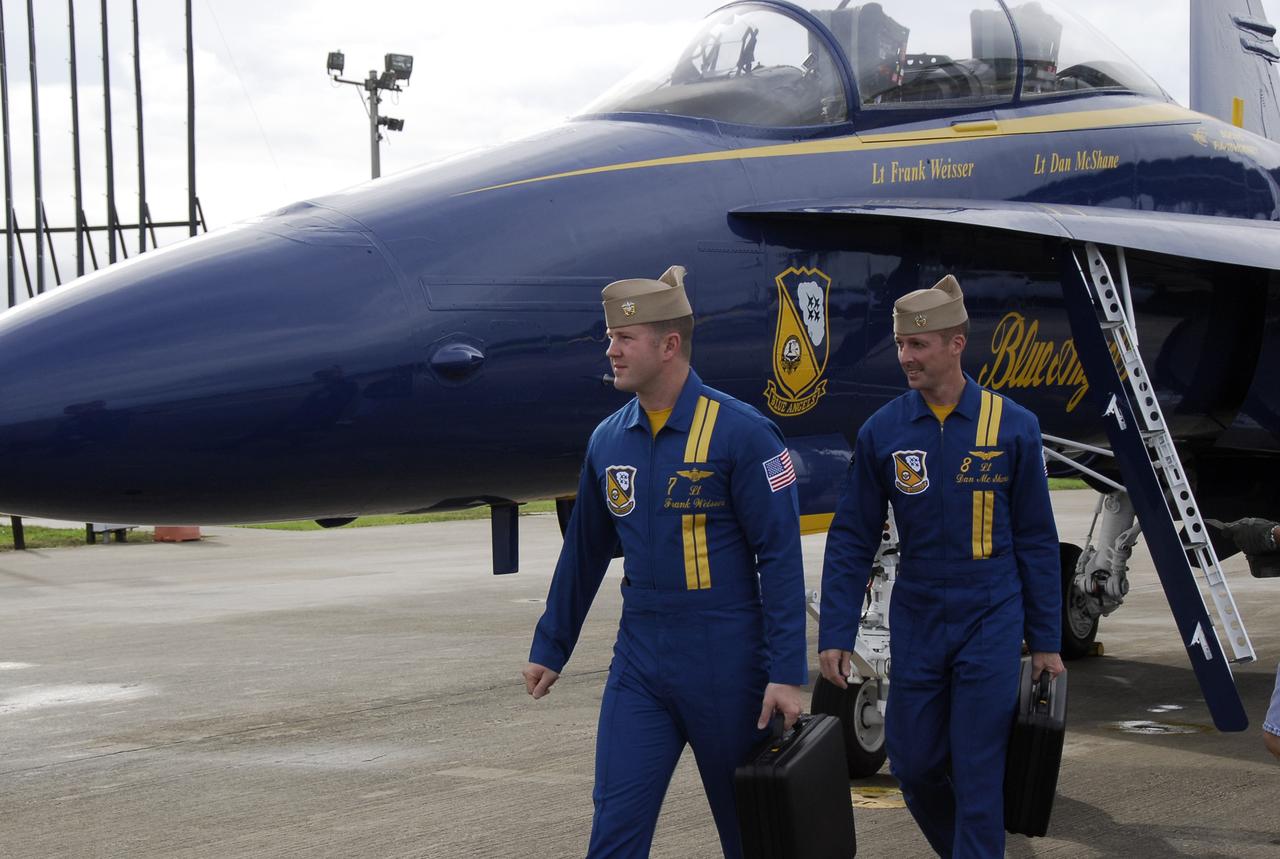
CAPE CANAVERAL, Fla. -- Blue Angel pilots Lt. Frank Weisser and Lt. Dan McShane arrive at NASA's Kennedy Space Center. Behind them is one of the U.S. Navy F-18 Hornets flown by the Blue Angels. The pilots flew into Kennedy to begin preparations for their involvement in the second annual Space & Air Show at Kennedy Space Center Nov. 8-9. The air show will be only the second time the Blue Angels have performed at Kennedy. Their precision flight team will perform high-speed passes, fast rolls, mirror formations, tight turns and their signature Delta formation showcasing the capabilities of the powerful aircraft. The 2008 Space & Air Show will include aircraft displays and space-related exhibits on the ground and plenty of action in the skies over Kennedy. Returning to the show is the 920th Rescue Wing, an Air Force Reserve Command combat search and rescue unit based at Patrick Air Force Base in Central Florida. Also, more than 20 astronauts and special guests will be on hand to personally meet guests, pose for photos and sign memorabilia. Photo credit: NASA/Kim Shiflett
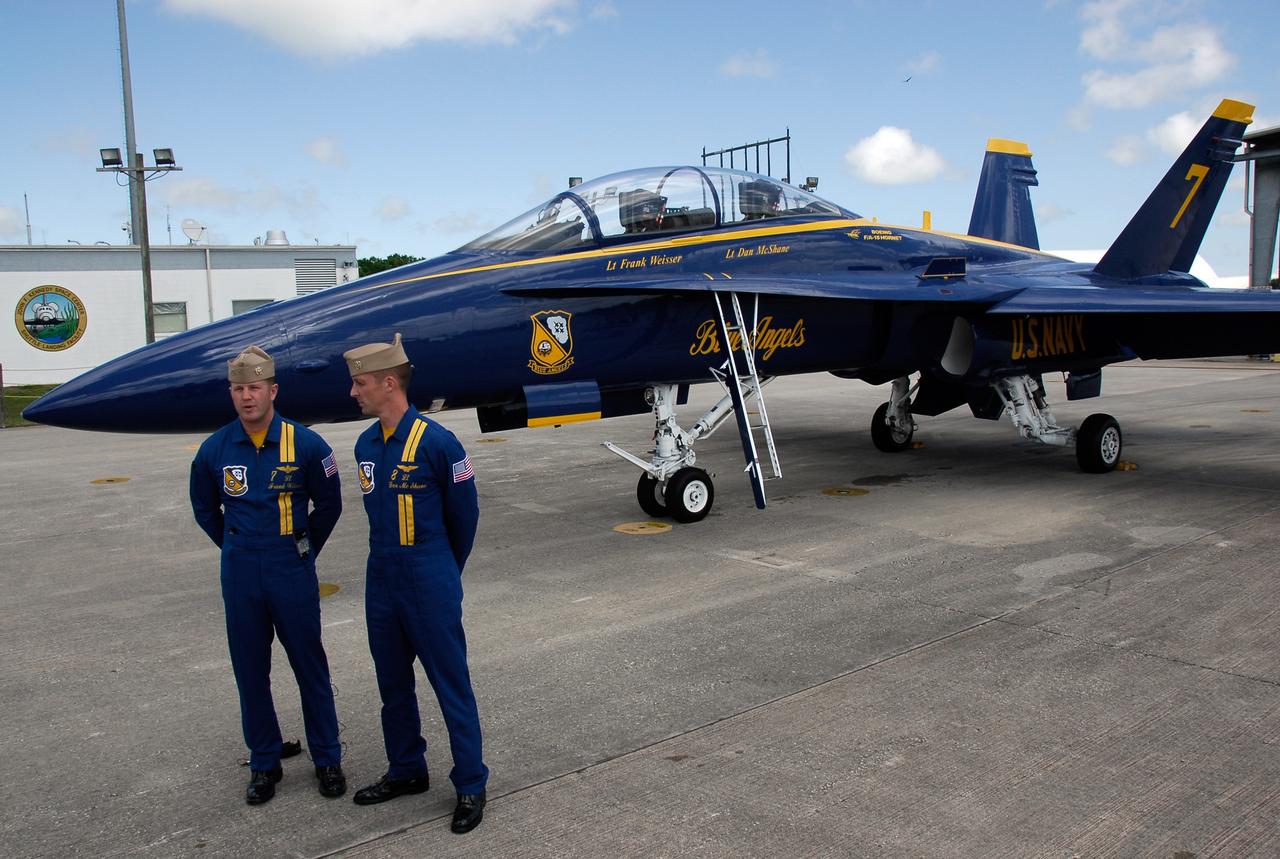
CAPE CANAVERAL, Fla. -- Blue Angel pilots Lt. Frank Weisser and Lt. Dan McShane arrive at NASA's Kennedy Space Center. Behind them is one of the U.S. Navy F-18 Hornets flown by the Blue Angels. The pilots flew into Kennedy to begin preparations for their involvement in the second annual Space & Air Show at Kennedy Nov. 8-9. The air show will be only the second time the Blue Angels have performed at Kennedy. Their precision flight team will perform high-speed passes, fast rolls, mirror formations, tight turns and their signature Delta formation showcasing the capabilities of the powerful aircraft. The 2008 Space & Air Show will include aircraft displays and space-related exhibits on the ground and plenty of action in the skies over Kennedy. Returning to the show is the 920th Rescue Wing, an Air Force Reserve Command combat search and rescue unit based at Patrick Air Force Base in Central Florida. Also, more than 20 astronauts and special guests will be on hand to personally meet guests, pose for photos and sign memorabilia. Photo credit: NASA/Kim Shiflett
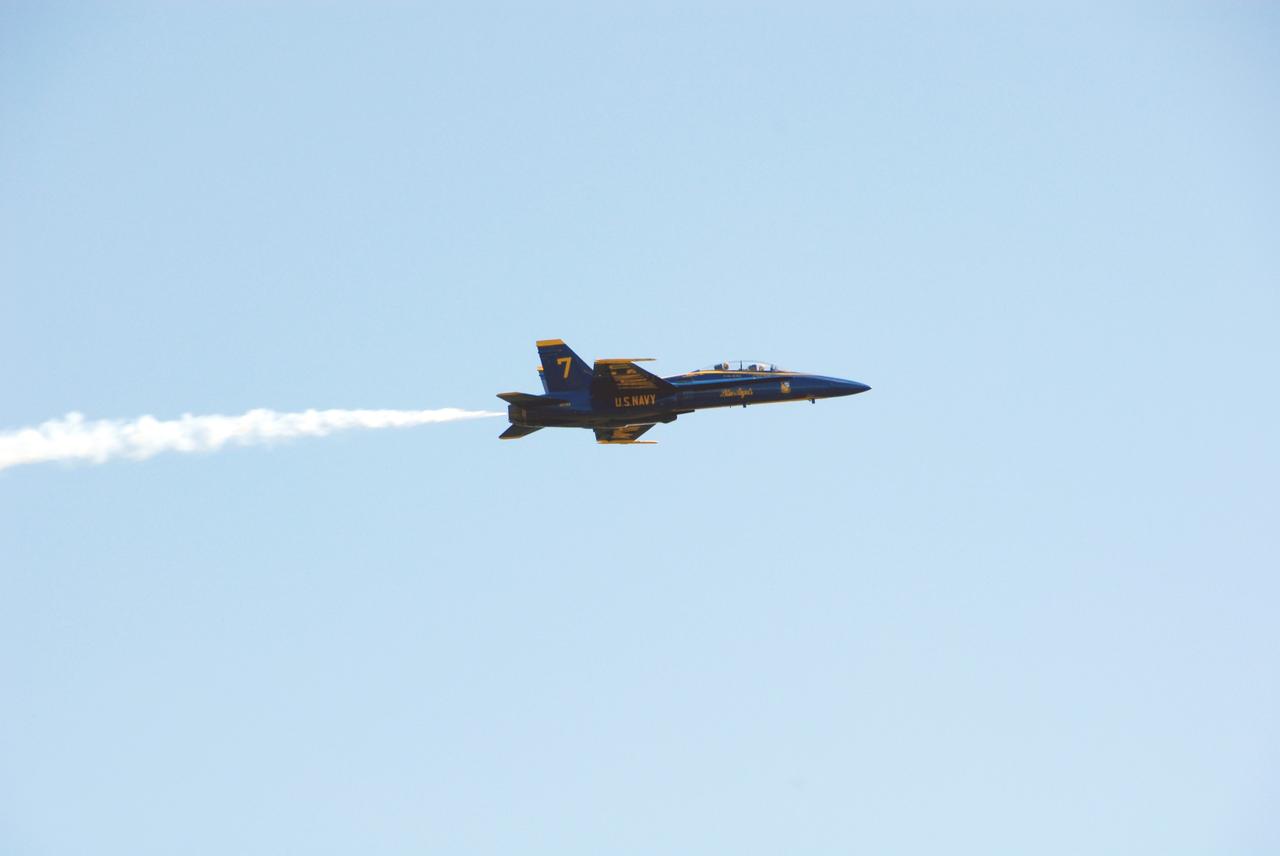
CAPE CANAVERAL, Fla. -- After meeting with NASA officials about their involvement in the second annual Space & Air Show at Kennedy Space Center Nov. 8-9, Blue Angel pilots Lt. Frank Weisser and Lt. Dan McShane take a last look at the center from their U.S. Navy F-18 Hornet as they return to their home base in Pensacola, Fla. The air show will be only the second time the Blue Angels have performed at Kennedy. Their precision flight team will perform high-speed passes, fast rolls, mirror formations, tight turns and their signature Delta formation showcasing the capabilities of the powerful aircraft. The 2008 Space & Air Show will include aircraft displays and space-related exhibits on the ground and plenty of action in the skies over Kennedy. Returning to the show is the 920th Rescue Wing, an Air Force Reserve Command combat search and rescue unit based at Patrick Air Force Base in Central Florida. Also, more than 20 astronauts and special guests will be on hand to personally meet guests, pose for photos and sign memorabilia. Photo credit: NASA/Dimitri Gerondidakis
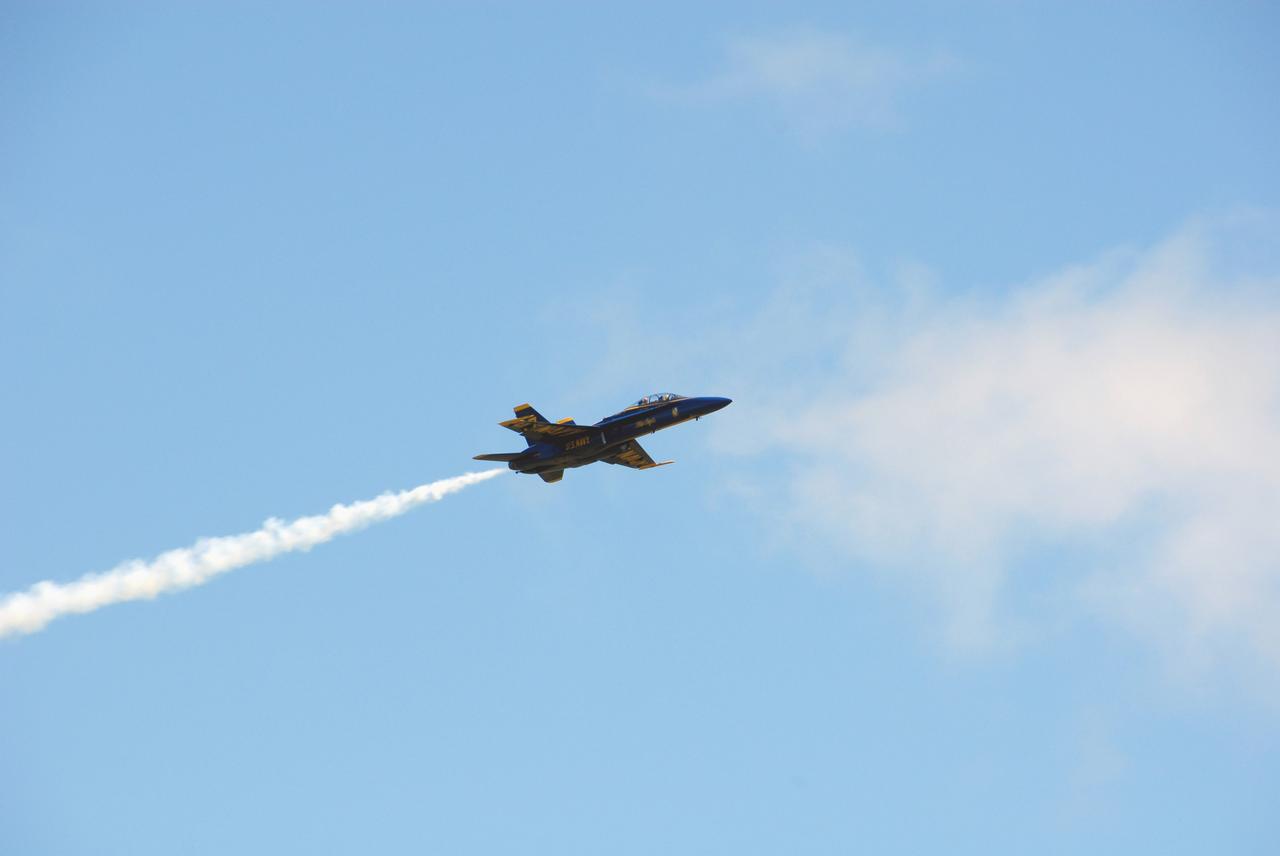
CAPE CANAVERAL, Fla. -- After meeting with NASA officials about their involvement in the second annual Space & Air Show at Kennedy Space Center Nov. 8-9, Blue Angel pilots Lt. Frank Weisser and Lt. Dan McShane take a last look at the center from their U.S. Navy F-18 Hornet as they return to their home base in Pensacola, Fla. The air show will be only the second time the Blue Angels have performed at Kennedy. Their precision flight team will perform high-speed passes, fast rolls, mirror formations, tight turns and their signature Delta formation showcasing the capabilities of the powerful aircraft. The 2008 Space & Air Show will include aircraft displays and space-related exhibits on the ground and plenty of action in the skies over Kennedy. Returning to the show is the 920th Rescue Wing, an Air Force Reserve Command combat search and rescue unit based at Patrick Air Force Base in Central Florida. Also, more than 20 astronauts and special guests will be on hand to personally meet guests, pose for photos and sign memorabilia. Photo credit: NASA/Dimitri Gerondidakis
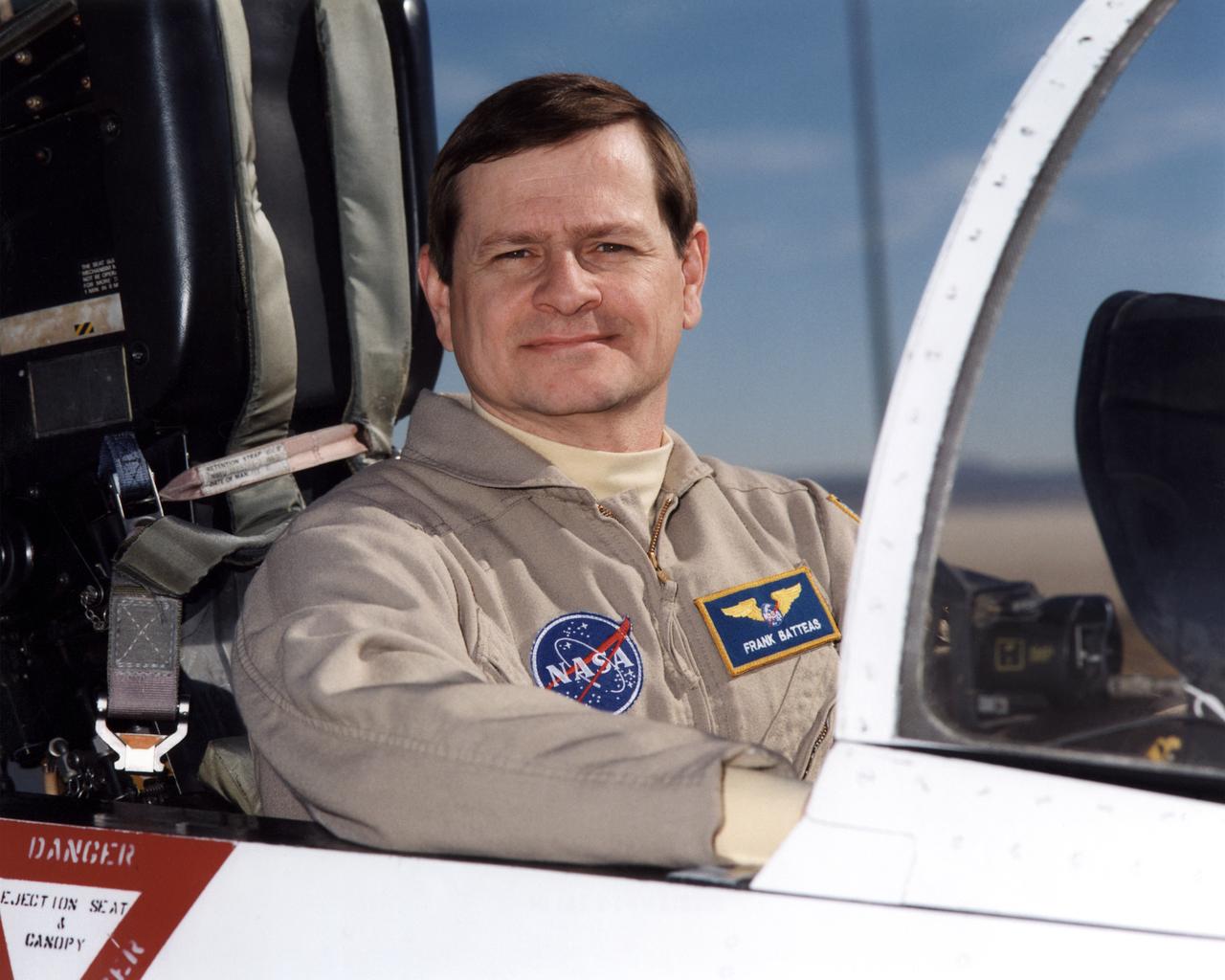
Frank Batteas is a research test pilot in the Flight Crew Branch of NASA's Dryden Flight Research Center, Edwards, California. He is currently a project pilot for the F/A-18 and C-17 flight research projects. In addition, his flying duties include operation of the DC-8 Flying Laboratory in the Airborne Science program, and piloting the B-52B launch aircraft, the King Air, and the T-34C support aircraft. Batteas has accumulated more than 4,700 hours of military and civilian flight experience in more than 40 different aircraft types. Batteas came to NASA Dryden in April 1998, following a career in the U.S. Air Force. His last assignment was at Wright-Patterson Air Force Base, Dayton, Ohio, where Lieutenant Colonel Batteas led the B-2 Systems Test and Evaluation efforts for a two-year period. Batteas graduated from Class 88A of the Air Force Test Pilot School, Edwards Air Force Base, California, in December 1988. He served more than five years as a test pilot for the Air Force's newest airlifter, the C-17, involved in nearly every phase of testing from flutter and high angle-of-attack tests to airdrop and air refueling envelope expansion. In the process, he achieved several C-17 firsts including the first day and night aerial refuelings, the first flight over the North Pole, and a payload-to-altitude world aviation record. As a KC-135 test pilot, he also was involved in aerial refueling certification tests on a number of other Air Force aircraft. Batteas received his commission as a second lieutenant in the U. S. Air Force through the Reserve Officer Training Corps and served initially as an engineer working on the Peacekeeper and Minuteman missile programs at the Ballistic Missile Office, Norton Air Force Base, Calif. After attending pilot training at Williams Air Force Base, Phoenix, Ariz., he flew operational flights in the KC-135 tanker aircraft and then was assigned to research flying at the 4950th Test Wing, Wright-Patterson. He flew extensively modified C-135

Mark Pestana is a research pilot and project manager at the NASA Dryden Flight Research Center, Edwards, Calif. He is a pilot for the Beech B200 King Air, the T-34C and the Predator B. He flies the F-18 Hornet as a co-pilot and flight test engineer. Pestana has accumulated more than 4,000 hours of military and civilian flight experience. He was also a flight engineer on the NASA DC-8 flying laboratory. Pestana was the project manager and pilot for the Hi–rate Wireless Airborne Network Demonstration flown on the NASA B200 research aircraft. He flew B200 research missions for the X-38 Space Integrated Inertial Navigation Global Positioning System experiment. Pestana also participated in several deployments of the DC-8, including Earth science expeditions ranging from hurricane research over the Caribbean Sea to ozone studies over the North Pole, atmospheric chemistry over the South Pacific, rain forest health in Central America, Rocky Mountain ice pack assessment, and volcanic and tectonic activity around the Pacific Rim. He came to Dryden as a DC-8 mission manager in June 1998 from NASA Johnson Space Center, Houston, where he served as the Earth and Space Science discipline manager for the International Space Station Program at Johnson. Pestana also served as a flight crew operations engineer in the Astronaut Office, developing the controls, displays, tools, crew accommodations and procedures for on-orbit assembly, test, and checkout of the International Space Station. He led the analysis and technical negotiations for modification of the Russian Soyuz spacecraft as an emergency crew return vehicle for space station crews. He joined the U.S. Air Force Reserve in 1991 and held various positions as a research and development engineer, intelligence analyst, and Delta II launch vehicle systems engineer. He retired from the U.S. Air Force Reserve with the rank of colonel in 2005. Prior to 1990, Pestana was on active duty with the U.S. Air Force as the director of mi
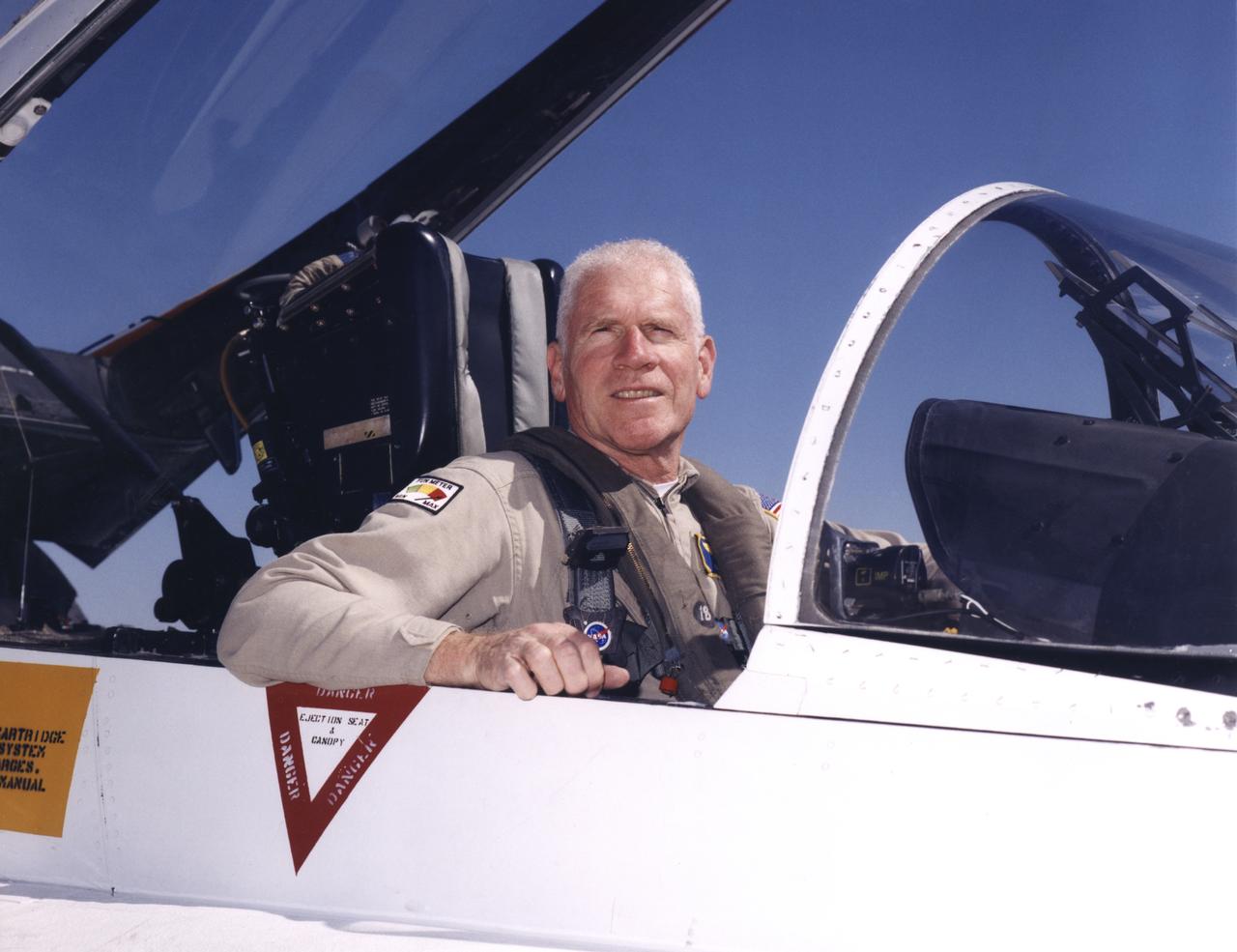
Edwin W. Lewis Jr. is a research pilot in the Airborne Science program, Flight Crew Branch, Dryden Flight Research Center, Edwards, California. He currently flies the DC-8, F/A-18, Lear Jet 24, King Air, and T-34C in support of Dryden's flight operations and is mentor pilot for the King Air and the Lear Jet. Prior to accepting this assignment Lewis was a pilot for eight years at NASA's Ames Research Center, Moffett Field, California, flying 10 different aircraft C-130B, DC-8-72, UH-1, SH-3, King Air, Lear 24, T-38A, T-39G and YO-3A in support of NASA flight missions. Lewis also flew the Kuiper Airborne Observatory (a modified civilian version of the Lockheed C-141 Starlifter). He was project pilot for Ames' 747 and T-38 programs. Lewis was born in New York City on May 19, 1936, and began flight training as a Civil Air Patrol cadet in 1951, ultimately earning his commercial pilot's certificate in 1958. He received a bachelor of arts degree in biology from Hobart College, Geneva, N.Y., and entered the U.S. Air Force through the Reserve Officer Training Corps. Following pilot training he was assigned to Moody Air Force Base, Ga., as an instructor pilot, for both the T-33 and T-37 aircraft. He served in Vietnam in 1965 and 1966, where he was a forward air controller, instructor and standardization/evaluation pilot, flying more than 1,000 hours in the O-1 "Bird Dog." Lewis separated from the regular Air Force and joined Pan American World Airways and the 129th Air Commando Group, California Air National Guard (ANG) based in Hayward, California. During his 18-year career with the California ANG he flew the U-6, U-10, C-119, HC-130 aircraft and the HH-3 helicopter. He retired as commander, 129th Air Rescue and Recovery Group, a composite combat rescue group, in the grade of colonel. During his 22 years as an airline pilot, he flew the Boeing 707, 727 and 747. He took early retirement from Pan American in 1989 to become a pilot with NASA.