
Both halves of the United Launch Alliance (ULA) Delta II rocket payload fairing were moved inside ULA's Building B8337 at Vandenberg Air Force Base in California. NASA's Ice, Cloud and land Elevation Satellite-2 (ICESat-2) will launch later this year on the final Delta II rocket. ICESat-2 will measure the height of a changing Earth, one laser pulse at a time, 10,000 laser pulses a second. The satellite will carry a single instrument, the Advanced Topographic Laser Altimeter System. ICESat-2 will help scientists investigate why, and how much our planet's frozen and icy areas, called the cryosphere, is changing in a warming climate.

The first half of the United Launch Alliance (ULA) Delta II rocket payload fairing is moved out of NASA's Building 836 at Vandenberg Air Force Base in California. It will be transported to ULA's Building B8337. NASA's Ice, Cloud and land Elevation Satellite-2 (ICESat-2) will launch later this year on the final Delta II rocket. ICESat-2 will measure the height of a changing Earth, one laser pulse at a time, 10,000 laser pulses a second. The satellite will carry a single instrument, the Advanced Topographic Laser Altimeter System. ICESat-2 will help scientists investigate why, and how much our planet's frozen and icy areas, called the cryosphere, is changing in a warming climate.
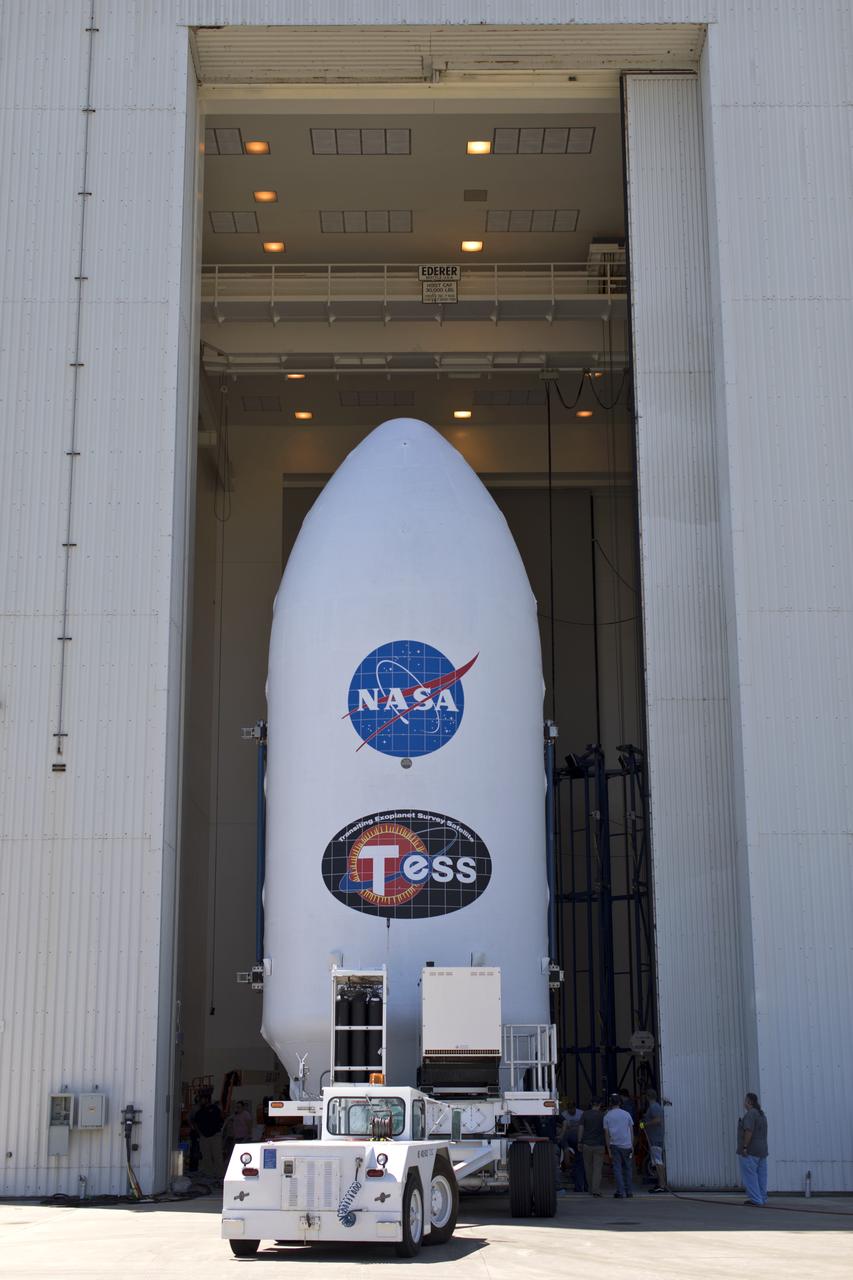
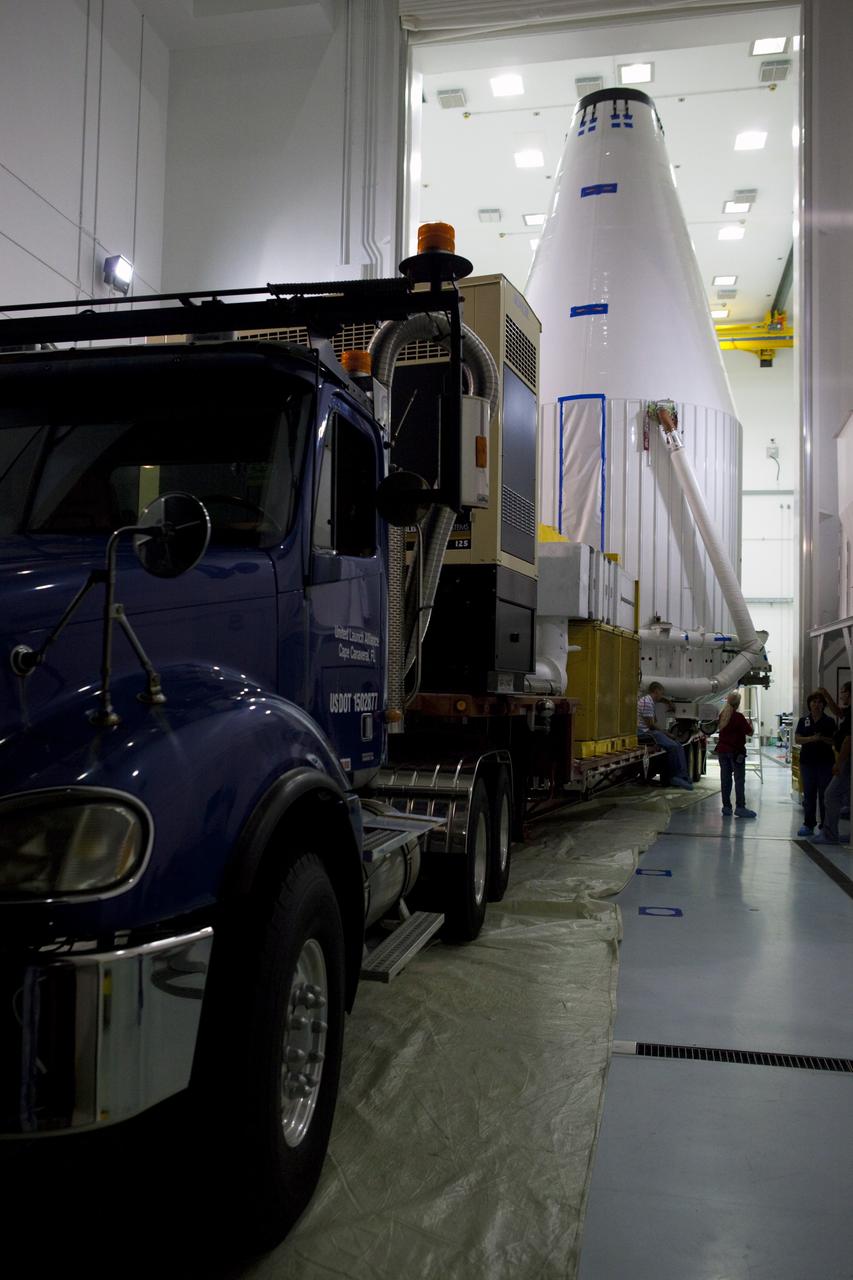
The payload fairing for NASA's Transiting Exoplanet Survey Satellite (TESS) is moved inside the Payload Hazardous Servicing Facility at the agency's Kennedy Space Center in Florida. Inside the facility, TESS will be encapsulated in the payload fairing. The satellite is scheduled to launch atop a SpaceX Falcon 9 rocket from Space Launch Complex 40 at Cape Canaveral Air Force Station on April 16. The satellite is the next step in NASA's search for planets outside our solar system, known as exoplanets. TESS is a NASA Astrophysics Explorer mission led and operated by MIT in Cambridge, Massachusetts, and managed by NASA’s Goddard Space Flight Center in Greenbelt, Maryland. Dr. George Ricker of MIT’s Kavli Institute for Astrophysics and Space Research serves as principal investigator for the mission. Additional partners include Orbital ATK, NASA’s Ames Research Center, the Harvard-Smithsonian Center for Astrophysics and the Space Telescope Science Institute. More than a dozen universities, research institutes and observatories worldwide are participants in the mission. NASA’s Launch Services Program is responsible for launch management.
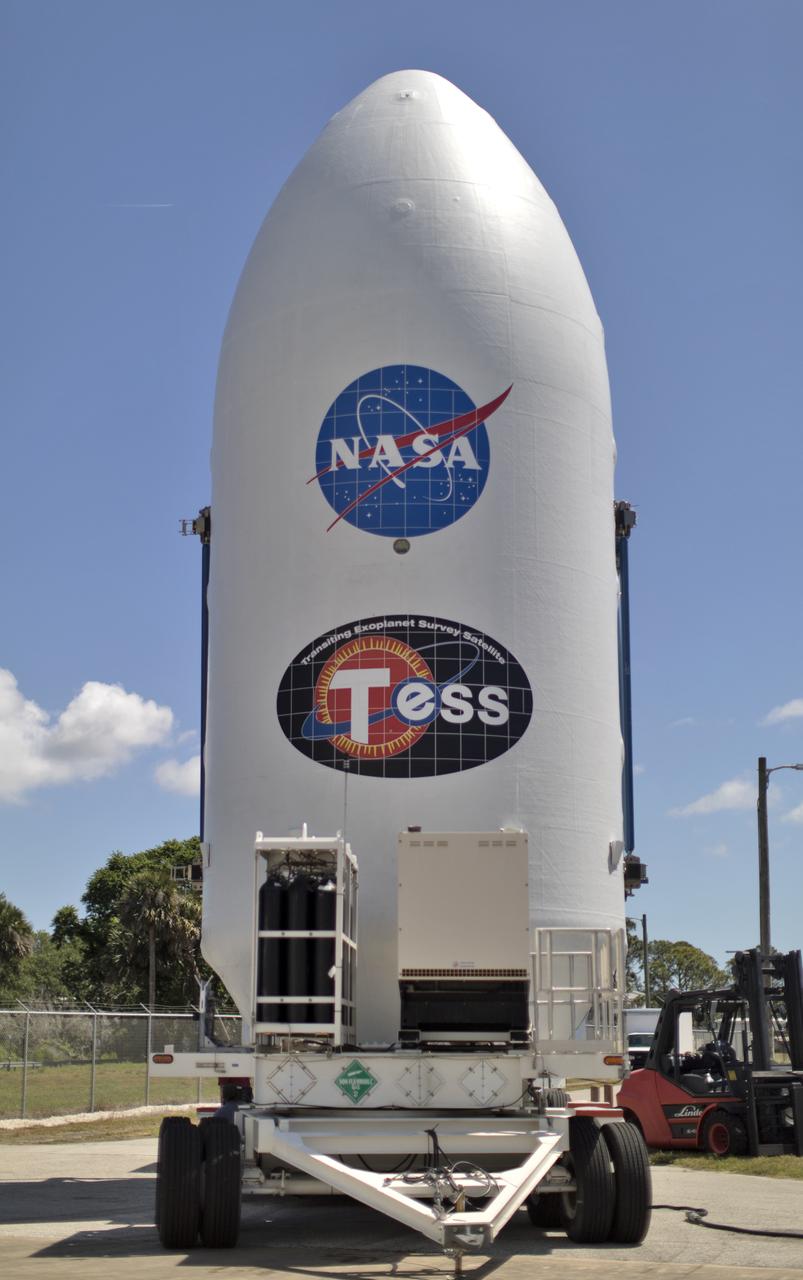
The payload fairing for NASA's Transiting Exoplanet Survey Satellite (TESS) is being prepared for the move to the Payload Hazardous Servicing Facility at the agency's Kennedy Space Center in Florida. Inside the facility, TESS will be encapsulated in the payload fairing. The satellite is scheduled to launch atop a SpaceX Falcon 9 rocket from Space Launch Complex 40 at Cape Canaveral Air Force Station on April 16. The satellite is the next step in NASA's search for planets outside our solar system, known as exoplanets. TESS is a NASA Astrophysics Explorer mission led and operated by MIT in Cambridge, Massachusetts, and managed by NASA’s Goddard Space Flight Center in Greenbelt, Maryland. Dr. George Ricker of MIT’s Kavli Institute for Astrophysics and Space Research serves as principal investigator for the mission. Additional partners include Orbital ATK, NASA’s Ames Research Center, the Harvard-Smithsonian Center for Astrophysics and the Space Telescope Science Institute. More than a dozen universities, research institutes and observatories worldwide are participants in the mission. NASA’s Launch Services Program is responsible for launch management.
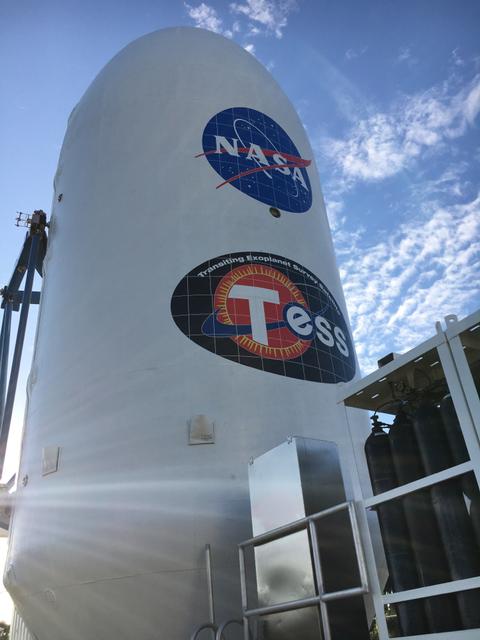
The payload fairing for NASA's Transiting Exoplanet Survey Satellite (TESS) is being moved to the Payload Hazardous Servicing Facility at the agency's Kennedy Space Center in Florida. Inside the facility, TESS will be encapsulated in the payload fairing. The satellite is scheduled to launch atop a SpaceX Falcon 9 rocket from Space Launch Complex 40 at Cape Canaveral Air Force Station on April 16. The satellite is the next step in NASA's search for planets outside our solar system, known as exoplanets. TESS is a NASA Astrophysics Explorer mission led and operated by MIT in Cambridge, Massachusetts, and managed by NASA’s Goddard Space Flight Center in Greenbelt, Maryland. Dr. George Ricker of MIT’s Kavli Institute for Astrophysics and Space Research serves as principal investigator for the mission. Additional partners include Orbital ATK, NASA’s Ames Research Center, the Harvard-Smithsonian Center for Astrophysics and the Space Telescope Science Institute. More than a dozen universities, research institutes and observatories worldwide are participants in the mission. NASA’s Launch Services Program is responsible for launch management.

The payload fairing for NASA's Transiting Exoplanet Survey Satellite (TESS) is moved inside the Payload Hazardous Servicing Facility at the agency's Kennedy Space Center in Florida. Inside the facility, TESS will be encapsulated in the payload fairing. The satellite is scheduled to launch atop a SpaceX Falcon 9 rocket from Space Launch Complex 40 at Cape Canaveral Air Force Station on April 16. The satellite is the next step in NASA's search for planets outside our solar system, known as exoplanets. TESS is a NASA Astrophysics Explorer mission led and operated by MIT in Cambridge, Massachusetts, and managed by NASA’s Goddard Space Flight Center in Greenbelt, Maryland. Dr. George Ricker of MIT’s Kavli Institute for Astrophysics and Space Research serves as principal investigator for the mission. Additional partners include Orbital ATK, NASA’s Ames Research Center, the Harvard-Smithsonian Center for Astrophysics and the Space Telescope Science Institute. More than a dozen universities, research institutes and observatories worldwide are participants in the mission. NASA’s Launch Services Program is responsible for launch management.
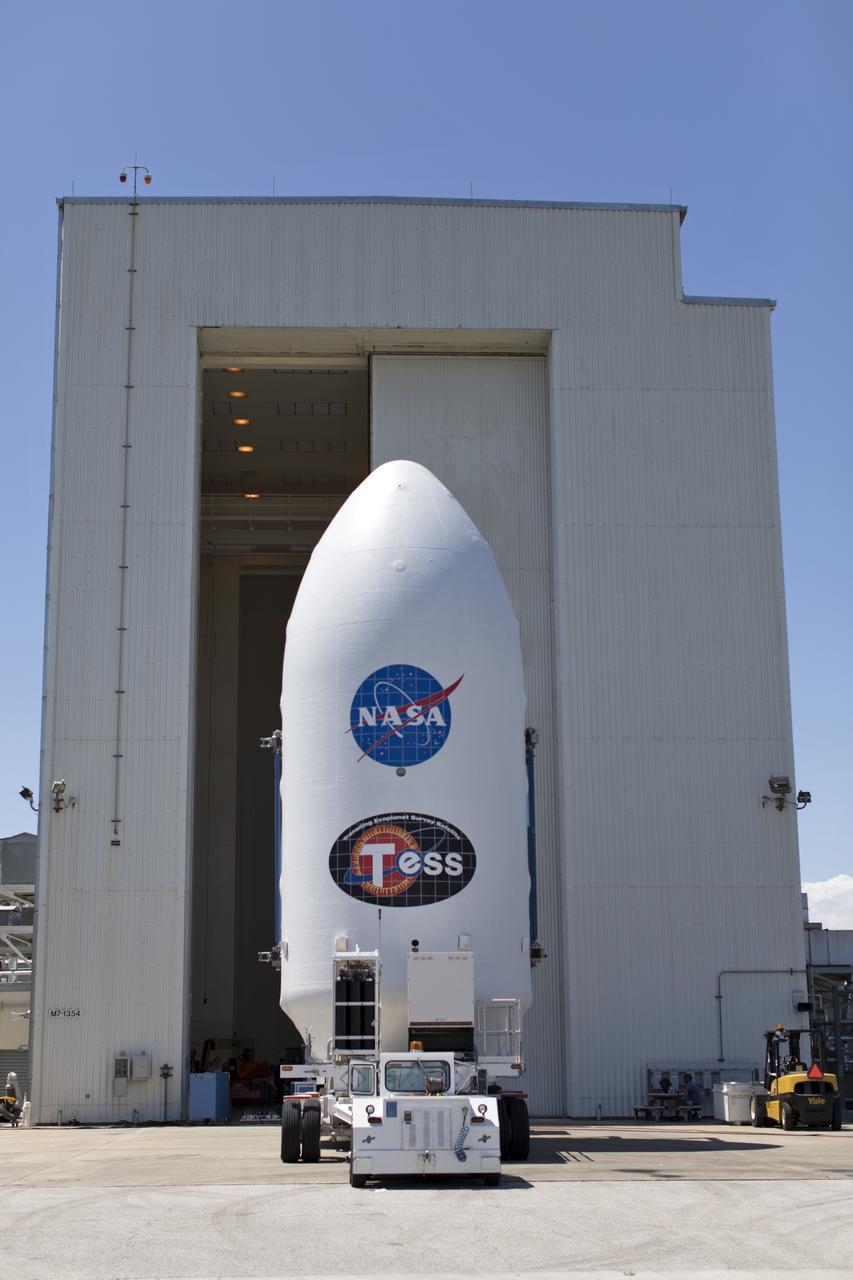
The payload fairing for NASA's Transiting Exoplanet Survey Satellite (TESS) is moved to the entrance of the Payload Hazardous Servicing Facility at the agency's Kennedy Space Center in Florida. Inside the facility, TESS will be encapsulated in the payload fairing. The satellite is scheduled to launch atop a SpaceX Falcon 9 rocket from Space Launch Complex 40 at Cape Canaveral Air Force Station on April 16. The satellite is the next step in NASA's search for planets outside our solar system, known as exoplanets. TESS is a NASA Astrophysics Explorer mission led and operated by MIT in Cambridge, Massachusetts, and managed by NASA’s Goddard Space Flight Center in Greenbelt, Maryland. Dr. George Ricker of MIT’s Kavli Institute for Astrophysics and Space Research serves as principal investigator for the mission. Additional partners include Orbital ATK, NASA’s Ames Research Center, the Harvard-Smithsonian Center for Astrophysics and the Space Telescope Science Institute. More than a dozen universities, research institutes and observatories worldwide are participants in the mission. NASA’s Launch Services Program is responsible for launch management.
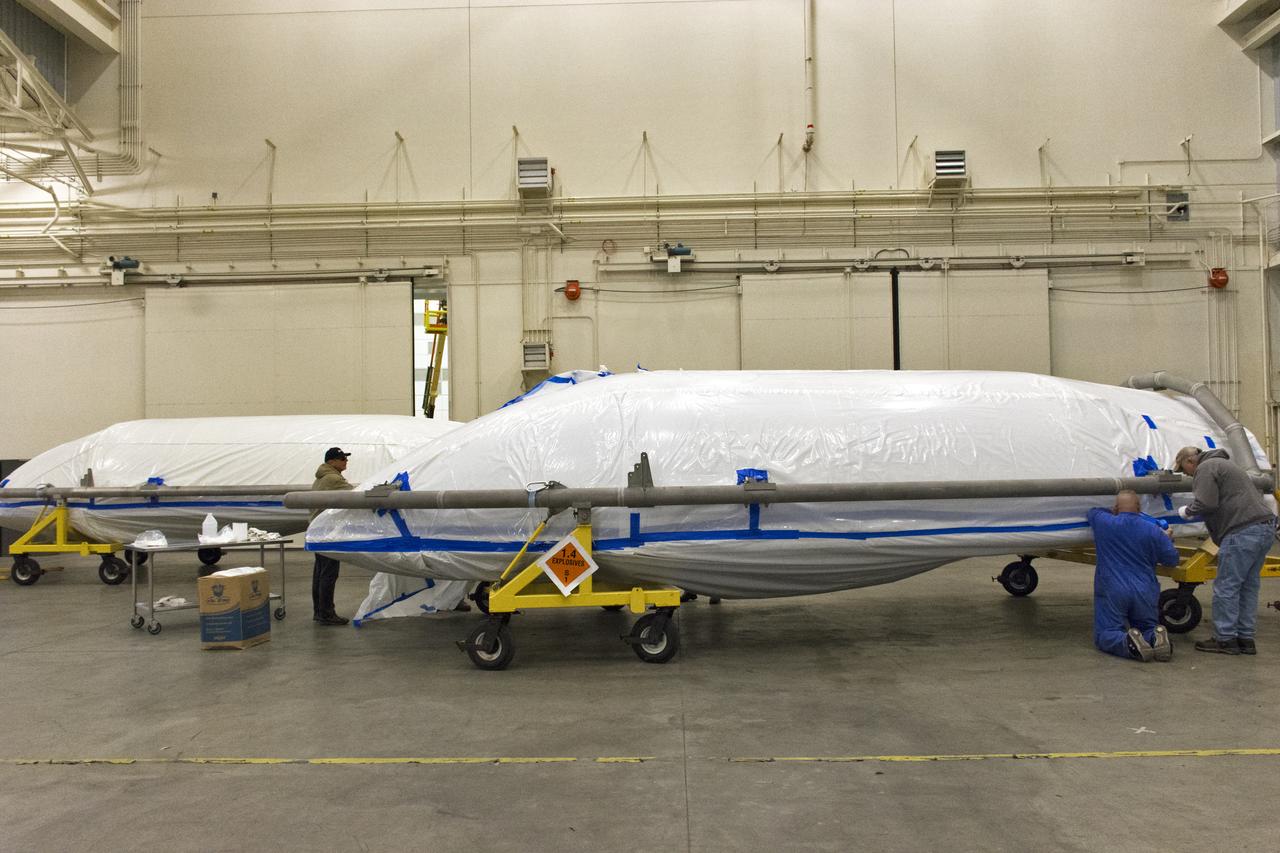
Both halves of the United Launch Alliance (ULA) Delta II rocket payload fairing were moved inside ULA's Building B8337 at Vandenberg Air Force Base in California. Technicians begin the process to remove them from their transporters. NASA's Ice, Cloud and land Elevation Satellite-2 (ICESat-2) will launch later this year on the final Delta II rocket. ICESat-2 will measure the height of a changing Earth, one laser pulse at a time, 10,000 laser pulses a second. The satellite will carry a single instrument, the Advanced Topographic Laser Altimeter System. ICESat-2 will help scientists investigate why, and how much our planet's frozen and icy areas, called the cryosphere, is changing in a warming climate.
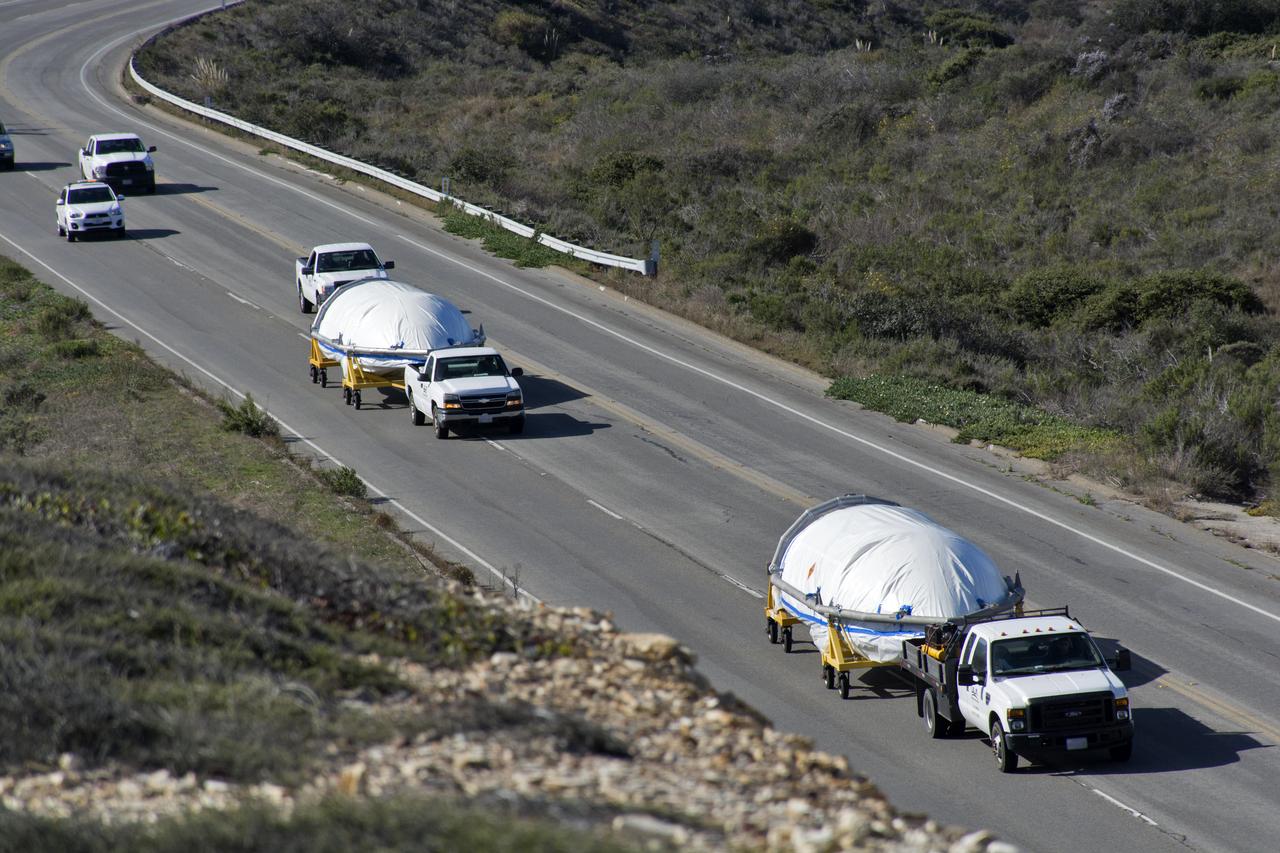
Both halves of the United Launch Alliance (ULA) Delta II rocket payload fairing are transported by convoy to ULA's Building B8337 at Vandenberg Air Force Base in California. NASA's Ice, Cloud and land Elevation Satellite-2 (ICESat-2) will launch later this year on the final Delta II rocket. ICESat-2 will measure the height of a changing Earth, one laser pulse at a time, 10,000 laser pulses a second. The satellite will carry a single instrument, the Advanced Topographic Laser Altimeter System. ICESat-2 will help scientists investigate why, and how much our planet's frozen and icy areas, called the cryosphere, is changing in a warming climate.
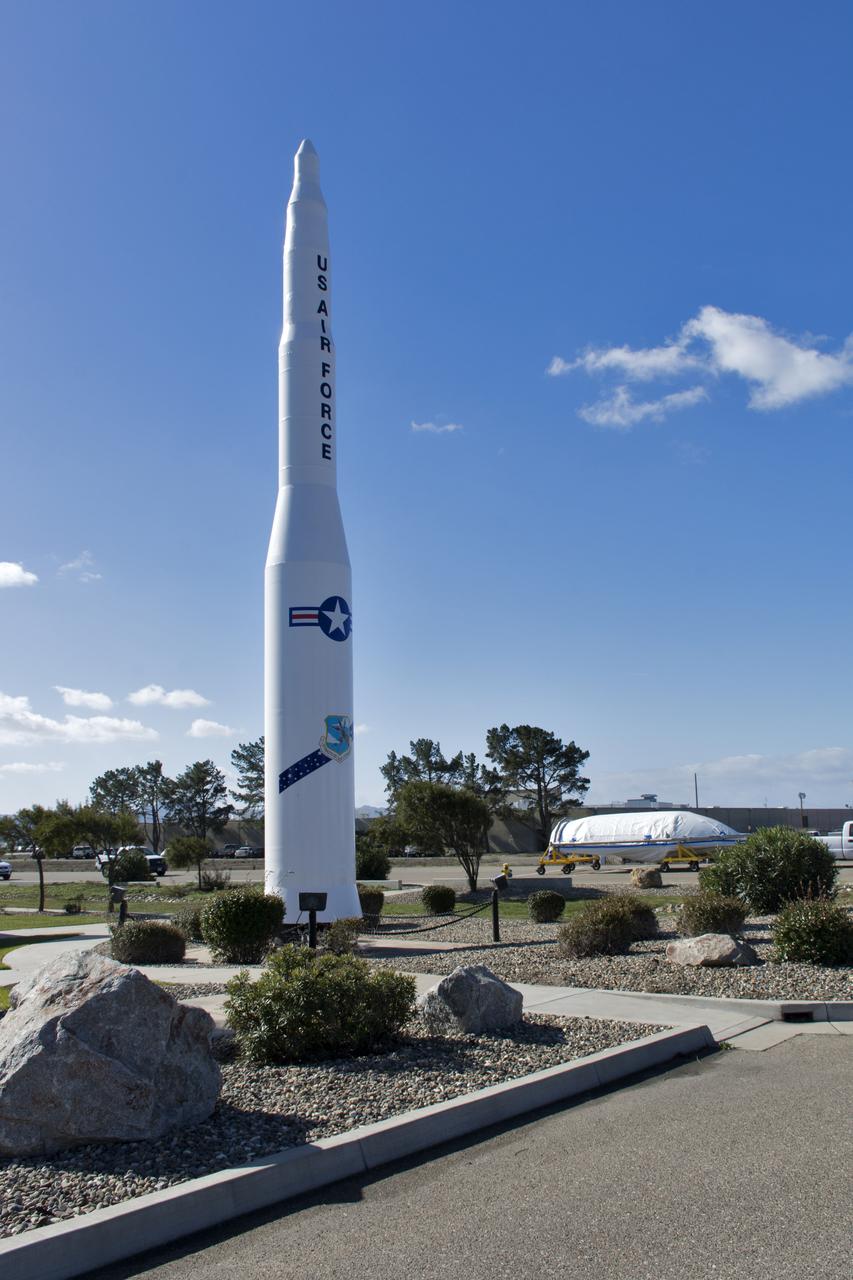
Both halves of the United Launch Alliance (ULA) Delta II rocket payload fairing are transported by convoy to ULA's Building B8337 at Vandenberg Air Force Base in California. NASA's Ice, Cloud and land Elevation Satellite-2 (ICESat-2) will launch later this year on the final Delta II rocket. ICESat-2 will measure the height of a changing Earth, one laser pulse at a time, 10,000 laser pulses a second. The satellite will carry a single instrument, the Advanced Topographic Laser Altimeter System. ICESat-2 will help scientists investigate why, and how much our planet's frozen and icy areas, called the cryosphere, is changing in a warming climate.

Both halves of the United Launch Alliance (ULA) Delta II rocket payload fairing are transported by convoy to ULA's Building B8337 at Vandenberg Air Force Base in California. NASA's Ice, Cloud and land Elevation Satellite-2 (ICESat-2) will launch later this year on the final Delta II rocket. ICESat-2 will measure the height of a changing Earth, one laser pulse at a time, 10,000 laser pulses a second. The satellite will carry a single instrument, the Advanced Topographic Laser Altimeter System. ICESat-2 will help scientists investigate why, and how much our planet's frozen and icy areas, called the cryosphere, is changing in a warming climate.
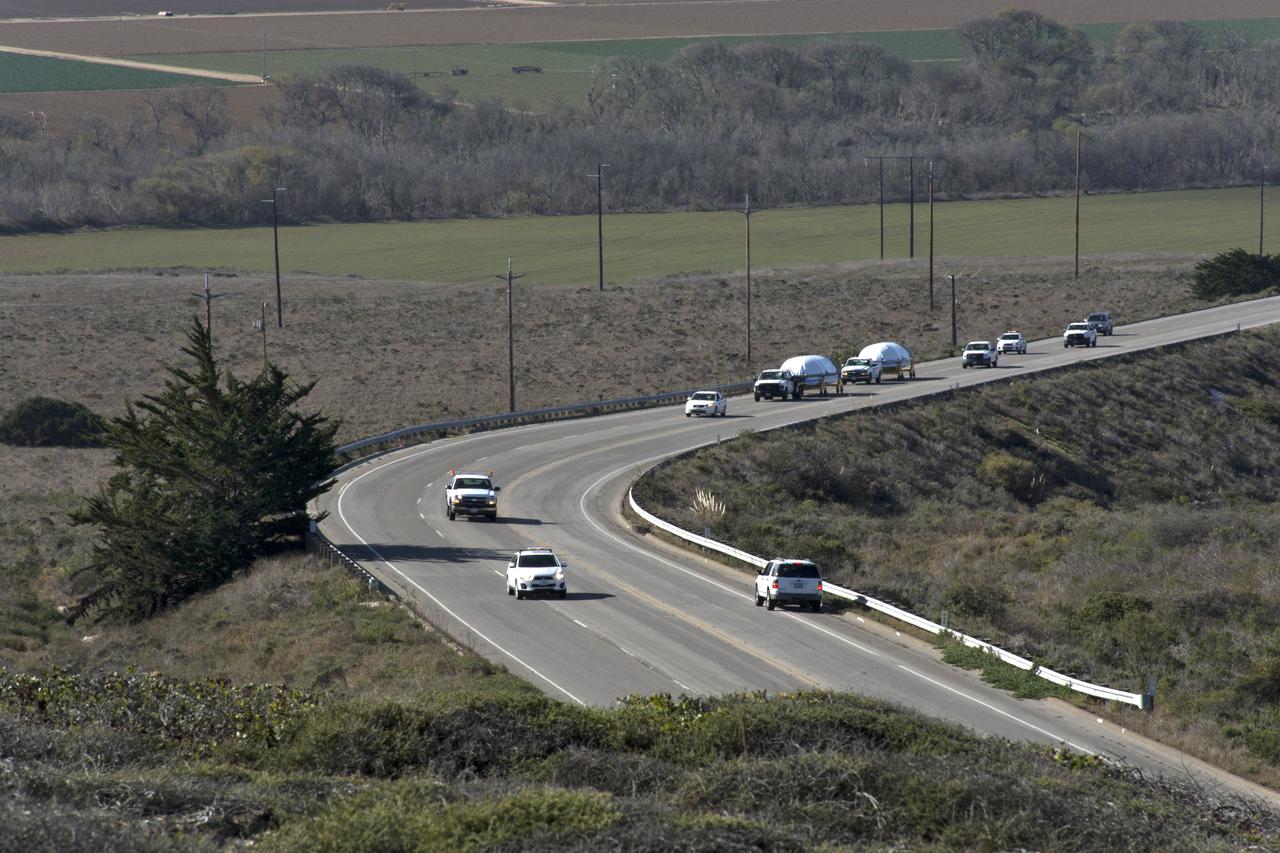
Both halves of the United Launch Alliance (ULA) Delta II rocket payload fairing are transported by convoy to ULA's Building B8337 at Vandenberg Air Force Base in California. NASA's Ice, Cloud and land Elevation Satellite-2 (ICESat-2) will launch later this year on the final Delta II rocket. ICESat-2 will measure the height of a changing Earth, one laser pulse at a time, 10,000 laser pulses a second. The satellite will carry a single instrument, the Advanced Topographic Laser Altimeter System. ICESat-2 will help scientists investigate why, and how much our planet's frozen and icy areas, called the cryosphere, is changing in a warming climate.
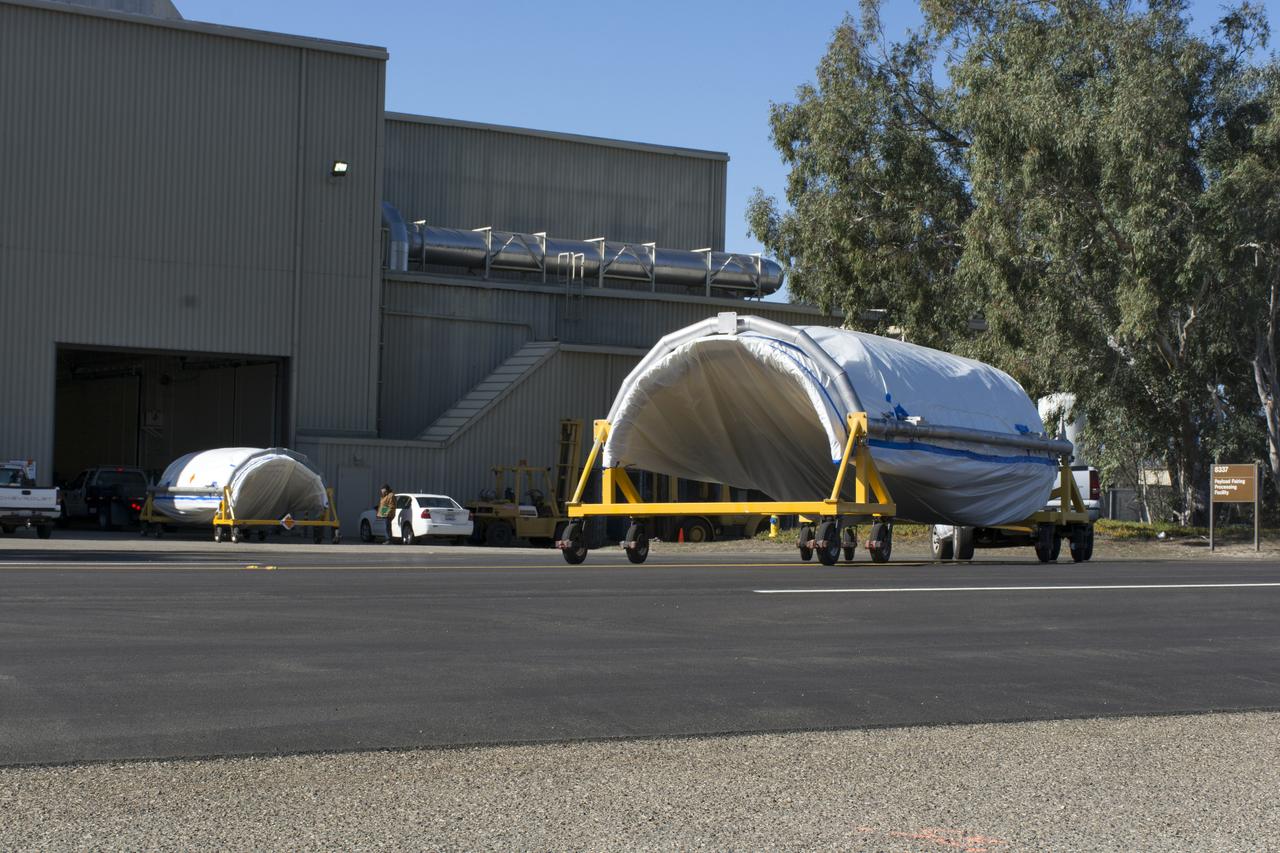
Both halves of the United Launch Alliance (ULA) Delta II rocket payload fairing arrive at ULA's Building B8337 at Vandenberg Air Force Base in California. NASA's Ice, Cloud and land Elevation Satellite-2 (ICESat-2) will launch later this year on the final Delta II rocket. ICESat-2 will measure the height of a changing Earth, one laser pulse at a time, 10,000 laser pulses a second. The satellite will carry a single instrument, the Advanced Topographic Laser Altimeter System. ICESat-2 will help scientists investigate why, and how much our planet's frozen and icy areas, called the cryosphere, is changing in a warming climate.
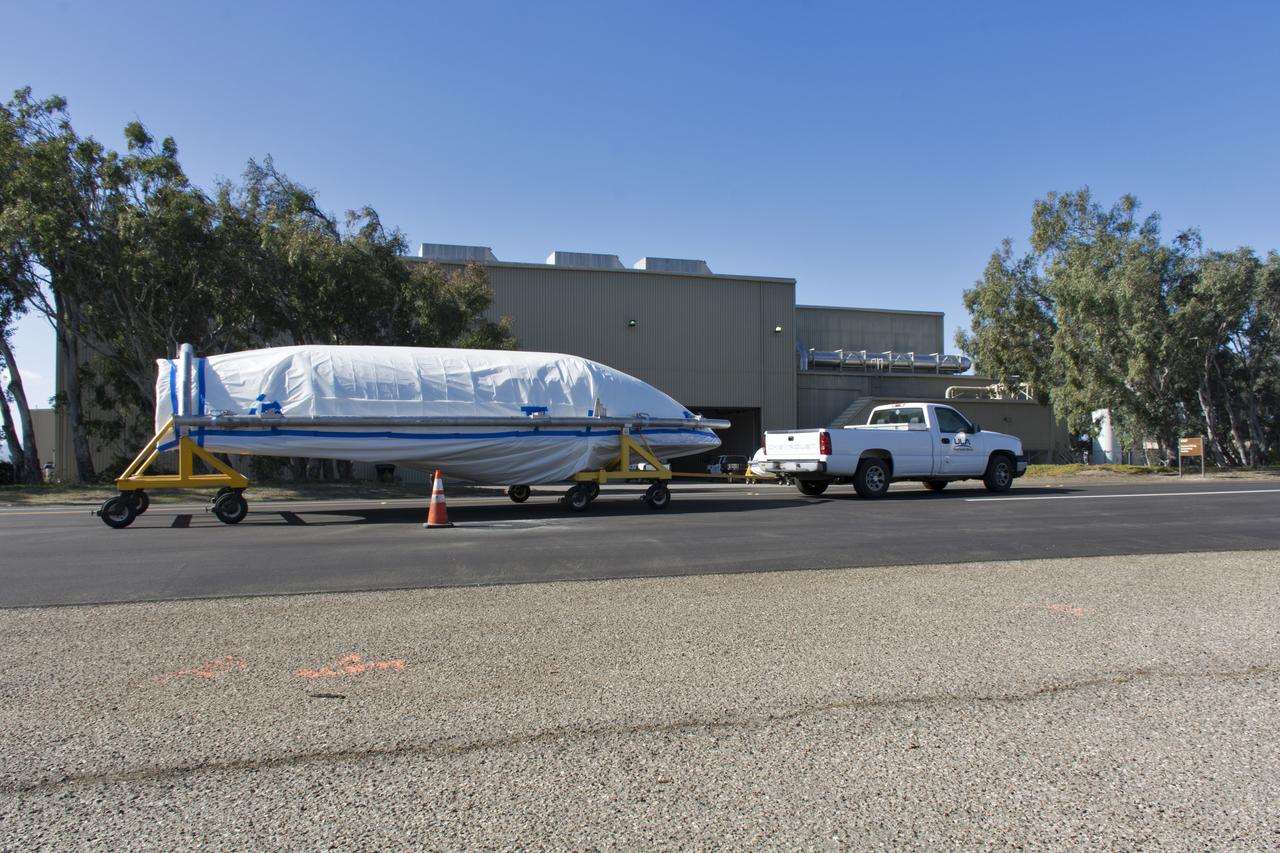
The first half of the United Launch Alliance (ULA) Delta II rocket payload fairing arrives at ULA's Building B8337 at Vandenberg Air Force Base in California. NASA's Ice, Cloud and land Elevation Satellite-2 (ICESat-2) will launch later this year on the final Delta II rocket. ICESat-2 will measure the height of a changing Earth, one laser pulse at a time, 10,000 laser pulses a second. The satellite will carry a single instrument, the Advanced Topographic Laser Altimeter System. ICESat-2 will help scientists investigate why, and how much our planet's frozen and icy areas, called the cryosphere, is changing in a warming climate.
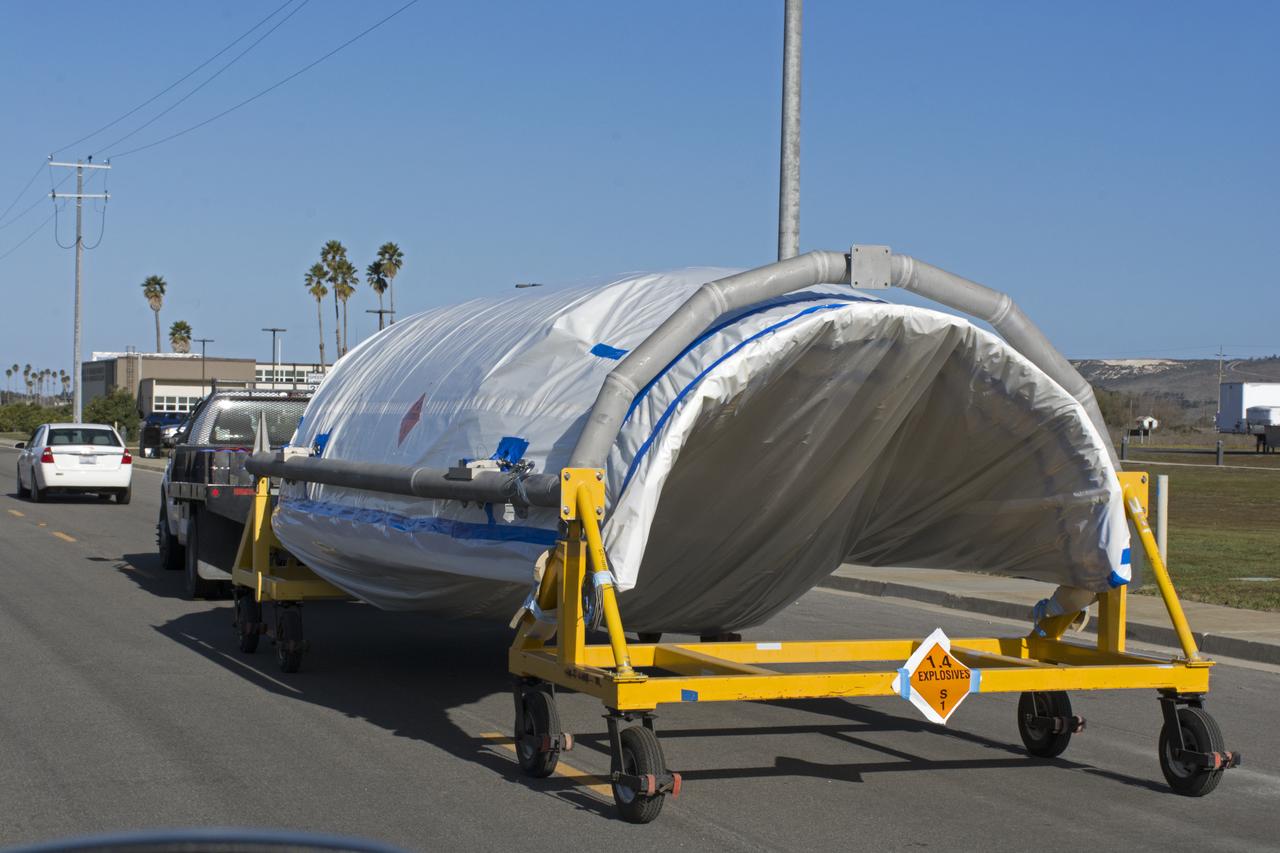
The first half of the United Launch Alliance (ULA) Delta II rocket payload fairing is transported from NASA's Building 836 to ULA's Building B8337 at Vandenberg Air Force Base in California. NASA's Ice, Cloud and land Elevation Satellite-2 (ICESat-2) will launch later this year on the final Delta II rocket. ICESat-2 will measure the height of a changing Earth, one laser pulse at a time, 10,000 laser pulses a second. The satellite will carry a single instrument, the Advanced Topographic Laser Altimeter System. ICESat-2 will help scientists investigate why, and how much our planet's frozen and icy areas, called the cryosphere, is changing in a warming climate.
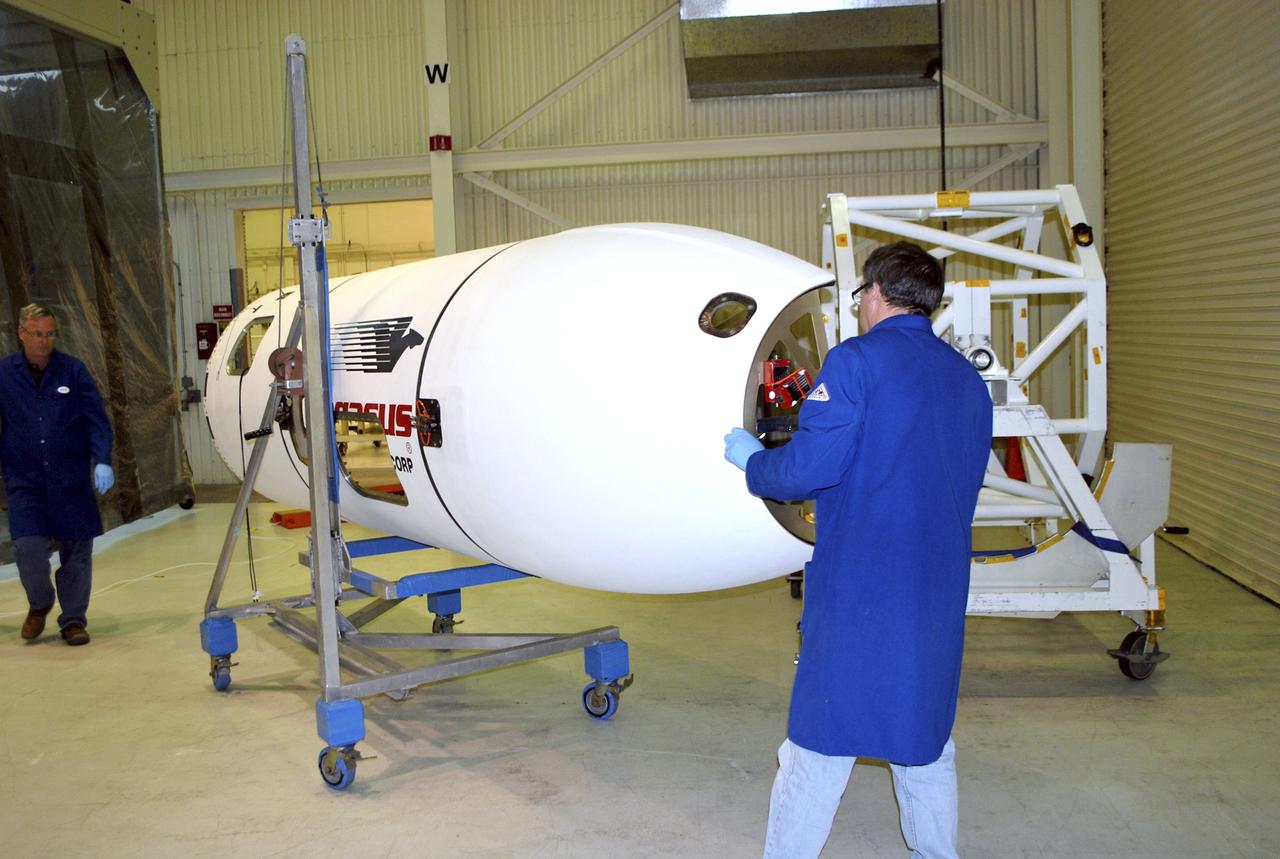
PEGASUS NUSTAR, Fairing Halves and Starboard Fairing Move to Cleanroom
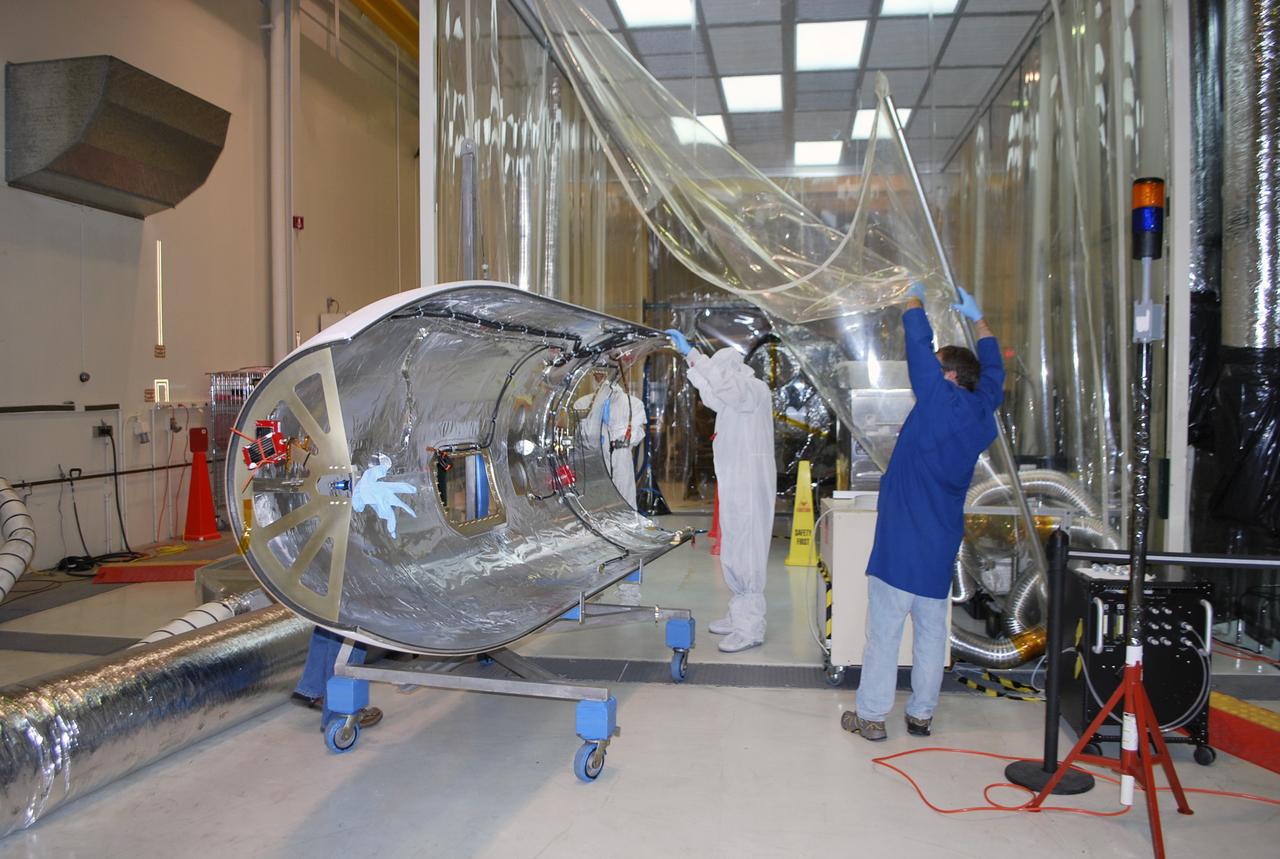
PEGASUS NUSTAR, Fairing Halves and Starboard Fairing Move to Cleanroom

KENNEDY SPACE CENTER, FLA. - At Launch Complex 17-A, Cape Canaveral Air Force Station, the first half of the fairing for the Mars Exploration Rover 2 (MER-2/MER-A) is moved inside the launch tower. The fairing will be installed around the payload for protection during launch. The MER Mission consists of two identical rovers designed to cover roughly 110 yards each Martian day over various terrain. Each rover will carry five scientific instruments that will allow it to search for evidence of liquid water that may have been present in the planet's past. Identical to each other, the rovers will land at different regions of Mars. Launch date for MER-A is scheduled for June 5..
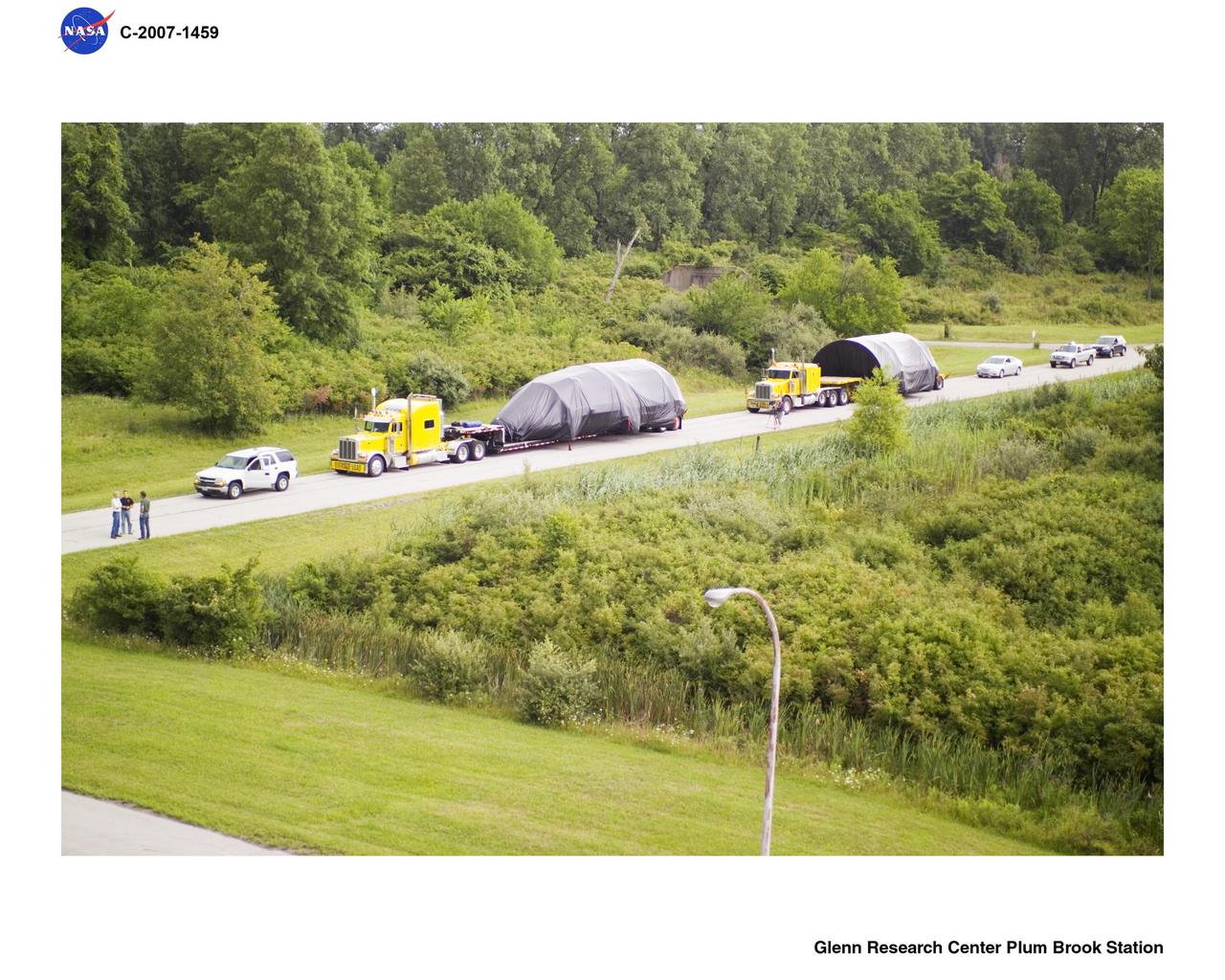
Ariane V (5) Fairing Shroud Components being moved from Cleveland Hopkins Airport to NASA Plum Brook Station, Sandusky, Ohio - 8-07
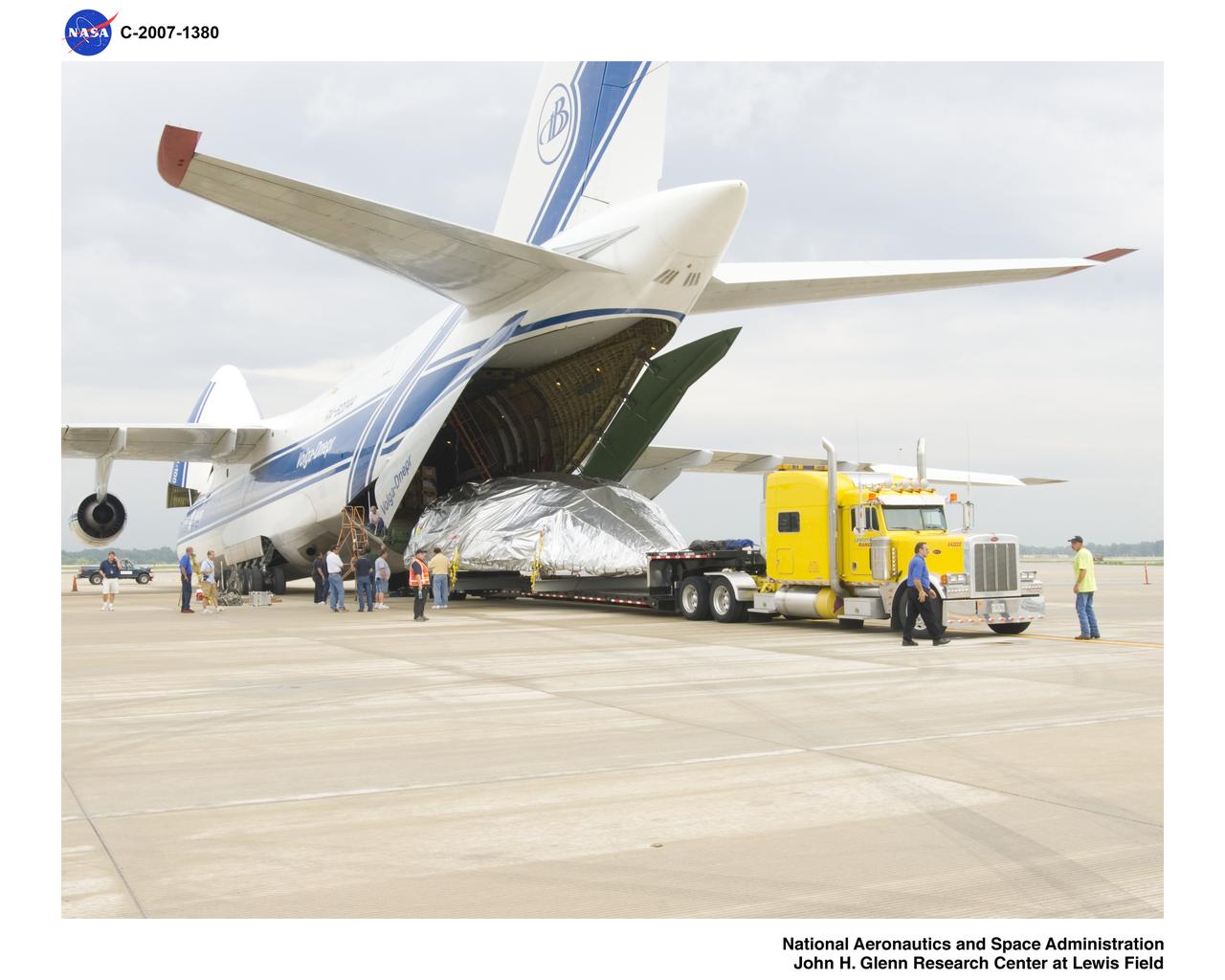
Ariane V (5) Fairing Shroud Components being moved from Cleveland Hopkins Airport to NASA Plum Brook Station, Sandusky, Ohio - 8-07
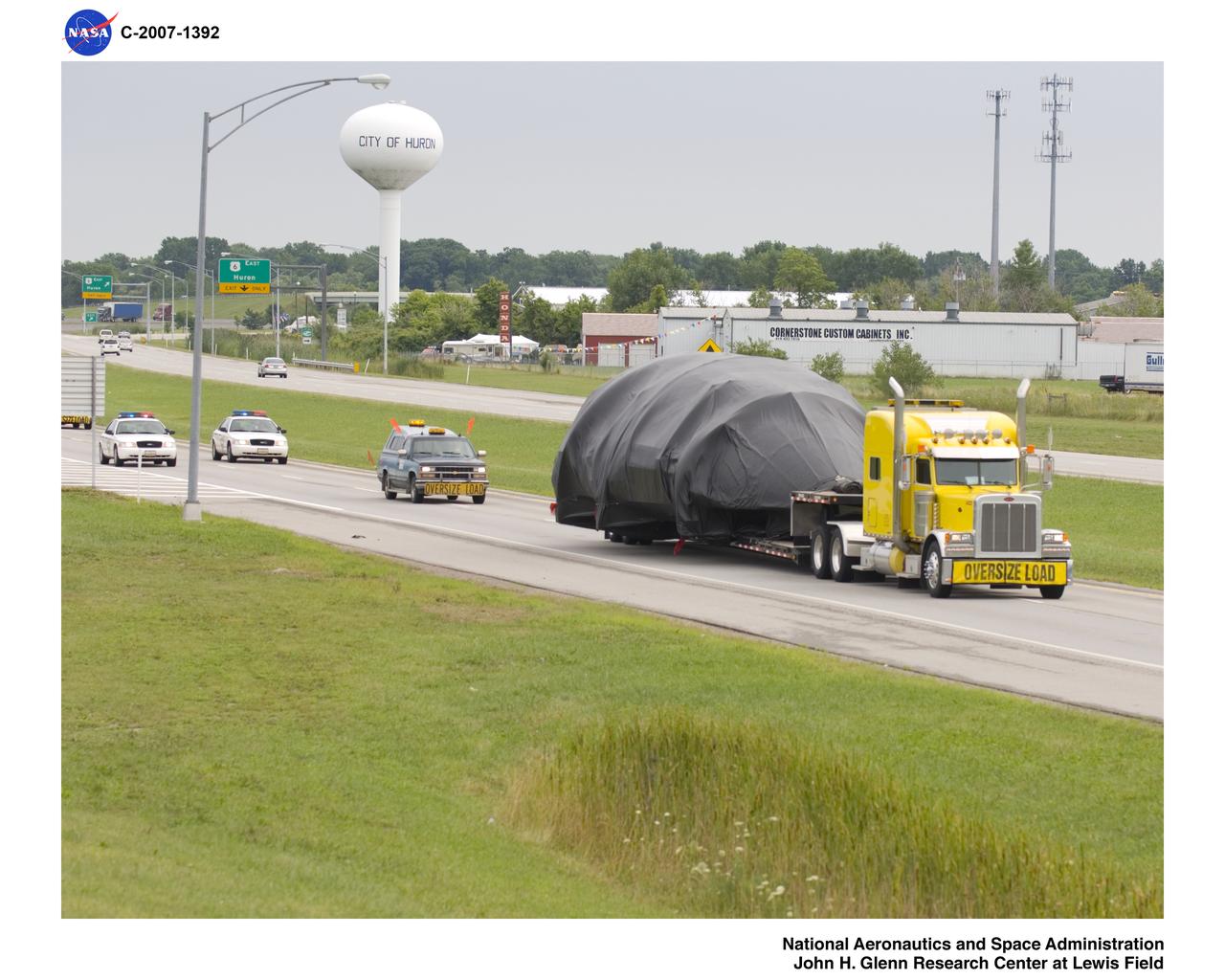
Ariane V (5) Fairing Shroud Components being moved from Cleveland Hopkins Airport to NASA Plum Brook Station, Sandusky, Ohio - 8-07
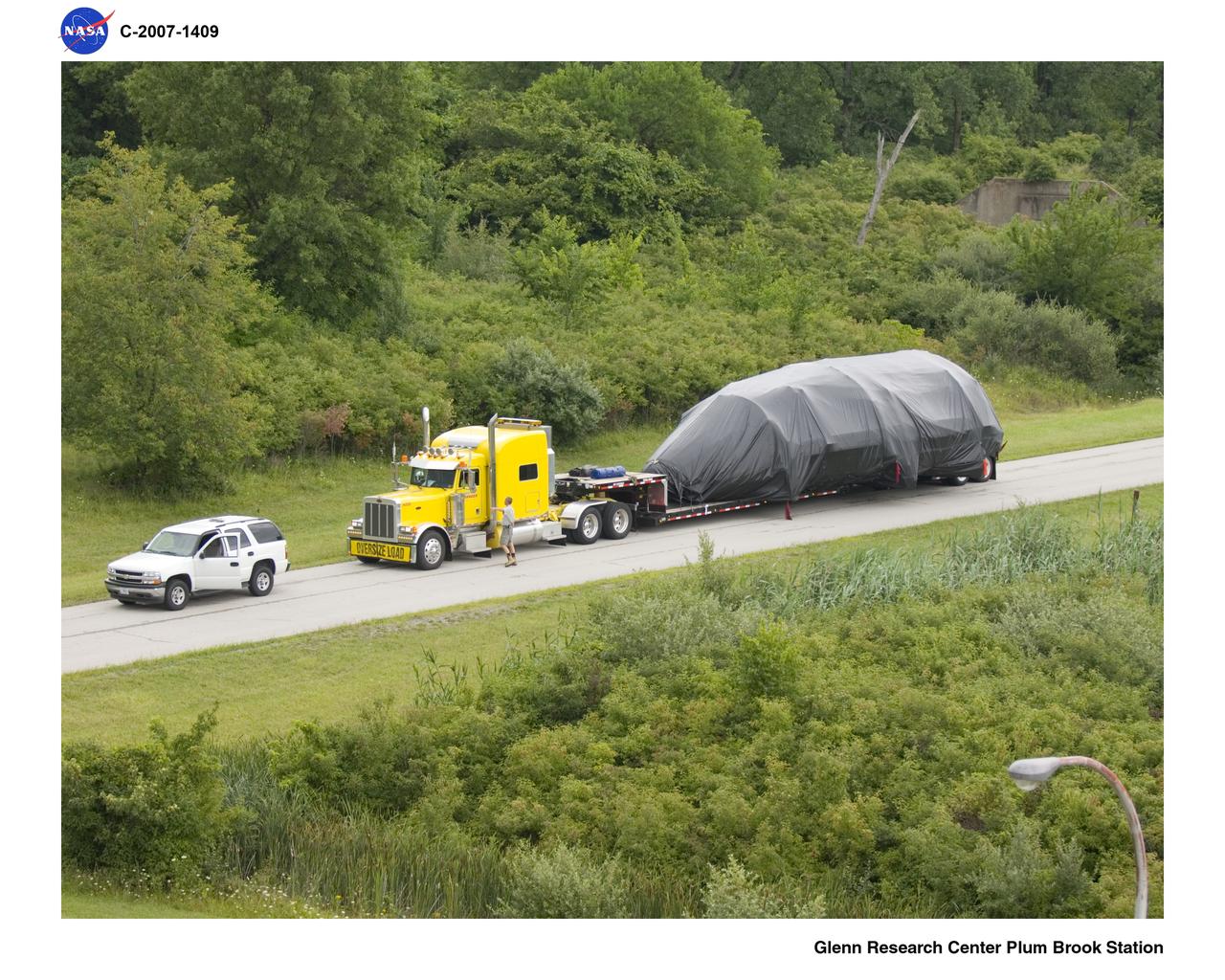
Ariane V (5) Fairing Shroud Components being moved from Cleveland Hopkins Airport to NASA Plum Brook Station, Sandusky, Ohio - 8-07
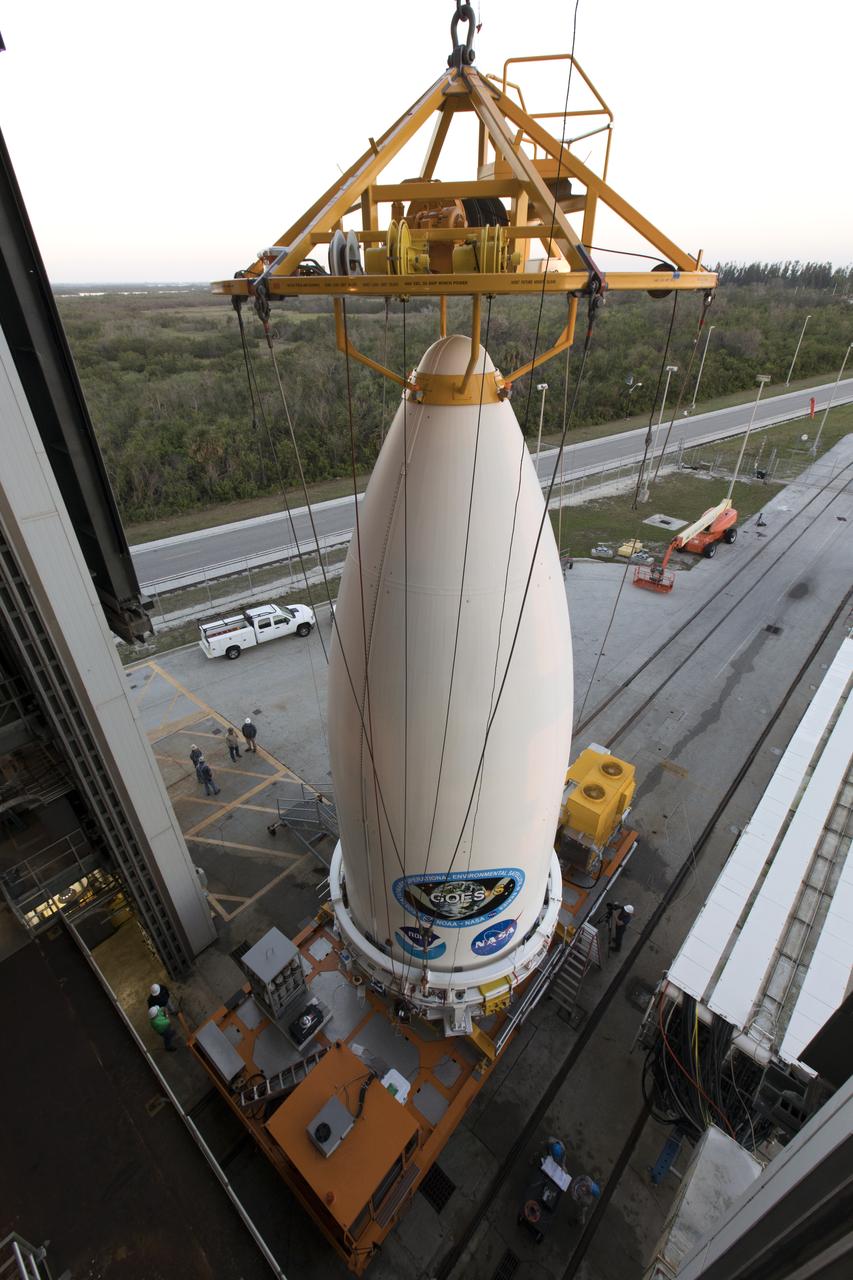
A view from above shows a crane attached to the payload fairing containing NOAA's Geostationary Operational Environmental Satellite-S (GOES-S). The fairing will be lifted and moved into the Vertical Integration Facility at Space Launch Complex 41 at Cape Canaveral Air Force Station in Florida. The fairing will be lifted and mated to the ULA Atlas V rocket. GOES-S is the second in a series of four advanced geostationary weather satellites. The satellite is slated to launch aboard the ULA Atlas V on March 1.
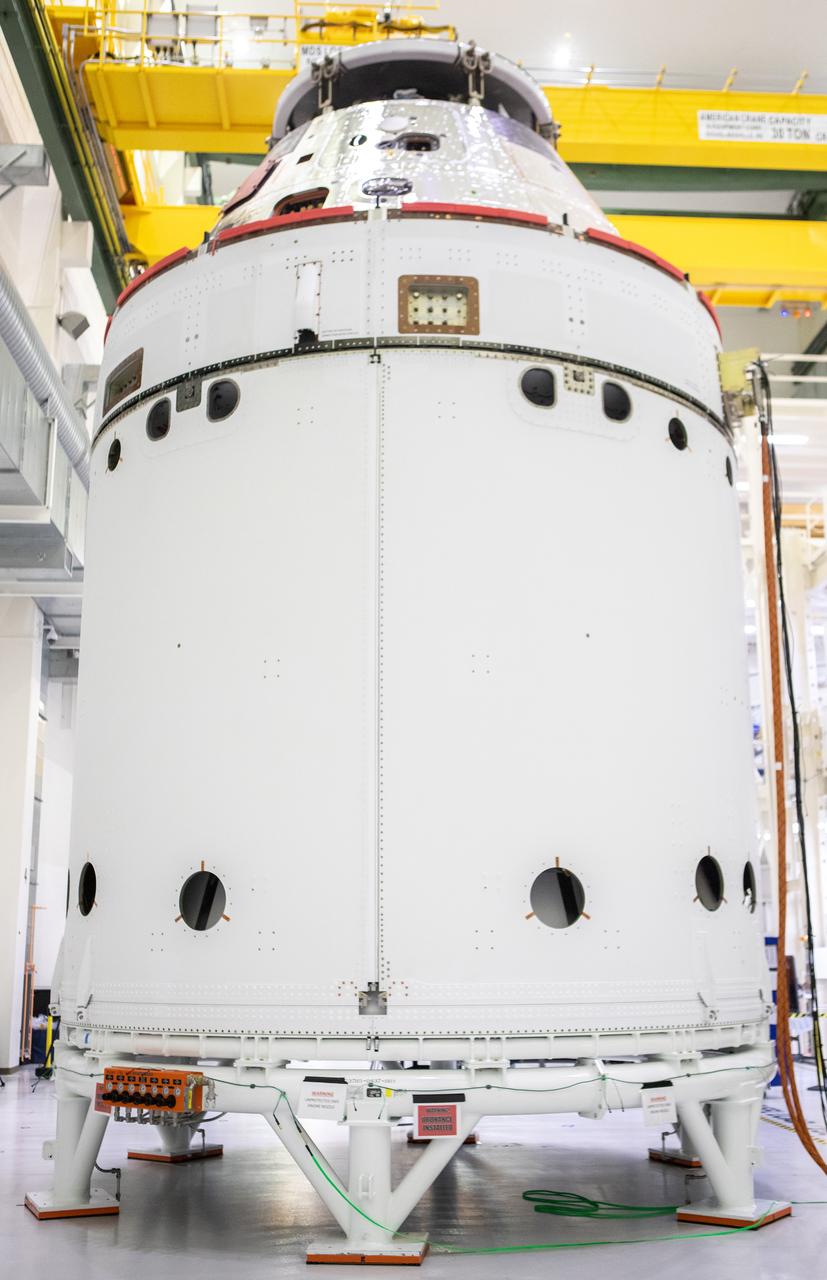
The spacecraft adapter jettison fairing panels are secured onto Orion’s European Service Module (ESM) on Oct. 27, 2020, inside the Neil Armstrong Operations and Checkout Building (O&C) at NASA’s Kennedy Space Center in Florida. The three panels were inspected and moved into place for installation by technicians with Lockheed Martin. Recently, teams from across the globe installed the four solar array wings, which are housed inside the protective covering of the fairings. The fairing panels will encapsulate the ESM to protect it from harsh environments such as heat, wind, and acoustics as the spacecraft is propelled out of Earth’s atmosphere atop the Space Launch System rocket during NASA’s Artemis I mission.
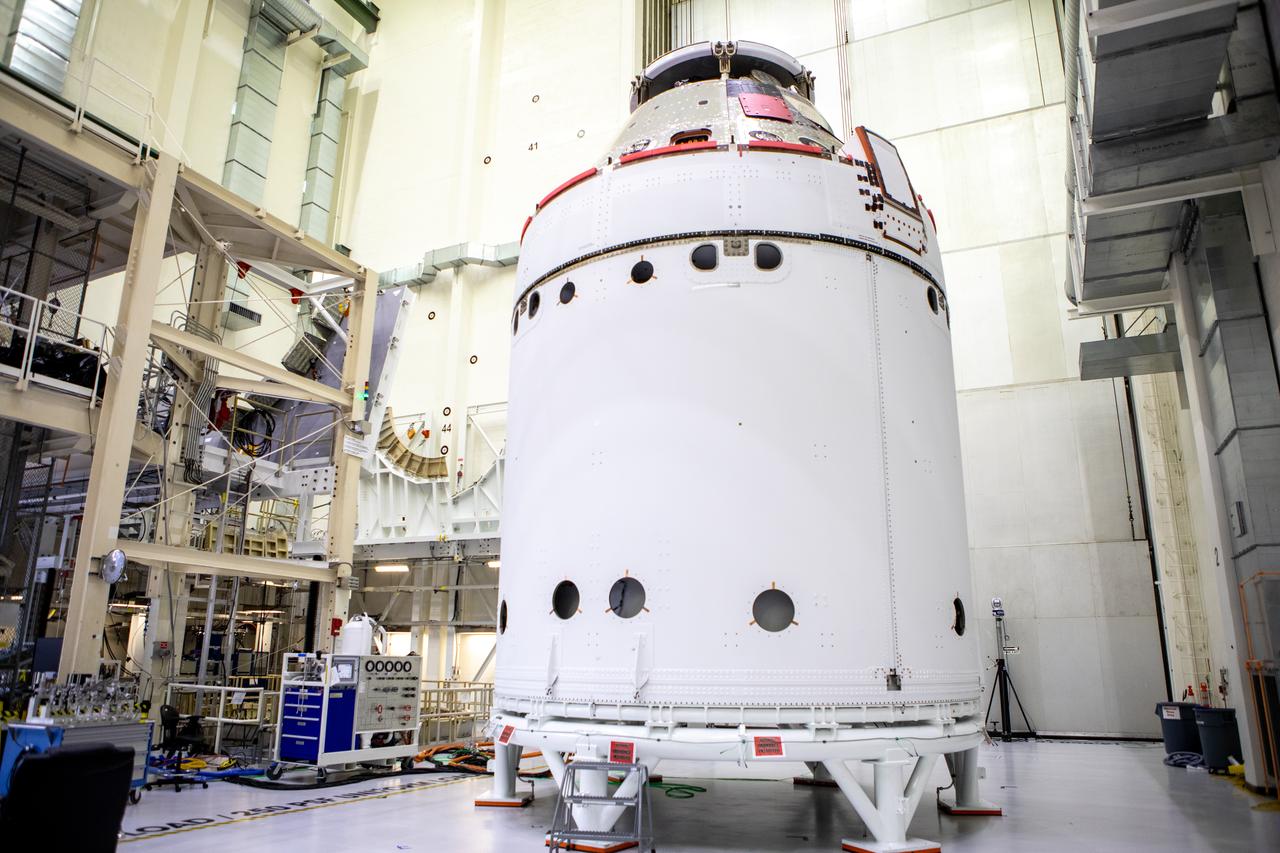
The spacecraft adapter jettison fairing panels are secured onto Orion’s European Service Module (ESM) on Oct. 27, 2020, inside the Neil Armstrong Operations and Checkout Building (O&C) at NASA’s Kennedy Space Center in Florida. The three panels were inspected and moved into place for installation by technicians with Lockheed Martin. Recently, teams from across the globe installed the four solar array wings, which are housed inside the protective covering of the fairings. The fairing panels will encapsulate the ESM to protect it from harsh environments such as heat, wind, and acoustics as the spacecraft is propelled out of Earth’s atmosphere atop the Space Launch System rocket during NASA’s Artemis I mission.
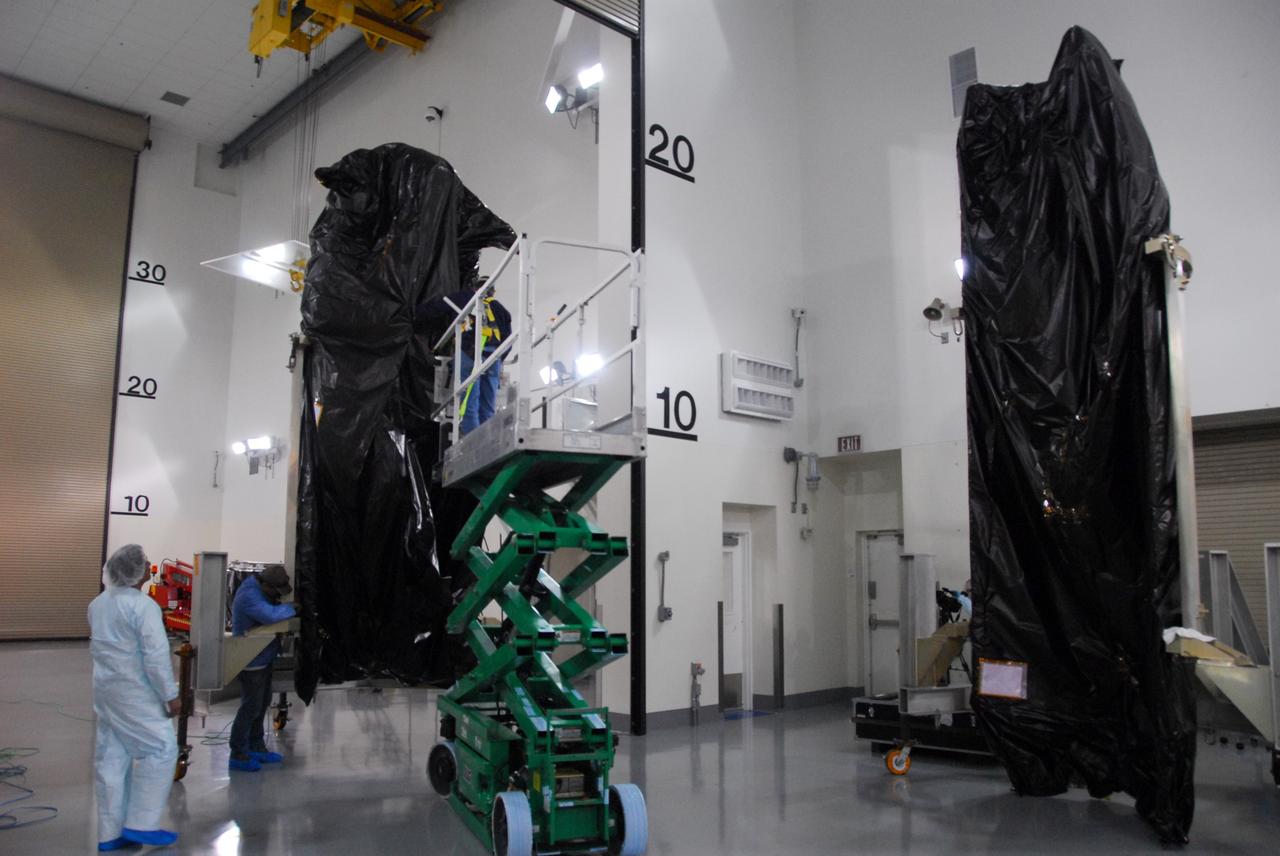
VANDENBERG AIR FORCE BASE, Calif. -- Technicians prepare the payload fairing to be used in the Glory mission before the fairing is moved to East High Bay at the Astrotech payload processing facility at Vandenberg Air Force Base in California. The payload fairing will protect the Glory spacecraft from aerodynamic pressures and heating during the first part of its climb into orbit. Once Glory reaches orbit, it will collect data on the properties of aerosols and black carbon. It also will help scientists understand how the sun's irradiance affects Earth's climate. Launch is scheduled for 5:09 a.m. EST Feb. 23. For information, visit www.nasa.gov/glory. Photo credit: NASA/Ed Henry, VAFB

KENNEDY SPACE CENTER, FLA. - In the high bay at Astrotech Space Operations in Titusville, Fla., the first half of the fairing is moved into place around the GOES-N spacecraft. When both halves are in place, they will encapsulate, or enclose, the GOES-N satellite for launch. The fairing protects the spacecraft during launch and flight through the atmosphere. Once out of the atmosphere, the fairing is jettisoned. GOES-N is the latest in a series of Geostationary Operational Environmental Satellites for NOAA and NASA providing continuous monitoring necessary for intensive data analysis. GOES-N will be launched May 18 on a Boeing Delta IV rocket from Cape Canaveral Air Force Station in Florida. Photo credit: NASA/Jack Pfaller
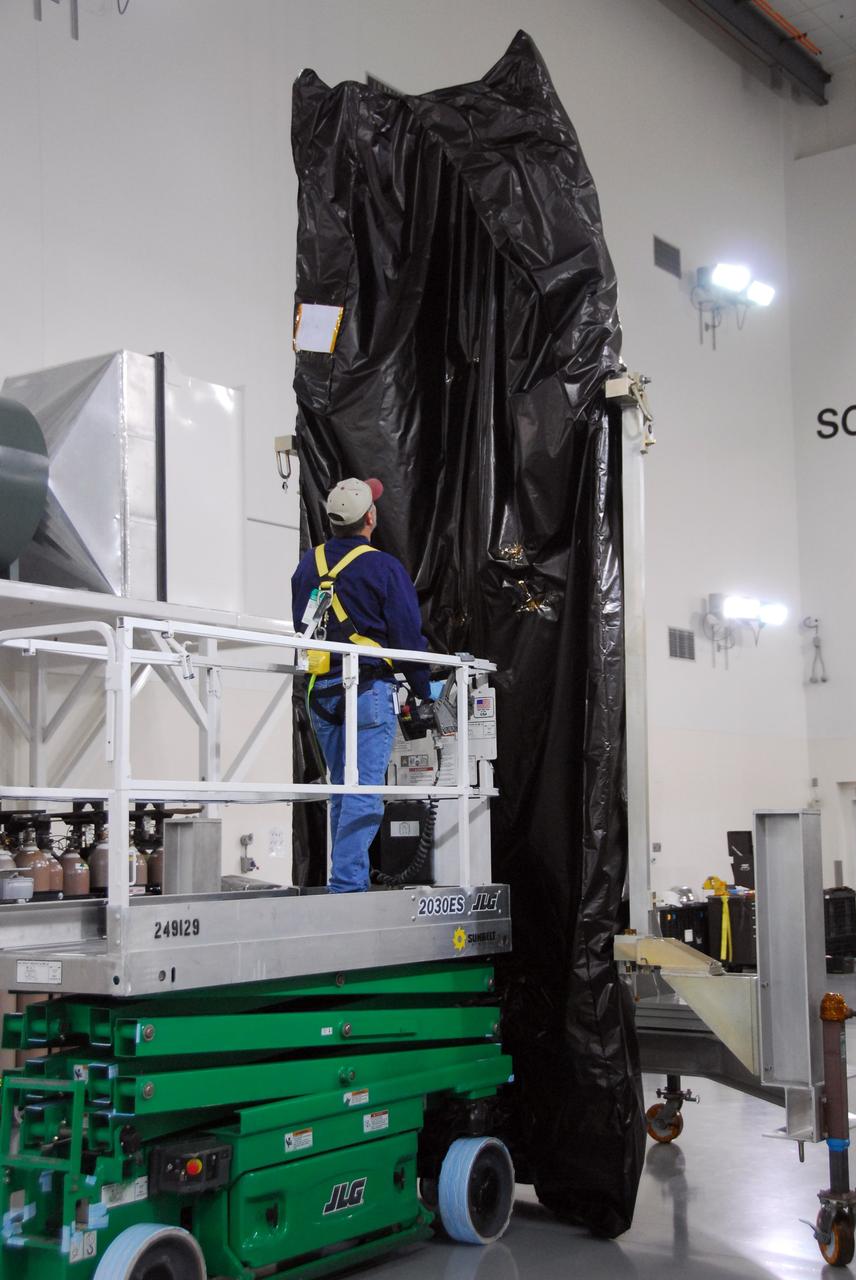
VANDENBERG AIR FORCE BASE, Calif. -- A technician works with half of the payload fairing to be used in the Glory mission before the fairing is moved to the East High Bay at the Astrotech payload processing facility at Vandenberg Air Force Base in California. The payload fairing will protect the Glory spacecraft from aerodynamic pressures and heating during the first part of its climb into orbit. Once Glory reaches orbit, it will collect data on the properties of aerosols and black carbon. It also will help scientists understand how the sun's irradiance affects Earth's climate. Launch is scheduled for 5:09 a.m. EST Feb. 23. For information, visit www.nasa.gov/glory. Photo credit: NASA/Ed Henry, VAFB
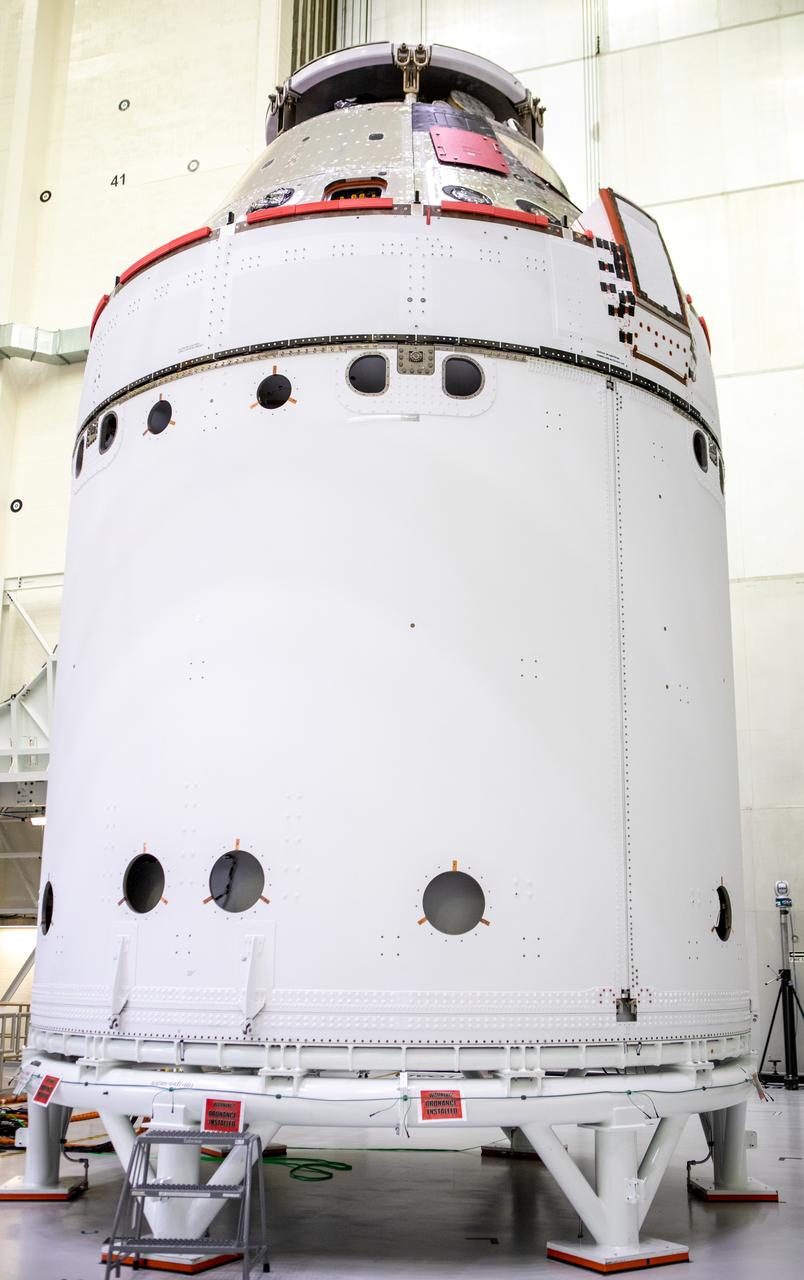
The spacecraft adapter jettison fairing panels are secured onto Orion’s European Service Module (ESM) on Oct. 27, 2020, inside the Neil Armstrong Operations and Checkout Building (O&C) at NASA’s Kennedy Space Center in Florida. The three panels were inspected and moved into place for installation by technicians with Lockheed Martin. Recently, teams from across the globe installed the four solar array wings, which are housed inside the protective covering of the fairings. The fairing panels will encapsulate the ESM to protect it from harsh environments such as heat, wind, and acoustics as the spacecraft is propelled out of Earth’s atmosphere atop the Space Launch System rocket during NASA’s Artemis I mission.
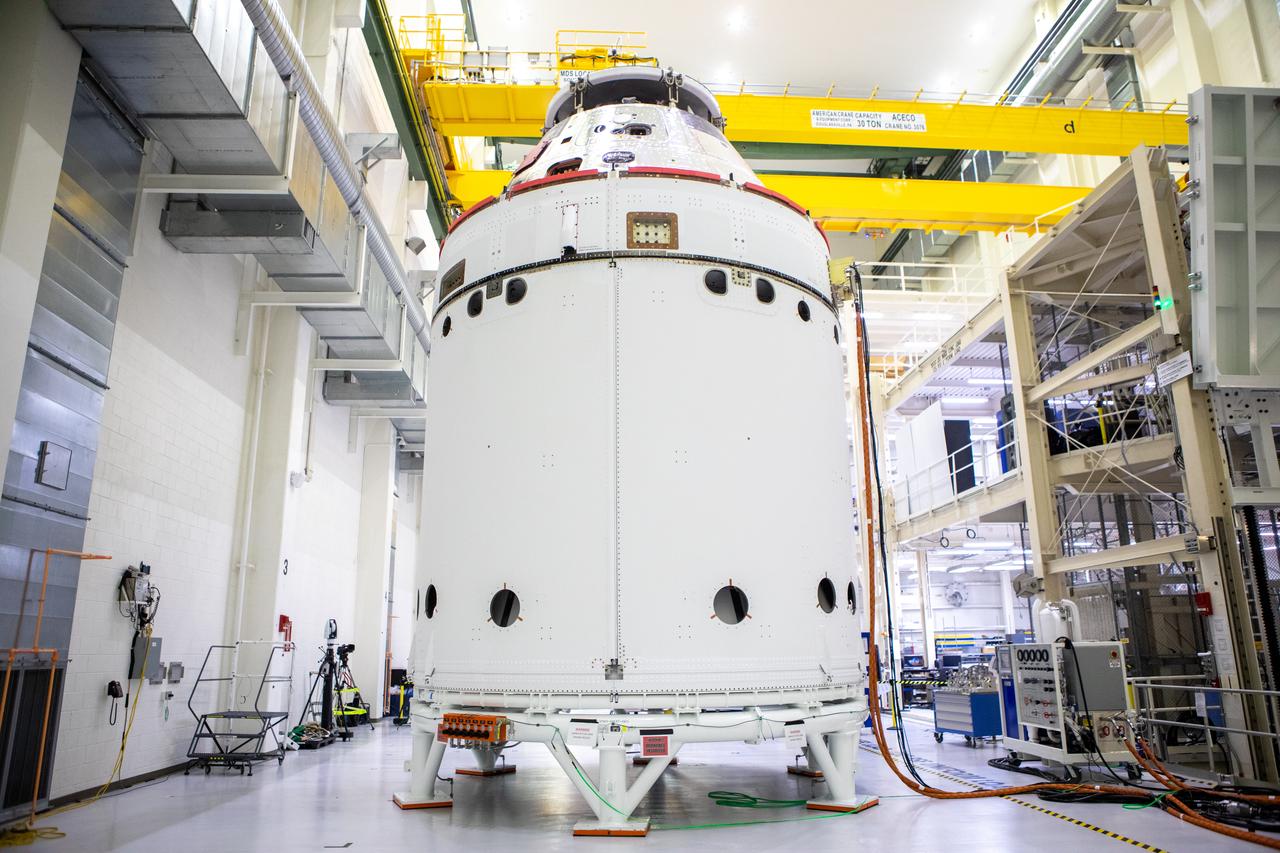
The spacecraft adapter jettison fairing panels are secured onto Orion’s European Service Module (ESM) on Oct. 27, 2020, inside the Neil Armstrong Operations and Checkout Building (O&C) at NASA’s Kennedy Space Center in Florida. The three panels were inspected and moved into place for installation by technicians with Lockheed Martin. Recently, teams from across the globe installed the four solar array wings, which are housed inside the protective covering of the fairings. The fairing panels will encapsulate the ESM to protect it from harsh environments such as heat, wind, and acoustics as the spacecraft is propelled out of Earth’s atmosphere atop the Space Launch System rocket during NASA’s Artemis I mission.

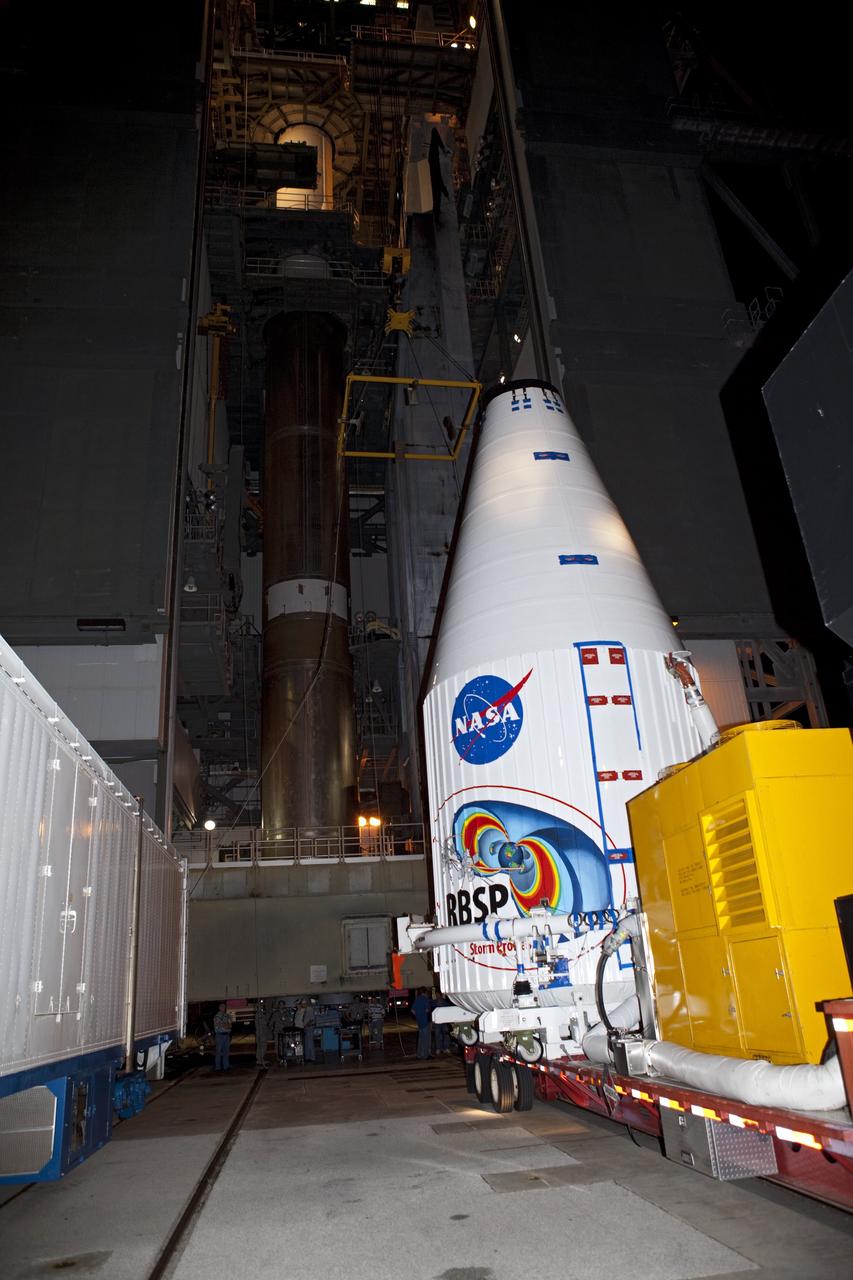
CAPE CANAVERAL, Fla. – The Radiation Belt Storm Probes, or RBSP, spacecraft are moved inside their payload fairing on the payload transporter from the Astrotech payload processing facility in Titusville, Fla. to Space Launch Complex-41 at Cape Canaveral Air Force Station. The fairing, which holds the twin RBSP spacecraft, will be lifted to the top of a United Launch Alliance Atlas V rocket for launch later in August. The two spacecraft are designed to study the Van Allen radiation belts in unprecedented detail. Photo credit: NASA/Dmitri Gerondidakis
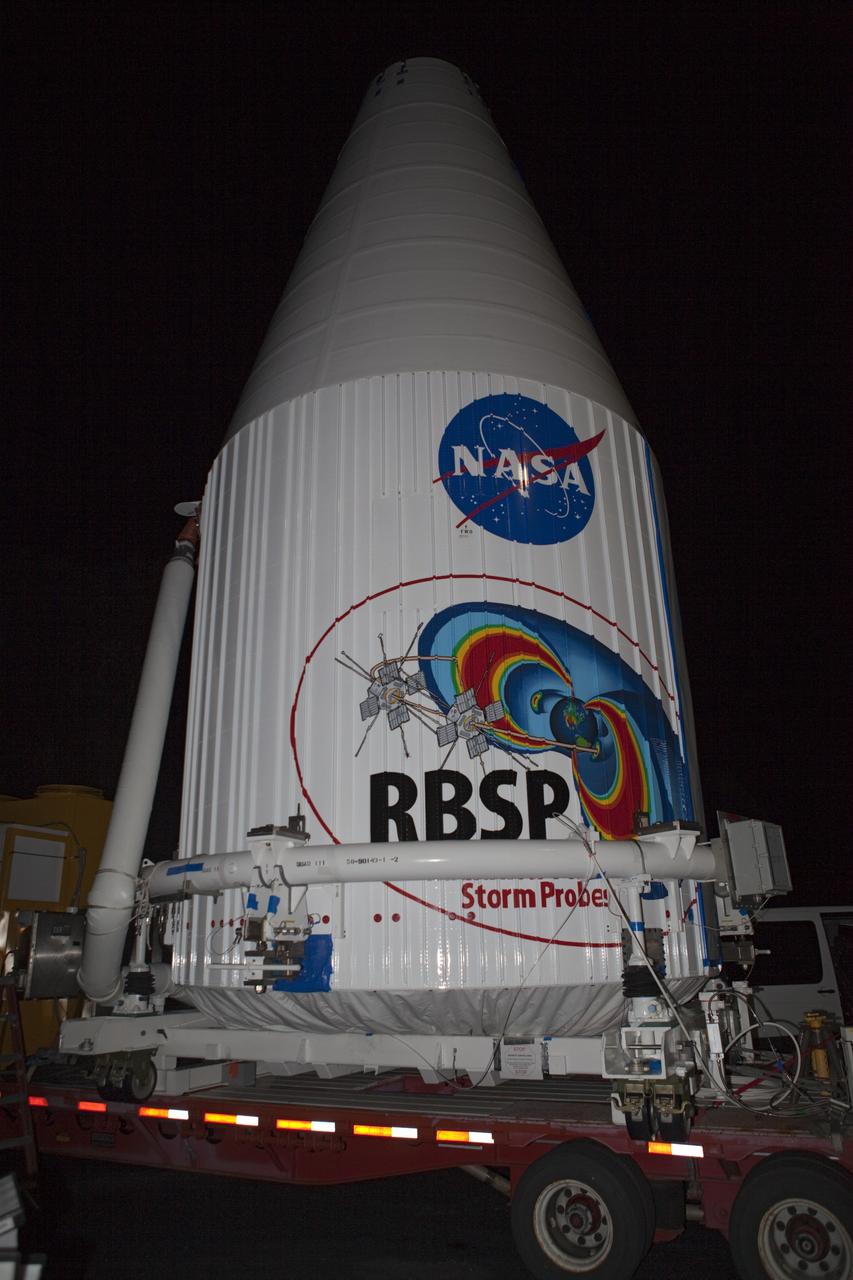
CAPE CANAVERAL, Fla. – The Radiation Belt Storm Probes, or RBSP, spacecraft are moved inside their payload fairing on the payload transporter from the Astrotech payload processing facility in Titusville, Fla. to Space Launch Complex-41 at Cape Canaveral Air Force Station. The fairing, which holds the twin RBSP spacecraft, will be lifted to the top of a United Launch Alliance Atlas V rocket for launch later in August. The two spacecraft are designed to study the Van Allen radiation belts in unprecedented detail. Photo credit: NASA/Dmitri Gerondidakis
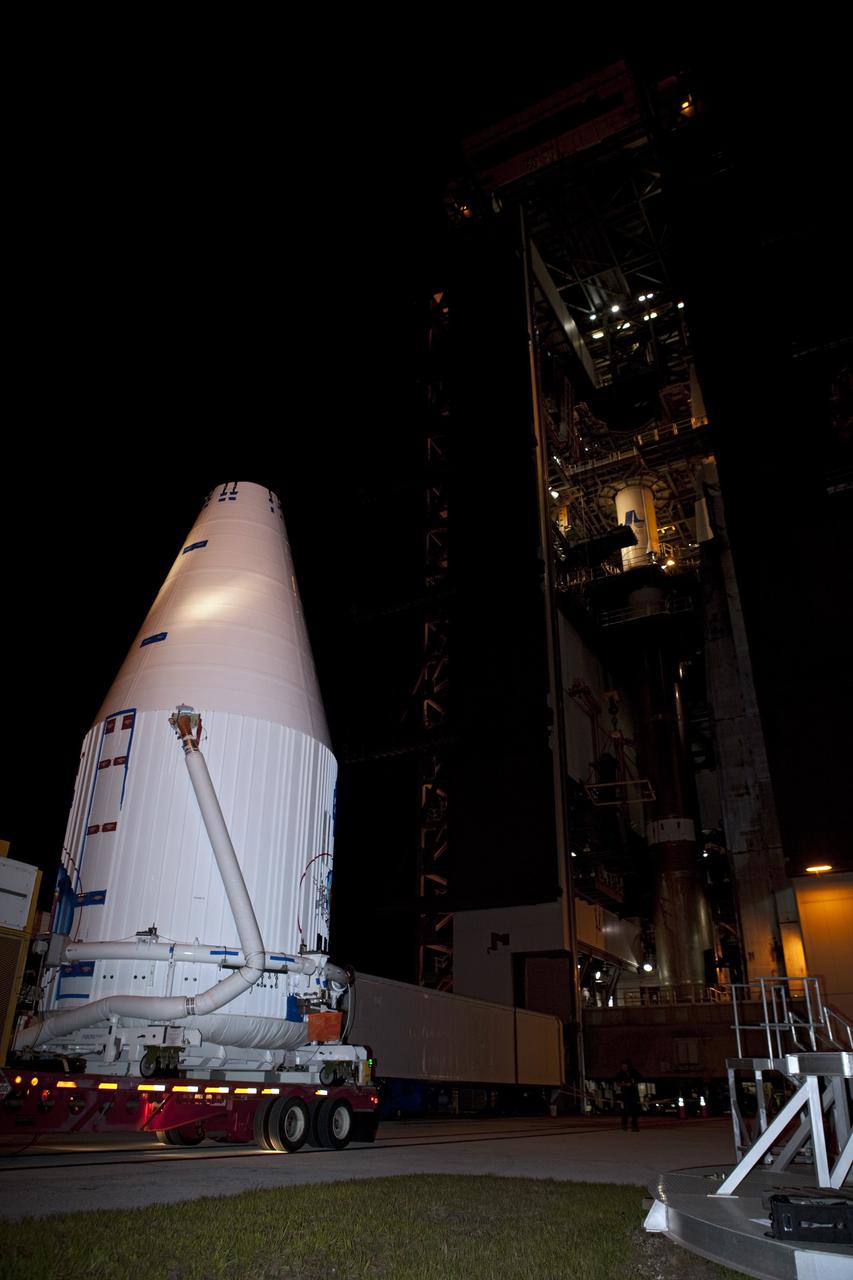
CAPE CANAVERAL, Fla. – The Radiation Belt Storm Probes, or RBSP, spacecraft arrive at Space Launch Complex-41 at Cape Canaveral Air Force Station inside their payload fairing. The twin spacecraft were moved on the payload transporter from the Astrotech payload processing facility in Titusville, Fla. The fairing with the spacecraft inside will be lifted to the top of a United Launch Alliance Atlas V rocket for launch later in August. The two spacecraft are designed to study the Van Allen radiation belts in unprecedented detail. Photo credit: NASA/Dmitri Gerondidakis
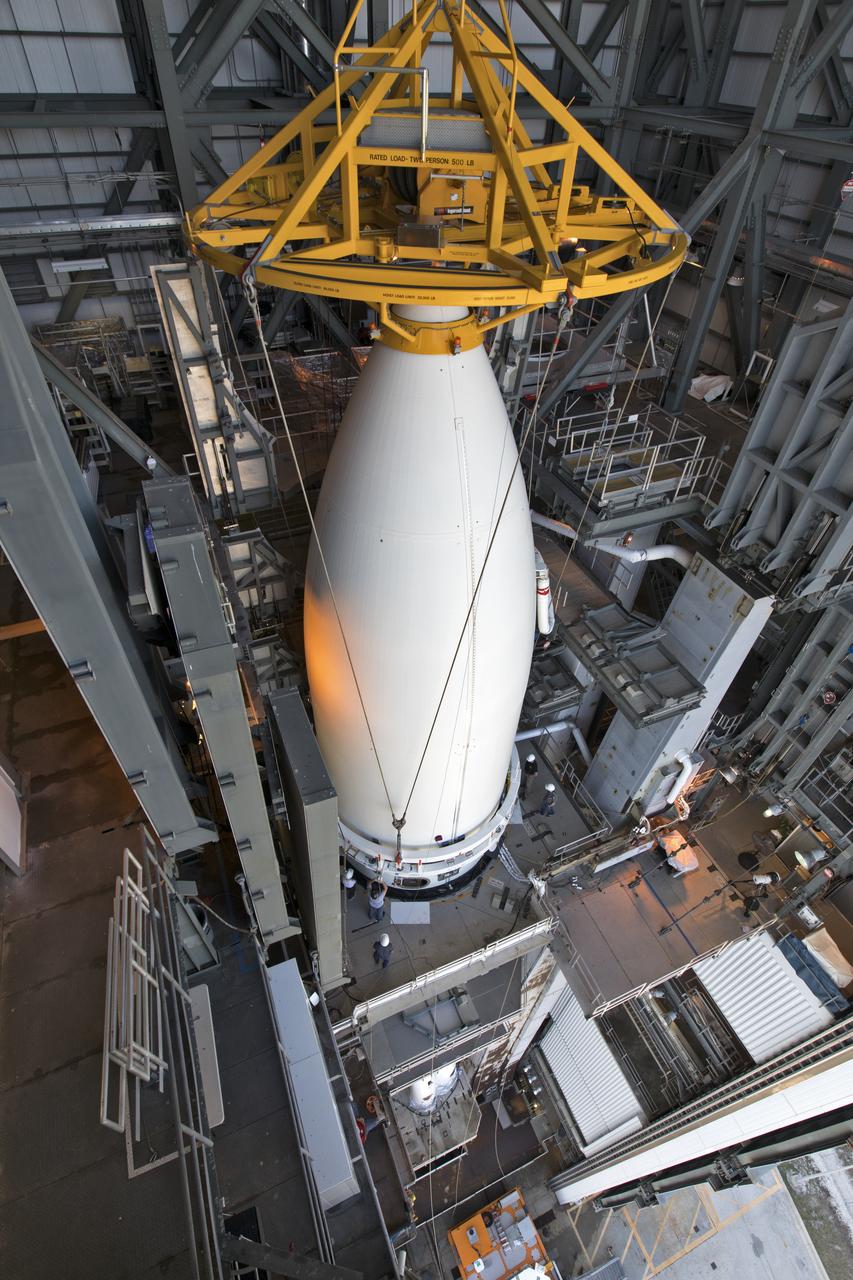
A view from above shows the payload fairing containing NOAA's Geostationary Operational Environmental Satellite-S (GOES-S) lifted and moved into the United Launch Alliance (ULA) Vertical Integration Facility at Space Launch Complex 41 at Cape Canaveral Air Force Station in Florida. The fairing will be lowered and secured on the ULA Atlas V rocket. GOES-S is the second in a series of four advanced geostationary weather satellites. The satellite is slated to launch aboard the ULA Atlas V on March 1.
CAPE CANAVERAL, Fla. – The Radiation Belt Storm Probes, or RBSP, spacecraft are moved inside their payload fairing on the payload transporter from the Astrotech payload processing facility in Titusville, Fla. to Space Launch Complex-41 at Cape Canaveral Air Force Station. The fairing, which holds the twin RBSP spacecraft, will be lifted to the top of a United Launch Alliance Atlas V rocket for launch later in August. The two spacecraft are designed to study the Van Allen radiation belts in unprecedented detail. Photo credit: NASA/Dmitri Gerondidakis
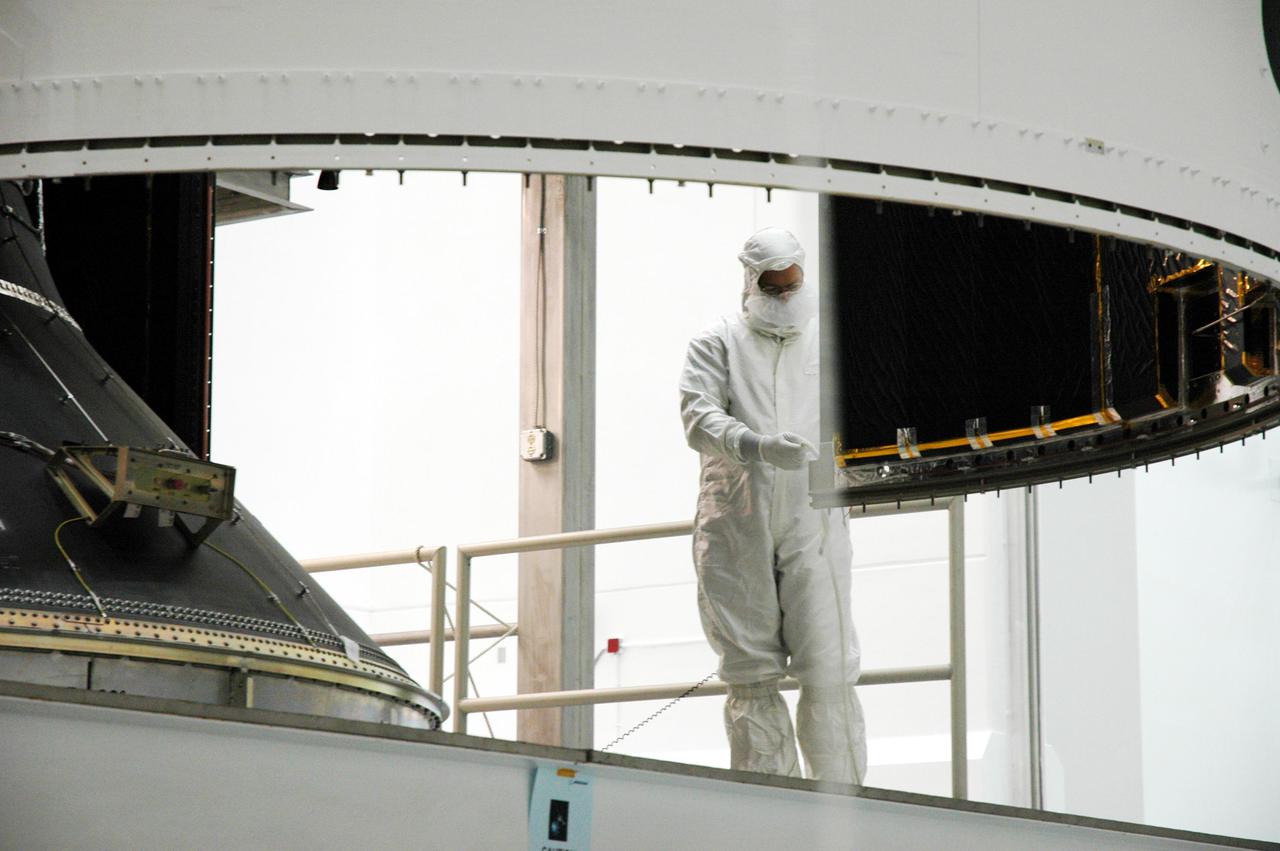
KENNEDY SPACE CENTER, FLA. - At Astrotech Space Operations in Titusville, Fla., a worker helps guide the second half of the fairing as it is moved into place around the GOES-N spacecraft. It will be attached to the first half already in place. The fairing protects the spacecraft during launch. Geostationary Operational Environmental Satellites (GOES) are sponsored by NASA’s Goddard Space Flight Center and the National Oceanic and Atmospheric Administration. GOES-N is targeted to launch June 23 from Launch Complex 37 at Cape Canaveral Air Force Station in Florida.
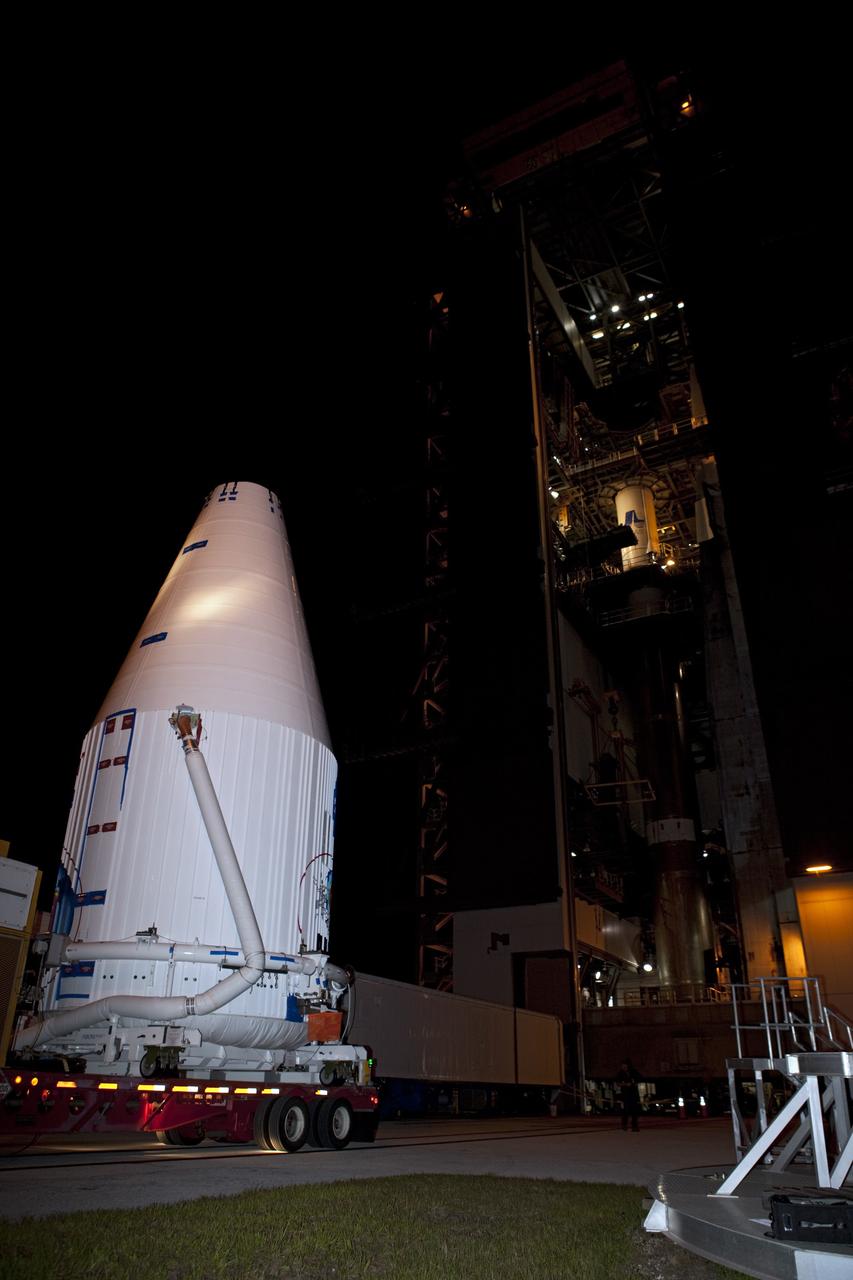
CAPE CANAVERAL, Fla. – The Radiation Belt Storm Probes, or RBSP, spacecraft arrive at Space Launch Complex-41 at Cape Canaveral Air Force Station inside their payload fairing. The twin spacecraft were moved on the payload transporter from the Astrotech payload processing facility in Titusville, Fla. The fairing with the spacecraft inside will be lifted to the top of a United Launch Alliance Atlas V rocket for launch later in August. The two spacecraft are designed to study the Van Allen radiation belts in unprecedented detail. Photo credit: NASA/Dmitri Gerondidakis
CAPE CANAVERAL, Fla. – The Radiation Belt Storm Probes, or RBSP, spacecraft arrive at Space Launch Complex-41 at Cape Canaveral Air Force Station inside their payload fairing. The twin spacecraft were moved on the payload transporter from the Astrotech payload processing facility in Titusville, Fla. The fairing with the spacecraft inside will be lifted to the top of a United Launch Alliance Atlas V rocket for launch later in August. The two spacecraft are designed to study the Van Allen radiation belts in unprecedented detail. Photo credit: NASA/Dmitri Gerondidakis
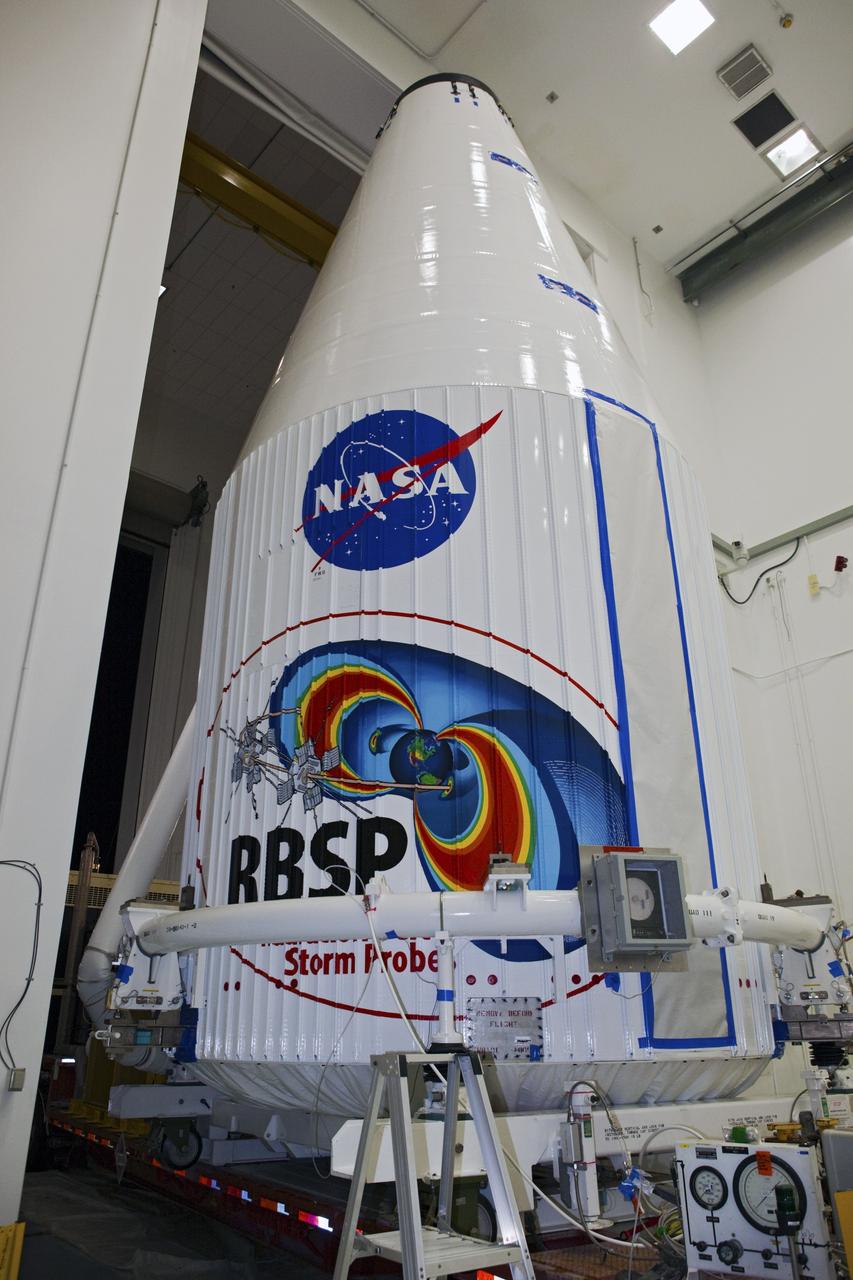
CAPE CANAVERAL, Fla. – The Radiation Belt Storm Probes, or RBSP, spacecraft are moved inside their payload fairing on the payload transporter from the Astrotech payload processing facility in Titusville, Fla. to Space Launch Complex-41 at Cape Canaveral Air Force Station. The fairing, which holds the twin RBSP spacecraft, will be lifted to the top of a United Launch Alliance Atlas V rocket for launch later in August. The two spacecraft are designed to study the Van Allen radiation belts in unprecedented detail. Photo credit: NASA/Dmitri Gerondidakis
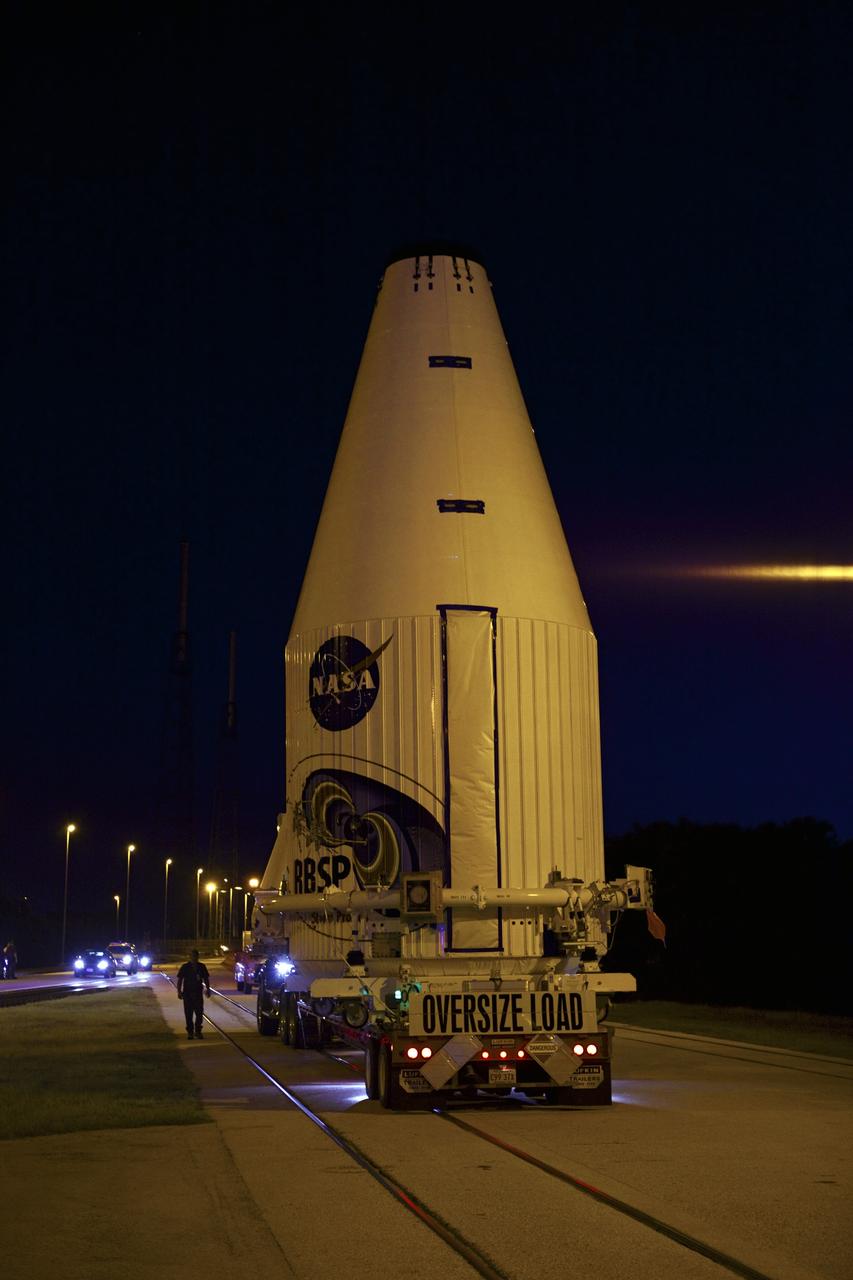
CAPE CANAVERAL, Fla. – The Radiation Belt Storm Probes, or RBSP, spacecraft are moved inside their payload fairing on the payload transporter from the Astrotech payload processing facility in Titusville, Fla. to Space Launch Complex-41 at Cape Canaveral Air Force Station. The fairing, which holds the twin RBSP spacecraft, will be lifted to the top of a United Launch Alliance Atlas V rocket for launch later in August. The two spacecraft are designed to study the Van Allen radiation belts in unprecedented detail. Photo credit: NASA/Dmitri Gerondidakis
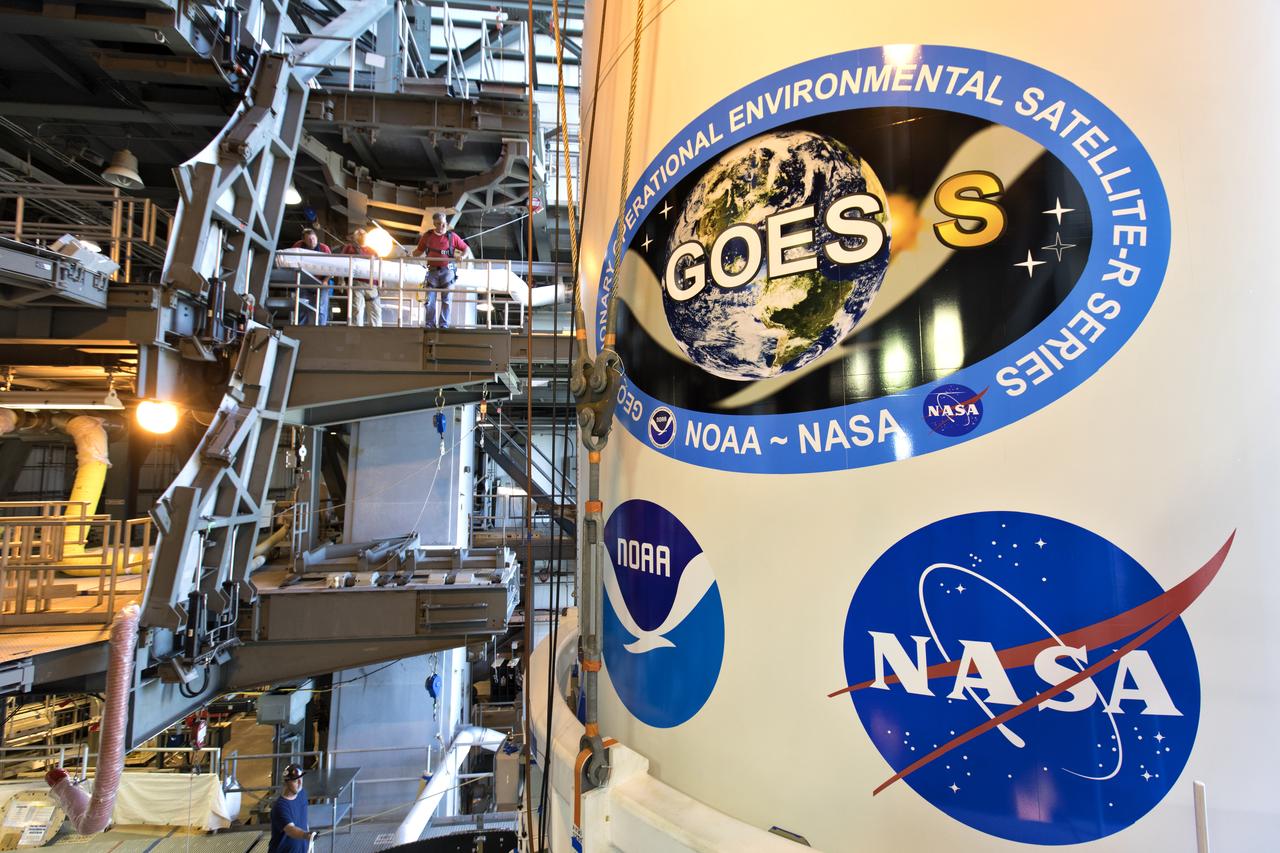
The payload fairing containing NOAA's Geostationary Operational Environmental Satellite-S (GOES-S) was lifted up by crane and moved into the United Launch Alliance (ULA) Vertical Integration Facility at Space Launch Complex 41 at Cape Canaveral Air Force Station in Florida. The fairing will be mated to the ULA Atlas V rocket. GOES-S is the second in a series of four advanced geostationary weather satellites. The satellite is slated to launch aboard the ULA Atlas V on March 1.
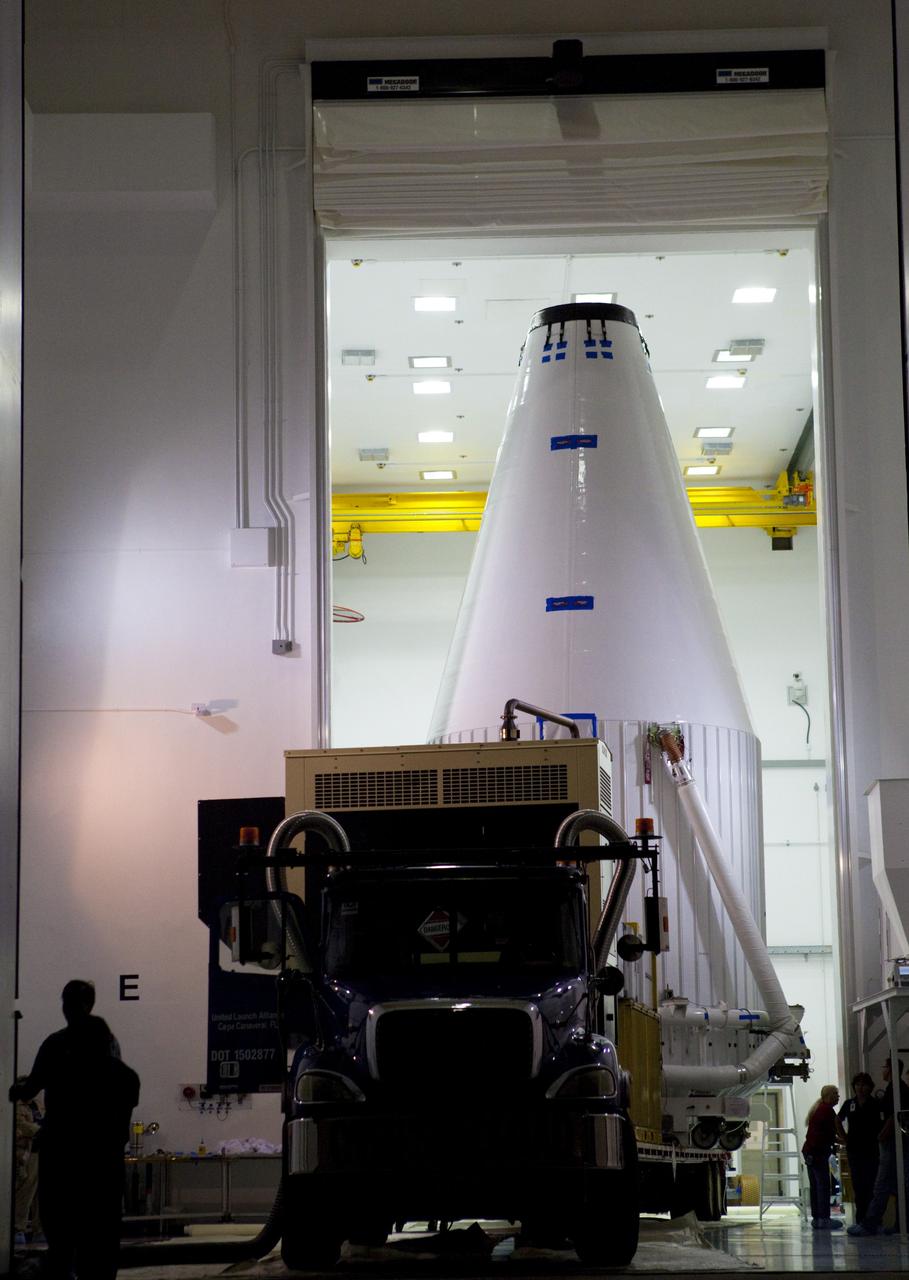
CAPE CANAVERAL, Fla. – The Radiation Belt Storm Probes, or RBSP, spacecraft are moved inside their payload fairing on the payload transporter from the Astrotech payload processing facility in Titusville, Fla. to Space Launch Complex-41 at Cape Canaveral Air Force Station. The fairing, which holds the twin RBSP spacecraft, will be lifted to the top of a United Launch Alliance Atlas V rocket for launch later in August. The two spacecraft are designed to study the Van Allen radiation belts in unprecedented detail. Photo credit: NASA/Dmitri Gerondidakis
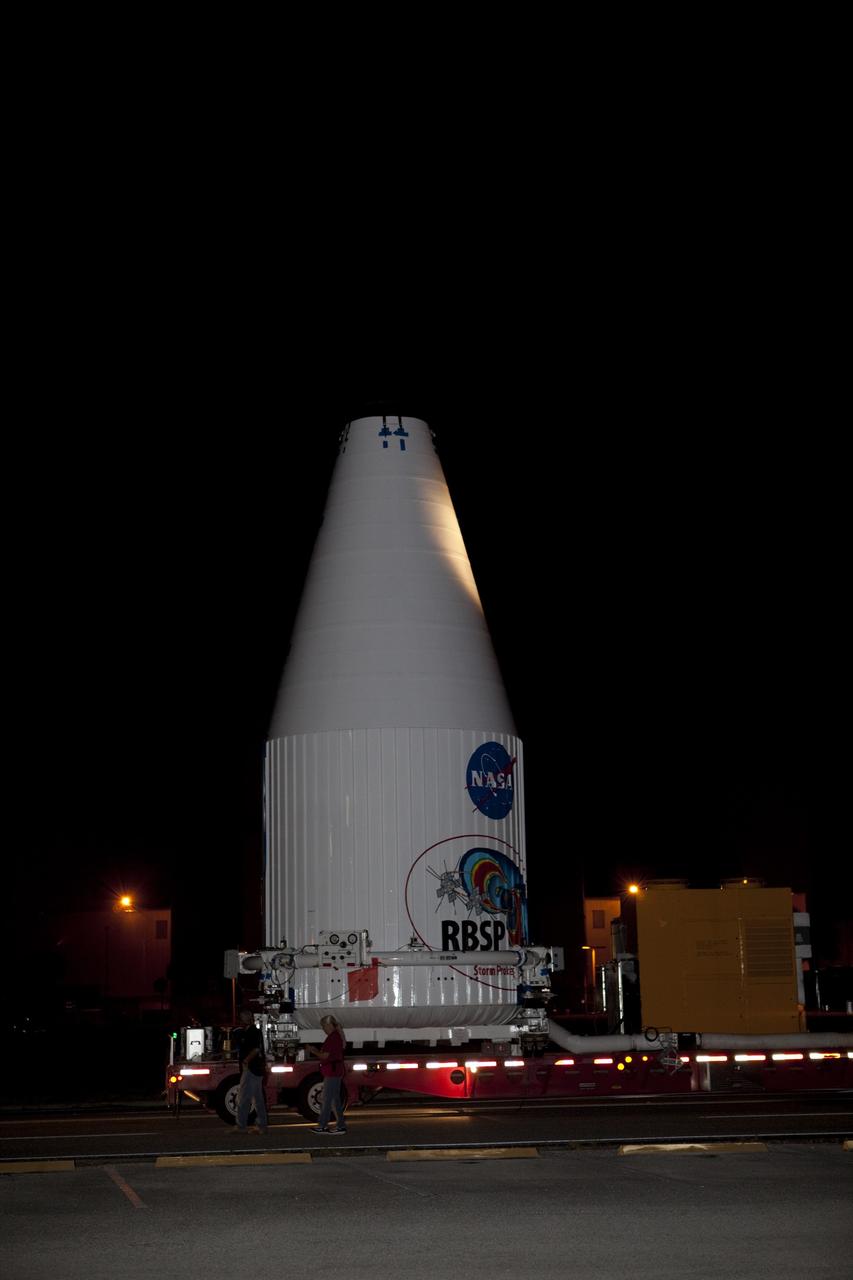
CAPE CANAVERAL, Fla. – The Radiation Belt Storm Probes, or RBSP, spacecraft are moved inside their payload fairing on the payload transporter from the Astrotech payload processing facility in Titusville, Fla. to Space Launch Complex-41 at Cape Canaveral Air Force Station. The fairing, which holds the twin RBSP spacecraft, will be lifted to the top of a United Launch Alliance Atlas V rocket for launch later in August. The two spacecraft are designed to study the Van Allen radiation belts in unprecedented detail. Photo credit: NASA/Dmitri Gerondidakis
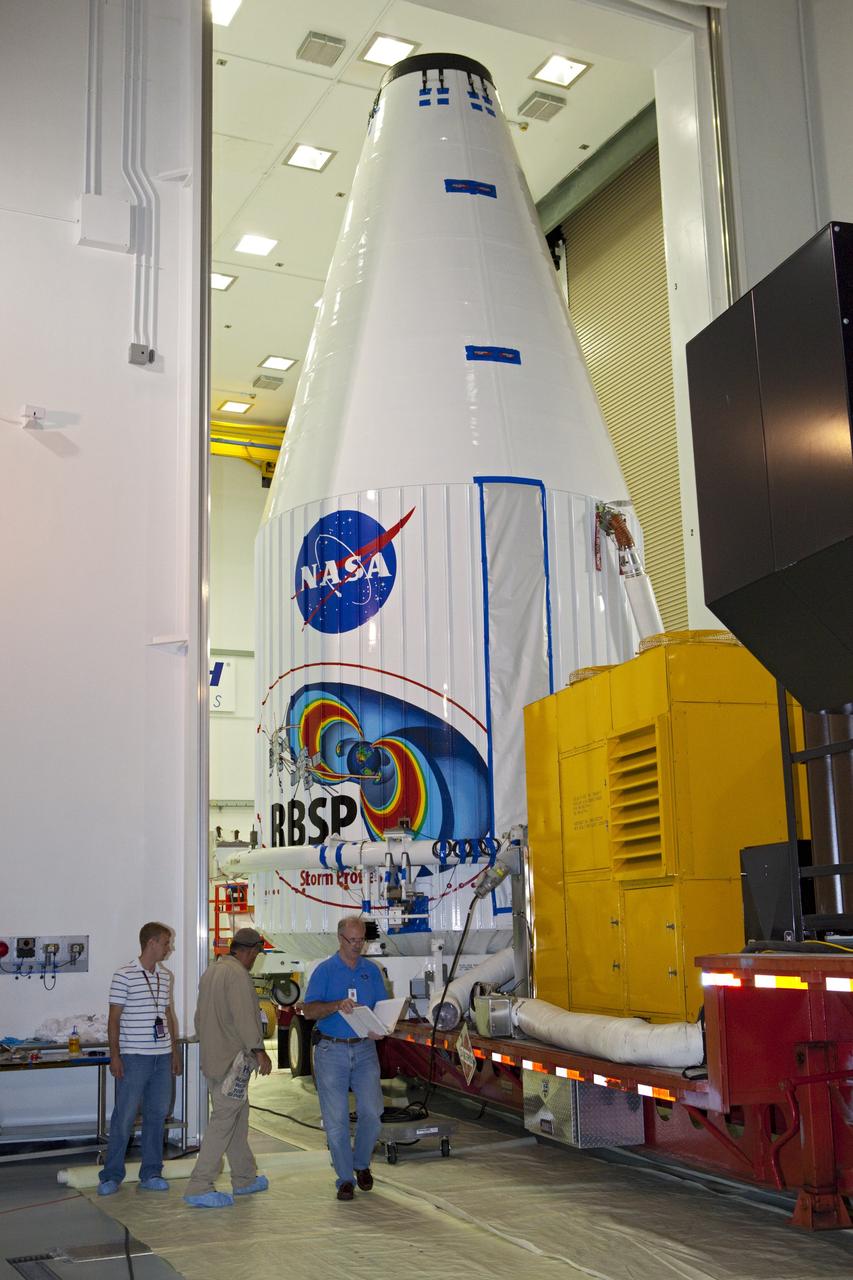
CAPE CANAVERAL, Fla. – The Radiation Belt Storm Probes, or RBSP, spacecraft are moved inside their payload fairing on the payload transporter from the Astrotech payload processing facility in Titusville, Fla. to Space Launch Complex-41 at Cape Canaveral Air Force Station. The fairing, which holds the twin RBSP spacecraft, will be lifted to the top of a United Launch Alliance Atlas V rocket for launch later in August. The two spacecraft are designed to study the Van Allen radiation belts in unprecedented detail. Photo credit: NASA/Dmitri Gerondidakis
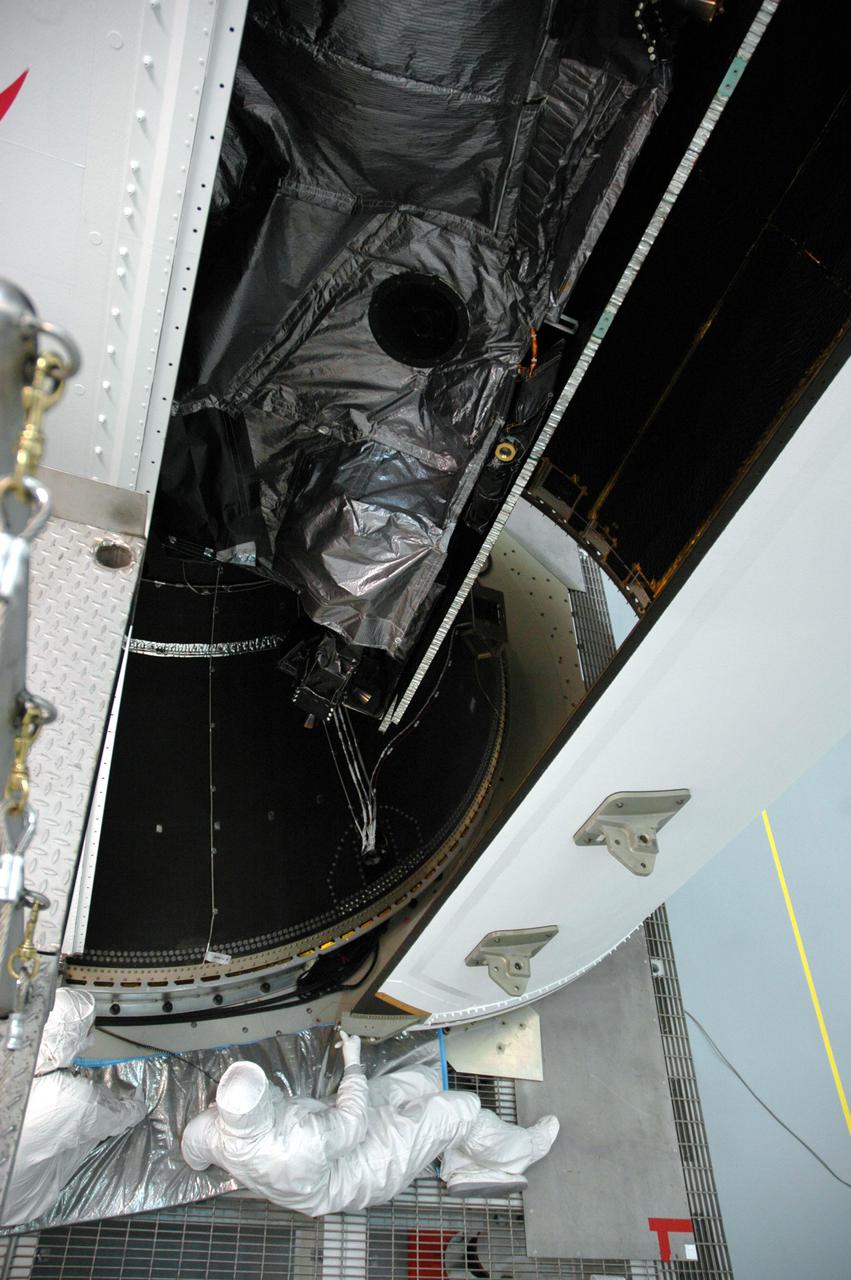
KENNEDY SPACE CENTER, FLA. - At Astrotech Space Operations in Titusville, Fla., a worker helps guide the second half of the fairing as it is moved into place around the GOES-N spacecraft. It will be attached to the first half already in place. The fairing protects the spacecraft during launch. Geostationary Operational Environmental Satellites (GOES) are sponsored by NASA’s Goddard Space Flight Center and the National Oceanic and Atmospheric Administration. GOES-N is targeted to launch June 23 from Launch Complex 37 at Cape Canaveral Air Force Station in Florida.
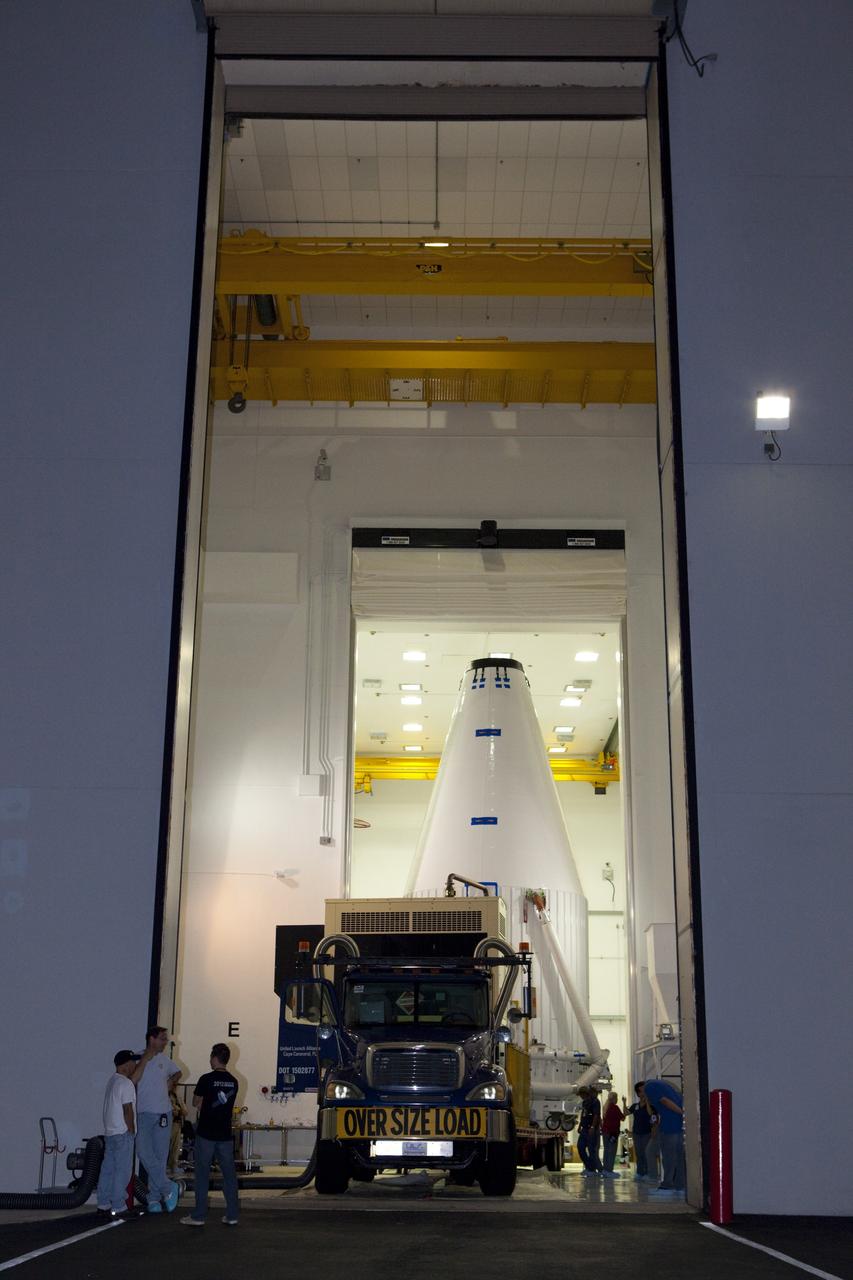
CAPE CANAVERAL, Fla. – The Radiation Belt Storm Probes, or RBSP, spacecraft are moved inside their payload fairing on the payload transporter from the Astrotech payload processing facility in Titusville, Fla. to Space Launch Complex-41 at Cape Canaveral Air Force Station. The fairing, which holds the twin RBSP spacecraft, will be lifted to the top of a United Launch Alliance Atlas V rocket for launch later in August. The two spacecraft are designed to study the Van Allen radiation belts in unprecedented detail. Photo credit: NASA/Dmitri Gerondidakis
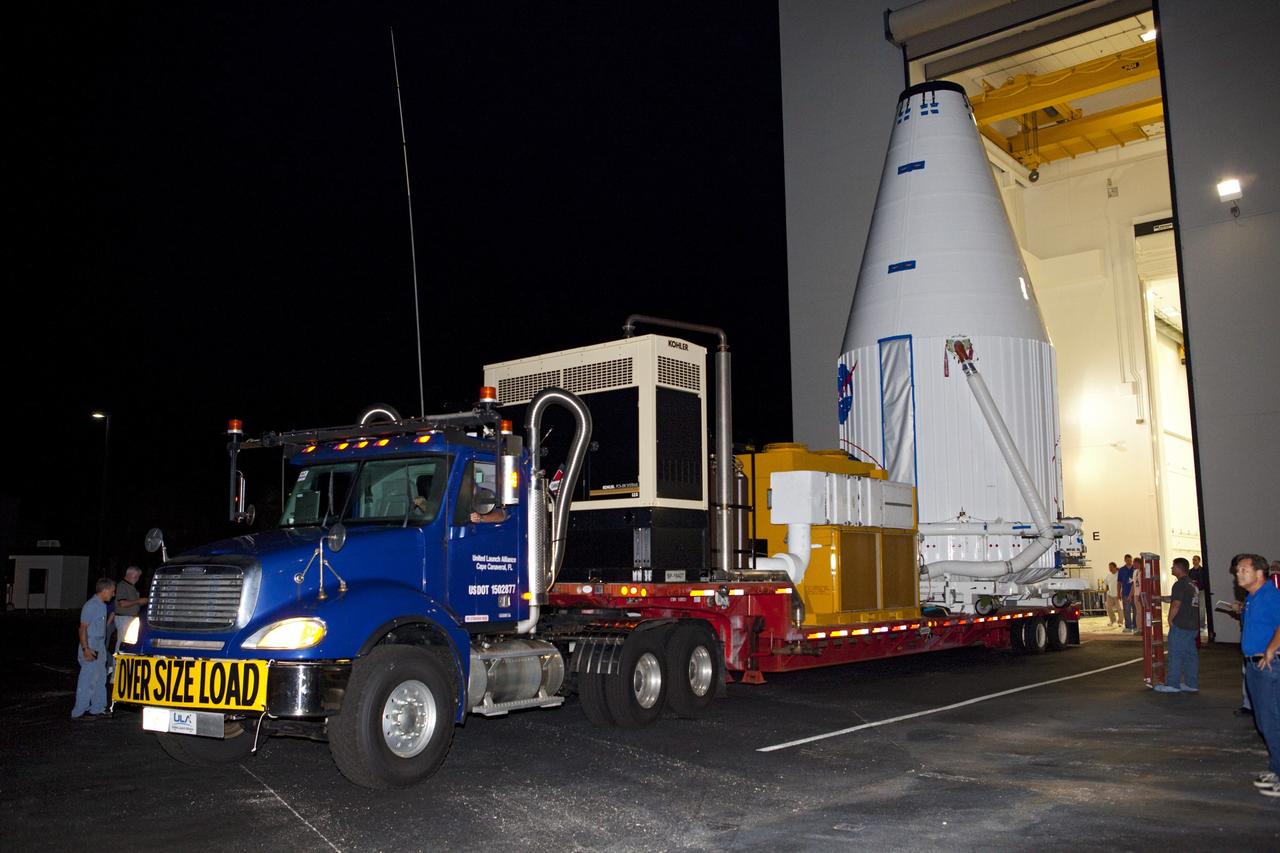
CAPE CANAVERAL, Fla. – The Radiation Belt Storm Probes, or RBSP, spacecraft are moved inside their payload fairing on the payload transporter from the Astrotech payload processing facility in Titusville, Fla. to Space Launch Complex-41 at Cape Canaveral Air Force Station. The fairing, which holds the twin RBSP spacecraft, will be lifted to the top of a United Launch Alliance Atlas V rocket for launch later in August. The two spacecraft are designed to study the Van Allen radiation belts in unprecedented detail. Photo credit: NASA/Dmitri Gerondidakis
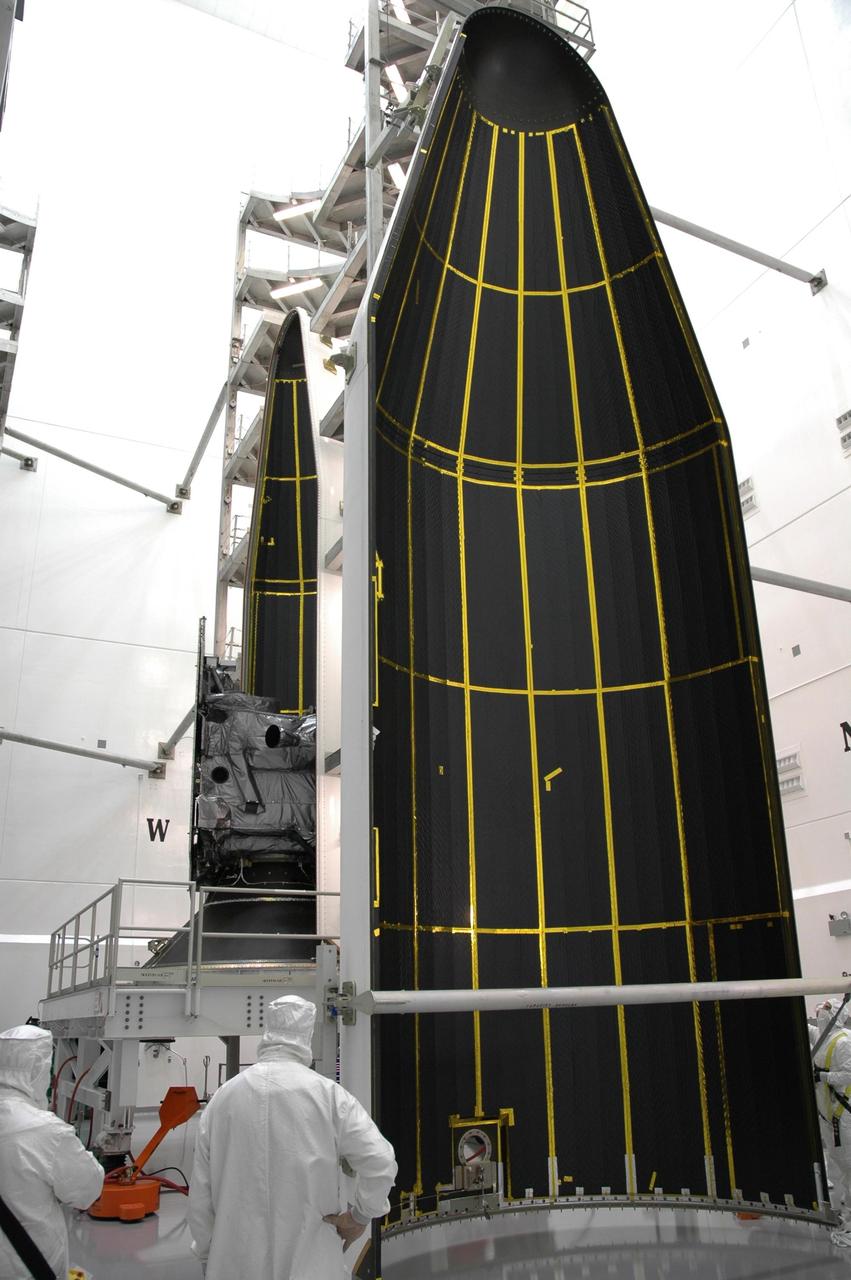
KENNEDY SPACE CENTER, FLA. - At Astrotech Space Operations payload processing facility in Titusville, Fla., the first half of the fairing (right) is moved away from the GOES-N spacecraft after being detached. The spacecraft and second half of the fairing are seen behind it. Workers are using the stand to detach the fairing from around the spacecraft. Workers will use the stand to begin detaching the fairing from around the spacecraft. The fairing protects the spacecraft during launch and flight through the atmosphere. Once out of the atmosphere, the fairing is jettisoned. Removing the fairing will allow workers access to the spacecraft. GOES-N was demated from its Boeing Delta IV launch vehicle when the launch was postponed in August 2005 due to technical issues. Due to the extended length of time the spacecraft had been atop the Delta IV rocket without launching, the weather satellite was returned to Astrotech for some precautionary retesting and state of health checks. GOES-N is the latest in a series of Geostationary Operational Environmental Satellites for NOAA and NASA providing continuous monitoring necessary for intensive data analysis. Photo credit: NASA/Jim Grossmann
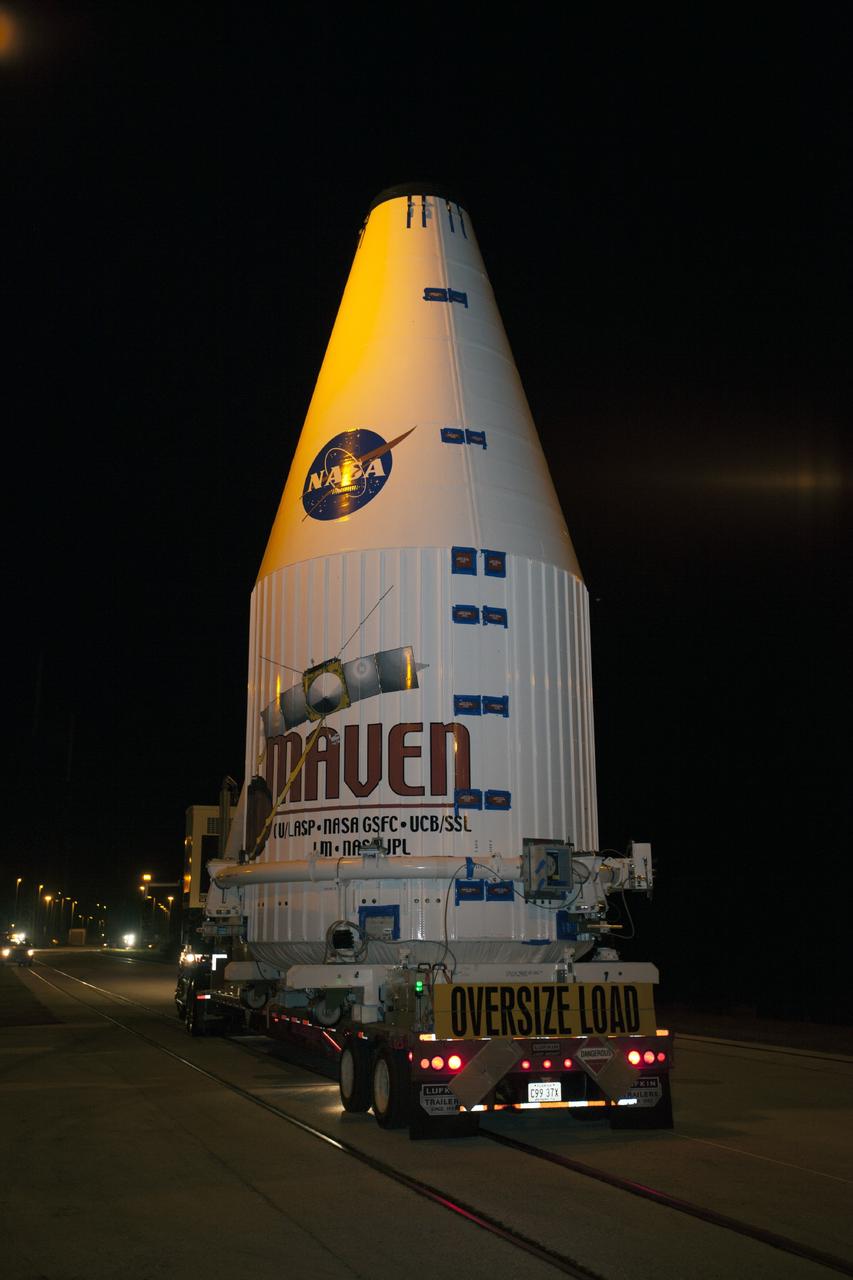
CAPE CANAVERAL, Fla. – A transporter moves NASA's MAVEN spacecraft, inside a payload fairing, to Space Launch Complex 41 where it will be hoisted atop a United Launch Alliance Atlas V rocket that will lift it into space and on to Mars. MAVEN is short for Mars Atmosphere and Volatile Evolution. Photo credit: NASA/Kim Shiflett
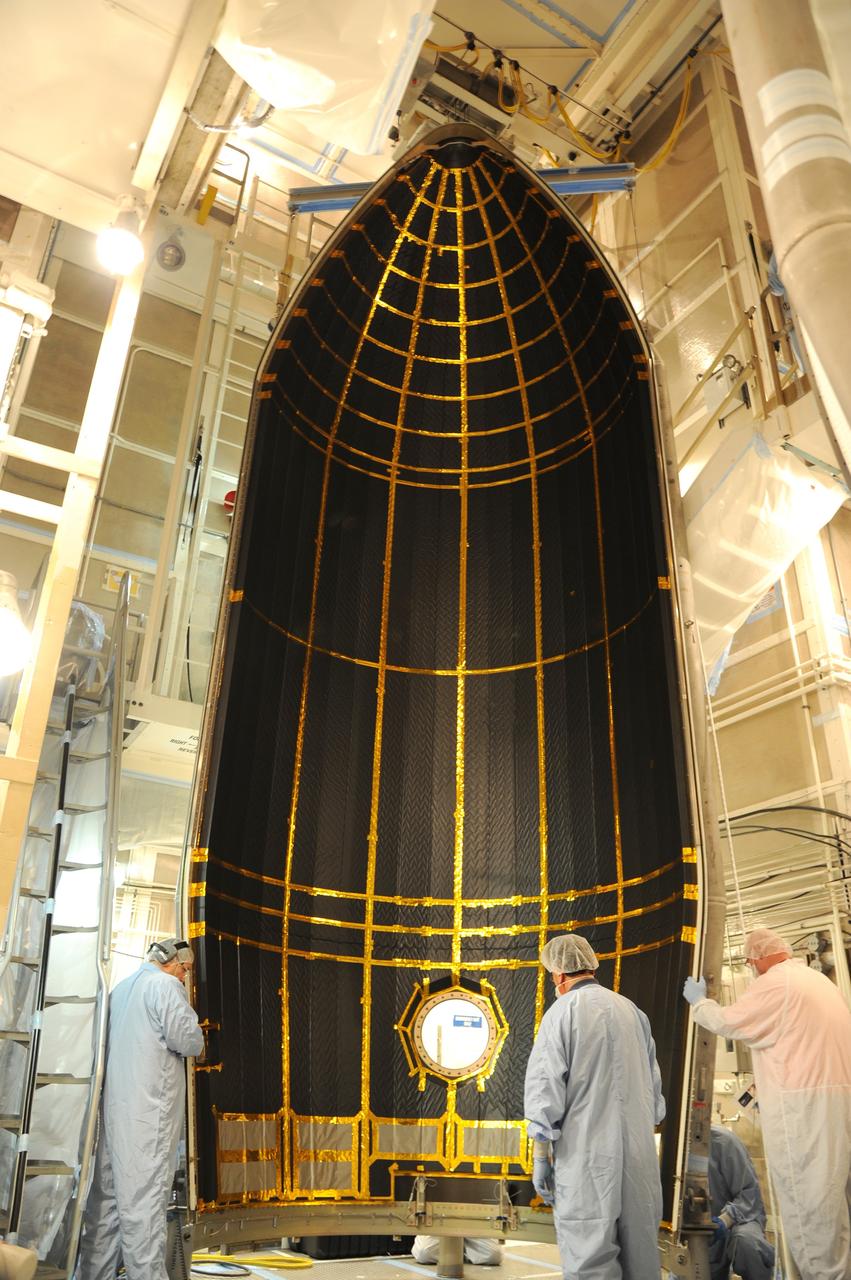
VANDENBERG AFB, California – The payload fairing is moved into place around NASA's SMAP spacecraft inside the service structure at Space Launch Complex-2 at Vandenberg AFB, California - the launch site for NASA's SMAP spacecraft. For more, go to www.nasa.gov/smap Photo credit: USAF

VANDENBERG AFB, California – The payload fairing is moved into place around NASA's SMAP spacecraft inside the service structure at Space Launch Complex-2 at Vandenberg AFB, California - the launch site for NASA's SMAP spacecraft. For more, go to www.nasa.gov/smap Photo credit: USAF
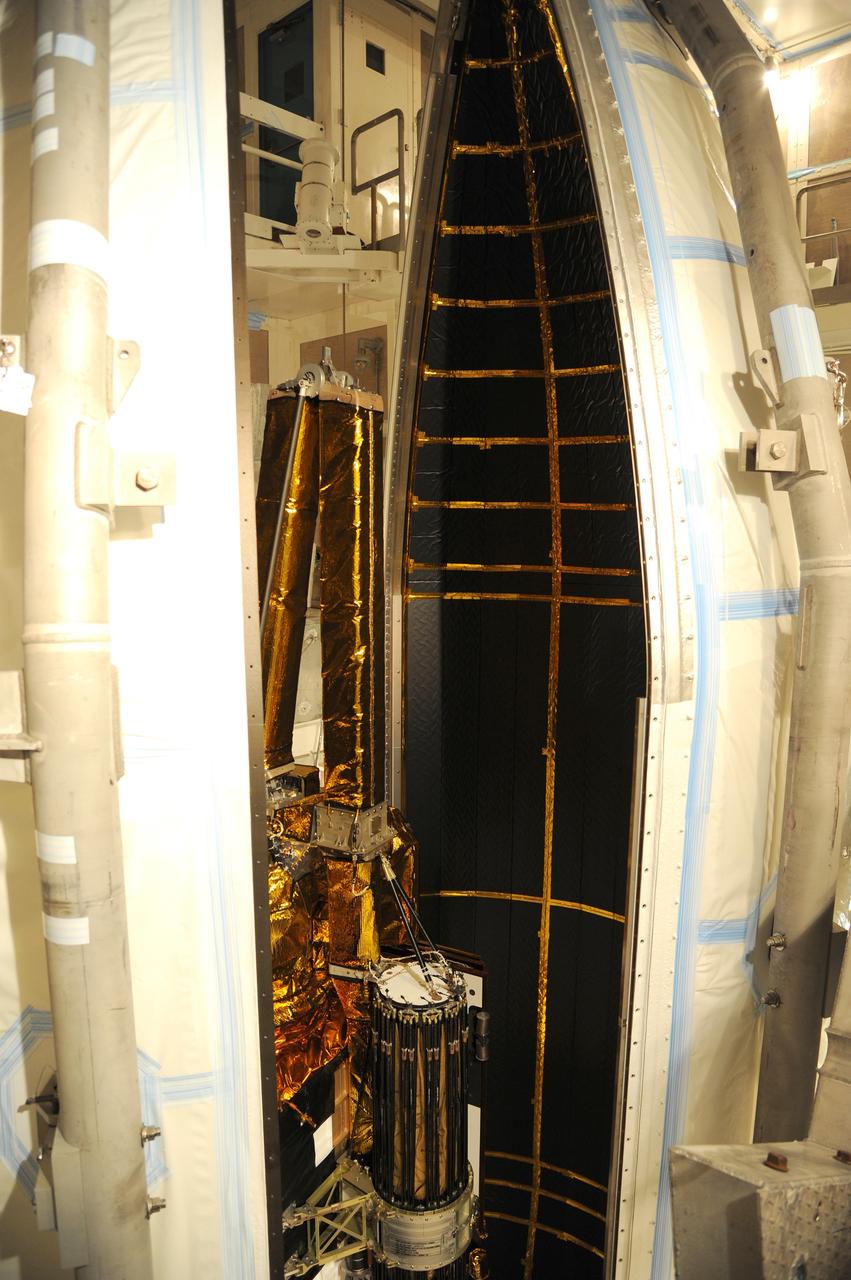
VANDENBERG AFB, California – The payload fairing is moved into place around NASA's SMAP spacecraft inside the service structure at Space Launch Complex-2 at Vandenberg AFB, California - the launch site for NASA's SMAP spacecraft. For more, go to www.nasa.gov/smap Photo credit: USAF
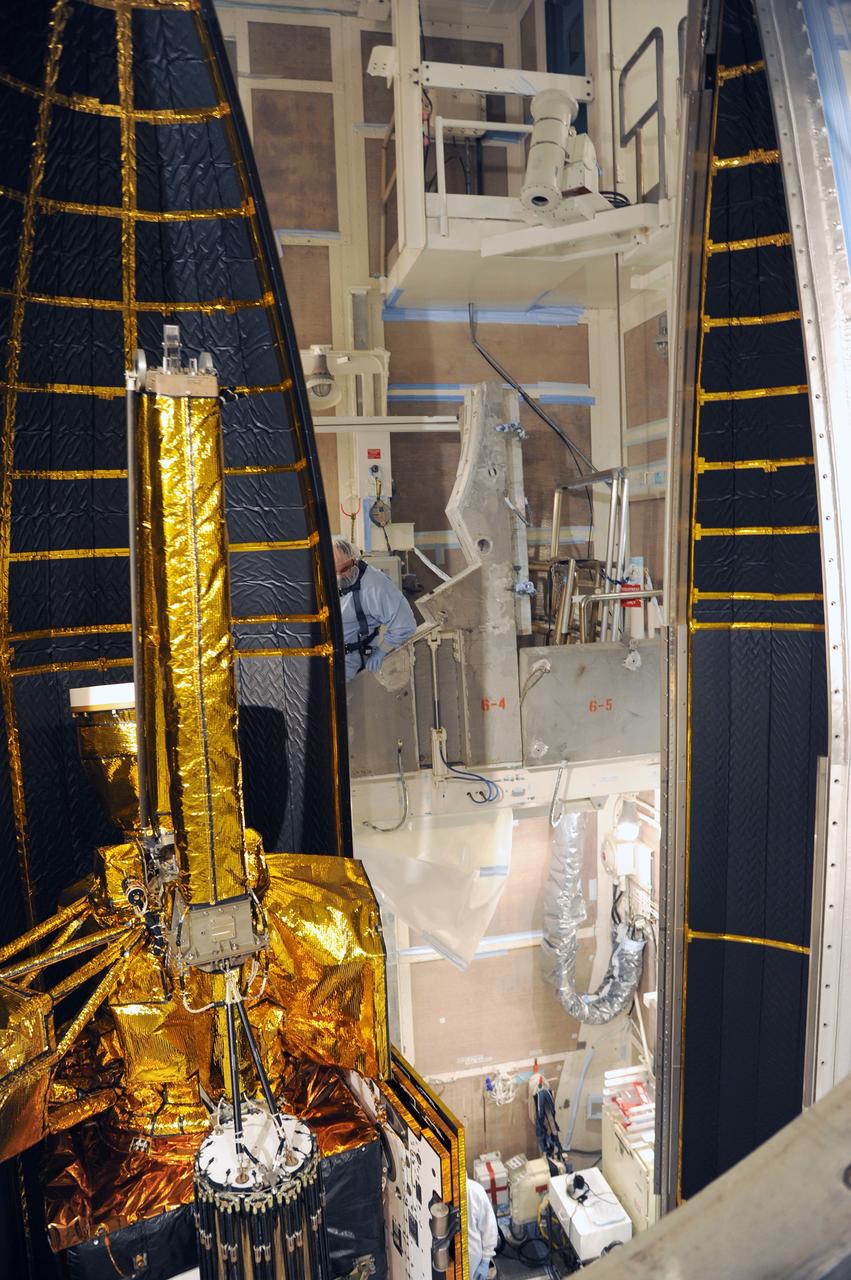
VANDENBERG AFB, California – The payload fairing is moved into place around NASA's SMAP spacecraft inside the service structure at Space Launch Complex-2 at Vandenberg AFB, California - the launch site for NASA's SMAP spacecraft. For more, go to www.nasa.gov/smap Photo credit: USAF
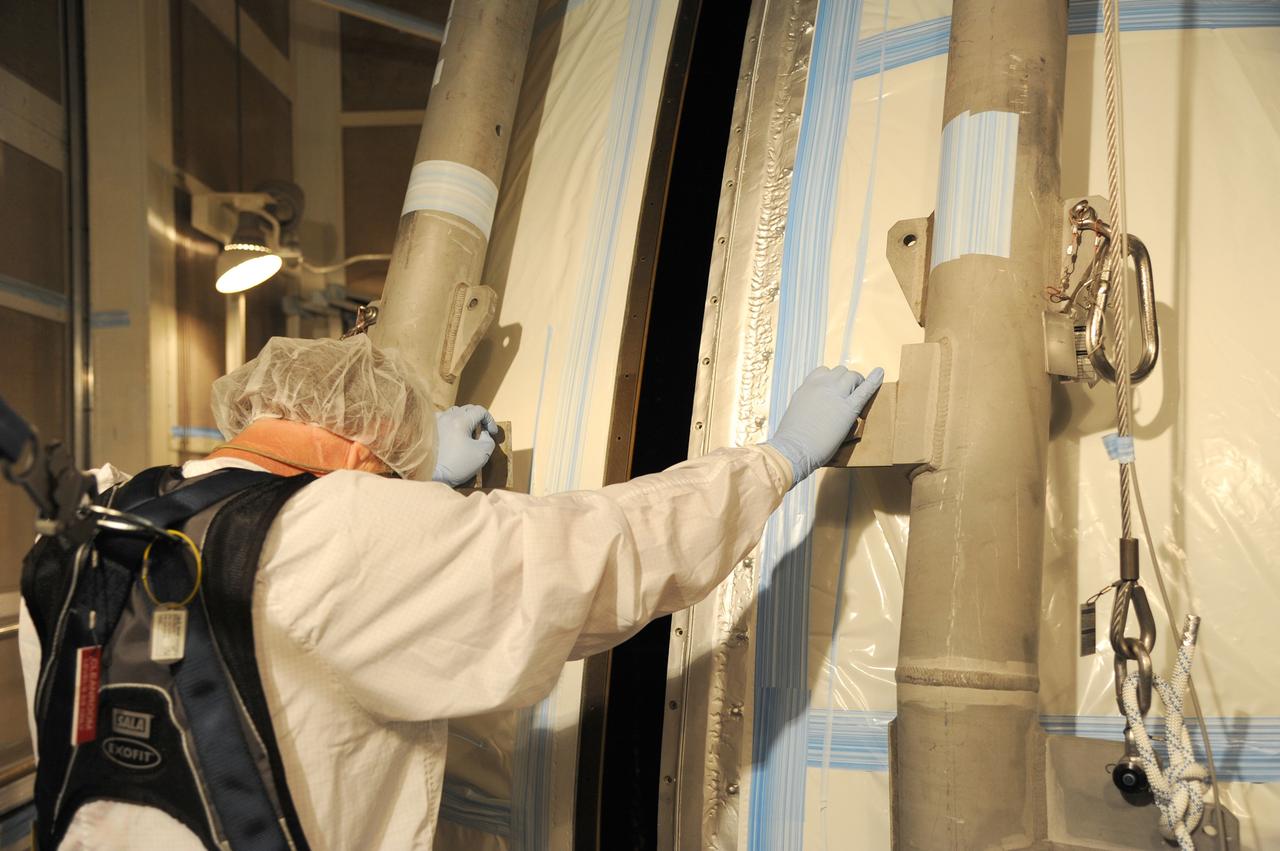
VANDENBERG AFB, California – The payload fairing is moved into place around NASA's SMAP spacecraft inside the service structure at Space Launch Complex-2 at Vandenberg AFB, California - the launch site for NASA's SMAP spacecraft. For more, go to www.nasa.gov/smap Photo credit: USAF
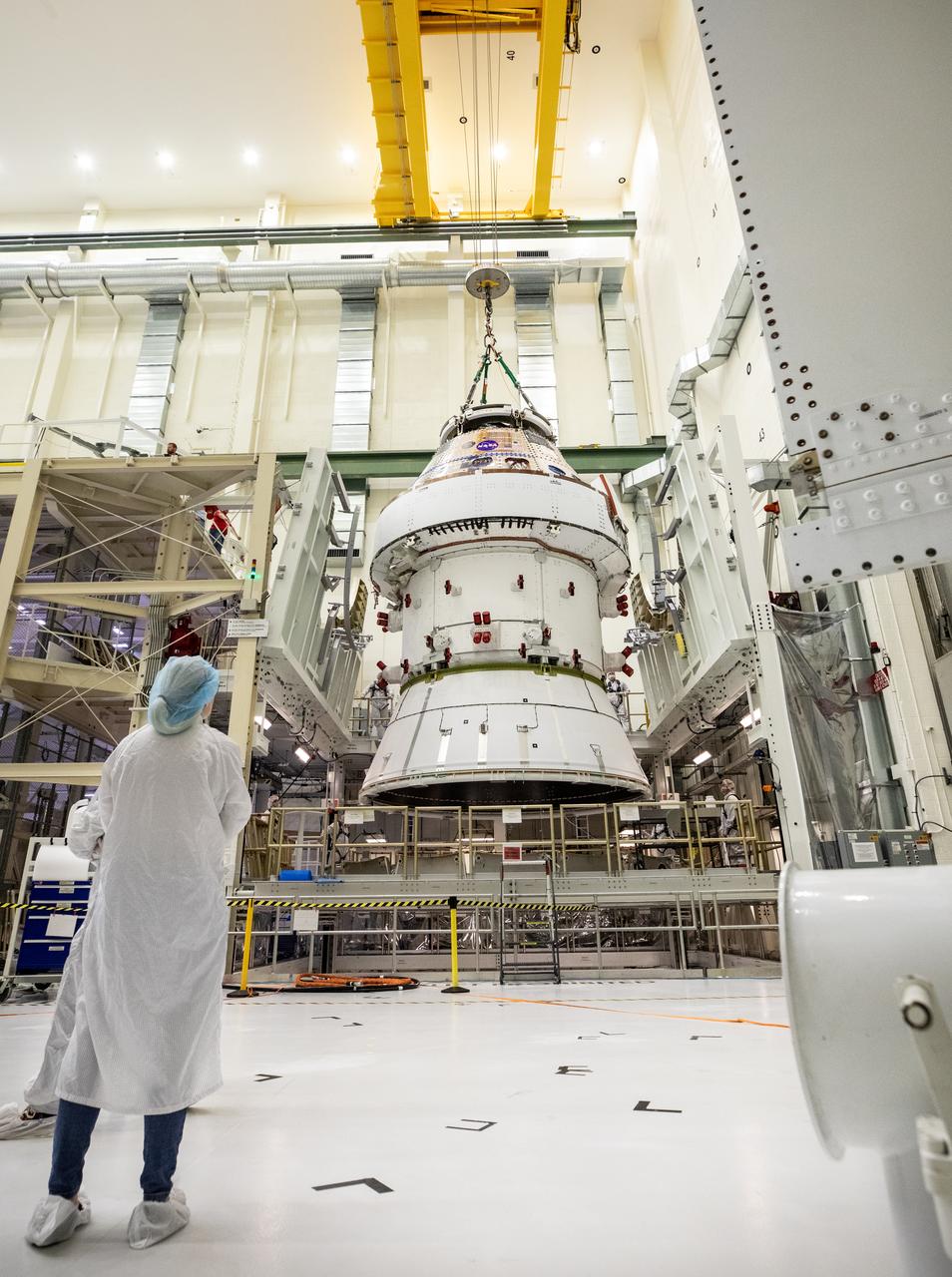
Technicians with NASA and Lockheed Martin operate a 30-ton crane to move NASA’s Artemis II Orion spacecraft out of the Final Assembly and System Testing cell inside the Neil A. Operations and Checkout Building at NASA’s Kennedy Space Center in Florida on Saturday, Feb. 22, 2025. The move prepares for the upcoming installation of four solar array wings and spacecraft adapter jettison fairings for the agency’s first crewed flight test under the Artemis campaign.
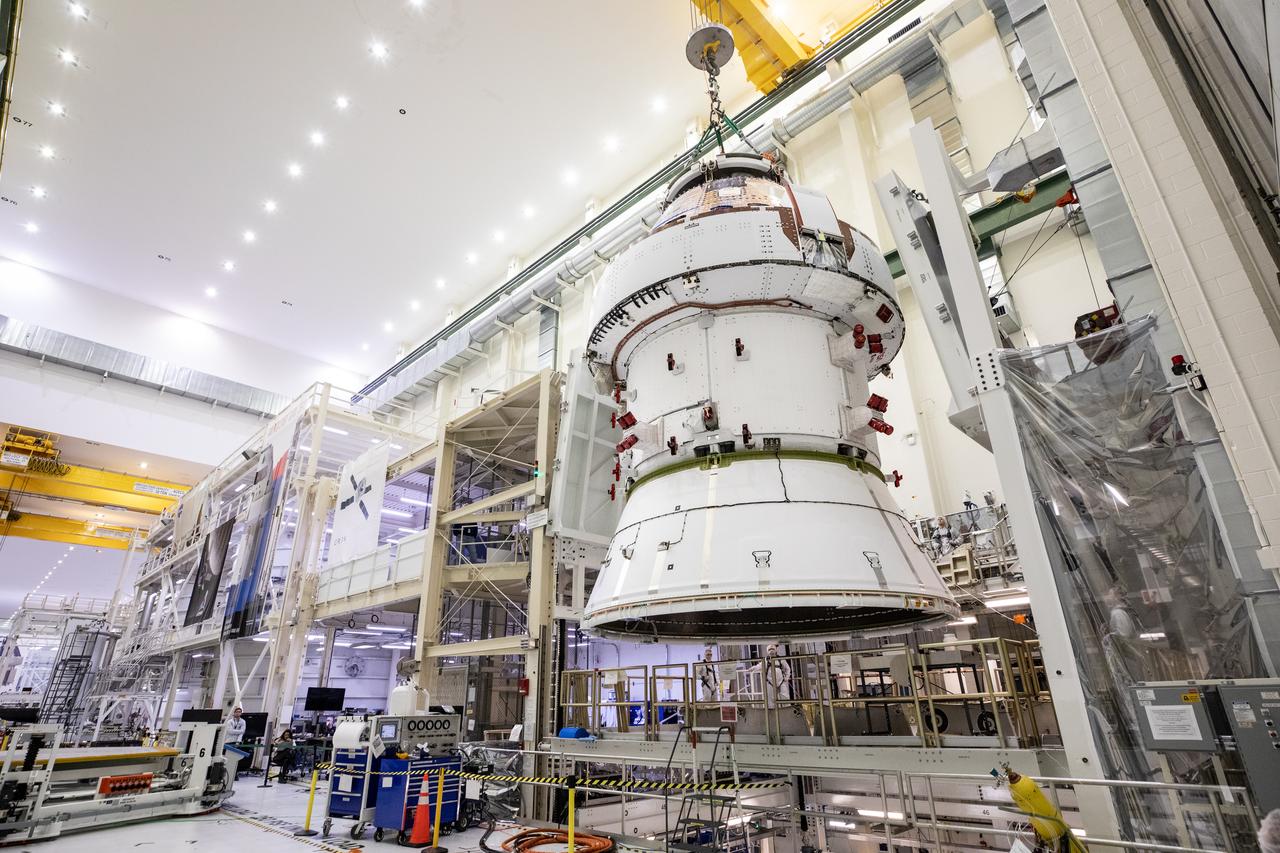
Technicians with NASA and Lockheed Martin operate a 30-ton crane to move NASA’s Artemis II Orion spacecraft out of the Final Assembly and System Testing cell inside the Neil A. Operations and Checkout Building at NASA’s Kennedy Space Center in Florida on Saturday, Feb. 22, 2025. The move prepares for the upcoming installation of four solar array wings and spacecraft adapter jettison fairings for the agency’s first crewed flight test under the Artemis campaign.
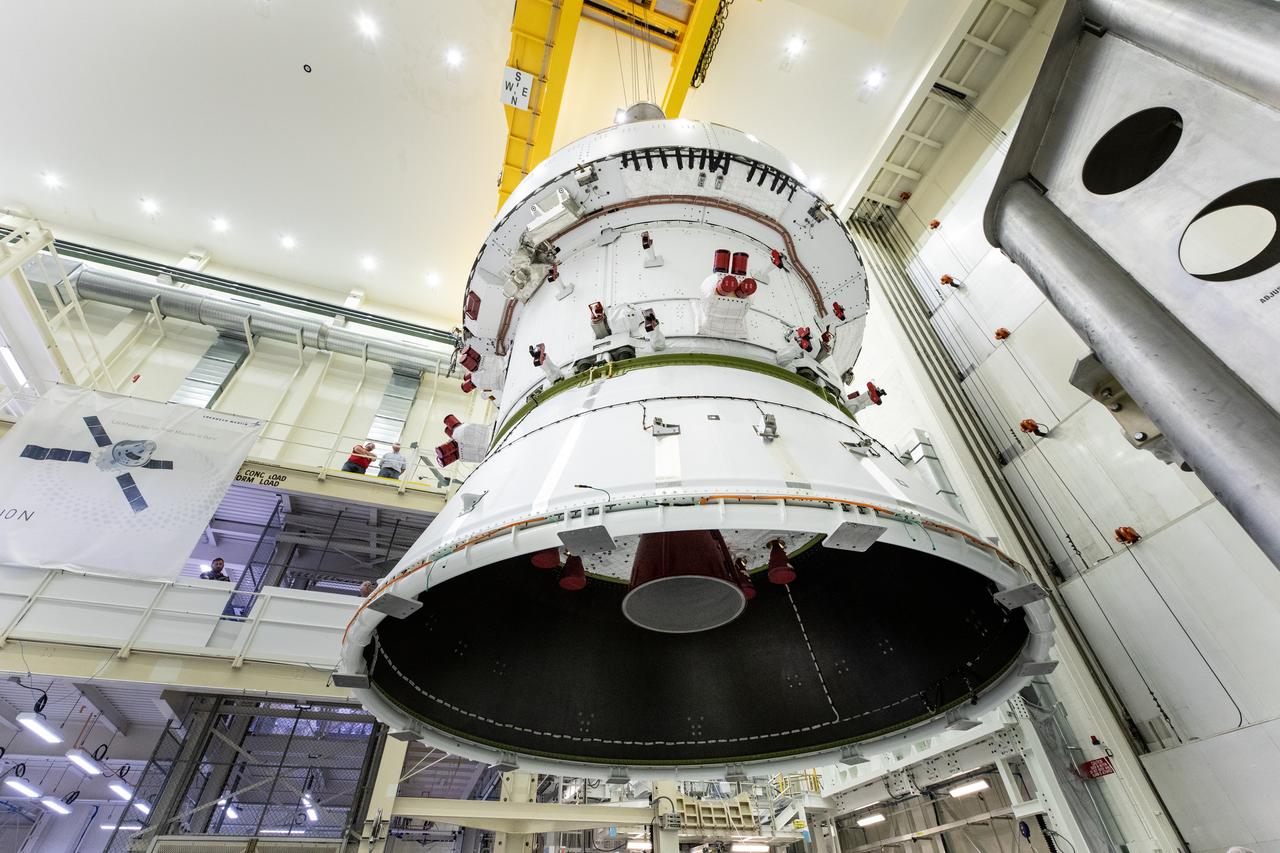
Technicians with NASA and Lockheed Martin operate a 30-ton crane to move NASA’s Artemis II Orion spacecraft out of the Final Assembly and System Testing cell inside the Neil A. Operations and Checkout Building at NASA’s Kennedy Space Center in Florida on Saturday, Feb. 22, 2025. The move prepares for the upcoming installation of four solar array wings and spacecraft adapter jettison fairings for the agency’s first crewed flight test under the Artemis campaign.
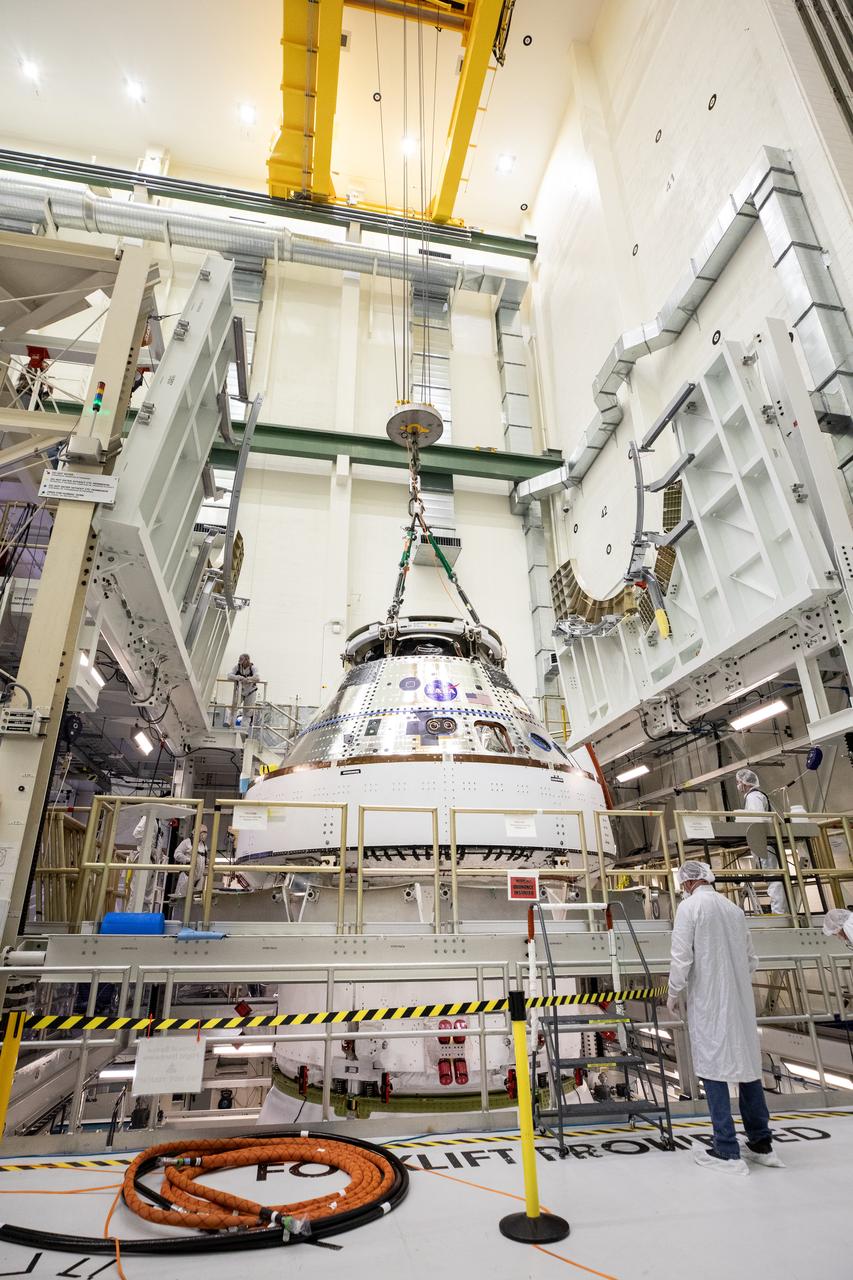
Technicians with NASA and Lockheed Martin operate a 30-ton crane to move NASA’s Artemis II Orion spacecraft out of the Final Assembly and System Testing cell inside the Neil A. Operations and Checkout Building at NASA’s Kennedy Space Center in Florida on Saturday, Feb. 22, 2025. The move prepares for the upcoming installation of four solar array wings and spacecraft adapter jettison fairings for the agency’s first crewed flight test under the Artemis campaign.
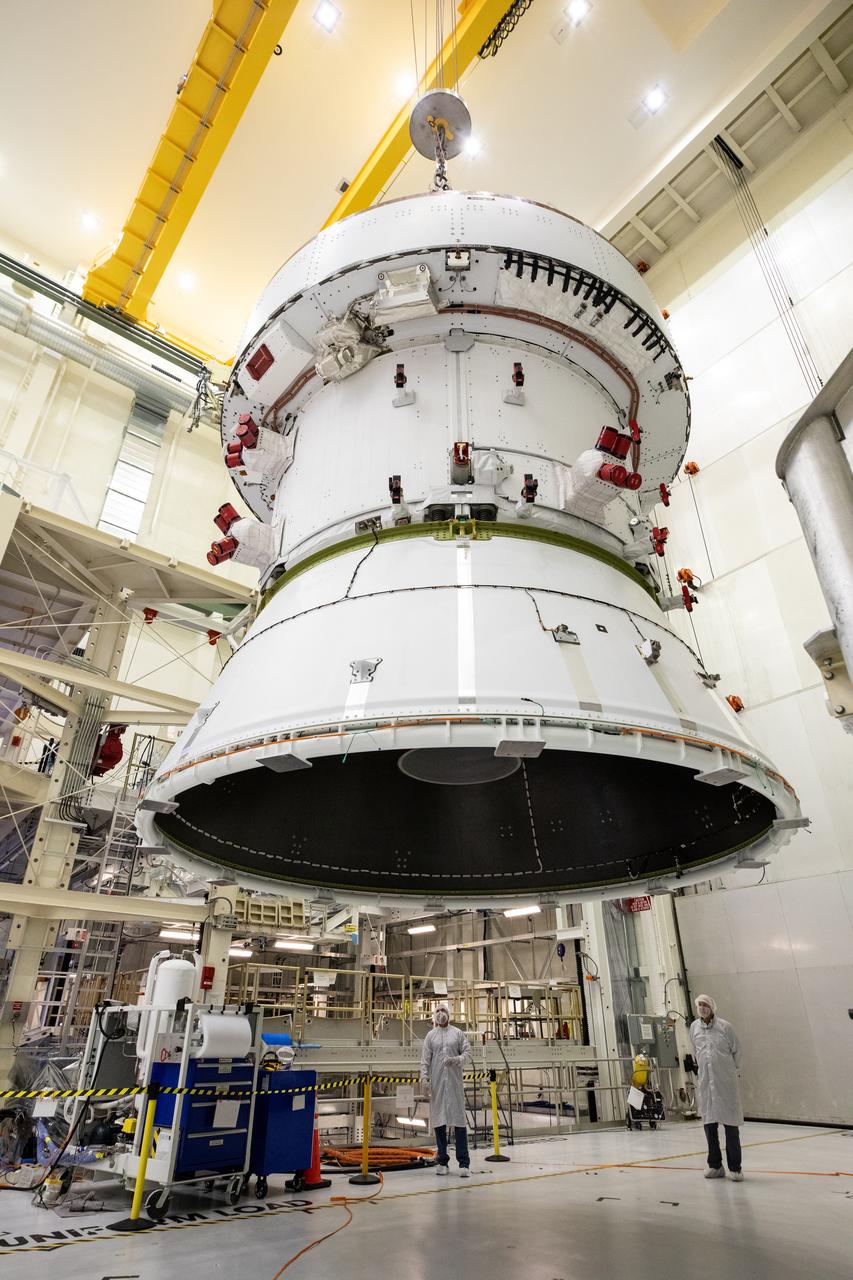
Technicians with NASA and Lockheed Martin operate a 30-ton crane to move NASA’s Artemis II Orion spacecraft out of the Final Assembly and System Testing cell inside the Neil A. Operations and Checkout Building at NASA’s Kennedy Space Center in Florida on Saturday, Feb. 22, 2025. The move prepares for the upcoming installation of four solar array wings and spacecraft adapter jettison fairings for the agency’s first crewed flight test under the Artemis campaign.
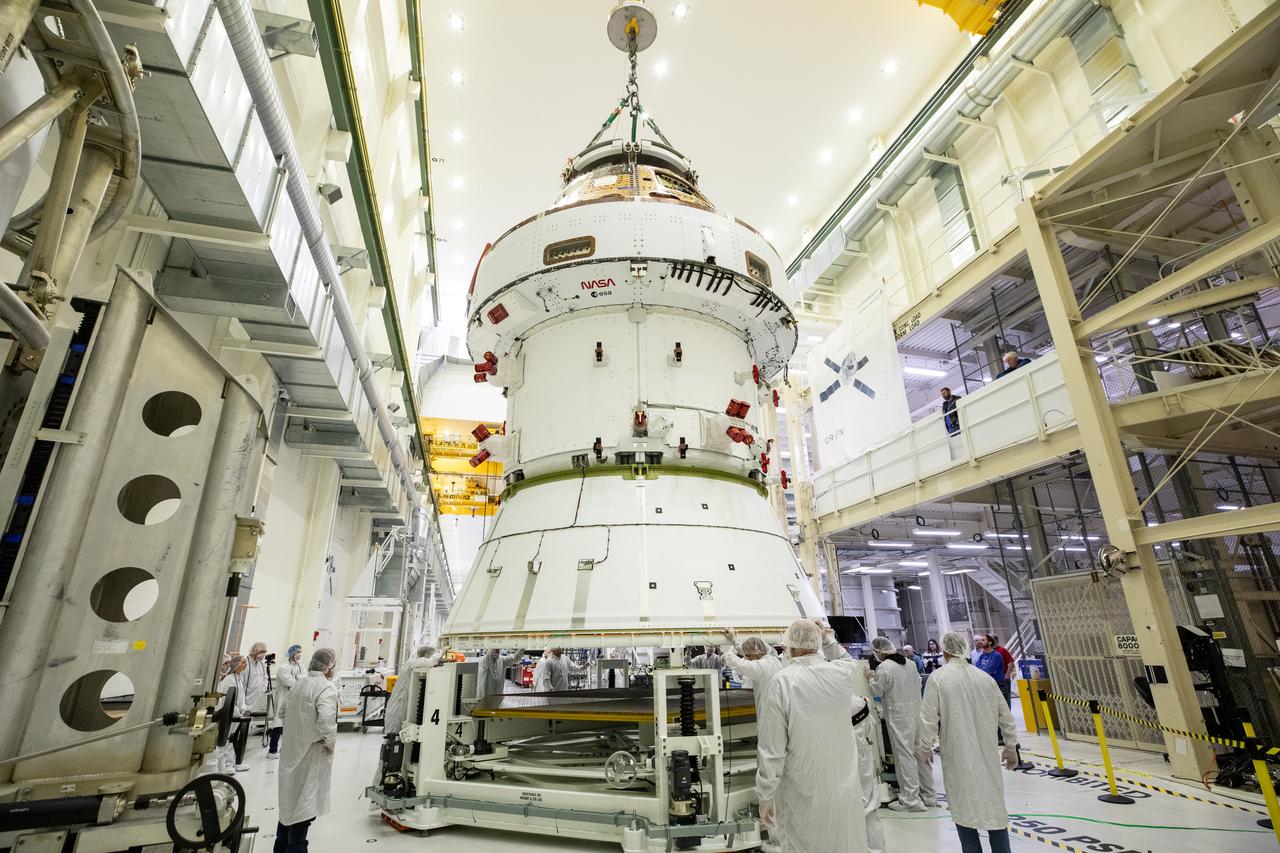
Technicians with NASA and Lockheed Martin operate a 30-ton crane to move NASA’s Artemis II Orion spacecraft out of the Final Assembly and System Testing cell inside the Neil A. Operations and Checkout Building at NASA’s Kennedy Space Center in Florida on Saturday, Feb. 22, 2025. The move prepares for the upcoming installation of four solar array wings and spacecraft adapter jettison fairings for the agency’s first crewed flight test under the Artemis campaign.
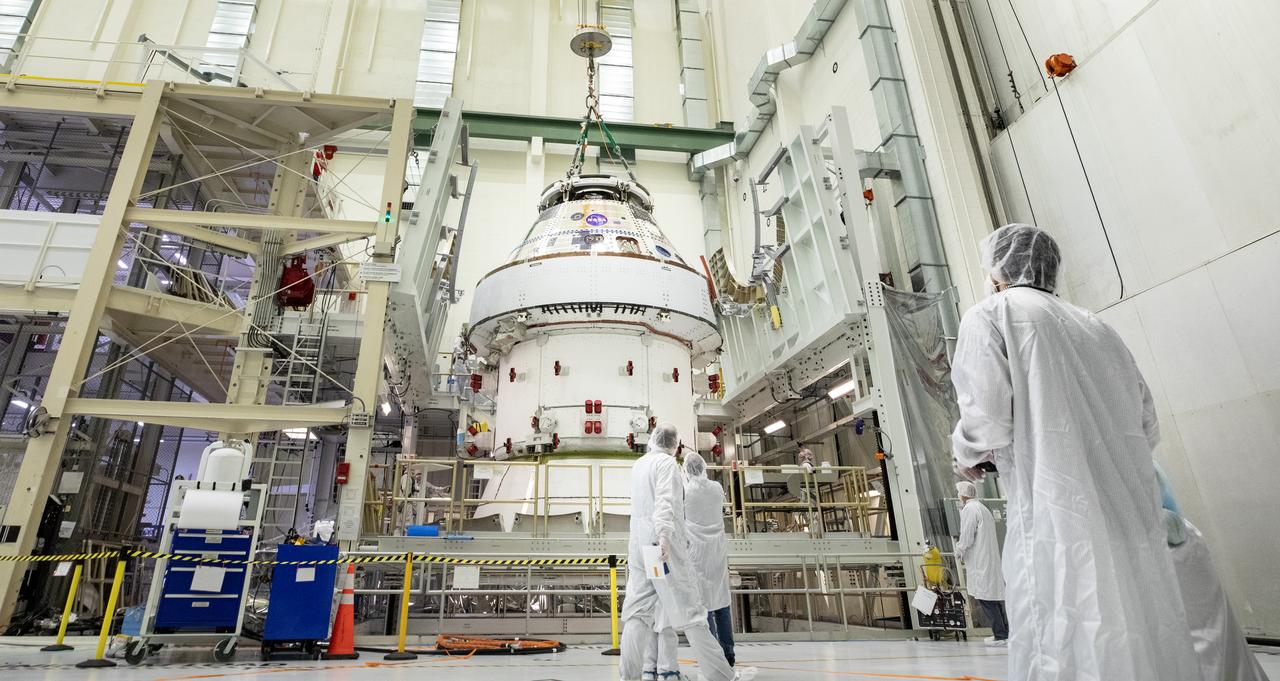
Technicians with NASA and Lockheed Martin operate a 30-ton crane to move NASA’s Artemis II Orion spacecraft out of the Final Assembly and System Testing cell inside the Neil A. Operations and Checkout Building at NASA’s Kennedy Space Center in Florida on Saturday, Feb. 22, 2025. The move prepares for the upcoming installation of four solar array wings and spacecraft adapter jettison fairings for the agency’s first crewed flight test under the Artemis campaign.
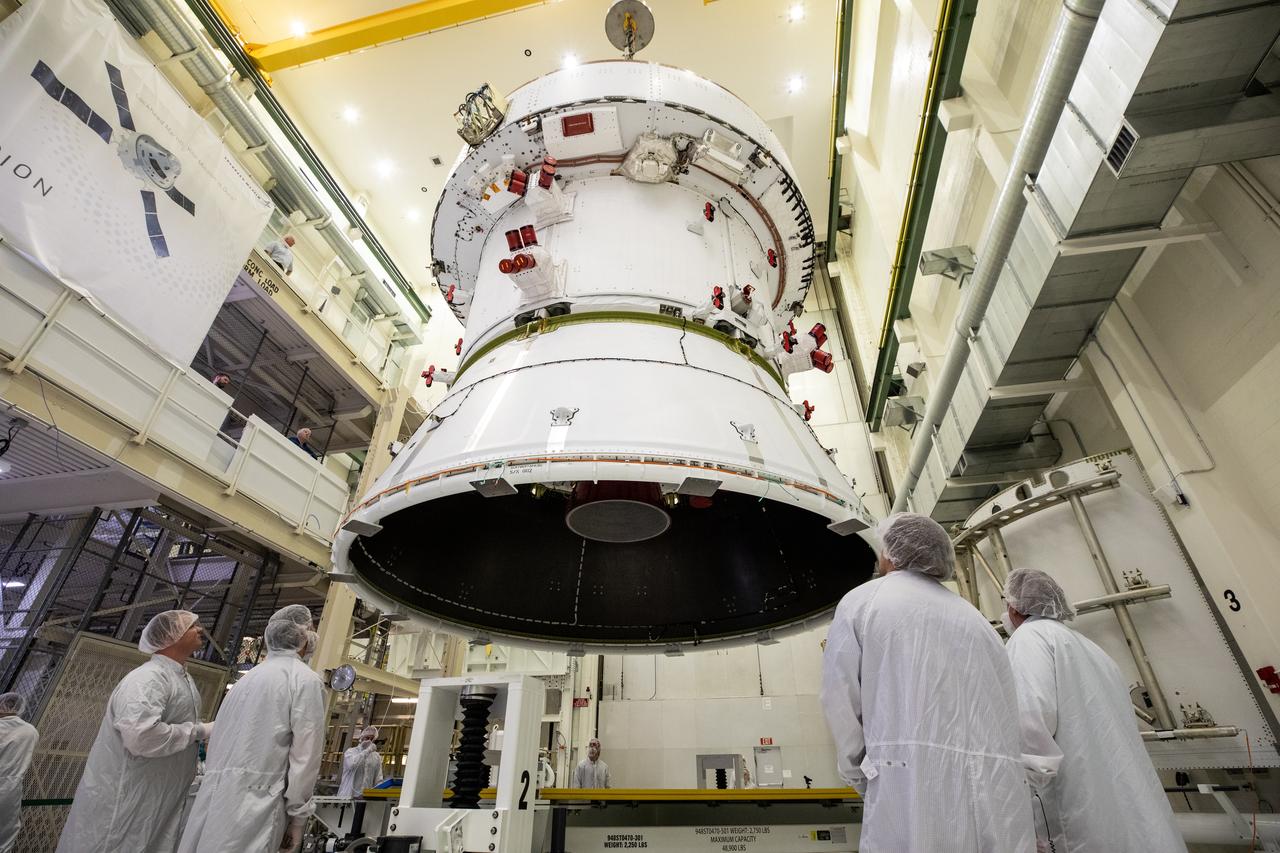
Technicians with NASA and Lockheed Martin operate a 30-ton crane to move NASA’s Artemis II Orion spacecraft out of the Final Assembly and System Testing cell inside the Neil A. Operations and Checkout Building at NASA’s Kennedy Space Center in Florida on Saturday, Feb. 22, 2025. The move prepares for the upcoming installation of four solar array wings and spacecraft adapter jettison fairings for the agency’s first crewed flight test under the Artemis campaign.
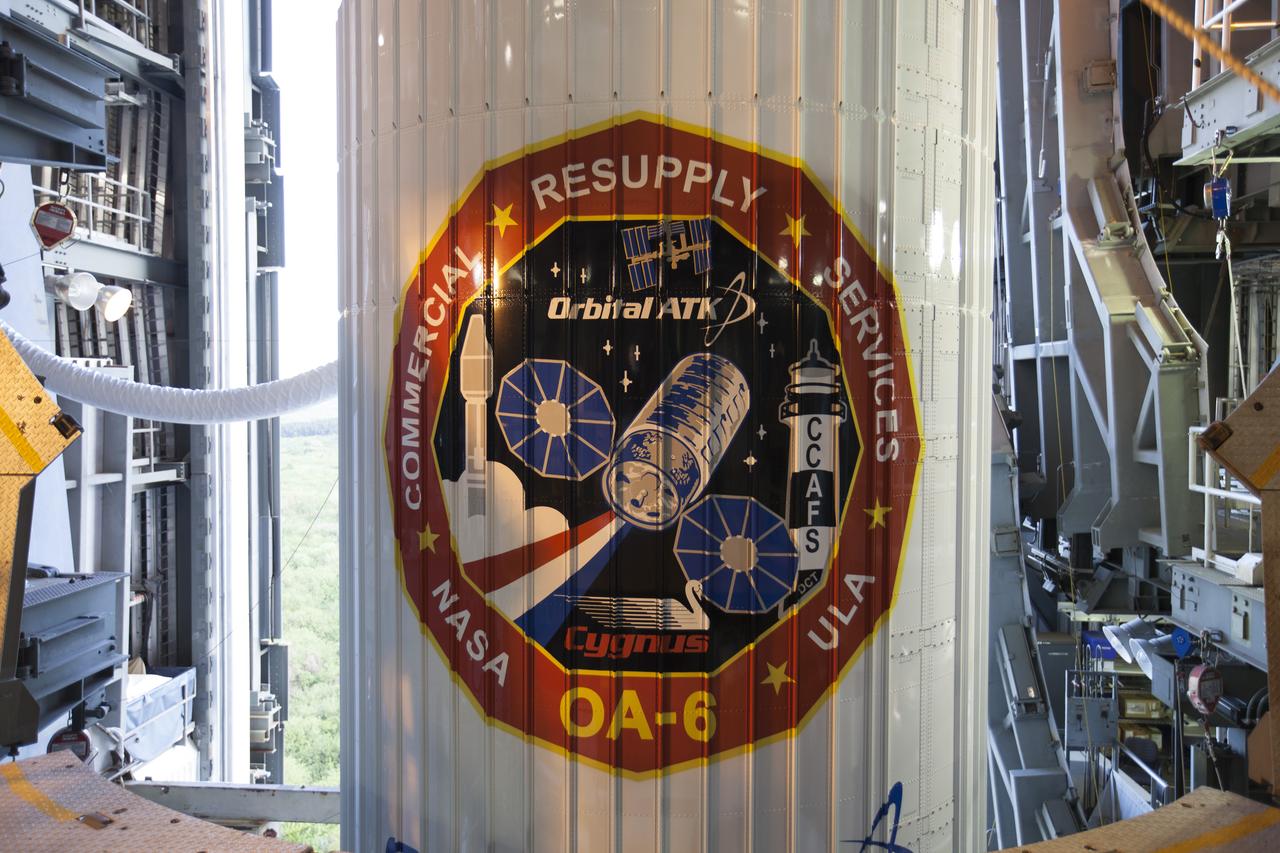
The mission logo for the Orbital ATK CRS-6 mission is visible on the payload fairing encapsulating a Cygnus spacecraft as it is prepared for its move from the Vertical Integration Facility at Cape Canaveral Air Force Station's Space Launch Complex 41. Mounted atop a United Launch Alliance Atlas V rocket, the vehicle will be moved to the launch pad. The Cygnus spacecraft will boost a resupply mission delving science payloads to the International Space Station.

Technicians with NASA and Lockheed Martin operate a 30-ton crane to move NASA’s Artemis II Orion spacecraft out of the Final Assembly and System Testing cell inside the Neil A. Operations and Checkout Building at NASA’s Kennedy Space Center in Florida on Saturday, Feb. 22, 2025. The move prepares for the upcoming installation of four solar array wings and spacecraft adapter jettison fairings for the agency’s first crewed flight test under the Artemis campaign.
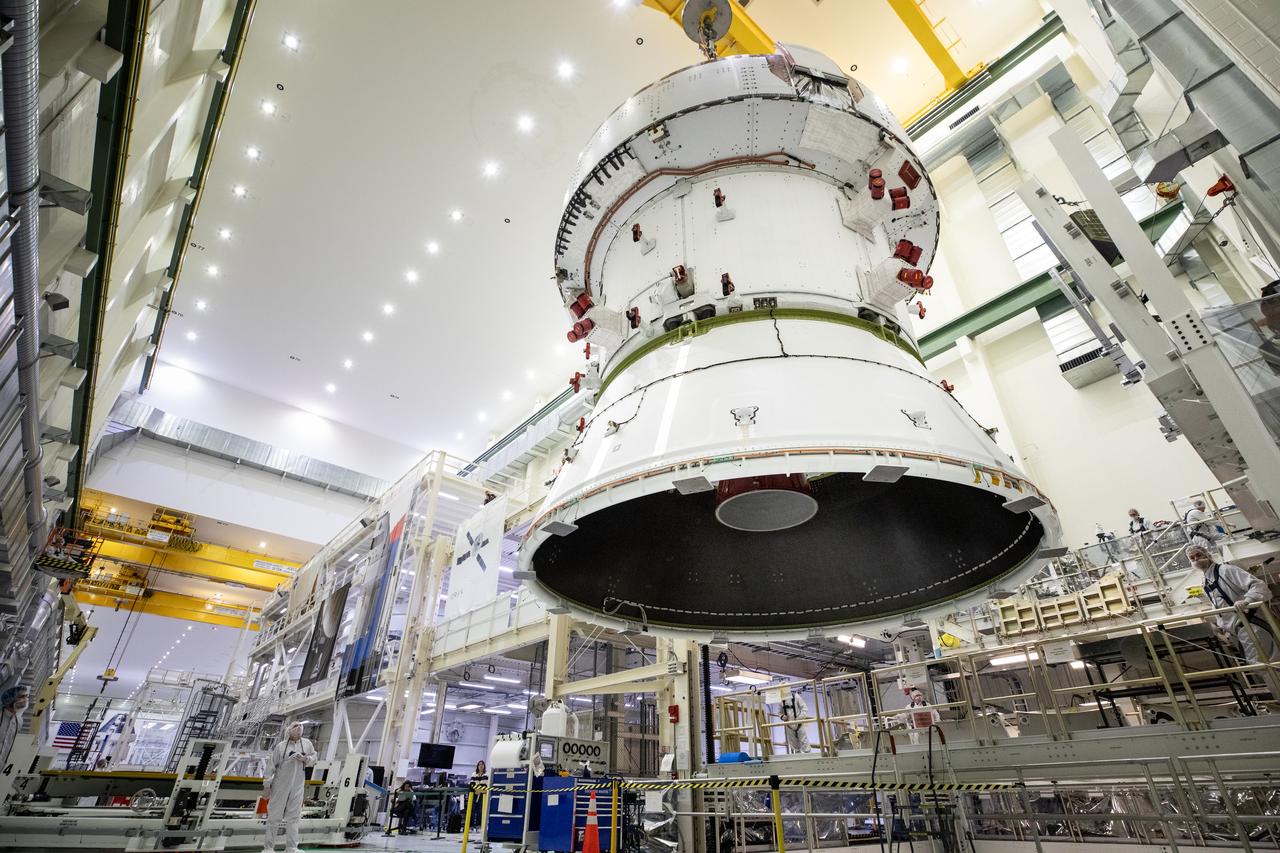
Technicians with NASA and Lockheed Martin operate a 30-ton crane to move NASA’s Artemis II Orion spacecraft out of the Final Assembly and System Testing cell inside the Neil A. Operations and Checkout Building at NASA’s Kennedy Space Center in Florida on Saturday, Feb. 22, 2025. The move prepares for the upcoming installation of four solar array wings and spacecraft adapter jettison fairings for the agency’s first crewed flight test under the Artemis campaign.

Technicians with NASA and Lockheed Martin operate a 30-ton crane to move NASA’s Artemis II Orion spacecraft out of the Final Assembly and System Testing cell inside the Neil A. Operations and Checkout Building at NASA’s Kennedy Space Center in Florida on Saturday, Feb. 22, 2025. The move prepares for the upcoming installation of four solar array wings and spacecraft adapter jettison fairings for the agency’s first crewed flight test under the Artemis campaign.
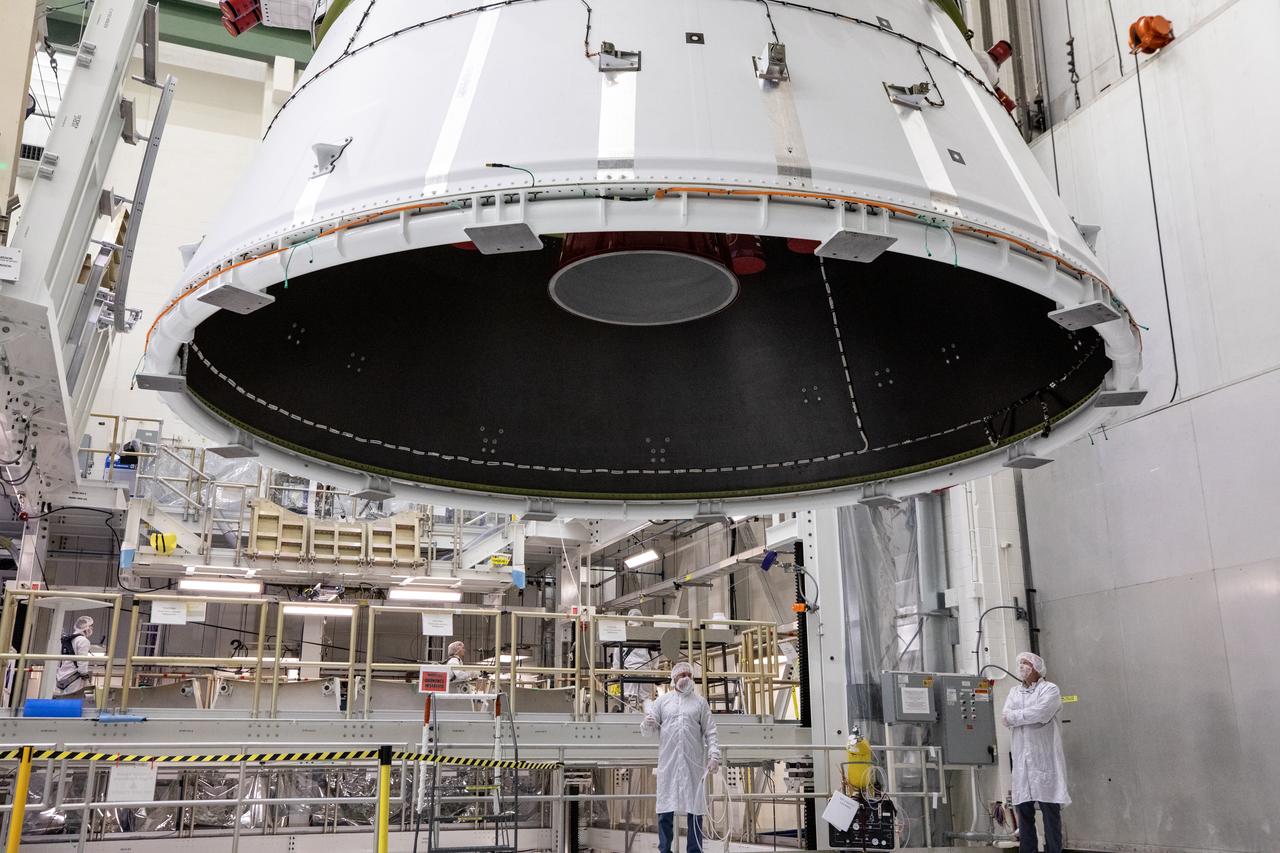
Technicians with NASA and Lockheed Martin operate a 30-ton crane to move NASA’s Artemis II Orion spacecraft out of the Final Assembly and System Testing cell inside the Neil A. Operations and Checkout Building at NASA’s Kennedy Space Center in Florida on Saturday, Feb. 22, 2025. The move prepares for the upcoming installation of four solar array wings and spacecraft adapter jettison fairings for the agency’s first crewed flight test under the Artemis campaign.
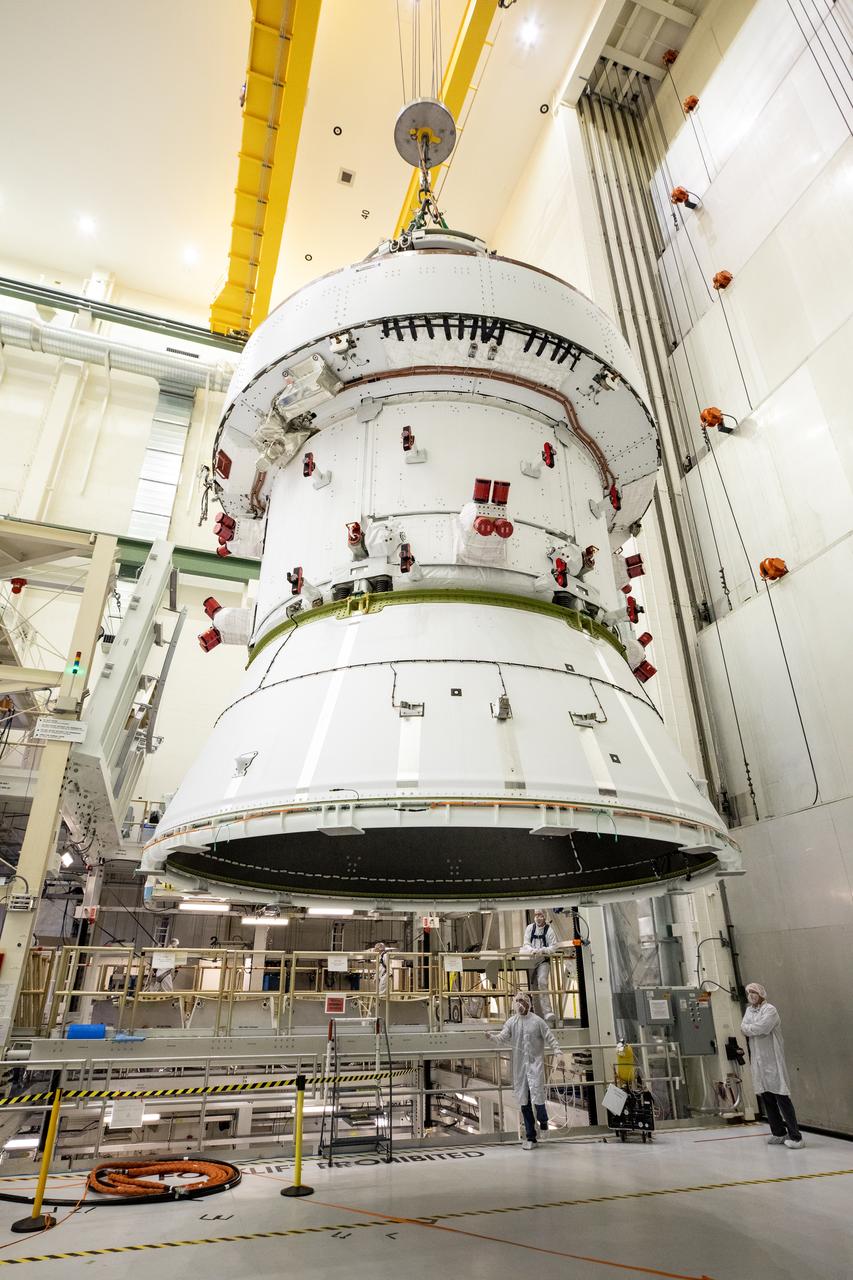
Technicians with NASA and Lockheed Martin operate a 30-ton crane to move NASA’s Artemis II Orion spacecraft out of the Final Assembly and System Testing cell inside the Neil A. Operations and Checkout Building at NASA’s Kennedy Space Center in Florida on Saturday, Feb. 22, 2025. The move prepares for the upcoming installation of four solar array wings and spacecraft adapter jettison fairings for the agency’s first crewed flight test under the Artemis campaign.
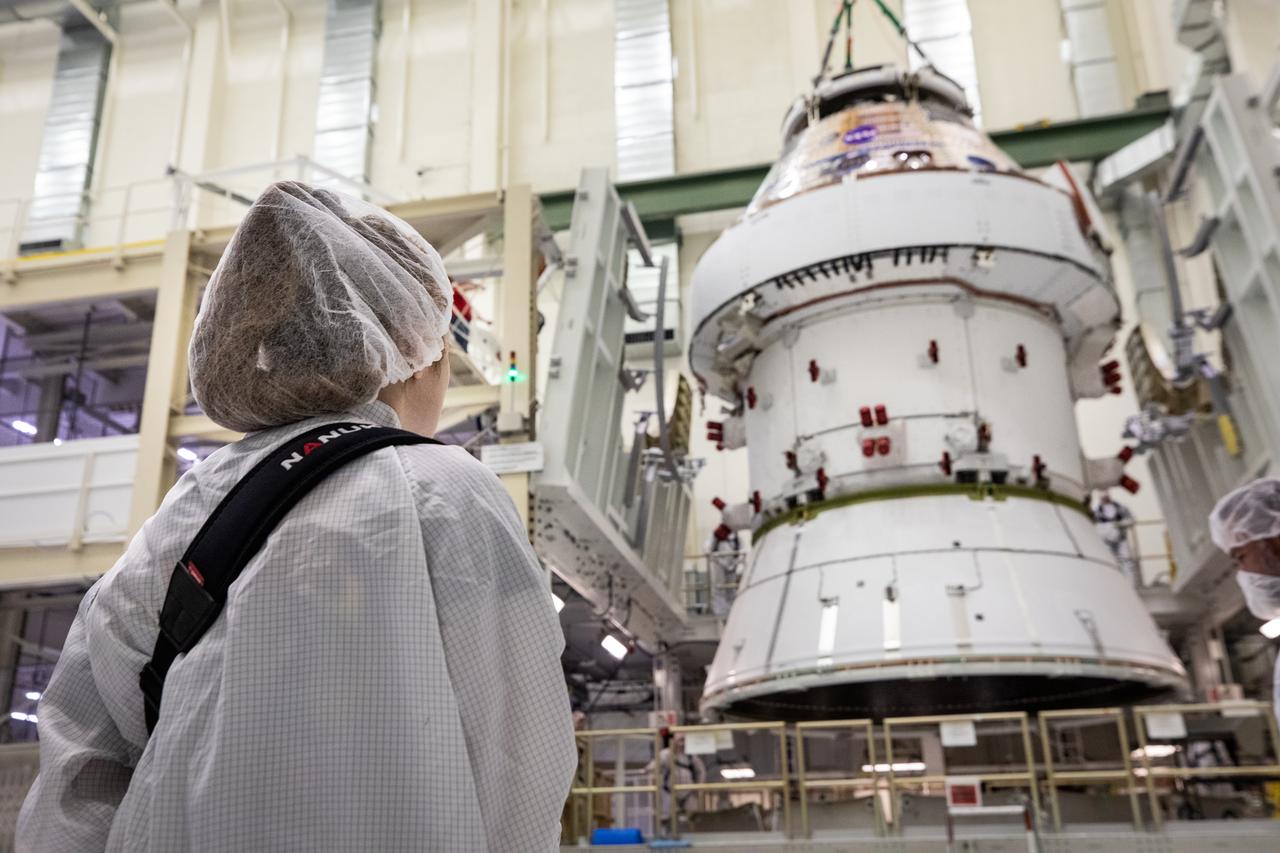
Rebekah Tolatovicz, a technician with Lockheed Martin, operates a 30-ton crane to move NASA’s Artemis II Orion spacecraft out of the Final Assembly and System Testing cell inside the Neil A. Operations and Checkout Building at NASA’s Kennedy Space Center in Florida on Saturday, Feb. 22, 2025. The move prepares for the upcoming installation of four solar array wings and spacecraft adapter jettison fairings for the agency’s first crewed flight test under the Artemis campaign.
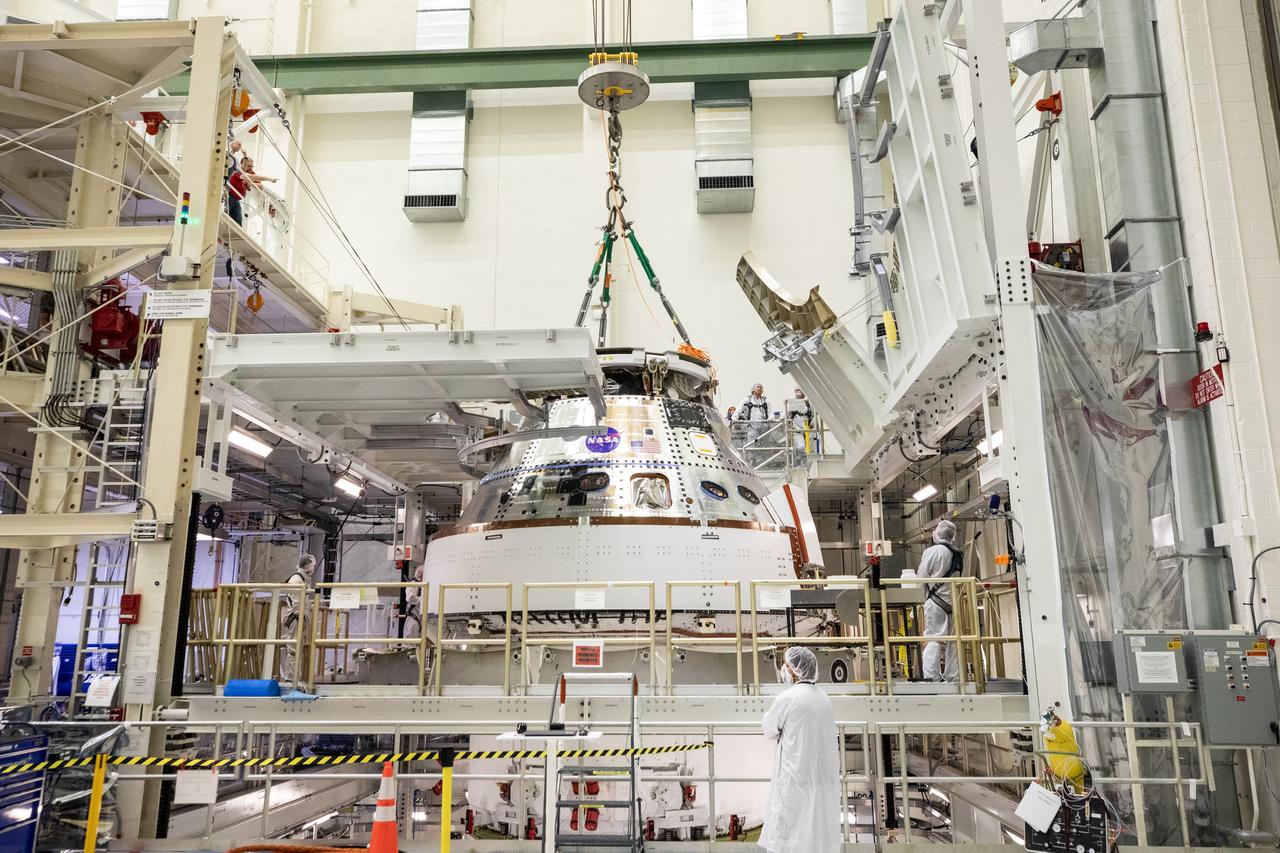
Technicians with NASA and Lockheed Martin operate a 30-ton crane to move NASA’s Artemis II Orion spacecraft out of the Final Assembly and System Testing cell inside the Neil A. Operations and Checkout Building at NASA’s Kennedy Space Center in Florida on Saturday, Feb. 22, 2025. The move prepares for the upcoming installation of four solar array wings and spacecraft adapter jettison fairings for the agency’s first crewed flight test under the Artemis campaign.
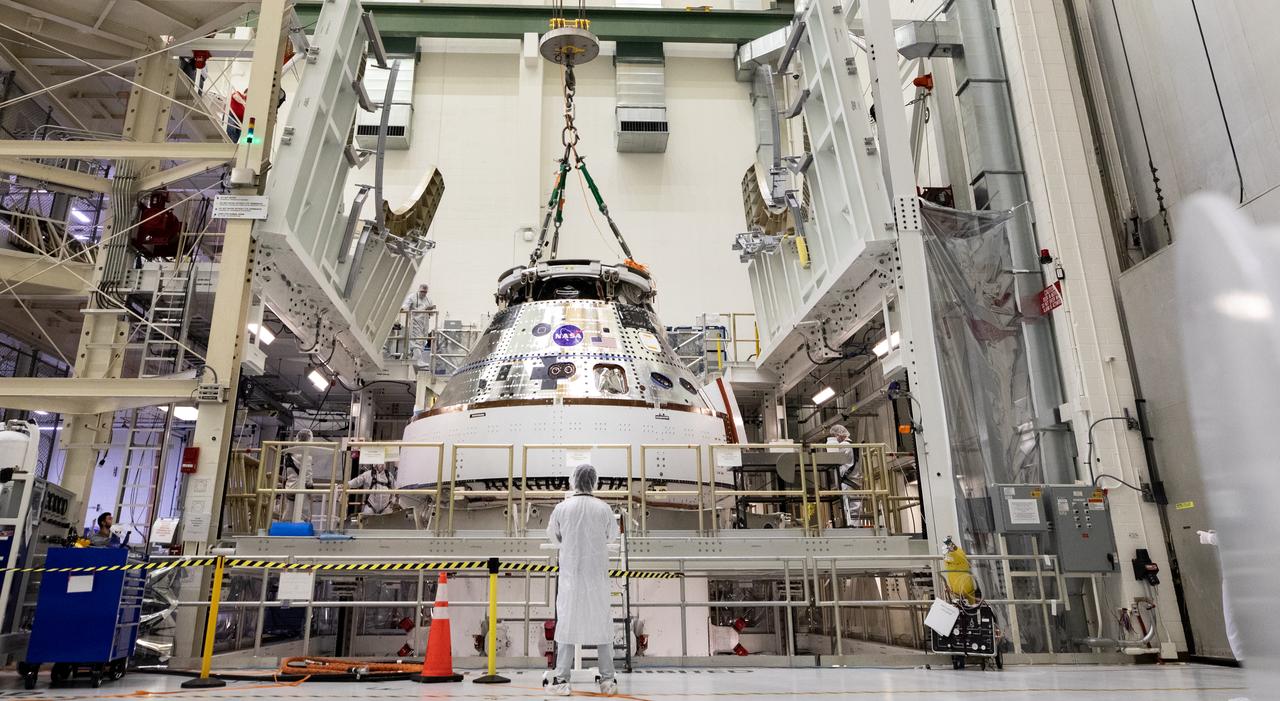
Technicians with NASA and Lockheed Martin operate a 30-ton crane to move NASA’s Artemis II Orion spacecraft out of the Final Assembly and System Testing cell inside the Neil A. Operations and Checkout Building at NASA’s Kennedy Space Center in Florida on Saturday, Feb. 22, 2025. The move prepares for the upcoming installation of four solar array wings and spacecraft adapter jettison fairings for the agency’s first crewed flight test under the Artemis campaign.
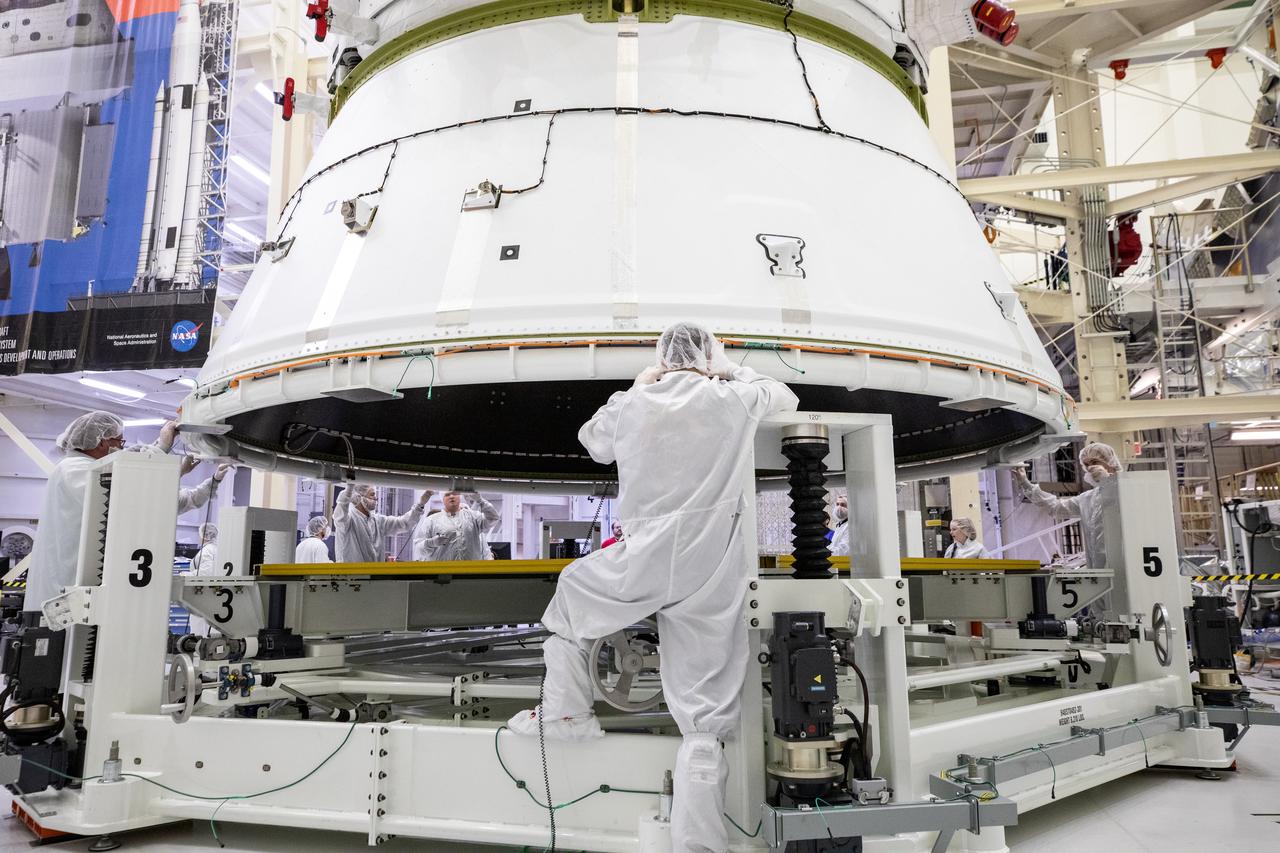
Technicians with NASA and Lockheed Martin operate a 30-ton crane to move NASA’s Artemis II Orion spacecraft out of the Final Assembly and System Testing cell inside the Neil A. Operations and Checkout Building at NASA’s Kennedy Space Center in Florida on Saturday, Feb. 22, 2025. The move prepares for the upcoming installation of four solar array wings and spacecraft adapter jettison fairings for the agency’s first crewed flight test under the Artemis campaign.
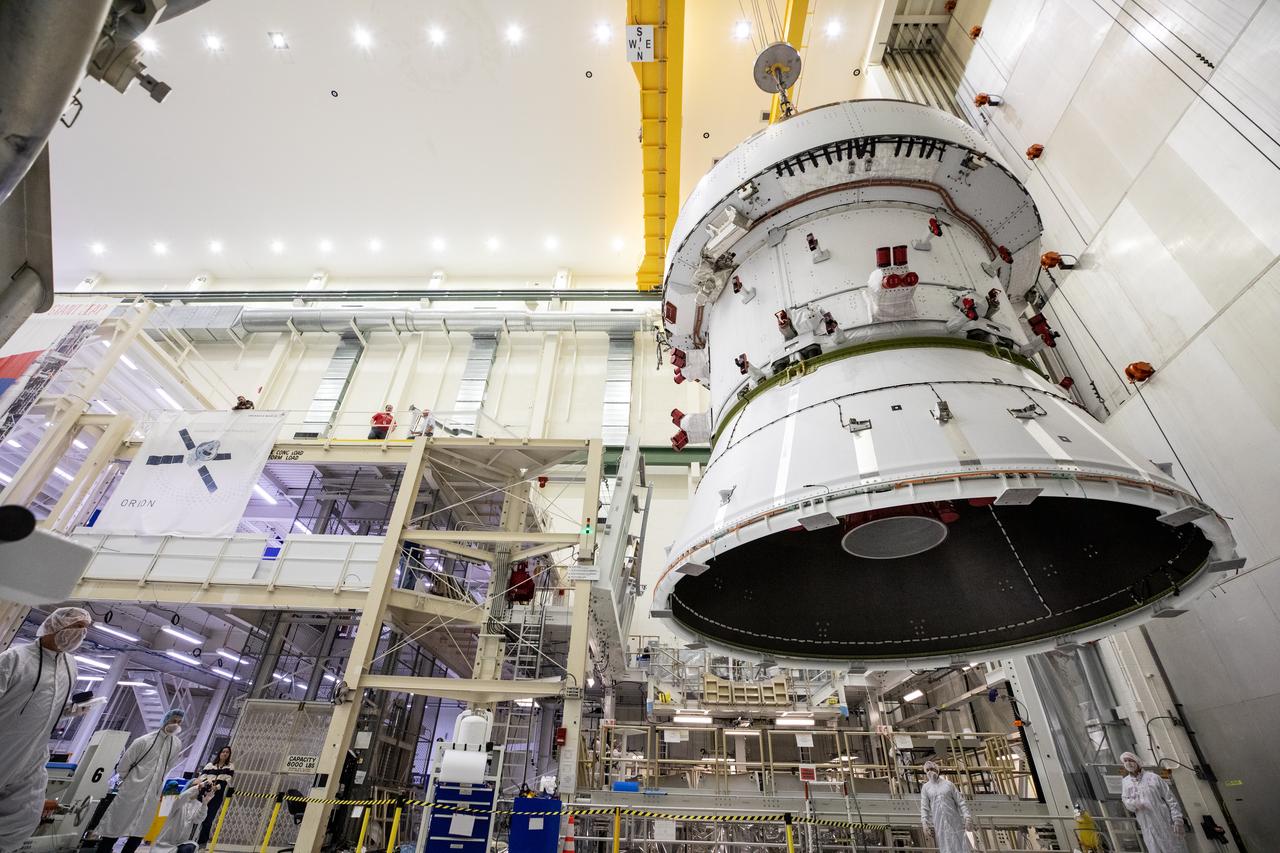
Technicians with NASA and Lockheed Martin operate a 30-ton crane to move NASA’s Artemis II Orion spacecraft out of the Final Assembly and System Testing cell inside the Neil A. Operations and Checkout Building at NASA’s Kennedy Space Center in Florida on Saturday, Feb. 22, 2025. The move prepares for the upcoming installation of four solar array wings and spacecraft adapter jettison fairings for the agency’s first crewed flight test under the Artemis campaign.
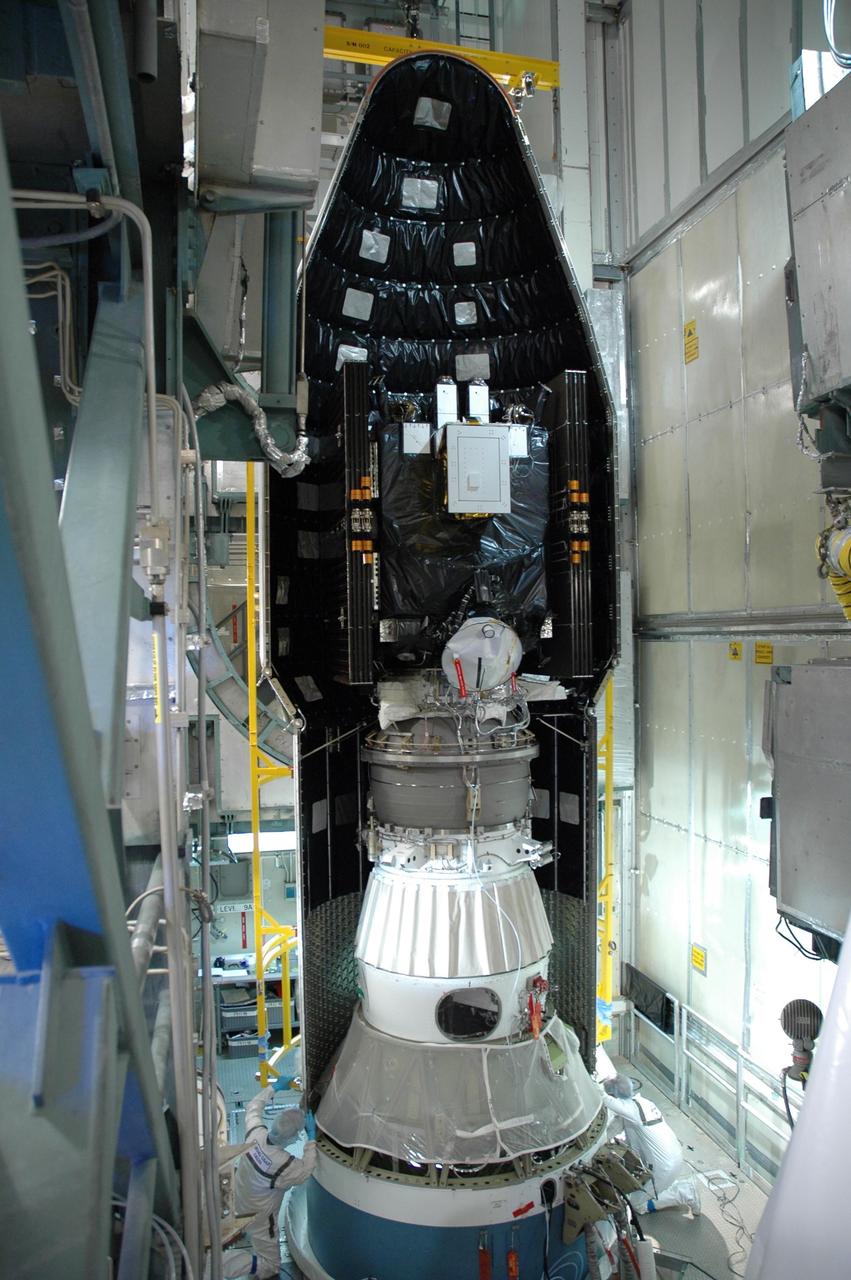
KENNEDY SPACE CENTER, FLA. -- Inside the mobile service tower on Launch Pad 17-B at Cape Canaveral Air Force Station, the first half of the fairing is moved into place around the Dawn spacecraft for installation. The fairing is a molded structure that fits flush with the outside surface of the Delta II upper stage booster and forms an aerodynamically smooth nose cone, protecting the spacecraft during launch and ascent. Dawn is scheduled to launch between 7:25 and 7:54 a.m. on Sept. 26 aboard a Delta II rocket. Photo credit: NASA/Jim Grossmann
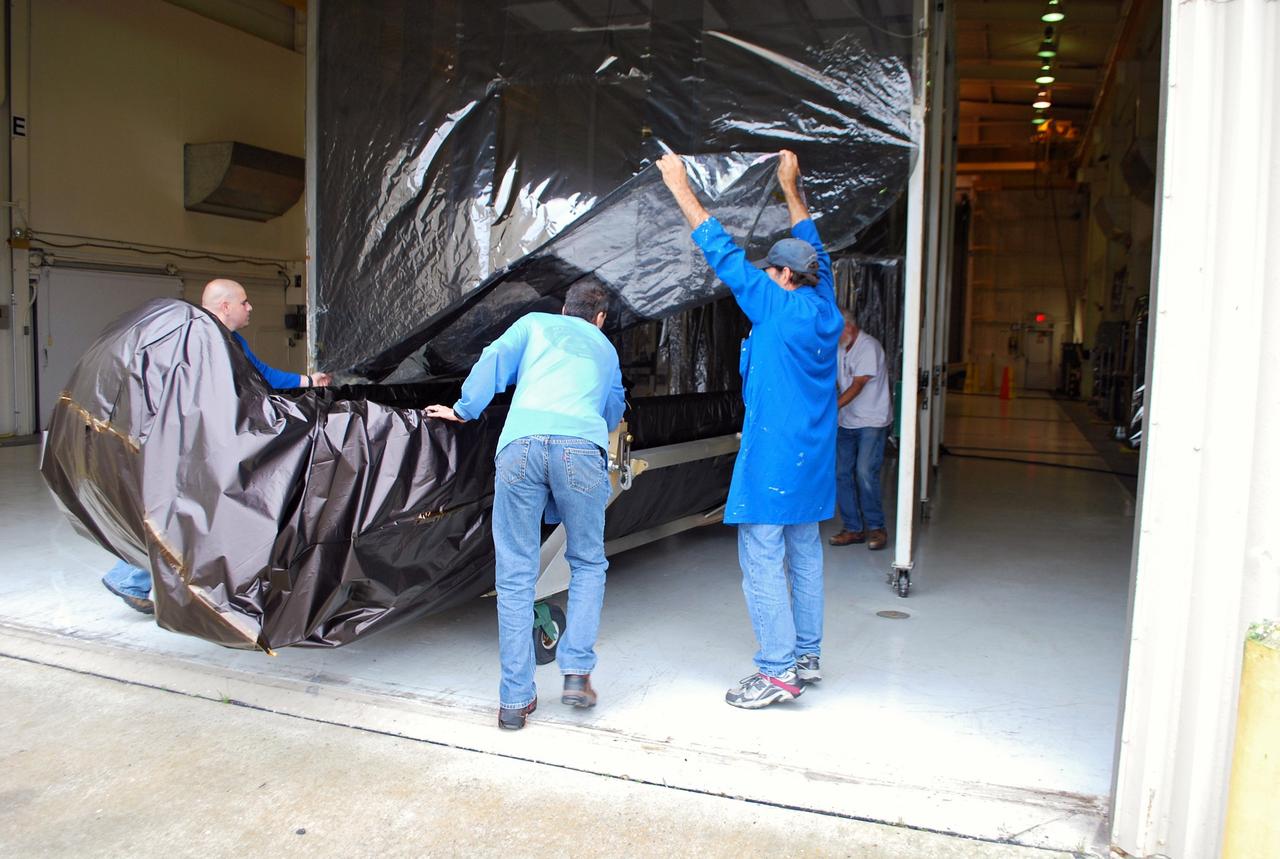
VANDENBERG AIR FORCE BASE, Calif. – At Vandenberg Air Force Base in California, the second half of the fairing that will encapsulate NASA's Glory satellite during launch aboard a Taurus XL rocket is moved into Building 1555. There, the black protective covering will be removed so that the fairing half can be thoroughly cleaned before it is installed around the spacecraft. The four-stage rocket and satellite are being prepared for a launch to low Earth orbit from Vandenberg's Space Launch Complex 576-E. Once Glory reaches orbit, it will collect data on the properties of aerosols and black carbon. It also will help scientists understand how the sun's irradiance affects Earth's climate. Photo credit: NASA/Randy Beaudoin, VAFB
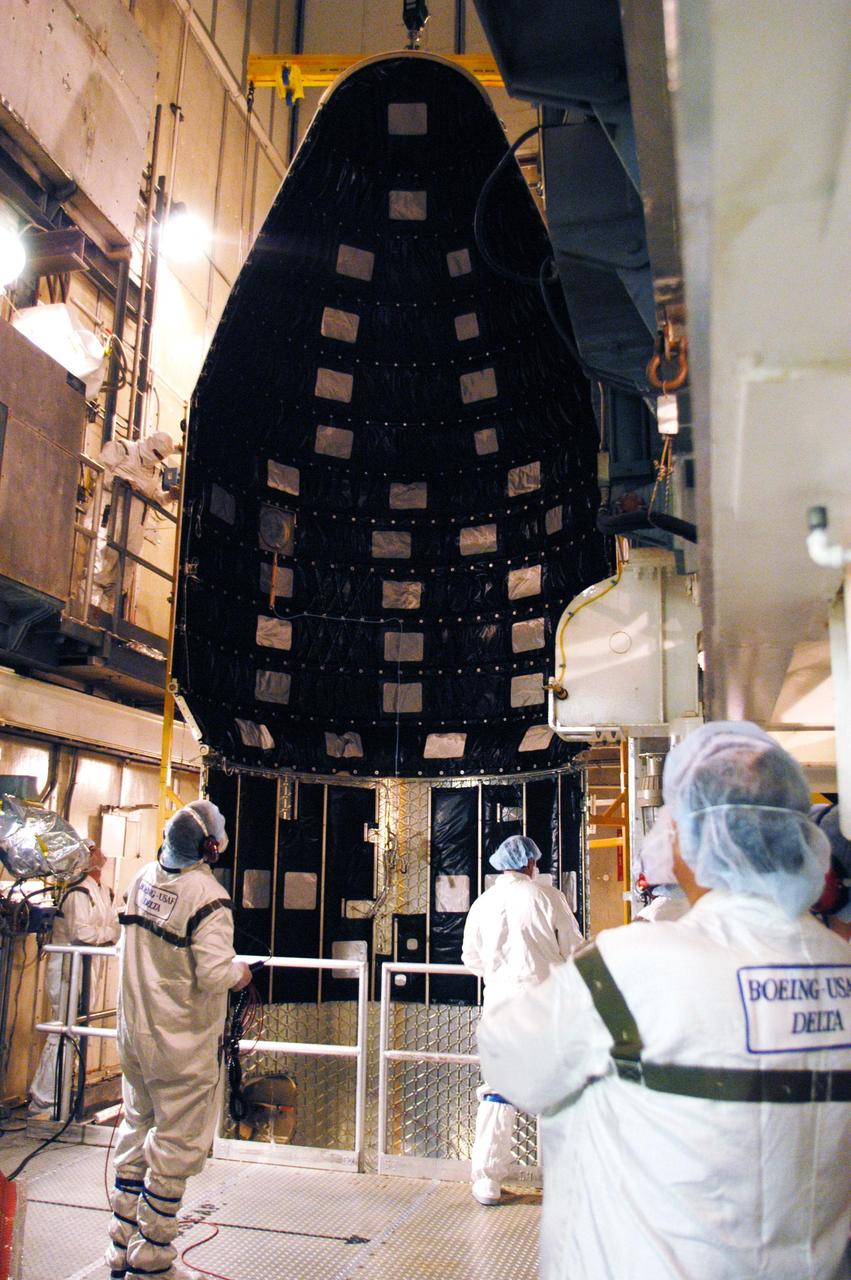
KENNEDY SPACE CENTER, FLA. - On a platform inside the mobile service tower on Launch Pad 17-B at Cape Canaveral Air Force Station, a Boeing worker guides the second half of the fairing as it moves into place around the MESSENGER (Mercury Surface, Space Environment, Geochemistry and Ranging) spacecraft. The fairing is a molded structure that fits flush with the outside surface of the upper stage booster and forms an aerodynamically smooth joint, protecting the spacecraft during launch. MESSENGER is scheduled to launch Aug. 2 aboard a Boeing Delta II rocket and is expected to enter Mercury orbit in March 2011. MESSENGER was built for NASA by the Johns Hopkins University Applied Physics Laboratory in Laurel, Md.
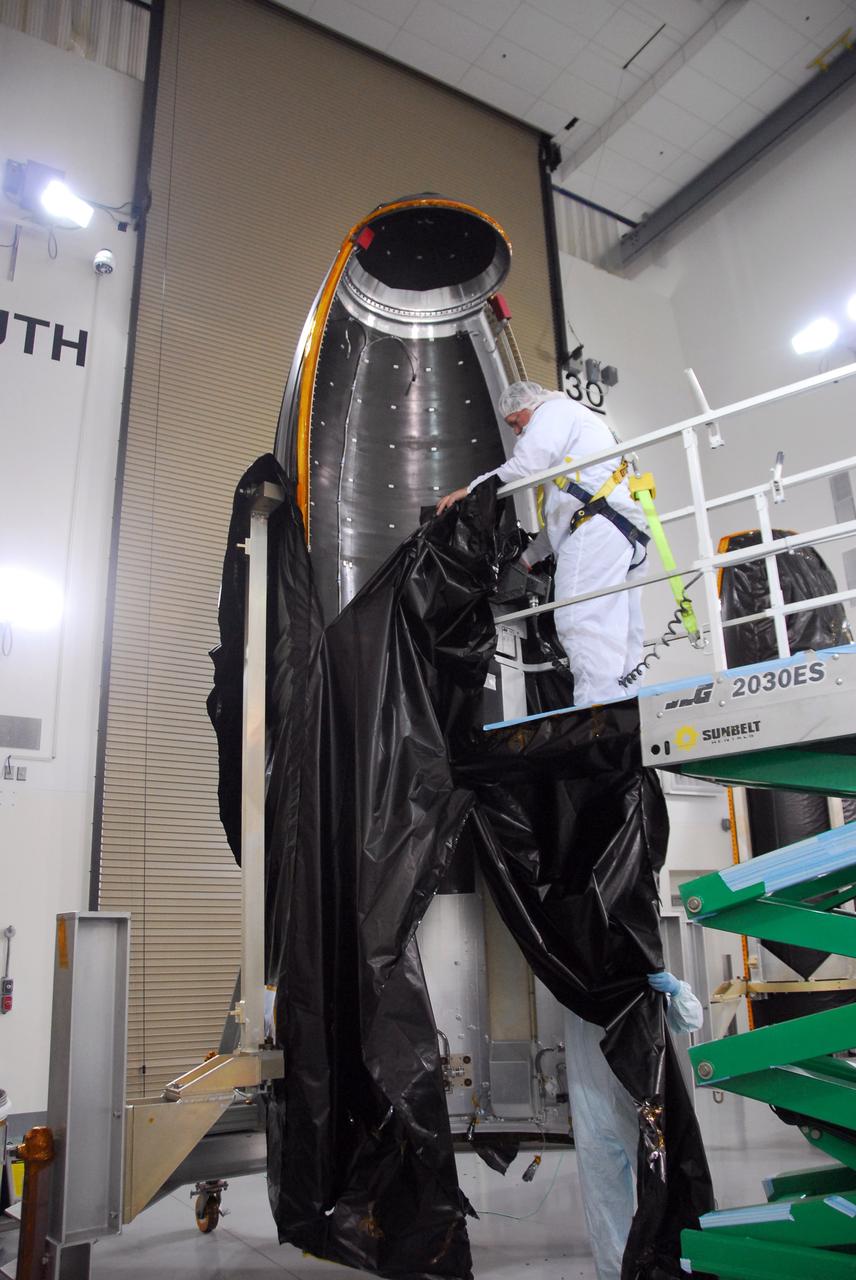
VANDENBERG AIR FORCE BASE, Calif. -- A technician uncovers half of the payload fairing for the Glory mission after the section was moved to the East High Bay of the Astrotech payload processing facility at Vandenberg Air Force Base in California. The payload fairing will protect the Glory spacecraft from aerodynamic pressures and heating during the first part of its climb into orbit. Once Glory reaches orbit, it will collect data on the properties of aerosols and black carbon. It also will help scientists understand how the sun's irradiance affects Earth's climate. Launch is scheduled for 5:09 a.m. EST Feb. 23. For information, visit www.nasa.gov/glory. Photo credit: NASA/Ed Henry, VAFB
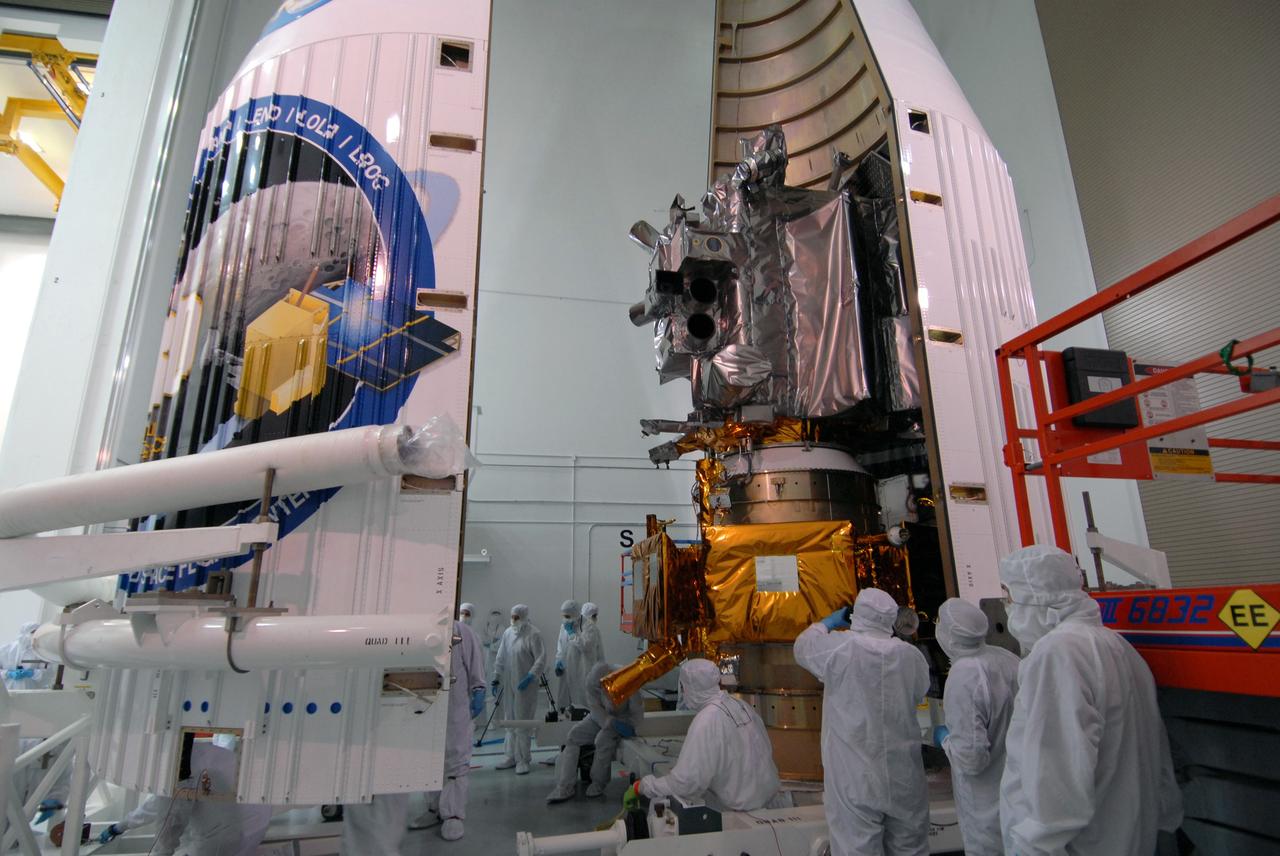
CAPE CANAVERAL, Fla. – At Astrotech Space Operations Facility in Titusville, Fla., the fairing halves are moved apart for another attempt at installation around NASA's Lunar Reconnaissance Orbiter, or LRO, and and NASA's Lunar Crater Observation and Sensing Satellite, known as LCROSS. The fairing is a molded structure that fits flush with the outside surface of the rocket and forms an aerodynamically smooth nose cone, protecting the spacecraft during launch and ascent. The LRO includes five instruments: DIVINER, LAMP, LEND, LOLA and LROC. They will be launched aboard an Atlas V/Centaur rocket no earlier than June 17 from Launch Complex-41 on Cape Canaveral Air Force Station in Florida. Photo credit: NASA/Jack Pfaller
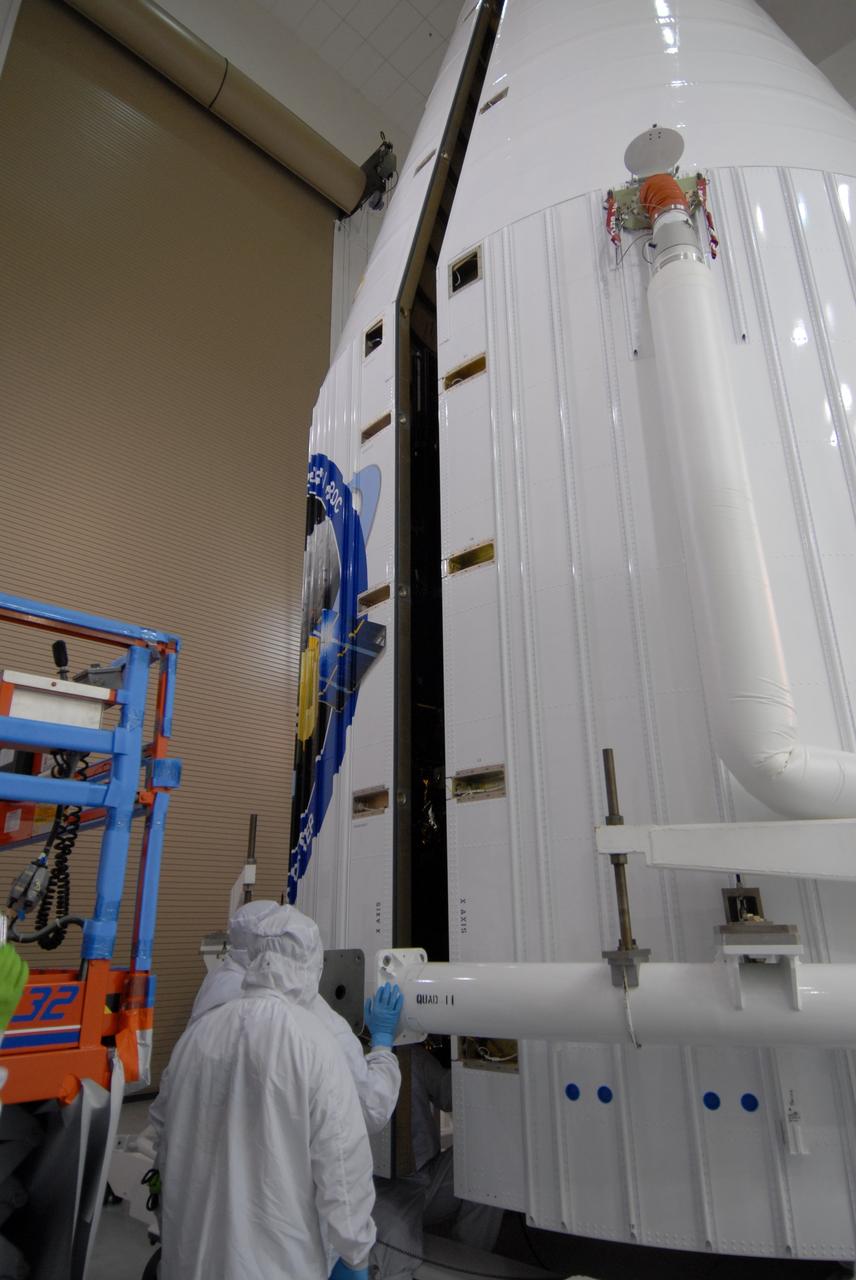
CAPE CANAVERAL, Fla. – At Astrotech Space Operations Facility in Titusville, Fla., technicians closely watch as the fairing halves move together to enclose NASA's Lunar Reconnaissance Orbiter, or LRO, and NASA's Lunar Crater Observation and Sensing Satellite, known as LCROSS. The fairing is a molded structure that fits flush with the outside surface of the rocket and forms an aerodynamically smooth nose cone, protecting the spacecraft during launch and ascent. The LRO includes five instruments: DIVINER, LAMP, LEND, LOLA and LROC. They will be launched aboard an Atlas V/Centaur rocket no earlier than June 17 from Launch Complex-41 on Cape Canaveral Air Force Station in Florida. Photo credit: NASA/Jack Pfaller
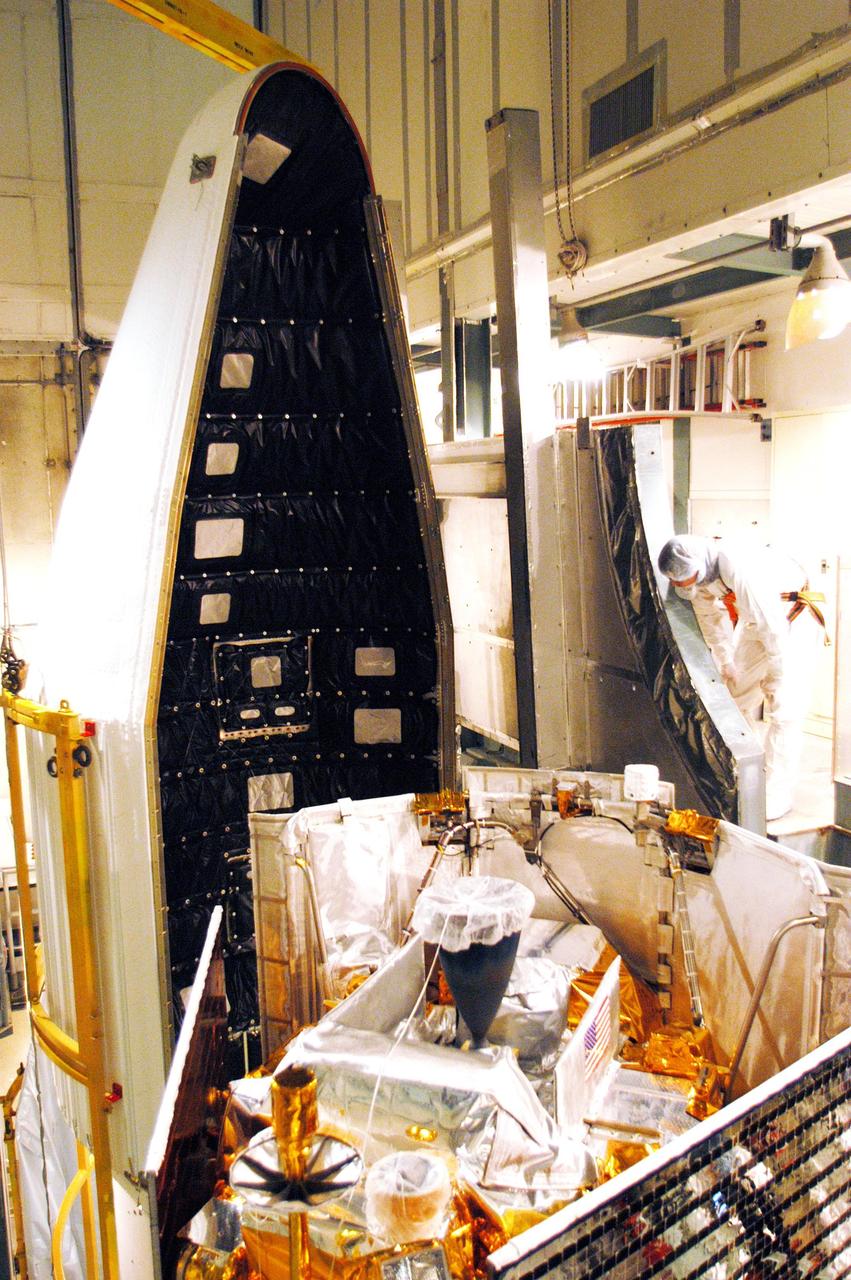
KENNEDY SPACE CENTER, FLA. - On Launch Pad 17-B at Cape Canaveral Air Force Station, the first half of the fairing, at left, is moved into place for installation around the MESSENGER (Mercury Surface, Space Environment, Geochemistry and Ranging) spacecraft. The fairing is a molded structure that fits flush with the outside surface of the upper stage booster and forms an aerodynamically smooth joint, protecting the spacecraft during launch. MESSENGER is scheduled to launch Aug. 2 aboard a Boeing Delta II rocket and is expected to enter Mercury orbit in March 2011. MESSENGER was built for NASA by the Johns Hopkins University Applied Physics Laboratory in Laurel, Md.
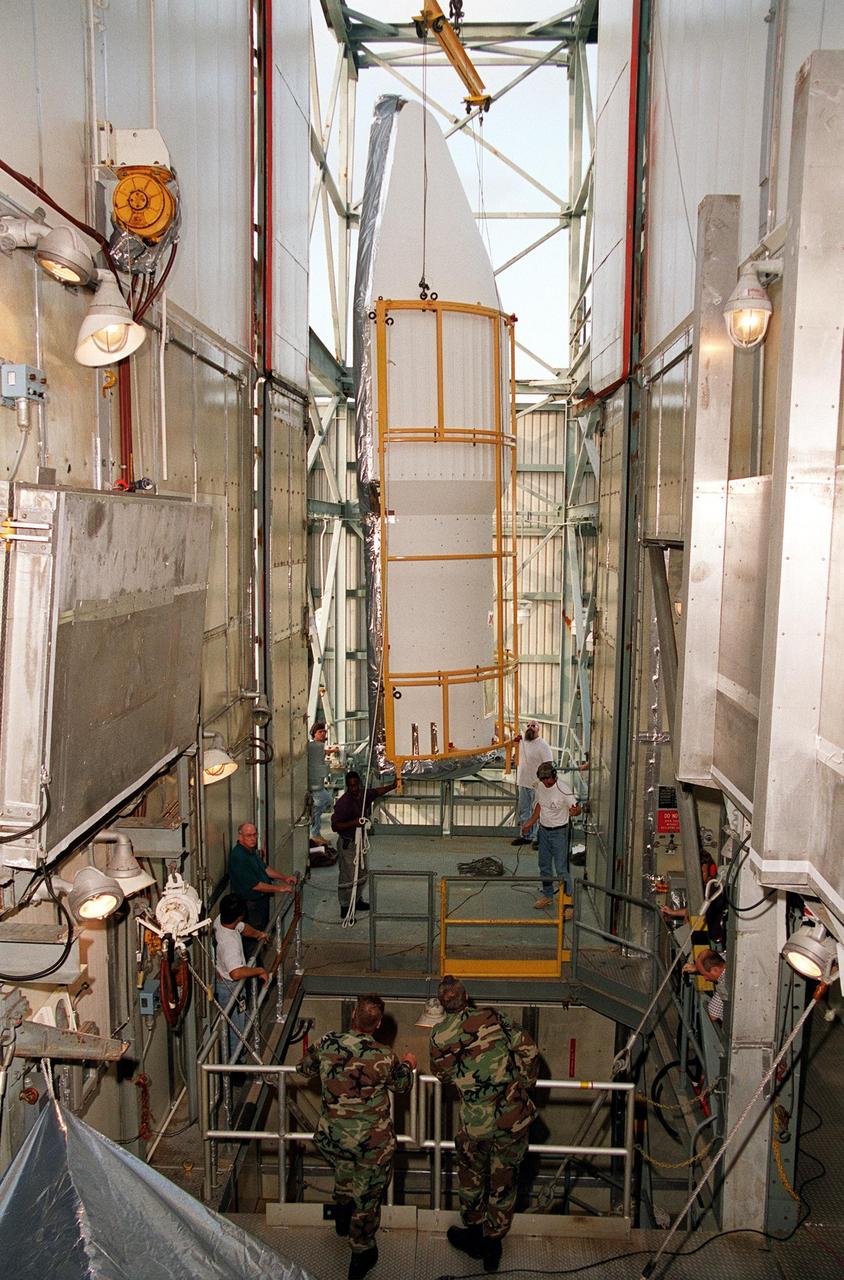
KENNEDY SPACE CENTER, Fla. -- At Launch Complex 17-A, Cape Canaveral Air Force Station, one part of the fairing for the Genesis spacecraft is being moved toward the opening in the foreground where the Genesis spacecraft waits for encapsulation. The fairing will protect the spacecraft during launch aboard a Delta II rocket. Genesis will be on a journey to capture samples of the ions and elements in the solar wind and return them to Earth for scientists to use to determine the exact composition of the Sun and the solar system’s origin. NASA’s Genesis project in managed by the Jet Propulsion Laboratory in Pasadena, Calif. Lockheed Martin Astronautics built the Genesis spacecraft for NASA in Denver, Colo. The launch is scheduled for July 30 at 12:36 p.m. EDT
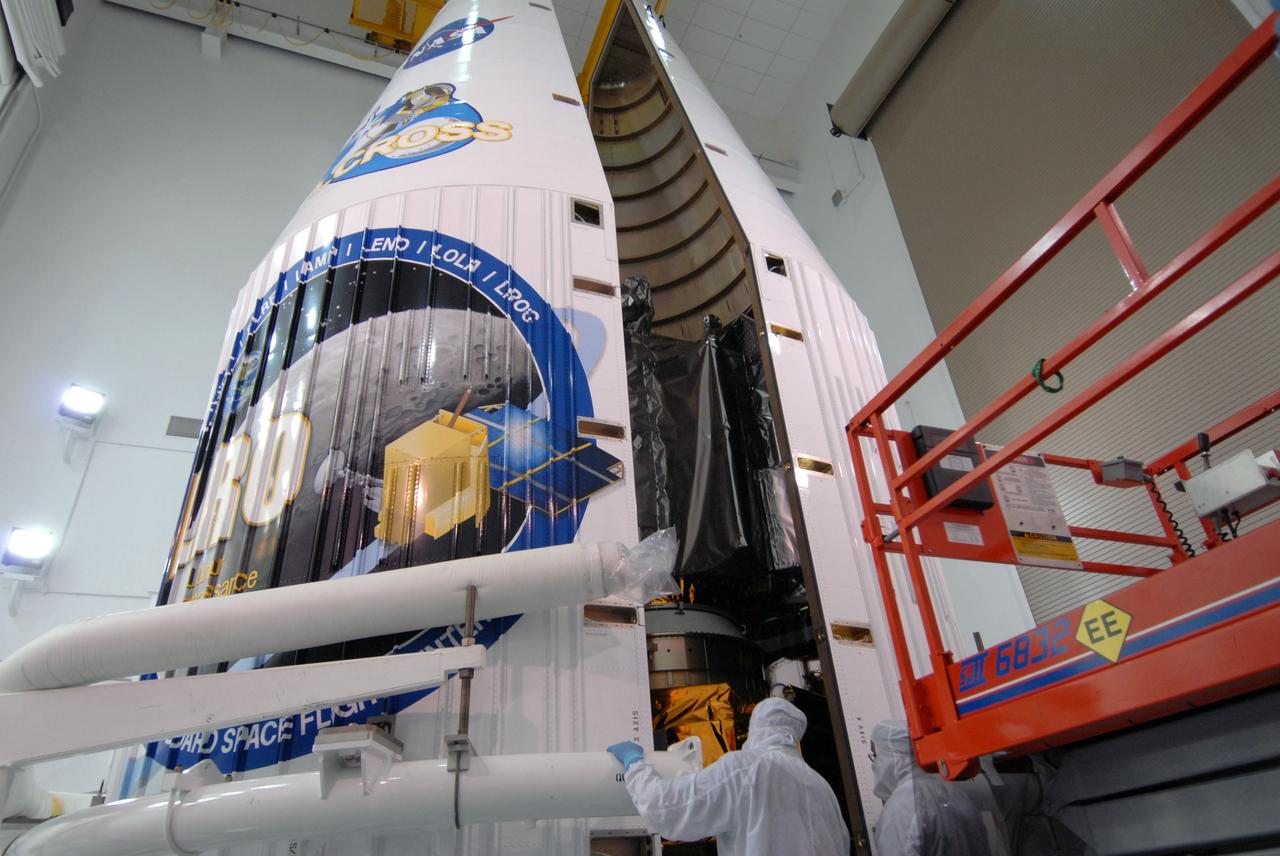
CAPE CANAVERAL, Fla. – At Astrotech Space Operations Facility in Titusville, Fla., technicians closely watch as the fairing halves move together to enclose NASA's Lunar Reconnaissance Orbiter, or LRO, and NASA's Lunar Crater Observation and Sensing Satellite, known as LCROSS. The fairing is a molded structure that fits flush with the outside surface of the rocket and forms an aerodynamically smooth nose cone, protecting the spacecraft during launch and ascent. The LRO includes five instruments: DIVINER, LAMP, LEND, LOLA and LROC. They will be launched aboard an Atlas V/Centaur rocket no earlier than June 17 from Launch Complex-41 on Cape Canaveral Air Force Station in Florida. Photo credit: NASA/Jack Pfaller
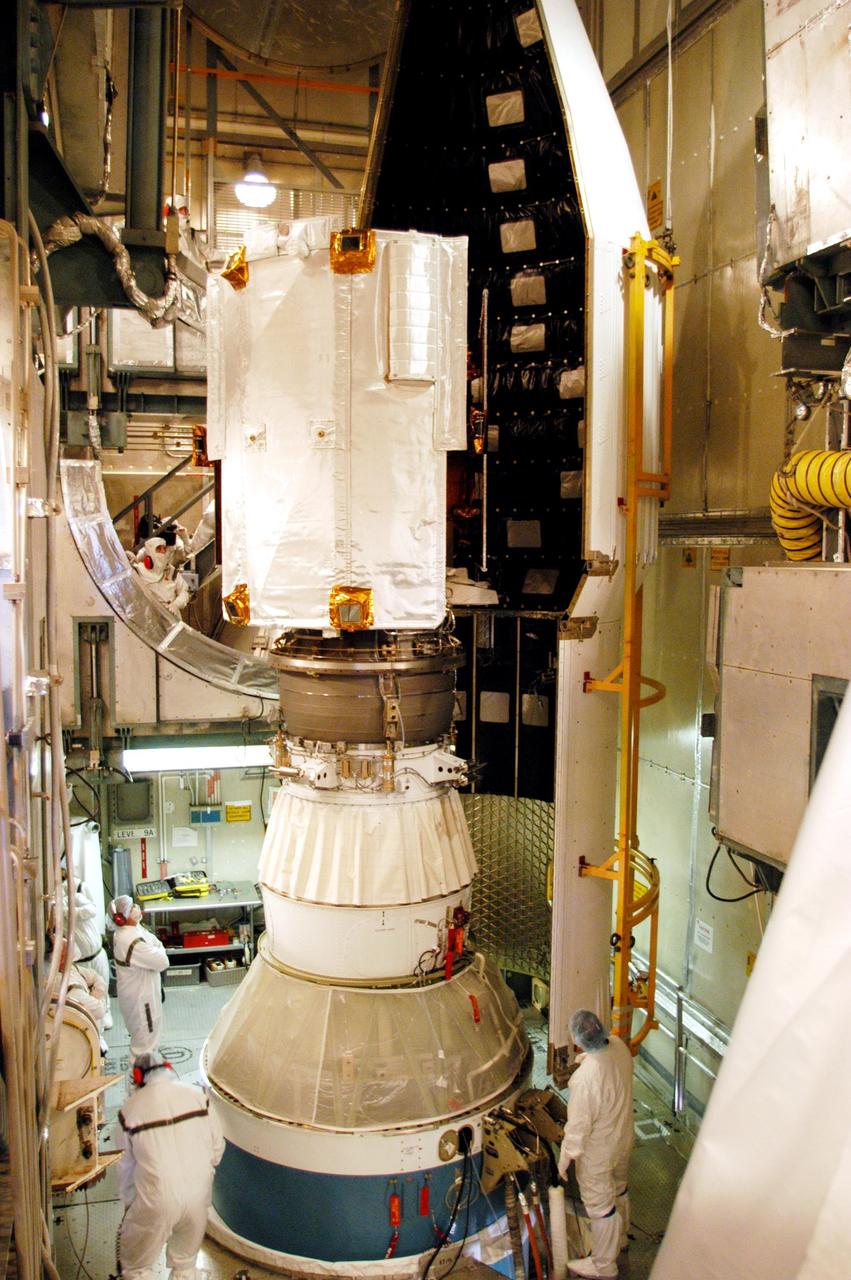
KENNEDY SPACE CENTER, FLA. - On Launch Pad 17-B at Cape Canaveral Air Force Station, the first half of the fairing, at right, is moved into place for installation around the MESSENGER (Mercury Surface, Space Environment, Geochemistry and Ranging) spacecraft. The fairing is a molded structure that fits flush with the outside surface of the upper stage booster and forms an aerodynamically smooth joint, protecting the spacecraft during launch. MESSENGER is scheduled to launch Aug. 2 aboard a Boeing Delta II rocket and is expected to enter Mercury orbit in March 2011. MESSENGER was built for NASA by the Johns Hopkins University Applied Physics Laboratory in Laurel, Md.
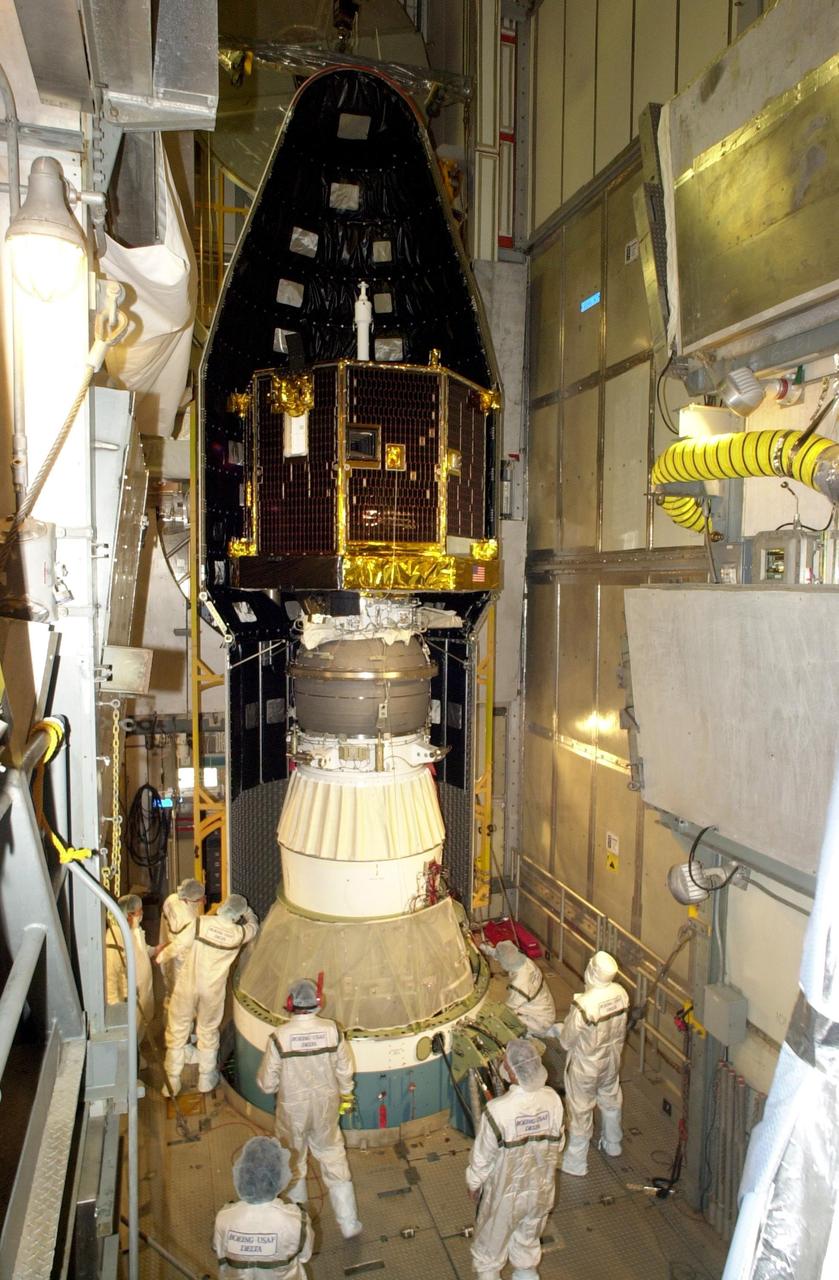
KENNEDY SPACE CENTER, FLA. -- At Launch Complex 17-A, Cape Canaveral Air Force Station, the first part of the fairing is moved into place around the Comet Nucleus Tour (CONTOUR) spacecraft. The fairing is the outer cover that protects the spacecraft during launch. Below the spacecraft is the Delta II rocket, the launch vehicle. CONTOUR will provide the first detailed look into the heart of a comet -- the nucleus. Flying as close as 60 miles (100 kilometers) to at least two comets, the spacecraft will take the sharpest pictures yet of a nucleus while analyzing the gas and dust that surround them. Launch of CONTOUR is scheduled for July 1, 2002
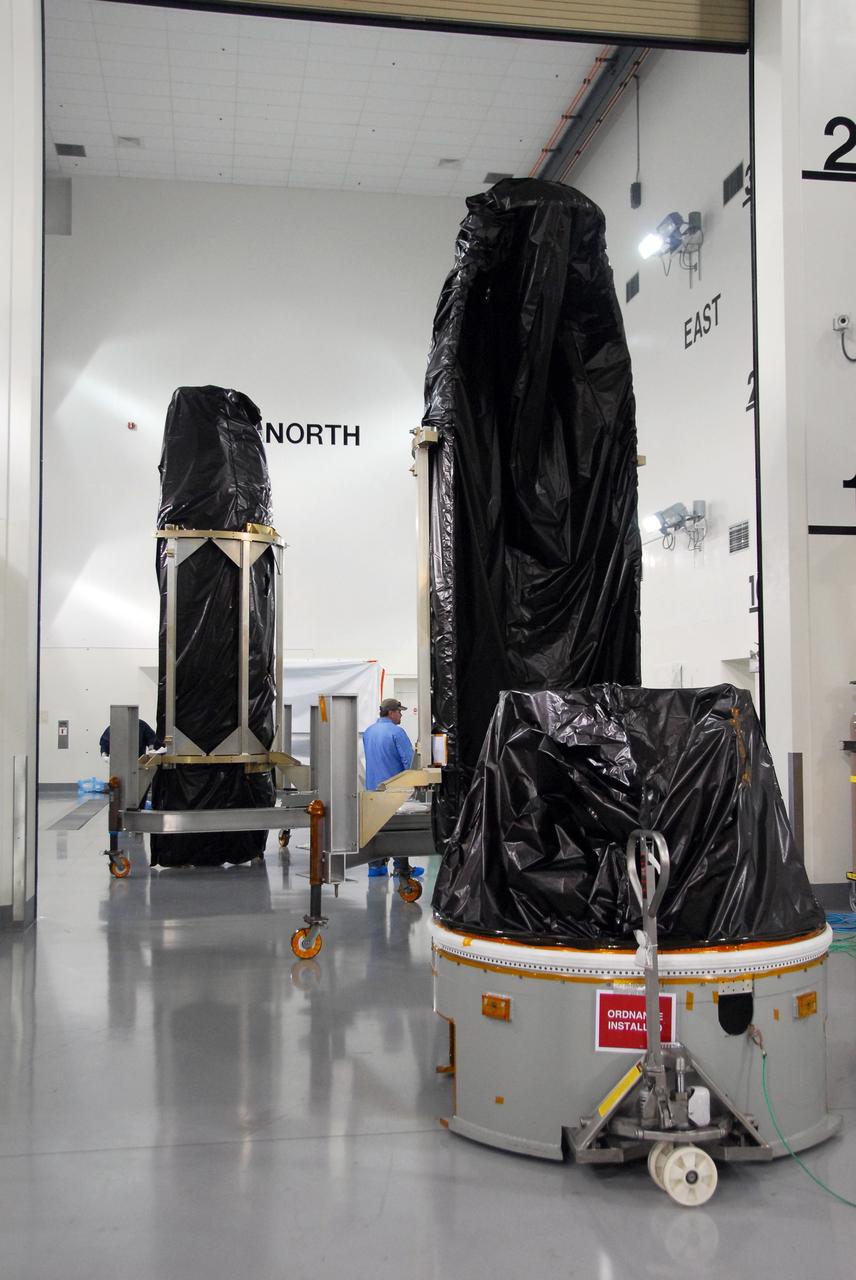
VANDENBERG AIR FORCE BASE, Calif. -- A technician works in the Astrotech payload processing facility at Vandenberg Air Force Base in California before the pieces that will make up the payload fairing for the Glory mission are moved to the East High Bay. The payload fairing will protect the Glory spacecraft from aerodynamic pressures and heating during the first part of its climb into orbit. Once Glory reaches orbit, it will collect data on the properties of aerosols and black carbon. It also will help scientists understand how the sun's irradiance affects Earth's climate. Launch is scheduled for 5:09 a.m. EST Feb. 23. For information, visit www.nasa.gov/glory. Photo credit: NASA/Ed Henry, VAFB
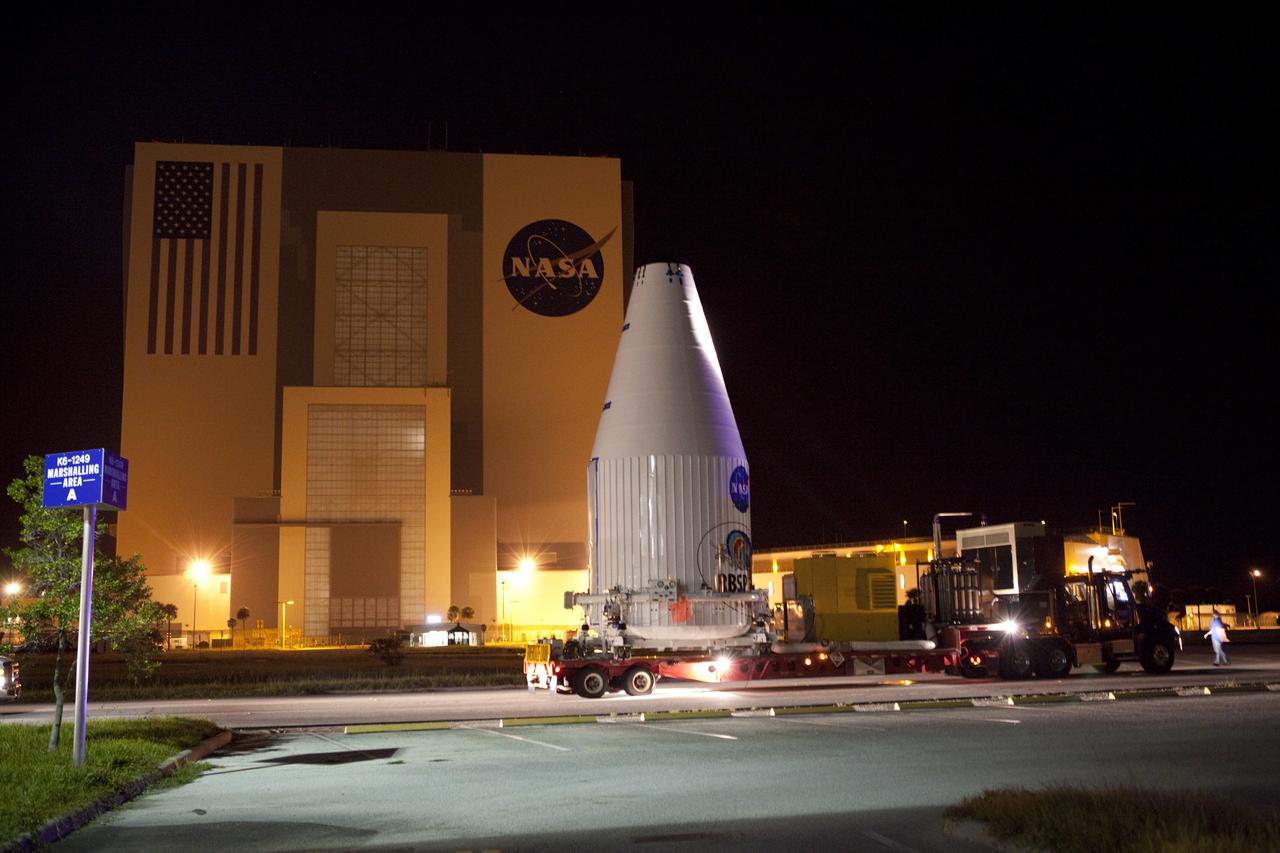
CAPE CANAVERAL, Fla. – The Radiation Belt Storm Probes, or RBSP, spacecraft are moved inside their payload fairing on the payload transporter from the Astrotech payload processing facility in Titusville, Fla. to Space Launch Complex-41 at Cape Canaveral Air Force Station. The convoy carried the spacecraft past the Vehicle Assembly Building at NASA's Kennedy Space Center. The fairing, which holds the twin RBSP spacecraft, will be lifted to the top of a United Launch Alliance Atlas V rocket for launch later in August. The two spacecraft are designed to study the Van Allen radiation belts in unprecedented detail. Photo credit: NASA/Dmitri Gerondidakis
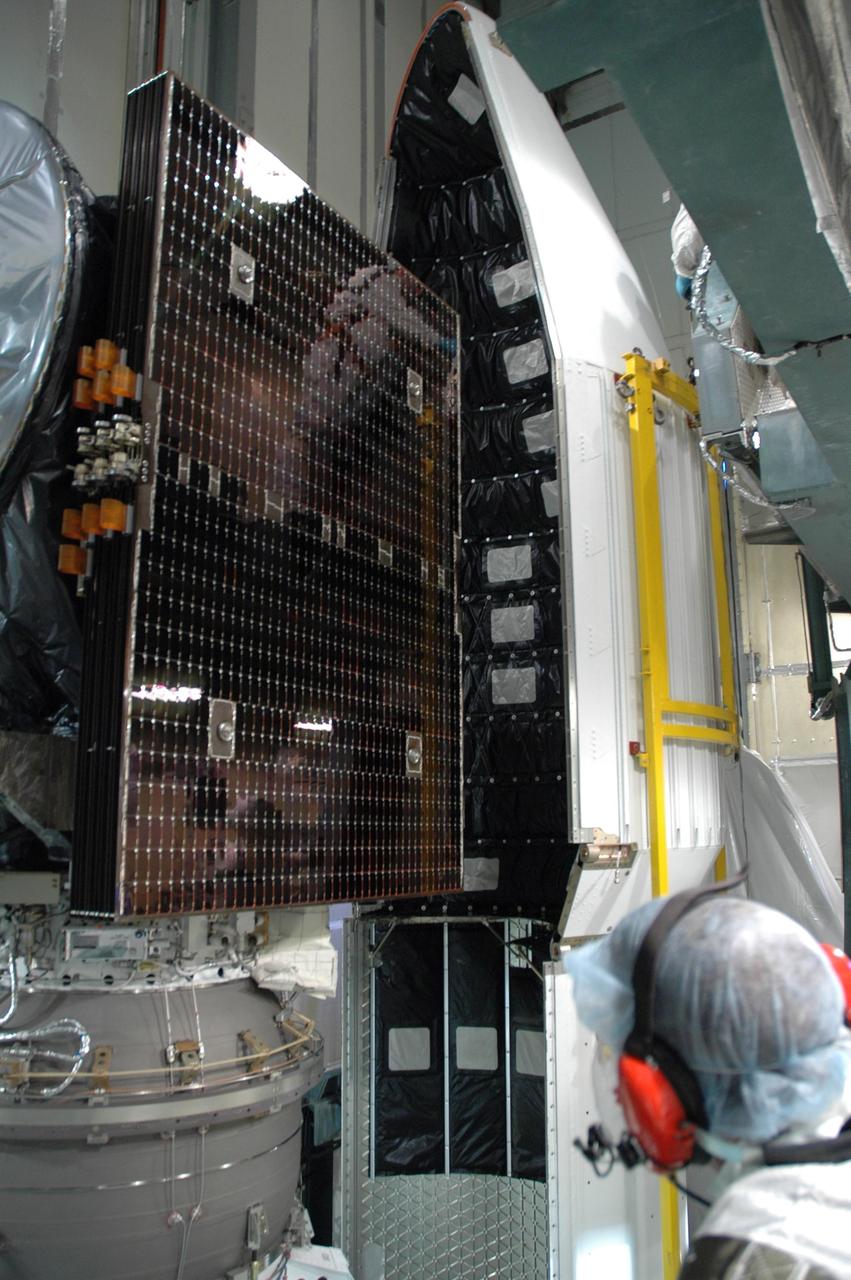
KENNEDY SPACE CENTER, FLA. -- Inside the mobile service tower on Launch Pad 17-B at Cape Canaveral Air Force Station, the first half of the fairing is moved closer to the Dawn spacecraft for installation. The fairing is a molded structure that fits flush with the outside surface of the Delta II upper stage booster and forms an aerodynamically smooth nose cone, protecting the spacecraft during launch and ascent. Dawn is scheduled to launch between 7:25 and 7:54 a.m. on Sept. 26 aboard a Delta II rocket. Photo credit: NASA/Jim Grossmann
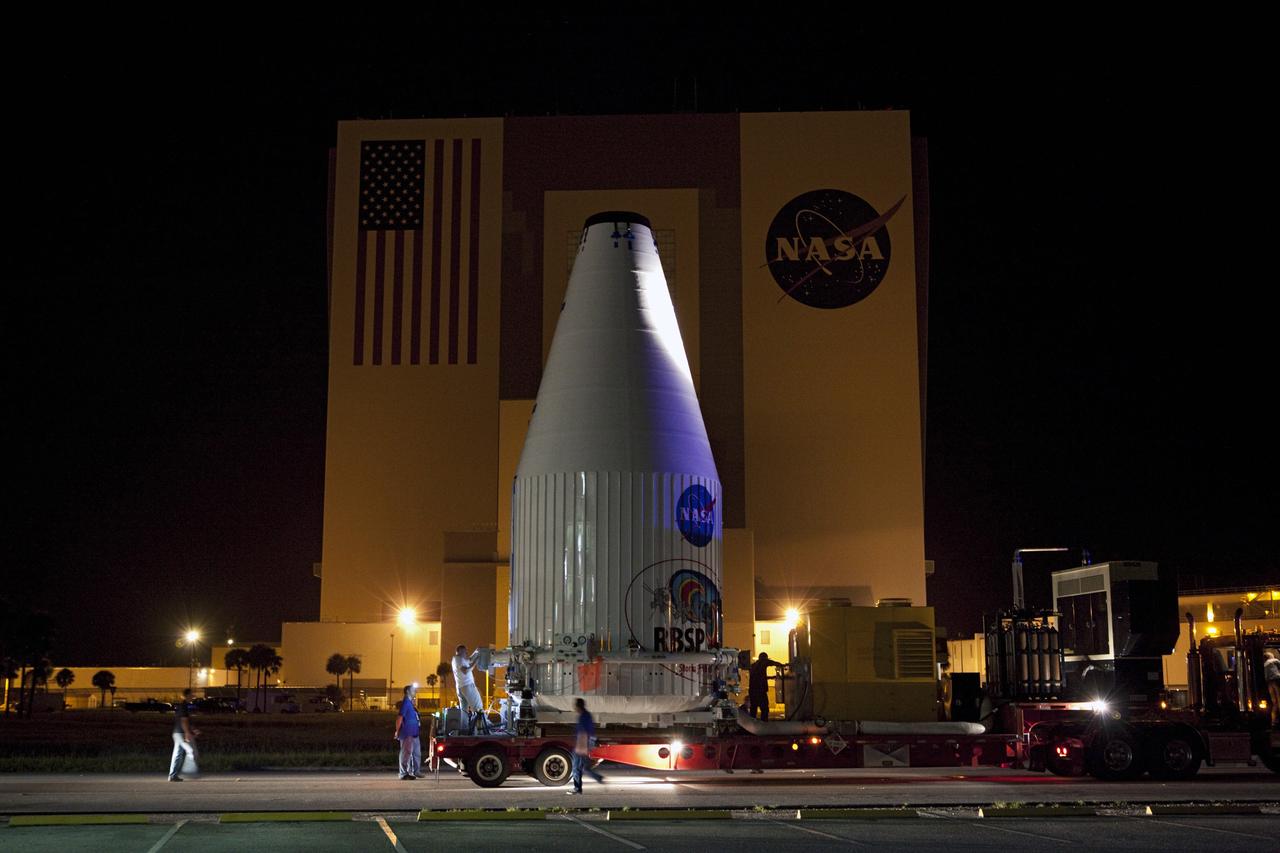
CAPE CANAVERAL, Fla. – The Radiation Belt Storm Probes, or RBSP, spacecraft are moved inside their payload fairing on the payload transporter from the Astrotech payload processing facility in Titusville, Fla. to Space Launch Complex-41 at Cape Canaveral Air Force Station. The convoy carried the spacecraft past the Vehicle Assembly Building at NASA's Kennedy Space Center. The fairing, which holds the twin RBSP spacecraft, will be lifted to the top of a United Launch Alliance Atlas V rocket for launch later in August. The two spacecraft are designed to study the Van Allen radiation belts in unprecedented detail. Photo credit: NASA/Dmitri Gerondidakis
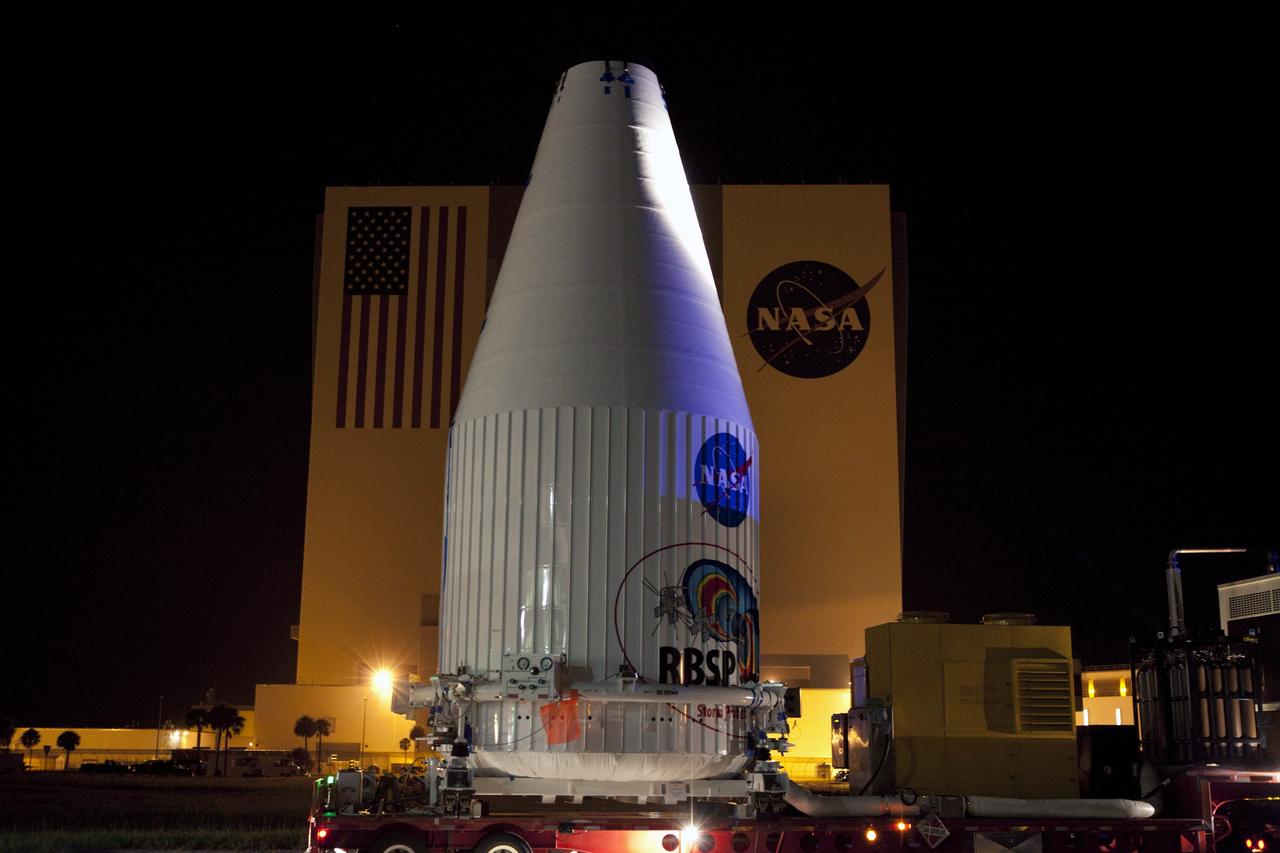
CAPE CANAVERAL, Fla. – The Radiation Belt Storm Probes, or RBSP, spacecraft are moved inside their payload fairing on the payload transporter from the Astrotech payload processing facility in Titusville, Fla. to Space Launch Complex-41 at Cape Canaveral Air Force Station. The convoy carried the spacecraft past the Vehicle Assembly Building at NASA's Kennedy Space Center. The fairing, which holds the twin RBSP spacecraft, will be lifted to the top of a United Launch Alliance Atlas V rocket for launch later in August. The two spacecraft are designed to study the Van Allen radiation belts in unprecedented detail. Photo credit: NASA/Dmitri Gerondidakis
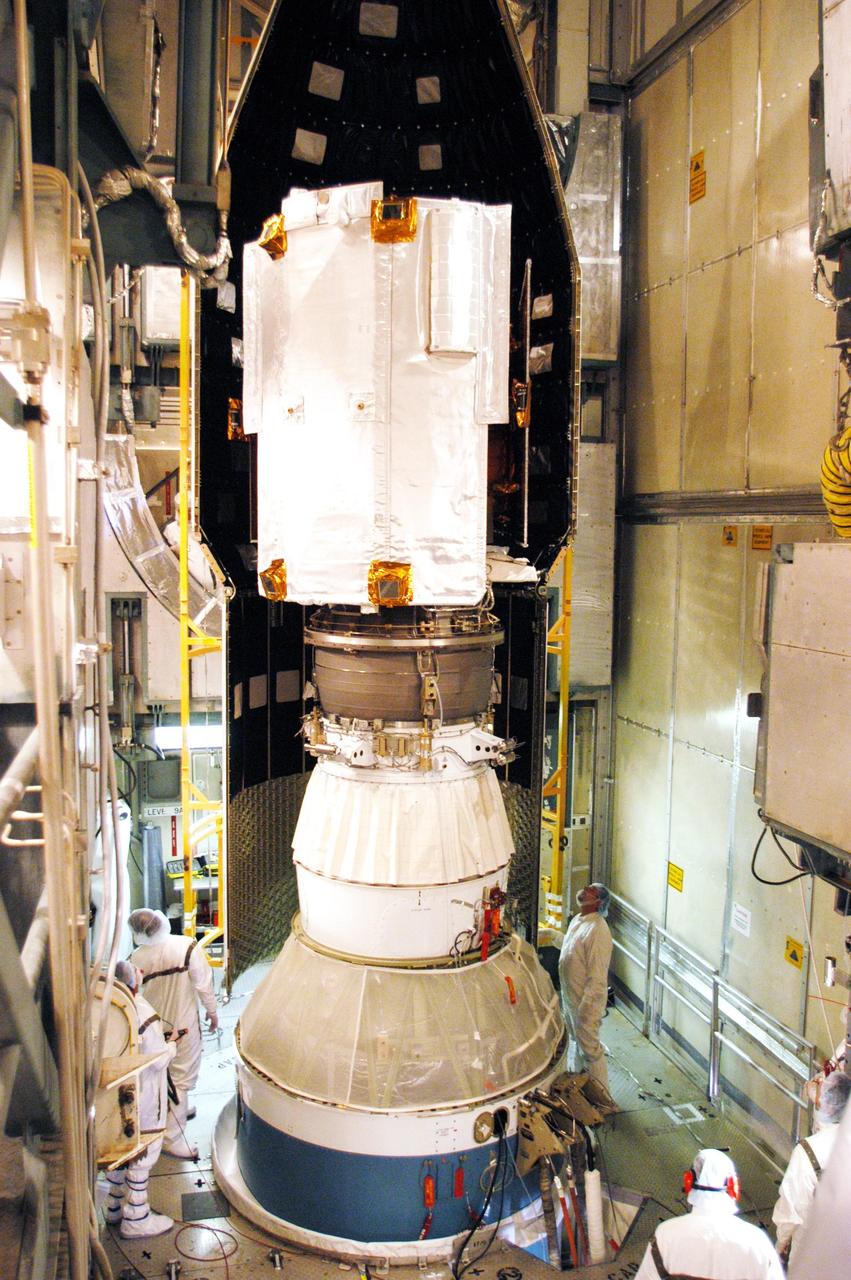
KENNEDY SPACE CENTER, FLA. - On Launch Pad 17-B at Cape Canaveral Air Force Station, Boeing workers check the progress of the fairing as it is moved into place for installation around the MESSENGER (Mercury Surface, Space Environment, Geochemistry and Ranging) spacecraft. The fairing is a molded structure that fits flush with the outside surface of the upper stage booster and forms an aerodynamically smooth joint, protecting the spacecraft during launch. MESSENGER is scheduled to launch Aug. 2 aboard a Boeing Delta II rocket and is expected to enter Mercury orbit in March 2011. MESSENGER was built for NASA by the Johns Hopkins University Applied Physics Laboratory in Laurel, Md.
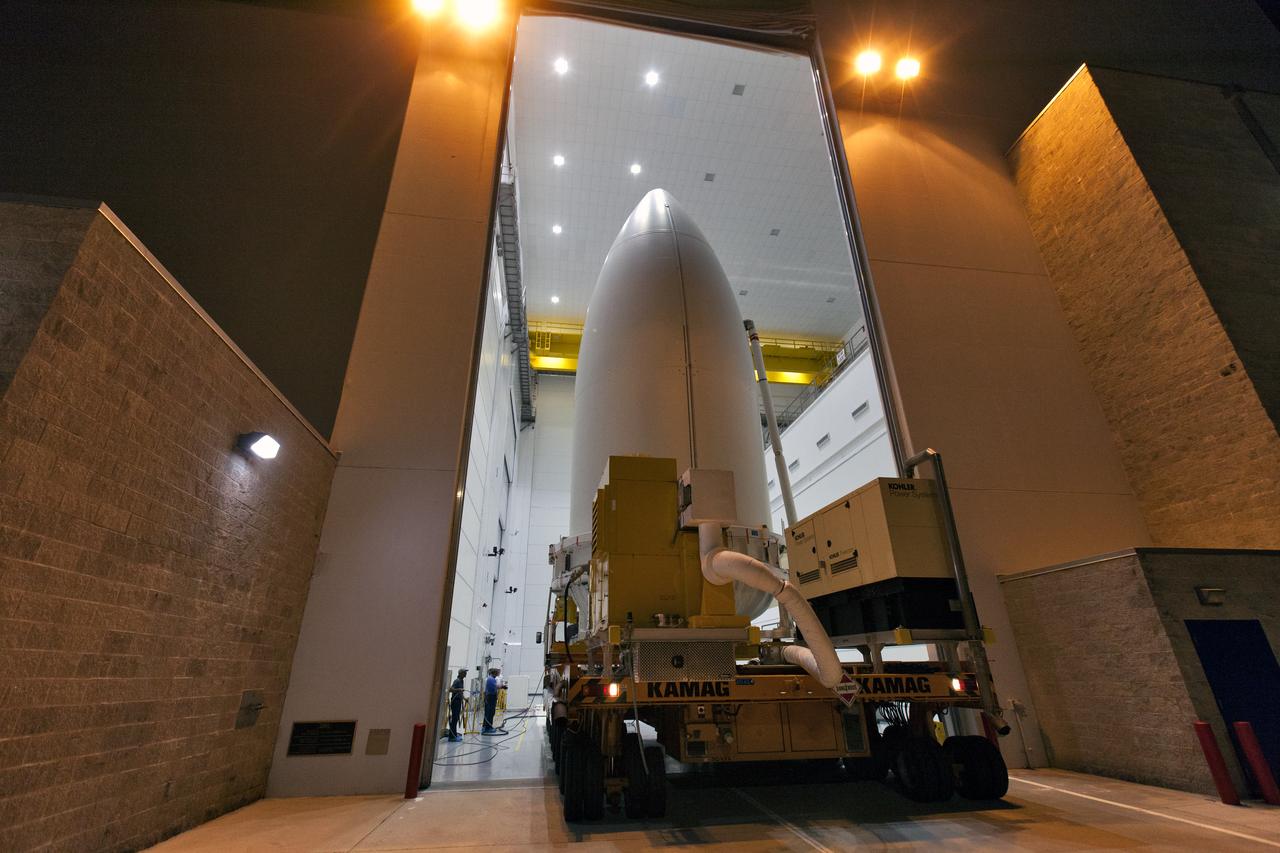
The payload fairing containing NOAA's Geostationary Operational Environmental Satellite-S (GOES-S) is secured on a transporter and moved out of the Astrotech Space Operations facility in Titusville, Florida. GOES-S will be transported to the United Launch Alliance (ULA) Vertical Integration Facility at Space Launch Complex 41 at Cape Canaveral Air Force Station in Florida. The payload fairing will be lifted and mated to the ULA Atlas V rocket. GOES-S is the second in a series of four advanced geostationary weather satellites. GOES-S is slated to launch aboard the ULA Atlas V on March 1.
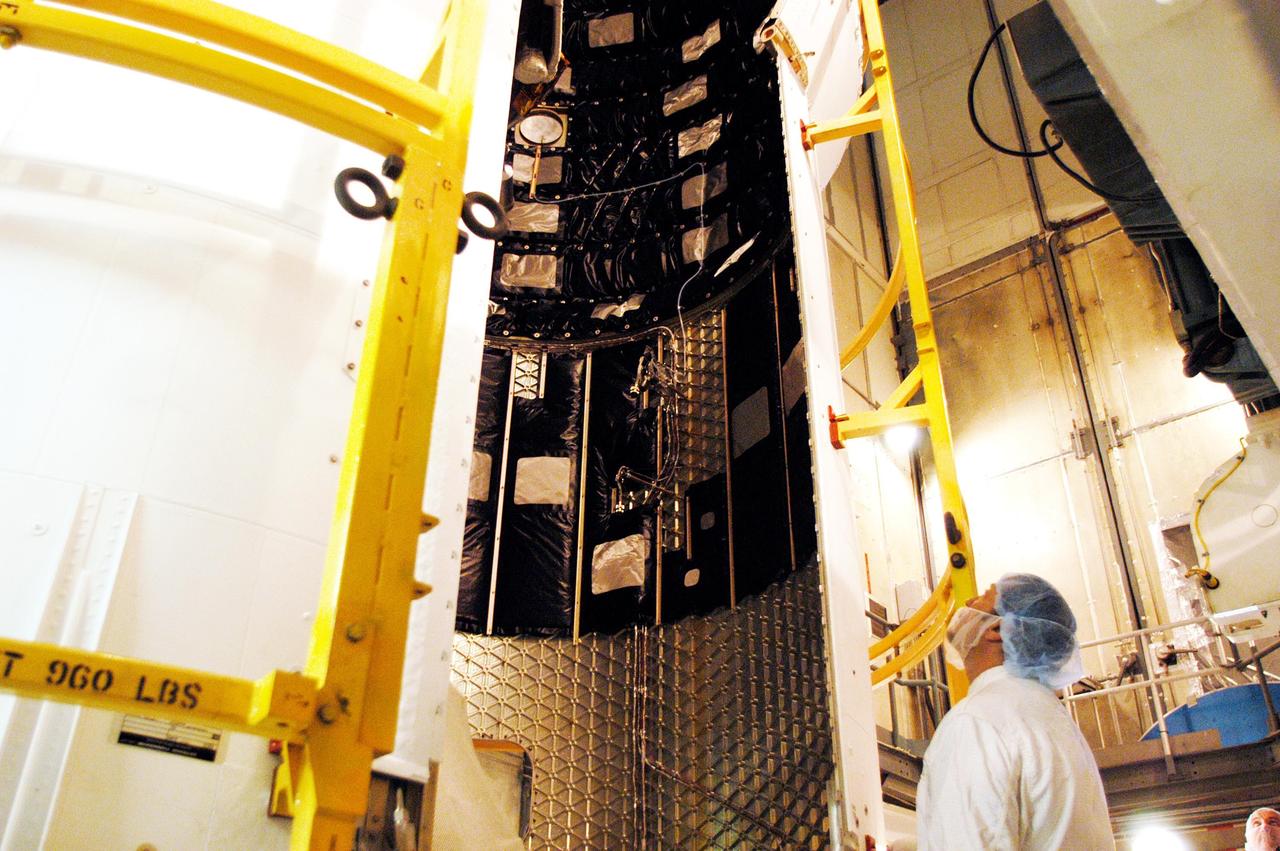
KENNEDY SPACE CENTER, FLA. - On Launch Pad 17-B at Cape Canaveral Air Force Station, a Boeing worker observes the second half of the fairing as it moves into place around the MESSENGER (Mercury Surface, Space Environment, Geochemistry and Ranging) spacecraft. The fairing is a molded structure that fits flush with the outside surface of the upper stage booster and forms an aerodynamically smooth joint, protecting the spacecraft during launch. MESSENGER is scheduled to launch Aug. 2 aboard a Boeing Delta II rocket and is expected to enter Mercury orbit in March 2011. MESSENGER was built for NASA by the Johns Hopkins University Applied Physics Laboratory in Laurel, Md.
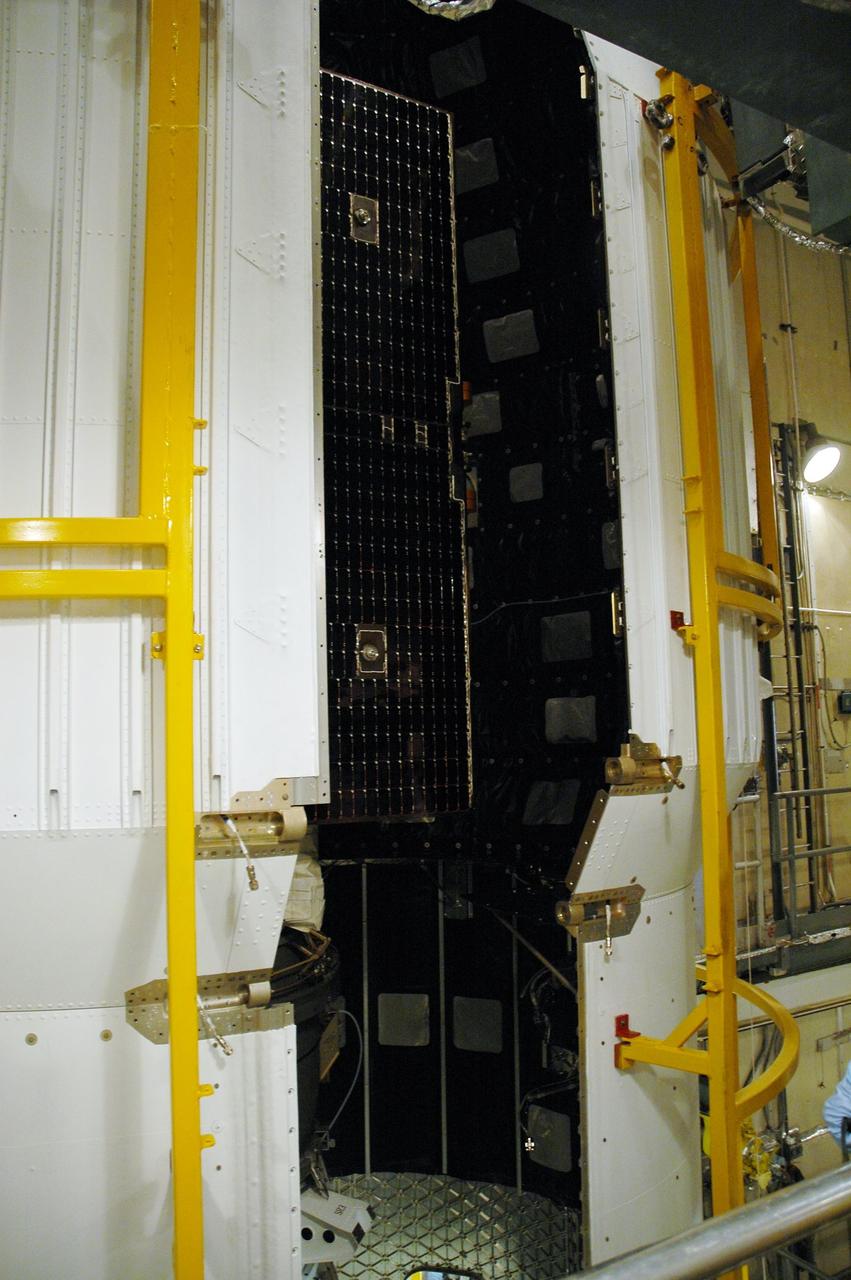
KENNEDY SPACE CENTER, FLA. -- On Launch Pad 17-B at Cape Canaveral Air Force Station in Florida, the second half of the fairing moves toward NASA's Dawn spacecraft to complete encapsulation. The fairing is a molded structure that fits flush with the outside surface of the Delta II upper stage booster and forms an aerodynamically smooth nose cone, protecting the spacecraft during launch and ascent. Dawn's goal is to characterize the conditions and processes of the solar system's earliest epoch 4.5 billion years ago by investigating in detail two of the largest asteroids, Ceres and Vesta. They reside between Mars and Jupiter in the asteroid belt. Launch is scheduled for July 8. Photo credit: NASA/Amanda Diller
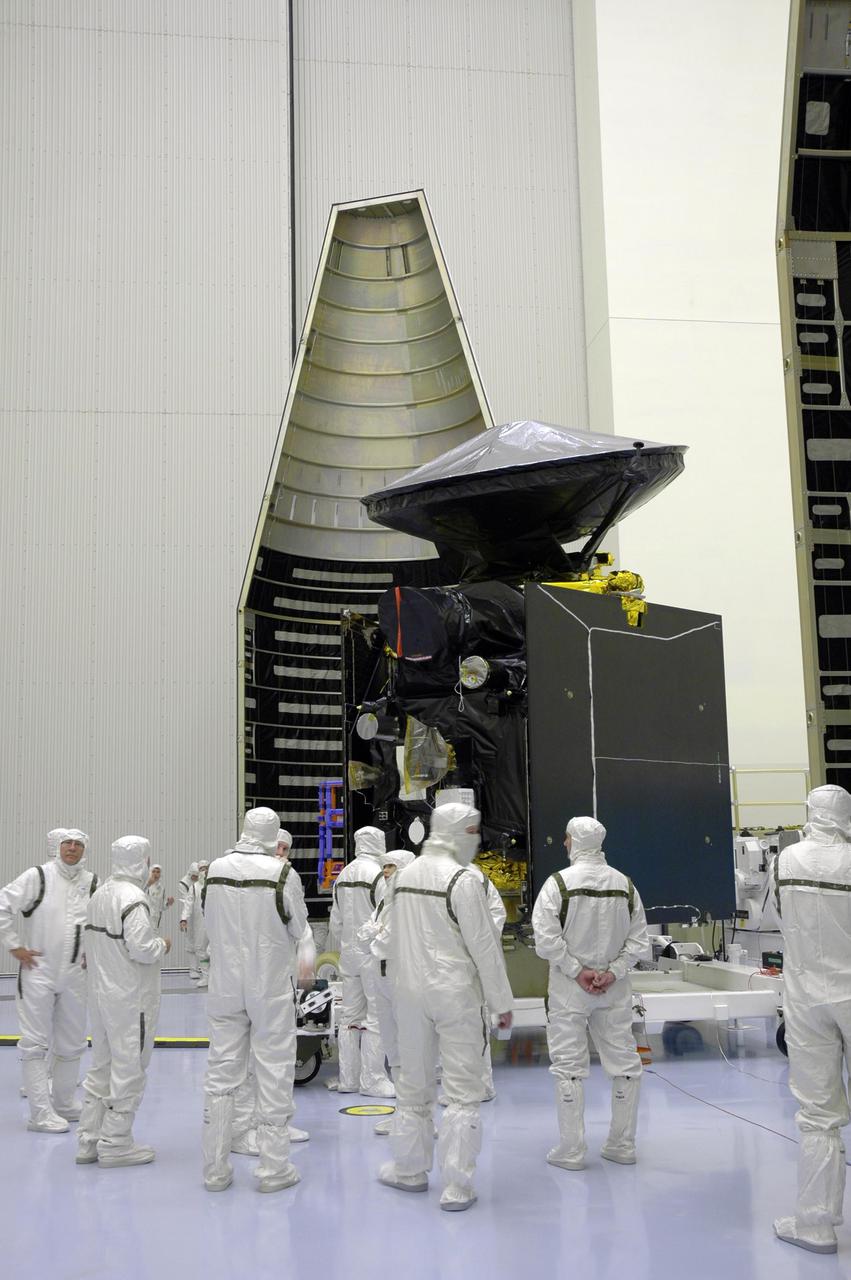
KENNEDY SPACE CENTER, FLA. - In the Payload Hazardous Servicing Facility, the first half of the fairing (left) is ready to be moved closer to the Mars Reconnaissance Orbiter (right) for installation. The fairing protects the spacecraft during launch and flight through the atmosphere. Once in space, it is jettisoned. Launch of the MRO aboard an Atlas V rocket will be from Launch Complex 41 at Cape Canaveral Air Force Station in Florida. The MRO is the next major step in Mars exploration and scheduled for launch from Cape Canaveral Air Force Station in a window opening Aug. 10. The MRO is an important next step in fulfilling NASA’s vision of space exploration and ultimately sending human explorers to Mars and beyond.
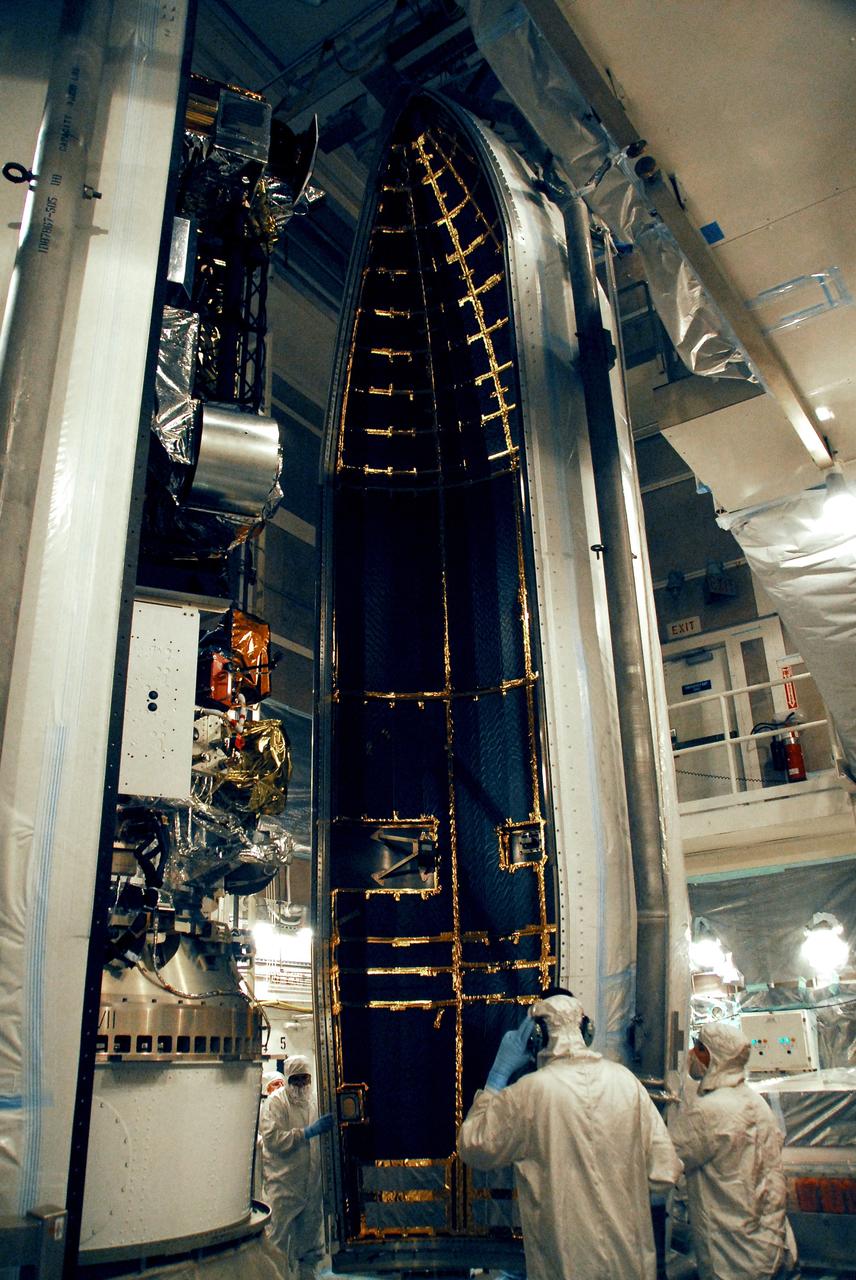
VANDENBERG AIR FORCE BASE, Calif. -- The second half of the fairing is moved into place around the NOAA-N Prime spacecraft in the launch service tower on Space Launch Complex 2 at Vandenberg Air Force Base in California. The fairing is a molded structure that fits flush with the outside surface of the rocket and forms an aerodynamically smooth nose cone, protecting the spacecraft during launch and ascent. NOAA-N Prime is the latest polar-orbiting operational environmental weather satellite developed by NASA for the National Oceanic and Atmospheric Administration. The satellite is scheduled to launch Feb. 4 aboard the Delta II from Vandenberg Air Force Base. Photo credit: NASA/Mark Mackley, VAFB
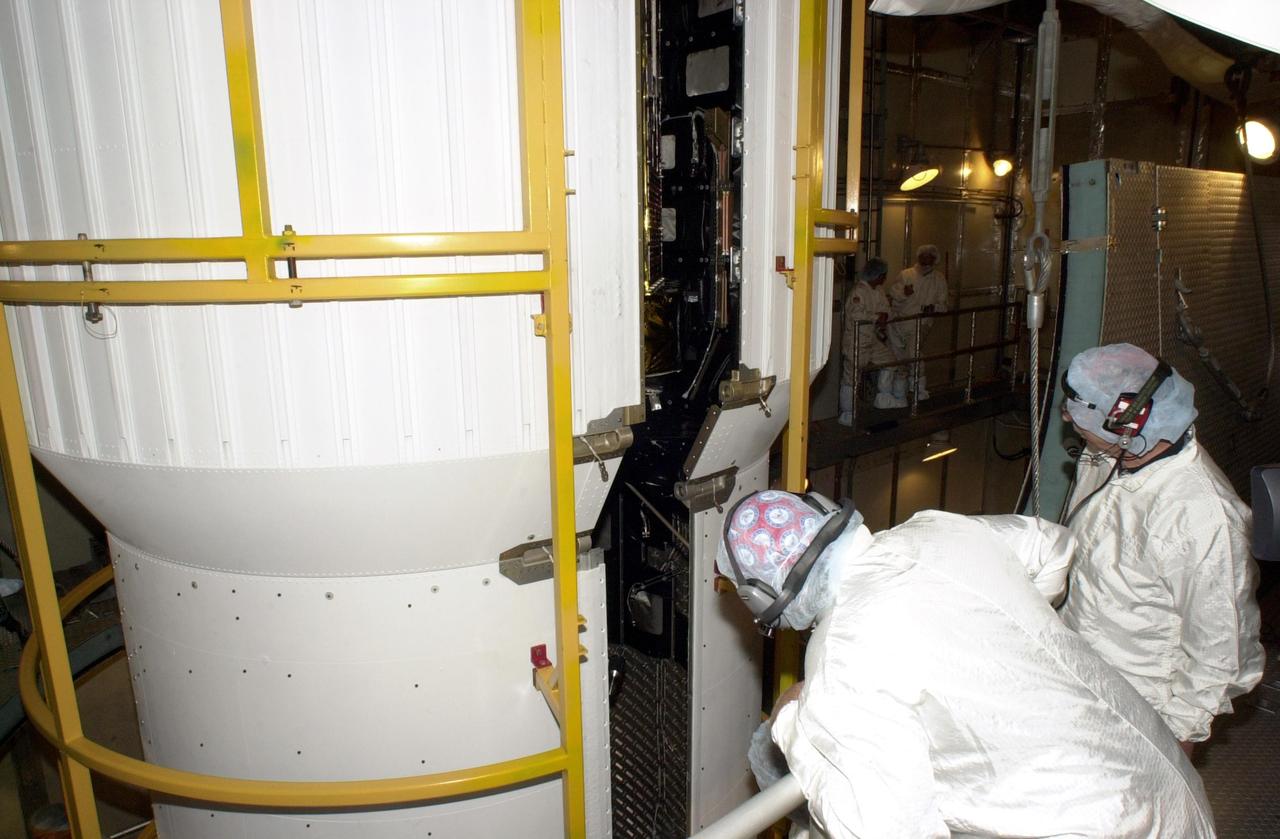
KENNEDY SPACE CENTER, FLA. -- At Launch Complex 17-A, Cape Canaveral Air Force Station, workers watch as the two halves of the fairing move closer together, encircling the Comet Nucleus Tour (CONTOUR). The fairing is the outer cover that protects the spacecraft during launch. Below the spacecraft is the Delta II rocket, the launch vehicle. CONTOUR will provide the first detailed look into the heart of a comet -- the nucleus. Flying as close as 60 miles (100 kilometers) to at least two comets, the spacecraft will take the sharpest pictures yet of a nucleus while analyzing the gas and dust that surround them. Launch of CONTOUR is scheduled for July 1, 2002
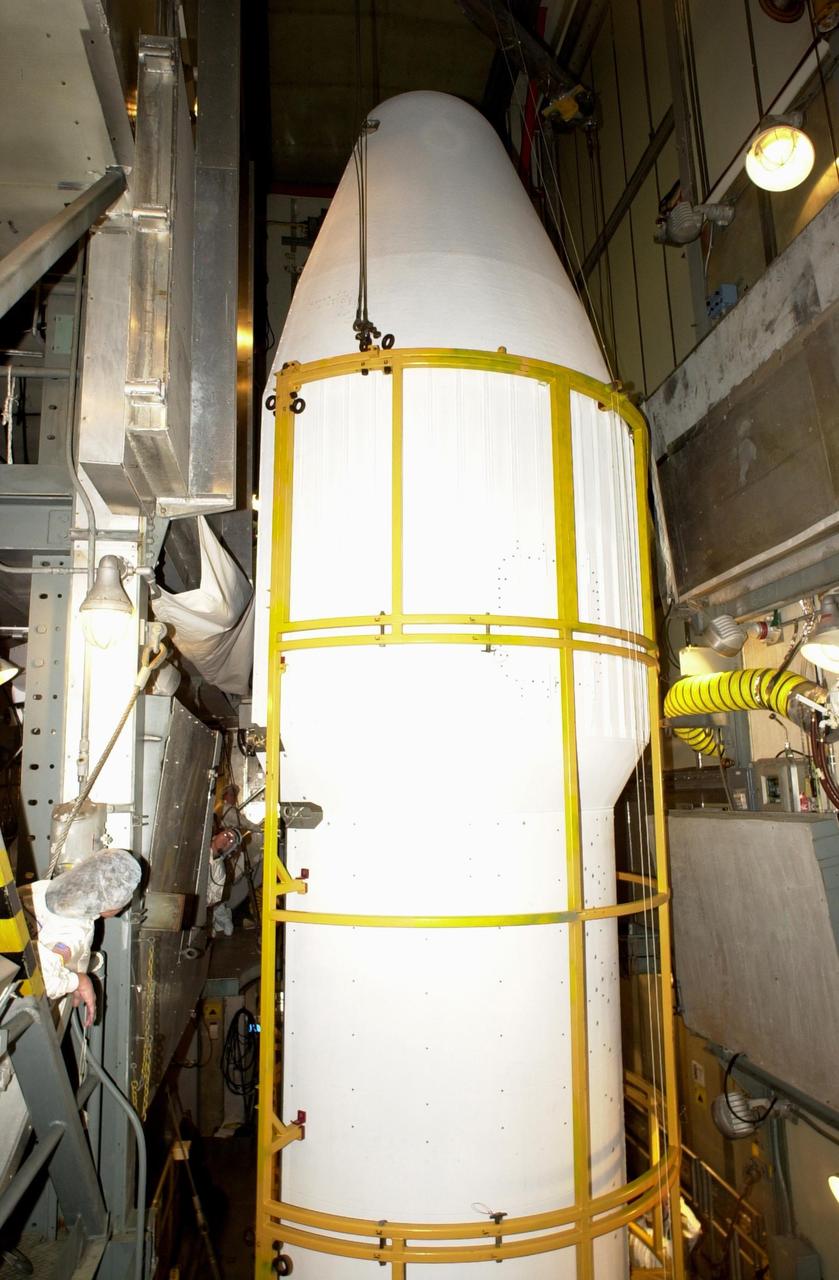
KENNEDY SPACE CENTER, FLA. -- At Launch Complex 17-A, Cape Canaveral Air Force Station, workers watch as the second half of the fairing moves toward the Comet Nucleus Tour (CONTOUR). The fairing is the outer cover that protects the spacecraft during launch. Below the spacecraft is the Delta II rocket, the launch vehicle. CONTOUR will provide the first detailed look into the heart of a comet -- the nucleus. Flying as close as 60 miles (100 kilometers) to at least two comets, the spacecraft will take the sharpest pictures yet of a nucleus while analyzing the gas and dust that surround them. Launch of CONTOUR is scheduled for July 1, 2002
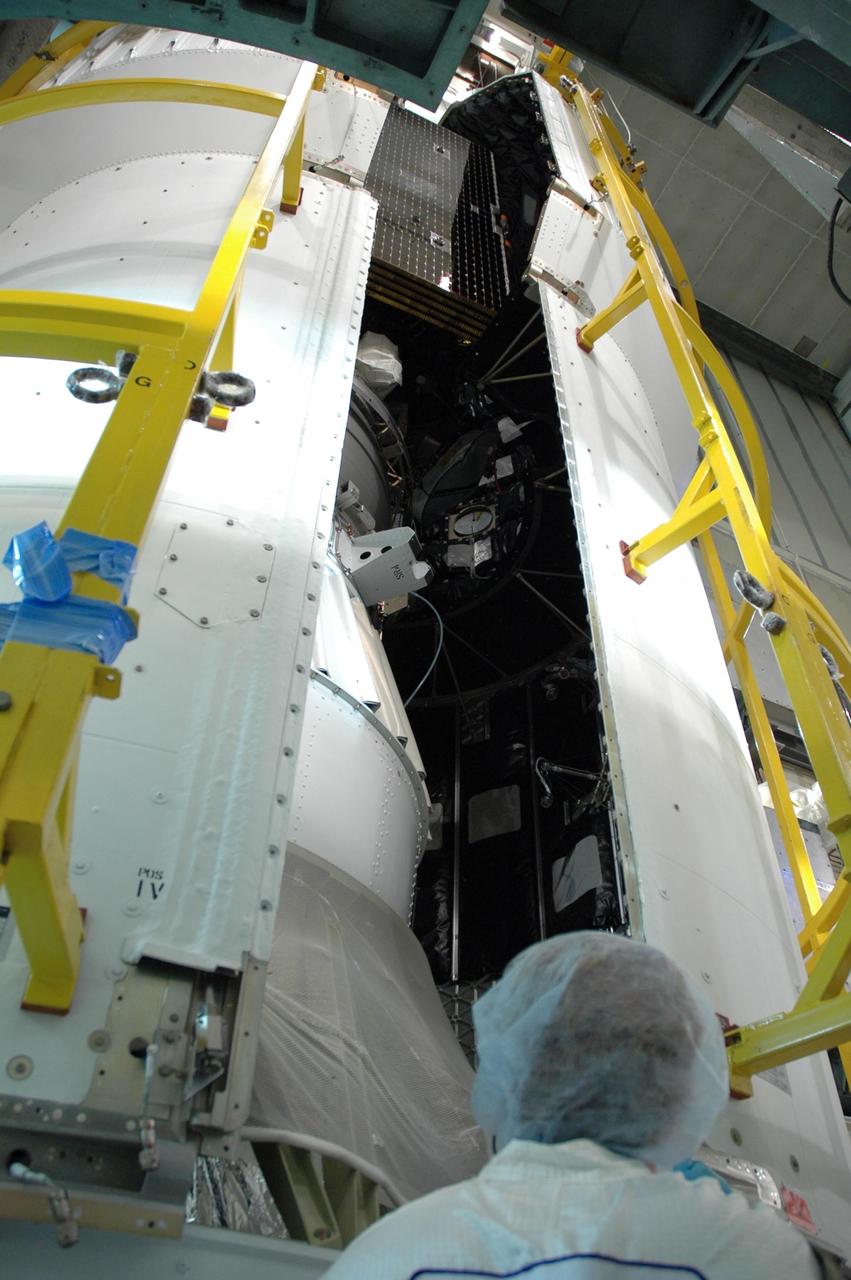
KENNEDY SPACE CENTER, FLA. -- Inside the mobile service tower on Launch Pad 17-B at Cape Canaveral Air Force Station, the second half of the fairing (at right) is moved closer to the first half for installation around the Dawn spacecraft, glimpsed inside. The first half is already in place.The fairing is a molded structure that fits flush with the outside surface of the Delta II upper stage booster and forms an aerodynamically smooth nose cone, protecting the spacecraft during launch and ascent. Dawn is scheduled to launch between 7:25 and 7:54 a.m. on Sept. 26 aboard a Delta II rocket. Photo credit: NASA/Jim Grossmann
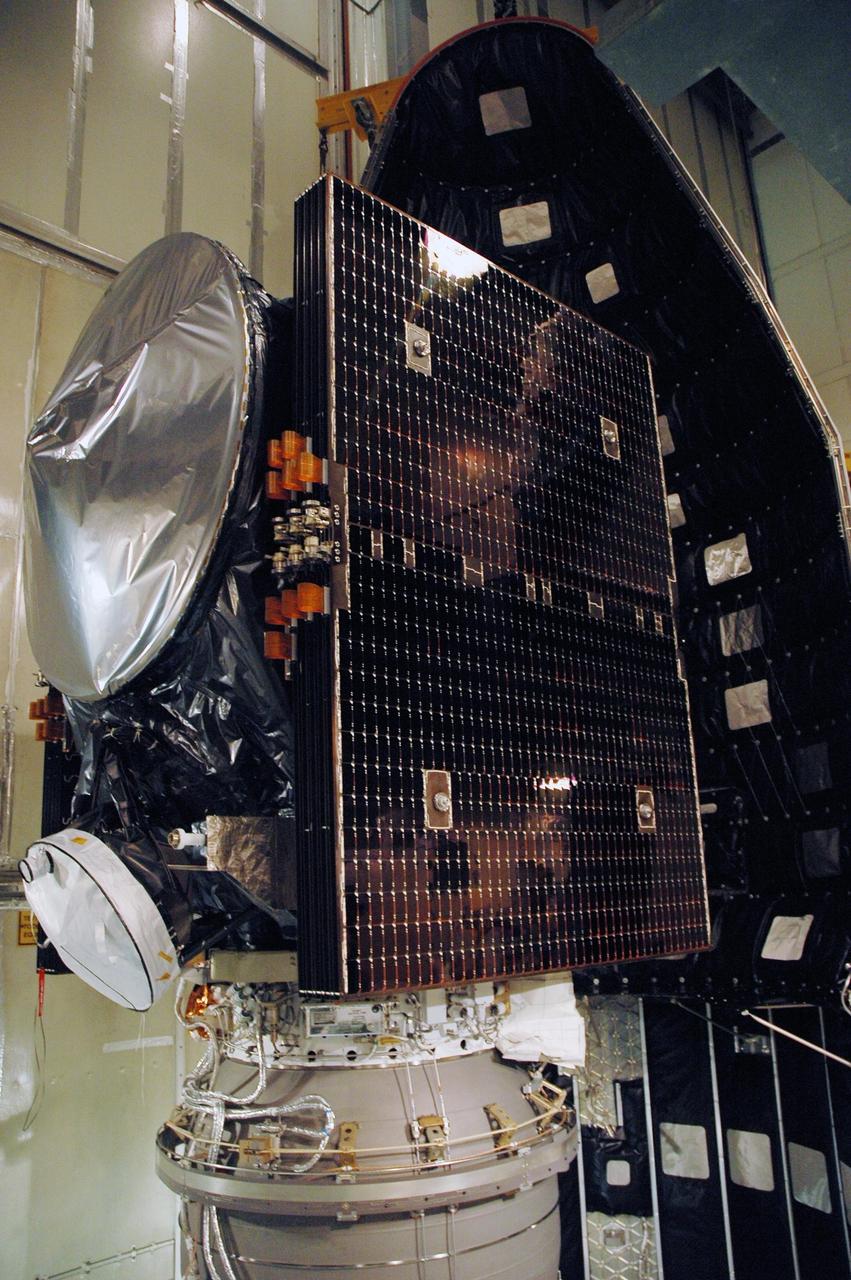
KENNEDY SPACE CENTER, FLA. -- On Launch Pad 17-B at Cape Canaveral Air Force Station in Florida, the first half of the fairing moves toward NASA's Dawn spacecraft for encapsulation. The fairing is a molded structure that fits flush with the outside surface of the Delta II upper stage booster and forms an aerodynamically smooth nose cone, protecting the spacecraft during launch and ascent. Dawn's goal is to characterize the conditions and processes of the solar system's earliest epoch 4.5 billion years ago by investigating in detail two of the largest asteroids, Ceres and Vesta. They reside between Mars and Jupiter in the asteroid belt. Launch is scheduled for July 8. Photo credit: NASA/Amanda Diller

KENNEDY SPACE CENTER, FLA. - Workers in the Payload Hazardous Servicing Facility stand by as the first half of the fairing (left) is moved closer to the Mars Reconnaissance Orbiter (right) for installation. The fairing protects the spacecraft during launch and flight through the atmosphere. Once in space, it is jettisoned. Launch of the MRO aboard an Atlas V rocket will be from Launch Complex 41 at Cape Canaveral Air Force Station in Florida. The MRO is the next major step in Mars exploration and scheduled for launch from Cape Canaveral Air Force Station in a window opening Aug. 10. The MRO is an important next step in fulfilling NASA’s vision of space exploration and ultimately sending human explorers to Mars and beyond.