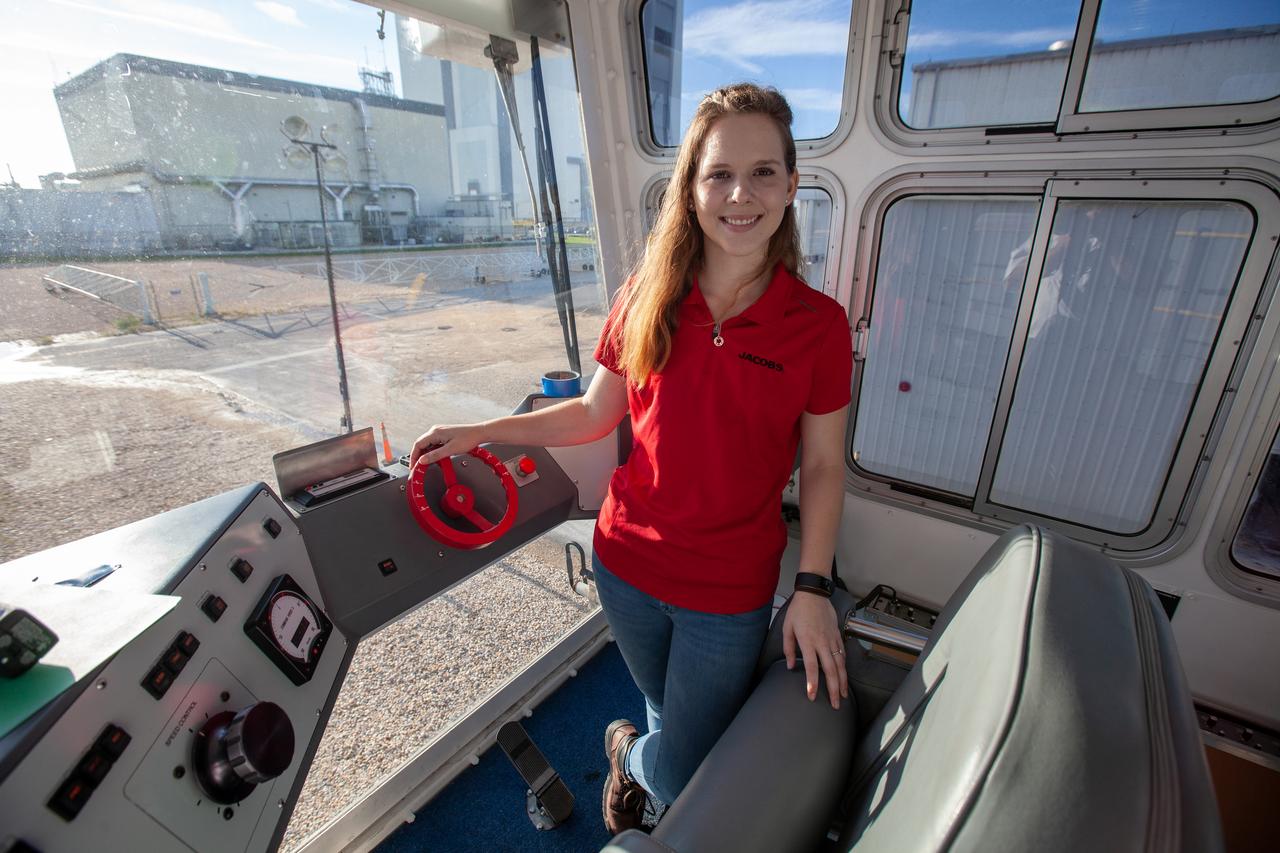
Breanne Stichler, mechanical engineer I, is photographed inside the cab of NASA’s Crawler-Transporter 2 (CT-2) at the Kennedy Space Center in Florida on Aug. 8, 2019. Stichler started working at Kennedy in June and is among one of the few females to have ever driven the crawler. CT-2 will carry the agency’s mobile launcher with the Space Launch System rocket from the Vehicle Assembly Building to Launch Pad 39B for the launch of Artemis 1, the first in a series of complex missions that will provide the foundation for human deep space exploration.
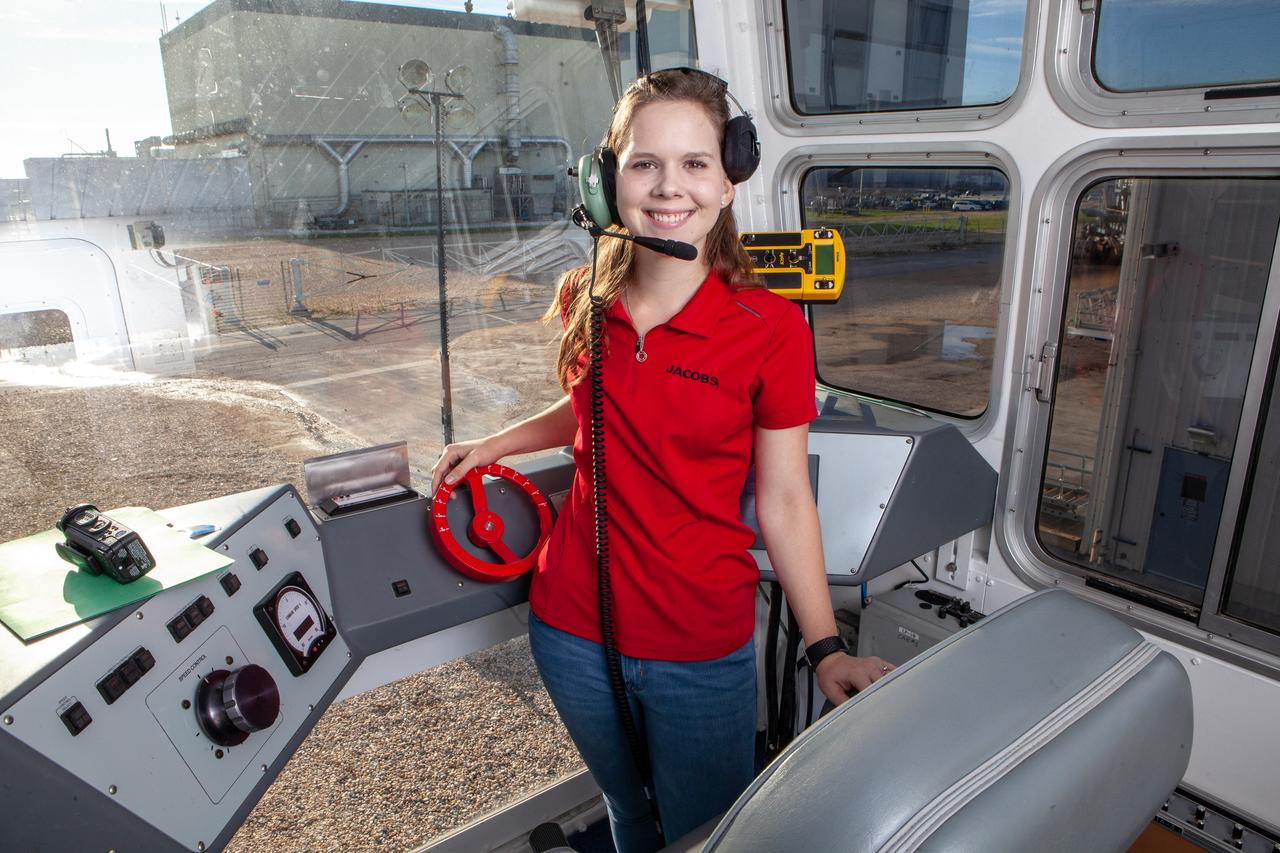
Breanne Stichler, mechanical engineer I, is photographed inside the cab of NASA’s Crawler-Transporter 2 (CT-2) at the Kennedy Space Center in Florida on Aug. 8, 2019. Stichler started working at Kennedy in June and is among one of the few females to have ever driven the crawler. CT-2 will carry the agency’s mobile launcher with the Space Launch System rocket from the Vehicle Assembly Building to Launch Pad 39B for the launch of Artemis 1, the first in a series of complex missions that will provide the foundation for human deep space exploration.
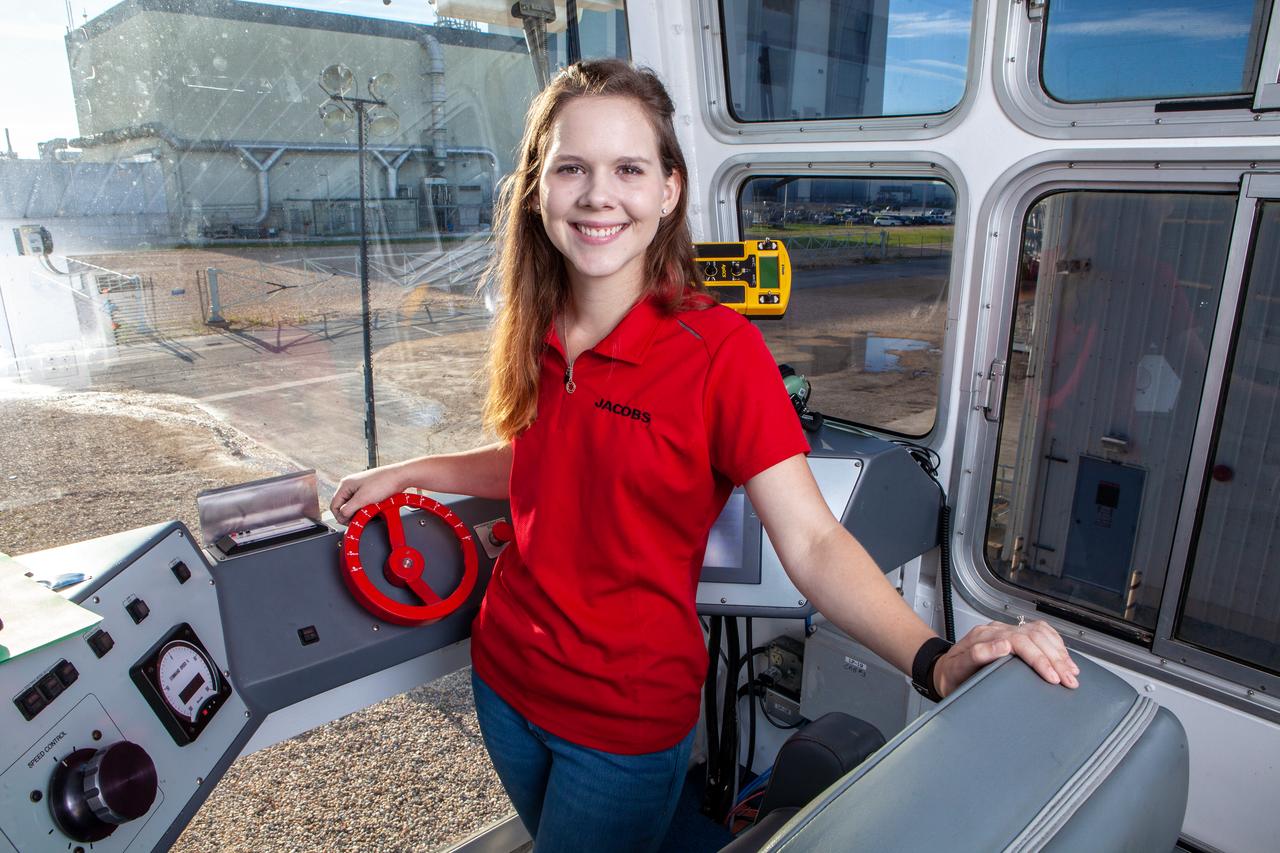
Breanne Stichler, mechanical engineer I, is photographed inside the cab of NASA’s Crawler-Transporter 2 (CT-2) at the Kennedy Space Center in Florida on Aug. 8, 2019. Stichler started working at Kennedy in June and is among one of the few females to have ever driven the crawler. CT-2 will carry the agency’s mobile launcher with the Space Launch System rocket from the Vehicle Assembly Building to Launch Pad 39B for the launch of Artemis 1, the first in a series of complex missions that will provide the foundation for human deep space exploration.
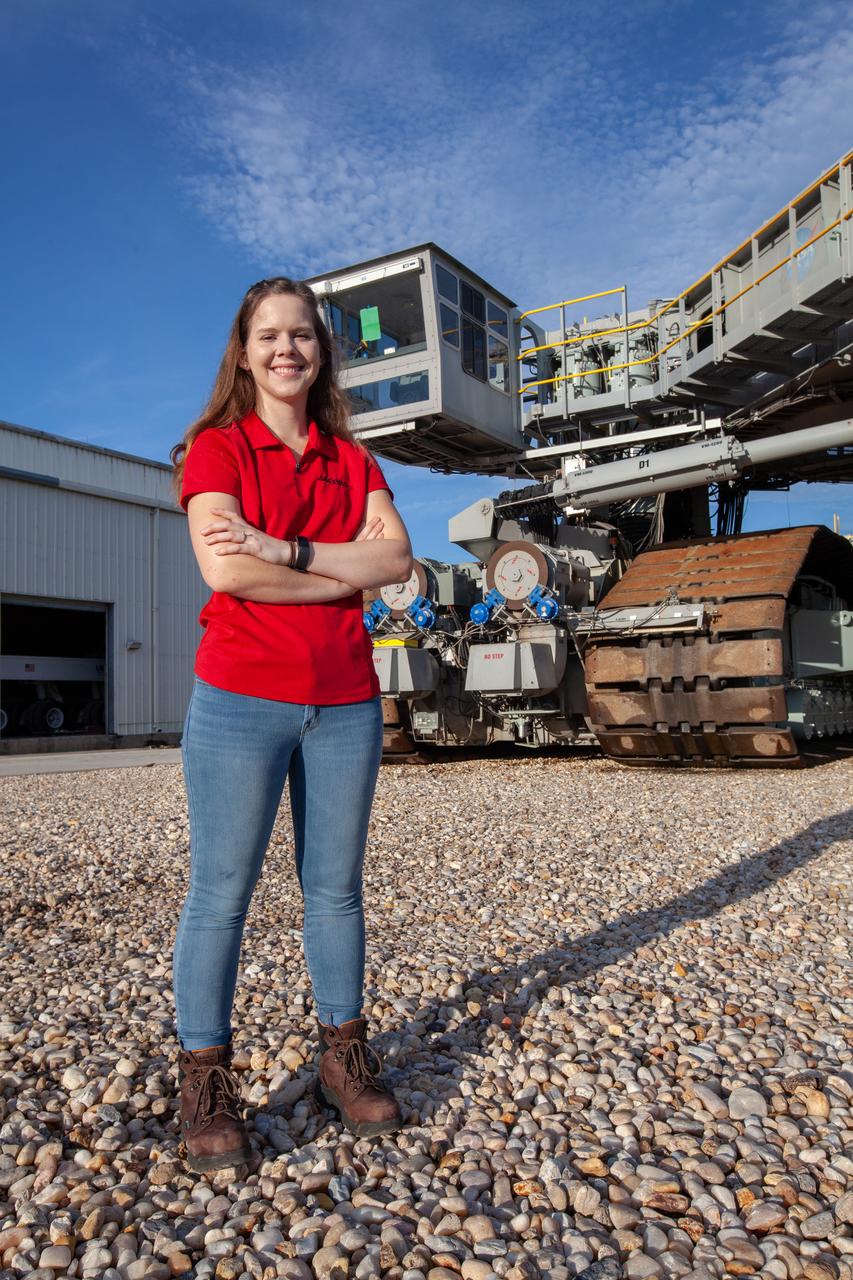
Breanne Stichler, mechanical engineer I, is photographed in front of NASA’s Crawler-Transporter 2 (CT-2) at the Kennedy Space Center in Florida on Aug. 8, 2019. Stichler started working at Kennedy in June and is among one of the few females to have ever driven the crawler. CT-2 will carry the agency’s mobile launcher with the Space Launch System rocket from the Vehicle Assembly Building to Launch Pad 39B for the launch of Artemis 1, the first in a series of complex missions that will provide the foundation for human deep space exploration.
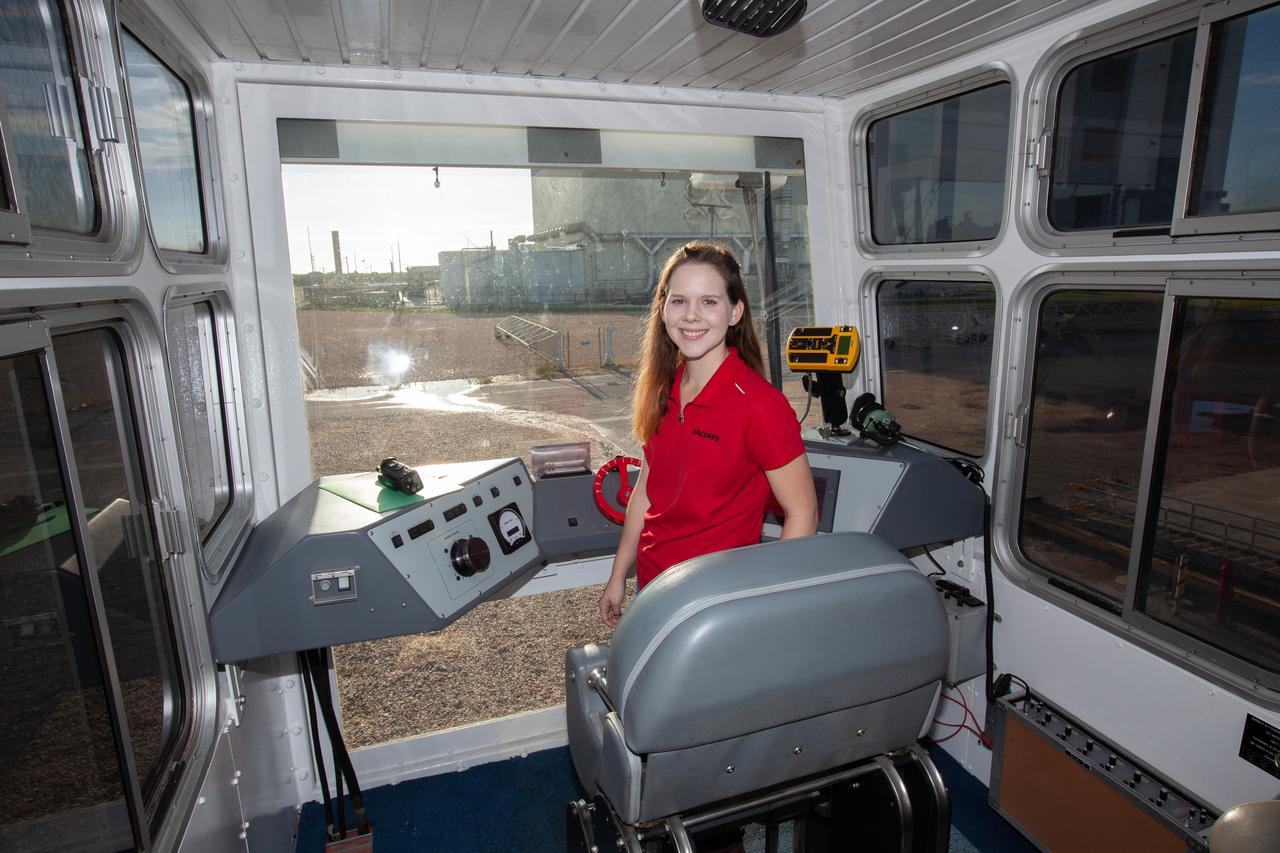
Breanne Stichler, mechanical engineer I, is photographed inside the cab of NASA’s Crawler-Transporter 2 (CT-2) at the Kennedy Space Center in Florida on Aug. 8, 2019. Stichler started working at Kennedy in June and is among one of the few females to have ever driven the crawler. CT-2 will carry the agency’s mobile launcher with the Space Launch System rocket from the Vehicle Assembly Building to Launch Pad 39B for the launch of Artemis 1, the first in a series of complex missions that will provide the foundation for human deep space exploration.
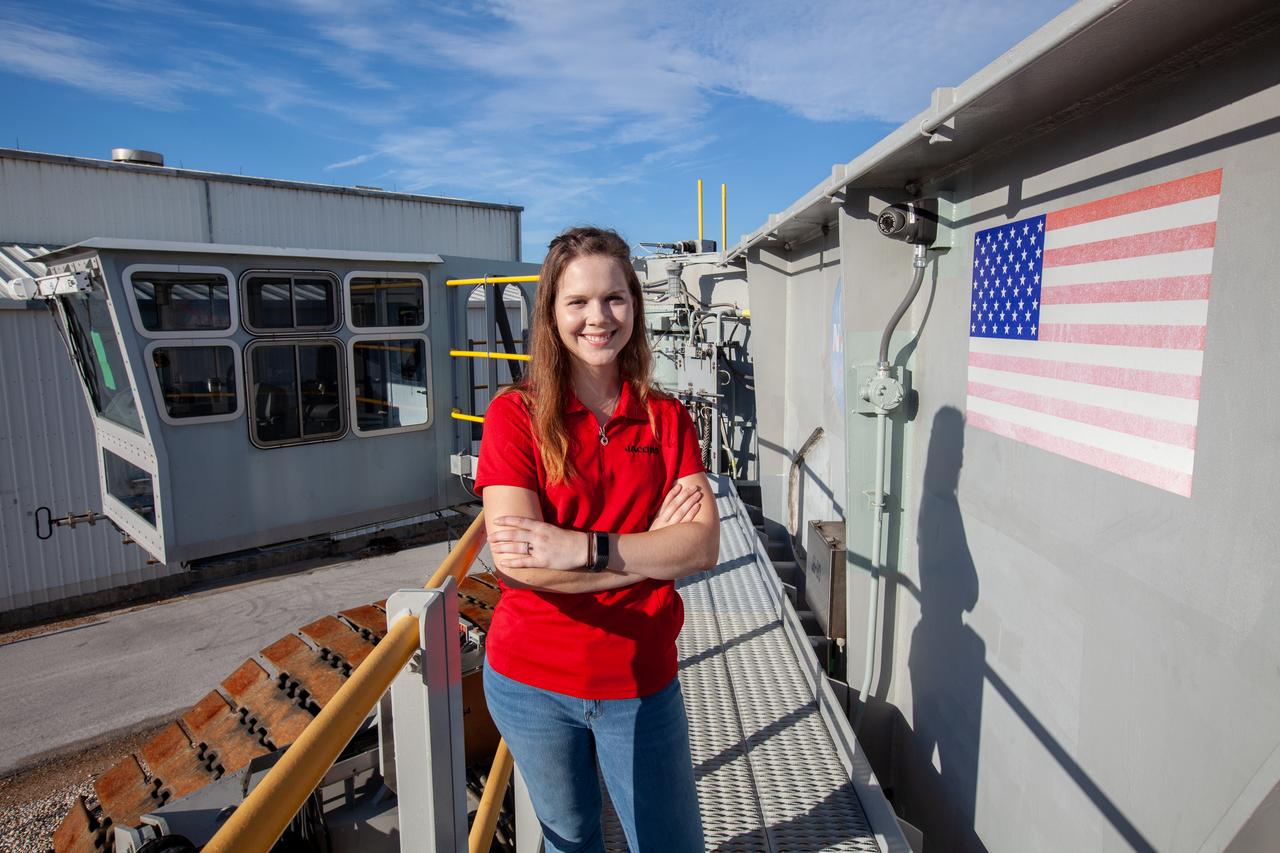
Breanne Stichler, mechanical engineer I, stands atop NASA’s Crawler-Transporter 2 (CT-2) at the Kennedy Space Center in Florida on Aug. 8, 2019. Stichler started working at Kennedy in June and is among one of the few females to have ever driven the crawler. CT-2 will carry the agency’s mobile launcher with the Space Launch System rocket from the Vehicle Assembly Building to Launch Pad 39B for the launch of Artemis 1, the first in a series of complex missions that will provide the foundation for human deep space exploration.
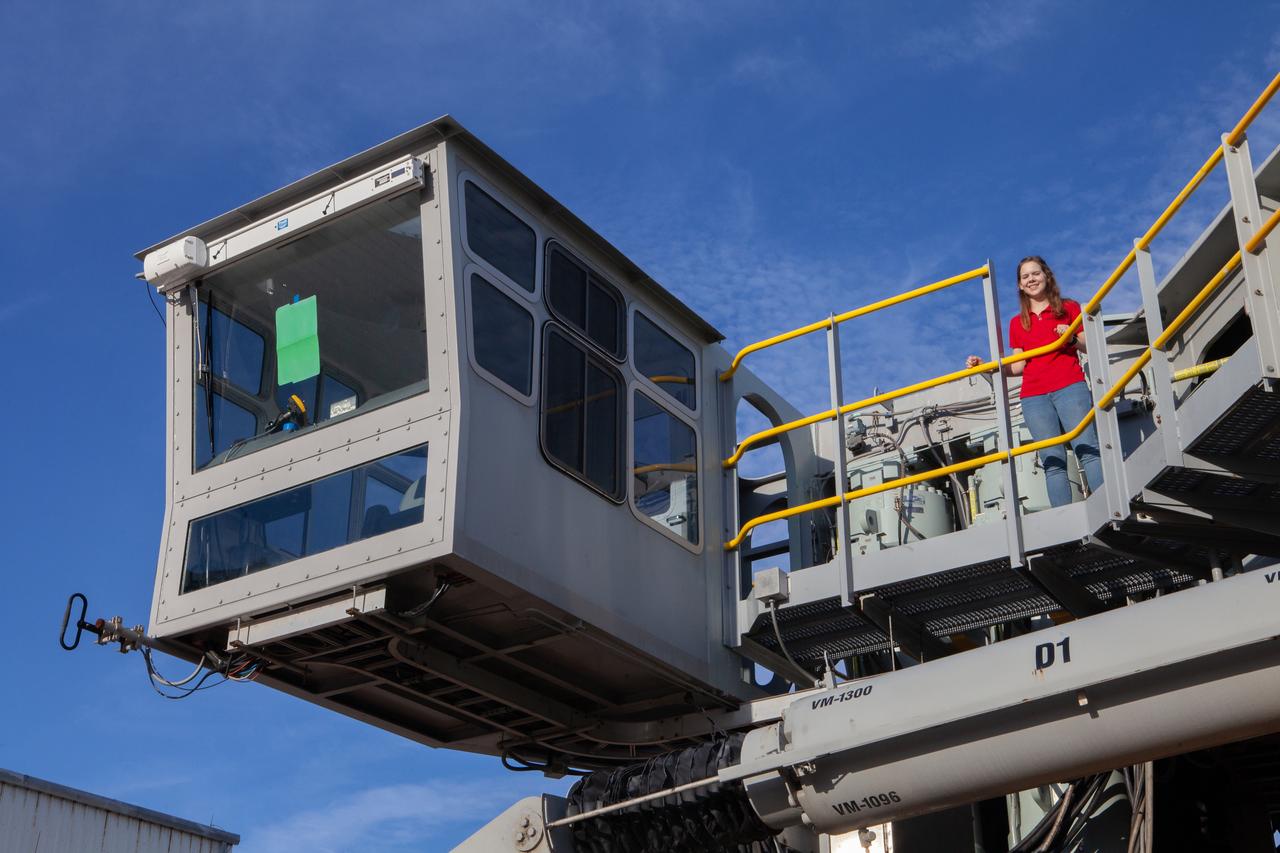
Breanne Stichler, mechanical engineer I, is photographed next to the cab of NASA’s Crawler-Transporter 2 (CT-2) at the Kennedy Space Center in Florida on Aug. 8, 2019. Stichler started working at Kennedy in June and is among one of the few females to have ever driven the crawler. CT-2 will carry the agency’s mobile launcher with the Space Launch System rocket from the Vehicle Assembly Building to Launch Pad 39B for the launch of Artemis 1, the first in a series of complex missions that will provide the foundation for human deep space exploration.
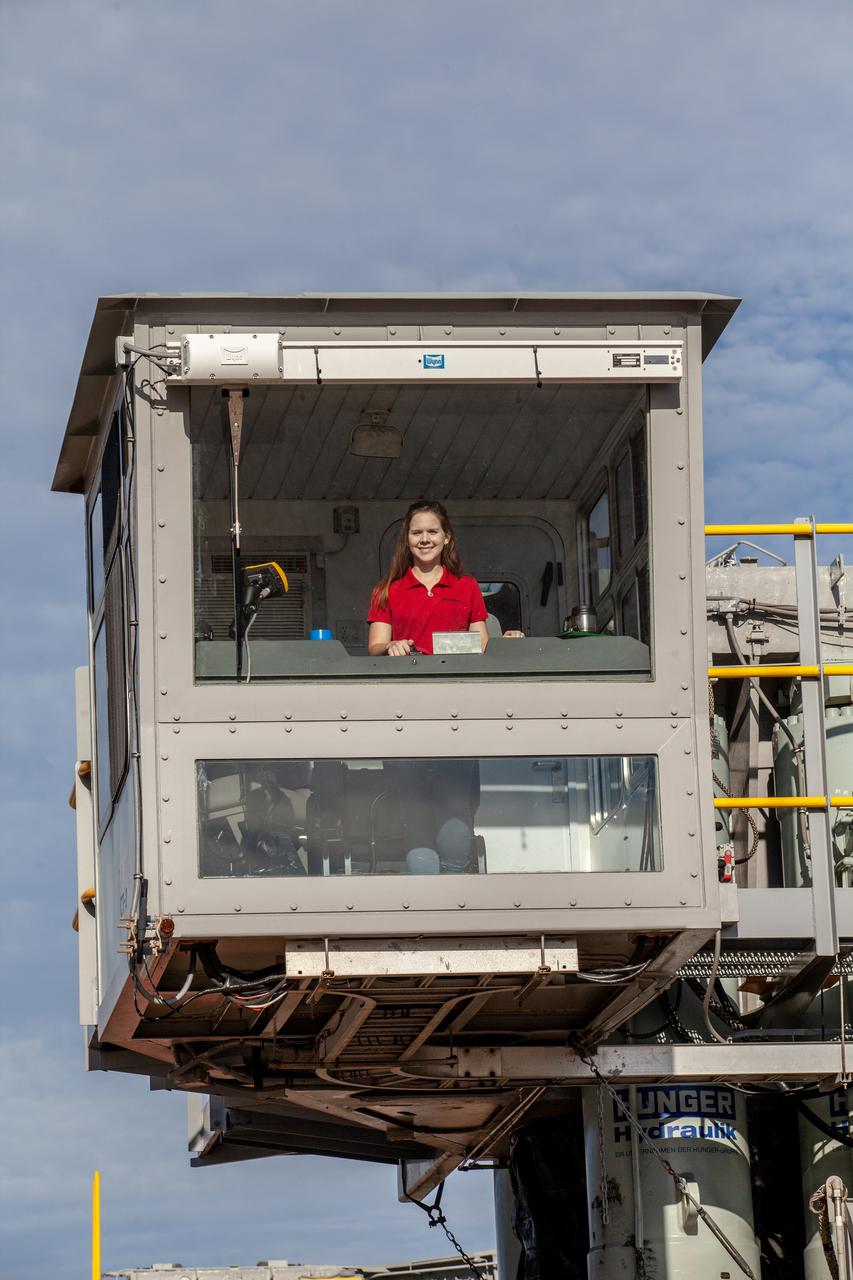
Mechanical Engineer I Breanne Stichler is photographed inside the cab of NASA’s Crawler-Transporter 2 (CT-2) at the Kennedy Space Center in Florida on Aug. 8, 2019. Stichler started working at Kennedy in June and is among one of the few females to have ever driven the crawler. CT-2 will carry the agency’s mobile launcher with the Space Launch System rocket from the Vehicle Assembly Building to Launch Pad 39B for the launch of Artemis 1, the first in a series of complex missions that will provide the foundation for human deep space exploration.
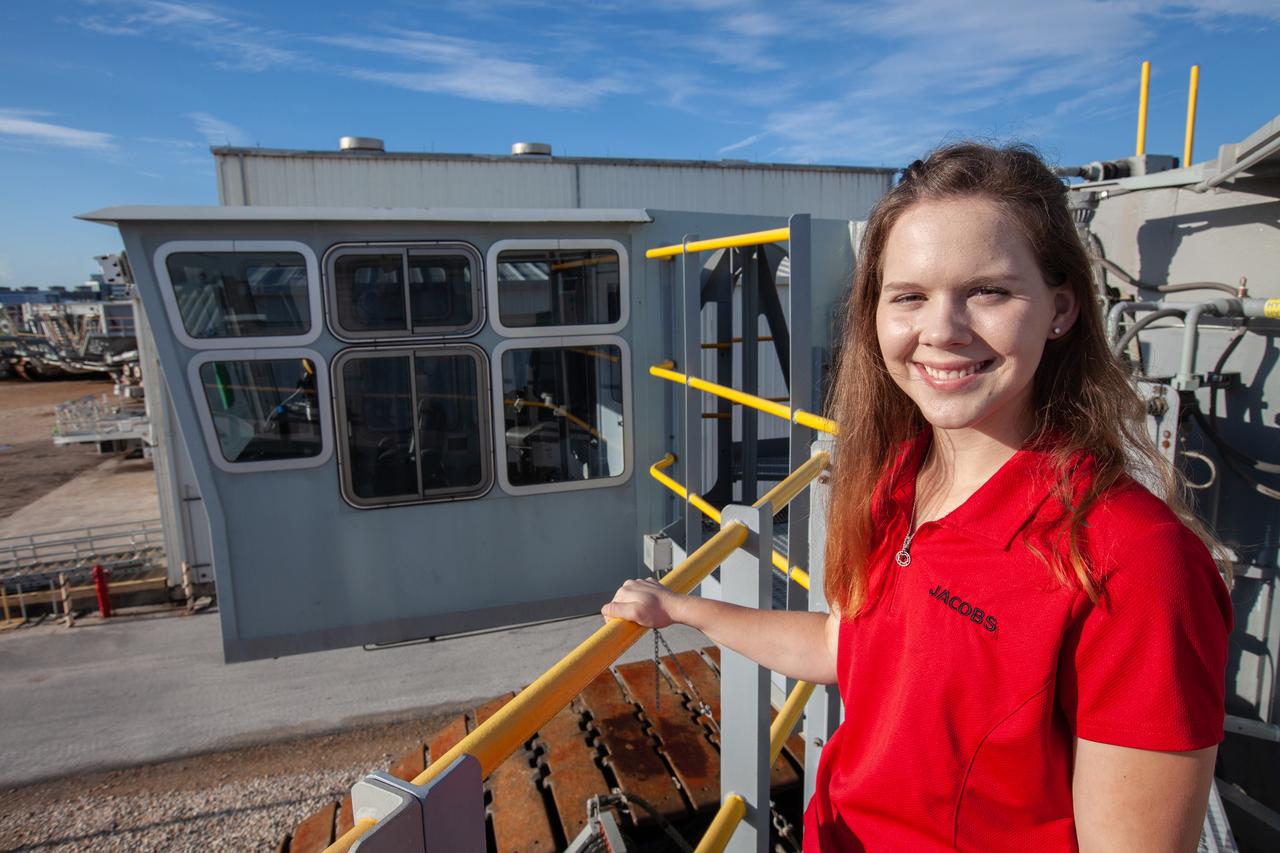
Breanne Stichler, mechanical engineer I, stands atop NASA’s Crawler-Transporter 2 (CT-2) at the Kennedy Space Center in Florida on Aug. 8, 2019. Stichler started working at Kennedy in June and is among one of the few females to have ever driven the crawler. CT-2 will carry the agency’s mobile launcher with the Space Launch System rocket from the Vehicle Assembly Building to Launch Pad 39B for the launch of Artemis 1, the first in a series of complex missions that will provide the foundation for human deep space exploration.
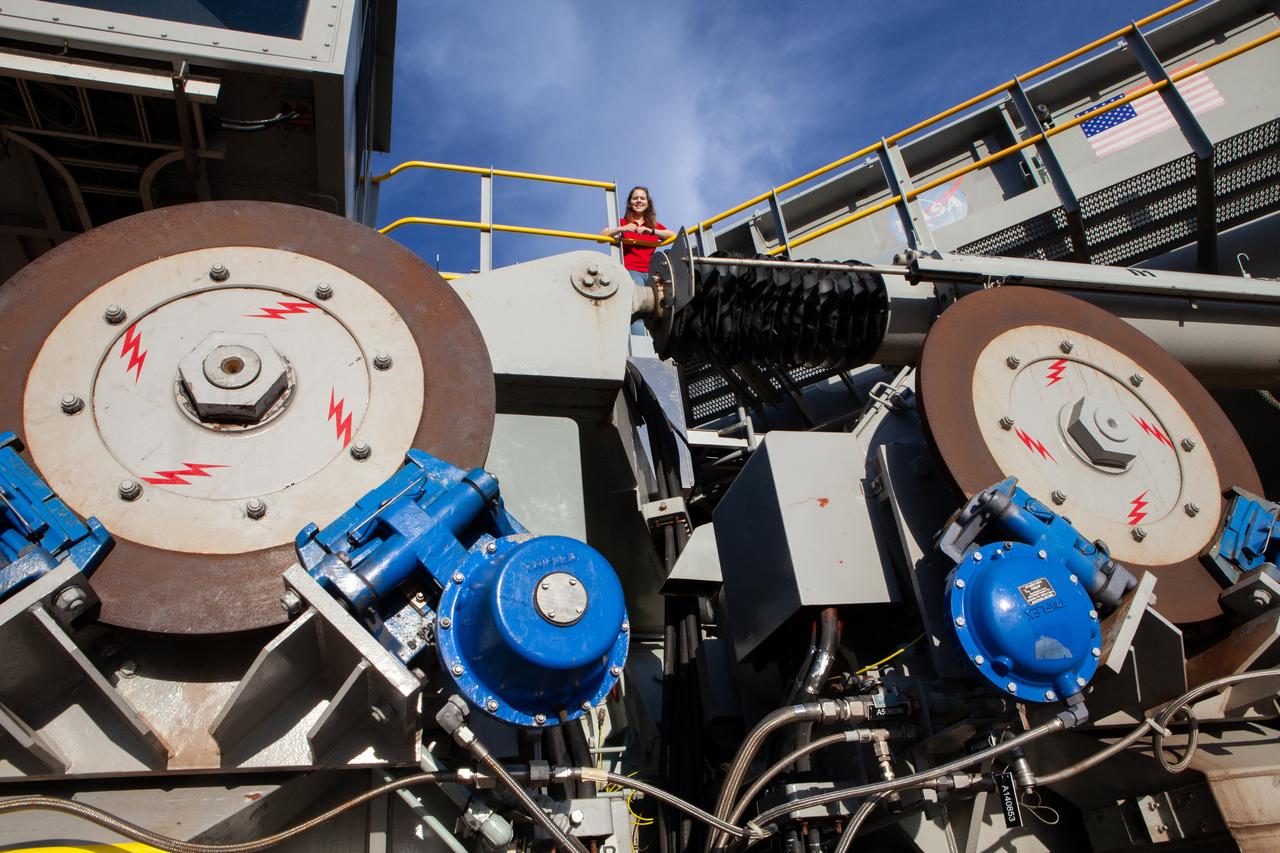
Breanne Stichler, mechanical engineer I, is photographed atop NASA’s Crawler-Transporter 2 (CT-2) at the Kennedy Space Center in Florida on Aug. 8, 2019. Stichler started working at Kennedy in June and is among one of the few females to have ever driven the crawler. CT-2 will carry the agency’s mobile launcher with the Space Launch System rocket from the Vehicle Assembly Building to Launch Pad 39B for the launch of Artemis 1, the first in a series of complex missions that will provide the foundation for human deep space exploration.
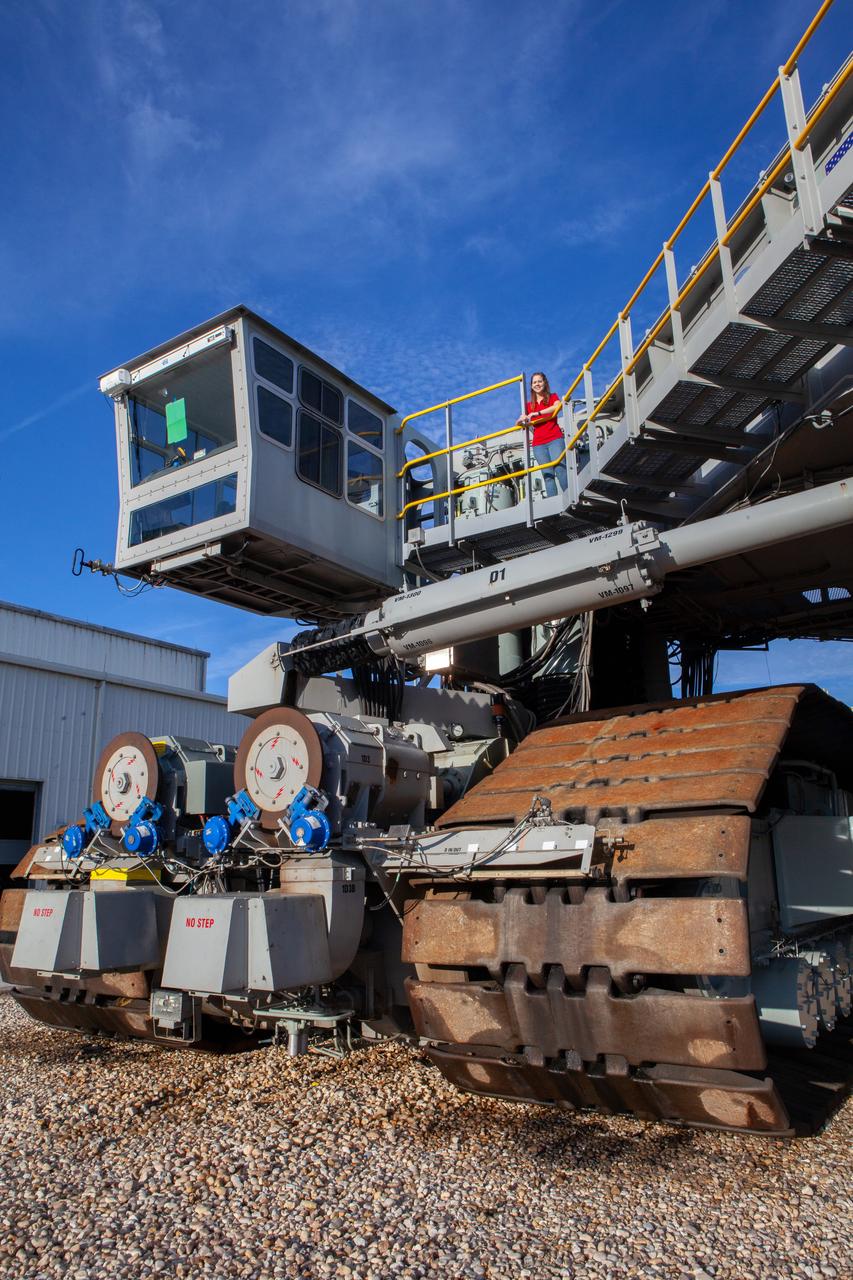
Breanne Stichler, mechanical engineer I, stands atop NASA’s Crawler-Transporter 2 (CT-2) at the Kennedy Space Center in Florida on Aug. 8, 2019. Stichler started working at Kennedy in June and is among one of the few females to have ever driven the crawler. CT-2 will carry the agency’s mobile launcher with the Space Launch System rocket from the Vehicle Assembly Building to Launch Pad 39B for the launch of Artemis 1, the first in a series of complex missions that will provide the foundation for human deep space exploration.
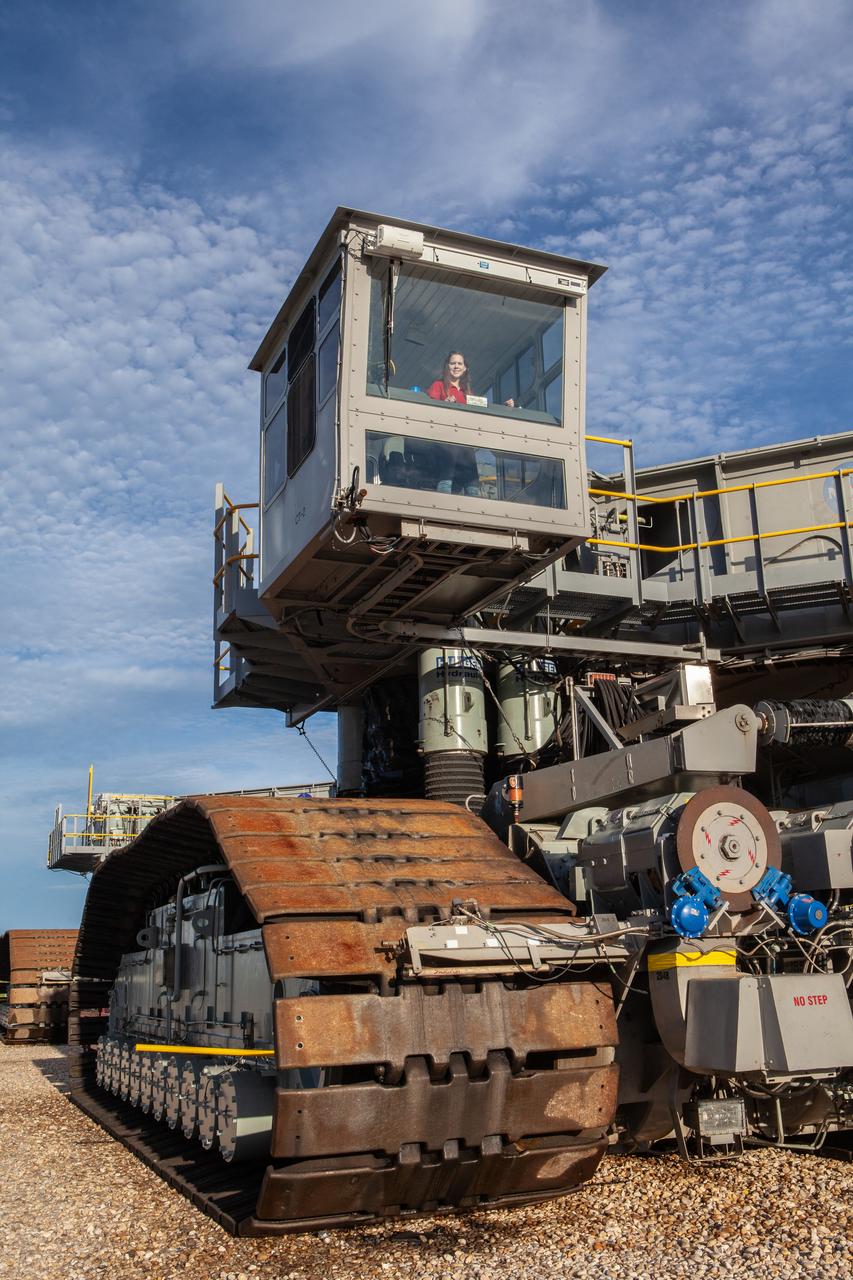
Breanne Stichler, mechanical engineer I, is photographed inside the cab of NASA’s Crawler-Transporter 2 (CT-2) at the Kennedy Space Center in Florida on Aug. 8, 2019. Stichler started working at Kennedy in June and is among one of the few females to have ever driven the crawler. CT-2 will carry the agency’s mobile launcher with the Space Launch System rocket from the Vehicle Assembly Building to Launch Pad 39B for the launch of Artemis 1, the first in a series of complex missions that will provide the foundation for human deep space exploration.
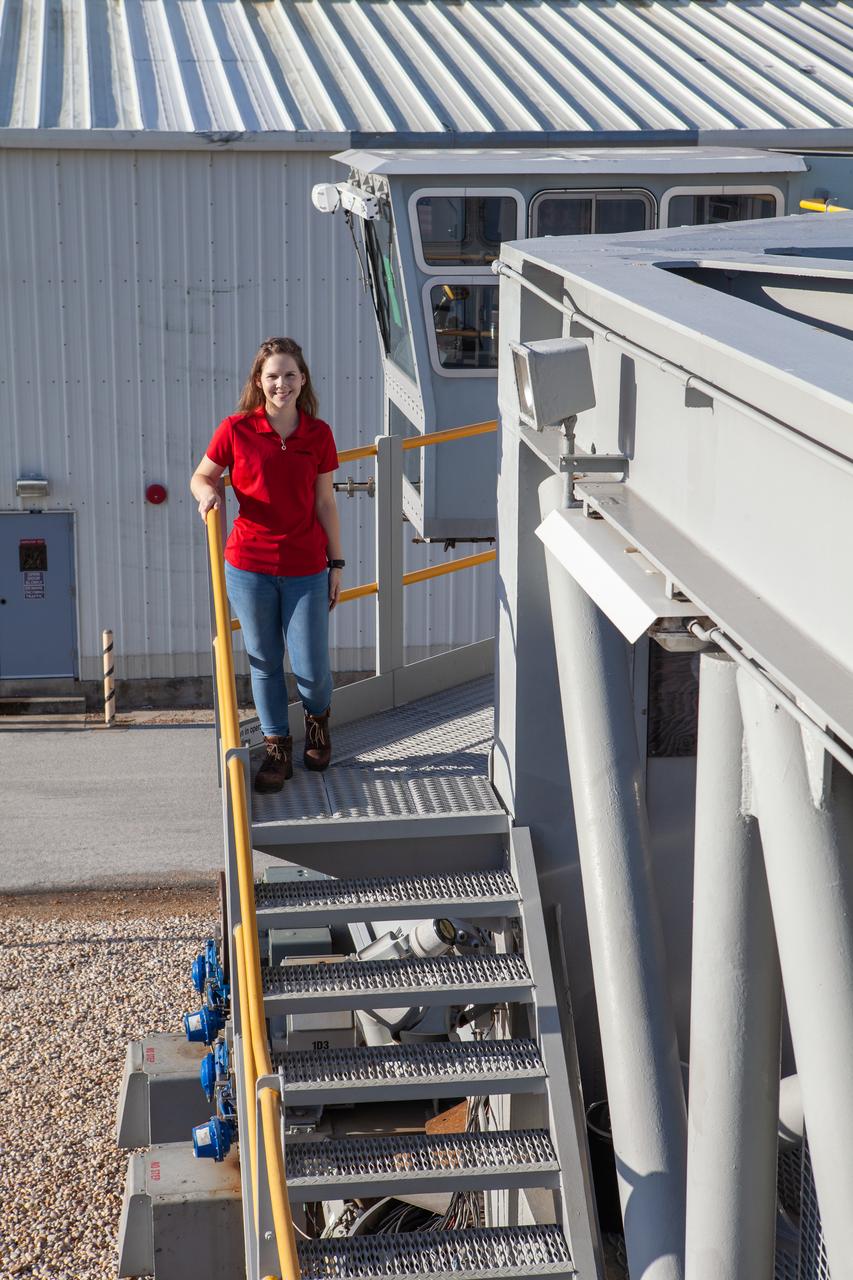
Mechanical Engineer I Breanne Stichler is photographed atop NASA’s Crawler-Transporter 2 (CT-2) at the Kennedy Space Center in Florida on Aug. 8, 2019. Stichler started working at Kennedy in June and is among one of the few females to have ever driven the crawler. CT-2 will carry the agency’s mobile launcher with the Space Launch System rocket from the Vehicle Assembly Building to Launch Pad 39B for the launch of Artemis 1, the first in a series of complex missions that will provide the foundation for human deep space exploration.
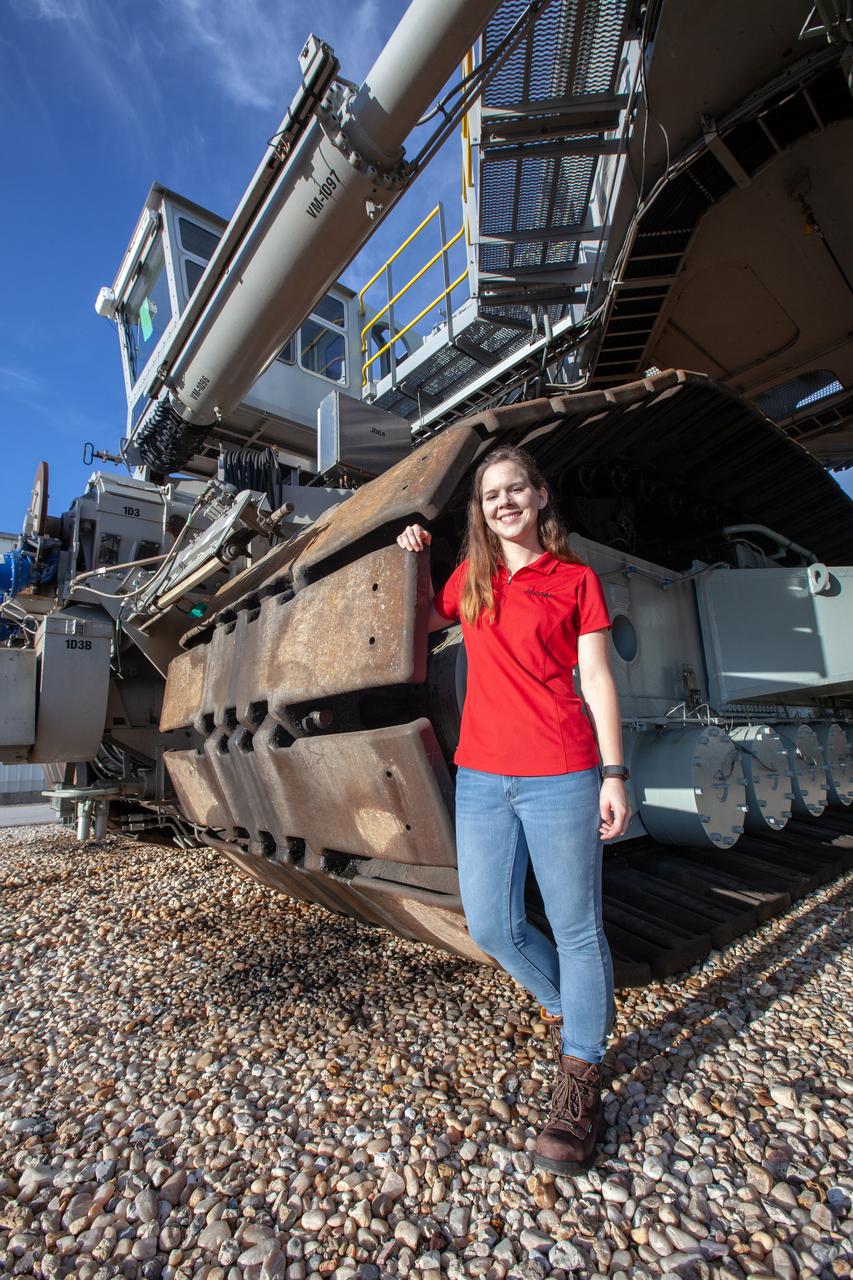
Breanne Stichler, mechanical engineer I, is photographed with NASA’s Crawler-Transporter 2 (CT-2) at the Kennedy Space Center in Florida on Aug. 8, 2019. Stichler started working at Kennedy in June and is among one of the few females to have ever driven the crawler. CT-2 will carry the agency’s mobile launcher with the Space Launch System rocket from the Vehicle Assembly Building to Launch Pad 39B for the launch of Artemis 1, the first in a series of complex missions that will provide the foundation for human deep space exploration.
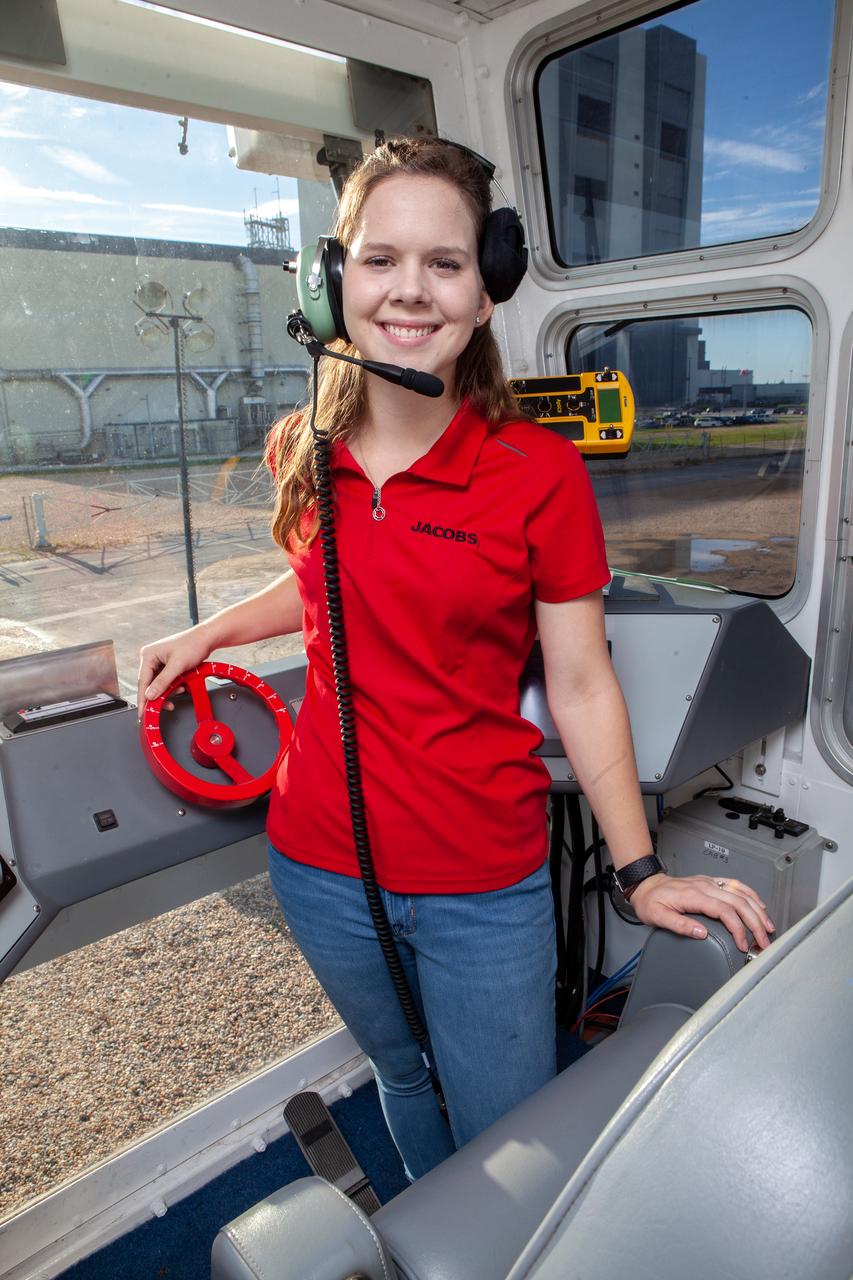
Breanne Stichler, mechanical engineer I, is photographed inside the cab of NASA’s Crawler-Transporter 2 (CT-2) at the Kennedy Space Center in Florida on Aug. 8, 2019. Stichler started working at Kennedy in June and is among one of the few females to have ever driven the crawler. CT-2 will carry the agency’s mobile launcher with the Space Launch System rocket from the Vehicle Assembly Building to Launch Pad 39B for the launch of Artemis 1, the first in a series of complex missions that will provide the foundation for human deep space exploration.
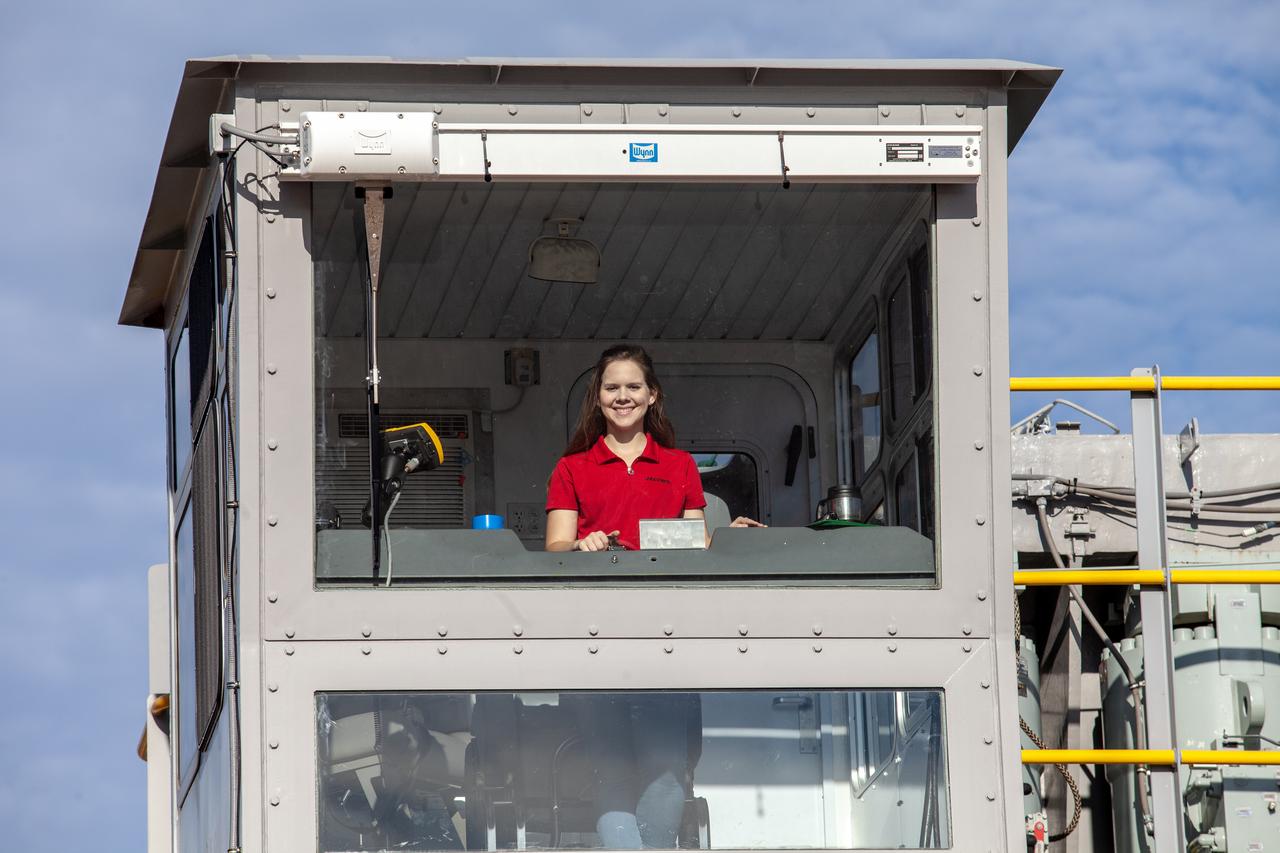
Mechanical Engineer I Breanne Stichler is photographed inside the cab of NASA’s Crawler-Transporter 2 (CT-2) at the Kennedy Space Center in Florida on Aug. 8, 2019. Stichler started working at Kennedy in June and is among one of the few females to have ever driven the crawler. CT-2 will carry the agency’s mobile launcher with the Space Launch System rocket from the Vehicle Assembly Building to Launch Pad 39B for the launch of Artemis 1, the first in a series of complex missions that will provide the foundation for human deep space exploration.
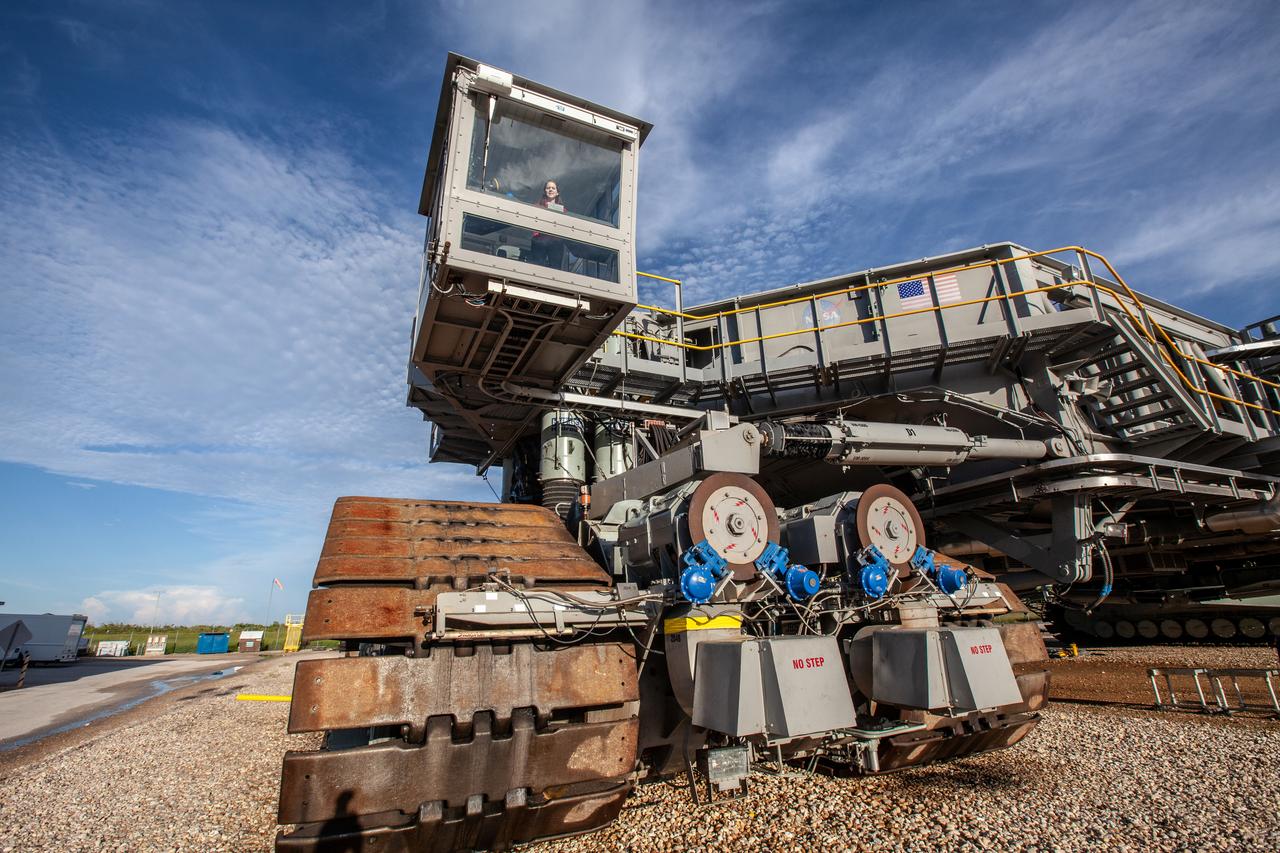
Breanne Stichler, mechanical engineer I, is photographed inside the cab of NASA’s Crawler-Transporter 2 (CT-2) at the Kennedy Space Center in Florida on Aug. 8, 2019. Stichler started working at Kennedy in June and is among one of the few females to have ever driven the crawler. CT-2 will carry the agency’s mobile launcher with the Space Launch System rocket from the Vehicle Assembly Building to Launch Pad 39B for the launch of Artemis 1, the first in a series of complex missions that will provide the foundation for human deep space exploration.
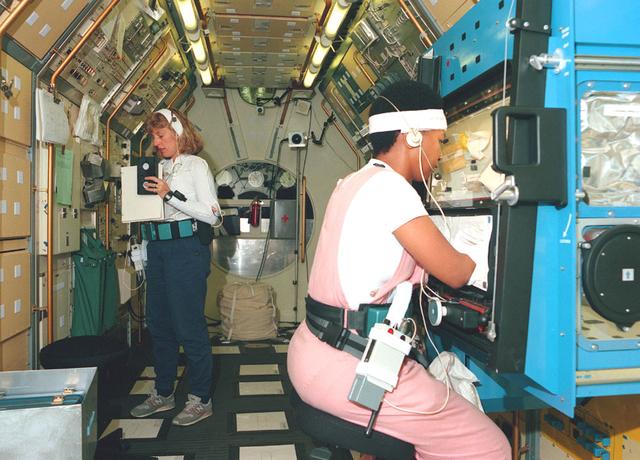
Female astronauts Jan Davis and Mae Jemison undergo training at Marshall's Spacelab-J Crew Training facility.
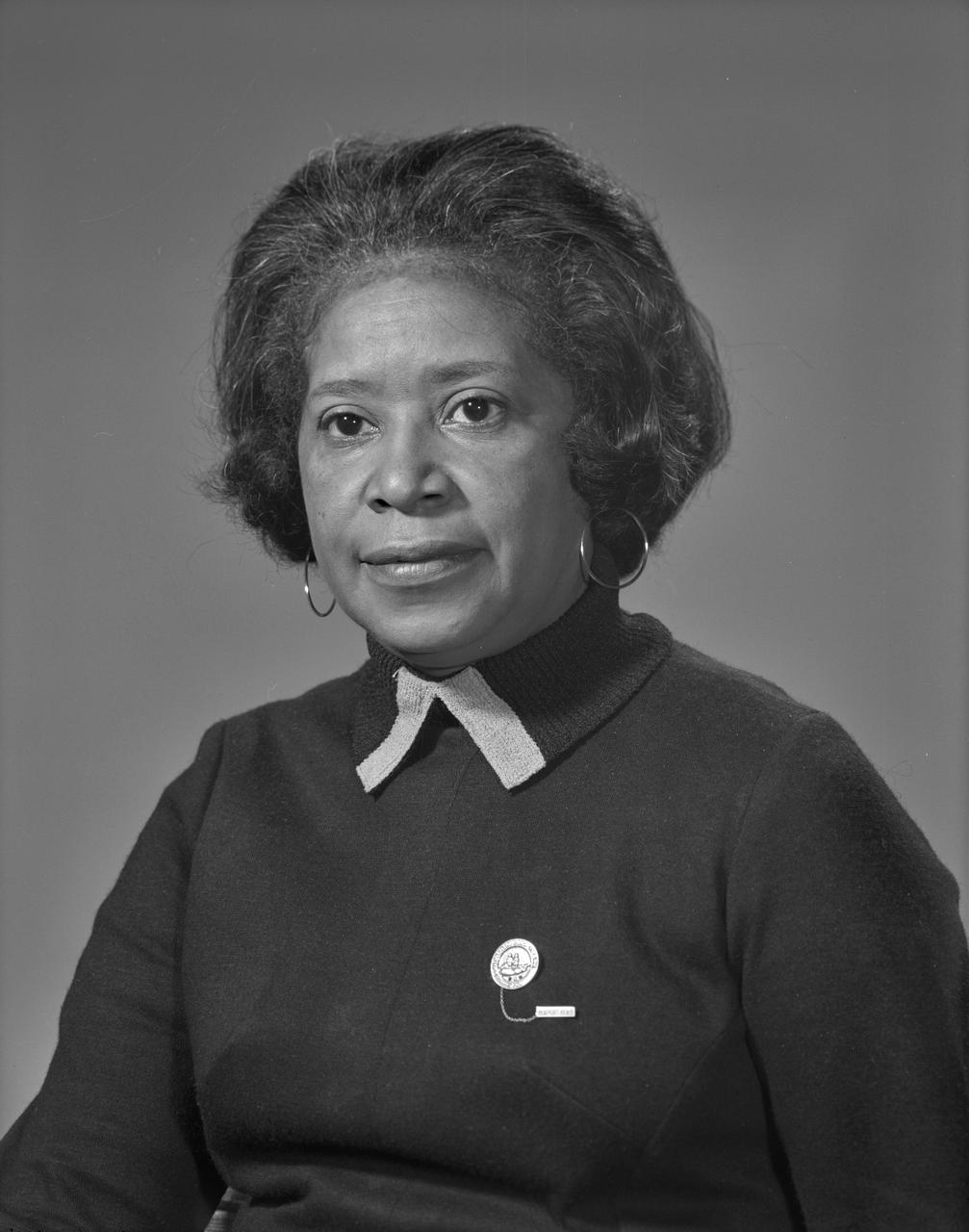
Portrait of Mary Jackson. At the time this photo was taken on October 9, 1971, Mrs. Jackson was working as a Equal Employment Opportunity (EEO) Counselor Mary Jackson, was NASA’s first black female engineer.

Portrait of Mary Jackson. At the time this photo was taken on October 9, 1971, Mrs. Jackson was working as a Equal Employment Opportunity (EEO) Counselor Mary Jackson, was NASA’s first black female engineer, R-LRC-1971-OCIO_P-08767,
Portrait of Mary Jackson. At the time this photo was taken on October 9, 1971, Mrs. Jackson was working as a Equal Employment Opportunity (EEO) Counselor Mary Jackson, was NASA’s first black female engineer,R-LRC-1971-OCIO_P-08767
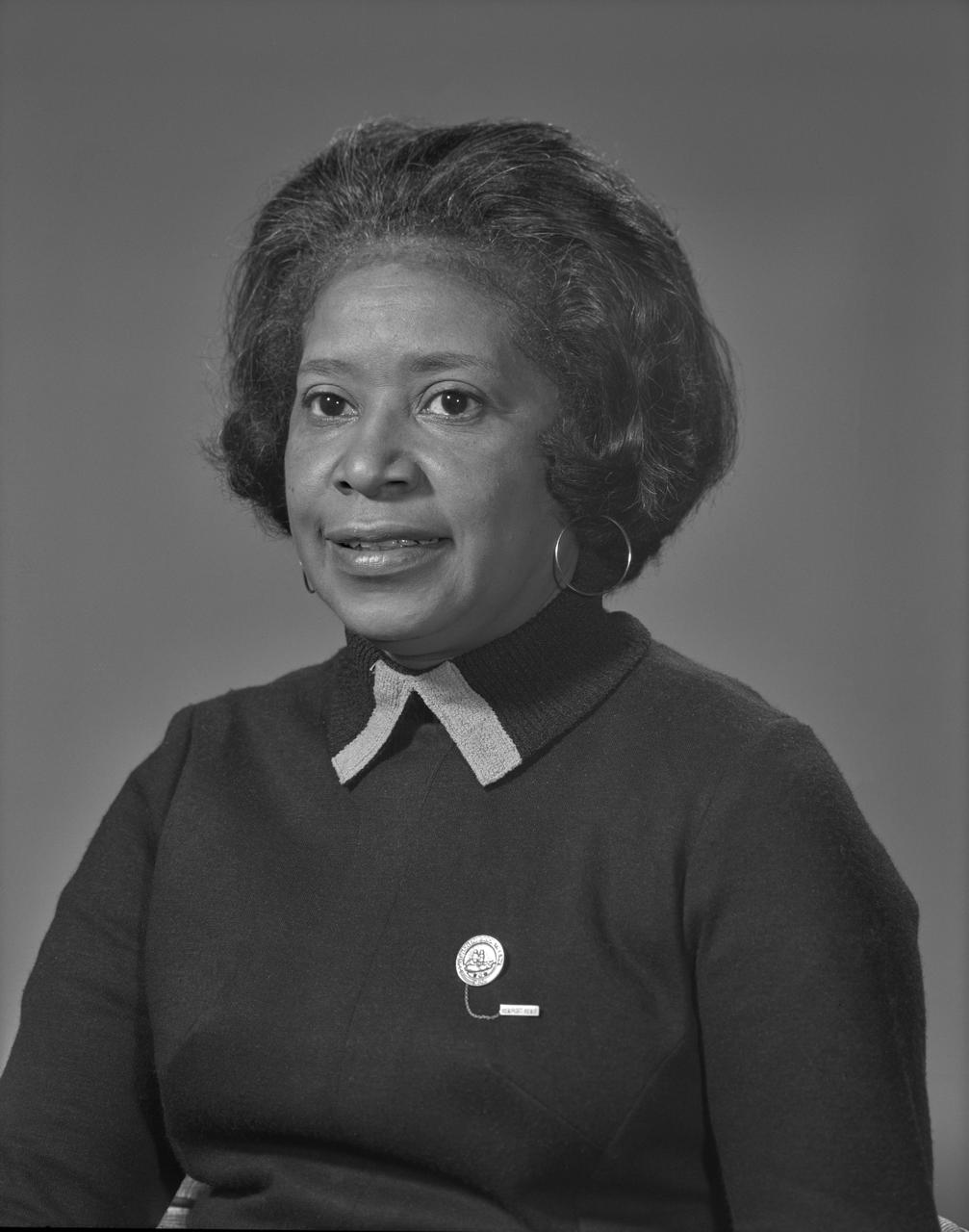
Portrait of Mary Jackson. At the time this photo was taken on October 9, 1971, Mrs. Jackson was working as a Equal Employment Opportunity (EEO) Counselor Mary Jackson, was NASA’s first black female engineer,R-LRC-1971-OCIO_P_F003-08767
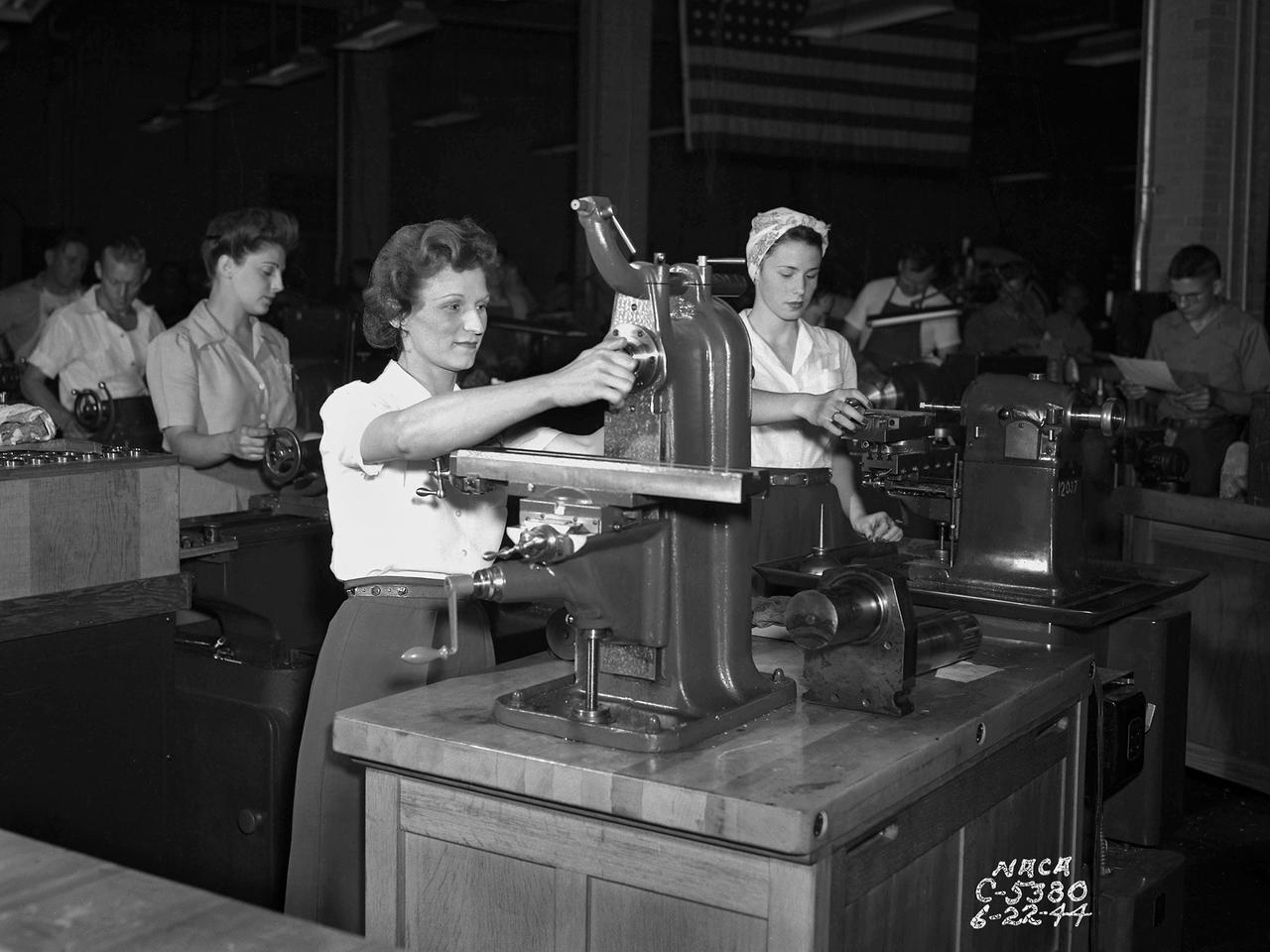
The loss of male NACA employees to the war effort and the military’s increased demand for expedited aeronautical research results resulted in a sharp demand for increased staffing in the early 1940s. The Aircraft Engine Research Laboratory (AERL) undertook an extensive recruiting effort to remedy the situation. Current employees were asked to bring in friends and family members, including women. The number of women employed at the AERL nearly doubled to 412 between 1943 and 1944. In May 1944 Director Raymond Sharp initiated a program to train women as machine operators, electricians, instrumentation engineers, and other technical positions. The move coincided with the lab’s implementation of a third shift to meet the military’s demands for improved aircraft performance. There was also a modest, but important, number of female engineers and chemists, as well as large group employed in more traditional positions such as data analysts, editors, and clerks. The integration of women in the research process was critical. Researchers developed a test and submitted plans to the Drafting Section to be converted into blueprints. In some instances the Instrumentation Shop was asked to create instruments for the test. During the test, computers gathered and analyzed the data. The researcher then wrote the report which was reviewed by the Editorial Department and printed in the Duplication Unit. All of these tasks were generally performed by female employees.
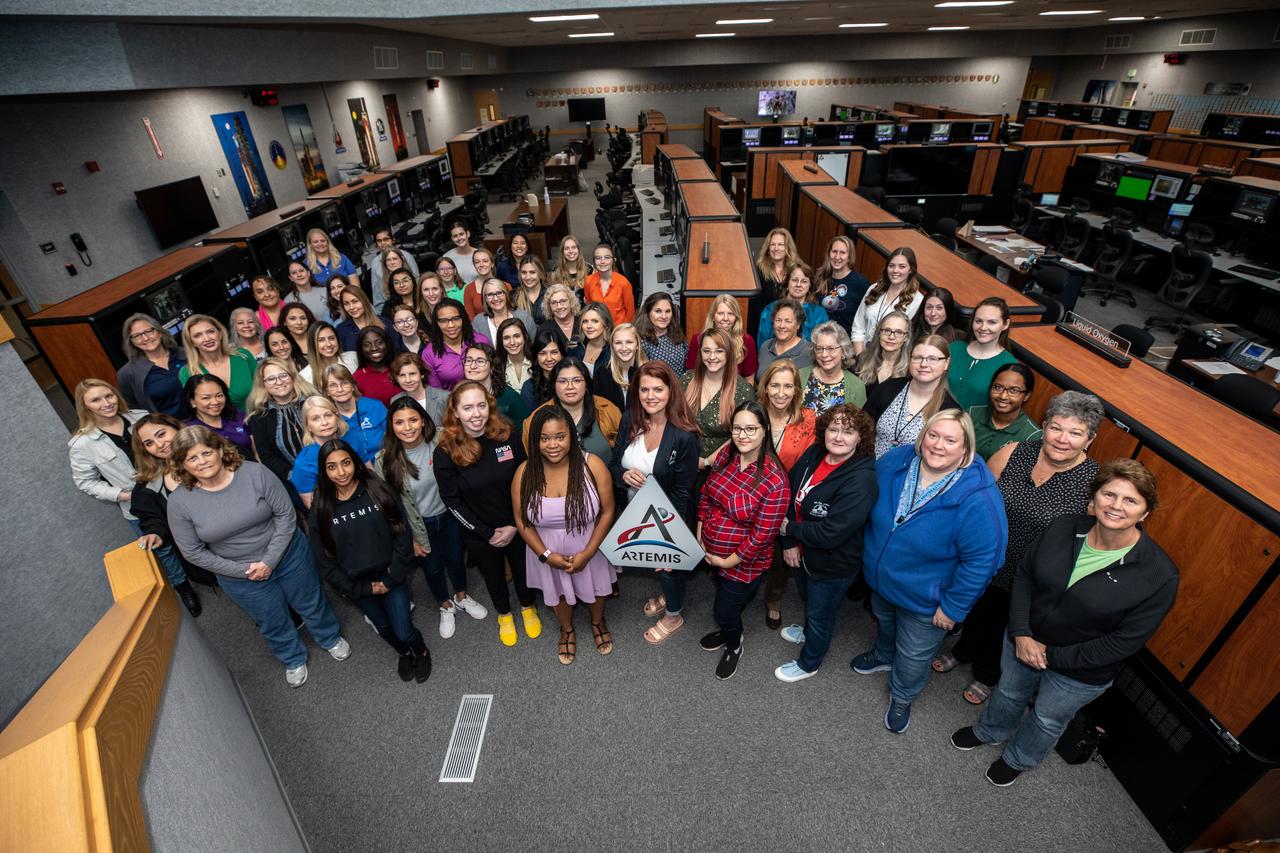
The women who comprise the Artemis launch team are photographed inside Firing Room 1 of the Launch Control Center at NASA’s Kennedy Space Center in Florida on Feb. 10, 2023. In the center, holding the Artemis mission logo, is NASA’s first female Launch Director Charlie Blackwell-Thompson. The team, which is about 30% women, launched the agency’s Artemis I mission – the first in an increasingly complex series of missions to return humans to the Moon – from Kennedy’s Launch Pad 39B on Nov. 16, 2022. The primary goal of Artemis I was to thoroughly test the Space Launch System rocket and Orion spacecraft’s integrated systems before crewed missions to the lunar surface. Under Artemis, NASA aims to land the first woman and first person of color on the Moon and establish sustainable lunar exploration in the near future.
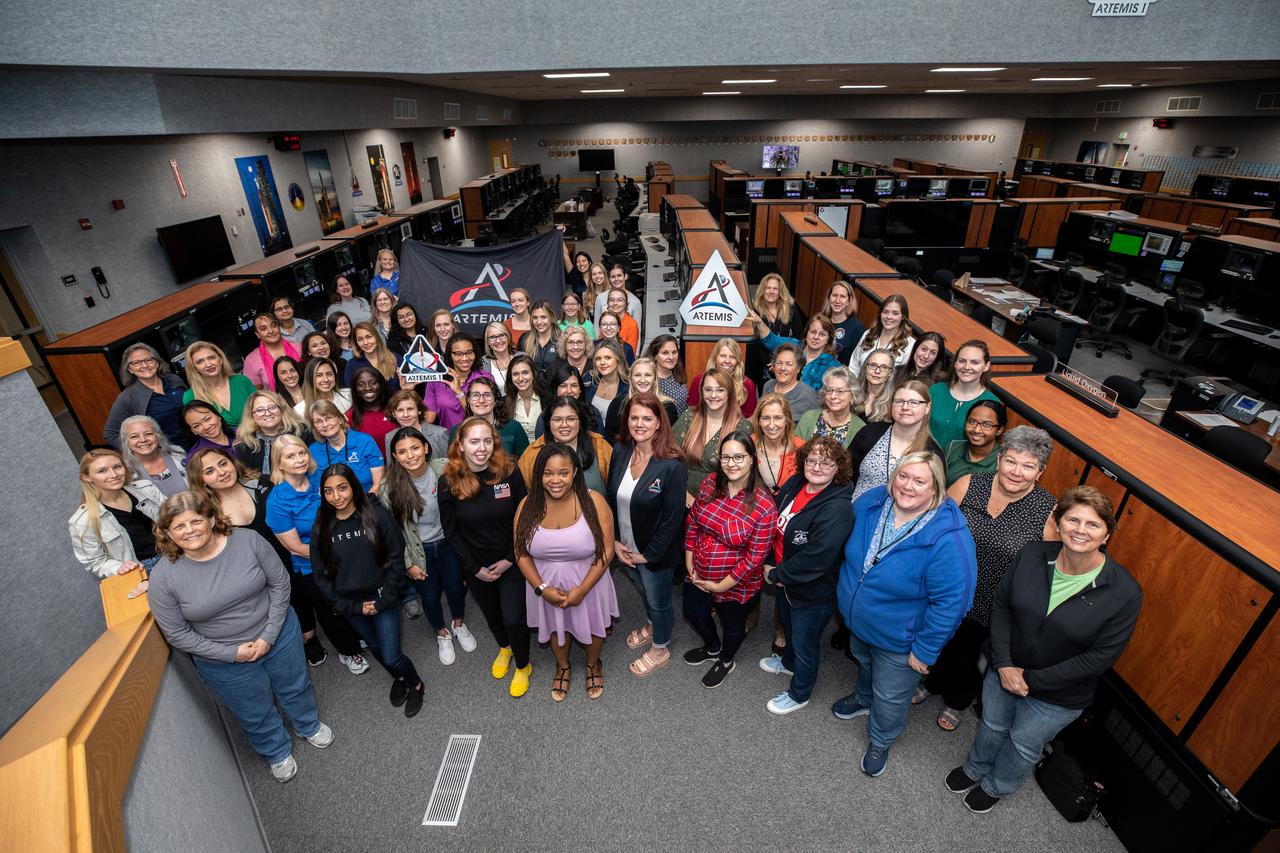
The women who comprise the Artemis launch team are photographed inside Firing Room 1 of the Launch Control Center at NASA’s Kennedy Space Center in Florida on Feb. 10, 2023. In the center of the front row is NASA’s first female Launch Director Charlie Blackwell-Thompson. The team, which is about 30% women, launched the agency’s Artemis I mission – the first in an increasingly complex series of missions to return humans to the Moon – from Kennedy’s Launch Pad 39B on Nov. 16, 2022. The primary goal of Artemis I was to thoroughly test the Space Launch System rocket and Orion spacecraft’s integrated systems before crewed missions to the lunar surface. Under Artemis, NASA aims to land the first woman and first person of color on the Moon and establish sustainable lunar exploration in the near future.
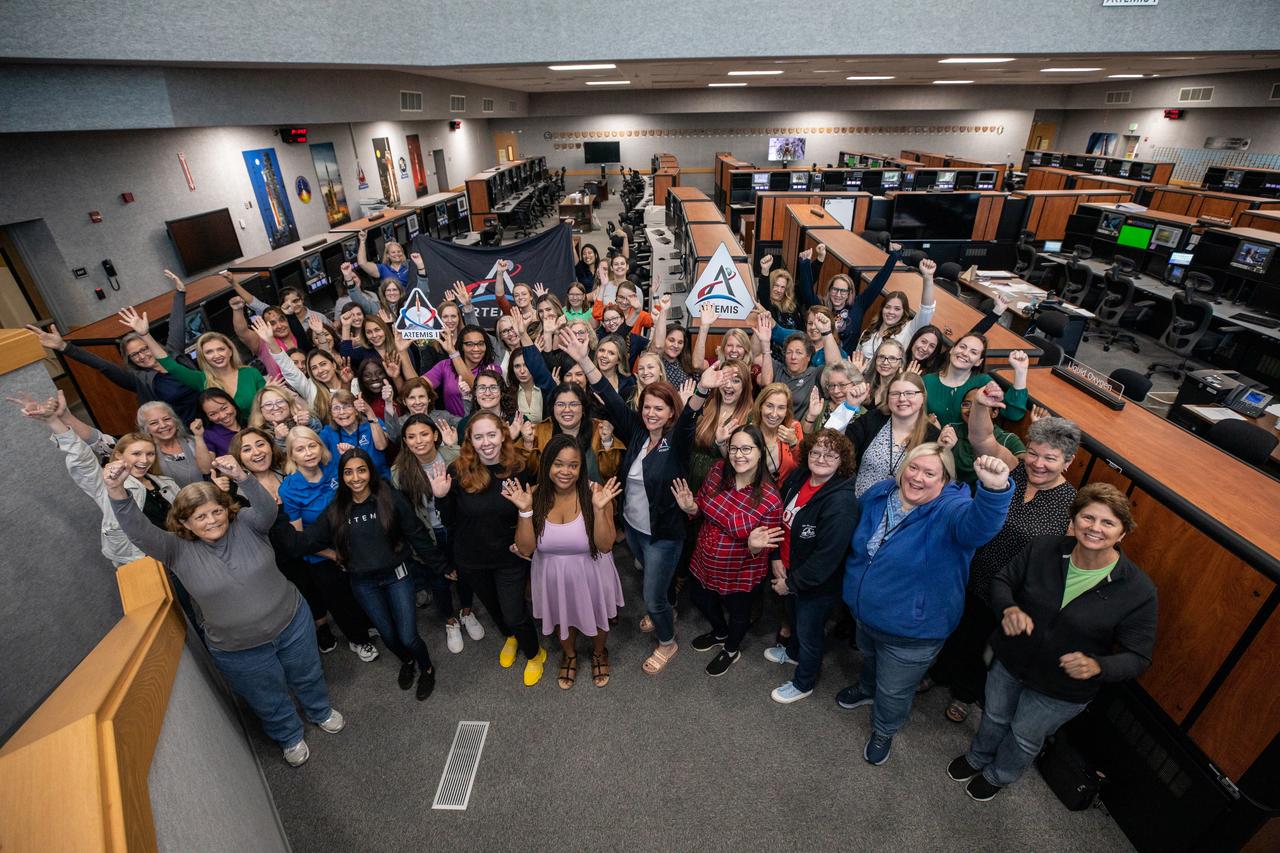
The women who comprise the Artemis launch team are photographed inside Firing Room 1 of the Launch Control Center at NASA’s Kennedy Space Center in Florida on Feb. 10, 2023. In the center of the front row is NASA’s first female Launch Director Charlie Blackwell-Thompson. The team, which is about 30% women, launched the agency’s Artemis I mission – the first in an increasingly complex series of missions to return humans to the Moon – from Kennedy’s Launch Pad 39B on Nov. 16, 2022. The primary goal of Artemis I was to thoroughly test the Space Launch System rocket and Orion spacecraft’s integrated systems before crewed missions to the lunar surface. Under Artemis, NASA aims to land the first woman and first person of color on the Moon and establish sustainable lunar exploration in the near future.
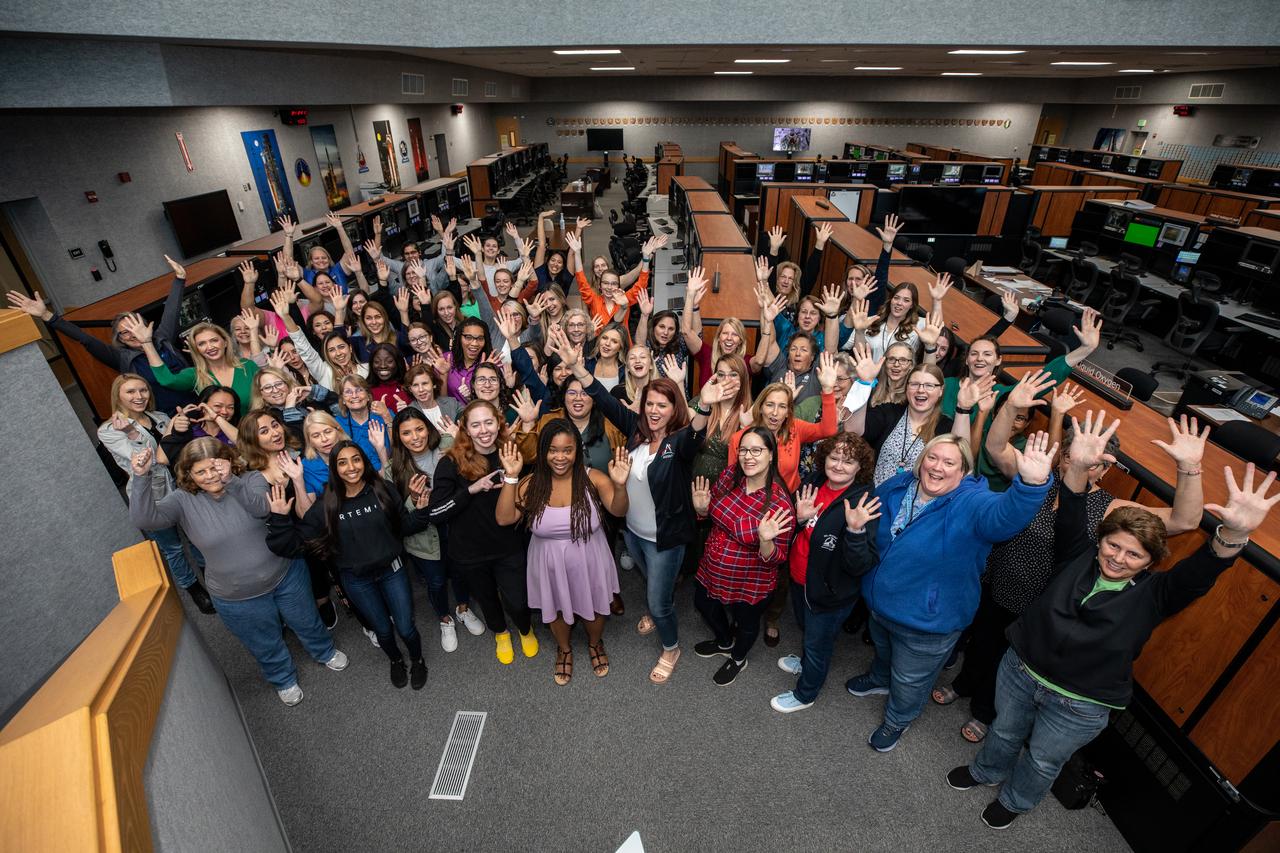
The women who comprise the Artemis launch team are photographed inside Firing Room 1 of the Launch Control Center at NASA’s Kennedy Space Center in Florida on Feb. 10, 2023. In the center of the front row is NASA’s first female Launch Director Charlie Blackwell-Thompson. The team, which is about 30% women, launched the agency’s Artemis I mission – the first in an increasingly complex series of missions to return humans to the Moon – from Kennedy’s Launch Pad 39B on Nov. 16, 2022. The primary goal of Artemis I was to thoroughly test the Space Launch System rocket and Orion spacecraft’s integrated systems before crewed missions to the lunar surface. Under Artemis, NASA aims to land the first woman and first person of color on the Moon and establish sustainable lunar exploration in the near future.
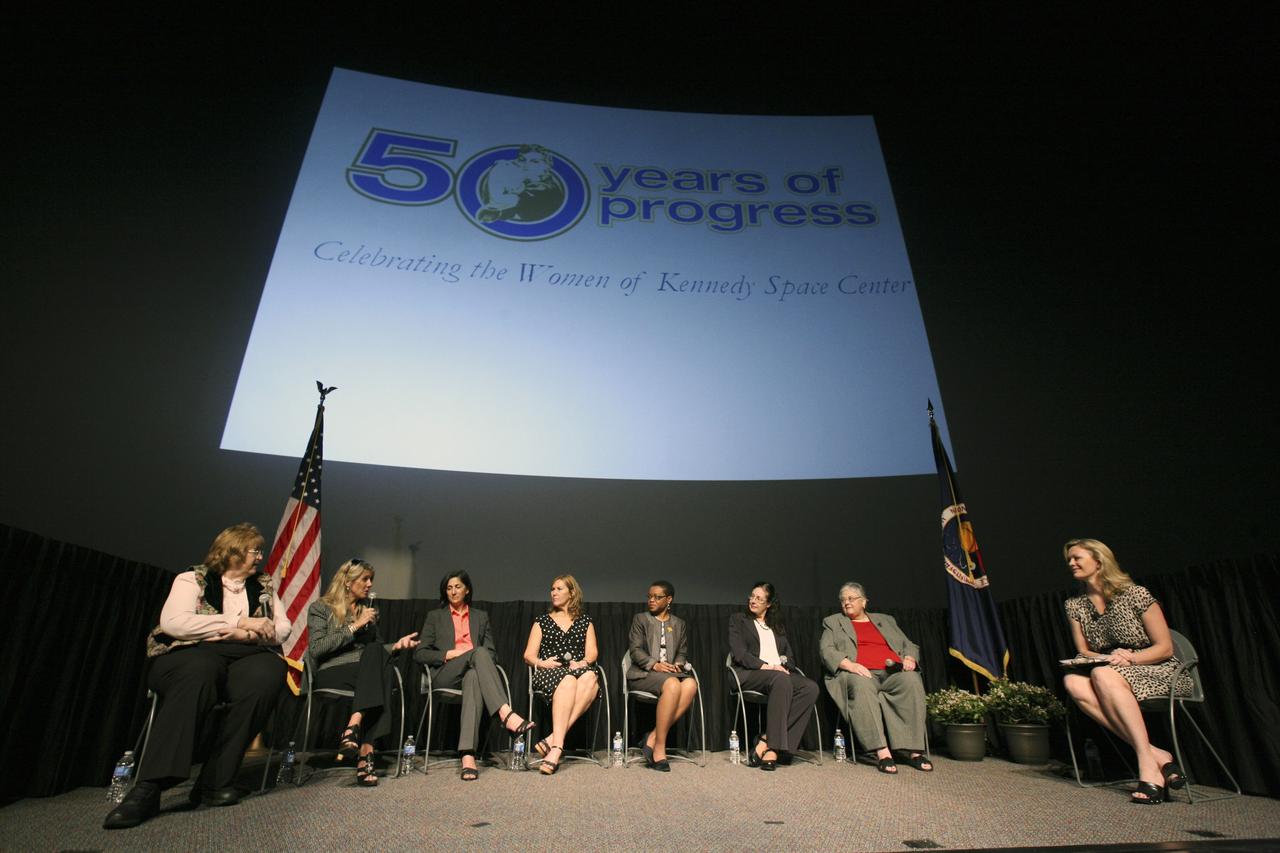
CAPE CANAVERAL, Fla. – In celebration of Women’s History Month, iconic women from NASA Kennedy Space Center’s past and present participate in a panel discussion, “50 Years of Progress--Celebrating the Women of Kennedy Space Center,” in the IMAX 2 Theater at the Kennedy Space Center Visitor Complex. From left are Judy Kersey, Carol Craig, astronaut Nicole Stott, Patty Stratton, Wanda Harding, Dr. Merri Sanchez, Kathleen Harer, and moderator Lauren Rowe of News Channel 6. For more information, visit http://www.nasa.gov/kennedy. Photo credit: NASA/Gianni Woods
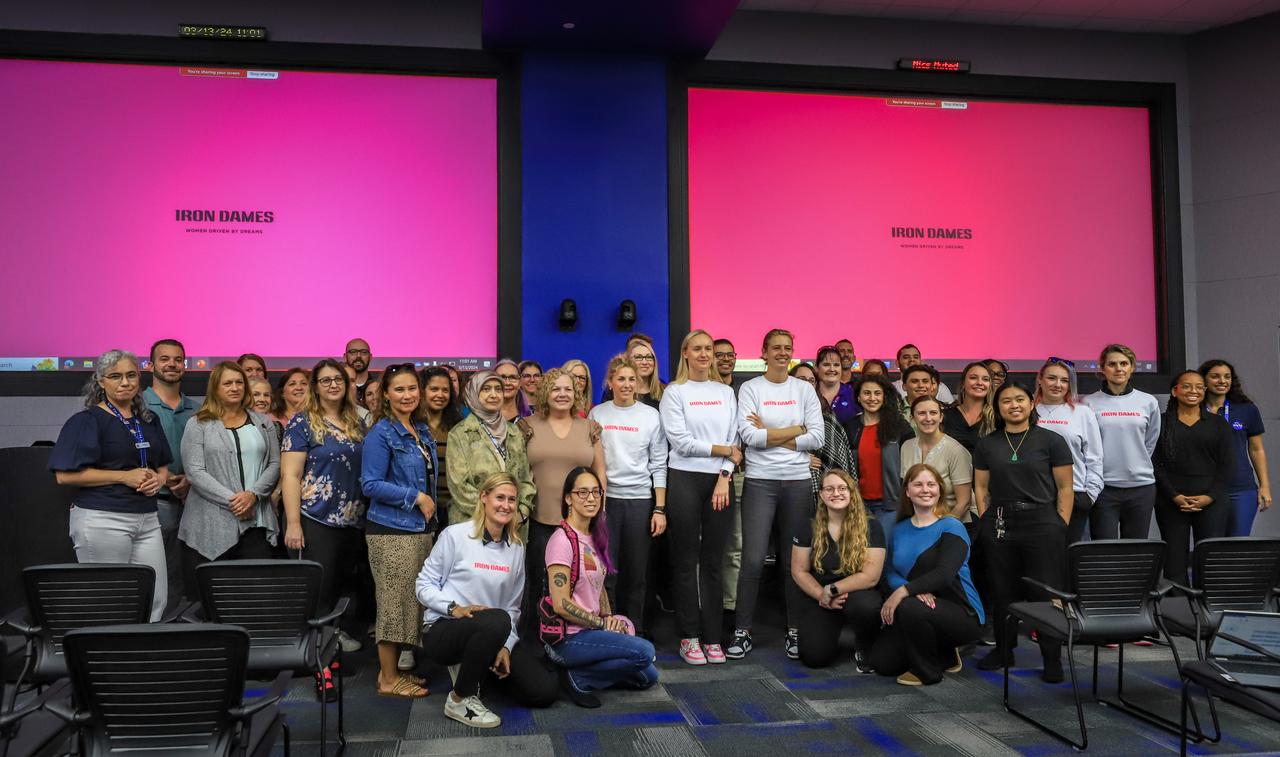
NASA’s Office of Communication, along with Kennedy Space Center's Network of Women and New Americans Employee Resource Groups host a special presentation with guests of the Iron Dames, an all-female motorsports team on Wednesday, March 13, 2024, inside the Neil A. Armstrong Operations and Checkout Building at the agency's Kennedy Space Center in Florida. The all-female team started in motorsports and became the first all-female team to win a race in the 2023 FIA World Endurance Championships at Sebring International Raceway in Sebring, Florida.
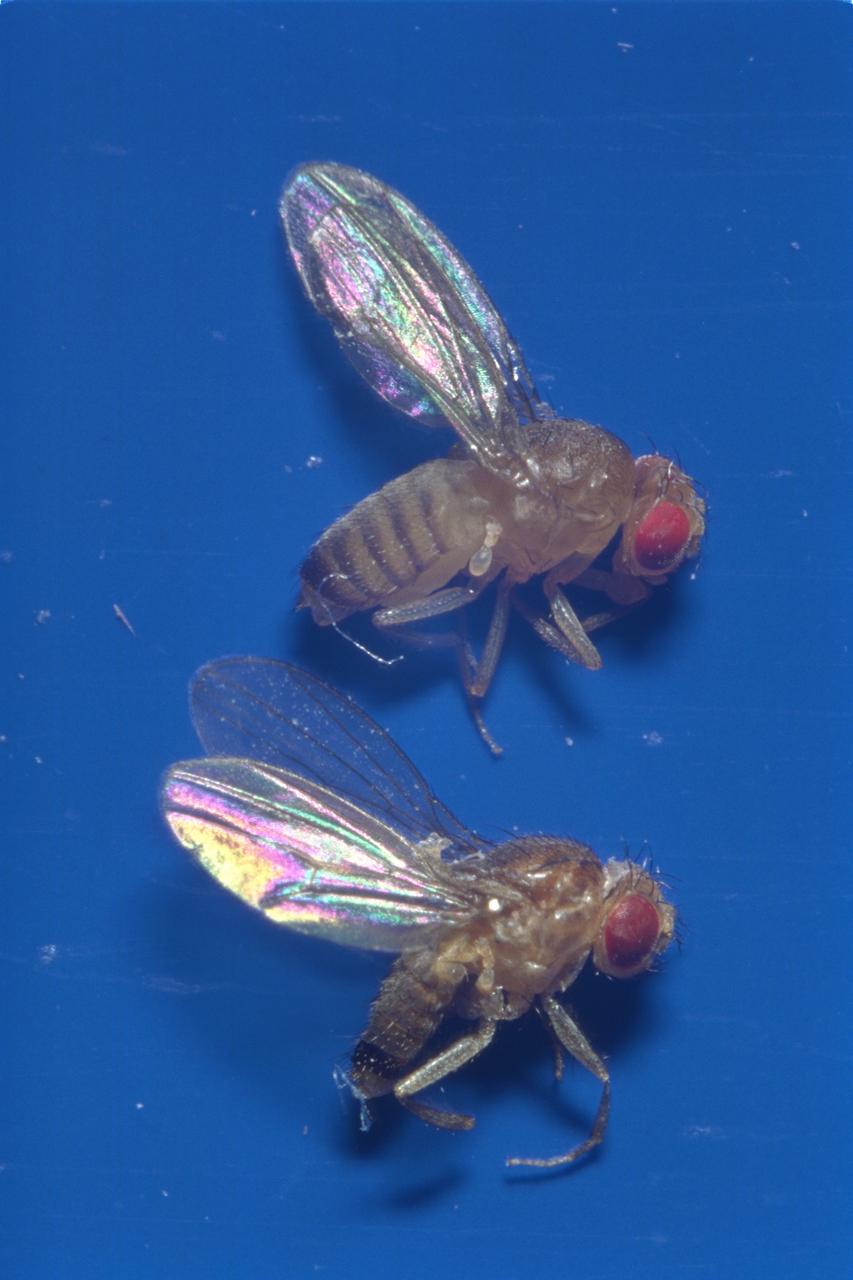
Life Cycle of a Fruit Fly: adult - male and female
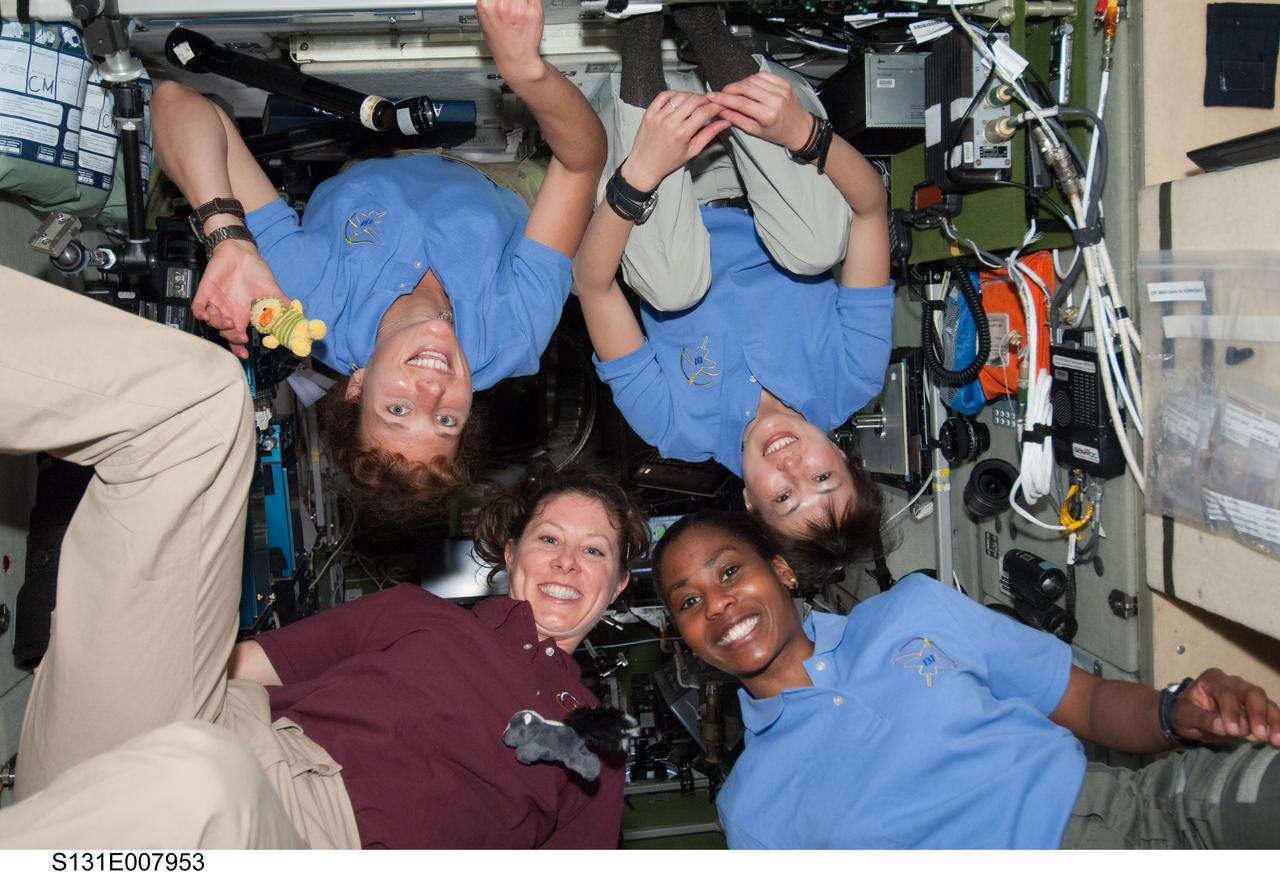
S131-E-007953 (7 April 2010) --- The four women currently on the International Space Station pose for a photo in the Zvezda Service Module while space shuttle Discovery remains docked with the station. Pictured clockwise from the lower left are NASA astronauts Tracy Caldwell Dyson, Expedition 23 flight engineer; NASA astronaut Dorothy Metcalf-Lindenburger, Japan Aerospace Exploration Agency (JAXA) astronaut Naoko Yamazaki and NASA astronaut Stephanie Wilson, all STS-131 mission specialists.
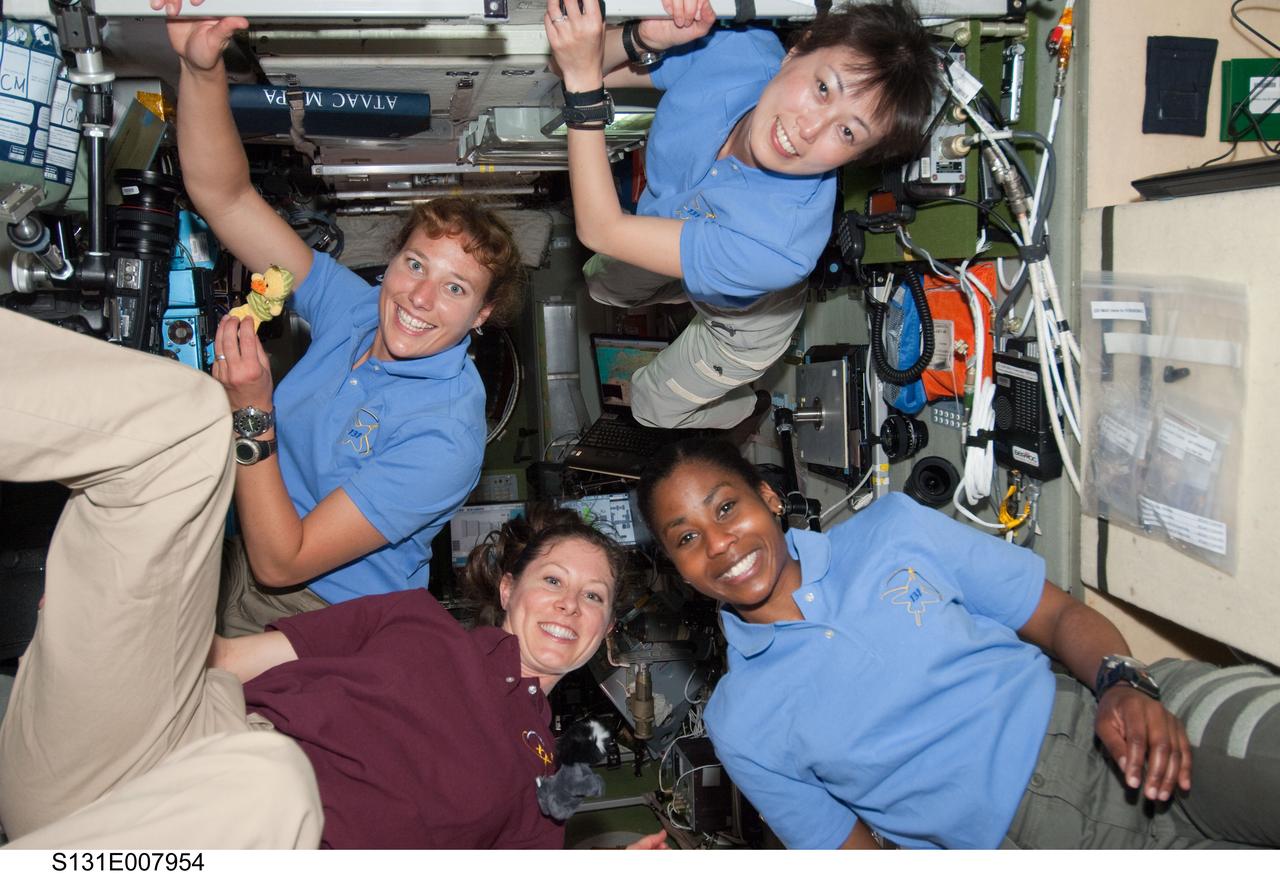
S131-E-007954 (7 April 2010) --- The four women currently on the International Space Station pose for a photo in the Zvezda Service Module while space shuttle Discovery remains docked with the station. Pictured clockwise from the lower left are NASA astronauts Tracy Caldwell Dyson, Expedition 23 flight engineer; NASA astronaut Dorothy Metcalf-Lindenburger, Japan Aerospace Exploration Agency (JAXA) astronaut Naoko Yamazaki and NASA astronaut Stephanie Wilson, all STS-131 mission specialists.
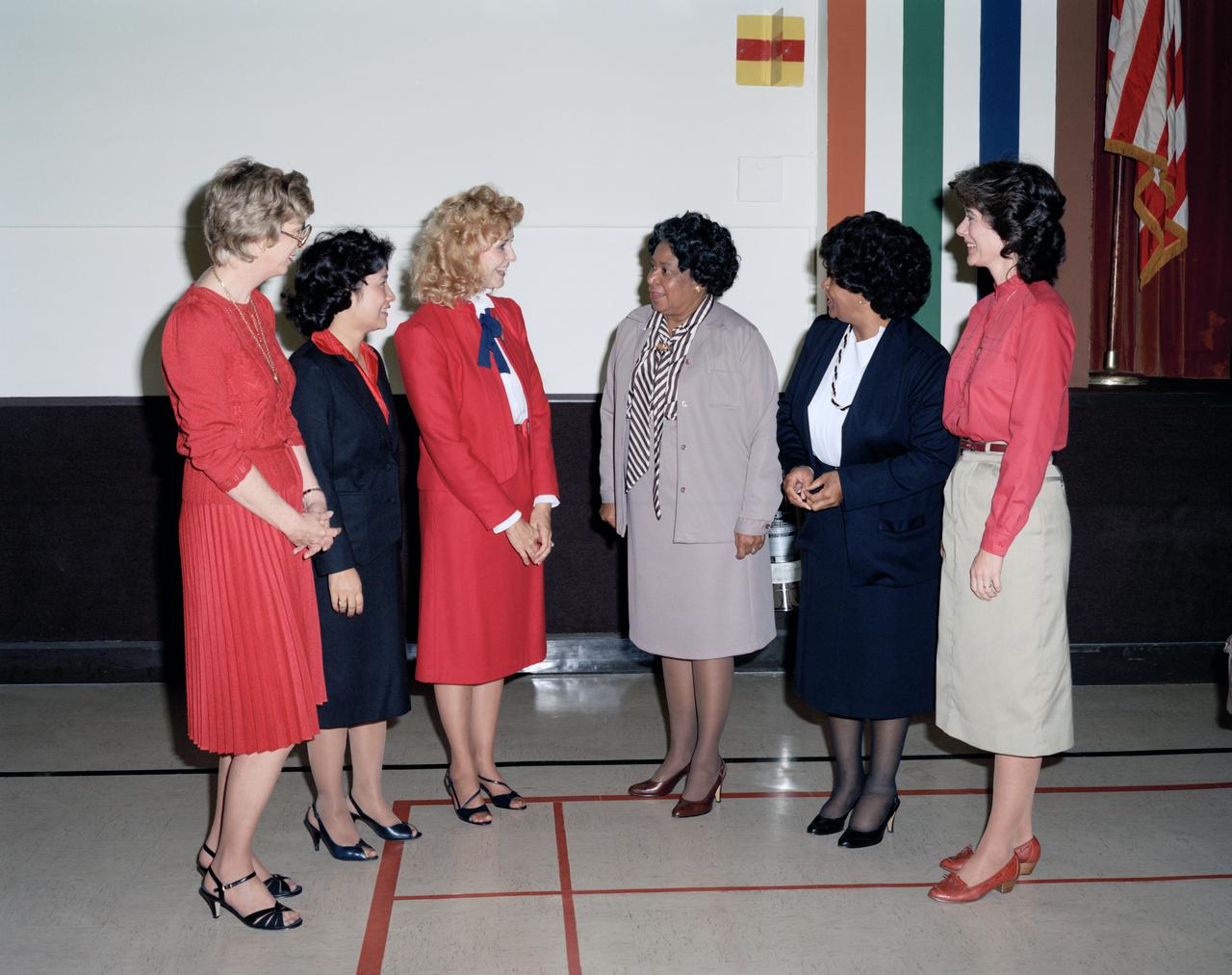
Members of the Langley Federal Women's Program surround Mary Jackson in the brown suit, of the Office of Equal Opportunity Programs. Mary Jackson NASA's first African-American female engineer, and subsequent career supporting the hiring and promotion of other deserving female and minority employees.
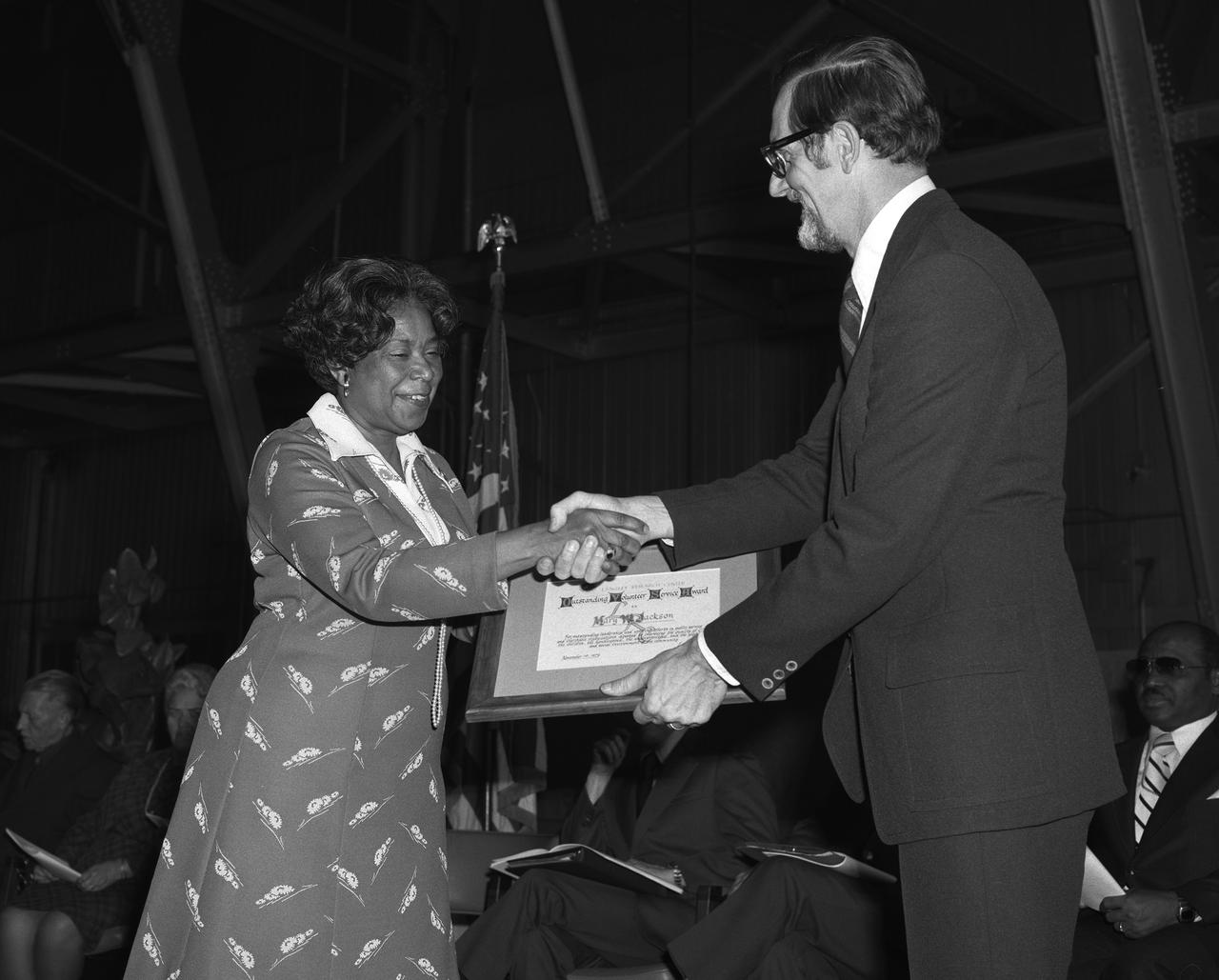
Langley Center Director Donald P. Hearth (right) presenting Mary Jackson with Outstanding Volunteer Service Award. Mary Jackson was NASA's first African-American female engineer,and subsequent career supporting the hiring and promotion of other deserving female and minority employees.
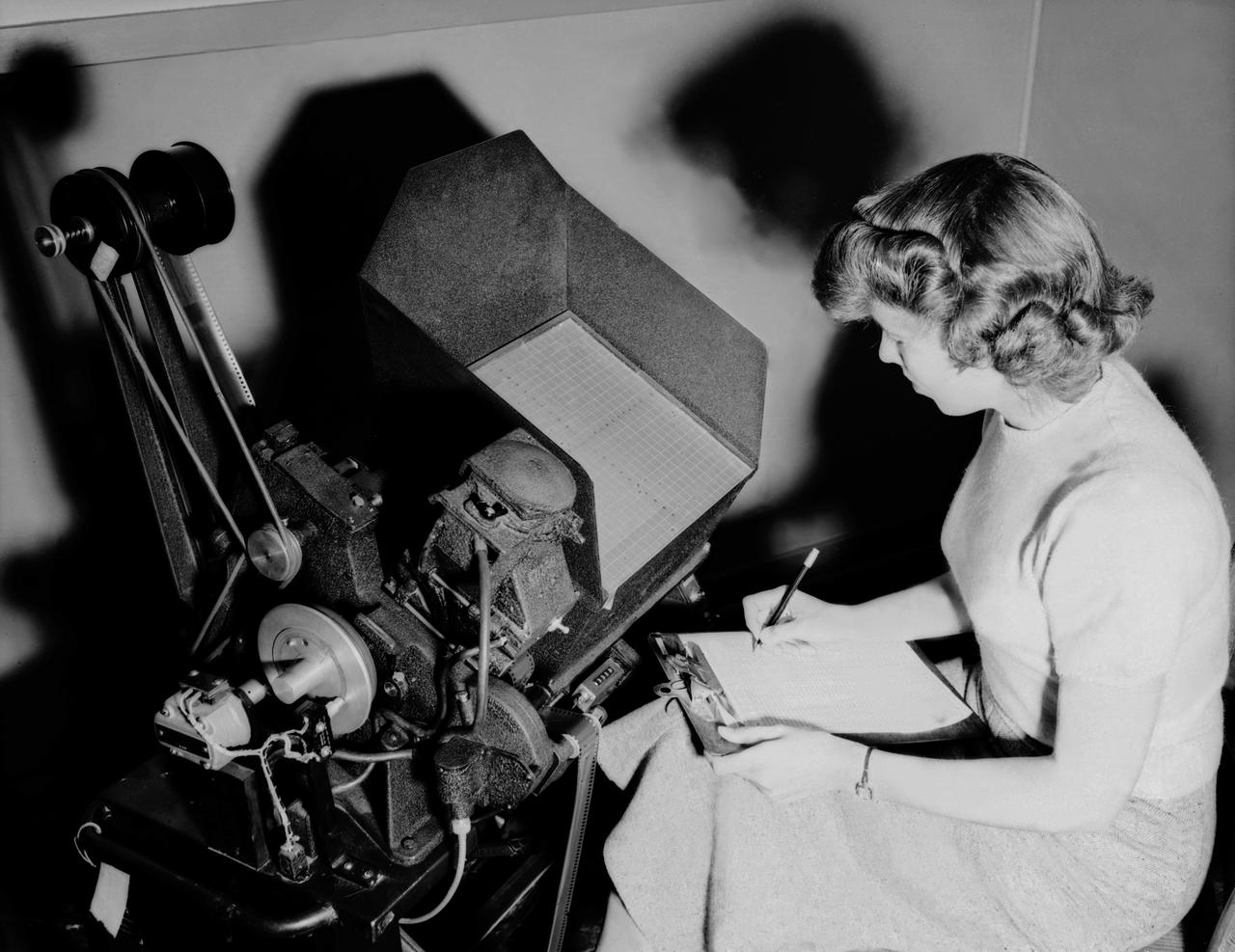
Publicity photo from Muroc California, showing female support personnel with equipment.
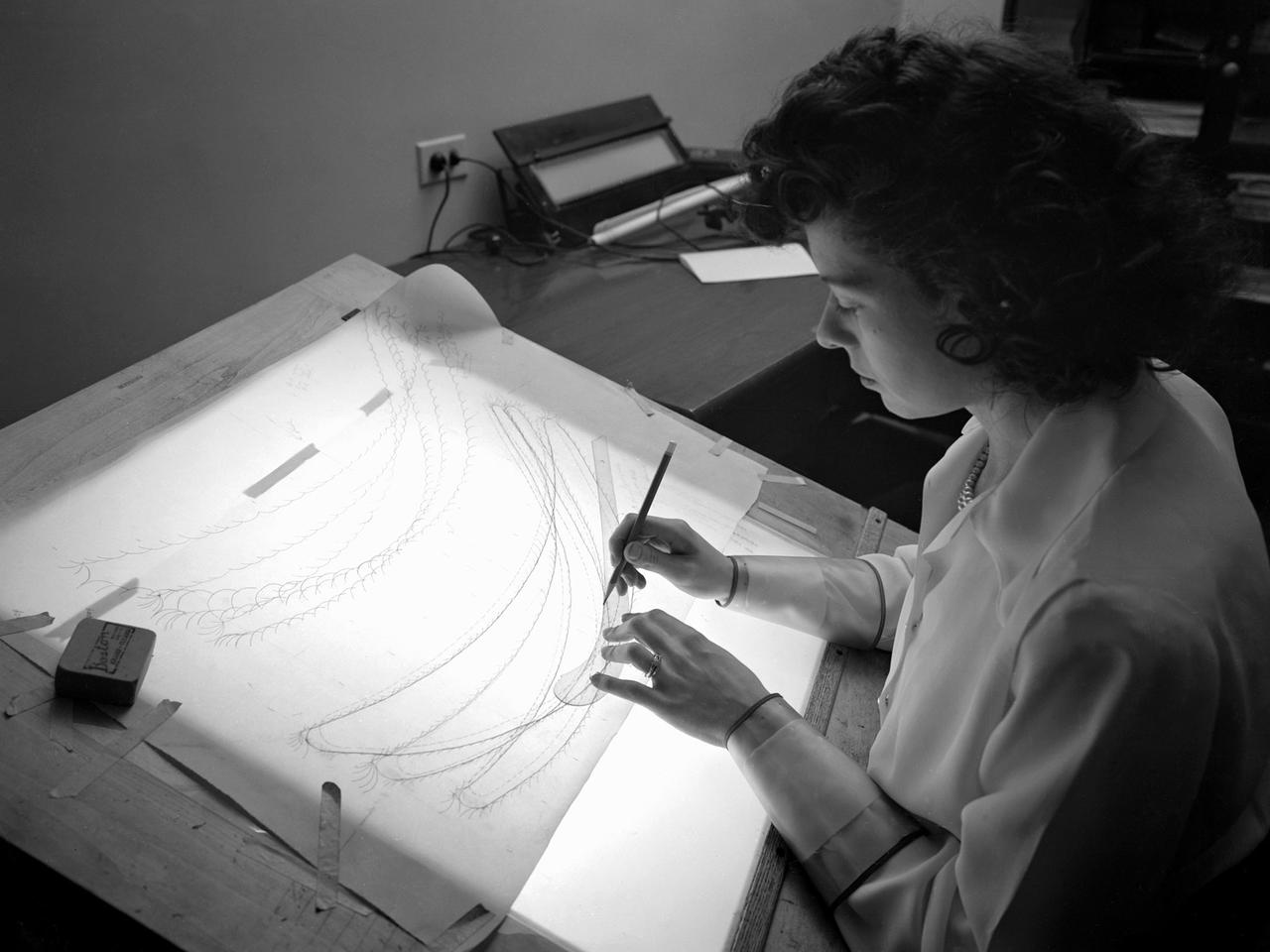
A female computer plotting compressor data in the Engine Research Building at the NACA’s Lewis Flight Propulsion Laboratory. The Computing Section was introduced during World War II to relieve short-handed research engineers of some of the tedious data-taking work. The computers made the initial computations and plotted the data graphically. The researcher then analyzed the data and either summarized the findings in a report or made modifications or ran the test again. With the introduction of mechanical computer systems in the 1950s the female computers learned how to encode the punch cards. As the data processing capabilities increased, fewer female computers were needed. Many left on their own to start families, while others earned mathematical degrees and moved into advanced positions.
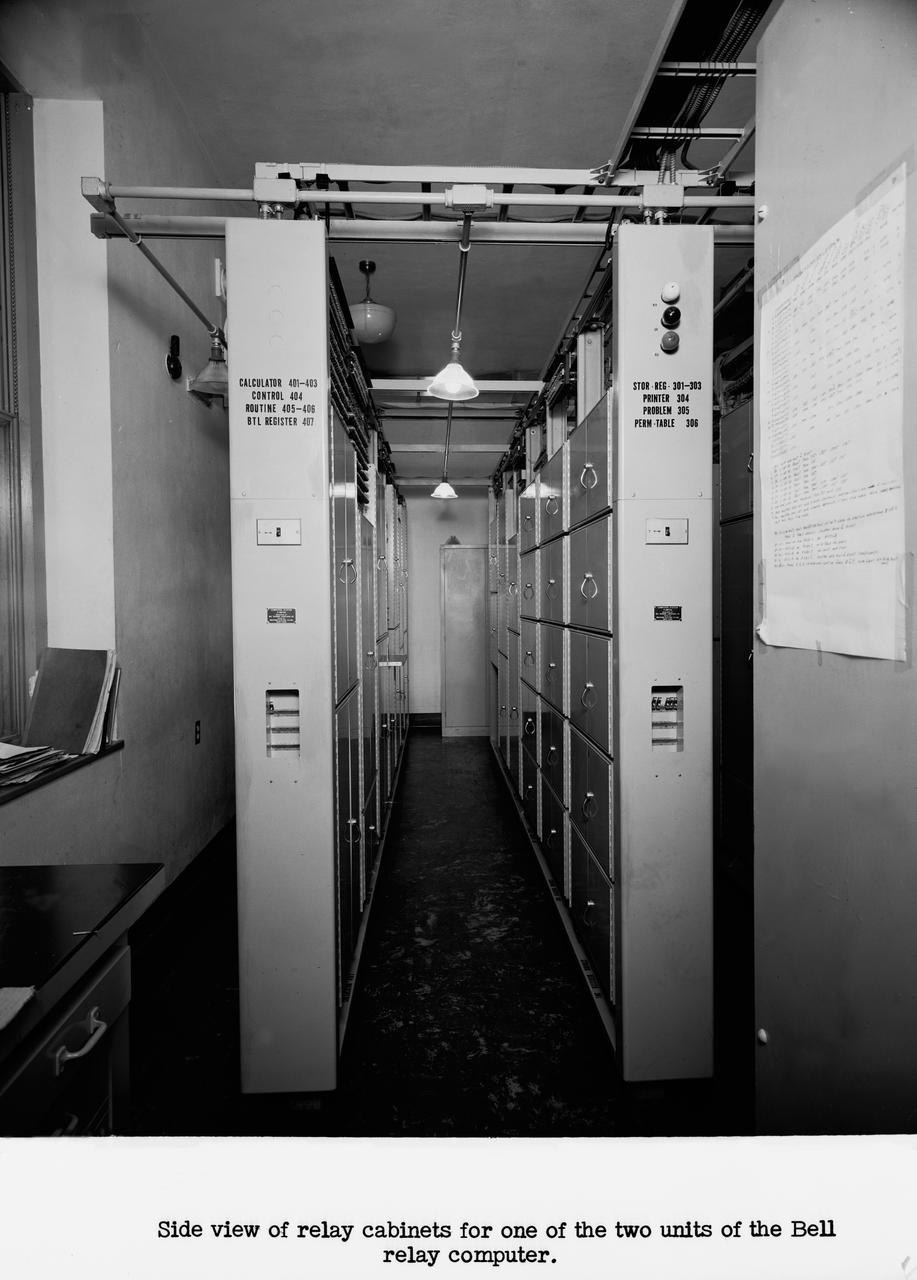
Langley's human computers at work in 1947. The female presence at Langley, who performed mathematical computations for male staff. Bell computers.
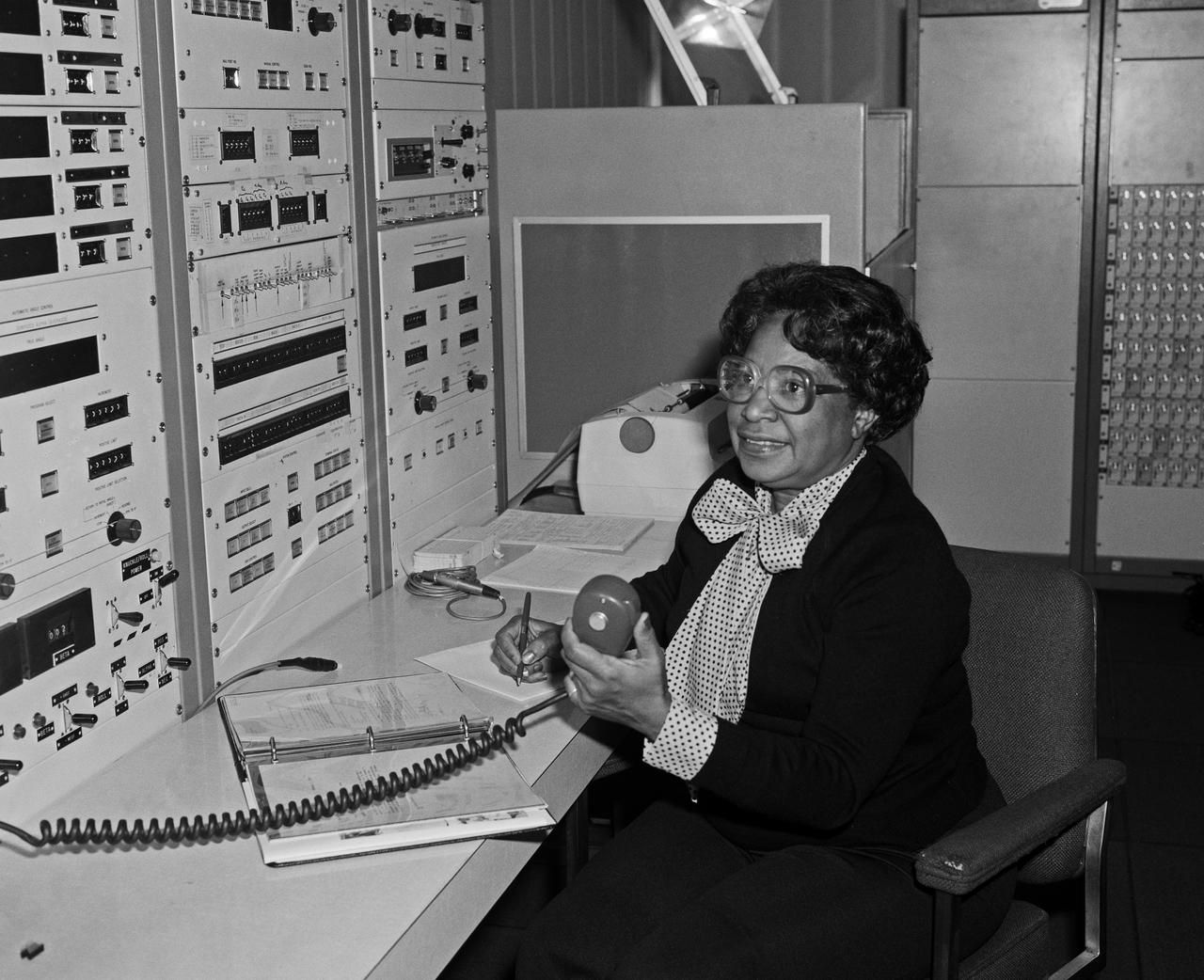
Mary Jackson at Work NASA Langley. In 1958 Mary Jackson became NASA's first black female engineer.
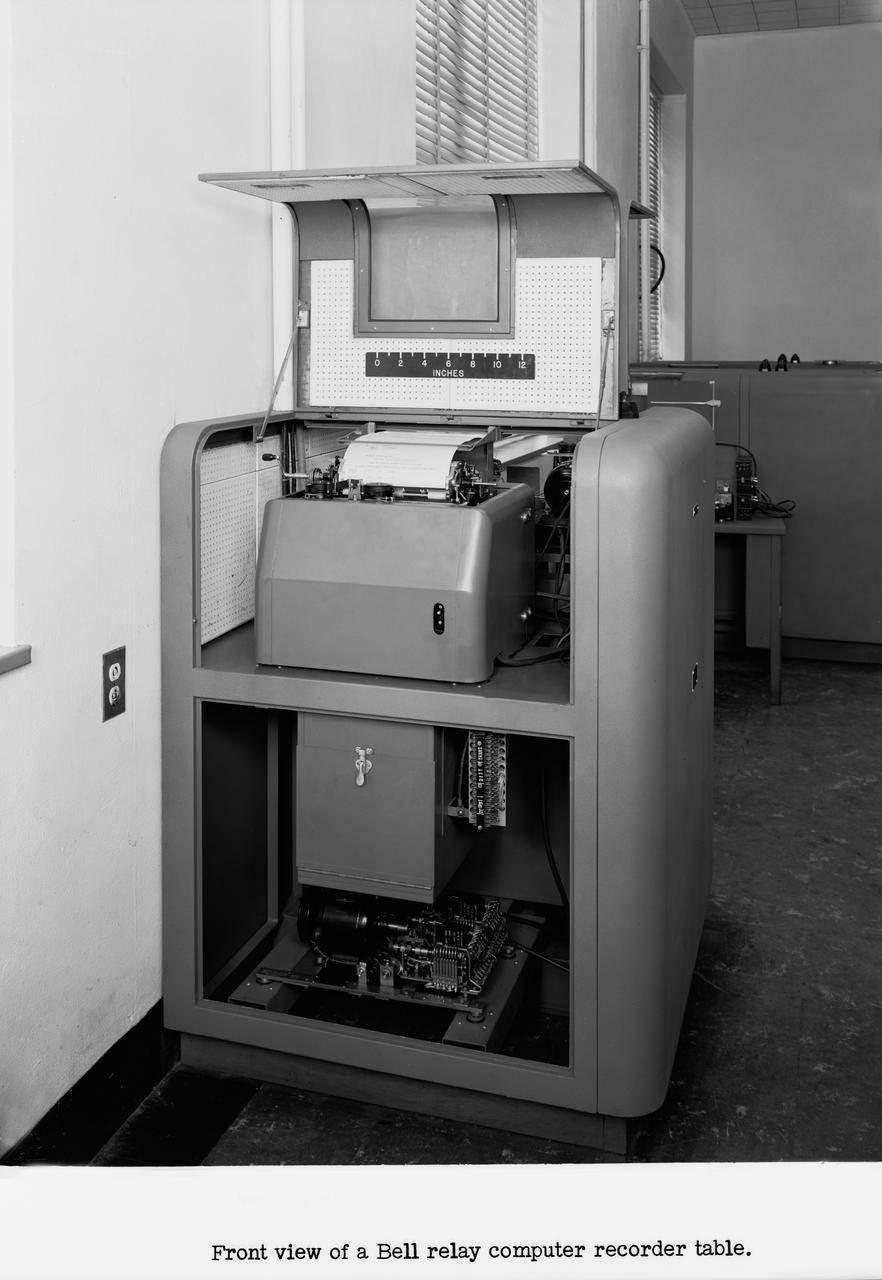
Langley's human computers at work in 1947. The female presence at Langley, who performed mathematical computations for male staff. Bell computers.
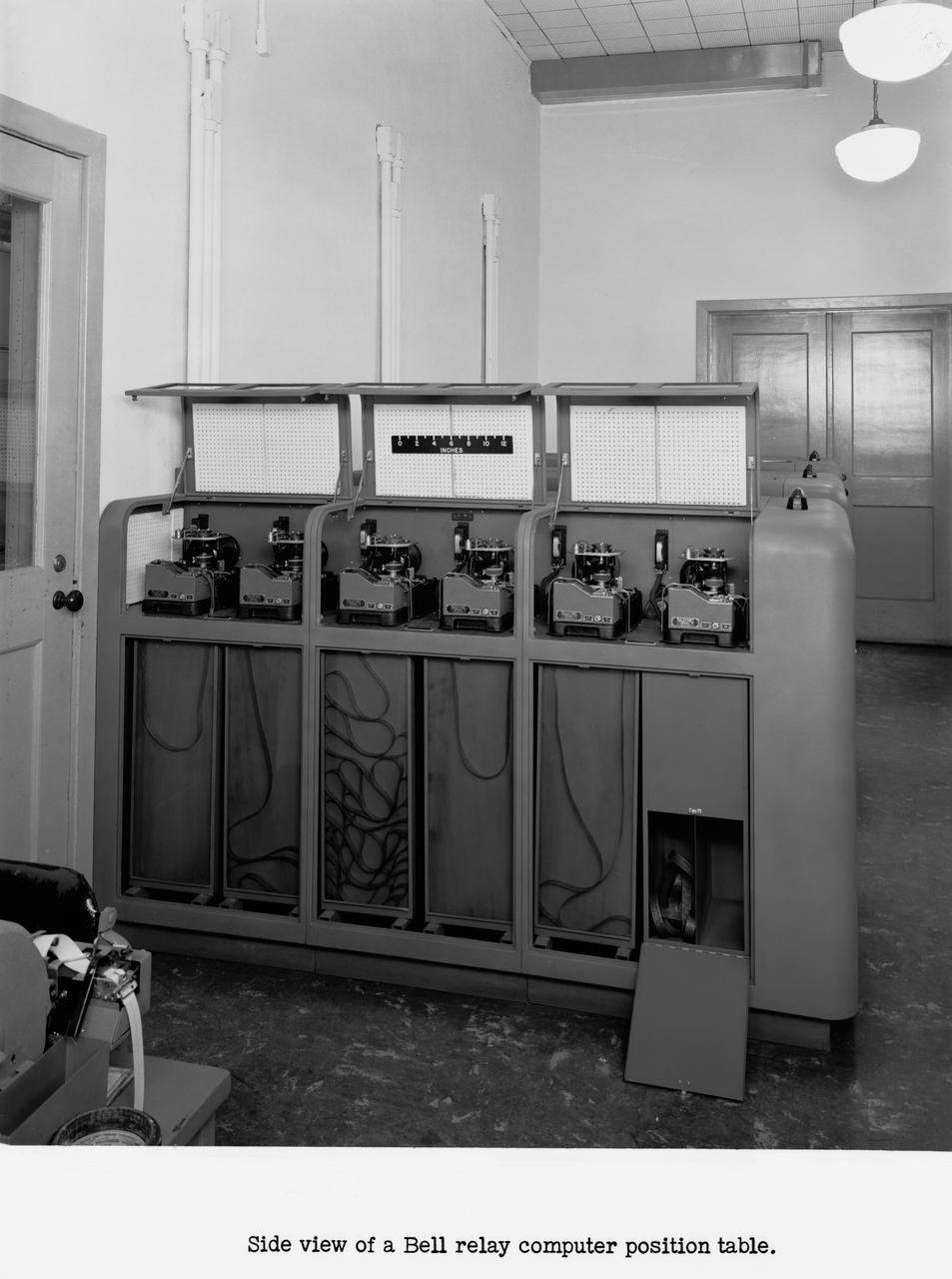
Langley's human computers at work in 1947. The female presence at Langley, who performed mathematical computations for male staff. Bell computers.
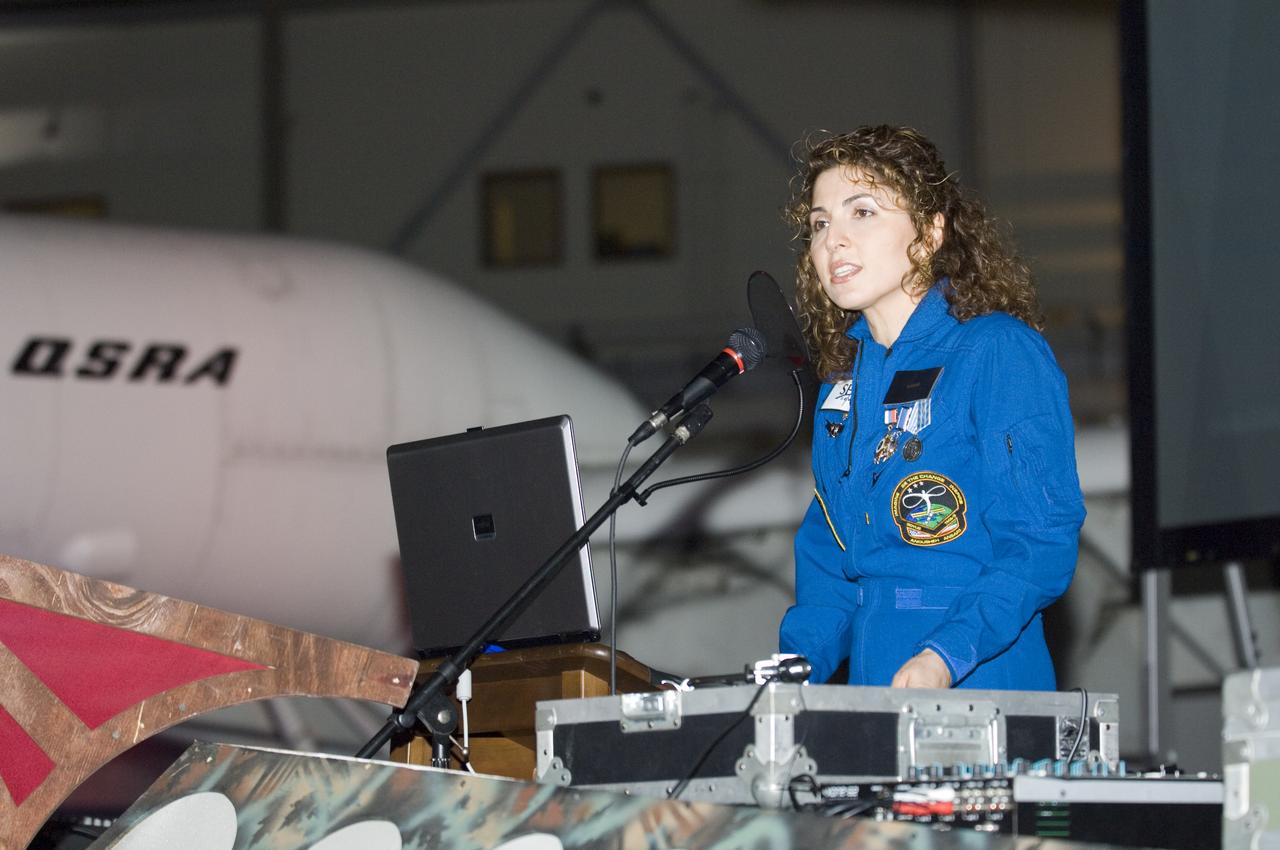
Yuri's Night at Ames a celebration of the first human in space. The world's first female space tourist Anoushen Ansari address the crowd.
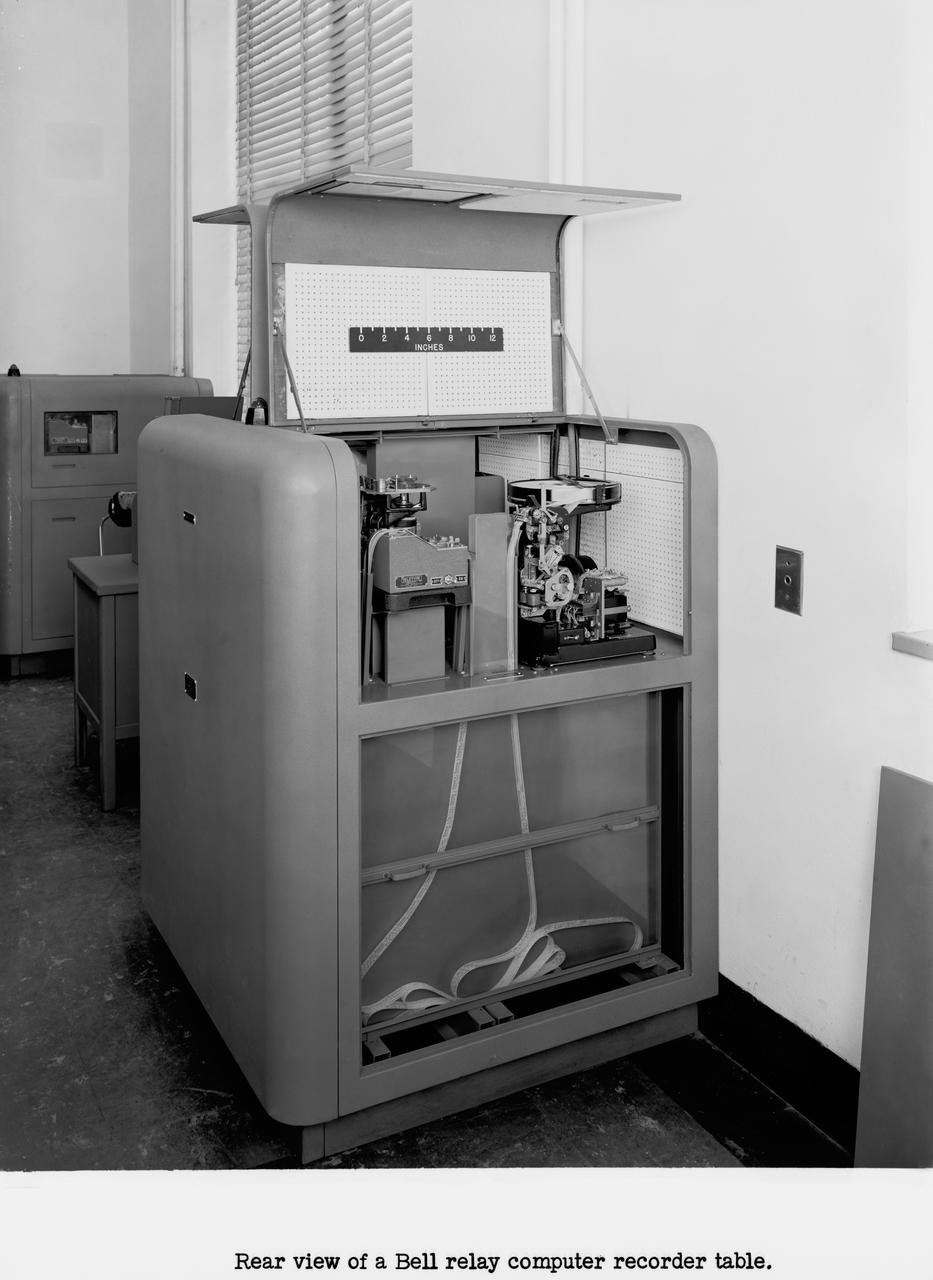
Langley's human computers at work in 1947. The female presence at Langley, who performed mathematical computations for male staff. Bell computers.
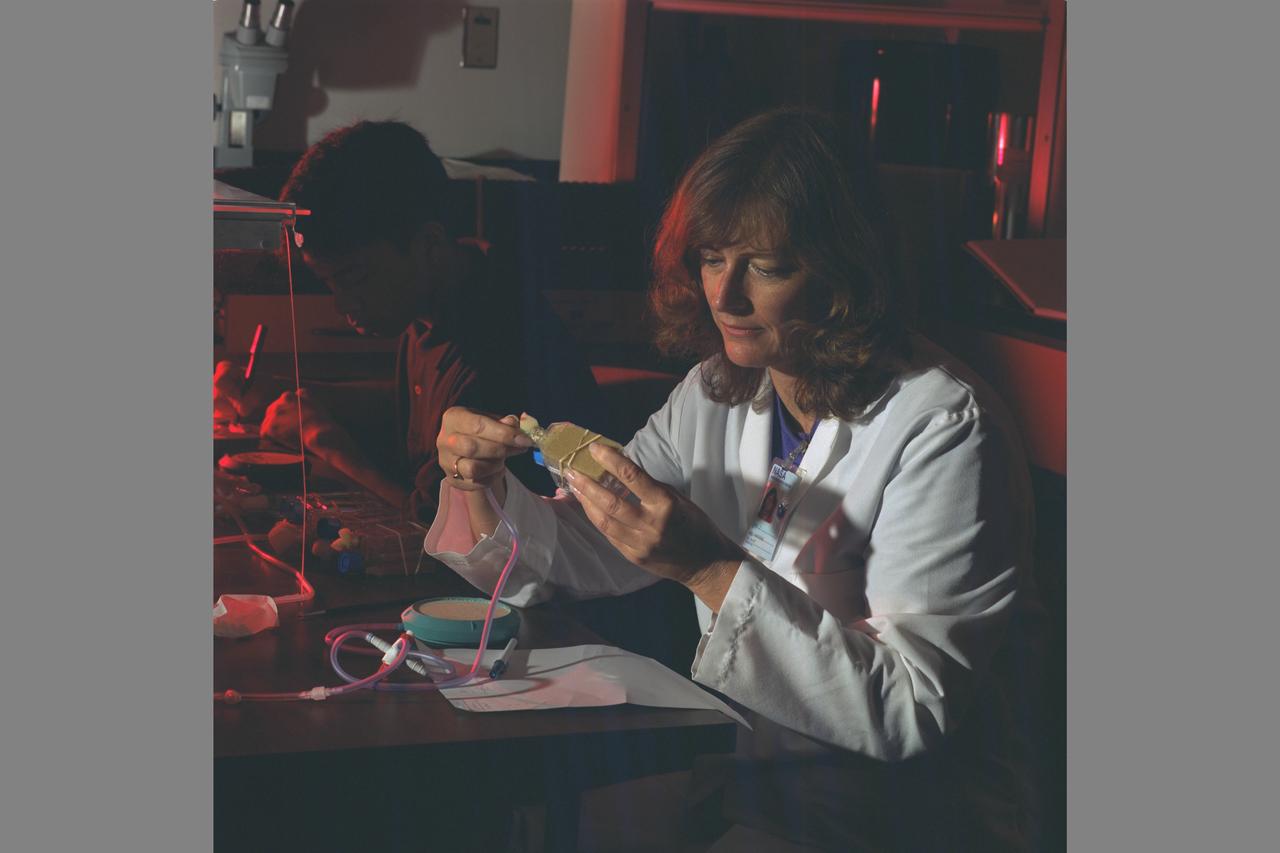
Insect larvae separation containers (fruit fly; egg, pupae and adults male/female) with Judy Jones using vacuum
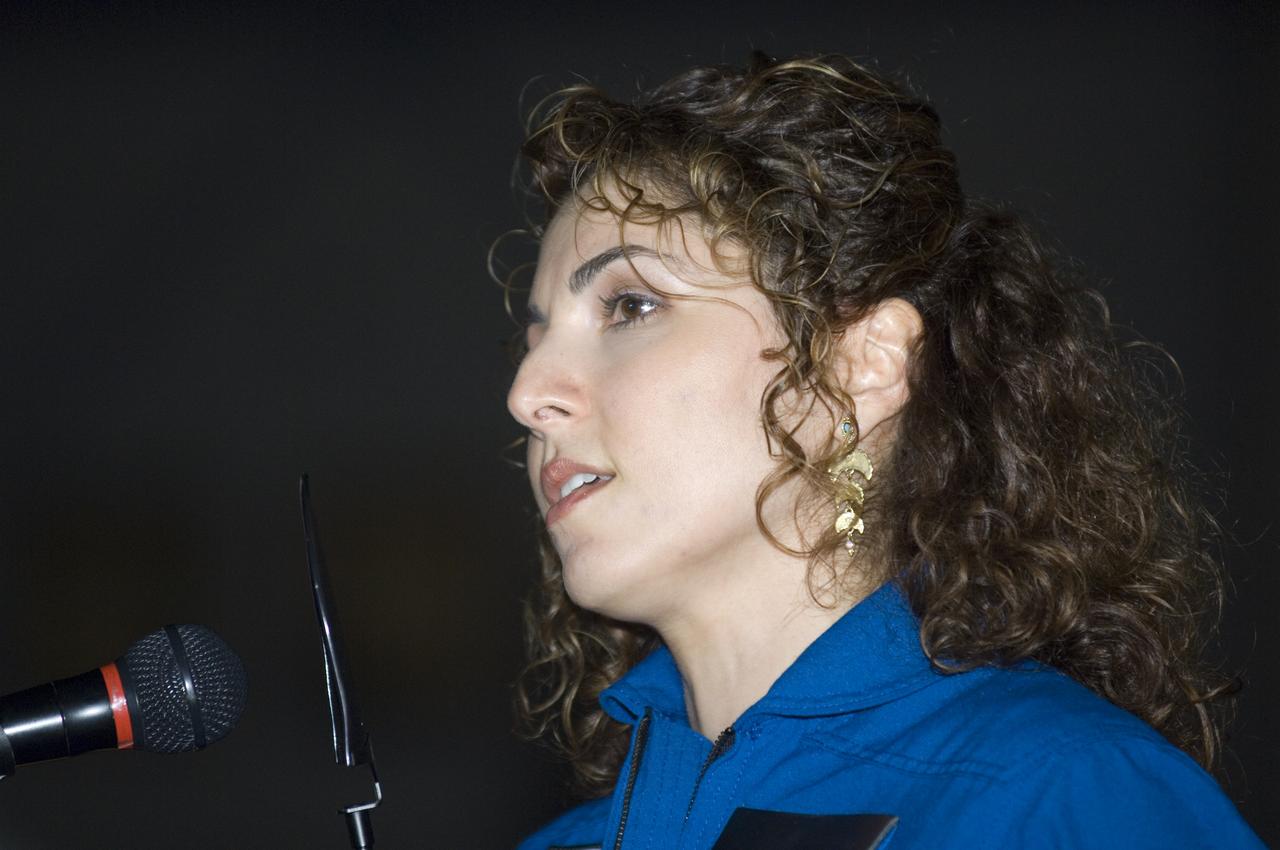
Yuri's Night at Ames a celebration of the first human in space. The world's first female space tourist Anoushen Ansari address the crowd.
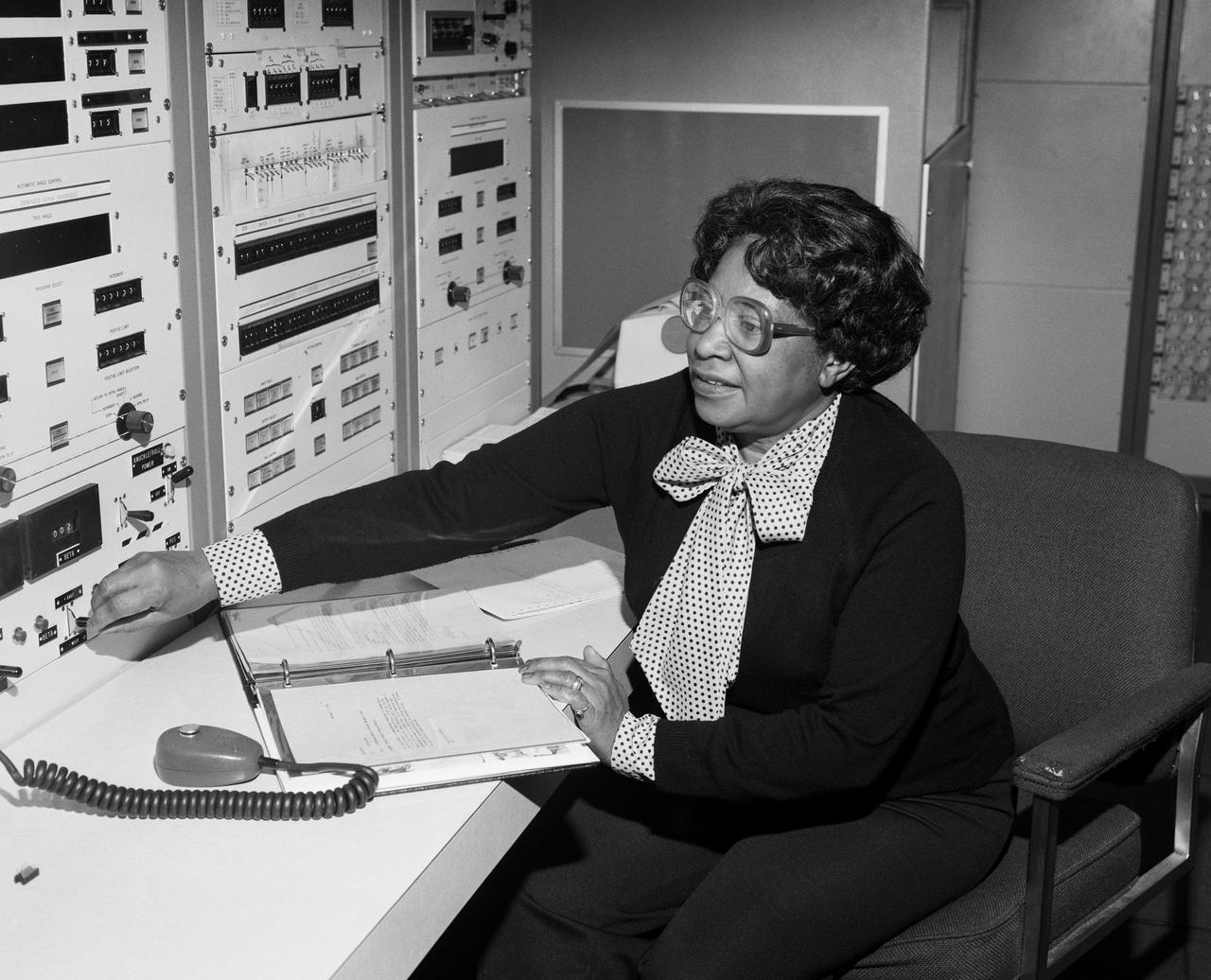
Mary Jackson at Work. In 1958 Mary Jackson became NASA’s first black female engineer.
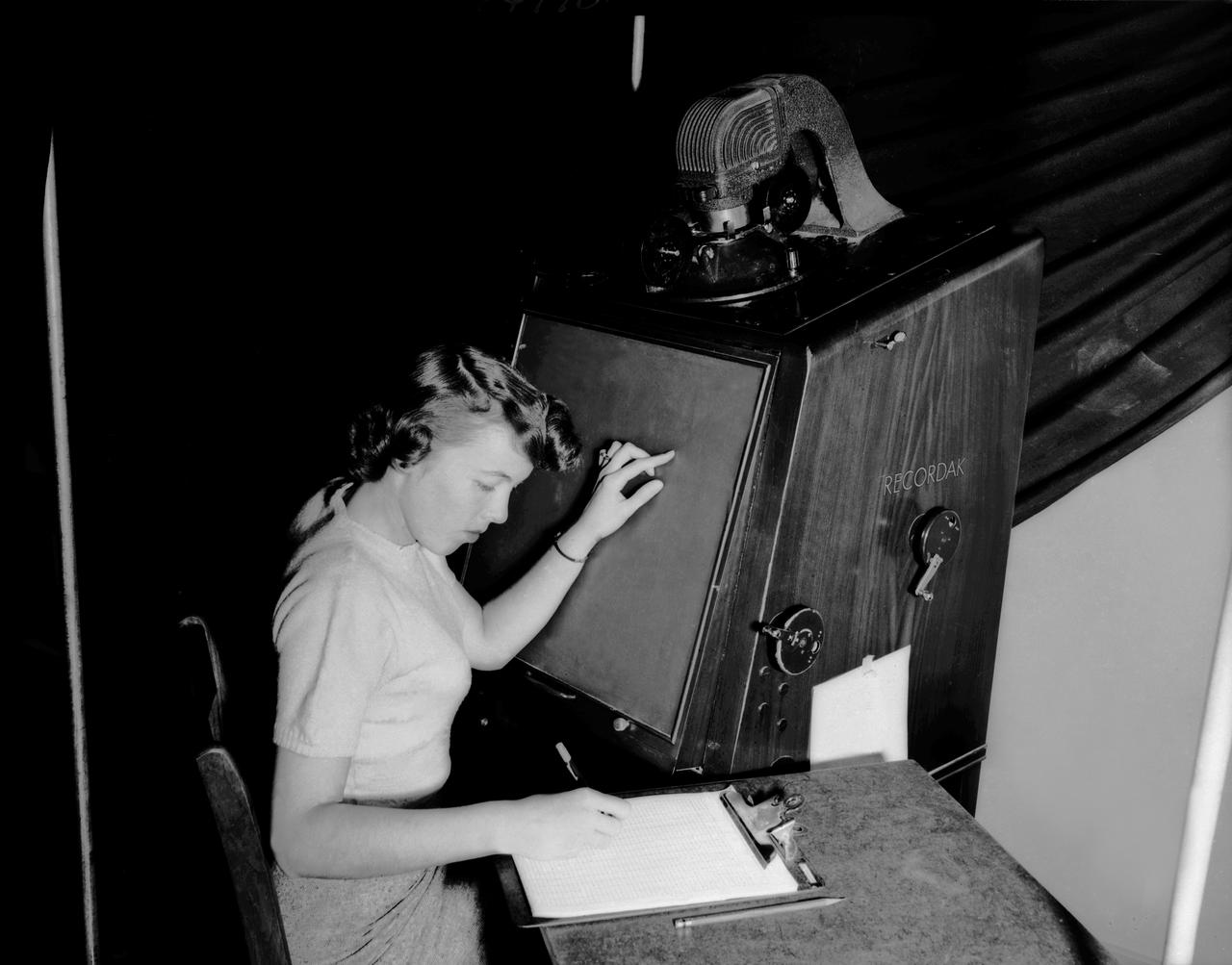
Publicity photo from Muroc California, showing female support personnel with equipment. A women working on a Kodak Recordak microfilm reader.
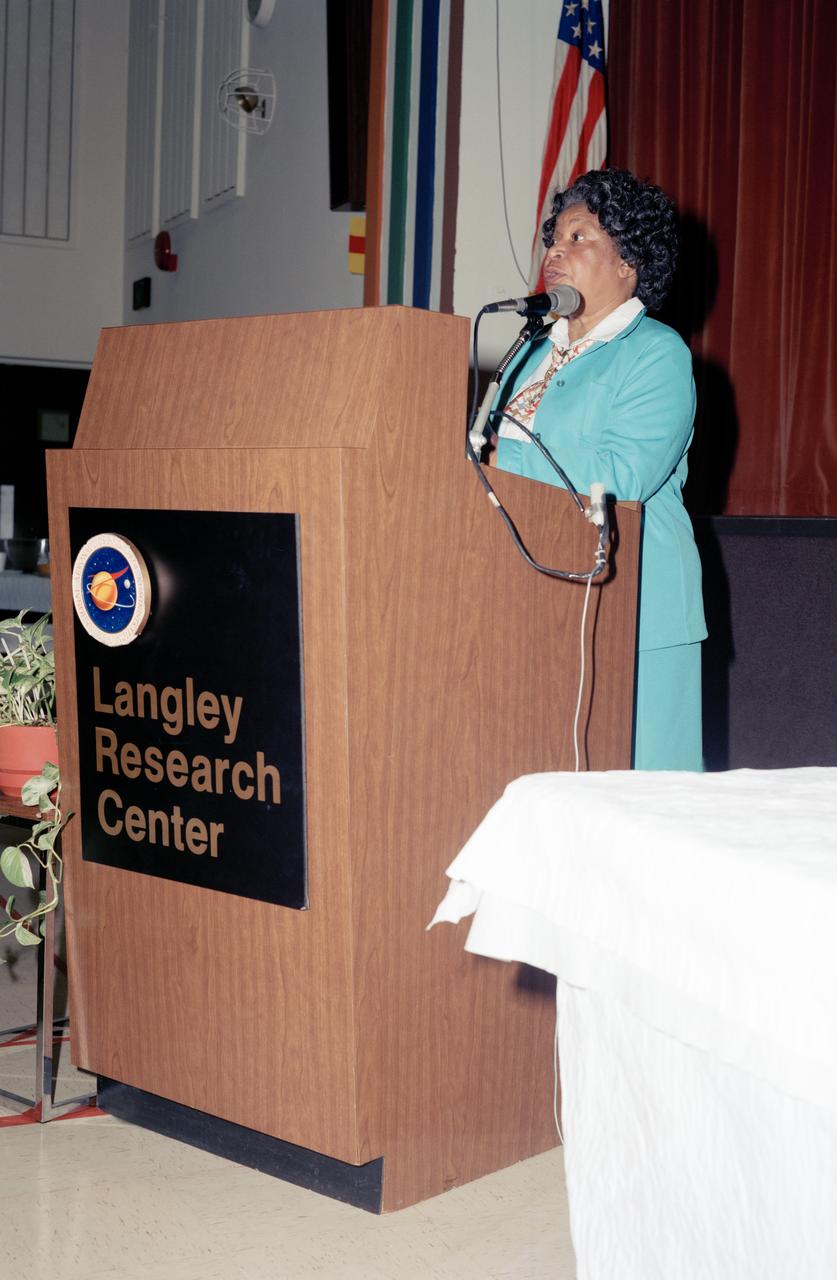
Federal Women's Program speaking is Mary Jackson. In 1958 Mary Jackson became NASA’s first black female engineer.
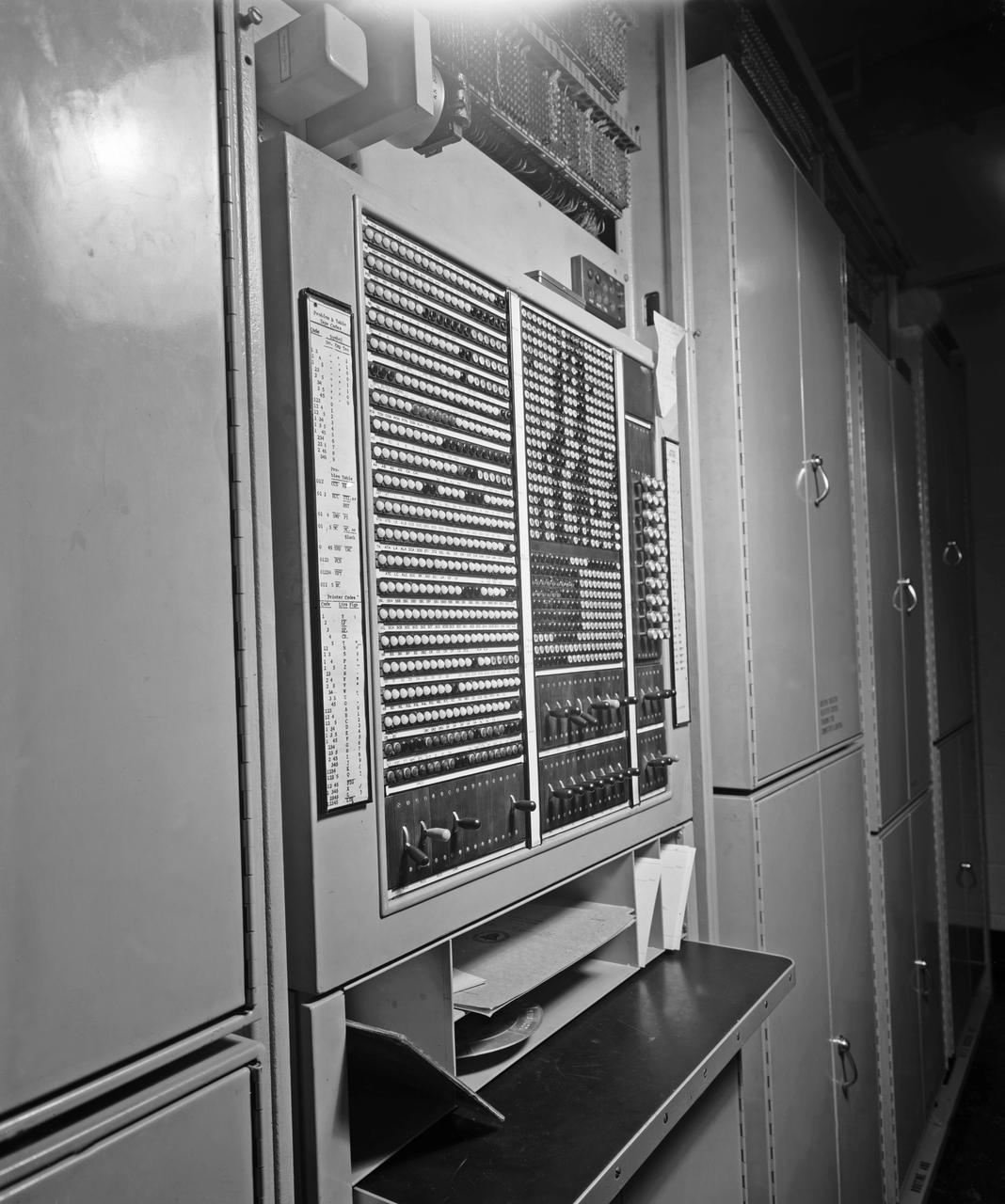
Langley's human computers at work in 1947. The female presence at Langley, who performed mathematical computations for male staff. Bell computers.
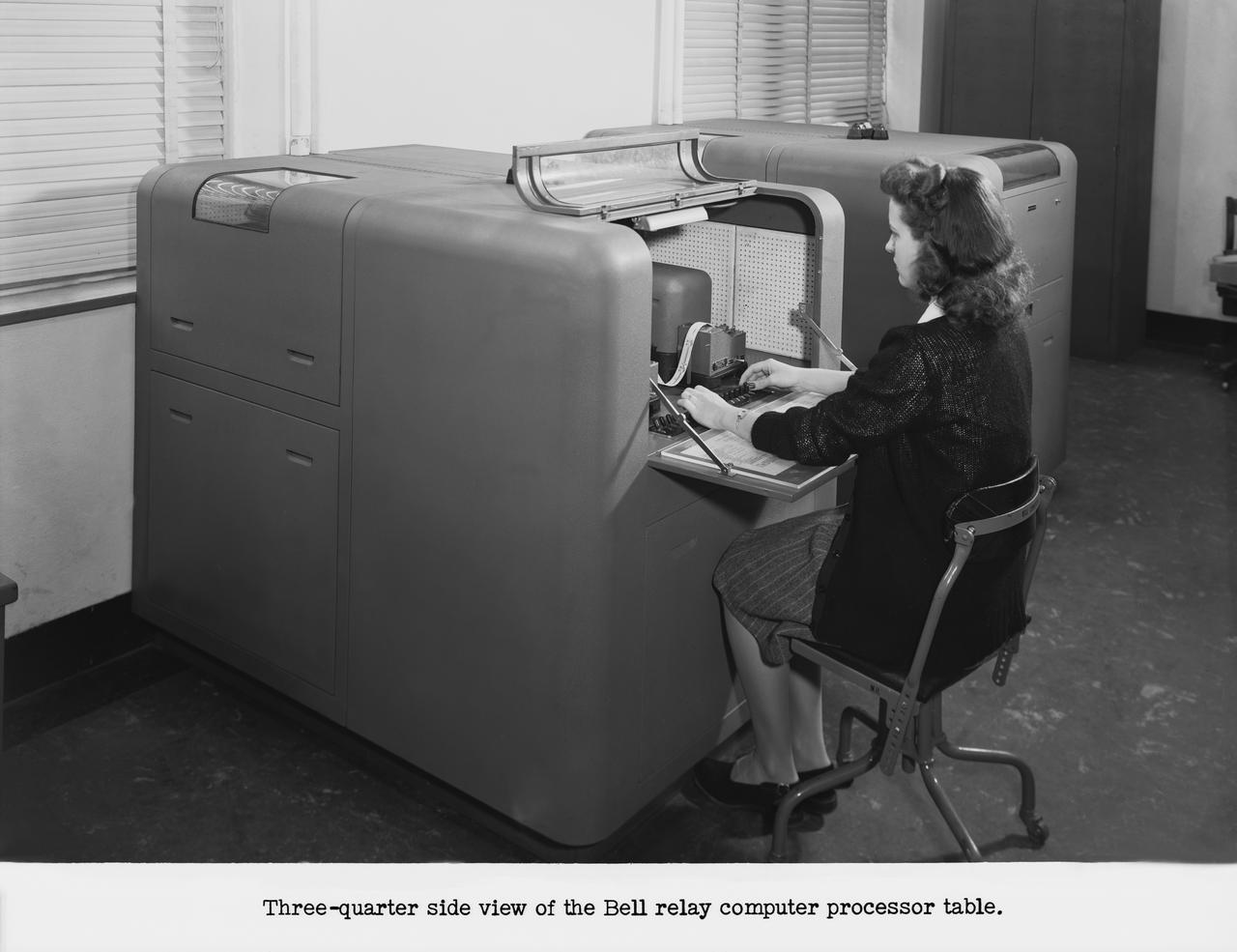
Langley's human computers at work in 1947. The female presence at Langley, who performed mathematical computations for male staff. Bell computers.
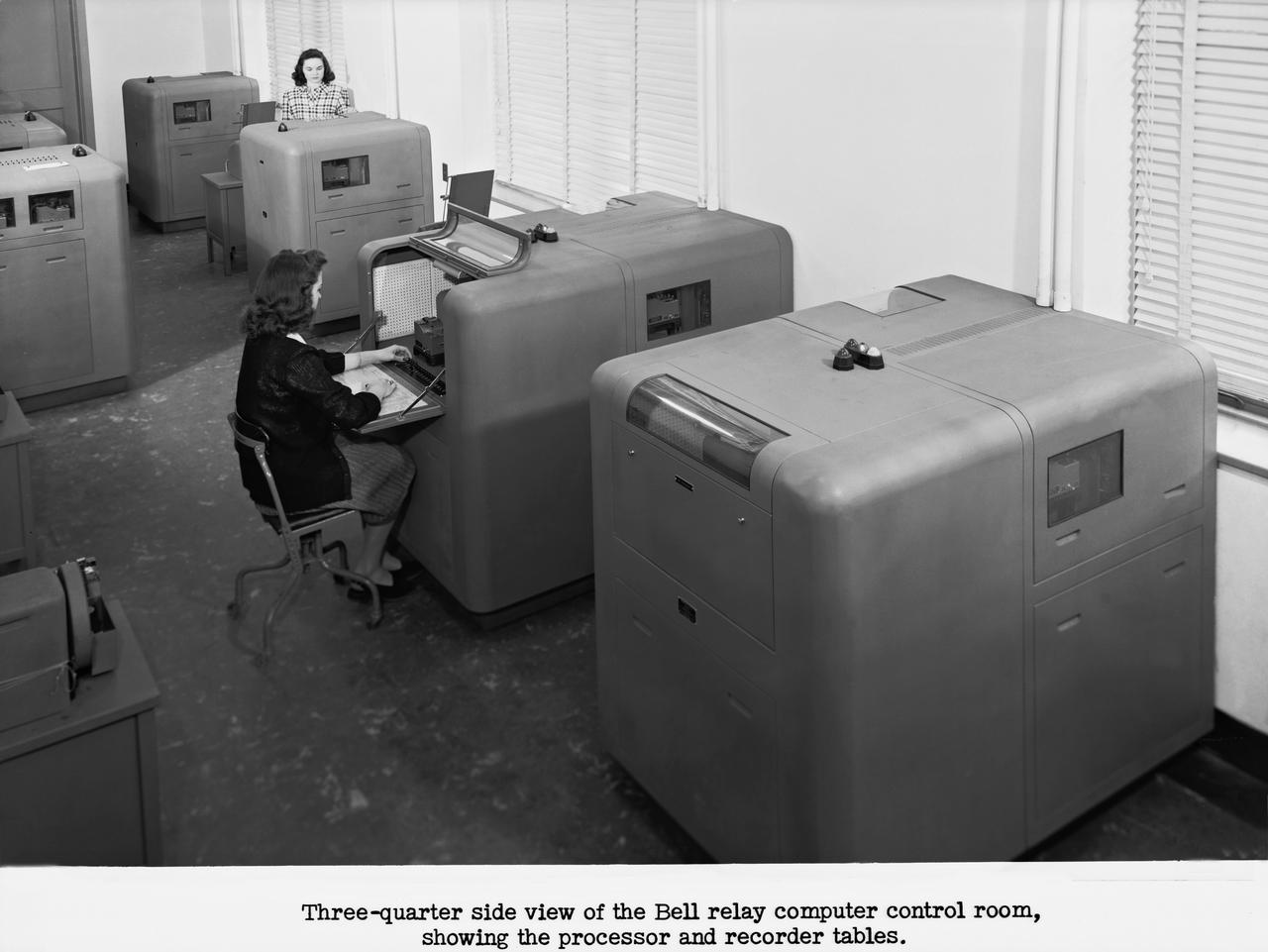
Langley's human computers at work in 1947. The female presence at Langley, who performed mathematical computations for male staff. Bell computers.
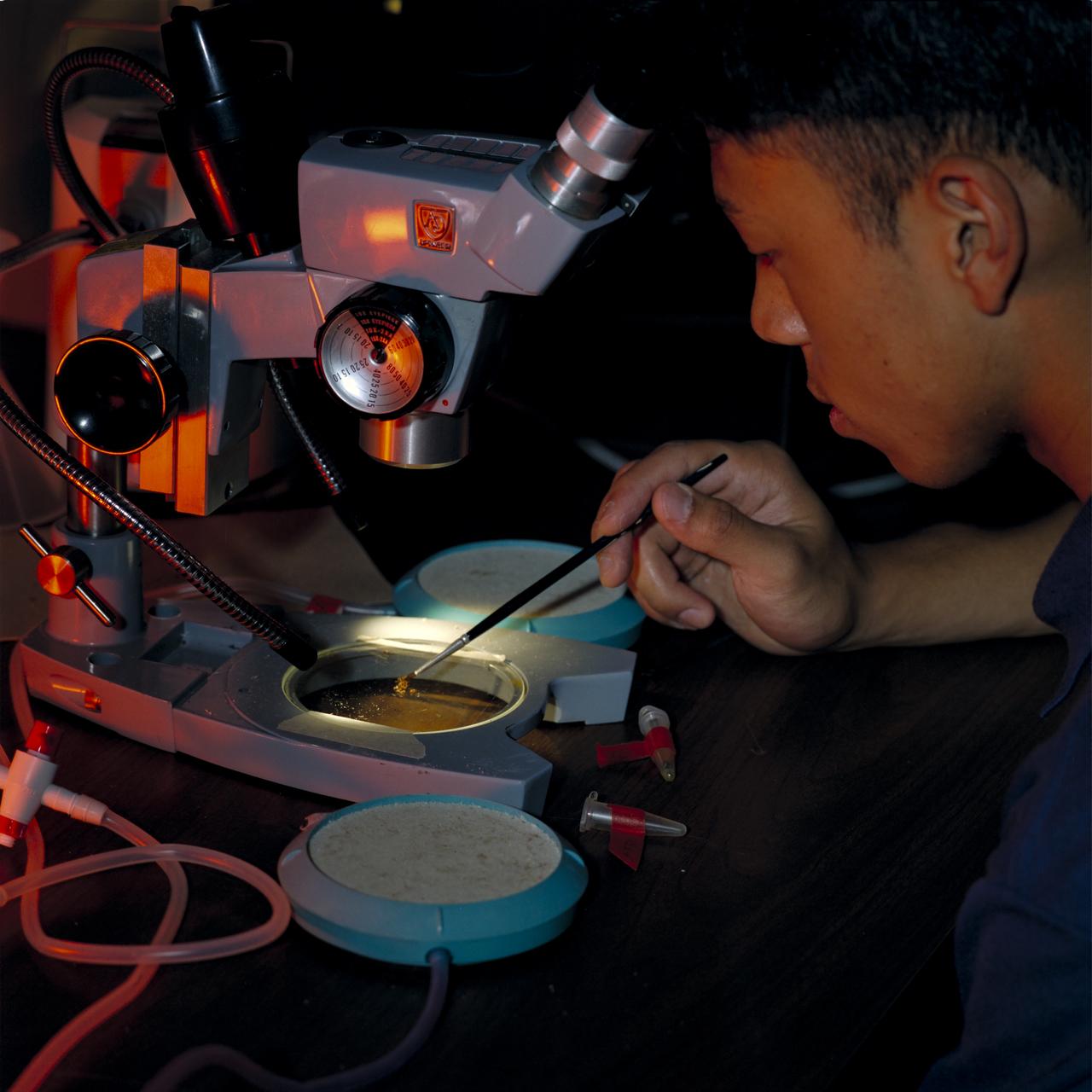
Insect larvae separation containers (fruit fly; egg, pupae and adults male/female) with Jason Cardema
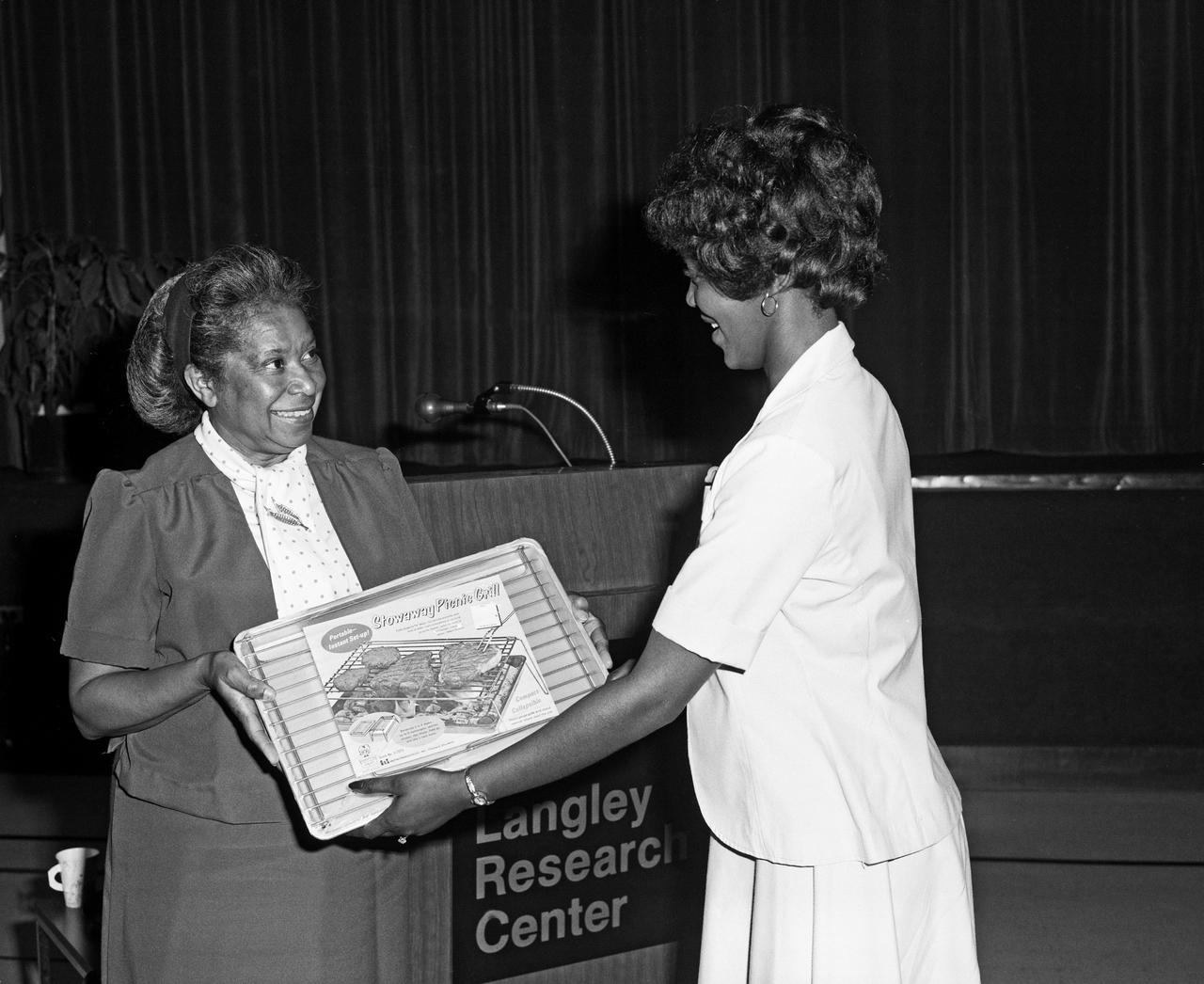
Federal Women's Program with Mary Jackson giving out awards. In 1958 Mary Jackson became NASA's first black female engineer.
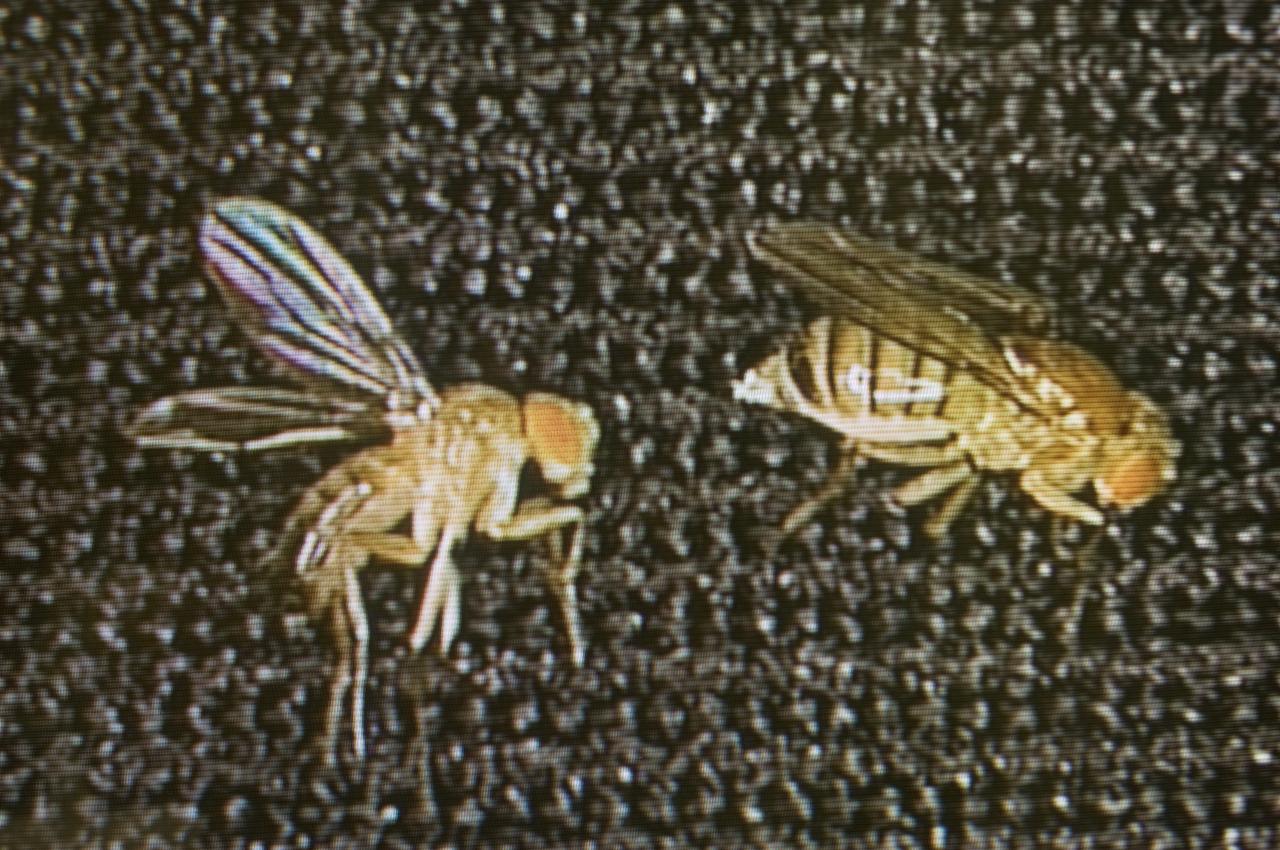
Space shuttle STS-121 FIT (Fly Immunity and Tumors) payload. Using Drosophila (fruit fly) to complete the experiments. Male and female Drosophila (fruit fly).
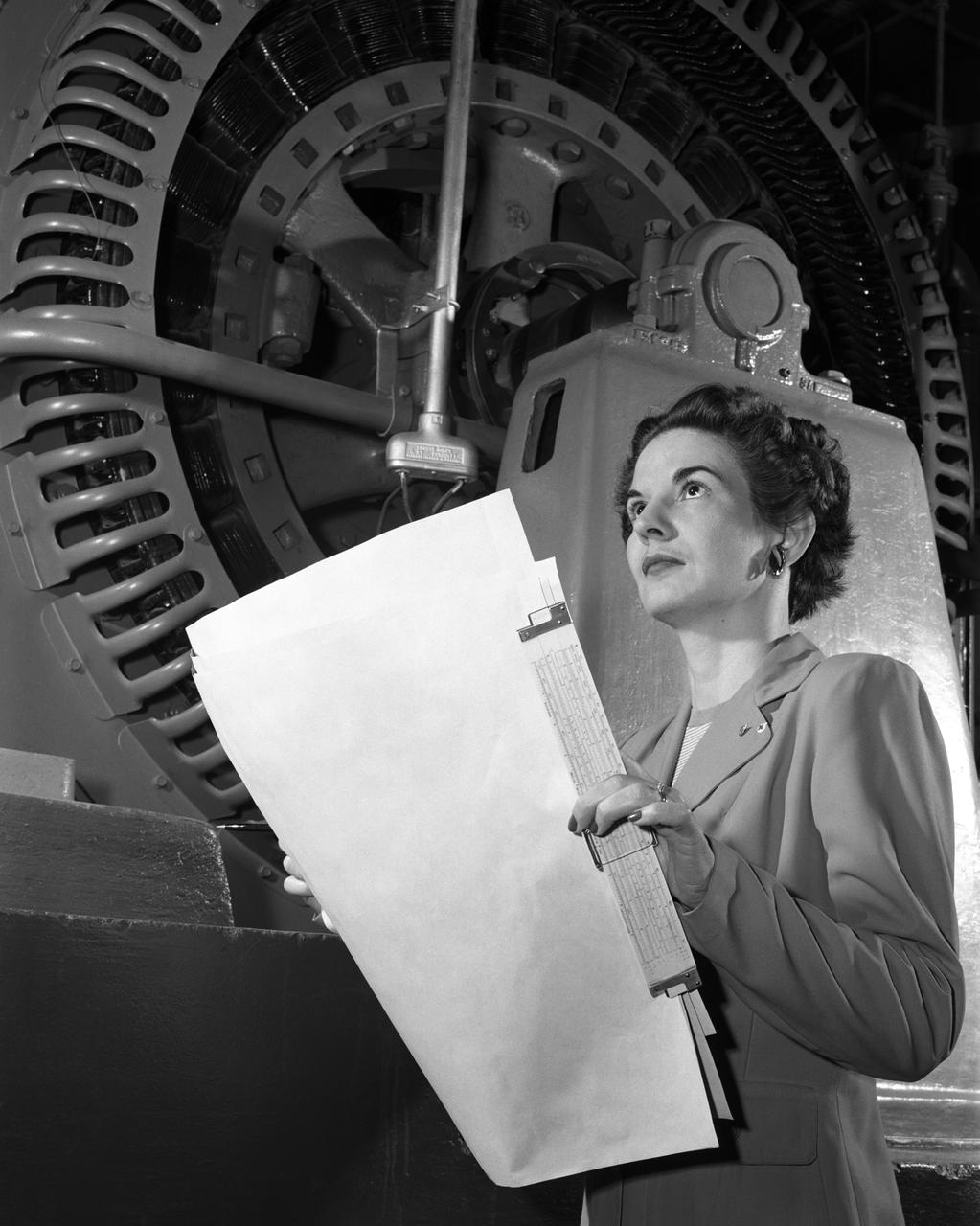
electrical engineer.NACA engineer Kitty Joyner, believed to be the first NACA female engineer, as well as the first women engineer to graduate from UVA.
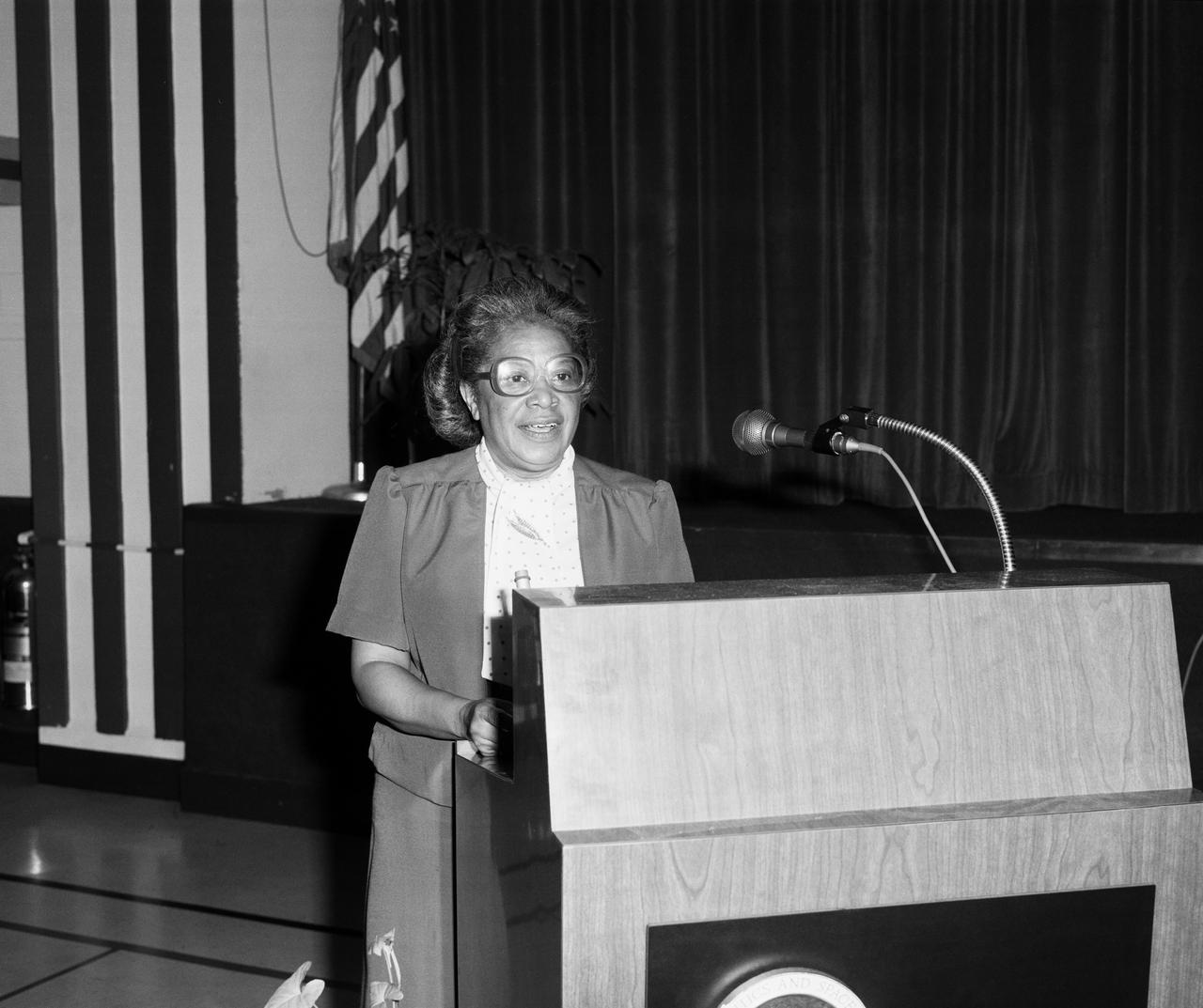
Federal Women's Program with Mary Jackson giving out awards. In 1958 Mary Jackson became NASA's first black female engineer.
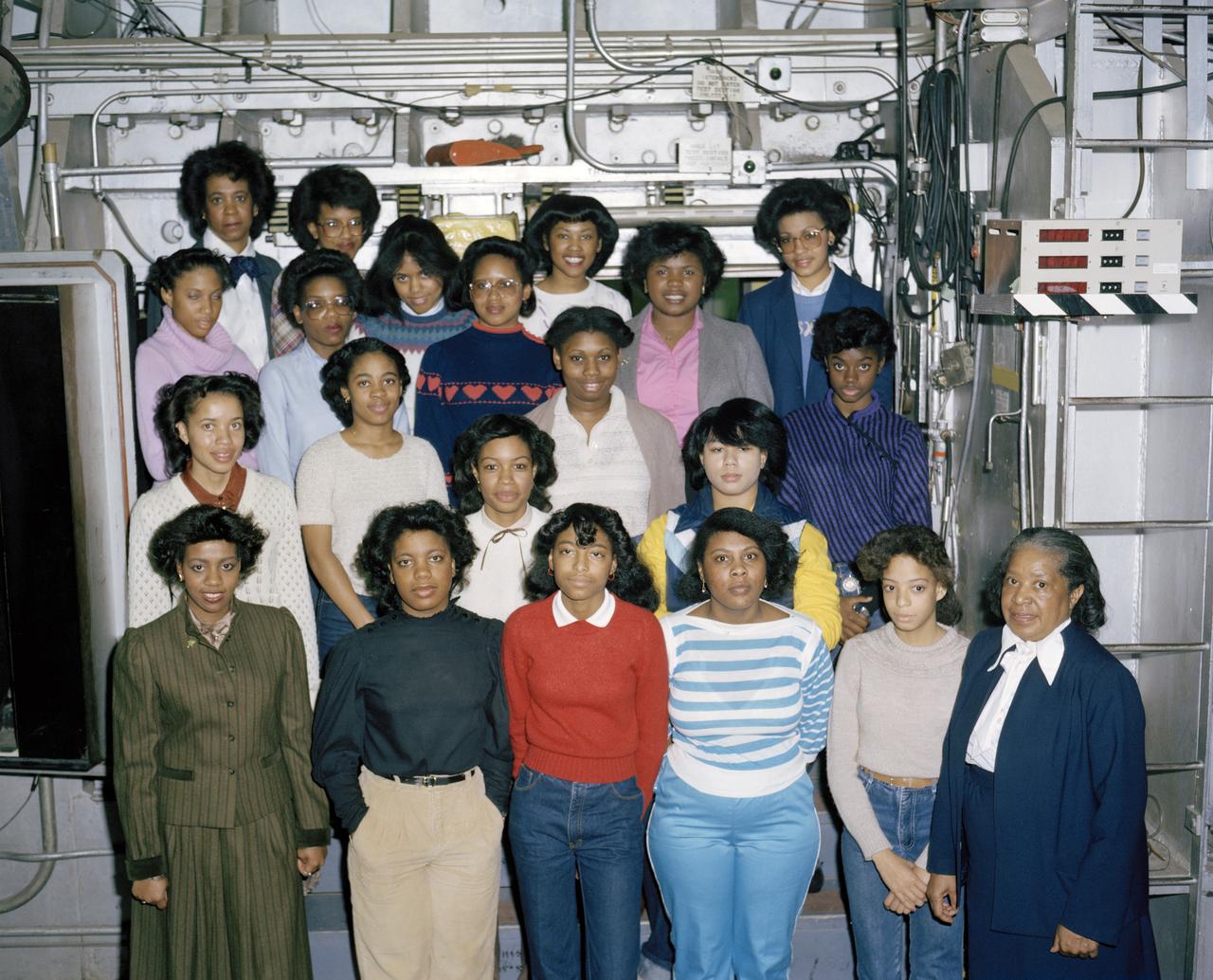
Photograph taken March 3, 1983. Special Control Test Group with Mary Jackson. In 1958 Mary Jackson became NASA's first black female engineer.
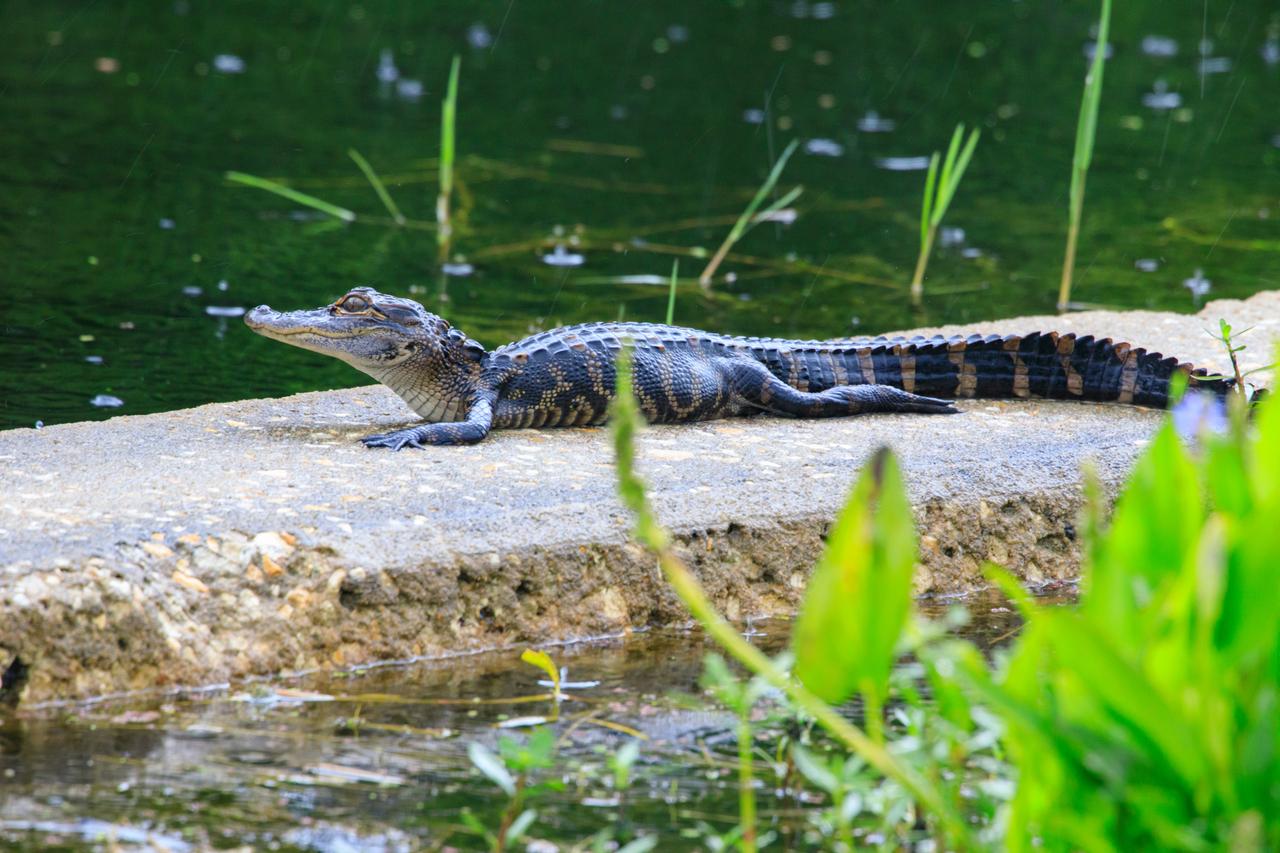
A young alligator rests on a concrete structure at NASA’s Kennedy Space Center in Florida on April 25, 2023. Alligator breeding season starts in May when males begin courting females. By June, pairs have mated and females build vegetation nests in the marsh. Eggs hatch in about 65 days. The mother carries her young to the water and protects them from predators, including male alligators.
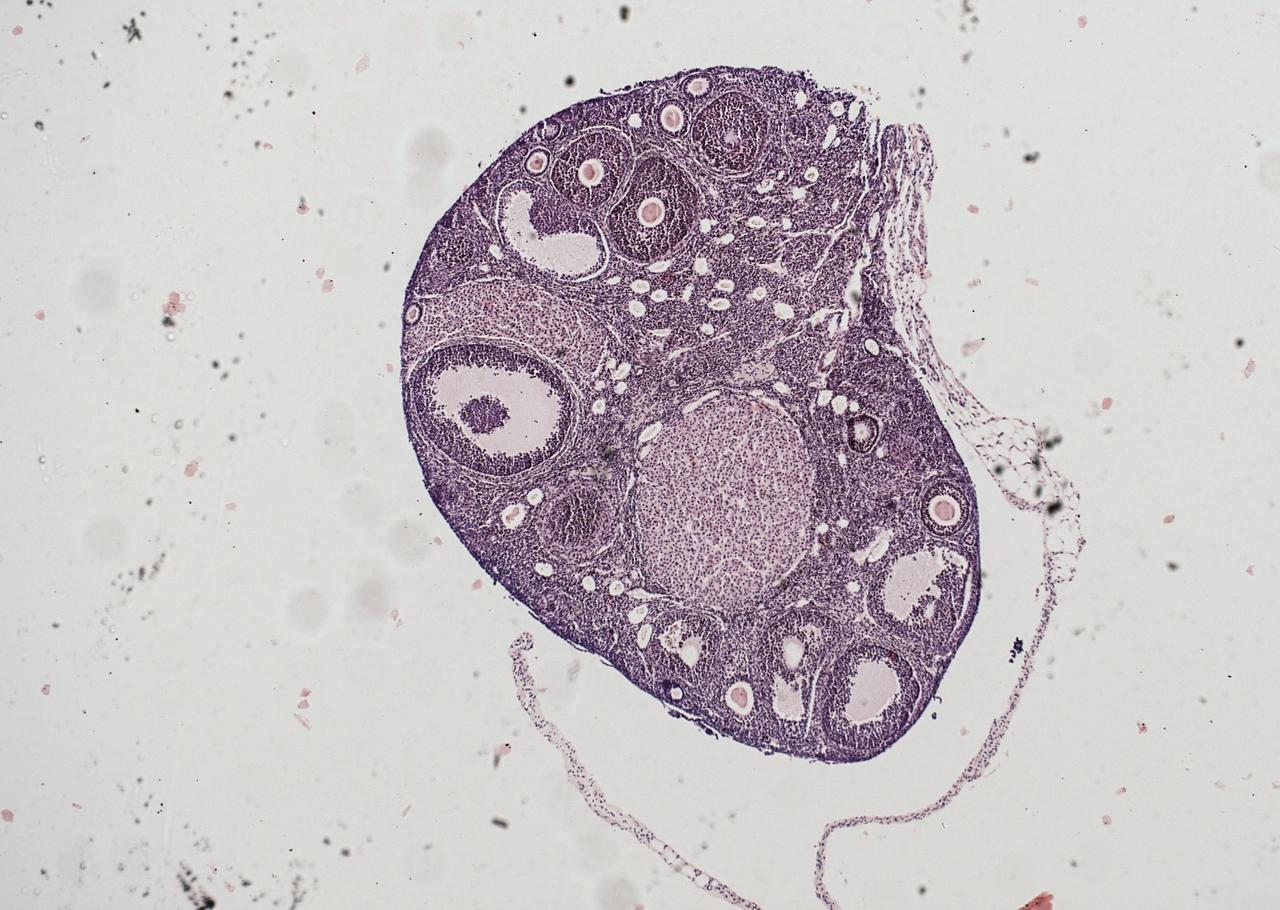
jsc2023e064877 (10/19/2023) --- An ovarian tissue section shows a variety of follicular types. The (Female Reproductive Health: Space Flight Induced Ovarian and Estrogen Signaling Dysfunction, Adaptation, and Recovery) Rodent Research-20 (RR-20) investigation evaluates ovarian function in female mice in microgravity, fertility following return to Earth, and the effect of spaceflight on the next generation. Image courtesy of the University of Kansas Medical Center.
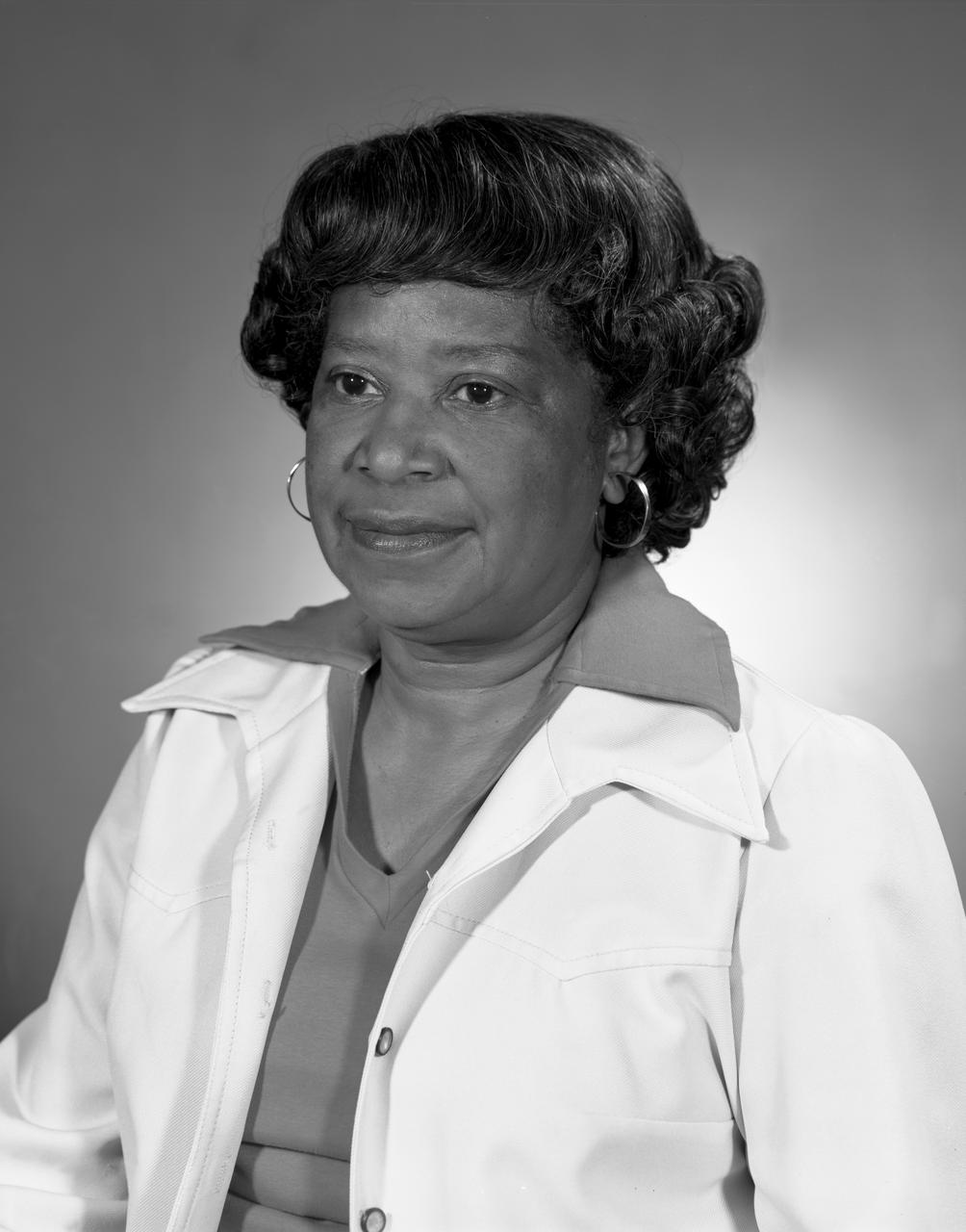
Portrait of Mary Jackson. 2017 Hall of Honor inductee. Langley Research Center NACA and NASA Hall of Honor. In honor and recognition of the ambition and motivation that enabled her career progression from human computer to NASA' s first African-American female engineer, and subsequent career supporting the hiring and promotion of other deserving female and minority employees.
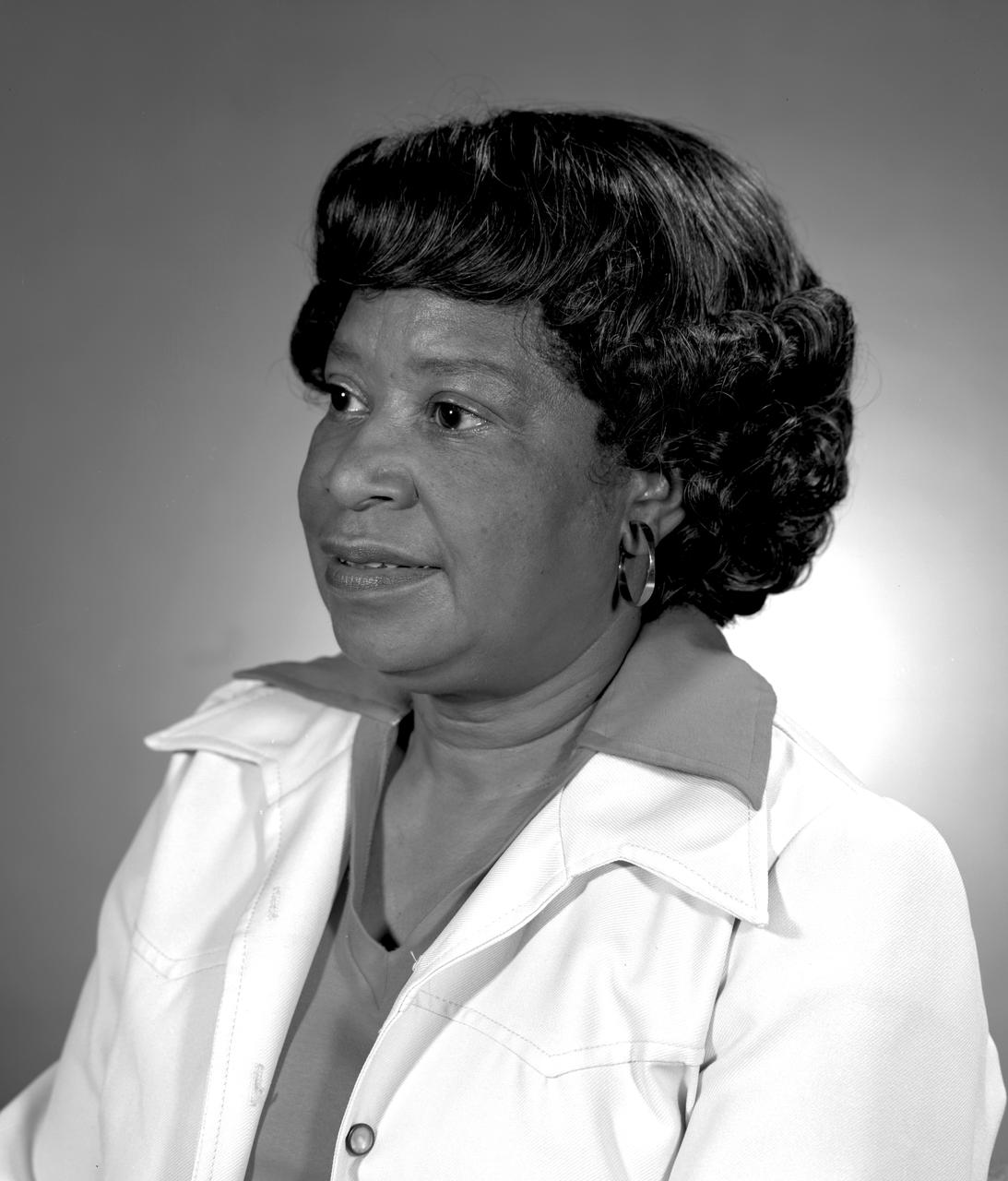
Portrait of Mary Jackson. 2017 Hall of Honor inductee. Langley Research Center NACA and NASA Hall of Honor. In honor and recognition of the ambition and motivation that enabled her career progression from human computer to NASA' s first African-American female engineer, and subsequent career supporting the hiring and promotion of other deserving female and minority employees.
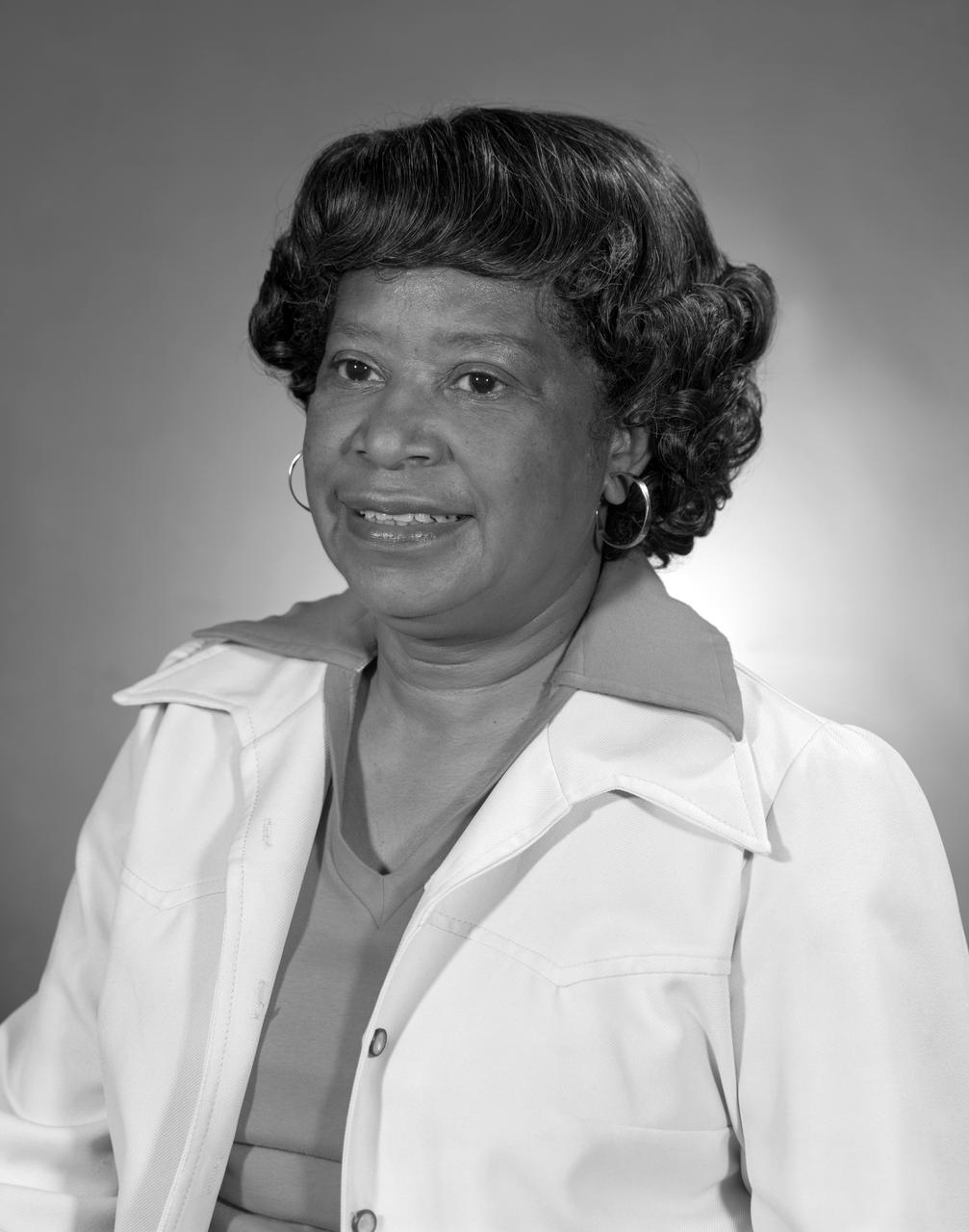
Portrait of Mary Jackson. 2017 Hall of Honor inductee. Langley Research Center NACA and NASA Hall of Honor. In honor and recognition of the ambition and motivation that enabled her career progression from human computer to NASA' s first African-American female engineer, and subsequent career supporting the hiring and promotion of other deserving female and minority employees.
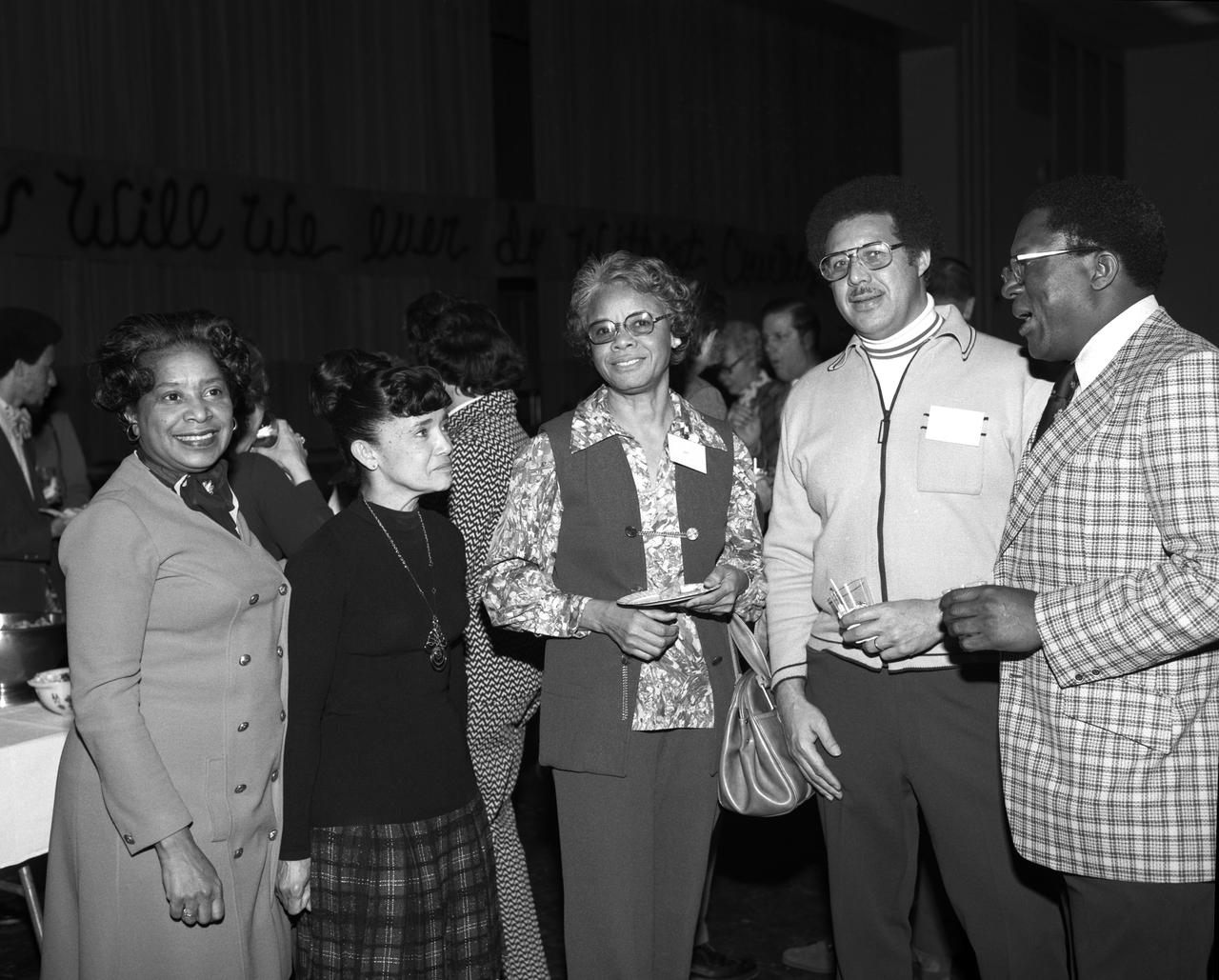
Photograph taken on February 5, 1975. Guests attending a retirement party for Vernon Courtney, of the MSD Communications Section. Mary Jackson standing on left with human computer Christine B. Richie next to her, another from the west computers group mentioned in the book "Hidden Figures" by author Margot Lee Shetterly. Mary Jackson from NASA Langley was NASA' s first African-American female engineer, and subsequent career supporting the hiring and promotion of other deserving female and minority employees.
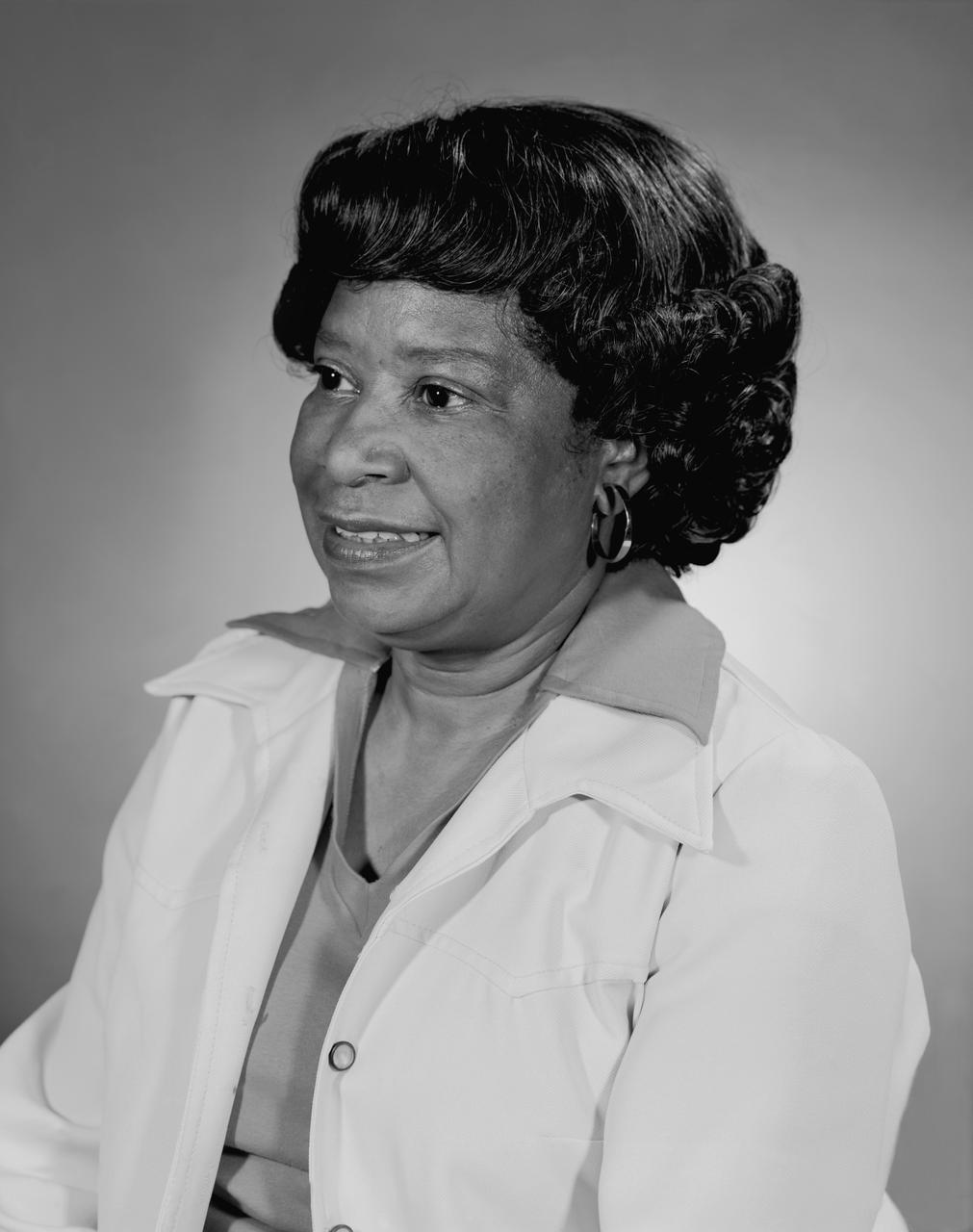
Portrait of Mary Jackson. 2017 Hall of Honor inductee. Langley Research Center NACA and NASA Hall of Honor. In honor and recognition of the ambition and motivation that enabled her career progression from human computer to NASA's s first African-American female engineer, and subsequent career supporting the hiring and promotion of other deserving female and minority employees.
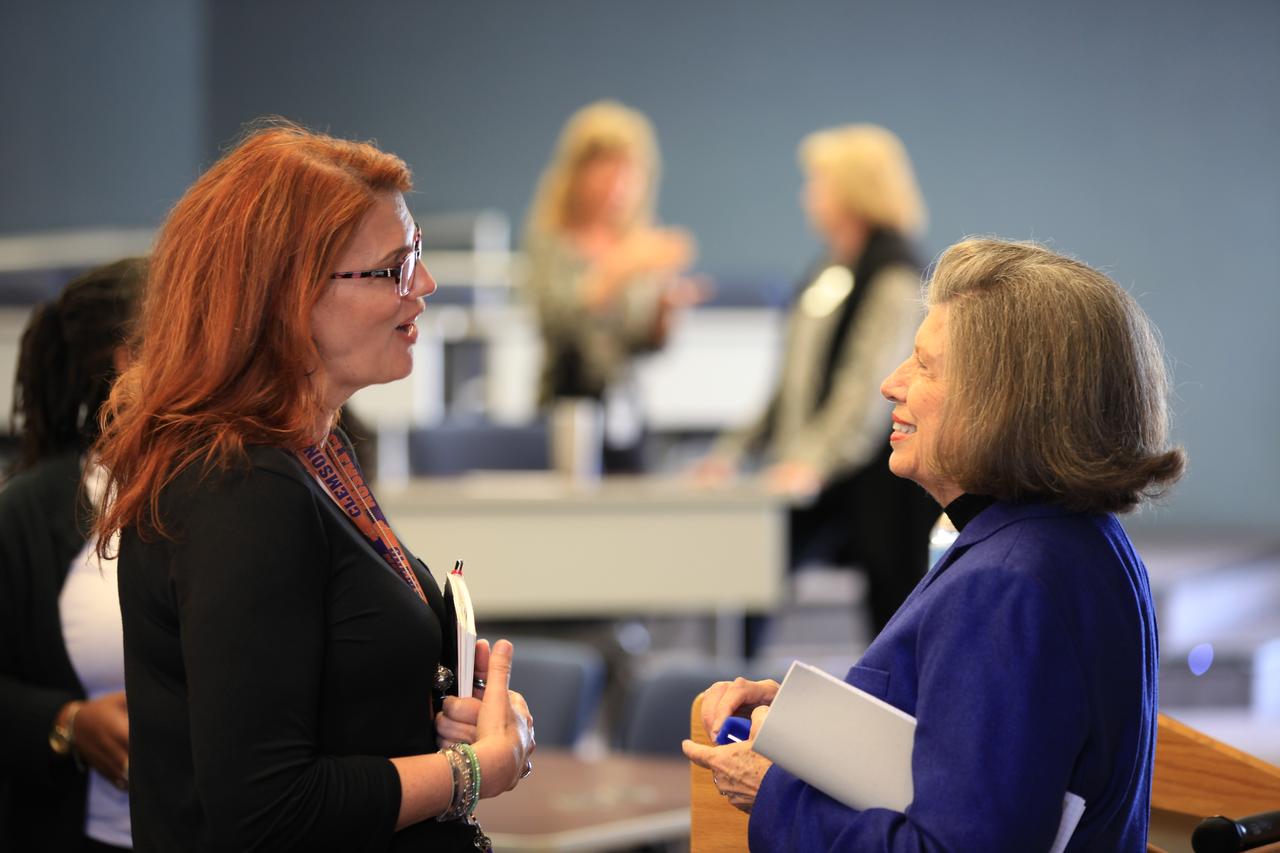
JoAnn Morgan, at right, former associate director of Kennedy Space Center, was the keynote speaker during a Women's History Month event at the center. With the theme "Nevertheless She Persisted," Morgan described her experience as the first female engineer working in the space program in the 1960s. Morgan was the first female in the Launch Control Center firing room during the Apollo 11 launch. Morgan is speaking to Charlie Blackwell-Thompson, the first female launch director, who will lead countdown and launch for Exploration Mission-1. The event was hosted by the center's Kennedy Networking Opportunities for Women (KNOW) and Launching Leaders organizations. The purpose of KNOW is to provide focus on issues such as employment, retention, promotion, training, career and personal development, education, and identify and eliminate barriers that hinder the advancement of women in the workforce.
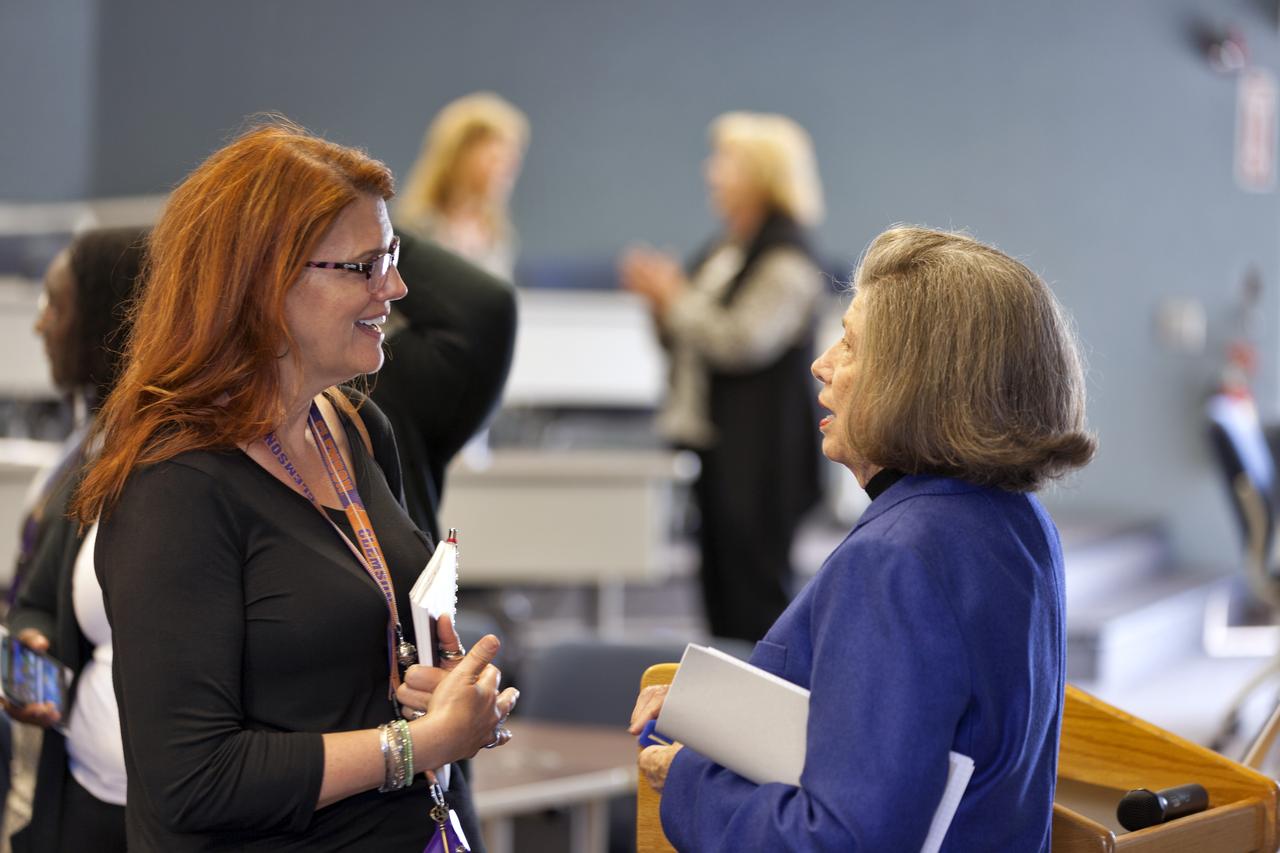
JoAnn Morgan, at right, former associate director of Kennedy Space Center, was the keynote speaker during a Women's History Month event at the center. With the theme "Nevertheless She Persisted," Morgan described her experience as the first female engineer working in the space program in the 1960s. Morgan was the first female in the Launch Control Center firing room during the Apollo 11 launch. Morgan is speaking to Charlie Blackwell-Thompson, the first female launch director, who will lead countdown and launch for Exploration Mission-1. The event was hosted by the center's Kennedy Networking Opportunities for Women (KNOW) and Launching Leaders organizations. The purpose of KNOW is to provide focus on issues such as employment, retention, promotion, training, career and personal development, education, and identify and eliminate barriers that hinder the advancement of women in the workforce.

Mary Jackson at Work. In 1958 Mary Jackson became NASA’s first black female engineer. At the time this photo was taken in June 2, 1977 Mrs. Jackson was working in the Transonic Aerodynamic Branch.
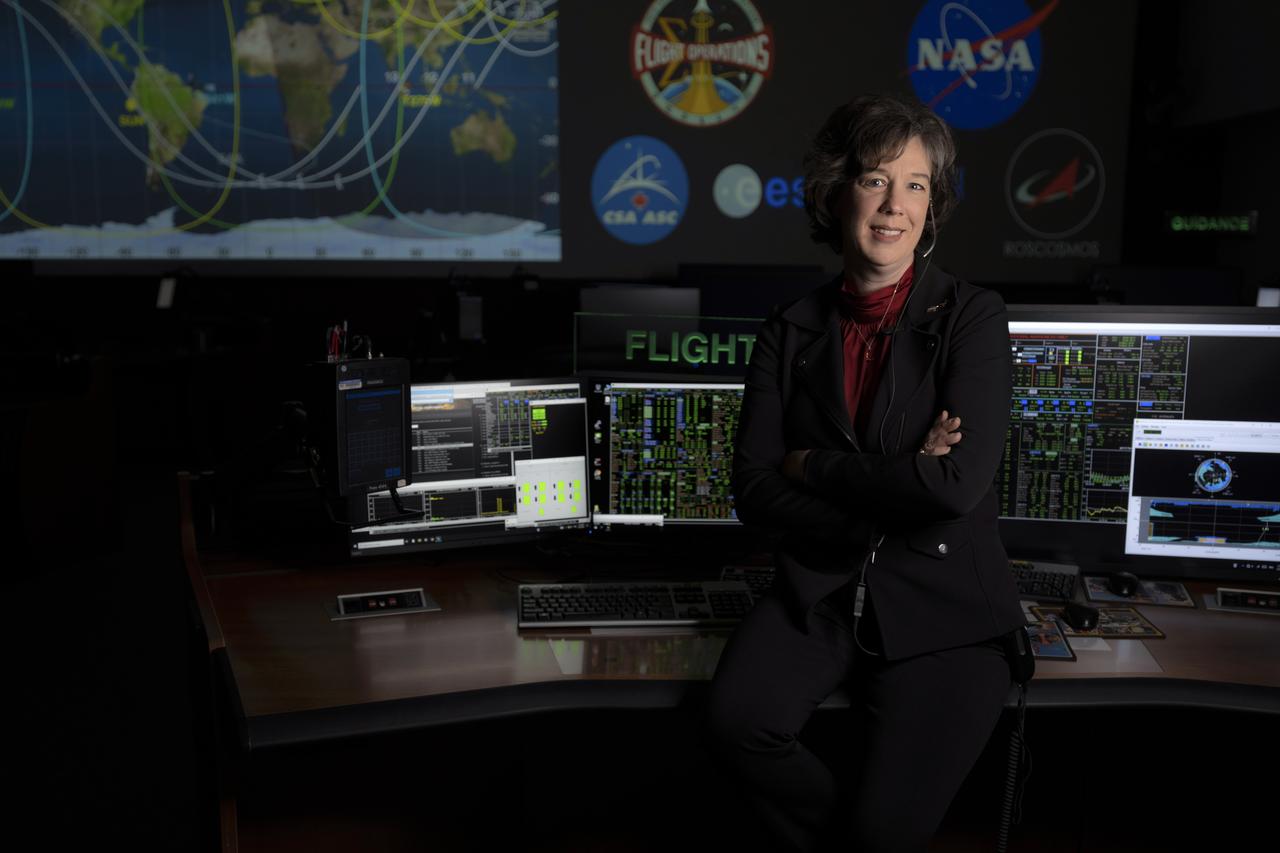
Holly Ridings is a global leader in human spaceflight. She is NASA's first female chief flight director, and currently leads the Gateway Program as its deputy program manager.
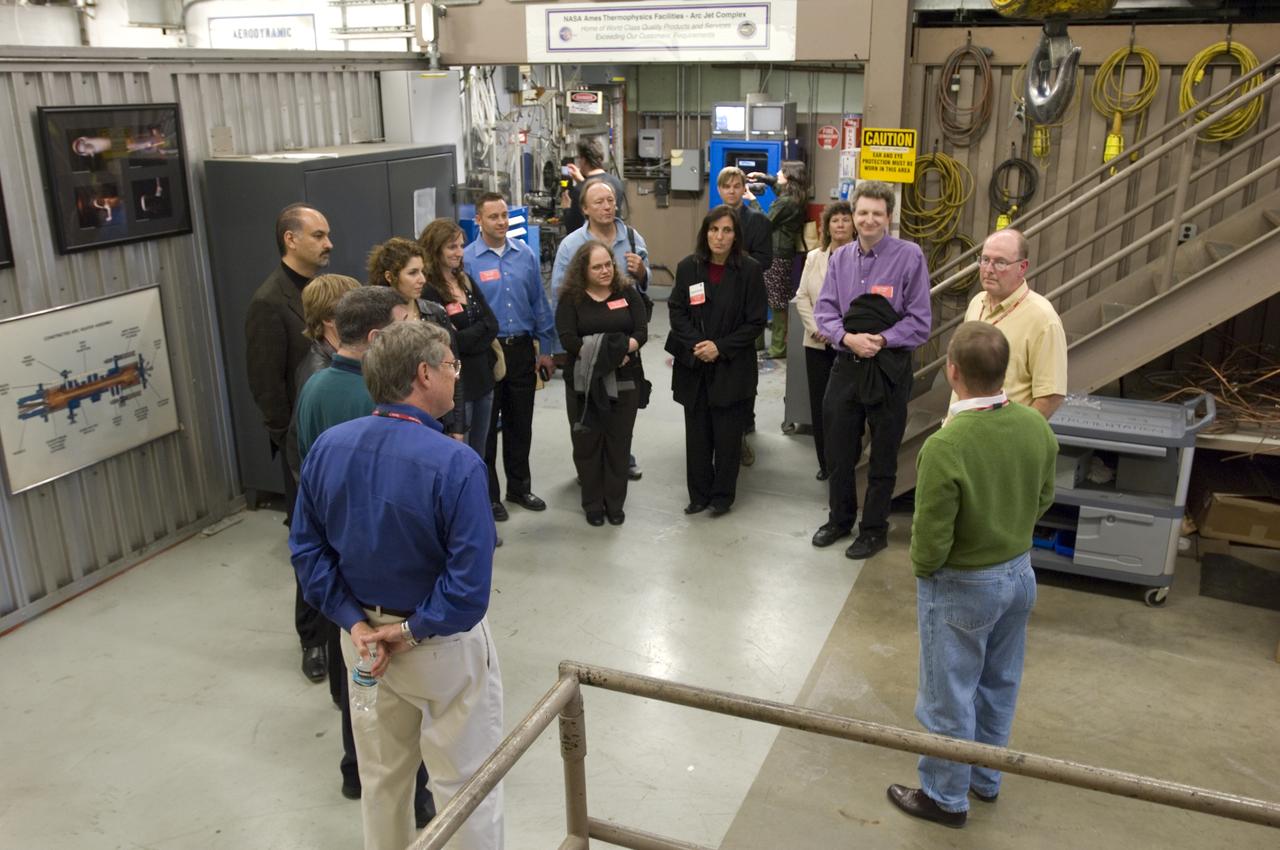
Yuri's Night at Ames a celebration of the first human in space, The world's first female space tourist Anoushen Ansari and her husband joint the VIP briefing and tour of Ames Research Center prior to the event.
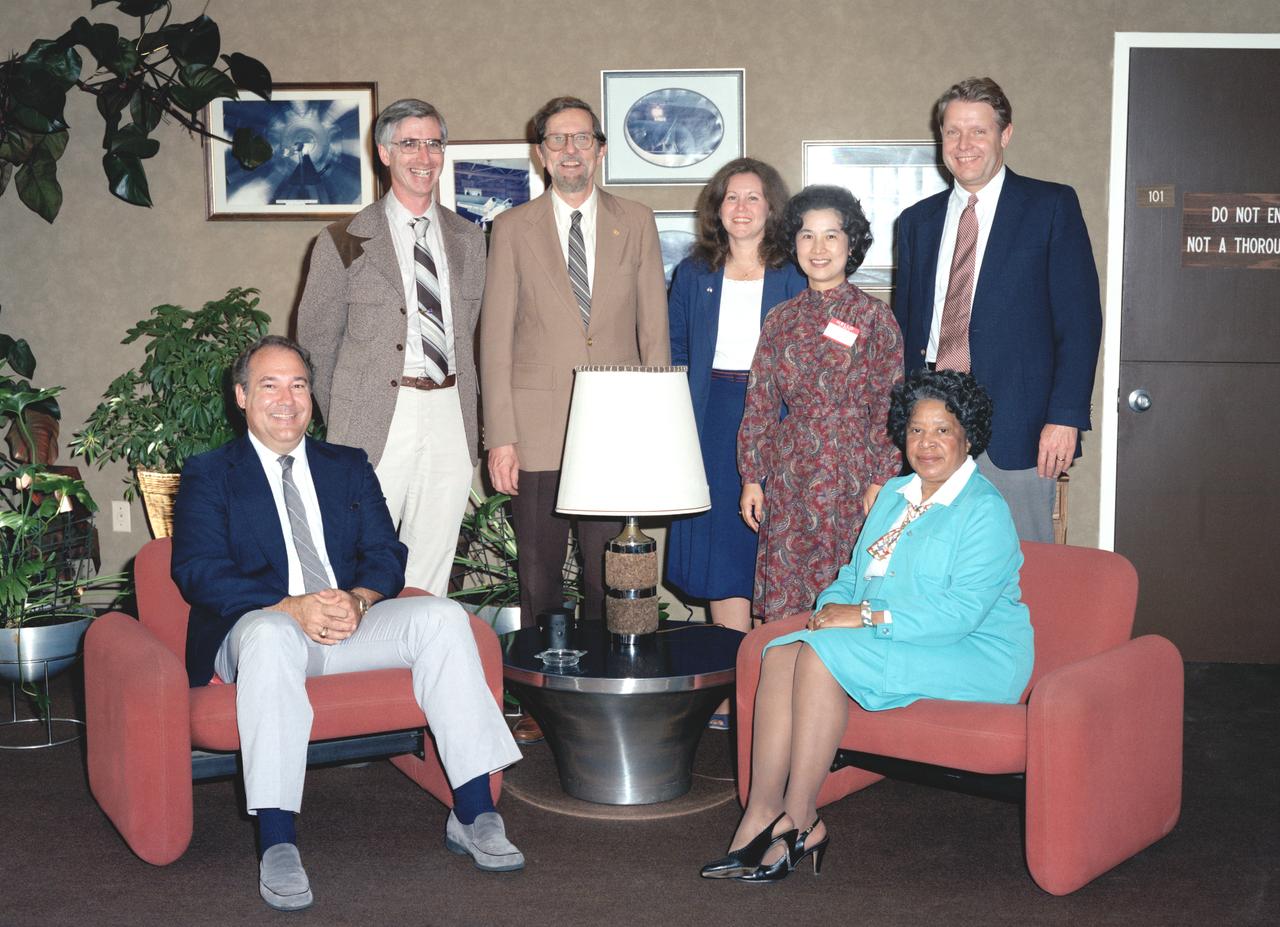
Federal Women's Program Mary Jackson setting. Center directors Donald Heath, and Richard Peterson. In 1958 Mary Jackson became NASA’s first black female engineer.
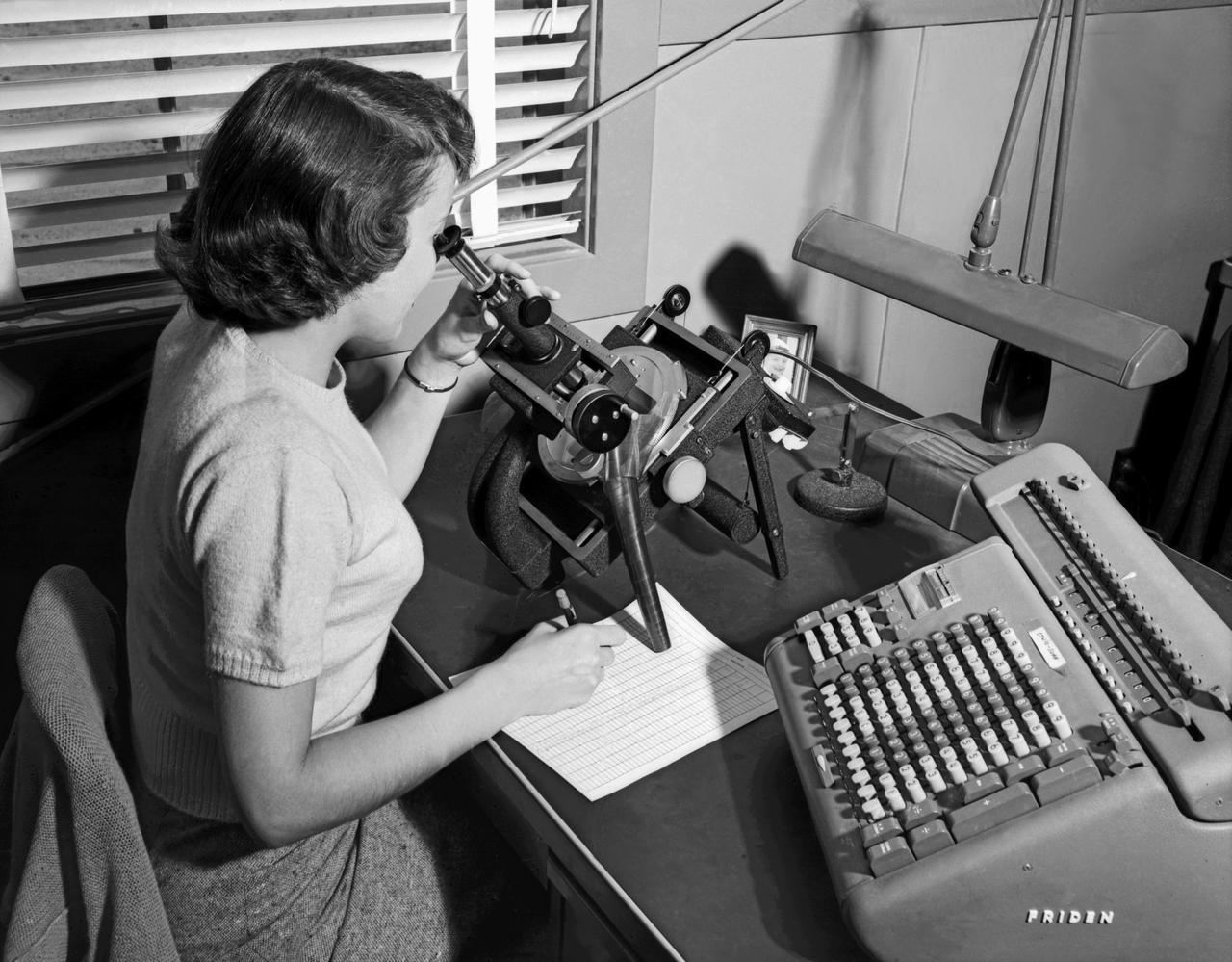
Langely Women Computer with X-4 with Friden machine. Publicity photo from Muroc California, showing female support personnel with equipment. Langley Computer with Friden machine.
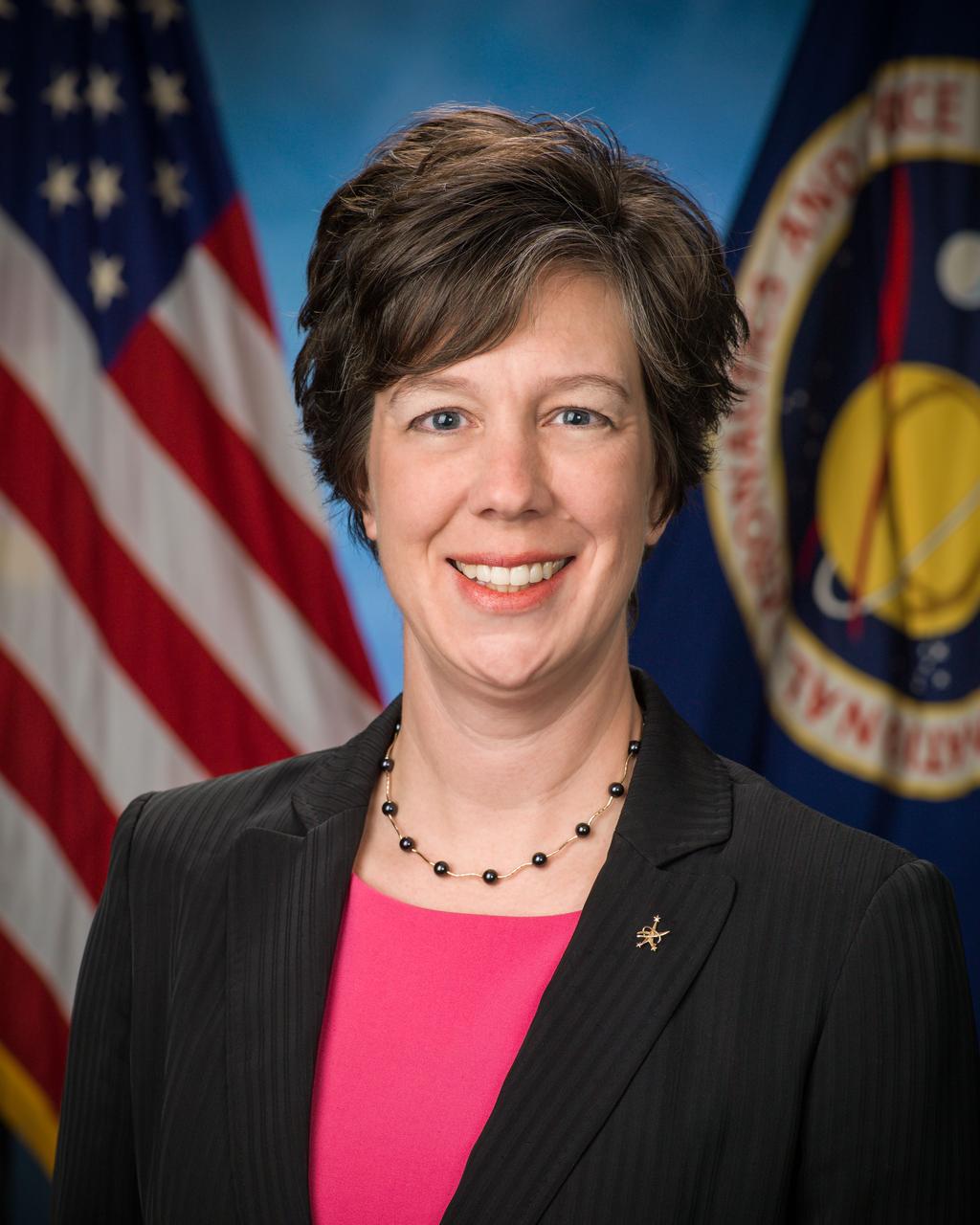
Holly Ridings is a global leader in human spaceflight. She is NASA's first female chief flight director, and currently leads the Gateway Program as its deputy program manager.
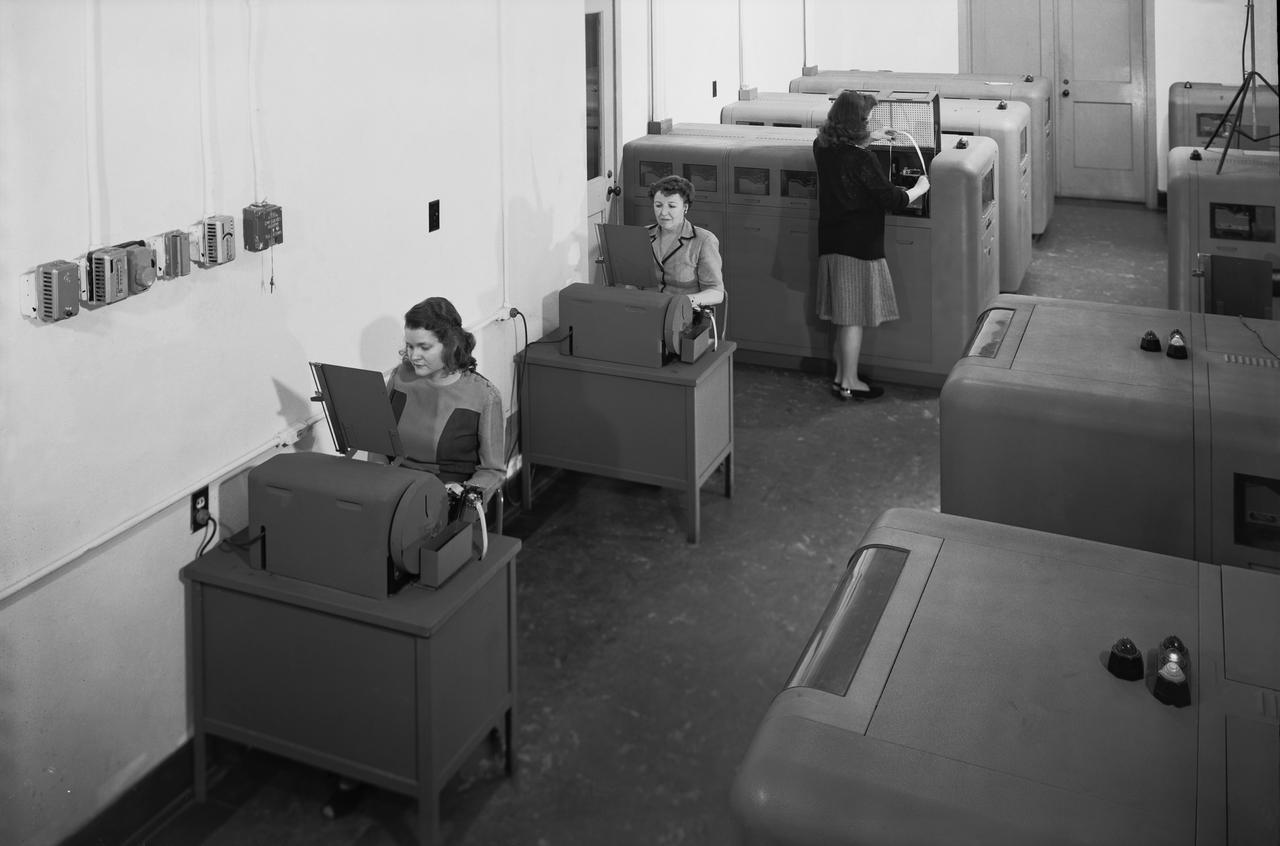
Langley's human computers at work in 1947. The female presence at Langley, who performed mathematical computations for male staff. -- Photograph published in Winds of Change, 75th Anniversary NASA publication (page 48), by James Schultz.
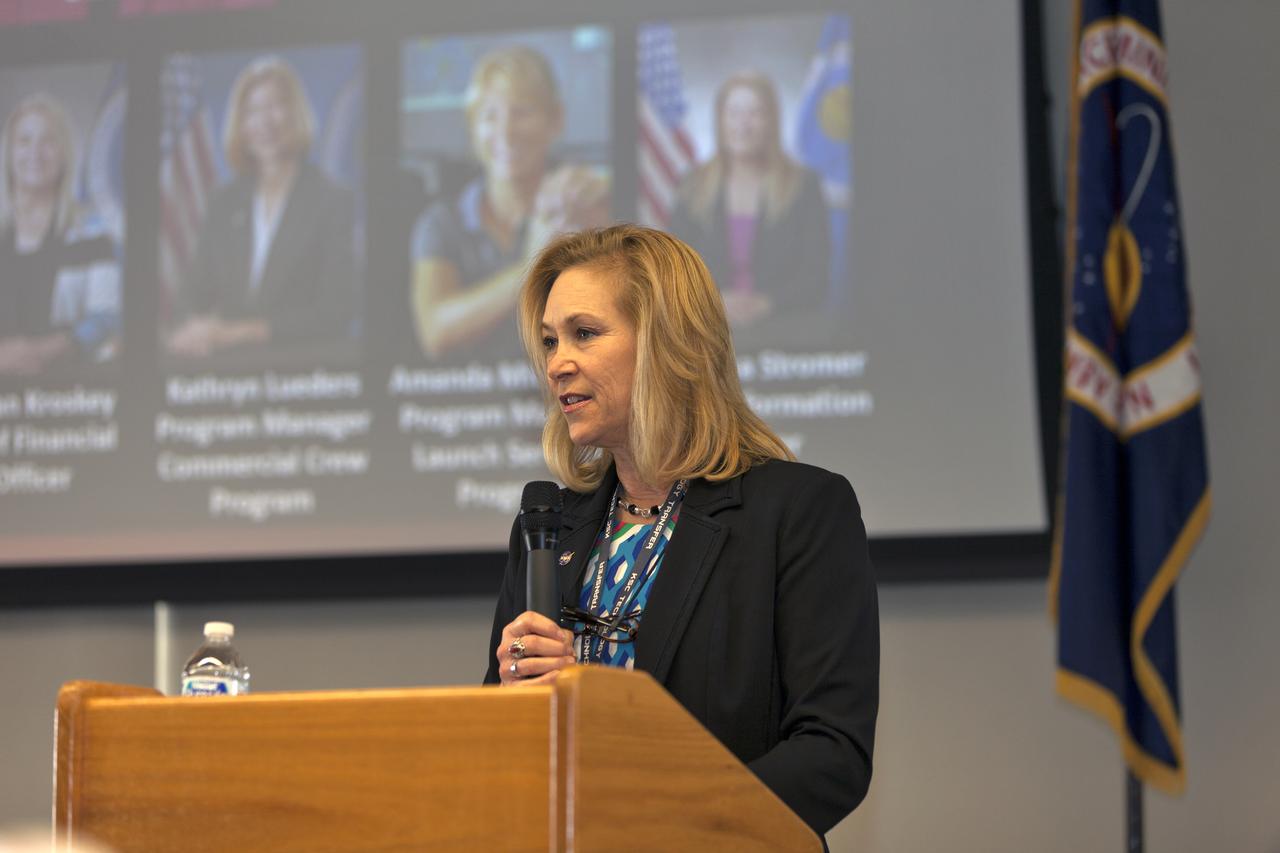
NASA Kennedy Space Center's Deputy Director Janet Petro welcomes workers to the center's Women's History Month event, with the theme "Nevertheless She Persisted." Keynote speaker, JoAnn Morgan, former associate director of the center, spoke to the group about her experience as the first female engineer working in the space program in the 1960s. Morgan was the first female in the Launch Control Center firing room during the Apollo 11 launch. The event was hosted by the center's Kennedy Networking Opportunities for Women (KNOW) and Launching Leaders organizations. The purpose of KNOW is to provide focus on issues such as employment, retention, promotion, training, career and personal development, education, and identify and eliminate barriers that hinder the advancement of women in the workforce.
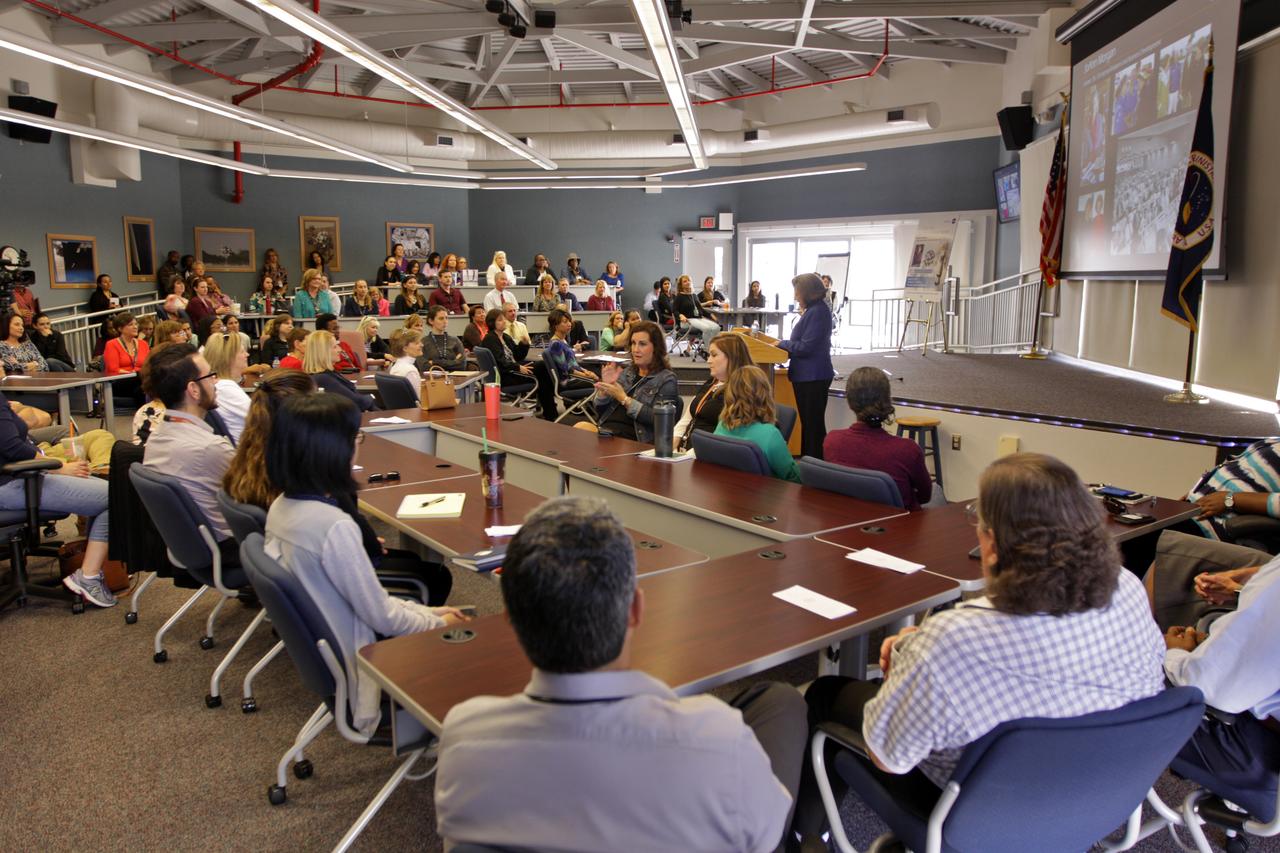
JoAnn Morgan, former associate director of NASA Kennedy Space Center, speaks to workers during a Women's History Month event at the center. With the theme "Nevertheless She Persisted," Morgan described her experience as the first female engineer working in the space program in the 1960s. Morgan was the first female in the Launch Control Center firing room during the Apollo 11 launch. The event was hosted by the center's Kennedy Networking Opportunities for Women (KNOW) and Launching Leaders organizations. The purpose of KNOW is to provide focus on issues such as employment, retention, promotion, training, career and personal development, education, and identify and eliminate barriers that hinder the advancement of women in the workforce.
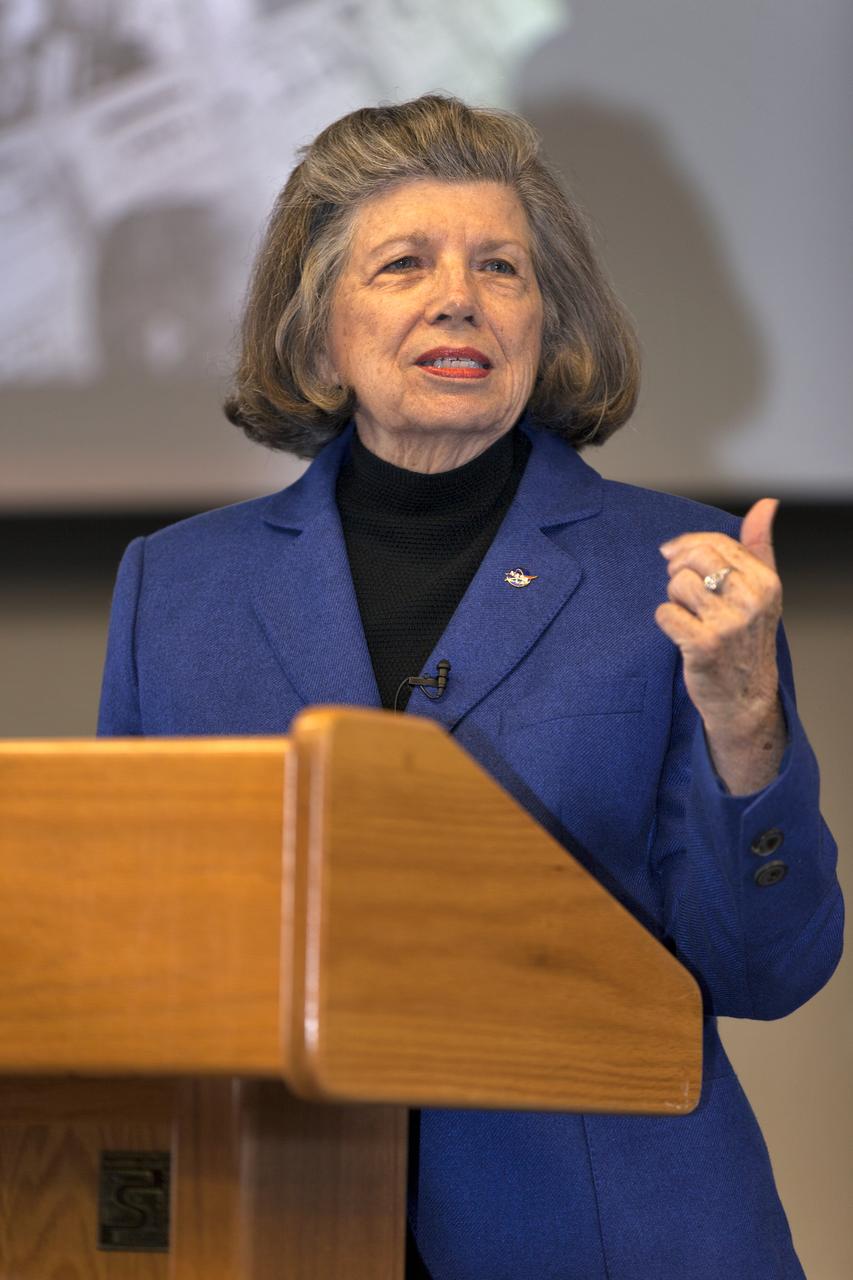
JoAnn Morgan, former associate director of NASA Kennedy Space Center, was the keynote speaker during a Women's History Month event at the center. With the theme "Nevertheless She Persisted," Morgan described her experience as the first female engineer working in the space program in the 1960s. Morgan was the first female in the Launch Control Center firing room during the Apollo 11 launch. The event was hosted by the center's Kennedy Networking Opportunities for Women (KNOW) and Launching Leaders organizations. The purpose of KNOW is to provide focus on issues such as employment, retention, promotion, training, career and personal development, education, and identify and eliminate barriers that hinder the advancement of women in the workforce.
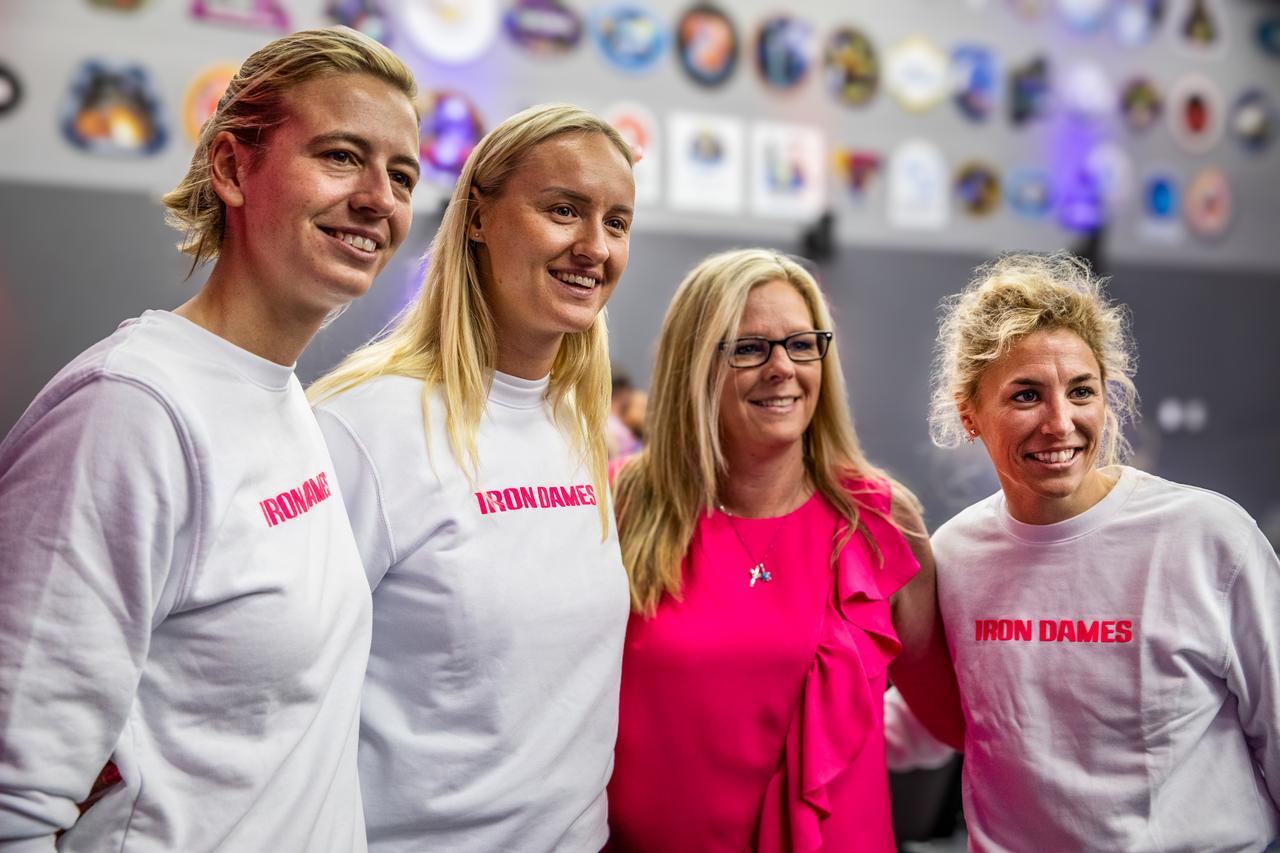
Members of the Iron Dames, from left to right, Sarah Bovy, Michelle Gatting, Christina Williams, business development specialist NASA Kennedy; and Iron Dames Rahel Frey, visit NASA’s Kennedy Space Center in Florida on Wednesday, March 13, 2024, to discuss their project to promote and support women in sports, and enable them to compete on equal terms with men in fields of jobs including driving, mechanics, engineers, and team leaders. The all-female team started in motorsports and became the first all-female team to win a race in the 2023 FIA World Endurance Championships at Sebring International Raceway in Sebring, Florida.
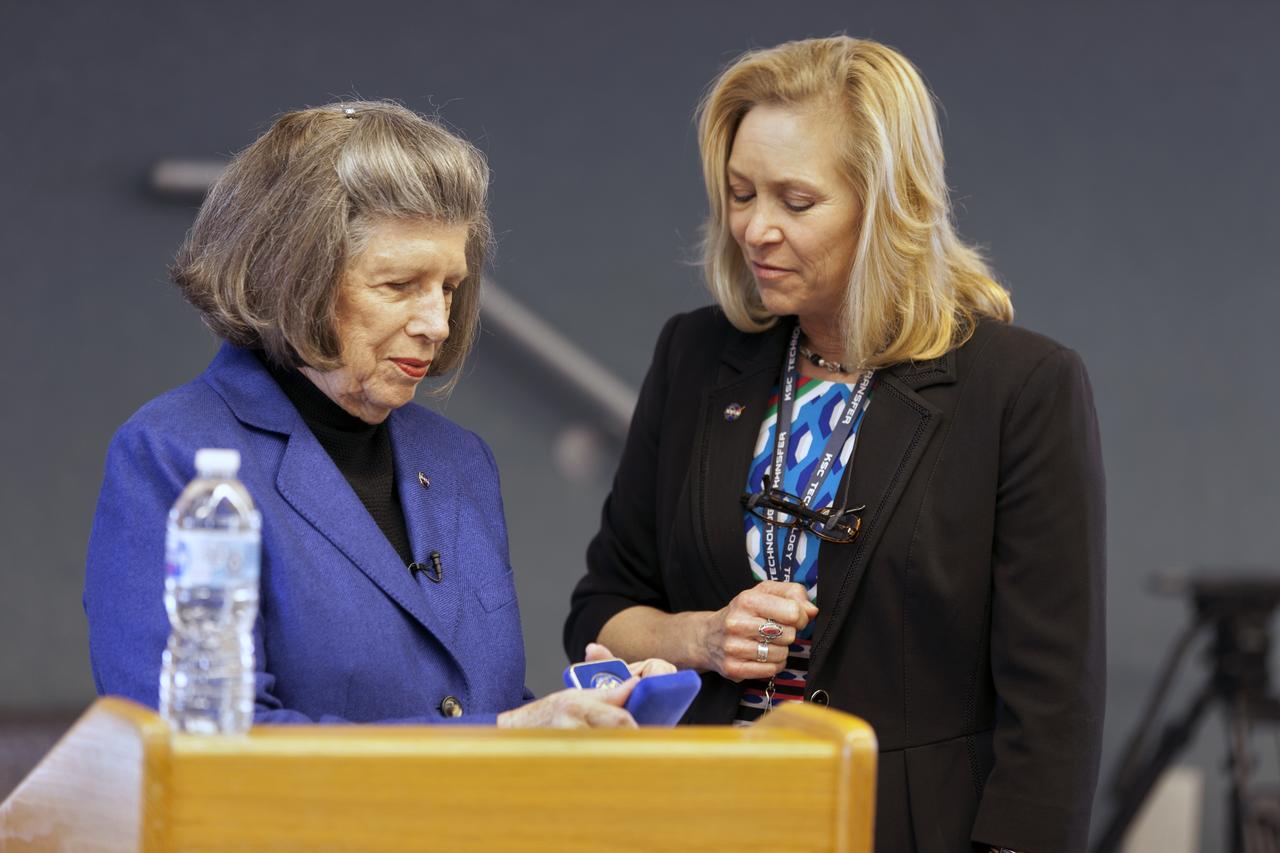
JoAnn Morgan, former associate director of Kennedy Space Center, at left, accepts a special coin from Janet Petro, deputy director of Kennedy, during a Women's History Month event at the center. With the theme "Nevertheless She Persisted," Morgan described her experience as the first female engineer working in the space program in the 1960s. Morgan was the first female in the Launch Control Center firing room during the Apollo 11 launch. The event was hosted by the center's Kennedy Networking Opportunities for Women (KNOW) and Launching Leaders organizations. The purpose of KNOW is to provide focus on issues such as employment, retention, promotion, training, career and personal development, education, and identify and eliminate barriers that hinder the advancement of women in the workforce.
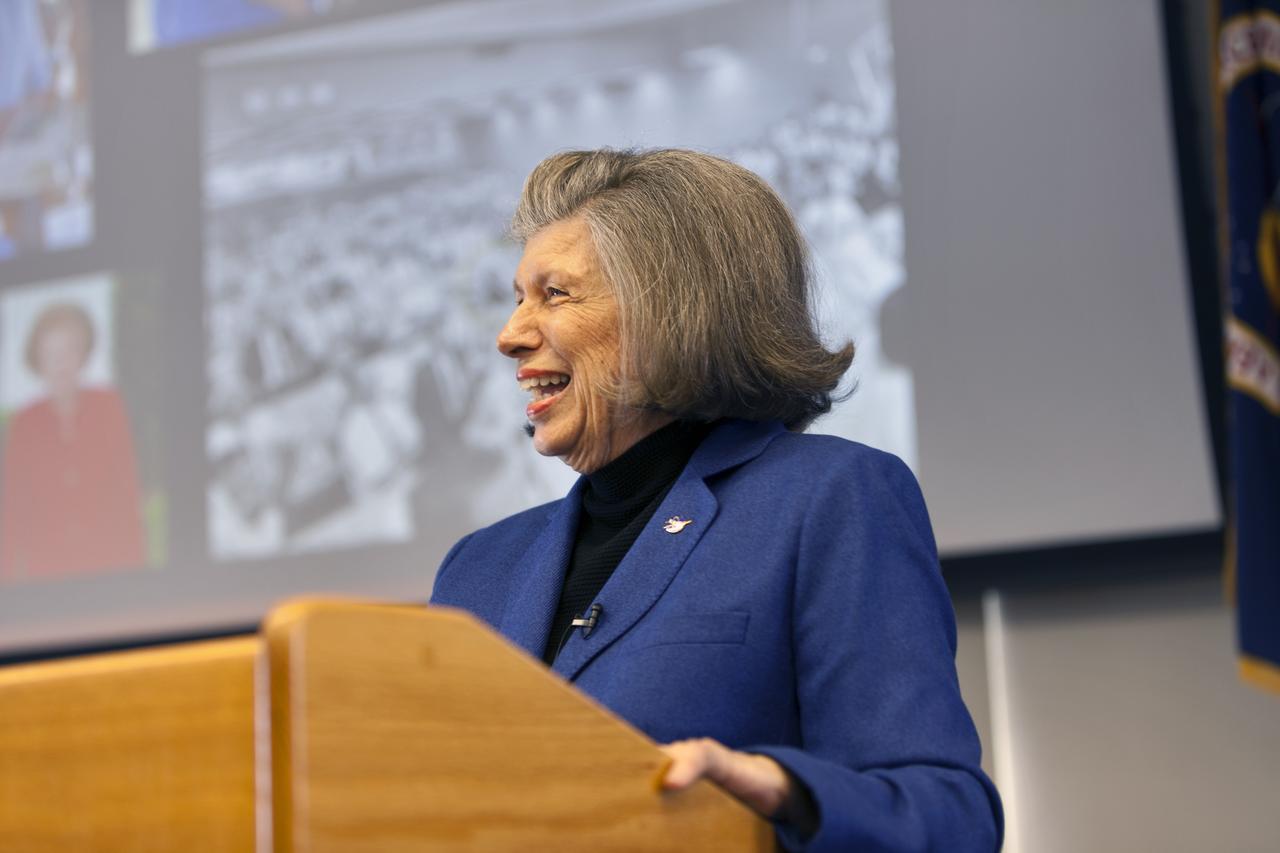
JoAnn Morgan, former associate director of Kennedy Space Center, was the keynote speaker during a Women's History Month event at the center. With the theme "Nevertheless She Persisted," Morgan described her experience as the first female engineer working in the space program in the 1960s. Morgan was the first female in the Launch Control Center firing room during the Apollo 11 launch. The event was hosted by the center's Kennedy Networking Opportunities for Women (KNOW) and Launching Leaders organizations. The purpose of KNOW is to provide focus on issues such as employment, retention, promotion, training, career and personal development, education, and identify and eliminate barriers that hinder the advancement of women in the workforce.
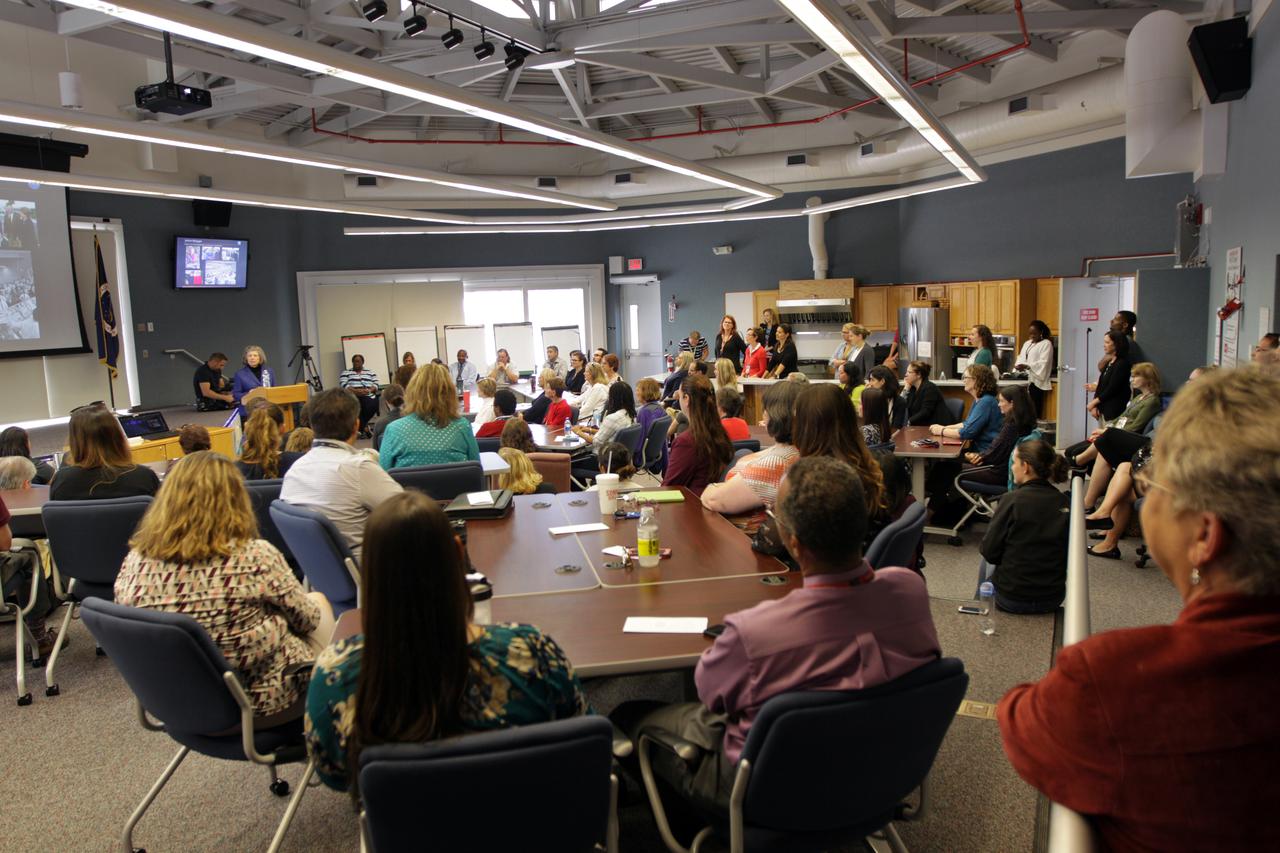
JoAnn Morgan, far left at the podium, former associate director of Kennedy Space Center, was the keynote speaker during a Women's History Month event at the center. With the theme "Nevertheless She Persisted," Morgan described her experience as the first female engineer working in the space program in the 1960s. Morgan was the first female in the Launch Control Center firing room during the Apollo 11 launch. The event was hosted by the center's Kennedy Networking Opportunities for Women (KNOW) and Launching Leaders organizations. The purpose of KNOW is to provide focus on issues such as employment, retention, promotion, training, career and personal development, education, and identify and eliminate barriers that hinder the advancement of women in the workforce.
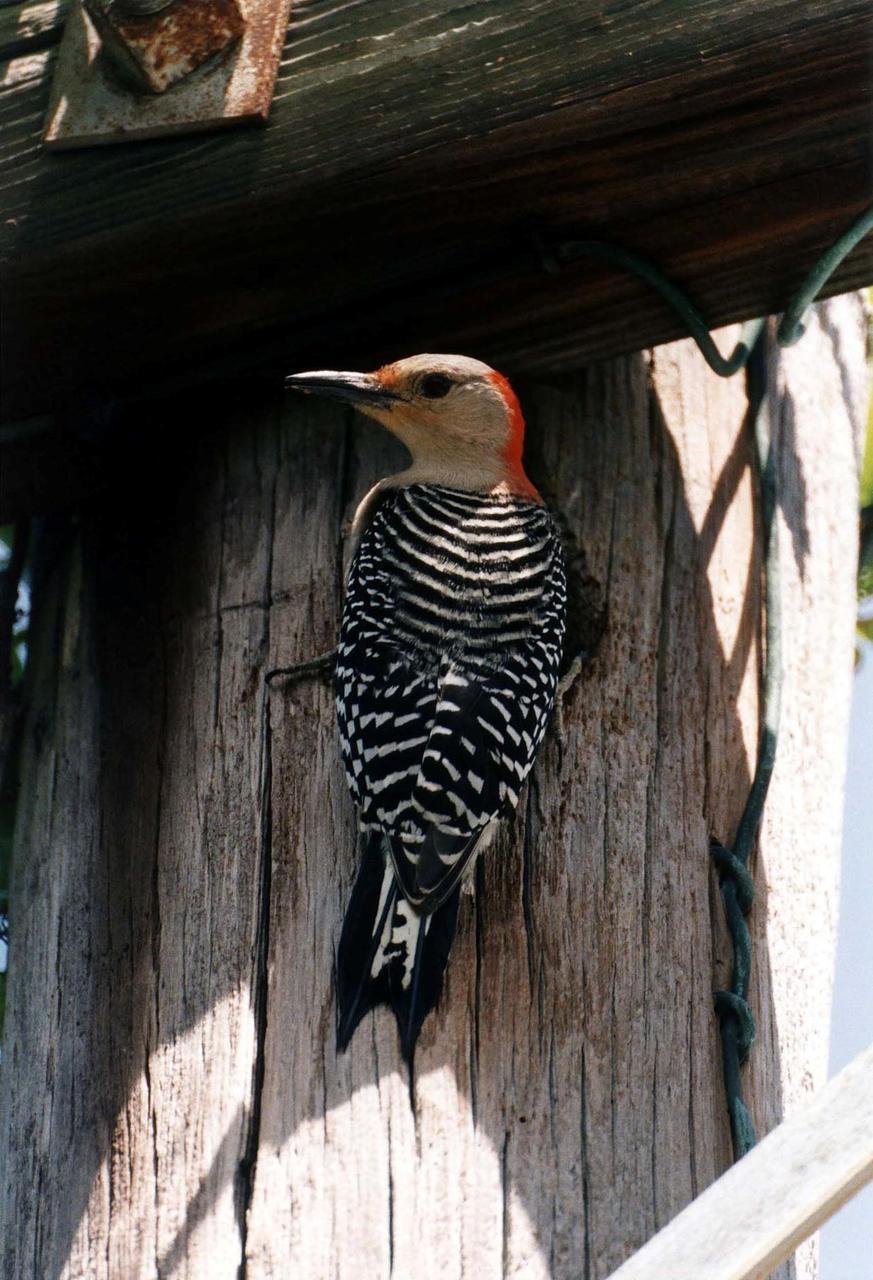
KENNEDY SPACE CENTER, FLA. - A female Red-bellied Woodpecker clings to a utility pole where it has made a home on Merritt Island Wildlife Refuge. The most common type of woodpecker in the South, the "Zebraback" nests in the cavities of trees and consumes large quantities of wood-boring beetles, as well as other insect pests. More than 280 species of birds make their homes on the 140,000-acre refuge, which lies within the boundaries of Kennedy Space Center.

S79-29592 (28 Feb 1979) --- Sporting their new Shuttle-type constant-wear garments, these six astronaut candidates pose for a picture in the crew systems laboratory at the Johnson Space Center (JSC) with the personnel rescue enclosure (PRE) or "rescue ball" and an unoccupied Apollo EMU. From left to right are Rhea Seddon, Kathryn D. Sullivan, Judith A. Resnik, Sally K. Ride, Anna L. Fisher and Shannon W. Lucid.

S79-29594 (28 Feb 1979) --- Sporting their new Shuttle-type constant-wear garments, these six astronaut candidates pose for a picture in the crew systems laboratory at the Johnson Space Center (JSC). From left to right are Rhea Seddon, Sally K. Ride, Kathryn D. Sullivan, Shannon W. Lucid, Anna L. Fisher and Judith A. Resnik.

S79-29596 (28 Feb 1979) --- Contrasting the old with the new, six astronaut candidates pose for photographers in their new constant wear garments, ideal for the zero-gravity tasks in the pressurized environs of Space Shuttle. The "old" is an Apollo type spacesuit used for extravehicular activity (EVA). From left to right are Shannon W. Lucid, Rhea Seddon, Kathryn D. Sullivan, Judith A. Resnik, Anna L. Fisher and Sally K. Ride.
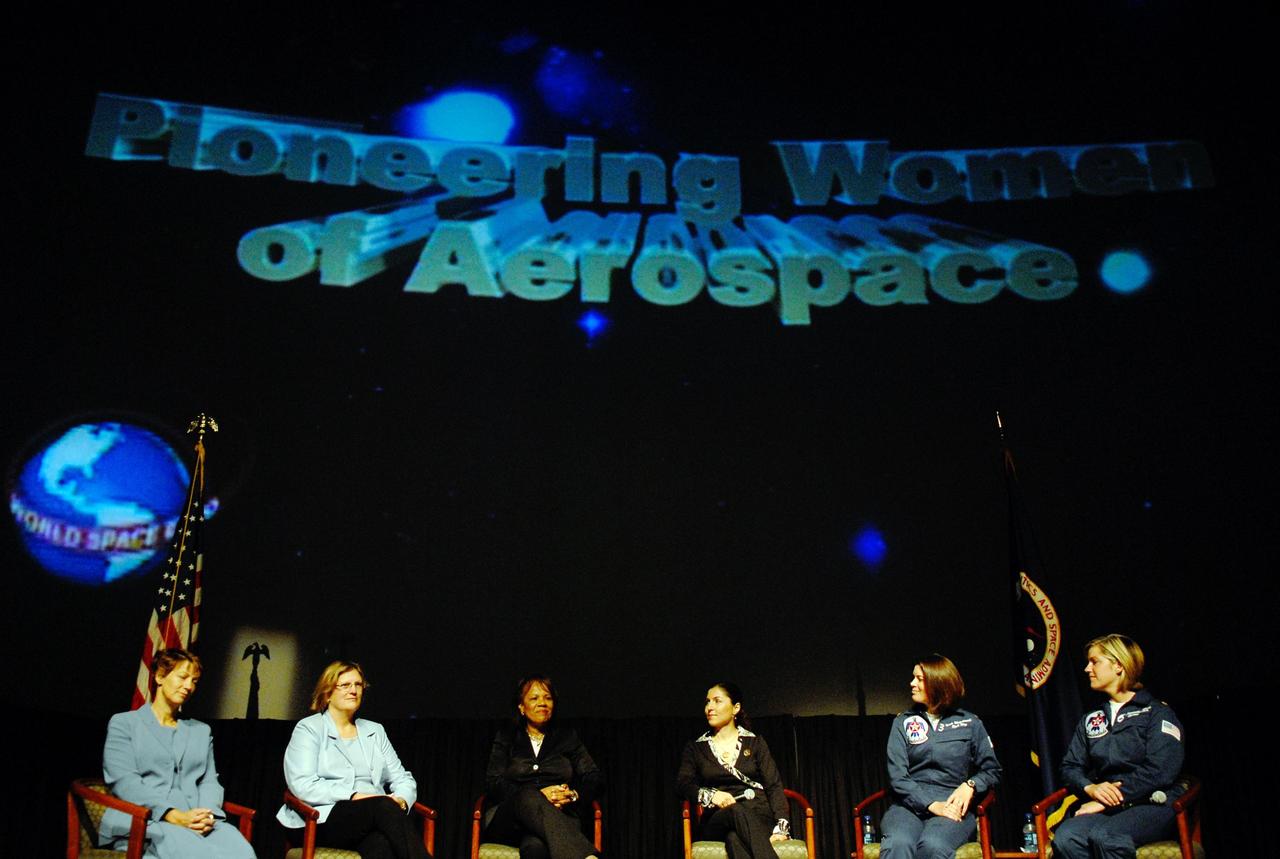
KENNEDY SPACE CENTER, FLA. — On stage for the World Space Expo's Pioneering Women of Aerospace forum are Ret. Colonel Eileen Collins, the first female shuttle commander; Dr. Kathryn D. Sullivan, the first American woman to spacewalk; Patricia Grace Smith, with the FAA, the first associate administrator of commercial space transportation; Dr. Anousheh Ansari, a spaceflight participant; Major Nicole Malachowski, the first female pilot with the U.S. Air Force Thunderbirds; and Major Samantha Weeks, the first female solo pilot with the U.S. Air Force Thunderbirds. The expo commemorates humanity's first 50 years in space while looking forward to returning people to the moon and exploring beyond. The expo showcased various panels, presentations and educational programs, as well as an aerial salute featuring the U.S. Air Force Thunderbirds, U.S. Air Force F-22 Raptor, U.S. Navy F-18 Super Hornet, U.S. Air Force F-15 Eagle, the P-51 Mustang Heritage Flight, and the U.S. Air Force 920th Rescue Wing, which was responsible for Mercury and Gemini capsule recovery. The U.S. Army Golden Knights also demonstrated precision skydiving. Photo credit: NASA/Kim Shiflett

Jerrie Cobb prepares to operate the Multi-Axis Space Test Inertia Facility (MASTIF) inside the Altitude Wind Tunnel at the National Aeronautics and Space Administration (NASA) Lewis Research Center. The MASTIF was a three-axis rig with a pilot’s chair mounted in the center to train Project Mercury pilots to bring a spinning spacecraft under control. An astronaut was secured in a foam couch in the center of the rig. The rig was then spun on three axes from 2 to 50 rotations per minute. The pilots were tested on each of the three axis individually, then all three simultaneously. The two controllers in Cobb’s hands activated the small nitrogen gas thrusters that were used to bring the MASTIF under control. A makeshift spacecraft control panel was set up in front of the trainee’s face. Cobb was one of several female pilots who underwent the skill and endurance testing that paralleled that of the Project Mercury astronauts. In 1961 Jerrie Cobb was the first female to pass all three phases of the Mercury Astronaut Program. NASA rules, however, stipulated that only military test pilots could become astronauts and there were no female military test pilots. The seven Mercury astronauts had taken their turns on the MASTIF in February and March 1960.
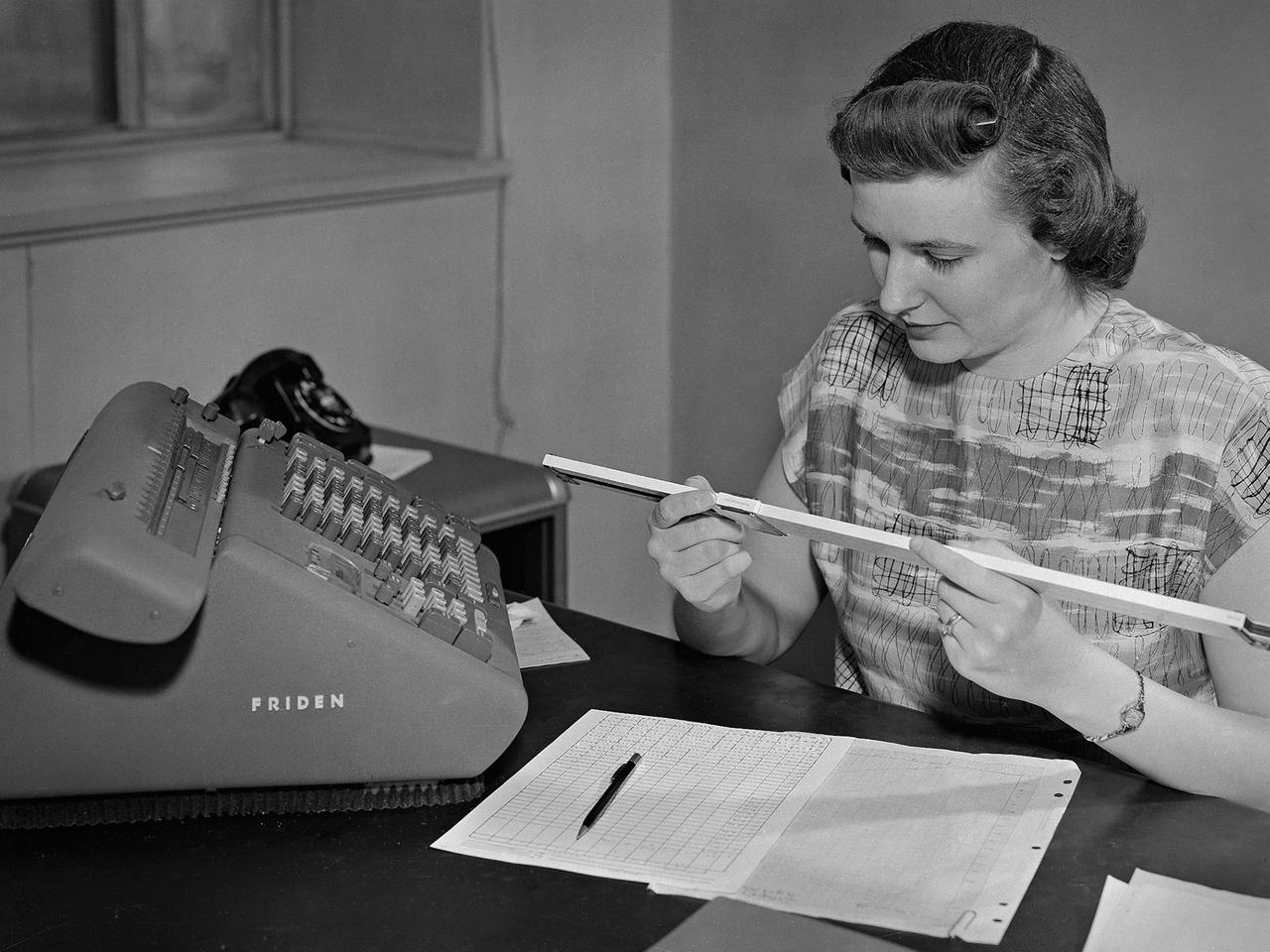
A female computer at the National Advisory Committee for Aeronautics (NACA) Lewis Flight Propulsion Laboratory with a slide rule and Friden adding machine to make computations. The computer staff was introduced during World War II to relieve short-handed research engineers of some of the tedious computational work. The Computing Section was staffed by “computers,” young female employees, who often worked overnight when most of the tests were run. The computers obtained test data from the manometers and other instruments, made the initial computations, and plotted the data graphically. Researchers then analyzed the data and summarized the findings in a report or made modifications and ran the test again. There were over 400 female employees at the laboratory in 1944, including 100 computers. The use of computers was originally planned only for the duration of the war. The system was so successful that it was extended into the 1960s. The computers and analysts were located in the Altitude Wind Tunnel Shop and Office Building office wing during the 1940s and transferred to the new 8- by 6-Foot Supersonic Wind Tunnel in 1948.
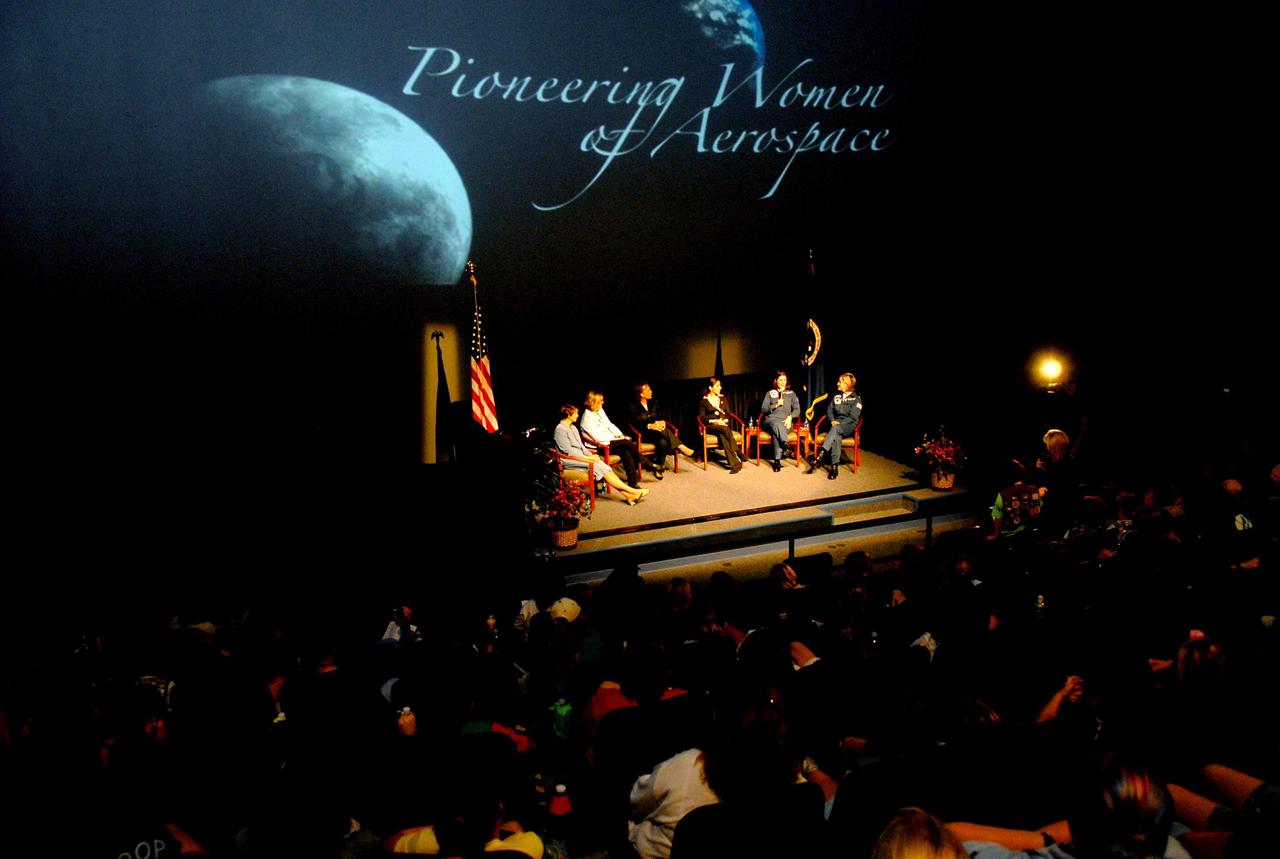
KENNEDY SPACE CENTER, FLA. — In the spotlight for the World Space Expo's Pioneering Women of Aerospace forum are Ret. Colonel Eileen Collins, the first female shuttle commander; Dr. Kathryn D. Sullivan, the first American woman to spacewalk; Patricia Grace Smith, with the FAA, the first associate administrator of commercial space transportation; Dr. Anousheh Ansari, a spaceflight participant; Major Nicole Malachowski, the first female pilot with the U.S. Air Force Thunderbirds; and Major Samantha Weeks, the first female solo pilot with the U.S. Air Force Thunderbirds. The expo commemorates humanity's first 50 years in space while looking forward to returning people to the moon and exploring beyond. The expo showcased various panels, presentations and educational programs, as well as an aerial salute featuring the U.S. Air Force Thunderbirds, U.S. Air Force F-22 Raptor, U.S. Navy F-18 Super Hornet, U.S. Air Force F-15 Eagle, the P-51 Mustang Heritage Flight, and the U.S. Air Force 920th Rescue Wing, which was responsible for Mercury and Gemini capsule recovery. The U.S. Army Golden Knights also demonstrated precision skydiving. Photo credit: NASA/Kim Shiflett
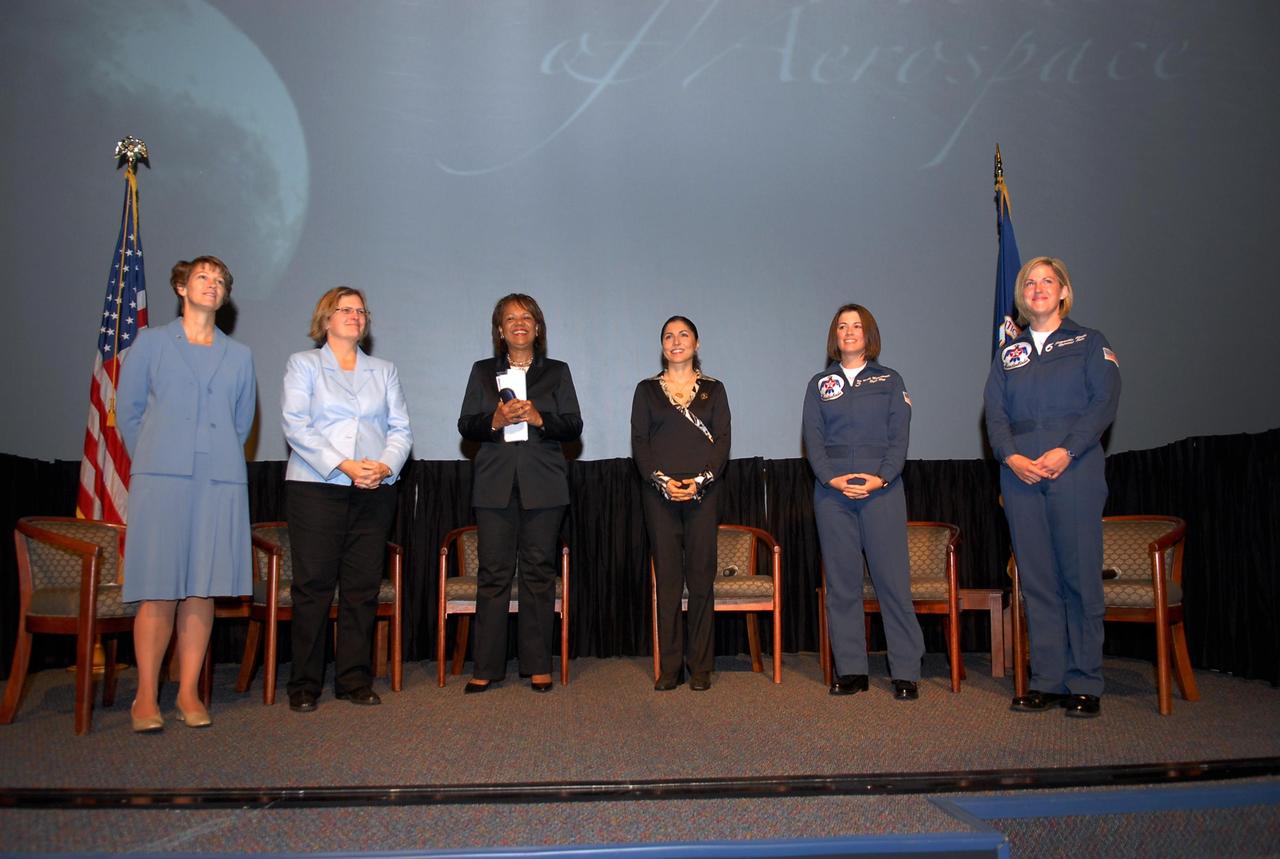
KENNEDY SPACE CENTER, FLA. — On stage for the World Space Expo's Pioneering Women of Aerospace forum are Ret. Colonel Eileen Collins, the first female shuttle commander; Dr. Kathryn D. Sullivan, the first American woman to spacewalk; Patricia Grace Smith, with the FAA, the first associate administrator of commercial space transportation; Dr. Anousheh Ansari, a spaceflight participant ; Major Nicole Malachowski, the first female pilot with the U.S. Air Force Thunderbirds; and Major Samantha Weeks, the first female solo pilot with the U.S. Air Force Thunderbirds. The expo commemorates humanity's first 50 years in space while looking forward to returning people to the moon and exploring beyond. The expo showcased various panels, presentations and educational programs, as well as an aerial salute featuring the U.S. Air Force Thunderbirds, U.S. Air Force F-22 Raptor, U.S. Navy F-18 Super Hornet, U.S. Air Force F-15 Eagle, the P-51 Mustang Heritage Flight, and the U.S. Air Force 920th Rescue Wing, which was responsible for Mercury and Gemini capsule recovery. The U.S. Army Golden Knights also demonstrated precision skydiving. Photo credit: NASA/Kim Shiflett
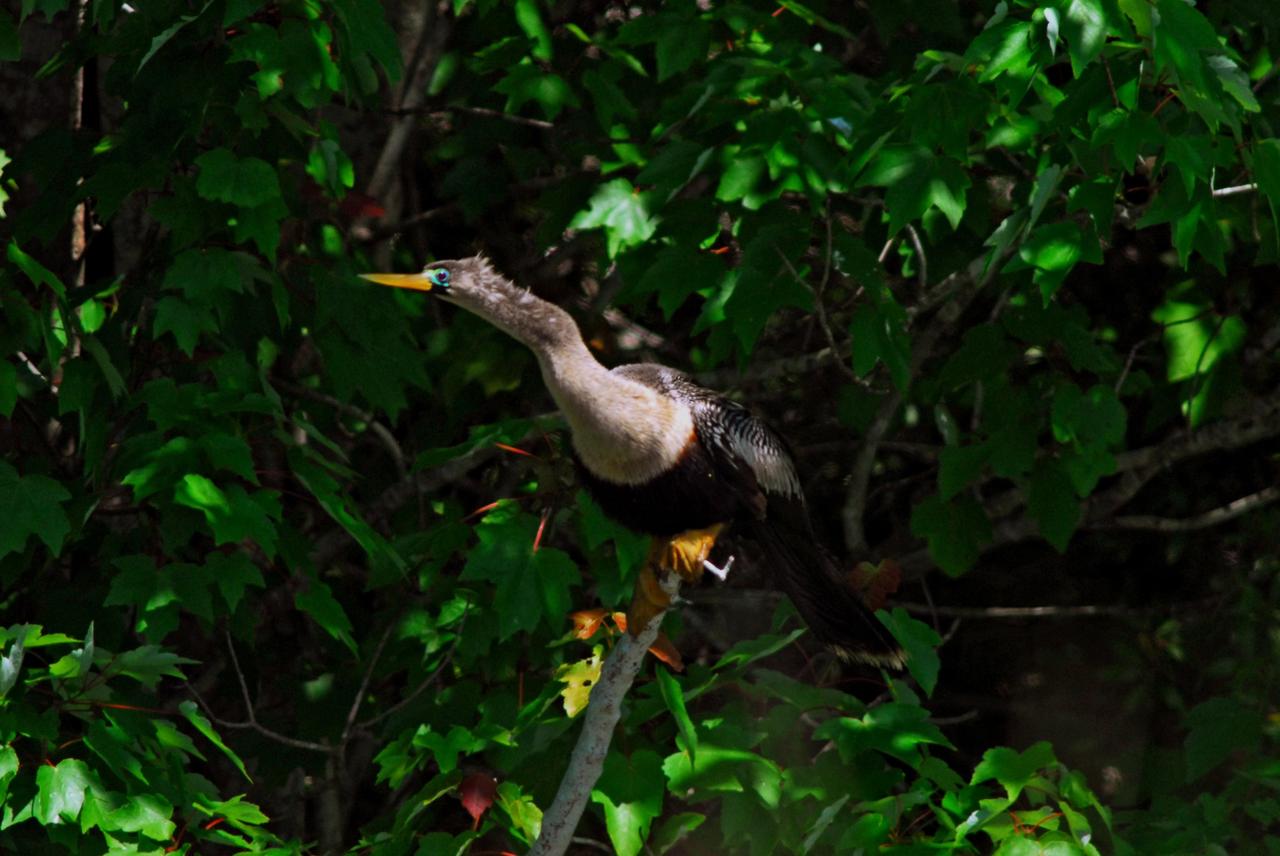
KENNEDY SPACE CENTER, FLA. -- A female anhinga roosts in branches near the water. Anhingas can be found in freshwater ponds and swamps where there is thick vegetation and tall trees. Male anhingas are black and gray; females are distinguished by a buff-colored neck and breast. When anhingas are in their breeding plumage they have a blue ring around their eyes, as seen here. The female lays three to five light blue eggs. The nest is in a tree and it is made of sticks and lined with leaves. The chicks hatch in about a month. Anhingas breed off the Gulf Coast and the Atlantic Coast from North Carolina to Texas and in the Mississippi Valley north to Kentucky and Missouri. They winter along the Gulf Coast north to North Carolina. The anhinga diet is primarily fish. Using their sharp bills, anhingas spear the fish, flip them in the air and swallow them head-first. KSC shares a boundary with the Merritt Island Wildlife Nature Refuge. The refuge is a habitat for more than 310 species of birds, 25 mammals, 117 fishes and 65 amphibians and reptiles. In addition, the Refuge supports 19 endangered or threatened wildlife species on Federal or State lists, more than any other single refuge in the U.S. Photo credit: NASA/Dimitri Gerondidakis
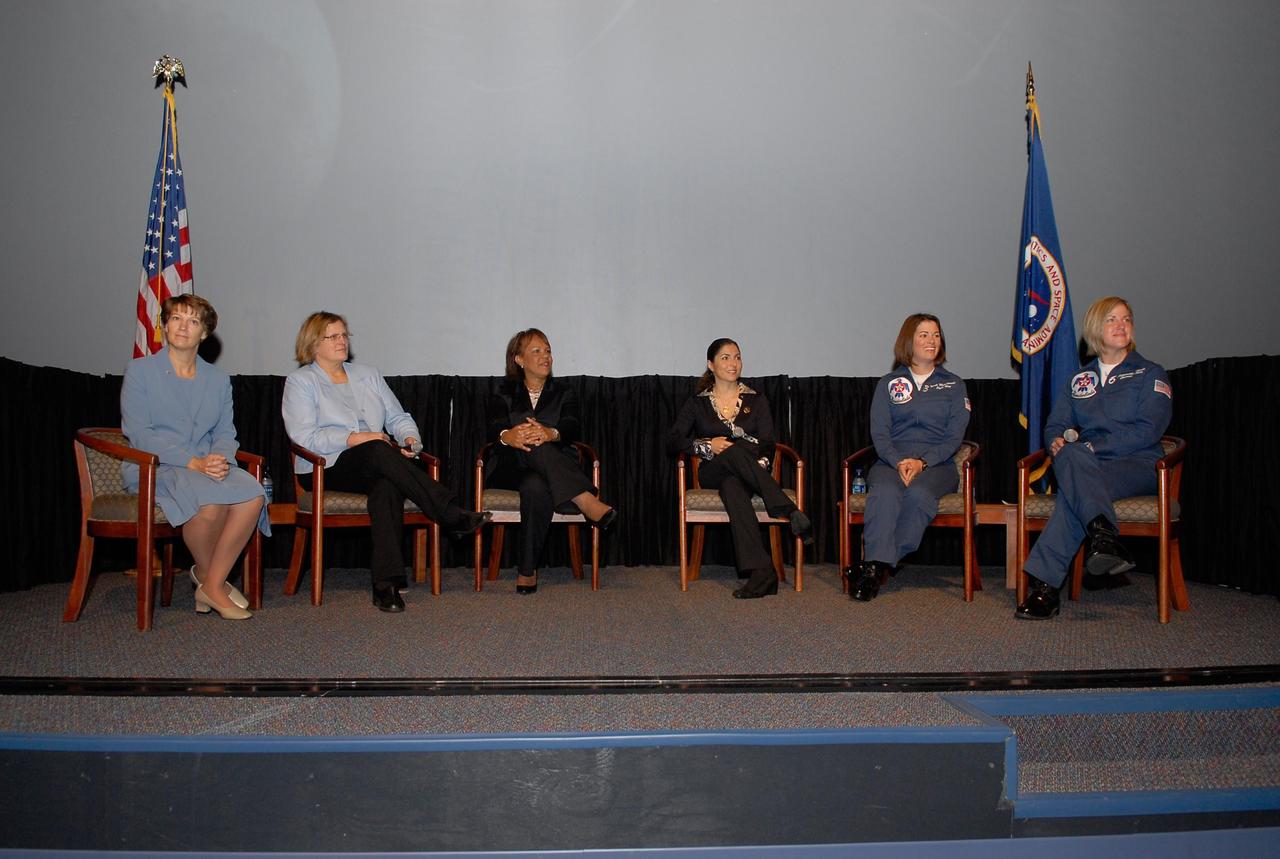
KENNEDY SPACE CENTER, FLA. — On stage for the World Space Expo's Pioneering Women of Aerospace forum are Ret. Colonel Eileen Collins, the first female shuttle commander; Dr. Kathryn D. Sullivan, the first American woman to spacewalk; Patricia Grace Smith, with the FAA, the first associate administrator of commercial space transportation; Dr. Anousheh Ansari, a spaceflight participant; Major Nicole Malachowski, the first female pilot with the U.S. Air Force Thunderbirds; and Major Samantha Weeks, the first female solo pilot with the U.S. Air Force Thunderbirds. The expo commemorates humanity's first 50 years in space while looking forward to returning people to the moon and exploring beyond. The expo showcased various panels, presentations and educational programs, as well as an aerial salute featuring the U.S. Air Force Thunderbirds, U.S. Air Force F-22 Raptor, U.S. Navy F-18 Super Hornet, U.S. Air Force F-15 Eagle, the P-51 Mustang Heritage Flight, and the U.S. Air Force 920th Rescue Wing, which was responsible for Mercury and Gemini capsule recovery. The U.S. Army Golden Knights also demonstrated precision skydiving. Photo credit: NASA/Kim Shiflett

jsc2023e064878 (10/4/2023) --- For the Rodent Research (RR-20) investigation, Avanelle Stoltz and Ashley Teate, part of Dr. Lane Christenson's lab, section and quantify ovarian follicular development to identify the effects of spaceflight and microgravity on female fertility. Ms. Stoltz sections fixed ovaries. Image courtesy of the University of Kansas Medical Center.
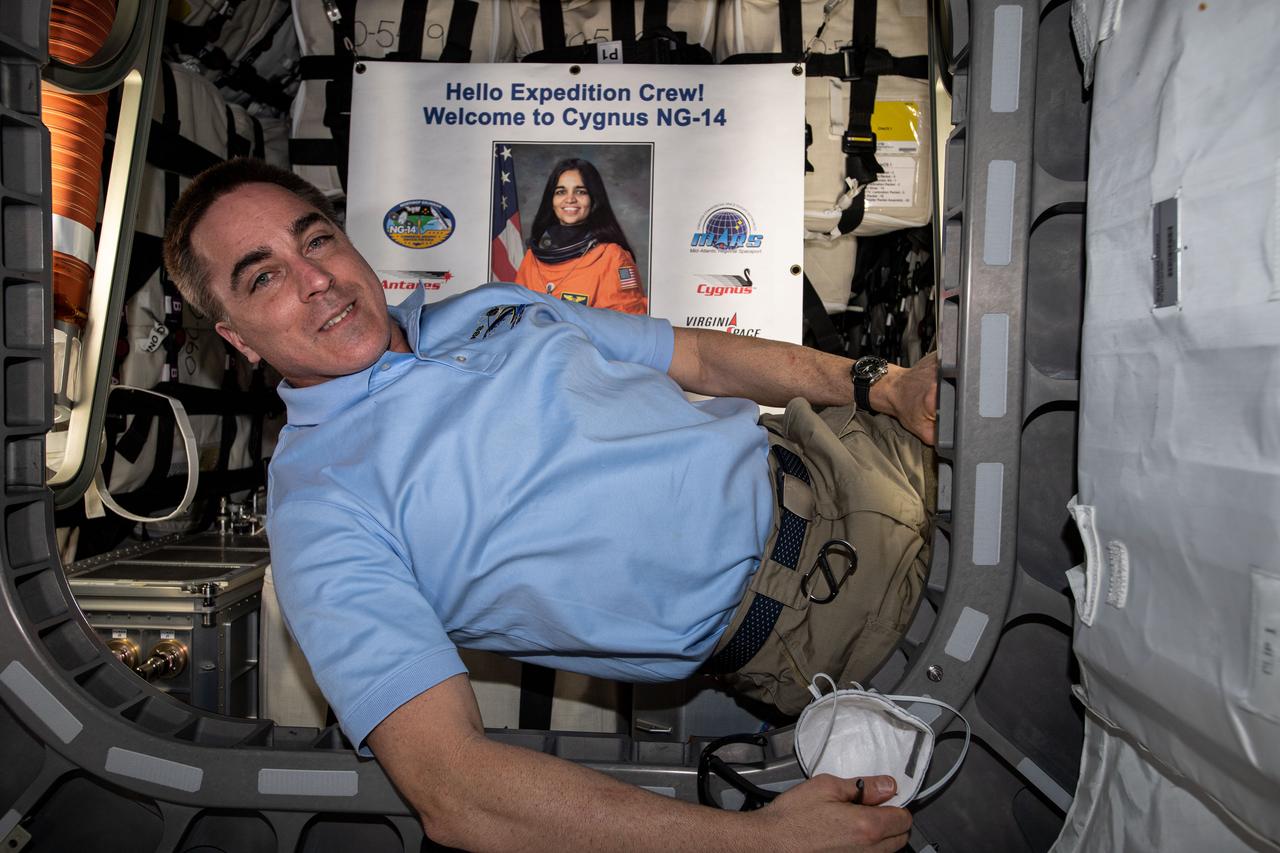
iss063e103888 (Oct. 5, 2020) --- NASA astronaut and Expedition 63 Commander Chris Cassidy is pictured inside the Northrop Grumman Cygnus space freighter named the S.S. Kalpana Chawla after the first female astronaut of Indian descent who also perished on the ill-fated STS-107 mission aboard Space Shuttle Columbia.
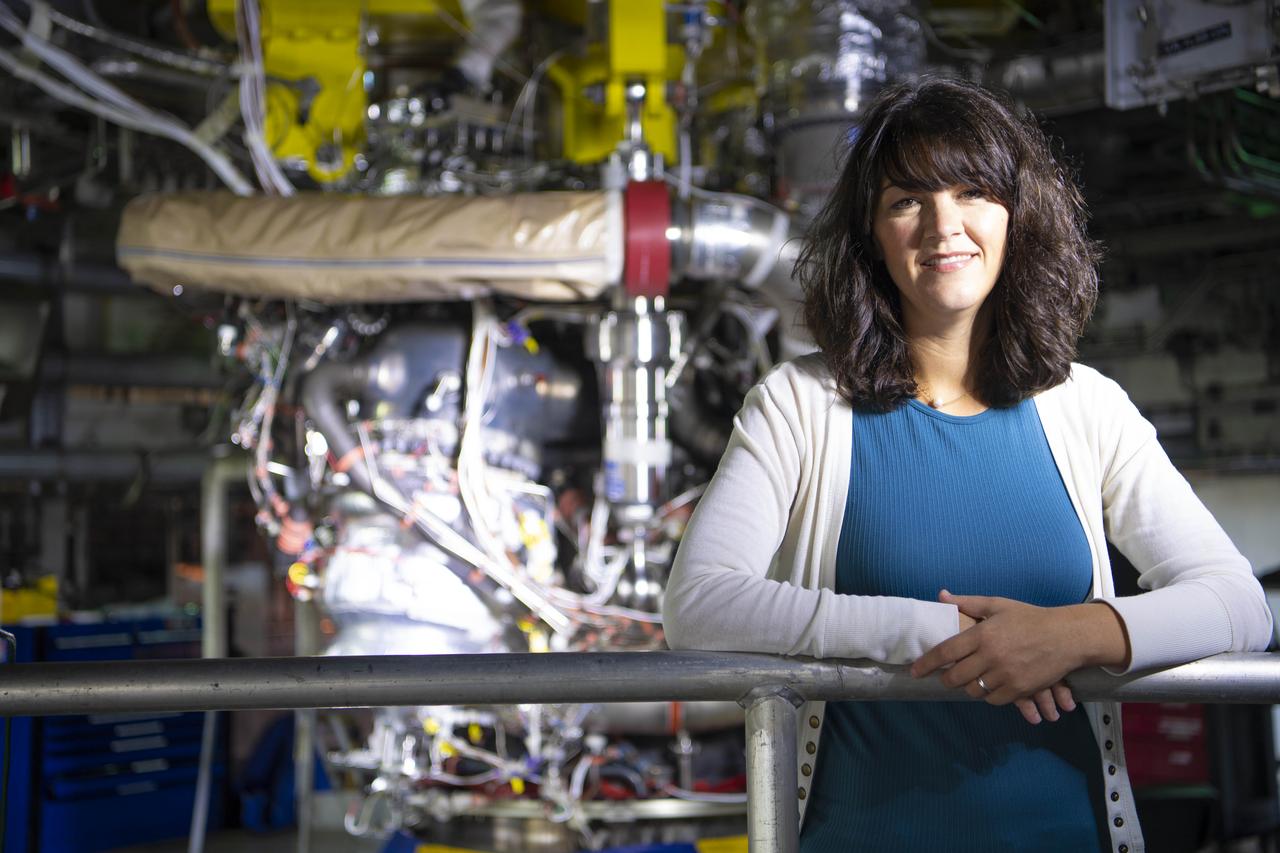
Nyla Trumbach, a NASA lead mechanical engineer, broke barriers as the first female to conduct a J-2X powerpack engine test at Stennis Space Center. She currently works on testing of the RS-25 rocket engine, shown installed on the A-1 Test Stand at SSC.

On July 16, 2019, the 50th anniversary of the Apollo 11 launch, Apollo-era launch team member JoAnn Morgan talks to NASA’s Derrol Nail at the agency’s Kennedy Space Center in Florida about what it was like to be the only female in the firing room on launch day.
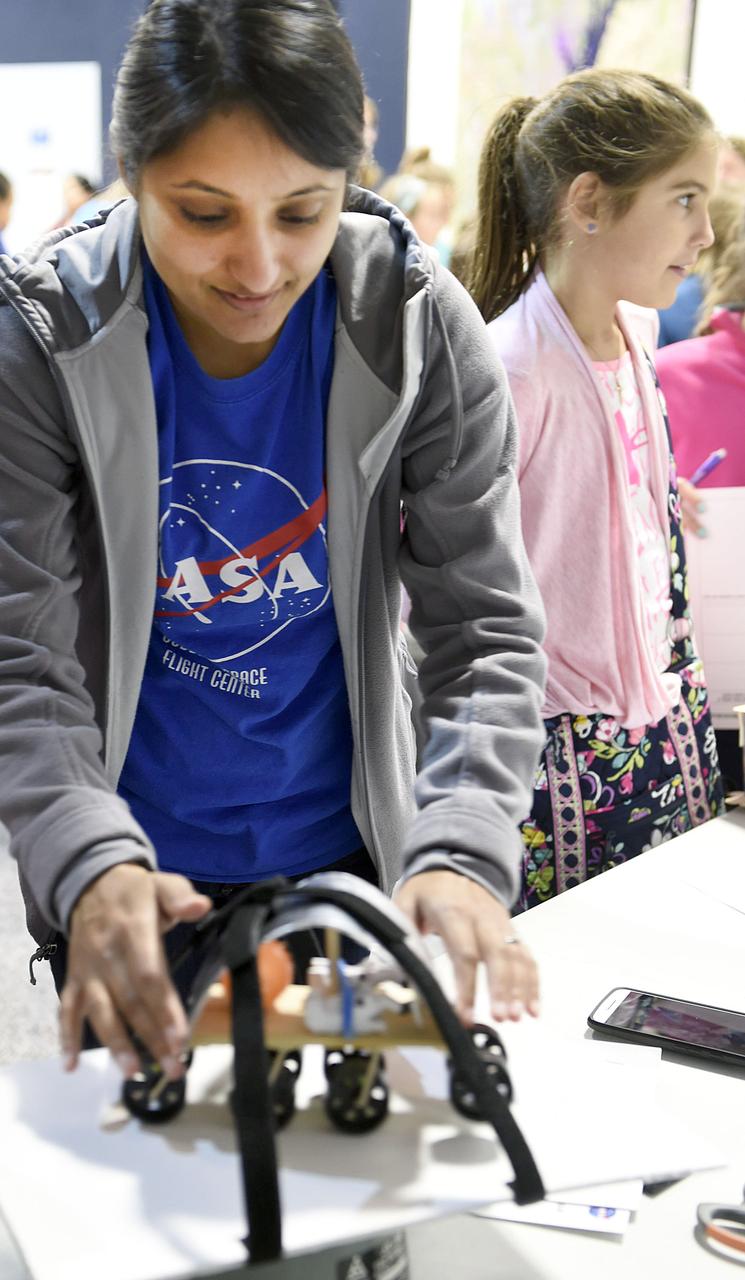
Junior Girl Scouts from two locals conceils, Girl Scouts of Central Maryland and Girl Scouts of Nations Capital, participated in She's an Engineer! Girl Scout program on November 3, 2016. They met with female NASA engineers and tested rover models in simulated I&T stations to explore the Engineering Design process.
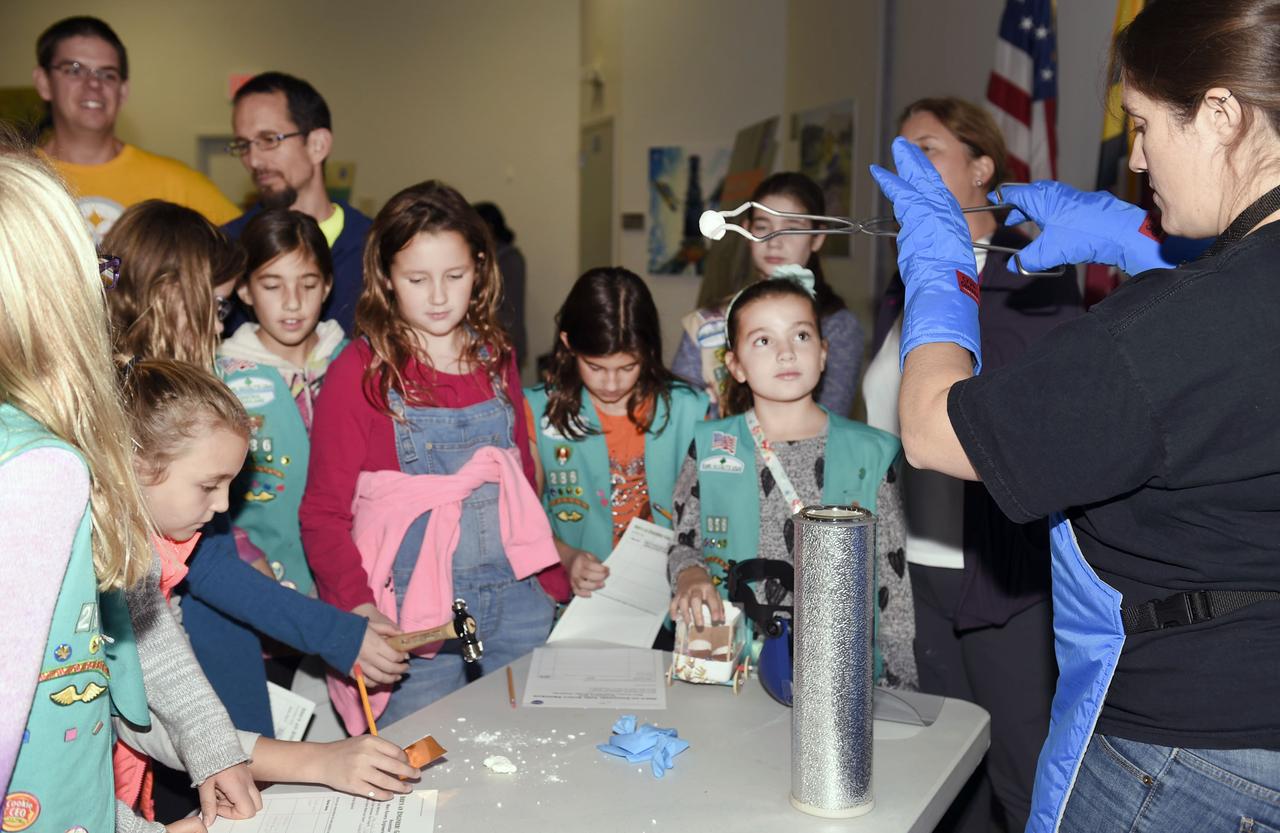
Junior Girl Scouts from two locals conceils, Girl Scouts of Central Maryland and Girl Scouts of Nations Capital, participated in She's an Engineer! Girl Scout program on November 3, 2016. They met with female NASA engineers and tested rover models in simulated I&T stations to explore the Engineering Design process.
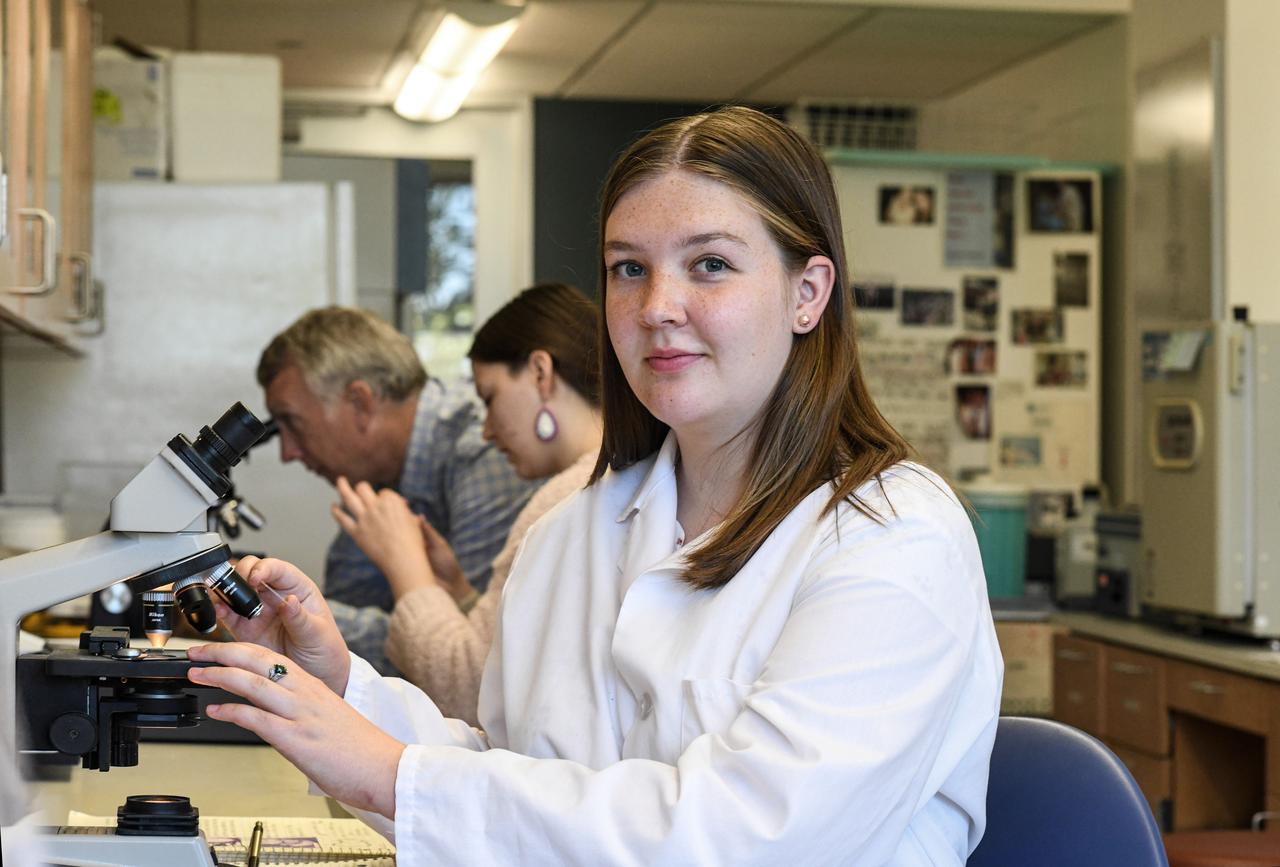
jsc2023e064879 (12/9/2023) --- Dr. Lane Christenson discusses the finer points of follicular classification and counts with Payton Nies. Rodent Research-20 (RR-20) evaluates ovarian function in female mice in microgravity, fertility following return to Earth, and the effect of spaceflight on the next generation. Image courtesy of the University of Kansas Medical Center.
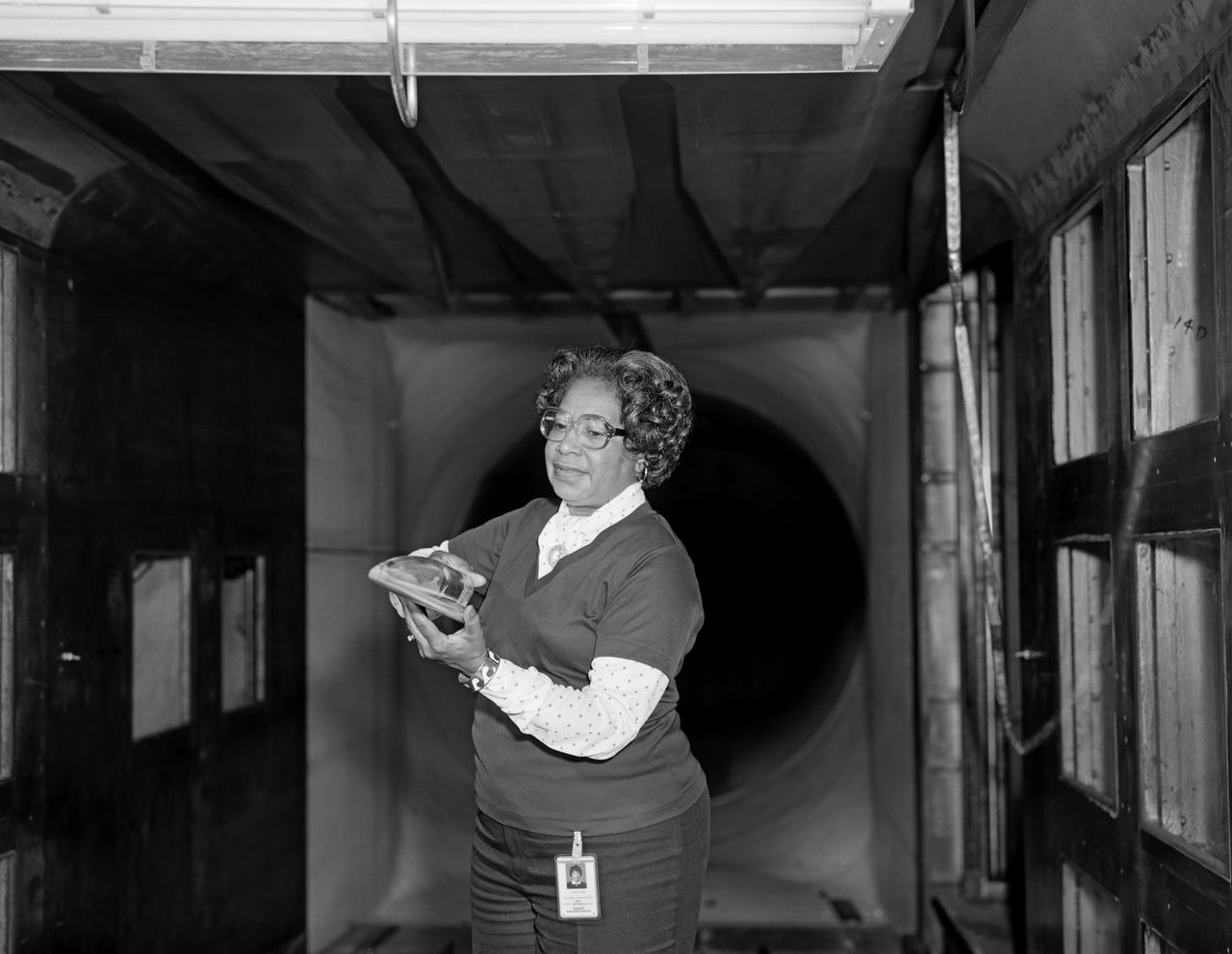
Mary Jackson With Model at NASA Langley. In 1958 Mary Jackson became NASA's first black female engineer. At this time Mrs. Jackson was working in the Theoretical Aerodynamic Branch. The tunnel was located on the East side at Langley Air Force Base.

Photograph taken June 17, 1982. Federal Women's Program with Mary Jackson giving out awards to Kathi Porter. In 1958 Mary Jackson became NASA's first black female engineer. Mary Jackson was Federal Women’s Coordinator at Langley at the time.
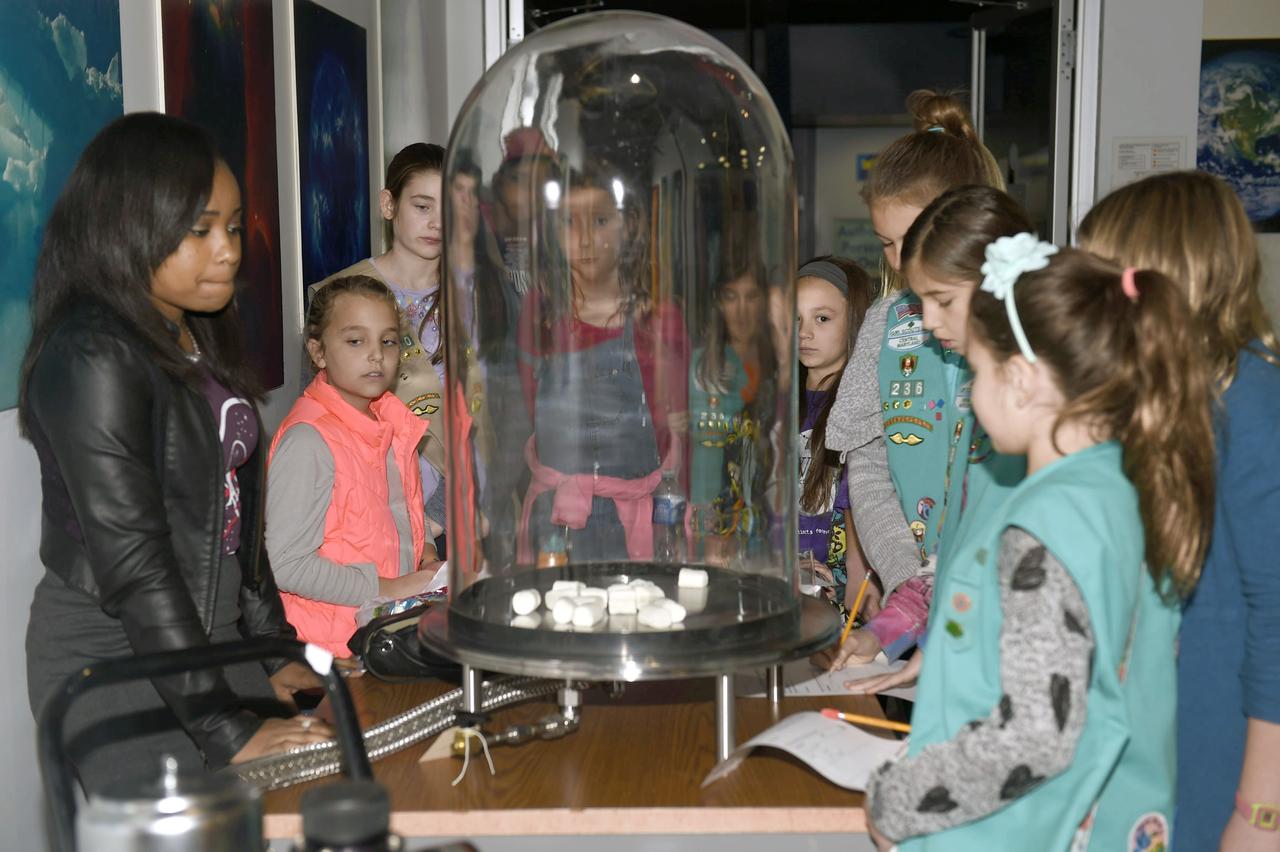
Junior Girl Scouts from two locals conceils, Girl Scouts of Central Maryland and Girl Scouts of Nations Capital, participated in She's an Engineer! Girl Scout program on November 3, 2016. They met with female NASA engineers and tested rover models in simulated I&T stations to explore the Engineering Design process.