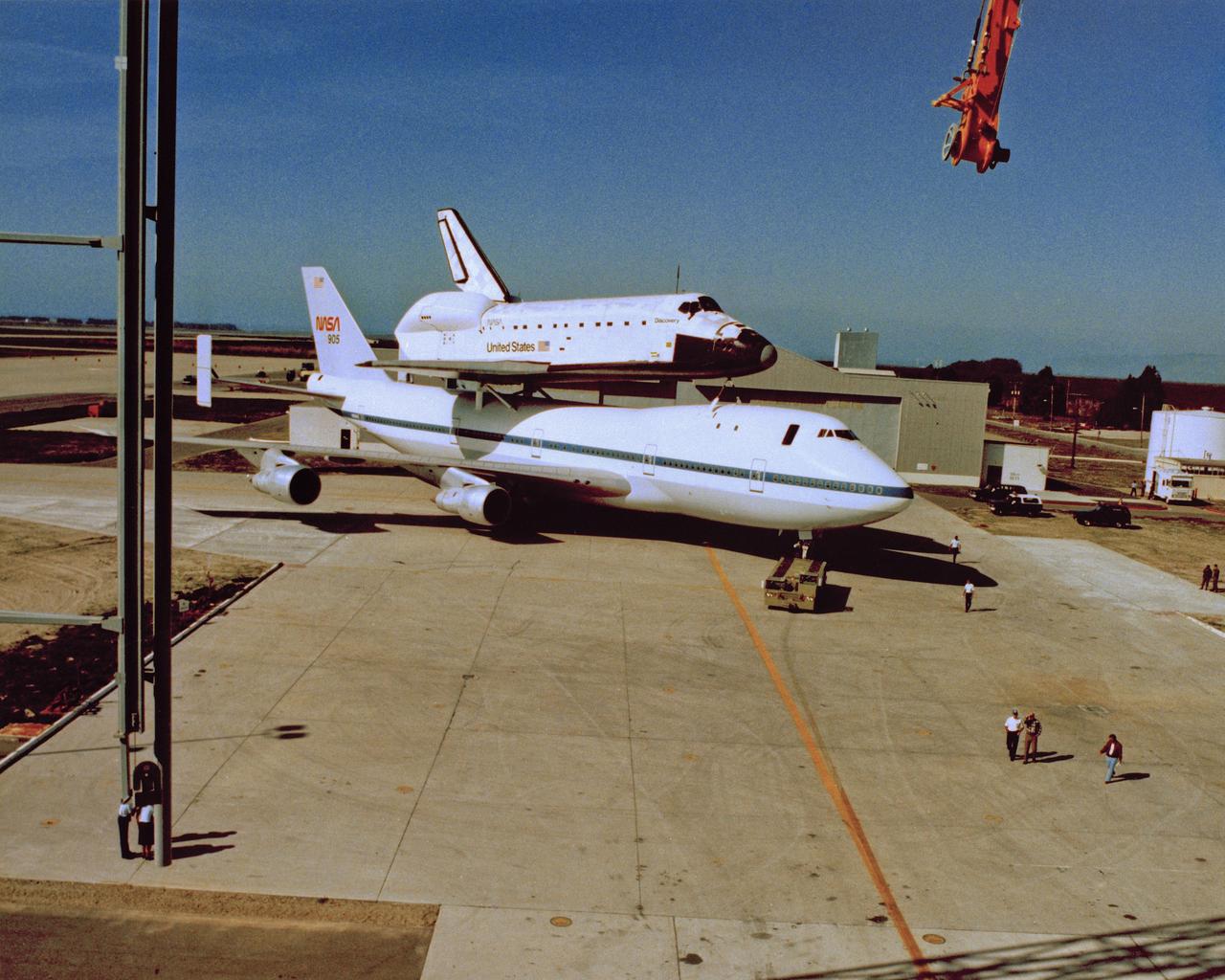
CAPE CANAVERAL, Fla. -- Orbiter at Vandenberg. Photo credit: NASA
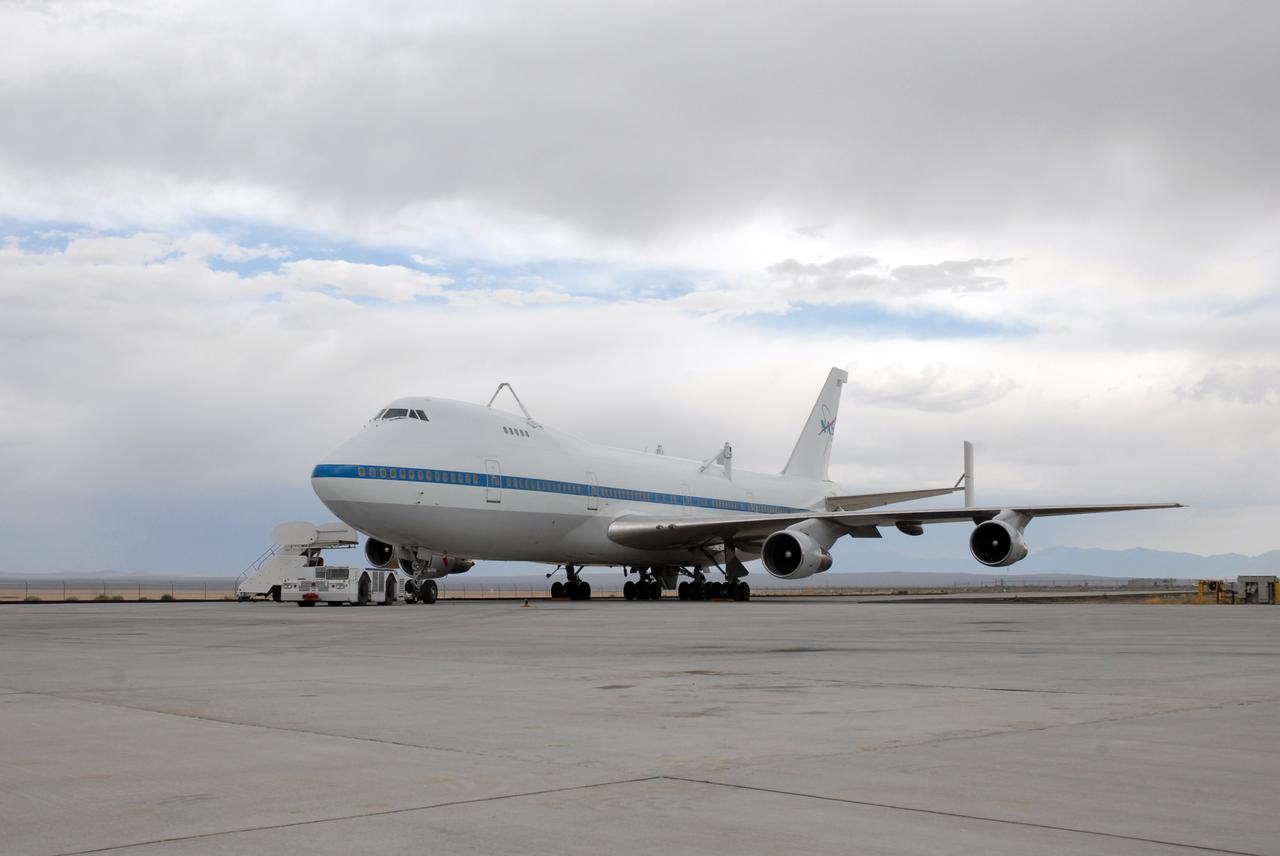
CAPE CANAVERAL, Fla. – This Shuttle Carrier Aircraft, or SCA, a modified Boeing 747, is fitted with struts on top that will attach to space shuttle Atlantis for a piggyback flight. Atlantis landed at Edwards on May 24, which concluded mission STS-125, after two landing opportunities at Kennedy were waved off due to weather concerns. Atlantis is being returned to Florida on a ferry flight on the SCA. Atlantis' next assignment is the STS-129 mission, targeted to launch in November 2009. Photo credit: NASA/Ben Smegelsky
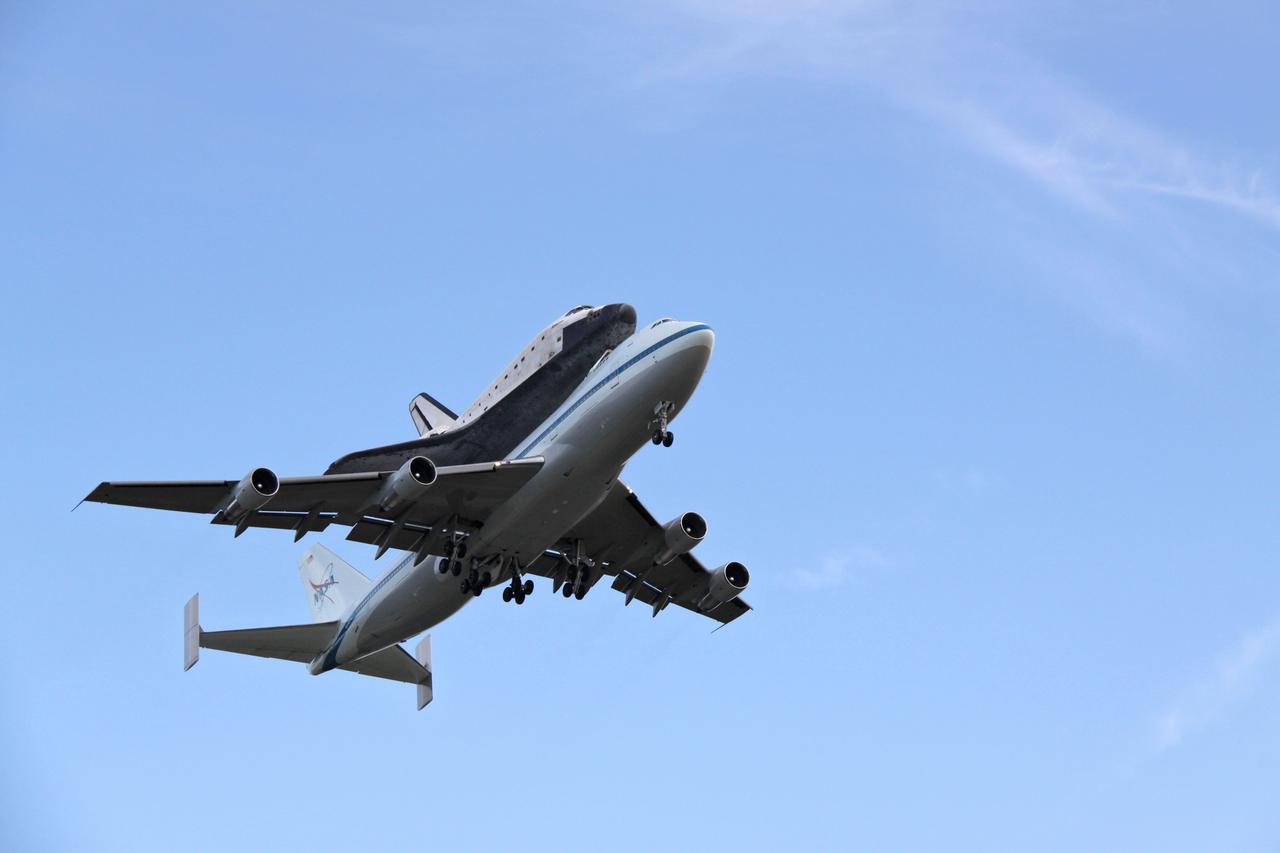
CAPE CANAVERAL, Fla. – After a two-day trip from California, the Shuttle Carrier Aircraft, or SCA, and its piggyback passenger space shuttle Atlantis approach NASA Kennedy Space Center's Shuttle Landing Facility runway. The SCA is a modified Boeing 747 jetliner. Atlantis returned from California atop the SCA after its May 24 landing at Edwards Air Force Base, concluding mission STS-125. The ferry flight from Edwards Air Force Base began June 1. Touchdown at Kennedy was at 6:53 p.m. EDT. Photo credit: NASA/Jack Pfaller
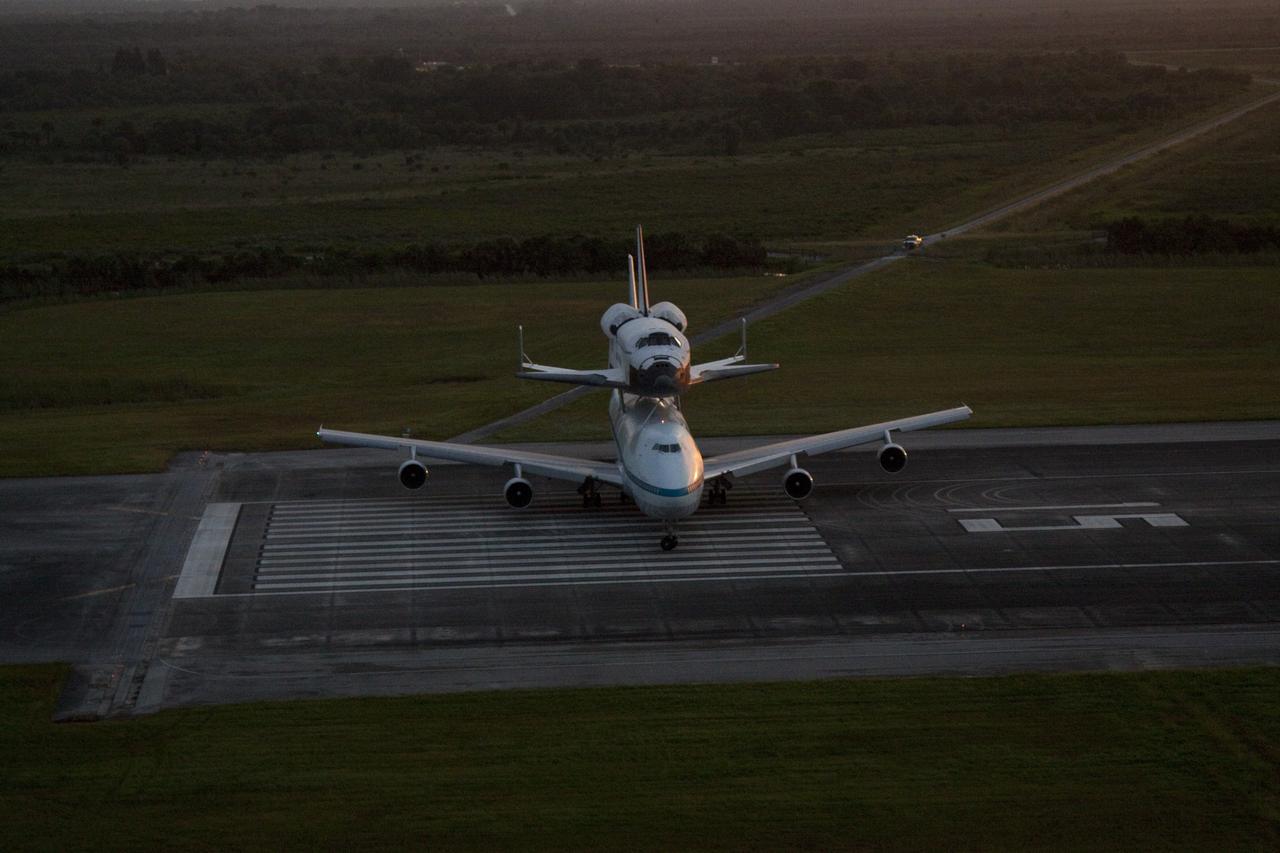
CAPE CANAVERAL, Fla. – NASA's Shuttle Carrier Aircraft, or SCA, turns into position on the runway at the Shuttle Landing at NASA's Kennedy Space Center in Florida with space shuttle Endeavour piggyback. Takeoff came at 7:22 a.m. EDT. The SCA, a modified 747 jetliner, will fly Endeavour to Los Angeles where it will be placed on public display at the California Science Center. This is the final ferry flight scheduled in the Space Shuttle Program era. For more information on the shuttles' transition and retirement, visit http://www.nasa.gov/transition. Photo credit: NASA/Kim Shiflett
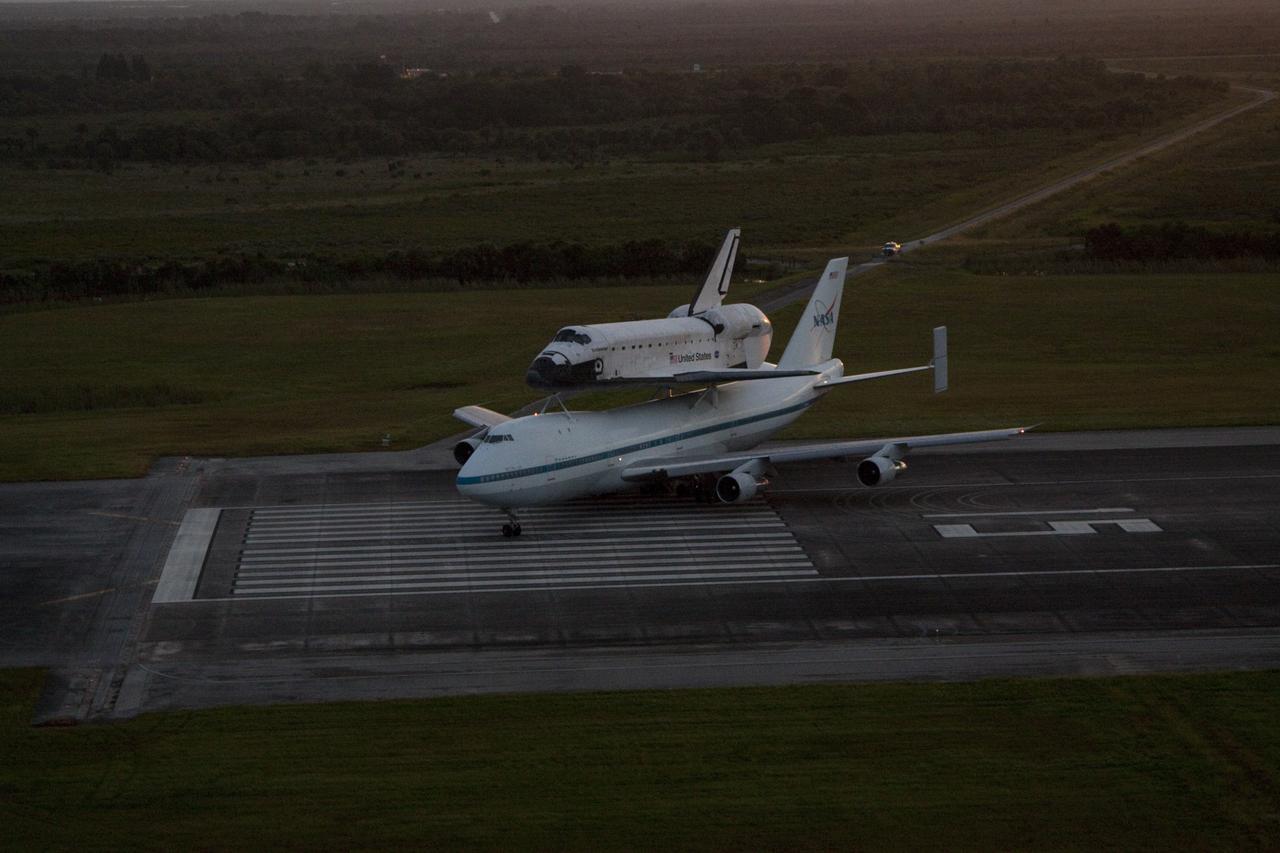
CAPE CANAVERAL, Fla. – NASA's Shuttle Carrier Aircraft, or SCA, rolls into position on the runway at the Shuttle Landing at NASA's Kennedy Space Center in Florida with space shuttle Endeavour piggyback. Takeoff came at 7:22 a.m. EDT. The SCA, a modified 747 jetliner, will fly Endeavour to Los Angeles where it will be placed on public display at the California Science Center. This is the final ferry flight scheduled in the Space Shuttle Program era. For more information on the shuttles' transition and retirement, visit http://www.nasa.gov/transition. Photo credit: NASA/Kim Shiflett

CAPE CANAVERAL, Fla. – At Edwards Air Force Base in California, the Shuttle Carrier Aircraft, or SCA, a modified Boeing 747, is moved beneath space shuttle Atlantis, suspended in the mate/demate device. Atlantis will be bolted to the SCA for a piggyback flight to Florida. A tail cone, which protects the aft engine area and provides a more efficient aeronautical dimension during its piggyback flight, can be seen. Atlantis landed at Edwards on May 24, which concluded mission STS-125, after two landing opportunities at Kennedy were waved off due to weather concerns. Atlantis is being returned to Florida on a ferry flight on the SCA. Atlantis' next assignment is the STS-129 mission, targeted to launch in November 2009. Photo credit: NASA/Ben Smegelsky
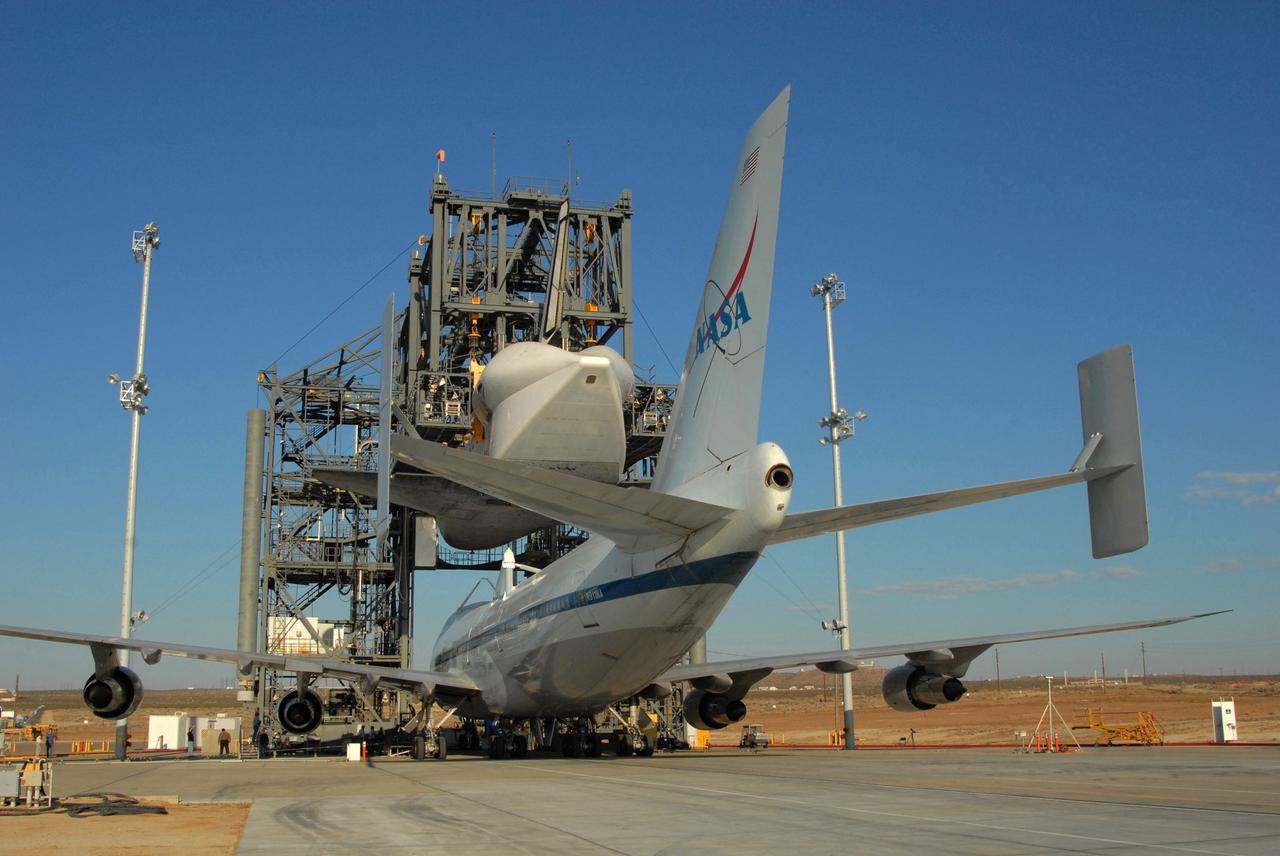
CAPE CANAVERAL, Fla. – At Edwards Air Force Base in California, the Shuttle Carrier Aircraft, or SCA, a modified Boeing 747, is moved beneath space shuttle Atlantis, suspended in the mate/demate device. Atlantis will be bolted to the SCA for a piggyback flight to Florida. A tail cone, which protects the aft engine area and provides a more efficient aeronautical dimension during its piggyback flight, can be seen. Atlantis landed at Edwards on May 24, which concluded mission STS-125, after two landing opportunities at Kennedy were waved off due to weather concerns. Atlantis is being returned to Florida on a ferry flight on the SCA. Atlantis' next assignment is the STS-129 mission, targeted to launch in November 2009. Photo credit: NASA/Ben Smegelsky

CAPE CANAVERAL, Fla. – At Edwards Air Force Base in California, space shuttle Atlantis is lowered from the mate/demate device onto the Shuttle Carrier Aircraft, or SCA, a modified Boeing 747, beneath it. Atlantis will be bolted to the SCA for a piggyback flight to Florida. A tail cone, which protects the aft engine area and provides a more efficient aeronautical dimension during its piggyback flight, can be seen. Atlantis landed at Edwards on May 24, which concluded mission STS-125, after two landing opportunities at Kennedy were waved off due to weather concerns. Atlantis is being returned to Florida on a ferry flight on the SCA. Atlantis' next assignment is the STS-129 mission, targeted to launch in November 2009. Photo credit: NASA/Ben Smegelsky

CAPE CANAVERAL, Fla. – At Edwards Air Force Base in California, the Shuttle Carrier Aircraft, or SCA, a modified Boeing 747, is towed beneath space shuttle Atlantis, suspended in the mate/demate device. Atlantis will be bolted to the SCA for a piggyback flight to Florida. A tail cone, which protects the aft engine area and provides a more efficient aeronautical dimension during its piggyback flight, can be seen. Atlantis landed at Edwards on May 24, which concluded mission STS-125, after two landing opportunities at Kennedy were waved off due to weather concerns. Atlantis is being returned to Florida on a ferry flight on the SCA. Atlantis' next assignment is the STS-129 mission, targeted to launch in November 2009. Photo credit: NASA/Ben Smegelsky
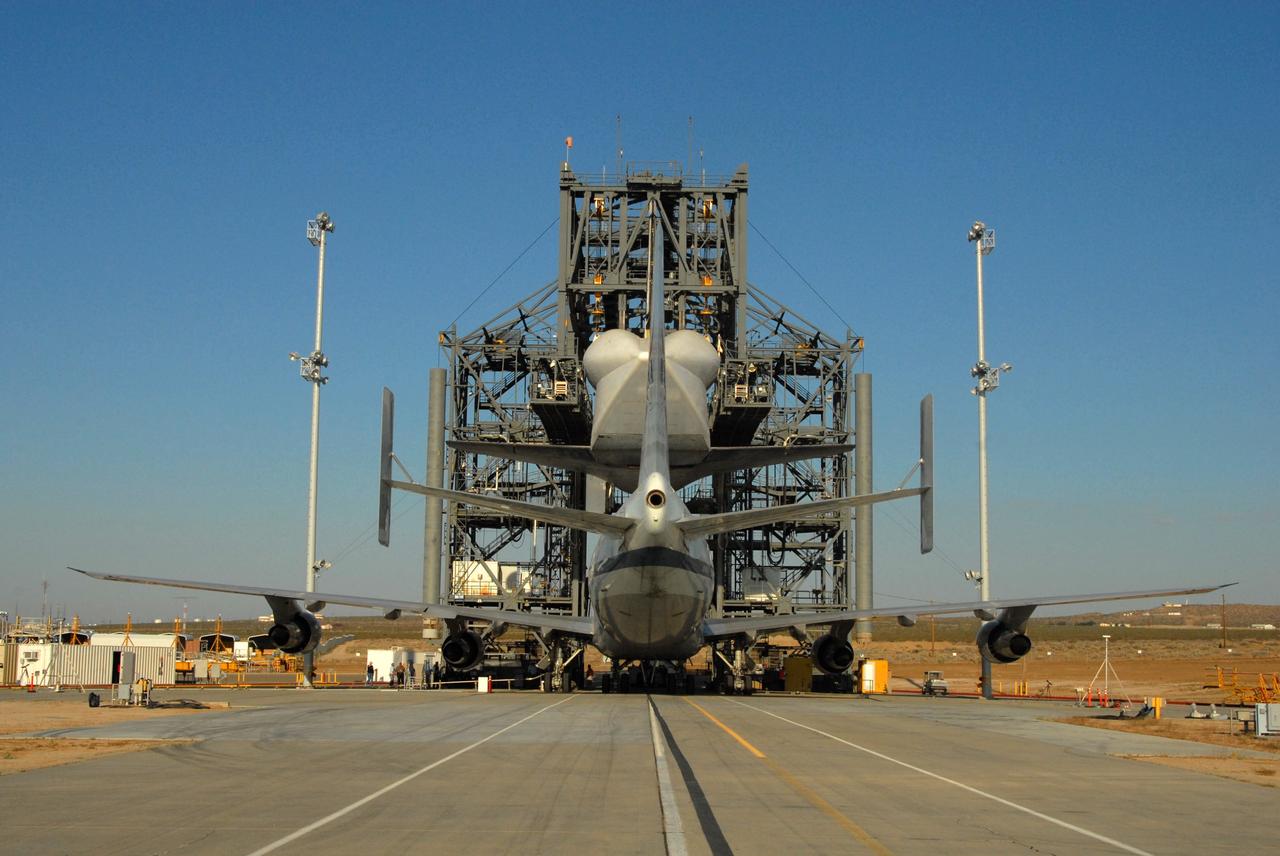
CAPE CANAVERAL, Fla. – At Edwards Air Force Base in California, space shuttle Atlantis is lowered from the mate/demate device toward the Shuttle Carrier Aircraft, or SCA, a modified Boeing 747, beneath it. Atlantis will be bolted to the SCA for a piggyback flight to Florida. A tail cone, which protects the aft engine area and provides a more efficient aeronautical dimension during its piggyback flight, can be seen. Atlantis landed at Edwards on May 24, which concluded mission STS-125, after two landing opportunities at Kennedy were waved off due to weather concerns. Atlantis is being returned to Florida on a ferry flight on the SCA. Atlantis' next assignment is the STS-129 mission, targeted to launch in November 2009. Photo credit: NASA/Ben Smegelsky
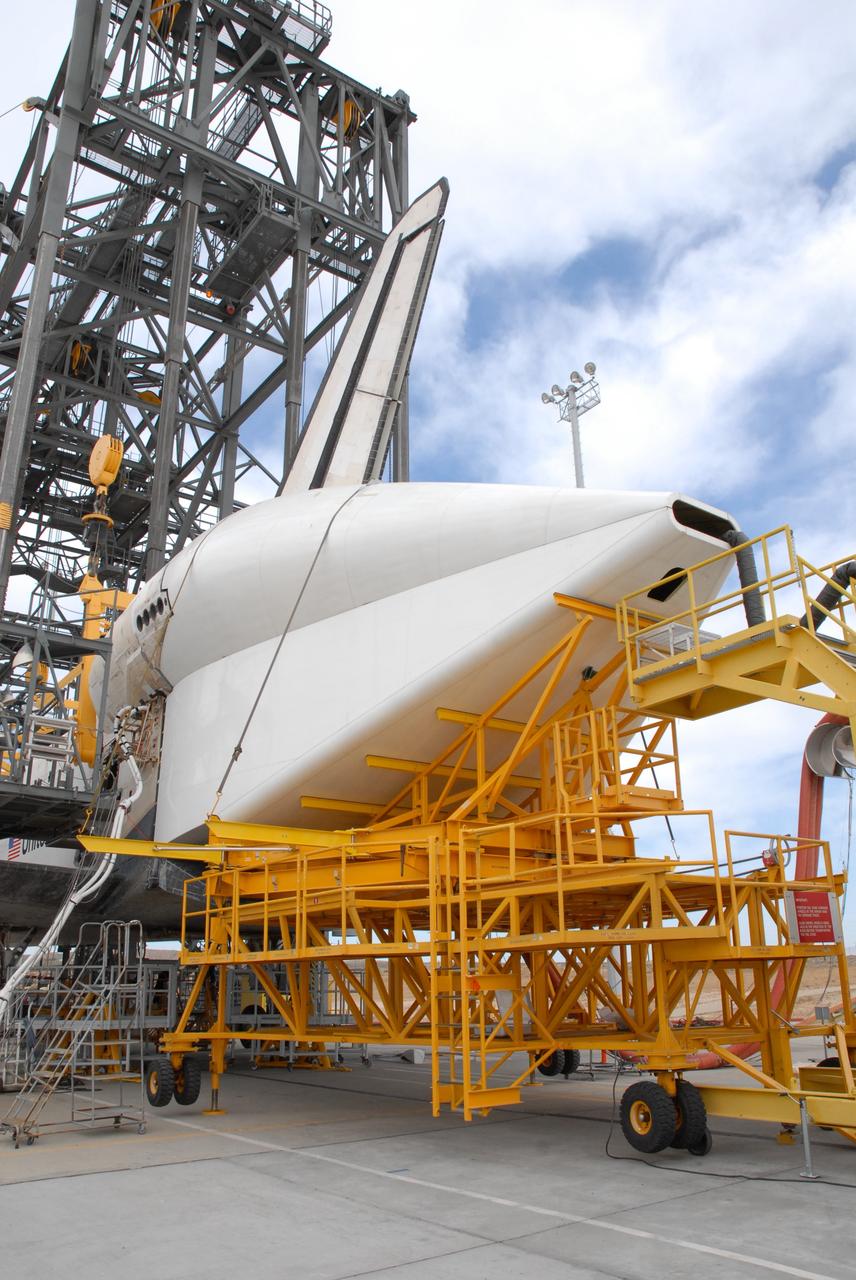
CAPE CANAVERAL, Fla. – At Edwards Air Force Base in California, space shuttle Atlantis is fitted with a tail cone, which protects the aft engine area and provides a more efficient aeronautical dimension during its piggyback flight on the Shuttle Carrier Aircraft, or SCA, a modified Boeing 747. Atlantis landed at Edwards on May 24, which concluded mission STS-125, after two landing opportunities at Kennedy were waved off due to weather concerns. Atlantis is being returned to Florida on a ferry flight on the SCA. Atlantis' next assignment is the STS-129 mission, targeted to launch in November 2009. Photo credit: NASA/Ben Smegelsky
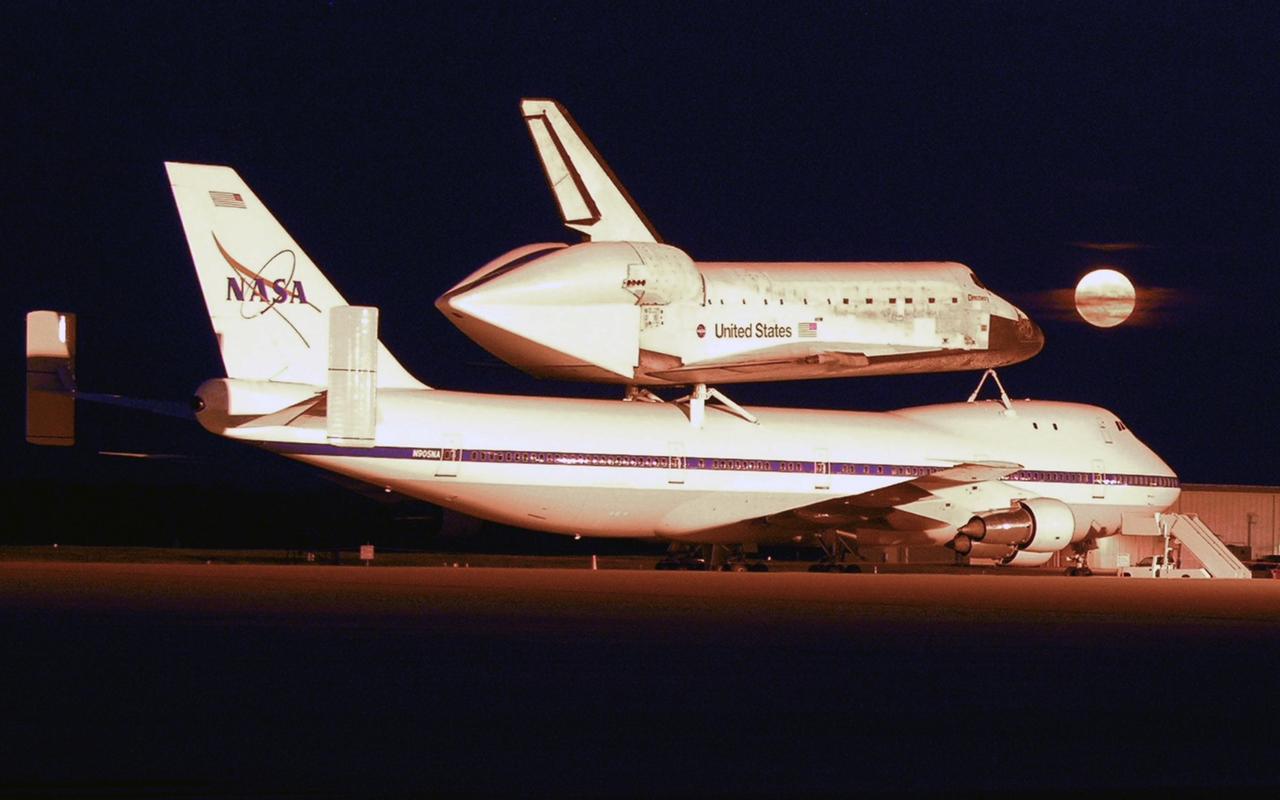
OFFUTT FIELD, NEB. -- The shuttle carrier aircraft, or SCA, and its piggyback passenger Atlantis are captured in the light of a full moon after landing at Offutt Field on the ferry flight from California to Florida. Atlantis landed at Edwards Air Force Base in California to end mission STS-117. Touchdown was at 8:27 a.m. EDT. The SCA is a modified Boeing 747 jetliner. The return to KSC began July 1 and took three days after stops across the country for fuel. The last stop was at Ft. Campbell in Kentucky. Weather conditions over the last leg postponed the return trip until July 3. Photo credit: NASA/Casey Wood

CAPE CANAVERAL, Fla. – On the Shuttle Landing Facility at NASA's Kennedy Space Center in Florida, the Shuttle Carrier Aircraft, or SCA, is backed away from underneath space shuttle Atlantis in the mate/demate device. A hoist attached to Atlantis suspends the shuttle while the SCA is moved away. Covering the rear of Atlantis is the tail cone, which protects the aft engine area and provides a more efficient aeronautical dimension during a piggyback flight. Atlantis returned from California atop the SCA, a modified Boeing 747, after its May 24 landing at Edwards Air Force Base, concluding mission STS-125. The ferry flight from Edwards Air Force Base began June 1. Atlantis' next assignment is the STS-129 mission, targeted to launch in November 2009. Photo credit: NASA/Jack Pfaller
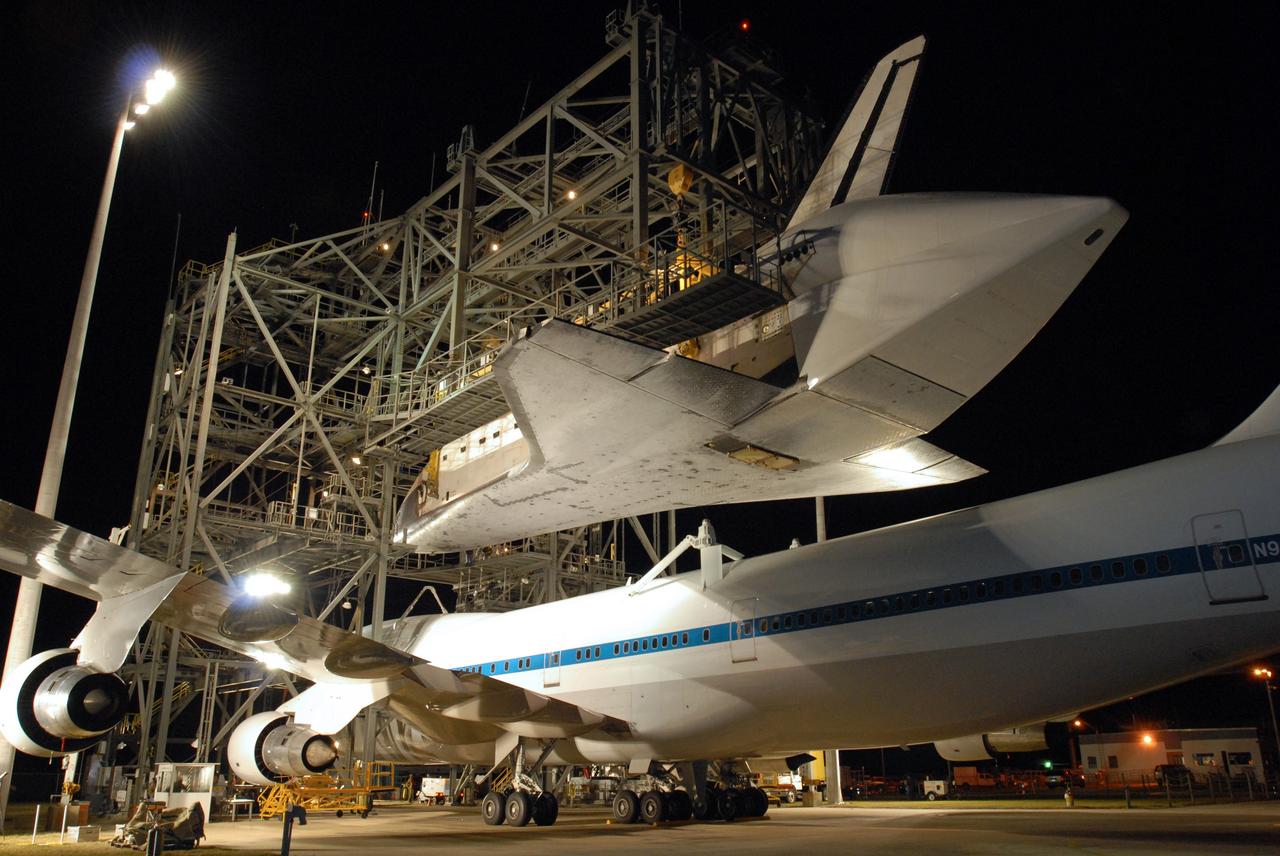
CAPE CANAVERAL, Fla. -- Before dawn, at the Shuttle Landing Facility, or SLF, at NASA's Kennedy Space Center in Florida, space shuttle Endeavour has been lifted away from the shuttle carrier aircraft, or SCA, underneath. The SCA will be rolled back and Endeavour placed on the ground. Visible on Endeavour is the tail cone that covers and protects the main engines during the ferry flight. The SCA carried the shuttle piggyback from California, where Endeavour landed Nov. 30 to end the STS-126 mission. After Endeavour is on the ground, it will be towed via the two-mile tow-way from the SLF by a diesel-powered tractor to the Orbiter Processing Facility where it will begin preparations for its next mission, STS-127, targeted for May 2009. Photo credit: NASA/Jim Grossmann
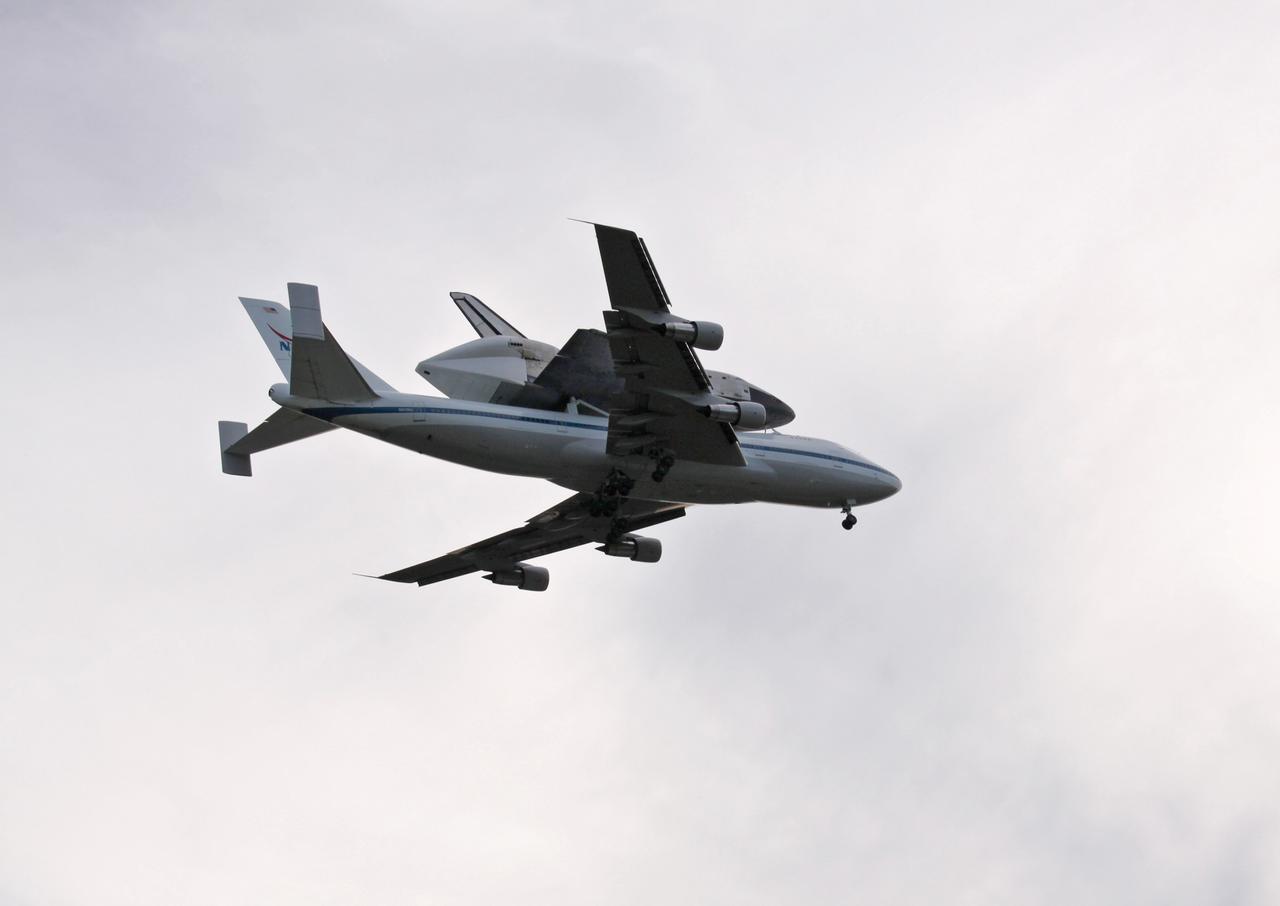
CAPE CANAVERAL, Fla. – After a two-day trip from California, the Shuttle Carrier Aircraft, or SCA, and its piggyback passenger space shuttle Atlantis near touchdown on NASA Kennedy Space Center's Shuttle Landing Facility runway 15. The SCA is a modified Boeing 747 jetliner. Visible on Atlantis is the tail cone, which protects the aft engine area and provides a more efficient aeronautical dimension during flight. Atlantis returned from California atop the SCA after its May 24 landing at Edwards Air Force Base, concluding mission STS-125. The ferry flight from Edwards Air Force Base began June 1. Touchdown at Kennedy was at 6:53 p.m. EDT. Photo credit: NASA/Jack Pfaller
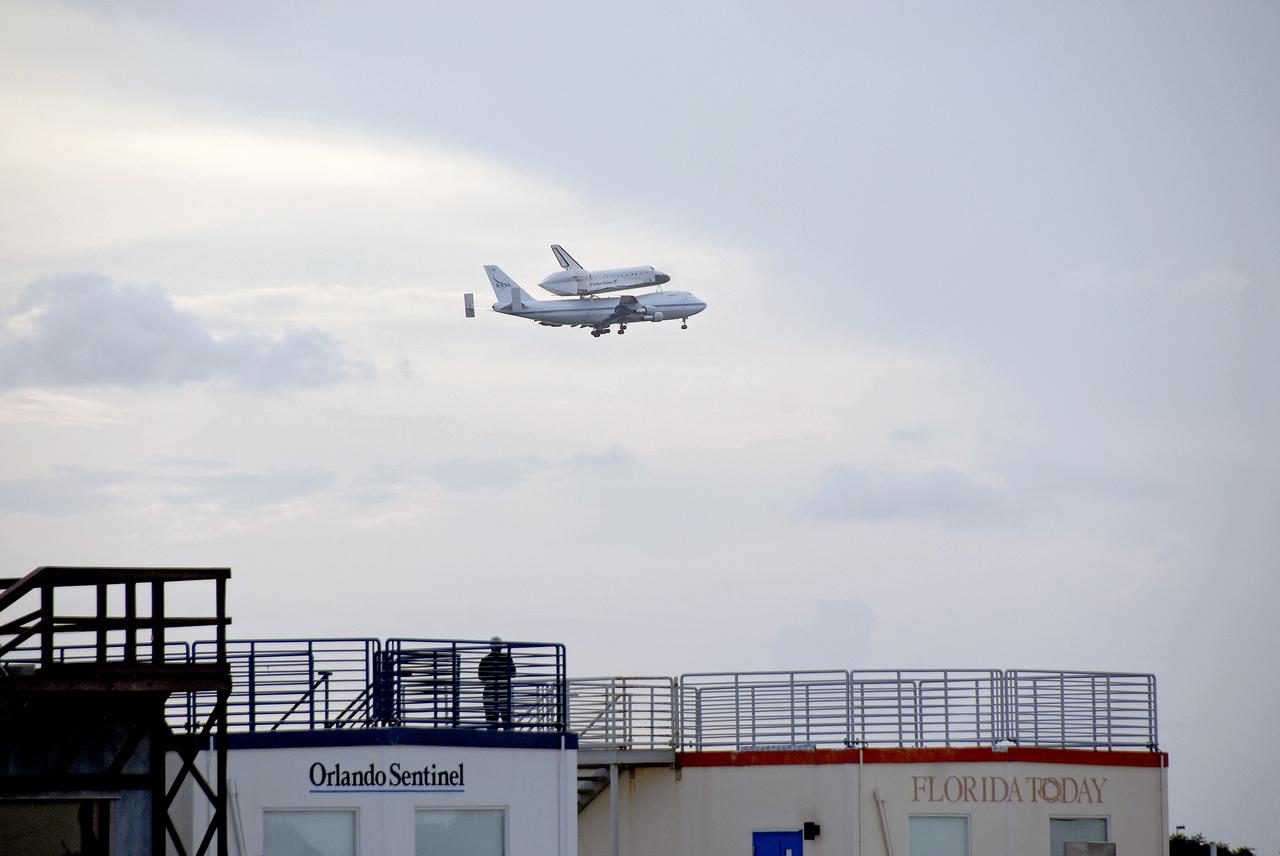
CAPE CANAVERAL, Fla. – After a two-day trip from California, the Shuttle Carrier Aircraft, or SCA, and its piggyback passenger space shuttle Atlantis are ready to land on NASA Kennedy Space Center's Shuttle Landing Facility runway. The SCA is a modified Boeing 747 jetliner. Visible on Atlantis is the tail cone, which protects the aft engine area and provides a more efficient aeronautical dimension during flight. Atlantis returned from California atop the SCA after its May 24 landing at Edwards Air Force Base, concluding mission STS-125. The ferry flight from Edwards Air Force Base began June 1. Touchdown at Kennedy was at 6:53 p.m. EDT. Photo credit: NASA/Kim Shiflett
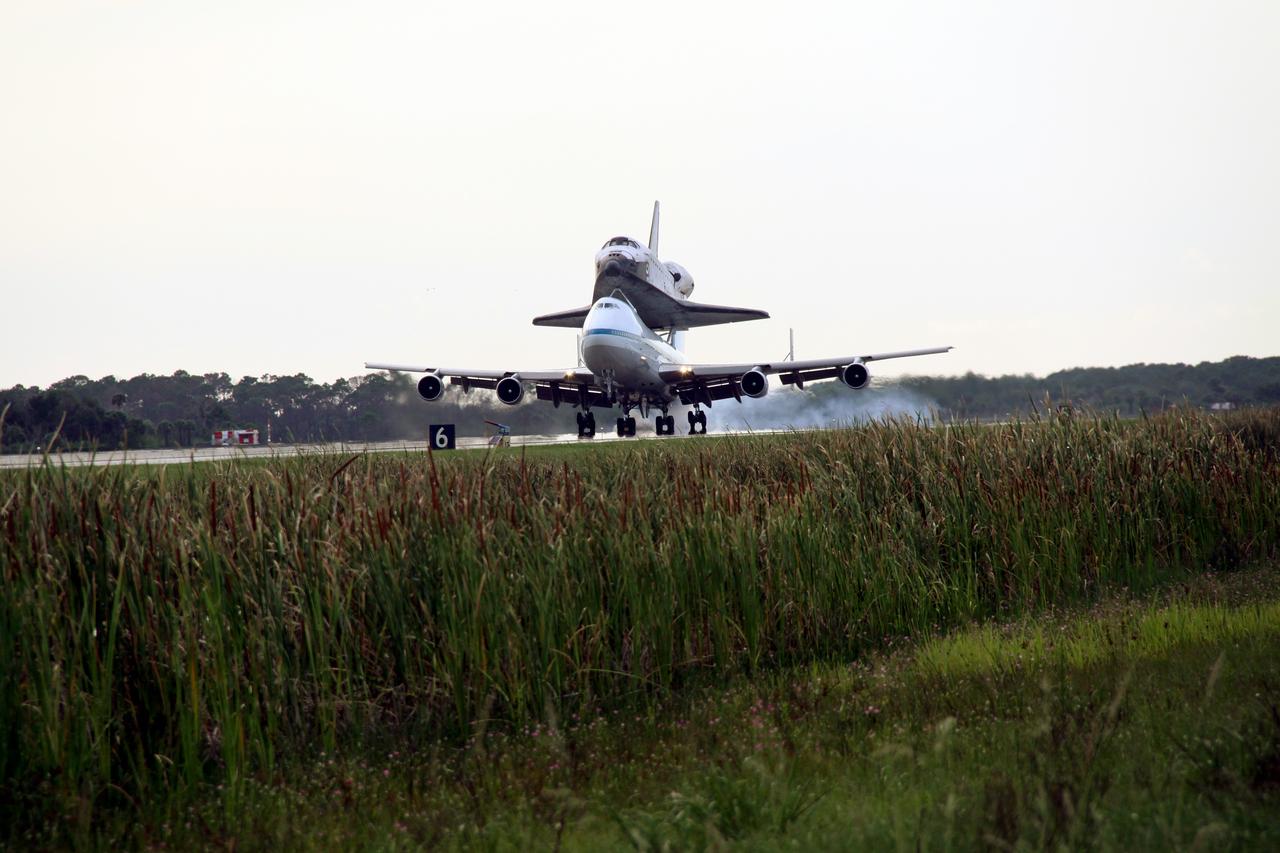
CAPE CANAVERAL, Fla. – After a two-day trip from California, the Shuttle Carrier Aircraft, or SCA, and its piggyback passenger space shuttle Atlantis lands on NASA Kennedy Space Center's Shuttle Landing Facility runway 15. The SCA is a modified Boeing 747 jetliner. Visible on Atlantis is the tail cone, which protects the aft engine area and provides a more efficient aeronautical dimension during flight. Atlantis returned from California atop the SCA after its May 24 landing at Edwards Air Force Base, concluding mission STS-125. The ferry flight from Edwards Air Force Base began June 1. Touchdown at Kennedy was at 6:53 p.m. EDT. Photo credit: NASA/Jack Pfaller
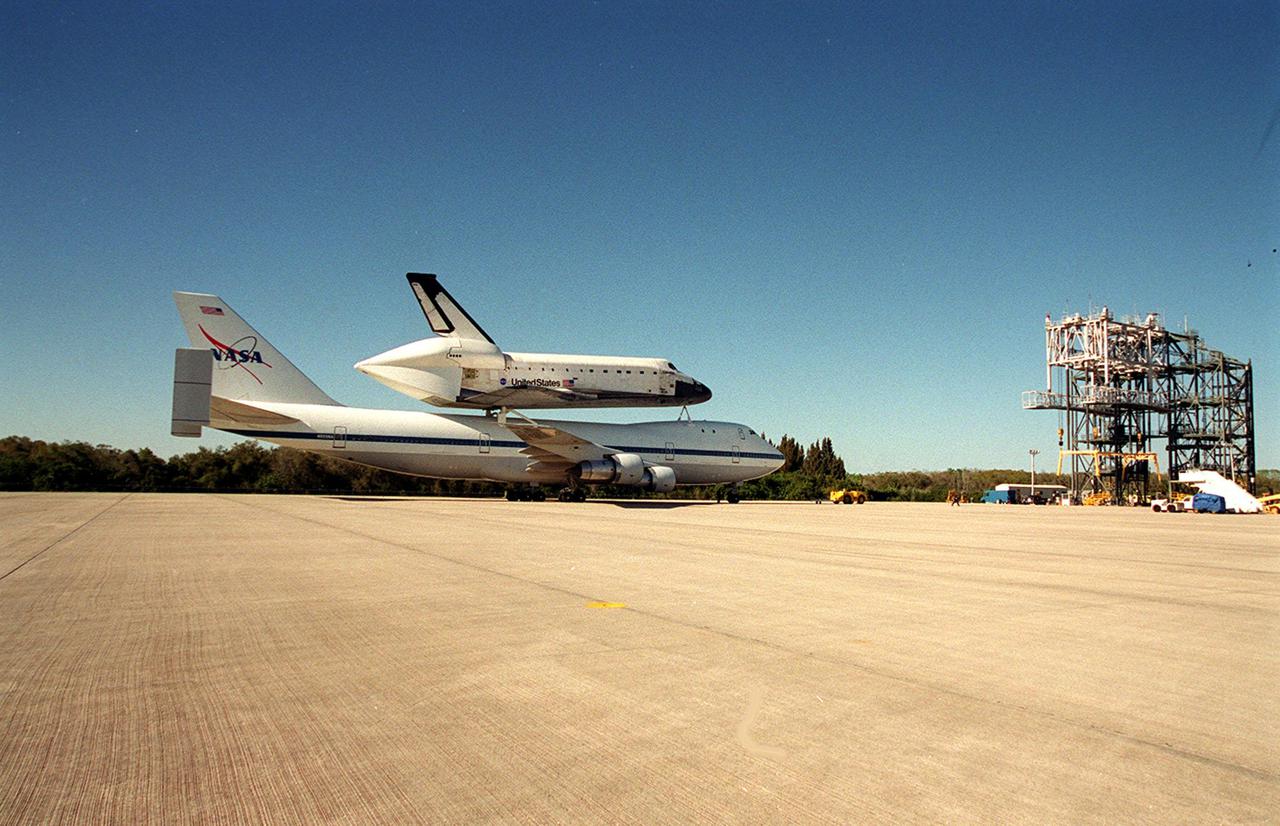
The Shuttle Carrier Aircraft with orbiter Columbia riding piggyback taxis toward the mate_demate device at the KSC Shuttle Landing Facility. At the MDD, Columbia will be lifted off the SCA and towed to the Orbiter Processing Facility bay 1. Columbia’s ferry flight began in California March 1. Unfavorable weather conditions kept it on the ground at Dyess AFB, Texas, until it could return to Florida. It landed temporarily at the CCAFS Skid Strip until Atlantis, which had already landed at the SLF, could be transferred. Columbia is returning from a 17-month-long modification and refurbishment process as part of a routine maintenance plan. The orbiter will next fly on mission STS-107, scheduled Oct. 25
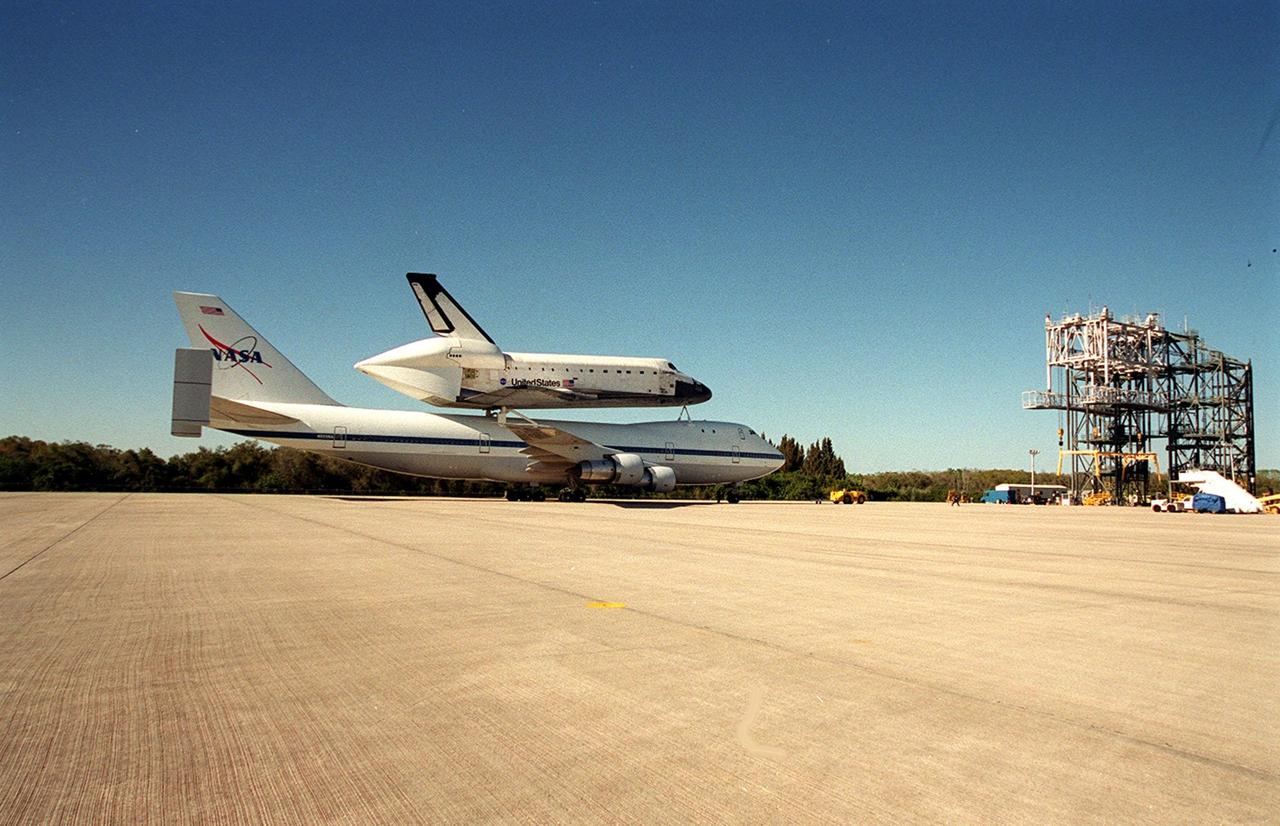
The Shuttle Carrier Aircraft with orbiter Columbia riding piggyback taxis toward the mate/demate device at the KSC Shuttle Landing Facility. At the MDD, Columbia will be lifted off the SCA and towed to the Orbiter Processing Facility bay 1. Columbia’s ferry flight began in California March 1. Unfavorable weather conditions kept it on the ground at Dyess AFB, Texas, until it could return to Florida. It landed temporarily at the CCAFS Skid Strip until Atlantis, which had already landed at the SLF, could be transferred. Columbia is returning from a 17-month-long modification and refurbishment process as part of a routine maintenance plan. The orbiter will next fly on mission STS-107, scheduled Oct. 25
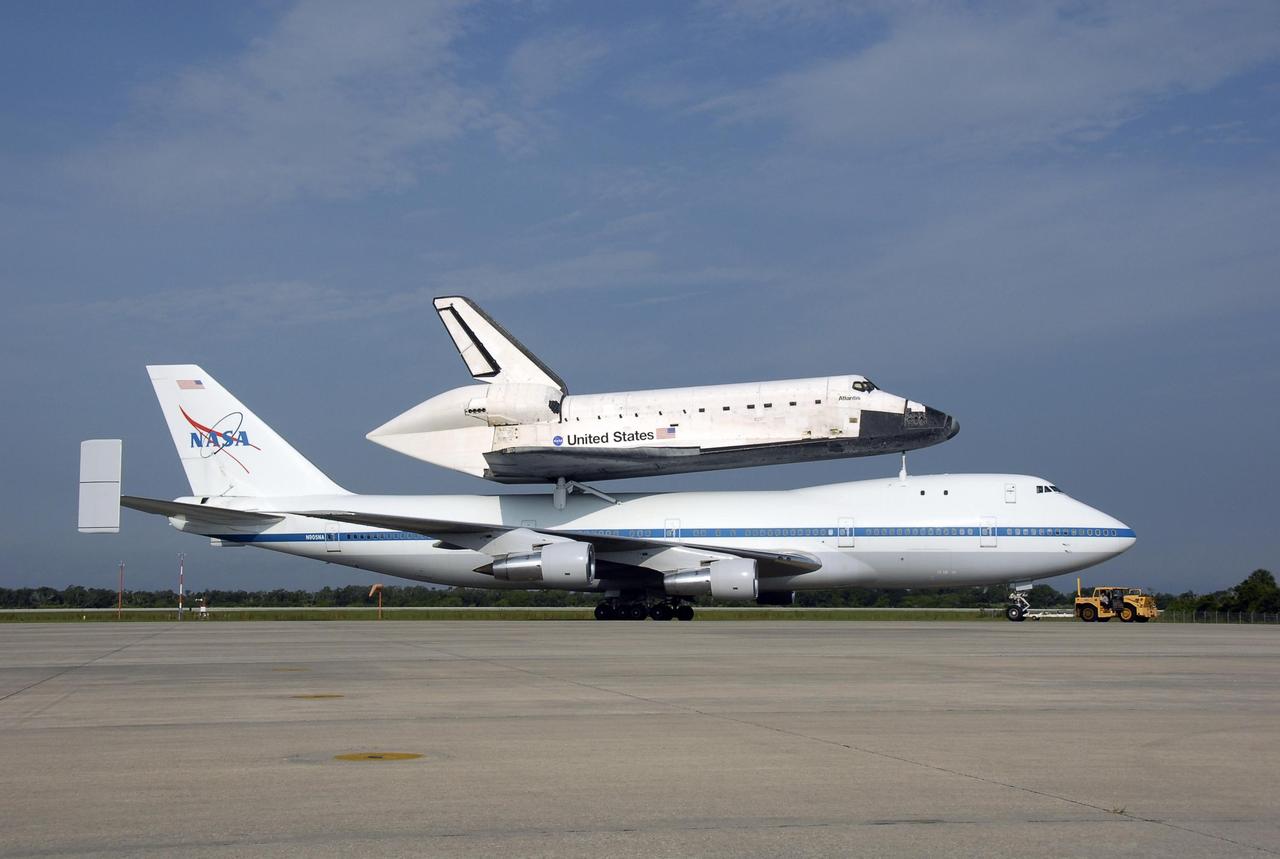
KENNEDY SPACE CENTER, FLA. -- After landing at the KSC Shuttle Landing Facility, the shuttle carrier aircraft, or SCA, and its piggyback passenger Atlantis are towed from the runway. Touchdown was at 8:27 a.m. EDT. The SCA is a modified Boeing 747 jetliner. Visible on Atlantis is the tail cone that covers and protects the main engines during the ferry flight. Atlantis landed at Edwards Air Force Base in California to end mission STS-117. The return to KSC began July 1 and included several stops across the country for fuel. The last stop was at Ft. Campbell in Kentucky. Weather conditions over the last leg postponed the return trip until July 3. Atlantis will be removed from the back of the SCA via the mate/demate device at the SLF. It will then be towed to the Orbiter Processing Facility to begin processing for its next launch, mission STS-122 in December. Photo credit: NASA/Kim Shiflett

KENNEDY SPACE CENTER, FLA. -- The shuttle carrier aircraft, or SCA, and its piggyback passenger Atlantis taxi down the runway after landing at the KSC Shuttle Landing Facility. Touchdown was at 8:27 a.m. EDT. The SCA is a modified Boeing 747 jetliner. Visible on Atlantis is the tail cone that covers and protects the main engines during the ferry flight. Atlantis landed at Edwards Air Force Base in California to end mission STS-117. The return to KSC began July 1 and took three days after stops across the country for fuel. The last stop was at Ft. Campbell in Kentucky. Weather conditions over the last leg postponed the return trip until July 3. Atlantis will be removed from the back of the SCA via the mate/demate device at the SLF. It will then be towed to the Orbiter Processing Facility to begin processing for its next launch, mission STS-122 in December. Photo credit: NASA/Jim Grossmann
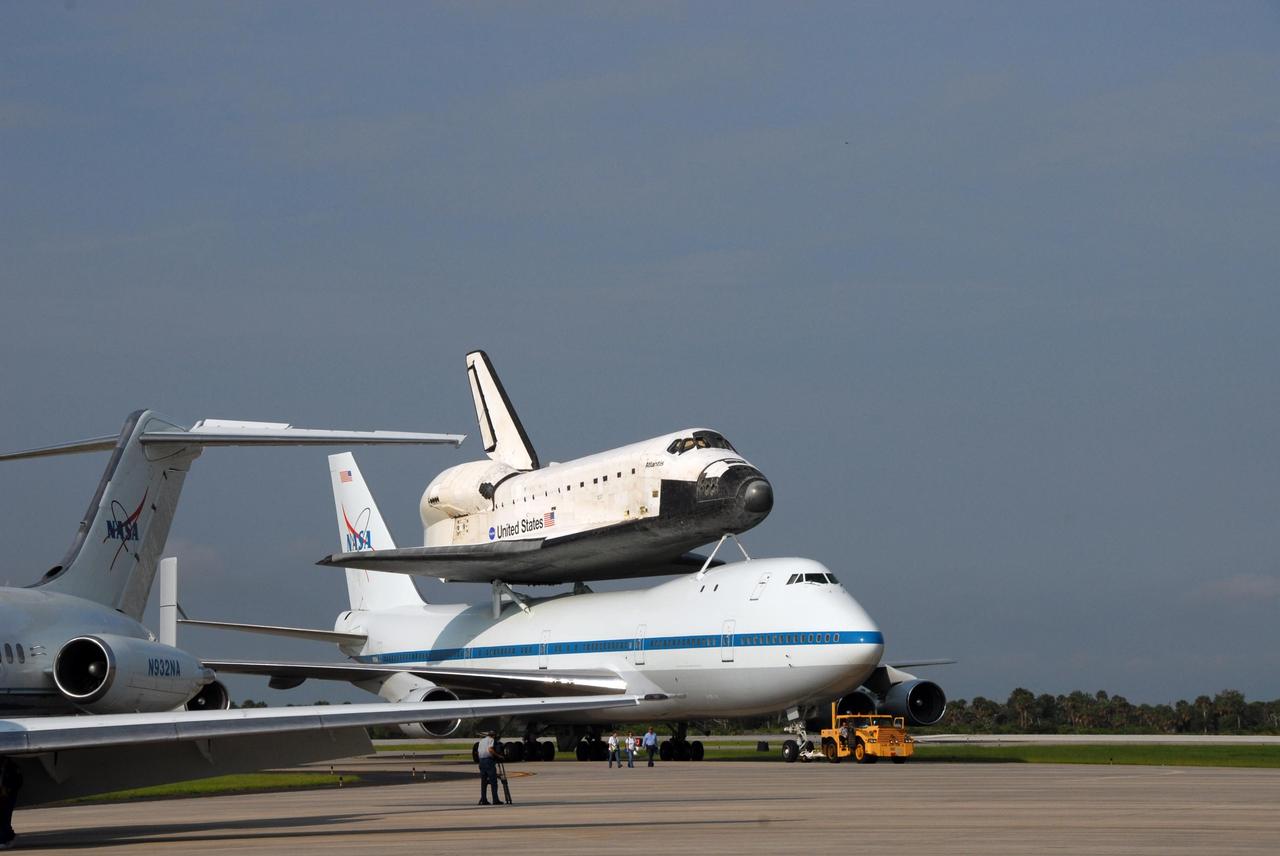
KENNEDY SPACE CENTER, FLA. -- After a three-day trip from California, the shuttle carrier aircraft, or SCA, and its piggyback passenger Atlantis are parked on the KSC Shuttle Landing Facility. Touchdown was at 8:27 a.m. EDT. The SCA is a modified Boeing 747 jetliner. Visible on Atlantis is the tail cone that covers and protects the main engines during the ferry flight. Atlantis landed at Edwards Air Force Base in California to end mission STS-117. The return to KSC began July 1 and took three days after stops across the country for fuel. The last stop was at Ft. Campbell in Kentucky. Weather conditions over the last leg postponed the return trip until July 3. Atlantis will be removed from the back of the SCA via the mate/demate device at the SLF. It will then be towed to the Orbiter Processing Facility to begin processing for its next launch, mission STS-122 in December. Photo credit: NASA/Ken Thornsley
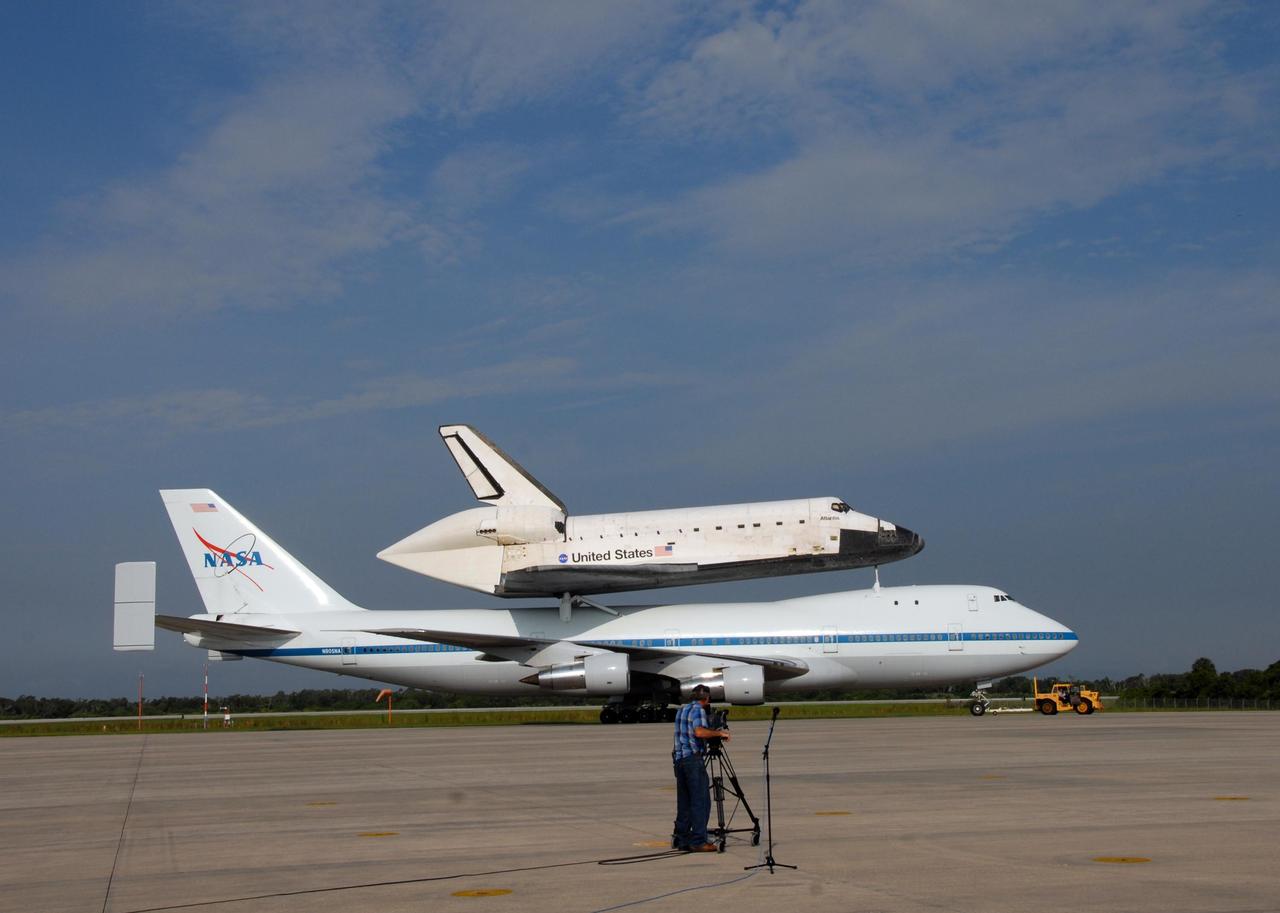
KENNEDY SPACE CENTER, FLA. -- The shuttle carrier aircraft, or SCA, and its piggyback passenger Atlantis are towed across the Shuttle Landing Facility after their landing. Touchdown was at 8:27 a.m. EDT. The SCA is a modified Boeing 747 jetliner. Visible on Atlantis is the tail cone that covers and protects the main engines during the ferry flight. Atlantis landed at Edwards Air Force Base in California to end mission STS-117. The return to KSC began July 1 and took three days after stops across the country for fuel. The last stop was at Ft. Campbell in Kentucky. Weather conditions over the last leg postponed the return trip until July 3. Atlantis will be removed from the back of the SCA via the mate/demate device at the SLF. It will then be towed to the Orbiter Processing Facility to begin processing for its next launch, mission STS-122 in December. Photo credit: NASA/Ken Thornsley
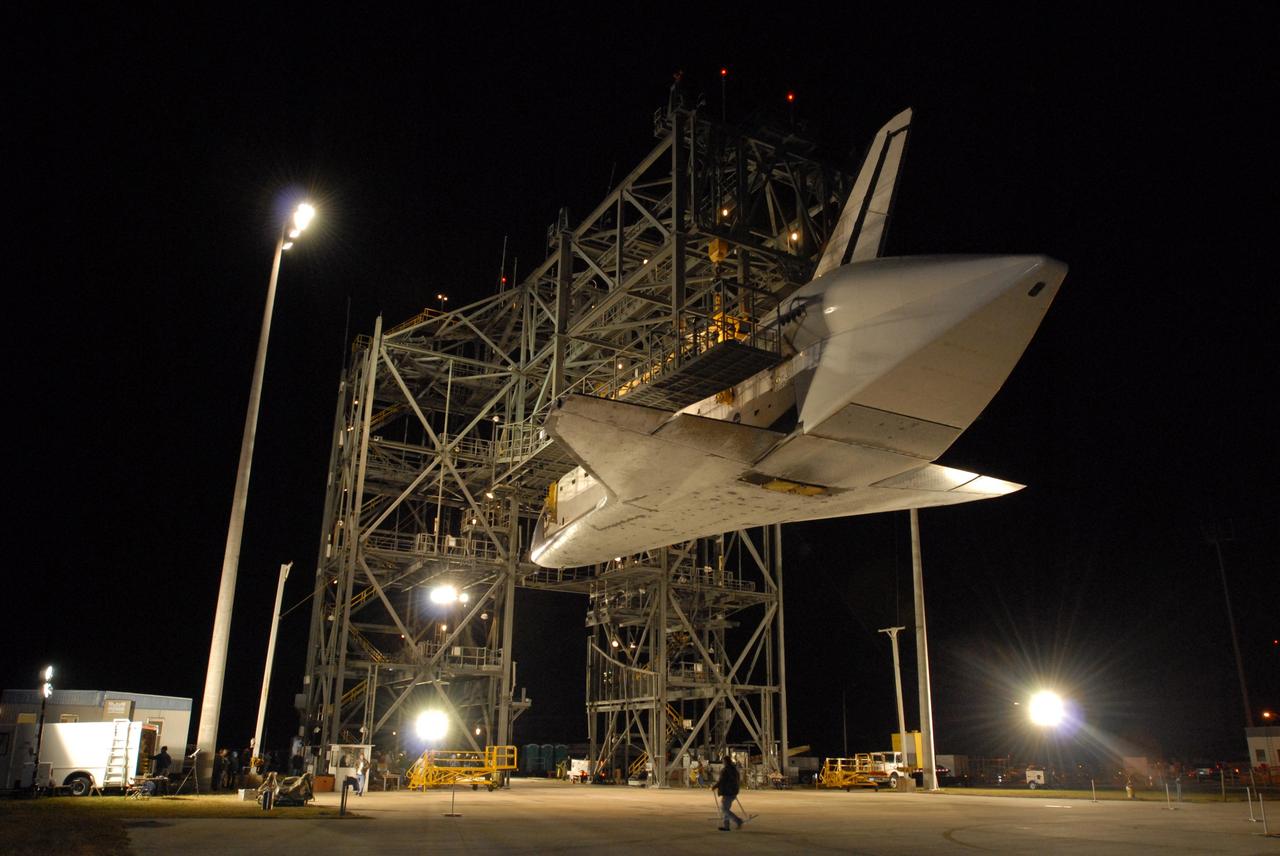
CAPE CANAVERAL, Fla. -- Before dawn, at the Shuttle Landing Facility, or SLF, at NASA's Kennedy Space Center in Florida, space shuttle Endeavour is suspended by a sling under the mate/demate device. The shuttle carrier aircraft, or SCA, has rolled away. Endeavour, which retains the tail cone that covers and protects the main engines during the ferry flight, will be lowered onto the ground. The SCA carried the shuttle piggyback from California, where Endeavour landed Nov. 30 to end the STS-126 mission. After Endeavour is on the ground, it will be towed via the two-mile tow-way from the SLF by a diesel-powered tractor to the Orbiter Processing Facility where it will begin preparations for its next mission, STS-127, targeted for May 2009. Photo credit: NASA/Jim Grossmann
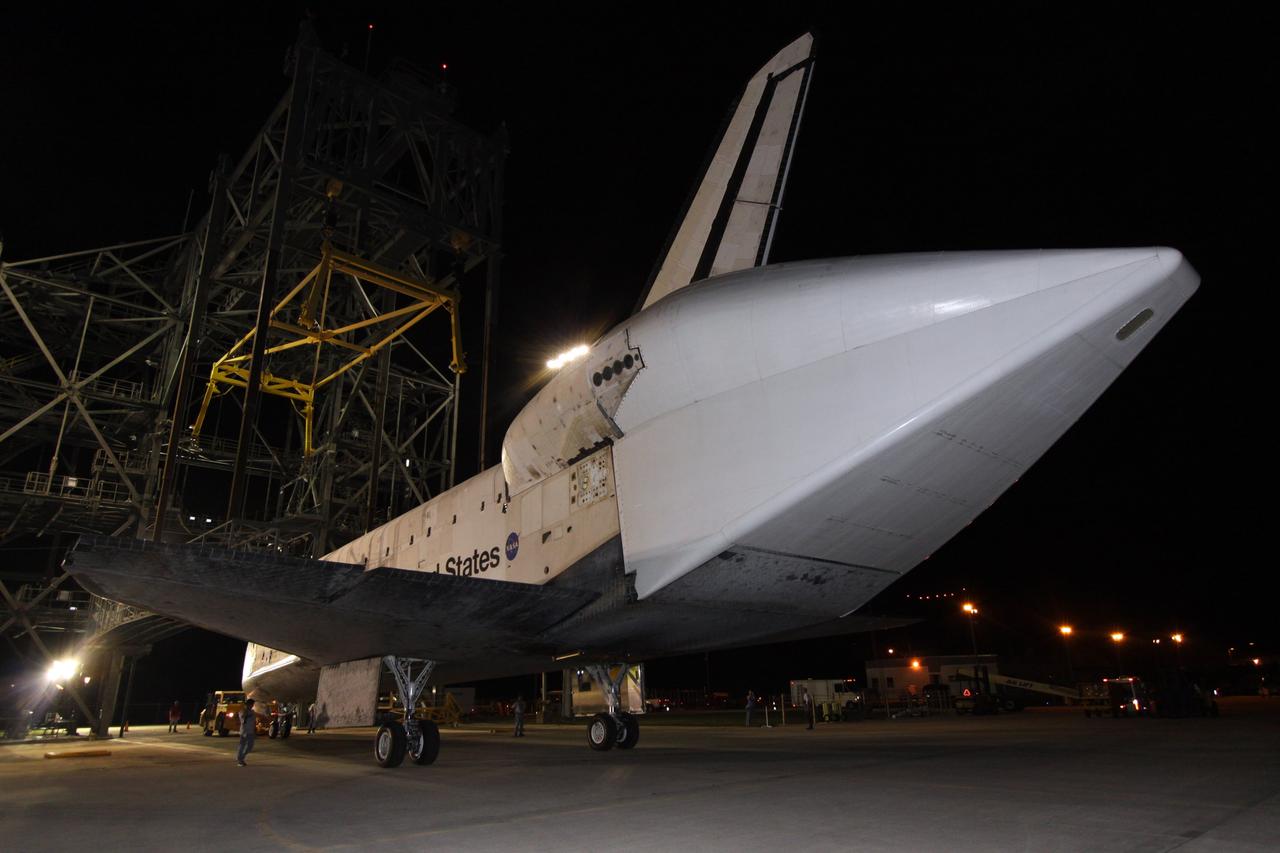
CAPE CANAVERAL, Fla. – On the Shuttle Landing Facility at NASA's Kennedy Space Center in Florida, space shuttle Atlantis is moved away from the mate/demate device where it was separated from the Shuttle Carrier Aircraft, or SCA. Atlantis will be towed to Orbiter Processing Facility 1. Covering the rear of Atlantis is a tail cone, which protects the aft engine area and provides a more efficient aeronautical dimension during its piggyback flight. After its May 24 landing at Edwards Air Force Base in California, which concluded its STS-125 mission, the modified Boeing 747 SCA carried the shuttle on a two-day ferry flight from Edwards to Kennedy beginning June 1. Atlantis' next assignment is the STS-129 mission, targeted to launch in November 2009. Photo credit: NASA/Jack Pfaller
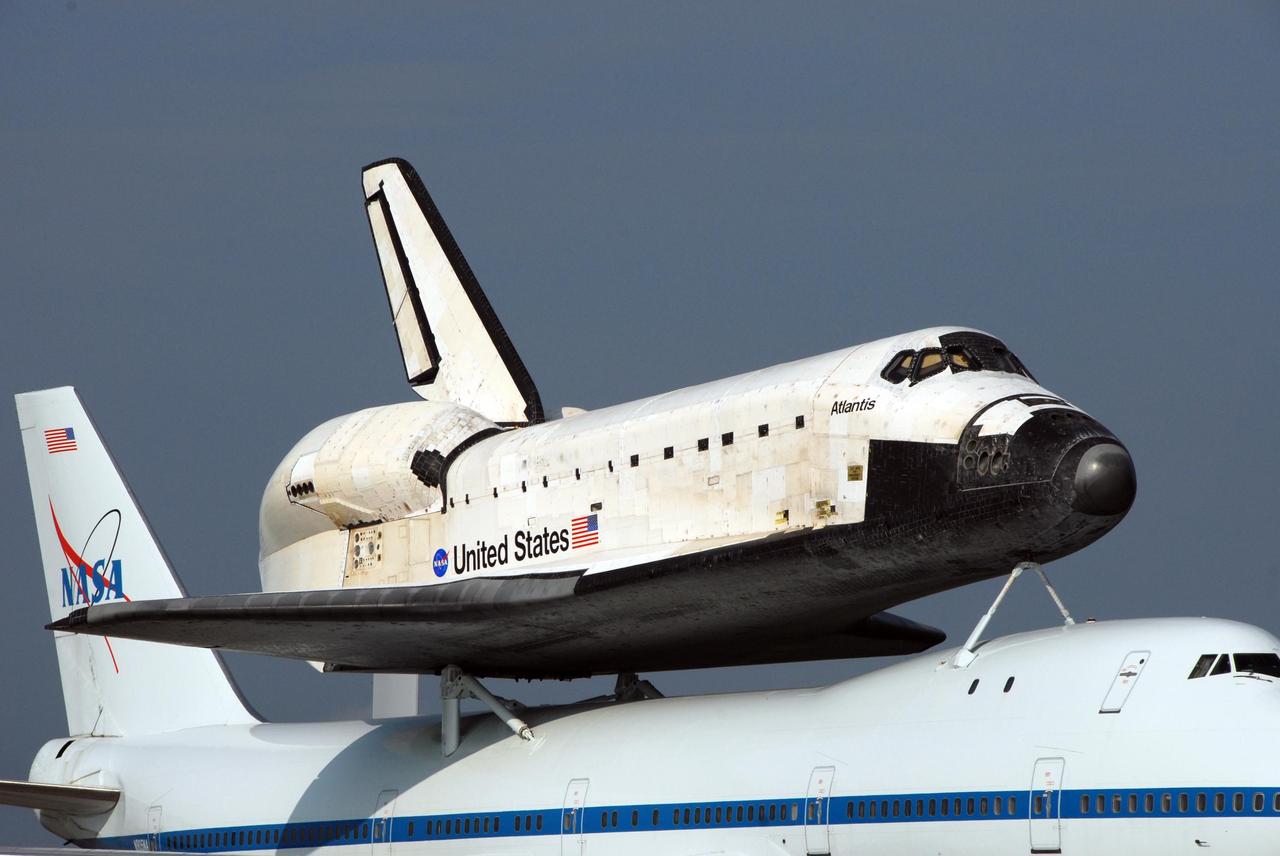
KENNEDY SPACE CENTER, FLA. -- Struts on the shuttle carrier aircraft, or SCA, attach the orbiter Atlantis for the piggyback flight. The plane and orbiter returned from California after three days. Touchdown was at 8:27 a.m. EDT. The SCA is a modified Boeing 747 jetliner. Visible on Atlantis is the tail cone that covers and protects the main engines during the ferry flight. Atlantis landed at Edwards Air Force Base in California to end mission STS-117. The return to KSC began July 1 and took three days after stops across the country for fuel. The last stop was at Ft. Campbell in Kentucky. Weather conditions over the last leg postponed the return trip until July 3. Atlantis will be removed from the back of the SCA via the mate/demate device at the SLF. It will then be towed to the Orbiter Processing Facility to begin processing for its next launch, mission STS-122 in December. Photo credit: NASA/Ken Thornsley
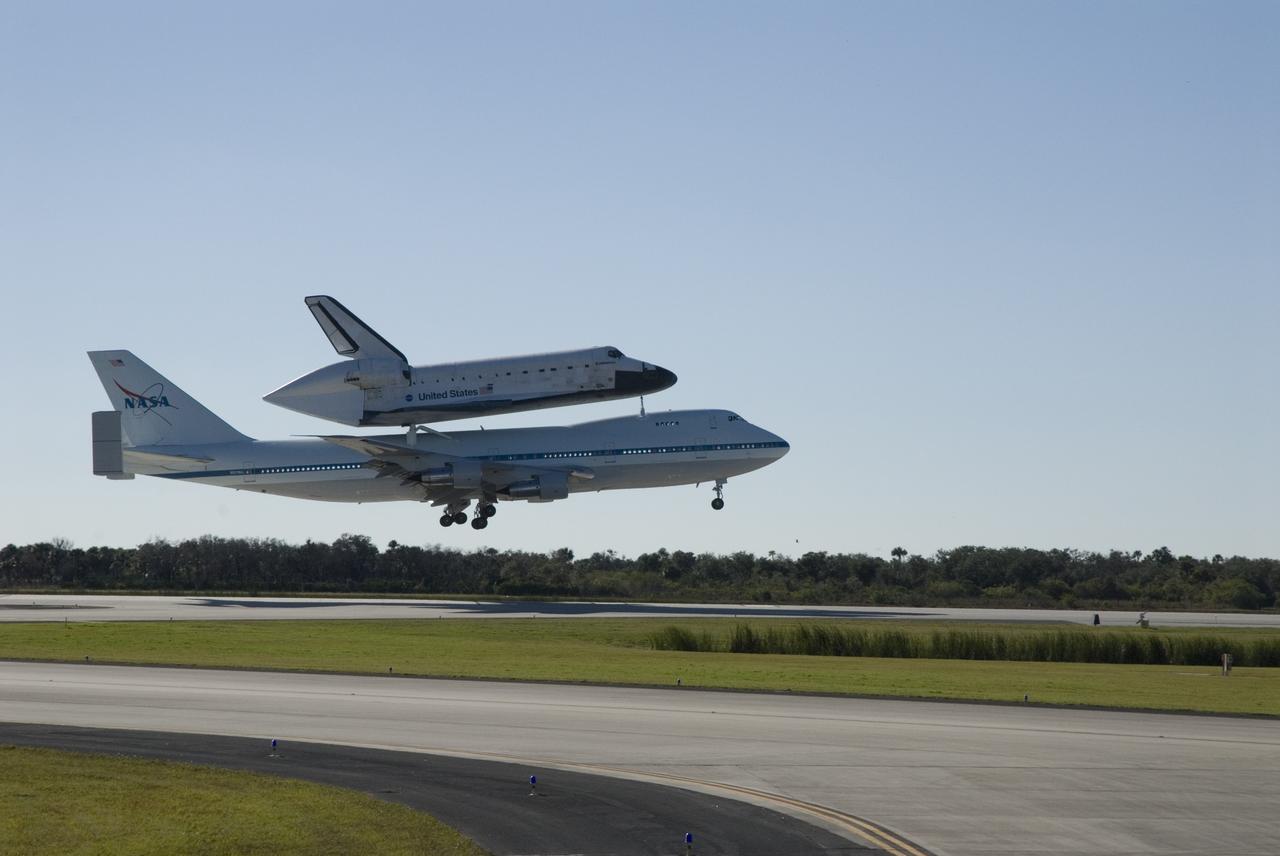
CAPE CANAVERAL, Fla. -- After a three-day trip from California, the shuttle carrier aircraft, or SCA, and its piggyback passenger space shuttle Endeavour are ready to land on the Shuttle Landing Facility runway at NASA's Kennedy Space Center in Florida. Visible on Endeavour is the tail cone, which covers and protects the main engines during the ferry flight. Touchdown at Kennedy was at 2:44 p.m. EST. The SCA is a modified Boeing 747 jetliner. Endeavour landed at Edwards Air Force Base in California Nov. 30 to end mission STS-126. The return to Kennedy began Dec. 8 and took four days after stops across the country for fuel. The last stop was at Barksdale Air Force Base in Shreveport, La. Weather conditions en route and in Florida postponed the landing at Kennedy until Dec. 12. Photo credit: NASA/Tim Jacobs
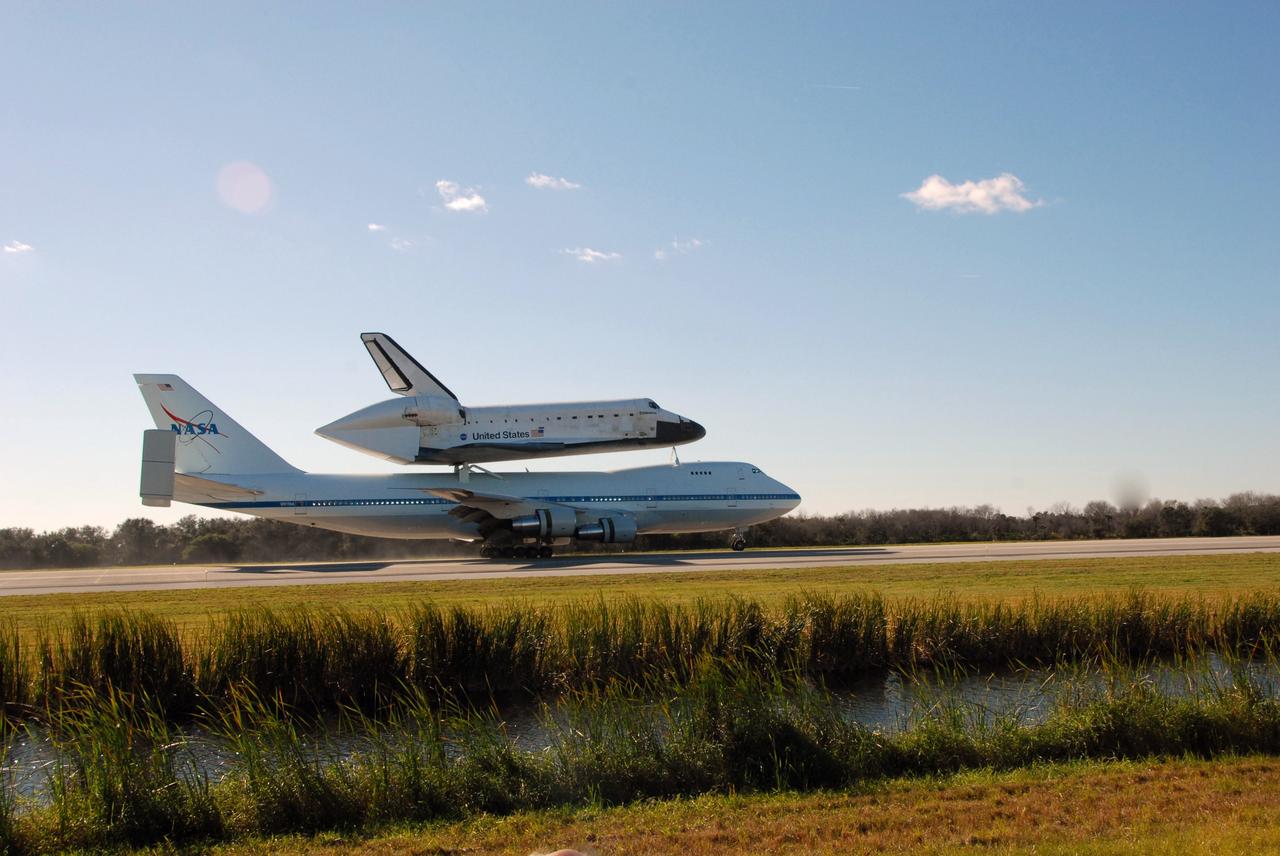
CAPE CANAVERAL, Fla. -- After a three-day trip from California, the shuttle carrier aircraft, or SCA, and its piggyback passenger space shuttle Endeavour roll down the Shuttle Landing Facility runway at NASA's Kennedy Space Center in Florida. Visible is the tail cone on Endeavour that covers and protects the main engines during the ferry flight. Touchdown at Kennedy was at 2:44 p.m. EST. The SCA is a modified Boeing 747 jetliner. Endeavour landed at Edwards Air Force Base in California Nov. 30 to end mission STS-126. The return to Kennedy began Dec. 8 and took four days after stops across the country for fuel. The last stop was at Barksdale Air Force Base in Shreveport, La. Weather conditions en route and in Florida postponed the landing at Kennedy until Dec. 12. Photo credit: NASA/Jack Pfaller
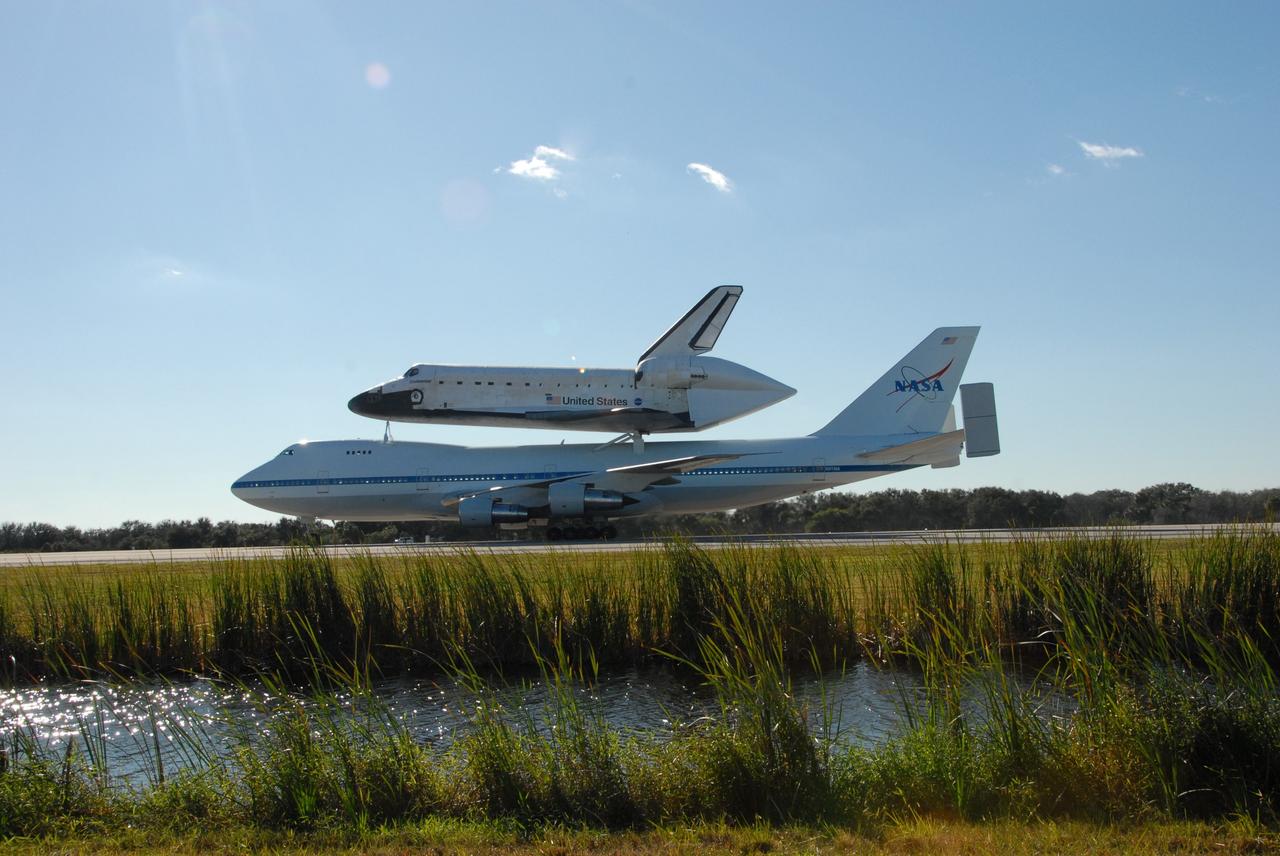
CAPE CANAVERAL, Fla. -- After a three-day trip from California, the shuttle carrier aircraft, or SCA, and its piggyback passenger space shuttle Endeavour roll down the Shuttle Landing Facility runway at NASA's Kennedy Space Center in Florida. Visible is the tail cone on Endeavour that covers and protects the main engines during the ferry flight. Touchdown at Kennedy was at 2:44 p.m. EST. The SCA is a modified Boeing 747 jetliner. Endeavour landed at Edwards Air Force Base in California Nov. 30 to end mission STS-126. The return to Kennedy began Dec. 8 and took four days after stops across the country for fuel. The last stop was at Barksdale Air Force Base in Shreveport, La. Weather conditions en route and in Florida postponed the landing at Kennedy until Dec. 12. Photo credit: NASA/Jack Pfaller
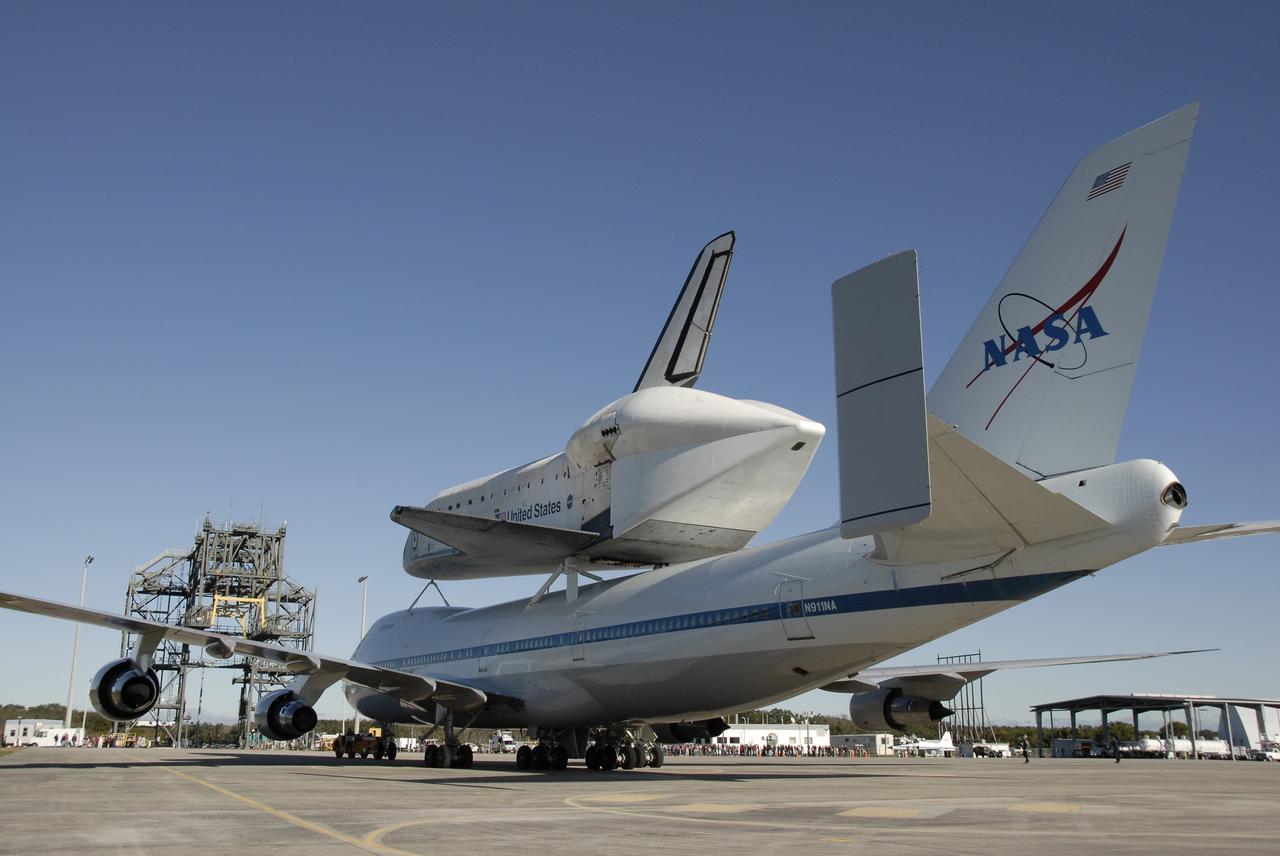
CAPE CANAVERAL, Fla. -- The shuttle carrier aircraft, or SCA, and its piggyback passenger space shuttle Endeavour are poised to be towed into the mate/demate device, in the foreground. The device will lift the shuttle and put it back on the ground. Visible on Endeavour is the tail cone, which covers and protects the main engines during the ferry flight. After making the three-day trip from California, touchdown at Kennedy was at 2:44 p.m. EST. The SCA is a modified Boeing 747 jetliner. Endeavour landed at Edwards Air Force Base in California Nov. 30 to end mission STS-126. The return to Kennedy began Dec. 8 and took four days after stops across the country for fuel. The last stop was at Barksdale Air Force Base in Shreveport, La. Weather conditions en route and in Florida postponed the landing at Kennedy until Dec. 12. Photo credit: NASA/Kim Shiflett
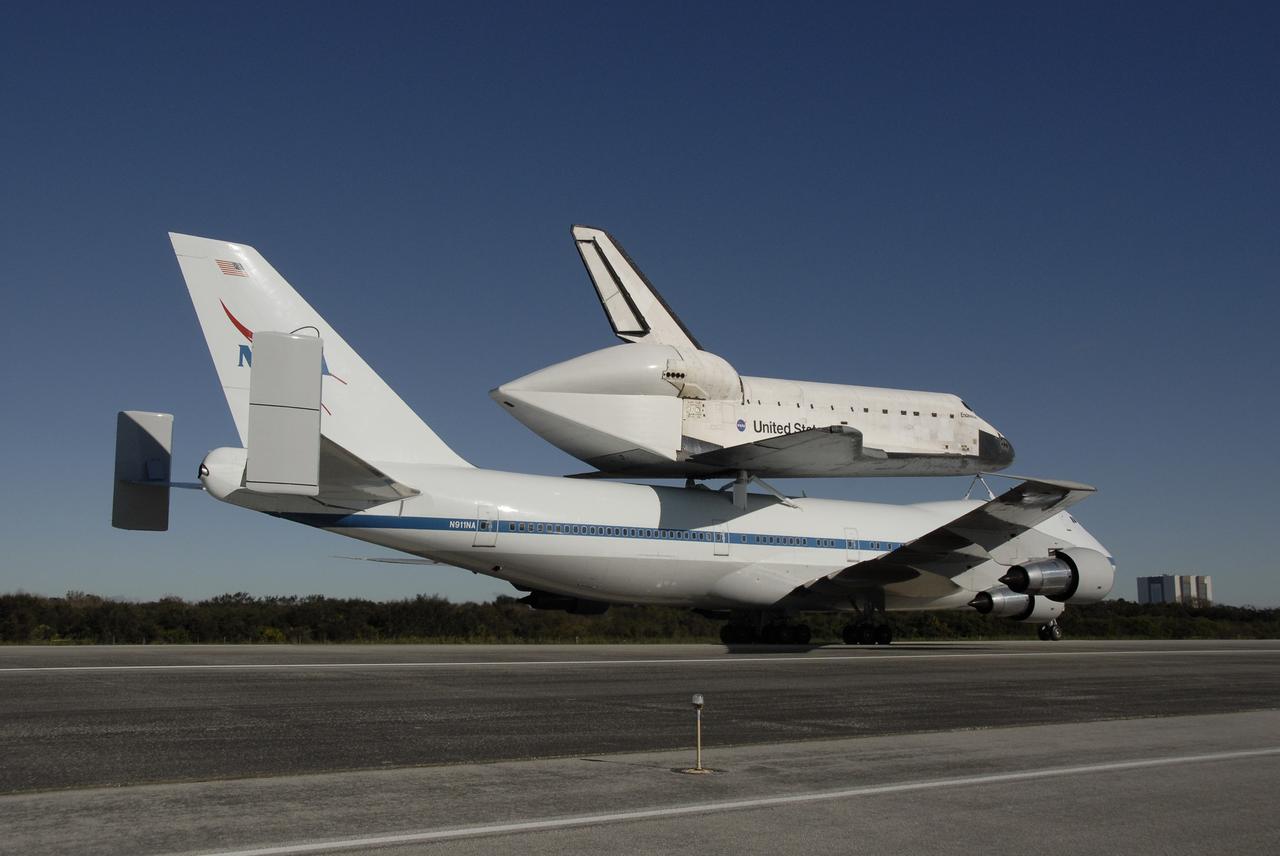
CAPE CANAVERAL, Fla. -- After a three-day trip from California, the shuttle carrier aircraft, or SCA, and its piggyback passenger space shuttle Endeavour roll down the Shuttle Landing Facility runway at NASA's Kennedy Space Center in Florida. Visible is the tail cone on Endeavour that covers and protects the main engines during the ferry flight. Touchdown at Kennedy was at 2:44 p.m. EST. The SCA is a modified Boeing 747 jetliner. Endeavour landed at Edwards Air Force Base in California Nov. 30 to end mission STS-126. The return to Kennedy began Dec. 8 and took four days after stops across the country for fuel. The last stop was at Barksdale Air Force Base in Shreveport, La. Weather conditions en route and in Florida postponed the landing at Kennedy until Dec. 12. Photo credit: NASA/Kim Shiflett

This is a closer view of the Shuttle Carrier Aircraft with orbiter Columbia riding piggyback as the SCA taxis toward the mate/demate device at the KSC Shuttle Landing Facility. At the MDD, Columbia will be lifted off the SCA and towed to the Orbiter Processing Facility bay 1. Columbia’s ferry flight began in California March 1. Unfavorable weather conditions kept it on the ground at Dyess AFB, Texas, until it could return to Florida. It landed temporarily at the CCAFS Skid Strip until Atlantis, which had already landed at the SLF, could be transferred. Columbia is returning from a 17-month-long modification and refurbishment process as part of a routine maintenance plan. The orbiter will next fly on mission STS-107, scheduled Oct. 25
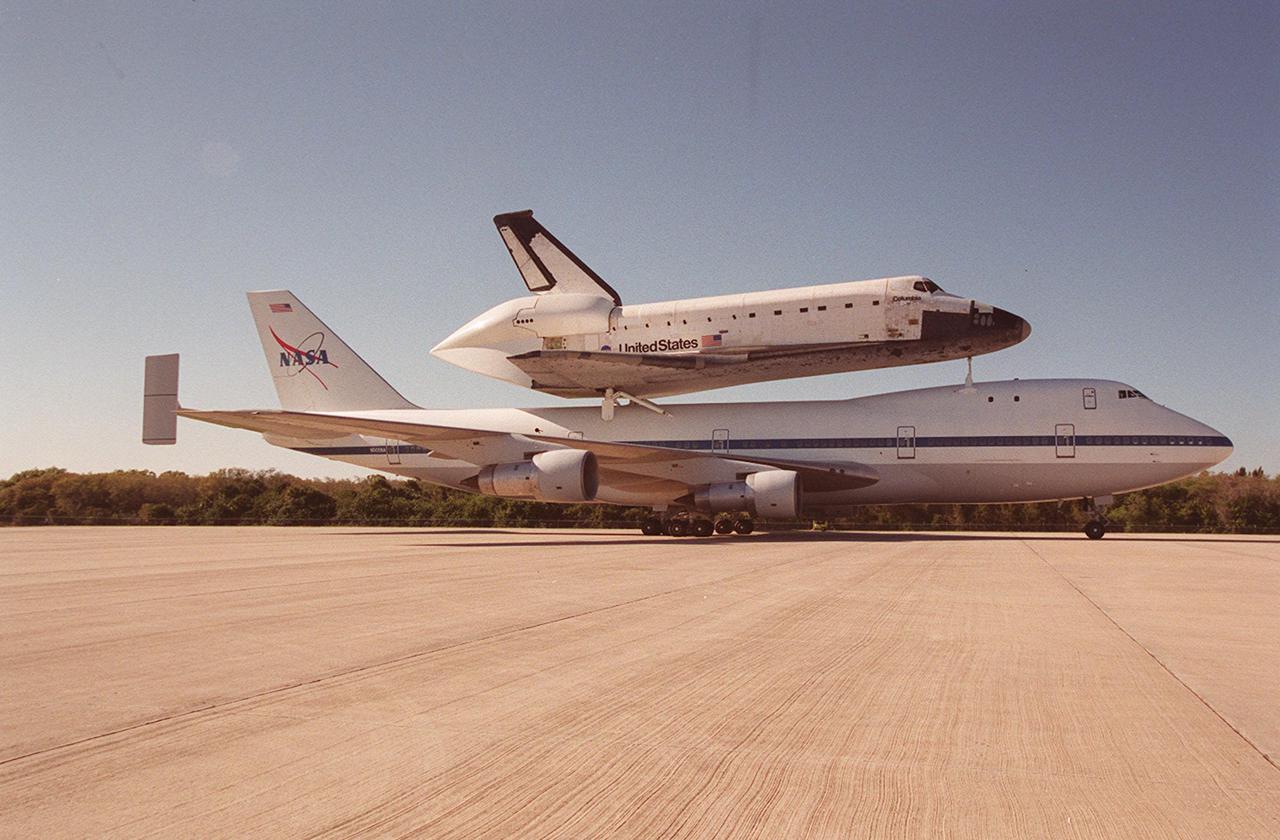
This is a closer view of the Shuttle Carrier Aircraft with orbiter Columbia riding piggyback as the SCA taxis toward the mate_demate device at the KSC Shuttle Landing Facility. At the MDD, Columbia will be lifted off the SCA and towed to the Orbiter Processing Facility bay 1. Columbia’s ferry flight began in California March 1. Unfavorable weather conditions kept it on the ground at Dyess AFB, Texas, until it could return to Florida. It landed temporarily at the CCAFS Skid Strip until Atlantis, which had already landed at the SLF, could be transferred. Columbia is returning from a 17-month-long modification and refurbishment process as part of a routine maintenance plan. The orbiter will next fly on mission STS-107, scheduled Oct. 25

CAPE CANAVERAL, Fla. – At Edwards Air Force Base in California, a sling in the mate/demate device suspends space shuttle Atlantis above the ground. A Shuttle Carrier Aircraft, or SCA, will be moved underneath and Atlantis bolted to the top of the modified Boeing 747. A tail cone, which protects the aft engine area and provides a more efficient aeronautical dimension during its piggyback flight, can be seen. Atlantis landed at Edwards on May 24, which concluded mission STS-125, after two landing opportunities at Kennedy were waved off due to weather concerns. Atlantis is being returned to Florida on a ferry flight on the SCA. Atlantis' next assignment is the STS-129 mission, targeted to launch in November 2009. Photo credit: NASA/Ben Smegelsky
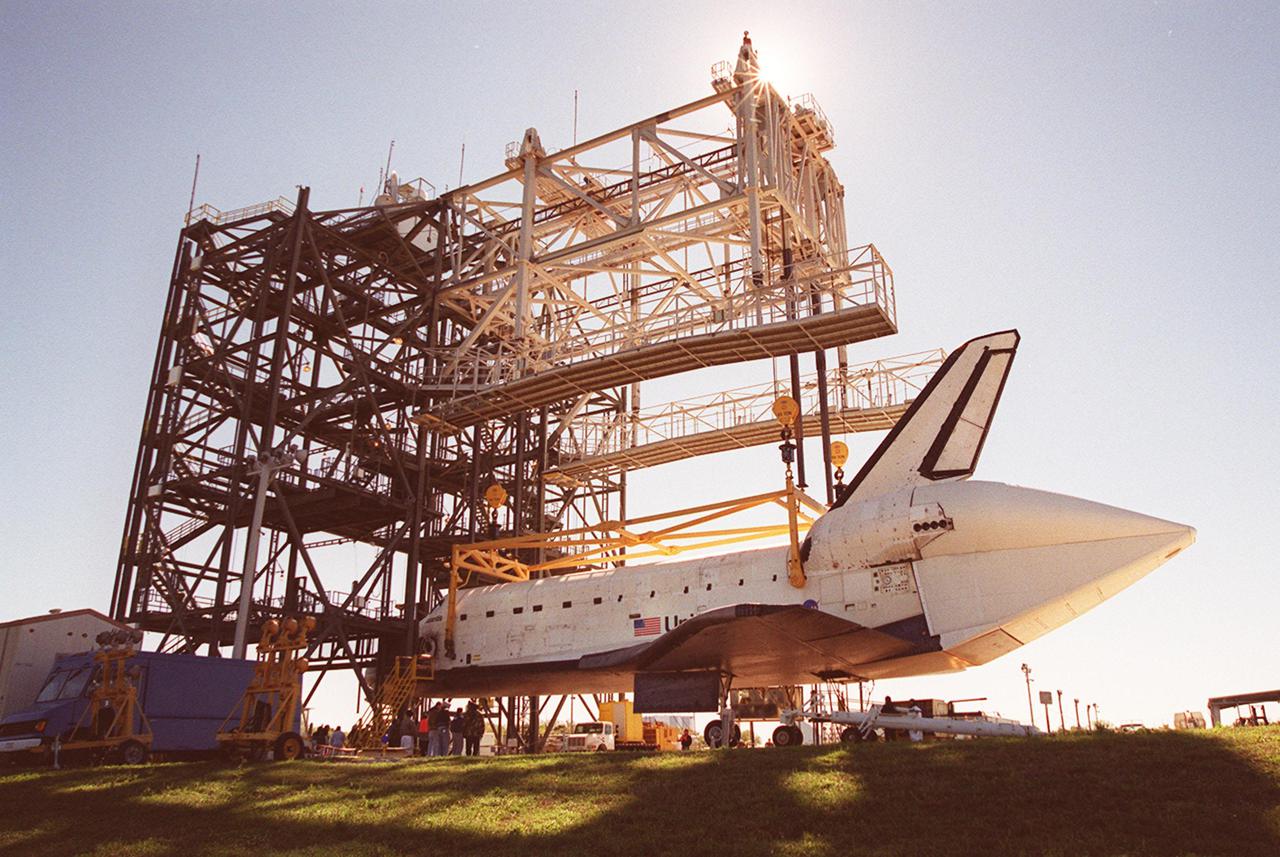
At the mate_demate device at KSC’s Shuttle Landing Facility, Atlantis is lowered onto its wheels in preparation for being towed to the Orbiter Processing Facility. This view of Atlantis shows the tail cone that orbiters use when being carried piggyback on ferry flights atop a Shuttle Carrier Aircraft. The tail cone protects the aft engine area and provides a more efficient aeronautical dimension during flight. Atlantis returned from California atop the SCA after its Feb. 19 landing at Edwards Air Force Base concluding mission STS-98. The ferry flight began March 1; unfavorable weather conditions kept it on the ground at Altus AFB, Okla., until it could return to Florida. In the Orbiter Processing Facility, Atlantis will be prepared for mission STS-104, the 10th construction flight to the International Space Station, scheduled to launch June 8
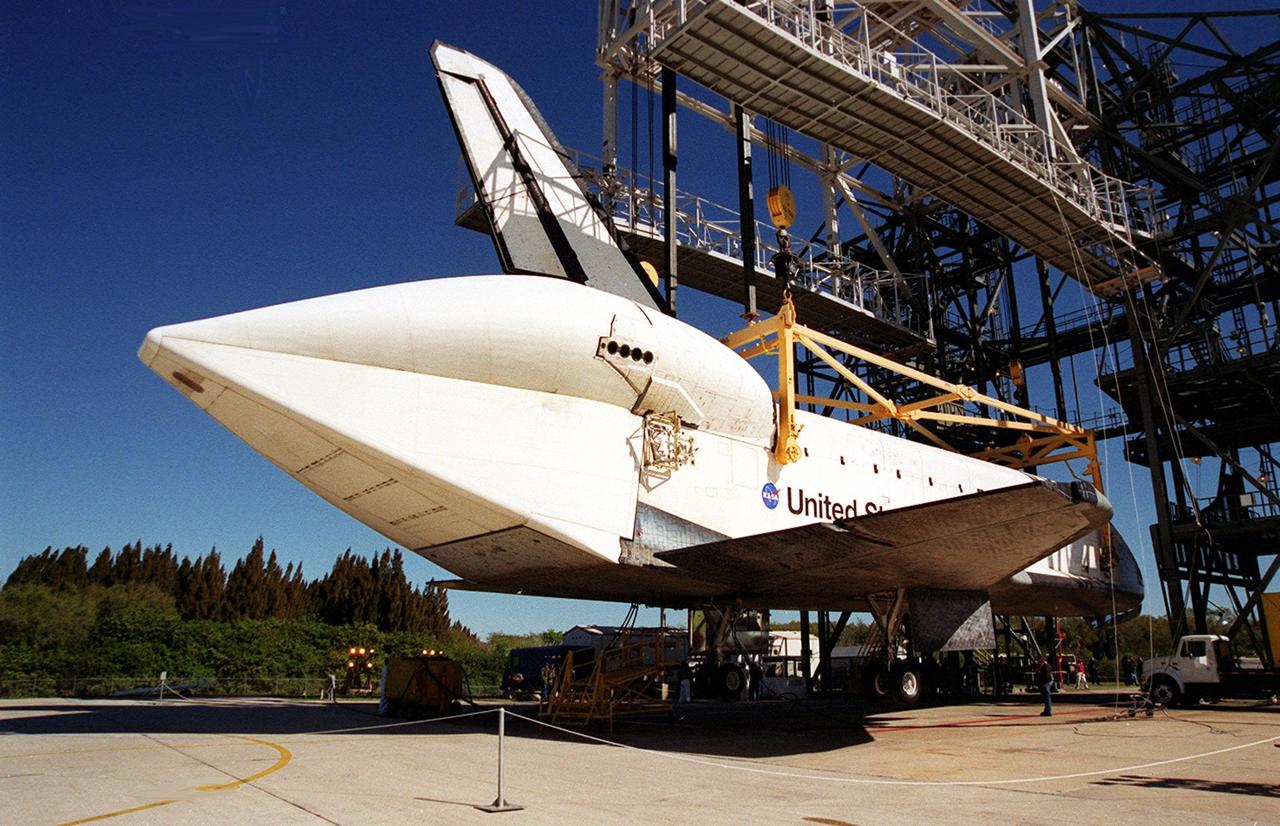
This view of Atlantis at the mate/demate device at KSC’s Shuttle Landing Facility shows the tail cone that orbiters use when being carried piggyback on ferry flights atop a Shuttle Carrier Aircraft. The tail cone protects the aft engine area and provides a more efficient aeronautical dimension during flight. Atlantis returned from California atop the SCA after its Feb. 19 landing at Edwards Air Force Base concluding mission STS-98. The ferry flight began March 1; unfavorable weather conditions kept it on the ground at Altus AFB, Okla., until it could return to Florida. Atlantis will be transported to the Orbiter Processing Facility to prepare it for mission STS-104, the 10th construction flight to the International Space Station, scheduled to launch June 8
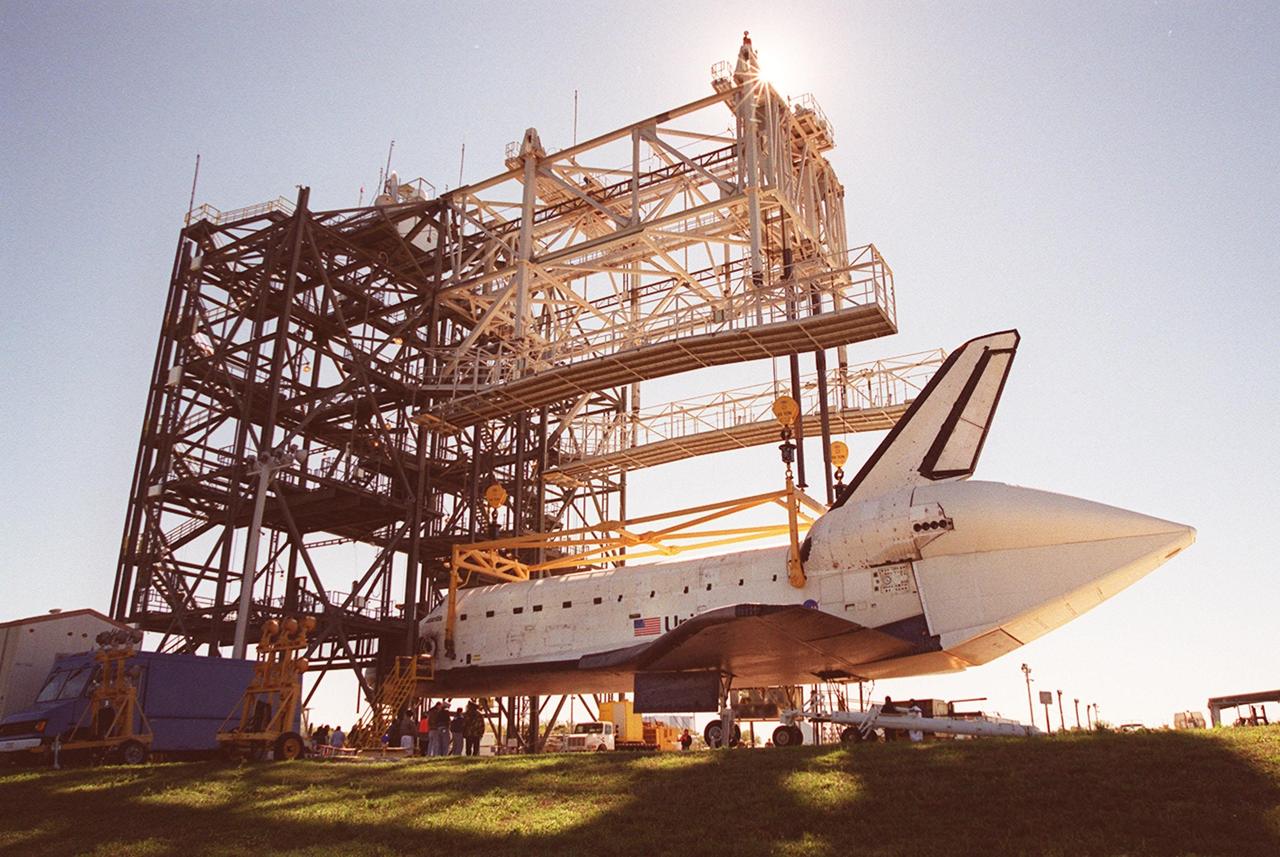
At the mate/demate device at KSC’s Shuttle Landing Facility, Atlantis is lowered onto its wheels in preparation for being towed to the Orbiter Processing Facility. This view of Atlantis shows the tail cone that orbiters use when being carried piggyback on ferry flights atop a Shuttle Carrier Aircraft. The tail cone protects the aft engine area and provides a more efficient aeronautical dimension during flight. Atlantis returned from California atop the SCA after its Feb. 19 landing at Edwards Air Force Base concluding mission STS-98. The ferry flight began March 1; unfavorable weather conditions kept it on the ground at Altus AFB, Okla., until it could return to Florida. In the Orbiter Processing Facility, Atlantis will be prepared for mission STS-104, the 10th construction flight to the International Space Station, scheduled to launch June 8
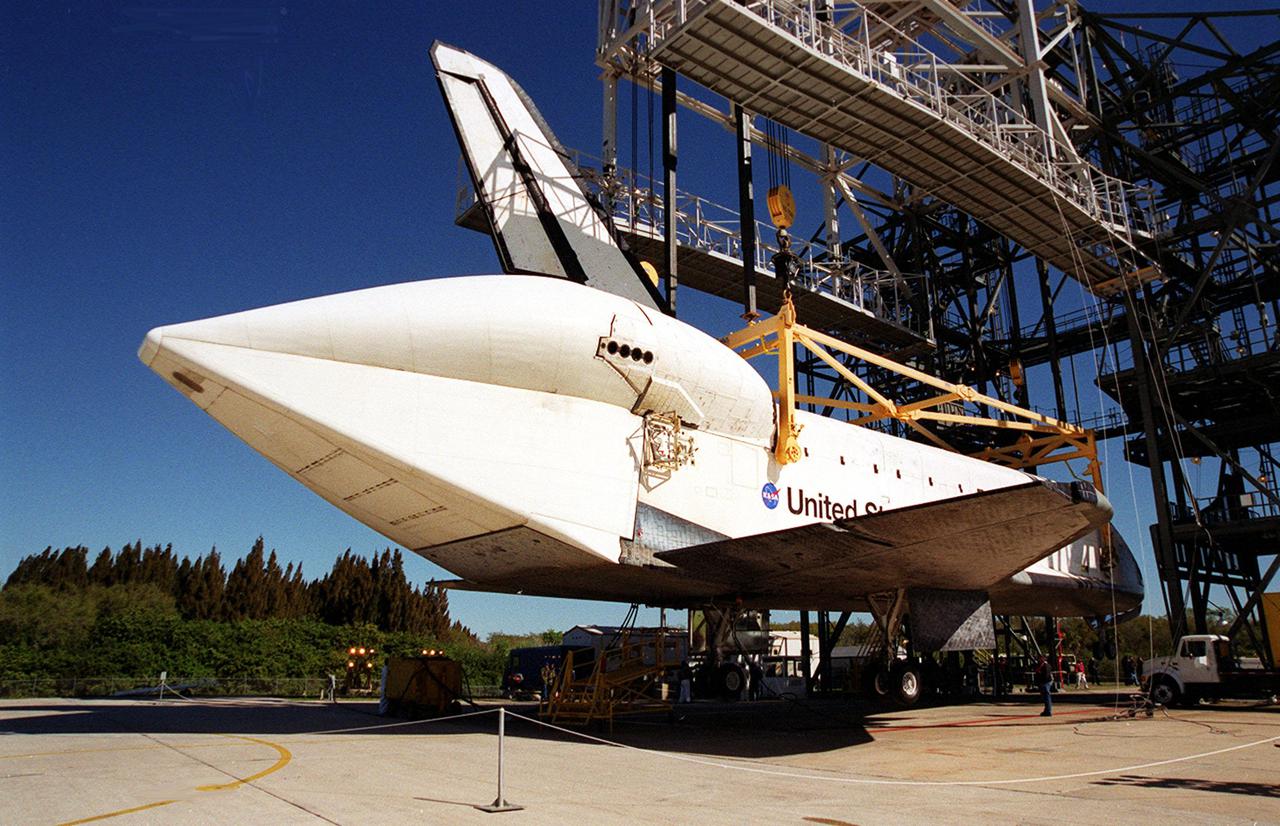
This view of Atlantis at the mate_demate device at KSC’s Shuttle Landing Facility shows the tail cone that orbiters use when being carried piggyback on ferry flights atop a Shuttle Carrier Aircraft. The tail cone protects the aft engine area and provides a more efficient aeronautical dimension during flight. Atlantis returned from California atop the SCA after its Feb. 19 landing at Edwards Air Force Base concluding mission STS-98. The ferry flight began March 1; unfavorable weather conditions kept it on the ground at Altus AFB, Okla., until it could return to Florida. Atlantis will be transported to the Orbiter Processing Facility to prepare it for mission STS-104, the 10th construction flight to the International Space Station, scheduled to launch June 8
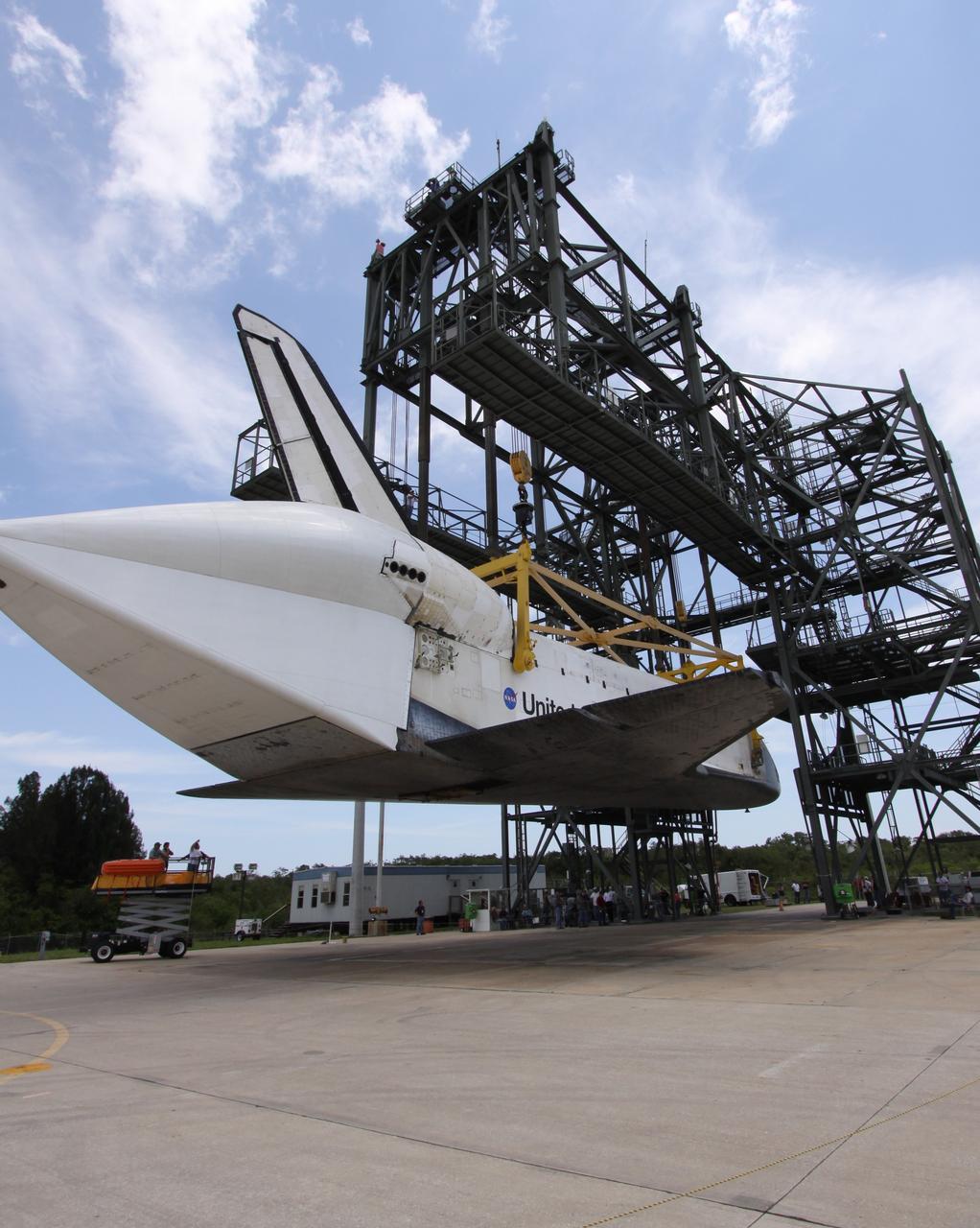
CAPE CANAVERAL, Fla. – On the Shuttle Landing Facility at NASA's Kennedy Space Center in Florida, space shuttle Atlantis is lowered toward the ground after being demated from the Shuttle Carrier Aircraft seen at left. Atlantis' wheels still must be lowered. Covering the rear of Atlantis is the tail cone, which protects the aft engine area and provides a more efficient aeronautical dimension during a piggyback flight. Atlantis returned from California atop the SCA, a modified Boeing 747, after its May 24 landing at Edwards Air Force Base, concluding mission STS-125. The ferry flight from Edwards Air Force Base began June 1. Atlantis' next assignment is the STS-129 mission, targeted to launch in November 2009. Photo credit: NASA/Jack Pfaller
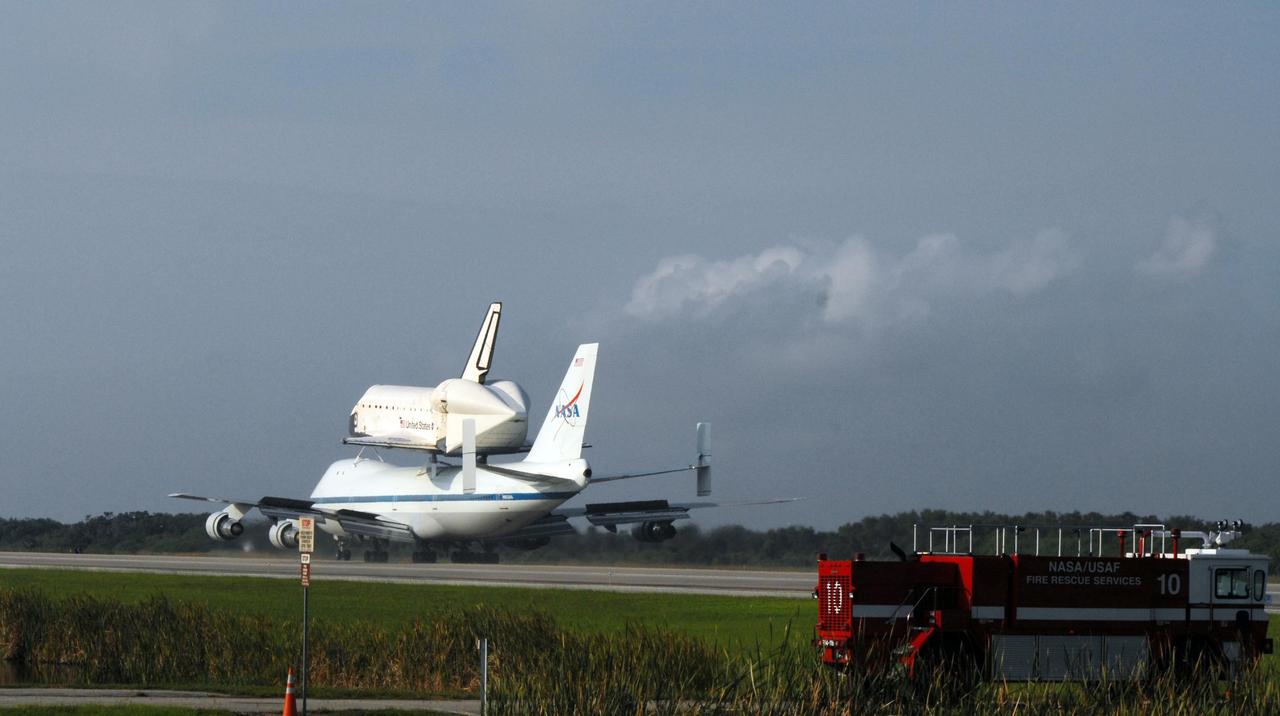
KENNEDY SPACE CENTER, FLA. -- After a three-day trip from California, the shuttle carrier aircraft, or SCA, and its piggyback passenger Atlantis taxi down the KSC Shuttle Landing Facility runway after landing. Touchdown was at 8:27 a.m. EDT. The SCA is a modified Boeing 747 jetliner. Visible on Atlantis is the tail cone that covers and protects the main engines during the ferry flight. Atlantis landed at Edwards Air Force Base in California to end mission STS-117. The return to KSC began July 1 and took three days after stops across the country for fuel. The last stop was at Ft. Campbell in Kentucky. Weather conditions over the last leg postponed the return trip until July 3. Atlantis will be removed from the back of the SCA via the mate/demate device at the SLF. It will then be towed to the Orbiter Processing Facility to begin processing for its next launch, mission STS-122 in December. Photo credit: NASA/Ken Thornsley
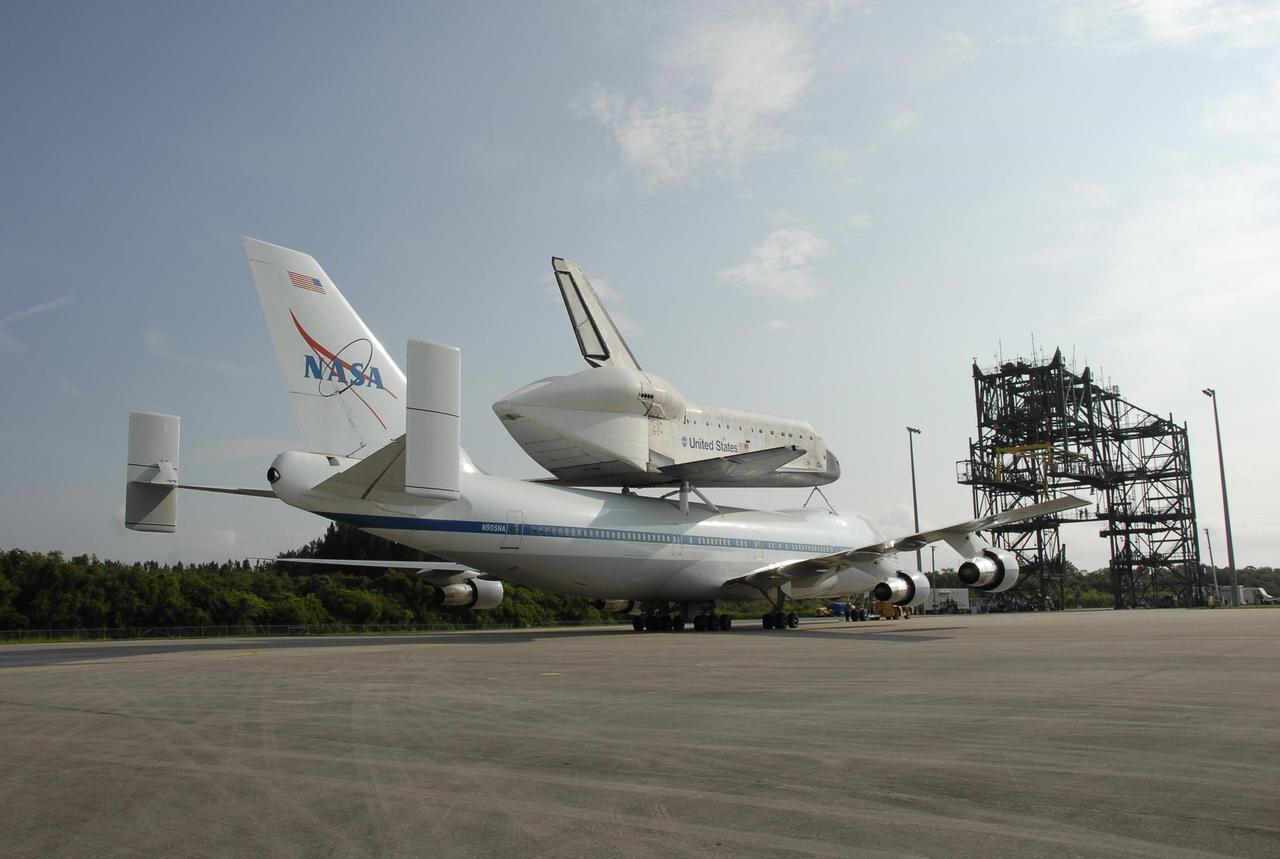
KENNEDY SPACE CENTER, FLA. -- After landing at the KSC Shuttle Landing Facility, the shuttle carrier aircraft, or SCA, and its piggyback passenger Atlantis are towed toward the mate/demate device that will put the orbiter back on the ground. After a three-day, cross-country trip, the duo touched down at 8:27 a.m. EDT. The SCA is a modified Boeing 747 jetliner. Visible on Atlantis is the tail cone that covers and protects the main engines during the ferry flight. Atlantis landed at Edwards Air Force Base in California to end mission STS-117. The return to KSC began July 1 and included several stops across the country for fuel. The last stop was at Ft. Campbell in Kentucky. Weather conditions over the last leg postponed the return trip until July 3. After demate, Atlantis will then be towed to the Orbiter Processing Facility to begin processing for its next launch, mission STS-122 in December. Photo credit: NASA/Kim Shiflett
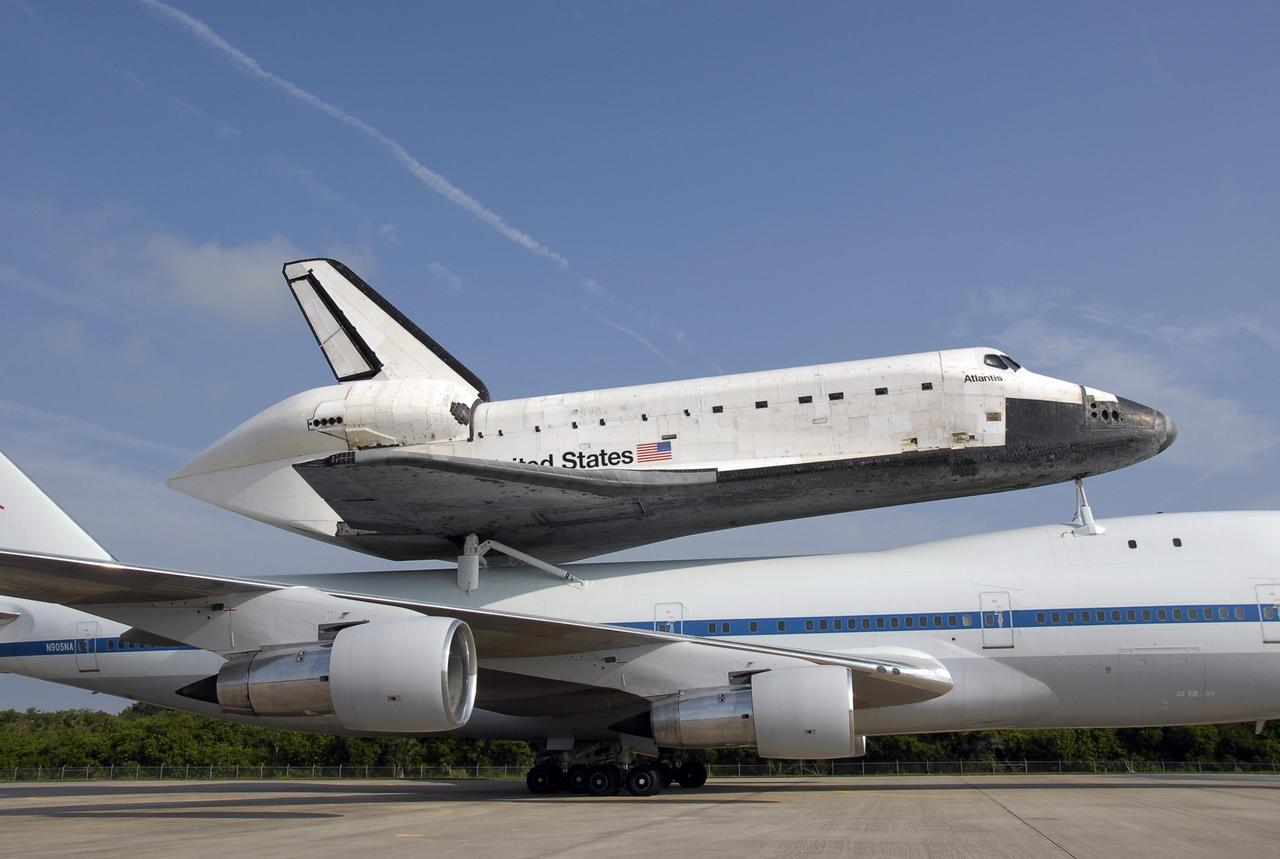
KENNEDY SPACE CENTER, FLA. -- After landing at the KSC Shuttle Landing Facility, the shuttle carrier aircraft, or SCA, and its piggyback passenger Atlantis are towed to the mate/demate device that will put the orbiter back on the ground. After a three-day, cross-country trip, the duo touched down at 8:27 a.m. EDT. The SCA is a modified Boeing 747 jetliner. Visible on Atlantis is the tail cone that covers and protects the main engines during the ferry flight. Atlantis landed at Edwards Air Force Base in California to end mission STS-117. The return to KSC began July 1 and included several stops across the country for fuel. The last stop was at Ft. Campbell in Kentucky. Weather conditions over the last leg postponed the return trip until July 3. After demate, Atlantis will then be towed to the Orbiter Processing Facility to begin processing for its next launch, mission STS-122 in December. Photo credit: NASA/Kim Shiflett