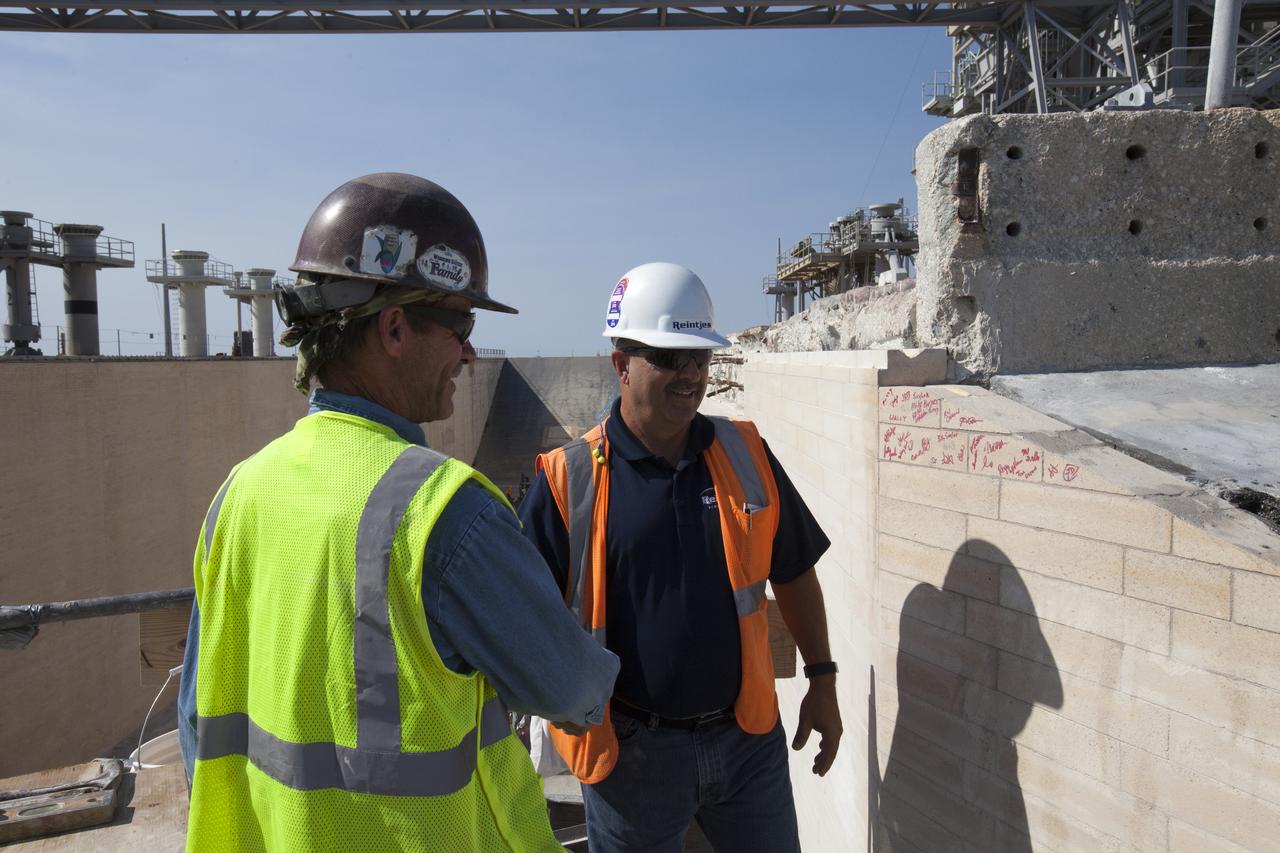
Construction workers sign the final bricks after they were installed on the north side of the flame trench at Launch Complex 39B at NASA’s Kennedy Space Center in Florida. The walls of the flame trench are being upgraded to withstand the intense heat and fire at launch of NASA's Space Launch System rocket with Orion atop. About 96,000 heat-resistant bricks, in three different sizes, were secured to the walls using bonding mortar in combination with adhesive anchors. The Ground Systems Development and Operations Program is overseeing upgrades and modifications to Pad 39B to support the launch of the SLS and Orion spacecraft for Exploration Mission-1 and NASA’s journey to Mars.
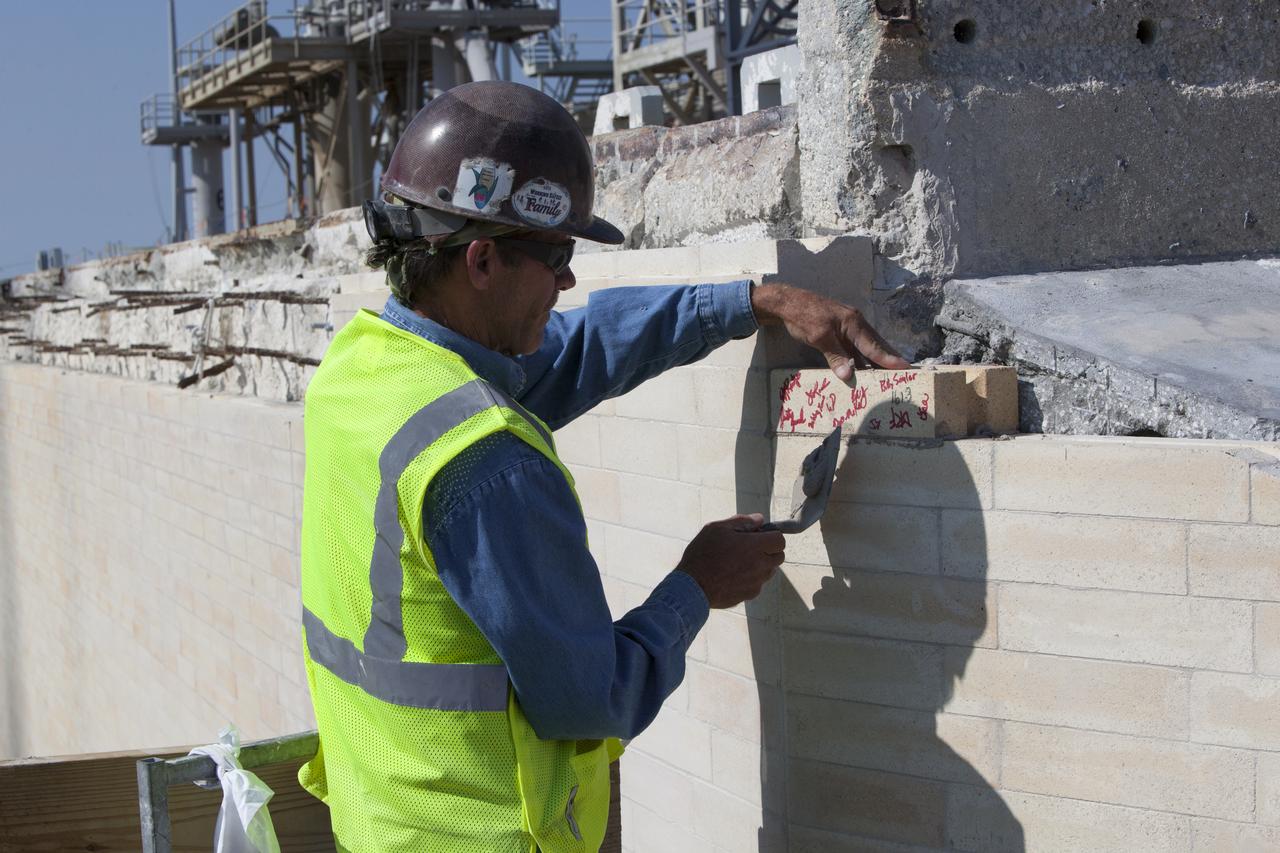
A construction worker installs one of the final bricks on the north side of the flame trench at Launch Complex 39B at NASA's Kennedy Space Center in Florida. The walls of the flame trench are being upgraded to withstand the intense heat and fire at launch of NASA's Space Launch System rocket with Orion atop. About 96,000 heat-resistant bricks, in three different sizes, were secured to the walls using bonding mortar in combination with adhesive anchors. The Ground Systems Development and Operations Program is overseeing upgrades and modifications to Pad 39B to support the launch of the SLS and Orion spacecraft for Exploration Mission-1 and NASA’s journey to Mars.
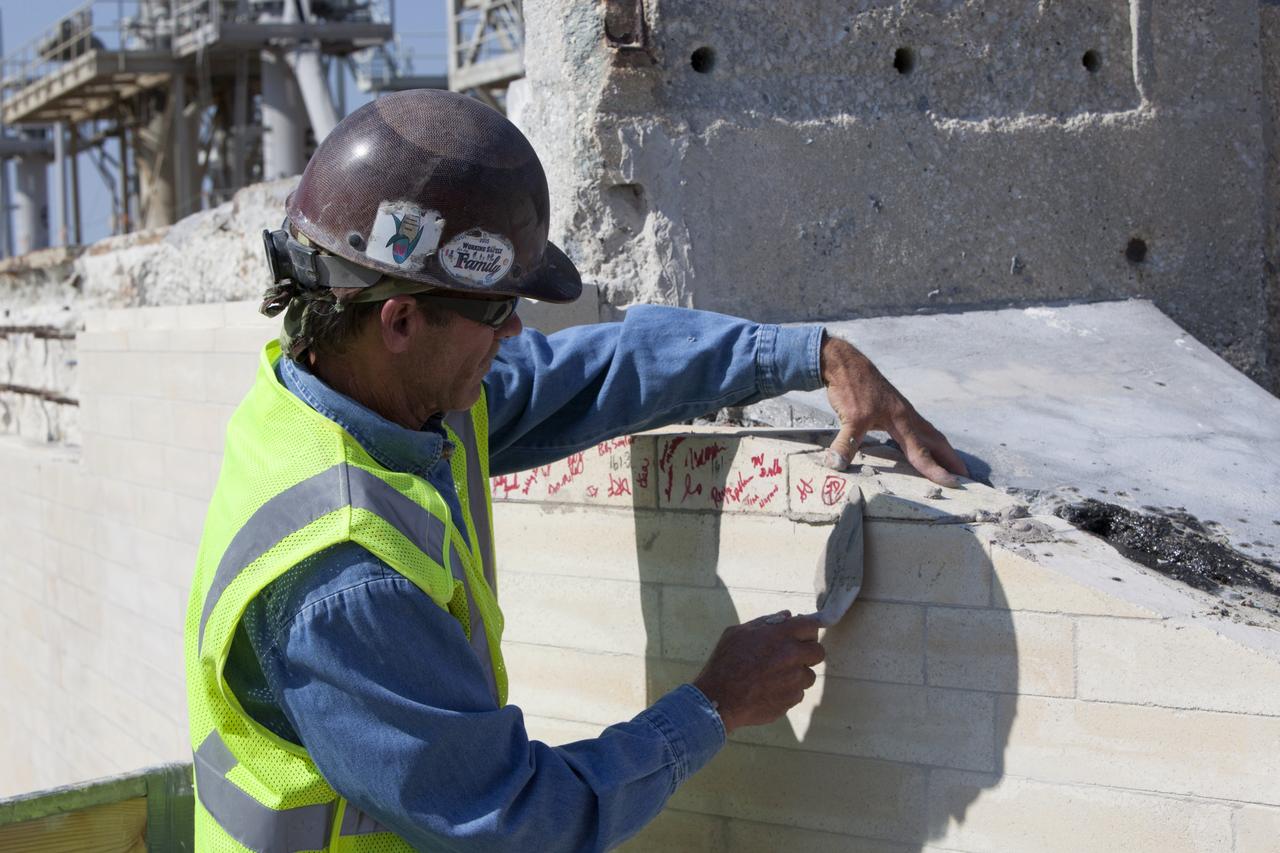
A construction worker installs the final brick on the north side of the flame trench at Launch Complex 39B at NASA's Kennedy Space Center in Florida. The walls of the flame trench are being upgraded to withstand the intense heat and fire at launch of NASA's Space Launch System rocket with Orion atop. About 96,000 heat-resistant bricks, in three different sizes, were secured to the walls using bonding mortar in combination with adhesive anchors. The Ground Systems Development and Operations Program is overseeing upgrades and modifications to Pad 39B to support the launch of the SLS and Orion spacecraft for Exploration Mission-1 and NASA’s journey to Mars.

The final brick was installed on the north side of the flame trench at Launch Complex 39B at NASA’s Kennedy Space Center in Florida. The walls of the flame trench are being upgraded to withstand the intense heat and fire at launch of NASA's Space Launch System rocket with Orion atop. About 96,000 heat-resistant bricks, in three different sizes, were secured to the walls using bonding mortar in combination with adhesive anchors. The Ground Systems Development and Operations Program is overseeing upgrades and modifications to Pad 39B to support the launch of the SLS and Orion spacecraft for Exploration Mission-1 and NASA’s journey to Mars.
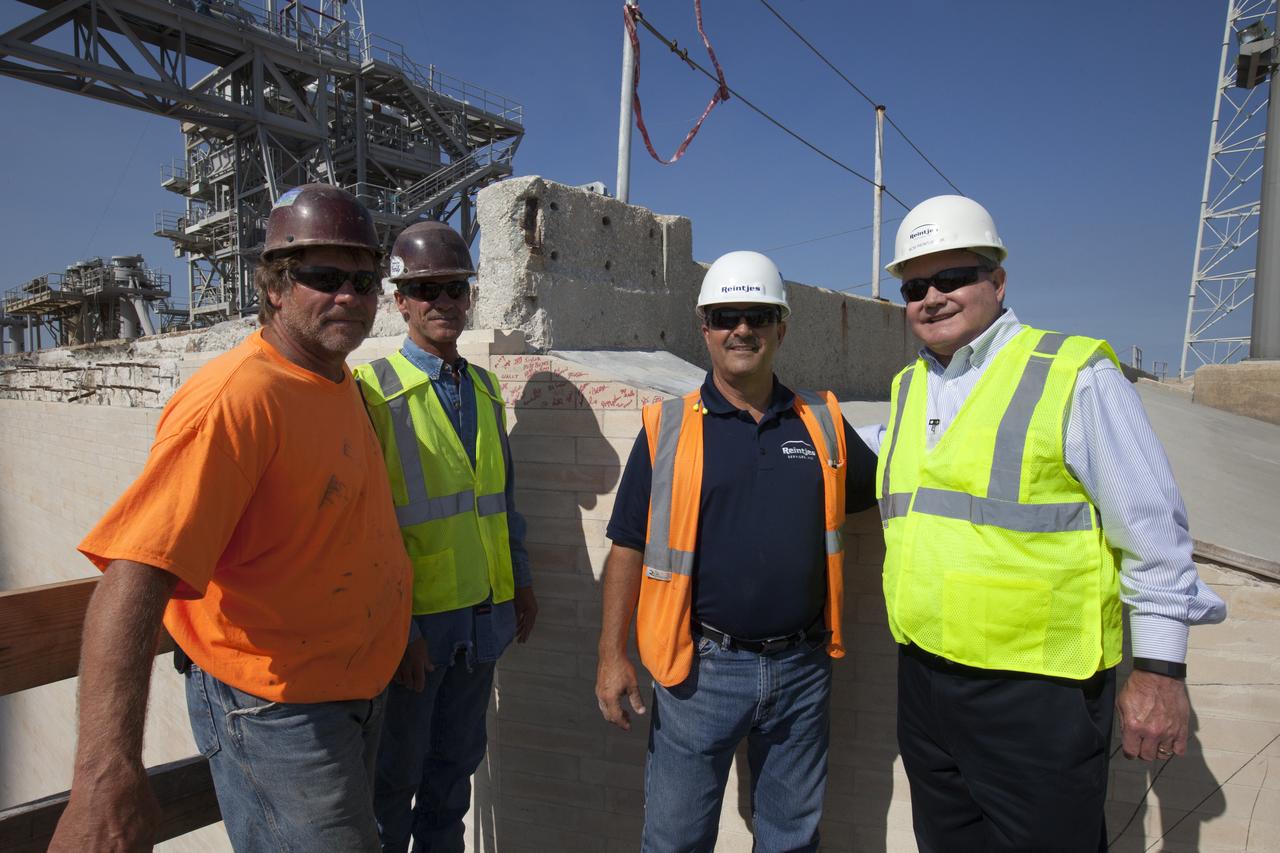
Construction workers sign the final bricks after they were installed on the north side of the flame trench at Launch Complex 39B at NASA’s Kennedy Space Center in Florida. The walls of the flame trench are being upgraded to withstand the intense heat and fire at launch of NASA's Space Launch System rocket with Orion atop. About 96,000 heat-resistant bricks, in three different sizes, were secured to the walls using bonding mortar in combination with adhesive anchors. The Ground Systems Development and Operations Program is overseeing upgrades and modifications to Pad 39B to support the launch of the SLS and Orion spacecraft for Exploration Mission-1 and NASA’s journey to Mars.
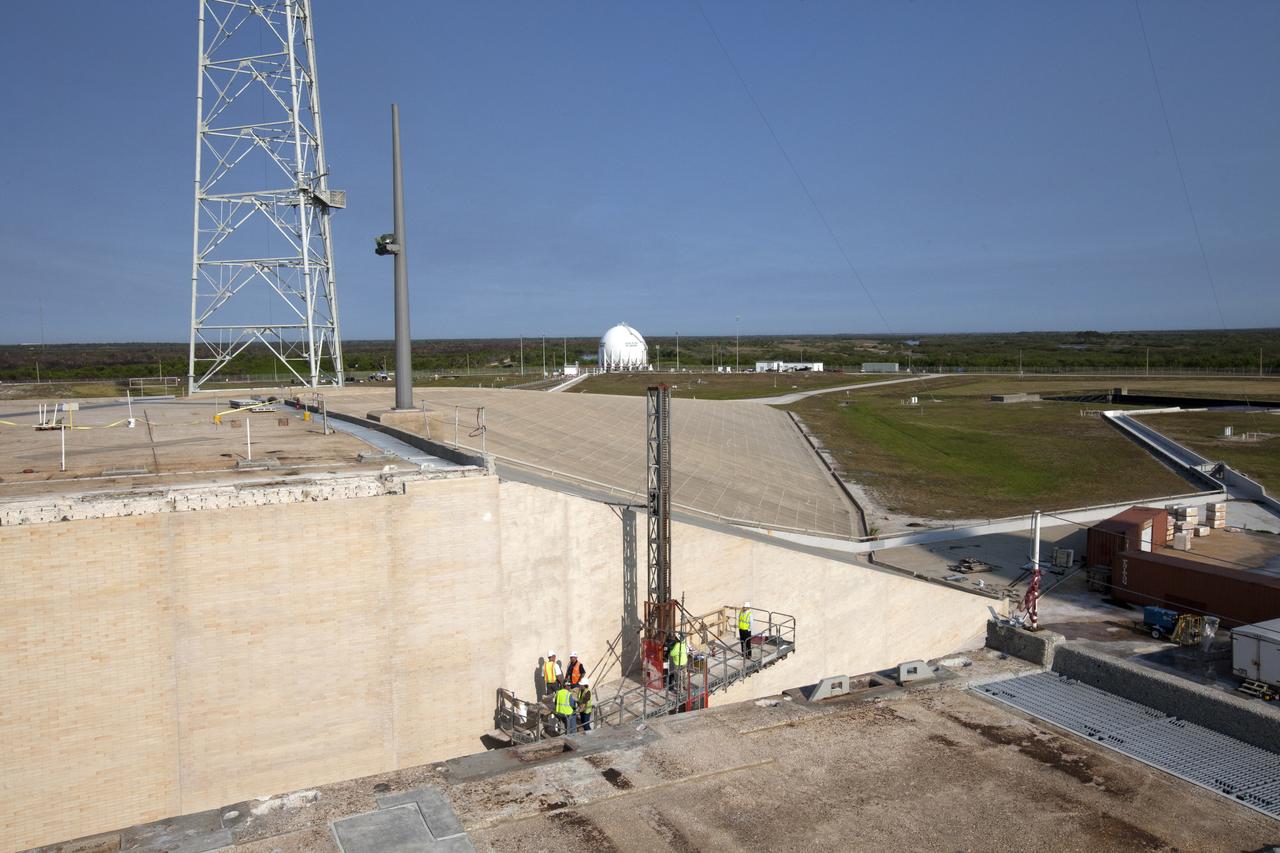
Preparations are underway to install the final brick on the north side of the flame trench at Launch Complex 39B at NASA's Kennedy Space Center in Florida. The walls of the flame trench are being upgraded to withstand the intense heat and fire at launch of NASA's Space Launch System rocket with Orion atop. About 96,000 heat-resistant bricks, in three different sizes, were secured to the walls using bonding mortar in combination with adhesive anchors. The Ground Systems Development and Operations Program is overseeing upgrades and modifications to Pad 39B to support the launch of the SLS and Orion spacecraft for Exploration Mission-1 and NASA’s journey to Mars.
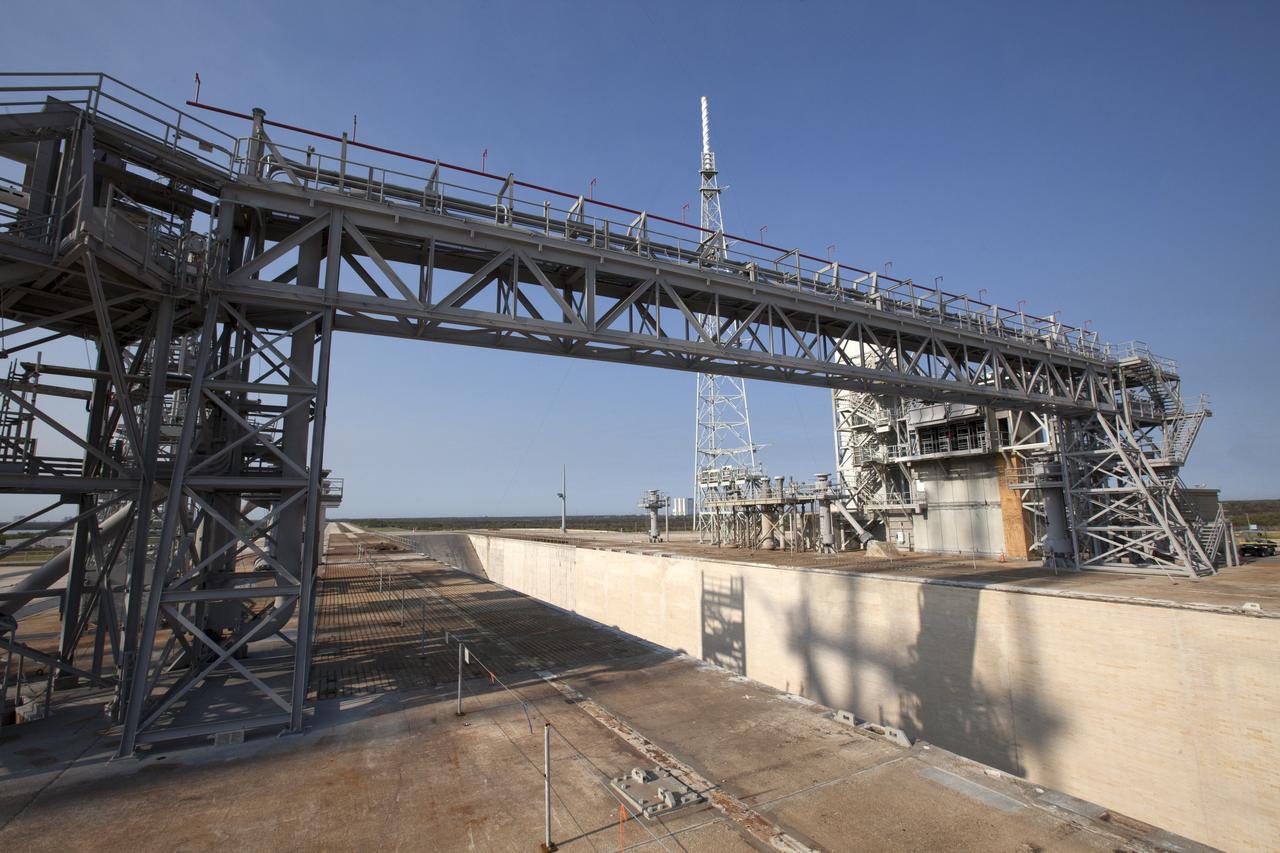
A view of the north side of the flame trench at Launch Complex 39B at NASA's Kennedy Space Center in Florida. The final brick was installed in the flame trench, completing about a year's worth of work to upgrade the walls to withstand the intense heat and fire at launch of NASA's Space Launch System rocket with Orion atop. About 96,000 heat-resistant bricks, in three different sizes, were secured to the walls using bonding mortar in combination with adhesive anchors. The Ground Systems Development and Operations Program is overseeing upgrades and modifications to Pad 39B to support the launch of the SLS and Orion spacecraft for Exploration Mission-1 and NASA’s journey to Mars.
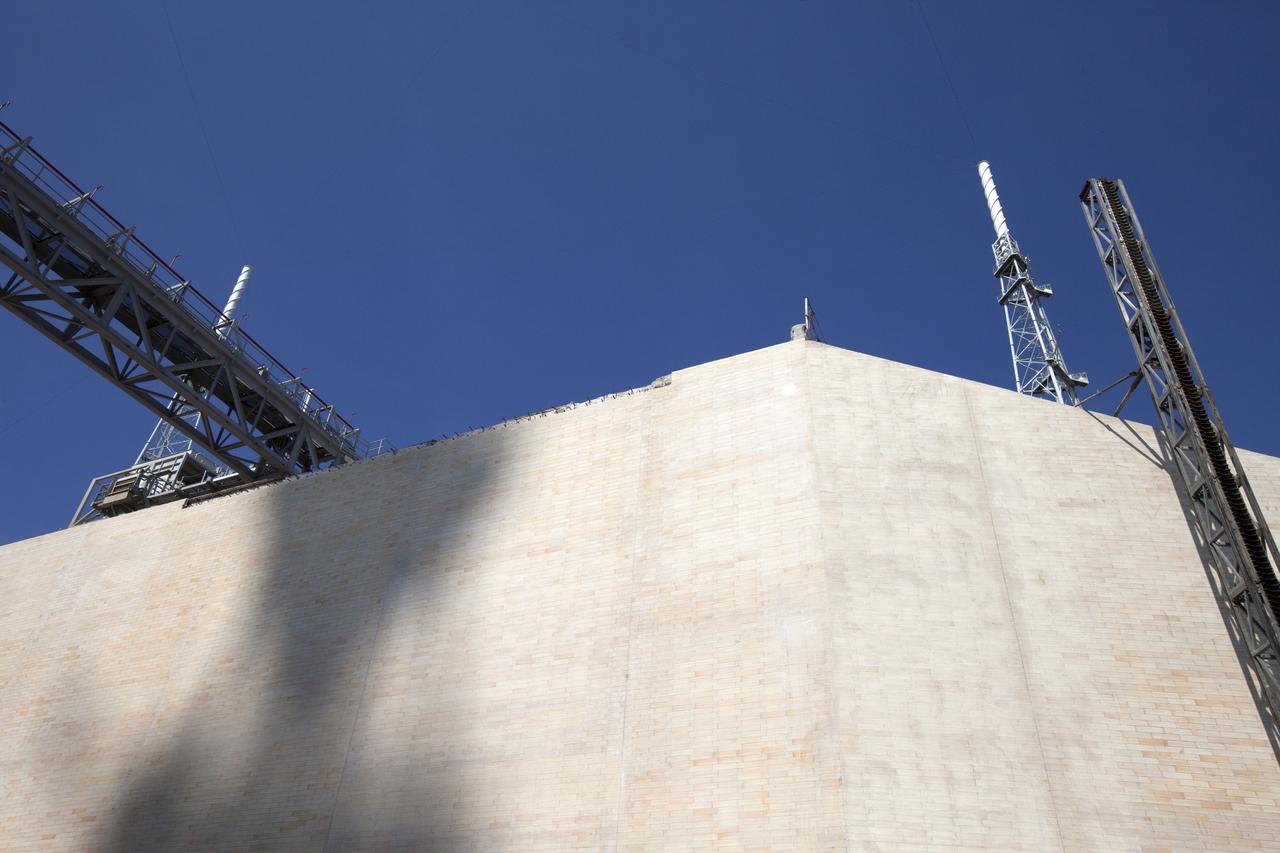
A view looking up from the north side of the flame trench beneath the pad at Launch Complex 39B at NASA's Kennedy Space Center in Florida. The walls of the flame trench are being upgraded to withstand the intense heat and fire at launch of NASA's Space Launch System rocket with Orion atop. About 96,000 heat-resistant bricks, in three different sizes, were secured to the walls using bonding mortar in combination with adhesive anchors. The Ground Systems Development and Operations Program is overseeing upgrades and modifications to Pad 39B to support the launch of the SLS and Orion spacecraft for Exploration Mission-1 and NASA’s journey to Mars.
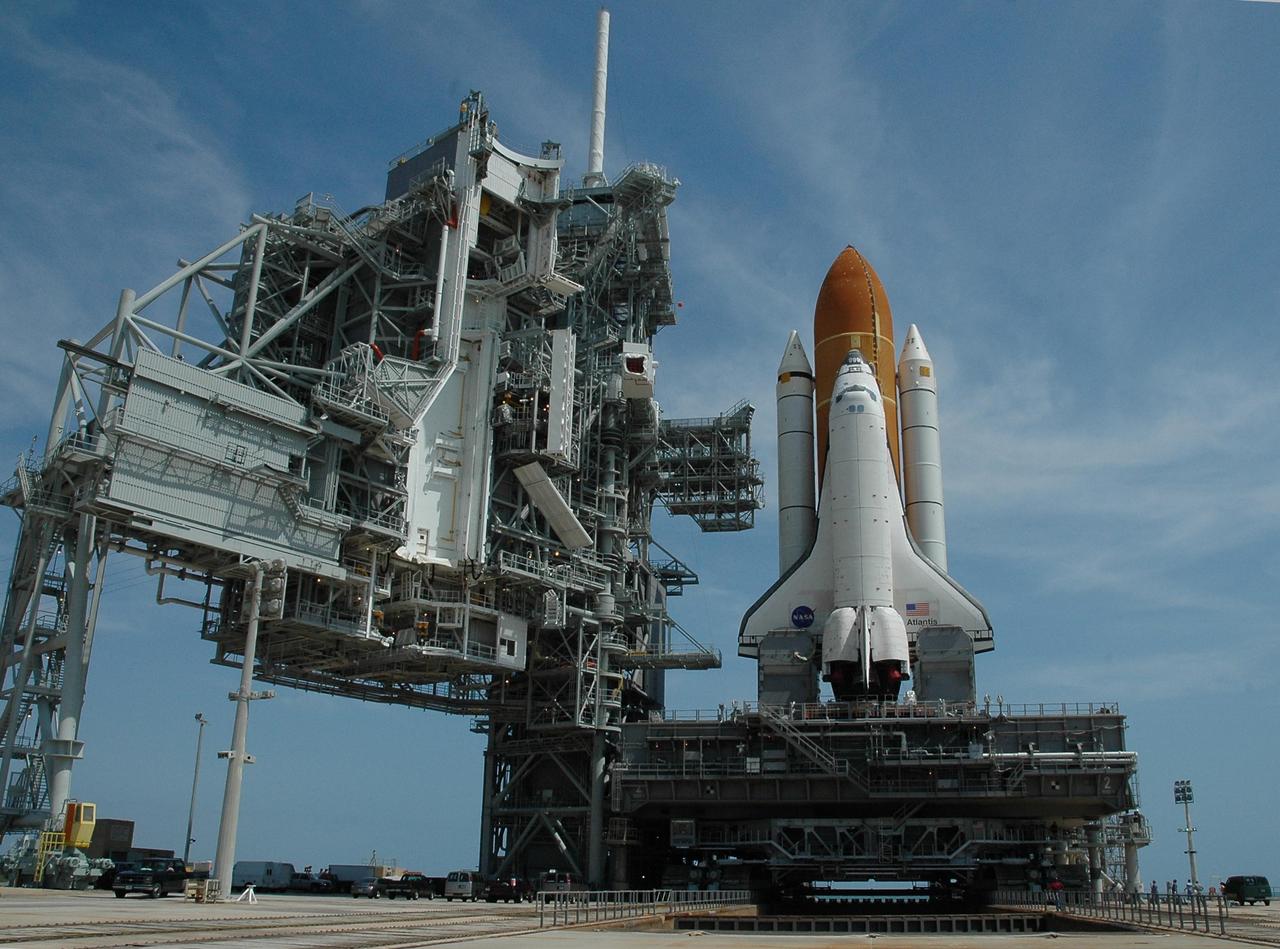
KENNEDY SPACE CENTER, FLA. -- Space Shuttle Atlantis, mounted on a mobile launch platform, finally rests on the hard stand of Launch Pad 39A, straddling the flame trench. This is the second rollout for the shuttle. The flame trench transecting the pad's mound at ground level is 490 feet long, 58 feet wide and 40 feet high. It is made of concrete and refractory brick. Pad structures are insulated from the intense heat of launch by the flame deflector system, which protects the flame trench floor and the pad surface along the top of the flame trench. On the left of the shuttle are the fixed service structure and rotating service structure in open position. When closed, the rotating structure provides protected access to the orbiter for changeout and servicing of payloads at the pad. It is supported by a rotating bridge that pivots about a vertical axis on the west side of the pad's flame trench. The white area in the center is the Payload Changeout Room, an enclosed, environmentally controlled portion of the rotating service structure that supports payload delivery at the launch pad and subsequent vertical installation in the orbiter payload bay. First motion out of the Vehicle Assembly Building was at 5:02 a.m. EDT. In late February, while Atlantis was on the launch pad, Atlantis' external tank received hail damage during a severe thunderstorm that passed through the Kennedy Space Center Launch Complex 39 area. The hail caused visible divots in the giant tank's foam insulation, as well as minor surface damage to about 26 heat shield tiles on the shuttle's left wing. The shuttle was returned to the VAB for repairs. The launch of Space Shuttle Atlantis on mission STS-117 is now targeted for June 8. A flight readiness review will be held on May 30 and 31. Photo credit: NASA/Troy Cryder