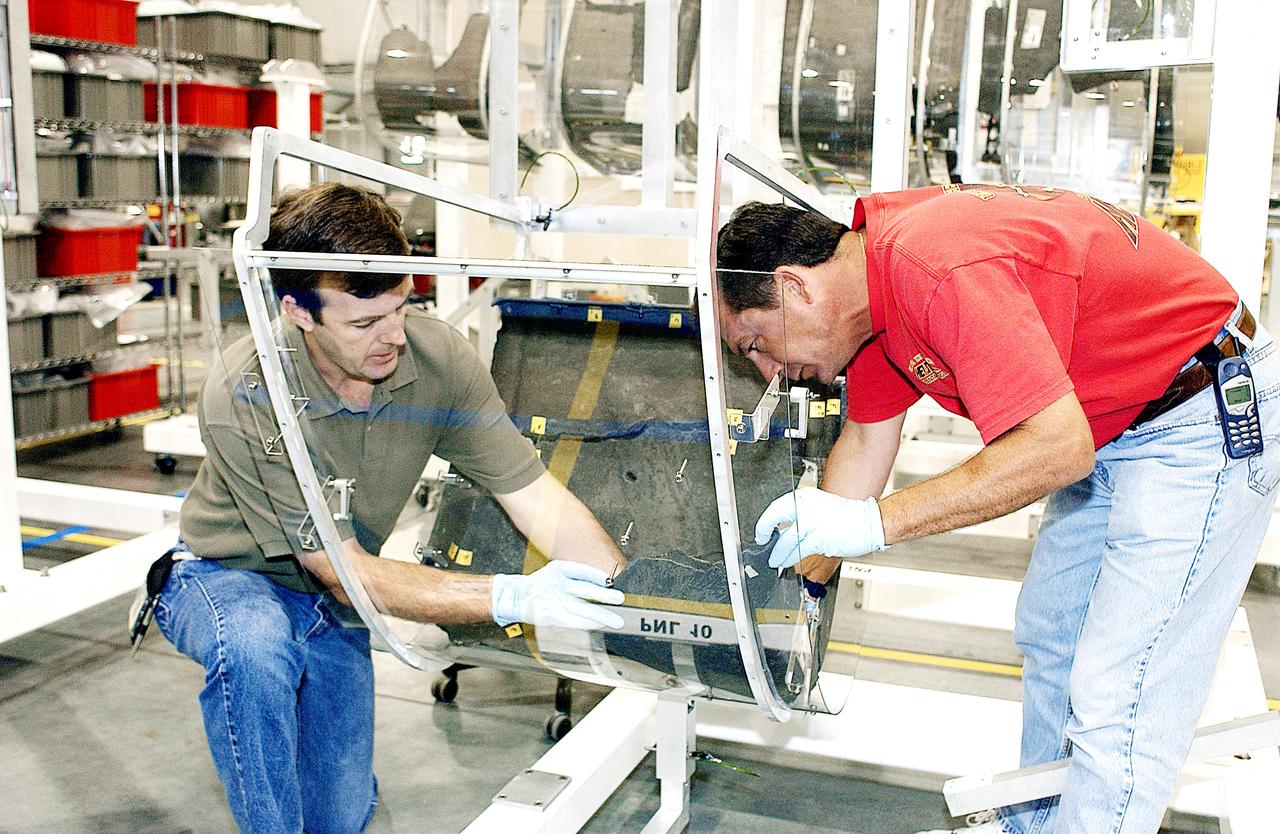
KENNEDY SPACE CENTER, FLA. - Members of the Columbia Reconstruction Project Team place debris on the mounting fixture for RCC pieces of the leading edge of Columbia’s left wing. The final shipment of debris arrived on this date - recovery efforts have been concluded in East Texas. Prior to this final shipment, the total number of items at KSC is 82,567, weighing 84,800 pounds or 38 percent of the total dry weight of Columbia. Of those items, 78,760 have been identified, with 753 placed on the left wing grid in the RLV Hangar.
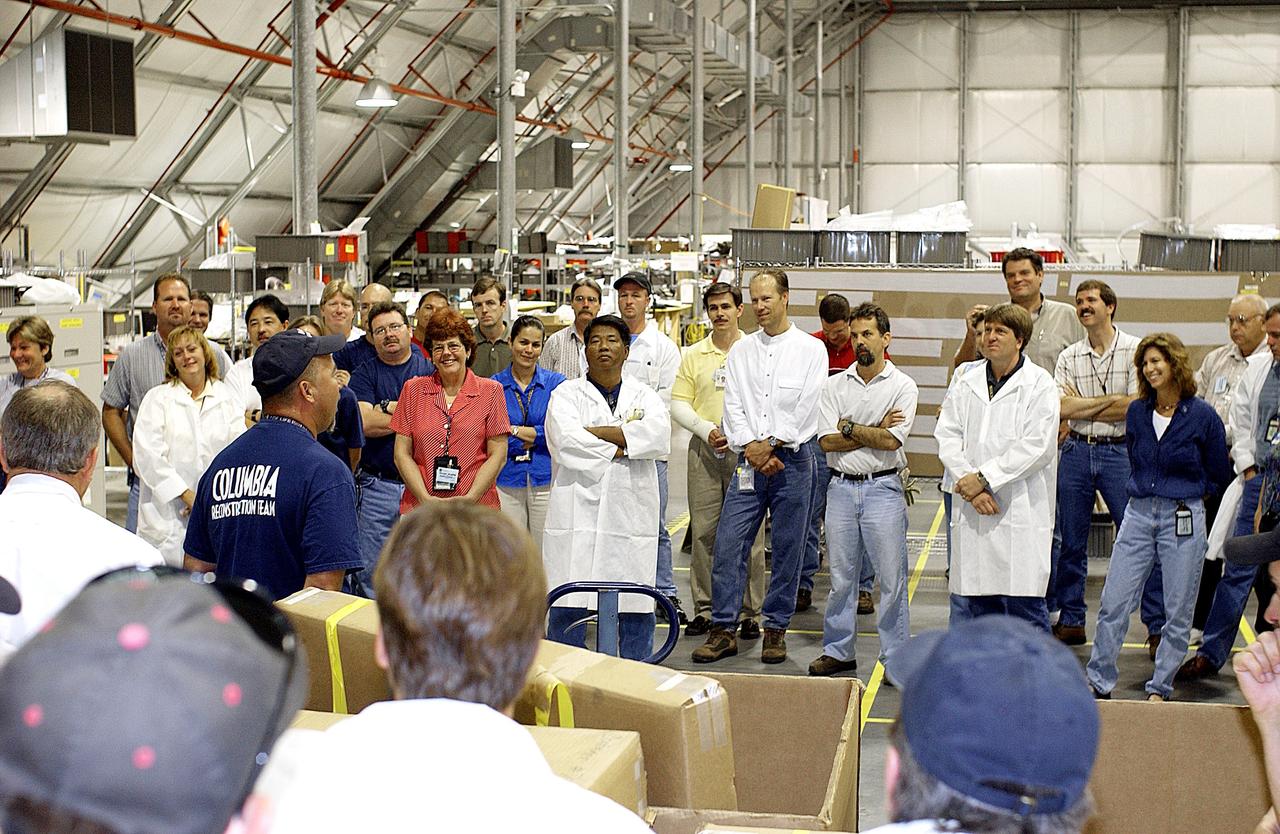
KENNEDY SPACE CENTER, FLA. - The Columbia Reconstruction Project team meets before arrival of the final shipment of Columbia debris. The recovery efforts have been concluded in East Texas. Prior to this final shipment, the total number of items at KSC is 82,567, weighing 84,800 pounds or 38 percent of the total dry weight of Columbia. Of those items, 78,760 have been identified, with 753 placed on the left wing grid in the RLV Hangar.
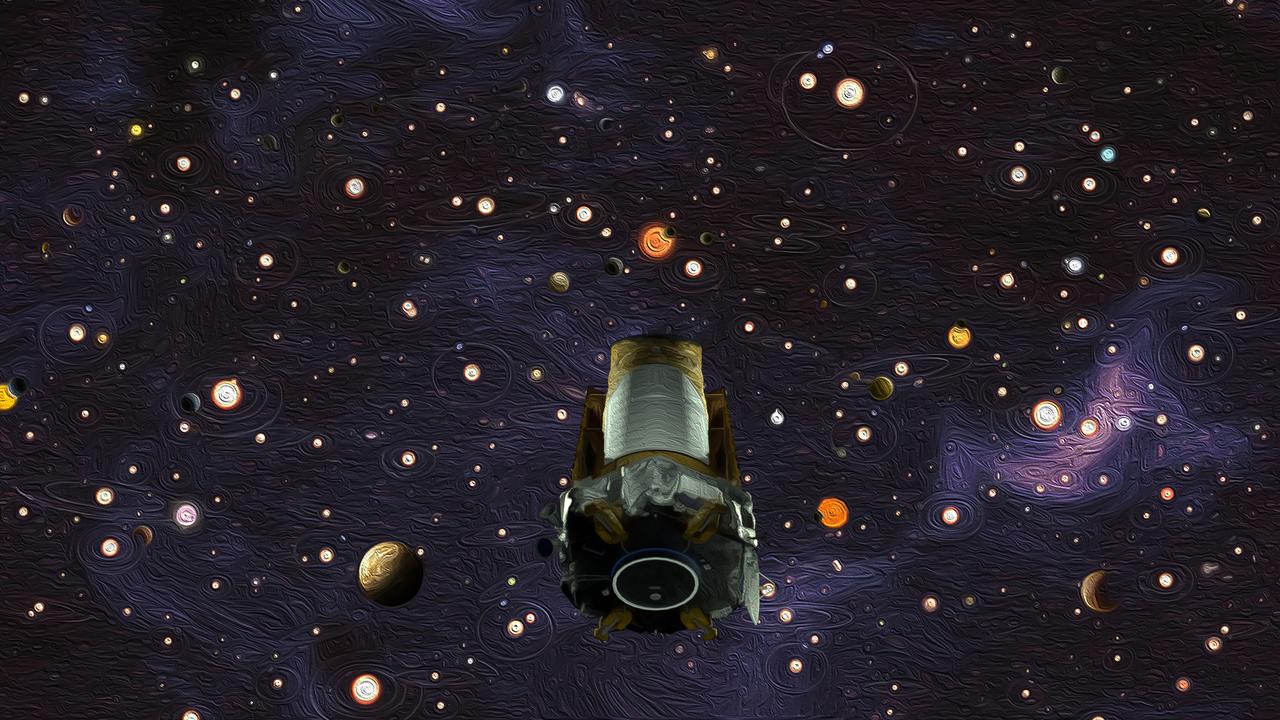
After nine years in deep space collecting data that revealed our night sky to be filled with billions of hidden planets, more planets even than stars, NASA’s Kepler space telescope has run out of fuel needed for further science operations. Illustration depicting the Kepler spacecraft in a sky filled with exoplanets and planetary systems.
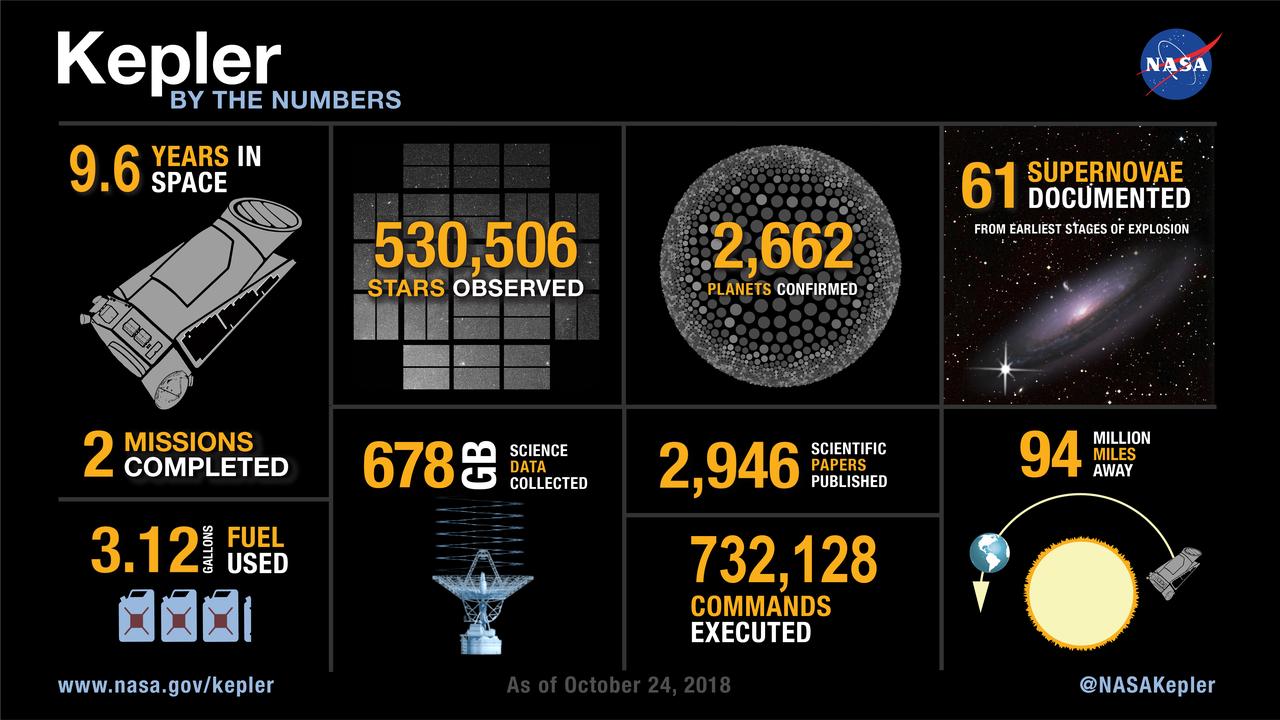
The Kepler space telescope is done with its work collecting astounding science data showing there are more planets than stars in our galaxy. Here’s a round-up of what Kepler has achieved.
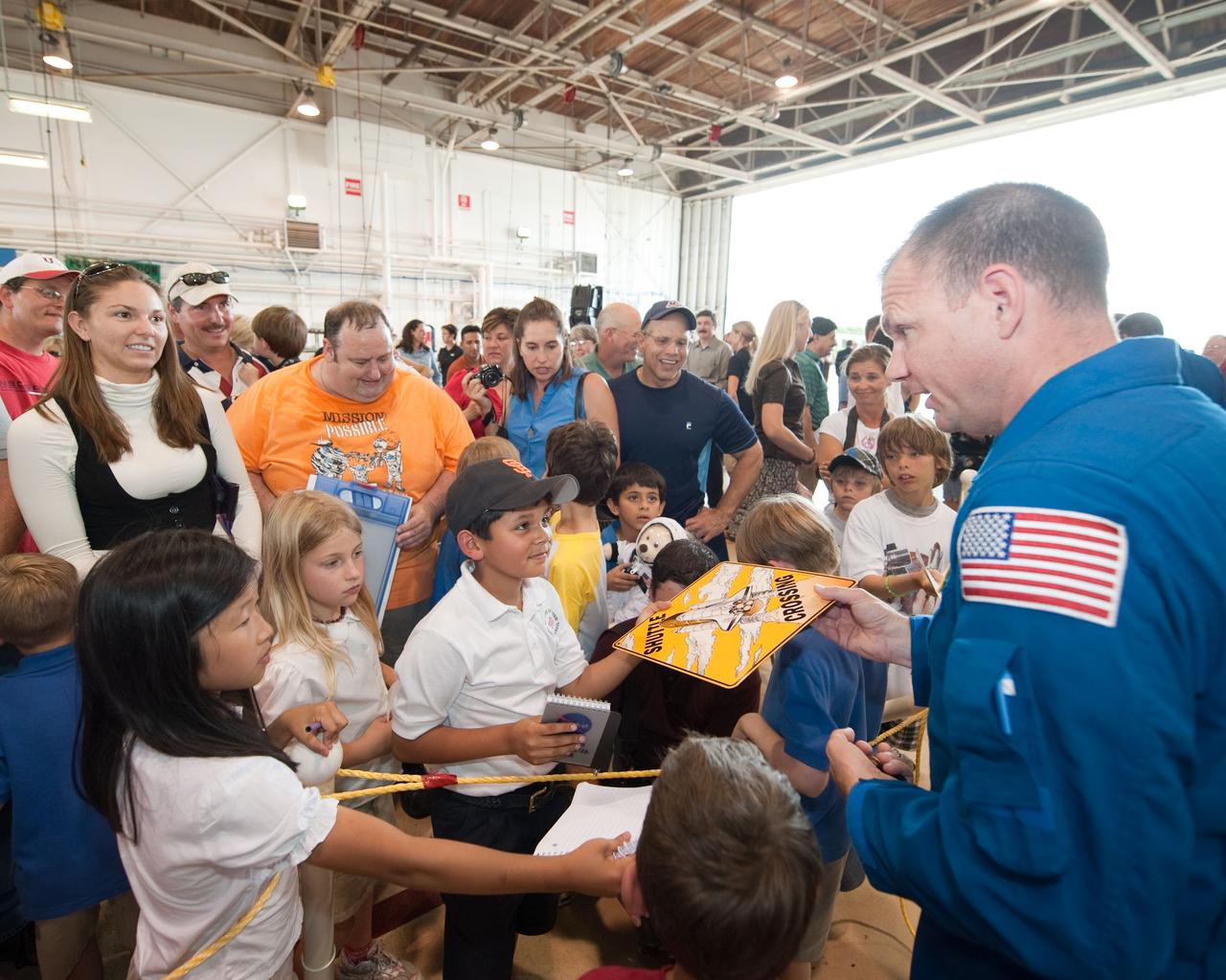
JSC2010-E-089709 (27 May 2010) --- At Ellington Field's Hangar 276, NASA astronaut Tony Antonelli (right foreground), STS-132 pilot, signs autographs for a number of well-wishers at the crew return ceremony for space shuttle Atlantis' final scheduled mission. Photo credit: NASA or National Aeronautics and Space Administration
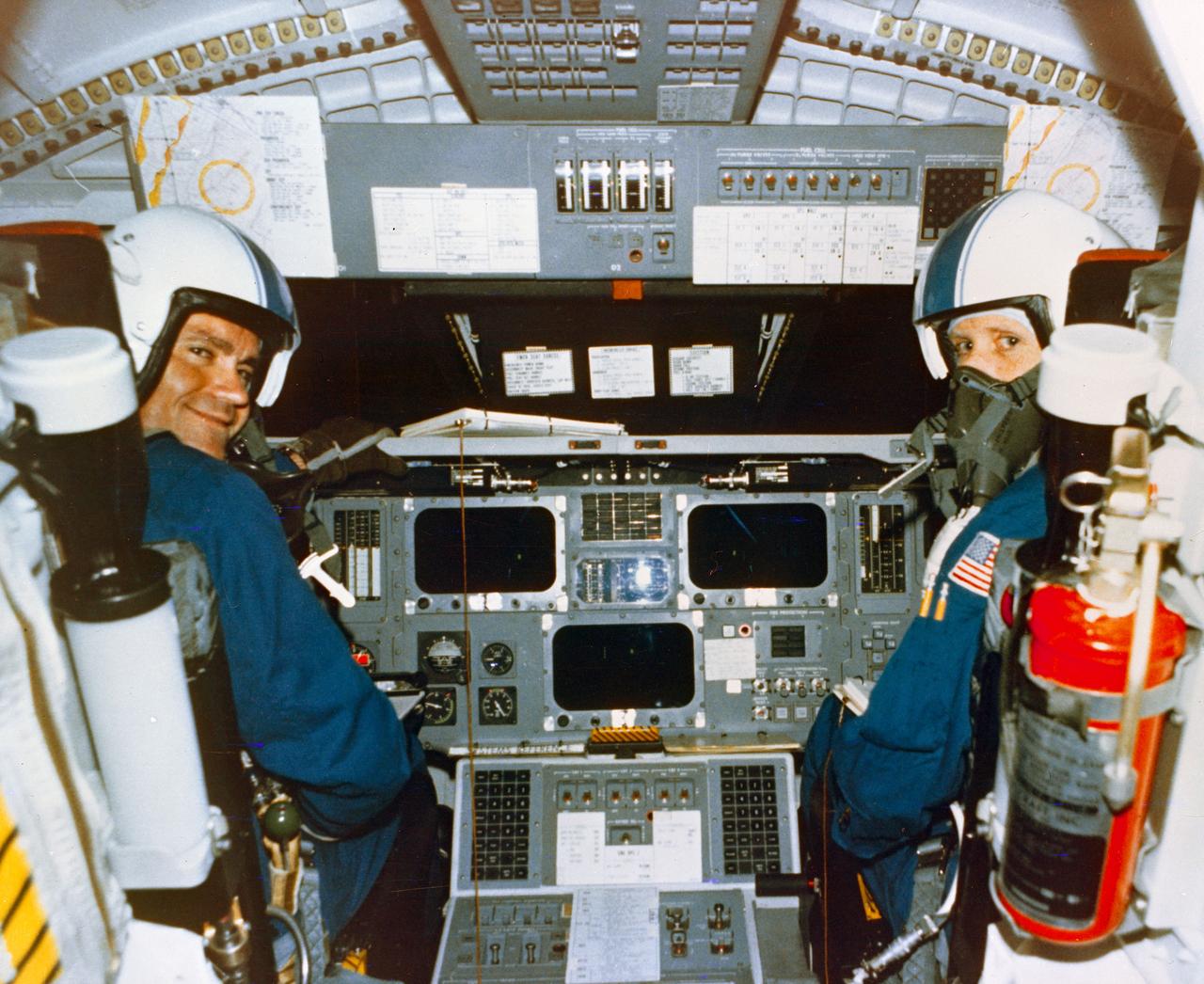
Astronauts Fred W. Haise, Jr., Commander, left, and C. Gordon Fullerton in the cockpit of the Space Shuttle Orbiter 101 "Enterprise" prior to the fifth and final FF in the Approach and Landing Test (ALT) series, from DFRC. Original photo number was 77-HC-446. DFRC, CA
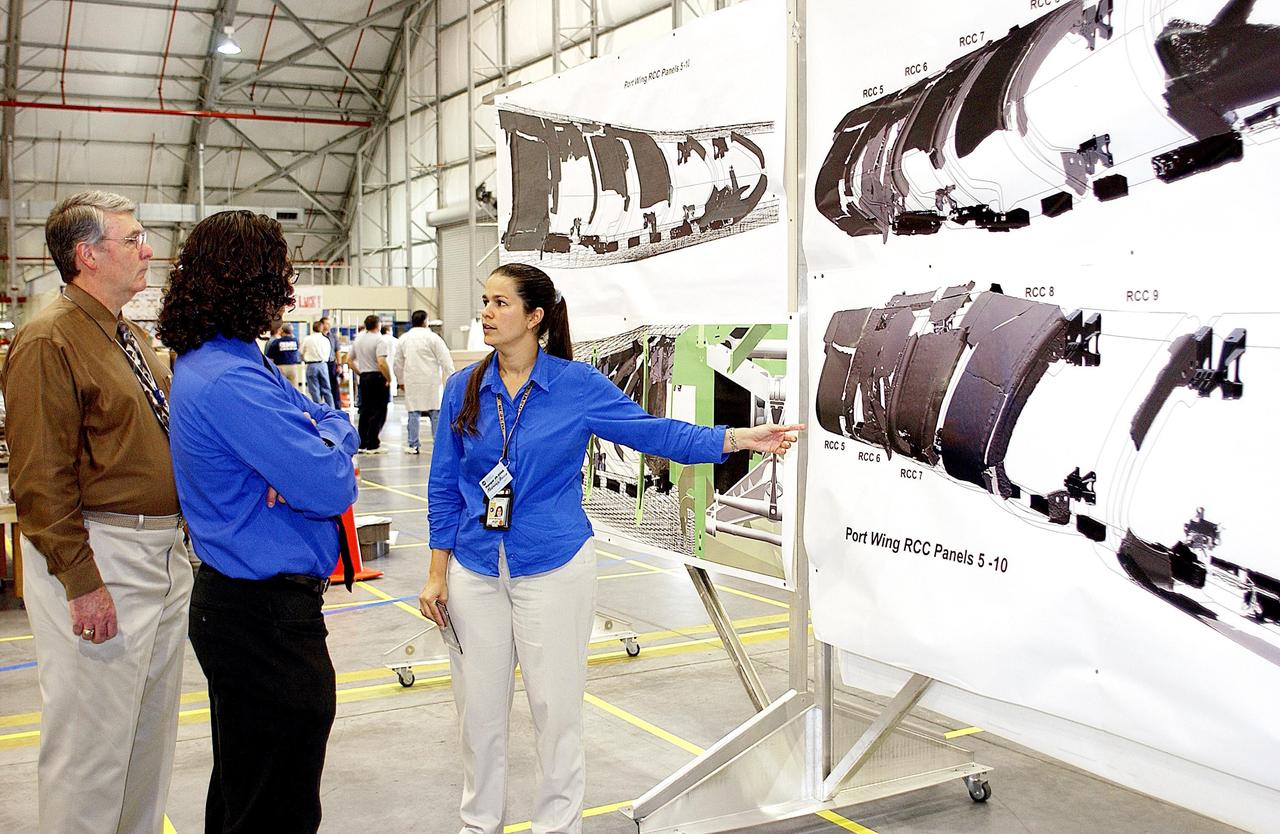
KENNEDY SPACE CENTER, FLA. - A member of the Columbia Reconstruction Project Team refers to the drawings of Columbia behind her as she explains current results of the investigation. The final shipment of debris arrived on this date - recovery efforts have been concluded in East Texas. Prior to this final shipment, the total number of items at KSC is 82,567, weighing 84,800 pounds or 38 percent of the total dry weight of Columbia. Of those items, 78,760 have been identified, with 753 placed on the left wing grid in the RLV Hangar.
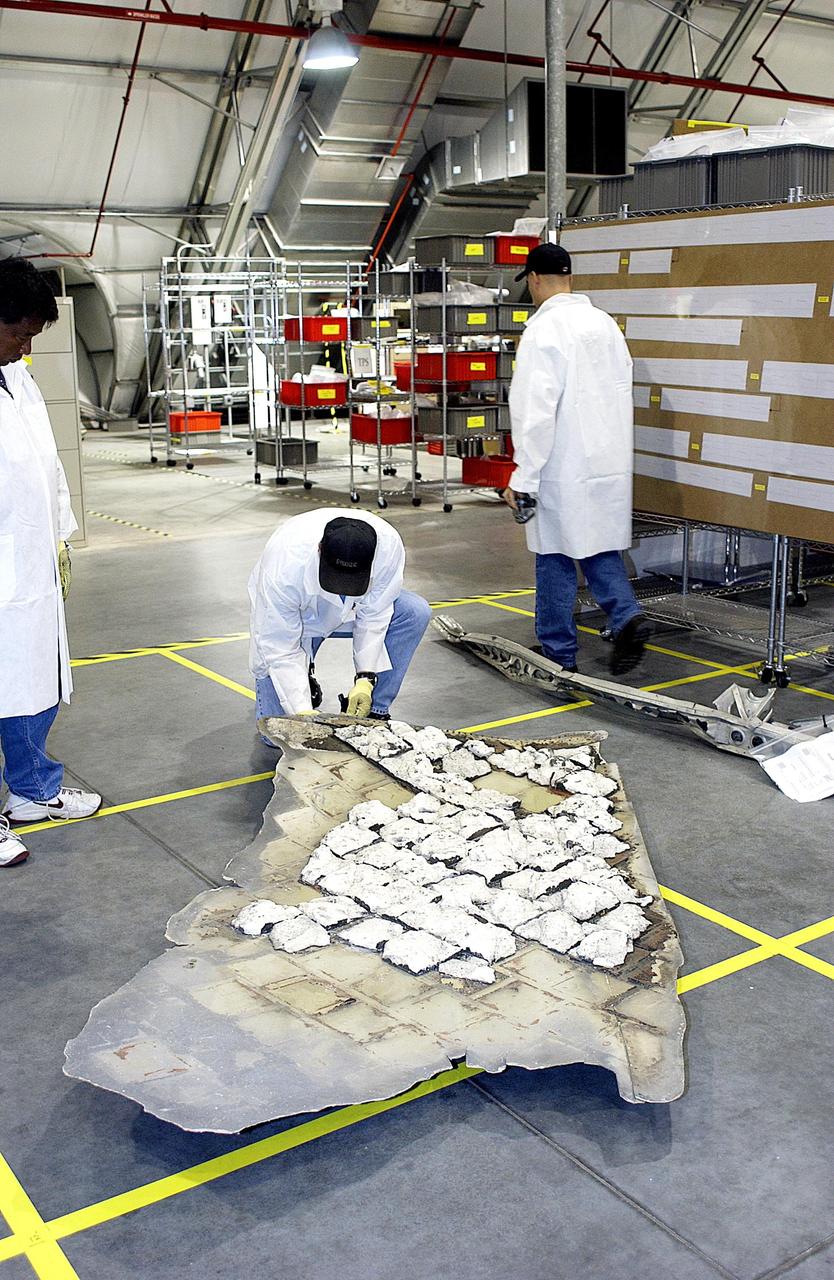
KENNEDY SPACE CENTER, FLA. - Members of the Columbia Reconstruction Project Team place part of the final shipment of debris on the floor grid of the RLV Hangar. The recovery efforts have been concluded in East Texas. Prior to this final shipment, the total number of items at KSC is 82,567, weighing 84,800 pounds or 38 percent of the total dry weight of Columbia. Of those items, 78,760 have been identified, with 753 placed on the left wing grid in the RLV Hangar.
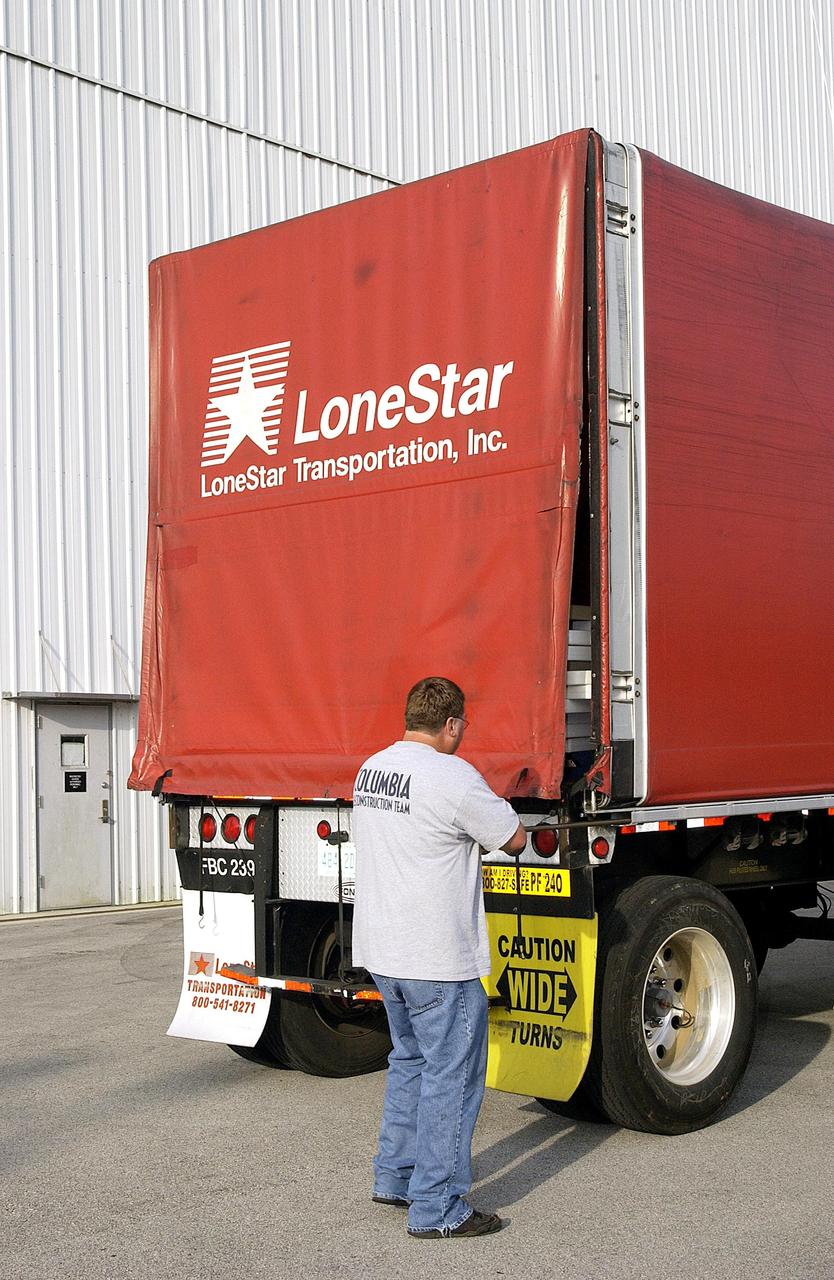
KENNEDY SPACE CENTER, FLA. - The truck holding the final shipment of Columbia debris arrives at KSC. The recovery efforts have been concluded in East Texas. Prior to this final shipment, the total number of items at KSC is 82,567, weighing 84,800 pounds or 38 percent of the total dry weight of Columbia. Of those items, 78,760 have been identified, with 753 placed on the left wing grid in the RLV Hangar.
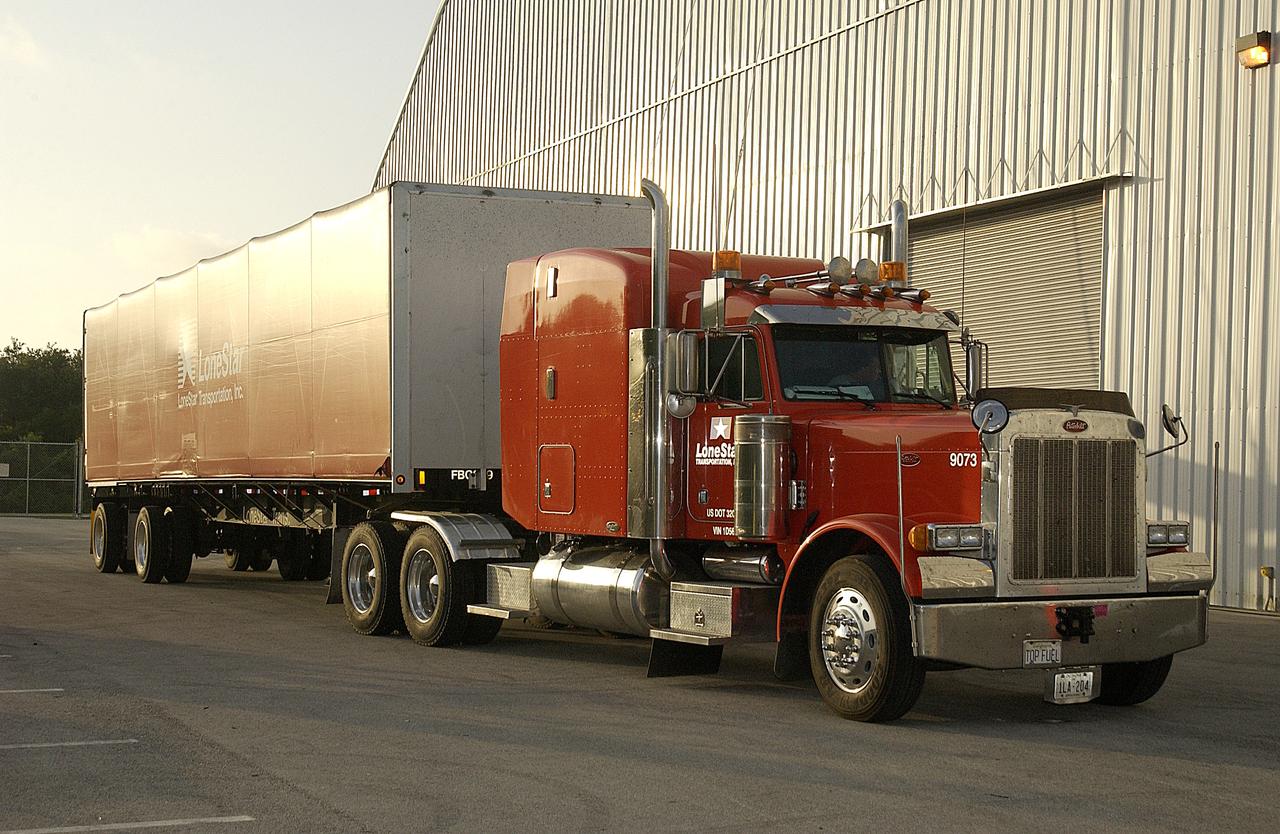
The truck holding the final shipment of Columbia debris arrives at KSC. The recovery efforts have been concluded in East Texas. Prior to this final shipment, the total number of items at KSC is 82,567, weighing 84,800 pounds or 38 percent of the total dry weight of Columbia. Of those items, 78,760 have been identified, with 753 placed on the left wing grid in the RLV Hangar.
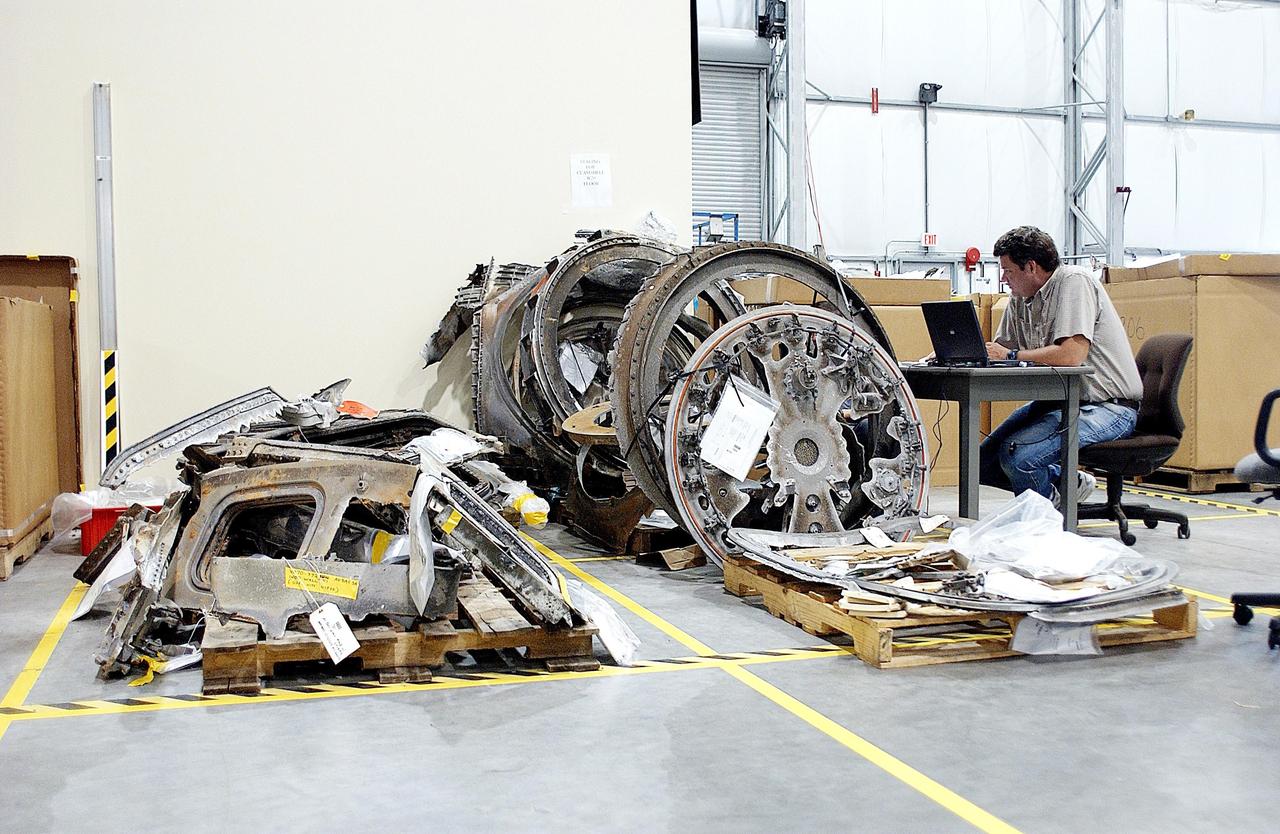
KENNEDY SPACE CENTER, FLA. - Large pieces of Columbia debris are stacked along a wall in the RLV Hangar at KSC. The final shipment of debris arrived on this date - recovery efforts have been concluded in East Texas. Prior to this final shipment, the total number of items at KSC is 82,567, weighing 84,800 pounds or 38 percent of the total dry weight of Columbia. Of those items, 78,760 have been identified, with 753 placed on the left wing grid in the RLV Hangar.
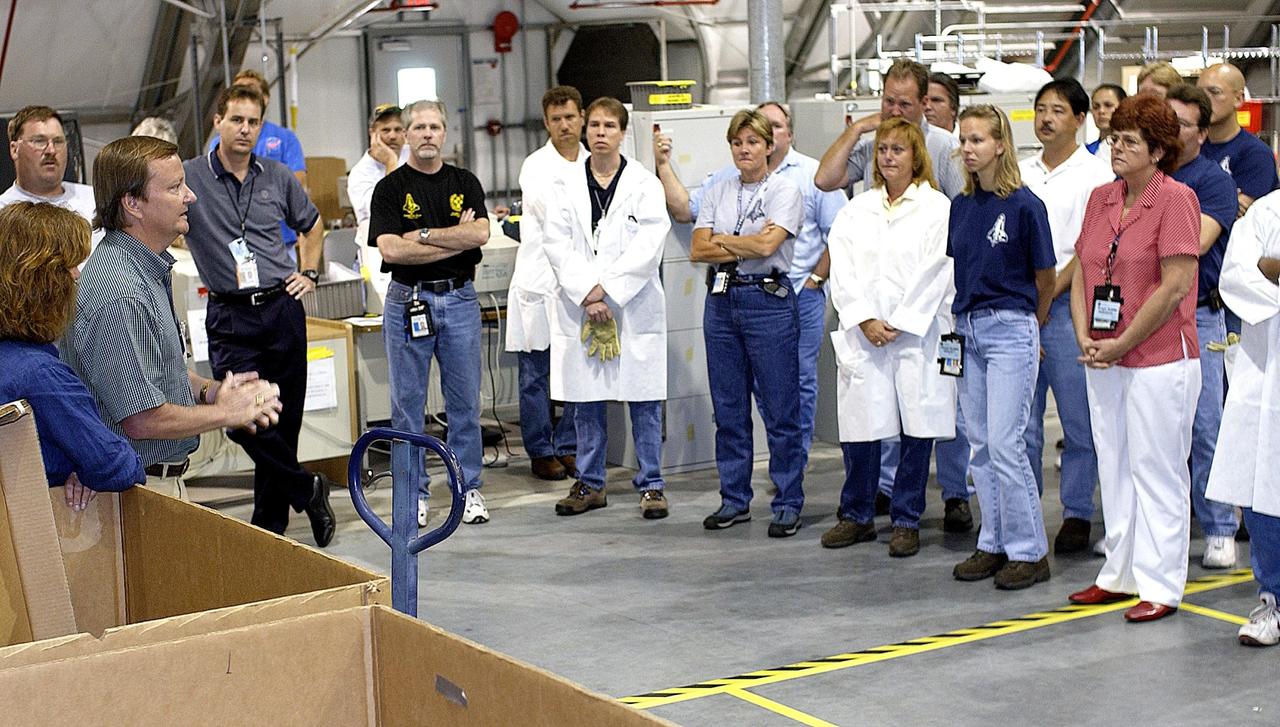
KENNEDY SPACE CENTER, FLA. - Mike Leinbach talks to the Columbia Reconstruction Project team before arrival of the final shipment of Columbia debris. The recovery efforts have been concluded in East Texas. Prior to this final shipment, the total number of items at KSC is 82,567, weighing 84,800 pounds or 38 percent of the total dry weight of Columbia. Of those items, 78,760 have been identified, with 753 placed on the left wing grid in the RLV Hangar.
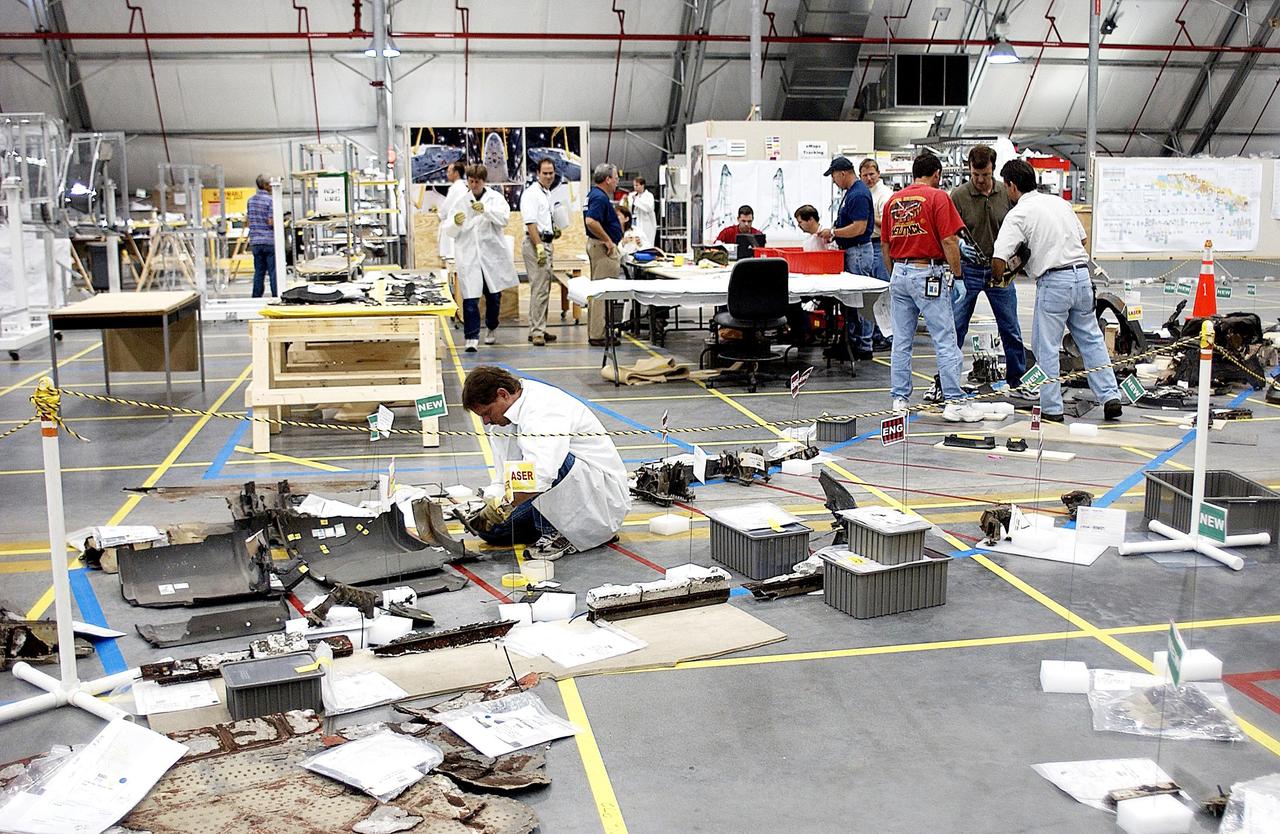
KENNEDY SPACE CENTER, FLA. - Members of the Columbia Reconstruction Project Team are scattered around the RLV Hangar as they examine various pieces of debris. The final shipment of debris arrived on this date - recovery efforts have been concluded in East Texas. Prior to this final shipment, the total number of items at KSC is 82,567, weighing 84,800 pounds or 38 percent of the total dry weight of Columbia. Of those items, 78,760 have been identified, with 753 placed on the left wing grid in the RLV Hangar.
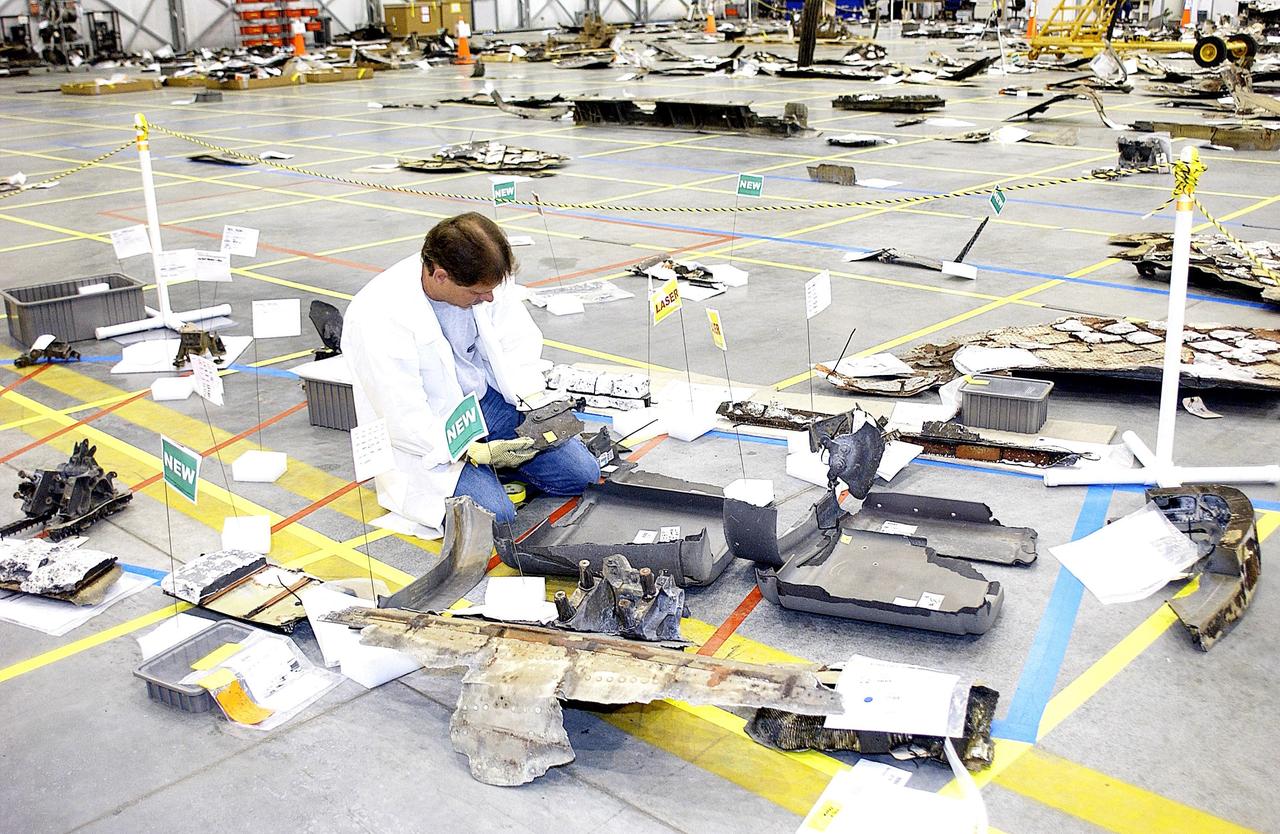
KENNEDY SPACE CENTER, FLA. - A member of the Columbia Reconstruction Project Team examines part of the Columbia debris on the floor of the RLV Hangar. The final shipment of debris arrived on this date - recovery efforts have been concluded in East Texas. Prior to this final shipment, the total number of items at KSC is 82,567, weighing 84,800 pounds or 38 percent of the total dry weight of Columbia. Of those items, 78,760 have been identified, with 753 placed on the left wing grid in the RLV Hangar.
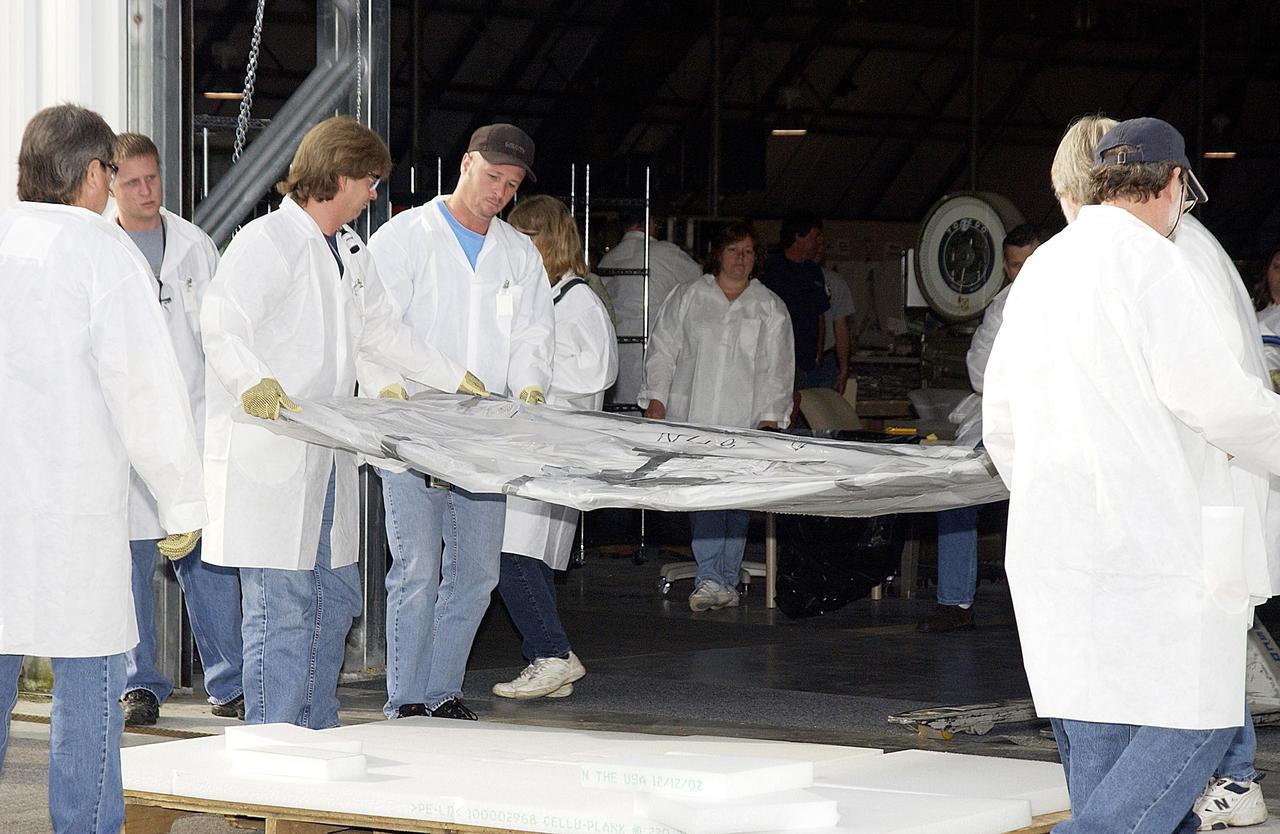
KENNEDY SPACE CENTER, FLA. - Part of the final shipment of Columbia debris is transferred into the RLV Hangar at KSC. The recovery efforts have been concluded in East Texas. Prior to this final shipment, the total number of items at KSC is 82,567, weighing 84,800 pounds or 38 percent of the total dry weight of Columbia. Of those items, 78,760 have been identified, with 753 placed on the left wing grid in the RLV Hangar.

KENNEDY SPACE CENTER, FLA. - A member of the Columbia Reconstruction Project Team examines part of the Columbia debris in the RLV Hangar at KSC. The final shipment of debris arrived on this date - recovery efforts have been concluded in East Texas. Prior to this final shipment, the total number of items at KSC is 82,567, weighing 84,800 pounds or 38 percent of the total dry weight of Columbia. Of those items, 78,760 have been identified, with 753 placed on the left wing grid in the RLV Hangar.
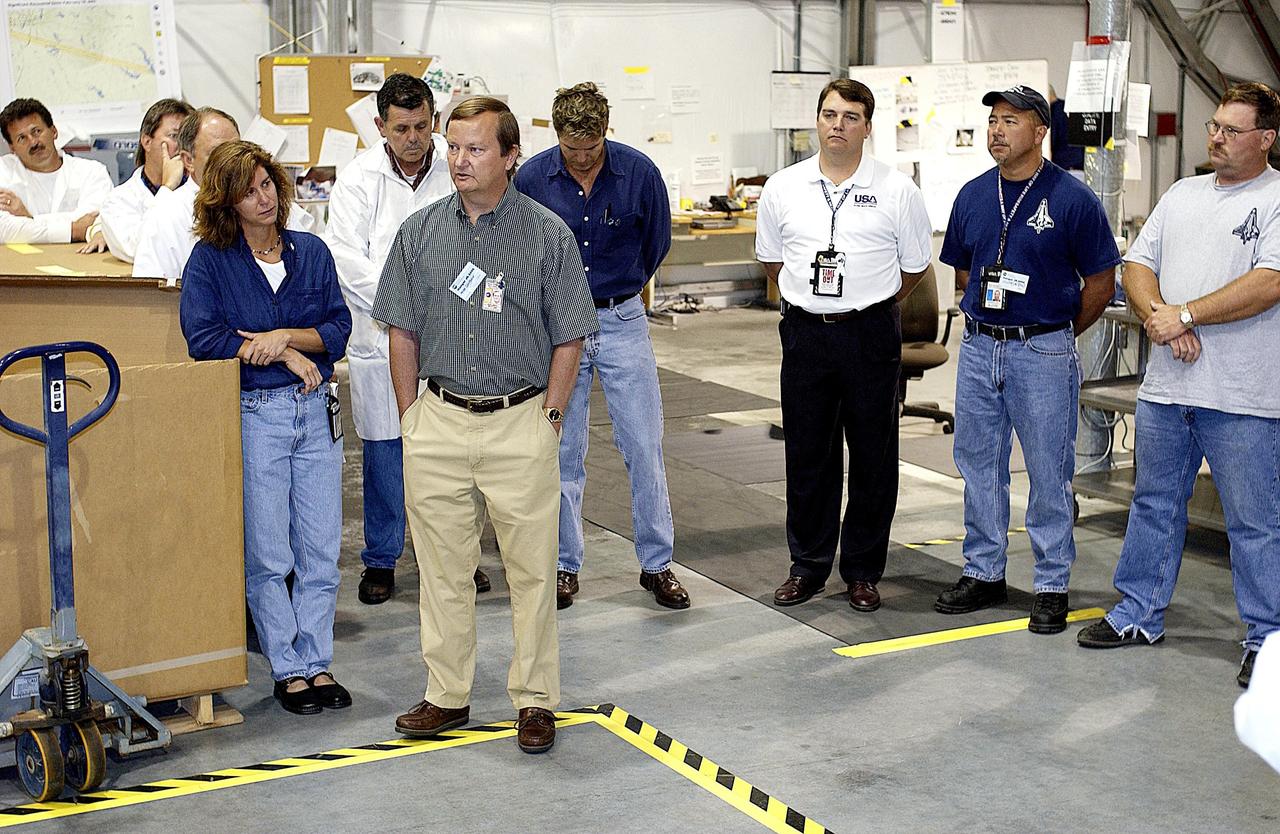
KENNEDY SPACE CENTER, FLA. - Shuttle Launch Director Mike Leinbach talks to the Columbia Reconstruction Project team before arrival of the final shipment of Columbia debris. The recovery efforts have been concluded in East Texas. Prior to this final shipment, the total number of items at KSC is 82,567, weighing 84,800 pounds or 38 percent of the total dry weight of Columbia. Of those items, 78,760 have been identified, with 753 placed on the left wing grid in the RLV Hangar.
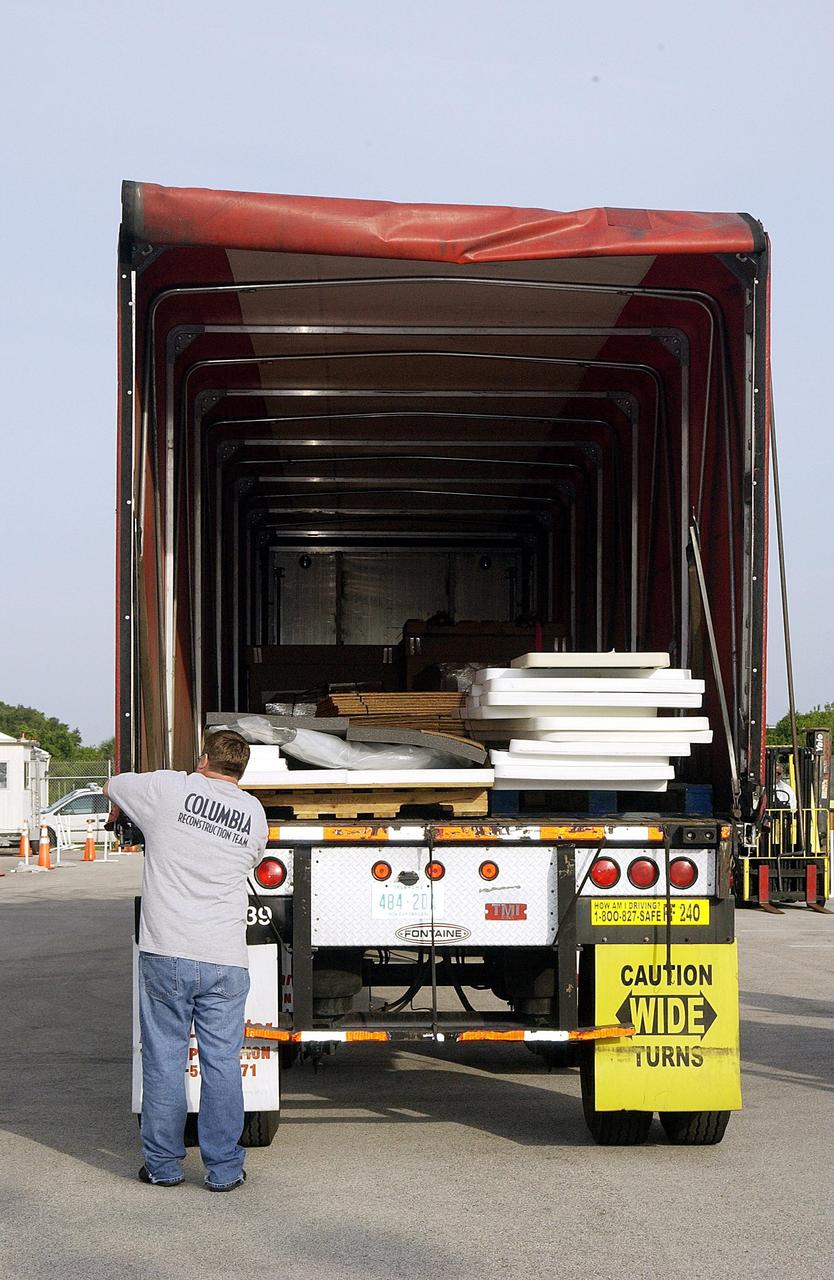
KENNEDY SPACE CENTER, FLA. - The final shipment of Columbia debris is offloaded at KSC. The recovery efforts have been concluded in East Texas. Prior to this final shipment, the total number of items at KSC is 82,567, weighing 84,800 pounds or 38 percent of the total dry weight of Columbia. Of those items, 78,760 have been identified, with 753 placed on the left wing grid in the RLV Hangar.
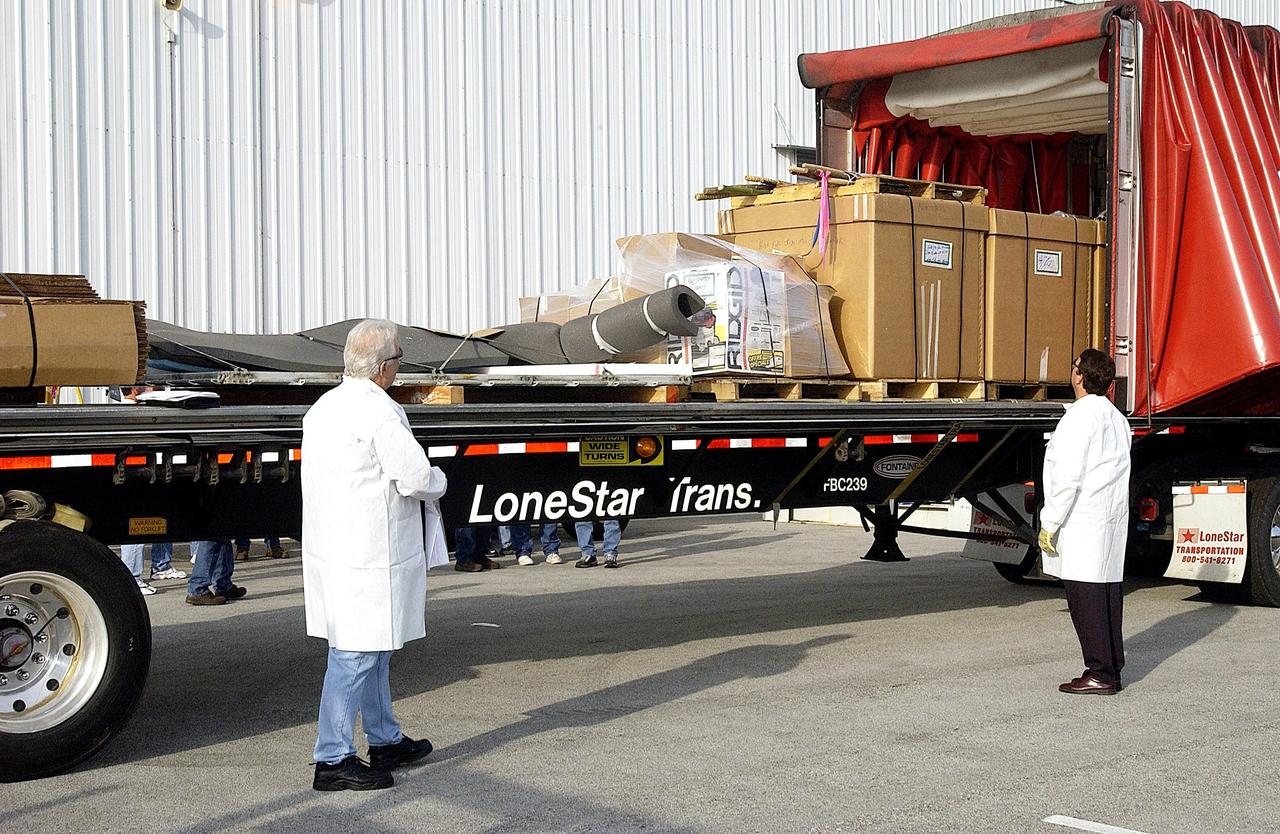
KENNEDY SPACE CENTER, FLA. - The final shipment of Columbia debris is offloaded at KSC. The recovery efforts have been concluded in East Texas. Prior to this final shipment, the total number of items at KSC is 82,567, weighing 84,800 pounds or 38 percent of the total dry weight of Columbia. Of those items, 78,760 have been identified, with 753 placed on the left wing grid in the RLV Hangar.
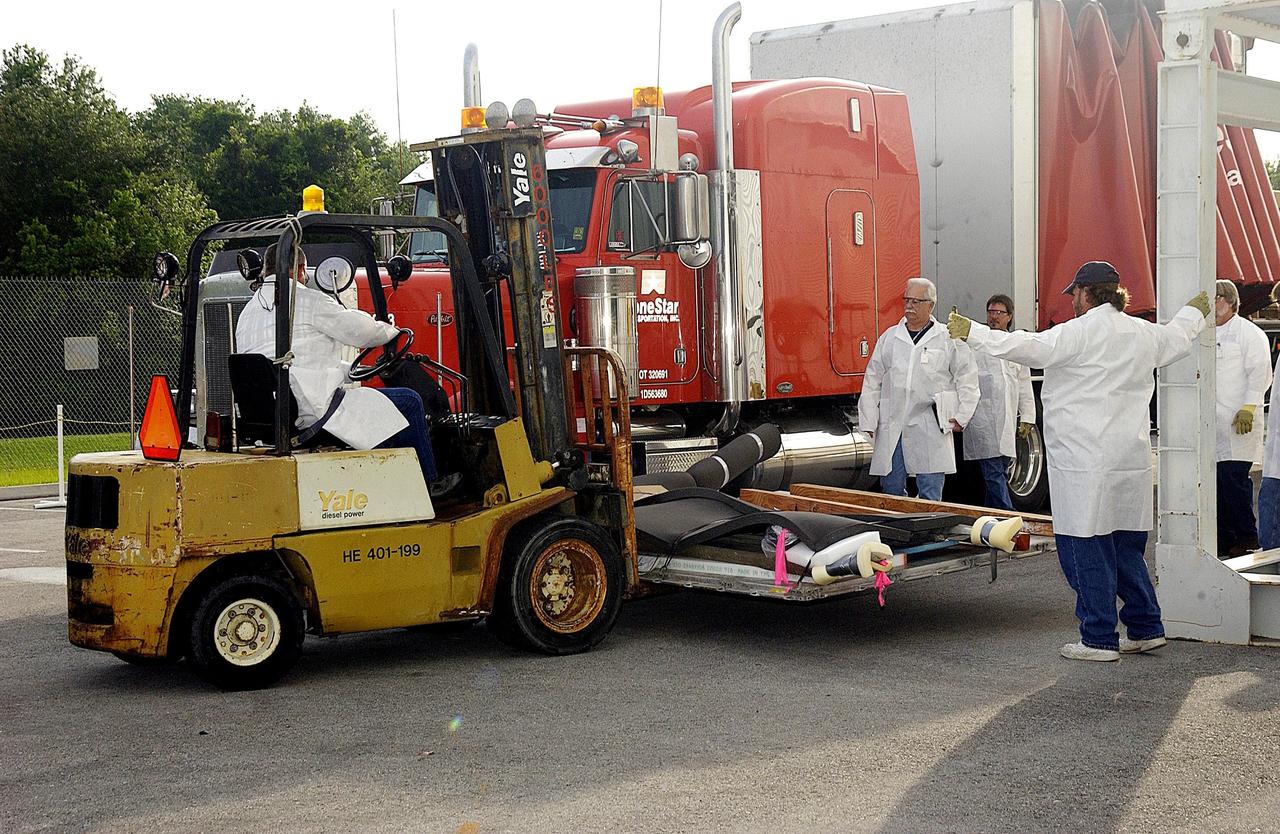
KENNEDY SPACE CENTER, FLA. - The final shipment of Columbia debris is offloaded at KSC. The recovery efforts have been concluded in East Texas. Prior to this final shipment, the total number of items at KSC is 82,567, weighing 84,800 pounds or 38 percent of the total dry weight of Columbia. Of those items, 78,760 have been identified, with 753 placed on the left wing grid in the RLV Hangar.
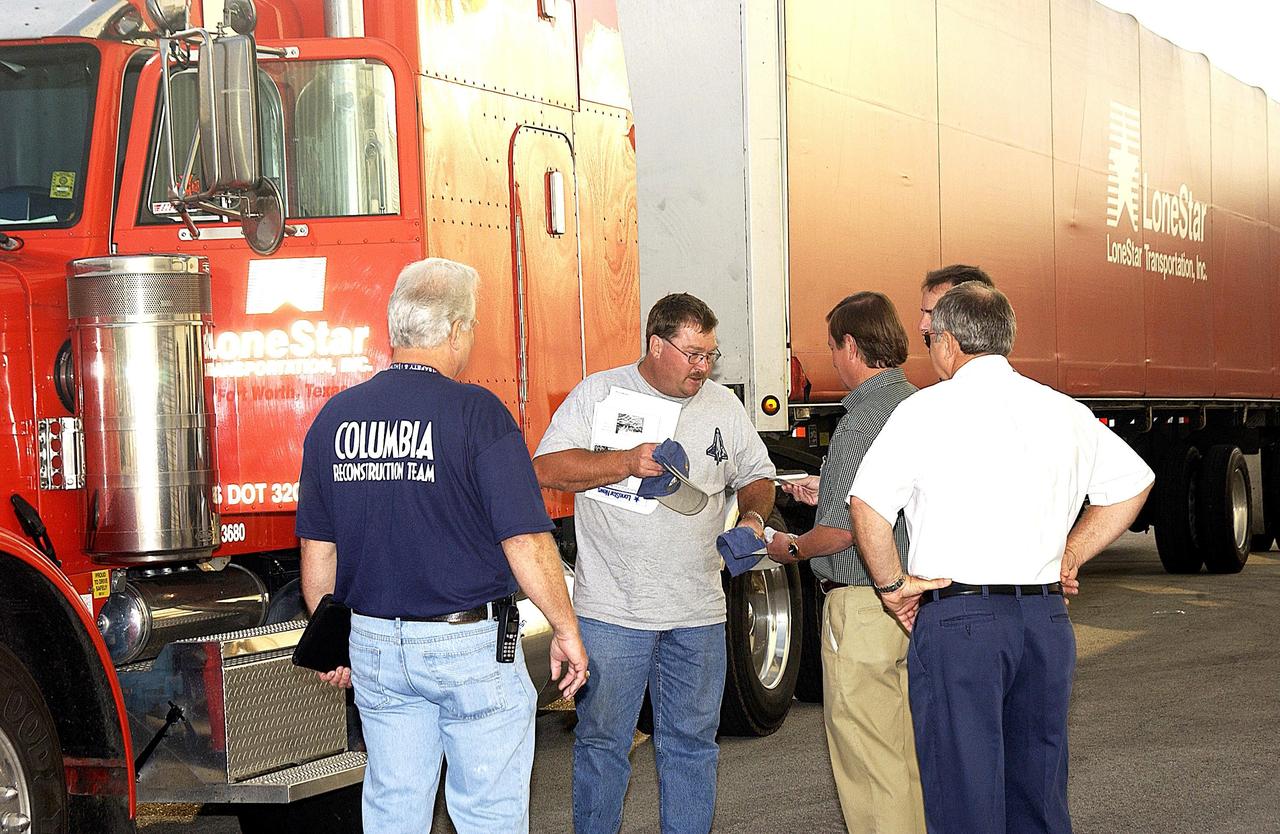
KENNEDY SPACE CENTER, FLA. - Shuttle Launch Director Mike Leinbach, third from left, greets the truck driver delivering the final shipment of Columbia debris. The recovery efforts have been concluded in East Texas. Prior to this final shipment, the total number of items at KSC is 82,567, weighing 84,800 pounds or 38 percent of the total dry weight of Columbia. Of those items, 78,760 have been identified, with 753 placed on the left wing grid in the RLV Hangar.
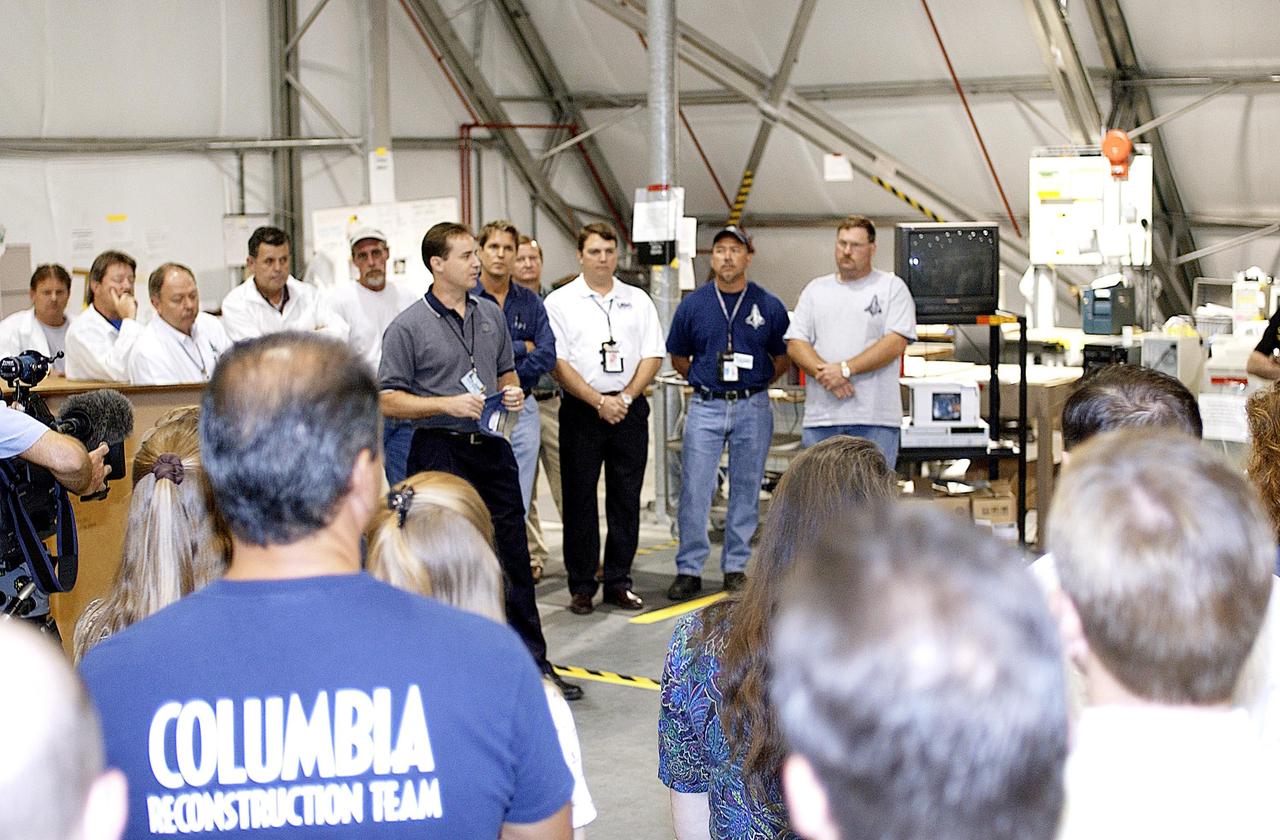
KENNEDY SPACE CENTER, FLA. - Shuttle Test Director Steve Altemus talks to the Columbia Reconstruction Project team before arrival of the final shipment of Columbia debris. The recovery efforts have been concluded in East Texas. Prior to this final shipment, the total number of items at KSC is 82,567, weighing 84,800 pounds or 38 percent of the total dry weight of Columbia. Of those items, 78,760 have been identified, with 753 placed on the left wing grid in the RLV Hangar.
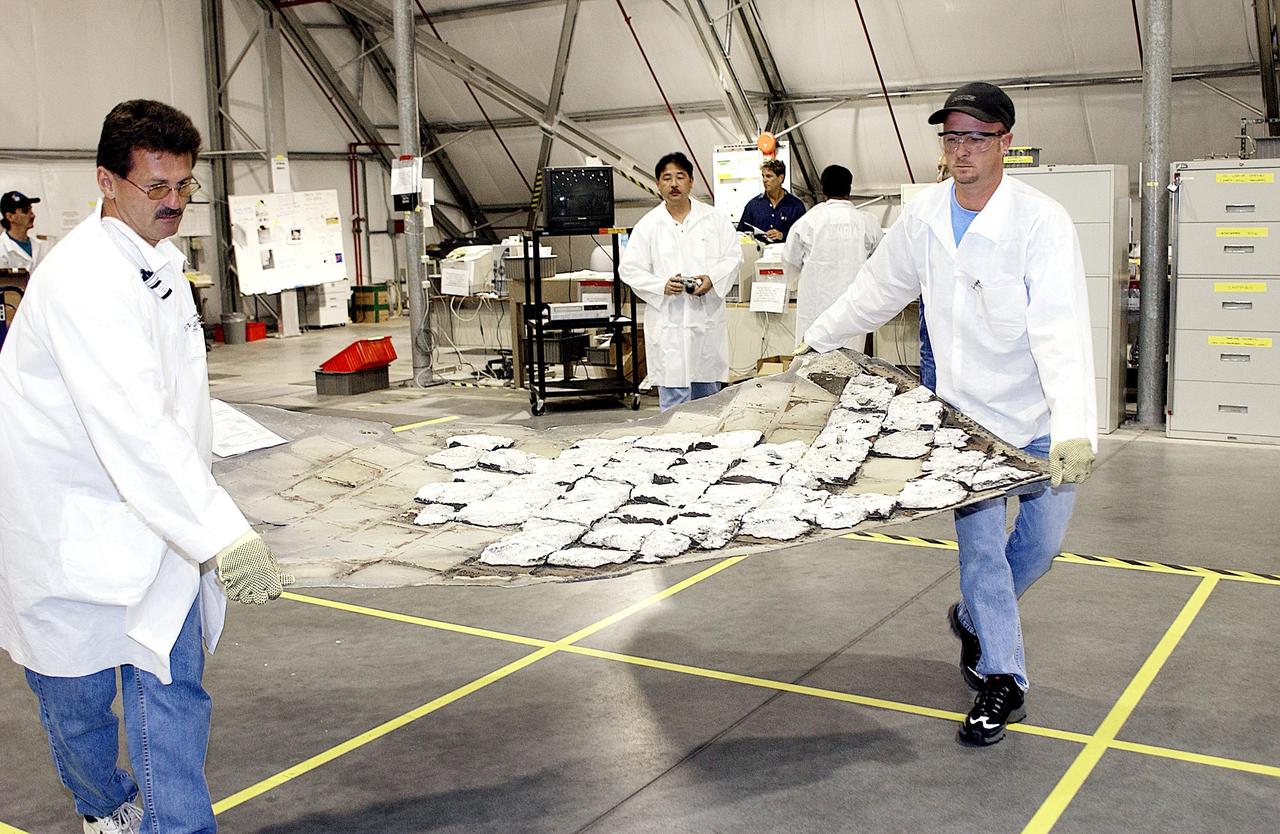
KENNEDY SPACE CENTER, FLA. - Members of the Columbia Reconstruction Project Team carry part of the final shipment of debris. The recovery efforts have been concluded in East Texas. Prior to this final shipment, the total number of items at KSC is 82,567, weighing 84,800 pounds or 38 percent of the total dry weight of Columbia. Of those items, 78,760 have been identified, with 753 placed on the left wing grid in the RLV Hangar.
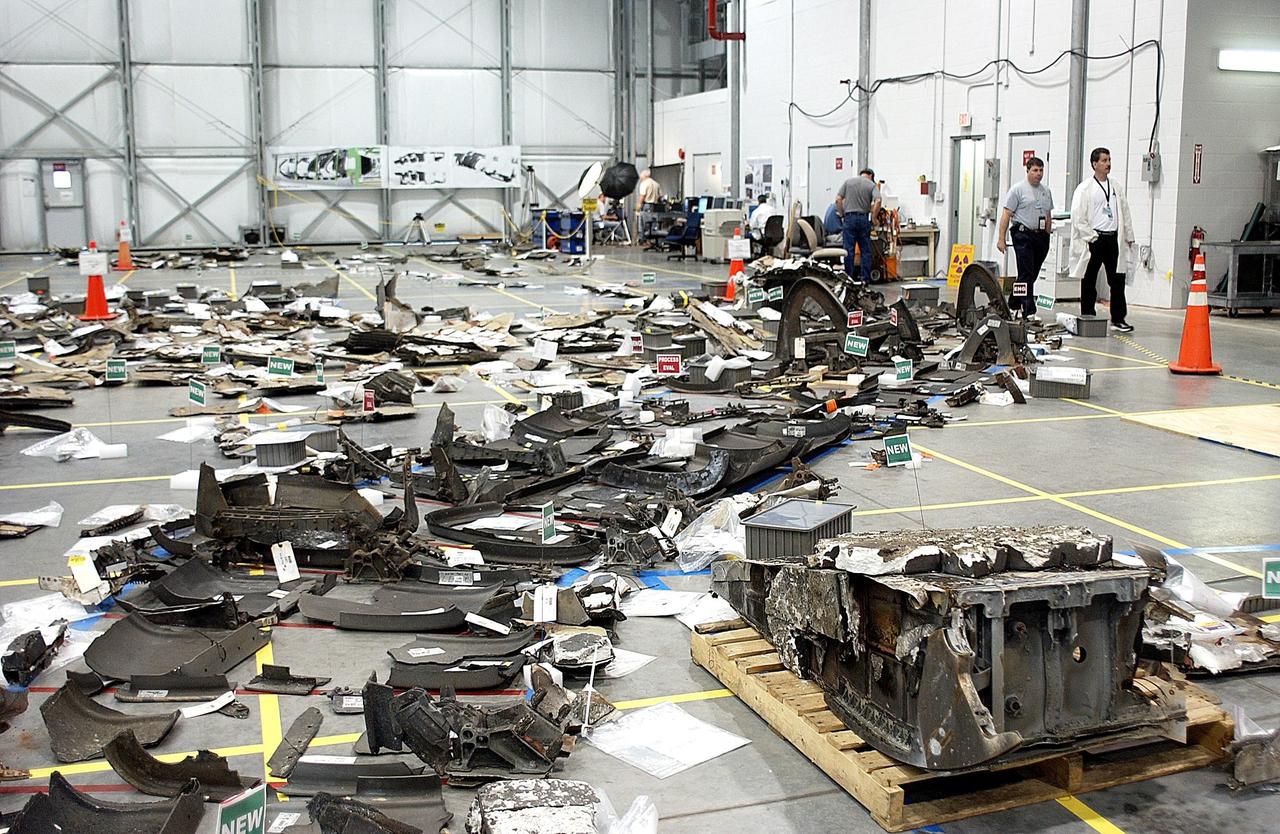
KENNEDY SPACE CENTER, FLA. - Pieces of Columbia debris in the RLV Hangar at KSC crowd the floor. The final shipment of debris arrived on this date - recovery efforts have been concluded in East Texas. Prior to this final shipment, the total number of items at KSC is 82,567, weighing 84,800 pounds or 38 percent of the total dry weight of Columbia. Of those items, 78,760 have been identified, with 753 placed on the left wing grid in the RLV Hangar.
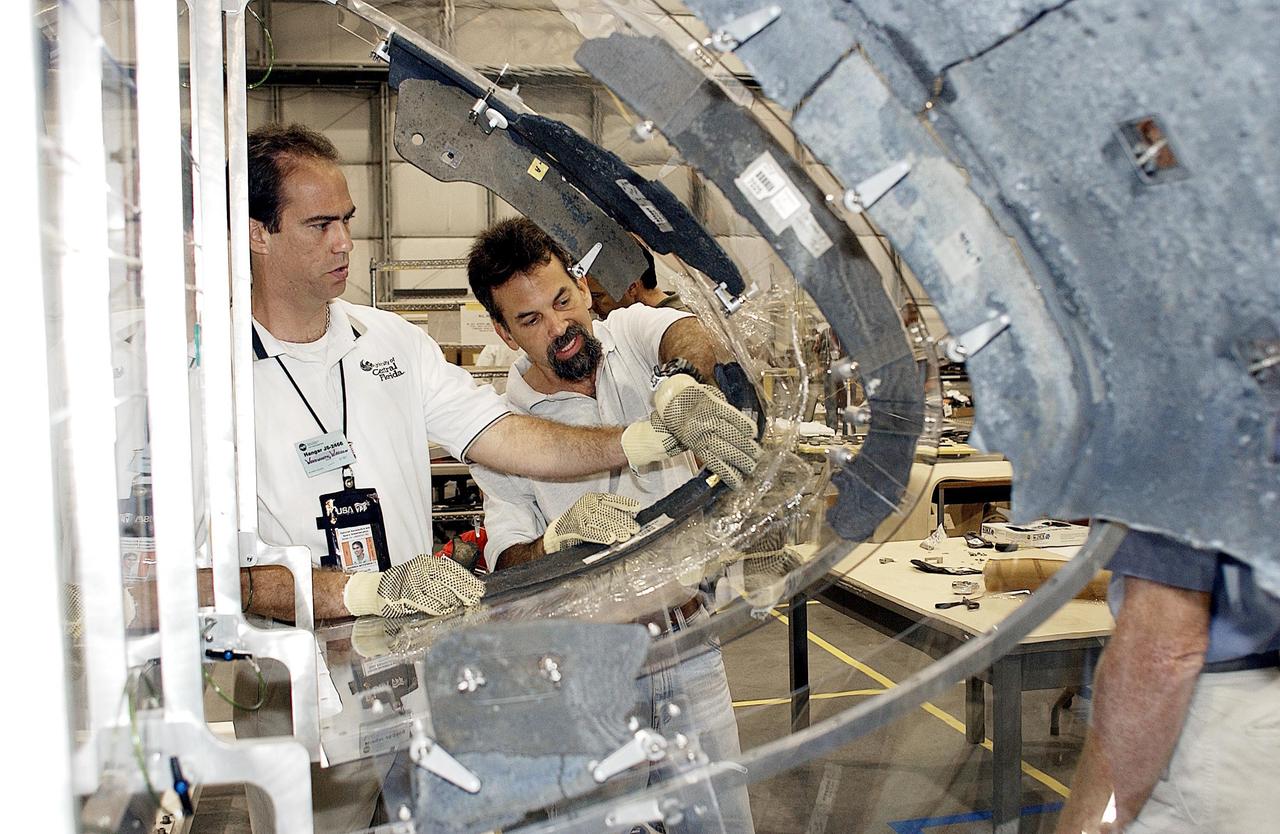
KENNEDY SPACE CENTER, FLA. - Members of the Columbia Reconstruction Project Team place debris on the mounting fixture for RCC pieces of the leading edge of Columbia's left wing. The final shipment of debris arrived on this date - recovery efforts have been concluded in East Texas. Prior to this final shipment, the total number of items at KSC is 82,567, weighing 84,800 pounds or 38 percent of the total dry weight of Columbia. Of those items, 78,760 have been identified, with 753 placed on the left wing grid in the RLV Hangar.
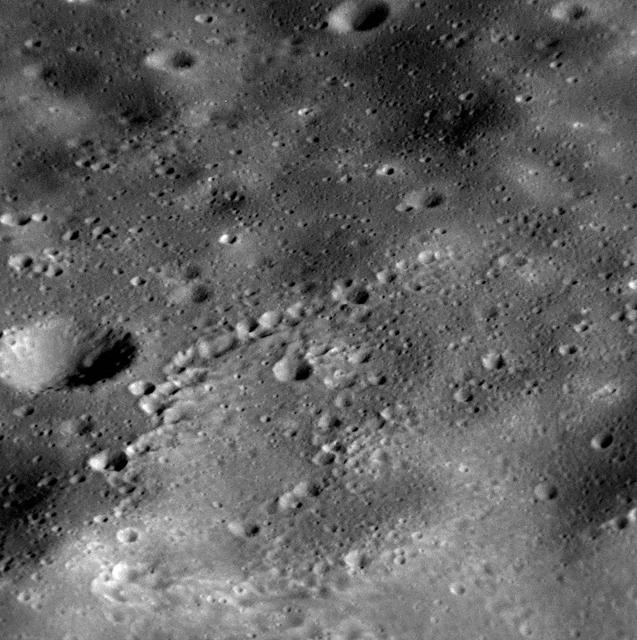
Though NASA MESSENGER days are numbered, the spacecraft will continue to acquire new data sets and transmit them back to Earth during its final days. Shown here is a high-resolution view snapped near Heemskerck Rupes, named for the Dutch ship that explored Australia and New Zealand in 1642-1643. The total number of images that MDIS has acquired and returned to Earth since entering Mercury orbit in March 2011 is currently 277,447, which is many more than originally planned for MESSENGER's one-year primary mission! In the next few days, approximately 500 additional images are planned to be received back at Earth, though the spacecraft is expected to impact the planet on April 30 with more than a thousand images still on its recorder, never to be seen. This is by design, as it is better to collect more data than can be transmitted than end the mission having been able to possibly have done more! Check out some highlights from the MESSENGER mission by visiting this image collection, or watch MESSENGER team members discuss the mission in these recently posted videos. Date acquired: April 26, 2015 Image Mission Elapsed Time (MET): 72384761 Image ID: 8400449 Instrument: Narrow Angle Camera (NAC) of the Mercury Dual Imaging System (MDIS) Center Latitude: 25.1° Center Longitude: 234.4° E Resolution: 6.7 meters/pixel Scale: The bottom of this image is about 7 kilometers (4.3 miles) across Incidence Angle: 57.9° Emission Angle: 56.5° Phase Angle: 40.7° http://photojournal.jpl.nasa.gov/catalog/PIA19438
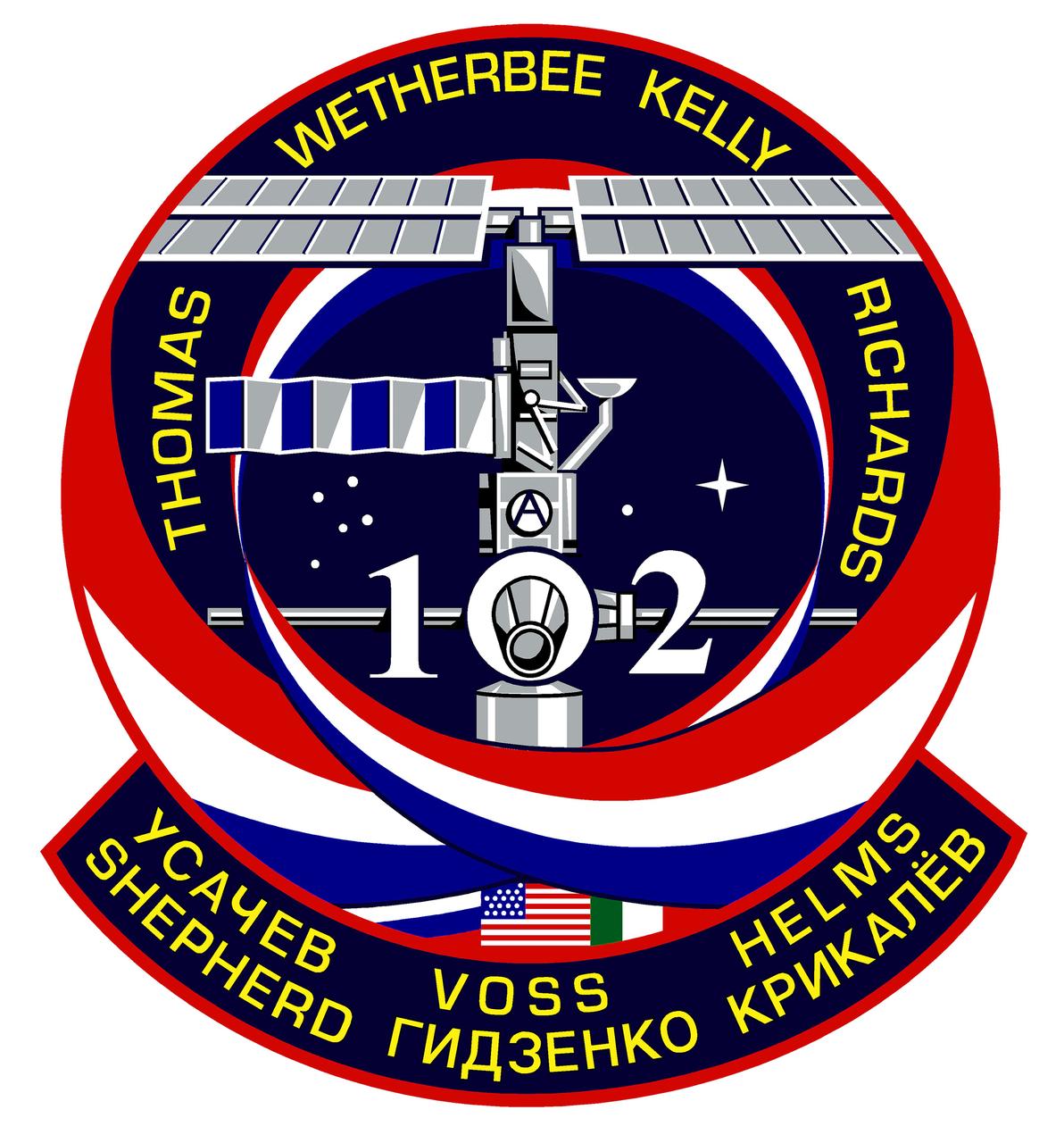
This is the STS-102 mission crew insignia. The central image on the crew patch depicts the International Space Station (ISS) in the build configuration that it had at the time of the arrival and docking of Discovery during the STS-102 mission, the first crew exchange flight to the Space Station. The station is shown along the direction of the flight as was seen by the shuttle crew during their final approach and docking, the so-called V-bar approach. The names of the shuttle crew members are depicted in gold around the top of the patch, and surnames of the Expedition crew members being exchanged are shown in the lower barner. The three ribbons swirling up to and around the station signify the rotation of these ISS crew members. The number 2 is for the Expedition 2 crew who flew up to the station, and the number 1 is for the Expedition 1 crew who then returned down to Earth. In conjunction with the face of the Lab module of the Station, these Expedition numbers create the shuttle mission number 102. Shown mated below the ISS is the Italian-built Multipurpose Logistics Module, Leonardo, that flew for the first time on this flight. The flags of the countries that were the major contributors to this effort, the United States, Russia, and Italy are also shown in the lower part of the patch. The build-sequence number of this flight in the overall station assembly sequence, 5A.1, is captured by the constellations in the background.
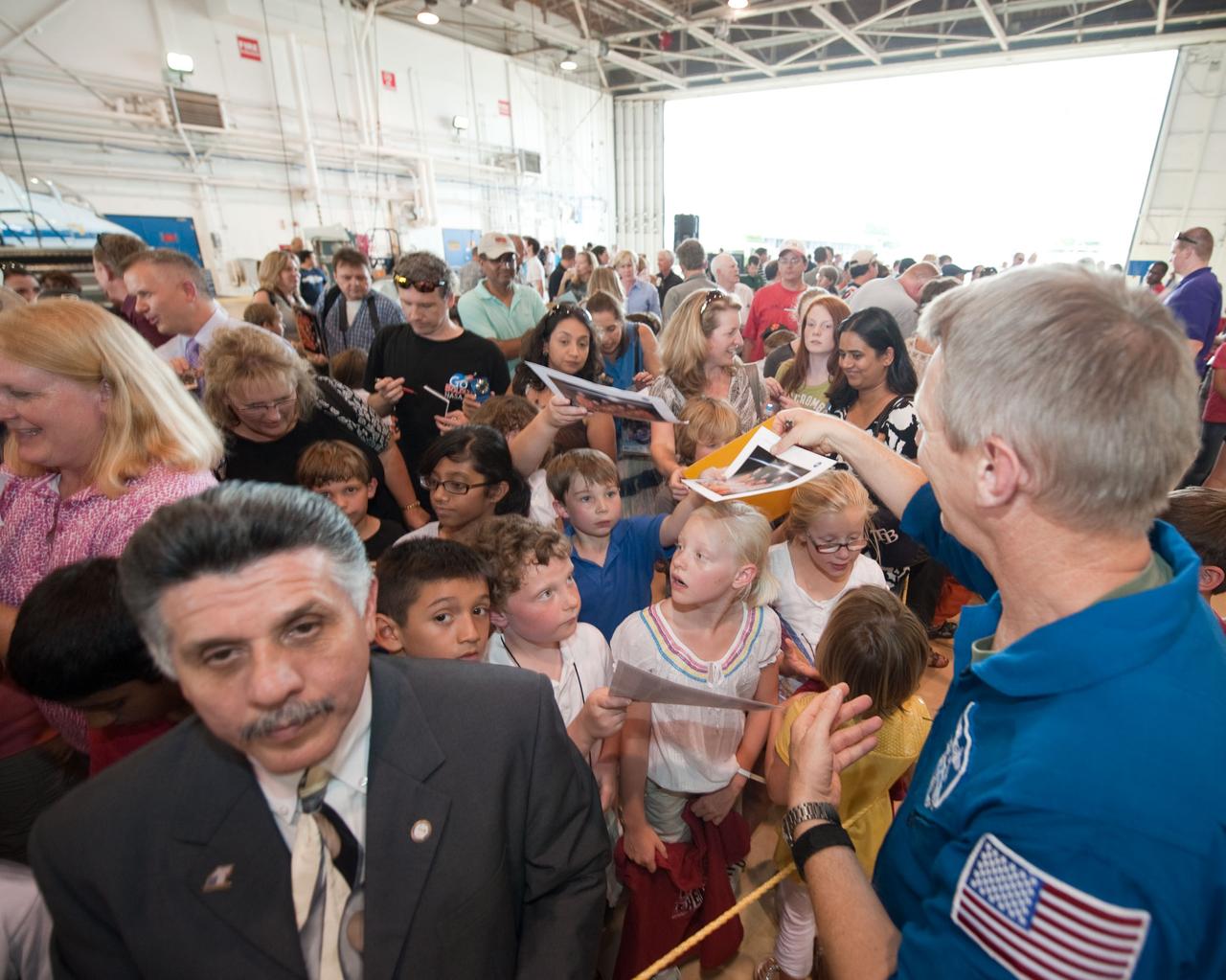
JSC2010-E-089710 (27 May 2010) --- At Ellington Field's Hangar 276, NASA astronaut Piers Sellers (right foreground), STS-132 mission specialist, signs autographs for a number of well-wishers at the crew return ceremony for space shuttle Atlantis' final scheduled mission. Photo credit: NASA or National Aeronautics and Space Administration
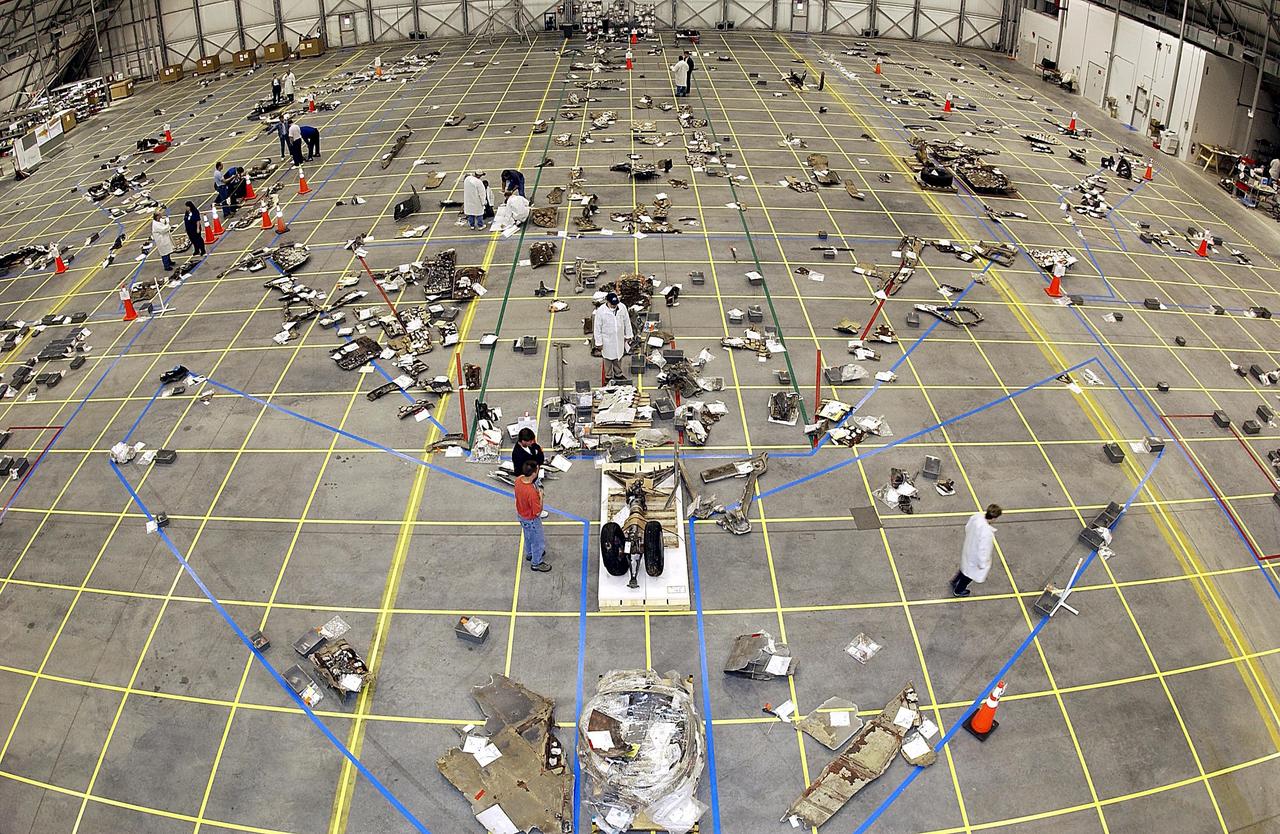
KENNEDY SPACE CENTER, FLA. - A fish-eye view in the RLV Hangar shows the growing number of pieces of Columbia debris shipped from Barksdale AFB, Shreveport, La. Barksdale continues to be the receiving and shipping point for Columbia materials being sent to KSC for final identification. The Columbia Reconstruction Project Team is attempting to reconstruct the orbiter as part of the investigation into the accident that caused the destruction of Columbia and loss of its crew as it returned to Earth on mission STS-107.
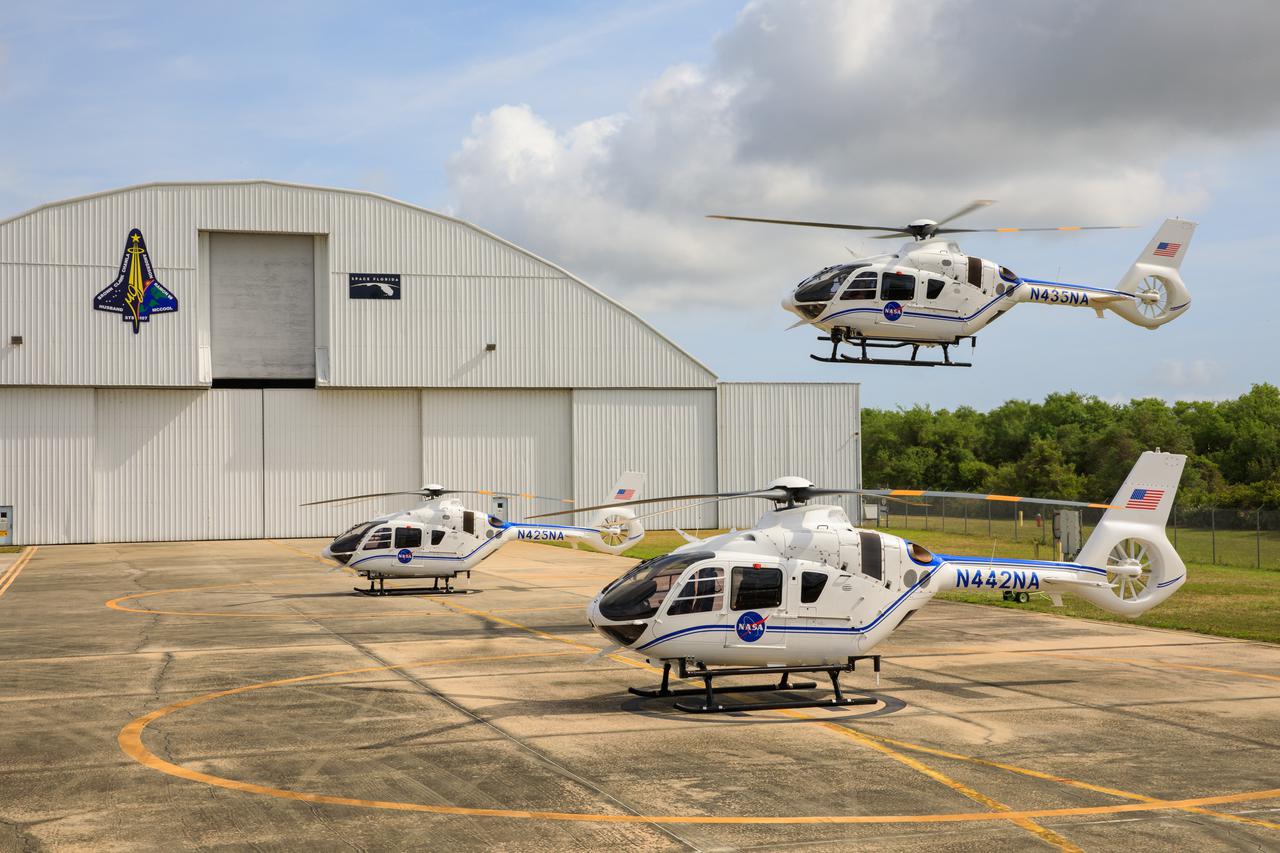
The third and final Airbus H135 helicopter touches down at the Launch and Landing Facility runway at NASA’s Kennedy Space Center in Florida on March 26, 2021, completing the upgraded fleet of aircraft used for security operations. The Airbus H135 helicopters replace the Bell Huey 2 aircraft that had been in service at Kennedy for the last 30 years. Maintained by the Flight Operations team, these new helicopters provide a number of technological and safety advantages over the Hueys, such as more lifting power, greater stability in the air, and expanded medical capabilities.
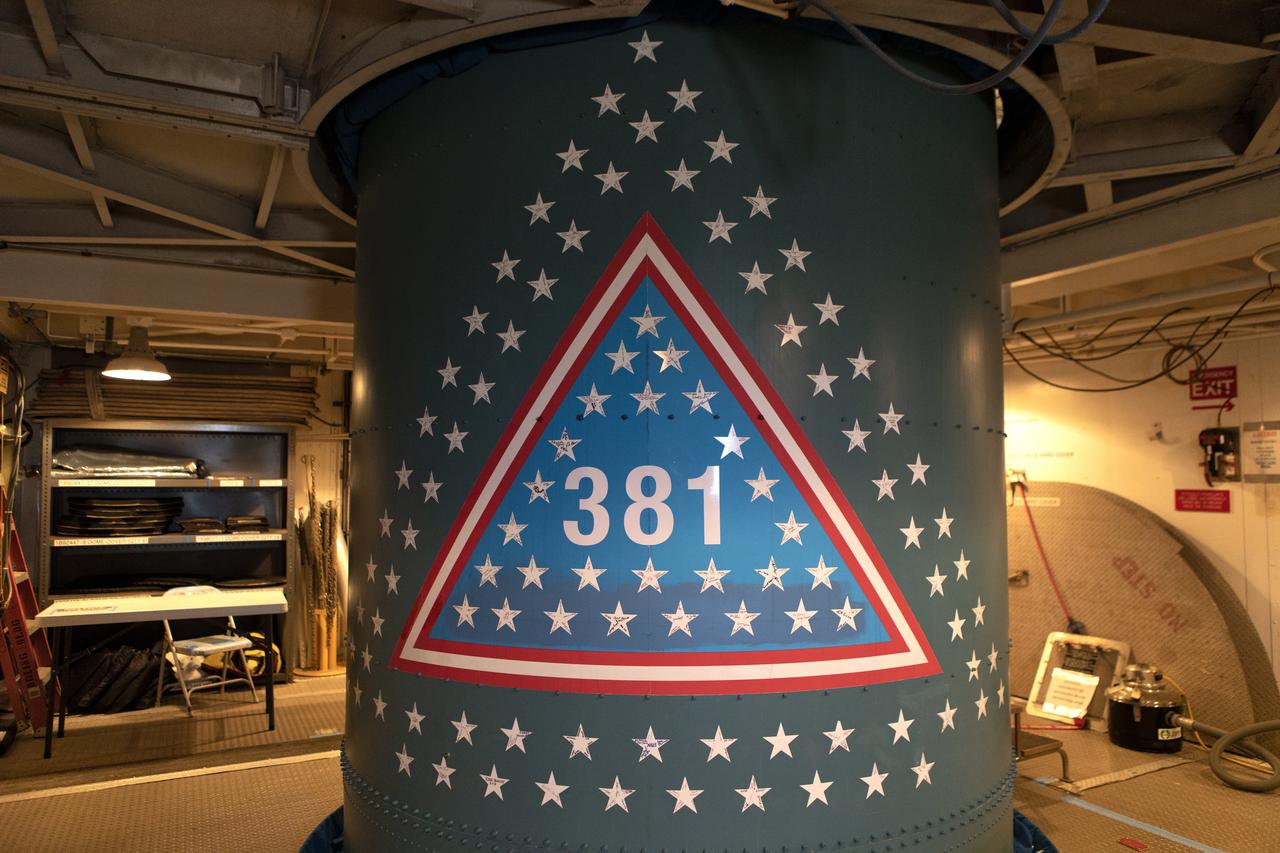
Stars are in view on the first stage of the United Launch Alliance Delta II rocket at Space Launch Complex 2 at Vandenberg Air Force Base in California, on Sept. 13, 2018. Historically, each Delta rocket used to notate the number of launches within the program, beginning in May, 1960, with the first Delta I. This practice was brought back for the final Delta II launch of ICESat-2. The “381” on the rocket signifies that this will be the 381st flight in the Delta family. A star traditionally was placed on the rocket to recognize each mission. For the final Delta II, stars were sent to team members and partners throughout the nation. This rocket boasts more than 150 stars with over 800 signatures of people who have been part of the Delta II program.
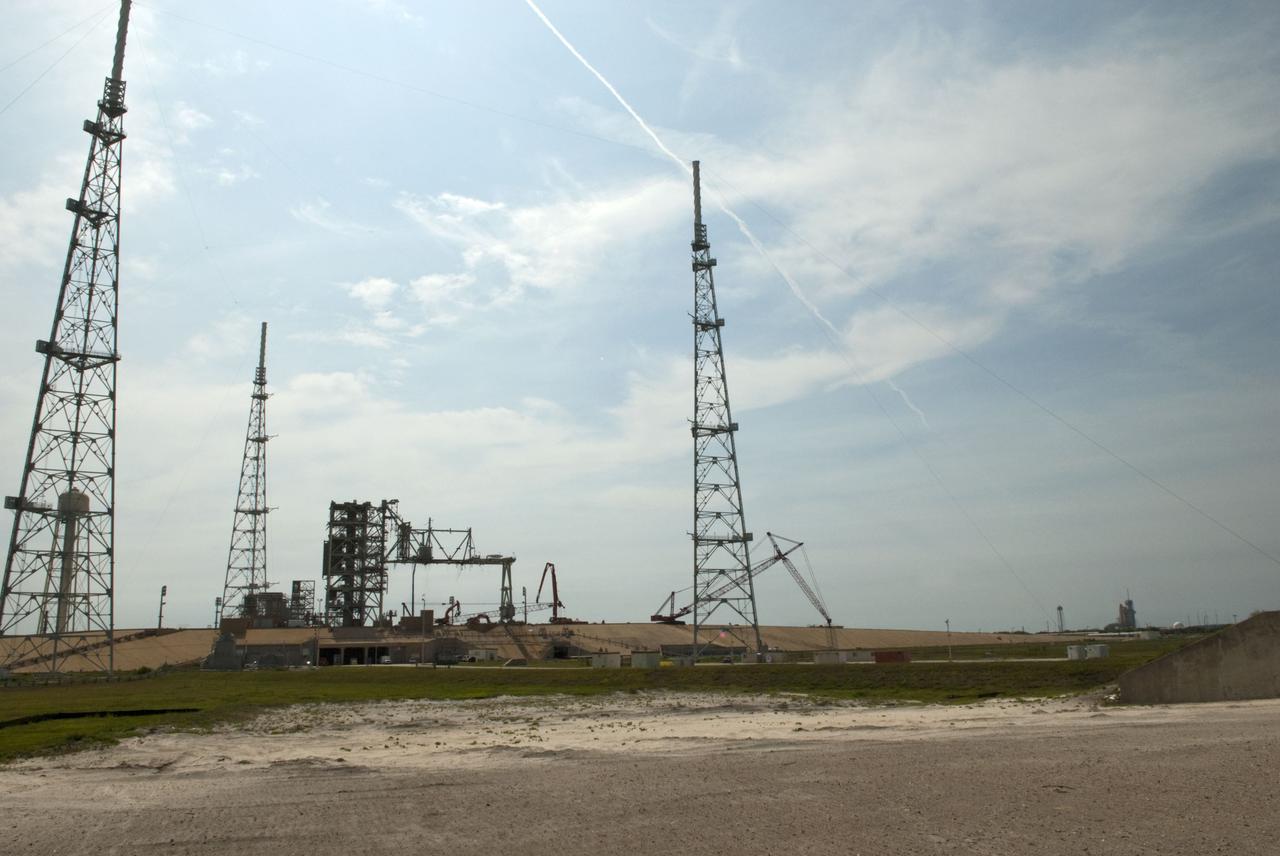
Cape Canaveral, Fla. -- Workers using a large crane dismantle the final sections of the rotating service structure on Launch Pad 39B at NASA's Kennedy Space Center in Florida. Space shuttle Atlantis can be seen on Launch Pad 39A (far right background) as it is being prepared for the final space shuttle mission, STS-135. In 2009, the pad was no longer needed for the shuttle program, so it is being restructured for future use. Its new design will feature a "clean pad" for rockets to come with their own launcher, making it more versatile for a number of vehicles. The new lightning protection system, which was in place for the October 2009 launch of Ares I-X, will remain. For information on NASA's future plans, visit www.nasa.gov. Photo credit: NASA/Jim Grossmann
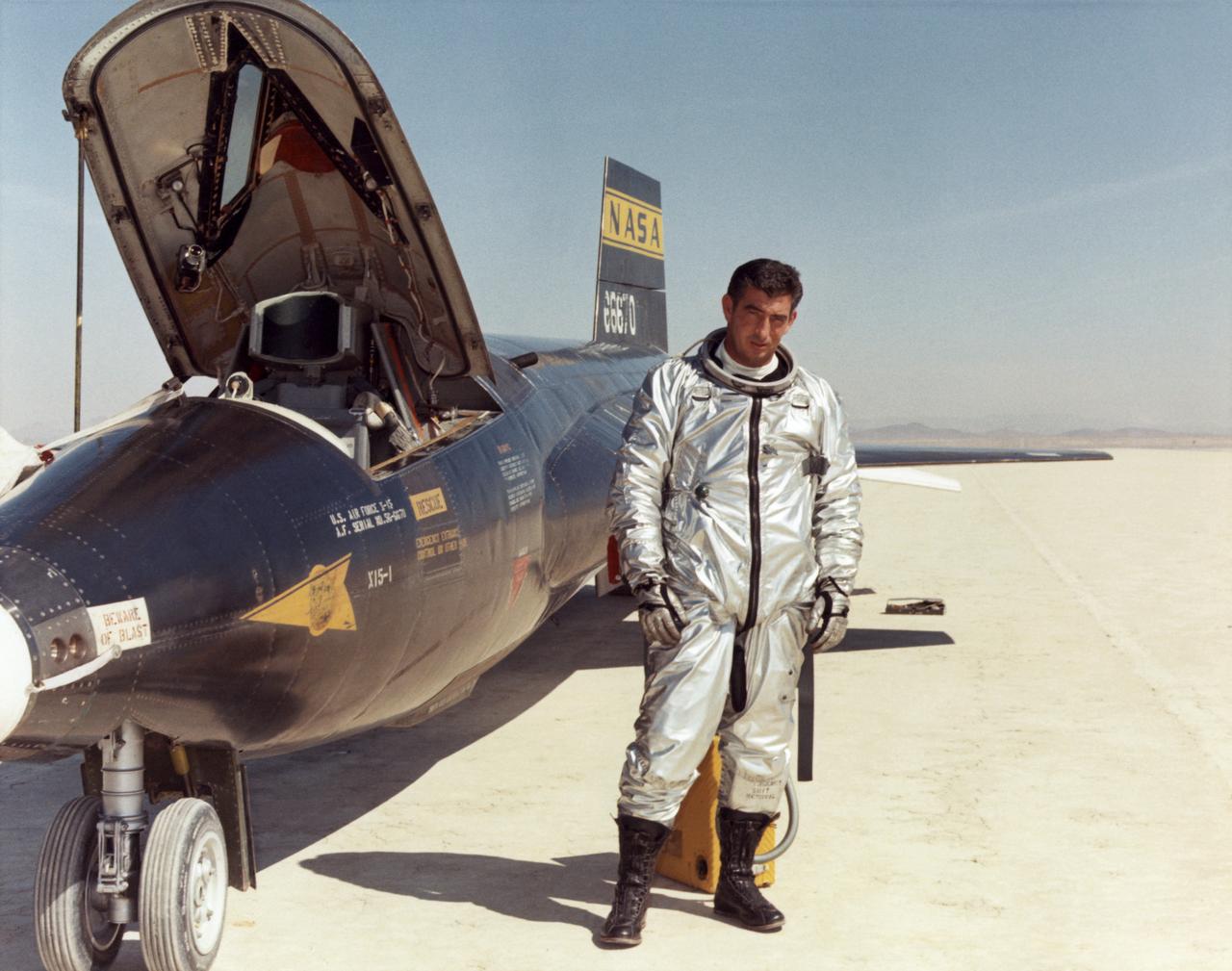
Air Force test pilot Maj. Michael J. Adams stands beside X-15 ship number one. Adams was selected for the X-15 program in 1966 and made his first flight on Oct. 6, 1966. On Nov. 15, 1967, Adams made his seventh and final X-15 flight. The X-15 launched from the B-52, but during the ascent an electrical problem affected the X-15's control system. The aircraft crashed northwest of Cuddeback Lake, California, causing the death of Adams. He was posthumously awarded Air Force astronaut wings because his final flight exceeded 50 miles in altitude. Adams was the only pilot lost in the 199-flight X-15 program.
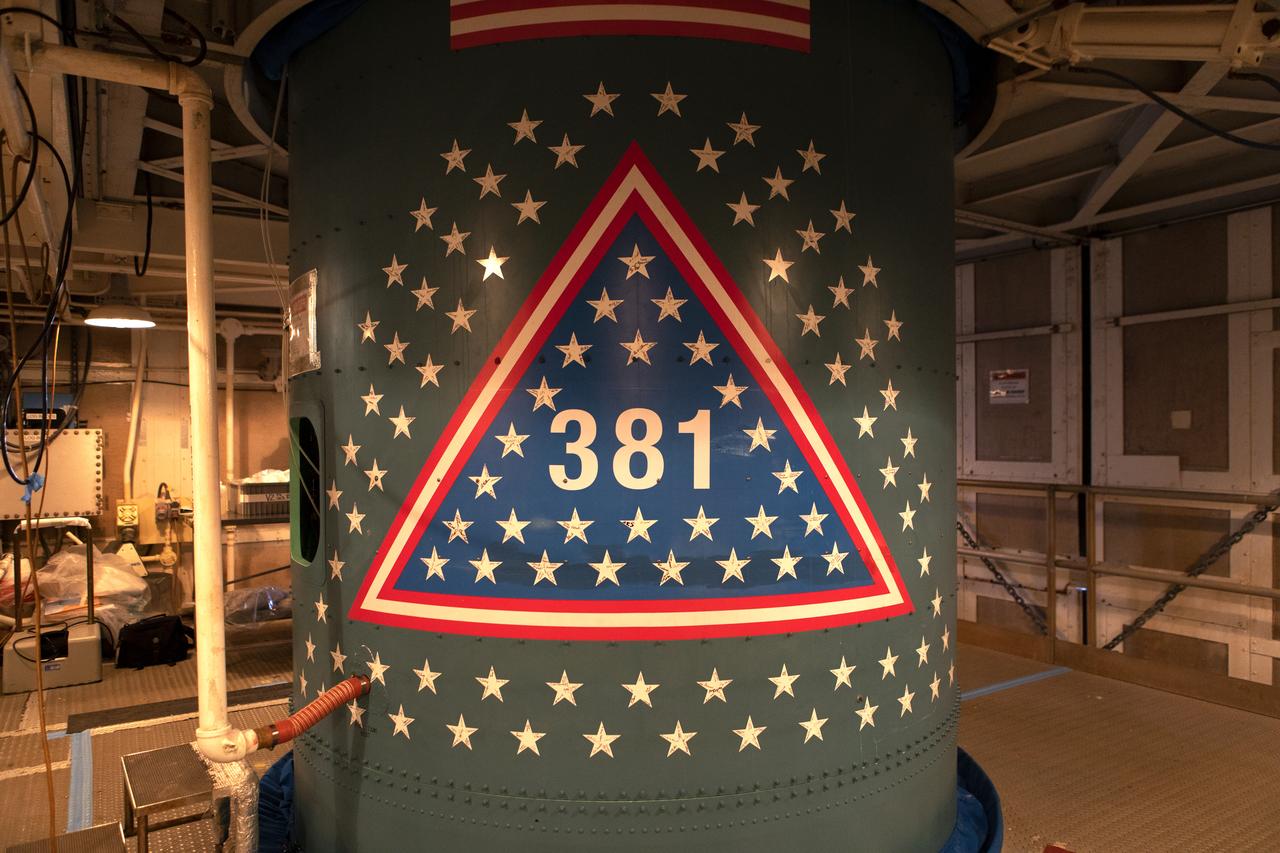
Stars are in view on the first stage of the United Launch Alliance Delta II rocket at Space Launch Complex 2 at Vandenberg Air Force Base in California, on Sept. 13, 2018. Historically, each Delta rocket used to notate the number of launches within the program, beginning in May, 1960, with the first Delta I. This practice was brought back for the final Delta II launch of ICESat-2. The “381” on the rocket signifies that this will be the 381st flight in the Delta family. A star traditionally was placed on the rocket to recognize each mission. For the final Delta II, stars were sent to team members and partners throughout the nation. This rocket boasts more than 150 stars with over 800 signatures of people who have been part of the Delta II program.
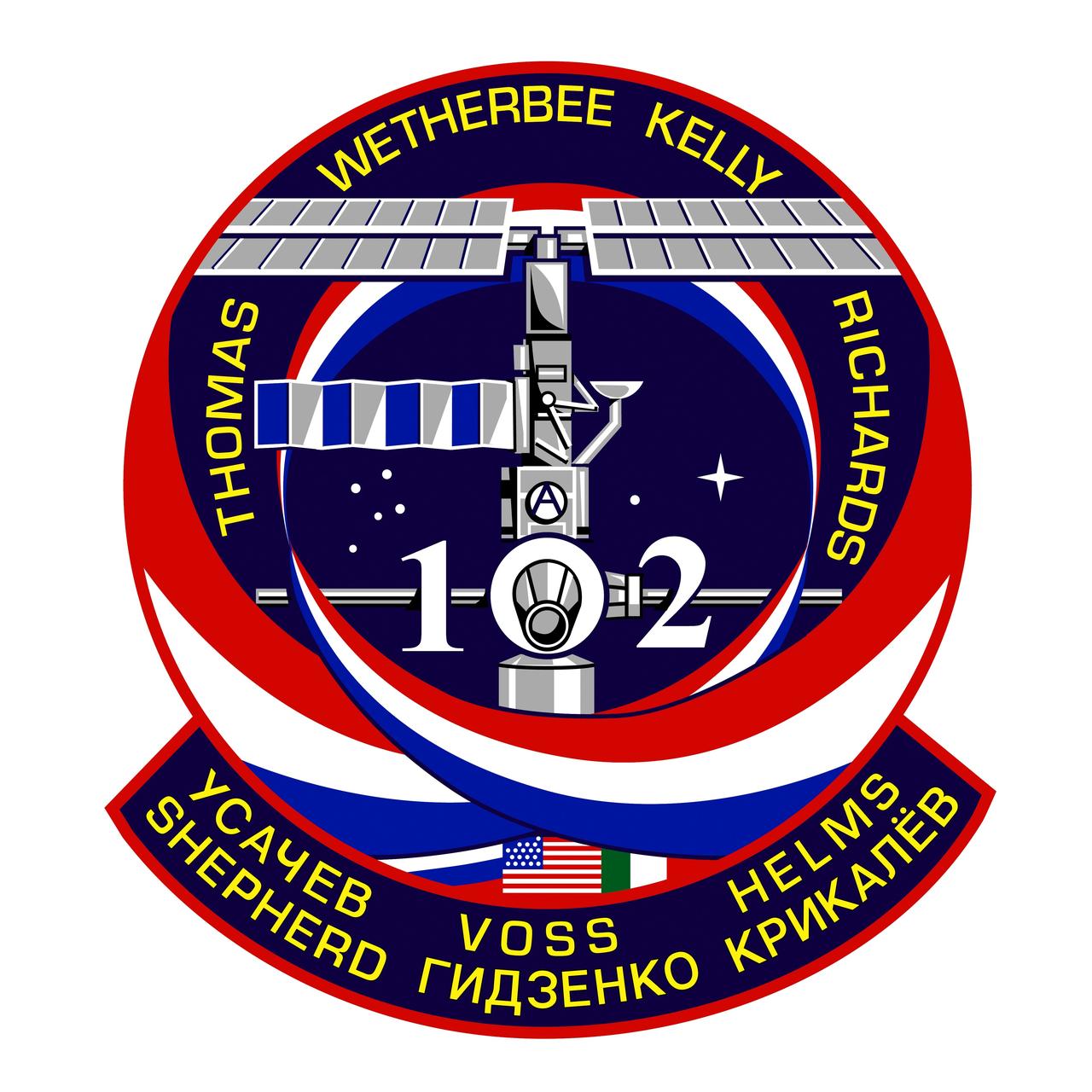
STS102-S-001 (January 2001) --- The central image on the STS-102 crew patch depicts the International Space Station (ISS) in the build configuration that it will have at the time of the arrival and docking of Discovery during the STS-102 mission, the first crew exchange flight to the space station. The station is shown along the direction of the flight as will be seen by the shuttle crew during their final approach and docking, the so-called V-bar approach. The names of the shuttle crew members are depicted in gold around the top of the patch, and surnames of the Expedition crew members being exchanged are shown in the lower banner. The three ribbons swirling up to and around the station signify the rotation of these ISS crew members. The number two is for the Expedition Two crew who fly up to the station, and the number one is for the Expedition One crew who then return down to Earth. In conjunction with the face of the Lab module of the station, these Expedition numbers create the shuttle mission number 102. Shown mated below the ISS is the Italian-built Multi-Purpose Logistics Module, Leonardo, that will fly for the first time on this flight, and which will be attached to the station by the shuttle crew during the docked phase of the mission. The flags of the countries that are the major contributors to this effort, the United States, Russia, and Italy are also shown in the lower part of the patch. The build-sequence number of this flight in the overall station assembly sequence, 5A.1, is captured by the constellations in the background. The NASA insignia design for space shuttle flights is reserved for use by the astronauts and for other official use as the NASA Administrator may authorize. Public availability has been approved only in the forms of illustrations by the various news media. When and if there is any change in this policy, which is not anticipated, the change will be publicly announced. Photo credit: NASA
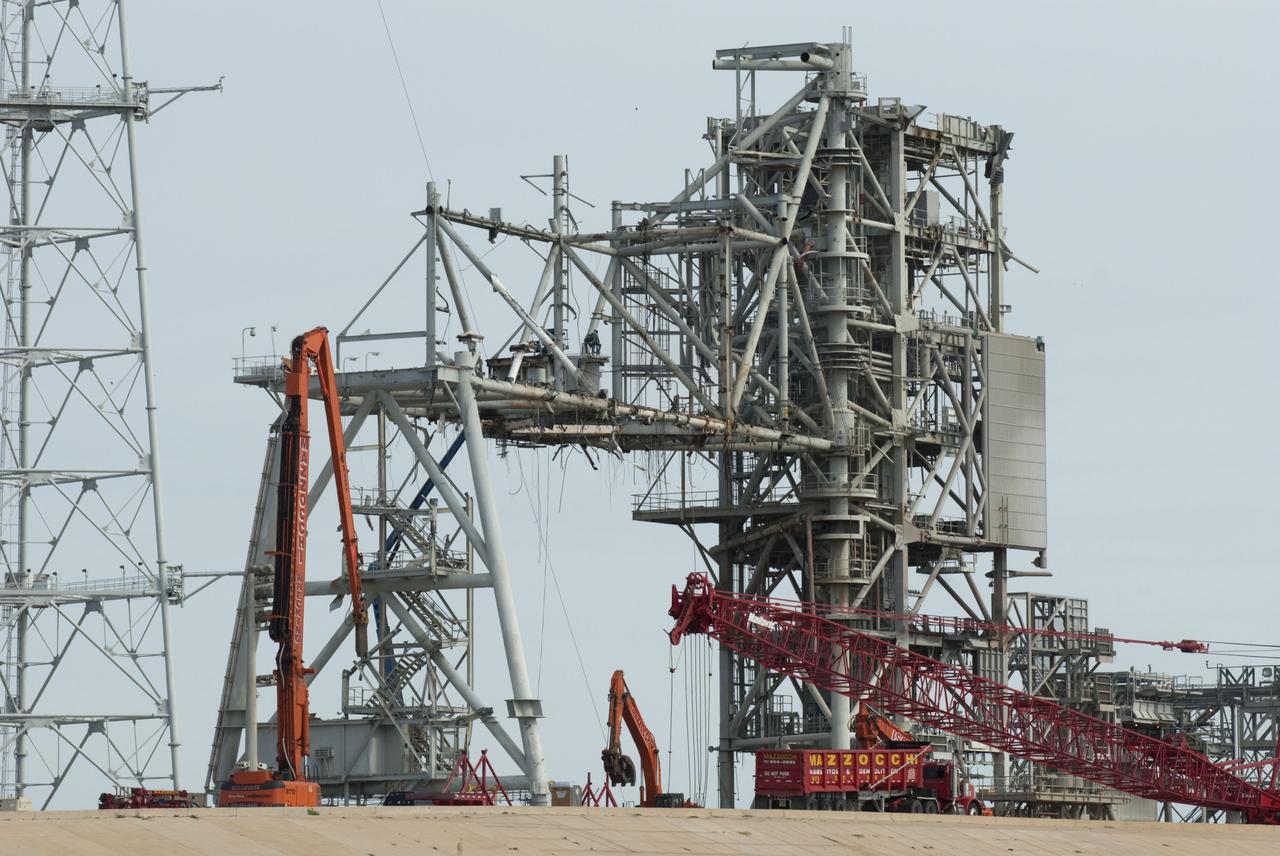
Cape Canaveral, Fla. -- Workers using a large crane dismantle the final sections of the rotating service structure on Launch Pad 39B at NASA's Kennedy Space Center in Florida. In 2009, the pad was no longer needed for the shuttle program, so it is being restructured for future use. Its new design will feature a "clean pad" for rockets to come with their own launcher, making it more versatile for a number of vehicles. The new lightning protection system, which was in place for the October 2009 launch of Ares I-X, will remain. For information on NASA's future plans, visit www.nasa.gov. Photo credit: NASA/Jim Grossmann
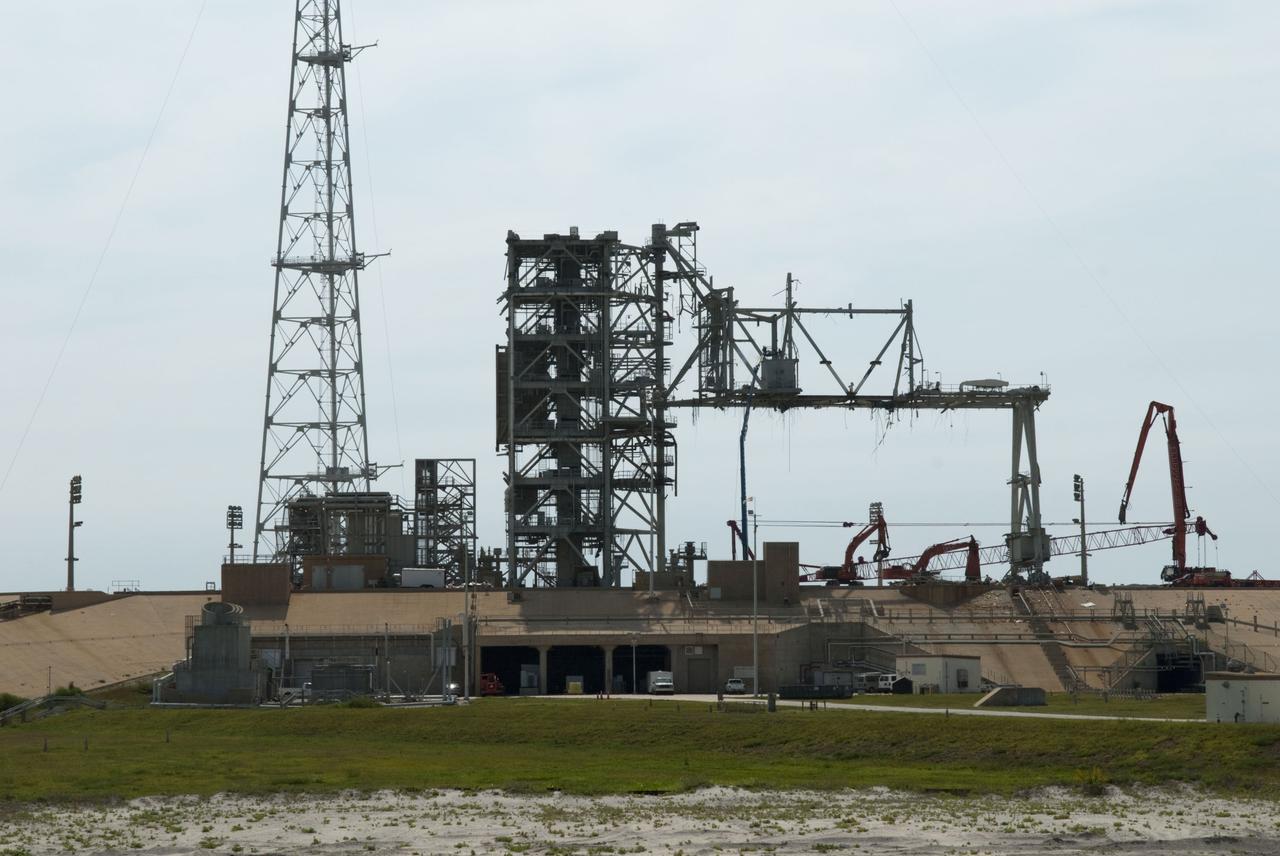
Cape Canaveral, Fla. -- Workers using a large crane dismantle the final sections of the rotating service structure on Launch Pad 39B at NASA's Kennedy Space Center in Florida. In 2009, the pad was no longer needed for the shuttle program, so it is being restructured for future use. Its new design will feature a "clean pad" for rockets to come with their own launcher, making it more versatile for a number of vehicles. The new lightning protection system, which was in place for the October 2009 launch of Ares I-X, will remain. For information on NASA's future plans, visit www.nasa.gov. Photo credit: NASA/Jim Grossmann
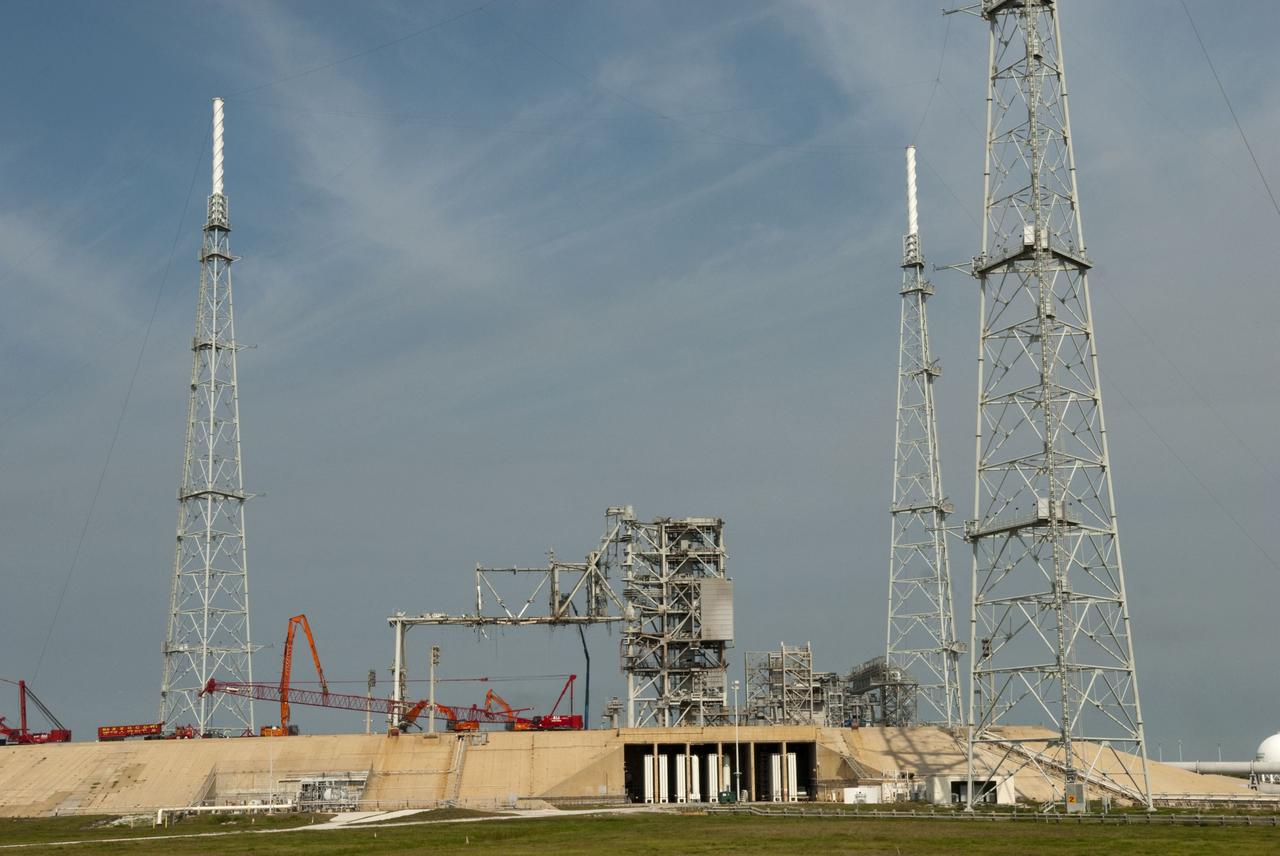
Cape Canaveral, Fla. -- Workers using a large crane dismantle the final sections of the rotating service structure on Launch Pad 39B at NASA's Kennedy Space Center in Florida. In 2009, the pad was no longer needed for the shuttle program, so it is being restructured for future use. Its new design will feature a "clean pad" for rockets to come with their own launcher, making it more versatile for a number of vehicles. The new lightning protection system, which was in place for the October 2009 launch of Ares I-X, will remain. For information on NASA's future plans, visit www.nasa.gov. Photo credit: NASA/Jim Grossmann
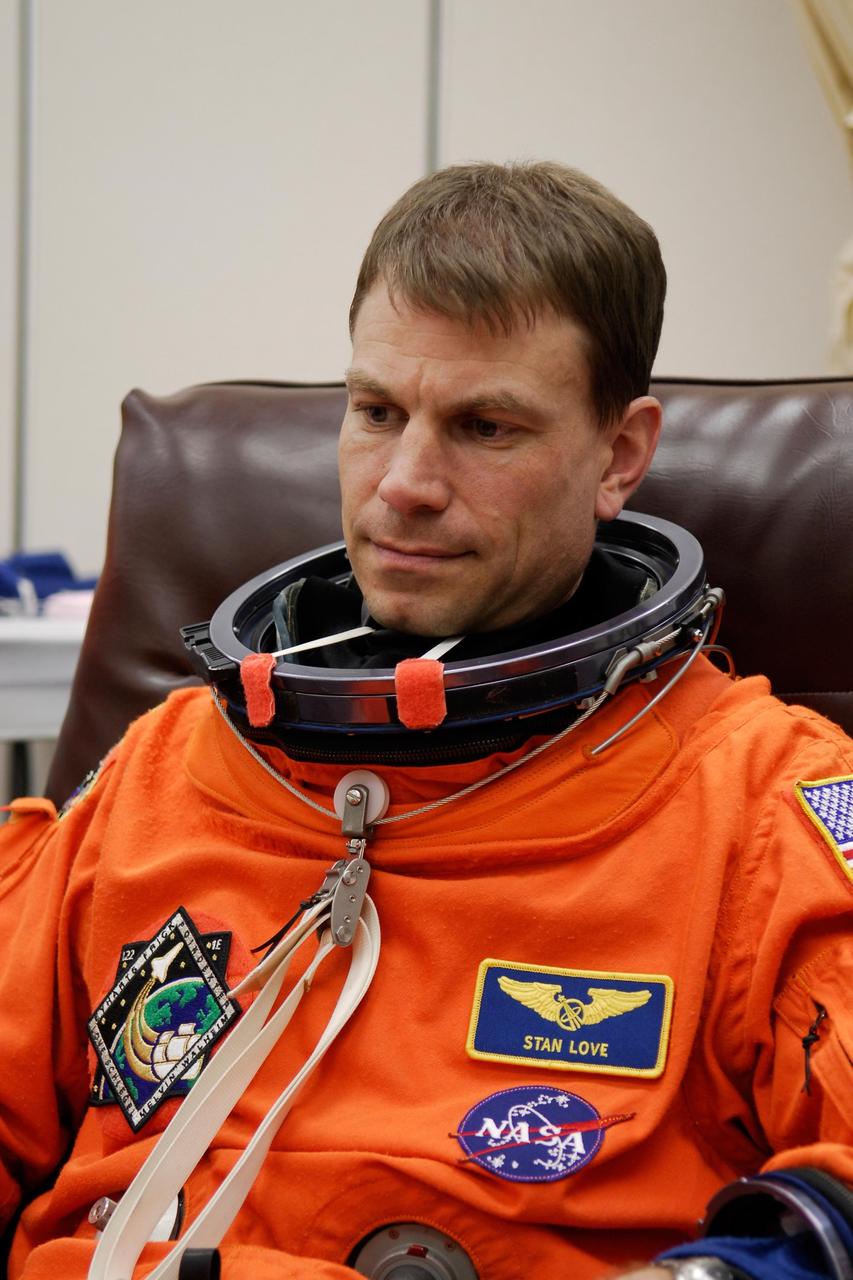
KENNEDY SPACE CENTER, FLA. -- STS-122 Mission Specialist Stanley Love dons his launch and entry suit for a final fitting before space shuttle Atlantis' launch scheduled for 4:31 p.m. EST on Dec. 6. Love will make his first shuttle flight. Atlantis will carry the Columbus Lab, Europe’s largest contribution to the construction of the International Space Station. It will support scientific and technological research in a microgravity environment. Columbus, a program of ESA, is a multifunctional, pressurized laboratory that will be permanently attached to Node 2 of the space station to carry out experiments in materials science, fluid physics and biosciences, as well as to perform a number of technological applications. Photo credit: NASA/Kim Shiflett
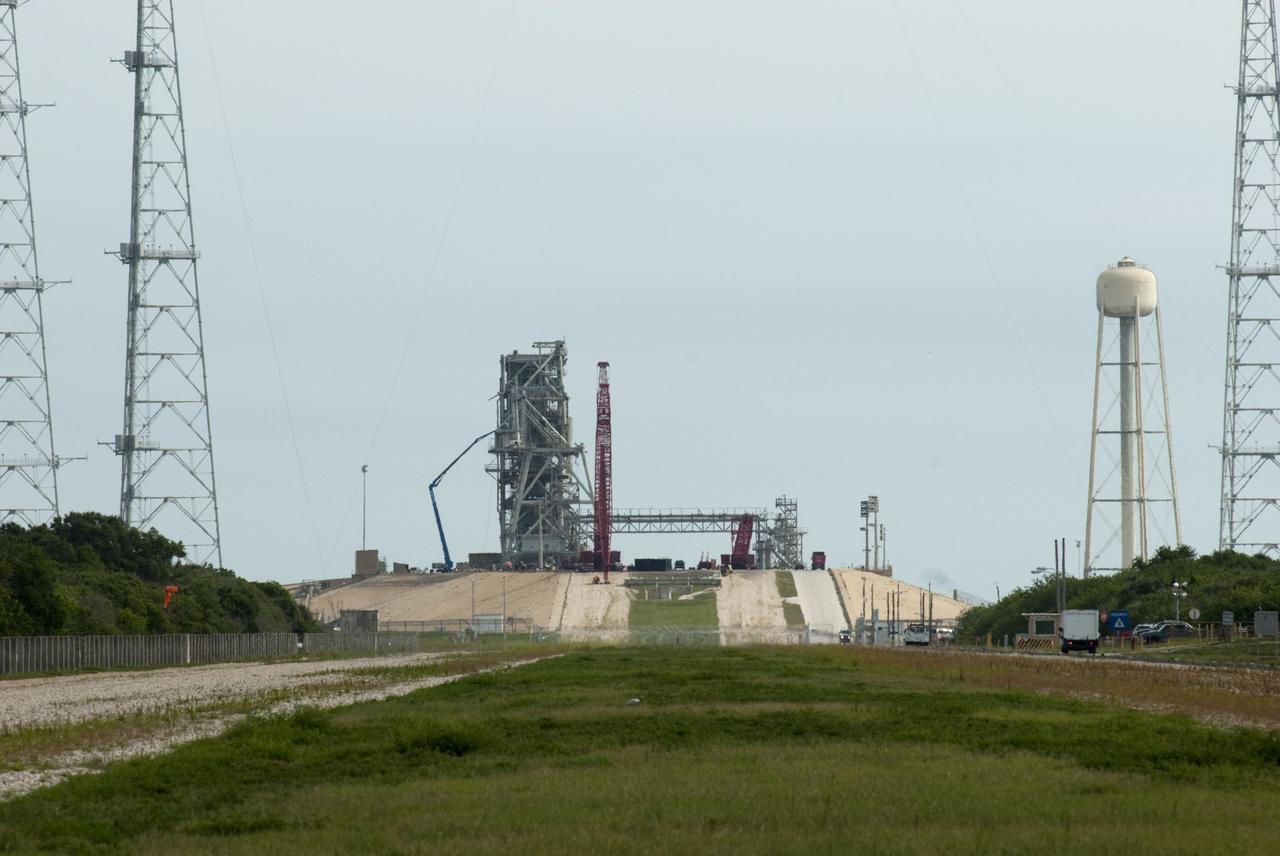
Cape Canaveral, Fla. -- Workers using a large crane dismantle the final sections of the rotating service structure on Launch Pad 39B at NASA's Kennedy Space Center in Florida. In 2009, the pad was no longer needed for the shuttle program, so it is being restructured for future use. Its new design will feature a "clean pad" for rockets to come with their own launcher, making it more versatile for a number of vehicles. The new lightning protection system, which was in place for the October 2009 launch of Ares I-X, will remain. For information on NASA's future plans, visit www.nasa.gov. Photo credit: NASA/Jim Grossmann
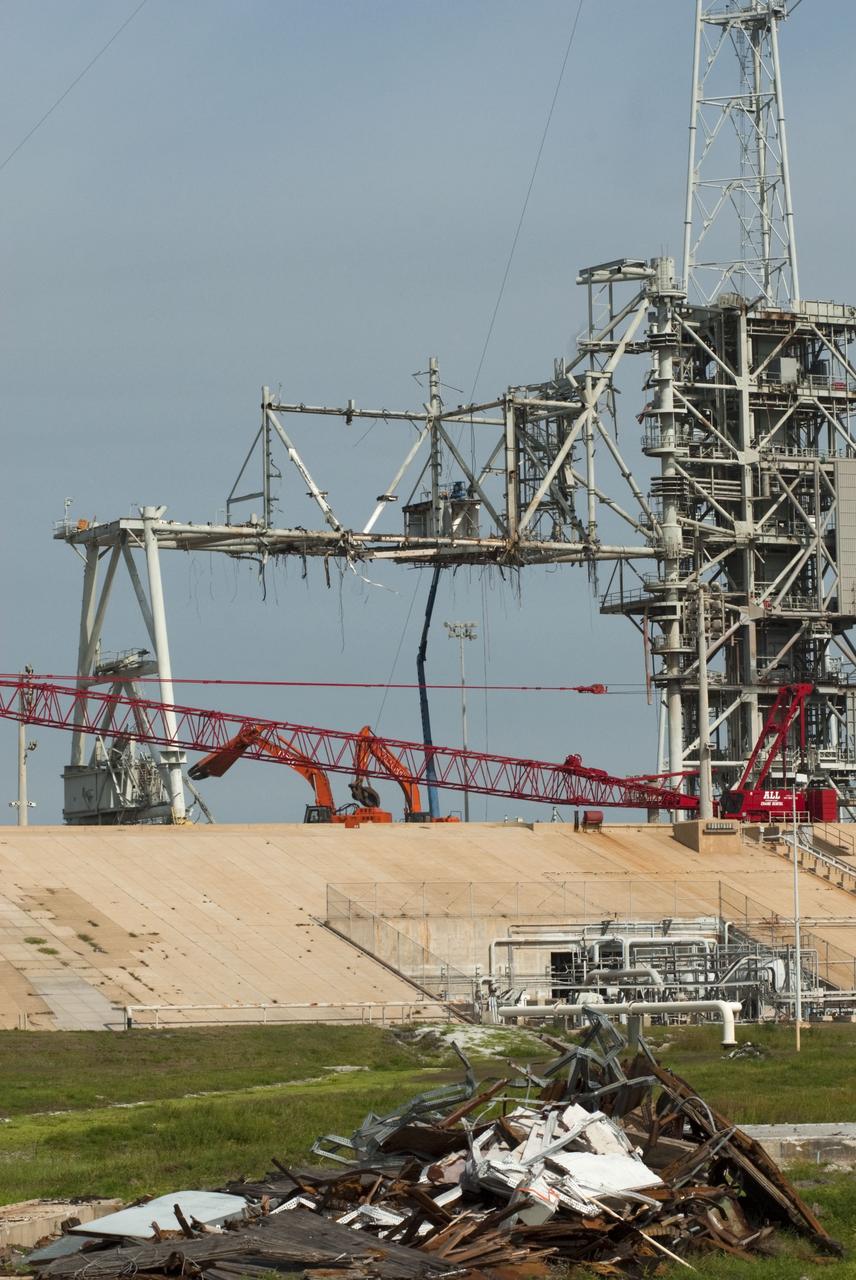
Cape Canaveral, Fla. -- Workers using a large crane dismantle the final sections of the rotating service structure on Launch Pad 39B at NASA's Kennedy Space Center in Florida. In 2009, the pad was no longer needed for the shuttle program, so it is being restructured for future use. Its new design will feature a "clean pad" for rockets to come with their own launcher, making it more versatile for a number of vehicles. The new lightning protection system, which was in place for the October 2009 launch of Ares I-X, will remain. For information on NASA's future plans, visit www.nasa.gov. Photo credit: NASA/Jim Grossmann
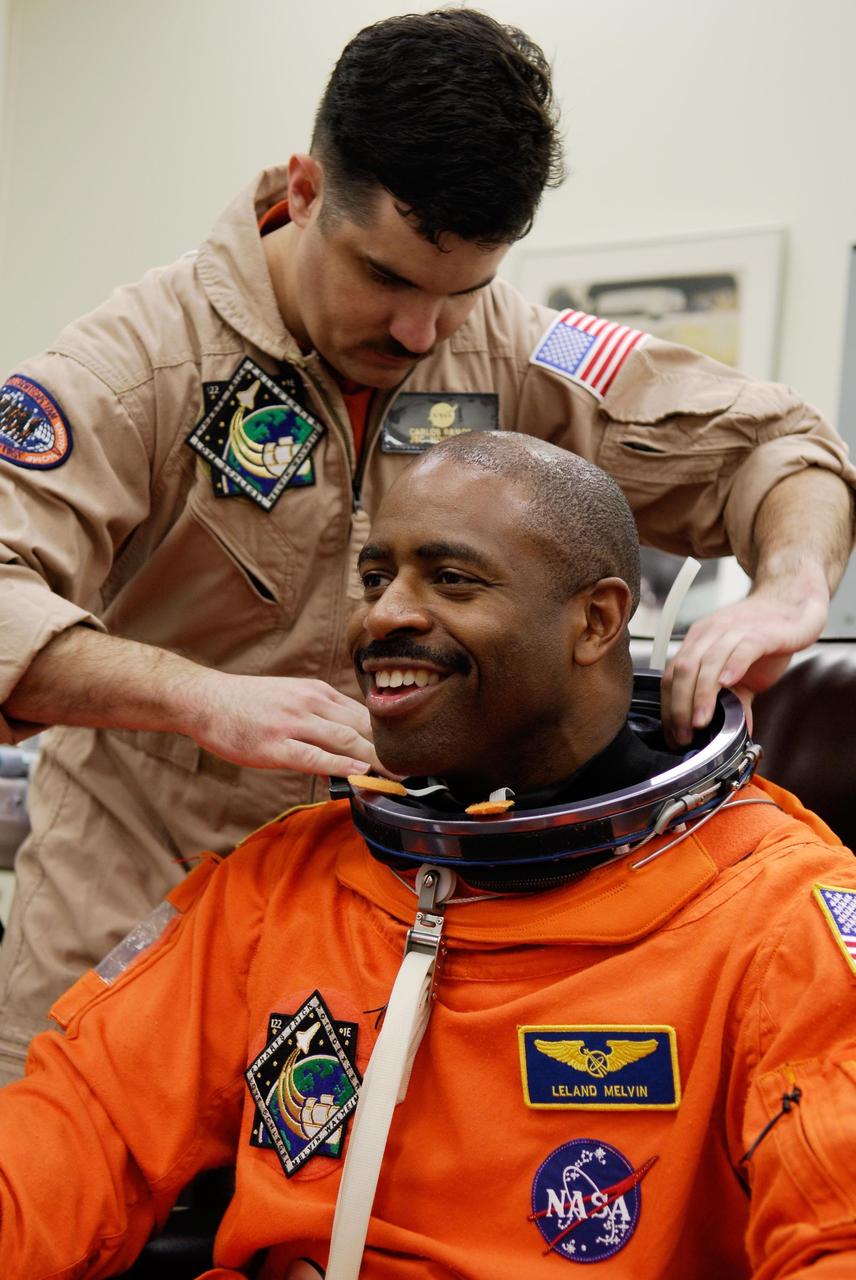
KENNEDY SPACE CENTER, FLA. -- STS-122 Mission Specialist Leland Melvin dons his launch and entry suit for a final fitting before space shuttle Atlantis' launch scheduled for 4:31 p.m. EST on Dec. 6. Melvin will make his first shuttle flight. Atlantis will carry the Columbus Lab, Europe’s largest contribution to the construction of the International Space Station. It will support scientific and technological research in a microgravity environment. Columbus, a program of ESA, is a multifunctional, pressurized laboratory that will be permanently attached to Node 2 of the space station to carry out experiments in materials science, fluid physics and biosciences, as well as to perform a number of technological applications. Photo credit: NASA/Kim Shiflett

KENNEDY SPACE CENTER, FLA. -- STS-122 Mission Specialist Rex Walheim checks the helmet to his launch and entry suit for a final fitting before space shuttle Atlantis' launch scheduled for 4:31 p.m. EST on Dec. 6. Walheim will make his second shuttle flight. Atlantis will carry the Columbus Lab, Europe’s largest contribution to the construction of the International Space Station. It will support scientific and technological research in a microgravity environment. Columbus, a program of ESA, is a multifunctional, pressurized laboratory that will be permanently attached to Node 2 of the space station to carry out experiments in materials science, fluid physics and biosciences, as well as to perform a number of technological applications. Photo credit: NASA/Kim Shiflett
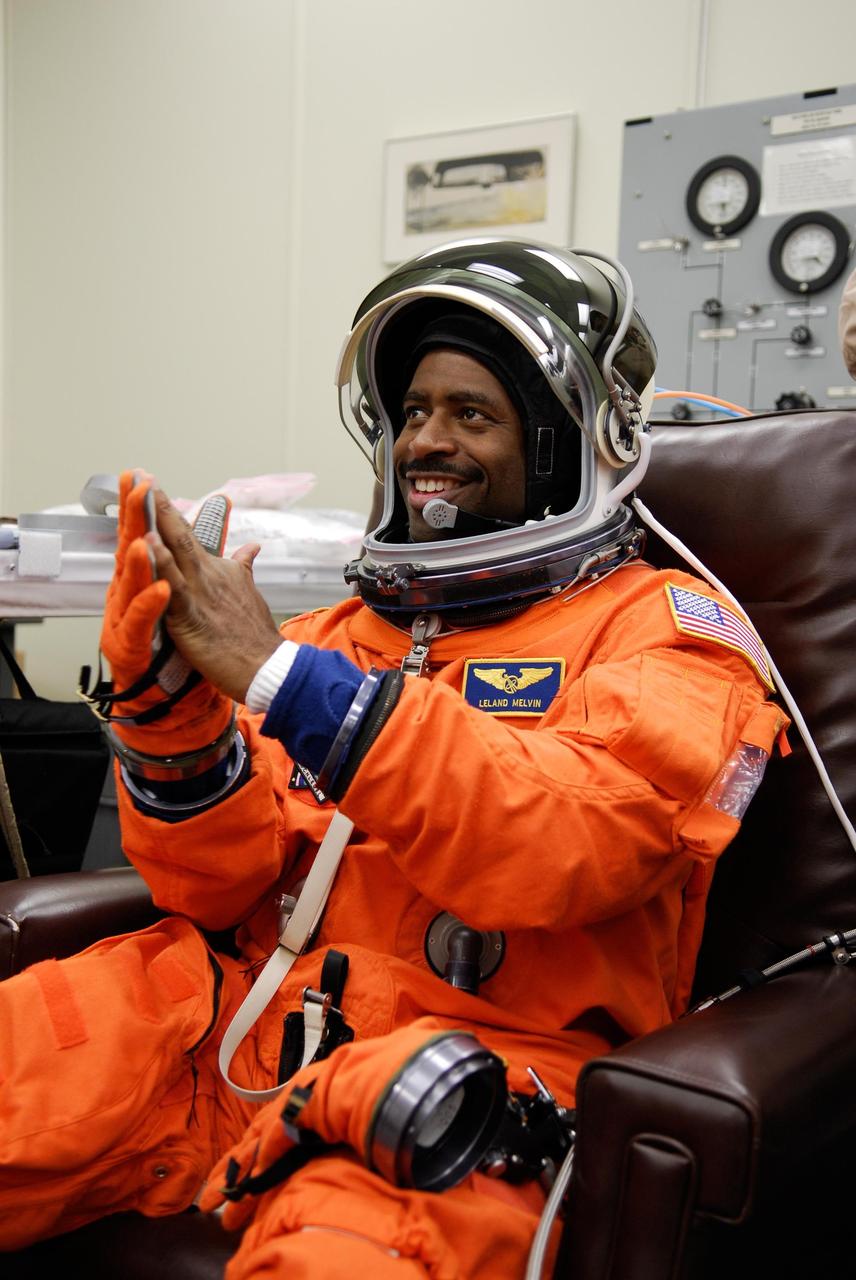
KENNEDY SPACE CENTER, FLA. -- STS-122 Mission Specialist Leland Melvin tests his gloves for a final fitting before space shuttle Atlantis' launch scheduled for 4:31 p.m. EST on Dec. 6. Melvin will make his first shuttle flight. Atlantis will carry the Columbus Lab, Europe’s largest contribution to the construction of the International Space Station. It will support scientific and technological research in a microgravity environment. Columbus, a program of ESA, is a multifunctional, pressurized laboratory that will be permanently attached to Node 2 of the space station to carry out experiments in materials science, fluid physics and biosciences, as well as to perform a number of technological applications. Photo credit: NASA/Kim Shiflett
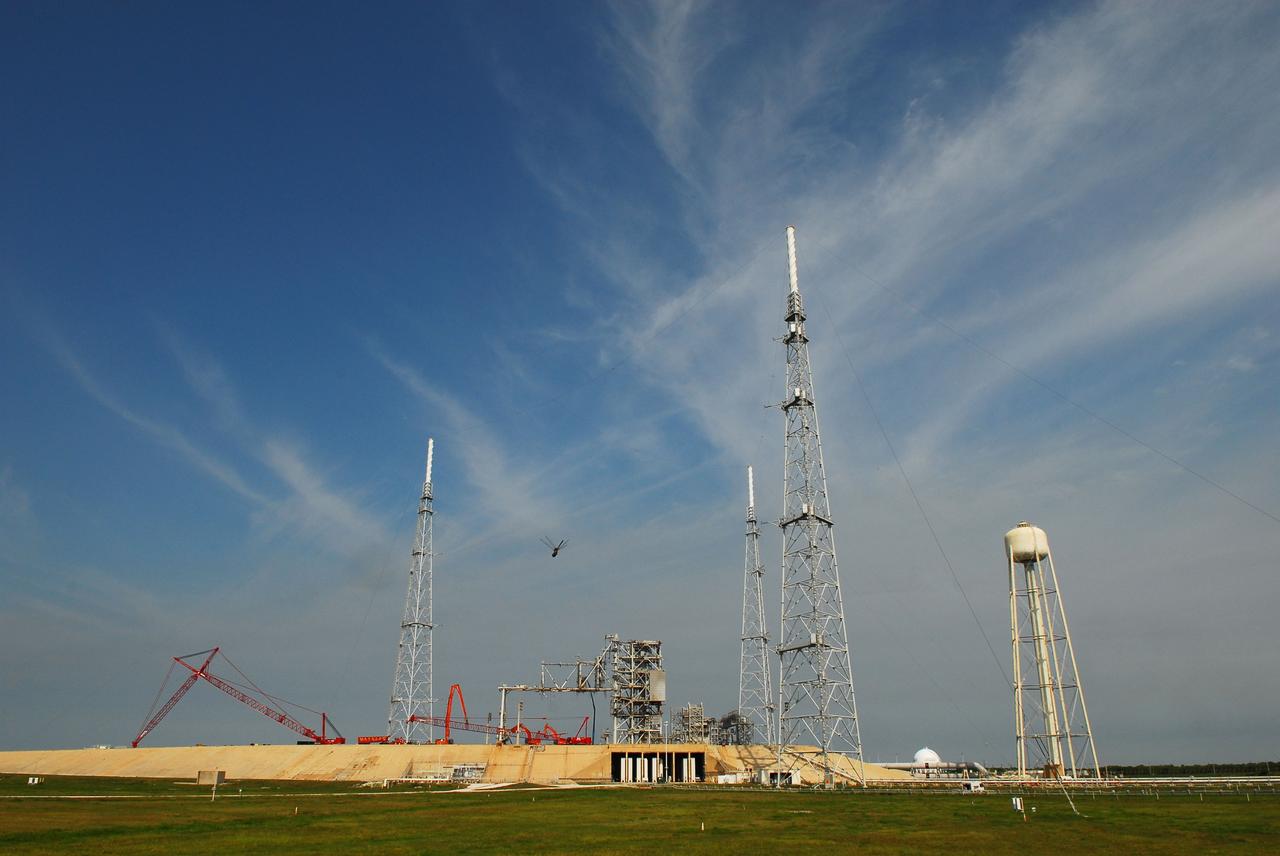
Cape Canaveral, Fla. -- Workers using a large crane dismantle the final sections of the rotating service structure on Launch Pad 39B at NASA's Kennedy Space Center in Florida. A dragonfly passing across the camera lens (center) pays no attention to the pad's deconstruction in progress. In 2009, the pad was no longer needed for the shuttle program, so it is being restructured for future use. Its new design will feature a "clean pad" for rockets to come with their own launcher, making it more versatile for a number of vehicles. The new lightning protection system, which was in place for the October 2009 launch of Ares I-X, will remain. For information on NASA's future plans, visit www.nasa.gov. Photo credit: NASA/Jim Grossmann
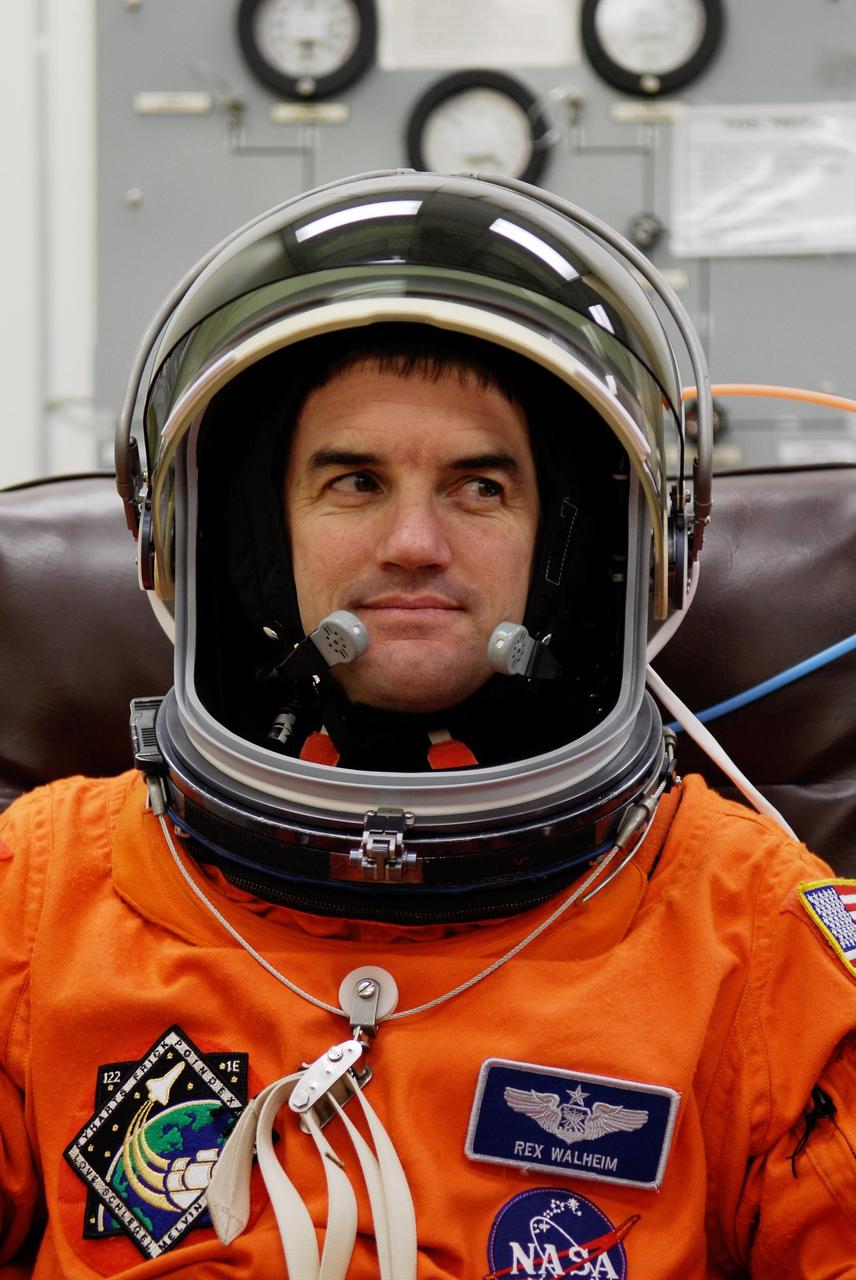
KENNEDY SPACE CENTER, FLA. -- STS-122 Mission Specialist Rex Walheim checks the helmet to his launch and entry suit for a final fitting before space shuttle Atlantis' launch scheduled for 4:31 p.m. EST on Dec. 6. Walheim will make his second shuttle flight. Atlantis will carry the Columbus Lab, Europe’s largest contribution to the construction of the International Space Station. It will support scientific and technological research in a microgravity environment. Columbus, a program of ESA, is a multifunctional, pressurized laboratory that will be permanently attached to Node 2 of the space station to carry out experiments in materials science, fluid physics and biosciences, as well as to perform a number of technological applications. Photo credit: NASA/Kim Shiflett
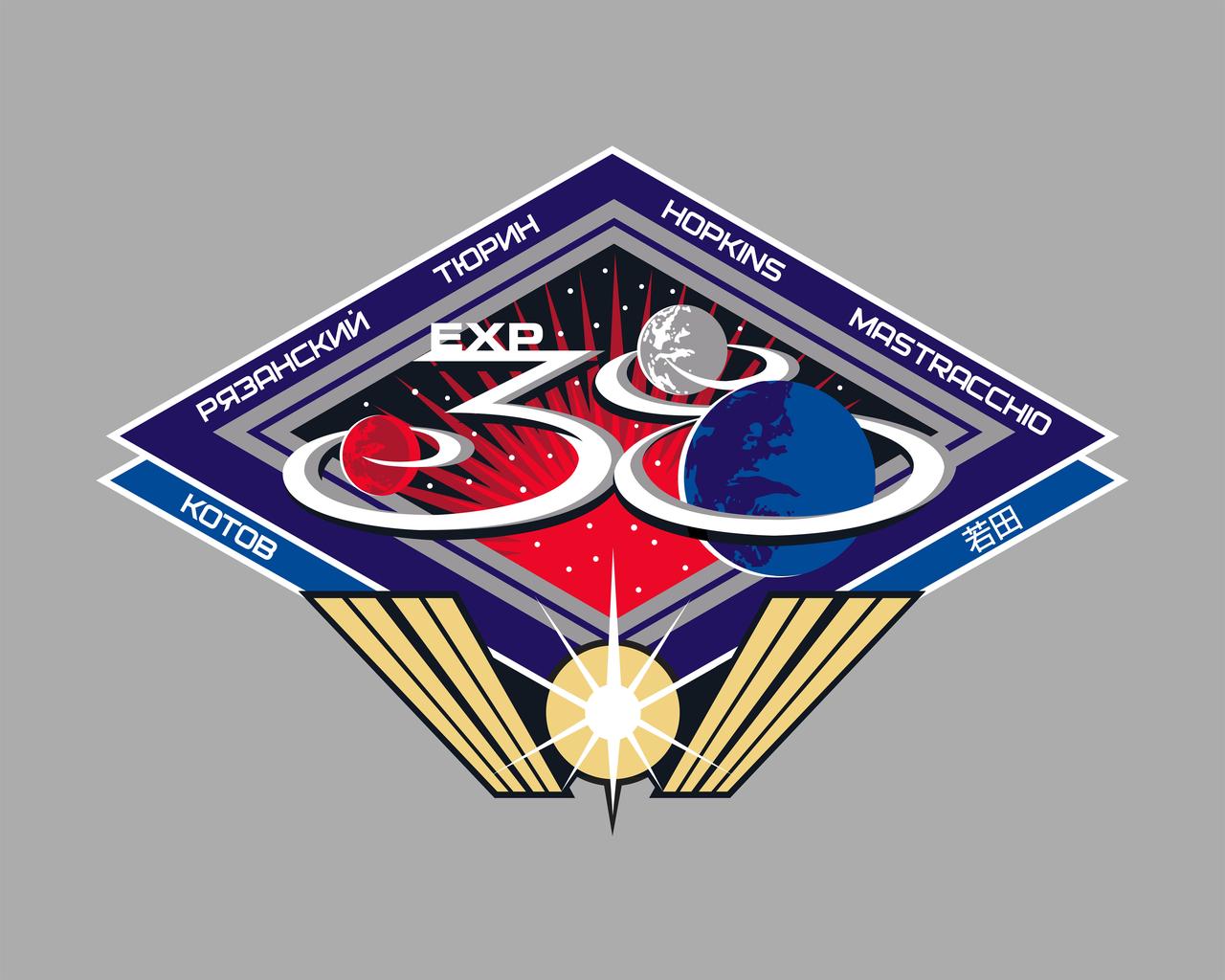
ISS038-S-001 (April 2013) --- As the International Space Station (ISS) has become a stepping stone to future space exploration, the Expedition 38 mission patch design paints a visual roadmap of exploration beyond low Earth orbit, most prominently represented by the design?s flowing Expedition 38 mission numbers that wrap around Earth, the moon and Mars. Just as the sun is a guiding light in the galaxy, the ISS illuminates the bottom of the design as it is a shining beacon of the advancement of science, knowledge, and technology carried out aboard the Space Station. To visually capture the idea of the ISS being a foundation for infinite discovery, the space station?s iconic solar arrays span upwards, providing the number 38 and its exploration roadmap a symbolic pedestal to rest on. Finally, the overall use of red, white, and blue in the design acknowledges the flags of the countries of origin for Expedition 38?s crew ? the United States, Russia, and Japan. The NASA insignia design for space shuttle flights is reserved for use by the astronauts and for other official use as the NASA Administrator may authorize. Public availability has been approved only in the forms of illustrations by the various news media. When and if there is any change in this policy, which is not anticipated, the change will be publicly announced. Photo credit: NASA
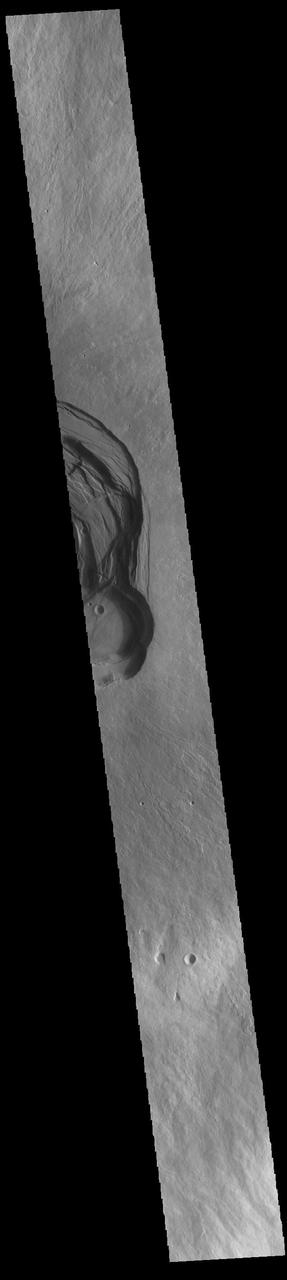
This VIS image shows part of the complex caldera at the summit of Ascraeus Mons. Ascraeus Mons is the northernmost and tallest of the three large aligned Tharsis volcanoes. Calderas are found at the tops of volcanoes and are the source region for magma that rises from an underground lava source to erupt at the surface. Volcanoes are formed by repeated flows from the central caldera. The final eruptions can pool within the summit caldera, leaving a flat surface as they cool. Calderas are also a location of collapse, creating rings of tectonic faults that form the caldera rim. Ascraeus Mons has several caldera features at its summit. Ascraeus Mons is 18 km (11 miles) tall, for comparison Mauna Kea – the tallest volcano on Earth – is 10 km tall (6.2 miles, measured from the base below sea level). Orbit Number: 89125 Latitude: 11.0029 Longitude: 256.08 Instrument: VIS Captured: 2022-01-16 20:38 https://photojournal.jpl.nasa.gov/catalog/PIA25349
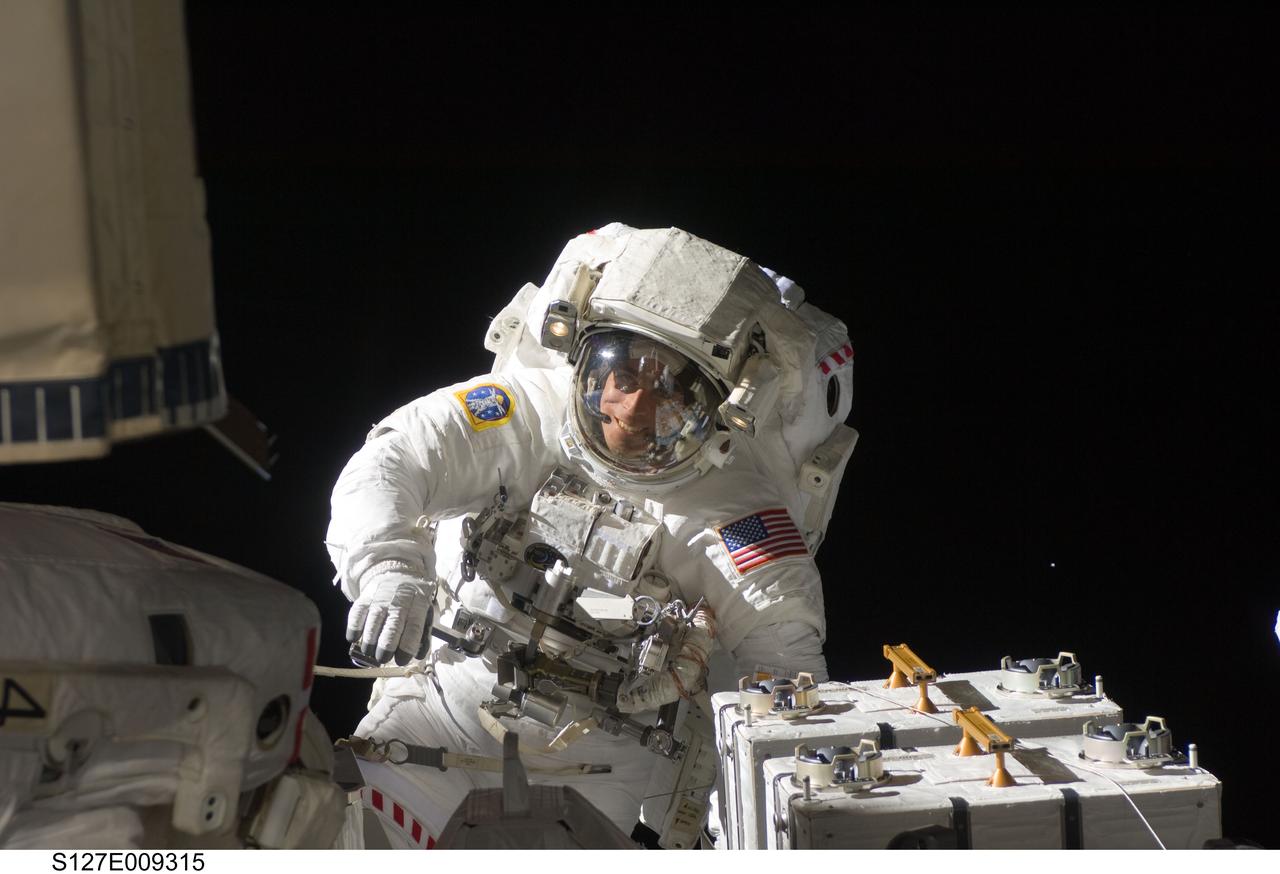
S127-E-009315 (27 July 2009) --- Astronaut Christopher Cassidy, STS-127 mission specialist, participates in the mission's fifth and final session of extravehicular activity (EVA) as construction and maintenance continue on the International Space Station. During the four-hour, 54-minute spacewalk, Cassidy and astronaut Tom Marshburn (out of frame), mission specialist, secured multi-layer insulation around the Special Purpose Dexterous Manipulator known as Dextre, split out power channels for two space station Control Moment Gyroscopes, installed video cameras on the front and back of the new Japanese Exposed Facility and performed a number of “get ahead” tasks, including tying down some cables and installing handrails and a portable foot restraint to aid future spacewalkers.
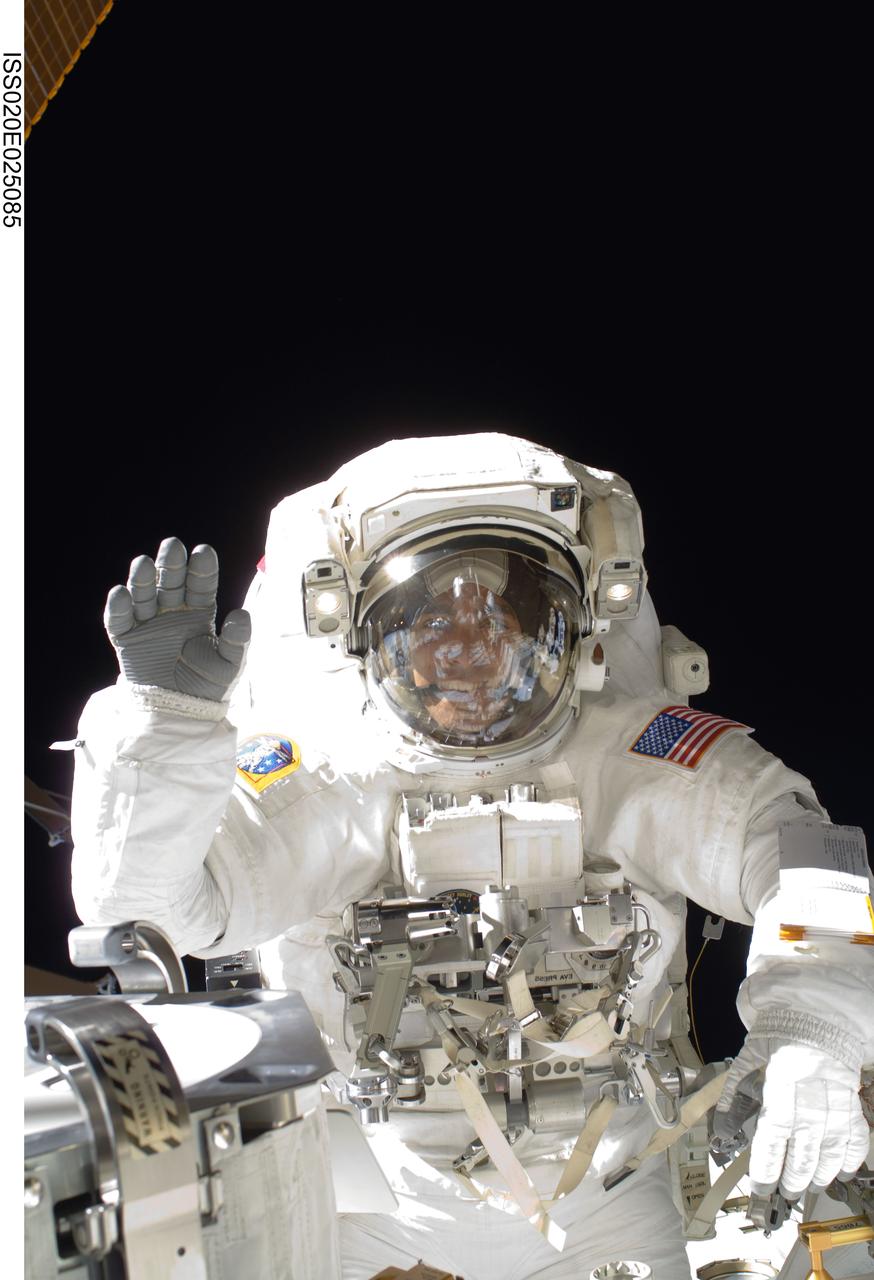
ISS020-E-025085 (27 July 2009) --- Astronaut Christopher Cassidy, STS-127 mission specialist, participates in the mission's fifth and final session of extravehicular activity (EVA) as construction and maintenance continue on the International Space Station. During the four-hour, 54-minute spacewalk, Cassidy and astronaut Tom Marshburn (out of frame), mission specialist, secured multi-layer insulation around the Special Purpose Dexterous Manipulator known as Dextre, split out power channels for two space station Control Moment Gyroscopes, installed video cameras on the front and back of the new Japanese Exposed Facility and performed a number of ?get ahead? tasks, including tying down some cables and installing handrails and a portable foot restraint to aid future spacewalkers.
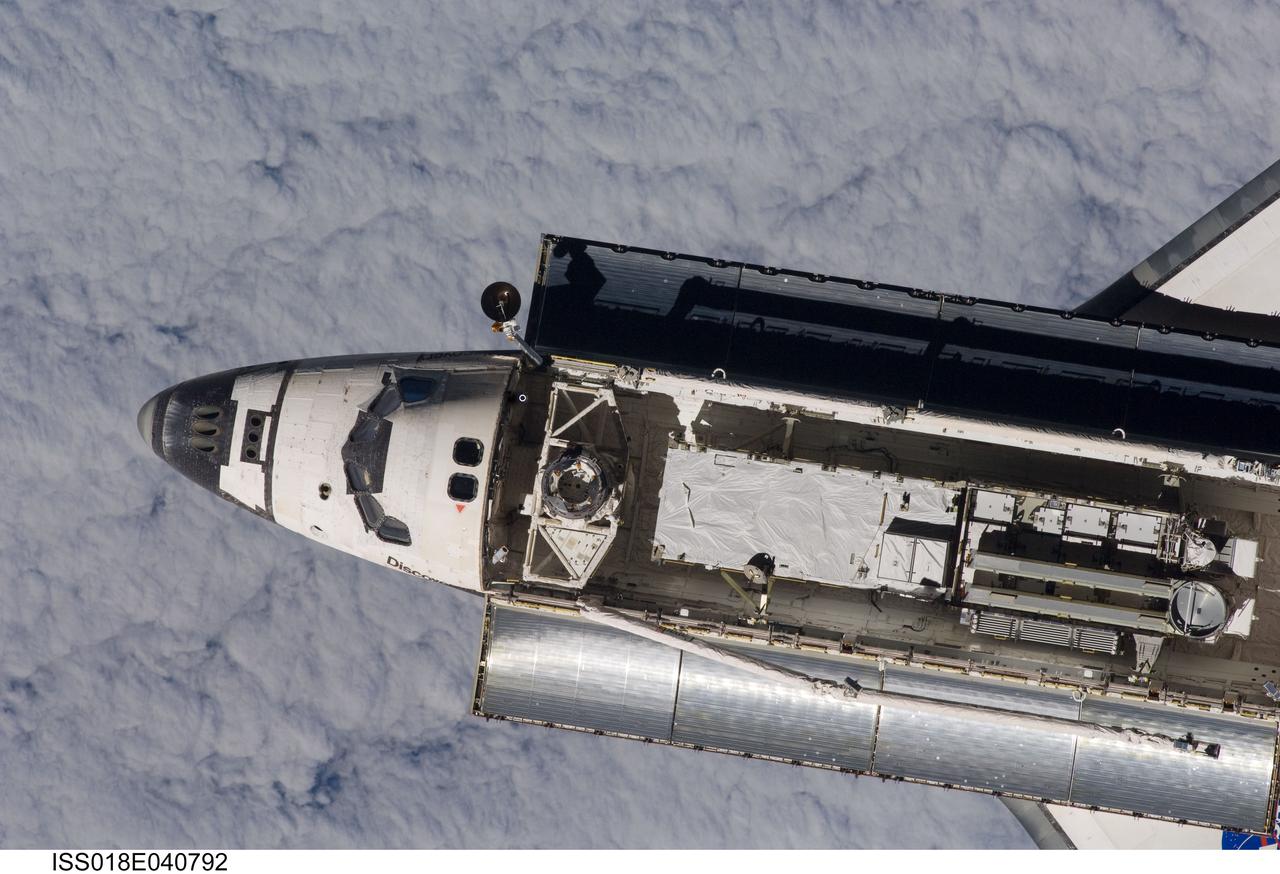
ISS018-E-040792 (17 March 2009) --- Backdropped by a blanket of clouds, Space Shuttle Discovery is featured in this image photographed by an Expedition 18 crewmember on the International Space Station during rendezvous and docking operations. Before docking with the station, astronaut Lee Archambault, STS-119 commander, flew the shuttle through a Rendezvous Pitch Maneuver or basically a backflip to allow the space station crew a good view of Discovery's heat shield. Using digital still cameras equipped with both 400 and 800 millimeter lenses, the ISS crewmembers took a number of photos of the shuttle's thermal protection system and sent them down to teams on the ground for analysis. A 400 millimeter lens was used for this image. Docking occurred at 4:20 p.m. (CDT) on March 17, 2009. The final pair of power-generating solar array wings and the S6 truss segment are visible in Discovery?s cargo bay.
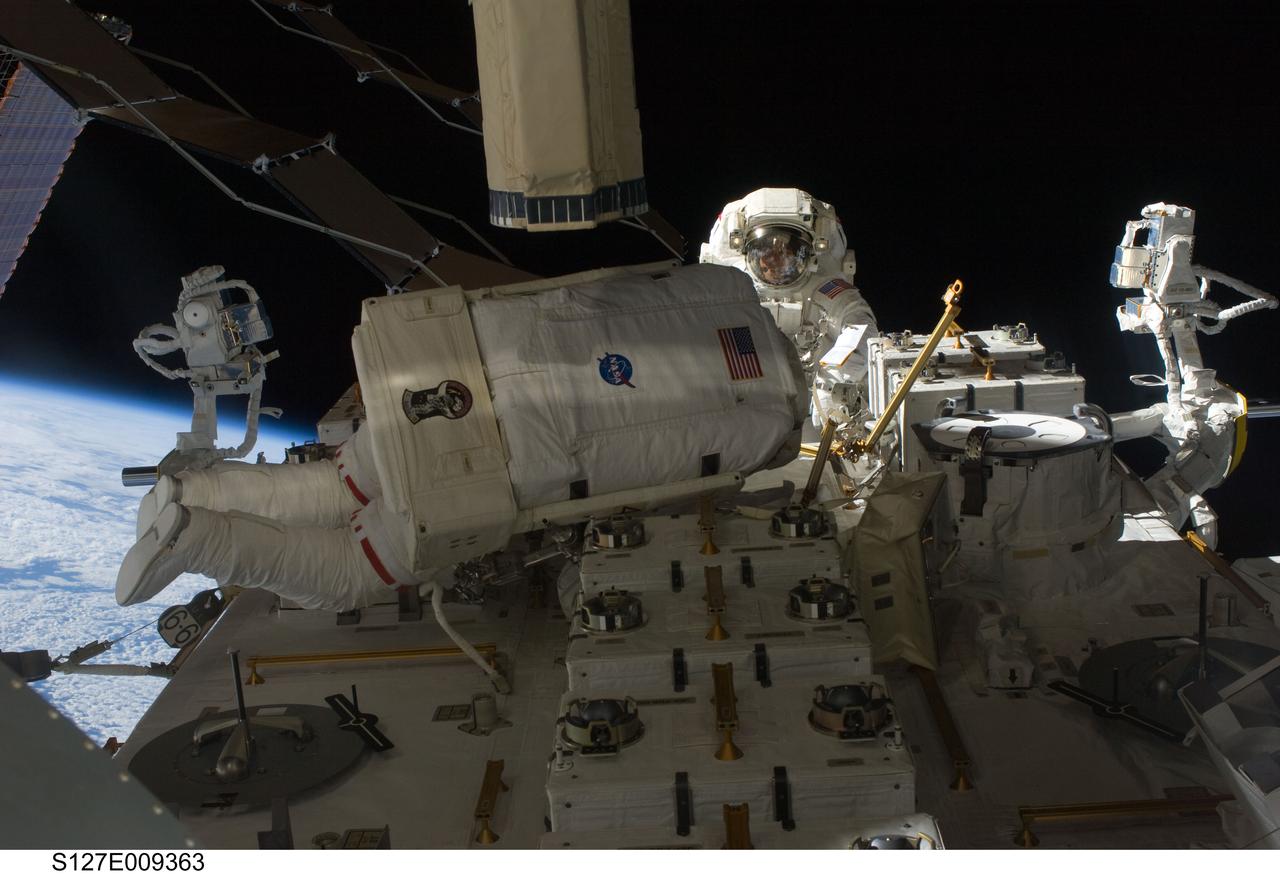
S127-E-009363 (27 July 2009) --- Astronauts Tom Marshburn (foreground) and Christopher Cassidy, both STS-127 mission specialists, participate in the mission's fifth and final session of extravehicular activity (EVA) as construction and maintenance continue on the International Space Station. During the four-hour, 54-minute spacewalk, Marshburn and Cassidy secured multi-layer insulation around the Special Purpose Dexterous Manipulator known as Dextre, split out power channels for two space station Control Moment Gyroscopes, installed video cameras on the front and back of the new Japanese Exposed Facility and performed a number of “get ahead” tasks, including tying down some cables and installing handrails and a portable foot restraint to aid future spacewalkers.
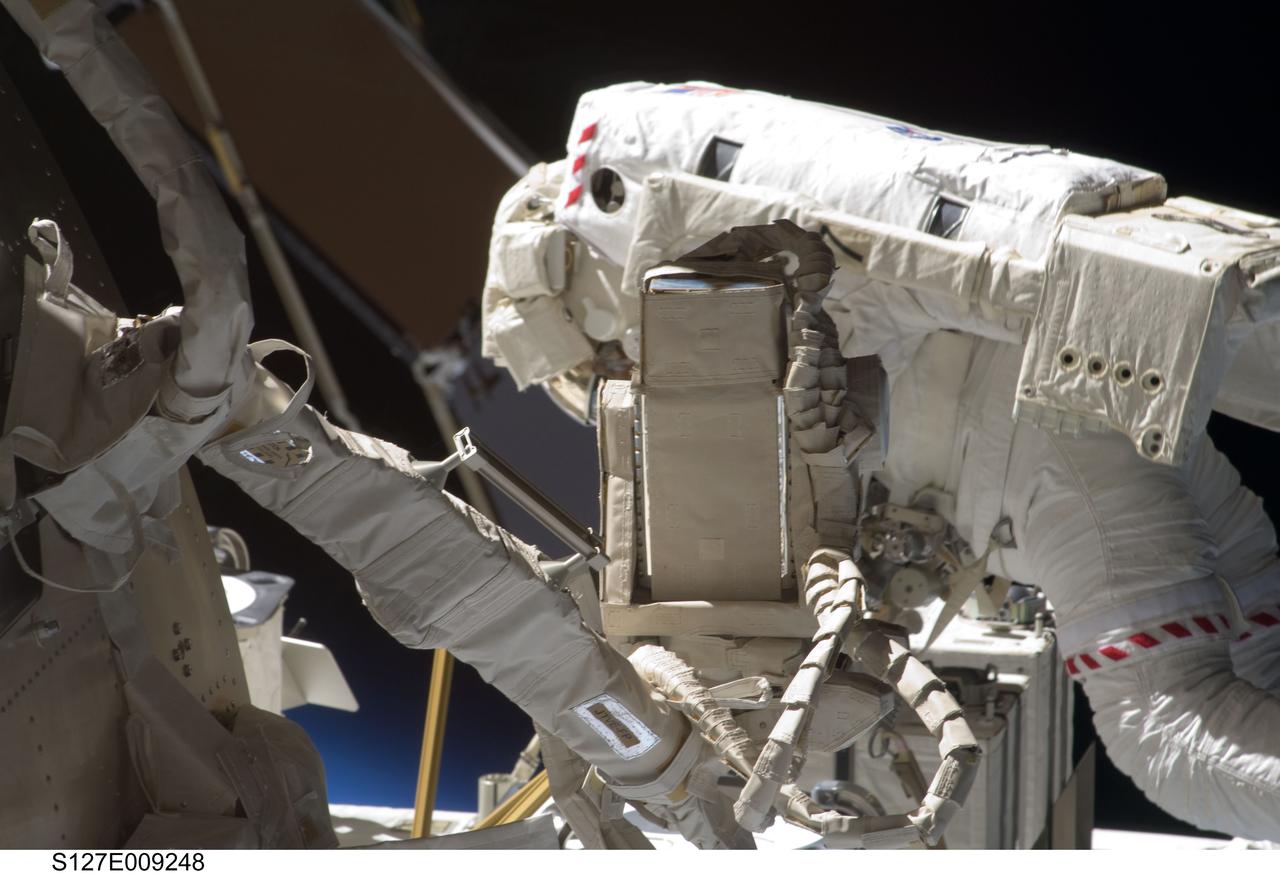
S127-E-009248 (27 July 2009) --- Astronaut Christopher Cassidy, STS-127 mission specialist, participates in the mission's fifth and final session of extravehicular activity (EVA) as construction and maintenance continue on the International Space Station. During the four-hour, 54-minute spacewalk, Cassidy and astronaut Tom Marshburn (out of frame), mission specialist, secured multi-layer insulation around the Special Purpose Dexterous Manipulator known as Dextre, split out power channels for two space station Control Moment Gyroscopes, installed video cameras on the front and back of the new Japanese Exposed Facility and performed a number of “get ahead” tasks, including tying down some cables and installing handrails and a portable foot restraint to aid future spacewalkers.
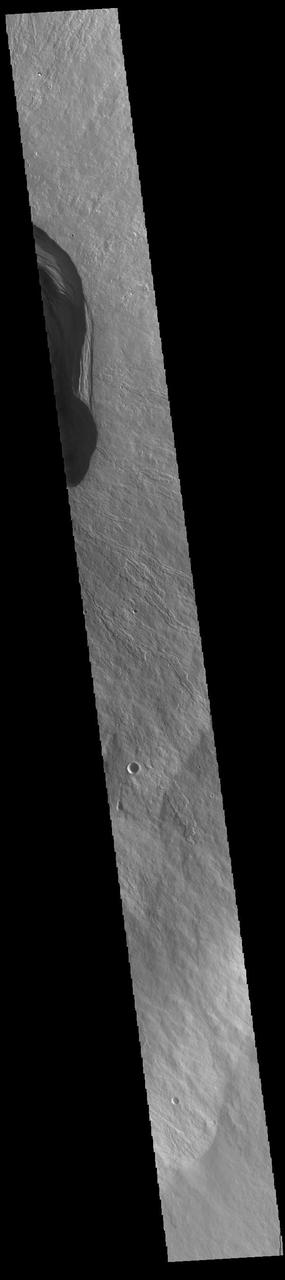
This VIS image shows part of the summit of Ascraeus Mons. Ascraeus Mons is the northernmost and tallest of the three large aligned Tharsis volcanoes. Calderas are found at the tops of volcanoes and are the source region for magma that rises from an underground lava source to erupt at the surface. Volcanoes are formed by repeated flows from the central caldera. The final eruptions can pool within the summit caldera, leaving a flat surface as they cool. Calderas are also a location of collapse, creating rings of tectonic faults that form the caldera rim. Ascraeus Mons has several caldera features at its summit. Ascraeus Mons is 18 km (11 miles) tall, for comparison Mauna Kea – the tallest volcano on Earth – is 10 km tall (6.2 miles, measured from the base below sea level). Orbit Number: 94653 Latitude: 10.5186 Longitude: 256.223 Instrument: VIS Captured: 2023-04-17 00:48 https://photojournal.jpl.nasa.gov/catalog/PIA26053
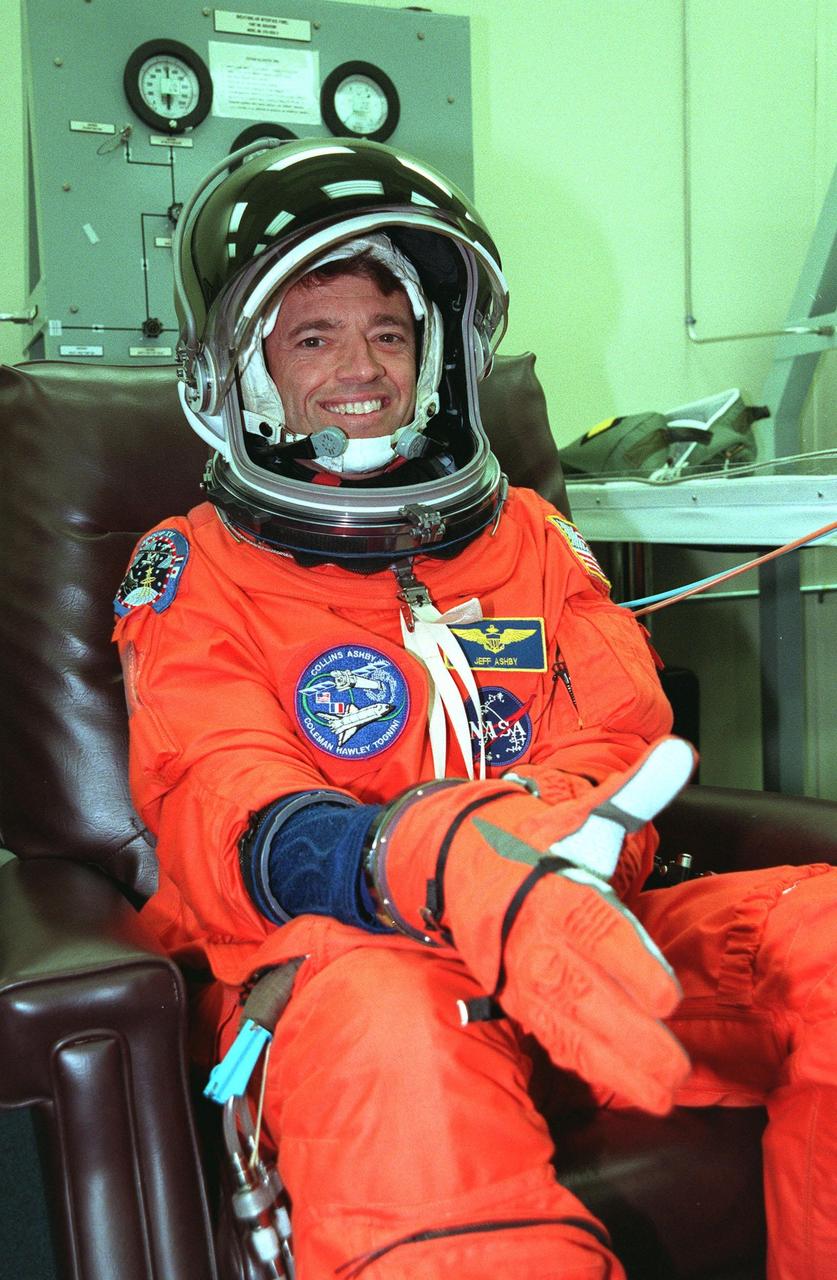
In the Operations and Checkout Building during final launch preparations for the third time, STS-93 Pilot Jeffrey S. Ashby pulls on his glove, part of his launch and entry suit. After Space Shuttle Columbia's July 20 and 22 launch attempts were scrubbed, the launch was again rescheduled for Friday, July 23, at 12:24 a.m. EDT. STS-93 is a five-day mission primarily to release the Chandra X-ray Observatory, which will allow scientists from around the world to study some of the most distant, powerful and dynamic objects in the universe. The STS-93 crew numbers five: Commander Eileen Collins, Ashby, and Mission Specialists Steven A. Hawley (Ph.D.), Catherine G. Coleman (Ph.D.) and Michel Tognini of France, with the Centre National d'Etudes Spatiales (CNES). Collins is the first woman to serve as commander of a shuttle mission
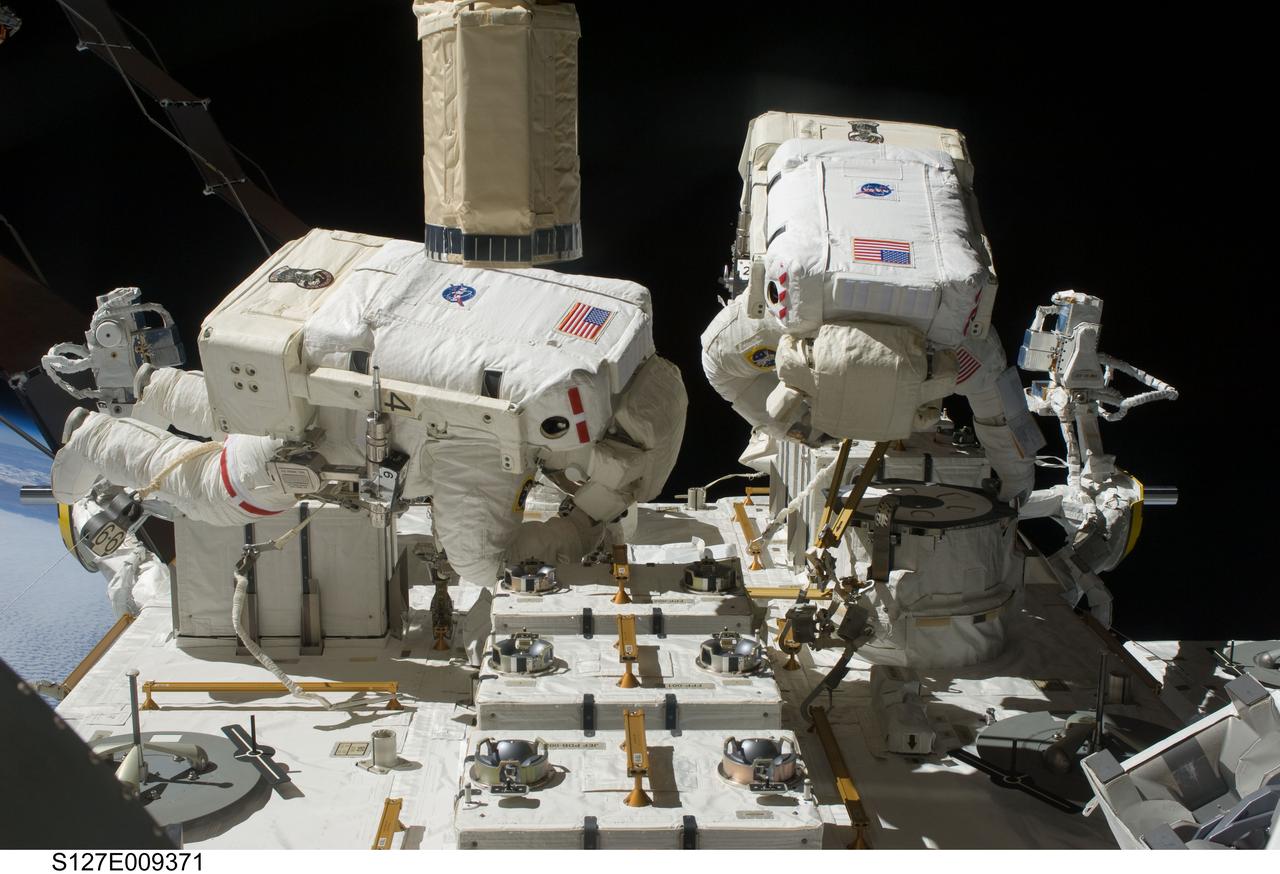
S127-E-009371 (27 July 2009) --- Astronauts Tom Marshburn (left) and Christopher Cassidy, both STS-127 mission specialists, participate in the mission's fifth and final session of extravehicular activity (EVA) as construction and maintenance continue on the International Space Station. During the four-hour, 54-minute spacewalk, Marshburn and Cassidy secured multi-layer insulation around the Special Purpose Dexterous Manipulator known as Dextre, split out power channels for two space station Control Moment Gyroscopes, installed video cameras on the front and back of the new Japanese Exposed Facility and performed a number of “get ahead” tasks, including tying down some cables and installing handrails and a portable foot restraint to aid future spacewalkers.
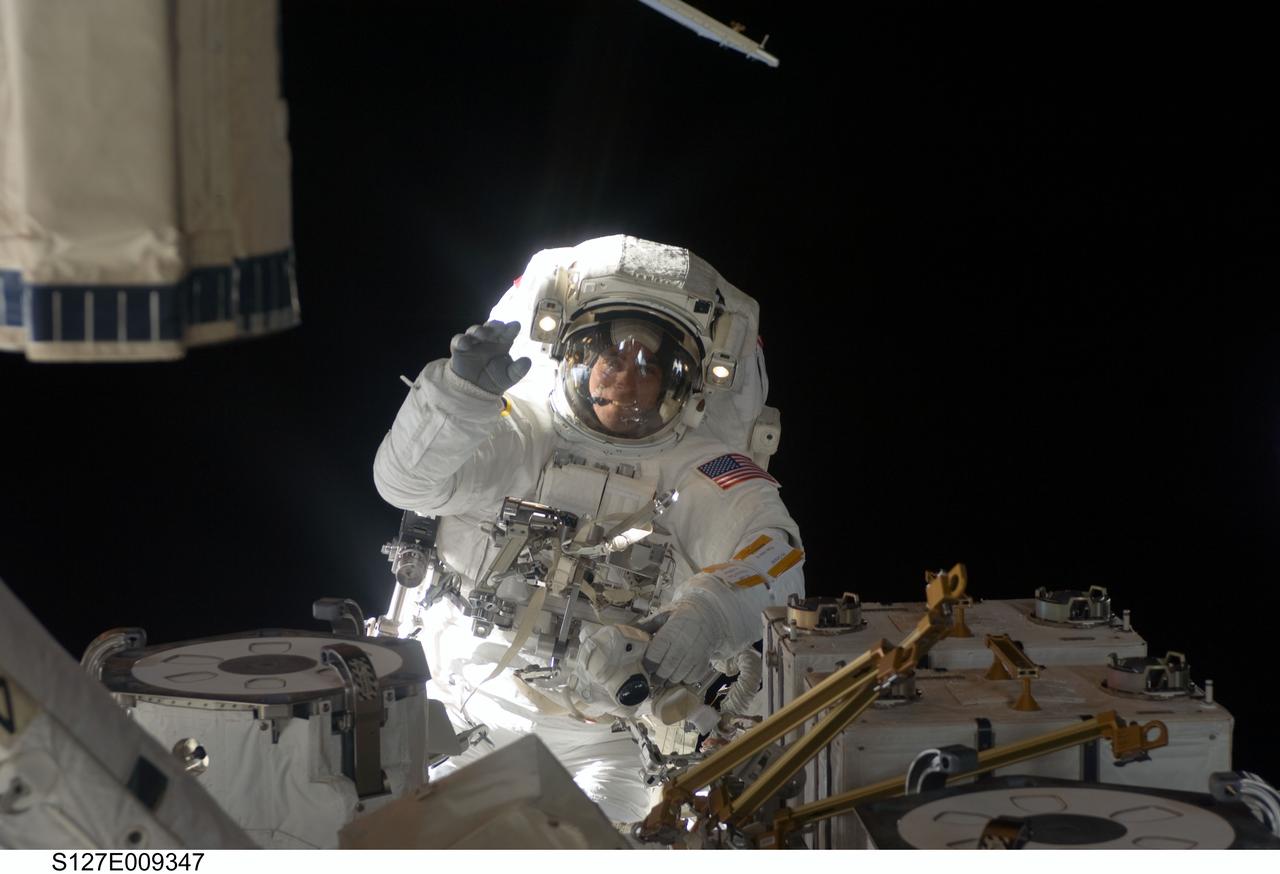
S127-E-009347 (27 July 2009) --- Astronaut Christopher Cassidy, STS-127 mission specialist, participates in the mission's fifth and final session of extravehicular activity (EVA) as construction and maintenance continue on the International Space Station. During the four-hour, 54-minute spacewalk, Cassidy and astronaut Tom Marshburn (out of frame), mission specialist, secured multi-layer insulation around the Special Purpose Dexterous Manipulator known as Dextre, split out power channels for two space station Control Moment Gyroscopes, installed video cameras on the front and back of the new Japanese Exposed Facility and performed a number of “get ahead” tasks, including tying down some cables and installing handrails and a portable foot restraint to aid future spacewalkers.
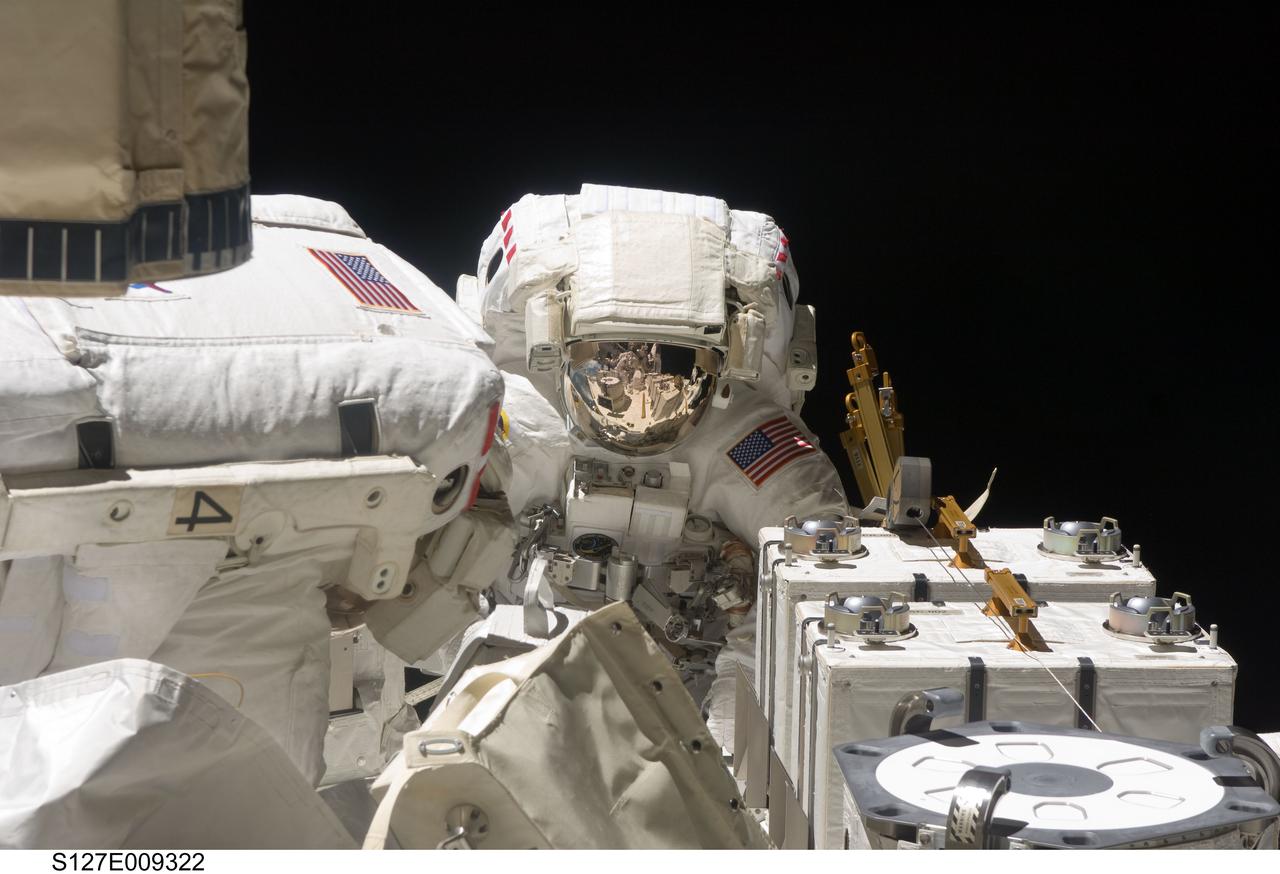
S127-E-009322 (27 July 2009) --- Astronauts Tom Marshburn (left) and Christopher Cassidy, both STS-127 mission specialists, participate in the mission's fifth and final session of extravehicular activity (EVA) as construction and maintenance continue on the International Space Station. During the four-hour, 54-minute spacewalk, Marshburn and Cassidy secured multi-layer insulation around the Special Purpose Dexterous Manipulator known as Dextre, split out power channels for two space station Control Moment Gyroscopes, installed video cameras on the front and back of the new Japanese Exposed Facility and performed a number of “get ahead” tasks, including tying down some cables and installing handrails and a portable foot restraint to aid future spacewalkers.
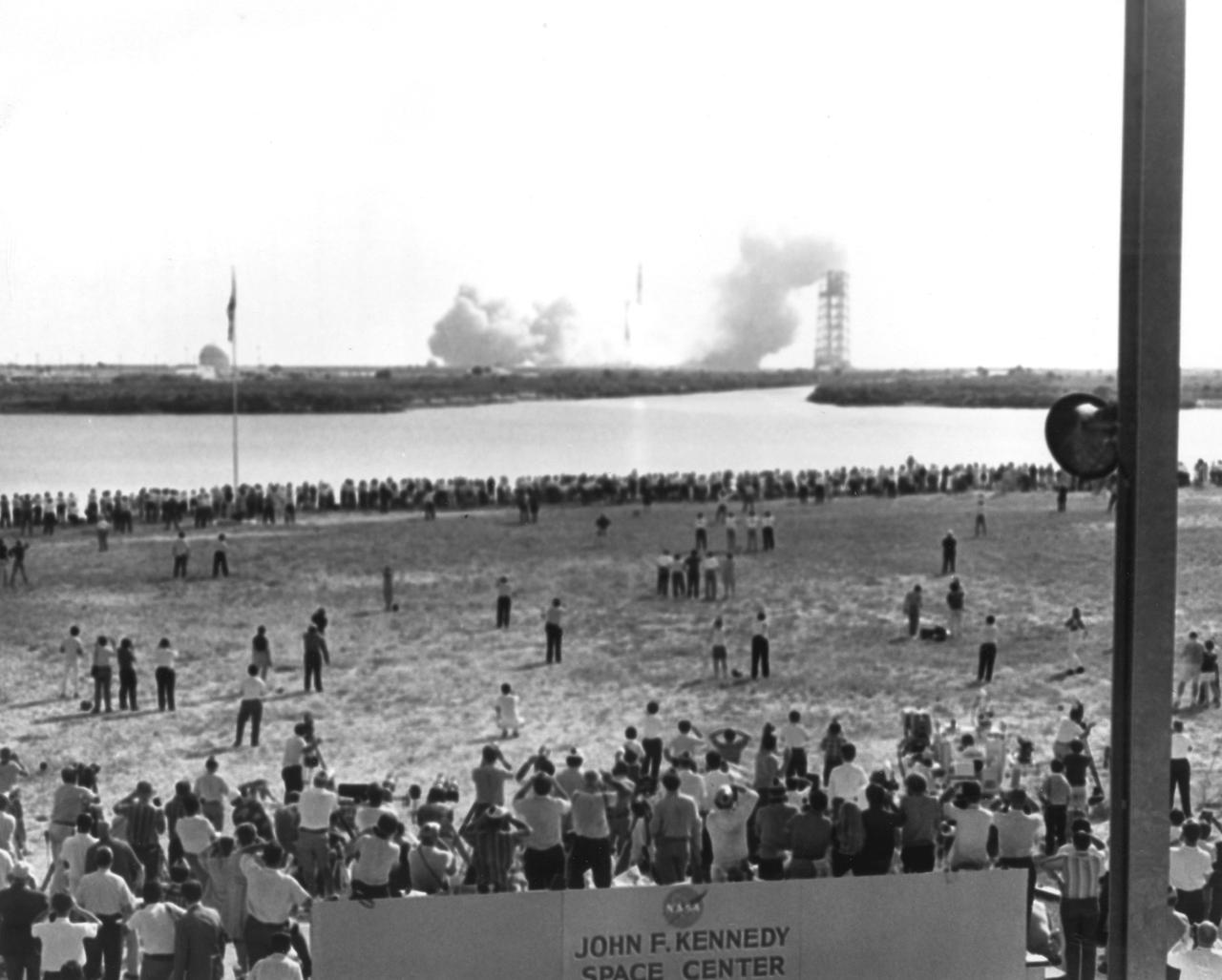
At the press site, thousands of news reporters from the world over watched, taking many pictures, as the Saturn V launch vehicle (AS-506) lifted off to start Apollo 11 on its historic mission to land on the Moon. The total number of news people officially registered to cover the launch was 3,497. The craft lifted off from launch pad 39 at Kennedy Space Flight Center (KSC) on July 16, 1969. A three man crew included astronauts Neil A. Armstrong, commander; Michael Collins, Command Module(CM) pilot; and Edwin E. Aldrin Jr., Lunar Module (LM) pilot. The mission finalized with splashdown into the Pacific Ocean on July 24, 1969. With the success of Apollo 11, the national objective to land men on the Moon and return them safely to Earth had been accomplished. The Saturn V was developed by the Marshall Space Flight Center (MSFC) under the direction of Werher von Braun.
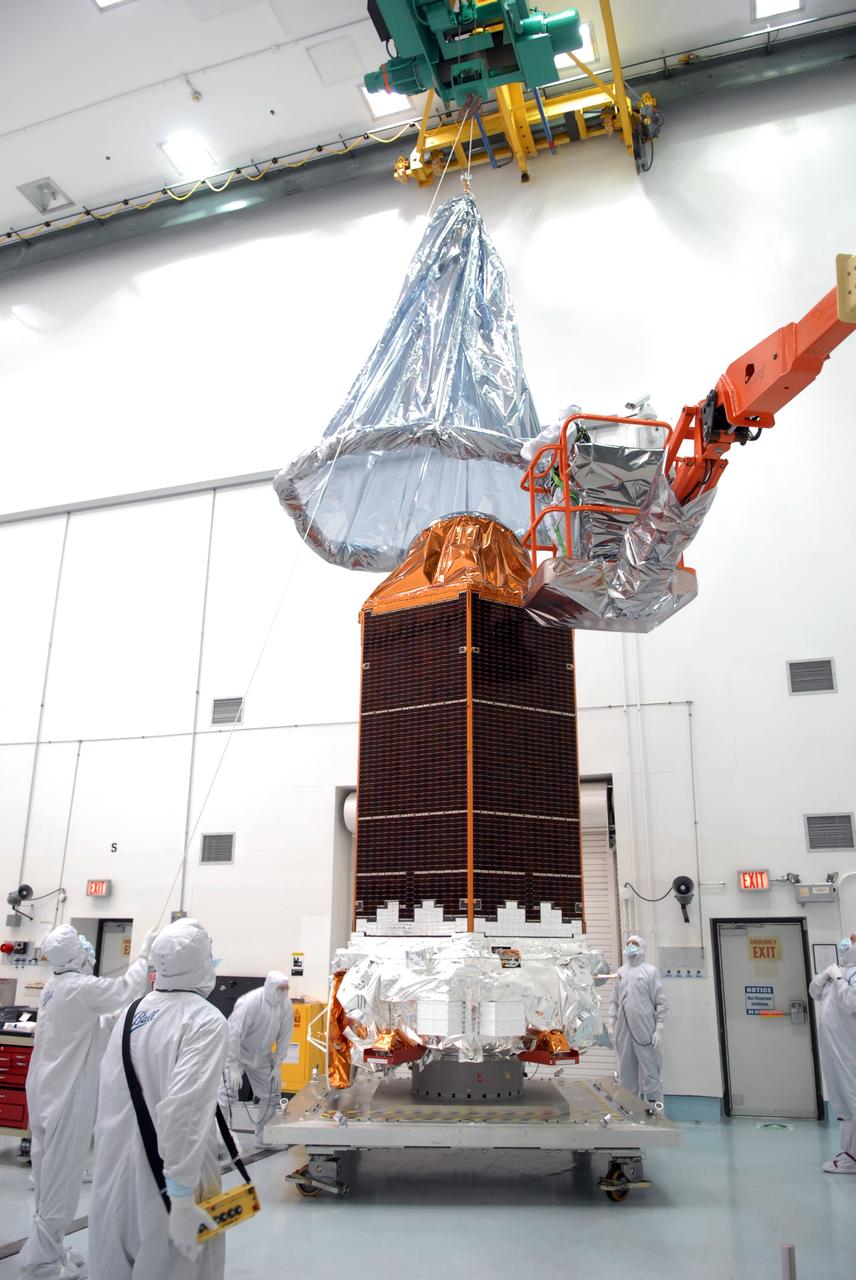
CAPE CANAVERAL, Fla. – Inside the Hazardous Processing Facility at Astrotech in Titusville, Fla., the final cover is removed from NASA's Kepler spacecraft. Kepler will be fueled for launch. Kepler is designed to survey more than 100,000 stars in our galaxy to determine the number of sun-like stars that have Earth-size and larger planets, including those that lie in a star's "habitable zone," a region where liquid water, and perhaps life, could exist. If these Earth-size worlds do exist around stars like our sun, Kepler is expected to be the first to find them and the first to measure how common they are. The liftoff of Kepler aboard a Delta II rocket is currently planned for 10:48 p.m. EST March 5 from Space Launch Complex 17 on Cape Canaveral Air Force Station. Photo credit: NASA/Tim Jacobs
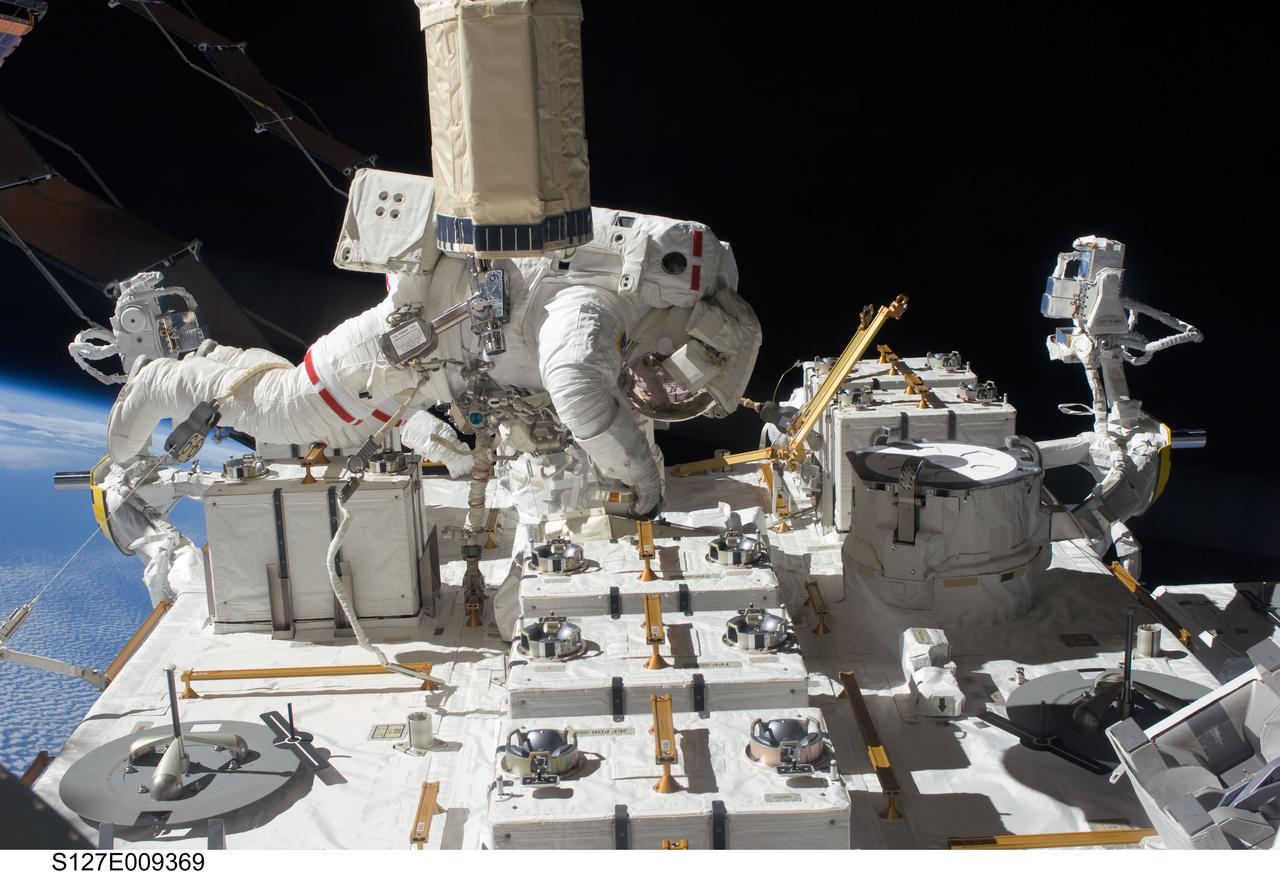
S127-E-009369 (27 July 2009) --- Astronaut Tom Marshburn, STS-127 mission specialist, participates in the mission's fifth and final session of extravehicular activity (EVA) as construction and maintenance continue on the International Space Station. During the four-hour, 54-minute spacewalk, Marshburn and astronaut Christopher Cassidy (out of frame), mission specialist, secured multi-layer insulation around the Special Purpose Dexterous Manipulator known as Dextre, split out power channels for two space station Control Moment Gyroscopes, installed video cameras on the front and back of the new Japanese Exposed Facility and performed a number of “get ahead” tasks, including tying down some cables and installing handrails and a portable foot restraint to aid future spacewalkers.
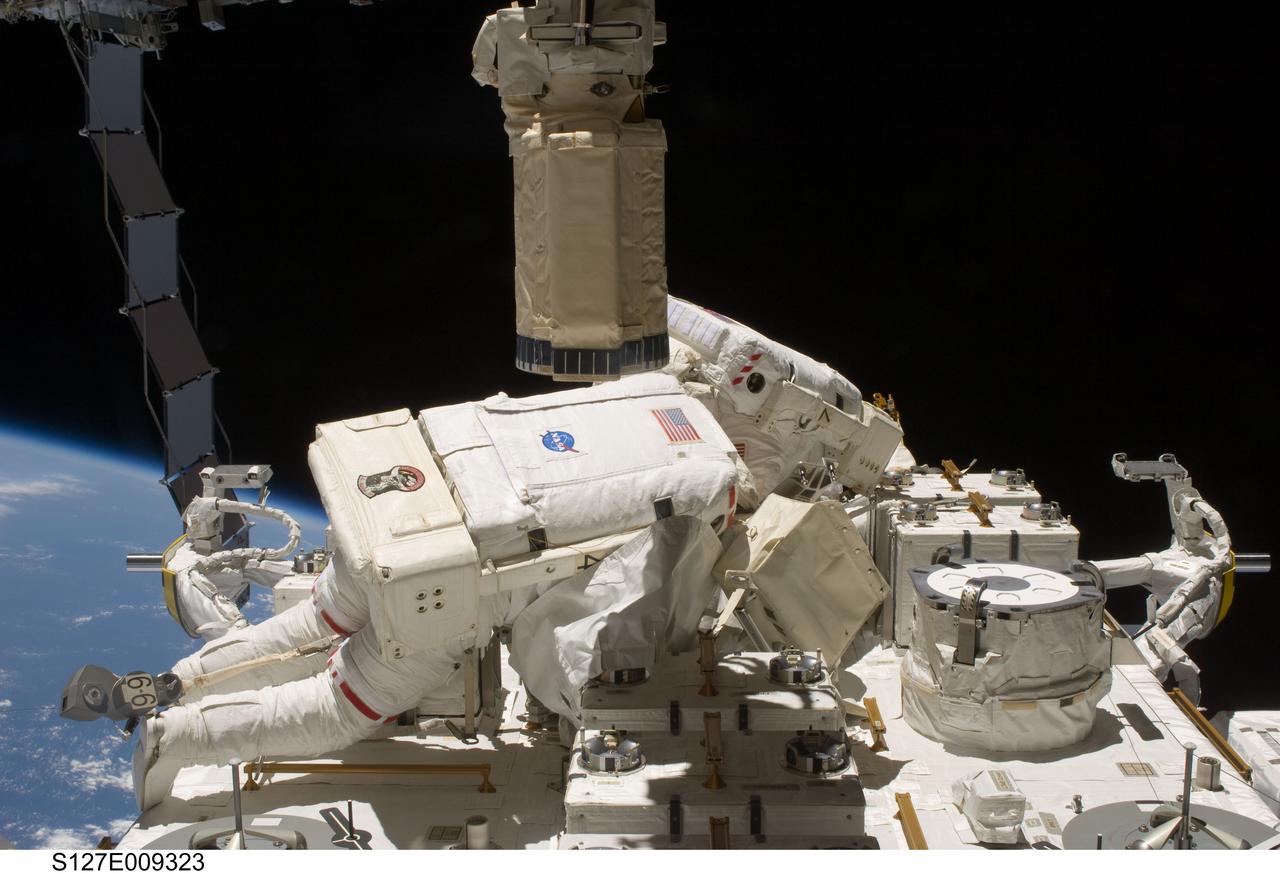
S127-E-009323 (27 July 2009) --- Astronauts Tom Marshburn (foreground) and Christopher Cassidy, both STS-127 mission specialists, participate in the mission's fifth and final session of extravehicular activity (EVA) as construction and maintenance continue on the International Space Station. During the four-hour, 54-minute spacewalk, Marshburn and Cassidy secured multi-layer insulation around the Special Purpose Dexterous Manipulator known as Dextre, split out power channels for two space station Control Moment Gyroscopes, installed video cameras on the front and back of the new Japanese Exposed Facility and performed a number of “get ahead” tasks, including tying down some cables and installing handrails and a portable foot restraint to aid future spacewalkers.

KENNEDY SPACE CENTER, FLA. -- STS-122 Mission Specialist Hans Schlegel checks the helmet to his launch and entry suit for a final fitting before space shuttle Atlantis' launch scheduled for 4:31 p.m. EST on Dec. 6. Schlegel, who represents the European Space Agency, will make his second shuttle flight. Atlantis will carry the Columbus Lab, Europe’s largest contribution to the construction of the International Space Station. It will support scientific and technological research in a microgravity environment. Columbus, a program of ESA, is a multifunctional, pressurized laboratory that will be permanently attached to Node 2 of the space station to carry out experiments in materials science, fluid physics and biosciences, as well as to perform a number of technological applications. Photo credit: NASA/Kim Shiflett
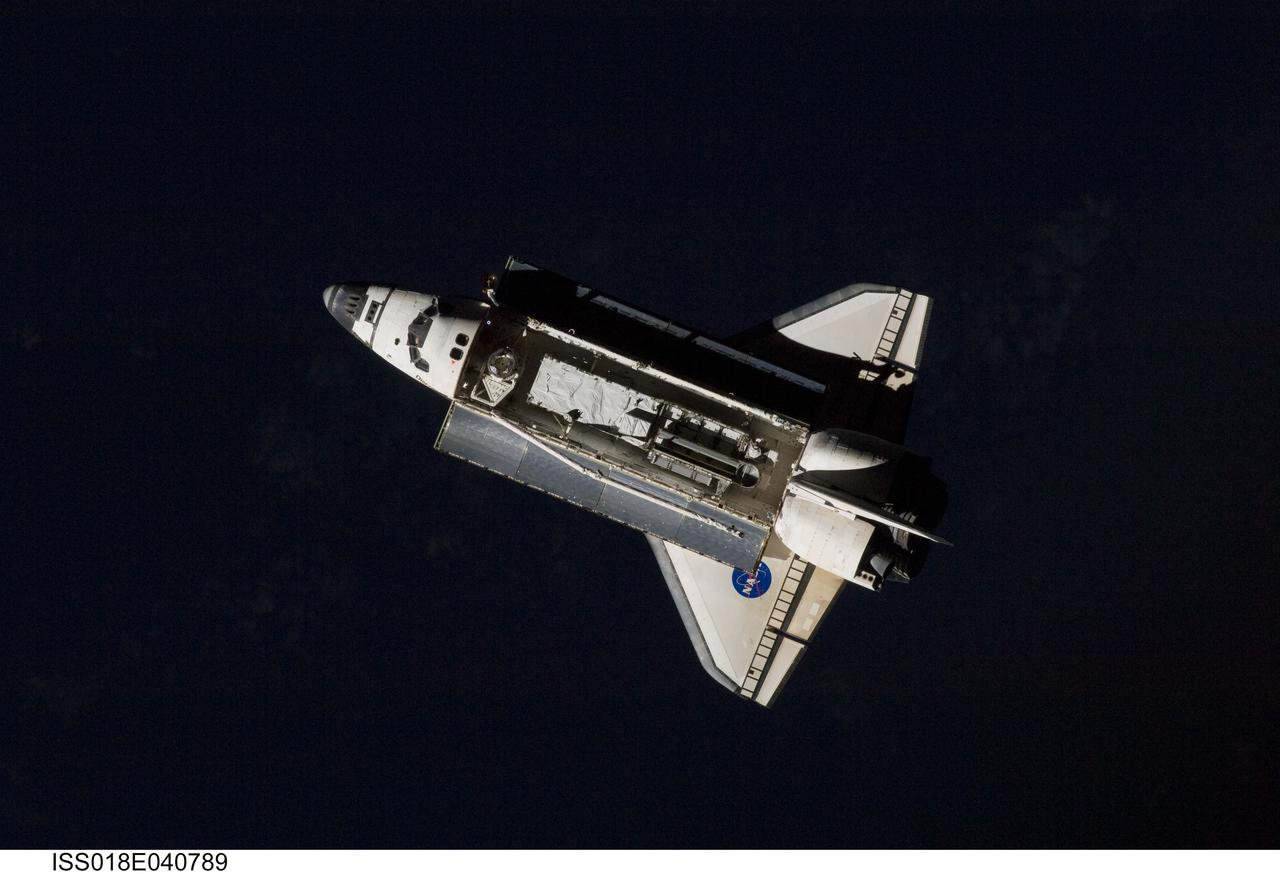
ISS018-E-040789 (17 March 2009) --- Backdropped by the blackness of space, Space Shuttle Discovery is featured in this image photographed by an Expedition 18 crewmember on the International Space Station during rendezvous and docking operations. Before docking with the station, astronaut Lee Archambault, STS-119 commander, flew the shuttle through a Rendezvous Pitch Maneuver or basically a backflip to allow the space station crew a good view of Discovery's heat shield. Using digital still cameras equipped with both 400 and 800 millimeter lenses, the ISS crewmembers took a number of photos of the shuttle's thermal protection system and sent them down to teams on the ground for analysis. A 400 millimeter lens was used for this image. Docking occurred at 4:20 p.m. (CDT) on March 17, 2009. The final pair of power-generating solar array wings and the S6 truss segment are visible in Discovery’s cargo bay.
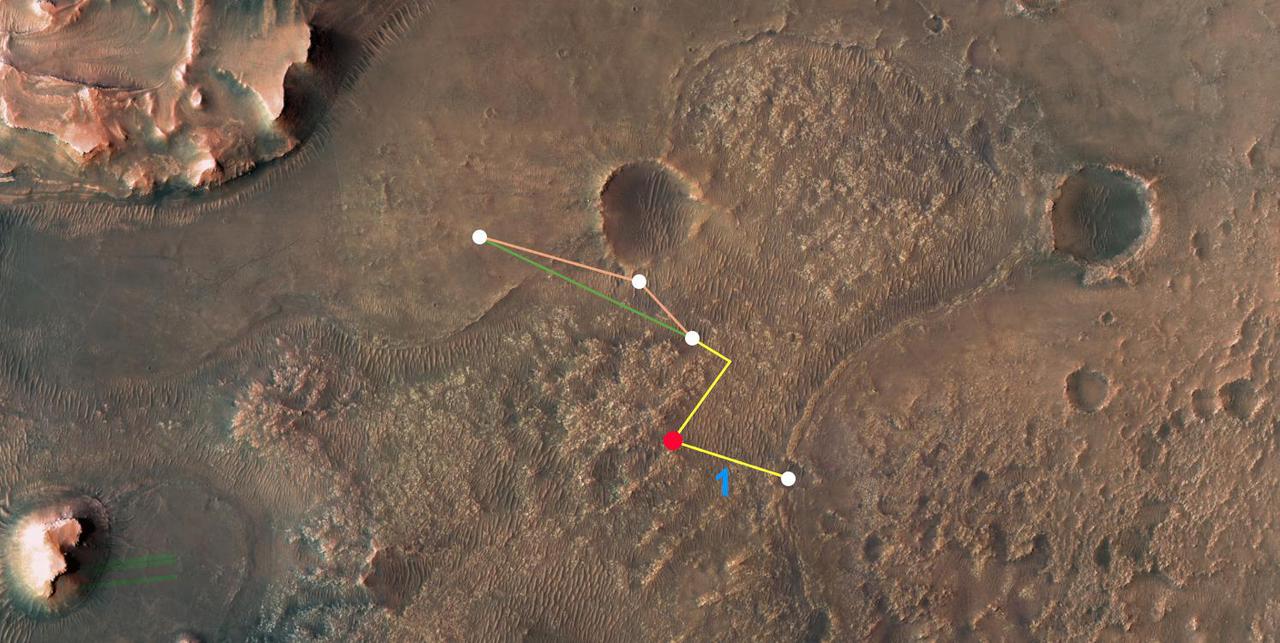
This annotated overhead image from NASA's Mars Reconnaissance Orbiter (MRO) depicts the multiple flights – and two different routes – the agency's Ingenuity Mars Helicopter could take on its way to Jezero Crater's delta. The location of Ingenuity as of March 14, 2022, is indicated by the red dot. This map is made using images from MRO's High Resolution Imaging Experiment (HiRISE) camera. The first flight in this series (indicated by the number 1 in blue) occurred on March 10, 2022. After the next flight – which includes a sharp bend in the course to avoid a large hill – the helicopter team will consider which of two routes to take. The first option requires two flights to reach the base of the delta. The second option is more direct, necessitating only one final flight to reach the same location. https://photojournal.jpl.nasa.gov/catalog/PIA25080
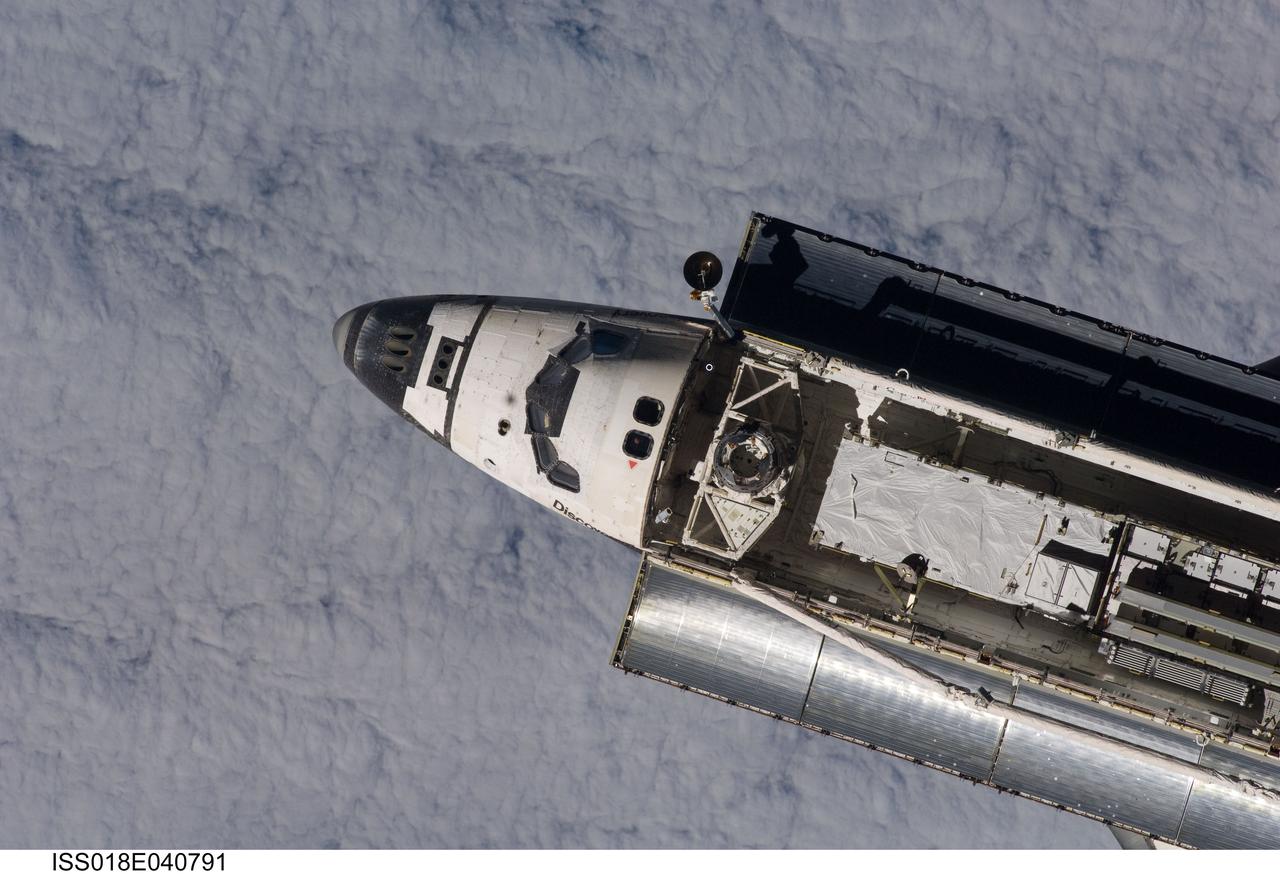
ISS018-E-040791 (17 March 2009) --- Backdropped by a blanket of clouds, Space Shuttle Discovery is featured in this image photographed by an Expedition 18 crewmember on the International Space Station during rendezvous and docking operations. Before docking with the station, astronaut Lee Archambault, STS-119 commander, flew the shuttle through a Rendezvous Pitch Maneuver or basically a backflip to allow the space station crew a good view of Discovery's heat shield. Using digital still cameras equipped with both 400 and 800 millimeter lenses, the ISS crewmembers took a number of photos of the shuttle's thermal protection system and sent them down to teams on the ground for analysis. A 400 millimeter lens was used for this image. Docking occurred at 4:20 p.m. (CDT) on March 17, 2009. The final pair of power-generating solar array wings and the S6 truss segment are visible in Discovery?s cargo bay.
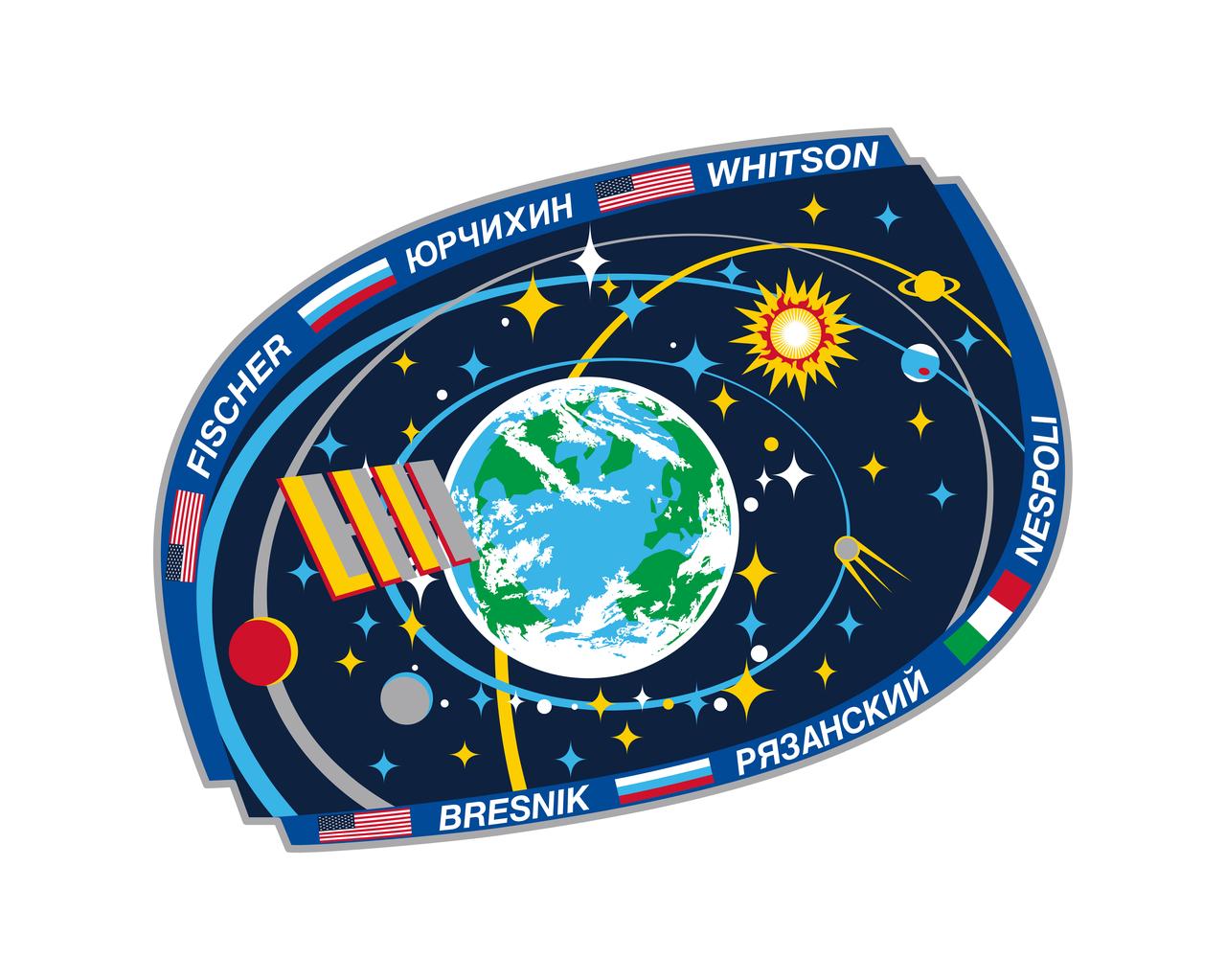
ISS052-s-001 (01/27/2016) --- Orbiting the Earth continuously since 1998, the International Space Station (ISS) is one of our greatest engineering achievements. It is depicted in gold, symbolic of constancy and excellence. Flying directly toward a sunrise represents the ISS’s contributions to a bright future. That sunrise and the Earth beneath ituses blue, white, red, and green, the combined national colors of Italy, Russia, and the United States, symbolizing the crew’s cohesiveness. Crewmember names are in blue symbolizing devotion and loyalty. The white border represents sunlight unscattered by the Earth’s atmosphere. Symbolic of new Russian and U.S. spacecraft that will further human exploration, the patch is shaped as a capsule. The number 52 is drawn as a path eventually leading to Mars. Finally, the stars symbolize the values of leadership, trust, teamwork, and excellence lived by mission control teams throughout the history of human space programs, as well as their global vigilance in operating the ISS.
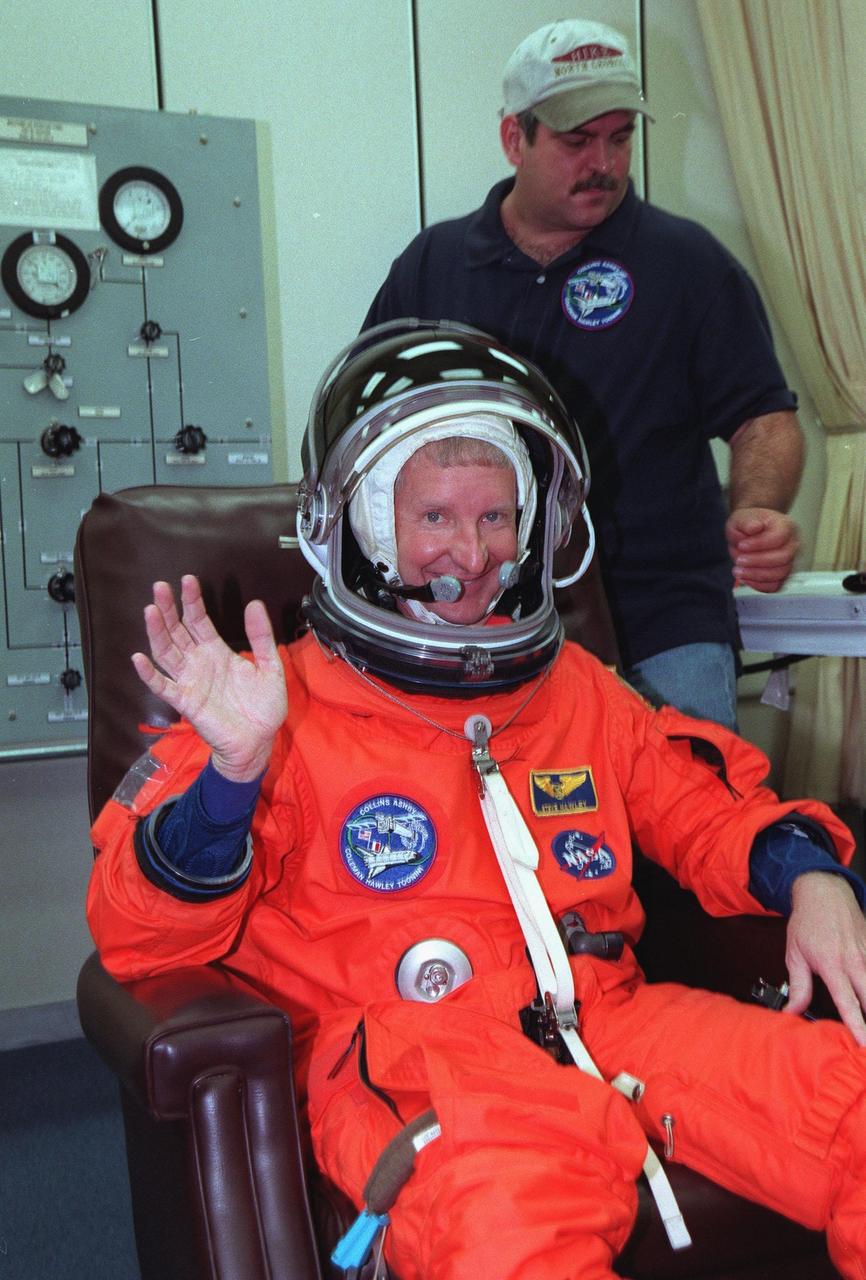
For the third time, during final launch preparations in the Operations and Checkout Building, STS-93 Mission Specialist Steven A. Hawley (Ph.D.) waves after donning his launch and entry suit. After Space Shuttle Columbia's July 20 and 22 launch attempts were scrubbed, the launch was again rescheduled for Friday, July 23, at 12:24 a.m. EDT. STS-93 is a five-day mission primarily to release the Chandra X-ray Observatory, which will allow scientists from around the world to study some of the most distant, powerful and dynamic objects in the universe. The STS-93 crew numbers five: Commander Eileen M. Collins, Pilot Jeffrey S. Ashby, and Mission Specialists Hawley, Catherine G. Coleman (Ph.D.) and Michel Tognini of France, with the Centre National d'Etudes Spatiales (CNES). Collins is the first woman to serve as commander of a shuttle mission
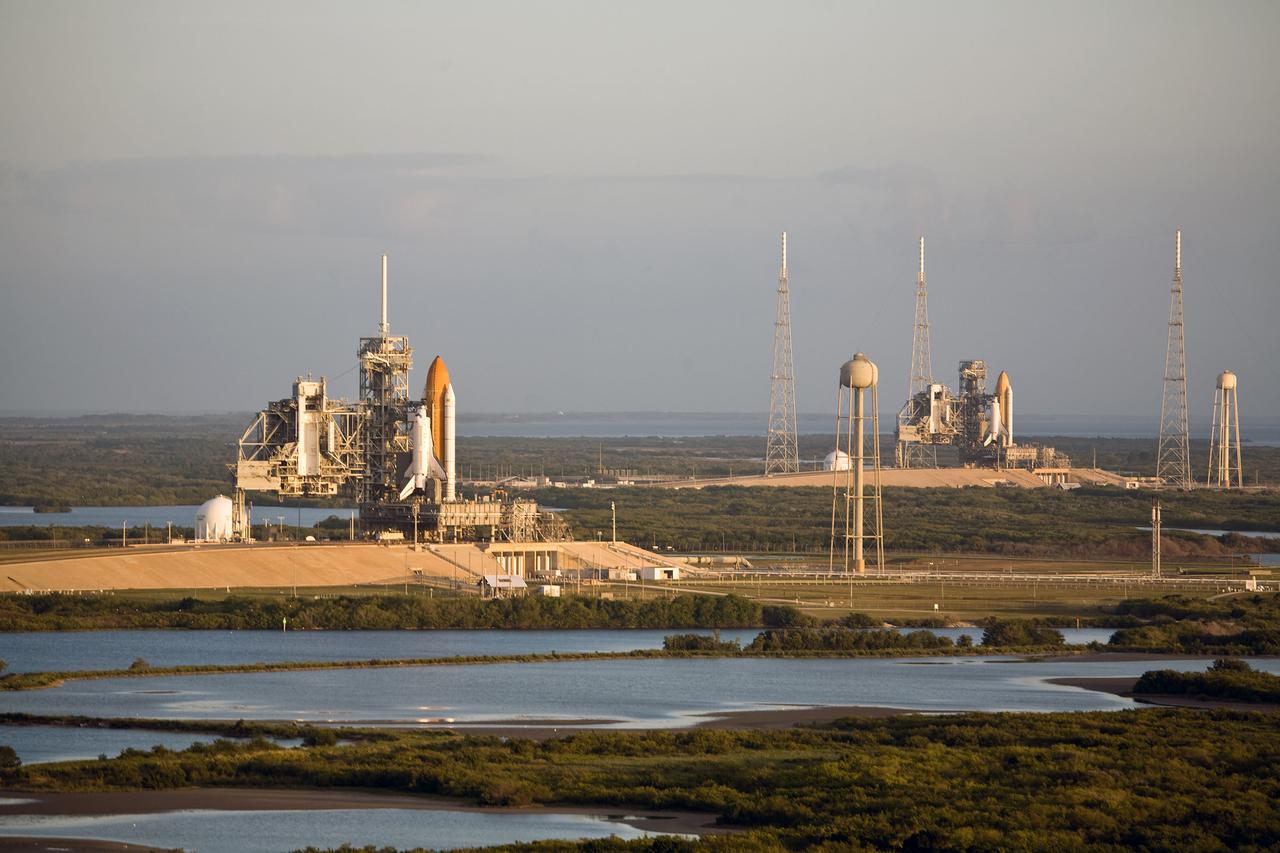
Space shuttle Atlantis (left) and space shuttle Endeavour are seen on Launch Pads 39A and 39B, respectively, at NASA's Kennedy Space Center in Florida. This is probably the final time two shuttles will be on launch pads at the same time with the space shuttle fleet set for retirement in 2010. Surrounding pad 39B are the lightning towers erected for NASA's Constellation Program, which will use the pad for Ares rocket launches. Endeavour will be prepared on the pad for liftoff in the unlikely event that a rescue mission is necessary following space shuttle Atlantis' launch on the STS-125 mission to service NASA's Hubble Space Telescope. After Atlantis is cleared to land, Endeavour will move to Launch Pad 39A for its upcoming STS-127 mission to the International Space Station, targeted to launch June 13. Original photo number is KSC-2009-2771.
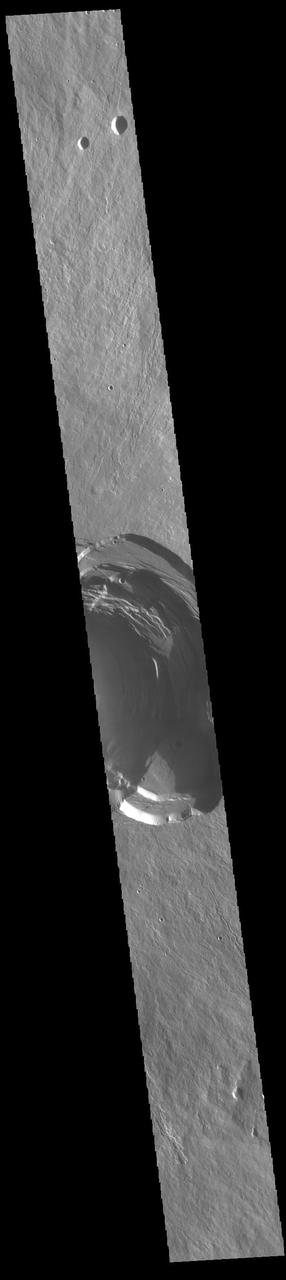
This VIS image shows part of the complex caldera at the summit of Ascraeus Mons. Ascraeus Mons is the northernmost and tallest of the three large aligned Tharsis volcanoes. Calderas are found at the tops of volcanoes and are the source region for magma that rises from an underground lava source to erupt at the surface. Volcanoes are formed by repeated flows from the central caldera. The final eruptions can pool within the summit caldera, leaving a flat surface as they cool. Calderas are also a location of collapse, creating rings of tectonic faults that form the caldera rim. Ascraeus Mons has several caldera features at its summit. Ascraeus Mons is 18 km (11 miles) tall, for comparison Mauna Kea – the tallest volcano on Earth – is 10 km tall (6.2 miles, measured from the base below sea level). Orbit Number: 86205 Latitude: 11.3492 Longitude: 255.876 Instrument: VIS Captured: 2021-05-21 10:18 https://photojournal.jpl.nasa.gov/catalog/PIA24227
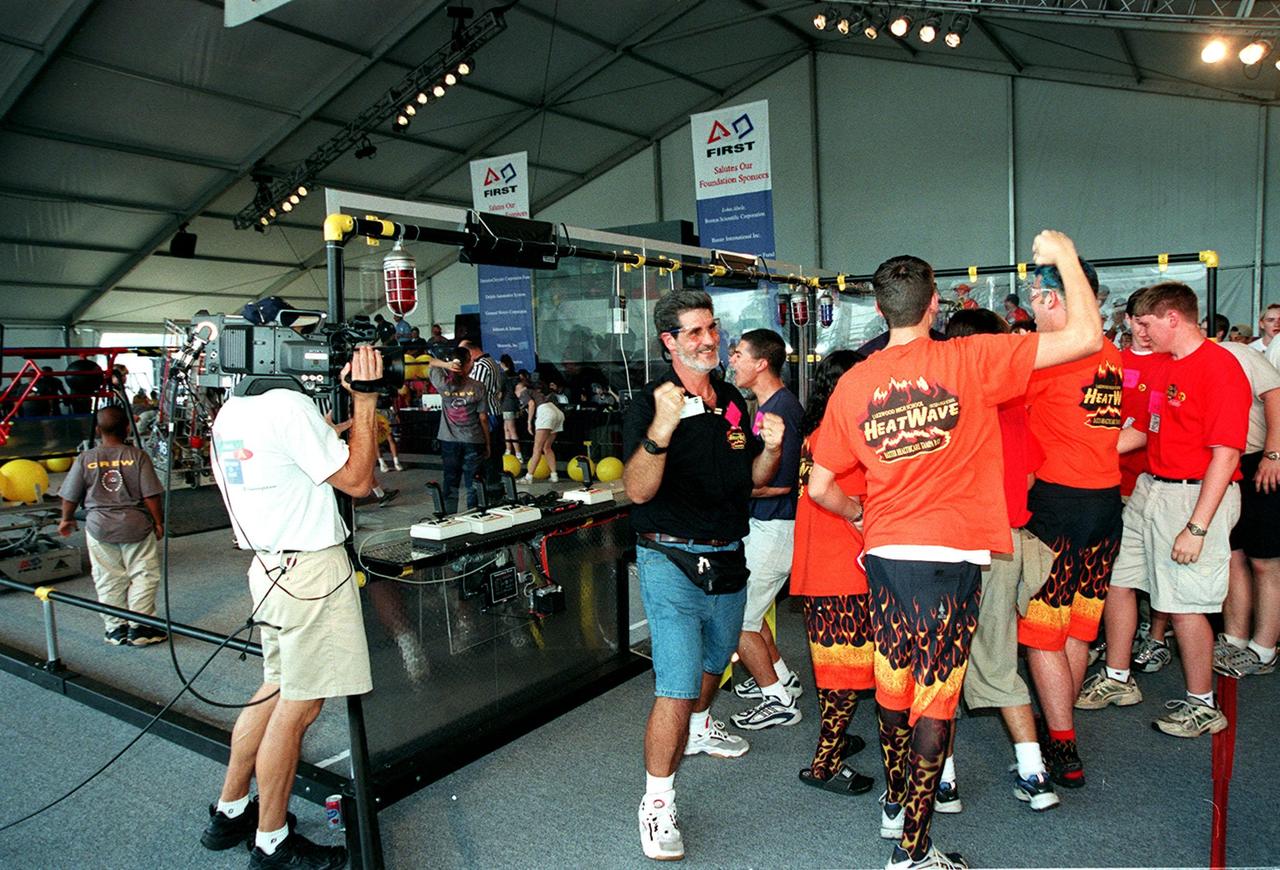
The team known as Heatwave, from St. Petersburg, Fla., celebrates after their win at the FIRST (For Inspiration and Recognition of Science and Technology) Southeast Regional competition held at the KSC Visitor Complex. They came in second for the final competition, plus received awards for Number One Seed, Best Offensive round, and the DaimlerChrysler Team Spirit. Teams of high school students from all over the country tested the limits of their imagination using robots they designed, with the support of business and engineering professionals and corporate sponsors, to compete in a technological battle against other schools' robots. Of the 30 high school teams competing at the Southeast Regional event, 16 were Florida teams co-sponsored by NASA and KSC contractors. Local high schools participating are Astronaut, Bayside, Cocoa Beach, Eau Gallie, Melbourne, Melbourne Central Catholic, Palm Bay, Rockledge, Satellite, and Titusville
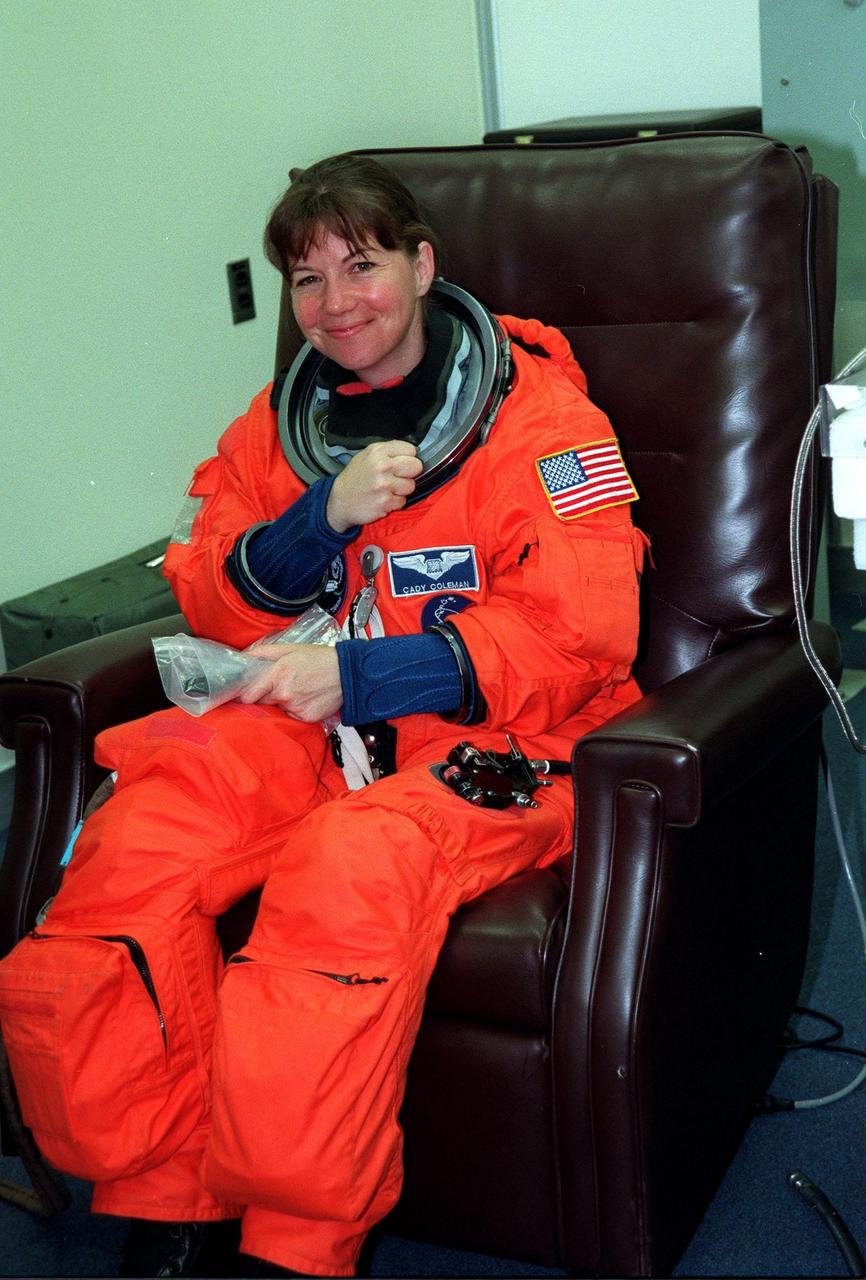
For the third time, during final launch preparations in the Operations and Checkout Building, STS-93 Mission Specialist Catherine G. Coleman (Ph.D.) dons her launch and entry suit. After Space Shuttle Columbia's July 20 and 22 launch attempts were scrubbed, the launch was again rescheduled for Friday, July 23, at 12:24 a.m. EDT. STS-93 is a five-day mission primarily to release the Chandra X-ray Observatory, which will allow scientists from around the world to study some of the most distant, powerful and dynamic objects in the universe. The STS-93 crew numbers five: Commander Eileen M. Collins, Pilot Jeffrey S. Ashby, and Mission Specialists Steven A. Hawley (Ph.D.), Coleman, and Michel Tognini of France, with the Centre National d'Etudes Spatiales (CNES). Collins is the first woman to serve as commander of a shuttle mission

ISS018-E-040790 (17 March 2009) --- Backdropped by the blackness of space, Space Shuttle Discovery is featured in this image photographed by an Expedition 18 crewmember on the International Space Station during rendezvous and docking operations. Before docking with the station, astronaut Lee Archambault, STS-119 commander, flew the shuttle through a Rendezvous Pitch Maneuver or basically a backflip to allow the space station crew a good view of Discovery's heat shield. Using digital still cameras equipped with both 400 and 800 millimeter lenses, the ISS crewmembers took a number of photos of the shuttle's thermal protection system and sent them down to teams on the ground for analysis. A 400 millimeter lens was used for this image. Docking occurred at 4:20 p.m. (CDT) on March 17, 2009. The final pair of power-generating solar array wings and the S6 truss segment are visible in Discovery?s cargo bay.
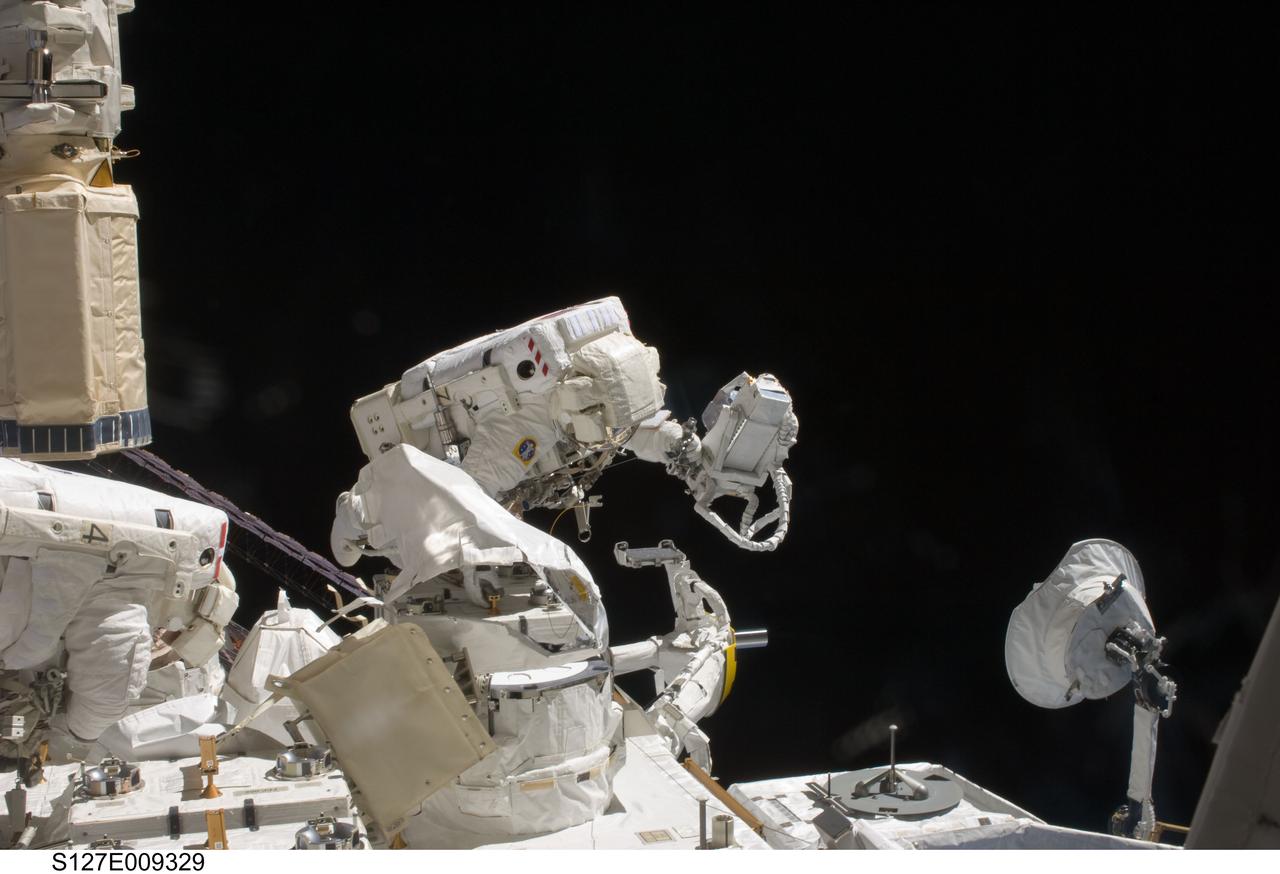
S127-E-009329 (27 July 2009) --- Astronauts Christopher Cassidy and Tom Marshburn (partially out of frame at left), both STS-127 mission specialists, participate in the mission's fifth and final session of extravehicular activity (EVA) as construction and maintenance continue on the International Space Station. During the four-hour, 54-minute spacewalk, Marshburn and Cassidy secured multi-layer insulation around the Special Purpose Dexterous Manipulator known as Dextre, split out power channels for two space station Control Moment Gyroscopes, installed video cameras on the front and back of the new Japanese Exposed Facility and performed a number of “get ahead” tasks, including tying down some cables and installing handrails and a portable foot restraint to aid future spacewalkers.
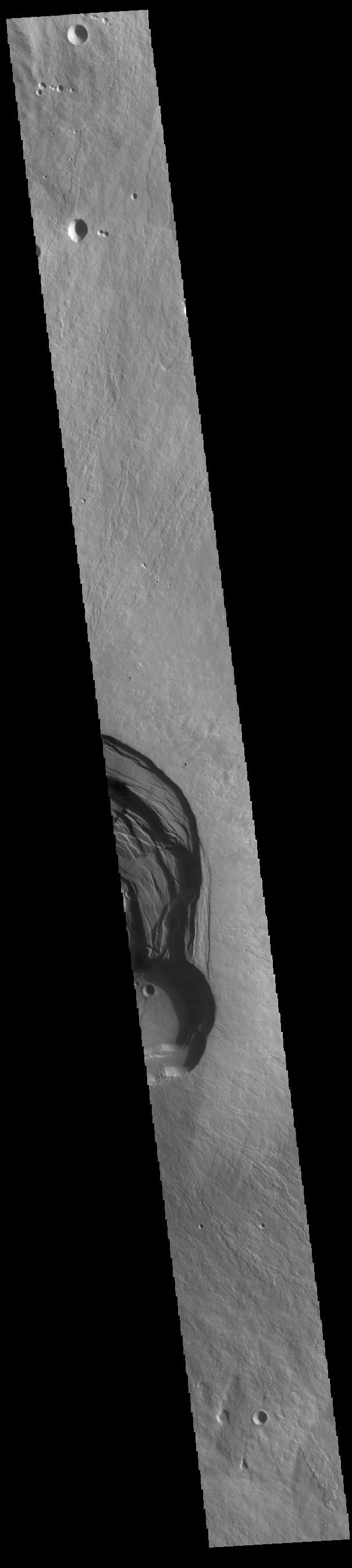
This VIS image shows part of the complex caldera at the summit of Ascraeus Mons. Ascraeus Mons is the northernmost and tallest of the three large aligned Tharsis volcanoes. Calderas are found at the tops of volcanoes and are the source region for magma that rises from an underground lava source to erupt at the surface. Volcanoes are formed by repeated flows from the central caldera. The final eruptions can pool within the summit caldera, leaving a flat surface as they cool. Calderas are also a location of collapse, creating rings of tectonic faults that form the caldera rim. Ascraeus Mons has several caldera features at its summit. Ascraeus Mons is 18 km (11 miles) tall, for comparison Mauna Kea — the tallest volcano on Earth — is 10 km tall (6.2 miles, measured from the base below sea level). Orbit Number: 79142 Latitude: 11.5042 Longitude: 256.023 Instrument: VIS Captured: 2019-10-17 20:56 https://photojournal.jpl.nasa.gov/catalog/PIA23575
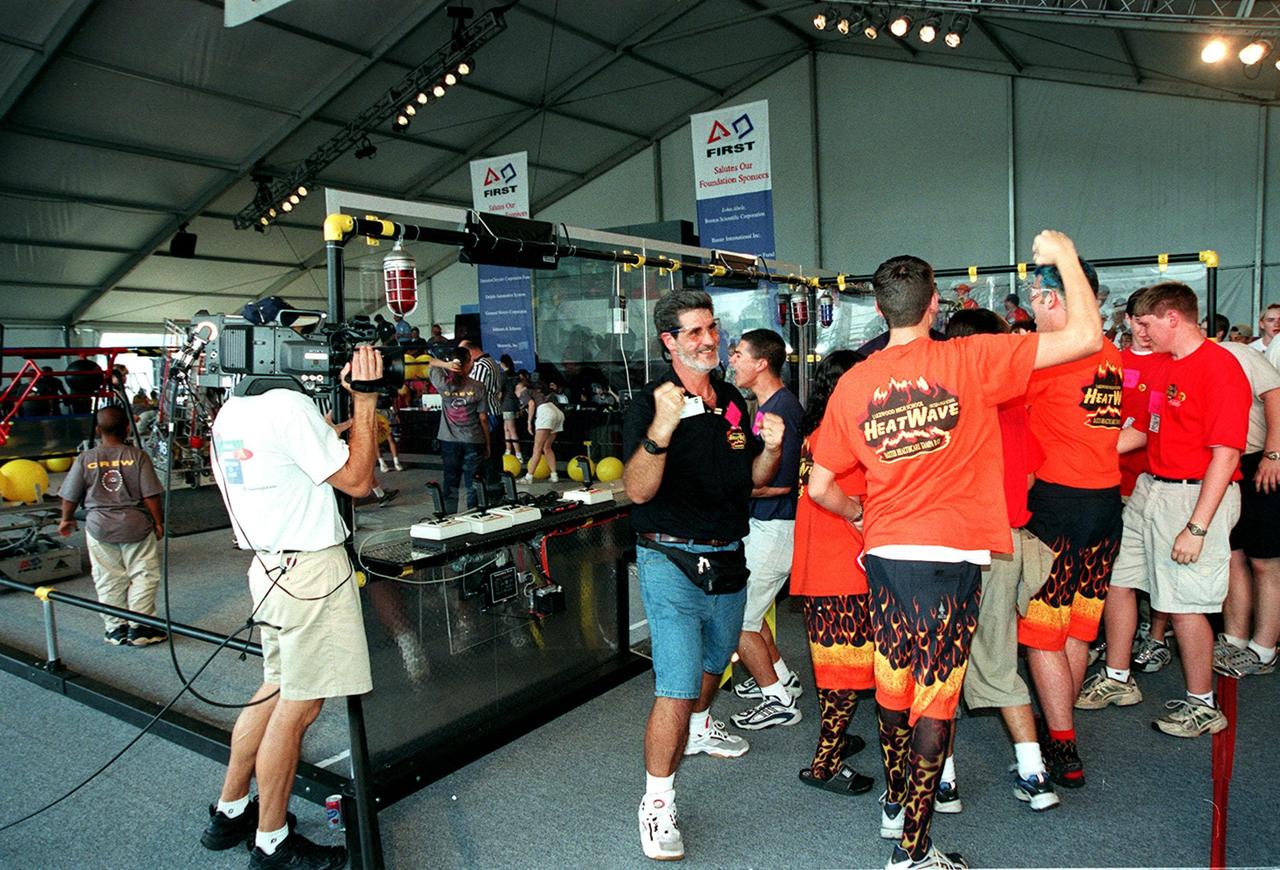
The team known as Heatwave, from St. Petersburg, Fla., celebrates after their win at the FIRST (For Inspiration and Recognition of Science and Technology) Southeast Regional competition held at the KSC Visitor Complex. They came in second for the final competition, plus received awards for Number One Seed, Best Offensive round, and the DaimlerChrysler Team Spirit. Teams of high school students from all over the country tested the limits of their imagination using robots they designed, with the support of business and engineering professionals and corporate sponsors, to compete in a technological battle against other schools' robots. Of the 30 high school teams competing at the Southeast Regional event, 16 were Florida teams co-sponsored by NASA and KSC contractors. Local high schools participating are Astronaut, Bayside, Cocoa Beach, Eau Gallie, Melbourne, Melbourne Central Catholic, Palm Bay, Rockledge, Satellite, and Titusville

For the third time, in the Operations and Checkout Building, STS-93 Mission Specialist Michel Tognini of France, who represents the Centre National d'Etudes Spatiales (CNES), waves after donning his launch and entry suit during final launch preparations. After Space Shuttle Columbia's July 20 and 22 launch attempts were scrubbed, the launch was again rescheduled for Friday, July 23, at 12:24 a.m. EDT. STS-93 is a five-day mission primarily to release the Chandra X-ray Observatory, which will allow scientists from around the world to study some of the most distant, powerful and dynamic objects in the universe. The STS-93 crew numbers five: Commander Eileen M. Collins, Pilot Jeffrey S. Ashby, and Mission Specialists Steven A. Hawley (Ph.D.), Catherine G. Coleman (Ph.D.) and Tognini. Collins is the first woman to serve as commander of a shuttle mission
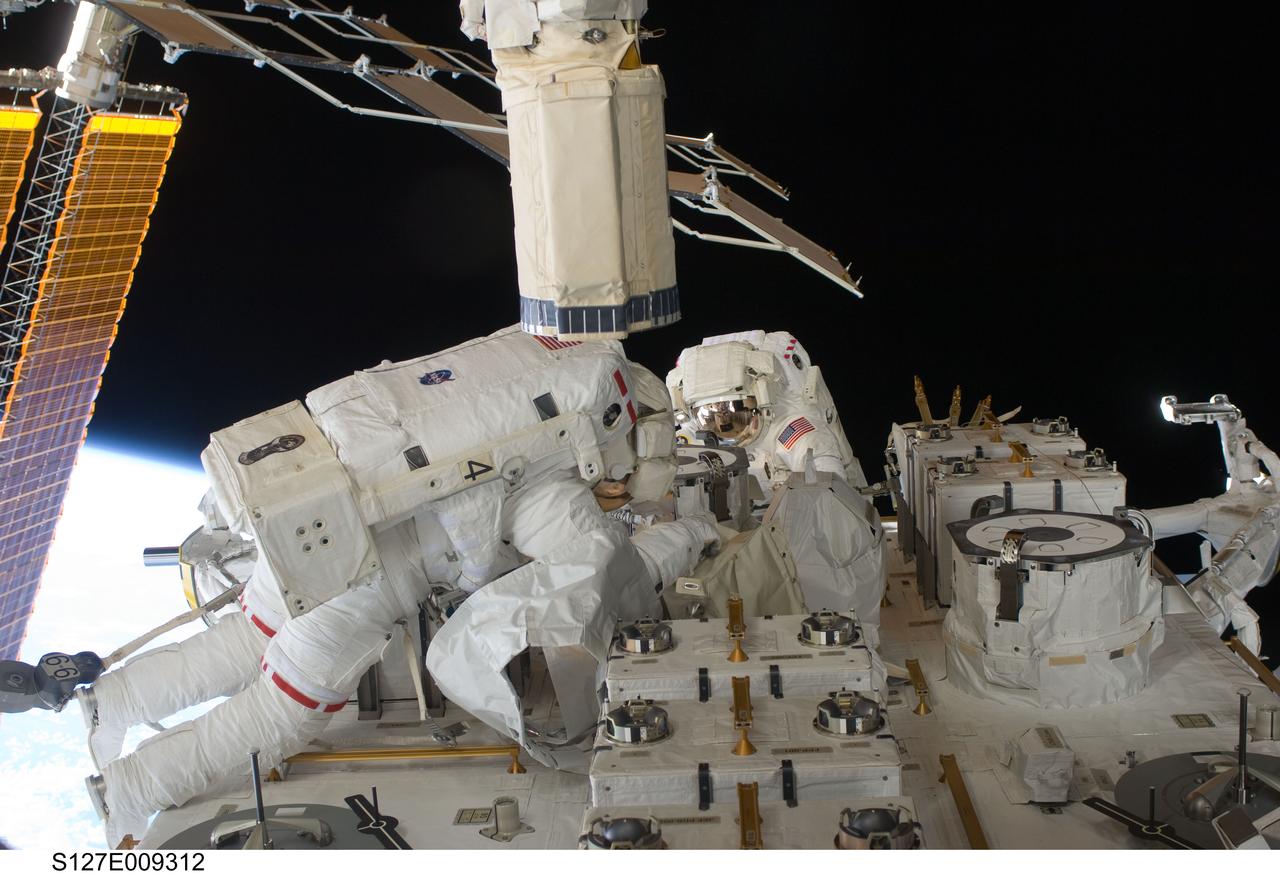
S127-E-009312 (27 July 2009) --- Astronauts Tom Marshburn (left) and Christopher Cassidy, both STS-127 mission specialists, participate in the mission's fifth and final session of extravehicular activity (EVA) as construction and maintenance continue on the International Space Station. During the four-hour, 54-minute spacewalk, Marshburn and Cassidy secured multi-layer insulation around the Special Purpose Dexterous Manipulator known as Dextre, split out power channels for two space station Control Moment Gyroscopes, installed video cameras on the front and back of the new Japanese Exposed Facility and performed a number of “get ahead” tasks, including tying down some cables and installing handrails and a portable foot restraint to aid future spacewalkers.
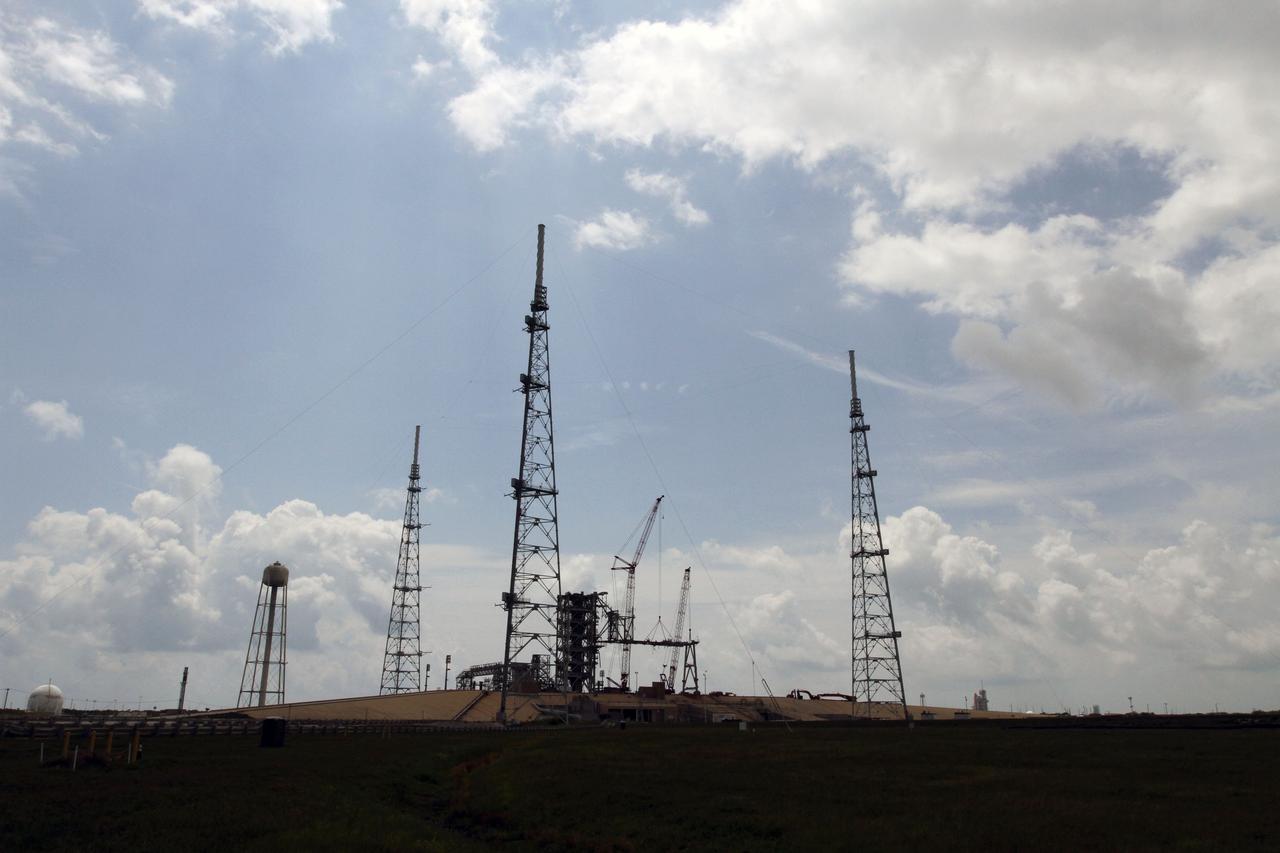
Cape Canaveral, Fla. -- Workers using a large crane remove the access arm section of the rotating service structure on Launch Pad 39B at NASA's Kennedy Space Center in Florida. Space shuttle Atlantis can be seen on Launch Pad 39A (far right background) as it is being prepared for the final space shuttle mission, STS-135. In 2009, the pad was no longer needed for the shuttle program, so it is being restructured for future use. Its new design will feature a "clean pad" for rockets to come with their own launcher, making it more versatile for a number of vehicles. The new lightning protection system, which was in place for the October 2009 launch of Ares I-X, will remain. For information on NASA's future plans, visit www.nasa.gov. Photo credit: NASA/Cory Huston
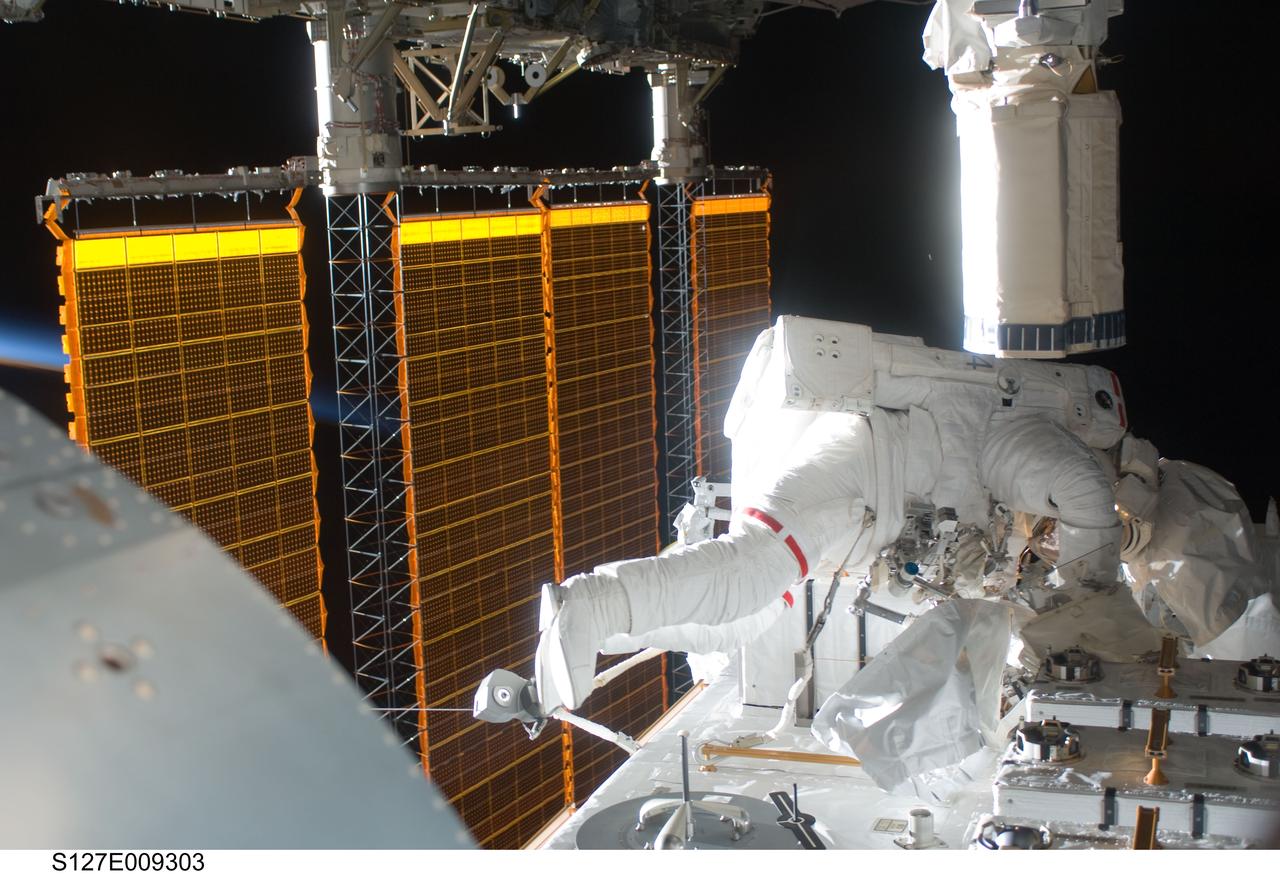
S127-E-009303 (27 July 2009) --- Astronaut Tom Marshburn, STS-127 mission specialist, participates in the mission's fifth and final session of extravehicular activity (EVA) as construction and maintenance continue on the International Space Station. During the four-hour, 54-minute spacewalk, Marshburn and astronaut Christopher Cassidy (out of frame), mission specialist, secured multi-layer insulation around the Special Purpose Dexterous Manipulator known as Dextre, split out power channels for two space station Control Moment Gyroscopes, installed video cameras on the front and back of the new Japanese Exposed Facility and performed a number of “get ahead” tasks, including tying down some cables and installing handrails and a portable foot restraint to aid future spacewalkers.
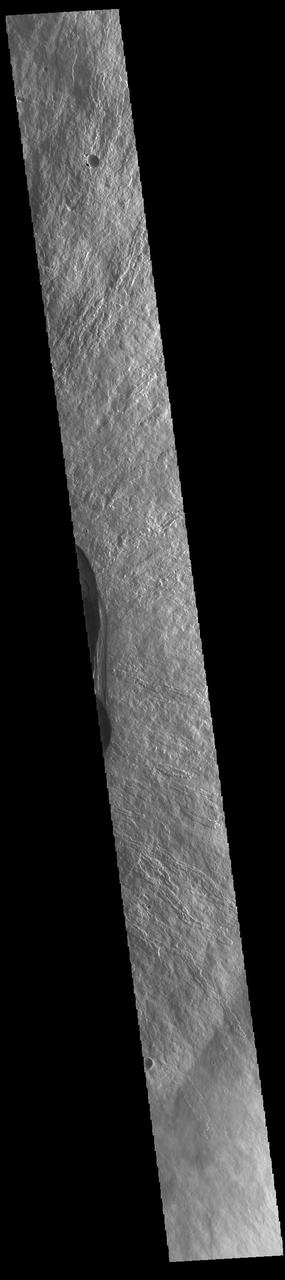
This VIS image shows part of the summit of Ascraeus Mons. Ascraeus Mons is the northernmost and tallest of the three large aligned Tharsis volcanoes. Calderas are found at the tops of volcanoes and are the source region for magma that rises from an underground lava source to erupt at the surface. Volcanoes are formed by repeated flows from the central caldera. The final eruptions can pool within the summit caldera, leaving a flat surface as they cool. Calderas are also a location of collapse, creating rings of tectonic faults that form the caldera rim. Ascraeus Mons has several caldera features at its summit. Ascraeus Mons is 18 km (11 miles) tall, for comparison Mauna Kea – the tallest volcano on Earth – is 10 km tall (6.2 miles, measured from the base below sea level). Orbit Number: 93767 Latitude: 11.2722 Longitude: 11.2722 Instrument: VIS Captured: 2023-02-03 01:58 https://photojournal.jpl.nasa.gov/catalog/PIA25875
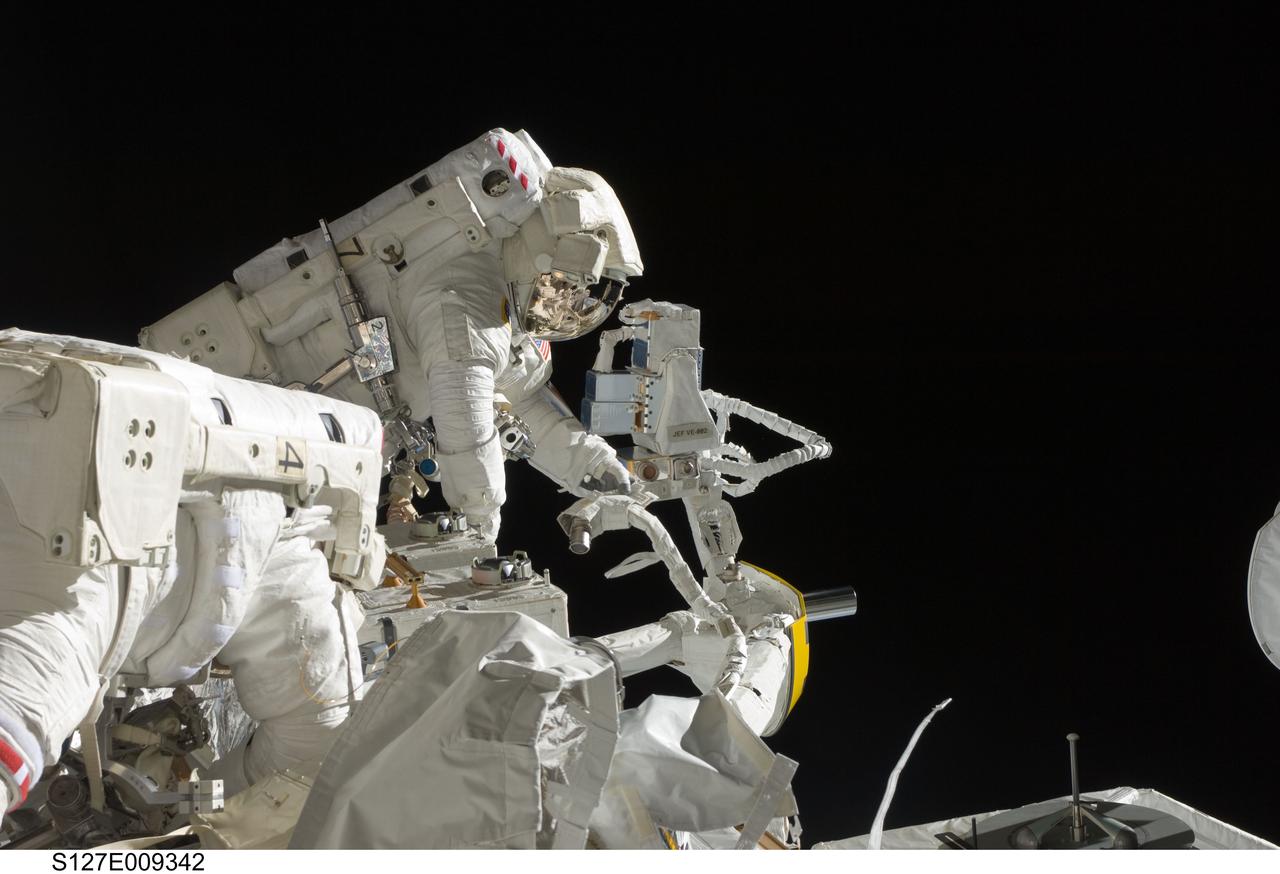
S127-E-009342 (27 July 2009) --- Astronauts Tom Marshburn (foreground) and Christopher Cassidy, both STS-127 mission specialists, participate in the mission's fifth and final session of extravehicular activity (EVA) as construction and maintenance continue on the International Space Station. During the four-hour, 54-minute spacewalk, Marshburn and Cassidy secured multi-layer insulation around the Special Purpose Dexterous Manipulator known as Dextre, split out power channels for two space station Control Moment Gyroscopes, installed video cameras on the front and back of the new Japanese Exposed Facility and performed a number of “get ahead” tasks, including tying down some cables and installing handrails and a portable foot restraint to aid future spacewalkers.
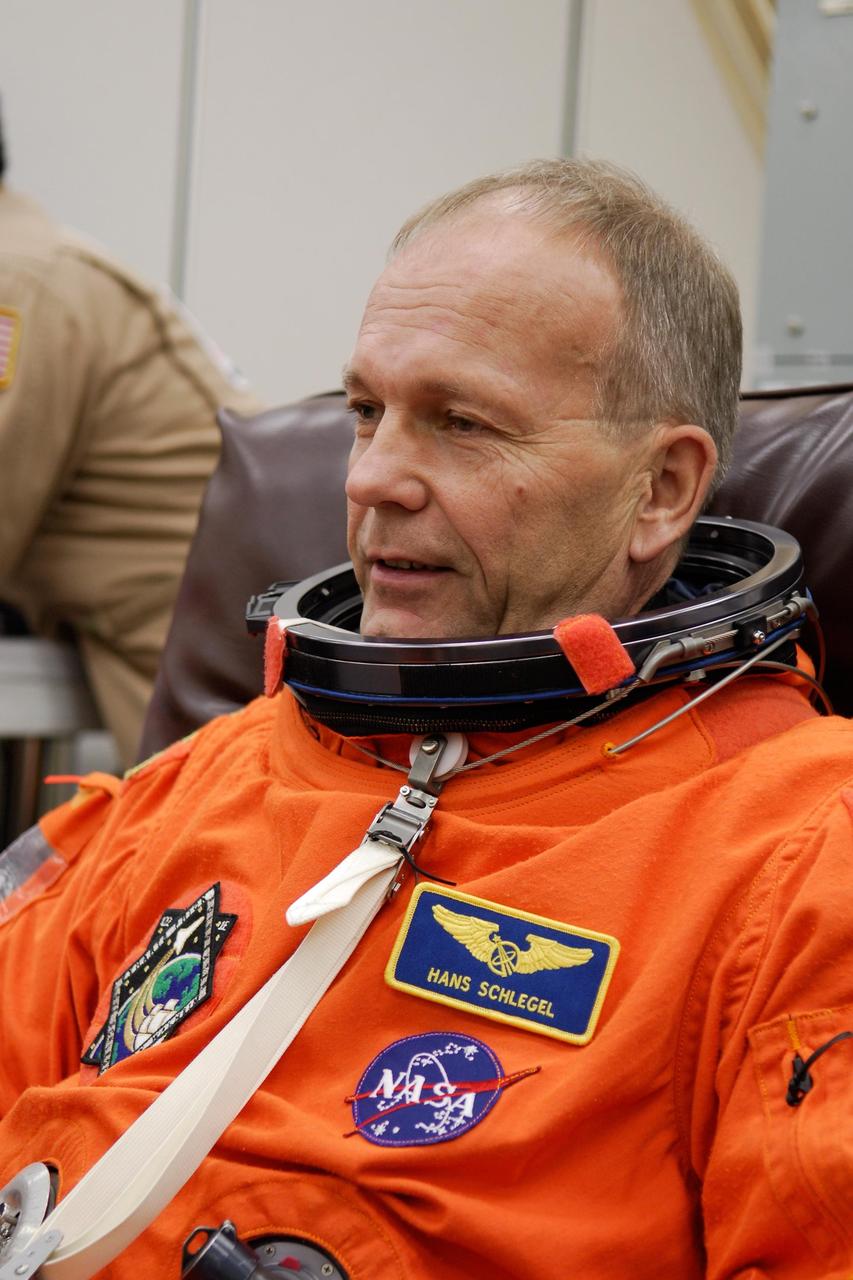
KENNEDY SPACE CENTER, FLA. -- STS-122 Mission Specialist Hans Schlegel dons his launch and entry suit for a final fitting before space shuttle Atlantis' launch scheduled for 4:31 p.m. EST on Dec. 6. Schlegel, who represents the European Space Agency, will make his second shuttle flight. Atlantis will carry the Columbus Lab, Europe’s largest contribution to the construction of the International Space Station. It will support scientific and technological research in a microgravity environment. Columbus, a program of ESA, is a multifunctional, pressurized laboratory that will be permanently attached to Node 2 of the space station to carry out experiments in materials science, fluid physics and biosciences, as well as to perform a number of technological applications. Photo credit: NASA/Kim Shiflett
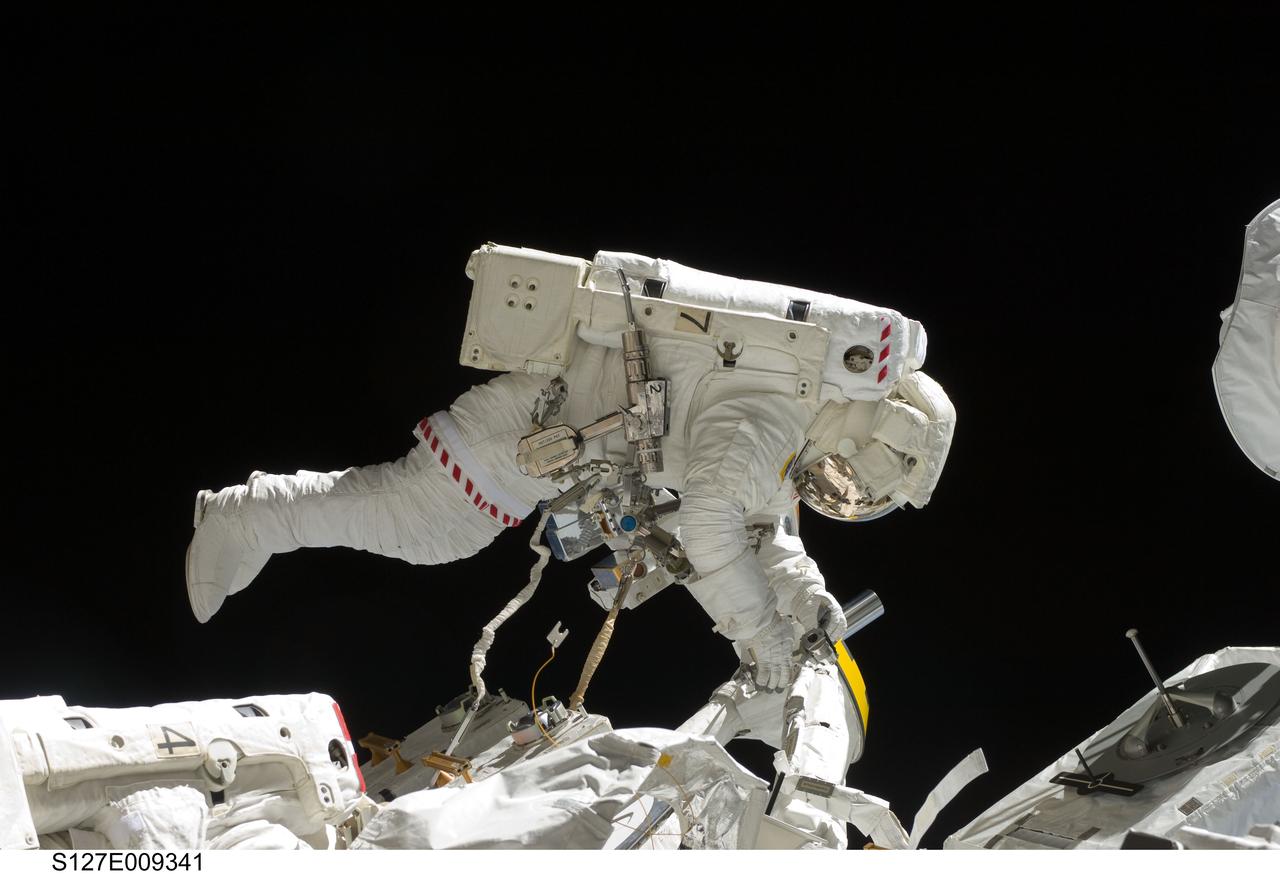
S127-E-009341 (27 July 2009) --- Astronauts Christopher Cassidy and Tom Marshburn (mostly out of frame at lower left), both STS-127 mission specialists, participate in the mission's fifth and final session of extravehicular activity (EVA) as construction and maintenance continue on the International Space Station. During the four-hour, 54-minute spacewalk, Marshburn and Cassidy secured multi-layer insulation around the Special Purpose Dexterous Manipulator known as Dextre, split out power channels for two space station Control Moment Gyroscopes, installed video cameras on the front and back of the new Japanese Exposed Facility and performed a number of “get ahead” tasks, including tying down some cables and installing handrails and a portable foot restraint to aid future spacewalkers.
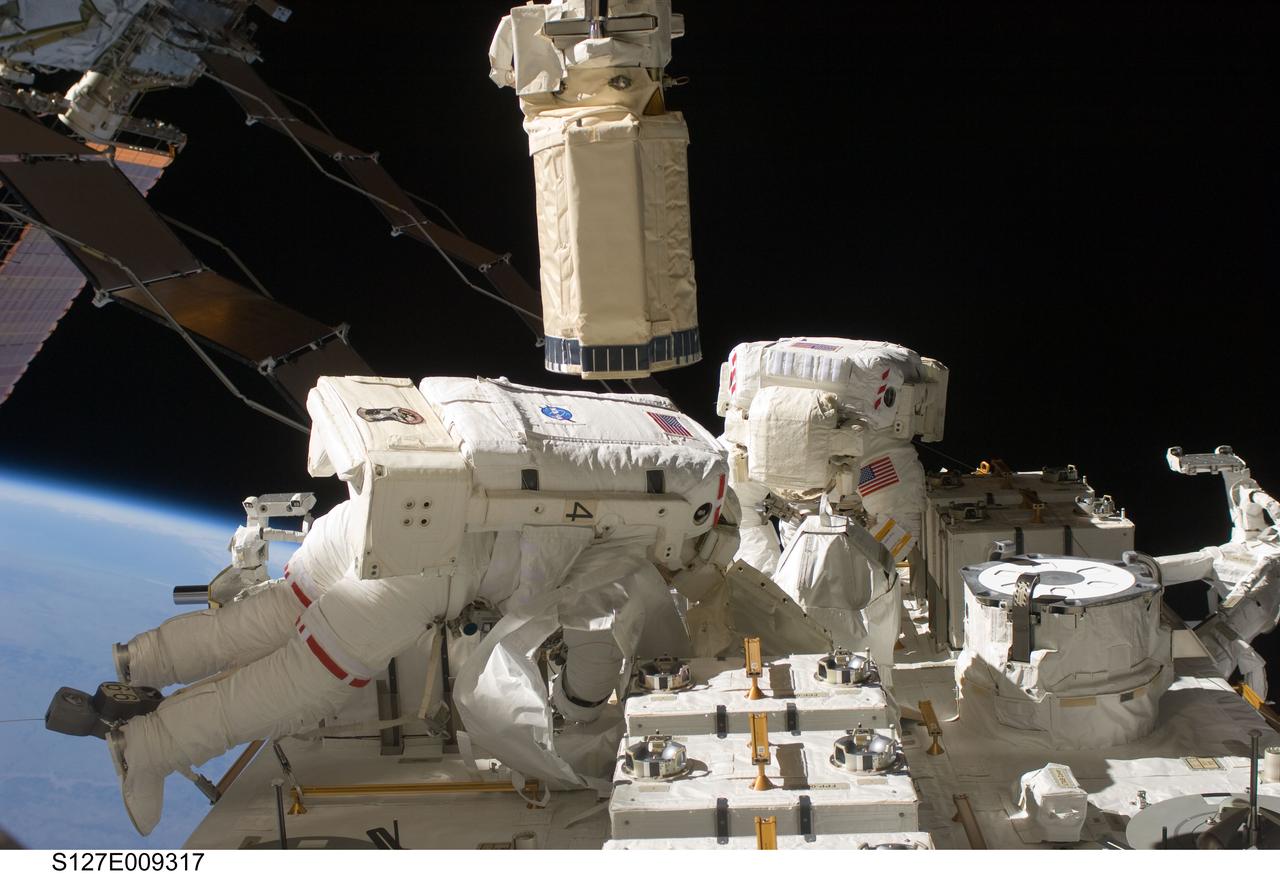
S127-E-009317 (27 July 2009) --- Astronauts Tom Marshburn (left) and Christopher Cassidy, both STS-127 mission specialists, participate in the mission's fifth and final session of extravehicular activity (EVA) as construction and maintenance continue on the International Space Station. During the four-hour, 54-minute spacewalk, Marshburn and Cassidy secured multi-layer insulation around the Special Purpose Dexterous Manipulator known as Dextre, split out power channels for two space station Control Moment Gyroscopes, installed video cameras on the front and back of the new Japanese Exposed Facility and performed a number of “get ahead” tasks, including tying down some cables and installing handrails and a portable foot restraint to aid future spacewalkers.
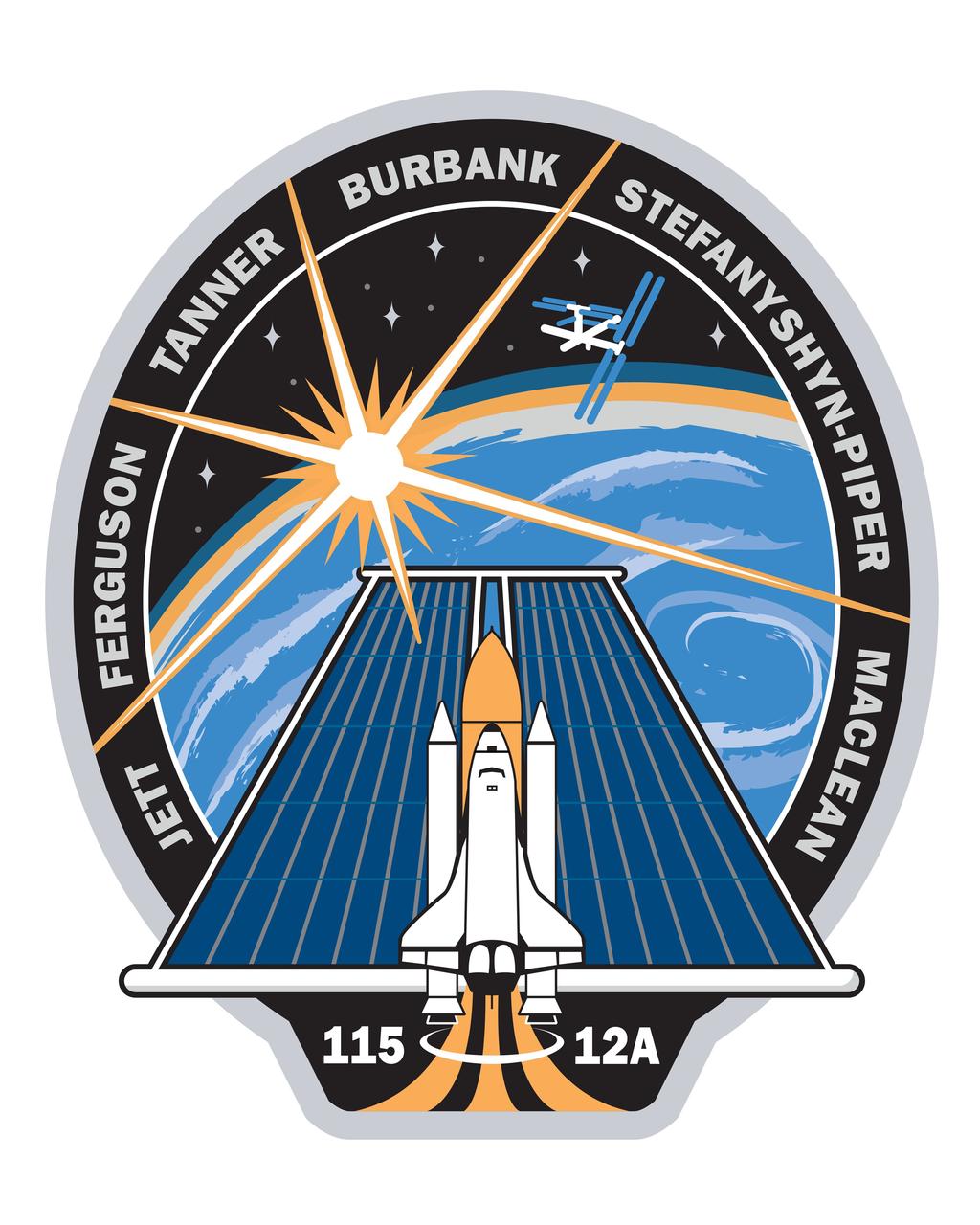
This is the STS-115 insignia. This mission continued the assembly of the International Space Station (ISS) with the installation of the truss segments P3 and P4. Following the installation of the segments utilizing both the shuttle and the station robotic arms, a series of three space walks completed the final connections and prepared for the deployment of the station's second set of solar arrays. To reflect the primary mission of the flight, the patch depicts a solar panel as the main element. As the Space Shuttle Atlantis launches towards the ISS, its trail depicts the symbol of the Astronaut Office. The star burst, representing the power of the sun, rises over the Earth and shines on the solar panel. The shuttle flight number 115 is shown at the bottom of the patch, along with the ISS assembly designation 12A (the 12th American assembly mission). The blue Earth in the background reminds us of the importance of space exploration and research to all of Earth's inhabitants.
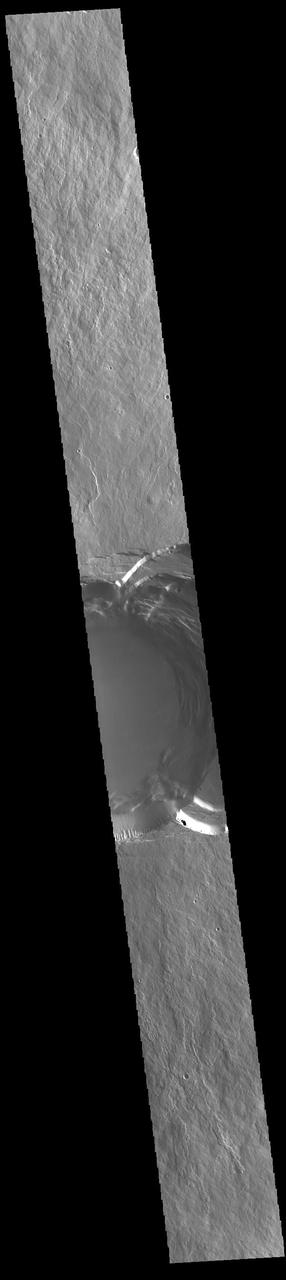
This VIS image shows part of the summit of Ascraeus Mons. Ascraeus Mons is the northernmost and tallest of the three large aligned Tharsis volcanoes. Calderas are found at the tops of volcanoes and are the source region for magma that rises from an underground lava source to erupt at the surface. Volcanoes are formed by repeated flows from the central caldera. The final eruptions can pool within the summit caldera, leaving a flat surface as they cool. Calderas are also a location of collapse, creating rings of tectonic faults that form the caldera rim. Ascraeus Mons has several caldera features at its summit. Ascraeus Mons is 18 km (11 miles) tall, for comparison Mauna Kea – the tallest volcano on Earth – is 10 km tall (6.2 miles, measured from the base below sea level). Orbit Number: 94366 Latitude: 11.3736 Longitude: 255.73 Instrument: VIS Captured: 2023-03-24 09:40 https://photojournal.jpl.nasa.gov/catalog/PIA26021
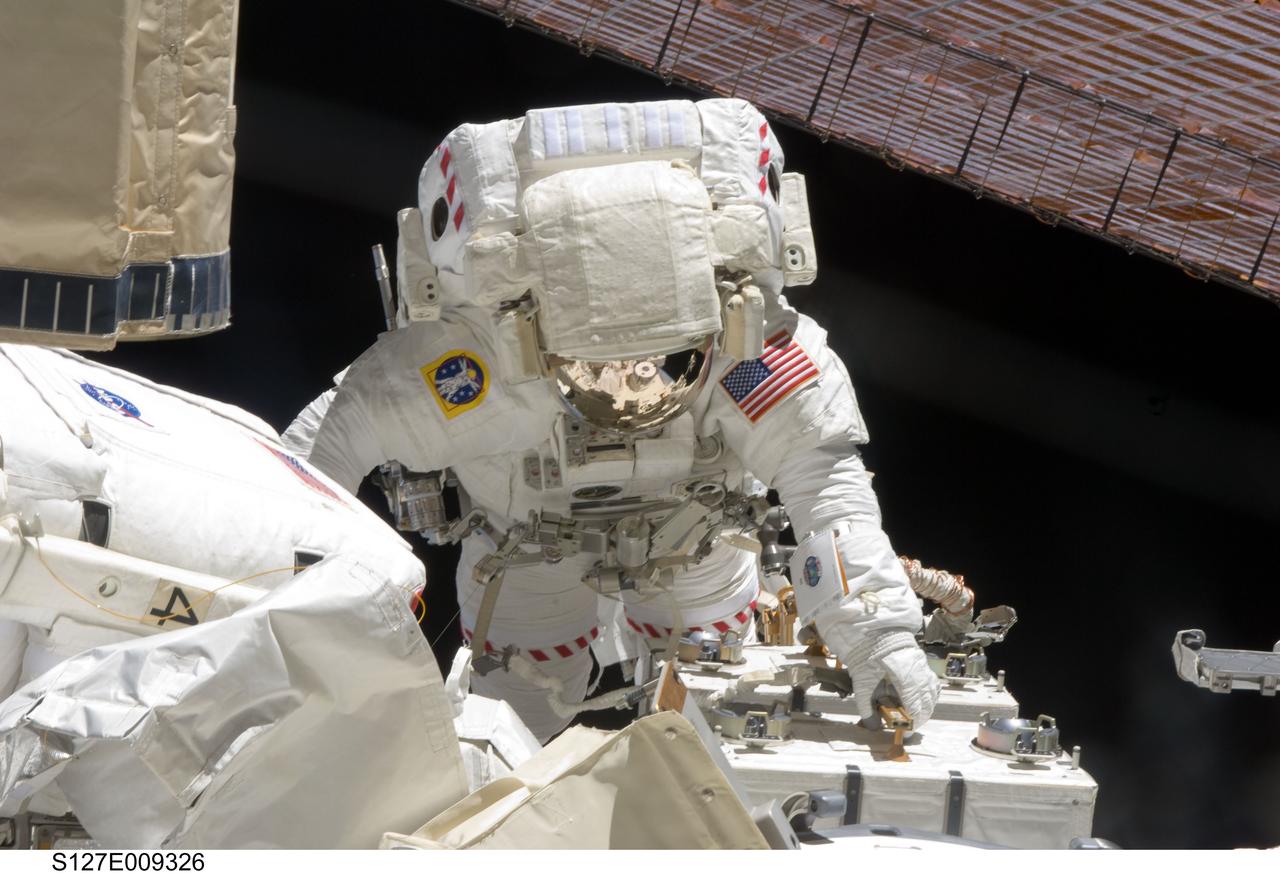
S127-E-009326 (27 July 2009) --- Astronauts Christopher Cassidy and Tom Marshburn (mostly out of frame at left), both STS-127 mission specialists, participate in the mission's fifth and final session of extravehicular activity (EVA) as construction and maintenance continue on the International Space Station. During the four-hour, 54-minute spacewalk, Marshburn and Cassidy secured multi-layer insulation around the Special Purpose Dexterous Manipulator known as Dextre, split out power channels for two space station Control Moment Gyroscopes, installed video cameras on the front and back of the new Japanese Exposed Facility and performed a number of “get ahead” tasks, including tying down some cables and installing handrails and a portable foot restraint to aid future spacewalkers.
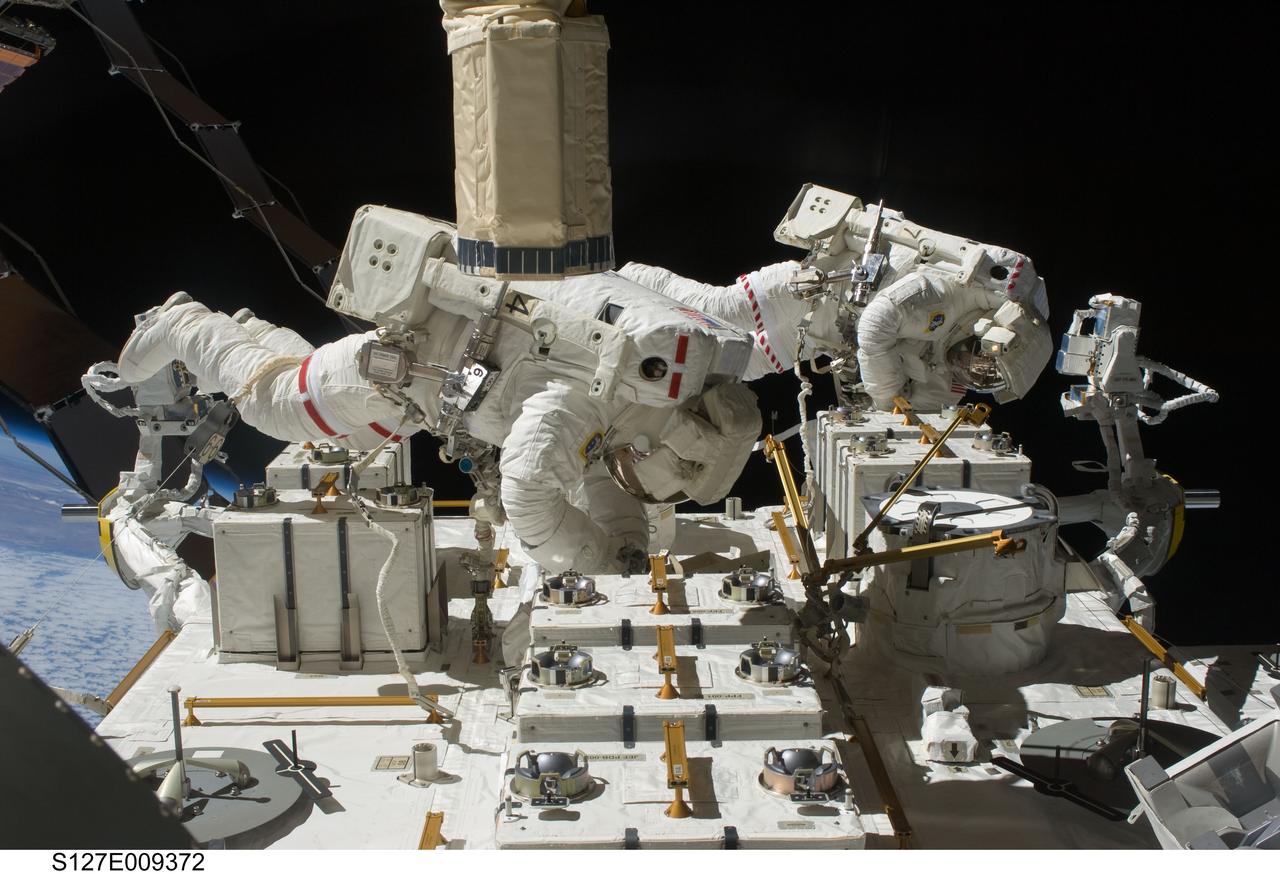
S127-E-009372 (27 July 2009) --- Astronauts Tom Marshburn (left) and Christopher Cassidy, both STS-127 mission specialists, participate in the mission's fifth and final session of extravehicular activity (EVA) as construction and maintenance continue on the International Space Station. During the four-hour, 54-minute spacewalk, Marshburn and Cassidy secured multi-layer insulation around the Special Purpose Dexterous Manipulator known as Dextre, split out power channels for two space station Control Moment Gyroscopes, installed video cameras on the front and back of the new Japanese Exposed Facility and performed a number of “get ahead” tasks, including tying down some cables and installing handrails and a portable foot restraint to aid future spacewalkers.
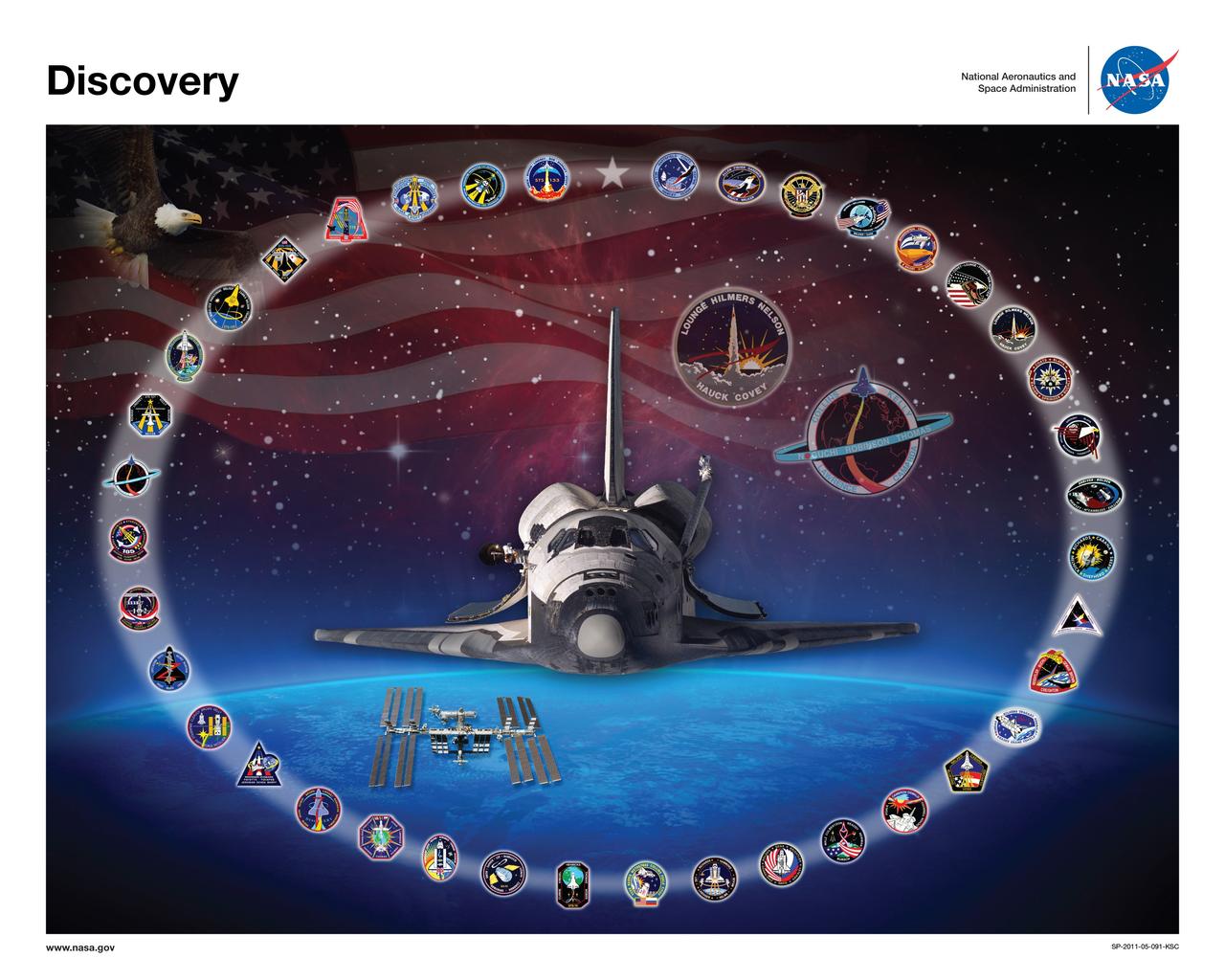
CAPE CANAVERAL, Fla. -- This is a version of space shuttle Discovery's orbiter tribute, or OV-103, which hangs in Firing Room 4 of the Launch Control Center at NASA's Kennedy Space Center in Florida. In 2011, the tribute was updated to reflect the crew member change on Discovery's final mission -- STS-133. Steve Bowen replaced Tim Kopra as a mission specialist on STS-133, after Kopra was injured in a bicycle accident that prevented him from flying into space. Discovery’s accomplishments include the first female shuttle pilot, Eileen Collins, on STS-63, John Glenn’s legendary return to space on STS-95, and the celebration of the 100th shuttle mission with STS-92. In addition, Discovery supported a number of Department of Defense programs, satellite deploy and repair missions and 13 International Space Station construction and operation flights. The tribute features Discovery demonstrating the rendezvous pitch maneuver on approach to the International Space Station during STS-114. Having accumulated the most space shuttle flights, Discovery’s 39 mission patches are shown circling the spacecraft. The background image was taken from the Hubble Space Telescope, which launched aboard Discovery on STS-31 and serviced by Discovery on STS-82 and STS-103. The American Flag and Bald Eagle represent Discovery’s two Return-to-Flight missions -- STS-26 and STS-114 -- and symbolize Discovery’s role in returning American astronauts to space. Five orbiter tributes are on display in the firing room, representing Atlantis, Challenger, Columbia, Endeavour and Discovery. Graphic design credit: NASA/Amy Lombardo. NASA publication number: SP-2010-08-164-KSC
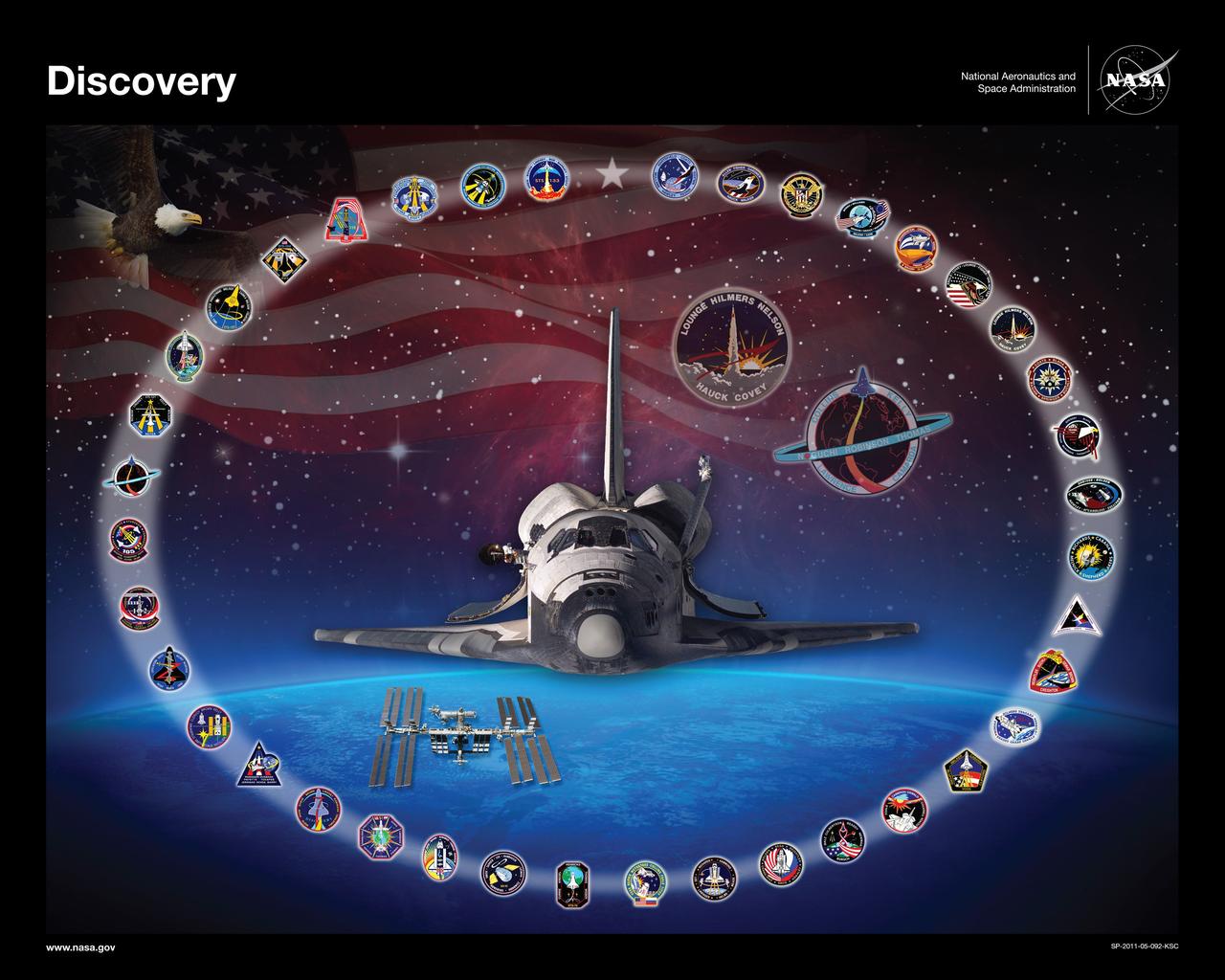
CAPE CANAVERAL, Fla. -- This is a printable version of space shuttle Discovery's orbiter tribute, or OV-103, which hangs in Firing Room 4 of the Launch Control Center at NASA's Kennedy Space Center in Florida. In 2011, the tribute was updated to reflect the crew member change on Discovery's final mission -- STS-133. Steve Bowen replaced Tim Kopra as a mission specialist on STS-133, after Kopra was injured in a bicycle accident that prevented him from flying into space. Discovery’s accomplishments include the first female shuttle pilot, Eileen Collins, on STS-63, John Glenn’s legendary return to space on STS-95, and the celebration of the 100th shuttle mission with STS-92. In addition, Discovery supported a number of Department of Defense programs, satellite deploy and repair missions and 13 International Space Station construction and operation flights. The tribute features Discovery demonstrating the rendezvous pitch maneuver on approach to the International Space Station during STS-114. Having accumulated the most space shuttle flights, Discovery’s 39 mission patches are shown circling the spacecraft. The background image was taken from the Hubble Space Telescope, which launched aboard Discovery on STS-31 and serviced by Discovery on STS-82 and STS-103. The American Flag and Bald Eagle represent Discovery’s two Return-to-Flight missions -- STS-26 and STS-114 -- and symbolize Discovery’s role in returning American astronauts to space. Five orbiter tributes are on display in the firing room, representing Atlantis, Challenger, Columbia, Endeavour and Discovery. Graphic design credit: NASA/Amy Lombardo. NASA publication number: SP-2010-08-164-KSC
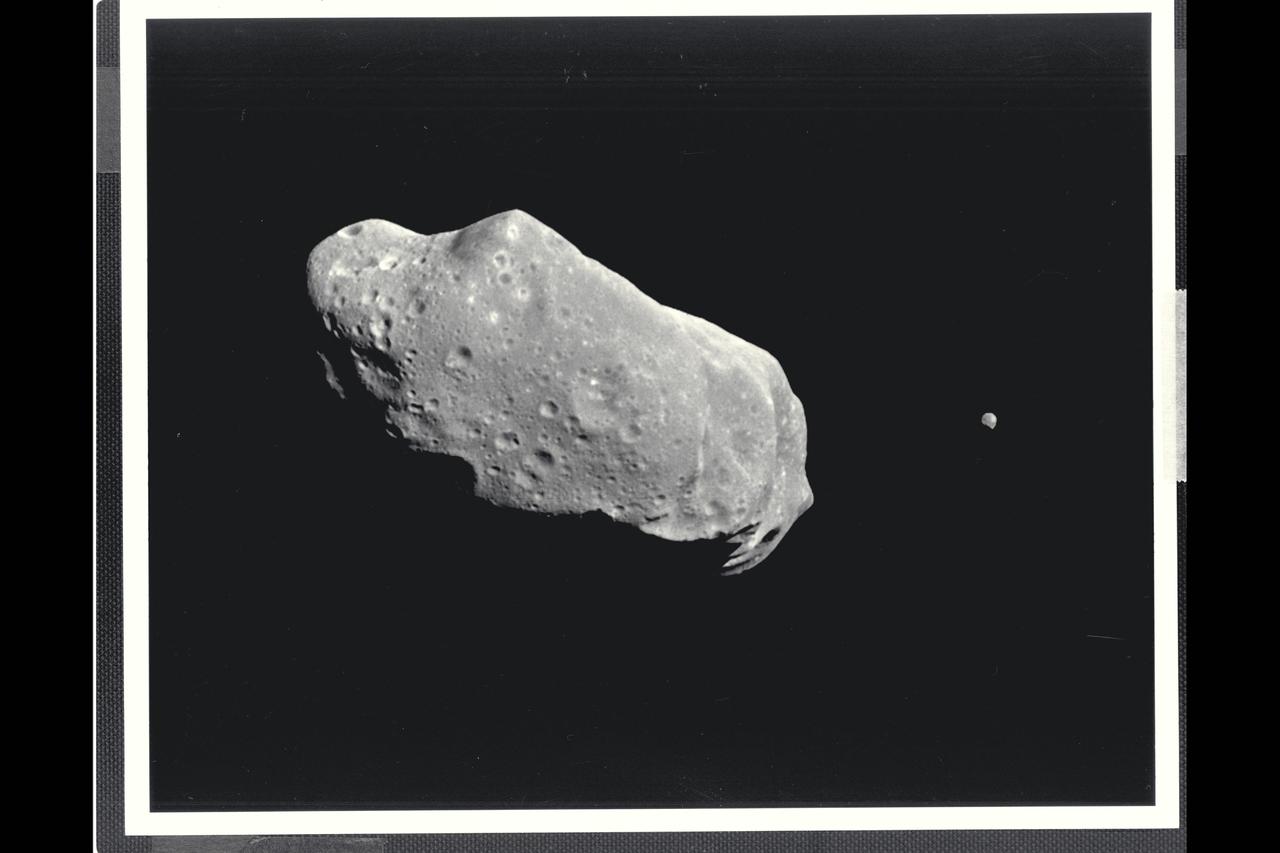
This image is the first full picture showing both asteroid 243 Ida and its newly discovered moon to be transmitted to Earth from NASA's Galileo spacecraft--the first conclusive evidence that natural satellites of asteroids exist. Ida is the large object to the left, about 56 kilometers (35 miles long). Ida's natural satellite is the small object to the right. This portrait was taken by Galileo's charge-coupled device (CCD) camera on August 28, 1993, about 14 minutes before the spacecraft's closest approach to the asteriod, from a range of 10,870 kilometers (6,755 miles). Ida is a heavily cratered, irregularly shaped asteroid in the main asteroid belt between Mars and Jupiter-- the 243rd asteroid to be discovered since the first one was found at the beginning of the 19th century. It is a member of a group of asteroids called the Koronis family. The small satellite, which is about 1.5 kilometers (1 mile) across in this view, has yet to be given a name by astronomers. It has been provisionally designated '1993 (243) 1' by the International Astronomical Union. (The numbers denote the year the picture was taken, the asteroid number and the fact that it is the first moon of Ida to be found.) ALthough the satellite appears to be 'next' to Ida it is actually slightly in the foreground, closer to the spacecraft than Ida. Combining this image with data from Galileo's near-infrared mapping spectrometer, the science team estimates that the object is about 100 kilometers (60 miles) away from the center of Ida. This image is one of a six-frame series taken through different color filters, this one in green. The spatial resolution in this image is about 100 meters (330 feet) per pixel. The Galileo spacecraft flew past Ida en route to its final destination, Jupiter, where it will go into orbit in December 1995. The Jet Propulsion Laboratory manages the galileo Project for NASA's Office of Space Science. (JPL ref. No. P-43731)
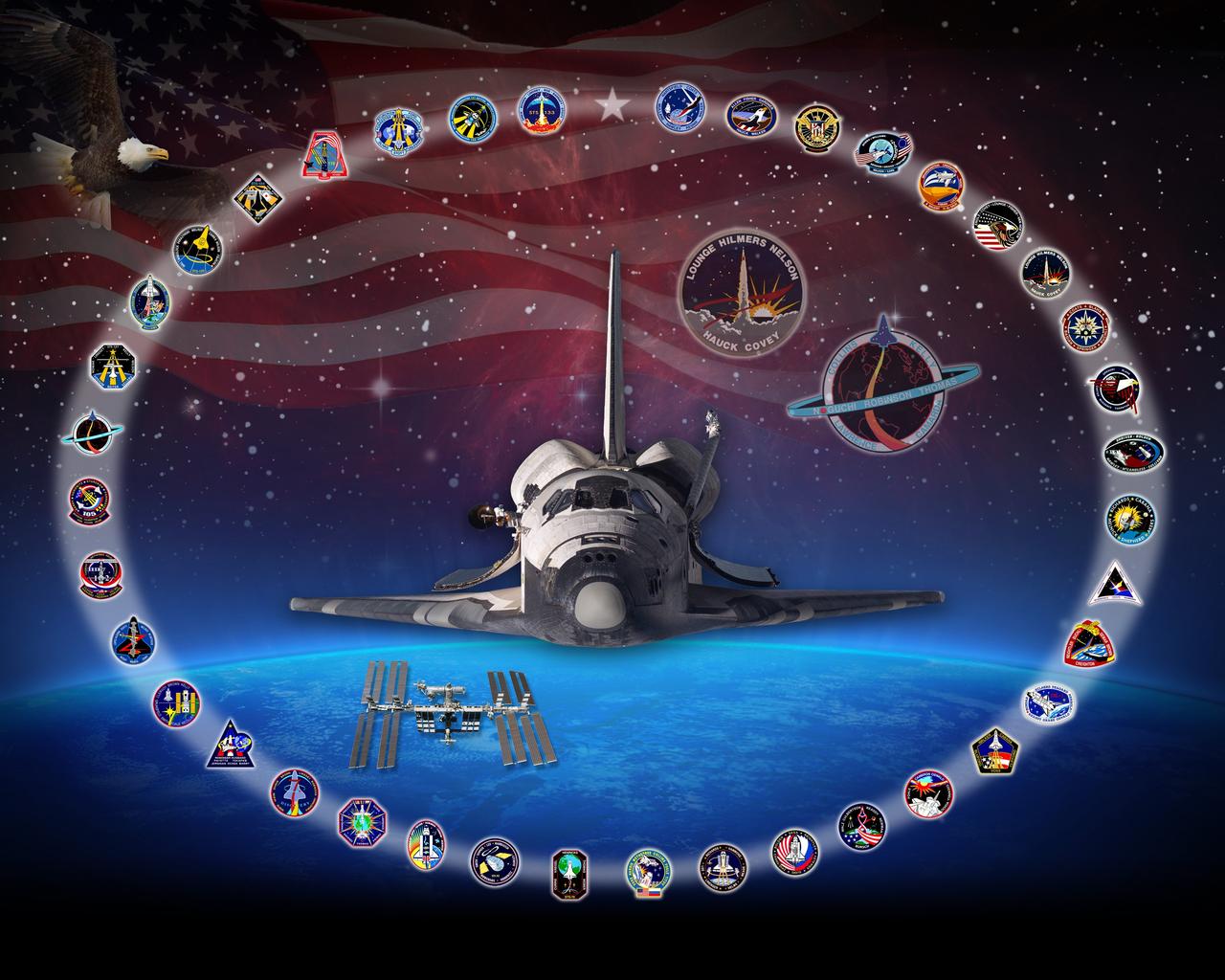
CAPE CANAVERAL, Fla. -- This orbiter tribute of space shuttle Discovery, or OV-103, hangs in Firing Room 4 of the Launch Control Center at NASA's Kennedy Space Center in Florida. In 2011, the tribute was updated to reflect the crew member change on Discovery's final mission -- STS-133. Steve Bowen replaced Tim Kopra as a mission specialist on STS-133, after Kopra was injured in a bicycle accident that prevented him from flying into space. Discovery’s accomplishments include the first female shuttle pilot, Eileen Collins, on STS-63, John Glenn’s legendary return to space on STS-95, and the celebration of the 100th shuttle mission with STS-92. In addition, Discovery supported a number of Department of Defense programs, satellite deploy and repair missions and 13 International Space Station construction and operation flights. The tribute features Discovery demonstrating the rendezvous pitch maneuver on approach to the International Space Station during STS-114. Having accumulated the most space shuttle flights, Discovery’s 39 mission patches are shown circling the spacecraft. The background image was taken from the Hubble Space Telescope, which launched aboard Discovery on STS-31 and serviced by Discovery on STS-82 and STS-103. The American Flag and Bald Eagle represent Discovery’s two Return-to-Flight missions -- STS-26 and STS-114 -- and symbolize Discovery’s role in returning American astronauts to space. Five orbiter tributes are on display in the firing room, representing Atlantis, Challenger, Columbia, Endeavour and Discovery. Graphic design credit: NASA/Amy Lombardo. NASA publication number: SP-2010-08-164-KSC

In the Operations and Checkout Building, STS-93 Mission Specialist Michel Tognini of France, who represents the Centre National d'Etudes Spatiales (CNES), waves after donning his launch and entry suit during final launch preparations. STS-93 is a five-day mission primarily to release the Chandra X-ray Observatory, which will allow scientists from around the world to study some of the most distant, powerful and dynamic objects in the universe. The new telescope is 20 to 50 times more sensitive than any previous X-ray telescope and is expected unlock the secrets of supernovae, quasars and black holes. The STS-93 crew numbers five: Commander Eileen M. Collins, Pilot Jeffrey S. Ashby, and Mission Specialists Stephen A. Hawley (Ph.D.), Catherine G. Coleman (Ph.D.) and Tognini. Collins is the first woman to serve as commander of a shuttle mission. STS-93 is scheduled to lift off at 12:36 a.m. EDT July 20. The target landing date is July 24 at 11:30 p.m. EDT
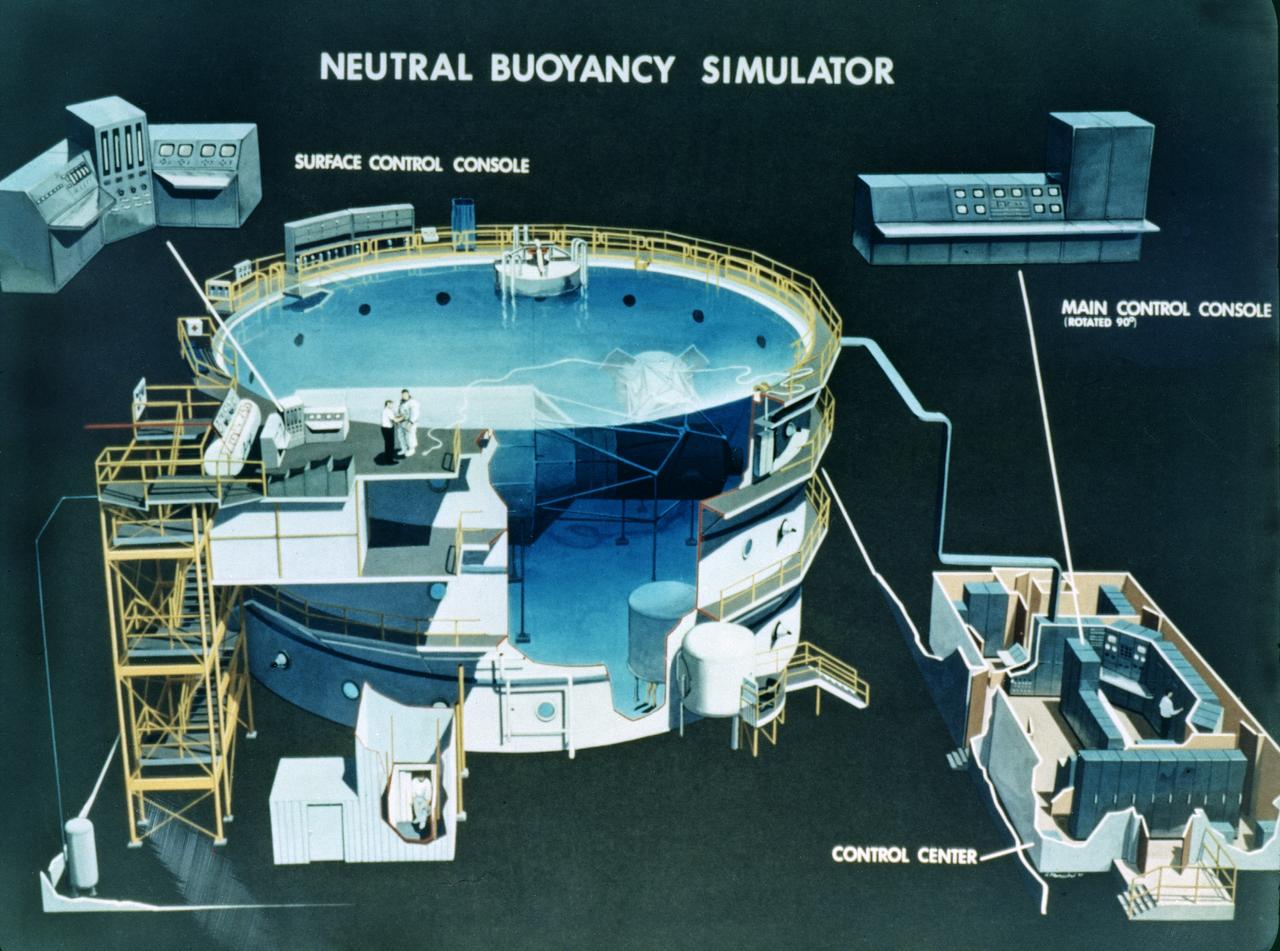
This is a cutaway illustration of the Neutral Buoyancy Simulator (NBS) at the Marshall Space Flight Center (MSFC ). The MSFC NBS provided an excellent environment for testing hardware to examine how it would operate in space and for evaluating techniques for space construction and spacecraft servicing. Here, engineers, designers, and astronauts performed various tests to develop basic concepts, preliminary designs, final designs, and crew procedures. The NBS was constructed of welded steel with polyester-resin coating. The water tank was 75-feet (22.9- meters) in diameter, 40-feet (12.2-meters) deep, and held 1.32 million gallons of water. Since it opened for operation in 1968, the NBS had supported a number of successful space missions, such as the Skylab, Solar Maximum Mission Satellite, Marned Maneuvering Unit, Experimental Assembly of Structures in Extravehicular Activity/Assembly Concept for Construction of Erectable Space Structures (EASE/ACCESS), the Hubble Space Telescope, and the Space Station. The function of the MSFC NBS was moved to the larger simulator at the Johnson Space Center and is no longer operational.
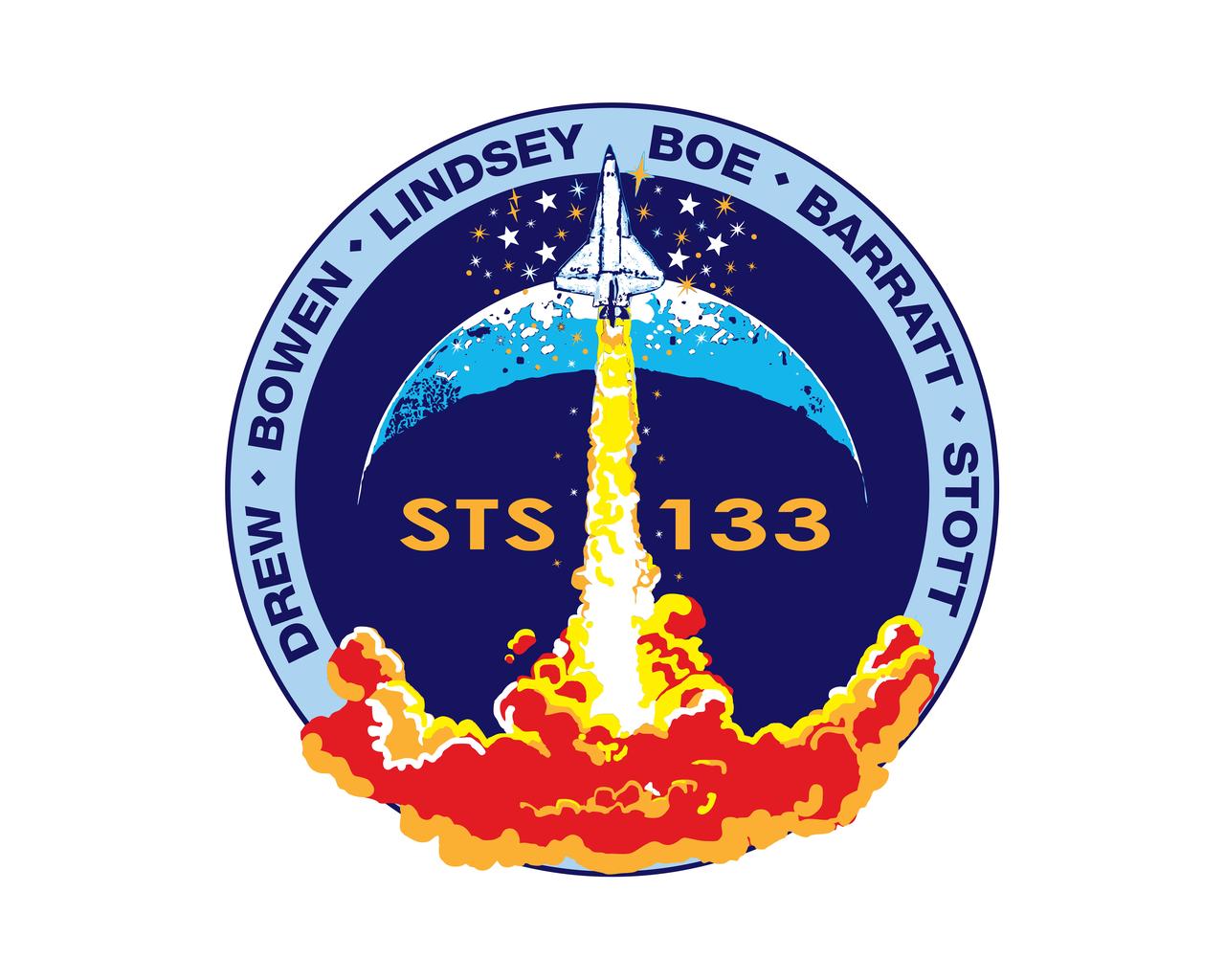
STS133-S-001 (June 2010, Revised January 2011) --- The STS-133 mission patch is based upon sketches from the late artist Robert McCall; they were the final creations of his long and prodigious career. In the foreground, a solitary orbiter ascends into a dark blue sky above a roiling fiery plume. A spray of stars surrounds the orbiter and a top lit crescent forms the background behind the ascent. The mission number, STS-133, is emblazoned on the patch center, and crew members' names are listed on a sky-blue border around the scene. The space shuttle Discovery is depicted ascending on a plume of flame as if it is just beginning a mission. However it is just the orbiter, without boosters or an external tank, as it would be at mission's end. This is to signify Discovery's completion of its operational life and the beginning of its new role as a symbol of NASA's and the nation's proud legacy in human spaceflight. The NASA insignia design for space shuttle flights is reserved for use by the astronauts and for other official use as the NASA Administrator may authorize. Public availability has been approved only in the forms of illustrations by the various news media. When and if there is any change in this policy, which is not anticipated, the change will be publicly announced. Photo credit: NASA
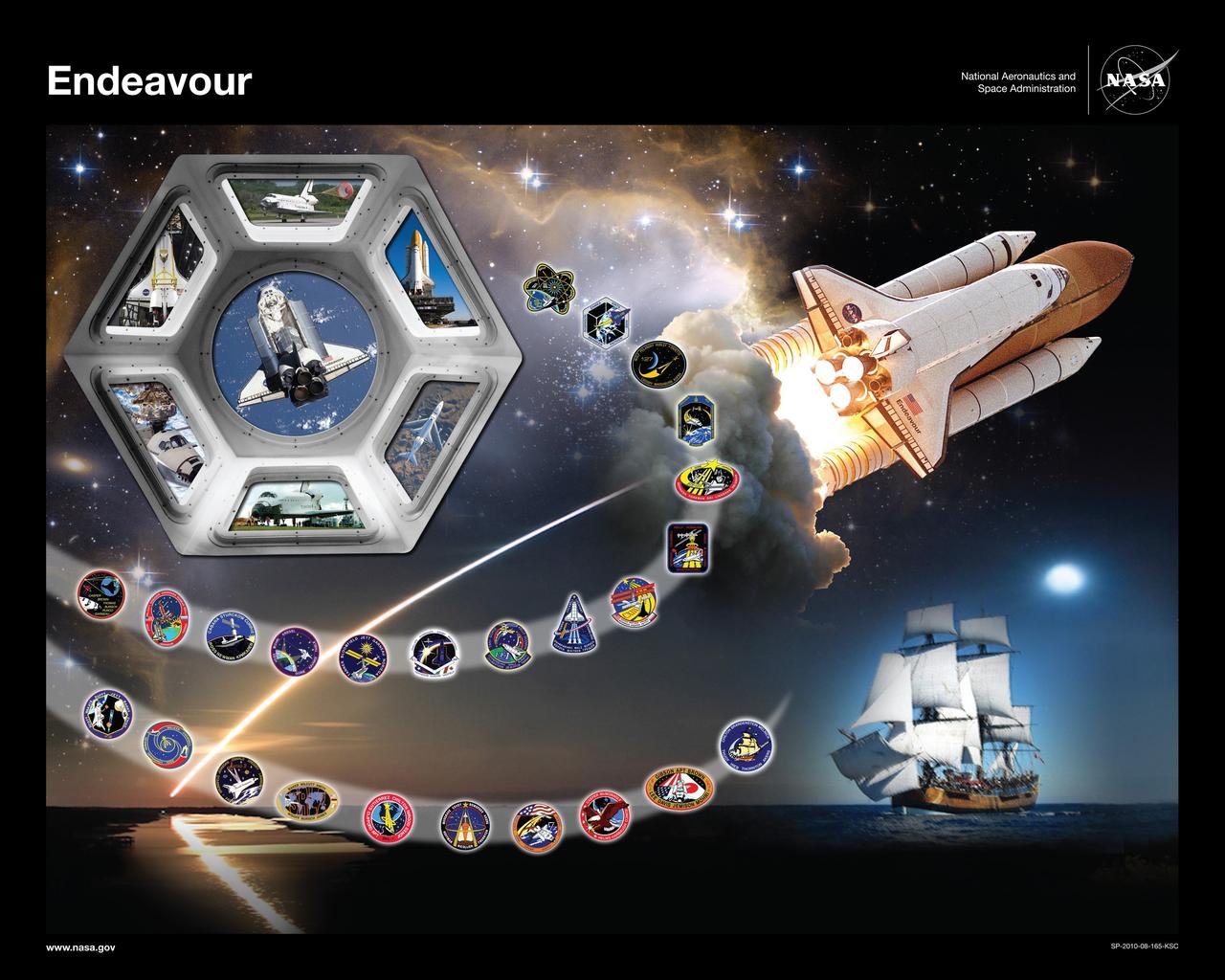
CAPE CANAVERAL, Fla. -- This is a printable version of space shuttle Endeavour's orbiter tribute, or OV-105, which hangs in Firing Room 4 of the Launch Control Center at NASA's Kennedy Space Center in Florida. It features Endeavour soaring into orbit above the sailing vessel HMS Endeavour for which it was named. The Cupola, delivered to the International Space Station by Endeavour on STS-130, frames various images that represent the processing and execution of the Space Shuttle Program. Clockwise from top, are the first-ever use of a drag chute during the STS-49 landing, rollout to a launch pad, a ferry flight return to Kennedy, rolling into an orbiter processing facility, docking to the International Space Station, and lifting operations before being mated to an external fuel tank and solid rocket boosters in the Vehicle Assembly Building. The background image was captured by the Hubble Space Telescope and signifies the first shuttle servicing mission, which was performed by Endeavour's STS-61 crew. Crew-designed patches from Endeavour’s maiden voyage through its final mission are shown ascending toward the stars. Five orbiter tributes are on display in the firing room, representing Atlantis, Challenger, Columbia, Endeavour and Discovery. Graphic design credit: NASA/Amy Lombardo. NASA publication number: SP-2010-08-165-KSC
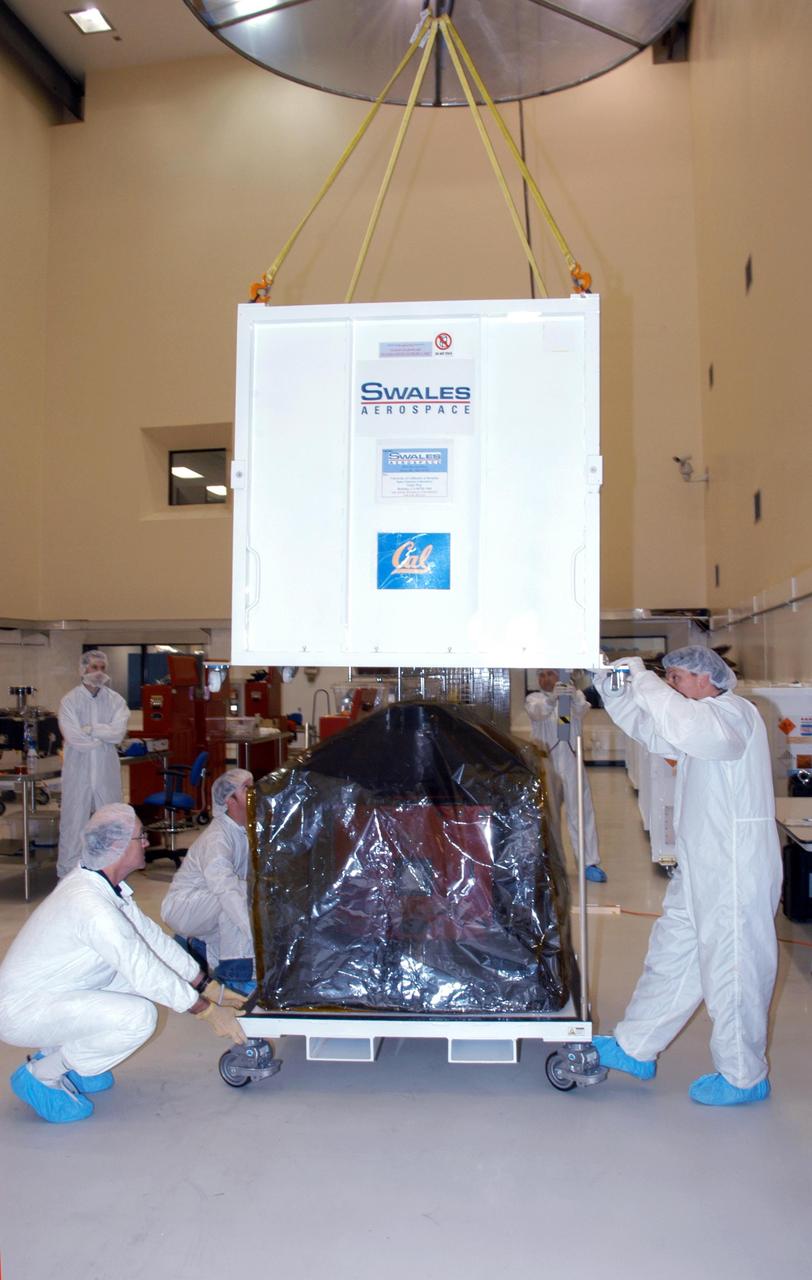
KENNEDY SPACE CENTER, FLA. -- At Astrotech Space Operations in Titusville, Fla., technicians help lower a shipping container over one of the five THEMIS probes for its move to the hazardous processing facility. There it will be placed on a stand in preparation for fueling operations. Once fueling is complete, each probe will be weighed and individually mated to the payload carrier before pyrotechnics are installed. The fully integrated THEMIS payload is then ready for spin-balance testing and weighing. The final milestone is mating THEMIS to its upper stage booster. THEMIS consists of five identical probes, the largest number of scientific satellites ever launched into orbit aboard a single rocket. This unique constellation of satellites will resolve the tantalizing mystery of what causes the spectacular sudden brightening of the aurora borealis and aurora australis - the fiery skies over the Earth's northern and southern polar regions. These lights are the visible manifestations of invisible energy releases, called geomagnetic substorms, in near-Earth space. THEMIS will not only seek to answer where and when substorms start, but will also provide clues as to how and why these space storms create havoc on satellites, terrestrial power grids, and communication systems. THEMIS will be transported to Pad 17-B at Cape Canaveral Air Force Station on February 1 for mating to the Delta II rocket. Launch is scheduled for Feb. 15. Photo credit: NASA/George Shelton
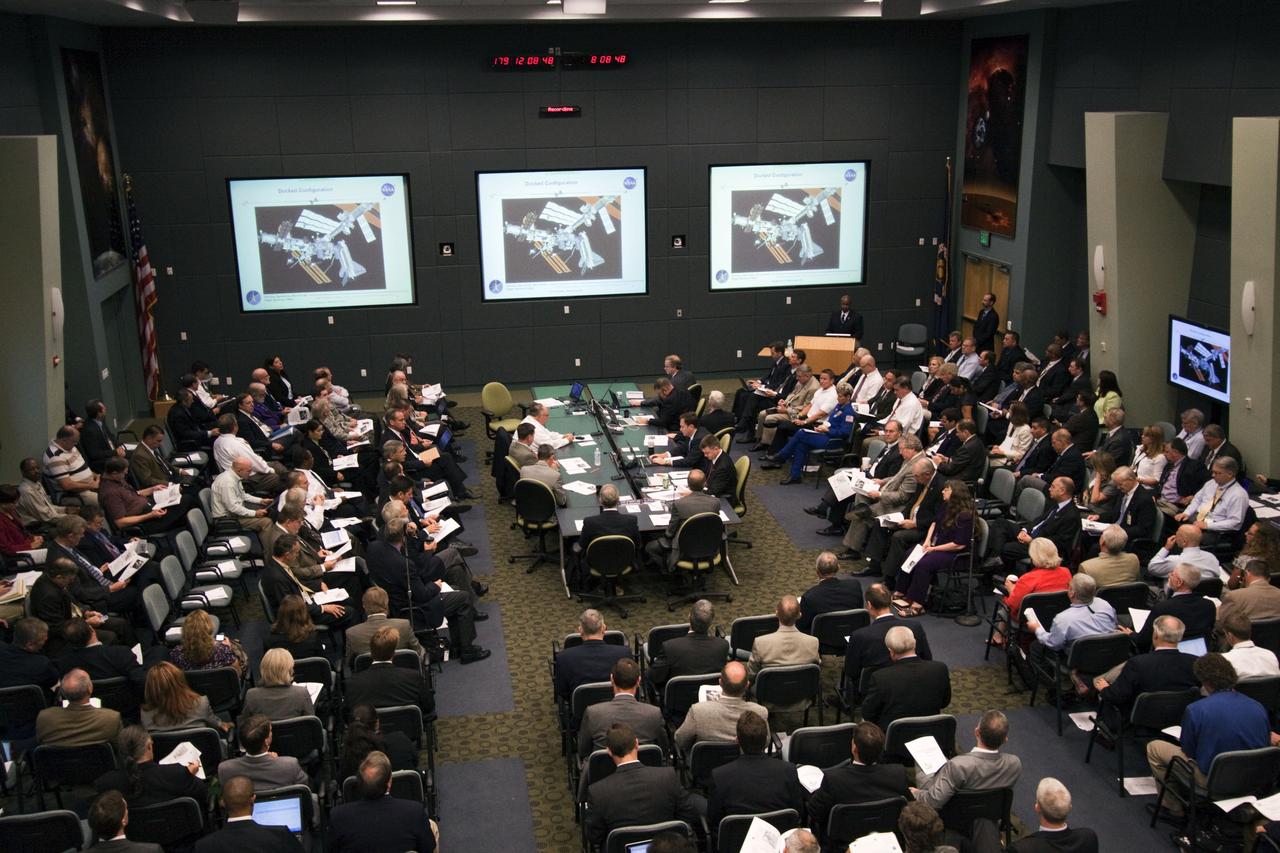
CAPE CANAVERAL, Fla. -- In the Operations Support Building II at NASA's Kennedy Space Center in Florida, Space Shuttle Program and mission managers meet for the traditional Flight Readiness Review, a thorough assessment of preparations for the mission. The June 28 meeting is designed to produce a number of key decisions about Atlantis' STS-135 mission, including the announcement of an official launch date. Atlantis and its crew are targeted to lift off July 8, taking with them the Raffaello multi-purpose logistics module packed with supplies and spare parts to the International Space Station. The STS-135 mission also will fly a system to investigate the potential for robotically refueling existing satellites and return a failed ammonia pump module to help NASA better understand the failure mechanism and improve pump designs for future systems. STS-135 will be the 33rd flight of Atlantis, the 37th shuttle mission to the space station, and the 135th and final mission of NASA's Space Shuttle Program. For more information visit, www.nasa.gov/mission_pages/shuttle/shuttlemissions/sts135/index.html. Photo credit: Jim Grossmann

A large volcanic crater known as a caldera is located at the summit of all of the Tharsis volcanoes. These calderas are produced by massive volcanic explosions and collapse.Today's VIS image shows the summit caldera of Arsia Mons. Several small volcanic vents are visible on the caldera floor. It is not uncommon for calderas to have "flat" floors after the final explosive eruption the empties the subsurface magma chamber. There may still be some magma or superheated rock left after the collapse that will fill in part of the depression. Additionally, over time erosion will work to level the topography. Within the Arsia Mons caldera there was renewed activity from several small vents that occurred along the alignment of the NE/SW trend of the three large volcanoes. This ongoing, low volume activity is similar to the lava lake in Kilauea in Hawaii. Arsia Mons is the southernmost of the Tharsis volcanoes. It is 450 km (270 miles) in diameter, almost 20 km (12 miles) high, and the summit caldera is 120 km (72 miles) wide. For comparison, the largest volcano on Earth is Mauna Loa. From its base on the sea floor, Mauna Loa measures only 6.3 miles high and 75 miles in diameter.The Arsia Mons summit caldera is larger than many volcanoes on Earth. Orbit Number: 79230 Latitude: -9.4441 Longitude: 239.984 Instrument: VIS Captured: 2019-10-25 02:43 https://photojournal.jpl.nasa.gov/catalog/PIA23639