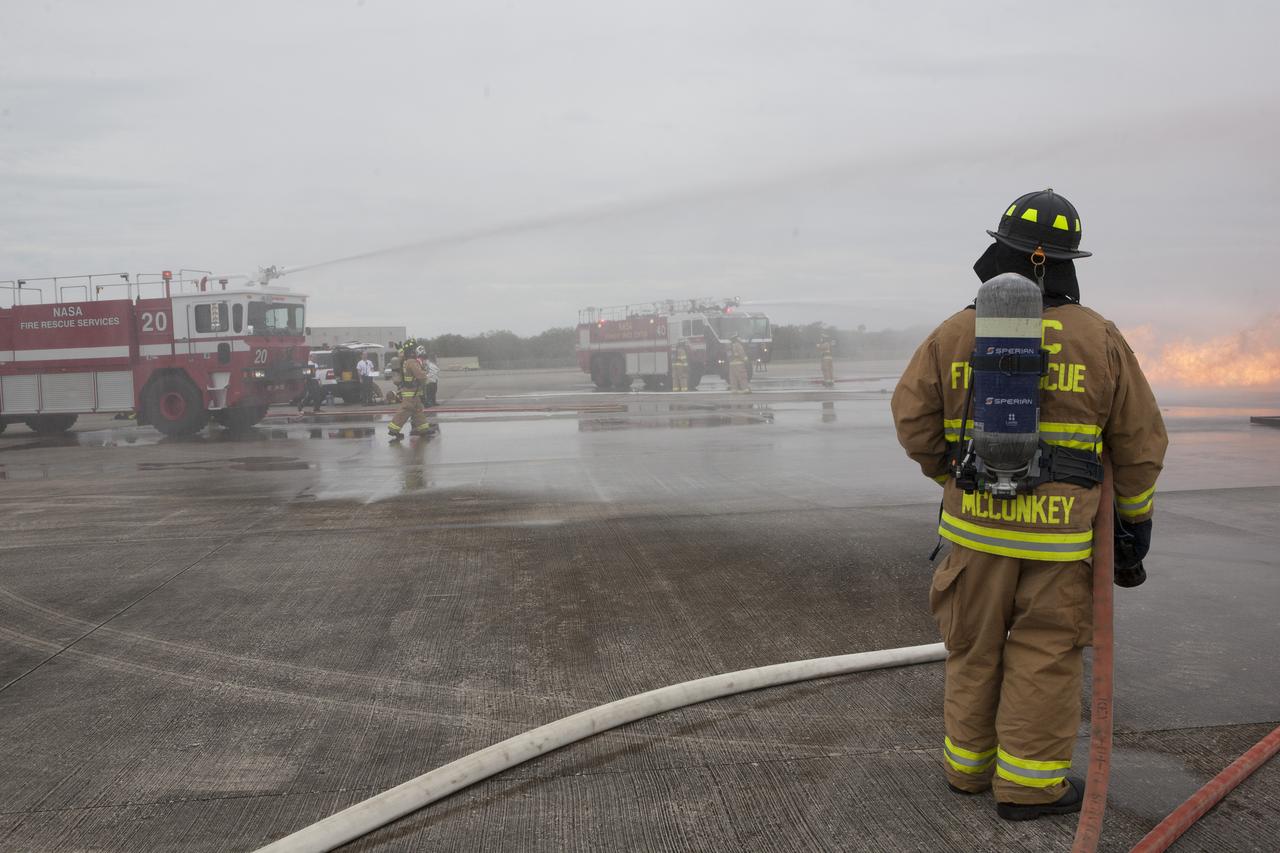
CAPE CANAVERAL, Fla. - Special Rescue Operations firefighters with NASA Fire Rescue Services in the Protective Services Office at NASA’s Kennedy Space Center in Florida prepare to participate in a training exercise at the Shuttle Landing Facility. A small fire is burning near a mock-up of a plane during the training exercise. Kennedy’s firefighters recently achieved Pro Board Certification in aerial fire truck operations and completed vehicle extrication training using the Jaws of Life. The Protective Services Office is one step closer to achieving certification in vehicle machinery extrication and other rescue skills. Kennedy’s firefighters are with G4S Government Solutions Inc., on the Kennedy Protective Services Contract. Photo credit: NASA/Kim Shiflett
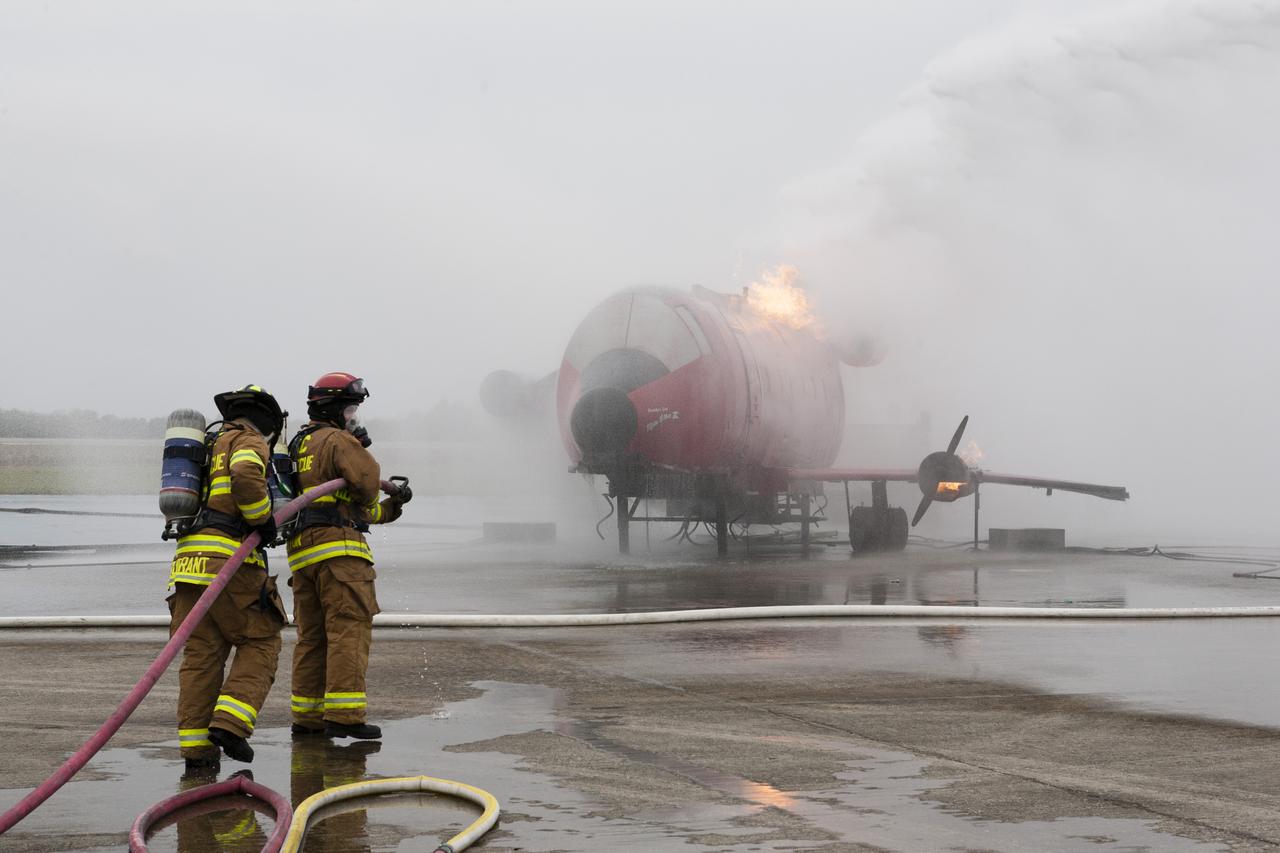
CAPE CANAVERAL, Fla. - During a training exercise, Special Rescue Operations firefighters with NASA Fire Rescue Services in the Protective Services Office at NASA’s Kennedy Space Center in Florida use hoses to put out a fire burning on a mock-up of a small plane at the Shuttle Landing Facility. They are wearing protective gear for the training exercise. Kennedy’s firefighters recently achieved Pro Board Certification in aerial fire truck operations and completed vehicle extrication training using the Jaws of Life. The Protective Services Office is one step closer to achieving certification in vehicle machinery extrication and other rescue skills. Kennedy’s firefighters are with G4S Government Solutions Inc., on the Kennedy Protective Services Contract. Photo credit: NASA/Kim Shiflett
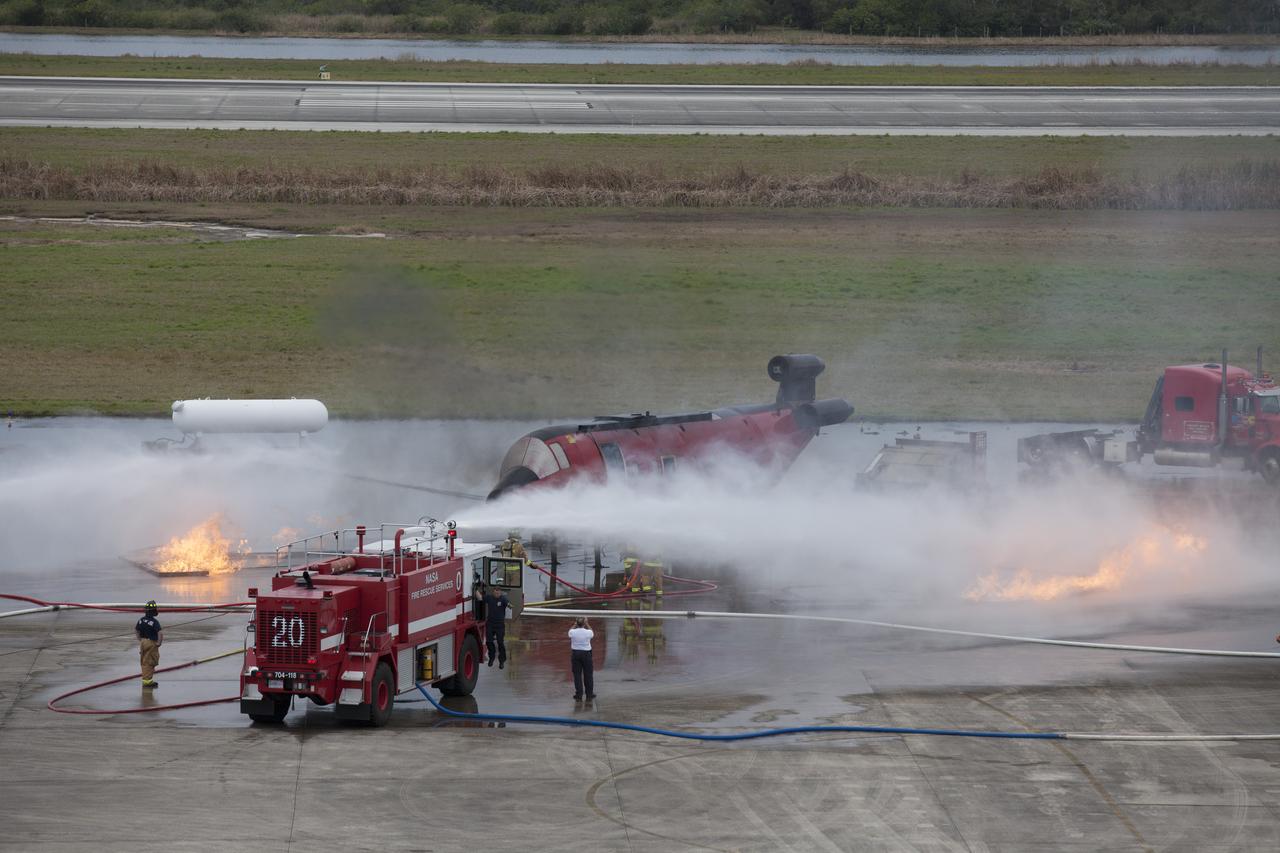
CAPE CANAVERAL, Fla. - Special Rescue Operations firefighters with NASA Fire Rescue Services in the Protective Services Office at NASA’s Kennedy Space Center in Florida participate in a training exercise at the Shuttle Landing Facility. Firefighters use a fire truck to put out a fire burning close to a mock-up of a small plane and a truck. Kennedy’s firefighters recently achieved Pro Board Certification in aerial fire truck operations and completed vehicle extrication training using the Jaws of Life. The Protective Services Office is one step closer to achieving certification in vehicle machinery extrication and other rescue skills. Kennedy’s firefighters are with G4S Government Solutions Inc., on the Kennedy Protective Services Contract. Photo credit: NASA/Kim Shiflett
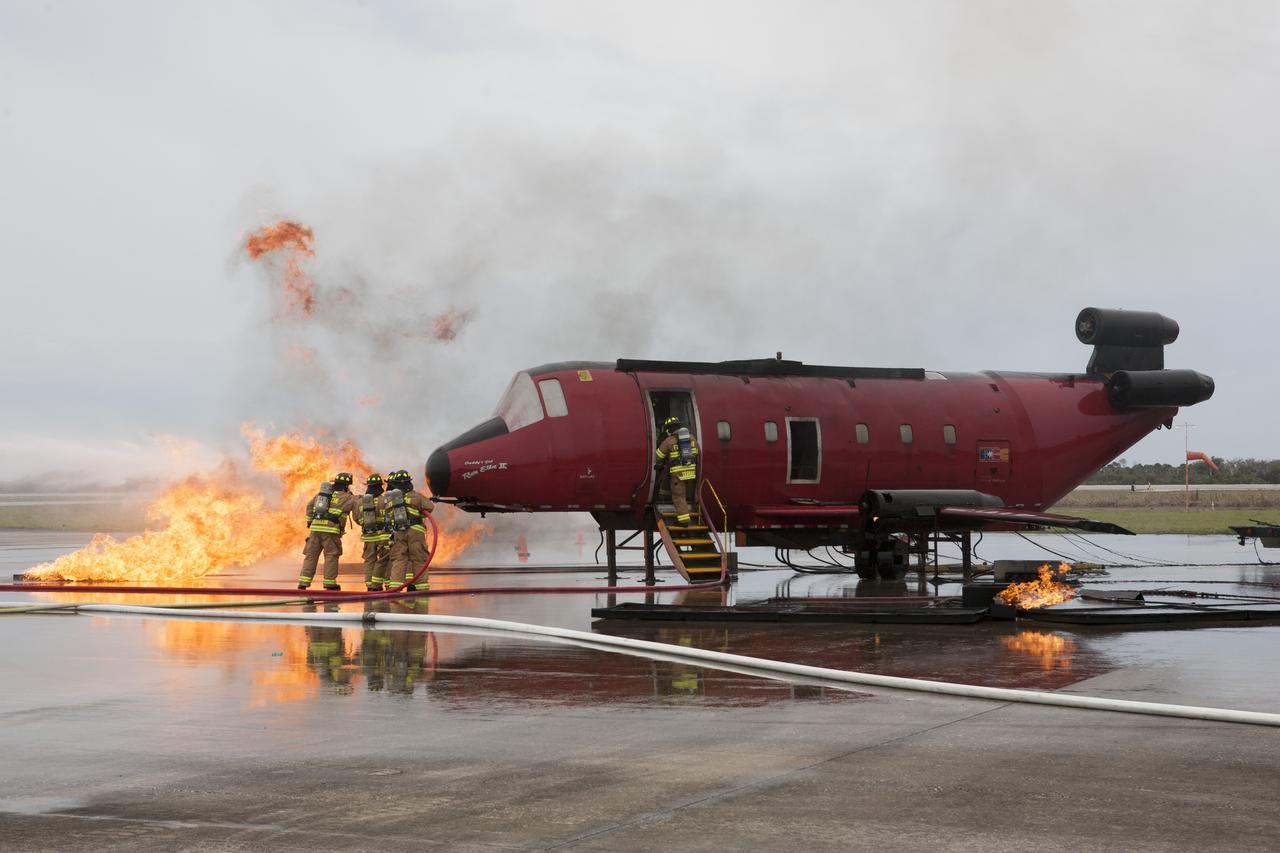
CAPE CANAVERAL, Fla. - Special Rescue Operations firefighters with NASA Fire Rescue Services in the Protective Services Office at NASA’s Kennedy Space Center in Florida participate in a training exercise at the Shuttle Landing Facility. Firefighters, wearing protective gear, use hoses to put out a fire burning near the mock-up of a small plane as another firefighter checks inside the plane. Kennedy’s firefighters recently achieved Pro Board Certification in aerial fire truck operations and completed vehicle extrication training using the Jaws of Life. The Protective Services Office is one step closer to achieving certification in vehicle machinery extrication and other rescue skills. Kennedy’s firefighters are with G4S Government Solutions Inc., on the Kennedy Protective Services Contract. Photo credit: NASA/Kim Shiflett
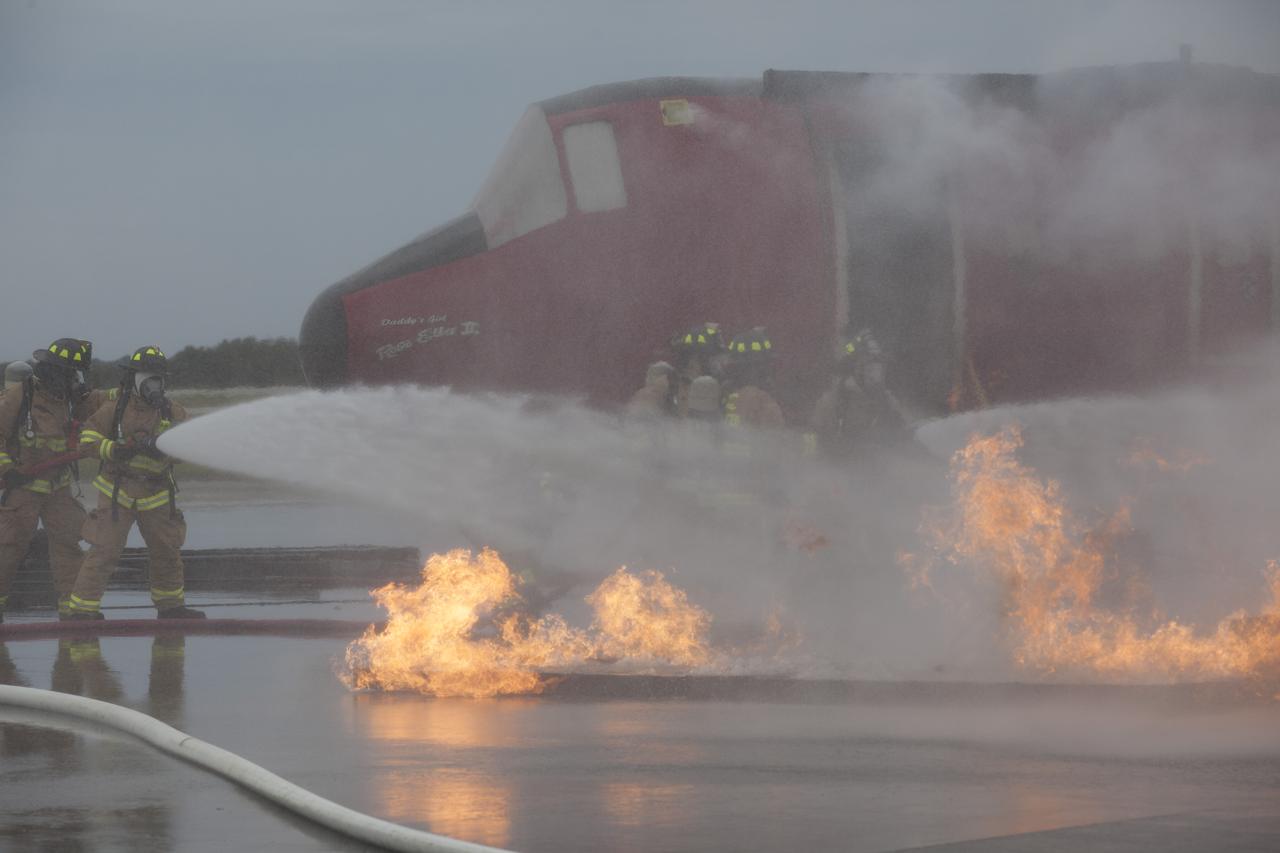
CAPE CANAVERAL, Fla. - Special Rescue Operations firefighters with NASA Fire Rescue Services in the Protective Services Office at NASA’s Kennedy Space Center in Florida participate in a training exercise at the Shuttle Landing Facility. Firefighters, wearing protective gear, use hoses to put out a fire burning close to a mock-up of a small plane. Kennedy’s firefighters recently achieved Pro Board Certification in aerial fire truck operations and completed vehicle extrication training using the Jaws of Life. The Protective Services Office is one step closer to achieving certification in vehicle machinery extrication and other rescue skills. Kennedy’s firefighters are with G4S Government Solutions Inc., on the Kennedy Protective Services Contract. Photo credit: NASA/Kim Shiflett
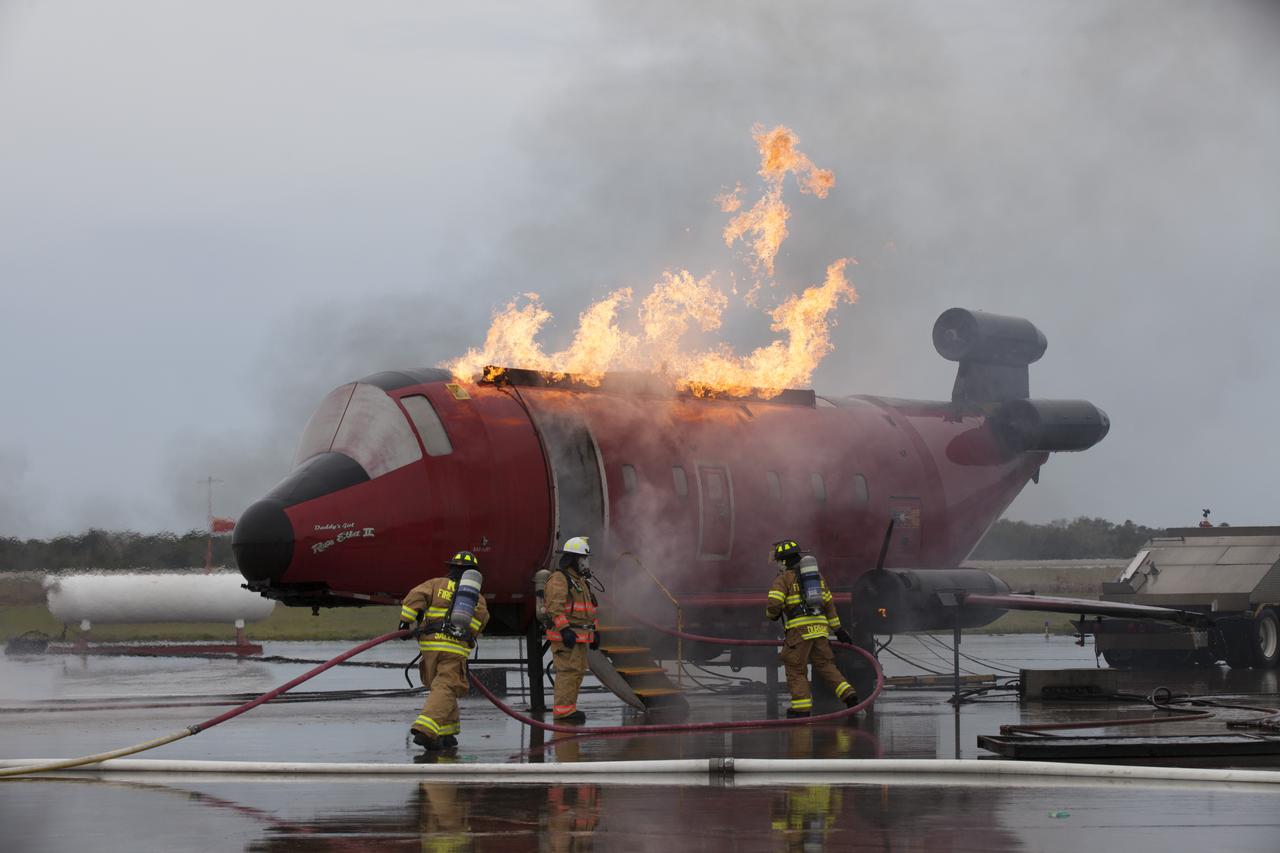
CAPE CANAVERAL, Fla. - Special Rescue Operations firefighters with NASA Fire Rescue Services in the Protective Services Office at NASA’s Kennedy Space Center in Florida participate in a training exercise at the Shuttle Landing Facility. Firefighters, wearing protective gear, use hoses to put out a fire burning on a mock-up of a small plane. Kennedy’s firefighters recently achieved Pro Board Certification in aerial fire truck operations and completed vehicle extrication training using the Jaws of Life. The Protective Services Office is one step closer to achieving certification in vehicle machinery extrication and other rescue skills. Kennedy’s firefighters are with G4S Government Solutions Inc., on the Kennedy Protective Services Contract. Photo credit: NASA/Kim Shiflett
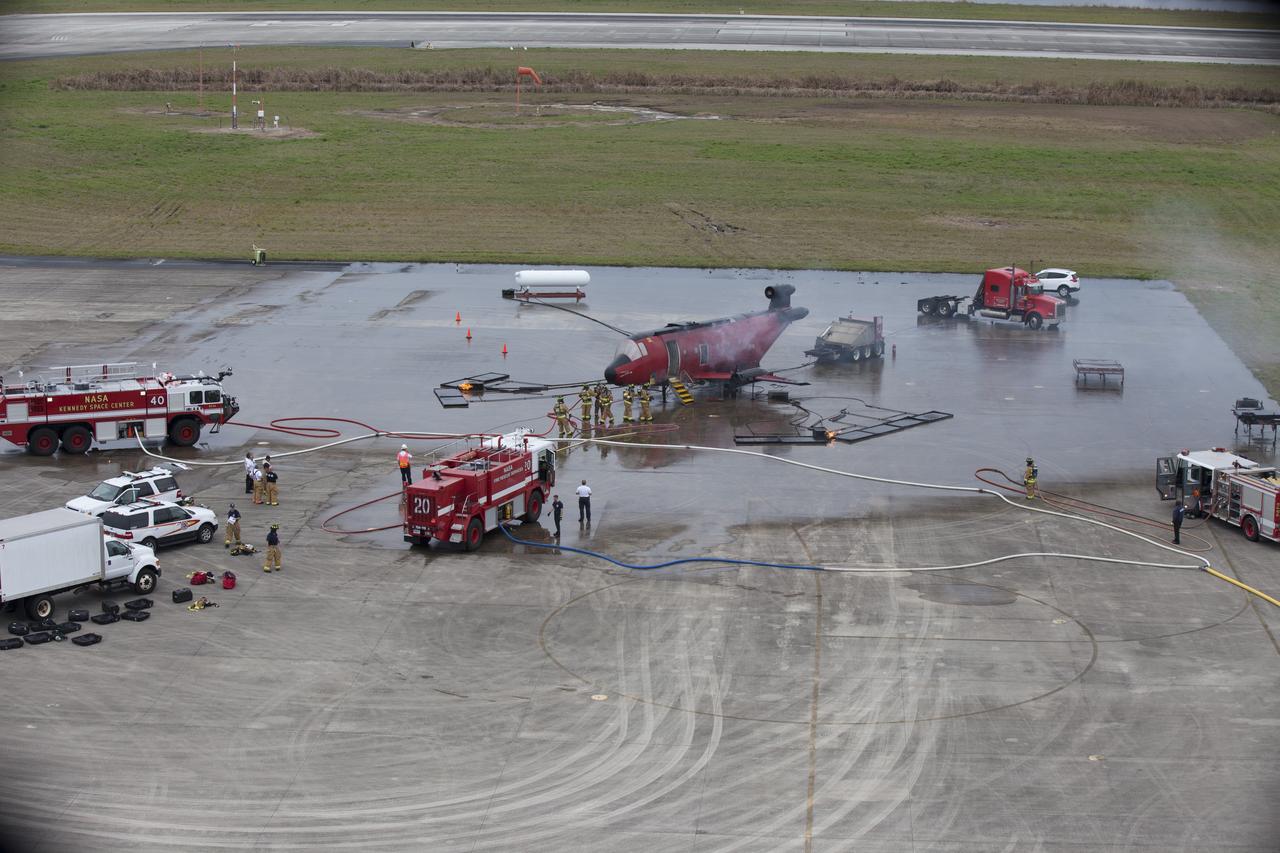
CAPE CANAVERAL, Fla. - Special Rescue Operations firefighters with NASA Fire Rescue Services in the Protective Services Office at NASA’s Kennedy Space Center in Florida participate in a training exercise at the Shuttle Landing Facility. Firefighters use fire trucks and hoses to extinguish flames burning on and around a mock-up of a small plane. Kennedy’s firefighters recently achieved Pro Board Certification in aerial fire truck operations and completed vehicle extrication training using the Jaws of Life. The Protective Services Office is one step closer to achieving certification in vehicle machinery extrication and other rescue skills. Kennedy’s firefighters are with G4S Government Solutions Inc., on the Kennedy Protective Services Contract. Photo credit: NASA/Kim Shiflett
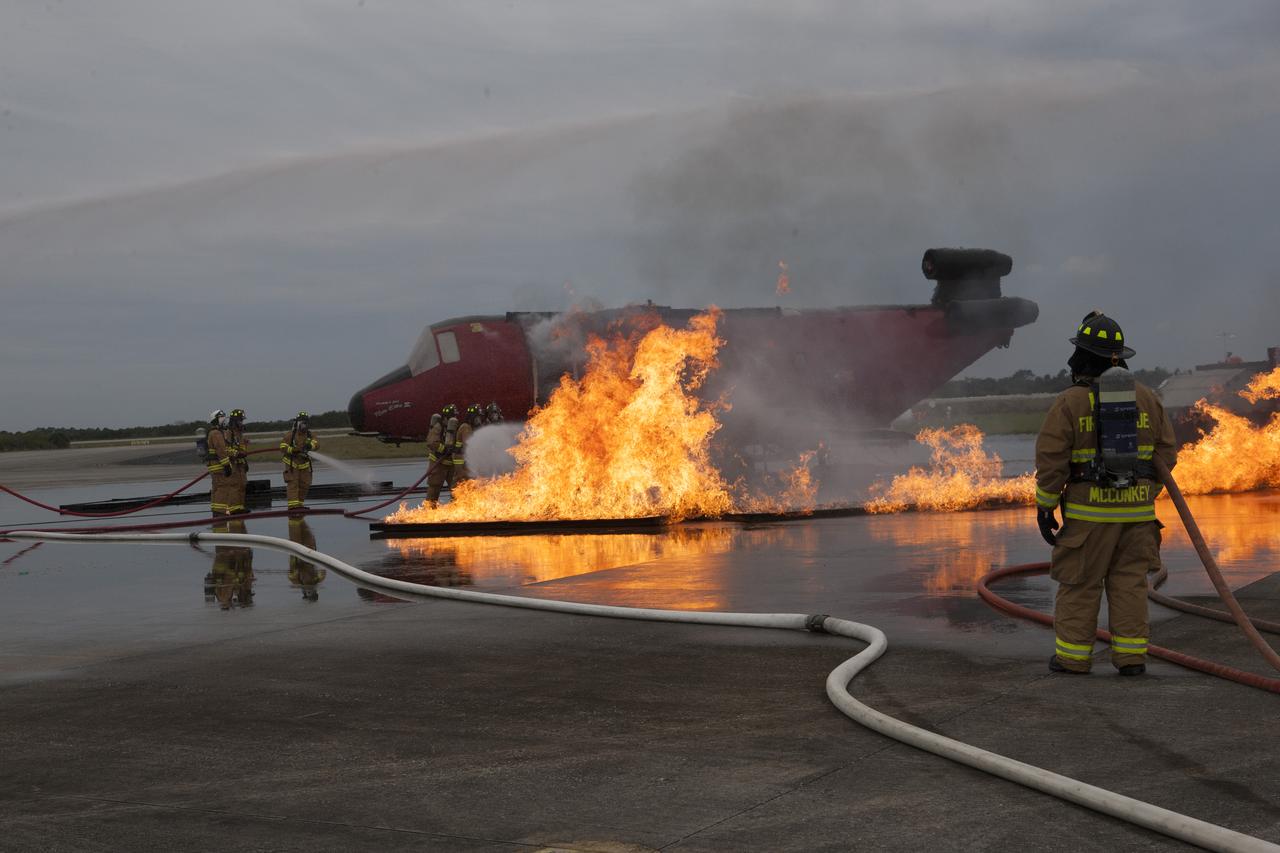
CAPE CANAVERAL, Fla. - Special Rescue Operations firefighters with NASA Fire Rescue Services in the Protective Services Office at NASA’s Kennedy Space Center in Florida participate in a training exercise at the Shuttle Landing Facility. Firefighters, wearing protective gear, use hoses to put out a fire burning near the mock-up of a small plane. Kennedy’s firefighters recently achieved Pro Board Certification in aerial fire truck operations and completed vehicle extrication training using the Jaws of Life. The Protective Services Office is one step closer to achieving certification in vehicle machinery extrication and other rescue skills. Kennedy’s firefighters are with G4S Government Solutions Inc., on the Kennedy Protective Services Contract. Photo credit: NASA/Kim Shiflett
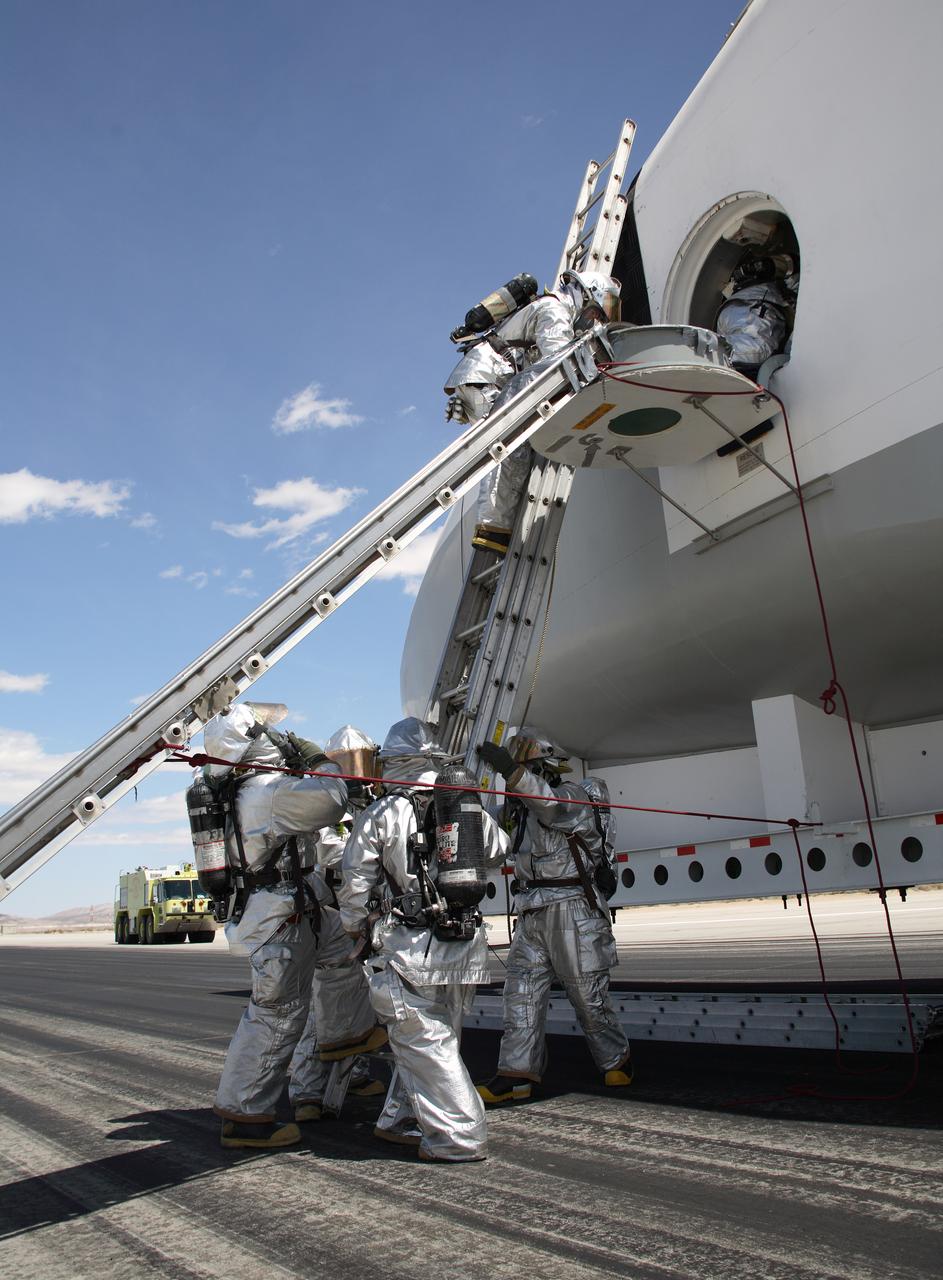
Air Force fire/rescue crew enter the space shuttle cabin mockup hatch to evacuate the shuttle crew during a shuttle rescue training exercise at Edwards AFB. (USAF photo # 070505-F-1287F-118)
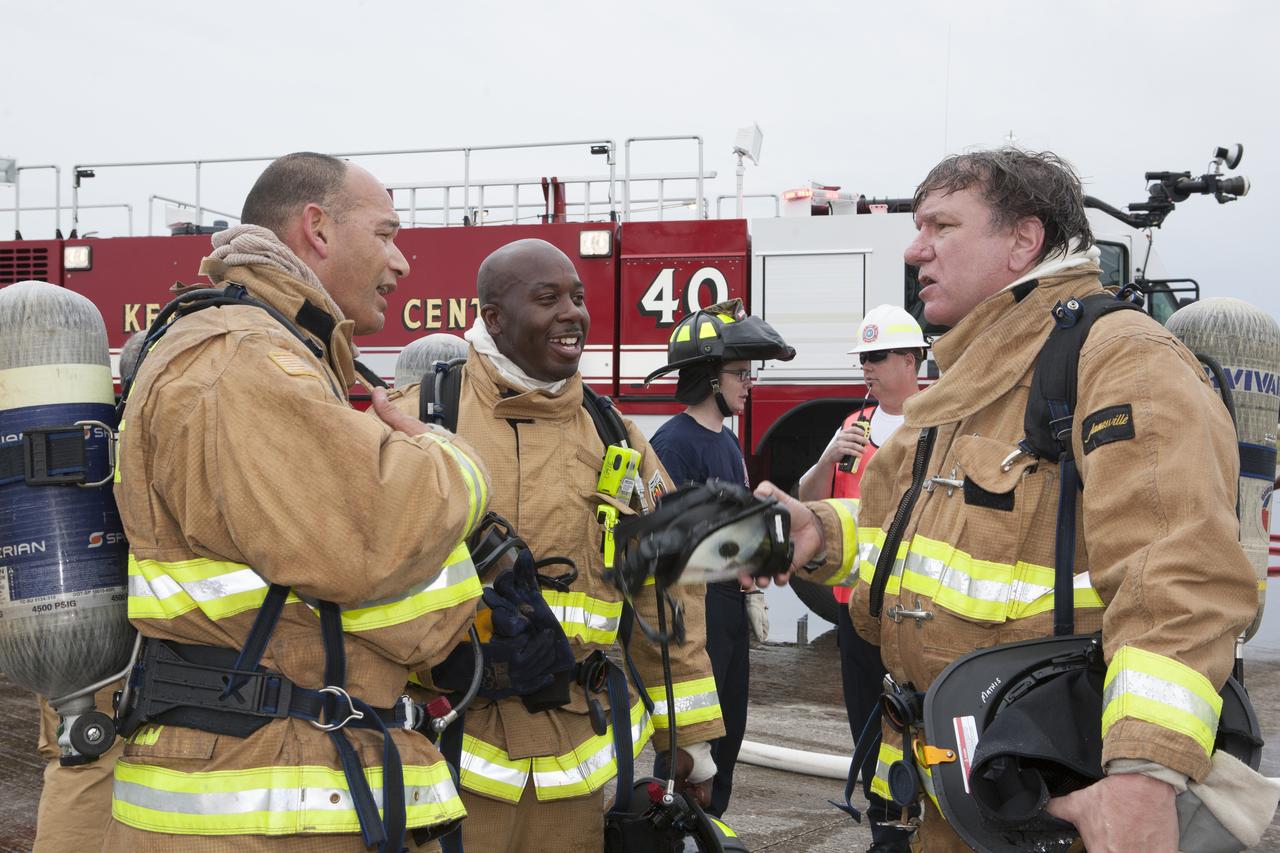
CAPE CANAVERAL, Fla. - Special Rescue Operations firefighters with NASA Fire Rescue Services in the Protective Services Office at NASA’s Kennedy Space Center in Florida review procedures after participating in a training exercise at the Shuttle Landing Facility. During the training simulation, firefighters used fire trucks and hoses to extinguish flames burning on and around a mock-up of a small plane. Kennedy’s firefighters recently achieved Pro Board Certification in aerial fire truck operations and completed vehicle extrication training using the Jaws of Life. The Protective Services Office is one step closer to achieving certification in vehicle machinery extrication and other rescue skills. Kennedy’s firefighters are with G4S Government Solutions Inc., on the Kennedy Protective Services Contract. Photo credit: NASA/Kim Shiflett
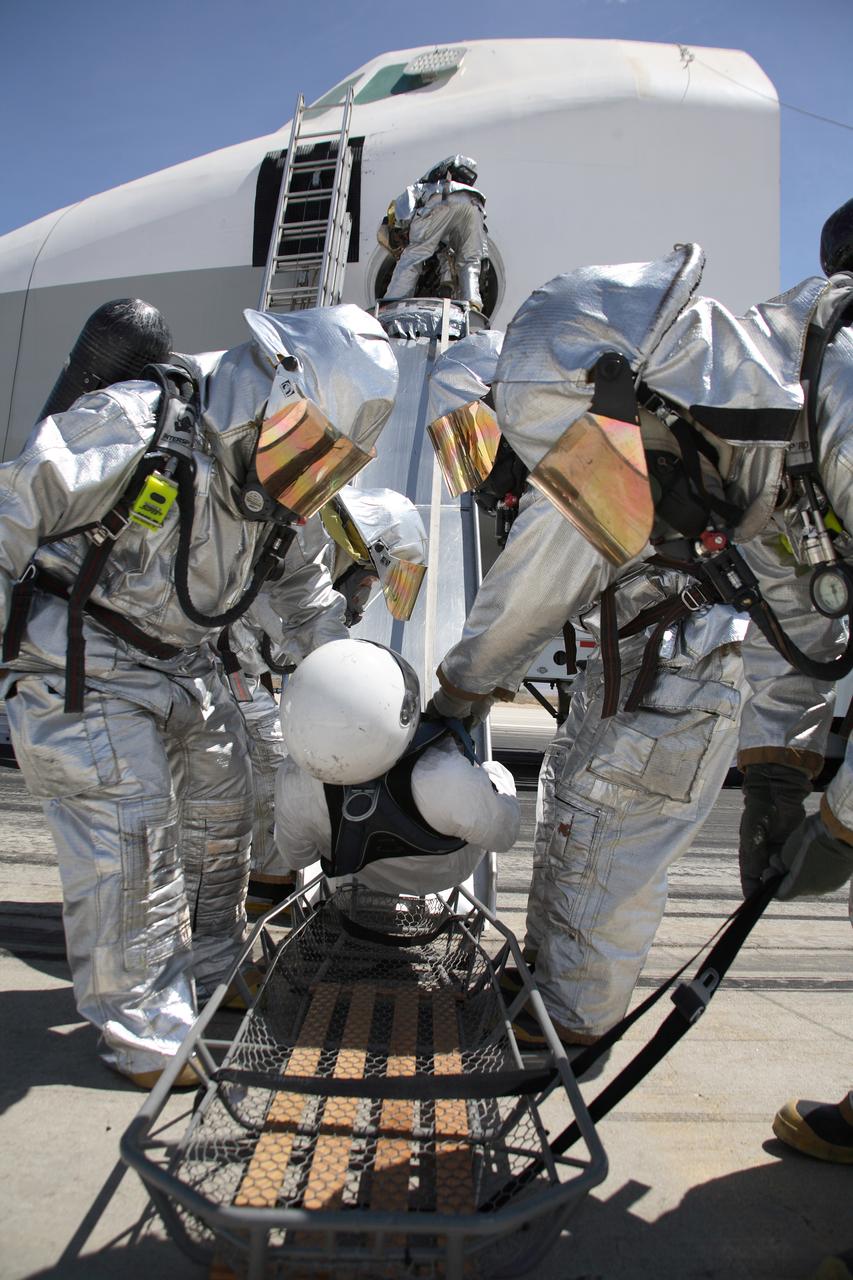
Air Force fire/rescue crew place a volunteer "injured astronaut" on a stretcher after exiting the shuttle cabin mockup during the training exercise. (USAF photo # 070505-F-1287F-126)
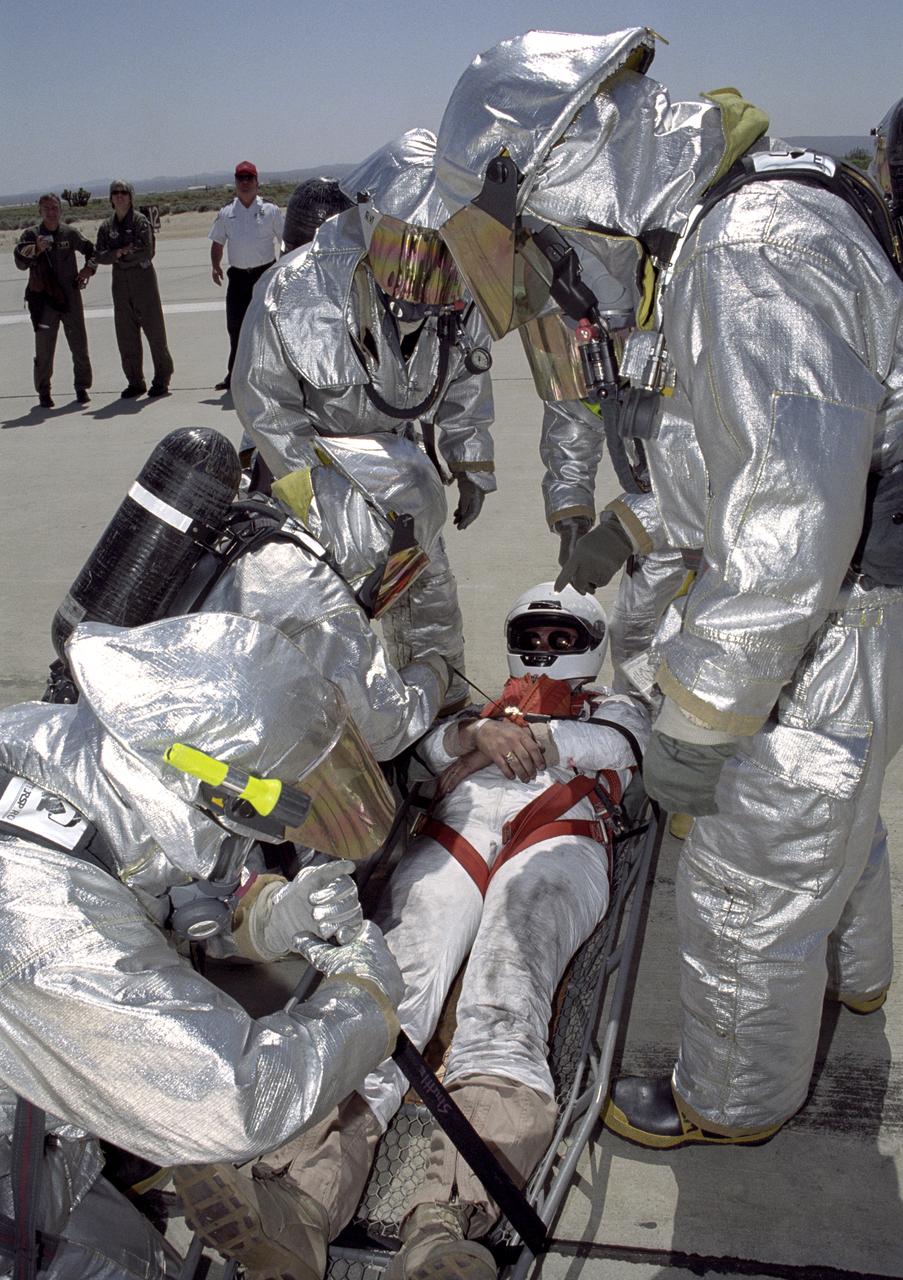
Clad in full thermal protection suits, Air Force fire-rescue crews strap a stand-in "astronaut" into a litter during a Space Shuttle rescue training exercise at Edwards AFB.
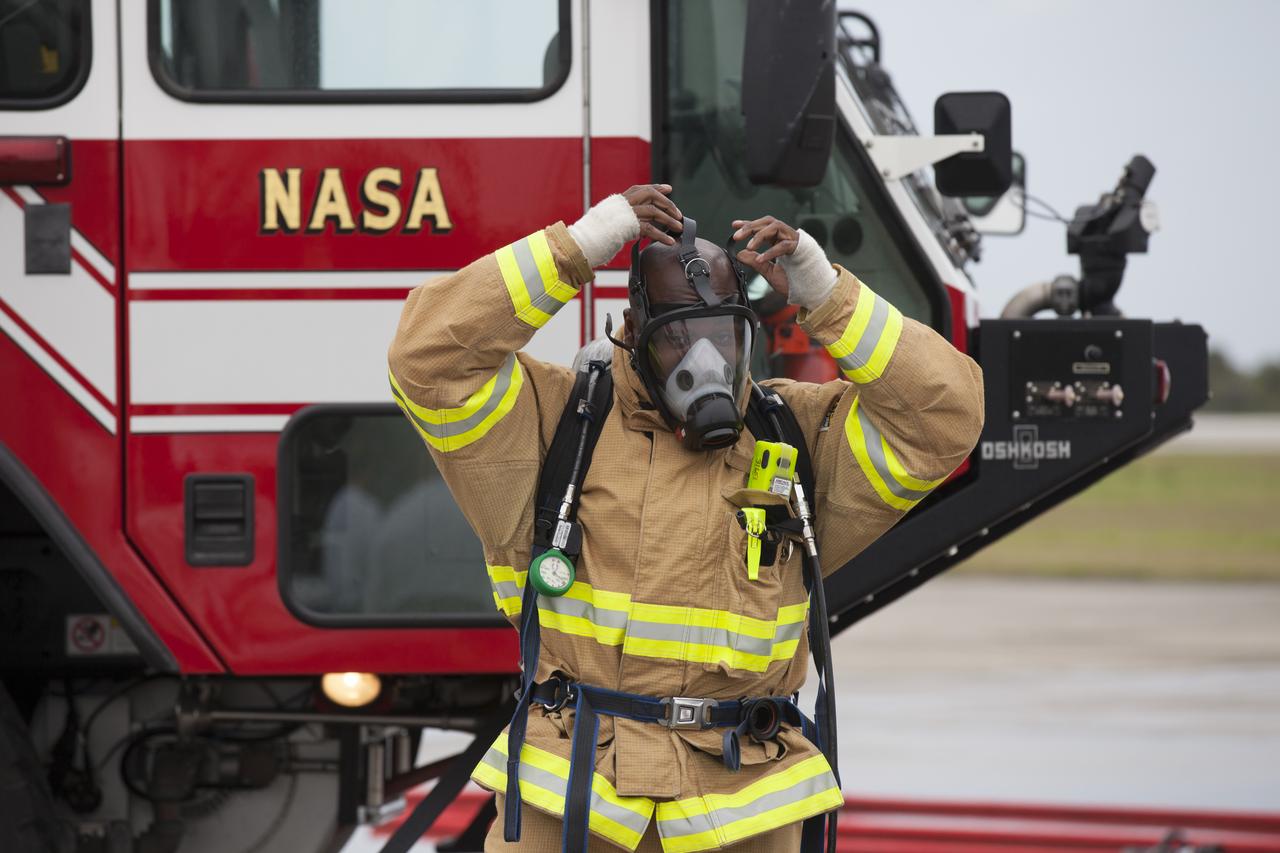
CAPE CANAVERAL, Fla. - Special Rescue Operations firefighters with NASA Fire Rescue Services in the Protective Services Office at NASA’s Kennedy Space Center in Florida practice firefighting skills at the Shuttle Landing Facility. A firefighter dons protective gear to prepare for the training simulation. Kennedy’s firefighters recently achieved Pro Board Certification in aerial fire truck operations and completed vehicle extrication training using the Jaws of Life. The Protective Services Office is one step closer to achieving certification in vehicle machinery extrication and other rescue skills. Kennedy’s firefighters are with G4S Government Solutions Inc., on the Kennedy Protective Services Contract. Photo credit: NASA/Kim Shiflett
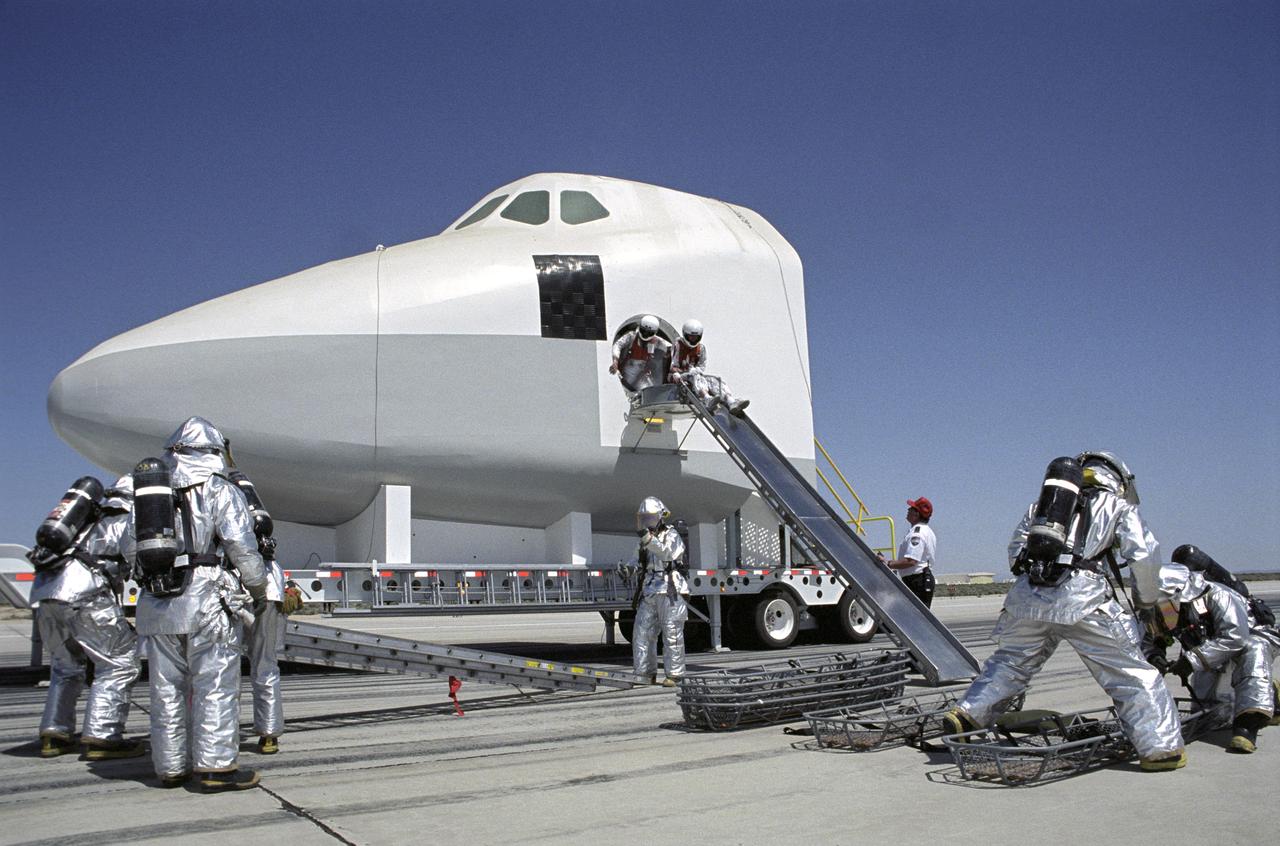
While fire-rescue personnel prepare evacuation litters, two stand-in "astronauts" prepare to use an exit slide from a Shuttle mockup during a rescue training exercise.
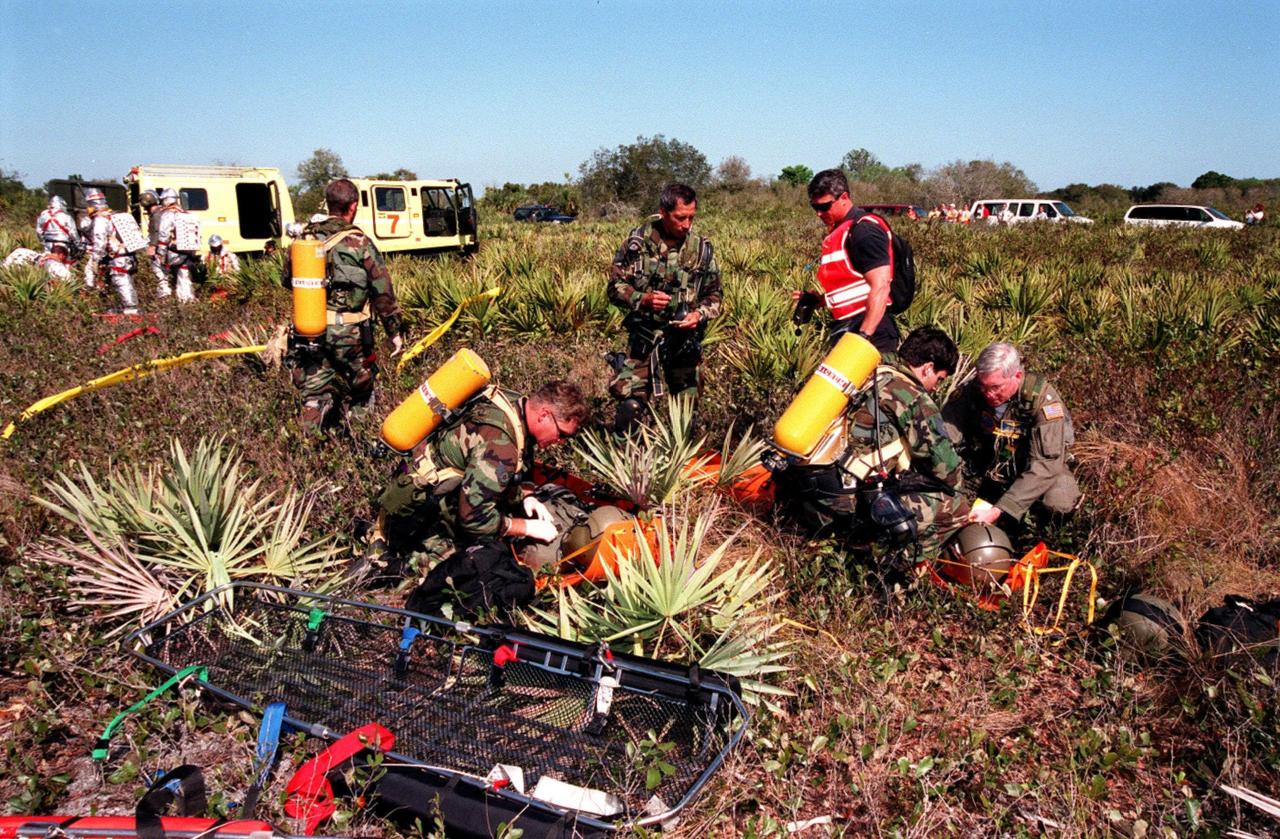
KENNEDY SPACE CENTER, FLA. -- In the simulated rescue mission, the KSC response team takes part in the unlikely scenario of a Shuttle mishap at the Shuttle Landing Facility. The Mode 7 simulation of an astronaut rescue exercised all aspects of command and control, search and rescue, and medical procedures required for a successful rescue. The remote location of the mock-up prevents a totally land-based crew rescue, and calls on a NASA UH-1 helicopter to locate the site and four Air Force HH-60 helicopters to drop emergency equipment and fire/rescue workers to prepare the "crew" for preliminary triage. The helicopters later are used to remove the crew five astronaut candidates, one representative from the Vehicle Integration Test office, and one fire/rescue worker. The exercise concluded with airlifted "patients" arriving safely in the emergency rooms of participating area hospitals.
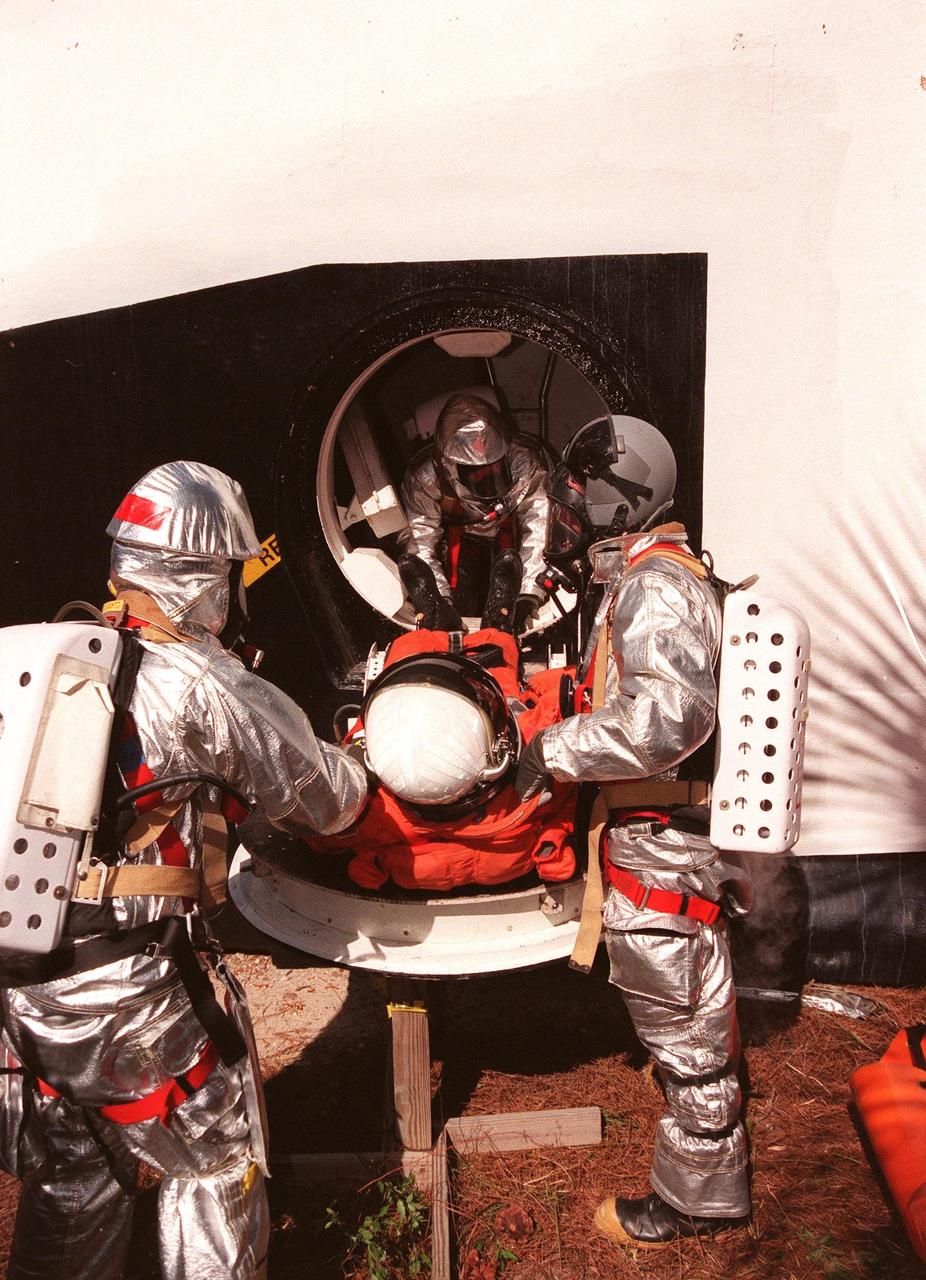
KENNEDY SPACE CENTER, FLA. -- During a simulated rescue mission in the woods near the Shuttle Landing Facility, the KSC response team removes a Shuttle "crew" member from the mock orbiter. The response team is training for the unlikely scenario of a Shuttle mishap at the SLF. The Mode 7 simulation of an astronaut rescue exercises all aspects of command and control, search and rescue, and medical procedures required for a successful rescue. The remote location of the mock-up prevents a totally land-based crew rescue, and calls on a NASA UH-1 helicopter to locate the site and four Air Force HH-60 helicopters to drop emergency equipment and fire/rescue workers to prepare the "crew" for preliminary triage. The helicopters later are used to remove the crew five astronaut candidates, one representative from the Vehicle Integration Test office, and one fire/rescue worker. The exercise concluded with airlifted "patients" arriving safely in the emergency rooms of participating area hospitals
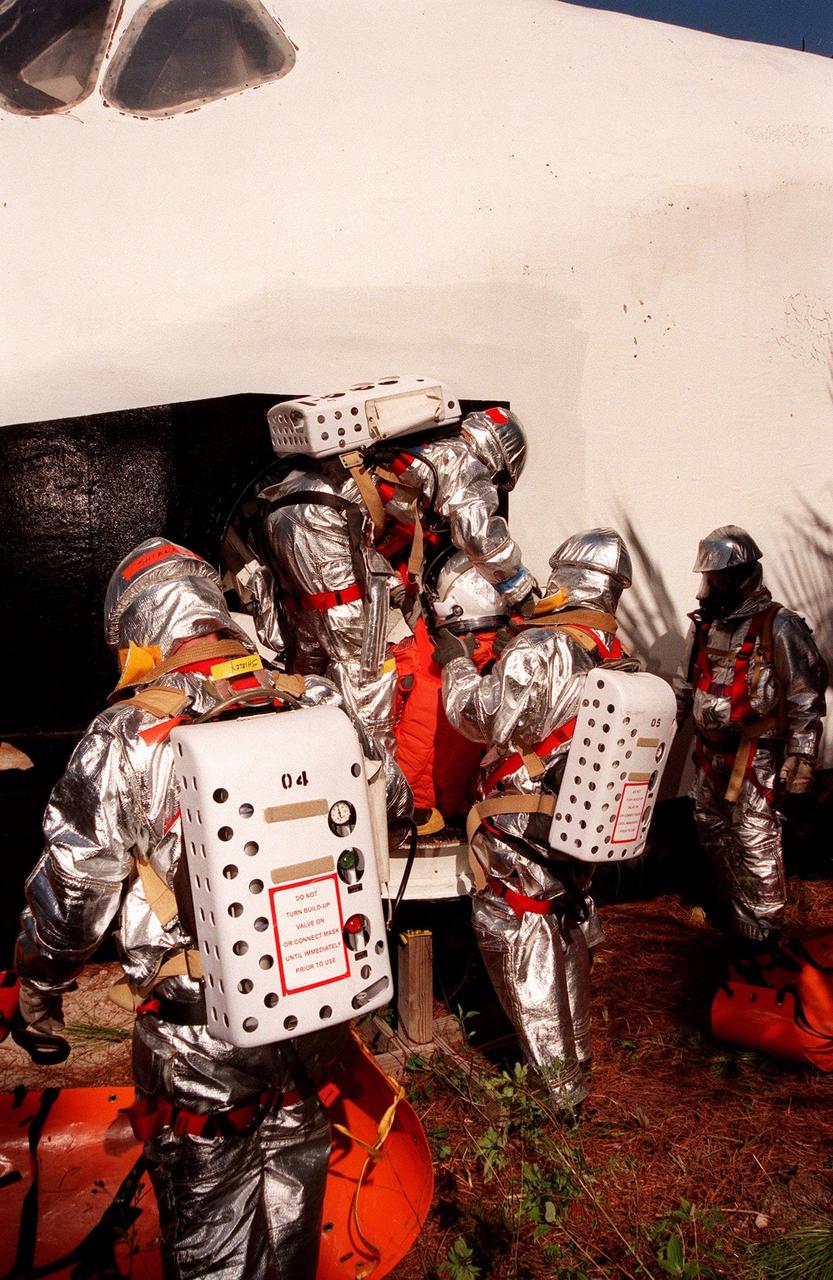
During a simulated rescue mission in the woods near the Shuttle Landing Facility (SLF), the KSC response team removes a crew member from a mock Shuttle. The response team is training for the unlikely scenario of a Shuttle mishap at the SLF. The Mode 7 simulation of an astronaut rescue exercises all aspects of command and control, search and rescue, and medical procedures required for a successful rescue. The remote location of the mock-up prevents a totally land-based crew rescue, and calls on a NASA UH-1 helicopter to locate the site and four Air Force HH-60 helicopters to drop emergency equipment and fire/rescue workers to prepare the "crew" for preliminary triage. The helicopters later are used to remove the crew five astronaut candidates, one representative from the Vehicle Integration Test office, and one fire/rescue worker. The exercise concluded with airlifted "patients" arriving safely in the emergency rooms of participating area hospitals
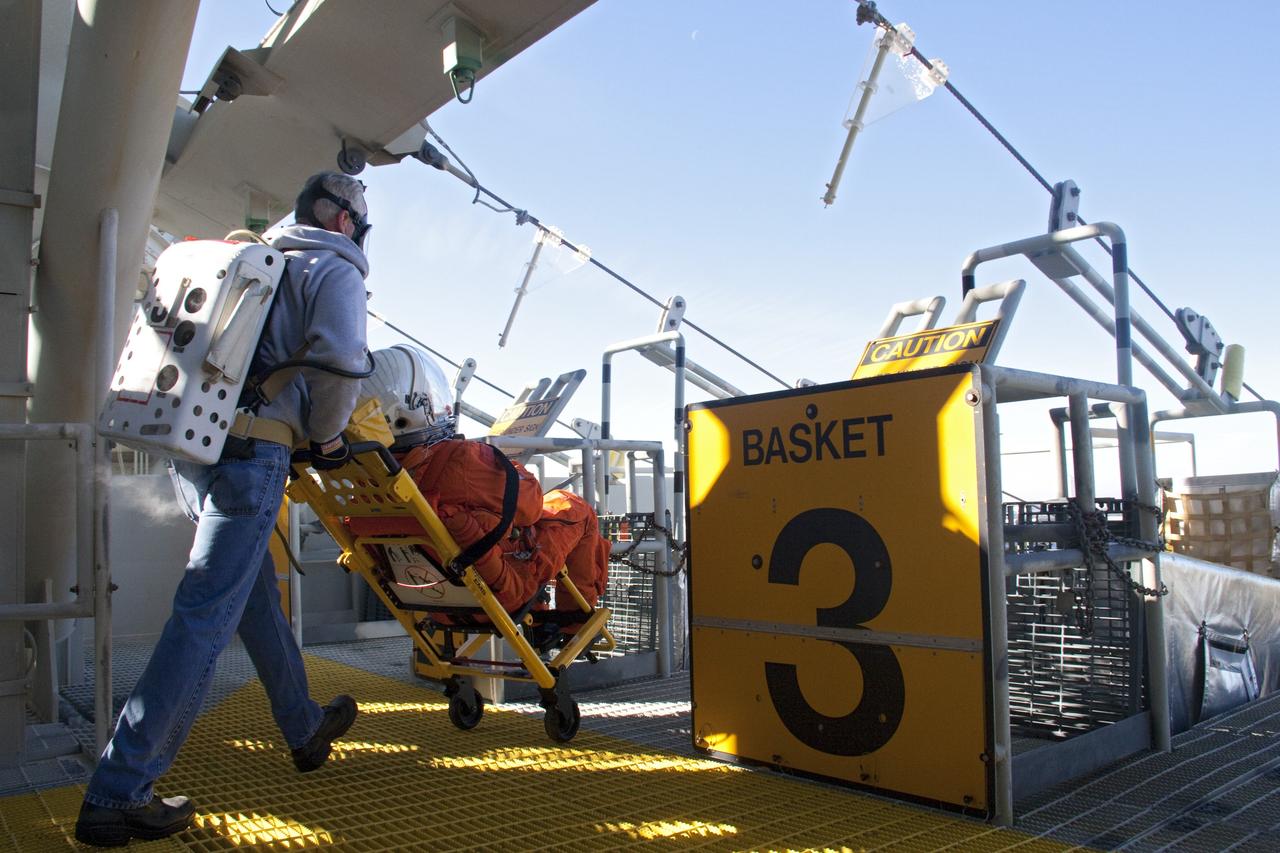
CAPE CANAVERAL, Fla. -- At NASA's Kennedy Space Center in Florida, members of an emergency escape training team perform a simulated evacuation exercise at Launch Pad 39A. For several days, volunteers portraying astronauts, take part in training exercises which allow teams to practice emergency response procedures, including helicopter evacuation to local hospitals. Training normally involves NASA fire rescue personnel, personnel from the Air Force's 920th Rescue Wing, and medical trauma teams from central Florida hospitals, and is required every 18 months to certify Fire Rescue and Closeout Crew personnel. Photo credit: NASA/Troy Cryder
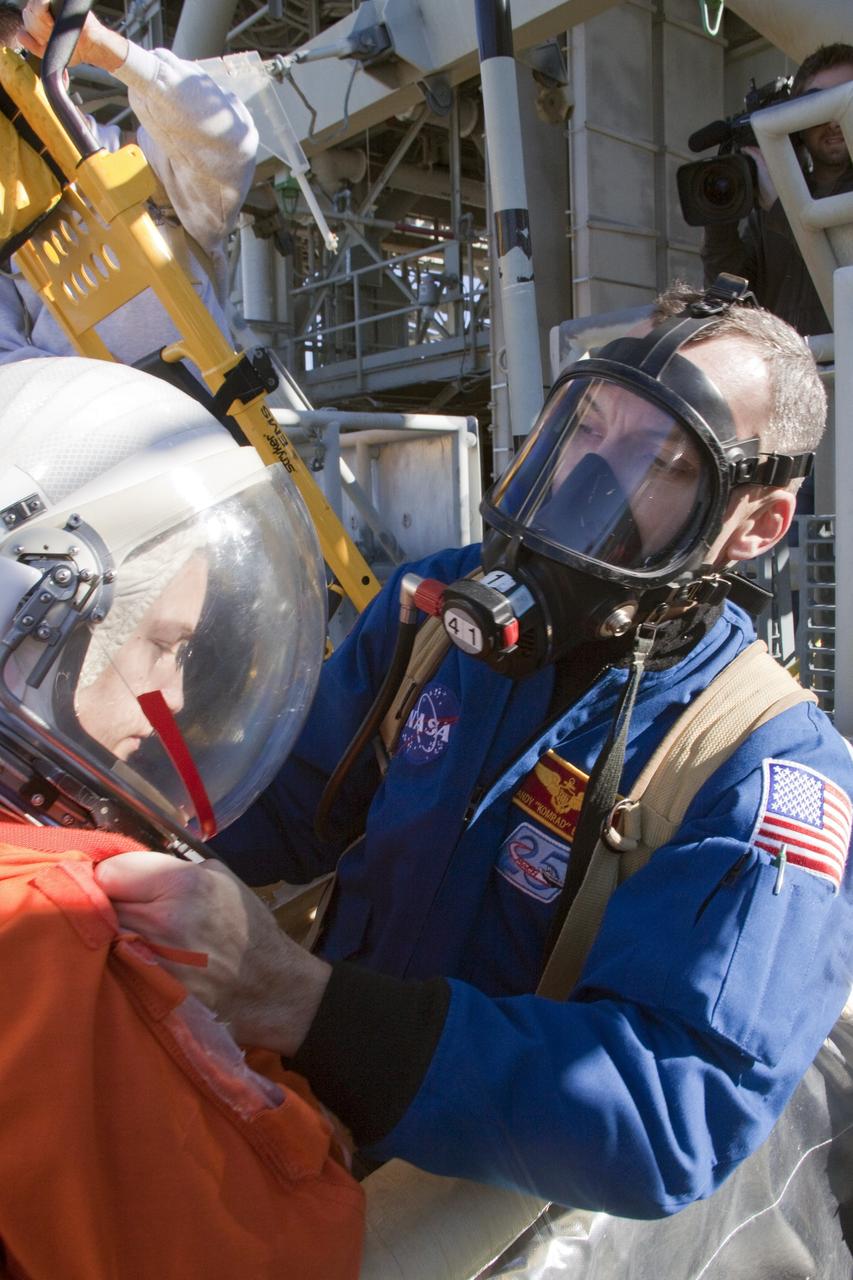
CAPE CANAVERAL, Fla. -- At NASA's Kennedy Space Center in Florida, members of an emergency escape training team perform a simulated evacuation exercise at Launch Pad 39A. For several days, volunteers portraying astronauts, take part in training exercises which allow teams to practice emergency response procedures, including helicopter evacuation to local hospitals. Training normally involves NASA fire rescue personnel, personnel from the Air Force's 920th Rescue Wing, and medical trauma teams from central Florida hospitals, and is required every 18 months to certify Fire Rescue and Closeout Crew personnel. Photo credit: NASA/Troy Cryder

CAPE CANAVERAL, Fla. -- At NASA's Kennedy Space Center in Florida, members of an emergency escape training team perform a simulated evacuation exercise at Launch Pad 39A. For several days, volunteers portraying astronauts, take part in training exercises which allow teams to practice emergency response procedures, including helicopter evacuation to local hospitals. Training normally involves NASA fire rescue personnel, personnel from the Air Force's 920th Rescue Wing, and medical trauma teams from central Florida hospitals, and is required every 18 months to certify Fire Rescue and Closeout Crew personnel. Photo credit: NASA/Troy Cryder
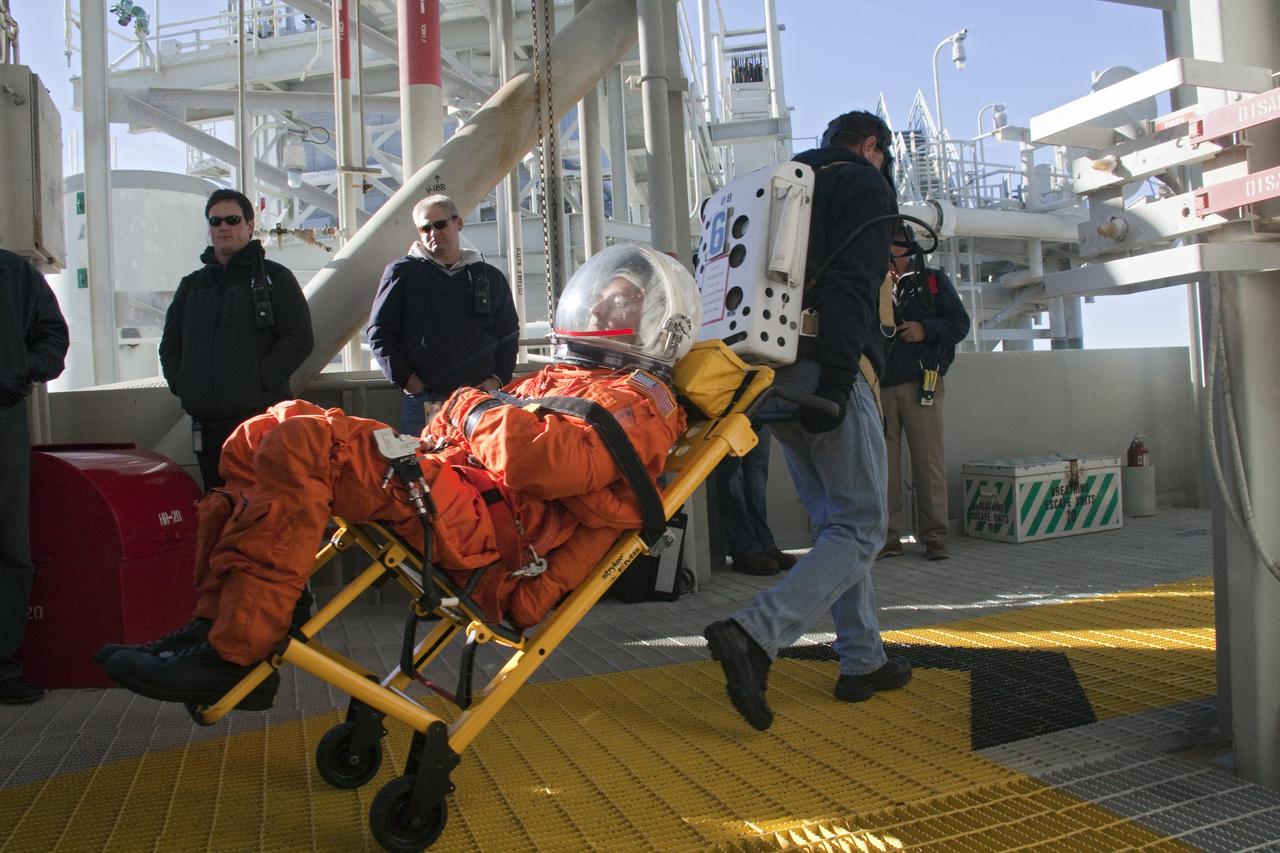
CAPE CANAVERAL, Fla. -- At NASA's Kennedy Space Center in Florida, members of an emergency escape training team perform a simulated evacuation exercise at Launch Pad 39A. For several days, volunteers portraying astronauts, take part in training exercises which allow teams to practice emergency response procedures, including helicopter evacuation to local hospitals. Training normally involves NASA fire rescue personnel, personnel from the Air Force's 920th Rescue Wing, and medical trauma teams from central Florida hospitals, and is required every 18 months to certify Fire Rescue and Closeout Crew personnel. Photo credit: NASA/Troy Cryder
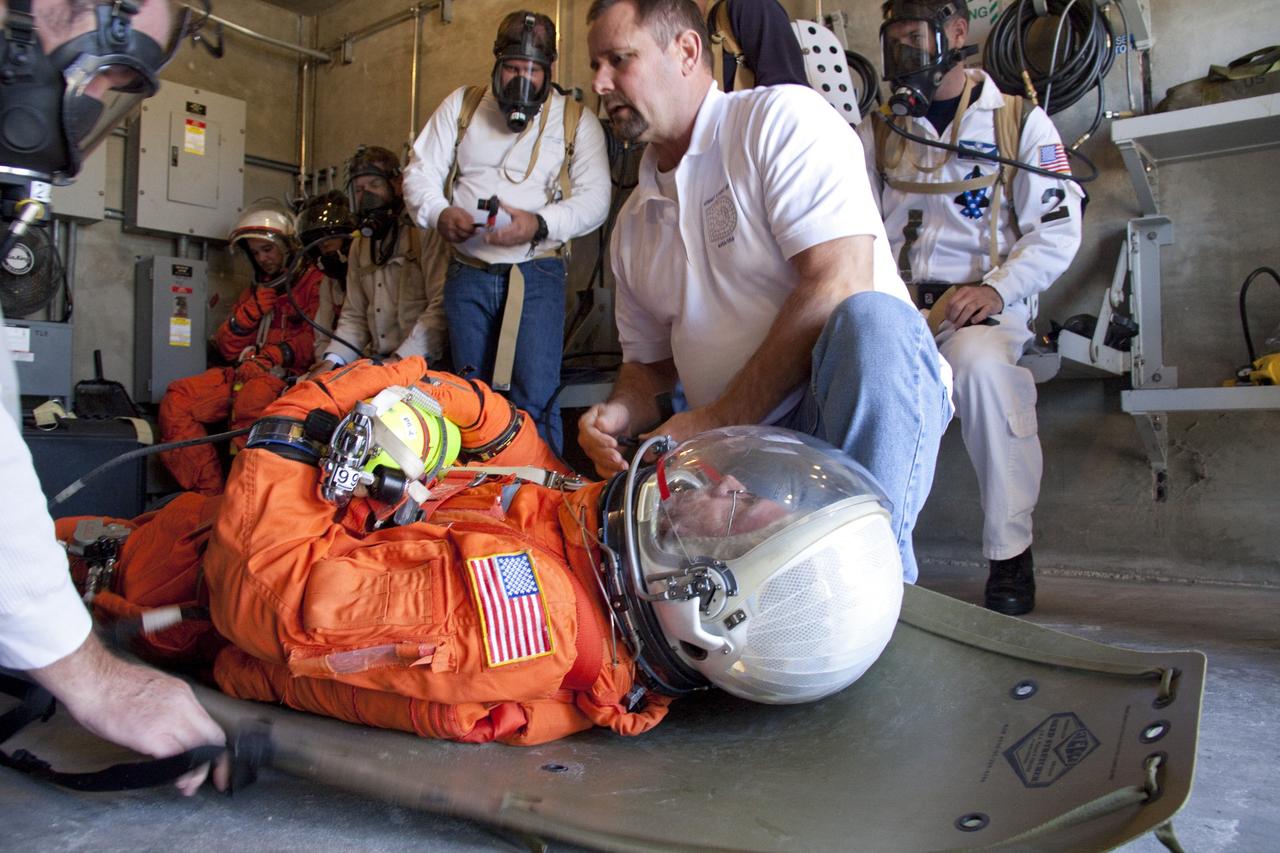
CAPE CANAVERAL, Fla. -- On Launch Pad 39A at NASA's Kennedy Space Center in Florida, members of an emergency escape training team perform a simulated evacuation exercise in the bunkers behind the slidewire basket landing site. For several days, volunteers portraying astronauts, take part in training exercises which allow teams to practice emergency response procedures, including helicopter evacuation to local hospitals. Training normally involves NASA fire rescue personnel, personnel from the Air Force's 920th Rescue Wing, and medical trauma teams from central Florida hospitals, and is required every 18 months to certify Fire Rescue and Closeout Crew personnel. Photo credit: NASA/Troy Cryder
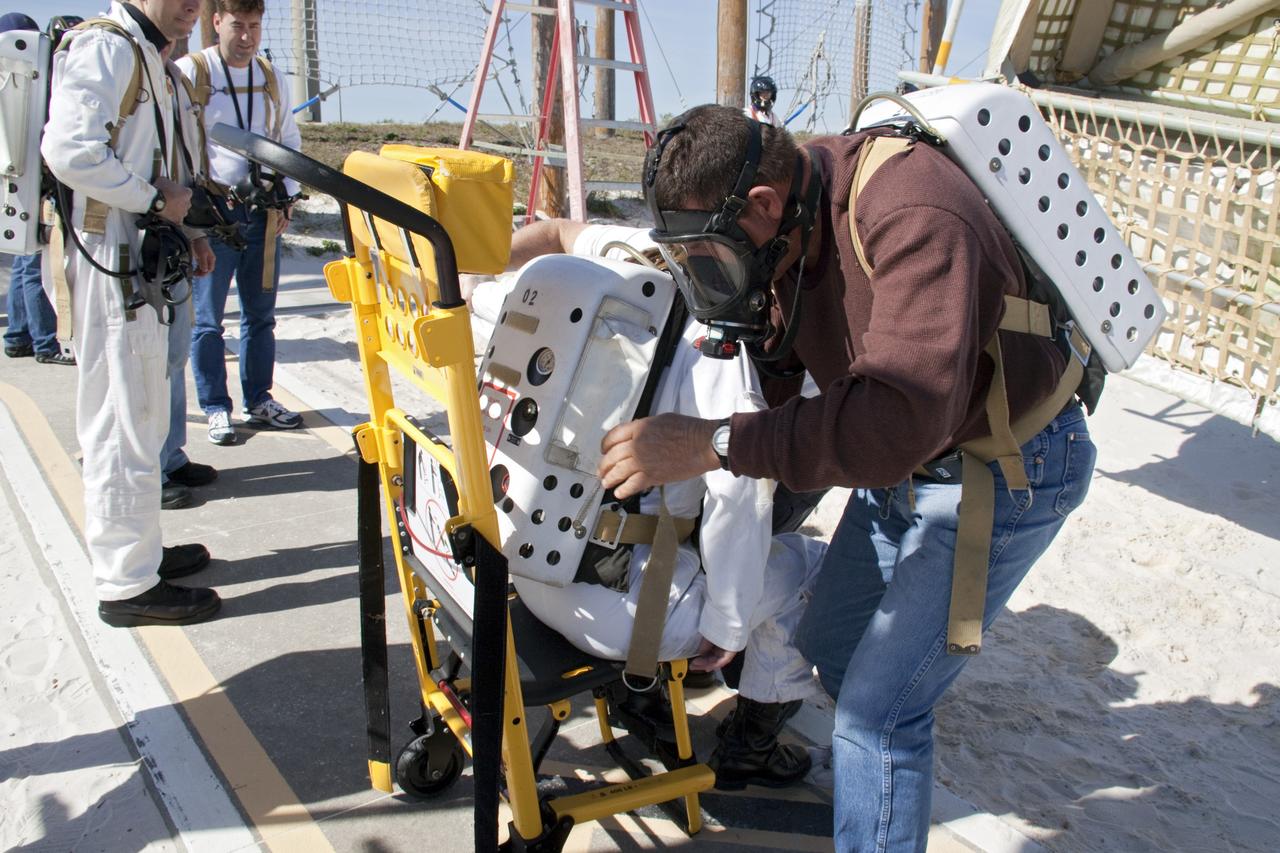
CAPE CANAVERAL, Fla. -- On Launch Pad 39A at NASA's Kennedy Space Center in Florida, members of an emergency escape training team perform a simulated evacuation exercise at the slidewire basket landing site. For several days, volunteers portraying astronauts, take part in training exercises which allow teams to practice emergency response procedures, including helicopter evacuation to local hospitals. Training normally involves NASA fire rescue personnel, personnel from the Air Force's 920th Rescue Wing, and medical trauma teams from central Florida hospitals, and is required every 18 months to certify Fire Rescue and Closeout Crew personnel. Photo credit: NASA/Troy Cryder
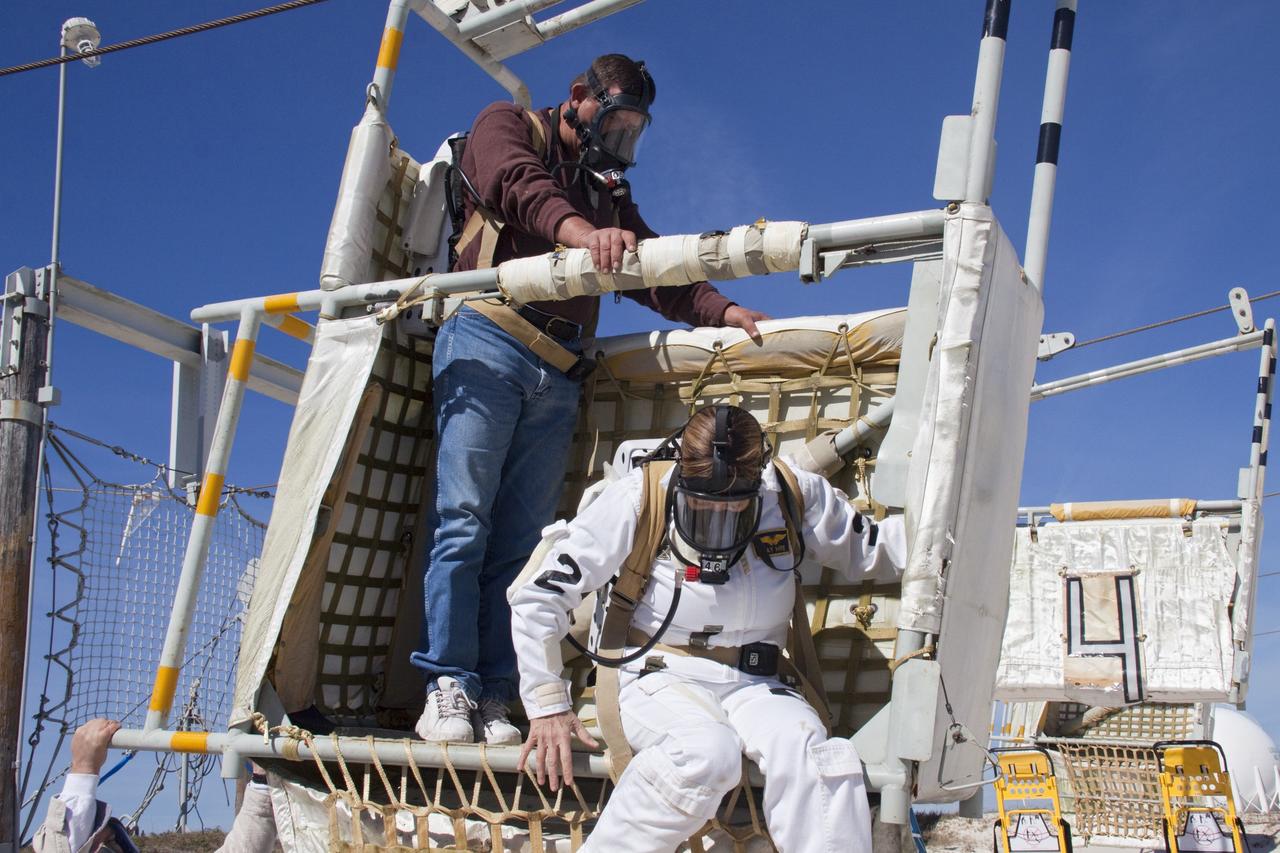
CAPE CANAVERAL, Fla. -- On Launch Pad 39A at NASA's Kennedy Space Center in Florida, members of an emergency escape training team perform a simulated evacuation exercise at the slidewire basket landing site. For several days, volunteers portraying astronauts, take part in training exercises which allow teams to practice emergency response procedures, including helicopter evacuation to local hospitals. Training normally involves NASA fire rescue personnel, personnel from the Air Force's 920th Rescue Wing, and medical trauma teams from central Florida hospitals, and is required every 18 months to certify Fire Rescue and Closeout Crew personnel. Photo credit: NASA/Troy Cryder
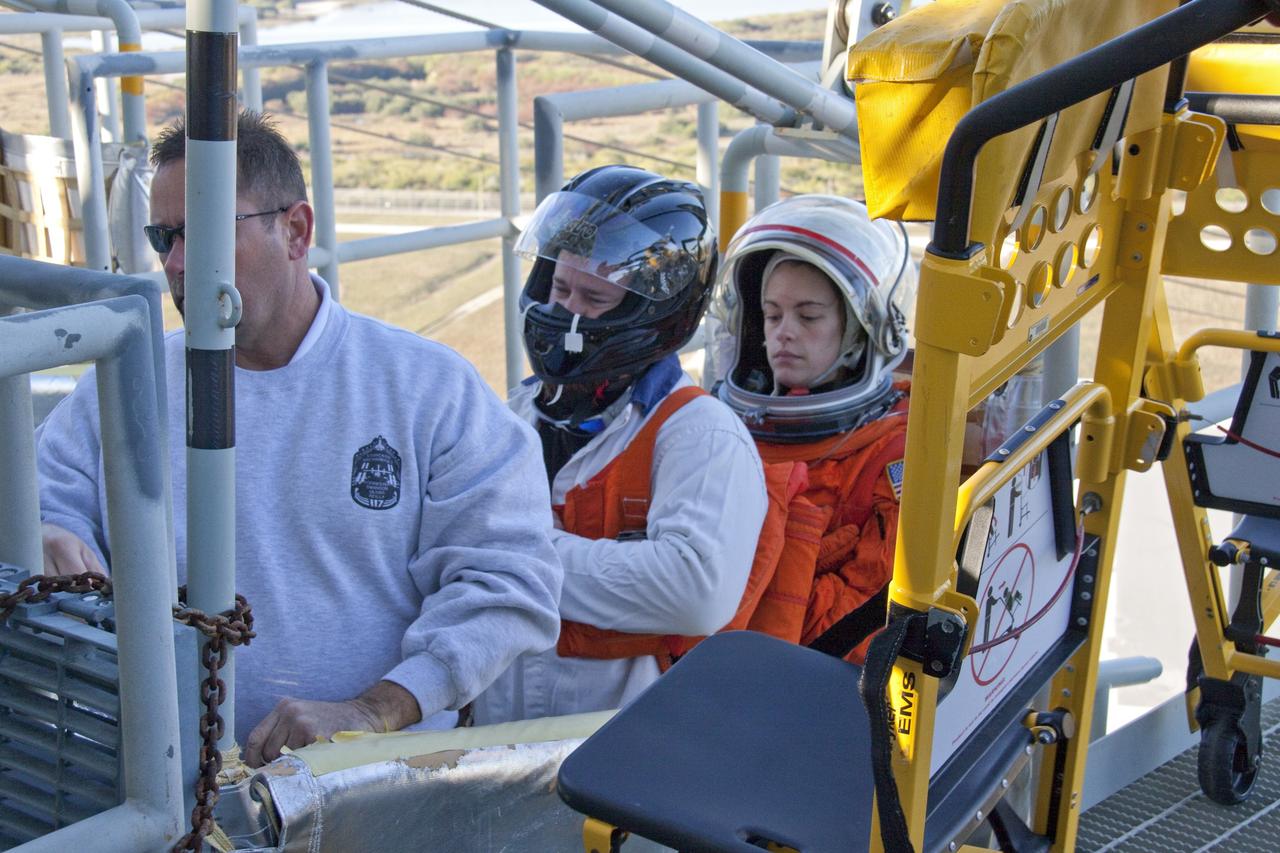
CAPE CANAVERAL, Fla. -- At NASA's Kennedy Space Center in Florida, members of an emergency escape training team perform a simulated evacuation exercise at Launch Pad 39A. For several days, volunteers portraying astronauts, take part in training exercises which allow teams to practice emergency response procedures, including helicopter evacuation to local hospitals. Training normally involves NASA fire rescue personnel, personnel from the Air Force's 920th Rescue Wing, and medical trauma teams from central Florida hospitals, and is required every 18 months to certify Fire Rescue and Closeout Crew personnel. Photo credit: NASA/Troy Cryder
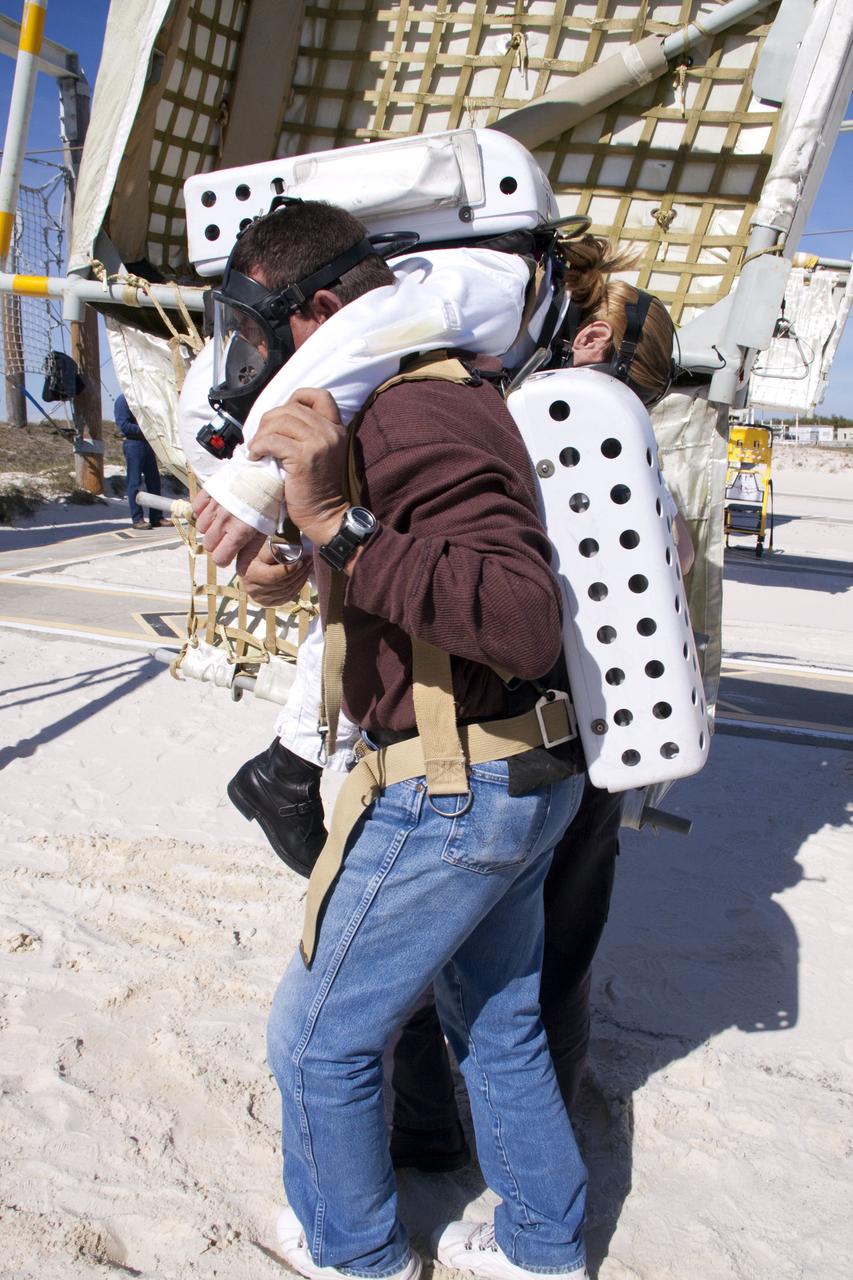
CAPE CANAVERAL, Fla. -- On Launch Pad 39A at NASA's Kennedy Space Center in Florida, members of an emergency escape training team perform a simulated evacuation exercise at the slidewire basket landing site. For several days, volunteers portraying astronauts, take part in training exercises which allow teams to practice emergency response procedures, including helicopter evacuation to local hospitals. Training normally involves NASA fire rescue personnel, personnel from the Air Force's 920th Rescue Wing, and medical trauma teams from central Florida hospitals, and is required every 18 months to certify Fire Rescue and Closeout Crew personnel. Photo credit: NASA/Troy Cryder
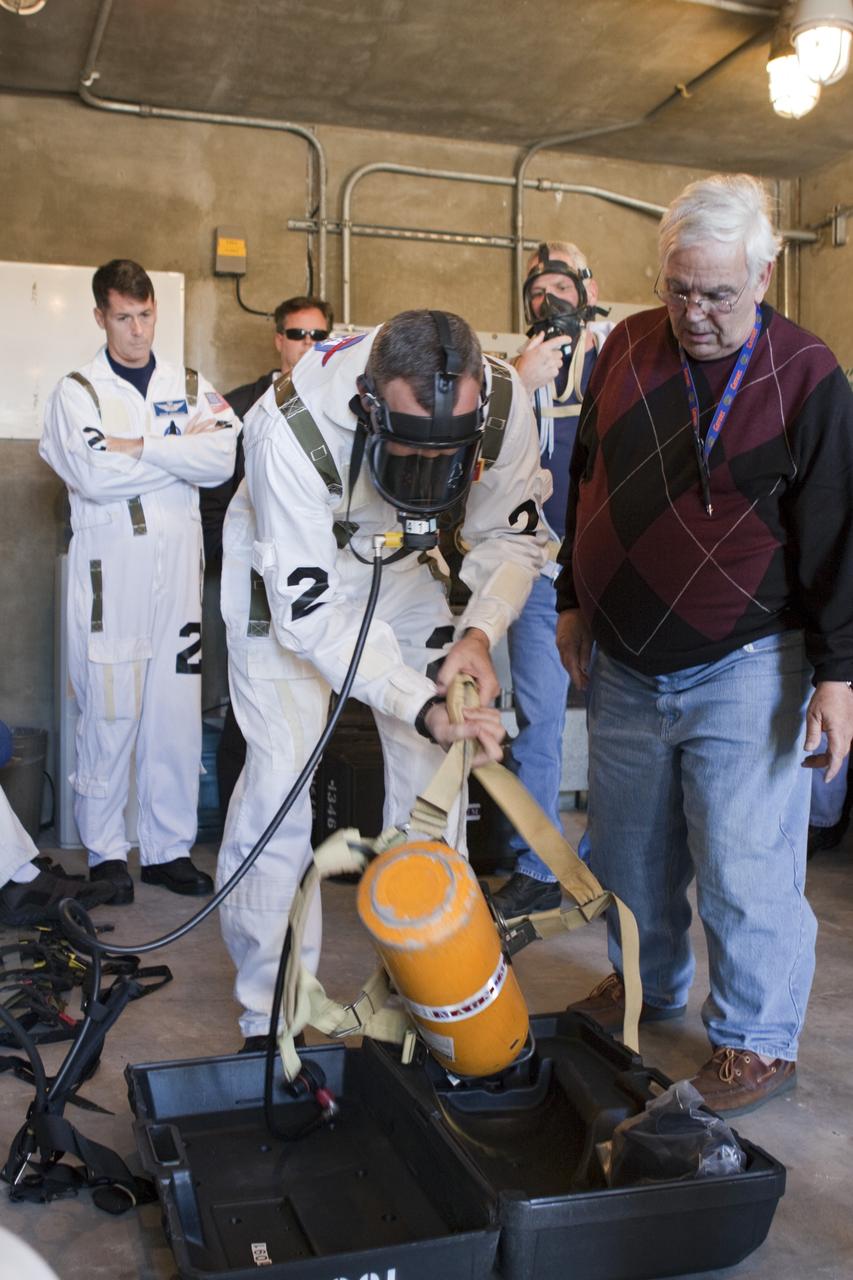
CAPE CANAVERAL, Fla. -- At NASA's Kennedy Space Center in Florida, members of an emergency escape training team suit up in the bunkers below Launch Pad 39A prior to the start of a simulated evacuation exercise. For several days, volunteers portraying astronauts, take part in training exercises which allow teams to practice emergency response procedures, including helicopter evacuation to local hospitals. Training normally involves NASA fire rescue personnel, personnel from the Air Force's 920th Rescue Wing, and medical trauma teams from central Florida hospitals, and is required every 18 months to certify Fire Rescue and Closeout Crew personnel. Photo credit: NASA/Troy Cryder
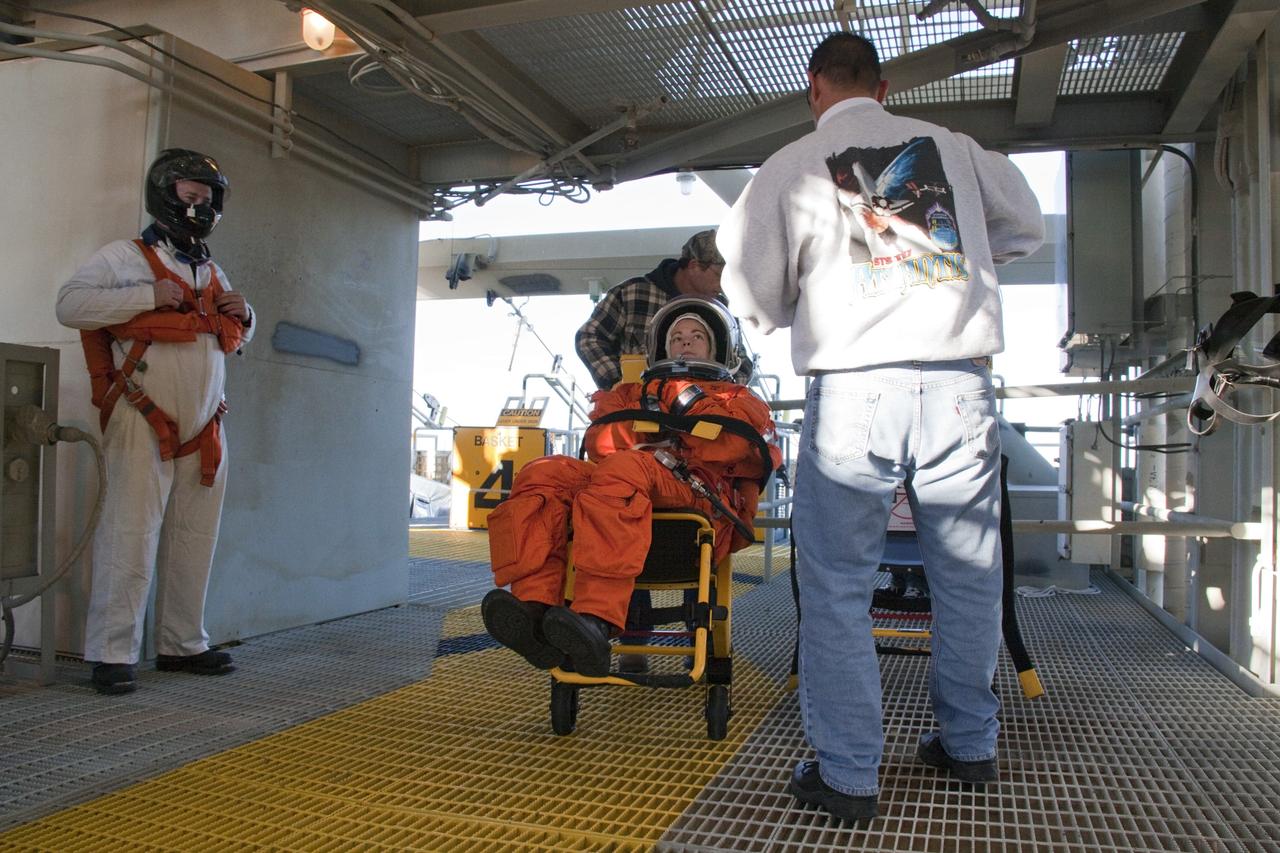
CAPE CANAVERAL, Fla. -- At NASA's Kennedy Space Center in Florida, members of an emergency escape training team perform a simulated evacuation exercise at Launch Pad 39A. For several days, volunteers portraying astronauts, take part in training exercises which allow teams to practice emergency response procedures, including helicopter evacuation to local hospitals. Training normally involves NASA fire rescue personnel, personnel from the Air Force's 920th Rescue Wing, and medical trauma teams from central Florida hospitals, and is required every 18 months to certify Fire Rescue and Closeout Crew personnel. Photo credit: NASA/Troy Cryder
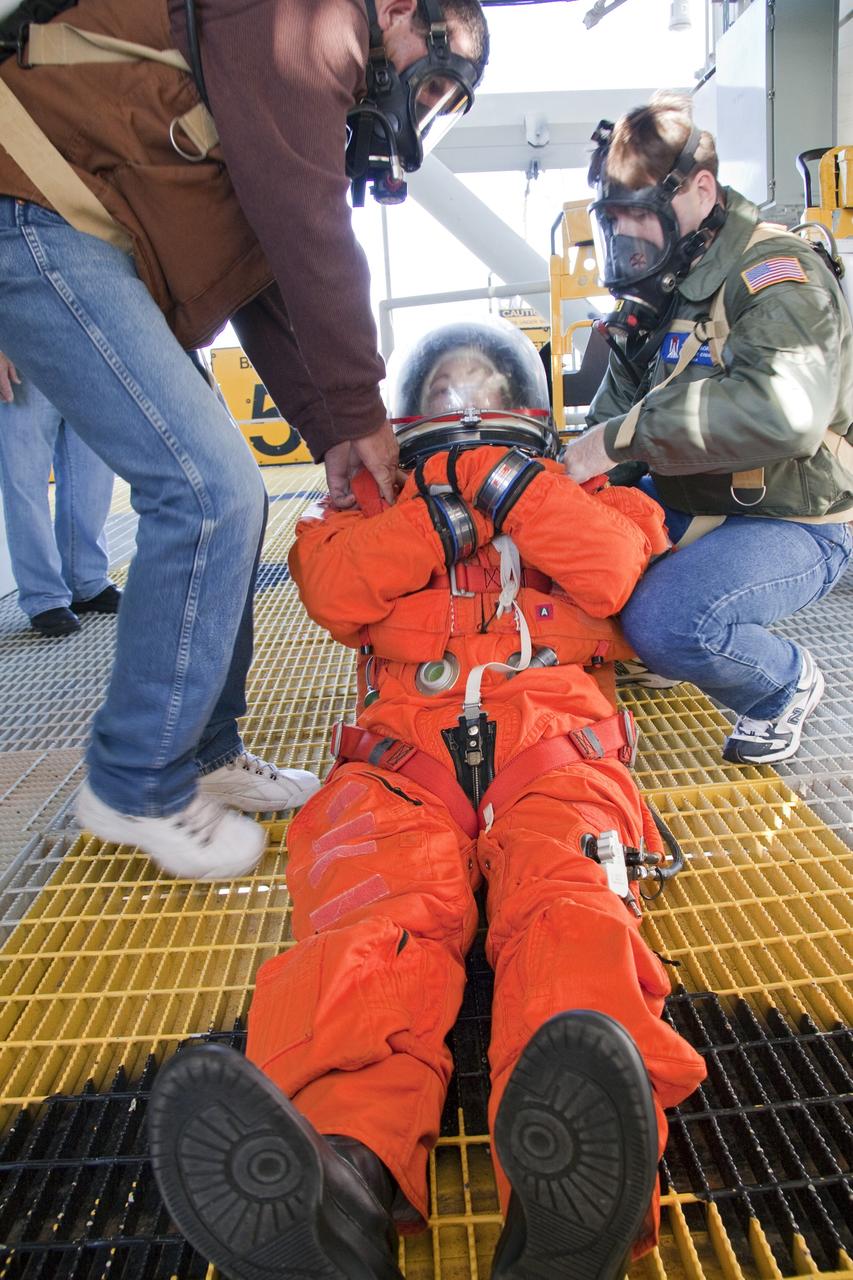
CAPE CANAVERAL, Fla. -- At NASA's Kennedy Space Center in Florida, members of an emergency escape training team perform a simulated evacuation exercise at Launch Pad 39A. For several days, volunteers portraying astronauts, take part in training exercises which allow teams to practice emergency response procedures, including helicopter evacuation to local hospitals. Training normally involves NASA fire rescue personnel, personnel from the Air Force's 920th Rescue Wing, and medical trauma teams from central Florida hospitals, and is required every 18 months to certify Fire Rescue and Closeout Crew personnel. Photo credit: NASA/Troy Cryder
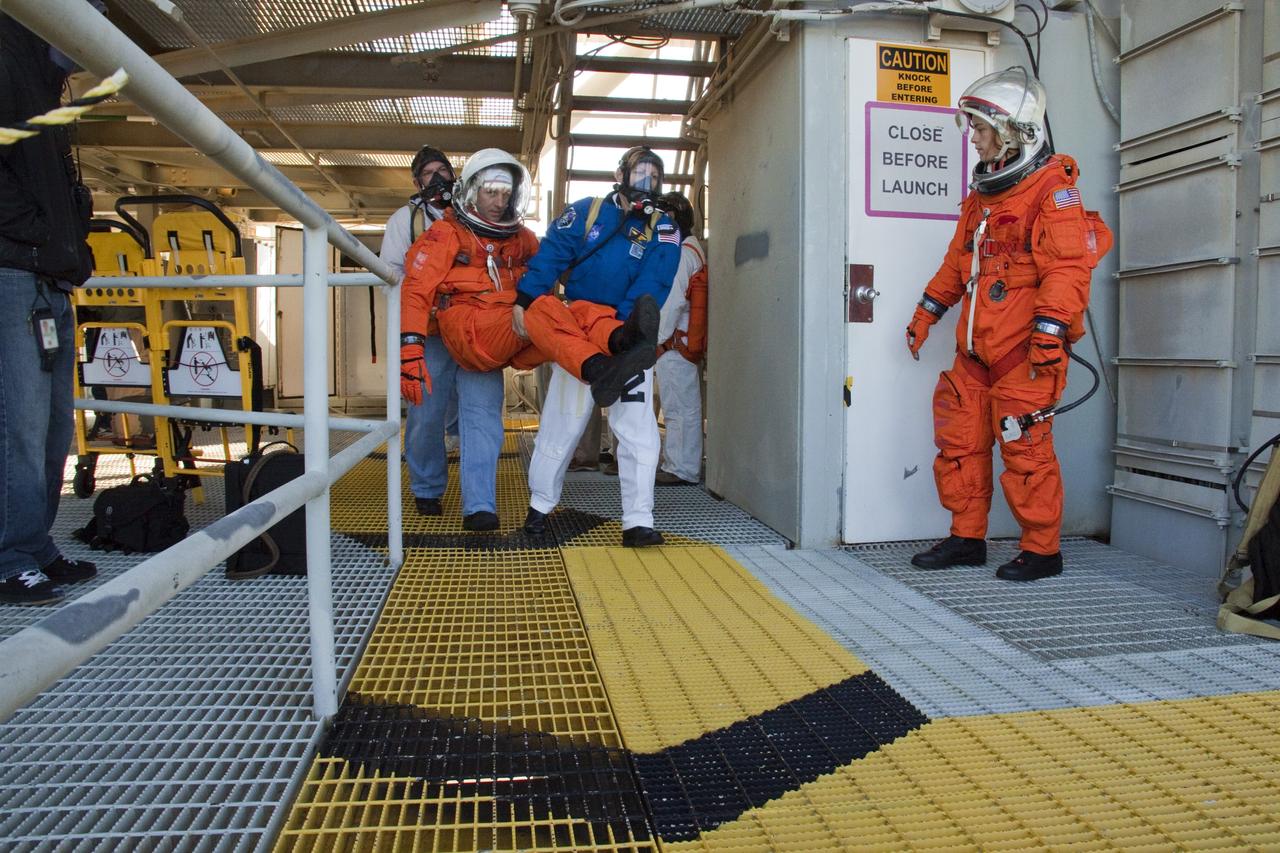
CAPE CANAVERAL, Fla. -- At NASA's Kennedy Space Center in Florida, members of an emergency escape training team perform a simulated evacuation exercise at Launch Pad 39A. For several days, volunteers portraying astronauts, take part in training exercises which allow teams to practice emergency response procedures, including helicopter evacuation to local hospitals. Training normally involves NASA fire rescue personnel, personnel from the Air Force's 920th Rescue Wing, and medical trauma teams from central Florida hospitals, and is required every 18 months to certify Fire Rescue and Closeout Crew personnel. Photo credit: NASA/Troy Cryder
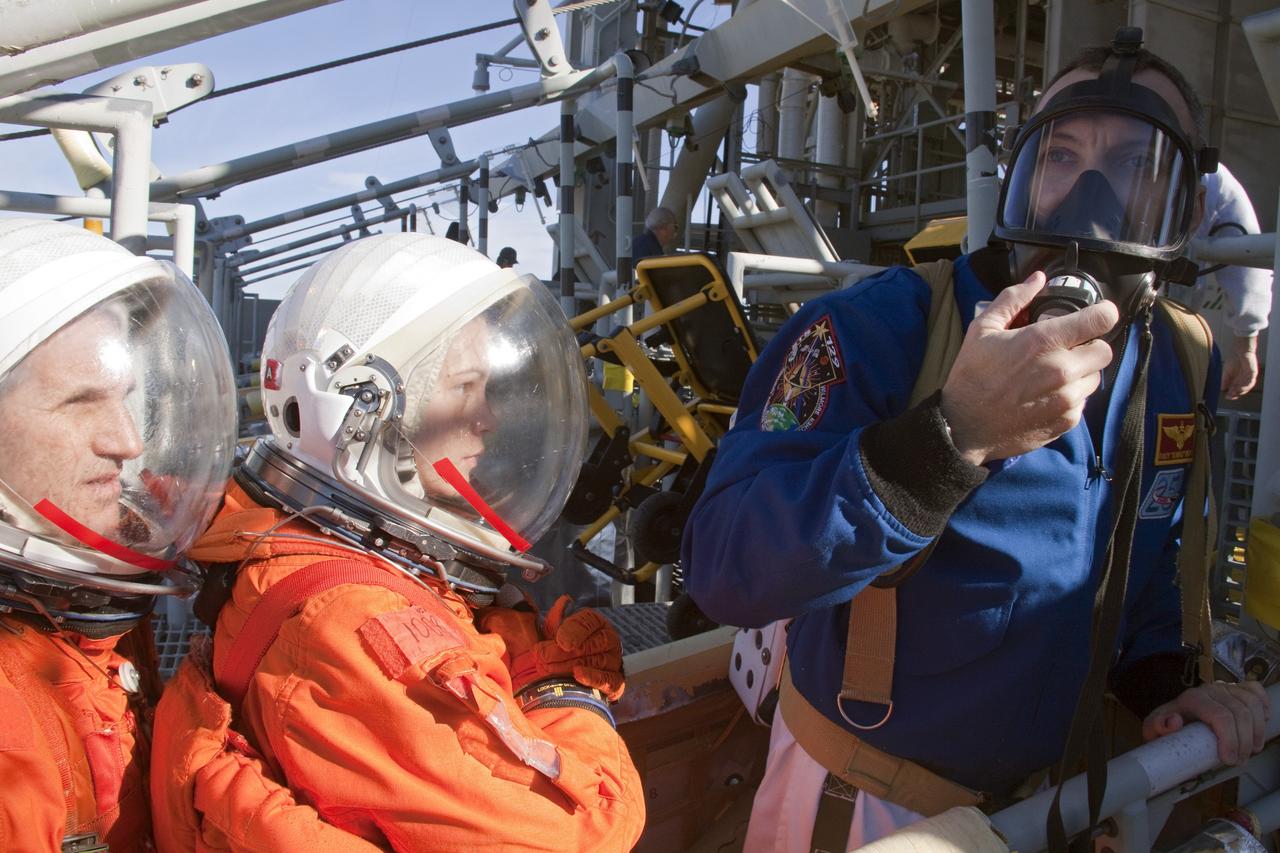
CAPE CANAVERAL, Fla. -- At NASA's Kennedy Space Center in Florida, members of an emergency escape training team perform a simulated evacuation exercise at Launch Pad 39A. For several days, volunteers portraying astronauts, take part in training exercises which allow teams to practice emergency response procedures, including helicopter evacuation to local hospitals. Training normally involves NASA fire rescue personnel, personnel from the Air Force's 920th Rescue Wing, and medical trauma teams from central Florida hospitals, and is required every 18 months to certify Fire Rescue and Closeout Crew personnel. Photo credit: NASA/Troy Cryder
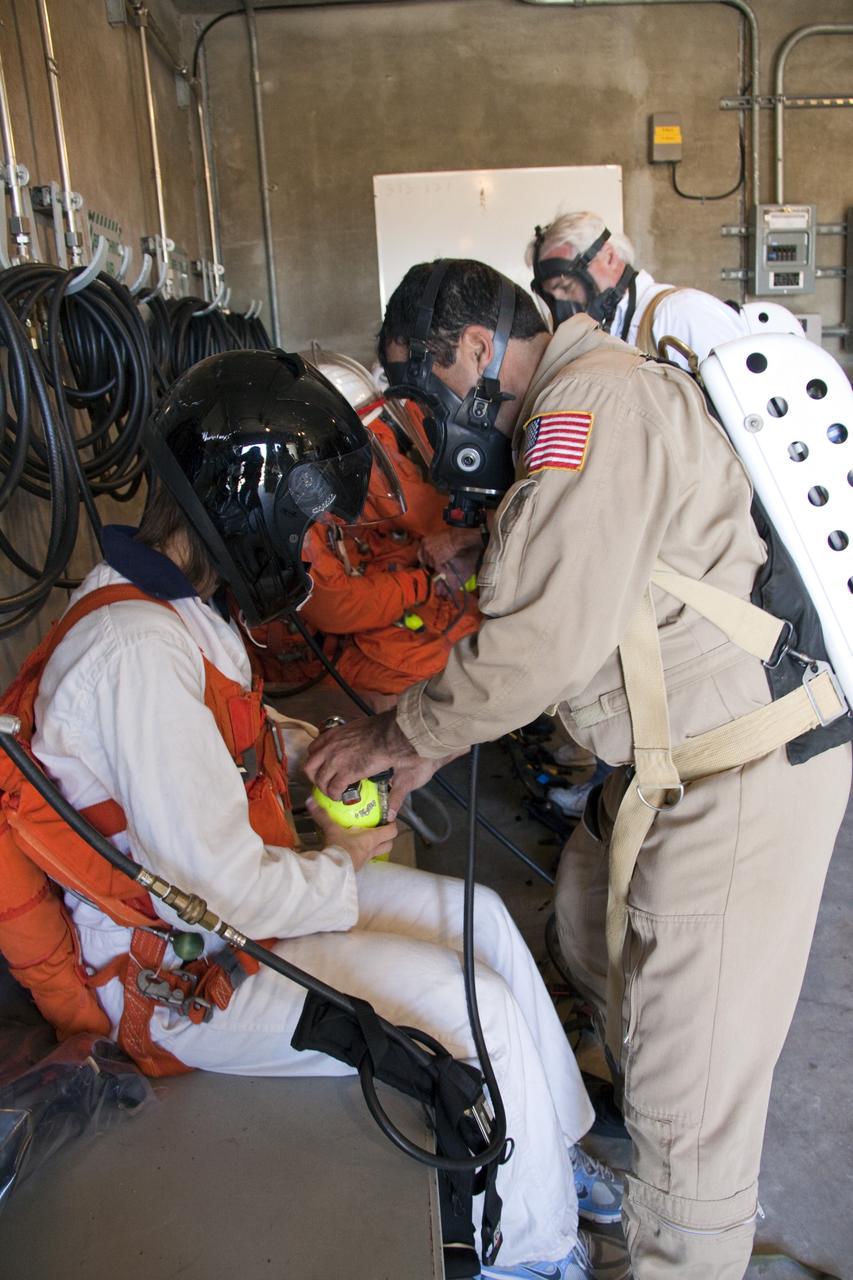
CAPE CANAVERAL, Fla. -- On Launch Pad 39A at NASA's Kennedy Space Center in Florida, members of an emergency escape training team perform a simulated evacuation exercise in the bunkers behind the slidewire basket landing site. For several days, volunteers portraying astronauts, take part in training exercises which allow teams to practice emergency response procedures, including helicopter evacuation to local hospitals. Training normally involves NASA fire rescue personnel, personnel from the Air Force's 920th Rescue Wing, and medical trauma teams from central Florida hospitals, and is required every 18 months to certify Fire Rescue and Closeout Crew personnel. Photo credit: NASA/Troy Cryder
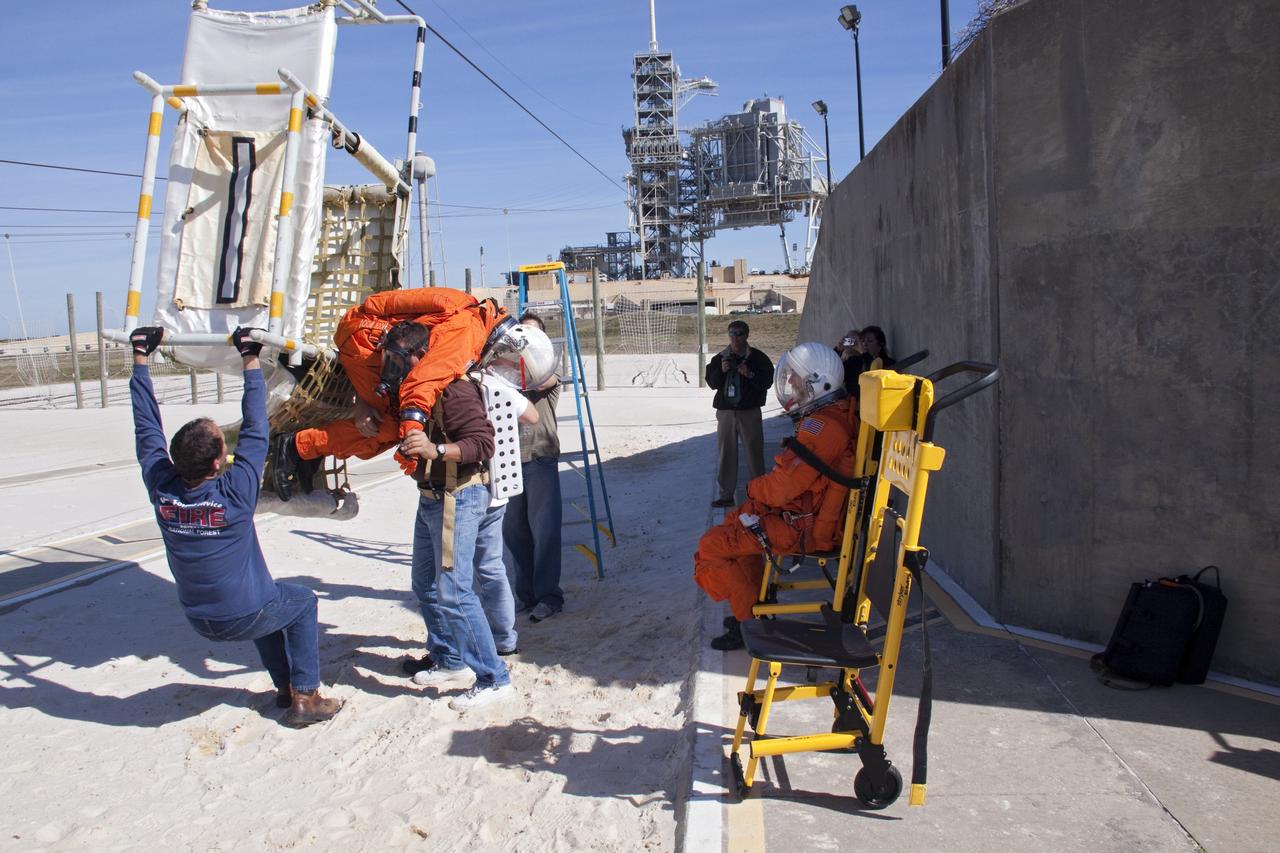
CAPE CANAVERAL, Fla. -- On Launch Pad 39A at NASA's Kennedy Space Center in Florida, members of an emergency escape training team perform a simulated evacuation exercise in the bunkers behind the slidewire basket landing site. For several days, volunteers portraying astronauts, take part in training exercises which allow teams to practice emergency response procedures, including helicopter evacuation to local hospitals. Training normally involves NASA fire rescue personnel, personnel from the Air Force's 920th Rescue Wing, and medical trauma teams from central Florida hospitals, and is required every 18 months to certify Fire Rescue and Closeout Crew personnel. Photo credit: NASA/Troy Cryder
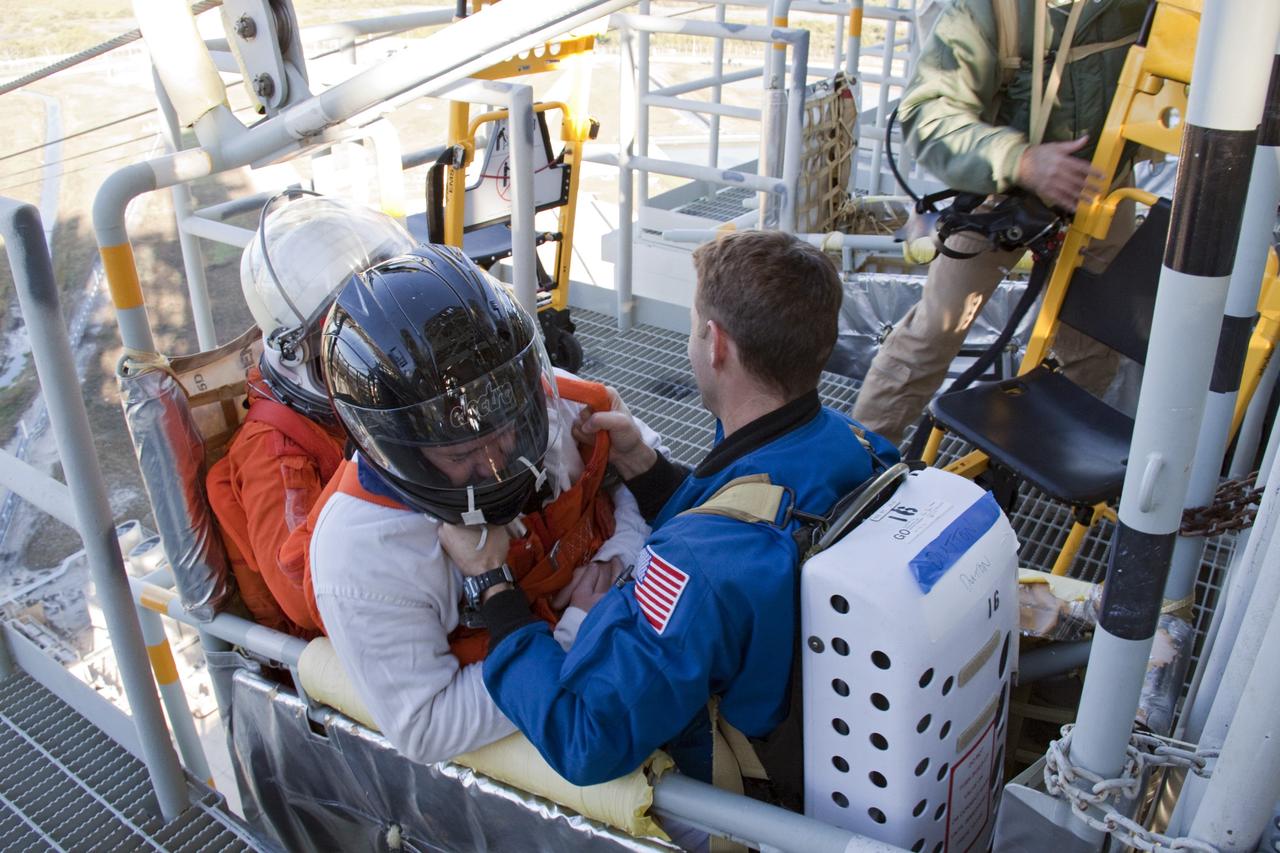
CAPE CANAVERAL, Fla. -- At NASA's Kennedy Space Center in Florida, members of an emergency escape training team perform a simulated evacuation exercise at Launch Pad 39A. For several days, volunteers portraying astronauts, take part in training exercises which allow teams to practice emergency response procedures, including helicopter evacuation to local hospitals. Training normally involves NASA fire rescue personnel, personnel from the Air Force's 920th Rescue Wing, and medical trauma teams from central Florida hospitals, and is required every 18 months to certify Fire Rescue and Closeout Crew personnel. Photo credit: NASA/Troy Cryder
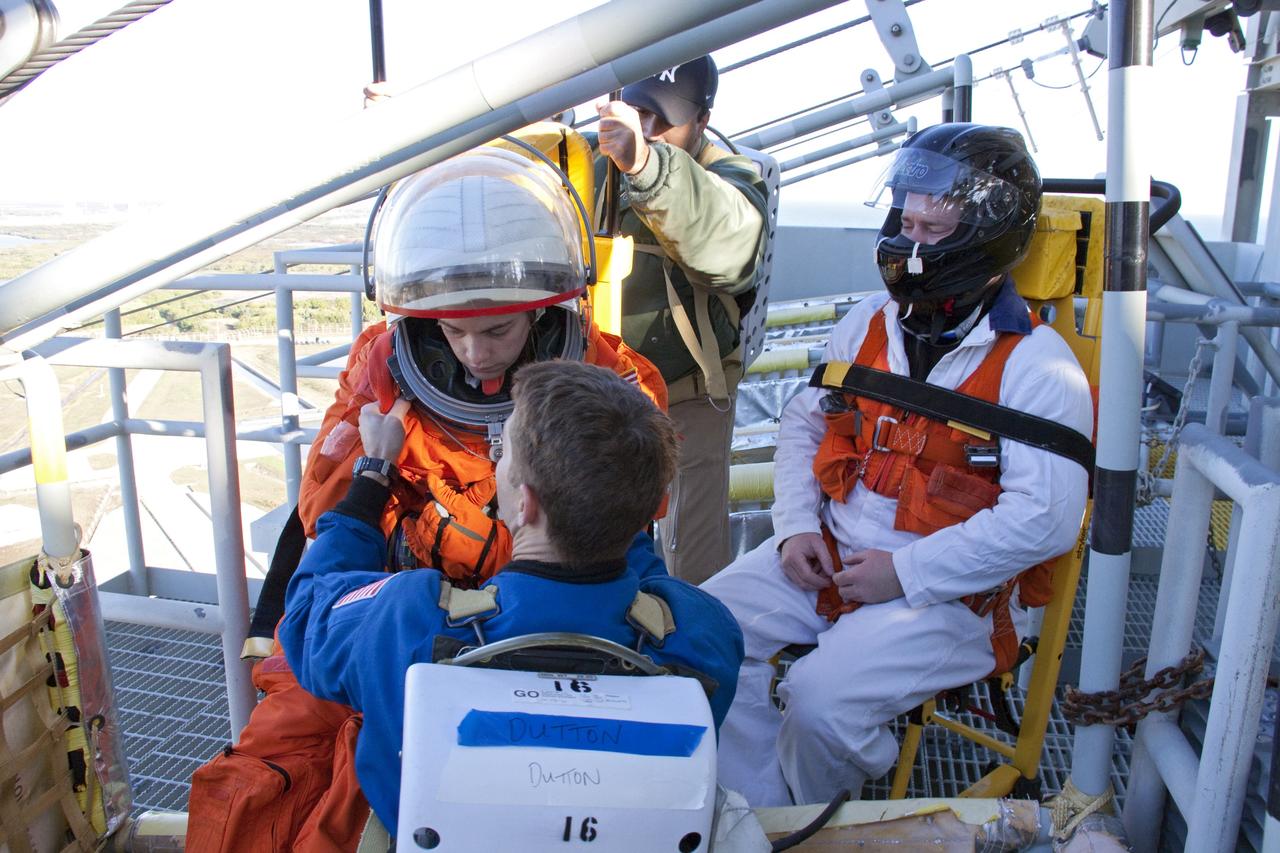
CAPE CANAVERAL, Fla. -- At NASA's Kennedy Space Center in Florida, members of an emergency escape training team perform a simulated evacuation exercise at Launch Pad 39A. For several days, volunteers portraying astronauts, take part in training exercises which allow teams to practice emergency response procedures, including helicopter evacuation to local hospitals. Training normally involves NASA fire rescue personnel, personnel from the Air Force's 920th Rescue Wing, and medical trauma teams from central Florida hospitals, and is required every 18 months to certify Fire Rescue and Closeout Crew personnel. Photo credit: NASA/Troy Cryder
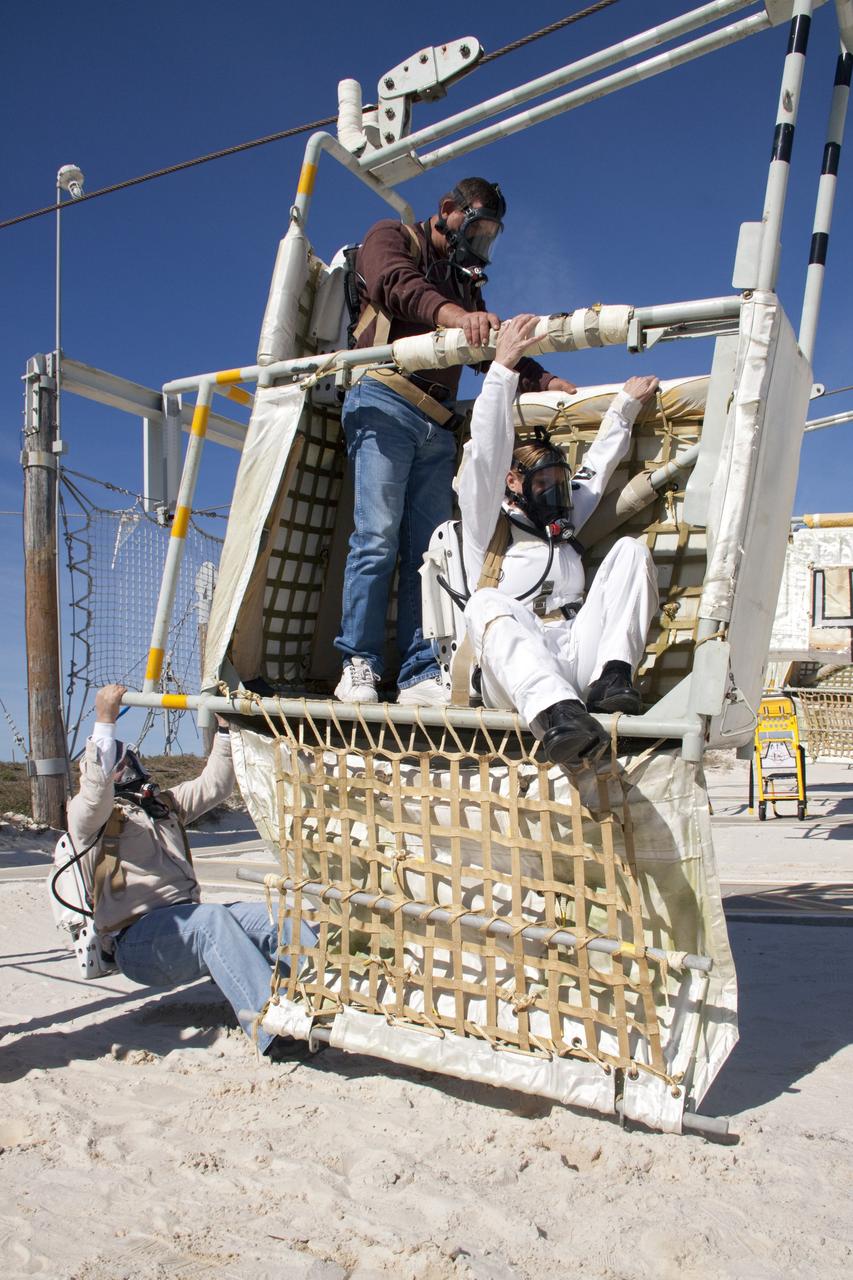
CAPE CANAVERAL, Fla. -- On Launch Pad 39A at NASA's Kennedy Space Center in Florida, members of an emergency escape training team perform a simulated evacuation exercise at the slidewire basket landing site. For several days, volunteers portraying astronauts, take part in training exercises which allow teams to practice emergency response procedures, including helicopter evacuation to local hospitals. Training normally involves NASA fire rescue personnel, personnel from the Air Force's 920th Rescue Wing, and medical trauma teams from central Florida hospitals, and is required every 18 months to certify Fire Rescue and Closeout Crew personnel. Photo credit: NASA/Troy Cryder
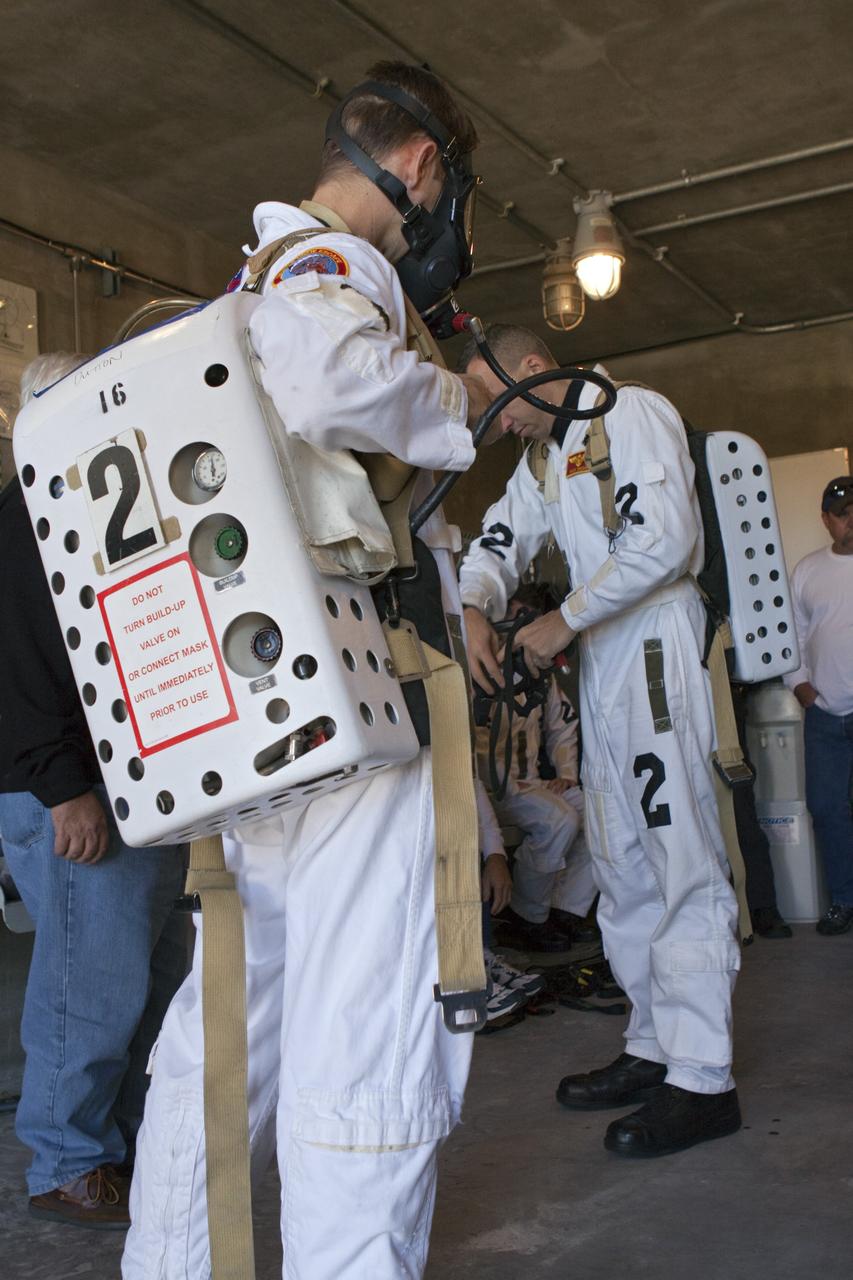
CAPE CANAVERAL, Fla. -- At NASA's Kennedy Space Center in Florida, members of an emergency escape training team suit up in the bunkers below Launch Pad 39A prior to the start of a simulated evacuation exercise. For several days, volunteers portraying astronauts, take part in training exercises which allow teams to practice emergency response procedures, including helicopter evacuation to local hospitals. Training normally involves NASA fire rescue personnel, personnel from the Air Force's 920th Rescue Wing, and medical trauma teams from central Florida hospitals, and is required every 18 months to certify Fire Rescue and Closeout Crew personnel. Photo credit: NASA/Troy Cryder
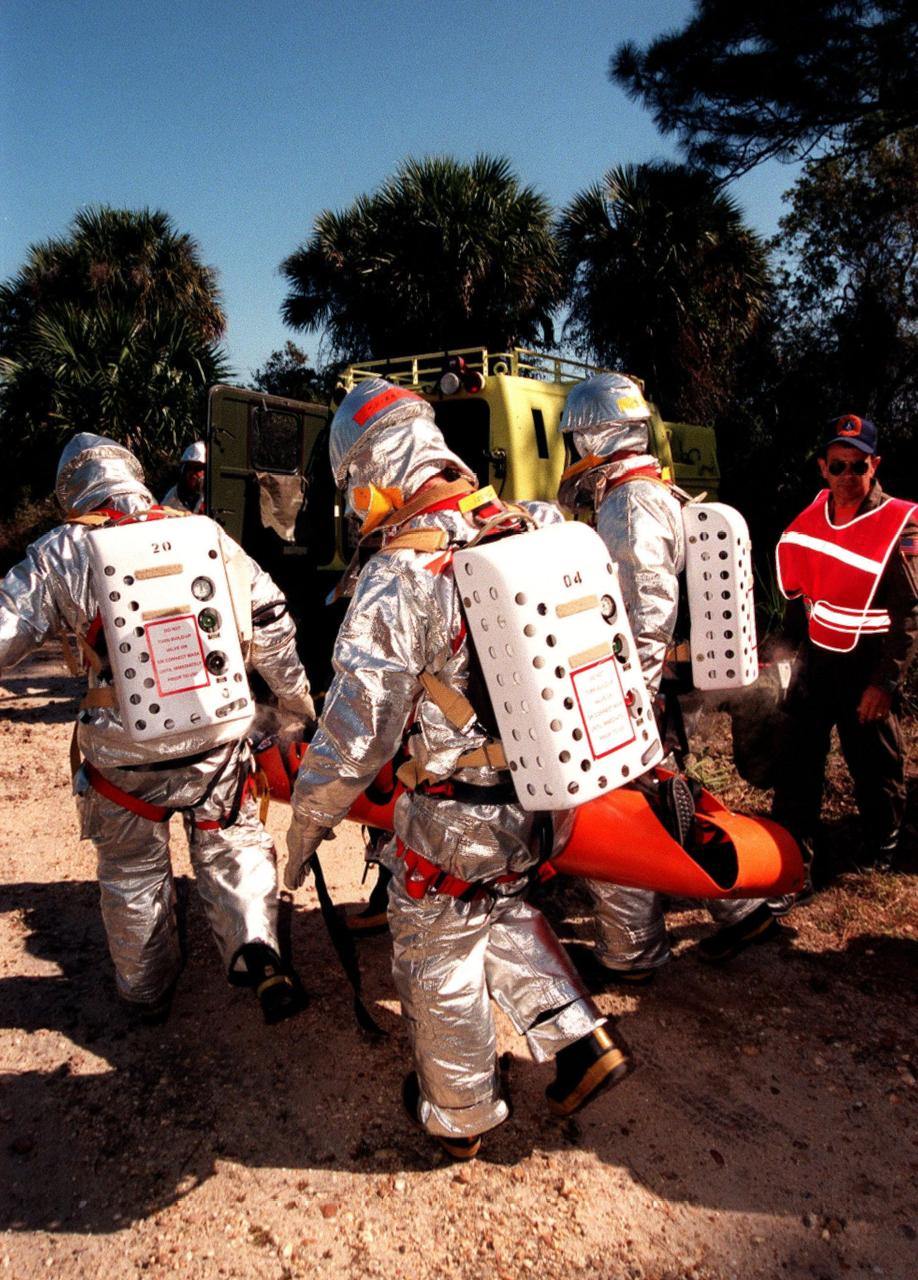
KENNEDY SPACE CENTER, FLA. -- In the woods next to the Shuttle Landing Facility (SLF), the KSC response team takes part in training for the unlikely scenario of a Shuttle mishap at the SLF. The Mode 7 simulation of an astronaut rescue exercises all aspects of command and control, search and rescue, and medical procedures required for a successful rescue. The remote location of the mock-up prevents a totally land-based crew rescue, and calls on a NASA UH-1 helicopter to locate the site and four Air Force HH-60 helicopters to drop emergency equipment and fire/rescue workers to prepare the "crew" for preliminary triage. The helicopters later are used to remove the crew five astronaut candidates, one representative from the Vehicle Integration Test office, and one fire/rescue worker. The exercise concluded with airlifted "patients" arriving safely in the emergency rooms of participating area hospitals
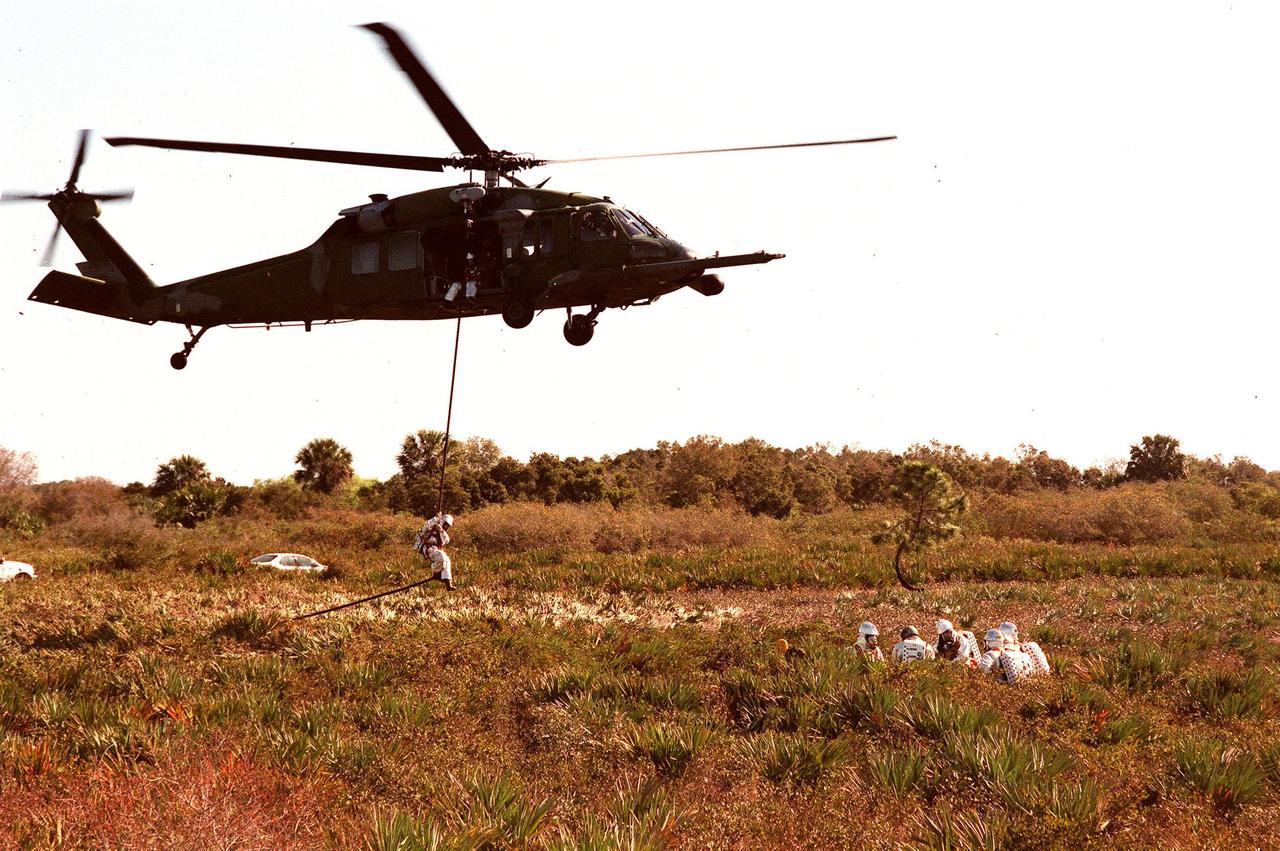
KENNEDY SPACE CENTER, FLA. -- During a simulated rescue mission in the woods near the Shuttle Landing Facility (SLF), a fire/rescue worker practices disembarking from an Air Force HH-60 helicopter. The KSC response team is training for the unlikely scenario of a Shuttle mishap at the SLF. The Mode 7 simulation of an astronaut rescue exercises all aspects of command and control, search and rescue, and medical procedures required for a successful rescue. The remote location of the mock-up prevents a totally land-based crew rescue, and calls on a NASA UH-1 helicopter to locate the site and four Air Force HH-60 helicopters to drop emergency equipment and fire/rescue workers to prepare the "crew" for preliminary traige. The helicopters are used later to remove the crew five astronaut candidates, one representative from the Vehicle Integration Test office, and one fire/rescue worker. The exercise will conclude with airlifted "patients" arriving safely in the emergency rooms of participating area hospitals
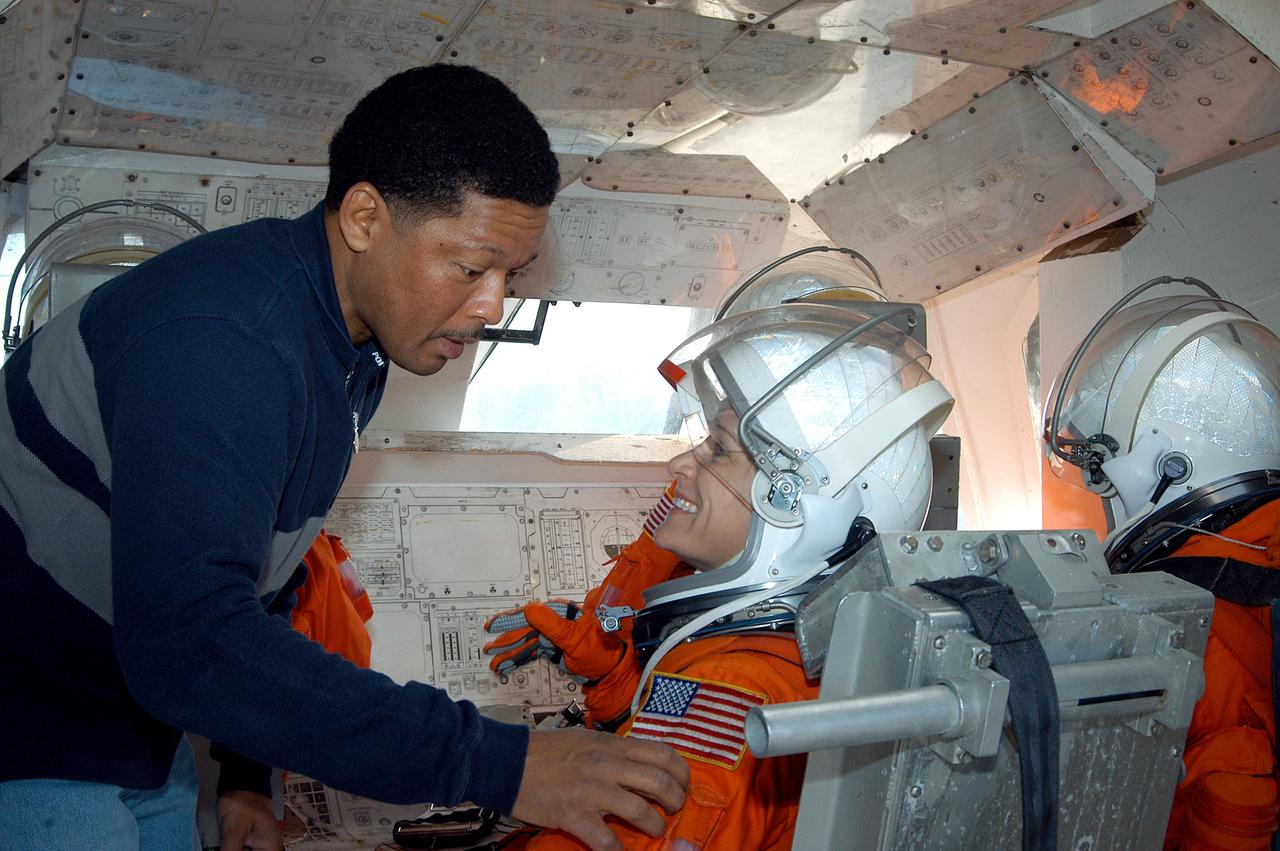
KENNEDY SPACE CENTER, FLA. - Volunteers from the KSC Fire-Rescue team dressed in launch and entry suits settle into seats in an orbiter crew compartment mock-up under the guidance of George Brittingham, USA suit technician on the Closeout Crew. Brittingham is helping Catherine Di Biase, a nurse with Bionetics Life Sciences. They are all taking part in a “Mode VII” emergency landing simulation at Kennedy Space Center. The purpose is to exercise emergency preparedness personnel, equipment and facilities in rescuing astronauts from a downed orbiter and providing immediate medical attention. This simulation presents an orbiter that has crashed short of the Shuttle Landing Facility in a wooded area 2-1/2 miles south of Runway 33. Emergency crews will respond to the volunteer “astronauts” simulating various injuries. Rescuers must remove the crew, provide triage and transport to hospitals those who need further treatment. Local hospitals are participating in the exercise.
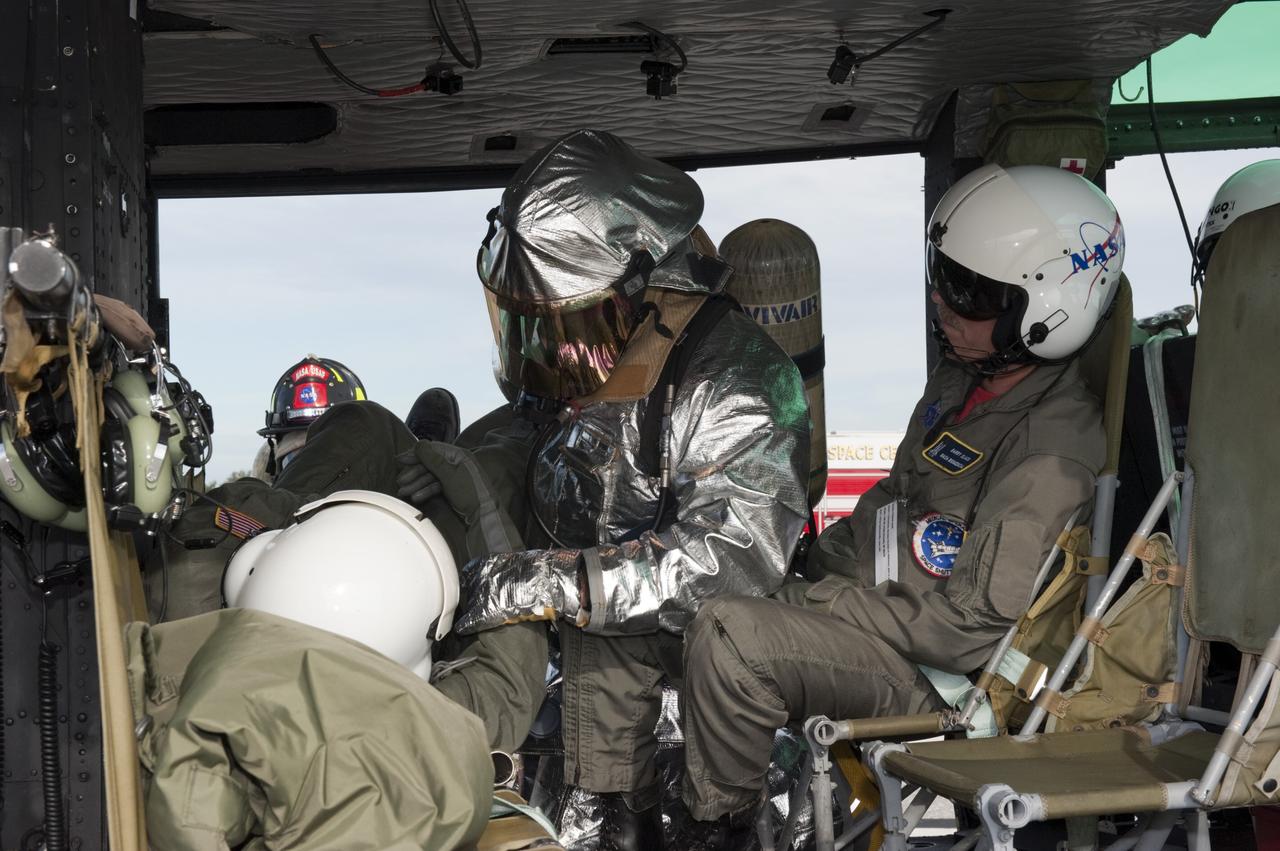
CAPE CANAVERAL, Fla. -- NASA Fire Rescue personnel assist volunteers portraying injured Huey II helicopter crew members participating in the aviation safety exercise during Emergency Response Safety Training at the Shuttle Landing Facility, Runway 33, at NASA’s Kennedy Space Center in Florida. The simulated helicopter mishap exercise was conducted to evaluate emergency response and mishap investigations of aircraft at Kennedy. Participants included Air Rescue Fire Fighters, Flight Operations, Disaster Preparedness, Security, and Safety. NASA mandates simulated aviation safety training take place every two years. Photo credit: NASA/Kim Shiflett
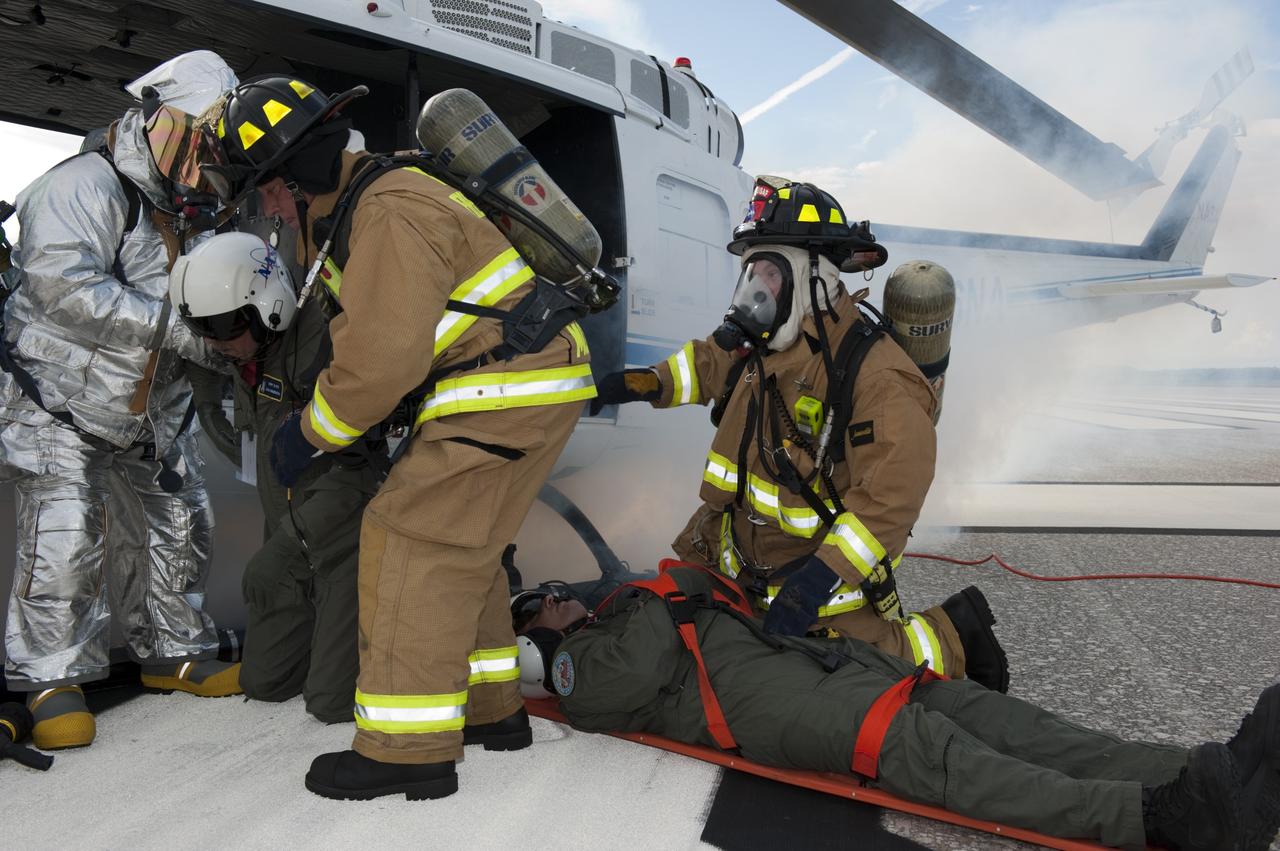
CAPE CANAVERAL, Fla. -- NASA Fire Rescue personnel assist volunteers portraying injured Huey II helicopter crew members participating in the aviation safety exercise during Emergency Response Safety Training at the Shuttle Landing Facility, Runway 33, at NASA’s Kennedy Space Center in Florida. The simulated helicopter mishap exercise was conducted to evaluate emergency response and mishap investigations of aircraft at Kennedy. Participants included Air Rescue Fire Fighters, Flight Operations, Disaster Preparedness, Security, and Safety. NASA mandates simulated aviation safety training take place every two years. Photo credit: NASA/Kim Shiflett
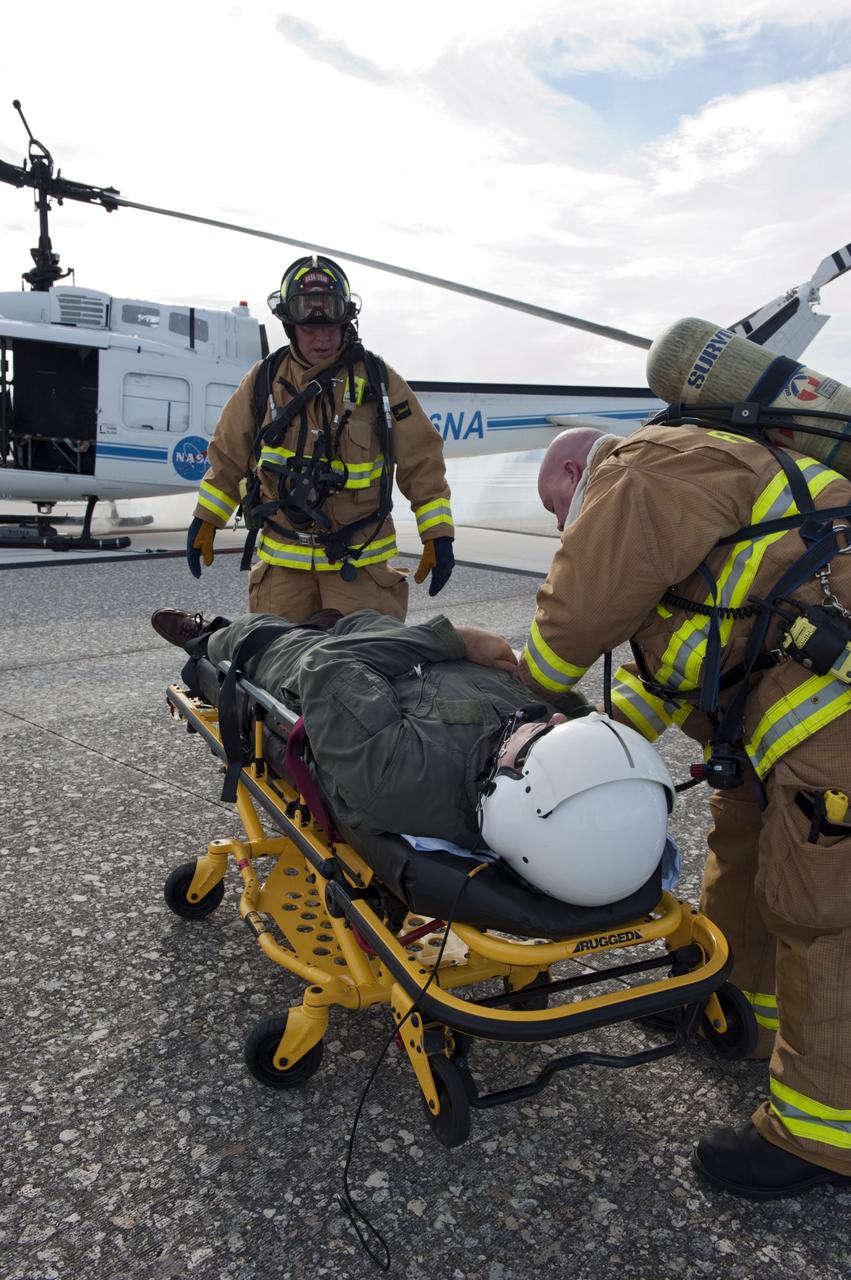
CAPE CANAVERAL, Fla. -- NASA Fire Rescue personnel assist volunteers portraying injured Huey II helicopter crew members participating in the aviation safety exercise during Emergency Response Safety Training at the Shuttle Landing Facility, Runway 33, at NASA’s Kennedy Space Center in Florida. The simulated helicopter mishap exercise was conducted to evaluate emergency response and mishap investigations of aircraft at Kennedy. Participants included Air Rescue Fire Fighters, Flight Operations, Disaster Preparedness, Security, and Safety. NASA mandates simulated aviation safety training take place every two years. Photo credit: NASA/Kim Shiflett
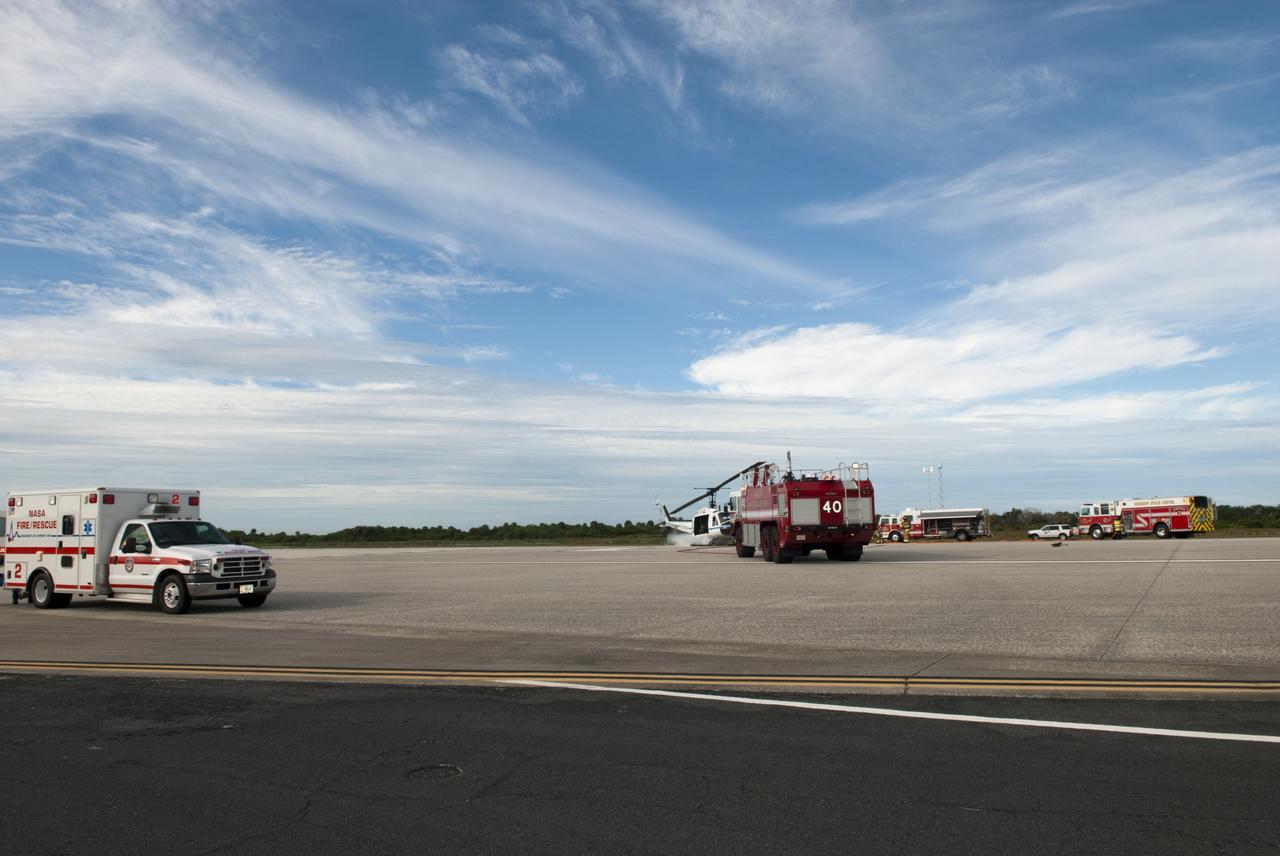
CAPE CANAVERAL, Fla. -- An ambulance and several NASA Fire Rescue Services vehicles arrive to assist a Huey II helicopter participating in the aviation safety exercise during Emergency Response Safety Training at the Shuttle Landing Facility, Runway 33, at NASA’s Kennedy Space Center in Florida. The simulated helicopter mishap exercise was conducted to evaluate emergency response and mishap investigations of aircraft at Kennedy. Participants included Air Rescue Fire Fighters, Flight Operations, Disaster Preparedness, Security, and Safety. NASA mandates simulated aviation safety training take place every two years. Photo credit: NASA/Kim Shiflett
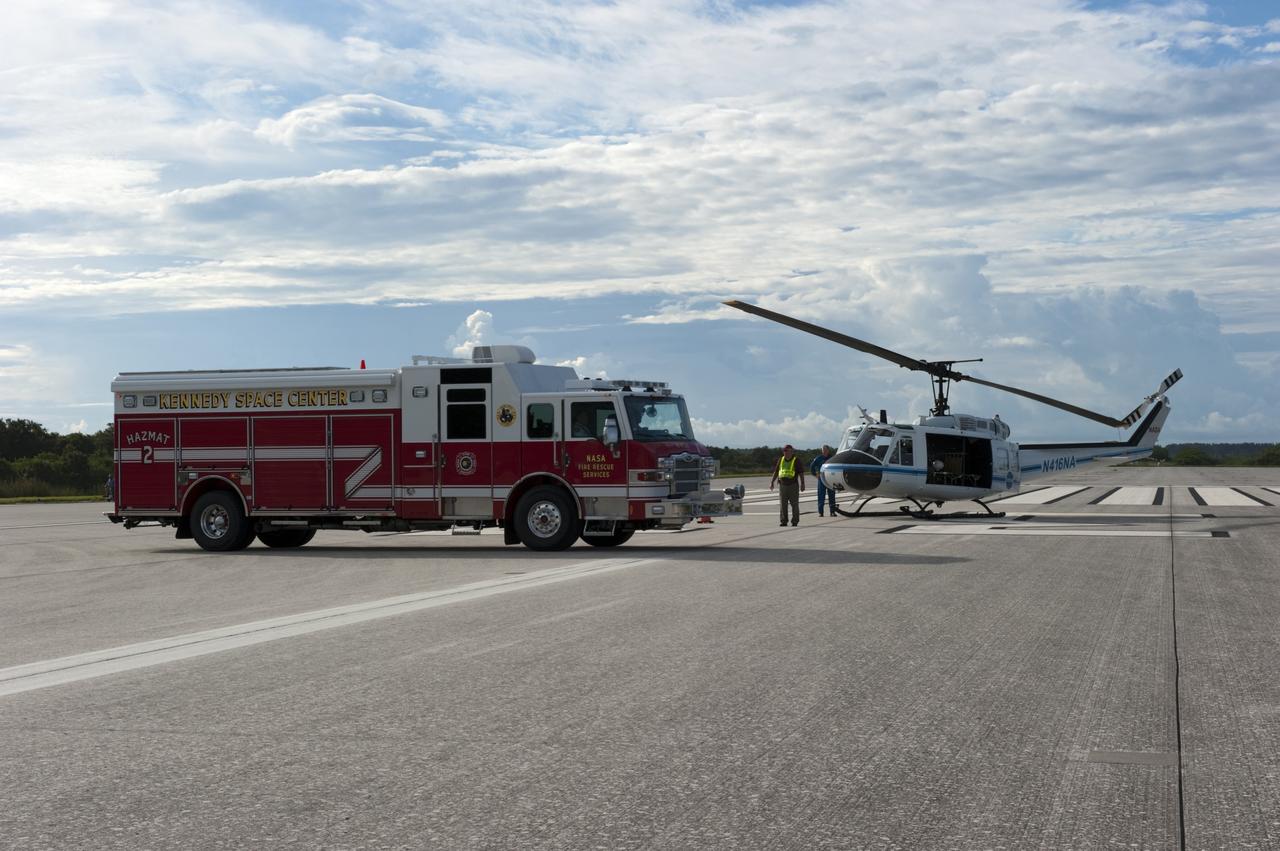
CAPE CANAVERAL, Fla. -- A NASA Fire Rescue Services vehicle and a Huey II helicopter support the aviation safety exercise during Emergency Response Safety Training at the Shuttle Landing Facility, Runway 33, at NASA’s Kennedy Space Center in Florida. The simulated helicopter mishap exercise was conducted to evaluate emergency response and mishap investigations of aircraft at Kennedy. Participants included Air Rescue Fire Fighters, Flight Operations, Disaster Preparedness, Security, and Safety. NASA mandates simulated aviation safety training take place every two years. Photo credit: NASA/Kim Shiflett
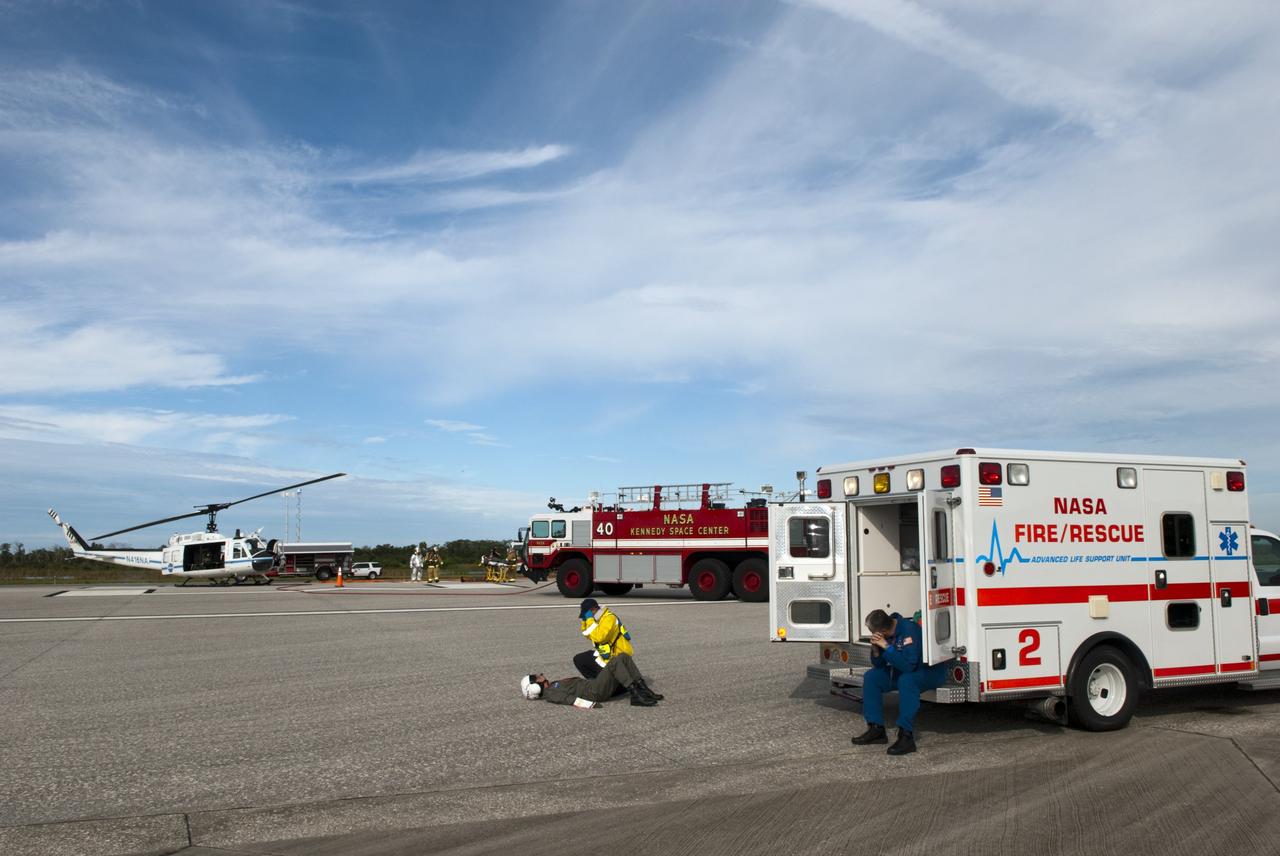
CAPE CANAVERAL, Fla. -- Volunteers portraying injured Huey II helicopter crew members are assisted by NASA Fire Rescue personnel in support of the aviation safety exercise during Emergency Response Safety Training at the Shuttle Landing Facility, Runway 33, at NASA’s Kennedy Space Center in Florida. The simulated helicopter mishap exercise was conducted to evaluate emergency response and mishap investigations of aircraft at Kennedy. Participants included Air Rescue Fire Fighters, Flight Operations, Disaster Preparedness, Security, and Safety. NASA mandates simulated aviation safety training take place every two years. Photo credit: NASA/Kim Shiflett
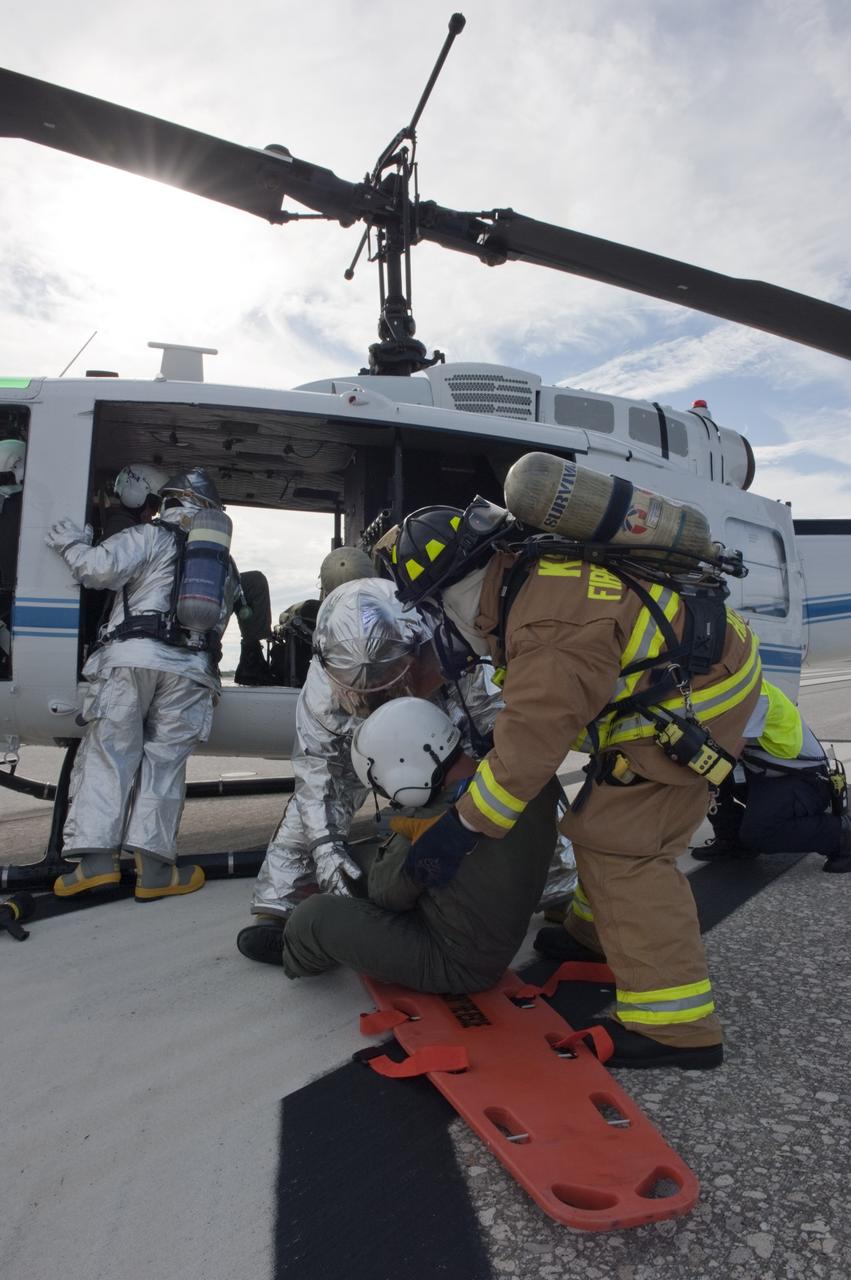
CAPE CANAVERAL, Fla. -- NASA Fire Rescue personnel assist volunteers portraying injured Huey II helicopter crew members participating in the aviation safety exercise during Emergency Response Safety Training at the Shuttle Landing Facility, Runway 33, at NASA’s Kennedy Space Center in Florida. The simulated helicopter mishap exercise was conducted to evaluate emergency response and mishap investigations of aircraft at Kennedy. Participants included Air Rescue Fire Fighters, Flight Operations, Disaster Preparedness, Security, and Safety. NASA mandates simulated aviation safety training take place every two years. Photo credit: NASA/Kim Shiflett

CAPE CANAVERAL, Fla. -- NASA Fire Rescue personnel assist a volunteer portraying an injured Huey II helicopter crew member participating in the aviation safety exercise during Emergency Response Safety Training at the Shuttle Landing Facility, Runway 33, at NASA’s Kennedy Space Center in Florida. The simulated helicopter mishap exercise was conducted to evaluate emergency response and mishap investigations of aircraft at Kennedy. Participants included Air Rescue Fire Fighters, Flight Operations, Disaster Preparedness, Security, and Safety. NASA mandates simulated aviation safety training take place every two years. Photo credit: NASA/Kim Shiflett
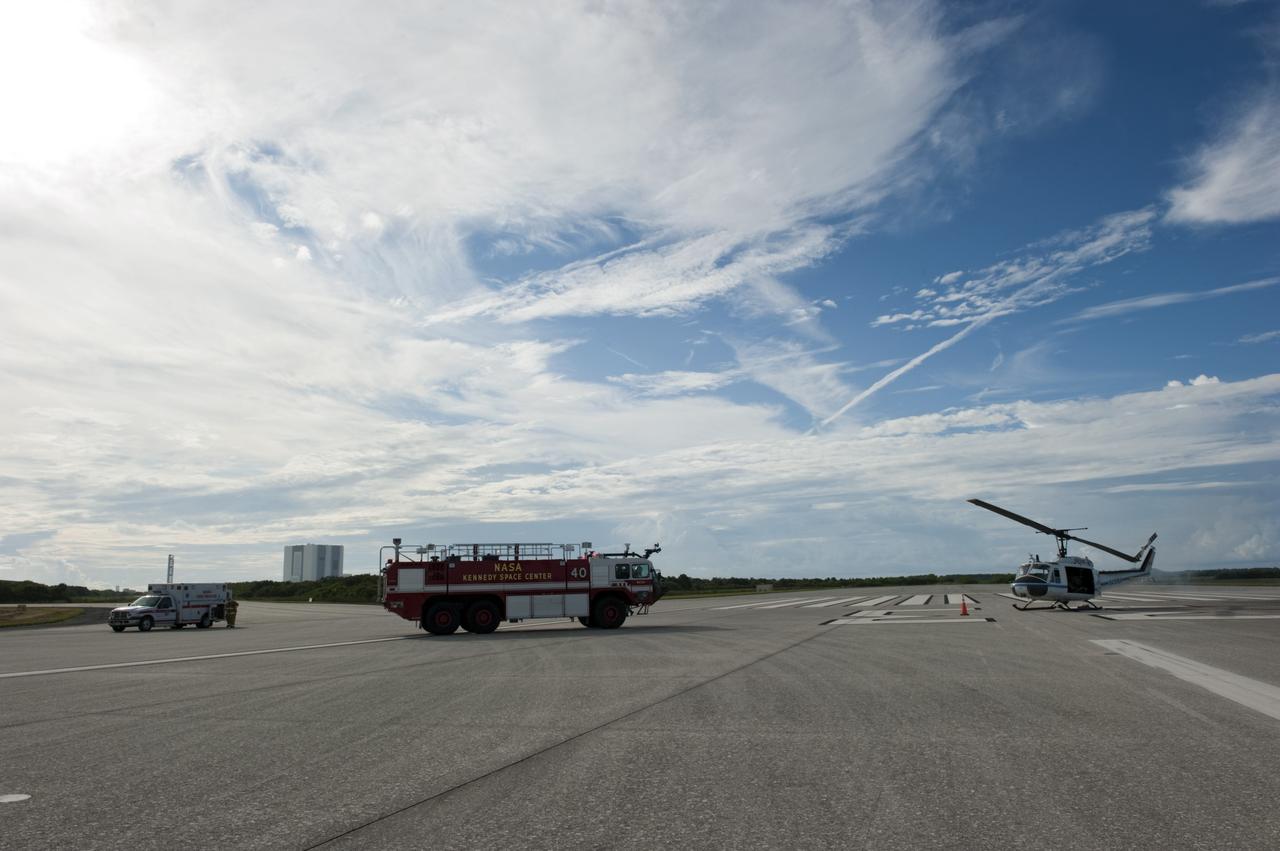
CAPE CANAVERAL, Fla. -- A NASA Fire Rescue Services vehicle, ambulance and Huey II helicopter take part in the aviation safety exercise during Emergency Response Safety Training at the Shuttle Landing Facility, Runway 33, at NASA’s Kennedy Space Center in Florida. The simulated helicopter mishap exercise was conducted to evaluate emergency response and mishap investigations of aircraft at Kennedy. Participants included Air Rescue Fire Fighters, Flight Operations, Disaster Preparedness, Security, and Safety. NASA mandates simulated aviation safety training take place every two years. Photo credit: NASA/Kim Shiflett
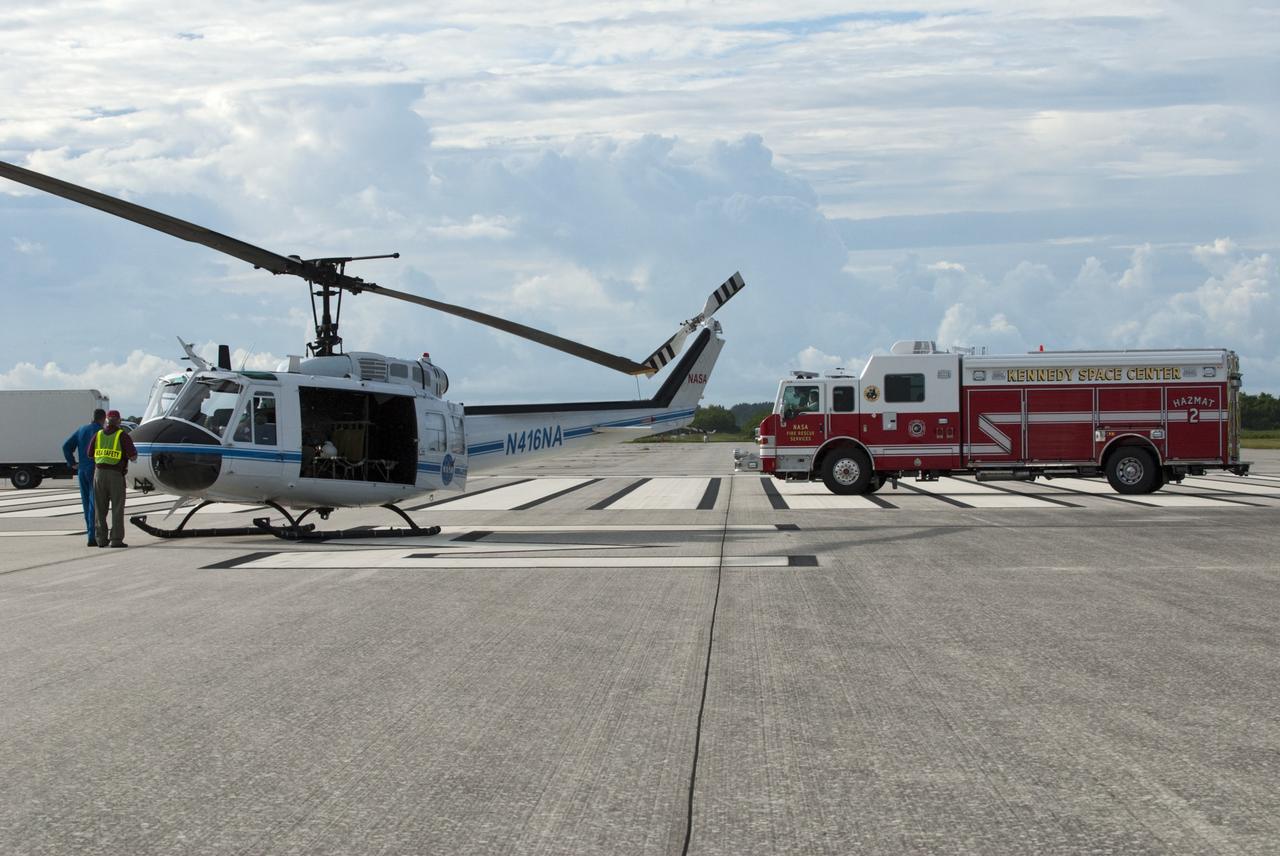
CAPE CANAVERAL, Fla. -- Volunteers, portraying their individual roles, stand beside a NASA Fire Rescue Services vehicle and a Huey II helicopter in support of the aviation safety exercise during Emergency Response Safety Training at the Shuttle Landing Facility, Runway 33, at NASA’s Kennedy Space Center in Florida. The simulated helicopter mishap exercise was conducted to evaluate emergency response and mishap investigations of aircraft at Kennedy. Participants included Air Rescue Fire Fighters, Flight Operations, Disaster Preparedness, Security, and Safety. NASA mandates simulated aviation safety training take place every two years. Photo credit: NASA/Kim Shiflett
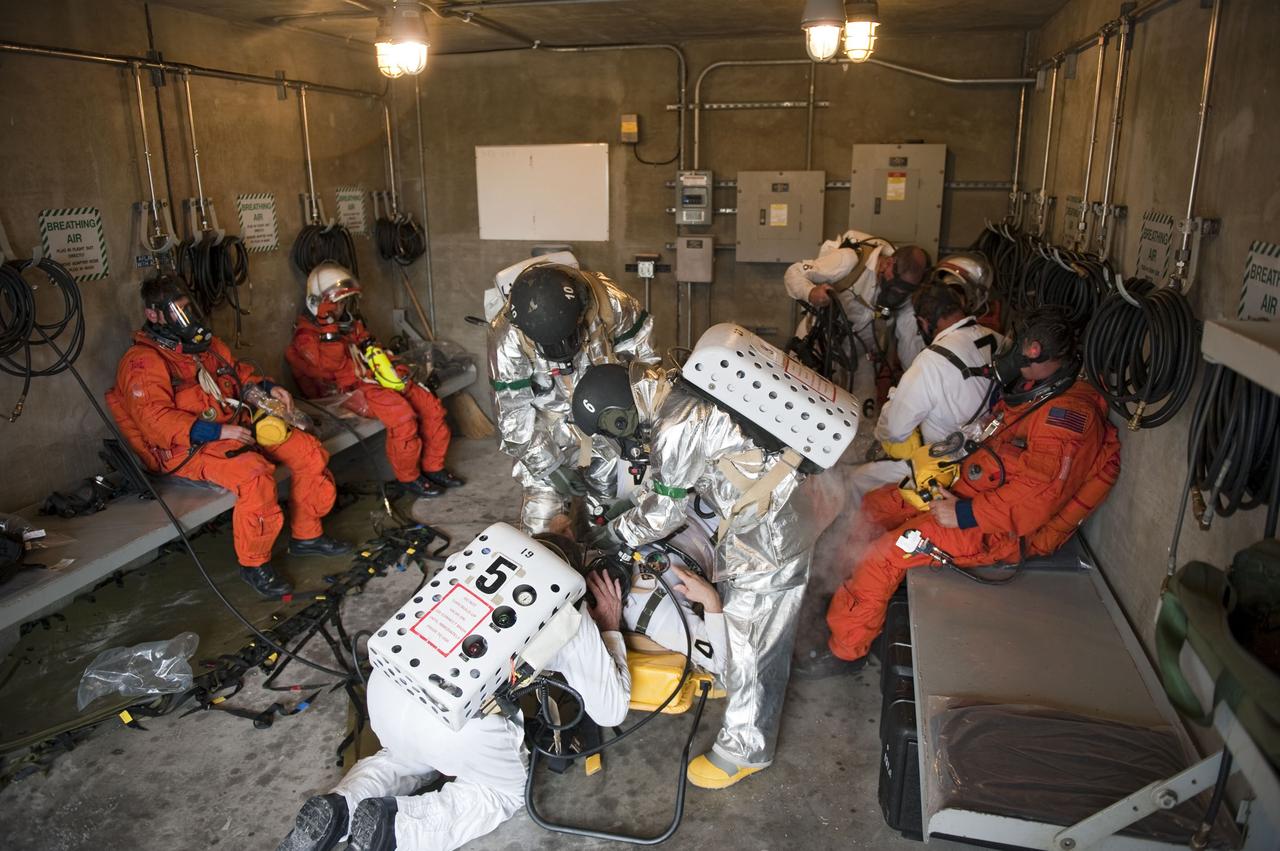
CAPE CANAVERAL, Fla. – An emergency exit, or Mode II/IV, exercise is under way in a bunker of Launch Pad 39A at NASA's Kennedy Space Center in Florida. The exercise involves NASA fire rescue personnel, volunteers portraying astronauts with simulated injuries, helicopters and personnel from the Air Force’s 920th Rescue Wing, and medical trauma teams at three Central Florida hospitals. The drill allows teams to practice an emergency response at the launch pad, including helicopter evacuation to local hospitals. Photo credit: NASA/Kim Shiflett

KENNEDY SPACE CENTER, FLA. -- During the second stage of a simulated emergency, known as Mode 4, part of the KSC fire rescue team helps an "injured" member of the closeout crew. The emergency exercise began at the 195-foot level of Launch Pad 39A. The KSC rescue teams are practicing emergency procedures in the unlikely scenario of a mishap on the pad during a launch sequence. The exercises are standard training procedures to assess and prepare emergency personnel, procedures and hardware. Photo credit: NASA/Jim Grossmann
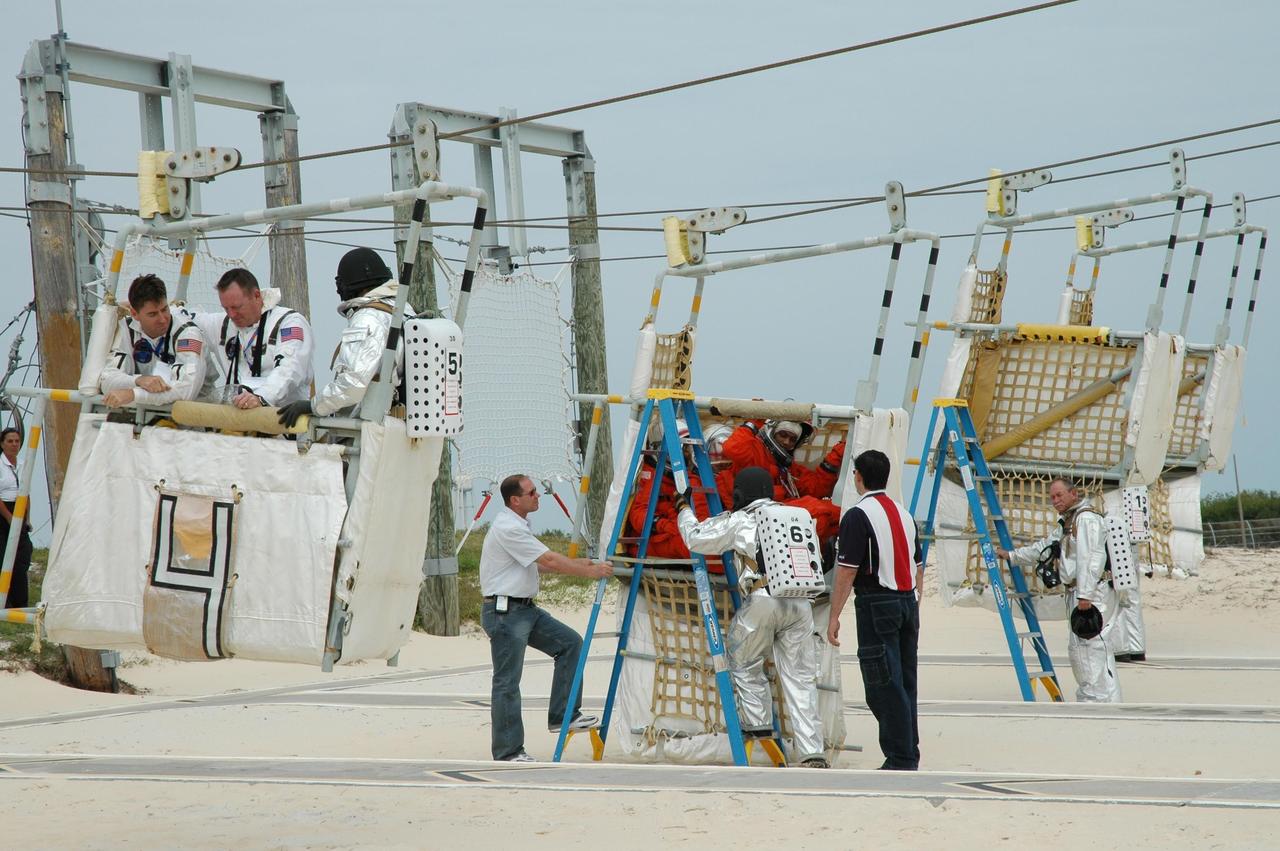
KENNEDY SPACE CENTER, FLA. -- During the second stage of a simulated emergency, known as Mode 4, KSC personnel dressed in astronauts' launch-and-entry suits are helped by the fire rescue team at the slidewire basket landing site. The emergency exercise began at the 195-foot level of Launch Pad 39A. The KSC rescue teams are practicing emergency procedures in the unlikely scenario of a mishap on the pad during a launch sequence. The exercises are standard training procedures to assess and prepare emergency personnel, procedures and hardware. Photo credit: NASA/Jim Grossmann
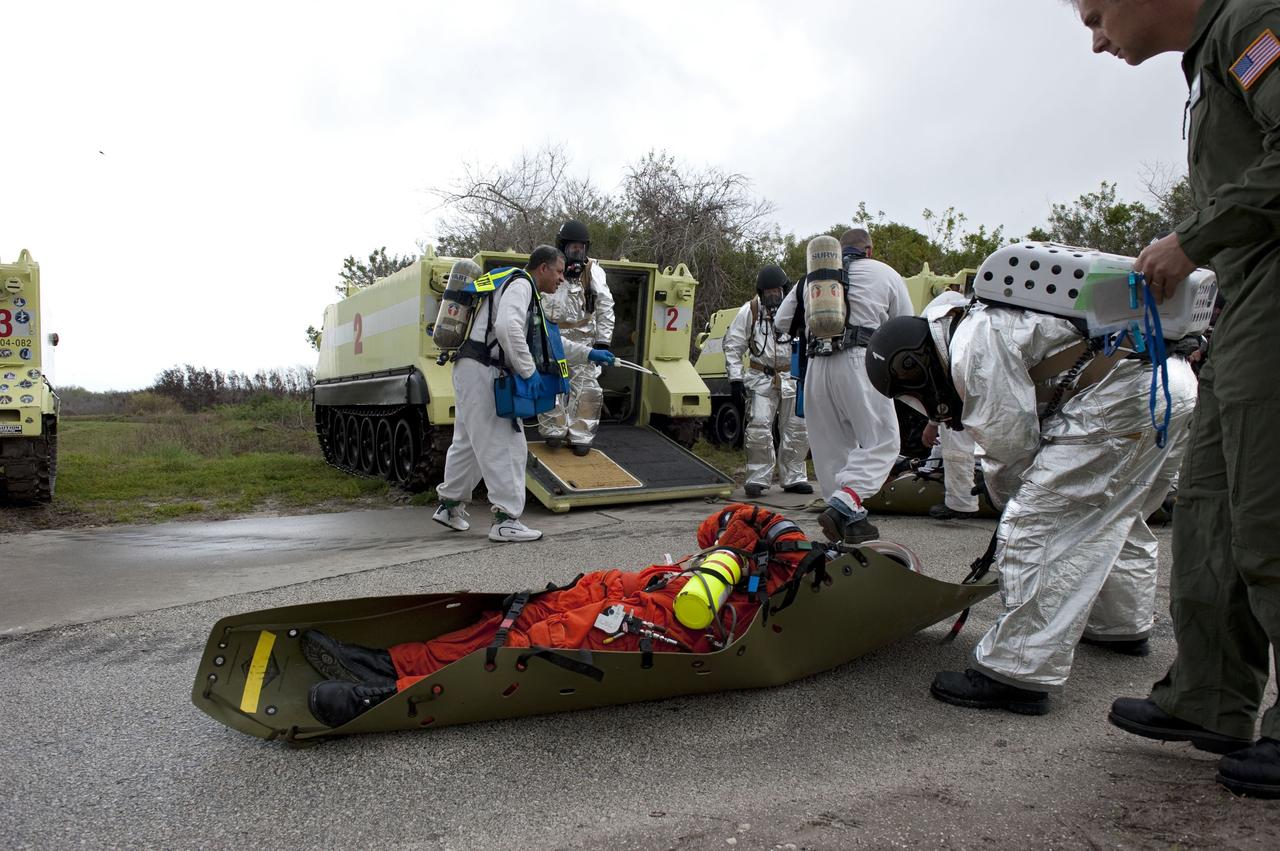
CAPE CANAVERAL, Fla. – An emergency exit, or Mode II/IV, exercise is under way near Launch Pad 39A at NASA's Kennedy Space Center in Florida. The exercise involves NASA fire rescue personnel, volunteers portraying astronauts with simulated injuries, helicopters and personnel from the Air Force’s 920th Rescue Wing, and medical trauma teams at three Central Florida hospitals. The drill allows teams to practice an emergency response at the launch pad, including helicopter evacuation to local hospitals. Photo credit: NASA/Kim Shiflett

CAPE CANAVERAL, Fla. – An emergency exit, or Mode II/IV, exercise is under way near Launch Pad 39A at NASA's Kennedy Space Center in Florida. The exercise involves NASA fire rescue personnel, volunteers portraying astronauts with simulated injuries, helicopters and personnel from the Air Force’s 920th Rescue Wing, and medical trauma teams at three Central Florida hospitals. The drill allows teams to practice an emergency response at the launch pad, including helicopter evacuation to local hospitals. Photo credit: NASA/Kim Shiflett
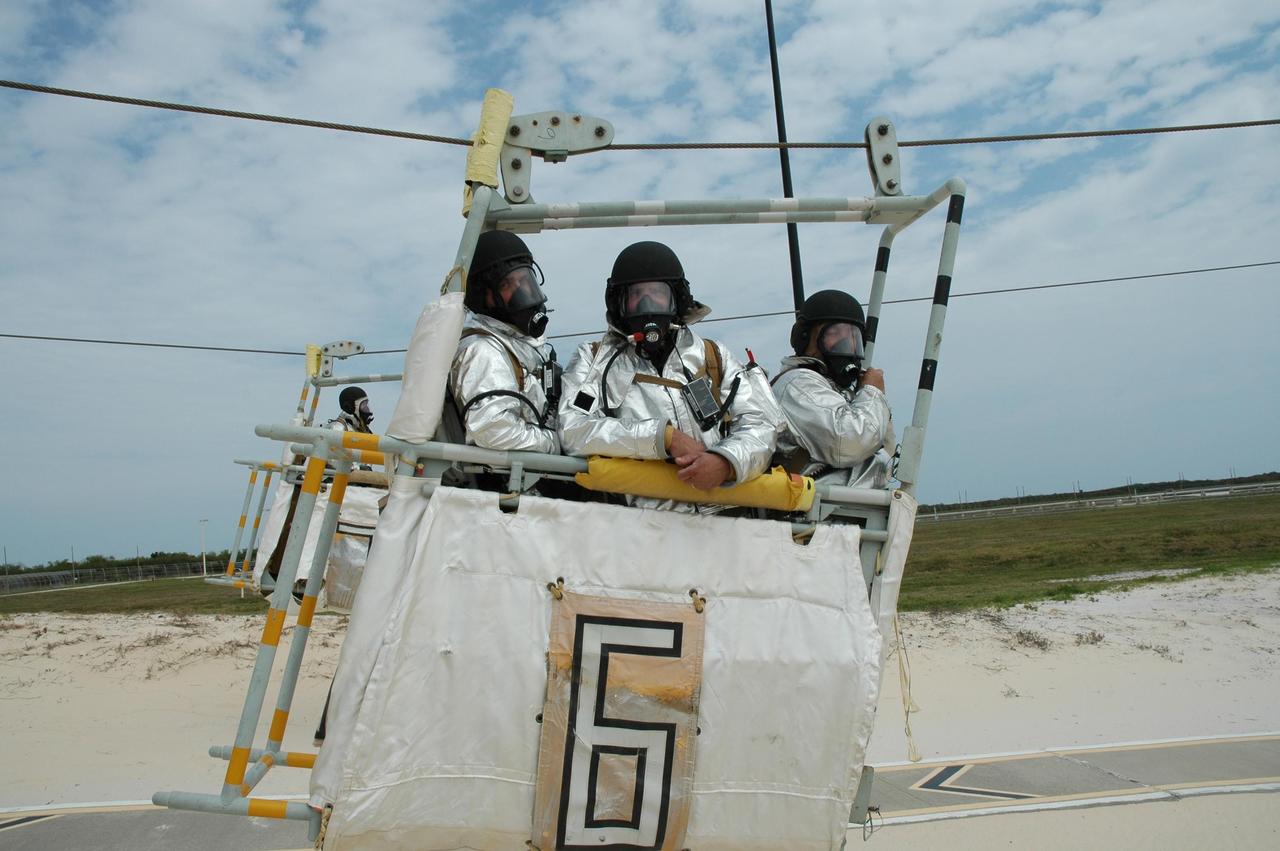
KENNEDY SPACE CENTER, FLA. -- During the second stage of a simulated emergency, known as Mode 4, part of the KSC fire rescue team in a slidewire basket arrive at the landing site. The emergency exercise began at the 195-foot level of Launch Pad 39A. The KSC rescue teams are practicing emergency procedures in the unlikely scenario of a mishap on the pad during a launch sequence. The exercises are standard training procedures to assess and prepare emergency personnel, procedures and hardware. Photo credit: NASA/Jim Grossmann
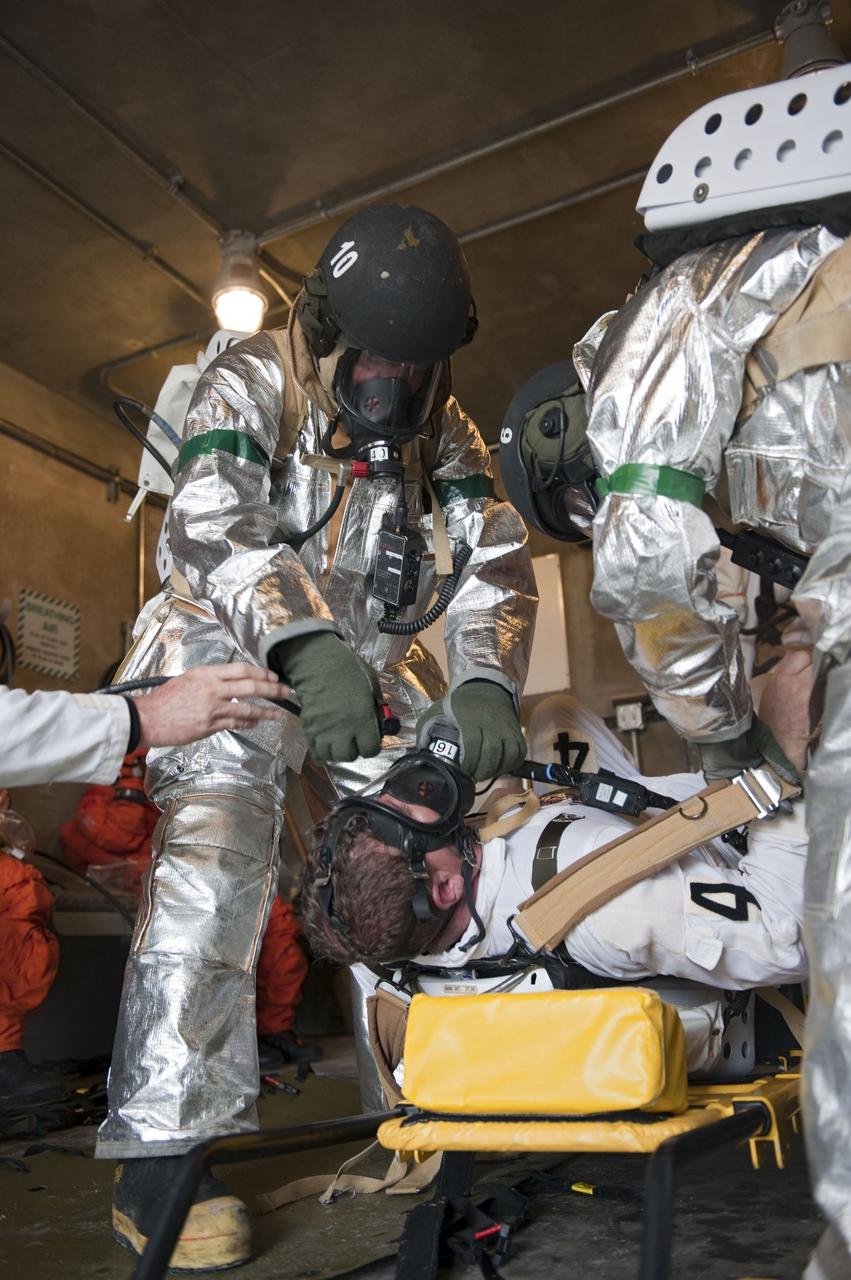
CAPE CANAVERAL, Fla. – An emergency exit, or Mode II/IV, exercise is under way in a bunker of Launch Pad 39A at NASA's Kennedy Space Center in Florida. The exercise involves NASA fire rescue personnel, volunteers portraying astronauts with simulated injuries, helicopters and personnel from the Air Force’s 920th Rescue Wing, and medical trauma teams at three Central Florida hospitals. The drill allows teams to practice an emergency response at the launch pad, including helicopter evacuation to local hospitals. Photo credit: NASA/Kim Shiflett
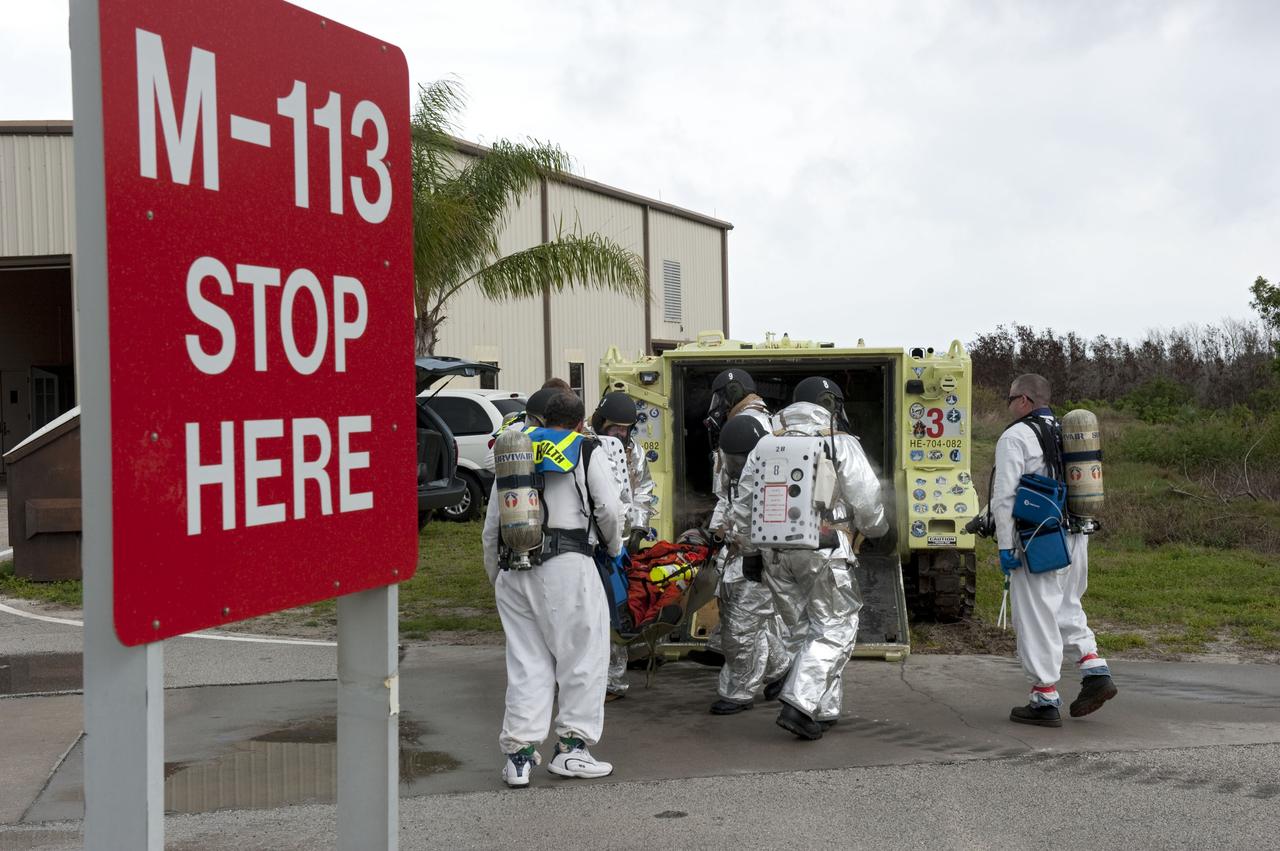
CAPE CANAVERAL, Fla. – An emergency exit, or Mode II/IV, exercise is under way near Launch Pad 39A at NASA's Kennedy Space Center in Florida. The exercise involves NASA fire rescue personnel, volunteers portraying astronauts with simulated injuries, helicopters and personnel from the Air Force’s 920th Rescue Wing, and medical trauma teams at three Central Florida hospitals. The drill allows teams to practice an emergency response at the launch pad, including helicopter evacuation to local hospitals. Photo credit: NASA/Kim Shiflett
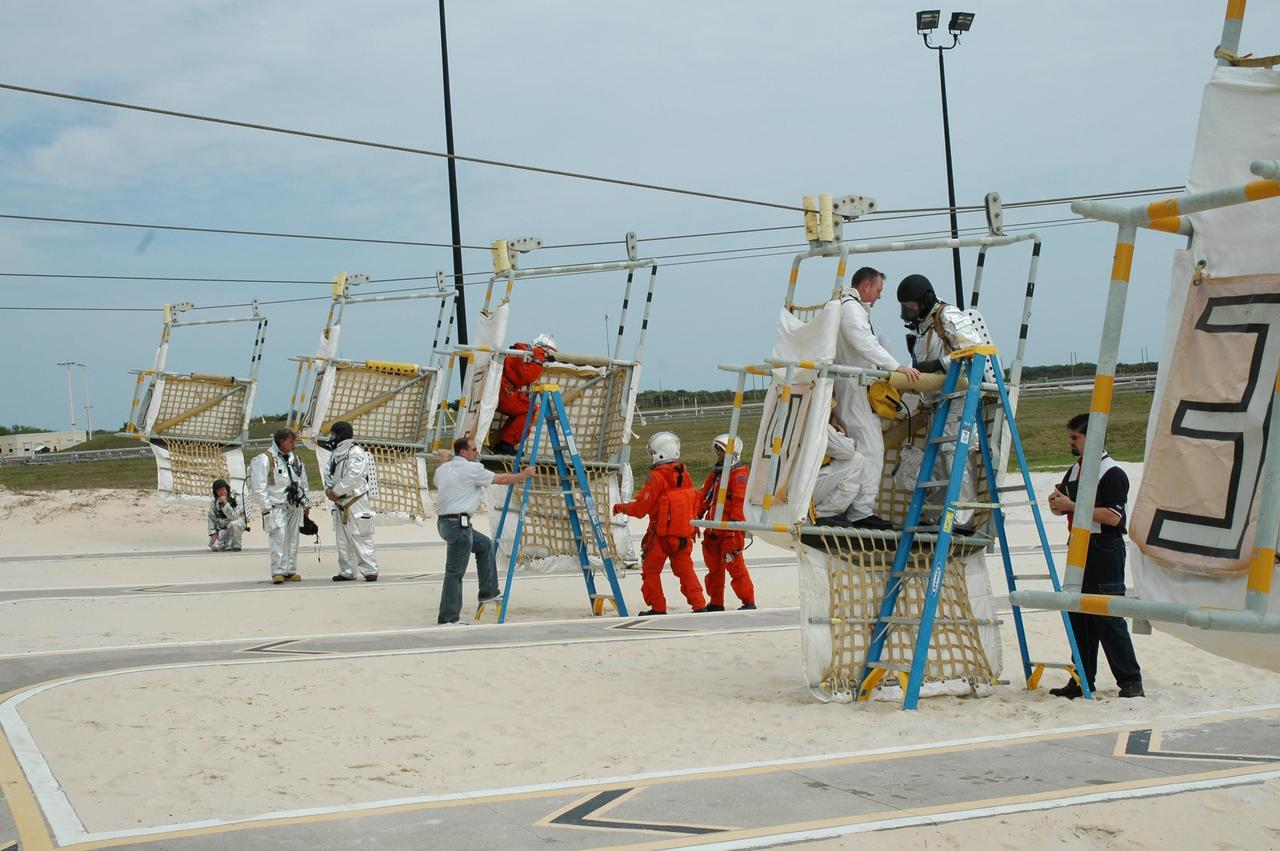
KENNEDY SPACE CENTER, FLA. -- During the second stage of a simulated emergency, known as Mode 4, KSC personnel dressed in astronauts' launch-and-entry suits are helped by the fire rescue team at the slidewire basket landing site. The emergency exercise began at the 195-foot level of Launch Pad 39A. The KSC rescue teams are practicing emergency procedures in the unlikely scenario of a mishap on the pad during a launch sequence. The exercises are standard training procedures to assess and prepare emergency personnel, procedures and hardware. Photo credit: NASA/Jim Grossmann
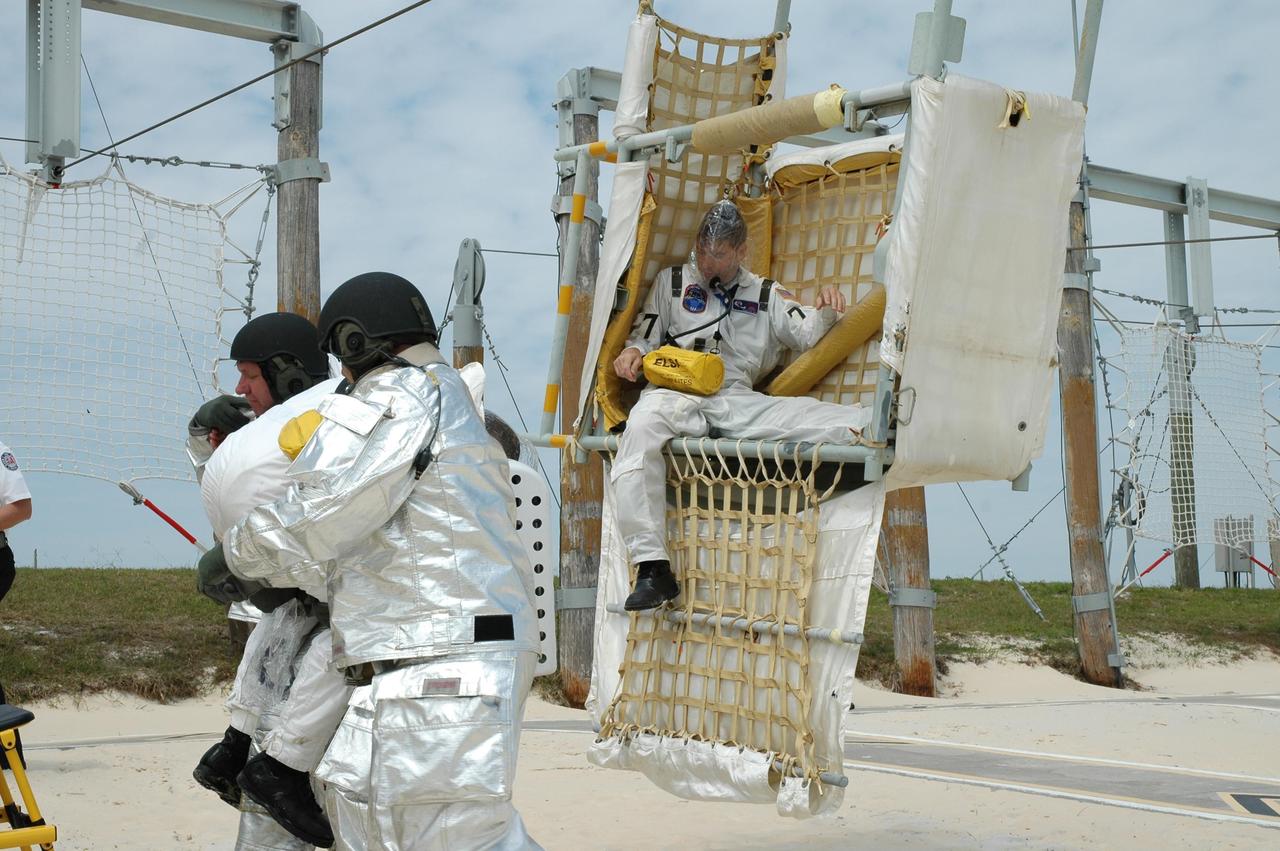
KENNEDY SPACE CENTER, FLA. -- During the second stage of a simulated emergency, known as Mode 4, part of the KSC fire rescue team helps "injured" members of the closeout crew out of the slidewire baskets. The emergency exercise began at the 195-foot level of Launch Pad 39A. The KSC rescue teams are practicing emergency procedures in the unlikely scenario of a mishap on the pad during a launch sequence. The exercises are standard training procedures to assess and prepare emergency personnel, procedures and hardware. Photo credit: NASA/Jim Grossmann
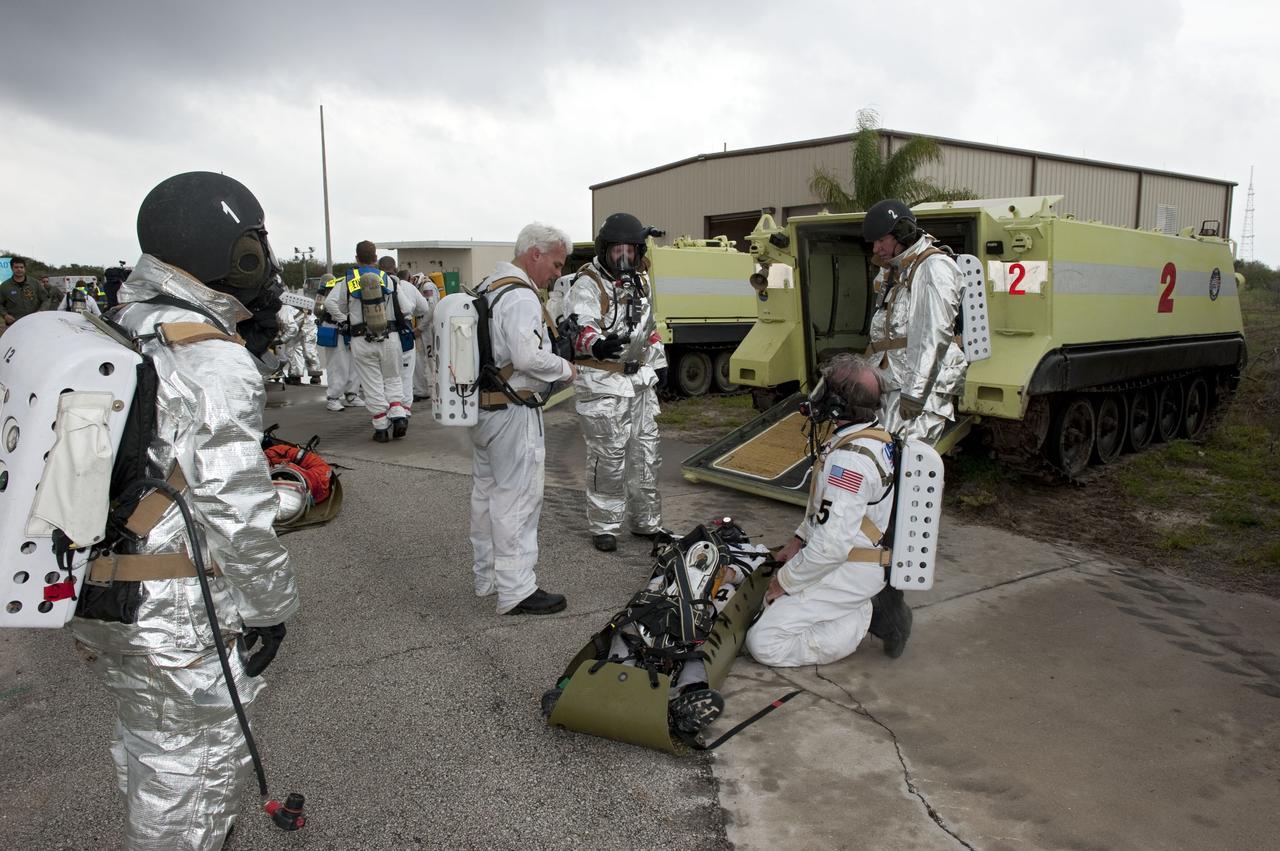
CAPE CANAVERAL, Fla. – An emergency exit, or Mode II/IV, exercise is under way near Launch Pad 39A at NASA's Kennedy Space Center in Florida. The exercise involves NASA fire rescue personnel, volunteers portraying astronauts with simulated injuries, helicopters and personnel from the Air Force’s 920th Rescue Wing, and medical trauma teams at three Central Florida hospitals. The drill allows teams to practice an emergency response at the launch pad, including helicopter evacuation to local hospitals. Photo credit: NASA/Kim Shiflett
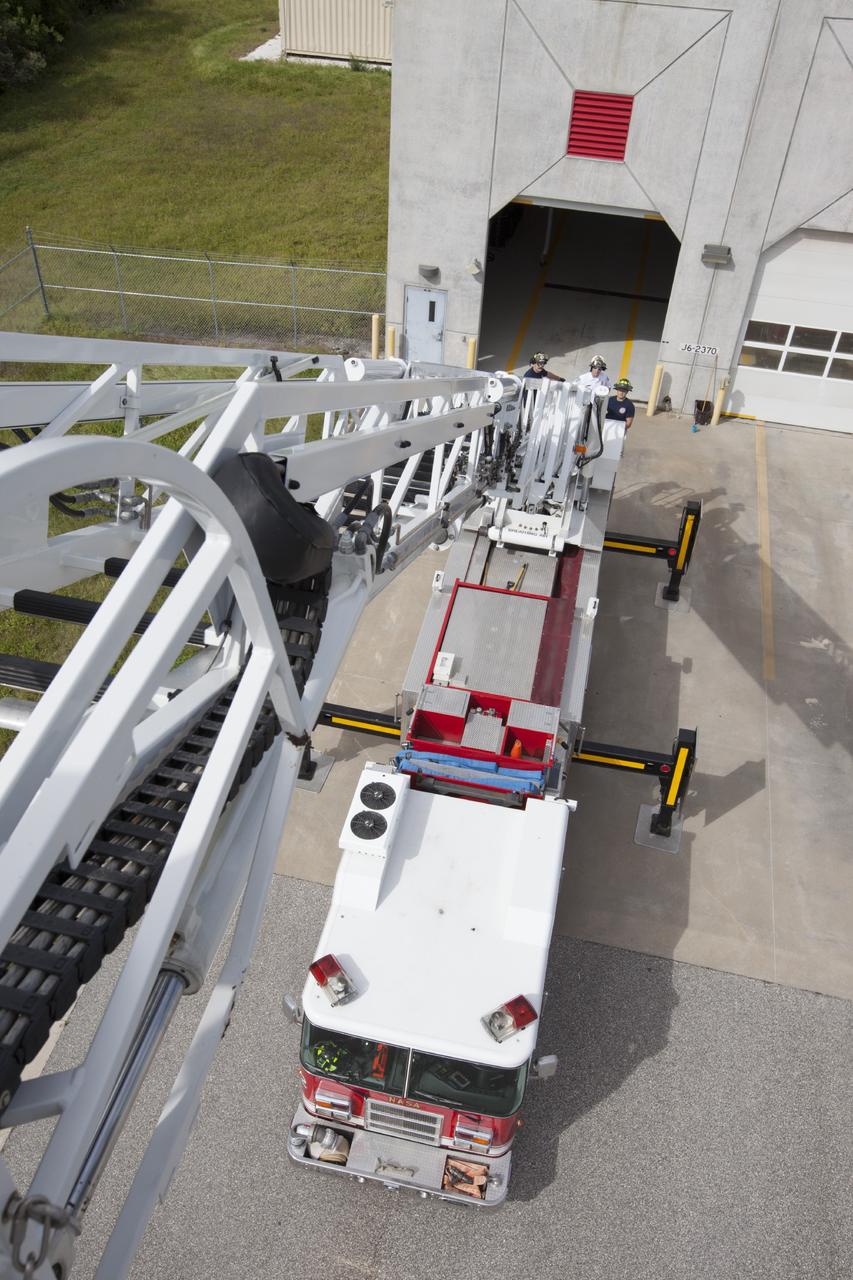
CAPE CANAVERAL, Fla. – At Fire Station No. 2 near the Shuttle Landing Facility at NASA’s Kennedy Space Center in Florida, a bird’s eye view reveals the ladder has been extended on the aerial fire truck during a training exercise. The stabilizers have been deployed on either side of the fire truck. The center’s Fire Rescue Services recently achieved Pro Board Certification in aerial fire truck operations. Pro Board Certification is a globally recognized certification that puts on multiple courses that all fire departments throughout the world recognize and use to train their personnel. The unique aerial truck contains a 100-foot extendable ladder with a bucket at the end of it that can be used for rescues from taller buildings or aircraft rescue firefighting. Photo credit: NASA/Kim Shiflett
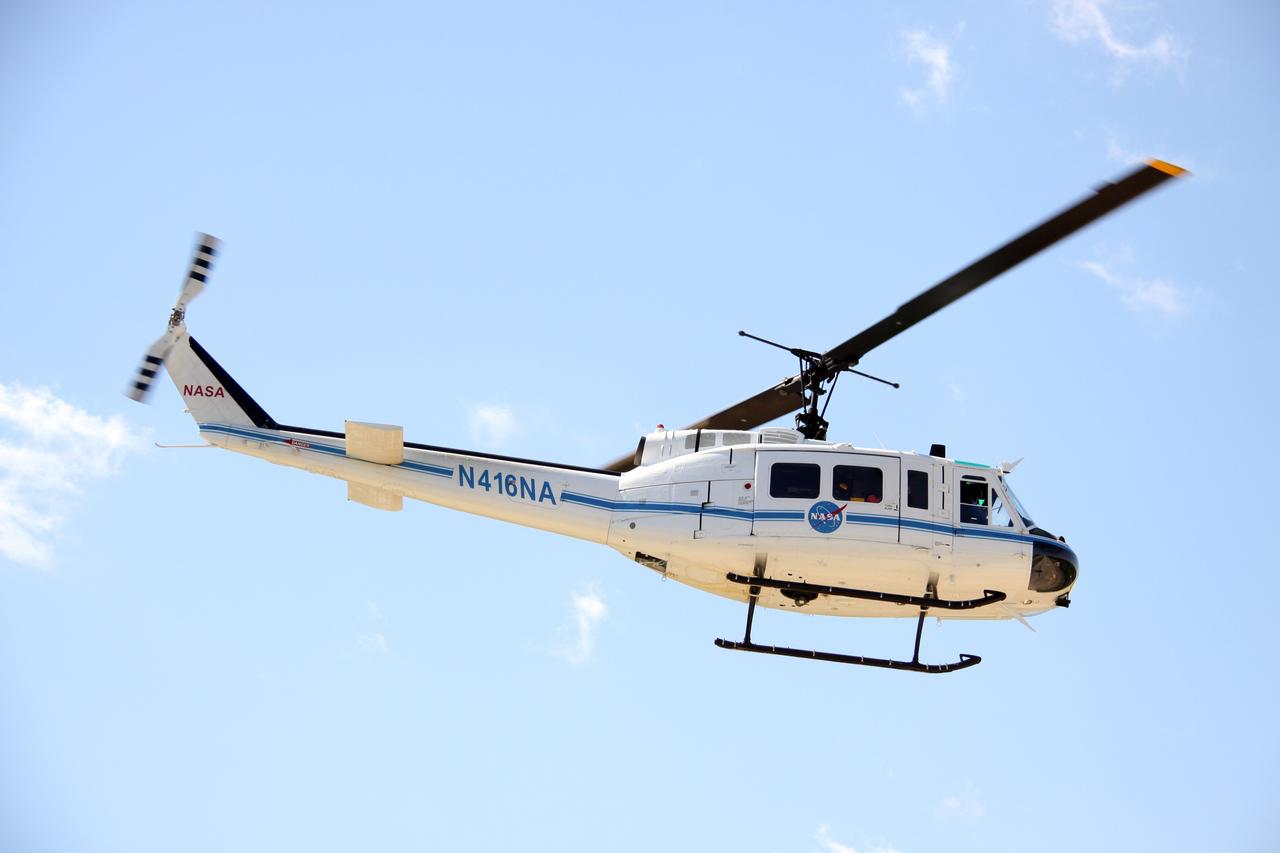
CAPE CANAVERAL, Fla. – A NASA helicopter takes off while participating in a Mode II-IV exercise at NASA's Kennedy Space Center in Florida. The exercise allows teams to practice an emergency response at Launch Pad 39A, including helicopter evacuation to local hospitals. The exercise involves NASA fire rescue personnel, volunteers portraying astronauts with simulated injuries, helicopters and personnel from the Air Force’s 920th Rescue Wing and medical trauma teams at three central Florida hospitals. The Space Shuttle Program and U.S. Air Force are conducting the emergency simulation. Photo credit: NASA/Troy Cryder
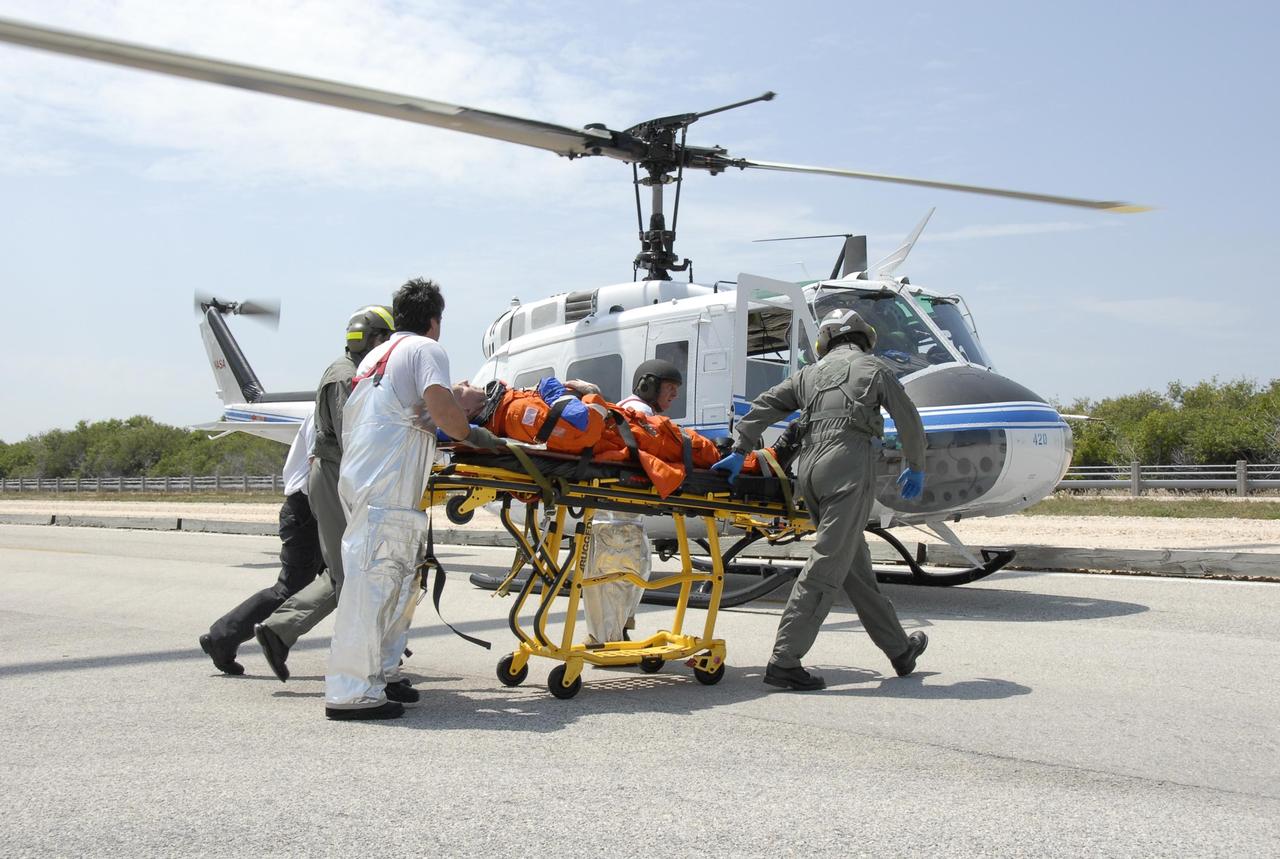
KENNEDY SPACE CENTER, FLA. -- During the second stage of a simulated emergency, known as Mode 4, the KSC rescue team moves an "injured" astronaut toward a NASA helicopter, one of five participating in the exercise. The triage area was set up at Helipad 8, located near the fire station between Launch Pads 39A and 39B. The emergency exercise began on Launch Pad 39A. The participants were helped off the pad and taken to the triage site. The KSC rescue teams are practicing emergency procedures in the unlikely scenario of a mishap on the pad during a launch sequence. The exercises are standard training procedures to assess and prepare emergency personnel, procedures and hardware. Photo credit: NASA/Kim Shiflett
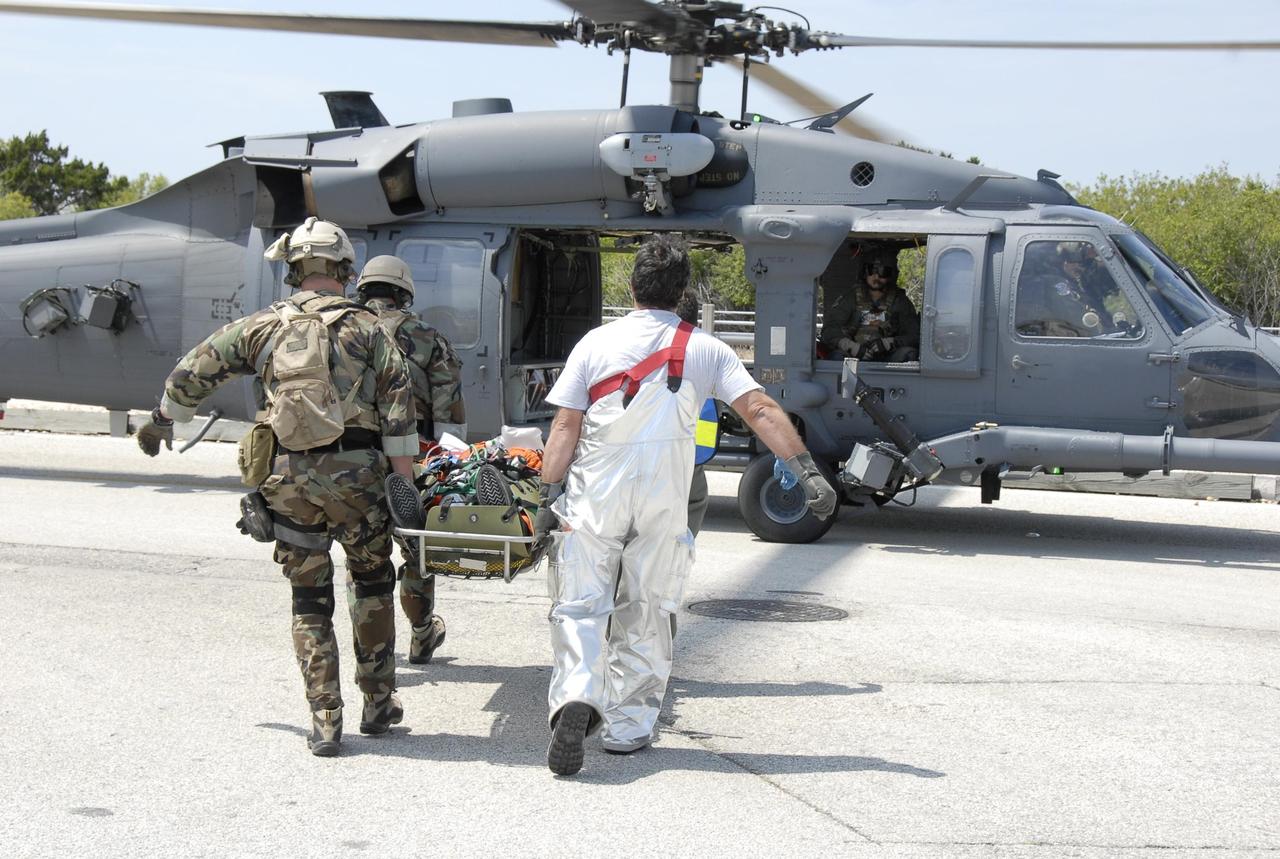
KENNEDY SPACE CENTER, FLA. -- During the second stage of a simulated emergency, known as Mode 4, the KSC rescue team carries an "injured" astronaut toward one of five helicopters participating in the exercise. The triage area was set up at Helipad 8, located near the fire station between Launch Pads 39A and 39B. The emergency exercise began on Launch Pad 39A. The participants were helped off the pad and taken to the triage site. The KSC rescue teams are practicing emergency procedures in the unlikely scenario of a mishap on the pad during a launch sequence. The exercises are standard training procedures to assess and prepare emergency personnel, procedures and hardware. Photo credit: NASA/Kim Shiflett
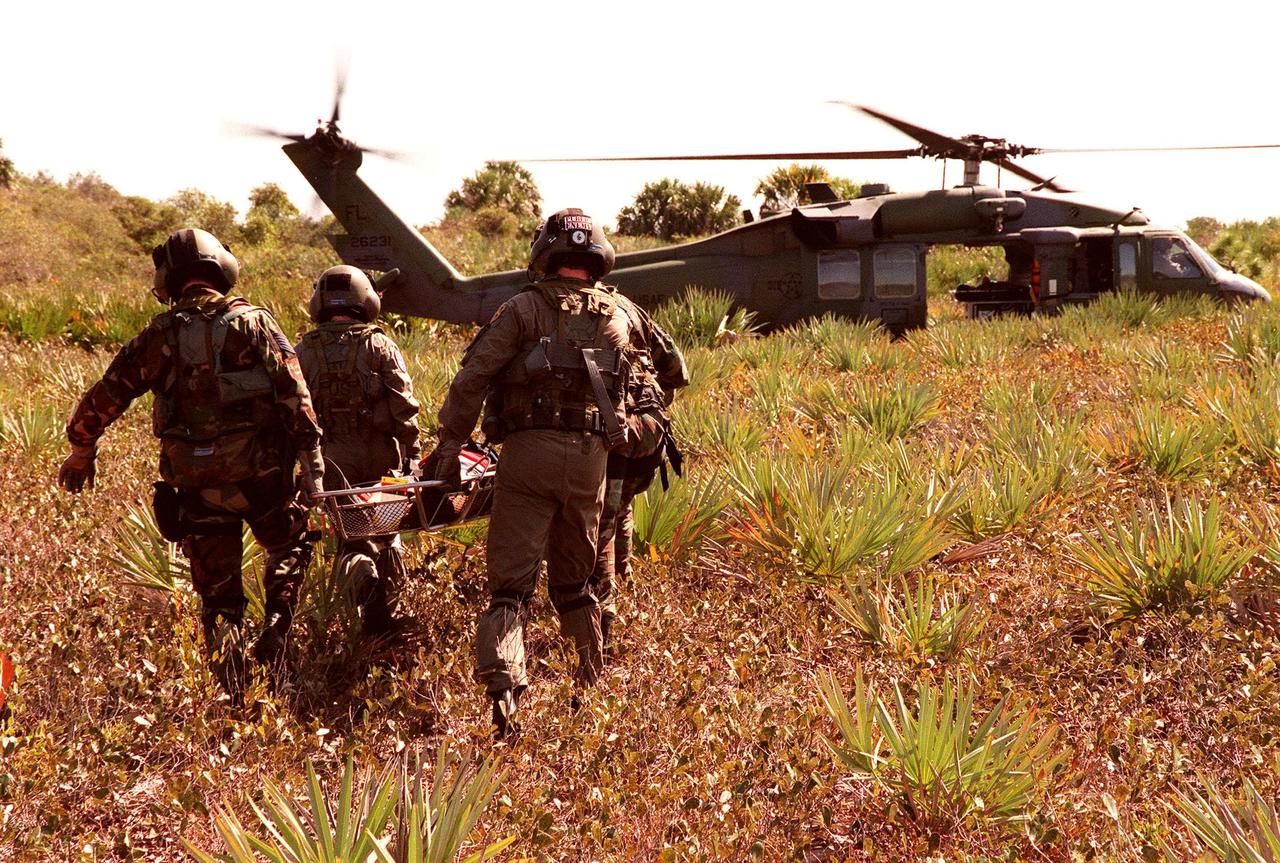
KENNEDY SPACE CENTER, FLA. -- During a simulated rescue mission in the woods near the Shuttle Landing Facility (SLF), the KSC response team practices carrying an injured crew member to an Air Force HH-60 helicopter for transport to a local hospital. The response team is training for the unlikely scenario of a Shuttle mishap at the SLF. The Mode 7 simulation of an astronaut rescue exercises all aspects of command and control, search and rescue, and medical procedures required for a successful rescue. The remote location of the mock-up prevents a totally land-based crew rescue, and calls on a NASA UH-1 helicopter to locate the site and four Air Force HH-60 helicopters to reach the site, drop emergency equipment and later remove the "crew" five astronaut candidates, one representative from the Vehicle Integration Test office, and one fire/rescue worker. The exercise will conclude with airlifted "patients" arriving safely in the emergency rooms of participating area hospitals
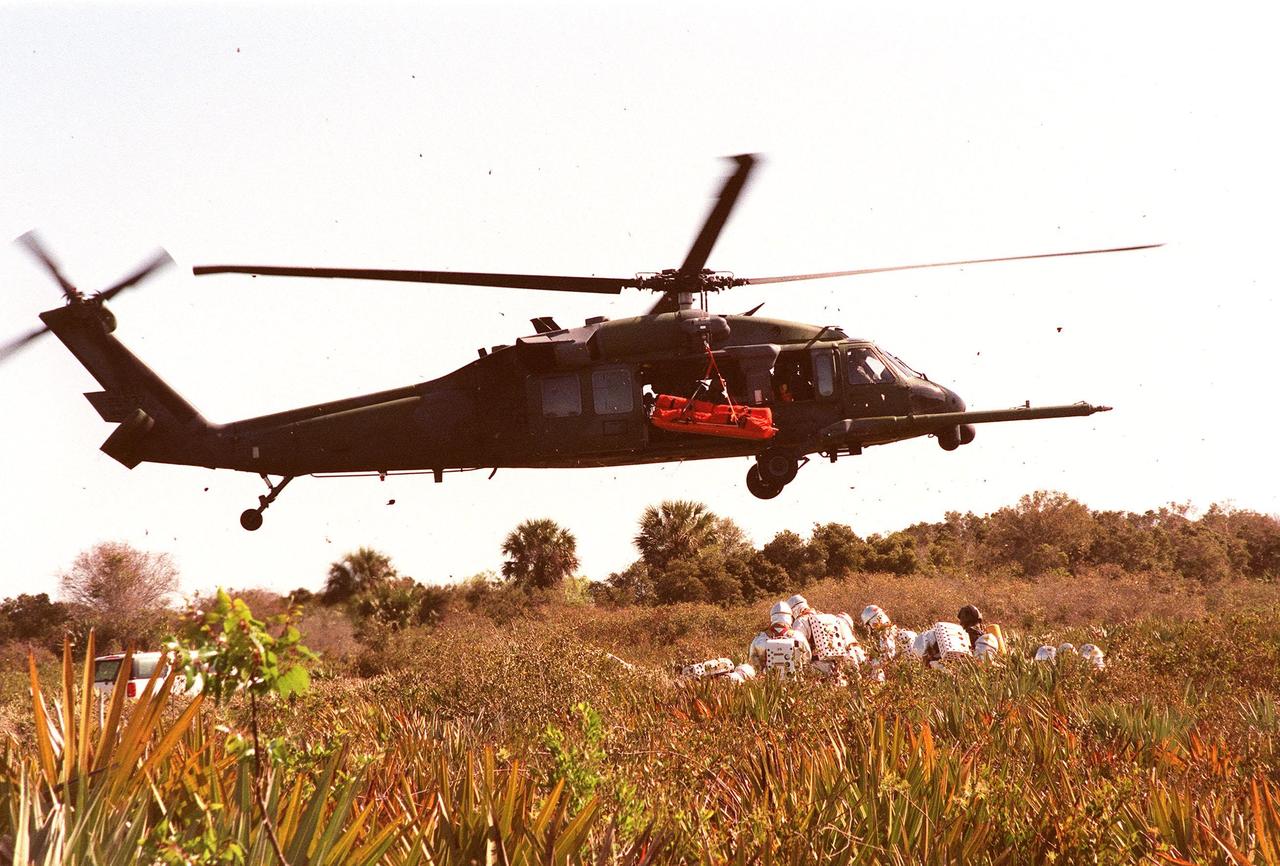
KENNEDY SPACE CENTER, FLA. -- During a simulated rescue mission in the woods near the Shuttle Landing Facility (SLF), the KSC response team practices lifting an injured crew member to an Air Force HH-60 helicopter for transport to a local hospital. The response team is training for the unlikely scenario of a Shuttle mishap at the SLF. The Mode 7 simulation of an astronaut rescue exercises all aspects of command and control, search and rescue, and medical procedures required for a successful rescue. The remote location of the mock-up prevents a totally land-based crew rescue, and calls on a NASA UH-1 helicopter to locate the site and four Air Force HH-60 helicopters to reach and prepare the "crew" five astronaut candidates, one representative from the Vehicle Integration Test office, and one fire/rescue worker for preliminary triage. The exercise will conclude with airlifted "patients" arriving safely in the emergency rooms of participating area hospitals
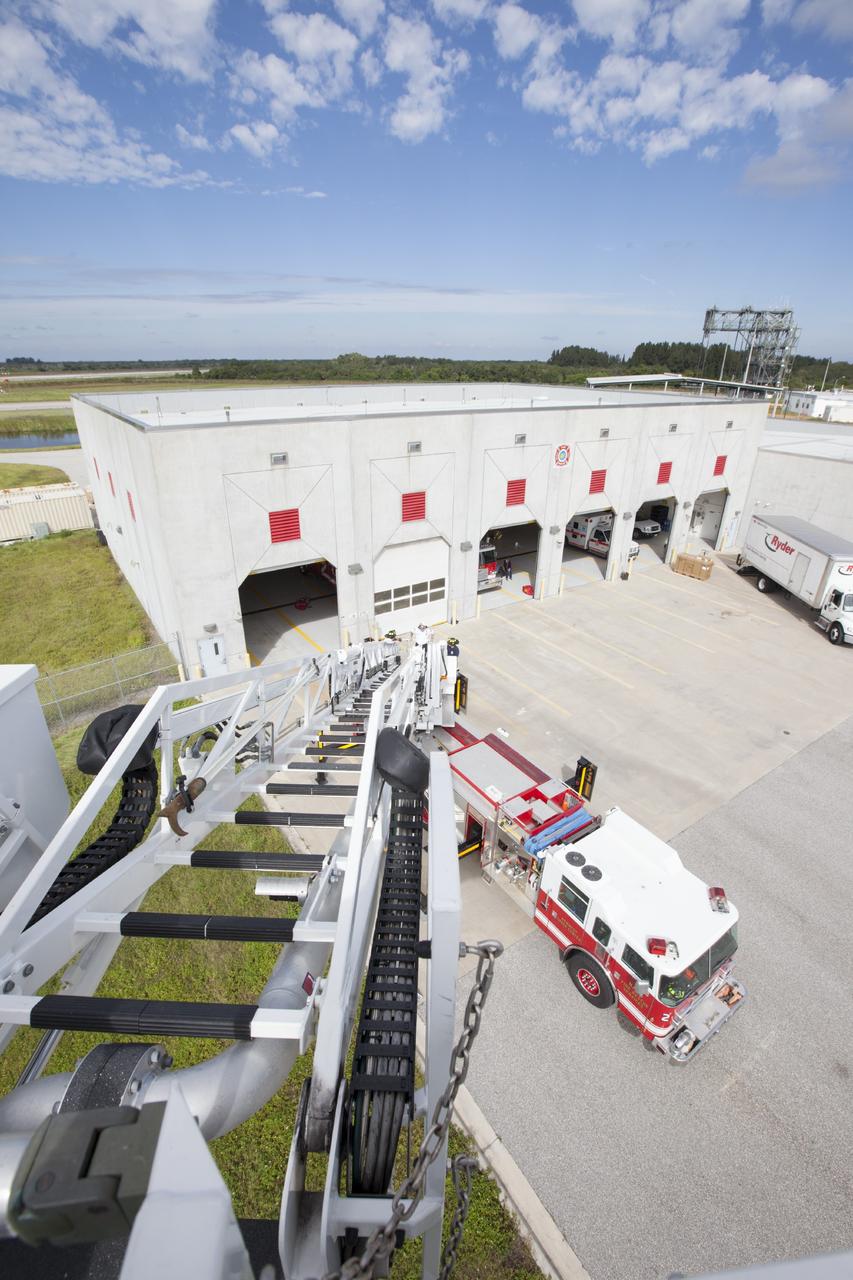
CAPE CANAVERAL, Fla. – At Fire Station No. 2 near the Shuttle Landing Facility at NASA’s Kennedy Space Center in Florida, a bird’s eye view reveals the ladder has been extended on the aerial fire truck during a training exercise. The center’s Fire Rescue Services recently achieved Pro Board Certification in aerial fire truck operations. Pro Board Certification is a globally recognized certification that puts on multiple courses that all fire departments throughout the world recognize and use to train their personnel. The unique aerial truck contains a 100-foot extendable ladder with a bucket at the end of it that can be used for rescues from taller buildings or aircraft rescue firefighting. Photo credit: NASA/Kim Shiflett
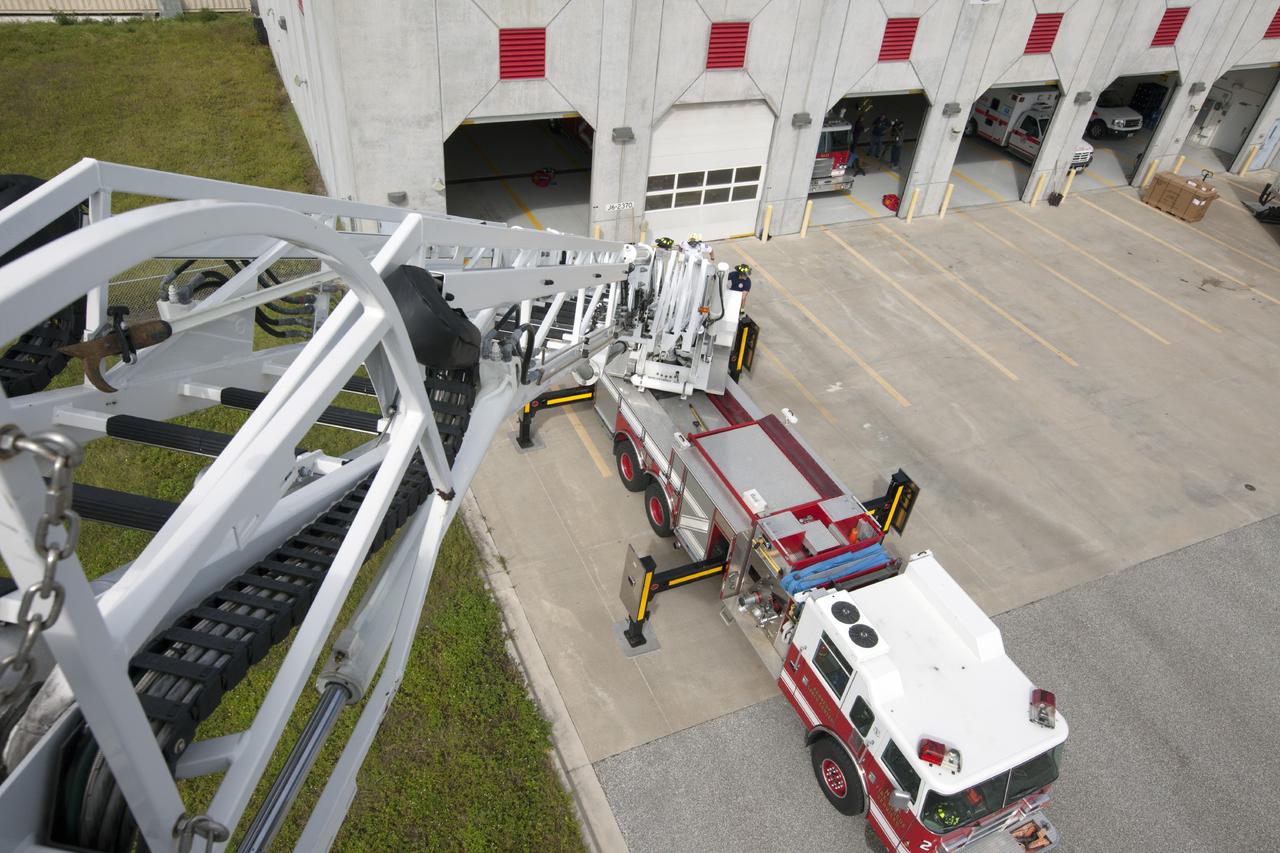
CAPE CANAVERAL, Fla. – At Fire Station No. 2 near the Shuttle Landing Facility at NASA’s Kennedy Space Center in Florida, a bird’s eye view reveals the ladder has been extended on the aerial fire truck during a training exercise. The center’s Fire Rescue Services recently achieved Pro Board Certification in aerial fire truck operations. Pro Board Certification is a globally recognized certification that puts on multiple courses that all fire departments throughout the world recognize and use to train their personnel. The unique aerial truck contains a 100-foot extendable ladder with a bucket at the end of it that can be used for rescues from taller buildings or aircraft rescue firefighting. Photo credit: NASA/Kim Shiflett
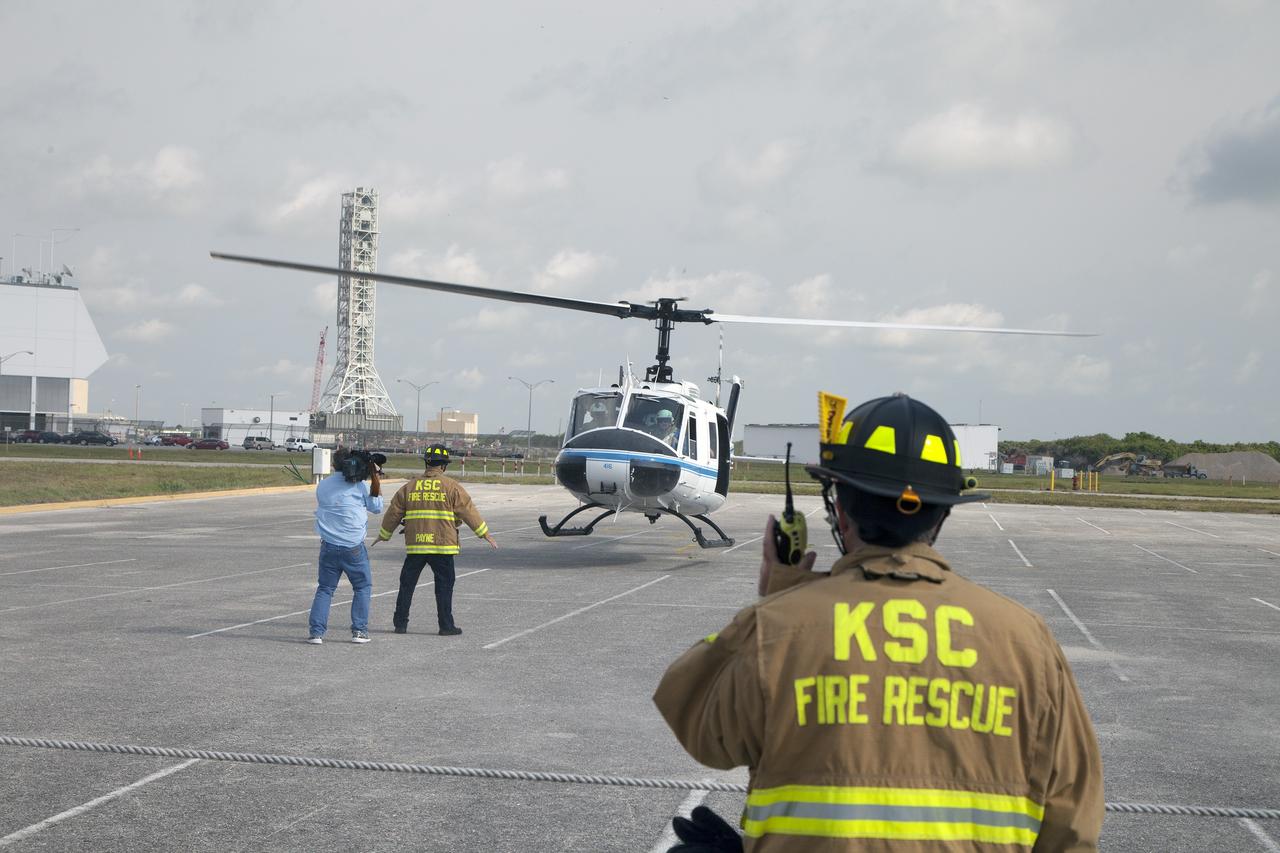
CAPE CANAVERAL, Fla. -- At NASA's Kennedy Space Center in Florida, agency Fire Rescue personnel direct an agency helicopter in for a landing during a training exercise. The activity taking place in Kennedy's Launch Complex 39 turn-basin parking lot was only one of several drills. It was part of a new training program that was developed by Kennedy's Fire Rescue department along with NASA Aircraft Operations to sharpen the skills needed to help rescue personnel learn how to collaborate with helicopter pilots in taking injured patients to hospitals as quickly as possible. Photo credit: NASA/Dan Casper
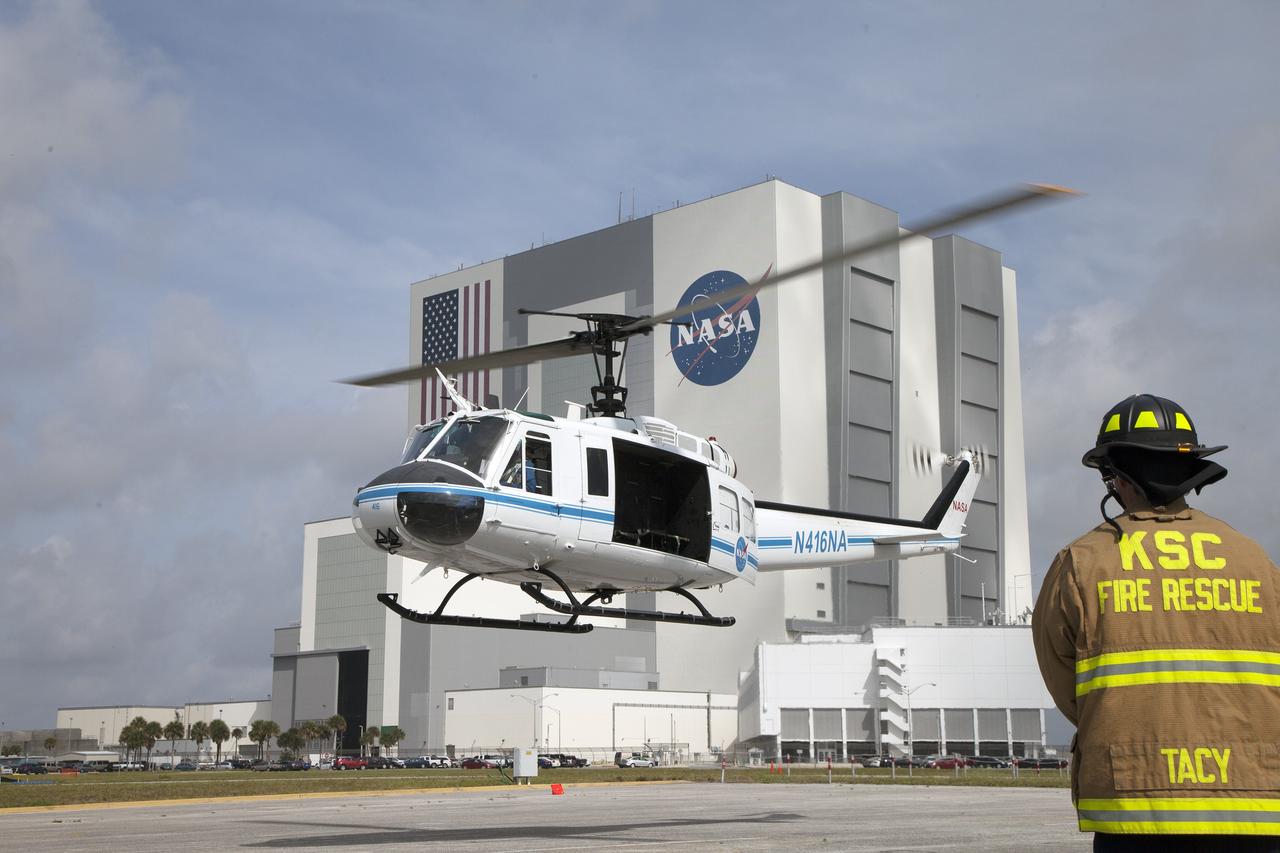
CAPE CANAVERAL, Fla. -- At NASA's Kennedy Space Center in Florida, NASA Fire Rescue Lt. David Tacy of Chenega Security & Support Solutions watches as an agency helicopter takes off as part of a training exercise. The activity taking place in Kennedy's Launch Complex 39 turn-basin parking lot was only one of several drills. It was part of a new training program that was developed by Kennedy's Fire Rescue department along with NASA Aircraft Operations to sharpen the skills needed to help rescue personnel learn how to collaborate with helicopter pilots in taking injured patients to hospitals as quickly as possible. Photo credit: NASA/Dan Casper
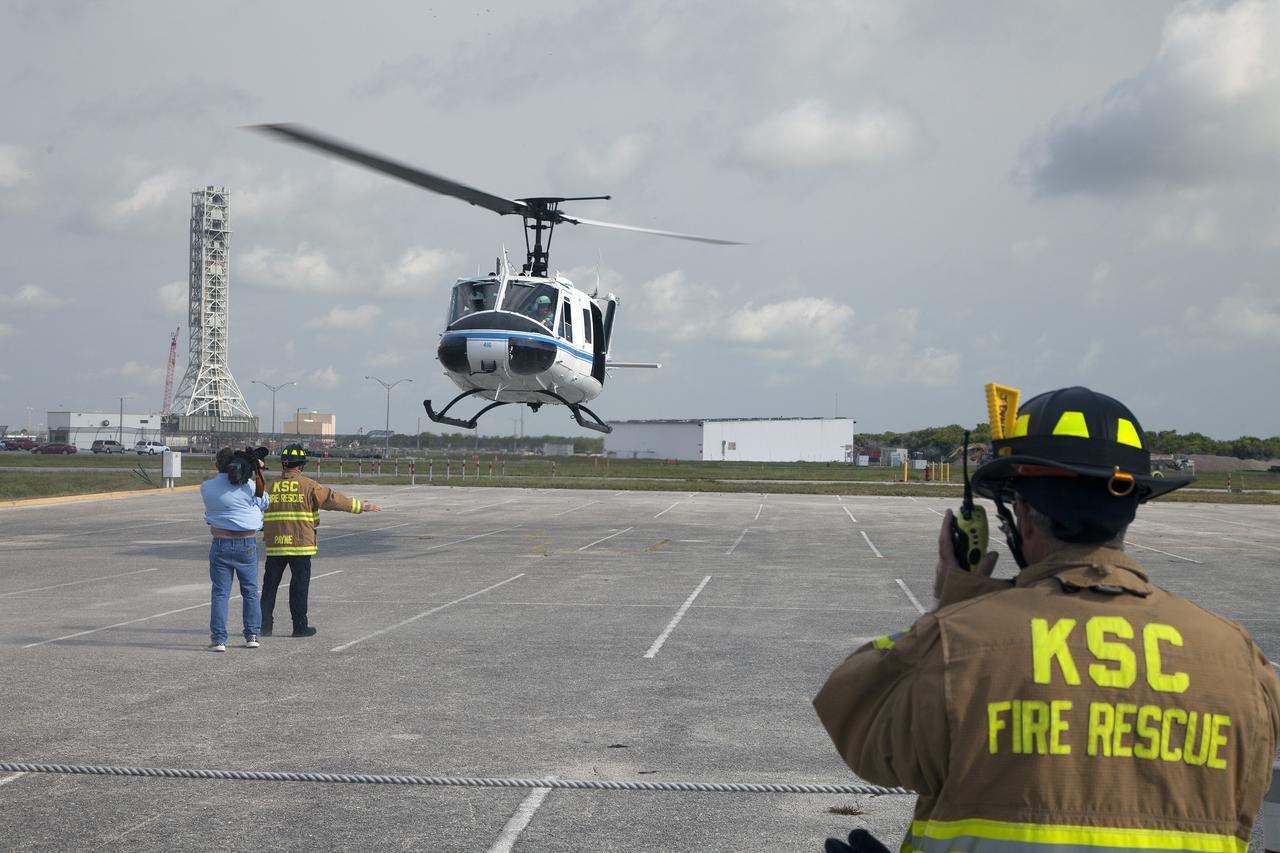
CAPE CANAVERAL, Fla. -- At NASA's Kennedy Space Center in Florida, agency Fire Rescue personnel direct an agency helicopter in for a landing during a training exercise. The activity taking place in Kennedy's Launch Complex 39 turn-basin parking lot was only one of several drills. It was part of a new training program that was developed by Kennedy's Fire Rescue department along with NASA Aircraft Operations to sharpen the skills needed to help rescue personnel learn how to collaborate with helicopter pilots in taking injured patients to hospitals as quickly as possible. Photo credit: NASA/Dan Casper
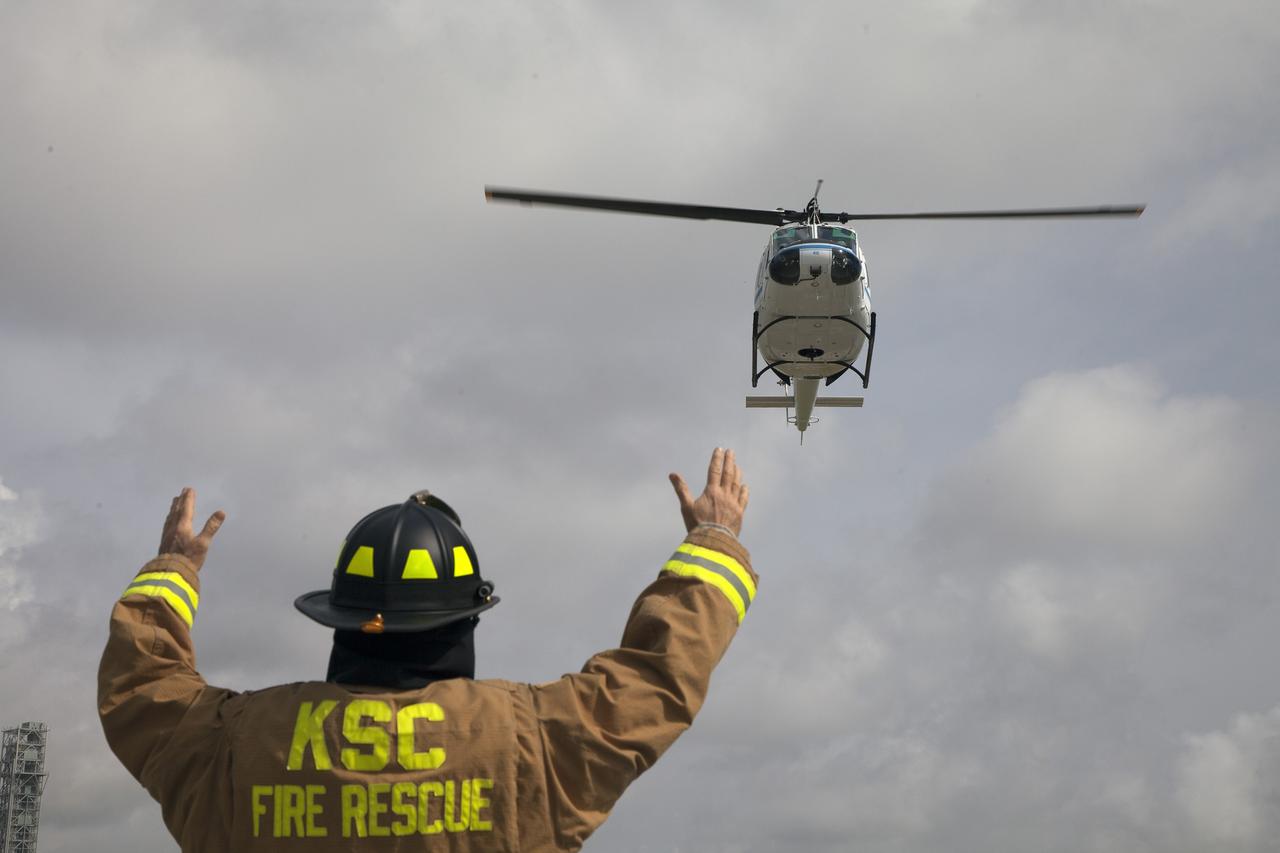
CAPE CANAVERAL, Fla. -- At NASA's Kennedy Space Center in Florida, NASA Fire Rescue Lt. David Tacy, of Chenega Security & Support Solutions, directs an agency helicopter in for a landing during a training exercise. The activity taking place in Kennedy's Launch Complex 39 turn-basin parking lot was only one of several drills. It was part of a new training program that was developed by Kennedy's Fire Rescue department along with NASA Aircraft Operations to sharpen the skills needed to help rescue personnel learn how to collaborate with helicopter pilots in taking injured patients to hospitals as quickly as possible. Photo credit: NASA/Dan Casper
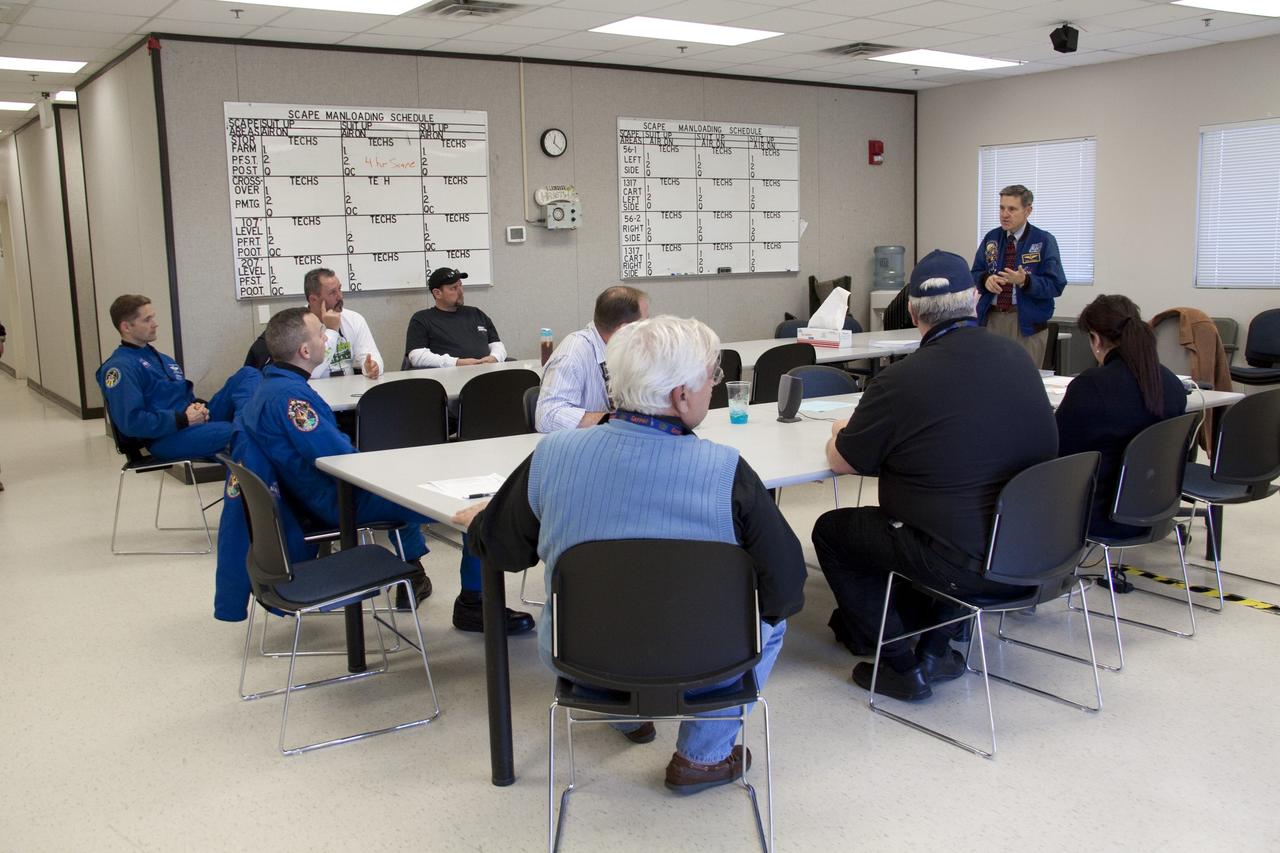
CAPE CANAVERAL, Fla. -- At NASA's Kennedy Space Center in Florida, Center Director Bob Cabana speaks to members of an emergency escape training class. The training is required every 18 months to certify Fire Rescue and Closeout Crew personnel. For several days, volunteers portraying astronauts, take part in a training exercise that allows teams to practice emergency response procedures at Launch Pad 39A, including helicopter evacuation to local hospitals. Training normally involves NASA fire rescue personnel, helicopters and personnel from the Air Force's 920th Rescue Wing, and medical trauma teams from central Florida hospitals. Photo credit: NASA/Troy Cryder
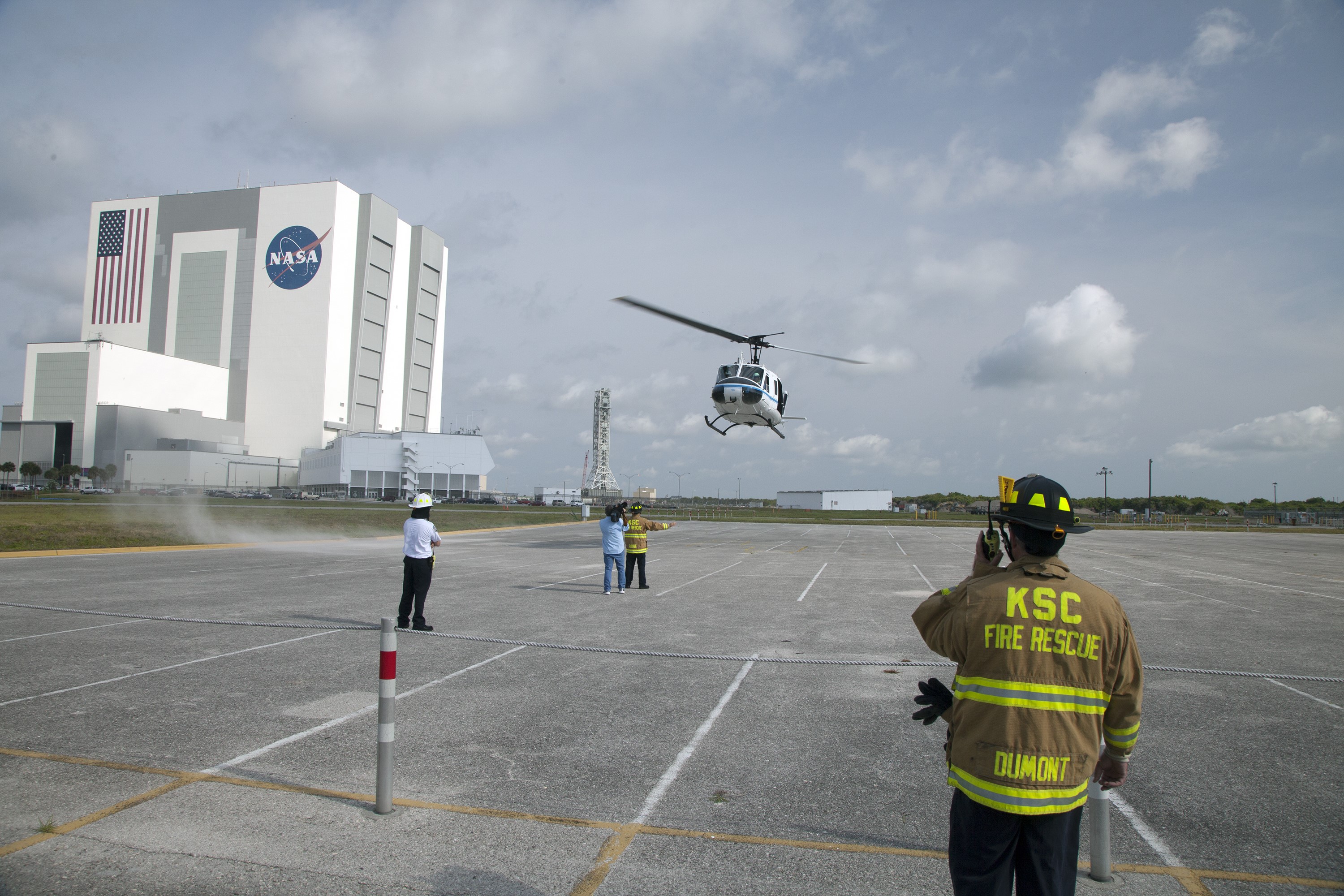
CAPE CANAVERAL, Fla. -- At NASA's Kennedy Space Center in Florida, agency Fire Rescue personnel direct an agency helicopter in for a landing during a training exercise. The activity taking place in Kennedy's Launch Complex 39 turn-basin parking lot was only one of several drills. It was part of a new training program that was developed by Kennedy's Fire Rescue department along with NASA Aircraft Operations to sharpen the skills needed to help rescue personnel learn how to collaborate with helicopter pilots in taking injured patients to hospitals as quickly as possible. Photo credit: NASA/Dan Casper
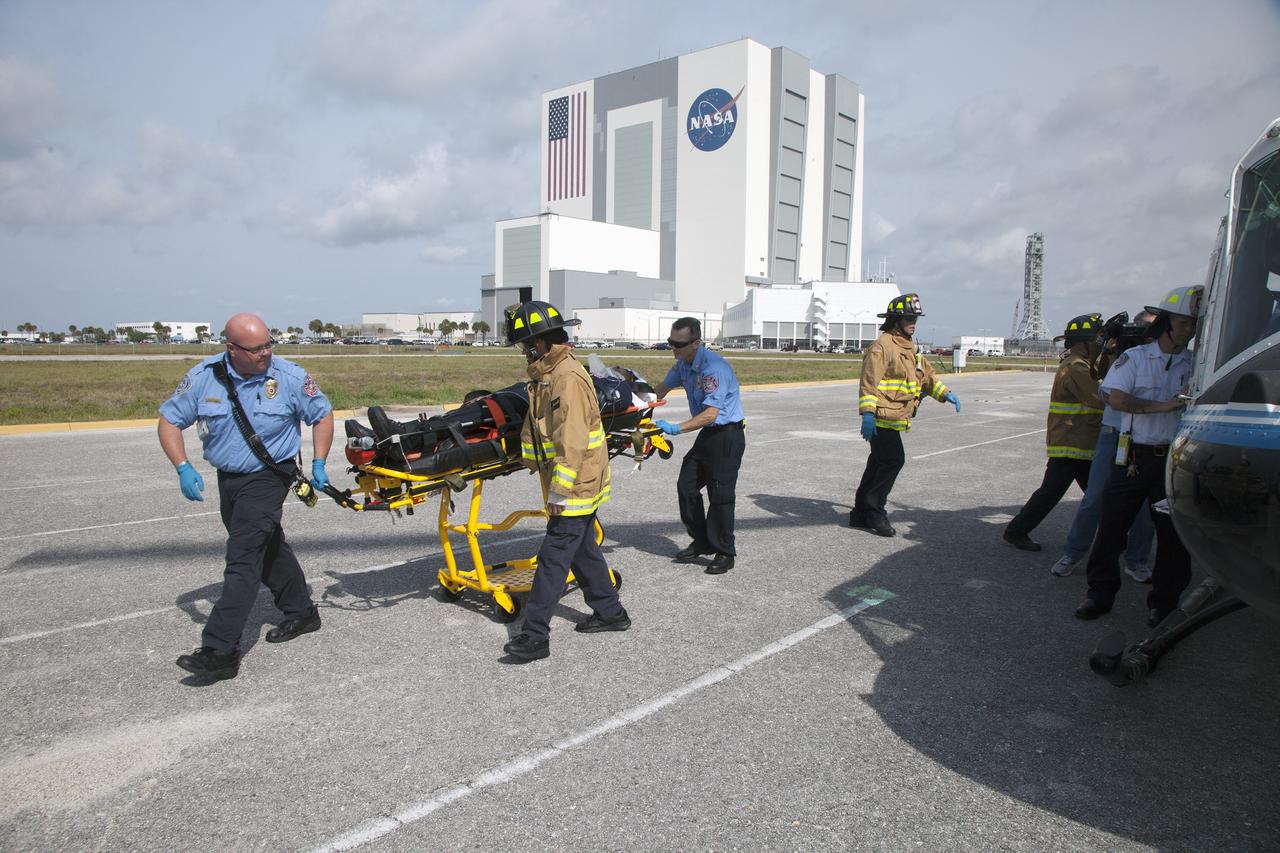
CAPE CANAVERAL, Fla. -- At NASA's Kennedy Space Center in Florida, paramedics and Fire Rescue personnel move a stretcher away from a helicopter after they practiced placing the "volunteer patient" aboard during a training exercise. The activity taking place in Kennedy's Launch Complex 39 turn-basin parking lot was only one of several drills. It was part of a new training program that was developed by Kennedy's Fire Rescue department along with NASA Aircraft Operations to sharpen the skills needed to help rescue personnel learn how to collaborate with helicopter pilots in taking injured patients to hospitals as quickly as possible. Photo credit: NASA/Dan Casper

CAPE CANAVERAL, Fla. -- At NASA's Kennedy Space Center in Florida, agency Fire Rescue personnel direct an agency helicopter in for a landing during a training exercise. The activity taking place in Kennedy's Launch Complex 39 turn-basin parking lot was only one of several drills. It was part of a new training program that was developed by Kennedy's Fire Rescue department along with NASA Aircraft Operations to sharpen the skills needed to help rescue personnel learn how to collaborate with helicopter pilots in taking injured patients to hospitals as quickly as possible. Photo credit: NASA/Dan Casper
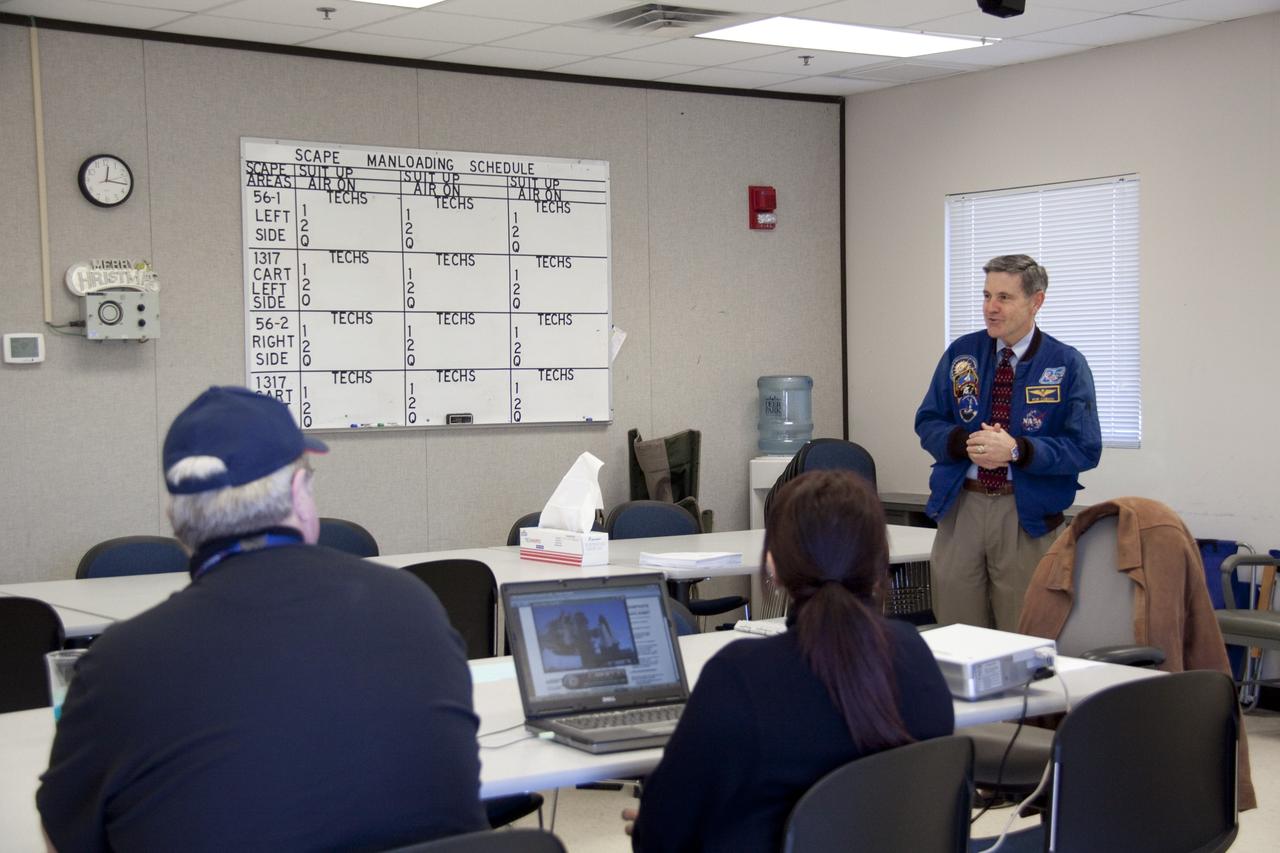
CAPE CANAVERAL, Fla. -- At NASA's Kennedy Space Center in Florida, Center Director Bob Cabana speaks to members of an emergency escape training class. The training is required every 18 months to certify Fire Rescue and Closeout Crew personnel. For several days, volunteers portraying astronauts, take part in a training exercise that allows teams to practice emergency response procedures at Launch Pad 39A, including helicopter evacuation to local hospitals. Training normally involves NASA fire rescue personnel, helicopters and personnel from the Air Force's 920th Rescue Wing, and medical trauma teams from central Florida hospitals. Photo credit: NASA/Troy Cryder
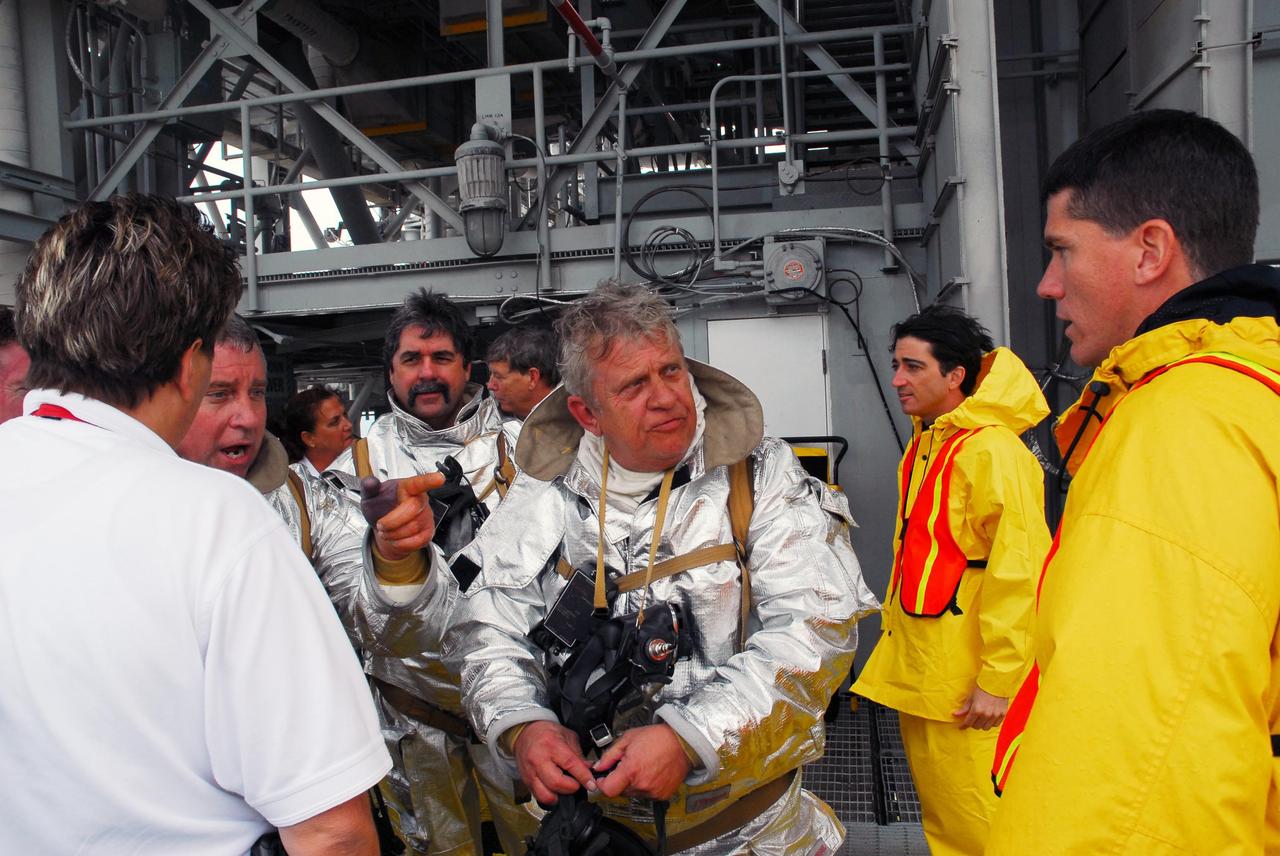
KENNEDY SPACE CENTER, FLA. -- After a simulated rescue mission on Launch Pad 39A, the fire rescue team compares notes about the activity. KSC workers dressed in official launch-and-entry suits portrayed astronauts. The KSC rescue teams are practicing emergency procedures in the unlikely scenario of a mishap on the pad during a launch sequence. The exercises are standard training procedures to assess and prepare emergency personnel, procedures and hardware. Photo credit: NASA/Jack Pfaller
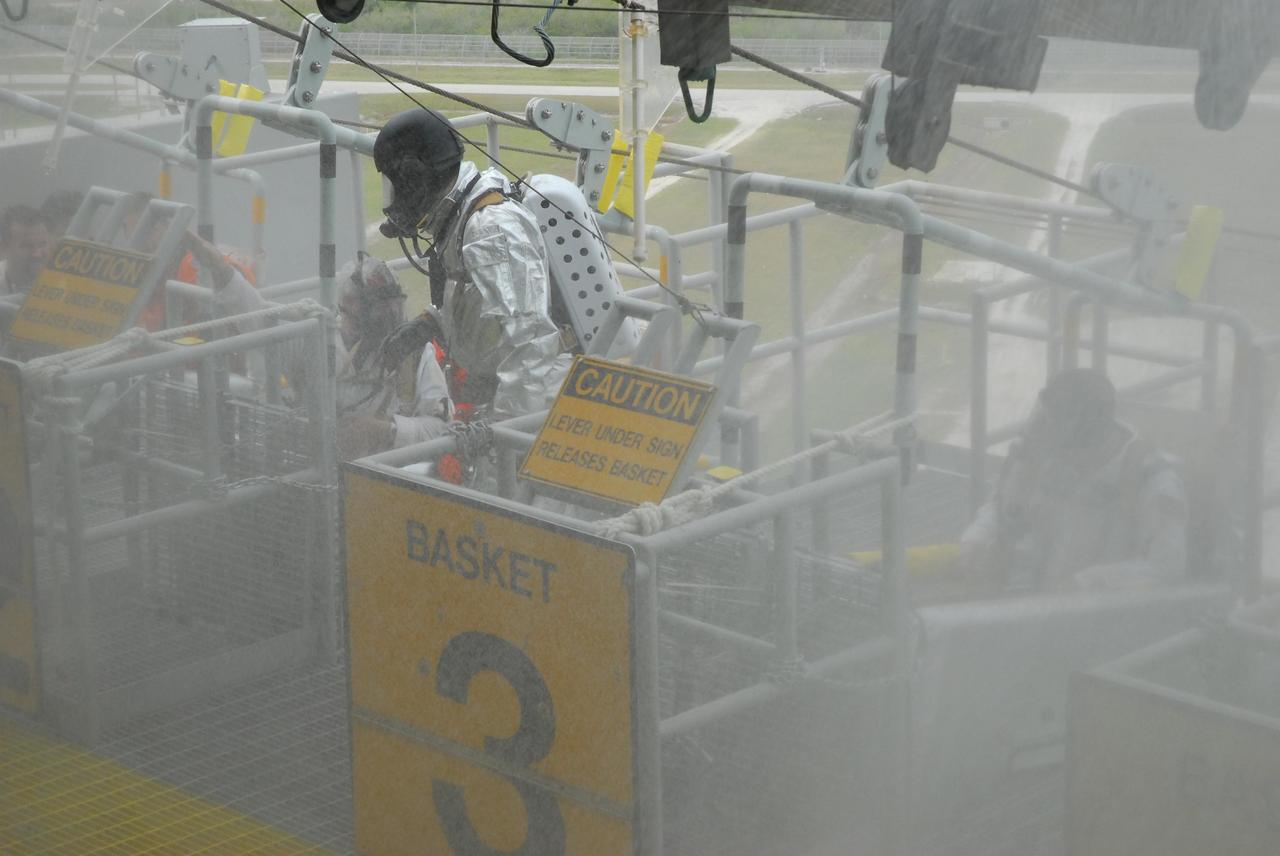
KENNEDY SPACE CENTER, FLA. -- During a simulated rescue mission on Launch Pad 39A, known as Mode 2, KSC workers dressed in astronauts' launch-and-entry suits climb into the slidewire baskets. A fire rescue team is simulating extracting the crew from the orbiter and helping them to the baskets. The KSC rescue teams are practicing emergency procedures in the unlikely scenario of a mishap on the pad during a launch sequence. The exercises are standard training procedures to assess and prepare emergency personnel, procedures and hardware. Photo credit: NASA/Jack Pfaller
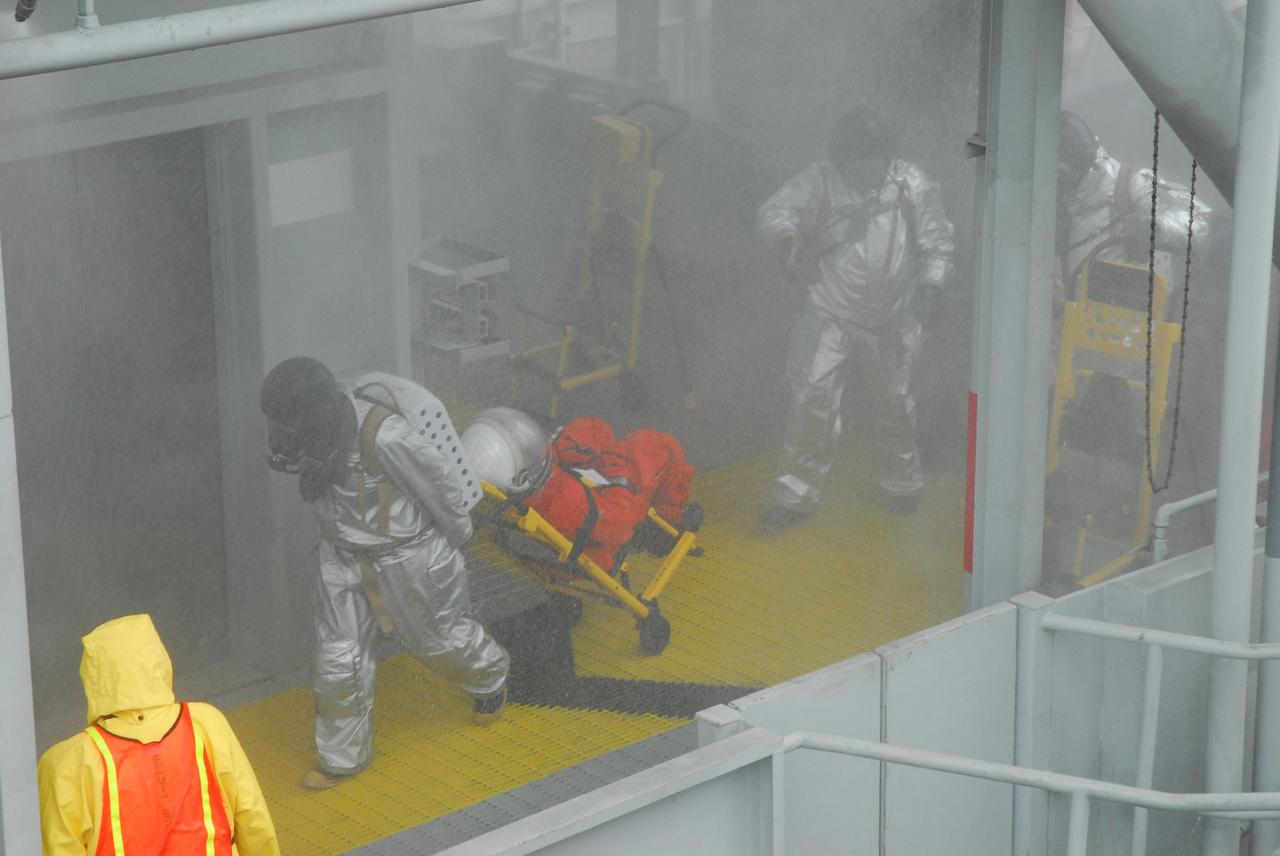
KENNEDY SPACE CENTER, FLA. -- During a simulated rescue mission on Launch Pad 39A, known as Mode 2, KSC workers dressed in astronauts' launch-and-entry suits are helped by the fire rescue team to the slidewire baskets on the 195-foot level. The KSC rescue teams are practicing emergency procedures in the unlikely scenario of a mishap on the pad during a launch sequence. The exercises are standard training procedures to assess and prepare emergency personnel, procedures and hardware. Photo credit: NASA/Jack Pfaller
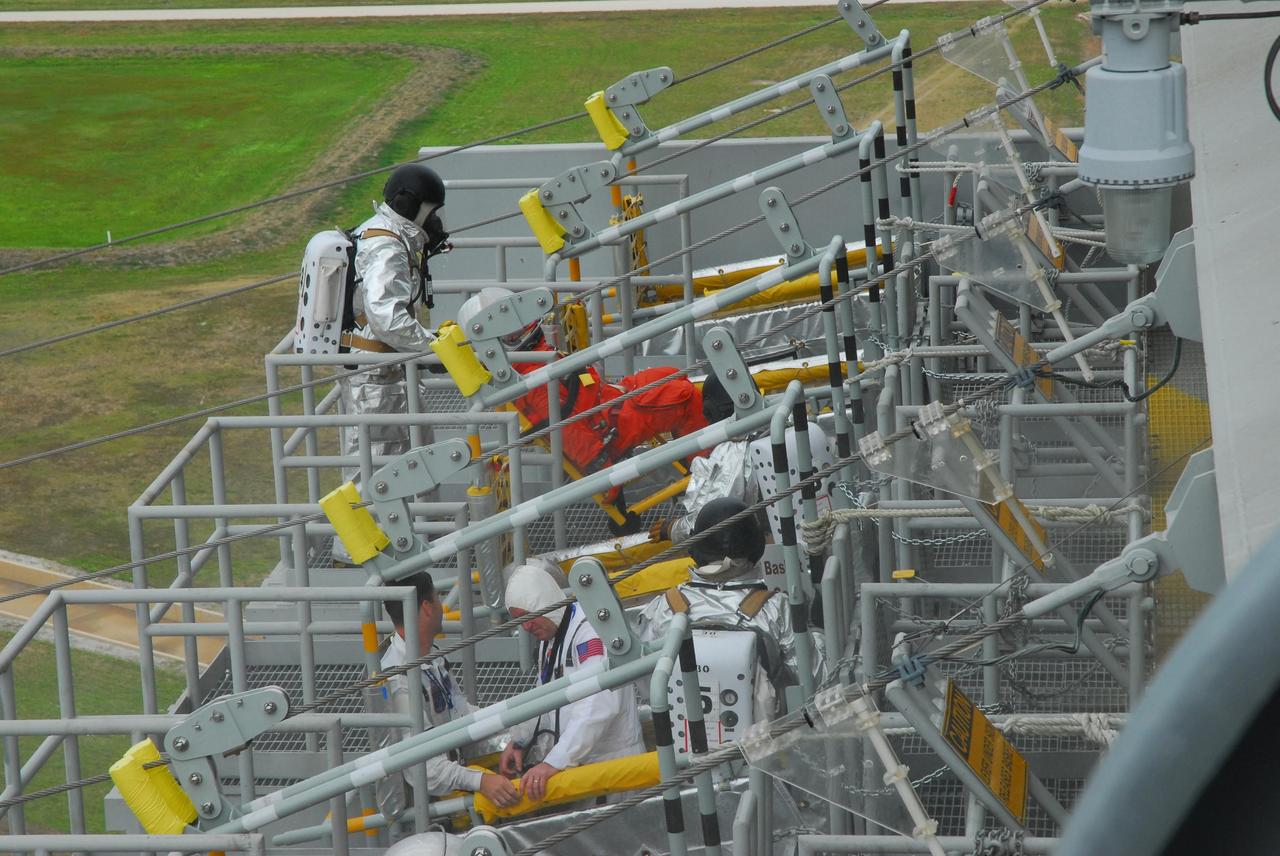
KENNEDY SPACE CENTER, FLA. -- During a simulated rescue mission on Launch Pad 39A, known as Mode 2, KSC workers dressed in astronauts' launch-and-entry suits are climbing into the slidewire baskets. A fire rescue team is simulating extracting the crew from the orbiter and helping them to the baskets.The KSC rescue teams are practicing emergency procedures in the unlikely scenario of a mishap on the pad during a launch sequence. The exercises are standard training procedures to assess and prepare emergency personnel, procedures and hardware. Photo credit: NASA/Jack Pfaller
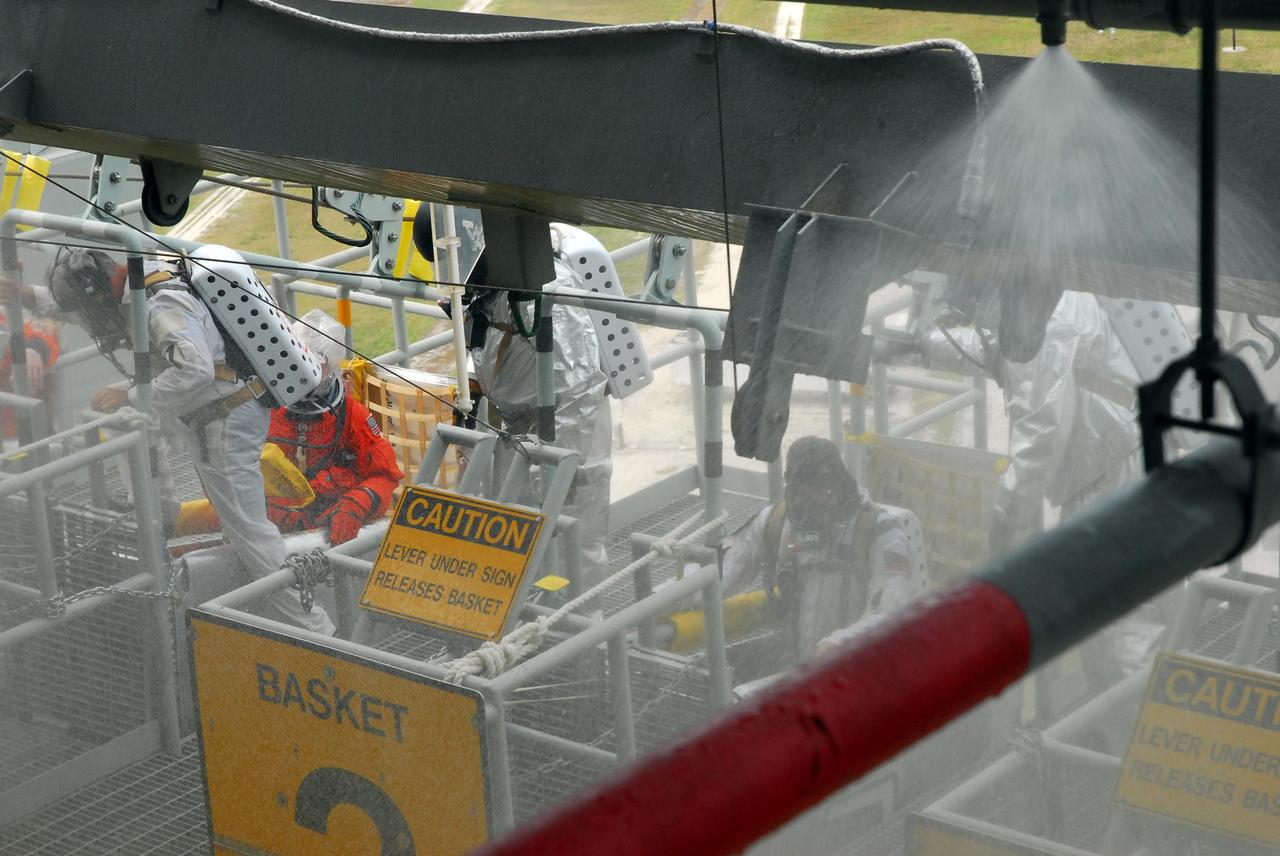
KENNEDY SPACE CENTER, FLA. -- During a simulated rescue mission on Launch Pad 39A, known as Mode 2, KSC workers dressed in astronauts' launch-and-entry suits climb into the slidewire baskets, helped by a fire rescue team. The KSC rescue teams are practicing emergency procedures in the unlikely scenario of a mishap on the pad during a launch sequence. The exercises are standard training procedures to assess and prepare emergency personnel, procedures and hardware. Photo credit: NASA/Jack Pfaller
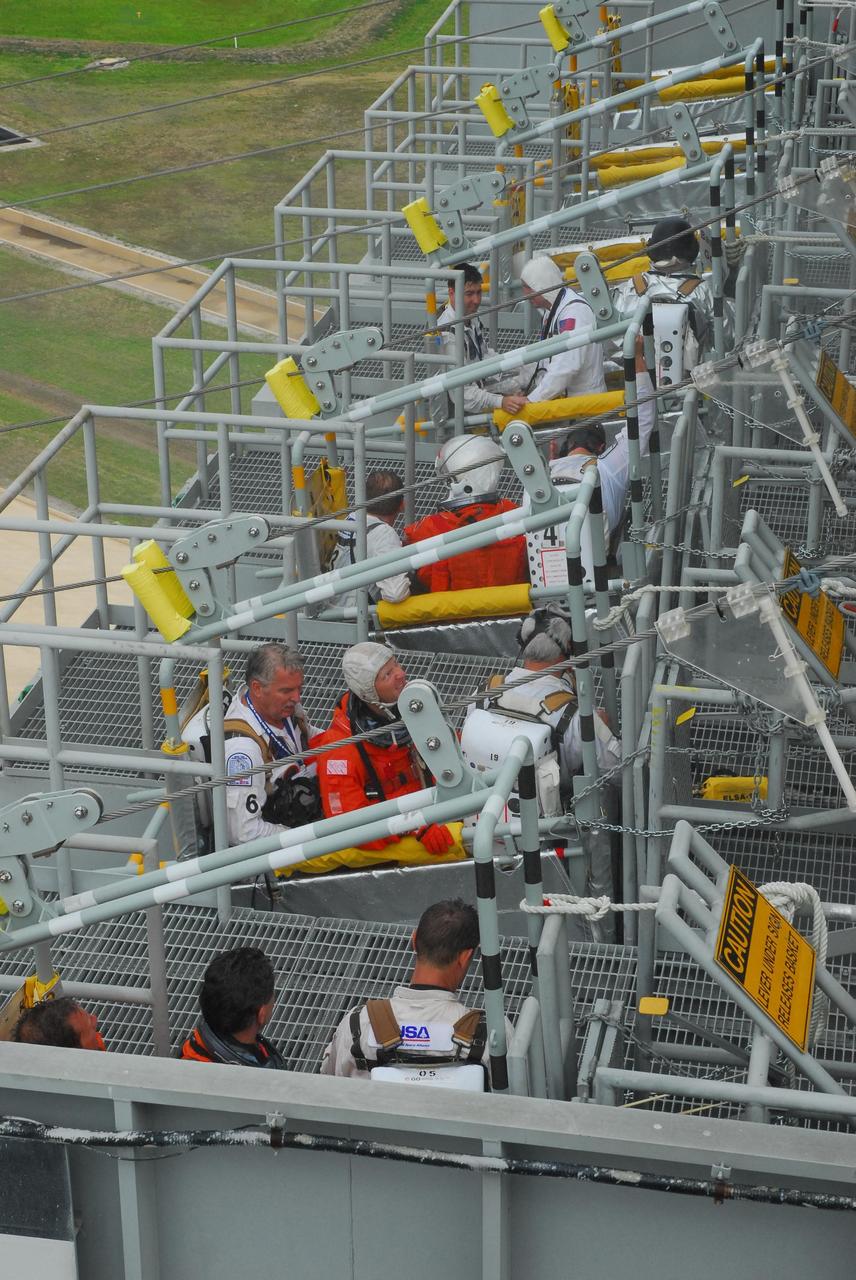
KENNEDY SPACE CENTER, FLA. -- During a simulated rescue mission on Launch Pad 39A, known as Mode 2, KSC workers dressed in astronauts' launch-and-entry suits are climbing into the slidewire baskets. A fire rescue team is simulating extracting the crew from the orbiter and helping them to the baskets.The KSC rescue teams are practicing emergency procedures in the unlikely scenario of a mishap on the pad during a launch sequence. The exercises are standard training procedures to assess and prepare emergency personnel, procedures and hardware. Photo credit: NASA/Jack Pfaller
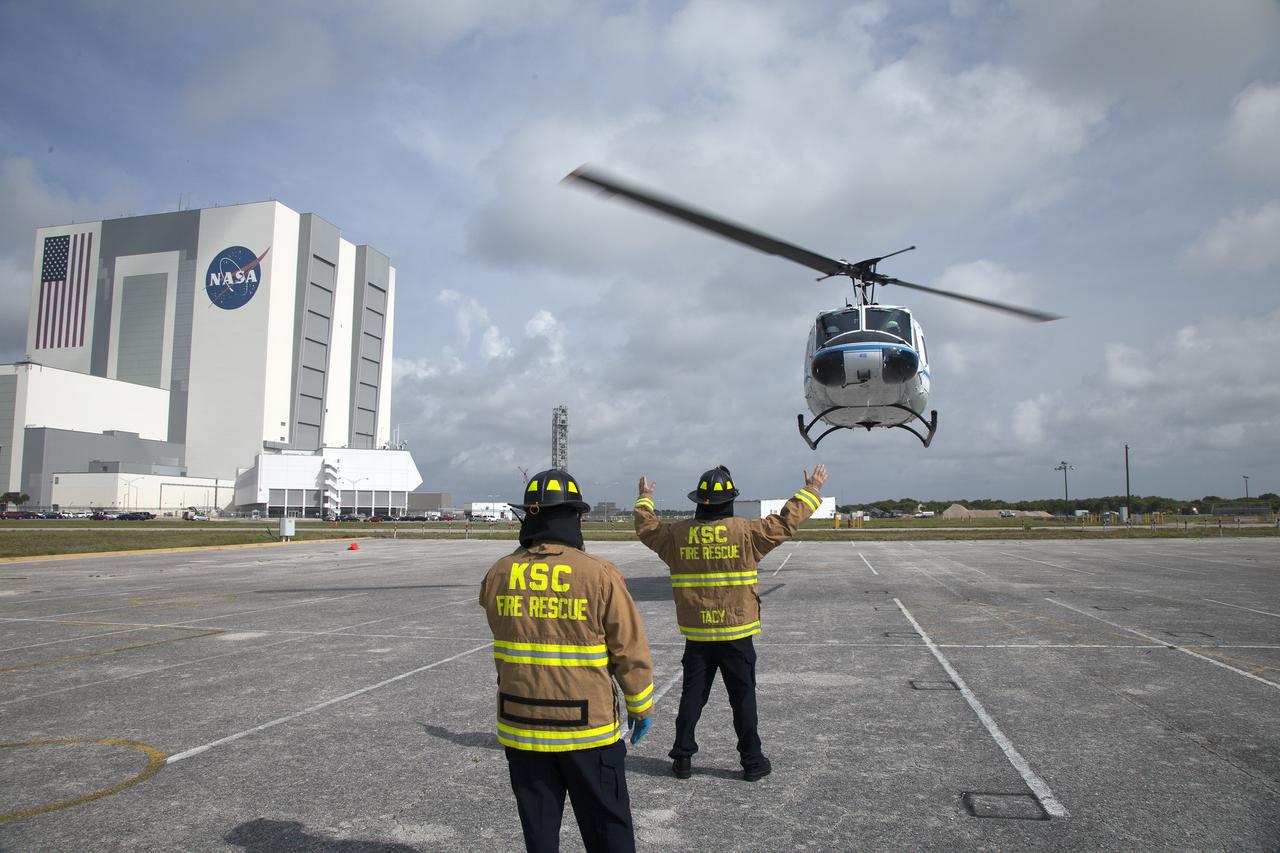
CAPE CANAVERAL, Fla. -- At NASA's Kennedy Space Center in Florida, NASA Fire Rescue Lt. David Tacy, background, and firefighter Alvis Hickey direct an agency helicopter in for a landing for a training exercise. Tacy and Hickey both work for Chenega Security & Support Solutions and serve in Kennedy Fire Rescue Operations. The activity taking place in Kennedy's Launch Complex 39 turn-basin parking lot was only one of several drills. It was part of a new training program that was developed by Kennedy's Fire Rescue department along with NASA Aircraft Operations to sharpen the skills needed to help rescue personnel learn how to collaborate with helicopter pilots in taking injured patients to hospitals as quickly as possible. Photo credit: NASA/Dan Casper
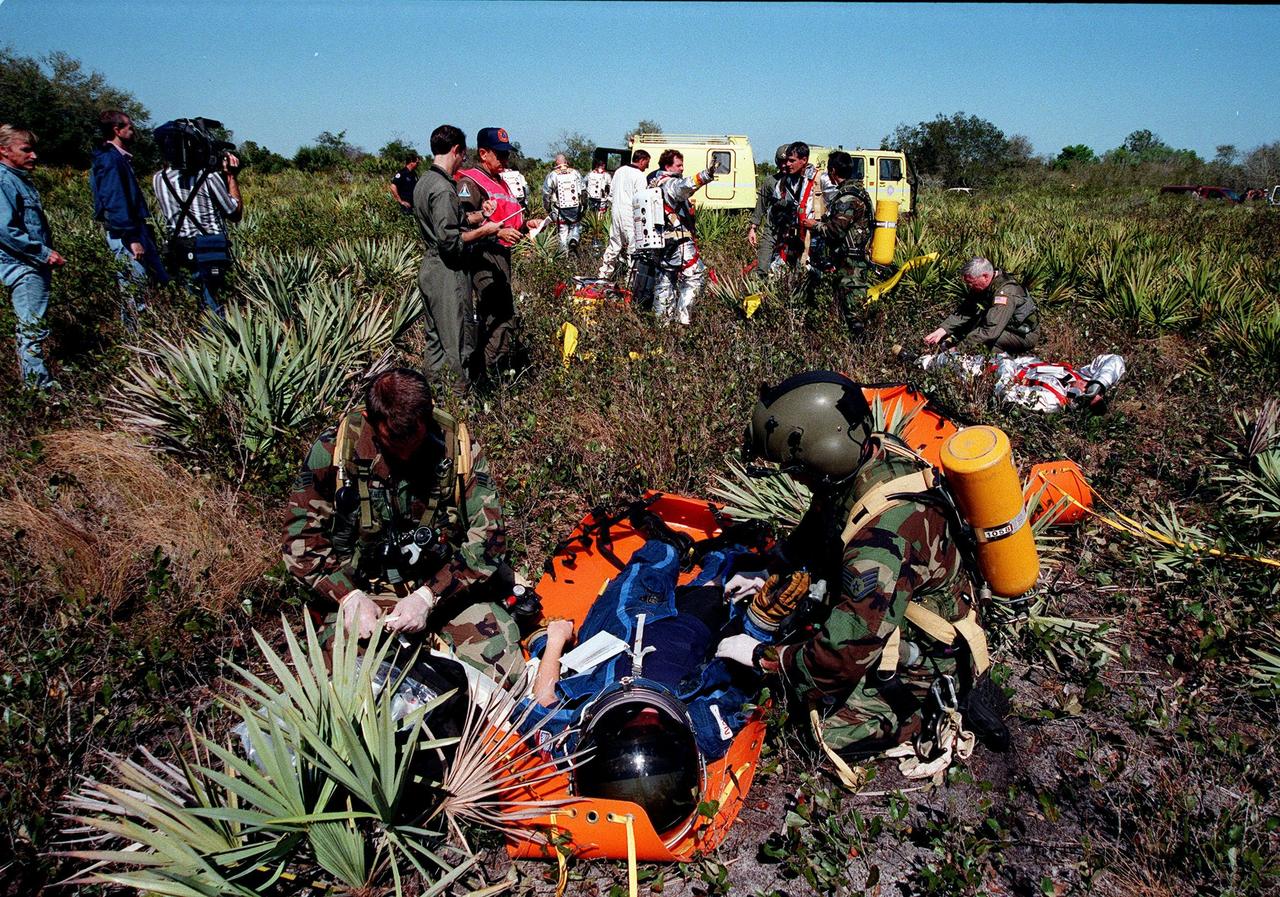
KENNEDY SPACE CENTER, FLA. -- During a simulated rescue mission in the woods near the Shuttle Landing Facility (SLF), the KSC response team practices stabilizing an injured crew member before transport to a local hospital by helicopter. The response team is training for the unlikely scenario of a Shuttle mishap at the SLF. The Mode 7 simulation of an astronaut rescue exercises all aspects of command and control, search and rescue, and medical procedures required for a successful rescue. The remote location of the mock-up prevents a totally land-based crew rescue, and calls on a NASA UH-1 helicopter to locate the site and four Air Force HH-60 helicopters to drop emergency equipment and fire/rescue workers who will prepare the "crew" for preliminary triage. The helicopters later will help remove the crew five astronaut candidates, one representative from the Vehicle Integration Test office, and one fire/rescue worker. The exercise will conclude with airlifted "patients" arriving safely in the emergency rooms of participating area hospitals
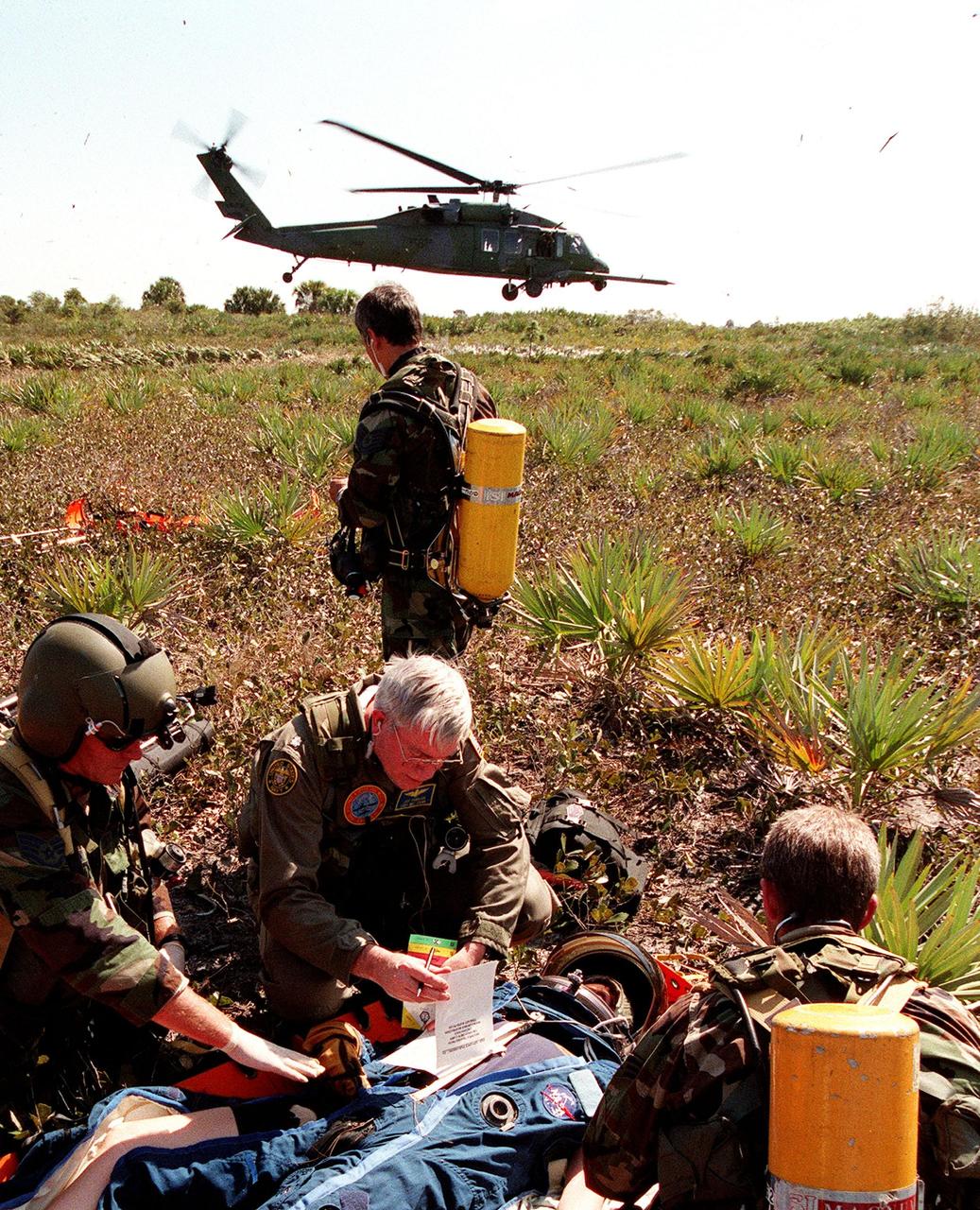
KENNEDY SPACE CENTER, FLA. -- During a simulated rescue mission in the woods near the Shuttle Landing Facility (SLF), the KSC response team practices stabilizing an injured crew member before transport to a local hospital by an Air Force HH-60 helicopter. The response team is training for the unlikely scenario of a Shuttle mishap at the SLF. The Mode 7 simulation of an astronaut rescue exercises all aspects of command and control, search and rescue, and medical procedures required for a successful rescue. The remote location of the mock-up prevents a totally land-based crew rescue, and calls on a NASA UH-1 helicopter to locate the site and four HH-60 helicopters to drop emergency equipment and fire/rescue workers to prepare the "crew" for preliminary triage. The helicopters are then used to remove the crew five astronaut candidates, one representative from the Vehicle Integration Test office, and one fire/rescue worker. The exercise will conclude with airlifted "patients" arriving safely in the emergency rooms of participating area hospitals
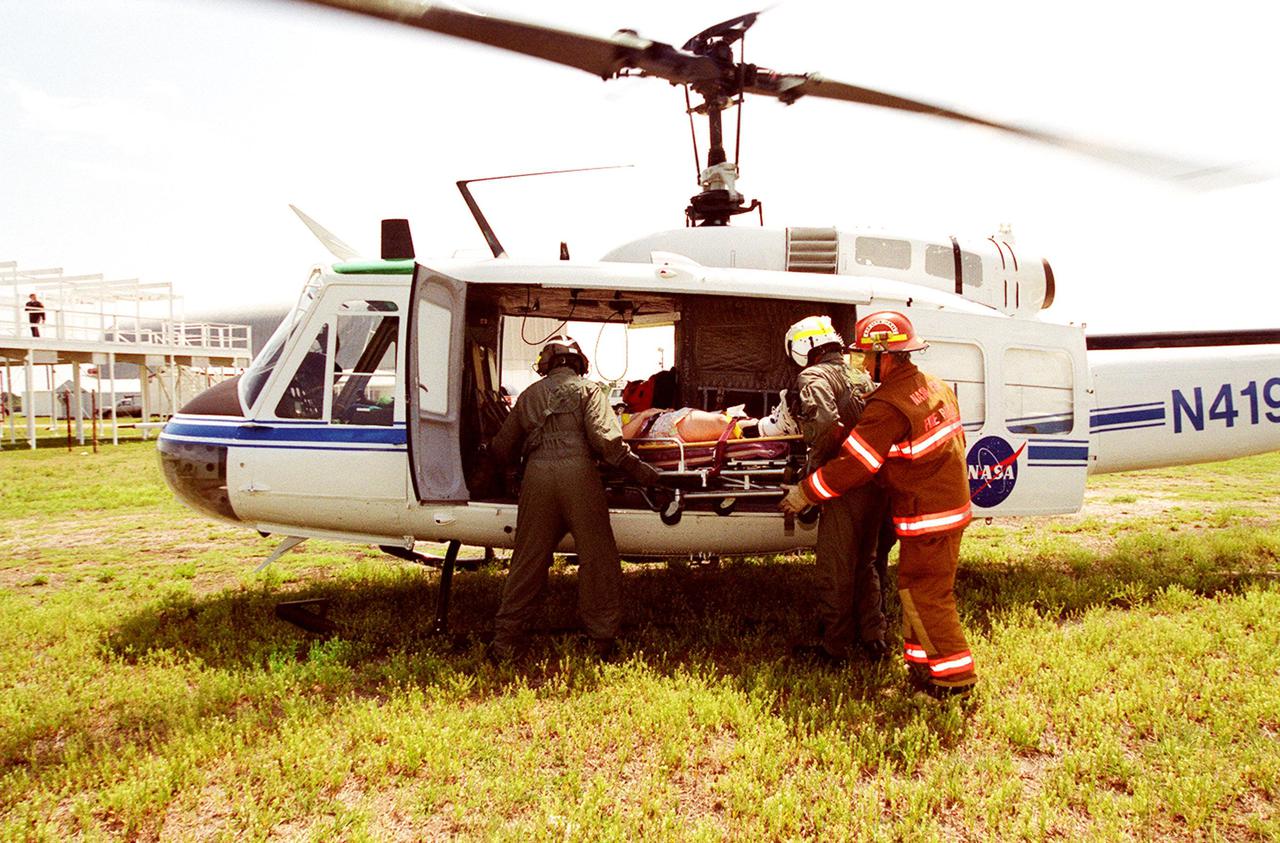
KENNEDY SPACE CENTER, FLA. -- Rescue personnel place a “victim” in a medevac helicopter during a staged mass casualty exercise in the Launch Complex 39 area. Employees are playing roles in the fictitious sniper attack that is being staged to validate capabilities of KSC’s fire, medical, helicopter transport and security personnel to respond to such an event
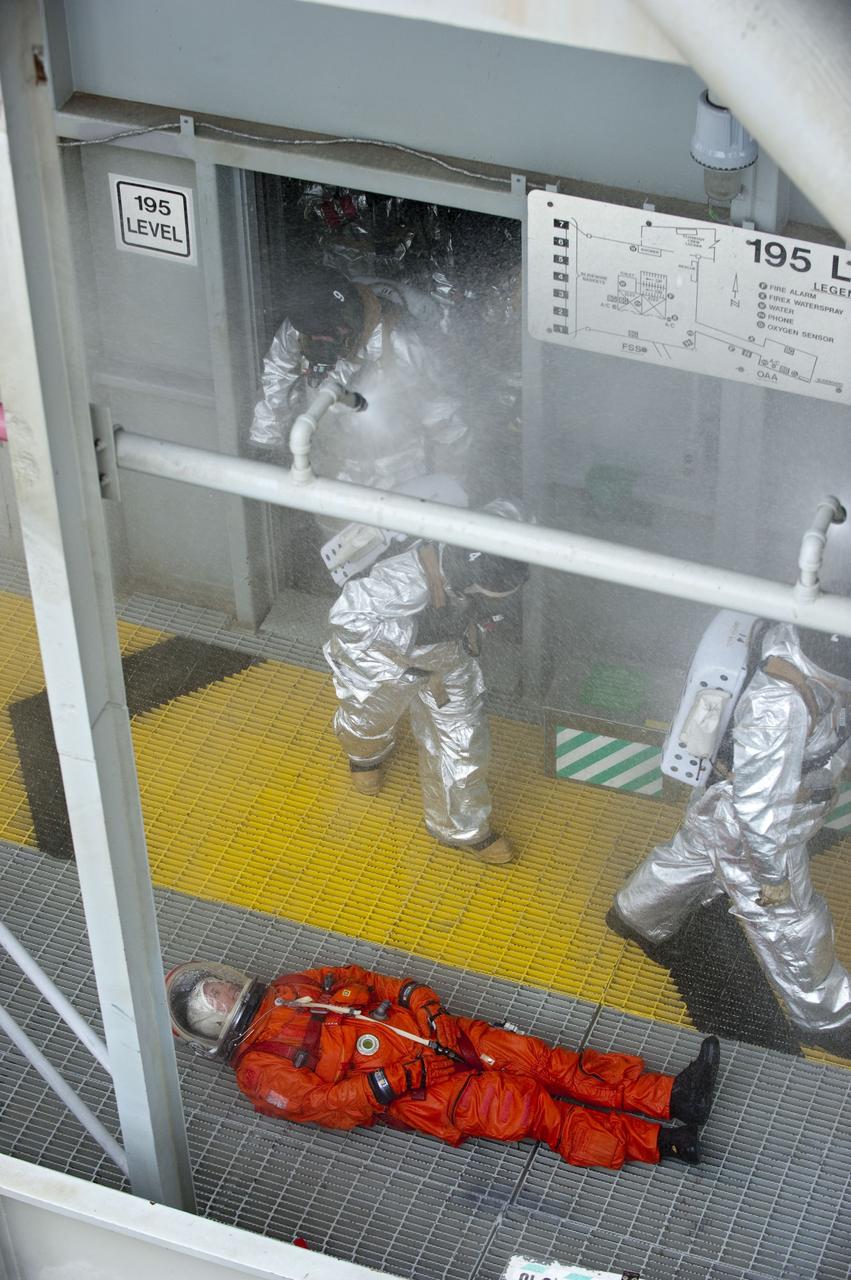
CAPE CANAVERAL, Fla. – An emergency exit, or Mode II/IV, exercise is under way at the 195-foot level of Launch Pad 39A at NASA's Kennedy Space Center in Florida. The exercise involves NASA fire rescue personnel, volunteers portraying astronauts with simulated injuries, helicopters and personnel from the Air Force’s 920th Rescue Wing, and medical trauma teams at three Central Florida hospitals. The drill allows teams to practice an emergency response at the launch pad, including helicopter evacuation to local hospitals. Photo credit: NASA/Kim Shiflett
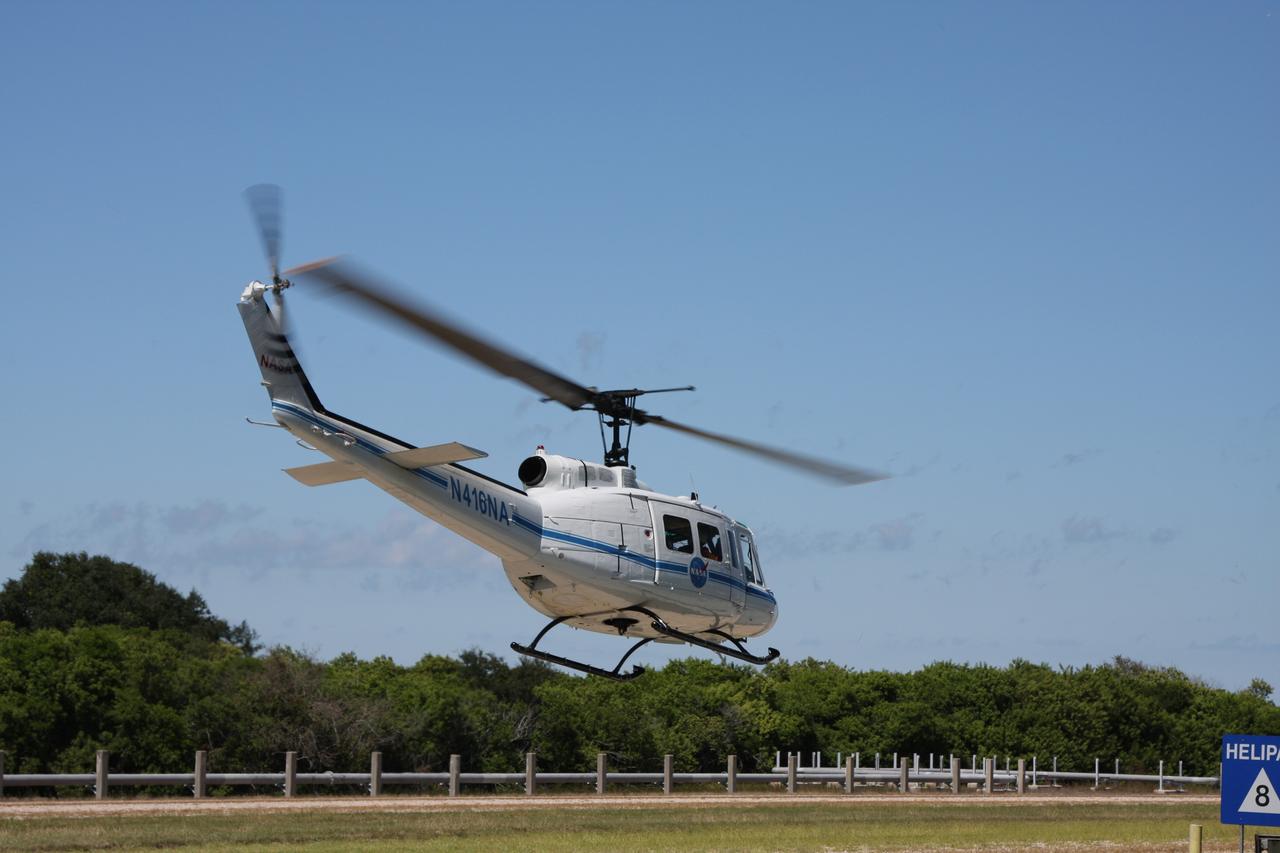
CAPE CANAVERAL, Fla. – A NASA helicopter takes off while participating in a Mode II-IV exercise at NASA's Kennedy Space Center in Florida. The exercise involves NASA fire rescue personnel, volunteers portraying astronauts with simulated injuries, helicopters and personnel from the Air Force’s 920th Rescue Wing and medical trauma teams at three central Florida hospitals. The drill allows teams to practice an emergency response at Pad 39A, including helicopter evacuation to local hospitals. The Space Shuttle Program and U.S. Air Force are conducting the emergency simulation. Photo credit: NASA/Dimitri Gerondidakis

CAPE CANAVERAL, Fla. – An emergency exit, or Mode II/IV, exercise is under way at the slidewire basket landing site of Launch Pad 39A at NASA's Kennedy Space Center in Florida. The exercise involves NASA fire rescue personnel, volunteers portraying astronauts with simulated injuries, helicopters and personnel from the Air Force’s 920th Rescue Wing, and medical trauma teams at three Central Florida hospitals. The drill allows teams to practice an emergency response at the launch pad, including helicopter evacuation to local hospitals. Photo credit: NASA/Kim Shiflett

CAPE CANAVERAL, Fla. -- In the Multi-Payload Processing Facility at NASA's Kennedy Space Center in Florida, workers take photos and video of fire and rescue personnel, as well as a closeout crew, participating in an exercise known as crew egress evaluation from an Orion mock-up. The spacecraft is replicated in all areas that could affect a crew's escape, including the area that seals to a launch pad's White Room. The exercise focuses on whether astronauts and their rescue crews can exit the vehicle quickly in the event of a pad emergency. For more information on Orion, visit www.nasa.gov/orion. Photo credit: NASA/Dimitri Gerondidakis
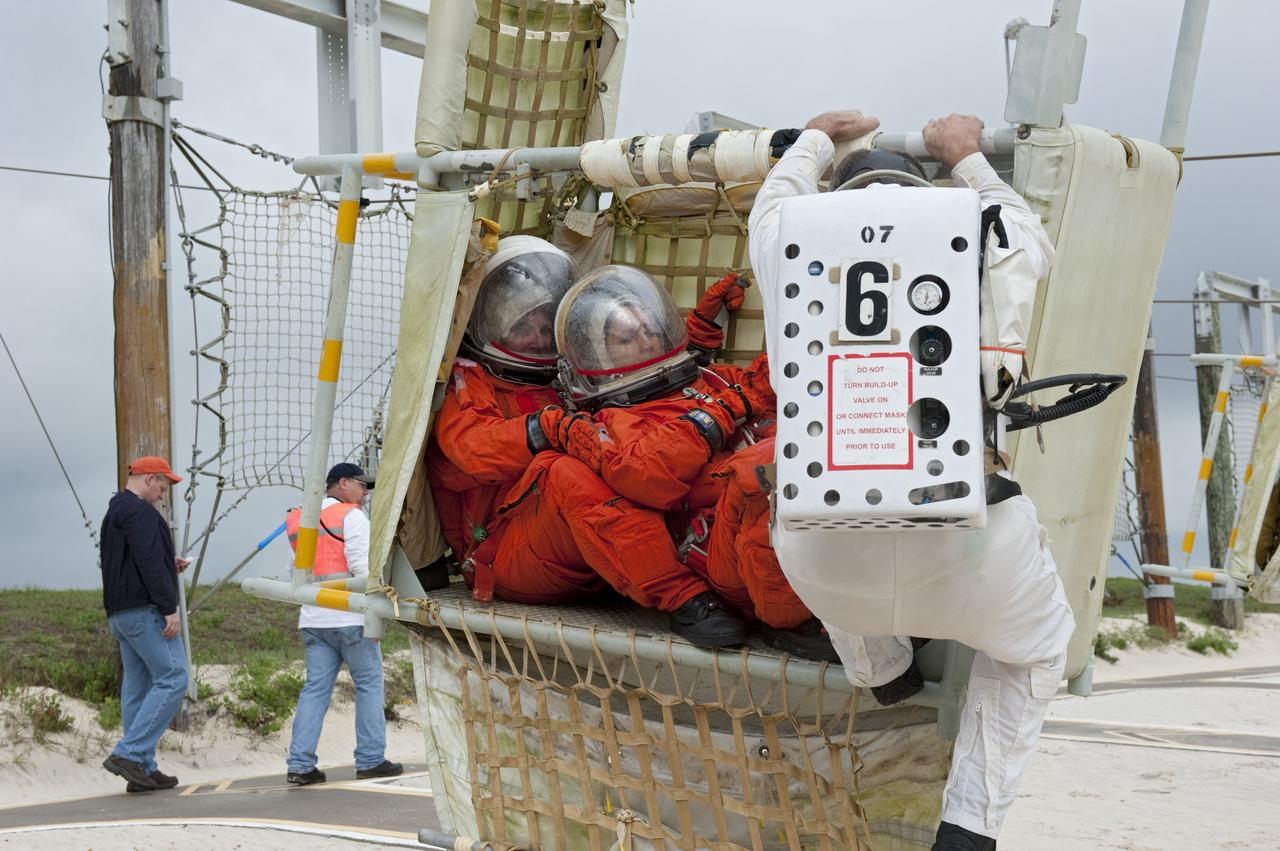
CAPE CANAVERAL, Fla. – An emergency exit, or Mode II/IV, exercise is under way at the slidewire basket landing site of Launch Pad 39A at NASA's Kennedy Space Center in Florida. The exercise involves NASA fire rescue personnel, volunteers portraying astronauts with simulated injuries, helicopters and personnel from the Air Force’s 920th Rescue Wing, and medical trauma teams at three Central Florida hospitals. The drill allows teams to practice an emergency response at the launch pad, including helicopter evacuation to local hospitals. Photo credit: NASA/Kim Shiflett
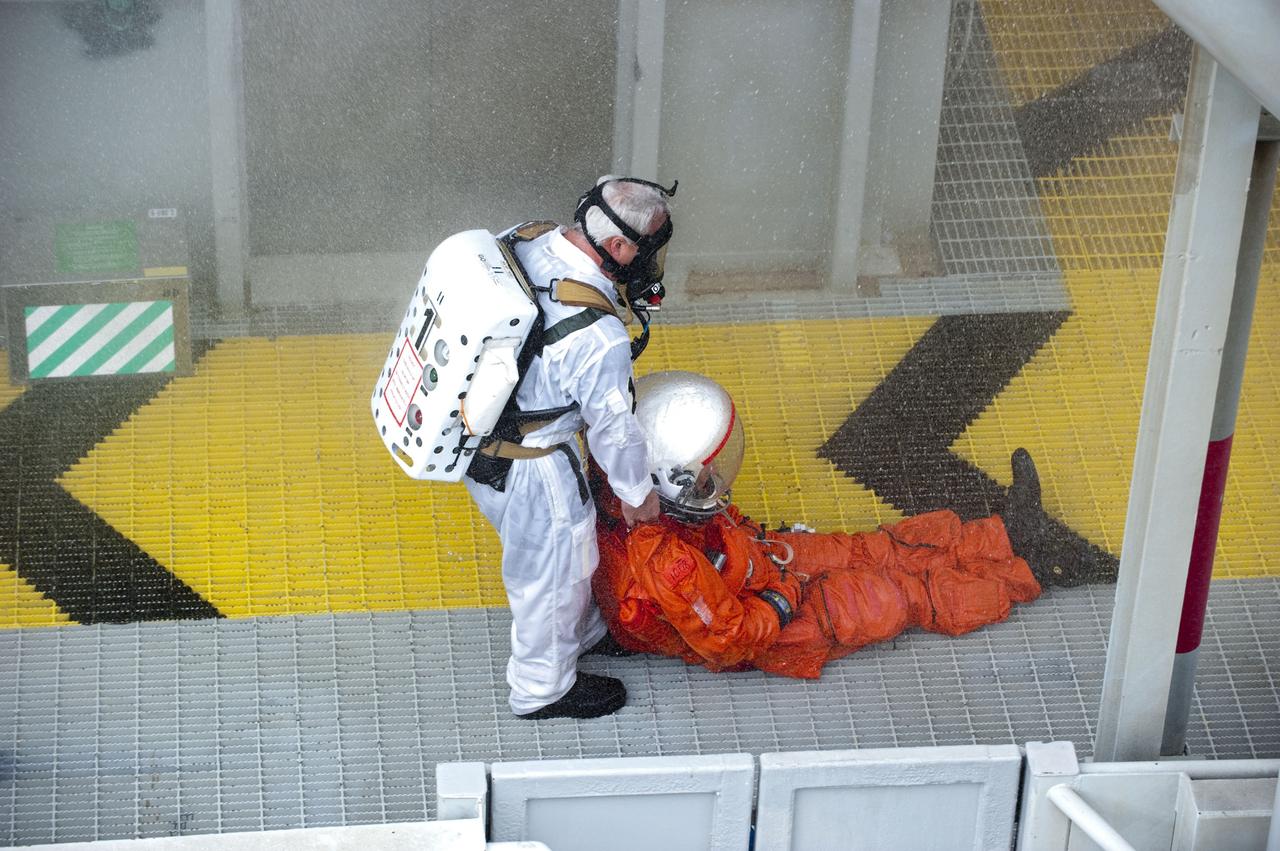
CAPE CANAVERAL, Fla. – An emergency exit, or Mode II/IV, exercise is under way at the 195-foot level of Launch Pad 39A at NASA's Kennedy Space Center in Florida. The exercise involves NASA fire rescue personnel, volunteers portraying astronauts with simulated injuries, helicopters and personnel from the Air Force’s 920th Rescue Wing, and medical trauma teams at three Central Florida hospitals. The drill allows teams to practice an emergency response at the launch pad, including helicopter evacuation to local hospitals. Photo credit: NASA/Kim Shiflett
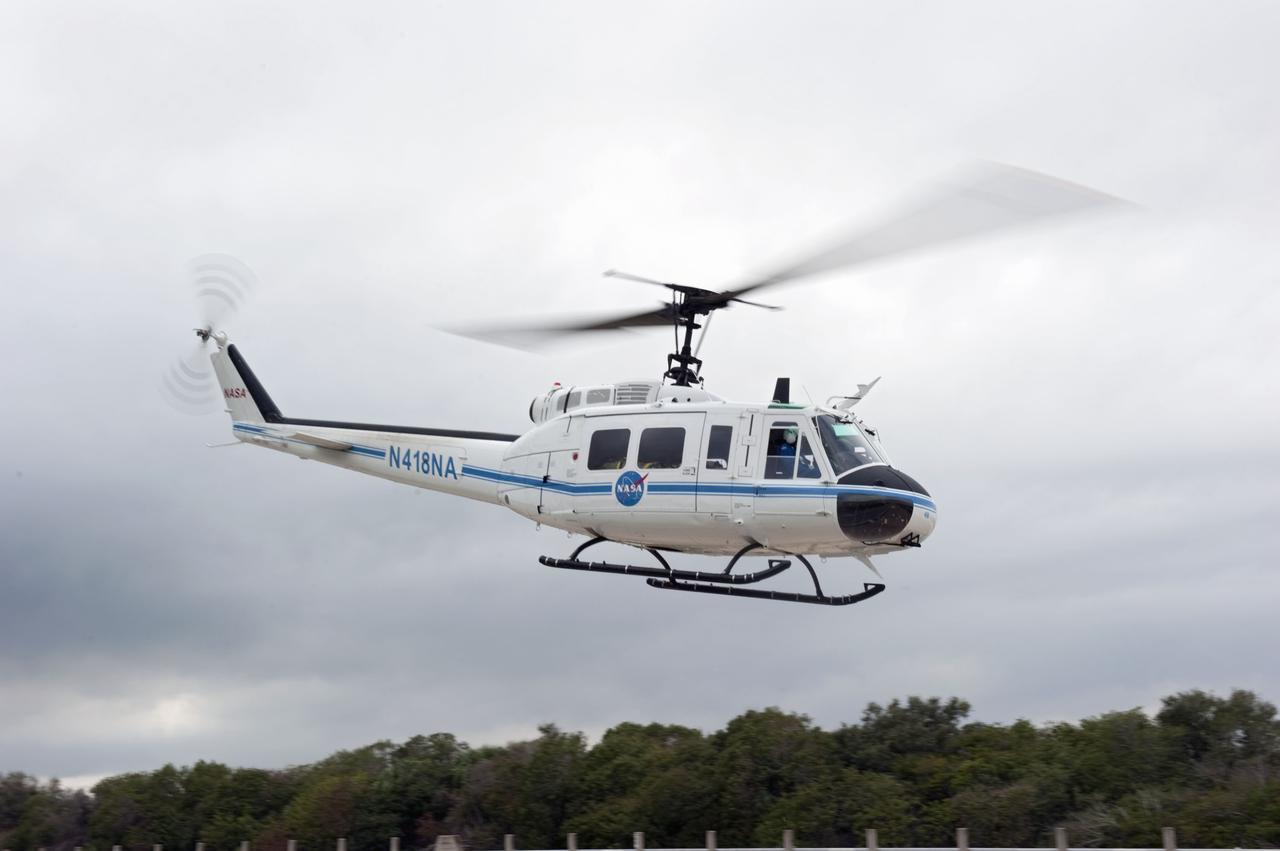
CAPE CANAVERAL, Fla. – A helicopter takes part in an emergency exit, or Mode II/IV, exercise that allows teams to practice an emergency response at Launch Pad 39A at NASA's Kennedy Space Center in Florida. The exercise involves NASA fire rescue personnel, volunteers portraying astronauts with simulated injuries, helicopters and personnel from the Air Force’s 920th Rescue Wing, and medical trauma teams at three Central Florida hospitals. The drill allows teams to practice an emergency response at the launch pad, including helicopter evacuation to local hospitals. Photo credit: NASA/Kim Shiflett
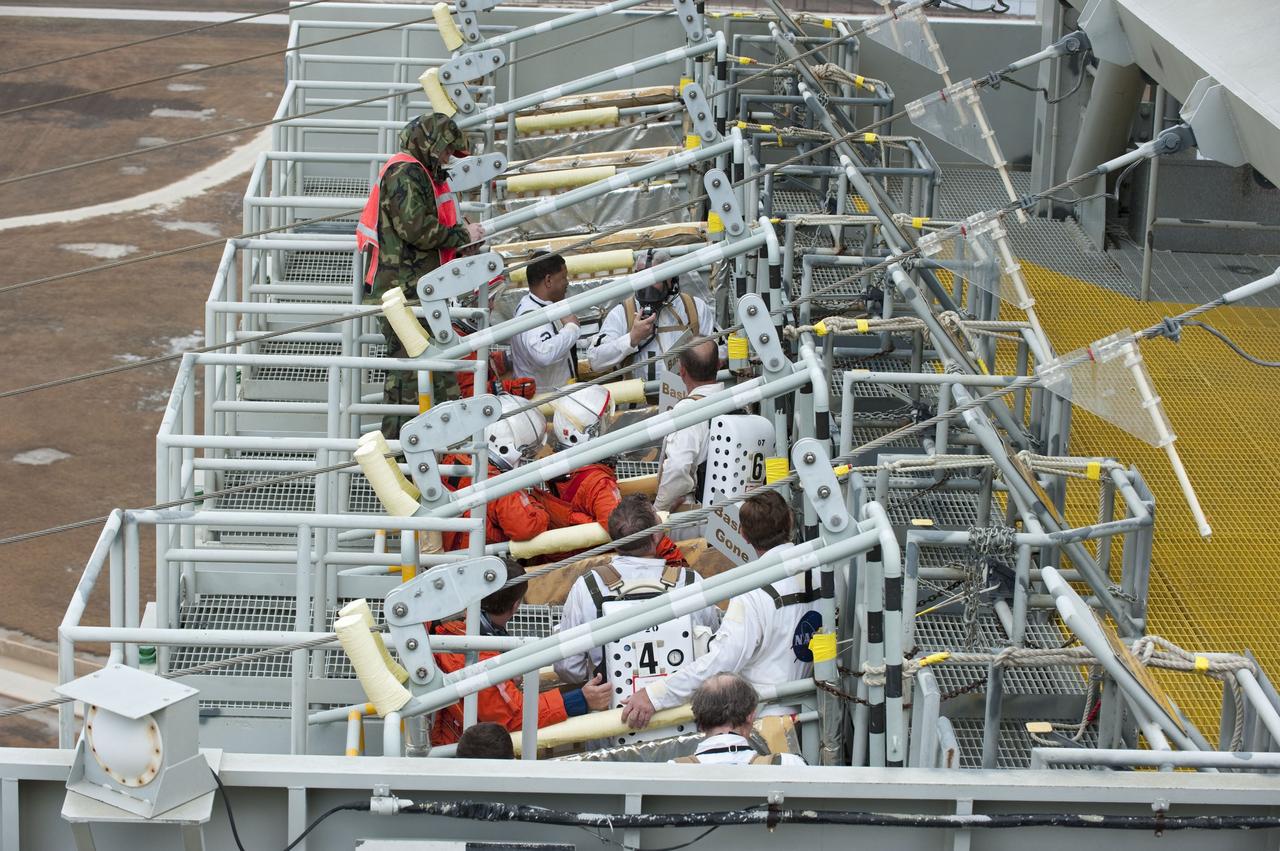
CAPE CANAVERAL, Fla. – An emergency exit, or Mode II/IV, exercise is under way at the slidewire basket area of Launch Pad 39A at NASA's Kennedy Space Center in Florida. The exercise involves NASA fire rescue personnel, volunteers portraying astronauts with simulated injuries, helicopters and personnel from the Air Force’s 920th Rescue Wing, and medical trauma teams at three Central Florida hospitals. The drill allows teams to practice an emergency response at the launch pad, including helicopter evacuation to local hospitals. Photo credit: NASA/Kim Shiflett
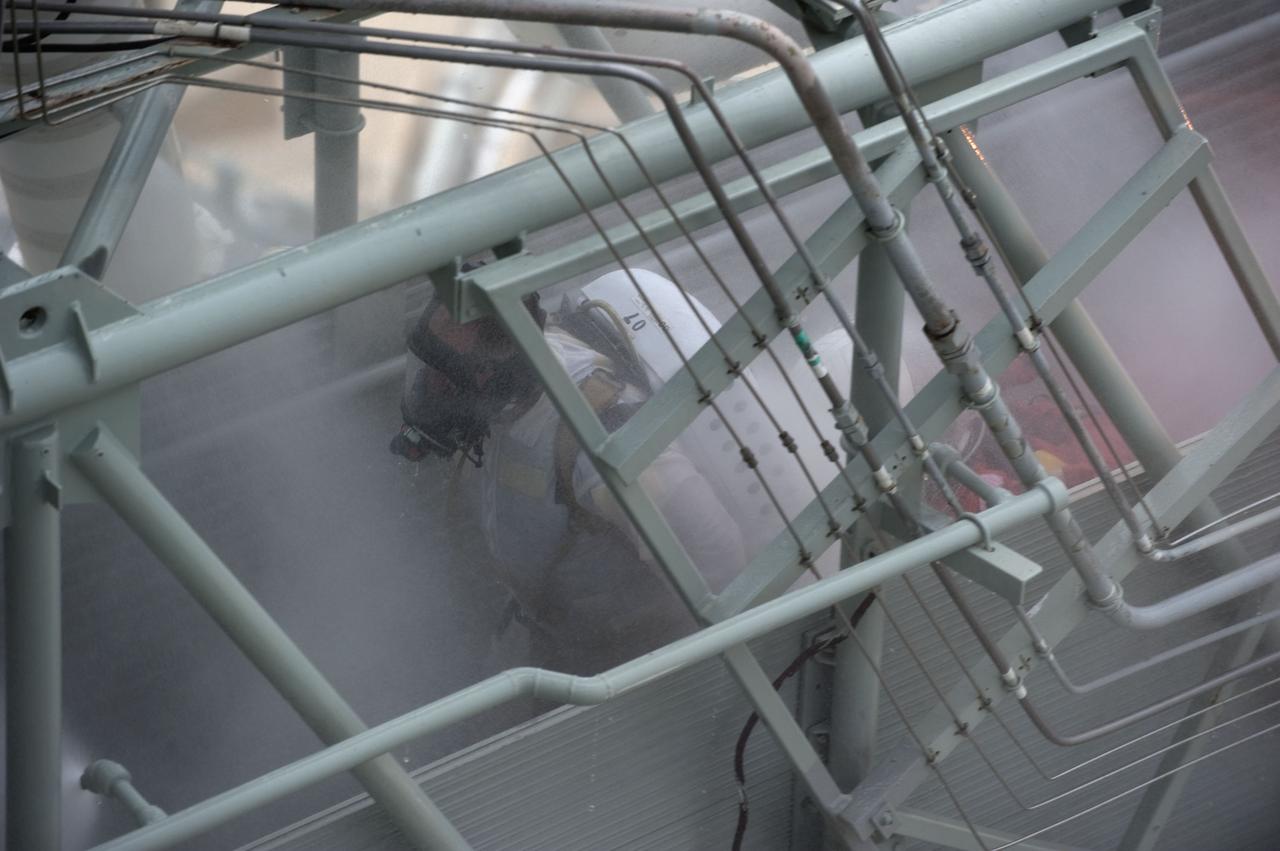
CAPE CANAVERAL, Fla. – An emergency exit, or Mode II/IV, exercise is under way at the 195-foot level of Launch Pad 39A at NASA's Kennedy Space Center in Florida. The exercise involves NASA fire rescue personnel, volunteers portraying astronauts with simulated injuries, helicopters and personnel from the Air Force’s 920th Rescue Wing, and medical trauma teams at three Central Florida hospitals. The drill allows teams to practice an emergency response at the launch pad, including helicopter evacuation to local hospitals. Photo credit: NASA/Kim Shiflett
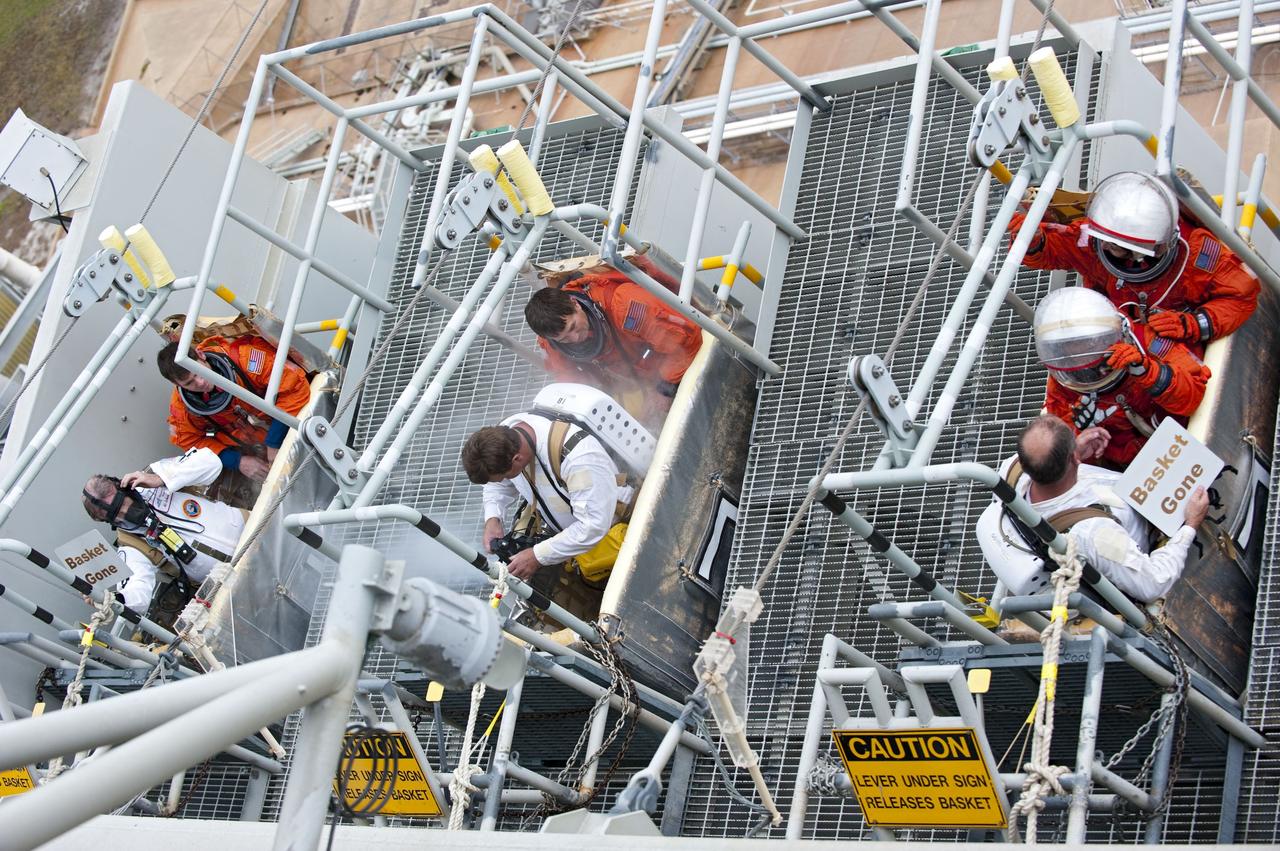
CAPE CANAVERAL, Fla. – An emergency exit, or Mode II/IV, exercise is under way at the slidewire basket area of Launch Pad 39A at NASA's Kennedy Space Center in Florida. The exercise involves NASA fire rescue personnel, volunteers portraying astronauts with simulated injuries, helicopters and personnel from the Air Force’s 920th Rescue Wing, and medical trauma teams at three Central Florida hospitals. The drill allows teams to practice an emergency response at the launch pad, including helicopter evacuation to local hospitals. Photo credit: NASA/Kim Shiflett
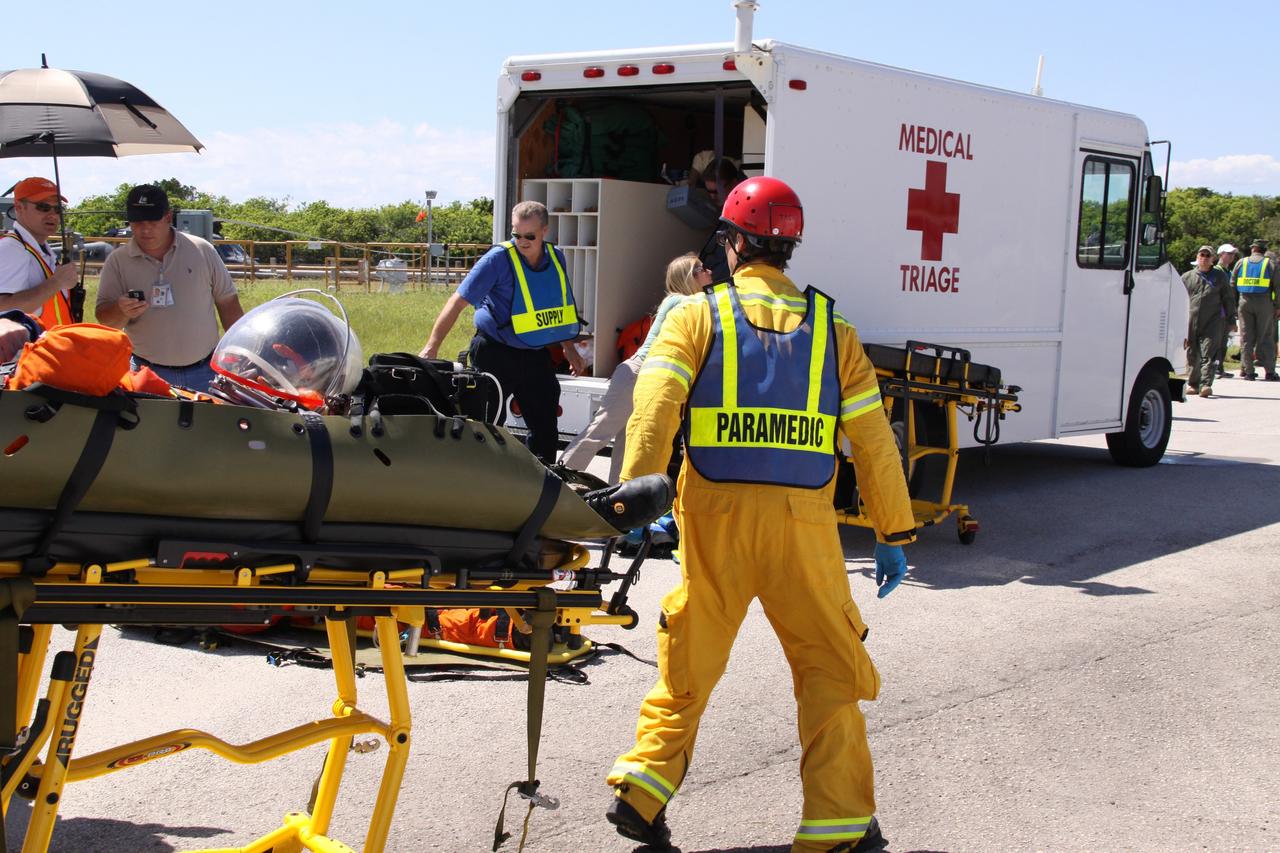
CAPE CANAVERAL, Fla. – At NASA's Kennedy Space Center in Florida, volunteers portraying astronauts are transported to ambulances as part of a Mode II-IV exercise that allows teams to practice an emergency response at Launch Pad 39A, including helicopter evacuation to local hospitals. The exercise involves NASA fire rescue personnel, volunteers portraying astronauts with simulated injuries, helicopters and personnel from the Air Force’s 920th Rescue Wing and medical trauma teams at three central Florida hospitals. The Space Shuttle Program and U.S. Air Force are conducting the emergency simulation. Photo credit: NASA/Jack Pfaller
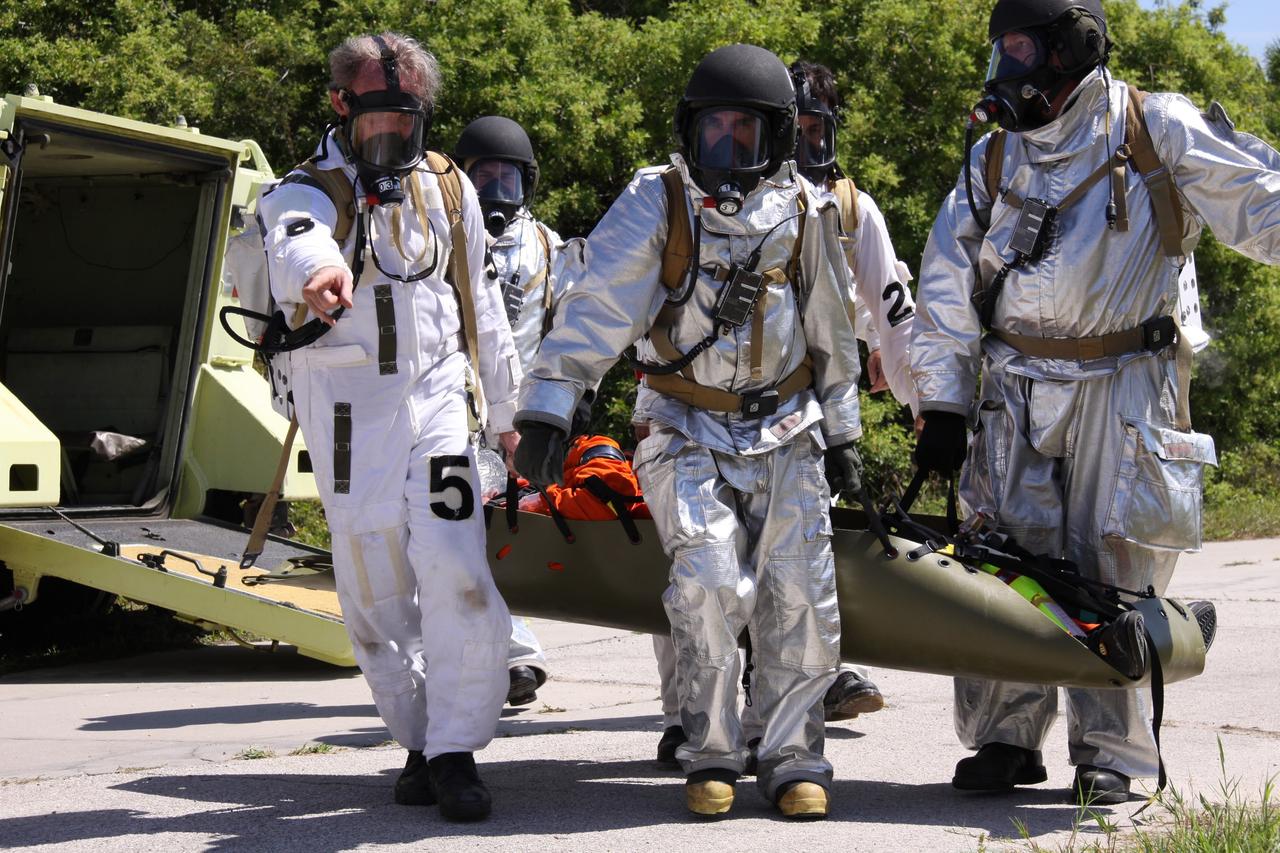
CAPE CANAVERAL, Fla. – At NASA's Kennedy Space Center in Florida, volunteers and teams take part in a Mode II-IV exercise that allows teams to practice an emergency response at Launch Pad 39A, including helicopter evacuation to local hospitals. The exercise involves NASA fire rescue personnel, volunteers portraying astronauts with simulated injuries, helicopters and personnel from the Air Force’s 920th Rescue Wing and medical trauma teams at three central Florida hospitals. The Space Shuttle Program and U.S. Air Force are conducting the emergency simulation. Photo credit: NASA/Troy Cryder