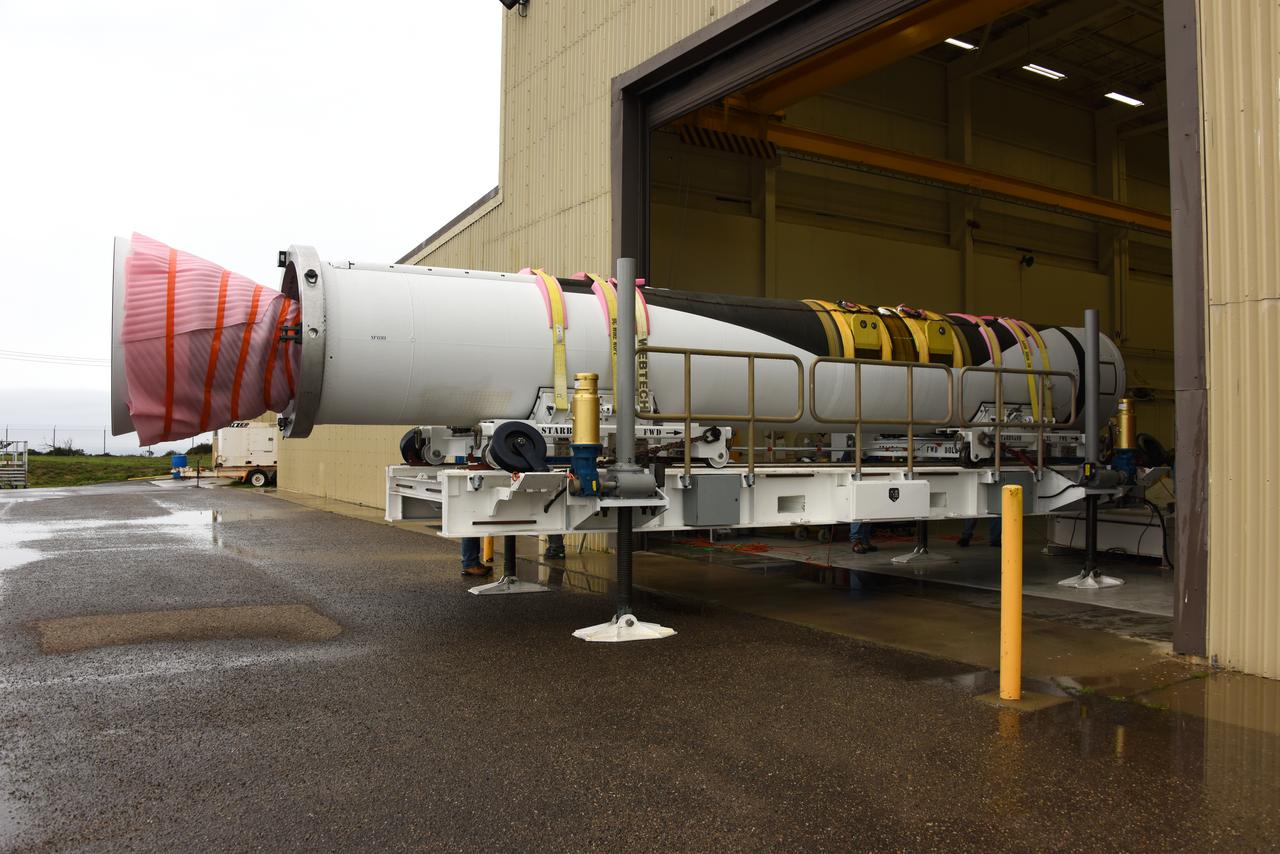
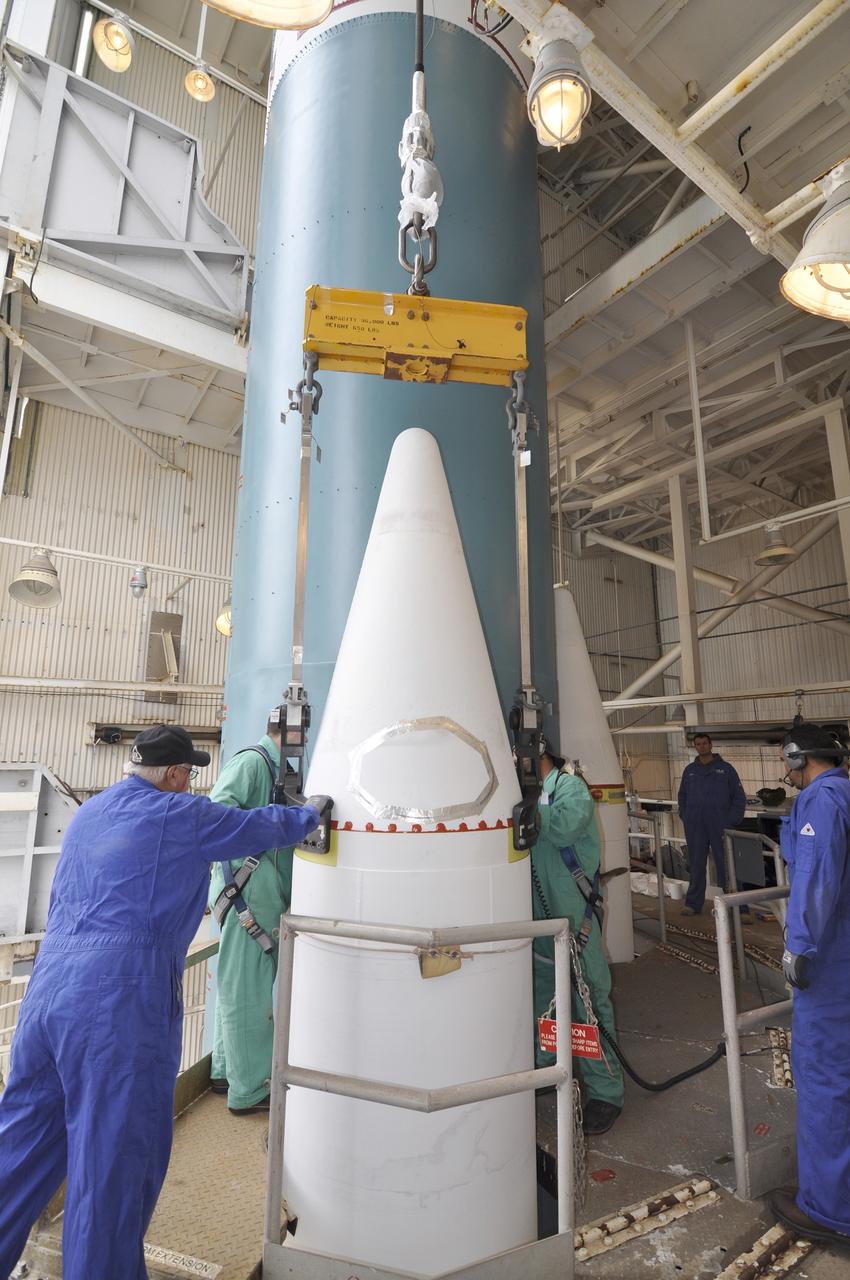
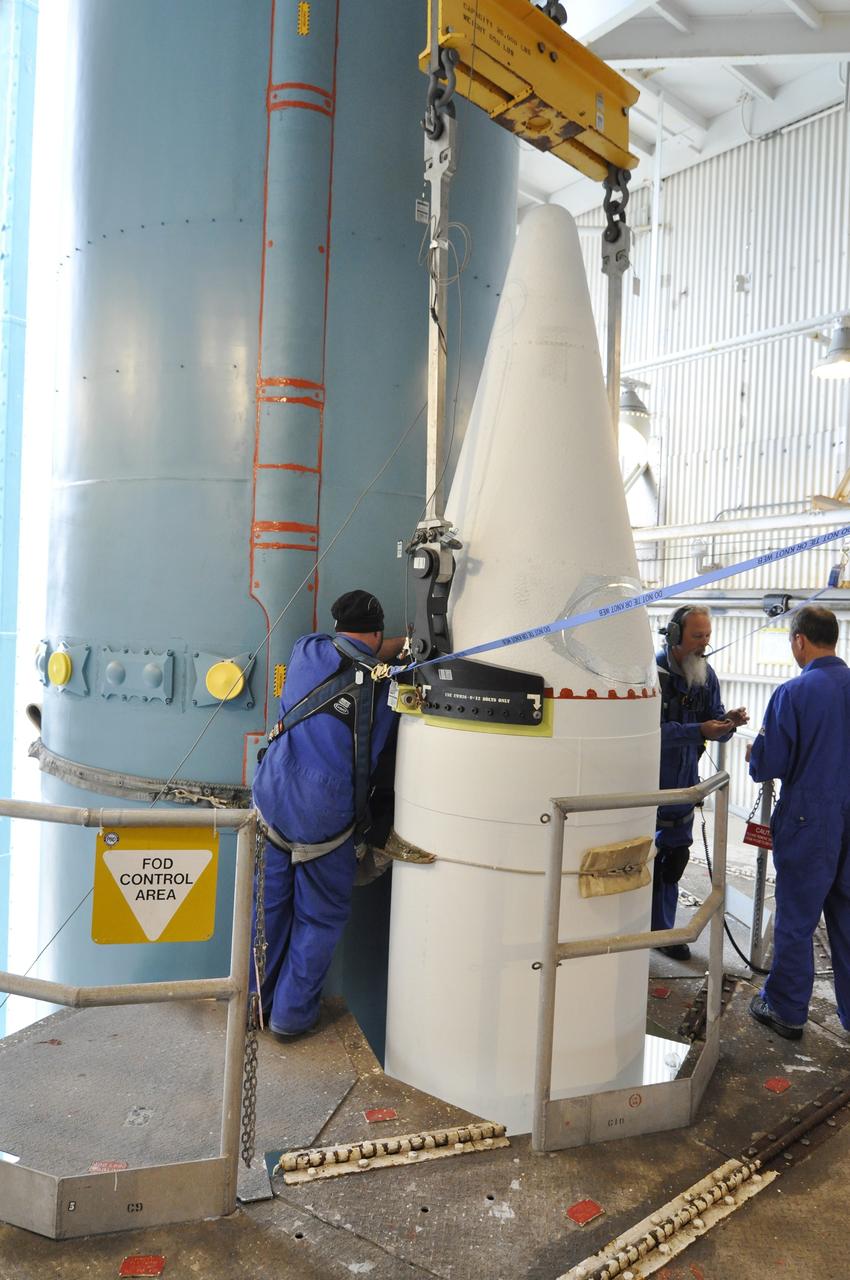
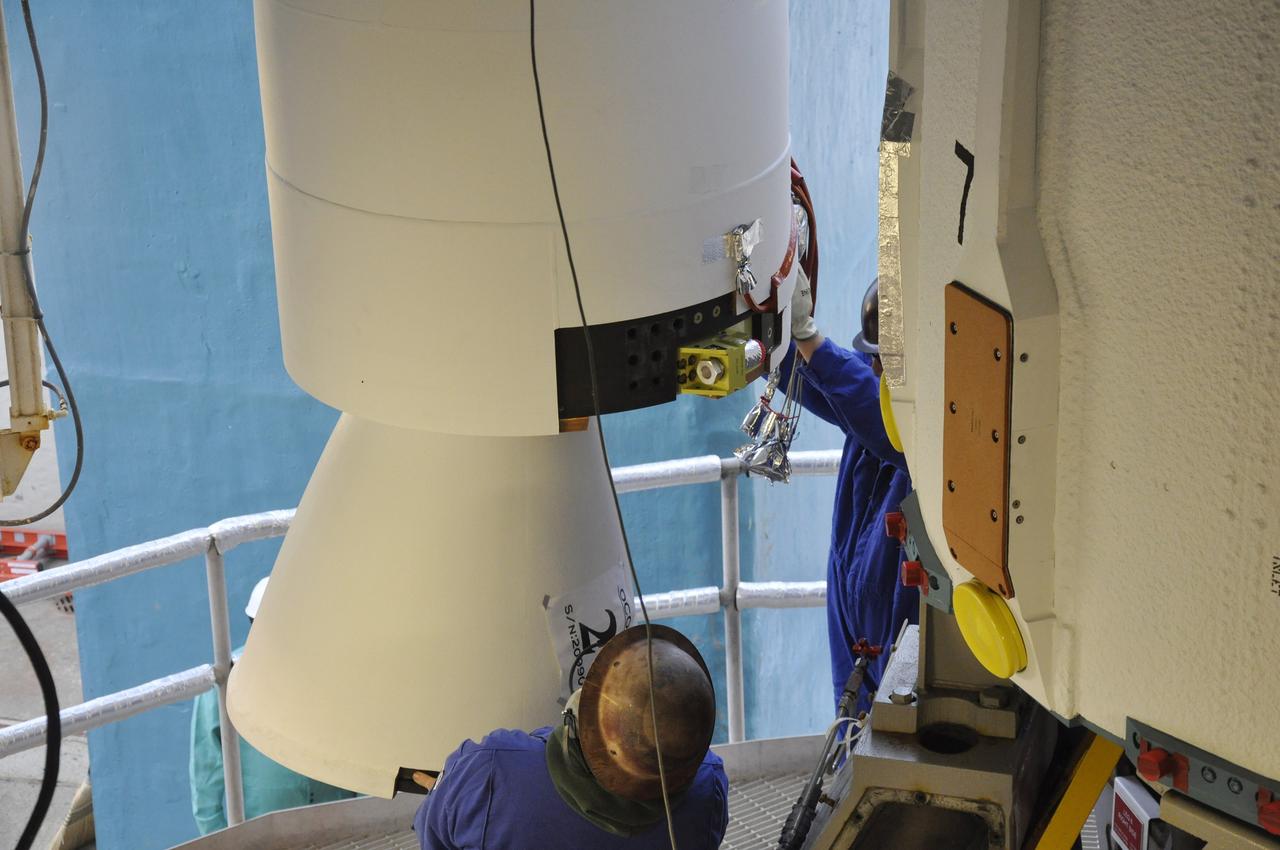
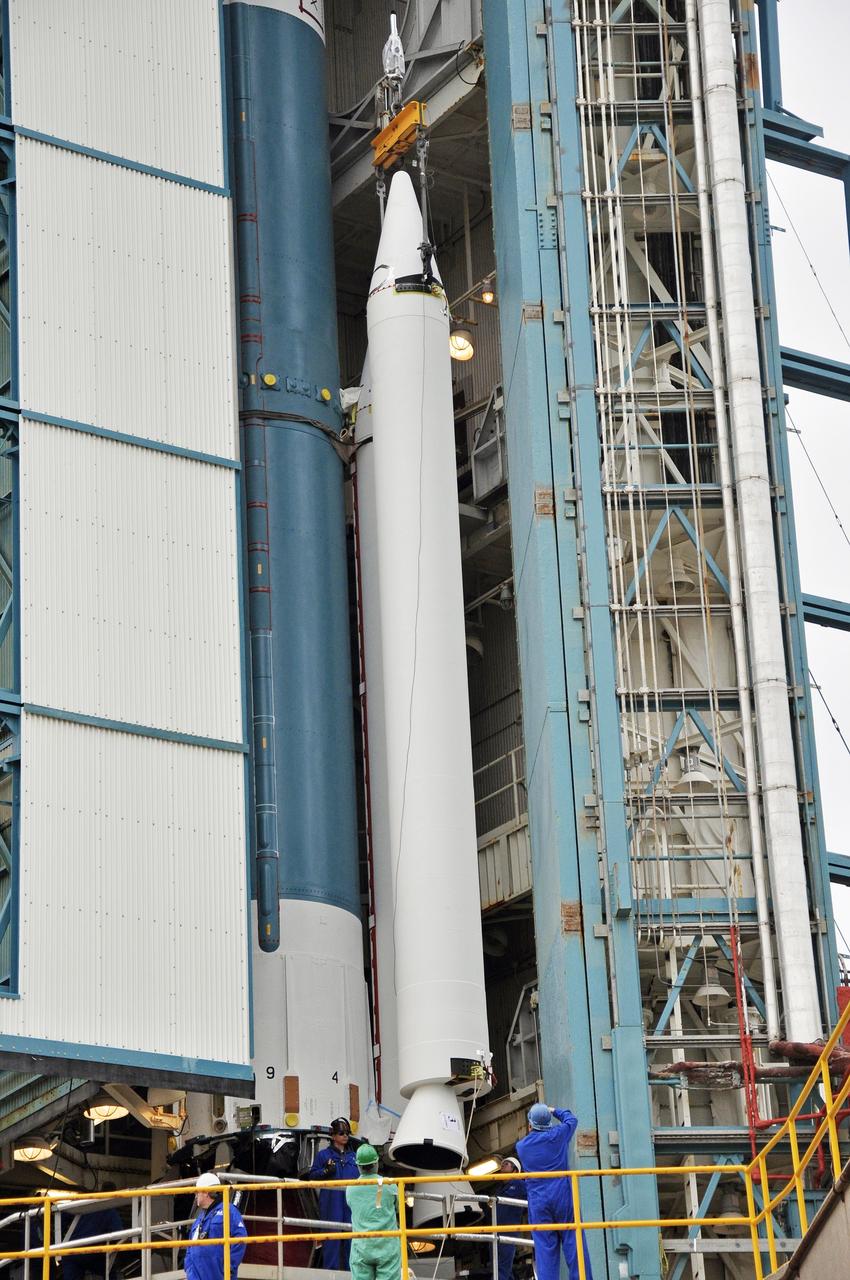
The first stage motor for the Orbital ATK Pegasus XL rocket is moved inside Building 1555 at Vandenberg Air Force Base in California. In the background are the second and third stage segments. The rocket is being prepared for NASA's Ionospheric Connection Explorer, or ICON, mission. ICON will launch from the Kwajalein Atoll aboard the Pegasus XL on Dec. 8, 2017. ICON will study the frontier of space - the dynamic zone high in Earth's atmosphere where terrestrial weather from below meets space weather above. The explorer will help determine the physics of Earth's space environment and pave the way for mitigating its effects on our technology, communications systems and society.
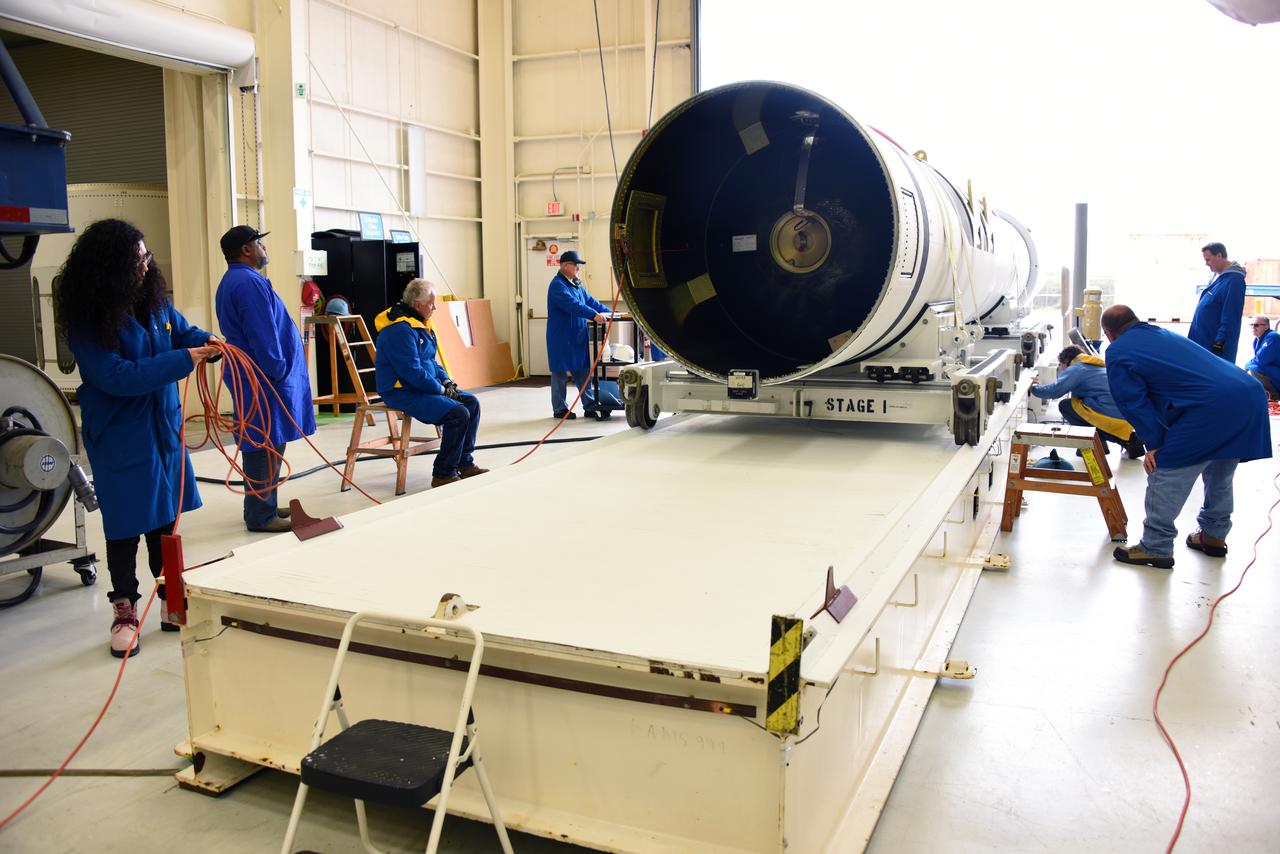
The first stage motor for the Orbital ATK Pegasus XL rocket is moved inside Building 1555 at Vandenberg Air Force Base in California. In the background are the second and third stage segments. The rocket is being prepared for NASA's Ionospheric Connection Explorer, or ICON, mission. ICON will launch from the Kwajalein Atoll aboard the Pegasus XL on Dec. 8, 2017. ICON will study the frontier of space - the dynamic zone high in Earth's atmosphere where terrestrial weather from below meets space weather above. The explorer will help determine the physics of Earth's space environment and pave the way for mitigating its effects on our technology, communications systems and society.
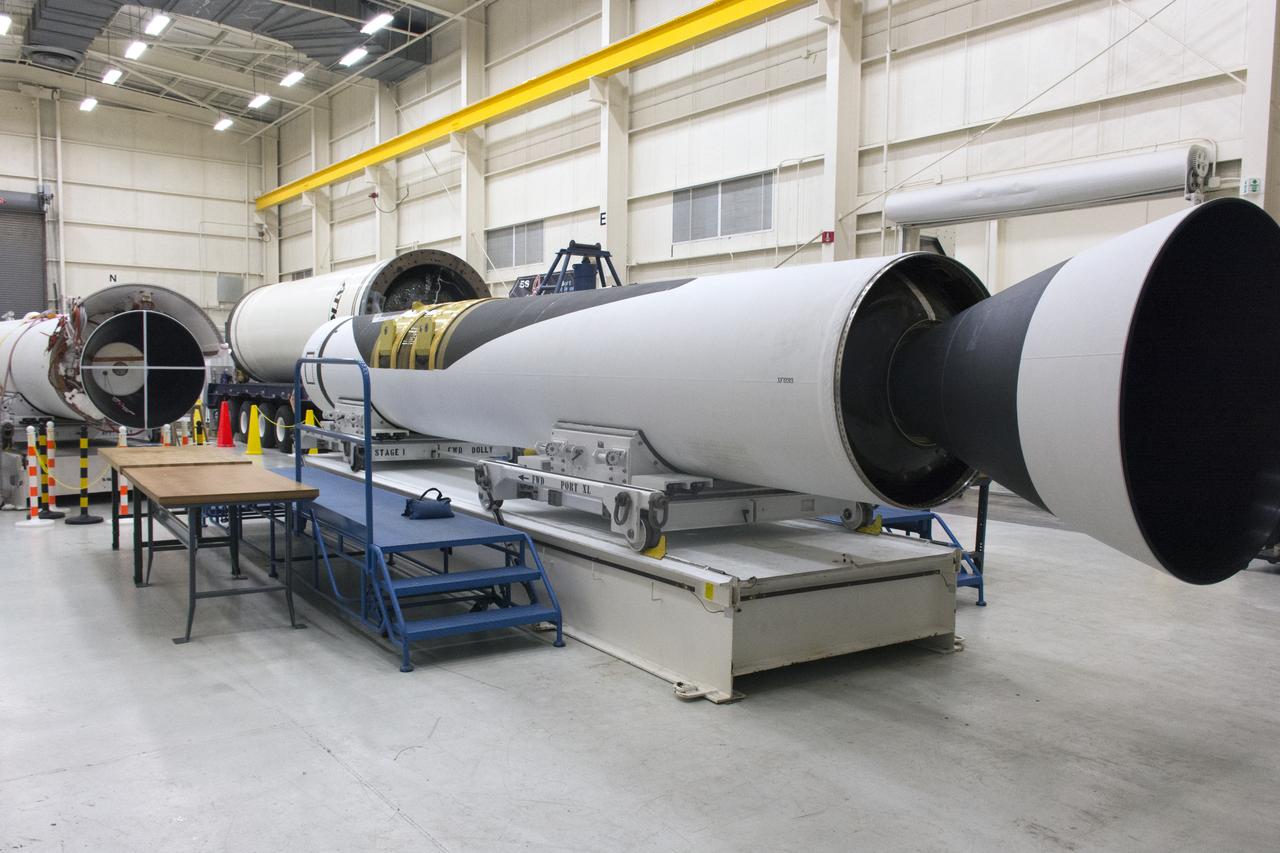
The first stage motor for the Orbital ATK Pegasus XL rocket was moved inside Building 1555 at Vandenberg Air Force Base in California. In the background are the second and third stage segments. The rocket is being prepared for NASA's Ionospheric Connection Explorer, or ICON, mission. ICON will launch from the Kwajalein Atoll aboard the Pegasus XL on Dec. 8, 2017. ICON will study the frontier of space - the dynamic zone high in Earth's atmosphere where terrestrial weather from below meets space weather above. The explorer will help determine the physics of Earth's space environment and pave the way for mitigating its effects on our technology, communications systems and society.
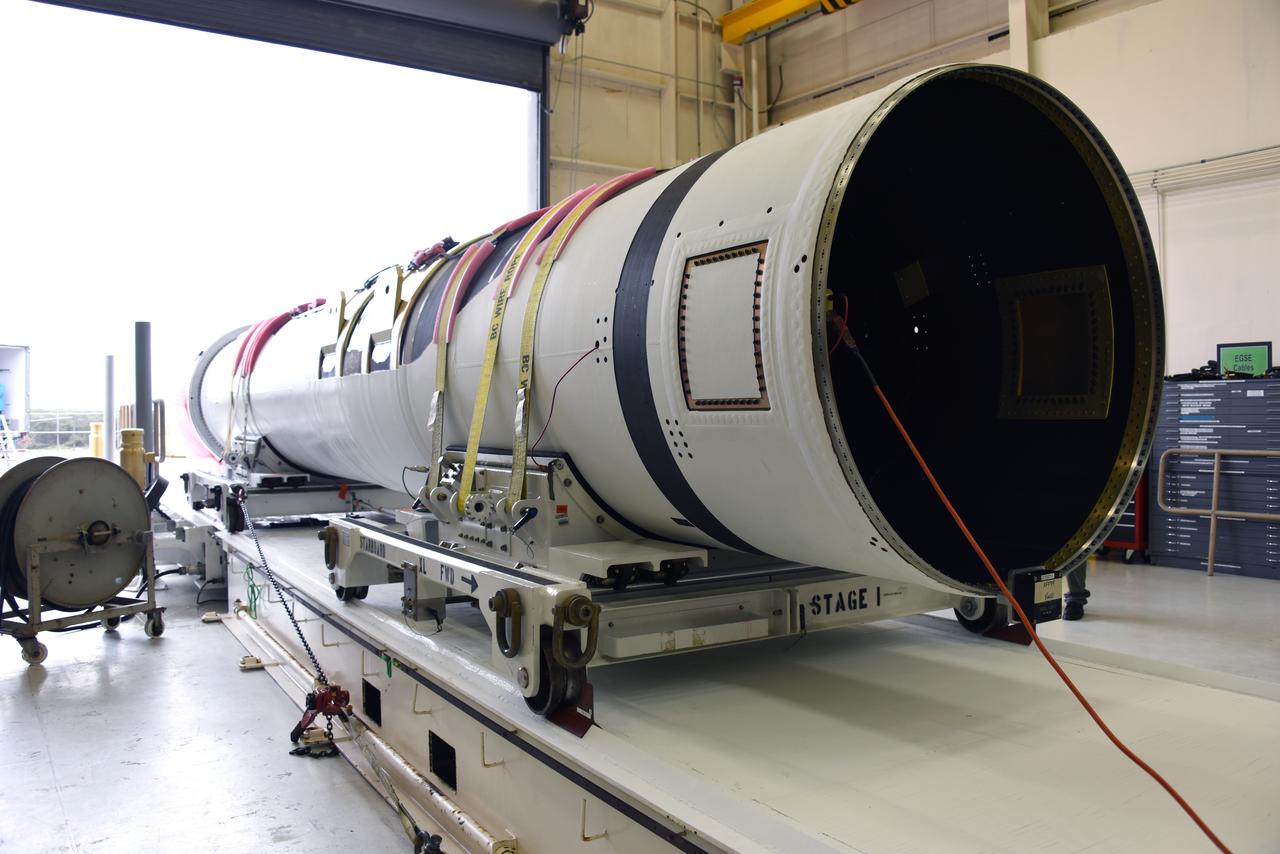
The first stage motor for the Orbital ATK Pegasus XL rocket was moved inside Building 1555 at Vandenberg Air Force Base in California. In the background are the second and third stage segments. The rocket is being prepared for NASA's Ionospheric Connection Explorer, or ICON, mission. ICON will launch from the Kwajalein Atoll aboard the Pegasus XL on Dec. 8, 2017. ICON will study the frontier of space - the dynamic zone high in Earth's atmosphere where terrestrial weather from below meets space weather above. The explorer will help determine the physics of Earth's space environment and pave the way for mitigating its effects on our technology, communications systems and society.
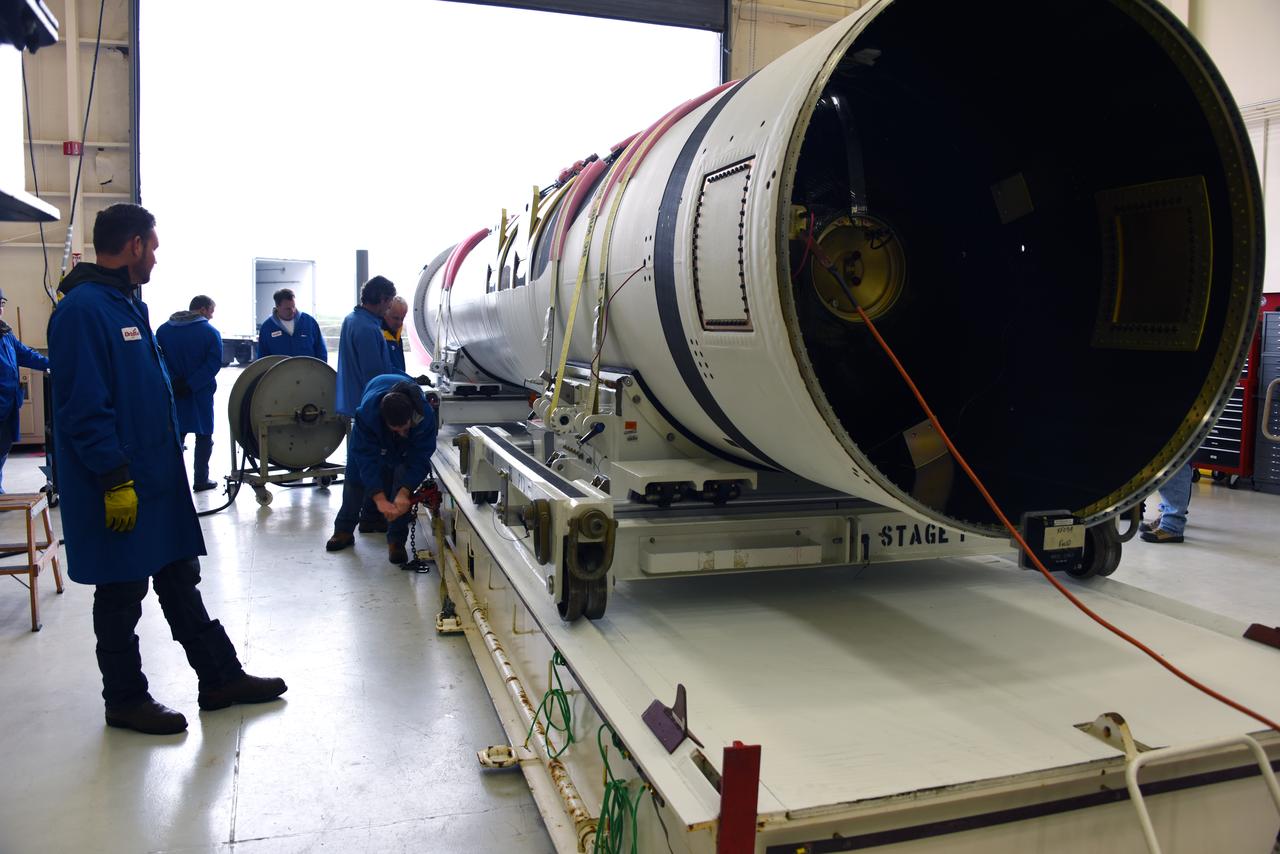
The first stage motor for the Orbital ATK Pegasus XL rocket was moved inside Building 1555 at Vandenberg Air Force Base in California. In the background are the second and third stage segments. The rocket is being prepared for NASA's Ionospheric Connection Explorer, or ICON, mission. ICON will launch from the Kwajalein Atoll aboard the Pegasus XL on Dec. 8, 2017. ICON will study the frontier of space - the dynamic zone high in Earth's atmosphere where terrestrial weather from below meets space weather above. The explorer will help determine the physics of Earth's space environment and pave the way for mitigating its effects on our technology, communications systems and society.
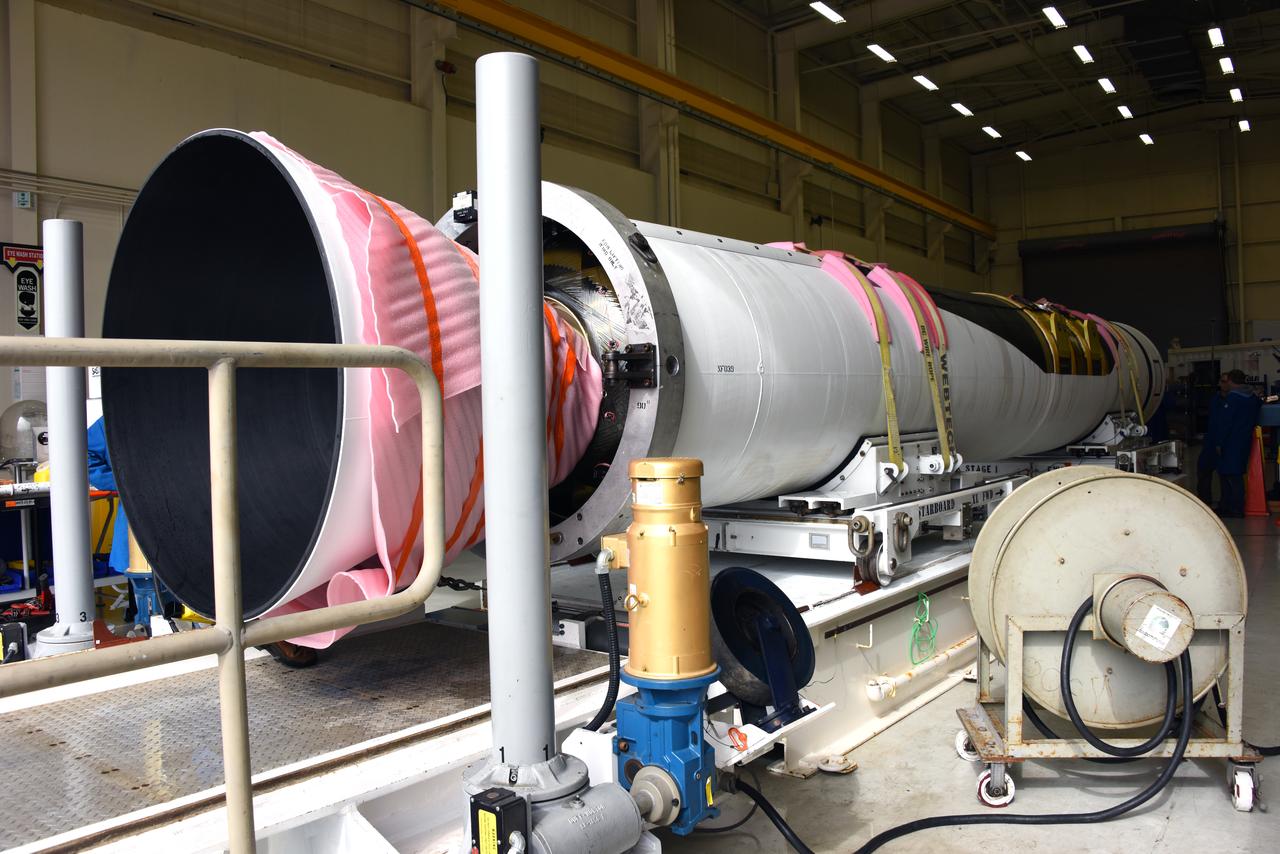
The first stage motor for the Orbital ATK Pegasus XL rocket was moved inside Building 1555 at Vandenberg Air Force Base in California. In the background are the second and third stage segments. The rocket is being prepared for NASA's Ionospheric Connection Explorer, or ICON, mission. ICON will launch from the Kwajalein Atoll aboard the Pegasus XL on Dec. 8, 2017. ICON will study the frontier of space - the dynamic zone high in Earth's atmosphere where terrestrial weather from below meets space weather above. The explorer will help determine the physics of Earth's space environment and pave the way for mitigating its effects on our technology, communications systems and society.
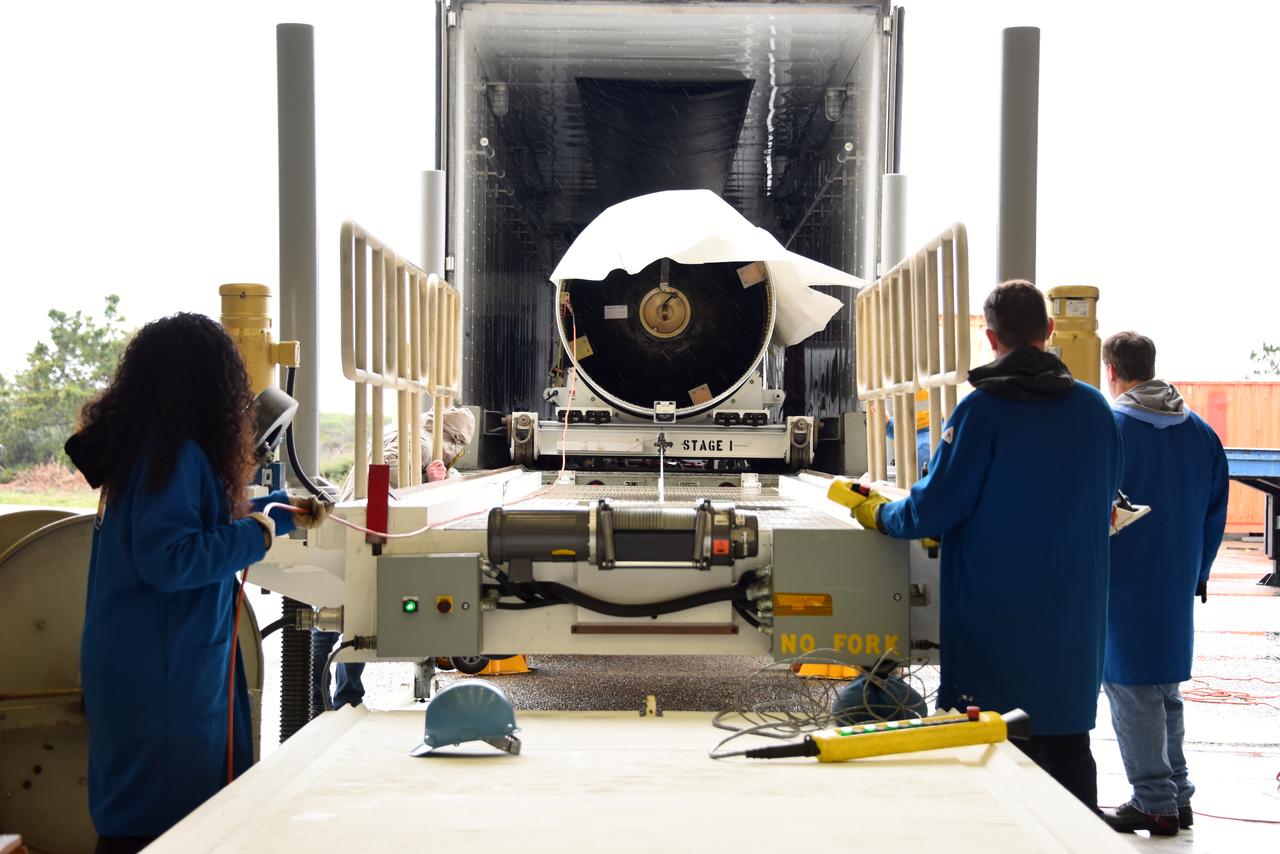
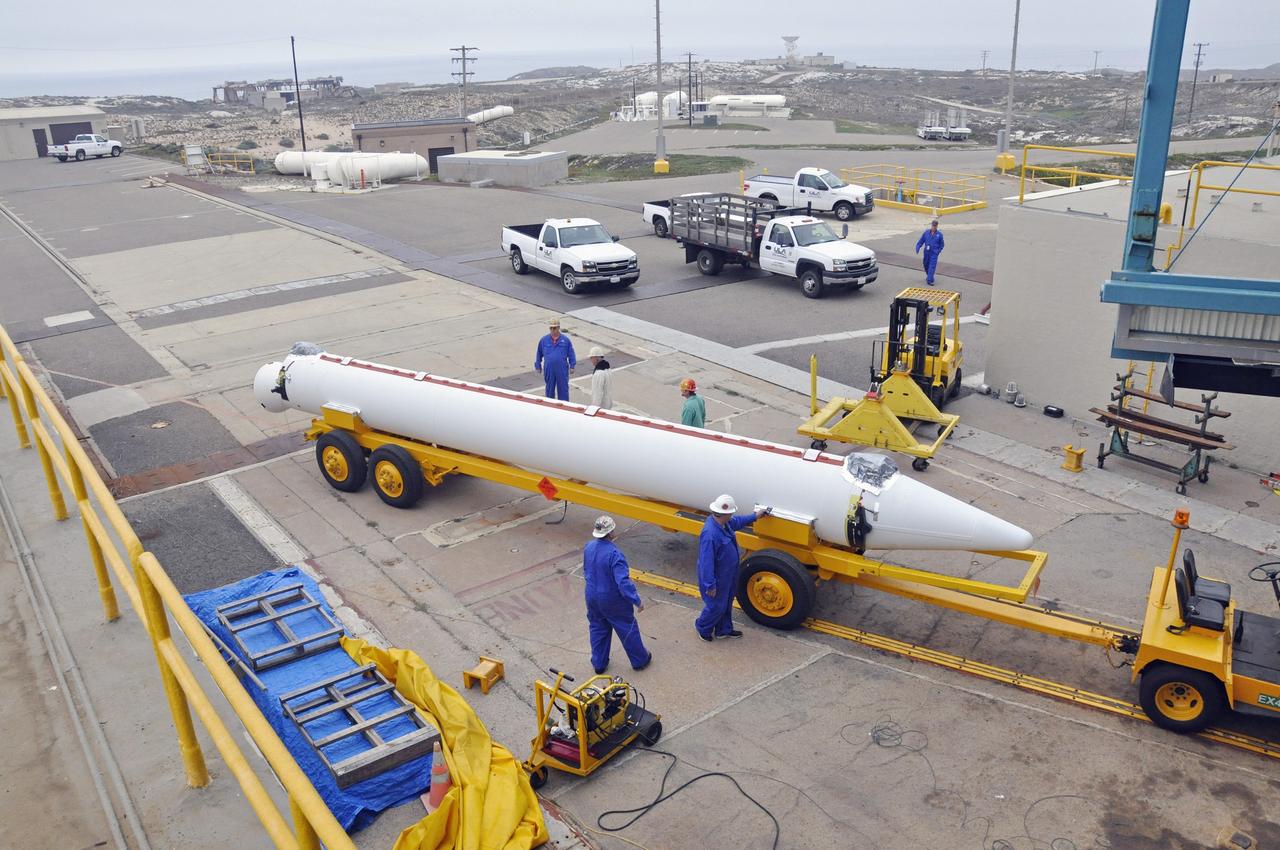
The first stage motor for the Orbital ATK Pegasus XL rocket is offloaded from a truck at Building 1555 at Vandenberg Air Force Base in California. The Pegasus rocket is being prepared for NASA's Ionospheric Connection Explorer, or ICON, mission. ICON will launch from the Kwajalein Atoll aboard the Pegasus XL on Dec. 8, 2017. ICON will study the frontier of space - the dynamic zone high in Earth's atmosphere where terrestrial weather from below meets space weather above. The explorer will help determine the physics of Earth's space environment and pave the way for mitigating its effects on our technology, communications systems and society.

The first stage motor for the Orbital ATK Pegasus XL rocket is moved into Building 1555 at Vandenberg Air Force Base in California. The rocket is being prepared for NASA's Ionospheric Connection Explorer, or ICON, mission. ICON will launch from the Kwajalein Atoll aboard the Pegasus XL on Dec. 8, 2017. ICON will study the frontier of space - the dynamic zone high in Earth's atmosphere where terrestrial weather from below meets space weather above. The explorer will help determine the physics of Earth's space environment and pave the way for mitigating its effects on our technology, communications systems and society.
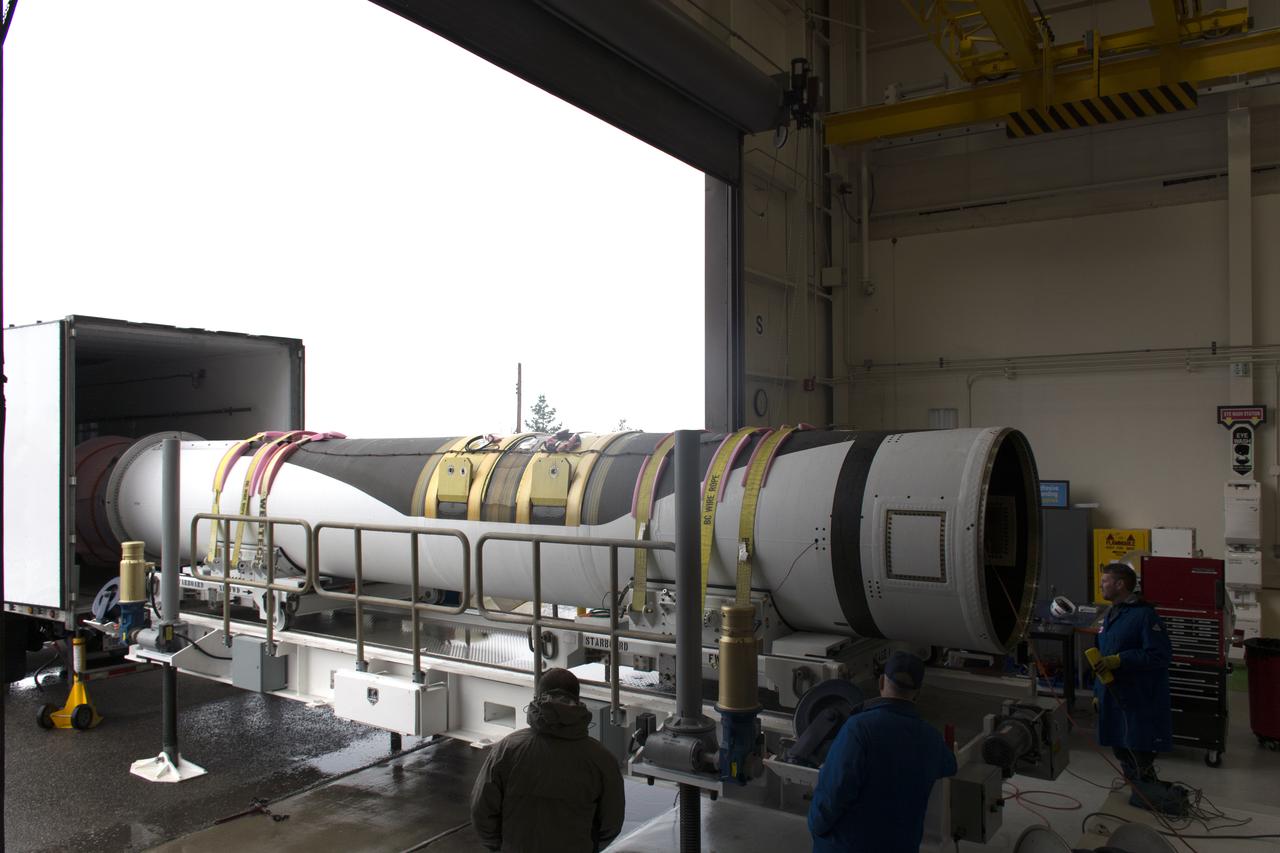
The first stage motor for the Orbital ATK Pegasus XL rocket arrives by truck at Building 1555 at Vandenberg Air Force Base in California. The Pegasus rocket is being prepared for NASA's Ionospheric Connection Explorer, or ICON, mission. ICON will launch from the Kwajalein Atoll aboard the Pegasus XL on Dec. 8, 2017. ICON will study the frontier of space - the dynamic zone high in Earth's atmosphere where terrestrial weather from below meets space weather above. The explorer will help determine the physics of Earth's space environment and pave the way for mitigating its effects on our technology, communications systems and society.
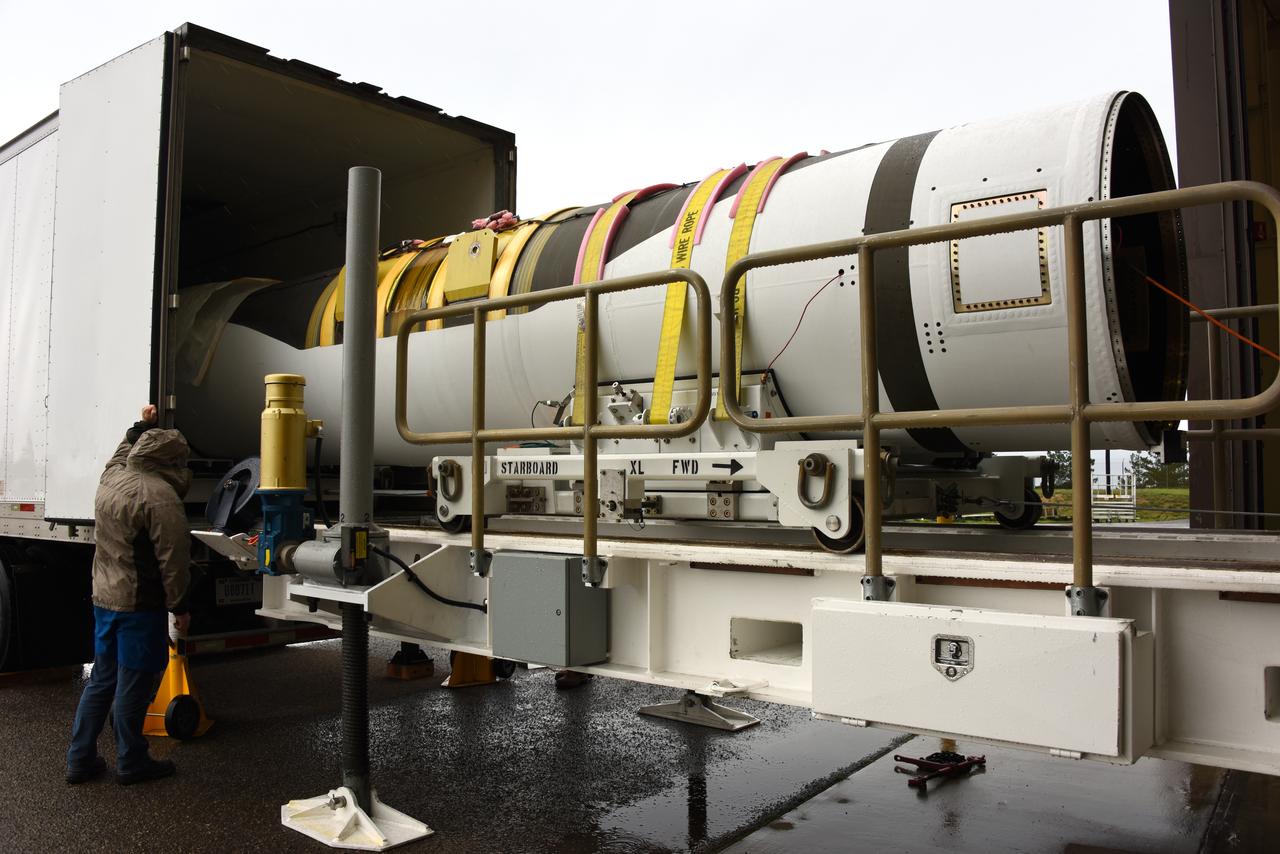
The first stage motor for the Orbital ATK Pegasus XL rocket is offloaded from a truck at Building 1555 at Vandenberg Air Force Base in California. The Pegasus rocket is being prepared for NASA's Ionospheric Connection Explorer, or ICON, mission. ICON will launch from the Kwajalein Atoll aboard the Pegasus XL on Dec. 8, 2017. ICON will study the frontier of space - the dynamic zone high in Earth's atmosphere where terrestrial weather from below meets space weather above. The explorer will help determine the physics of Earth's space environment and pave the way for mitigating its effects on our technology, communications systems and society.
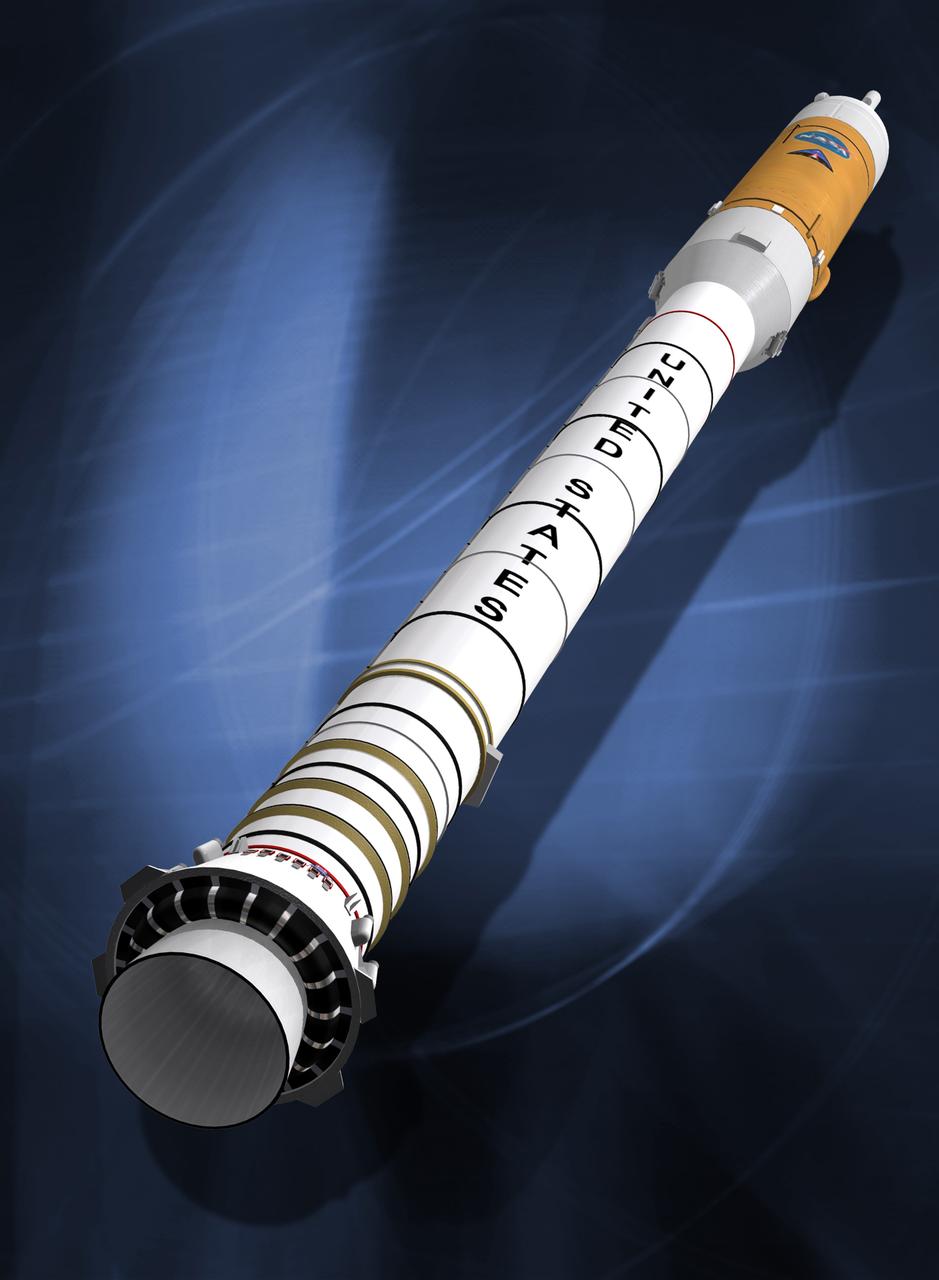
Shown is an illustration of the Ares I concept. The first stage will be a single, five-segment solid rocket booster derived from the space shuttle programs reusable solid rocket motor. The first stage is managed by NASA's Marshall Space Flight Center in Huntsville, Alabama for NASA's Constellation program.
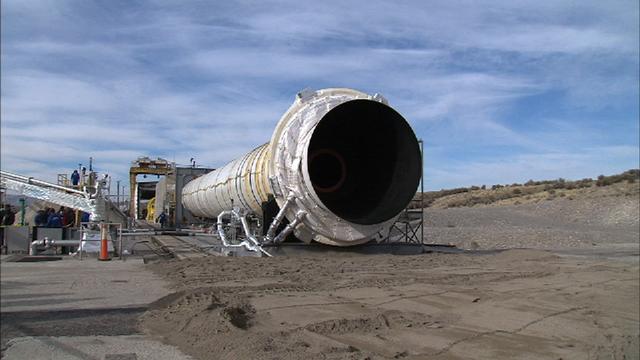
Shown is a test of the TEM-13 Solid Rocket Motor in support of the Ares/CLV first stage at ATK, Utah . Constellaton/Ares project. This image is extracted from a high definition video file and is the highest resolution available.
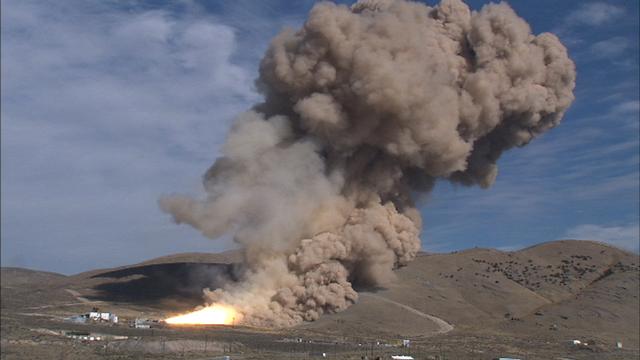
Shown is a test of the TEM-13 Solid Rocket Motor in support of the Ares/CLV first stage at ATK, Utah . Constellation/Ares project. This image is extracted from a high definition video file and is the highest resolution available.
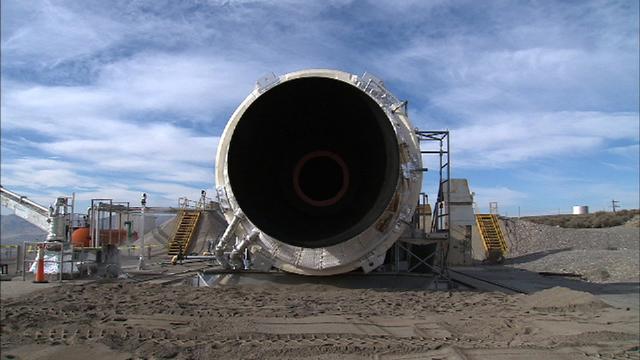
Shown is a test of the TEM-13 solid rocket motor at the ATK test facility in Utah in support of the Ares/CLV first stage. This image is extracted from high definition video and is the highest resolution available.
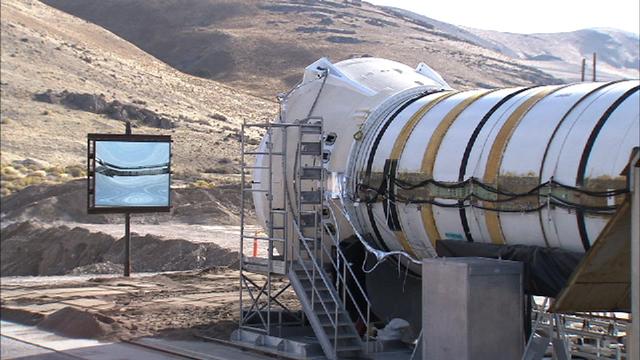
Shown is a test of the TEM-13 solid rocket motor at the ATK test facility in Utah in support of the Ares/CLV first stage. This image is extracted from high definition video and is the highest resolution available.
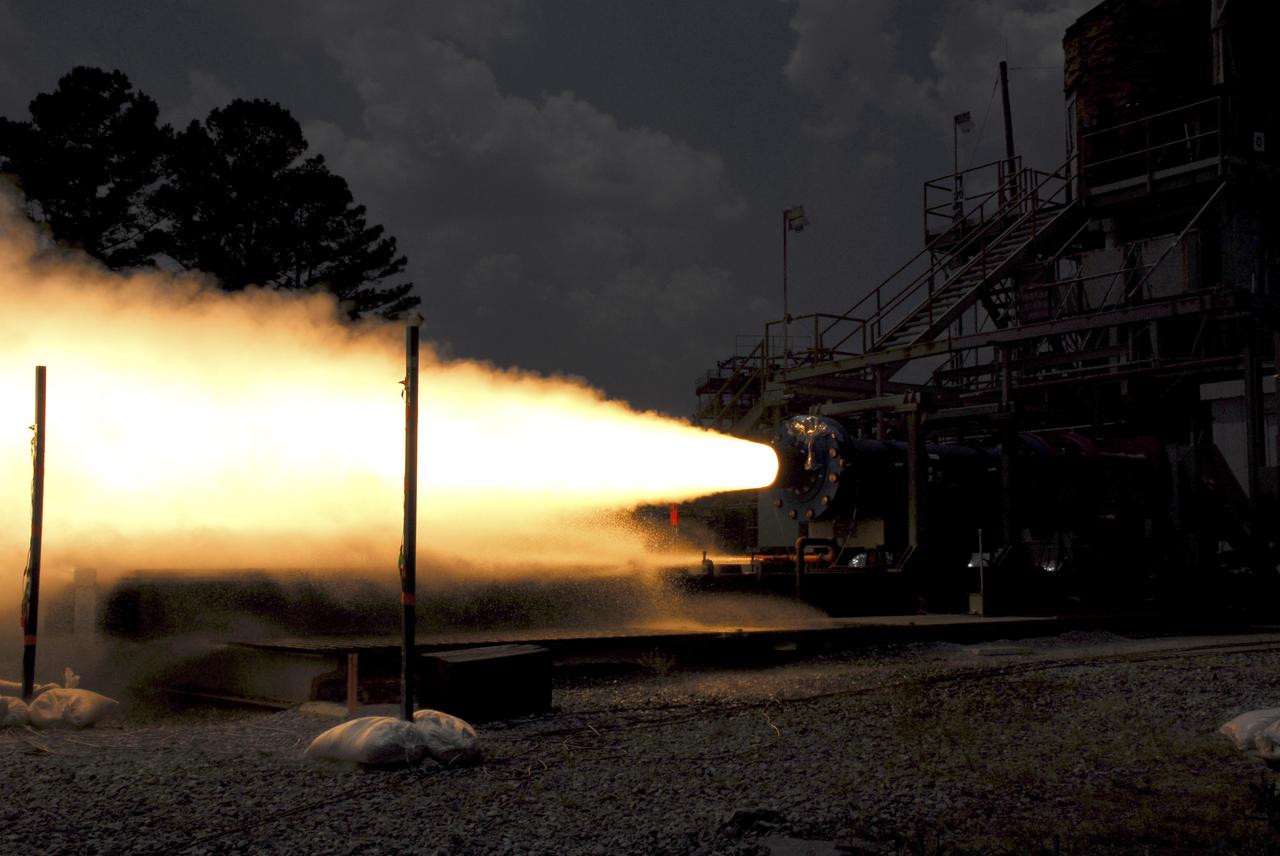
HOT FIRE P9038-SRTMV-N1 24". THE FIRST SUBSCALE MOTOR FOR THE ARES PROGRAM. THE PRIMARY OBJECTIVE FOR THE TEST IS TO ESTABLISH A BASELINE SUBSCALE CONFIGURATION FOR THE ARES 1ST STAGE NOZZLE.
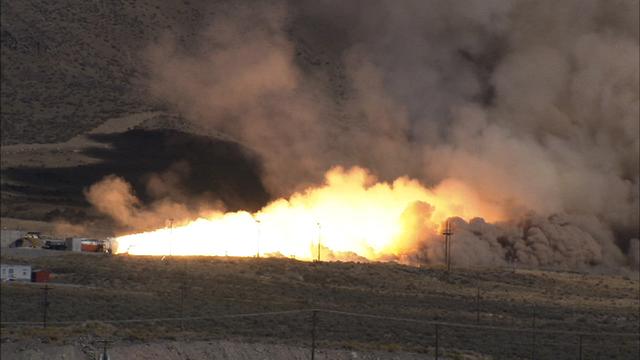
Shown is a test of the TEM-13 solid rocket motor at the ATK test facility in Utah in support of the Ares/CLV first stage. This image is extracted from high definition video and is the highest resolution available.
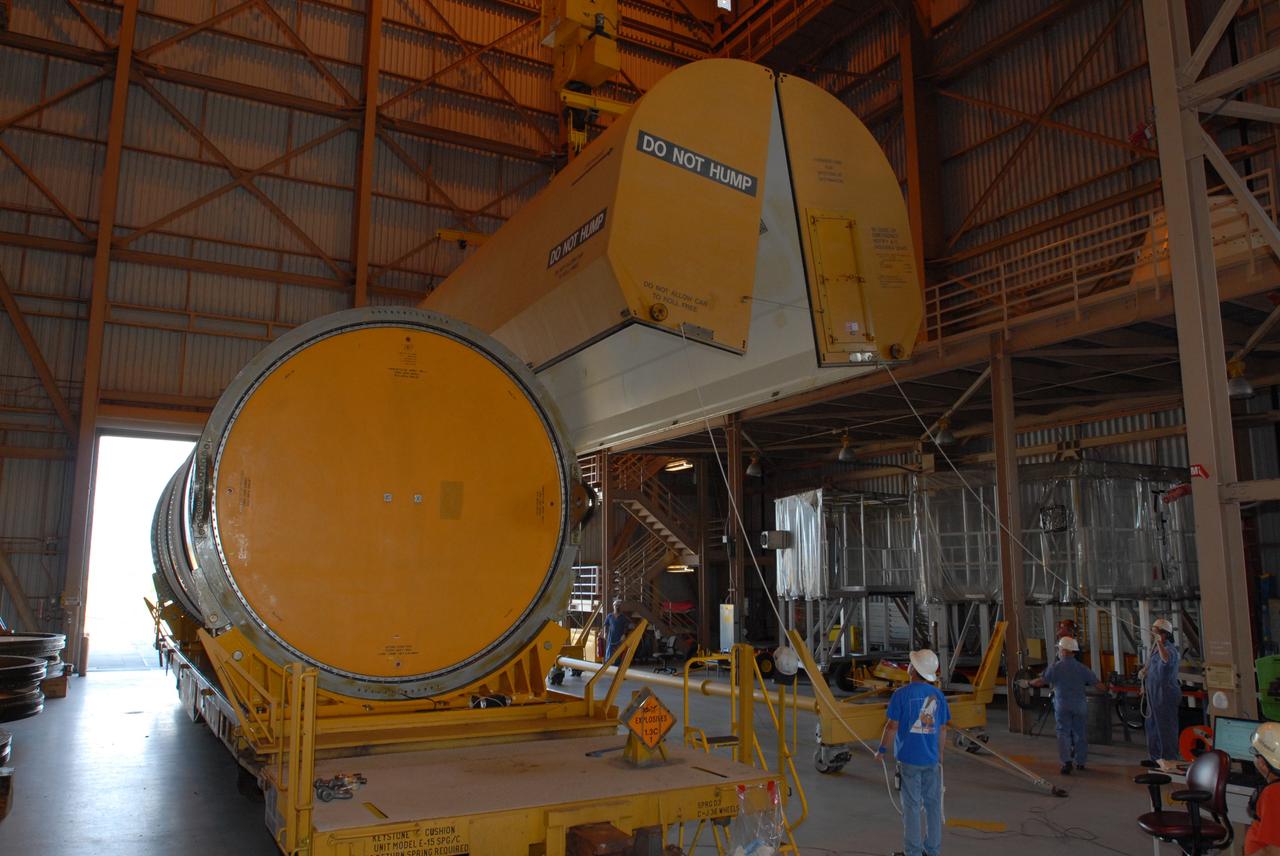
CAPE CANAVERAL, Fla. – In the Rotation, Processing and Surge Facility at NASA's Kennedy Space Center in Florida, the rail car cover is moved away from the first Ares I-X motor segment. It is one of four reusable motor segments and nozzle exit cone shipped by the Ares I first-stage prime contractor Alliant Techsystems Inc. for final processing and integration in the facility. The booster used for the Ares I-X launch is being modified by adding new forward structures and a fifth segment simulator. The motor is the final hardware needed for the rocket's upcoming flight test this summer. The stacking operations are scheduled to begin in the Vehicle Assembly Building in April. Photo credit: NASA/Jim Grossmann
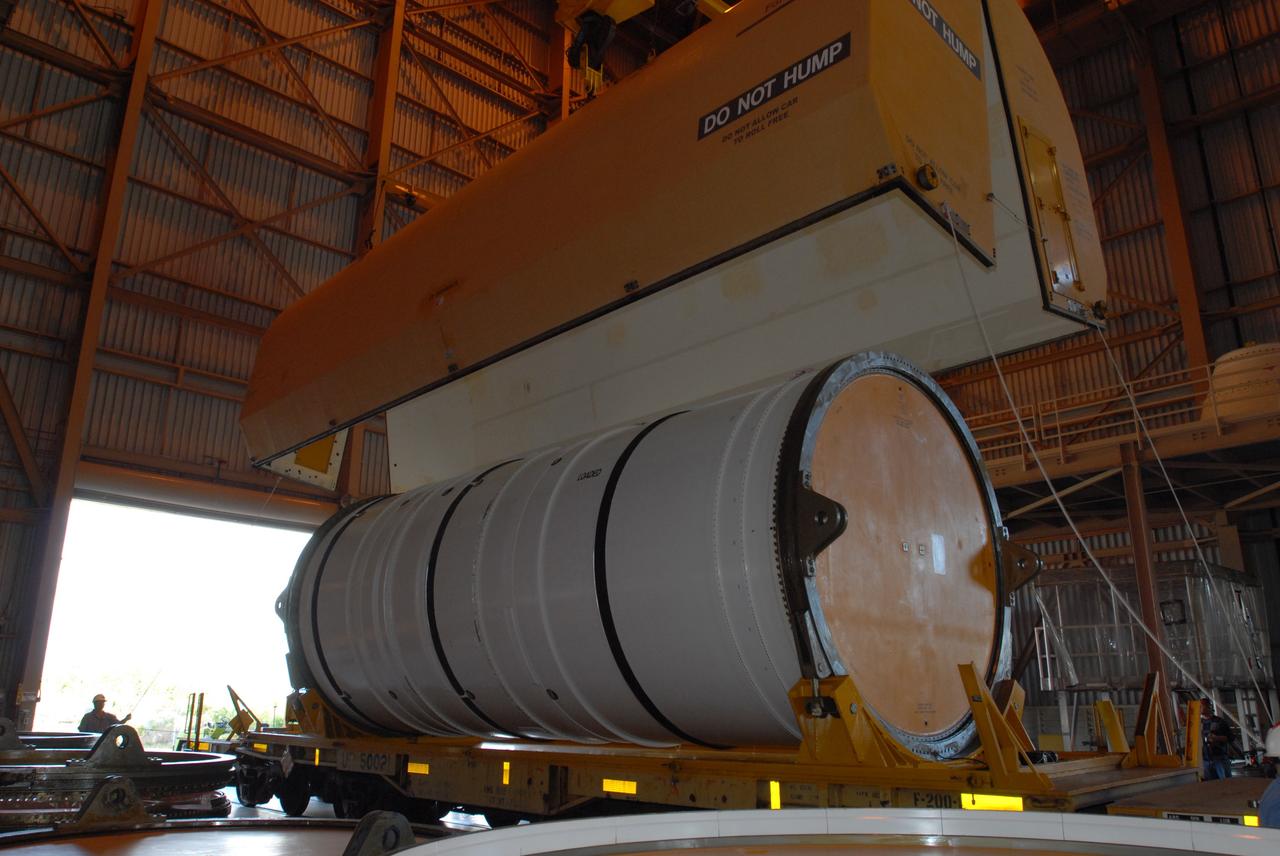
CAPE CANAVERAL, Fla. – In the Rotation, Processing and Surge Facility at NASA's Kennedy Space Center in Florida, the rail car cover is removed from the first Ares I-X motor segment. It is one of four reusable motor segments and nozzle exit cone shipped by the Ares I first-stage prime contractor Alliant Techsystems Inc. for final processing and integration in the facility. The booster used for the Ares I-X launch is being modified by adding new forward structures and a fifth segment simulator. The motor is the final hardware needed for the rocket's upcoming flight test this summer. The stacking operations are scheduled to begin in the Vehicle Assembly Building in April. Photo credit: NASA/Jim Grossmann
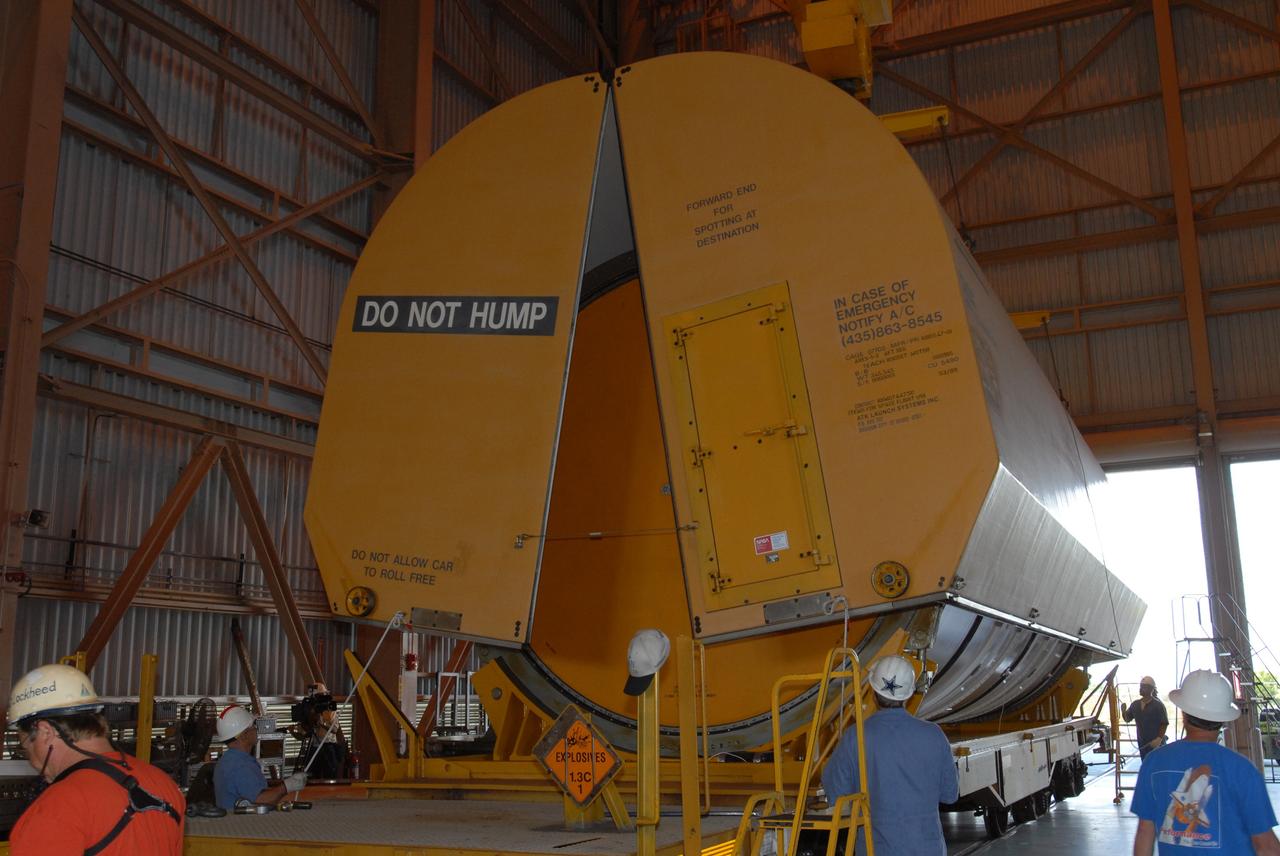
CAPE CANAVERAL, Fla. – In the Rotation, Processing and Surge Facility at NASA's Kennedy Space Center in Florida, the rail car cover is removed from the first Ares I-X motor segment. It is one of four reusable motor segments and nozzle exit cone shipped by the Ares I first-stage prime contractor Alliant Techsystems Inc. for final processing and integration in the facility. The booster used for the Ares I-X launch is being modified by adding new forward structures and a fifth segment simulator. The motor is the final hardware needed for the rocket's upcoming flight test this summer. The stacking operations are scheduled to begin in the Vehicle Assembly Building in April. Photo credit: NASA/Jim Grossmann
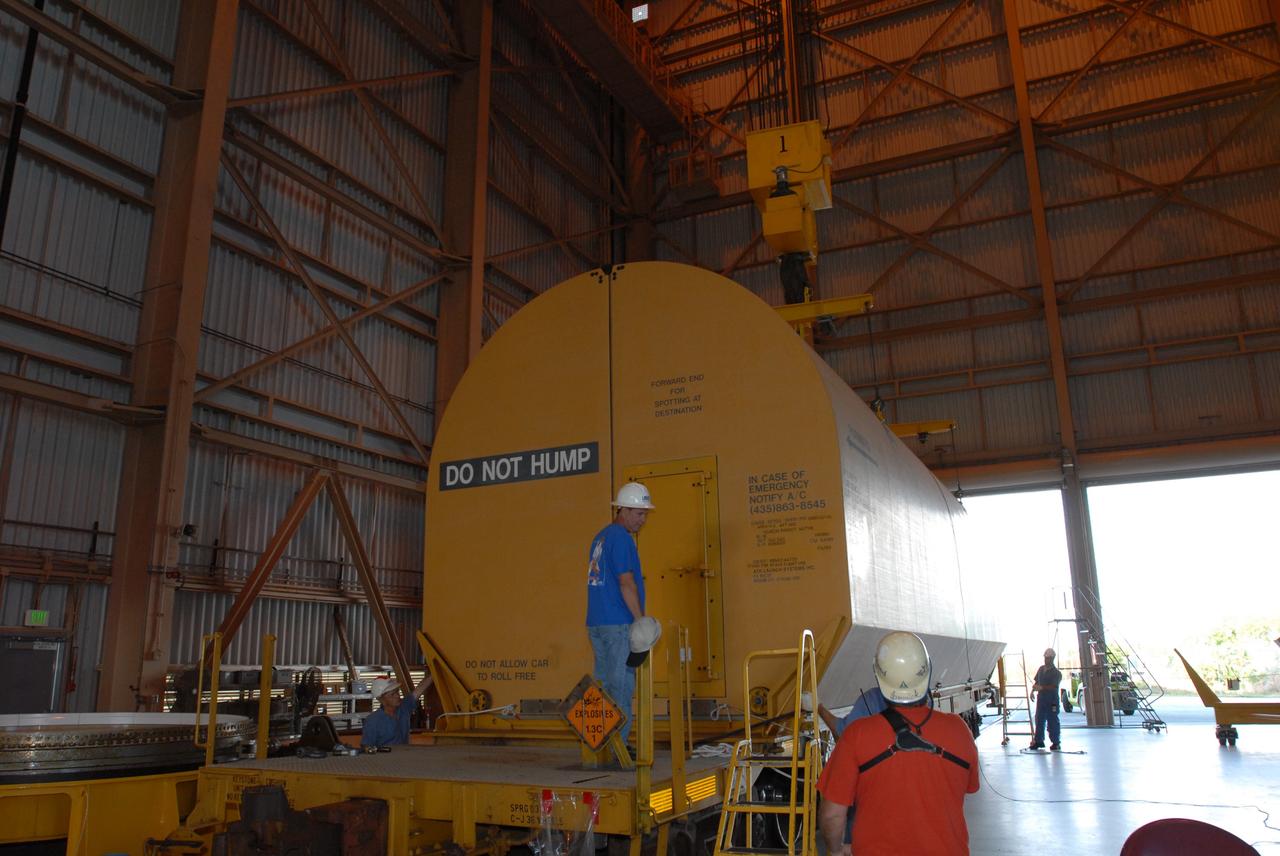
CAPE CANAVERAL, Fla. – The first Ares I-X motor segment is in the Rotation, Processing and Surge Facility at NASA's Kennedy Space Center in Florida. It is one of four reusable motor segments and nozzle exit cone shipped by the Ares I first-stage prime contractor Alliant Techsystems Inc. for final processing and integration in the facility. The booster used for the Ares I-X launch is being modified by adding new forward structures and a fifth segment simulator. The motor is the final hardware needed for the rocket's upcoming flight test this summer. The stacking operations are scheduled to begin in the Vehicle Assembly Building in April. Photo credit: NASA/Jim Grossmann
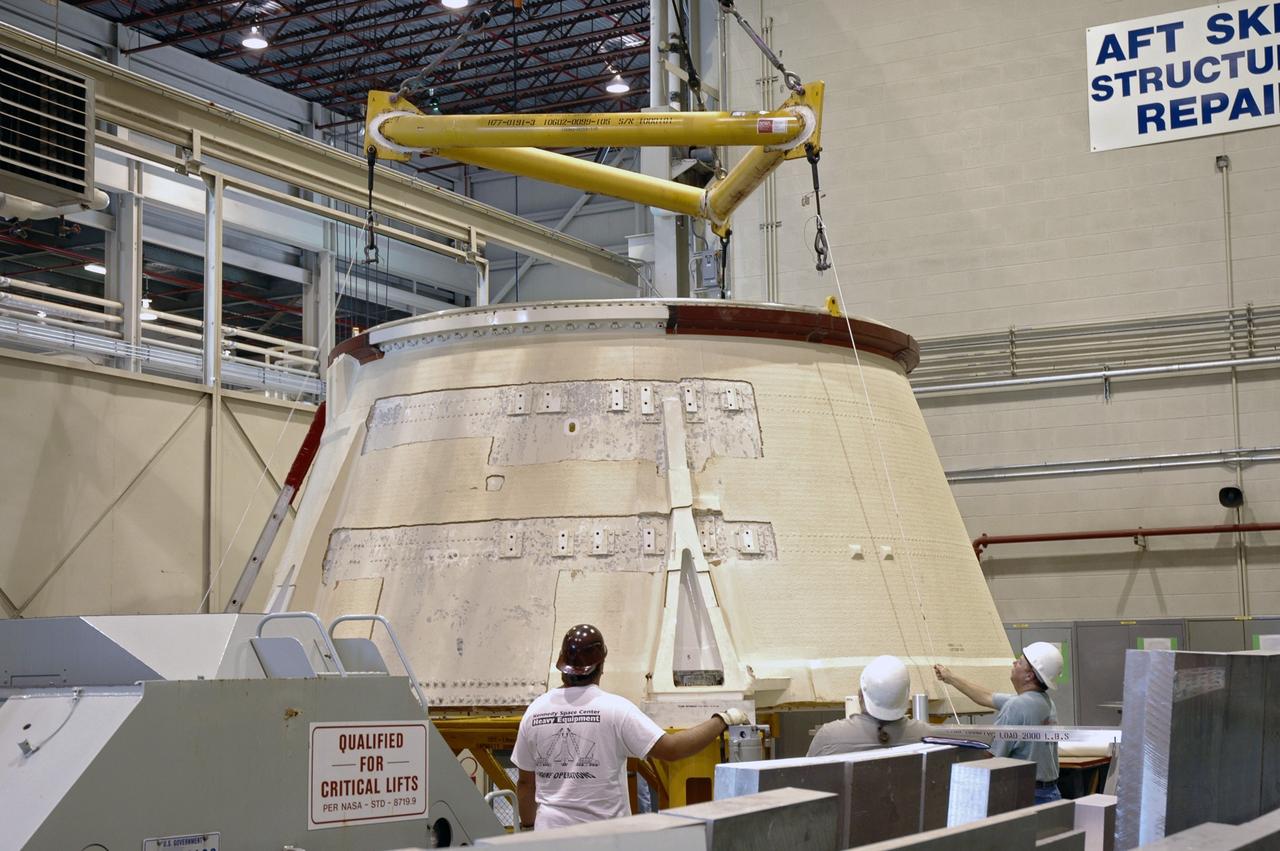
CAPE CANAVERAL, Fla. – In the Assembly and Refurbishment Facility at NASA's Kennedy Space Center, a crane is lowered over the aft skirt for the Ares 1-X rocket. The segment is being lifted into a machine shop work stand for drilling modifications. The modifications will prepare it for the installation of the auxiliary power unit controller, the reduced-rate gyro unit, the booster decelerator motors and the booster tumble motors. Ares I is an in-line, two-stage rocket that will transport the Orion crew exploration vehicle to low-Earth orbit. Ares I-X is a test rocket. The Ares I first stage will be a five-segment solid rocket booster based on the four-segment design used for the shuttle. Ares I’s fifth booster segment allows the launch vehicle to lift more weight and reach a higher altitude before the first stage separates from the upper stage, which ignites in midflight to propel the Orion spacecraft to Earth orbit. Photo credit: NASA/Jim Grossmann
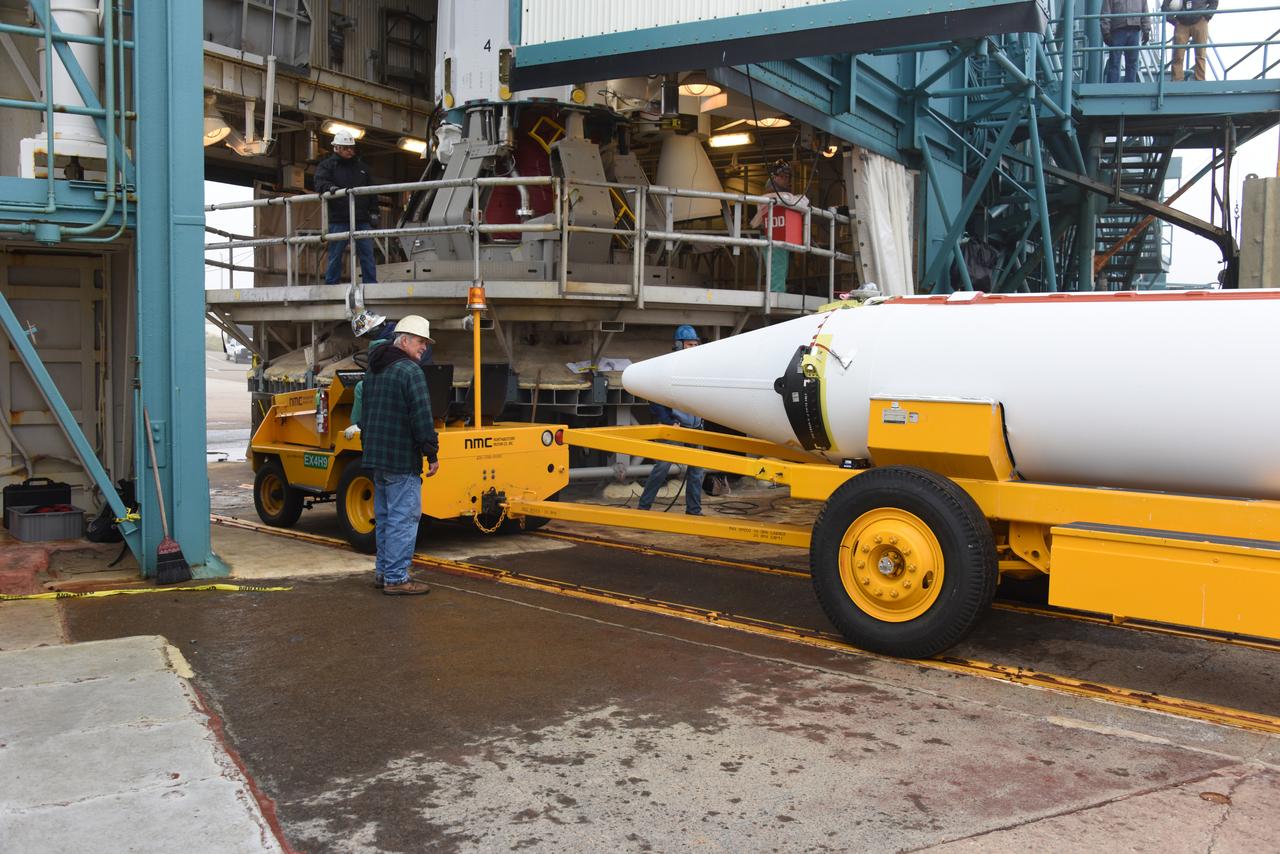
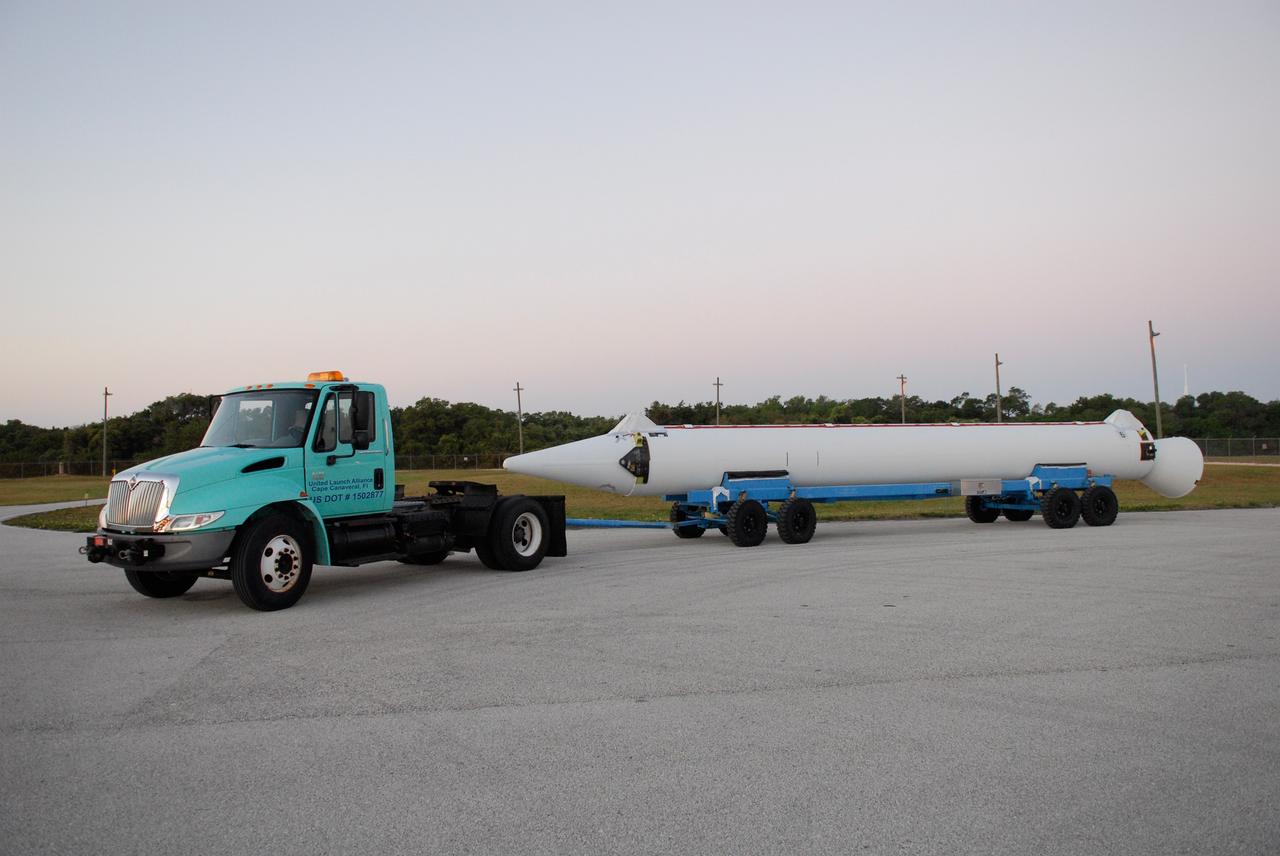
The United Launch Alliance/Orbital ATK Delta II solid rocket motor arrives at Space Launch Complex 2 at Vandenberg Air Force Base in California. The rocket motor will be mated to the Delta II first stage in preparation for launch of the Joint Polar Satellite System-1 (JPSS-1) later this year. JPSS, a next-generation environmental satellite system, is a collaborative program between the National Oceanic and Atmospheric Administration (NOAA) and NASA.
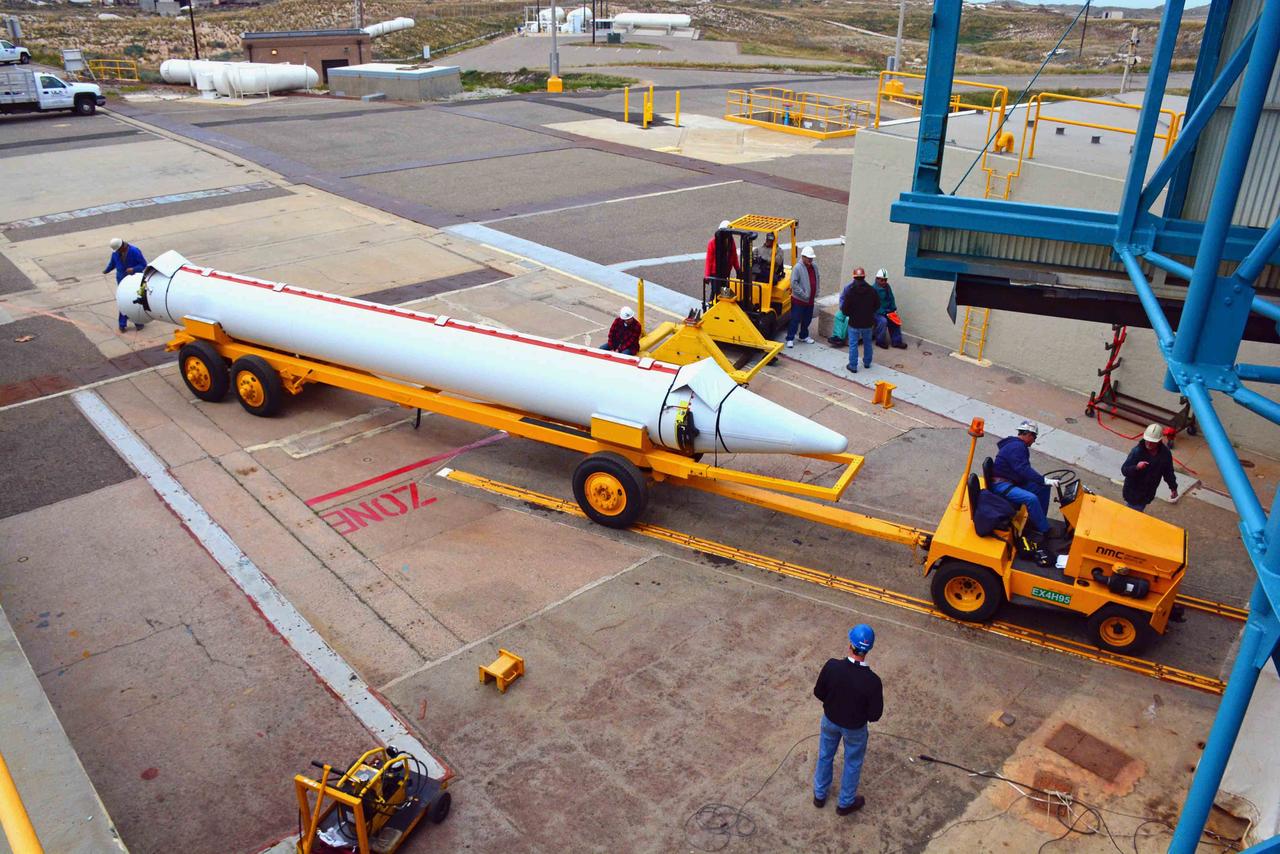
The United Launch Alliance/Orbital ATK Delta II solid rocket motor arrives at Space Launch Complex 2 at Vandenberg Air Force Base in California. The rocket motor will be mated to the Delta II first stage in preparation for launch of the Joint Polar Satellite System-1 (JPSS-1) later this year. JPSS, a next-generation environmental satellite system, is a collaborative program between the National Oceanic and Atmospheric Administration (NOAA) and NASA.
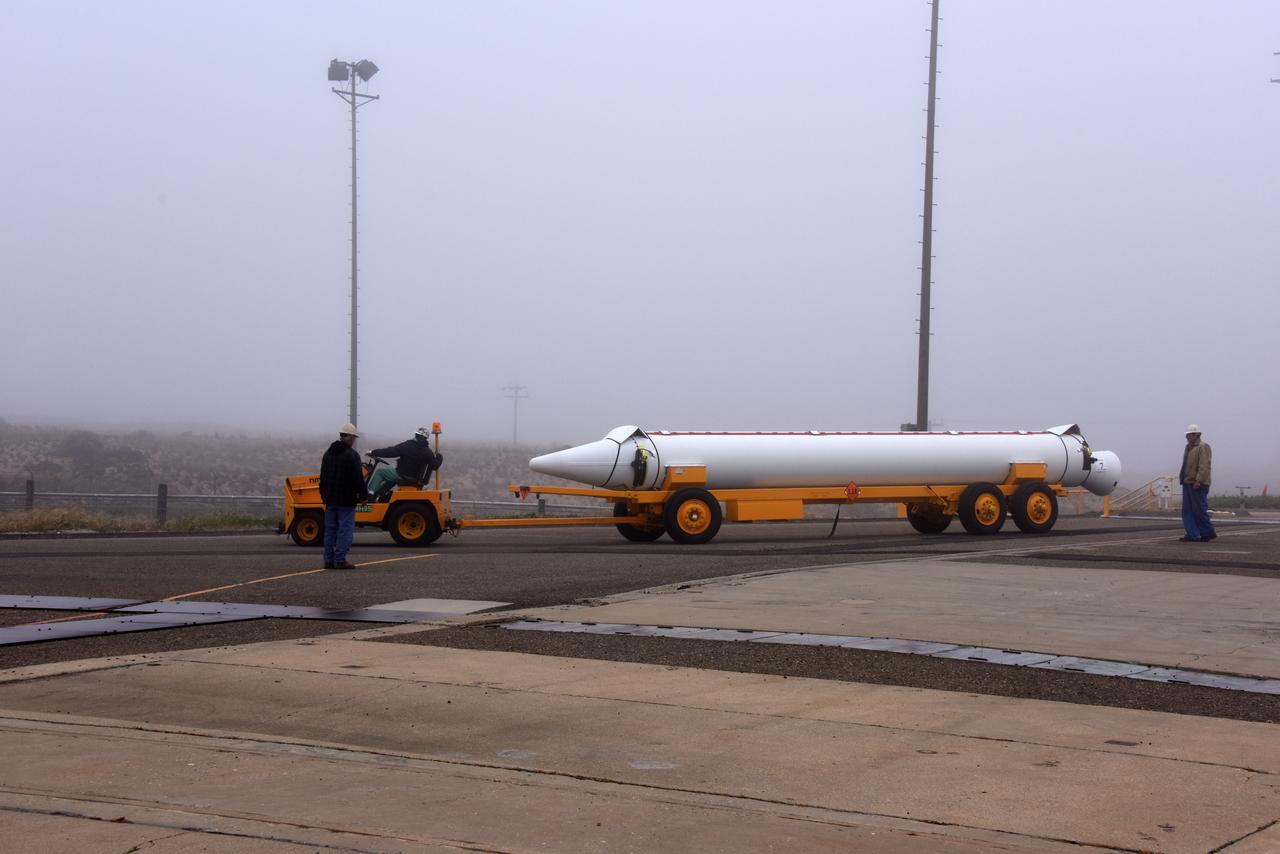
The United Launch Alliance/Orbital ATK Delta II solid rocket motor is towed to Space Launch Complex 2 at Vandenberg Air Force Base in California. The rocket motor will be mated to the Delta II first stage in preparation for launch of the Joint Polar Satellite System-1 (JPSS-1) later this year. JPSS, a next-generation environmental satellite system, is a collaborative program between the National Oceanic and Atmospheric Administration (NOAA) and NASA.
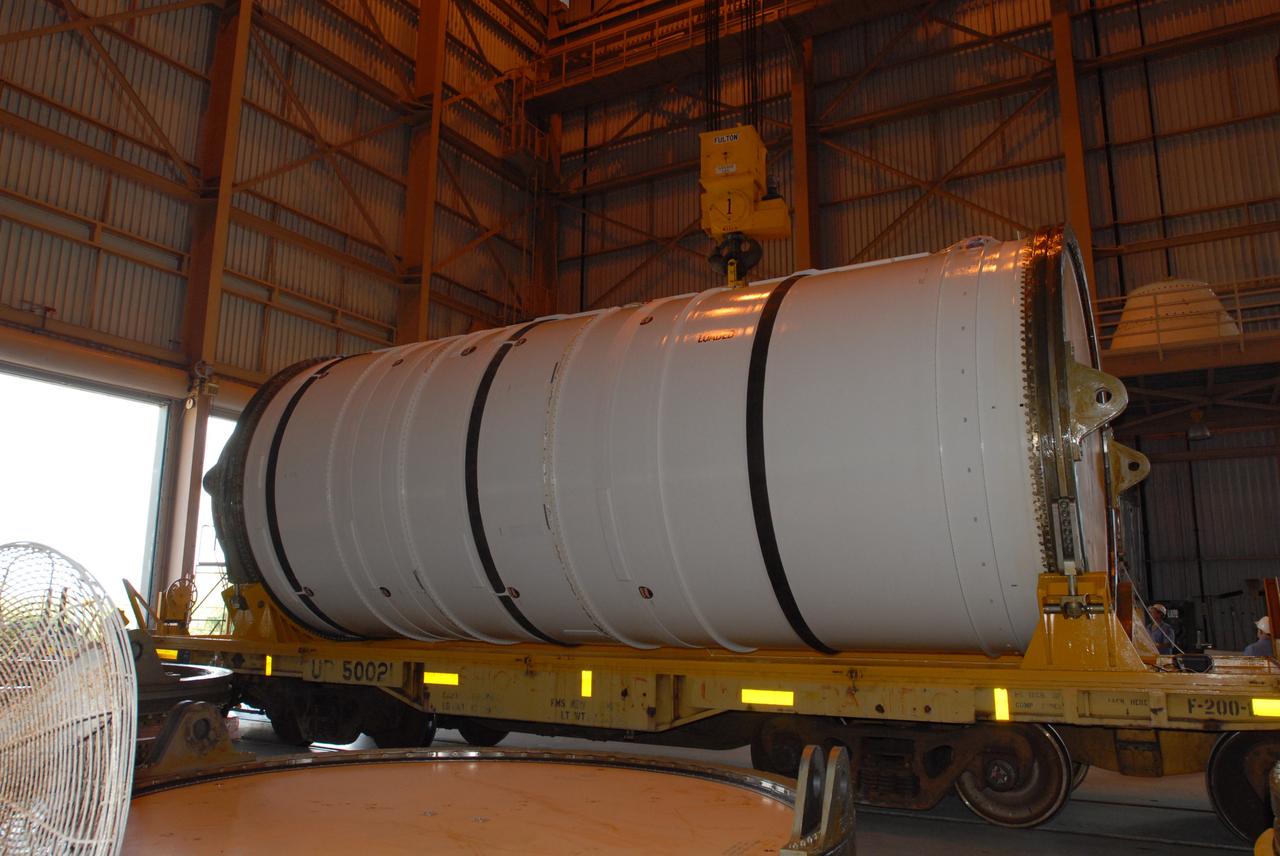
CAPE CANAVERAL, Fla. – In the Rotation, Processing and Surge Facility at NASA's Kennedy Space Center in Florida, the Ares I-X motor segment is revealed after removal of the rail car cover. It is one of four reusable motor segments and nozzle exit cone shipped by the Ares I first-stage prime contractor Alliant Techsystems Inc. for final processing and integration in the facility. The booster used for the Ares I-X launch is being modified by adding new forward structures and a fifth segment simulator. The motor is the final hardware needed for the rocket's upcoming flight test this summer. The stacking operations are scheduled to begin in the Vehicle Assembly Building in April. Photo credit: NASA/Jim Grossmann
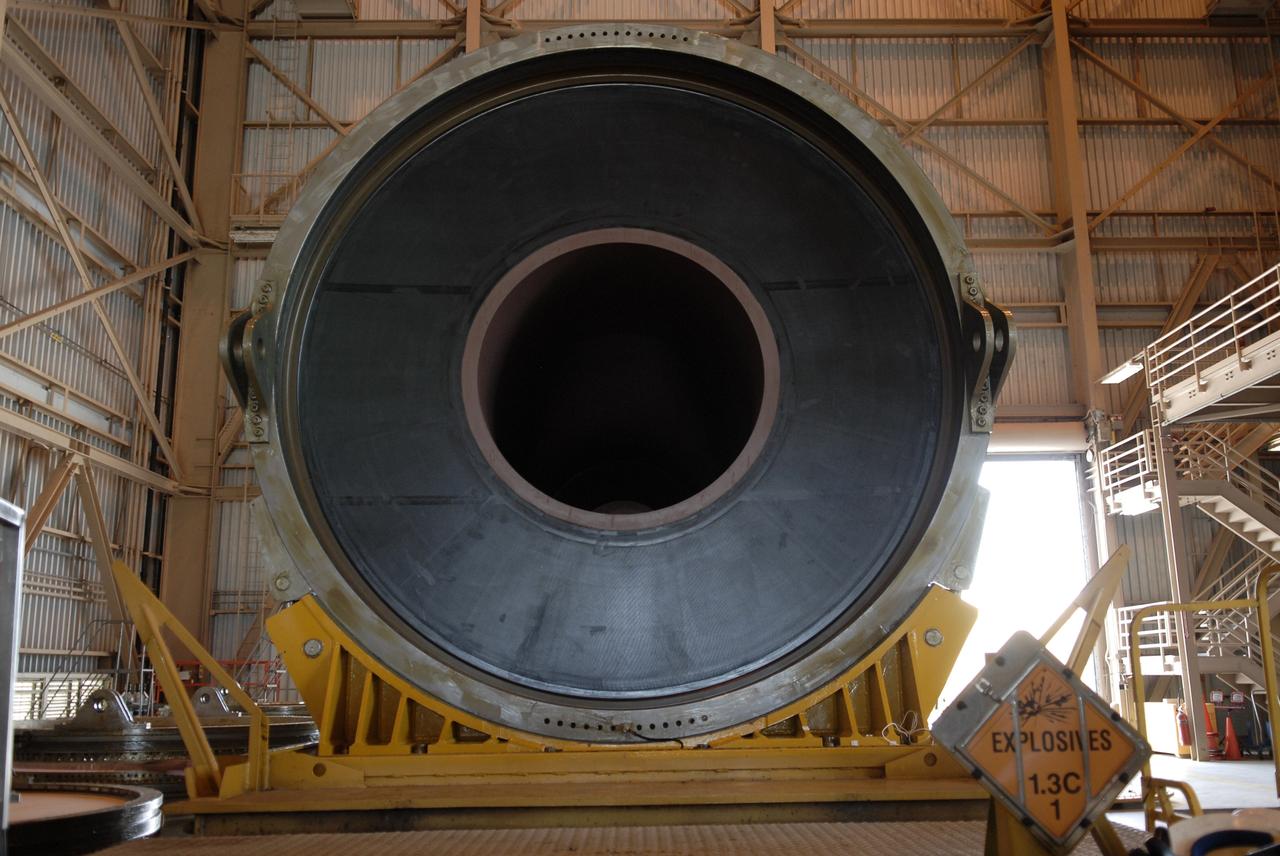
CAPE CANAVERAL, Fla. – In the Rotation, Processing and Surge Facility at NASA's Kennedy Space Center in Florida, the open end of the Ares I-X motor segment is seen without the end cover. It is one of four reusable motor segments and nozzle exit cone shipped by the Ares I first-stage prime contractor Alliant Techsystems Inc. for final processing and integration in the facility. The booster used for the Ares I-X launch is being modified by adding new forward structures and a fifth segment simulator. The motor is the final hardware needed for the rocket's upcoming flight test this summer. The stacking operations are scheduled to begin in the Vehicle Assembly Building in April. Photo credit: NASA/Jim Grossmann
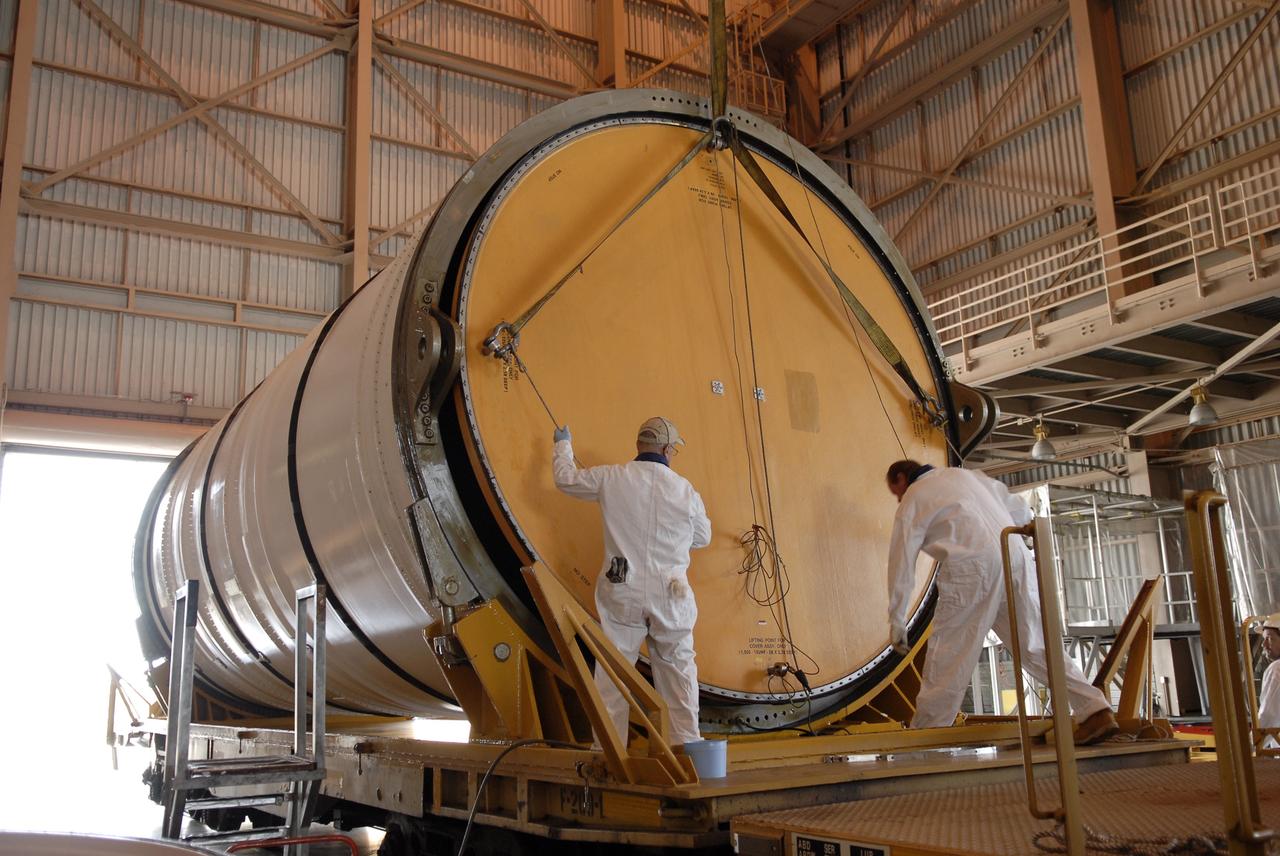
CAPE CANAVERAL, Fla. – In the Rotation, Processing and Surge Facility at NASA's Kennedy Space Center in Florida, technicians check the fit of the end cover on the Ares I-X motor segment. It is one of four reusable motor segments and nozzle exit cone shipped by the Ares I first-stage prime contractor Alliant Techsystems Inc. for final processing and integration in the facility. The booster used for the Ares I-X launch is being modified by adding new forward structures and a fifth segment simulator. The motor is the final hardware needed for the rocket's upcoming flight test this summer. The stacking operations are scheduled to begin in the Vehicle Assembly Building in April. Photo credit: NASA/Jim Grossmann
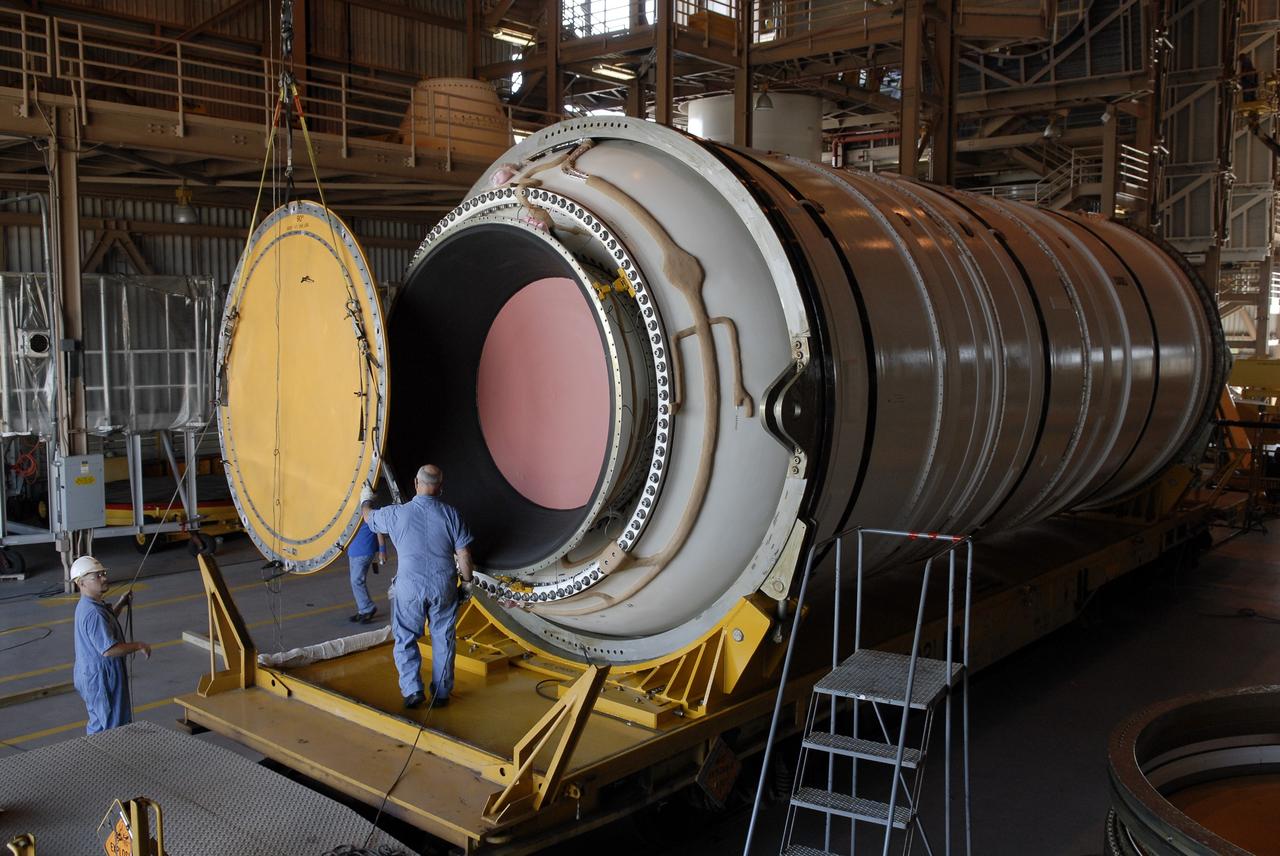
CAPE CANAVERAL, Fla. –In the Rotation, Processing and Surge Facility at NASA's Kennedy Space Center in Florida, the end of the Ares I-X motor segment is removed to allow propellant grain inspection of the interior. It is one of four reusable motor segments and nozzle exit cone shipped by the Ares I first-stage prime contractor Alliant Techsystems Inc. for final processing and integration in the facility. The booster used for the Ares I-X launch is being modified by adding new forward structures and a fifth segment simulator. The motor is the final hardware needed for the rocket's upcoming flight test this summer. The stacking operations are scheduled to begin in the Vehicle Assembly Building in April. Photo credit: NASA/Jim Grossmann
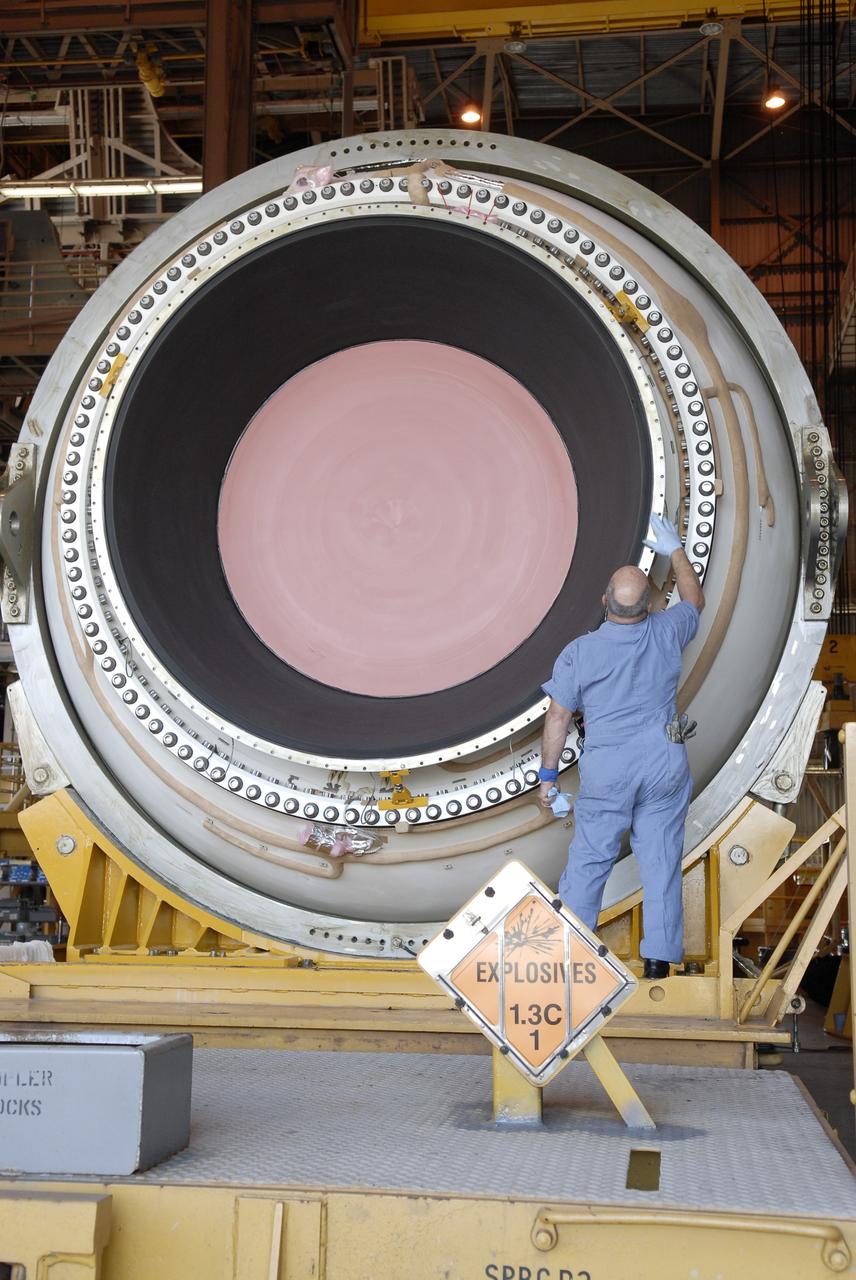
CAPE CANAVERAL, Fla. – In the Rotation, Processing and Surge Facility at NASA's Kennedy Space Center in Florida, a technician begins propellant grain inspection of the interior of the Ares I-X motor segment. It is one of four reusable motor segments and nozzle exit cone shipped by the Ares I first-stage prime contractor Alliant Techsystems Inc. for final processing and integration in the facility. The booster used for the Ares I-X launch is being modified by adding new forward structures and a fifth segment simulator. The motor is the final hardware needed for the rocket's upcoming flight test this summer. The stacking operations are scheduled to begin in the Vehicle Assembly Building in April. Photo credit: NASA/Jim Grossmann
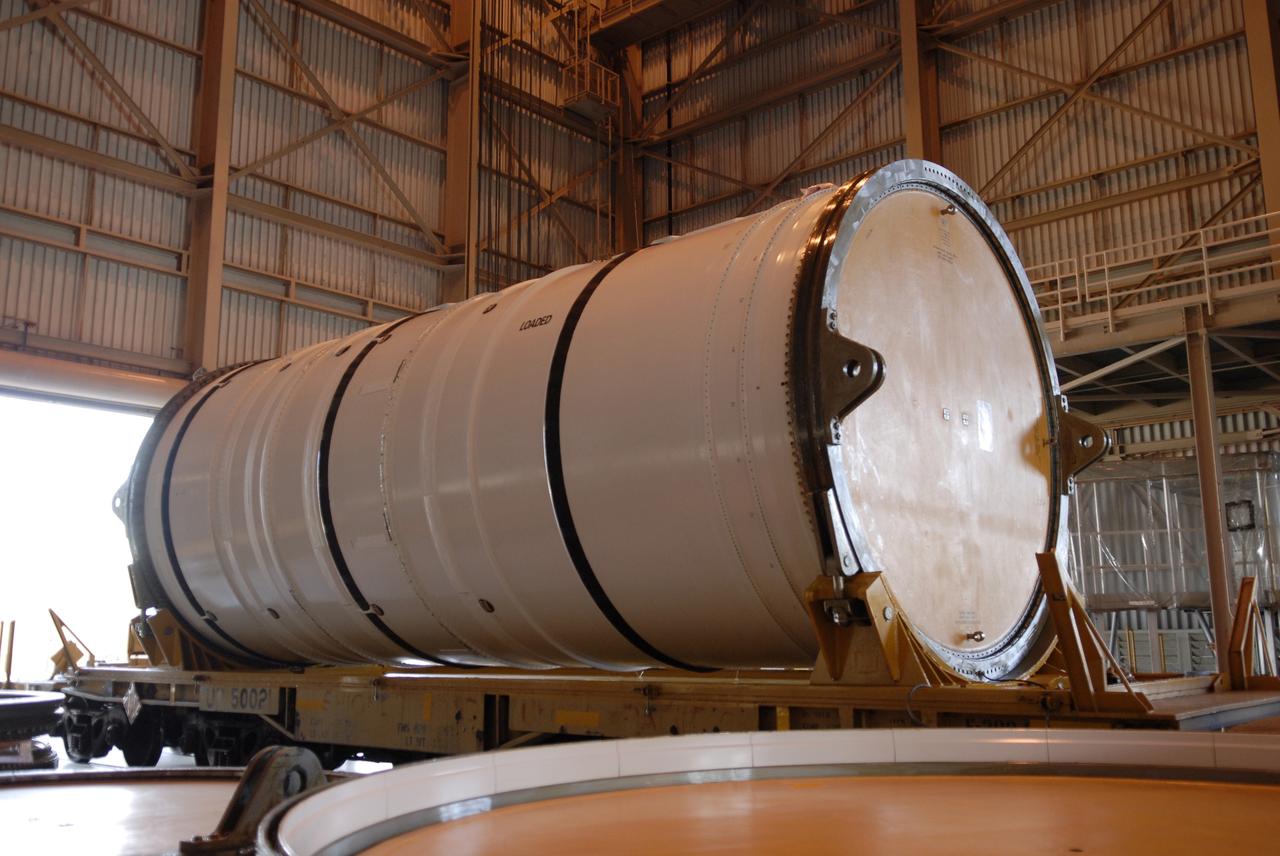
CAPE CANAVERAL, Fla. – In the Rotation, Processing and Surge Facility at NASA's Kennedy Space Center in Florida, the Ares I-X motor segment waits for inspection after removal of the shipping container. It is one of four reusable motor segments and nozzle exit cone shipped by the Ares I first-stage prime contractor Alliant Techsystems Inc. for final processing and integration in the facility. The booster used for the Ares I-X launch is being modified by adding new forward structures and a fifth segment simulator. The motor is the final hardware needed for the rocket's upcoming flight test this summer. The stacking operations are scheduled to begin in the Vehicle Assembly Building in April. Photo credit: NASA/Jim Grossmann

CAPE CANAVERAL, Fla. – In the Rotation, Processing and Surge Facility at NASA's Kennedy Space Center in Florida, a technician performs propellant grain inspection of the inside of the Ares I-X motor segment. It is one of four reusable motor segments and nozzle exit cone shipped by the Ares I first-stage prime contractor Alliant Techsystems Inc. for final processing and integration in the facility. The booster used for the Ares I-X launch is being modified by adding new forward structures and a fifth segment simulator. The motor is the final hardware needed for the rocket's upcoming flight test this summer. The stacking operations are scheduled to begin in the Vehicle Assembly Building in April. Photo credit: NASA/Jim Grossmann
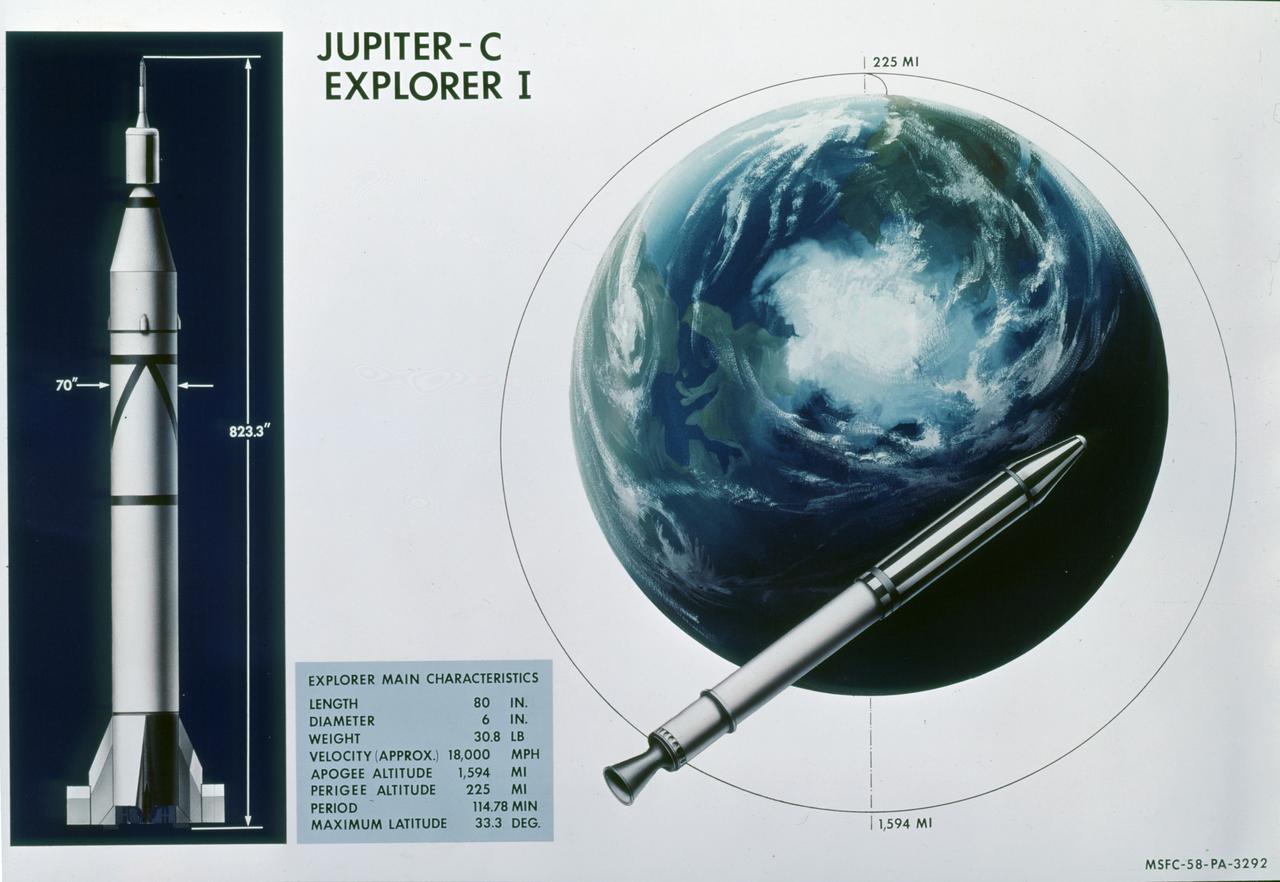
This illustration shows the main characteristics of the Jupiter C launch vehicle and its payload, the Explorer I satellite. The Jupiter C, America's first successful space vehicle, launched the free world's first scientific satellite, Explorer 1, on January 31, 1958. The four-stage Jupiter C measured almost 69 feet in length. The first stage was a modified liquid fueled Redstone missile. This main stage was about 57 feet in length and 70 inches in diameter. Fifteen scaled down SERGENT solid propellant motors were used in the upper stages. A "tub" configuration mounted on top of the modified Redstone held the second and third stages. The second stage consisted of 11 rockets placed in a ring formation within the tub. Inserted into the ring of second stage rockets was a cluster of 3 rockets making up the third stage. A fourth stage single rocket and the satellite were mounted atop the third stage. This "tub", all upper stages, and the satellite were set spirning prior to launching. The complete upper assembly measured 12.5 feet in length. The Explorer I carried the radiation detection experiment designed by Dr. James Van Allen and discovered the Van Allen Radiation Belt.
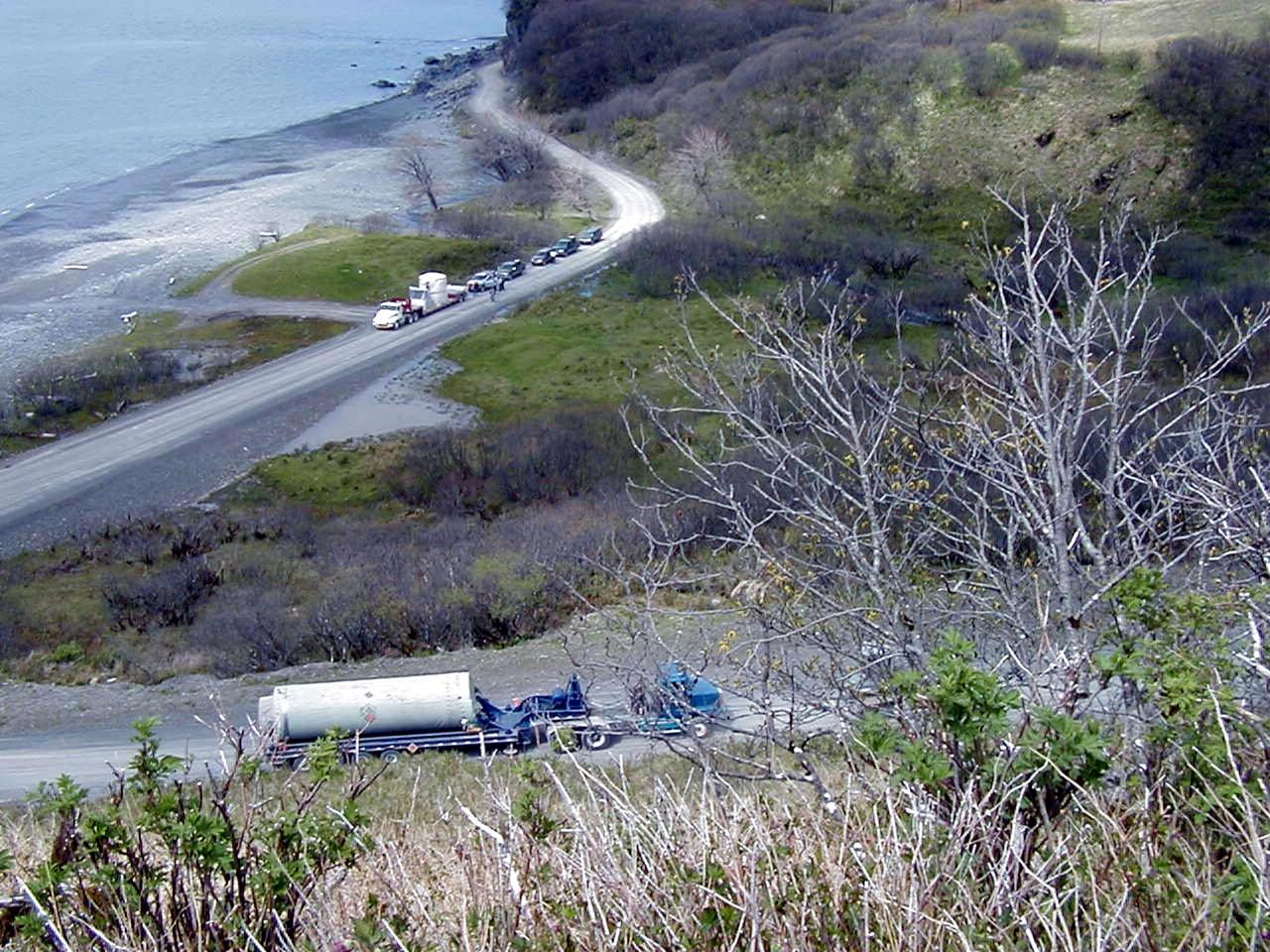
KODIAK ISLAND, Alaska -- The Orbis 21D Equipment Section Boost Motor, the second stage of the Athena 1 launch vehicle, waits for the first stage, Castor 120, to be towed up the steepest part of the road, as preparations to launch Kodiak Star proceed. The first orbital launch to take place from Alaska's Kodiak Launch Complex, Kodiak Star is scheduled to lift off on a Lockheed Martin Athena I launch vehicle on Sept. 17 during a two-hour window that extends from 5:00 to 7:00 p.m. ADT. The payloads aboard include the Starshine 3, sponsored by NASA, and the PICOSat, PCSat and Sapphire, sponsored by the Department of Defense (DoD) Space Test Program.
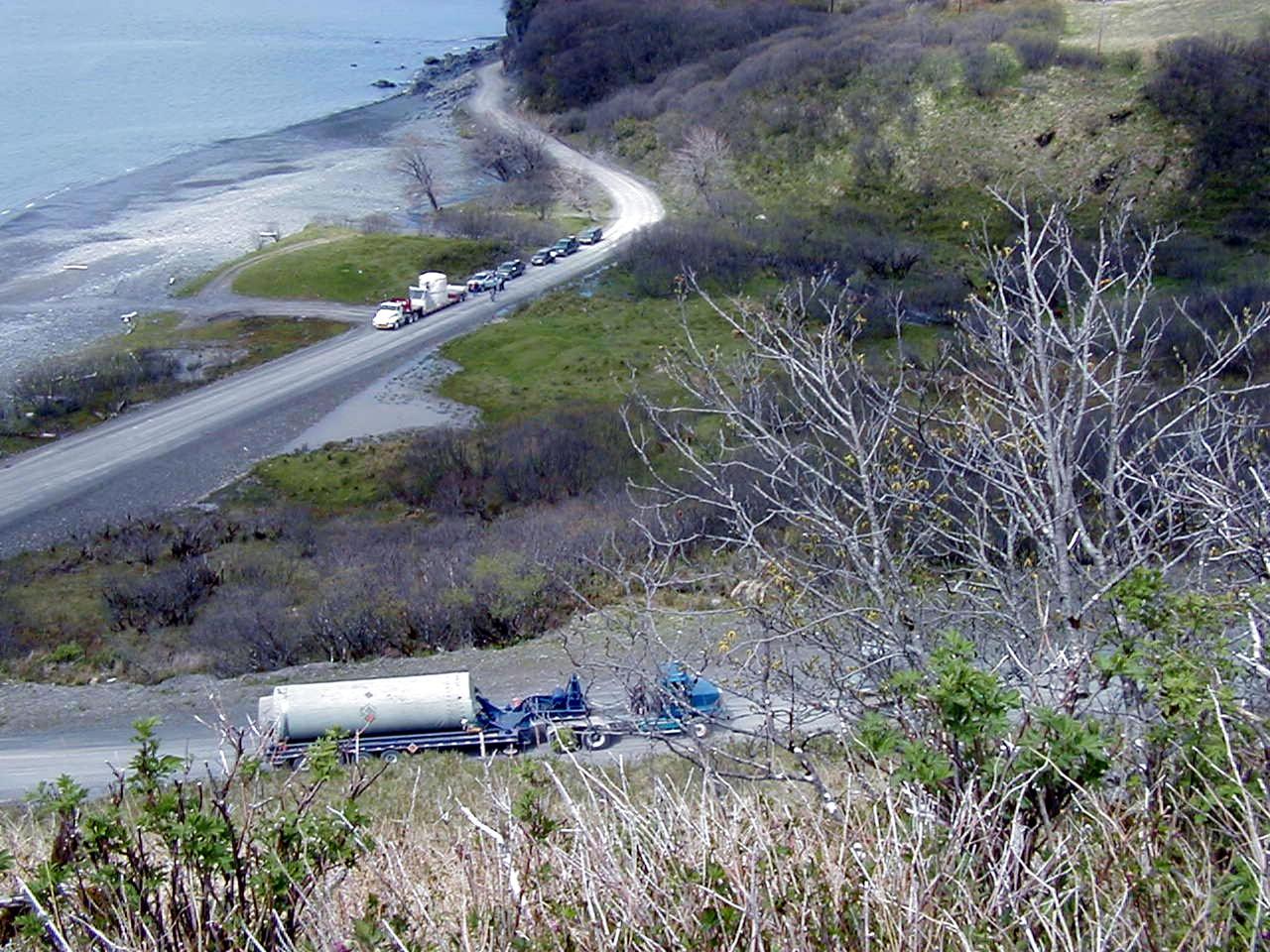
KODIAK ISLAND, Alaska -- The Orbis 21D Equipment Section Boost Motor, the second stage of the Athena 1 launch vehicle, waits for the first stage, Castor 120, to be towed up the steepest part of the road, as preparations to launch Kodiak Star proceed. The first orbital launch to take place from Alaska's Kodiak Launch Complex, Kodiak Star is scheduled to lift off on a Lockheed Martin Athena I launch vehicle on Sept. 17 during a two-hour window that extends from 5:00 to 7:00 p.m. ADT. The payloads aboard include the Starshine 3, sponsored by NASA, and the PICOSat, PCSat and Sapphire, sponsored by the Department of Defense (DoD) Space Test Program.
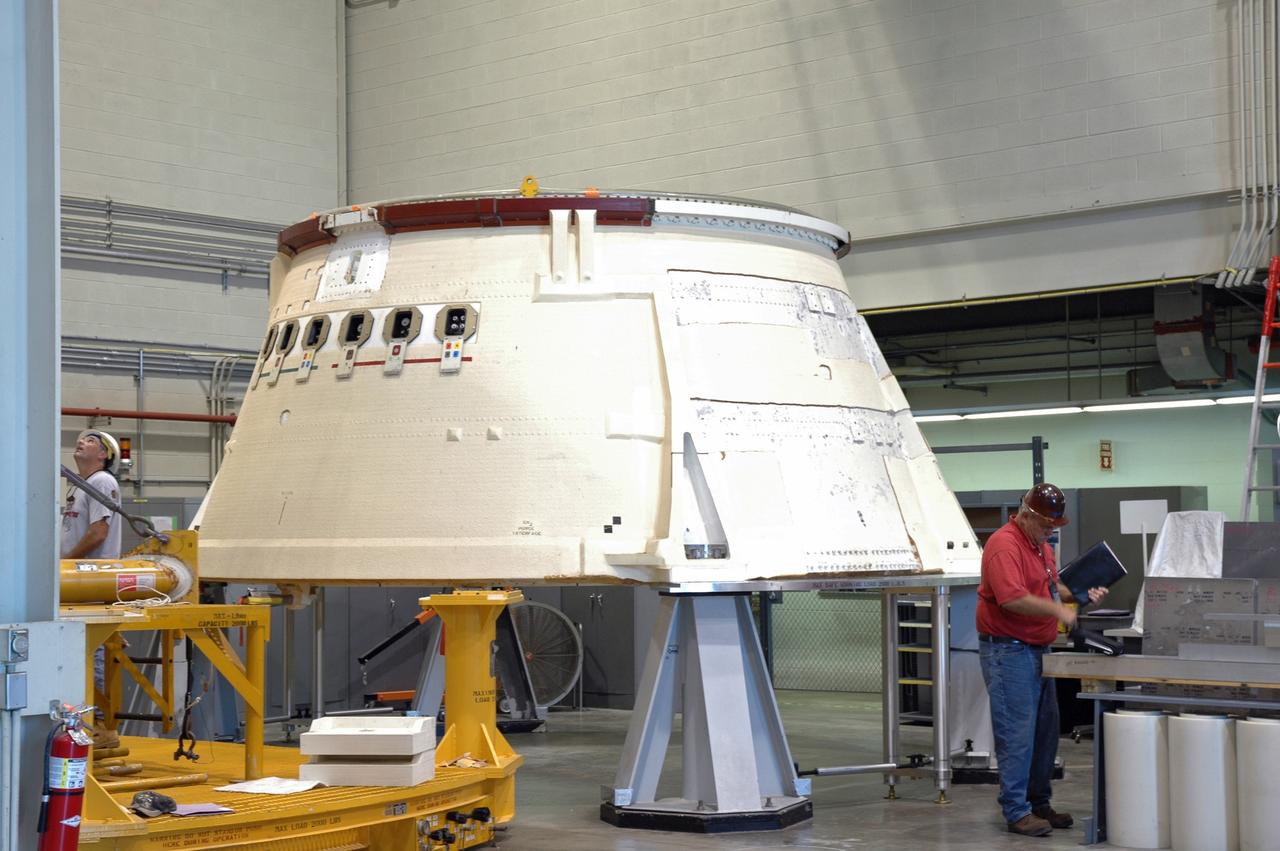
CAPE CANAVERAL, Fla. – In the Assembly and Refurbishment Facility at NASA's Kennedy Space Center, the aft skirt for the Ares 1-X rocket has been lowered onto another stand. The segment is being moved onto a machine shop work stand for drilling modifications. The modifications will prepare it for the installation of the auxiliary power unit controller, the reduced-rate gyro unit, the booster decelerator motors and the booster tumble motors. Ares I is an in-line, two-stage rocket that will transport the Orion crew exploration vehicle to low-Earth orbit. Ares I-X is a test rocket. The Ares I first stage will be a five-segment solid rocket booster based on the four-segment design used for the shuttle. Ares I’s fifth booster segment allows the launch vehicle to lift more weight and reach a higher altitude before the first stage separates from the upper stage, which ignites in midflight to propel the Orion spacecraft to Earth orbit. Photo credit: NASA/Jim Grossmann
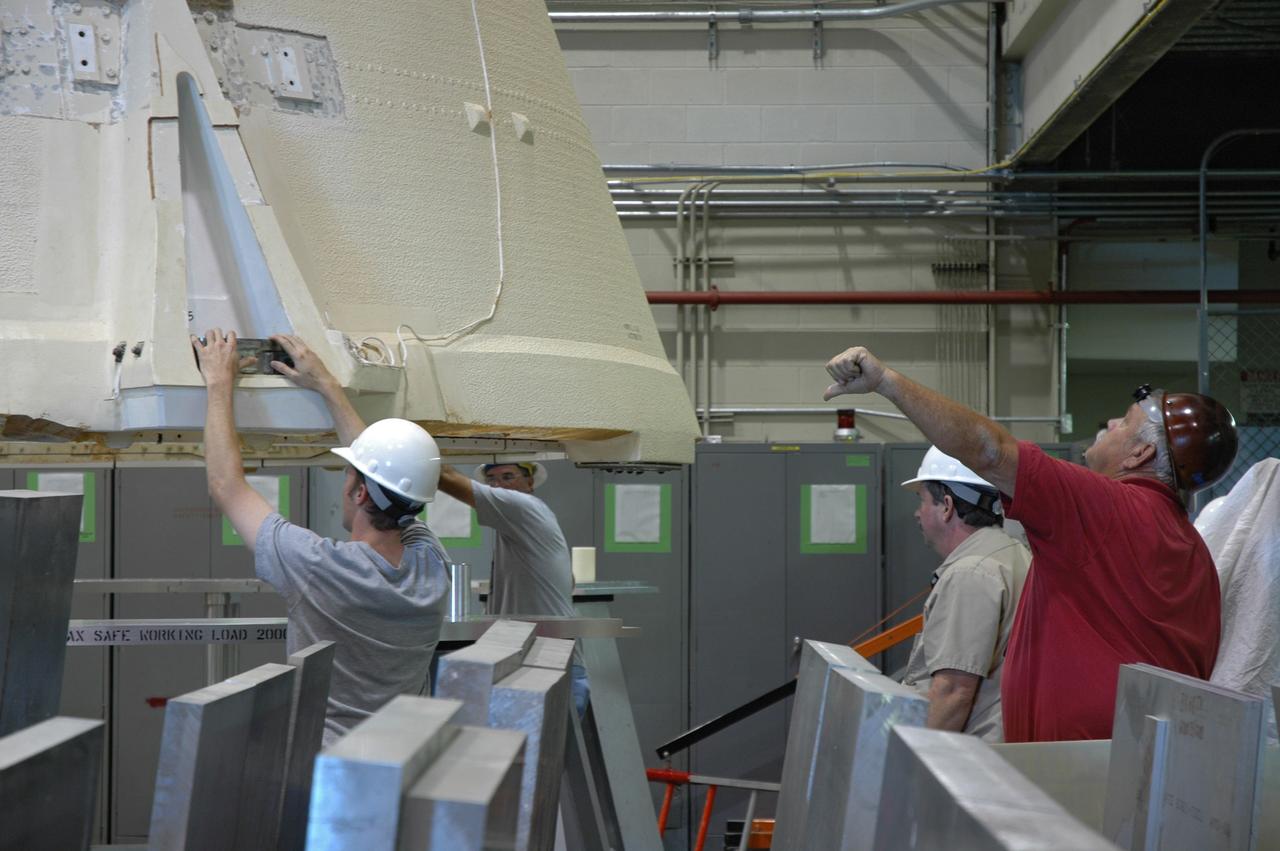
CAPE CANAVERAL, Fla. – In the Assembly and Refurbishment Facility at NASA's Kennedy Space Center, workers help guide the aft skirt for the Ares 1-X rocket as it is moved. The segment is being lifted into a machine shop work stand for drilling modifications. The modifications will prepare it for the installation of the auxiliary power unit controller, the reduced-rate gyro unit, the booster decelerator motors and the booster tumble motors. Ares I is an in-line, two-stage rocket that will transport the Orion crew exploration vehicle to low-Earth orbit. Ares I-X is a test rocket. The Ares I first stage will be a five-segment solid rocket booster based on the four-segment design used for the shuttle. Ares I’s fifth booster segment allows the launch vehicle to lift more weight and reach a higher altitude before the first stage separates from the upper stage, which ignites in midflight to propel the Orion spacecraft to Earth orbit. Photo credit: NASA/Jim Grossmann
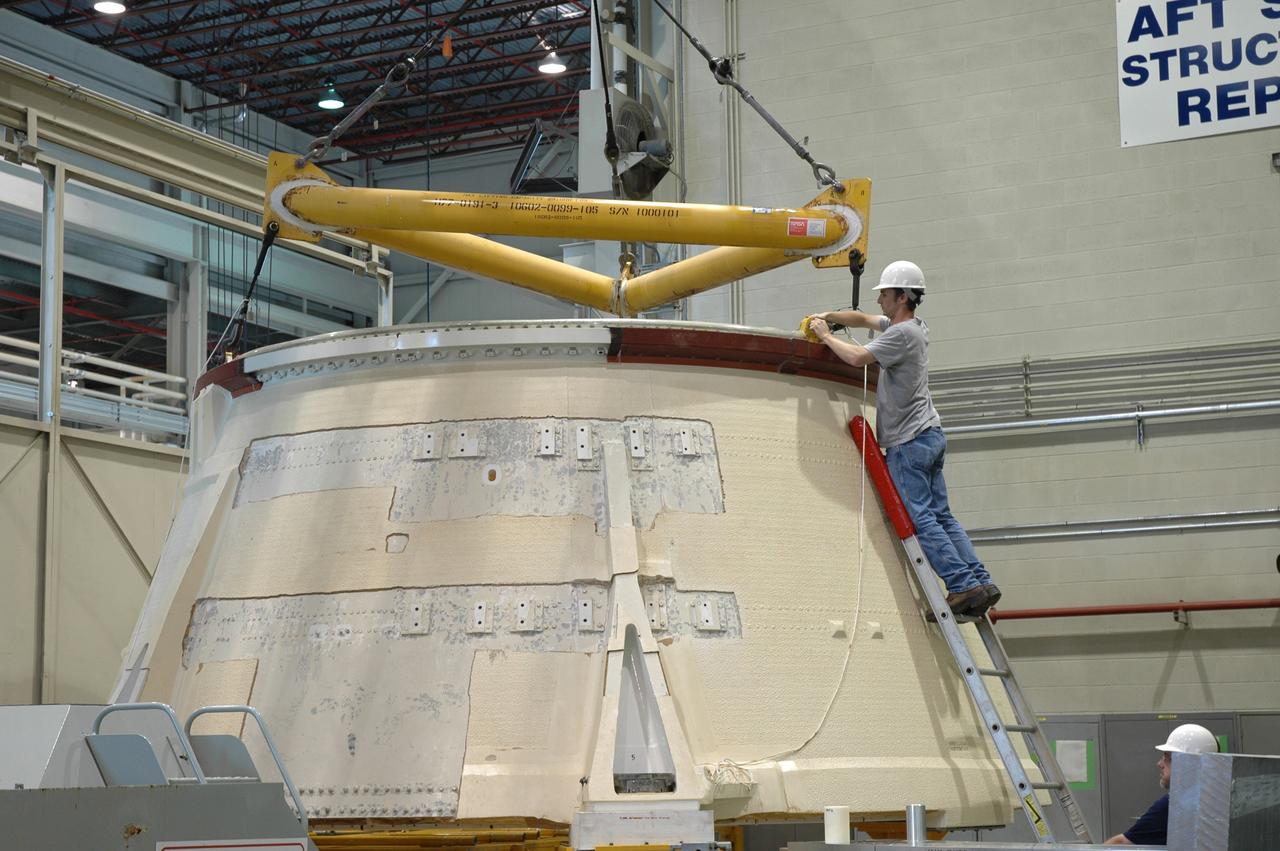
CAPE CANAVERAL, Fla. – In the Assembly and Refurbishment Facility at NASA's Kennedy Space Center, a worker attaches an overhead crane to the aft skirt for the Ares 1-X rocket. The segment is being lifted into a machine shop work stand for drilling modifications. The modifications will prepare it for the installation of the auxiliary power unit controller, the reduced-rate gyro unit, the booster decelerator motors and the booster tumble motors. Ares I is an in-line, two-stage rocket that will transport the Orion crew exploration vehicle to low-Earth orbit. Ares I-X is a test rocket. The Ares I first stage will be a five-segment solid rocket booster based on the four-segment design used for the shuttle. Ares I’s fifth booster segment allows the launch vehicle to lift more weight and reach a higher altitude before the first stage separates from the upper stage, which ignites in midflight to propel the Orion spacecraft to Earth orbit. Photo credit: NASA/Jim Grossmann
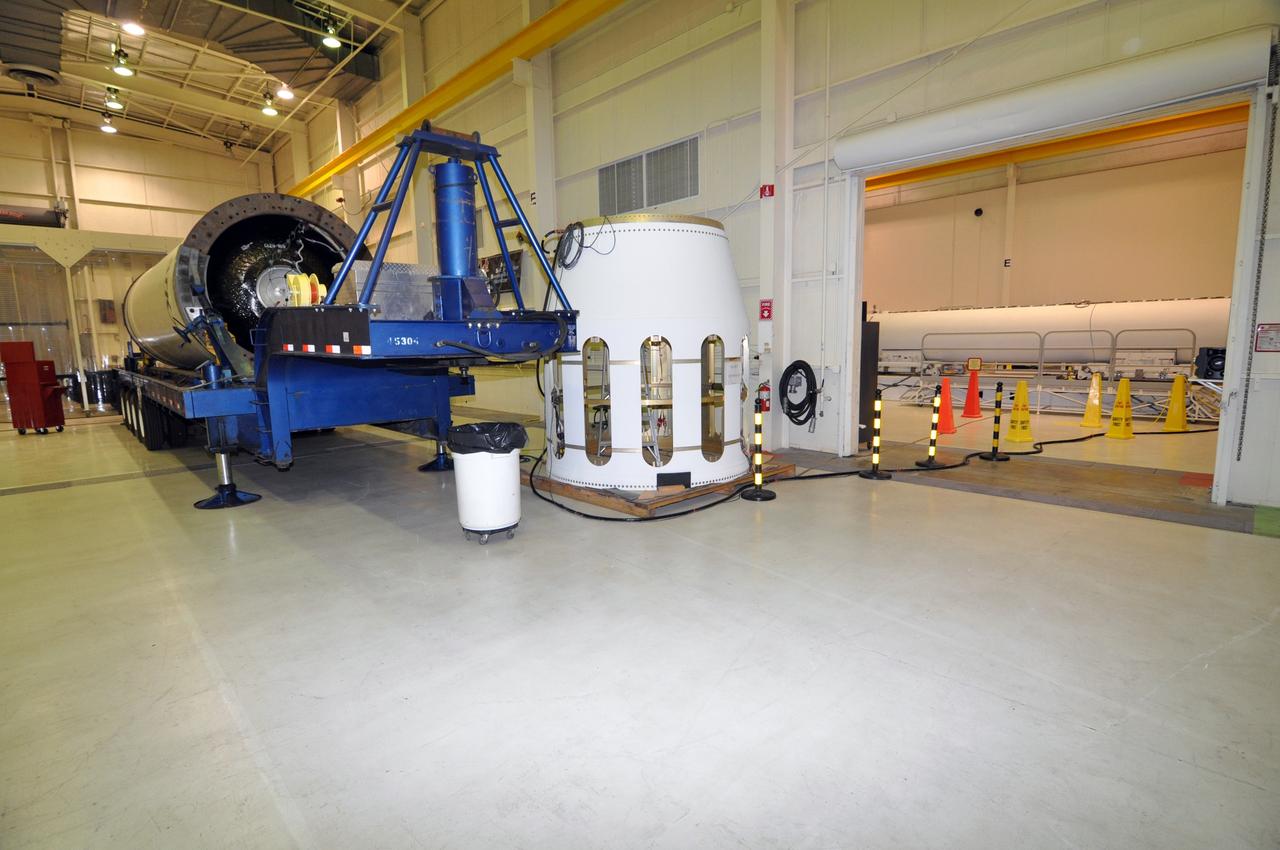
VANDENBERG AIR FORCE BASE, Calif. – The stage 0 motor, left, and the interstage associated with Stage 1 of the Taurus XL rocket are ready for more processing in the west high bay of Building 1555 at Vandenberg Air Force Base in California. In the east high bay, right, are the first, second and third stages. The rocket and NASA's Glory satellite are being prepared for a launch to low Earth orbit from Vandenberg's Space Launch Complex 576-E. Once Glory reaches orbit, it will collect data on the properties of aerosols and black carbon. It also will help scientists understand how the sun's irradiance affects Earth's climate. Photo credit: NASA/Randy Beaudoin, VAFB
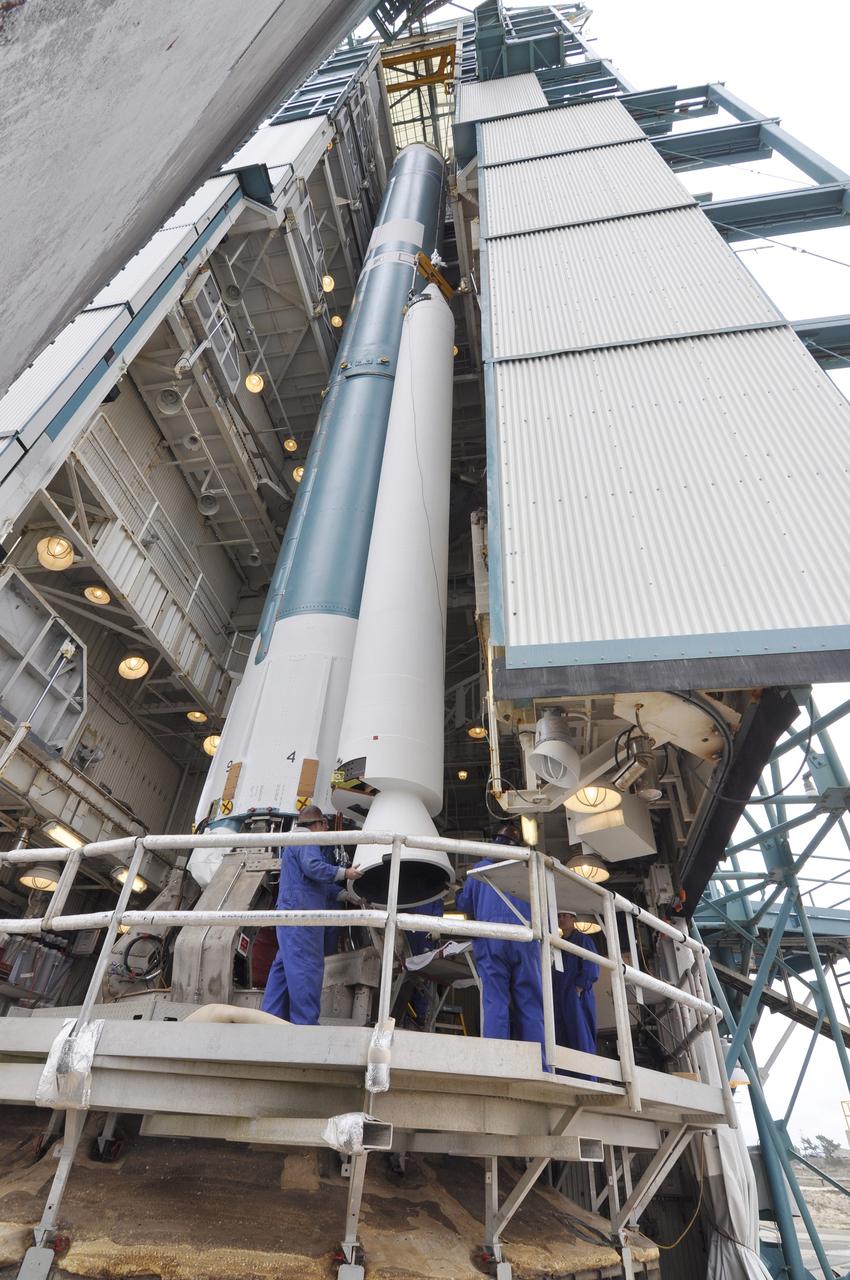
VANDENBERG AIR FORCE BASE, Calif. – Solid rocket motor installation progresses on the Delta II rocket for NASA's Soil Moisture Active Passive mission, or SMAP, with the attachment of the second motor to the rocket's first stage in the mobile service tower at Space Launch Complex 2 on Vandenberg Air Force Base in California. SMAP will be launched on a Delta II 7320 configuration vehicle featuring a United Launch Alliance first stage booster powered by an Aerojet Rocketdyne RS-27A main engine and three Alliant Techsystems, or ATK, strap-on solid rocket motors. Once on station in Earth orbit, SMAP will provide global measurements of soil moisture and its freeze/thaw state. These measurements will be used to enhance understanding of processes that link the water, energy and carbon cycles, and to extend the capabilities of weather and climate prediction models. SMAP data also will be used to quantify net carbon flux in boreal landscapes and to develop improved flood prediction and drought monitoring capabilities. Launch is scheduled for no earlier than November 2014. To learn more about SMAP, visit http://smap.jpl.nasa.gov. Photo credit: NASA/Randy Beaudoin
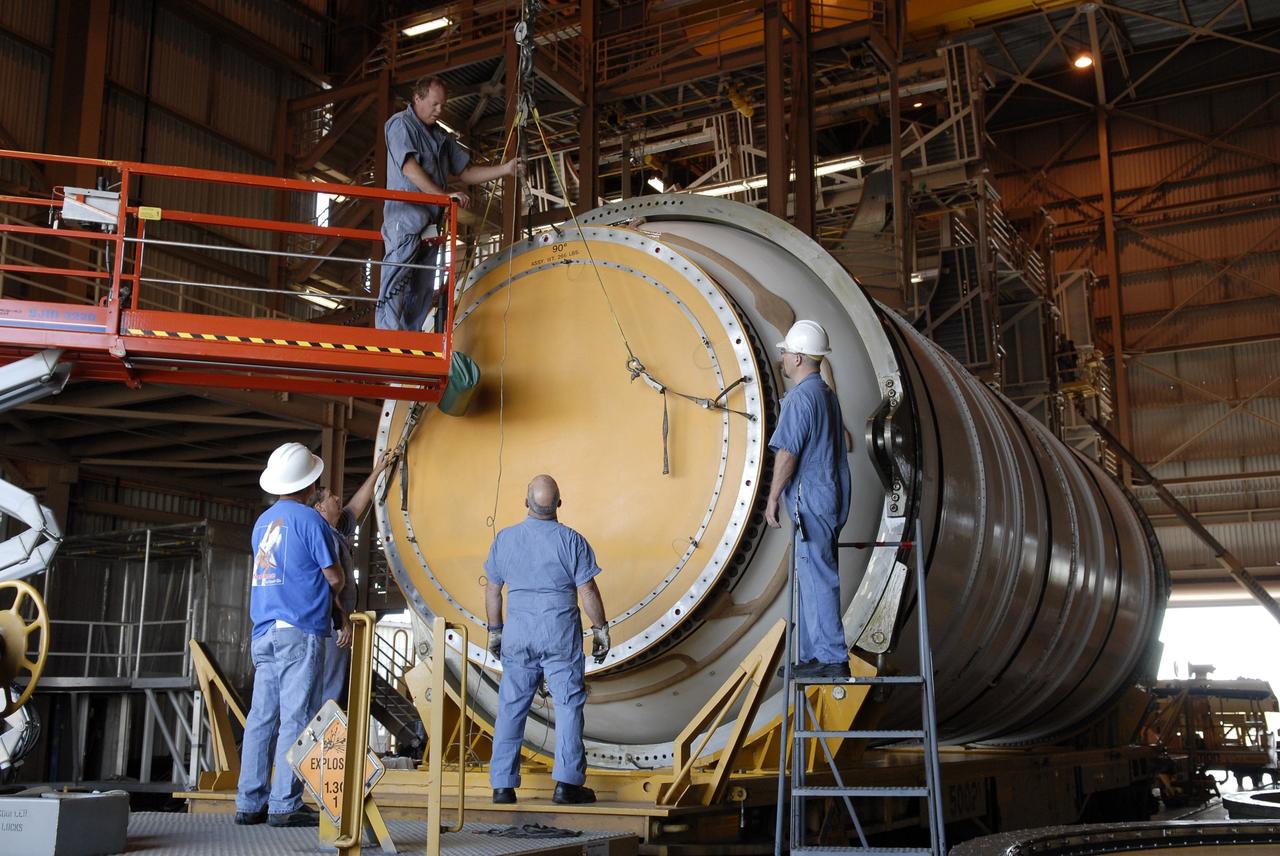
CAPE CANAVERAL, Fla. – In the Rotation, Processing and Surge Facility at NASA's Kennedy Space Center in Florida, technicians prepare to remove the cover from the end of the Ares I-X motor segment for propellant grain inspection of the interior. It is one of four reusable motor segments and nozzle exit cone shipped by the Ares I first-stage prime contractor Alliant Techsystems Inc. for final processing and integration in the facility. The booster used for the Ares I-X launch is being modified by adding new forward structures and a fifth segment simulator. The motor is the final hardware needed for the rocket's upcoming flight test this summer. The stacking operations are scheduled to begin in the Vehicle Assembly Building in April. Photo credit: NASA/Jim Grossmann
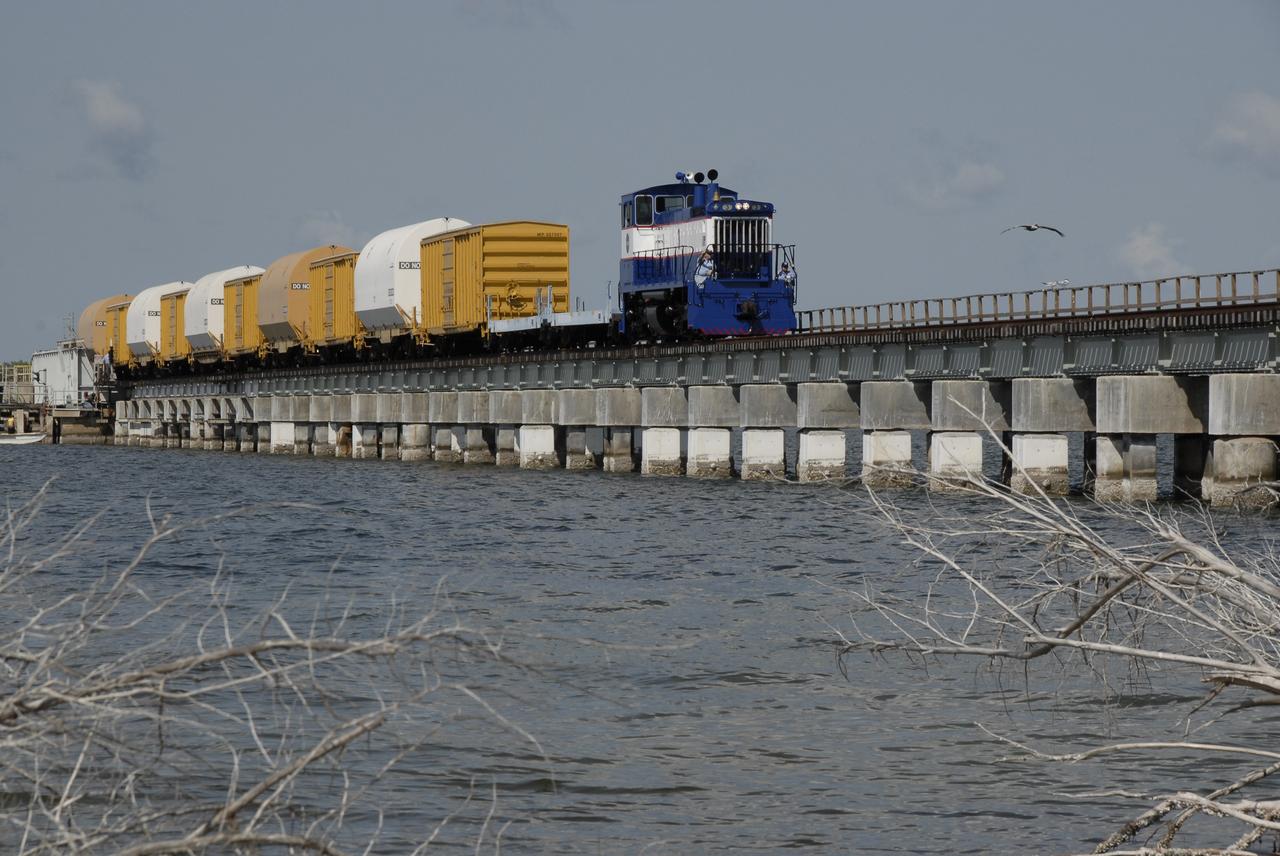
CAPE CANAVERAL, Fla. – The NASA Railroad hauls cars carrying the Ares I-X motor segments and nozzle exit cone over a river bridge to NASA's Kennedy Space Center in Florida. The four reusable motor segments and the nozzle exit cone, manufactured by the Ares I first-stage prime contractor Alliant Techsystems Inc., or ATK, departed Utah March 12 on the seven-day, cross-country trip to Florida. The segments will be delivered to Kennedy's Rotation, Processing and Surge Facility for final processing and integration. The booster used for the Ares I-X launch is being modified by adding new forward structures and a fifth segment simulator. The motor is the final hardware needed for the rocket's upcoming test flight this summer. The stacking operations are scheduled to begin in the Vehicle Assembly Building in April. Photo credit: NASA/Kim Shiflett
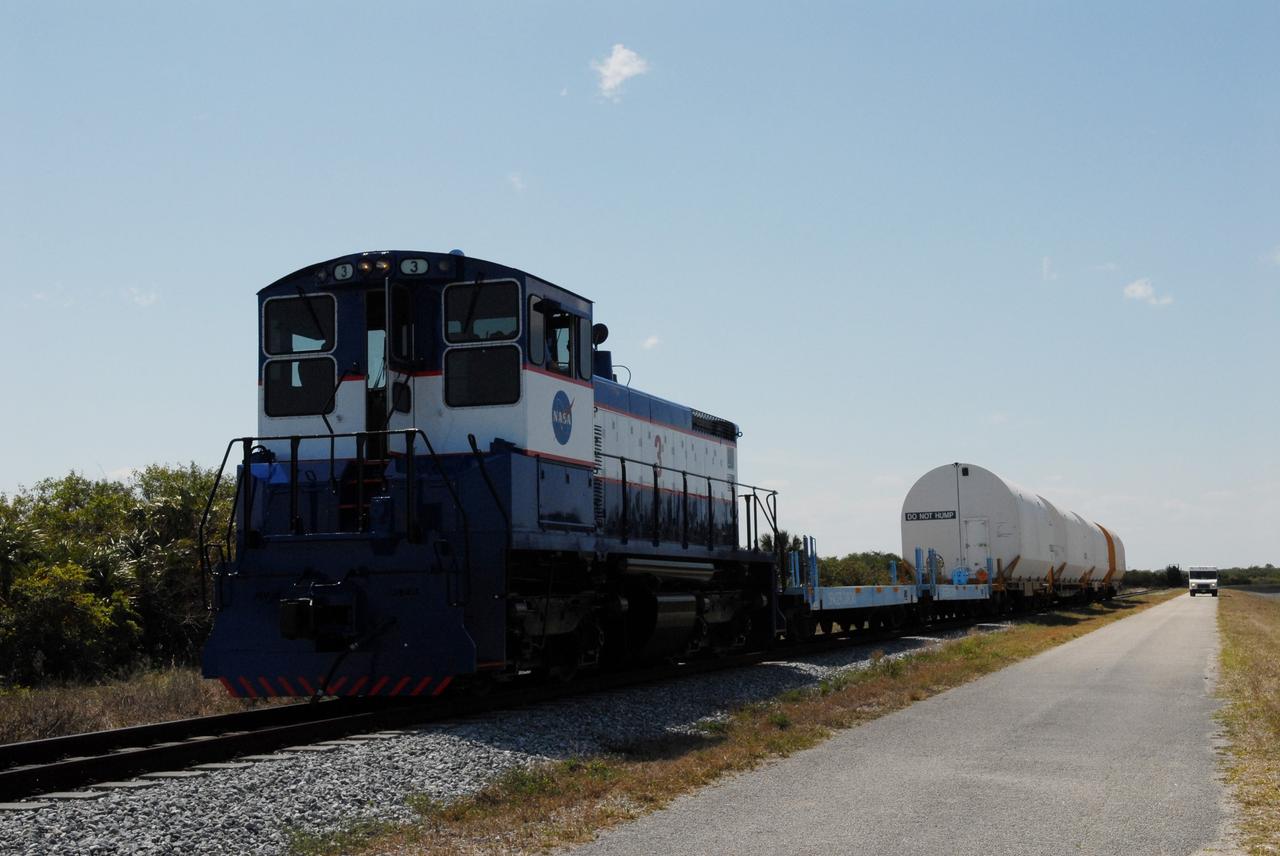
CAPE CANAVERAL, Fla. – After switching out the box cars on the train, the NASA Railroad hauls the Ares I-X motor segments and nozzle exit cone to NASA's Kennedy Space Center in Florida. The four reusable motor segments and the nozzle exit cone, manufactured by the Ares I first-stage prime contractor Alliant Techsystems Inc., or ATK, departed Utah March 12 on the seven-day, cross-country trip to Florida. The segments will be delivered to Kennedy's Rotation, Processing and Surge Facility for final processing and integration. The booster used for the Ares I-X launch is being modified by adding new forward structures and a fifth segment simulator. The motor is the final hardware needed for the rocket's upcoming test flight this summer. The stacking operations are scheduled to begin in the Vehicle Assembly Building in April. Photo credit: NASA/Jack Pfaller
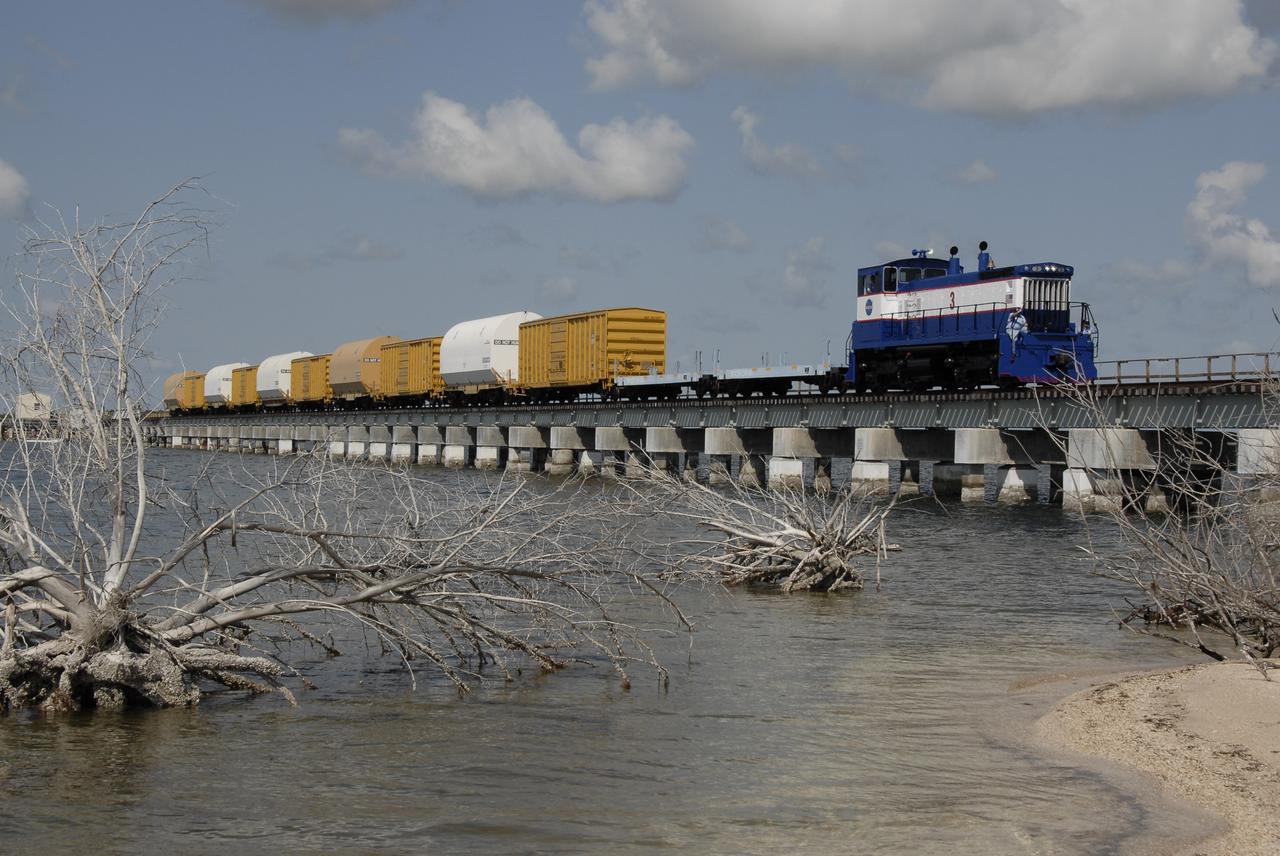
CAPE CANAVERAL, Fla. – The NASA Railroad hauls cars carrying the Ares I-X motor segments and nozzle exit cone over a river bridge to NASA's Kennedy Space Center in Florida. The four reusable motor segments and the nozzle exit cone, manufactured by the Ares I first-stage prime contractor Alliant Techsystems Inc., or ATK, departed Utah March 12 on the seven-day, cross-country trip to Florida. The segments will be delivered to Kennedy's Rotation, Processing and Surge Facility for final processing and integration. The booster used for the Ares I-X launch is being modified by adding new forward structures and a fifth segment simulator. The motor is the final hardware needed for the rocket's upcoming test flight this summer. The stacking operations are scheduled to begin in the Vehicle Assembly Building in April. Photo credit: NASA/Kim Shiflett
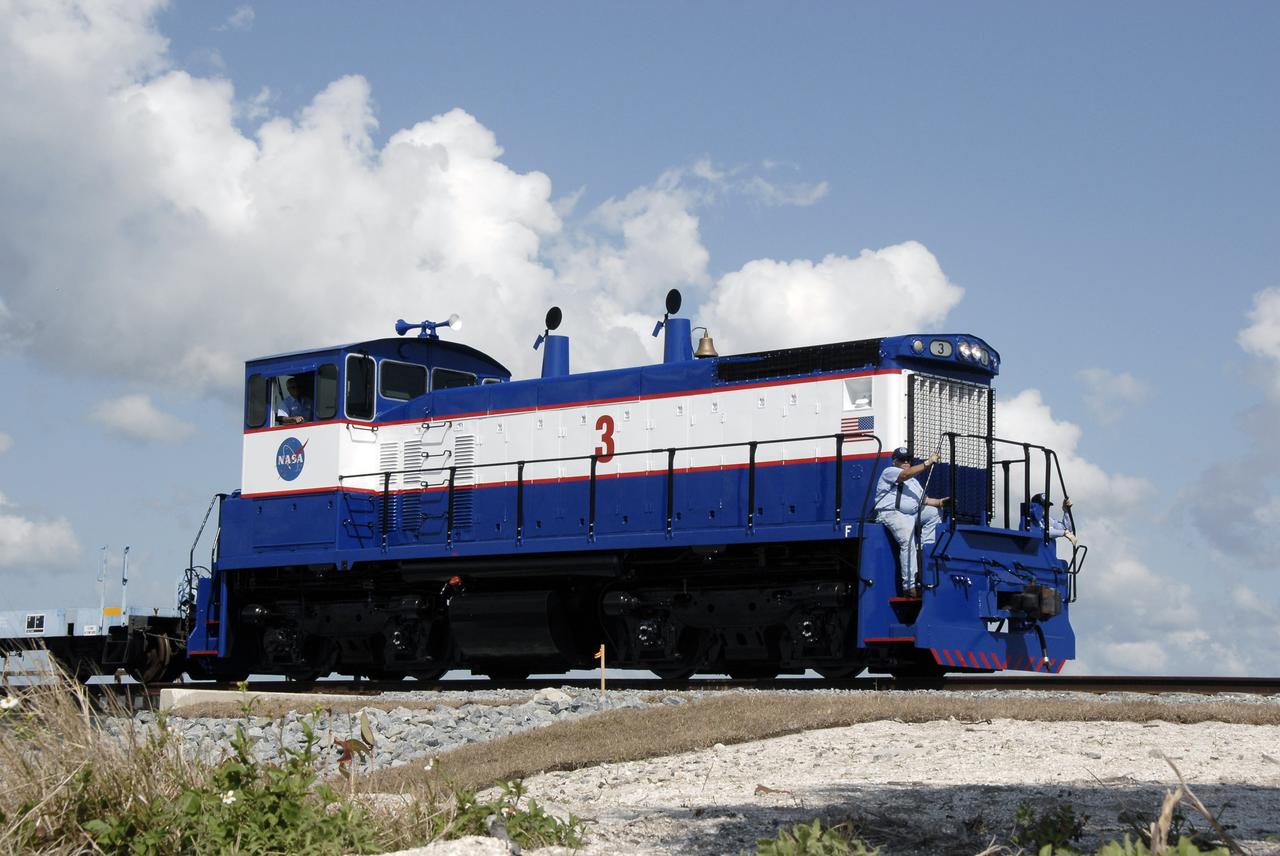
CAPE CANAVERAL, Fla. – A close-up of the NASA Railroad locomotive #3, and the EMDSW-1500 switcher, that is hauling the Ares I-X motor segments and nozzle exit cone to NASA's Kennedy Space Center in Florida. The four reusable motor segments and the nozzle exit cone, manufactured by the Ares I first-stage prime contractor Alliant Techsystems Inc., or ATK, departed Utah March 12 on the seven-day, cross-country trip to Florida. The segments will be delivered to Kennedy's Rotation, Processing and Surge Facility for final processing and integration. The booster used for the Ares I-X launch is being modified by adding new forward structures and a fifth segment simulator. The motor is the final hardware needed for the rocket's upcoming test flight this summer. The stacking operations are scheduled to begin in the Vehicle Assembly Building in April. Photo credit: NASA/Kim Shiflett
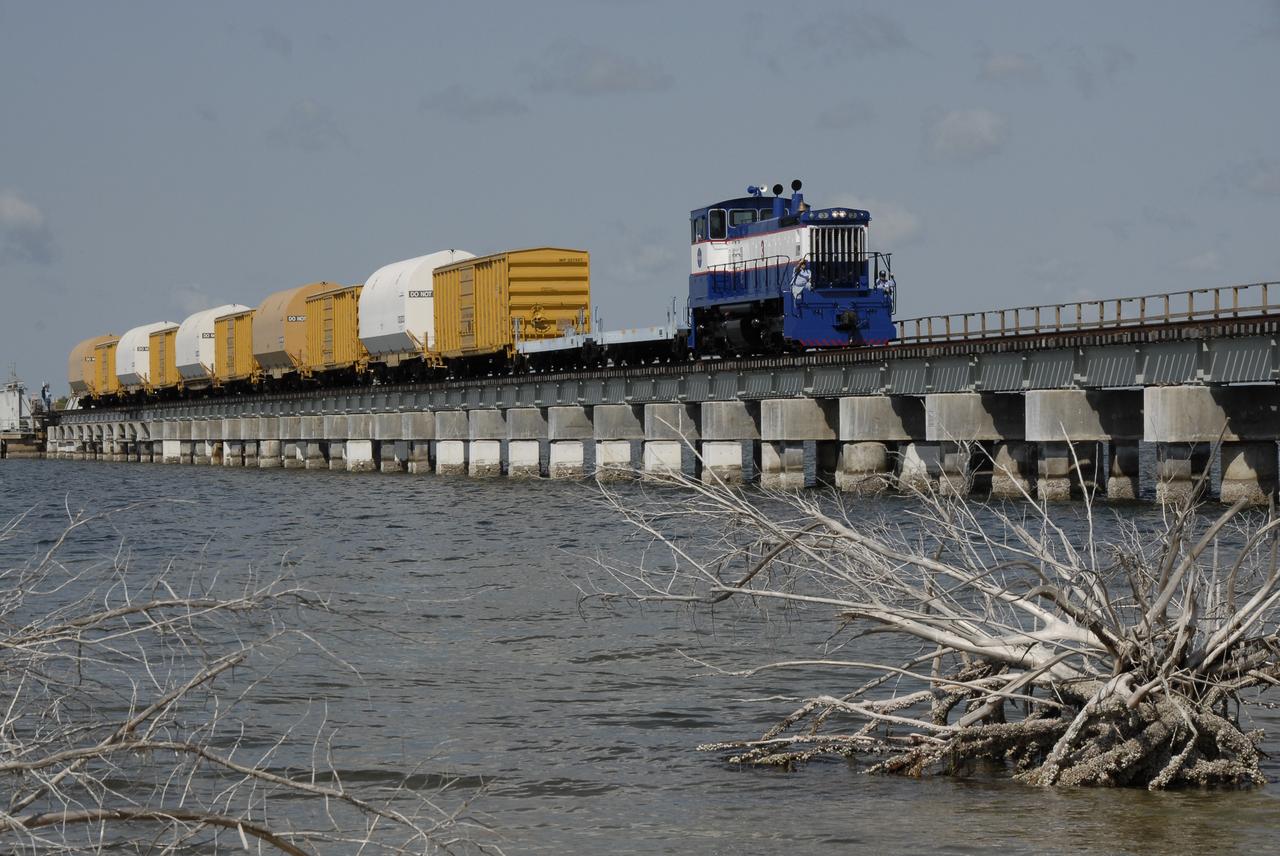
CAPE CANAVERAL, Fla. – The NASA Railroad hauls cars carrying the Ares I-X motor segments and nozzle exit cone over a river bridge to NASA's Kennedy Space Center in Florida. The four reusable motor segments and the nozzle exit cone, manufactured by the Ares I first-stage prime contractor Alliant Techsystems Inc., or ATK, departed Utah March 12 on the seven-day, cross-country trip to Florida. The segments will be delivered to Kennedy's Rotation, Processing and Surge Facility for final processing and integration. The booster used for the Ares I-X launch is being modified by adding new forward structures and a fifth segment simulator. The motor is the final hardware needed for the rocket's upcoming test flight this summer. The stacking operations are scheduled to begin in the Vehicle Assembly Building in April. Photo credit: NASA/Kim Shiflett
CAPE CANAVERAL, Fla. --- The first solid rocket motor arrives at Pad 17-B on Cape Canaveral Air Force Station for mating with the Delta II rocket to launch NASA's Gamma-ray Large Area Space Telescope, or GLAST, spacecraft. A series of nine strap-on solid rocket motors will help power the first stage. The GLAST is a powerful space observatory that will explore the Universe's ultimate frontier, where nature harnesses forces and energies far beyond anything possible on Earth; probe some of science's deepest questions, such as what our Universe is made of, and search for new laws of physics; explain how black holes accelerate jets of material to nearly light speed; and help crack the mystery of stupendously powerful explosions known as gamma-ray bursts. Launch is currently planned for May 16 from Pad 17-B. Photo credit: NASA/Dimitri Gerondidakis
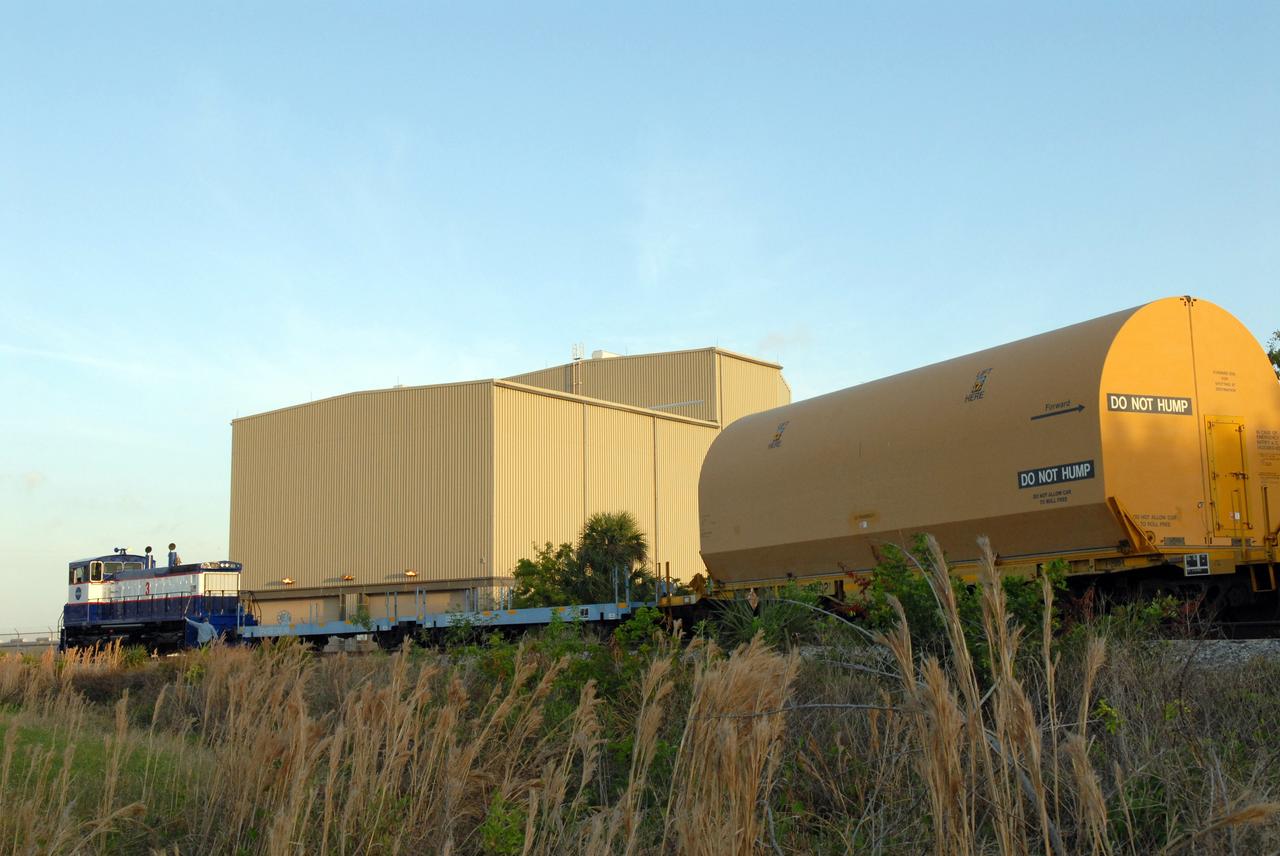
CAPE CANAVERAL, Fla. – The NASA Railroad hauls one of the cars with the first Ares I-X segment to the Rotation, Processing and Surge Facility at NASA's Kennedy Space Center in Florida. Four reusable motor segments and the nozzle exit cone, manufactured by the Ares I first-stage prime contractor Alliant Techsystems Inc., departed Utah March 12 on the seven-day, cross-country trip to Florida. The segments are being delivered to Kennedy's Rotation, Processing and Surge Facility for final processing and integration. The booster used for the Ares I-X launch is being modified by adding new forward structures and a fifth segment simulator. The motor is the final hardware needed for the rocket's upcoming test flight this summer. The stacking operations are scheduled to begin in the Vehicle Assembly Building in April. Photo credit: NASA/Jack Pfaller
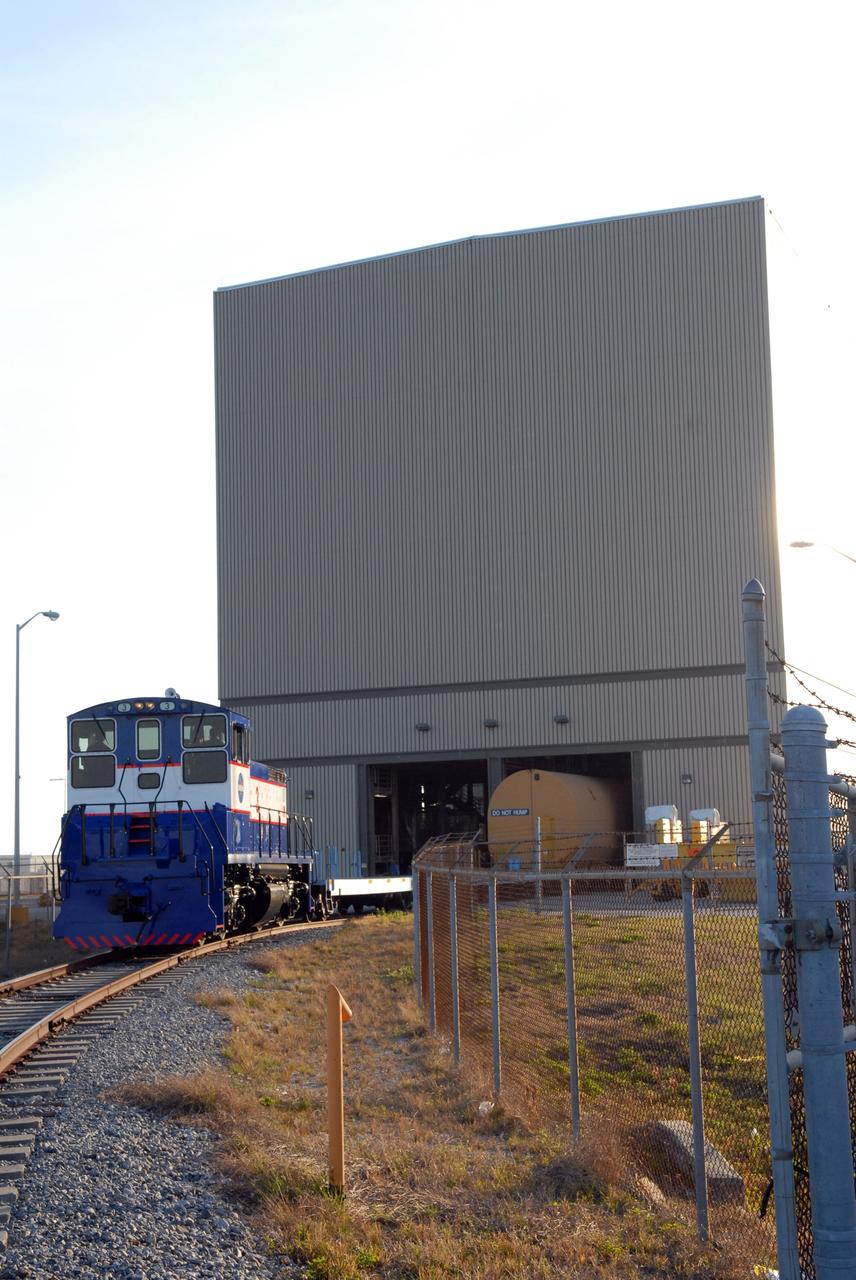
CAPE CANAVERAL, Fla. – The NASA Railroad delivers the first Ares I-X segment to the Rotation, Processing and Surge Facility at NASA's Kennedy Space Center in Florida. Four reusable motor segments and the nozzle exit cone, manufactured by the Ares I first-stage prime contractor Alliant Techsystems Inc., departed Utah March 12 on the seven-day, cross-country trip to Florida. The segments are being delivered to Kennedy's Rotation, Processing and Surge Facility for final processing and integration. The booster used for the Ares I-X launch is being modified by adding new forward structures and a fifth segment simulator. The motor is the final hardware needed for the rocket's upcoming test flight this summer. The stacking operations are scheduled to begin in the Vehicle Assembly Building in April. Photo credit: NASA/Jack Pfaller
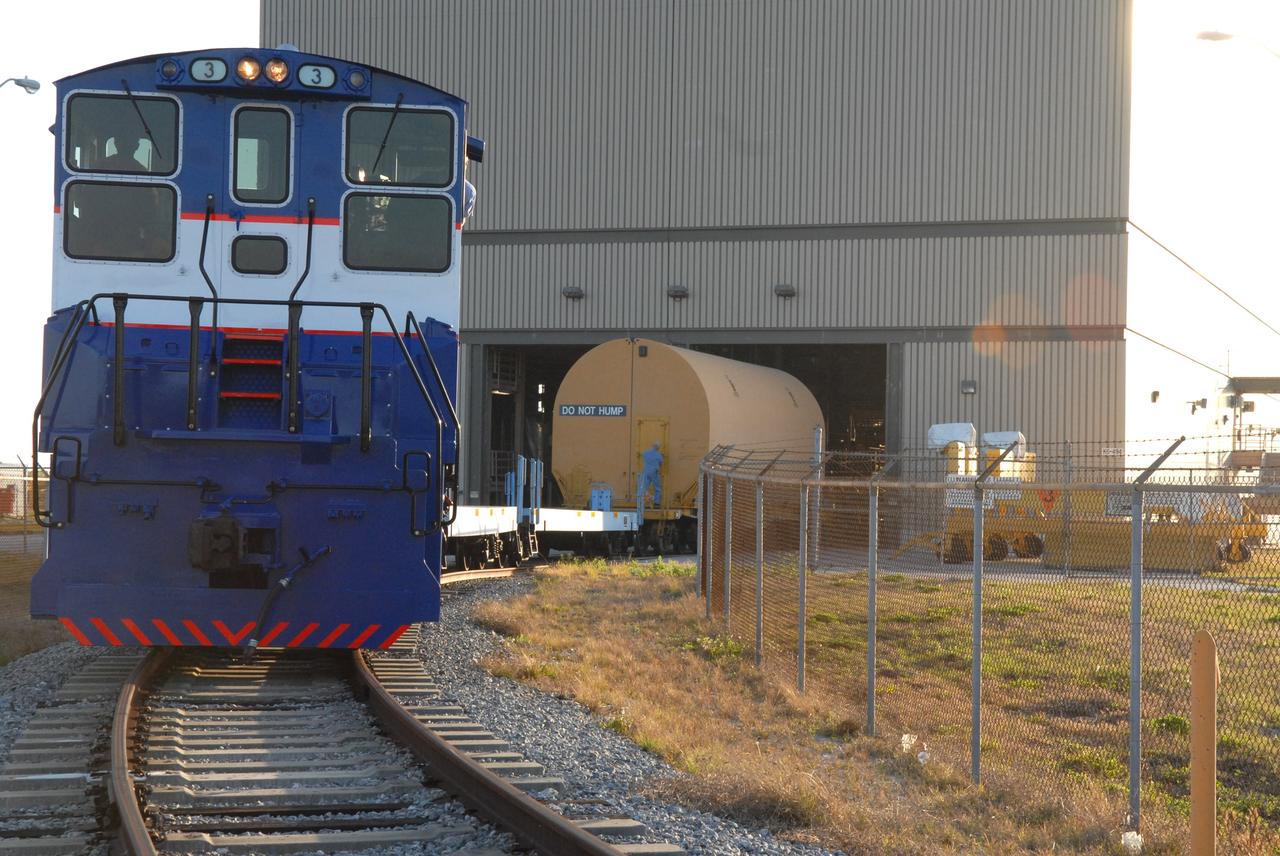
CAPE CANAVERAL, Fla. – The NASA Railroad delivers the first Ares I-X segment to the Rotation, Processing and Surge Facility at NASA's Kennedy Space Center in Florida. Four reusable motor segments and the nozzle exit cone, manufactured by the Ares I first-stage prime contractor Alliant Techsystems Inc., departed Utah March 12 on the seven-day, cross-country trip to Florida. The segments are being delivered to Kennedy's Rotation, Processing and Surge Facility for final processing and integration. The booster used for the Ares I-X launch is being modified by adding new forward structures and a fifth segment simulator. The motor is the final hardware needed for the rocket's upcoming test flight this summer. The stacking operations are scheduled to begin in the Vehicle Assembly Building in April. Photo credit: NASA/Jack Pfaller
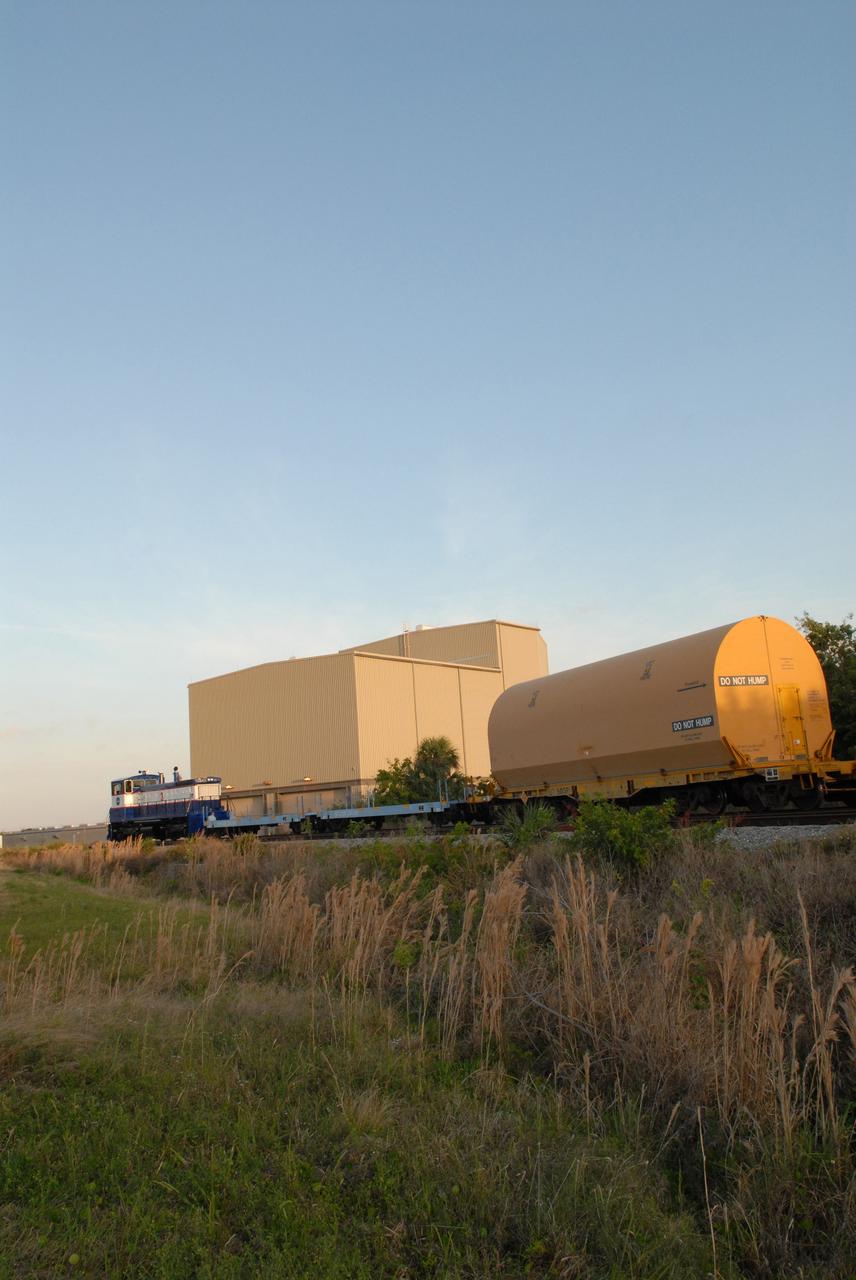
CAPE CANAVERAL, Fla. – The NASA Railroad hauls one of the cars with the first Ares I-X segment to the Rotation, Processing and Surge Facility at NASA's Kennedy Space Center in Florida. Four reusable motor segments and the nozzle exit cone, manufactured by the Ares I first-stage prime contractor Alliant Techsystems Inc., departed Utah March 12 on the seven-day, cross-country trip to Florida. The segments are being delivered to Kennedy's Rotation, Processing and Surge Facility for final processing and integration. The booster used for the Ares I-X launch is being modified by adding new forward structures and a fifth segment simulator. The motor is the final hardware needed for the rocket's upcoming test flight this summer. The stacking operations are scheduled to begin in the Vehicle Assembly Building in April. Photo credit: NASA/Jack Pfaller
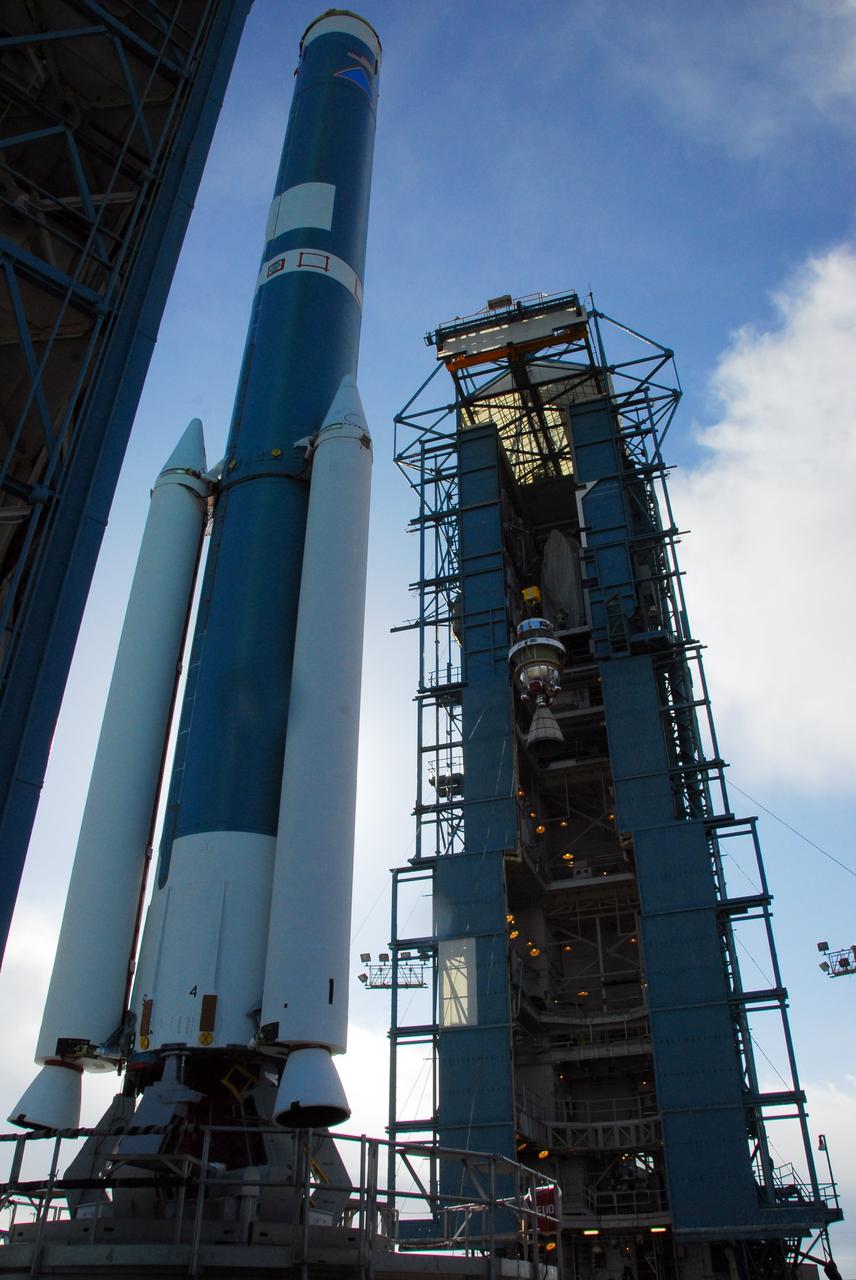
VANDENBERG AIR FORCE BASE, Calif. -- With the help of an overhead crane workers lift the United Launch Alliance Delta II second stage motor to the top of the service tower for mating with the first stage at NASA's Space Launch Complex-2 (SLC-2) at Vandenberg Air Force Base in California. Following final tests, the Aquarius/SAC-D spacecraft will be integrated to the Delta II launch vehicle in preparation for the targeted June liftoff. Aquarius, the NASA-built instrument on the SAC-D spacecraft will provide new insights into how variations in ocean surface salinity relate to fundamental climate processes on its three-year mission. Photo credit: NASA/VAFB
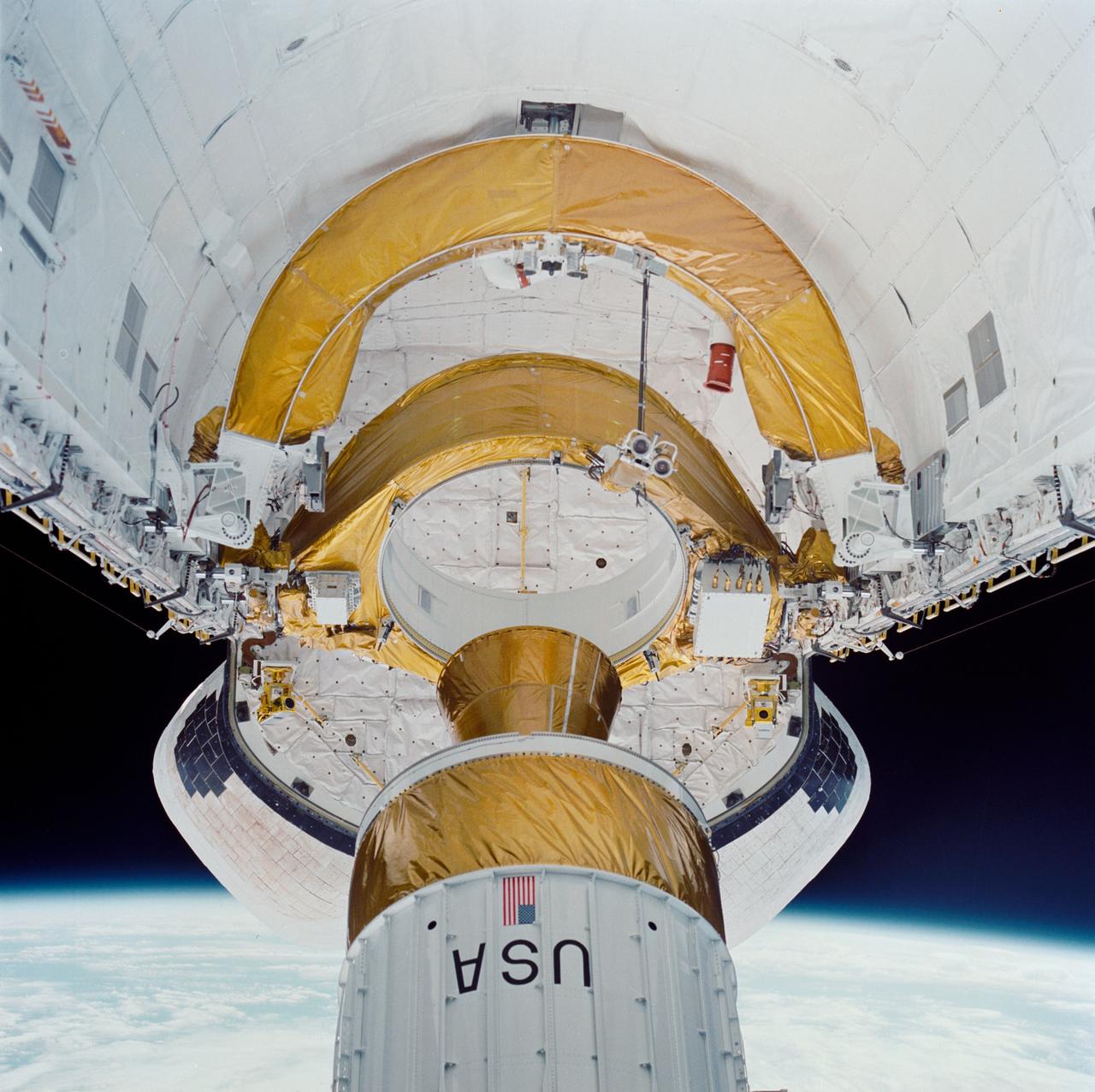
During STS-26, inertial upper stage (IUS) with the tracking and data relay satellite C (TDRS-C) drifts above Discovery, Orbiter Vehicle (OV) 103, payload bay (PLB) after being positioned in deployment attitude (an angle of 50 degrees) by the airborne support equipment (ASE). IUS vacates the ASE aft frame tilt actuator (AFTA) table in the PLB while the disconnected ASE umbilical boom floats above ASE forward cradle. IUS first stage rocket motor and nozzle and the interstage are visible as the IUS is deployed. In the background are the orbital maneuvering system (OMS) pods and the Earth's limb.
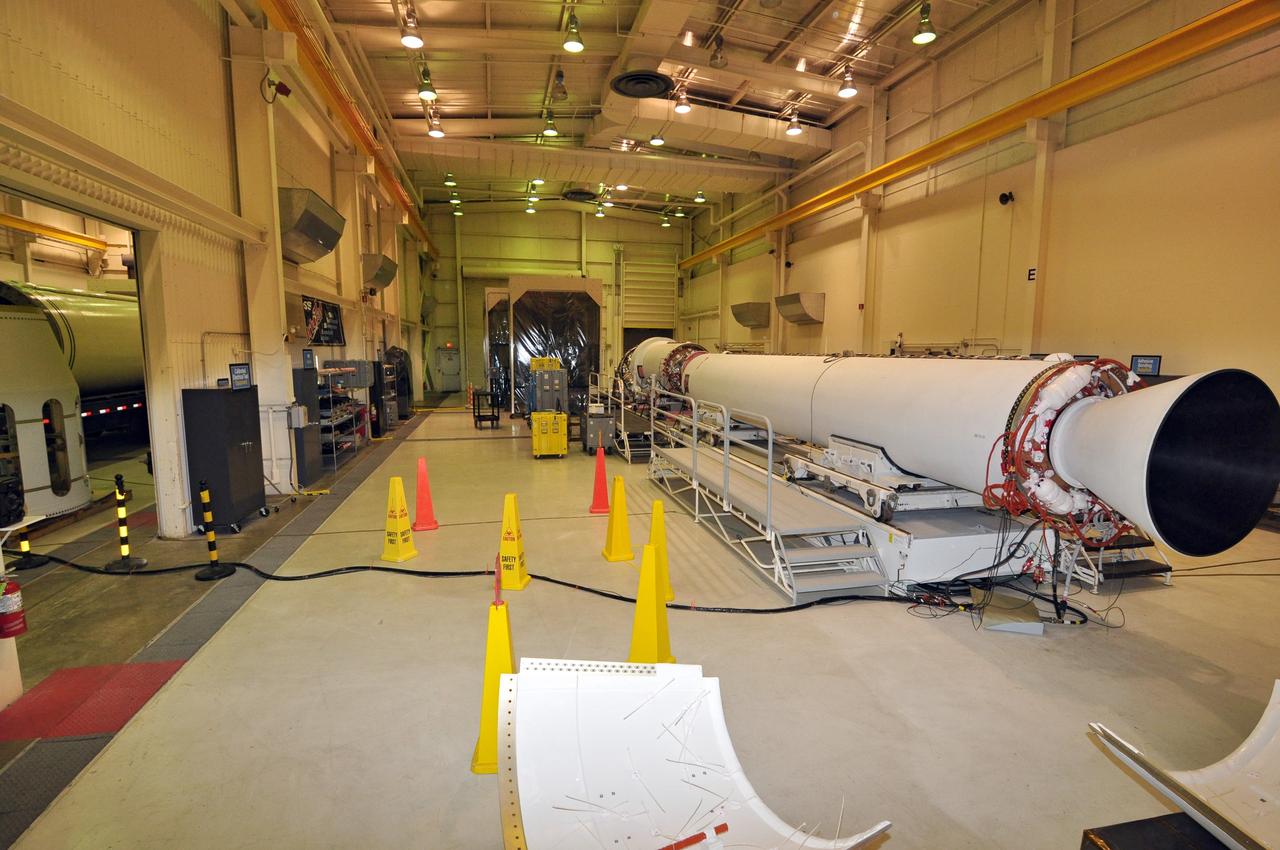
VANDENBERG AIR FORCE BASE, Calif. – The first, second and third stages of the Taurus XL rocket come together in the east high bay of Building 1555 at Vandenberg Air Force Base in California. In the west high bay, left, is the stage 0 motor. The rocket and NASA's Glory satellite are being prepared for a launch to low Earth orbit from Vandenberg's Space Launch Complex 576-E. Once Glory reaches orbit, it will collect data on the properties of aerosols and black carbon. It also will help scientists understand how the sun's irradiance affects Earth's climate. Photo credit: NASA/Randy Beaudoin, VAFB
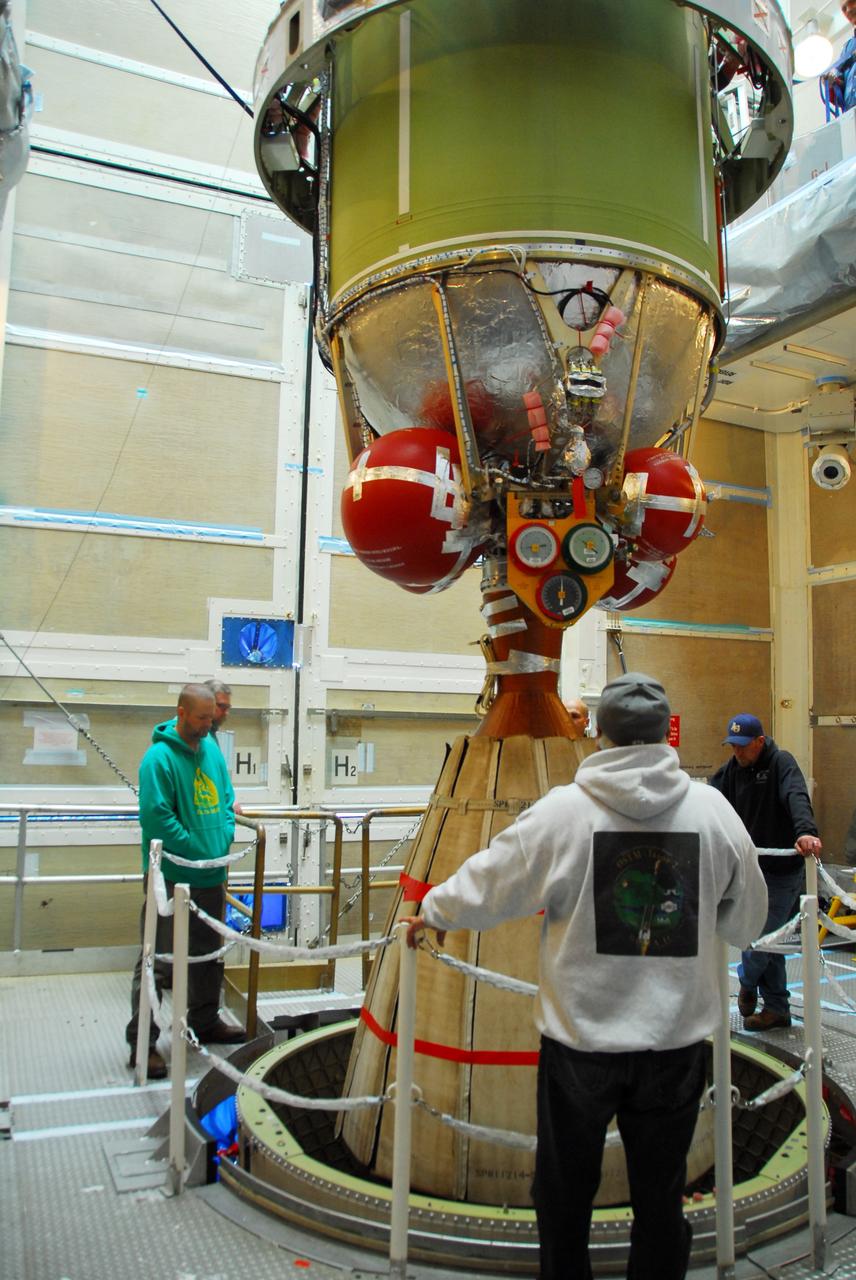
VANDENBERG AIR FORCE BASE, Calif. -- Workers using an overhead crane lower the United Launch Alliance Delta II second stage motor toward the first stage for mating at NASA's Space Launch Complex-2 (SLC-2) at Vandenberg Air Force Base in California. Following final tests, the Aquarius/SAC-D spacecraft will be integrated to the Delta II launch vehicle in preparation for the targeted June liftoff. Aquarius, the NASA-built instrument on the SAC-D spacecraft will provide new insights into how variations in ocean surface salinity relate to fundamental climate processes on its three-year mission. Photo credit: NASA/VAFB
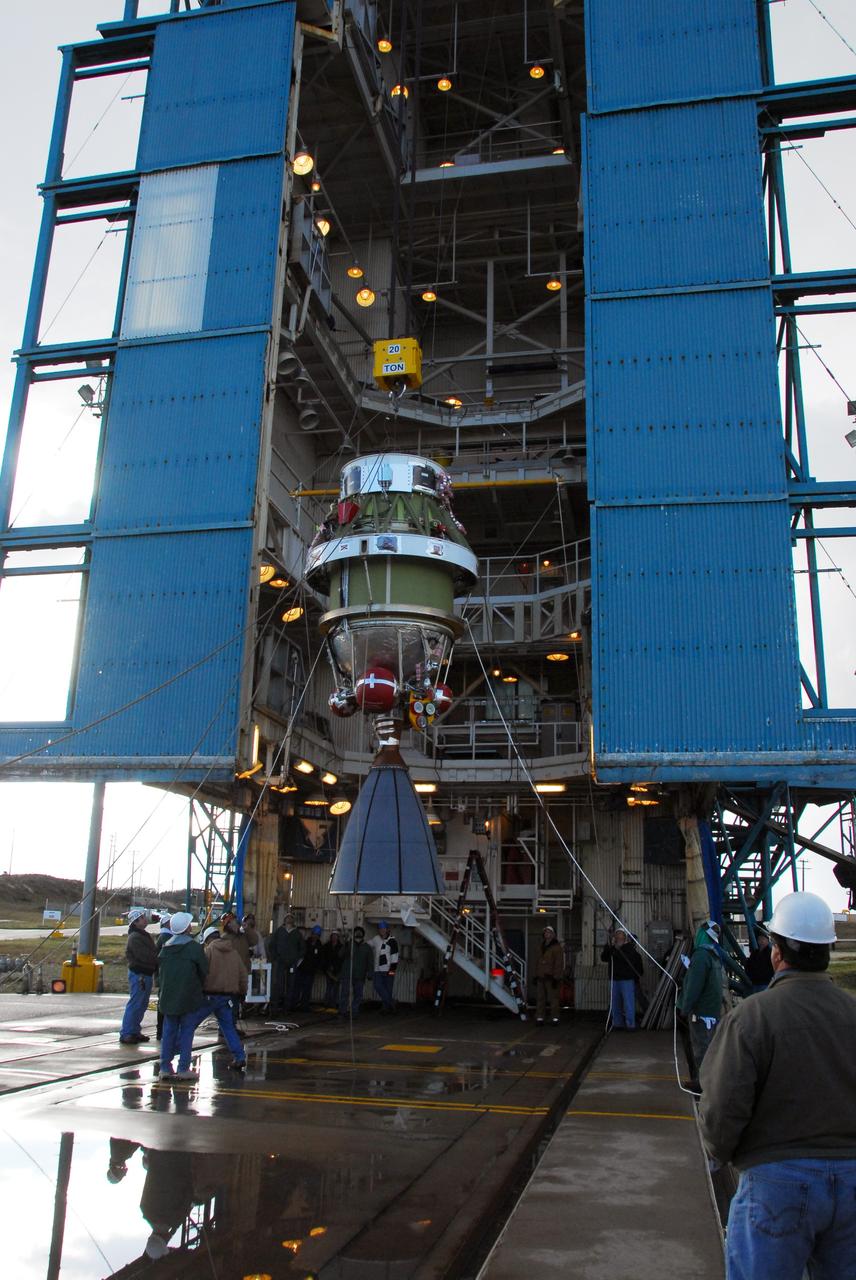
VANDENBERG AIR FORCE BASE, Calif. -- With the help of an overhead crane workers lift the United Launch Alliance Delta II second stage motor to the top of the service tower for mating with the first stage at NASA's Space Launch Complex-2 (SLC-2) at Vandenberg Air Force Base in California. Following final tests, the Aquarius/SAC-D spacecraft will be integrated to the Delta II launch vehicle in preparation for the targeted June liftoff. Aquarius, the NASA-built instrument on the SAC-D spacecraft will provide new insights into how variations in ocean surface salinity relate to fundamental climate processes on its three-year mission. Photo credit: NASA/VAFB
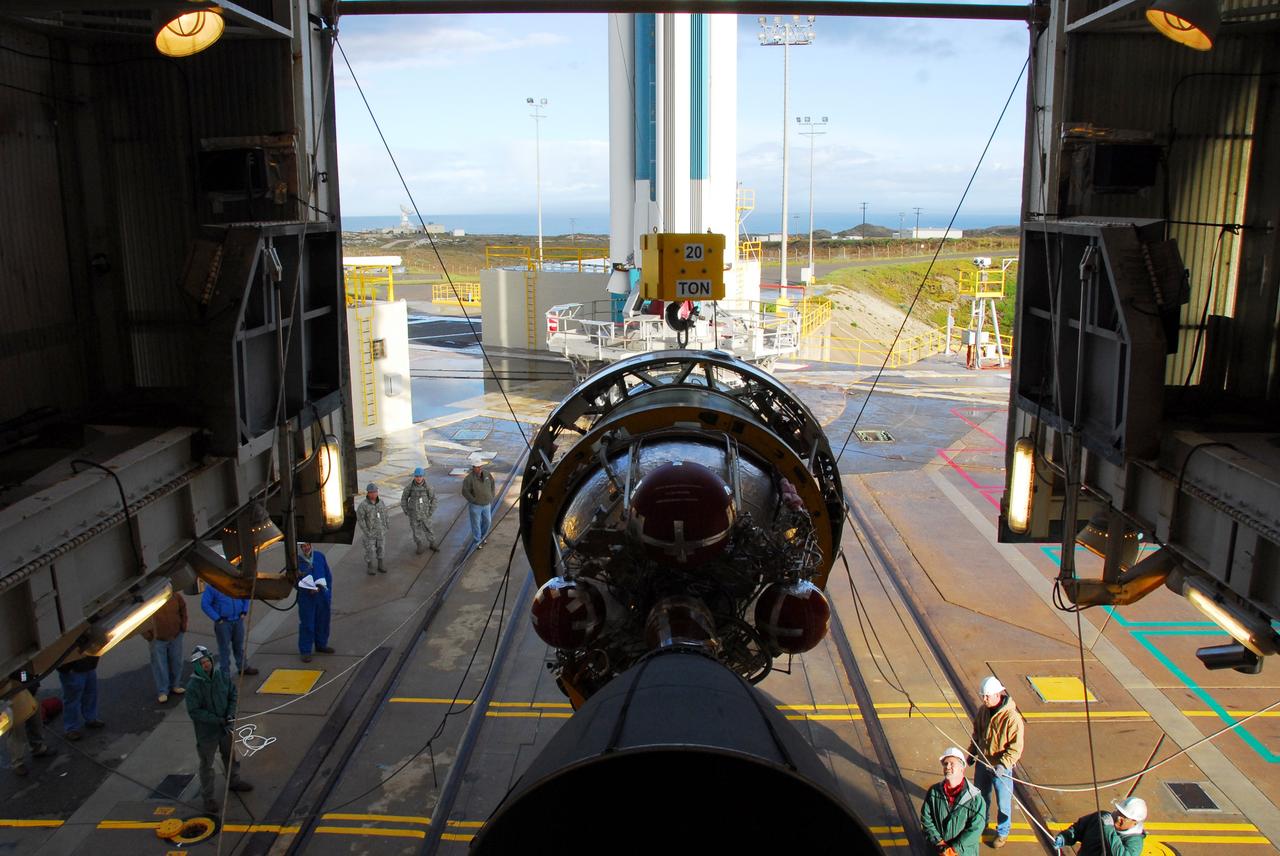
VANDENBERG AIR FORCE BASE, Calif. -- Workers attach cables from an overhead crane to the United Launch Alliance Delta II second stage motor for mating to the first stage at NASA's Space Launch Complex-2 (SLC-2) at Vandenberg Air Force Base in California. Following final tests, the Aquarius/SAC-D spacecraft will be integrated to the Delta II launch vehicle in preparation for the targeted June liftoff. Aquarius, the NASA-built instrument on the SAC-D spacecraft will provide new insights into how variations in ocean surface salinity relate to fundamental climate processes on its three-year mission. Photo credit: NASA/VAFB
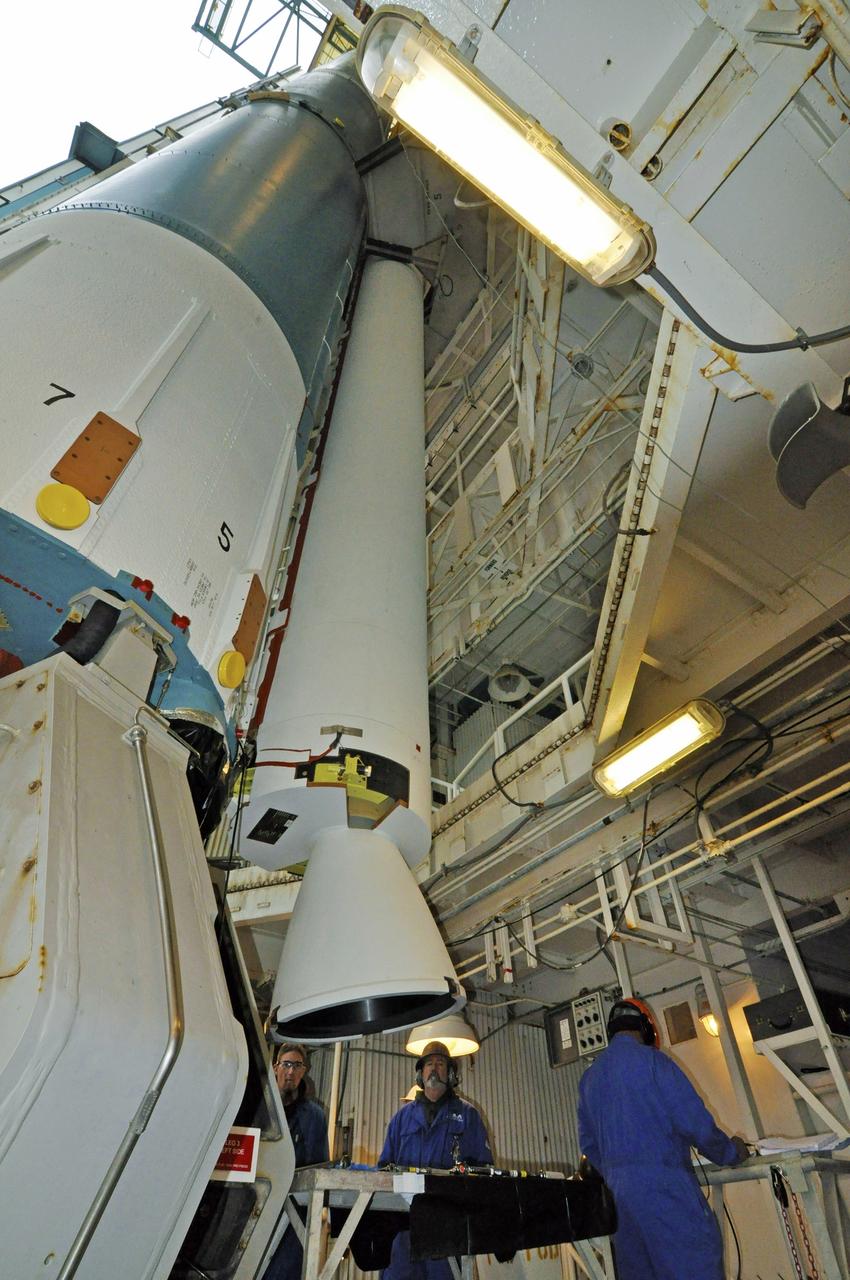
VANDENBERG AIR FORCE BASE, Calif. – The first solid rocket motor, or SRM, for NASA's Orbiting Carbon Observatory-2 mission, or OCO-2, has been attached to the Delta II first stage in the mobile service tower at Space Launch Complex 2 on Vandenberg Air Force Base in California. Operations are underway to attach the rocket's three SRMs, known as graphite epoxy motors, to its first stage. OCO-2 is scheduled to launch into a polar Earth orbit aboard a United Launch Alliance Delta II 7320-10C rocket in July. Once in orbit, OCO-2 will collect precise global measurements of carbon dioxide in the Earth's atmosphere and provide scientists with a better idea of the chemical compound's impacts on climate change. Scientists will analyze this data to improve our understanding of the natural processes and human activities that regulate the abundance and distribution of this important atmospheric gas. To learn more about OCO-2, visit http://oco.jpl.nasa.gov. Photo credit: NASA/Randy Beaudoin
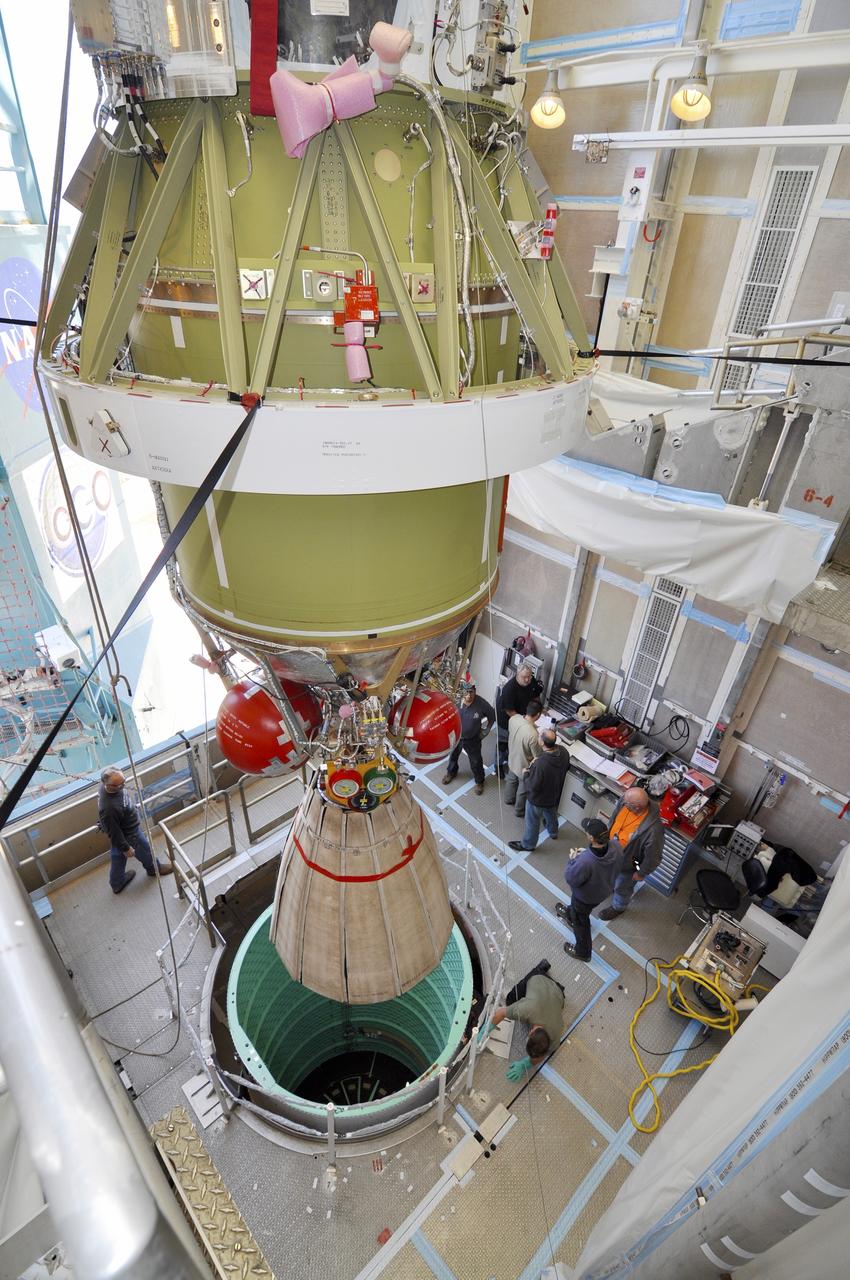
VANDENBERG AIR FORCE BASE, Calif. – The second stage of the Delta II rocket for NASA's Soil Moisture Active Passive mission, or SMAP, is lowered onto the rocket's first stage in the mobile service tower at Space Launch Complex 2 on Vandenberg Air Force Base in California. Operations are underway to install the second stage atop the rocket's first stage. SMAP will launch on a Delta II 7320 configuration vehicle featuring a United Launch Alliance first stage booster powered by an Aerojet Rocketdyne RS-27A main engine and three Alliant Techsystems, or ATK, strap-on solid rocket motors. Once on station in Earth orbit, SMAP will provide global measurements of soil moisture and its freeze/thaw state. These measurements will be used to enhance understanding of processes that link the water, energy and carbon cycles, and to extend the capabilities of weather and climate prediction models. SMAP data also will be used to quantify net carbon flux in boreal landscapes and to develop improved flood prediction and drought monitoring capabilities. Launch is scheduled for no earlier than November 2014. To learn more about SMAP, visit http://smap.jpl.nasa.gov. Photo credit: NASA/Randy Beaudoin
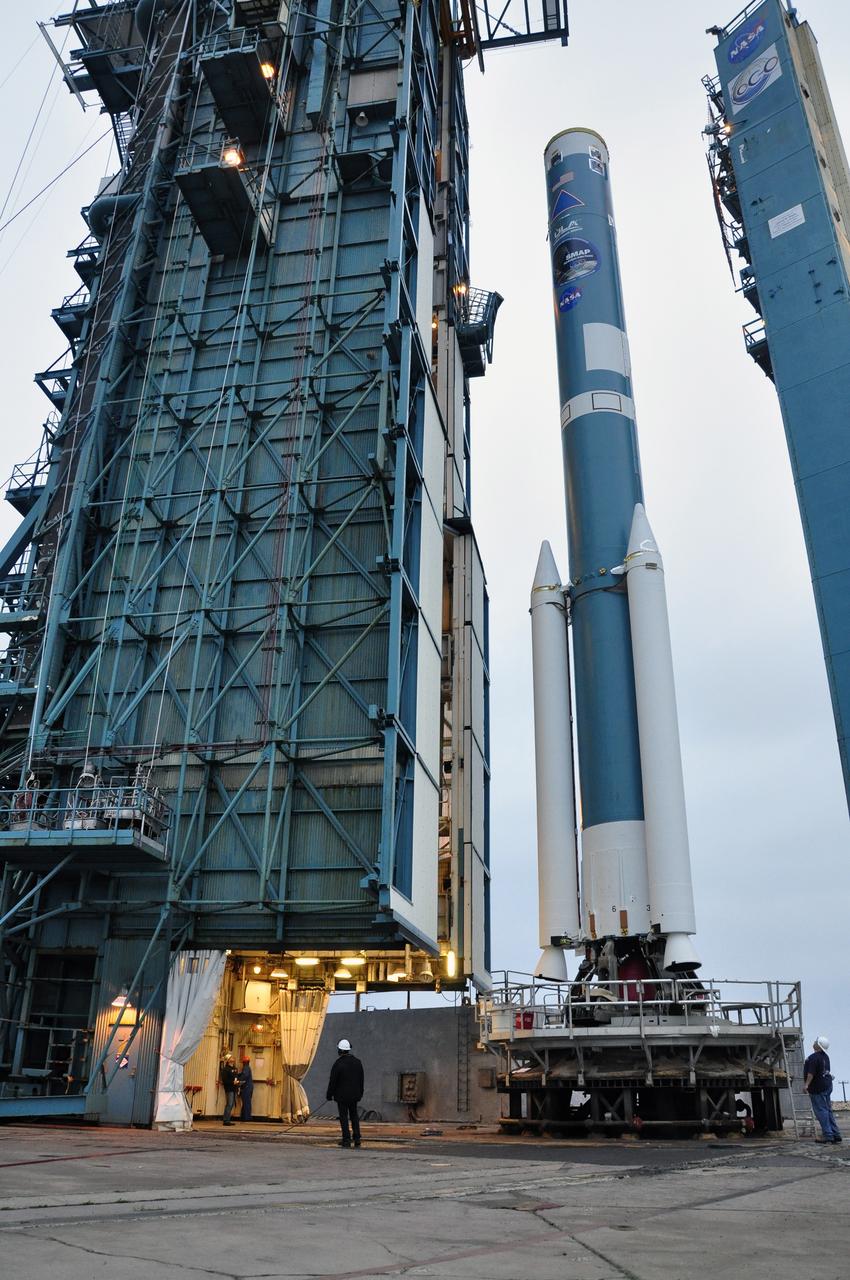
VANDENBERG AIR FORCE BASE, Calif. – The mobile service tower at Space Launch Complex 2 on Vandenberg Air Force Base in California is rolled back from the first stage of the Delta II rocket for NASA's Soil Moisture Active Passive mission, or SMAP, during preparations for the arrival of the rocket's second stage. Operations are underway to install the second stage atop the rocket's first stage. SMAP will launch on a Delta II 7320 configuration vehicle featuring a United Launch Alliance first stage booster powered by an Aerojet Rocketdyne RS-27A main engine and three Alliant Techsystems, or ATK, strap-on solid rocket motors. Once on station in Earth orbit, SMAP will provide global measurements of soil moisture and its freeze/thaw state. These measurements will be used to enhance understanding of processes that link the water, energy and carbon cycles, and to extend the capabilities of weather and climate prediction models. SMAP data also will be used to quantify net carbon flux in boreal landscapes and to develop improved flood prediction and drought monitoring capabilities. Launch is scheduled for no earlier than November 2014. To learn more about SMAP, visit http://smap.jpl.nasa.gov. Photo credit: NASA/Randy Beaudoin
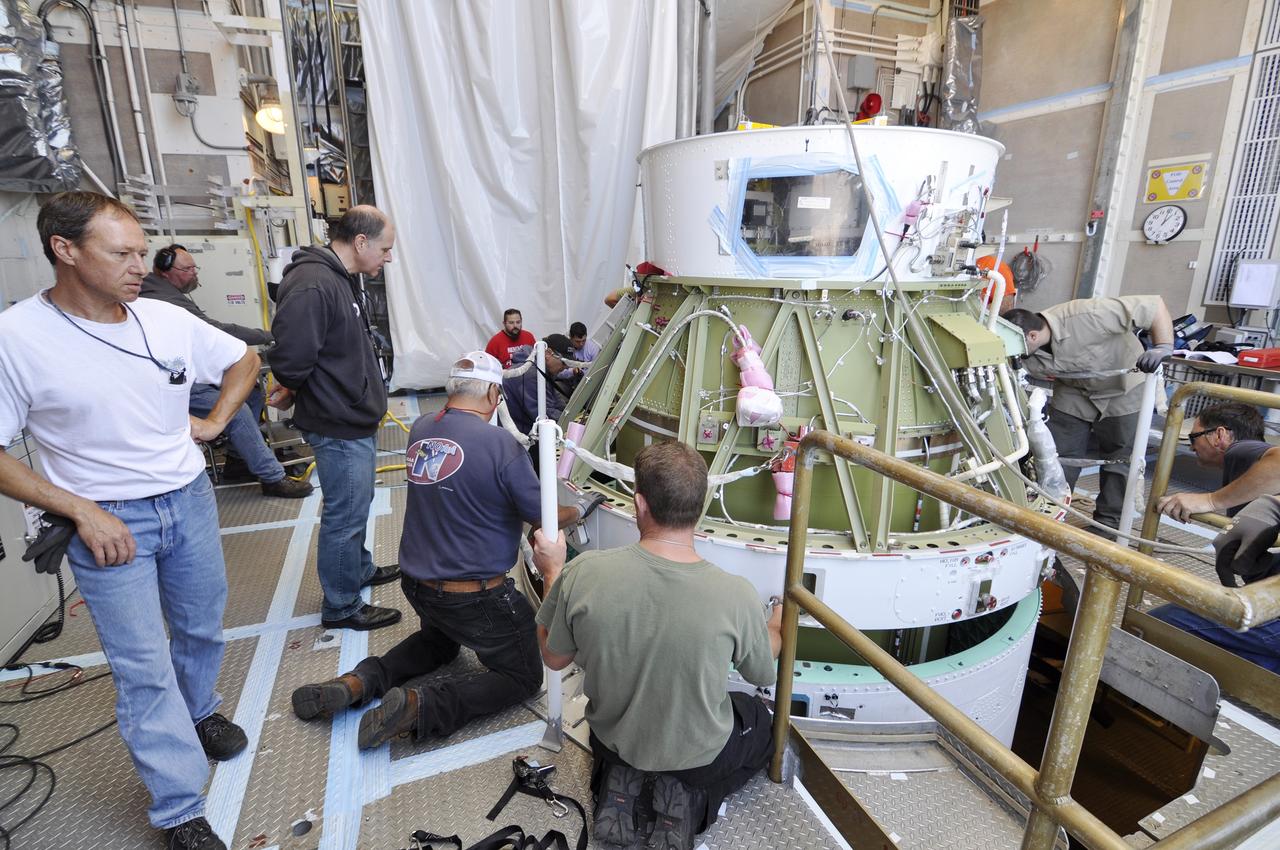
VANDENBERG AIR FORCE BASE, Calif. – Workers align the second stage of the Delta II rocket for NASA's Soil Moisture Active Passive mission, or SMAP, on the rocket's first stage in the mobile service tower at Space Launch Complex 2 on Vandenberg Air Force Base in California. Operations are underway to install the second stage atop the rocket's first stage. SMAP will launch on a Delta II 7320 configuration vehicle featuring a United Launch Alliance first stage booster powered by an Aerojet Rocketdyne RS-27A main engine and three Alliant Techsystems, or ATK, strap-on solid rocket motors. Once on station in Earth orbit, SMAP will provide global measurements of soil moisture and its freeze/thaw state. These measurements will be used to enhance understanding of processes that link the water, energy and carbon cycles, and to extend the capabilities of weather and climate prediction models. SMAP data also will be used to quantify net carbon flux in boreal landscapes and to develop improved flood prediction and drought monitoring capabilities. Launch is scheduled for no earlier than November 2014. To learn more about SMAP, visit http://smap.jpl.nasa.gov. Photo credit: NASA/Randy Beaudoin
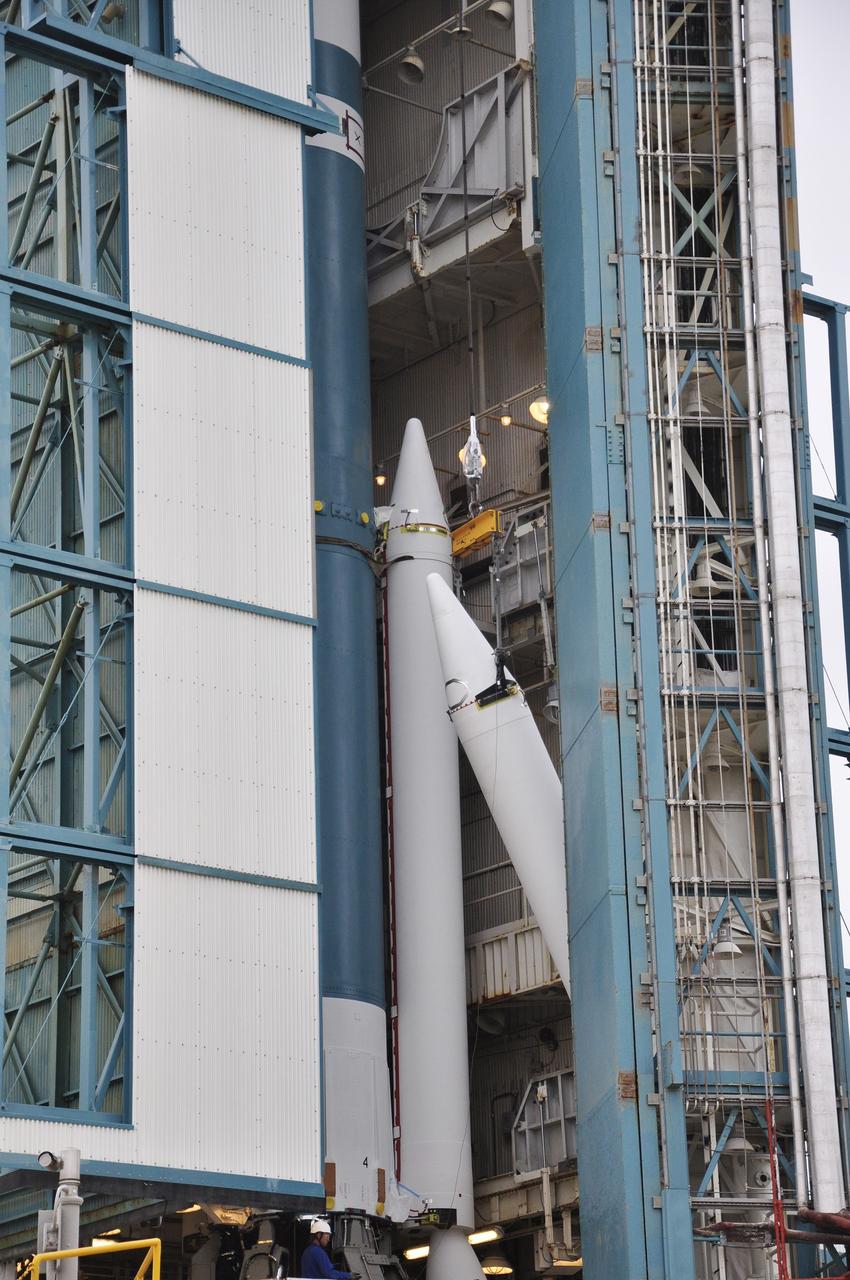
VANDENBERG AIR FORCE BASE, Calif. – The third solid rocket motor, or SRM, for NASA's Orbiting Carbon Observatory-2 mission, or OCO-2, is lifted into place beside the Delta II first stage, with two SRMs already attached, in the mobile service tower at Space Launch Complex 2 on Vandenberg Air Force Base in California. Operations are underway to attach the rocket's three SRMs, known as graphite epoxy motors, to its first stage. OCO-2 is scheduled to launch into a polar Earth orbit aboard a United Launch Alliance Delta II 7320-10C rocket in July. Once in orbit, OCO-2 will collect precise global measurements of carbon dioxide in the Earth's atmosphere and provide scientists with a better idea of the chemical compound's impacts on climate change. Scientists will analyze this data to improve our understanding of the natural processes and human activities that regulate the abundance and distribution of this important atmospheric gas. To learn more about OCO-2, visit http://oco.jpl.nasa.gov. Photo credit: NASA/Randy Beaudoin

CAPE CANAVERAL, Fla. – ATK and NASA officials accompanied the Florida East Coast Railroad train carrying the booster segments for the Ares I-X test rocket on its route to NASA's Kennedy Space Center in Florida from Jacksonville, Fla. Seen here in the passenger car are, from left NASA KSC Shuttle Launch Director Mike Leinbach, a Florida East Coast Railroad representative, ATK Ares I First Stage program Director Fred Brasfield, a Florida East Coast Railroad representative, ATK Vice President Space Launch Systems Charlie Precourt, a Florida East Coast Railroad representative, and NASA Marshall Space Flight Center Reusable Solid Rocket Booster Integration Lead Roy Worthy. The four reusable motor segments and the nozzle exit cone, manufactured by the Ares I first-stage prime contractor Alliant Techsystems Inc., or ATK, departed Utah March 12 on the seven-day, cross-country trip to Florida. The segments will be delivered to the Rotation, Processing and Surge Facility for final processing and integration. The booster used for the Ares I-X launch is being modified by adding new forward structures and a fifth segment simulator. The motor is the final hardware needed for the rocket's upcoming test flight this summer. The stacking operations are scheduled to begin in the Vehicle Assembly Building in April. Photo credit: NASA/Kim Shiflett
VANDENBERG AIR FORCE BASE, Calif. – Workers secure the second solid rocket motor for the Delta II rocket for NASA's Soil Moisture Active Passive mission, or SMAP, onto the rocket's first stage in the mobile service tower at Space Launch Complex 2 on Vandenberg Air Force Base in California. SMAP will be launched on a Delta II 7320 configuration vehicle featuring a United Launch Alliance first stage booster powered by an Aerojet Rocketdyne RS-27A main engine and three Alliant Techsystems, or ATK, strap-on solid rocket motors. Once on station in Earth orbit, SMAP will provide global measurements of soil moisture and its freeze/thaw state. These measurements will be used to enhance understanding of processes that link the water, energy and carbon cycles, and to extend the capabilities of weather and climate prediction models. SMAP data also will be used to quantify net carbon flux in boreal landscapes and to develop improved flood prediction and drought monitoring capabilities. Launch is scheduled for no earlier than November 2014. To learn more about SMAP, visit http://smap.jpl.nasa.gov. Photo credit: NASA/Randy Beaudoin
VANDENBERG AIR FORCE BASE, Calif. – Workers complete the task of attaching a solid rocket motor, or SRM, for NASA's Orbiting Carbon Observatory-2 mission, or OCO-2, to the Delta II first stage in the mobile service tower at Space Launch Complex 2 on Vandenberg Air Force Base in California. Operations are underway to attach the rocket's three SRMs, known as graphite epoxy motors, to its first stage. OCO-2 is scheduled to launch into a polar Earth orbit aboard a United Launch Alliance Delta II 7320-10C rocket in July. Once in orbit, OCO-2 will collect precise global measurements of carbon dioxide in the Earth's atmosphere and provide scientists with a better idea of the chemical compound's impacts on climate change. Scientists will analyze this data to improve our understanding of the natural processes and human activities that regulate the abundance and distribution of this important atmospheric gas. To learn more about OCO-2, visit http://oco.jpl.nasa.gov. Photo credit: NASA/Randy Beaudoin
VANDENBERG AIR FORCE BASE, Calif. – Workers monitor the solid rocket motor, or SRM, for NASA's Orbiting Carbon Observatory-2 mission, or OCO-2, as it moves into position beside the Delta II first stage in the mobile service tower at Space Launch Complex 2 on Vandenberg Air Force Base in California. Operations are underway to attach the Delta II rocket's three SRMs, known as graphite epoxy motors, to the rocket's first stage. OCO-2 is scheduled to launch into a polar Earth orbit aboard a United Launch Alliance Delta II 7320-10C rocket in July. Once in orbit, OCO-2 will collect precise global measurements of carbon dioxide in the Earth's atmosphere and provide scientists with a better idea of the chemical compound's impacts on climate change. Scientists will analyze this data to improve our understanding of the natural processes and human activities that regulate the abundance and distribution of this important atmospheric gas. To learn more about OCO-2, visit http://oco.jpl.nasa.gov. Photo credit: NASA/Randy Beaudoin
VANDENBERG AIR FORCE BASE, Calif. – Workers monitor the third solid rocket motor, or SRM, for NASA's Orbiting Carbon Observatory-2 mission, or OCO-2, as it moves into position beside the Delta II first stage in the mobile service tower at Space Launch Complex 2 on Vandenberg Air Force Base in California. Operations are underway to attach the rocket's three SRMs, known as graphite epoxy motors, to its first stage. OCO-2 is scheduled to launch into a polar Earth orbit aboard a United Launch Alliance Delta II 7320-10C rocket in July. Once in orbit, OCO-2 will collect precise global measurements of carbon dioxide in the Earth's atmosphere and provide scientists with a better idea of the chemical compound's impacts on climate change. Scientists will analyze this data to improve our understanding of the natural processes and human activities that regulate the abundance and distribution of this important atmospheric gas. To learn more about OCO-2, visit http://oco.jpl.nasa.gov. Photo credit: NASA/Randy Beaudoin
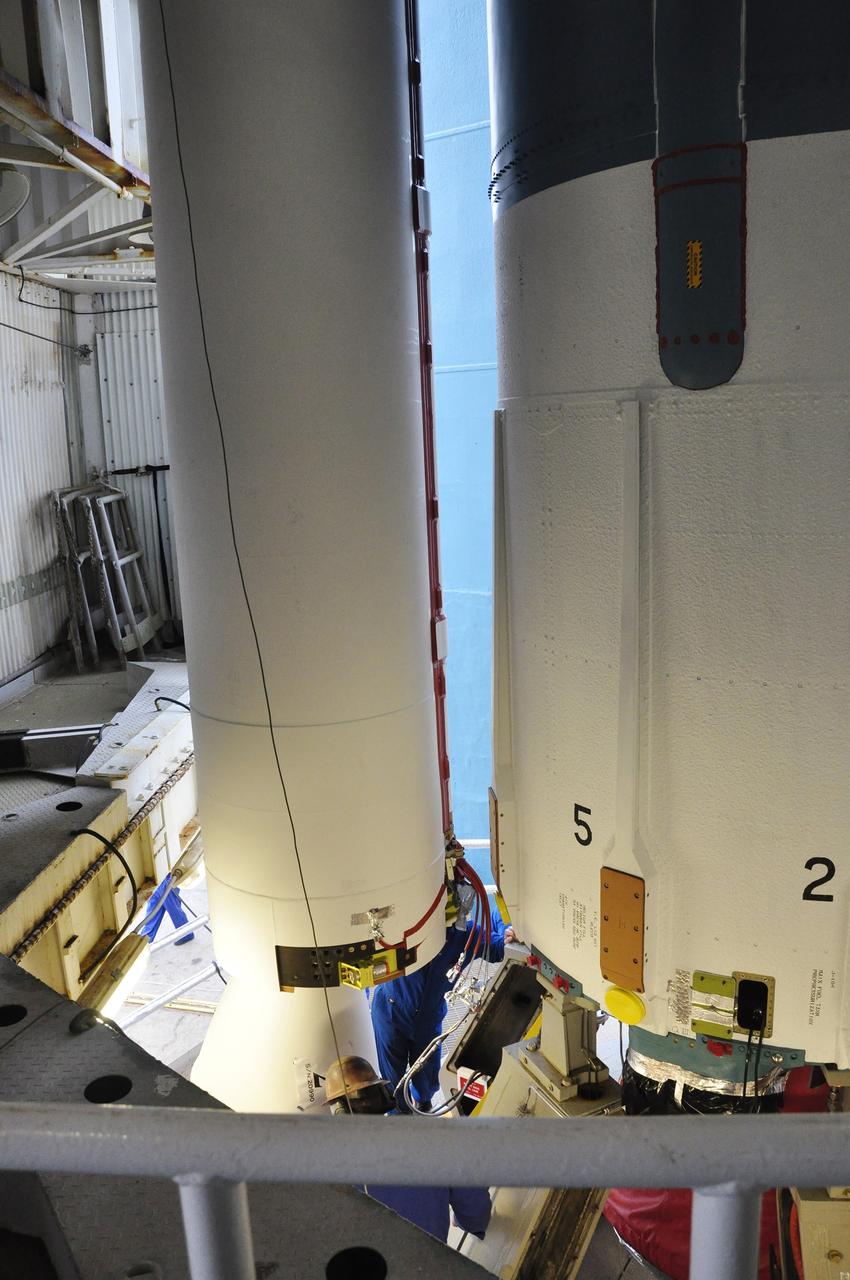
VANDENBERG AIR FORCE BASE, Calif. – A worker attaches a solid rocket motor, or SRM, for NASA's Orbiting Carbon Observatory-2 mission, or OCO-2, to the Delta II first stage in the mobile service tower at Space Launch Complex 2 on Vandenberg Air Force Base in California. Operations are underway to attach the rocket's three SRMs, known as graphite epoxy motors, to its first stage. OCO-2 is scheduled to launch into a polar Earth orbit aboard a United Launch Alliance Delta II 7320-10C rocket in July. Once in orbit, OCO-2 will collect precise global measurements of carbon dioxide in the Earth's atmosphere and provide scientists with a better idea of the chemical compound's impacts on climate change. Scientists will analyze this data to improve our understanding of the natural processes and human activities that regulate the abundance and distribution of this important atmospheric gas. To learn more about OCO-2, visit http://oco.jpl.nasa.gov. Photo credit: NASA/Randy Beaudoin
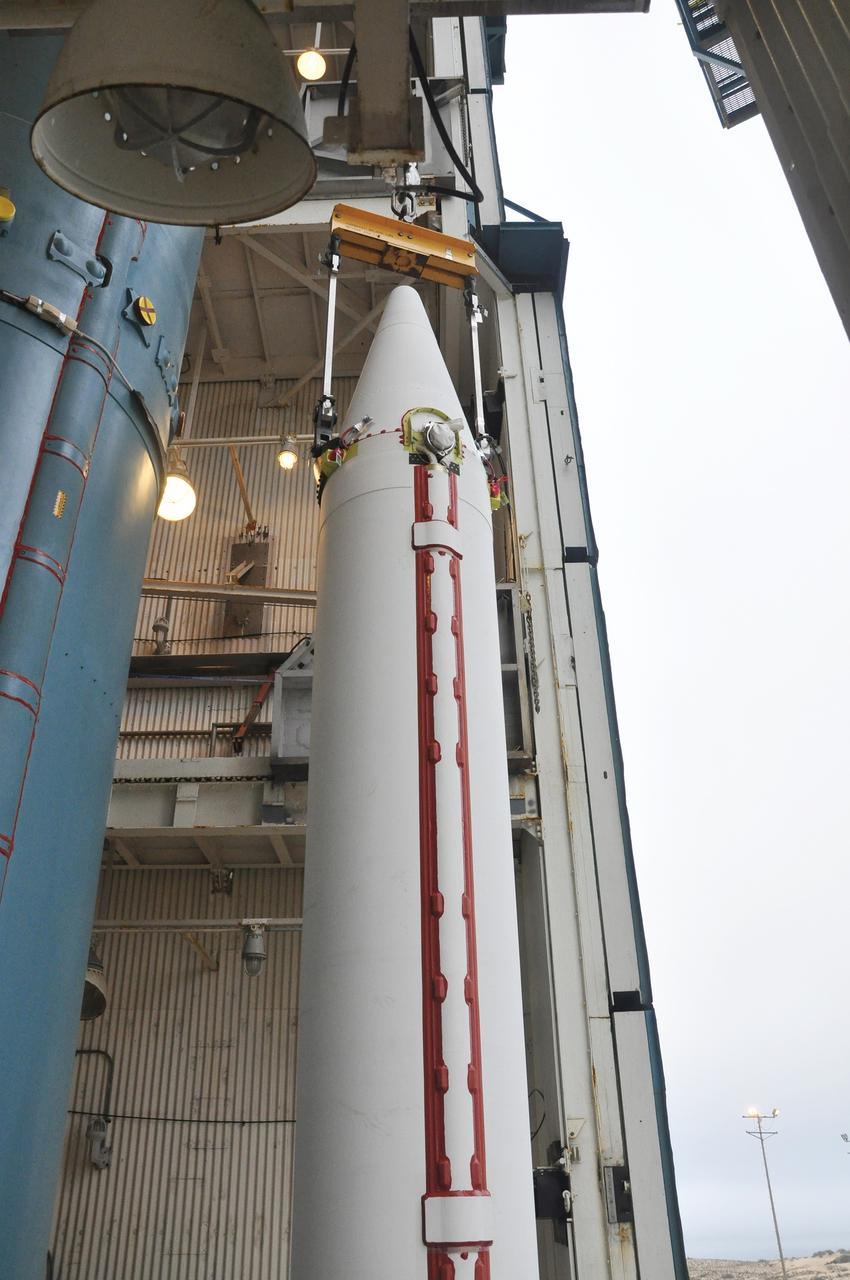
VANDENBERG AIR FORCE BASE, Calif. – A crane is enlisted to position a solid rocket motor for the Delta II rocket for NASA's Soil Moisture Active Passive mission, or SMAP, beside the rocket's first stage in the mobile service tower at Space Launch Complex 2 on Vandenberg Air Force Base in California. SMAP will be launched on a Delta II 7320 configuration vehicle featuring a United Launch Alliance first stage booster powered by an Aerojet Rocketdyne RS-27A main engine and three Alliant Techsystems, or ATK, strap-on solid rocket motors. Once on station in Earth orbit, SMAP will provide global measurements of soil moisture and its freeze/thaw state. These measurements will be used to enhance understanding of processes that link the water, energy and carbon cycles, and to extend the capabilities of weather and climate prediction models. SMAP data also will be used to quantify net carbon flux in boreal landscapes and to develop improved flood prediction and drought monitoring capabilities. Launch is scheduled for no earlier than November 2014. To learn more about SMAP, visit http://smap.jpl.nasa.gov. Photo credit: NASA/Randy Beaudoin
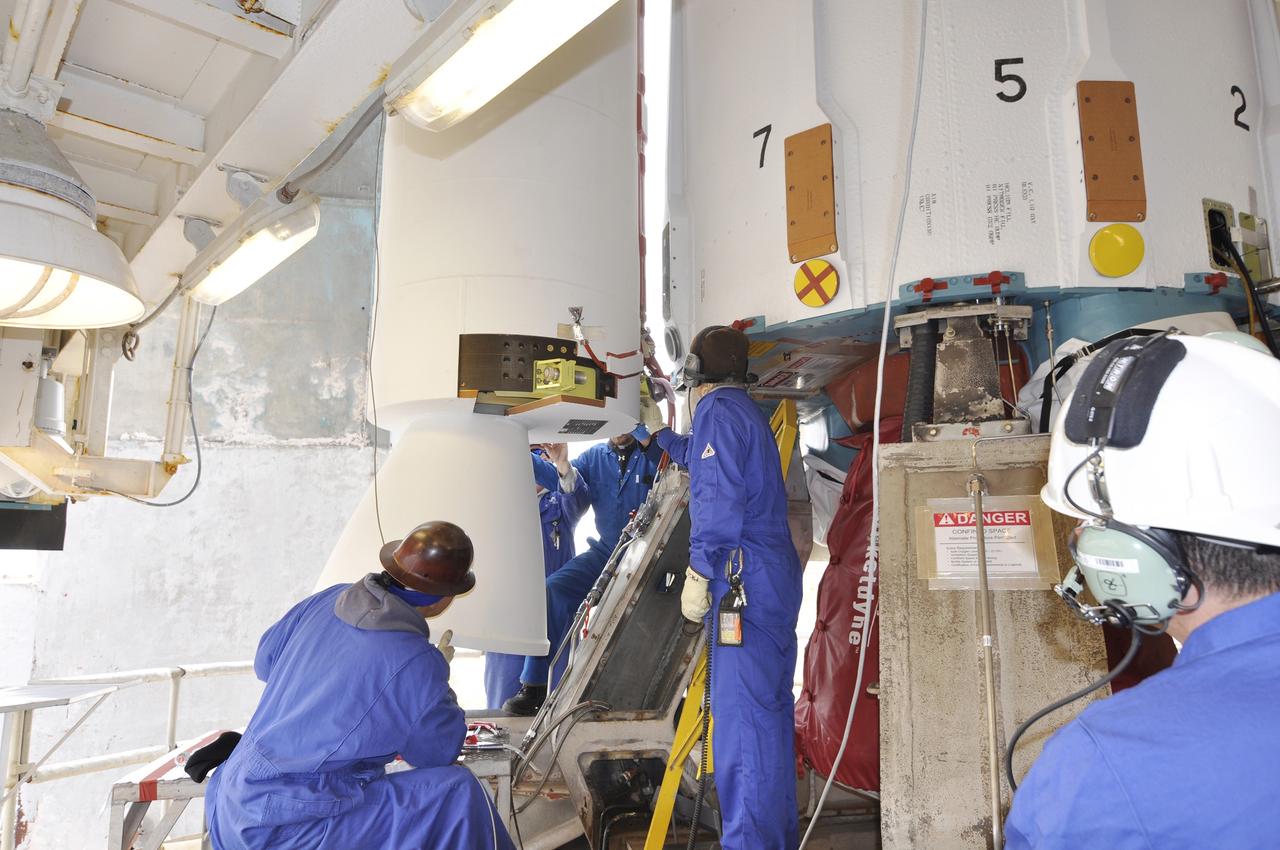
VANDENBERG AIR FORCE BASE, Calif. – Workers inside the mobile service tower use headsets to ensure communication with each other and their fellow workers outside the tower during operations to install the solid rocket motors on the first stage of the Delta II rocket for NASA's Soil Moisture Active Passive mission, or SMAP, at Space Launch Complex 2 on Vandenberg Air Force Base in California. SMAP will be launched on a Delta II 7320 configuration vehicle featuring a United Launch Alliance first stage booster powered by an Aerojet Rocketdyne RS-27A main engine and three Alliant Techsystems, or ATK, strap-on solid rocket motors. Once on station in Earth orbit, SMAP will provide global measurements of soil moisture and its freeze/thaw state. These measurements will be used to enhance understanding of processes that link the water, energy and carbon cycles, and to extend the capabilities of weather and climate prediction models. SMAP data also will be used to quantify net carbon flux in boreal landscapes and to develop improved flood prediction and drought monitoring capabilities. Launch is scheduled for no earlier than November 2014. To learn more about SMAP, visit http://smap.jpl.nasa.gov. Photo credit: NASA/Randy Beaudoin

VANDENBERG AIR FORCE BASE, Calif. – Workers attach a third solid rocket motor, or SRM, for NASA's Orbiting Carbon Observatory-2 mission, or OCO-2, to the Delta II first stage in the mobile service tower at Space Launch Complex 2 on Vandenberg Air Force Base in California. Operations to attach the rocket's three SRMs, known as graphite epoxy motors, to its first stage are nearing completion. OCO-2 is scheduled to launch into a polar Earth orbit aboard a United Launch Alliance Delta II 7320-10C rocket in July. Once in orbit, OCO-2 will collect precise global measurements of carbon dioxide in the Earth's atmosphere and provide scientists with a better idea of the chemical compound's impacts on climate change. Scientists will analyze this data to improve our understanding of the natural processes and human activities that regulate the abundance and distribution of this important atmospheric gas. To learn more about OCO-2, visit http://oco.jpl.nasa.gov. Photo credit: NASA/Randy Beaudoin
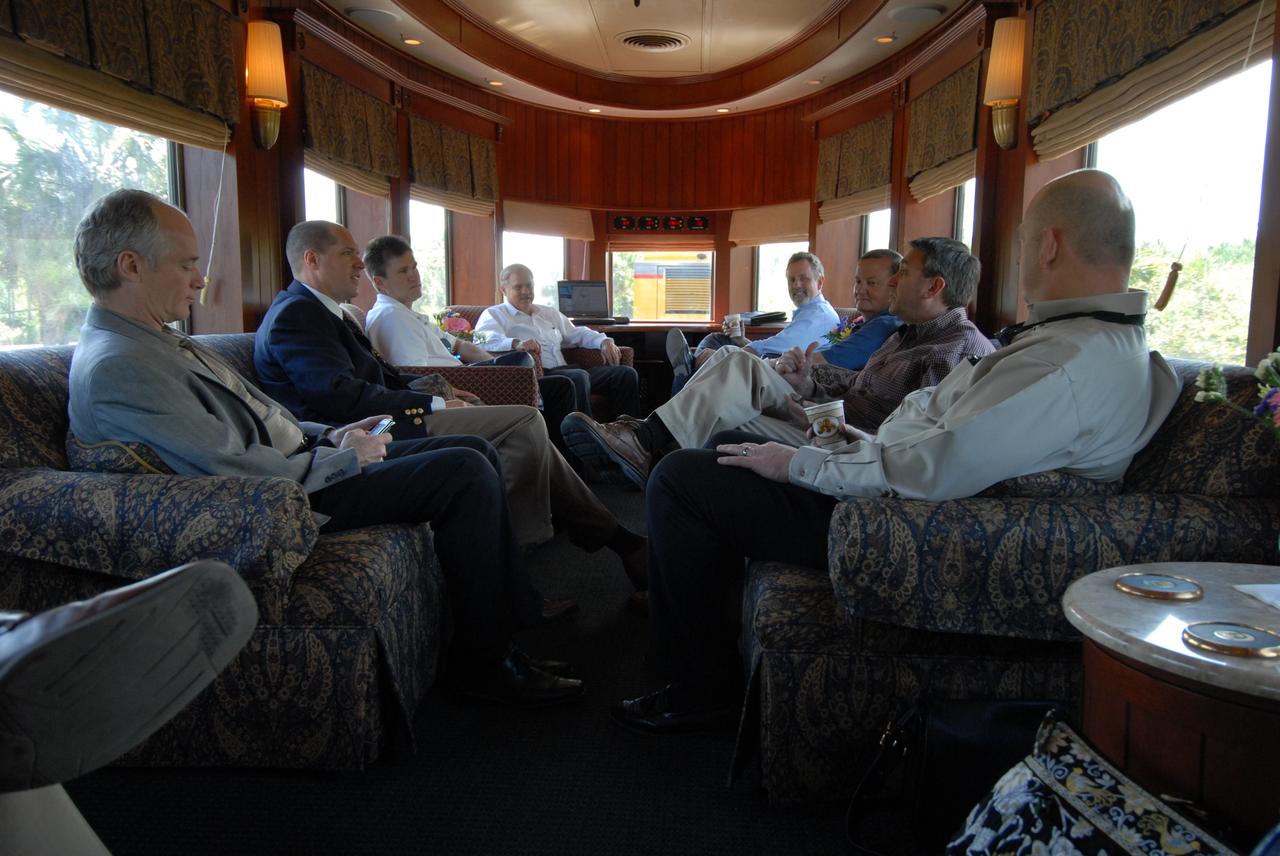
CAPE CANAVERAL, Fla. – ATK and NASA officials accompanied the Florida East Coast Railroad train carrying the booster segments for the Ares I-X test rocket on its route to NASA's Kennedy Space Center in Florida from Jacksonville, Fla. Seen here in the passenger car are, from left, ATK Vice President Space Launch Systems Charlie Precourt, a Florida East Coast Railroad representative, ATK Deputy Site Director in Florida Ted Shaffner, ATK Vice President Of Space Launch Propulsion Cary Ralston, NASA KSC Shuttle Launch Director Mike Leinbach, a Florida East Coast Railroad representative and ATK Ares I First Stage program Director Fred Brasfield. The four reusable motor segments and the nozzle exit cone, manufactured by the Ares I first-stage prime contractor Alliant Techsystems Inc., or ATK, departed Utah March 12 on the seven-day, cross-country trip to Florida. The segments will be delivered to the Rotation, Processing and Surge Facility for final processing and integration. The booster used for the Ares I-X launch is being modified by adding new forward structures and a fifth segment simulator. The motor is the final hardware needed for the rocket's upcoming test flight this summer. The stacking operations are scheduled to begin in the Vehicle Assembly Building in April. Photo credit: NASA/Kim Shiflett
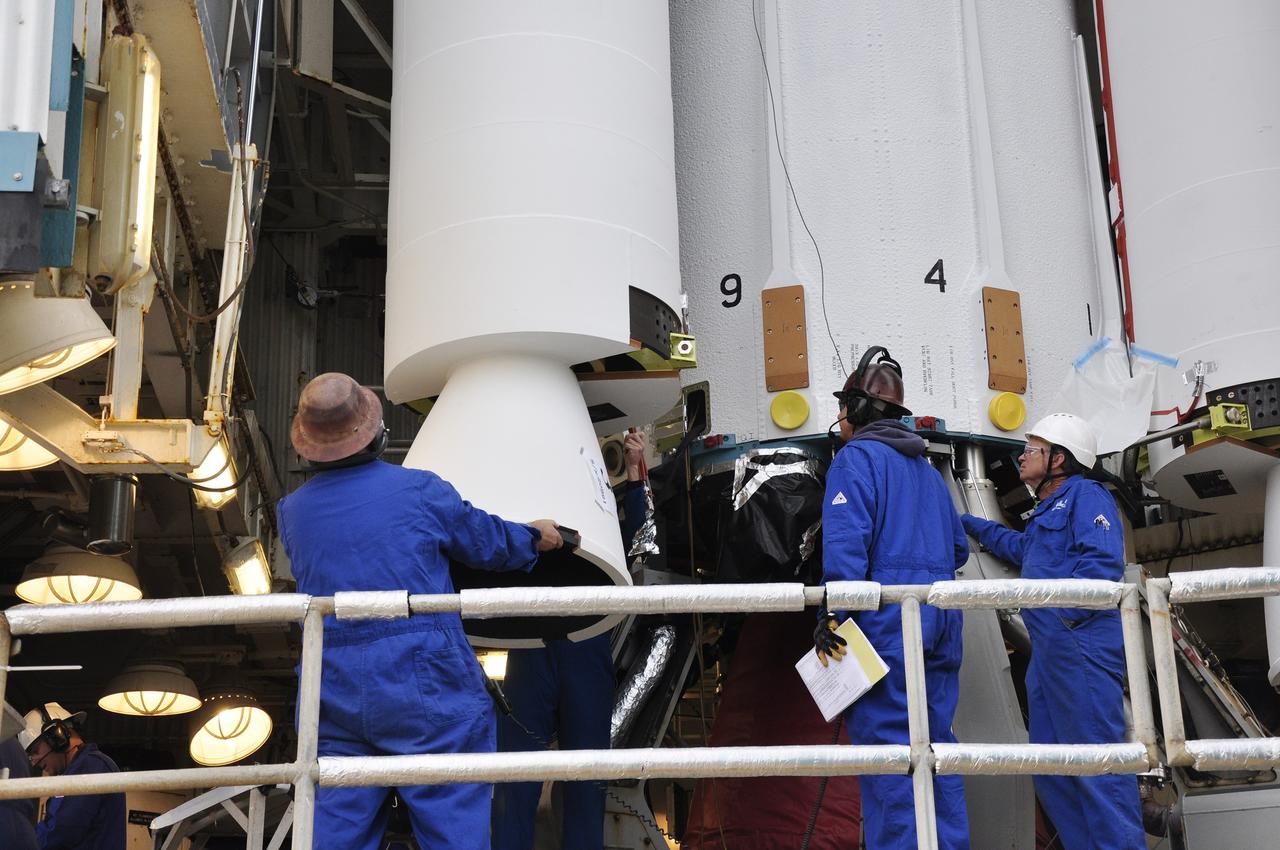
VANDENBERG AIR FORCE BASE, Calif. – Workers attach a third solid rocket motor, or SRM, for NASA's Orbiting Carbon Observatory-2 mission, or OCO-2, to the Delta II first stage in the mobile service tower at Space Launch Complex 2 on Vandenberg Air Force Base in California. Operations to attach the rocket's three SRMs, known as graphite epoxy motors, to its first stage are nearing completion. OCO-2 is scheduled to launch into a polar Earth orbit aboard a United Launch Alliance Delta II 7320-10C rocket in July. Once in orbit, OCO-2 will collect precise global measurements of carbon dioxide in the Earth's atmosphere and provide scientists with a better idea of the chemical compound's impacts on climate change. Scientists will analyze this data to improve our understanding of the natural processes and human activities that regulate the abundance and distribution of this important atmospheric gas. To learn more about OCO-2, visit http://oco.jpl.nasa.gov. Photo credit: NASA/Randy Beaudoin
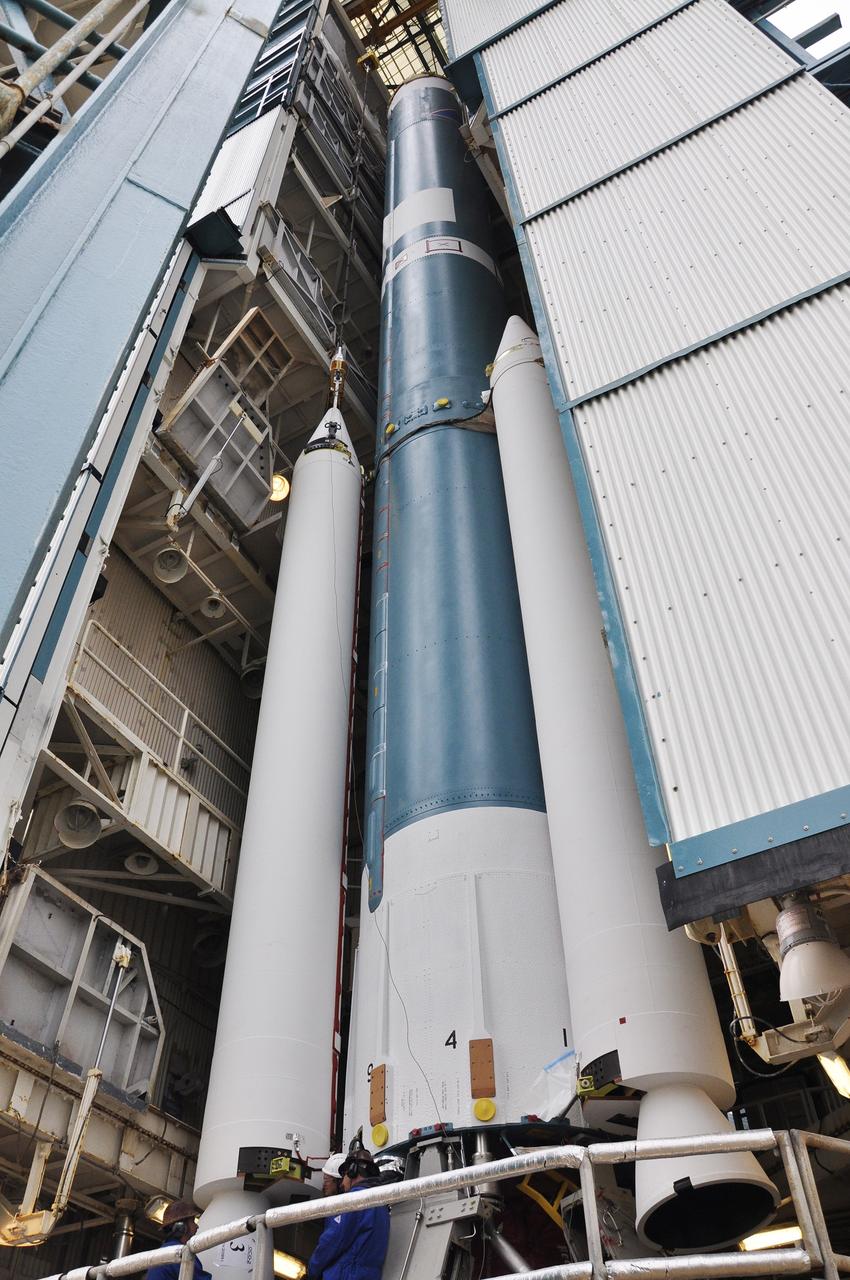
VANDENBERG AIR FORCE BASE, Calif. – Operations to attach three solid rocket motors, or SRMs, for NASA's Orbiting Carbon Observatory-2 mission, or OCO-2, to the Delta II first stage in the mobile service tower at Space Launch Complex 2 on Vandenberg Air Force Base in California are complete. The SRMs used to give the first stage additional thrust are known as graphite epoxy motors. OCO-2 is scheduled to launch into a polar Earth orbit aboard a United Launch Alliance Delta II 7320-10C rocket in July. Once in orbit, OCO-2 will collect precise global measurements of carbon dioxide in the Earth's atmosphere and provide scientists with a better idea of the chemical compound's impacts on climate change. Scientists will analyze this data to improve our understanding of the natural processes and human activities that regulate the abundance and distribution of this important atmospheric gas. To learn more about OCO-2, visit http://oco.jpl.nasa.gov. Photo credit: NASA/Randy Beaudoin
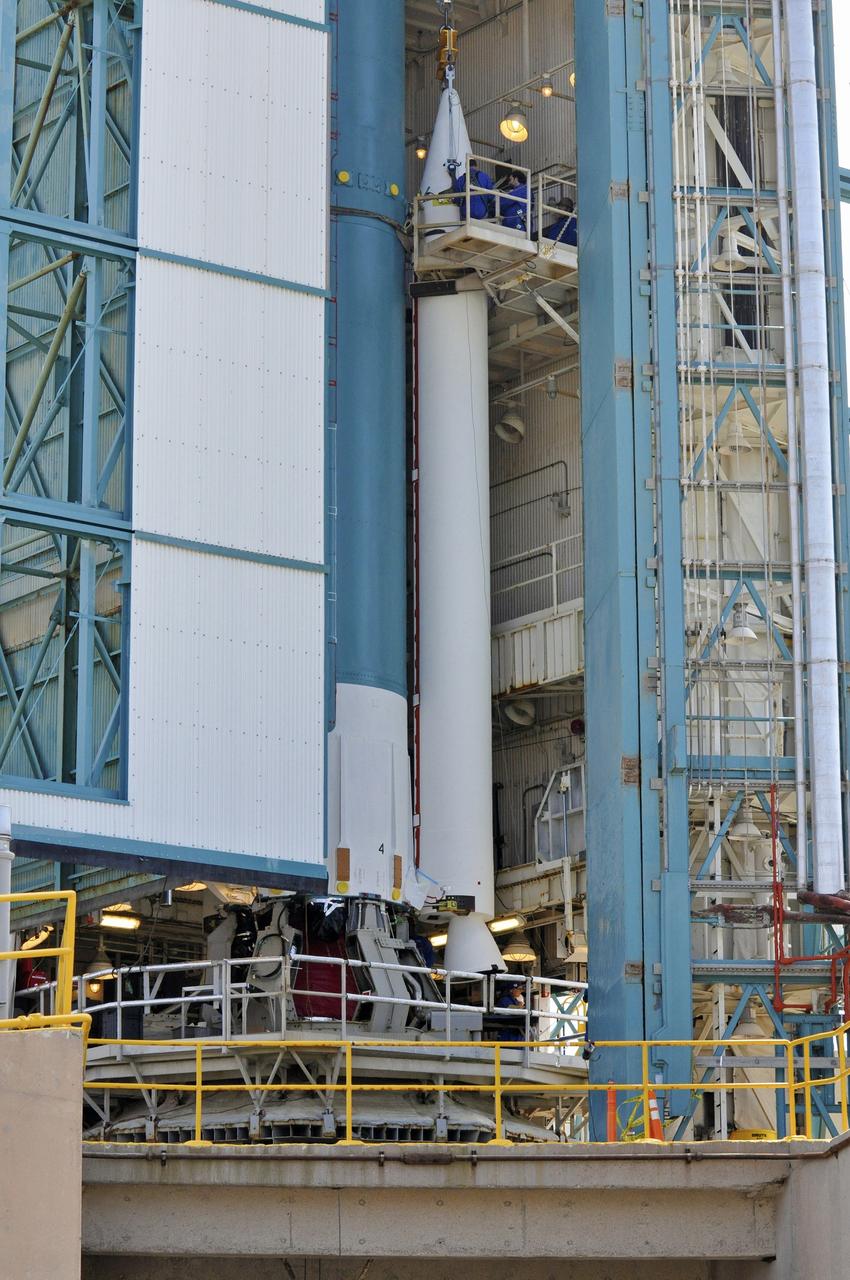
VANDENBERG AIR FORCE BASE, Calif. – The second solid rocket motor, or SRM, for NASA's Orbiting Carbon Observatory-2 mission, or OCO-2, is lifted into the mobile service tower next to the Delta II first stage at Space Launch Complex 2 on Vandenberg Air Force Base in California. Operations are underway to attach the Delta II rocket's three SRMs, known as graphite epoxy motors, to its first stage. OCO-2 is scheduled to launch into a polar Earth orbit aboard a United Launch Alliance Delta II 7320-10C rocket in July. Once in orbit, OCO-2 will collect precise global measurements of carbon dioxide in the Earth's atmosphere and provide scientists with a better idea of the chemical compound's impacts on climate change. Scientists will analyze this data to improve our understanding of the natural processes and human activities that regulate the abundance and distribution of this important atmospheric gas. To learn more about OCO-2, visit http://oco.jpl.nasa.gov. Photo credit: NASA/Randy Beaudoin
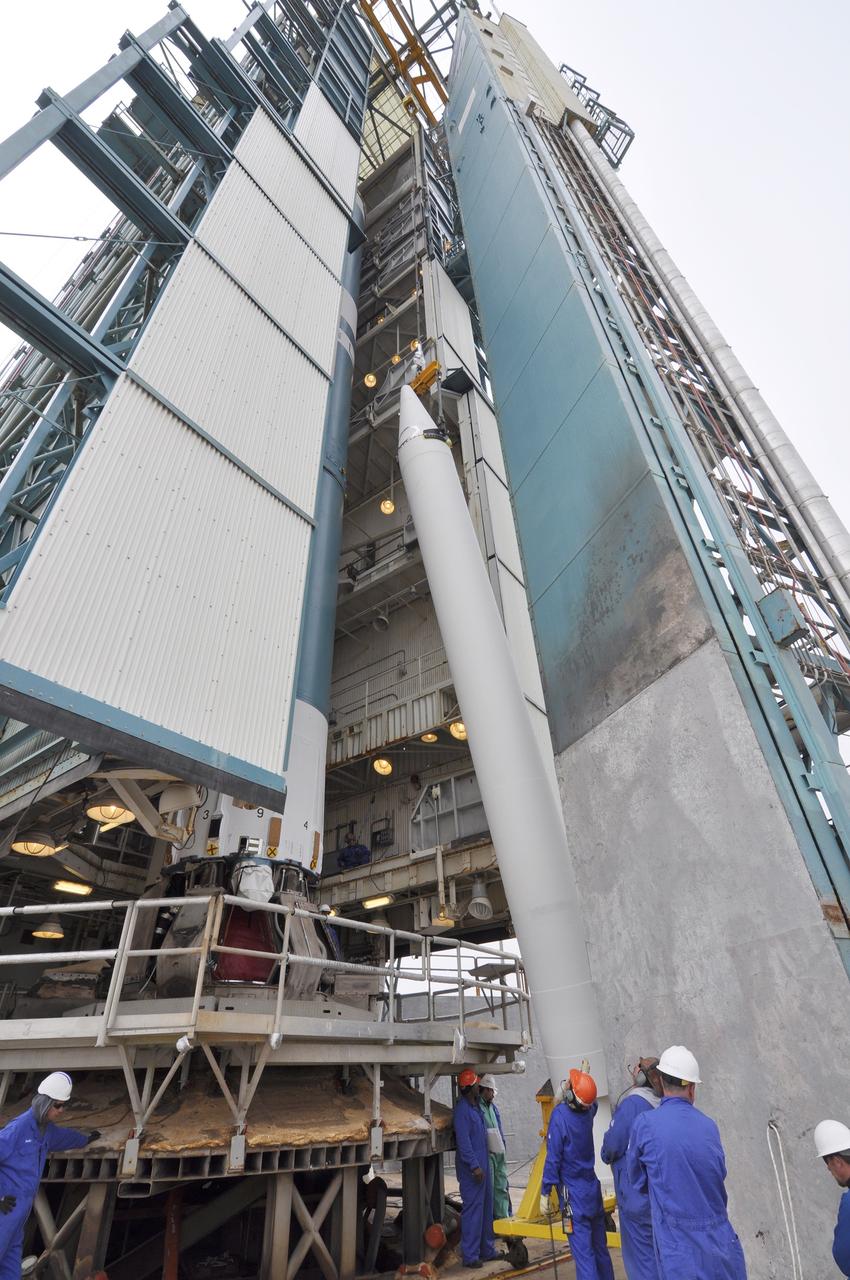
VANDENBERG AIR FORCE BASE, Calif. – A second solid rocket motor for the Delta II rocket for NASA's Soil Moisture Active Passive mission, or SMAP, glides into position beside the rocket's first stage in the mobile service tower at Space Launch Complex 2 on Vandenberg Air Force Base in California. SMAP will be launched on a Delta II 7320 configuration vehicle featuring a United Launch Alliance first stage booster powered by an Aerojet Rocketdyne RS-27A main engine and three Alliant Techsystems, or ATK, strap-on solid rocket motors. Once on station in Earth orbit, SMAP will provide global measurements of soil moisture and its freeze/thaw state. These measurements will be used to enhance understanding of processes that link the water, energy and carbon cycles, and to extend the capabilities of weather and climate prediction models. SMAP data also will be used to quantify net carbon flux in boreal landscapes and to develop improved flood prediction and drought monitoring capabilities. Launch is scheduled for no earlier than November 2014. To learn more about SMAP, visit http://smap.jpl.nasa.gov. Photo credit: NASA/Randy Beaudoin
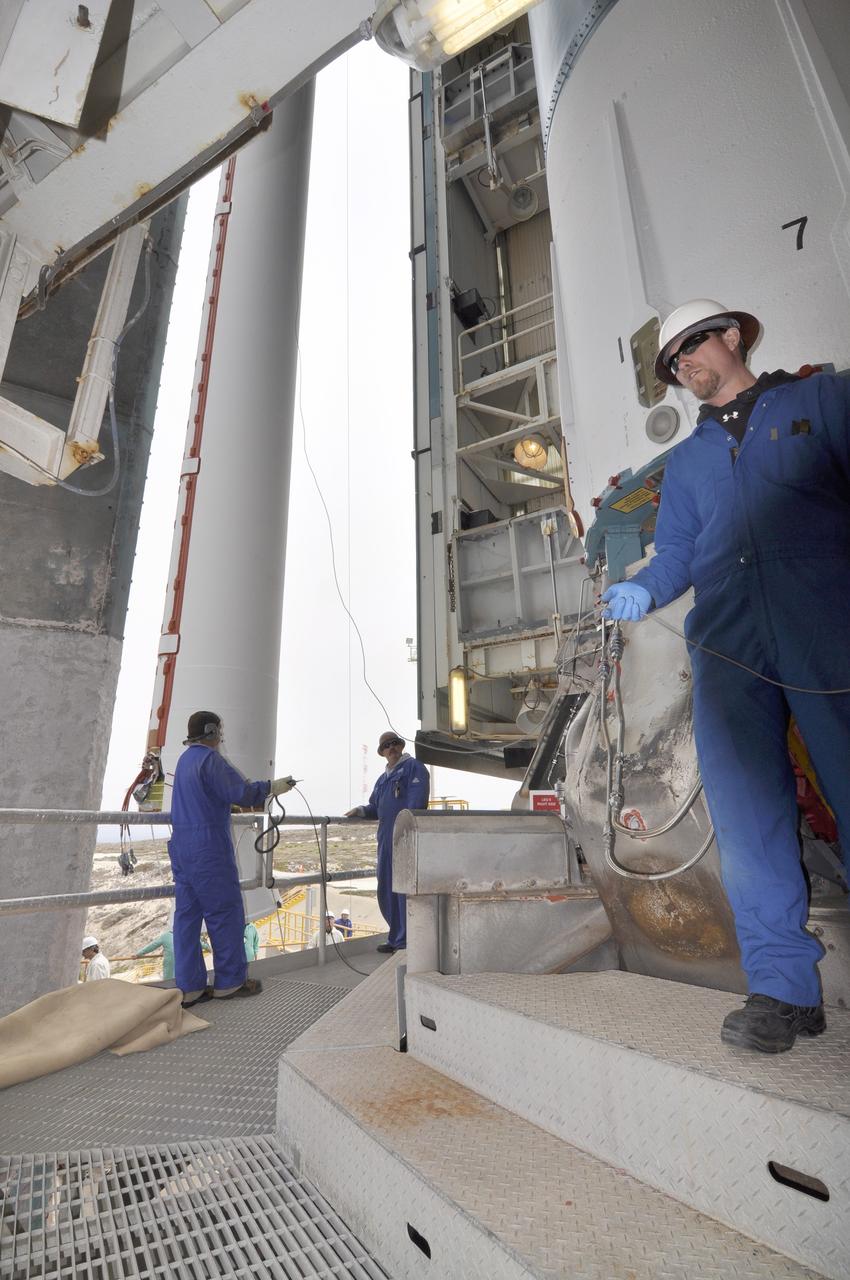
VANDENBERG AIR FORCE BASE, Calif. – Workers monitor a second solid rocket motor for the Delta II rocket for NASA's Soil Moisture Active Passive mission, or SMAP, as it is lifted into the mobile service tower at Space Launch Complex 2 on Vandenberg Air Force Base in California beside the rocket's first stage. SMAP will be launched on a Delta II 7320 configuration vehicle featuring a United Launch Alliance first stage booster powered by an Aerojet Rocketdyne RS-27A main engine and three Alliant Techsystems, or ATK, strap-on solid rocket motors. Once on station in Earth orbit, SMAP will provide global measurements of soil moisture and its freeze/thaw state. These measurements will be used to enhance understanding of processes that link the water, energy and carbon cycles, and to extend the capabilities of weather and climate prediction models. SMAP data also will be used to quantify net carbon flux in boreal landscapes and to develop improved flood prediction and drought monitoring capabilities. Launch is scheduled for no earlier than November 2014. To learn more about SMAP, visit http://smap.jpl.nasa.gov. Photo credit: NASA/Randy Beaudoin
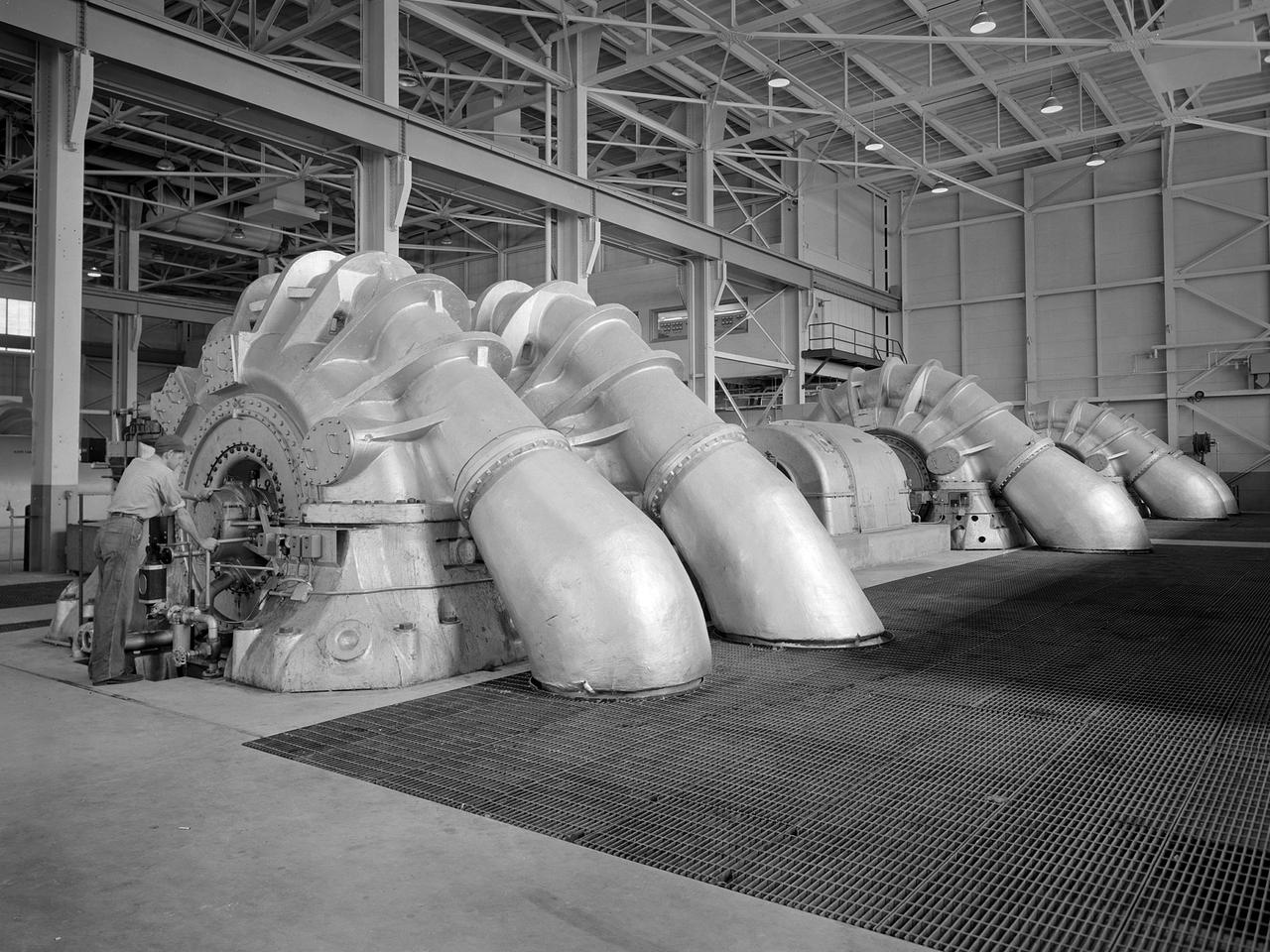
The Propulsion Systems Laboratory’s exhaust system was expanded in 1955 at the National Advisory Committee for Aeronautics (NACA) Lewis Flight Propulsion Laboratory. The facility contained two altitude chambers that were first used to study the increasingly-powerful jet engines of the early 1950s and the ramjets for missile programs such as Navaho and Bomarc. Later, the facility tested large rocket engines and a variety of turbofan engines. The exhaust system served two roles: reducing the density of the air in the test chambers to simulate high altitudes and removing the hot gases exhausted by the engines being tested. These tasks were accomplished by large Roots-Connersville exhauster equipment in the Equipment Building. The original configuration could exhaust the 3500° F gases at a rate of 100 pounds per second when the simulated altitude was 50,000 feet. In 1955, three years after operation started, a fourth line of exhausters was added. There were three centrifugal exhausters capable of supplying 166 pounds of air per second at the test chamber altitude of 50,000 feet or 384 pounds per second at 32,000 feet. These exhausters had two first-stage castings driven by a 10,000-horsepower motor; one second; one third; and one fourth-stage casting driven by a 16,500-horsepower motor. The total inlet volume of the exhausters is 1,650,000 cubic feet of gas per minute. The exhausters were continually improved and upgraded over the years.
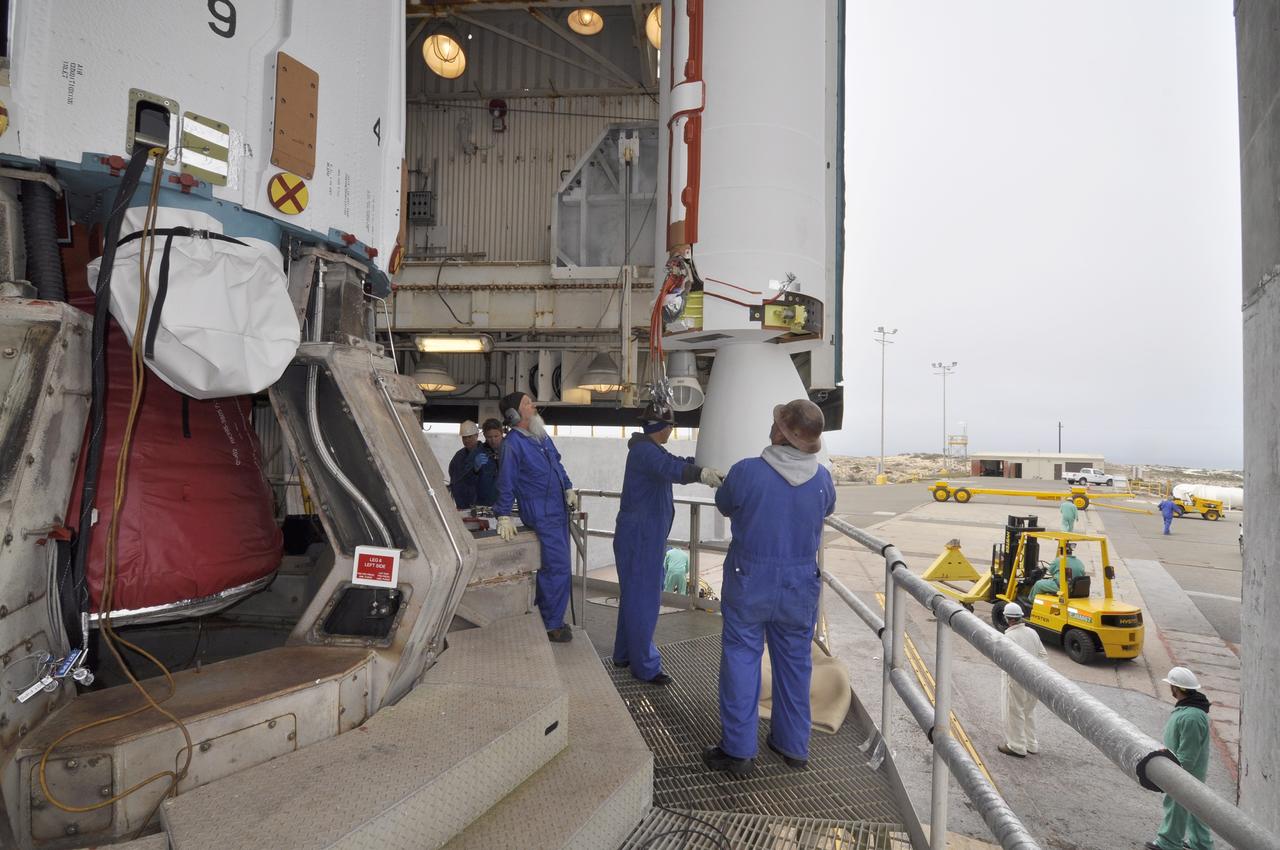
VANDENBERG AIR FORCE BASE, Calif. – Workers monitor a second solid rocket motor for the Delta II rocket for NASA's Soil Moisture Active Passive mission, or SMAP, as it is lowered into position beside the rocket's first stage in the mobile service tower at Space Launch Complex 2 on Vandenberg Air Force Base in California. SMAP will be launched on a Delta II 7320 configuration vehicle featuring a United Launch Alliance first stage booster powered by an Aerojet Rocketdyne RS-27A main engine and three Alliant Techsystems, or ATK, strap-on solid rocket motors. Once on station in Earth orbit, SMAP will provide global measurements of soil moisture and its freeze/thaw state. These measurements will be used to enhance understanding of processes that link the water, energy and carbon cycles, and to extend the capabilities of weather and climate prediction models. SMAP data also will be used to quantify net carbon flux in boreal landscapes and to develop improved flood prediction and drought monitoring capabilities. Launch is scheduled for no earlier than November 2014. To learn more about SMAP, visit http://smap.jpl.nasa.gov. Photo credit: NASA/Randy Beaudoin
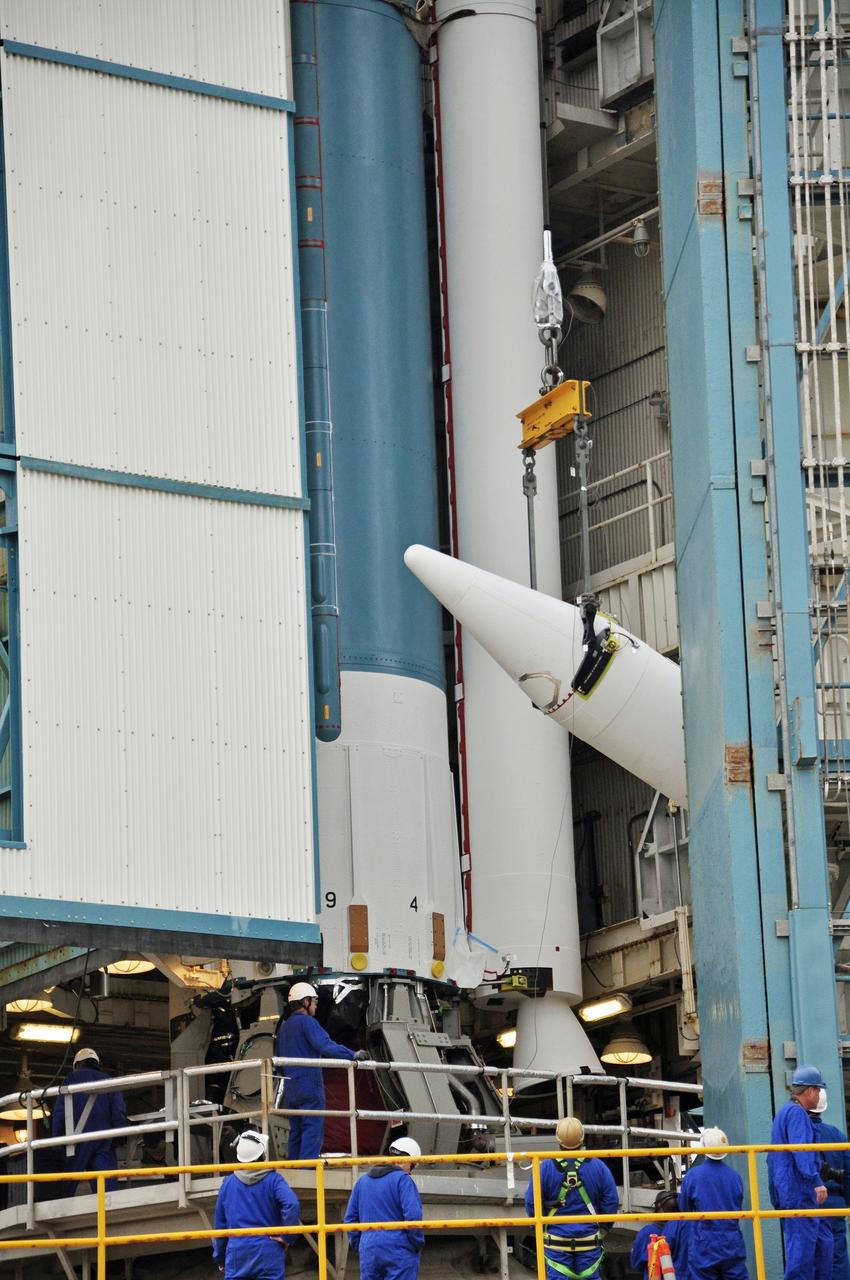
VANDENBERG AIR FORCE BASE, Calif. – Workers monitor the third solid rocket motor, or SRM, for NASA's Orbiting Carbon Observatory-2 mission, or OCO-2, as it is lifted into a vertical position beside the Delta II first stage in the mobile service tower at Space Launch Complex 2 on Vandenberg Air Force Base in California. Operations are underway to attach the Delta II rocket's three SRMs, known as graphite epoxy motors, to its first stage. OCO-2 is scheduled to launch into a polar Earth orbit aboard a United Launch Alliance Delta II 7320-10C rocket in July. Once in orbit, OCO-2 will collect precise global measurements of carbon dioxide in the Earth's atmosphere and provide scientists with a better idea of the chemical compound's impacts on climate change. Scientists will analyze this data to improve our understanding of the natural processes and human activities that regulate the abundance and distribution of this important atmospheric gas. To learn more about OCO-2, visit http://oco.jpl.nasa.gov. Photo credit: NASA/Randy Beaudoin
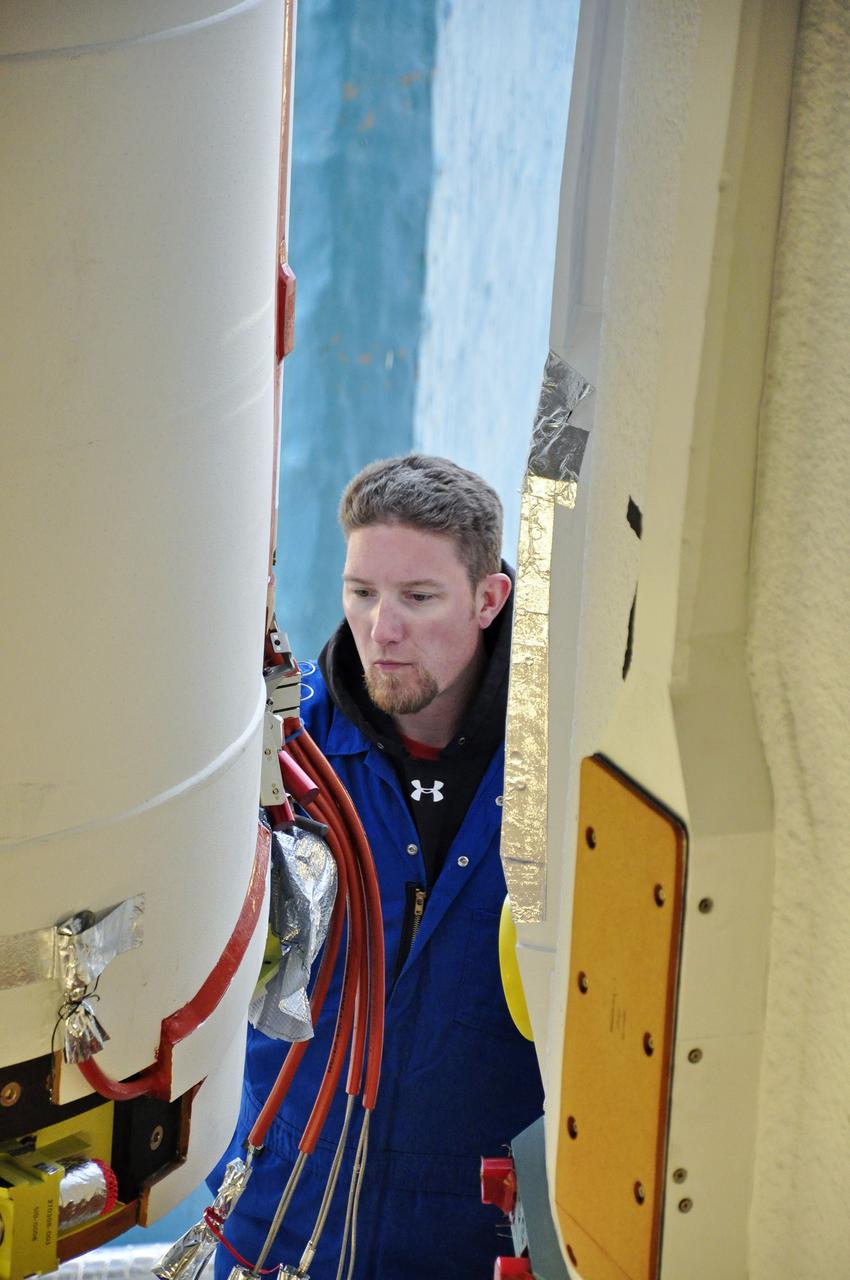
VANDENBERG AIR FORCE BASE, Calif. – A worker prepares to attach a solid rocket motor, or SRM, for NASA's Orbiting Carbon Observatory-2 mission, or OCO-2, to the Delta II first stage in the mobile service tower at Space Launch Complex 2 on Vandenberg Air Force Base in California. Operations are underway to attach the rocket's three SRMs, known as graphite epoxy motors, to its first stage. OCO-2 is scheduled to launch into a polar Earth orbit aboard a United Launch Alliance Delta II 7320-10C rocket in July. Once in orbit, OCO-2 will collect precise global measurements of carbon dioxide in the Earth's atmosphere and provide scientists with a better idea of the chemical compound's impacts on climate change. Scientists will analyze this data to improve our understanding of the natural processes and human activities that regulate the abundance and distribution of this important atmospheric gas. To learn more about OCO-2, visit http://oco.jpl.nasa.gov. Photo credit: NASA/Randy Beaudoin
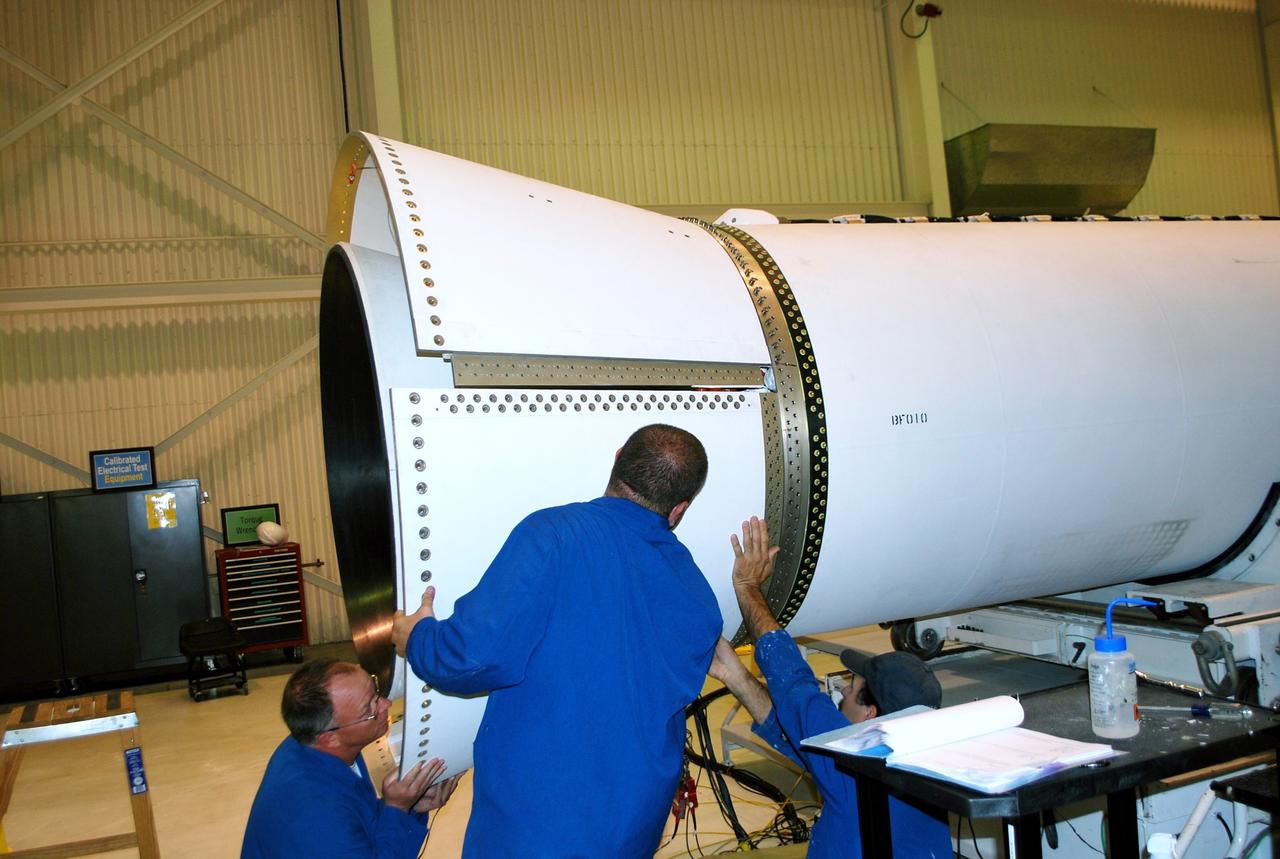
VANDENBERG AIR FORCE BASE, Calif. – In Building 1555 at Vandenberg Air Force Base in California, Orbital Sciences Corp. technicians install the second petal to the aft end of the Taurus XL rocket's first stage motor. Three pedals will essentially make up the aft skirt of the first stage, covering and protecting a myriad of cabling. The Orbital Sciences Taurus XL rocket, targeted to lift off Feb. 23, 2011, from Vandenberg's Space Launch Complex 576-E, will take NASA's Glory satellite into low Earth. Glory is scheduled to collect data on the properties of aerosols and black carbon. It also will help scientists understand how the sun's irradiance affects Earth's climate. Photo credit: NASA/Randy Beaudoin, VAFB
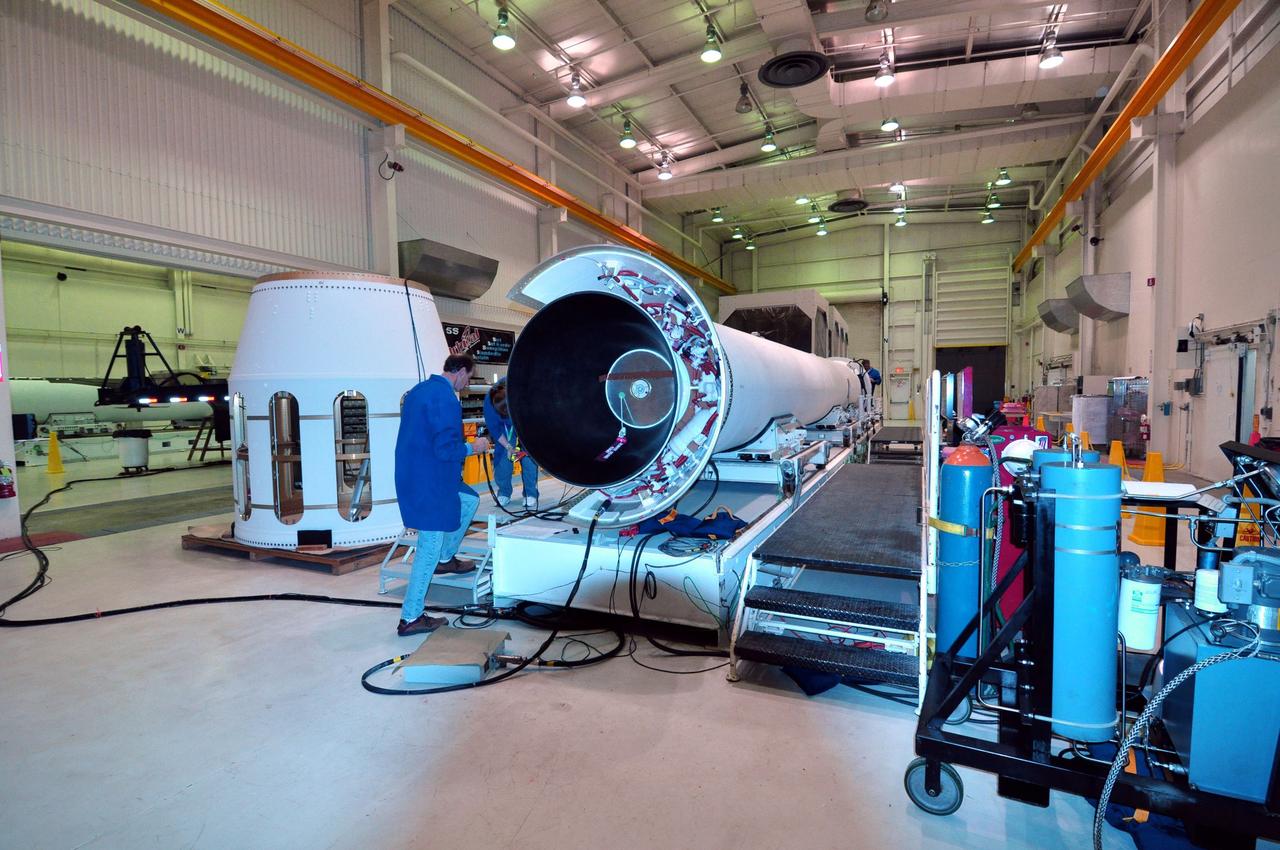
VANDENBERG AIR FORCE BASE, Calif. – In Orbital Sciences Corp. Building 1555 at Vandenberg Air Force Base in California, Orbital Sciences technicians continue to work on cabling on the aft end of the Taurus XL rocket's first stage motor. To the left is the interstage associated with the first stage. The Orbital Sciences Taurus XL rocket, targeted to lift off Feb. 23, 2011, from Vandenberg's Space Launch Complex 576-E, will take NASA's Glory satellite into low Earth orbit. Once in orbit, Glory will collect data on the properties of aerosols and black carbon. It also will help scientists understand how the sun's irradiance affects Earth's climate. Photo credit: NASA/Randy Beaudoin, VAFB
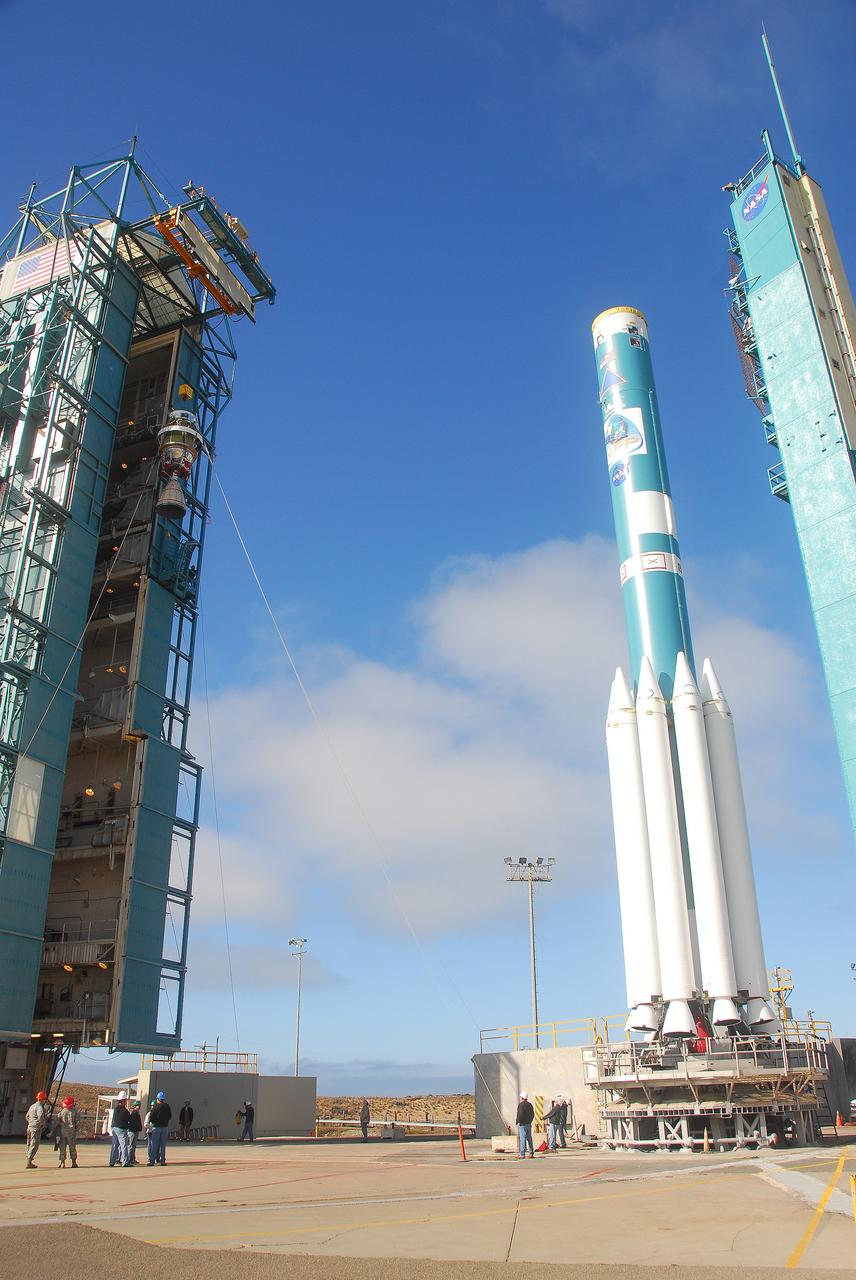
VANDENBERG AIR FORCE BASE, Calif. -- At Vandenberg Air Force Base in California, the AJ10 engine for the second stage of the United Launch Alliance Delta II rocket is hoisted high at the service tower. To the right is the rocket’s third stage with several solid rocket motors attached. The Delta II will carry NASA's National Polar-orbiting Operational Environmental Satellite System Preparatory Project (NPP) satellite into space. NPP represents a critical first step in building the next-generation of Earth-observing satellites. NPP will carry the first of the new sensors developed for this satellite fleet, now known as the Joint Polar Satellite System (JPSS) to be launched in 2016. NPP is the bridge between NASA's Earth Observing System (EOS) satellites and the forthcoming series of JPSS satellites. The mission will test key technologies and instruments for the JPSS missions. NPP is targeted to launch Oct. 25. For more information, visit http://www.nasa.gov/NPP. Photo credit: NASA/VAFB
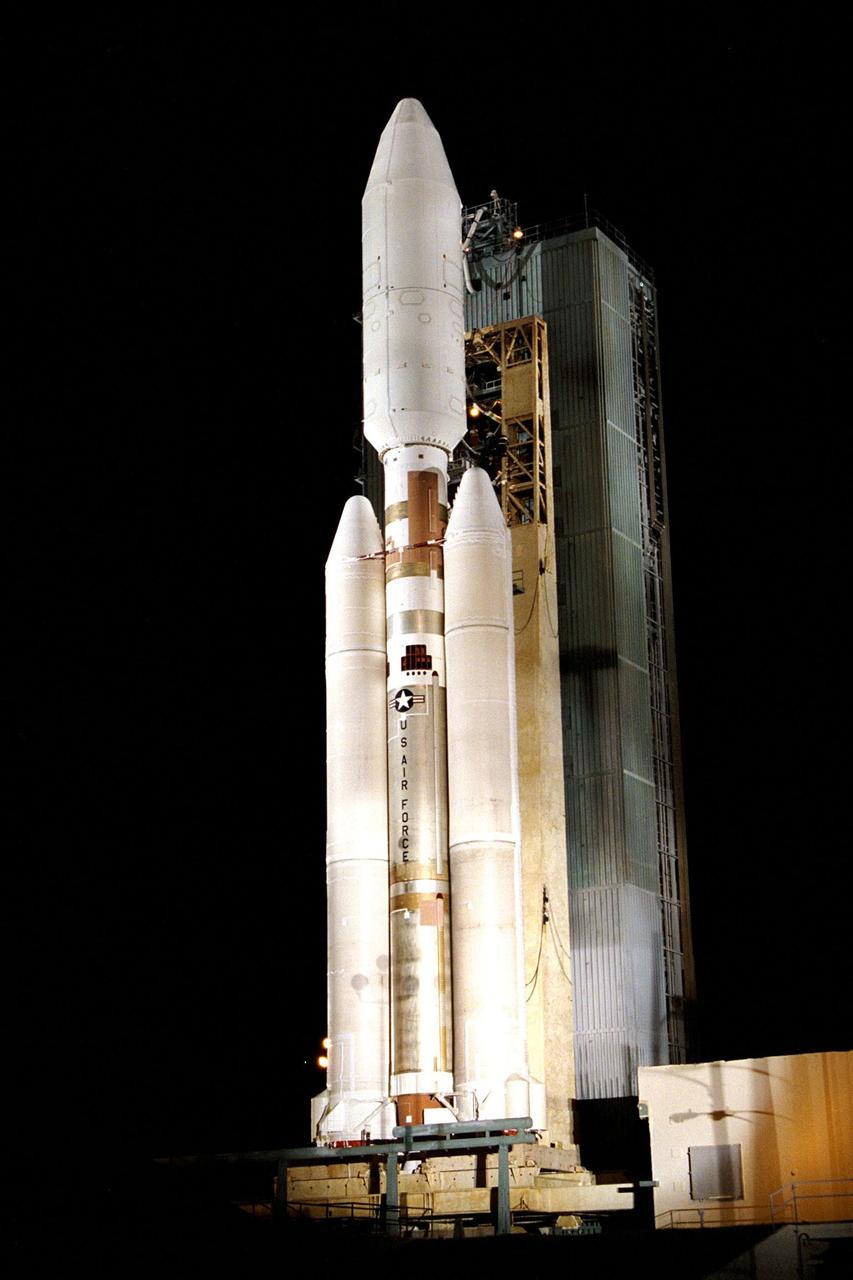
At Launch Complex 40 on Cape Canaveral Air Station, the Mobile Service Tower has been retracted away from the Titan IVB/Centaur carrying the Cassini spacecraft and its attached Huygens probe. This is the second launch attempt for the Saturn-bound mission; a first try Oct. 13 was scrubbed primarily due to concerns about upper level wind conditions. Liftoff Oct. 15 is set to occur during a launch window opening at 4:43 a.m. EDT and extending until 7:03 a.m. Clearly visible in this view are the 66-foot-tall, 17-foot-wide payload fairing atop the vehicle, in which Cassini and the attached Centaur stage are encased, the two-stage liquid propellant core vehicle, and the twin 112-foot long solid rocket motor upgrades (SRMUs) straddling the core vehicle. It is the SRMUs which ignite first to begin the launch sequence
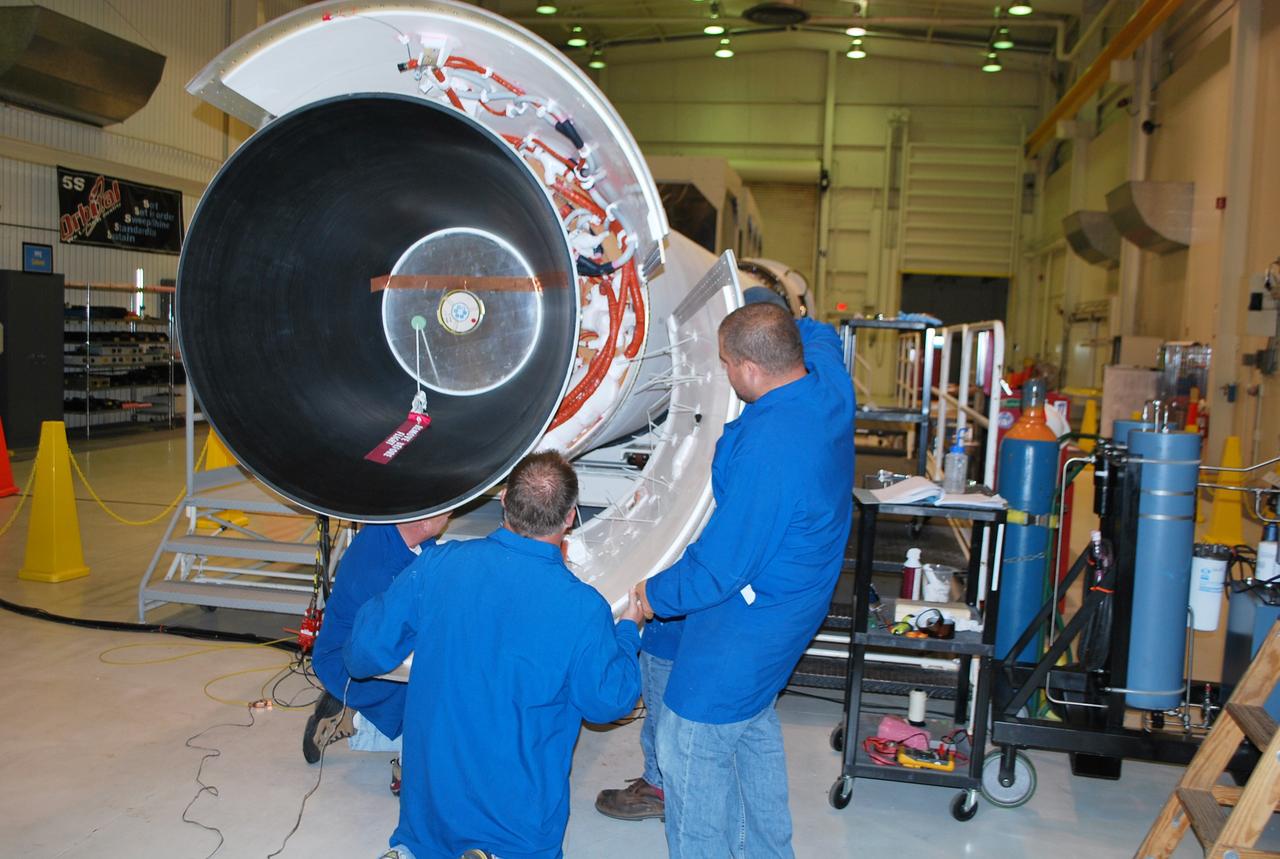
VANDENBERG AIR FORCE BASE, Calif. – In Building 1555 at Vandenberg Air Force Base in California, Orbital Sciences Corp. technicians install the second petal to the aft end of the Taurus XL rocket's first stage motor. Three pedals will essentially make up the aft skirt of the first stage, covering and protecting a myriad of cabling. The Orbital Sciences Taurus XL rocket, targeted to lift off Feb. 23, 2011, from Vandenberg's Space Launch Complex 576-E, will take NASA's Glory satellite into low Earth. Glory is scheduled to collect data on the properties of aerosols and black carbon. It also will help scientists understand how the sun's irradiance affects Earth's climate. Photo credit: NASA/Randy Beaudoin, VAFB
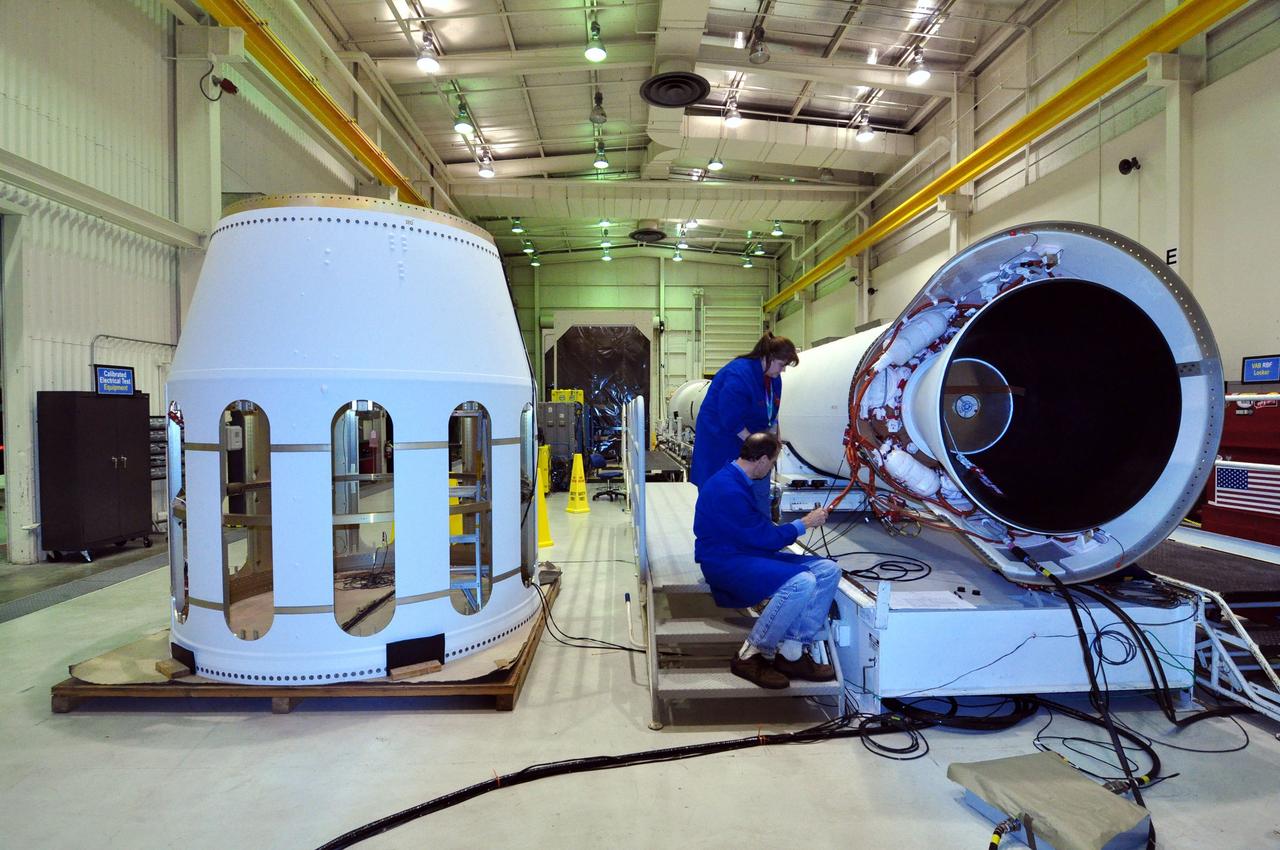
VANDENBERG AIR FORCE BASE, Calif. – In Orbital Sciences Corp. Building 1555 at Vandenberg Air Force Base in California, Orbital Sciences technicians continue to work on cabling on the aft end of the Taurus XL rocket's first stage motor. To the left is the interstage associated with the first stage. The Orbital Sciences Taurus XL rocket, targeted to lift off Feb. 23, 2011, from Vandenberg's Space Launch Complex 576-E, will take NASA's Glory satellite into low Earth orbit. Once in orbit, Glory will collect data on the properties of aerosols and black carbon. It also will help scientists understand how the sun's irradiance affects Earth's climate. Photo credit: NASA/Randy Beaudoin, VAFB
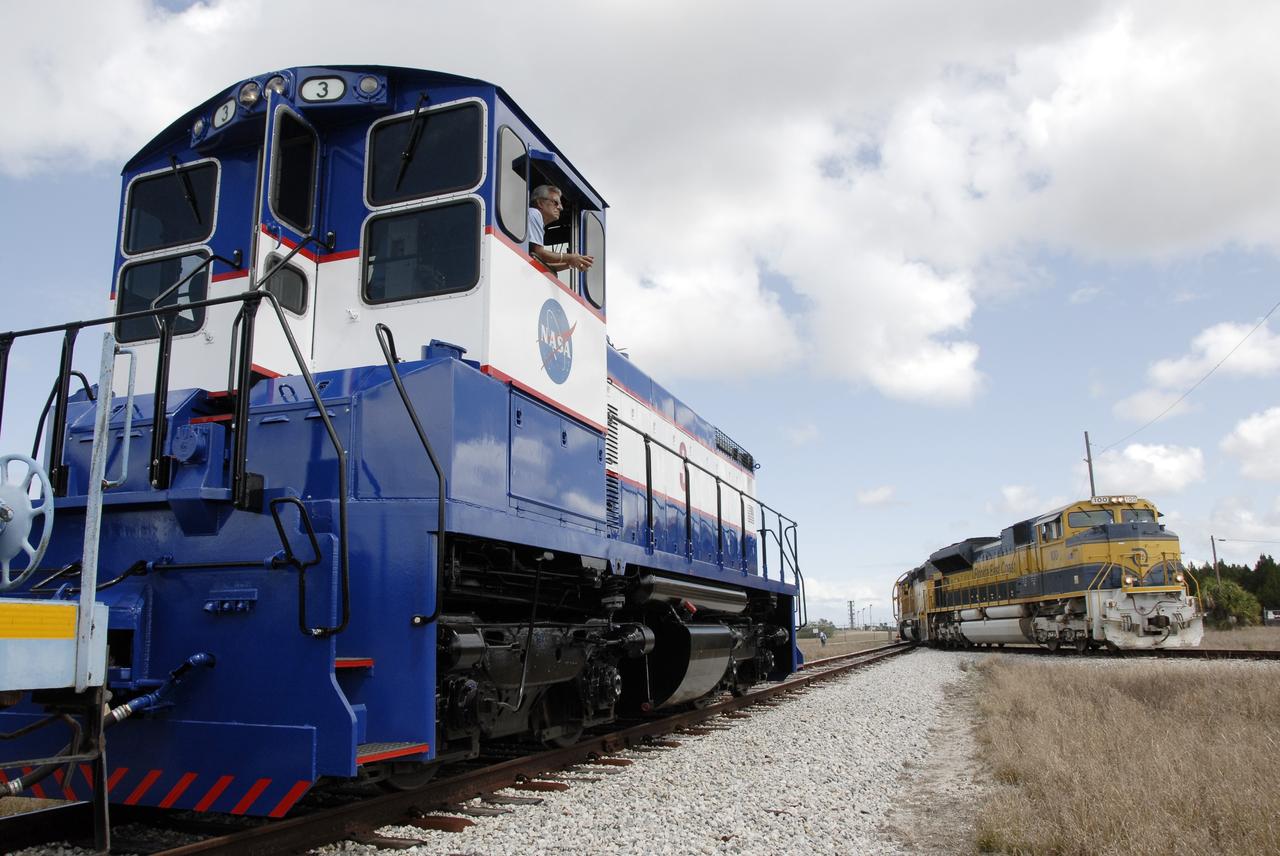
CAPE CANAVERAL, Fla. – The Florida East Coast Railway train arrives at the Jay Jay Rail Yard with the booster segments for the Ares I-X test rocket for interchange with the NASA Railroad (left). The four reusable motor segments and the nozzle exit cone, manufactured by the Ares I first-stage prime contractor Alliant Techsystems Inc., or ATK, departed Utah March 12 on the seven-day, cross-country trip to Florida. The segments will be delivered to the Rotation, Processing and Surge Facility for final processing and integration. The booster used for the Ares I-X launch is being modified by adding new forward structures and a fifth segment simulator. The motor is the final hardware needed for the rocket's upcoming test flight this summer. The stacking operations are scheduled to begin in the Vehicle Assembly Building in April. Photo credit: NASA/Kim Shiflett
VANDENBERG AIR FORCE BASE, Calif. – A second solid rocket motor, or SRM, for NASA's Orbiting Carbon Observatory-2 mission, or OCO-2, is towed to Space Launch Complex 2 on Vandenberg Air Force Base in California. Operations are underway to attach the Delta II rocket's three SRMs, known as graphite epoxy motors, to the rocket's first stage. OCO-2 is scheduled to launch into a polar Earth orbit aboard a United Launch Alliance Delta II 7320-10C rocket in July. Once in orbit, OCO-2 will collect precise global measurements of carbon dioxide in the Earth's atmosphere and provide scientists with a better idea of the chemical compound's impacts on climate change. Scientists will analyze this data to improve our understanding of the natural processes and human activities that regulate the abundance and distribution of this important atmospheric gas. To learn more about OCO-2, visit http://oco.jpl.nasa.gov. Photo credit: NASA/Randy Beaudoin
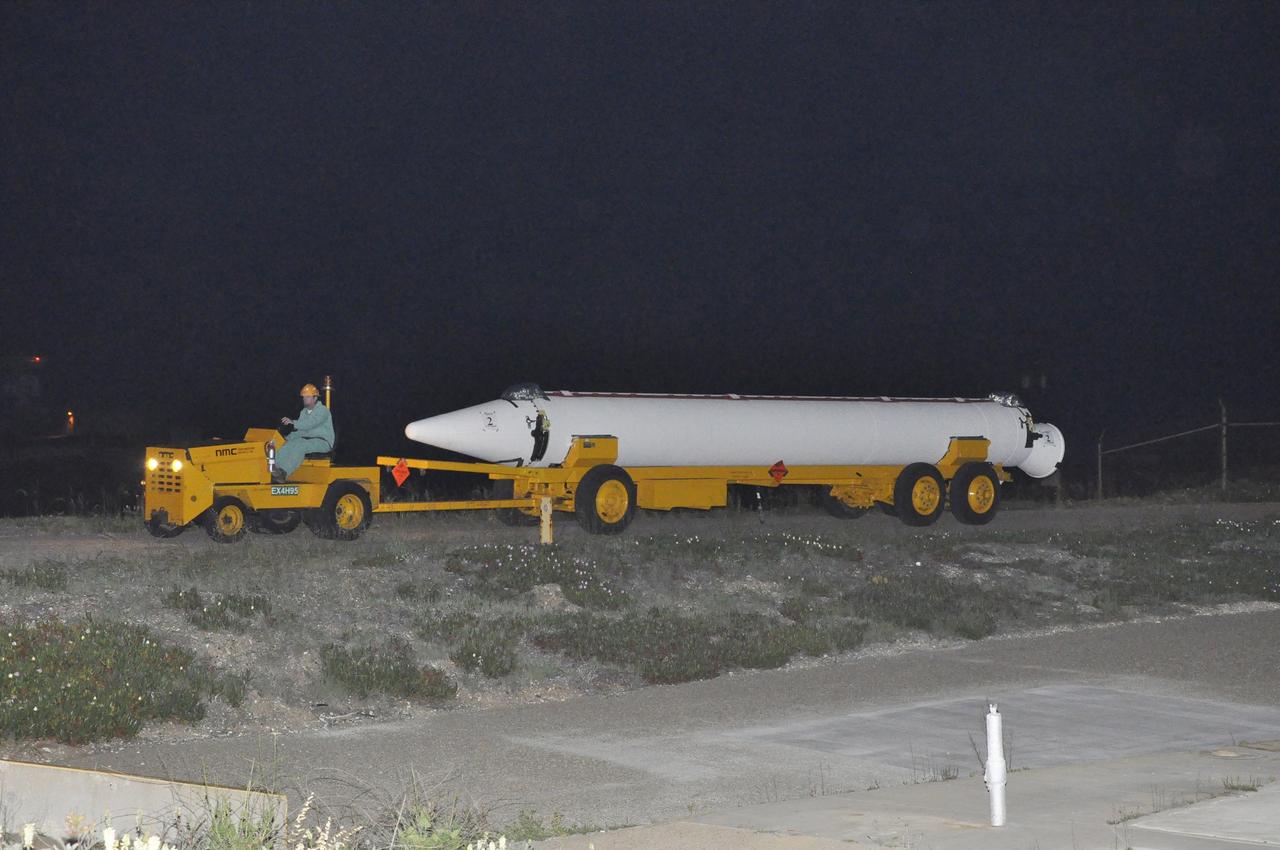
VANDENBERG AIR FORCE BASE, Calif. – A solid rocket motor, or SRM, for NASA's Orbiting Carbon Observatory-2 mission, or OCO-2, is towed to Space Launch Complex 2 on Vandenberg Air Force Base in California. Operations are underway to attach the Delta II rocket's three SRMs, known as graphite epoxy motors, to the rocket's first stage. OCO-2 is scheduled to launch into a polar Earth orbit aboard a United Launch Alliance Delta II 7320-10C rocket in July. Once in orbit, OCO-2 will collect precise global measurements of carbon dioxide in the Earth's atmosphere and provide scientists with a better idea of the chemical compound's impacts on climate change. Scientists will analyze this data to improve our understanding of the natural processes and human activities that regulate the abundance and distribution of this important atmospheric gas. To learn more about OCO-2, visit http://oco.jpl.nasa.gov. Photo credit: NASA/Randy Beaudoin
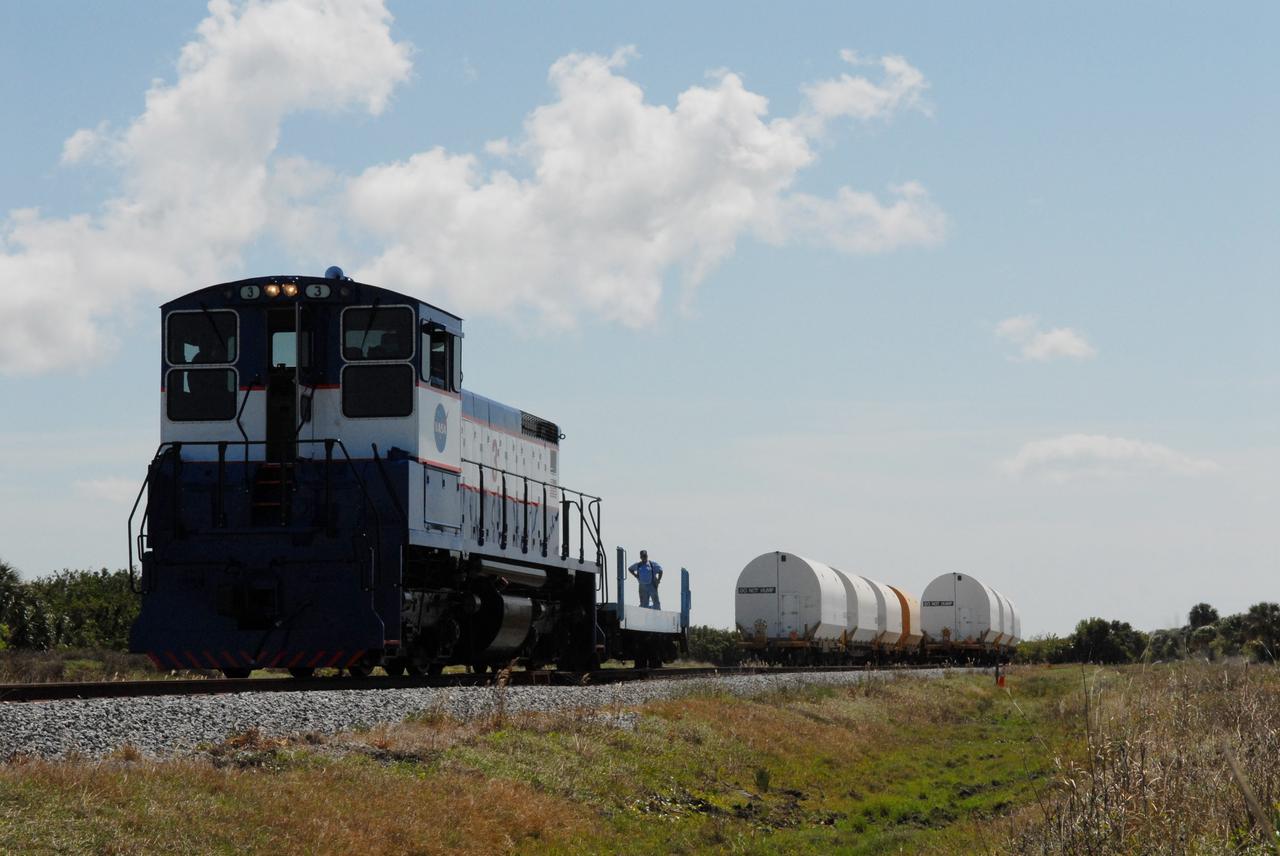
CAPE CANAVERAL, Fla. –The cars on the NASA Railroad are separated for different destinations at NASA's Kennedy Space Center in Florida. They carry Ares I-X segments. One of the cars is going to the Rotation, Processing and Surge Facility. The four reusable motor segments and the nozzle exit cone, manufactured by the Ares I first-stage prime contractor Alliant Techsystems Inc., or ATK, departed Utah March 12 on the seven-day, cross-country trip to Florida. The segments will be delivered to Kennedy's Rotation, Processing and Surge Facility for final processing and integration. The booster used for the Ares I-X launch is being modified by adding new forward structures and a fifth segment simulator. The motor is the final hardware needed for the rocket's upcoming test flight this summer. The stacking operations are scheduled to begin in the Vehicle Assembly Building in April. Photo credit: NASA/Jack Pfaller
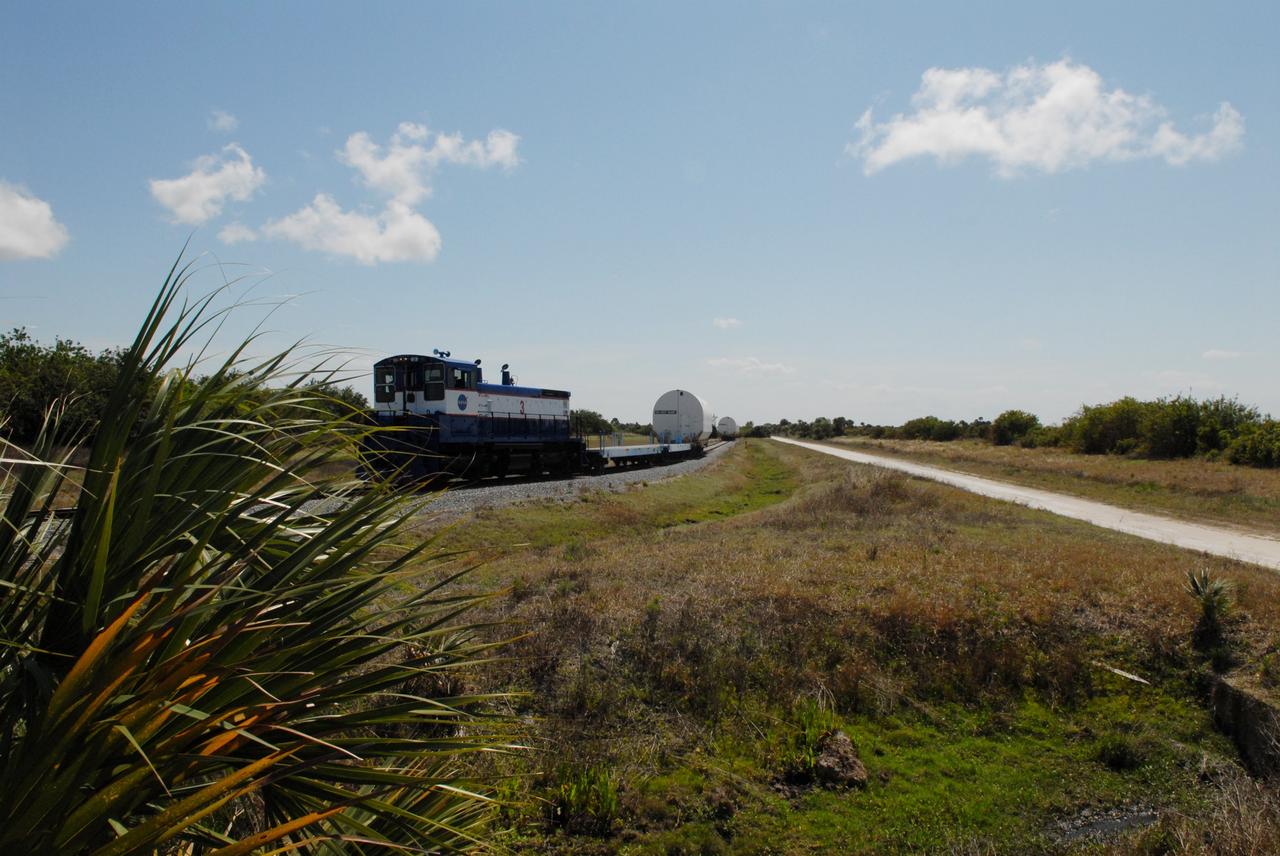
CAPE CANAVERAL, Fla. – The NASA Railroad leaves four of the cars with Ares I-X segments at Suspect siding on NASA's Kennedy Space Center in Florida and continues on with the remaining car to the Rotation, Processing and Surge Facility. The four reusable motor segments and the nozzle exit cone, manufactured by the Ares I first-stage prime contractor Alliant Techsystems Inc., or ATK, departed Utah March 12 on the seven-day, cross-country trip to Florida. The segments will be delivered to Kennedy's Rotation, Processing and Surge Facility for final processing and integration. The booster used for the Ares I-X launch is being modified by adding new forward structures and a fifth segment simulator. The motor is the final hardware needed for the rocket's upcoming test flight this summer. The stacking operations are scheduled to begin in the Vehicle Assembly Building in April. Photo credit: NASA/Jack Pfaller
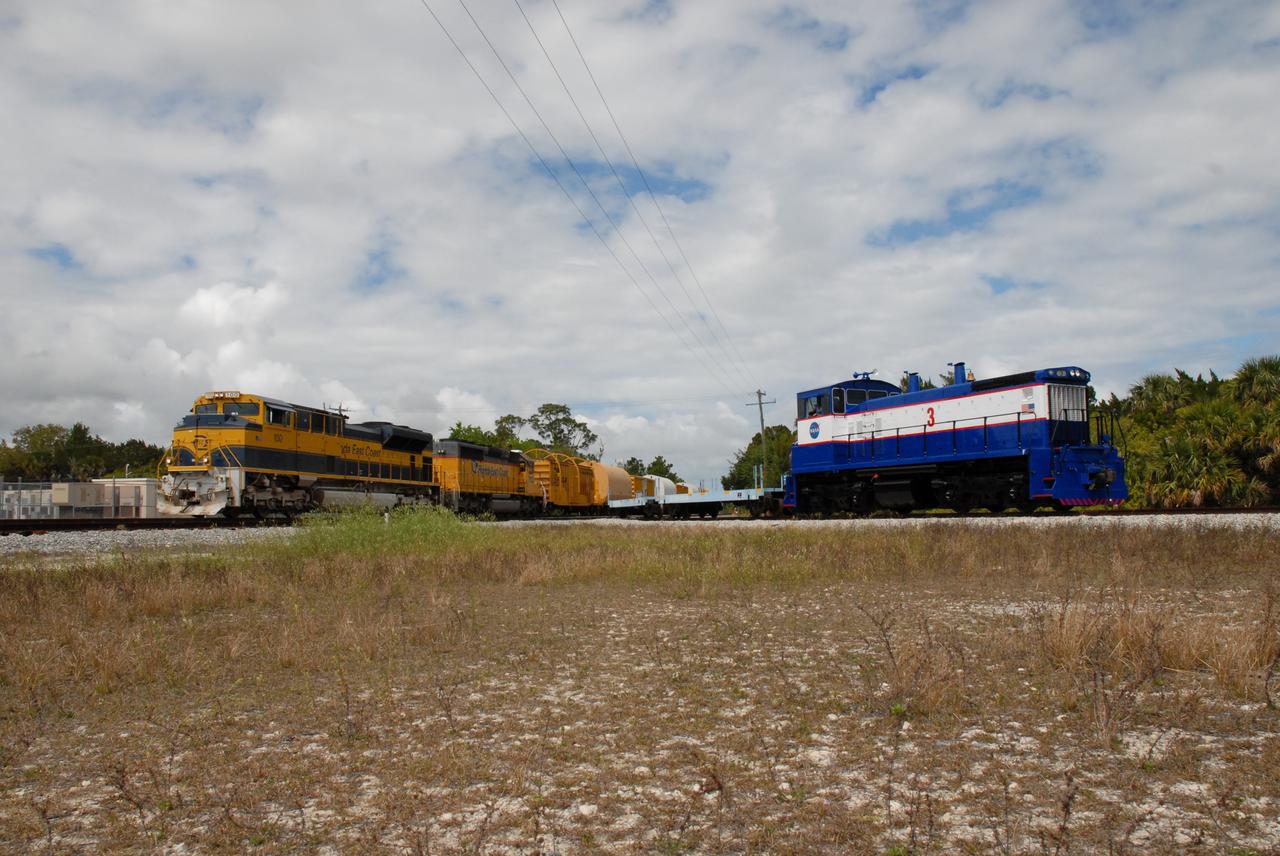
CAPE CANAVERAL, Fla. – The NASA Railroad (right) is ready for the exchange of the Florida East Coast Railway cars carrying the booster segments for the Ares I-X test rocket. The four reusable motor segments and the nozzle exit cone, manufactured by the Ares I first-stage prime contractor Alliant Techsystems Inc., or ATK, departed Utah March 12 on the seven-day, cross-country trip to Florida. The segments will be delivered to the Rotation, Processing and Surge Facility for final processing and integration. The booster used for the Ares I-X launch is being modified by adding new forward structures and a fifth segment simulator. The motor is the final hardware needed for the rocket's upcoming test flight this summer. The stacking operations are scheduled to begin in the Vehicle Assembly Building in April. Photo credit: NASA/Kim Shiflett

CAPE CANAVERAL, Fla. – The Florida East Coast Railway train arrives at the Jay Jay Rail Yard with the booster segments for the Ares I-X test rocket for interchange with the NASA Railroad. Officials from Alliant Techsystems Inc. and NASA accompany the train. The four reusable motor segments and the nozzle exit cone, manufactured by the Ares I first-stage prime contractor Alliant Techsystems Inc., or ATK, departed Utah March 12 on the seven-day, cross-country trip to Florida. The segments will be delivered to the Rotation, Processing and Surge Facility for final processing and integration. The booster used for the Ares I-X launch is being modified by adding new forward structures and a fifth segment simulator. The motor is the final hardware needed for the rocket's upcoming test flight this summer. The stacking operations are scheduled to begin in the Vehicle Assembly Building in April. Photo credit: NASA/Kim Shiflett
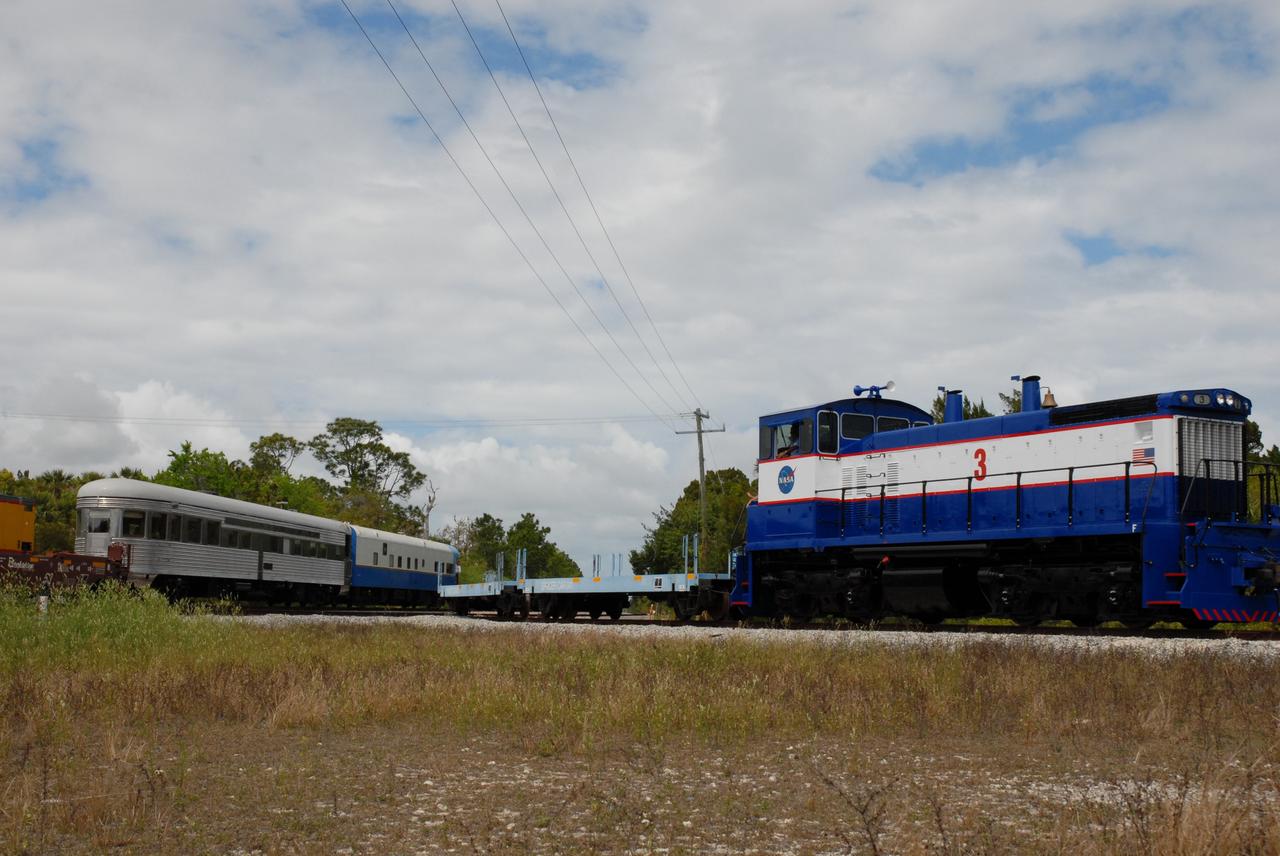
CAPE CANAVERAL, Fla. – – The NASA Railroad (right) is ready for the exchange of the Florida East Coast Railway cars carrying the booster segments for the Ares I-X test rocket. The four reusable motor segments and the nozzle exit cone, manufactured by the Ares I first-stage prime contractor Alliant Techsystems Inc., or ATK, departed Utah March 12 on the seven-day, cross-country trip to Florida. The segments will be delivered to the Rotation, Processing and Surge Facility for final processing and integration. The booster used for the Ares I-X launch is being modified by adding new forward structures and a fifth segment simulator. The motor is the final hardware needed for the rocket's upcoming test flight this summer. The stacking operations are scheduled to begin in the Vehicle Assembly Building in April. Photo credit: NASA/Kim Shiflett
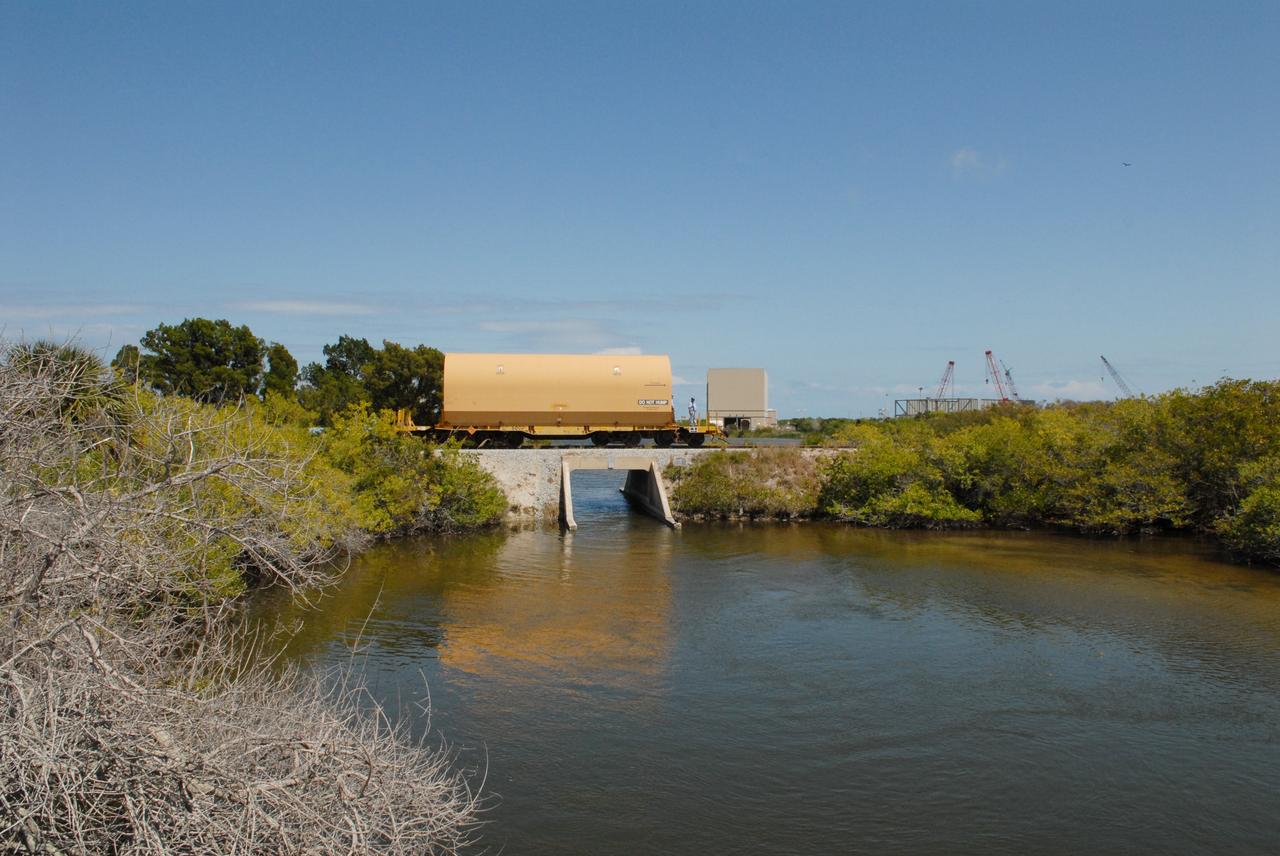
CAPE CANAVERAL, Fla. –The NASA Railroad is hauling one of the cars with an Ares I-X segment to the Rotation, Processing and Surge Facility at NASA's Kennedy Space Center in Florida. The four reusable motor segments and the nozzle exit cone, manufactured by the Ares I first-stage prime contractor Alliant Techsystems Inc., or ATK, departed Utah March 12 on the seven-day, cross-country trip to Florida. The segments will be delivered to Kennedy's Rotation, Processing and Surge Facility for final processing and integration. The booster used for the Ares I-X launch is being modified by adding new forward structures and a fifth segment simulator. The motor is the final hardware needed for the rocket's upcoming test flight this summer. The stacking operations are scheduled to begin in the Vehicle Assembly Building in April. Photo credit: NASA/Jack Pfaller
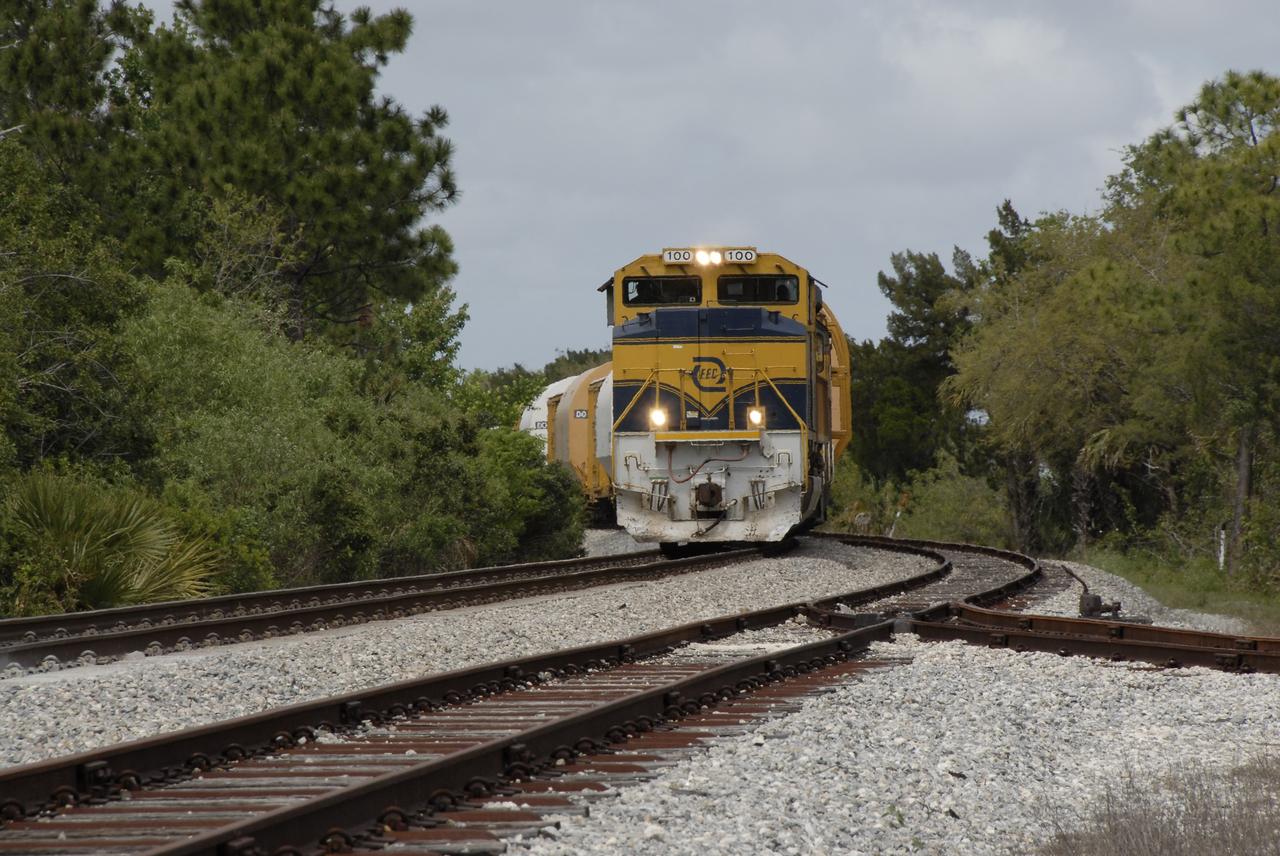
CAPE CANAVERAL, Fla. – The Florida East Coast Railway train arrives at the Jay Jay Rail Yard with the booster segments for the Ares I-X test rocket for interchange with the NASA Railroad. The four reusable motor segments and the nozzle exit cone, manufactured by the Ares I first-stage prime contractor Alliant Techsystems Inc., or ATK, departed Utah March 12 on the seven-day, cross-country trip to Florida. The segments will be delivered to the Rotation, Processing and Surge Facility for final processing and integration. The booster used for the Ares I-X launch is being modified by adding new forward structures and a fifth segment simulator. The motor is the final hardware needed for the rocket's upcoming test flight this summer. The stacking operations are scheduled to begin in the Vehicle Assembly Building in April. Photo credit: NASA/Kim Shiflett
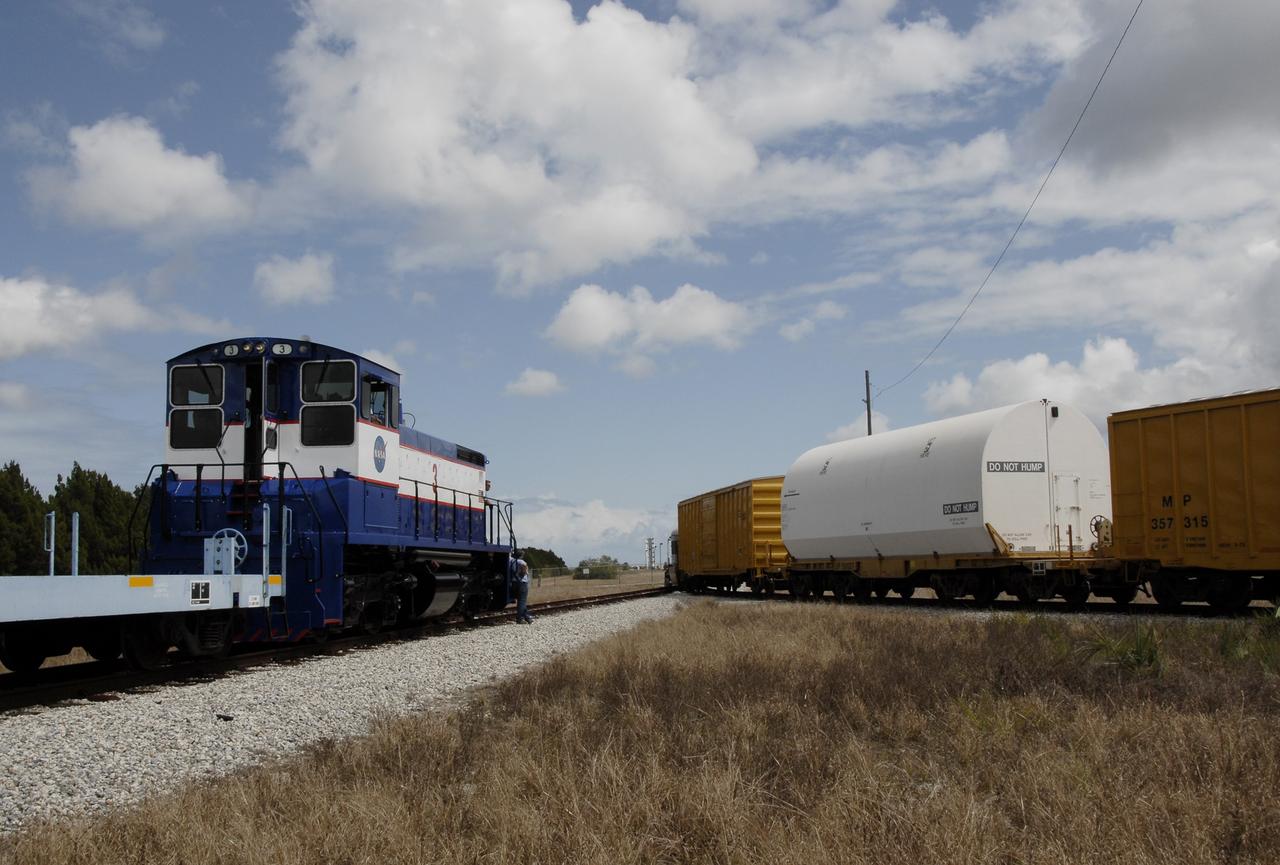
CAPE CANAVERAL, Fla. – The Florida East Coast Railway train arrives at the Jay Jay Rail Yard with the booster segments for the Ares I-X test rocket for interchange with the NASA Railroad. The four reusable motor segments and the nozzle exit cone, manufactured by the Ares I first-stage prime contractor Alliant Techsystems Inc., or ATK, departed Utah March 12 on the seven-day, cross-country trip to Florida. The segments will be delivered to the Rotation, Processing and Surge Facility for final processing and integration. The booster used for the Ares I-X launch is being modified by adding new forward structures and a fifth segment simulator. The motor is the final hardware needed for the rocket's upcoming test flight this summer. The stacking operations are scheduled to begin in the Vehicle Assembly Building in April. Photo credit: NASA/Kim Shiflett
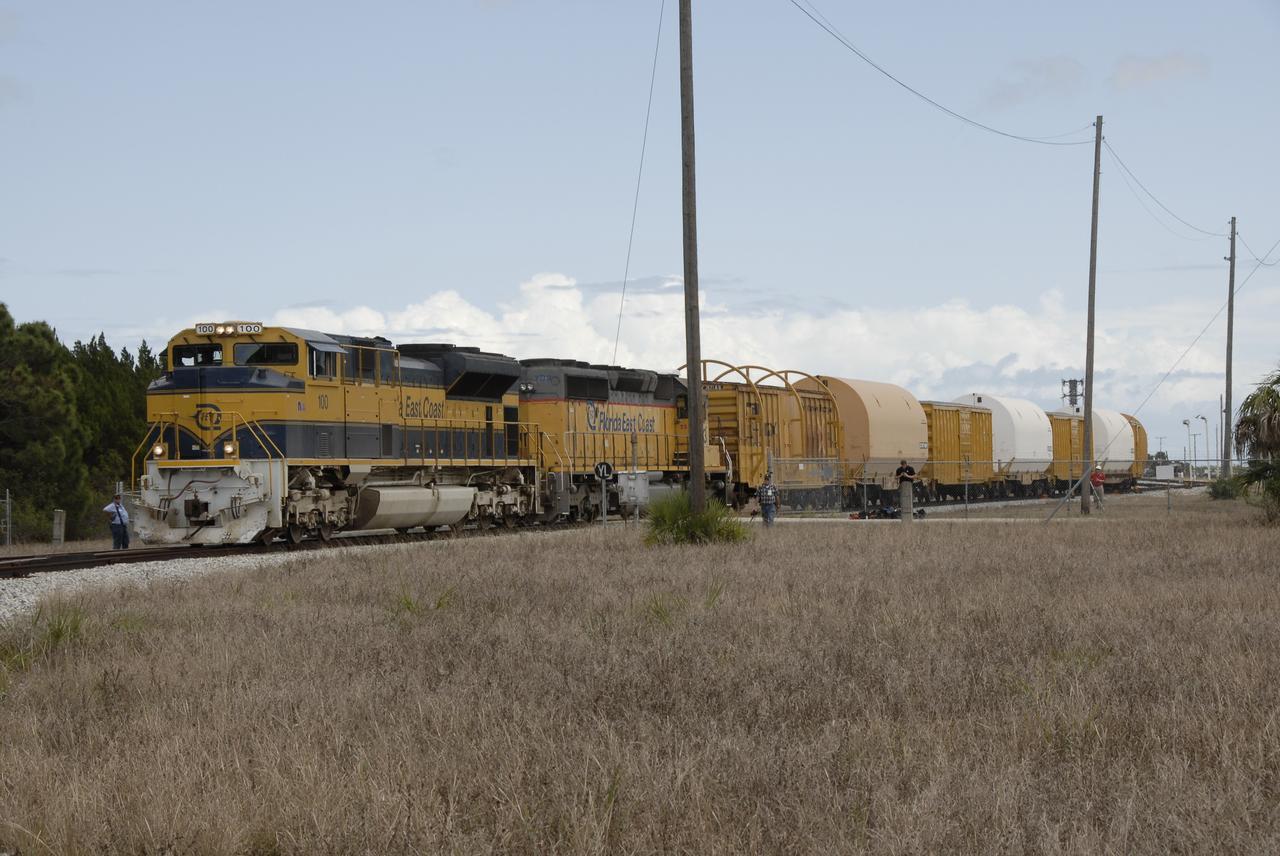
CAPE CANAVERAL, Fla. – The Florida East Coast Railway train arrives at the Jay Jay Rail Yard with the booster segments for the Ares I-X test rocket for interchange with the NASA Railroad. The four reusable motor segments and the nozzle exit cone, manufactured by the Ares I first-stage prime contractor Alliant Techsystems Inc., or ATK, departed Utah March 12 on the seven-day, cross-country trip to Florida. The segments will be delivered to the Rotation, Processing and Surge Facility for final processing and integration. The booster used for the Ares I-X launch is being modified by adding new forward structures and a fifth segment simulator. The motor is the final hardware needed for the rocket's upcoming test flight this summer. The stacking operations are scheduled to begin in the Vehicle Assembly Building in April. Photo credit: NASA/Kim Shiflett
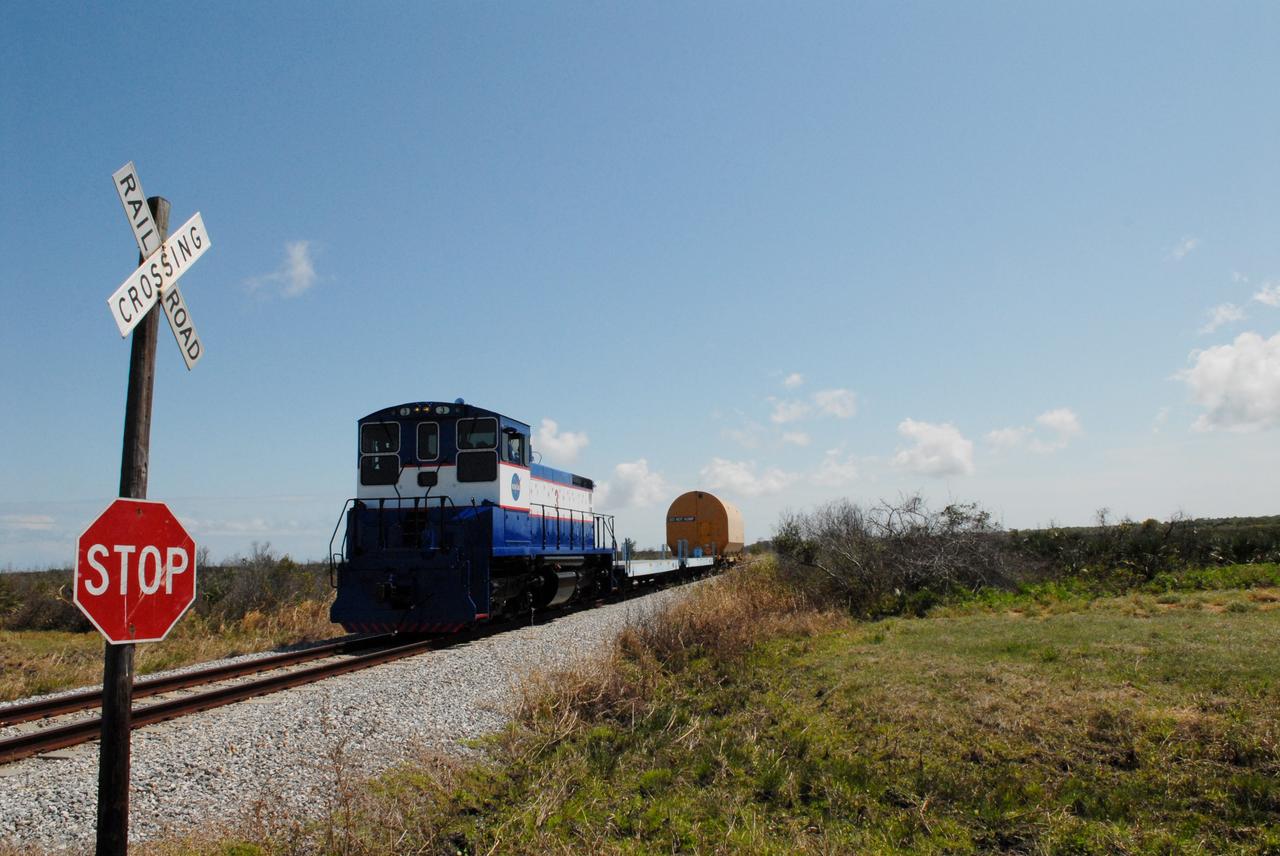
CAPE CANAVERAL, Fla. –This NASA Railroad engine is hauling one of the cars with an Ares I-X segment to the Rotation, Processing and Surge Facility at NASA's Kennedy Space Center in Florida. The four reusable motor segments and the nozzle exit cone, manufactured by the Ares I first-stage prime contractor Alliant Techsystems Inc., or ATK, departed Utah March 12 on the seven-day, cross-country trip to Florida. The segments will be delivered to Kennedy's Rotation, Processing and Surge Facility for final processing and integration. The booster used for the Ares I-X launch is being modified by adding new forward structures and a fifth segment simulator. The motor is the final hardware needed for the rocket's upcoming test flight this summer. The stacking operations are scheduled to begin in the Vehicle Assembly Building in April. Photo credit: NASA/Jack Pfaller