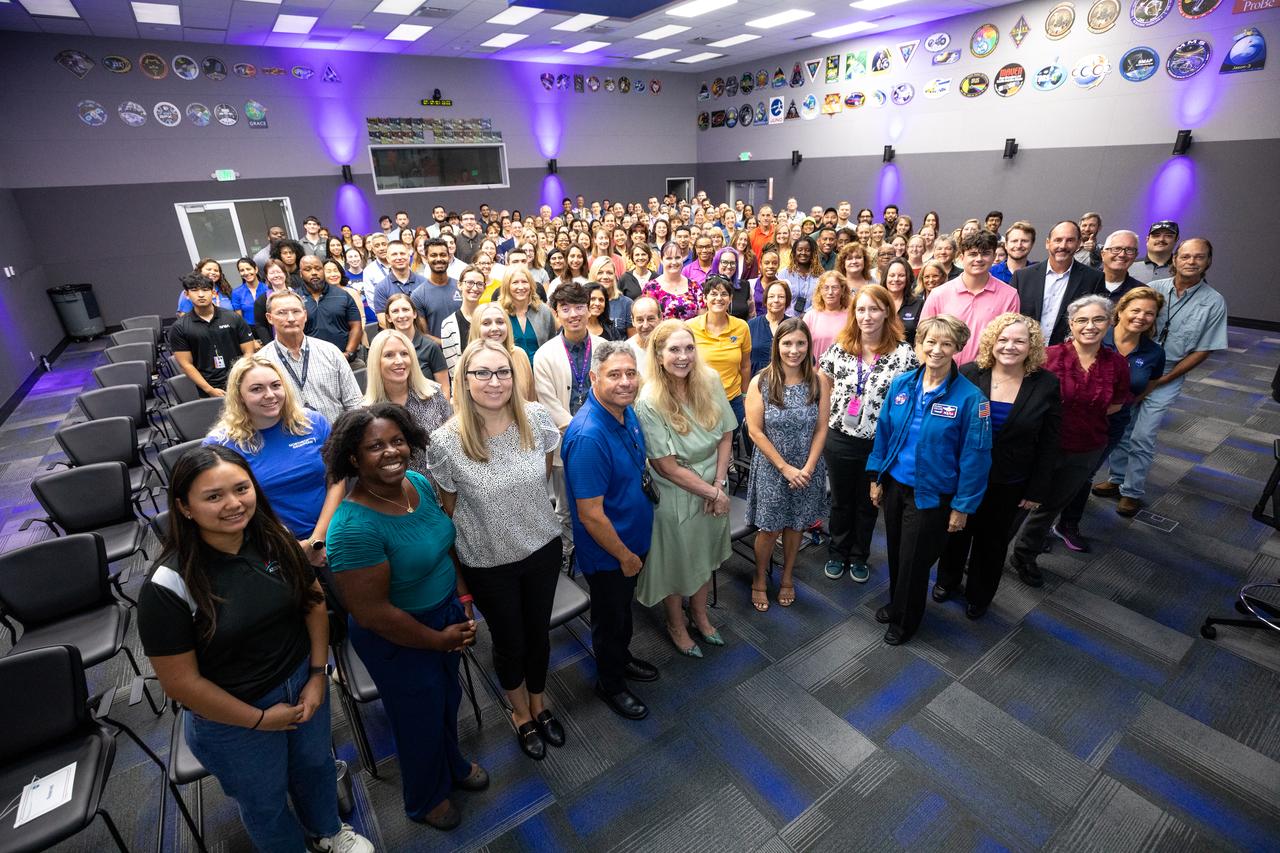
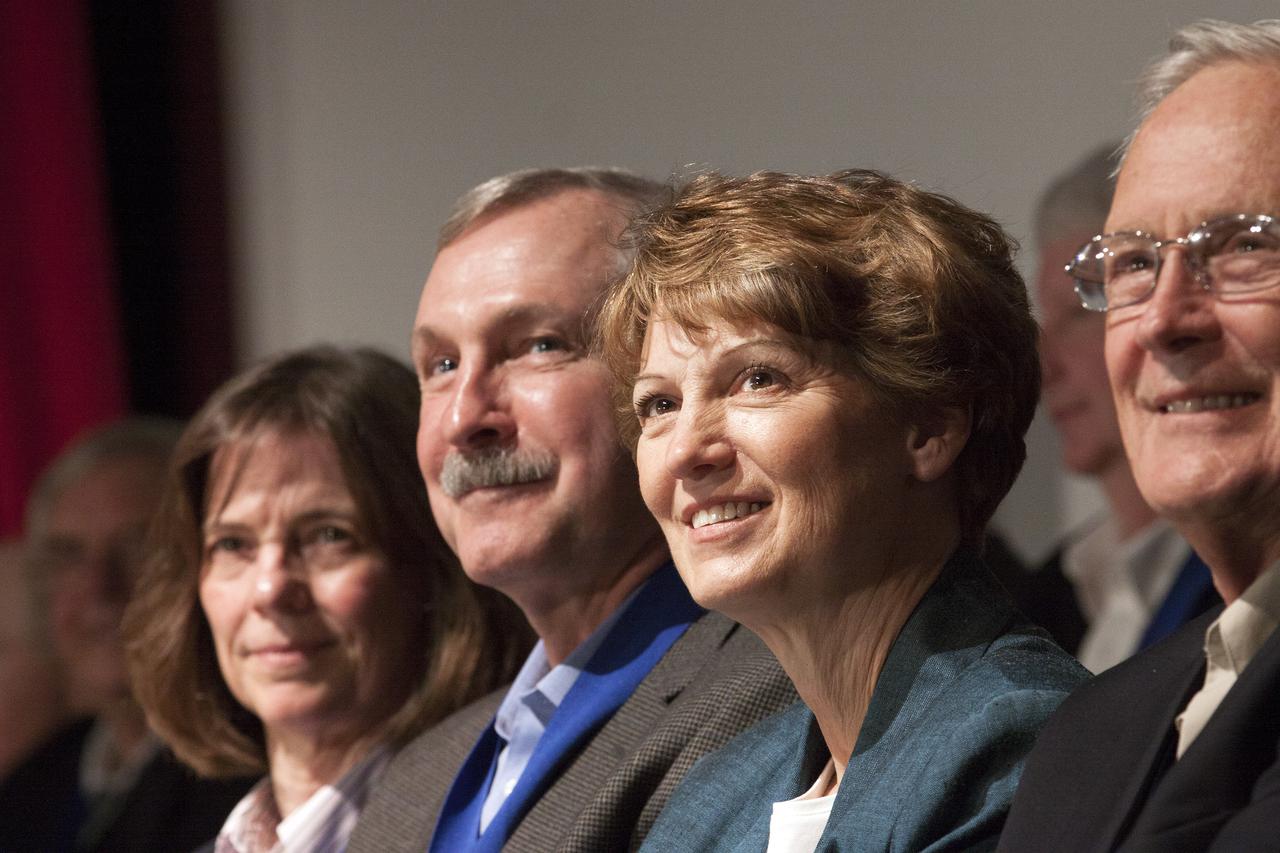
Retired NASA astronaut Eileen Collins poses with NASA employees and contractors after participating in a special presentation and question and answer session inside the Neil A. Armstrong Operations and Checkout Building’s Mission Briefing Room at the agency’s Kennedy Space Center in Florida on Wednesday, July 17, 2024. Collins visited NASA Kennedy in celebration of the 25th anniversary of becoming the first woman to command a space mission during STS-93, in which space shuttle Columbia lifted off from the spaceport’s Launch Complex 39B on July 23, 1999.
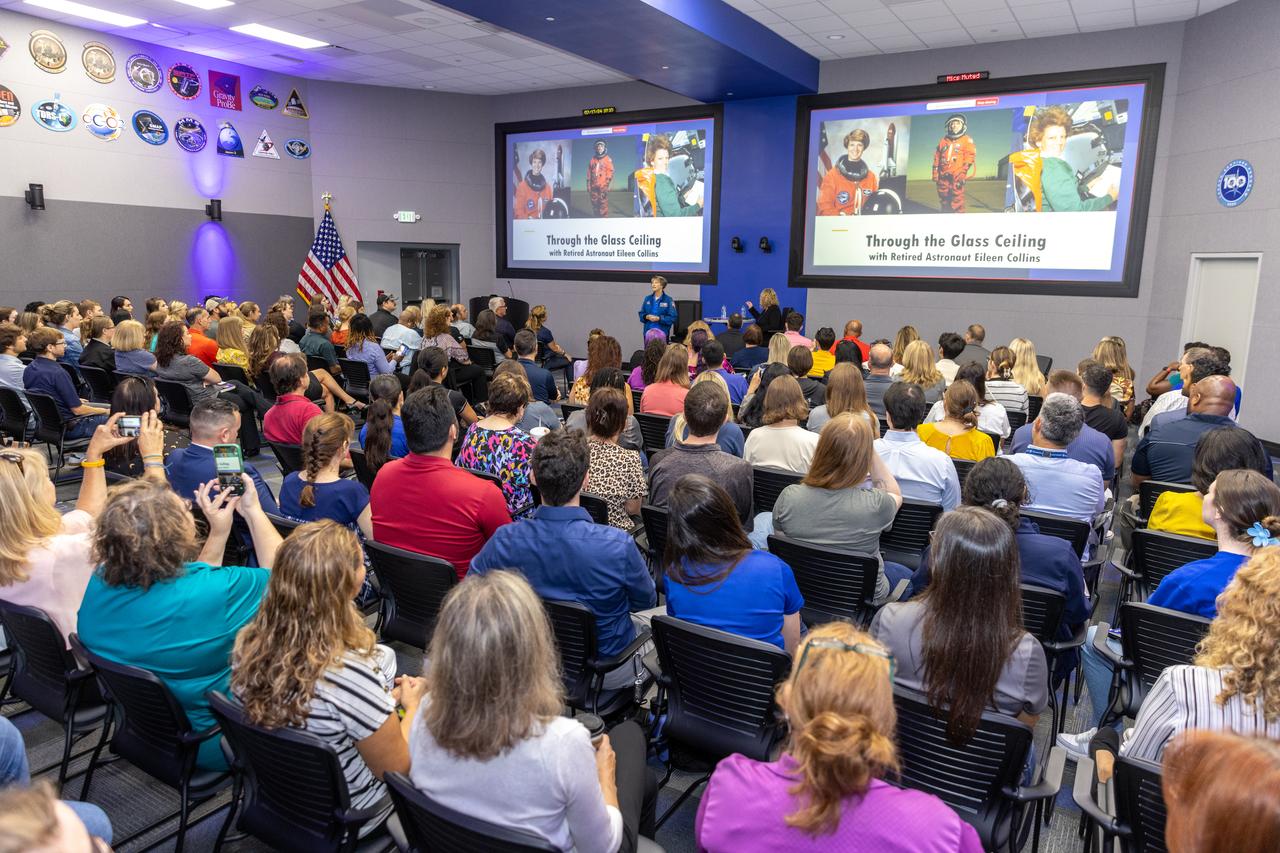
Retired NASA astronaut Eileen Collins participates in a special presentation and question and answer session inside the Neil A. Armstrong Operations and Checkout Building’s Mission Briefing Room at the agency’s Kennedy Space Center in Florida on Wednesday, July 17, 2024. Collins visited NASA Kennedy in celebration of the 25th anniversary of becoming the first woman to command a space mission during STS-93, in which space shuttle Columbia lifted off from the spaceport’s Launch Complex 39B on July 23, 1999.
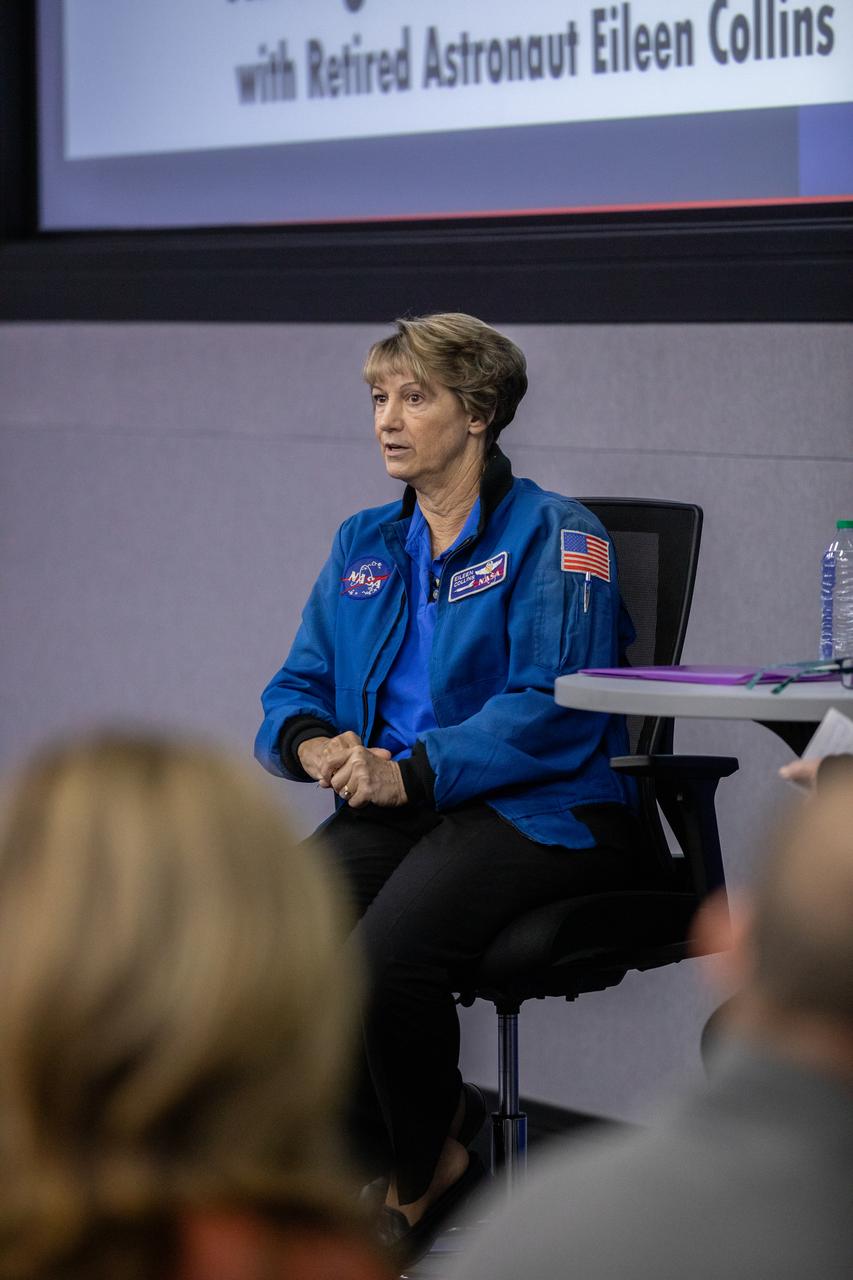
Retired NASA astronaut Eileen Collins participates in a special presentation and question and answer session inside the Neil A. Armstrong Operations and Checkout Building’s Mission Briefing Room at the agency’s Kennedy Space Center in Florida on Wednesday, July 17, 2024. Collins visited NASA Kennedy in celebration of the 25th anniversary of becoming the first woman to command a space mission during STS-93, in which space shuttle Columbia lifted off from the spaceport’s Launch Complex 39B on July 23, 1999.
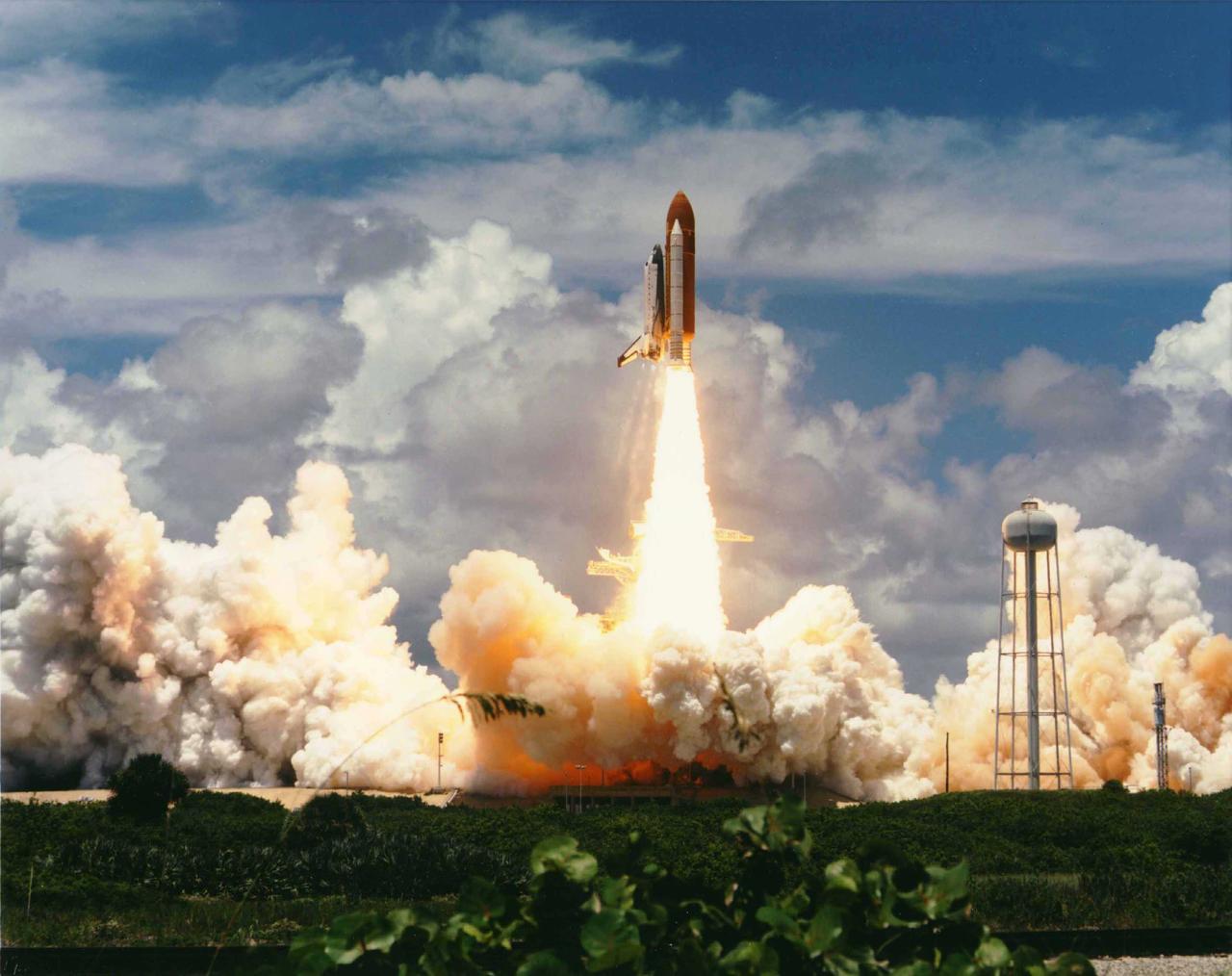
KENNEDY SPACE CENTER, FLA. - The second International Microgravity Laboratory-2 (IML-2) is off to an ontime start as the Space Shuttle Columbia lifts off from Launch Pad 39A at 12:43:00 p.m. EDT. On board are a crew of seven and more than 80 investigations developed by more than 200 scientists from 13 countries. The IML-2 complement includes materials science, bioprocessing, space and radiation biology, and human physiology experiments that will be carried out over the course of the 14-day flight. The commander of Space Shuttle Mission STS-65 is Robert D. Cabana. James D. Halsell Jr. is the pilot; the payload commander is Richard J. Hieb; the three mission specialists are Carl E. Walz, Leroy Chiao and Donald A. Thomas. Dr. Chiaki Mukai, representing NASDA, the National Space Development Agency of Japan, is the payload specialist. Mukai becomes the first Japanese woman to fly into space.
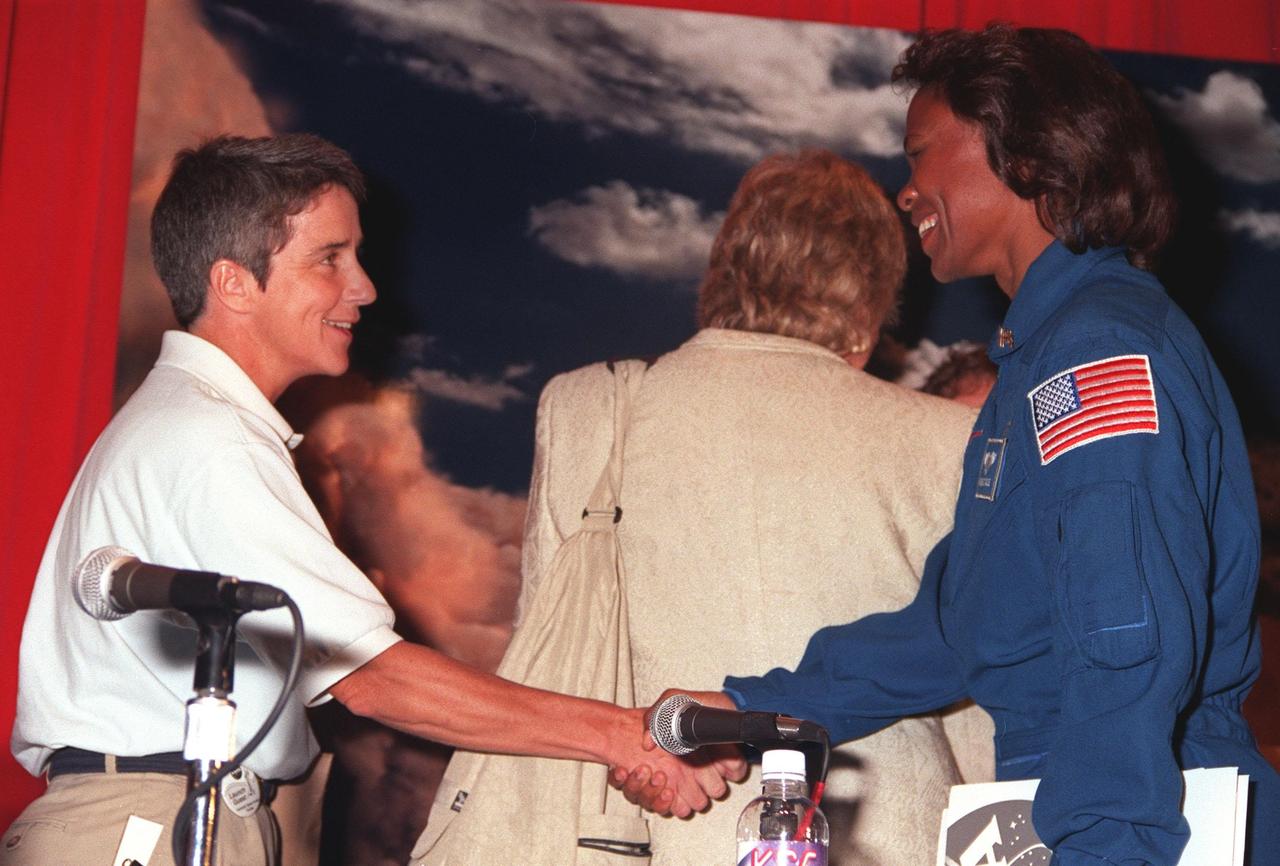
KENNEDY SPACE CENTER, Fla. -- At a women's forum held in the Apollo/Saturn V Center, Marta Bohn-Meyer, the first woman to pilot an SR-71, greets astronaut Yvonne Cagle. They participated in the panel discussion about "Past, Present and Future of Space," along with Kathryn Sullivan, Ph.D., the first American woman to walk in space; Donna Shirley, Ph.D., the first woman leading the Mars Exploration Program; Jennifer Harris, the Mars 2001 Operations System Development Manager at the Jet Propulsion Laboratory; and astronaut Ellen Ochoa, the first Hispanic female in space and member of the President's commission on the Celebration of Women in American History. The forum included a welcome by Center Director Roy Bridges and remarks by Donna Shalala, secretary of Department of Health and Human Services. The attendees are planning to view the launch of STS-93 at the Banana Creek viewing site. Much attention has been generated over the launch due to Commander Eileen M. Collins, the first woman to serve as commander of a Shuttle mission. The primary payload of the five-day mission is the Chandra X-ray Observatory, which will allow scientists from around the world to study some of the most distant, powerful and dynamic objects in the universe. Liftoff is scheduled for July 20 at 12:36 a.m. EDT

KENNEDY SPACE CENTER, FLA. -- Singer Judy Collins (left) shares a laugh with First Lady Hillary Rodham Clinton in the Apollo/Saturn V Facility. Both women are at KSC to view the launch of Space Shuttle mission STS-93 scheduled for 12:36 a.m. EDT July 20. Much attention has been generated over the launch due to Commander Eileen M. Collins, the first woman to serve as commander of a Shuttle mission. Judy Collins has honored the commander with a song, "Beyond the Sky," which was commissioned by NASA through the NASA Art Program
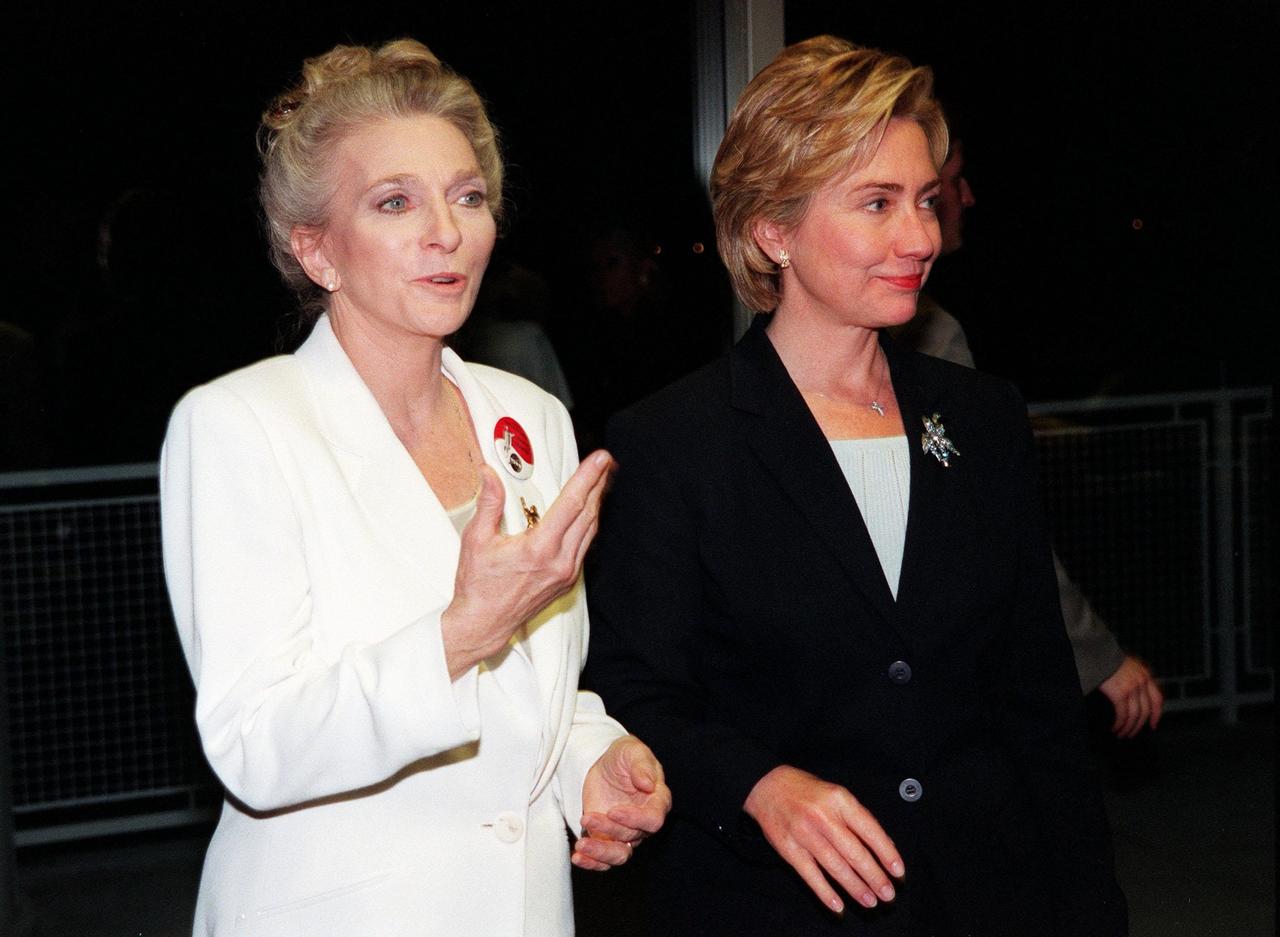
KENNEDY SPACE CENTER, FLA. -- Singer Judy Collins (left) and First Lady Hillary Rodham Clinton await the launch of Space Shuttle mission STS-93 in the Apollo/Saturn V Facility. Liftoff is scheduled for 12:36 a.m. EDT July 20. Much attention has been generated over the launch due to Commander Eileen M. Collins, the first woman to serve as commander of a Shuttle mission. Judy Collins has honored the commander with a song, "Beyond the Sky," which was commissioned by NASA through the NASA Art Program
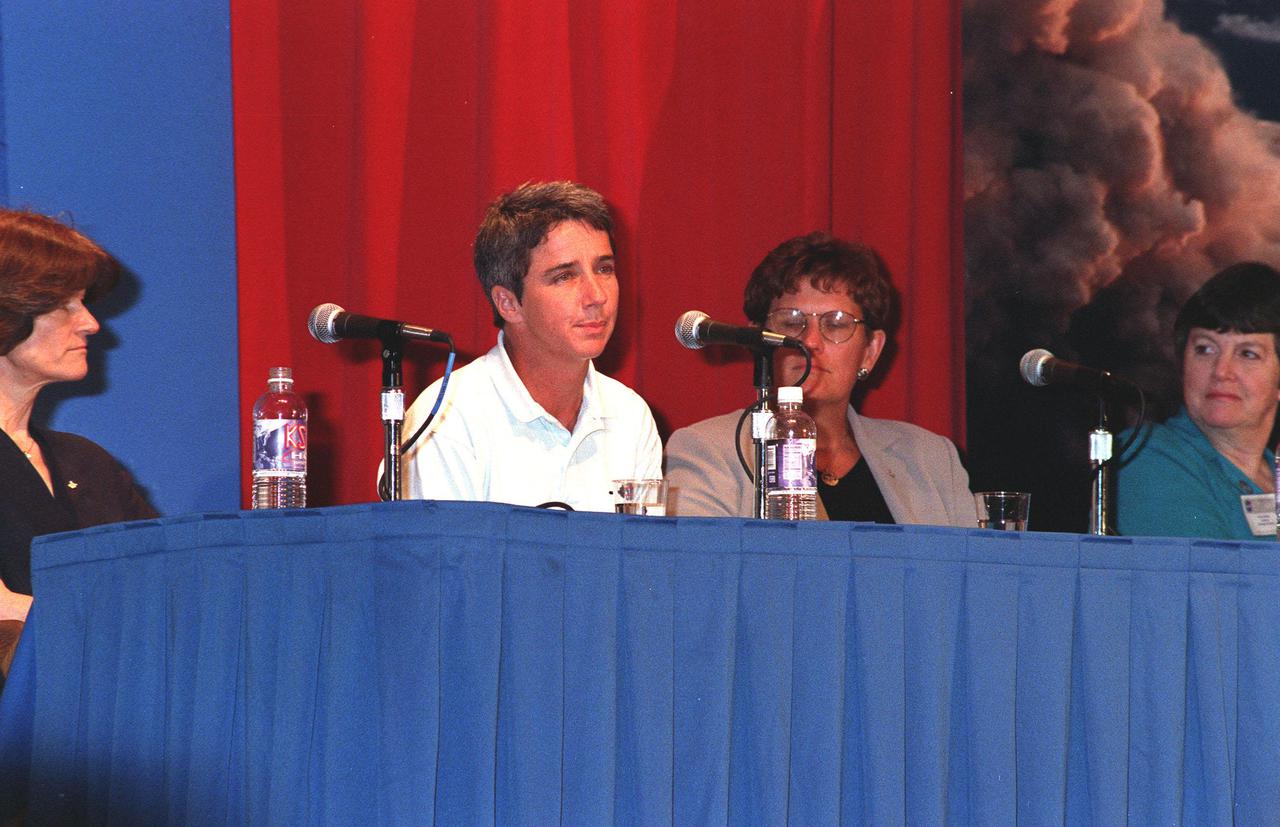
Former astronaut Sally Ride (left) sits on a panel of women discussing 'Past, Present and Future of Space.' Other participants in the women's forum include Marta Bohn-Meyer (second from left), the first SR-71 female pilot; Kathryn Sullivan, Ph.D., the first American woman to walk in space; Donna Shirley, Ph.D., the first woman leading the Mars Exploration Program; astronaut Yvonne Cagle; Jennifer Harris, flight director, Mars Pathfinder; astronaut Ellen Ochoa, the first Hispanic female in space and member of the President's commission on the Celebration of Women in American History. The panel is being moderated by Lynn Sherr, ABC News correspondent. The forum about women in space included a welcome by Center Director Roy Bridges and remarks by Donna Shalala, secretary of Department of Health and Human Services. The attendees are planning to view the launch of STS-93 at the Banana Creek viewing sight. Much attention has been generated over the launch due to Commander Eileen M. Collins, the first woman to serve as commander of a Shuttle mission. The primary payload of the five-day mission is the Chandra X-ray Observatory, which will allow scientists from around the world to study some of the most distant, powerful and dynamic objects in the universe. Liftoff is scheduled for July 20 at 12:36 a.m. EDT
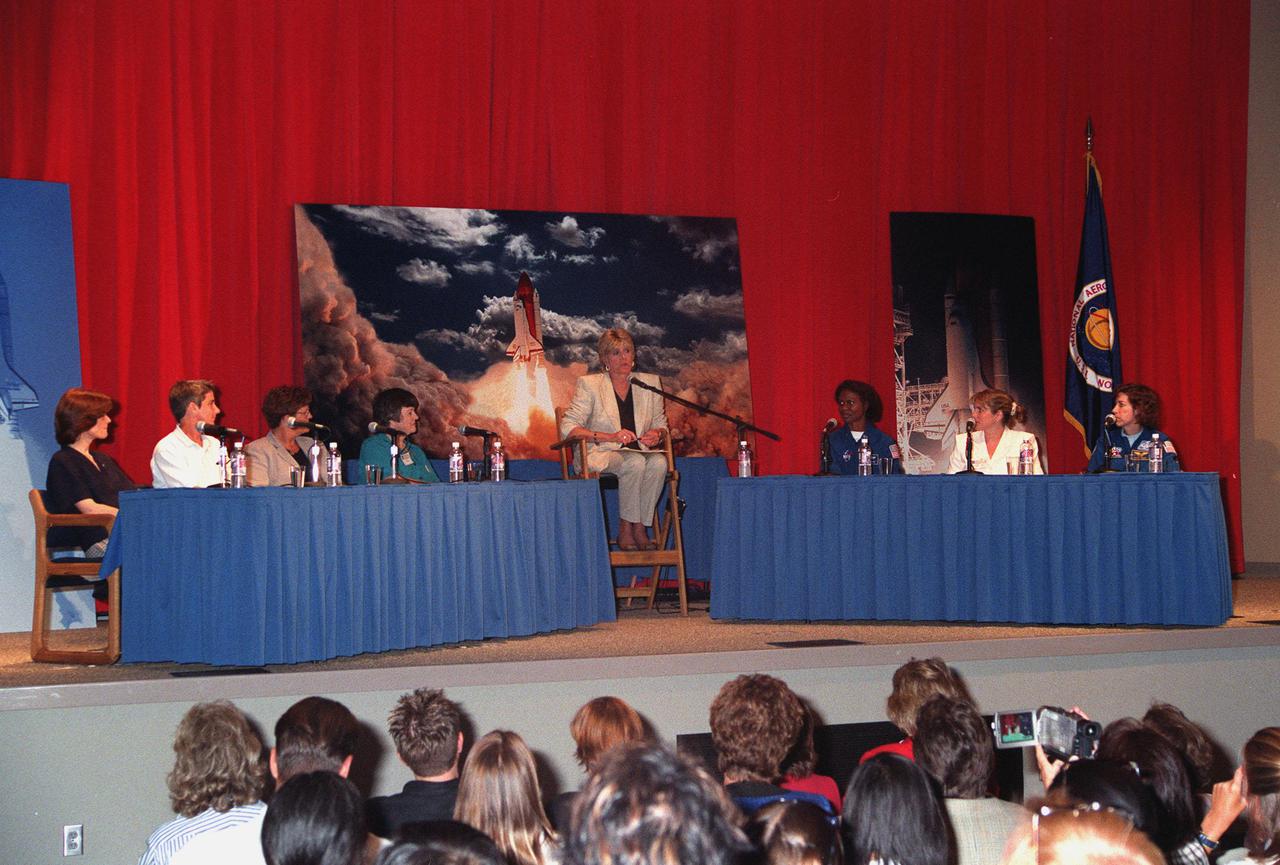
A prestigious panel (shown) discussing 'Past, Present and Future of Space' includes Marta Bohn-Meyer, the first SR-71 female pilot; Kathryn Sullivan, Ph.D., the first American woman to walk in space; Donna Shirley, Ph.D., the first woman leading the Mars Exploration Program; Astronaut Yvonne Cagle; Jennifer Harris, flight director, Mars Pathfinder; Astronaut Ellen Ochoa, the first Hispanic female in space and member of the President's commission on the Celebration of Women in American History. It is being moderated by Lynn Sherr, ABC News correspondent. The forum about women in space included a welcome by Center Director Roy Bridges and remarks by Donna Shalala, secretary of Department of Health and Human Services. The attendees are planning to view the launch of STS-93 at the Banana Creek viewing sight. Much attention has been generated over the launch due to Commander Eileen M. Collins, the first woman to serve as commander of a Shuttle mission. The primary payload of the five-day mission is the Chandra X-ray Observatory, which will allow scientists from around the world to study some of the most distant, powerful and dynamic objects in the universe. Liftoff is scheduled for July 20 at 12:36 a.m. EDT
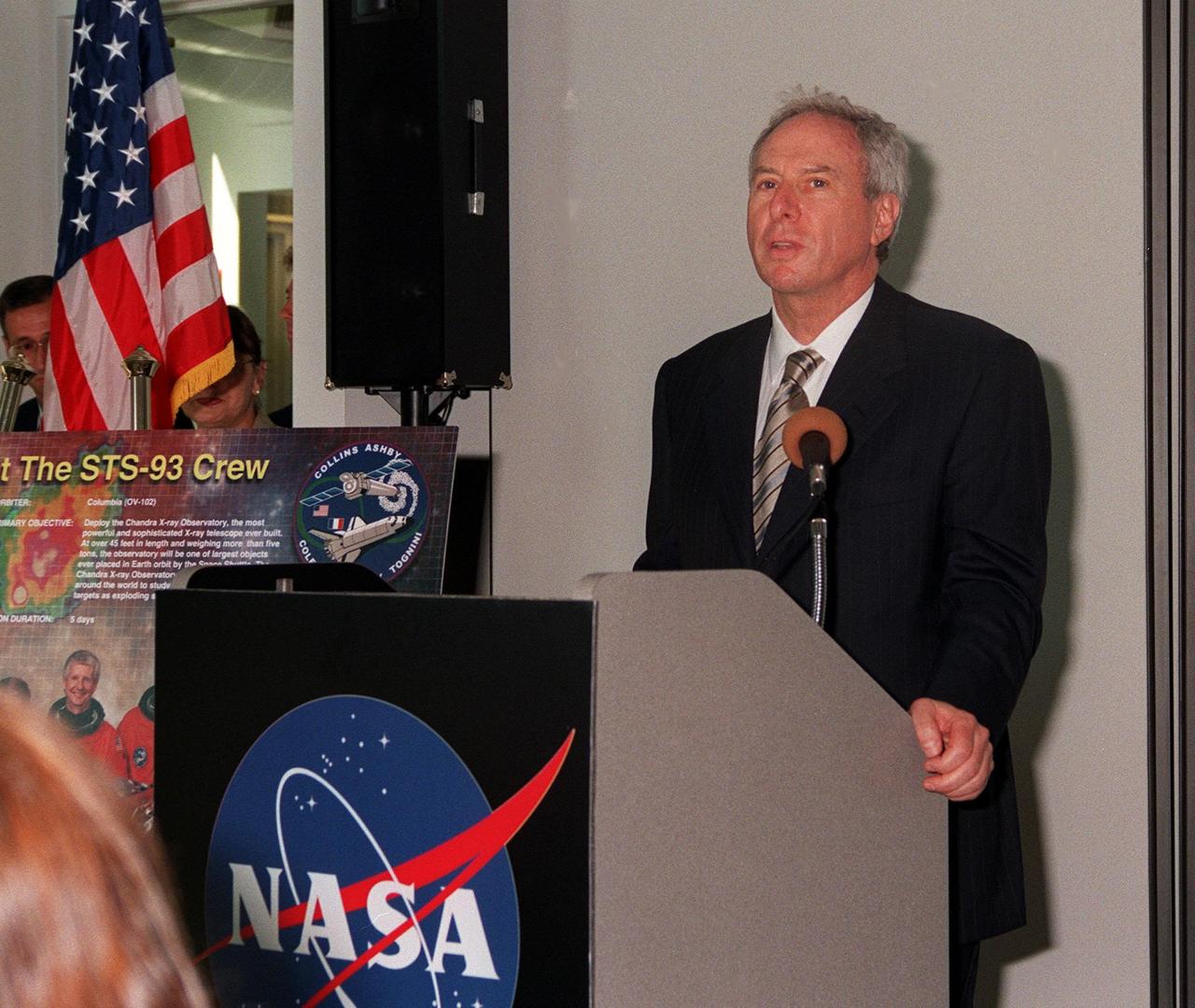
KENNEDY SPACE CENTER, FLA. -- NASA Administrator Daniel Goldin addresses the attendees of a women's forum held in the Apollo/Saturn V Center. Participants in a panel discussion, "Past, Present and Future of Space," include former astronaut Sally Ride; Marta Bohn-Meyer, the first SR-71 female pilot; Kathryn Sullivan, Ph.D., the first American woman to walk in space; Donna Shirley, Ph.D., the first woman leading the Mars Exploration Program; astronaut Yvonne Cagle; Jennifer Harris, flight director, Mars Pathfinder; astronaut Ellen Ochoa, the first Hispanic female in space and member of the President's commission on the Celebration of Women in American History. The forum included a welcome by Center Director Roy Bridges and remarks by Donna Shalala, secretary of Department of Health and Human Services. The attendees are planning to view the launch of STS-93 at the Banana Creek viewing sight. Much attention has been generated over the launch due to Commander Eileen M. Collins, the first woman to serve as commander of a Shuttle mission. The primary payload of the five-day mission is the Chandra X-ray Observatory, which will allow scientists from around the world to study some of the most distant, powerful and dynamic objects in the universe. Liftoff is scheduled for July 20 at 12:36 a.m. EDT
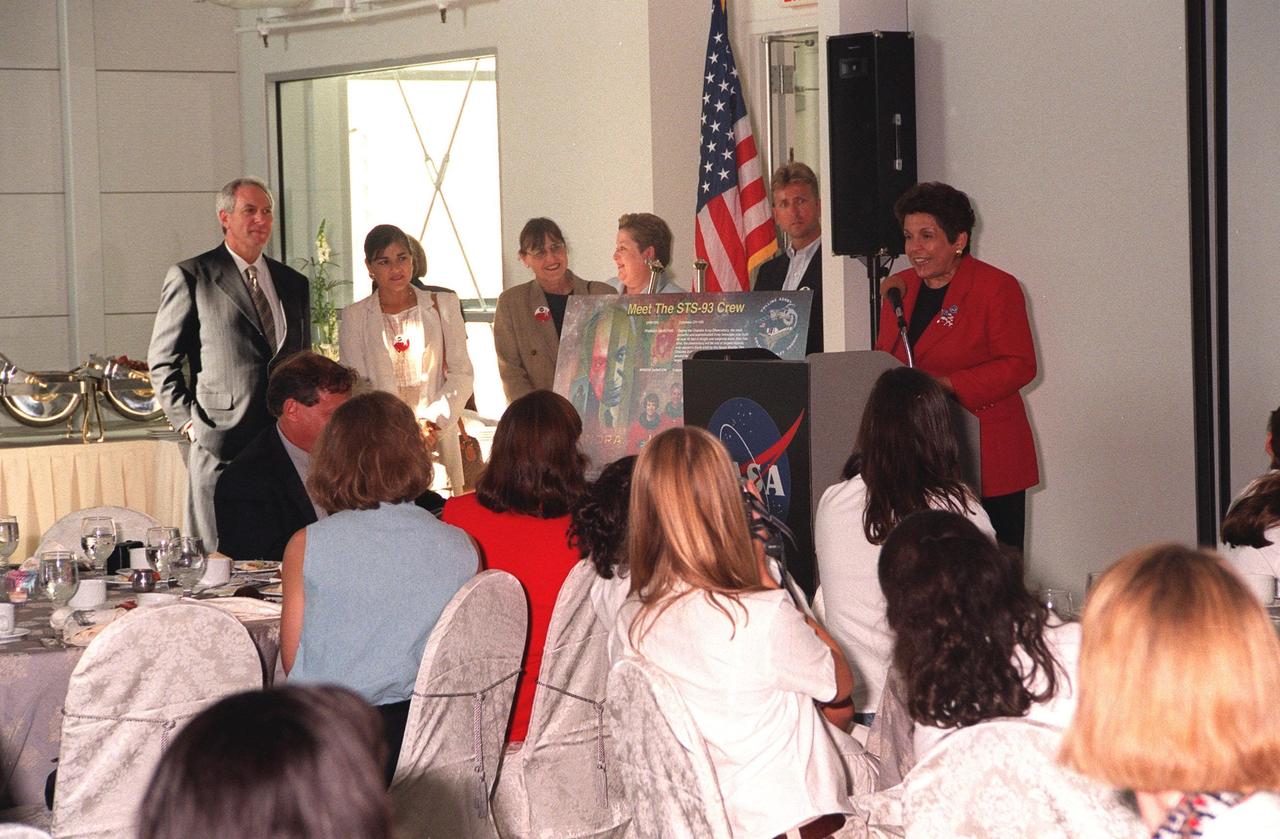
KENNEDY SPACE CENTER, FLA. -- At a women's forum held in the Apollo/Saturn V Center, Donna Shalala, secretary of Department of Health and Human Services, addresses the attendees. At the far left is NASA Administrator Daniel Goldin. Participants in a panel discussion, "Past, Present and Future of Space," include former astronaut Sally Ride; Marta Bohn-Meyer, the first SR-71 female pilot; Kathryn Sullivan, Ph.D., the first American woman to walk in space; Donna Shirley, Ph.D., the first woman leading the Mars Exploration Program; astronaut Yvonne Cagle; Jennifer Harris, flight director, Mars Pathfinder; astronaut Ellen Ochoa, the first Hispanic female in space and member of the President's commission on the Celebration of Women in American History. The forum included a welcome by Center Director Roy Bridges and remarks by Goldin. The attendees are planning to view the launch of STS-93 at the Banana Creek viewing sight. Much attention has been generated over the launch due to Commander Eileen M. Collins, the first woman to serve as commander of a Shuttle mission. The primary payload of the five-day mission is the Chandra X-ray Observatory, which will allow scientists from around the world to study some of the most distant, powerful and dynamic objects in the universe. Liftoff is scheduled for July 20 at 12:36 a.m. EDT
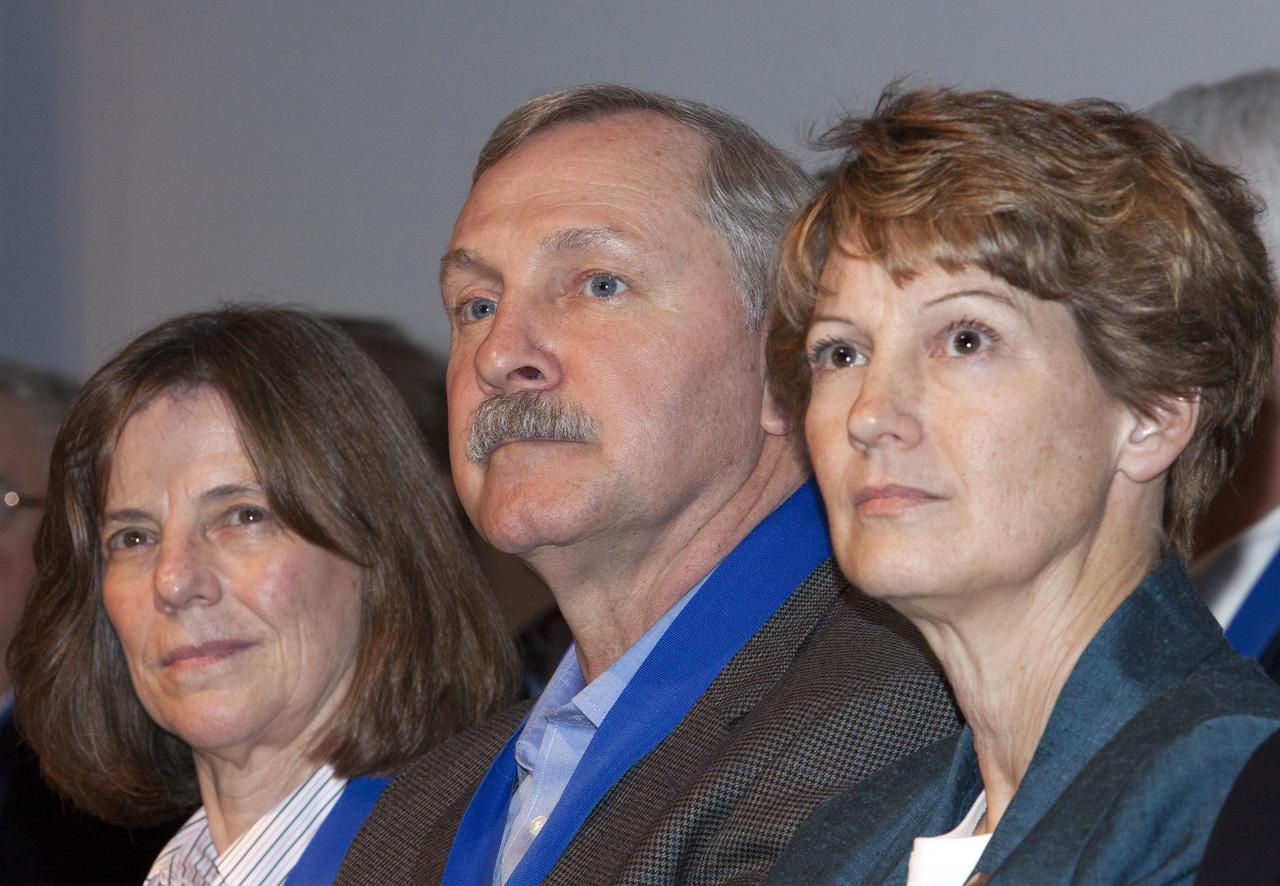
CAPE CANAVERAL, Fla. – At NASA’s Kennedy Space Center Visitor Complex in Florida, shuttle astronauts, from the left, Bonnie Dunbar, Curt Brown and Eileen Collins listen as Collins is being introduced for induction into the U.S. Astronaut Hall of Fame AHOF. She commanded STS-114 on the Return to Flight mission following the loss of the space shuttle Columbia. Collins’ career with NASA is full of accomplishments, including becoming the first woman space shuttle pilot and the first woman commander. As a four-time spaceflight veteran, Collins logged more than 872 hours in space, and her missions include STS-63, STS-84, STS-93 and STS-114. Shuttle astronauts Curt Brown and Bonnie Dunbar also were inducted into the AHOF. This induction is the twelfth group of space shuttle astronauts named to the AHOF, and the first time two women are inducted at the same time. The year’s inductees were selected by a committee of current Hall of Fame astronauts, former NASA officials, historians and journalists. The selection process is administered by the Astronaut Scholarship Foundation. For more on the U.S. Astronaut Hall of Fame, go to http:__www.kennedyspacecenter.com_astronaut-hall-of-fame.aspx For more on the Astronaut Scholarship Foundation, go to http:__astronautscholarship.org_ Photo credit: NASA_ Kim Shiflett
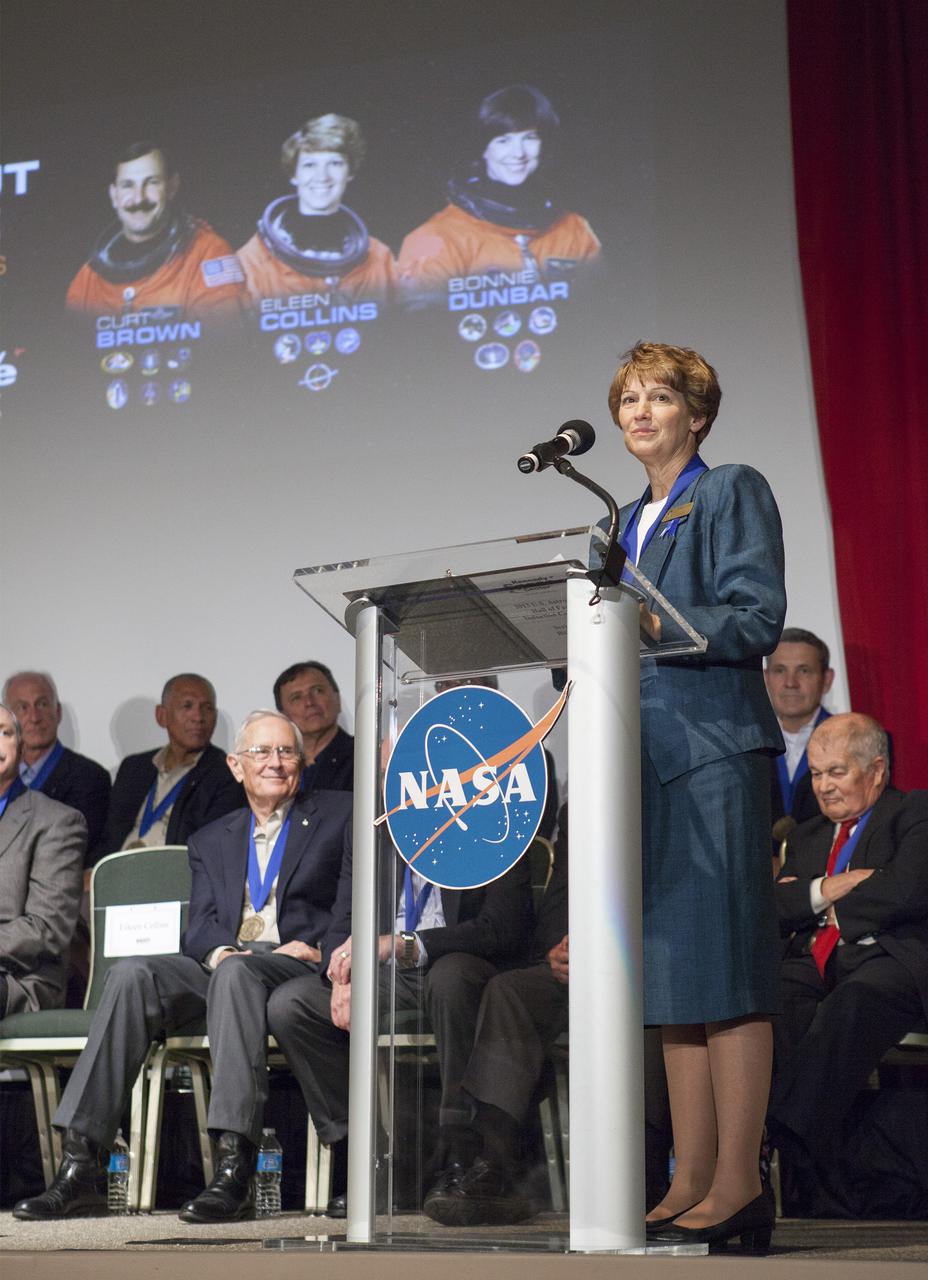
CAPE CANAVERAL, Fla. – At NASA’s Kennedy Space Center Visitor Complex in Florida, shuttle astronaut Eileen Collins speaks after being inducted into the U.S. Astronaut Hall of Fame AHOF. Revered for commanding STS-114 on the Return to Flight mission following the loss of the space shuttle Columbia, Collins’ career with NASA is full of accomplishments, including becoming the first woman space shuttle pilot and the first woman commander. As a four-time spaceflight veteran, Collins logged more than 872 hours in space, and her missions include STS-63, STS-84, STS-93 and STS-114. Shuttle astronauts Curt Brown and Bonnie Dunbar also were inducted into the AHOF. This induction is the twelfth group of space shuttle astronauts named to the AHOF, and the first time two women are inducted at the same time. The year’s inductees were selected by a committee of current Hall of Fame astronauts, former NASA officials, historians and journalists. The selection process is administered by the Astronaut Scholarship Foundation. For more on the U.S. Astronaut Hall of Fame, go to http:__www.kennedyspacecenter.com_astronaut-hall-of-fame.aspx For more on the Astronaut Scholarship Foundation, go to http:__astronautscholarship.org_ Photo credit: NASA_ Kim Shiflett
CAPE CANAVERAL, Fla. – At NASA’s Kennedy Space Center Visitor Complex in Florida, shuttle astronauts, from the left, Bonnie Dunbar, Curt Brown and Eileen Collins listen as Collins is being introduced for induction into the U.S. Astronaut Hall of Fame AHOF. She commanded STS-114 on the Return to Flight mission following the loss of the space shuttle Columbia. Collins’ career with NASA is full of accomplishments, including becoming the first woman space shuttle pilot and the first woman commander. As a four-time spaceflight veteran, Collins logged more than 872 hours in space, and her missions include STS-63, STS-84, STS-93 and STS-114. Shuttle astronauts Curt Brown and Bonnie Dunbar also were inducted into the AHOF. This induction is the twelfth group of space shuttle astronauts named to the AHOF, and the first time two women are inducted at the same time. The year’s inductees were selected by a committee of current Hall of Fame astronauts, former NASA officials, historians and journalists. The selection process is administered by the Astronaut Scholarship Foundation. For more on the U.S. Astronaut Hall of Fame, go to http:__www.kennedyspacecenter.com_astronaut-hall-of-fame.aspx For more on the Astronaut Scholarship Foundation, go to http:__astronautscholarship.org_ Photo credit: NASA_ Kim Shiflett
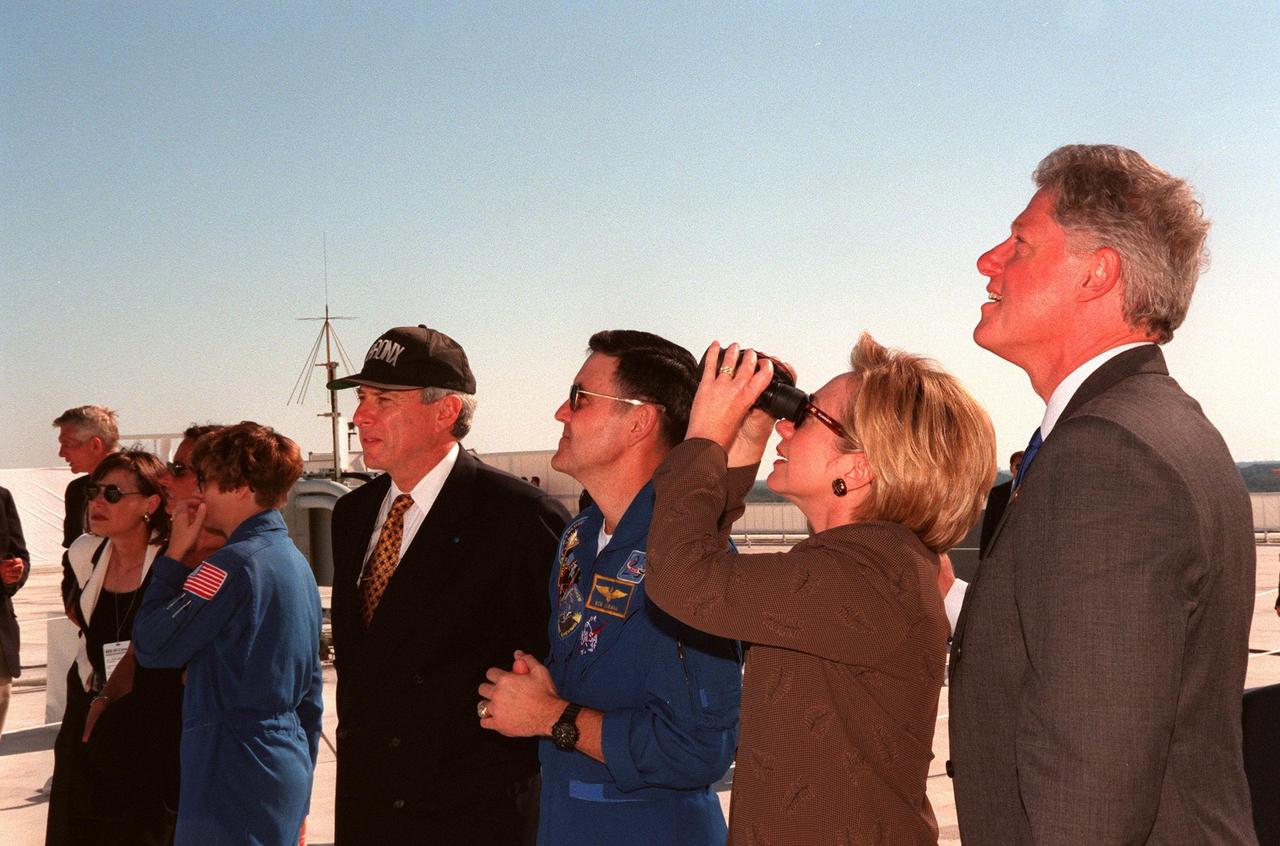
Watching a successful launch of Space Shuttle Discovery from the roof of the Launch Control Center are (left to right) Astronaut Eileen Collins (in flight suit) with unidentified companions, NASA Administrator Daniel Goldin, Astronaut Robert Cabana, First Lady Hillary Rodham Clinton, and U.S. President Bill Clinton. This was the first launch of a Space Shuttle to be viewed by President Clinton, or any President to date. They attended the launch to witness the return to space of American legend John H. Glenn Jr., payload specialist on mission STS-95. Collins will command the crew of STS-93, the first woman to hold that position. Cabana will command the crew of STS-88, the first Space Shuttle mission to carry hardware to space for the assembly of the International Space Station, targeted for liftoff on Dec. 3
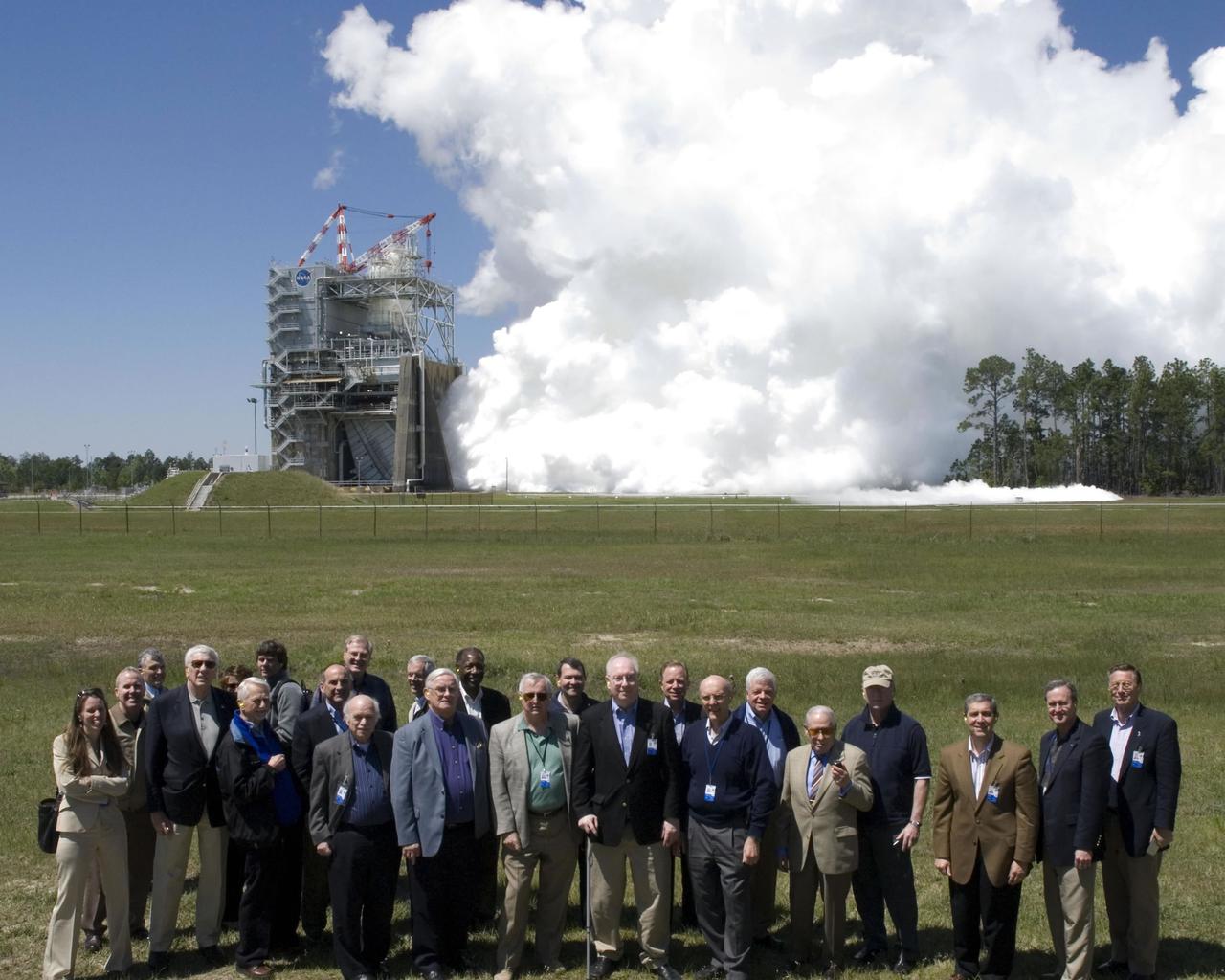
NASA Advisory Council members visited Stennis Space Center April 15 and 16, touring facilities and participating in various presentations. They also viewed a space shuttle main engine test on the A-2 Test Stand. The council of accomplished citizens advises NASA on major policy and program issues. The council includes former Apollo 17 astronaut Harrison Hagan Schmitt as chair, as well as former astronaut Eileen Collins, the first woman to command a space shuttle mission.
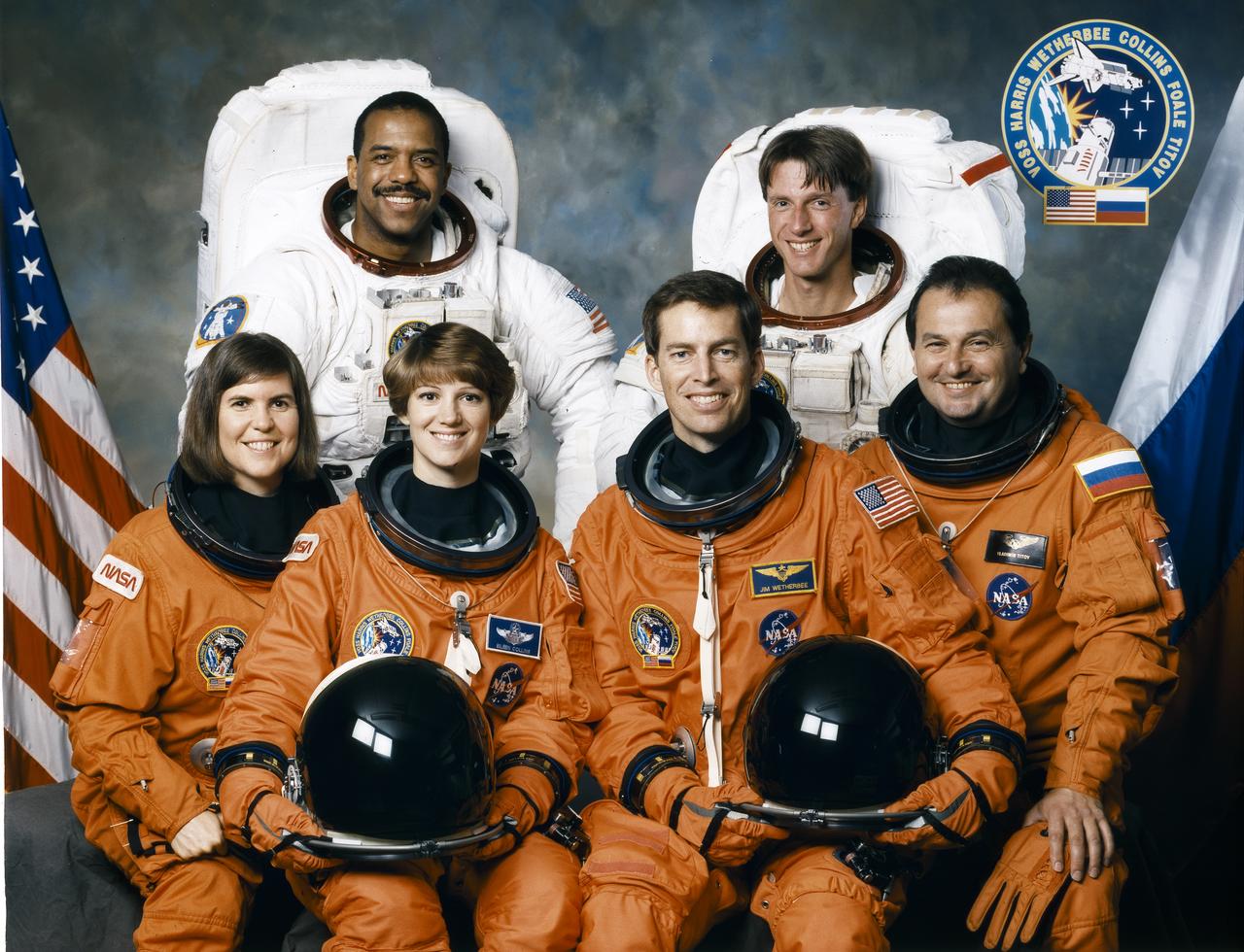
Crew members assigned to the STS-63 mission included (front left to right) Janice E. Voss, mission specialist; Eileen M. Collins, pilot; (the first woman to pilot a Space Shuttle), James D. Wetherbee, commander; and Vladmir G. Titov (Cosmonaut). Standing in the rear are mission specialists Bernard A. Harris, and C. Michael Foale. Launched aboard the Space Shuttle Discovery on February 3, 1995 at 12:22:04 am (EST), the primary payload for the mission was the SPACEHAB-3. STS-63 marked the first approach and fly around by the Shuttle with the Russian space station Mir.
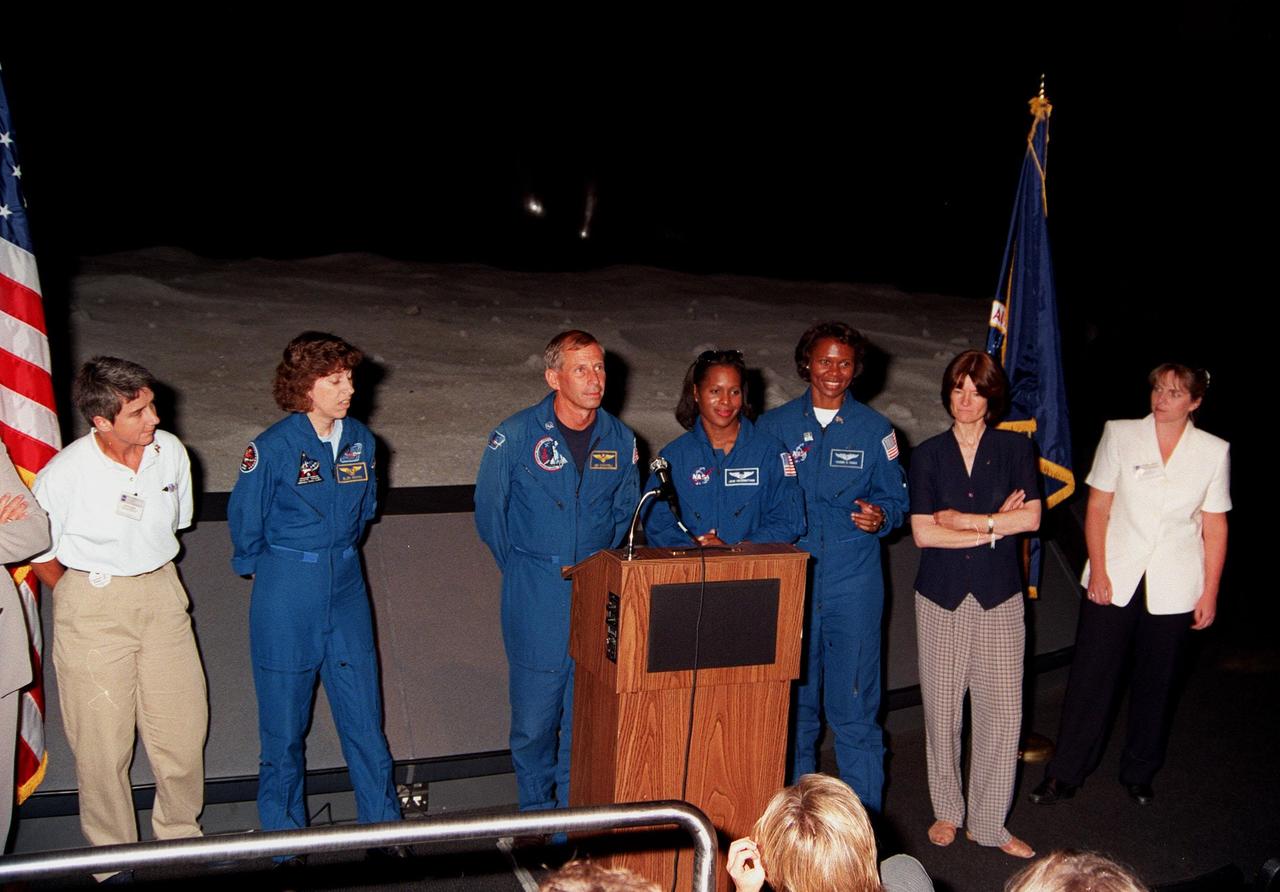
KENNEDY SPACE CENTER, FLA. -- At a women's forum about "Past, Present and Future of Space," held in the Apollo/Saturn V Center, guests line the stage. From left, they are Marta Bohn-Meyer, the first woman to pilot an SR-71; astronauts Ellen Ochoa, Ken Cockrell, Joan Higginbotham, and Yvonne Cagle; former astronaut Sally Ride, the first American woman to fly in space; and Jennifer Harris, the Mars 2001 Operations System Development Manager at the Jet Propulsion Laboratory. The forum included a welcome by Center Director Roy Bridges and remarks by Donna Shalala, secretary of Department of Health and Human Services. The attendees are planning to view the launch of STS-93 at the Banana Creek viewing site. Much attention has been generated over the launch due to Commander Eileen M. Collins, the first woman to serve as commander of a Shuttle mission. The primary payload of the five-day mission is the Chandra X-ray Observatory, which will allow scientists from around the world to study some of the most distant, powerful and dynamic objects in the universe. Liftoff is scheduled for July 20 at 12:36 a.m. EDT
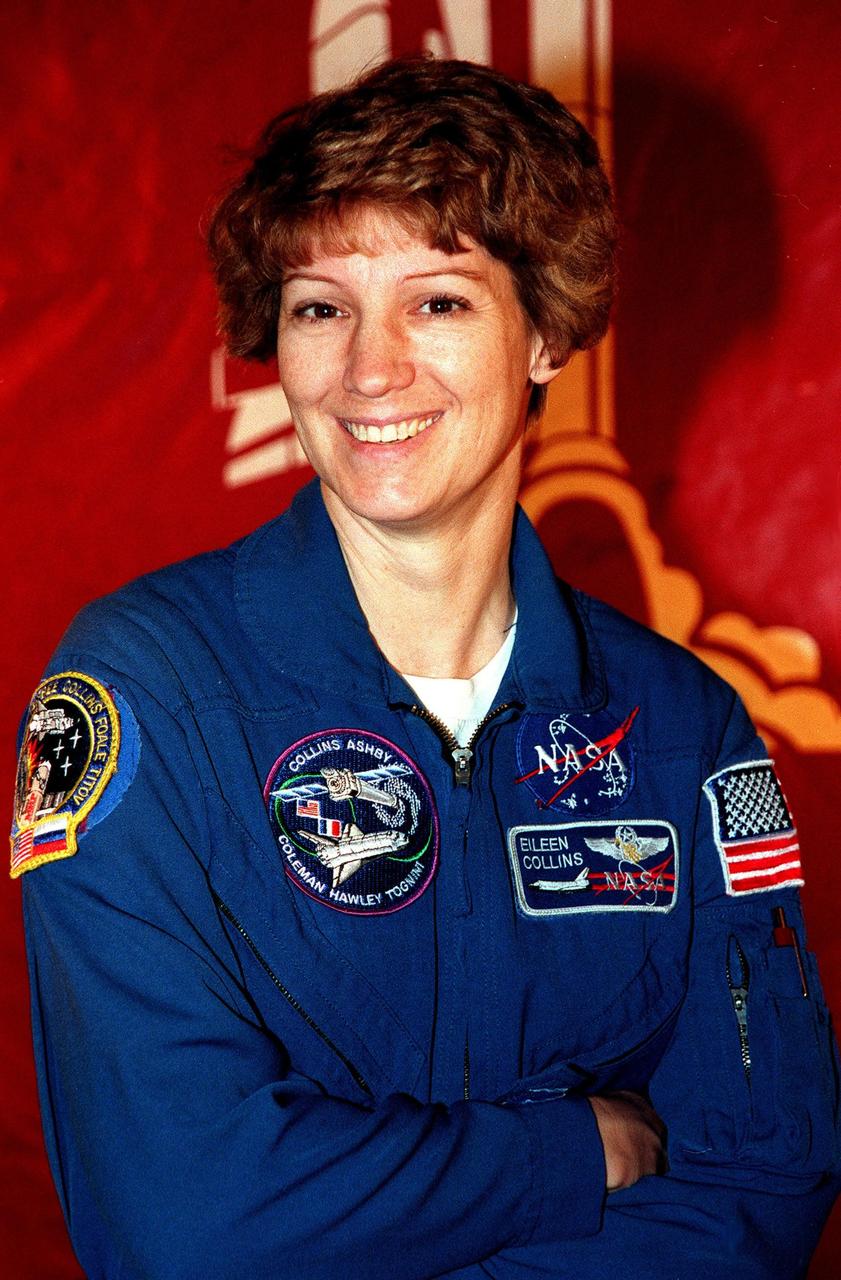
STS-93 Commander Eileen Collins (pictured) is the first woman to serve as a shuttle mission commander. She was the first woman pilot of a Space Shuttle, on mission STS-63, and also served as pilot on mission STS-84. Collins will command the crew of STS-93 on a five-day mission aboard Space Shuttle Columbia on its newly scheduled launch date July 9. The other STS-93 crew members are Pilot Jeffrey S. Ashby and Mission Specialists Steven A. Hawley, Catherine G. Coleman and Michel Tognini of France, representing the Centre National d'Etudes Spatiales (CNES). The primary mission of STS-93 is the deployment of the Chandra X-ray Observatory. Formerly called the Advanced X-ray Astrophysics Facility, Chandra comprises three major elements: the spacecraft, the science instrument module (SIM), and the world's most powerful X-ray telescope. Chandra will allow scientists from around the world to see previously invisible black holes and high-temperature gas clouds, giving the observatory the potential to rewrite the books on the structure and evolution of our universe
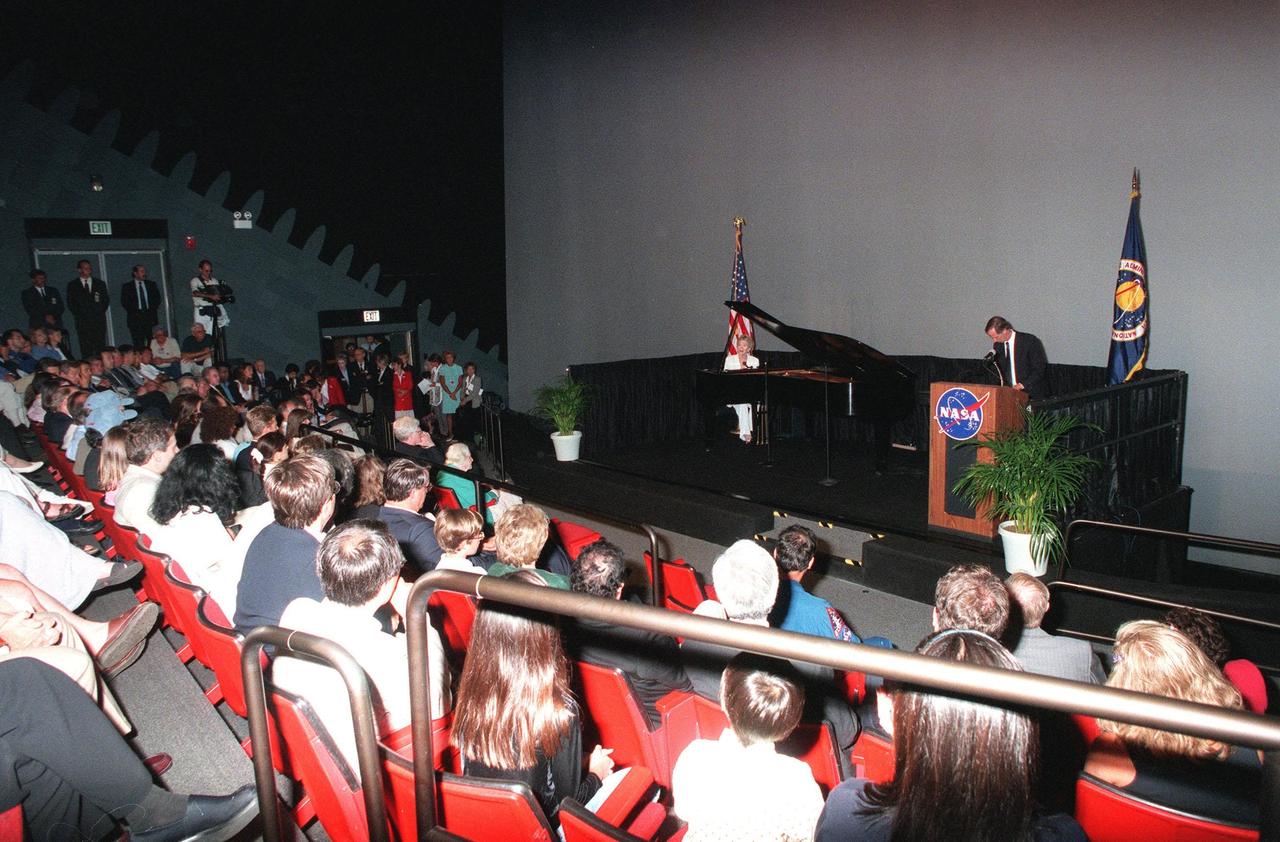
At the piano, singer-songwriter Judy Collins performs her original song, "Beyond the Sky," at the KSC Visitor Complex's Imax Theater for an audience waiting for the launch of STS-93. The song, commissioned by NASA through the Nasa Art Program, honored Eileen Collins, the first woman to command a Space Shuttle. The attendees are planning to view the launch at the Banana Creek viewing sight. Liftoff is scheduled for July 20 at 12:36 a.m. EDT
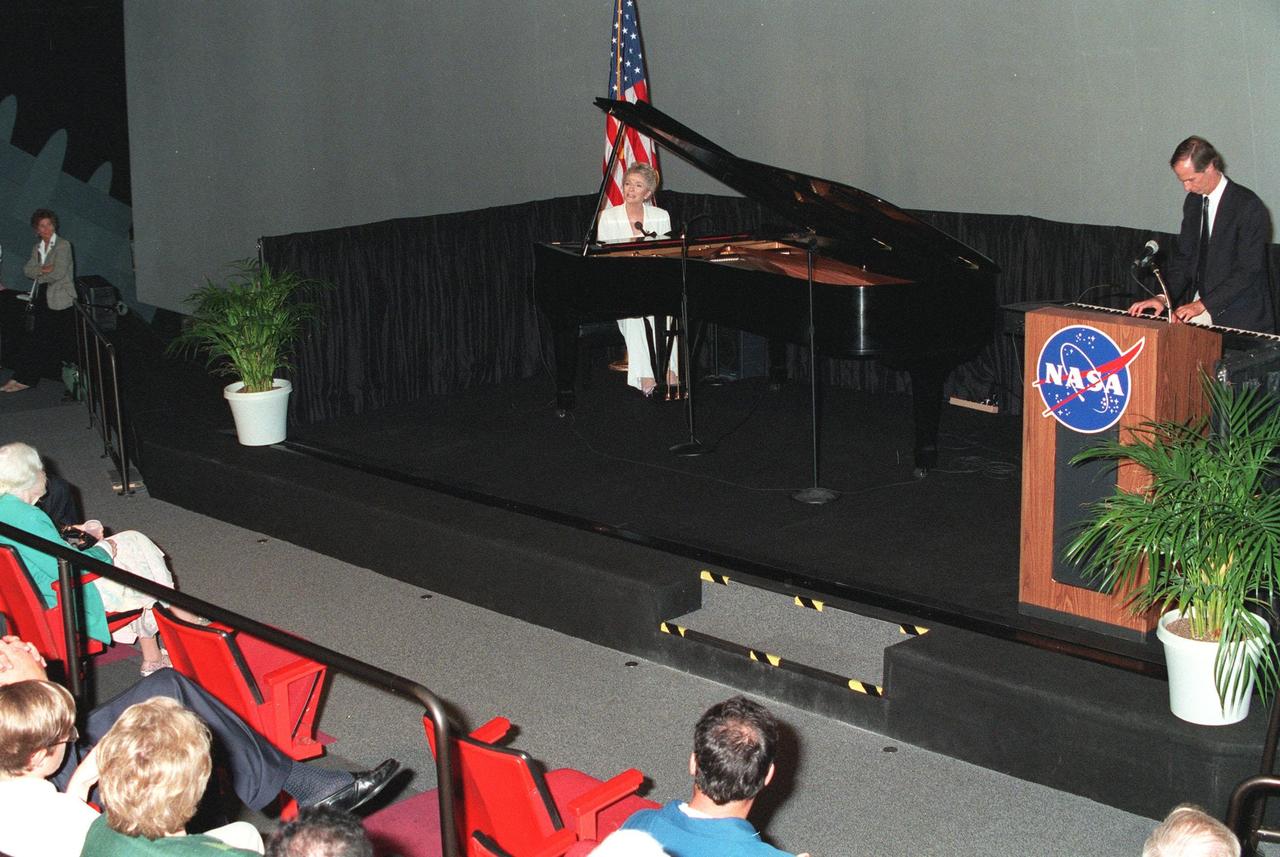
At the piano, singer-songwriter Judy Collins performs her original song, "Beyond the Sky," at the KSC Visitor Complex's Imax Theater for an audience waiting for the launch of STS-93. The song, commissioned by NASA through the Nasa Art Program, honored Eileen Collins, the first woman to command a Space Shuttle. The attendees are planning to view the launch at the Banana Creek viewing sight. Liftoff is scheduled for July 20 at 12:36 a.m. EDT
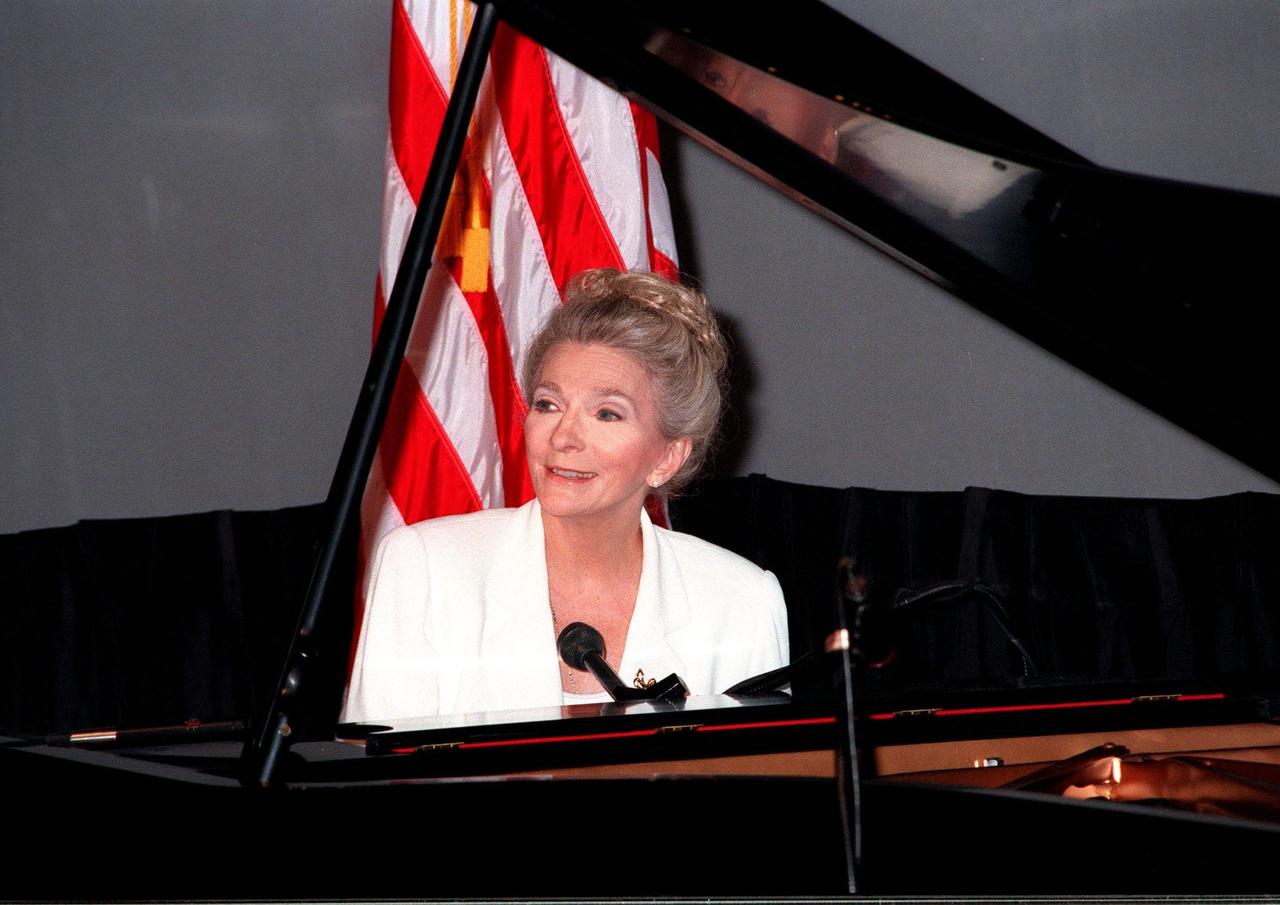
Singer-songwriter Judy Collins performs her original song, "Beyond the Sky," at the KSC Visitor Complex's Imax Theater for an audience waiting for the launch of STS-93. The song, commissioned by NASA through the nASA Art Program, honored Eileen Collins, the first woman to command a Space Shuttle. The attendees are planning to view the launch at the Banana Creek viewing sight. Liftoff is scheduled for July 20 at 12:36 a.m. EDT
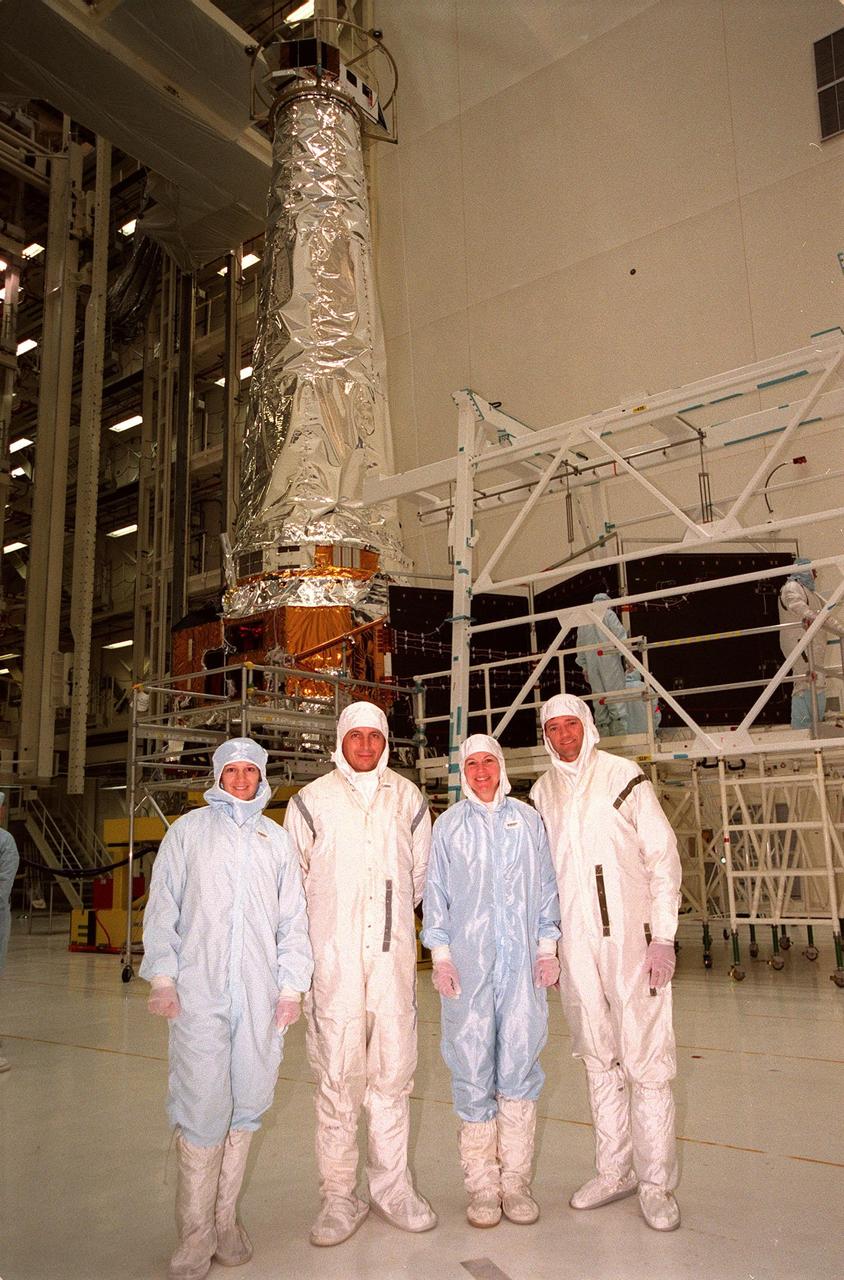
During payload familiarization, four members of the STS-93 crew pose in front of the Chandra X-ray Observatory, which is in the Vertical Processing Facility. From left are Commander Eileen Collins, Mission Specialists Michel Tognini of France and Catherine G. Coleman, and Pilot Jeffrey S. Ashby. Tognini represents the Centre National d'Etudes Spatiales (CNES). Collins is the first woman to serve as a shuttle mission commander. She was the first woman pilot of a Space Shuttle, on mission STS-63, and also served as pilot on mission STS-84. The fifth member of the STS-93 crew is Mission Specialist Steven A. Hawley. Chandra is scheduled for launch July 9 aboard Space Shuttle Columbia, on mission STS-93 . Formerly called the Advanced X-ray Astrophysics Facility, Chandra comprises three major elements: the spacecraft, the science instrument module (SIM), and the world's most powerful X-ray telescope. Chandra will allow scientists from around the world to see previously invisible black holes and high-temperature gas clouds, giving the observatory the potential to rewrite the books on the structure and evolution of our universe
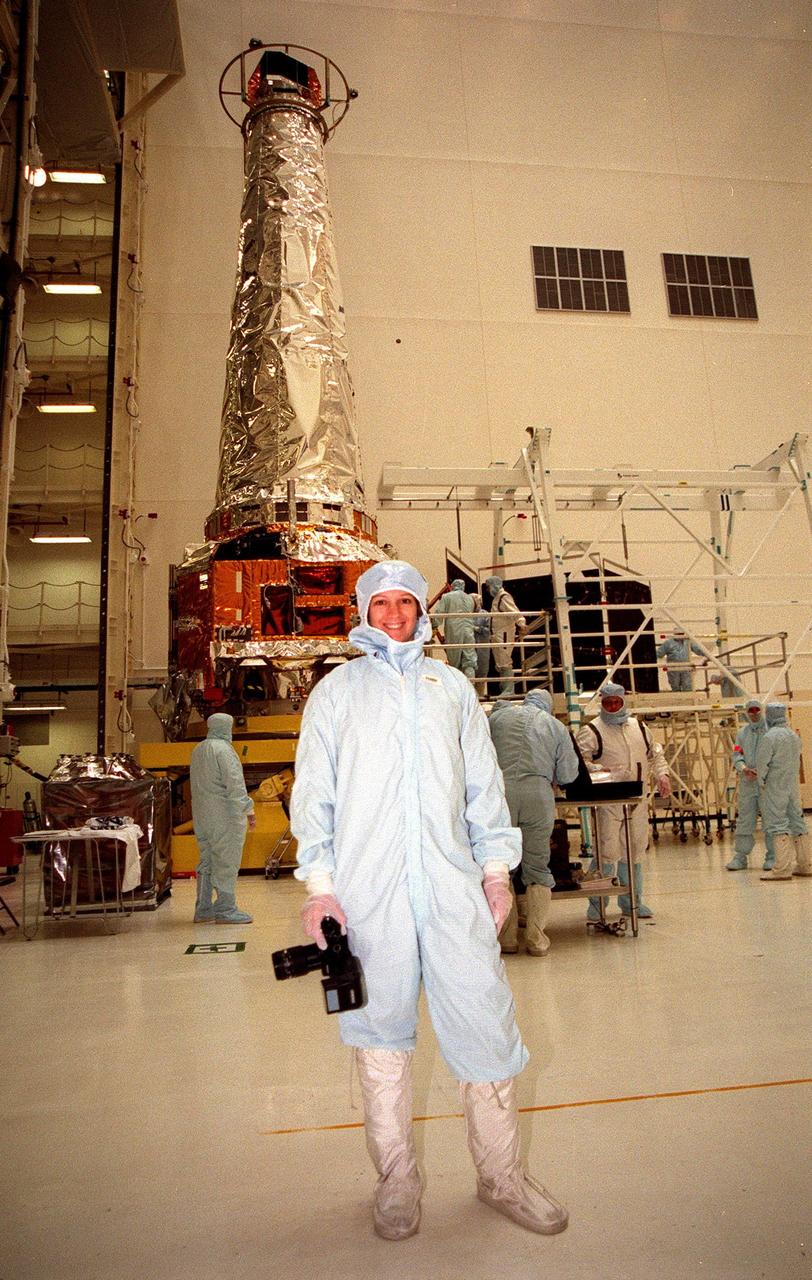
STS-93 Commander Eileen Collins poses with her camera in front of the Chandra X-ray Observatory during payload familiarization. Other members of the STS-93 crew who are at KSC are Pilot Jeffrey S. Ashby and Mission Specialists Catherine G. Coleman and Michel Tognini of France, who represents the Centre National d'Etudes Spatiales (CNES). Collins is the first woman to serve as a shuttle mission commander. She was the first woman pilot of a Space Shuttle, on mission STS-63, and also served as pilot on mission STS-84. The fifth member of the crew is Mission Specialist Steven A. Hawley. Chandra is scheduled for launch July 9 aboard Space Shuttle Columbia, on mission STS-93 . Formerly called the Advanced X-ray Astrophysics Facility, Chandra comprises three major elements: the spacecraft, the science instrument module (SIM), and the world's most powerful X-ray telescope. Chandra will allow scientists from around the world to see previously invisible black holes and high-temperature gas clouds, giving the observatory the potential to rewrite the books on the structure and evolution of our universe
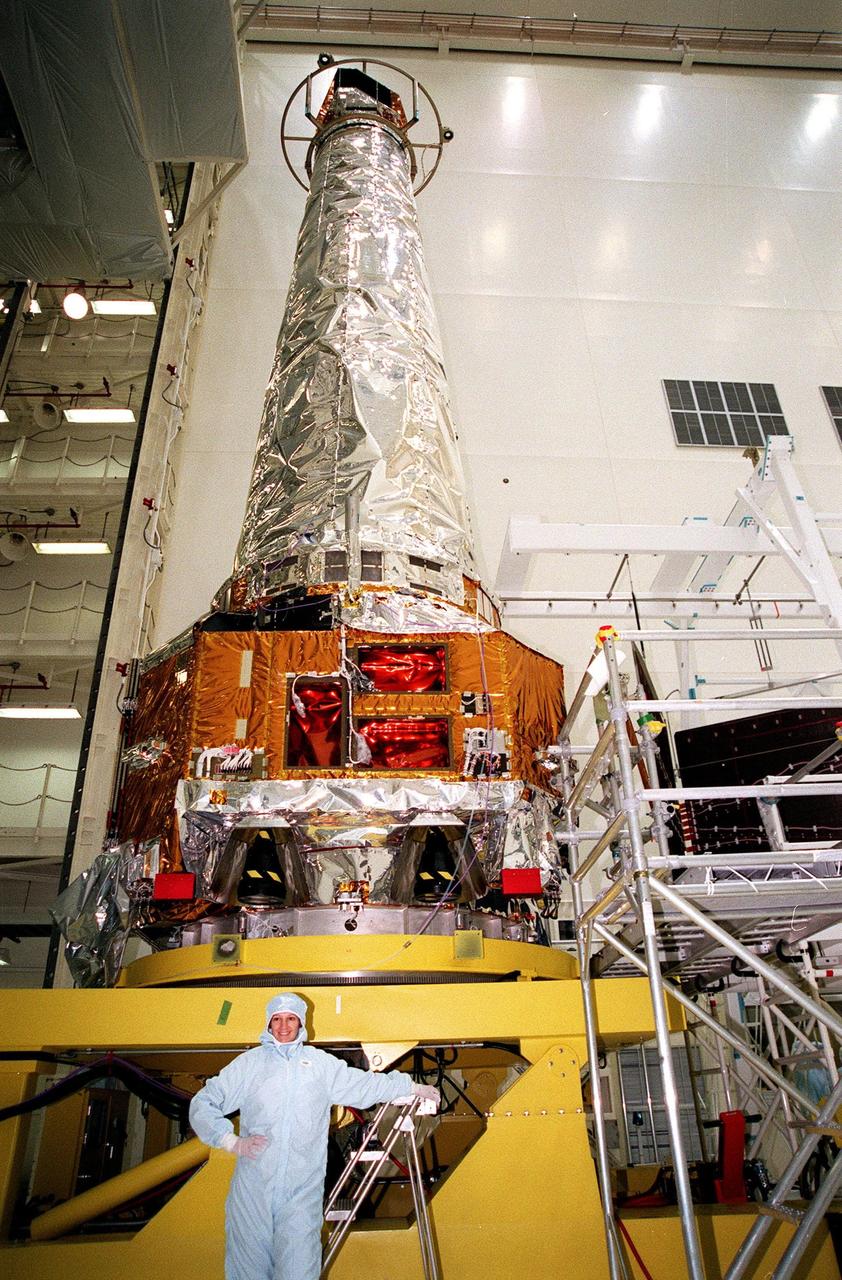
STS-93 Commander Eileen Collins poses at the foot of the Chandra X-ray Observatory during payload familiarization. Other members of the STS-93 crew who are at KSC are Pilot Jeffrey S. Ashby and Mission Specialists Catherine G. Coleman and Michel Tognini of France, who represents the Centre National d'Etudes Spatiales (CNES). Collins is the first woman to serve as a shuttle mission commander. She was the first woman pilot of a Space Shuttle, on mission STS-63, and also served as pilot on mission STS-84. The fifth member of the crew is Mission Specialist Steven A. Hawley. Chandra is scheduled for launch July 9 aboard Space Shuttle Columbia, on mission STS-93 . Formerly called the Advanced X-ray Astrophysics Facility, Chandra comprises three major elements: the spacecraft, the science instrument module (SIM), and the world's most powerful X-ray telescope. Chandra will allow scientists from around the world to see previously invisible black holes and high-temperature gas clouds, giving the observatory the potential to rewrite the books on the structure and evolution of our universe
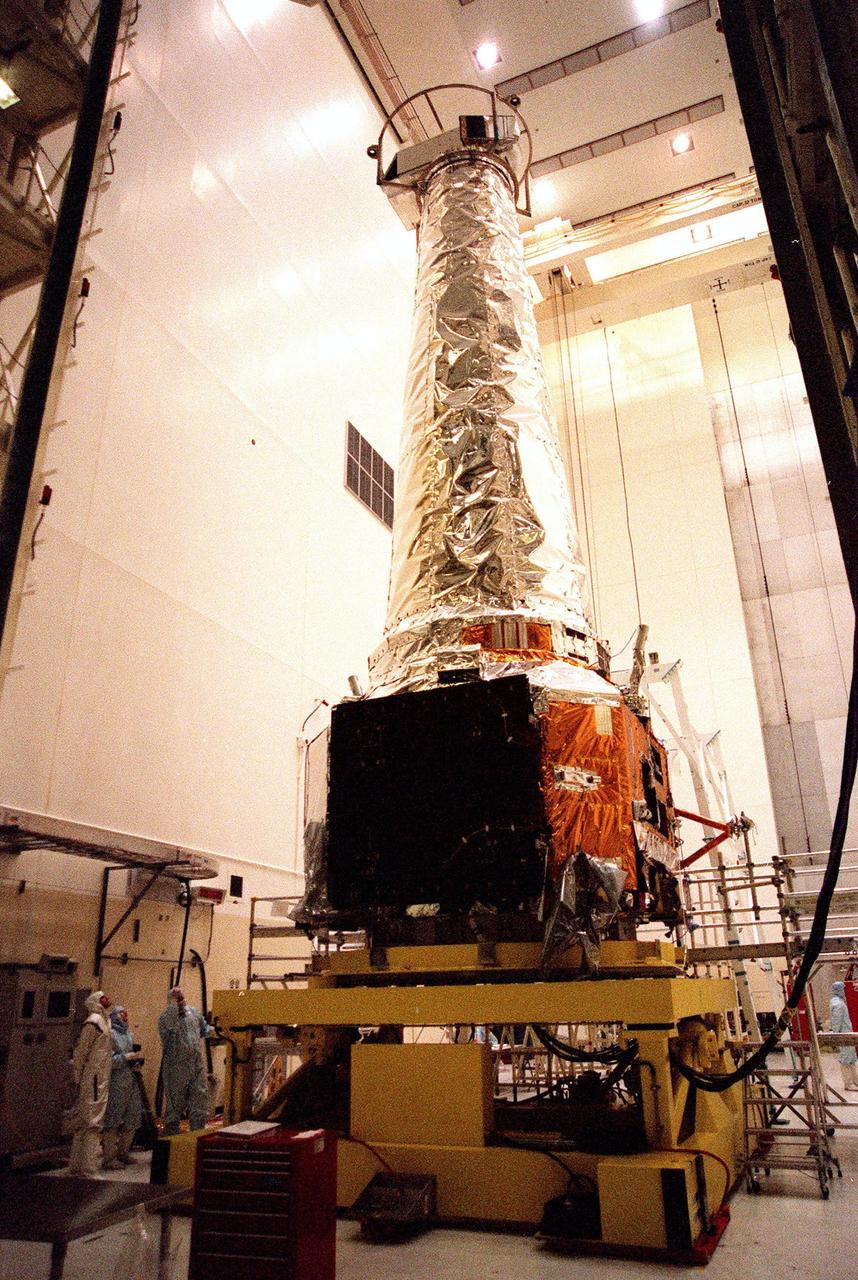
In the Vertical Processing Facility, STS-93 Pilot Jeffrey S. Ashby and Commander Eileen Collins join a TRW technician observing the Chandra X-ray Observatory on top of a work stand. Other members of the STS-93 crew who are at KSC for payload familiarization are Mission Specialists Catherine G. Coleman and Michel Tognini of France, who represents the Centre National d'Etudes Spatiales (CNES). Collins is the first woman to serve as a shuttle mission commander. She was the first woman pilot of a Space Shuttle, on mission STS-63, and also served as pilot on mission STS-84. The fifth member of the crew is Mission Specialist Steven A. Hawley. Chandra is scheduled for launch July 9 aboard Space Shuttle Columbia, on mission STS-93 . Formerly called the Advanced X-ray Astrophysics Facility, Chandra comprises three major elements: the spacecraft, the science instrument module (SIM), and the world's most powerful X-ray telescope. Chandra will allow scientists from around the world to see previously invisible black holes and high-temperature gas clouds, giving the observatory the potential to rewrite the books on the structure and evolution of our universe
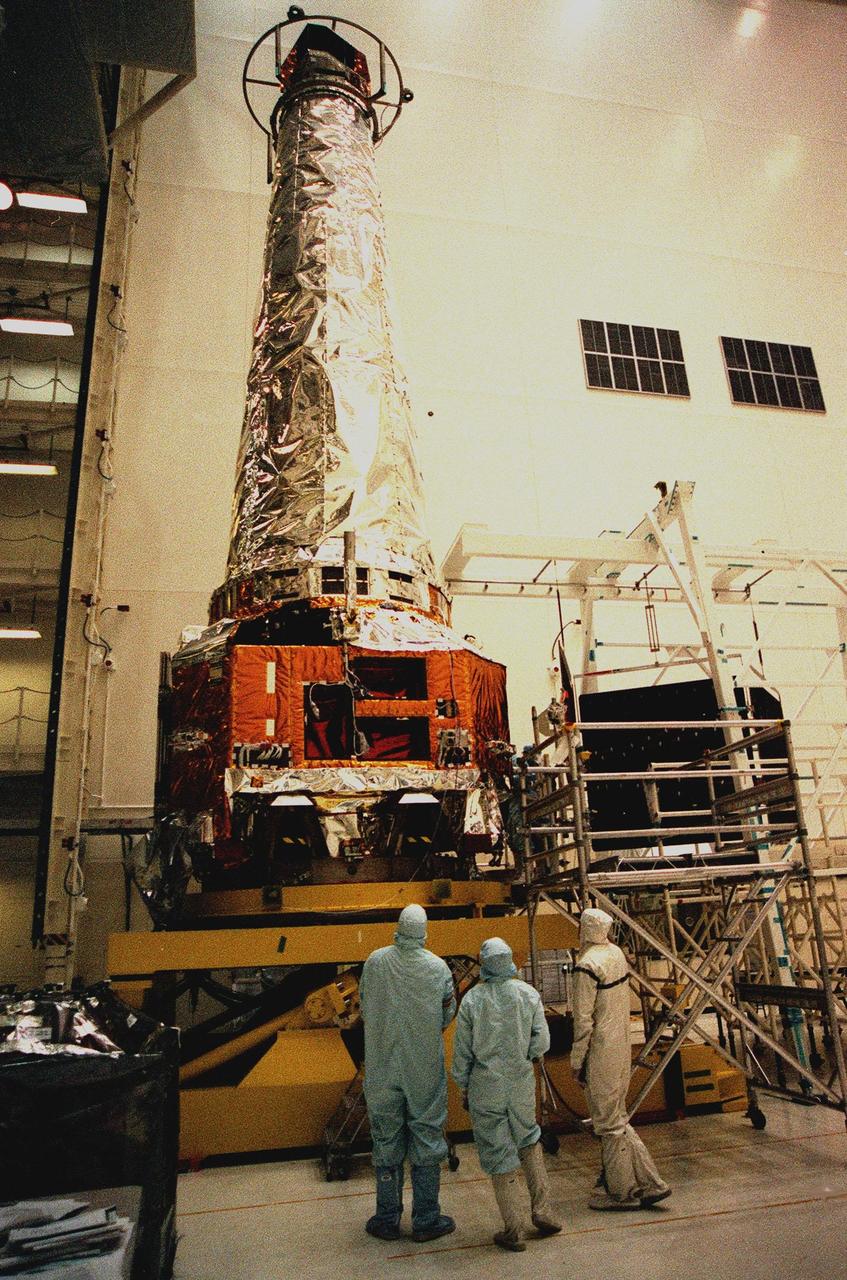
A TRW technician joins STS-93 Commander Eileen Collins (center) and Pilot Jeffrey S. Ashby (right) as they observe the Chandra X-ray Observatory on its work stand inside the Vertical Processing Facility. Other members of the STS-93 crew who are at KSC for payload familiarization are Mission Specialists Catherine G. Coleman and Michel Tognini of France, who represents the Centre National d'Etudes Spatiales (CNES). Collins is the first woman to serve as a shuttle mission commander. She was the first woman pilot of a Space Shuttle, on mission STS-63, and also served as pilot on mission STS-84. The fifth member of the crew is Mission Specialist Steven A. Hawley. Chandra is scheduled for launch July 9 aboard Space Shuttle Columbia, on mission STS-93 . Formerly called the Advanced X-ray Astrophysics Facility, Chandra comprises three major elements: the spacecraft, the science instrument module (SIM), and the world's most powerful X-ray telescope. Chandra will allow scientists from around the world to see previously invisible black holes and high-temperature gas clouds, giving the observatory the potential to rewrite the books on the structure and evolution of our universe
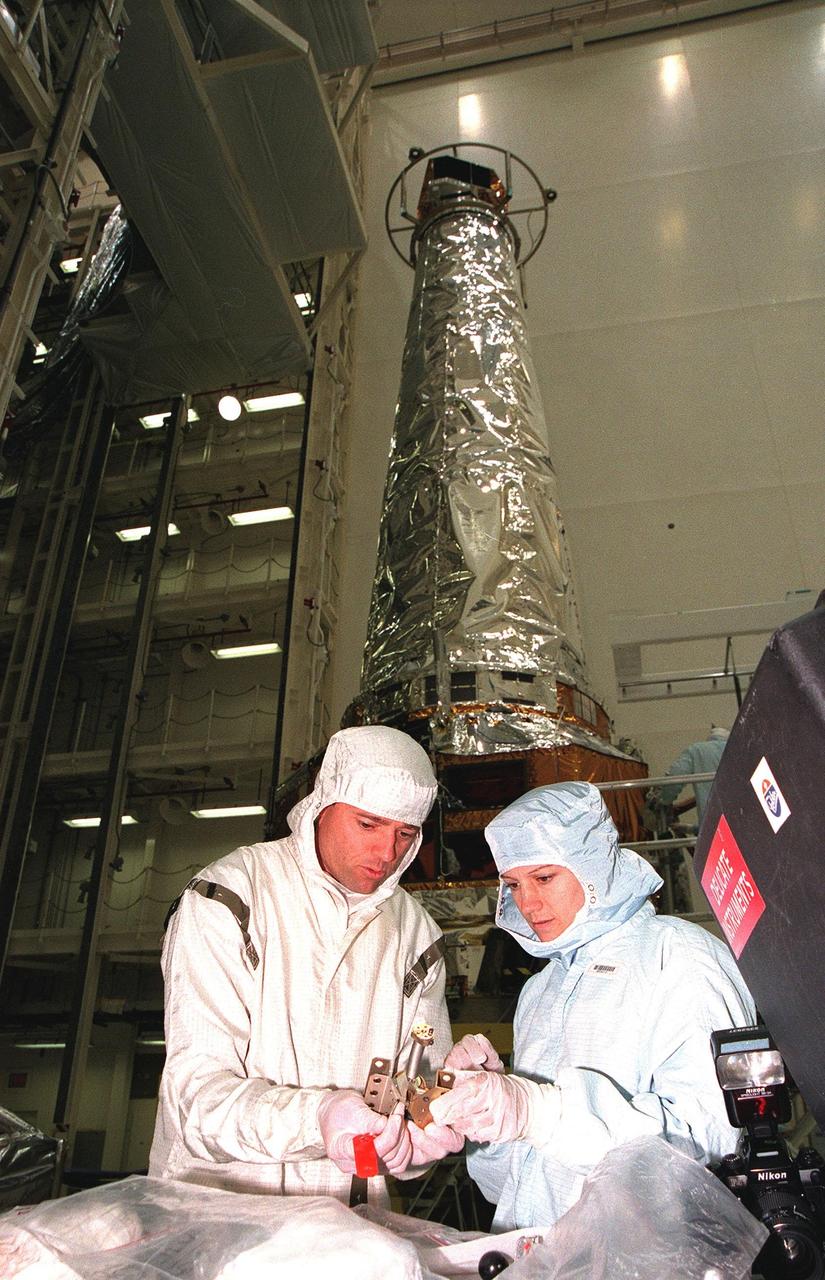
In the Vertical Processing Facility, STS-93 Pilot Jeffrey S. Ashby and Commander Eileen M. Collins look at a hinge used on the solar panels of the Chandra X-ray Observatory. Members of the STS-93 crew are at KSC for payload familiarization. Also participating are Mission Specialists Catherine G. Coleman and Michel Tognini of France, representing the Centre National d'Etudes Spatiales (CNES). Collins is the first woman to serve as a shuttle mission commander. She was the first woman pilot of a Space Shuttle, on mission STS-63, and also served as pilot on mission STS-84. The fifth member of the crew is Mission Specialist Steven A. Hawley. Chandra is scheduled for launch July 9 aboard Space Shuttle Columbia, on mission STS-93 . Formerly called the Advanced X-ray Astrophysics Facility, Chandra comprises three major elements: the spacecraft, the science instrument module (SIM), and the world's most powerful X-ray telescope. Chandra will allow scientists from around the world to see previously invisible black holes and high-temperature gas clouds, giving the observatory the potential to rewrite the books on the structure and evolution of our universe
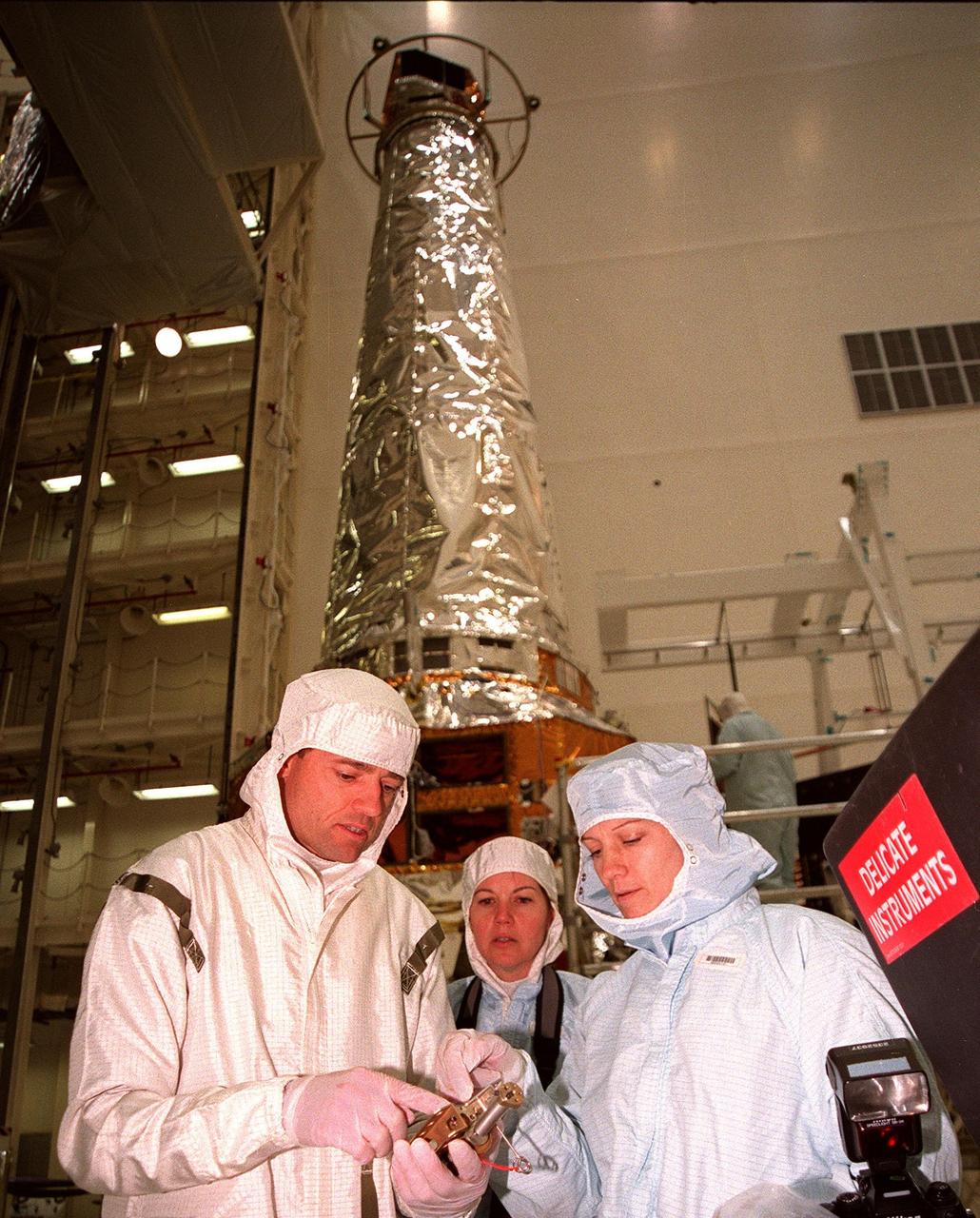
In the Vertical Processing Facility, STS-93 Pilot Jeffrey S. Ashby, Mission Specialist Catherine G. Coleman and Commander Eileen M. Collins look at a hinge used on the solar panels of the Chandra X-ray Observatory. Members of the STS-93 crew are at KSC for payload familiarization, including Mission Specialist Michel Tognini of France, representing the Centre National d'Etudes Spatiales (CNES). Collins is the first woman to serve as a shuttle mission commander. She was the first woman pilot of a Space Shuttle, on mission STS-63, and also served as pilot on mission STS-84. The fifth member of the crew is Mission Specialist Steven A. Hawley. Chandra is scheduled for launch July 9 aboard Space Shuttle Columbia, on mission STS-93 . Formerly called the Advanced X-ray Astrophysics Facility, Chandra comprises three major elements: the spacecraft, the science instrument module (SIM), and the world's most powerful X-ray telescope. Chandra will allow scientists from around the world to see previously invisible black holes and high-temperature gas clouds, giving the observatory the potential to rewrite the books on the structure and evolution of our universe
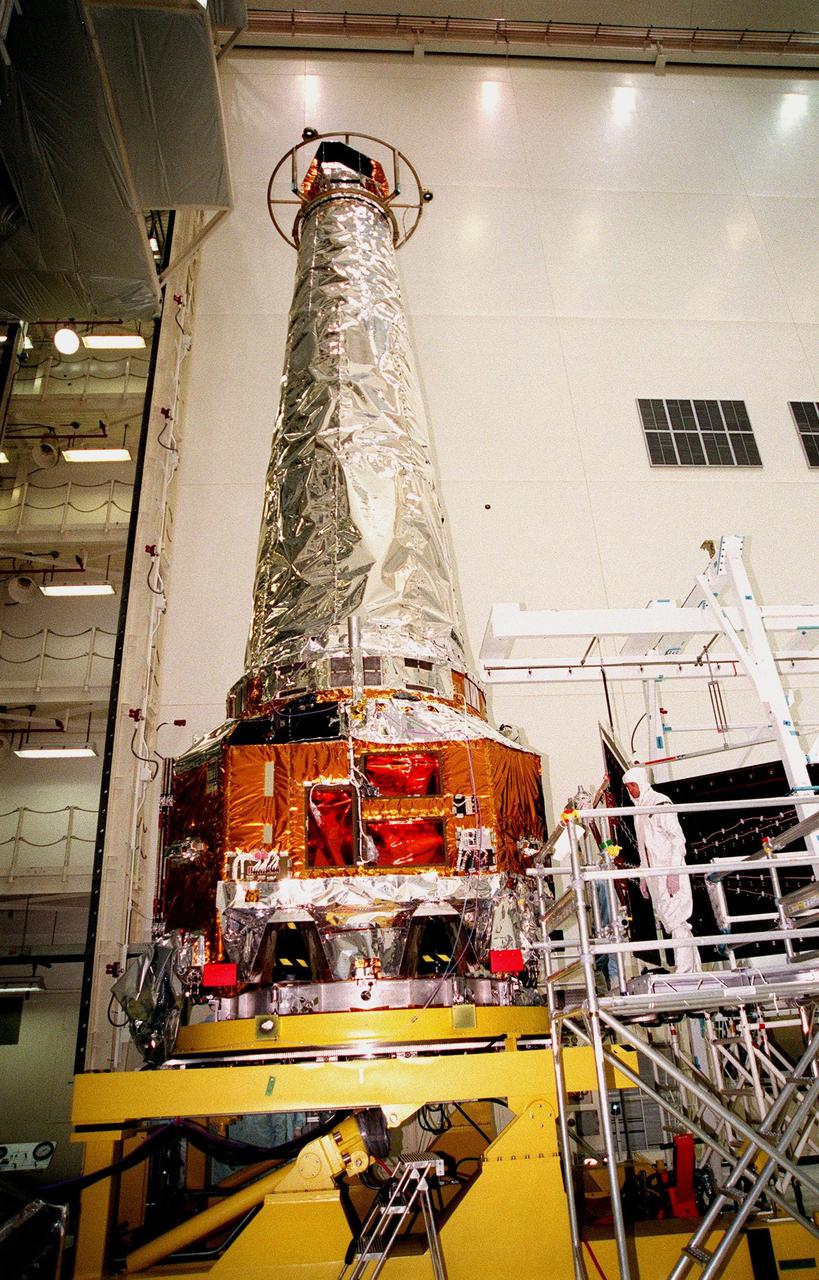
In the Vertical Processing Facility, STS-93 Pilot Jeffrey S. Ashby gets a close look at the Chandra X-ray Observatory. Other members of the STS-93 crew who are at KSC for payload familiarization are Commander Eileen Collins and Mission Specialists Catherine G. Coleman and Michel Tognini of France, who represents the Centre National d'Etudes Spatiales (CNES). Collins is the first woman to serve as a shuttle mission commander. She was the first woman pilot of a Space Shuttle, on mission STS-63, and also served as pilot on mission STS-84. The fifth member of the crew is Mission Specialist Steven A. Hawley. Chandra is scheduled for launch July 9 aboard Space Shuttle Columbia, on mission STS-93 . Formerly called the Advanced X-ray Astrophysics Facility, Chandra comprises three major elements: the spacecraft, the science instrument module (SIM), and the world's most powerful X-ray telescope. Chandra will allow scientists from around the world to see previously invisible black holes and high-temperature gas clouds, giving the observatory the potential to rewrite the books on the structure and evolution of our universe
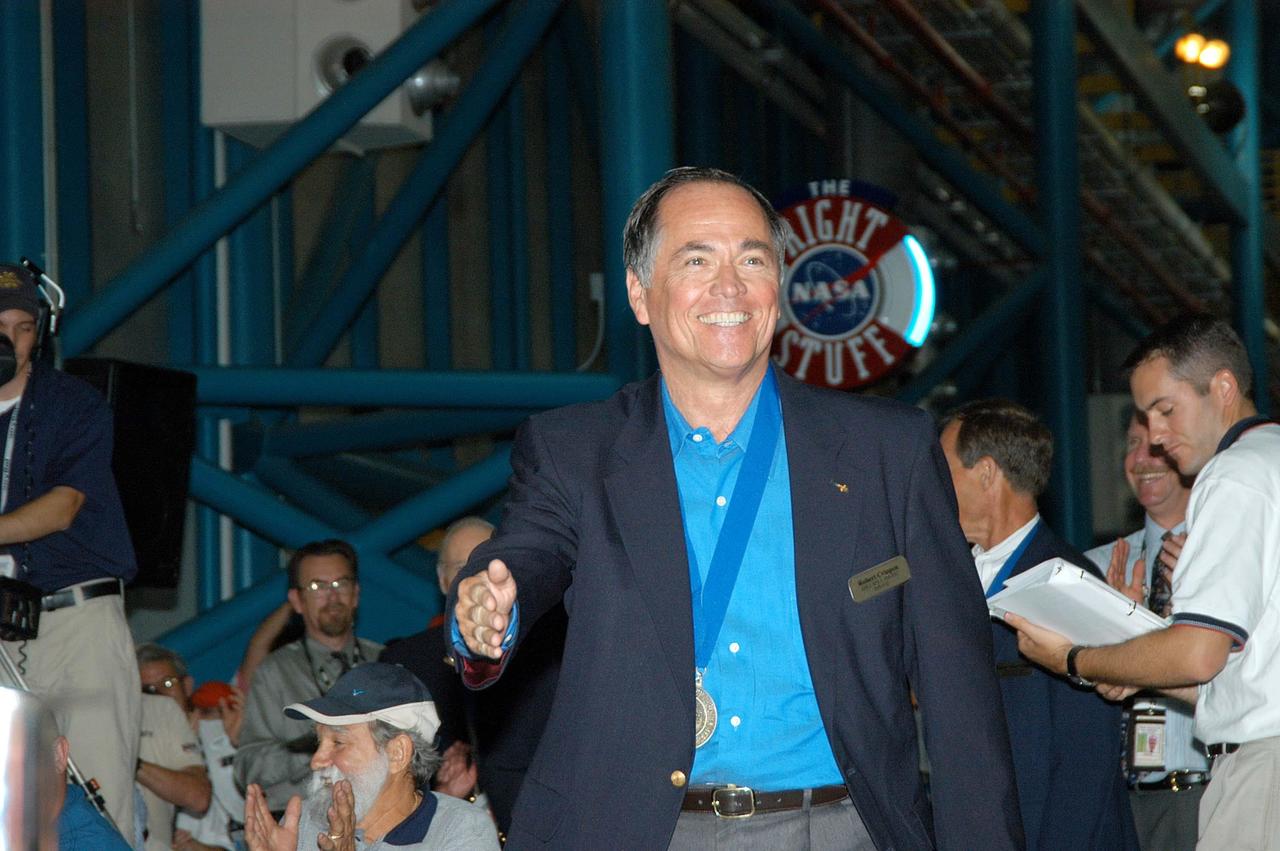
KENNEDY SPACE CENTER, FLA. -- Former astronaut Robert Crippen smiles at the warm greeting he is receiving when introduced as a previous inductee into the U.S. Astronaut Hall of Fame. He and other Hall of Fame members were present for the induction of five new space program heroes into the U.S. Astronaut Hall of Fame: Richard O. Covey, commander of the Hubble Space Telescope repair mission; Norman E. Thagard, the first American to occupy Russia’s Mir space station; the late Francis R. "Dick" Scobee, commander of the ill-fated 1986 Challenger mission; Kathryn D. Sullivan, the first American woman to walk in space; and Frederick D. Gregory, the first African-American to command a space mission and the current NASA deputy administrator. Crippen piloted the first Space Shuttle flight in 1981 and commanded three other Shuttle missions in the next 3-1/2 years. In the early 1990s he served as director of NASA’s Kennedy Space Center. The induction ceremony was held at the Apollo/Saturn V Center at KSC. The U.S. Astronaut Hall of Fame opened in 1990 to provide a place where space travelers could be remembered for their participation and accomplishments in the U.S. space program. The five inductees join 52 previously honored astronauts from the ranks of the Gemini, Apollo, Skylab, Apollo-Soyuz, and Space Shuttle programs.
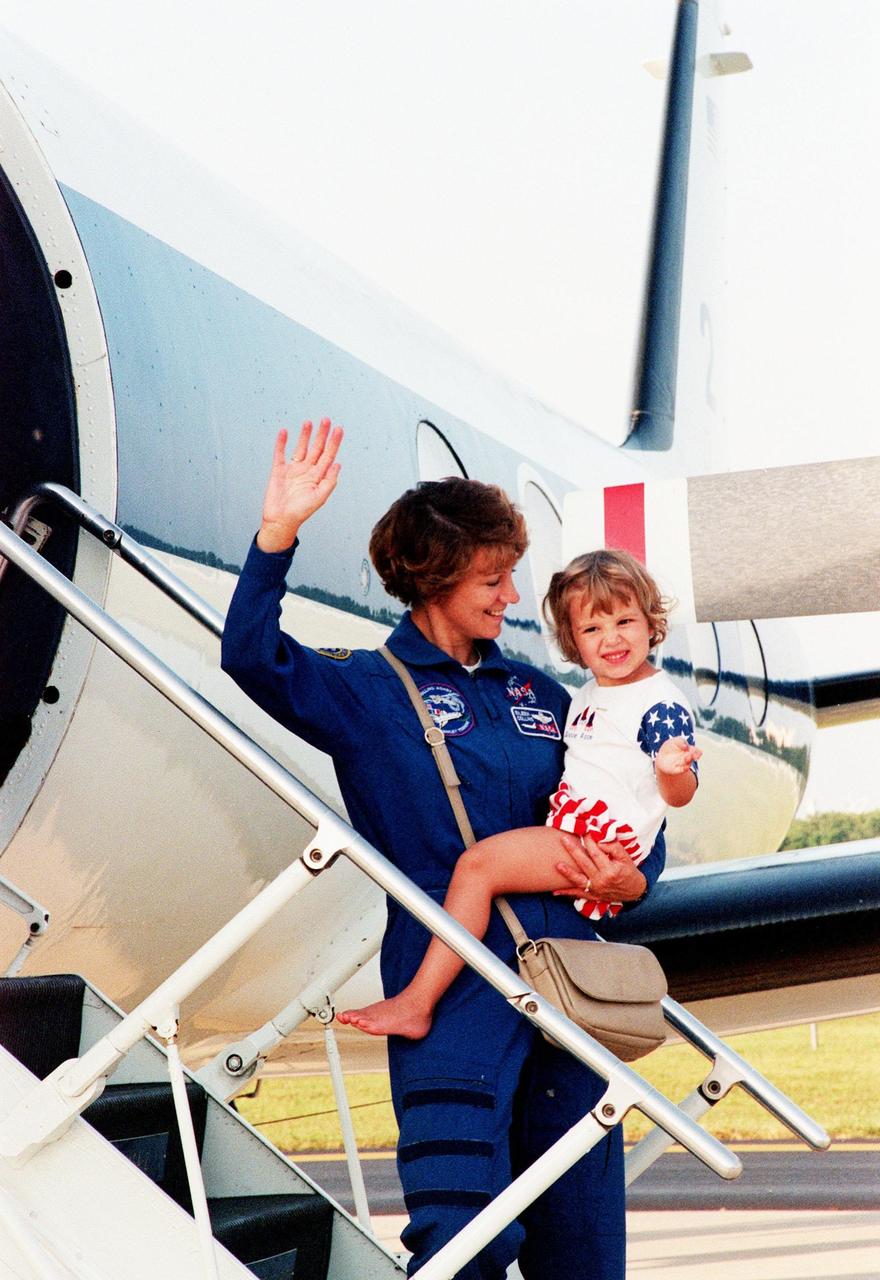
At the Skid Strip at the Cape Canaveral Air Station, Commander Eileen Collins and her daughter Bridget Youngs prepare to board an aircraft for their return flight to Houston following the completion of the STS-93 Space Shuttle mission. Landing occurred on runway 33 at KSC's Shuttle Landing Facility with main gear touchdown at 11:20:35 p.m. EDT on July 27. The mission's primary objective was to deploy the Chandra X-ray Observatory, which will allow scientists from around the world to study some of the most distant, powerful and dynamic objects in the universe. This was the 95th flight in the Space Shuttle program and the 26th for Columbia. The landing was the 19th consecutive Shuttle landing in Florida and the 12th night landing in Shuttle program history. On this mission, Collins became the first woman to serve as a Shuttle commander
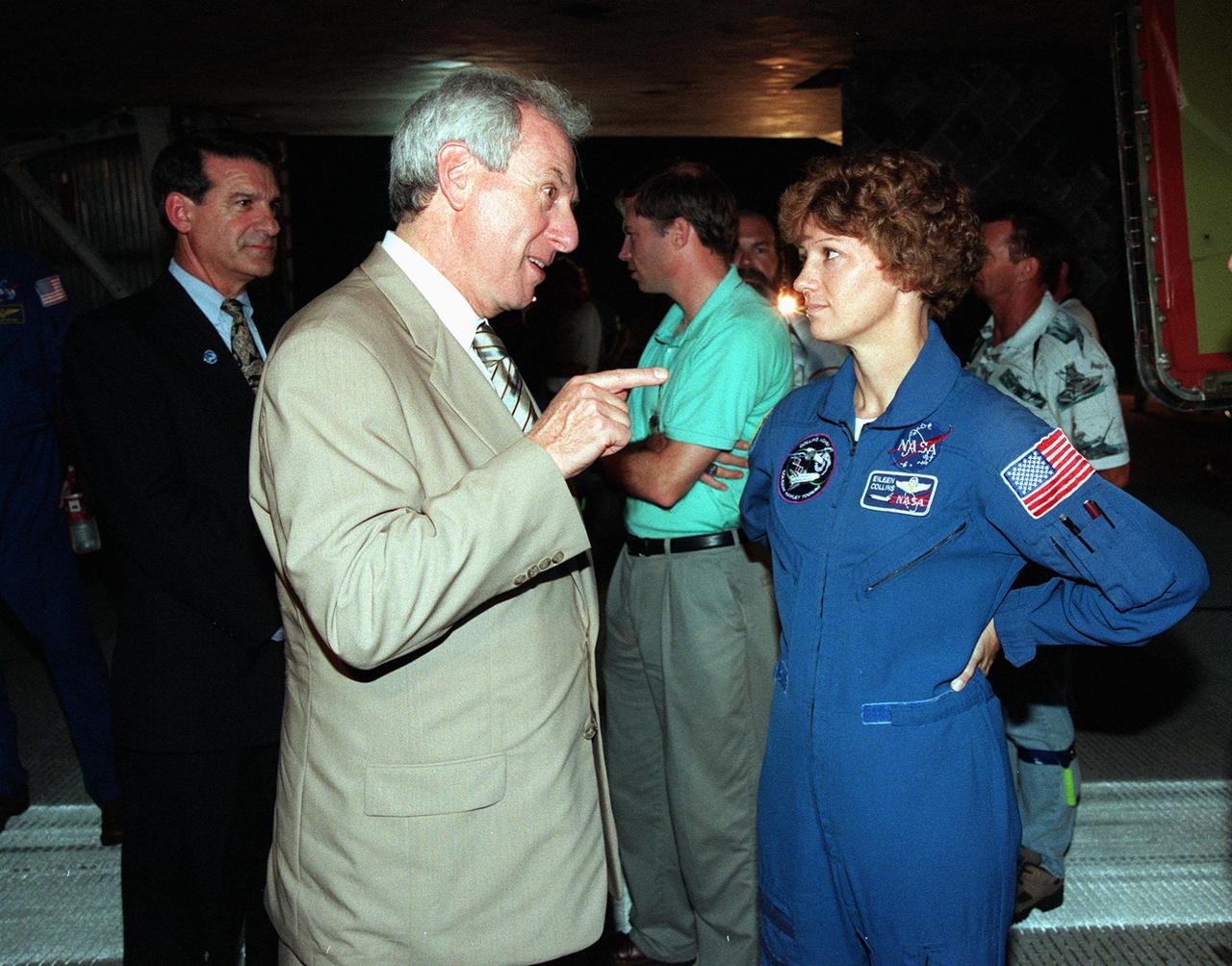
KENNEDY SPACE CENTER, FLA. -- At the Shuttle Landing Facility, NASA Administrator Daniel Goldin (foreground) talks with STS-93 Commander Eileen Collins beside the Space Shuttle orbiter Columbia following the successful completion of her mission. Marshall Space Flight Center Director Arthur G. Stephenson (far left) looks on. Landing occurred on runway 33 with main gear touchdown at 11:20:35 p.m. EDT on July 27. The mission's primary objective was to deploy the Chandra X-ray Observatory, which will allow scientists from around the world to study some of the most distant, powerful and dynamic objects in the universe. This was the 95th flight in the Space Shuttle program and the 26th for Columbia. The landing was the 19th consecutive Shuttle landing in Florida and the 12th night landing in Shuttle program history. On this mission, Collins became the first woman to serve as a Shuttle commander
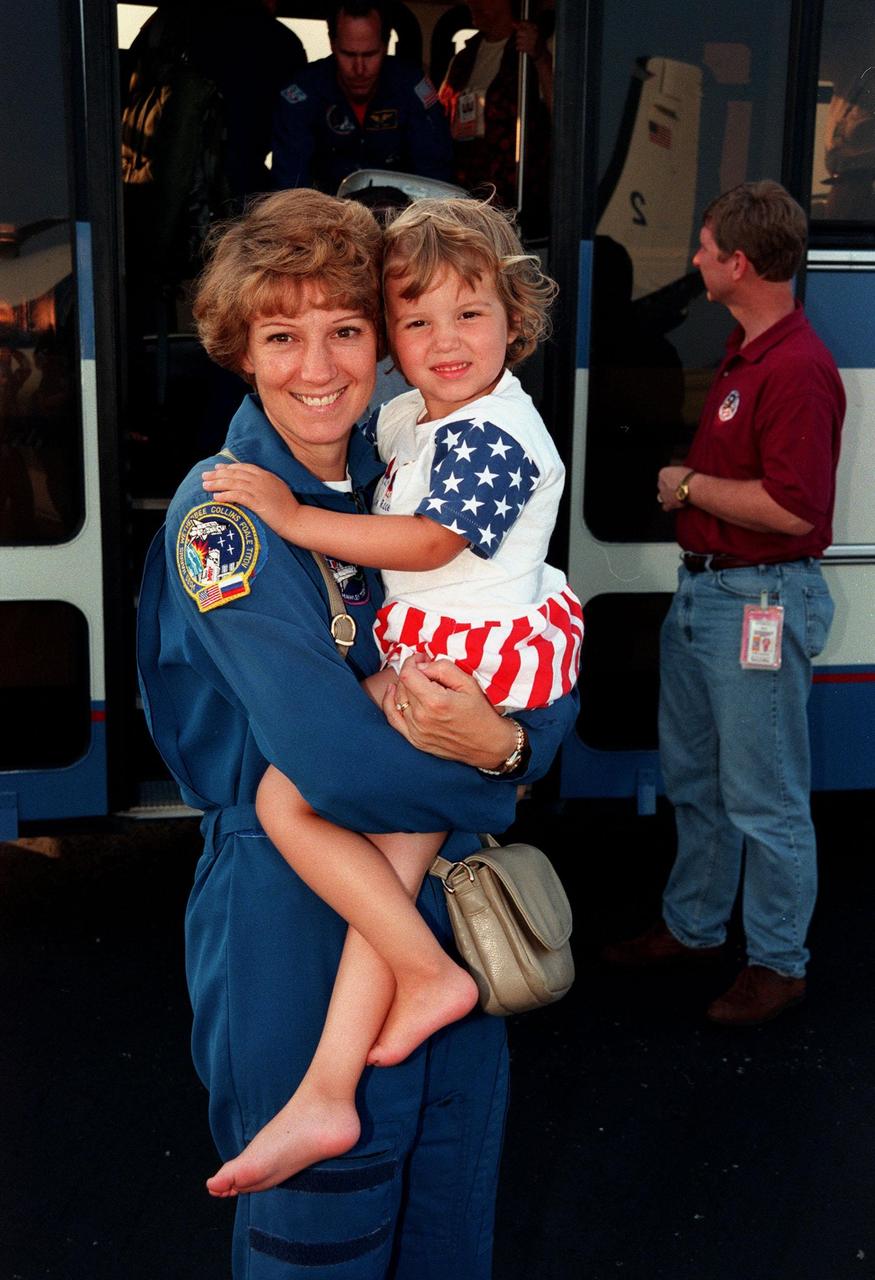
At the Skid Strip at the Cape Canaveral Air Station, Commander Eileen Collins and her daughter, Bridget Youngs, prepare to board an aircraft for their return flight to Houston following the completion of the STS-93 Space Shuttle mission. Landing occurred on runway 33 at KSC's Shuttle Landing Facility on July 27 with main gear touchdown at 11:20:35 p.m. EDT. The mission's primary objective was to deploy the Chandra X-ray Observatory, which will allow scientists from around the world to study some of the most distant, powerful and dynamic objects in the universe. This was the 95th flight in the Space Shuttle program and the 26th for Columbia. The landing was the 19th consecutive Shuttle landing in Florida and the 12th night landing in Shuttle program history. On this mission, Collins became the first woman to serve as a Shuttle commander
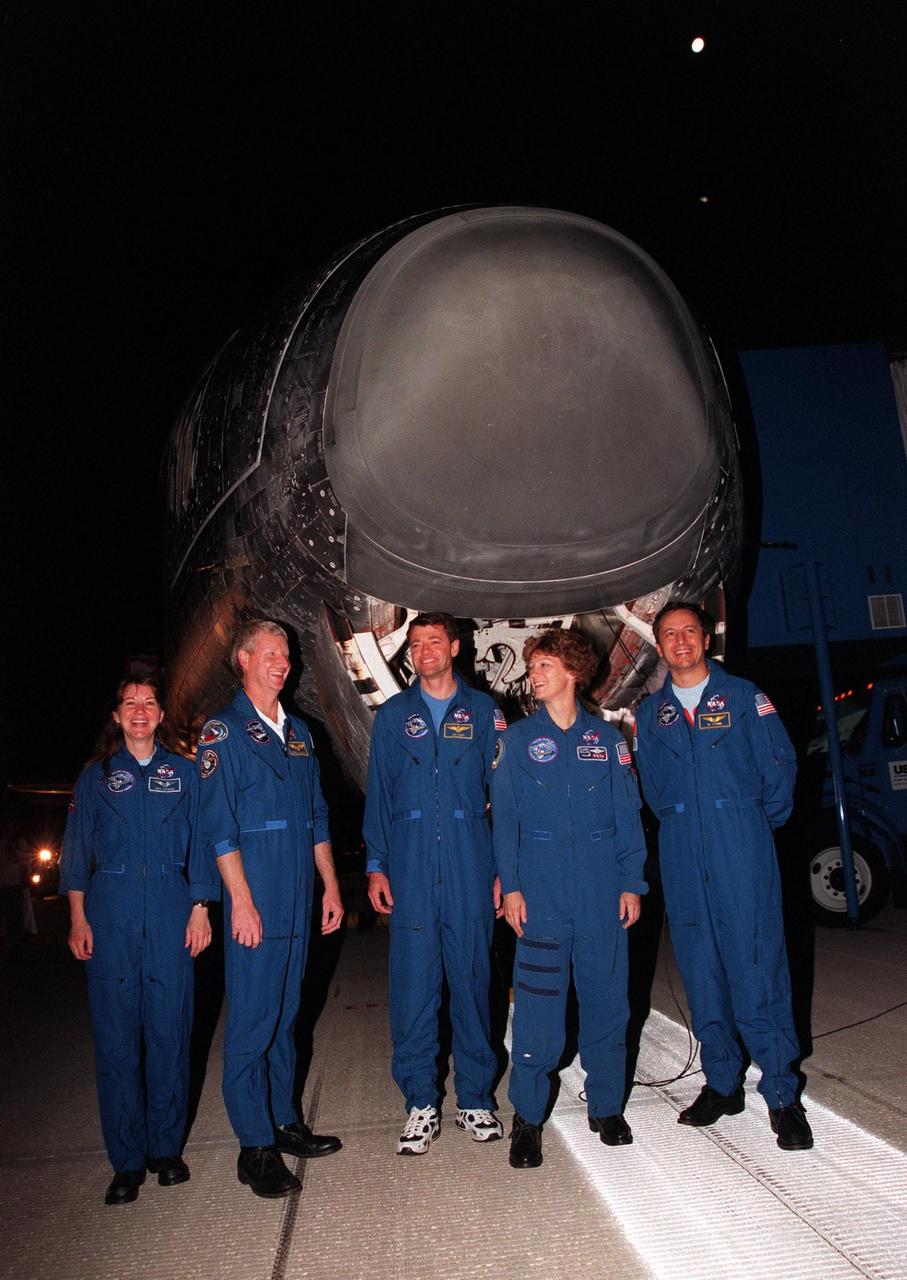
KENNEDY SPACE CENTER, FLA. -- The STS-93 crew pose in front of the Space Shuttle orbiter Columbia following their landing on runway 33 at the Shuttle Landing Facility. Main gear touchdown occurred at 11:20:35 p.m. EDT on July 27. From left to right, they are Mission Specialists Catherine G. Coleman (Ph.D.) and Steven A. Hawley (Ph.D.), Pilot Jeffrey S. Ashby, Commander Eileen Collins, and Mission Specialist Michel Tognini of France, with the Centre National d'Etudes Spatiales (CNES). The mission's primary objective was to deploy the Chandra X-ray Observatory, which will allow scientists from around the world to study some of the most distant, powerful and dynamic objects in the universe. This was the 95th flight in the Space Shuttle program and the 26th for Columbia. The landing was the 19th consecutive Shuttle landing in Florida and the 12th night landing in Shuttle program history. On this mission, Collins became the first woman to serve as a Shuttle commander
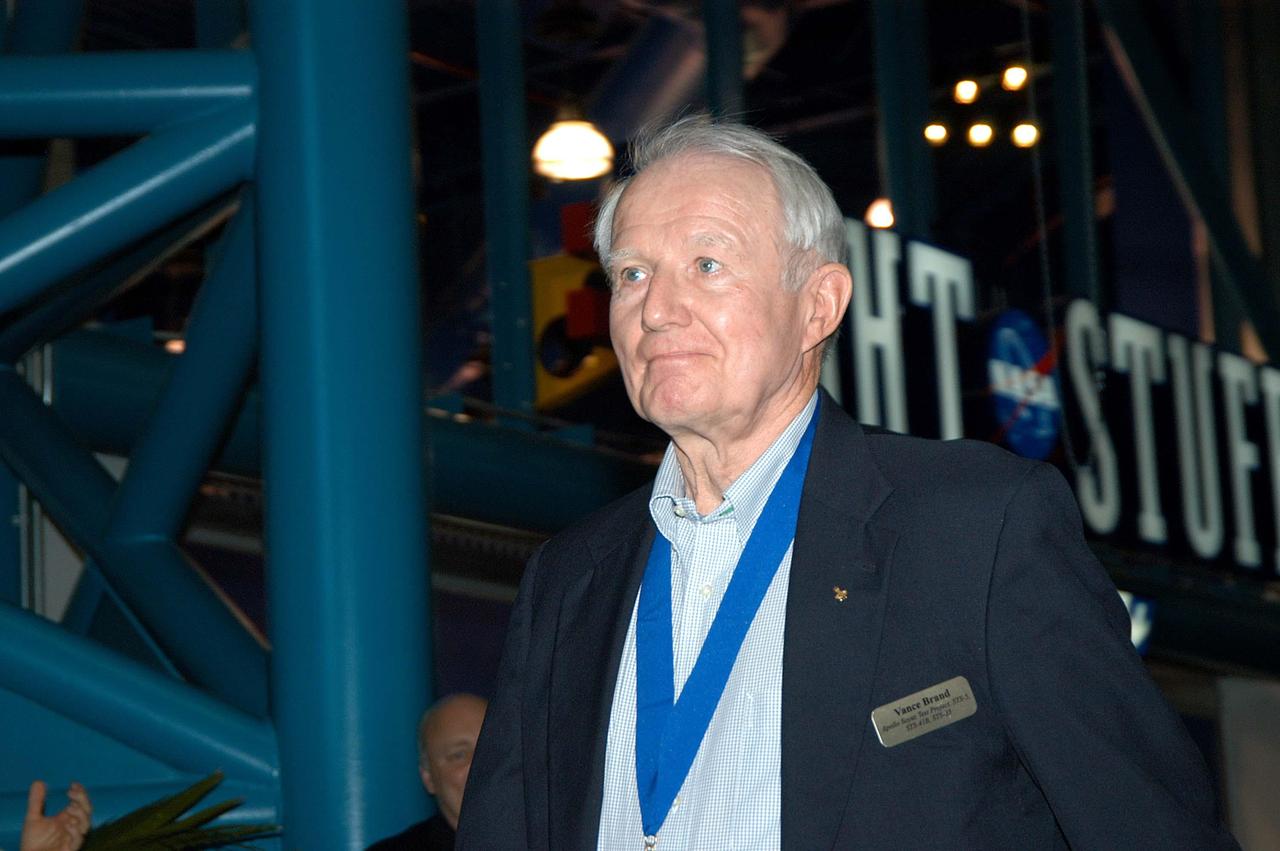
KENNEDY SPACE CENTER, FLA. -- Former astronaut Vance Brand is introduced as a previous inductee into the U.S. Astronaut Hall of Fame. He and other Hall of Fame members were present for the induction of five new space program heroes into the U.S. Astronaut Hall of Fame: Richard O. Covey, commander of the Hubble Space Telescope repair mission; Norman E. Thagard, the first American to occupy Russia’s Mir space station; the late Francis R. "Dick" Scobee, commander of the ill-fated 1986 Challenger mission; Kathryn D. Sullivan, the first American woman to walk in space; and Frederick D. Gregory, the first African-American to command a space mission and the current NASA deputy administrator. Brand was Command Module Pilot on the 1975 Apollo-Soyuz Test Project, the first linkup in orbit between spaceships of the United States and Soviet Union, and he later commanded three Space Shuttle missions. The induction ceremony was held at the Apollo/Saturn V Center at KSC. The U.S. Astronaut Hall of Fame opened in 1990 to provide a place where space travelers could be remembered for their participation and accomplishments in the U.S. space program. The five inductees join 52 previously honored astronauts from the ranks of the Gemini, Apollo, Skylab, Apollo-Soyuz, and Space Shuttle programs.
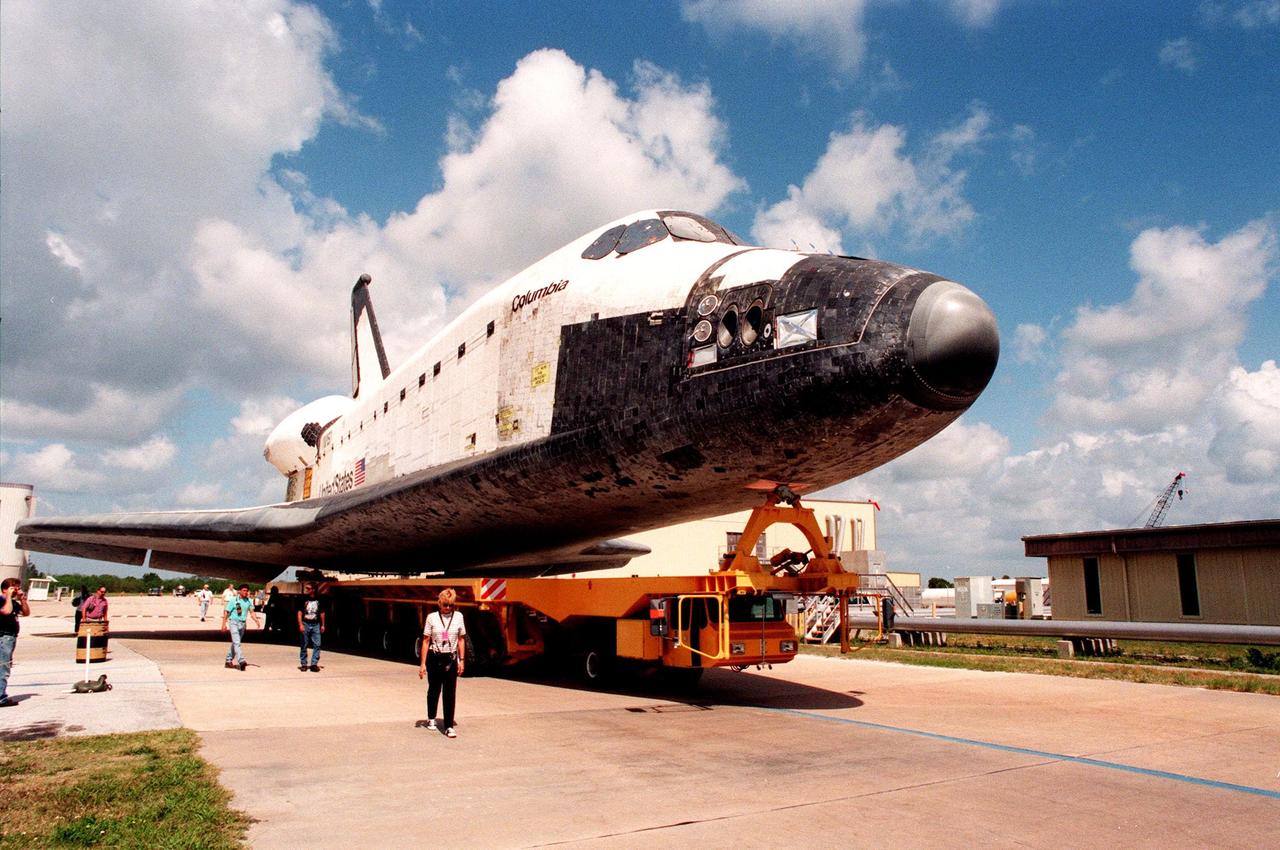
KENNEDY SPACE CENTER, FLA. -- The orbiter Columbia, aboard its orbiter transporter system, heads for the Vehicle Assembly Building to undergo external tank mating operations. Columbia is scheduled for rollout to Launch Pad 39B on Monday, June 7, for mission STS-93. The primary mission objective will be the deployment of the Advanced X-ray Astrophysics Facility, recently renamed the Chandra X-Ray Observatory. Mission STS-93 will be the first Space Shuttle commanded by a woman, Commander Eileen M. Collins. It is scheduled to launch July 22 at 12:27 a.m. EDT although that date is currently under review
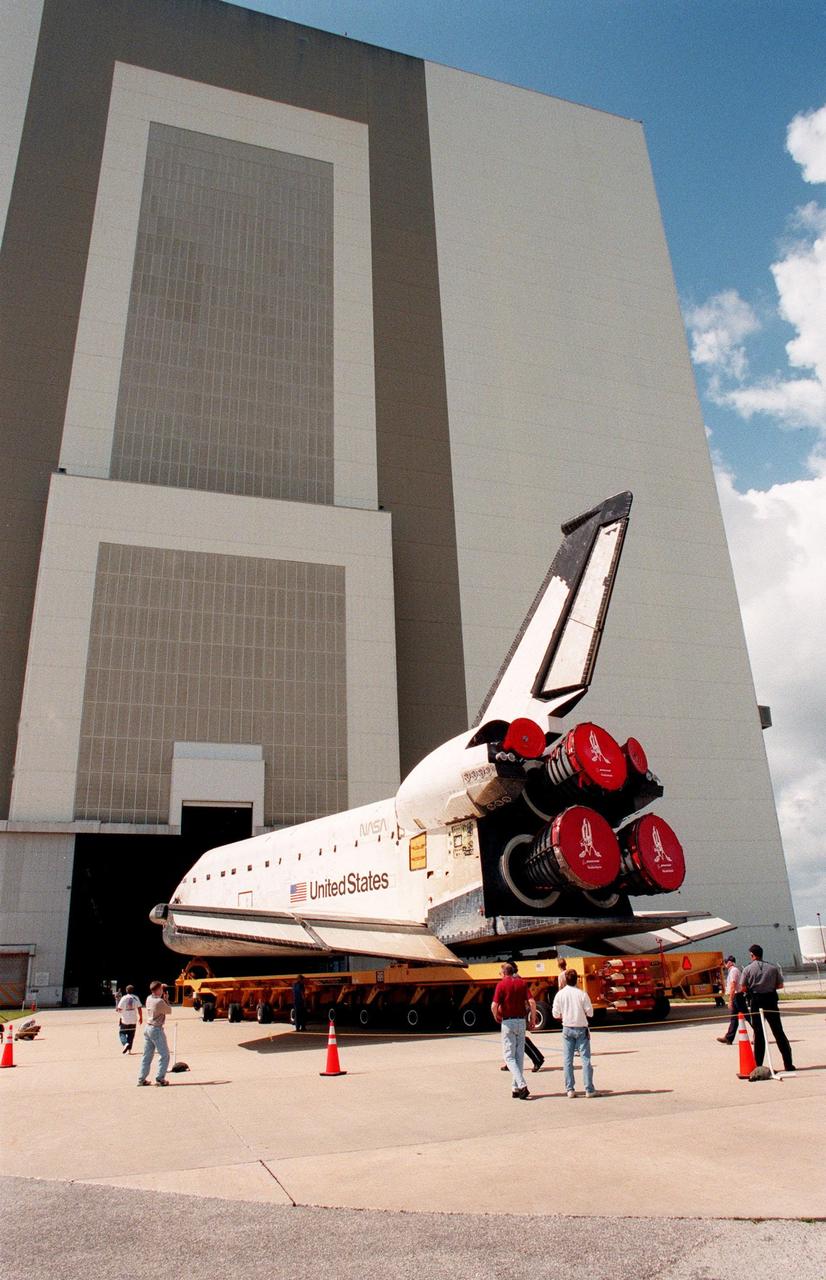
KENNEDY SPACE CENTER, FLA. -- The orbiter Columbia, aboard its orbiter transporter system, rolls toward the opening in the Vehicle Assembly Building where it will undergo external tank mating operations. Columbia is scheduled for rollout to Launch Pad 39B on Monday, June 7, for mission STS-93. The primary mission objective will be the deployment of the Advanced X-ray Astrophysics Facility, recently renamed the Chandra X-Ray Observatory. Mission STS-93 will be the first Space Shuttle commanded by a woman, Commander Eileen M. Collins. It is scheduled to launch July 22 at 12:27 a.m. EDT although that date is currently under review

KENNEDY SPACE CENTER, FLA. -- At the Apollo/Saturn V Center, country music recording artist Teresa performs a song, "Brave New Girls," written for astronaut Catherine "Cady" Coleman, mission specialist on STS-93. She entertains participants and attendees of a women's forum held in the center. The attendees are planning to view the launch of STS-93 at the Banana Creek viewing sight. Much attention has been generated over the launch due to Commander Eileen M. Collins, the first woman to serve as commander of a Shuttle mission. Liftoff is scheduled for July 20 at 12:36 a.m. EDT
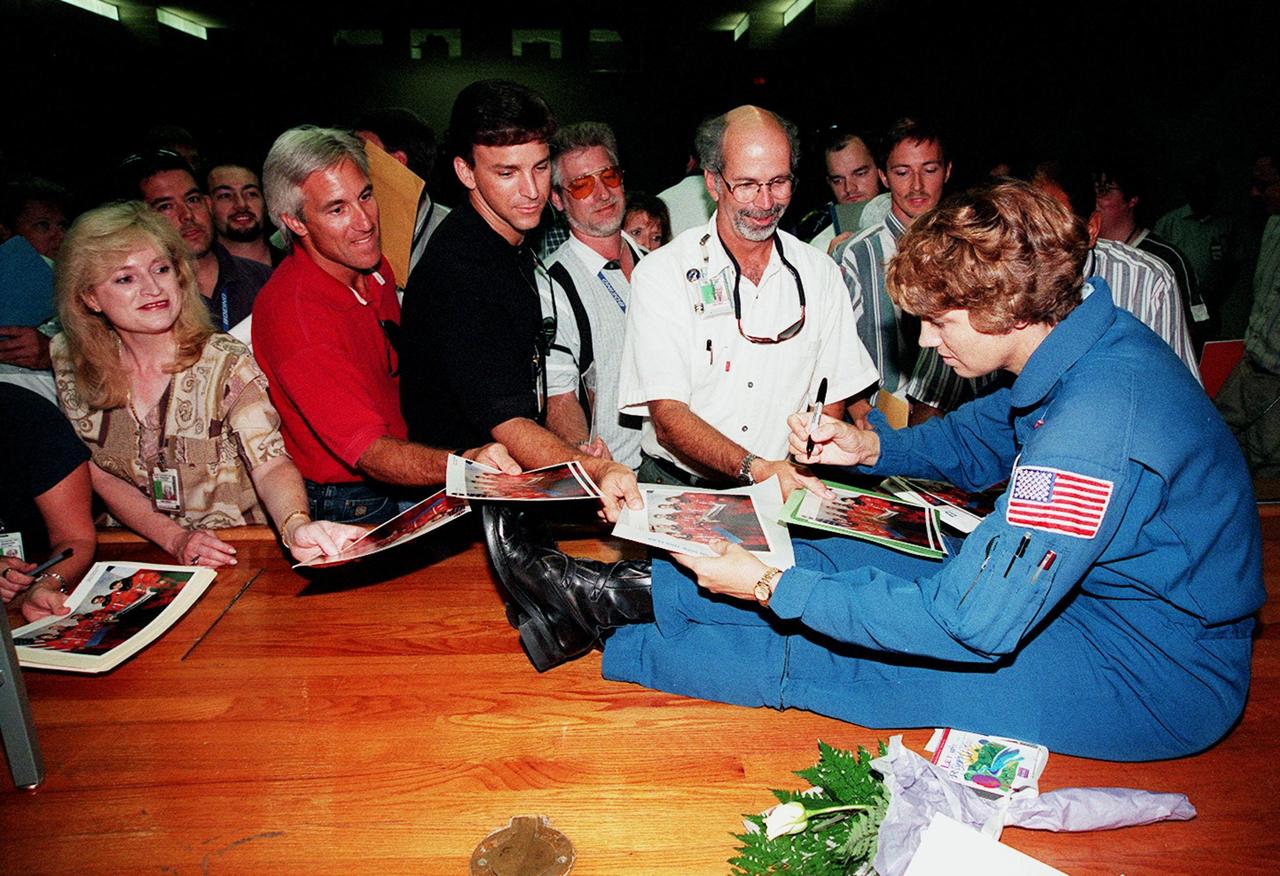
STS-93 Commander Eileen M. Collins signs autographs after a mission presentation for KSC employees. The five-day mission primarily released the Chandra X-ray Observatory, allowing scientists from around the world to study some of the most distant, powerful and dynamic objects in the universe. Chandra is expected to provide unique and crucial information on the nature of objects ranging from comets in our solar system to quasars at the edge of the observable universe. Since X-rays are absorbed by the Earth's atmosphere, space-based observatories are necessary to study these phenomena and allow scientists to analyze some of the greatest mysteries of the universe. STS-93 was also the first mission to have a woman serving as Shuttle commander
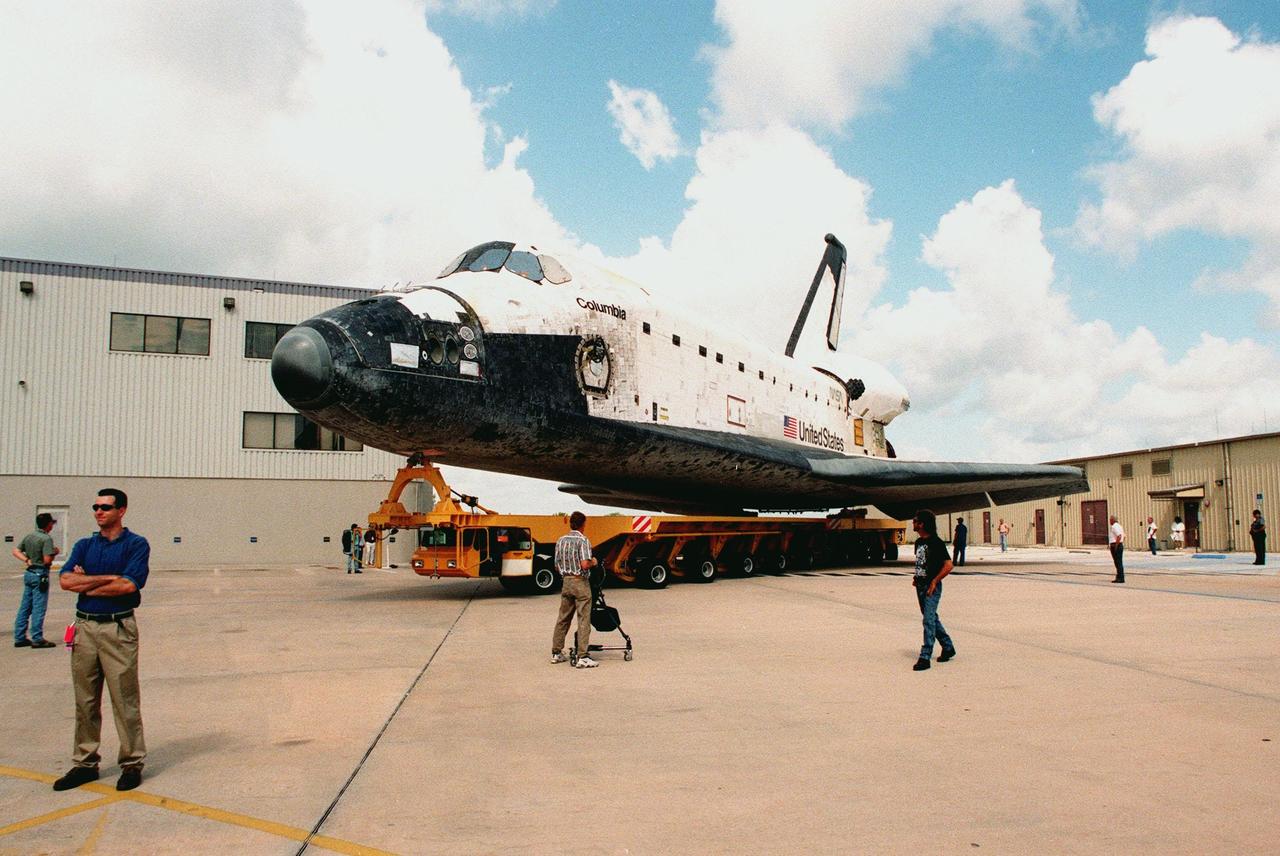
KENNEDY SPACE CENTER, FLA. -- The orbiter Columbia, aboard its orbiter transporter system, makes the turn from the Orbiter Processing Facility (behind it, left) to the nearby Vehicle Assembly Building (VAB) for external tank mating operations. Columbia is scheduled for rollout to Launch Pad 39B on Monday, June 7, for mission STS-93. The primary mission objective will be the deployment of the Advanced X-ray Astrophysics Facility, recently renamed the Chandra X-Ray Observatory. Mission STS-93 will be the first Space Shuttle commanded by a woman, Commander Eileen M. Collins. It is scheduled to launch July 22 at 12:27 a.m. EDT although that date is currently under review
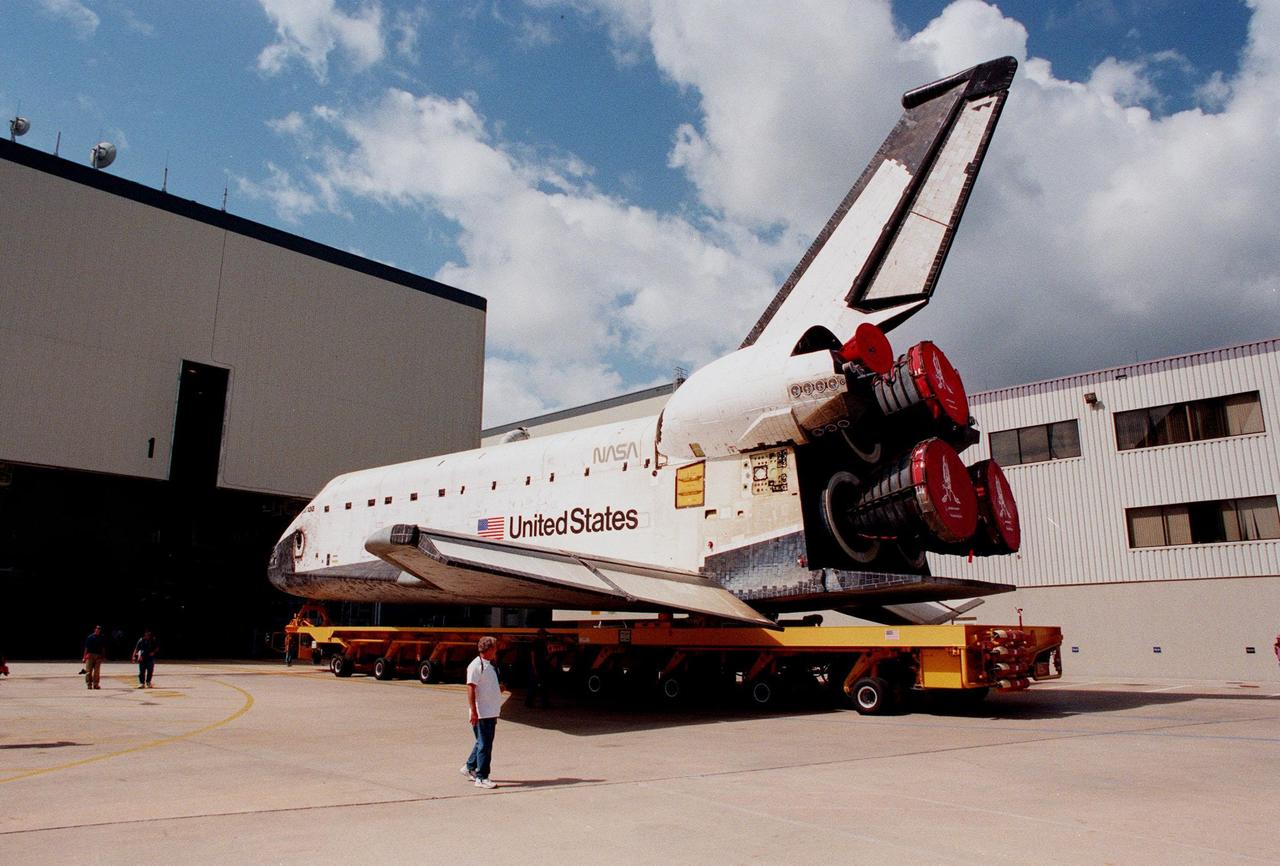
KENNEDY SPACE CENTER, FLA. -- The orbiter Columbia is rolled out from the Orbiter Processing Facility (background) on its transporter. It is being moved to the nearby Vehicle Assembly Building (VAB) for external tank mating operations. Columbia is scheduled for rollout to Launch Pad 39B on Monday, June 7, for mission STS-93. The primary mission objective will be the deployment of the Advanced X-ray Astrophysics Facility, recently renamed the Chandra X-Ray Observatory. Mission STS-93 will be the first Space Shuttle commanded by a woman, Commander Eileen M. Collins. It is scheduled to launch July 22 at 12:27 a.m. EDT although that date is currently under review
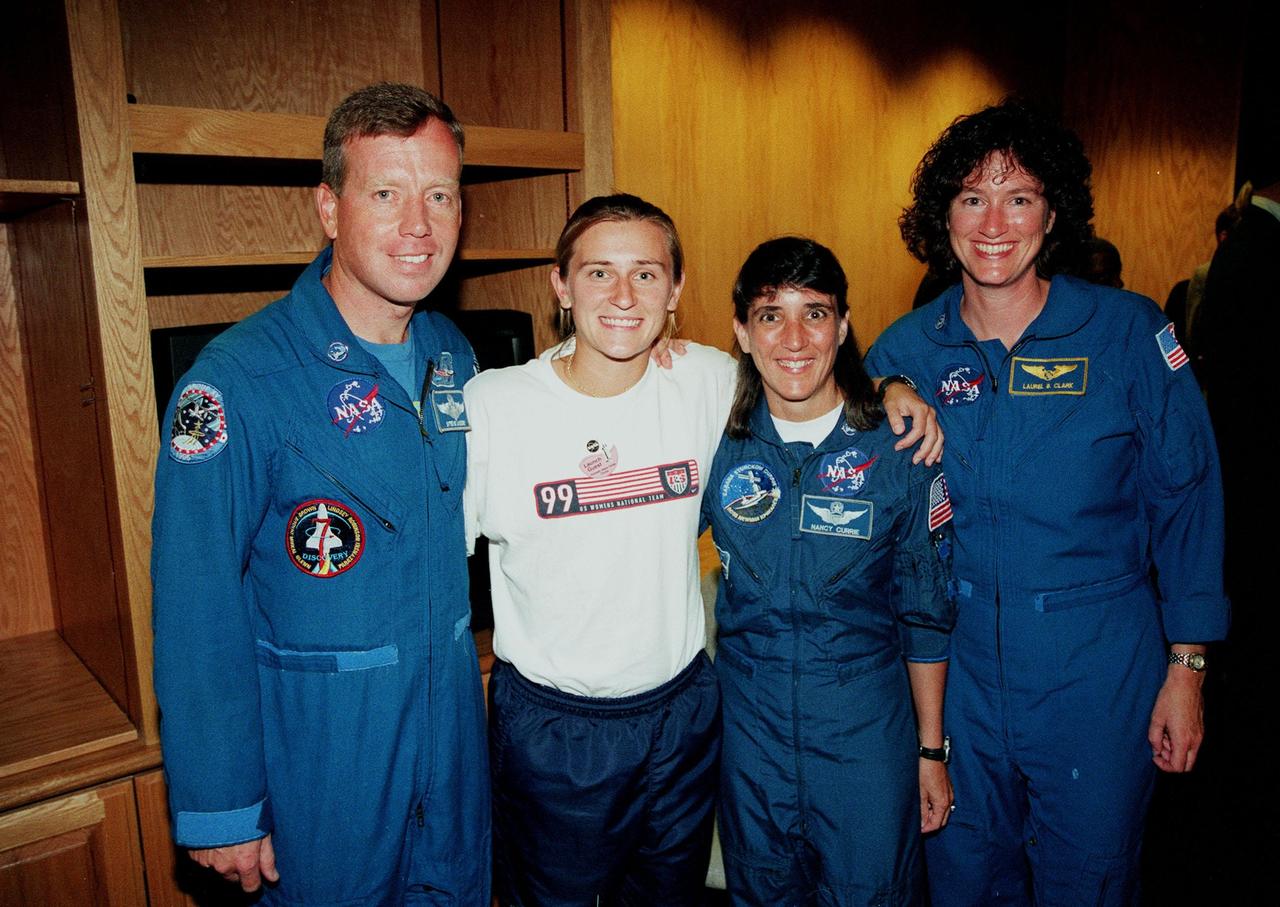
A member of the U.S. Women's World Cup Soccer Team poses with Astronauts (from left) Steven W. Lindsey, Nancy Jane Currie and Laurel B. Clark. The team arrived at the Skid Strip at Cape Canaveral Air Station with First Lady Hillary Rodham Clinton to view the launch of Space Shuttle mission STS-93. Liftoff is scheduled for 12:36 a.m. EDT July 20. Much attention has been generated over the launch due to Commander Eileen M. Collins, the first woman to serve as commander of a Shuttle mission. The primary payload of the five-day mission is the Chandra X-ray Observatory, which will allow scientists from around the world to study some of the most distant, powerful and dynamic objects in the universe. The new telescope is 20 to 50 times more sensitive than any previous X-ray telescope and is expected to unlock the secrets of supernovae, quasars and black holes
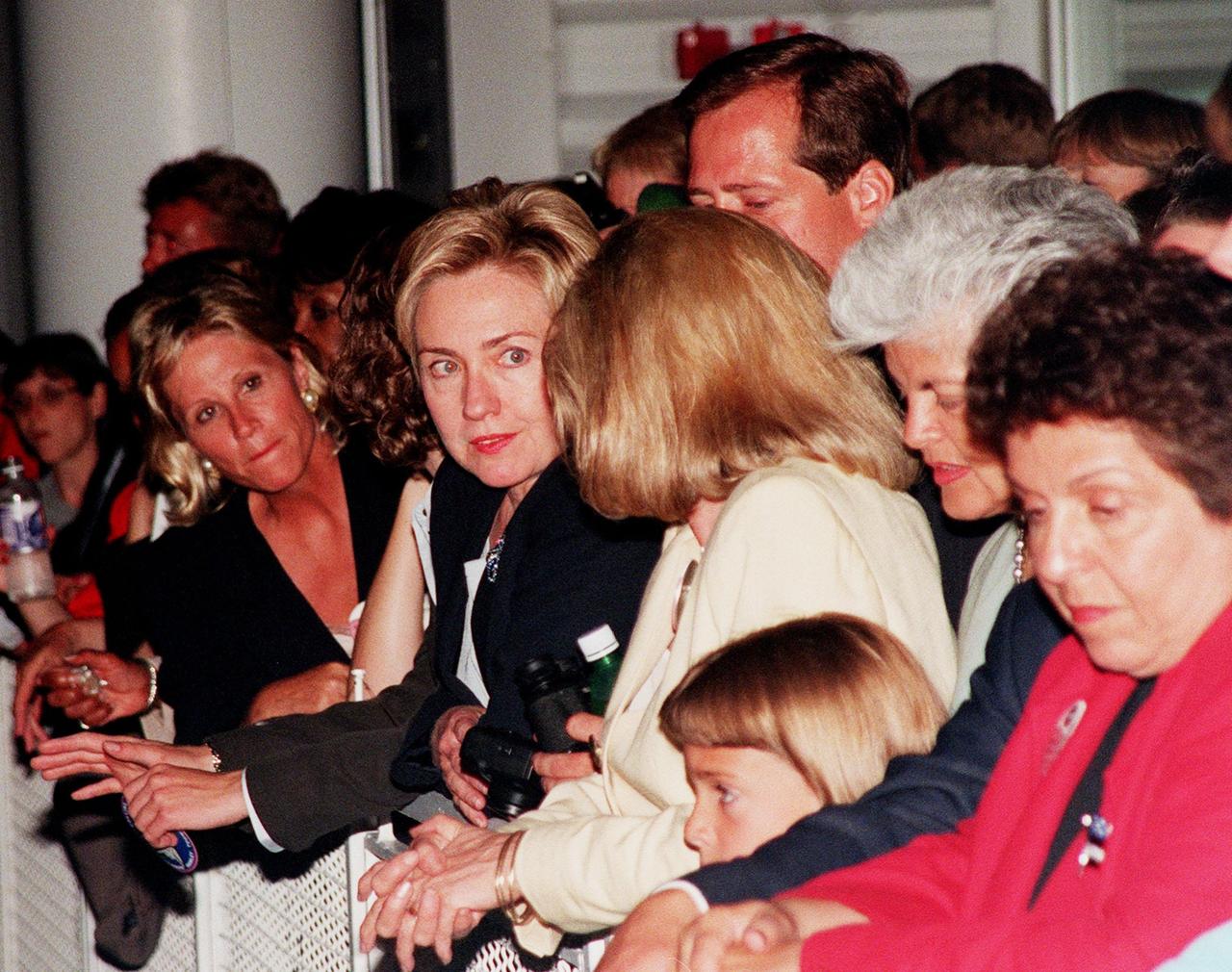
Among those gathered at the VIP viewing site for the launch of STS-93 are First Lady Hillary Rodham Clinton (center) and Donna Shalala, secretary , Department of Health and Human Services (far right). Also present is Chelsea Clinton. Much attention has been generated over the launch due to Commander Eileen M. Collins, the first woman to serve as commander of a Shuttle mission. The primary payload of the five-day mission is the Chandra X-ray Observatory, which will allow scientists from around the world to study some of the most distant, powerful and dynamic objects in the universe. The new telescope is 20 to 50 times more sensitive than any previous X-ray telescope and is expected to unlock the secrets of supernovae, quasars and black holes. Liftoff of Space Shuttle Columbia is scheduled for 12:36 a.m. EDT July 20
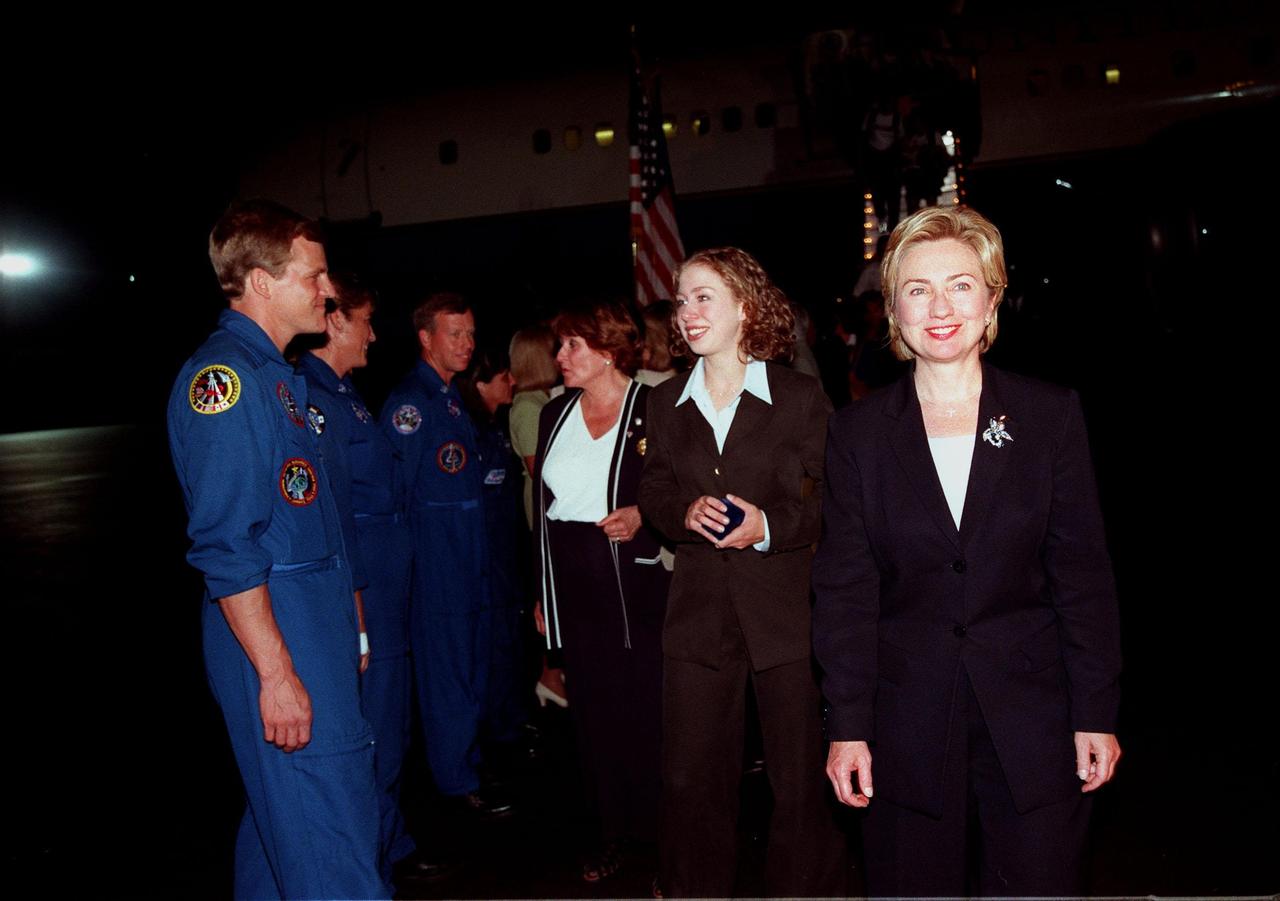
First Lady Hillary Rodham Clinton (right) and her daughter, Chelsea, are greeted by NASA Astronaut Scott E. Parazynski (left) upon their arrival at the Skid Strip at Cape Canaveral Air Station to view the launch of Space Shuttle mission STS-93. Liftoff is scheduled for 12:36 a.m. EDT July 20. Much attention has been generated over the launch due to Commander Eileen M. Collins, the first woman to serve as commander of a Shuttle mission. The primary payload of the five-day mission is the Chandra X-ray Observatory, which will allow scientists from around the world to study some of the most distant, powerful and dynamic objects in the universe. The new telescope is 20 to 50 times more sensitive than any previous X-ray telescope and is expected to unlock the secrets of supernovae, quasars and black holes
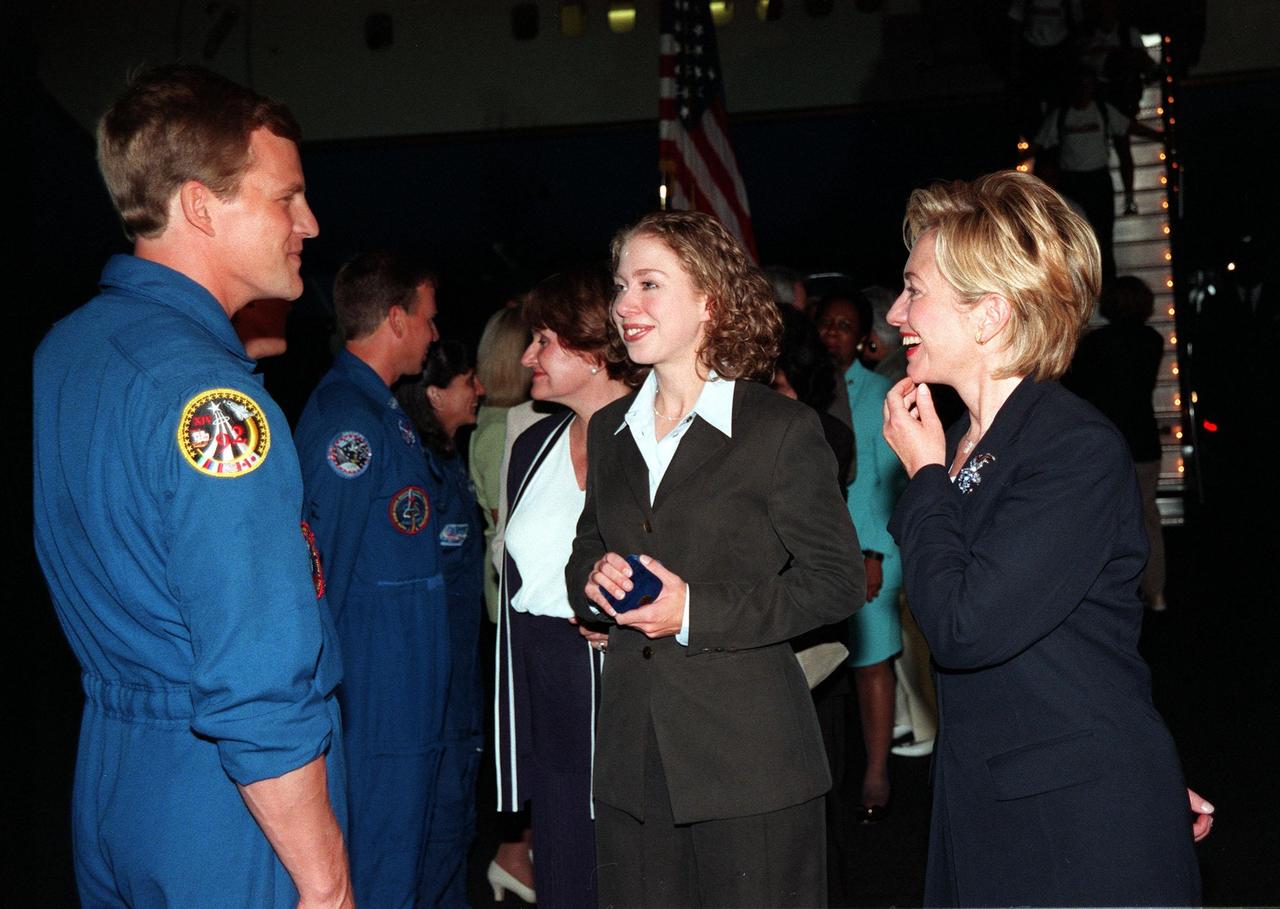
First Lady Hillary Rodham Clinton (right) and her daughter, Chelsea, are greeted by NASA Astronaut Scott E. Parazynski (left) upon their arrival at the Skid Strip at Cape Canaveral Air Station to view the launch of Space Shuttle mission STS-93. Liftoff is scheduled for 12:36 a.m. EDT July 20. Much attention has been generated over the launch due to Commander Eileen M. Collins, the first woman to serve as commander of a Shuttle mission. The primary payload of the five-day mission is the Chandra X-ray Observatory, which will allow scientists from around the world to study some of the most distant, powerful and dynamic objects in the universe. The new telescope is 20 to 50 times more sensitive than any previous X-ray telescope and is expected to unlock the secrets of supernovae, quasars and black holes
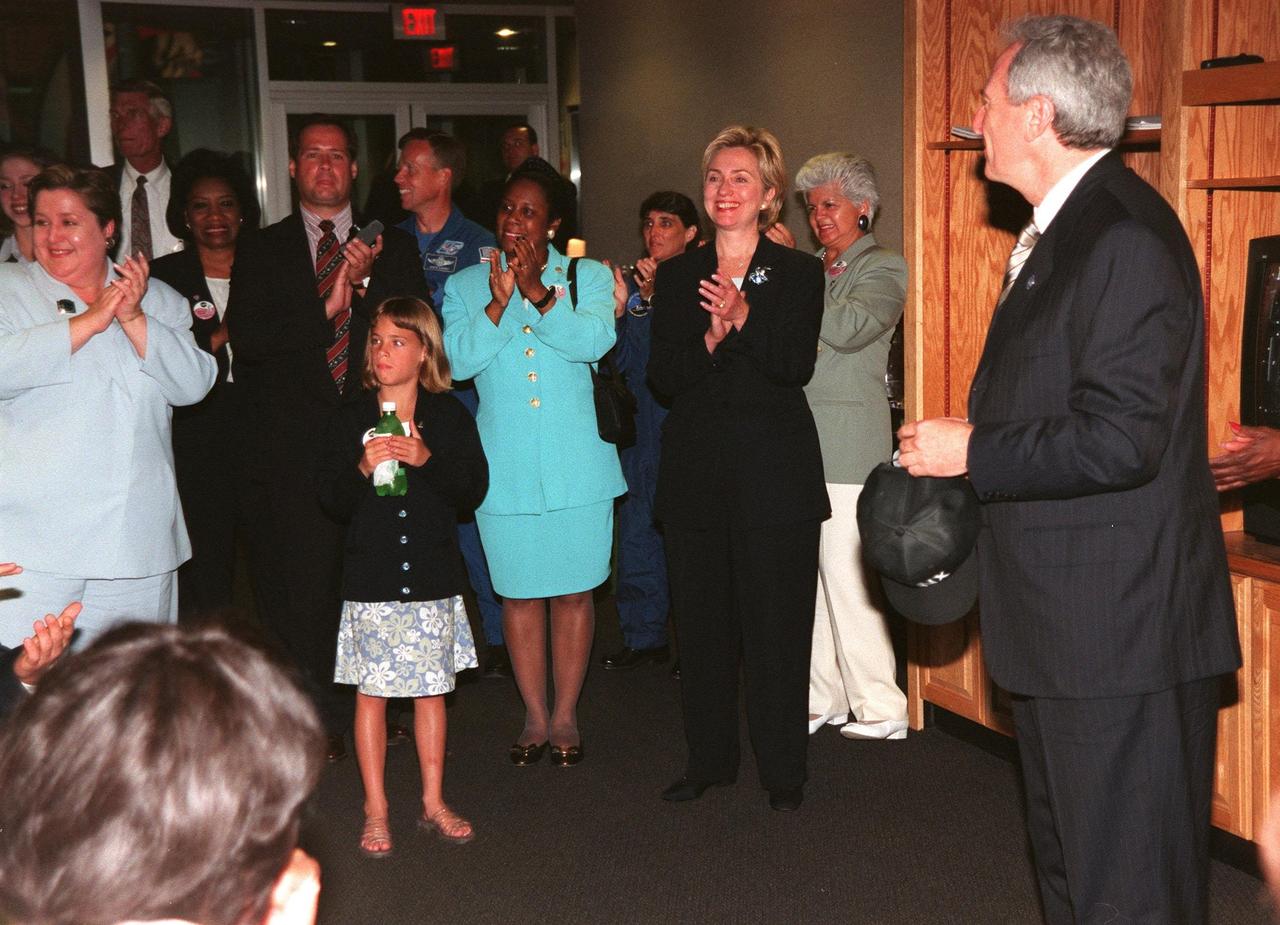
KENNEDY SPACE CENTER, FLA. -- In the VIP Lounge, Apollo/Saturn V Center, First Lady Hillary Rodham Clinton gets ready to speak to the group gathered there before the launch of STS-93. At right is NASA Administrator Daniel Goldin. Liftoff of Space Shuttle Columbia is scheduled for 12:36 a.m. EDT July 20. Much attention has been generated over the launch due to Commander Eileen M. Collins, the first woman to serve as commander of a Shuttle mission. The primary payload of the five-day mission is the Chandra X-ray Observatory, which will allow scientists from around the world to study some of the most distant, powerful and dynamic objects in the universe. The new telescope is 20 to 50 times more sensitive than any previous X-ray telescope and is expected to unlock the secrets of supernovae, quasars and black holes
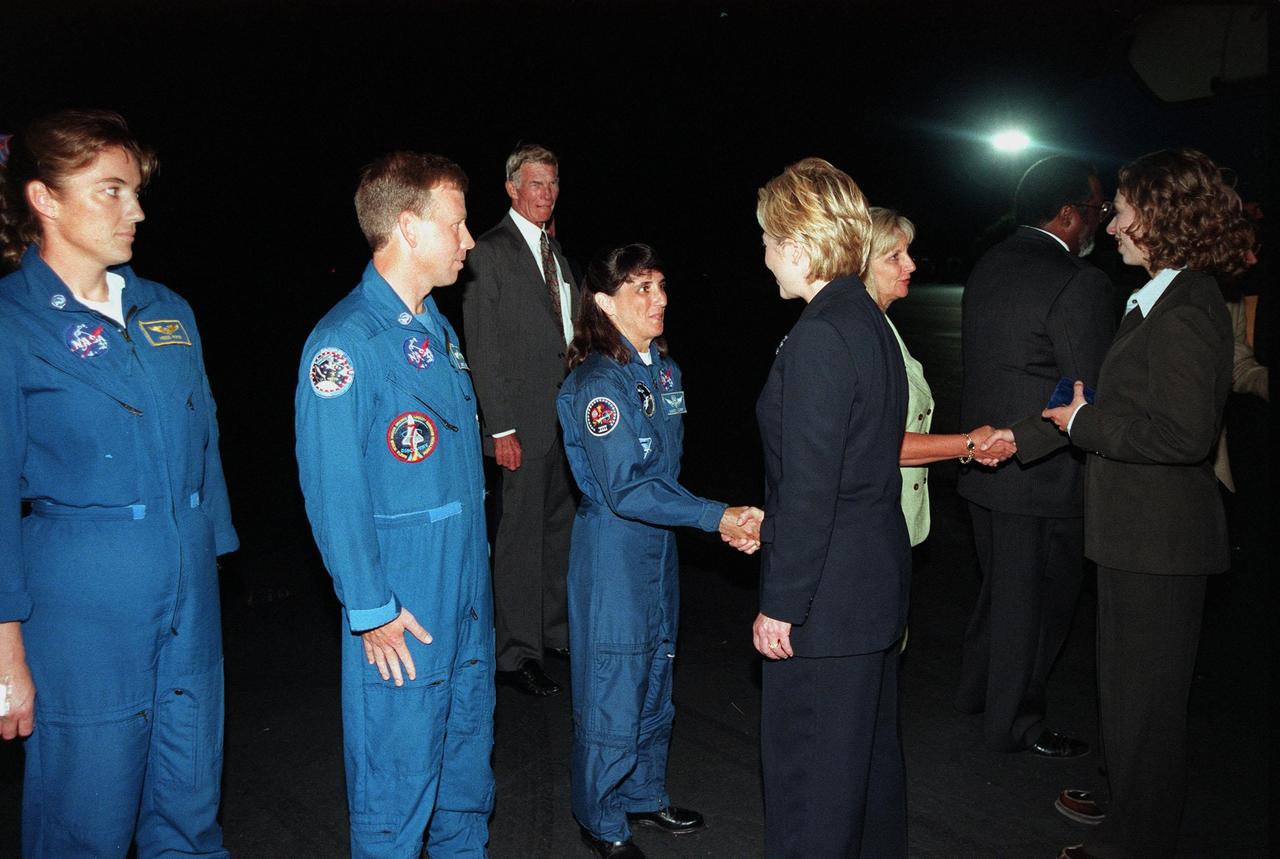
First Lady Hillary Rodham Clinton is greeted by Astronaut Nancy Jane Currie upon Mrs. Clinton's arrival at the Skid Strip at Cape Canaveral Air Station. Waiting at left are Astronauts Heidemarie M. Stefanyshyn-Piper and Steven W. Lindsey. Mrs. Clinton and her daughter, Chelsea (far right) are here to view the launch of Space Shuttle mission STS-93, scheduled for 12:36 a.m. EDT July 20. Much attention has been generated over the launch due to Commander Eileen M. Collins, the first woman to serve as commander of a Shuttle mission. The primary payload of the five-day mission is the Chandra X-ray Observatory, which will allow scientists from around the world to study some of the most distant, powerful and dynamic objects in the universe. The new telescope is 20 to 50 times more sensitive than any previous X-ray telescope and is expected to unlock the secrets of supernovae, quasars and black holes
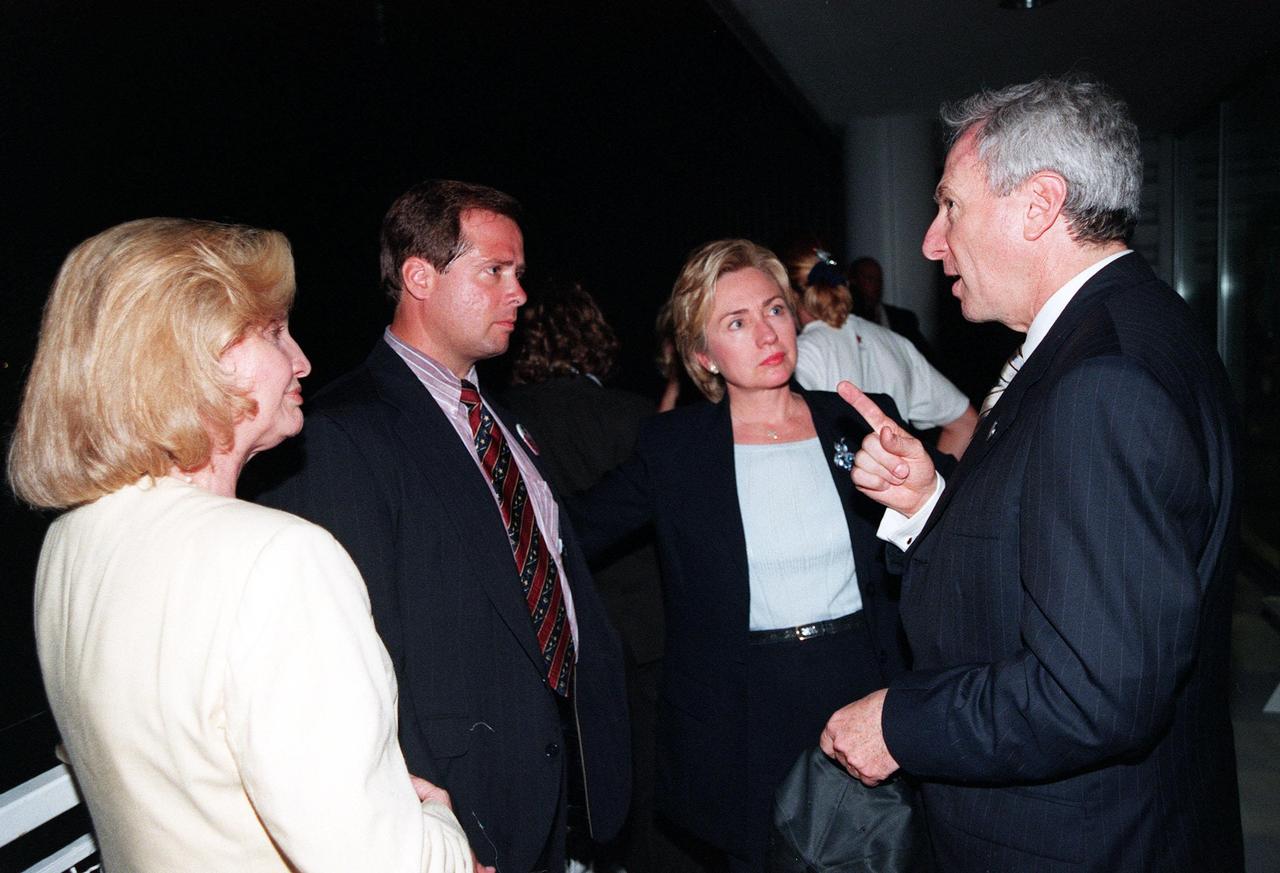
KENNEDY SPACE CENTER, FLA. -- At the Apollo/Saturn V Center, NASA Administrator Daniel Goldin (right) chats with First Lady Hillary Rodham Clinton and others while waiting for the launch of STS-93. Much attention has been generated over STS-93 due to Commander Eileen M. Collins, the first woman to serve as commander of a Shuttle mission. The primary payload of the five-day mission is the Chandra X-ray Observatory, which will allow scientists from around the world to study some of the most distant, powerful and dynamic objects in the universe. The new telescope is 20 to 50 times more sensitive than any previous X-ray telescope and is expected to unlock the secrets of supernovae, quasars and black holes. Liftoff of Space Shuttle Columbia is scheduled for 12:36 a.m. EDT July 20
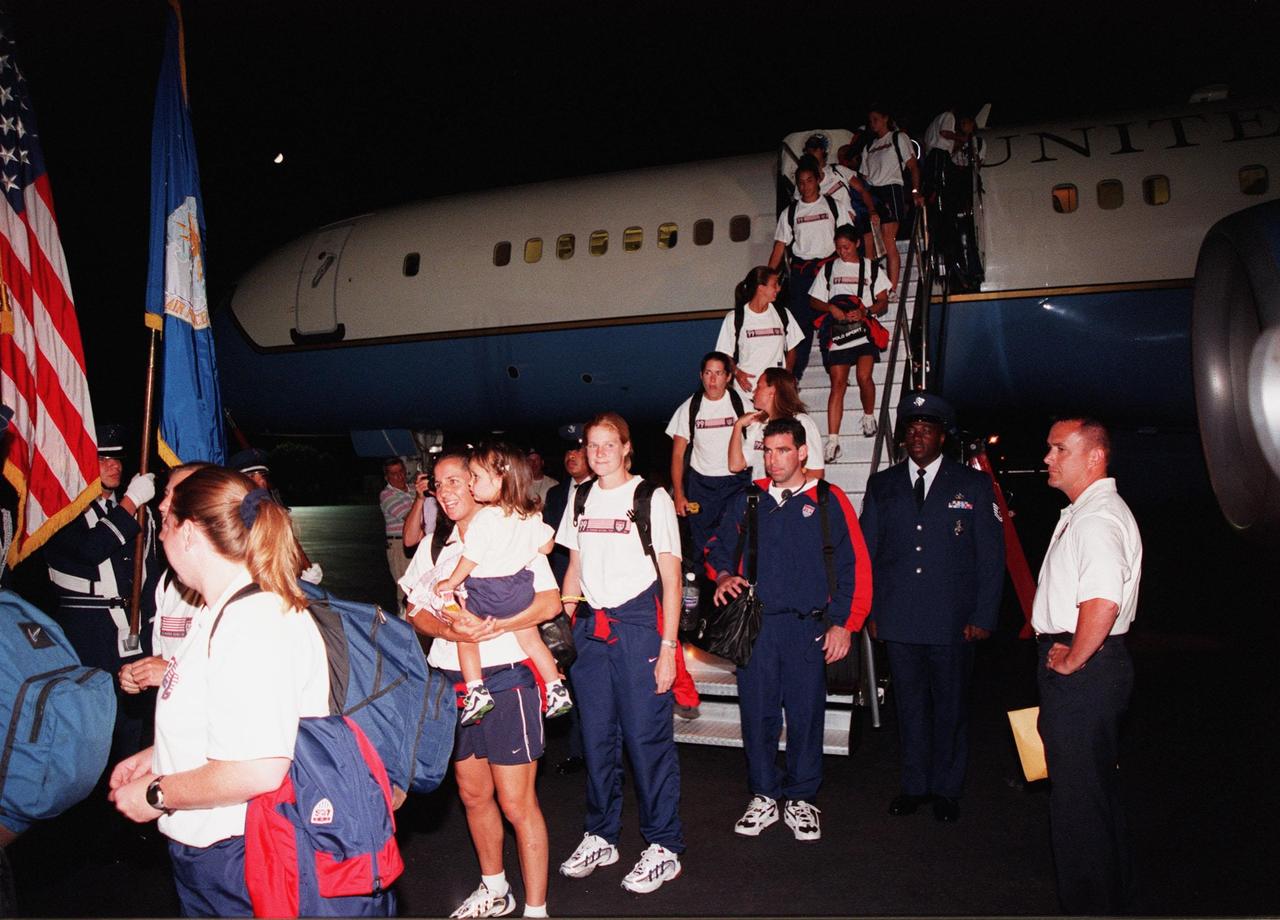
KENNEDY SPACE CENTER, FLA. -- Members of the U.S. Women's World Cup Soccer Team are greeted by NASA Administrator Daniel S. Goldin as they disembark from a plane at the Skid Strip at Cape Canaveral Air Station. They arrived with First Lady Hillary Rodham Clinton to view the launch of Space Shuttle mission STS-93 scheduled for 12:36 a.m. EDT July 20. Much attention has been generated over the launch due to Commander Eileen M. Collins, the first woman to serve as commander of a Shuttle mission. The primary payload of the five-day mission is the release of the Chandra X-ray Observatory, which will allow scientists from around the world to study some of the most distant, powerful and dynamic objects in the universe

First Lady Hillary Rodham Clinton is greeted by Astronauts (from left) Heidemarie M. Stefanyshyn-Piper, Steven W. Lindsey, and Nancy Jane Currie upon Mrs. Clinton's arrival at the Skid Strip at Cape Canaveral Air Station. She and her daughter, Chelsea (far right) are here to view the launch of Space Shuttle mission STS-93, scheduled for 12:36 a.m. EDT July 20. Much attention has been generated over the launch due to Commander Eileen M. Collins, the first woman to serve as commander of a Shuttle mission. The primary payload of the five-day mission is the Chandra X-ray Observatory, which will allow scientists from around the world to study some of the most distant, powerful and dynamic objects in the universe. The new telescope is 20 to 50 times more sensitive than any previous X-ray telescope and is expected to unlock the secrets of supernovae, quasars and black holes
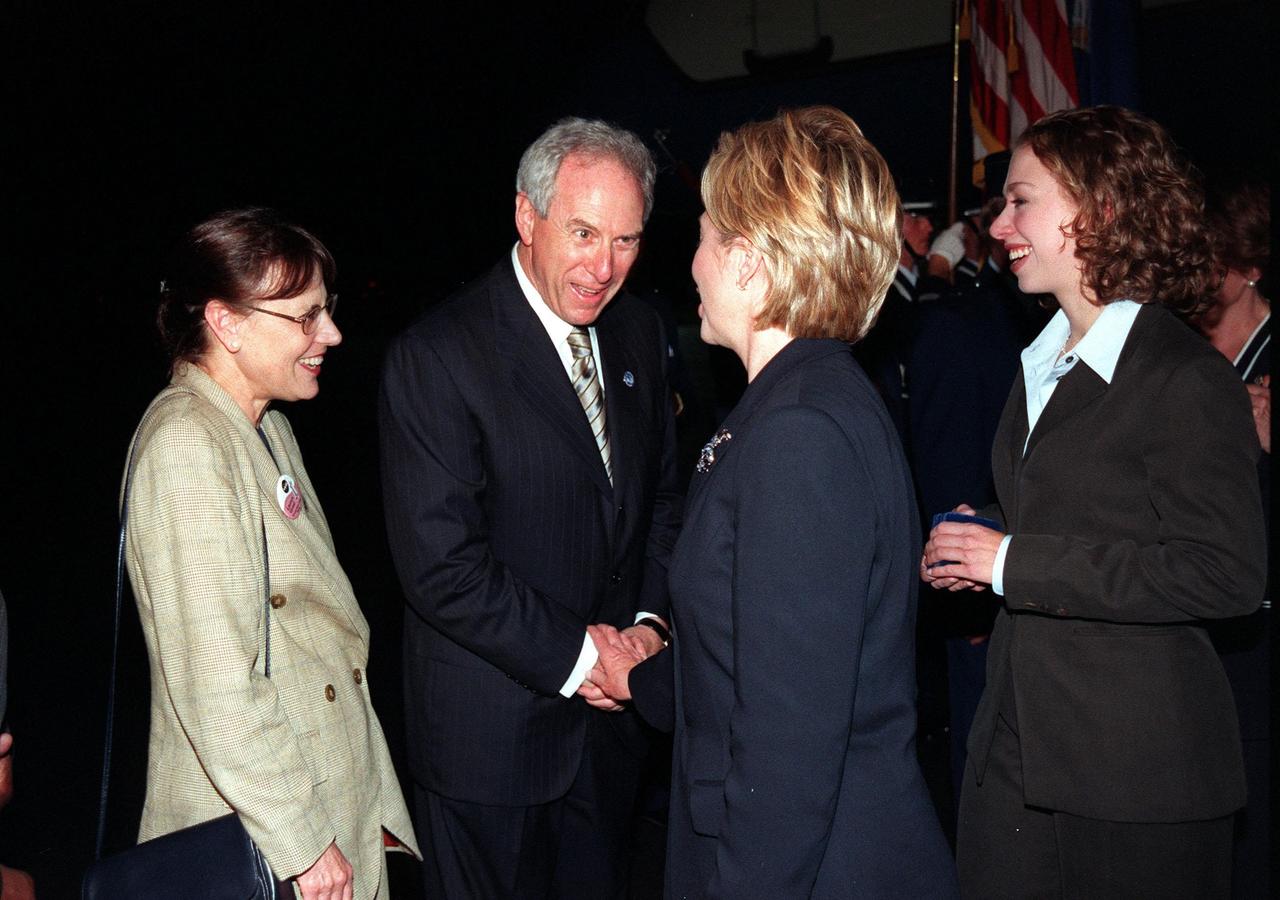
Upon their arrival at the Skid Strip at Cape Canaveral Air Station, First Lady Hillary Rodham Clinton and her daughter, Chelsea, are greeted by NASA Administrator Daniel S. Goldin and Mrs. Goldin. Mrs. Clinton and Chelsea are here to view the launch of Space Shuttle mission STS-93, scheduled for 12:36 a.m. EDT July 20. Much attention has been generated over the launch due to Commander Eileen M. Collins, the first woman to serve as commander of a Shuttle mission. The primary payload of the five-day mission is the Chandra X-ray Observatory, which will allow scientists from around the world to study some of the most distant, powerful and dynamic objects in the universe. The new telescope is 20 to 50 times more sensitive than any previous X-ray telescope and is expected to unlock the secrets of supernovae, quasars and black holes
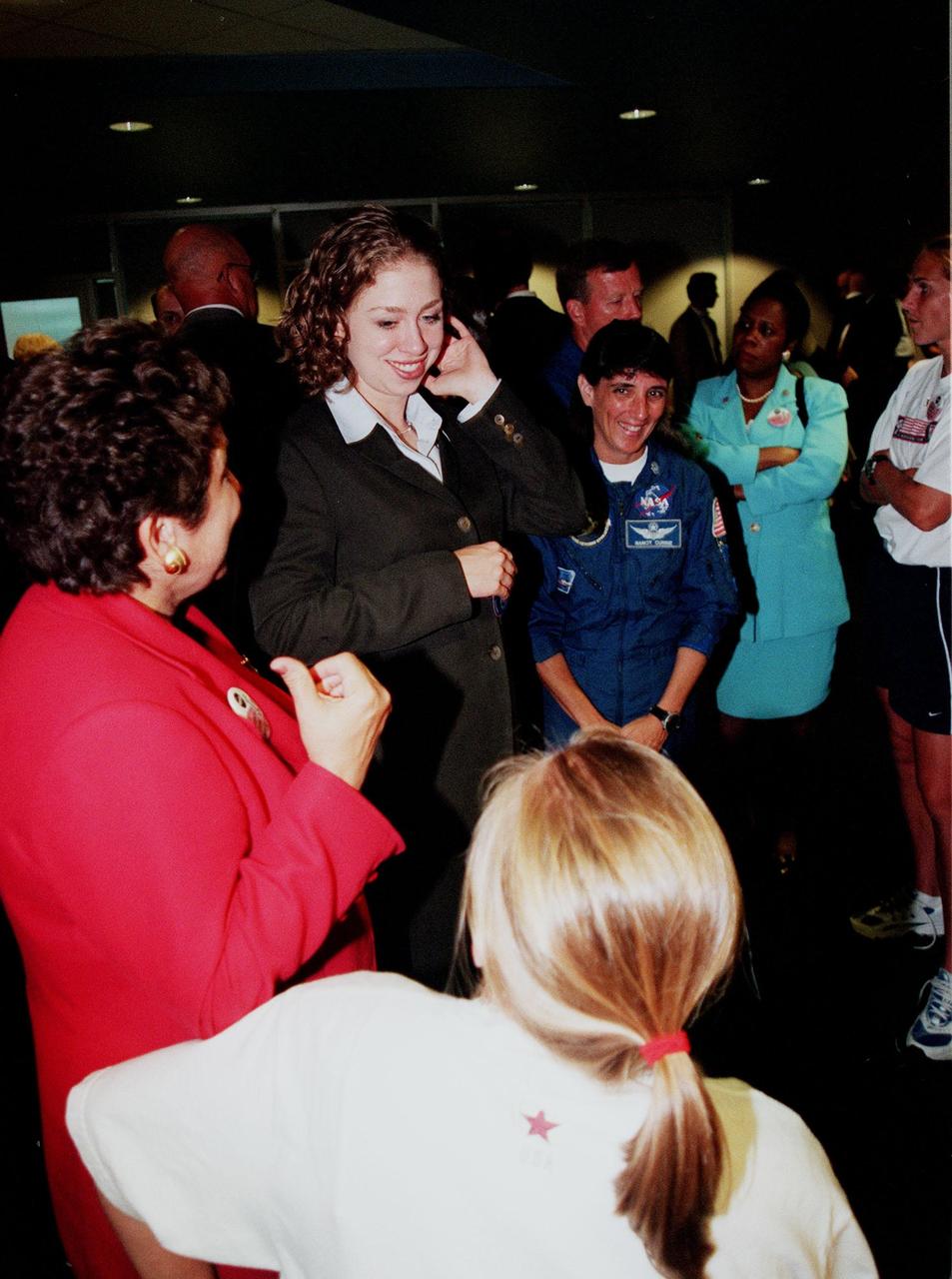
Generating her own attention waiting for the launch of STS-93 at the VIP viewing site is Chelsea Clinton, daughter of the President and Mrs. Clinton. The First Lady and Chelsea arrived earlier to view the launch. Much attention has been generated over STS-93 due to Commander Eileen M. Collins, the first woman to serve as commander of a Shuttle mission. The primary payload of the five-day mission is the Chandra X-ray Observatory, which will allow scientists from around the world to study some of the most distant, powerful and dynamic objects in the universe. The new telescope is 20 to 50 times more sensitive than any previous X-ray telescope and is expected to unlock the secrets of supernovae, quasars and black holes. Liftoff of Space Shuttle Columbia is scheduled for 12:36 a.m. EDT July 20
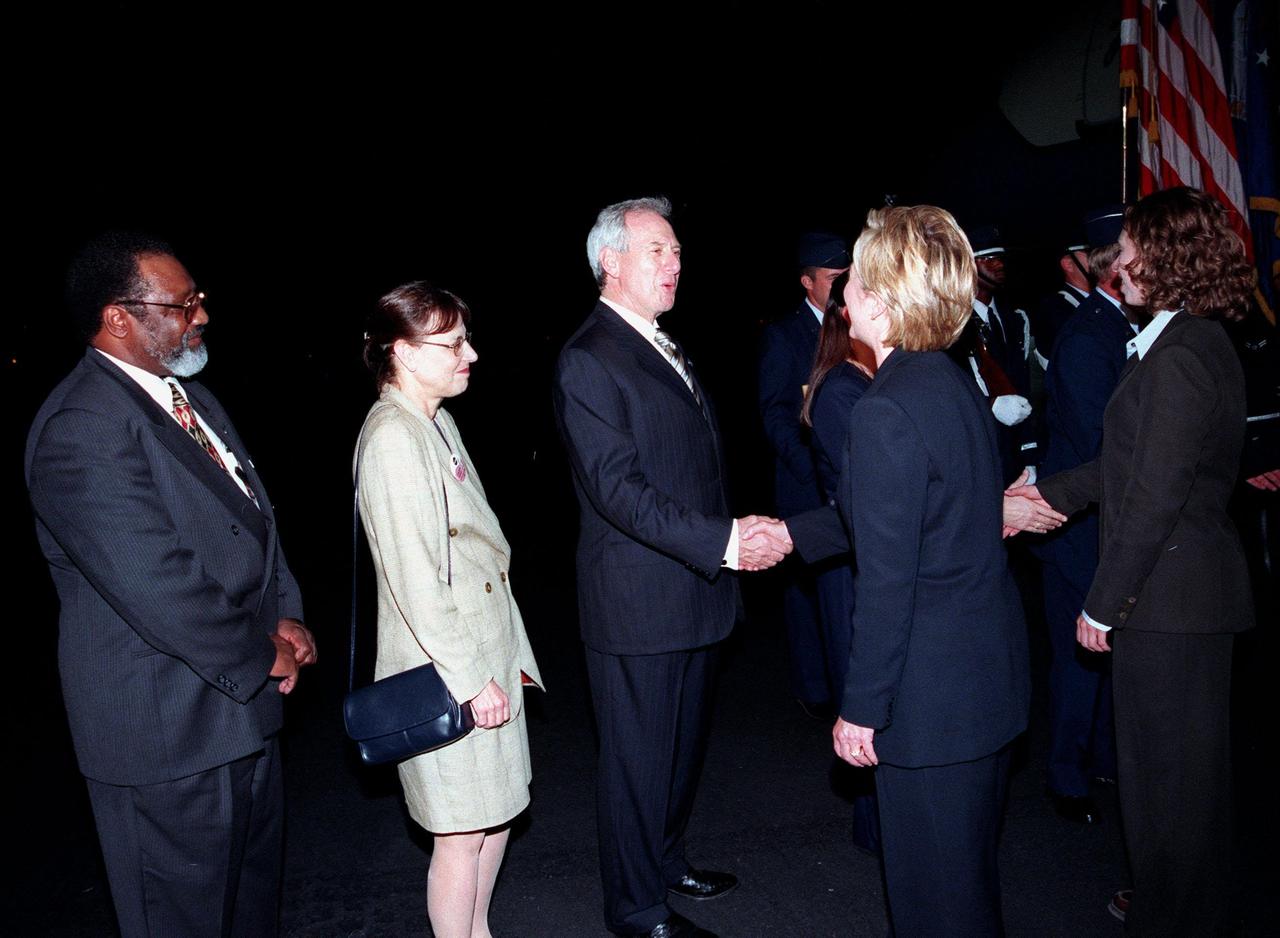
First Lady Hillary Rodham Clinton and her daughter, Chelsea, are greeted by NASA Administrator Daniel S. Goldin upon their arrival at the Skid Strip at Cape Canaveral Air Station. Next to Gold are (from left) Deputy Director for Business Operations Jim Jennings and Mrs. Goldin. Mrs. Clinton and Chelsea are here to view the launch of Space Shuttle mission STS-93, scheduled for 12:36 a.m. EDT July 20. Much attention has been generated over the launch due to Commander Eileen M. Collins, the first woman to serve as commander of a Shuttle mission. The primary payload of the five-day mission is the Chandra X-ray Observatory, which will allow scientists from around the world to study some of the most distant, powerful and dynamic objects in the universe. The new telescope is 20 to 50 times more sensitive than any previous X-ray telescope and is expected to unlock the secrets of supernovae, quasars and black holes
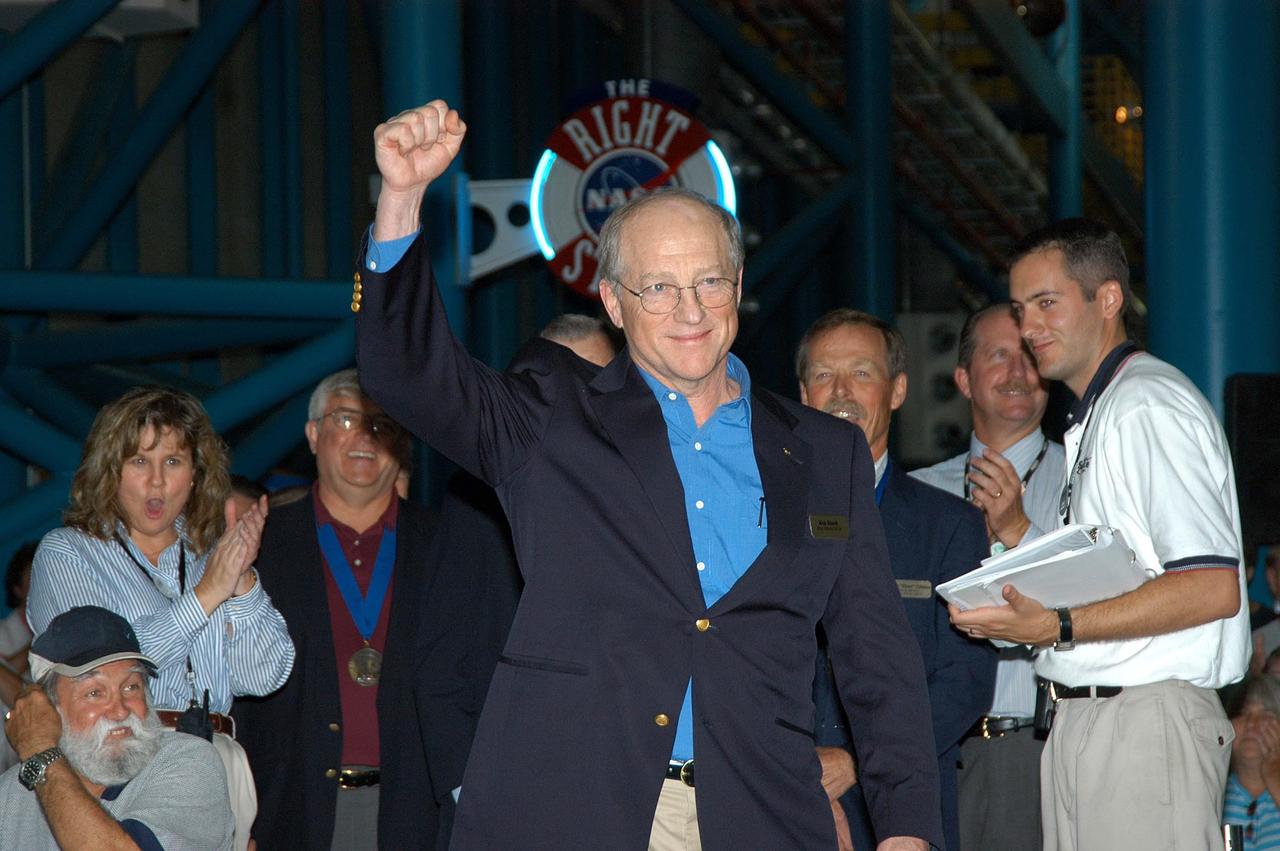
KENNEDY SPACE CENTER, FLA. -- Former astronaut Frederick (Rick) Hauck acknowledges the warm response to his introduction as a previous inductee into the U.S. Astronaut Hall of Fame. He and other Hall of Fame members were present for the induction of five new space program heroes into the U.S. Astronaut Hall of Fame: Richard O. Covey, commander of the Hubble Space Telescope repair mission; Norman E. Thagard, the first American to occupy Russia’s Mir space station; the late Francis R. "Dick" Scobee, commander of the ill-fated 1986 Challenger mission; Kathryn D. Sullivan, the first American woman to walk in space; and Frederick D. Gregory, the first African-American to command a space mission and the current NASA deputy administrator. Hauck flew on three Space Shuttle missions, including command of the redesigned spaceship on its critical first flight after the explosion of Challenger. The induction ceremony was held at the Apollo/Saturn V Center at KSC. The U.S. Astronaut Hall of Fame opened in 1990 to provide a place where space travelers could be remembered for their participation and accomplishments in the U.S. space program. The five inductees join 52 previously honored astronauts from the ranks of the Gemini, Apollo, Skylab, Apollo-Soyuz, and Space Shuttle programs.

STS93-S-009 (23 July 1999) --- The Space Shuttle Columbia lifts off from Launch Pad 39B to begin the five-day STS-93 mission. After two unsuccessful attempts earlier in the week, liftoff occurred at 12:31 a.m. (EDT), July 23, 1999. Only hours after this picture was taken, the five-member crew released the Chandra X-Ray Observatory into orbit. Onboard were astronauts Eileen M. Collins, first woman shuttle mission commander; Jeffrey S. Ashby, pilot; and Steven A. Hawley, Catherine G. Coleman and Michel Tognini, all mission specialists. Tognini represents the Centre National d'Etudes Spatiales (CNES) of France.
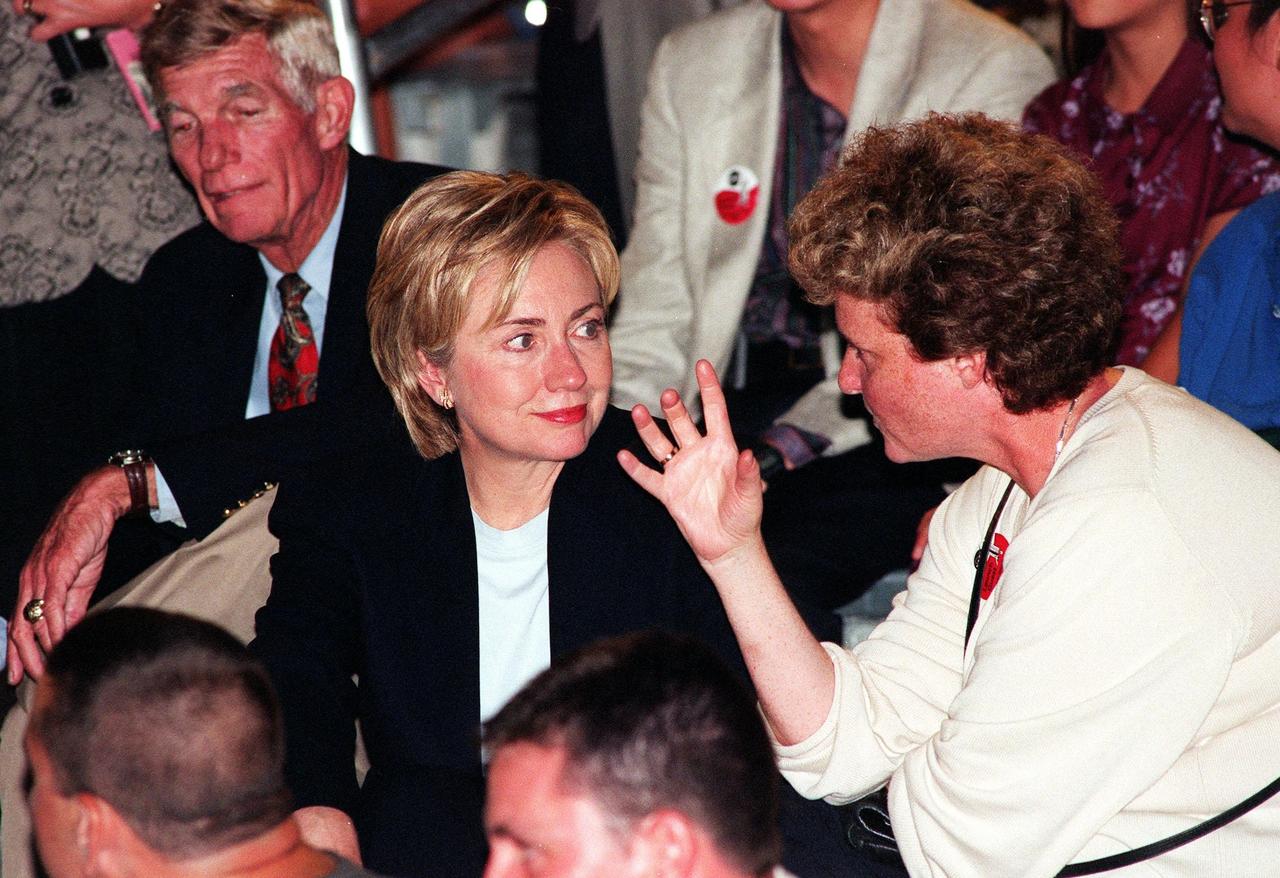
Seated in the Banana Creek viewing site, First Lady Hillary Rodham Clinton appears attentive to the conversation of a fellow spectator. Mrs. Clinton and others are gathered to watch the second launch attempt of STS-93. Moments before the first scheduled launch, July 20, STS-93 was scrubbed at the T-7 second mark in the countdown due to an indication of a high concentration of hydrogen in an aft engine compartment. The reading proved to be a false alarm. The launch was rescheduled for July 22 at 12:28 a.m. Much attention has been generated over STS-93 due to Commander Eileen M. Collins, the first woman to serve as commander of a Shuttle mission. The primary payload of the five-day mission is the Chandra X-ray Observatory, which will allow scientists from around the world to study some of the most distant, powerful and dynamic objects in the universe
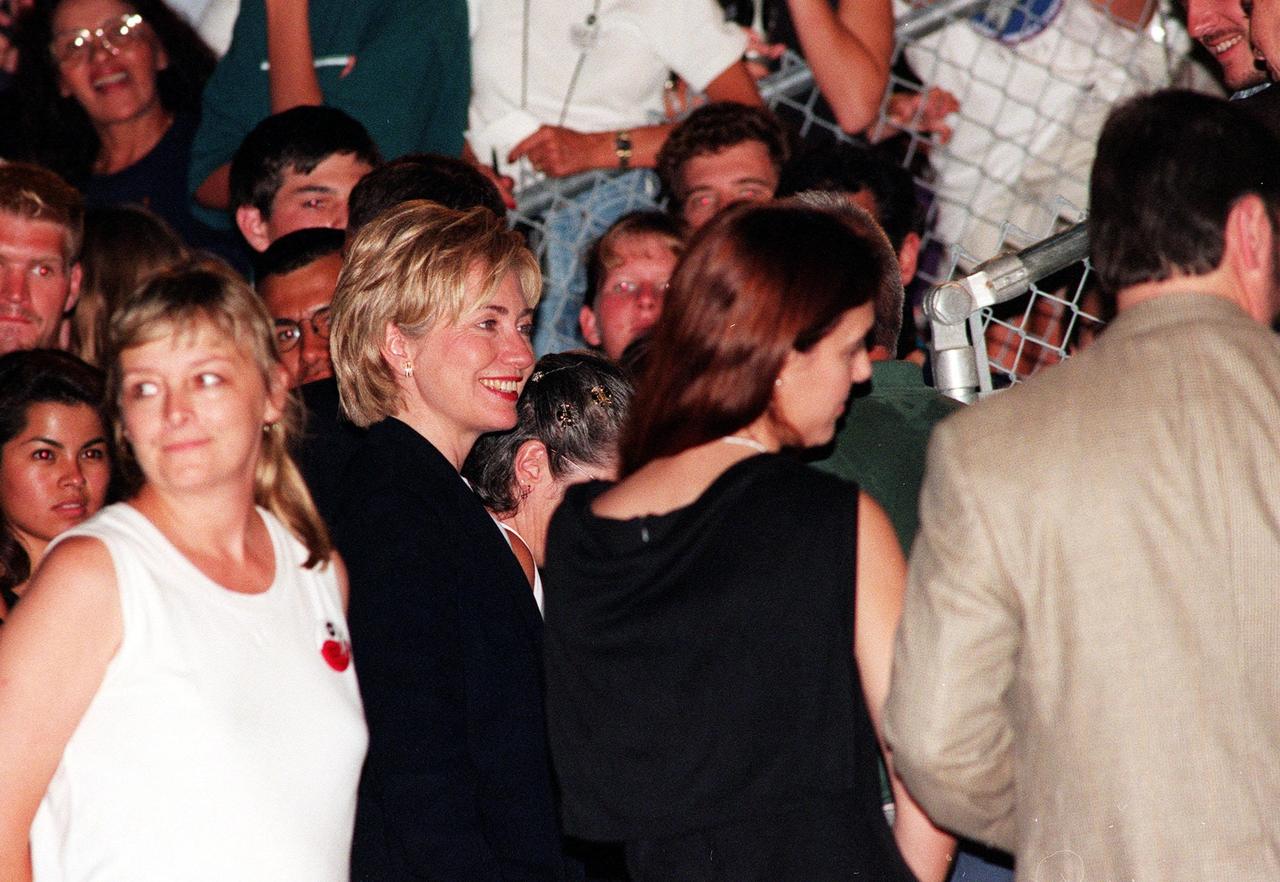
First Lady Hillary Rodham Clinton joins other VIPs at the Banana Creek viewing site to watch the launch of STS-93, the second attempt. Moments before the first scheduled launch, July 20, STS-93 was scrubbed at the T-7 second mark in the countdown due to an indication of a high concentration of hydrogen in an aft engine compartment. The reading proved to be a false alarm. The launch was rescheduled for July 22 at 12:28 a.m. Much attention has been generated over STS-93 due to Commander Eileen M. Collins, the first woman to serve as commander of a Shuttle mission. The primary payload of the five-day mission is the Chandra X-ray Observatory, which will allow scientists from around the world to study some of the most distant, powerful and dynamic objects in the universe
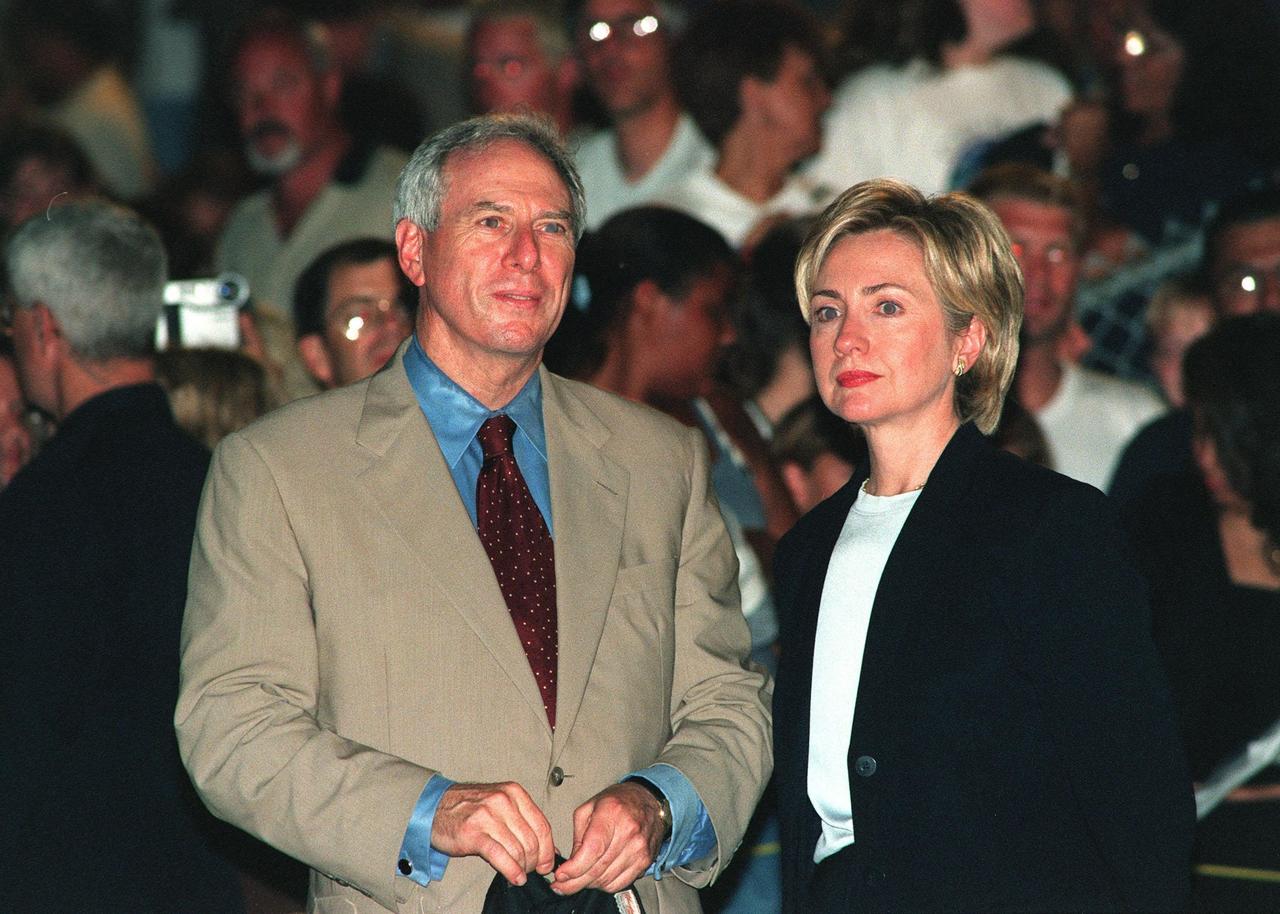
NASA Administrator Daniel Goldin and First Lady Hillary Rodham Clinton are among the spectators at the Banana Creek viewing site to watch the launch of STS-93, the second attempt. Moments before the first scheduled launch, July 20, STS-93 was scrubbed at the T-7 second mark in the countdown due to an indication of a high concentration of hydrogen in an aft engine compartment. The reading proved to be a false alarm. The launch was rescheduled for July 22 at 12:28 a.m. Much attention has been generated over STS-93 due to Commander Eileen M. Collins, the first woman to serve as commander of a Shuttle mission. The primary payload of the five-day mission is the Chandra X-ray Observatory, which will allow scientists from around the world to study some of the most distant, powerful and dynamic objects in the universe
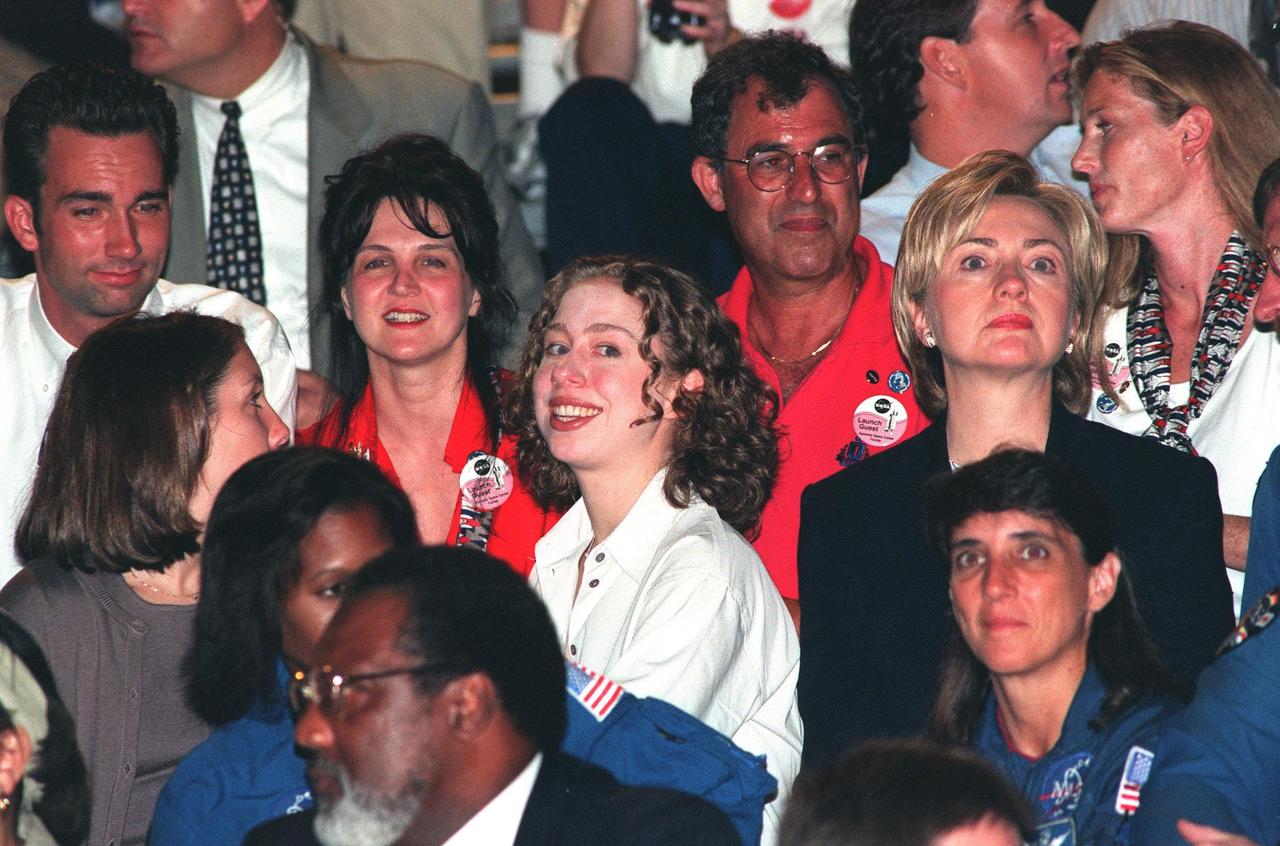
From their seats in the Banana Creek viewing site, First Lady Hillary Rodham Clinton (center, right) and her daughter, Chelsea (next to her at left) eagerly await the second launch attempt of STS-93. Moments before the first scheduled launch, July 20, STS-93 was scrubbed at the T-7 second mark in the countdown due to an indication of a high concentration of hydrogen in an aft engine compartment. The reading proved to be a false alarm. The launch was rescheduled for July 22 at 12:28 a.m. Much attention has been generated over STS-93 due to Commander Eileen M. Collins, the first woman to serve as commander of a Shuttle mission. The primary payload of the five-day mission is the Chandra X-ray Observatory, which will allow scientists from around the world to study some of the most distant, powerful and dynamic objects in the universe

For the third time, in the Operations and Checkout Building, STS-93 Commander Eileen M. Collins tries on her helmet with her launch and entry suit. After Space Shuttle Columbia's July 20 and 22 launch attempts were scrubbed, the launch was again rescheduled for Friday, July 23, at 12:24 a.m. EDT. STS-93 is a five-day mission primarily to release the Chandra X-ray Observatory, which will allow scientists from around the world to study some of the most distant, powerful and dynamic objects in the universe. The STS-93 crew numbers five: Commander Collins, Pilot Jeffrey S. Ashby, and Mission Specialists Steven A. Hawley (Ph.D.), Catherine G. Coleman (Ph.D.) and Michel Tognini of France, with the Centre National d'Etudes Spatiales (CNES). Collins is the first woman to serve as commander of a shuttle mission
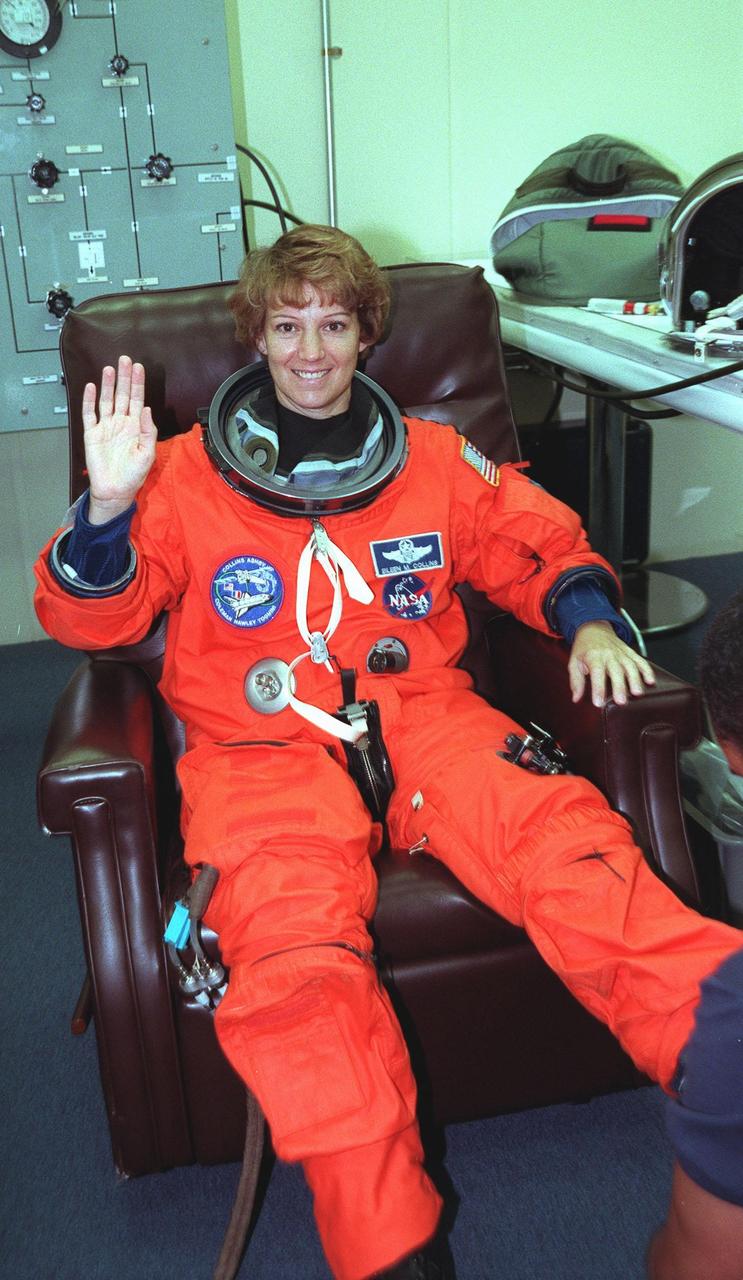
During the third launch preparations in the Operations and Checkout Building, STS-93 Commander Eileen M. Collins waves while having her launch and entry suit checked. After Space Shuttle Columbia's July 20 and 22 launch attempts were scrubbed, the launch was again rescheduled for Friday, July 23, at 12:24 a.m. EDT. STS-93 is a five-day mission primarily to release the Chandra X-ray Observatory, which will allow scientists from around the world to study some of the most distant, powerful and dynamic objects in the universe. The STS-93 crew numbers five: Commander Collins, Pilot Jeffrey S. Ashby, and Mission Specialists Steven A. Hawley (Ph.D.), Catherine G. Coleman (Ph.D.) and Michel Tognini of France, with the Centre National d'Etudes Spatiales (CNES). Collins is the first woman to serve as commander of a shuttle mission
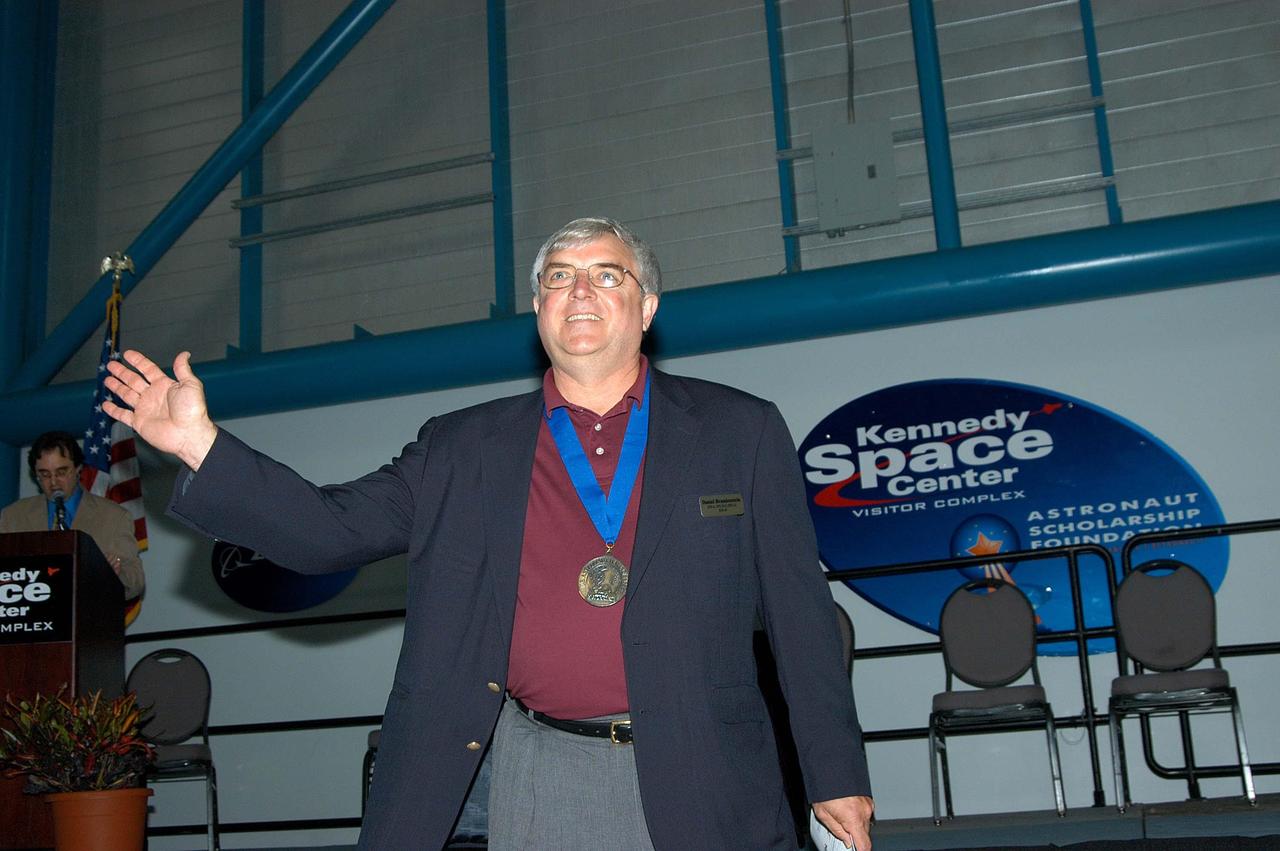
KENNEDY SPACE CENTER, FLA. -- Former astronaut Dan Brandenstein acknowledges the applause as he is introduced as a previous inductee into the U.S. Astronaut Hall of Fame. He and other Hall of Fame members were present for the induction of five new space program heroes into the U.S. Astronaut Hall of Fame: Richard O. Covey, commander of the Hubble Space Telescope repair mission; Norman E. Thagard, the first American to occupy Russia’s Mir space station; the late Francis R. "Dick" Scobee, commander of the ill-fated 1986 Challenger mission; Kathryn D. Sullivan, the first American woman to walk in space; and Frederick D. Gregory, the first African-American to command a space mission and the current NASA deputy administrator. Brandenstein piloted one Space Shuttle mission and commanded three others, including the maiden flight of Endeavour, and later served as chief of the Astronaut Office. The induction ceremony was held at the Apollo/Saturn V Center at KSC. The U.S. Astronaut Hall of Fame opened in 1990 to provide a place where space travelers could be remembered for their participation and accomplishments in the U.S. space program. The five inductees join 52 previously honored astronauts from the ranks of the Gemini, Apollo, Skylab, Apollo-Soyuz, and Space Shuttle programs.
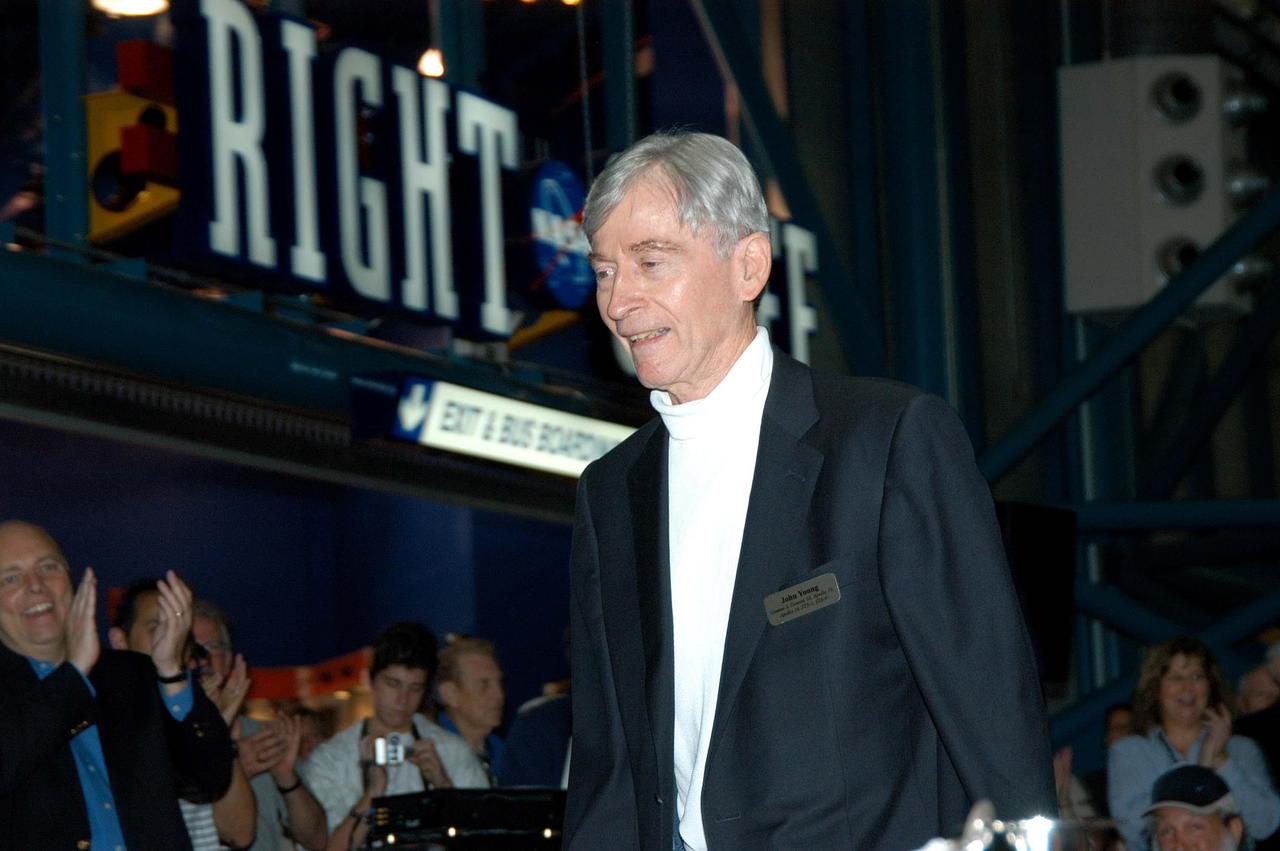
KENNEDY SPACE CENTER, FLA. -- Before the induction ceremony of five space program heroes into the U.S. Astronaut Hall of Fame, astronaut John Young is warmly greeted as he is introduced as a previous inductee. Co-holder of a record for the most space flights, six, he flew on Gemini 3 and 10, orbited the Moon on Apollo 10, walked on the Moon on Apollo 16, and commanded two space shuttle missions, STS-1 and STS-9. Young currently serves as associate director, technical, at Johnson Space Center. The induction ceremony was held at the Apollo/Saturn V Center at KSC. New inductees are Richard O. Covey, commander of the Hubble Space Telescope repair mission; Norman E. Thagard, the first American to occupy Russia’s Mir space station; the late Francis R. "Dick" Scobee, commander of the ill-fated 1986 Challenger mission; Kathryn D. Sullivan, the first American woman to walk in space; and Frederick D. Gregory, the first African-American to command a space mission and the current NASA deputy administrator. The U.S. Astronaut Hall of Fame opened in 1990 to provide a place where space travelers could be remembered for their participation and accomplishments in the U.S. space program. The five inductees join 52 previously honored astronauts from the ranks of the Gemini, Apollo, Skylab, Apollo-Soyuz, and Space Shuttle programs.
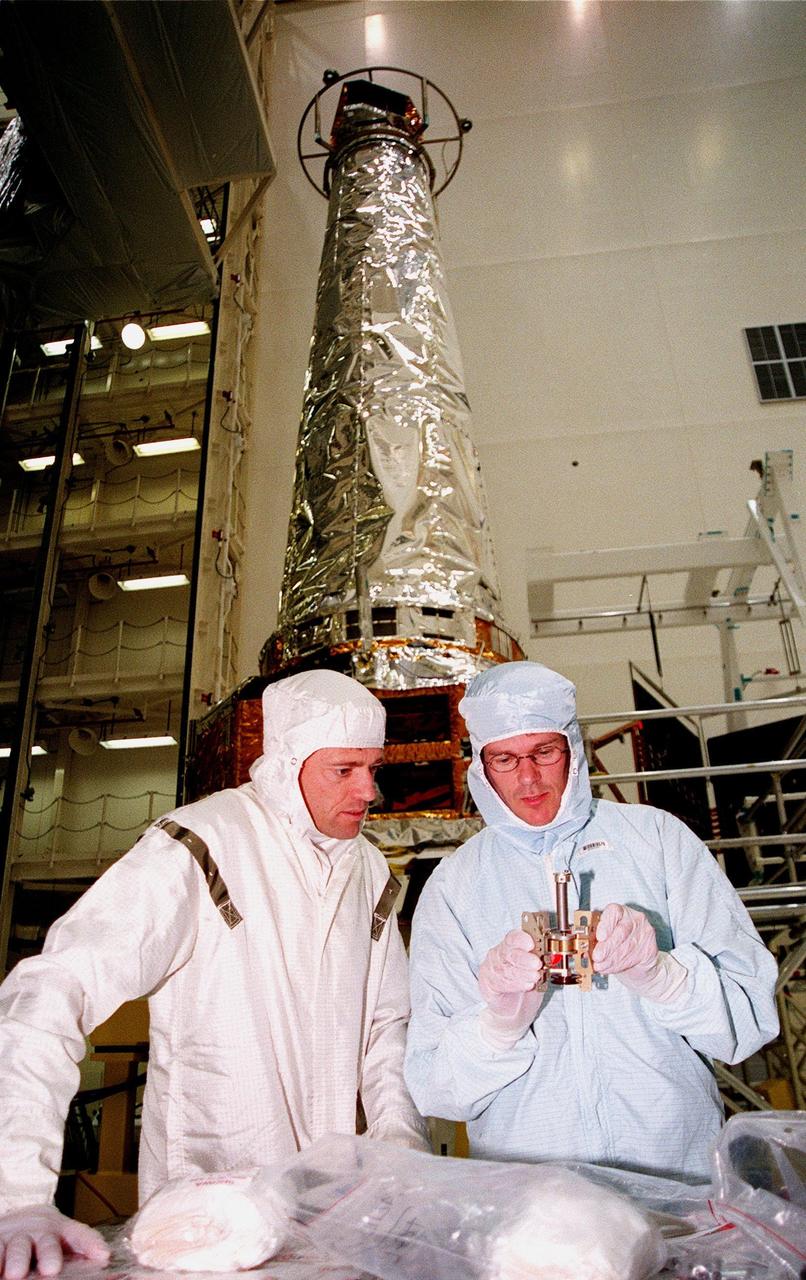
STS-93 Pilot Jeffrey S. Ashby learns about the solar panel hinge, held by a TRW technician, and its use on the Chandra X-ray Observatory behind them. Members of the STS-93 crew are at KSC for payload familiarization, including Mission Specialists Catherine G. Coleman and Michel Tognini of France, who represents the Centre National d'Etudes Spatiales (CNES). Collins is the first woman to serve as a shuttle mission commander. She was the first woman pilot of a Space Shuttle, on mission STS-63, and also served as pilot on mission STS-84. The fifth member of the crew is Mission Specialist Steven A. Hawley. Chandra is scheduled for launch July 9 aboard Space Shuttle Columbia, on mission STS-93 . Formerly called the Advanced X-ray Astrophysics Facility, Chandra comprises three major elements: the spacecraft, the science instrument module (SIM), and the world's most powerful X-ray telescope. Chandra will allow scientists from around the world to see previously invisible black holes and high-temperature gas clouds, giving the observatory the potential to rewrite the books on the structure and evolution of our universe
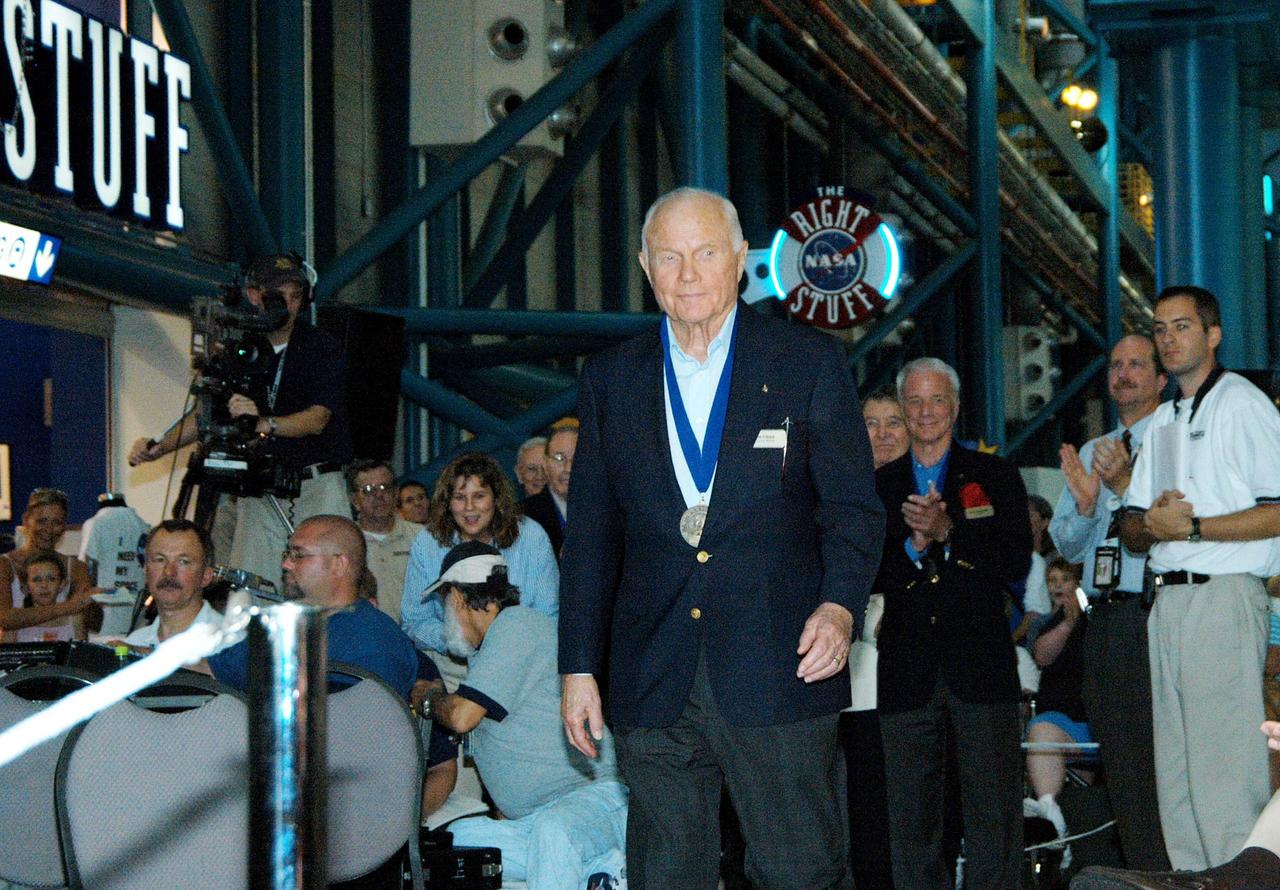
KENNEDY SPACE CENTER, FLA. -- Before the induction ceremony of five space program heroes into the U.S. Astronaut Hall of Fame, former astronaut John Glenn Jr. is greeted with applause as he is introduced as a previous inductee. One of America's original Mercury Seven astronauts, in 1962 he became the first American to orbit the Earth. Twenty-six years later, at age 77, he spent nine days in space aboard Space Shuttle Discovery. The ceremony was held at the Apollo/Saturn V Center at KSC. New inductees are Richard O. Covey, commander of the Hubble Space Telescope repair mission; Norman E. Thagard, the first American to occupy Russia’s Mir space station; the late Francis R. "Dick" Scobee, commander of the ill-fated 1986 Challenger mission; Kathryn D. Sullivan, the first American woman to walk in space; and Frederick D. Gregory, the first African-American to command a space mission and the current NASA deputy administrator. The U.S. Astronaut Hall of Fame opened in 1990 to provide a place where space travelers could be remembered for their participation and accomplishments in the U.S. space program. The five inductees join 52 previously honored astronauts from the ranks of the Gemini, Apollo, Skylab, Apollo-Soyuz, and Space Shuttle programs.
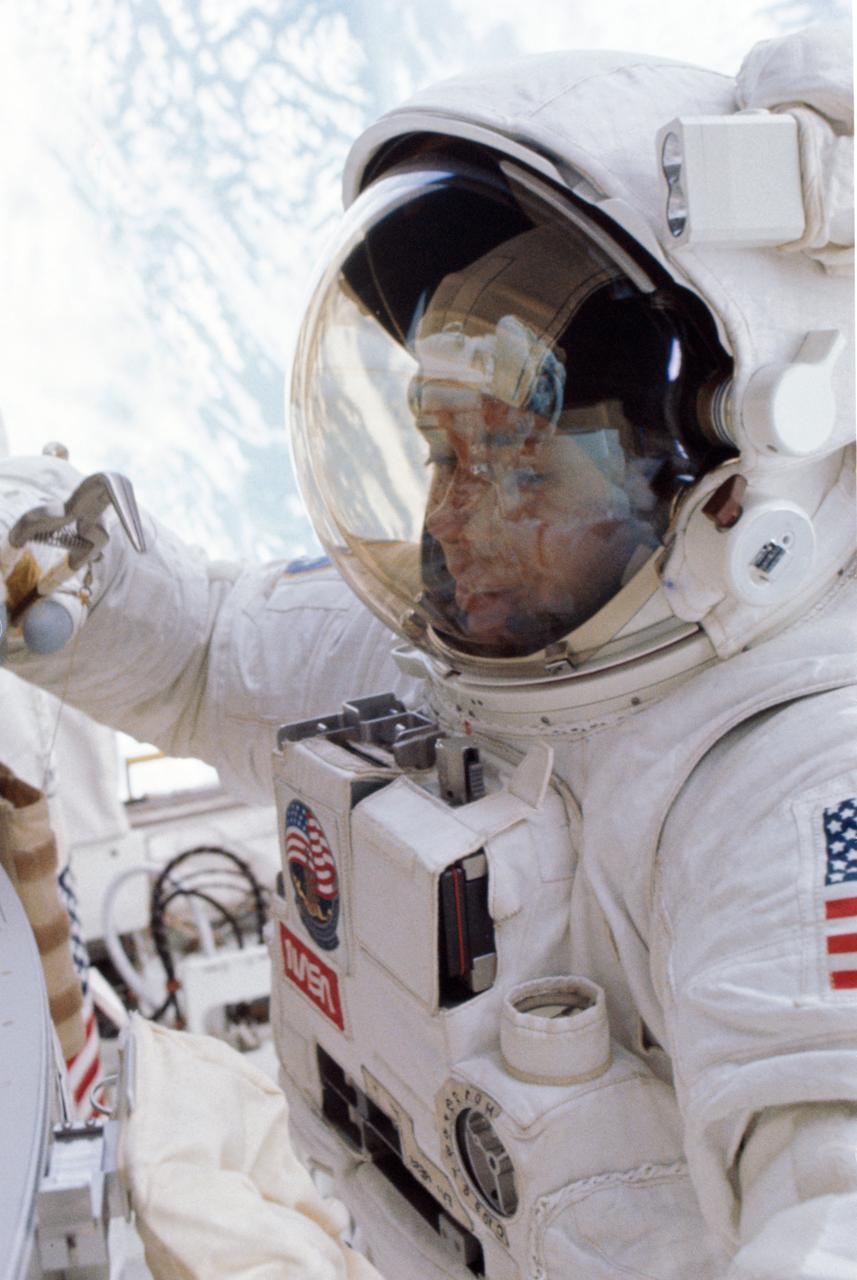
41G-101-013 (14 Oct 1984) --- Astronaut David C. Leestma works at the Orbital Refueling System (ORS) on the Mission Peculiar Support Structure (MPESS) in the aft end of the cargo bay of the Space Shuttle Challenger. Astronaut Kathryn D. Sullivan, America's first woman to perform an extravehicular activity (EVA) with the logging of this busy day, exposed this frame witha 35mm camera. The crew consisted of astronauts Robert L. Crippen, commander; Jon A. McBride, pilot; mission specialist's Kathryn D. Sullivan, Sally K. Ride, and David D. Leestma; Canadian astronaut Marc Garneau; and Paul D. Scully-Power, payload specialist. EDITOR'S NOTE: The STS-41G mission had the first American female EVA (Sullivan); first seven-person crew; first orbital fuel transfer; and the first Canadian (Garneau).
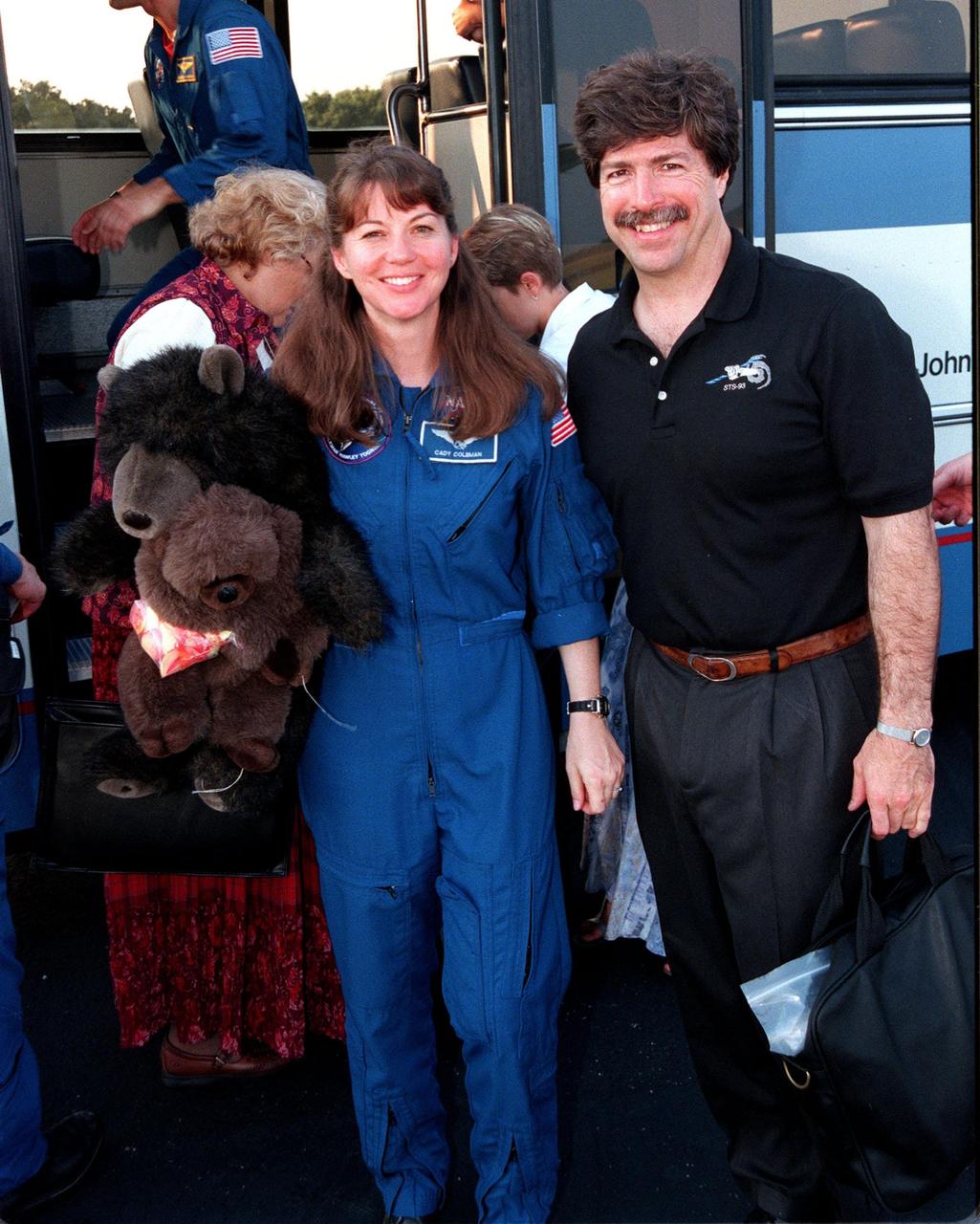
At the Skid Strip at the Cape Canaveral Air Station, Mission Specialist Catherine G. Coleman (Ph.D.) and her husband, Josh Simpson, prepare to board an aircraft for their return flight to Houston following the completion of the STS-93 Space Shuttle mission. Landing occurred on runway 33 at KSC's Shuttle Landing Facility on July 27 with main gear touchdown at 11:20:35 p.m. EDT. The mission's primary objective was to deploy the Chandra X-ray Observatory, which will allow scientists from around the world to study some of the most distant, powerful and dynamic objects in the universe. This was the 95th flight in the Space Shuttle program and the 26th for Columbia. The landing was the 19th consecutive Shuttle landing in Florida and the 12th night landing in Shuttle program history. On this mission, Eileen Collins became the first woman to serve as a Shuttle commander
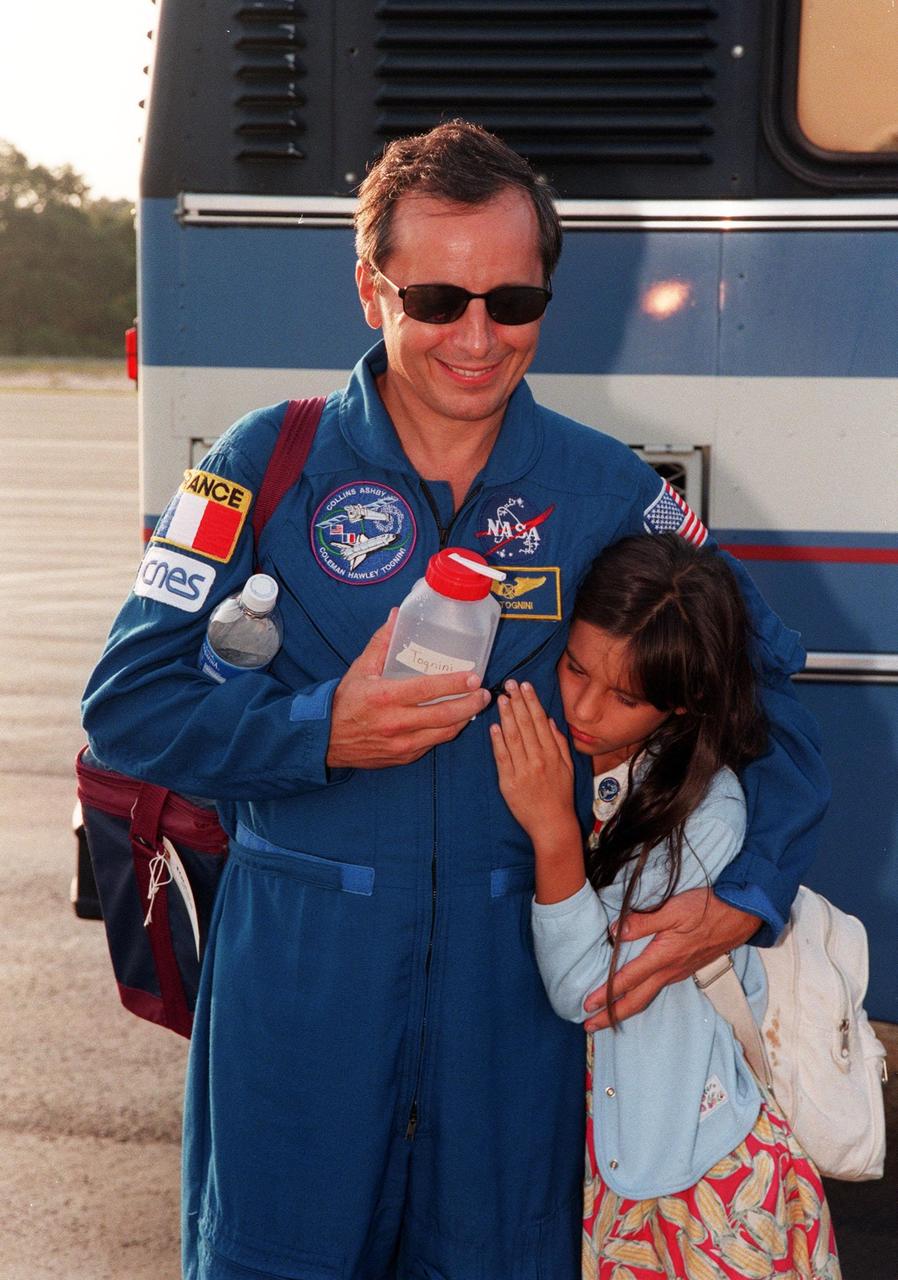
At the Skid Strip at the Cape Canaveral Air Station, Mission Specialist Michel Tognini of France, representing the Centre National d'Etudes Spatiales (CNES), and his daughter Tatinana prepare to board an aircraft for their return flight to Houston following the completion of the STS-93 Space Shuttle mission. Landing occurred on runway 33 at KSC's Shuttle Landing Facility on July 27 with main gear touchdown at 11:20:35 p.m. EDT. The mission's primary objective was to deploy the Chandra X-ray Observatory, which will allow scientists from around the world to study some of the most distant, powerful and dynamic objects in the universe. This was the 95th flight in the Space Shuttle program and the 26th for Columbia. The landing was the 19th consecutive Shuttle landing in Florida and the 12th night landing in Shuttle program history. On this mission, Eileen Collins became the first woman to serve as a Shuttle commander
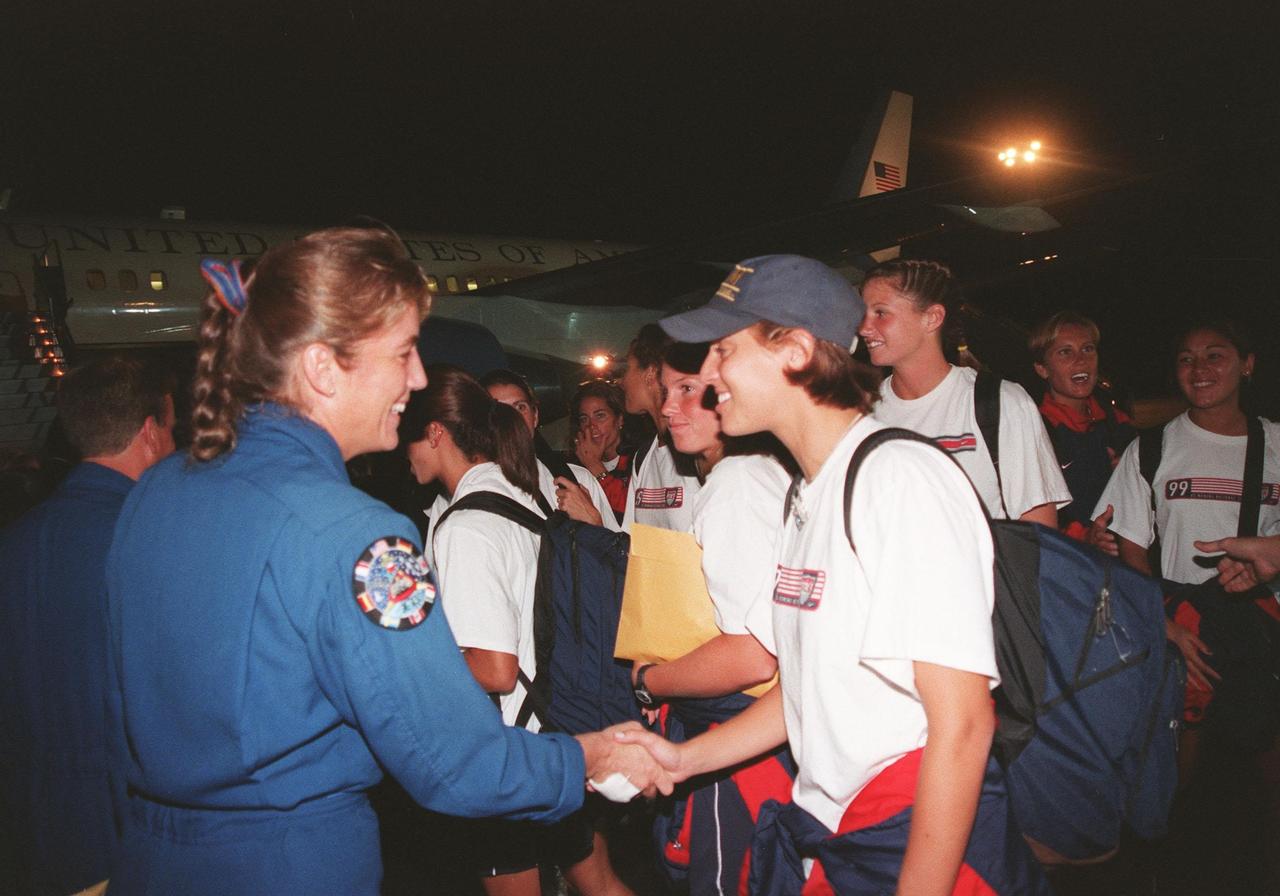
A member of the U.S. Women's World Cup Soccer Team is greeted by NASA Astronaut Heidemarie M. Stefanyshyn-Piper (left) upon her arrival at the Skid Strip at Cape Canaveral Air Station to view the launch of Space Shuttle mission STS-93. Liftoff is scheduled for 12:36 a.m. EDT July 20. Much attention has been generated over the launch due to Commander Eileen M. Collins, the first woman to serve as commander of a Shuttle mission. The primary payload of the five-day mission is the Chandra X-ray Observatory, which will allow scientists from around the world to study some of the most distant, powerful and dynamic objects in the universe. The new telescope is 20 to 50 times more sensitive than any previous X-ray telescope and is expected to unlock the secrets of supernovae, quasars and black holes
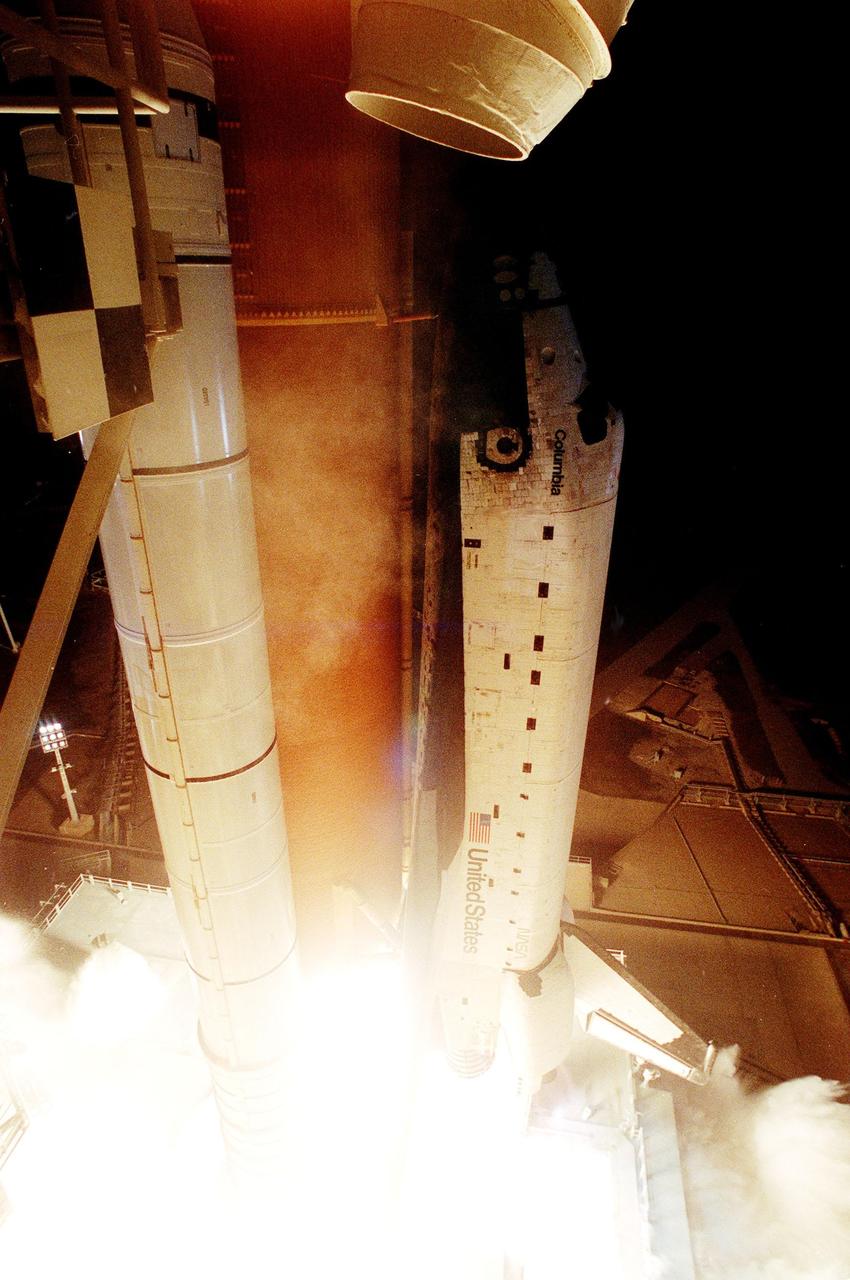
KENNEDY SPACE CENTER, FLA. -- In a burst of light and flames, Space Shuttle Columbia lifts off from Launch Pad 39-B at 12:31 a.m. EDT. STS-93 is a five-day mission primarily to release the Chandra X-ray Observatory, which will allow scientists from around the world to study some of the most distant, powerful and dynamic objects in the universe. The crew numbers five: Commander Eileen M. Collins, Pilot Jeffrey S. Ashby, and Mission Specialists Steven A. Hawley (Ph.D.), Catherine G. Coleman (Ph.D.) and Michel Tognini of France, with the Centre National d'Etudes Spatiales (CNES). Collins is the first woman to serve as commander of a Shuttle mission. The target landing date is July 27, 1999, at 11:20 p.m. EDT
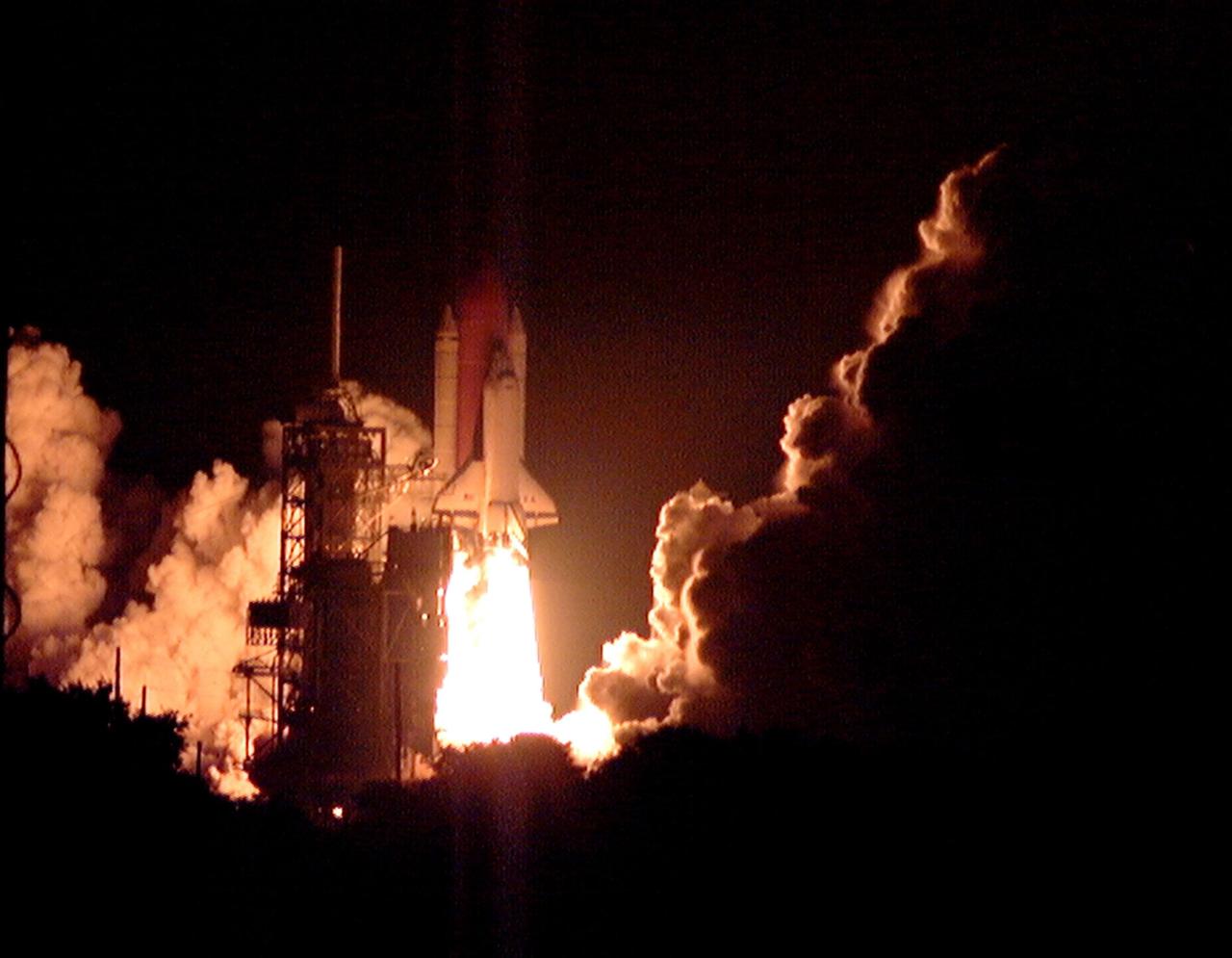
Space Shuttle Columbia gushes a stream of fire whose light fills the black sky on its successful liftoff from Launch Pad 39-B on mission STS-93. Liftoff occurred at 12:31 a.m. EDT. STS-93 is a five-day mission primarily to release the Chandra X-ray Observatory, which will allow scientists from around the world to study some of the most distant, powerful and dynamic objects in the universe. The crew numbers five: Commander Eileen M. Collins, Pilot Jeffrey S. Ashby, and Mission Specialists Stephen A. Hawley (Ph.D.), Catherine G. Coleman (Ph.D.) and Michel Tognini of France, with the Centre National d'Etudes Spatiales (CNES). Collins is the first woman to serve as commander of a Shuttle mission. The target landing date is July 27, 1999, at 11:20 p.m. EDT
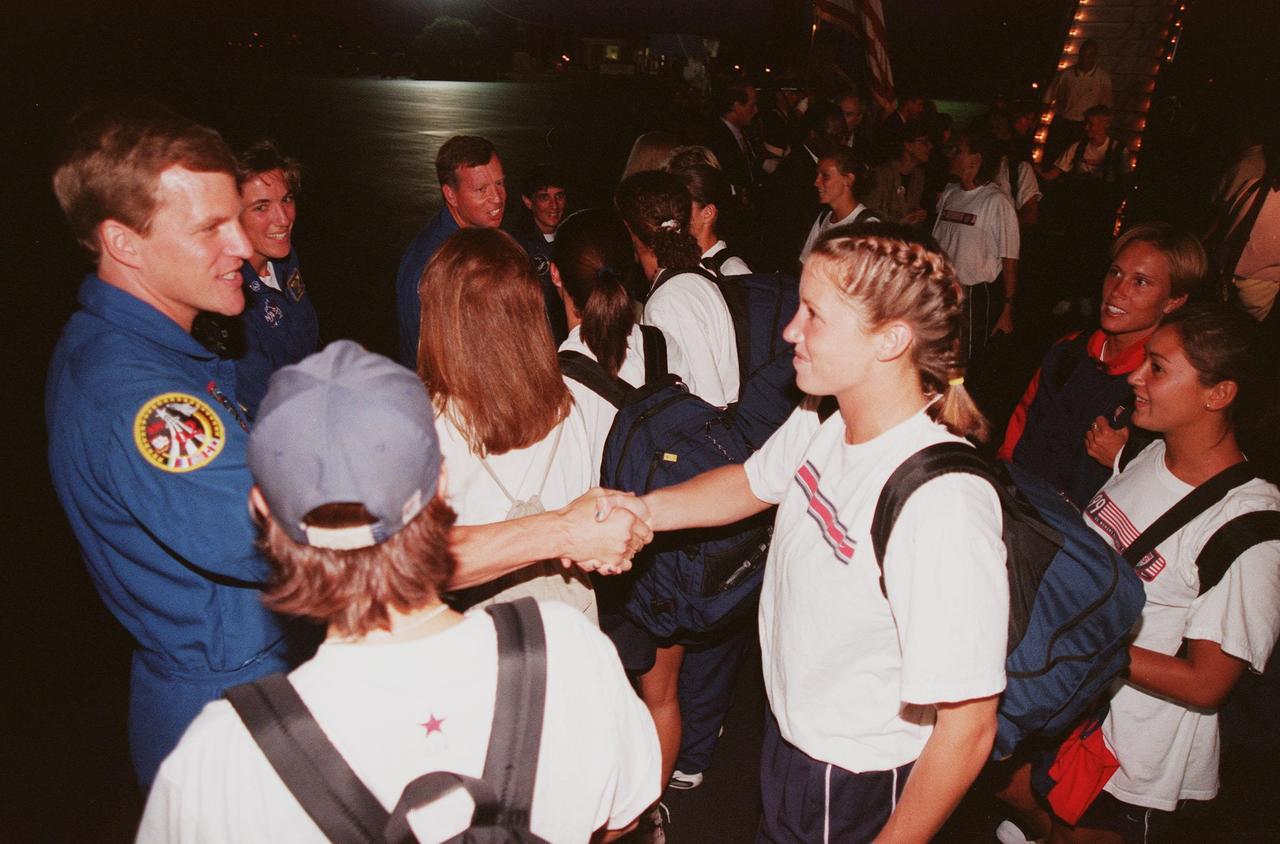
A member of the U.S. Women's World Cup Soccer Team is greeted by NASA Astronaut Scott E. Parazynski (left) upon her arrival at the Skid Strip at Cape Canaveral Air Station as her teammates look on. The team is at KSC to view the launch of Space Shuttle mission STS-93 scheduled for liftoff at 12:36 a.m. EDT July 20. Much attention has been generated over the launch due to Commander Eileen M. Collins, the first woman to serve as commander of a Shuttle mission. The primary payload of the five-day mission is the Chandra X-ray Observatory, which will allow scientists from around the world to study some of the most distant, powerful and dynamic objects in the universe. The new telescope is 20 to 50 times more sensitive than any previous X-ray telescope and is expected to unlock the secrets of supernovae, quasars and black holes
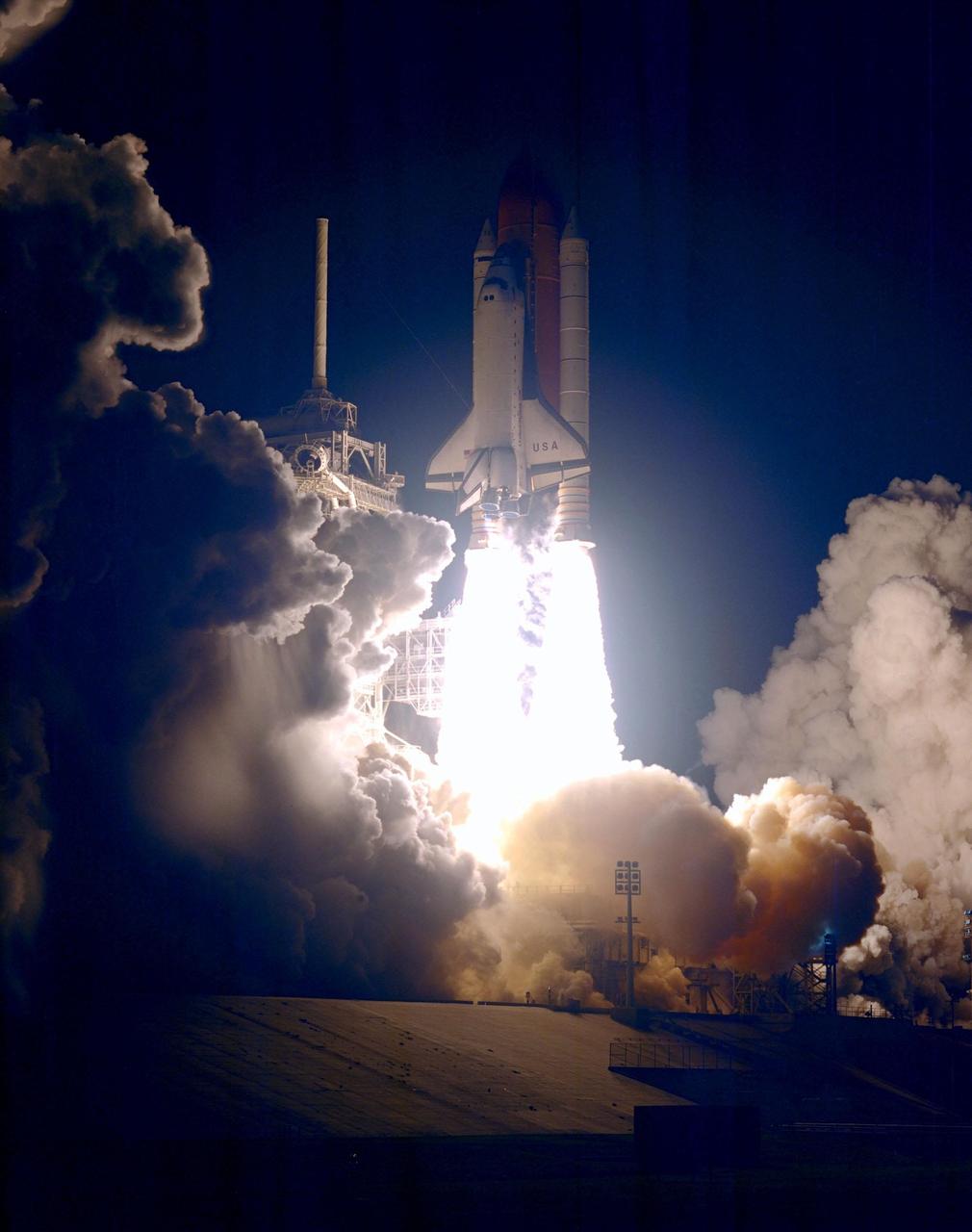
KENNEDY SPACE CENTER, FLA. -- Billowing clouds of smoke and steam rise with the roaring Space Shuttle Columbia as it launches into the night sky on mission STS-93. After two unsuccessful attempts on previous nights, liftoff occurred at 12:31 a.m. EDT. STS-93 is a five-day mission primarily to release the Chandra X-ray Observatory, which will allow scientists from around the world to study some of the most distant, powerful and dynamic objects in the universe. The crew numbers five: Commander Eileen M. Collins, Pilot Jeffrey S. Ashby, and Mission Specialists Steven A. Hawley (Ph.D.), Catherine G. Coleman (Ph.D.) and Michel Tognini of France, with the Centre National d'Etudes Spatiales (CNES). Collins is the first woman to serve as commander of a Space Shuttle. The target landing date is July 27, 1999, at 11:20 p.m. EDT
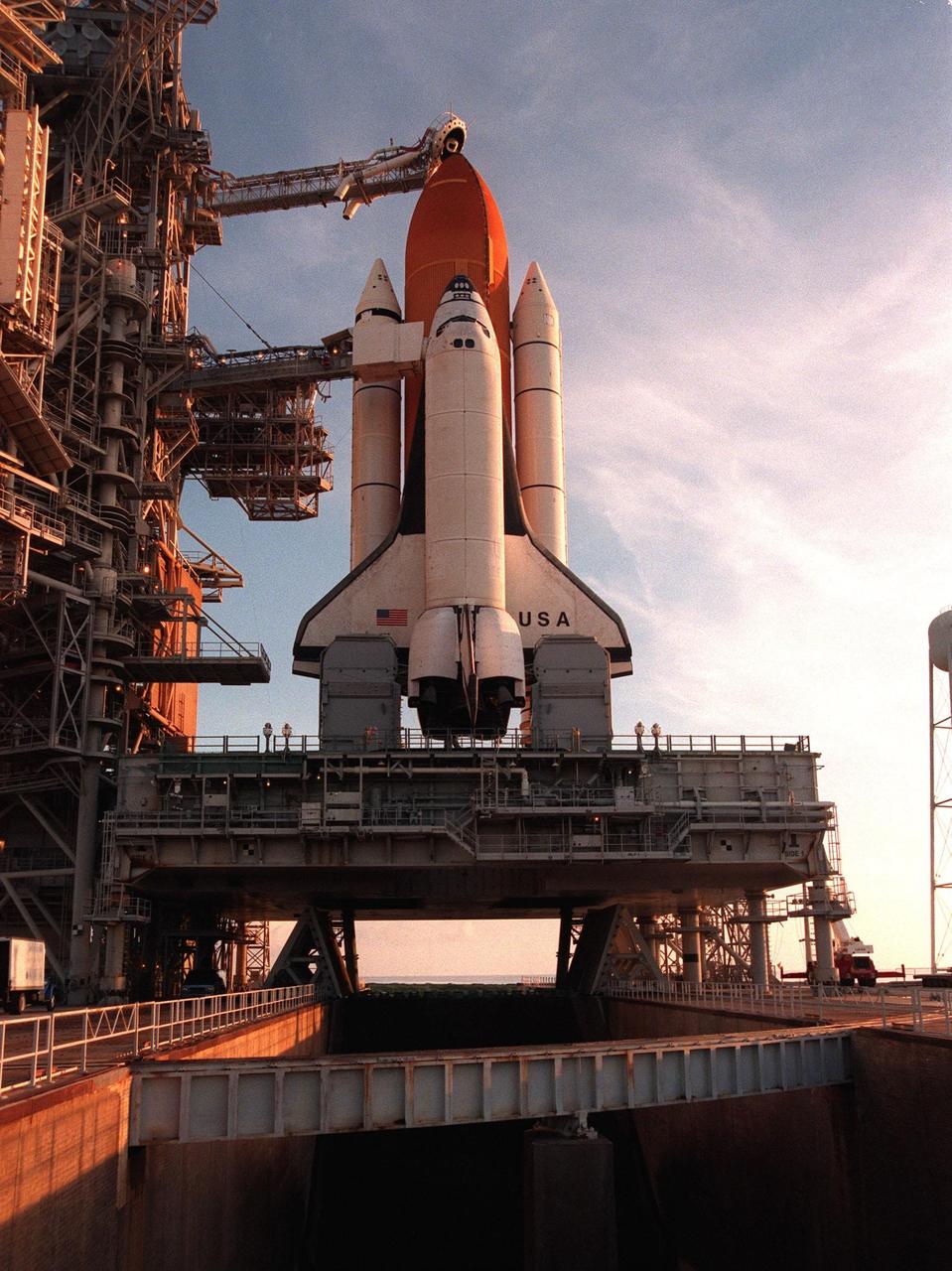
Space Shuttle Columbia, sitting on its mobile launcher platform, is framed against the early morning sky after the rollback of the Rotating Service Structure on Launch Pad 39-B. Columbia waits for the launch of mission STS-93 July 20 at 12:36 a.m. EDT. The primary payload of STS-93 is the Chandra X-ray Observatory, which will allow scientists from around the world to study some of the most distant, powerful and dynamic objects in the universe. The new telescope is 20 to 50 times more sensitive than any previous X-ray telescope and is expected unlock the secrets of supernovae, quasars and black holes. The STS-93 crew numbers five: Commander Eileen M. Collins, Pilot Jeffrey S. Ashby, and Mission Specialists Steven A. Hawley (Ph.D.), Catherine G. Coleman (Ph.D.) and Michel Tognini of France, with the Centre National d'Etudes Spatiales (CNES). Collins is the first woman to serve as commander of a shuttle mission
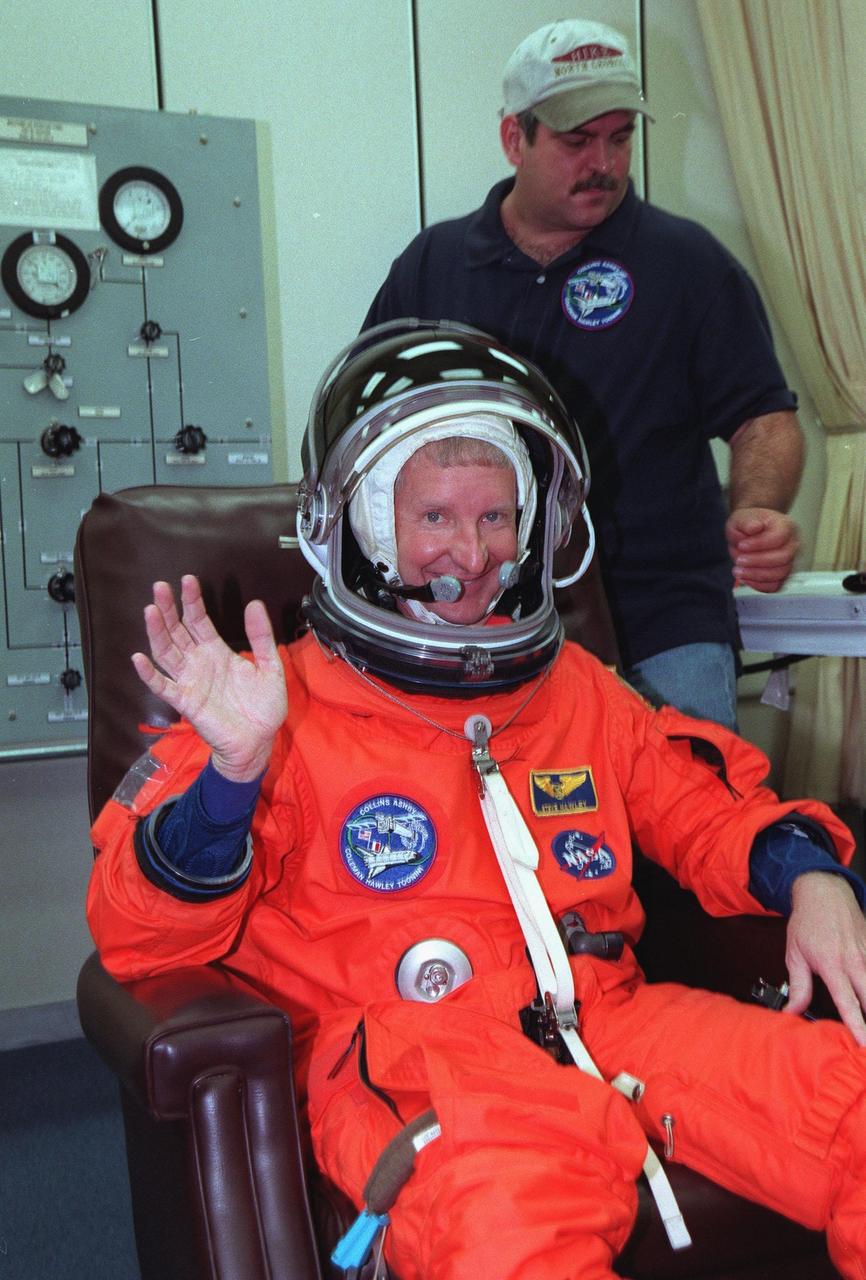
For the third time, during final launch preparations in the Operations and Checkout Building, STS-93 Mission Specialist Steven A. Hawley (Ph.D.) waves after donning his launch and entry suit. After Space Shuttle Columbia's July 20 and 22 launch attempts were scrubbed, the launch was again rescheduled for Friday, July 23, at 12:24 a.m. EDT. STS-93 is a five-day mission primarily to release the Chandra X-ray Observatory, which will allow scientists from around the world to study some of the most distant, powerful and dynamic objects in the universe. The STS-93 crew numbers five: Commander Eileen M. Collins, Pilot Jeffrey S. Ashby, and Mission Specialists Hawley, Catherine G. Coleman (Ph.D.) and Michel Tognini of France, with the Centre National d'Etudes Spatiales (CNES). Collins is the first woman to serve as commander of a shuttle mission
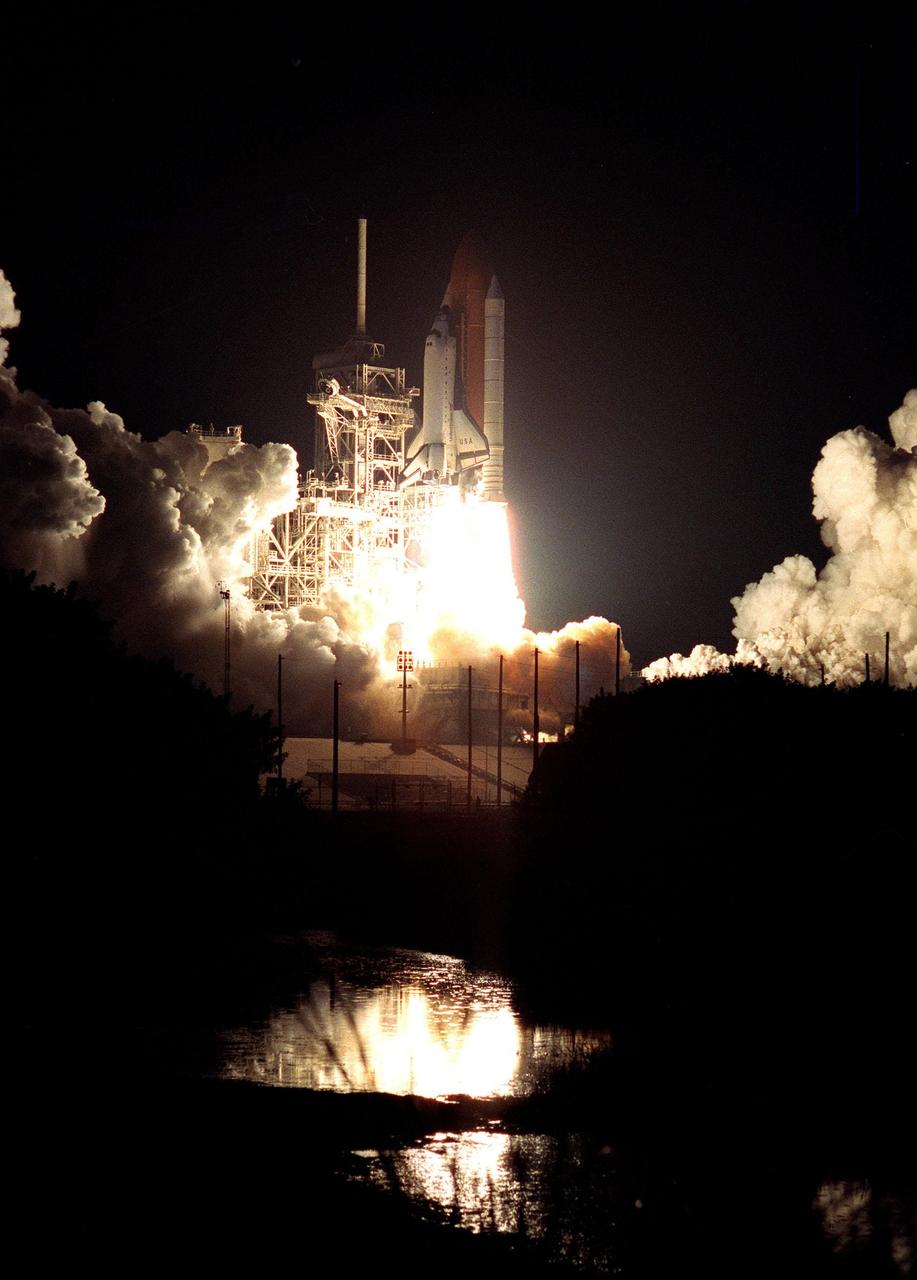
KENNEDY SPACE CENTER, FLA. -- Space Shuttle Columbia changes night into day as it roars into the sky after a successful liftoff from launch Pad 39-B on mission STS-93. Liftoff occurred at 12:31 a.m. EDT. STS-93 is a five-day mission primarily to release the Chandra X-ray Observatory, which will allow scientists from around the world to study some of the most distant, powerful and dynamic objects in the universe. The crew numbers five: Commander Eileen M. Collins, Pilot Jeffrey S. Ashby, and Mission Specialists Steven A. Hawley (Ph.D.), Catherine G. Coleman (Ph.D.) and Michel Tognini of France, with the Centre National d'Etudes Spatiales (CNES). Collins is the first woman to serve as commander of a Shuttle mission. The target landing date is July 27, 1999, at 11:20 p.m. EDT
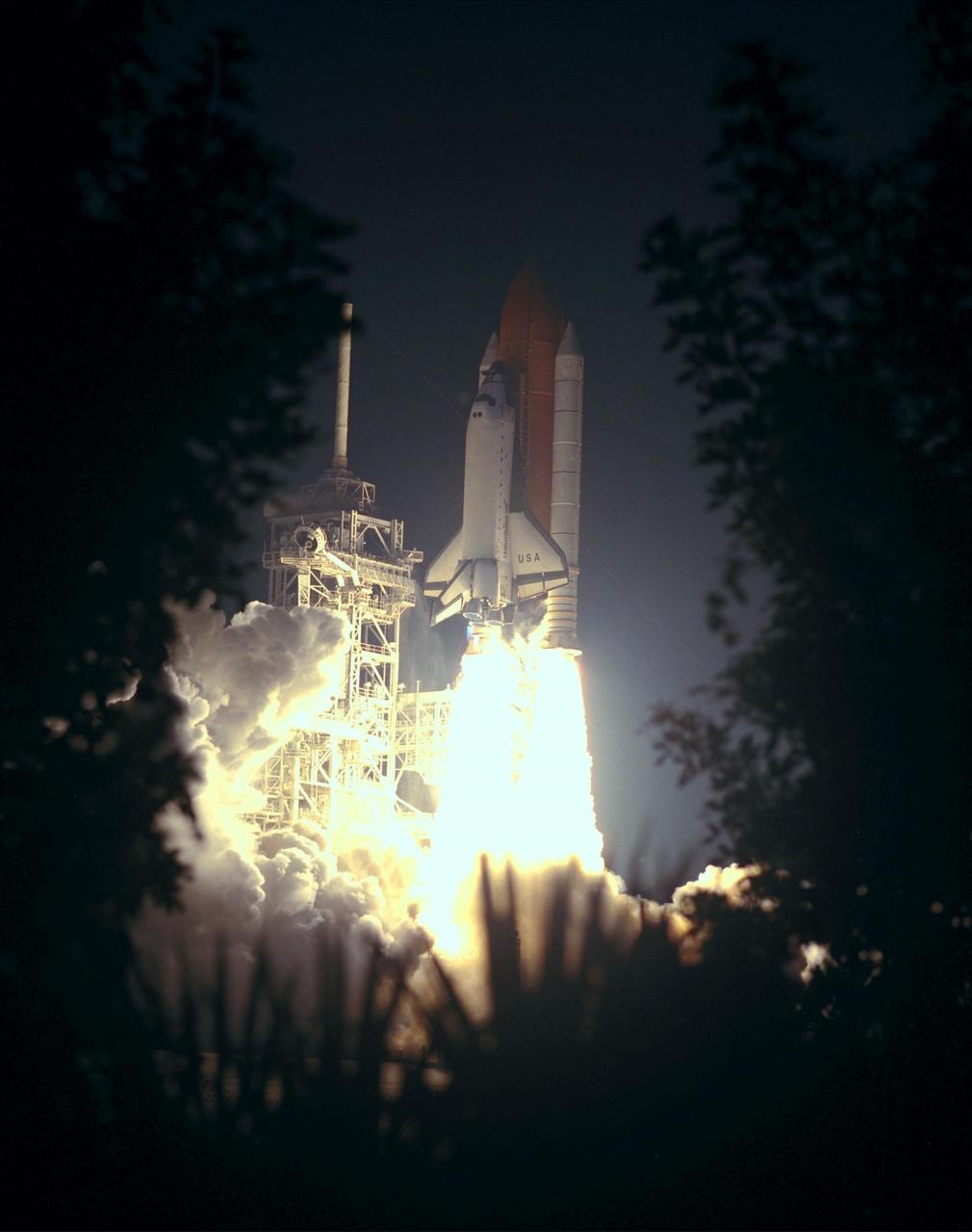
KENNEDY SPACE CENTER, FLA. -- Shrubbery and palmettos frame the fiery launch of Space Shuttle Columbia at 12:31 a.m. EDT. STS-93 is a five-day mission primarily to release the Chandra X-ray Observatory, which will allow scientists from around the world to study some of the most distant, powerful and dynamic objects in the universe. The crew numbers five: Commander Eileen M. Collins, Pilot Jeffrey S. Ashby, and Mission Specialists Steven A. Hawley (Ph.D.), Catherine G. Coleman (Ph.D.) and Michel Tognini of France, with the Centre National d'Etudes Spatiales (CNES). Collins is the first woman to serve as commander of a Shuttle mission. The target landing date is July 27, 1999, at 11:20 p.m. EDT
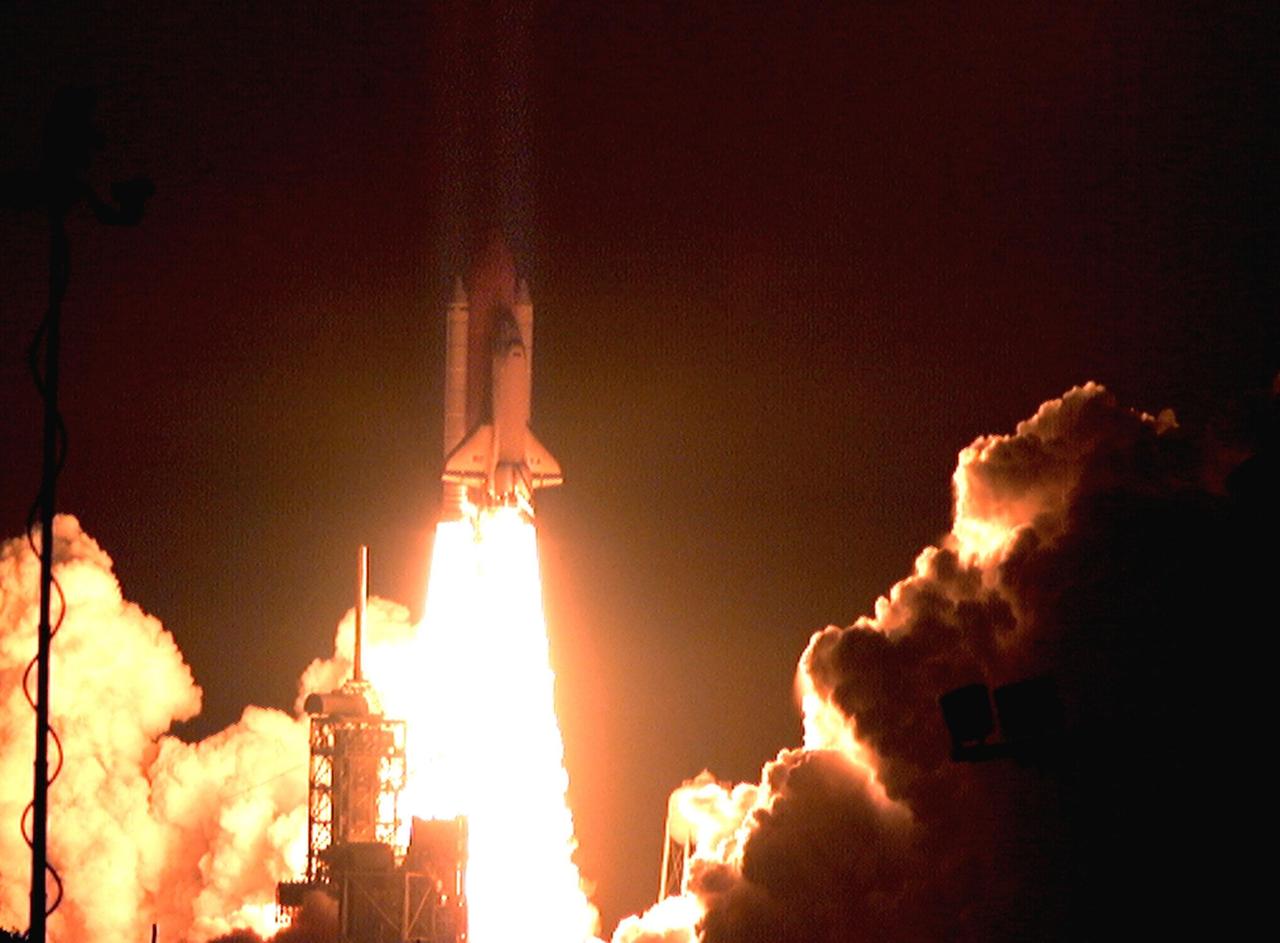
With a stream of fire chasing it, Space Shuttle Columbia shoots through the night sky on its successful liftoff from Launch Pad 39-B on mission STS-93. Liftoff occurred at 12:31 a.m. EDT. STS-93 is a five-day mission primarily to release the Chandra X-ray Observatory, which will allow scientists from around the world to study some of the most distant, powerful and dynamic objects in the universe. The crew numbers five: Commander Eileen M. Collins, Pilot Jeffrey S. Ashby, and Mission Specialists Stephen A. Hawley (Ph.D.), Catherine G. Coleman (Ph.D.) and Michel Tognini of France, with the Centre National d'Etudes Spatiales (CNES). Collins is the first woman to serve as commander of a Shuttle mission. The target landing date is July 27, 1999, at 11:20 p.m. EDT
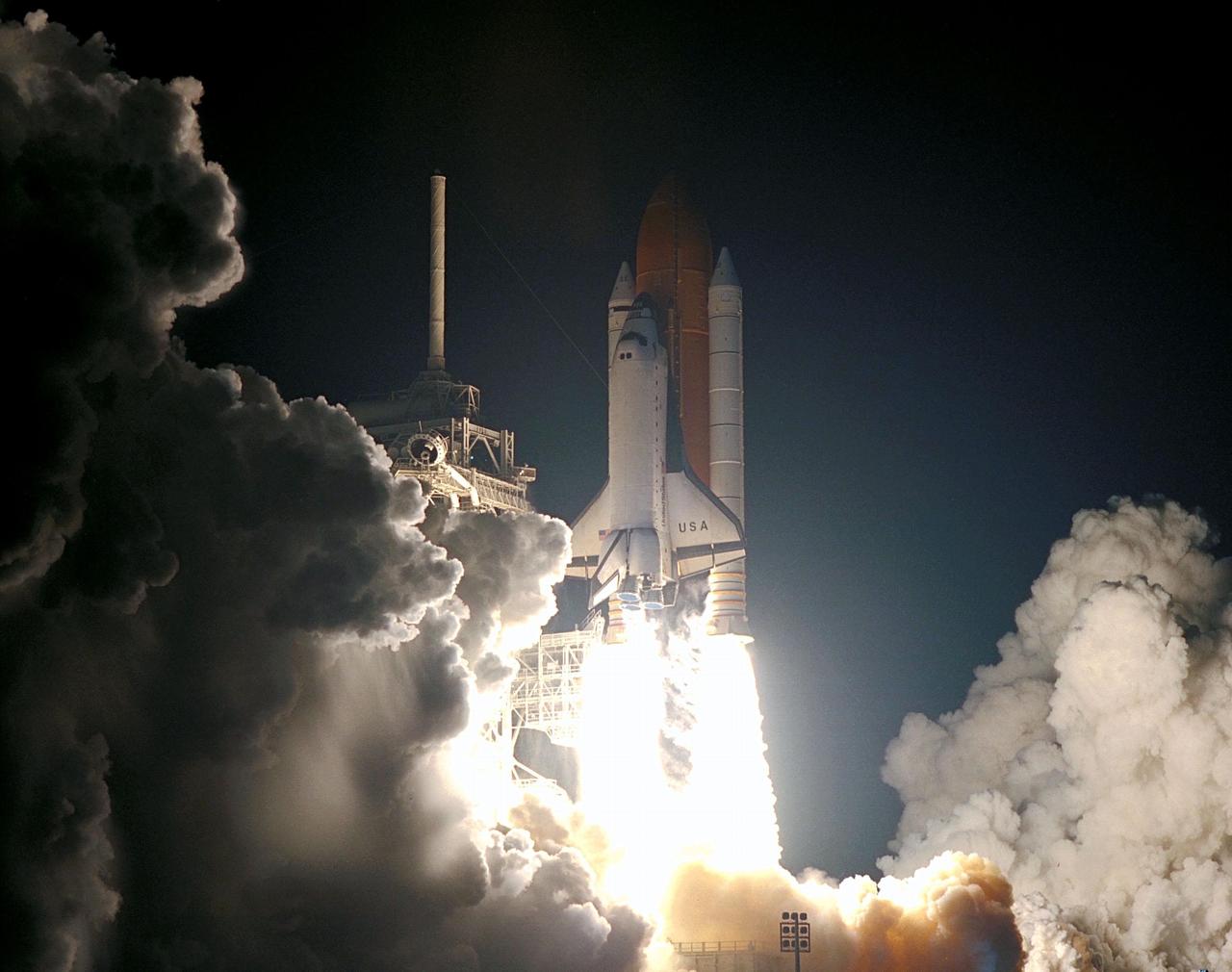
KENNEDY SPACE CENTER, FLA. -- The fiery launch of Space Shuttle Columbia lights up the night sky as it lifts off from Launch Pad 39-B on mission STS-93. Liftoff occurred at 12:31 a.m. EDT. STS-93 is a five-day mission primarily to release the Chandra X-ray Observatory, which will allow scientists from around the world to study some of the most distant, powerful and dynamic objects in the universe. The crew numbers five: Commander Eileen M. Collins, Pilot Jeffrey S. Ashby, and Mission Specialists Steven A. Hawley (Ph.D.), Catherine G. Coleman (Ph.D.) and Michel Tognini of France, with the Centre National d'Etudes Spatiales (CNES). Collins is the first woman to serve as commander of a Shuttle mission. The target landing date is July 27, 1999, at 11:20 p.m. EDT
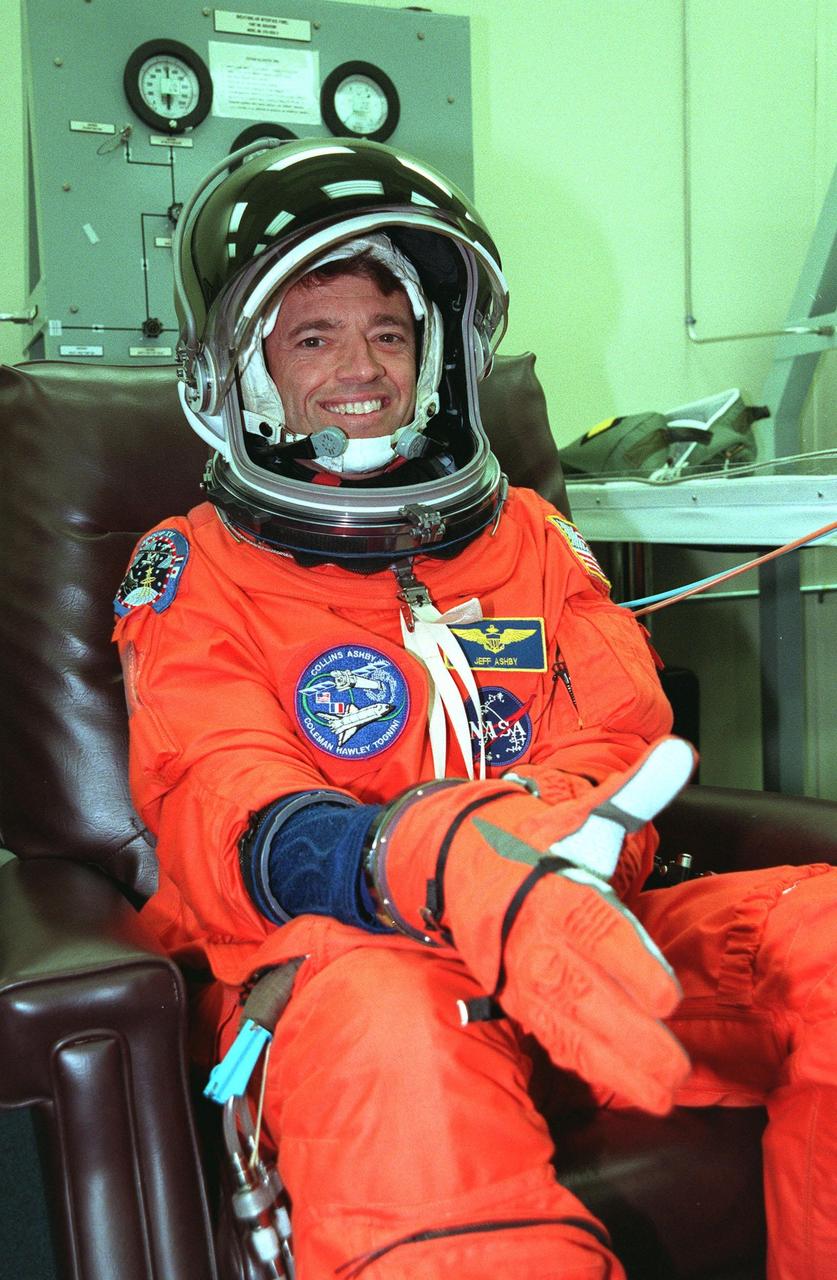
In the Operations and Checkout Building during final launch preparations for the third time, STS-93 Pilot Jeffrey S. Ashby pulls on his glove, part of his launch and entry suit. After Space Shuttle Columbia's July 20 and 22 launch attempts were scrubbed, the launch was again rescheduled for Friday, July 23, at 12:24 a.m. EDT. STS-93 is a five-day mission primarily to release the Chandra X-ray Observatory, which will allow scientists from around the world to study some of the most distant, powerful and dynamic objects in the universe. The STS-93 crew numbers five: Commander Eileen Collins, Ashby, and Mission Specialists Steven A. Hawley (Ph.D.), Catherine G. Coleman (Ph.D.) and Michel Tognini of France, with the Centre National d'Etudes Spatiales (CNES). Collins is the first woman to serve as commander of a shuttle mission
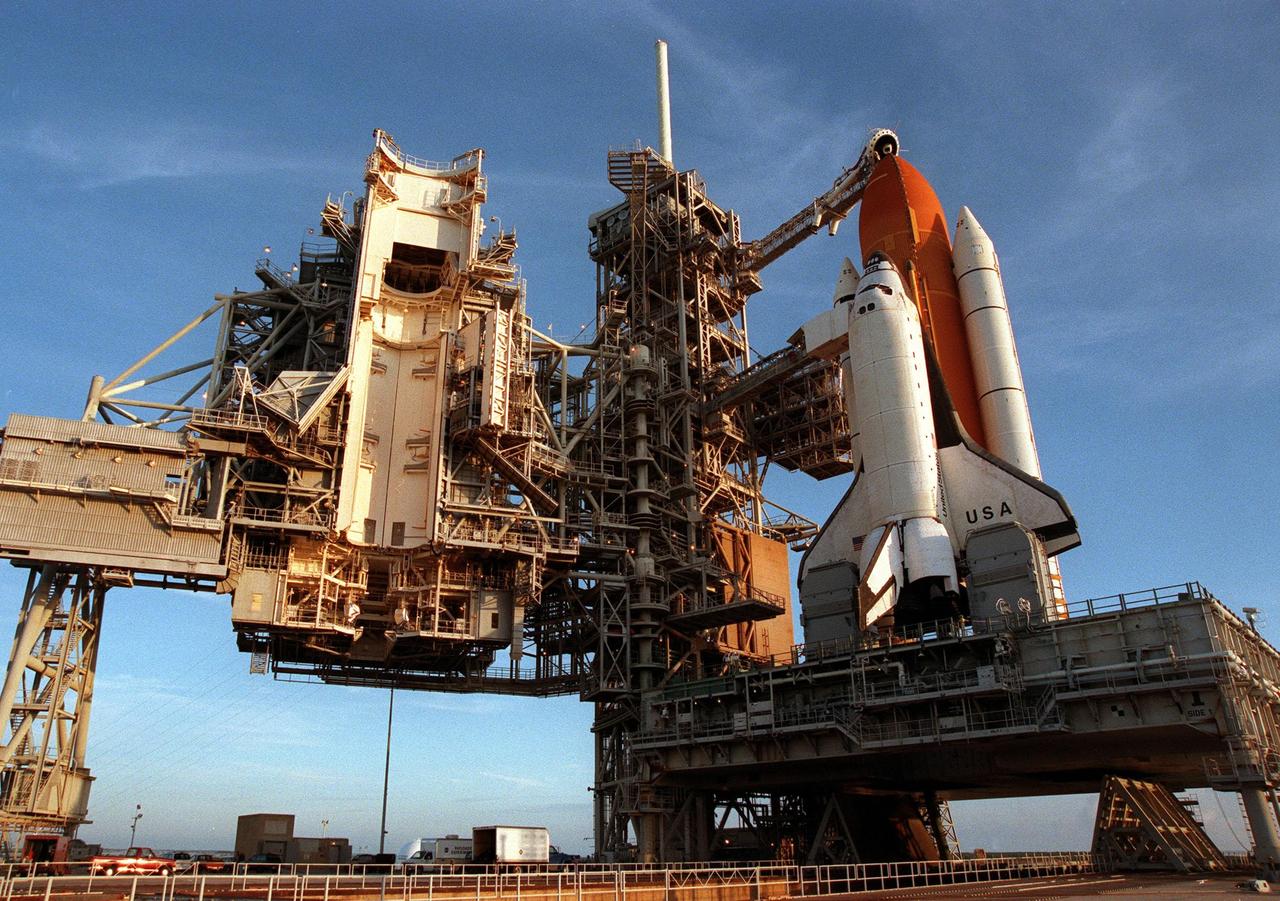
The rollback of the Rotating Service Structure on launch Pad 39-B reveals Space Shuttle Columbia on its mobile launcher platform, waiting for the launch of mission STS-93 on July 20 at 12:36 a.m. EDT. The primary payload of STS-93 is the Chandra X-ray Observatory, which will allow scientists from around the world to study some of the most distant, powerful and dynamic objects in the universe. The new telescope is 20 to 50 times more sensitive than any previous X-ray telescope and is expected unlock the secrets of supernovae, quasars and black holes. The STS-93 crew numbers five: Commander Eileen M. Collins, Pilot Jeffrey S. Ashby, and Mission Specialists Steven A. Hawley (Ph.D.), Catherine G. Coleman (Ph.D.) and Michel Tognini of France, with the Centre National d'Etudes Spatiales (CNES). Collins is the first woman to serve as commander of a shuttle mission
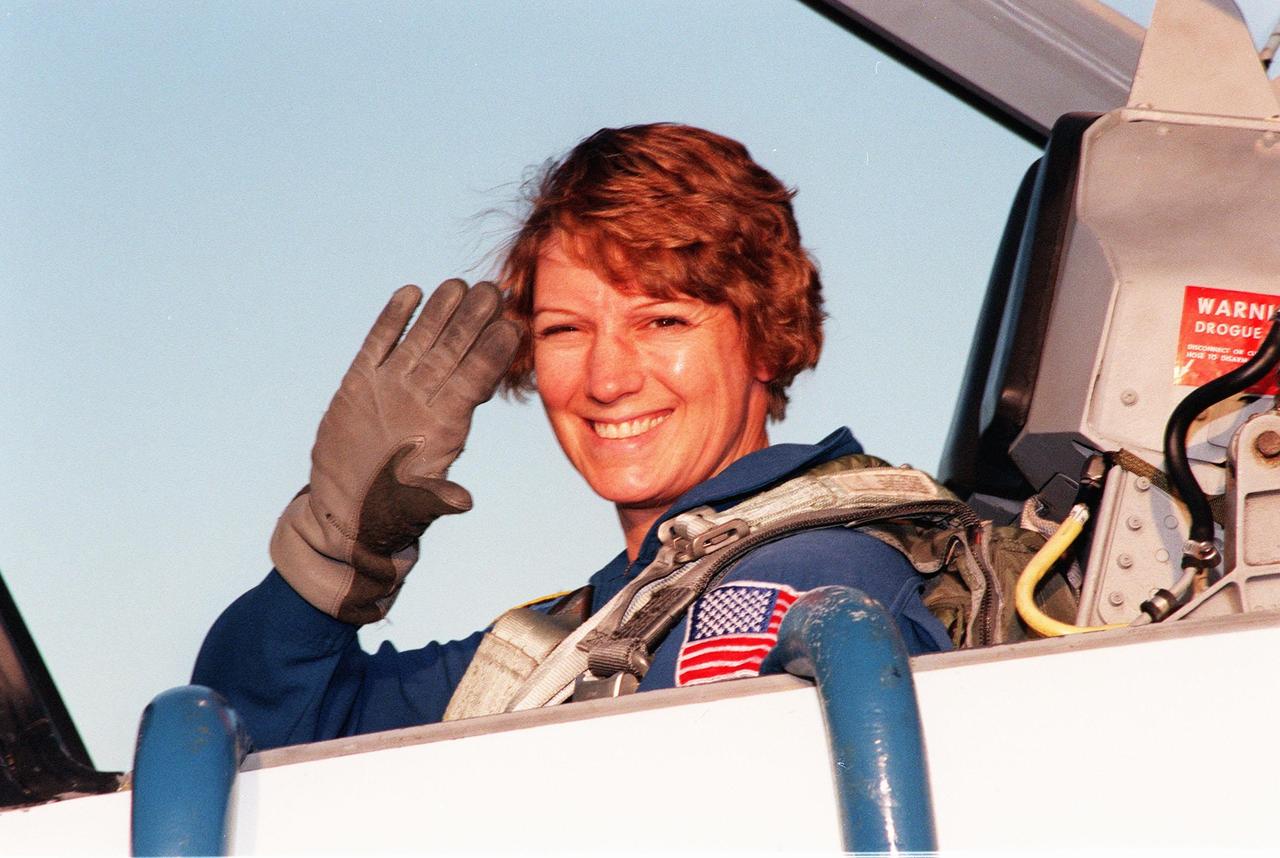
STS-93 Commander Eileen Collins waves to spectators after landing at Kennedy Space Center's Shuttle Landing Facility (SLF) aboard a T-38 jet aircraft. She and other crew members Pilot Jeffrey S. Ashby and Mission Specialists Steven A. Hawley (Ph.D.), Catherine G. "Cady" Coleman (Ph.D.) and Michel Tognini of France, with the Centre National d'Etudes Spatiales (CNES), are arriving for pre-launch activities. Collins is the first woman to serve as mission commander. This is her third Shuttle flight. The primary mission of STS-93 is the release of the Chandra X-ray Observatory, which will allow scientists from around the world to study some of the most distant, powerful and dynamic objects in the universe. The new telescope is 20 to 50 times more sensitive than any previous X-ray telescope and is expected to unlock the secrets of supernovae, quasars and black holes
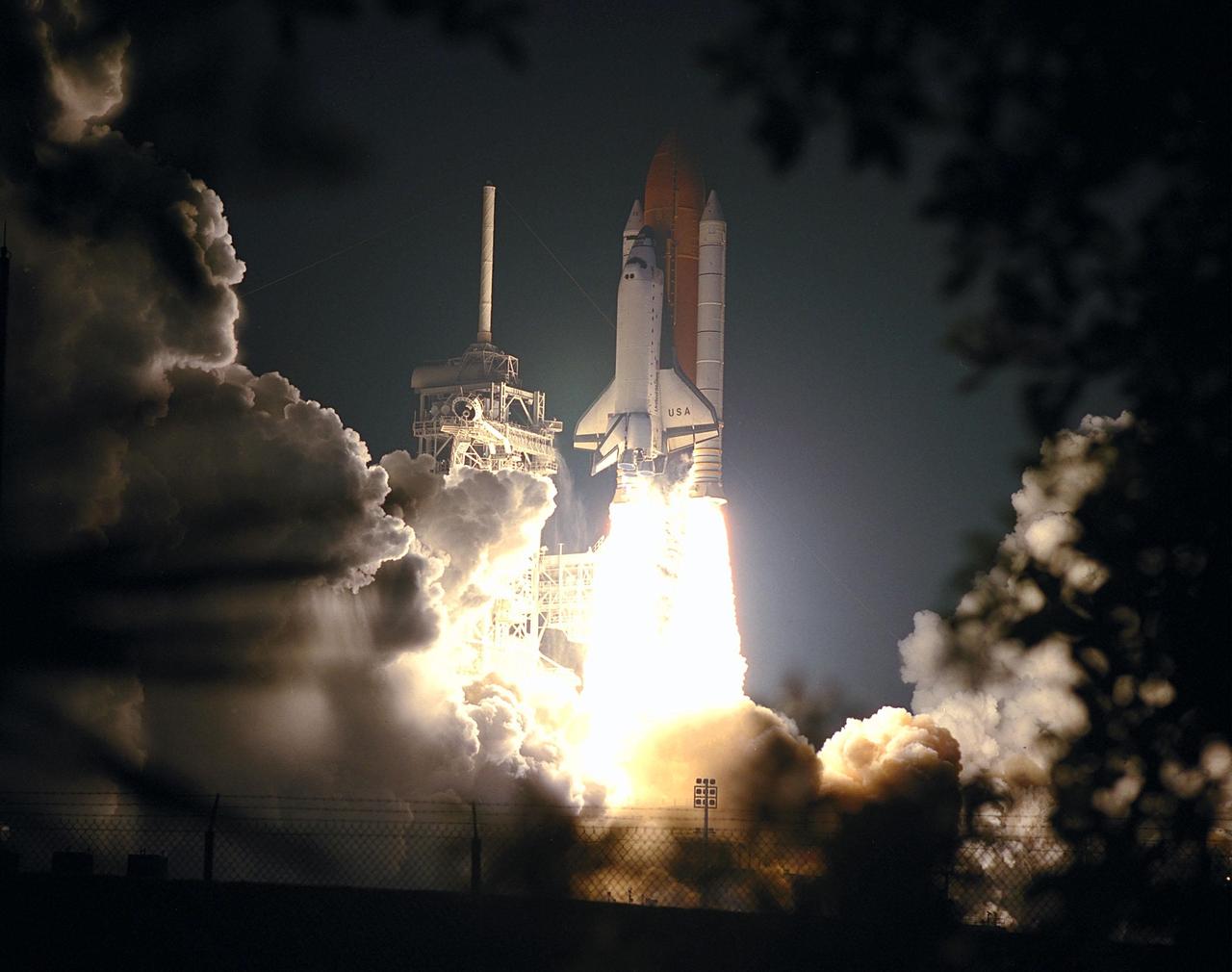
KENNEDY SPACE CENTER, FLA. -- The fiery launch of Space Shuttle Columbia lights up the night sky on its successful liftoff from Launch Pad 39-B on mission STS-93. Liftoff occurred at 12:31 a.m. EDT. STS-93 is a five-day mission primarily to release the Chandra X-ray Observatory, which will allow scientists from around the world to study some of the most distant, powerful and dynamic objects in the universe. The crew numbers five: Commander Eileen M. Collins, Pilot Jeffrey S. Ashby, and Mission Specialists Steven A. Hawley (Ph.D.), Catherine G. Coleman (Ph.D.) and Michel Tognini of France, with the Centre National d'Etudes Spatiales (CNES). Collins is the first woman to serve as commander of a Shuttle mission. The target landing date is July 27, 1999, at 11:20 p.m. EDT
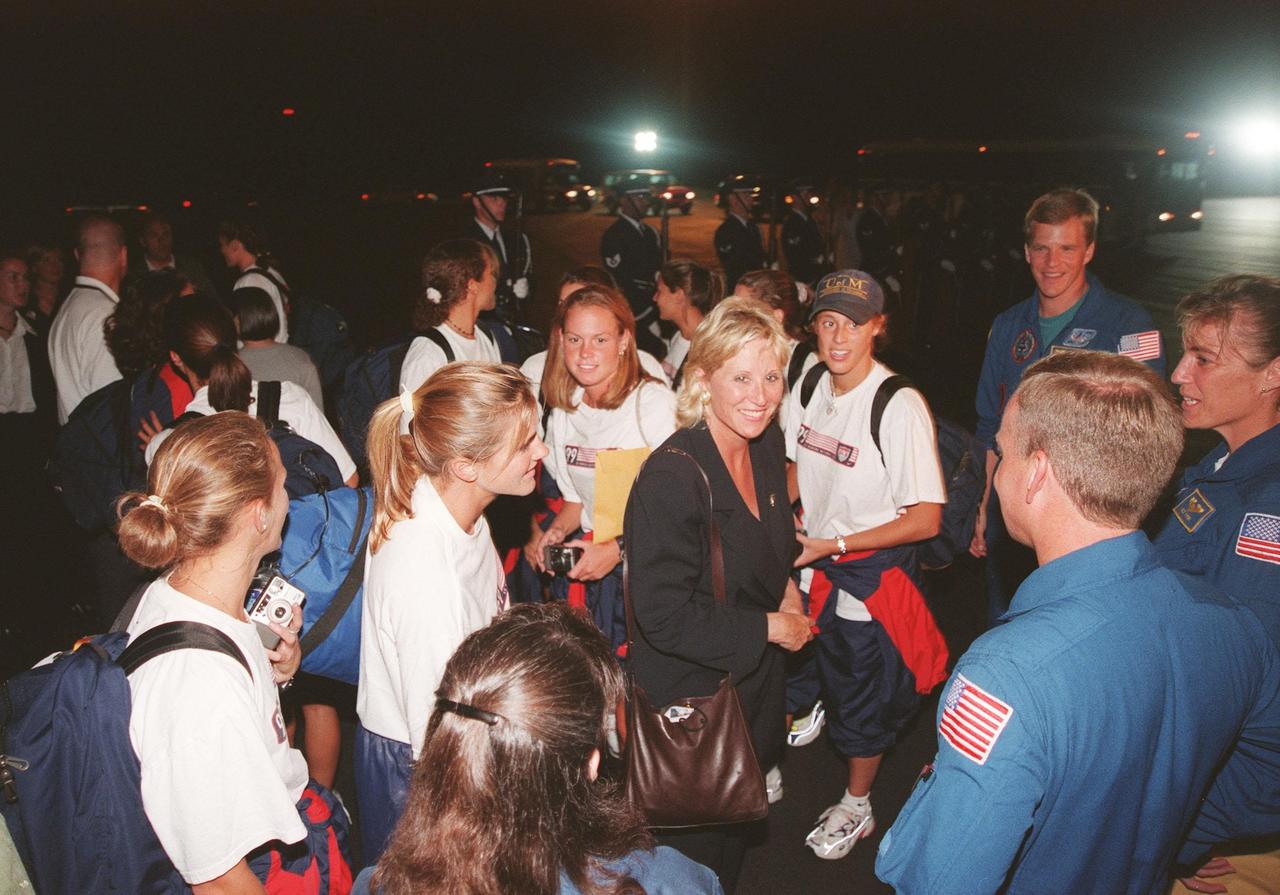
Members of the U.S. Women's World Cup Soccer Team were greeted upon their arrival at the Skid Strip at Cape Canaveral Air Station by Astronauts (right) Steven W. Lindsey, Heidemarie M. Stefanyshyn-Piper and Scott E. Parzynski. The team are here to view the launch of Space Shuttle mission STS-93, scheduled for 12:36 a.m. EDT July 20. Much attention has been generated over the launch due to Commander Eileen M. Collins, the first woman to serve as commander of a Shuttle mission. The primary payload of the five-day mission is the Chandra X-ray Observatory, which will allow scientists from around the world to study some of the most distant, powerful and dynamic objects in the universe. The new telescope is 20 to 50 times more sensitive than any previous X-ray telescope and is expected to unlock the secrets of supernovae, quasars and black holes
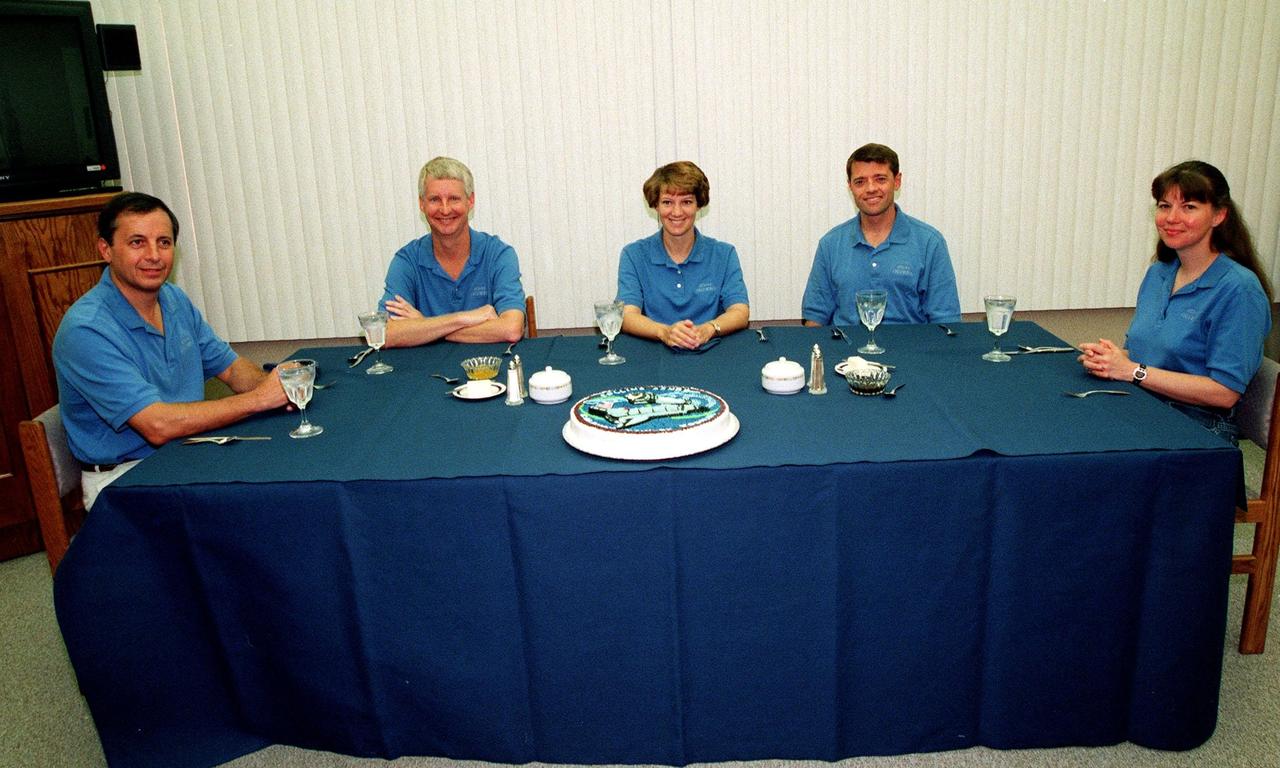
The STS-93 crew gathers for breakfast in the Operations and Checkout Building before suiting up for launch. Space Shuttle Columbia is due to launch Tuesday, July 20, at 12:36 a.m. EDT. Seated from left are Mission Specialists Michel Tognini, of France, who represents the Centre National d'Etudes Spatiales (CNES), and Steven A. Hawley (Ph.D.), Commander Eileen M. Collins, Pilot Jeffrey S. Ashby, and Mission Specialist Catherine G. Coleman (Ph.D.). STS-93 is a five-day mission primarily to release the Chandra X-ray Observatory, which will allow scientists from around the world to study some of the most distant, powerful and dynamic objects in the universe. The new telescope is 20 to 50 times more sensitive than any previous X-ray telescope and is expected unlock the secrets of supernovae, quasars and black holes. Collins is the first woman to serve as commander of a Shuttle mission
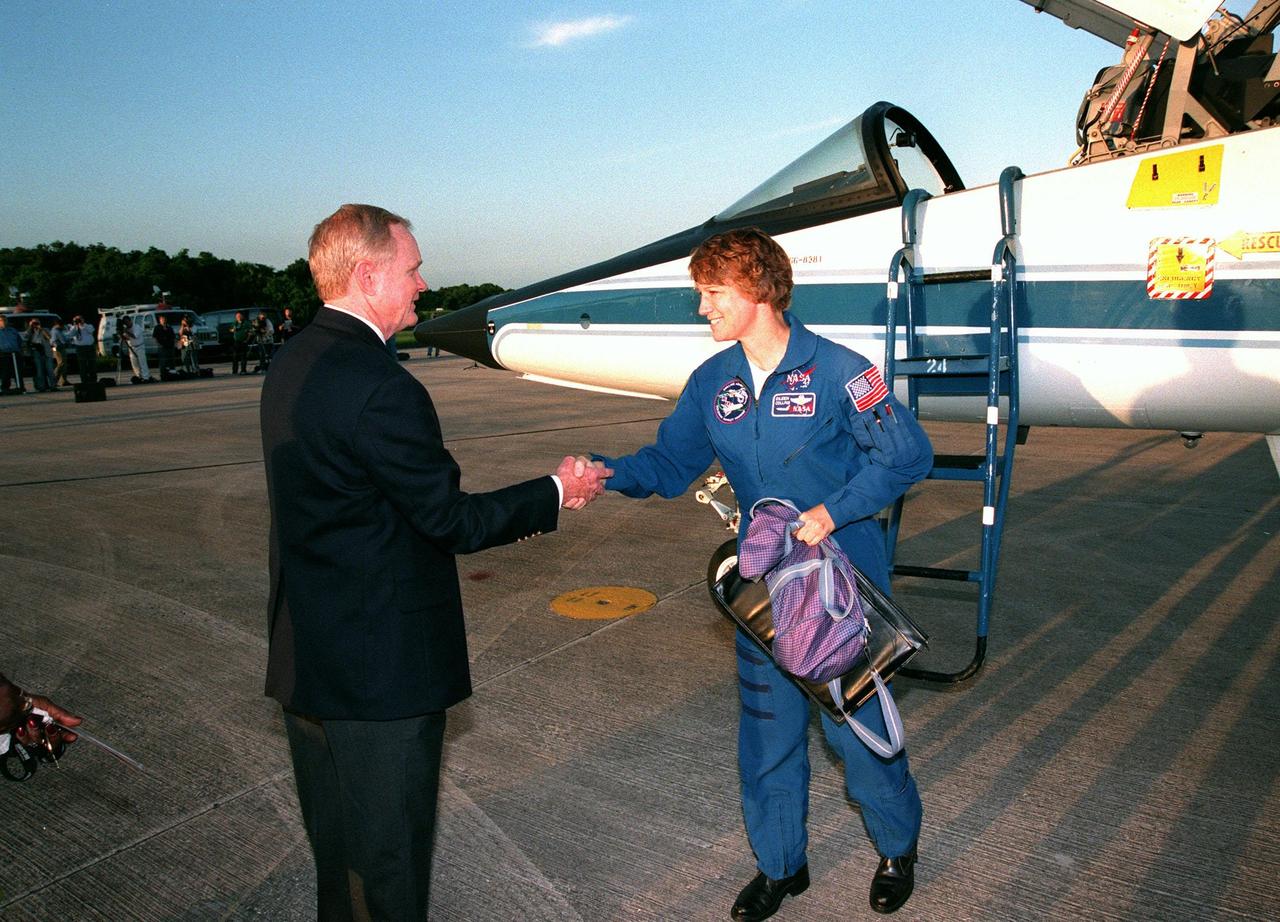
Center Director Roy D. Bridges Jr. greets STS-93 Commander Eileen M. Collins after her arrival at KSC's Shuttle Landing Facility aboard a T-38 jet aircraft (behind her). She and other crew members Pilot Jeffrey S. Ashby and Mission Specialists Steven A. Hawley (Ph.D.), Catherine G. "Cady" Coleman (Ph.D.) and Michel Tognini of France, with the Centre National d'Etudes Spatiales (CNES), are arriving for pre-launch activities. Collins is the first woman to serve as mission commander. This is her third Shuttle flight. The primary mission of STS-93 is the release of the Chandra X-ray Observatory, which will allow scientists from around the world to study some of the most distant, powerful and dynamic objects in the universe. The new telescope is 20 to 50 times more sensitive than any previous X-ray telescope and is expected to unlock the secrets of supernovae, quasars and black holes
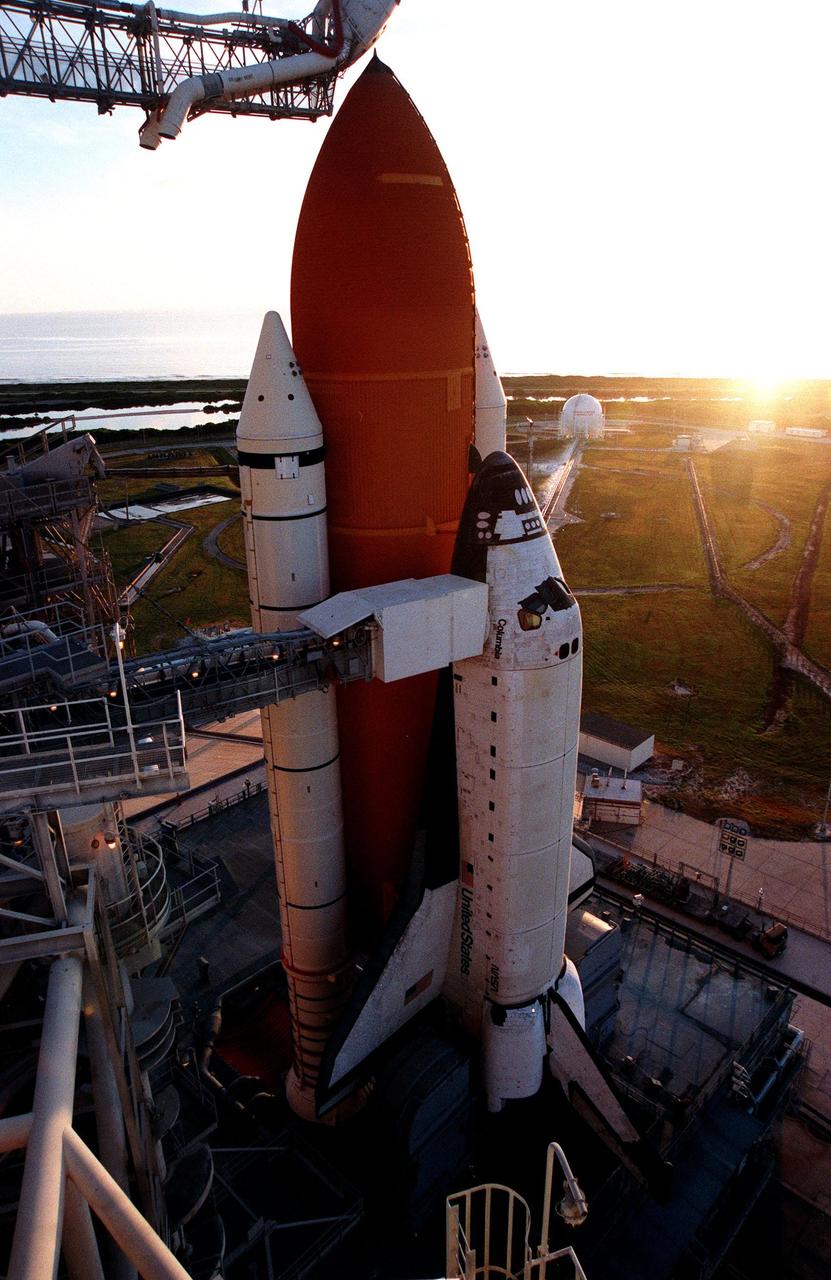
Space Shuttle Columbia catches the rising sun after the rollback of the Rotating Service Structure on Launch Pad 39-B. Columbia waits for the launch of mission STS-93 July 20 at 12:36 a.m. EDT. The primary payload of STS-93 is the Chandra X-ray Observatory, which will allow scientists from around the world to study some of the most distant, powerful and dynamic objects in the universe. The new telescope is 20 to 50 times more sensitive than any previous X-ray telescope and is expected unlock the secrets of supernovae, quasars and black holes. The STS-93 crew numbers five: Commander Eileen M. Collins, Pilot Jeffrey S. Ashby, and Mission Specialists Steven A. Hawley (Ph.D.), Catherine G. Coleman (Ph.D.) and Michel Tognini of France, with the Centre National d'Etudes Spatiales (CNES). Collins is the first woman to serve as commander of a shuttle mission
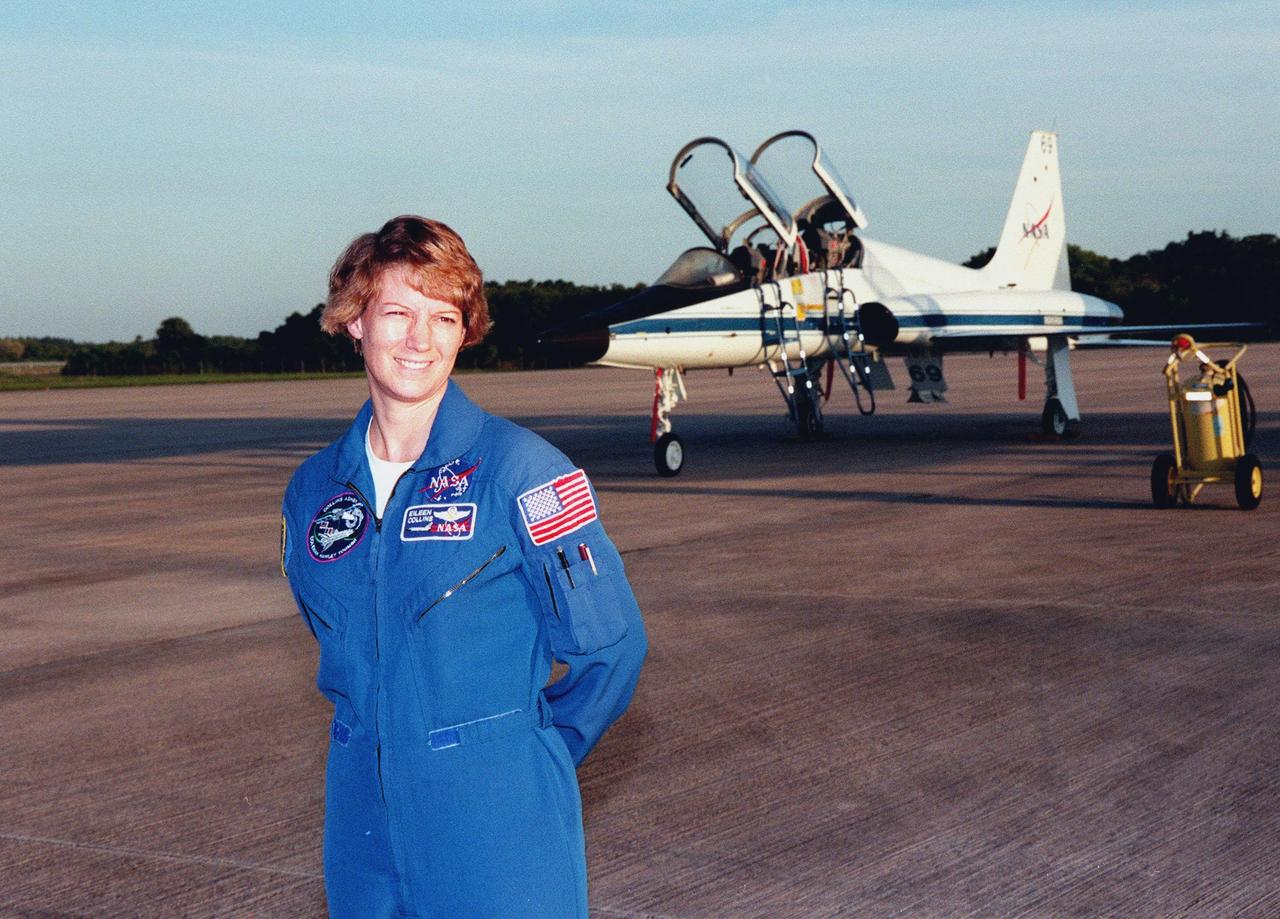
STS-93 Commander Eileen Collins poses for photographers in the early morning sun after landing at Kennedy Space Center's Shuttle Landing Facility (SLF) aboard a T-38 jet aircraft (background). She and other crew members Pilot Jeffrey S. Ashby and Mission Specialists Steven A. Hawley (Ph.D.), Catherine G. "Cady" Coleman (Ph.D.) and Michel Tognini of France, with the Centre National d'Etudes Spatiales (CNES), are arriving for pre-launch activities. Collins is the first woman to serve as mission commander. This is her third Shuttle flight. The primary mission of STS-93 is the release of the Chandra X-ray Observatory, which will allow scientists from around the world to study some of the most distant, powerful and dynamic objects in the universe. The new telescope is 20 to 50 times more sensitive than any previous X-ray telescope and is expected to unlock the secrets of supernovae, quasars and black holes
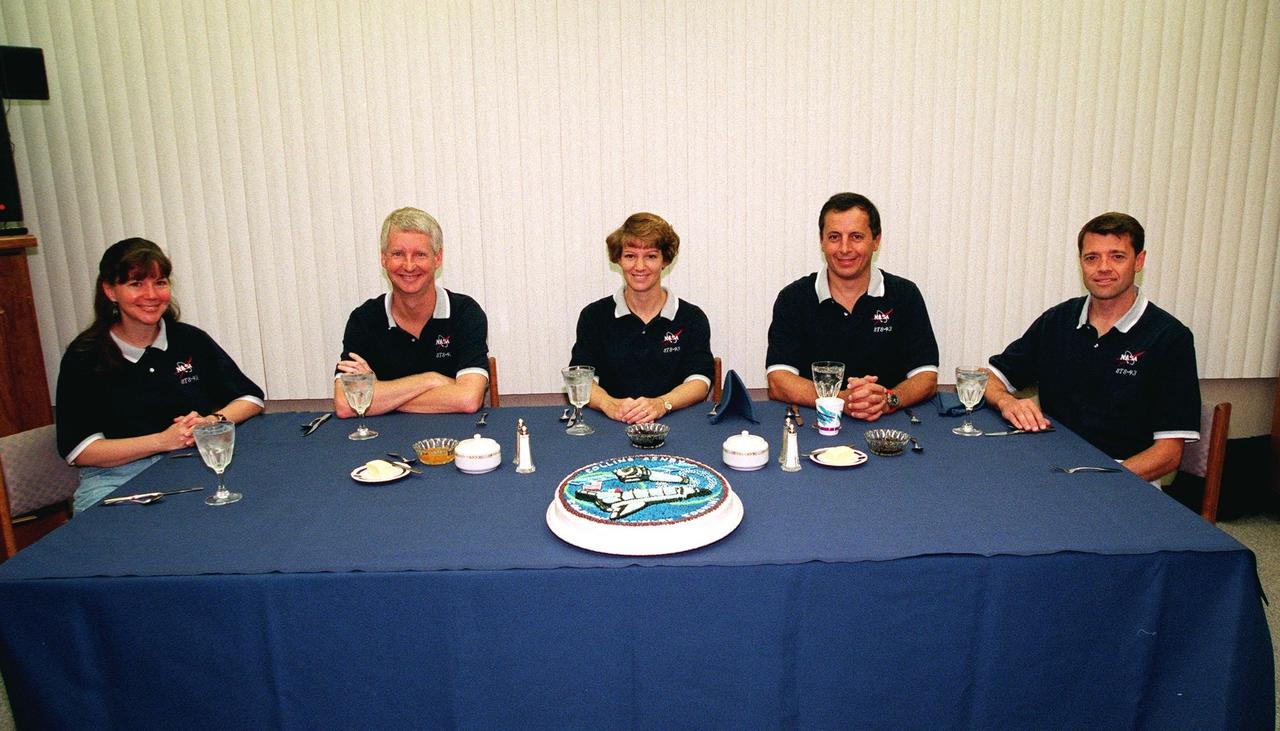
The STS-93 crew gathers a third time for a pre-launch breakfast in the Operations and Checkout Building before suiting up for launch. After Space Shuttle Columbia's July 22 launch attempt was scrubbed due to the weather, the launch was rescheduled for Friday, July 23, at 12:24 a.m. EDT. Seated from left are Mission Specialists Catherine G. Coleman (Ph.D.) and Steven A. Hawley (Ph.D.); Commander Eileen M. Collins; Mission Specialist Michel Tognini, of France, who represents the Centre National d'Etudes Spatiales (CNES); and Pilot Jeffrey S. Ashby. STS-93 is a five-day mission primarily to release the Chandra X-ray Observatory, which will allow scientists from around the world to study some of the most distant, powerful and dynamic objects in the universe. Collins is the first woman to serve as commander of a Shuttle mission. The target landing date is July 27, 1999, at 11:20 p.m. EDT
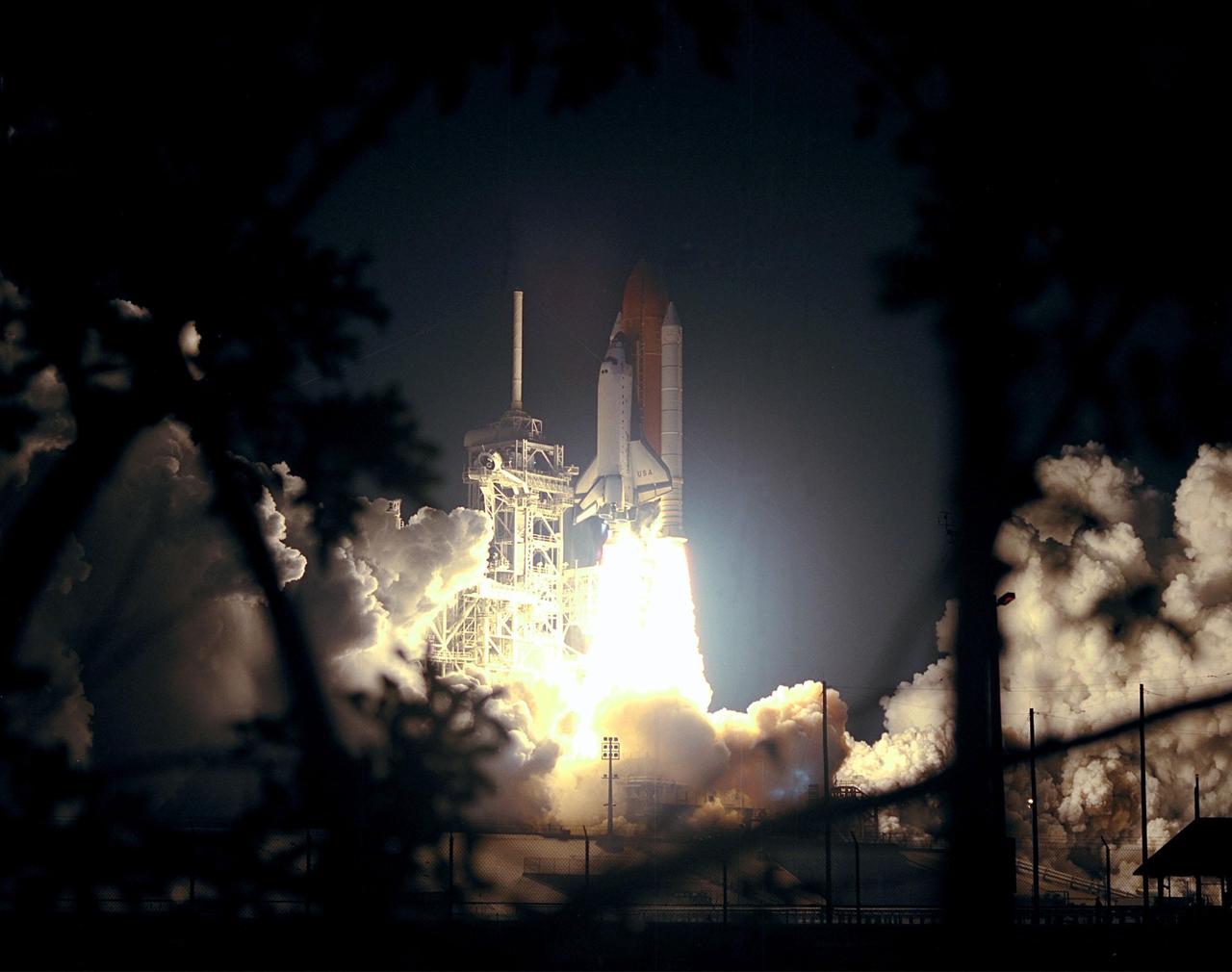
KENNEDY SPACE CENTER, FLA. -- The fiery launch of Space Shuttle Columbia casts ghost-like shadows on the clouds of smoke and steam surrounding it. Liftoff occurred at 12:31 a.m. EDT. STS-93 is a five-day mission primarily to release the Chandra X-ray Observatory, which will allow scientists from around the world to study some of the most distant, powerful and dynamic objects in the universe. The crew numbers five: Commander Eileen M. Collins, Pilot Jeffrey S. Ashby, and Mission Specialists Steven A. Hawley (Ph.D.), Catherine G. Coleman (Ph.D.) and Michel Tognini of France, with the Centre National d'Etudes Spatiales (CNES). Collins is the first woman to serve as commander of a Shuttle mission. The target landing date is July 27, 1999, at 11:20 p.m. EDT
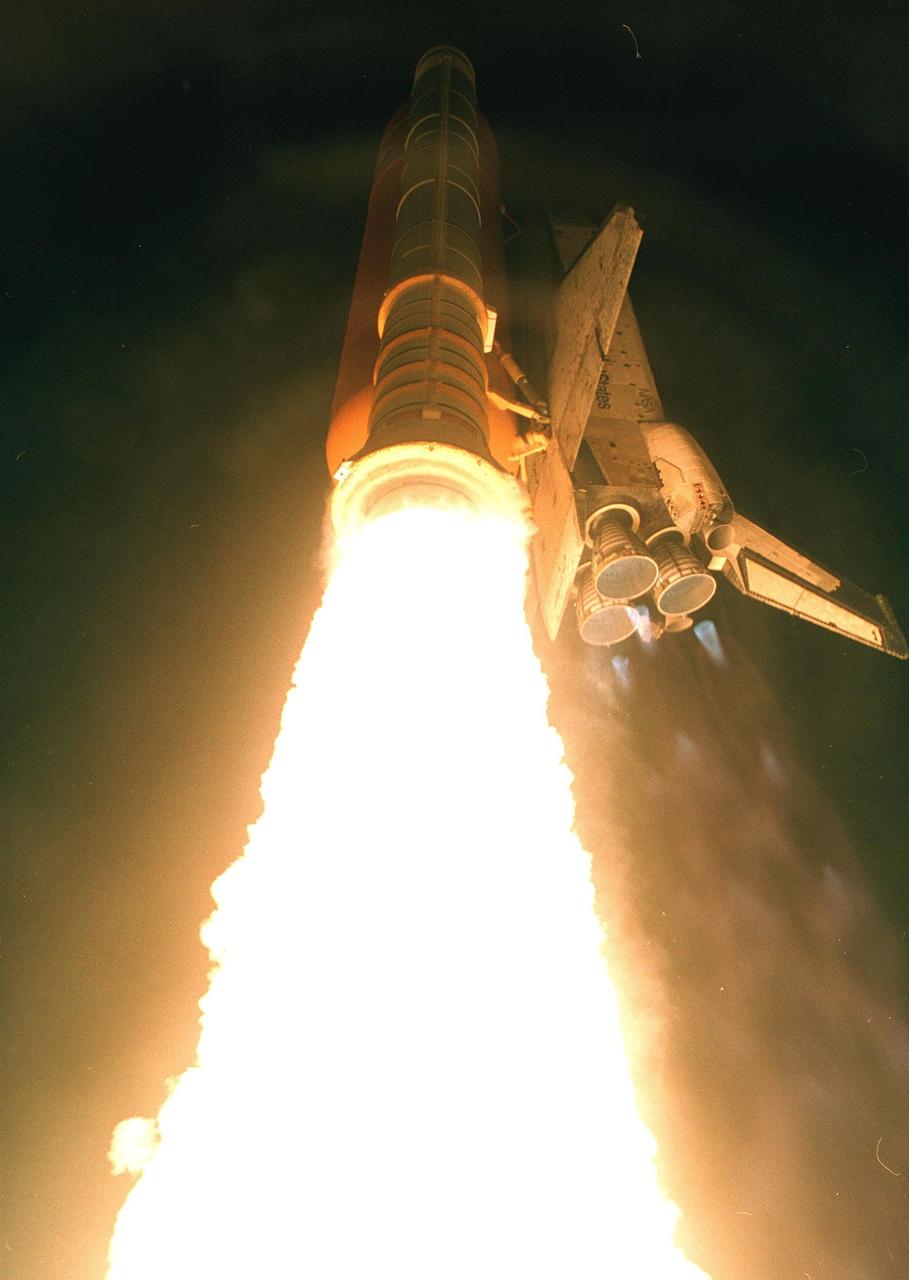
KENNEDY SPACE CENTER, FLA. -- Flaming exhaust spews from beneath one of the two solid rocket boosters on Space Shuttle Columbia as it roars into the night sky on mission STS-93. After two unsuccessful attempts on previous nights, liftoff occurred at 12:31 a.m. EDT. STS-93 is a five-day mission primarily to release the Chandra X-ray Observatory, which will allow scientists from around the world to study some of the most distant, powerful and dynamic objects in the universe. The crew numbers five: Commander Eileen M. Collins, Pilot Jeffrey S. Ashby, and Mission Specialists Steven A. Hawley (Ph.D.), Catherine G. Coleman (Ph.D.) and Michel Tognini of France, with the Centre National d'Etudes Spatiales (CNES). Collins is the first woman to serve as commander of a Space Shuttle. The target landing date is July 27, 1999, at 11:20 p.m. EDT
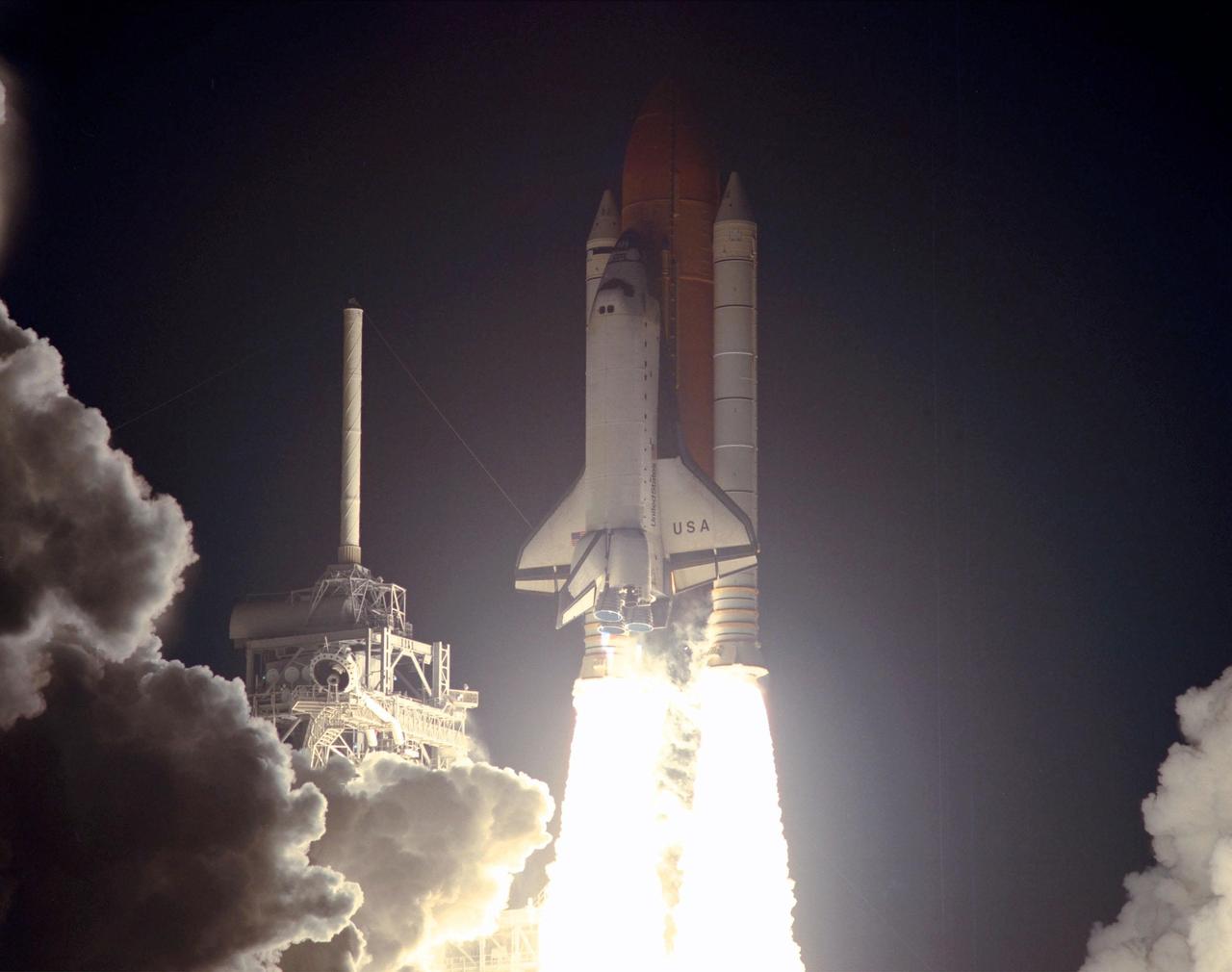
KENNEDY SPACE CENTER, FLA. -- Space Shuttle Columbia changes night into day as it roars into the sky after a successful liftoff from launch Pad 39-B on mission STS-93. Liftoff occurred at 12:31 a.m. EDT. STS-93 is a five-day mission primarily to release the Chandra X-ray Observatory, which will allow scientists from around the world to study some of the most distant, powerful and dynamic objects in the universe. The crew numbers five: Commander Eileen M. Collins, Pilot Jeffrey S. Ashby, and Mission Specialists Steven A. Hawley (Ph.D.), Catherine G. Coleman (Ph.D.) and Michel Tognini of France, with the Centre National d'Etudes Spatiales (CNES). Collins is the first woman to serve as commander of a Shuttle mission. The target landing date is July 27, 1999, at 11:20 p.m. EDT
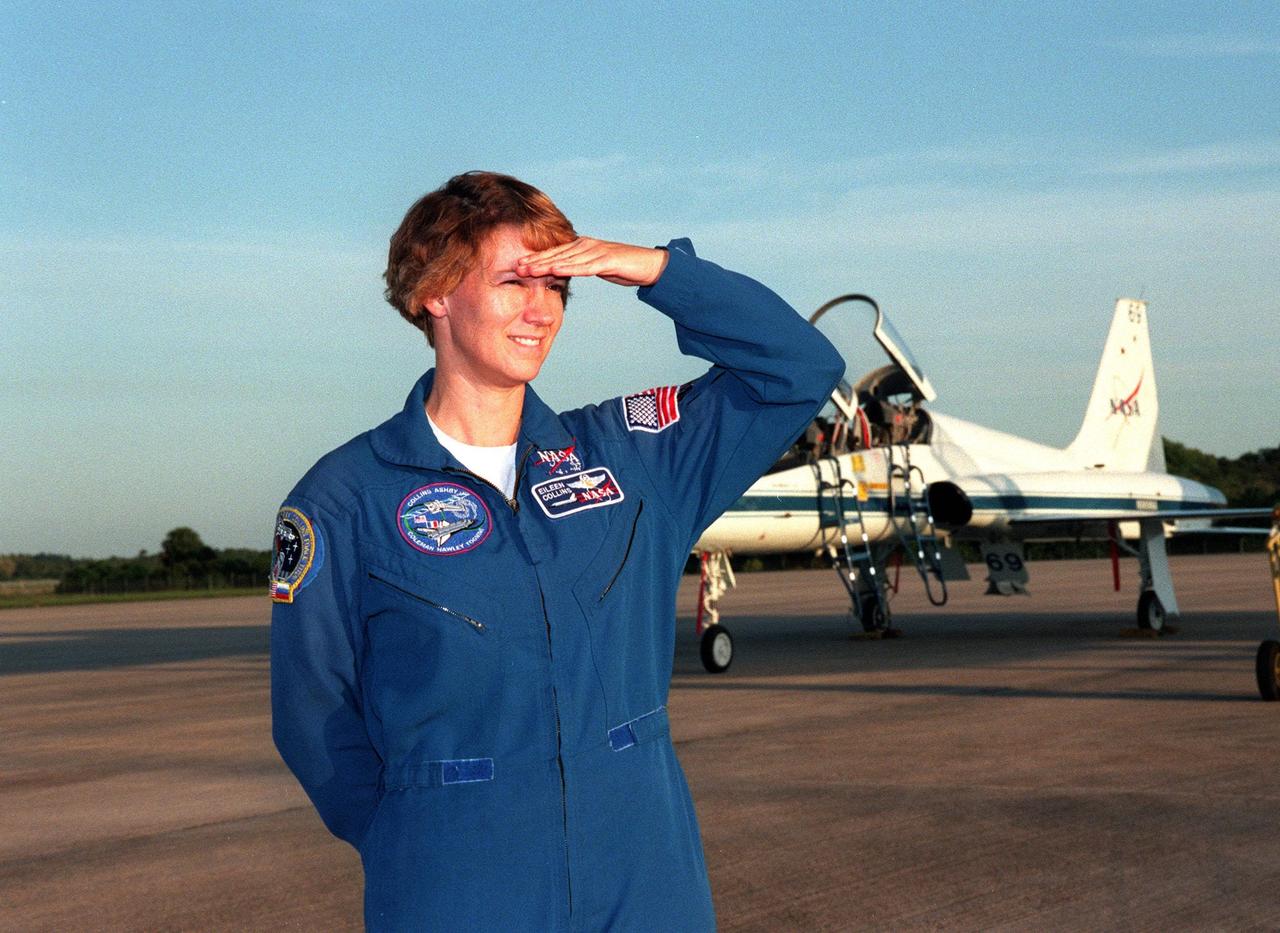
STS-93 Commander Eileen Collins peers into the eastern early morning sky after landing at Kennedy Space Center's Shuttle Landing Facility (SLF) aboard a T-38 jet aircraft (background). She and other crew members Pilot Jeffrey S. Ashby and Mission Specialists Steven A. Hawley (Ph.D.), Catherine G. "Cady" Coleman (Ph.D.) and Michel Tognini of France, with the Centre National d'Etudes Spatiales (CNES), are arriving for pre-launch activities. Collins is the first woman to serve as mission commander. This is her third Shuttle flight. The primary mission of STS-93 is the release of the Chandra X-ray Observatory, which will allow scientists from around the world to study some of the most distant, powerful and dynamic objects in the universe. The new telescope is 20 to 50 times more sensitive than any previous X-ray telescope and is expected to unlock the secrets of supernovae, quasars and black holes
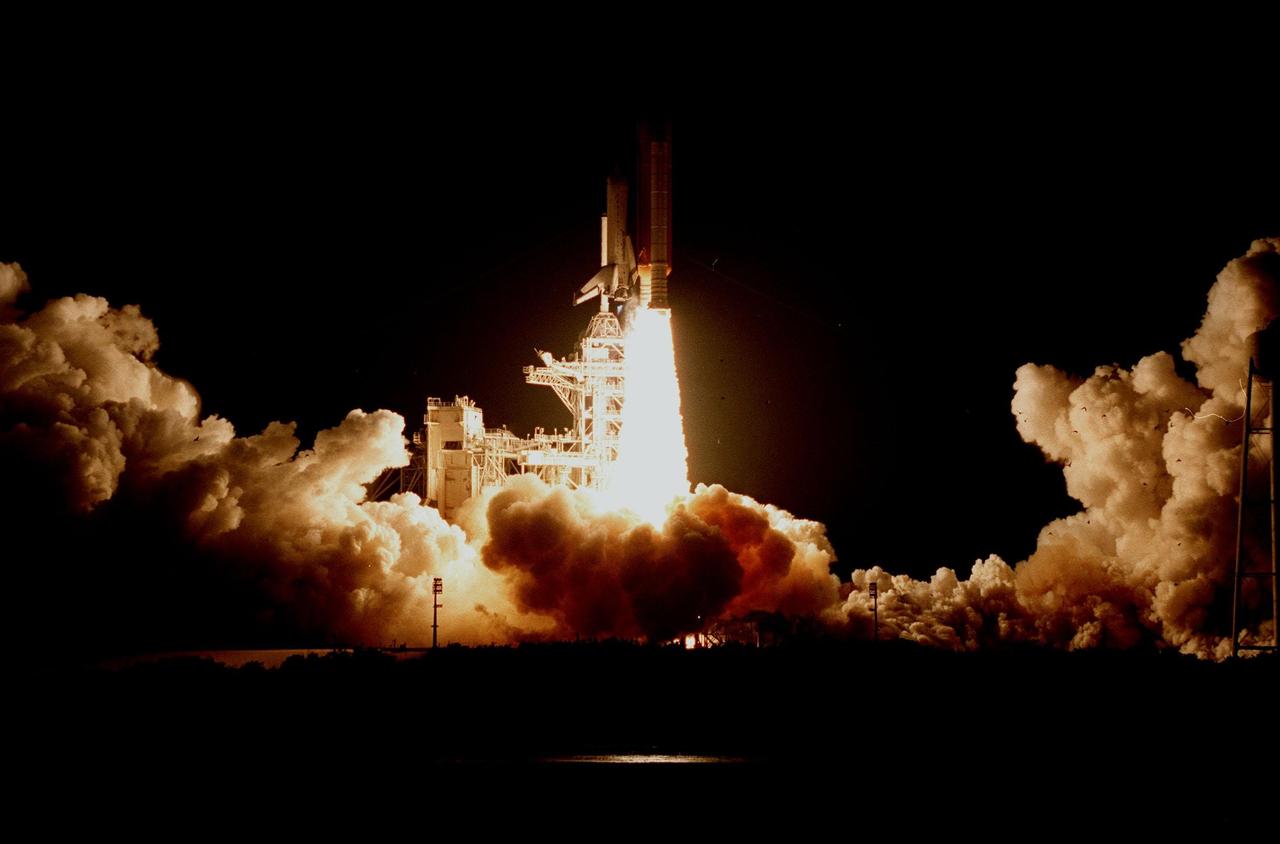
KENNEDY SPACE CENTER, FLA. -- The fiery launch of Space Shuttle Columbia lights up the night sky on its successful liftoff from Launch Pad 39-B on mission STS-93. Liftoff occurred at 12:31 a.m. EDT. STS-93 is a five-day mission primarily to release the Chandra X-ray Observatory, which will allow scientists from around the world to study some of the most distant, powerful and dynamic objects in the universe. The crew numbers five: Commander Eileen M. Collins, Pilot Jeffrey S. Ashby, and Mission Specialists Steven A. Hawley (Ph.D.), Catherine G. Coleman (Ph.D.) and Michel Tognini of France, with the Centre National d'Etudes Spatiales (CNES). Collins is the first woman to serve as commander of a Shuttle mission. The target landing date is July 27, 1999, at 11:20 p.m. EDT
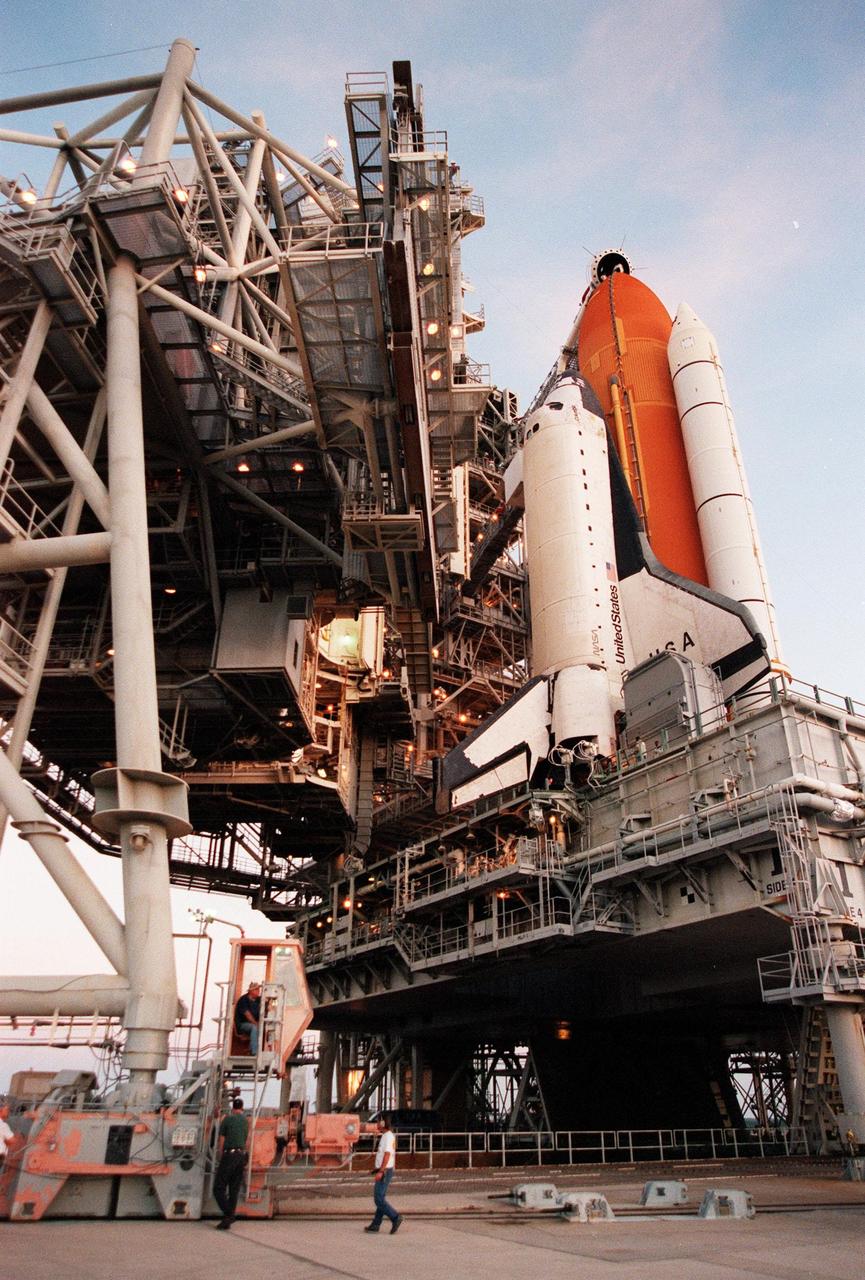
The Rotating Service Structure is rolled back from Space Shuttle Columbia on Launch Pad 39-B, in preparation for launch of mission STS-93 July 20 at 12:36 a.m. EDT. The primary payload of STS-93 is the Chandra X-ray Observatory, which will allow scientists from around the world to study some of the most distant, powerful and dynamic objects in the universe. The new telescope is 20 to 50 times more sensitive than any previous X-ray telescope and is expected unlock the secrets of supernovae, quasars and black holes. The STS-93 crew numbers five: Commander Eileen M. Collins, Pilot Jeffrey S. Ashby, and Mission Specialists Steven A. Hawley (Ph.D.), Catherine G. Coleman (Ph.D.) and Michel Tognini of France, with the Centre National d'Etudes Spatiales (CNES). Collins is the first woman to serve as commander of a shuttle mission
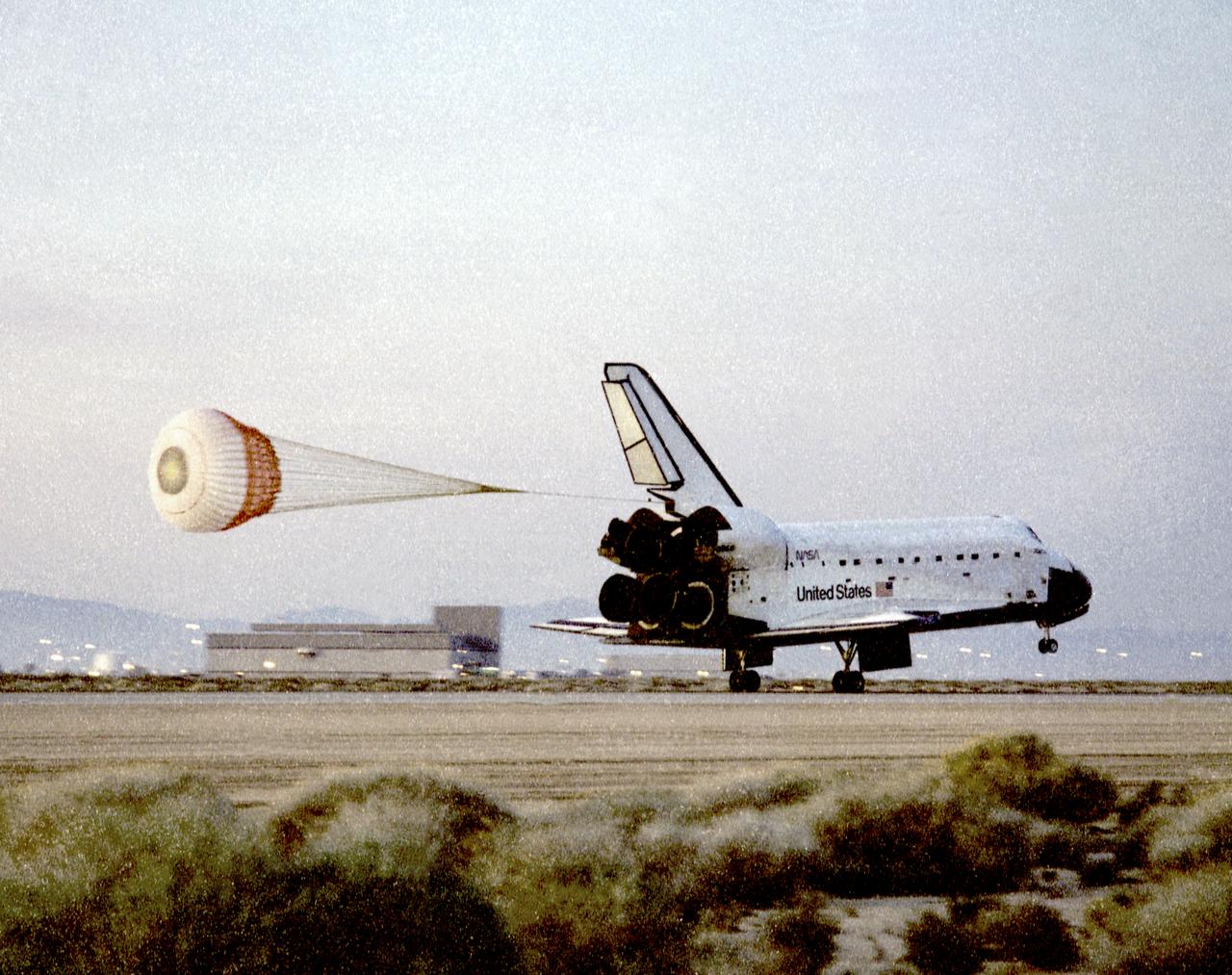
The space shuttle Atlantis touches down on the runway at Edwards, California, at approximately 5:29 a.m. Pacific Standard Time after completing the highly successful STS-76 mission to deliver Astronaut Shannon Lucid to the Russian Space Station Mir. She was the first American woman to serve as a Mir station researcher. Atlantis was originally scheduled to land at Kennedy Space Center, Florida, but bad weather there both 30 and 31 March necessitated a landing at the backup site at Edwards. This photo shows the drag chute deployed to help the shuttle roll to a stop. Mission commander for STS-76 was Kevin P. Chilton, and Richard A. Searfoss was the pilot. Ronald M. Sega was payload commander and mission specialist-1. Mission specialists were Richard Clifford, Linda Godwin and Shannon Lucid. The mission also featured a spacewalk while Atlantis was docked to Mir and experiments aboard the SPACEHAB module.

For the third time, in the Operations and Checkout Building, STS-93 Mission Specialist Michel Tognini of France, who represents the Centre National d'Etudes Spatiales (CNES), waves after donning his launch and entry suit during final launch preparations. After Space Shuttle Columbia's July 20 and 22 launch attempts were scrubbed, the launch was again rescheduled for Friday, July 23, at 12:24 a.m. EDT. STS-93 is a five-day mission primarily to release the Chandra X-ray Observatory, which will allow scientists from around the world to study some of the most distant, powerful and dynamic objects in the universe. The STS-93 crew numbers five: Commander Eileen M. Collins, Pilot Jeffrey S. Ashby, and Mission Specialists Steven A. Hawley (Ph.D.), Catherine G. Coleman (Ph.D.) and Tognini. Collins is the first woman to serve as commander of a shuttle mission
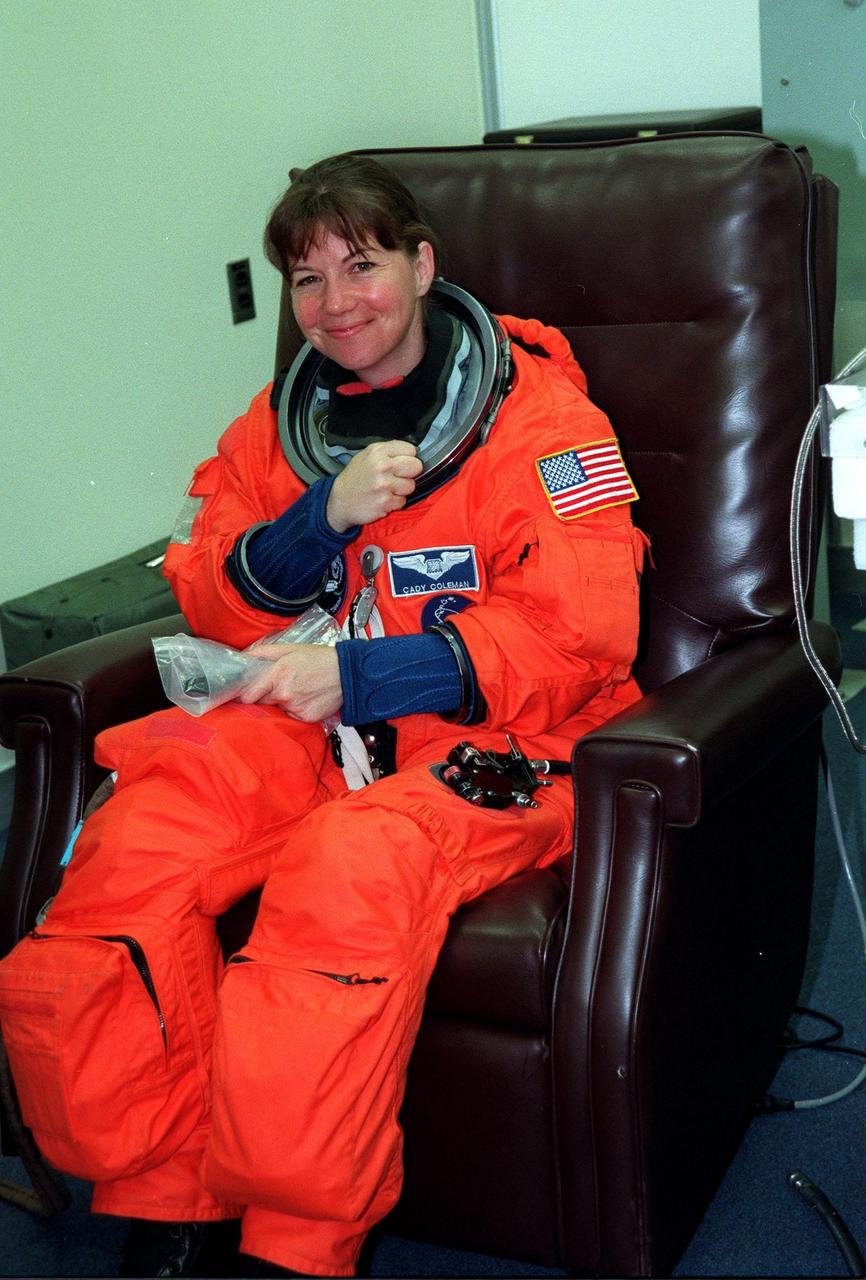
For the third time, during final launch preparations in the Operations and Checkout Building, STS-93 Mission Specialist Catherine G. Coleman (Ph.D.) dons her launch and entry suit. After Space Shuttle Columbia's July 20 and 22 launch attempts were scrubbed, the launch was again rescheduled for Friday, July 23, at 12:24 a.m. EDT. STS-93 is a five-day mission primarily to release the Chandra X-ray Observatory, which will allow scientists from around the world to study some of the most distant, powerful and dynamic objects in the universe. The STS-93 crew numbers five: Commander Eileen M. Collins, Pilot Jeffrey S. Ashby, and Mission Specialists Steven A. Hawley (Ph.D.), Coleman, and Michel Tognini of France, with the Centre National d'Etudes Spatiales (CNES). Collins is the first woman to serve as commander of a shuttle mission
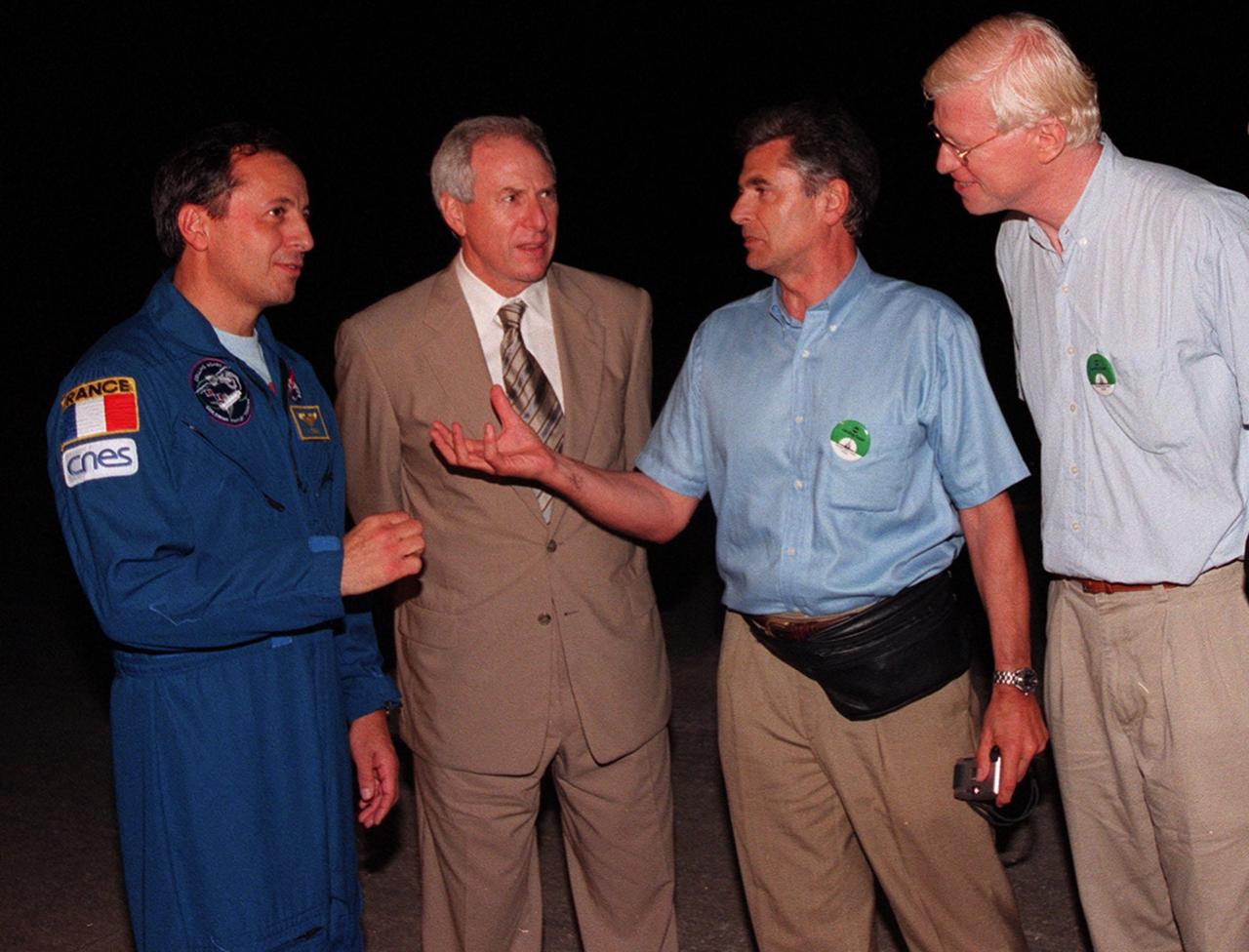
At the Shuttle Landing Facility (from left to right), STS-93 Mission Specialist Michel Tognini of France, representing the Centre National d'Etudes Spatiales (CNES), and NASA Administrator Daniel Goldin talk with Jacques Ratie, Astronaut Director, CNES, and Serge Plattard, International Relations, CNES. Landing occurred on runway 33 with main gear touchdown at 11:20:35 p.m. EDT on July 27. The mission's primary objective was to deploy the Chandra X-ray Observatory, which will allow scientists from around the world to study some of the most distant, powerful and dynamic objects in the universe. This was the 95th flight in the Space Shuttle program and the 26th for Columbia. The landing was the 19th consecutive Shuttle landing in Florida and the 12th night landing in Shuttle program history. On this mission, Eileen Collins became the first woman to serve as a Shuttle commander