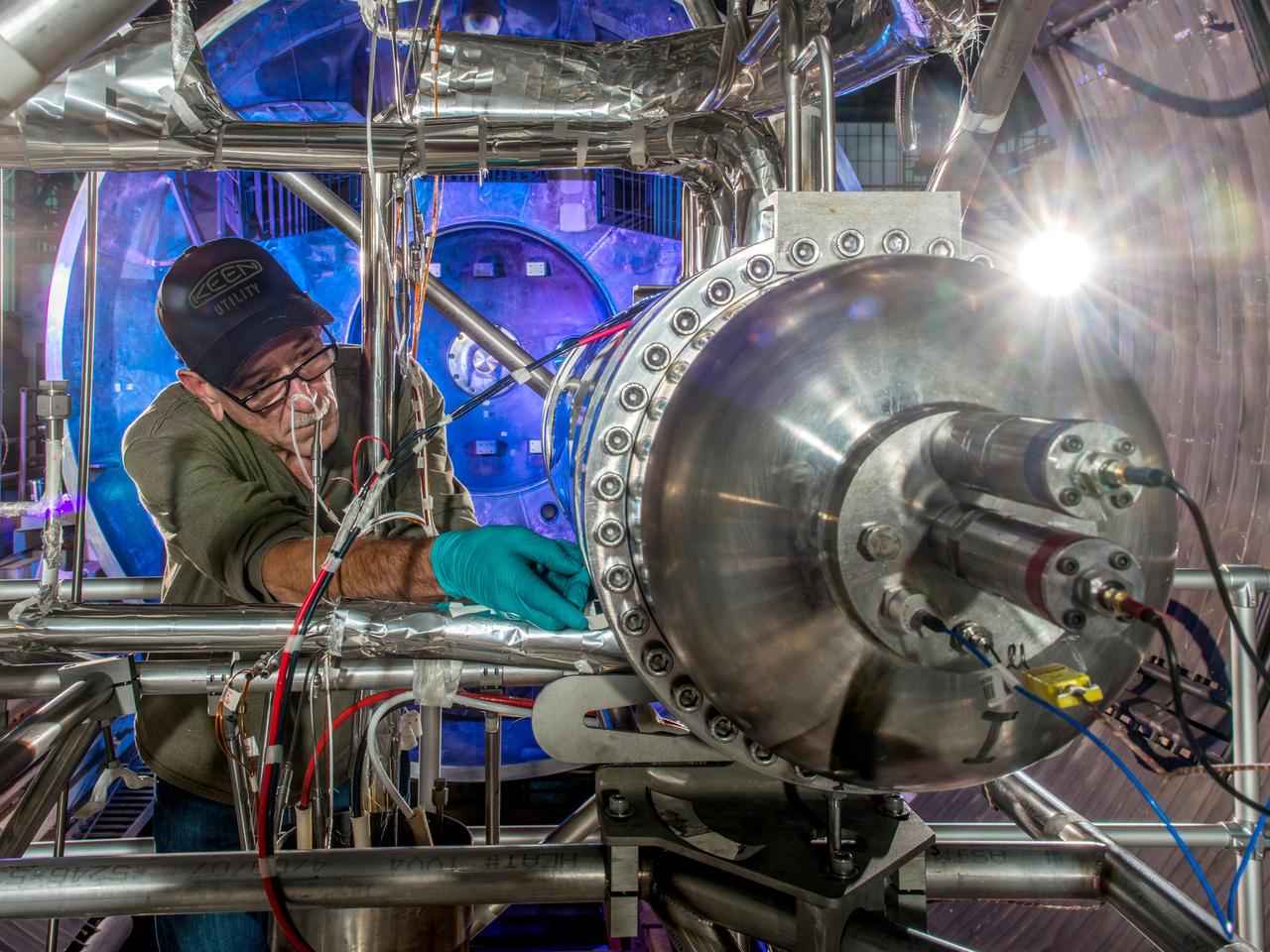
NASA Glenn Technician Mark Springowski works on a 10-kilowatt Stirling Power Conversion Unit, which is part of the Fission Surface Power Technology Demonstration Unit. This is a system level demonstration of a surface power system, which could potentially be used to support manned missions to the moon or Mars. A flight system would use 180 kilowatt nuclear fission reactor and four Stirling PCU’s to produce 40 kW of electricity for manned surface missions.
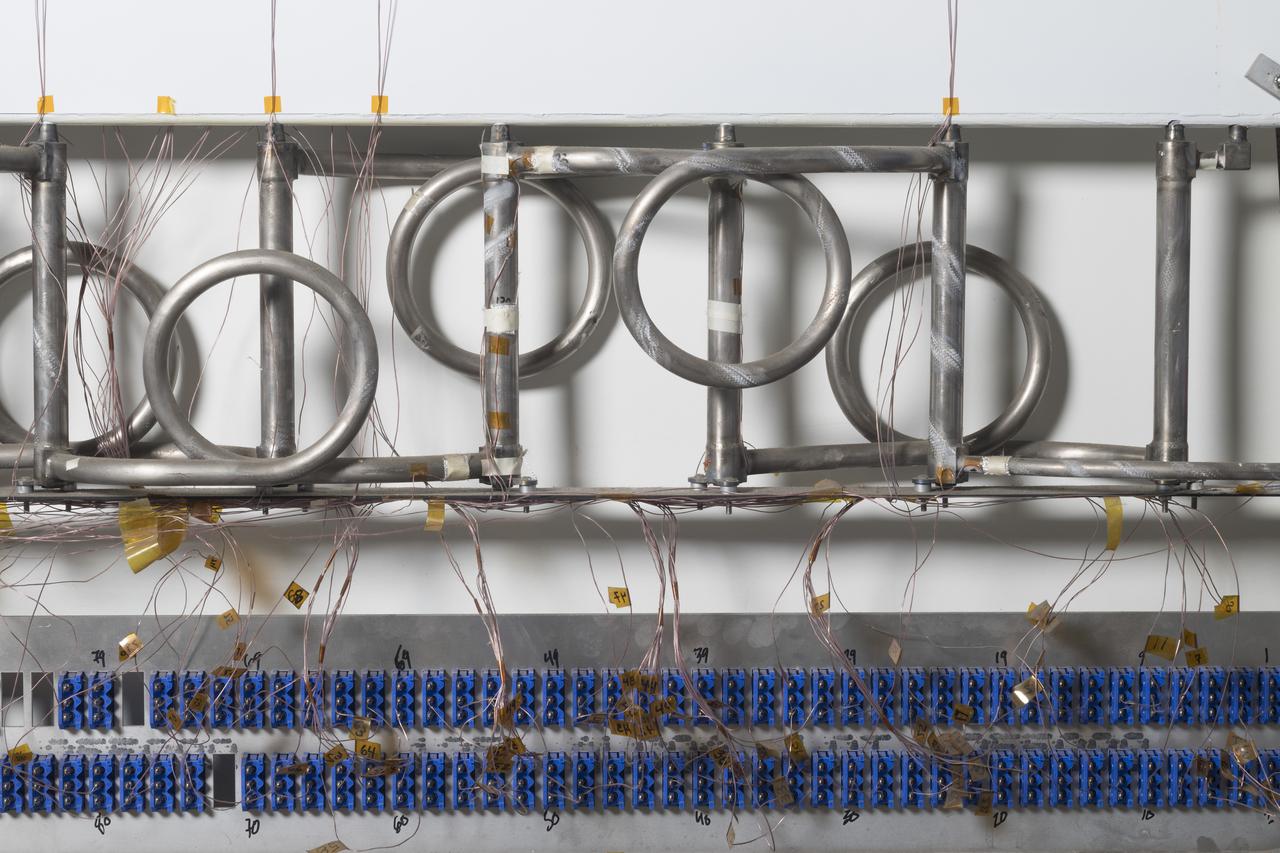
Detail of the Fission Surface Power Structure that part of the research in providing power on the moon.
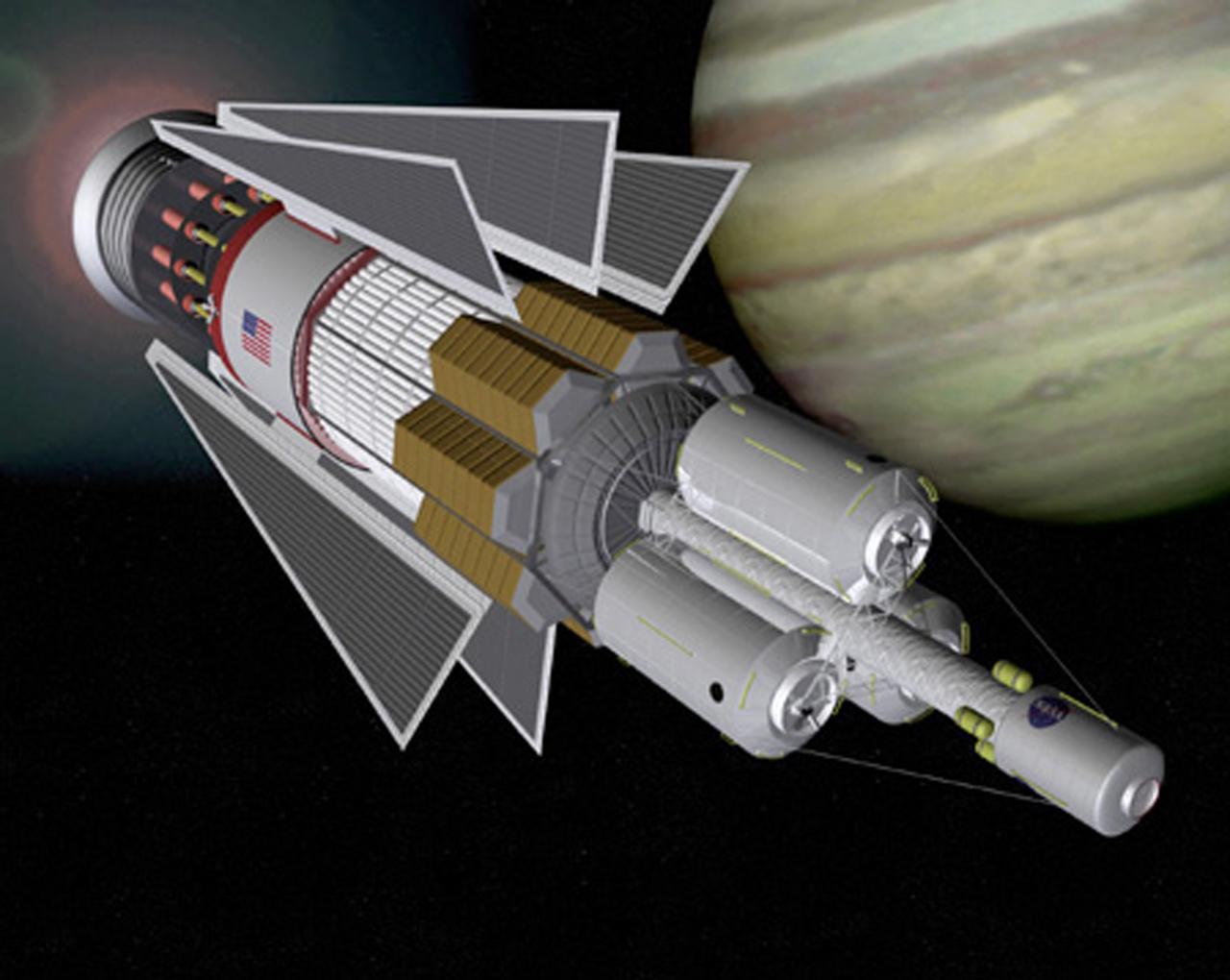
In the 1960's U.S. Government laboratories, under Project Orion, investigated a pulsed nuclear fission propulsion system. Based on Project Orion, an interplanetary vehicle using pulsed fission propulsion would incorporate modern technologies for momentum transfer, thermal management, and habitation design.
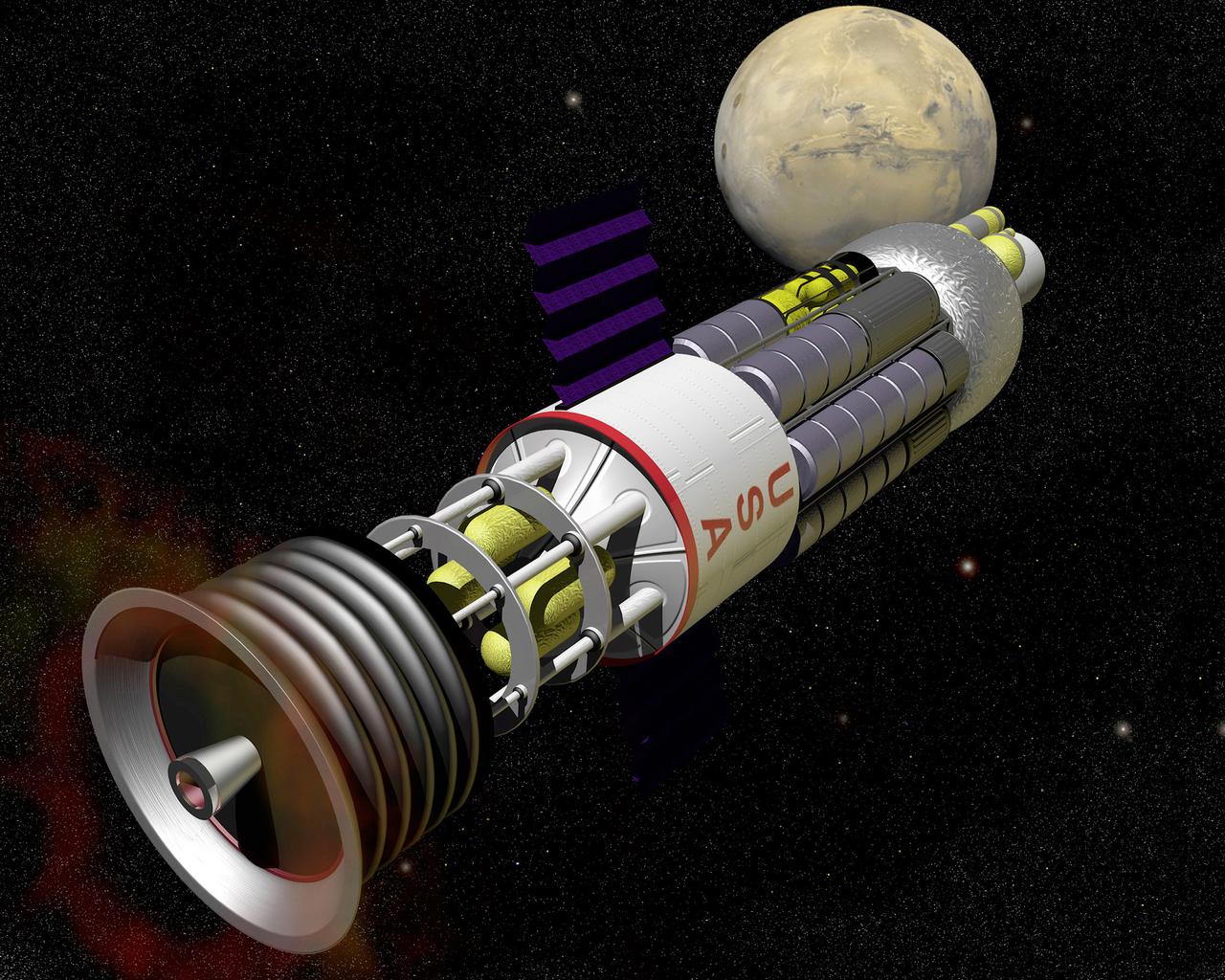
In the 1960's U.S. Government laboratories, under Project Orion, investigated a pulsed nuclear fission propulsion system. Small nuclear pulse units would be sequentially discharged from the aft end of the vehicle. A blast shield and shock absorber system would protect the crew and convert the shock loads into a continuous propulsive force.
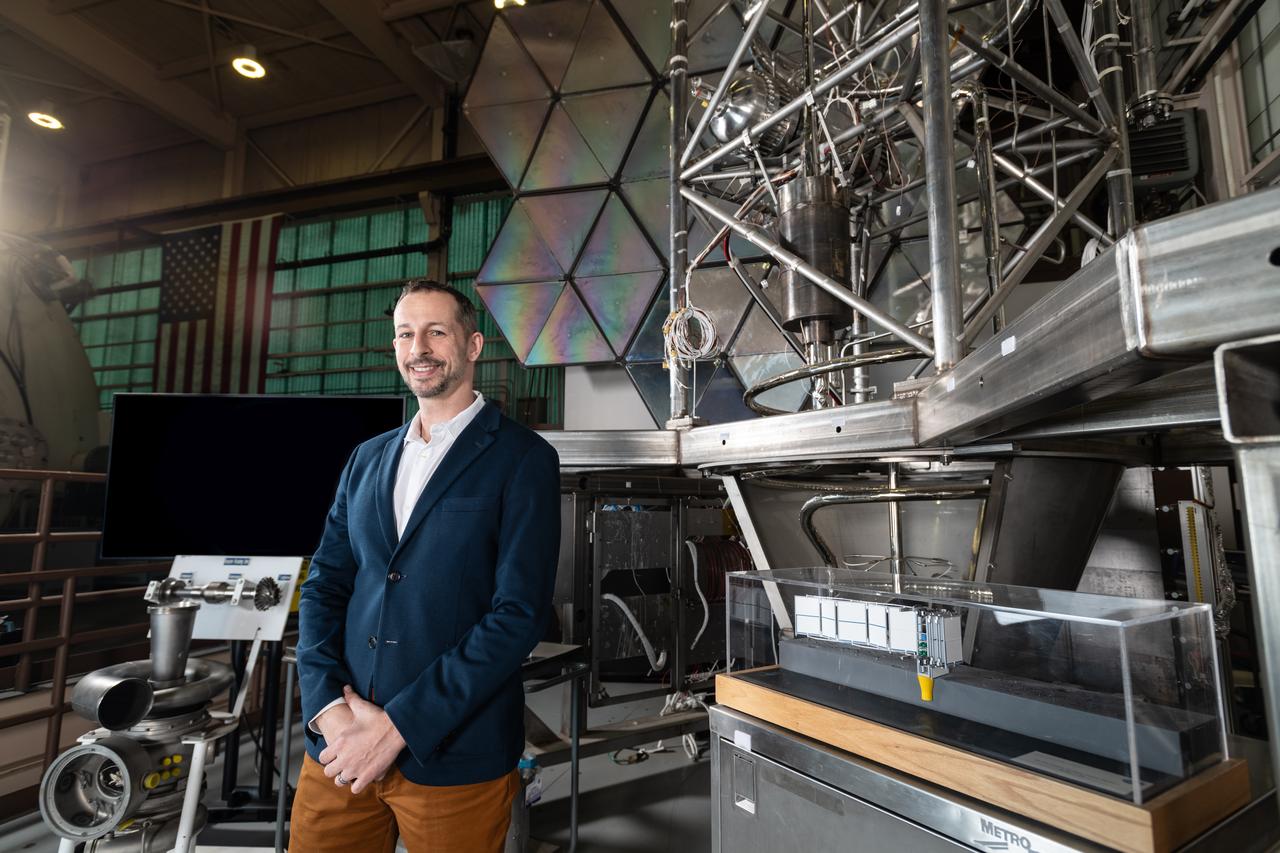
Chief Technologist Maxwell Briggs, who is responsible for early-stage innovations, poses in front of the Fission Surface Power System at NASA Glenn Research Center. Photo Credit: (NASA/Sara Lowthian-Hanna)

U.S. Department of Energy Secretary Chris Wright, left, speaks to NASA Administrator Jared Isaacman, right, Thursday, Jan. 8, 2026, at the Department of Energy Headquarters in Washington. The DOE and NASA signed a memorandum of understanding to support the research and development of a fission surface power system for use on the Moon and future NASA missions to Mars. Photo Credit: (NASA/John Kraus)
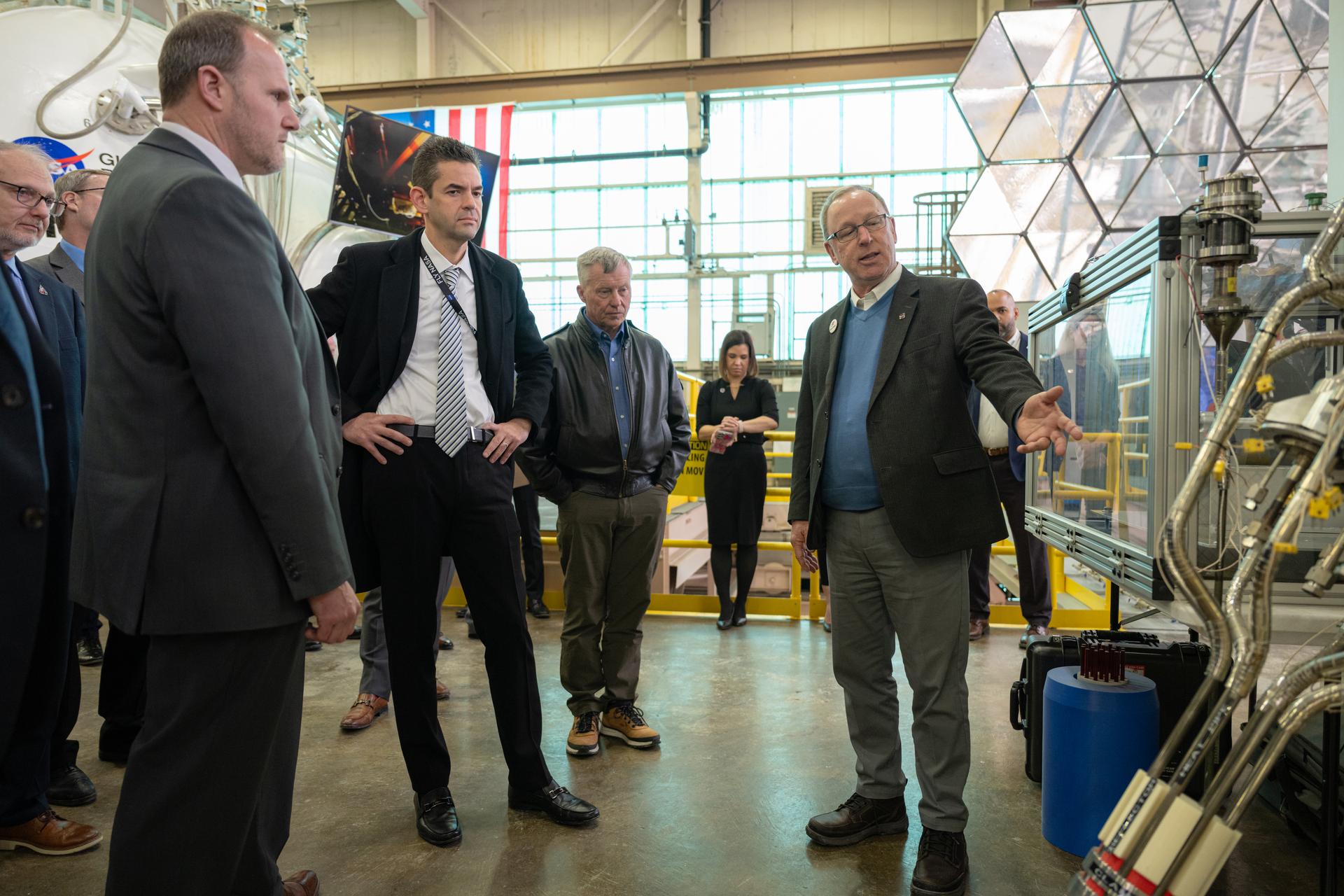
NASA Administrator Jared Isaacman, center left, is shown the Kilowatt Reactor Using Stirling TechnologY (KRUSTY) by Lee Mason, fission surface power chief technologist, right, as he tours the Electric Propulsion and Power Laboratory, Tuesday, Jan. 27, 2026, at NASA’s Glenn Research Center in Cleveland, Ohio. Glenn marks the eleventh stop in Isaacman’s roadshow to visit NASA facilities and engage directly with the agency’s workforce. Photo Credit: (NASA/John Kraus)
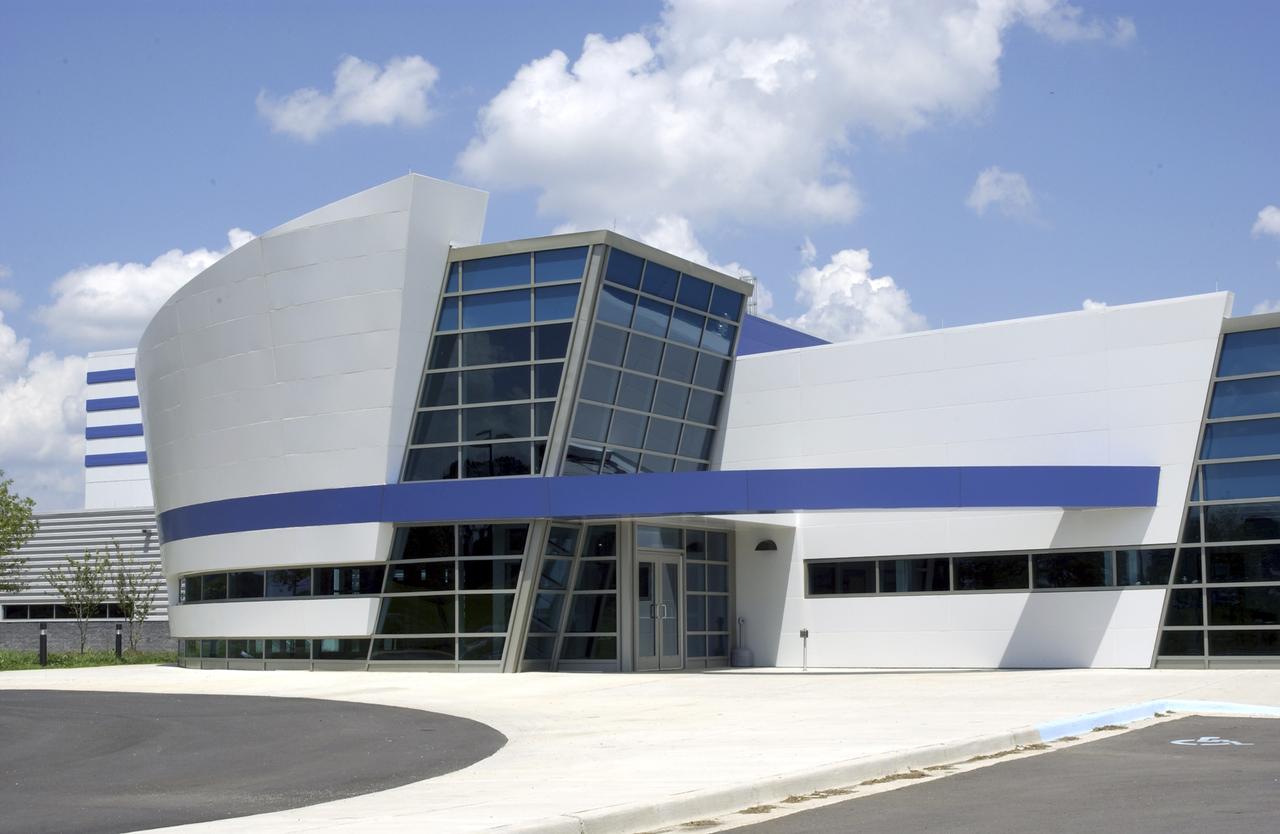
The grand opening of NASA’s new, world-class laboratory for research into future space transportation technologies located at the Marshall Space Flight Center (MSFC) in Huntsville, Alabama, took place in July 2004. The state-of-the-art Propulsion Research Laboratory (PRL) serves as a leading national resource for advanced space propulsion research. Its purpose is to conduct research that will lead to the creation and development of innovative propulsion technologies for space exploration. The facility is the epicenter of the effort to move the U.S. space program beyond the confines of conventional chemical propulsion into an era of greatly improved access to space and rapid transit throughout the solar system. The laboratory is designed to accommodate researchers from across the United States, including scientists and engineers from NASA, the Department of Defense, the Department of Energy, universities, and industry. The facility, with 66,000 square feet of useable laboratory space, features a high degree of experimental capability. Its flexibility allows it to address a broad range of propulsion technologies and concepts, such as plasma, electromagnetic, thermodynamic, and propellant propulsion. An important area of emphasis is the development and utilization of advanced energy sources, including highly energetic chemical reactions, solar energy, and processes based on fission, fusion, and antimatter. The Propulsion Research Laboratory is vital for developing the advanced propulsion technologies needed to open up the space frontier, and sets the stage of research that could revolutionize space transportation for a broad range of applications.
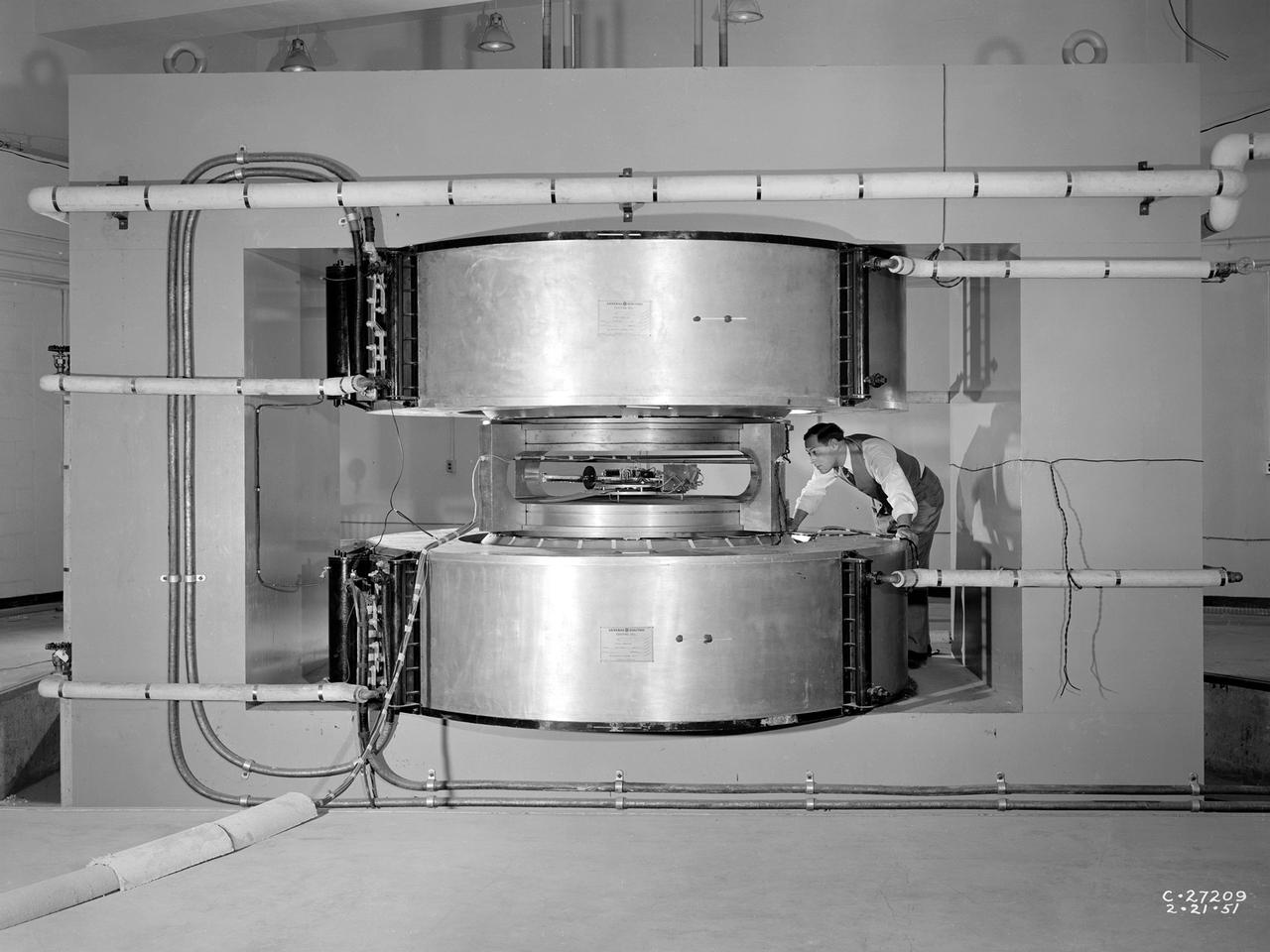
Researcher James Blue examines the new cyclotron at the National Advisory Committee for Aeronautics (NACA) Lewis Flight Propulsion Laboratory. Researchers at NACA Lewis began postulating about the use of atomic power for propulsion immediately after World War II. The NACA concentrated its efforts on the study of high temperature materials and heat transfer since it did not have access to the top secret fission information. The military studied the plausibility of nuclear propulsion for aircraft in the late 1940s. The military program was cancelled after four years without any breakthroughs, but the Atomic Energy Commission took on the effort in 1951. The NACA Lewis laboratory was expanding its nuclear-related research during this period. In 1948, Lewis engineers were assigned to the Oak Ridge National Laboratory to obtain expertise in high temperature heat transfer and advanced materials technology. The following year a new 80-person Nuclear Reactor Division was created, and an in-house nuclear school was established to train these researchers. The cyclotron was built behind the Materials and Structures Laboratory to support thermodynamic and materials research for both nuclear aircraft and nuclear rockets. The original NACA Lewis cyclotron was used to accelerate two kinds of particles. To better match the space radiation environment, the cyclotron was later modified to accelerate particles of the newly-discovered Van Allen radiation belts.
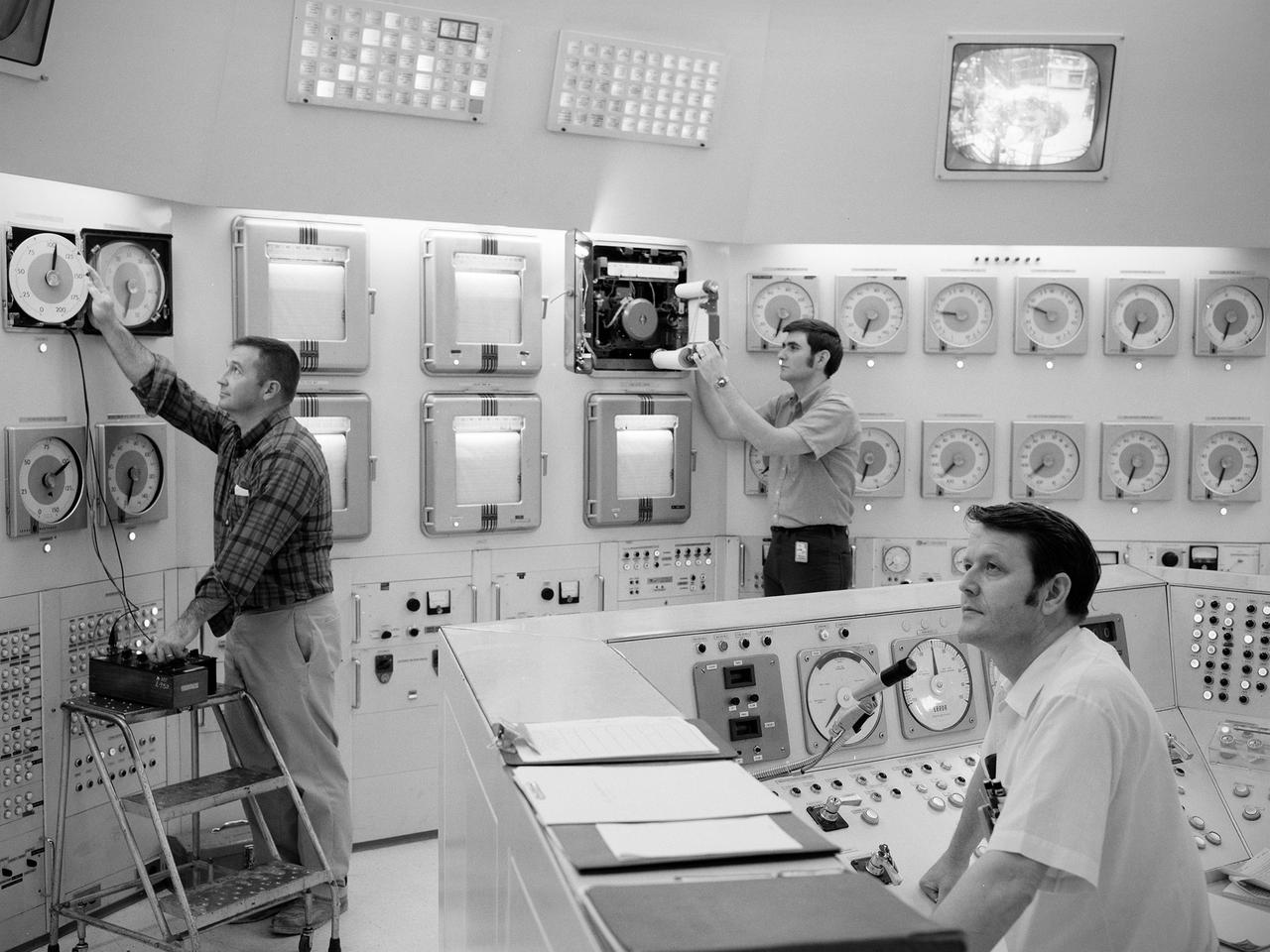
Donald Rhodes, left, and Clyde Greer, right, monitor the operation of the National Aeronautics and Space Administration’s (NASA) Plum Brook Reactor Facility from the control room. The 60-megawatt test reactor, NASA’s only reactor, was the eighth largest test reactor in the world. The facility was built by the Lewis Research Center in the late 1950s to study the effects of radiation on different materials that could be used to construct nuclear propulsion systems for aircraft or rockets. The reactor went critical for the first time in 1961. For the next two years, two operators were on duty 24 hours per day working on the fission process until the reactor reached its full-power level in 1963. Reactor Operators were responsible for monitoring and controlling the reactor systems. Once the reactor was running under normal operating conditions, the work was relatively uneventful. Normally the reactor was kept at a designated power level within certain limits. Occasionally the operators had to increase the power for a certain test. The shift supervisor and several different people would get together and discuss the change before boosting the power. All operators were required to maintain a Reactor Operator License from the Atomic Energy Commission. The license included six months of training, an eight-hour written exam, a four-hour walkaround, and testing on the reactor controls.
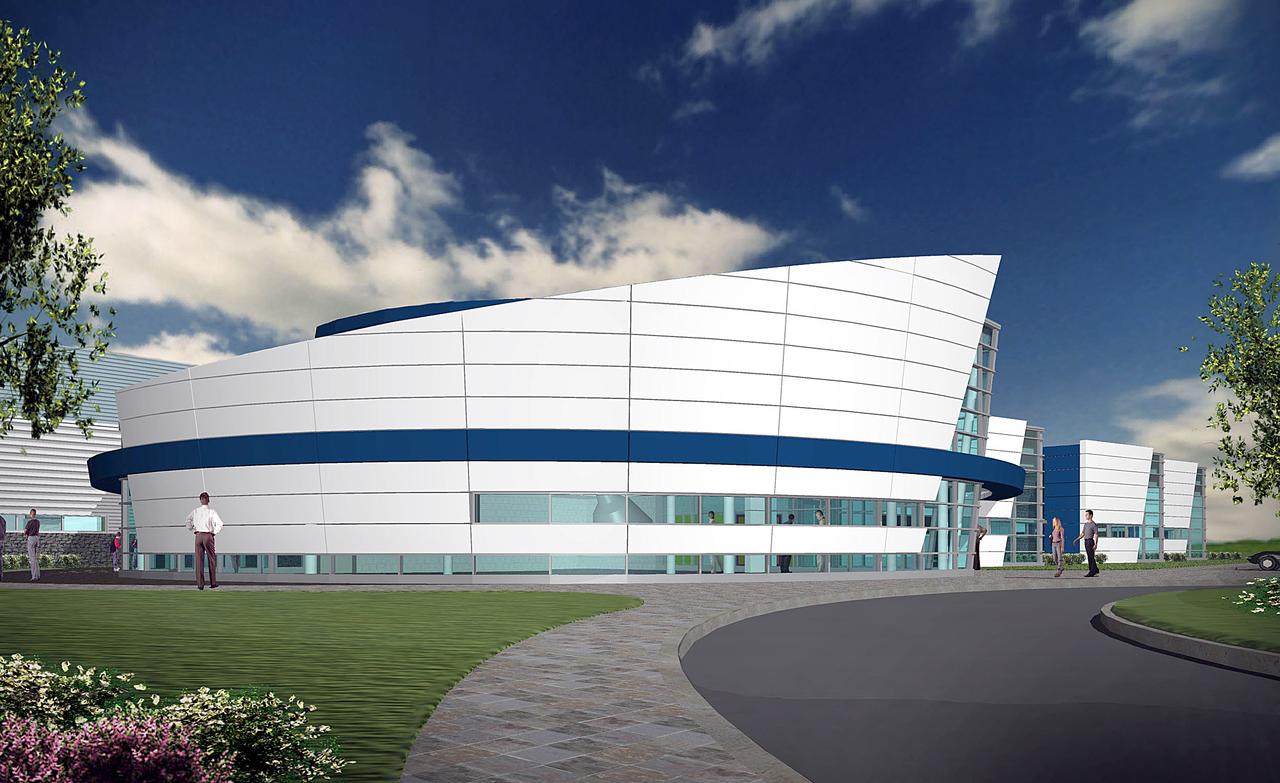
A new, world-class laboratory for research into future space transportation technologies is under construction at the Marshall Space Flight Center (MSFC) in Huntsville, AL. The state-of-the-art Propulsion Research Laboratory will serve as a leading national resource for advanced space propulsion research. Its purpose is to conduct research that will lead to the creation and development of irnovative propulsion technologies for space exploration. The facility will be the epicenter of the effort to move the U.S. space program beyond the confines of conventional chemical propulsion into an era of greatly improved access to space and rapid transit throughout the solar system. The Laboratory is designed to accommodate researchers from across the United States, including scientists and engineers from NASA, the Department of Defense, the Department of Energy, universities, and industry. The facility, with 66,000 square feet of useable laboratory space, will feature a high degree of experimental capability. Its flexibility will allow it to address a broad range of propulsion technologies and concepts, such as plasma, electromagnetic, thermodynamic, and propellantless propulsion. An important area of emphasis will be development and utilization of advanced energy sources, including highly energetic chemical reactions, solar energy, and processes based on fission, fusion, and antimatter. The Propulsion Research Laboratory is vital for developing the advanced propulsion technologies needed to open up the space frontier, and will set the stage of research that could revolutionize space transportation for a broad range of applications.
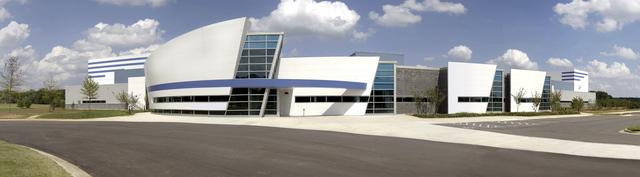
The grand opening of NASA’s new, world-class laboratory for research into future space transportation technologies located at the Marshall Space Flight Center (MSFC) in Huntsville, Alabama, took place in July 2004. The state-of-the-art Propulsion Research Laboratory (PRL) serves as a leading national resource for advanced space propulsion research. Its purpose is to conduct research that will lead to the creation and development of innovative propulsion technologies for space exploration. The facility is the epicenter of the effort to move the U.S. space program beyond the confines of conventional chemical propulsion into an era of greatly improved access to space and rapid transit throughout the solar system. The laboratory is designed to accommodate researchers from across the United States, including scientists and engineers from NASA, the Department of Defense, the Department of Energy, universities, and industry. The facility, with 66,000 square feet of useable laboratory space, features a high degree of experimental capability. Its flexibility allows it to address a broad range of propulsion technologies and concepts, such as plasma, electromagnetic, thermodynamic, and propellant propulsion. An important area of emphasis is the development and utilization of advanced energy sources, including highly energetic chemical reactions, solar energy, and processes based on fission, fusion, and antimatter. The Propulsion Research Laboratory is vital for developing the advanced propulsion technologies needed to open up the space frontier, and sets the stage of research that could revolutionize space transportation for a broad range of applications.

A new, world-class laboratory for research into future space transportation technologies is under construction at the Marshall Space Flight Center (MSFC) in Huntsville, AL. The state-of-the-art Propulsion Research Laboratory will serve as a leading national resource for advanced space propulsion research. Its purpose is to conduct research that will lead to the creation and development of irnovative propulsion technologies for space exploration. The facility will be the epicenter of the effort to move the U.S. space program beyond the confines of conventional chemical propulsion into an era of greatly improved access to space and rapid transit throughout the solar system. The Laboratory is designed to accommodate researchers from across the United States, including scientists and engineers from NASA, the Department of Defense, the Department of Energy, universities, and industry. The facility, with 66,000 square feet of useable laboratory space, will feature a high degree of experimental capability. Its flexibility will allow it to address a broad range of propulsion technologies and concepts, such as plasma, electromagnetic, thermodynamic, and propellantless propulsion. An important area of emphasis will be development and utilization of advanced energy sources, including highly energetic chemical reactions, solar energy, and processes based on fission, fusion, and antimatter. The Propulsion Research Laboratory is vital for developing the advanced propulsion technologies needed to open up the space frontier, and will set the stage of research that could revolutionize space transportation for a broad range of applications. This photo depicts construction workers taking part in a tree topping ceremony as the the final height of the laboratory is framed. The ceremony is an old German custom of paying homage to the trees that gave their lives in preparation of the building site.