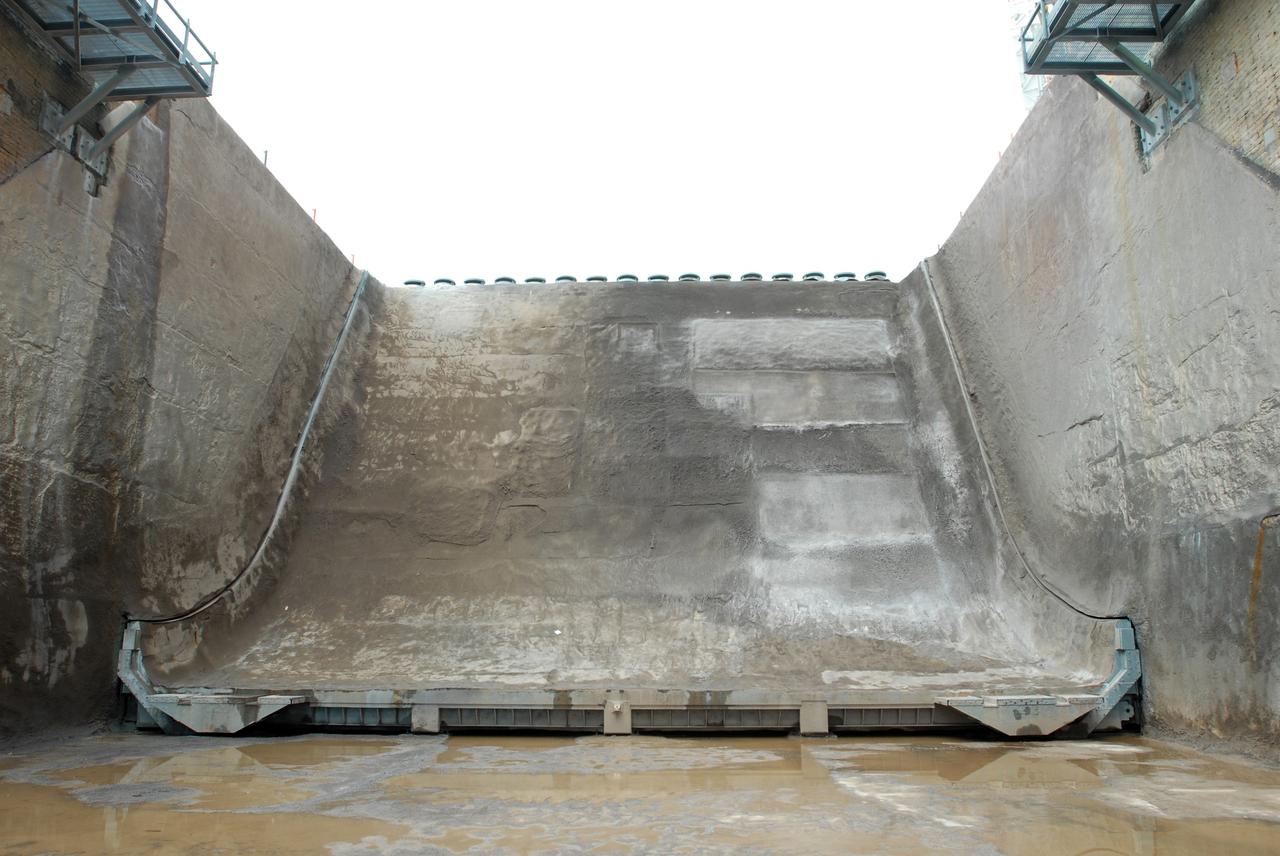
CAPE CANAVERAL, Fla. – A view of the flame trench on Launch Pad 39A at NASA's Kennedy Space Center in Florida where repairs of the Fondue Fyre have been made. After launch of space shuttle Atlantis on the STS-125 mission on May 11, a 25-square-foot area of Fondue Fyre from the north side of the solid rocket booster flame deflector was damaged. Some pneumatic lines (gaseous nitrogen, pressurized air) in the area also were damaged and needed to be repaired. The flame trench channels the flames and smoke exhaust of the shuttle's solid rocket boosters away from the space shuttle during liftoff. Fondue Fyre is a fire-resistant concrete-like material that replaced the original flame trench bricks. It can be sprayed on the surface. Pad 39A will be used for the launch of space shuttle Endeavour on the STS-127 mission targeted for June 13. Photo credit: NASA/Jim Grossmann
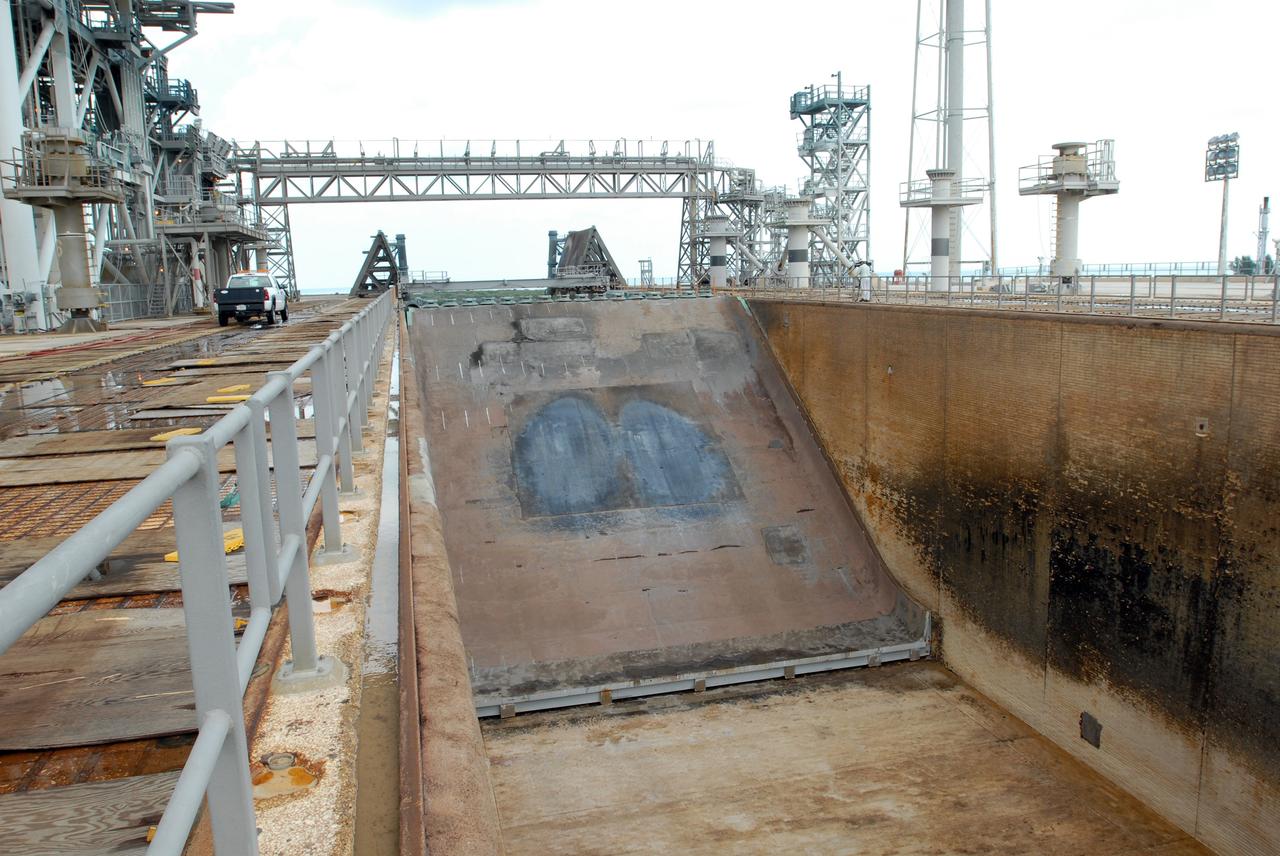
CAPE CANAVERAL, Fla. – A view of the flame trench on Launch Pad 39A at NASA's Kennedy Space Center in Florida where repairs of the Fondue Fyre have been made. After launch of space shuttle Atlantis on the STS-125 mission on May 11, a 25-square-foot area of Fondue Fyre from the north side of the solid rocket booster flame deflector was damaged. Some pneumatic lines (gaseous nitrogen, pressurized air) in the area also were damaged and needed to be repaired. The flame trench channels the flames and smoke exhaust of the shuttle's solid rocket boosters away from the space shuttle during liftoff. Fondue Fyre is a fire-resistant concrete-like material that replaced the original flame trench bricks. It can be sprayed on the surface. Pad 39A will be used for the launch of space shuttle Endeavour on the STS-127 mission targeted for June 13. Photo credit: NASA/Jim Grossmann
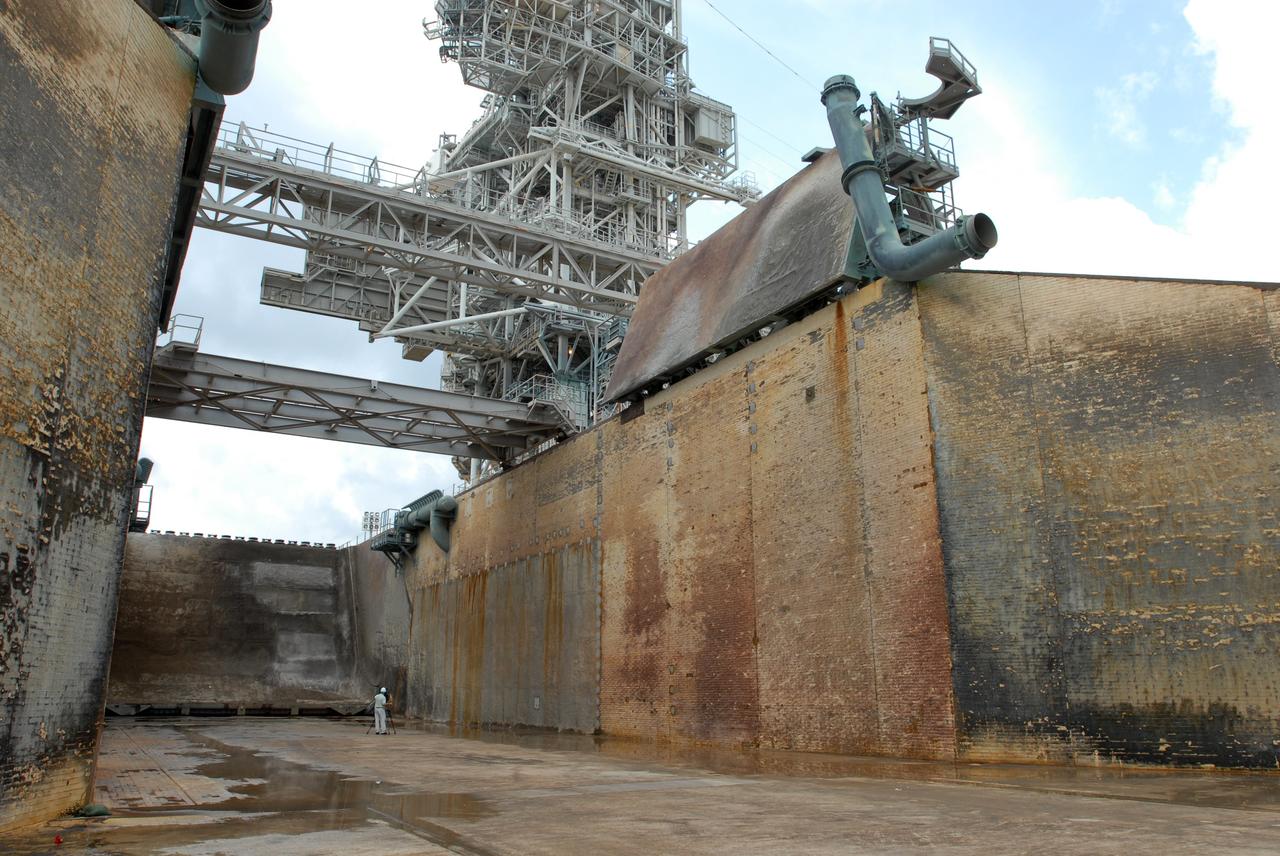
CAPE CANAVERAL, Fla. – A view of the flame trench on Launch Pad 39A at NASA's Kennedy Space Center in Florida where repairs of the Fondue Fyre have been made. After launch of space shuttle Atlantis on the STS-125 mission on May 11, a 25-square-foot area of Fondue Fyre from the north side of the solid rocket booster flame deflector was damaged. Some pneumatic lines (gaseous nitrogen, pressurized air) in the area also were damaged and needed to be repaired. The flame trench channels the flames and smoke exhaust of the shuttle's solid rocket boosters away from the space shuttle during liftoff. Fondue Fyre is a fire-resistant concrete-like material that replaced the original flame trench bricks. It can be sprayed on the surface. Pad 39A will be used for the launch of space shuttle Endeavour on the STS-127 mission targeted for June 13. Photo credit: NASA/Jim Grossmann
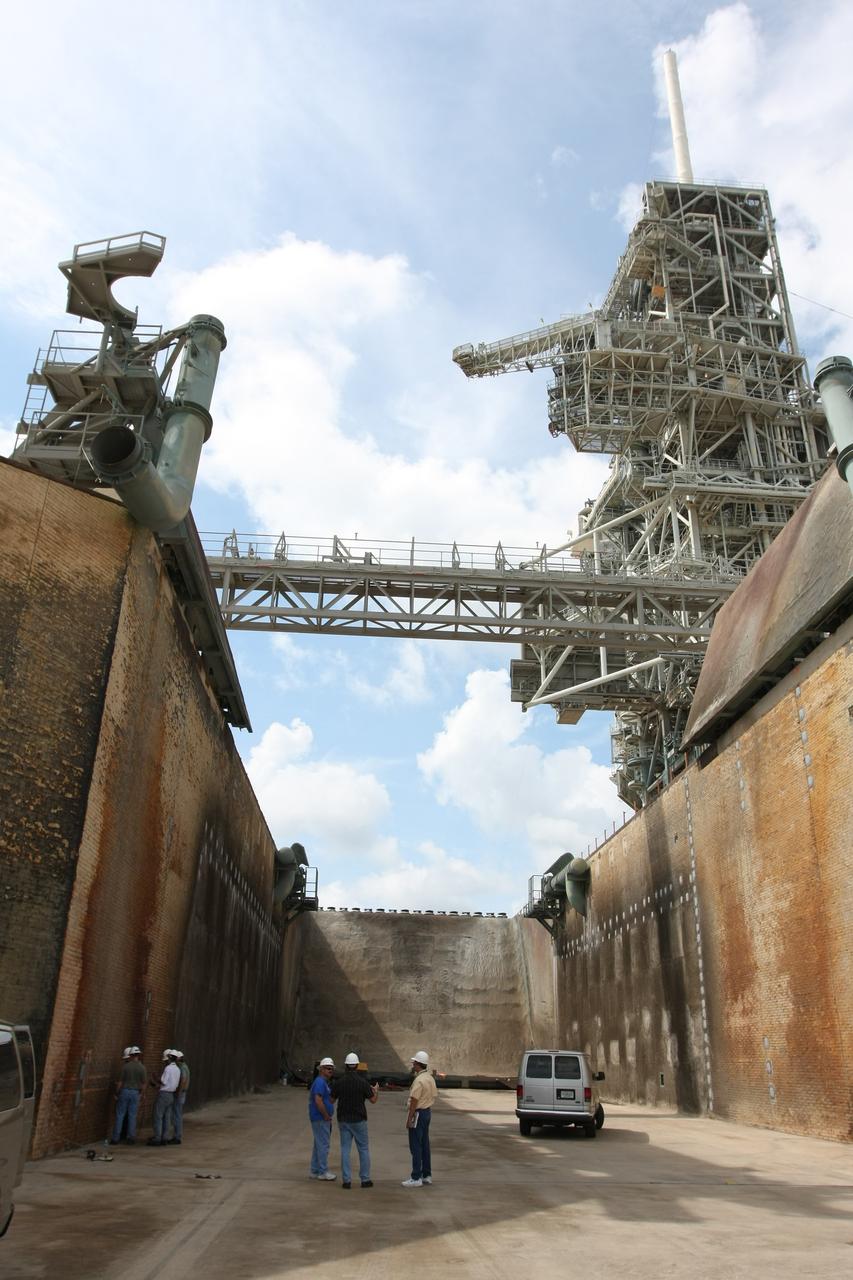
CAPE CANAVERAL, Fla. – This view of the Launch Pad 39A flame trench at NASA's Kennedy Space Center shows the areas on the walls recently repaired. Workers sprayed a heat-resistant concrete called Fondue Fyre into steel grid structures, welded to the wall of the flame trench. Fondue Fyre was developed during NASA's Apollo lunar program. Damage to the trench occurred during the launch of space shuttle Discovery on the STS-124 mission. A 75-foot by 20-foot section of the east wall was destroyed and debris scattered as far as the pad perimeter fence. Repairs being completed before the targeted Oct. 8 launch of Atlantis on the NASA Hubble Space Telescope servicing mission. Photo credit: NASA/Dimitri Gerondidakis
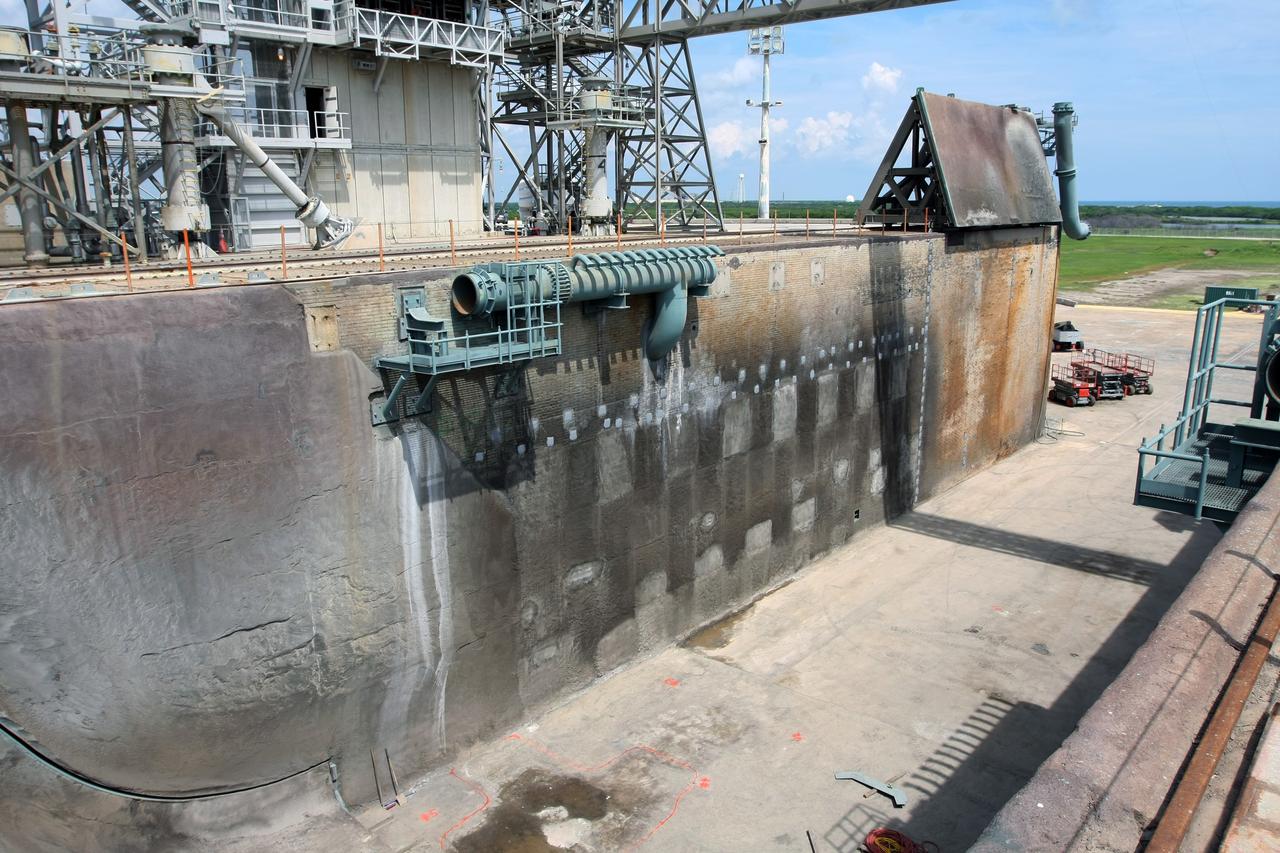
CAPE CANAVERAL, Fla. – A view from above of repairs made to the walls of the Launch Pad 39A flame trench at NASA's Kennedy Space Center. Workers sprayed a heat-resistant concrete called Fondue Fyre into steel grid structures, welded to the wall of the flame trench. Fondue Fyre was developed during NASA's Apollo lunar program. Damage to the trench occurred during the launch of space shuttle Discovery on the STS-124 mission. A 75-foot by 20-foot section of the east wall was destroyed and debris scattered as far as the pad perimeter fence. Repairs being completed before the targeted Oct. 8 launch of Atlantis on the NASA Hubble Space Telescope servicing mission. Photo credit: NASA/Dimitri Gerondidakis
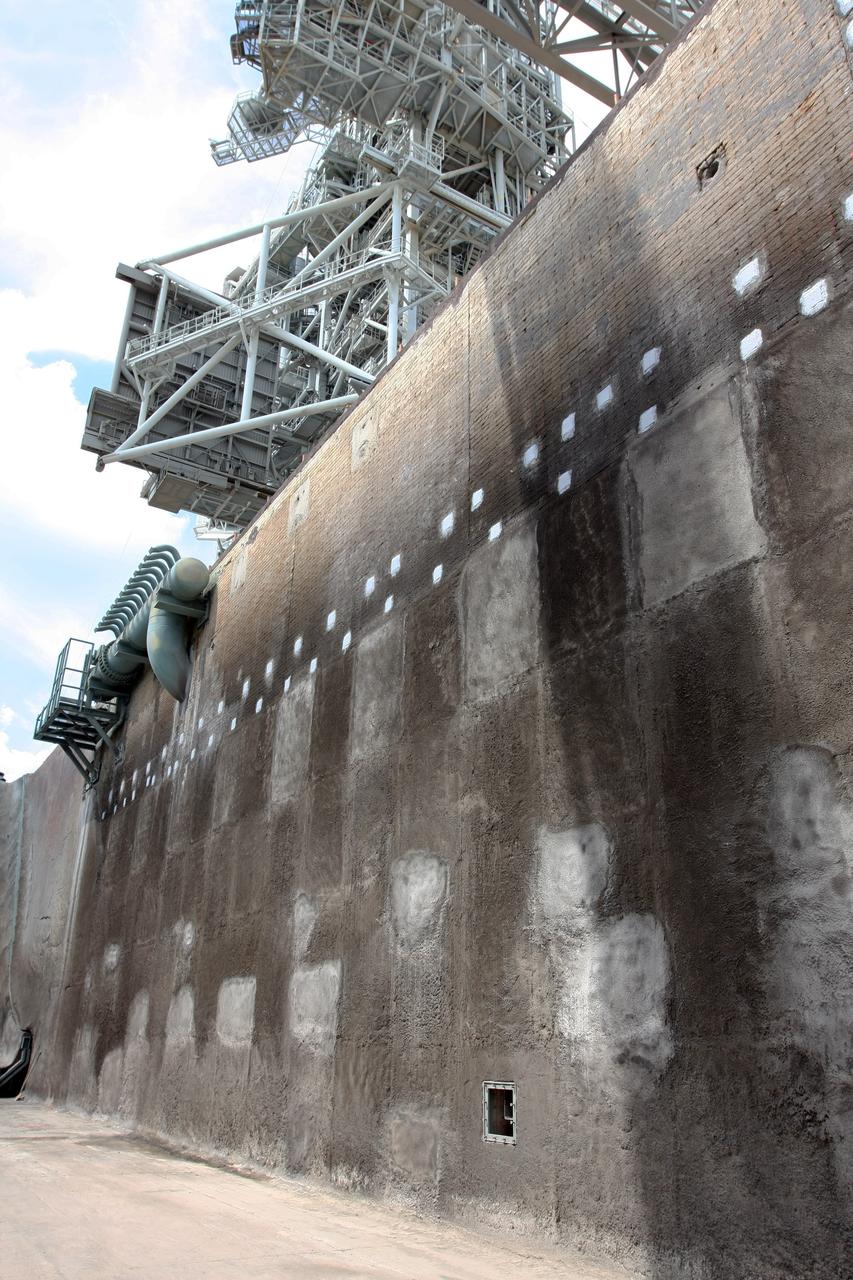
CAPE CANAVERAL, Fla. – A closeup of the wall in the Launch Pad 39A flame trench at NASA's Kennedy Space Center after repairs were made. Workers sprayed a heat-resistant concrete called Fondue Fyre into steel grid structures, welded to the wall of the flame trench. Fondue Fyre was developed during NASA's Apollo lunar program. Damage to the trench occurred during the launch of space shuttle Discovery on the STS-124 mission. A 75-foot by 20-foot section of the east wall was destroyed and debris scattered as far as the pad perimeter fence. Repairs being completed before the targeted Oct. 8 launch of Atlantis on the NASA Hubble Space Telescope servicing mission. Photo credit: NASA/Dimitri Gerondidakis
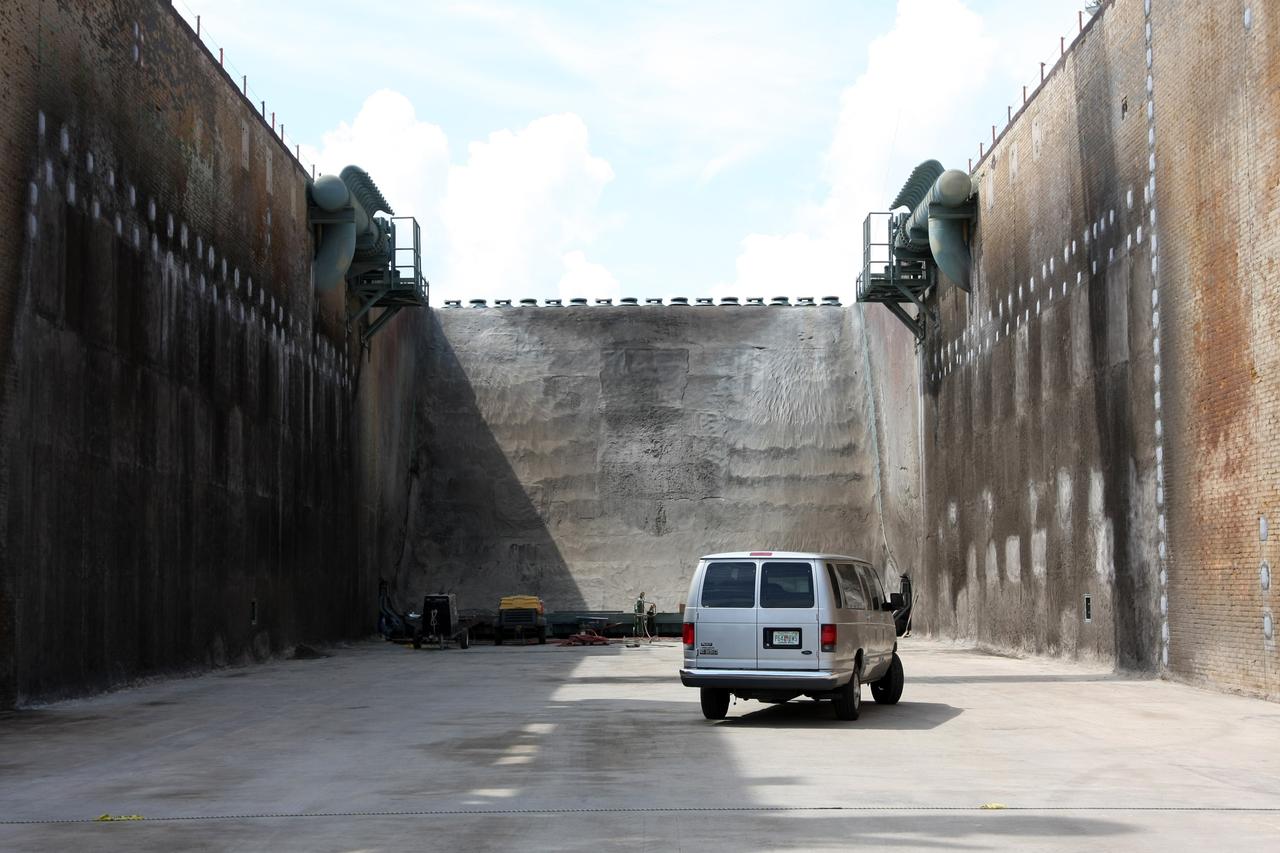
CAPE CANAVERAL, Fla. – A van travels the width of the Launch Pad 39A flame trench at NASA's Kennedy Space Center after tests of the repairs on the wall. Workers sprayed a heat-resistant concrete called Fondue Fyre into steel grid structures, welded to the wall of the flame trench. Fondue Fyre was developed during NASA's Apollo lunar program. Damage to the trench occurred during the launch of space shuttle Discovery on the STS-124 mission. A 75-foot by 20-foot section of the east wall was destroyed and debris scattered as far as the pad perimeter fence. Repairs being completed before the targeted Oct. 8 launch of Atlantis on the NASA Hubble Space Telescope servicing mission. Photo credit: NASA/Dimitri Gerondidakis
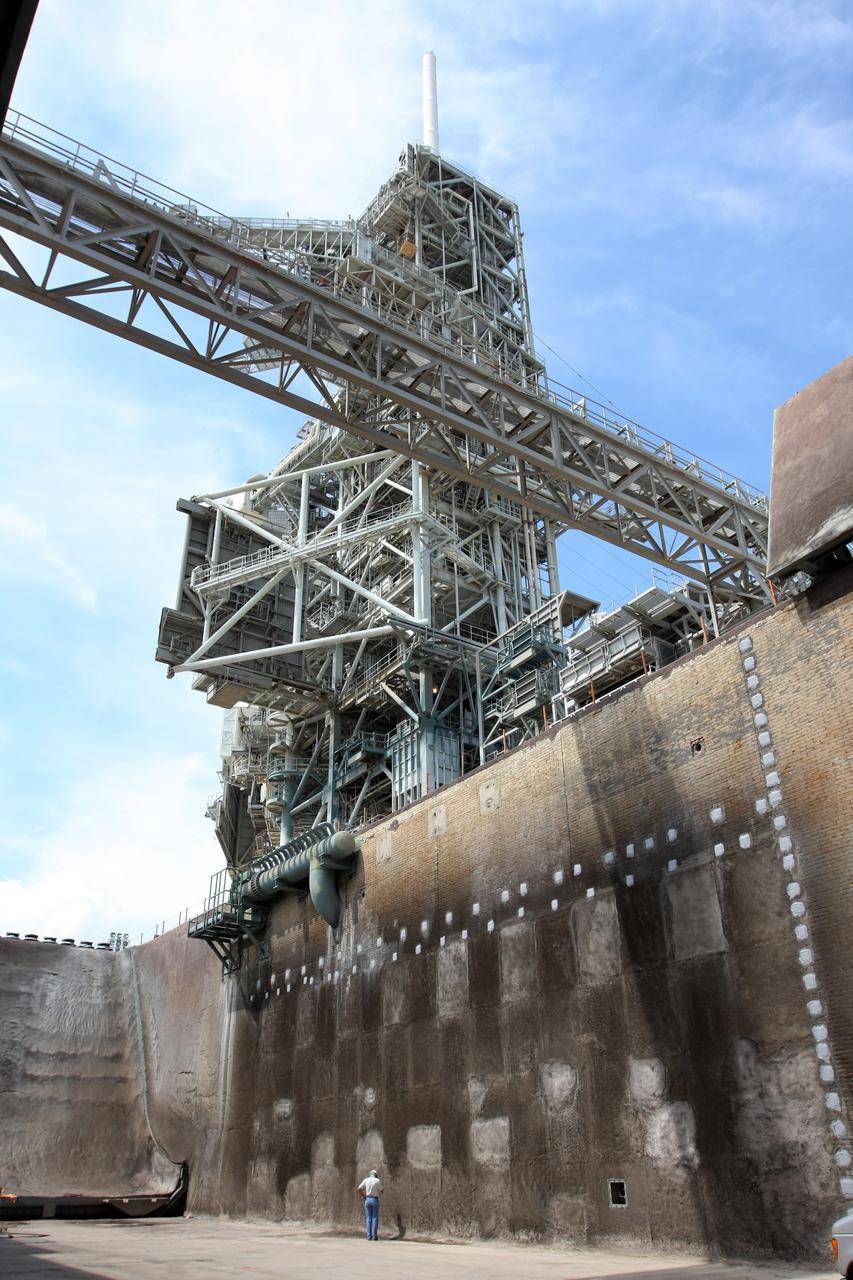
CAPE CANAVERAL, Fla. – An inspector stands in the Launch Pad 39A flame trench at NASA's Kennedy Space Center after tests of the repairs on the wall. Workers sprayed a heat-resistant concrete called Fondue Fyre into steel grid structures, welded to the wall of the flame trench. Fondue Fyre was developed during NASA's Apollo lunar program. Damage to the trench occurred during the launch of space shuttle Discovery on the STS-124 mission. A 75-foot by 20-foot section of the east wall was destroyed and debris scattered as far as the pad perimeter fence. Repairs being completed before the targeted Oct. 8 launch of Atlantis on the NASA Hubble Space Telescope servicing mission. Photo credit: NASA/Dimitri Gerondidakis
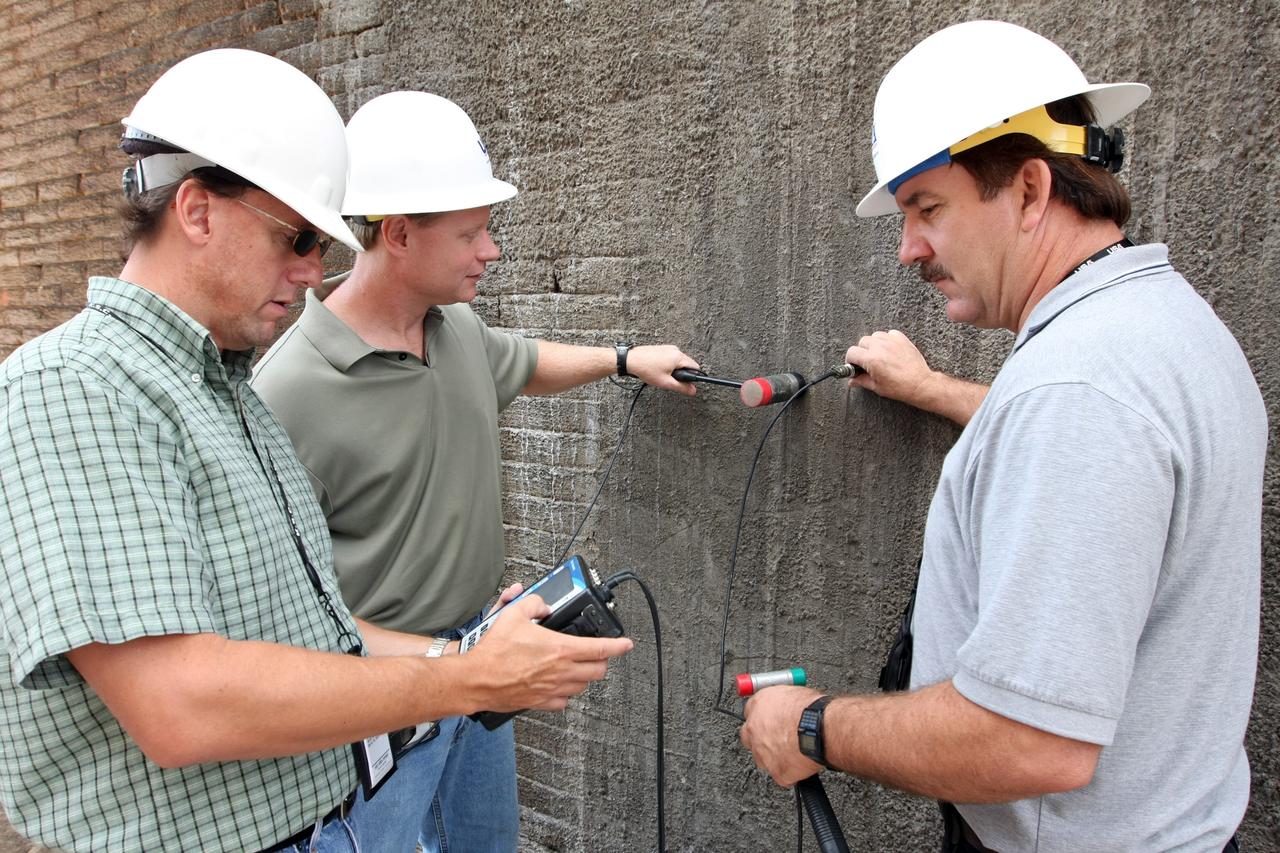
CAPE CANAVERAL, Fla. – In the Launch Pad 39A flame trench at NASA's Kennedy Space Center, inspectors test the repairs on the wall. Workers sprayed a heat-resistant concrete called Fondue Fyre into steel grid structures, welded to the wall of the flame trench. Fondue Fyre was developed during NASA's Apollo lunar program. Damage to the trench occurred during the launch of space shuttle Discovery on the STS-124 mission. A 75-foot by 20-foot section of the east wall was destroyed and debris scattered as far as the pad perimeter fence. Repairs being completed before the targeted Oct. 8 launch of Atlantis on the NASA Hubble Space Telescope servicing mission. Photo credit: NASA/Dimitri Gerondidakis
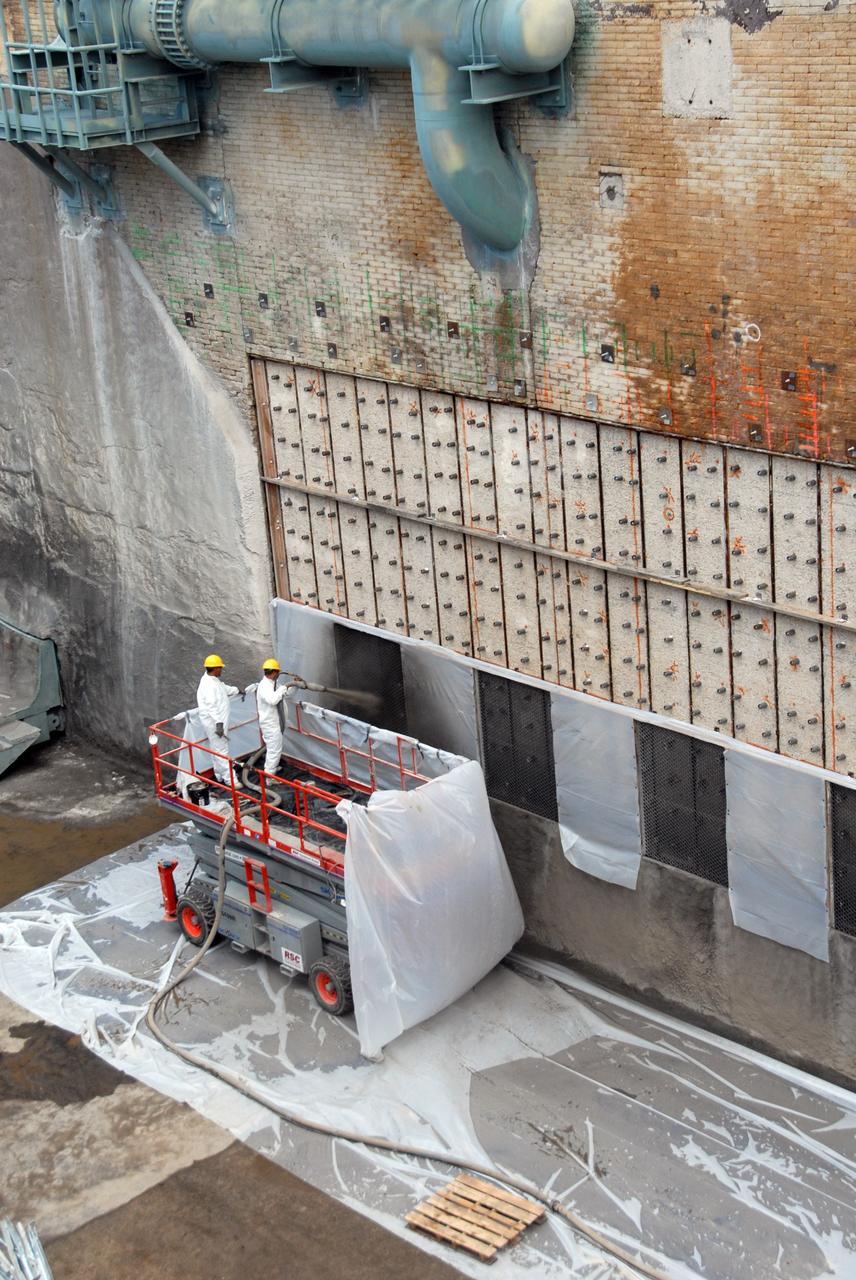
CAPE CANAVERAL, Fla. – At Launch Pad 39A at NASA's Kennedy Space Center, workers on a platform spray a heat-resistant concrete called Fondue Fyre into steel grid structures, welded to the wall of the flame trench. Fondue Fyre was developed during NASA's Apollo lunar program. Damage to the trench occurred during the May 31 launch of Discovery on the STS-124 mission. A 75- by 20-foot section of the east wall was destroyed and debris scattered as far as the pad perimeter fence. Repairs are expected to be completed before the targeted Oct. 8 launch of Atlantis on the NASA Hubble Space Telescope servicing mission. Photo credit: NASA/Jack Pfaller
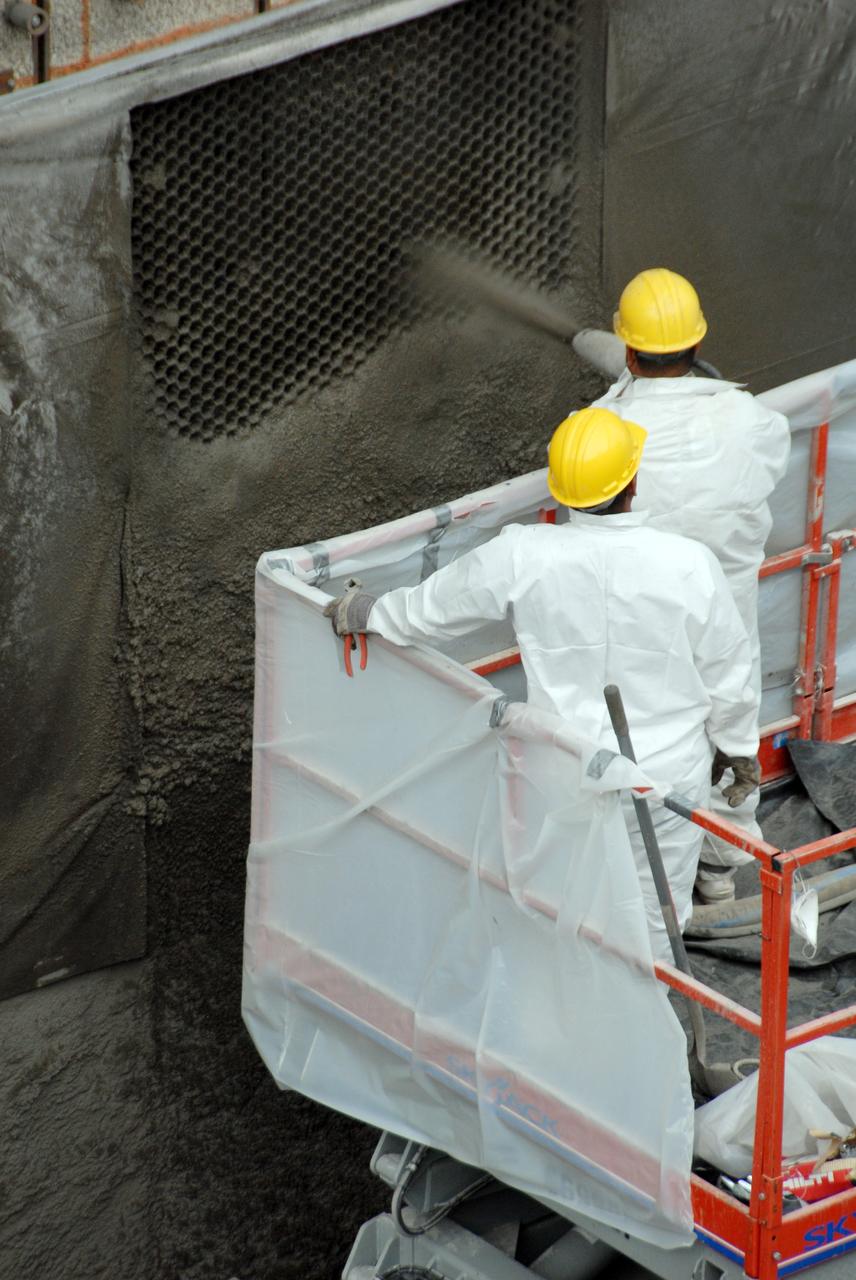
CAPE CANAVERAL, Fla. – At Launch Pad 39A at NASA's Kennedy Space Center, workers spray a heat-resistant concrete called Fondue Fyre into steel grid structures, welded to the wall of the flame trench. Fondue Fyre was developed during NASA's Apollo lunar program. Damage to the trench occurred during the May 31 launch of Discovery on the STS-124 mission. A 75- by 20-foot section of the east wall was destroyed and debris scattered as far as the pad perimeter fence. Repairs are expected to be completed before the targeted Oct. 8 launch of Atlantis on the NASA Hubble Space Telescope servicing mission. Photo credit: NASA/Jack Pfaller
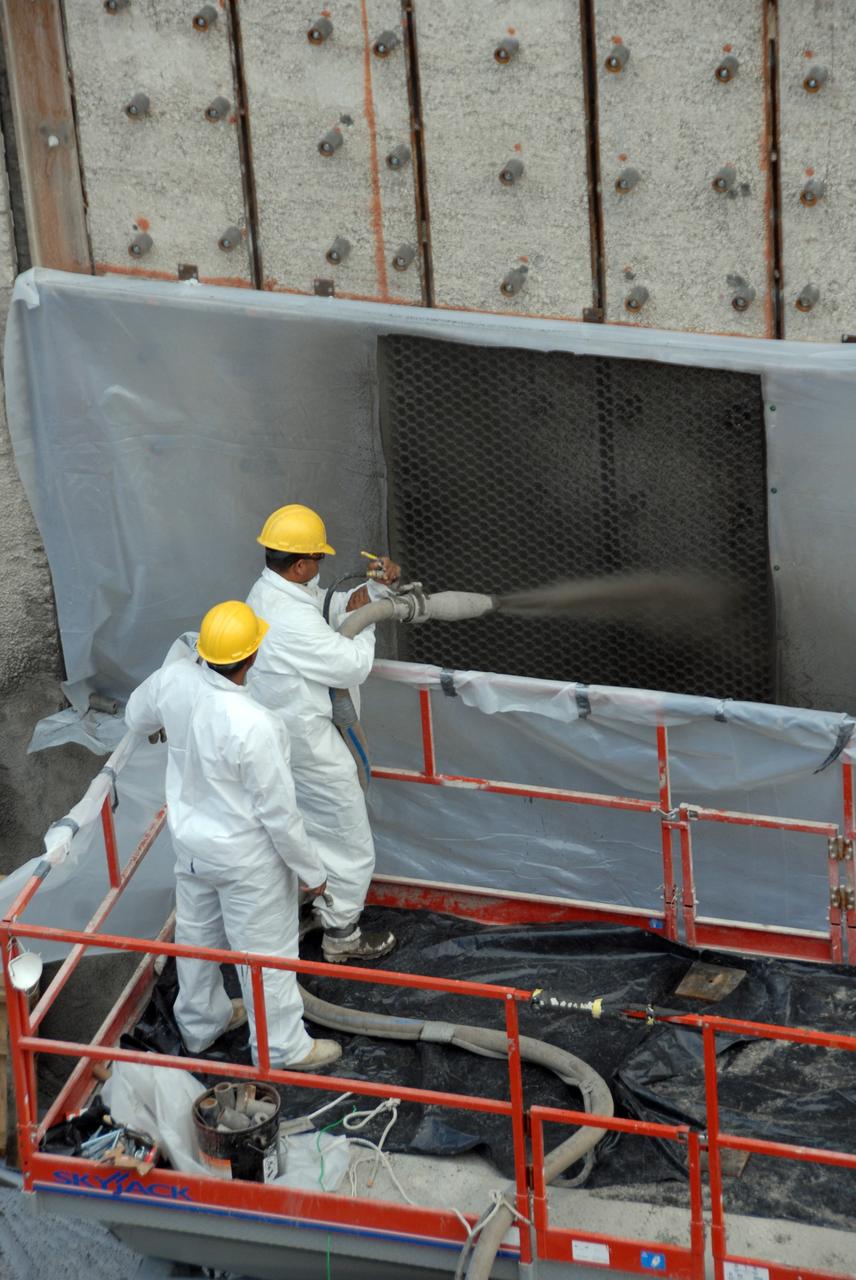
CAPE CANAVERAL, Fla. – At Launch Pad 39A at NASA's Kennedy Space Center, workers spray a heat-resistant concrete called Fondue Fyre into steel grid structures, welded to the wall of the flame trench. Fondue Fyre was developed during NASA's Apollo lunar program. Damage to the trench occurred during the May 31 launch of Discovery on the STS-124 mission. A 75- by 20-foot section of the east wall was destroyed and debris scattered as far as the pad perimeter fence. Repairs are expected to be completed before the targeted Oct. 8 launch of Atlantis on the NASA Hubble Space Telescope servicing mission. Photo credit: NASA/Jack Pfaller
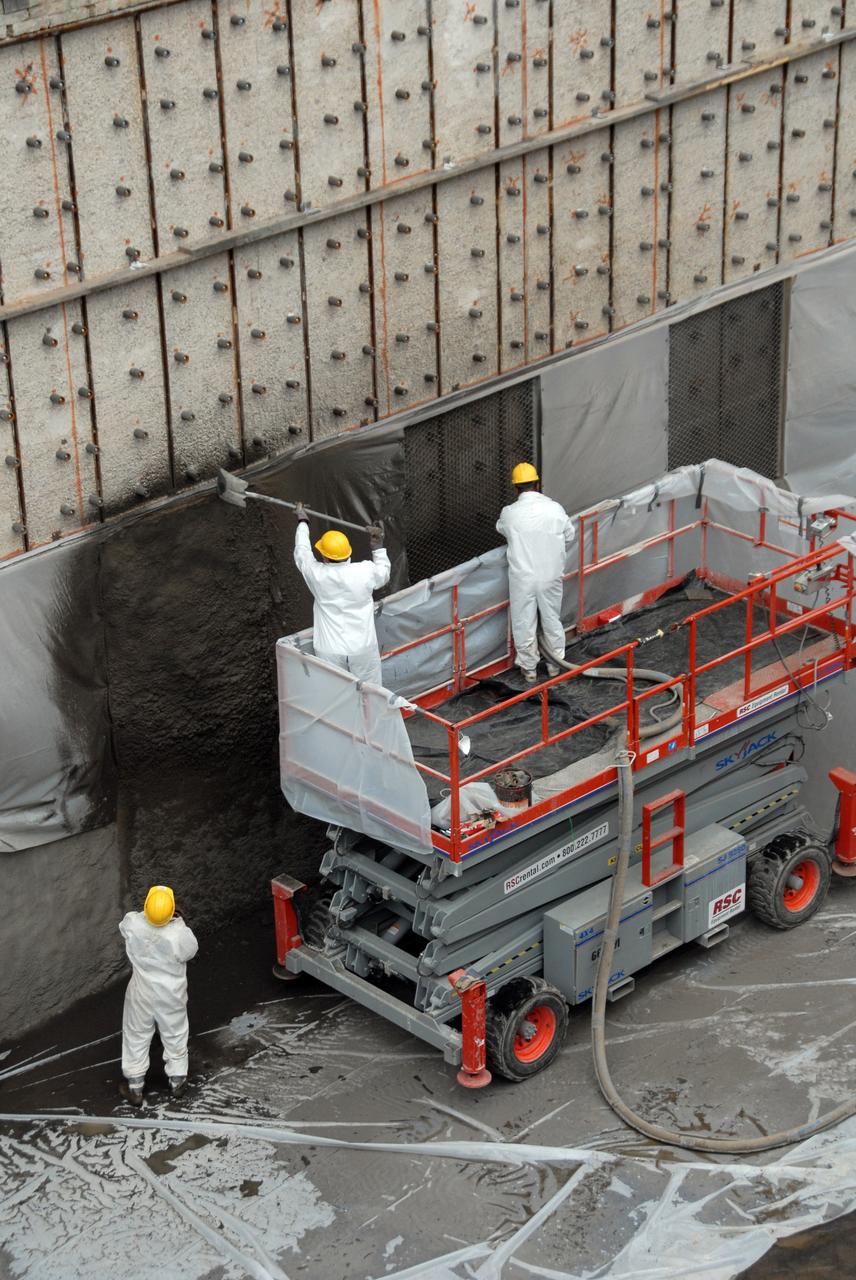
CAPE CANAVERAL, Fla. – At Launch Pad 39A at NASA's Kennedy Space Center, workers pack a heat-resistant concrete called Fondue Fyre into steel grid structures, welded to the wall of the flame trench. Fondue Fyre was developed during NASA's Apollo lunar program. Damage to the trench occurred during the May 31 launch of Discovery on the STS-124 mission. A 75- by 20-foot section of the east wall was destroyed and debris scattered as far as the pad perimeter fence. Repairs are expected to be completed before the targeted Oct. 8 launch of Atlantis on the NASA Hubble Space Telescope servicing mission. Photo credit: NASA/Jack Pfaller
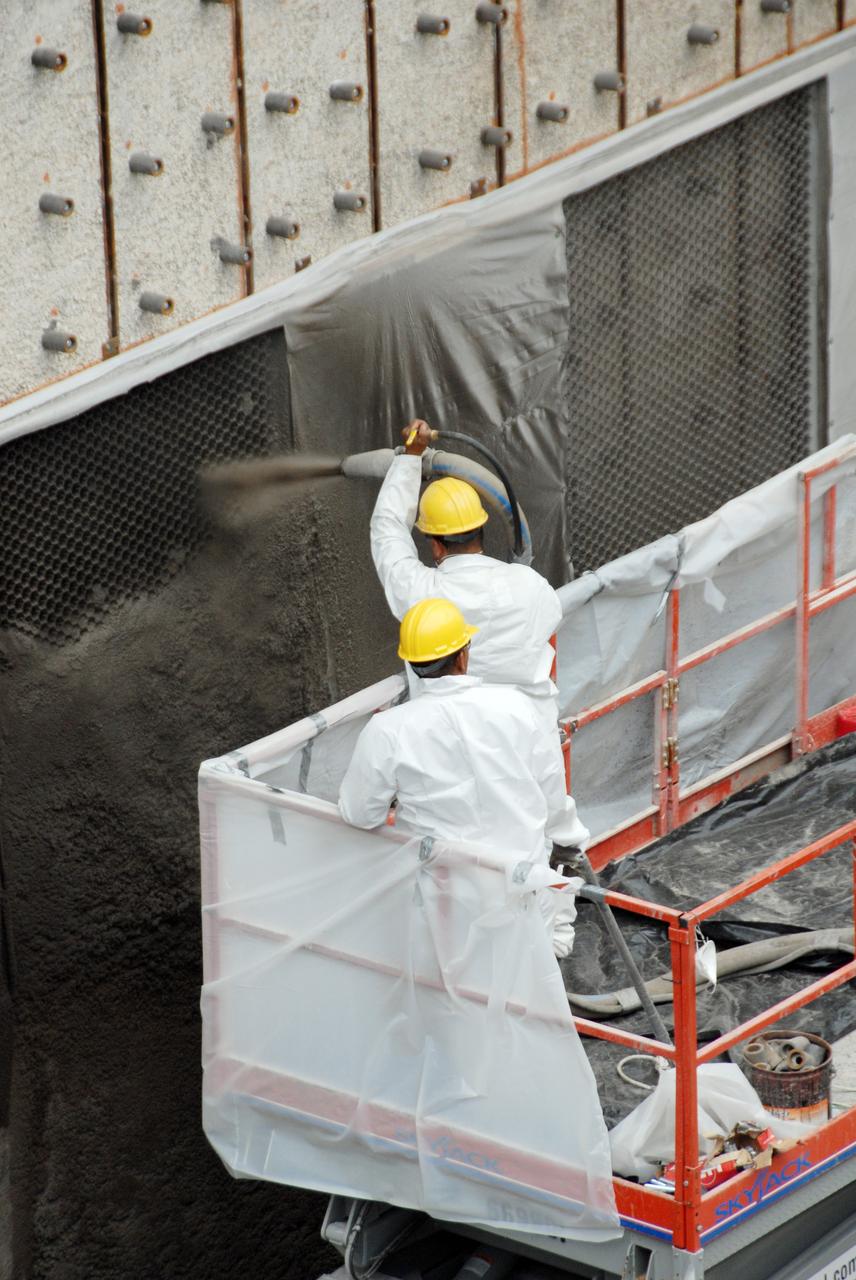
CAPE CANAVERAL, Fla. – At Launch Pad 39A at NASA's Kennedy Space Center, workers spray a heat-resistant concrete called Fondue Fyre into steel grid structures, welded to the wall of the flame trench. Fondue Fyre was developed during NASA's Apollo lunar program. Damage to the trench occurred during the May 31 launch of Discovery on the STS-124 mission. A 75- by 20-foot section of the east wall was destroyed and debris scattered as far as the pad perimeter fence. Repairs are expected to be completed before the targeted Oct. 8 launch of Atlantis on the NASA Hubble Space Telescope servicing mission. Photo credit: NASA/Jack Pfaller
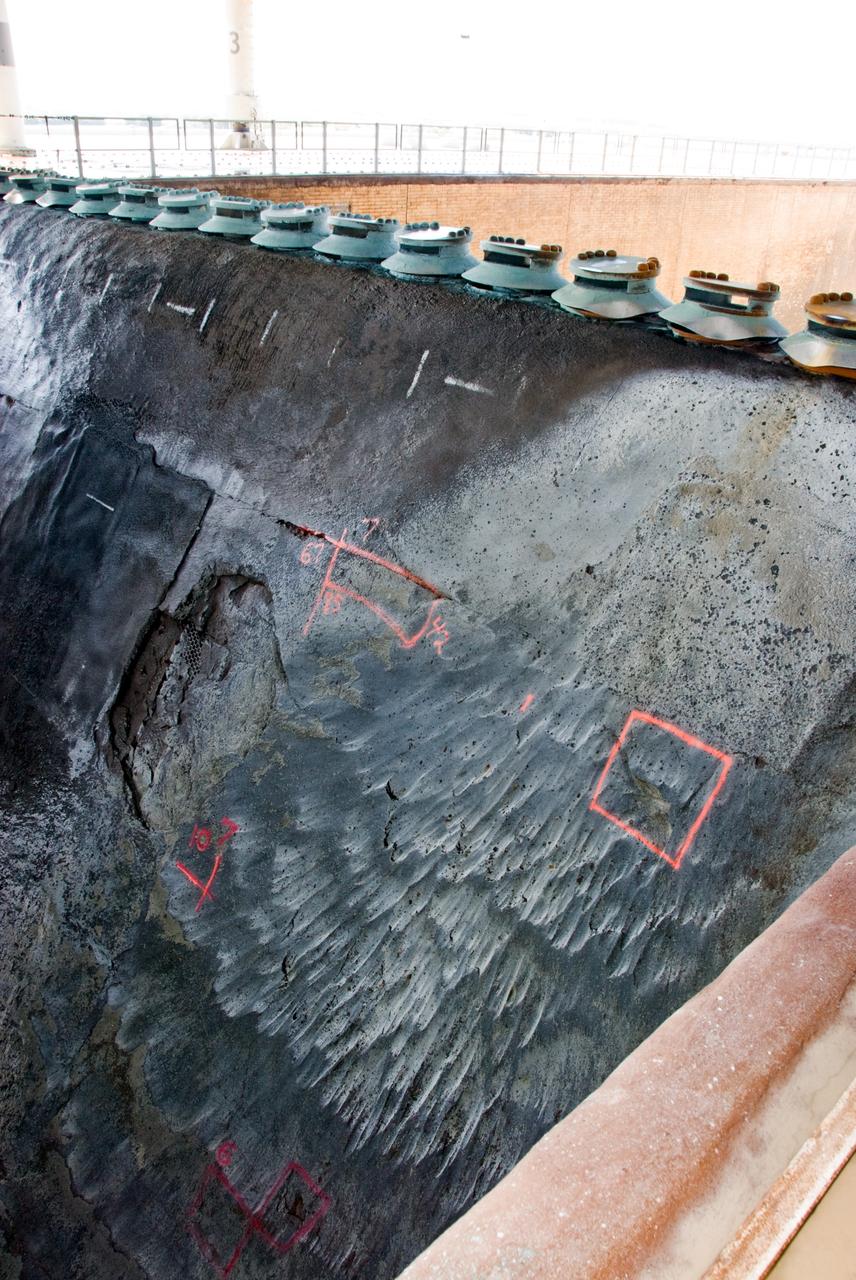
CAPE CANAVERAL, Fla. – A closeup of damage found in the Launch Pad 39A flame trench at NASA's Kennedy Space Center in Florida after launch of space shuttle Atlantis on the STS-125 mission May 11. About 25 square feet of Fondue Fyre broke off from the north side of the solid rocket booster flame deflector. The flame trench channels the flames and smoke exhaust of the shuttle's solid rocket boosters away from the space shuttle. Fondue Fyre is a fire-resistant concrete-like material. Some pneumatic lines (gaseous nitrogen, pressurized air) in the area also were damaged. Preliminary assessments indicated technicians can make repairs to the pad in time to support space shuttle Endeavour's targeted June 13 launch. Photo credit: NASA/Kim Shiflett
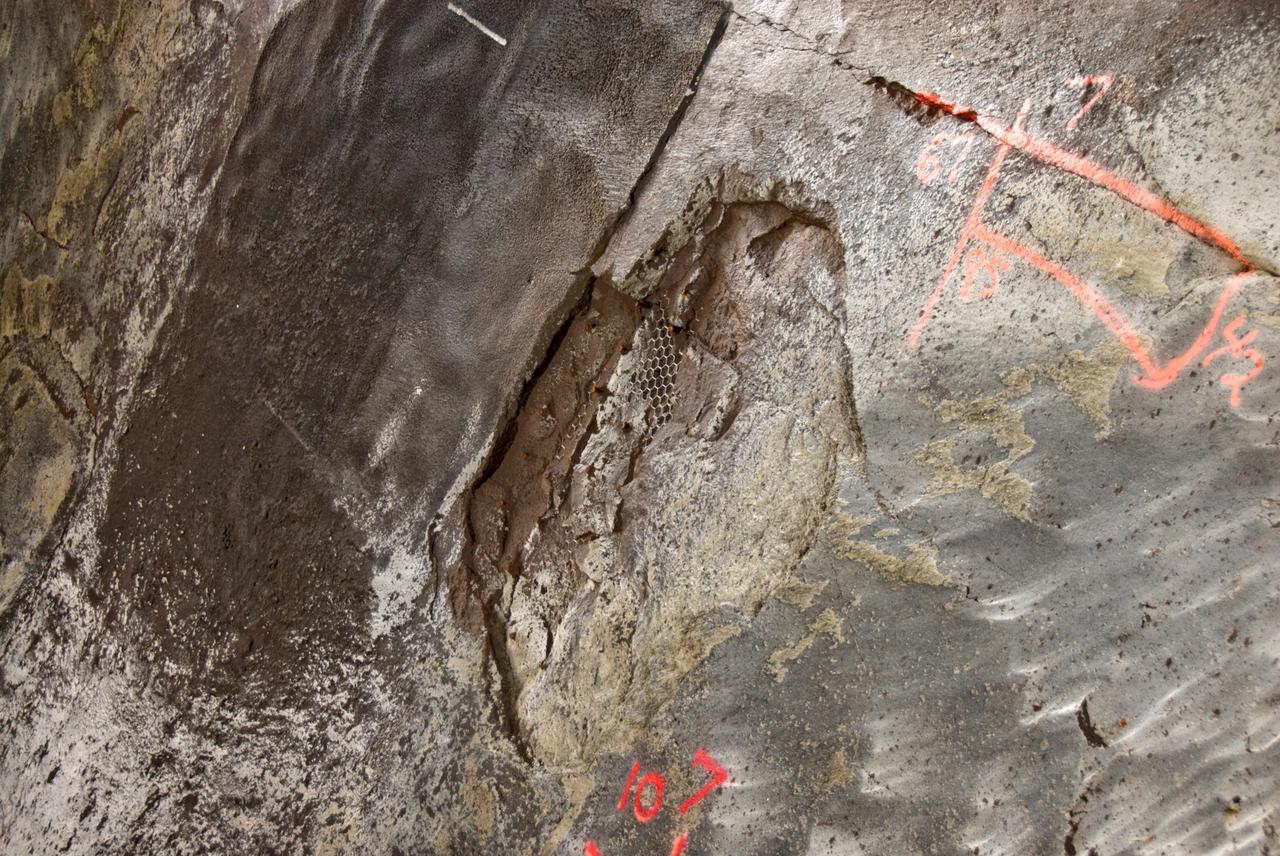
CAPE CANAVERAL, Fla. – A closeup of damage found in the Launch Pad 39A flame trench at NASA's Kennedy Space Center in Florida after launch of space shuttle Atlantis on the STS-125 mission May 11. About 25 square feet of Fondue Fyre broke off from the north side of the solid rocket booster flame deflector. The flame trench channels the flames and smoke exhaust of the shuttle's solid rocket boosters away from the space shuttle. Fondue Fyre is a fire-resistant concrete-like material. Some pneumatic lines (gaseous nitrogen, pressurized air) in the area also were damaged. Preliminary assessments indicated technicians can make repairs to the pad in time to support space shuttle Endeavour's targeted June 13 launch. Photo credit: NASA/Kim Shiflett
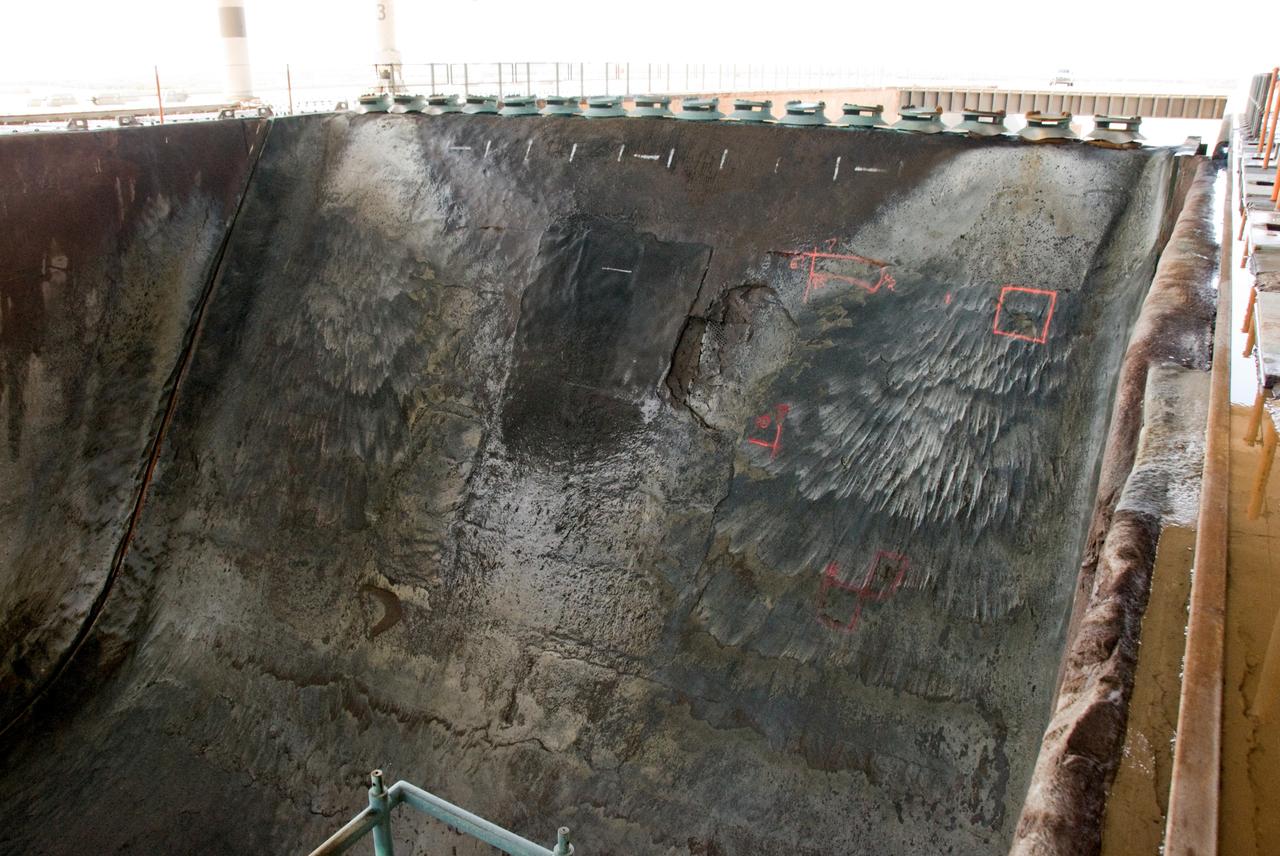
CAPE CANAVERAL, Fla. – A closeup of damage found in the Launch Pad 39A flame trench at NASA's Kennedy Space Center in Florida after launch of space shuttle Atlantis on the STS-125 mission May 11. About 25 square feet of Fondue Fyre broke off from the north side of the solid rocket booster flame deflector. The flame trench channels the flames and smoke exhaust of the shuttle's solid rocket boosters away from the space shuttle. Fondue Fyre is a fire-resistant concrete-like material. Some pneumatic lines (gaseous nitrogen, pressurized air) in the area also were damaged. Preliminary assessments indicated technicians can make repairs to the pad in time to support space shuttle Endeavour's targeted June 13 launch. Photo credit: NASA/Kim Shiflett
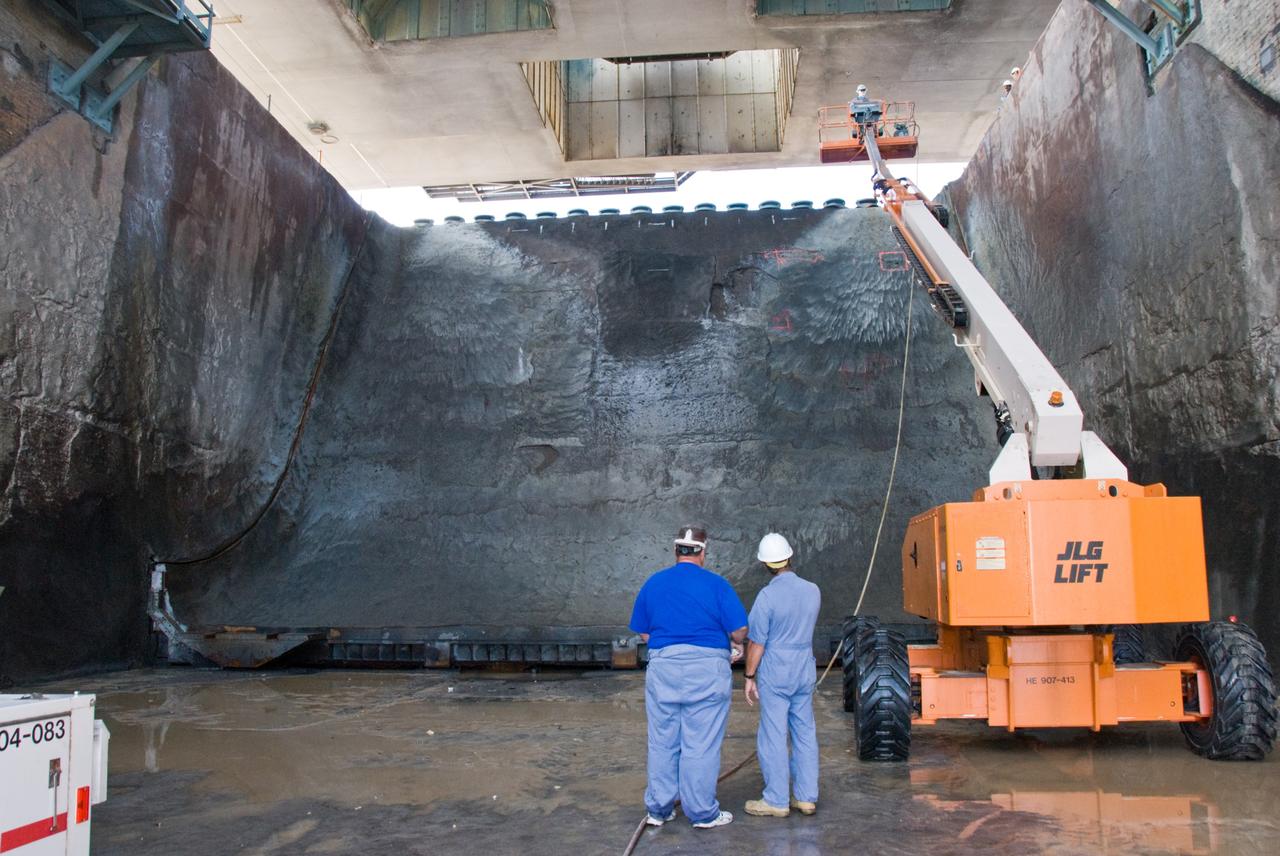
CAPE CANAVERAL, Fla. – In Launch Pad 39A lame trench at NASA's Kennedy Space Center in Florida, workers document damage found after launch of space shuttle Atlantis on the STS-125 mission May 11. About 25 square feet of Fondue Fyre broke off from the north side of the solid rocket booster flame deflector. The flame trench channels the flames and smoke exhaust of the shuttle's solid rocket boosters away from the space shuttle. Fondue Fyre is a fire-resistant concrete-like material. Some pneumatic lines (gaseous nitrogen, pressurized air) in the area also were damaged. Preliminary assessments indicated technicians can make repairs to the pad in time to support space shuttle Endeavour's targeted June 13 launch. Photo credit: NASA/Kim Shiflett
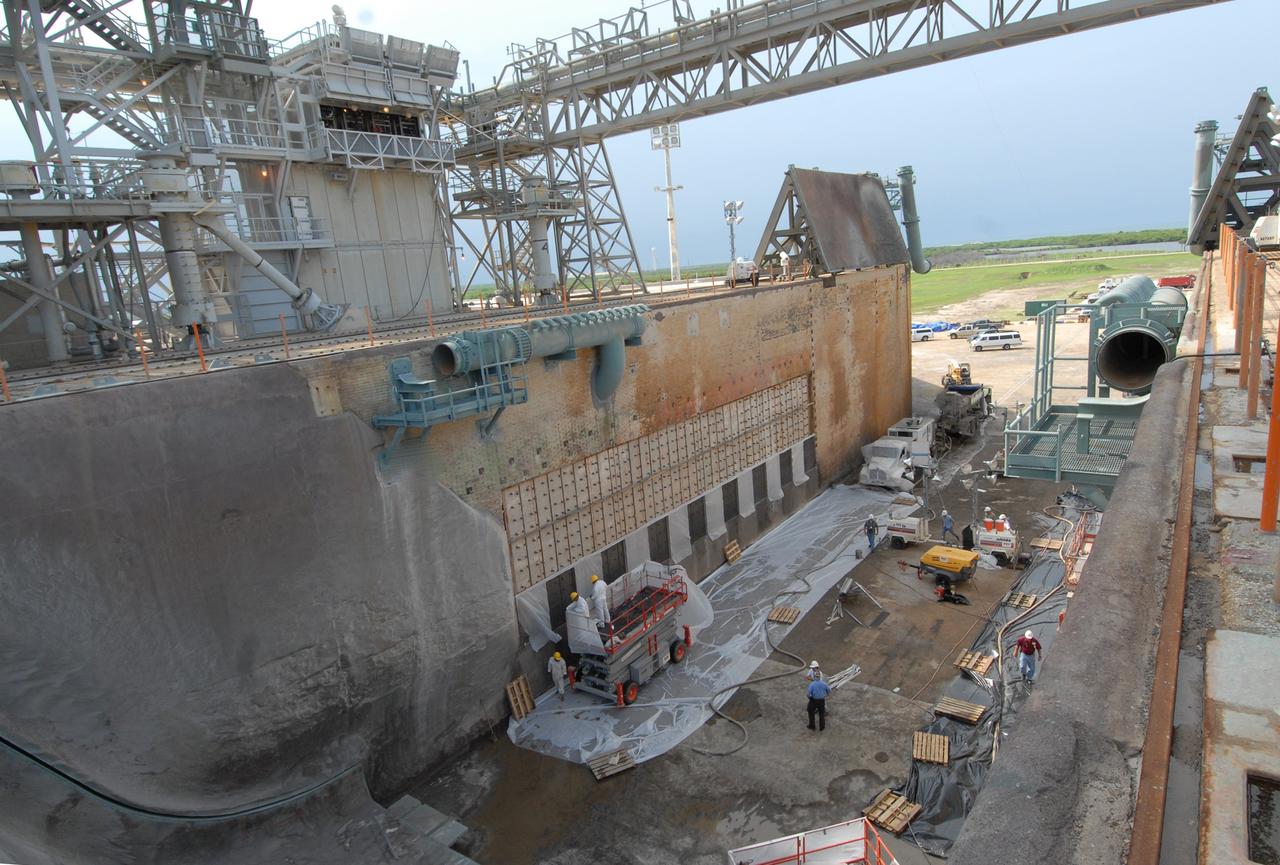
CAPE CANAVERAL, Fla. – This elevated view of Launch Pad 39A at NASA's Kennedy Space Center shows workers preparing to fill steel grid structures, welded to the wall of the flame trench, with a heat-resistant concrete called Fondue Fyre, developed during NASA's Apollo lunar program. Damage to the trench occurred during the May 31 launch of Discovery on the STS-124 mission. A 75- by 20-foot section of the east wall was destroyed and debris scattered as far as the pad perimeter fence. Repairs are expected to be completed before the targeted Oct. 8 launch of Atlantis on the NASA Hubble Space Telescope servicing mission. Photo credit: NASA/Jack Pfaller
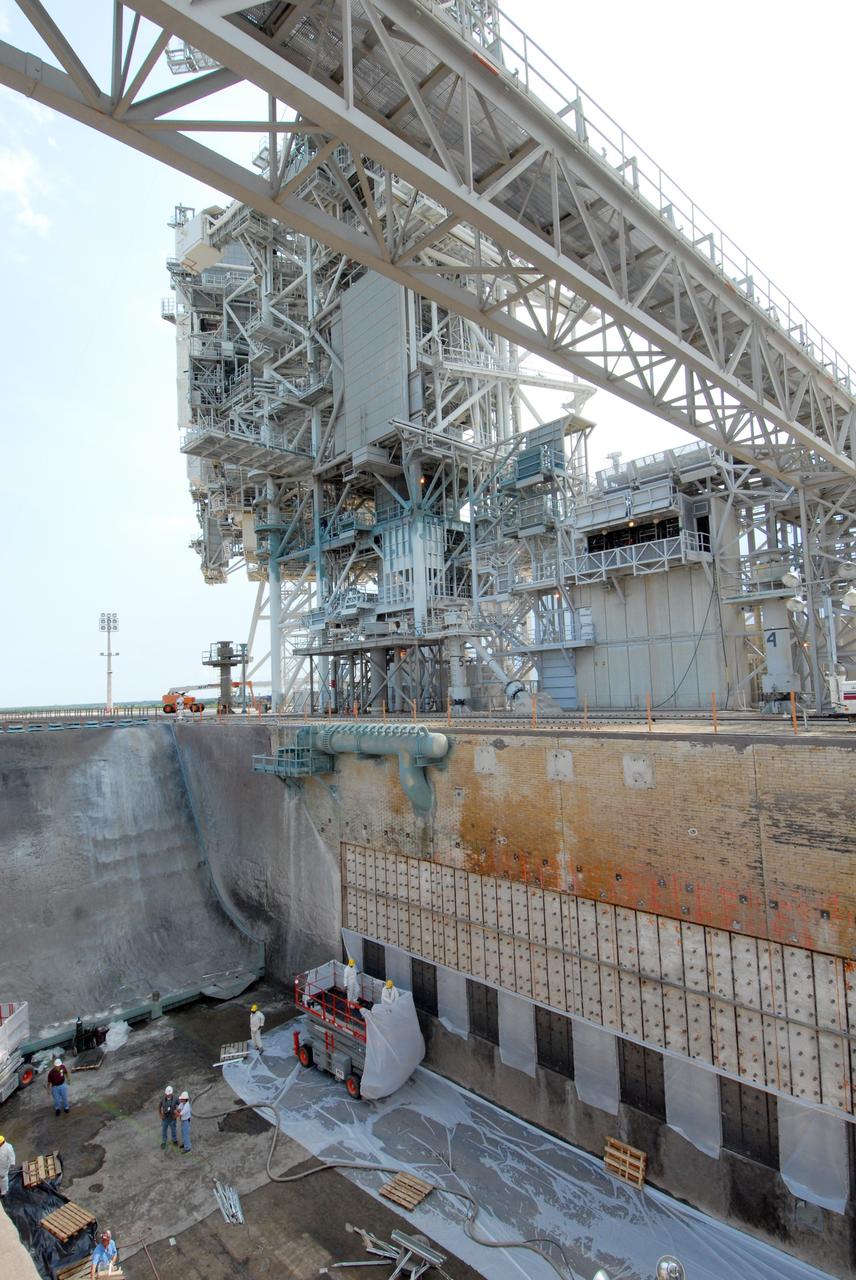
CAPE CANAVERAL, Fla. – This elevated view of Launch Pad 39A at NASA's Kennedy Space Center shows workers preparing to fill steel grid structures, welded to the wall of the flame trench, with a heat-resistant concrete called Fondue Fyre, developed during NASA's Apollo lunar program. Damage to the trench occurred during the May 31 launch of Discovery on the STS-124 mission. A 75- by 20-foot section of the east wall was destroyed and debris scattered as far as the pad perimeter fence. Repairs are expected to be completed before the targeted Oct. 8 launch of Atlantis on the NASA Hubble Space Telescope servicing mission. Photo credit: NASA/Jack Pfaller
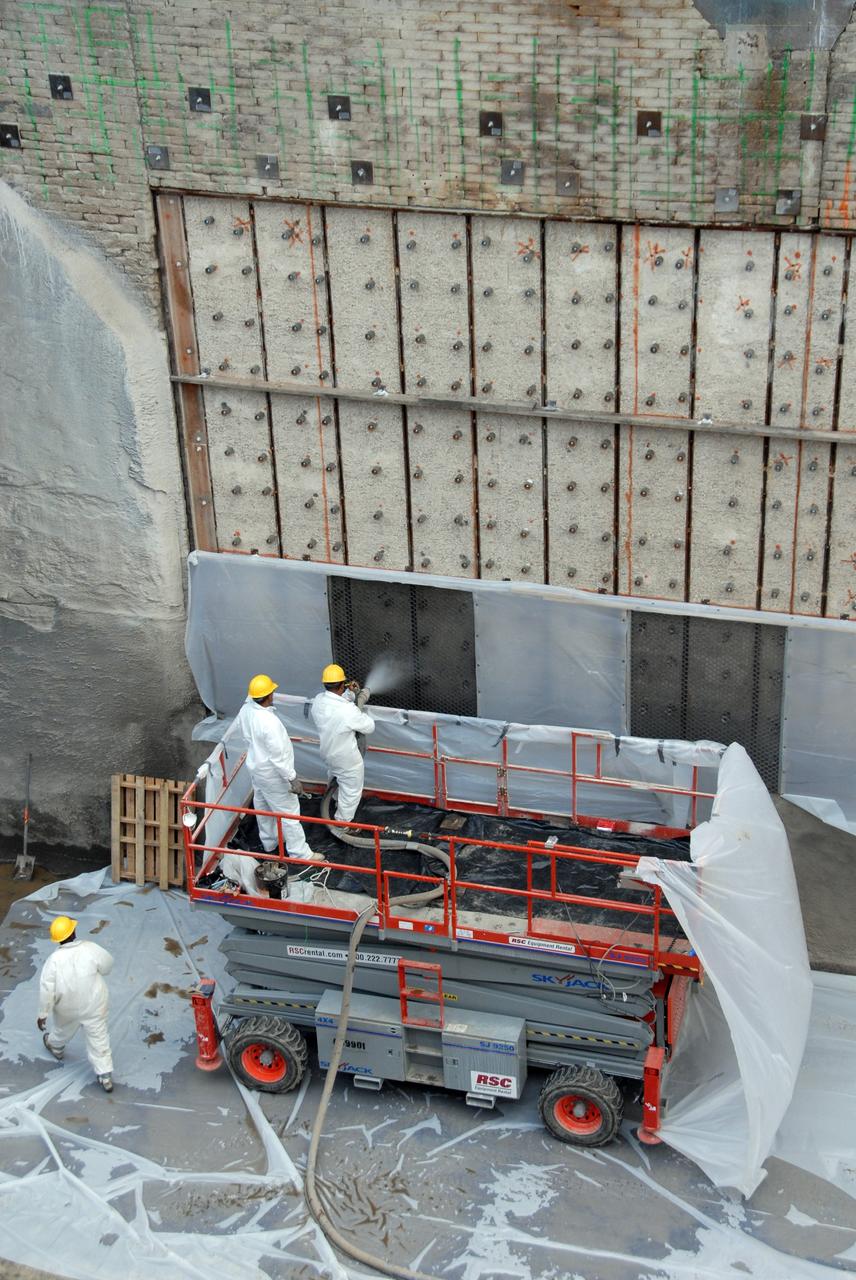
CAPE CANAVERAL, Fla. – This elevated view of Launch Pad 39A at NASA's Kennedy Space Center shows workers filling steel grid structures, welded to the wall of the flame trench, with a heat-resistant concrete called Fondue Fyre, developed during NASA's Apollo lunar program. Damage to the trench occurred during the May 31 launch of Discovery on the STS-124 mission. A 75- by 20-foot section of the east wall was destroyed and debris scattered as far as the pad perimeter fence. Repairs are expected to be completed before the targeted Oct. 8 launch of Atlantis on the NASA Hubble Space Telescope servicing mission. Photo credit: NASA/Jack Pfaller
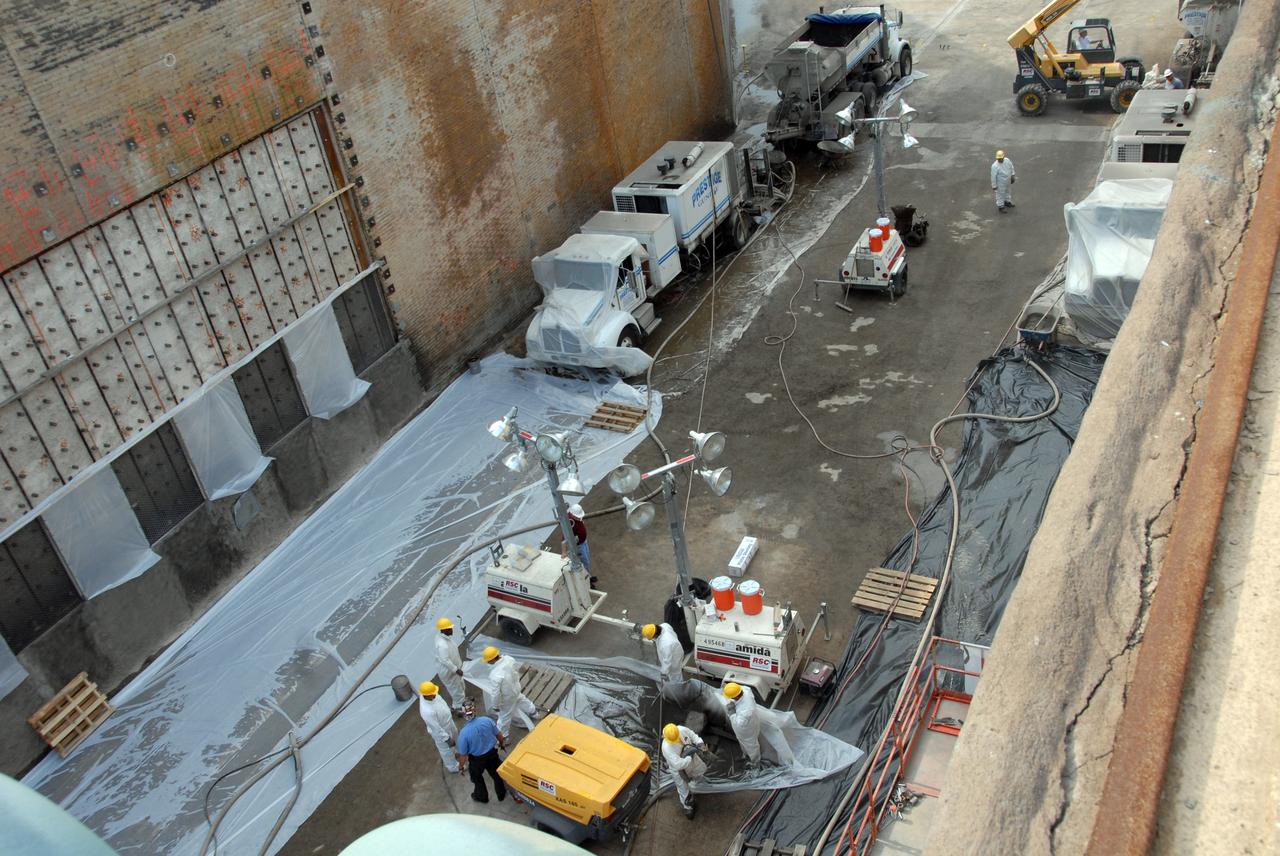
CAPE CANAVERAL, Fla. – This elevated view of Launch Pad 39A at NASA's Kennedy Space Center shows the steel grid structures, welded to the wall of the flame trench, which workers will be filling with a heat-resistant concrete called Fondue Fyre, developed during NASA's Apollo lunar program. Damage to the trench occurred during the May 31 launch of Discovery on the STS-124 mission. A 75- by 20-foot section of the east wall was destroyed and debris scattered as far as the pad perimeter fence. Repairs are expected to be completed before the targeted Oct. 8 launch of Atlantis on the NASA Hubble Space Telescope servicing mission. Photo credit: NASA/Jack Pfaller
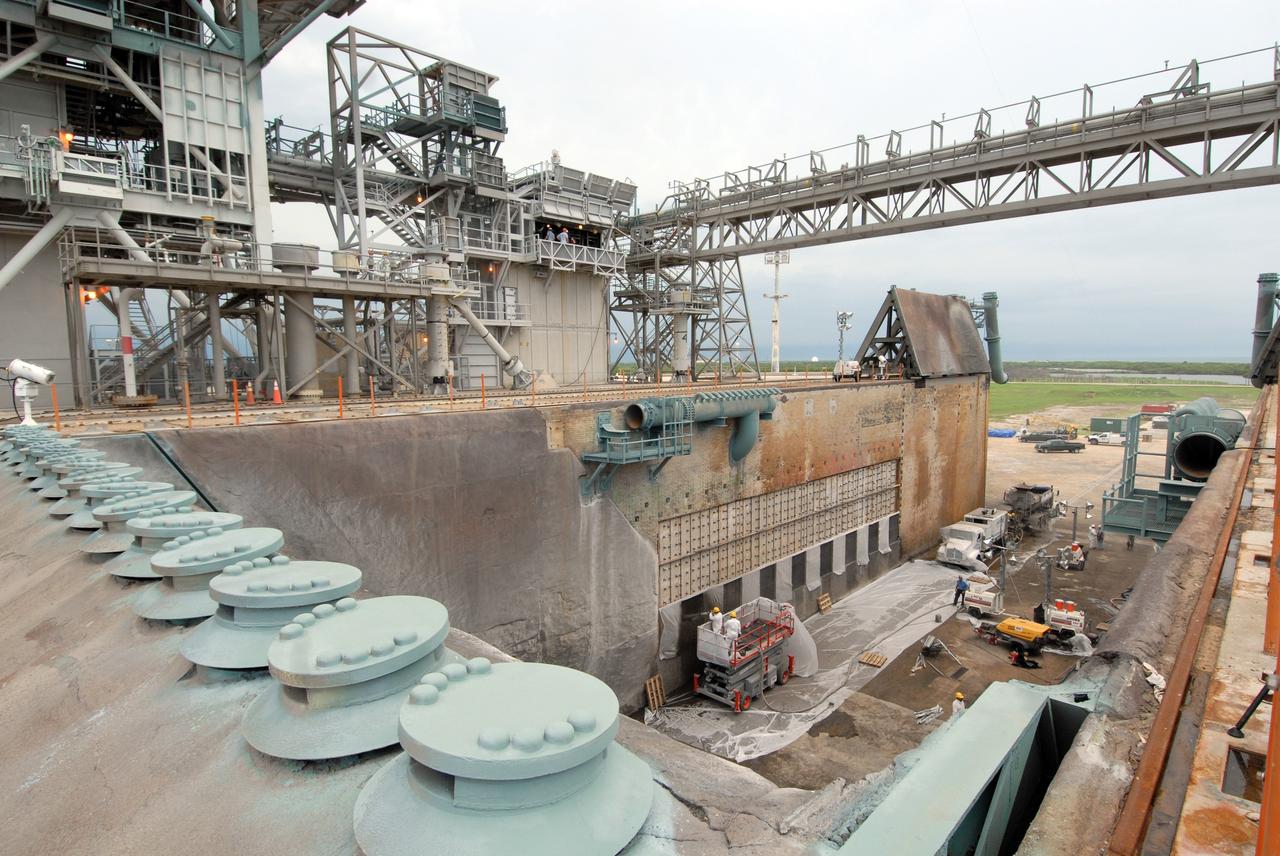
CAPE CANAVERAL, Fla. – This elevated view of Launch Pad 39A at NASA's Kennedy Space Center shows workers filling steel grid structures, welded to the wall of the flame trench, with a heat-resistant concrete called Fondue Fyre, developed during NASA's Apollo lunar program. At left are the pad's "rainbirds." These nozzles are part of the pad sound suppression system which protects the orbiter and its payloads from being damaged by acoustical energy reflected from the mobile launcher platform during liftoff. Damage to the trench occurred during the May 31 launch of Discovery on the STS-124 mission. A 75- by 20-foot section of the east wall was destroyed and debris scattered as far as the pad perimeter fence. Repairs are expected to be completed before the targeted Oct. 8 launch of Atlantis on the NASA Hubble Space Telescope servicing mission. Photo credit: NASA/Jack Pfaller