
S66-59530 (August 1965) --- This is the insignia of the Gemini-Titan 5 (GT-5) spaceflight. The Gemini-5 prime crew members are astronauts L. Gordon Cooper Jr., command pilot; and Charles Conrad Jr., pilot. The covered wagon symbolizes pioneer spirit of space exploration. The NASA insignia design for Gemini flights is reserved for use by the astronauts and for other official use as the NASA Administrator may authorize. Public availability has been approved only in the form of illustrations by the various news media. When and if there is any change in this policy, which we do not anticipate, it will be publicly announced.
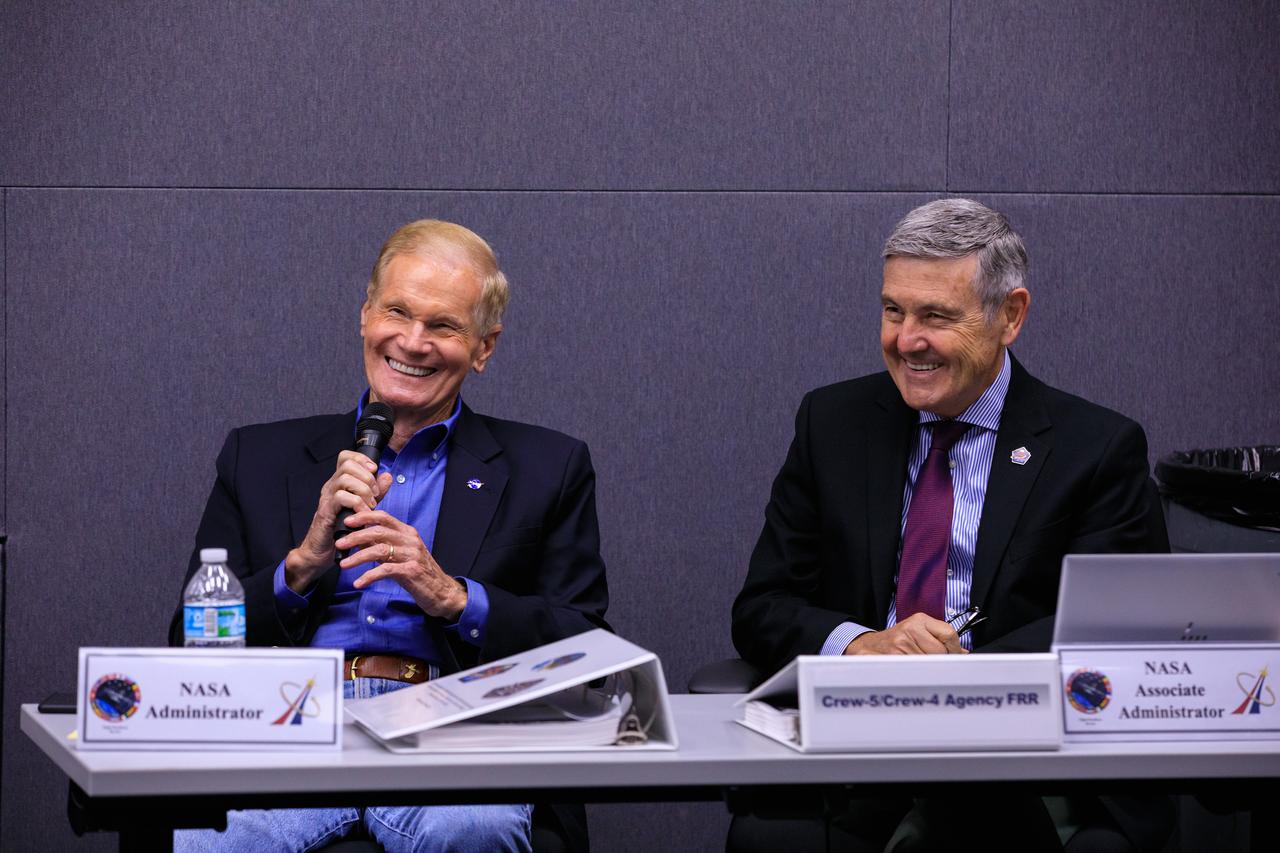
NASA Administrator Bill Nelson, left, and Associate Administrator Bob Cabana participate in a Flight Readiness Review for the agency’s Crew-5 mission at Kennedy Space Center in Florida on Sept. 26, 2022. NASA and SpaceX managers held the review to confirm the SpaceX Falcon 9 rocket and Crew Dragon spacecraft are ready for launch. Crew-5 is scheduled to launch to the International Space Station from Kennedy’s Launch Complex 39A as part of the agency’s Commercial Crew Program. This will be the fifth crew rotation mission of SpaceX’s human transportation system and its sixth flight with astronauts, including the Demo-2 test flight, to the space station.

Kennedy Space Center Deputy Director Kelvin Manning participates in a Flight Readiness Review for NASA’s Crew-5 mission at the Florida spaceport on Sept. 26, 2022. NASA and SpaceX managers held the review to confirm the SpaceX Falcon 9 rocket and Crew Dragon spacecraft are ready for launch. Crew-5 is scheduled to launch to the International Space Station from Kennedy’s Launch Complex 39A as part of the agency’s Commercial Crew Program. This will be the fifth crew rotation mission of SpaceX’s human transportation system and its sixth flight with astronauts, including the Demo-2 test flight, to the space station.
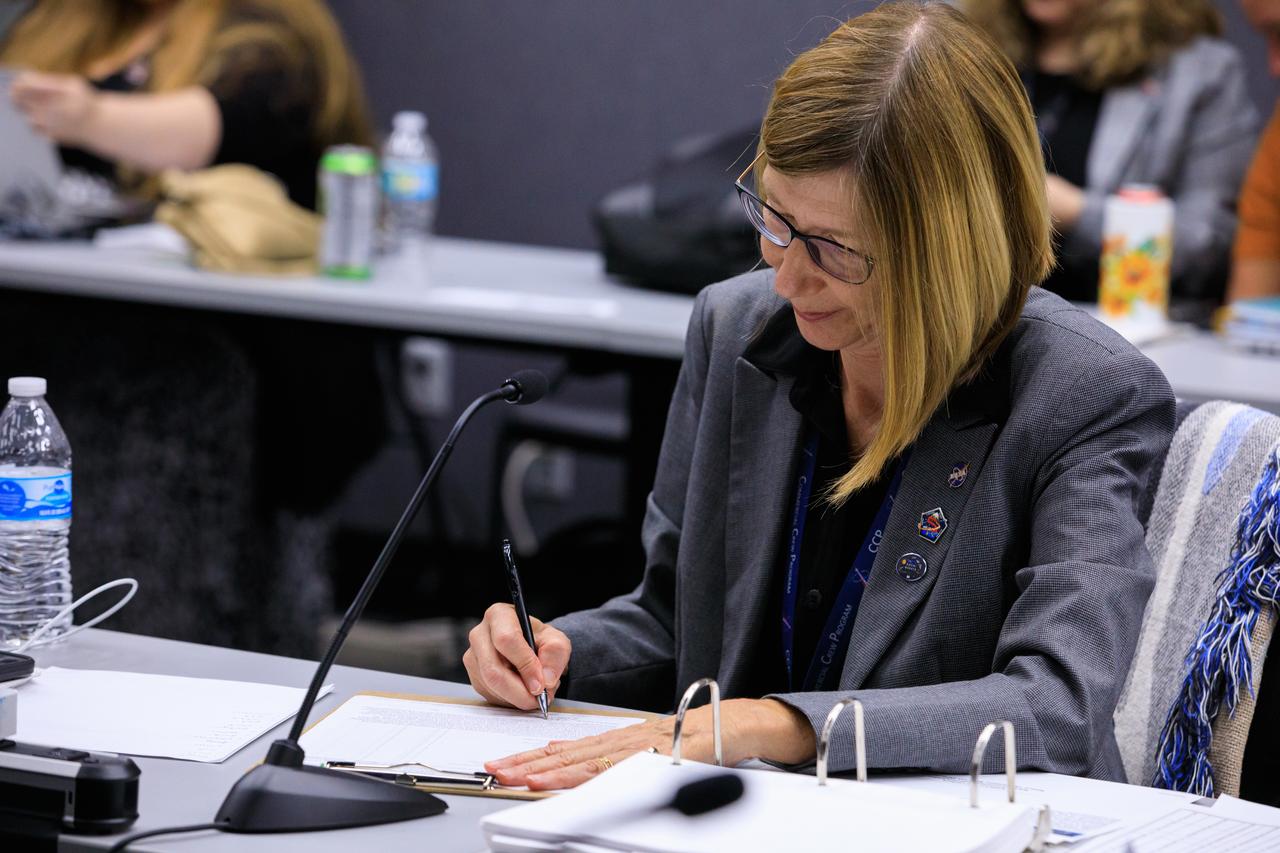
Kathryn Lueders, associate administrator for NASA’s Space Operations Mission Directorate, participates in a Flight Readiness Review for the agency’s Crew-5 mission at Kennedy Space Center in Florida on Sept. 26, 2022. NASA and SpaceX managers held the review to confirm the SpaceX Falcon 9 rocket and Crew Dragon spacecraft are ready for launch. Crew-5 is scheduled to launch to the International Space Station from Kennedy’s Launch Complex 39A as part of the agency’s Commercial Crew Program. This will be the fifth crew rotation mission of SpaceX’s human transportation system and its sixth flight with astronauts, including the Demo-2 test flight, to the space station.
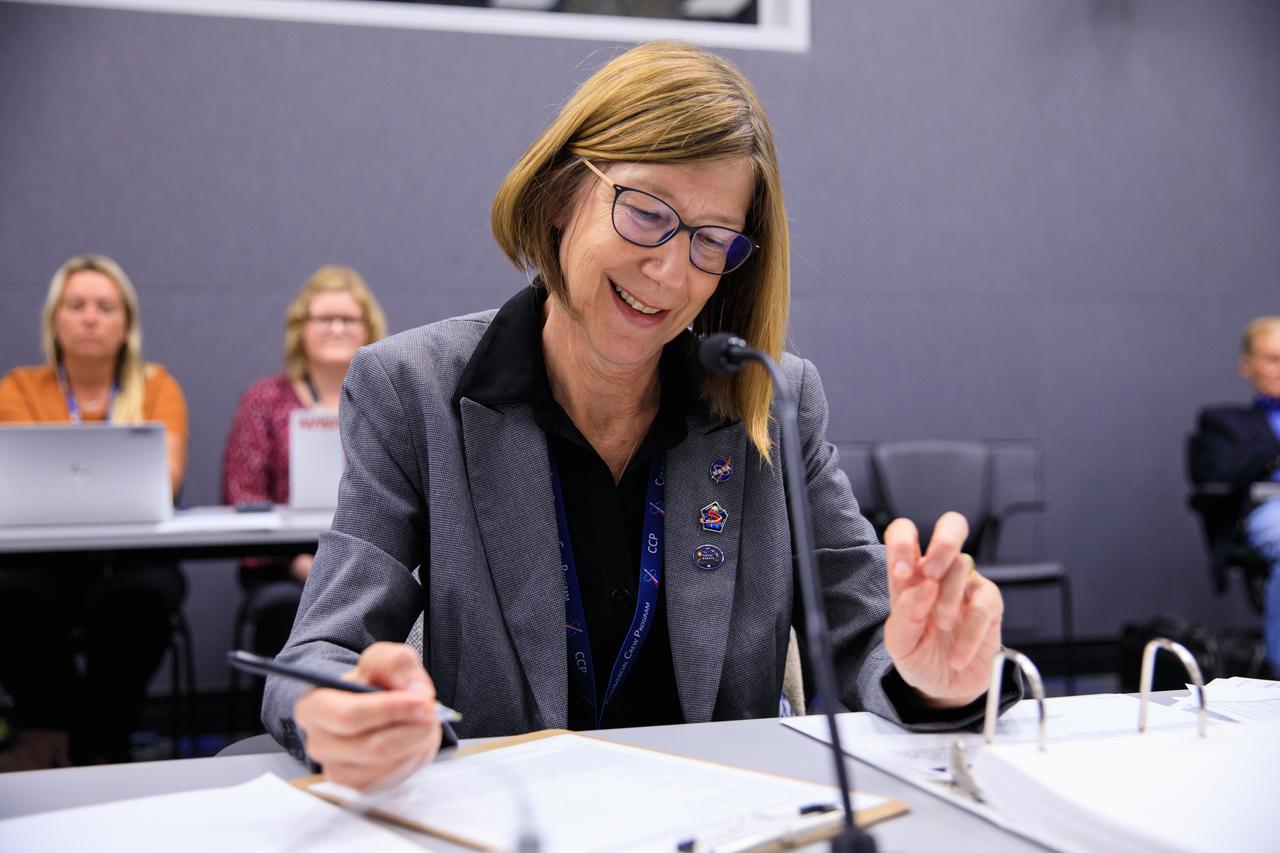
Kathryn Lueders, associate administrator for NASA’s Space Operations Mission Directorate, participates in a Flight Readiness Review for the agency’s Crew-5 mission at Kennedy Space Center in Florida on Sept. 26, 2022. NASA and SpaceX managers held the review to confirm the SpaceX Falcon 9 rocket and Crew Dragon spacecraft are ready for launch. Crew-5 is scheduled to launch to the International Space Station from Kennedy’s Launch Complex 39A as part of the agency’s Commercial Crew Program. This will be the fifth crew rotation mission of SpaceX’s human transportation system and its sixth flight with astronauts, including the Demo-2 test flight, to the space station.
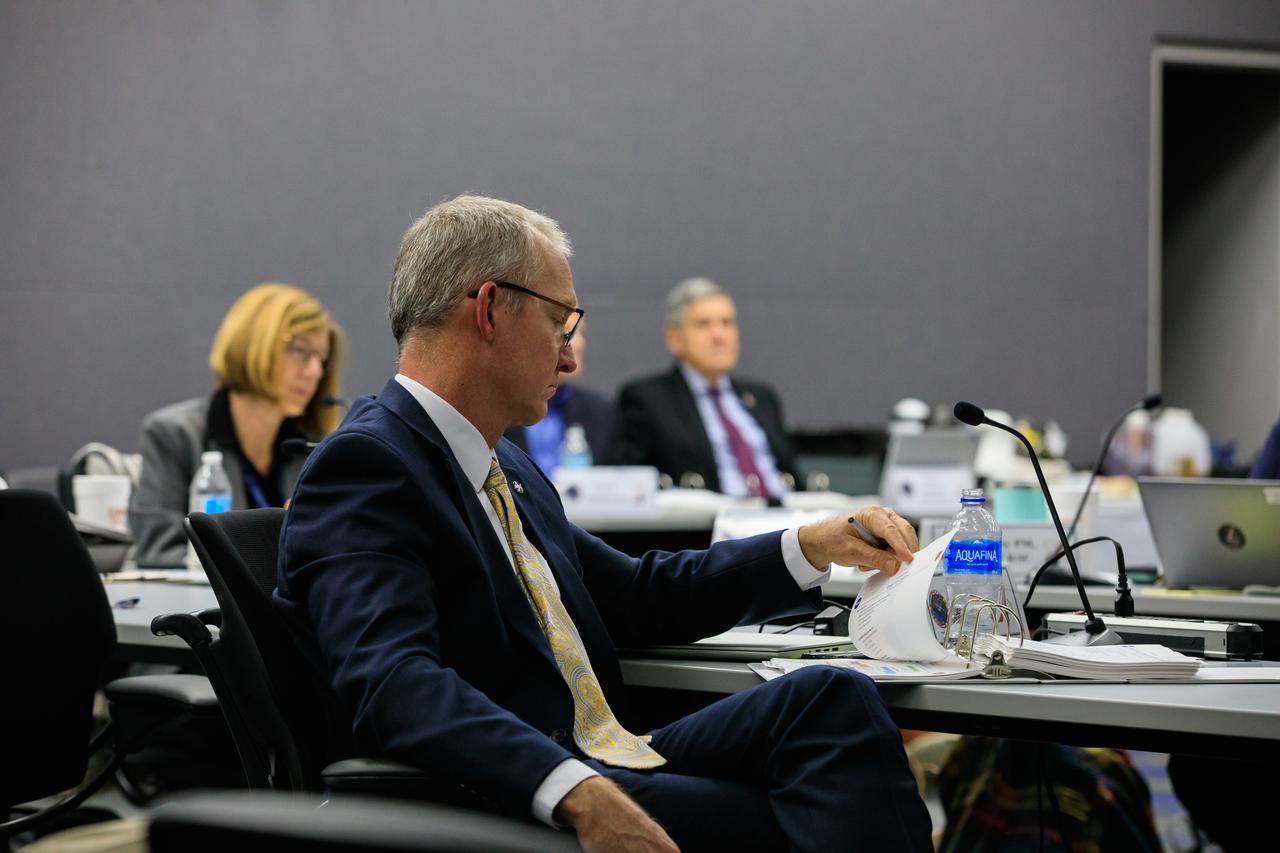
W. Russ DeLoach, chief of Safety and Mission Assurance at NASA, participates in a Flight Readiness Review for the agency’s Crew-5 mission at Kennedy Space Center in Florida on Sept. 26, 2022, to confirm the SpaceX Falcon 9 rocket and Crew Dragon spacecraft are ready for launch. In the background and to the left is Kathryn Lueders, associate administrator for NASA’s Space Operations Mission Directorate, and to the right is NASA Associate Administrator Bob Cabana. Crew-5 is scheduled to launch to the International Space Station from Kennedy’s Launch Complex 39A as part of the agency’s Commercial Crew Program. This will be the fifth crew rotation mission of SpaceX’s human transportation system and its sixth flight with astronauts, including the Demo-2 test flight, to the space station.
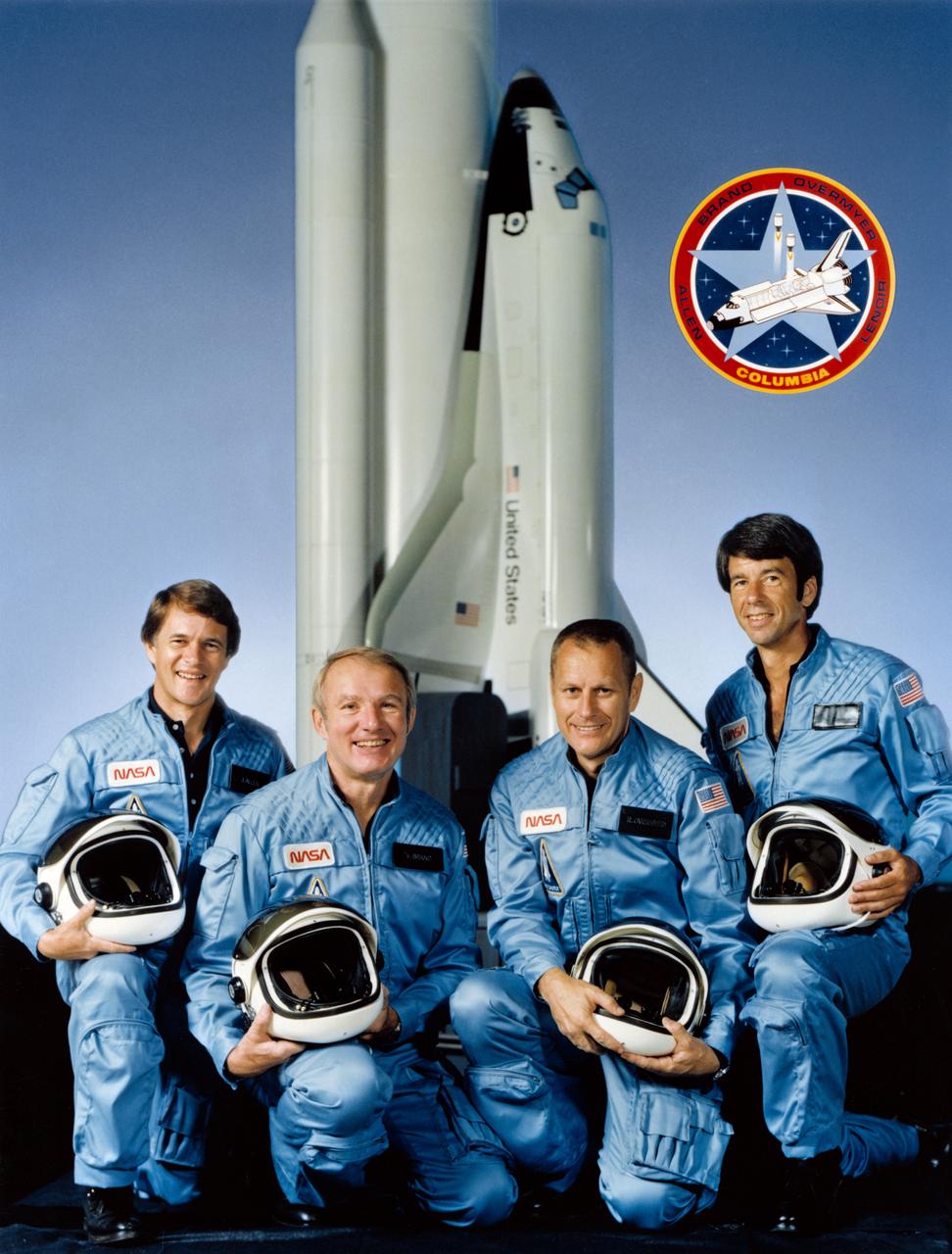
S82-36286 (15 Aug. 1982) --- These four men will be aboard the space shuttle Columbia for NASA's first operational Space Transportation System (STS) mission. They are astronauts Vance D. Brand (second left), STS-5 commander; Robert F. Overmyer (second right), pilot; and Joseph P. Allen (left) and William B. Lenoir, both mission specialists. They pose with a space shuttle model and the official insignia for STS-5. Their flight is scheduled for November of this year. Photo credit: NASA
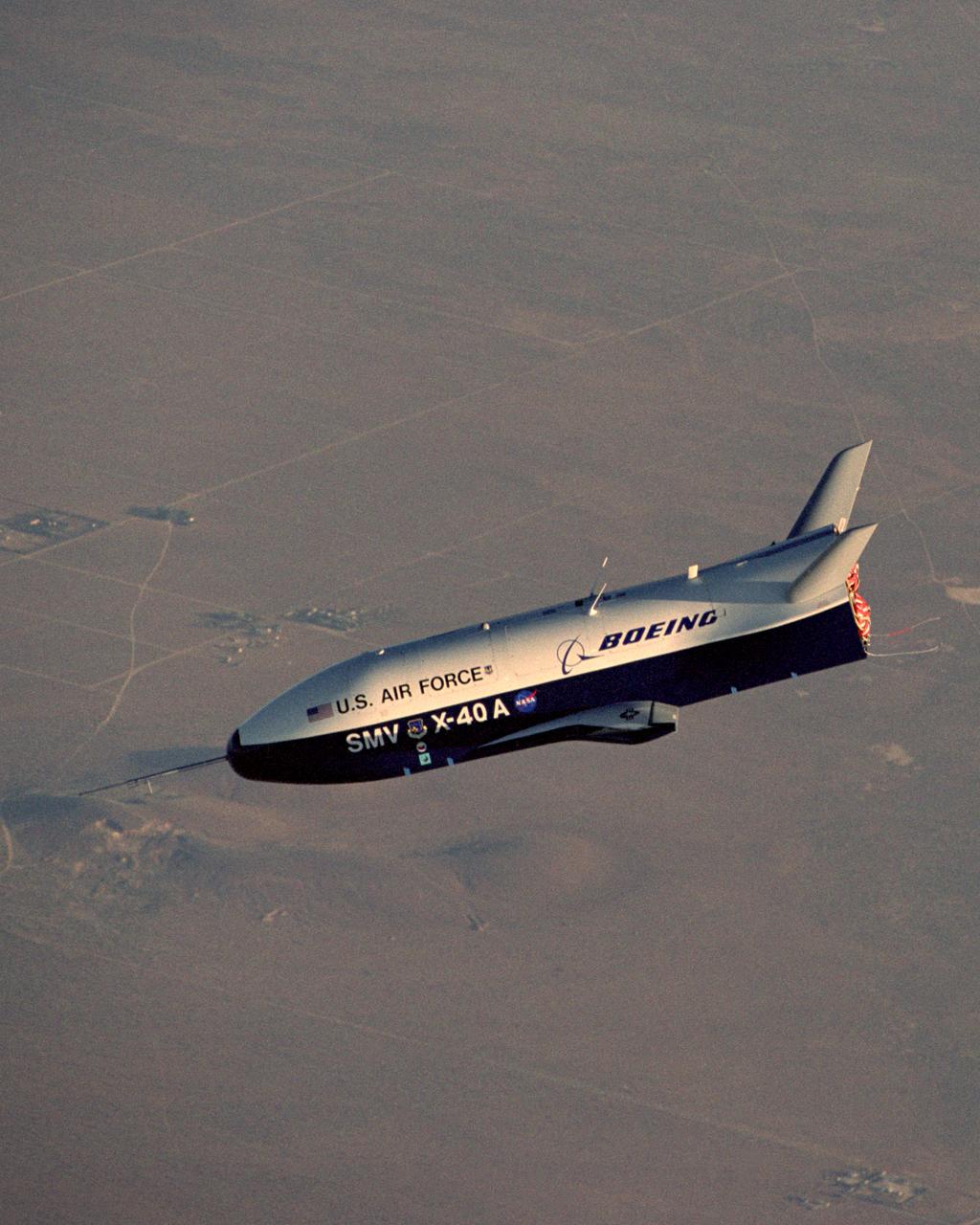
X-40A Free Flight #5. The unpowered X-40A, an 85 percent scale risk reduction version of the proposed X-37, proved the capability of an autonomous flight control and landing system in a series of glide flights at NASA's Dryden Flight Research Center in California. NASA's Marshall Space Flight Center in Huntsville, Alabama, manages the X-37 project. At Dryden, the X-40A underwent a series of ground and air tests to reduce possible risks to the larger X-37, including drop tests from a helicopter to check guidance and navigation systems planned for use in the X-37. The X-37 is designed to demonstrate technologies in the orbital and reentry environments for next-generation reusable launch vehicles that will increase both safety and reliability, while reducing launch costs from $10,000 per pound to $1,000 per pound.
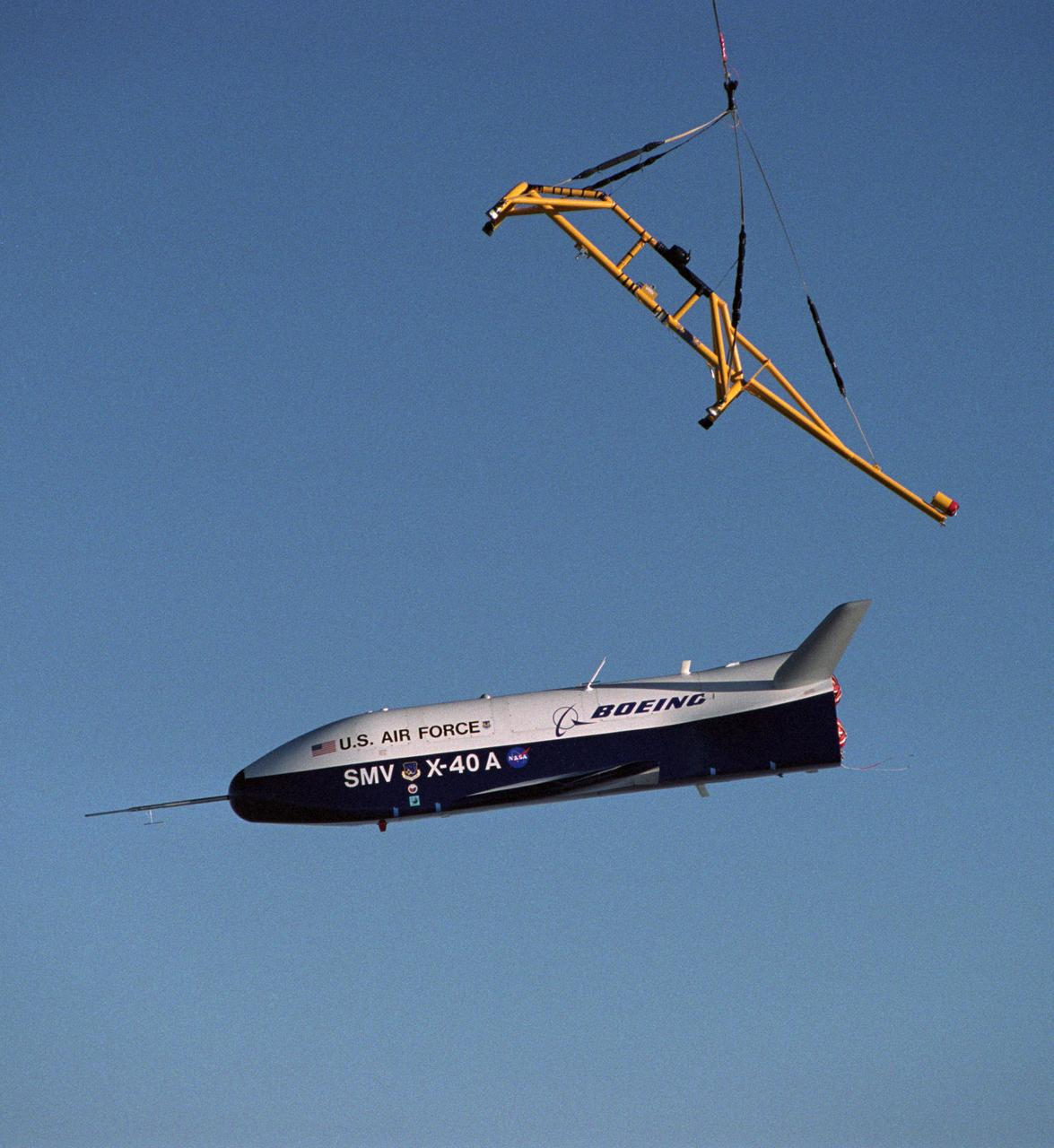
X-40A Free Flight #5. The unpowered X-40A, an 85 percent scale risk reduction version of the proposed X-37, proved the capability of an autonomous flight control and landing system in a series of glide flights at NASA's Dryden Flight Research Center in California. NASA's Marshall Space Flight Center in Huntsville, Alabama, manages the X-37 project. At Dryden, the X-40A underwent a series of ground and air tests to reduce possible risks to the larger X-37, including drop tests from a helicopter to check guidance and navigation systems planned for use in the X-37. The X-37 is designed to demonstrate technologies in the orbital and reentry environments for next-generation reusable launch vehicles that will increase both safety and reliability, while reducing launch costs from $10,000 per pound to $1,000 per pound.
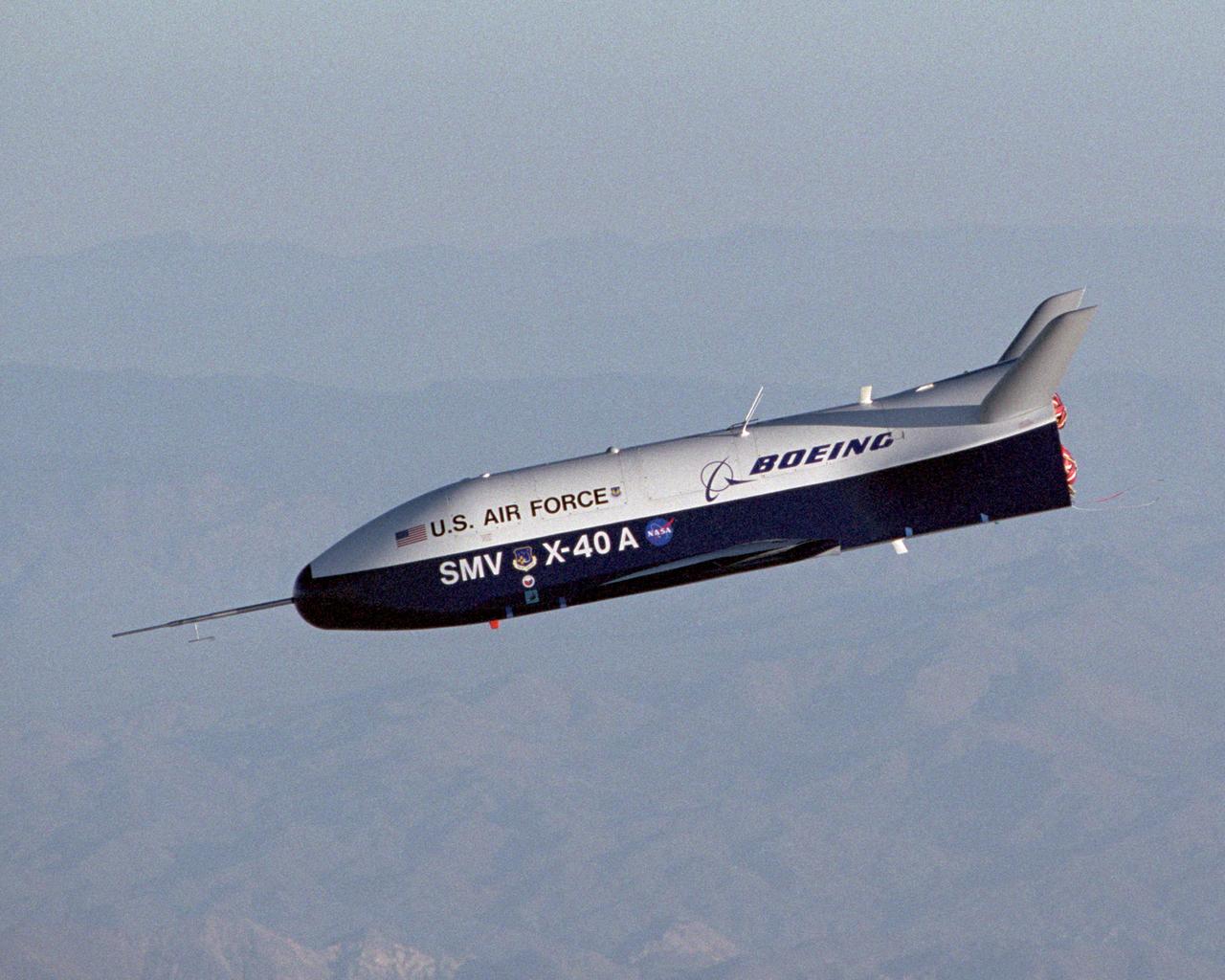
X-40A Free Flight #5. The unpowered X-40A, an 85 percent scale risk reduction version of the proposed X-37, proved the capability of an autonomous flight control and landing system in a series of glide flights at NASA's Dryden Flight Research Center in California. NASA's Marshall Space Flight Center in Huntsville, Alabama, manages the X-37 project. At Dryden, the X-40A underwent a series of ground and air tests to reduce possible risks to the larger X-37, including drop tests from a helicopter to check guidance and navigation systems planned for use in the X-37. The X-37 is designed to demonstrate technologies in the orbital and reentry environments for next-generation reusable launch vehicles that will increase both safety and reliability, while reducing launch costs from $10,000 per pound to $1,000 per pound.

Luis Muniz, radiation safety officer at NASA’s Goddard Space Flight Center, poses for a photograph before an employee incentive flying event with NASA Administrator Jared Isaacman's personal F-5 aircraft, Friday, March 27, 2026, at NASA’s Kennedy Space Center in Florida. Photo Credit: (NASA/John Kraus)
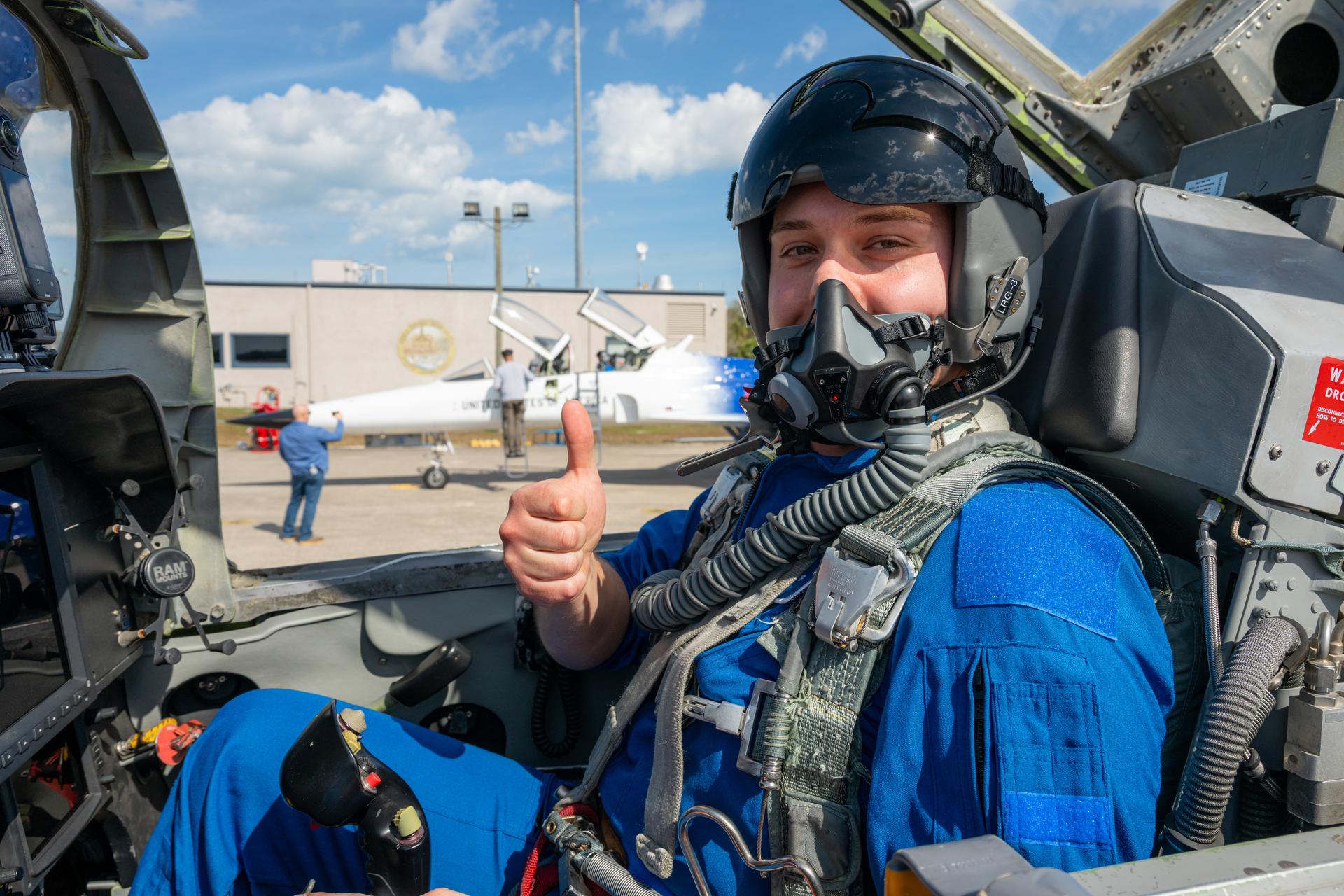
NASA employee Kristian Miasek, ET-10 test engineer at NASA’s Marshall Space Flight Center, participates in an employee incentive flying event with NASA Administrator Jared Isaacman's personal F-5 aircraft, Friday, Feb. 20, 2026, at NASA’s Kennedy Space Center in Florida. Photo Credit: (NASA/John Kraus)
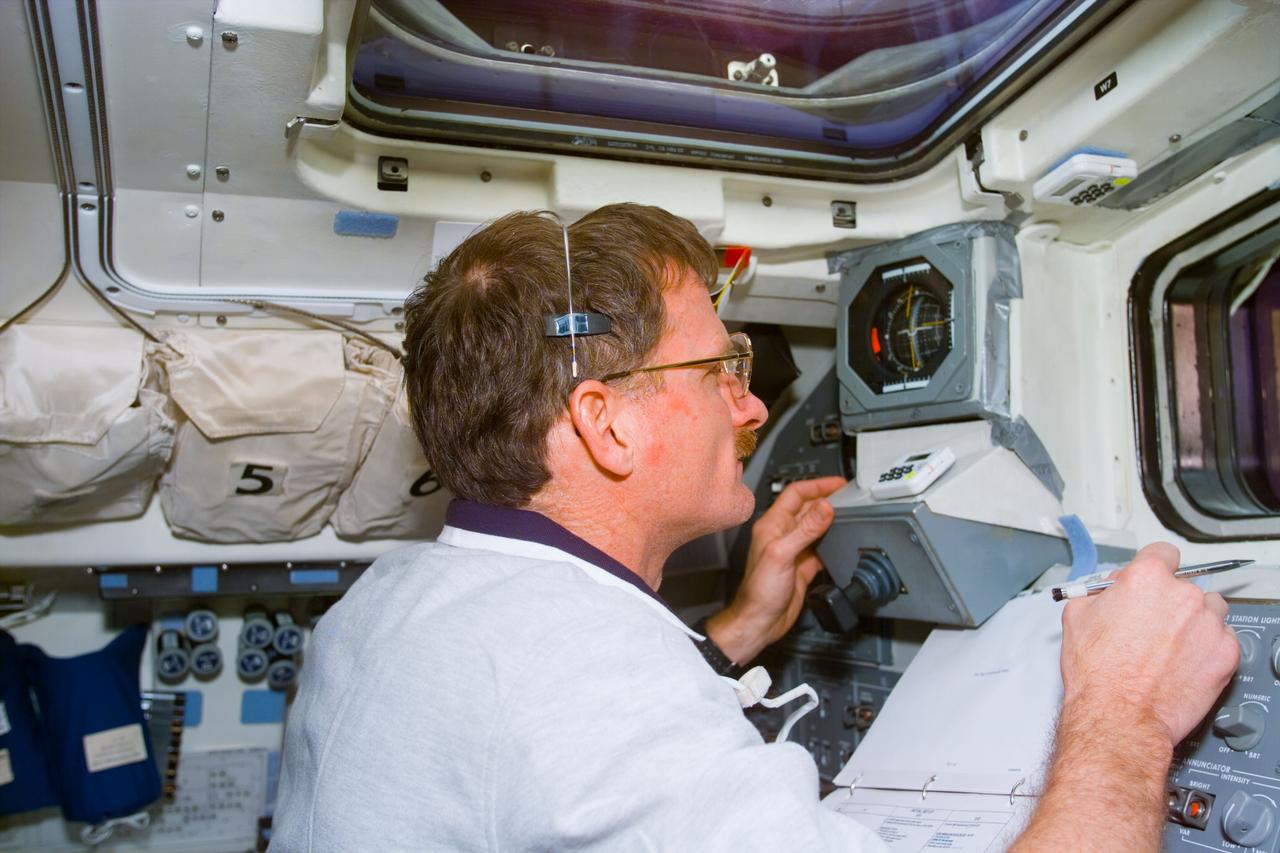
S82-E-5694 (18 Feb. 1997) --- Astronaut Joseph R. Tanner watches two astronauts at work in the Space Shuttle Discovery's cargo bay from aft flight deck during final Extravehicular Activity (EVA-5). This view was taken with an Electronic Still Camera (ESC).
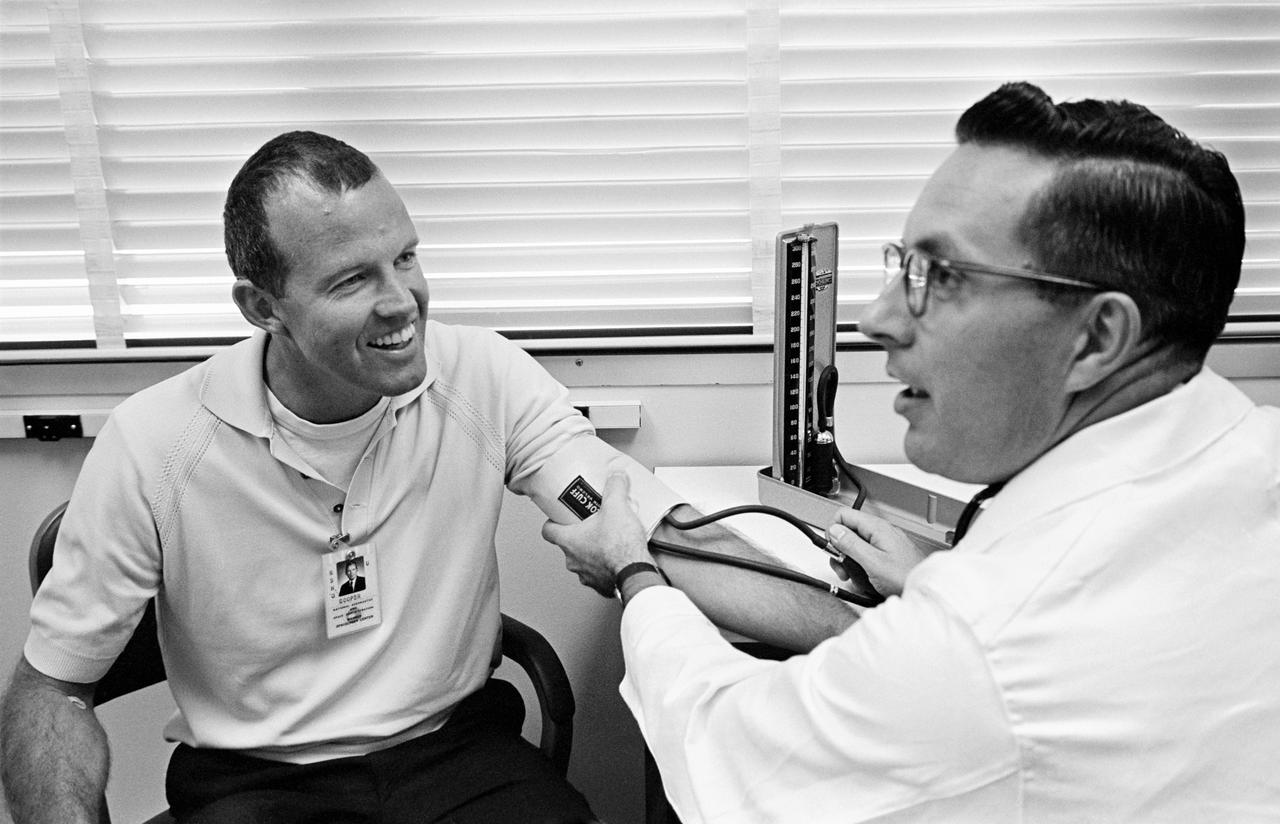
S65-28710 (17 Aug. 1965) --- Astronaut L. Gordon Cooper Jr., command pilot for the Gemini-5 spaceflight, has his blood pressure checked by Dr. Charles A. Berry, chief, Center Medical Programs, Manned Spacecraft Center, during a preflight physical examination.
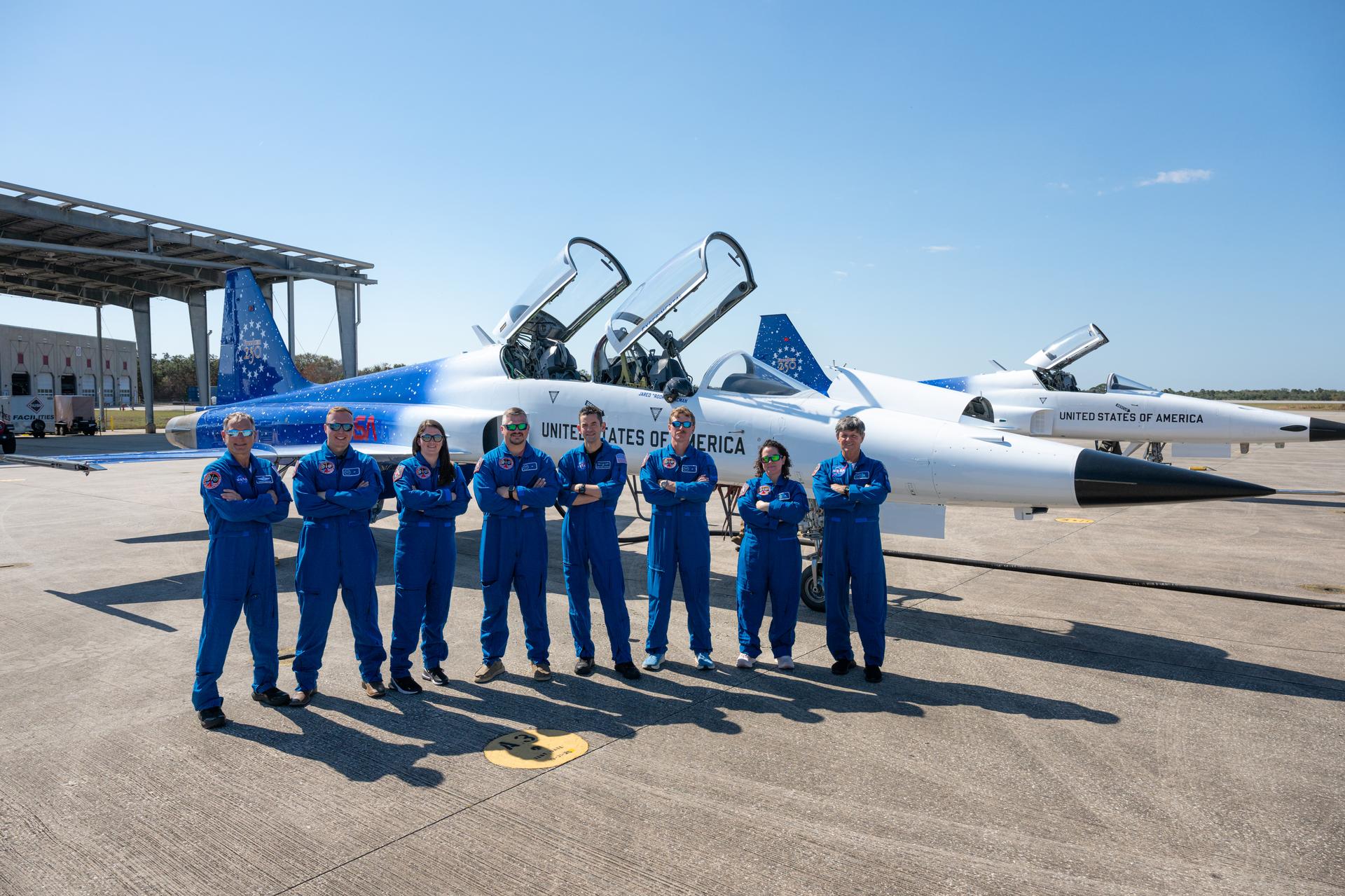
NASA Administrator Jared Isaacman, fifth from left, poses for a photograph with NASA employees and F-5 pilots following an employee incentive flying event using Isaacman's personal F-5 aircraft, Saturday, Feb. 21, 2026, at NASA’s Kennedy Space Center in Florida. From left to right: Sean Gustafson, pilot and senior advisor to the administrator; Kristian Miasek, ET-10 test engineer at NASA’s Marshall Space Flight Center; Megan Vansant, chief architect and demolition program manager at NASA’s Marshall Space Flight Center; James Hamilton, propellant and pressurant manager at NASA’s Stennis Space Center; NASA Administrator Jared Isaacman; Briou Bourgeois, E-3 test director at NASA’s Stennis Space Center; Brittany Bouché, acting deputy chief of facility engineering services at NASA’s Stennis Space Center; and Jerry Kerby, pilot. Photo Credit: (NASA/John Kraus)
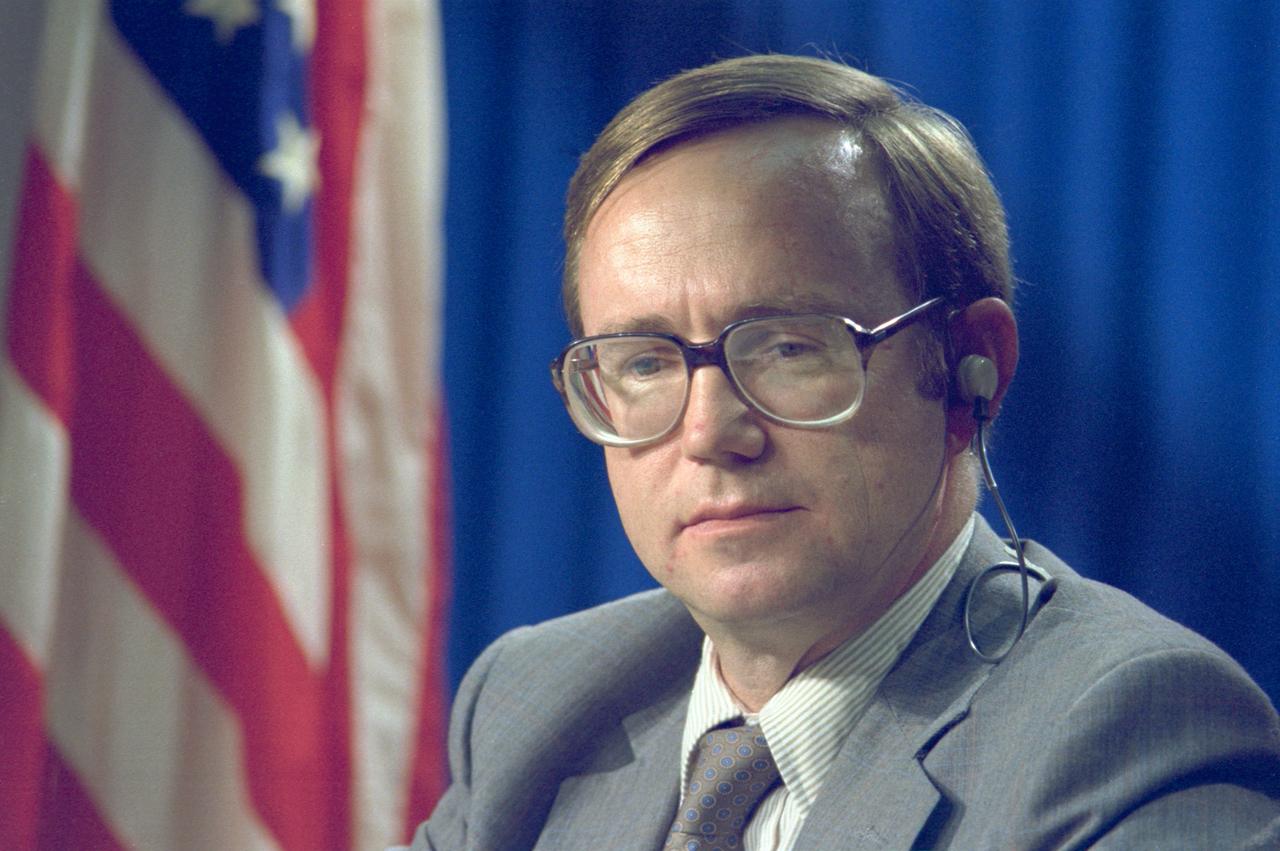
Flight Director Tommy Holloway listens to a question from a news media representative during a STS-5 pre-flight press briefing.
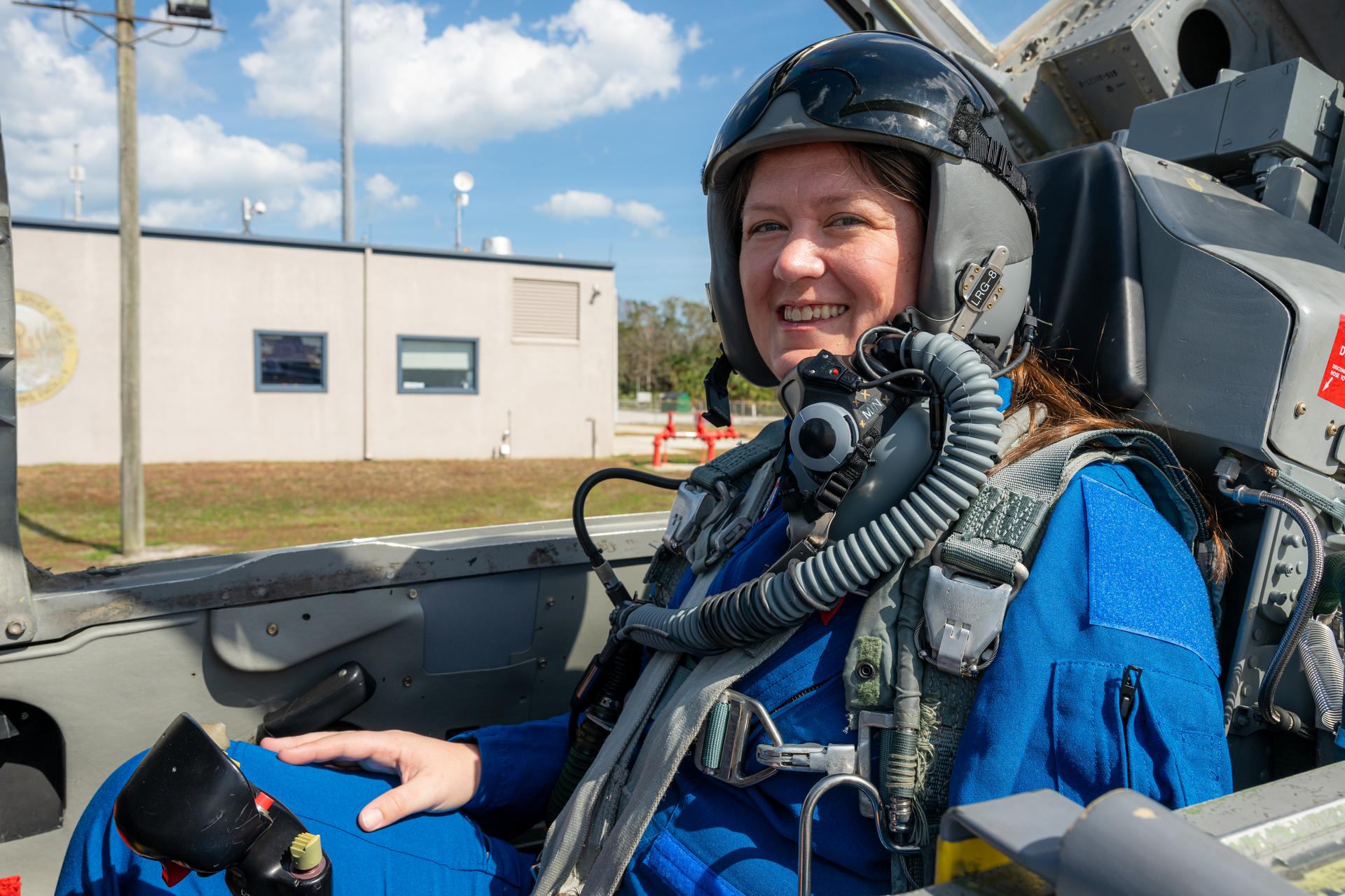
NASA employee Megan Vansant, chief architect and demolition program manager at NASA’s Marshall Space Flight Center, participates in an employee incentive flying event with NASA Administrator Jared Isaacman's personal F-5 aircraft, Friday, Feb. 20, 2026, at NASA’s Kennedy Space Center in Florida. Photo Credit: (NASA/John Kraus)
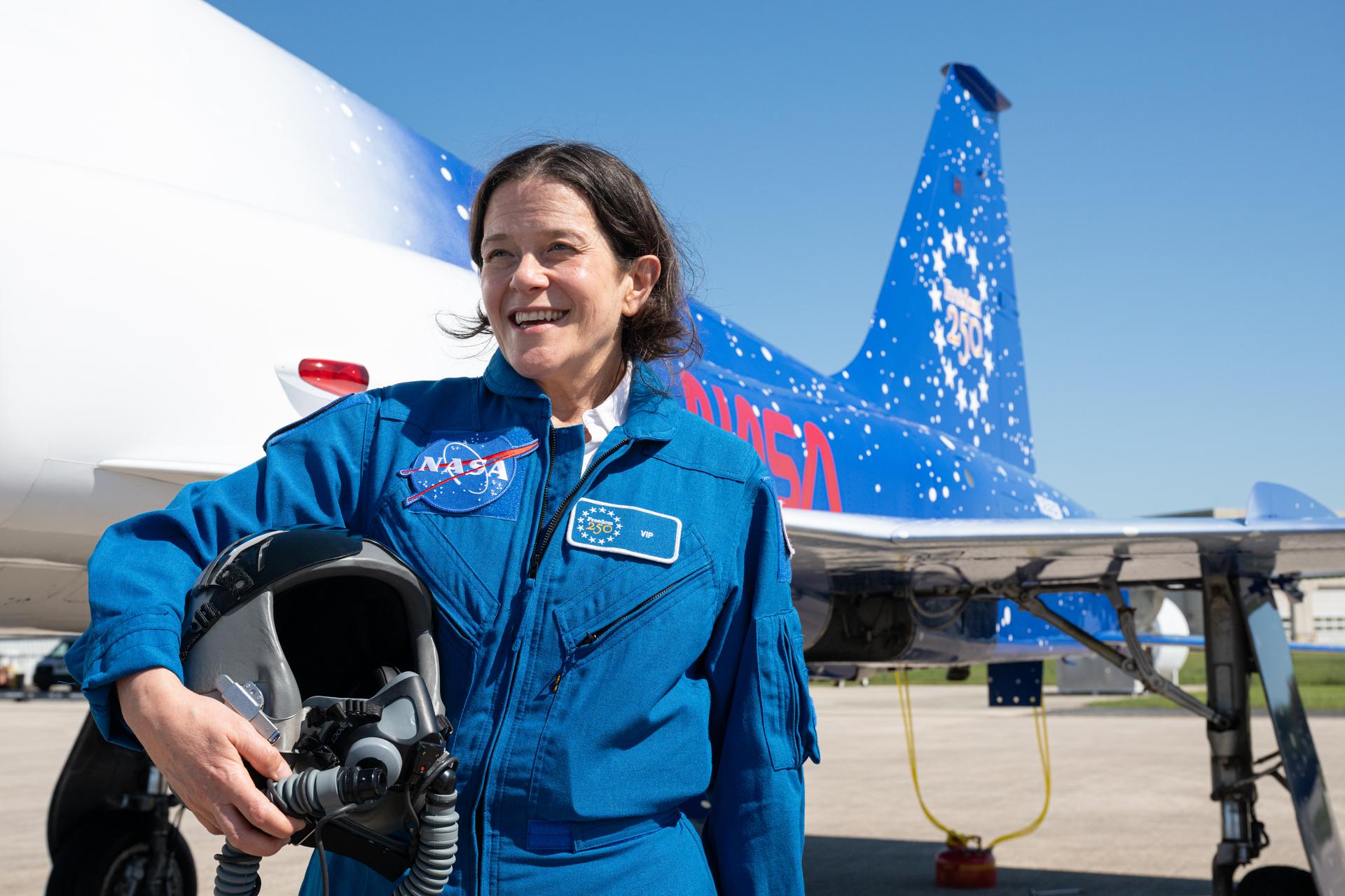
Teresa Nieves-Chinchilla, director of the Moon to Mars Space Weather Analysis Office at NASA’s Goddard Space Flight Center, poses for a photograph before an employee incentive flying event with NASA Administrator Jared Isaacman's personal F-5 aircraft, Friday, March 27, 2026, at NASA’s Kennedy Space Center in Florida. Photo Credit: (NASA/John Kraus)

Sean Clarke, NASA technical fellow for electric power for the NASA Engineering and Safety Center (NESC), based at NASA’s Armstrong Flight Research Center, participates in an employee incentive flying event with NASA Administrator Jared Isaacman's personal F-5 aircraft, Friday, March 27, 2026, at NASA’s Kennedy Space Center in Florida. Photo Credit: (NASA/John Kraus)
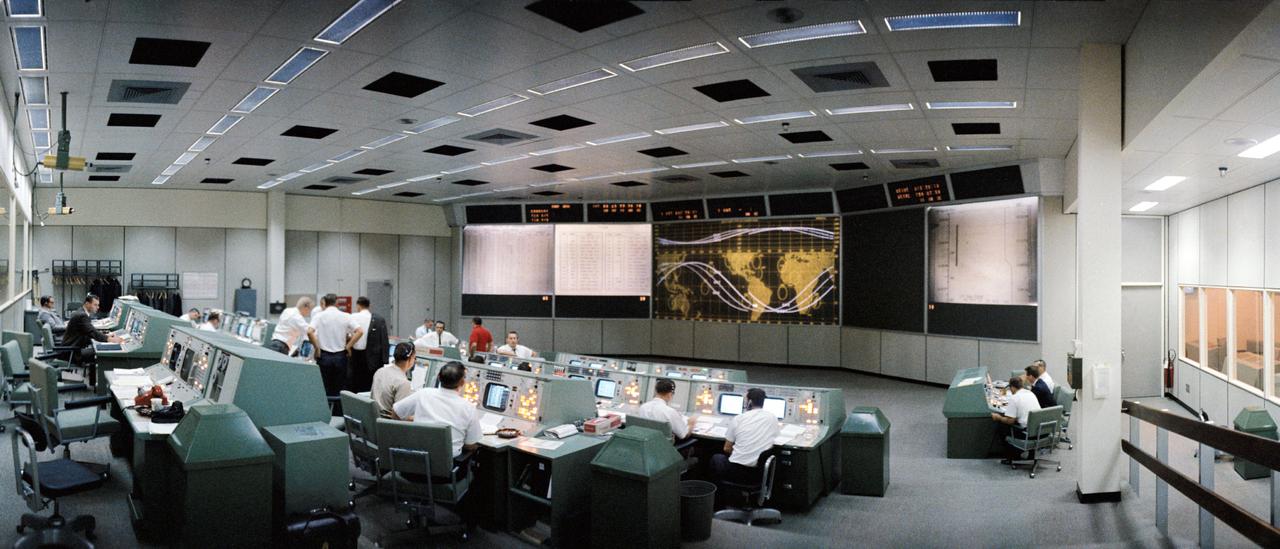
S65-45280 (21-29 Aug. 1965) --- Overall view of the Mission Control Center (MCC), Houston, Texas, during the Gemini-5 flight. Note the screen at the front of the MCC which is used to track the progress of the Gemini spacecraft.

Foreground, from left: Teresa Nieves-Chinchilla, director of the Moon to Mars Space Weather Analysis Office at NASA’s Goddard Space Flight Center; Kyle Back, director of the business management office at the Office of the Chief Financial Officer Enterprise at NASA Headquarters; NASA Administrator Jared Isaacman; and Luis Muniz, radiation safety officer at NASA’s Goddard Space Flight Center; background: Sean Clarke, NASA technical fellow for electric power for the NASA Engineering and Safety Center, based at NASA’s Armstrong Flight Research Center, center, and Ryan Fishel, pilot, right, pose for a photograph following an employee incentive flying event with Isaacman's personal F-5 aircraft, Friday, March 27, 2026, at NASA’s Kennedy Space Center in Florida. Photo Credit: (NASA/John Kraus)
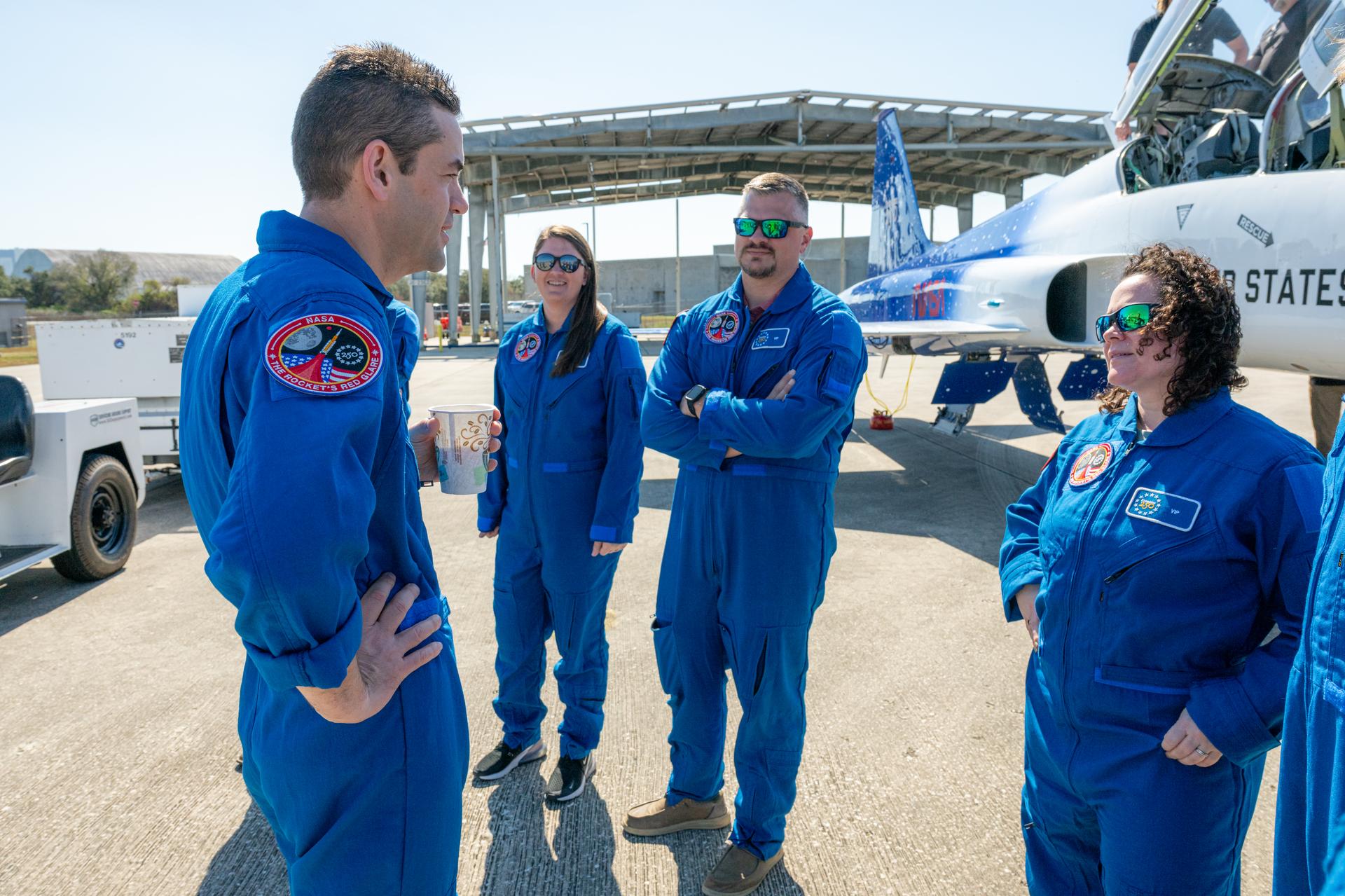
NASA Administrator Jared Isaacman, left, speaks with NASA employees Megan Vansant, chief architect and demolition program manager at NASA’s Marshall Space Flight Center, second from left; James Hamilton, propellant and pressurant manager at NASA’s Stennis Space Center, third from left; and Brittany Bouché, acting deputy chief of facility engineering services at NASA’s Stennis Space Center, right, following an employee incentive flying event using Isaacman's personal F-5 aircraft, Saturday, Feb. 21, 2026, at NASA’s Kennedy Space Center in Florida. Photo Credit: (NASA/John Kraus)

S65-45683 (21-29 Aug. 1965) --- Astronaut Charles Conrad Jr. inside the Gemini-5 spacecraft as it orbited Earth. Astronaut L. Gordon Cooper Jr. took this photograph.

S68-19459 (22 Jan. 1968) --- The Apollo 5 (LM-1/Saturn 204) unmanned space mission was launched from the Kennedy Space Center's Launch Complex 37 at 5:48:09 p.m. (EST), Jan. 22, 1968. The Lunar Module-1 payload was boosted into Earth orbit by a launch vehicle composed of a Saturn IB first stage and a Saturn S-IVB second stage. The Apollo lunar module's first flight test was called a complete success. Ascent and descent propulsion systems and the ability to abort a lunar landing and return to orbit were demonstrated.

S68-19460 (22 Jan. 1968) --- The Apollo 5 (LM-1/Saturn 204) unmanned space mission was launched from the Kennedy Space Center's Launch Complex 37 at 5:48:09 p.m. (EST), Jan. 22, 1968. The Lunar Module-1 payload was boosted into Earth orbit by a launch vehicle composed of a Saturn IB first stage and a Saturn S-IVB second stage. The Apollo lunar module's first flight test was called a complete success. Ascent and descent propulsion systems and the ability to abort a lunar landing and return to orbit were demonstrated.
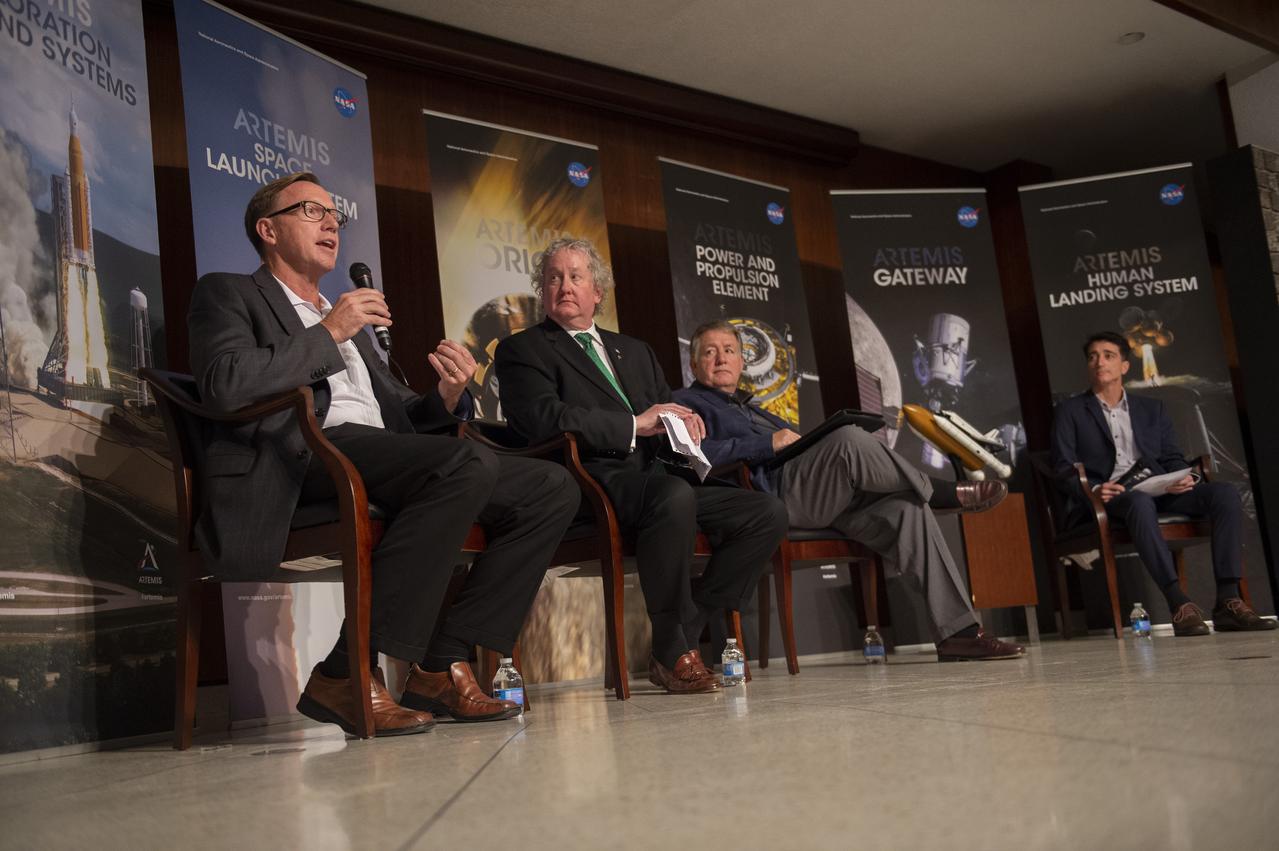
A Nov. 5 panel at NASA’s Marshall Space Flight Center discusses lessons learned from Columbia including, from left, Steve Miley, associate director of Marshall; Bill Hill, director of advanced technology at Marshall; Preston Jones, associate director, technical, at Marshall; and Mike Ciannilli, Apollo Challenger Columbia Lessons Learned Program manager at NASA’s Kennedy Space Center.
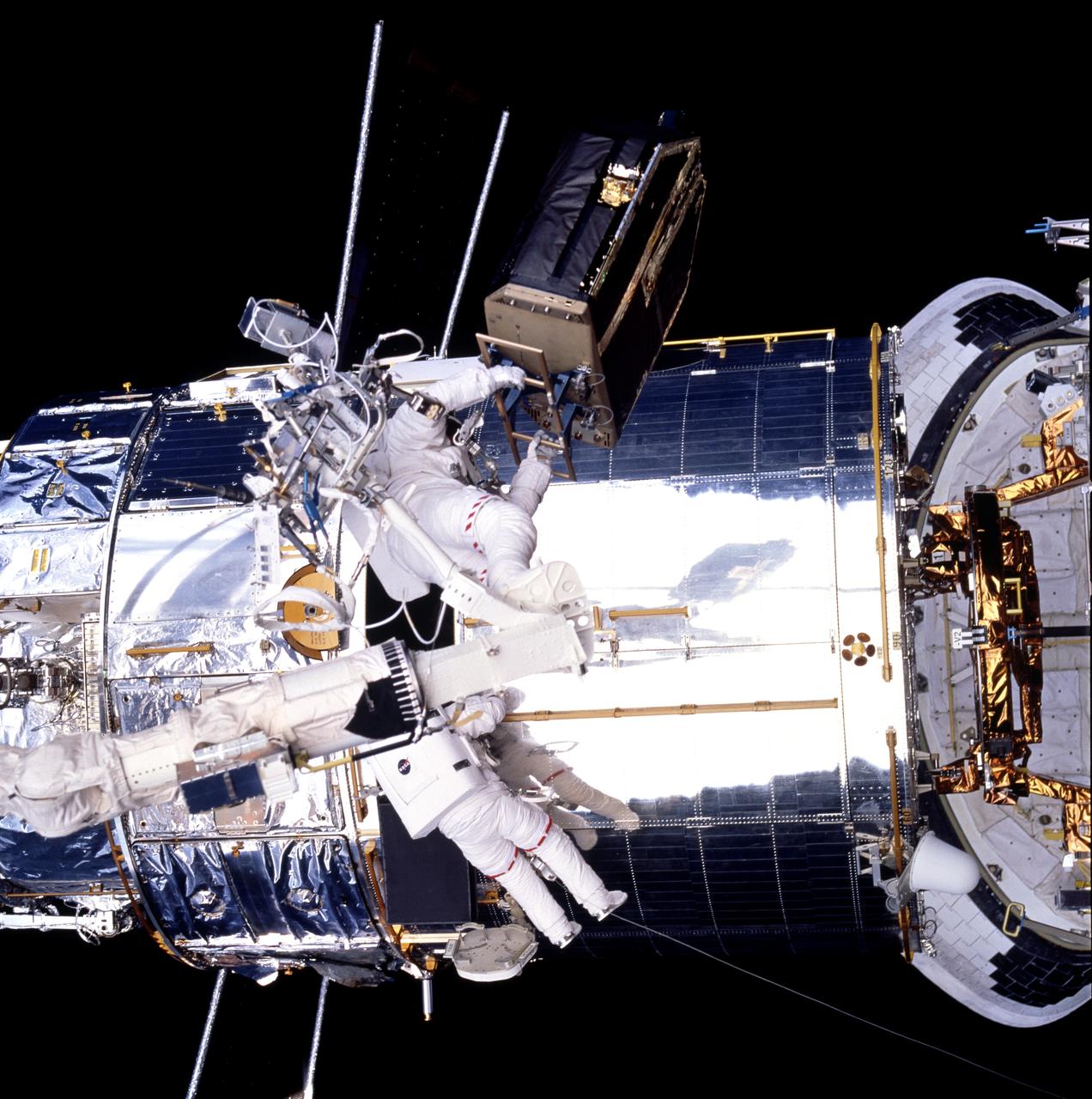
STS082-742-047 (11-21 Feb. 1997) --- On Flight Day 5, astronaut Joseph R. Tanner (left) holds a 500 pound piece of hardware as he stands on the end of the Space Shuttle Discovery's Remote Manipulator System (RMS) arm, as tethered astronaut Gregory J. Harbaugh works nearby. The piano-shaped object held aloft by Tanner is actually the Fine Guidance Sensor 1 (FGS-1), which Tanner had just removed from the Hubble Space Telescope (HST). Harbaugh is inspecting the FGS' bay to set the stage for the two to insert the replacement hardware. EDITOR'S NOTE: For orientation purposes, the picture should be held with Space Shuttle's OMS pods at top.

S68-18733 (22 Jan. 1968) --- Dr. Robert R. Gilruth (right), MSC Director, sits with Dr. Christopher C. Kraft Jr., MSC director of flight operations, at his flight operations director console in the Mission Control Center, Building 30, during the Apollo 5 (LM-1/Saturn 204) unmanned space mission.

Space Shuttle Discovery landed safely at NASA's Dryden Flight Research Center at Edwards Air Force Base in Calif. at 5:11 a.m. this morning, following the very successful 14-day STS-114 return to flight mission.

S65-45736 (21-29 Aug. 1965) --- Alexandria, Egypt is photographed from the Gemini-5 spacecraft in orbit over Earth.

S65-45717 (21-29 Aug. 1965) --- View of the Himalayas and Northern India photographed from the Gemini-5 spacecraft in orbit over Earth.
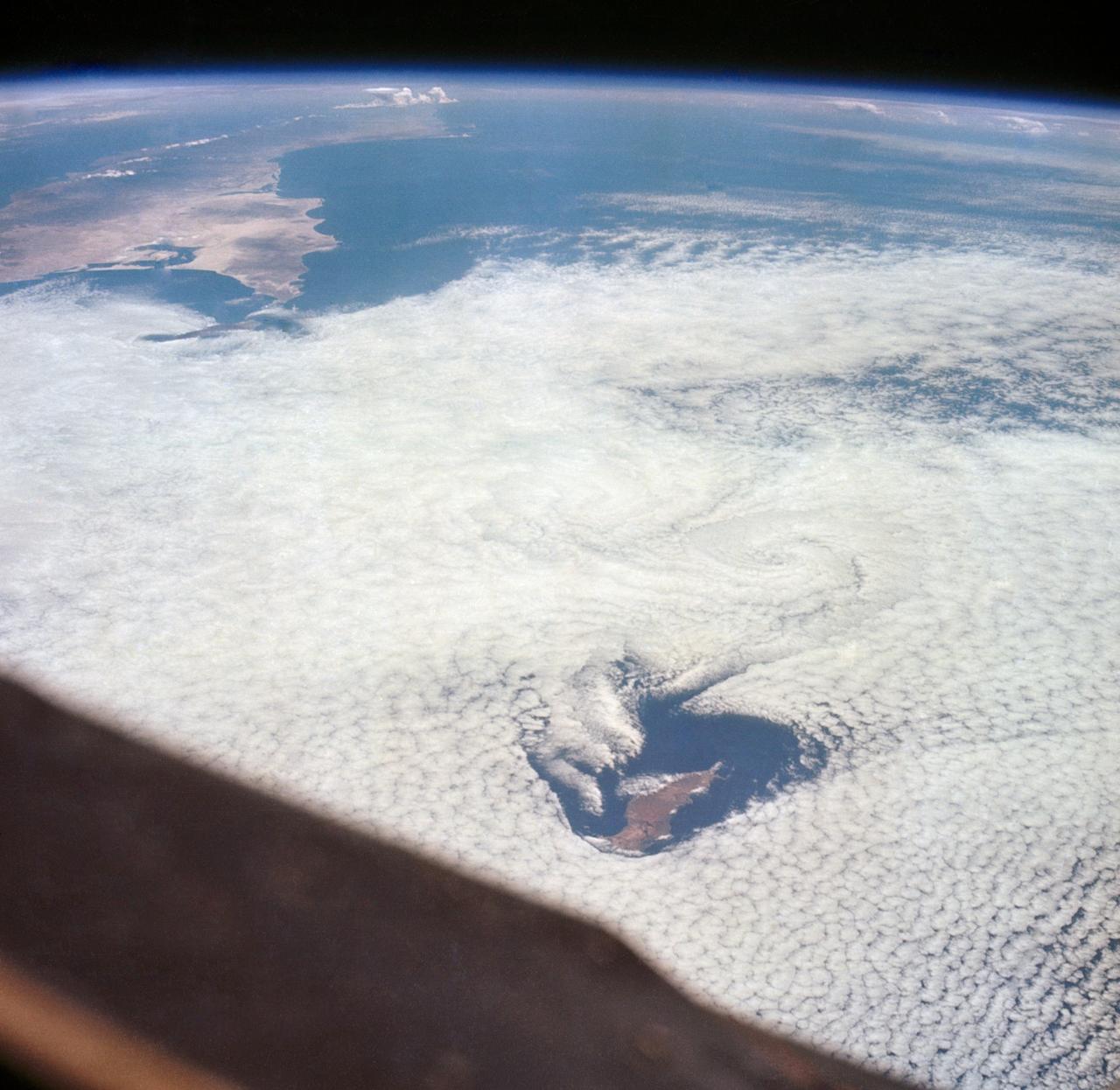
S65-45697 (21-29 Aug. 1965) --- The western coastline of Baja, California and Cedros Island is photographed from the Gemini-5 spacecraft in orbit over Earth.
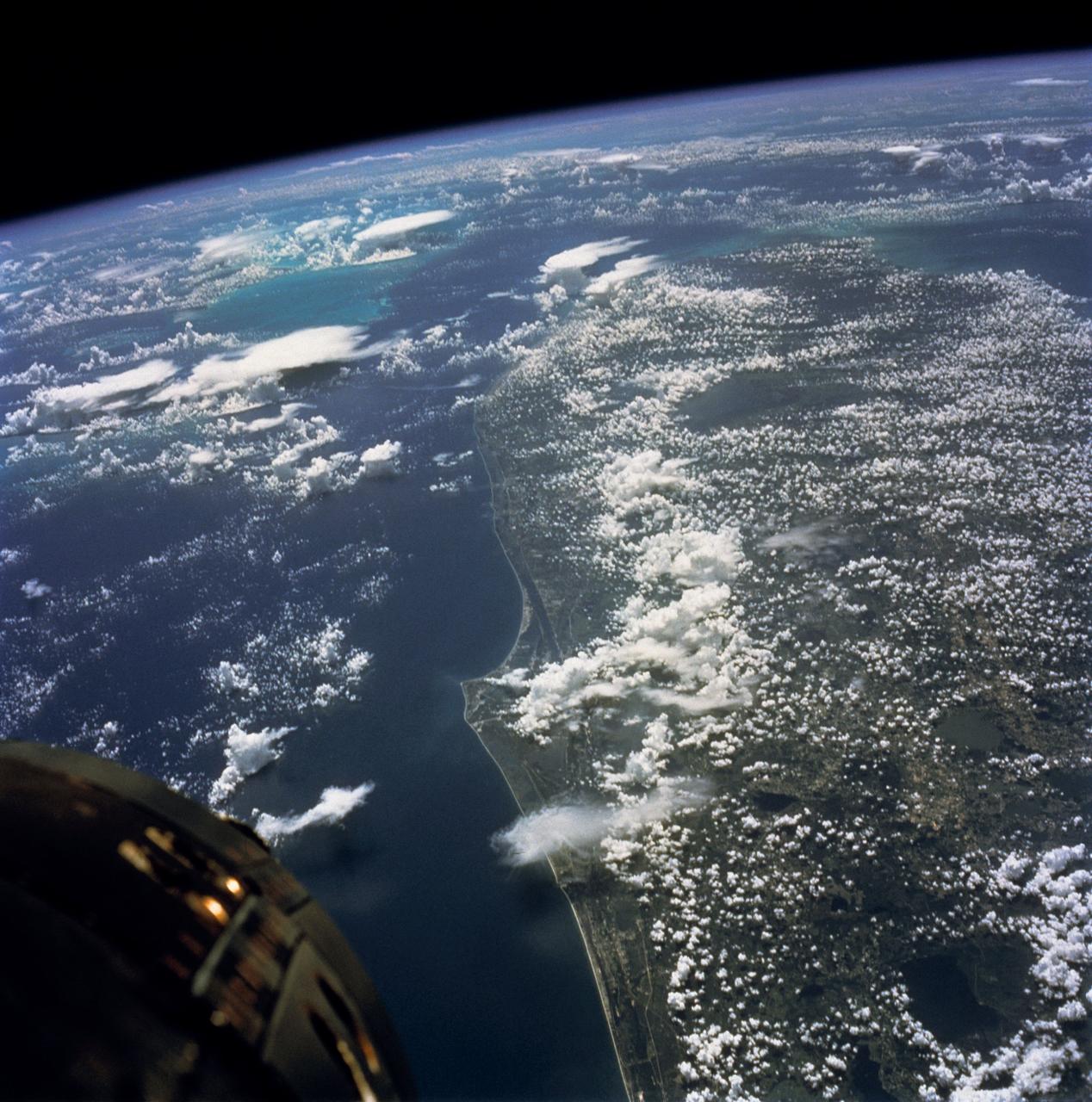
S65-45753 (21-29 Aug. 1965) --- Cape Kennedy, Florida is featured in this image photographed from the Gemini-5 spacecraft in orbit over Earth.
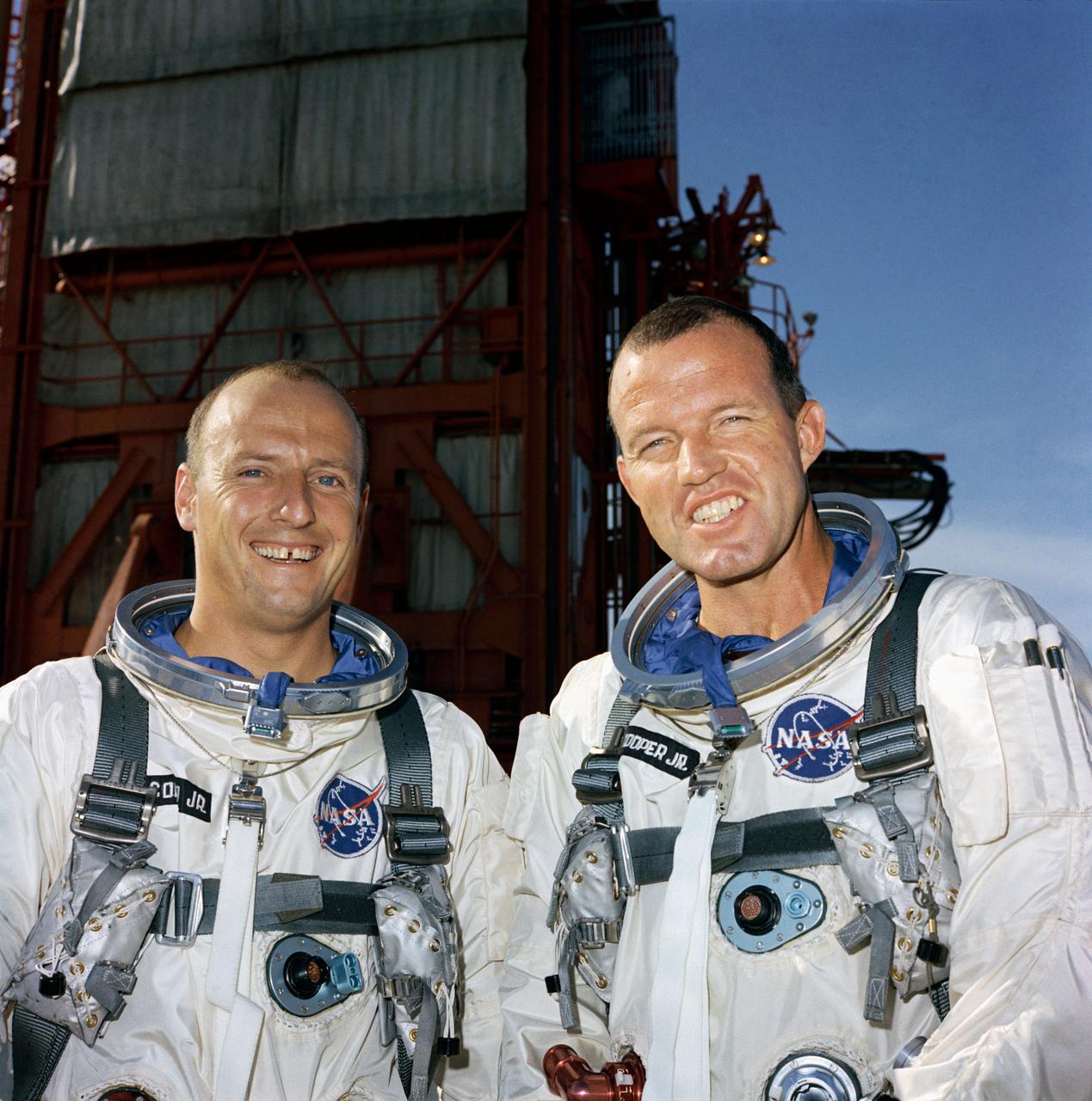
S65-46990 (16 Aug. 1965) --- Astronauts Charles Conrad Jr. (left), pilot, and L. Gordon Cooper Jr., command pilot, are the prime crew for the Gemini-Titan 5 mission.
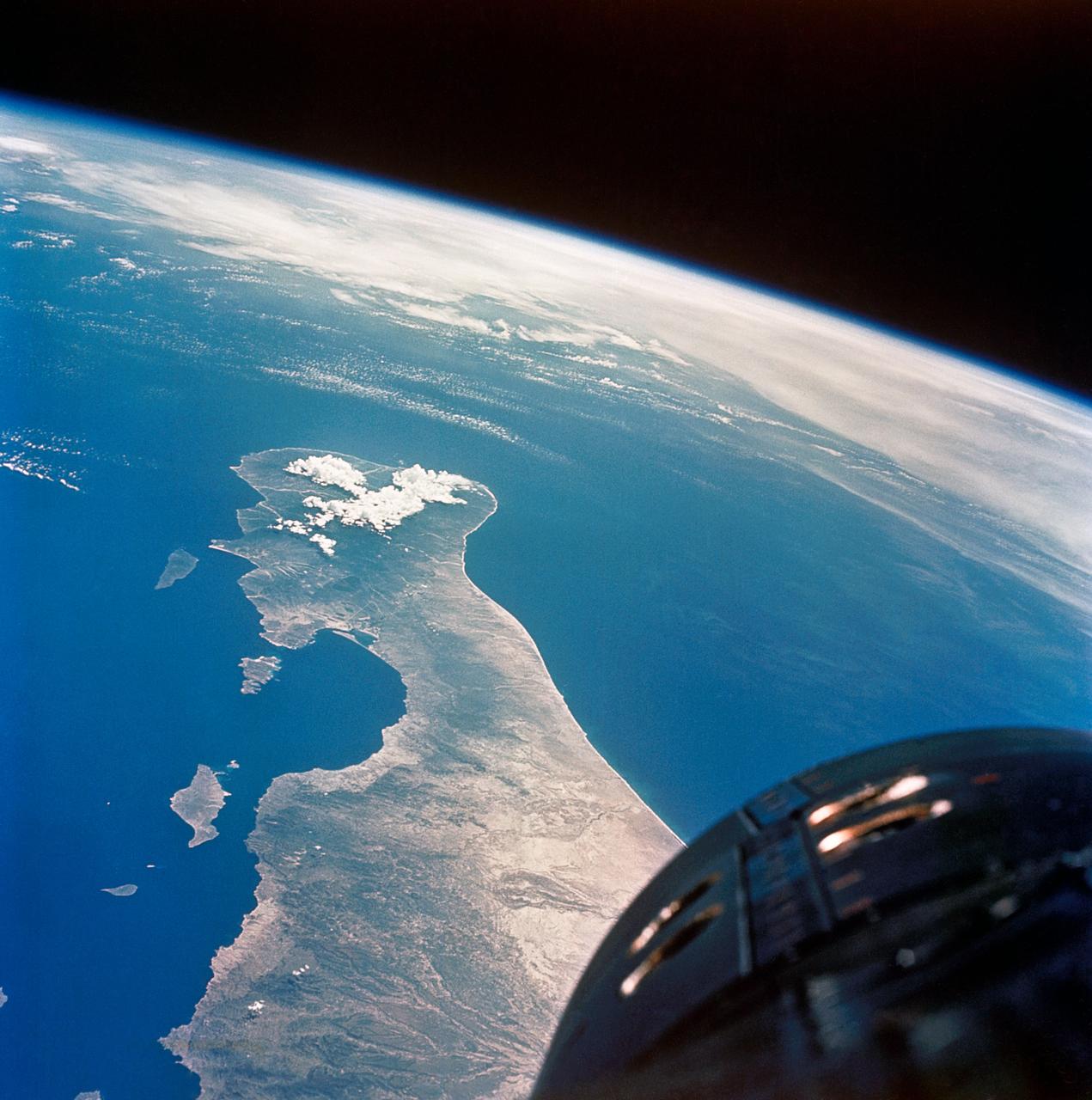
S65-45763 (21-29 Aug. 1965) --- View of the lower tip of Baja, California and Bahia de la Paz taken from the Gemini-5 spacecraft in orbit over Earth.
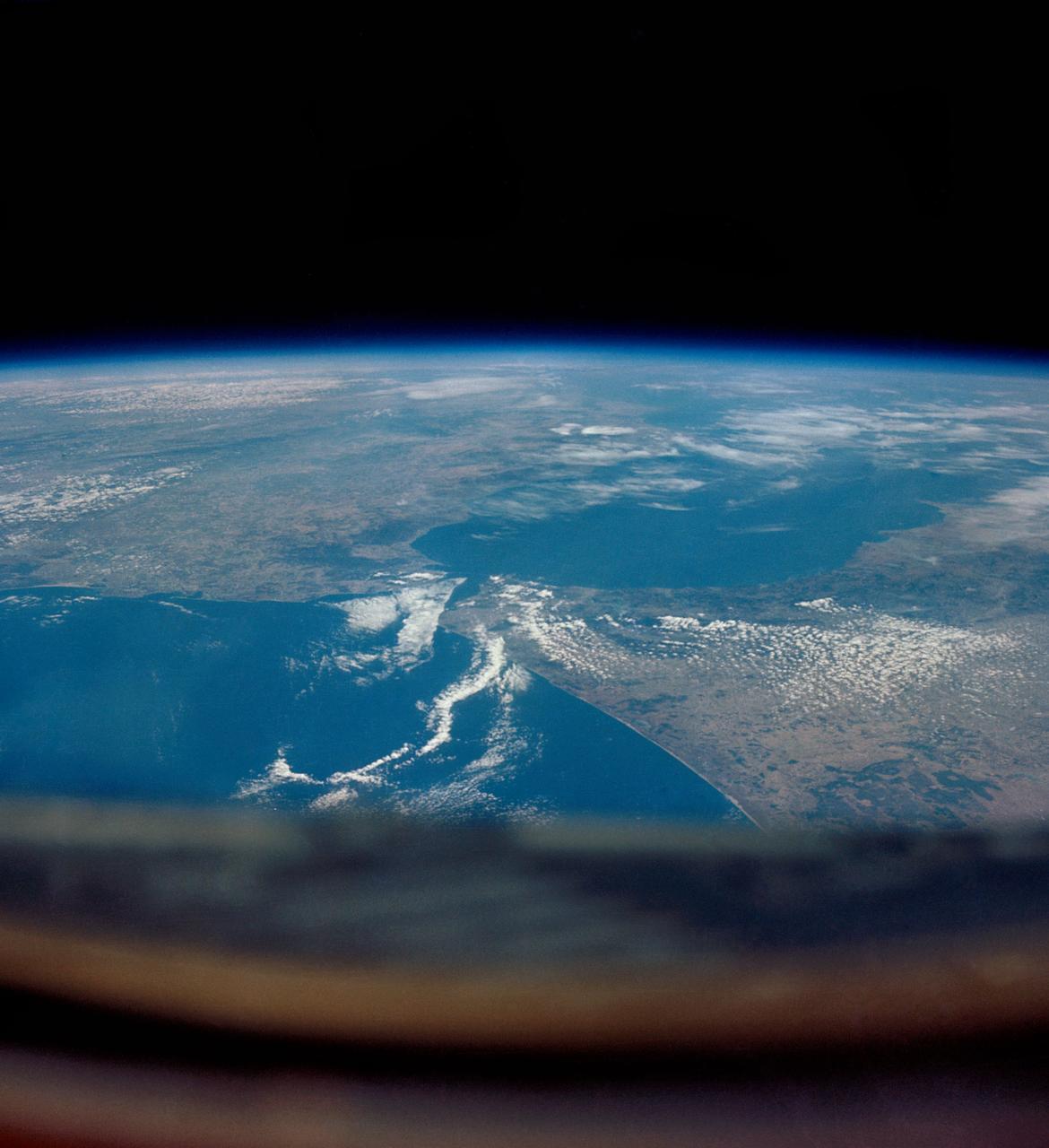
S65-45737 (22 Aug. 1965) --- Looking northeast, the Strait of Gibraltar, Morocco (foreground) and Spain (background) are photographed from the Gemini-5 spacecraft during its 14th revolution of Earth.

S65-45748 (21-29 Aug. 1965) --- Looking northeast, the Imperial Valley and Salton Sea in southern California is photographed from the Earth-orbiting Gemini-5 spacecraft. This picture was taken with a modified 70mm Hasselblad camera, using MS Ektachrome thin base film, ASA 64.
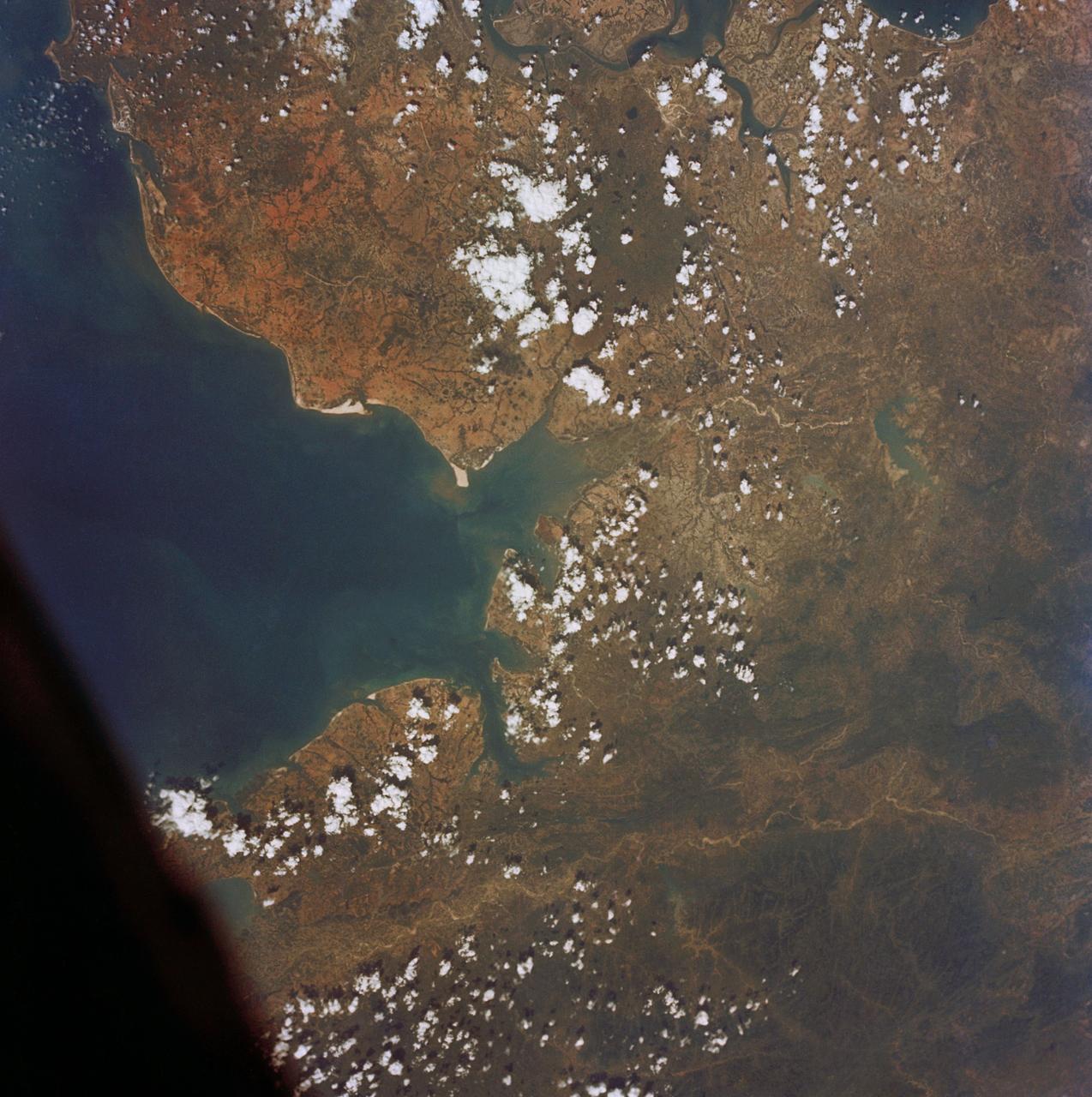
S65-45731 (21-29 Aug. 1965) --- View of the Gulf of Tonkin, China and the Luichow Peninsula photographed from the Gemini-5 spacecraft in orbit over Earth.
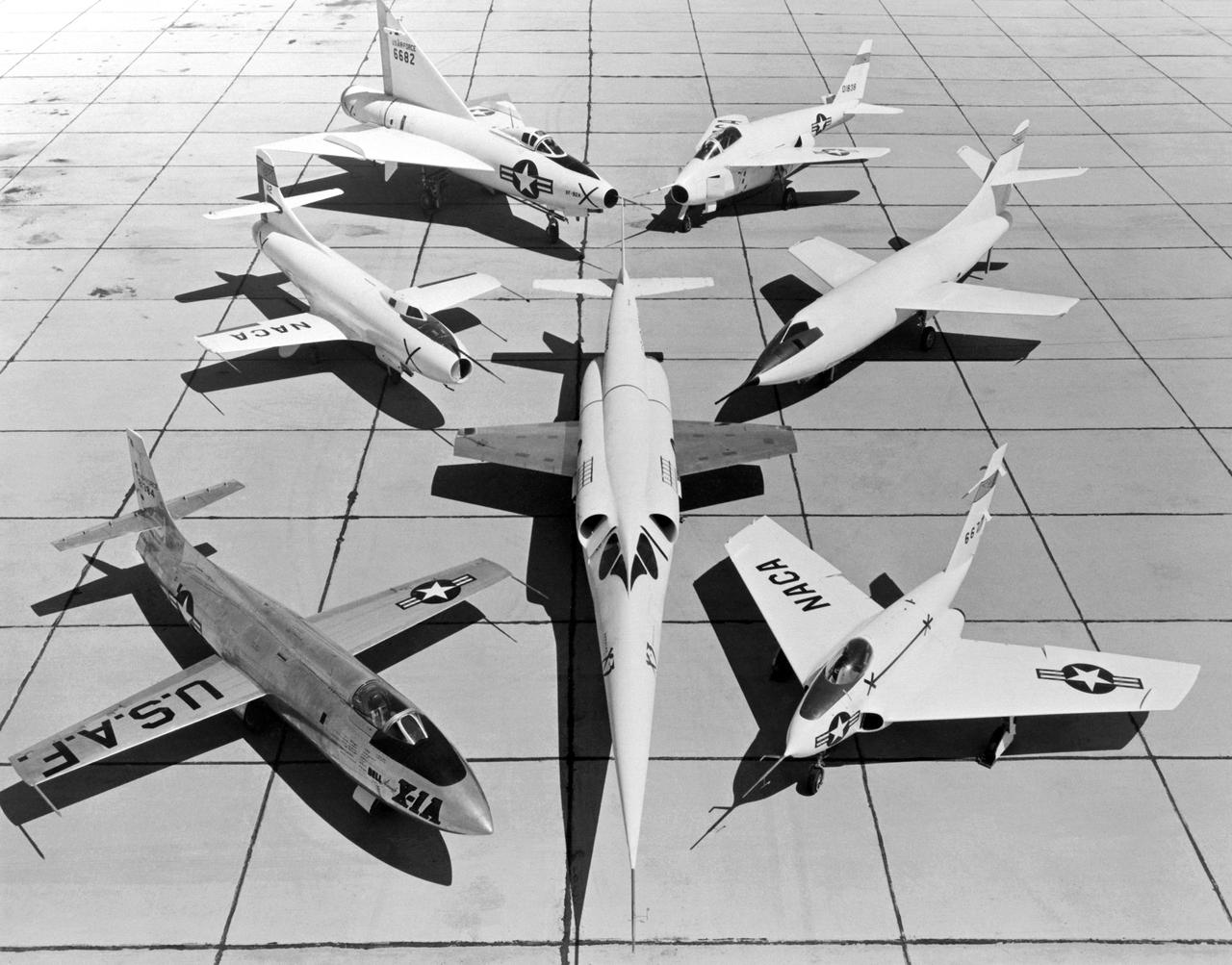
A 1953 photo of some of the research aircraft at the NACA High-Speed Flight Research Station (now known as the the Dryden Flight Research Center). The photo shows the X-3 (center) and, clockwise from left: X-1A (Air Force serial number 48-1384), the third D-558-1 (NACA tail number 142), XF-92A, X-5, D-558-2, and X-4.
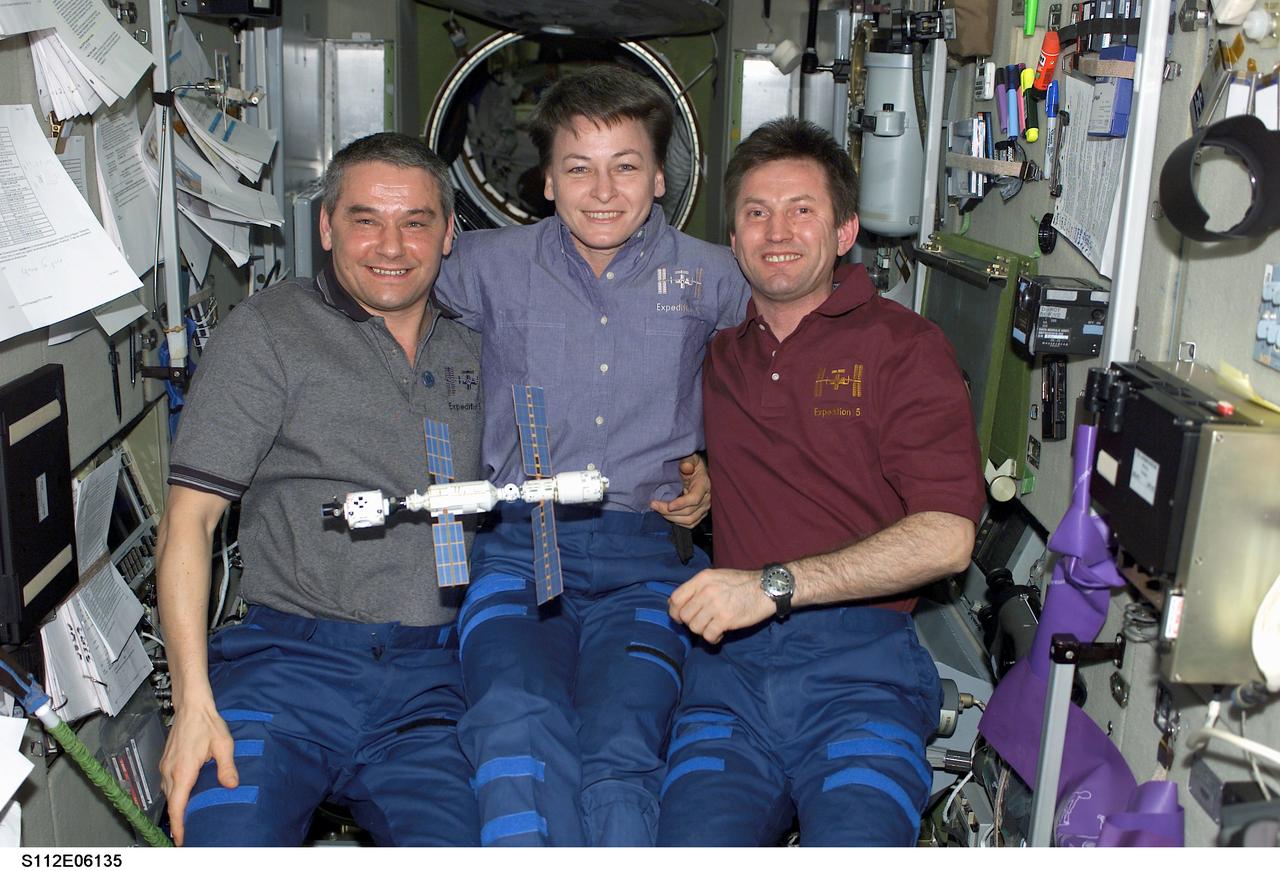
STS112-E-06135 (15 October 2002) --- While hosting the STS-112 crew for a week, the Expedition Five crewmembers pose for a photo in the Zvezda Service Module on the International Space Station (ISS). From the left are cosmonaut Valery G. Korzun, mission commander; astronaut Peggy A. Whitson and cosmonaut Sergei Y. Treschev, both flight engineers. Korzun and Treschev represent Rosaviakosmos. A model of the station is visible floating with the crew.
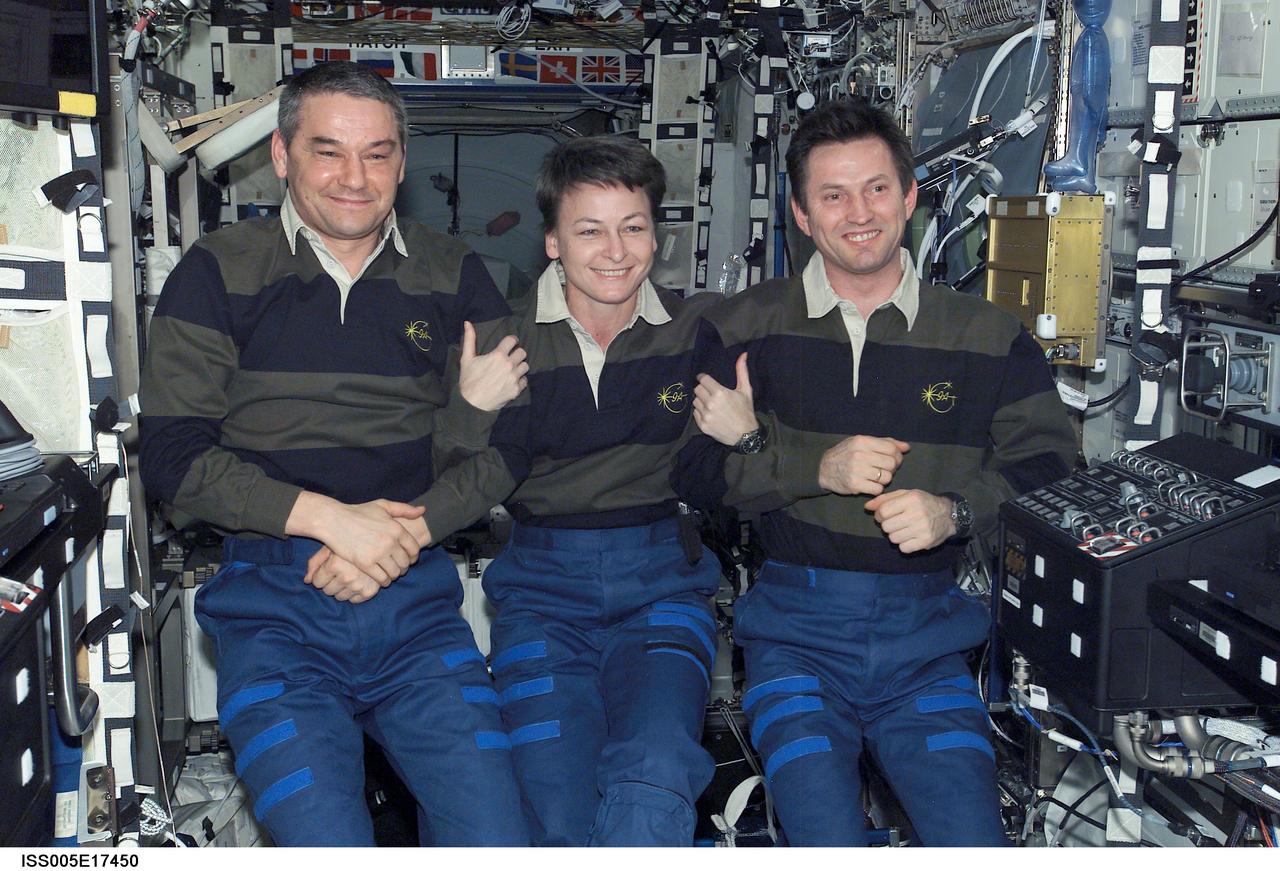
ISS005-E-17450 (13 October 2002) --- The Expedition Five crewmembers pose for a photo in the Destiny laboratory on the International Space Station (ISS). From the left are cosmonaut Valery G. Korzun, mission commander; astronaut Peggy A. Whitson and cosmonaut Sergei Y. Treschev, both flight engineers. Korzun and Treschev represent Rosaviakosmos.
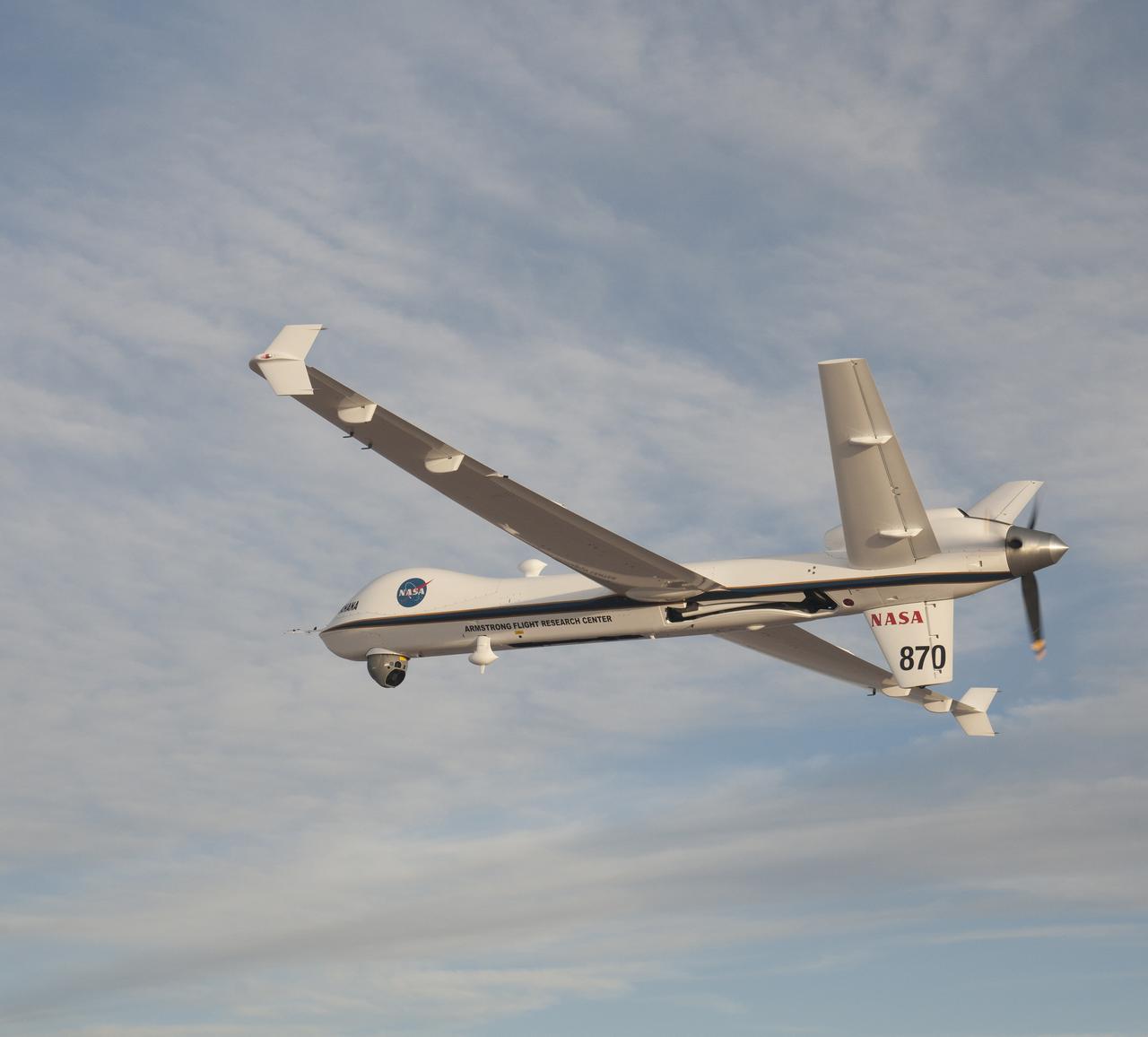
The Ikhana remotely piloted aircraft captured real-time video when the Orion Exploration Flight Test-1 mission concluded on Dec. 5, 2014. It is planned for the Ikhana to capture video again for the Orion and Space Launch System Exploration Mission-1 (EM-1) certification flight.

JSC2014-E-079812 (5 Sept. 2014) --- Accompanied by his wife and daughters at the Gagarin Cosmonaut Training Center in Star City, Russia, Expedition 41 Flight Engineer Barry Wilmore of NASA takes a walk through the Gagarin Museum Sept. 5. Wilmore, Alexander Samokutyaev of the Russian Federal Space Agency (Roscosmos) and Elena Serova of Roscosmos are scheduled to launch from the Baikonur Cosmodrome in Kazakhstan on Sept. 26, Kazakh time, in their Soyuz TMA-14M spacecraft for a 5 ? month mission on the International Space Station. Serova will become the fourth Russian woman to fly in space and the first Russian woman to conduct a long duration mission on the station. Photo credit: NASA/Stephanie Stoll
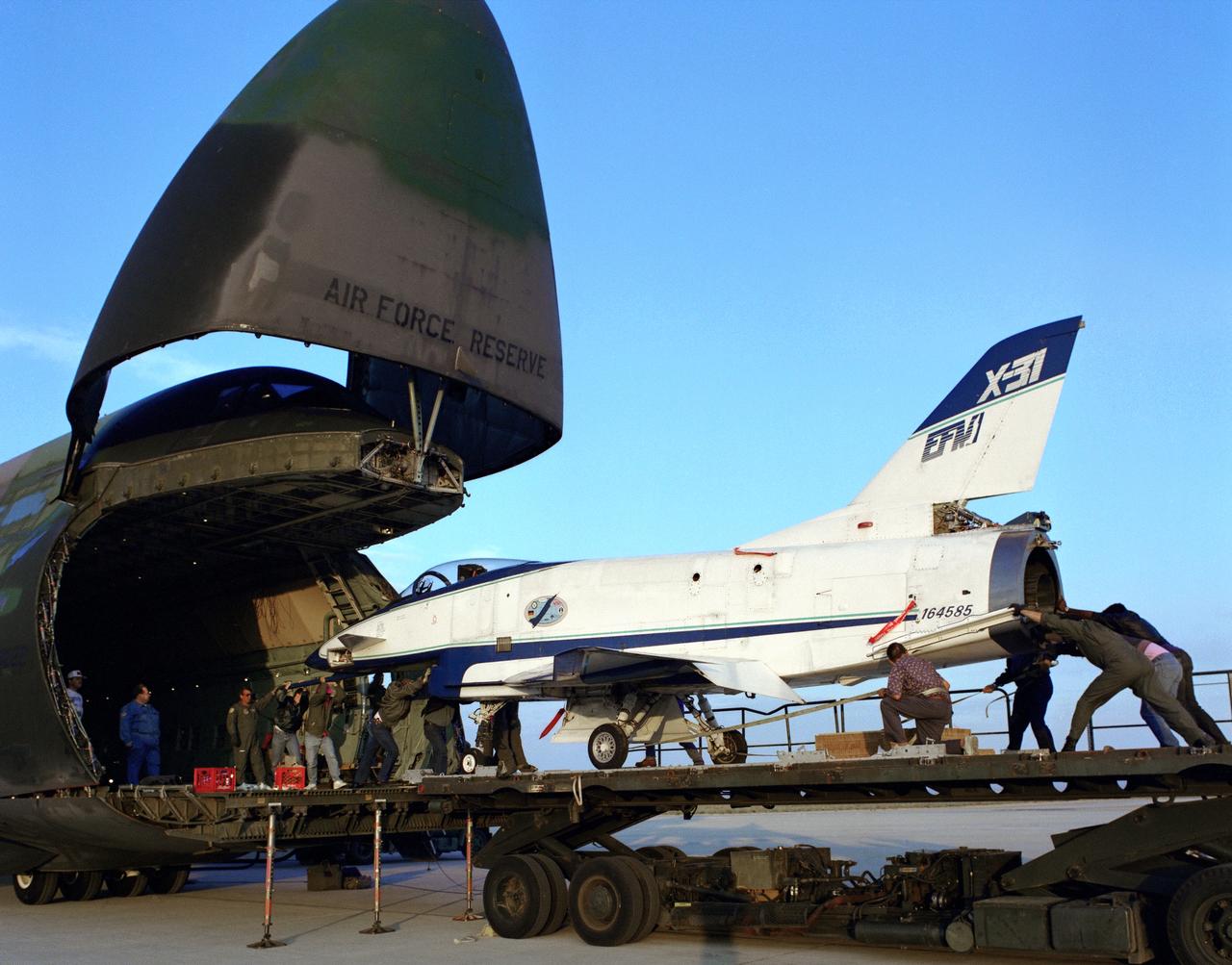
The X-31 Enhanced Fighter Maneuverability Technology Demonstrator Aircraft, based at the NASA Dryden Flight Research Center, Edwards, California, begins rolling aboard an Air Force Reserve C-5 transport which ferried it on May 22, 1995 to Europe where it was flown in the Paris Air Show in June 1995. To fit in the C-5 the right wing of the X-31 had to be removed. At the air show, the X-31 demonstrated the value of using thrust vectoring (directing engine exhaust flow) coupled with advanced flight control systems to provide controlled flight at very high angles of attack.
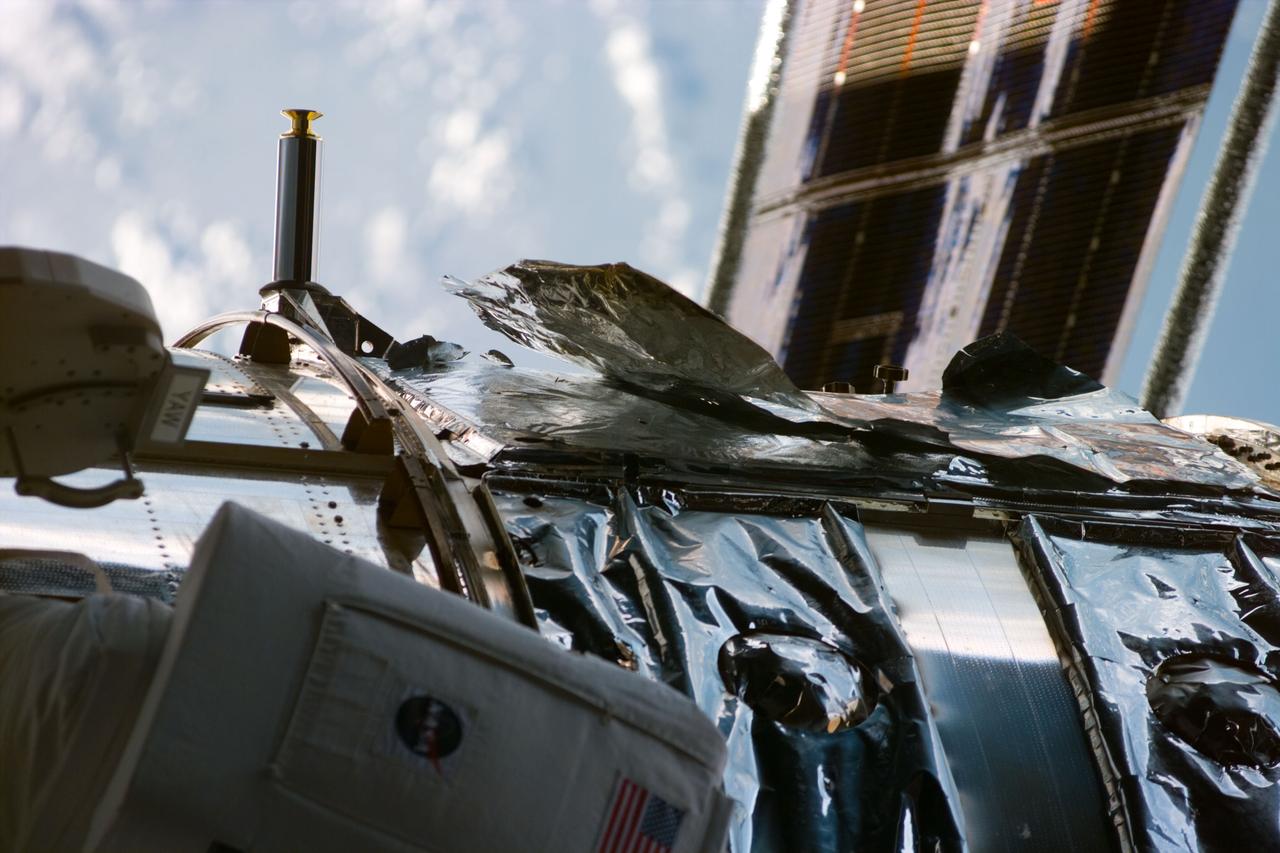
S82-E-5369 (15 Feb. 1997) --- This photograph, taken from onboard the Space Shuttle Discovery with an Electronic Still Camera (ESC) shows a tear in the thermal insulation of the Hubble Space Telescope (HST) Bay #8.
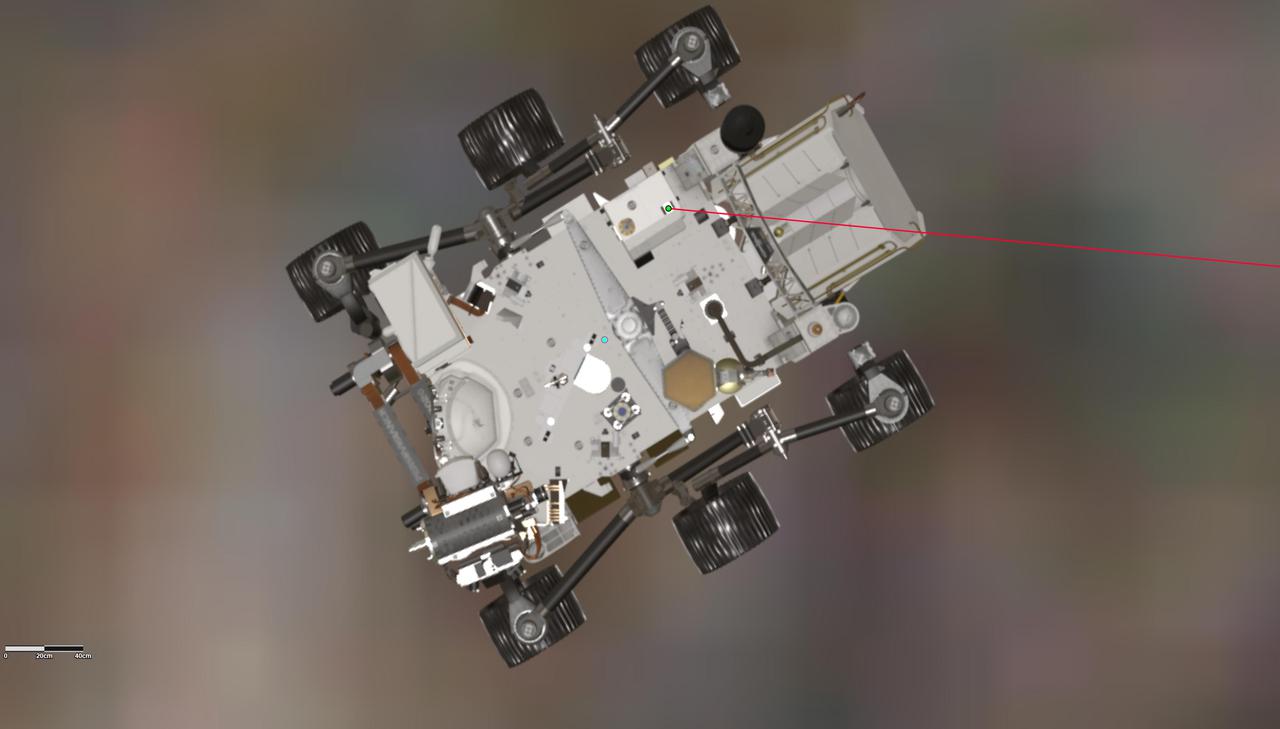
This annotated graphic depicts the orientation of NASA's Perseverance Mars rover during the 17th flight of the agency's Ingenuity Mars Helicopter on Dec. 5, 2021. A green dot on the rover, toward the top center of the frame, indicates the location of the Mars Helicopter Base Station antenna on Perseverance, which sends radio signals to and receives them from the rotorcraft. The red line depicts the line of sight to the helicopter during the final moments of Flight 17. Perseverance's power source, the Multi-Mission Radioisotope Thermoelectric Generator (MMRTG), is at the back of the rover, on the right. It angles above the antenna, impeding direct communications between the rover and helicopter as the rotorcraft descended toward the surface at the end of the flight. https://photojournal.jpl.nasa.gov/catalog/PIA24966
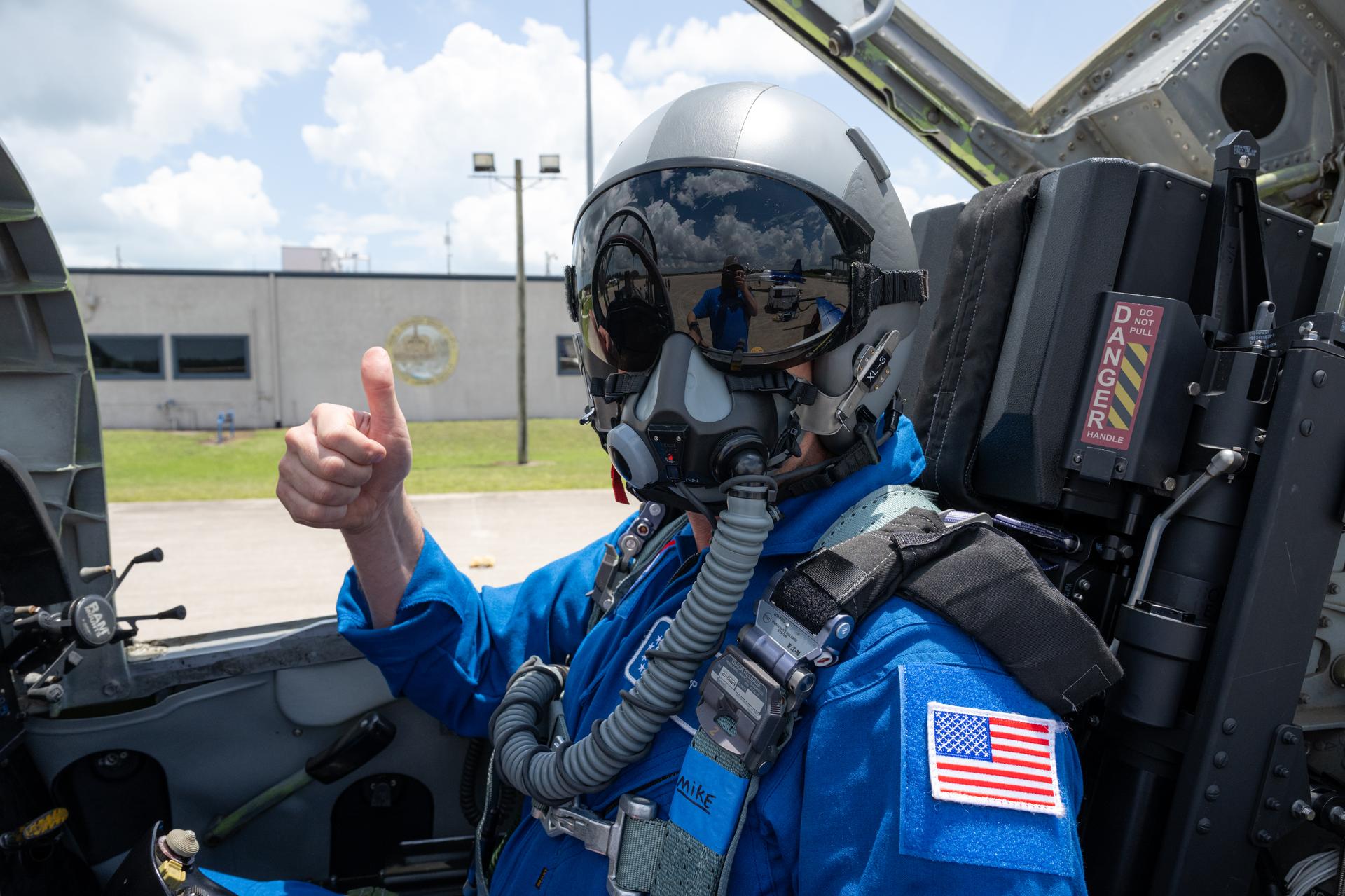
Michael J. Acheson, senior researcher and principal investigator at NASA’s Langley Research Center, participates in an employee incentive flying event with NASA Administrator Jared Isaacman's personal F-5 aircraft, Wednesday, May 13, 2026, at NASA’s Kennedy Space Center in Florida. Photo Credit: (NASA/John Kraus)
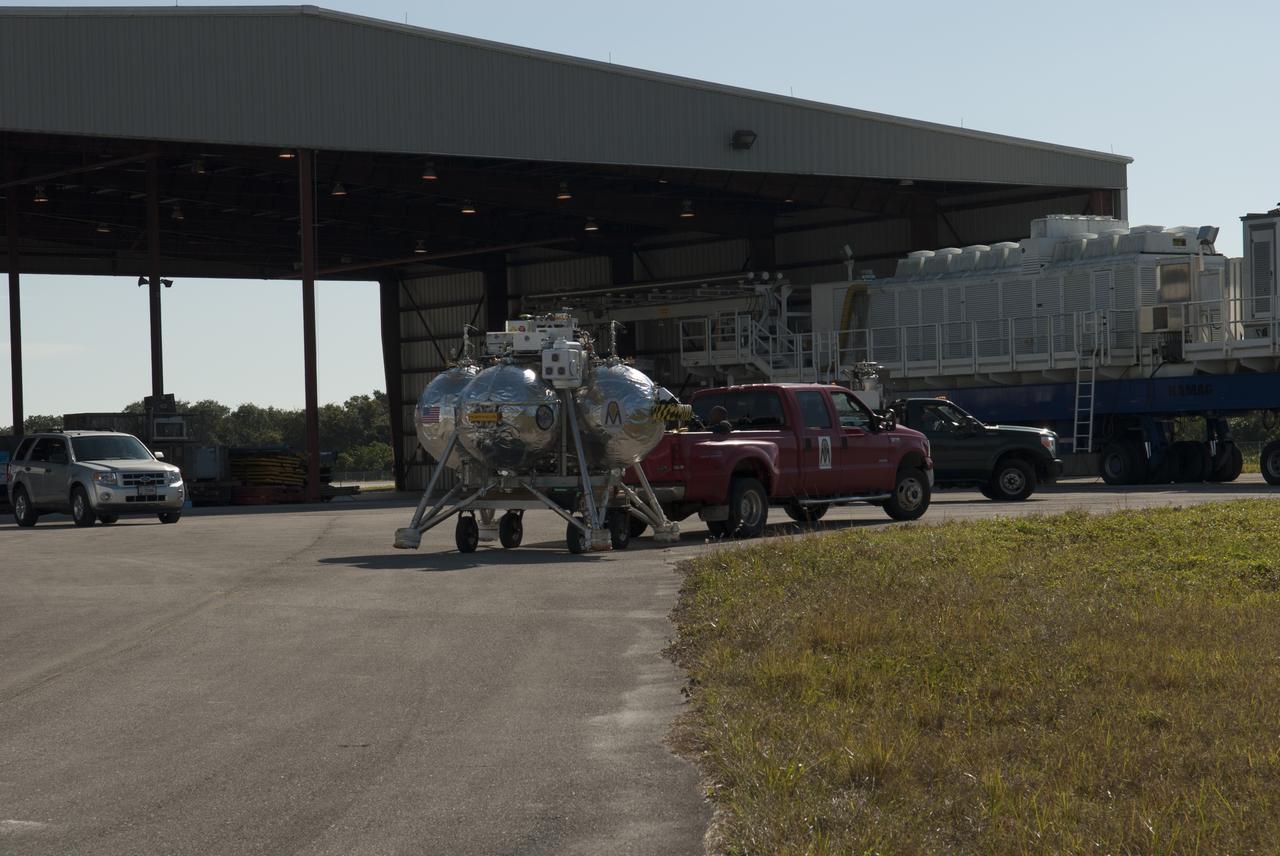
NASA's Project Morpheus prototype lander is prepared for transport to the north end of the Shuttle Landing Facility for free flight test number 15 at NASA’s Kennedy Space Center in Florida. The lander will take off from the ground over a flame trench and use its autonomous landing and hazard avoidance technology, or ALHAT sensors, to survey the hazard field to determine safe landing sites. Project Morpheus tests NASA’s ALHAT and an engine that runs on liquid oxygen and methane, which are green propellants. These new capabilities could be used in future efforts to deliver cargo to planetary surfaces. Project Morpheus is being managed under the Advanced Exploration Systems, or AES, Division in NASA’s Human Exploration and Operations Mission Directorate.

Sean Gustafson, senior advisor to the NASA Administrator, left, embraces Trey Carlson, chief of staff at NASA’s Kennedy Space Center, right, following an employee incentive flying event with NASA Administrator Jared Isaacman's personal F-5 aircraft, Friday, March 6, 2026, at NASA’s Kennedy Space Center in Florida. Photo Credit: (NASA/John Kraus)

NASA employees participate in an employee incentive flying event using NASA Administrator Jared Isaacman's personal F-5 aircraft, Friday, March 6, 2026, at NASA’s Kennedy Space Center in Florida. Photo Credit: (NASA/John Kraus)
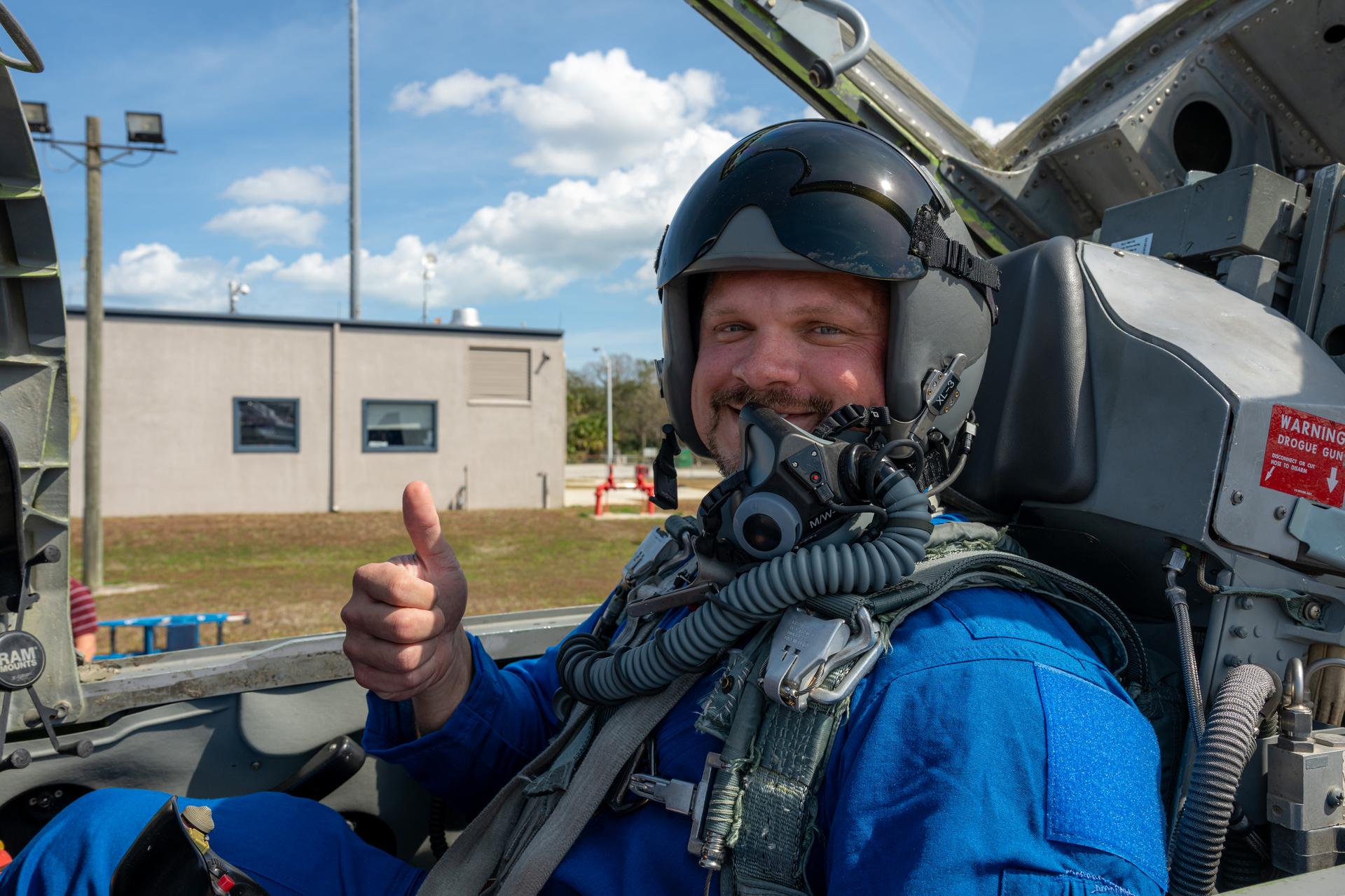
NASA employee James Hamilton, propellant and pressurant manager at NASA’s Stennis Space Center, participates in an employee incentive flying event with NASA Administrator Jared Isaacman's personal F-5 aircraft, Friday, Feb. 20, 2026, at NASA’s Kennedy Space Center in Florida. Photo Credit: (NASA/John Kraus)

One of NASA Administrator Jared Isaacman's personal F-5 aircraft is seen at sunset, Friday, March 27, 2026, at NASA's Kennedy Space Center in Florida. Photo Credit: (NASA/John Kraus)
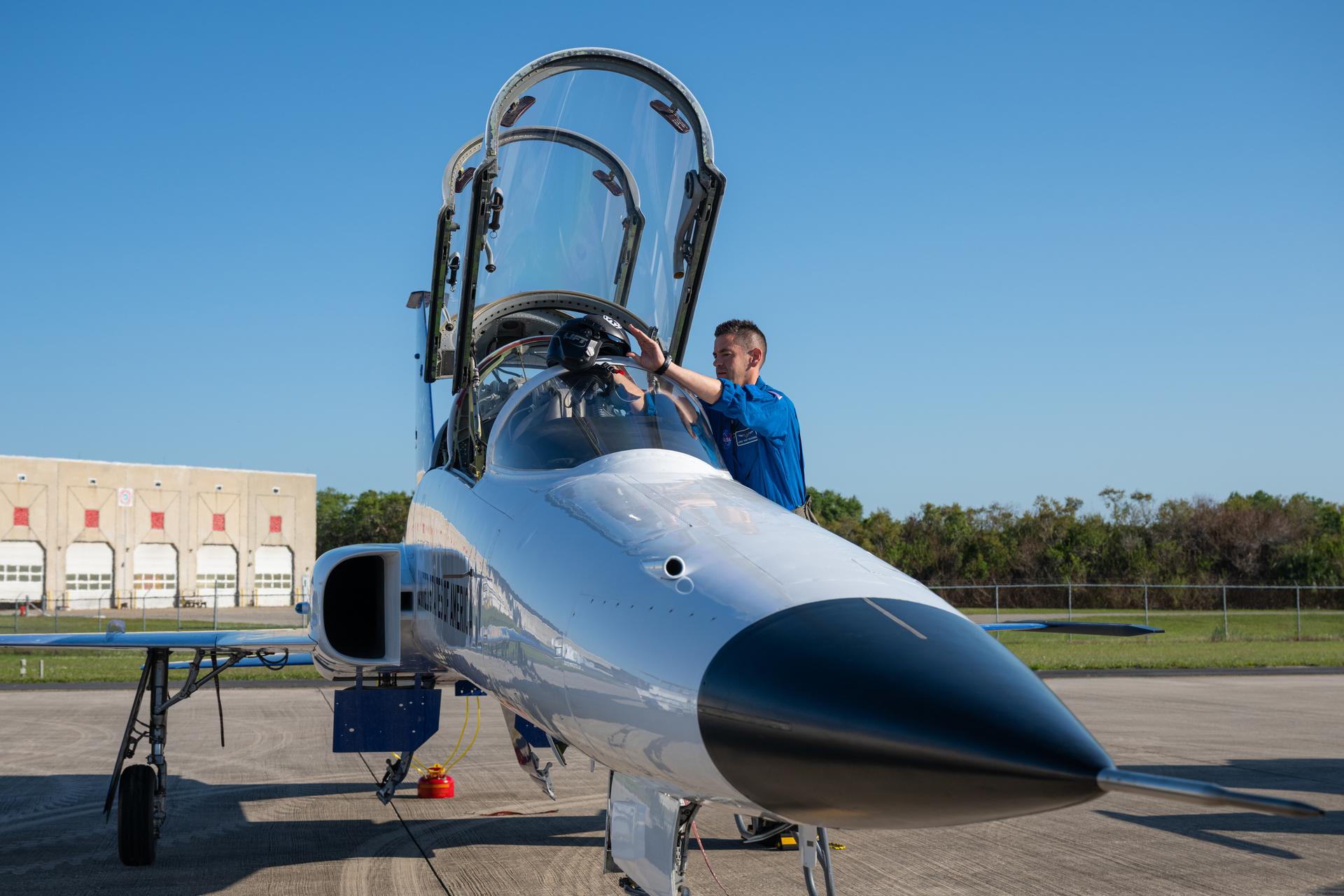
NASA Administrator Jared Isaacman is seen before an employee incentive flying event using his personal F-5 aircraft, Friday, March 27, 2026, at NASA’s Kennedy Space Center in Florida. Photo Credit: (NASA/John Kraus)

Engineers and technicians prepare NASA's Project Morpheus prototype lander for free flight test number 15 at the north end of the Shuttle Landing Facility at NASA's Kennedy Space Center in Florida. The lander will take off from the ground over a flame trench and use its autonomous landing and hazard avoidance technology, or ALHAT sensors, to survey the hazard field to determine safe landing sites. Project Morpheus tests NASA’s ALHAT and an engine that runs on liquid oxygen and methane, which are green propellants. These new capabilities could be used in future efforts to deliver cargo to planetary surfaces. Project Morpheus is being managed under the Advanced Exploration Systems, or AES, Division in NASA’s Human Exploration and Operations Mission Directorate.
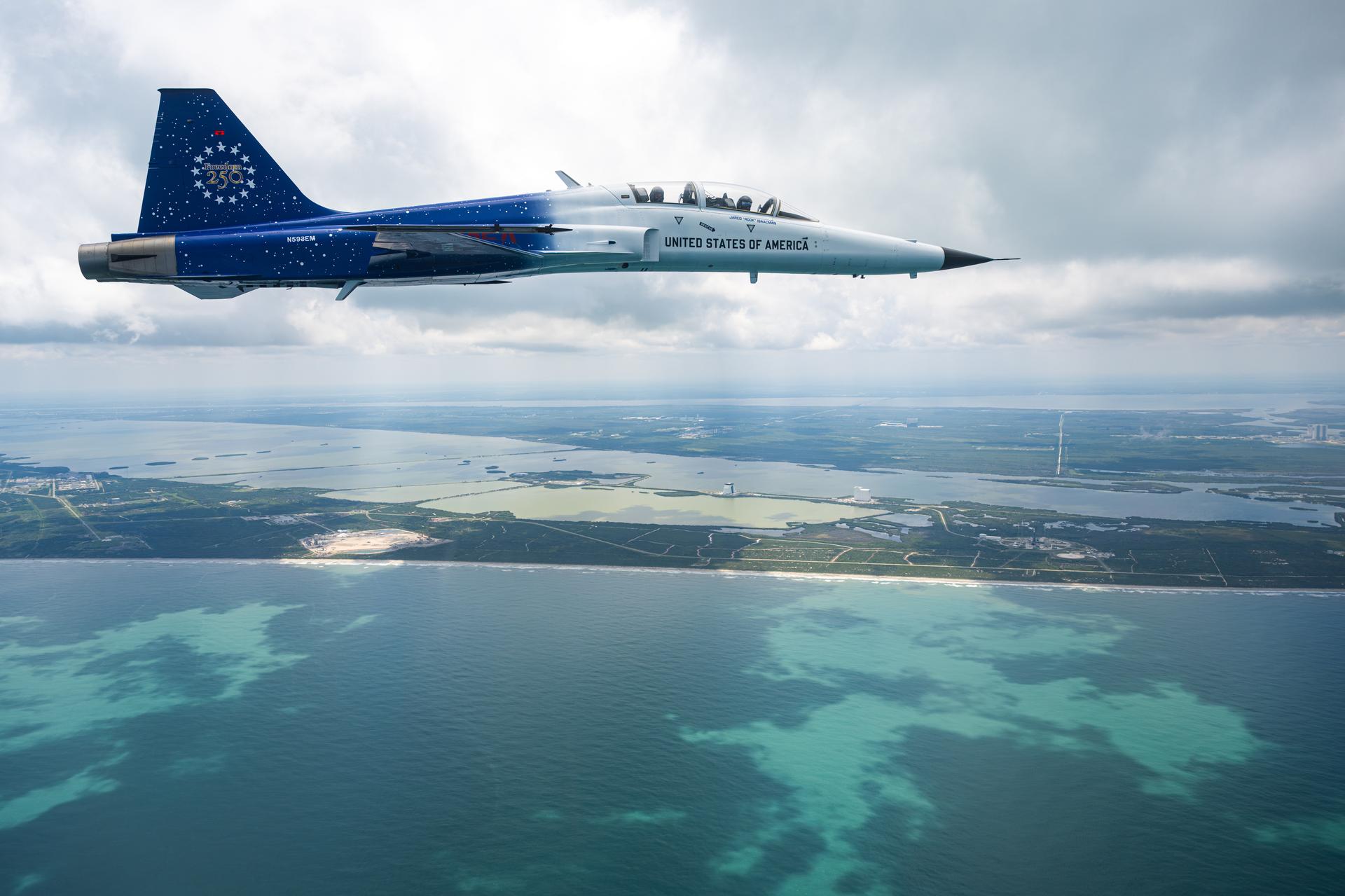
One of NASA Administrator Jared Isaacman’s personal F-5 aircraft is seen during an employee incentive flying event, Wednesday, May 13, 2026, at NASA’s Kennedy Space Center in Florida. Rachel Kraft, Artemis communications lead at NASA Headquarters, was flying in the back seat. Photo Credit: (NASA/John Kraus)

One of NASA Administrator Jared Isaacman’s personal F-5 aircraft is seen during an employee incentive flying event, Wednesday, May 13, 2026, at NASA’s Kennedy Space Center in Florida. Rachel Kraft, Artemis communications lead at NASA Headquarters, was flying in the back seat. Photo Credit: (NASA/John Kraus)
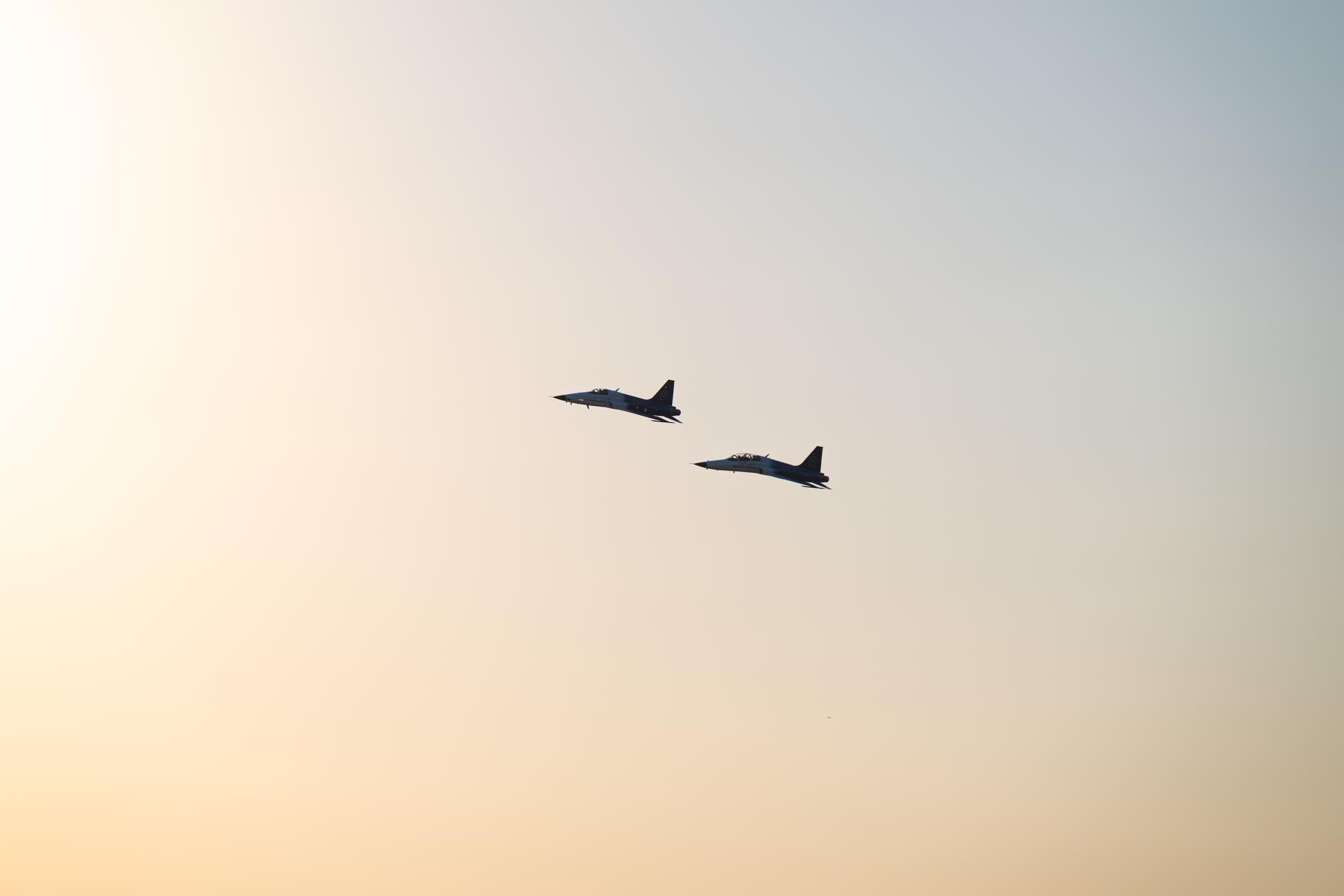
NASA employees participate in an employee incentive flying event using NASA Administrator Jared Isaacman's personal F-5 aircraft, Friday, March 27, 2026, at NASA’s Kennedy Space Center in Florida. Photo Credit: (NASA/John Kraus)
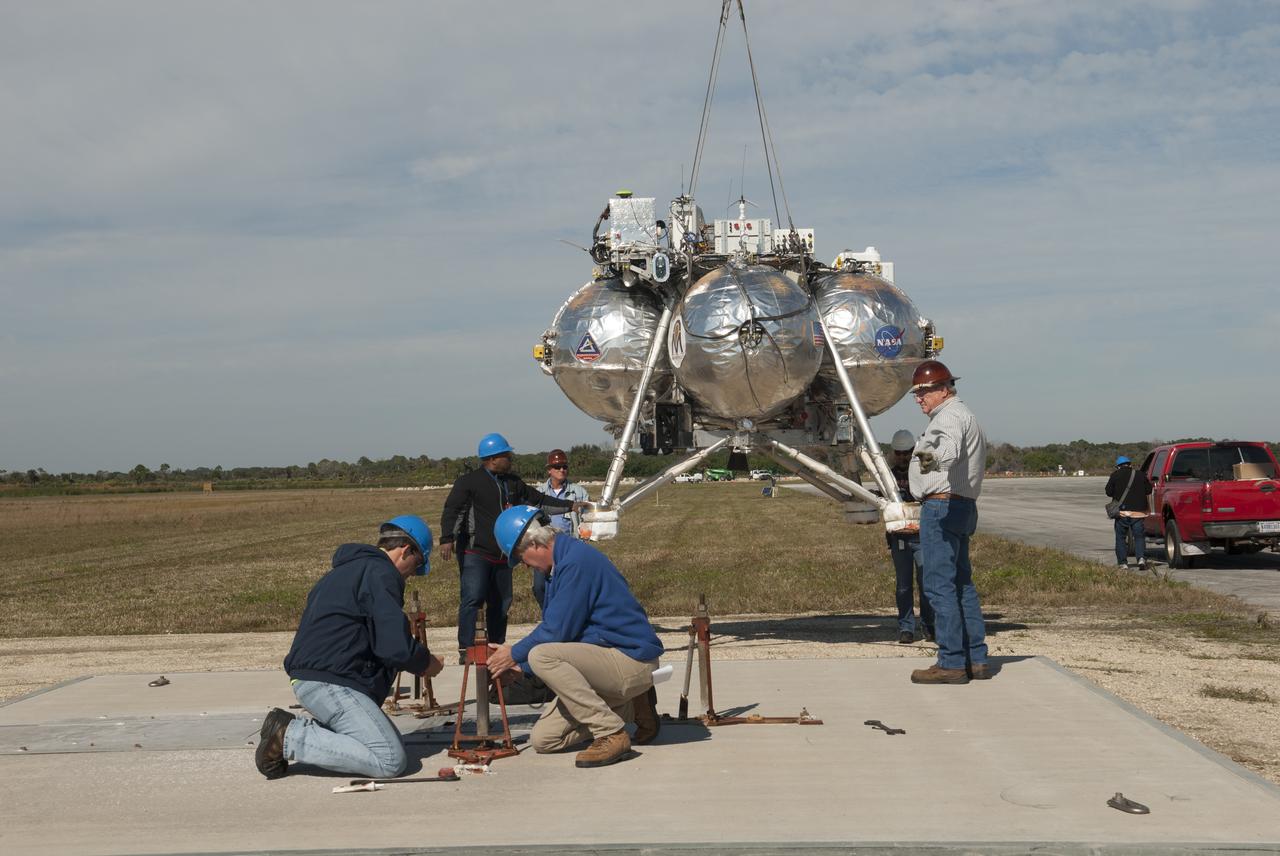
Engineers and technicians prepare the launch pad for NASA's Project Morpheus prototype lander at the north end of the Shuttle Landing Facility at NASA's Kennedy Space Center in Florida. Morpheus is being prepared for free flight test number 15 at the SLF. The lander will take off from the ground over a flame trench and use its autonomous landing and hazard avoidance technology, or ALHAT sensors, to survey the hazard field to determine safe landing sites. Project Morpheus tests NASA’s ALHAT and an engine that runs on liquid oxygen and methane, which are green propellants. These new capabilities could be used in future efforts to deliver cargo to planetary surfaces. Project Morpheus is being managed under the Advanced Exploration Systems, or AES, Division in NASA’s Human Exploration and Operations Mission Directorate.
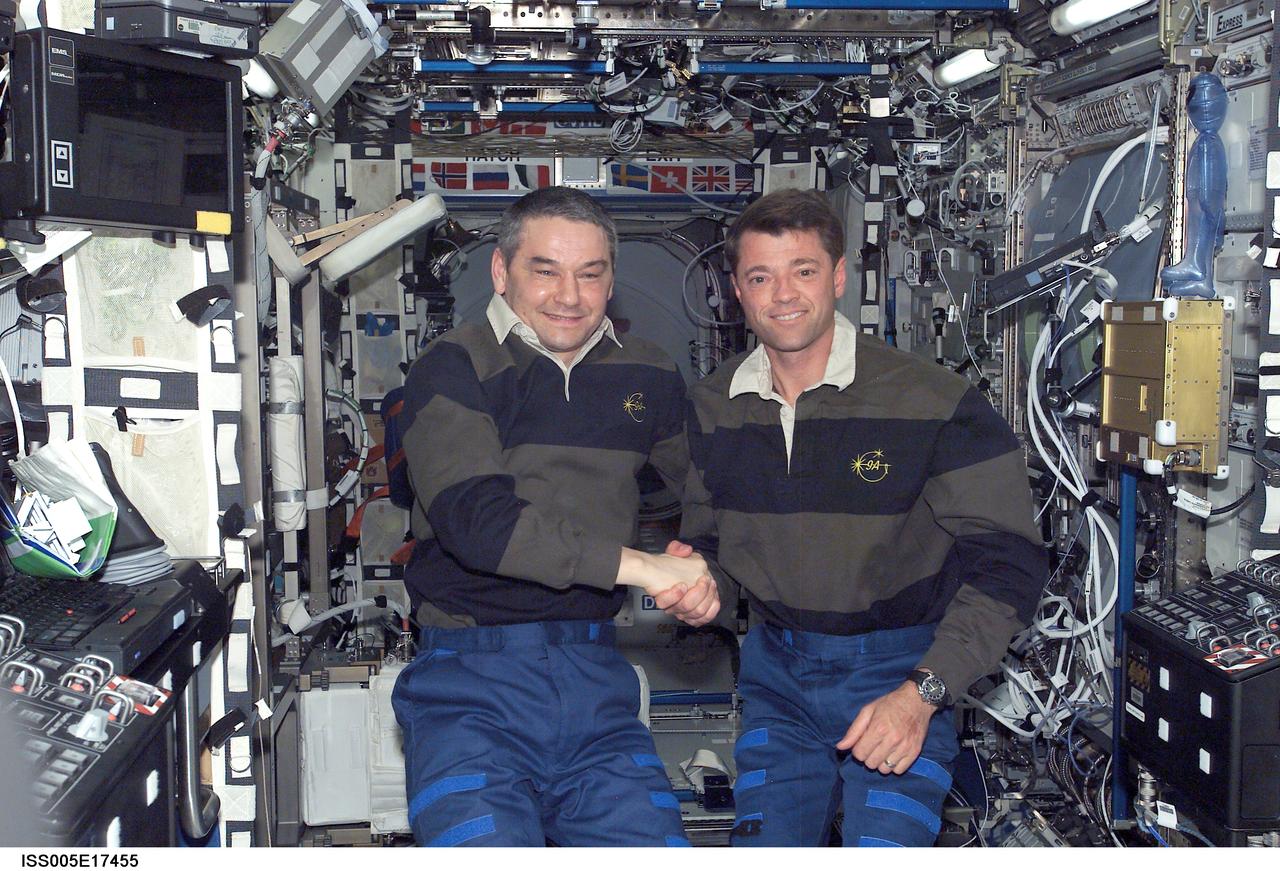
ISS005-E-17455 (13 October 2002) --- Cosmonaut Valery G. Korzun (left), Expedition Five mission commander, and astronaut Jeffrey S. Ashby, STS-112 mission commander, pose for a photo in the Destiny laboratory on the International Space Station (ISS). Korzun represents Rosaviakosmos.

Michael J. Acheson, senior researcher and principal investigator at NASA’s Langley Research Center, participates in an employee incentive flying event with NASA Administrator Jared Isaacman's personal F-5 aircraft, Wednesday, May 13, 2026, at NASA’s Kennedy Space Center in Florida. Photo Credit: (NASA/John Kraus)
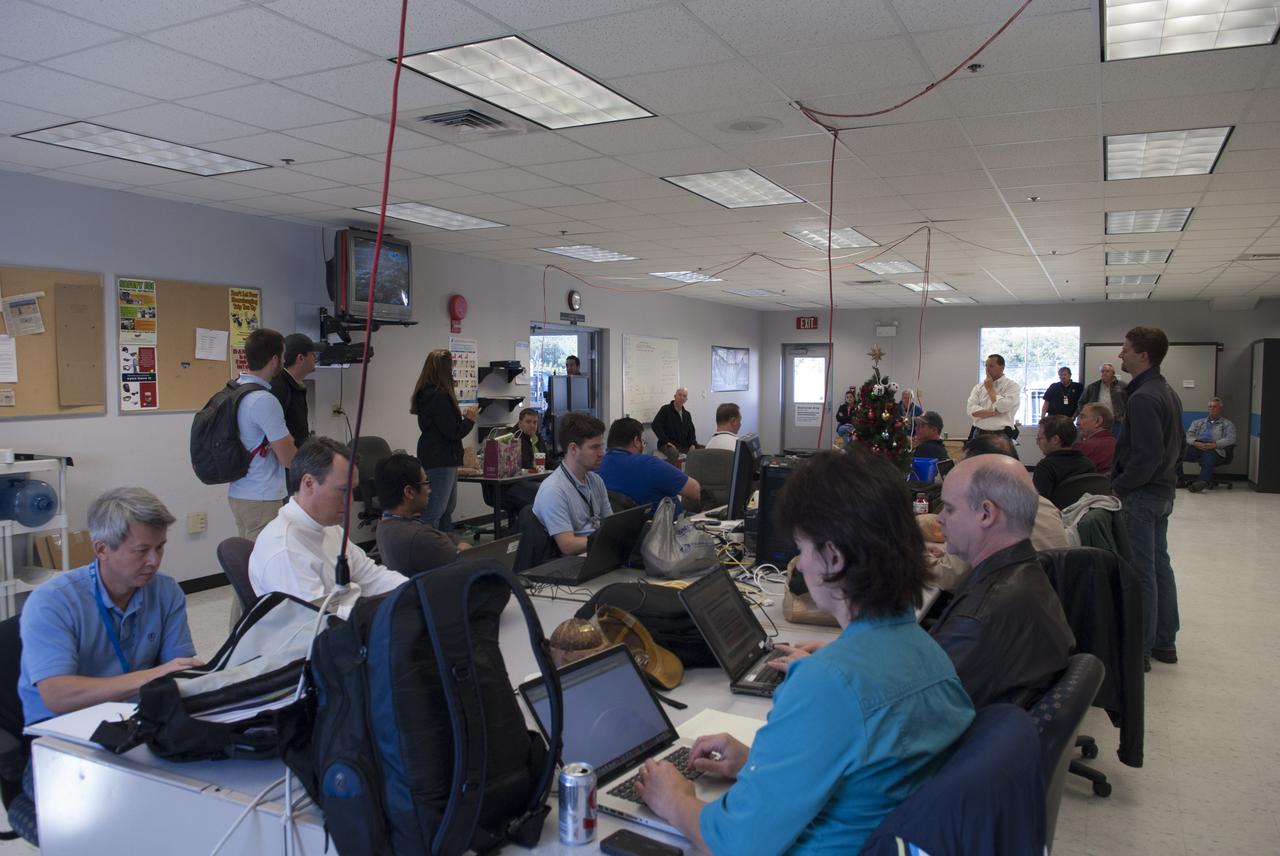
Engineers and controllers in a mobile control room prepare for flight number 15 of NASA's Project Morpheus prototype lander at the north end of the Shuttle Landing Facility, or SLF, at NASA’s Kennedy Space Center in Florida. The lander will take off from the ground over a flame trench and use its autonomous landing and hazard avoidance technology, or ALHAT sensors, to survey the hazard field to determine safe landing sites. Project Morpheus tests NASA’s ALHAT and an engine that runs on liquid oxygen and methane, which are green propellants. These new capabilities could be used in future efforts to deliver cargo to planetary surfaces. Project Morpheus is being managed under the Advanced Exploration Systems, or AES, Division in NASA’s Human Exploration and Operations Mission Directorate.
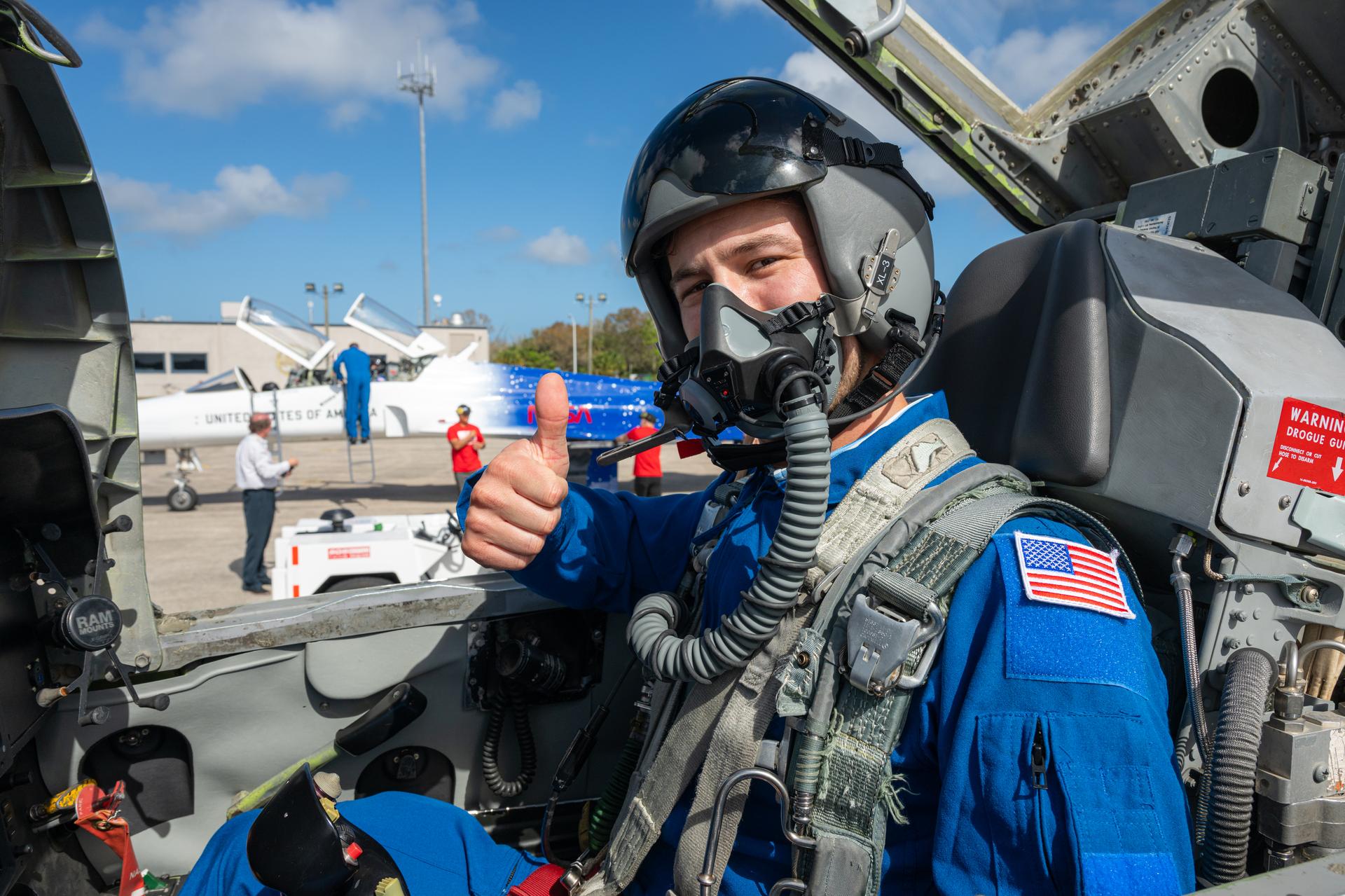
Spencer Barr, Exploration Ground Systems mission assurance manager at NASA’s Kennedy Space Center, participates in an employee incentive flying event with NASA Administrator Jared Isaacman's personal F-5 aircraft, Friday, March 6, 2026, at NASA’s Kennedy Space Center in Florida. Photo Credit: (NASA/John Kraus)

NASA employees participate in an employee incentive flying event using NASA Administrator Jared Isaacman's personal F-5 aircraft, Friday, March 6, 2026, at NASA’s Kennedy Space Center in Florida. Photo Credit: (NASA/John Kraus)
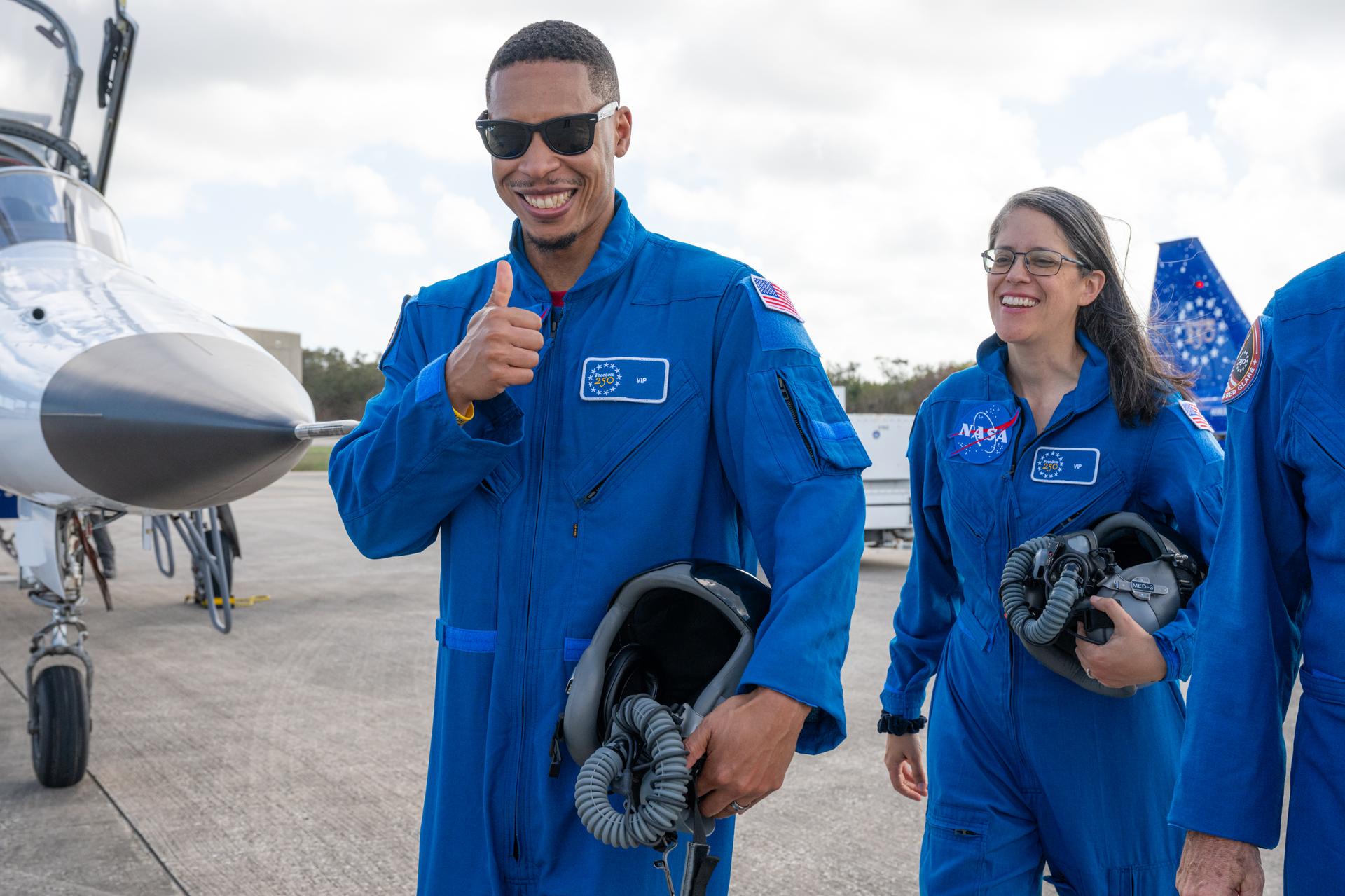
Matthew Mickens, project scientist, space crop production at NASA’s Kennedy Space Center, left, and Clara Wright, chief of the laboratories, development, and testing division within the engineering directorate at NASA’s Kennedy Space Center, right, are seen following an employee incentive flying event using NASA Administrator Jared Isaacman's personal F-5 aircraft, Friday, March 6, 2026, at NASA’s Kennedy Space Center in Florida. Photo Credit: (NASA/John Kraus)
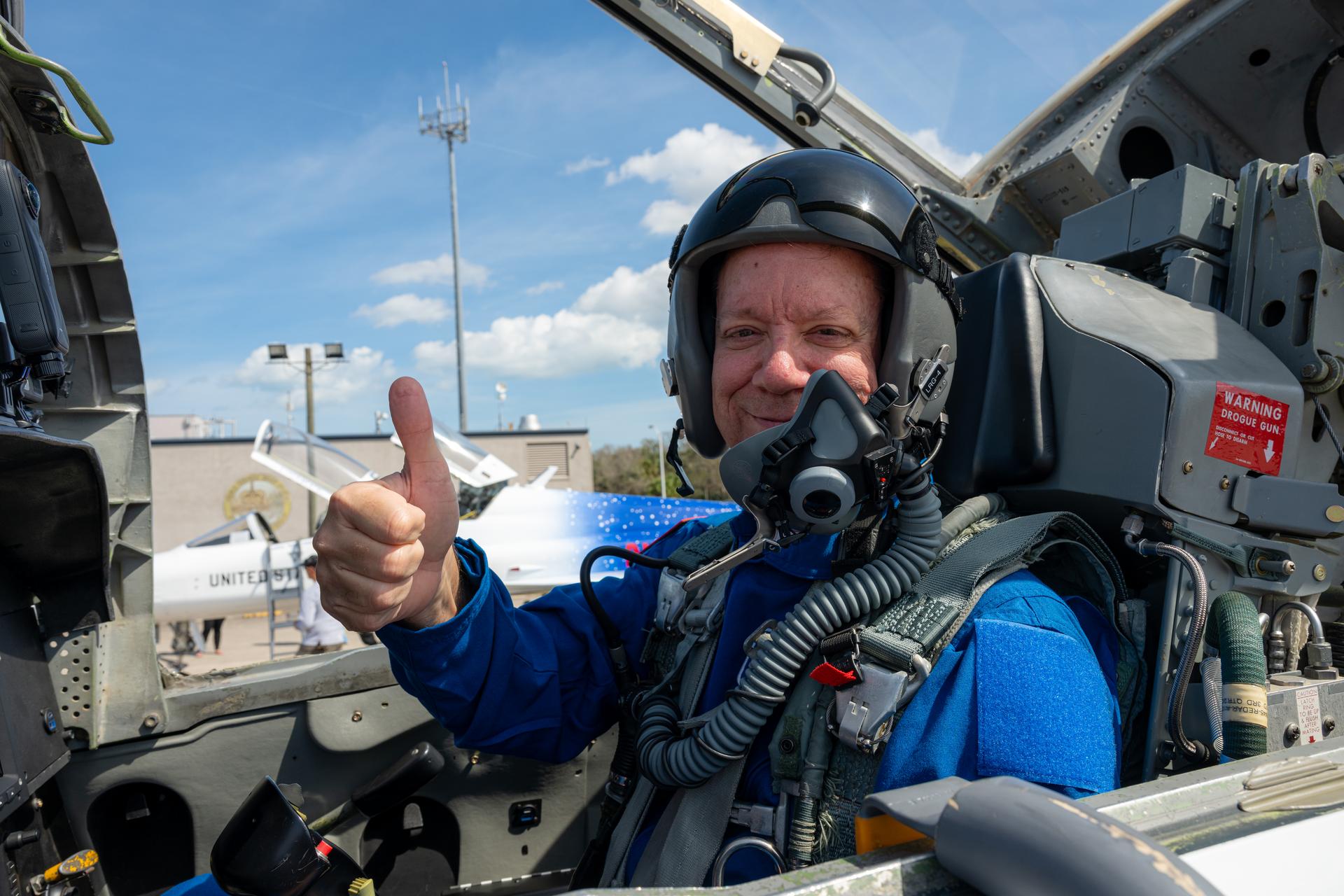
NASA employee Greg Gaddis, spaceport senior operations manager at NASA’s Kennedy Space Center, participates in an employee incentive flying event with NASA Administrator Jared Isaacman's personal F-5 aircraft, Friday, Feb. 20, 2026, at NASA’s Kennedy Space Center in Florida. Photo Credit: (NASA/John Kraus)
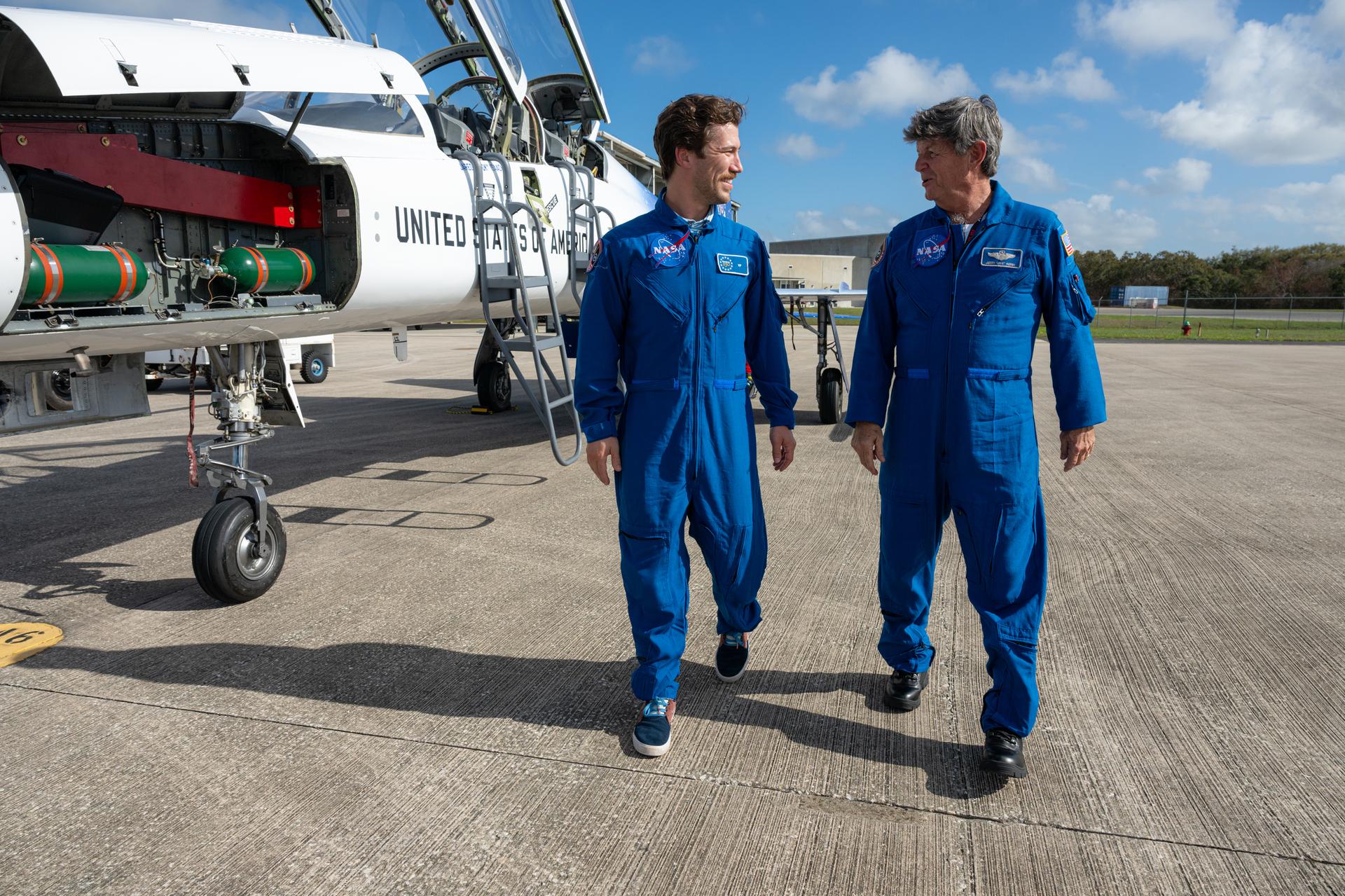
Spencer Barr, Exploration Ground Systems mission assurance manager at NASA’s Kennedy Space Center, left, speaks with Jerry Kerby, pilot, right, following an employee incentive flying event with NASA Administrator Jared Isaacman's personal F-5 aircraft, Friday, March 6, 2026, at NASA’s Kennedy Space Center in Florida. Photo Credit: (NASA/John Kraus)

Matthew Mickens, project scientist, space crop production at NASA’s Kennedy Space Center, left, and Clara Wright, chief of the laboratories, development, and testing division within the engineering directorate at NASA’s Kennedy Space Center, right, are seen following an employee incentive flying event using NASA Administrator Jared Isaacman's personal F-5 aircraft, Friday, March 6, 2026, at NASA’s Kennedy Space Center in Florida. Photo Credit: (NASA/John Kraus)

Jerry Kerby, pilot; Michael J. Acheson, senior researcher and principal investigator at NASA’s Langley Research Center; Dr. Kyle Thompson, research aerothermodynamist at NASA’s Langley Research Center; and Dr. Scott Glaser, pilot, pose for a photograph following an employee incentive flying event with NASA Administrator Jared Isaacman's personal F-5 aircraft, Wednesday, May 13, 2026, at NASA’s Kennedy Space Center in Florida. Photo Credit: (NASA/John Kraus)

Engineers and technicians prepare NASA's Project Morpheus prototype lander for free flight test number 15 at the north end of the Shuttle Landing Facility at NASA's Kennedy Space Center in Florida. The lander will take off from the ground over a flame trench and use its autonomous landing and hazard avoidance technology, or ALHAT sensors, to survey the hazard field to determine safe landing sites. Project Morpheus tests NASA’s ALHAT and an engine that runs on liquid oxygen and methane, which are green propellants. These new capabilities could be used in future efforts to deliver cargo to planetary surfaces. Project Morpheus is being managed under the Advanced Exploration Systems, or AES, Division in NASA’s Human Exploration and Operations Mission Directorate.

One of NASA Administrator Jared Isaacman’s personal F-5 aircraft is seen during an employee incentive flying event, Wednesday, May 13, 2026, at NASA’s Kennedy Space Center in Florida. Rachel Kraft, Artemis communications lead at NASA Headquarters, was flying in the back seat. Photo Credit: (NASA/John Kraus)
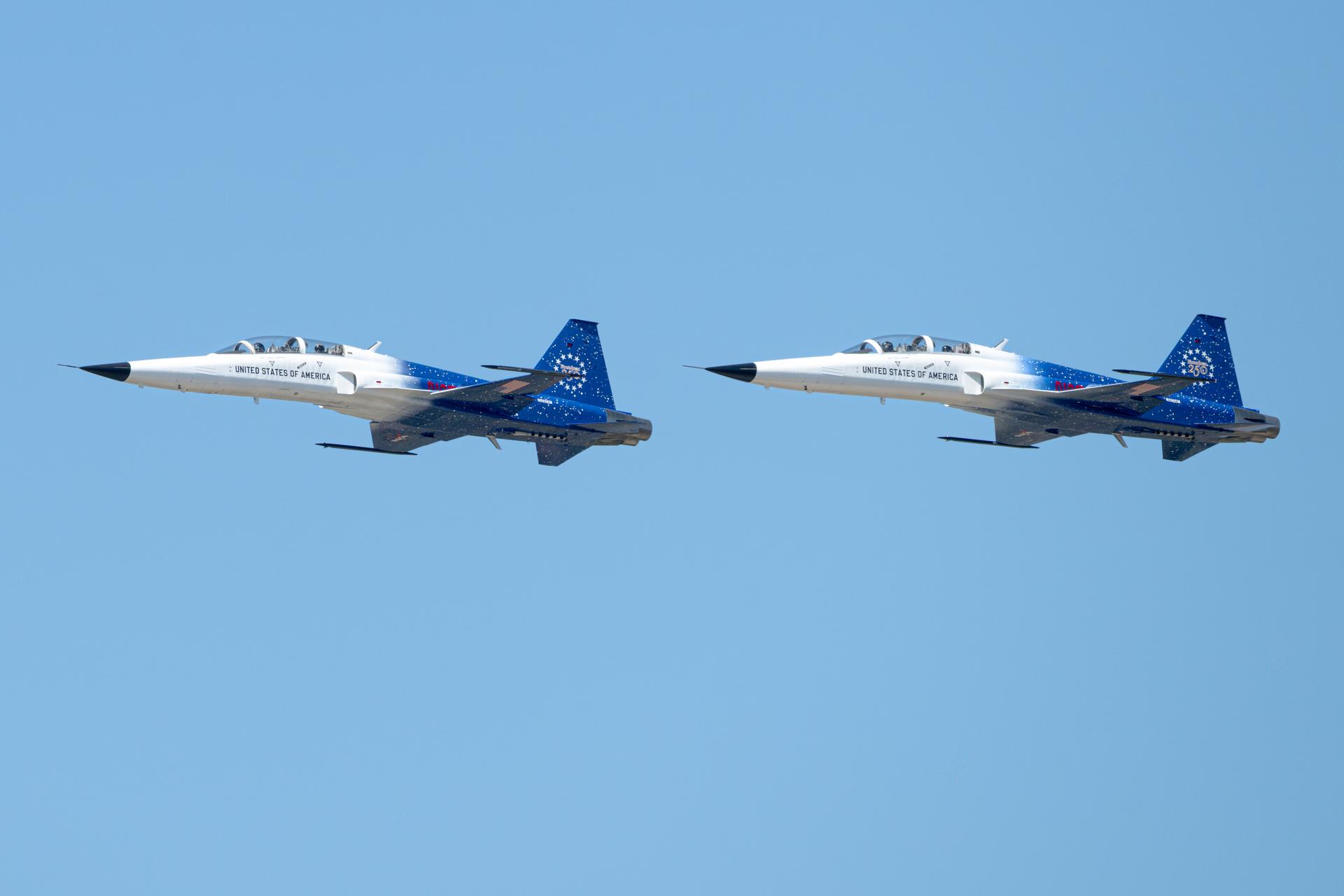
NASA employees participate in an employee incentive flying event using NASA Administrator Jared Isaacman's personal F-5 aircraft, Saturday, Feb. 21, 2026, at NASA’s Kennedy Space Center in Florida. Photo Credit: (NASA/John Kraus)
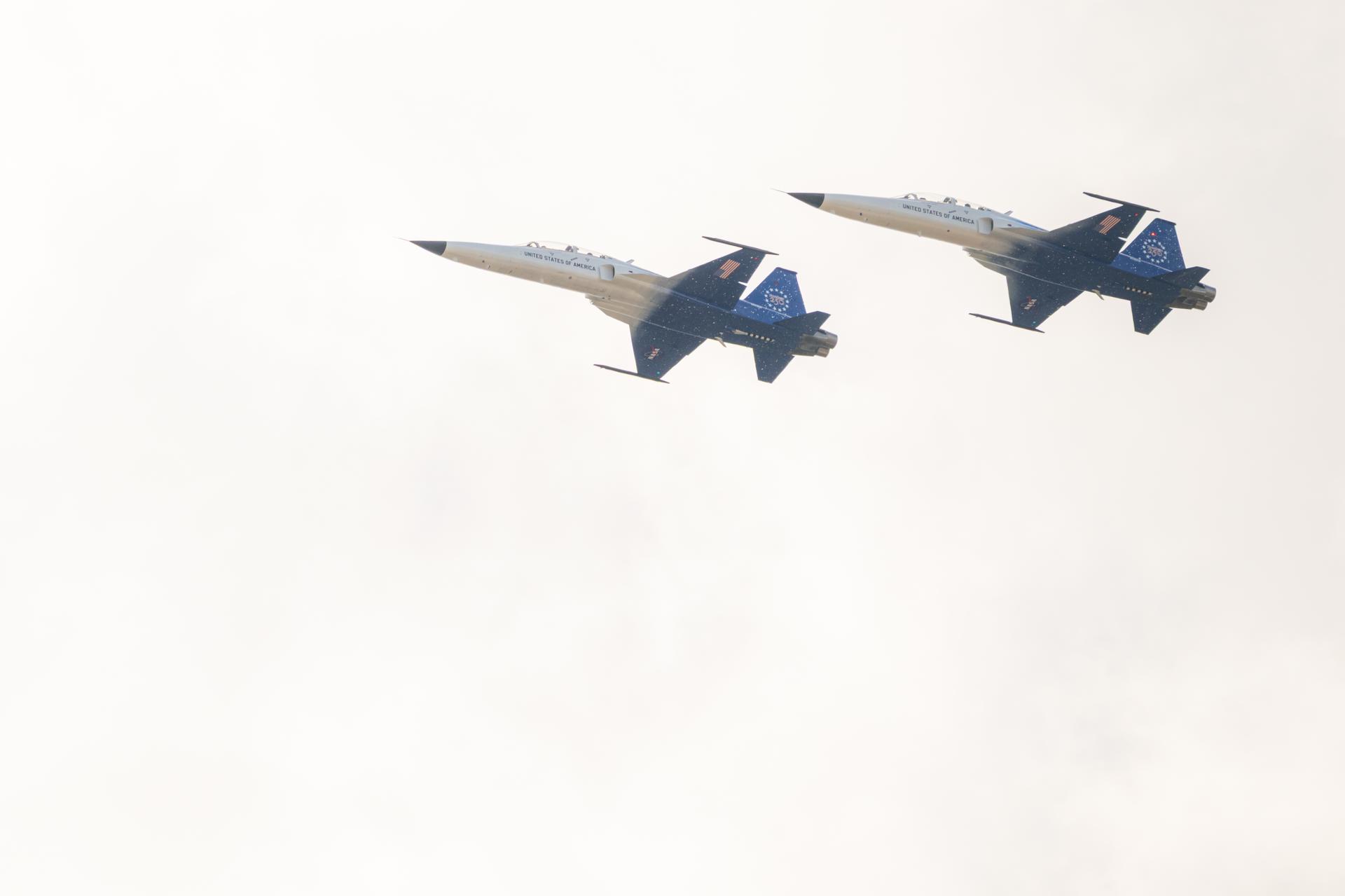
NASA employees participate in an employee incentive flying event using NASA Administrator Jared Isaacman's personal F-5 aircraft, Friday, Feb. 20, 2026, at NASA’s Kennedy Space Center in Florida. Photo Credit: (NASA/John Kraus)
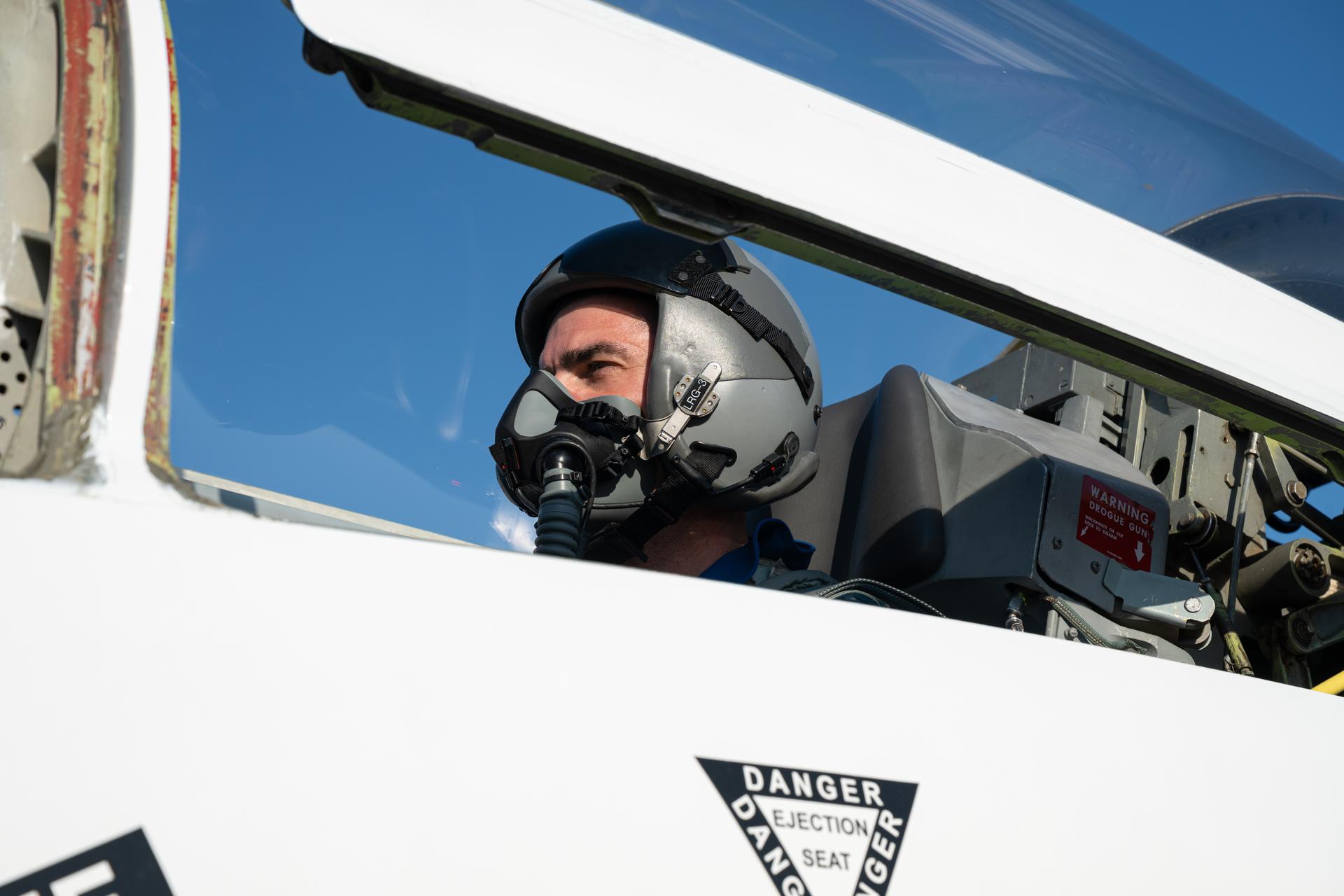
Kyle Back, director of the business management office at the Office of the Chief Financial Officer (OCFO) Enterprise at NASA Headquarters, participates in an employee incentive flying event with NASA Administrator Jared Isaacman's personal F-5 aircraft, Friday, March 27, 2026, at NASA’s Kennedy Space Center in Florida. Photo Credit: (NASA/John Kraus)

NASA employees participate in an employee incentive flying event using NASA Administrator Jared Isaacman's personal F-5 aircraft, Wednesday, May 13, 2026, at NASA’s Kennedy Space Center in Florida. Photo Credit: (NASA/John Kraus)
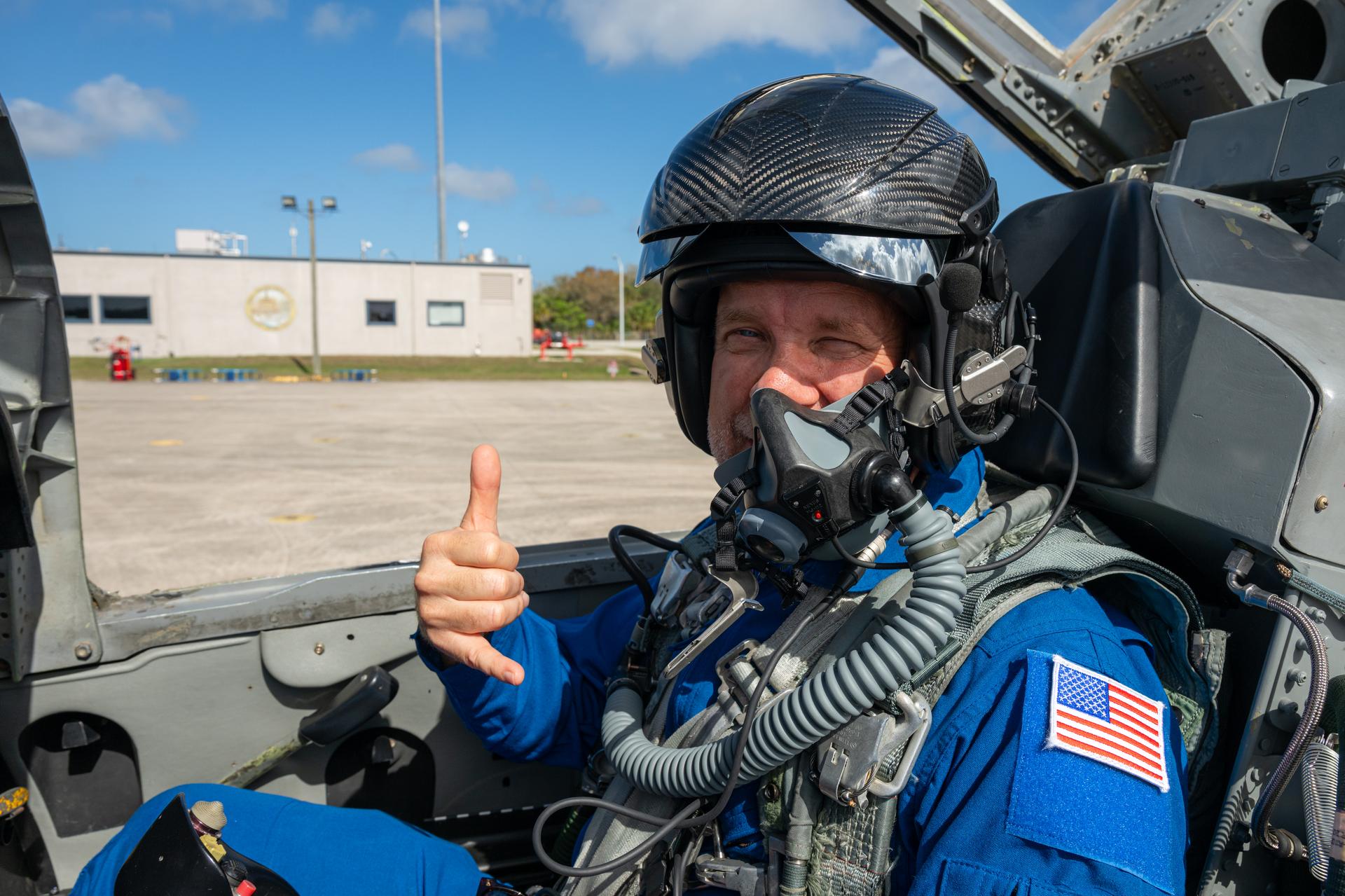
Trey Carlson, chief of staff at NASA’s Kennedy Space Center, participates in an employee incentive flying event with NASA Administrator Jared Isaacman's personal F-5 aircraft, Friday, March 6, 2026, at NASA’s Kennedy Space Center in Florida. Photo Credit: (NASA/John Kraus)

One of NASA Administrator Jared Isaacman’s personal F-5 aircraft is seen through the jet wash of another F-5 aircraft during an employee incentive flying event, Friday, March 6, 2026, at NASA’s Kennedy Space Center in Florida. Photo Credit: (NASA/John Kraus)
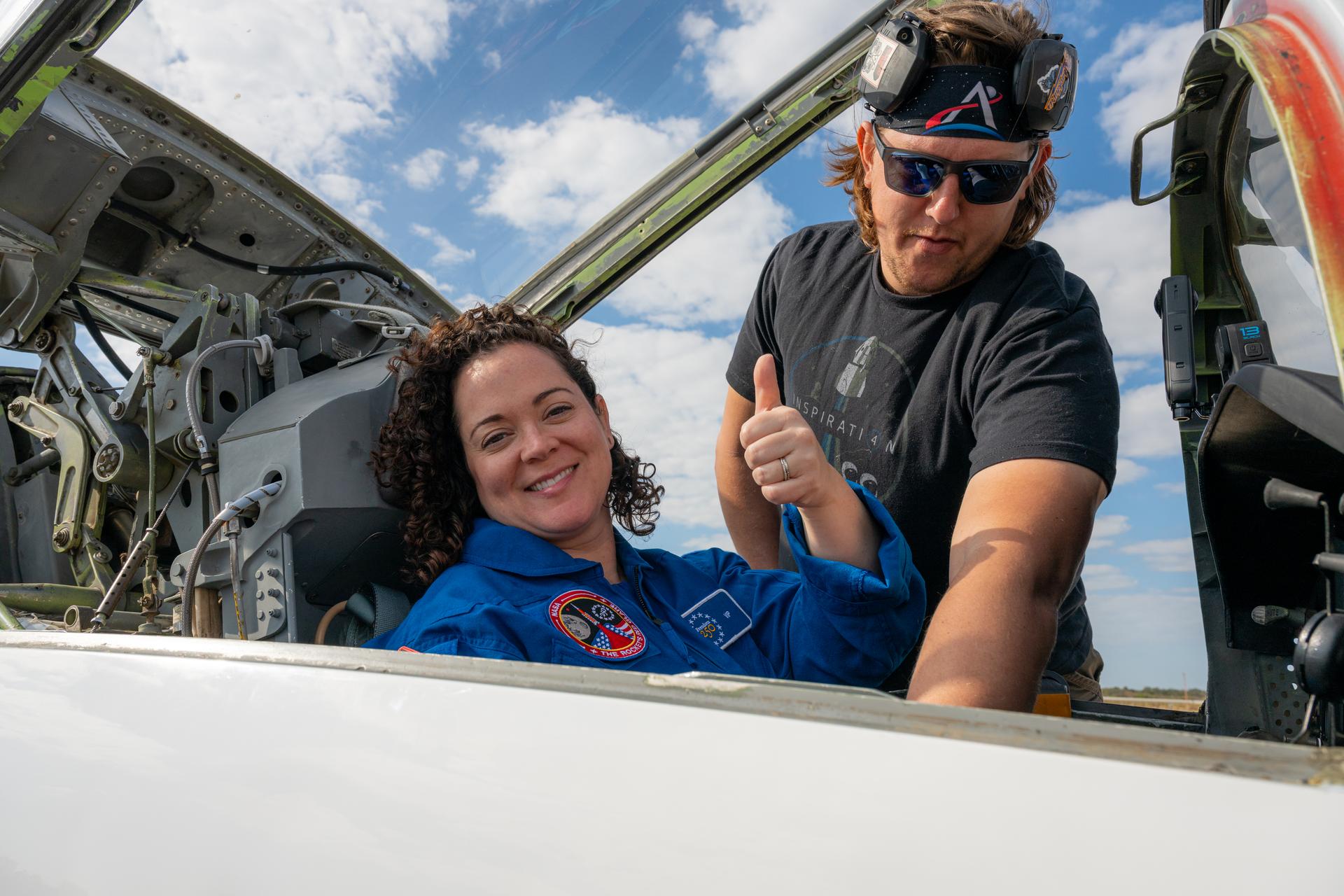
NASA employee Brittany Bouché, acting deputy chief of facility engineering services at NASA’s Stennis Space Center, participates in an employee incentive flying event with NASA Administrator Jared Isaacman's personal F-5 aircraft, Saturday, Feb. 21, 2026, at NASA’s Kennedy Space Center in Florida. Photo Credit: (NASA/John Kraus)

Sean Gustafson, senior advisor to the NASA Administrator, left; Matthew Mickens, project scientist, space crop production, at NASA’s Kennedy Space Center, second from left; Trey Carlson, chief of staff at NASA’s Kennedy Space Center, third from left; Spencer Barr, Exploration Ground Systems mission assurance manager at NASA’s Kennedy Space Center, fourth from left; Clara Wright, chief of the laboratories, development, and testing division within the engineering directorate at NASA’s Kennedy Space Center, fifth from left; and Jerry Kerby, pilot, right, pose for a photograph following an employee incentive flying event with NASA Administrator Jared Isaacman's personal F-5 aircraft, Friday, March 6, 2026, at NASA’s Kennedy Space Center in Florida. Photo Credit: (NASA/John Kraus)

Dr. Scott Glaser, pilot, and Rachel Kraft, Artemis communications lead at NASA Headquarters, pose for a photograph following an employee incentive flying event with NASA Administrator Jared Isaacman's personal F-5 aircraft, Wednesday, May 13, 2026, at NASA’s Kennedy Space Center in Florida. Photo Credit: (NASA/John Kraus)

One of NASA Administrator Jared Isaacman’s personal F-5 aircraft is seen during an employee incentive flying event, Wednesday, May 13, 2026, at NASA’s Kennedy Space Center in Florida. Rachel Kraft, Artemis communications lead at NASA Headquarters, was flying in the back seat. Photo Credit: (NASA/John Kraus)
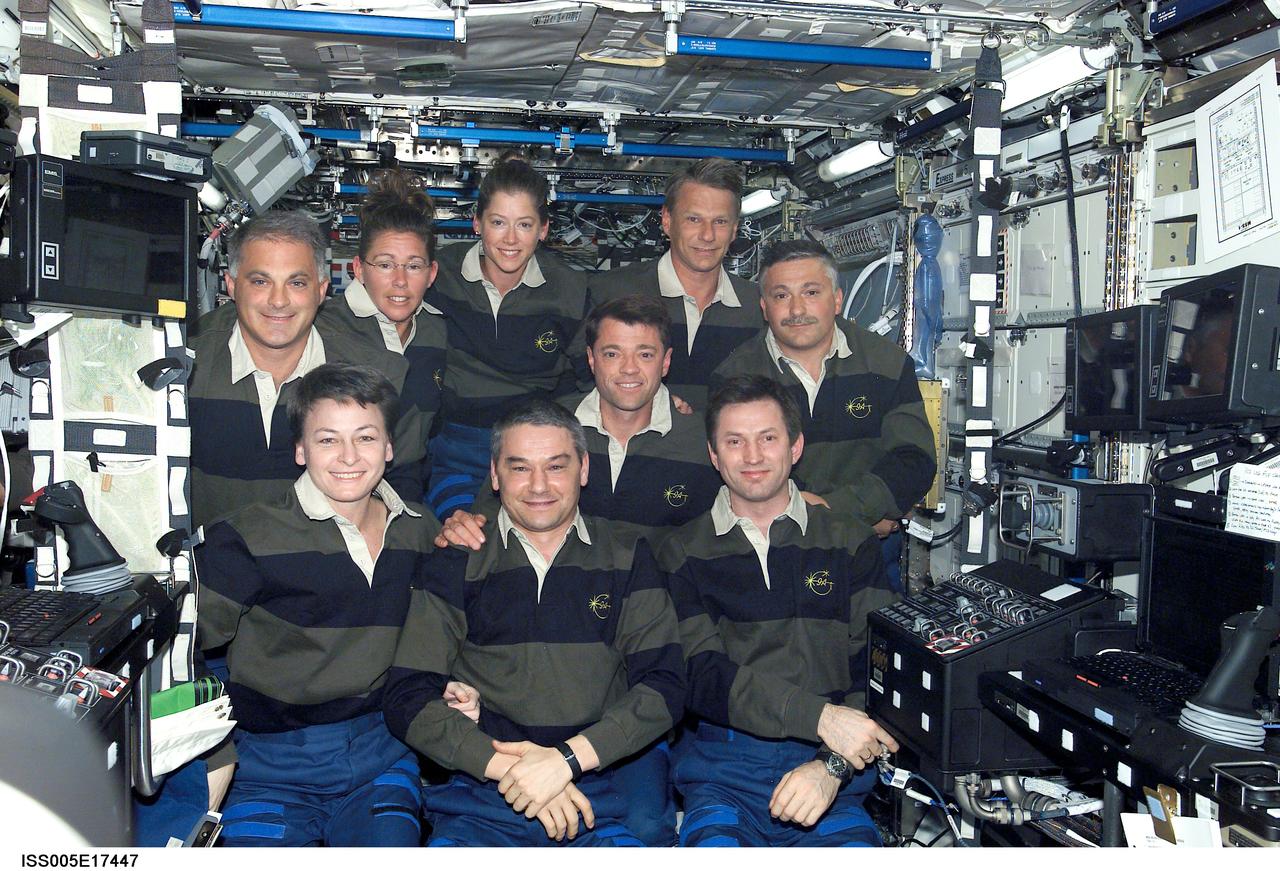
ISS005-E-17447 (13 October 2002) --- The Expedition Five and STS-112 crews assemble for a group photo in the Destiny laboratory on the International Space Station (ISS). From the left, front row, are astronaut Peggy A. Whitson, Expedition Five flight engineer; cosmonauts Valery G. Korzun and Sergei Y. Treschev, Expedition Five mission commander and flight engineer, respectively. From the left, back row, are astronauts David A. Wolf, Sandra H. Magnus, both STS-112 mission specialists; Pamela A. Melroy, Jeffrey S. Ashby, STS-112 pilot and mission commander, respectively; Piers J. Sellers and cosmonaut Fyodor N. Yurchikhin, both STS-112 mission specialists. Korzun, Treschev and Yurchikhin represent Rosaviakosmos.
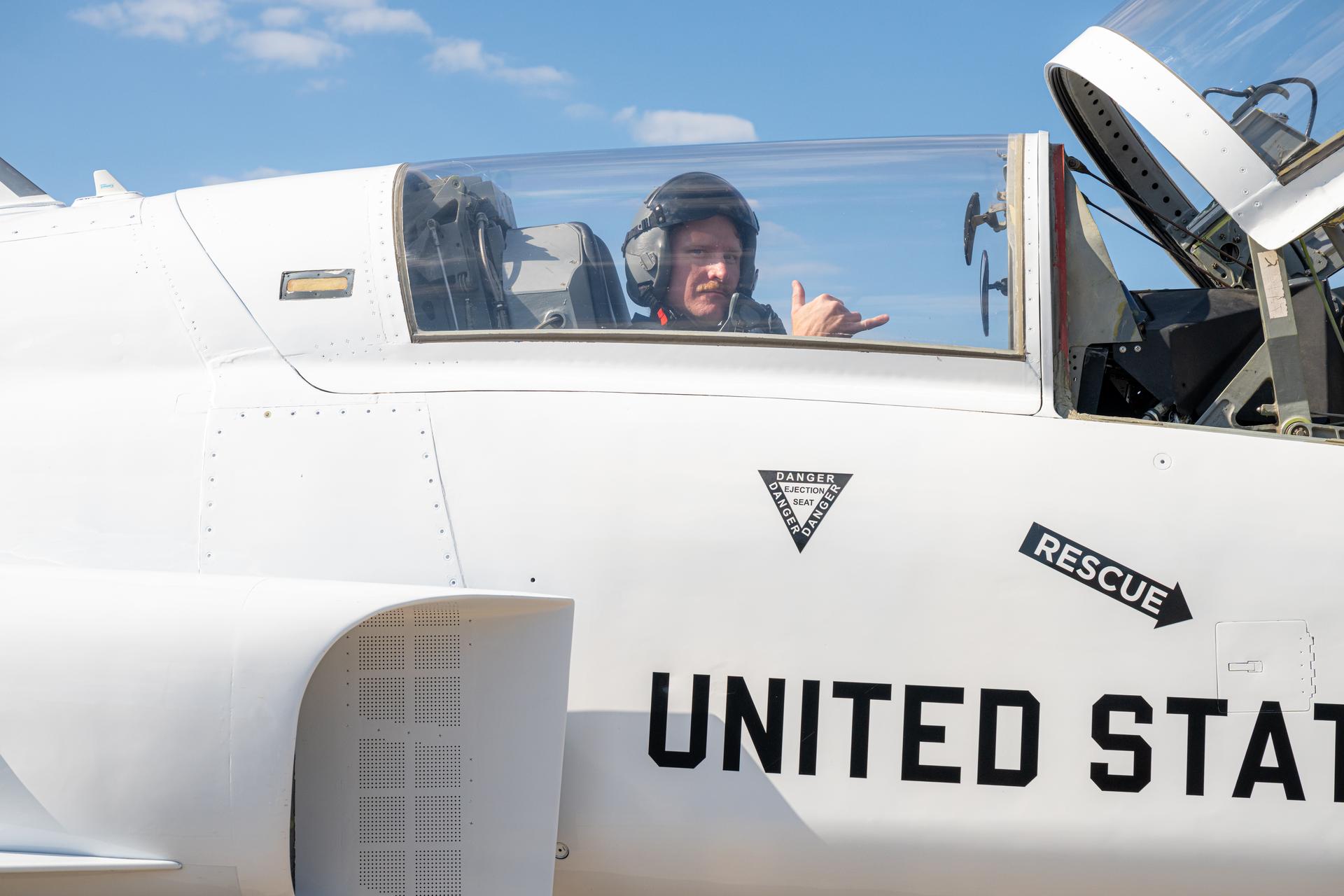
NASA employee Briou Bourgeois, E-3 test director at NASA’s Stennis Space Center, participates in an employee incentive flying event with NASA Administrator Jared Isaacman's personal F-5 aircraft, Saturday, Feb. 21, 2026, at NASA’s Kennedy Space Center in Florida. Photo Credit: (NASA/John Kraus)
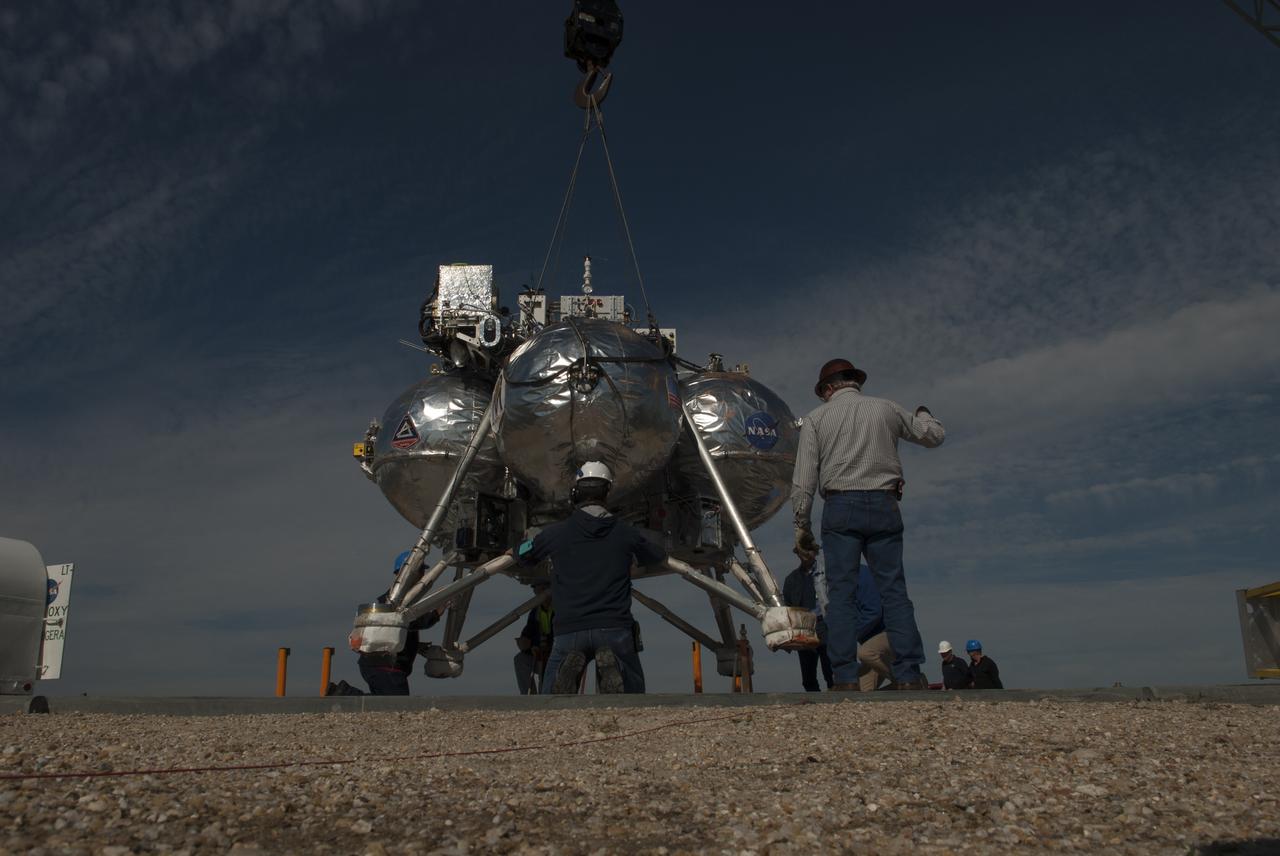
Engineers and technicians prepare NASA's Project Morpheus prototype lander for free flight test number 15 on a launch pad at the north end of the Shuttle Landing Facility at NASA's Kennedy Space Center in Florida. Morpheus is being lowered by crane onto the launch pad. The lander will take off from the ground over a flame trench and use its autonomous landing and hazard avoidance technology, or ALHAT sensors, to survey the hazard field to determine safe landing sites. Project Morpheus tests NASA’s ALHAT and an engine that runs on liquid oxygen and methane, which are green propellants. These new capabilities could be used in future efforts to deliver cargo to planetary surfaces. Project Morpheus is being managed under the Advanced Exploration Systems, or AES, Division in NASA’s Human Exploration and Operations Mission Directorate.
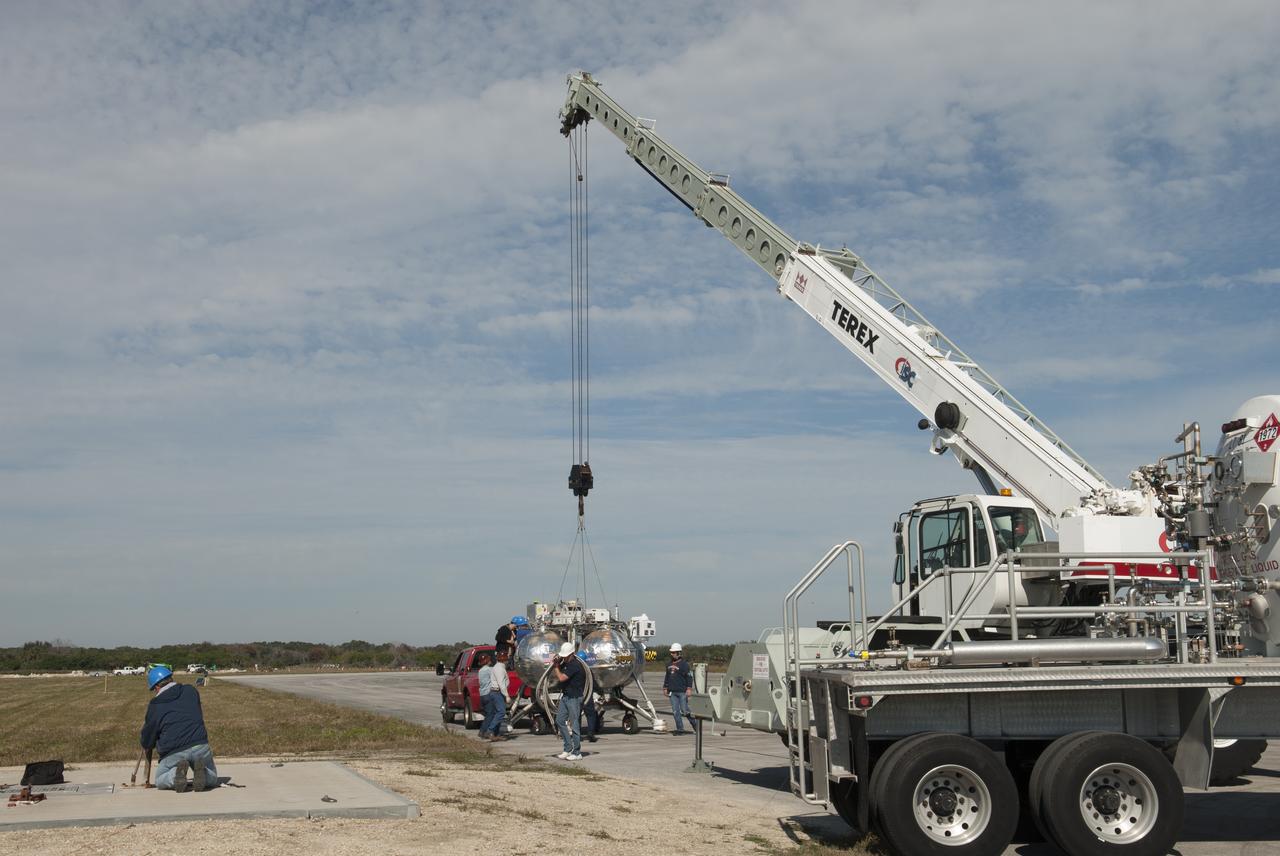
NASA Project Morpheus prototype lander is being lifted by crane during preparations for free flight test number 15 at the north end of the Shuttle Landing Facility at NASA’s Kennedy Space Center in Florida. The lander will take off from the ground over a flame trench and use its autonomous landing and hazard avoidance technology, or ALHAT sensors, to survey the hazard field to determine safe landing sites. Project Morpheus tests NASA’s ALHAT and an engine that runs on liquid oxygen and methane, which are green propellants. These new capabilities could be used in future efforts to deliver cargo to planetary surfaces. Project Morpheus is being managed under the Advanced Exploration Systems, or AES, Division in NASA’s Human Exploration and Operations Mission Directorate.

Rachel Kraft, Artemis communications lead at NASA Headquarters, participates in an employee incentive flying event with NASA Administrator Jared Isaacman's personal F-5 aircraft, Wednesday, May 13, 2026, at NASA’s Kennedy Space Center in Florida. Photo Credit: (NASA/John Kraus)
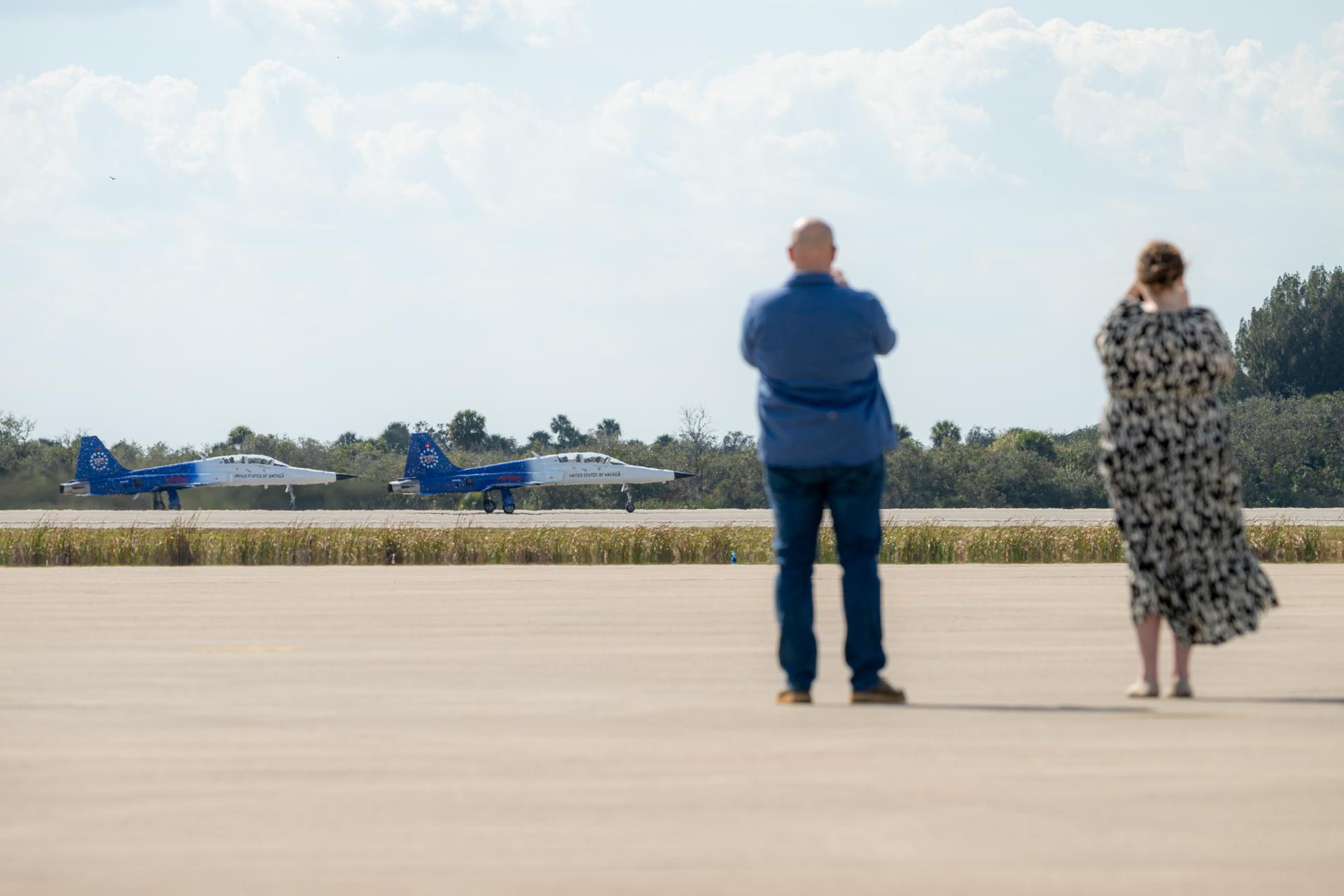
Family members of NASA employees watch as members of the NASA workforce participate in an employee incentive flying event with NASA Administrator Jared Isaacman's personal F-5 aircraft, Friday, Feb. 20, 2026, at NASA’s Kennedy Space Center in Florida. Photo Credit: (NASA/John Kraus)
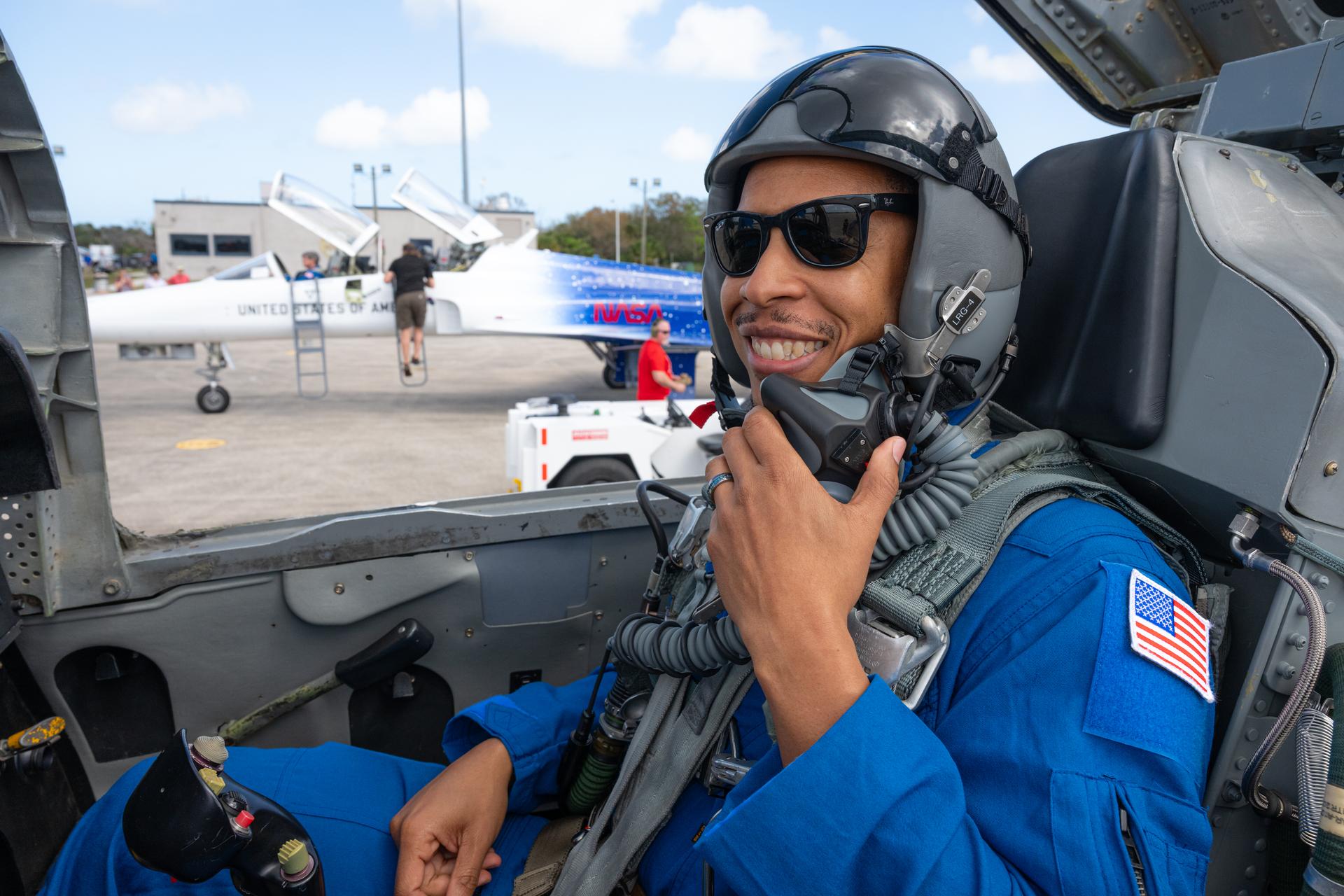
Matthew Mickens, project scientist, space crop production at NASA’s Kennedy Space Center, participates in an employee incentive flying event with NASA Administrator Jared Isaacman's personal F-5 aircraft, Friday, March 6, 2026, at NASA’s Kennedy Space Center in Florida. Photo Credit: (NASA/John Kraus)

Clara Wright, chief of the laboratories, development, and testing division within the engineering directorate at NASA’s Kennedy Space Center, participates in an employee incentive flying event with NASA Administrator Jared Isaacman's personal F-5 aircraft, Friday, March 6, 2026, at NASA’s Kennedy Space Center in Florida. Photo Credit: (NASA/John Kraus)

Dr. Kyle Thompson, research aerothermodynamist at NASA’s Langley Research Center, participates in an employee incentive flying event with NASA Administrator Jared Isaacman's personal F-5 aircraft, Wednesday, May 13, 2026, at NASA’s Kennedy Space Center in Florida. Photo Credit: (NASA/John Kraus)
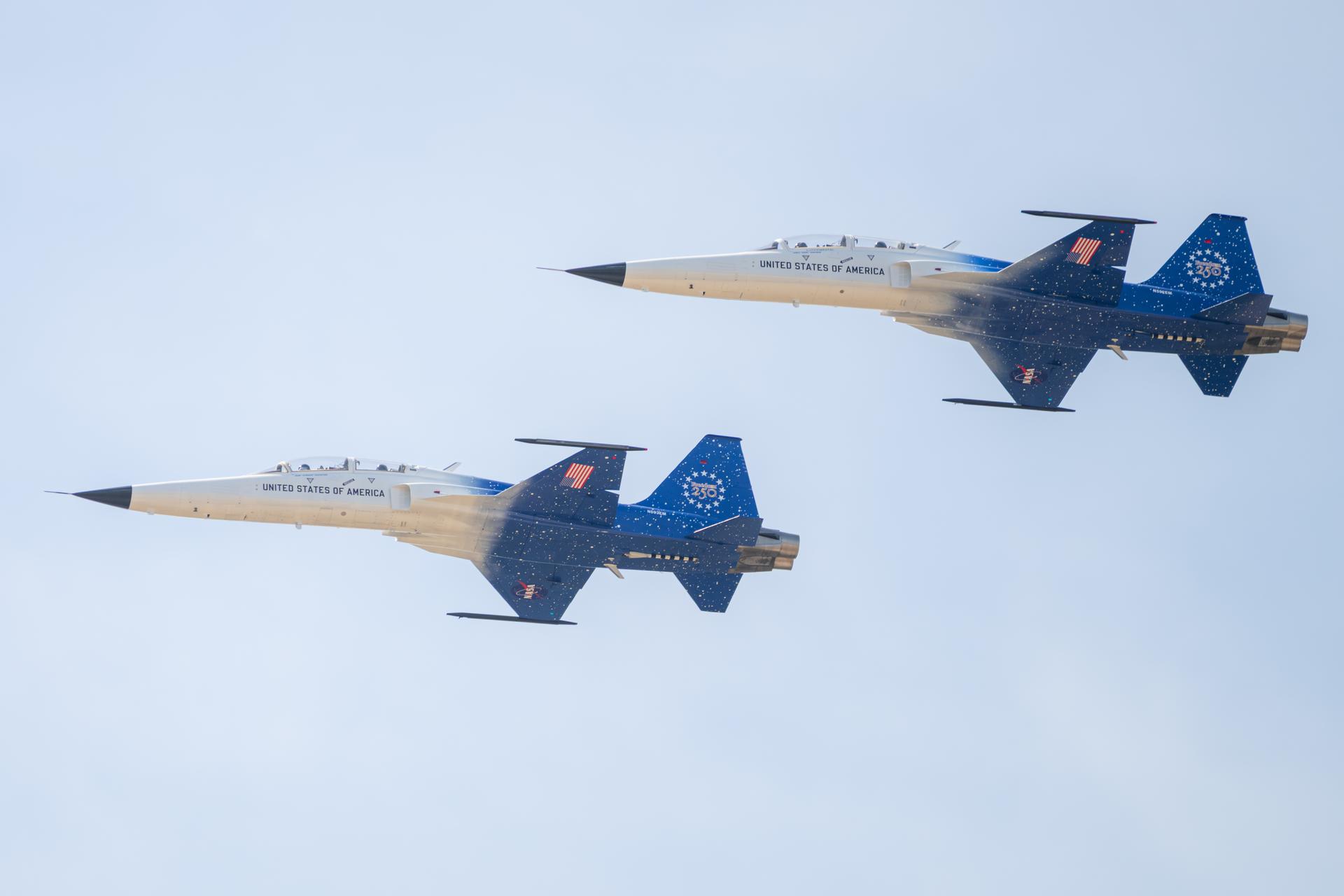
NASA employees participate in an employee incentive flying event using NASA Administrator Jared Isaacman's personal F-5 aircraft, Friday, Feb. 20, 2026, at NASA’s Kennedy Space Center in Florida. Photo Credit: (NASA/John Kraus)
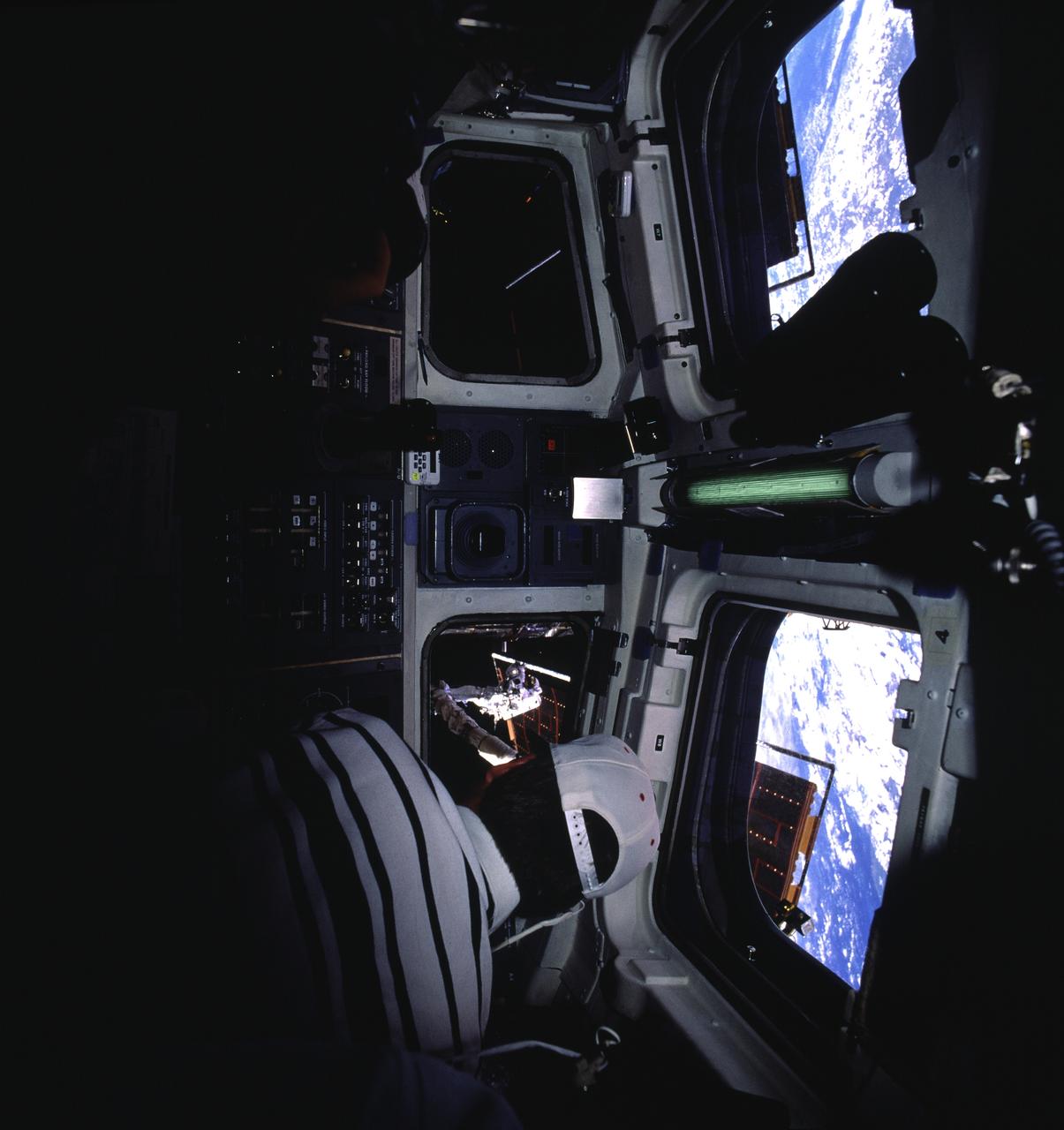
STS082-711-094 (11-21 Feb. 1997) --- From inside the crew cabin, astronaut Steven A. Hawley watches the Extravehicular Activity (EVA) of astronaut Mark C. Lee, payload commander, visible in the background through one of the Space Shuttle Discovery's aft flight deck windows. Actually, Hawley is doing more than watching the EVA to perform servicing work on the Hubble Space Telescope (HST). For most of the five days of EVA, Hawley, a veteran of the April 1990 flight which deployed the giant orbiting observatory, controlled the Remote Manipulator System (RMS), on which Lee is standing in this scene.
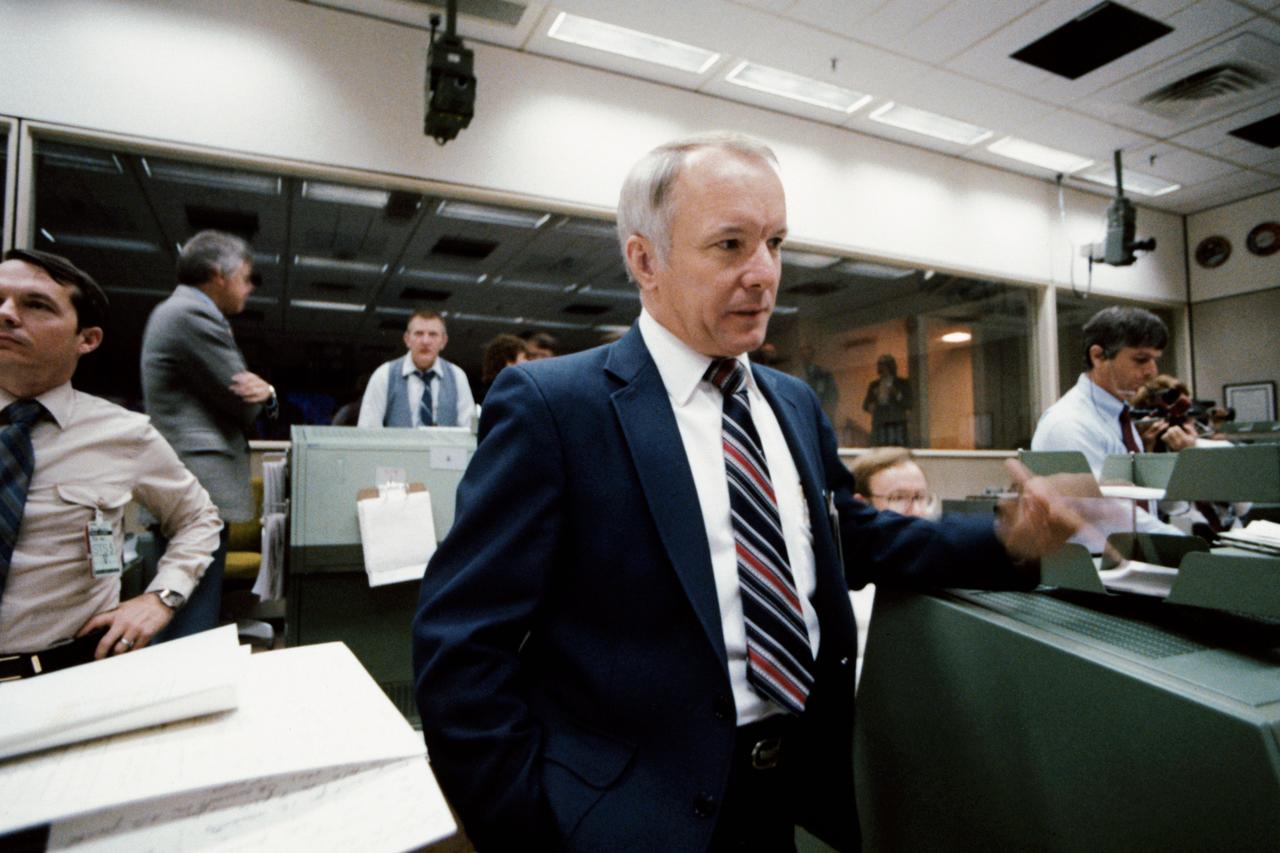
Views of MOCR activity during the STS-5 Mission (11/11-16/1982) of Dr. Hans Mark, NASA Deputy Administrator; Gerald Griffin; portrait of the STS-5 Flight Directors, Flight Director (FD) Cox and Lt. Gen. James A. Abrahamson, Associate Administrator for Space Flight, in the MOCR during the STS-5 Mission. 1. Abrahamson, J. T., Gen,.- STS-5 MOCR 2. Flight Directors - STS-5 MOCR 3. STS-5 - Inflight MOCR 4. Mark, Hans Dr. - STS-5 MOCR 5. Dir. Griffin, Gerald- STS-5 MOCR JSC, Houston, TX. S83-27153 thru S83-27158
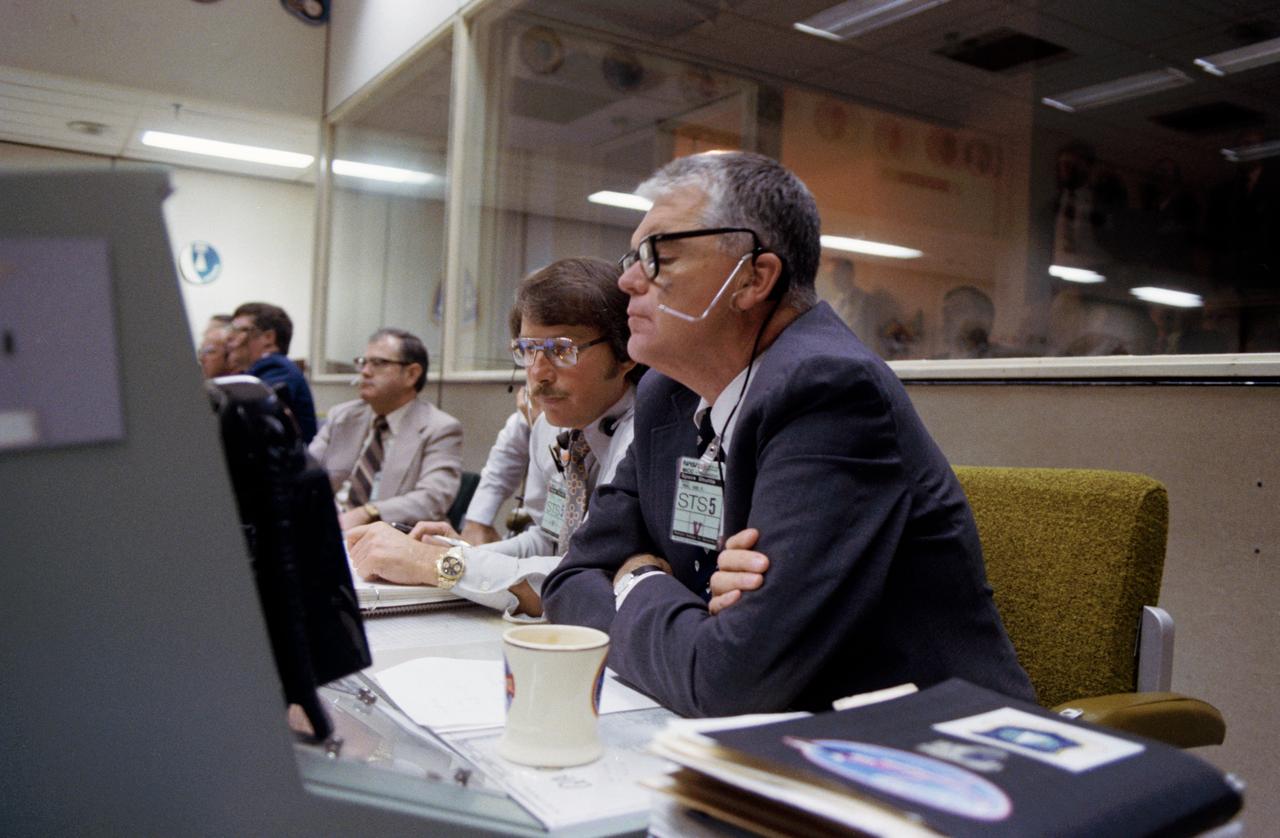
Views of MOCR activity during the STS-5 Mission (11/11-16/1982) of Dr. Hans Mark, NASA Deputy Administrator; Gerald Griffin; portrait of the STS-5 Flight Directors, Flight Director (FD) Cox and Lt. Gen. James A. Abrahamson, Associate Administrator for Space Flight, in the MOCR during the STS-5 Mission. 1. Abrahamson, J. T., Gen,.- STS-5 MOCR 2. Flight Directors - STS-5 MOCR 3. STS-5 - Inflight MOCR 4. Mark, Hans Dr. - STS-5 MOCR 5. Dir. Griffin, Gerald- STS-5 MOCR JSC, Houston, TX. S83-27153 thru S83-27158
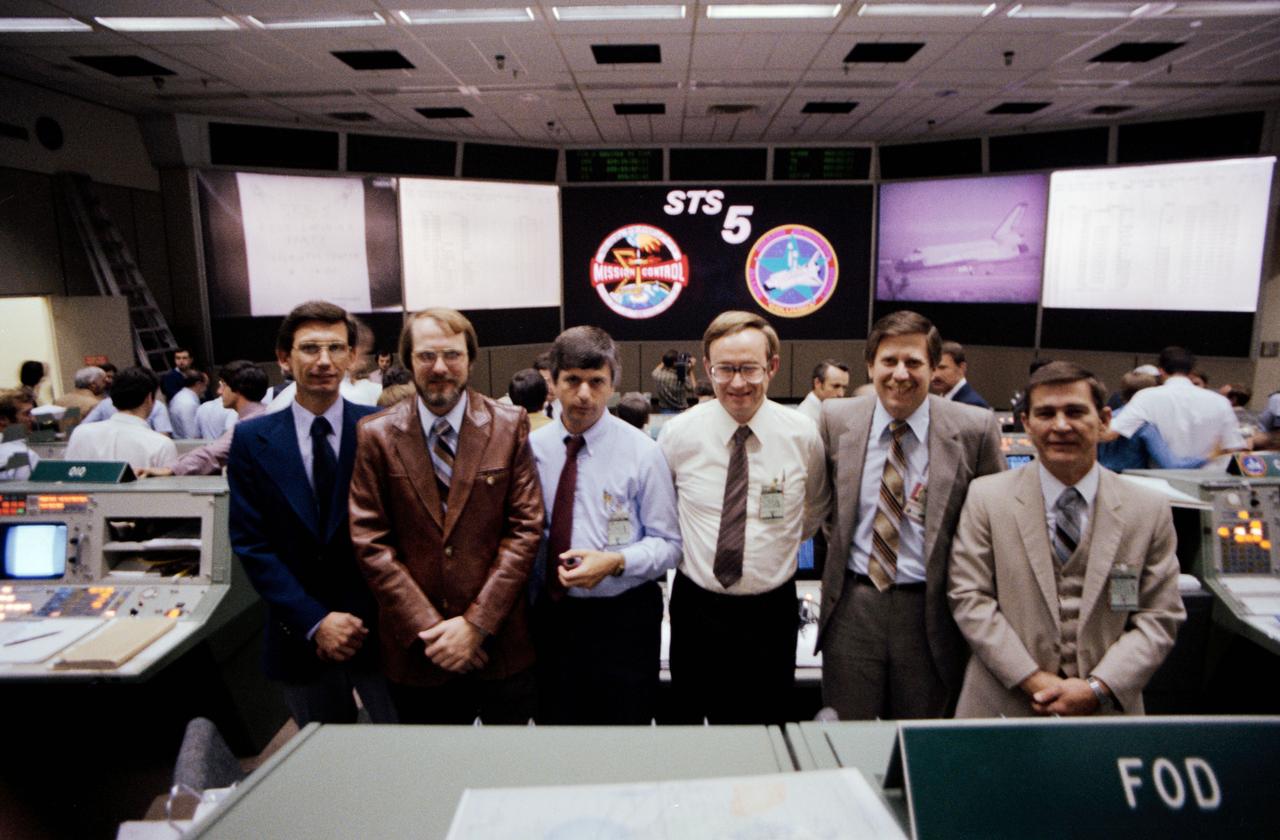
Views of MOCR activity during the STS-5 Mission (11/11-16/1982) of Dr. Hans Mark, NASA Deputy Administrator; Gerald Griffin; portrait of the STS-5 Flight Directors, Flight Director (FD) Cox and Lt. Gen. James A. Abrahamson, Associate Administrator for Space Flight, in the MOCR during the STS-5 Mission. 1. Abrahamson, J. T., Gen,.- STS-5 MOCR 2. Flight Directors - STS-5 MOCR 3. STS-5 - Inflight MOCR 4. Mark, Hans Dr. - STS-5 MOCR 5. Dir. Griffin, Gerald- STS-5 MOCR JSC, Houston, TX. S83-27153 thru S83-27158
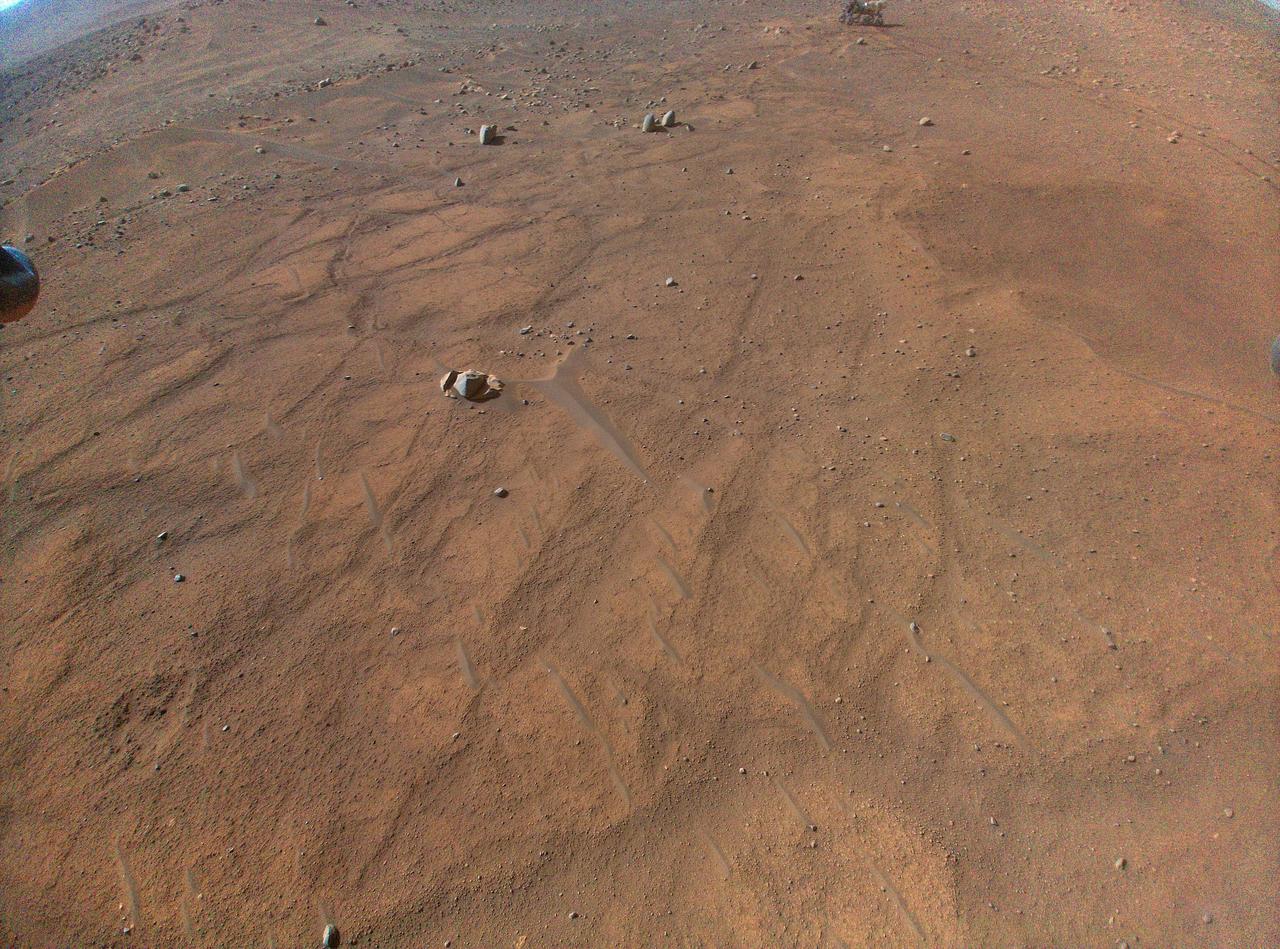
This image of NASA's Perseverance Mars rover – visible at the top, right of center – was taken by the Ingenuity Mars Helicopter during its 54th flight on Aug. 3, 2023, 872nd Martian day, or sol, of the mission. At the time the image was taken, the helicopter was at an altitude of about 16 feet (5 meters). https://photojournal.jpl.nasa.gov/catalog/PIA25969
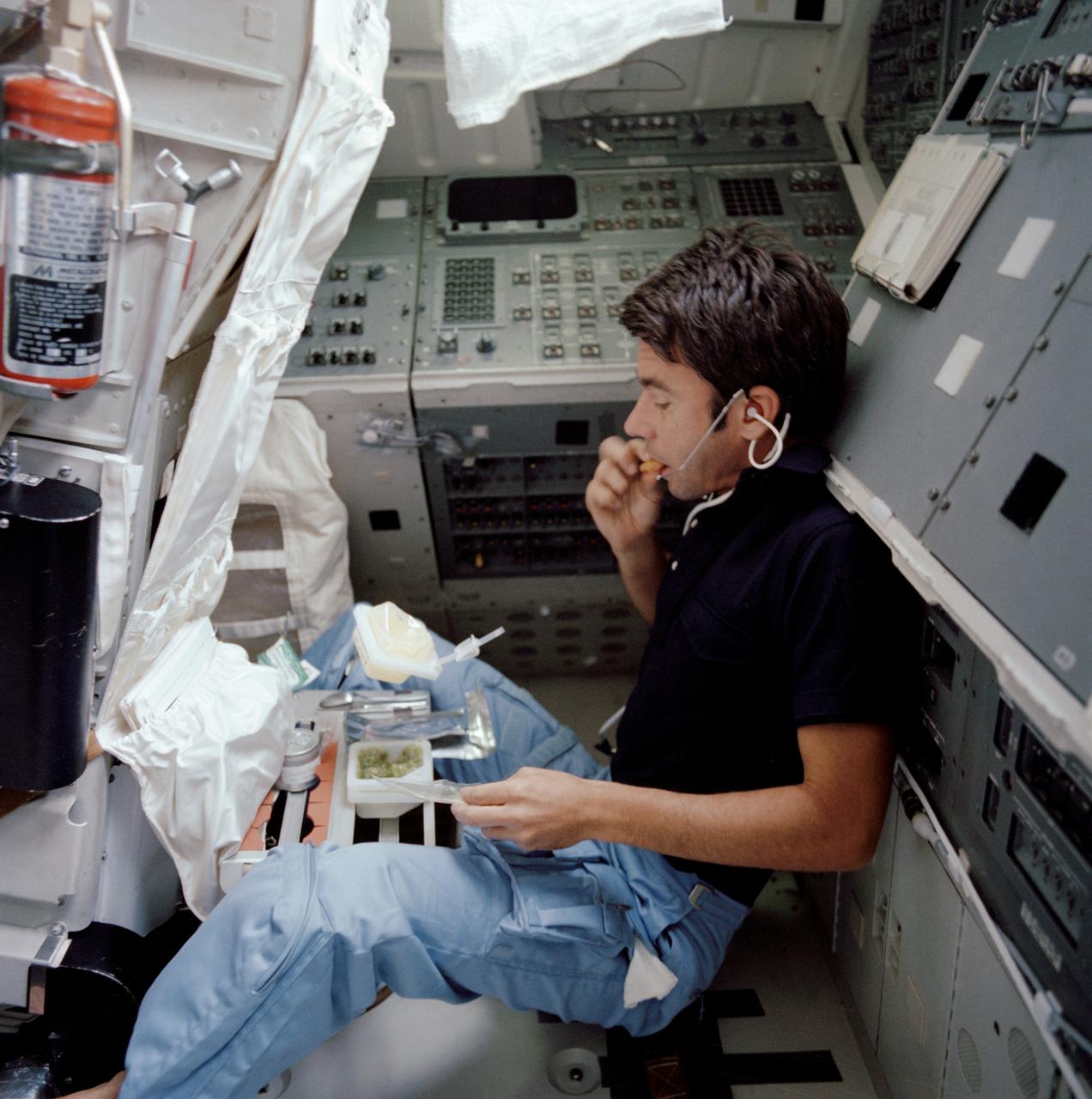
STS005-45-1821 (11-16 Nov. 1982) --- Astronaut William B. Lenoir, STS-5 mission specialist, takes a break to eat his meal on the space shuttle Columbia. Wet trash stowage bags float freely around him and a fire extinguisher hangs on the wall in front of him. Photo credit: NASA
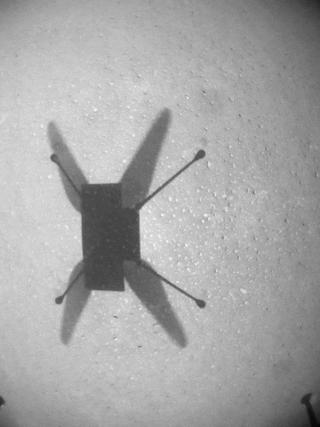
This sequence of images from takeoff to landing was taken by the downward-looking navigation camera of NASA's Ingenuity Mars Helicopter during its ninth flight on Mars on July 5, 2021. The flight was the helicopter's longest in duration and distance to date – 2 minutes, 46 seconds and 2,051 feet (625 meters), respectively. Movie available at https://photojournal.jpl.nasa.gov/catalog/PIA24686
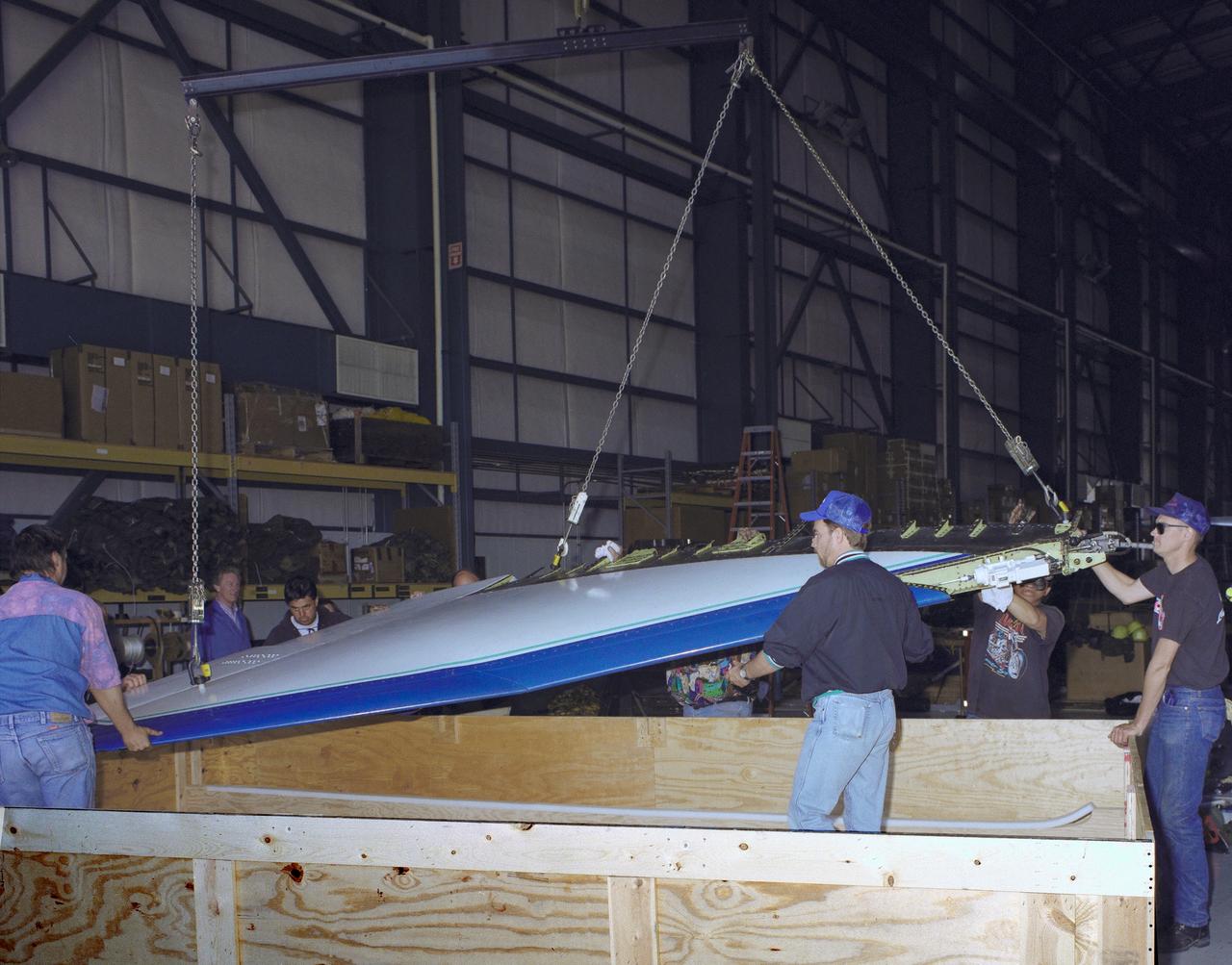
The right wing of the X-31 Enhanced Fighter Maneuverability Technology Demonstrator Aircraft is seen here being put into a shipping container May 18, 1995, at NASA's Dryden Flight Research Center, Edwards, California, by U.S. and German members of the program. To fit inside an Air Force Reserve C-5 transport, which was used to ferry the X-31 to Europe on May 22, 1995, the right wing had to be removed. Manching, Germany, was used as a staging base to prepare the aircraft for participation in the Paris Air Show. At the air show on June 11 through the 18th, the X-31 demonstrated the value of using thrust vectoring (directing engine exhaust flow) coupled with advanced flight control systems to provide controlled flight at very high angles of attack. The aircraft arrived back at Edwards in an Air Force Reserve C-5 on June 25, 1995, and off loaded at Dryden the 27th. The X-31 aircraft was developed jointly by Rockwell International's North American Aircraft Division (now part of Boeing) and Daimler-Benz Aerospace (formerly Messerschmitt-Bolkow-Blohm), under sponsorship by the U.S. Department of Defense and the German Federal Ministry of Defense.
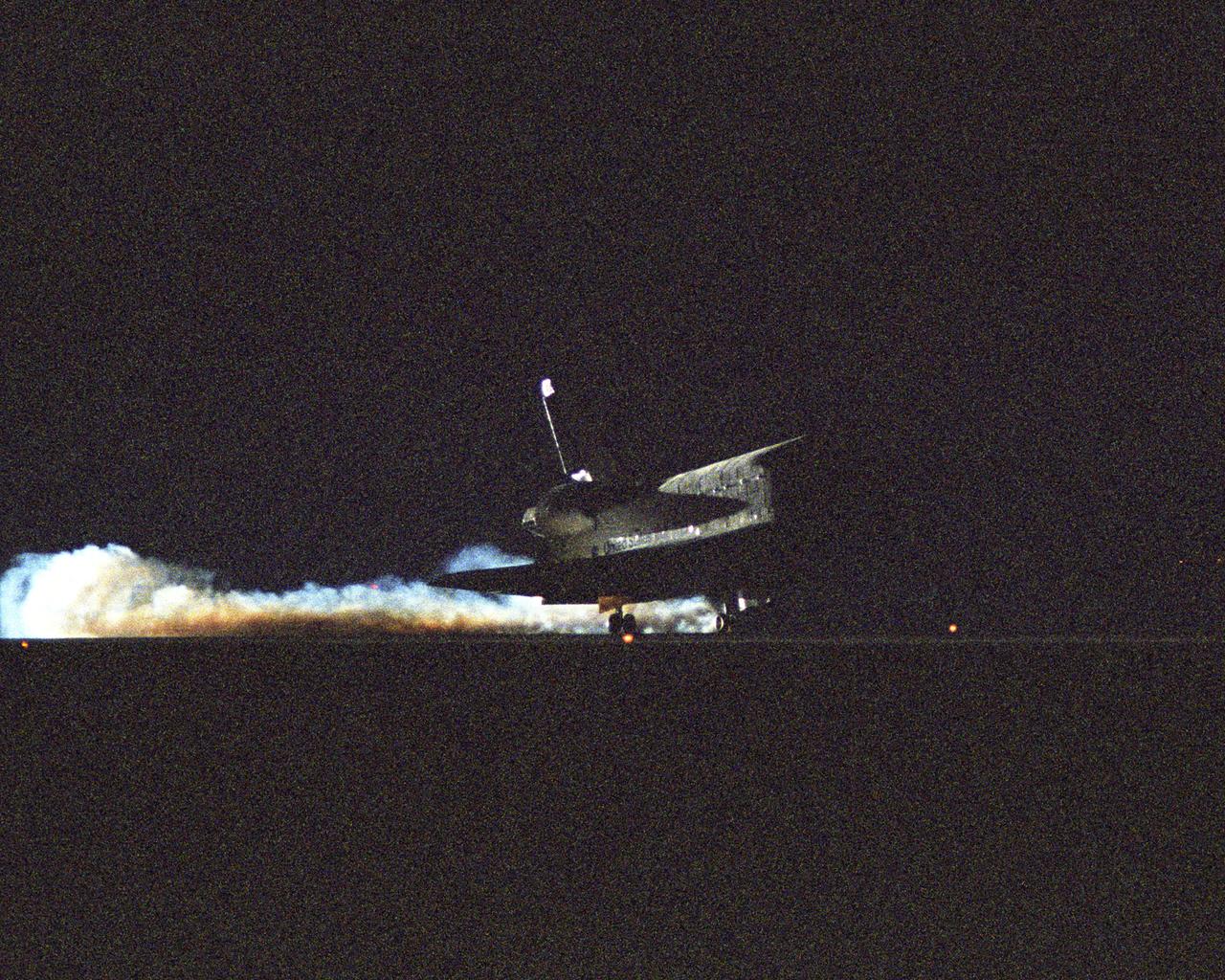
Space Shuttle Discovery landed safely at NASA's Dryden Flight Research Center at Edwards Air Force Base in Calif. at 5:11:22 a.m. PDT this morning, following the very successful 14-day STS-114 return to flight mission. During their two weeks in space, Commander Eileen Collins and her six crewmates tested out new safety procedures and delivered supplies and equipment the International Space Station. Discovery spent two weeks in space, where the crew demonstrated new methods to inspect and repair the Shuttle in orbit. The crew also delivered supplies, outfitted and performed maintenance on the International Space Station. A number of these tasks were conducted during three spacewalks. In an unprecedented event, spacewalkers were called upon to remove protruding gap fillers from the heat shield on Discovery's underbelly. In other spacewalk activities, astronauts installed an external platform onto the Station's Quest Airlock and replaced one of the orbital outpost's Control Moment Gyroscopes. Inside the Station, the STS-114 crew conducted joint operations with the Expedition 11 crew. They unloaded fresh supplies from the Shuttle and the Raffaello Multi-Purpose Logistics Module. Before Discovery undocked, the crews filled Raffeallo with unneeded items and returned to Shuttle payload bay. Discovery launched on July 26 and spent almost 14 days on orbit.

Space Shuttle Discovery landed safely at NASA's Dryden Flight Research Center at Edwards Air Force Base in Calif. at 5:11:22 a.m. PDT this morning, following the very successful 14-day STS-114 return to flight mission. During their two weeks in space, Commander Eileen Collins and her six crewmates tested out new safety procedures and delivered supplies and equipment the International Space Station. Discovery spent two weeks in space, where the crew demonstrated new methods to inspect and repair the Shuttle in orbit. The crew also delivered supplies, outfitted and performed maintenance on the International Space Station. A number of these tasks were conducted during three spacewalks. In an unprecedented event, spacewalkers were called upon to remove protruding gap fillers from the heat shield on Discovery's underbelly. In other spacewalk activities, astronauts installed an external platform onto the Station's Quest Airlock and replaced one of the orbital outpost's Control Moment Gyroscopes. Inside the Station, the STS-114 crew conducted joint operations with the Expedition 11 crew. They unloaded fresh supplies from the Shuttle and the Raffaello Multi-Purpose Logistics Module. Before Discovery undocked, the crews filled Raffeallo with unneeded items and returned to Shuttle payload bay. Discovery launched on July 26 and spent almost 14 days on orbit.