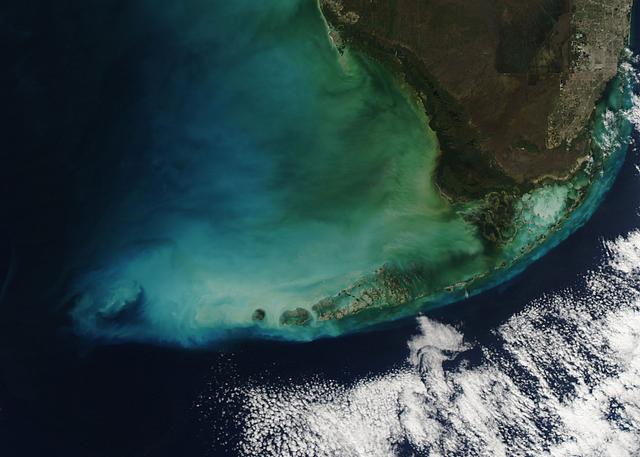
NASA image acquired January 4, 2012 The Florida Keys many colors were captured when the Moderate Resolution Imaging Spectroradiometer (MODIS) aboard the Aqua satellite captured this true-color image. NASA/GSFC/Jeff Schmaltz/MODIS Land Rapid Response Team <b><a href="http://www.nasa.gov/audience/formedia/features/MP_Photo_Guidelines.html" rel="nofollow">NASA image use policy.</a></b> <b><a href="http://www.nasa.gov/centers/goddard/home/index.html" rel="nofollow">NASA Goddard Space Flight Center</a></b> enables NASA’s mission through four scientific endeavors: Earth Science, Heliophysics, Solar System Exploration, and Astrophysics. Goddard plays a leading role in NASA’s accomplishments by contributing compelling scientific knowledge to advance the Agency’s mission. <b>Follow us on <a href="http://twitter.com/NASA_GoddardPix" rel="nofollow">Twitter</a></b> <b>Like us on <a href="http://www.facebook.com/pages/Greenbelt-MD/NASA-Goddard/395013845897?ref=tsd" rel="nofollow">Facebook</a></b> <b>Find us on <a href="http://instagrid.me/nasagoddard/?vm=grid" rel="nofollow">Instagram</a></b>
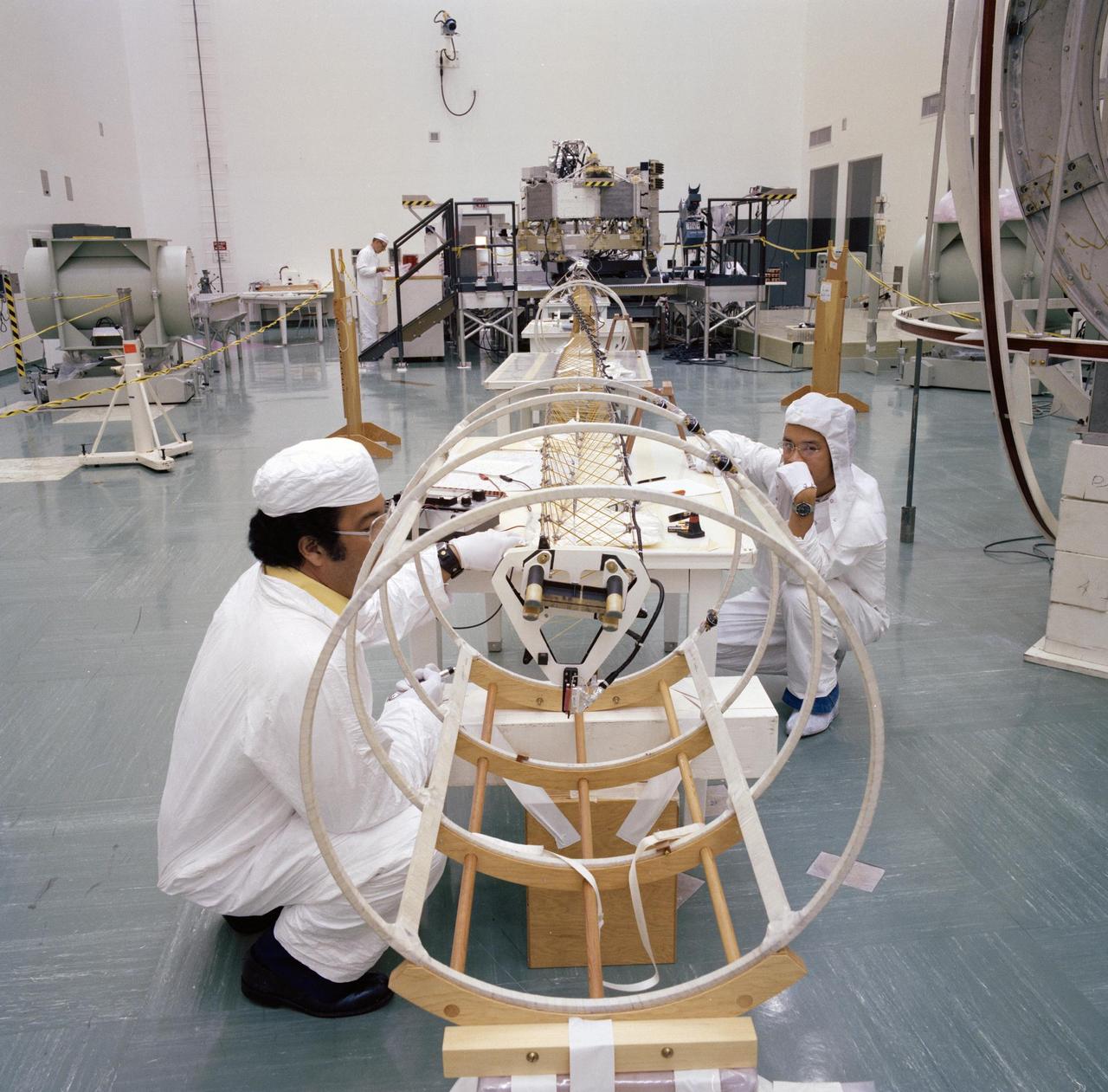
This archival photo shows engineers working with the deployed magnetometer boom of one of NASA's Voyager spacecraft in Florida on June 17, 1977. https://photojournal.jpl.nasa.gov/catalog/PIA21738
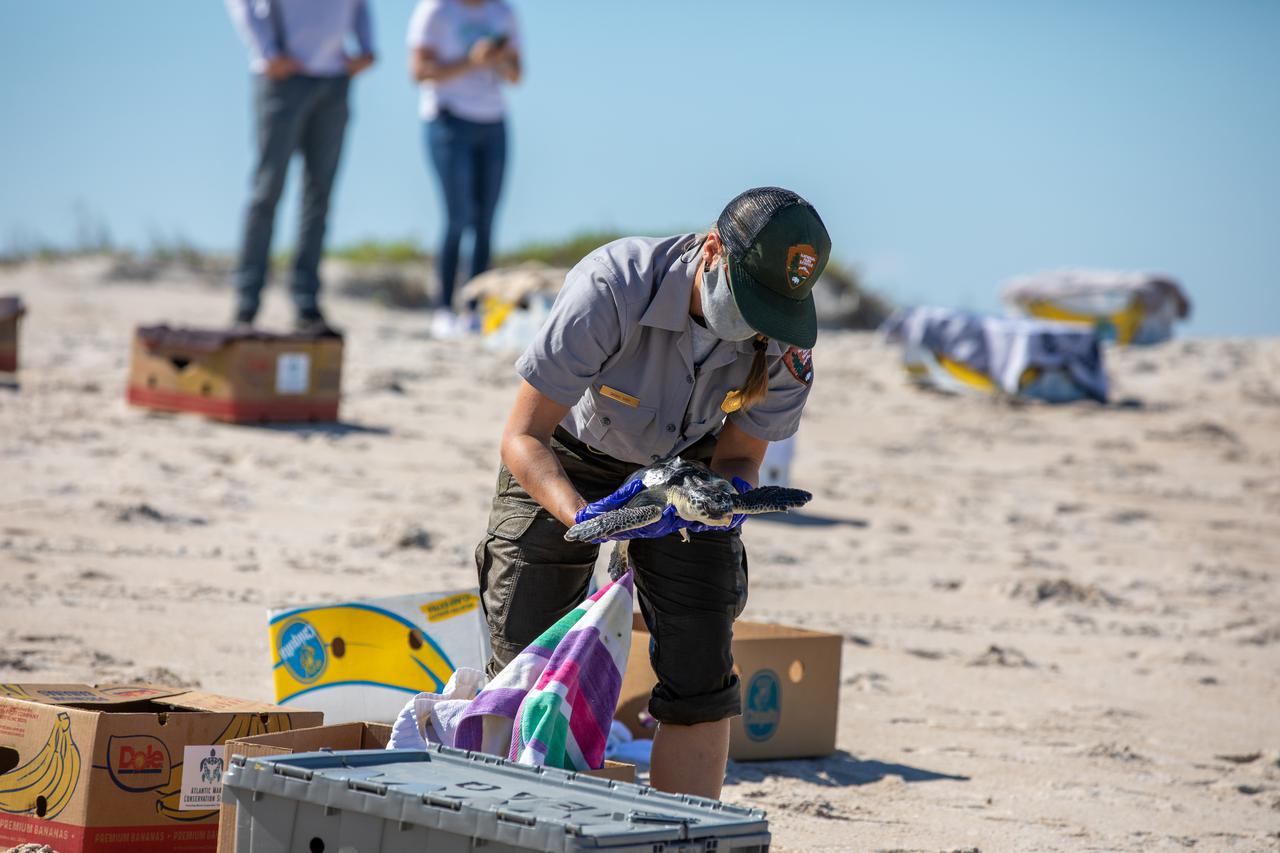
Staff with NASA, the National Park Service, Herndon Solutions Group, the center’s environmental services contractor, and others, prepare to release Kemp’s ridley sea turtles into the Atlantic Ocean at the Canaveral National Seashore near Kennedy Space Center on Feb. 26, 2021. The rescued and rehabilitated turtles were flown from aquatic centers in Massachusetts and New York to the Launch and Landing Facility, managed by Space Florida. NASA, U.S. Fish and Wildlife Service, NOAA Fisheries, Space Florida, and Herndon Solutions Group provided support. The Turtles Fly Too organization provided the flight to Kennedy. All marine turtle footage/images was obtained with the approval of the Florida Fish and Wildlife Conservation Commission (FWC) under conditions not harmful to marine turtles. Footage was acquired while conducting authorized conservation activities pursuant to: FWC 2021 Consent Permit, MTP-21-005 and MTP-21-114.
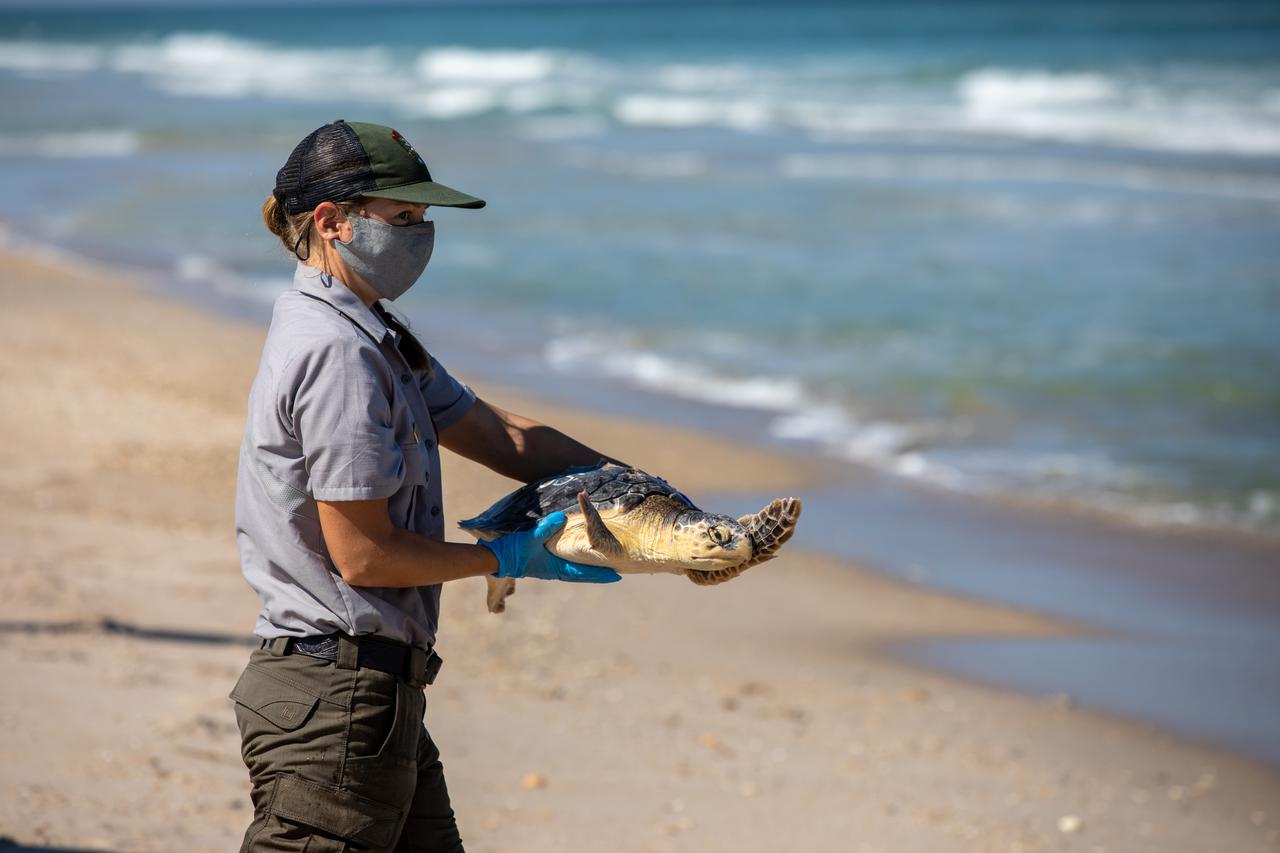
A National Park Service staff member prepares to release a Kemp’s ridley sea turtle into the Atlantic Ocean at the Canaveral National Seashore near Kennedy Space Center on Feb. 26, 2021. The rescued and rehabilitated turtles were flown from aquatic centers in Massachusetts and New York to the Launch and Landing Facility, managed by Space Florida. NASA, U.S. Fish and Wildlife Service, NOAA Fisheries, Space Florida, and Herndon Solutions Group provided support. The Turtles Fly Too organization provided the flight to Kennedy. All marine turtle footage/images was obtained with the approval of the Florida Fish and Wildlife Conservation Commission (FWC) under conditions not harmful to marine turtles. Footage was acquired while conducting authorized conservation activities pursuant to: FWC 2021 Consent Permit, MTP-21-005 and MTP-21-114.
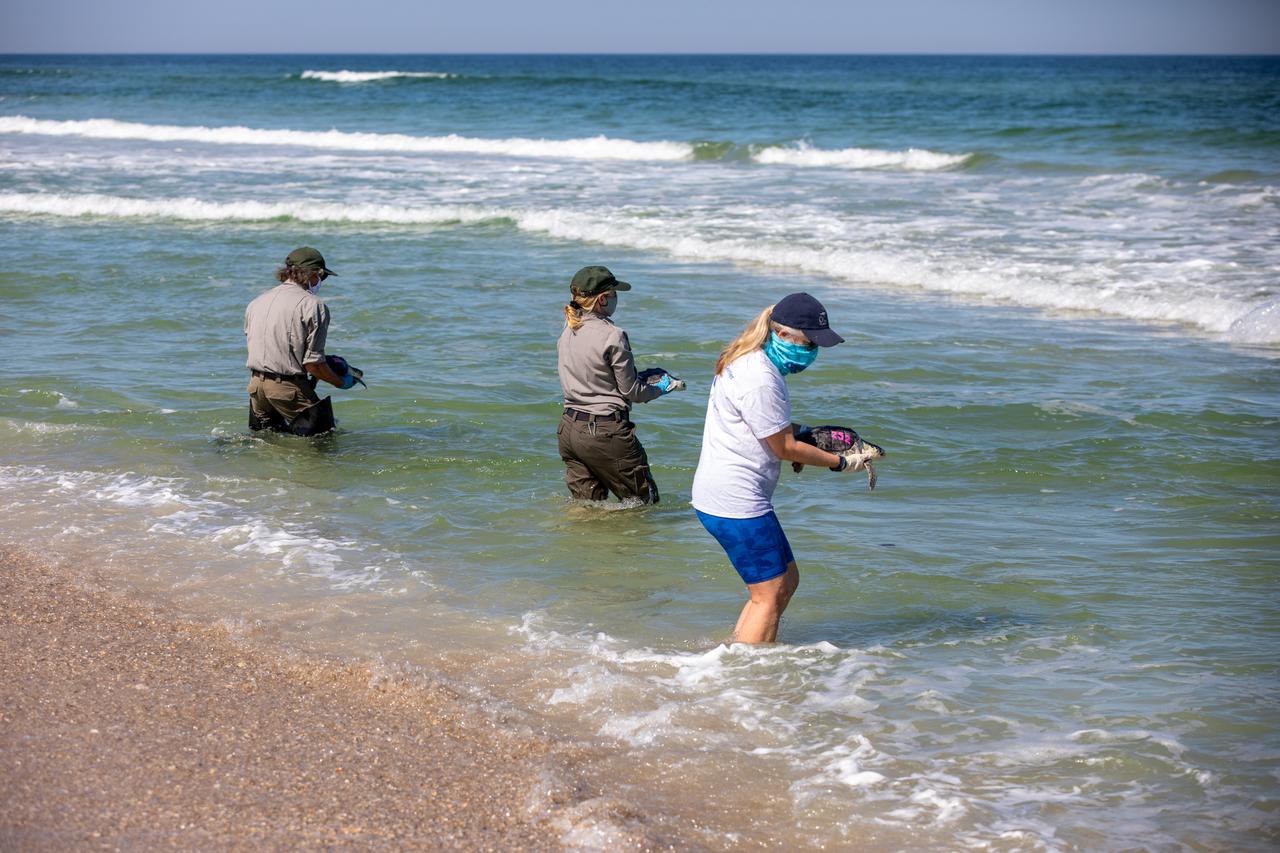
Staff with NASA, the National Park Service, Herndon Solutions Group, the center’s environmental services contractor, and others, prepare to release Kemp’s ridley sea turtles into the Atlantic Ocean at the Canaveral National Seashore near Kennedy Space Center on Feb. 26, 2021. The rescued and rehabilitated turtles were flown from aquatic centers in Massachusetts and New York to the Launch and Landing Facility, managed by Space Florida. NASA, U.S. Fish and Wildlife Service, NOAA Fisheries, Space Florida, and Herndon Solutions Group provided support. The Turtles Fly Too organization provided the flight to Kennedy. All marine turtle footage/images was obtained with the approval of the Florida Fish and Wildlife Conservation Commission (FWC) under conditions not harmful to marine turtles. Footage was acquired while conducting authorized conservation activities pursuant to: FWC 2021 Consent Permit, MTP-21-005 and MTP-21-114.
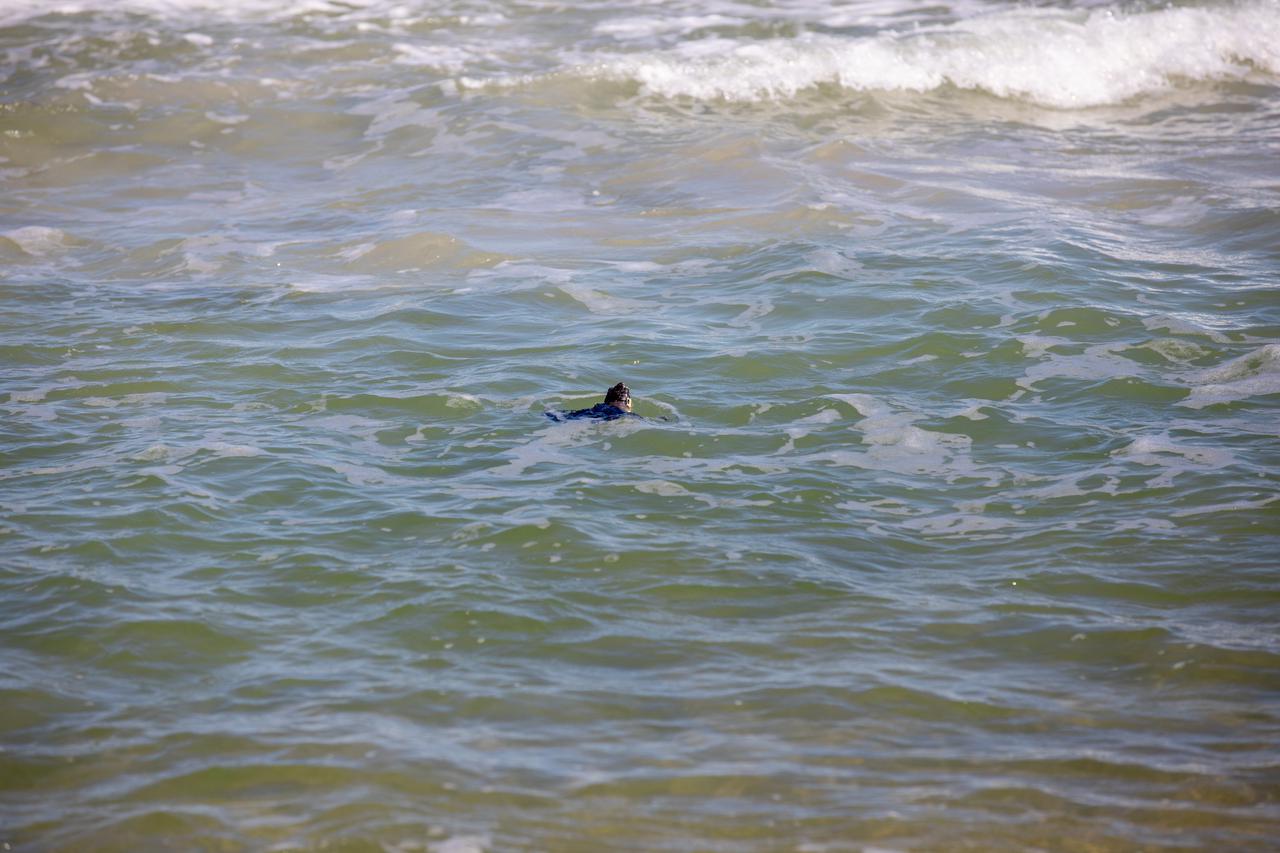
A Kemp’s ridley sea turtle swims in the surf after it is released into the Atlantic Ocean at the Canaveral National Seashore near Kennedy Space Center on Feb. 26, 2021. The rescued and rehabilitated turtles were flown from aquatic centers in Massachusetts and New York to the Launch and Landing Facility, managed by Space Florida. NASA, U.S. Fish and Wildlife Service, NOAA Fisheries, Space Florida, and Herndon Solutions Group provided support. The Turtles Fly Too organization provided the flight to Kennedy. All marine turtle footage/images was obtained with the approval of the Florida Fish and Wildlife Conservation Commission (FWC) under conditions not harmful to marine turtles. Footage was acquired while conducting authorized conservation activities pursuant to: FWC 2021 Consent Permit, MTP-21-005 and MTP-21-114.
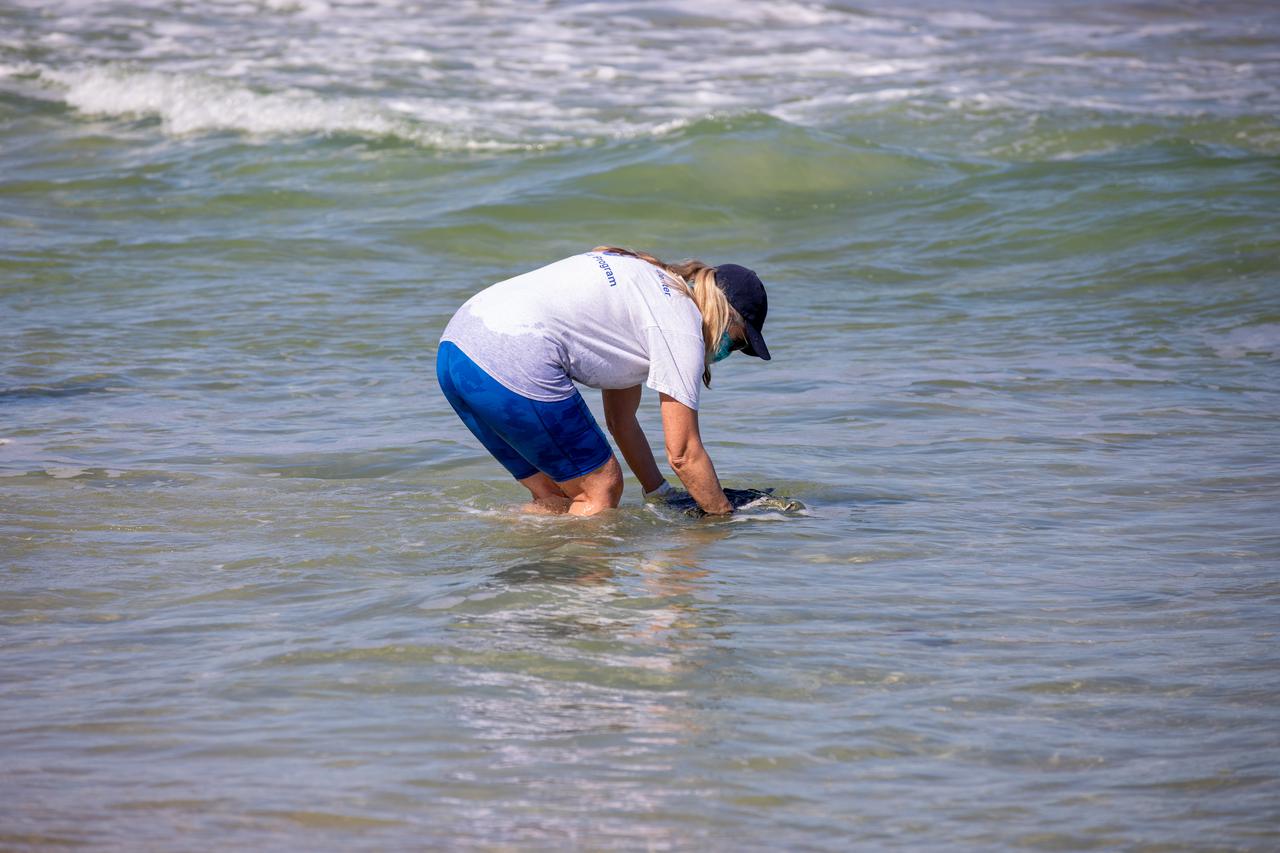
A biologist with Herndon Solutions Group, the center’s environmental services contractor, releases a Kemp’s ridley sea turtle into the Atlantic Ocean at the Canaveral National Seashore near Kennedy Space Center on Feb. 26, 2021. The rescued and rehabilitated turtles were flown from aquatic centers in Massachusetts and New York to the Launch and Landing Facility, managed by Space Florida. NASA, U.S. Fish and Wildlife Service, NOAA Fisheries, Space Florida, and Herndon Solutions Group provided support. The Turtles Fly Too organization provided the flight to Kennedy. All marine turtle footage/images was obtained with the approval of the Florida Fish and Wildlife Conservation Commission (FWC) under conditions not harmful to marine turtles. Footage was acquired while conducting authorized conservation activities pursuant to: FWC 2021 Consent Permit, MTP-21-005 and MTP-21-114.
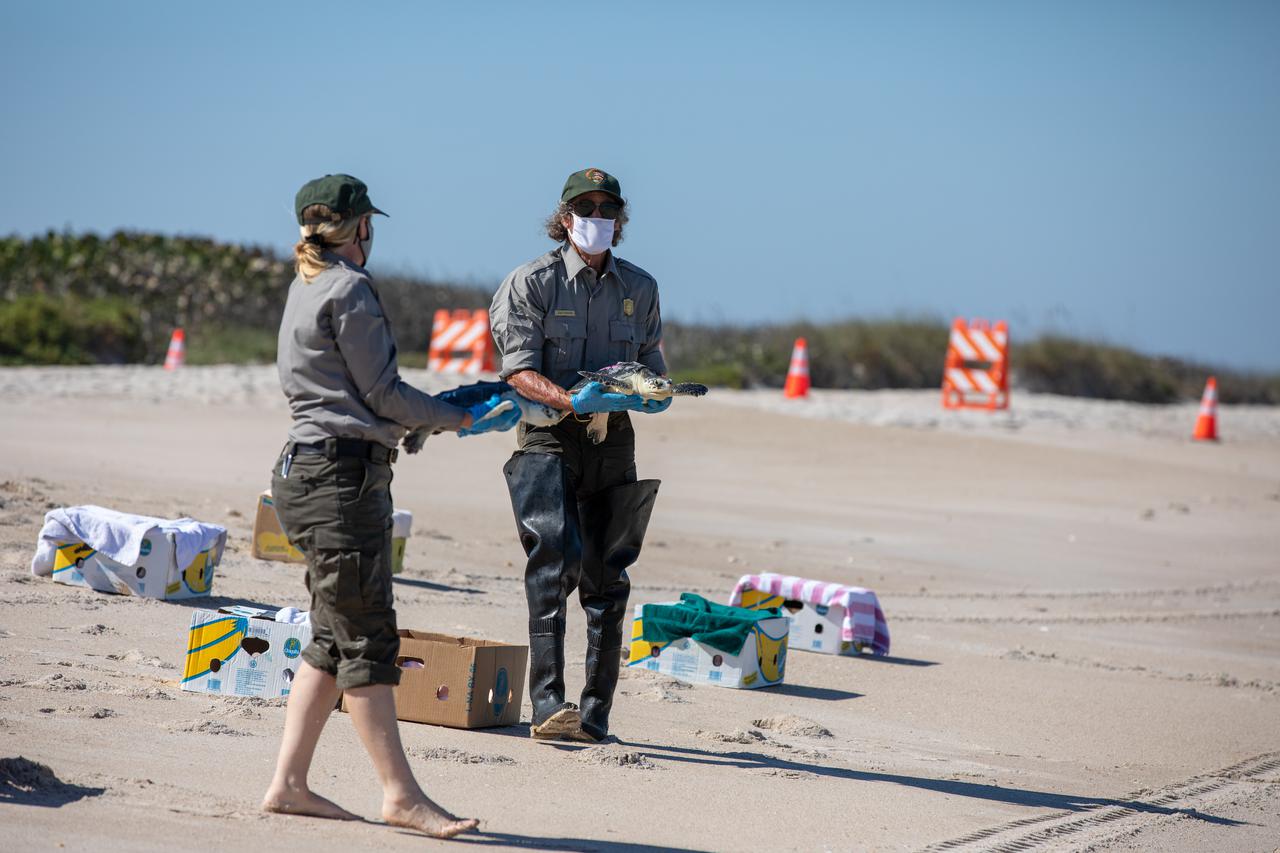
Staff with NASA, the National Park Service, Herndon Solutions Group, the center’s environmental services contractor, and others, prepare to release Kemp’s ridley sea turtles into the Atlantic Ocean at the Canaveral National Seashore near Kennedy Space Center on Feb. 26, 2021. The rescued and rehabilitated turtles were flown from aquatic centers in Massachusetts and New York to the Launch and Landing Facility, managed by Space Florida. NASA, U.S. Fish and Wildlife Service, NOAA Fisheries, Space Florida, and Herndon Solutions Group provided support. The Turtles Fly Too organization provided the flight to Kennedy. All marine turtle footage/images was obtained with the approval of the Florida Fish and Wildlife Conservation Commission (FWC) under conditions not harmful to marine turtles. Footage was acquired while conducting authorized conservation activities pursuant to: FWC 2021 Consent Permit, MTP-21-005 and MTP-21-114.
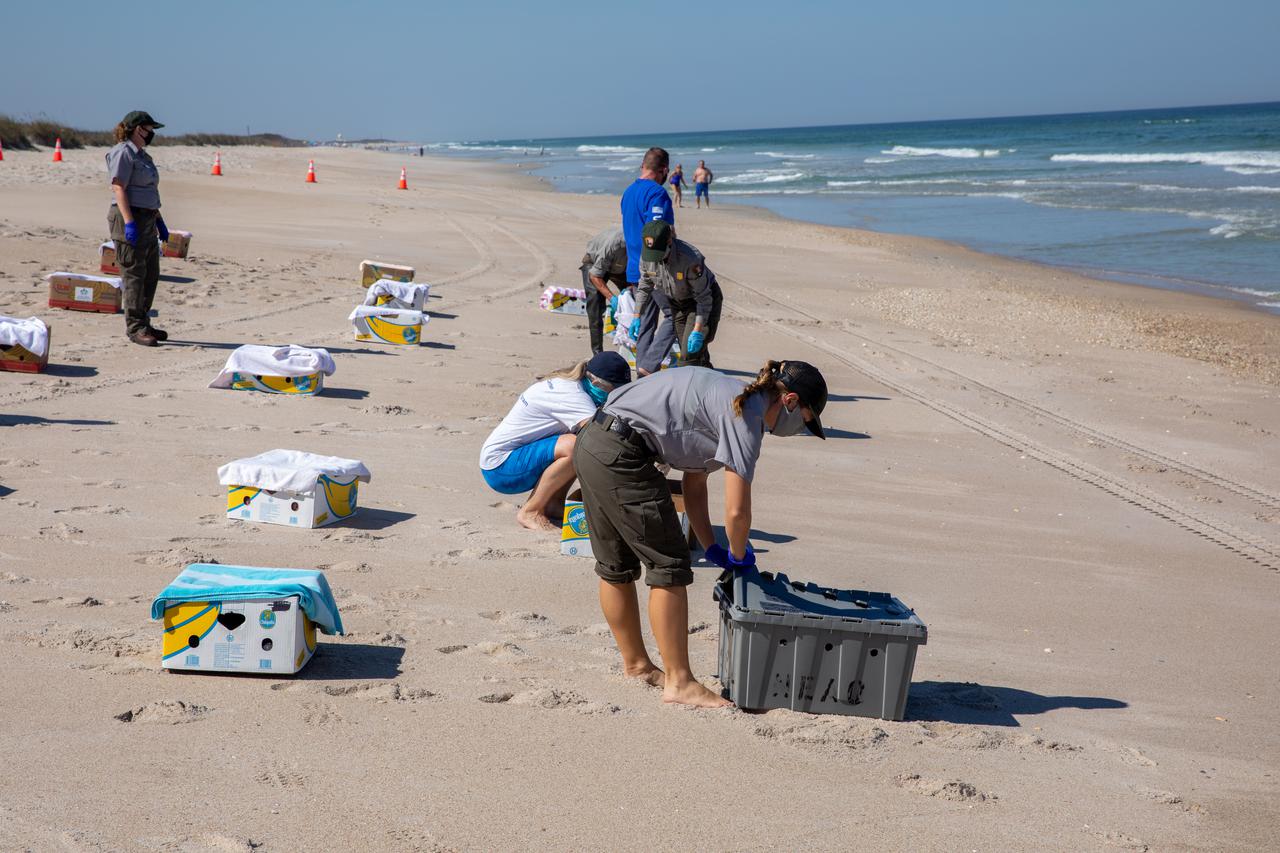
Staff with NASA, the National Park Service, Herndon Solutions Group, the center’s environmental services contractor, and others, prepare to release Kemp’s ridley sea turtles into the Atlantic Ocean at the Canaveral National Seashore near Kennedy Space Center on Feb. 26, 2021. The rescued and rehabilitated turtles were flown from aquatic centers in Massachusetts and New York to the Launch and Landing Facility, managed by Space Florida. NASA, U.S. Fish and Wildlife Service, NOAA Fisheries, Space Florida, and Herndon Solutions Group provided support. The Turtles Fly Too organization provided the flight to Kennedy. All marine turtle footage/images was obtained with the approval of the Florida Fish and Wildlife Conservation Commission (FWC) under conditions not harmful to marine turtles. Footage was acquired while conducting authorized conservation activities pursuant to: FWC 2021 Consent Permit, MTP-21-005 and MTP-21-114.
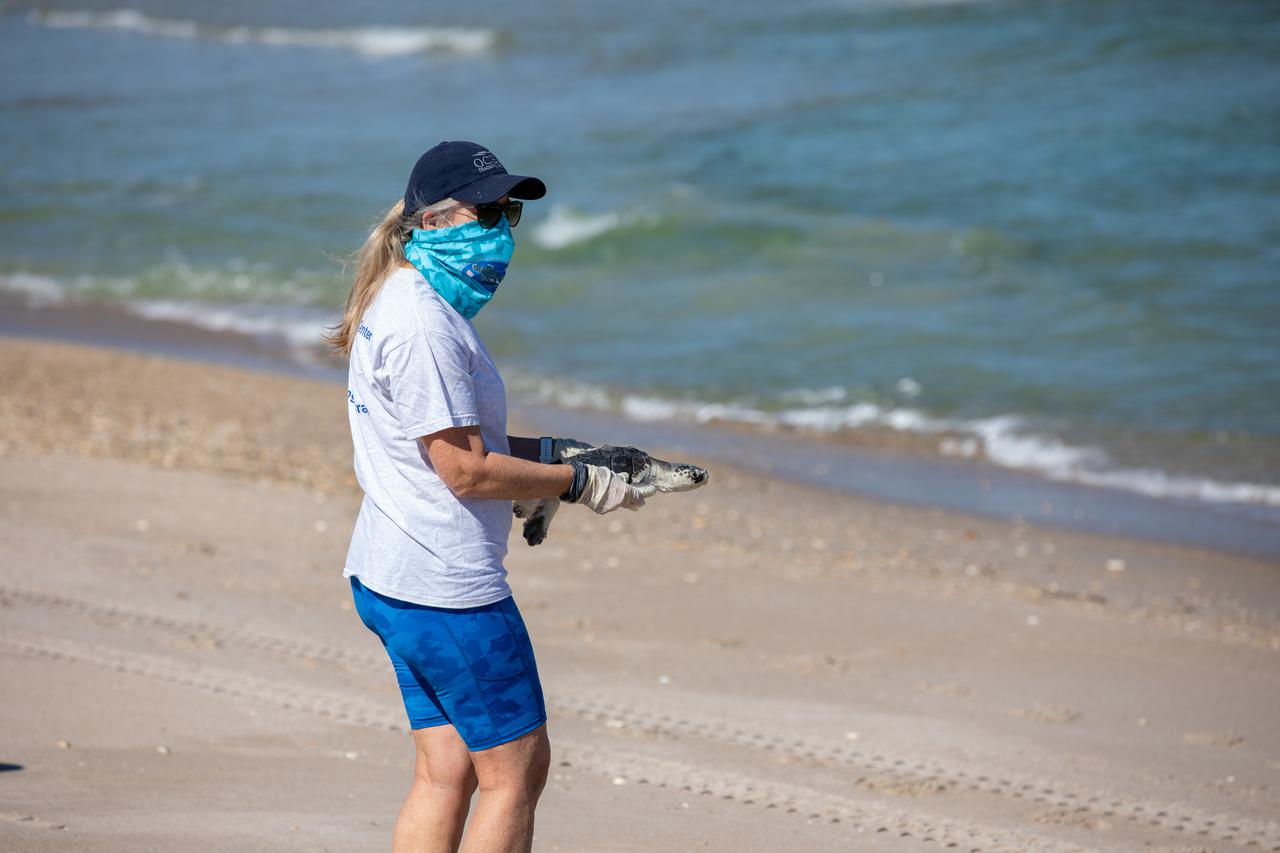
A biologist with Herndon Solutions Group, the center’s environmental services contractor, prepares to release Kemp’s ridley sea turtles into the Atlantic Ocean at the Canaveral National Seashore near Kennedy Space Center on Feb. 26, 2021. The rescued and rehabilitated turtles were flown from aquatic centers in Massachusetts and New York to the Launch and Landing Facility, managed by Space Florida. NASA, U.S. Fish and Wildlife Service, NOAA Fisheries, Space Florida, and Herndon Solutions Group provided support. The Turtles Fly Too organization provided the flight to Kennedy. All marine turtle footage/images was obtained with the approval of the Florida Fish and Wildlife Conservation Commission (FWC) under conditions not harmful to marine turtles. Footage was acquired while conducting authorized conservation activities pursuant to: FWC 2021 Consent Permit, MTP-21-005 and MTP-21-114.
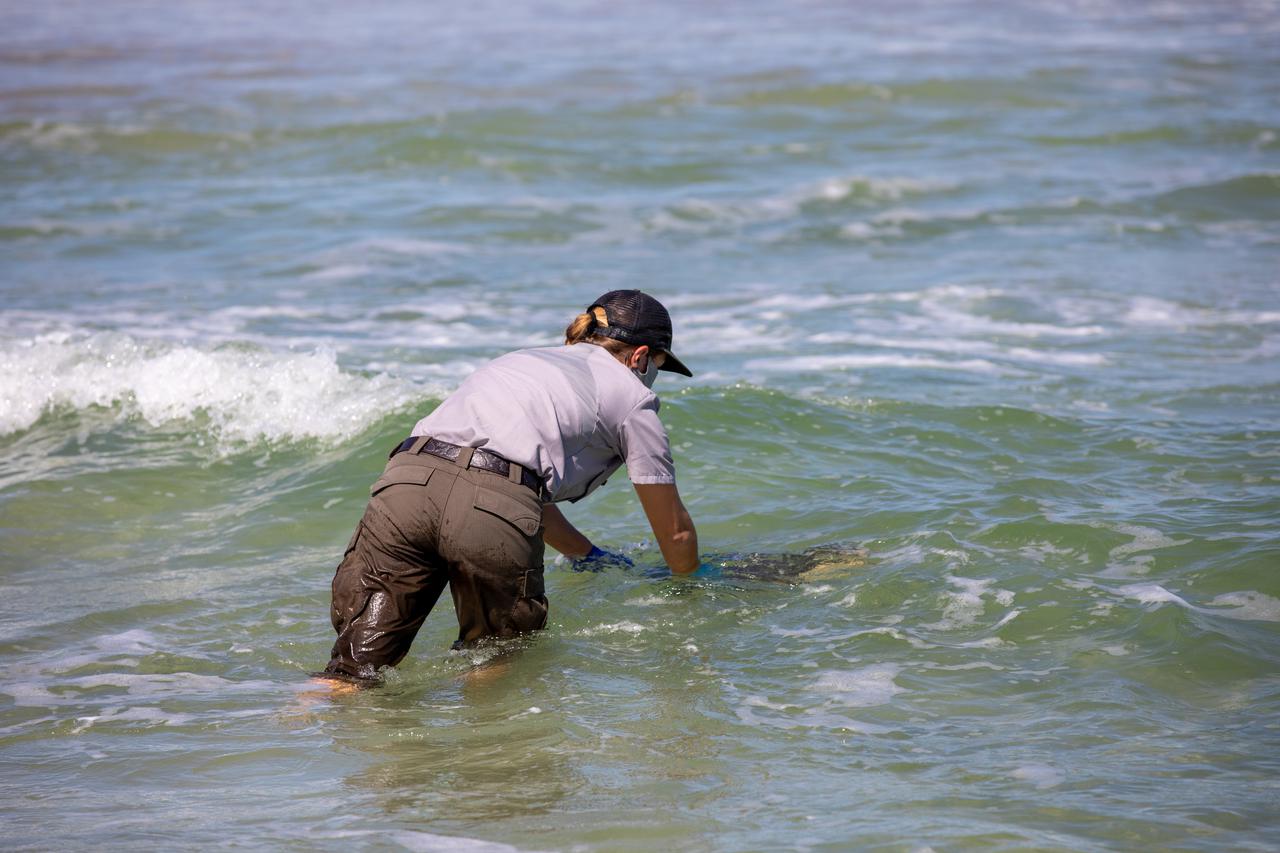
A National Park Service staff member releases a Kemp’s ridley sea turtle into the Atlantic Ocean at the Canaveral National Seashore near Kennedy Space Center on Feb. 26, 2021. The rescued and rehabilitated turtles were flown from aquatic centers in Massachusetts and New York to the Launch and Landing Facility, managed by Space Florida. NASA, U.S. Fish and Wildlife Service, NOAA Fisheries, Space Florida, and Herndon Solutions Group provided support. The Turtles Fly Too organization provided the flight to Kennedy. All marine turtle footage/images was obtained with the approval of the Florida Fish and Wildlife Conservation Commission (FWC) under conditions not harmful to marine turtles. Footage was acquired while conducting authorized conservation activities pursuant to: FWC 2021 Consent Permit, MTP-21-005 and MTP-21-114.
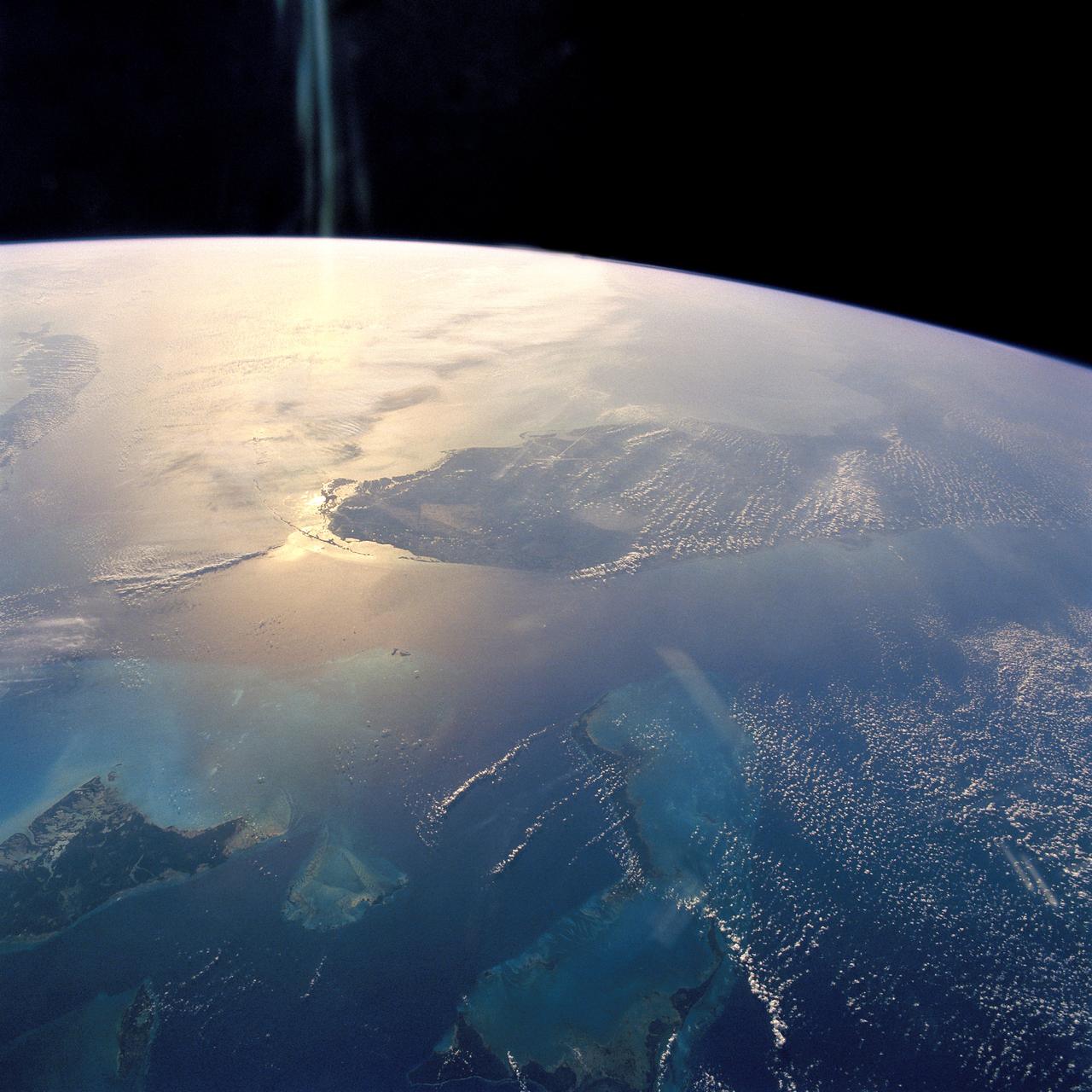
STS045-78-016 (24 March-2 April 1992) --- This view is of the Bahamas and Florida looking westward into the sunglint. The Bahama Banks are in the foreground; from left to right, Andros Island, the Berry Islands, and Grand Bahama Island are surrounded by shallow limestone banks. Bimini is the double dark spot on the edge of the Straits of Florida, with the peninsula of Florida within the sunglint. Cuba can be seen to the upper left.
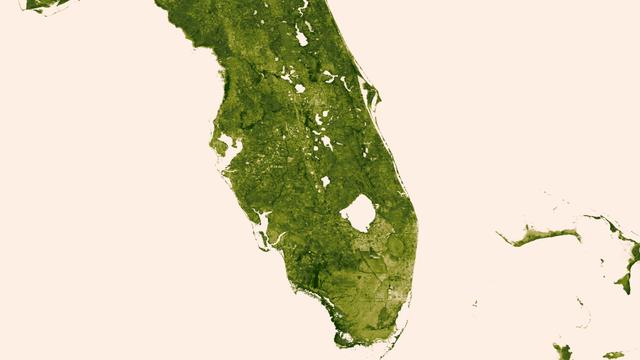
A "river of grass" extending south of Lake Okeechobee shows how the area was modified by man with visible areas of dense agriculture, urban sprawl and water conservation areas delineated by a series of waterways that crisscross Southern Florida. The image was created March 18-24, 2013 from the Visible-Infrared Imager/Radiometer Suite (VIIRS) instrument aboard the Suomi National Polar-orbiting Partnership or Suomi NPP satellite, a partnership between NASA and the National Oceanic and Atmospheric Administration, or NOAA. Credit: NASA/NOAA To read more go to: <a href="http://www.nasa.gov/mission_pages/NPP/news/vegetation.html" rel="nofollow">www.nasa.gov/mission_pages/NPP/news/vegetation.html</a> <b><a href="http://www.nasa.gov/audience/formedia/features/MP_Photo_Guidelines.html" rel="nofollow">NASA image use policy.</a></b> <b><a href="http://www.nasa.gov/centers/goddard/home/index.html" rel="nofollow">NASA Goddard Space Flight Center</a></b> enables NASA’s mission through four scientific endeavors: Earth Science, Heliophysics, Solar System Exploration, and Astrophysics. Goddard plays a leading role in NASA’s accomplishments by contributing compelling scientific knowledge to advance the Agency’s mission. <b>Follow us on <a href="http://twitter.com/NASA_GoddardPix" rel="nofollow">Twitter</a></b> <b>Like us on <a href="http://www.facebook.com/pages/Greenbelt-MD/NASA-Goddard/395013845897?ref=tsd" rel="nofollow">Facebook</a></b> <b>Find us on <a href="http://instagram.com/nasagoddard?vm=grid" rel="nofollow">Instagram</a></b>
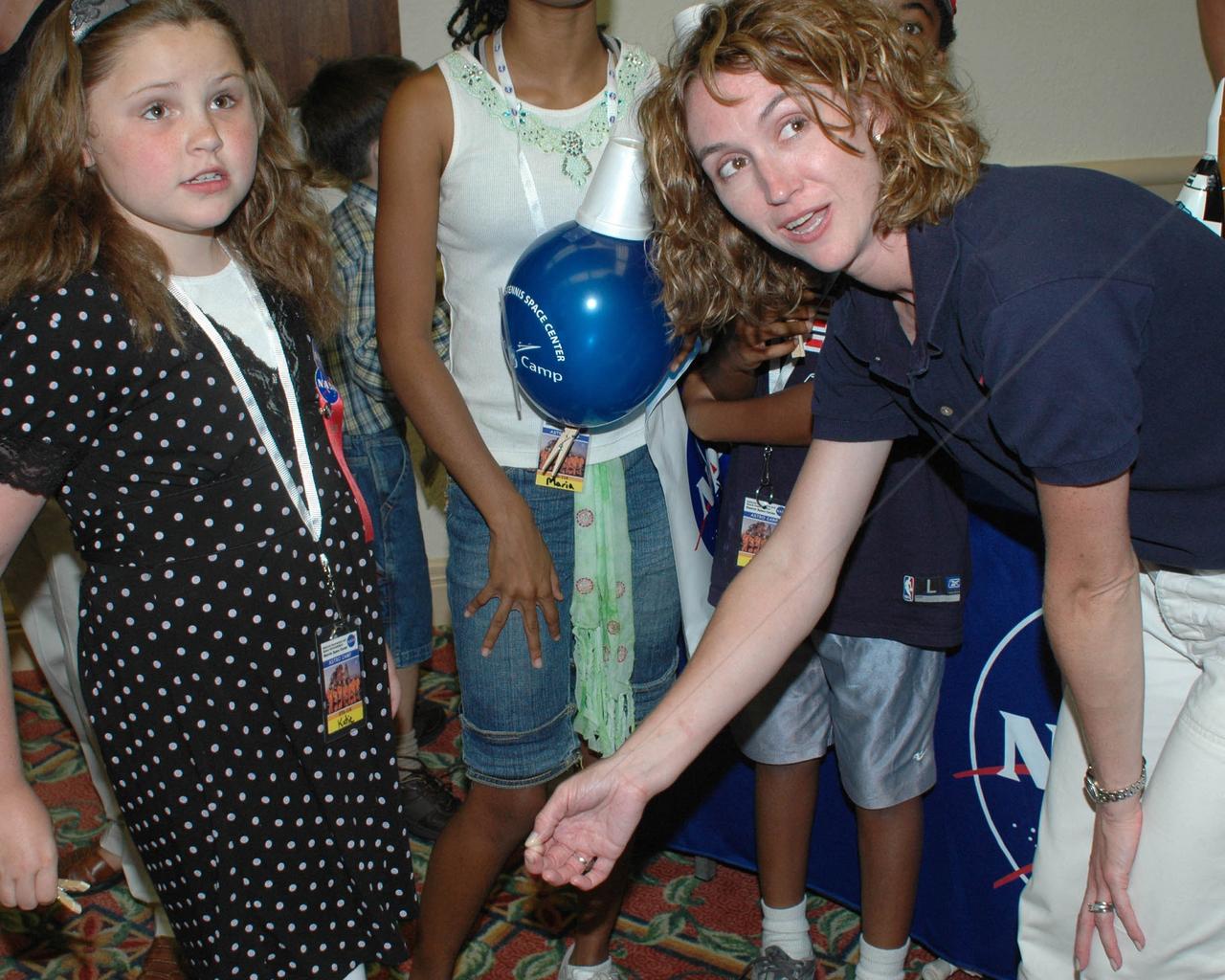
Katie Craig, daughter of former Stennis Space Center Deputy Director Mark Craig, launches a 'balloon rocket' with the help of Rebecca Compretta, Astro Camp coordinator at SSC. SSC took Astro Camp on the road to Florida this week to engage children and their parents during activities surrounding the Aug. 8 launch of Space Shuttle Endeavour on NASA's STS-118 mission to the International Space Station. Astro Camp is SSC's popular space camp program designed to inspire and educate students using science and math principles.
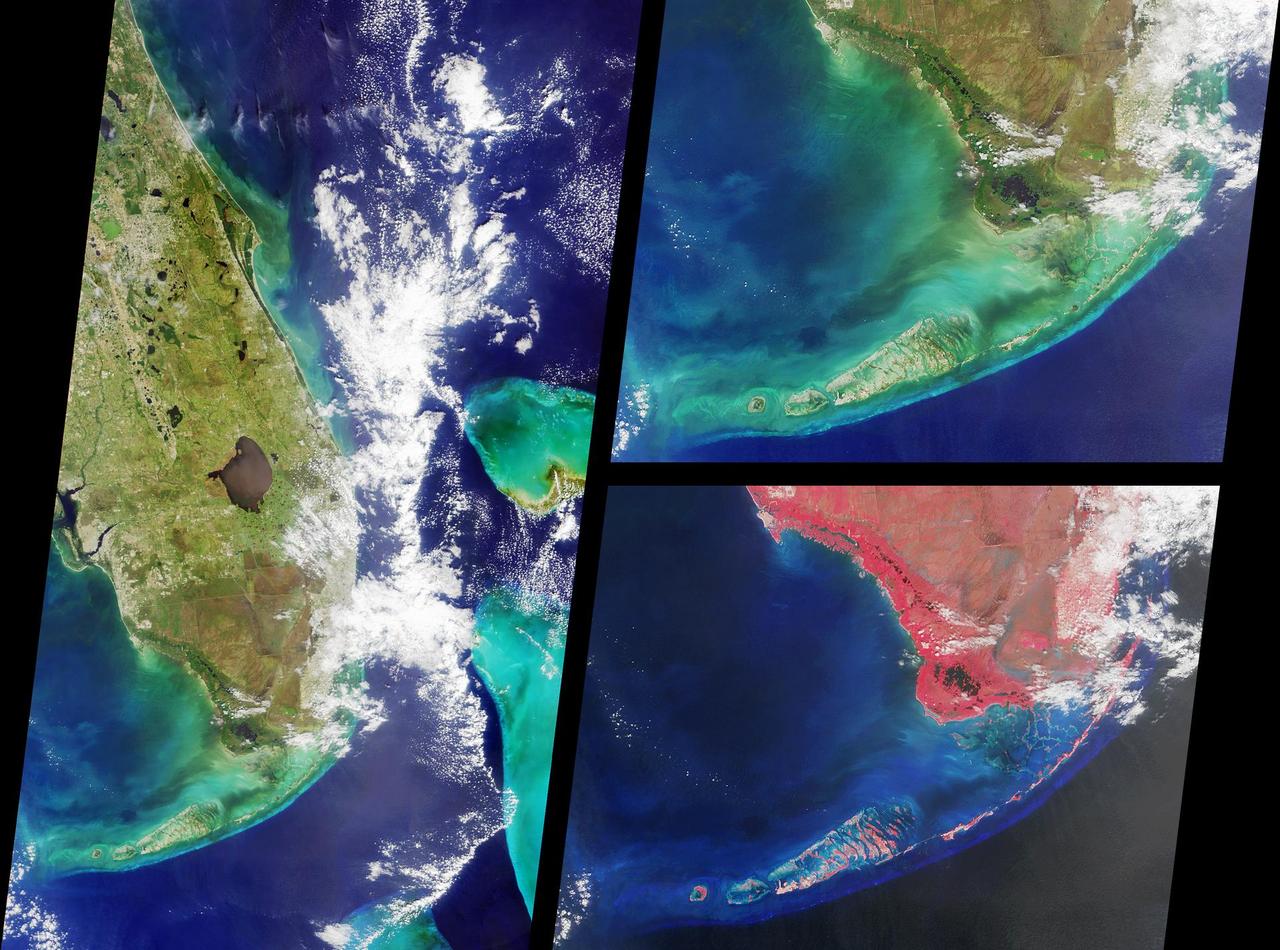
These images from NASA Terra satellite images are of southern Florida were acquired on October 18, 2000 Terra orbit 4446.
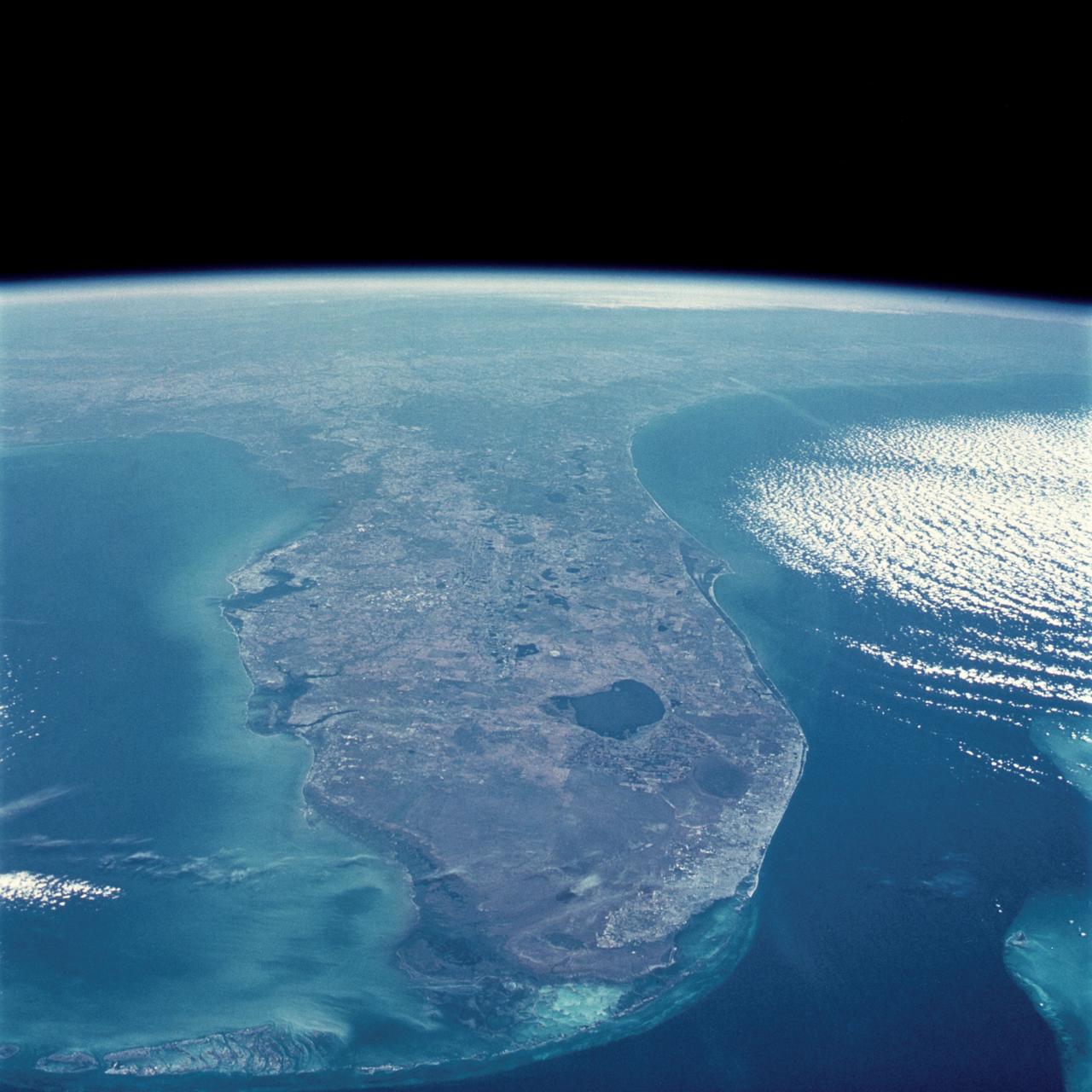
51C-44-026 (24-27 January 1985) --- This oblique view of the Florida peninsula was photographed from the Earth-orbiting Space Shuttle Discovery during the DOD-devoted mission. Many popular features of the state can be delineated in the scene. Kennedy Space Center (KSC), from which this and all Space Shuttle missions are launched, is on the jutting Cape Canaveral, visible on the east Atlantic Coast. The spacecraft was flying at an altitude of 190 nautical miles. A handheld Hasselblad camera, with 70mm Kodak natural color Ektachrome ASA 64 film, was used to expose the frame. Crew members for the flight were astronauts Thomas K. Mattingly, Loren J. Shriver, Ellison S. Onizuka, James F. Buchli, and Gary E. Payton of the United States Air Force.
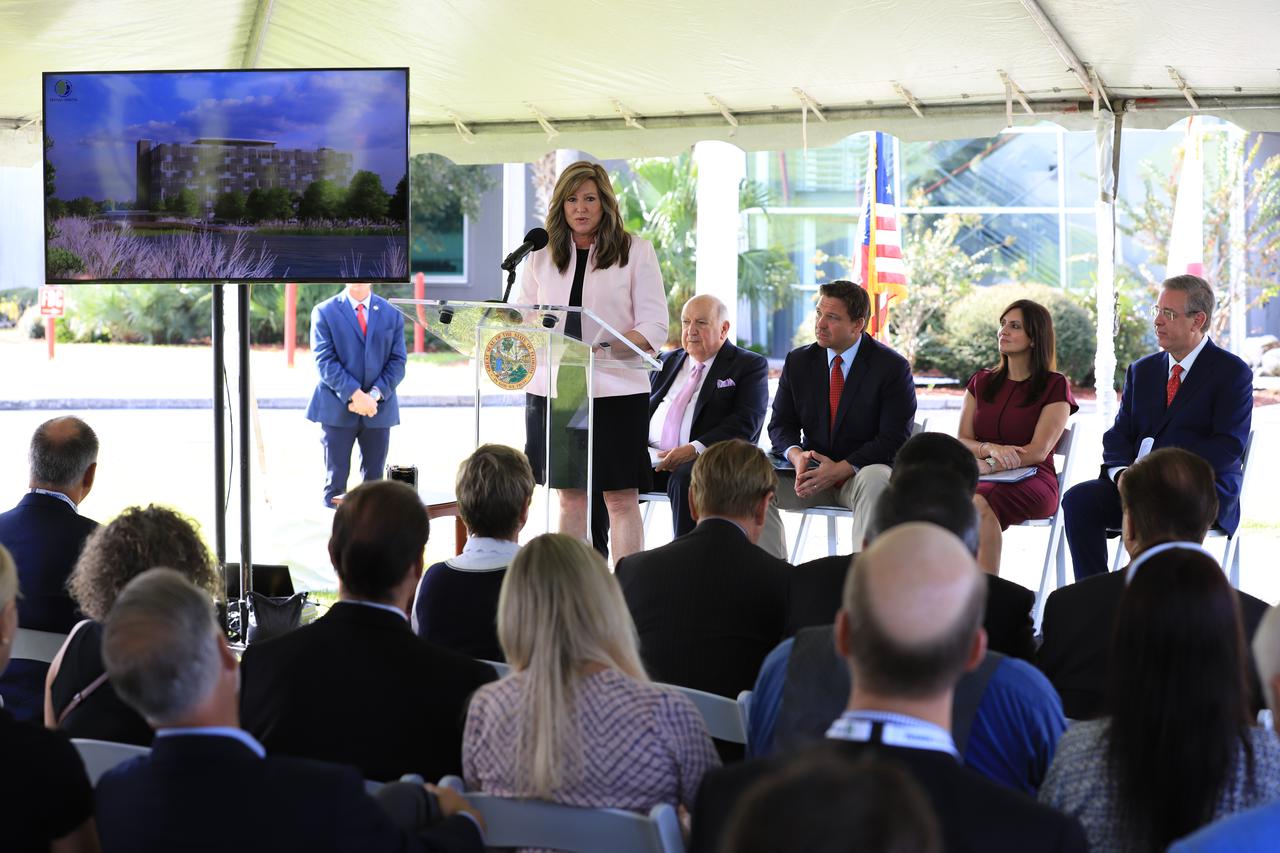
Kennedy Space Center Associate Director, Technical, Jennifer Kunz speaks at an event Sept. 27, 2021, announcing that Terran Orbital will locate its Commercial Spacecraft and Constellation Facility on NASA’s Kennedy Space Center in Florida. The new manufacturing facility will be built near the center’s Launch and Landing Facility, which is being managed and developed by Space Florida under a long-term agreement with NASA. Terran Orbital develops end-to-end satellite solutions as well as commercial spacecraft. The 660,000 square foot manufacturing facility will consist of ten automated and augmented hangers capable of producing thousands of different types of space vehicles and electro-mechanical devices per year. The project is expected to create about 2,100 new jobs, with a planned completion date in 2025. The announcement ceremony was held at Space Florida’s Space Life Sciences Lab in Exploration Park, Florida. Seated directly behind Kunz is Space Florida President and CEO Frank DiBello (left) and Florida Gov. Ron DeSantis (second from left).
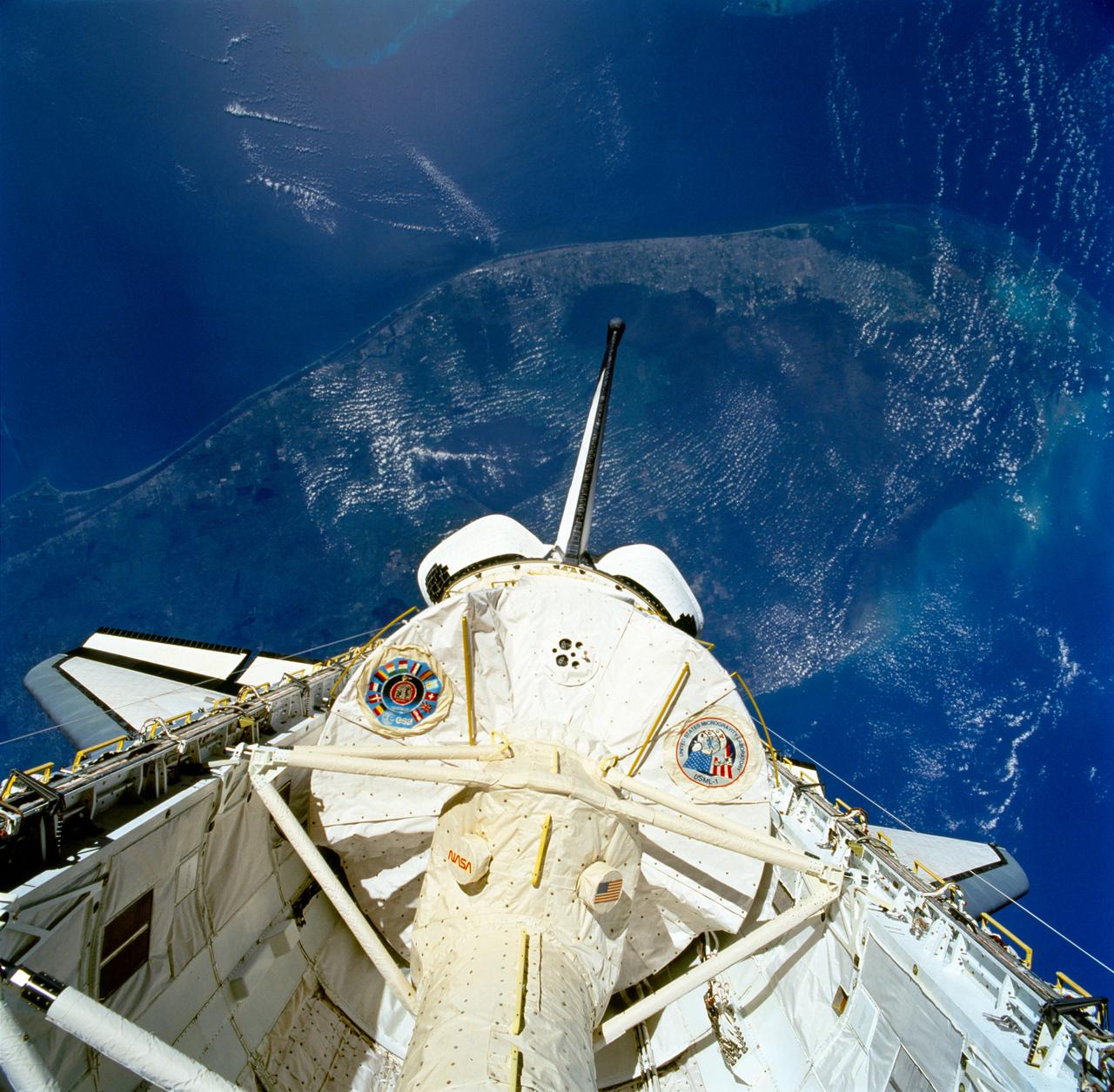
STS050-81-027 (25 June-9 July 1992) --- The first United States Microgravity Laboratory 1 (USML-1) module is pictured in the payload bay of the Earth-orbiting Space Shuttle Columbia in this scene over the southern two-thirds of the Florida peninsula. The Kennedy Space Center (KSC), where the mission began, can be seen just above Columbia's starboard wing. (Hold photo with number at left.)
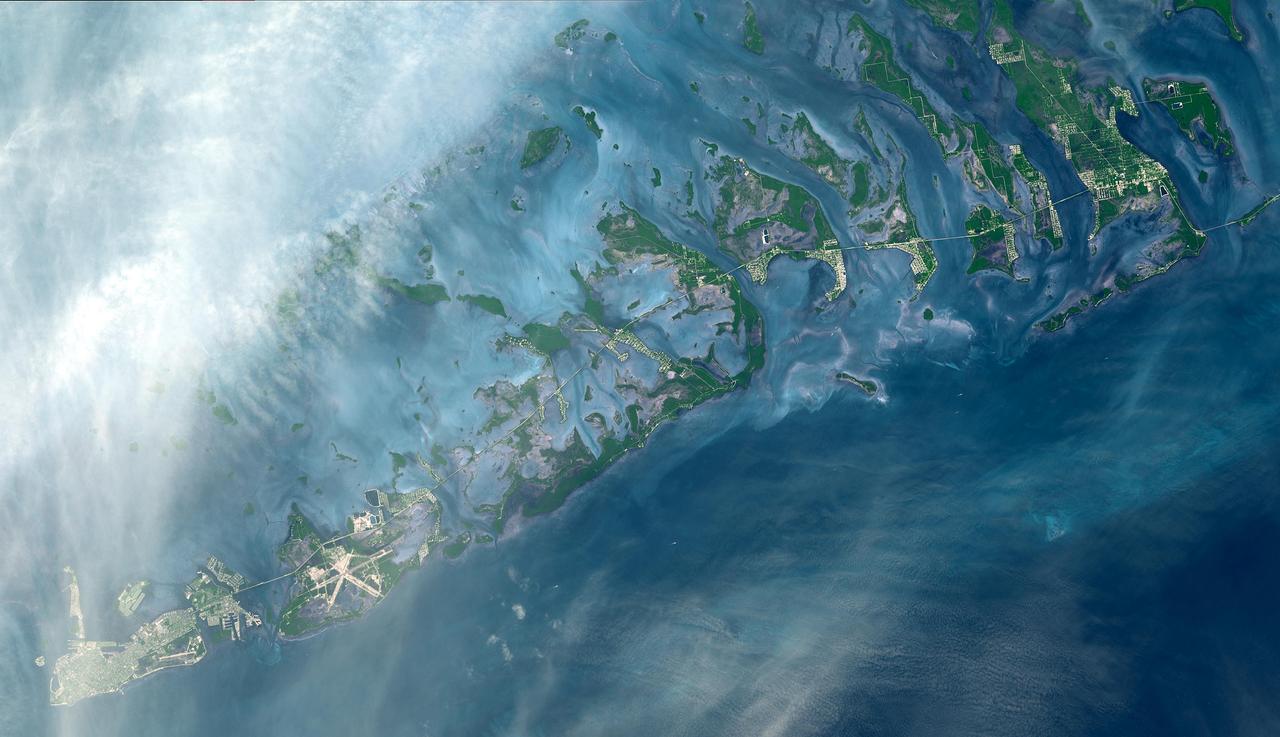
The Florida Keys are a chain of islands, islets and reefs extending from Virginia Key to the Dry Tortugas for about 309 kilometers (192 miles). The keys are chiefly limestone and coral formations. The larger islands of the group are Key West (with its airport), Key Largo, Sugarloaf Key, and Boca Chica Key. A causeway extends from the mainland to Key West. This image was acquired on October 28, 2001, by the Advanced Spaceborne Thermal Emission and Reflection Radiometer (ASTER) on NASA's Terra satellite. With its 14 spectral bands from the visible to the thermal infrared wavelength region, and its high spatial resolution of 15 to 90 meters (about 50 to 300 feet), ASTER images Earth to map and monitor the changing surface of our planet. http://photojournal.jpl.nasa.gov/catalog/PIA03890
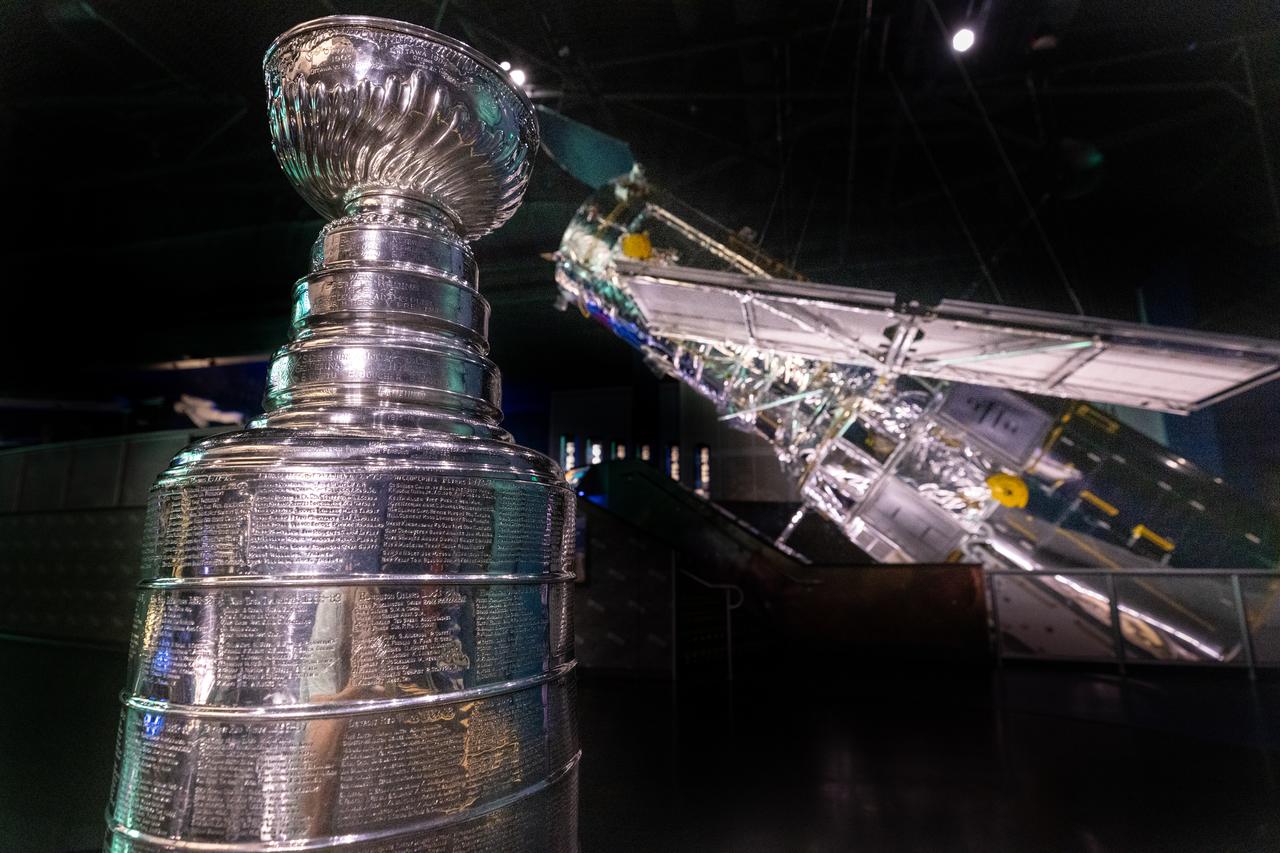
Earlier this year, the Florida Panthers won their first NHL championship and brought victory to the state of Florida. As part of its championship tour, the Stanley Cup made a visit to NASA’s Kennedy Space Center. Pictured here is the shining silver Stanley Cup in the foreground with a large-scale mockup of the Hubble Space Telescope in the background at the Kennedy Space Center Visitor’s Complex on Tuesday Sept. 17, 2024.
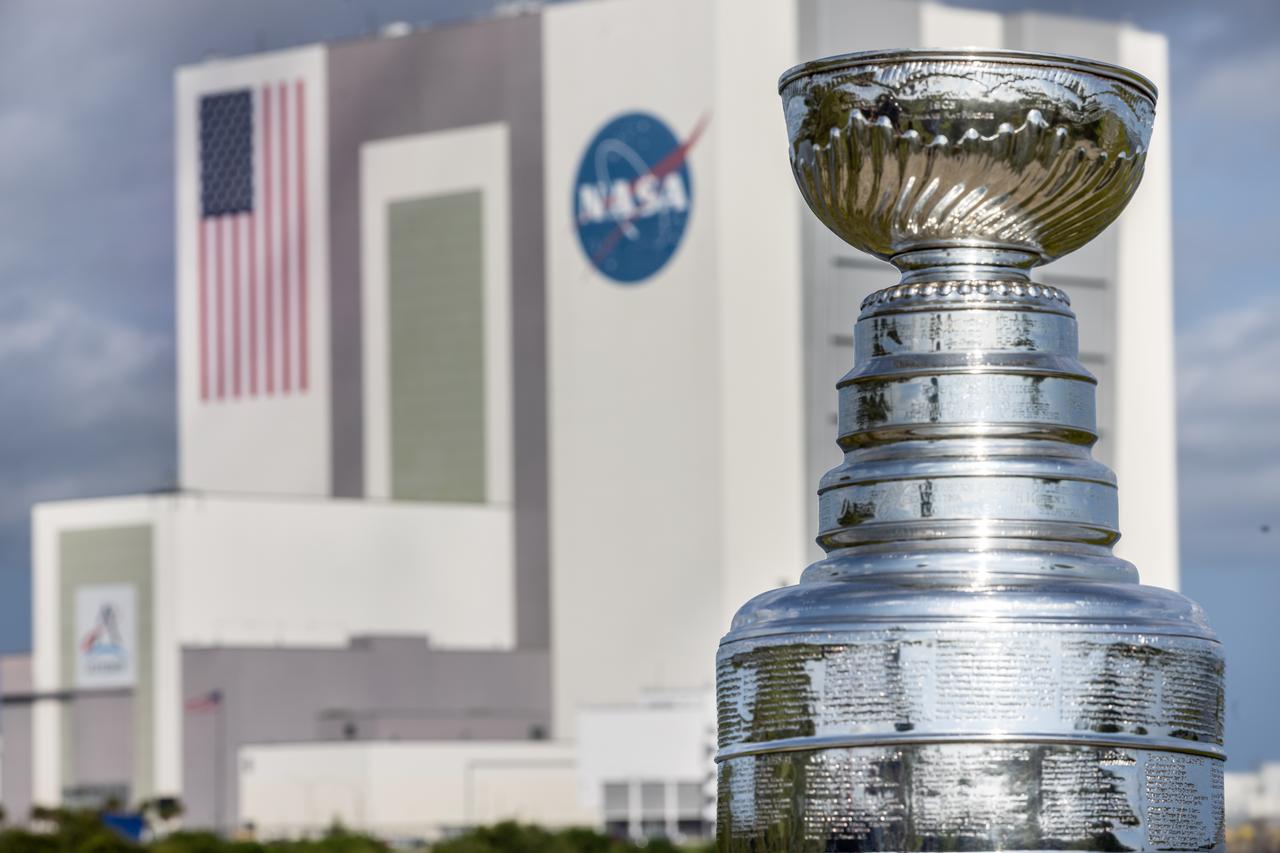
Earlier this year, the Florida Panthers won their first NHL championship and brought victory to the state of Florida. As part of its championship tour, the Stanley Cup made a visit to NASA’s Kennedy Space Center. Pictured here is the silver Stanley Cup with NASA’s iconic Vehicle Assembly Building, which currently houses components of the agency’s Artemis II mission, shown in the background at the Kennedy Space Center on Tuesday Sept. 17, 2024.
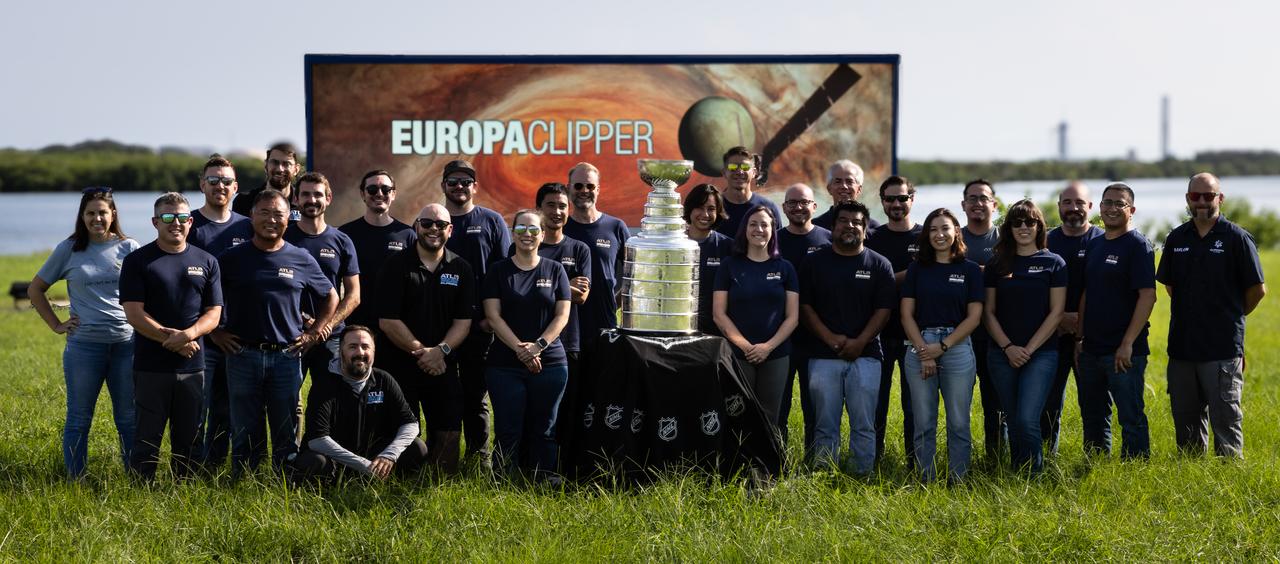
Earlier this year, the Florida Panthers won their first NHL championship and brought victory to the state of Florida. As part of its championship tour, the Stanley Cup made a visit to NASA’s Kennedy Space Center. Here, members of NASA’s Europa Clipper team pose with the National Hockey League’s Stanley Cup trophy in front of the countdown clock near the NASA News Center at Kennedy on Tuesday, Sept. 17, 2024. Europa Clipper will soon begin its Jupiter to explore if places below Europa’s surface could support life.
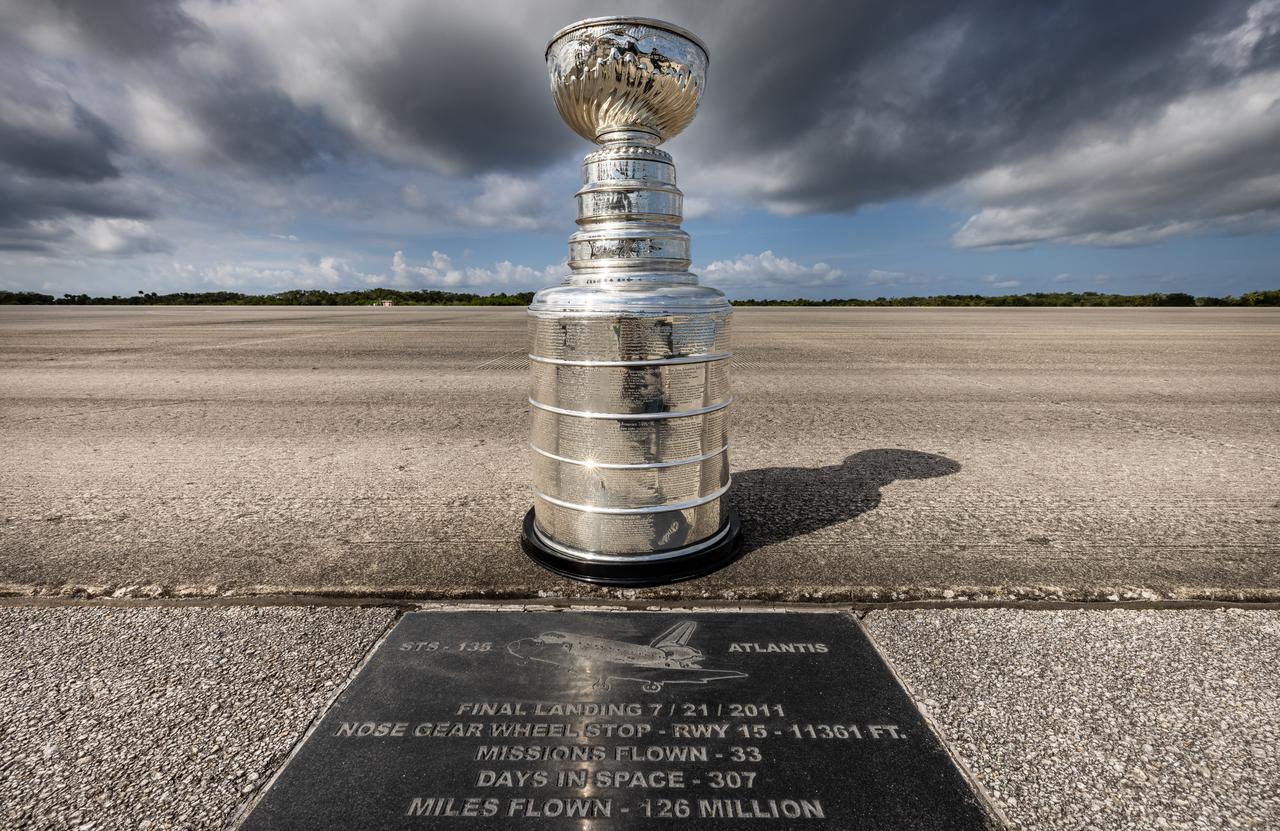
Earlier this year, the Florida Panthers won their first NHL championship and brought victory to the state of Florida. As part of its championship tour, the Stanley Cup made a visit to Kennedy Space Center. Pictured here is the Stanley Cup on the runway of the Launch and Landing Facility, formerly the Shuttle Landing Facility at NASA’s Kennedy Space Center on Tuesday Sept. 17, 2024. The trophy is beside the Space Shuttle Atlantis landmark, a commemorative plaque marking the landing spot of the last shuttle flight that occurred in July 2011.
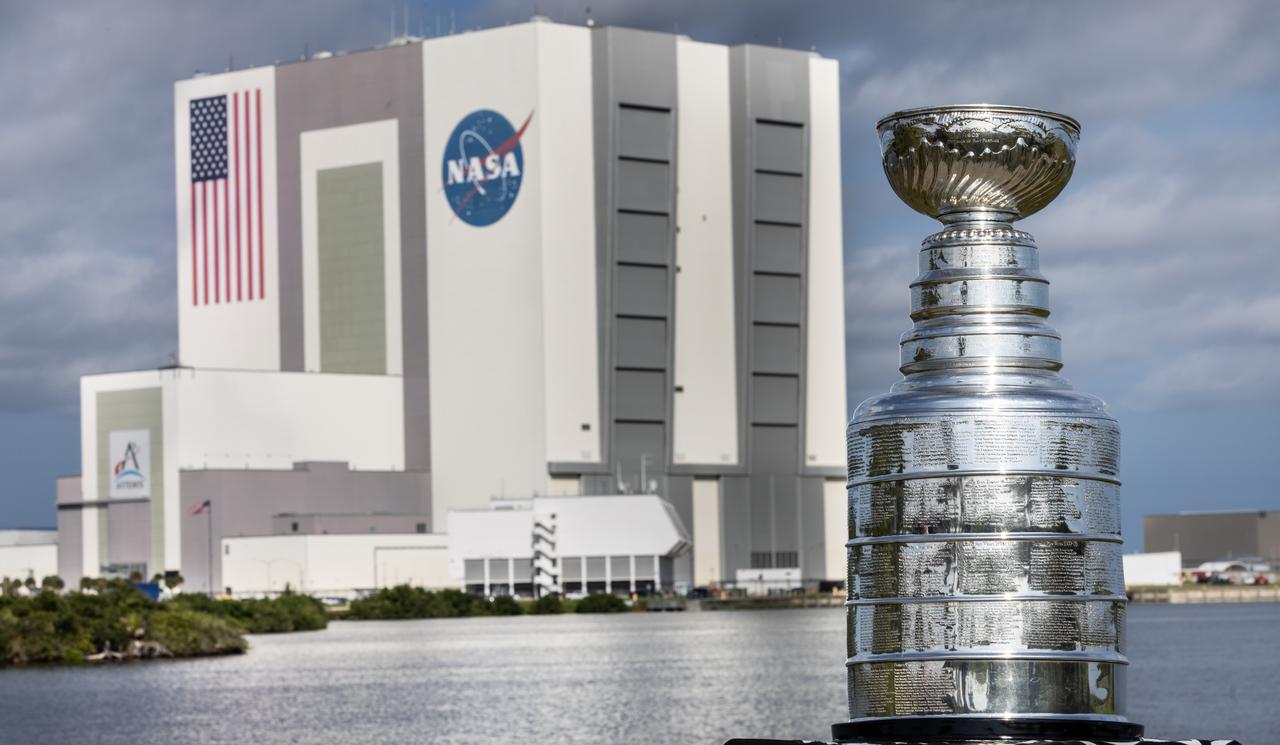
Earlier this year, the Florida Panthers won their first NHL championship and brought victory to the state of Florida. As part of its championship tour, the Stanley Cup made a visit to NASA’s Kennedy Space Center. Pictured here is the silver Stanley Cup with NASA’s iconic Vehicle Assembly Building, which currently houses components of the agency’s Artemis II mission, shown in the background at the Kennedy Space Center on Tuesday Sept. 17, 2024.
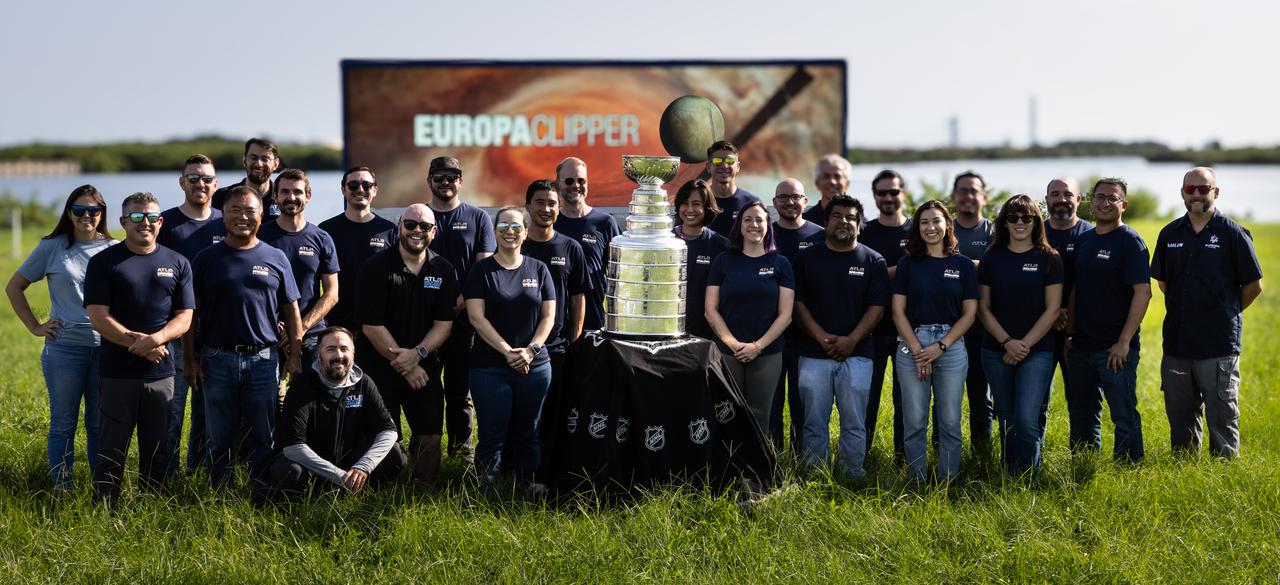
Earlier this year, the Florida Panthers won their first NHL championship and brought victory to the state of Florida. As part of its championship tour, the Stanley Cup made a visit to NASA’s Kennedy Space Center. Here, members of NASA’s Europa Clipper team pose with the National Hockey League’s Stanley Cup trophy in front of the countdown clock near the NASA News Center at Kennedy on Tuesday, Sept. 17, 2024. Europa Clipper will soon begin its Jupiter to explore if places below Europa’s surface could support life.
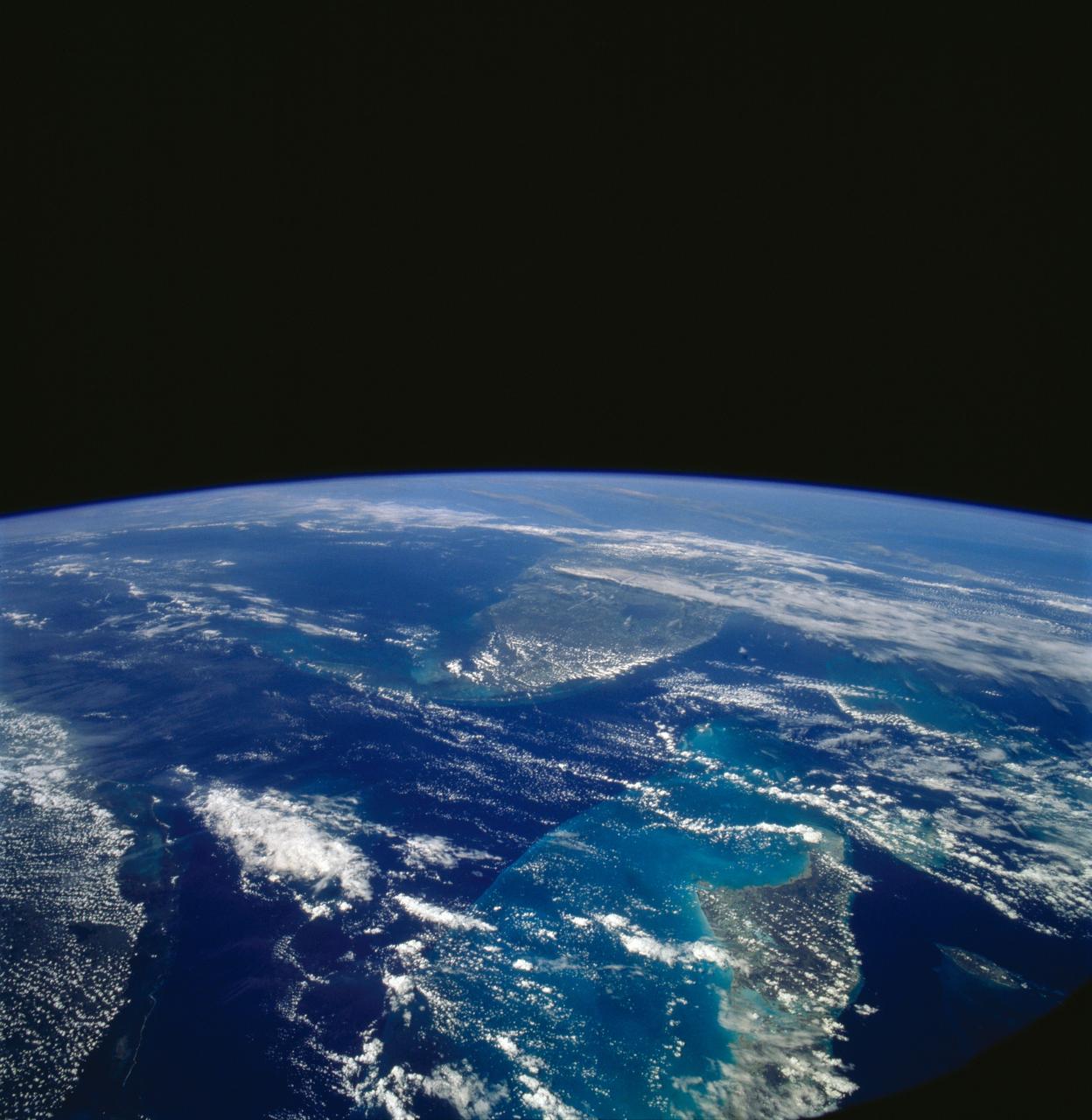
STS058-107-046 (18 Oct-1 Nov 1993) --- Clouds streak across central Florida in this striking photograph which includes the Florida Peninsula, Andros Island of the northern Bahamas and Cuba (lower left). The light blue, shallow bank of the Bahamas contrast with the deeper blue waters of the Florida strait. The city of Miami is obscured by clouds, but one can see the Florida Keys stretching off to the left. Much of the rest of the southeast coast is barely visible under haze.
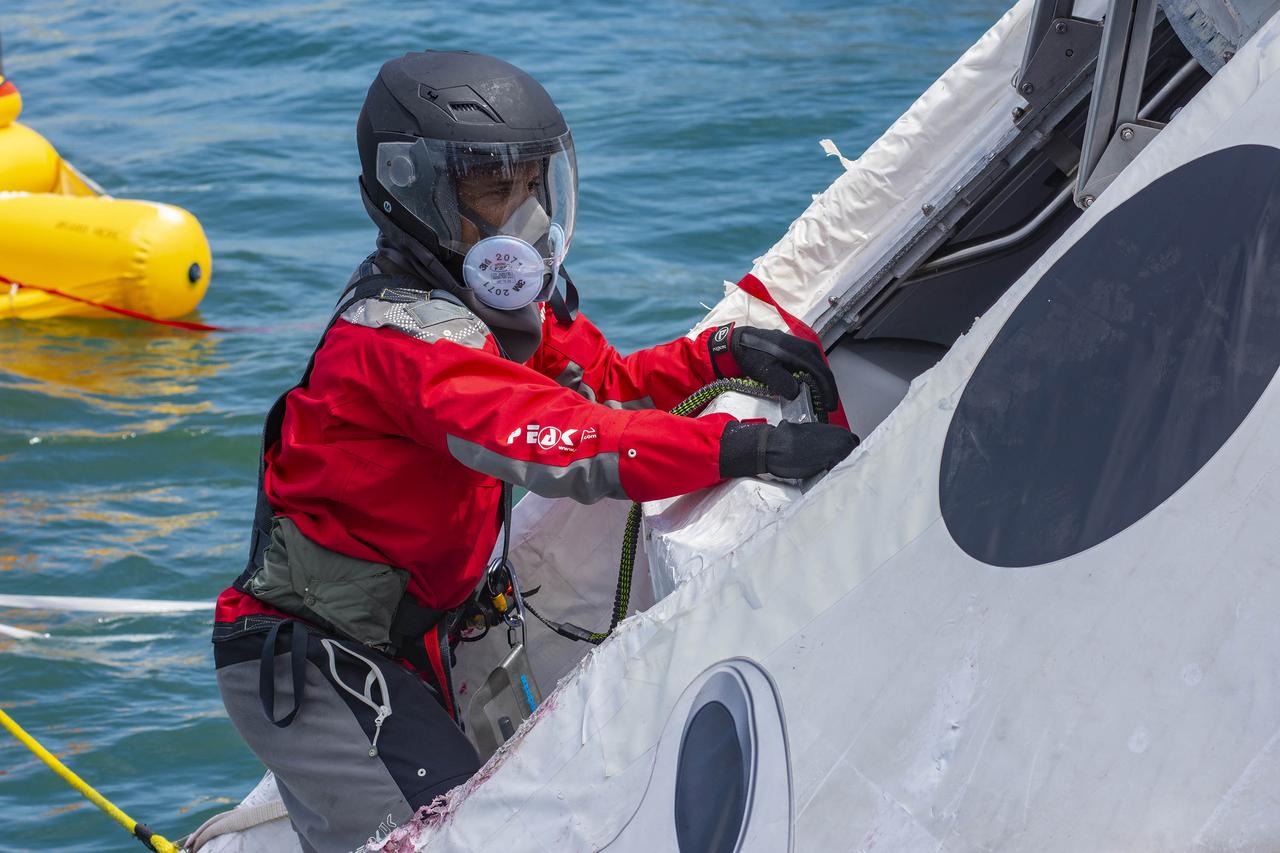
NASA astronaut Victor Glover, and pilot for the agency’s SpaceX Crew-1 mission, participates in an egress training exercise on July 21, 2020, in Florida. The exercise involved simulating an emergency situation after splashdown of the Crew Dragon spacecraft. Mission specialist Shannon Walker and spacecraft commander Michael Hopkins – both NASA astronauts – also participated in the training, along with Soichi Noguchi, mission specialist and Japan Aerospace Exploration Agency (JAXA) astronaut. Glover, Walker, Hopkins, and Noguchi will launch to the International Space Station from Launch Complex 39A at the agency’s Kennedy Space Center in Florida. Crew-1 will be the first operational mission to the orbiting laboratory under NASA’s Commercial Crew Program, following the agency’s certification of SpaceX’s crew transportation system.
NASA astronaut Victor Glover, and pilot for the agency’s SpaceX Crew-1 mission, participates in an egress training exercise on July 21, 2020, in Florida. The exercise involved simulating an emergency situation after splashdown of the Crew Dragon spacecraft. Mission specialist Shannon Walker and spacecraft commander Michael Hopkins – both NASA astronauts – also participated in the training, along with Soichi Noguchi, mission specialist and Japan Aerospace Exploration Agency (JAXA) astronaut. Glover, Walker, Hopkins, and Noguchi will launch to the International Space Station from Launch Complex 39A at the agency’s Kennedy Space Center in Florida. Crew-1 will be the first operational mission to the orbiting laboratory under NASA’s Commercial Crew Program, following the agency’s certification of SpaceX’s crew transportation system.
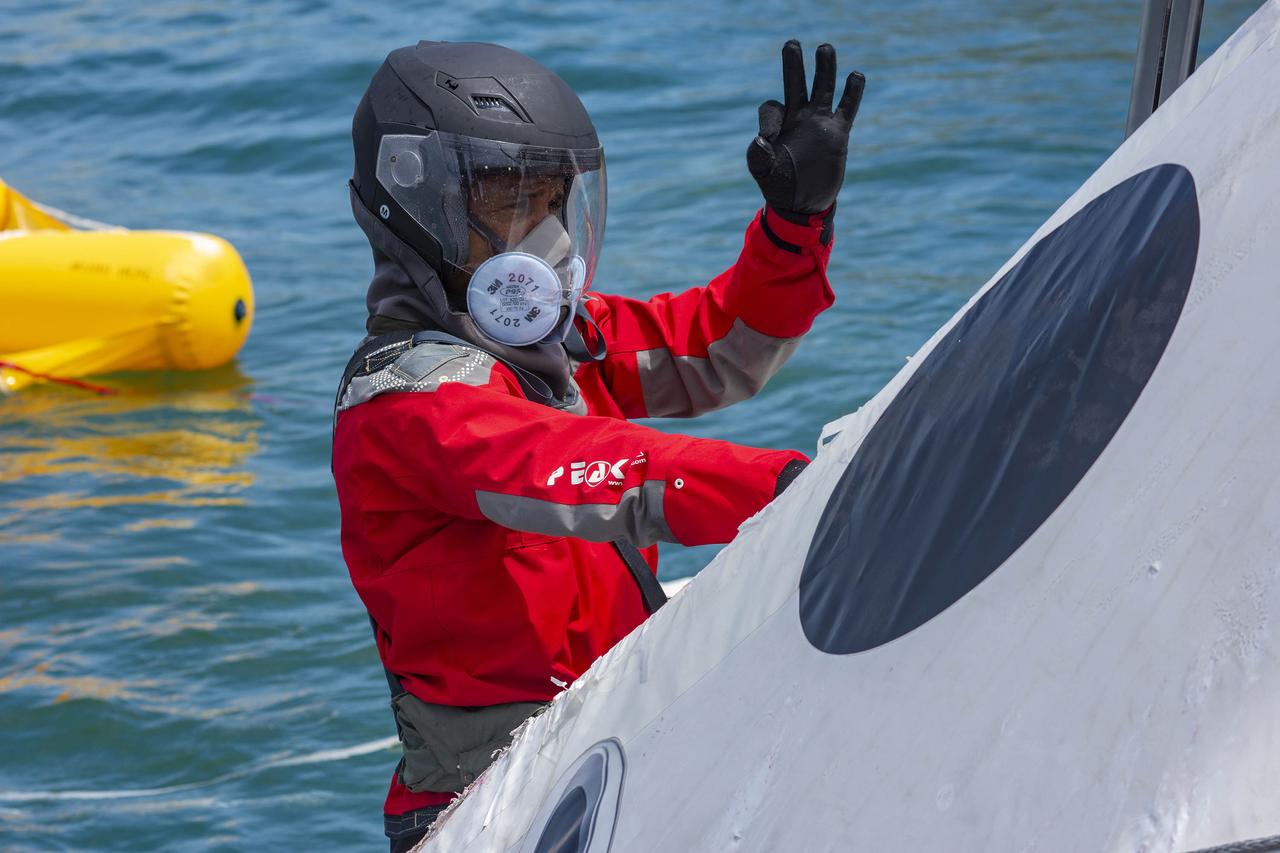
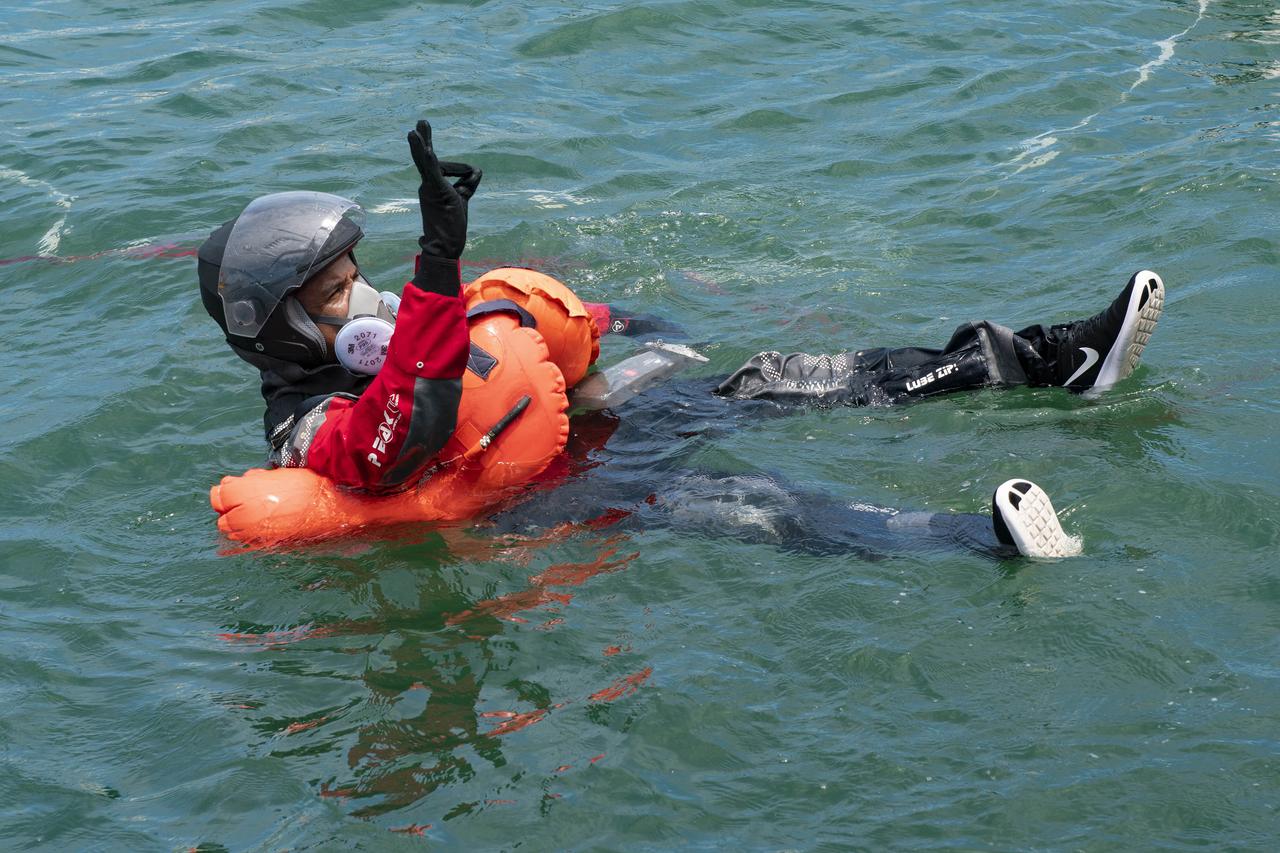
NASA astronaut Victor Glover, and pilot for the agency’s SpaceX Crew-1 mission, participates in an egress training exercise on July 21, 2020, in Florida. The exercise involved simulating an emergency situation after splashdown of the Crew Dragon spacecraft. Mission specialist Shannon Walker and spacecraft commander Michael Hopkins – both NASA astronauts – also participated in the training, along with Soichi Noguchi, mission specialist and Japan Aerospace Exploration Agency (JAXA) astronaut. Glover, Walker, Hopkins, and Noguchi will launch to the International Space Station from Launch Complex 39A at the agency’s Kennedy Space Center in Florida. Crew-1 will be the first operational mission to the orbiting laboratory under NASA’s Commercial Crew Program, following the agency’s certification of SpaceX’s crew transportation system.
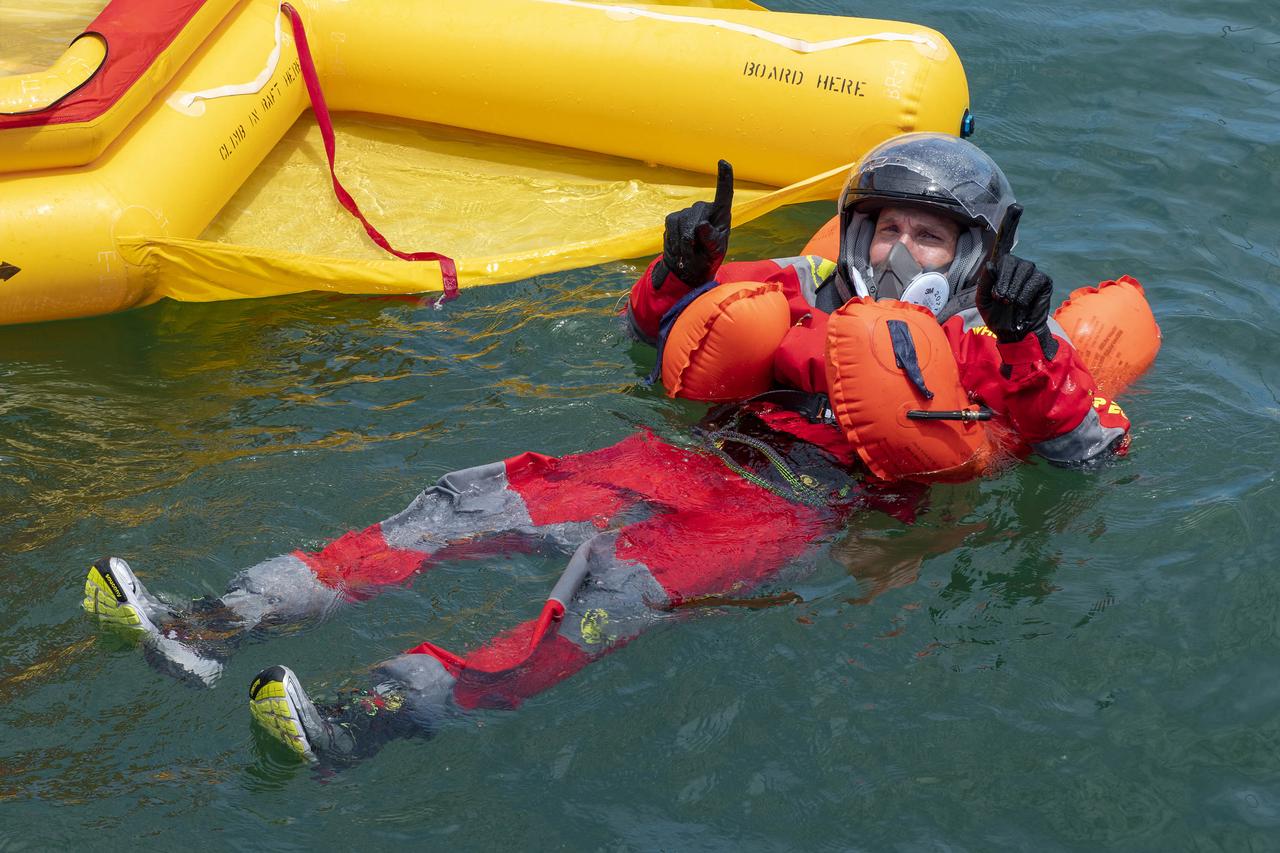
NASA astronaut Michael Hopkins, and spacecraft commander for the agency’s SpaceX Crew-1 mission, participates in an egress training exercise on July 21, 2020, in Florida. The exercise involved simulating an emergency situation after splashdown of the Crew Dragon spacecraft. Mission specialist Shannon Walker and pilot Victor Glover – both NASA astronauts – also participated in the training, along with Soichi Noguchi, mission specialist and Japan Aerospace Exploration Agency (JAXA) astronaut. Hopkins, Walker, Glover, and Noguchi will launch to the International Space Station from Launch Complex 39A at the agency’s Kennedy Space Center in Florida. Crew-1 will be the first operational mission to the orbiting laboratory under NASA’s Commercial Crew Program, following the agency’s certification of SpaceX’s crew transportation system.
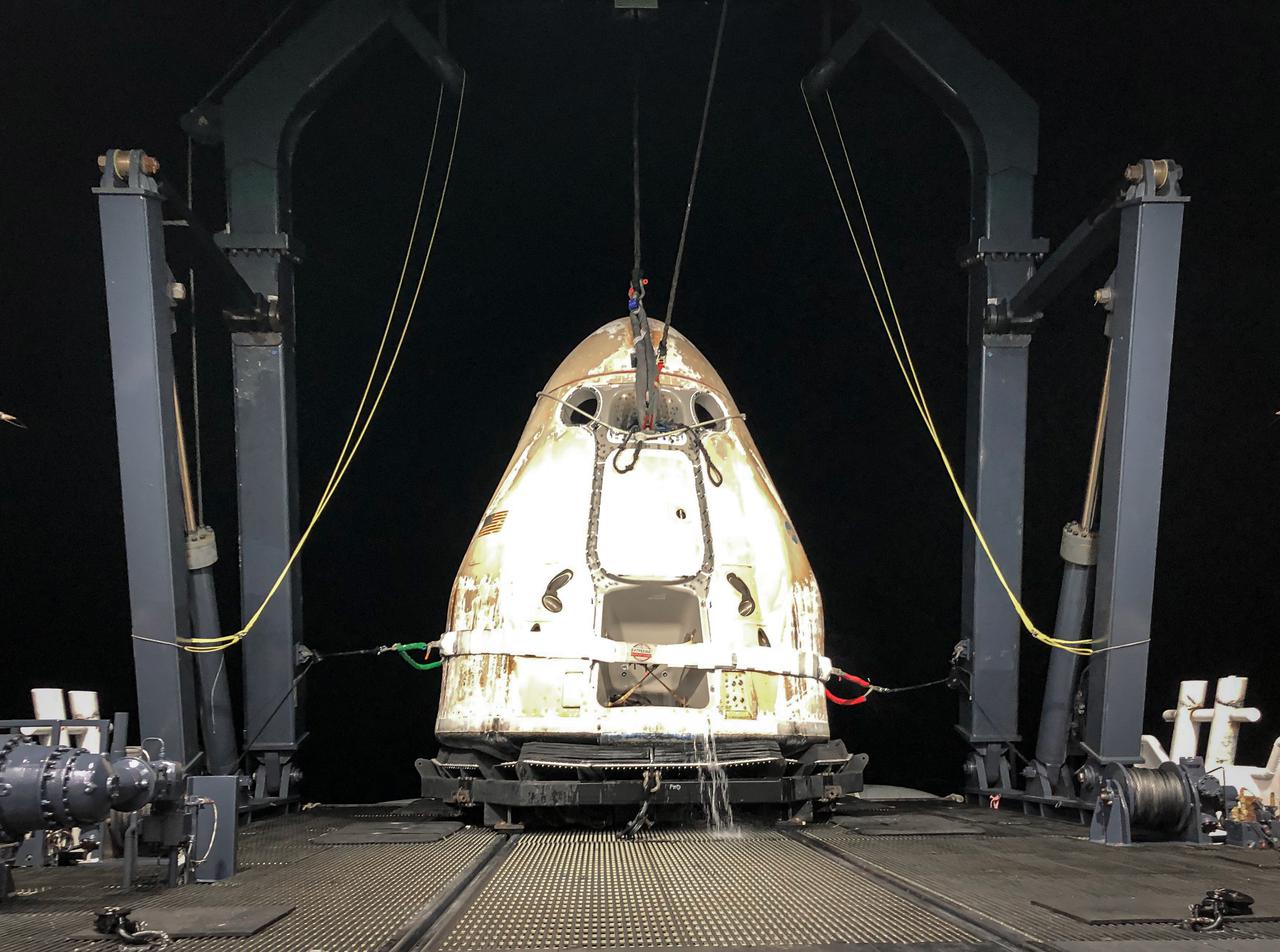
SpaceX’s Cargo Dragon spacecraft is lifted aboard a recovery vessel after splashing down in the Atlantic Ocean off the coast of Florida on Thursday, Sept. 30, 2021. The capsule, carrying cargo that flew aboard NASA’s SpaceX 23rd commercial resupply services mission, undocked from the International Space Station Thursday at approximately 9 a.m. The event marked the first time a Cargo Dragon splashed down in the Atlantic Ocean. Cargo from the capsule was delivered to the Launch and Landing Facility at Kennedy Space Center.
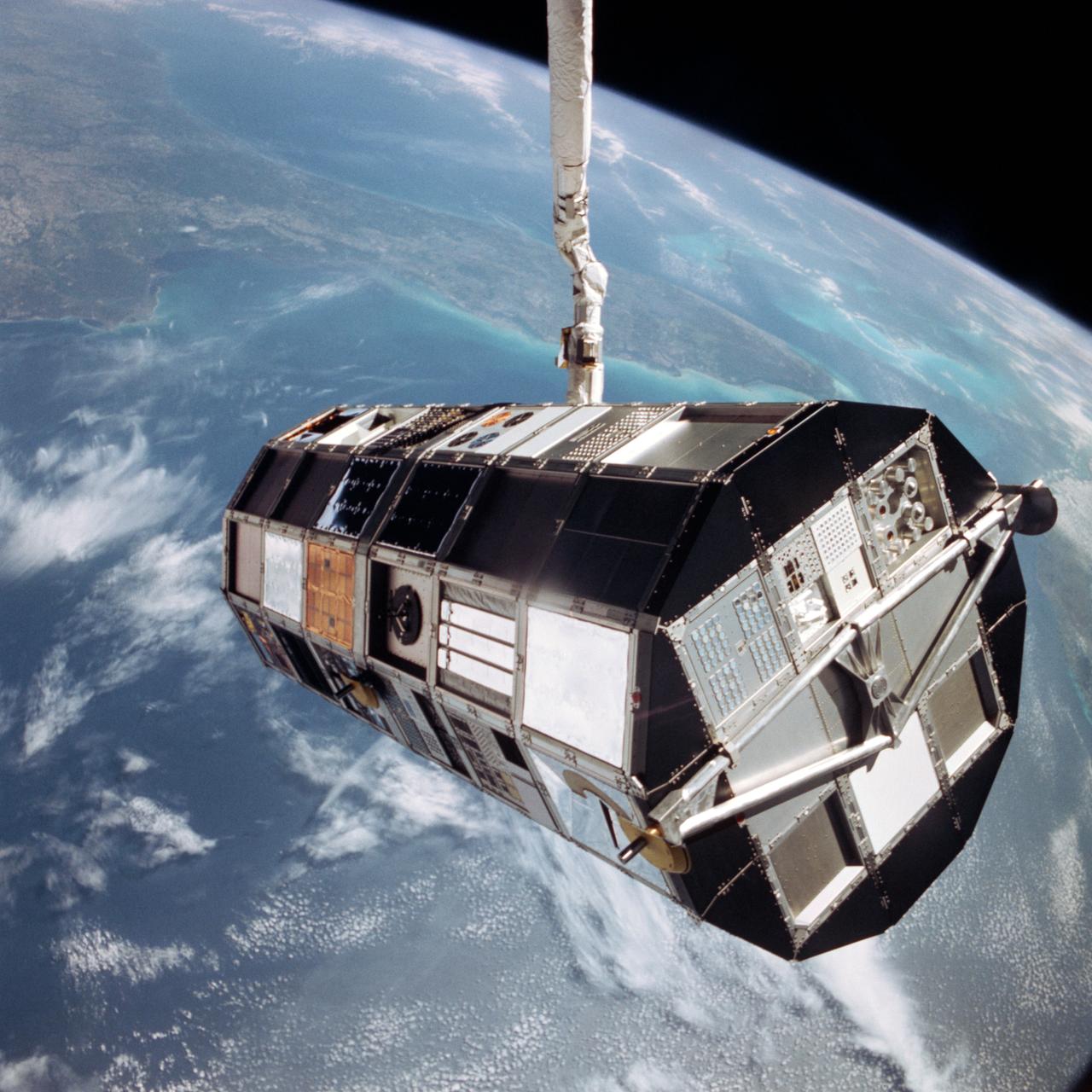
41C-36-1618 (7 April 1984) --- The Remote Manipulator System (RMS) arm suspends the giant Long Duration Exposure Facility (LDEF) high above the Gulf of Mexico prior to releasing it into space. Carried into Earth orbit with the STS-41C crew by the Space Shuttle Challenger, LDEF will remain in space until retrieved by a future Shuttle mission, in nine or ten months. Florida and the Bahama Banks are visible near the Earth's horizon in the 70mm frame.
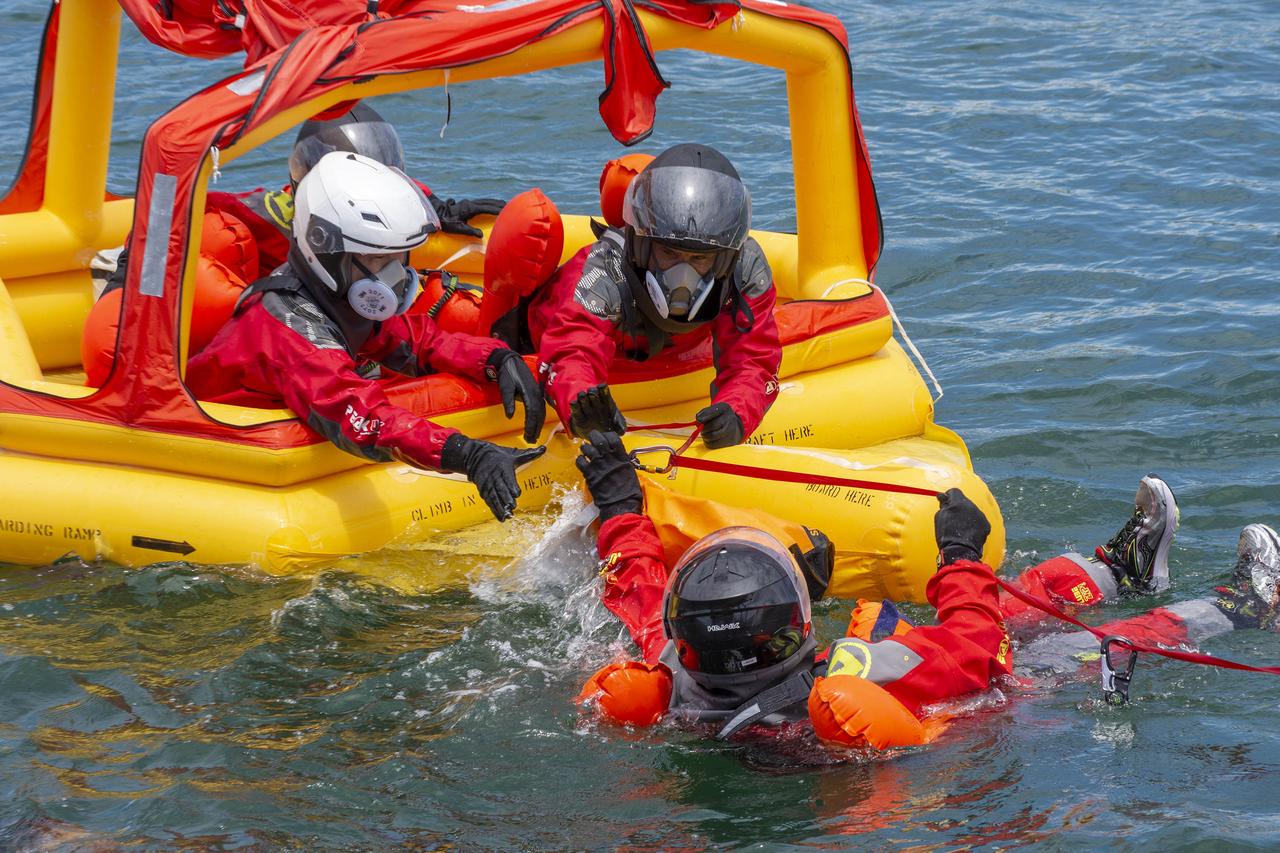
Crew Dragon commander Michael Hopkins, pilot Victor Glover, mission specialist Shannon Walker – all NASA astronauts – and Japan Aerospace Exploration Agency (JAXA) astronaut and mission specialist Soichi Noguchi participate in an egress training exercise on July 21, 2020, in preparation for NASA’s SpaceX Crew-1 mission. The exercise involved simulating an emergency situation after splashdown of the Crew Dragon spacecraft. Hopkins, Glover, Walker, and Noguchi will launch to the International Space Station from Launch Complex 39A at the agency’s Kennedy Space Center in Florida. Crew-1 will be the first operational mission to the orbiting laboratory under NASA’s Commercial Crew Program, following the agency’s certification of SpaceX’s crew transportation system.
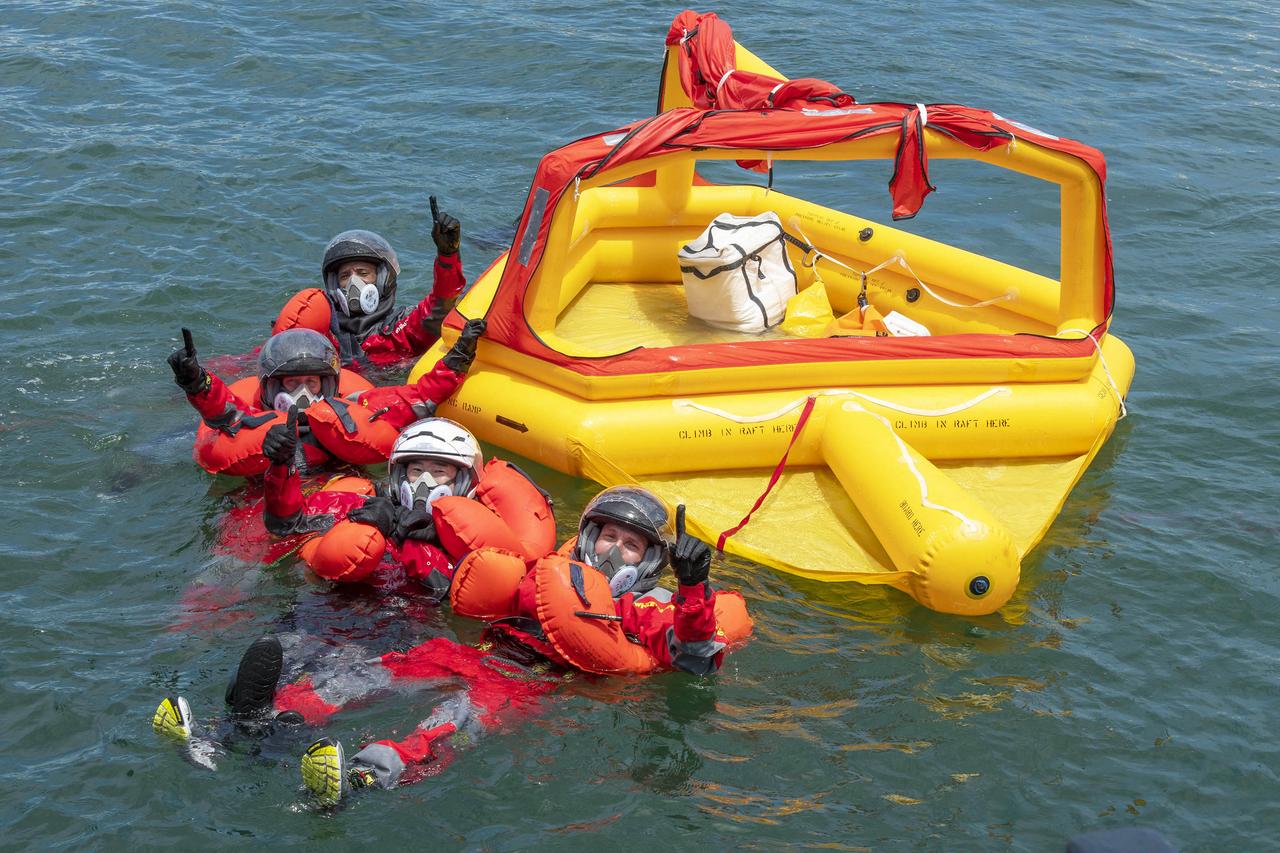
From back to front, pilot Victor Glover, mission specialist Shannon Walker, mission specialist Soichi Noguchi, and spacecraft commander Michael Hopkins participate in an egress training exercise on July 21, 2020, in preparation for NASA’s SpaceX Crew-1 mission. Glover, Walker, and Hopkins are all NASA astronauts; Noguchi is a Japan Aerospace Exploration Agency (JAXA) astronaut. The exercise involved simulating an emergency situation after splashdown of the Crew Dragon spacecraft. Hopkins, Glover, Walker, and Noguchi will launch to the International Space Station from Launch Complex 39A at the agency’s Kennedy Space Center in Florida. Crew-1 will be the first operational mission to the orbiting laboratory under NASA’s Commercial Crew Program, following the agency’s certification of SpaceX’s crew transportation system.
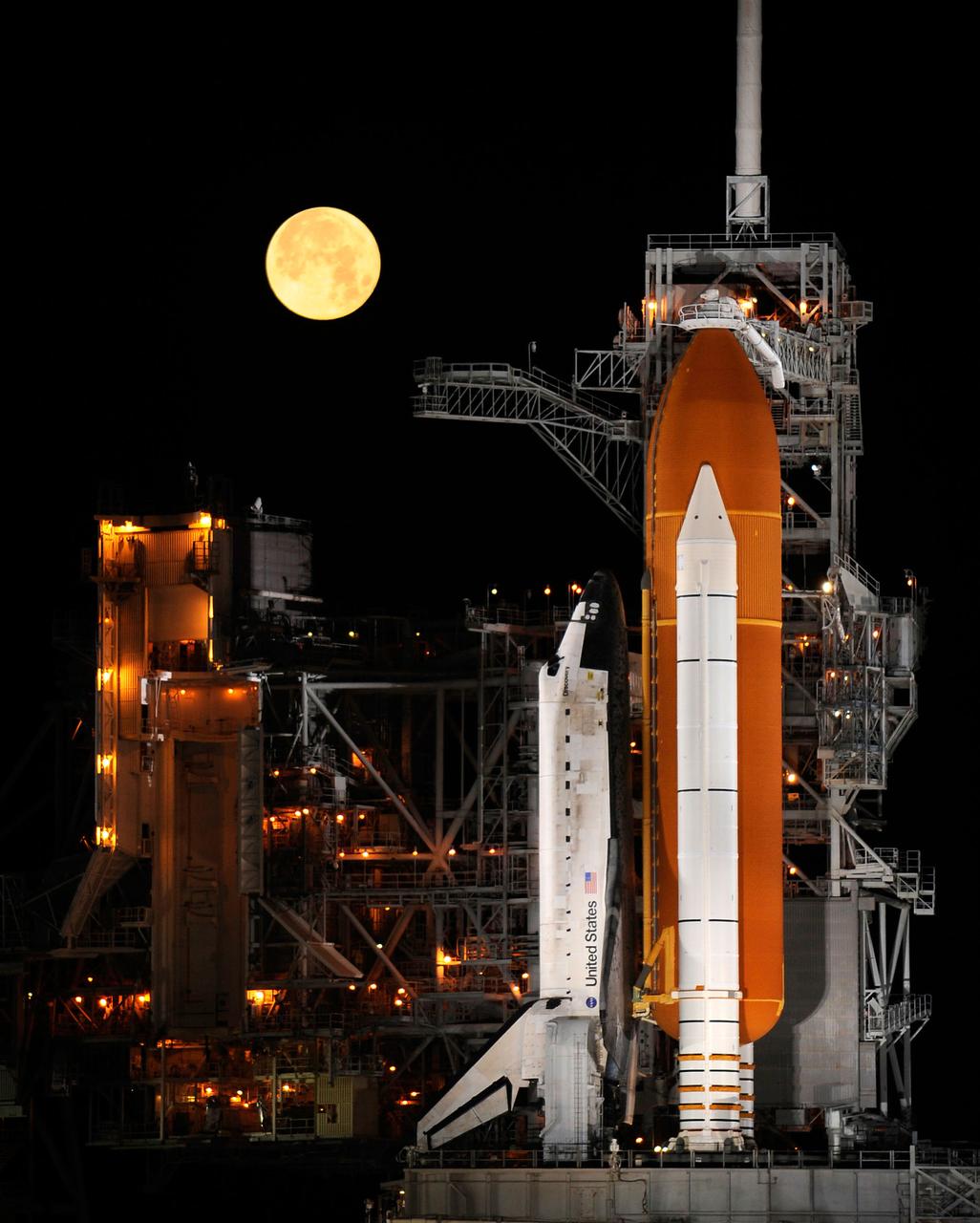
A nearly full Moon sets as the space shuttle Discovery sits atop Launch pad 39A at the Kennedy Space Center in Cape Canaveral, Florida, Wednesday, March 11, 2009. Photo Credit: (NASA/Bill Ingalls)
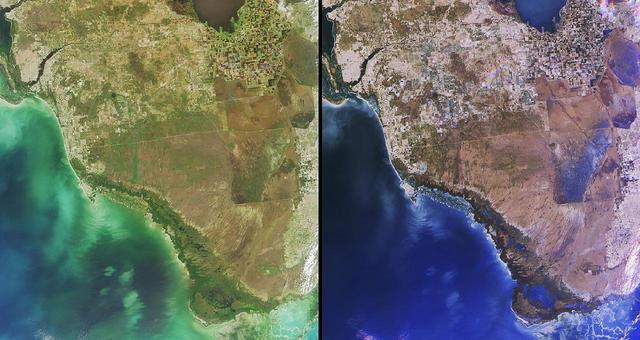
Florida Everglades is a region of broad, slow-moving sheets of water flowing southward over low-lying areas from Lake Okeechobeeto the Gulf of Mexico. These images fromNASA Terra satellite show the Everglades region on January 16, 2002.
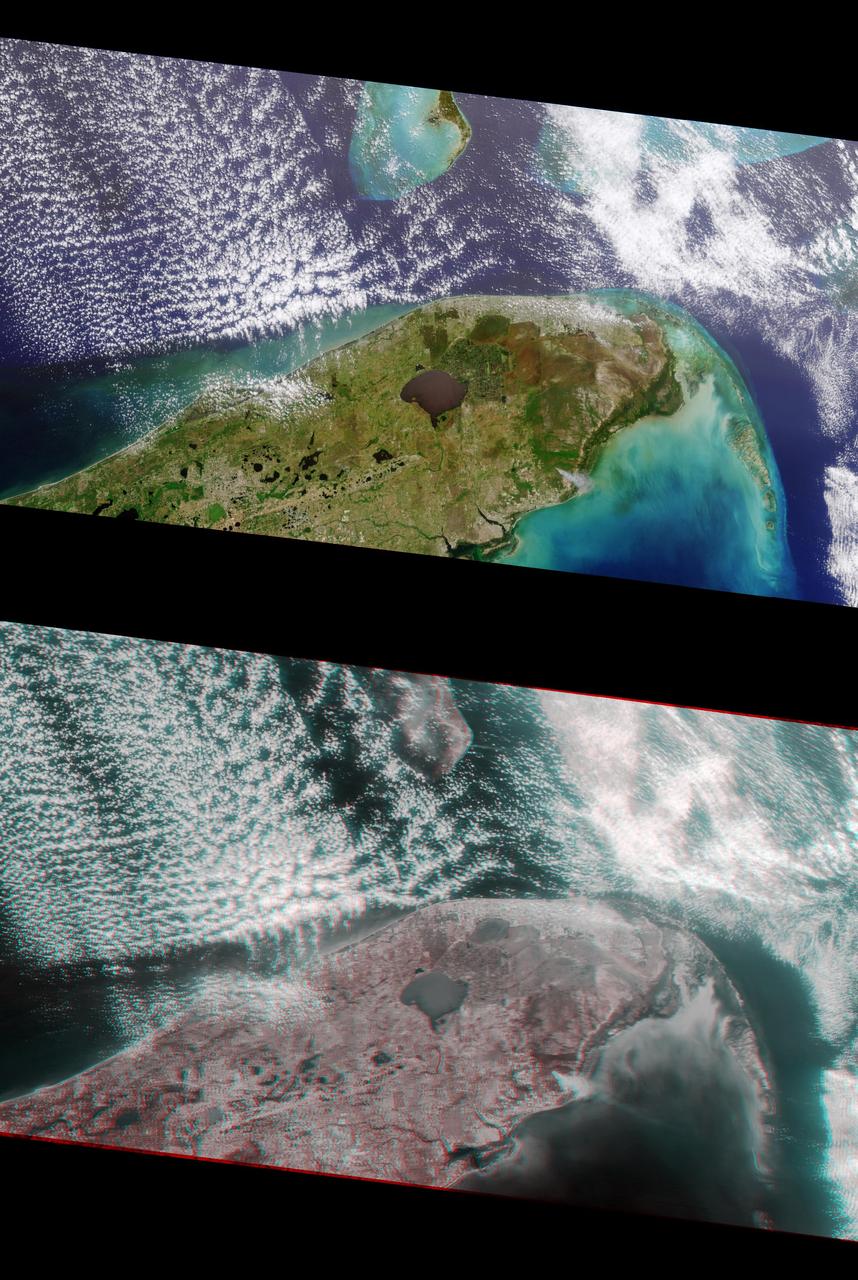
A plume from a large brush fire that burned about 15,000 acres in 2000 is visible at the western edge of the Big Cypress Swamp in southern Florida. NASA Terra satellite captured acquired this image on April 9, 2000. 3D glasses are necessary.
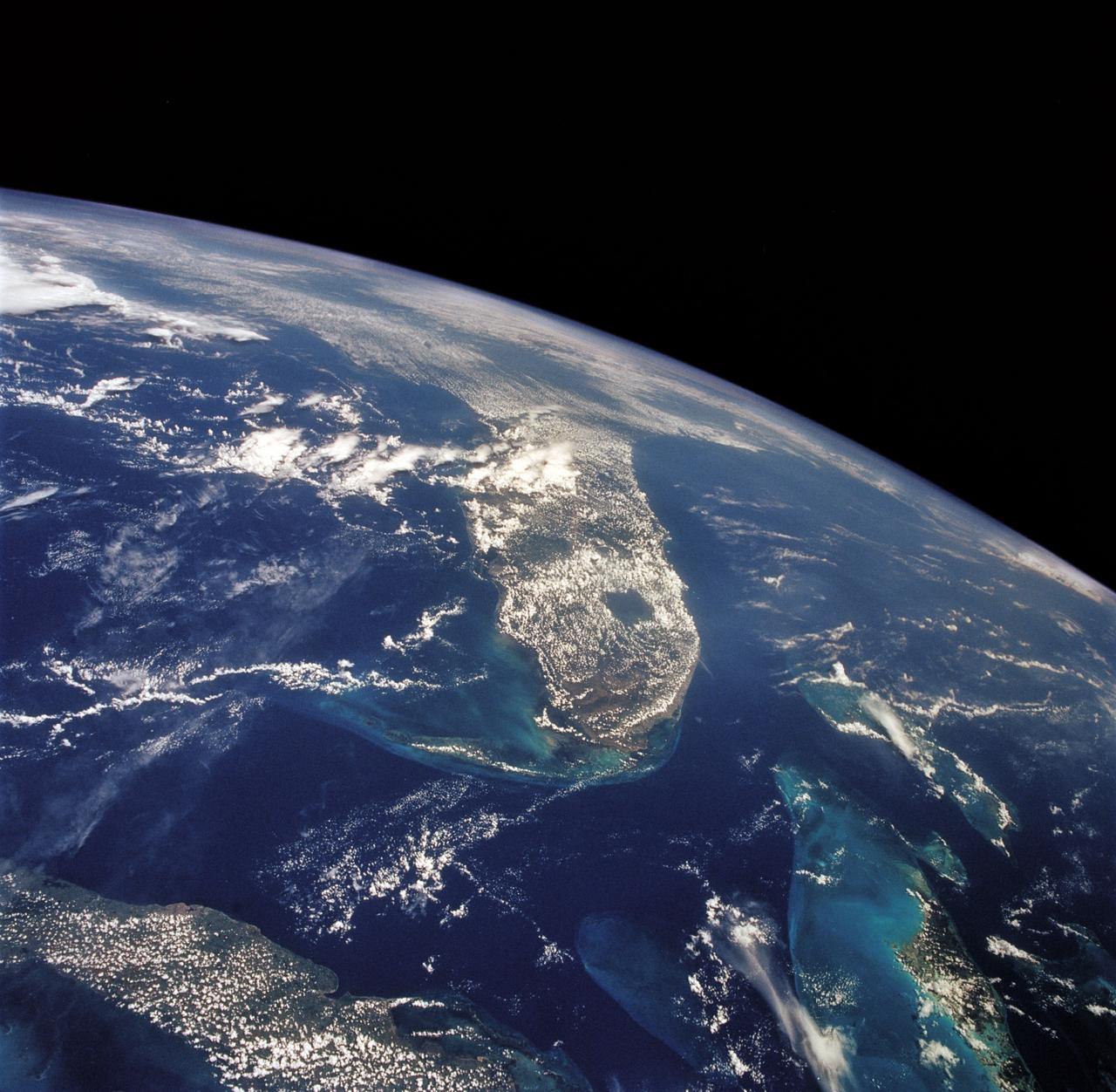
This unique photo offers a view of the Florida peninsula, western Bahamas, north central Cuba and the deep blue waters of the Gulf Stream, that hugs the east coast of Florida (27.0N, 82.0W). In addition to being an excellent photograph for showing the geographical relationships between the variety of landforms in this scene, the typical effect of the land-sea breeze is very much in evidence as few clouds over water, cumulus build up over landmass.
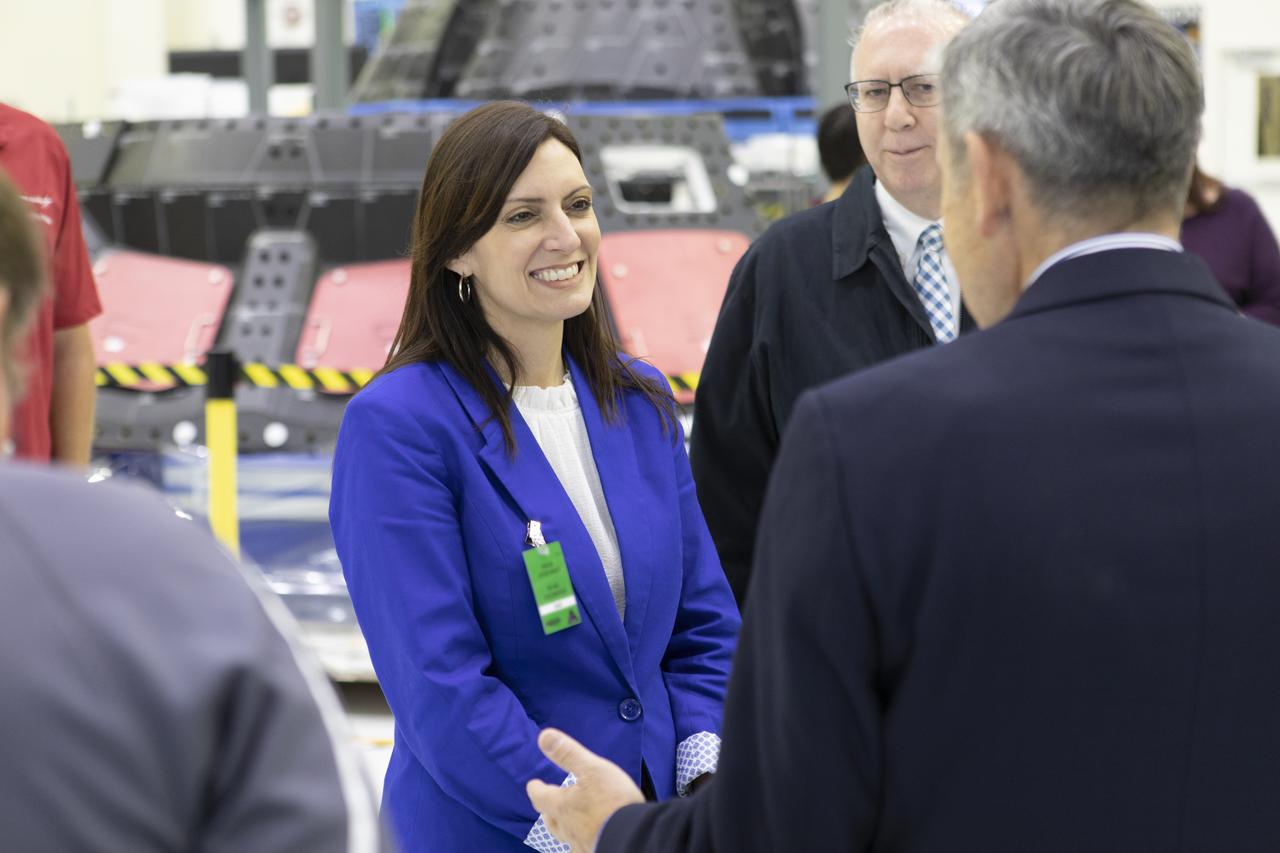
Kennedy Space Center Director Bob Cabana gives Florida Lt. Governor Jeanette Nunez a tour of the Florida spaceport’s Neil Armstrong Operations and Checkout Building high bay on April 5, 2019. During her tour, Nunez was shown NASA’s Orion spacecraft, which will be flown on the agency’s Exploration Mission-1 (EM-1). Orion will launch atop the Space Launch System rocket from Kennedy’s Launch Complex 39B. This uncrewed mission will provide the foundation for human deep space exploration and pave the way for the crewed EM-2 mission.
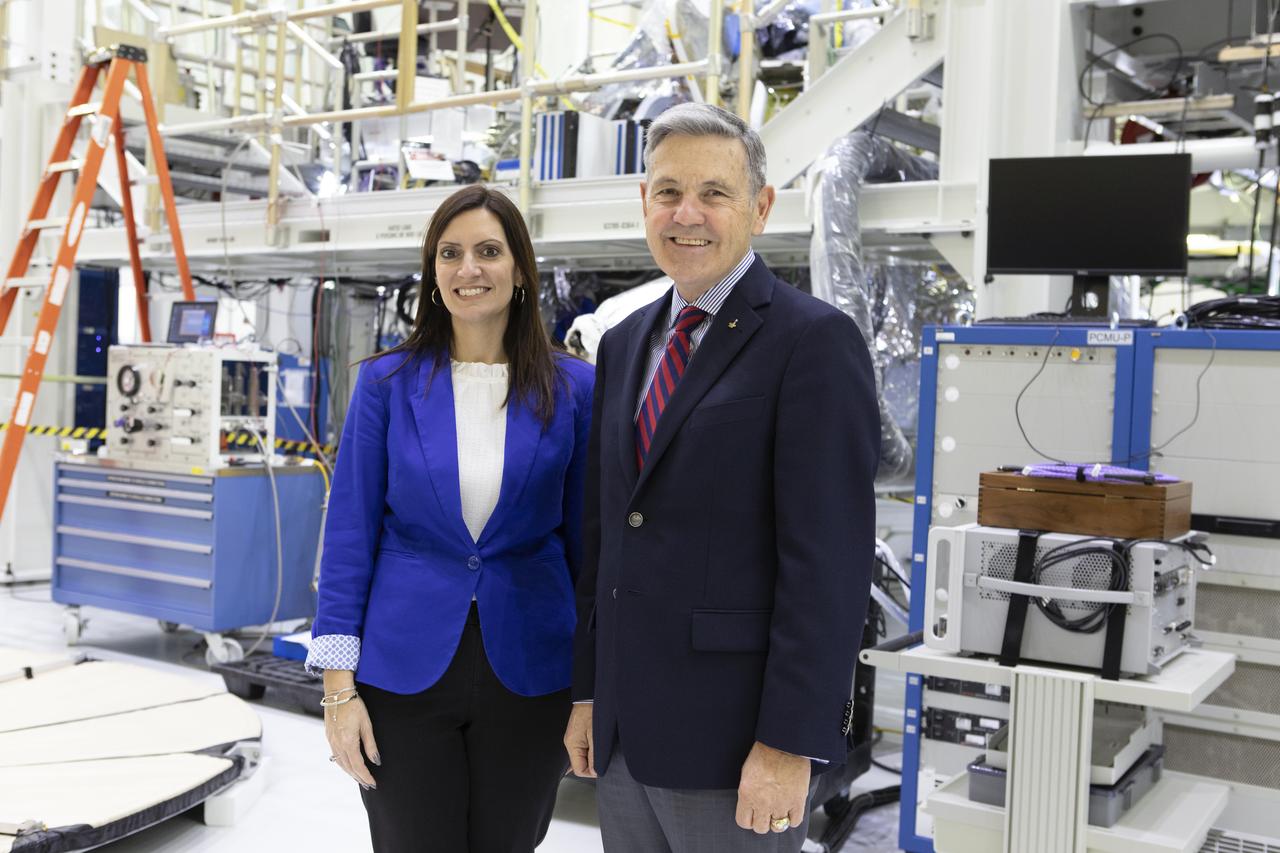
Florida Lt. Governor Jeanette Nunez and Kennedy Space Center Director Bob Cabana are photographed inside the Florida spaceport’s Neil Armstrong Operations and Checkout (O&C) Building high bay on April 5, 2019. During her tour of the O&C, Nunez was shown NASA’s Orion spacecraft, which will be flown on the agency’s Exploration Mission-1 (EM-1). Orion will launch atop the Space Launch System rocket from Kennedy’s Launch Complex 39B. This uncrewed mission will provide the foundation for human deep space exploration and pave the way for the crewed EM-2 mission.
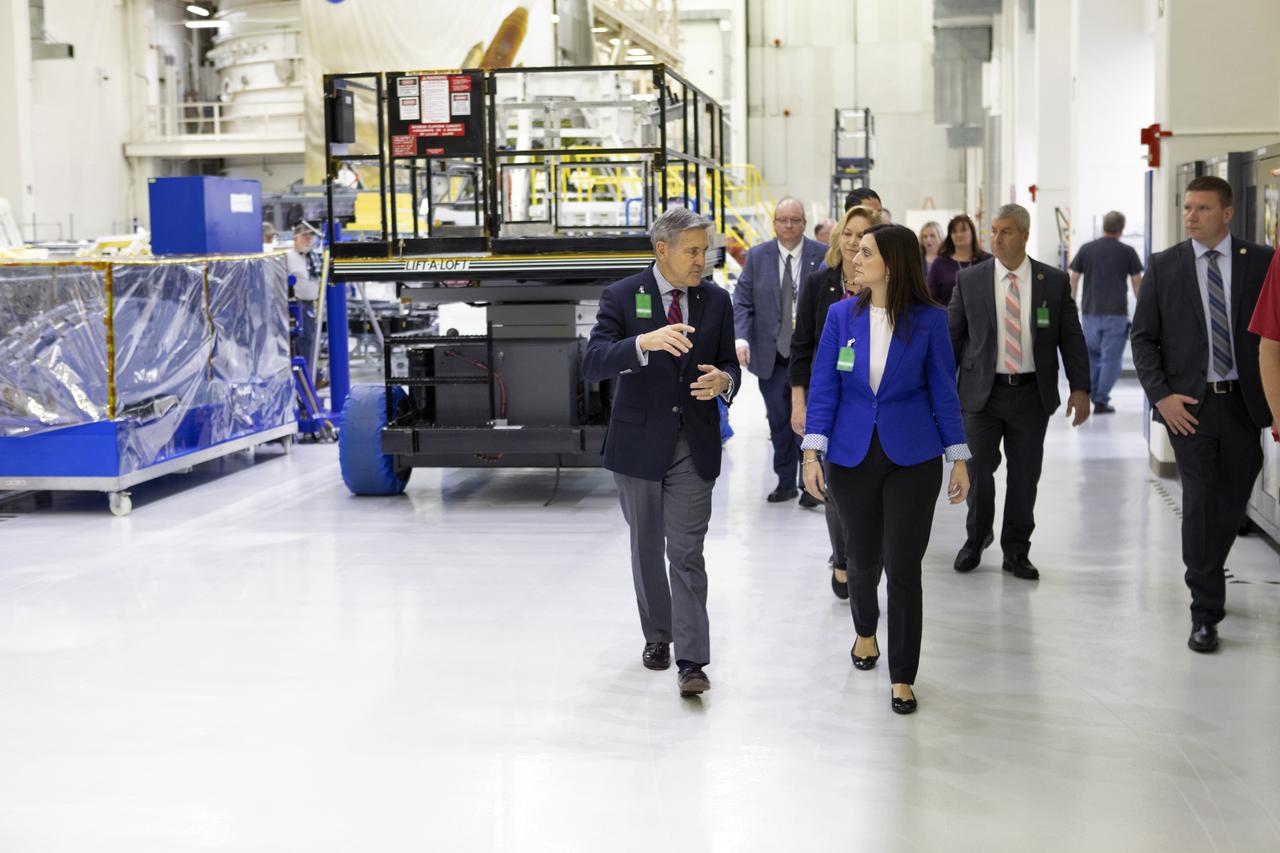
Kennedy Space Center Director Bob Cabana gives Florida Lt. Governor Jeanette Nunez a tour of the Florida spaceport’s Neil Armstrong Operations and Checkout Building high bay on April 5, 2019. During her tour, Nunez was shown NASA’s Orion spacecraft, which will be flown on the agency’s Exploration Mission-1 (EM-1). Orion will launch atop the Space Launch System rocket from Kennedy’s Launch Complex 39B. This uncrewed mission will provide the foundation for human deep space exploration and pave the way for the crewed EM-2 mission.
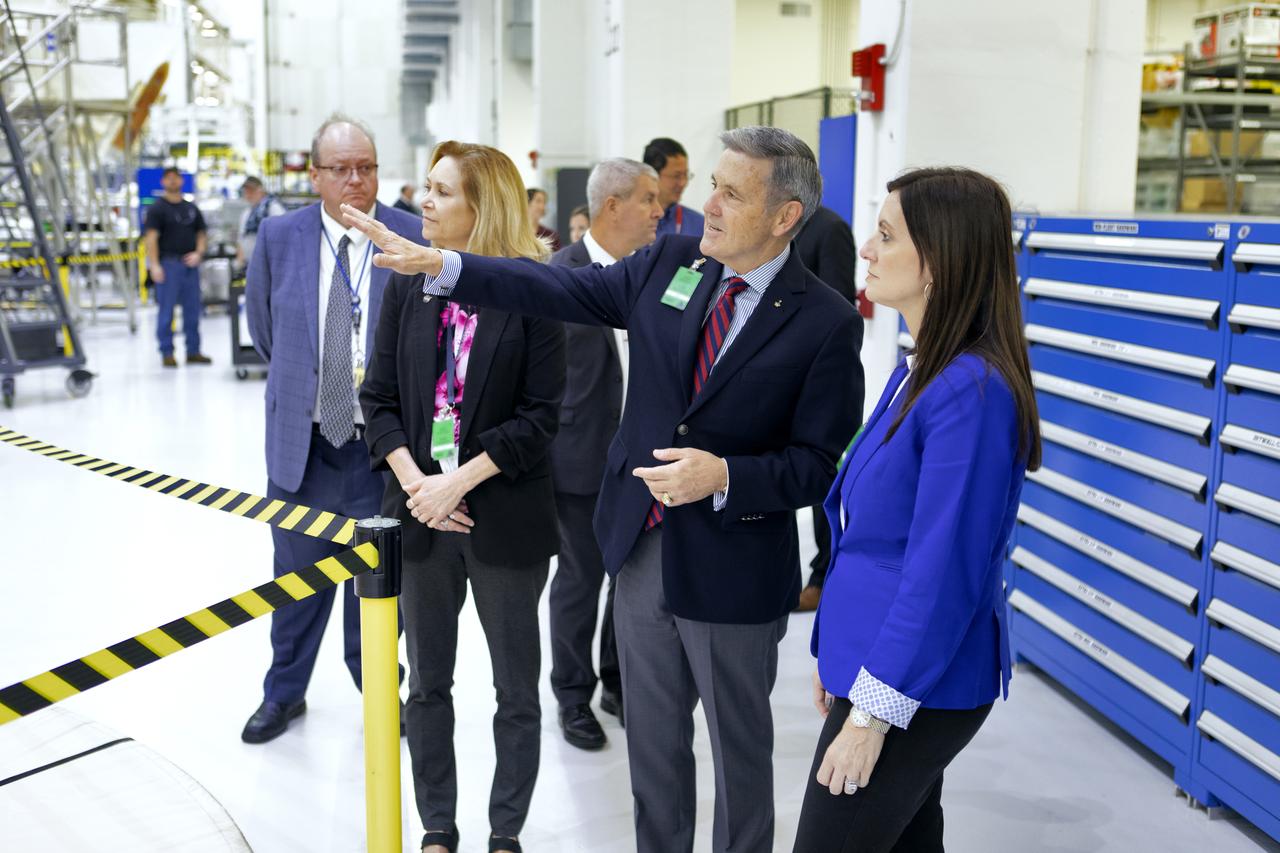
Kennedy Space Center Director Bob Cabana gives Florida Lt. Governor Jeanette Nunez (right) a tour of the Florida spaceport’s Neil Armstrong Operations and Checkout Building High Bay on April 5, 2019. Also in attendance was Kennedy Deputy Director Janet Petro (left). During her tour, Nunez was shown NASA’s Orion spacecraft, which will be flown on the agency’s Exploration Mission-1 (EM-1). Orion will launch atop the Space Launch System rocket from Kennedy’s Launch Complex 39B. This uncrewed mission will provide the foundation for human deep space exploration and pave the way for the crewed EM-2 mission.
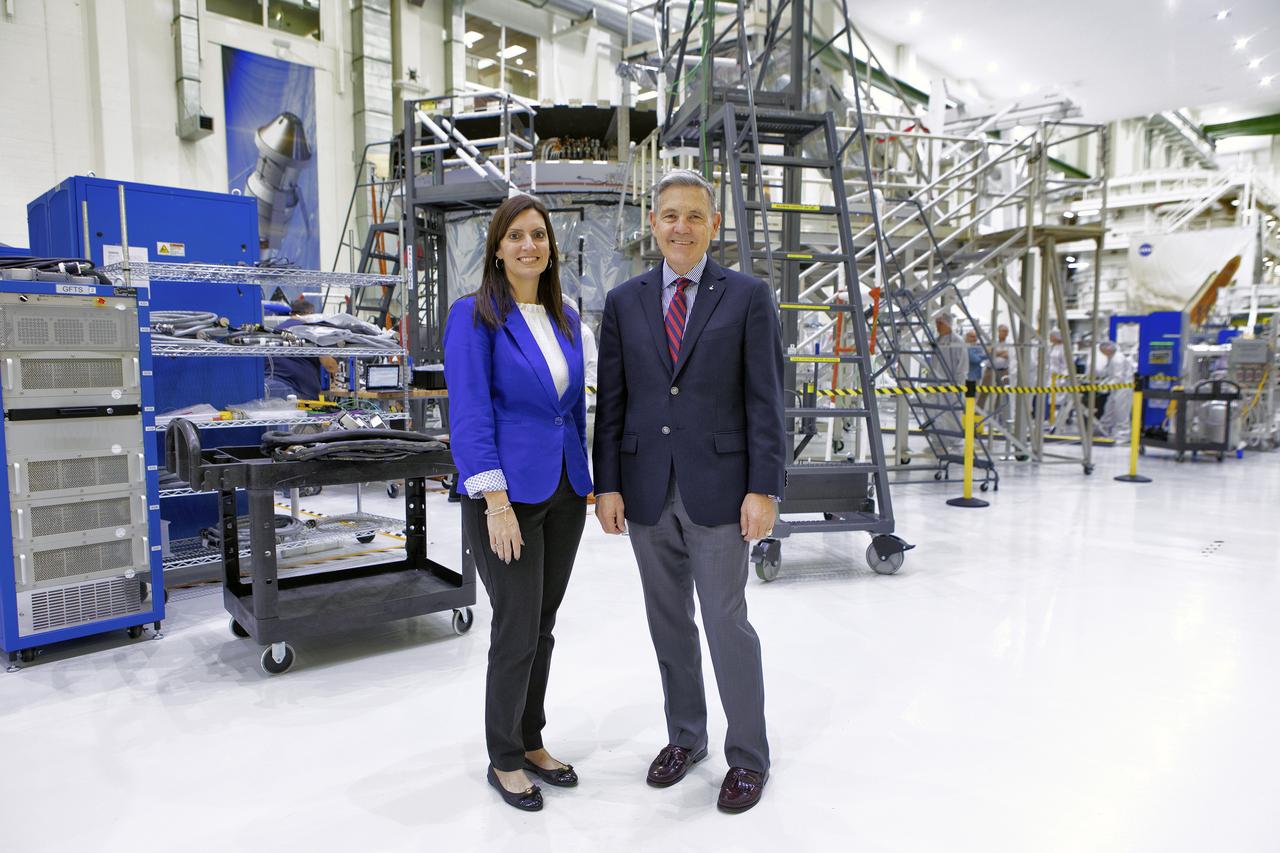
Florida Lt. Governor Jeanette Nunez and Kennedy Space Center Director Bob Cabana are photographed inside the Florida spaceport’s Neil Armstrong Operations and Checkout (O&C) Building high bay on April 5, 2019. During her tour of the O&C, Nunez was shown NASA’s Orion spacecraft, which will be flown on the agency’s Exploration Mission-1 (EM-1). Orion will launch atop the Space Launch System rocket from Kennedy’s Launch Complex 39B. This uncrewed mission will provide the foundation for human deep space exploration and pave the way for the crewed EM-2 mission.
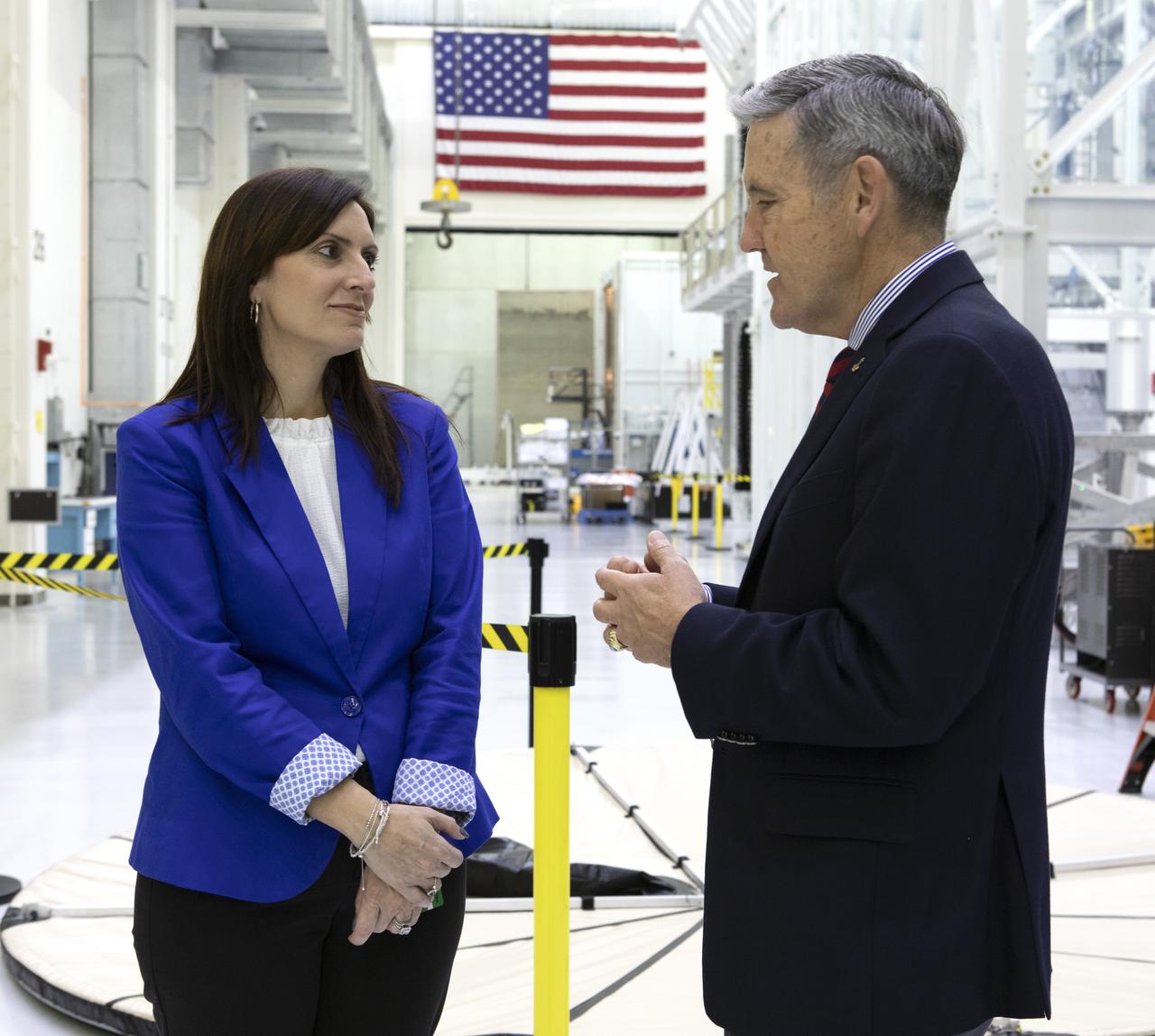
Kennedy Space Center Director Bob Cabana gives Florida Lt. Governor Jeanette Nunez a tour of the Florida spaceport’s Neil Armstrong Operations and Checkout Building high bay on April 5, 2019. During her tour, Nunez was shown NASA’s Orion spacecraft, which will be flown on the agency’s Exploration Mission-1 (EM-1). Orion will launch atop the Space Launch System rocket from Kennedy’s Launch Complex 39B. This uncrewed mission will provide the foundation for human deep space exploration and pave the way for the crewed EM-2 mission.
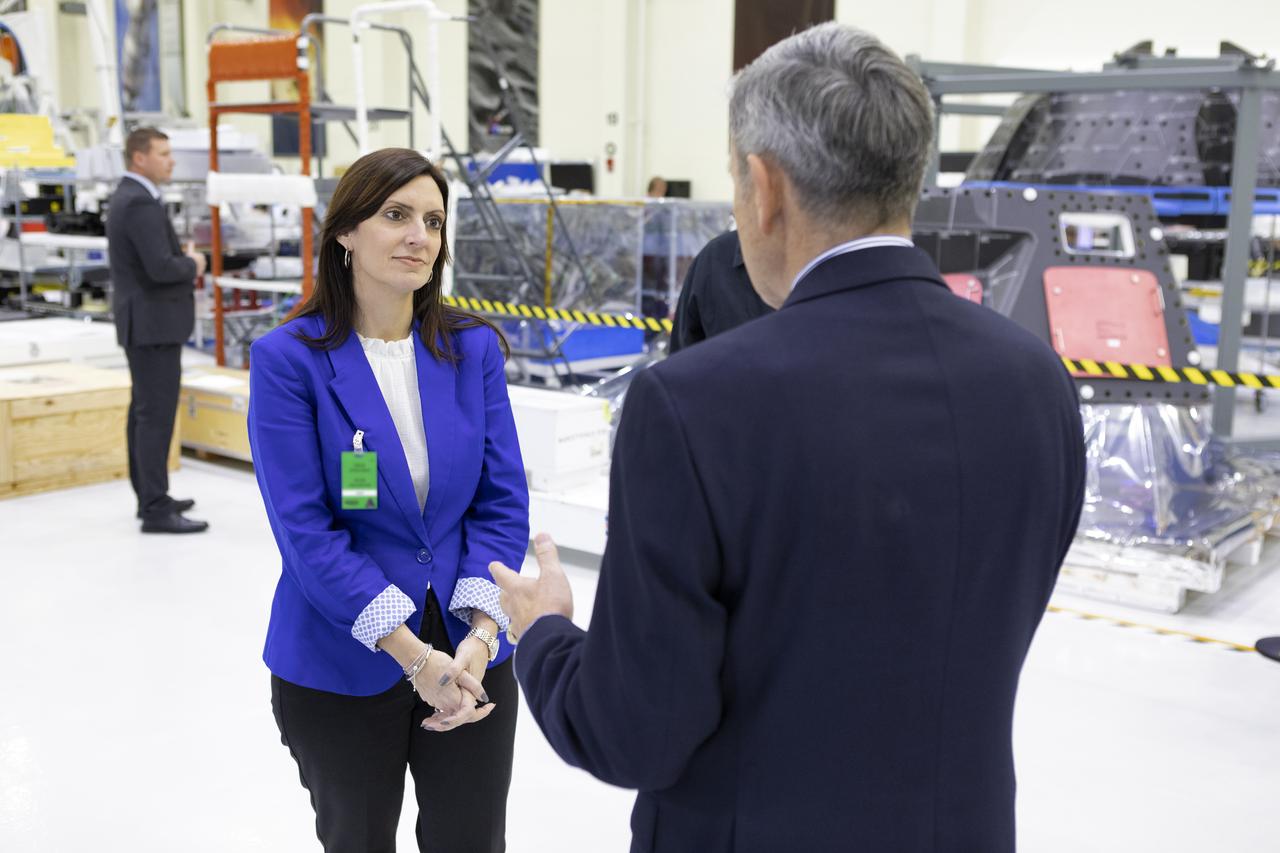
Kennedy Space Center Director Bob Cabana gives Florida Lt. Governor Jeanette Nunez a tour of the Florida spaceport’s Neil Armstrong Operations and Checkout Building high bay on April 5, 2019. During her tour, Nunez was shown NASA’s Orion spacecraft, which will be flown on the agency’s Exploration Mission-1 (EM-1). Orion will launch atop the Space Launch System rocket from Kennedy’s Launch Complex 39B. This uncrewed mission will provide the foundation for human deep space exploration and pave the way for the crewed EM-2 mission.
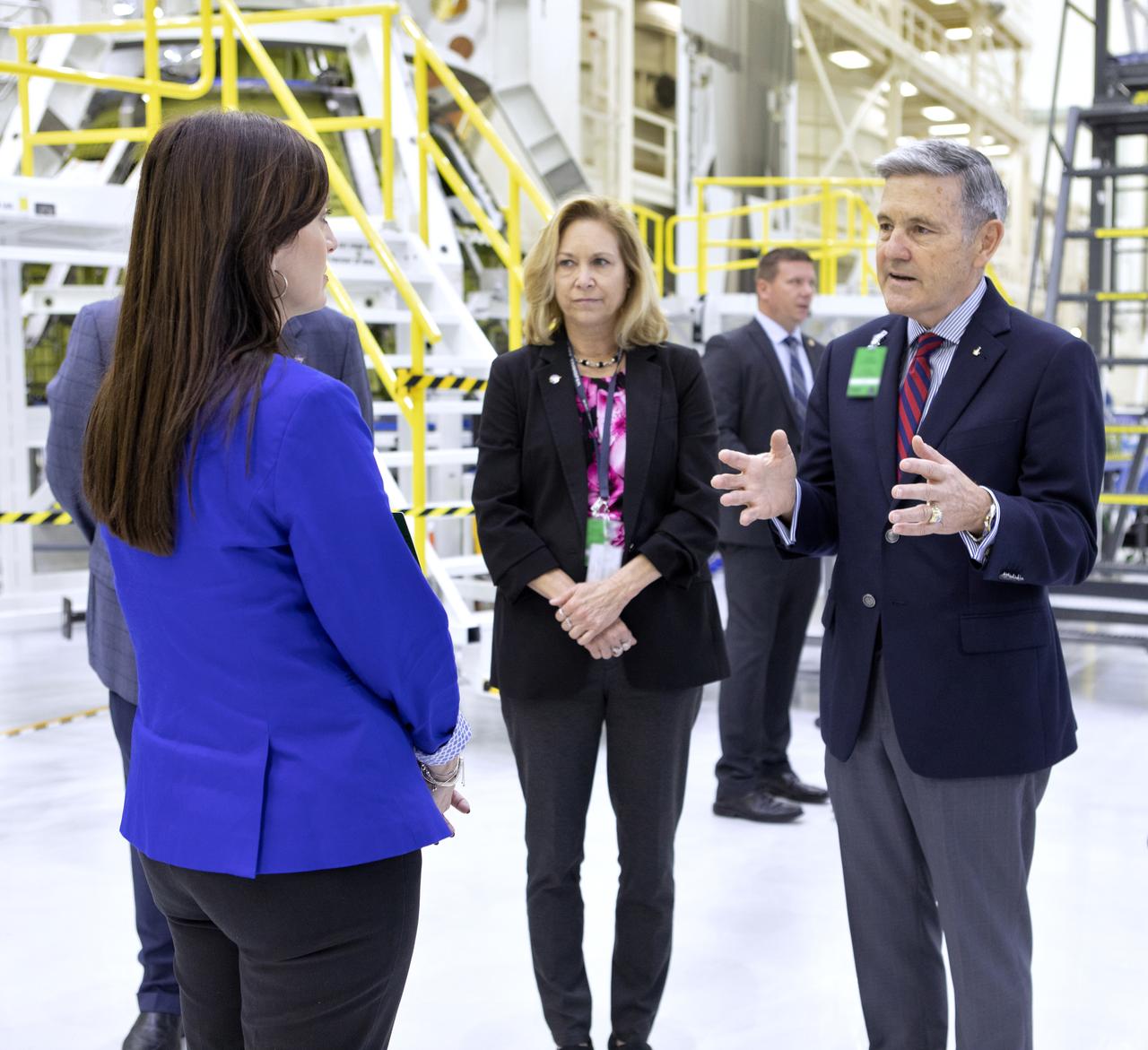
Kennedy Space Center Director Bob Cabana gives Florida Lt. Governor Jeanette Nunez (left) a tour of the Florida spaceport’s Neil Armstrong Operations and Checkout Building high bay on April 5, 2019. Also in attendance was Kennedy Deputy Director Janet Petro (center). During her tour, Nunez was shown NASA’s Orion spacecraft, which will be flown on the agency’s Exploration Mission-1 (EM-1). Orion will launch atop the Space Launch System rocket from Kennedy’s Launch Complex 39B. This uncrewed mission will provide the foundation for human deep space exploration and pave the way for the crewed EM-2 mission.
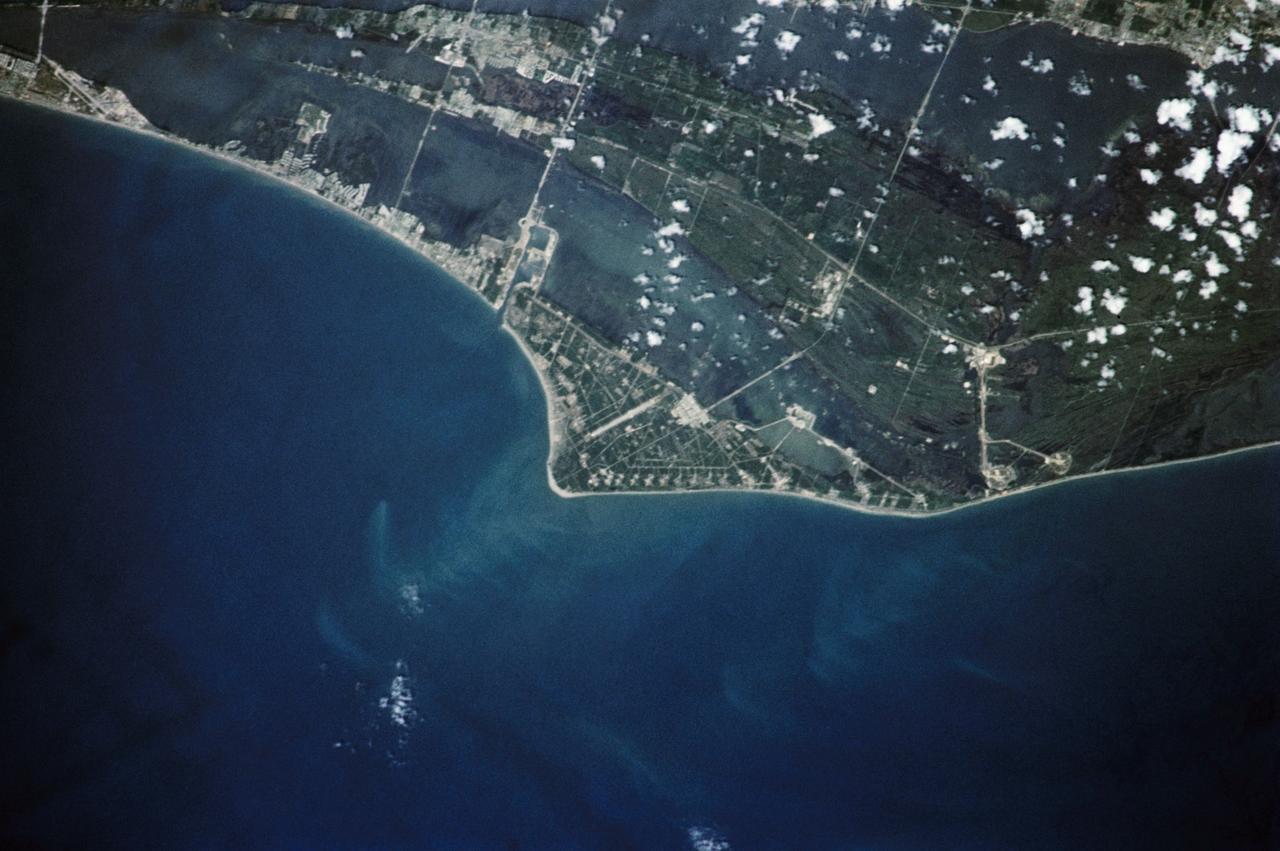
SL2-106-1194 (22 June 1973) --- This overhead view of the central eastern shore of Florida shows the Cape Canaveral and Kennedy Space Center (28.5N, 80.5W), where all of the NASA manned space missions originate. Sprinkled along the jutting cape are a number of KSC launch pads from the earlier Mercury, Gemini Apollo and Skylab series of spaceflights. Merritt Island, just south of Kennedy Space Center, is where the spacecraft liftoff tracking station is located. Photo credit: NASA
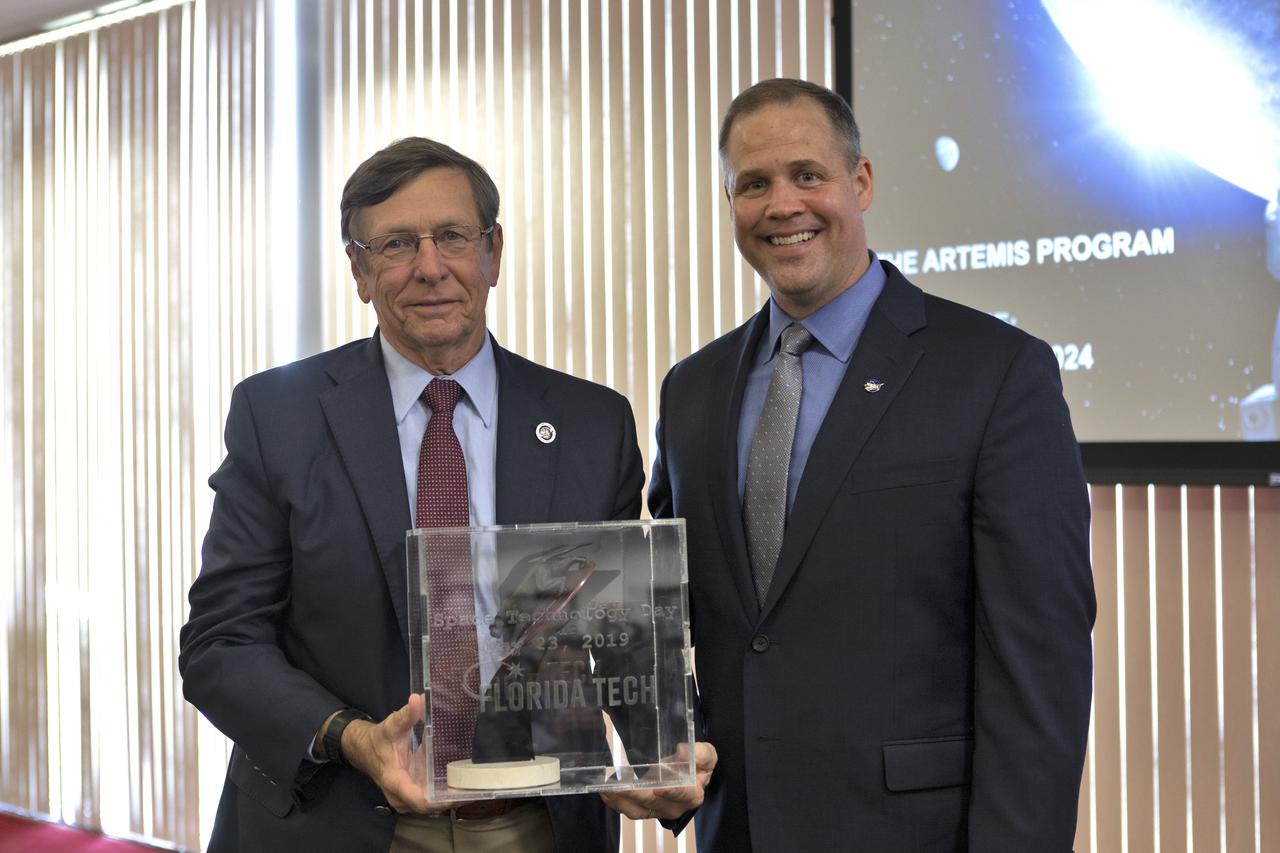
NASA Administrator Jim Bridenstine, right, poses with Florida Institute of Technology President T. Dwayne McCay on Thursday, May 23, 2019 at the Melbourne, FL campus. Bridenstine delivered the keynote address during the university’s Space Technology Day. Among the key topics Bridenstine discussed was NASA’s Artemis missions to the Moon, including the lunar Gateway, which will serve as an orbiting outpost for astronauts.
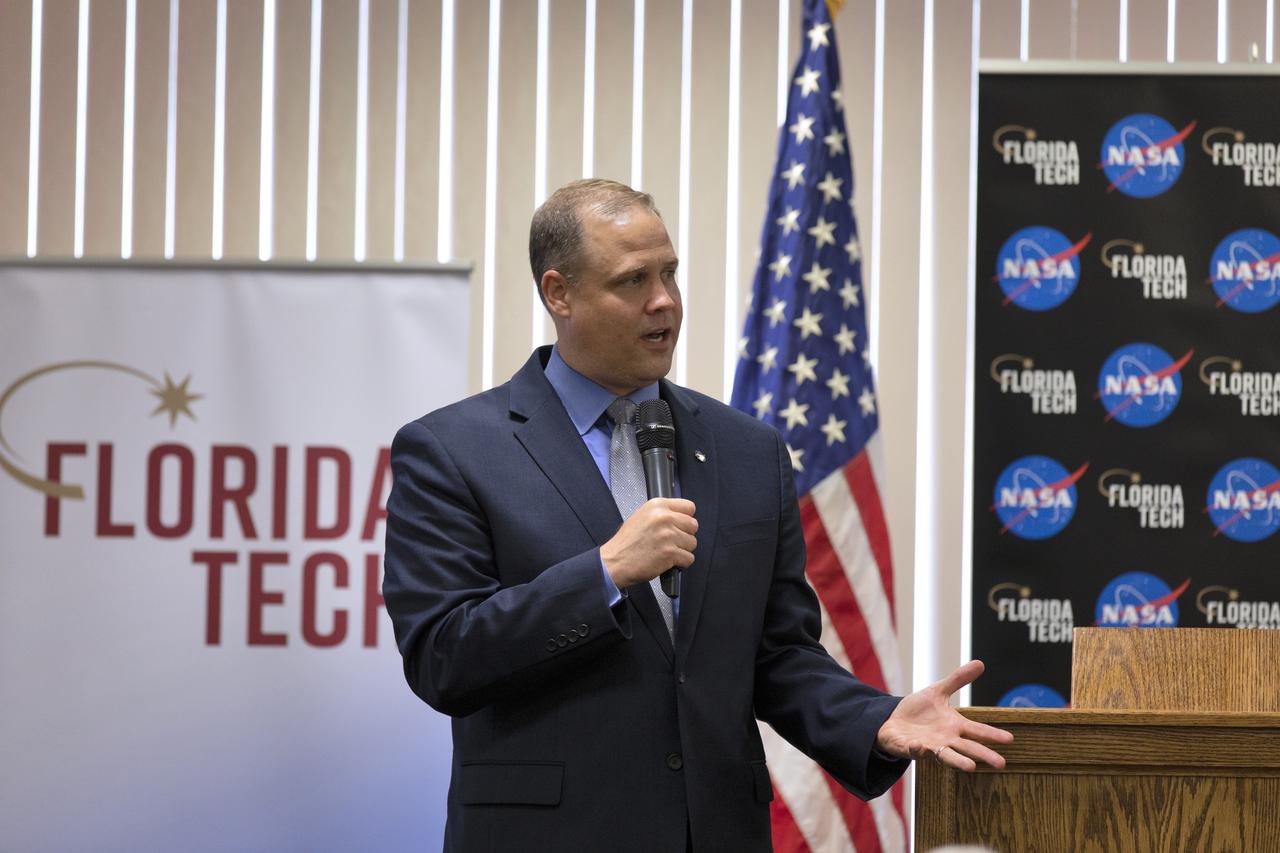
NASA Administrator Jim Bridenstine speaks to students, faculty, engineers and area business leaders at Florida Institute of Technology on Thursday, May 23, 2019. Bridenstine delivered the keynote address at the Melbourne, FL campus during the university’s Space Technology Day. Among the key topics Bridenstine discussed was NASA’s Artemis missions to the Moon, including the lunar Gateway, which will serve as an orbiting outpost for astronauts.
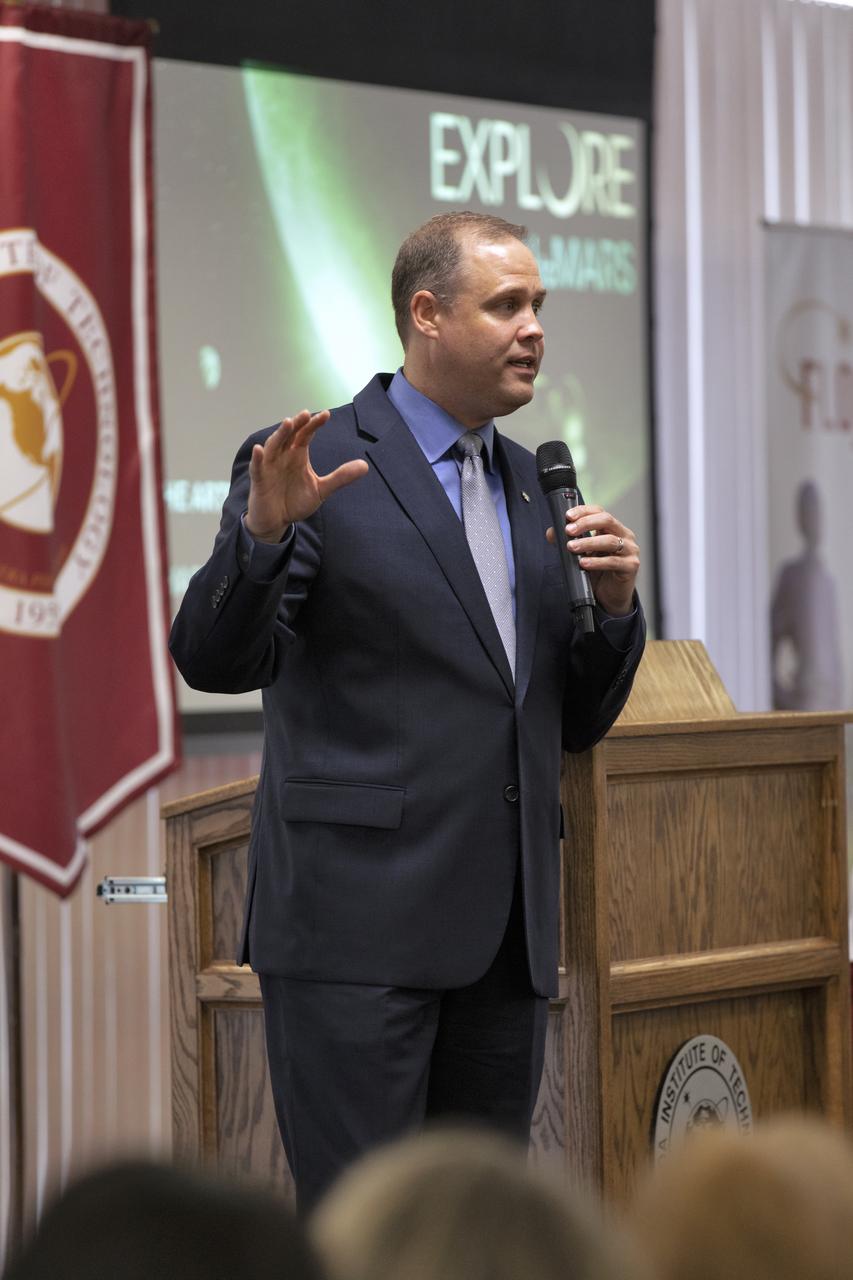
NASA Administrator Jim Bridenstine speaks to students, faculty, engineers and area business leaders at Florida Institute of Technology on Thursday, May 23, 2019. Bridenstine delivered the keynote address at the Melbourne, FL campus during the university’s Space Technology Day. Among the key topics Bridenstine discussed was NASA’s Artemis missions to the Moon, including the lunar Gateway, which will serve as an orbiting outpost for astronauts.
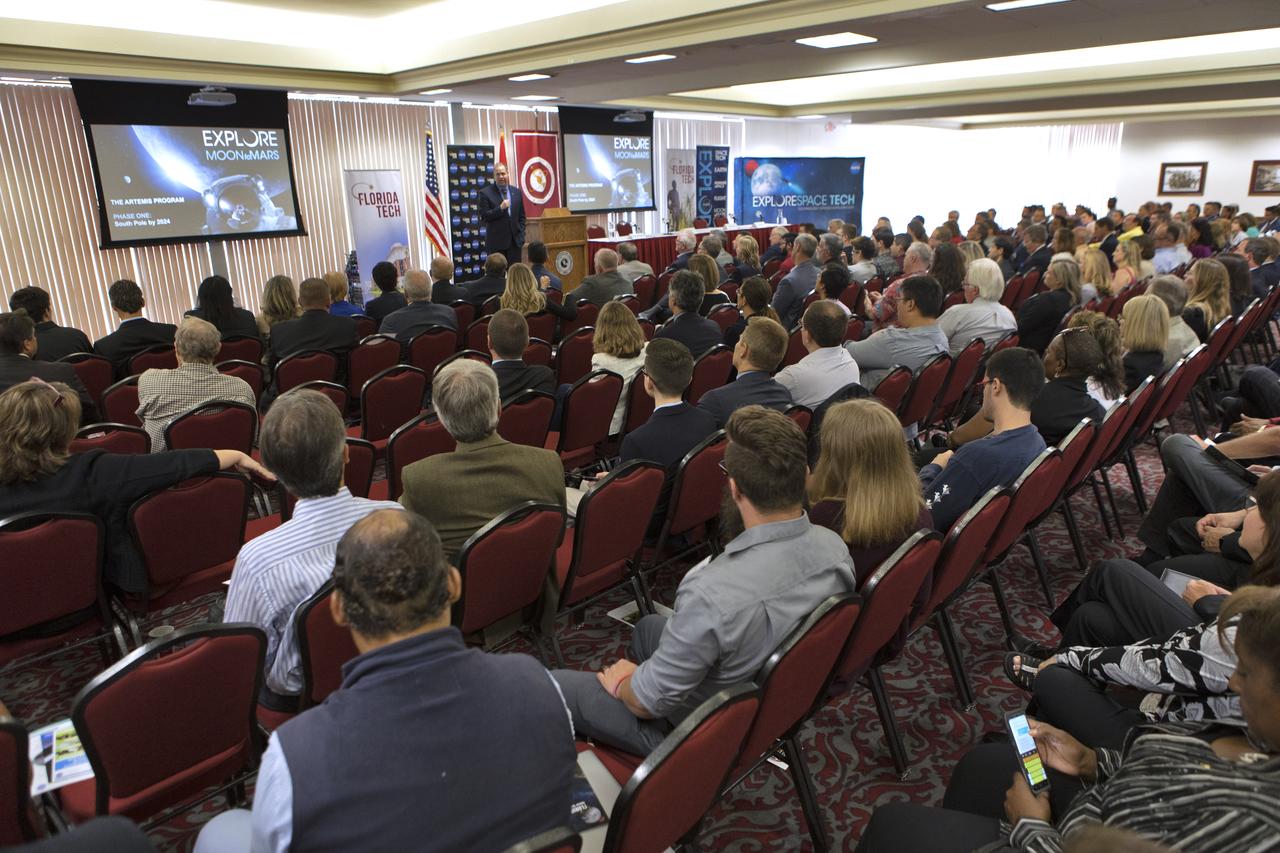
NASA Administrator Jim Bridenstine speaks to students, faculty, engineers and area business leaders at Florida Institute of Technology on Thursday, May 23, 2019. Bridenstine delivered the keynote address at the Melbourne, FL campus during the university’s Space Technology Day. Among the key topics Bridenstine discussed was NASA’s Artemis missions to the Moon, including the lunar Gateway, which will serve as an orbiting outpost for astronauts.
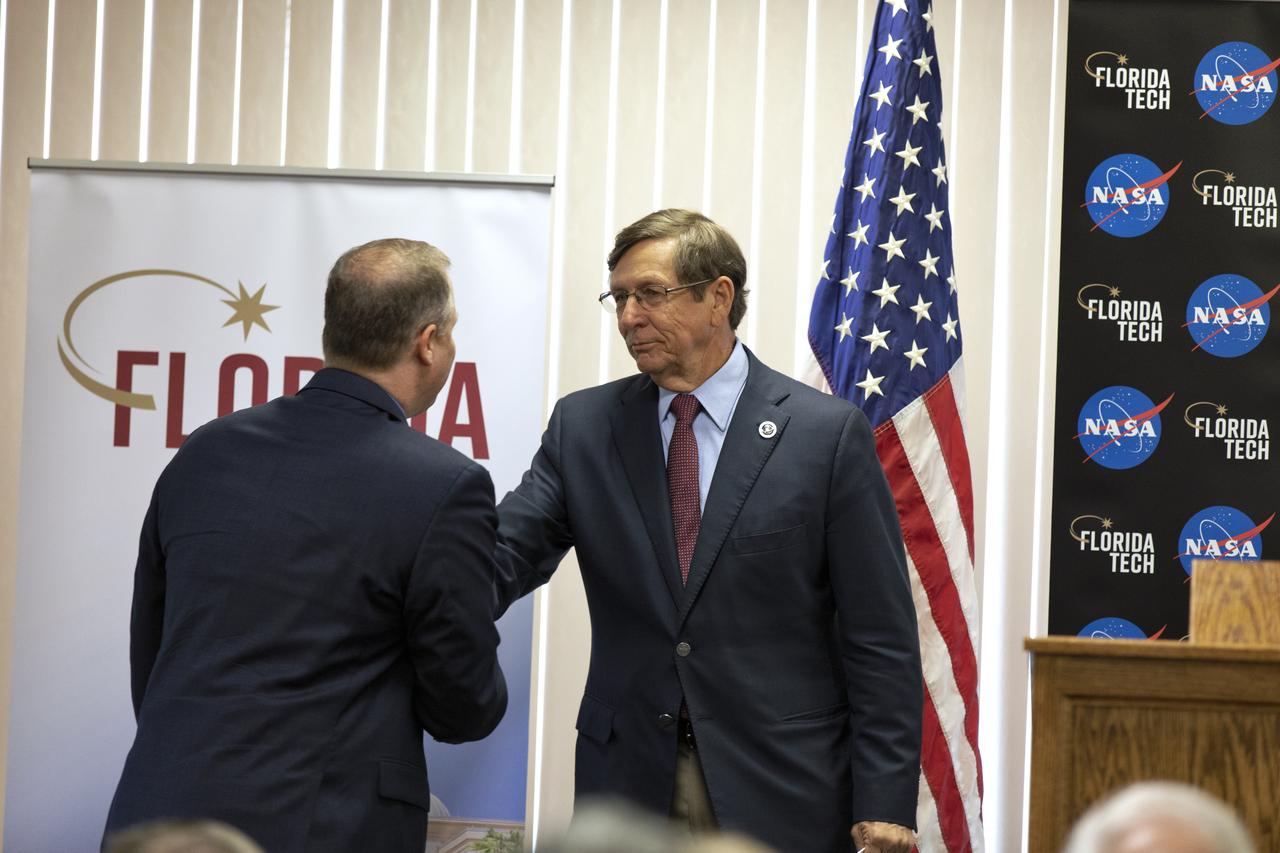
NASA Administrator Jim Bridenstine, left, shakes hands with Florida Institute of Technology President T. Dwayne McCay on Thursday, May 23, 2019 at the Melbourne, FL campus. Bridenstine delivered the keynote address during the university’s Space Technology Day. Among the key topics Bridenstine discussed was NASA’s Artemis missions to the Moon, including the lunar Gateway, which will serve as an orbiting outpost for astronauts.
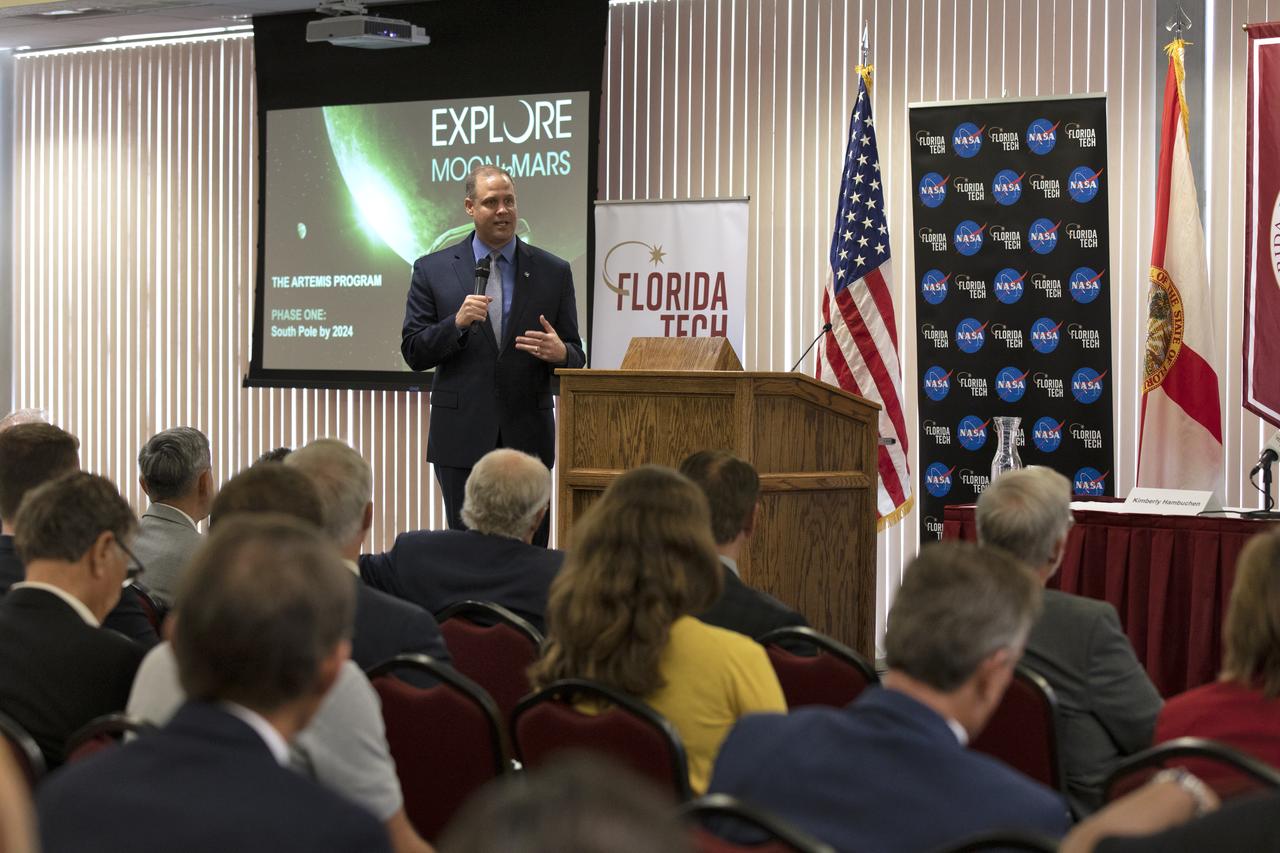
NASA Administrator Jim Bridenstine speaks to students, faculty, engineers and area business leaders at Florida Institute of Technology on Thursday, May 23, 2019. Bridenstine delivered the keynote address at the Melbourne, FL campus during the university’s Space Technology Day. Among the key topics Bridenstine discussed was NASA’s Artemis missions to the Moon, including the lunar Gateway, which will serve as an orbiting outpost for astronauts.
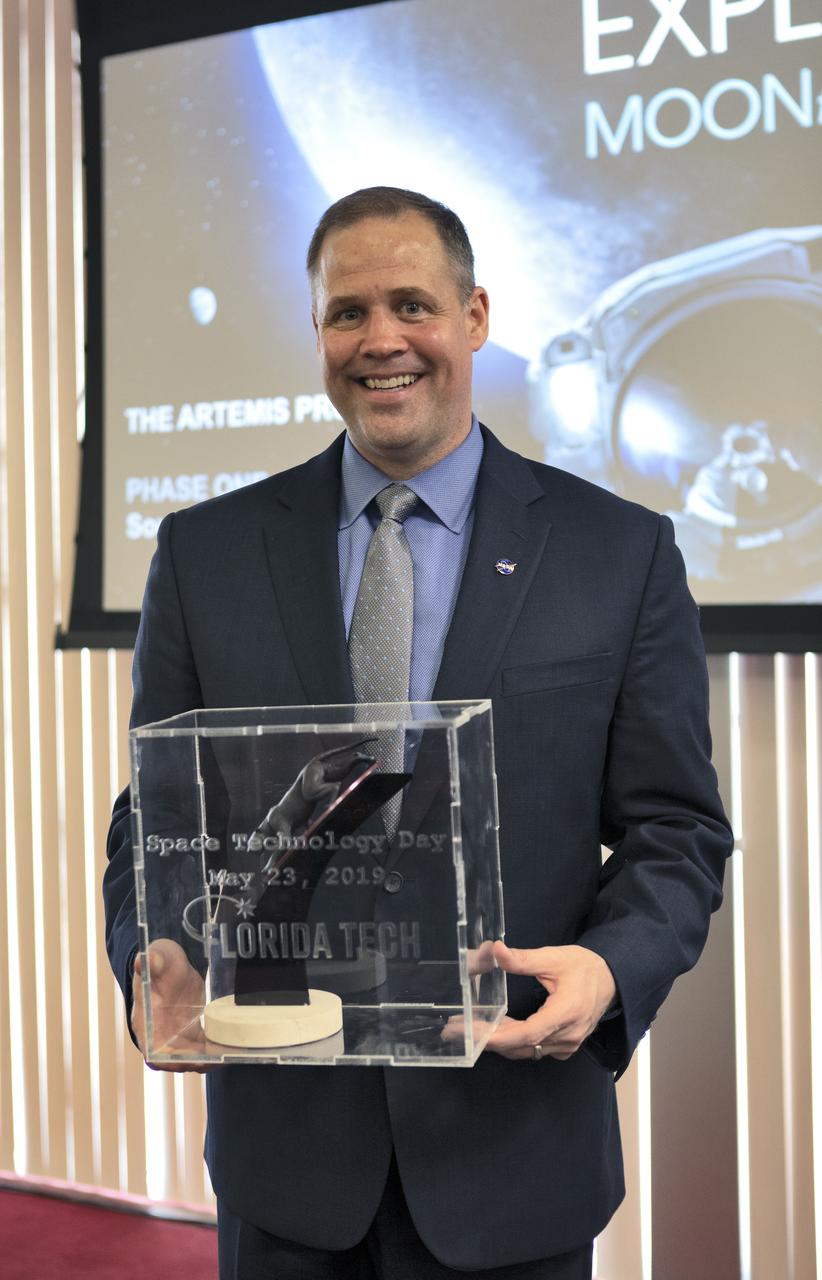
NASA Administrator Jim Bridenstine poses at Florida Institute of Technology on Thursday, May 23, 2019. Bridenstine delivered the keynote address at the Melbourne, FL campus during the university’s Space Technology Day. Among the key topics Bridenstine discussed was NASA’s Artemis missions to the Moon, including the lunar Gateway, which will serve as an orbiting outpost for astronauts.
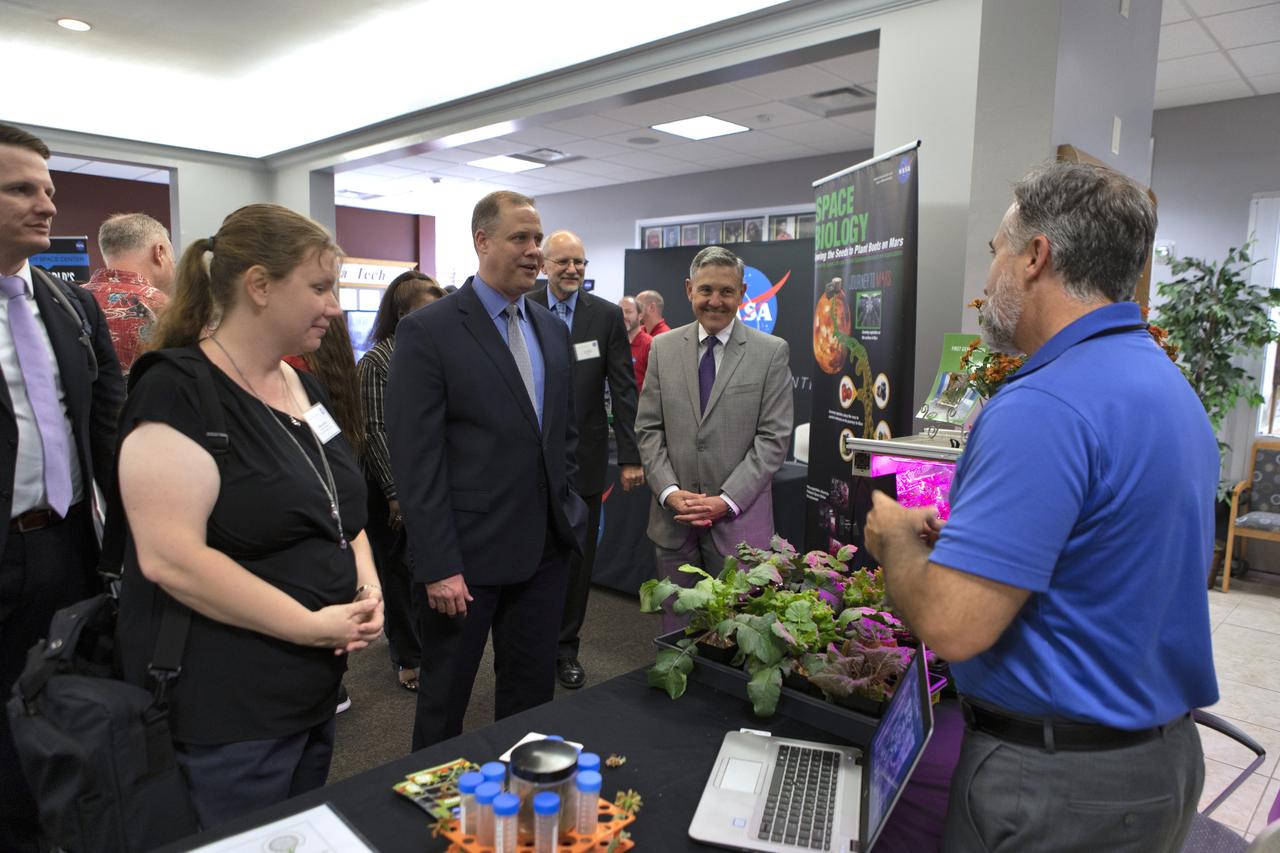
NASA Administrator Jim Bridenstine, center, and Kennedy Space Center Director Bob Cabana, right, visit Florida Institute of Technology on Thursday, May 23, 2019. Bridenstine delivered the keynote address at the Melbourne, FL campus during the university’s Space Technology Day. Among the key topics Bridenstine discussed was NASA’s Artemis missions to the Moon, including the lunar Gateway, which will serve as an orbiting outpost for astronauts.
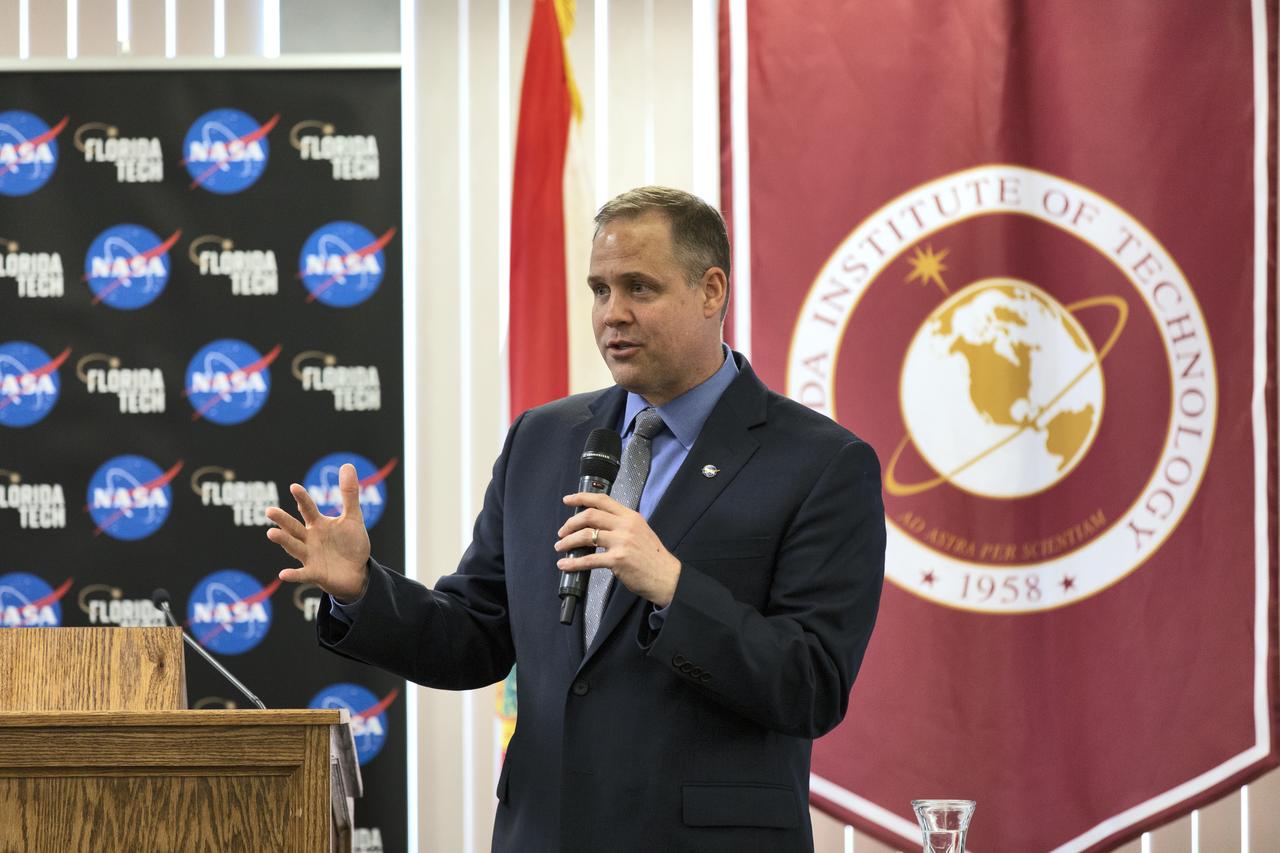
NASA Administrator Jim Bridenstine speaks to students, faculty, engineers and area business leaders at Florida Institute of Technology on Thursday, May 23, 2019. Bridenstine delivered the keynote address at the Melbourne, FL campus during the university’s Space Technology Day. Among the key topics Bridenstine discussed was NASA’s Artemis missions to the Moon, including the lunar Gateway, which will serve as an orbiting outpost for astronauts.
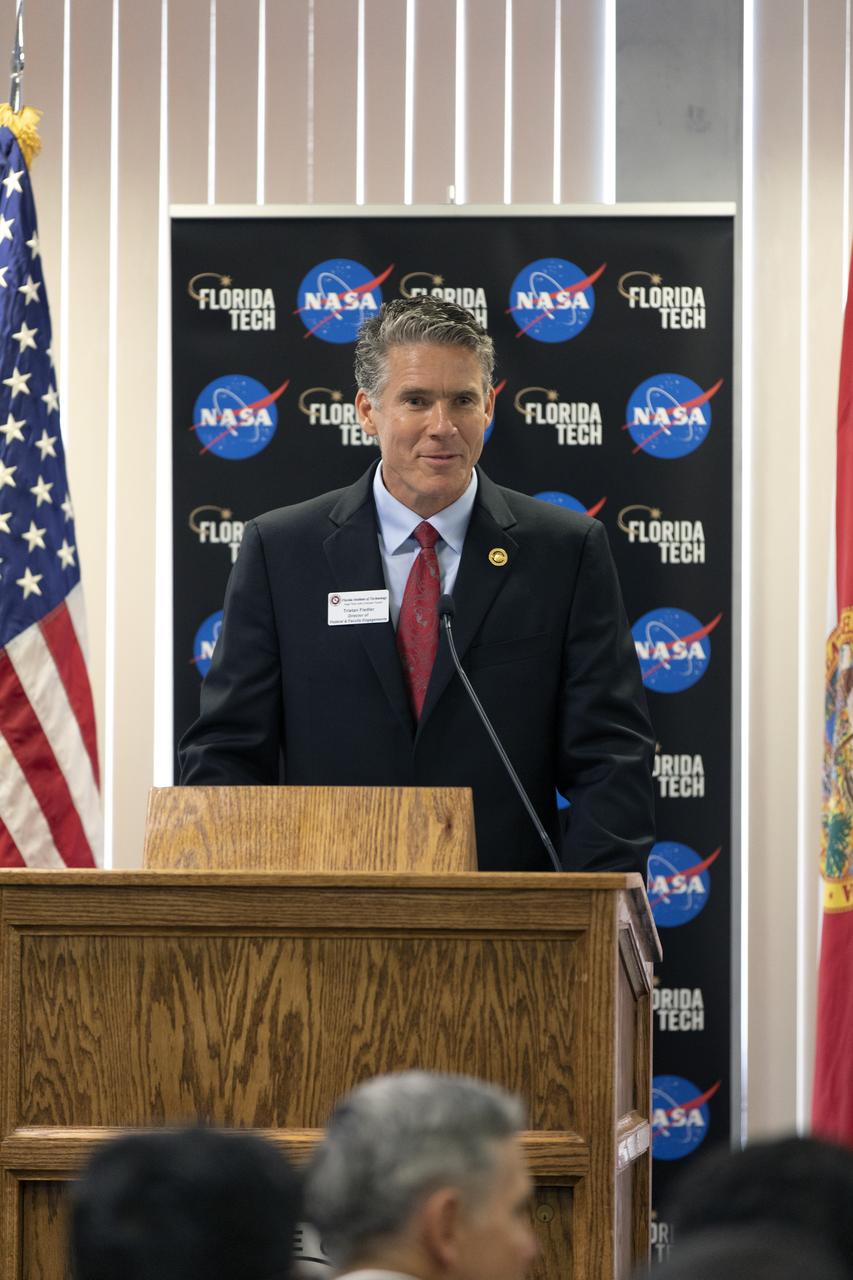
Tristan Fiedler, director of federal and faculty engagements at Florida Institute of Technology, speaks during the university’s Space Technology Day on Thursday, May 23, 2019. NASA Administrator Jim Bridenstine delivered the keynote address at the Melbourne, FL campus, which included students, faculty, engineers and area business leaders in attendance. Among the key topics Bridenstine discussed was NASA’s Artemis missions to the Moon, including the lunar Gateway, which will serve as an orbiting outpost for astronauts.
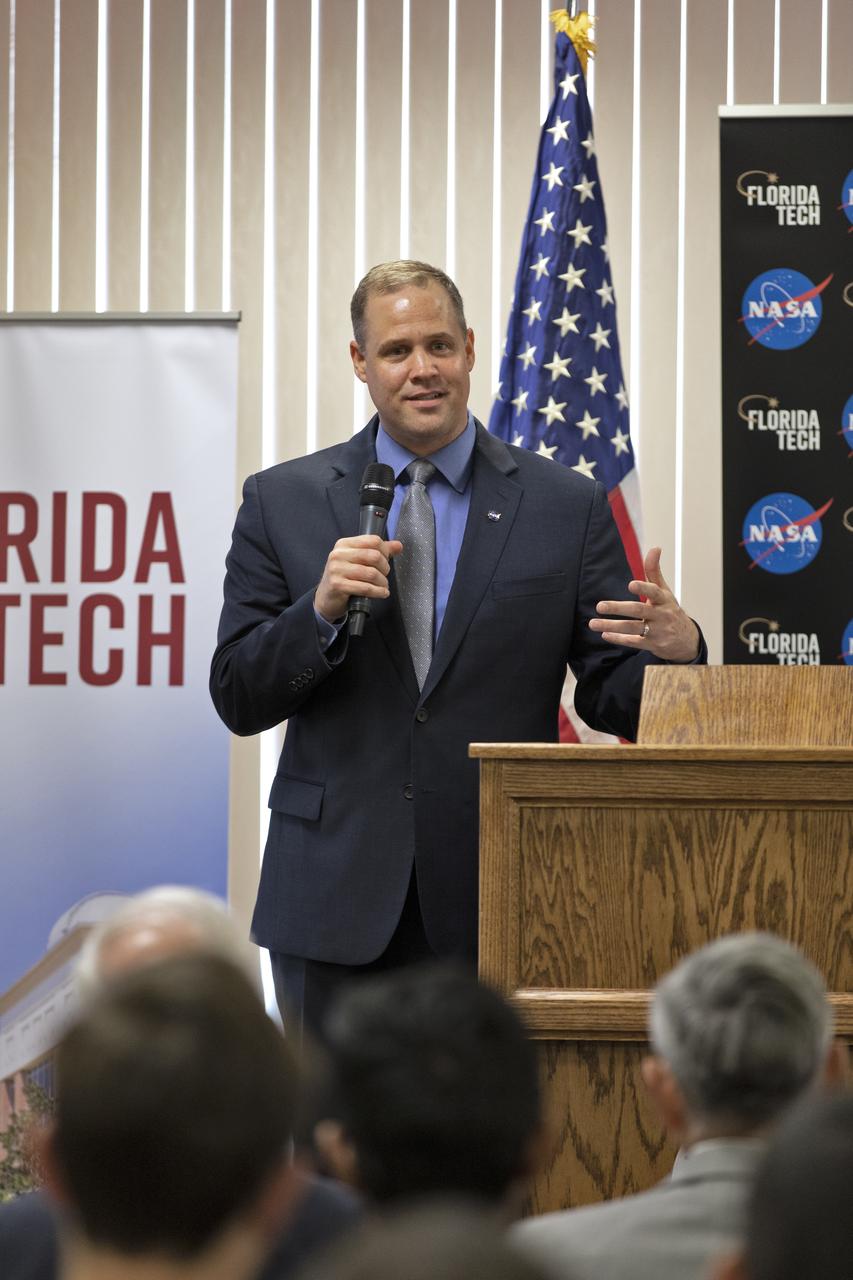
NASA Administrator Jim Bridenstine speaks to students, faculty, engineers and area business leaders at Florida Institute of Technology on Thursday, May 23, 2019. Bridenstine delivered the keynote address at the Melbourne, FL campus during the university’s Space Technology Day. Among the key topics Bridenstine discussed was NASA’s Artemis missions to the Moon, including the lunar Gateway, which will serve as an orbiting outpost for astronauts.
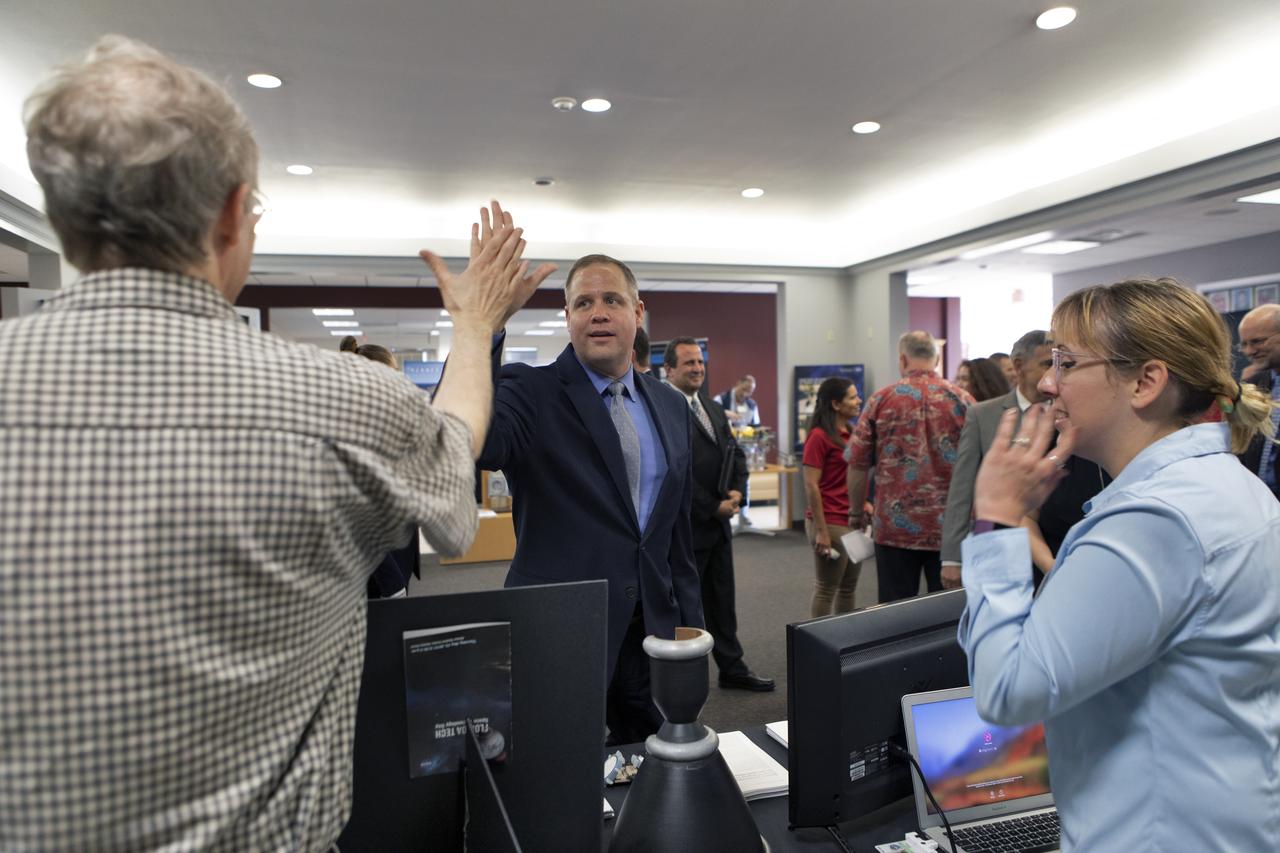
NASA Administrator Jim Bridenstine, center, speaks to students, faculty, engineers and area business leaders at Florida Institute of Technology on Thursday, May 23, 2019. Bridenstine delivered the keynote address at the Melbourne, FL campus during the university’s Space Technology Day. Among the key topics Bridenstine discussed was NASA’s Artemis missions to the Moon, including the lunar Gateway, which will serve as an orbiting outpost for astronauts.
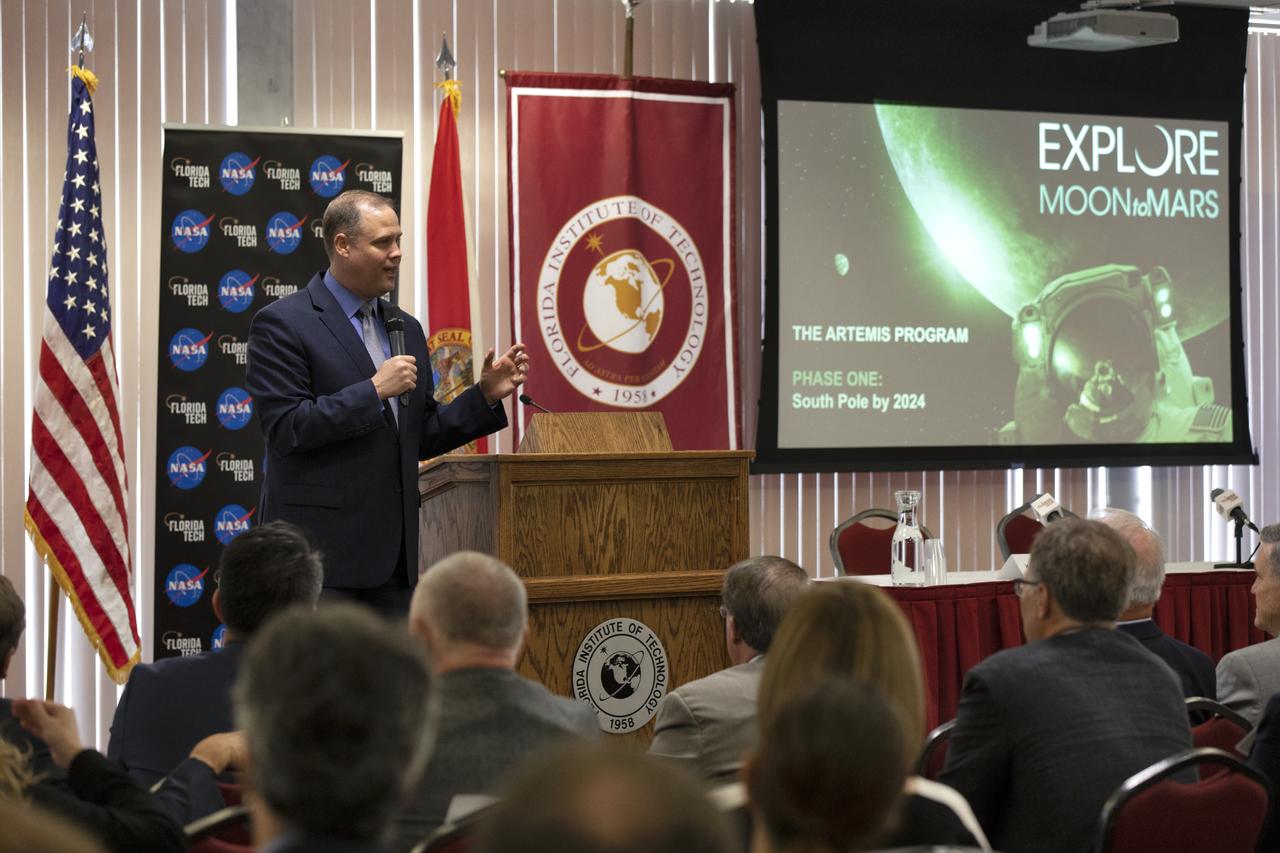
NASA Administrator Jim Bridenstine speaks to students, faculty, engineers and area business leaders at Florida Institute of Technology on Thursday, May 23, 2019. Bridenstine delivered the keynote address at the Melbourne, FL campus during the university’s Space Technology Day. Among the key topics Bridenstine discussed was NASA’s Artemis missions to the Moon, including the lunar Gateway, which will serve as an orbiting outpost for astronauts.
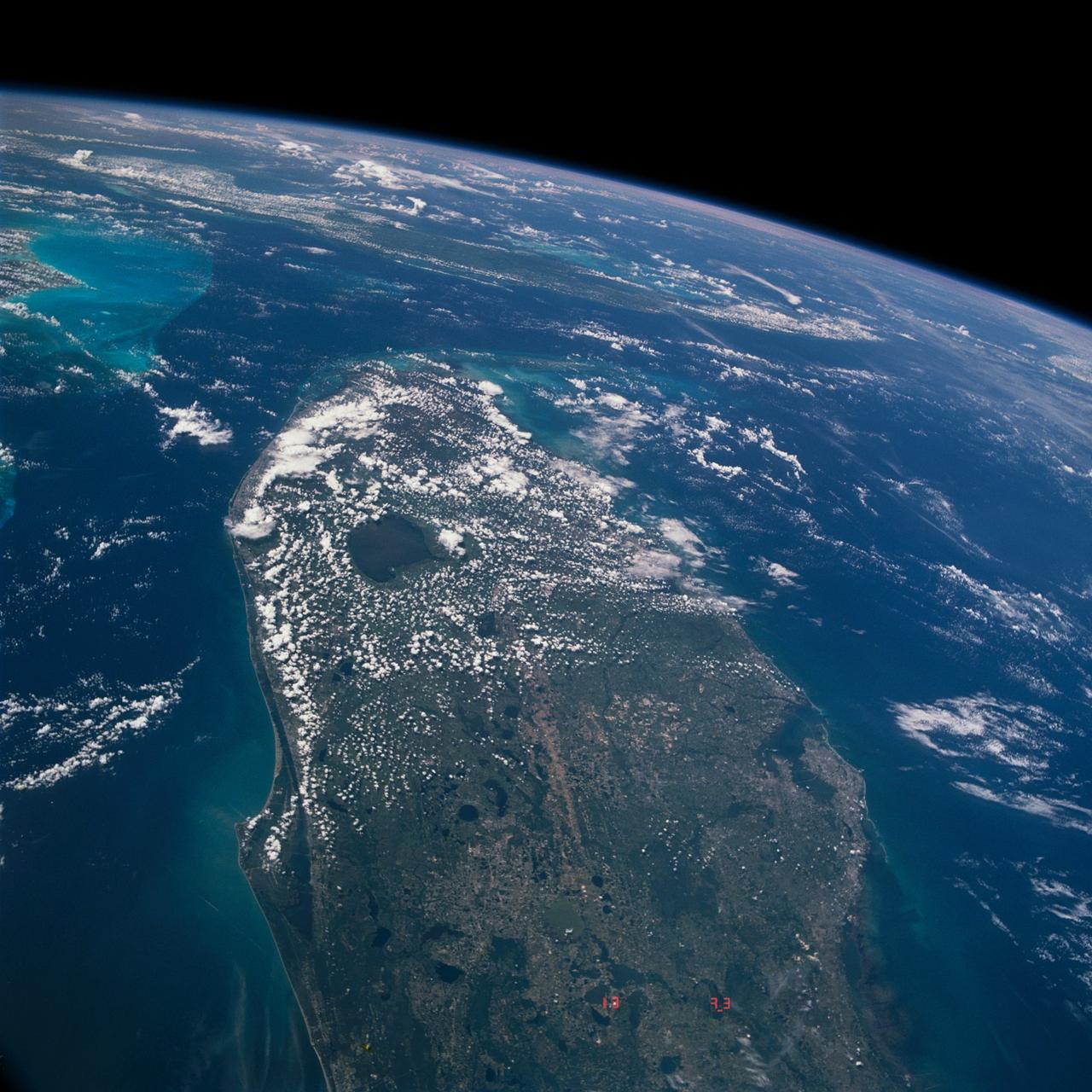
STS040-613-049 (5-14 June 1991) --- This oblique scene from the Earth-orbiting Space Shuttle Columbia shows southern Florida, several of the Bahama Islands and parts of the Atlantic Ocean, the Gulf of Mexico and the Caribbean Sea. The nine-day STS-40/Spacelab Life Sciences (SLS-1) mission started with launch from Kennedy Space Center (KSC), visible in lower left. Cuba can be seen at top center. The picture was photographed with a handheld Rolleiflex camera, aimed through Columbia's aft flight deck windows.
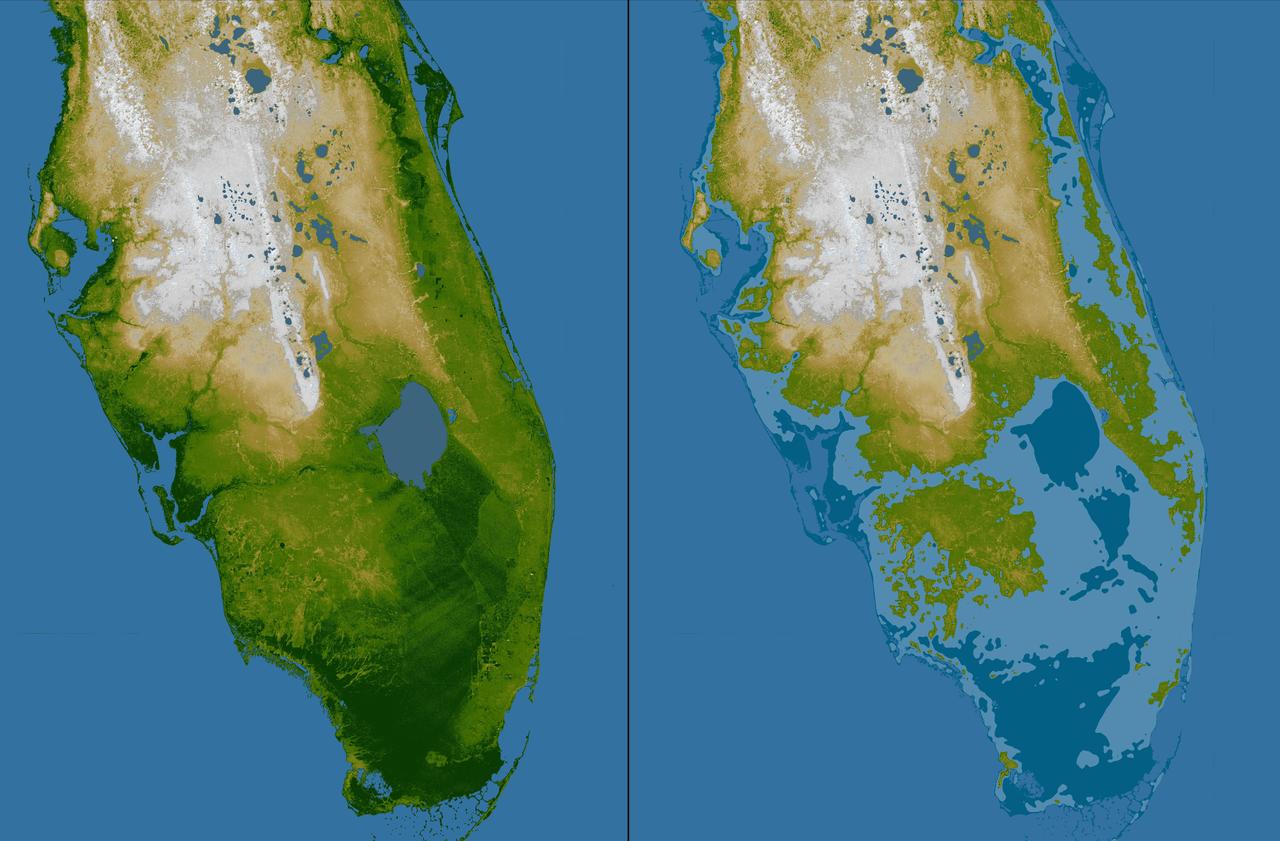
The very low topography of southern Florida is evident in this color-coded shaded relief map generated with data from NASA Shuttle Radar Topography Mission.

Interstate 10 across Pensacola Bay, Florida was severely damaged by Hurricane Ivan. This image was acquired by NASA Terra satellite on September 21, 2004.
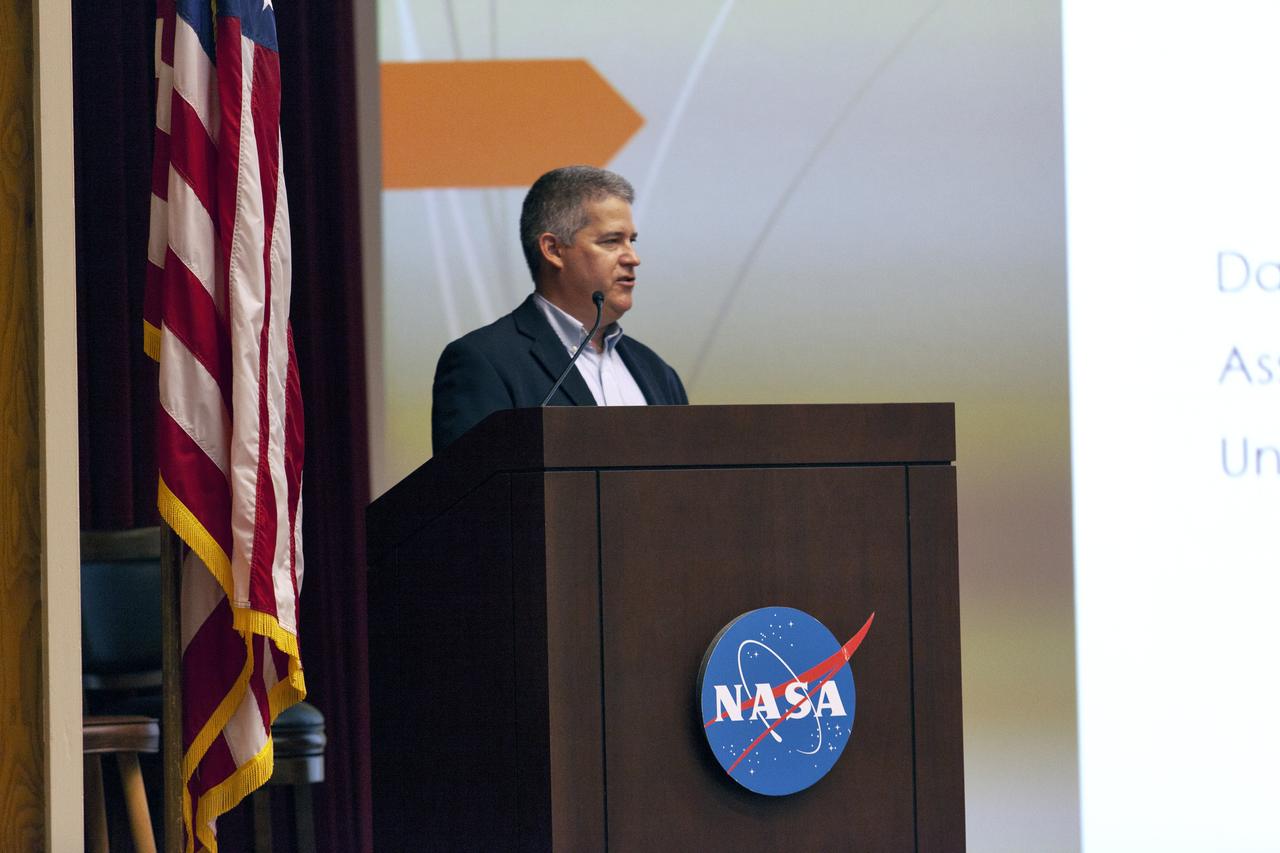
Daniel Murphree, Ph.D., associate professor of history at the University of Central Florida, presents information to NASA Kennedy Space Center employees on the impact Florida natives have had on, and how they were affected by, Atlantic World events from 1492 to the present. The presentation took place June 11, 2019, in Kennedy’s Training Auditorium and was brought to Kennedy by the Native American Heritage Initiative (NAHI) Employee Resource Group. One of eight resource groups at the Florida spaceport, NAHI aims to bring employees together, provide networking opportunities and inform the Kennedy workforce about Native American heritage.
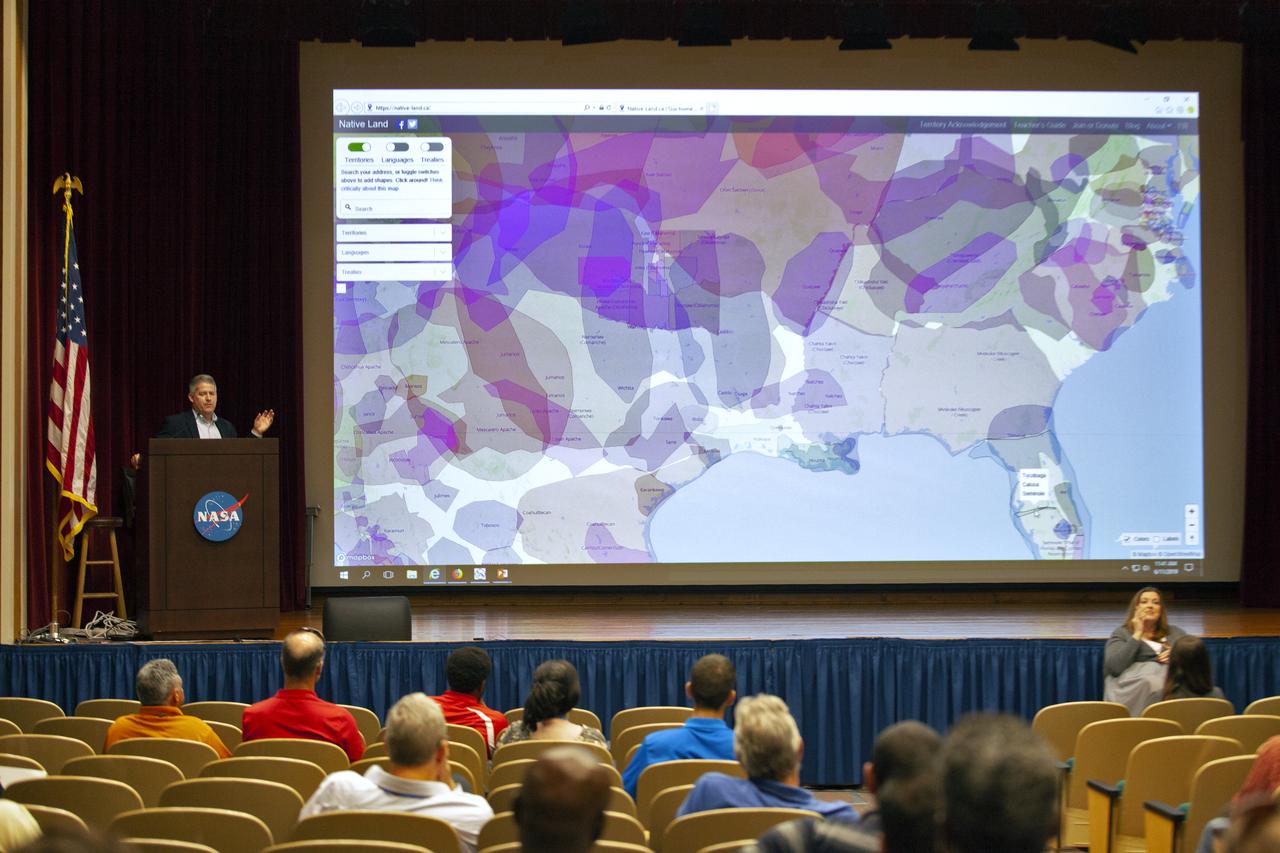
Daniel Murphree, Ph.D., associate professor of history at the University of Central Florida, presents information to NASA Kennedy Space Center employees on the impact Florida natives have had on, and how they were affected by, Atlantic World events from 1492 to the present. The presentation took place June 11, 2019, in Kennedy’s Training Auditorium and was brought to Kennedy by the Native American Heritage Initiative (NAHI) Employee Resource Group. One of eight resource groups at the Florida spaceport, NAHI aims to bring employees together, provide networking opportunities and inform the Kennedy workforce about Native American heritage.
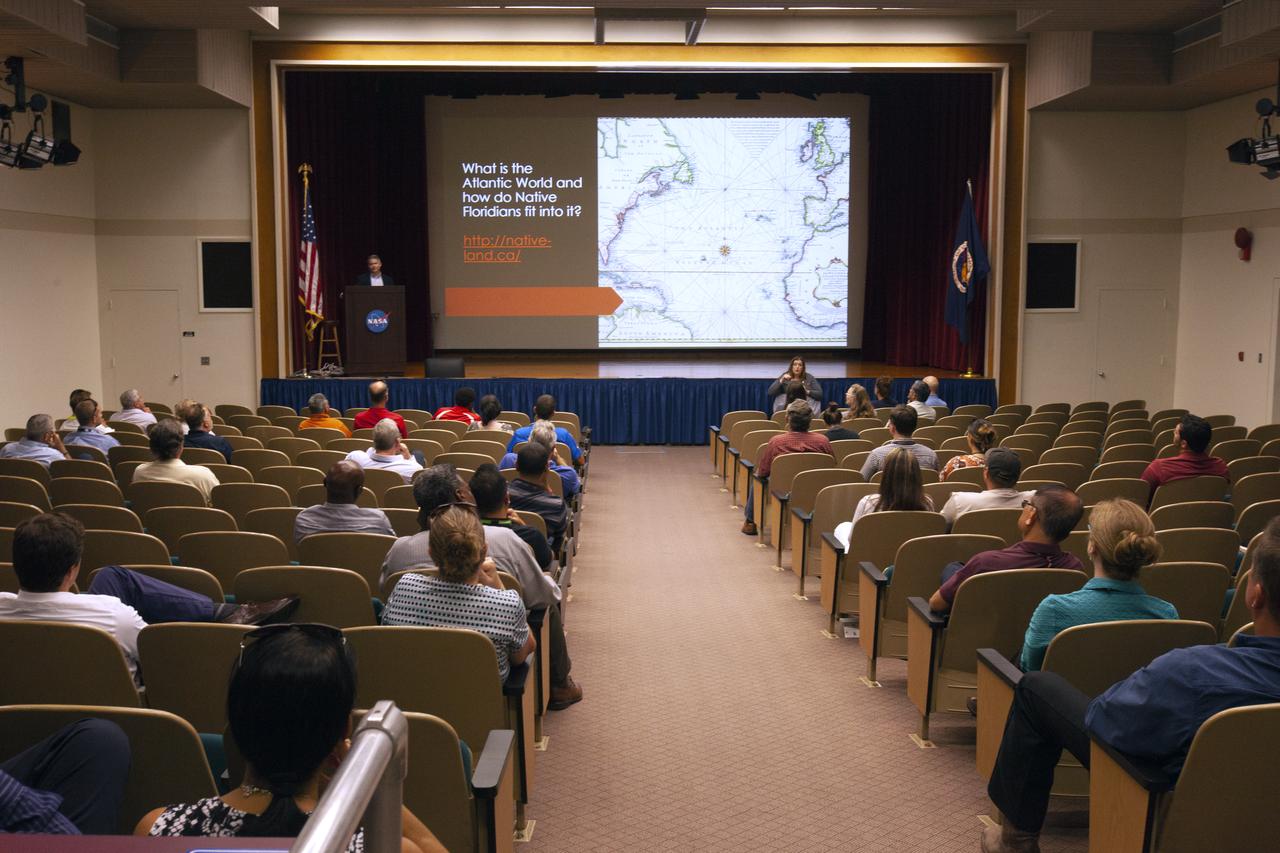
NASA Kennedy Space Center employees attend a presentation on June 11, 2019, on Native American presence in Florida in Kennedy’s Training Auditorium. Daniel Murphree, Ph.d., associate professor of history at the University of Central Florida, spoke on the impact Florida natives have had on, and how they were affected by, Atlantic World events from 1492 to the present. The presentation was brought to Kennedy by the Native American Heritage Initiative (NAHI) Employee Resource Group. One of eight resource groups at Kennedy, NAHI aims to bring employees together, provide networking opportunities and inform the Kennedy workforce about Native American heritage.
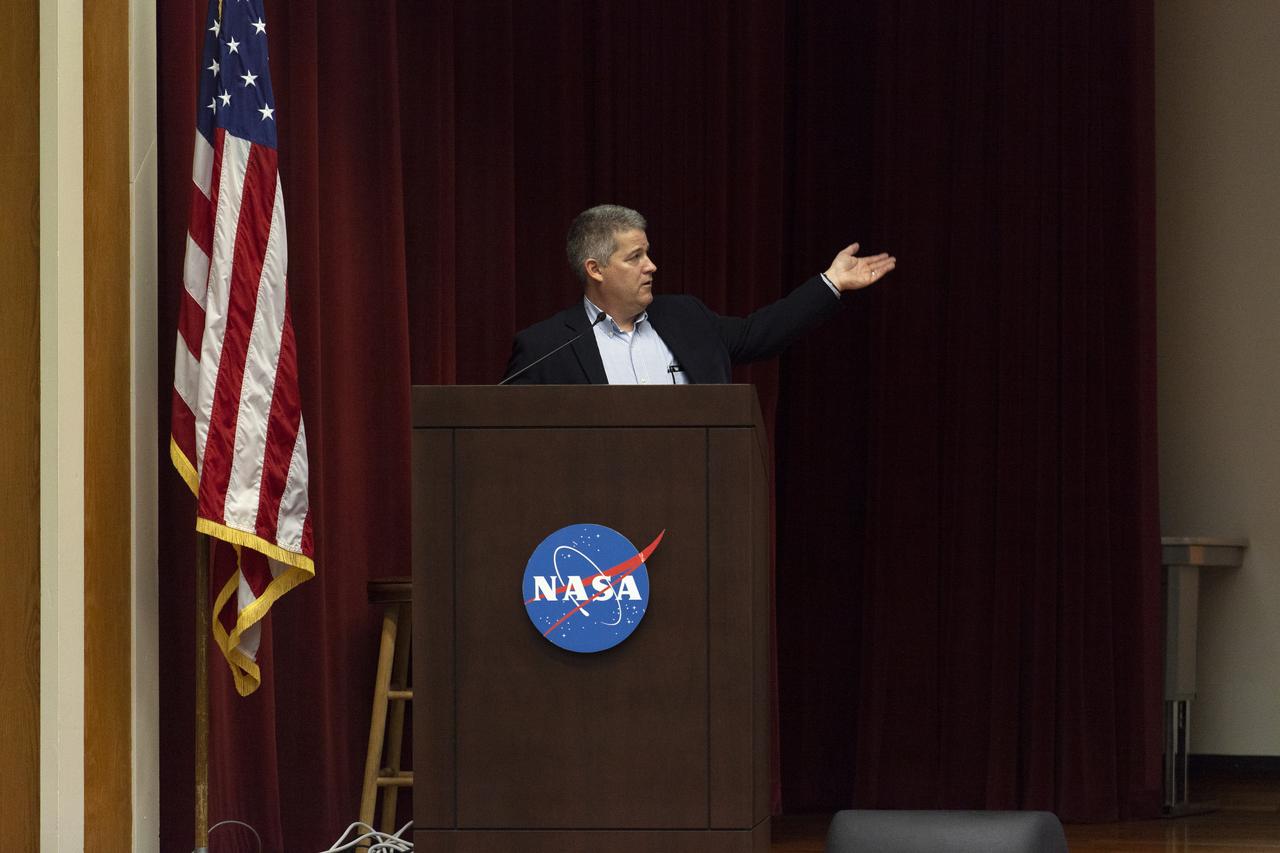
Daniel Murphree, Ph.D., associate professor of history at the University of Central Florida, presents information to NASA Kennedy Space Center employees on the impact Florida natives have had on, and how they were affected by, Atlantic World events from 1492 to the present. The presentation took place June 11, 2019, in Kennedy’s Training Auditorium and was brought to Kennedy by the Native American Heritage Initiative (NAHI) Employee Resource Group. One of eight resource groups at the Florida spaceport, NAHI aims to bring employees together, provide networking opportunities and inform the Kennedy workforce about Native American heritage.
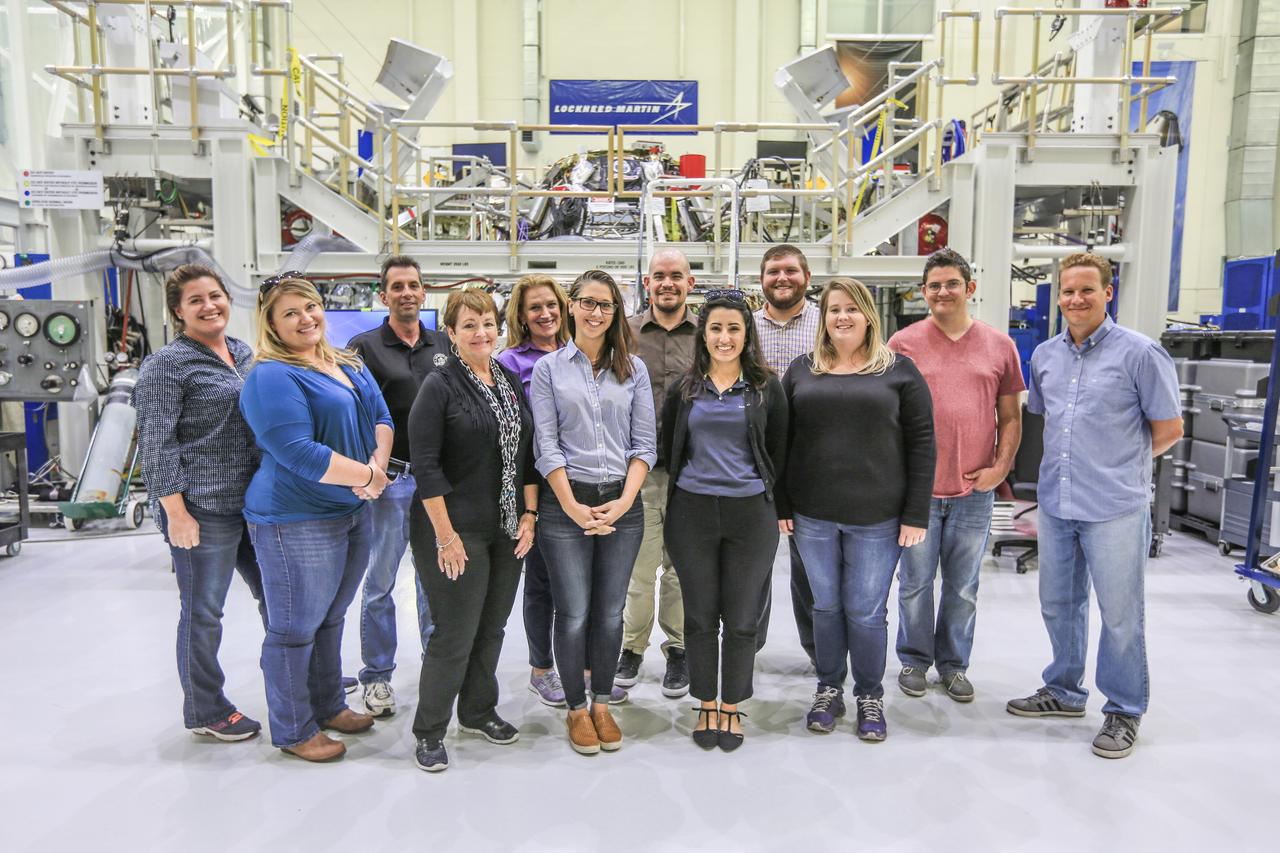
The district directors of the Florida Congressional Delegation for the U.S House of Representatives and Senate pause for a photo in front of the Orion crew module during a tour of the high bay in the Neil Armstrong Operations and Checkout Building at NASA’s Kennedy Space Center in Florida on Nov. 9, 2017. Orion is undergoing processing to prepare it for its first uncrewed integrated flight atop the Space Launch System rocket on Artemis I. Twelve directors attended the tour, including Sean Beaudet, constituent advocate for Senator Bill Nelson; Patrick Gavin, district director for Congressman Bill Posey; and Dale Ketcham, chief of Strategic Alliances for Space Florida.
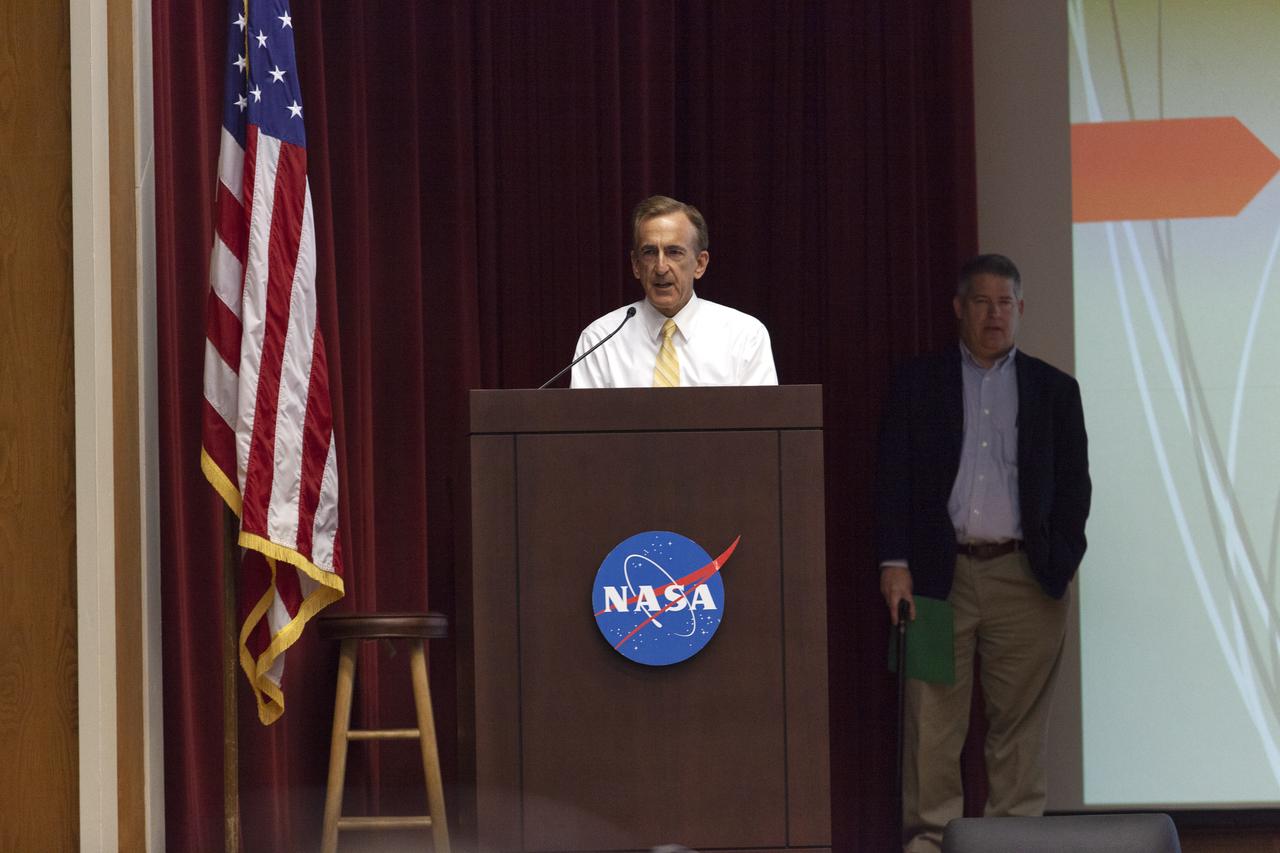
Dan Shaver, chief counsel of Kennedy Space Center in Florida, introduces Daniel Murphree, Ph.d., associate professor of history at the University of Central Florida, to NASA Kennedy Space Center employees in Kennedy’s Training Auditorium on June 11, 2019. Murphree presented information on the impact Florida natives have had on, and how they were affected by, Atlantic World events from 1492 to the present. The presentation, open for all employees to attend, was brought to Kennedy by the Native American Heritage Initiative (NAHI) Employee Resource Group. One of eight resource groups at Kennedy, NAHI aims to bring employees together, provide networking opportunities and inform the Kennedy workforce about Native American heritage.
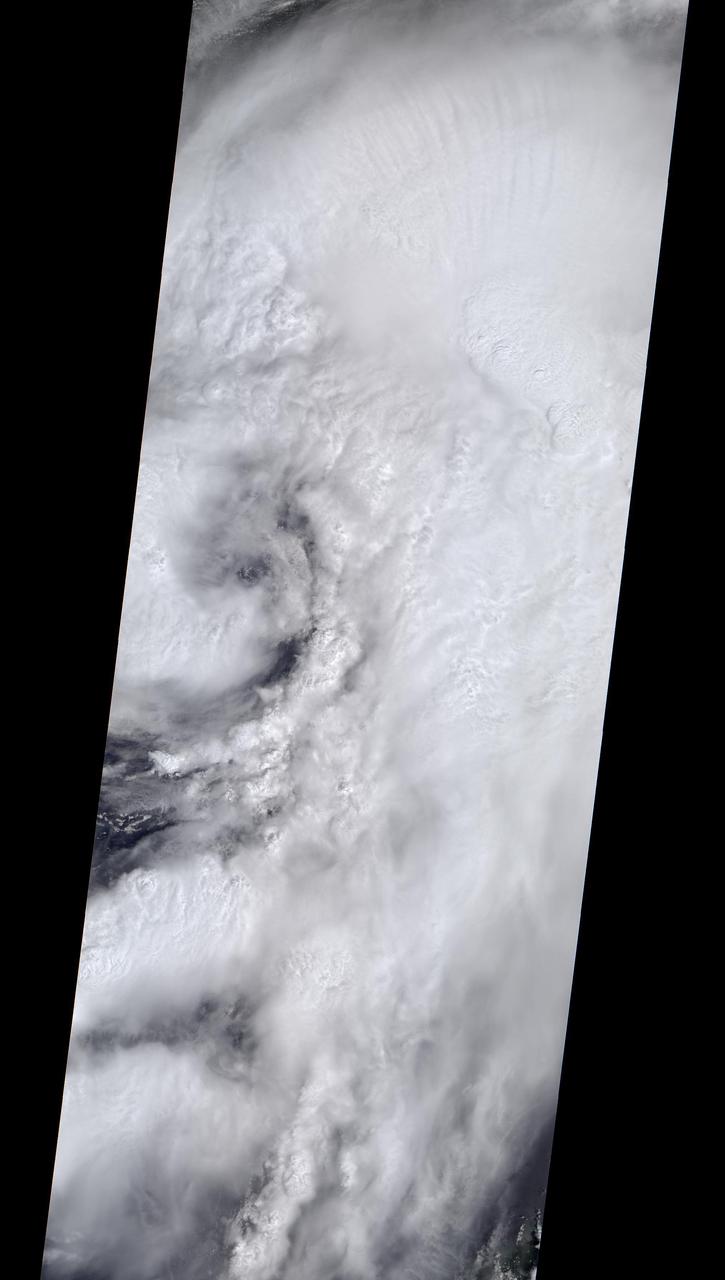
On the afternoon of Sept. 1, 2016, Tropical Storm Hermine strengthened into a Category 1 hurricane as it approached the coast of Florida. Hermine began life as Tropical Depression Nine, originating off the coast of Cuba on Aug. 28. After heading northwest into the Gulf of Mexico, it took a right turn toward Florida and on Wednesday, Aug. 31, was upgraded to a tropical storm before strengthening to a hurricane a day later. Winds are currently sustained near 75 miles (121 kilometers) per hour, and the storm is expected to make landfall tonight or early tomorrow. Florida Governor Rick Scott has declared a state of emergency in 51 counties, while Georgia Governor Nathan Deal has done the same for 56 counties in his state. Localized flooding is already occurring in some areas of Florida, which has not had a direct landfall by a hurricane in 11 years. After moving across Florida and Georgia, the storm is currently forecast to continue northward along the coast of the Eastern seaboard. On Sept. 1, at 12:30 p.m. EDT, the Multi-angle Imaging SpectroRadiometer (MISR) instrument aboard NASA's Terra spacecraft passed over the area. This natural-color image from MISR's vertical-pointing camera shows the large, loosely organized hurricane. At the time, the center of the storm was located about 200 miles (325 kilometers) to the west of Sarasota on the Florida coast. The image is 235 miles (378 kilometers) in width. Also included is a 3D stereo anaglyph, made by combining data from MISR's vertical-pointing and 46-degree forward-pointing camera. The image has been rotated so that north is to the left in order to enable stereo viewing. With the aid of red-blue glasses (with the red lens over the left eye), it is possible to observe the storm in three dimensions. Note the towering central thunderstorms around the eye in comparison to the low clouds visible within it. These data were acquired during Terra orbit 88865. http://photojournal.jpl.nasa.gov/catalog/PIA20898
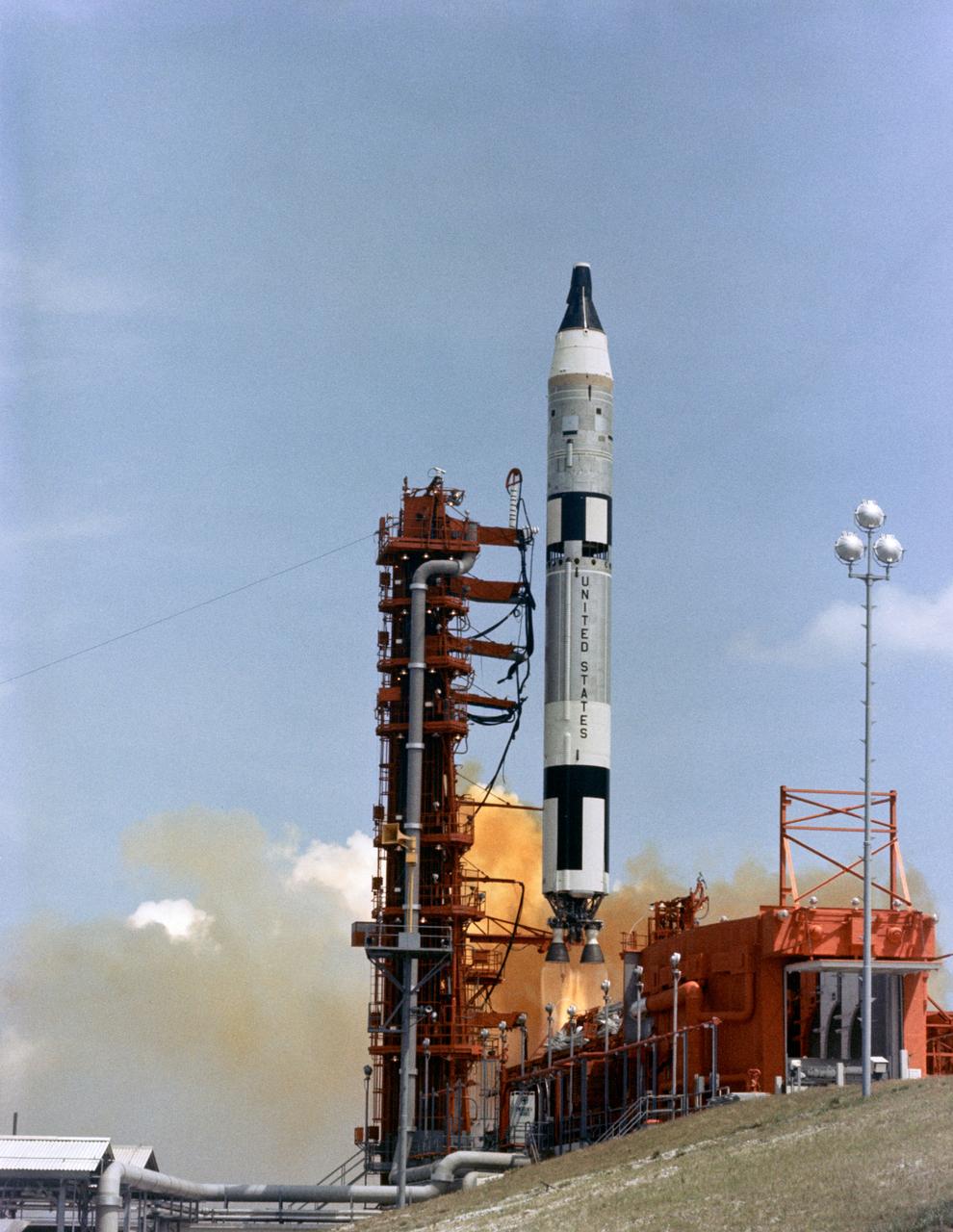
S64-21560 (8 April 1964) --- Gemini/Titan-II launch vehicle #1 liftoff at Cape Kennedy, Florida.
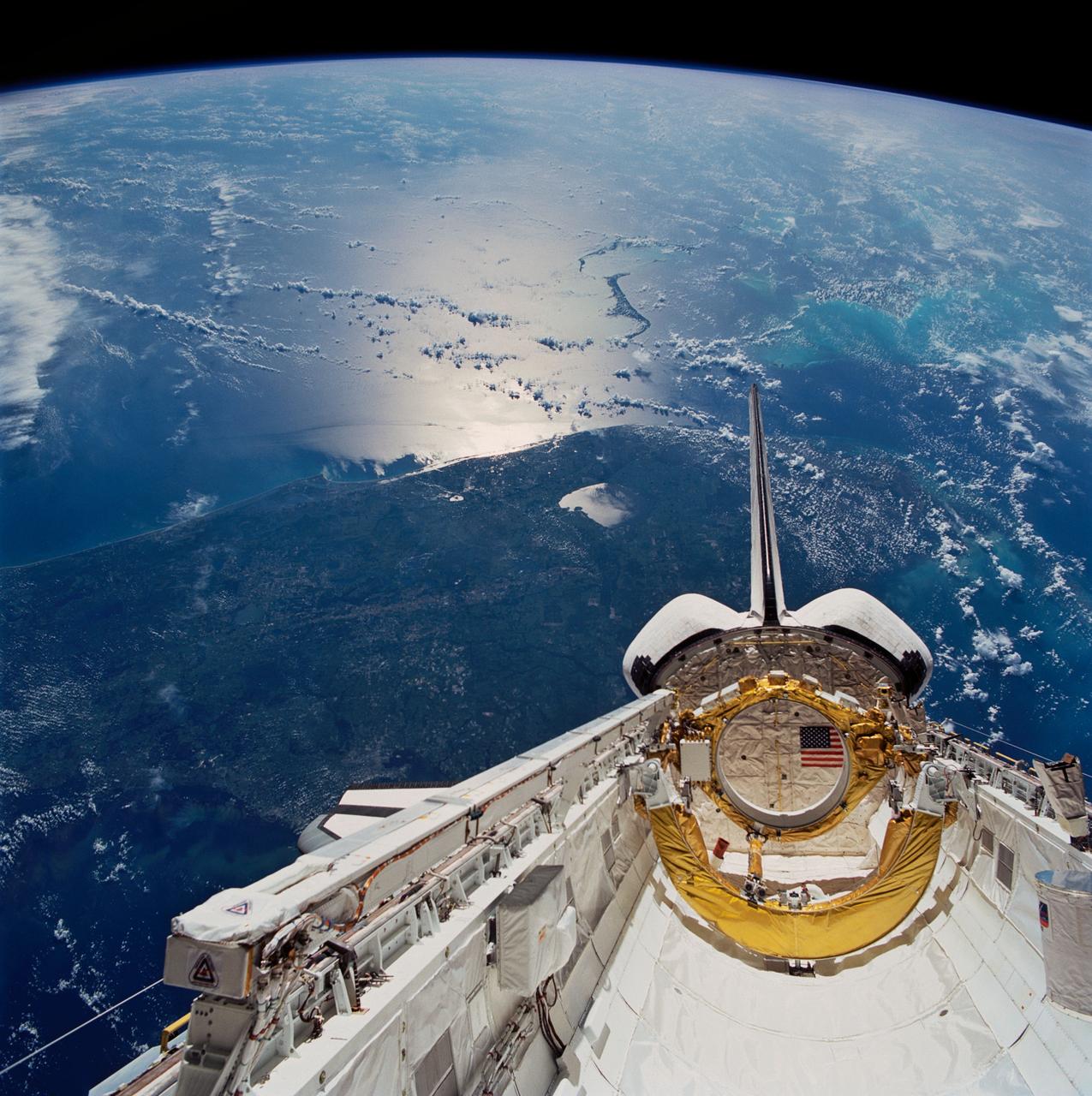
STS043-83-082 (2-11 Aug 1991) --- Having bade farewell to its Tracking and Data Relay Satellite/IUS payload, Atlantis' cargo bay appears somewhat vacant in this scene, backdropped over the southern two-thirds of the Florida peninsula. Important activity in the payload bay continues, however, with the operation of Space Station Heat Pipe Advanced Radiator Element (SHARE II), an experiment carried on the starboard side (lower left quadrant of frame). Purpose of the SHARE experiment is to demonstrate microgravity thermal vacuum performance of a heat pipe radiator for heat rejection as a prelude to development of a Space Station heat rejection system. The foil covered ring and horseshoe shaped objects aft in the payload bay served as restraint devices for the TDRS-E prior to its deployment six hours after Atlantis lifted off from Kennedy Space Center's Launch Pad 39A.
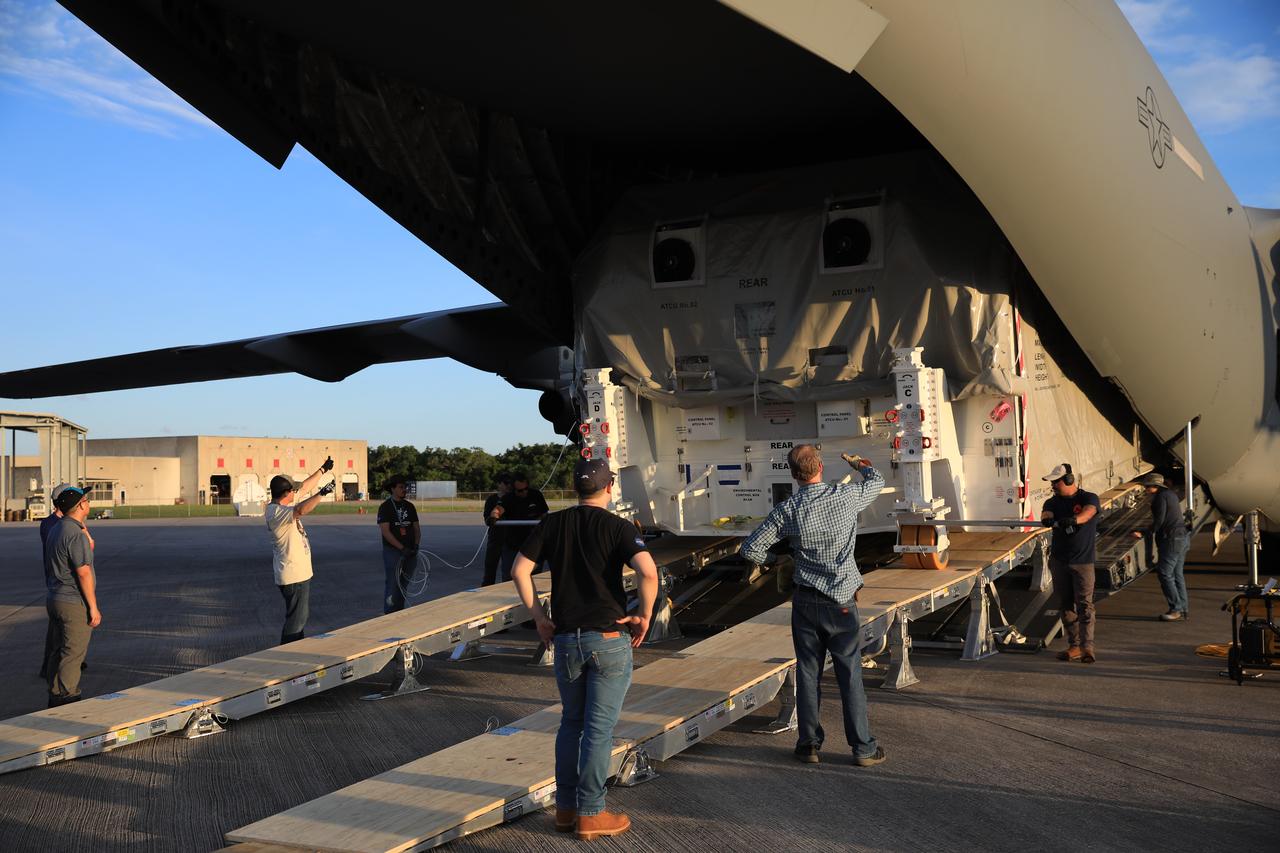
Technicians offload NASA’s largest planetary mission spacecraft, Europa Clipper, from a United States Air Force C-17 Globemaster III transport aircraft at the Launch and Landing Facility at NASA’s Kennedy Space Center in Florida on Thursday, May 23, 2024. Crews will prepare it for launch aboard a SpaceX Falcon Heavy rocket from Launch Complex 39A at the Florida spaceport, targeting liftoff in October. Europa Clipper will help determine if life-sustaining conditions exist below the surface of Jupiter’s fourth largest moon, Europa.
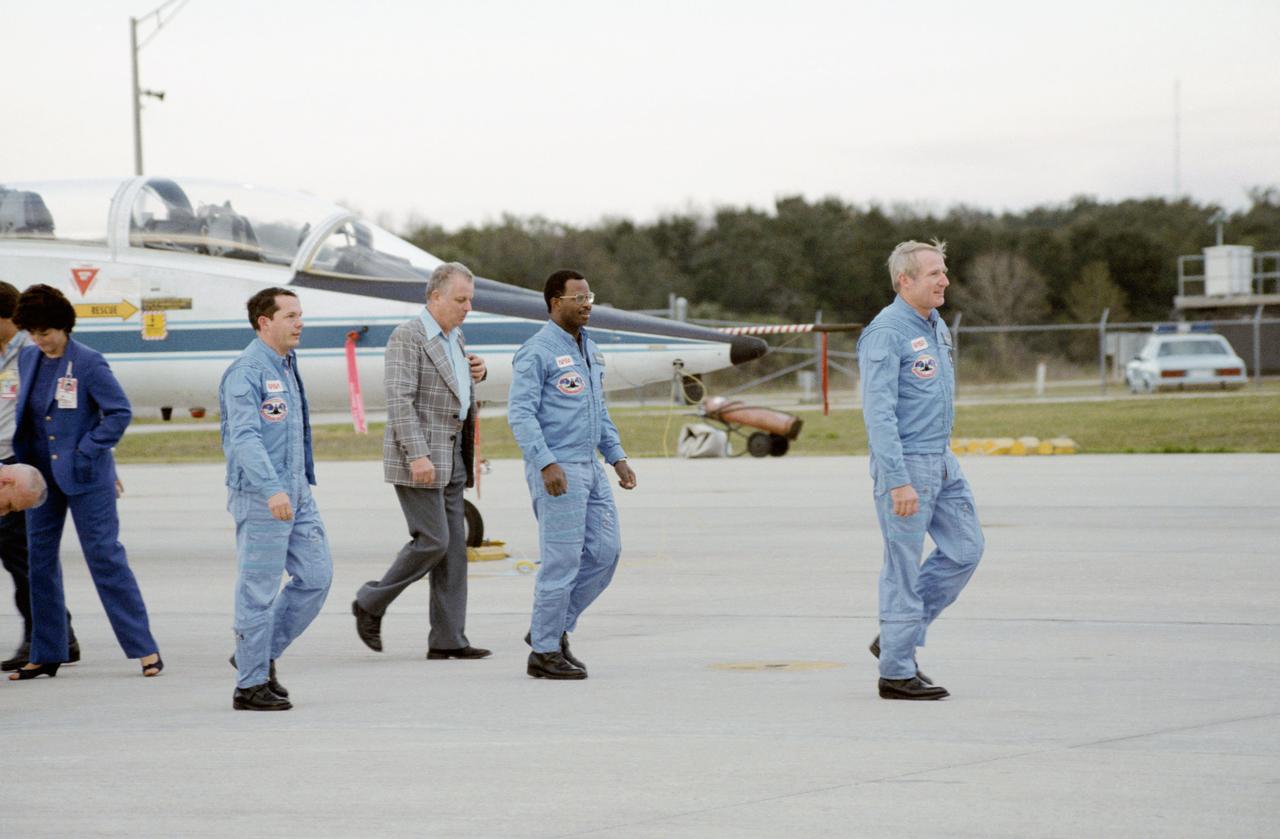
S84-26935 (31 Jan 1984) --- Three members of the STS 41-B astronaut crew arrive in Florida following a brief T-38 flight from Houston. Leading the crew from the flight line is Astronaut Vance D. Brand (right), crew commander. Following behind (in blue flight suits) are Astronauts Ronald E. McNair (center) and Robert L. Stewart (both mission specialists. They were met by Terry White (pictured), JSC public information industrial relations manager. Not pictured are Astronauts Robert L. Gibson, pilot; and Bruce McCandless II, mission specialist. Launch is scheduled for February 3, 1983.
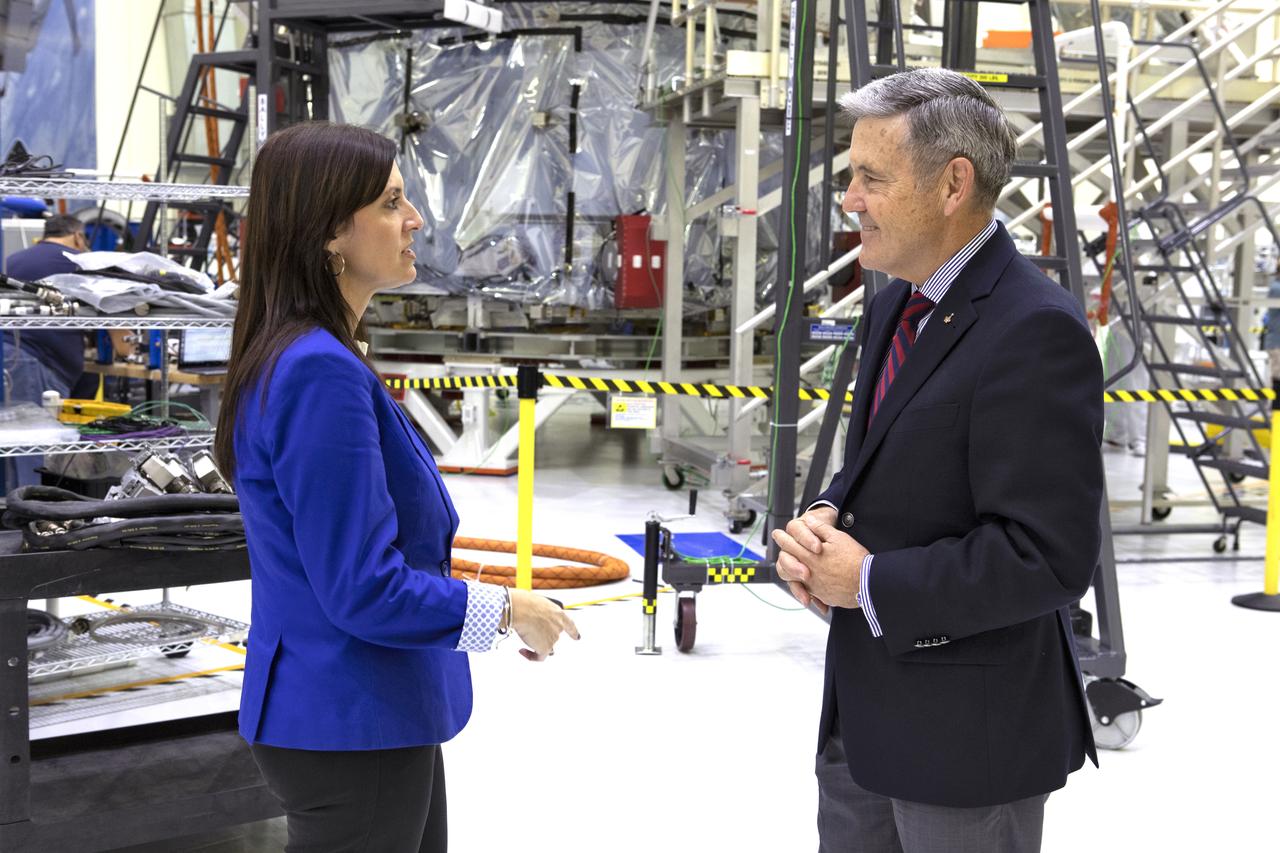
Florida Lt. Governor Jeanette Nunez is given a tour of the Neil Armstrong Operations and Checkout (O&C) Building high bay by Kennedy Space Center Director Bob Cabana on April 5, 2019. During the tour, Nunez was shown NASA’s Orion spacecraft, which will be flown on the agency’s Exploration Mission-1 (EM-1). Orion will launch atop the Space Launch System rocket from Kennedy’s Launch Complex 39B. This uncrewed mission will provide the foundation for human deep space exploration and pave the way for the crewed EM-2 mission.
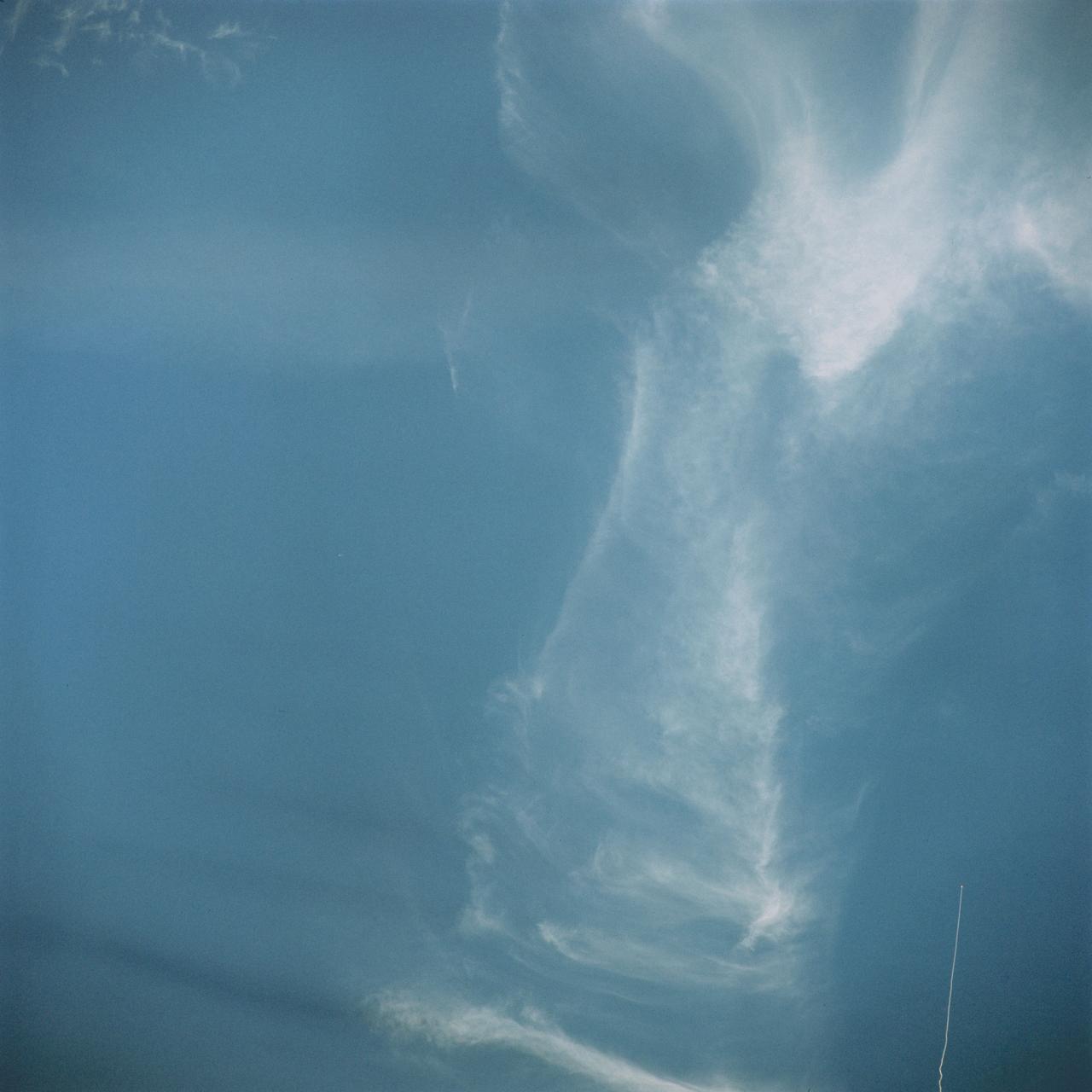
S65-63797 (12 Dec. 1965) --- Polaris, underwater launch, missile and trail, off Florida, as seen from the Gemini-7 spacecraft during its 31st revolution of Earth. Photo credit: NASA
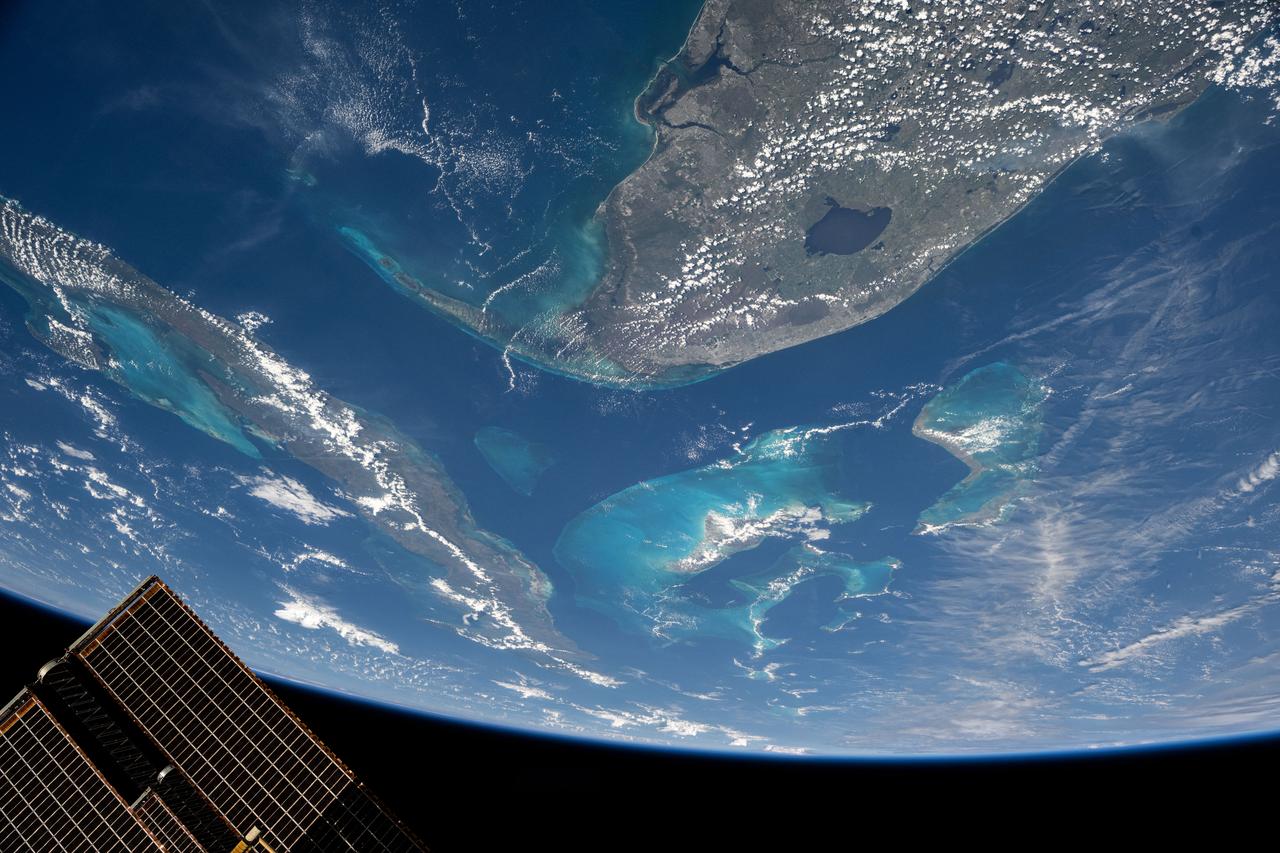
iss073e0134179 (May 20, 2025) --- South Florida, the Bahamas, and Cuba are prominently featured in this photograph from the International Space Station as it orbited 261 miles above the Sunshine State.
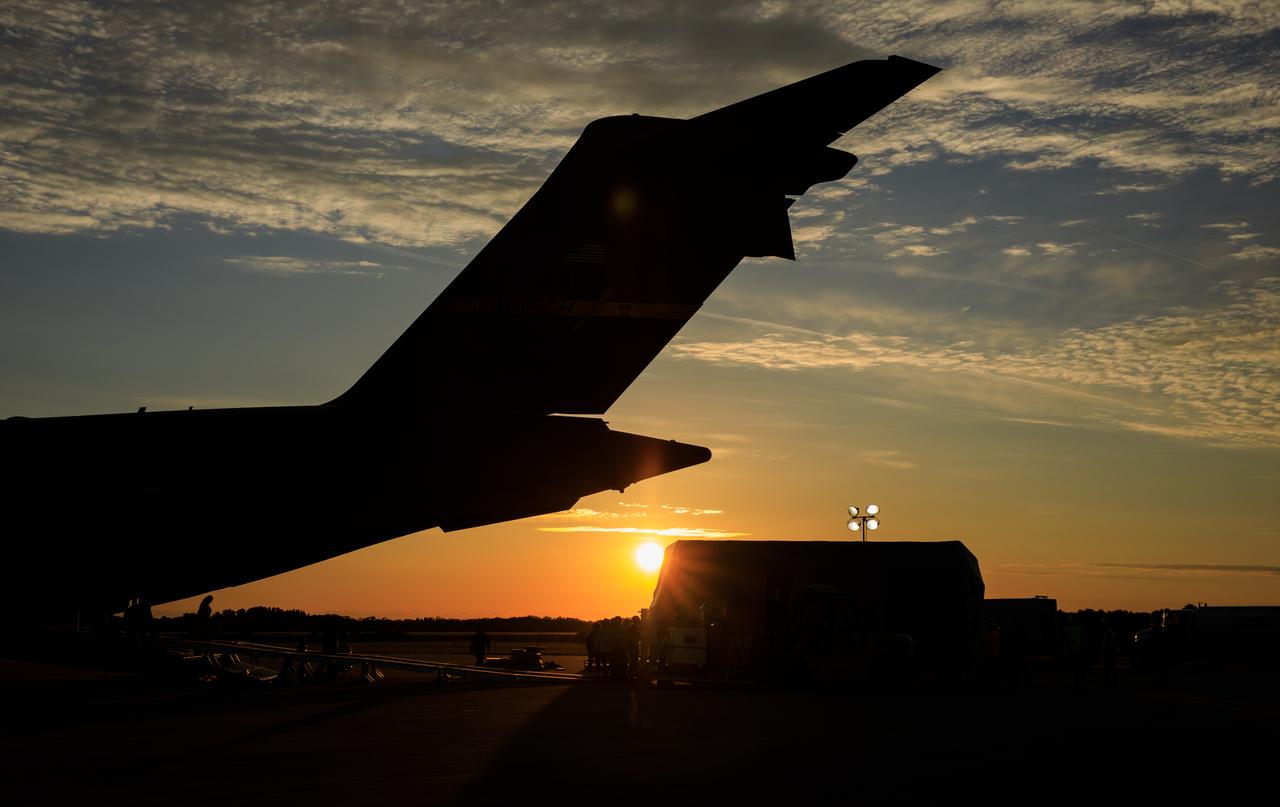
Teams offload NASA’s largest planetary mission spacecraft, Europa Clipper, from a United States Air Force C-17 Globemaster III transport aircraft onto the flatbed of a heavy-lift truck at the Launch and Landing Facility at NASA’s Kennedy Space Center in Florida on Thursday, May 23, 2024. Crews transported Europa Clipper to the Payload Hazardous Servicing Facility at Kennedy to prepare it for launch aboard a SpaceX Falcon Heavy rocket later this year from Launch Complex 39A at the Florida spaceport. Europa Clipper will help determine if conditions exist below the surface Jupiter’s fourth largest moon, Europa, that could support life.
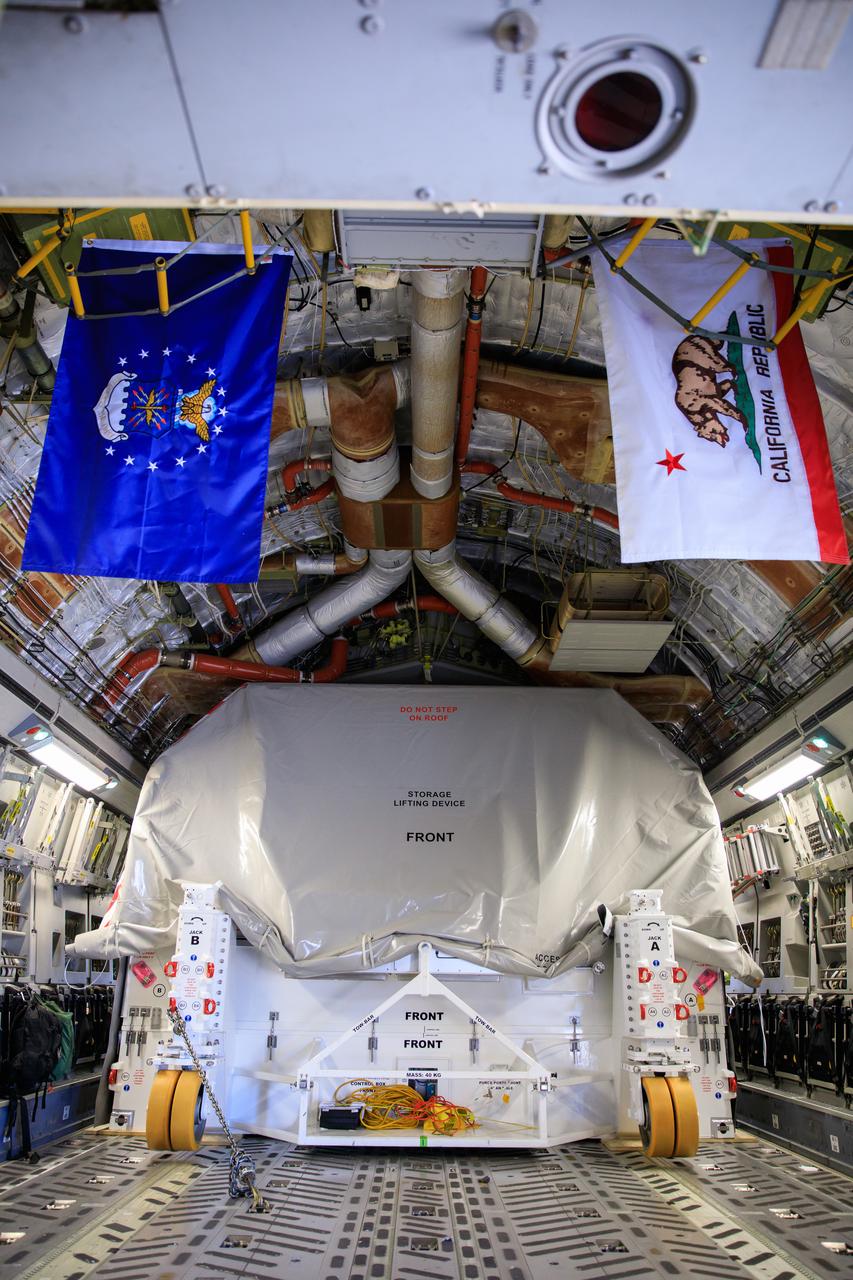
Teams offload NASA’s largest planetary mission spacecraft, Europa Clipper, from a United States Air Force C-17 Globemaster III transport aircraft onto the flatbed of a heavy-lift truck at the Launch and Landing Facility at NASA’s Kennedy Space Center in Florida on Thursday, May 23, 2024. Crews transported Europa Clipper to the Payload Hazardous Servicing Facility at Kennedy to prepare it for launch aboard a SpaceX Falcon Heavy rocket later this year from Launch Complex 39A at the Florida spaceport. Europa Clipper will help determine if conditions exist below the surface Jupiter’s fourth largest moon, Europa, that could support life.
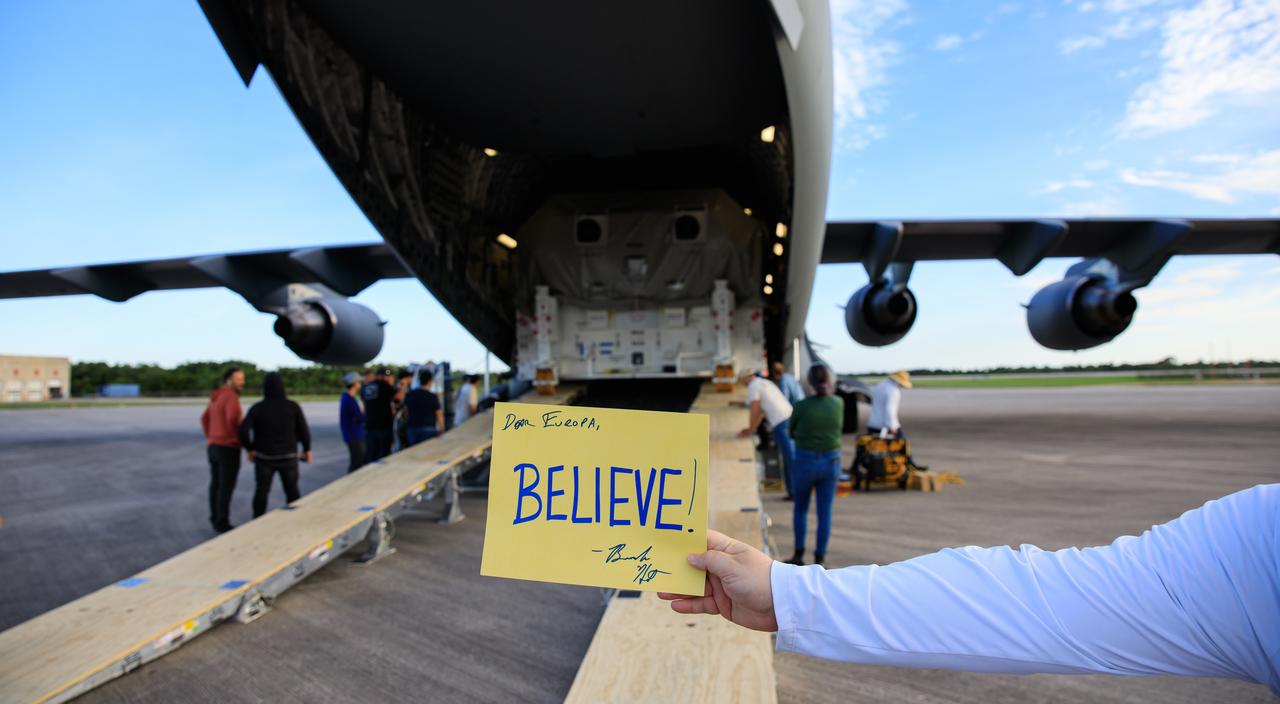
Teams offload NASA’s largest planetary mission spacecraft, Europa Clipper, from a United States Air Force C-17 Globemaster III transport aircraft onto the flatbed of a heavy-lift truck at the Launch and Landing Facility at NASA’s Kennedy Space Center in Florida on Thursday, May 23, 2024. Crews transported Europa Clipper to the Payload Hazardous Servicing Facility at Kennedy to prepare it for launch aboard a SpaceX Falcon Heavy rocket later this year from Launch Complex 39A at the Florida spaceport. Europa Clipper will help determine if conditions exist below the surface Jupiter’s fourth largest moon, Europa, that could support life.
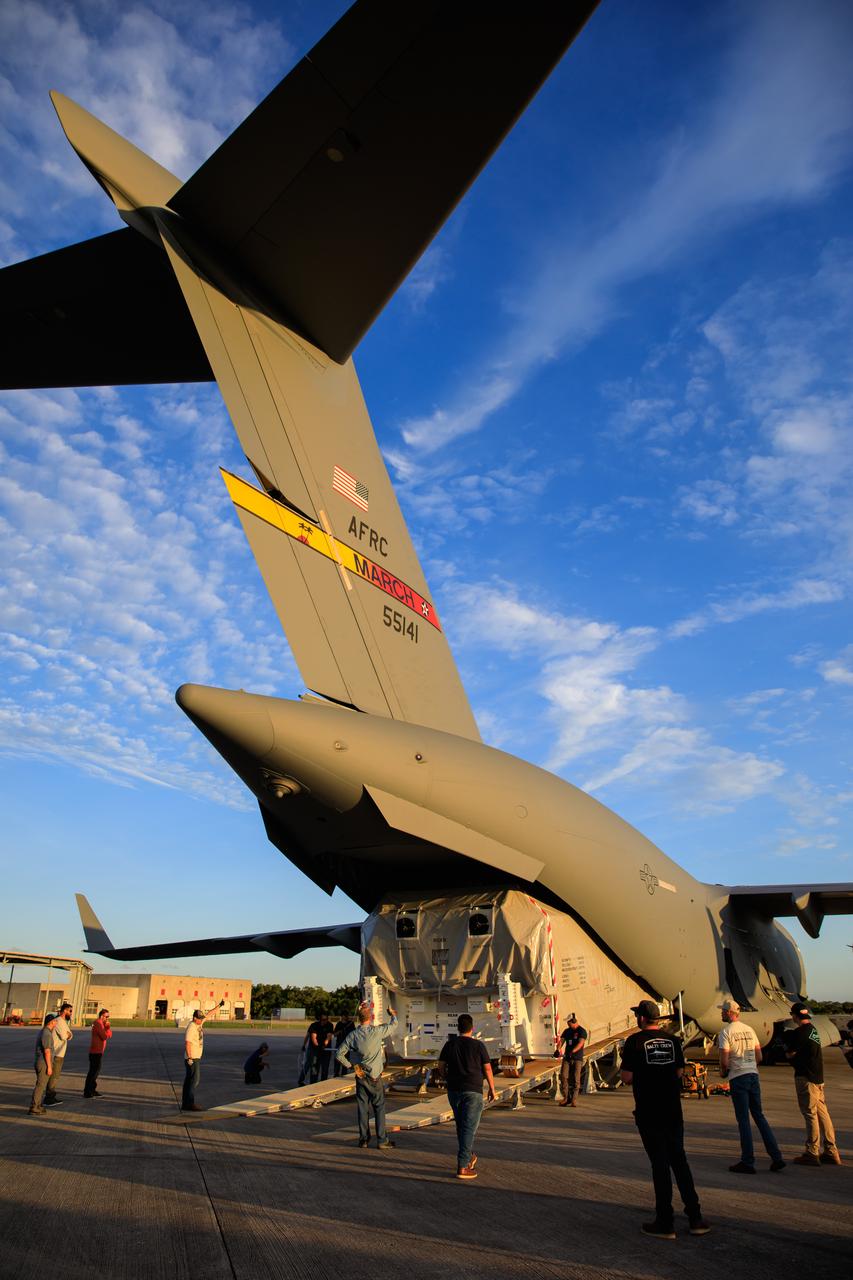
Teams offload NASA’s largest planetary mission spacecraft, Europa Clipper, from a United States Air Force C-17 Globemaster III transport aircraft onto the flatbed of a heavy-lift truck at the Launch and Landing Facility at NASA’s Kennedy Space Center in Florida on Thursday, May 23, 2024. Crews transported Europa Clipper to the Payload Hazardous Servicing Facility at Kennedy to prepare it for launch aboard a SpaceX Falcon Heavy rocket later this year from Launch Complex 39A at the Florida spaceport. Europa Clipper will help determine if conditions exist below the surface Jupiter’s fourth largest moon, Europa, that could support life.
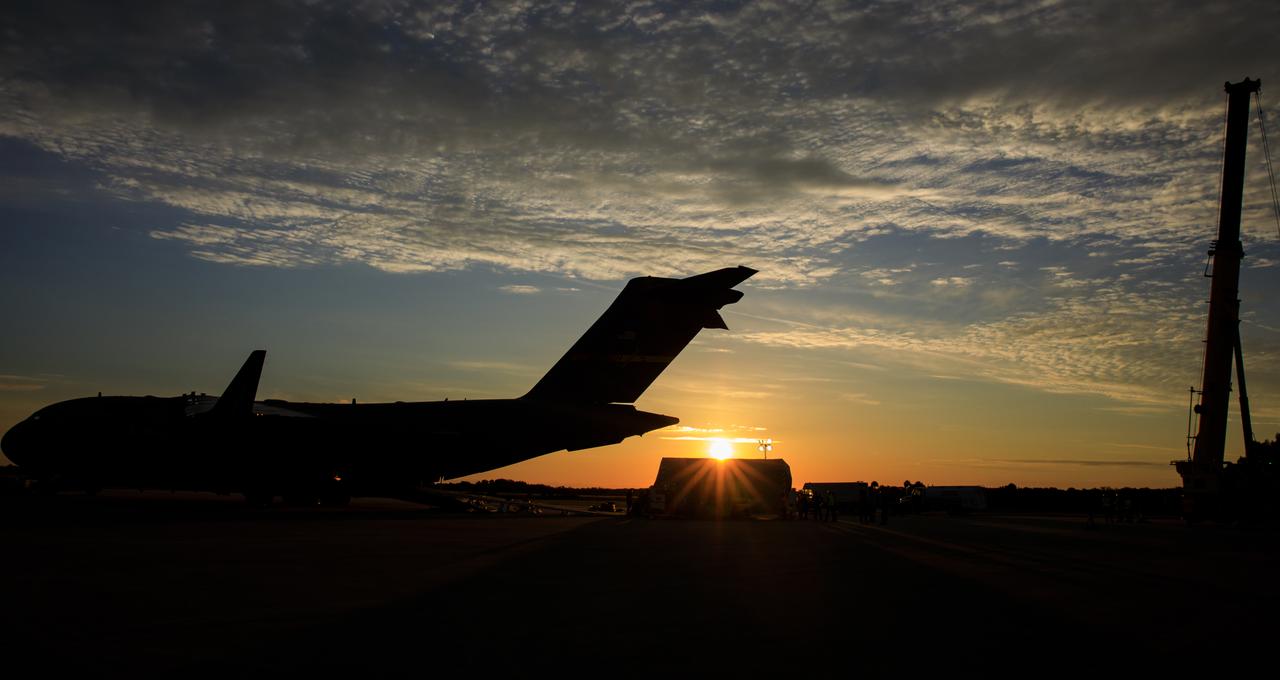
Teams offload NASA’s largest planetary mission spacecraft, Europa Clipper, from a United States Air Force C-17 Globemaster III transport aircraft onto the flatbed of a heavy-lift truck at the Launch and Landing Facility at NASA’s Kennedy Space Center in Florida on Thursday, May 23, 2024. Crews transported Europa Clipper to the Payload Hazardous Servicing Facility at Kennedy to prepare it for launch aboard a SpaceX Falcon Heavy rocket later this year from Launch Complex 39A at the Florida spaceport. Europa Clipper will help determine if conditions exist below the surface Jupiter’s fourth largest moon, Europa, that could support life.
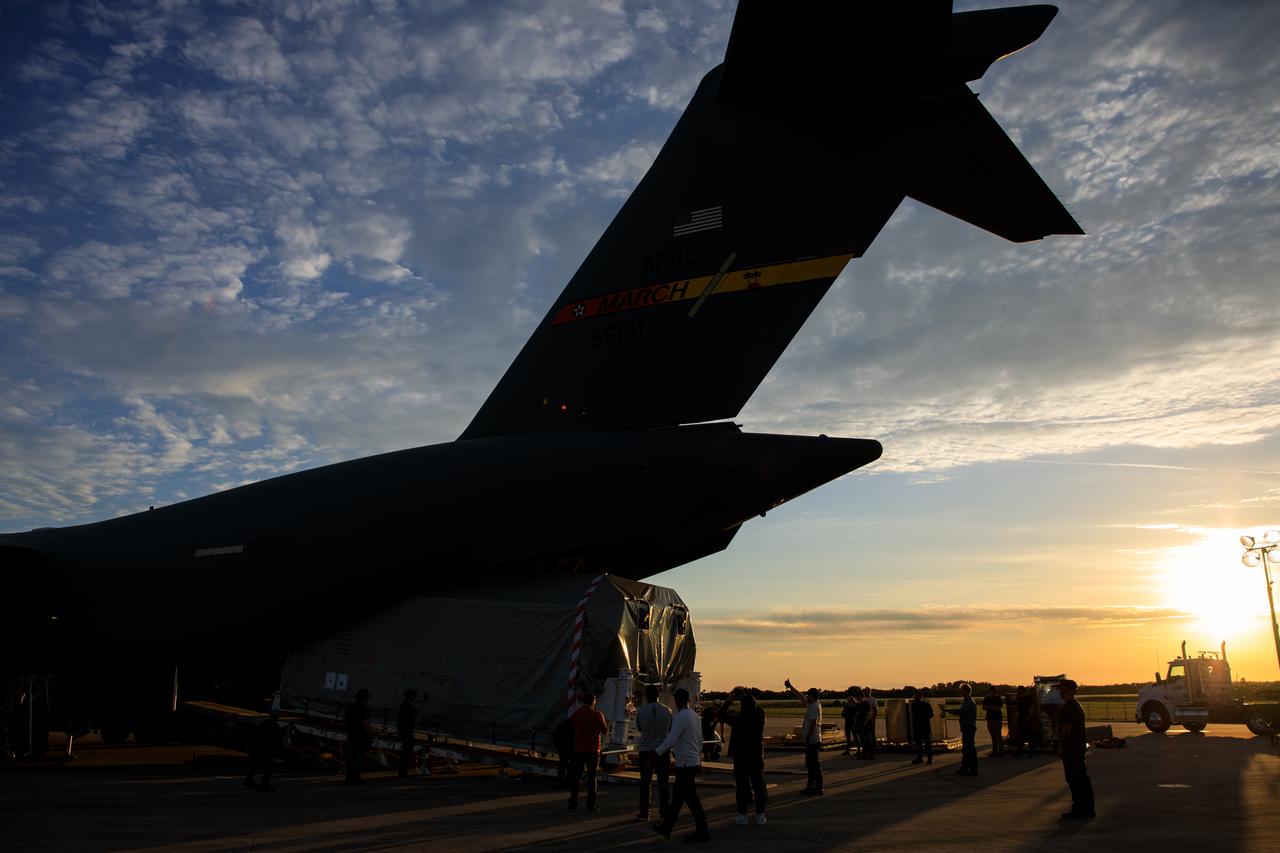
Teams offload NASA’s largest planetary mission spacecraft, Europa Clipper, from a United States Air Force C-17 Globemaster III transport aircraft onto the flatbed of a heavy-lift truck at the Launch and Landing Facility at NASA’s Kennedy Space Center in Florida on Thursday, May 23, 2024. Crews transported Europa Clipper to the Payload Hazardous Servicing Facility at Kennedy to prepare it for launch aboard a SpaceX Falcon Heavy rocket later this year from Launch Complex 39A at the Florida spaceport. Europa Clipper will help determine if conditions exist below the surface Jupiter’s fourth largest moon, Europa, that could support life.
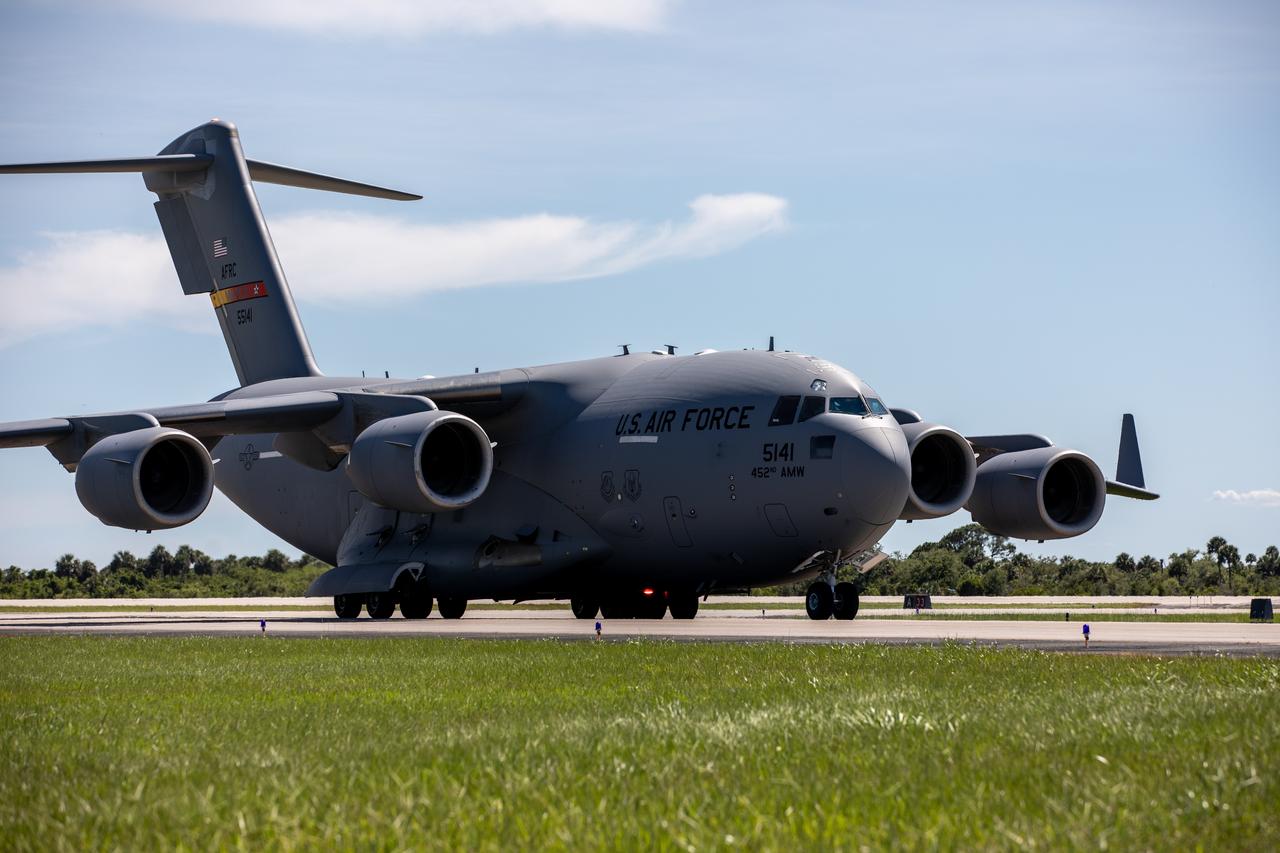
A United States Air Force C-17 Globemaster III transport aircraft carrying NASA’s largest planetary mission spacecraft, Europa Clipper, arrives at the Launch and Landing Facility at the agency's Kennedy Space Center in Florida on Thursday, May 23, 2024. Teams spent several hours offloading Europa Clipper then transferring it to the Payload Hazardous Servicing Facility at Kennedy to prepare it for launch aboard a SpaceX Falcon Heavy rocket later this year from Launch Complex 39A at the Florida spaceport. Europa Clipper will help determine if life-sustaining conditions exist below the surface Jupiter’s fourth largest moon, Europa.
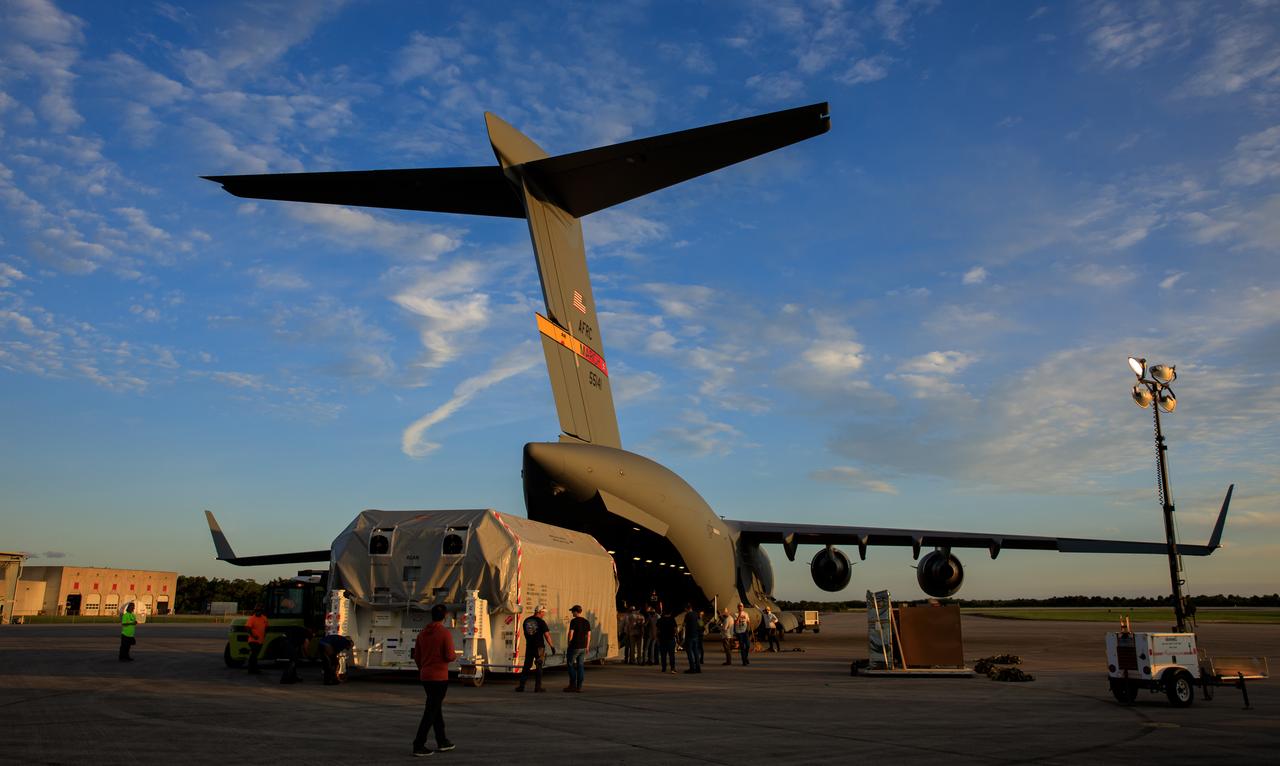
Teams offload NASA’s largest planetary mission spacecraft, Europa Clipper, from a United States Air Force C-17 Globemaster III transport aircraft onto the flatbed of a heavy-lift truck at the Launch and Landing Facility at NASA’s Kennedy Space Center in Florida on Thursday, May 23, 2024. Crews transported Europa Clipper to the Payload Hazardous Servicing Facility at Kennedy to prepare it for launch aboard a SpaceX Falcon Heavy rocket later this year from Launch Complex 39A at the Florida spaceport. Europa Clipper will help determine if conditions exist below the surface Jupiter’s fourth largest moon, Europa, that could support life.
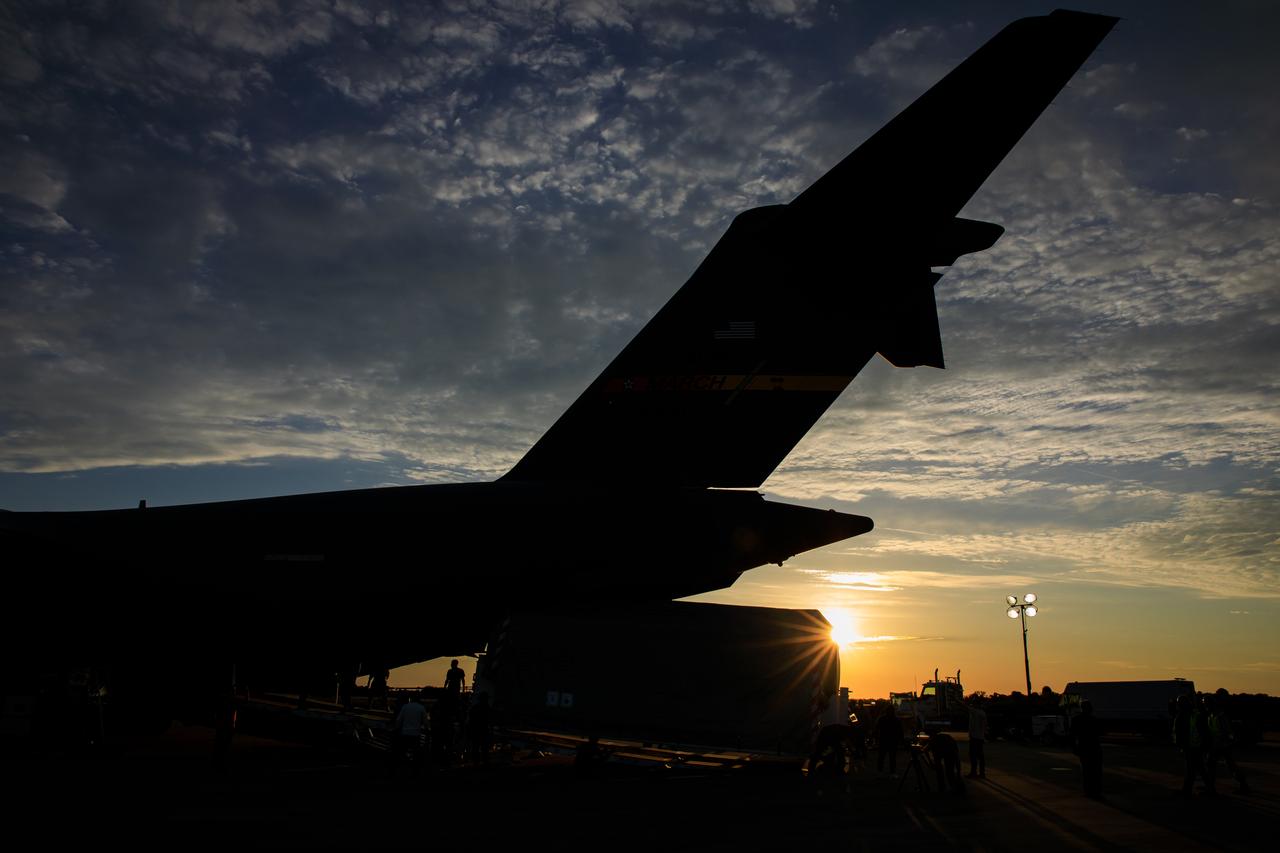
Teams offload NASA’s largest planetary mission spacecraft, Europa Clipper, from a United States Air Force C-17 Globemaster III transport aircraft onto the flatbed of a heavy-lift truck at the Launch and Landing Facility at NASA’s Kennedy Space Center in Florida on Thursday, May 23, 2024. Crews transported Europa Clipper to the Payload Hazardous Servicing Facility at Kennedy to prepare it for launch aboard a SpaceX Falcon Heavy rocket later this year from Launch Complex 39A at the Florida spaceport. Europa Clipper will help determine if conditions exist below the surface Jupiter’s fourth largest moon, Europa, that could support life.
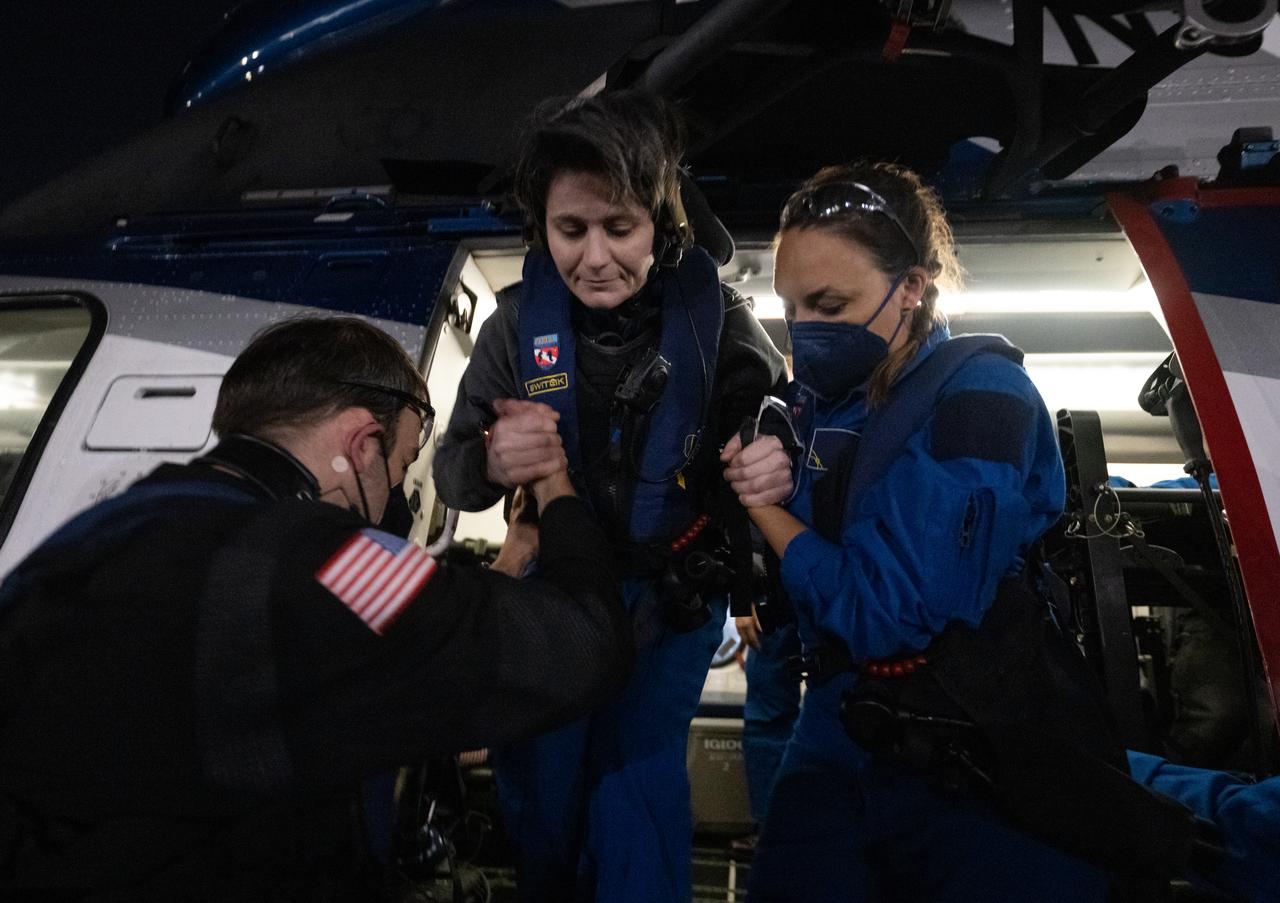
ESA (European Space Agency) astronaut Samantha Cristoforetti is helped out of a helicopter in Jacksonville, Florida just a few hours after she and NASA astronauts Kjell Lindgren, Jessica Watkins and Robert Hines landed in their SpaceX Crew Dragon Freedom spacecraft in the Atlantic Ocean off the coast of Jacksonville, Florida, Friday, Oct. 14, 2022. Lindgren, Hines, Watkins, and Cristoforetti are returning after 170 days in space as part of Expeditions 67 and 68 aboard the International Space Station. Photo Credit: (NASA/Bill Ingalls)
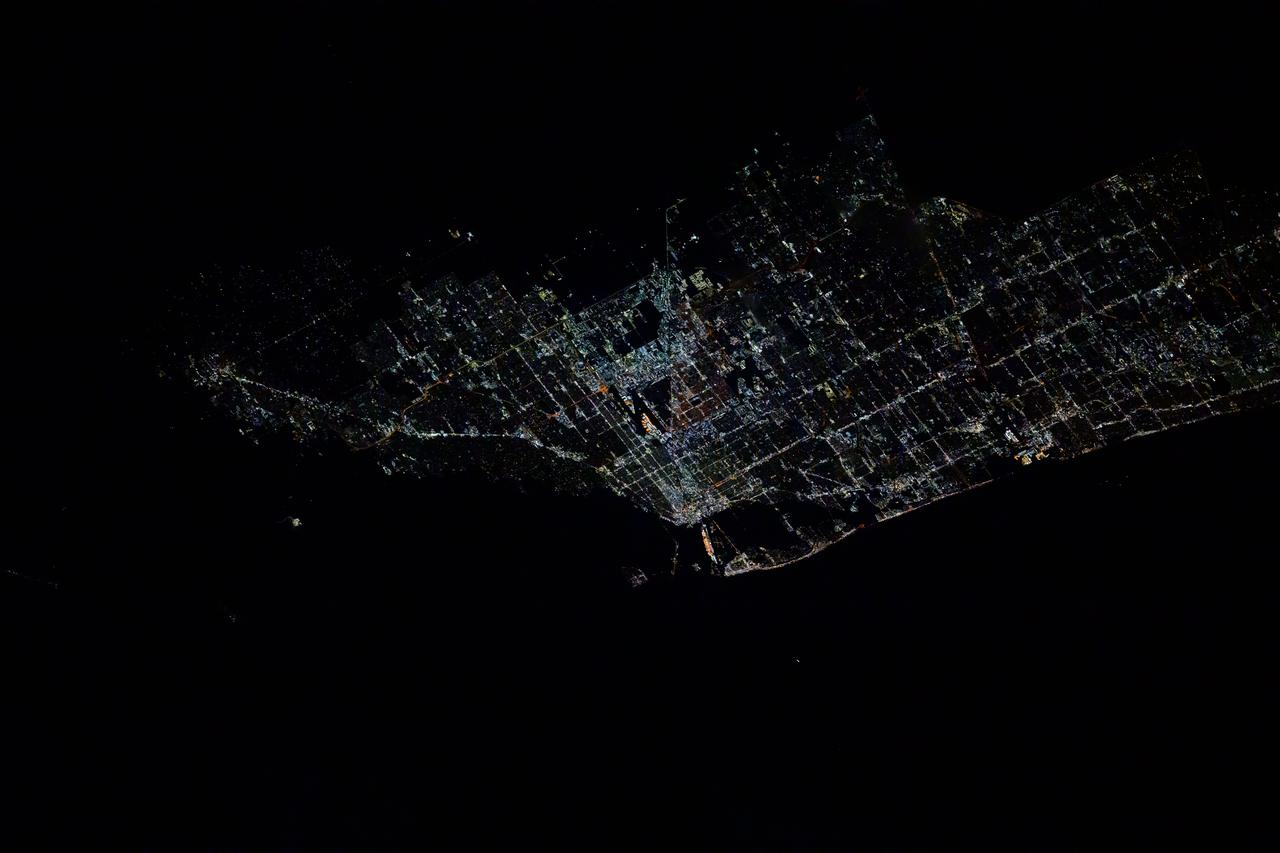
iss072e399013 (Dec. 19, 2024) --- The city lights of Miami, Florida, the seat of Miami-Dade County with a population of about 456,000 citizens, and its surrounding suburbs are pictured at approximately 4:07 a.m. local time from the International Space Station as it orbited 256 miles above the Atlantic Ocean.
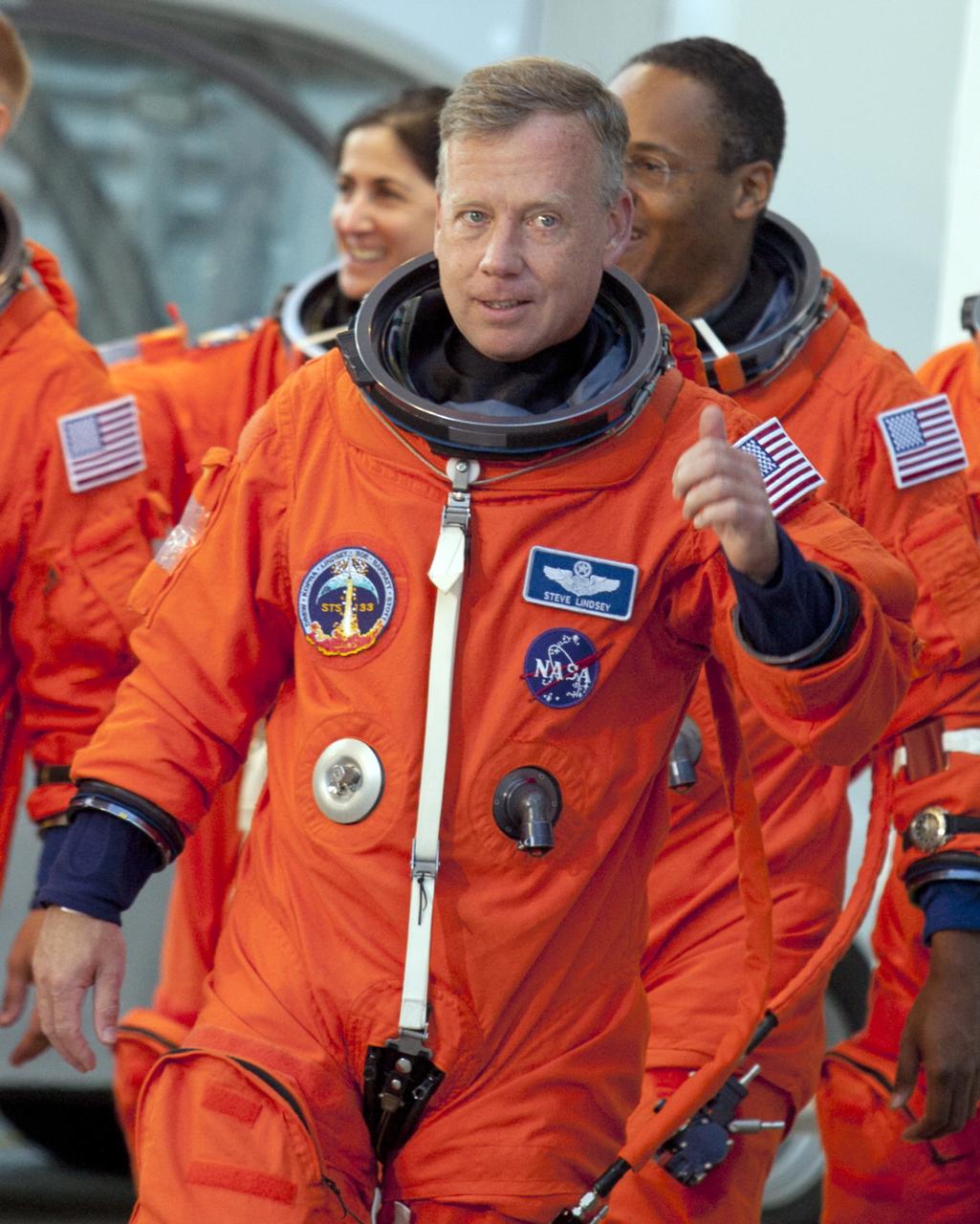
Shuttle Discovery STS-133 Mission Commander Steve Lindsey gives a thumbs up during a practice crew walkout at Kennedy Space Center, Cape Canaveral, Florida, USA 15 October 2010. The crew of six is headed to launch pad 39A for a mock countdown that completes the three day Terminal Countdown Demonstration Test. Shuttle Discovery is being prepared for what is to be it's final mission to the International Space Station, with launch scheduled for no earlier than 01 November 2010.
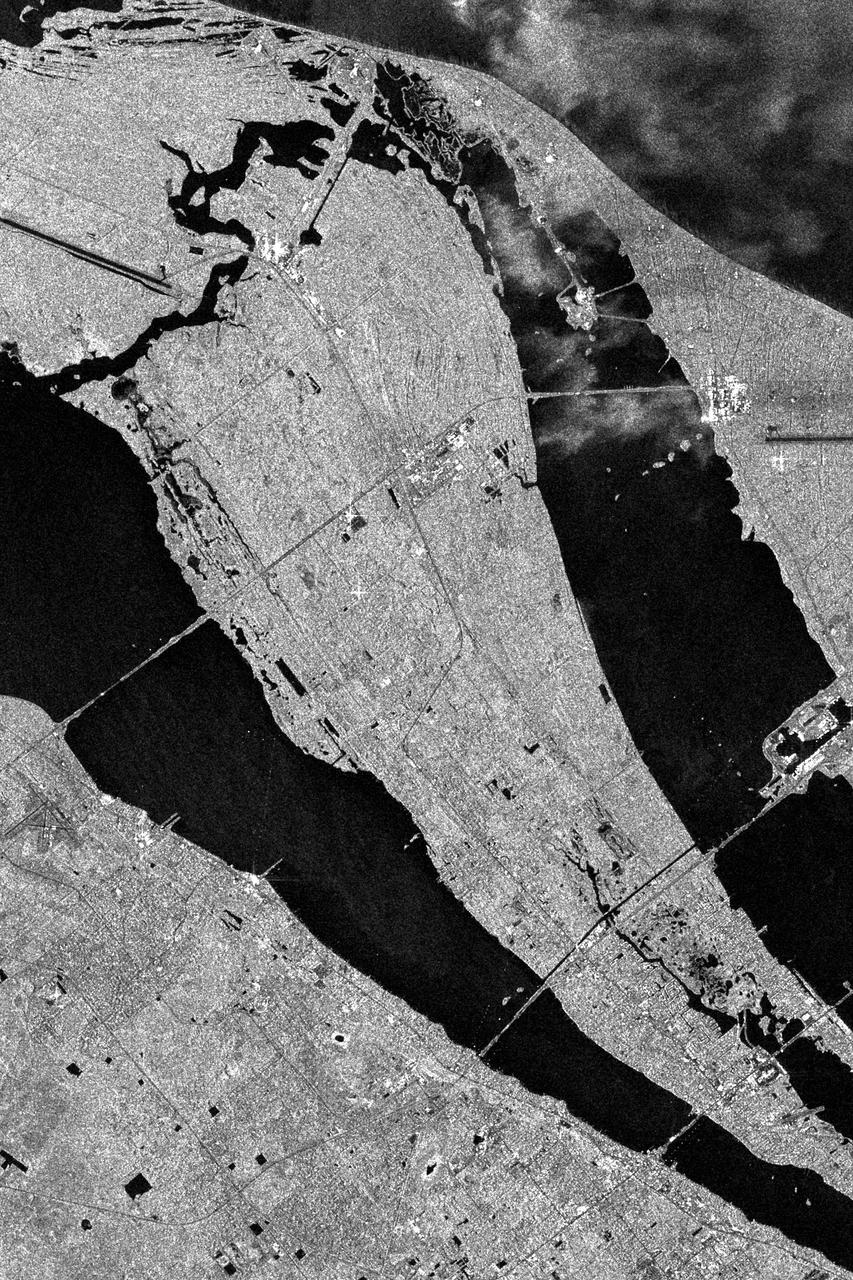
This is an X-band Synthetic Aperture Radar image spanning an area of about 20 kilometers by 40 kilometers 12 miles by 25 miles of NASA Kennedy Space Center, Florida.
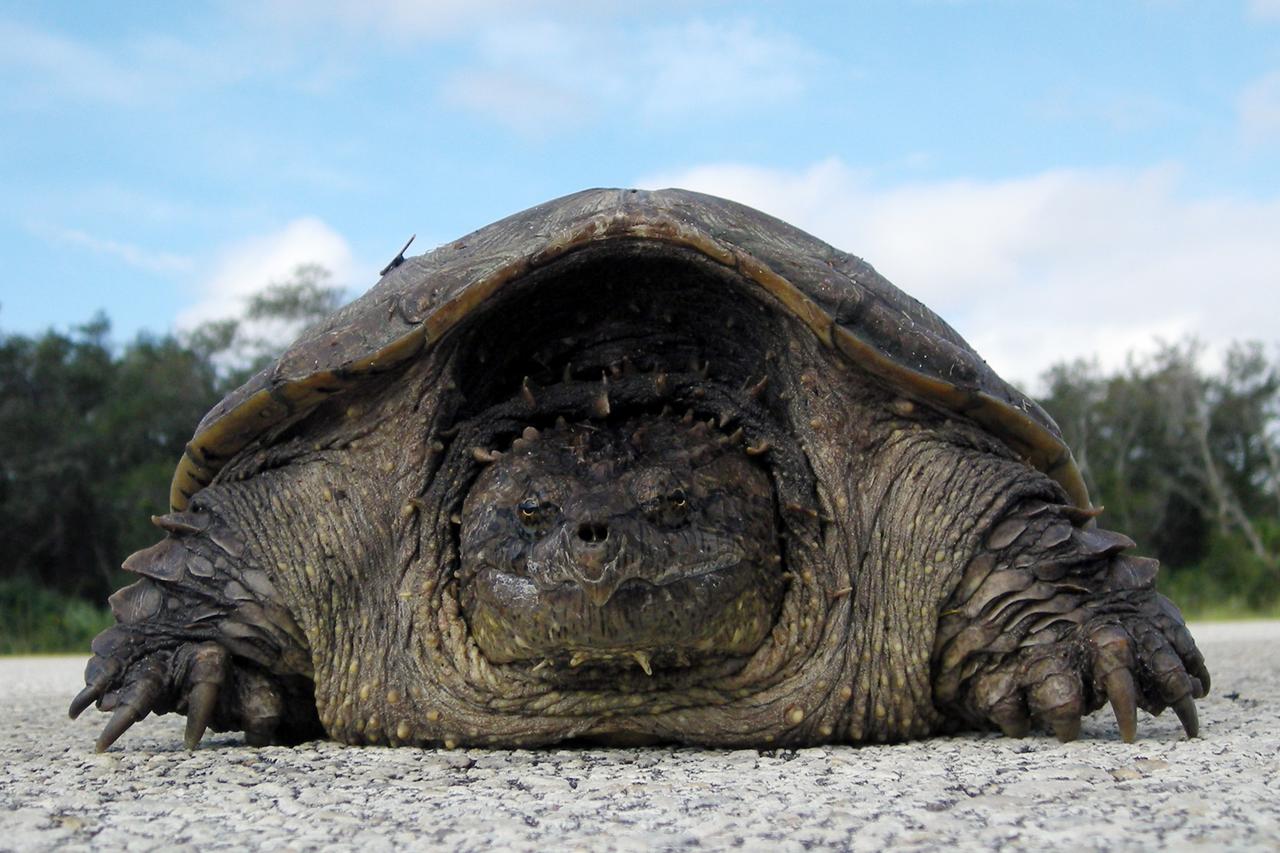
A rare photo of a Florida snapping turtle out in the open on Beach Road, near NASA's Kennedy Space Center. Found only in Florida and Georgia, this species is related to the common snapping turtle. It is considered a dangerous turtle because it can snap very quickly with its extremely strong jaws. Its tail, which is almost as long as its shell, has saw-edges along the top. The shell also has rough points down the middle. The shell is tan to dark brown and may have green algae growing on it. It can grow to 17 inches long and weigh 45 pounds. Snapping turtles usually live in ponds under the shadows and don’t like to rest in the sun like most turtles. They eat almost anything: water bugs, fish, lizards, small birds, mice, plants and even dead animals
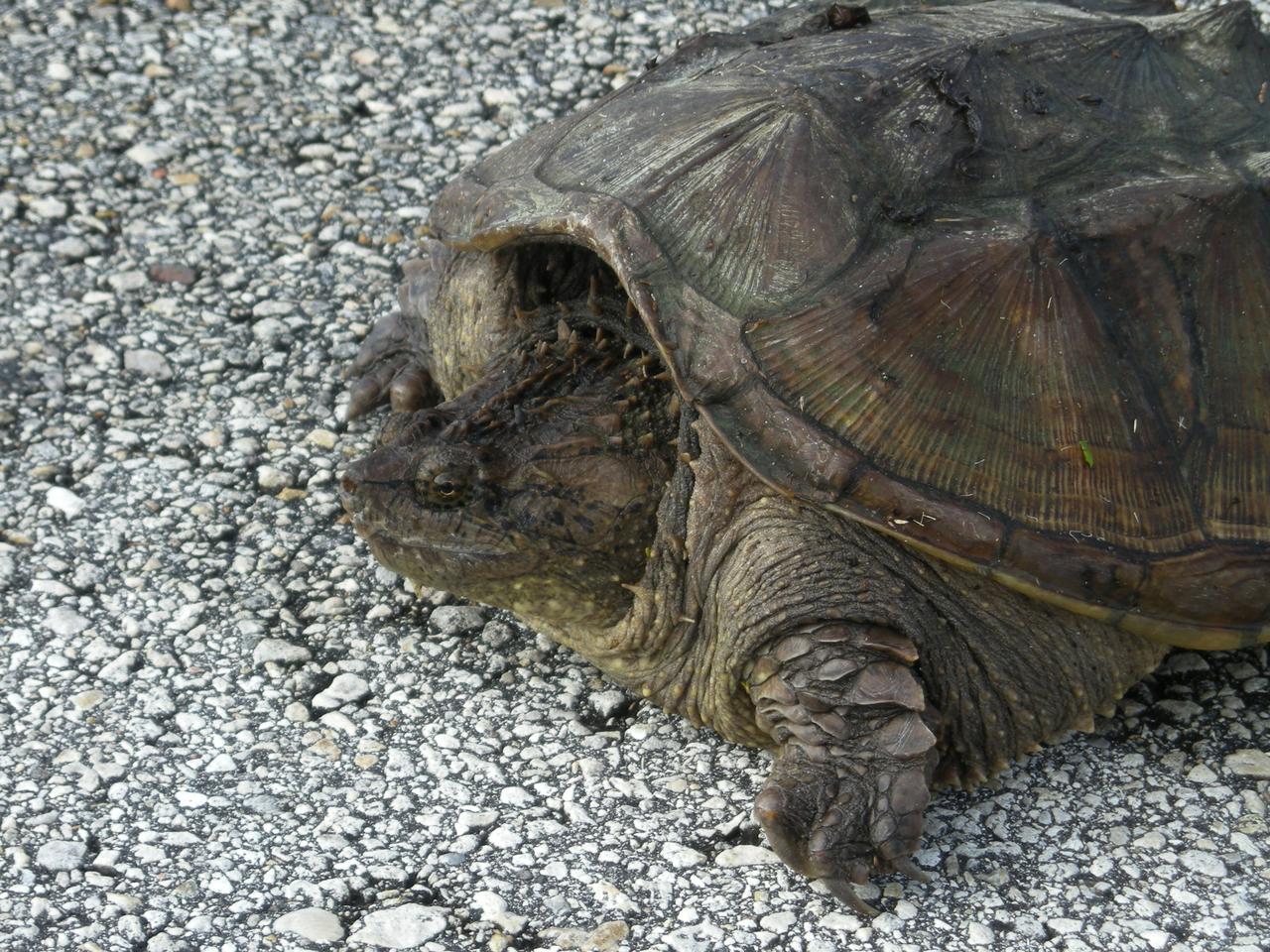
A rare photo of a Florida snapping turtle out in the open on Beach Road, near NASA's Kennedy Space Center. Found only in Florida and Georgia, this species is related to the common snapping turtle. It is considered a dangerous turtle because it can snap very quickly with its extremely strong jaws. Its tail, which is almost as long as its shell, has saw-edges along the top. The shell also has rough points down the middle. The shell is tan to dark brown and may have green algae growing on it. It can grow to 17 inches long and weigh 45 pounds. Snapping turtles usually live in ponds under the shadows and don’t like to rest in the sun like most turtles. They eat almost anything: water bugs, fish, lizards, small birds, mice, plants and even dead animals.
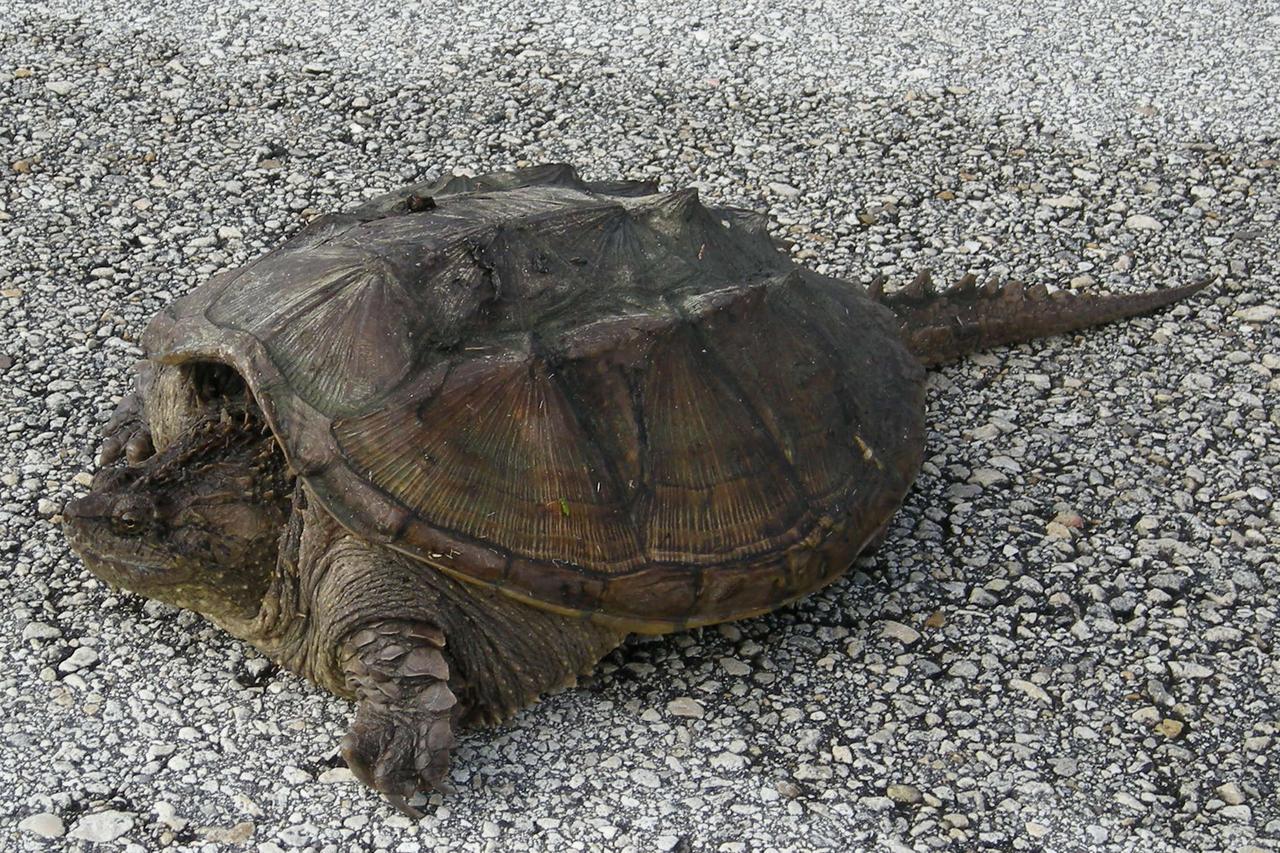
A rare photo of a Florida snapping turtle out in the open on Beach Road, near NASA's Kennedy Space Center. Found only in Florida and Georgia, this species is related to the common snapping turtle. It is considered a dangerous turtle because it can snap very quickly with its extremely strong jaws. Its tail, which is almost as long as its shell, has saw-edges along the top. The shell also has rough points down the middle. The shell is tan to dark brown and may have green algae growing on it. It can grow to 17 inches long and weigh 45 pounds. Snapping turtles usually live in ponds under the shadows and don’t like to rest in the sun like most turtles. They eat almost anything: water bugs, fish, lizards, small birds, mice, plants and even dead animals.
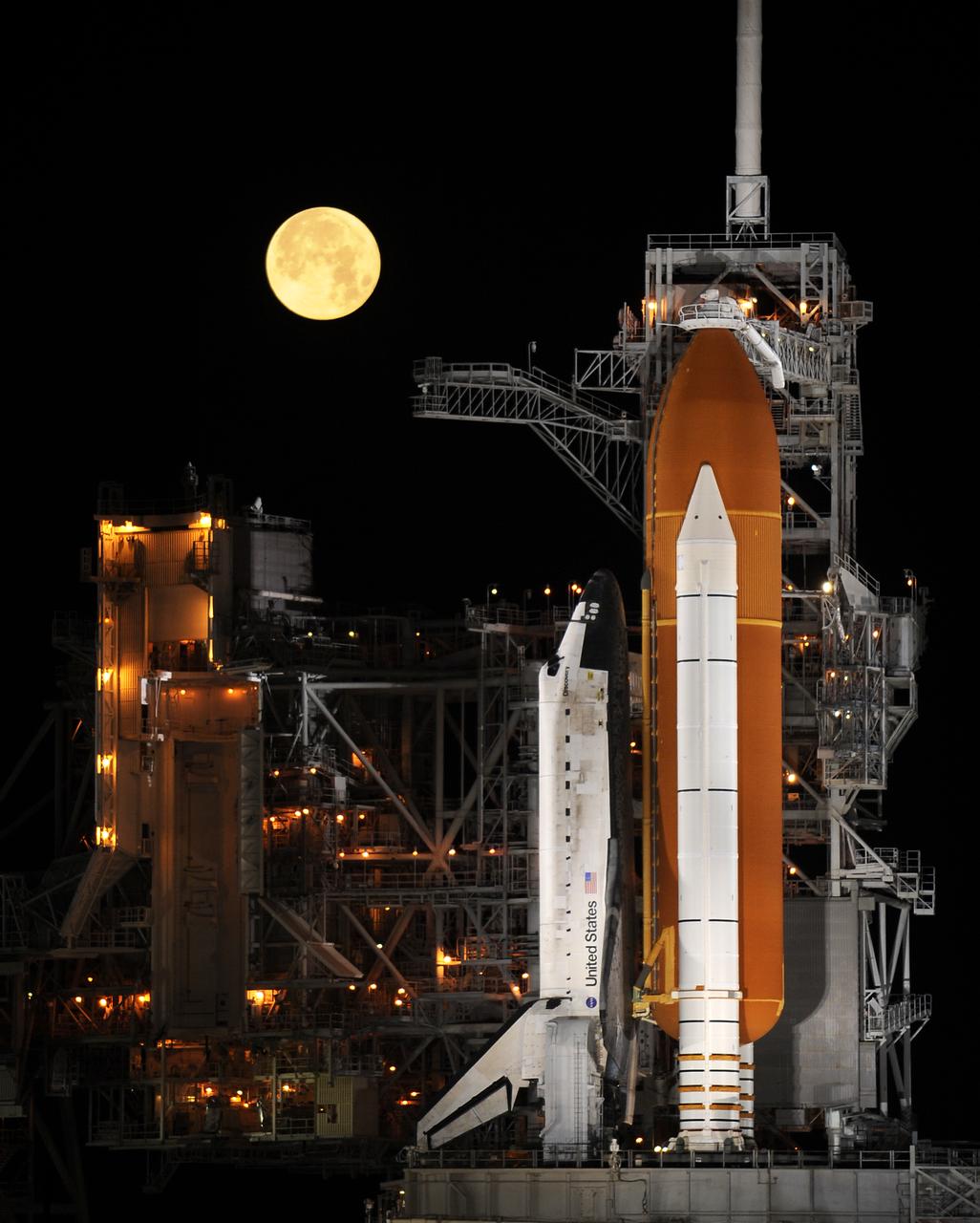
A nearly full Moon sets as the space shuttle Discovery sits atop Launch pad 39A at the Kennedy Space Center in Cape Canaveral, Florida, Wednesday, March 11, 2009. Photo Credit: (NASA/Bill Ingalls)
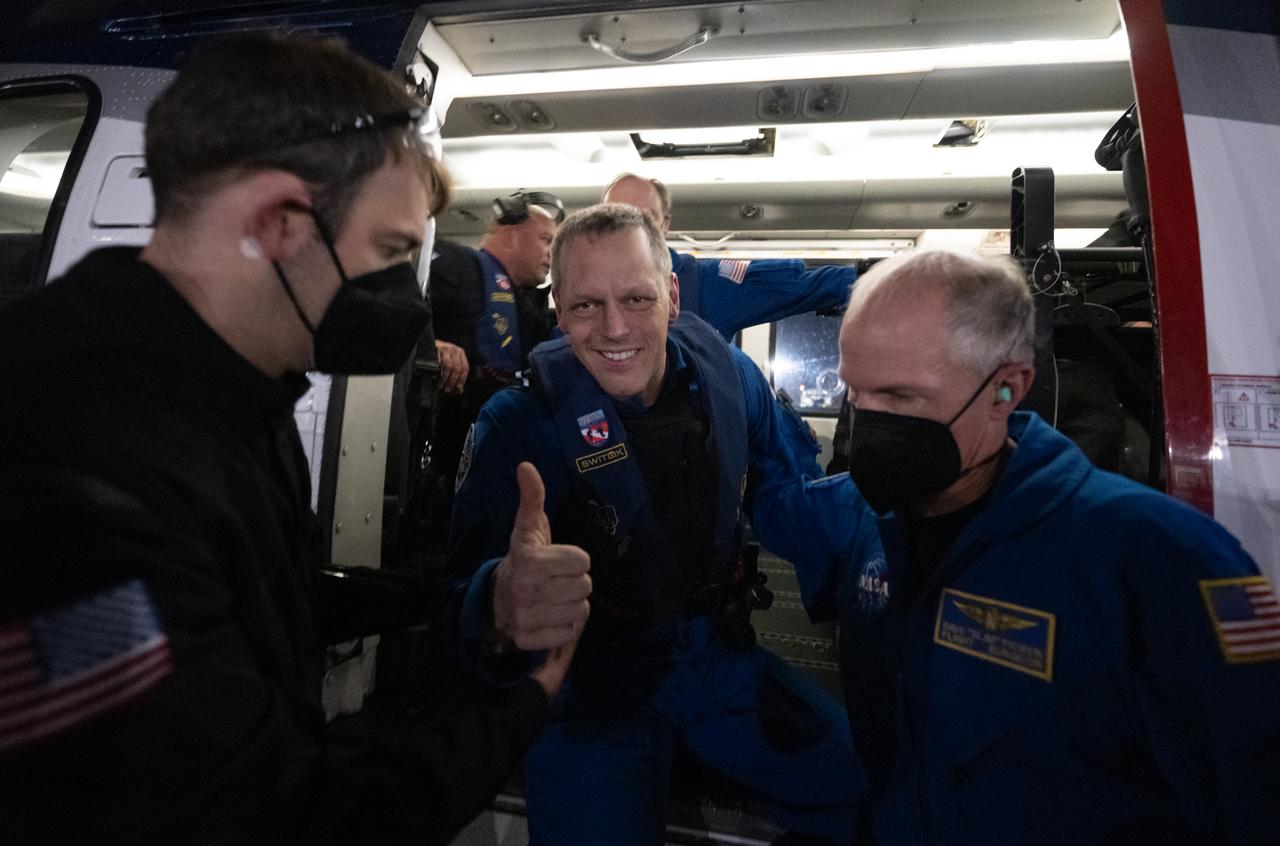
NASA astronaut Robert Hines is helped out of a helicopter in Jacksonville, Florida just a few hours after he and NASA astronauts Jessica Watkins and Kjell Lindgren, along with ESA (European Space Agency) astronaut Samantha Cristoforetti, landed in their SpaceX Crew Dragon Freedom spacecraft in the Atlantic Ocean off the coast of Jacksonville, Florida, Friday, Oct. 14, 2022. Lindgren, Hines, Watkins, and Cristoforetti are returning after 170 days in space as part of Expeditions 67 and 68 aboard the International Space Station. Photo Credit: (NASA/Bill Ingalls)
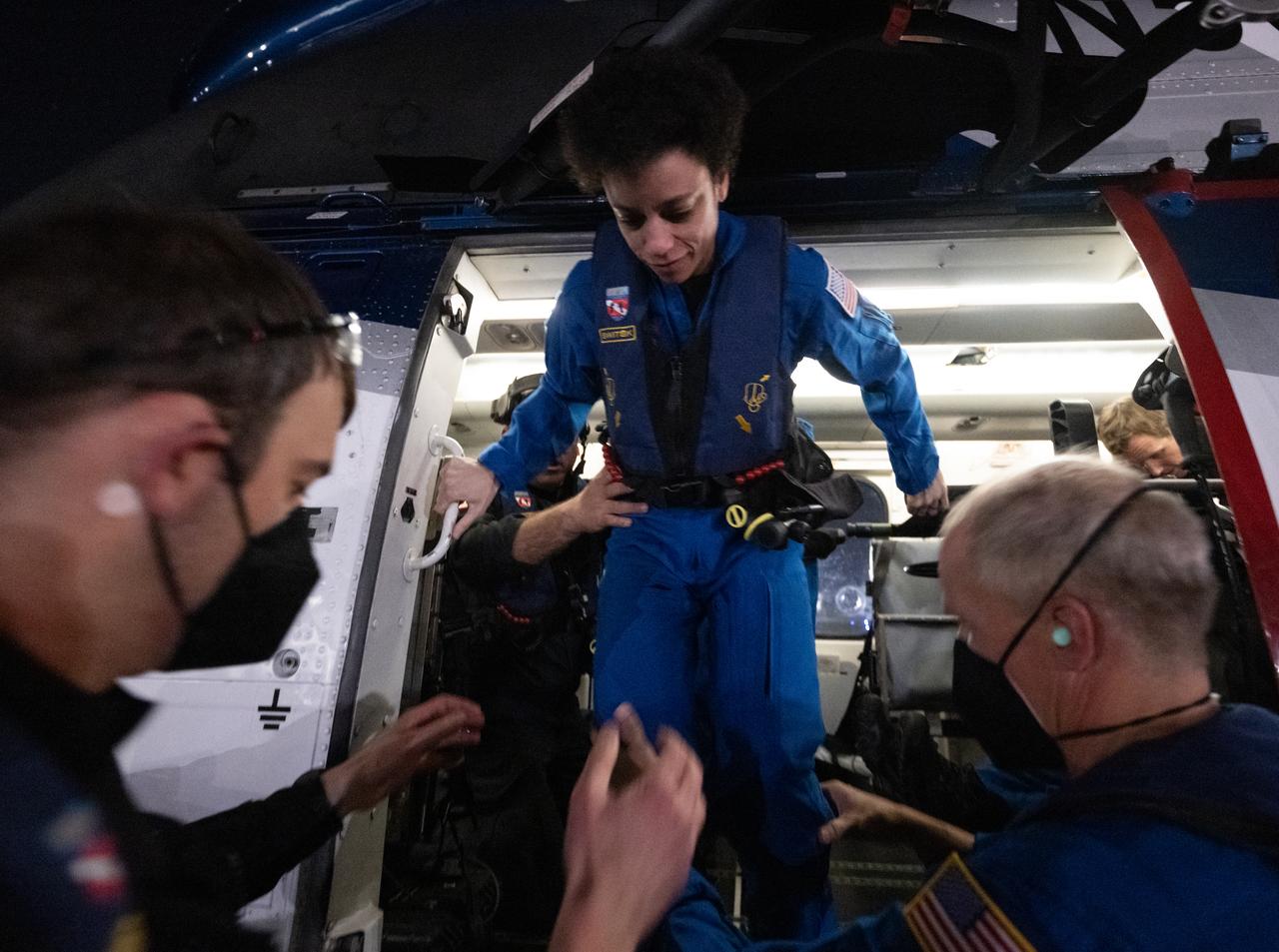
NASA astronaut Jessica Watkins is helped out of a helicopter in Jacksonville, Florida just a few hours after she and NASA astronauts Kjell Lindgren and Robert Hines, along with ESA (European Space Agency) astronaut Samantha Cristoforetti, landed in their SpaceX Crew Dragon Freedom spacecraft in the Atlantic Ocean off the coast of Jacksonville, Florida, Friday, Oct. 14, 2022. Lindgren, Hines, Watkins, and Cristoforetti are returning after 170 days in space as part of Expeditions 67 and 68 aboard the International Space Station. Photo Credit: (NASA/Bill Ingalls)
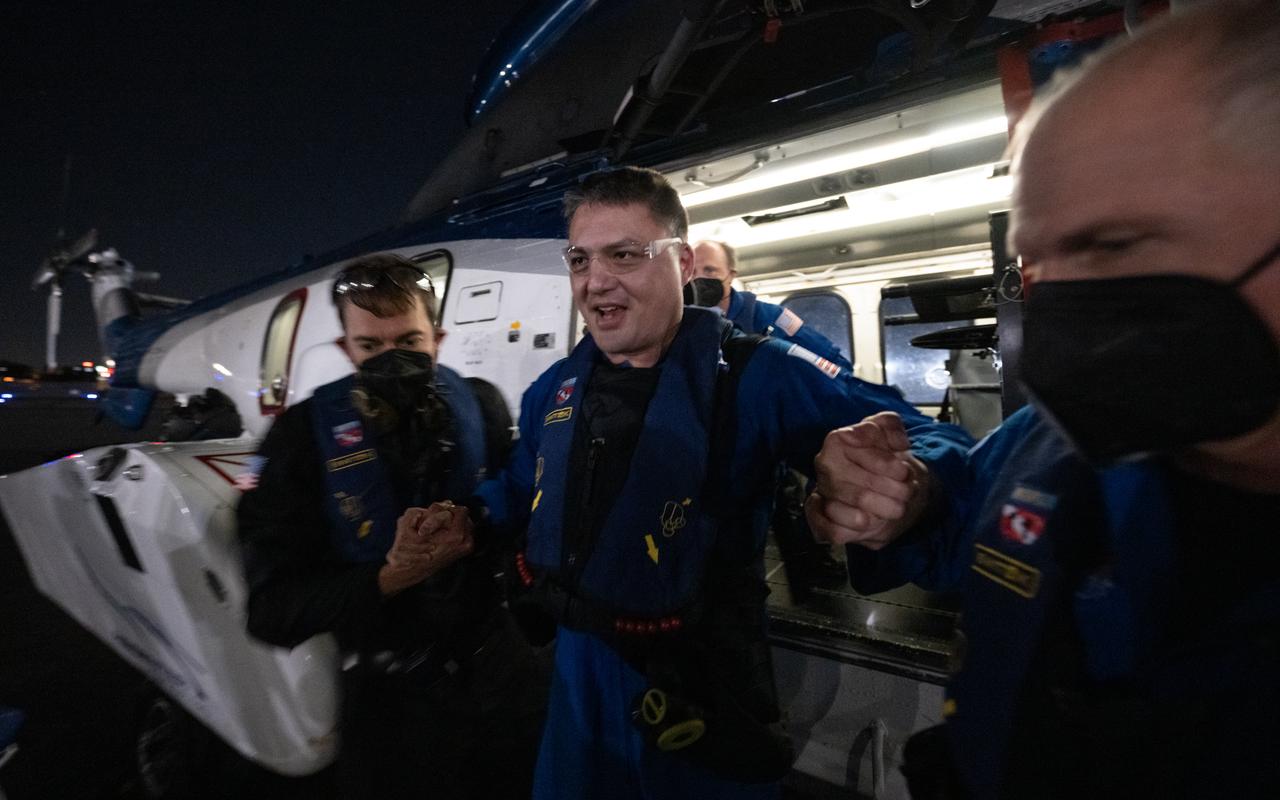
NASA astronaut Kjell Lindgren is helped out of a helicopter in Jacksonville, Florida just a few hours after he and NASA astronauts Jessica Watkins and Robert Hines, along with ESA (European Space Agency) astronaut Samantha Cristoforetti, landed in their SpaceX Crew Dragon Freedom spacecraft in the Atlantic Ocean off the coast of Jacksonville, Florida, Friday, Oct. 14, 2022. Lindgren, Hines, Watkins, and Cristoforetti are returning after 170 days in space as part of Expeditions 67 and 68 aboard the International Space Station. Photo Credit: (NASA/Bill Ingalls)
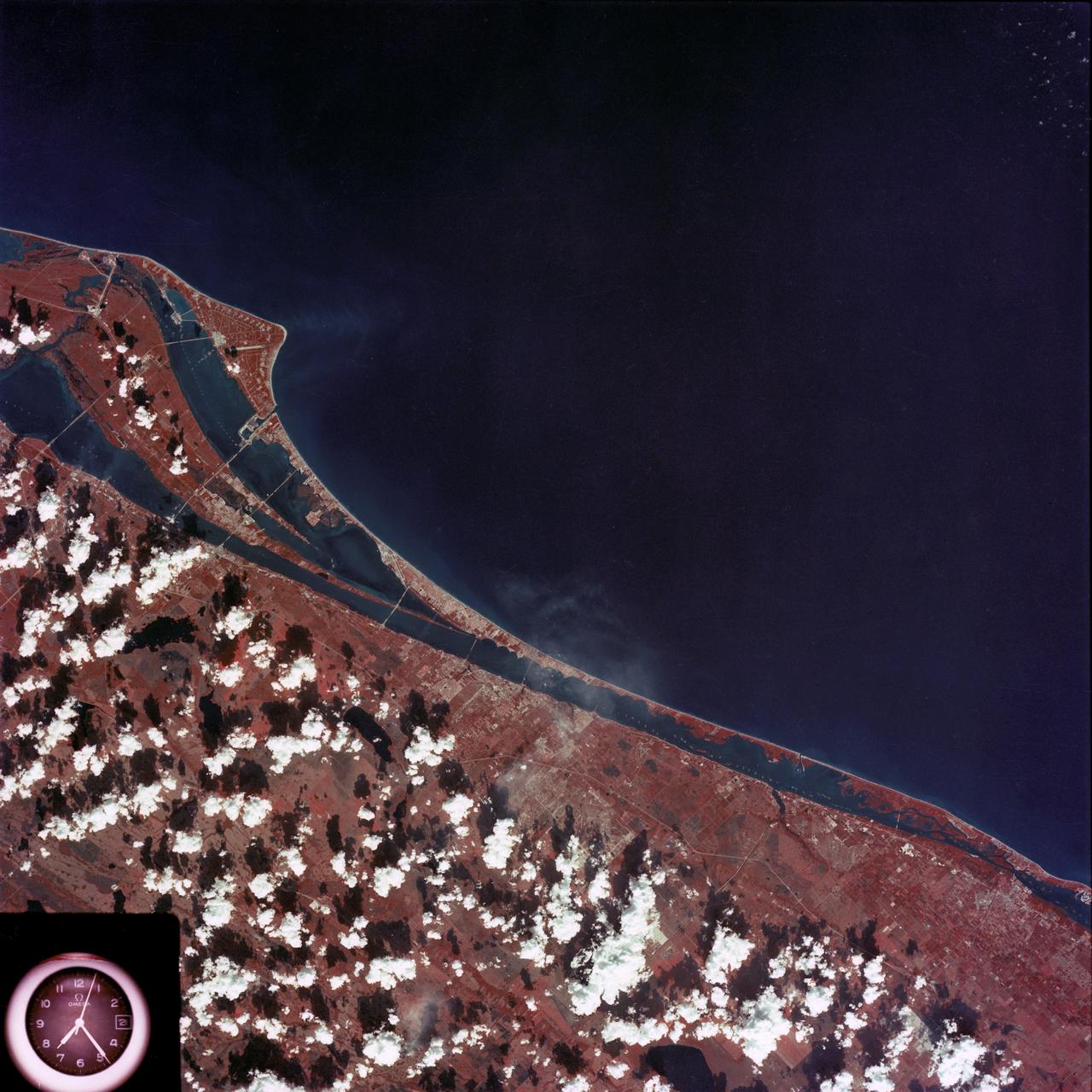
SL4-93-167 (February 1974) --- A vertical view of the Kennedy Space Center and the Florida Atlantic coast area is seen in this Skylab 4 Earth Resources Experiments Package S190-B (five-inch earth terrain camera) infrared photography taken from the Skylab space station in Earth orbit. This photograph shows the major land-ocean features of the Florida coast near Vero Beach northward to Cape Canaveral and the KSC complex. The launch pads for the Skylab missions are clearly visible. Identification of living vegetation is possible through the use of the color infrared film. Various shades of red portray differences in the vegetation such as shown in the patterns in the agricultural area near Vero Beach. In the Kennedy Space Center, the nearly continuous and uniform red color shows that most of the land areas are heavily vegetated. The white coastal beach areas are strongly contrasted to the red land and the blue Atlantic Ocean. Old dunal areas in KSC are visible on Merritt Island which is separated from the Launch areas by the Banana River and the mainland by the Indian River. Federal and state highways and numerous causeways over the rivers are easily identified. The Florida mainland is partly shadowed by small white clouds which cast a pronounced shadow to the east of each cloud indicated the Sun is west of solar noon. Federal agencies participating with NASA on the EREP project are the Departments of Agriculture, Commerce, Interior, the Environmental Protection Agency and the Core of Engineers. All EREP photography is available to the public through the Department of Interior's Earth Resources Observations Systems Data Center, Sioux Falls, South Dakota, 57198. Photo credit: NASA
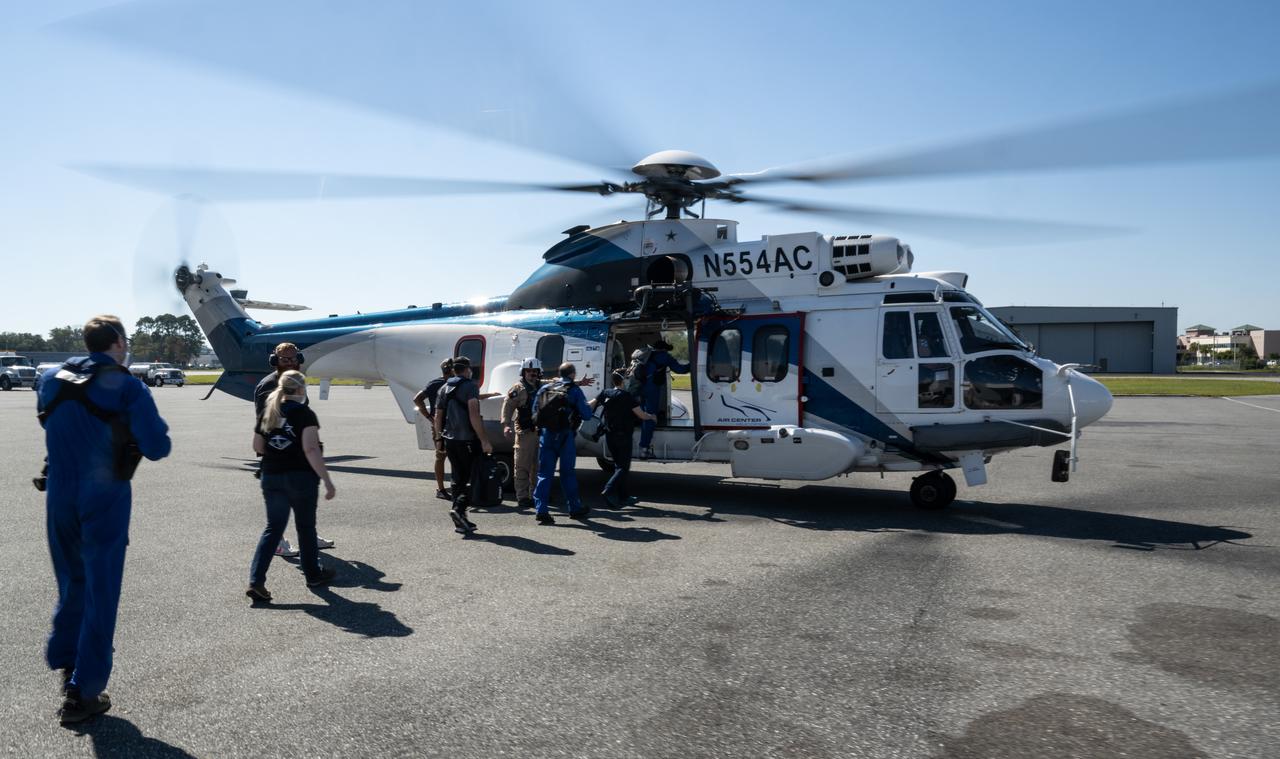
NASA, ESA (European Space Agency), and SpaceX support teams board a helicopter to stage for the landing of the SpaceX Crew Dragon Freedom spacecraft with NASA astronauts Kjell Lindgren, Robert Hines, Jessica Watkins, and ESA (European Space Agency) astronaut Samantha Cristoforetti aboard, Friday, Oct. 14, 2022, in Jacksonville, Florida. Lindgren, Hines, Watkins, and Cristoforetti are landing in the Atlantic Ocean after 170 days in space as part of Expeditions 67 and 68 aboard the International Space Station. Photo Credit: (NASA/Bill Ingalls)
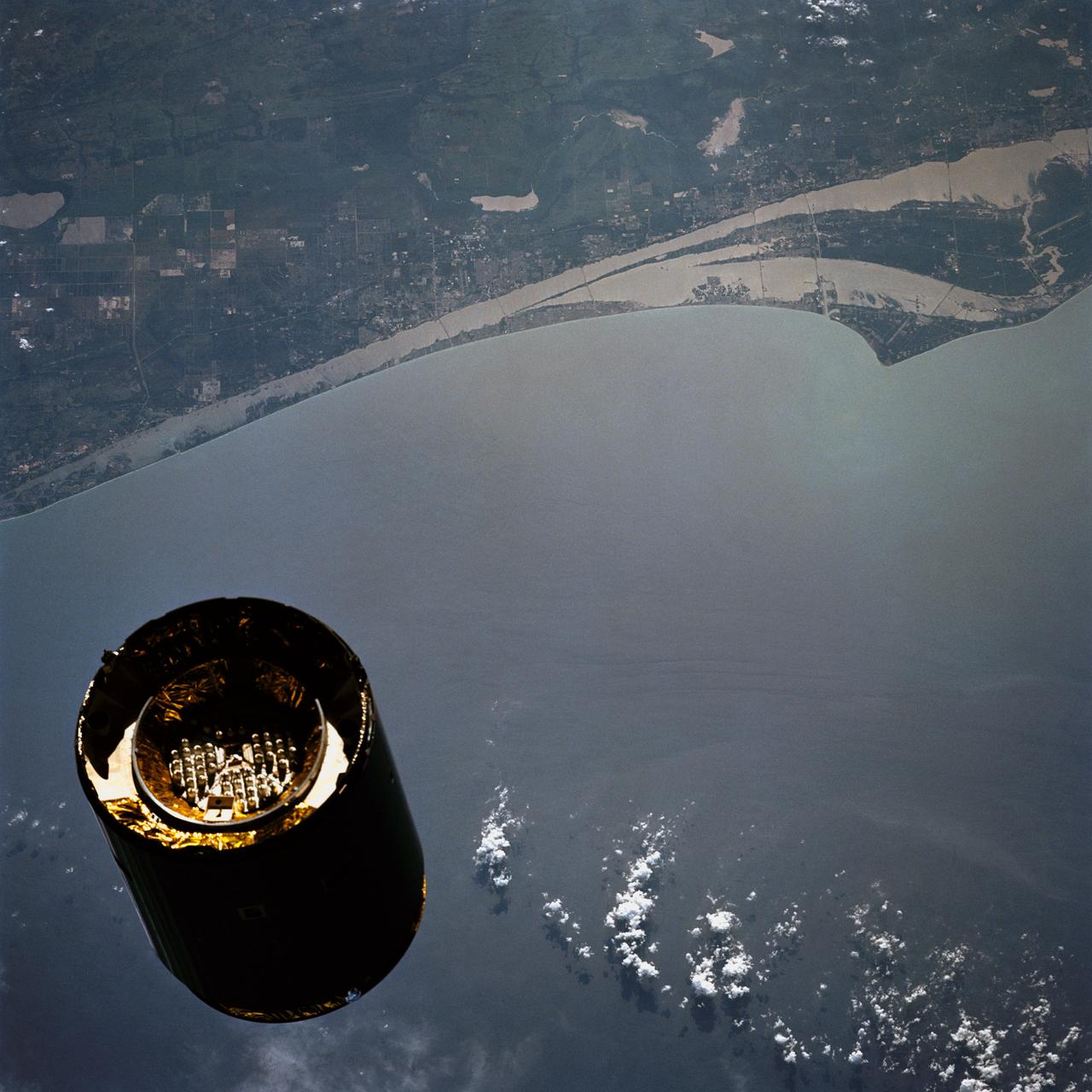
STS049-79-024 (13 May 1992) --- Florida's Atlantic Coast and the Cape Canaveral area form the backdrop for this 70mm scene of Intelsat VI's approach to the Space Shuttle Endeavour. Later, the seven-member crew was successful in capturing the satellite and adding a perigee phase. The new motor allowed the needed boost for Intelsat, once the crew members had released it into space.