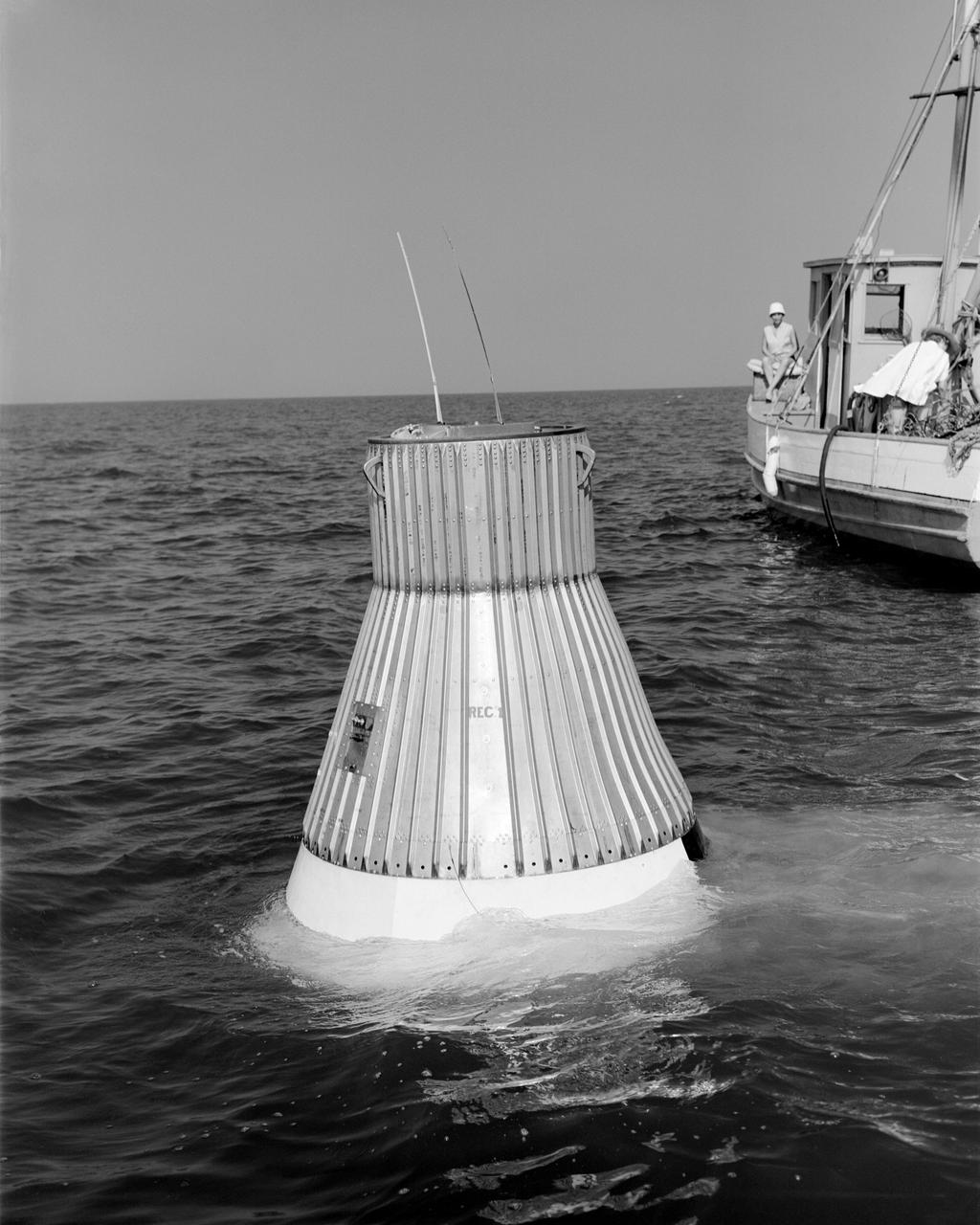
L59-4073 A model of the Mercury capsule undergoes flotation tests. -- Photograph published in Winds of Change, 75th Anniversary NASA publication (page 76), by James Schultz.
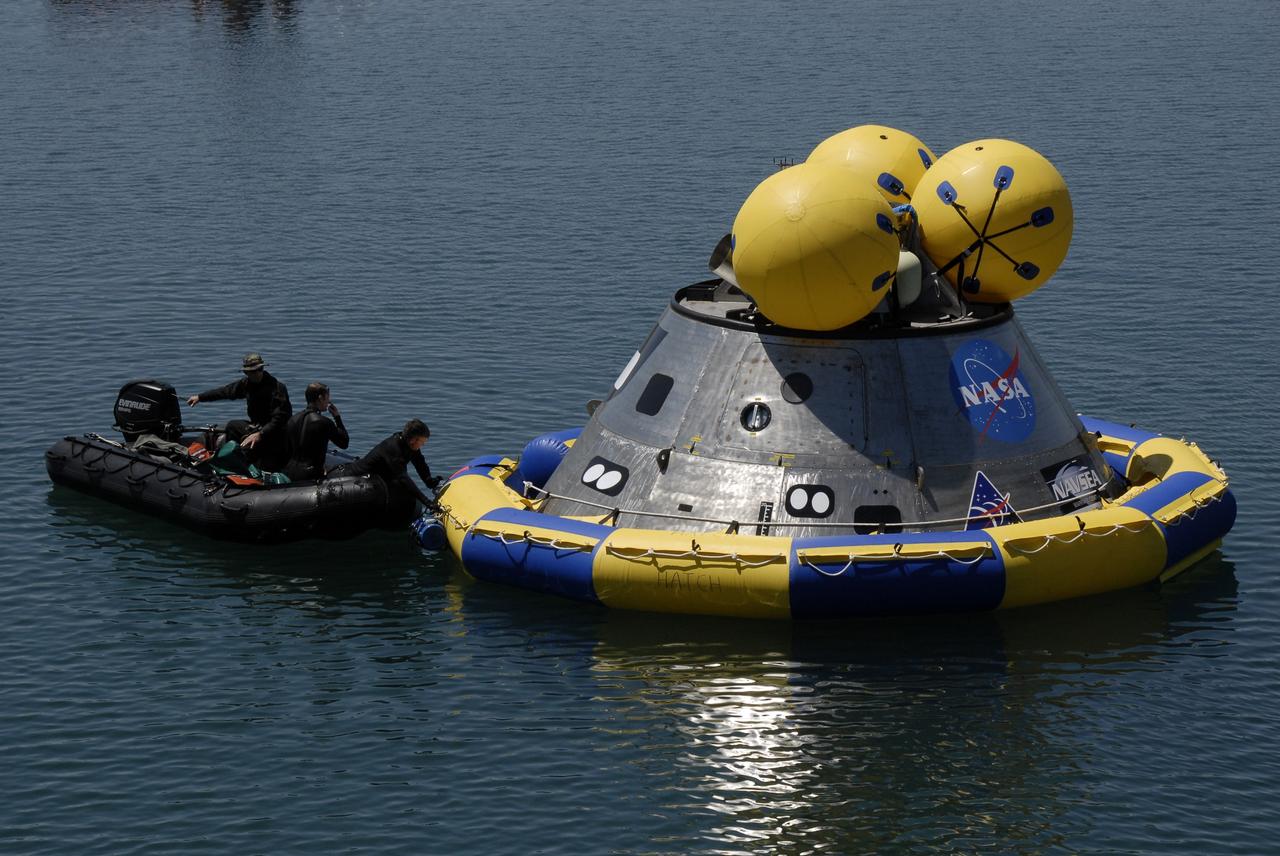
CAPE CANAVERAL, Fla. – Members of the 920th Rescue Wing secure a flotation collar around the mockup Orion crew exploration vehicle at the Trident Basin at Port Canaveral, Fla. On top of Orion are additional flotation devices. The mockup vehicle will undergo testing in open water. The goal of the operation, dubbed the Post-landing Orion Recovery Test, or PORT, is to determine what kind of motion astronauts can expect after landing, as well as outside conditions for recovery teams. Orion is targeted to begin carrying humans to the International Space Station in 2015 and to the moon by 2020. Orion, along with the Ares I and V rockets and the Altair lunar lander, are part of the Constellation Program. Photo credit: NASA/Kim Shiflett
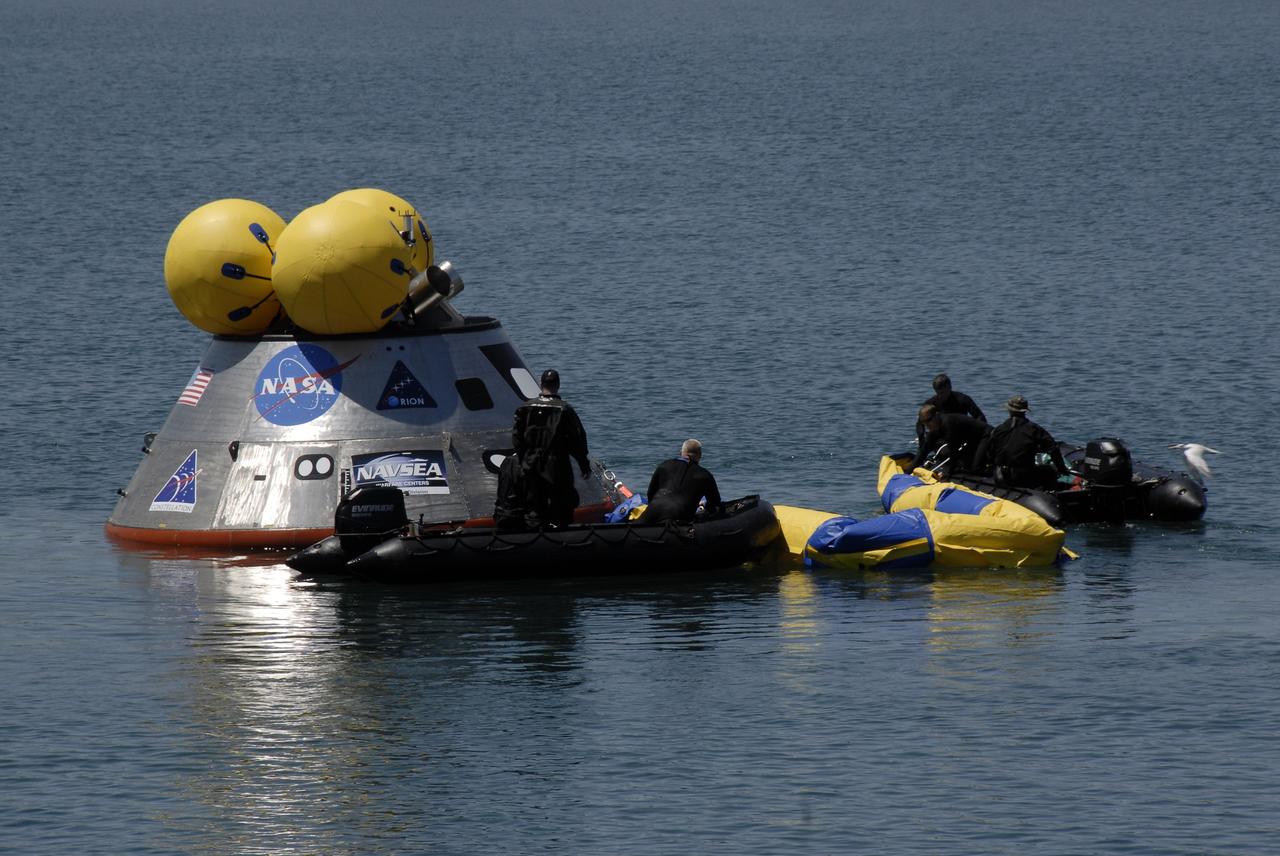
CAPE CANAVERAL, Fla. – Members of the 920th Rescue Wing release a flotation collar around the mockup Orion crew exploration vehicle at the Trident Basin at Port Canaveral, Fla. On top of Orion are additional flotation devices. The mockup vehicle will undergo testing in open water. The goal of the operation, dubbed the Post-landing Orion Recovery Test, or PORT, is to determine what kind of motion astronauts can expect after landing, as well as outside conditions for recovery teams. Orion is targeted to begin carrying humans to the International Space Station in 2015 and to the moon by 2020. Orion, along with the Ares I and V rockets and the Altair lunar lander, are part of the Constellation Program. Photo credit: NASA/Kim Shiflett
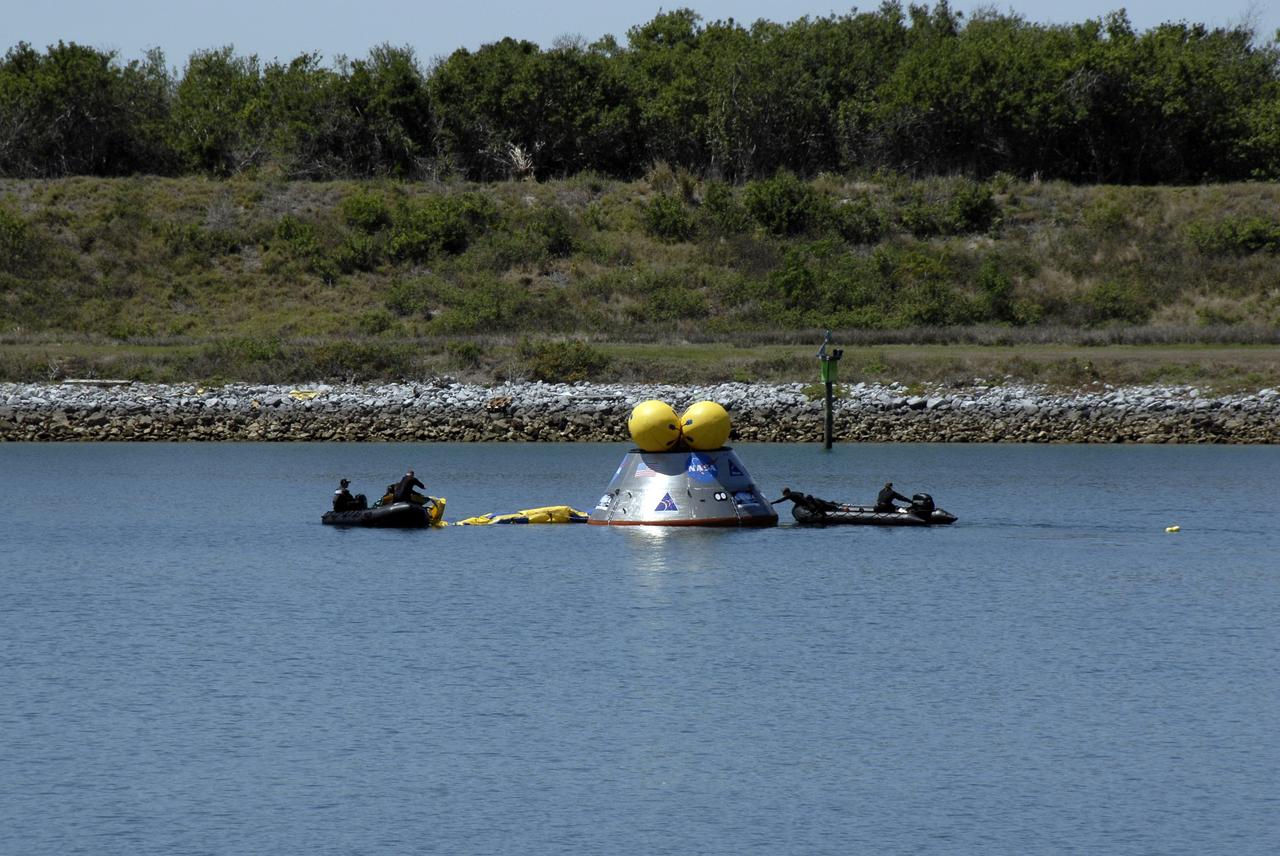
CAPE CANAVERAL, Fla. – Members of the 920th Rescue Wing release a flotation collar around the mockup Orion crew exploration vehicle at the Trident Basin at Port Canaveral, Fla. On top of Orion are additional flotation devices. The mockup vehicle will undergo testing in open water. The goal of the operation, dubbed the Post-landing Orion Recovery Test, or PORT, is to determine what kind of motion astronauts can expect after landing, as well as outside conditions for recovery teams. Orion is targeted to begin carrying humans to the International Space Station in 2015 and to the moon by 2020. Orion, along with the Ares I and V rockets and the Altair lunar lander, are part of the Constellation Program. Photo credit: NASA/Kim Shiflett
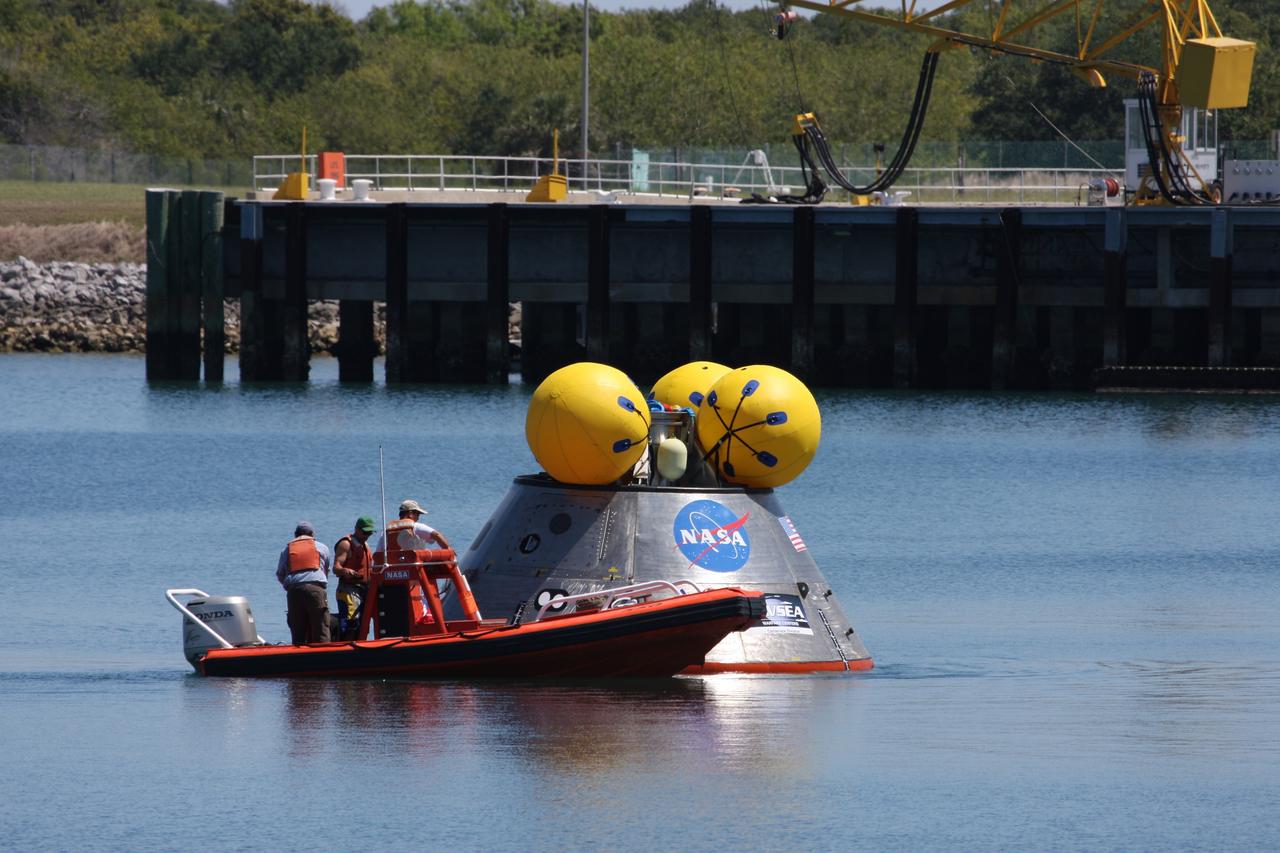
CAPE CANAVERAL, Fla. – Members of the 920th Rescue Wing get ready to release a flotation collar around the mockup Orion crew exploration vehicle at the Trident Basin at Port Canaveral, Fla. On top of Orion are additional flotation devices. The goal of the operation, dubbed the Post-landing Orion Recovery Test, or PORT, is to determine what kind of motion astronauts can expect after landing, as well as outside conditions for recovery teams. Orion is targeted to begin carrying humans to the International Space Station in 2015 and to the moon by 2020. Orion, along with the Ares I and V rockets and the Altair lunar lander, are part of the Constellation Program. Photo credit: NASA/Dimitri Gerondidakis
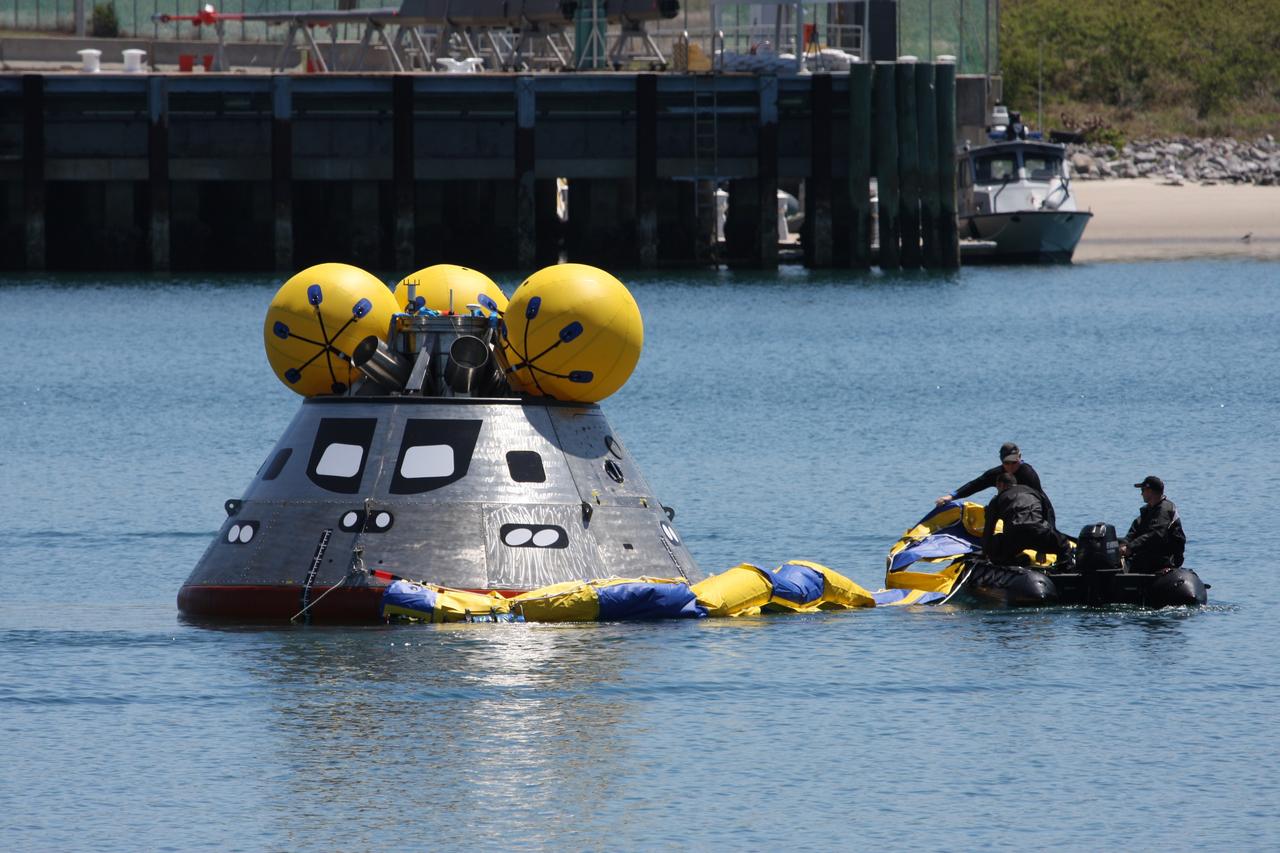
CAPE CANAVERAL, Fla. – Members of the 920th Rescue Wing release a flotation collar around the mockup Orion crew exploration vehicle at the Trident Basin at Port Canaveral, Fla. On top of Orion are additional flotation devices. The goal of the operation, dubbed the Post-landing Orion Recovery Test, or PORT, is to determine what kind of motion astronauts can expect after landing, as well as outside conditions for recovery teams. Orion is targeted to begin carrying humans to the International Space Station in 2015 and to the moon by 2020. Orion is targeted to begin carrying humans to the International Space Station in 2015 and to the moon by 2020. Orion, along with the Ares I and V rockets and the Altair lunar lander, are part of the Constellation Program. Photo credit: NASA/Dimitri Gerondidakis
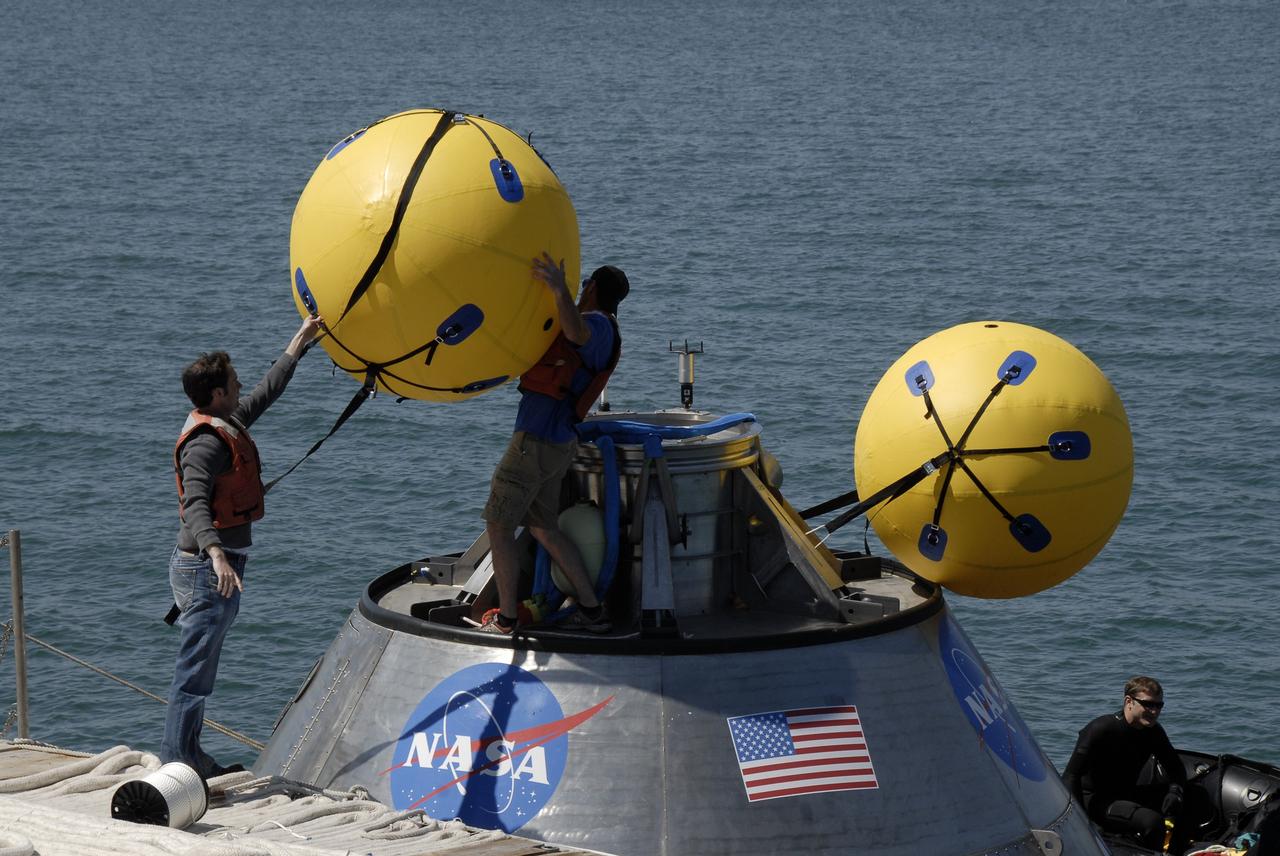
CAPE CANAVERAL, Fla. – Flotation devices are attached to the top of the mockup Orion crew exploration vehicle before the testing in the open water at the Trident Basin at Port Canaveral, Fla. The mockup vehicle will undergo testing in open water. The goal of the operation, dubbed the Post-landing Orion Recovery Test, or PORT, is to determine what kind of motion astronauts can expect after landing, as well as outside conditions for recovery teams. Orion is targeted to begin carrying humans to the International Space Station in 2015 and to the moon by 2020. Orion, along with the Ares I and V rockets and the Altair lunar lander, are part of the Constellation Program. Photo credit: NASA/Kim Shiflett
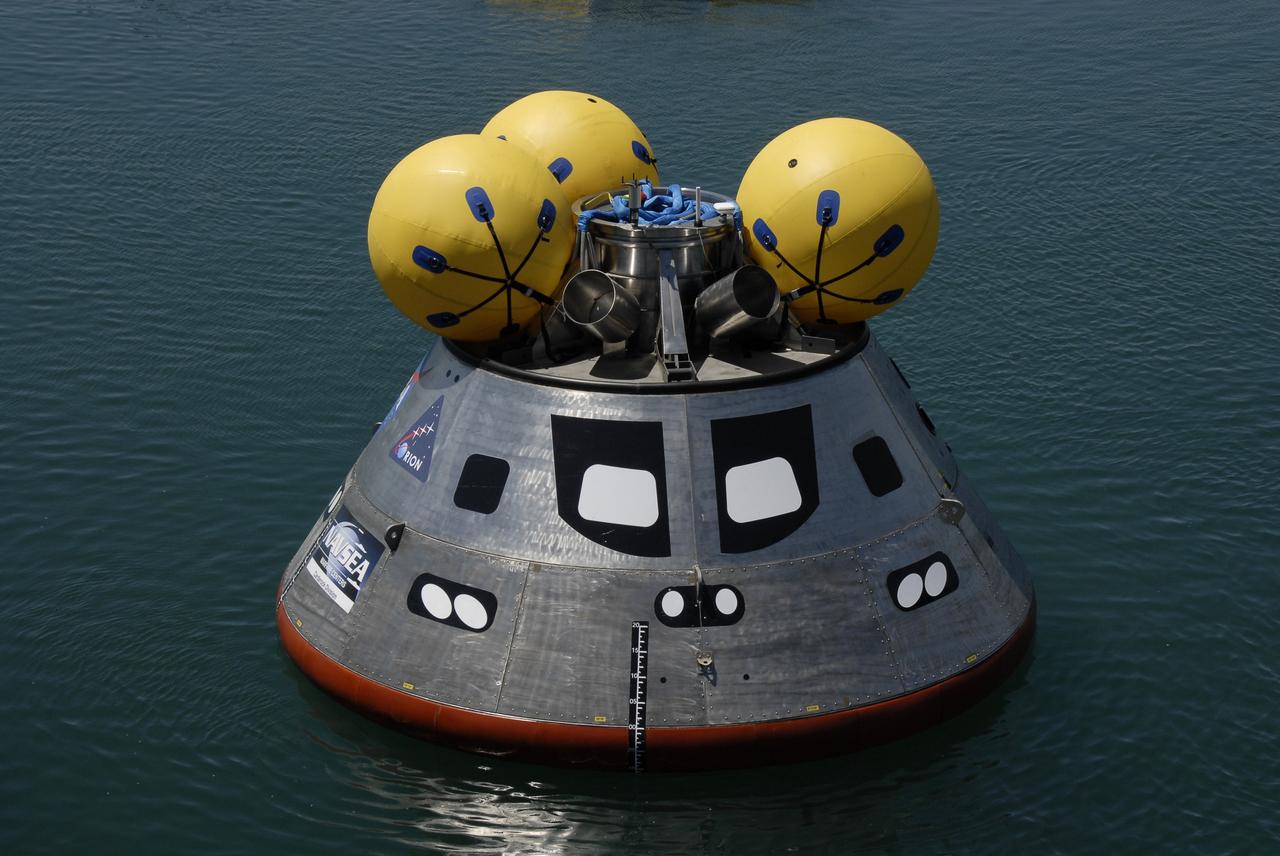
CAPE CANAVERAL, Fla. – The mockup Orion crew exploration vehicle floats in the water at the Trident Basin at Port Canaveral, Fla. On top of Orion are additional flotation devices. Orion is targeted to begin carrying humans to the International Space Station in 2015 and to the moon by 2020. The mockup vehicle is undergoing testing in open water. The goal of the operation, dubbed the Post-landing Orion Recovery Test, or PORT, is to determine what kind of motion astronauts can expect after landing, as well as outside conditions for recovery teams. Orion, along with the Ares I and V rockets and the Altair lunar lander, are part of the Constellation Program. Photo credit: NASA/Kim Shiflett
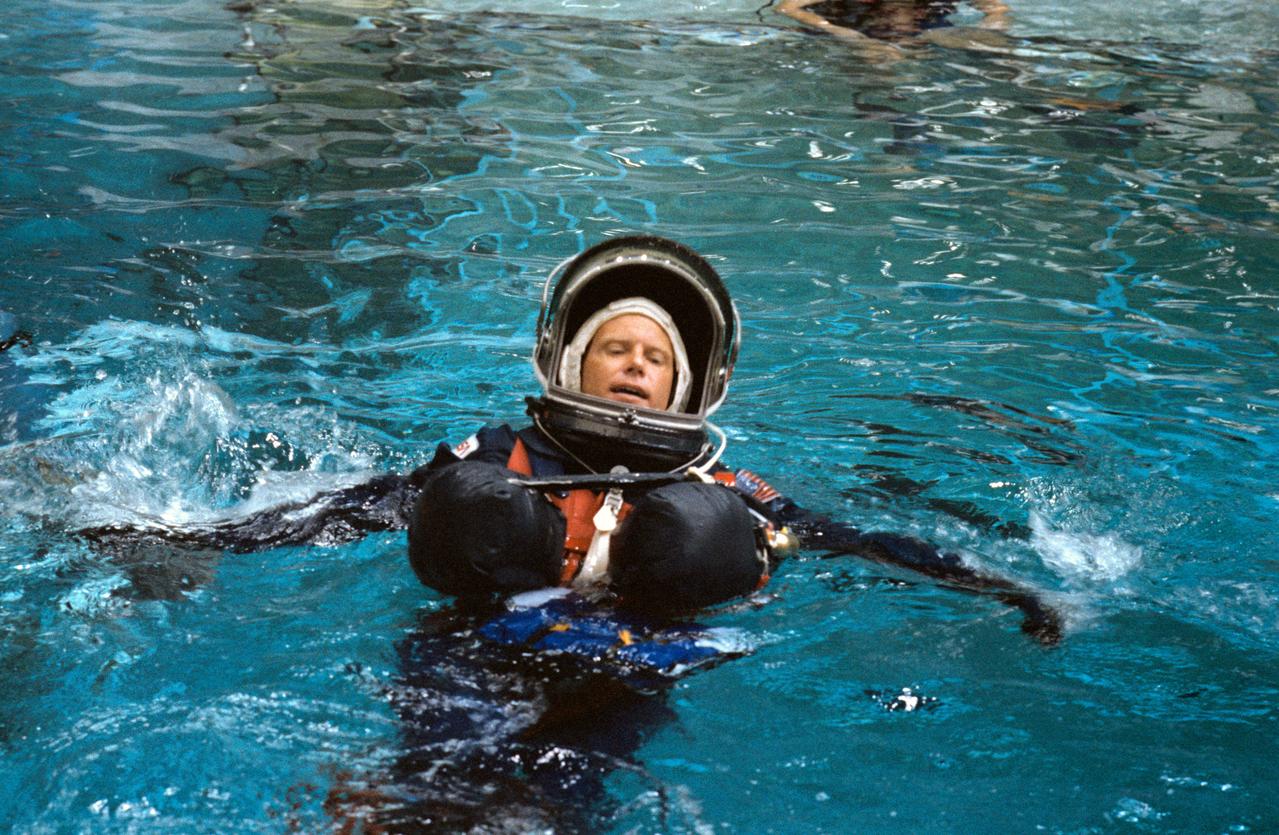
S88-42409 (20 July 1988) --- STS-26 Discovery, Orbiter Vehicle (OV) 103, Mission Specialist (MS) George D. Nelson participates in crew escape system (CES) testing in JSC Weightless Environment Training Facility (WETF) Bldg 29. Nelson, wearing the newly designed (navy blue) launch and entry suit (LES), floats in WETF pool with the aid of an underarm flotation device (modern version of Mas West floats). He awaits the assistance of SCUBA-equipped divers during a simulation of escape and rescue operations utilizing a new CES pole for emergency exit from the Space Shuttle.
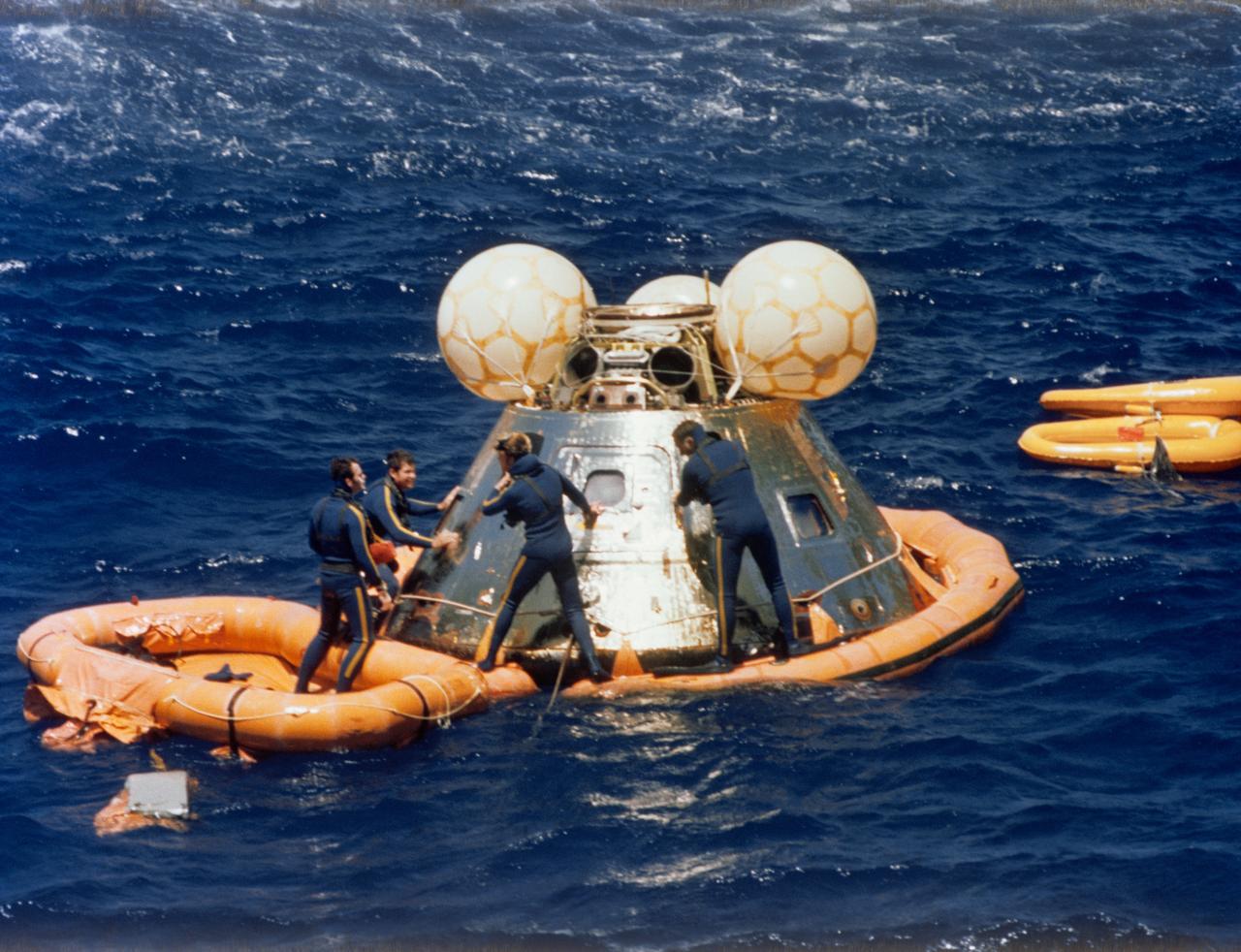
S75-29715 (24 July 1975) --- A team of U.S. Navy swimmers assists with the recovery of the ASTP Apollo Command Module following its splashdown in the Central Pacific Ocean to conclude the historic joint U.S.-USSR Apollo-Soyuz Test Project docking mission in Earth orbit. The swimmers have already attached a flotation collar to the spacecraft. The CM touched down in the Hawaiian Islands area at 4:18 p.m. (CDT), July 24, 1975. The crewmen, astronauts Thomas P. Stafford, Vance D. Brand and Donald K. Slayton, remained in the CM until it was hoisted aboard the prime recovery ship, the USS New Orleans.
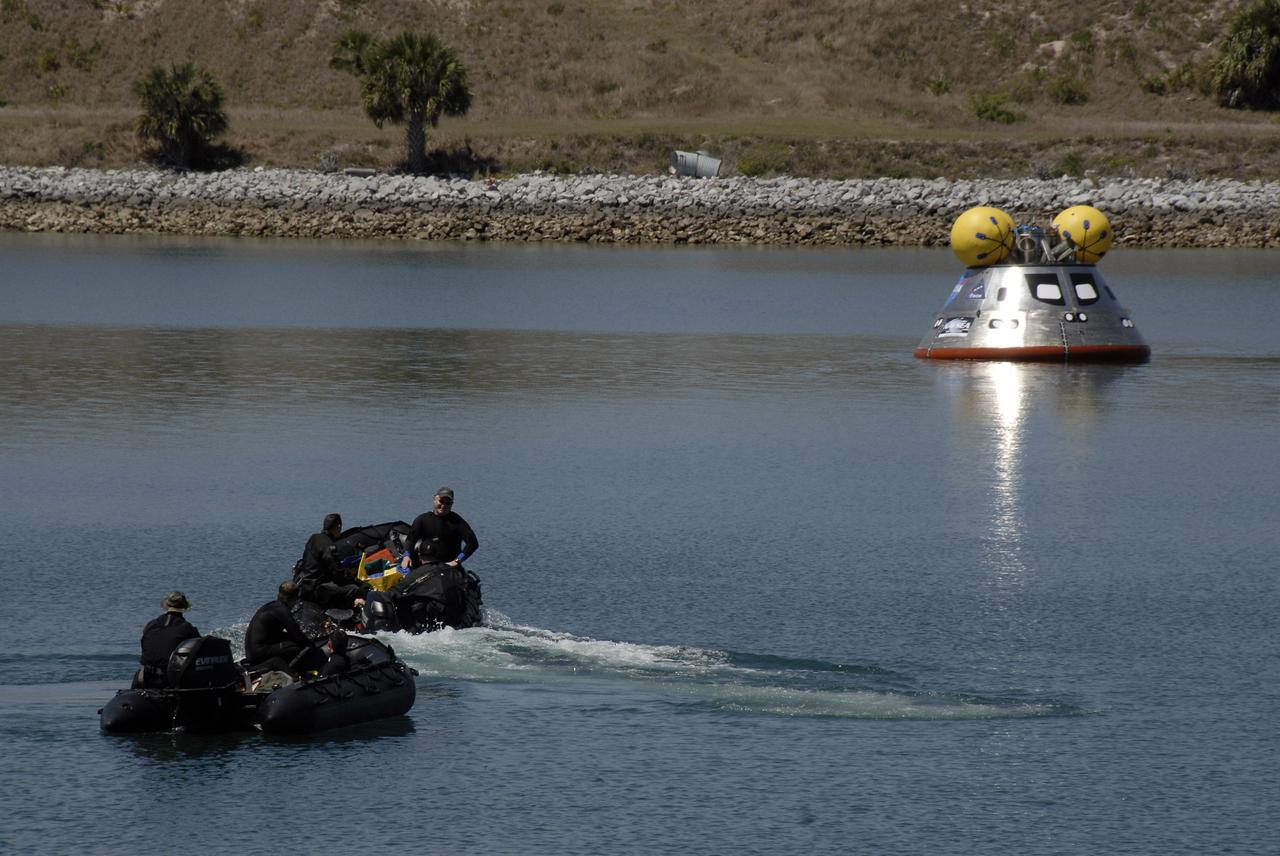
CAPE CANAVERAL, Fla. – Members of the 920th Rescue Wing make their way toward the mockup Orion crew exploration vehicle floating in the open water of the Trident Basin at Port Canaveral, Fla. They will place a flotation collar around the mockup vehicle. The mockup vehicle will undergo testing in open water. The goal of the operation, dubbed the Post-landing Orion Recovery Test, or PORT, is to determine what kind of motion astronauts can expect after landing, as well as outside conditions for recovery teams. Orion is targeted to begin carrying humans to the International Space Station in 2015 and to the moon by 2020. Orion, along with the Ares I and V rockets and the Altair lunar lander, are part of the Constellation Program. Photo credit: NASA/Kim Shiflett
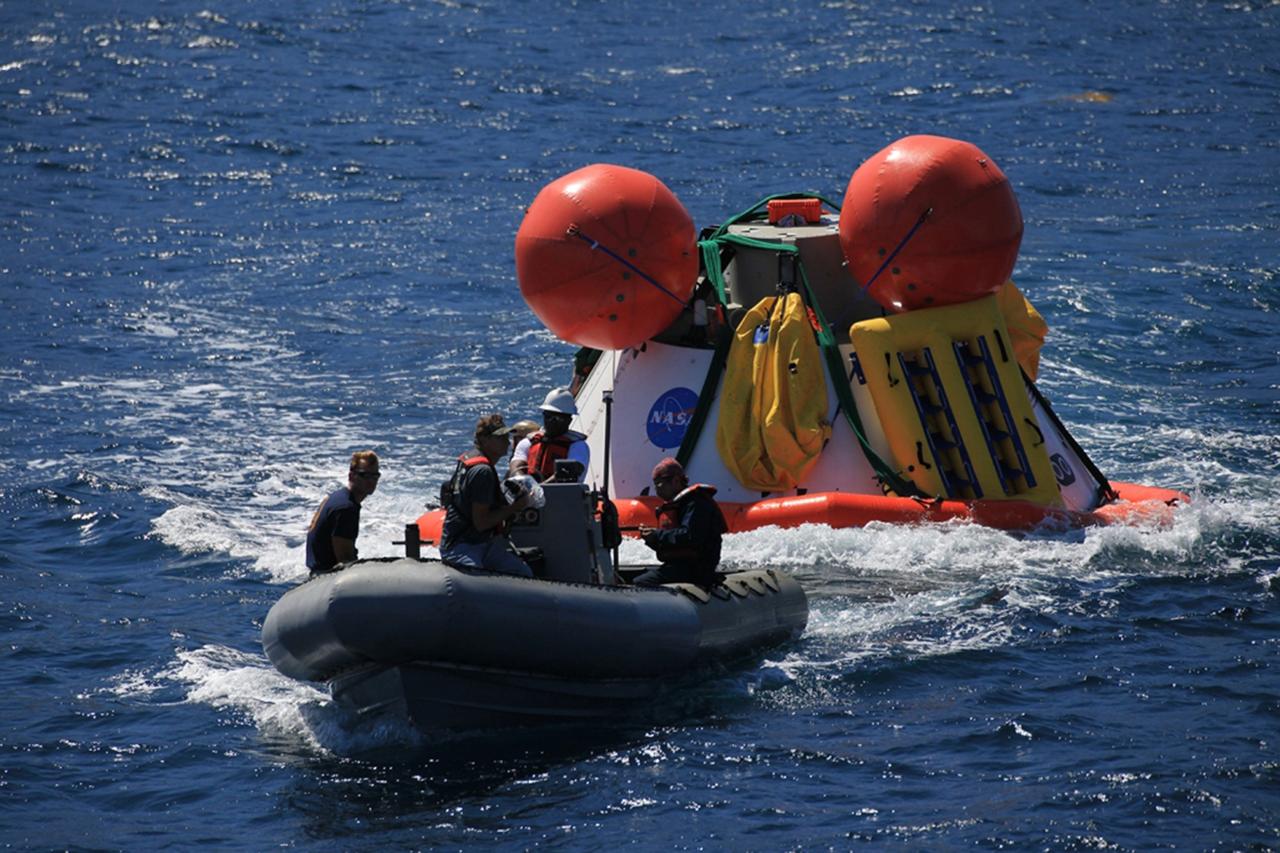
SAN DIEGO, Calif. – The Orion boilerplate test vehicle floats in the Pacific Ocean during Underway Recovery Test 4A. Orion was lowered into the water with a stationary crane from the USS Salvor, a safeguard-class rescue and salvage ship. Nearby, U.S. Navy personnel in a Zodiac boat have attached a flotation collar and tether lines to Orion to bring the test vehicle closer to the ship. NASA, Lockheed Martin and the U.S. Navy are conducting crane recovery tests to prepare for recovery of the Orion crew module on its return from a deep space mission. The underway recovery test will allow the teams to demonstrate and evaluate the recovery processes, procedures, new hardware and personnel in open waters. The Ground Systems Development and Operations Program is conducting the underway recovery test. Orion is the exploration spacecraft designed to carry astronauts to destinations not yet explored by humans, including an asteroid and Mars. It will have emergency abort capability, sustain the crew during space travel and provide safe re-entry from deep space return velocities. The first unpiloted test flight of the Orion is scheduled to launch in December 2014 atop a United Launch Alliance Delta IV Heavy rocket and in 2018 on NASA’s Space Launch System rocket. For more information, visit http://www.nasa.gov/orion. Photo credit: Kim Shiflett
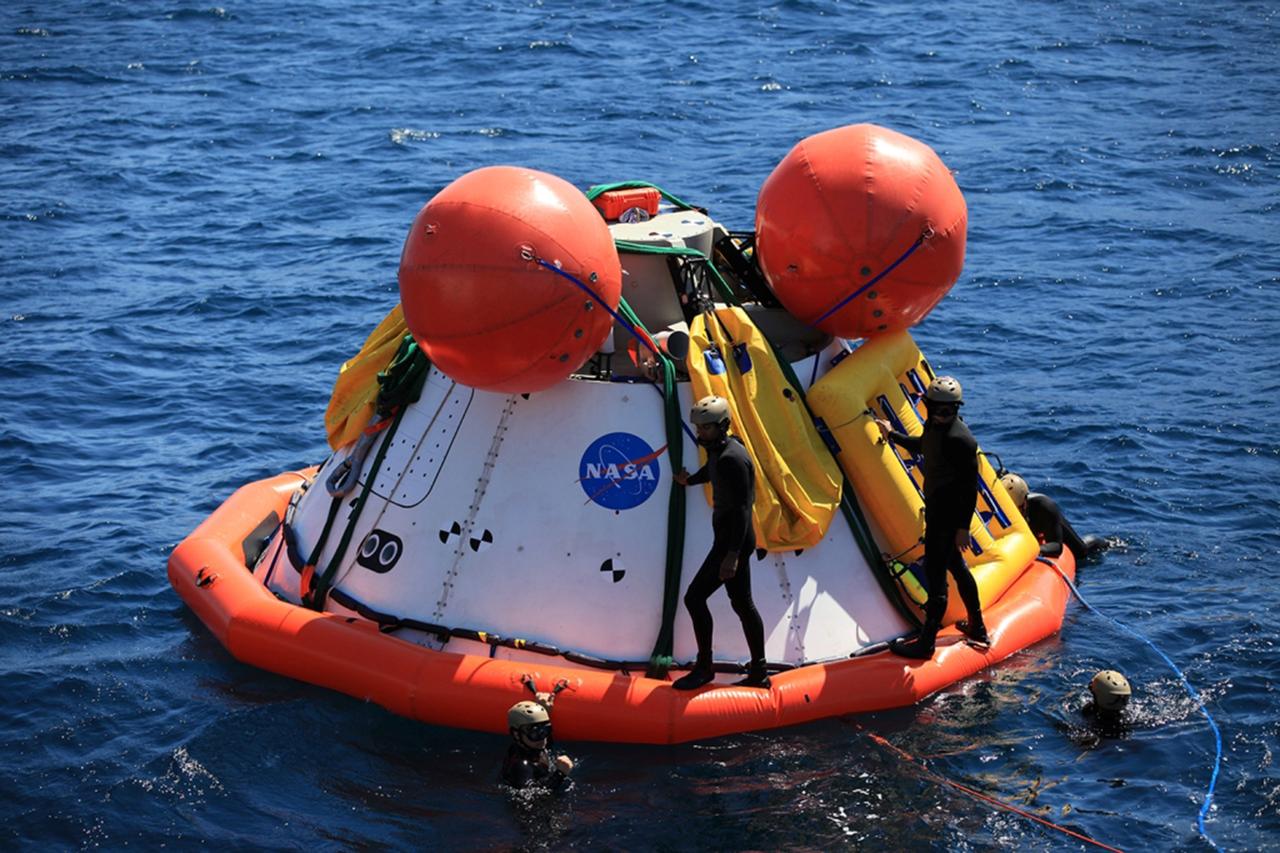
SAN DIEGO, Calif. – The Orion boilerplate test vehicle floats in the Pacific Ocean during Underway Recovery Test 4A. Orion was lowered into the water with a stationary crane from the USS Salvor, a safeguard-class rescue and salvage ship. U.S. Navy divers have attached a flotation collar and tether lines to Orion to prepare for recovery. NASA, Lockheed Martin and the U.S. Navy are conducting crane recovery tests to prepare for recovery of the Orion crew module on its return from a deep space mission. The underway recovery test will allow the teams to demonstrate and evaluate the recovery processes, procedures, new hardware and personnel in open waters. The Ground Systems Development and Operations Program is conducting the underway recovery test. Orion is the exploration spacecraft designed to carry astronauts to destinations not yet explored by humans, including an asteroid and Mars. It will have emergency abort capability, sustain the crew during space travel and provide safe re-entry from deep space return velocities. The first unpiloted test flight of the Orion is scheduled to launch in December 2014 atop a United Launch Alliance Delta IV Heavy rocket and in 2018 on NASA’s Space Launch System rocket. For more information, visit http://www.nasa.gov/orion. Photo credit: Kim Shiflett
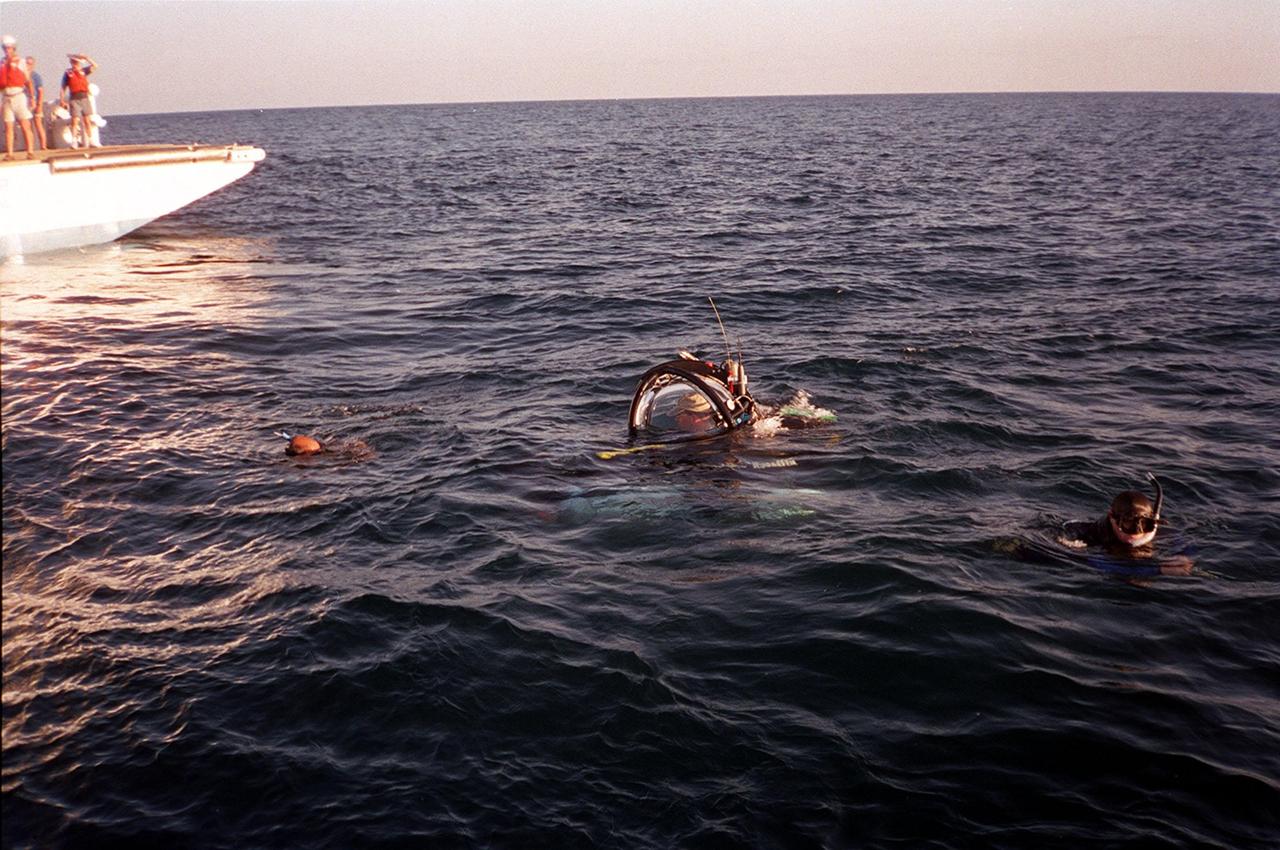
KENNEDY SPACE CENTER, FLA. -- The one-man submarine known as DeepWorker 2000 is tested in Atlantic waters near Cape Canaveral, Fla. Nearby are divers; inside the sub is the pilot, Anker Rasmussen. The sub is being tested on its ability to duplicate the sometimes hazardous job United Space Alliance (USA) divers perform to recover the expended boosters in the ocean after a launch. The boosters splash down in an impact area about 140 miles east of Jacksonville and after recovery are towed back to KSC for refurbishment by the specially rigged recovery ships. DeepWorker 2000 will be used in a demonstration during retrieval operations after the upcoming STS-101 launch. The submarine pilot will demonstrate capabilities to cut tangled parachute riser lines using a manipulator arm and attach a Diver Operator Plug to extract water and provide flotation for the booster. DeepWorker 2000 was built by Nuytco Research Ltd., North Vancouver, British Columbia. It is 8.25 feet long, 5.75 feet high, and weighs 3,800 pounds. USA is a prime contractor to NASA for the Space Shuttle program
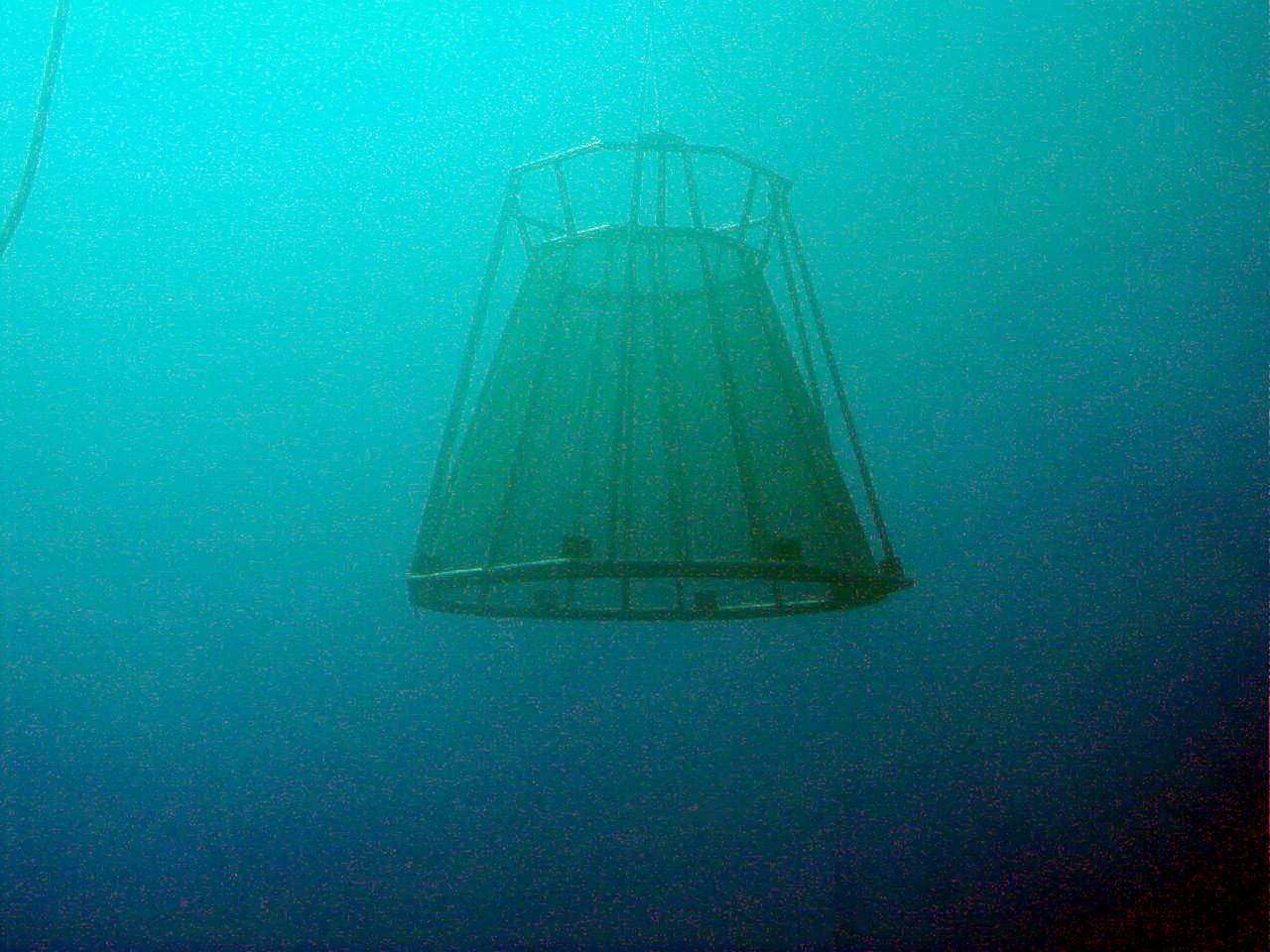
KENNEDY SPACE CENTER, FLA. -- A mockup of a solid rocket booster nozzle is lowered into the waters of the Atlantic during a test of a new booster retrieval method. A one-man submarine known as DeepWorker 2000 is being tested on its ability to duplicate the sometimes hazardous job United Space Alliance (USA) divers perform to recover the expended boosters in the ocean after a launch. The boosters splash down in an impact area about 140 miles east of Jacksonville and after recovery are towed back to KSC for refurbishment by the specially rigged recovery ships. DeepWorker 2000 will be used in a demonstration during retrieval operations after the upcoming STS-101 launch. The submarine pilot will demonstrate capabilities to cut tangled parachute riser lines using a manipulator arm and attach a Diver Operator Plug to extract water and provide flotation for the booster. DeepWorker 2000 was built by Nuytco Research Ltd., North Vancouver, British Columbia. It is 8.25 feet long, 5.75 feet high, and weighs 3,800 pounds. USA is a prime contractor to NASA for the Space Shuttle program
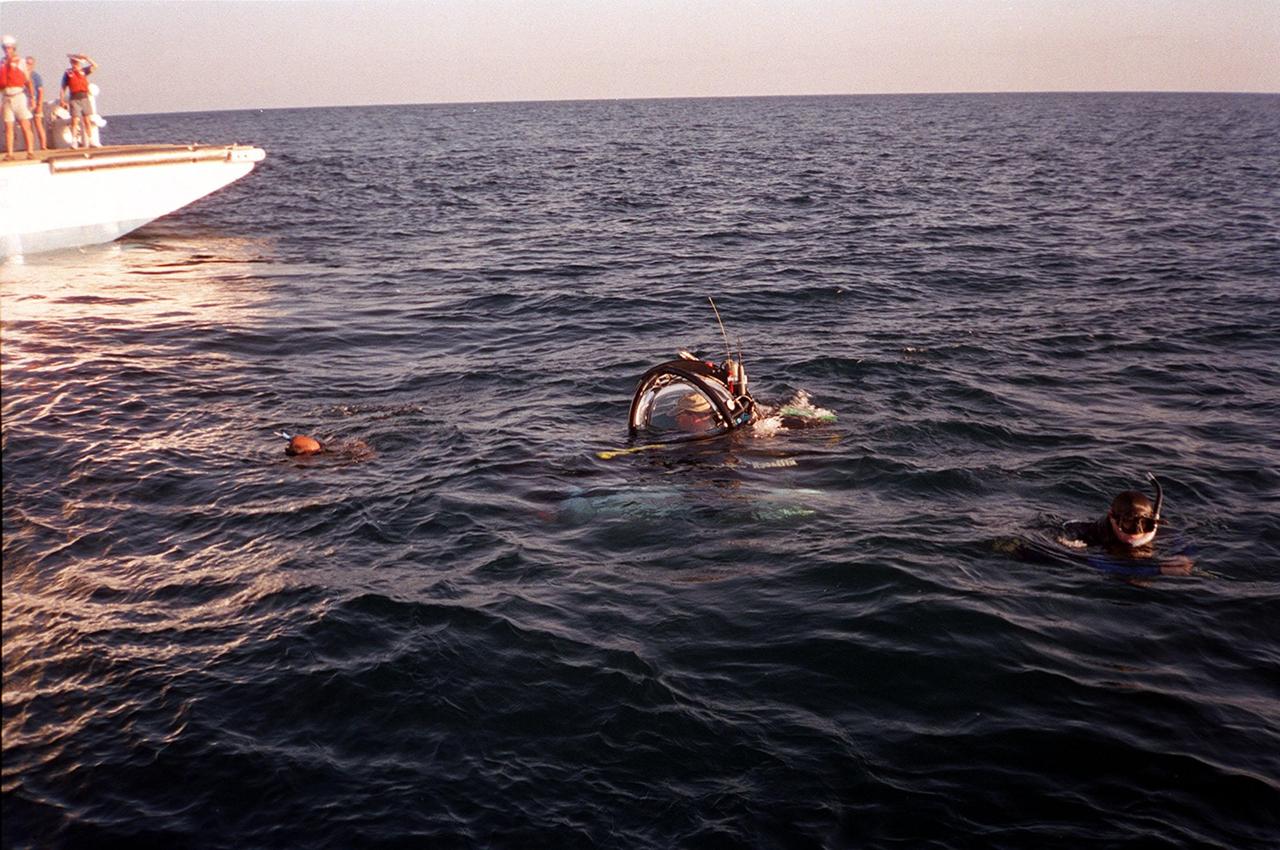
KENNEDY SPACE CENTER, FLA. -- The one-man submarine known as DeepWorker 2000 is tested in Atlantic waters near Cape Canaveral, Fla. Nearby are divers; inside the sub is the pilot, Anker Rasmussen. The sub is being tested on its ability to duplicate the sometimes hazardous job United Space Alliance (USA) divers perform to recover the expended boosters in the ocean after a launch. The boosters splash down in an impact area about 140 miles east of Jacksonville and after recovery are towed back to KSC for refurbishment by the specially rigged recovery ships. DeepWorker 2000 will be used in a demonstration during retrieval operations after the upcoming STS-101 launch. The submarine pilot will demonstrate capabilities to cut tangled parachute riser lines using a manipulator arm and attach a Diver Operator Plug to extract water and provide flotation for the booster. DeepWorker 2000 was built by Nuytco Research Ltd., North Vancouver, British Columbia. It is 8.25 feet long, 5.75 feet high, and weighs 3,800 pounds. USA is a prime contractor to NASA for the Space Shuttle program
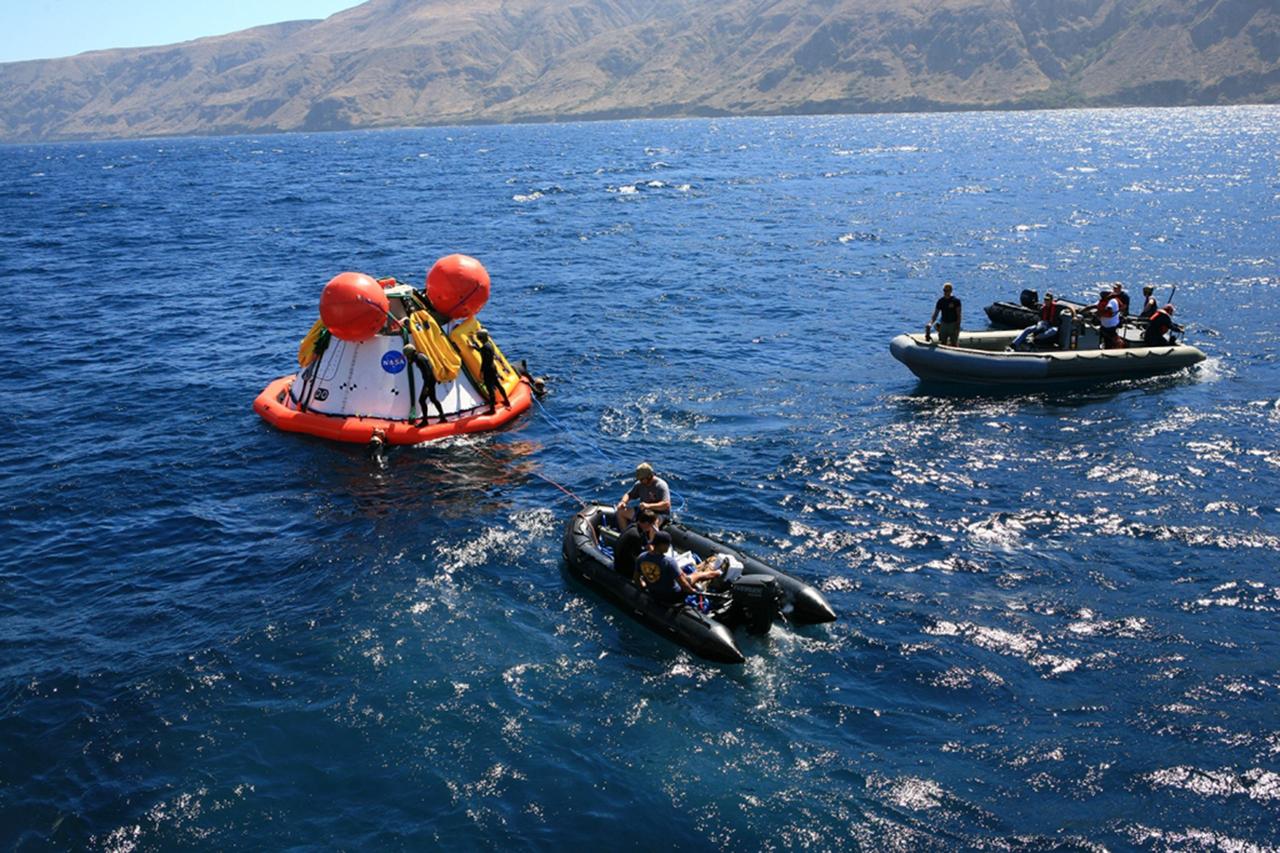
SAN DIEGO, Calif. – The Orion boilerplate test vehicle floats in the Pacific Ocean during Underway Recovery Test 4A. Orion was lowered into the water with a stationary crane from the USS Salvor, a safeguard-class rescue and salvage ship. Nearby, U.S. Navy personnel in a Zodiac boat, left, and a rigid hull inflatable boat practice procedures to tether and retrieve the test vehicle. U.S. Navy divers are standing on the flotation collar that has been placed around the test vehicle. NASA, Lockheed Martin and the U.S. Navy are conducting crane recovery tests to prepare for recovery of the Orion crew module on its return from a deep space mission. The underway recovery test will allow the teams to demonstrate and evaluate the recovery processes, procedures, new hardware and personnel in open waters. The Ground Systems Development and Operations Program is conducting the underway recovery test. Orion is the exploration spacecraft designed to carry astronauts to destinations not yet explored by humans, including an asteroid and Mars. It will have emergency abort capability, sustain the crew during space travel and provide safe re-entry from deep space return velocities. The first unpiloted test flight of the Orion is scheduled to launch in December 2014 atop a United Launch Alliance Delta IV Heavy rocket and in 2018 on NASA’s Space Launch System rocket. For more information, visit http://www.nasa.gov/orion. Photo credit: Kim Shiflett
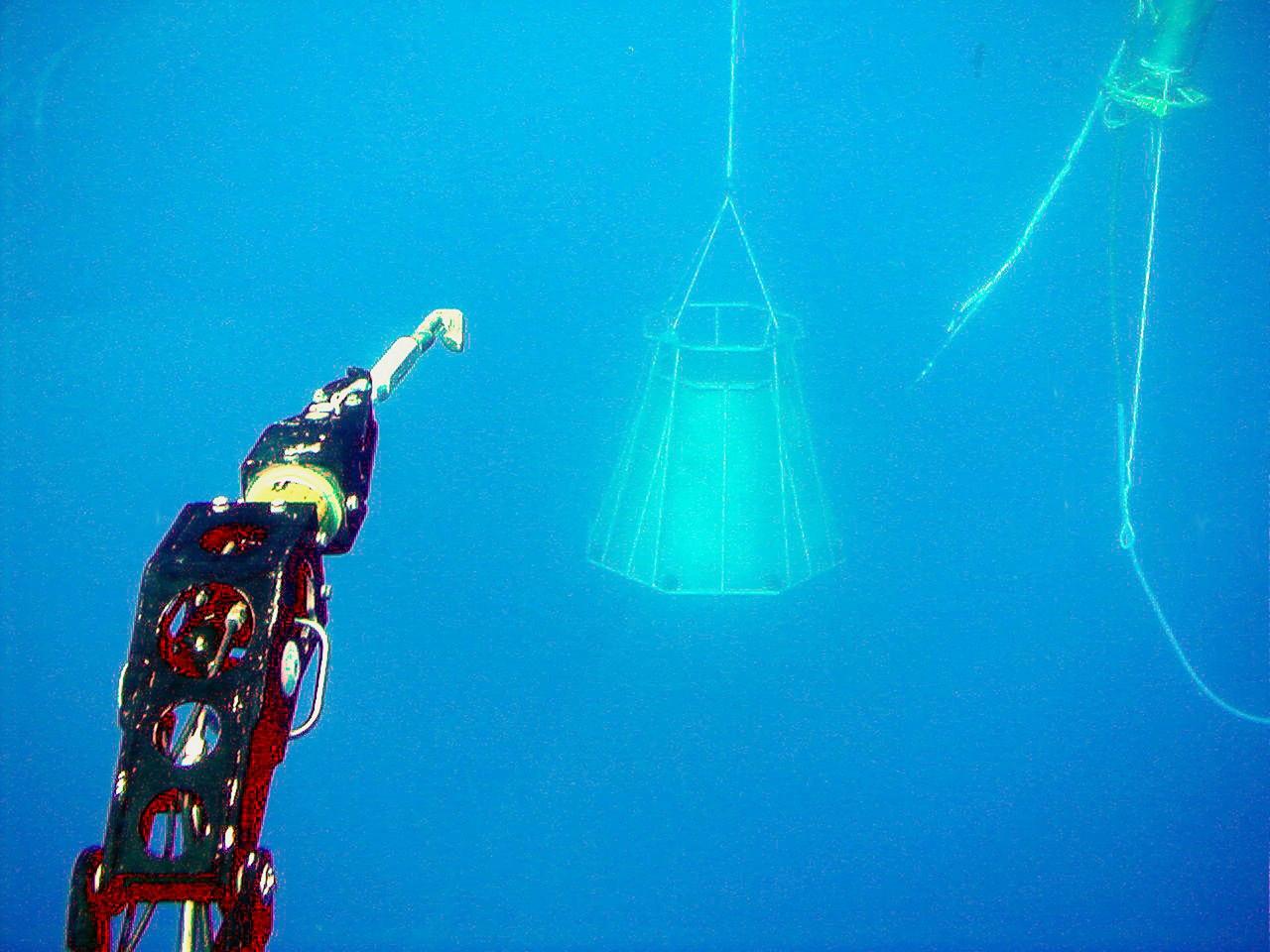
KENNEDY SPACE CENTER, FLA. -- At left, a manipulator arm on a one-man submarine demonstrates its ability to cut tangled parachute riser lines and place a Diver Operator Plug (top right) inside a mock solid rocket booster nozzle (center). Known as DeepWorker 2000, the sub is being tested on its ability to duplicate the sometimes hazardous job United Space Alliance (USA) divers perform to recover the expended boosters in the ocean after a launch. The boosters splash down in an impact area about 140 miles east of Jacksonville and after recovery are towed back to KSC for refurbishment by the specially rigged recovery ships. DeepWorker 2000 will be used in a demonstration during retrieval operations after the upcoming STS-101 launch. The submarine pilot will demonstrate capabilities to cut tangled parachute riser lines using a manipulator arm and attach the DOP to extract water and provide flotation for the booster. DeepWorker 2000 was built by Nuytco Research Ltd., North Vancouver, British Columbia. It is 8.25 feet long, 5.75 feet high, and weighs 3,800 pounds. USA is a prime contractor to NASA for the Space Shuttle program
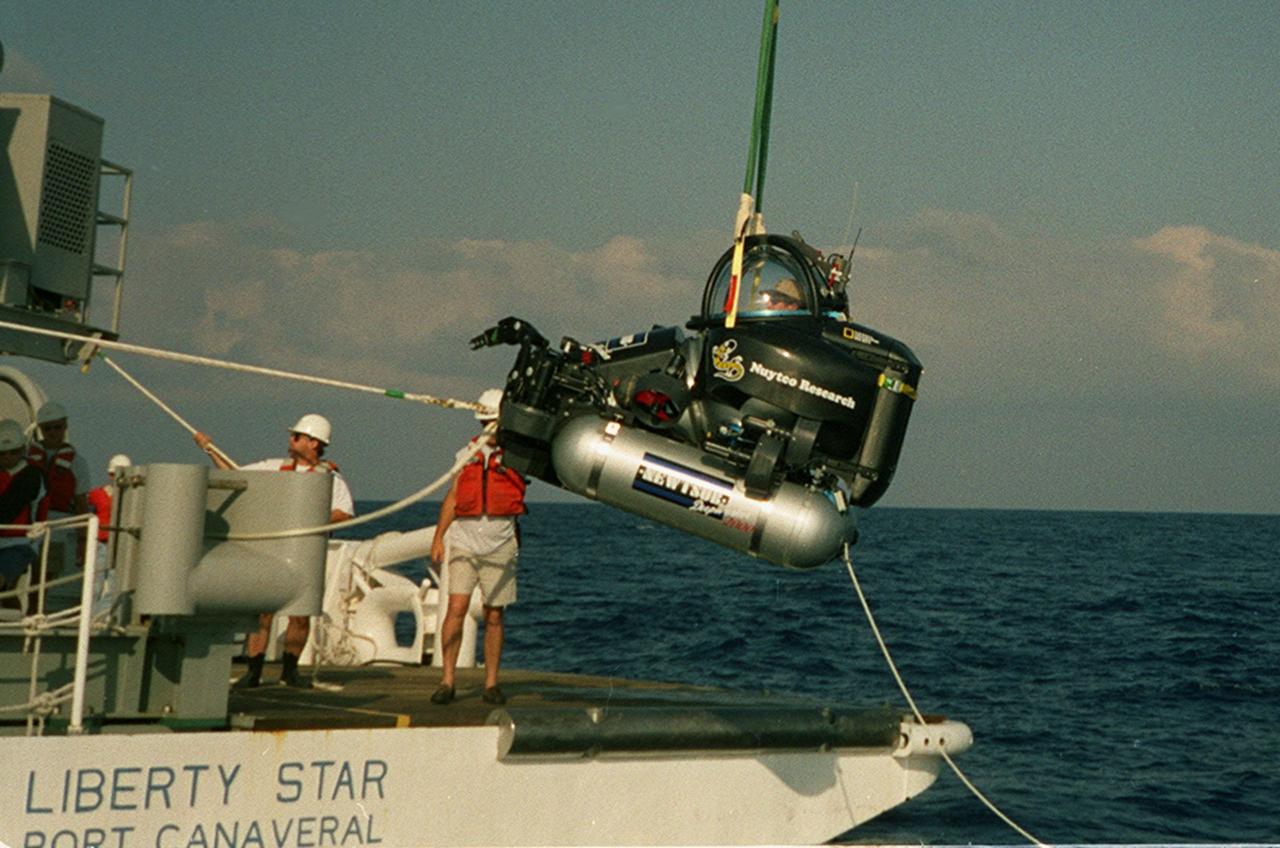
KENNEDY SPACE CENTER, FLA. -- After a successful dive, the one-man submarine known as DeepWorker 2000 is lifted from Atlantic waters near Cape Canaveral, Fla., onto the deck of the Liberty Star, one of two KSC solid rocket booster recovery ships. Inside the sub is the pilot, Anker Rasmussen. The sub is being tested on its ability to duplicate the sometimes hazardous job United Space Alliance (USA) divers perform to recover the expended boosters in the ocean after a launch. The boosters splash down in an impact area about 140 miles east of Jacksonville and after recovery are towed back to KSC for refurbishment by the specially rigged recovery ships. DeepWorker 2000 will be used in a demonstration during retrieval operations after the upcoming STS-101 launch. The submarine pilot will demonstrate capabilities to cut tangled parachute riser lines using a manipulator arm and attach a Diver Operator Plug to extract water and provide flotation for the booster. DeepWorker 2000 was built by Nuytco Research Ltd., North Vancouver, British Columbia. It is 8.25 feet long, 5.75 feet high, and weighs 3,800 pounds. USA is a prime contractor to NASA for the Space Shuttle program
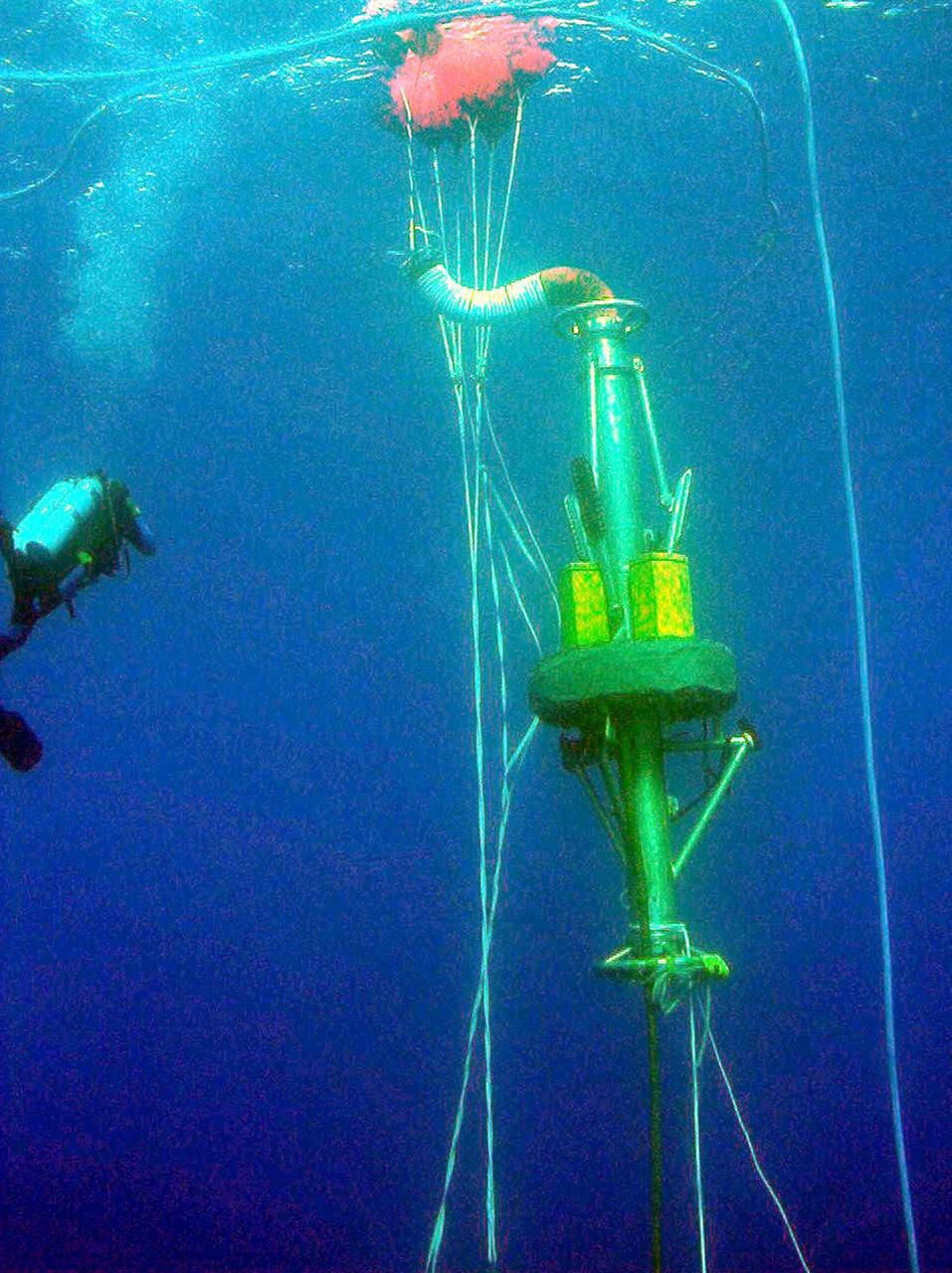
KENNEDY SPACE CENTER, FLA. -- A Diver Operator Plug (DOP) is being pulled down into the ocean by a newly designed one-man submarine known as DeepWorker 2000. The activity is part of an operation to attach the plug to a mockup of a solid rocket booster nozzle. DeepWorker 2000 is being tested on its ability to duplicate the sometimes hazardous job United Space Alliance (USA) divers perform to recover the expended boosters in the ocean after a launch. The boosters splash down in an impact area about 140 miles east of Jacksonville and after recovery are towed back to KSC for refurbishment by the specially rigged recovery ships. DeepWorker 2000 will be used in a demonstration during retrieval operations after the upcoming STS-101 launch. The submarine pilot will demonstrate capabilities to cut tangled parachute riser lines using a manipulator arm and attach the DOP to extract water and provide flotation for the booster. DeepWorker 2000 was built by Nuytco Research Ltd., North Vancouver, British Columbia. It is 8.25 feet long, 5.75 feet high, and weighs 3,800 pounds. USA is a prime contractor to NASA for the Space Shuttle program
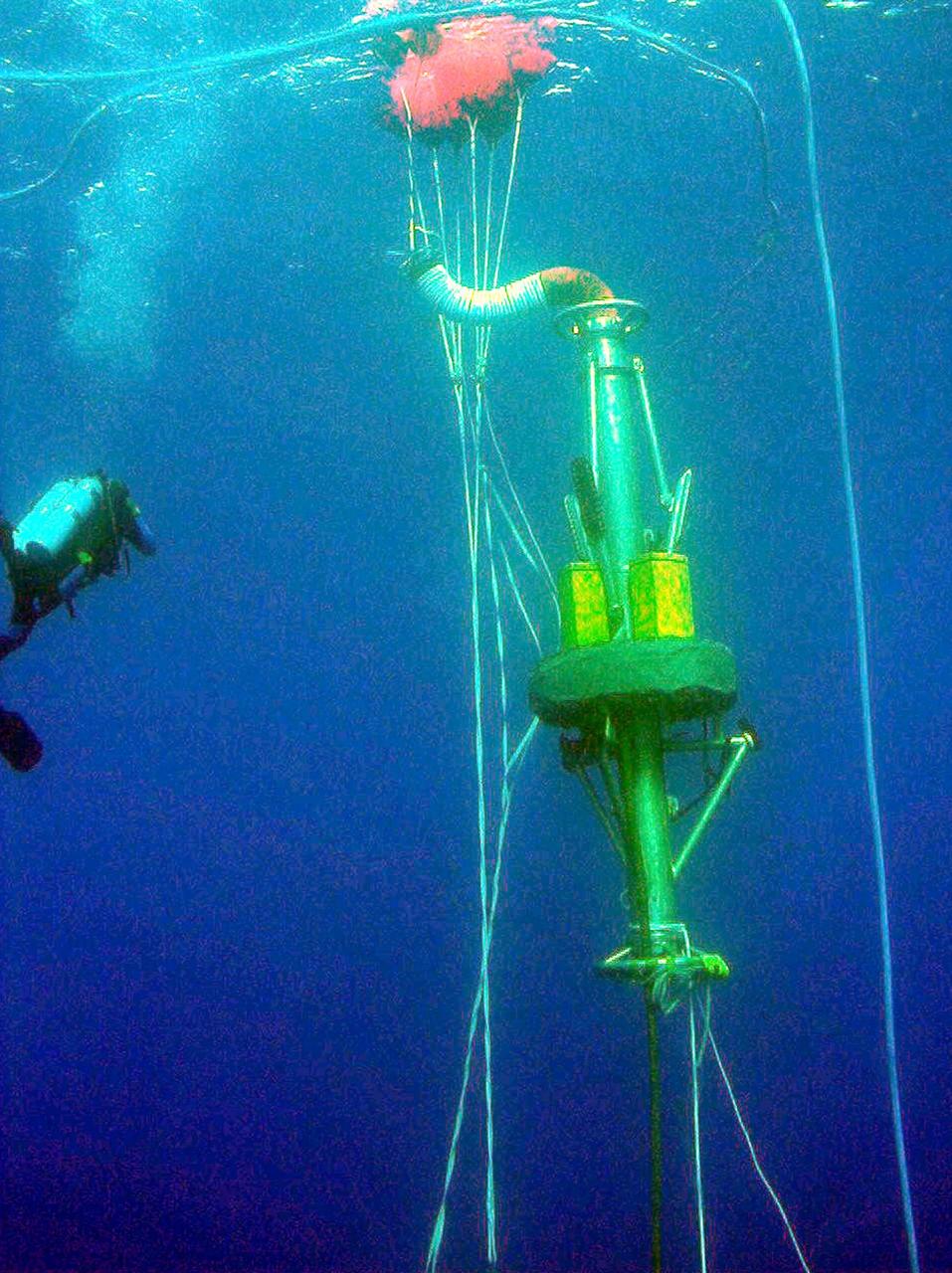
KENNEDY SPACE CENTER, FLA. -- A Diver Operator Plug (DOP) is being pulled down into the ocean by a newly designed one-man submarine known as DeepWorker 2000. The activity is part of an operation to attach the plug to a mockup of a solid rocket booster nozzle. DeepWorker 2000 is being tested on its ability to duplicate the sometimes hazardous job United Space Alliance (USA) divers perform to recover the expended boosters in the ocean after a launch. The boosters splash down in an impact area about 140 miles east of Jacksonville and after recovery are towed back to KSC for refurbishment by the specially rigged recovery ships. DeepWorker 2000 will be used in a demonstration during retrieval operations after the upcoming STS-101 launch. The submarine pilot will demonstrate capabilities to cut tangled parachute riser lines using a manipulator arm and attach the DOP to extract water and provide flotation for the booster. DeepWorker 2000 was built by Nuytco Research Ltd., North Vancouver, British Columbia. It is 8.25 feet long, 5.75 feet high, and weighs 3,800 pounds. USA is a prime contractor to NASA for the Space Shuttle program
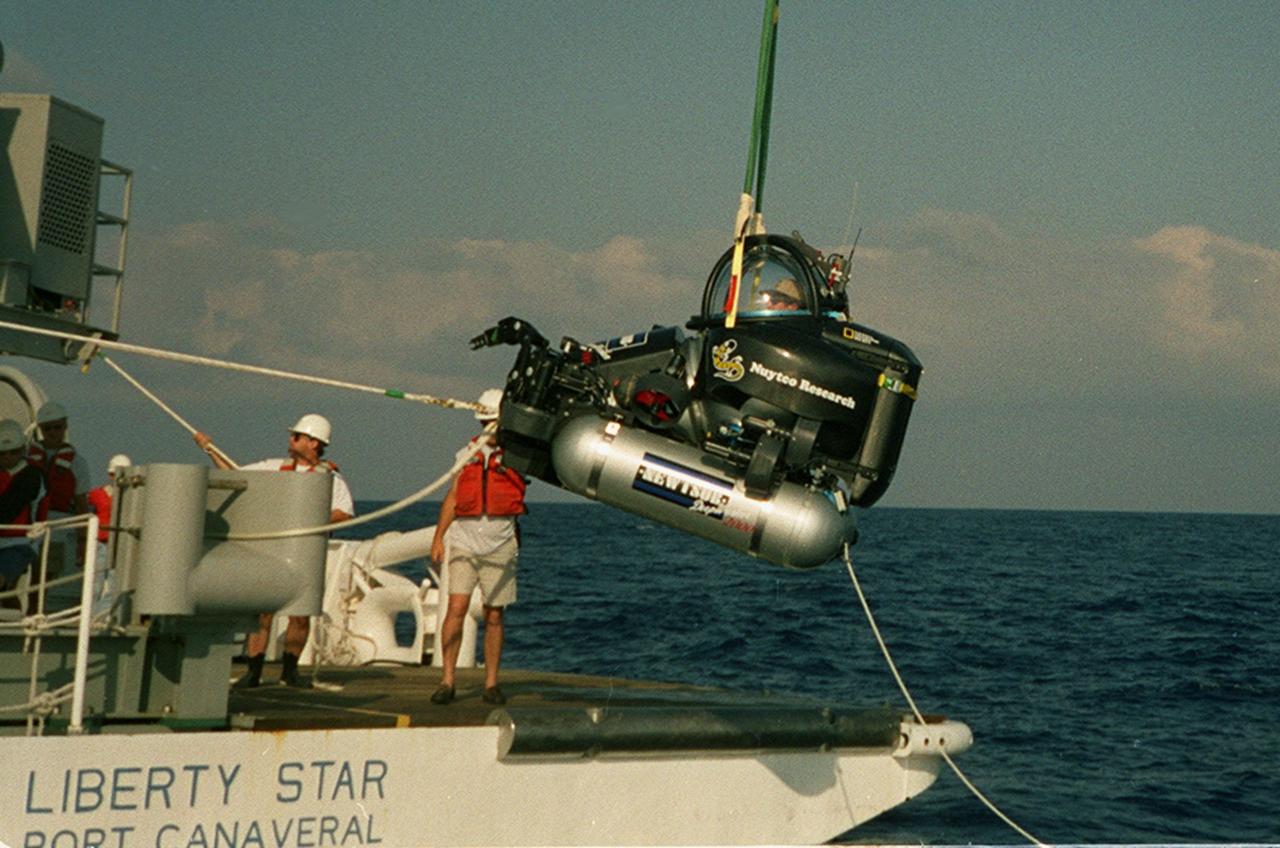
KENNEDY SPACE CENTER, FLA. -- After a successful dive, the one-man submarine known as DeepWorker 2000 is lifted from Atlantic waters near Cape Canaveral, Fla., onto the deck of the Liberty Star, one of two KSC solid rocket booster recovery ships. Inside the sub is the pilot, Anker Rasmussen. The sub is being tested on its ability to duplicate the sometimes hazardous job United Space Alliance (USA) divers perform to recover the expended boosters in the ocean after a launch. The boosters splash down in an impact area about 140 miles east of Jacksonville and after recovery are towed back to KSC for refurbishment by the specially rigged recovery ships. DeepWorker 2000 will be used in a demonstration during retrieval operations after the upcoming STS-101 launch. The submarine pilot will demonstrate capabilities to cut tangled parachute riser lines using a manipulator arm and attach a Diver Operator Plug to extract water and provide flotation for the booster. DeepWorker 2000 was built by Nuytco Research Ltd., North Vancouver, British Columbia. It is 8.25 feet long, 5.75 feet high, and weighs 3,800 pounds. USA is a prime contractor to NASA for the Space Shuttle program
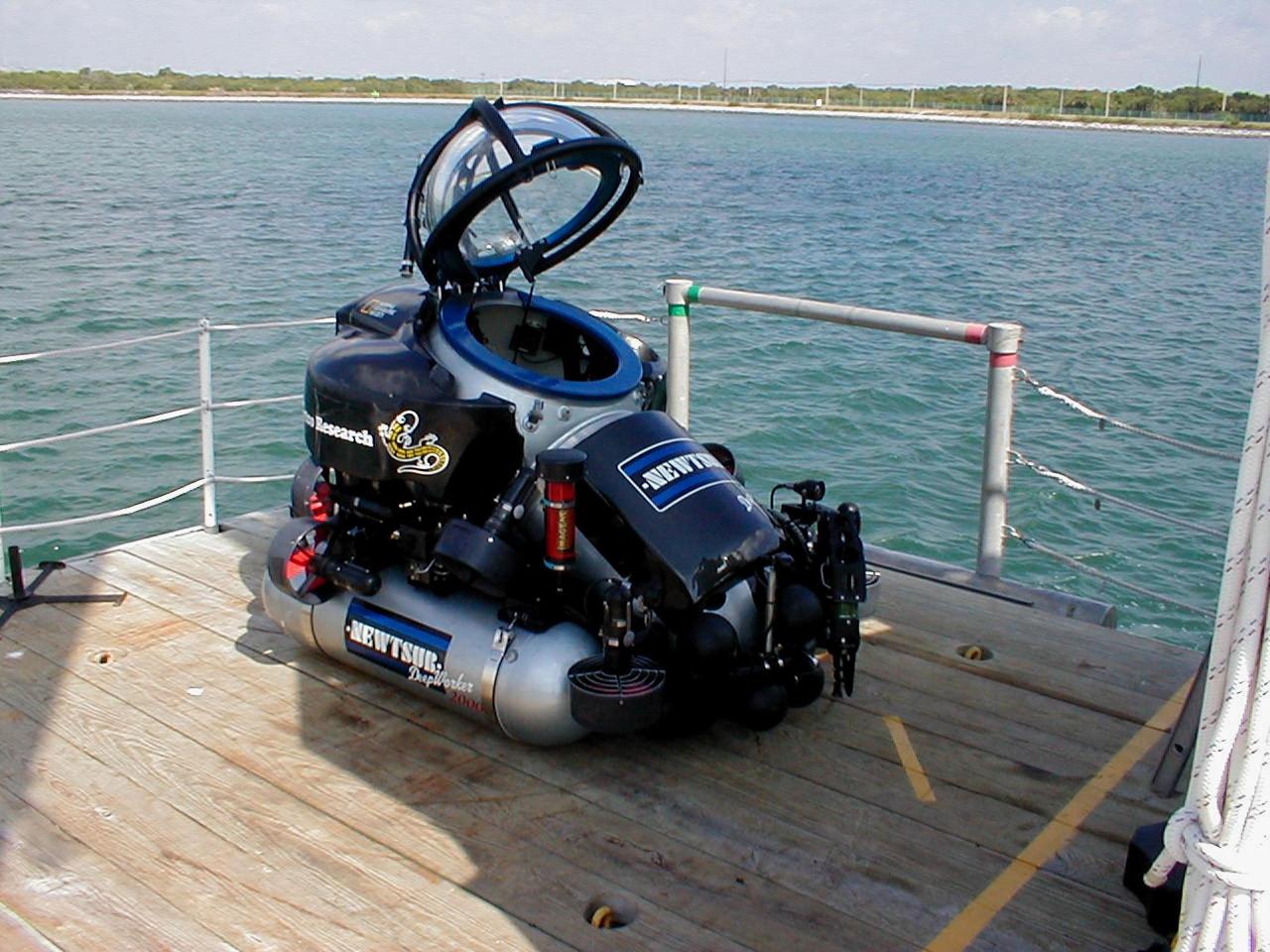
KENNEDY SPACE CENTER, FLA. -- The one-man submarine dubbed DeepWorker 2000 sits on the deck of Liberty Star, one of two KSC solid rocket booster recovery ships. The sub is being tested on its ability to duplicate the sometimes hazardous job United Space Alliance (USA) divers perform to recover the expended boosters in the ocean after a launch. The boosters splash down in an impact area about 140 miles east of Jacksonville and after recovery are towed back to KSC for refurbishment by the specially rigged recovery ships. DeepWorker 2000 will be used in a demonstration during retrieval operations after the upcoming STS-101 launch. The submarine pilot will demonstrate capabilities to cut tangled parachute riser lines using a manipulator arm and attach a Diver Operator Plug to extract water and provide flotation for the booster. DeepWorker 2000 was built by Nuytco Research Ltd., North Vancouver, British Columbia. It is 8.25 feet long, 5.75 feet high, and weighs 3,800 pounds. USA is a prime contractor to NASA for the Space Shuttle program
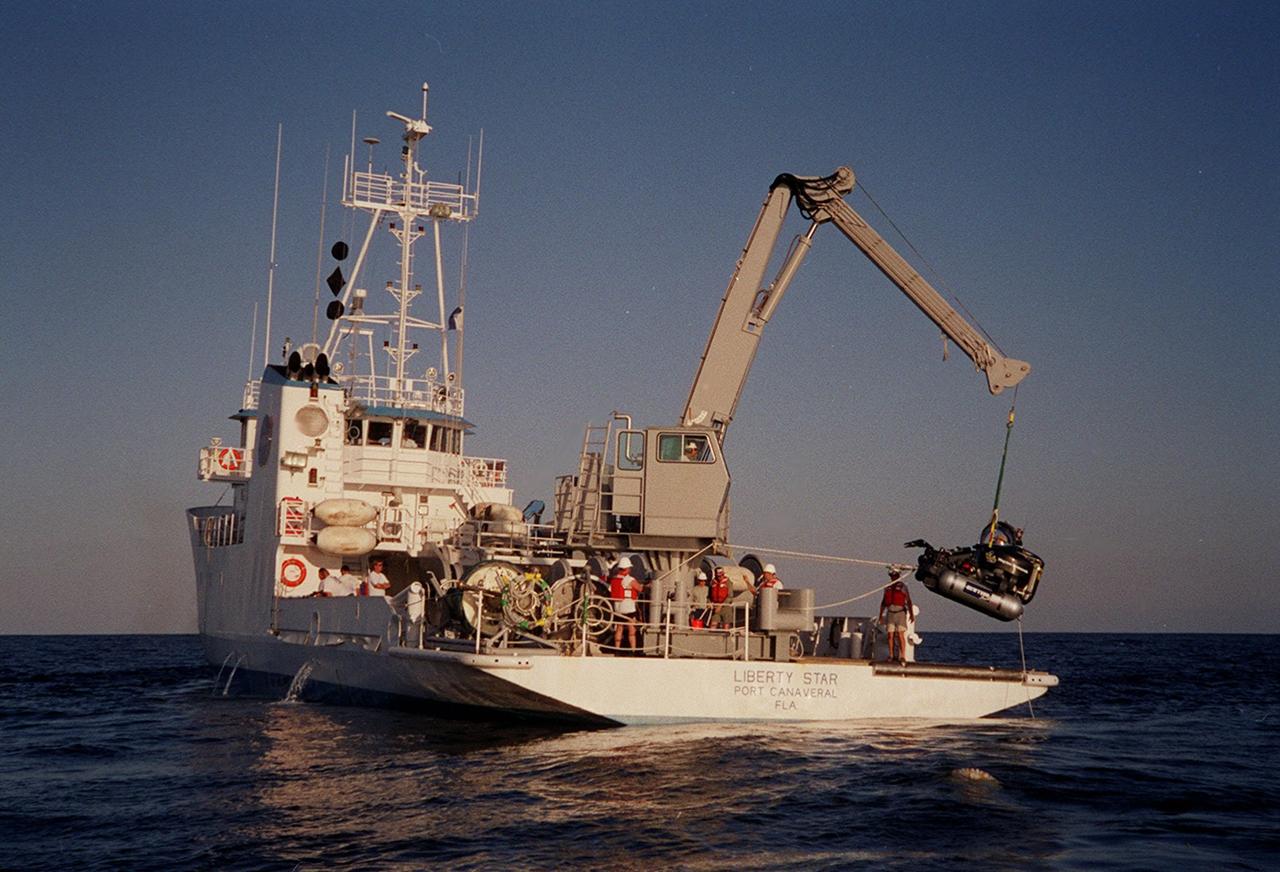
KENNEDY SPACE CENTER, FLA. -- From the deck of Liberty Star, one of two KSC solid rocket booster recovery ships, a crane lowers a one-man submarine into the ocean near Cape Canaveral, Fla. Called DeepWorker 2000, the sub is being tested on its ability to duplicate the sometimes hazardous job United Space Alliance (USA) divers perform to recover the expended boosters in the ocean after a launch. The boosters splash down in an impact area about 140 miles east of Jacksonville and after recovery are towed back to KSC for refurbishment by the specially rigged recovery ships. DeepWorker 2000 will be used in a demonstration during retrieval operations after the upcoming STS-101 launch. The submarine pilot will demonstrate capabilities to cut tangled parachute riser lines using a manipulator arm and attach a Diver Operator Plug to extract water and provide flotation for the booster. DeepWorker 2000 was built by Nuytco Research Ltd., North Vancouver, British Columbia. It is 8.25 feet long, 5.75 feet high, and weighs 3,800 pounds. USA is a prime contractor to NASA for the Space Shuttle program
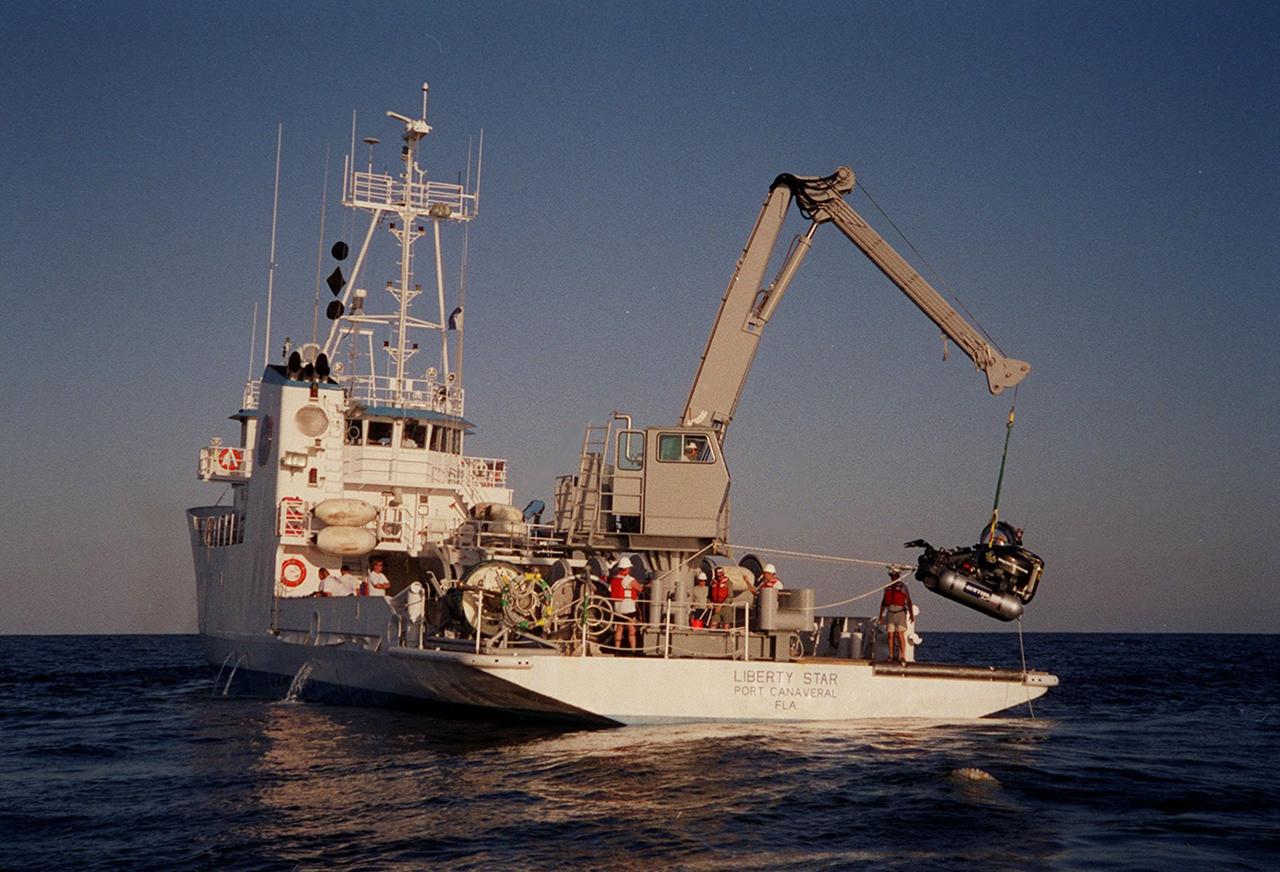
KENNEDY SPACE CENTER, FLA. -- From the deck of Liberty Star, one of two KSC solid rocket booster recovery ships, a crane lowers a one-man submarine into the ocean near Cape Canaveral, Fla. Called DeepWorker 2000, the sub is being tested on its ability to duplicate the sometimes hazardous job United Space Alliance (USA) divers perform to recover the expended boosters in the ocean after a launch. The boosters splash down in an impact area about 140 miles east of Jacksonville and after recovery are towed back to KSC for refurbishment by the specially rigged recovery ships. DeepWorker 2000 will be used in a demonstration during retrieval operations after the upcoming STS-101 launch. The submarine pilot will demonstrate capabilities to cut tangled parachute riser lines using a manipulator arm and attach a Diver Operator Plug to extract water and provide flotation for the booster. DeepWorker 2000 was built by Nuytco Research Ltd., North Vancouver, British Columbia. It is 8.25 feet long, 5.75 feet high, and weighs 3,800 pounds. USA is a prime contractor to NASA for the Space Shuttle program
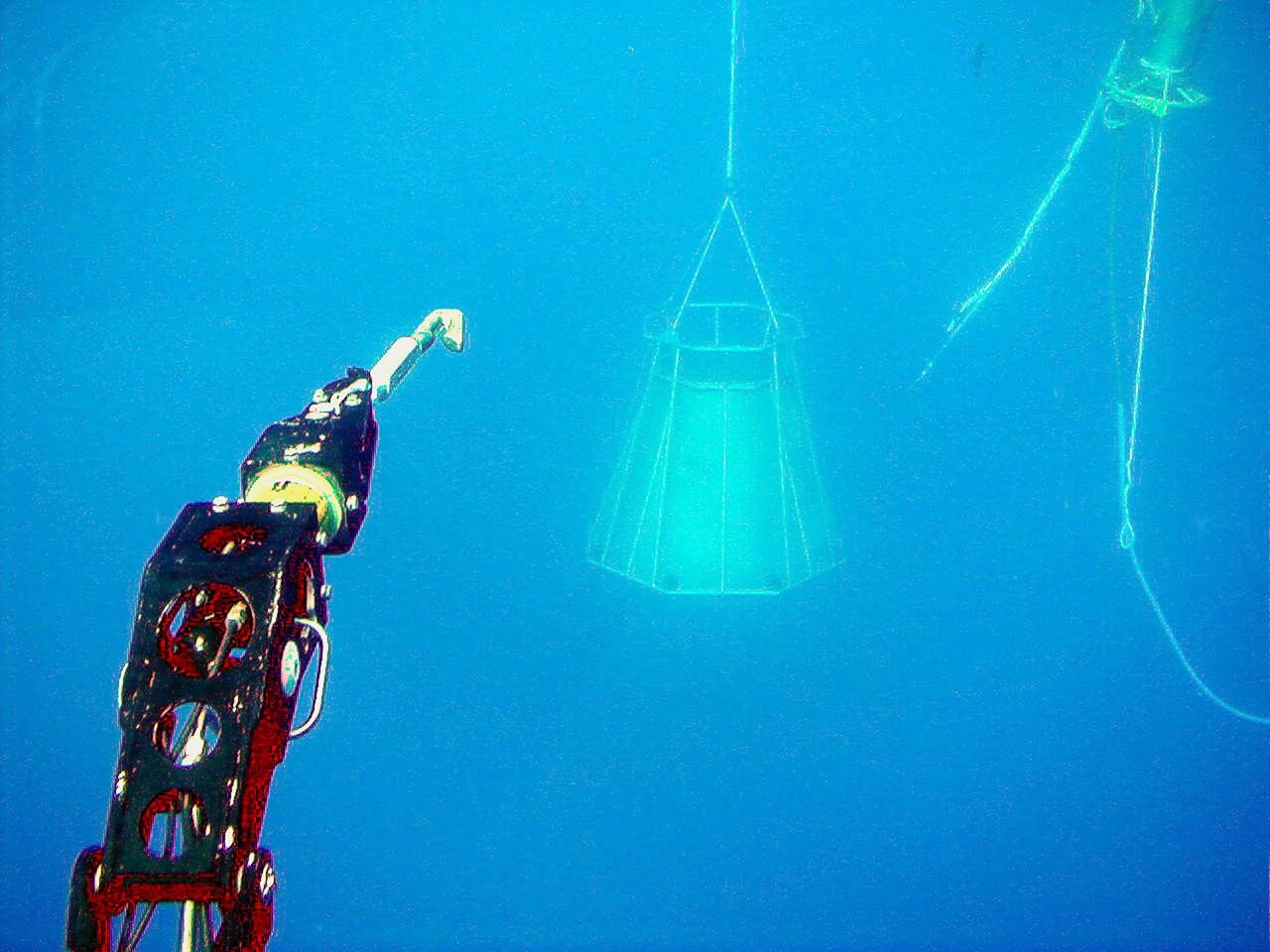
KENNEDY SPACE CENTER, FLA. -- At left, a manipulator arm on a one-man submarine demonstrates its ability to cut tangled parachute riser lines and place a Diver Operator Plug (top right) inside a mock solid rocket booster nozzle (center). Known as DeepWorker 2000, the sub is being tested on its ability to duplicate the sometimes hazardous job United Space Alliance (USA) divers perform to recover the expended boosters in the ocean after a launch. The boosters splash down in an impact area about 140 miles east of Jacksonville and after recovery are towed back to KSC for refurbishment by the specially rigged recovery ships. DeepWorker 2000 will be used in a demonstration during retrieval operations after the upcoming STS-101 launch. The submarine pilot will demonstrate capabilities to cut tangled parachute riser lines using a manipulator arm and attach the DOP to extract water and provide flotation for the booster. DeepWorker 2000 was built by Nuytco Research Ltd., North Vancouver, British Columbia. It is 8.25 feet long, 5.75 feet high, and weighs 3,800 pounds. USA is a prime contractor to NASA for the Space Shuttle program