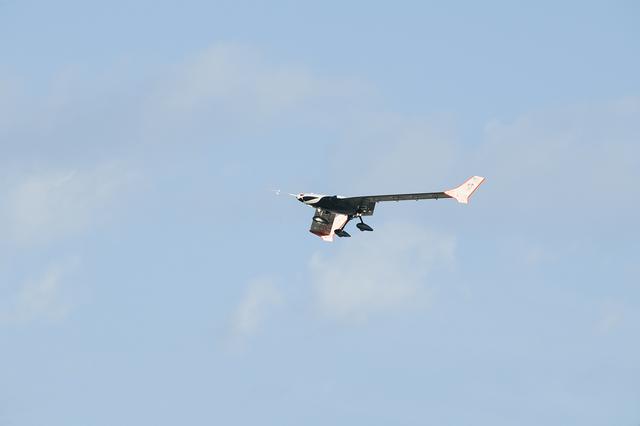
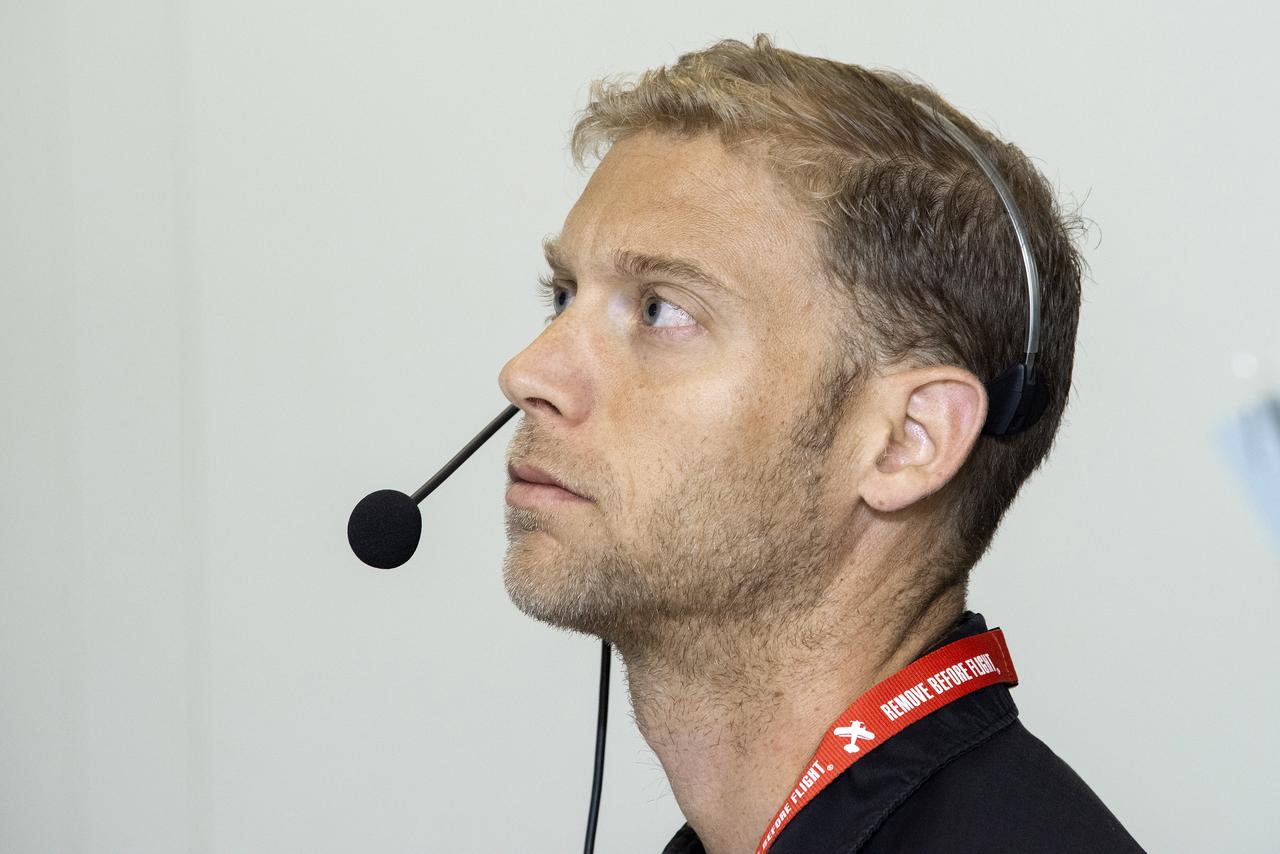
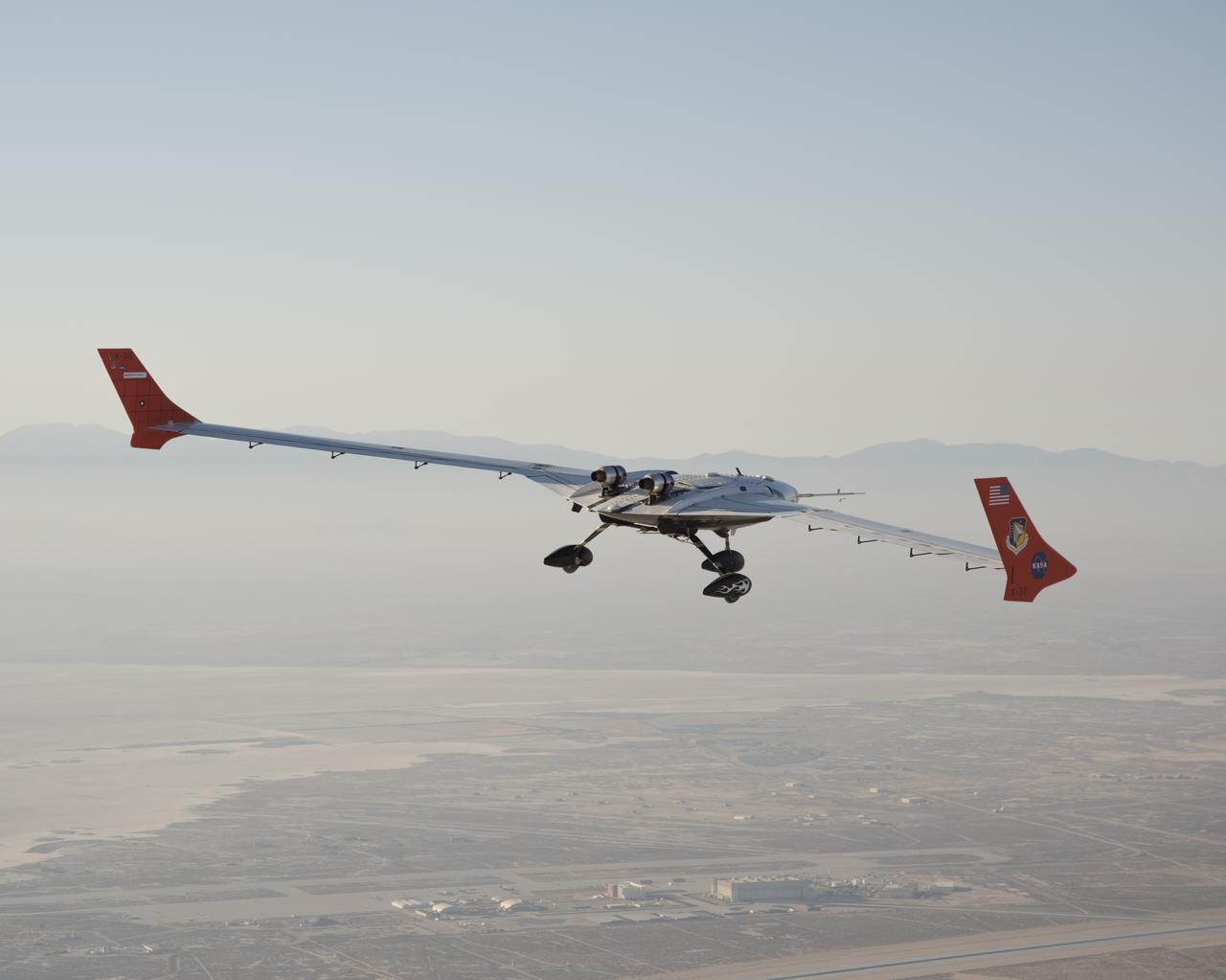
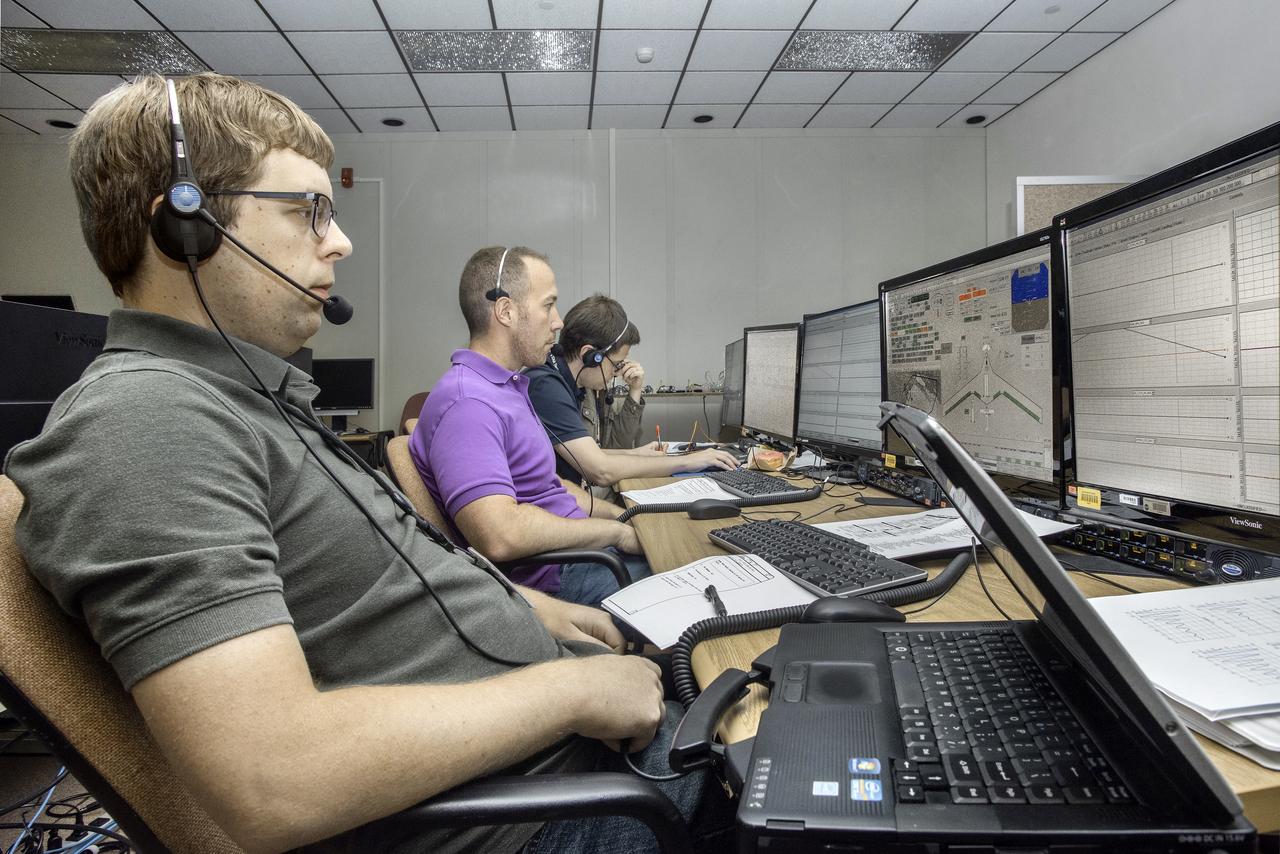
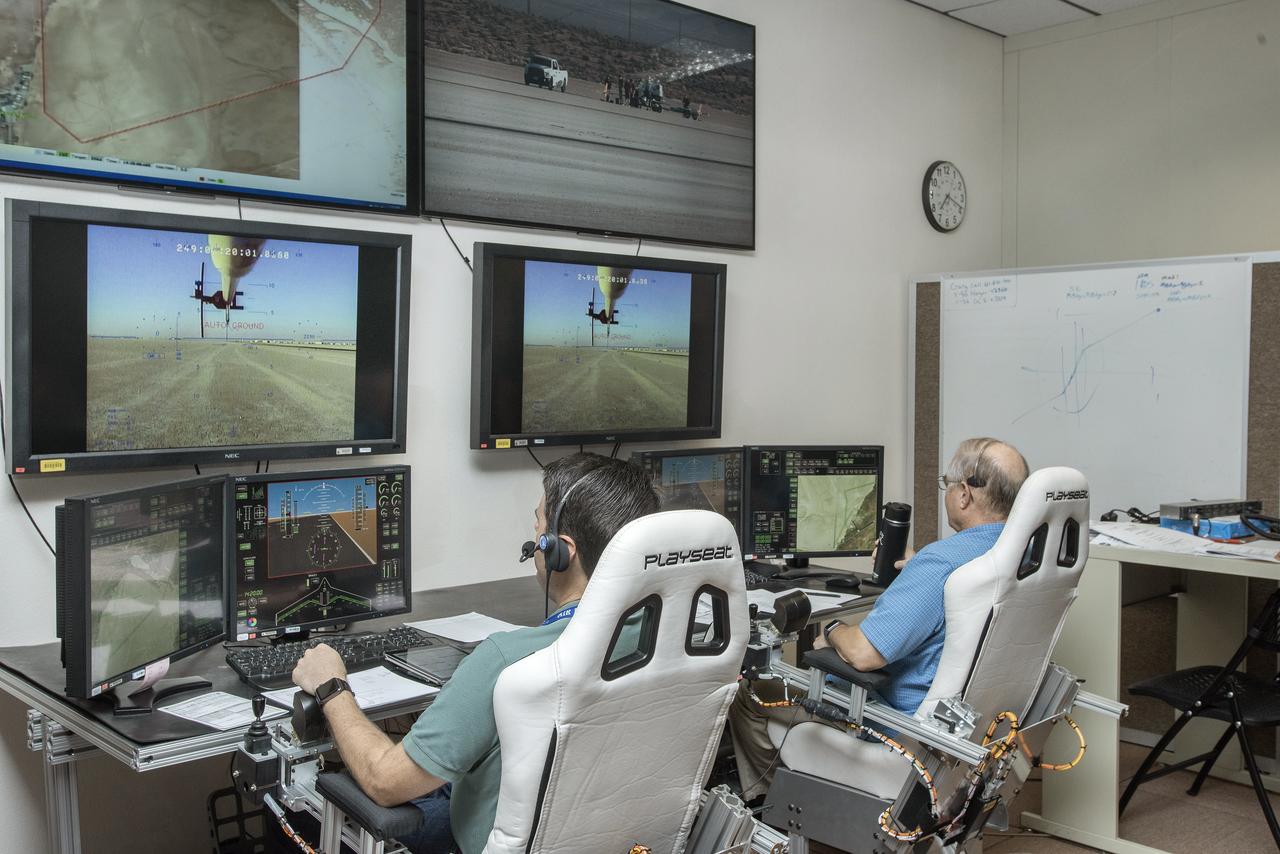
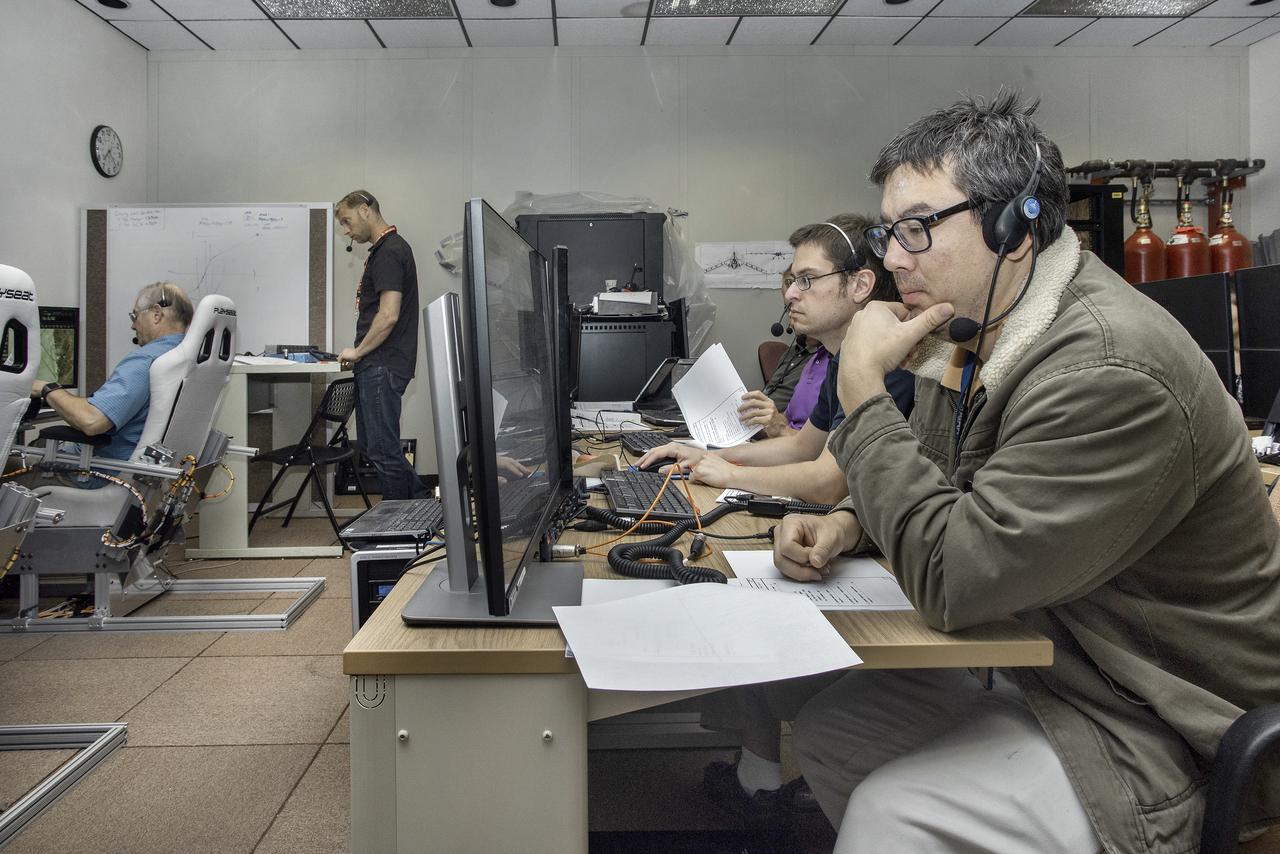
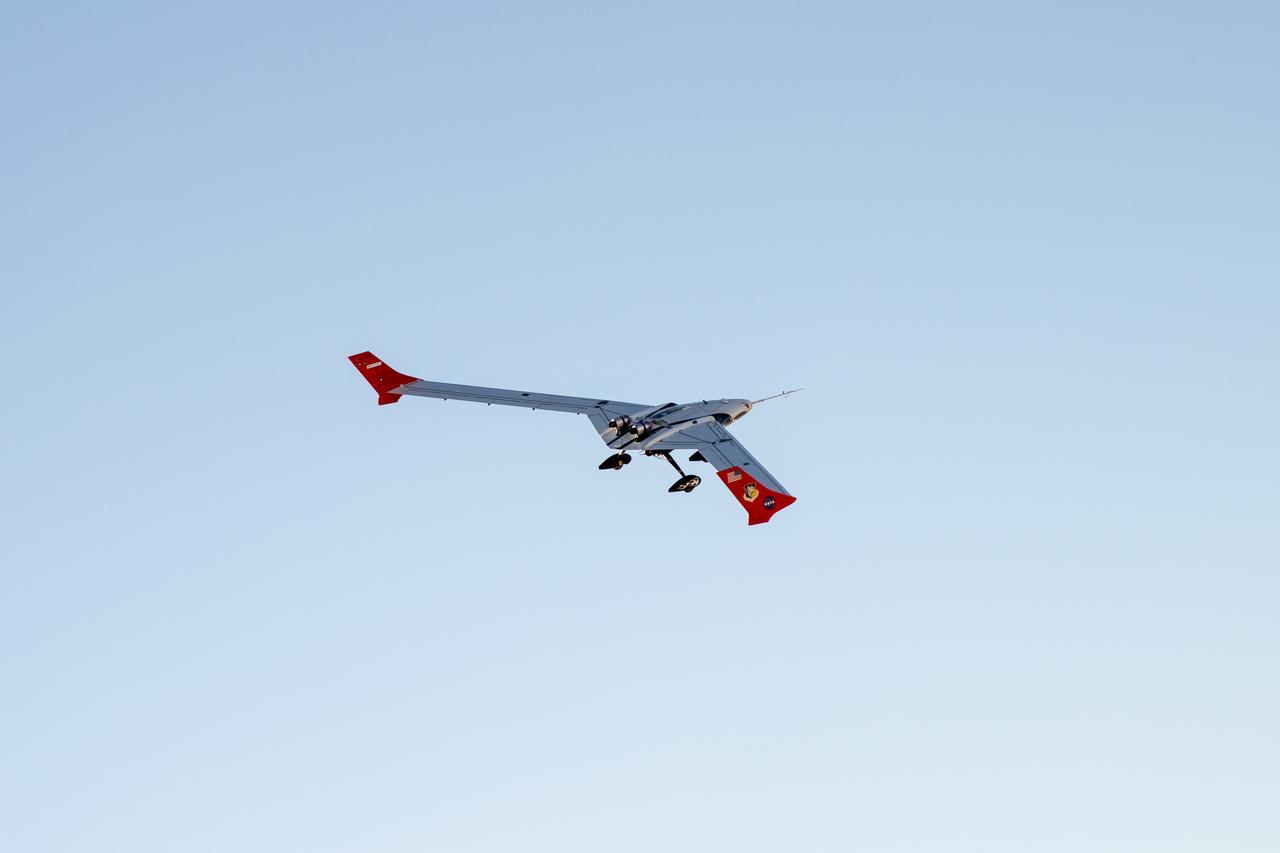
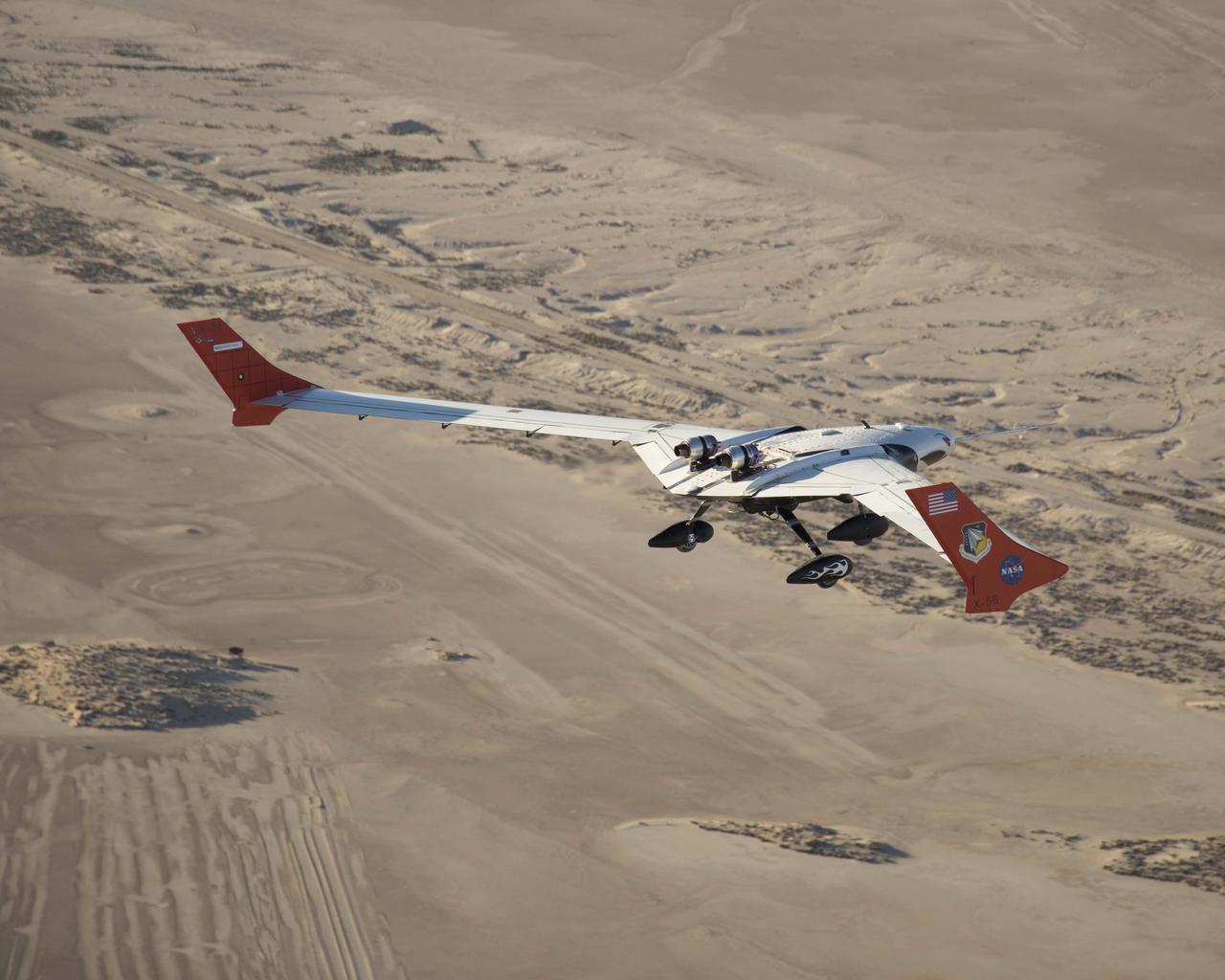
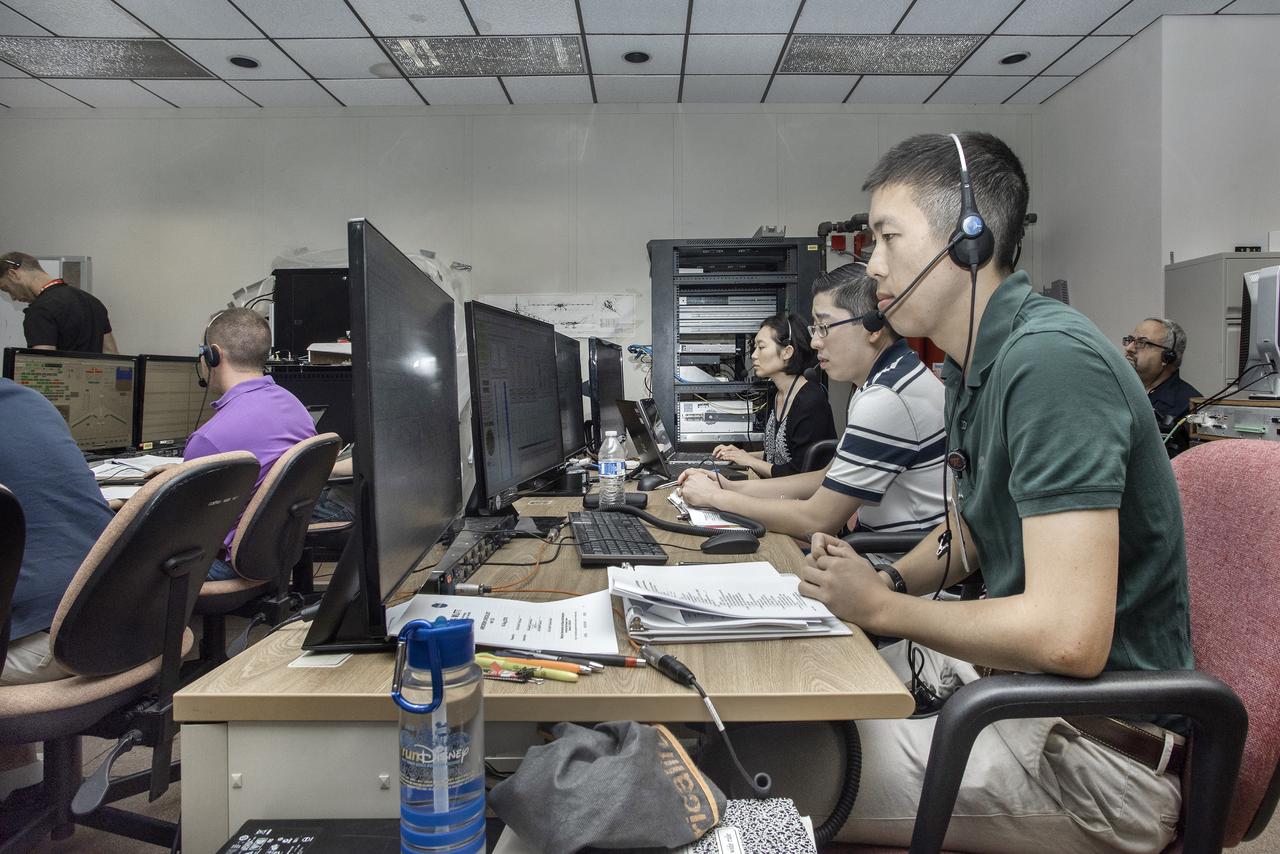
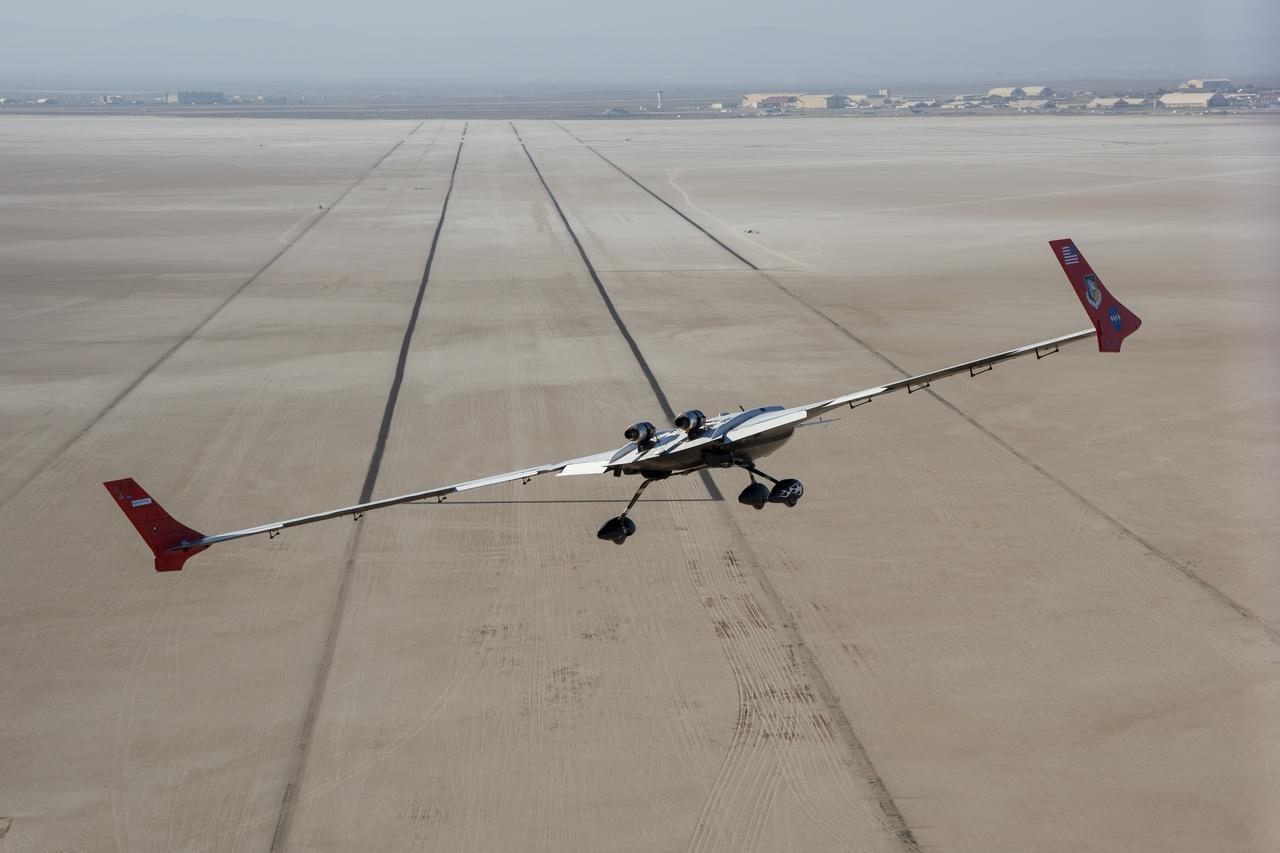
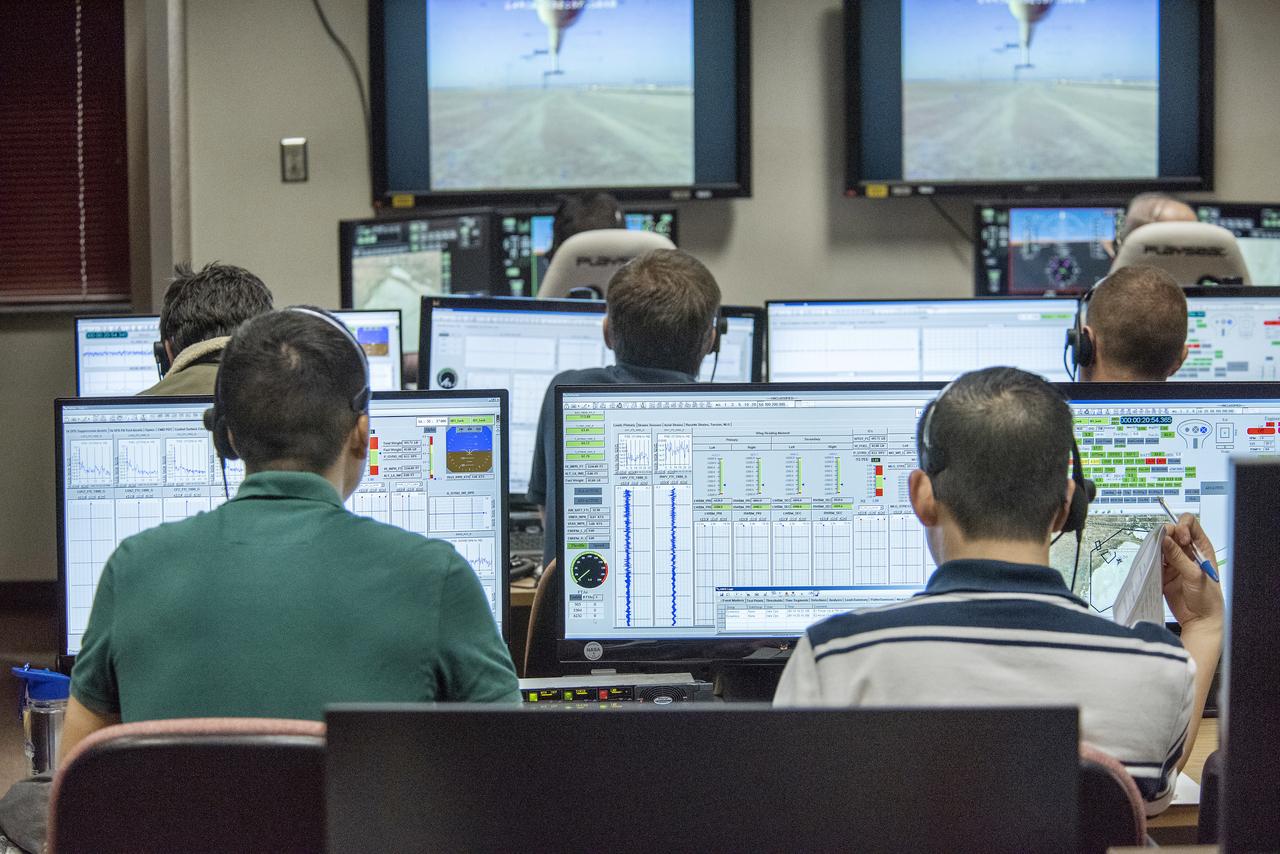
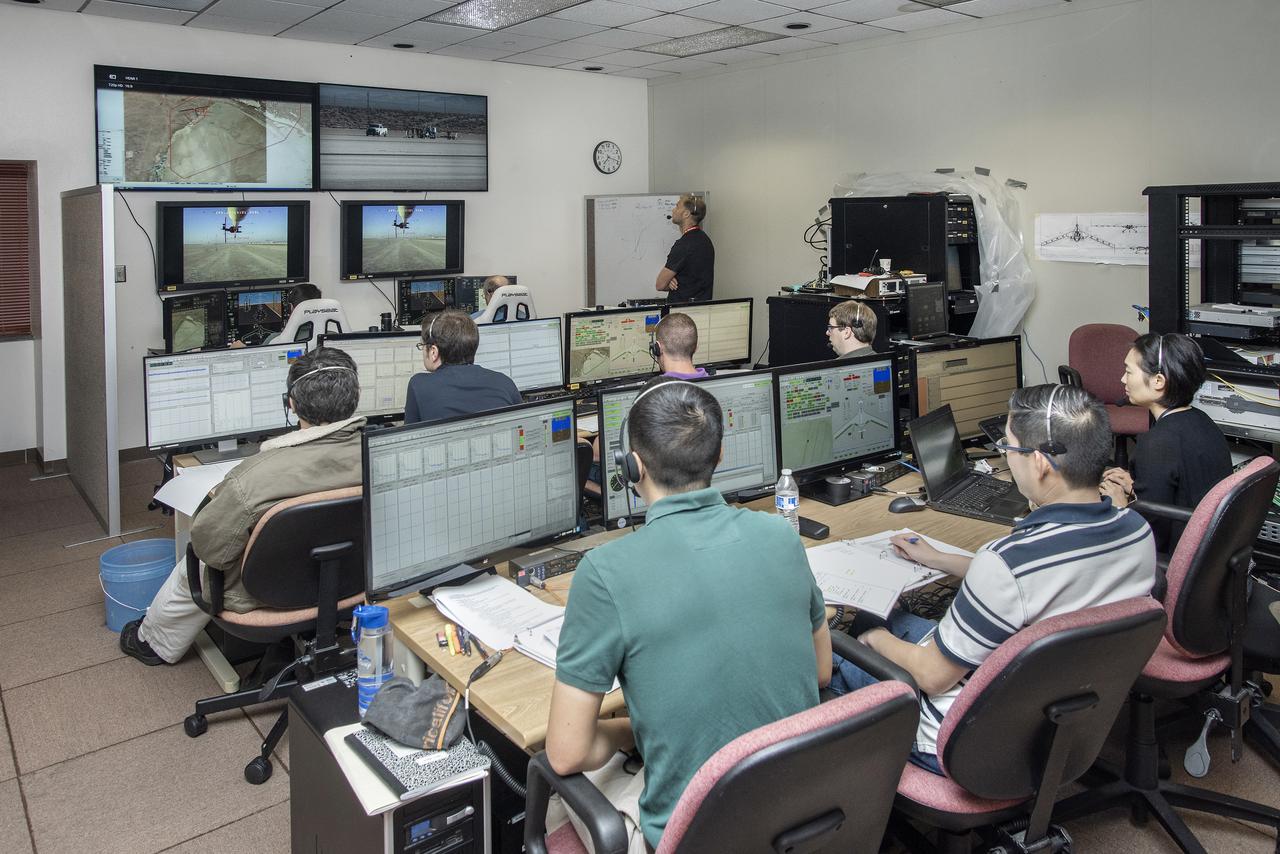
The control room for the remotely piloted X-56A has a feature that most do not – the pilot and co-pilot are in the front of the room, seen at left. The X-56A team has successfully suppressed flutter, which is a potentially destructive oscillation, with a classical and a modern controller. The controllers are essentially mathematical ways of directing the aircraft.
X-56A Control Room is Uncommon
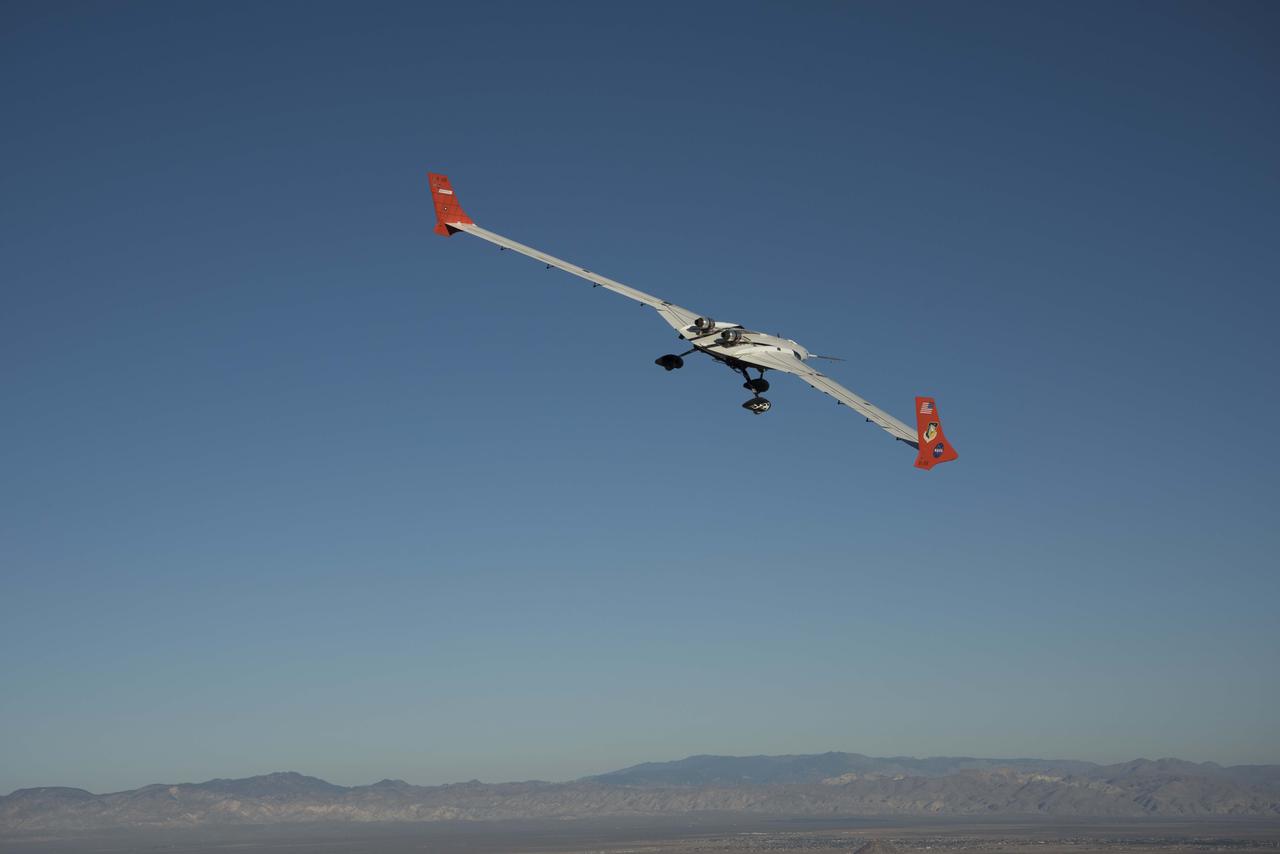
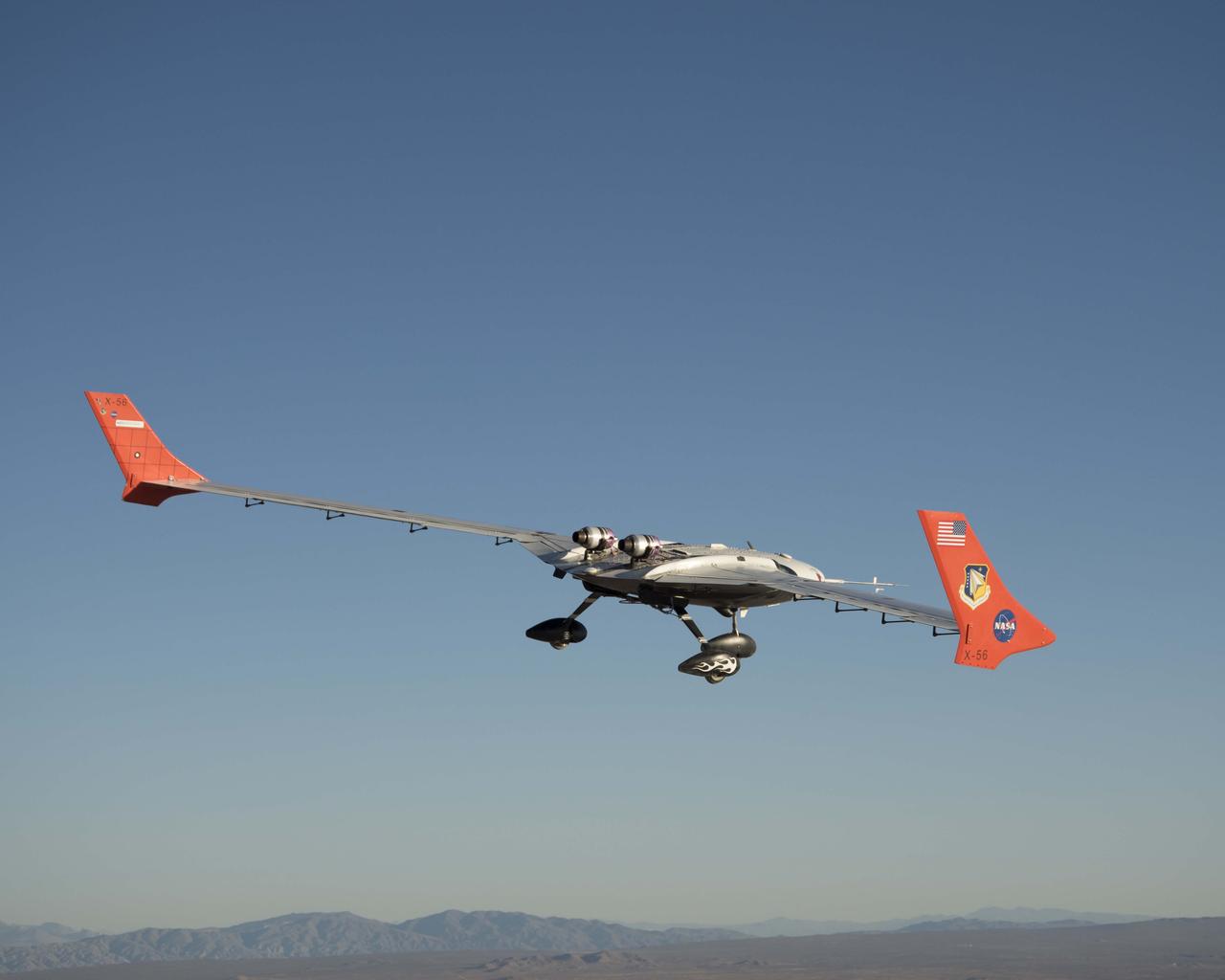
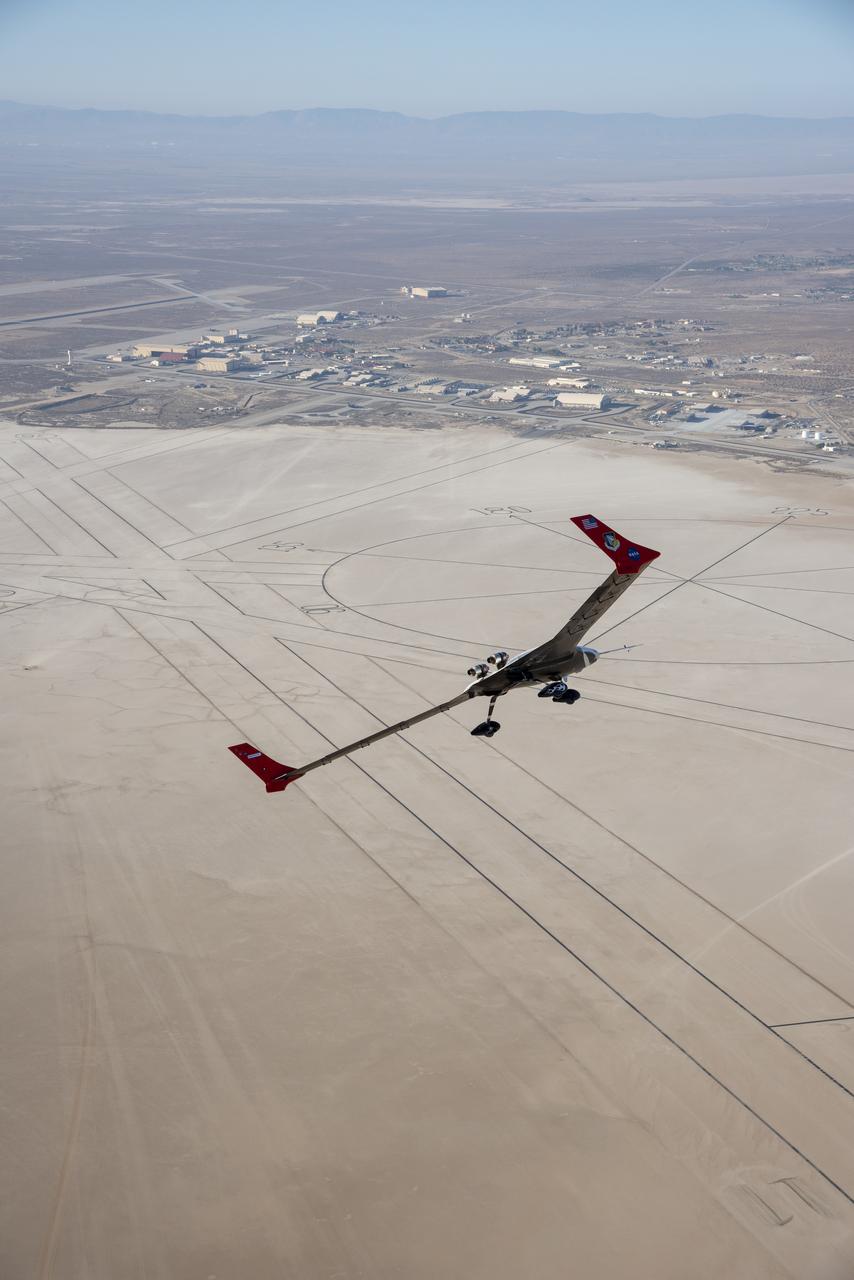
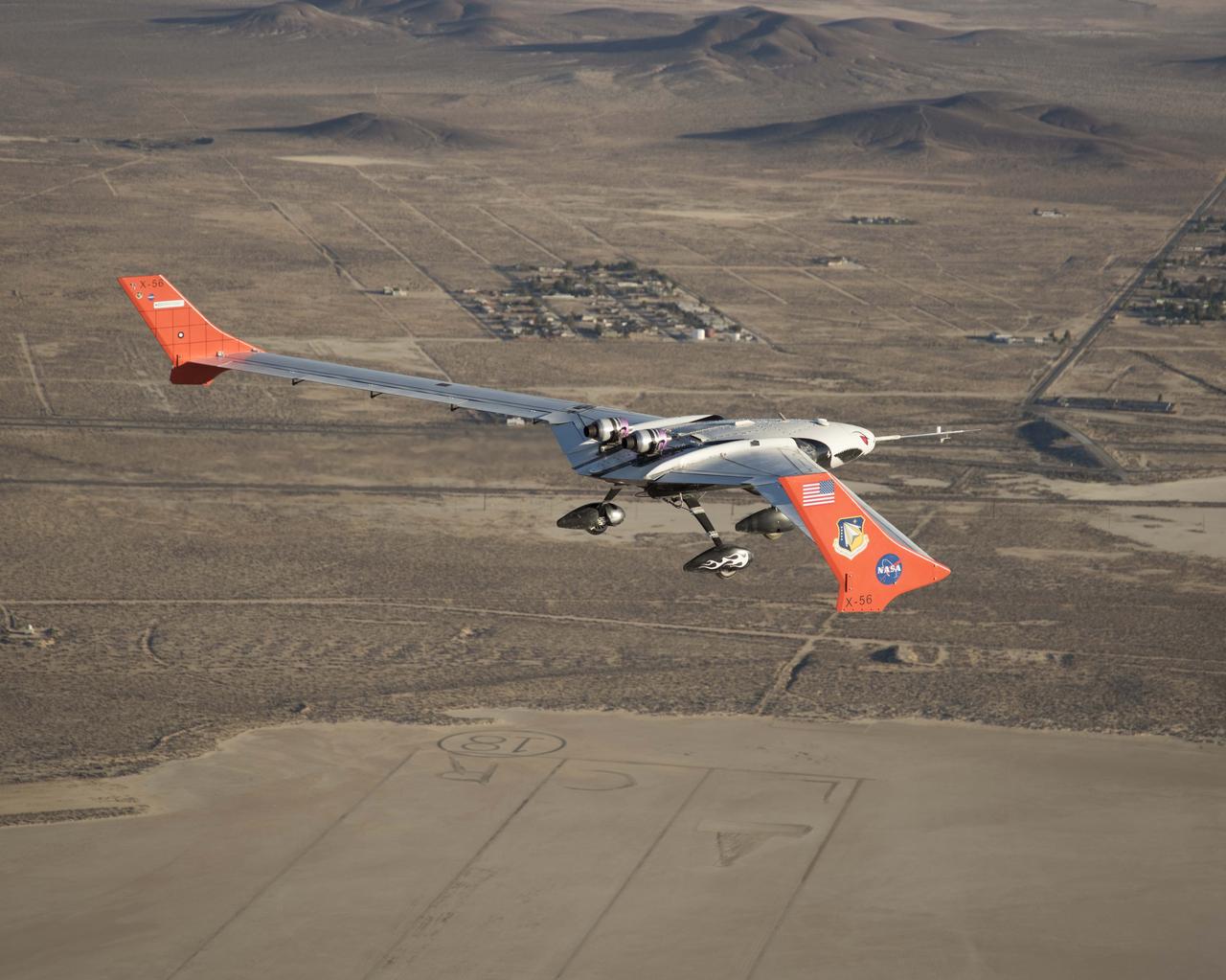
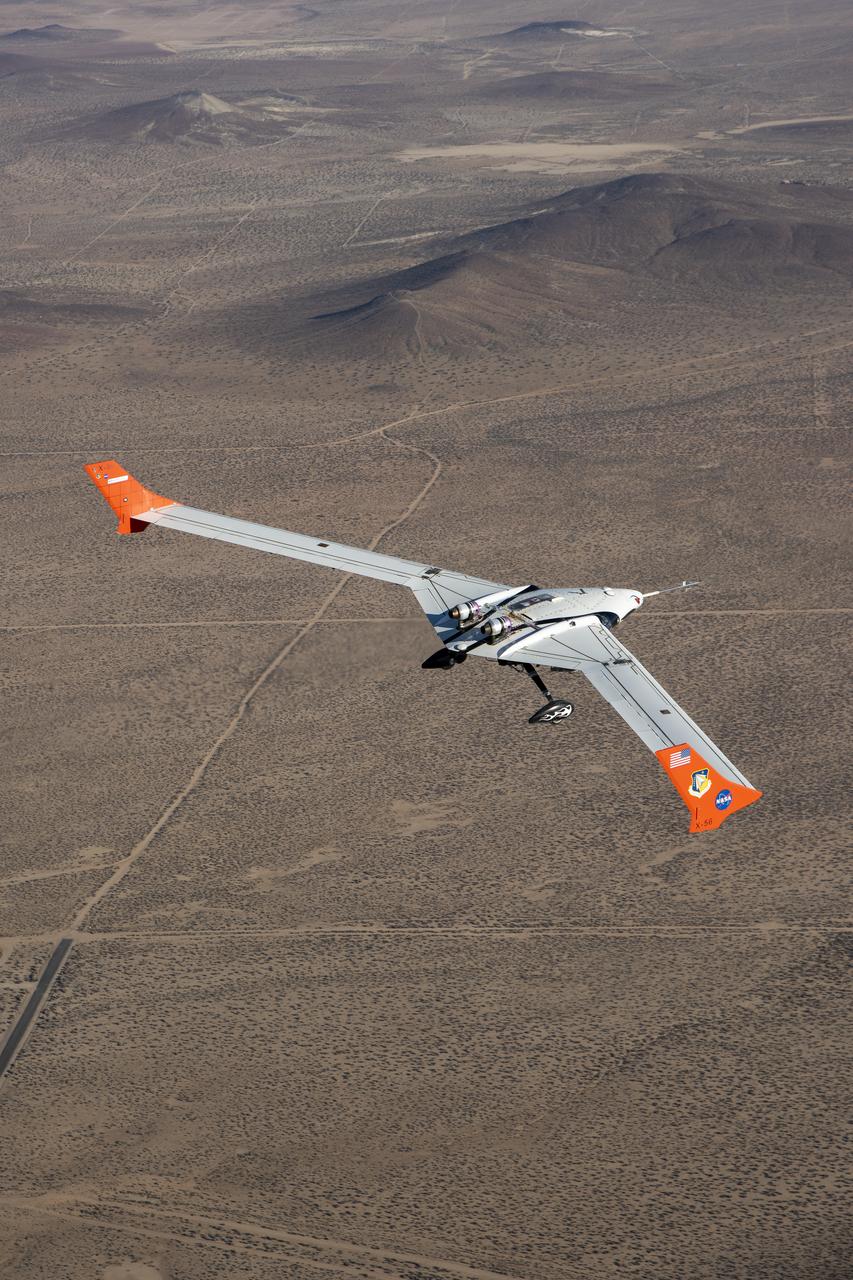
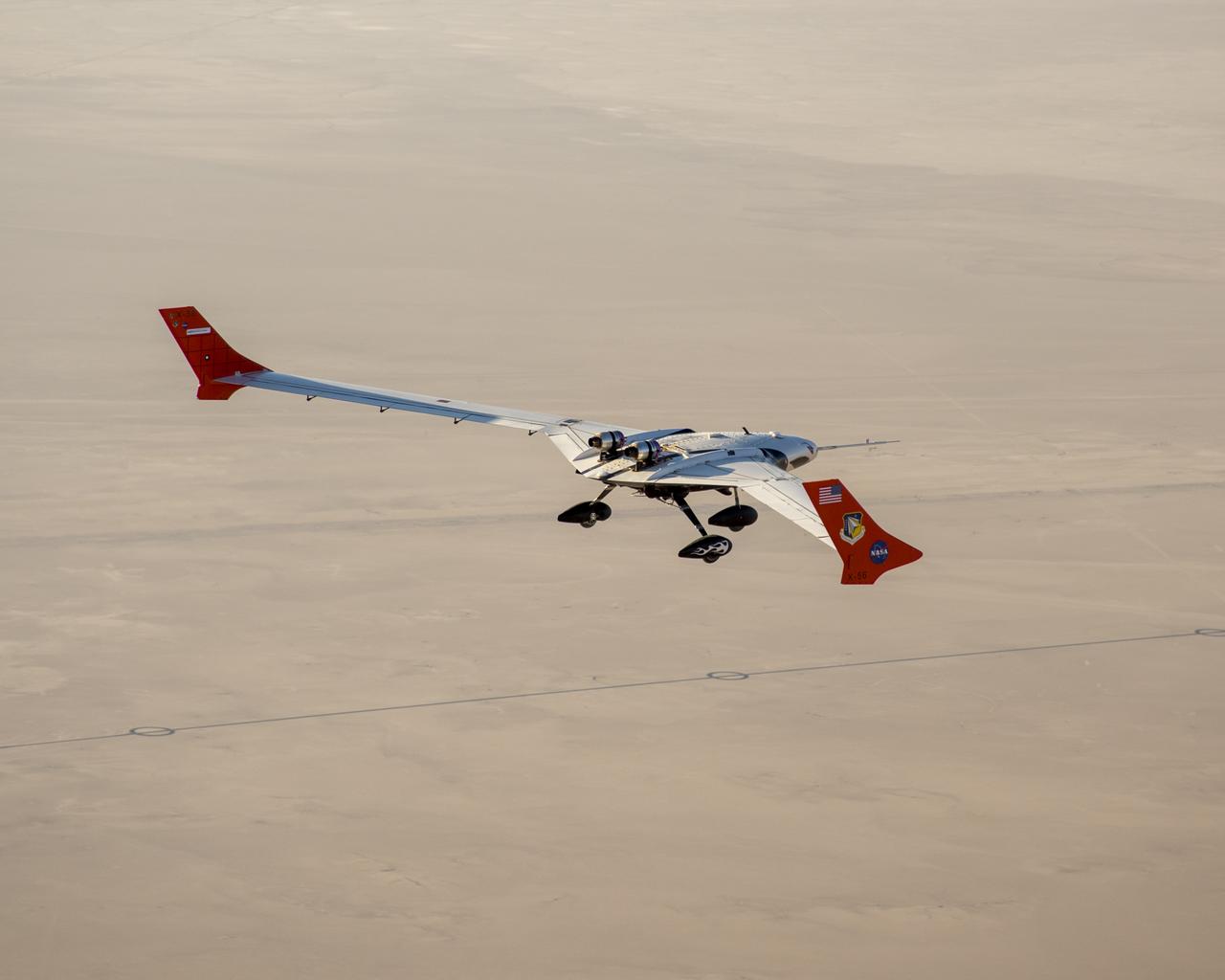
Long, thin, high-aspect-ratio wings are considered crucial to the design of future long-range aircraft, including fuel-efficient airliners and cargo transports. Unlike the short, stiff wings found on most aircraft today, slender, flexible airfoils are susceptible to uncontrollable vibrations, known as flutter, and may be stressed by bending forces from wind gusts and atmospheric turbulence. To improve ride quality, efficiency, safety, and the long-term health of flexible aircraft structures, NASA is using the X-56A Multi-Utility Technology Testbed (MUTT) to investigate key technologies for active flutter suppression and gust-load alleviation.
ED13-0325-025
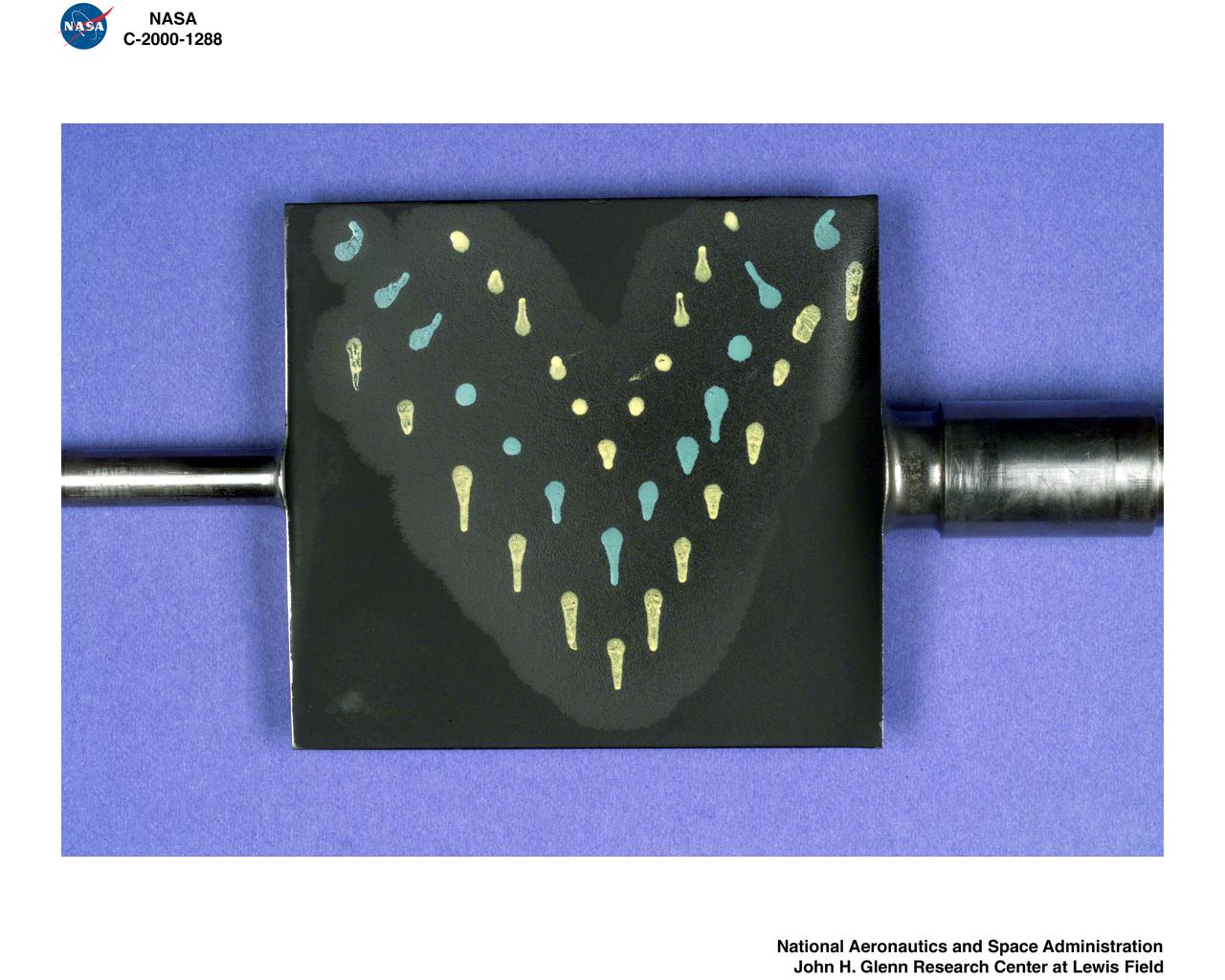
STALL FLUTTER TEST - FLOW VISUALIZATION
GRC-2000-C-01288
STALL FLUTTER TEST - FLOW VISUALIZATION
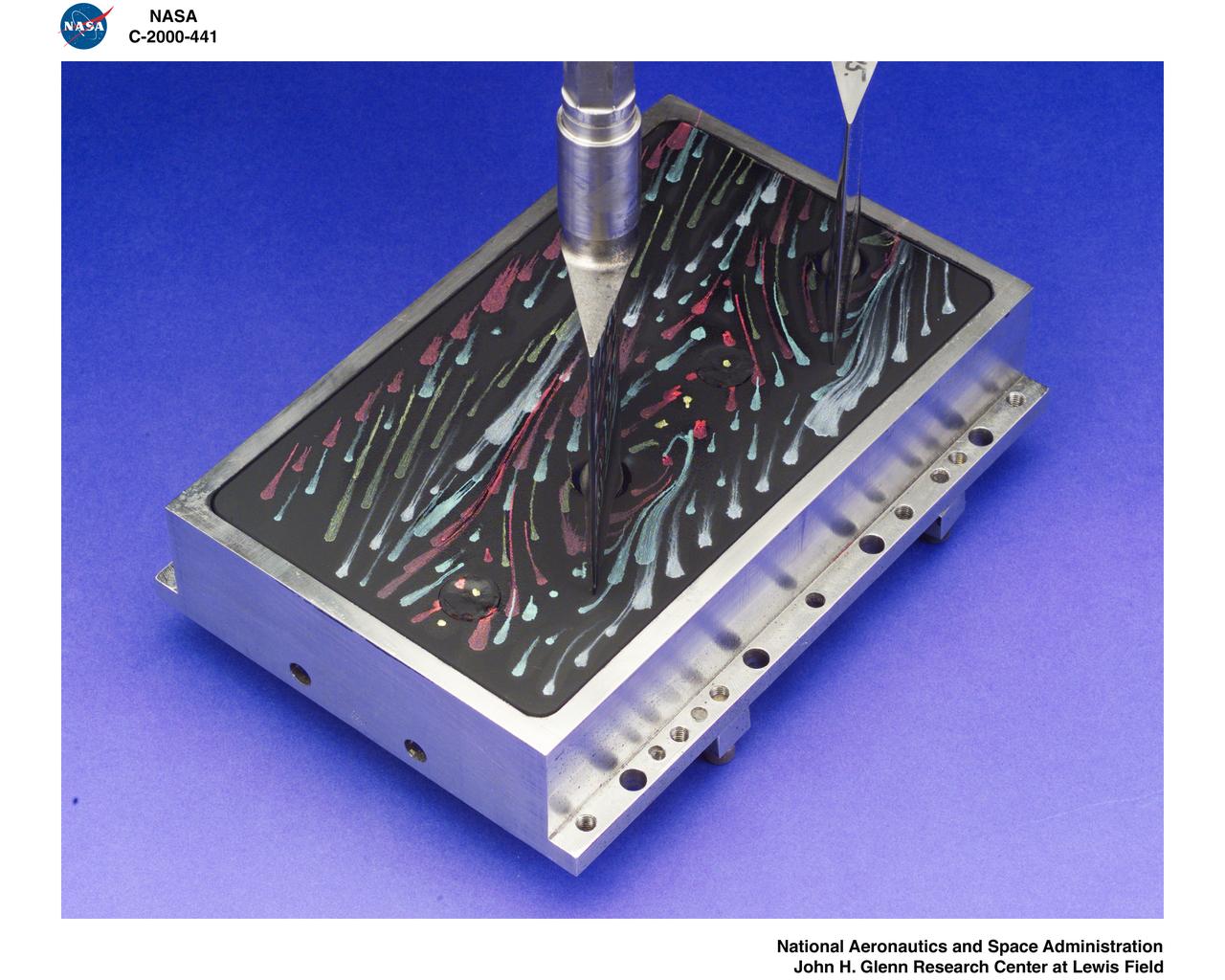
GRC-2000-C-00441
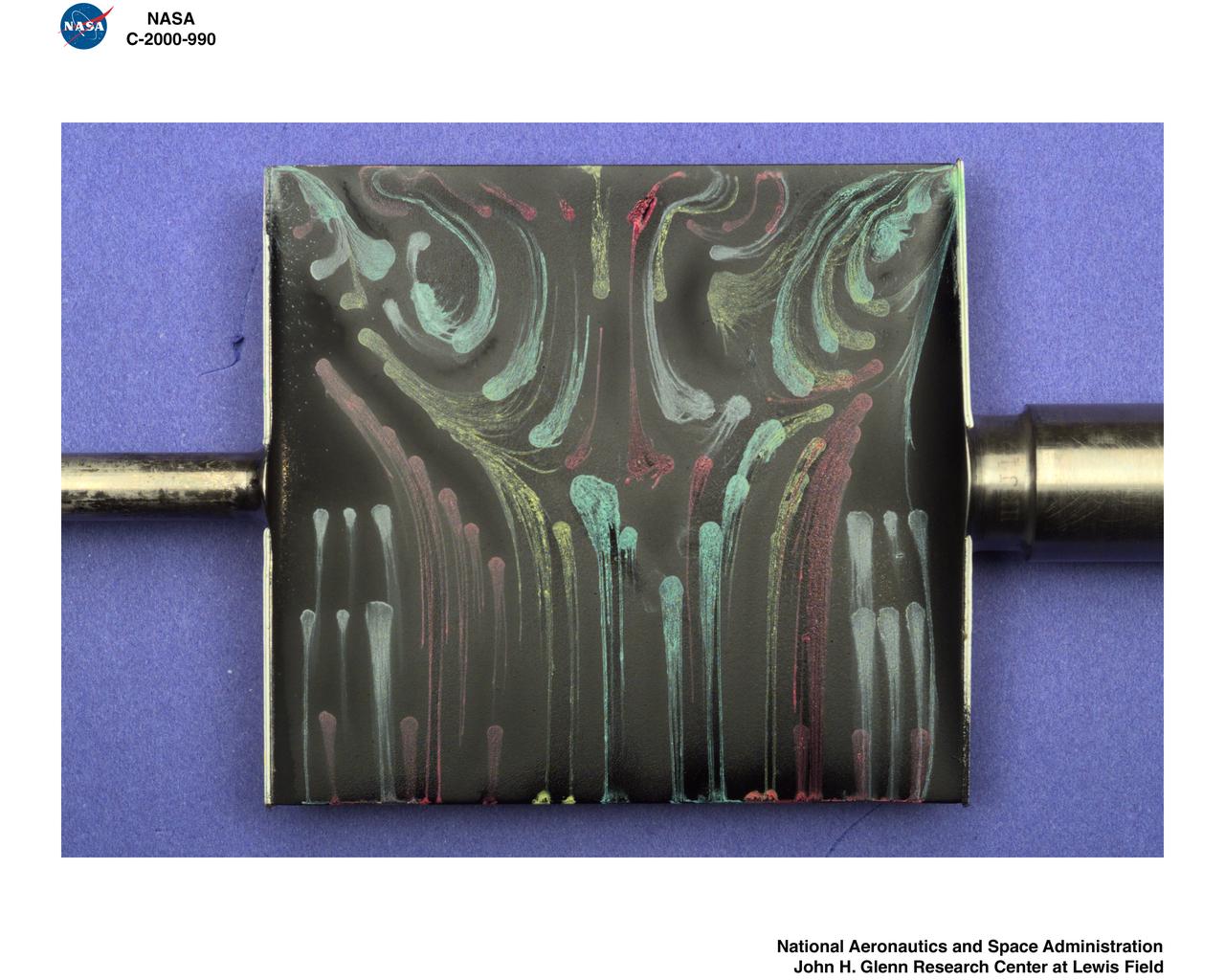
STALL FLUTTER TEST - FLOW VISUALIZATION
GRC-2000-C-00990
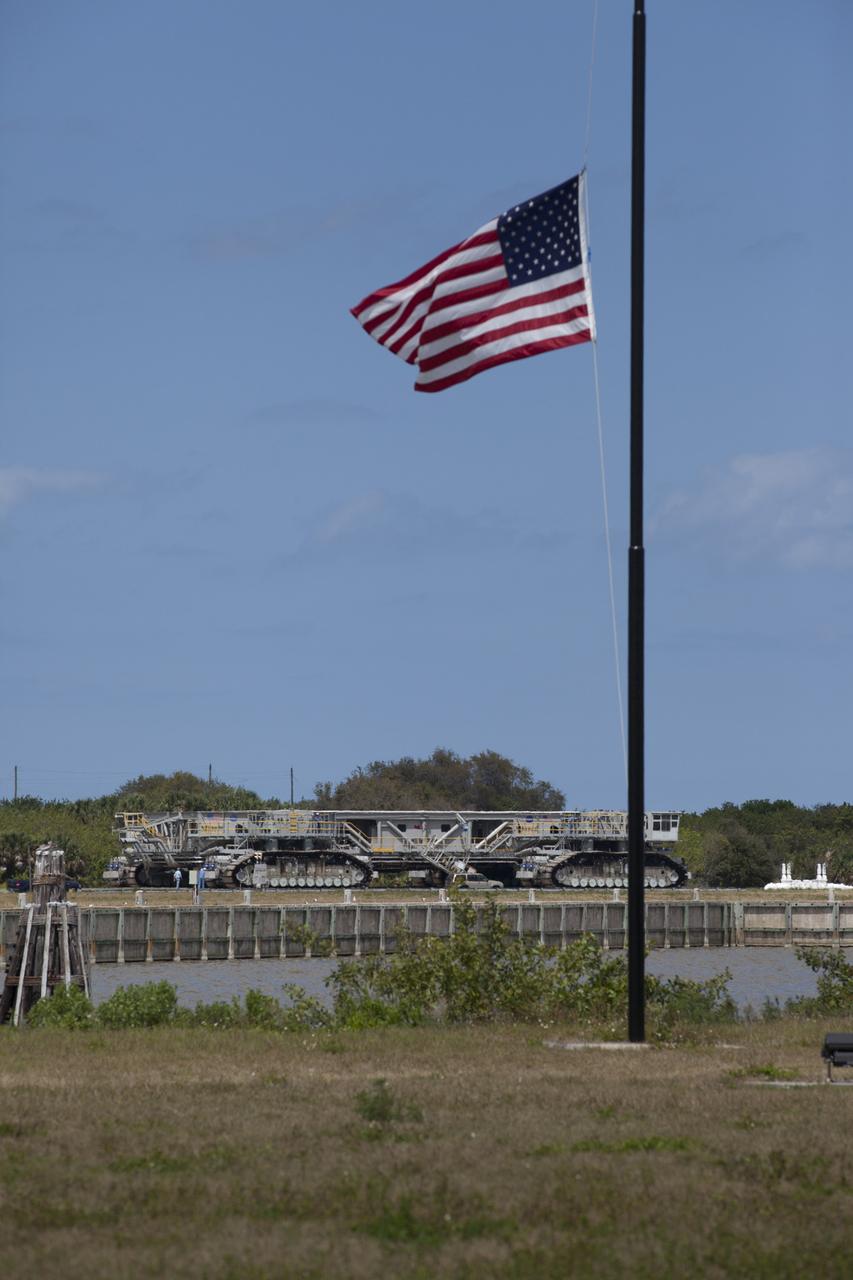
An American flag flutters in the breeze as NASA’s upgraded crawler-transporter 2 (CT-2) travels along the crawlerway during its trek to Launch Pad 39B at the agency’s Kennedy Space Center in Florida, to test recently completed upgrades and modifications for NASA’s journey to Mars. The Ground Systems Development and Operations Program at Kennedy oversaw upgrades to the crawler in the Vehicle Assembly Building. The crawler will carry the mobile launcher with Orion atop the Space Launch System rocket to Pad 39B for Exploration Mission-1, scheduled for 2018.
Crawler Transporter 2 Trek
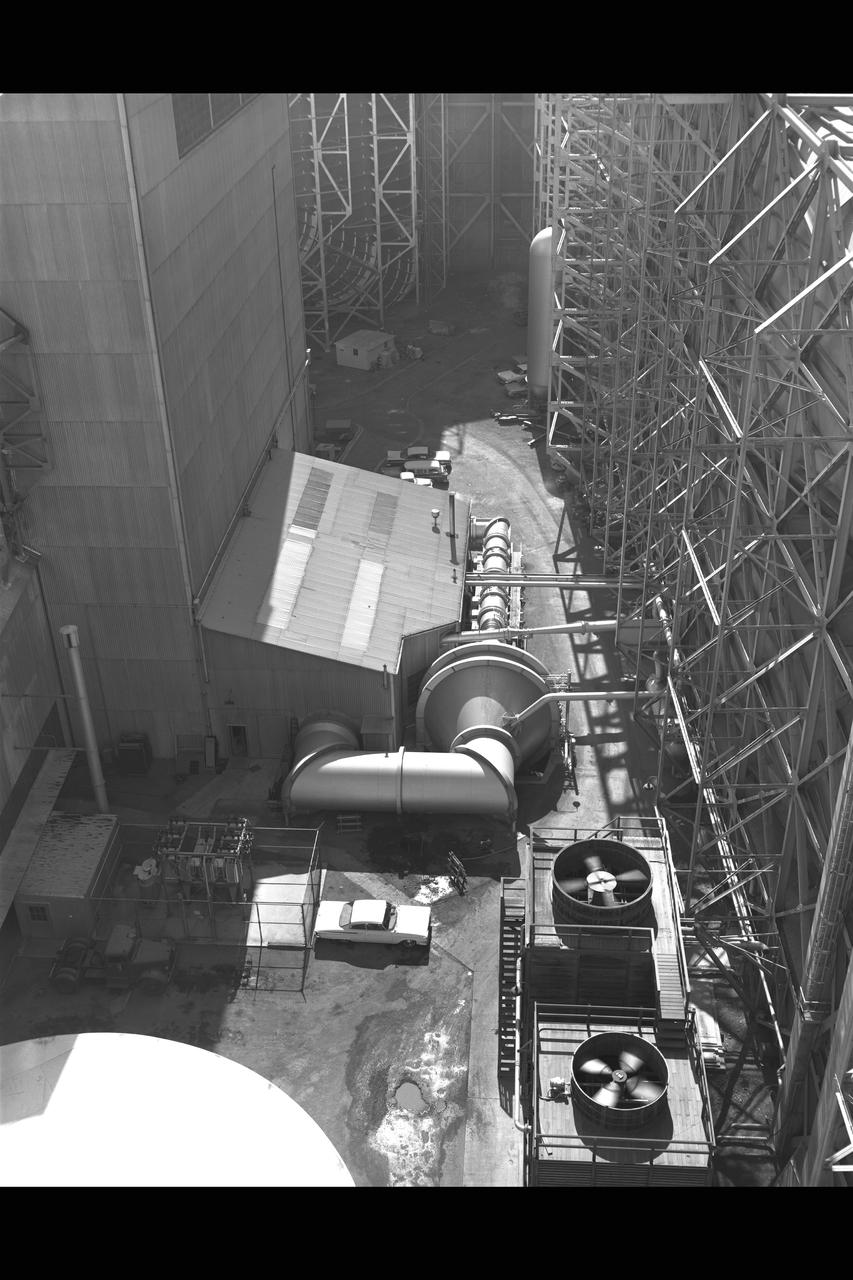
N-222; 2 x 2ft Transonic Wind Tunnel is a closed return, variable-density tunnel equipped with an adjustable flexible-wall nozzle and a slotted test section.  Airflow is produced by a two-stage, axial-flow compressor powered by four, variable-speed induction motors mounted in tandem, delivering a total of 4,000 horsepower.  For conventional, steady-state testing models are generally supported on a sting. Internal, strain-gage balances are used for measuring forces and moments.  This facility is also used for panel-flutter testing (one test-section wall is replaced with another containing the test specimen.
ARC-1965-A-35705
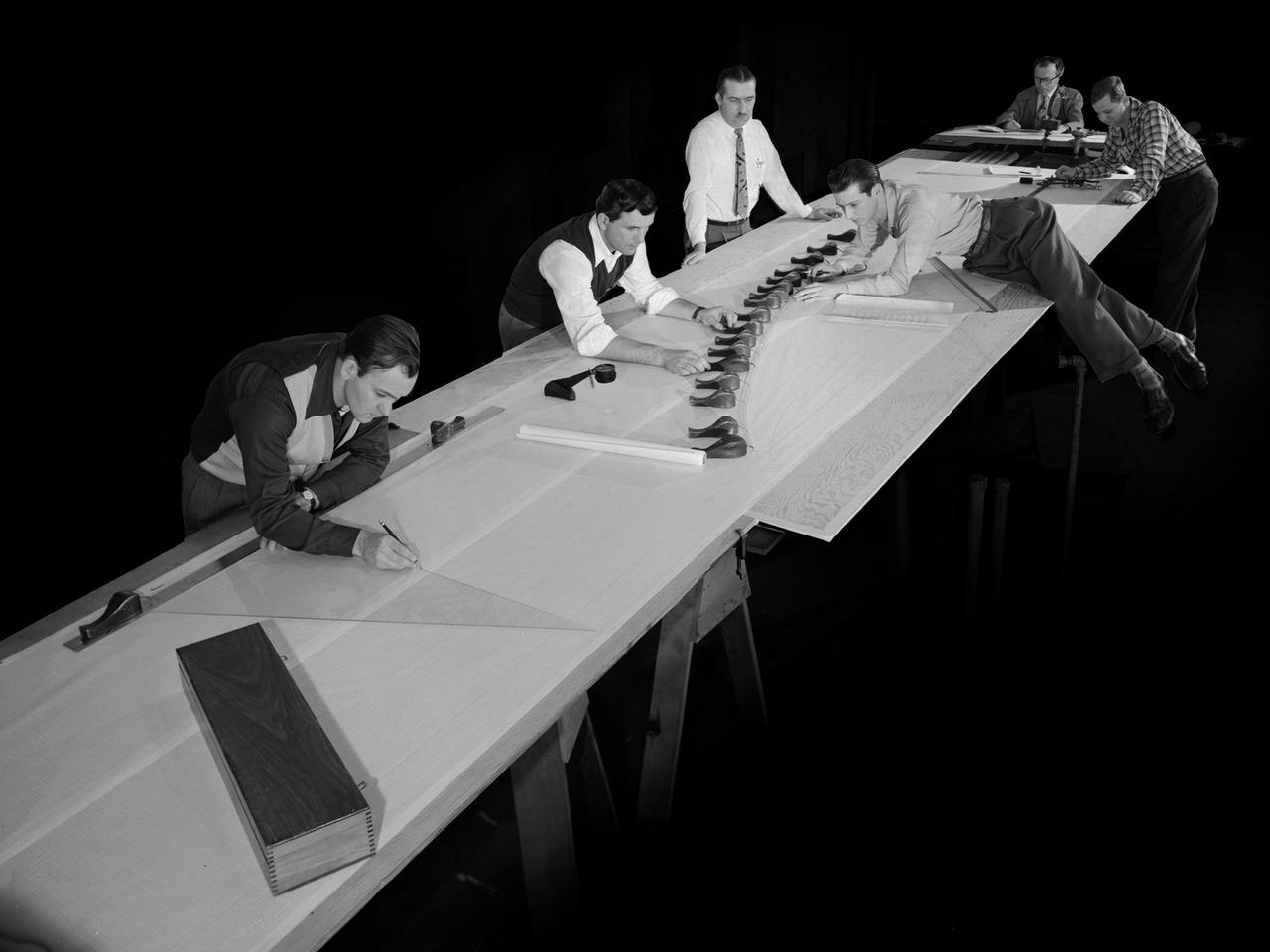
Draftsmen in the Materials and Stresses Building at the National Advisory Committee for Aeronautics (NACA) Lewis Flight Propulsion Laboratory create a template for a compressor using actual compressor blades. The Compressor and Turbine Division contained four sections of researchers dedicated to creating better engine components. The Materials and Thermodynamics Division studied the strength, durability, heat transfer characteristics, and physical composition of various materials.     The two divisions were important to the research and development of new aircraft engines. The constant battle to increase the engine’s thrust while decreasing its overall weight resulted in additional stress on jet engine components, particularly compressors. As speed and maneuverability were enhanced, the strain on the engines and inlets grew. For decades NACA Lewis researchers continually sought to improve compressor blade design, develop stronger composite materials, and minimize flutter and inlet distortions.
Draftsmen Create a Blade Template in the Materials and Stresses Building
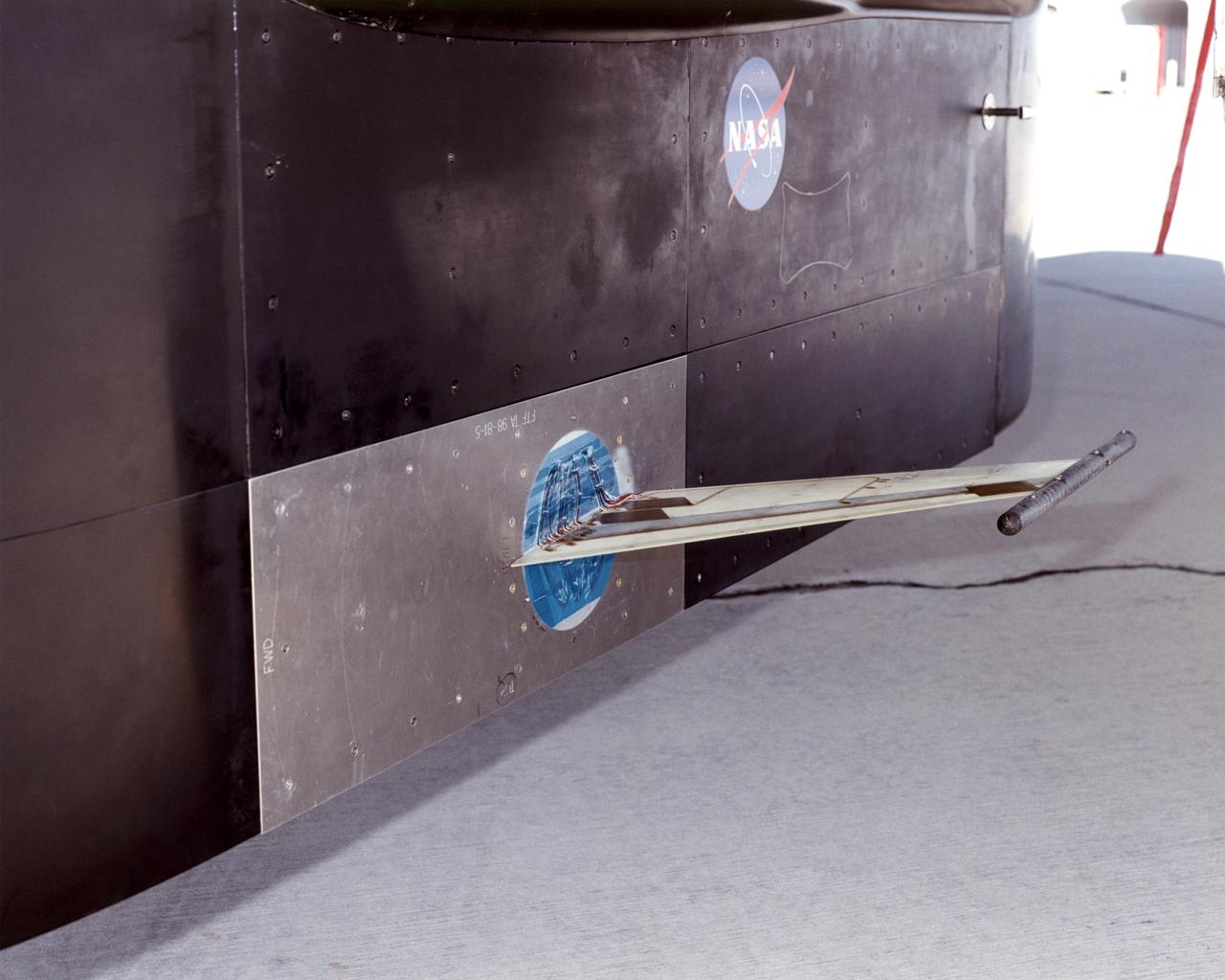
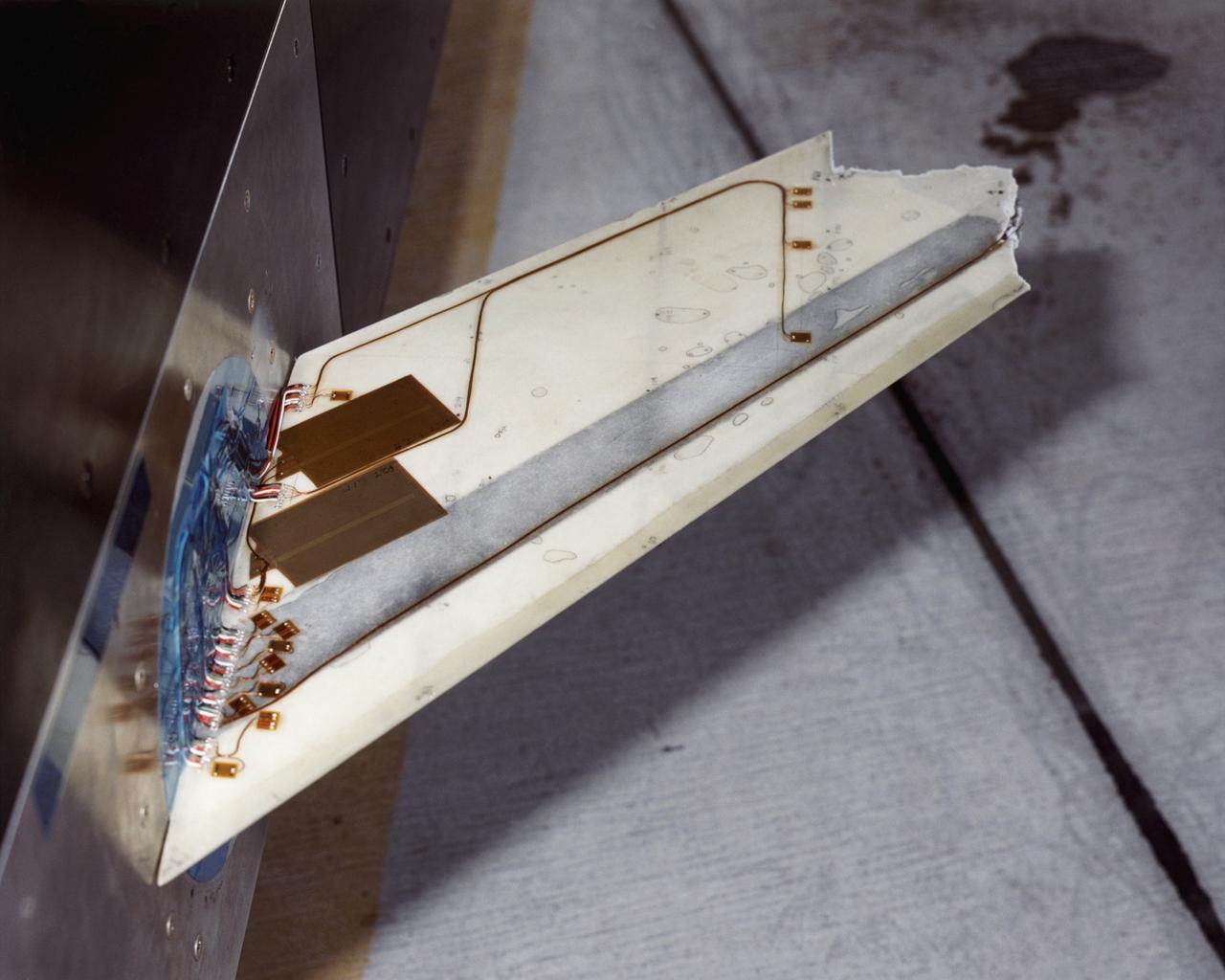
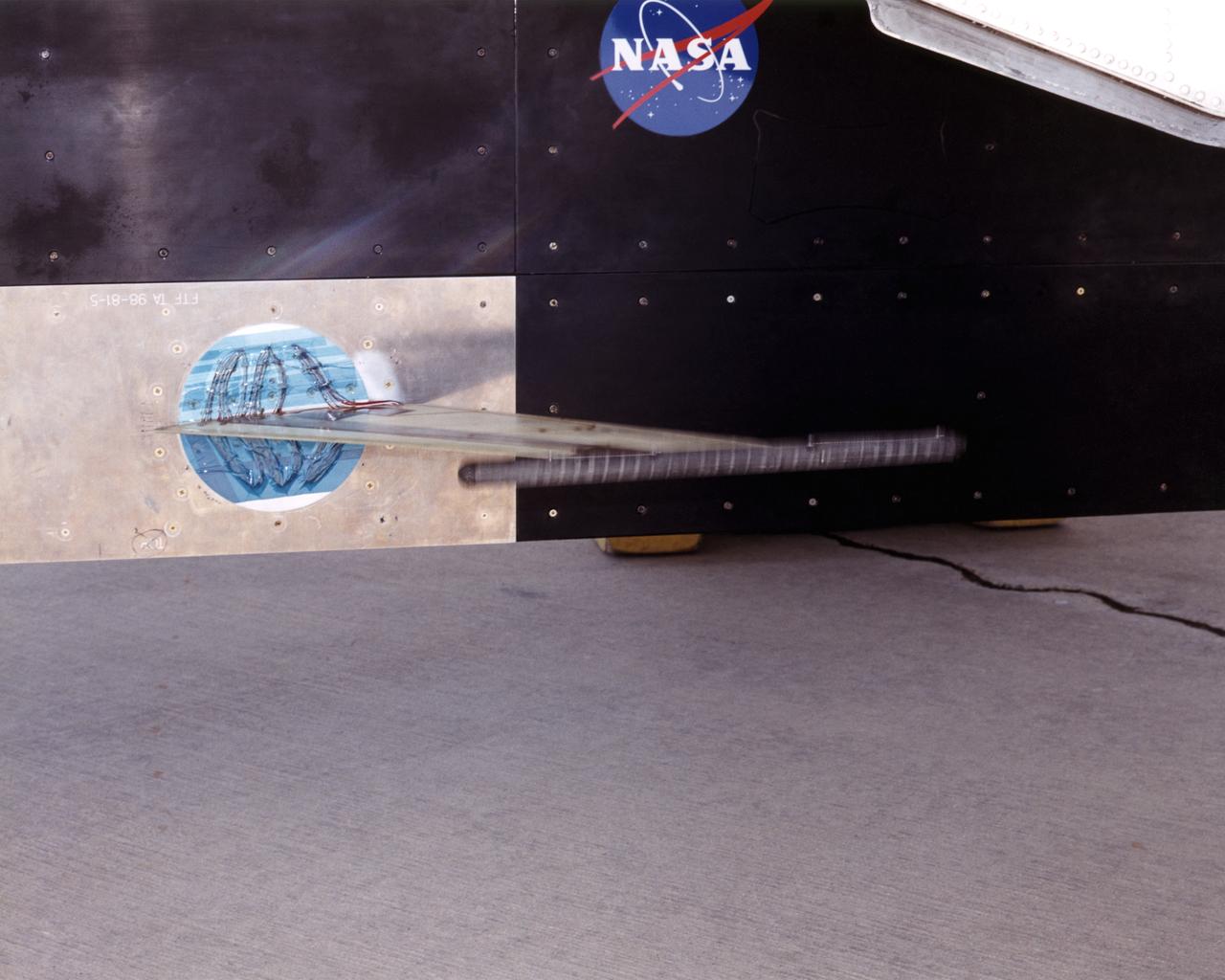
The Aerostructures Test Wing (ATW), which consisted of an 18-inch carbon fiber test wing with surface-mounted piezoelectric strain actuators, was mounted on a special ventral flight test fixture and flown on Dryden's F-15B Research Testbed aircraft
Scott Howe, X-56A chief pilot, and Dana Purifoy, co-pilot, complete preflight checks from a ground cockpit in the control room.
X-56A Has a Busy Control Room
The X-56A flies a mission Oct. 23, 2018.
X-56A Advances Toward Milestones
The X-56A flies a mission Oct. 23, 2018.
X-56A Advances Toward Milestones
Jake Schaefer, left, looks over control information on a monitor in front of him for the X-56A before flight. Next to him are Matt Boucher, Jeff Ouellette and Peter Suh.
X-56A Has a Busy Control Room
The X-56A flies a research flight in the skies above Edwards Air Force Base.
X-56A Has a Busy Control Room
Alex Chin, Samson Truong and Mei Franz prepare for a flight of the remotely piloted X-56A
X-56A Has a Busy Control Room
The X-56A flies a mission Oct. 18, 2018.
X-56A Flights Continue
The X-56A flies a research flight in the skies above Edwards Air Force Base.
X-56A Has a Busy Control Room
The X-56A flies a mission Oct. 18, 2018.
X-56A Flights Continue
Mai Franz, Samson Truong and Alex Chin continue preparations for flight of the remotely piloted X-56A.
X-56A Has a Busy Control Room
The X-56A flies a mission Oct. 18, 2018.
X-56A Flights Continue
The Aerostructures Test Wing (ATW) experiment, which consisted of an 18-inch carbon fiber test wing with surface-mounted piezoelectric strain actuators, undergoing ground testing prior to flight on Dryden's F-15B Research Testbed aircraft
The Aerostructures Test Wing (ATW), which consisted of an 18-inch carbon fiber test wing with surface-mounted piezoelectric strain actuators, following intentional failure on its final flight
The X-56A flies a mission Oct. 18, 2018.
X-56A Flights Continue
Chris Miller, who was test conductor on this X-56 A flight, prepares for the start of the mission.
X-56A Has a Busy Control Room
The X-56A flies a mission Oct. 23, 2018.
X-56A Advances Toward Milestones
Peter Suh and Jeff Ouellette complete preflight checks of the remotely piloted X-56A.
X-56A Has a Busy Control Room
The X-56A has a busy control room with about a dozen people contributing to a mission.
X-56A Has a Busy Control Room
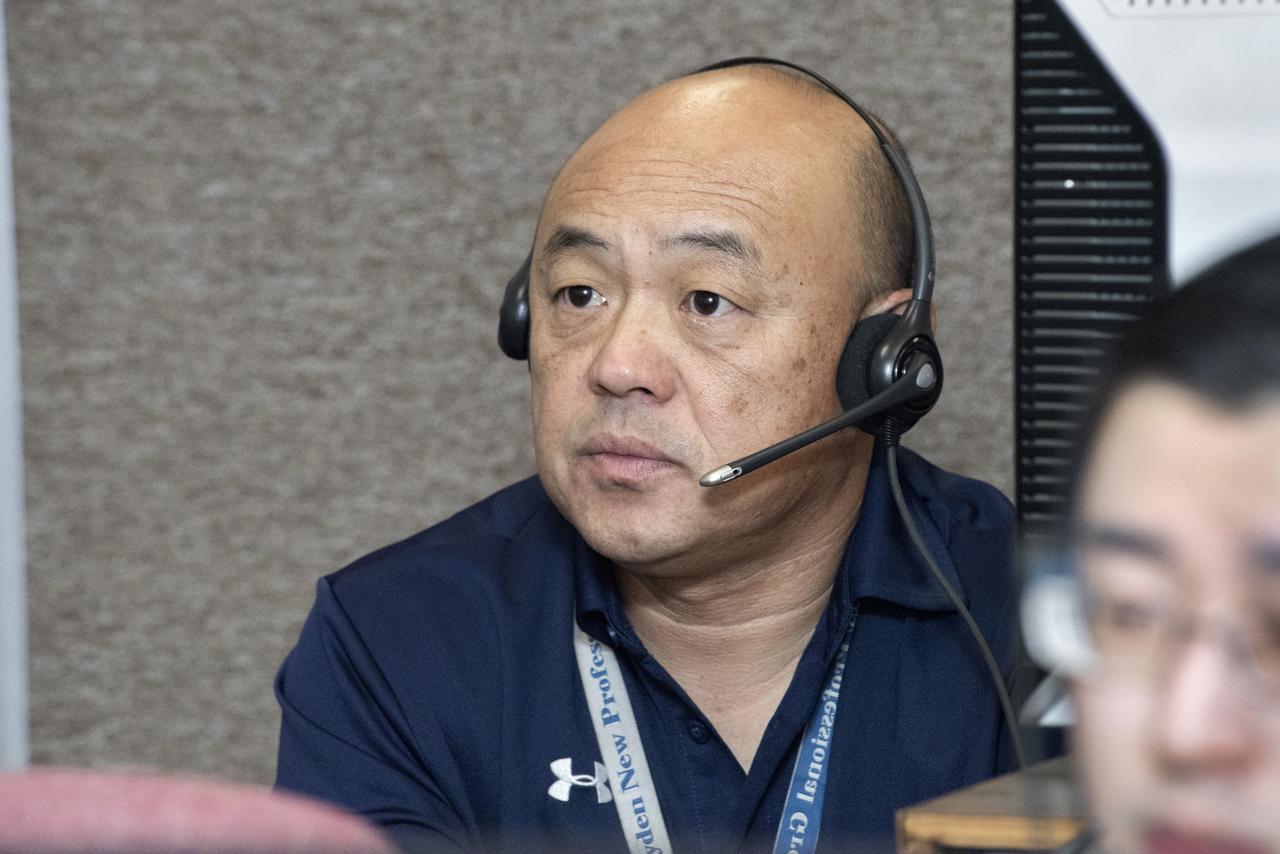
Cheng Moua, X-56A project manager, prepares for an X-56A mission in the control room.
X-56A Has a Busy Control Room
The X-56A flies a mission Oct. 23, 2018.
X-56A Advances Toward Milestones
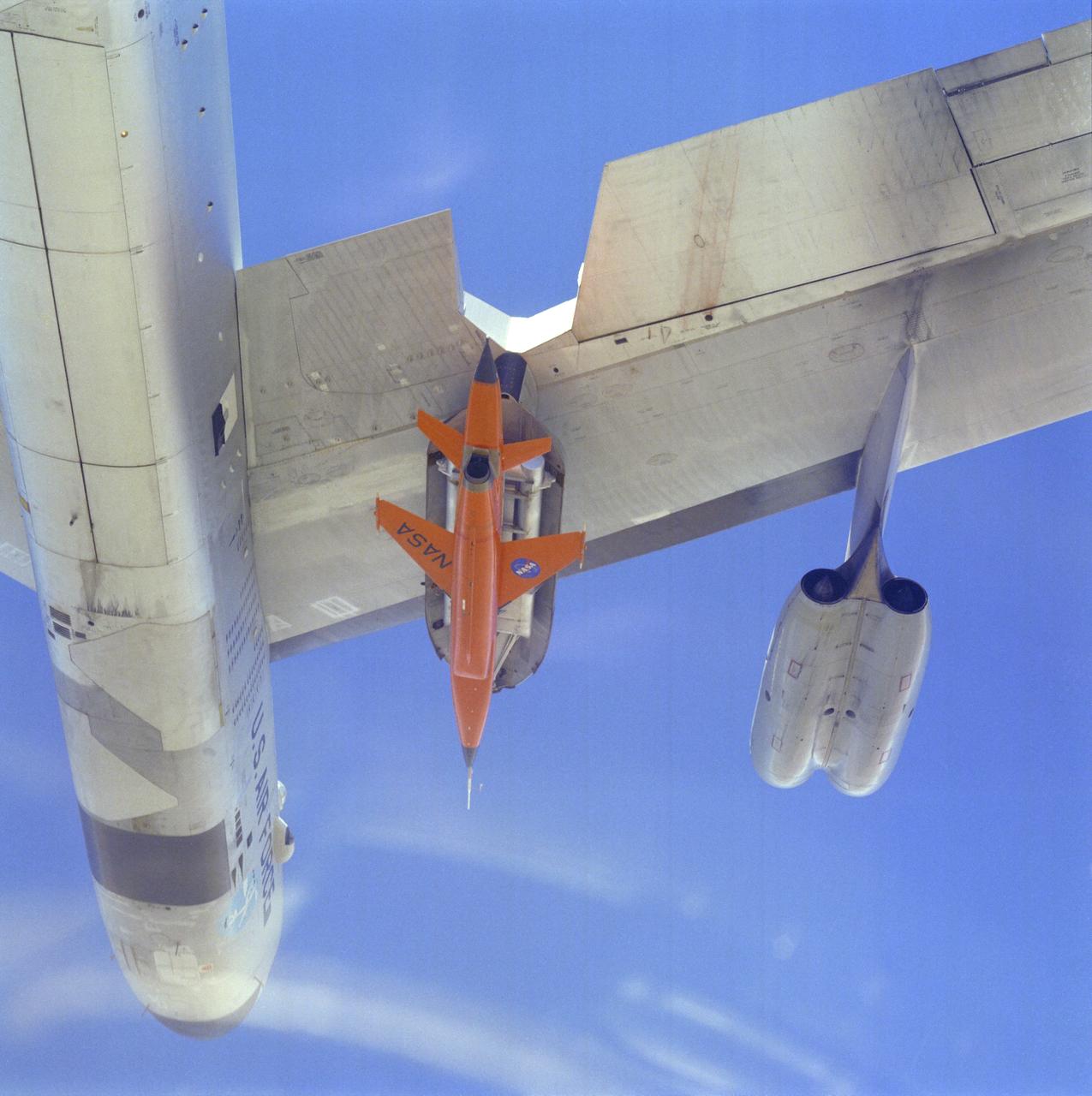
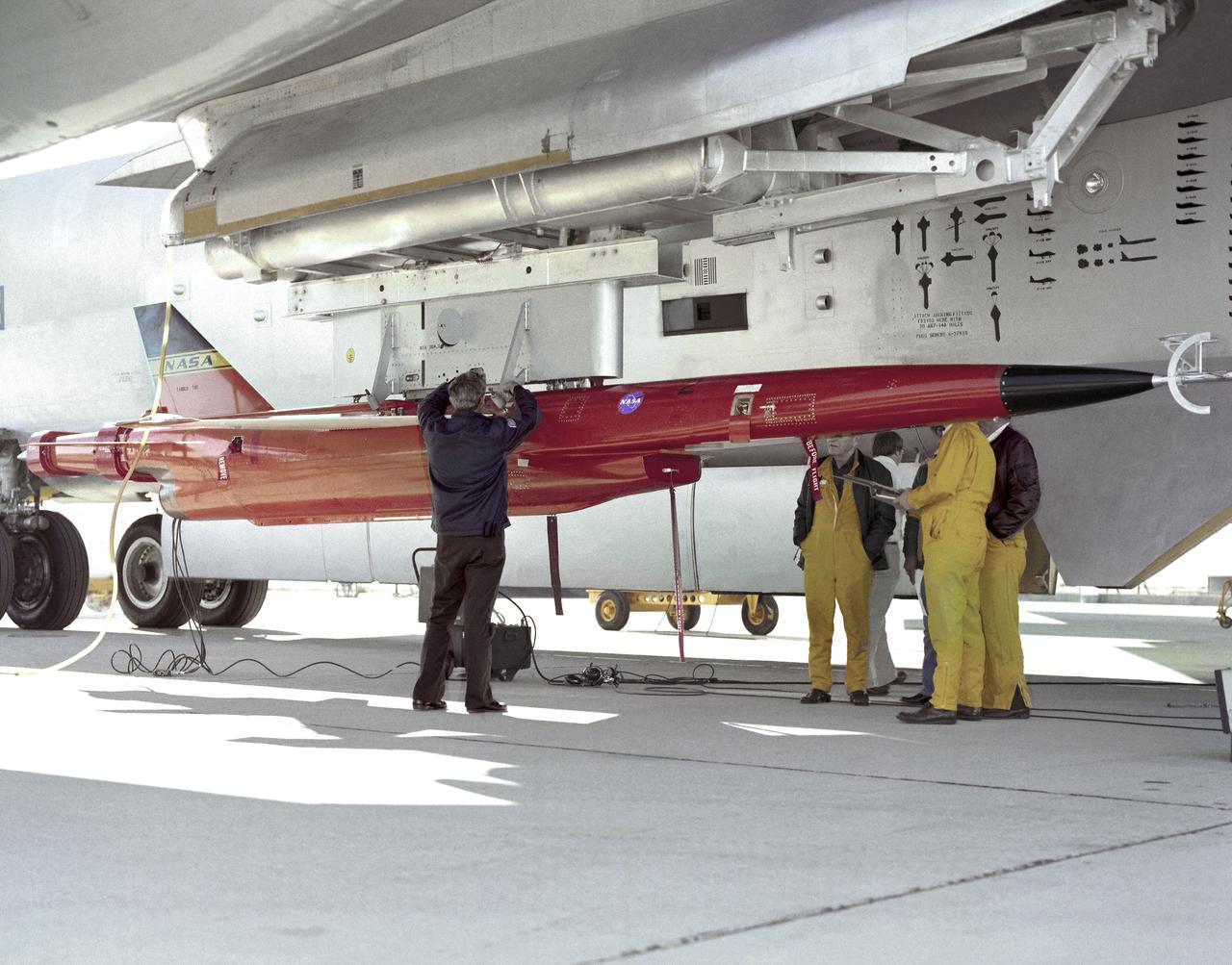
DAST Mated to B-52 on Ramp - Close-up
EC79-10247
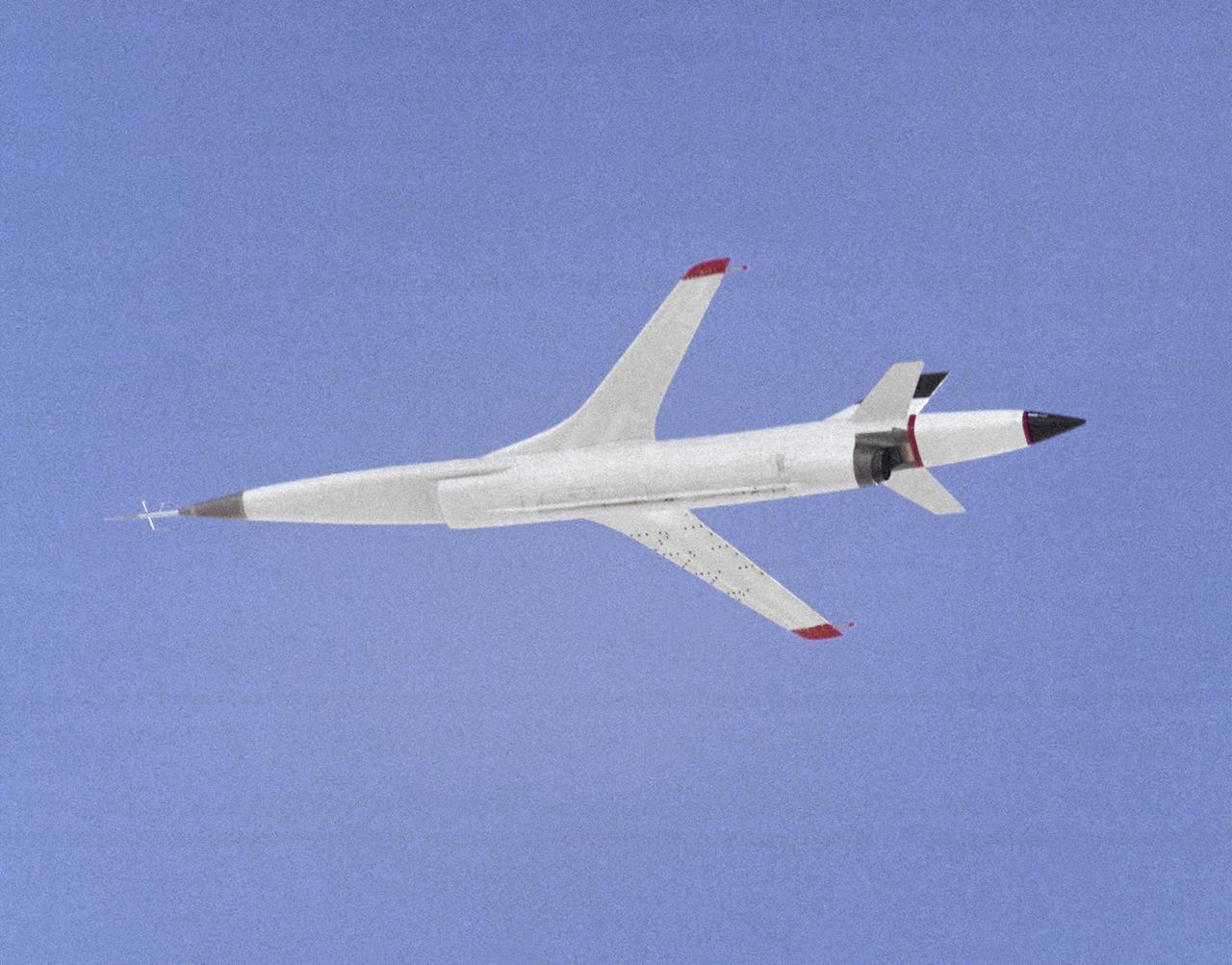
DAST in Flight. Last Flight
EC80-14090
First Captive Flight of DAST Mated to B-52 - Close-up from Below
EC77-8113
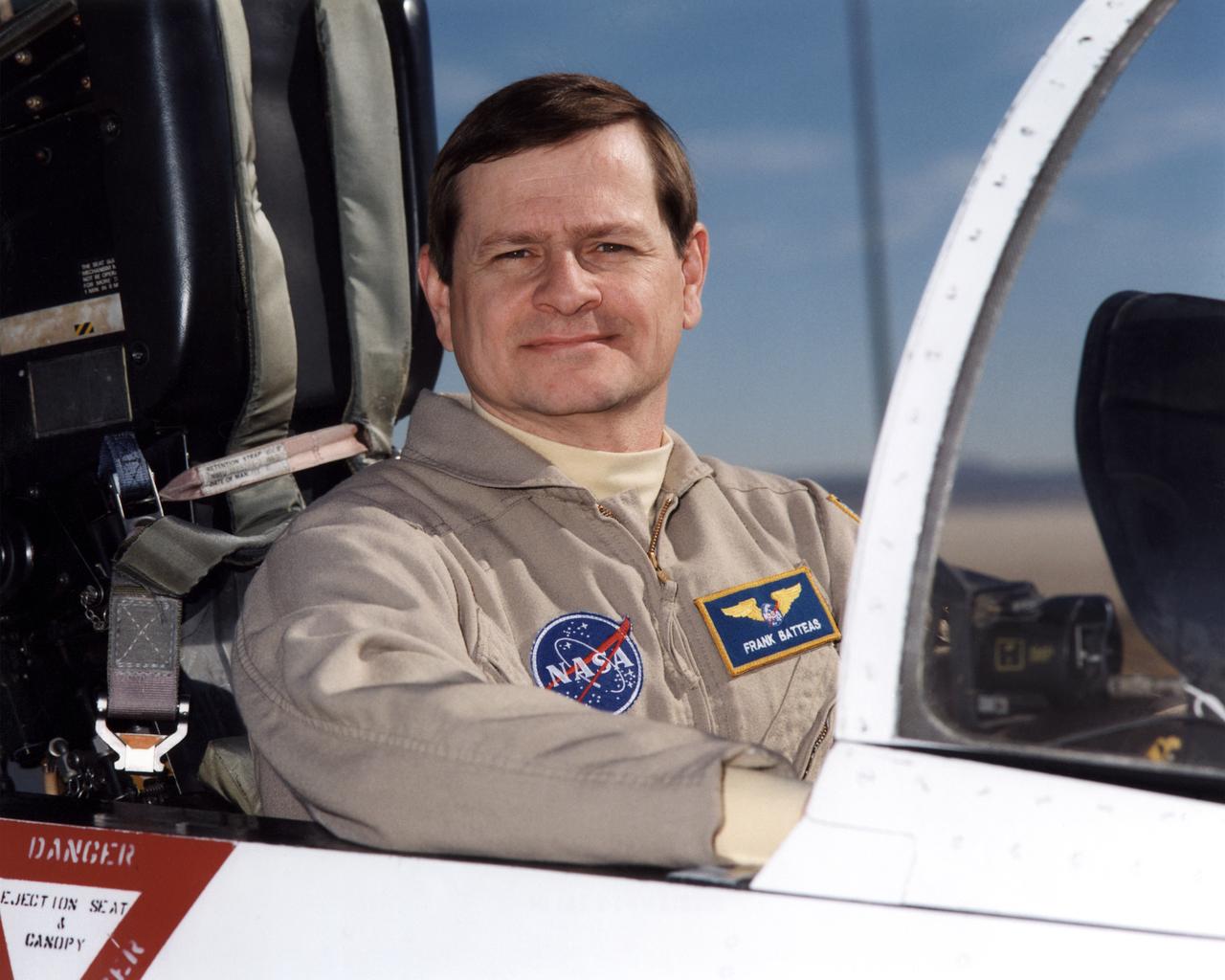
Frank Batteas is a research test pilot in the Flight Crew Branch of NASA's Dryden Flight Research Center, Edwards, California. He is currently a project pilot for the F/A-18 and C-17 flight research projects. In addition, his flying duties include operation of the DC-8 Flying Laboratory in the Airborne Science program, and piloting the B-52B launch aircraft, the King Air, and the T-34C support aircraft. Batteas has accumulated more than 4,700 hours of military and civilian flight experience in more than 40 different aircraft types. Batteas came to NASA Dryden in April 1998, following a career in the U.S. Air Force. His last assignment was at Wright-Patterson Air Force Base, Dayton, Ohio, where Lieutenant Colonel Batteas led the B-2 Systems Test and Evaluation efforts for a two-year period.  Batteas graduated from Class 88A of the Air Force Test Pilot School, Edwards Air Force Base, California, in December 1988. He served more than five years as a test pilot for the Air Force's newest airlifter, the C-17, involved in nearly every phase of testing from flutter and high angle-of-attack tests to airdrop and air refueling envelope expansion. In the process, he achieved several C-17 firsts including the first day and night aerial refuelings, the first flight over the North Pole, and a payload-to-altitude world aviation record. As a KC-135 test pilot, he also was involved in aerial refueling certification tests on a number of other Air Force aircraft.  Batteas received his commission as a second lieutenant in the U. S. Air Force through the Reserve Officer Training Corps and served initially as an engineer working on the Peacekeeper and Minuteman missile programs at the Ballistic Missile Office, Norton Air Force Base, Calif. After attending pilot training at Williams Air Force Base, Phoenix, Ariz., he flew operational flights in the KC-135 tanker aircraft and then was assigned to research flying at the 4950th Test Wing, Wright-Patterson. He flew extensively modified C-135
Frank Batteas
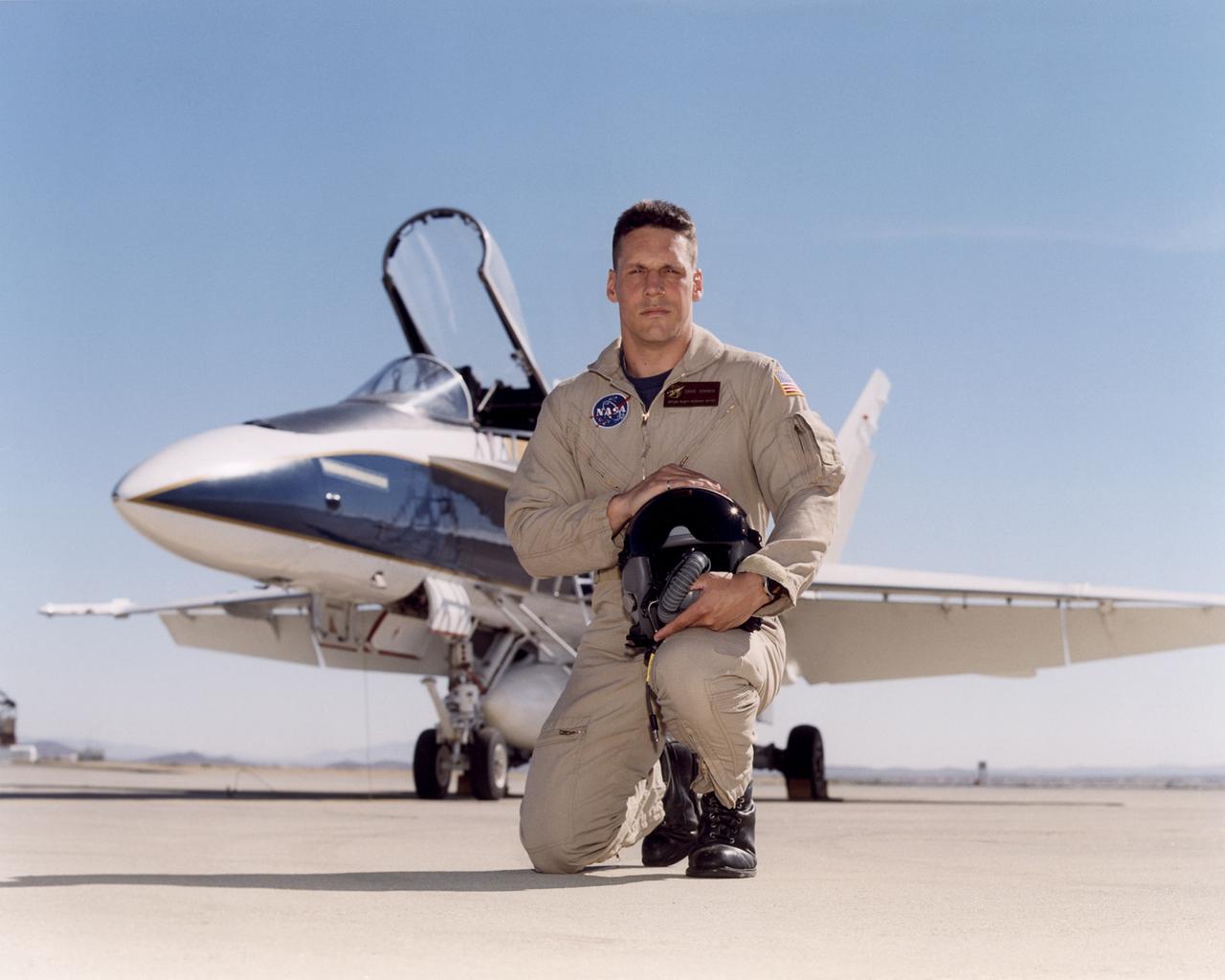
Craig R. Bomben became a pilot in the Flight Crew Branch of NASA's Dryden Flight Research Center, Edwards, Calif., in June 2001. His flying duties include a variety of research and support activities while piloting the F/A-18, DC-8, T-34C and King Air aircraft. He has more than 17 years and 3,800 hours of military and civilian flight experience in over 50 different aircraft types. Bomben came to NASA Dryden from a U.S. Navy assignment to the Personnel Exchange Program, Canada. He served as a test pilot in the Canadian Armed Forces located in Cold Lake, Alberta. He participated in numerous developmental programs to include CT-133 airborne ejection seat testing, F/A-18 weapons flutter testing and F/A-18 night vision goggles integration.  Bomben performed U.S. Navy fleet service in 1995 as a strike-fighter department head. He completed two overseas deployments onboard the USS George Washington and USS Stennis. As a combat strike leader, he headed numerous multi-national missions over Iraq in support of Operation Southern Watch.  Bomben graduated from the U.S. Naval Test Pilot School in 1992 and was subsequently assigned to the Naval Weapons Test Squadron at Pt. Mugu, Calif. During this tour he developed the F-14D bombsight and worked on various other F-14D and F/A-18 weapon systems developmental programs.  Bomben is a 1985 graduate of Washington State University with a bachelor of science degree in electrical engineering. He graduated from naval flight training in 1987 and was recognized as a Commodore List graduate. His first assignment was to Naval Air Station Pensacola, Fla., where he was an instructor in the T-2B Buckeye. When selected to fly the F/A-18 in 1989, he joined a fleet squadron and deployed aboard the USS Forrestal.  Bomben is married to the former Aissa Asuncion. They live in Lancaster, Calif., with their 3 children.
Craig R. Bomben
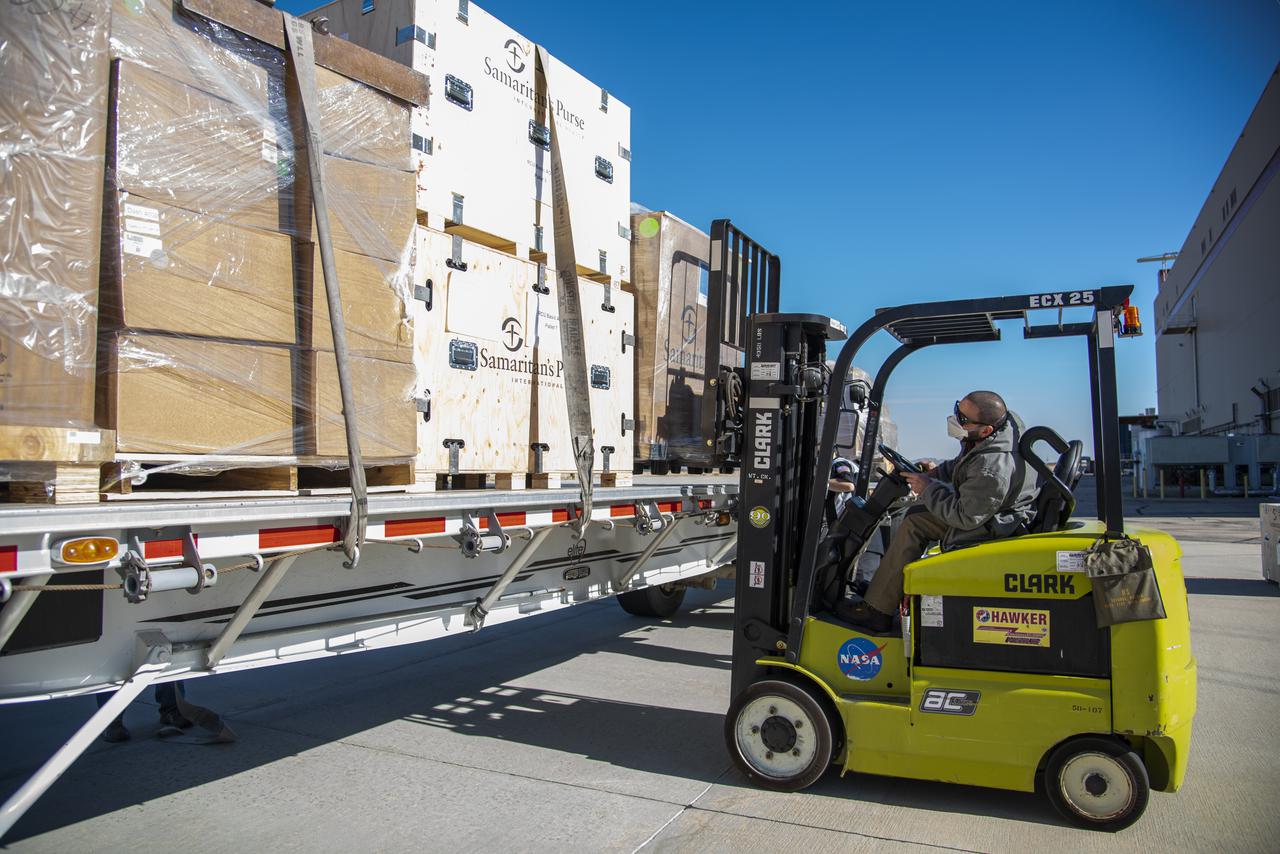
Marlon Espinoza uses a forklift at NASA's Armstrong Flight Research Center Building 703 in Palmdale, California, to assist in Samaritan Purse's COVID-19 aid work. The supplies were unloaded from a DC-8 and loaded onto a truck.
NASA Armstrong Supports Samaritan Purse's COVID-19 Aid Work
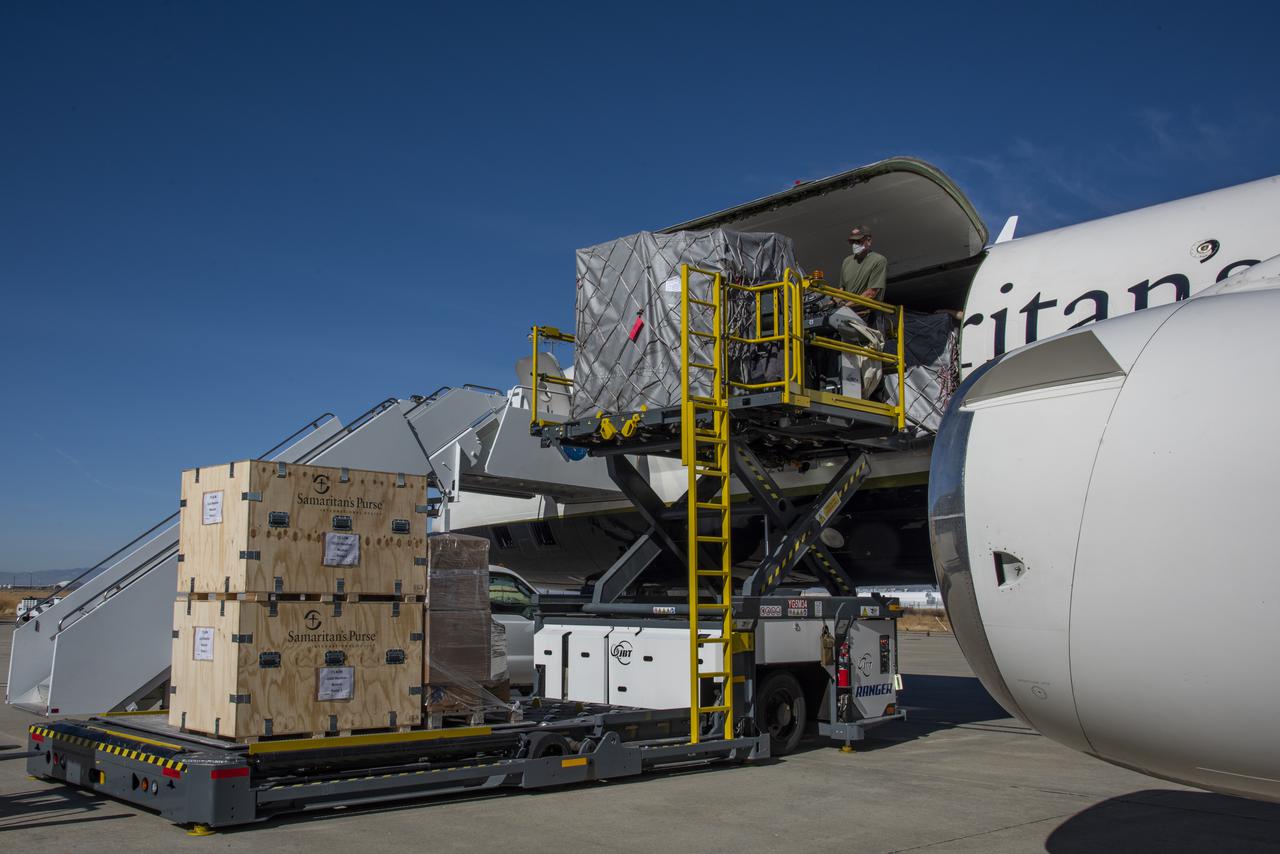
Samaritan Purse landed its DC-8 at NASA's Armstrong Flight Research Center Building 703 in Palmdale, California, to deliver supplies needed to meet the demands of the COVID-19 pandemic. NASA Armstrong personnel assisted in unloading the aircraft.
NASA Armstrong Supports Samaritan Purse's COVID-19 Aid Work