
Mare Orientale Flyover

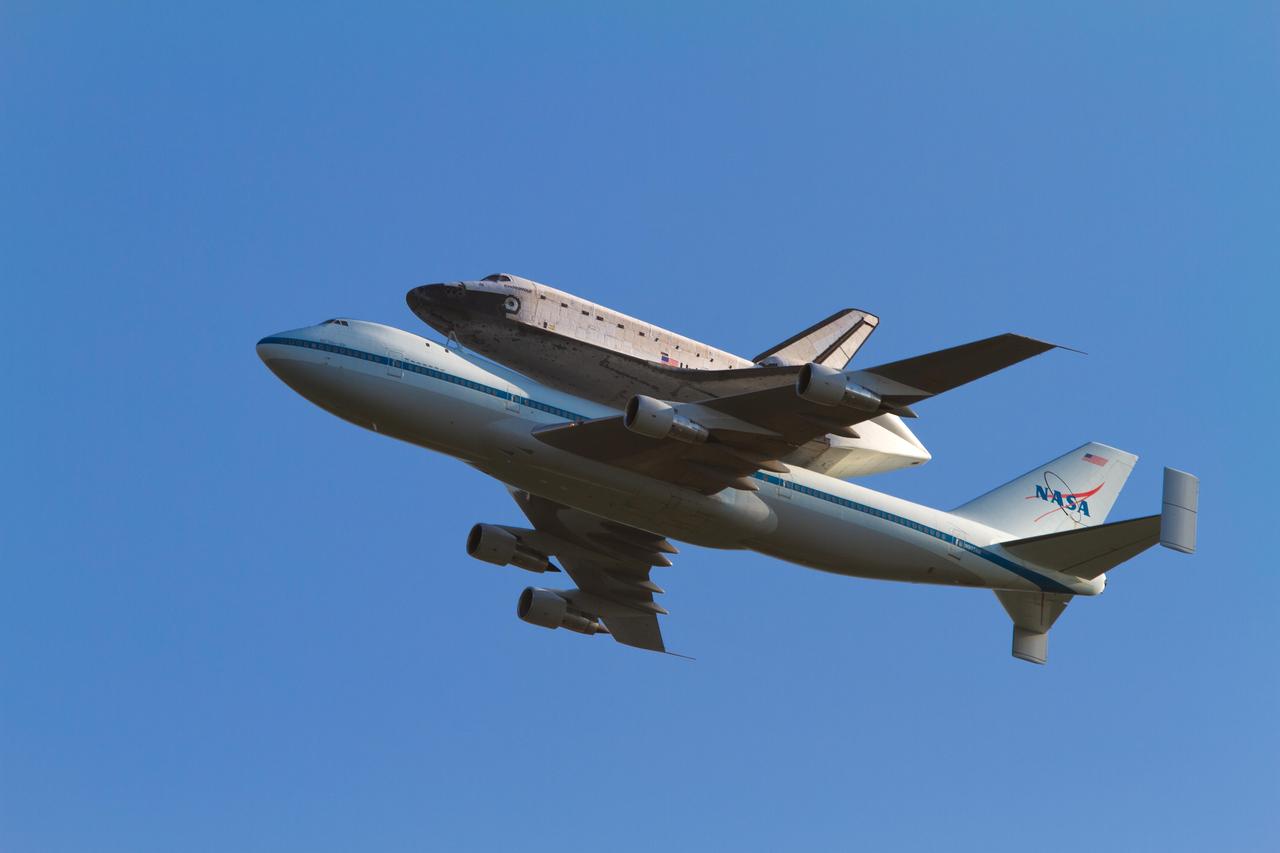
Space shuttle Endeavour embarked on the first leg of its final flight Sept. 19, departing Kennedy Space Center in Florida and making early-morning flyover visits to Stennis Space Center in Mississippi and nearby Michoud Assembly Facility in Louisiana. The shuttle flew atop the 747 Shuttle Carrier Aircraft, headed west, where it will go on display at the California Science Center in Los Angeles. The flight crew coordinated with the Federal Aviation Administration to conduct low-level flyovers at about 1,500 feet above Stennis and Michoud.
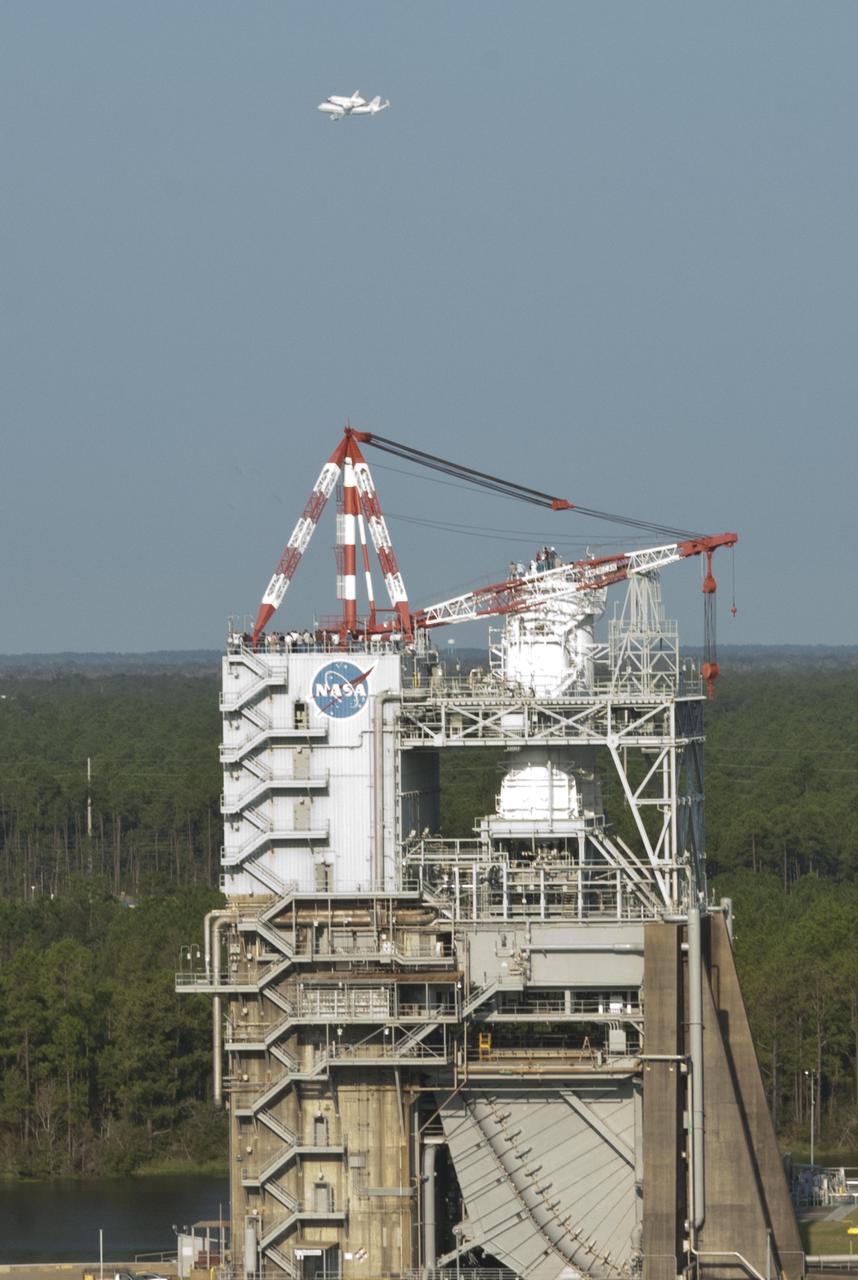
Space shuttle Endeavour made an early-morning flyover Stennis space Center on Sept. 19, en route to Los Angeles, where it will be displayed at the California Science Center. Employees viewed the low-level flyover from various locations, including atop the facility test stands. In this photo, employees watch as the shuttle is ferried above the A-1 Test Stand.
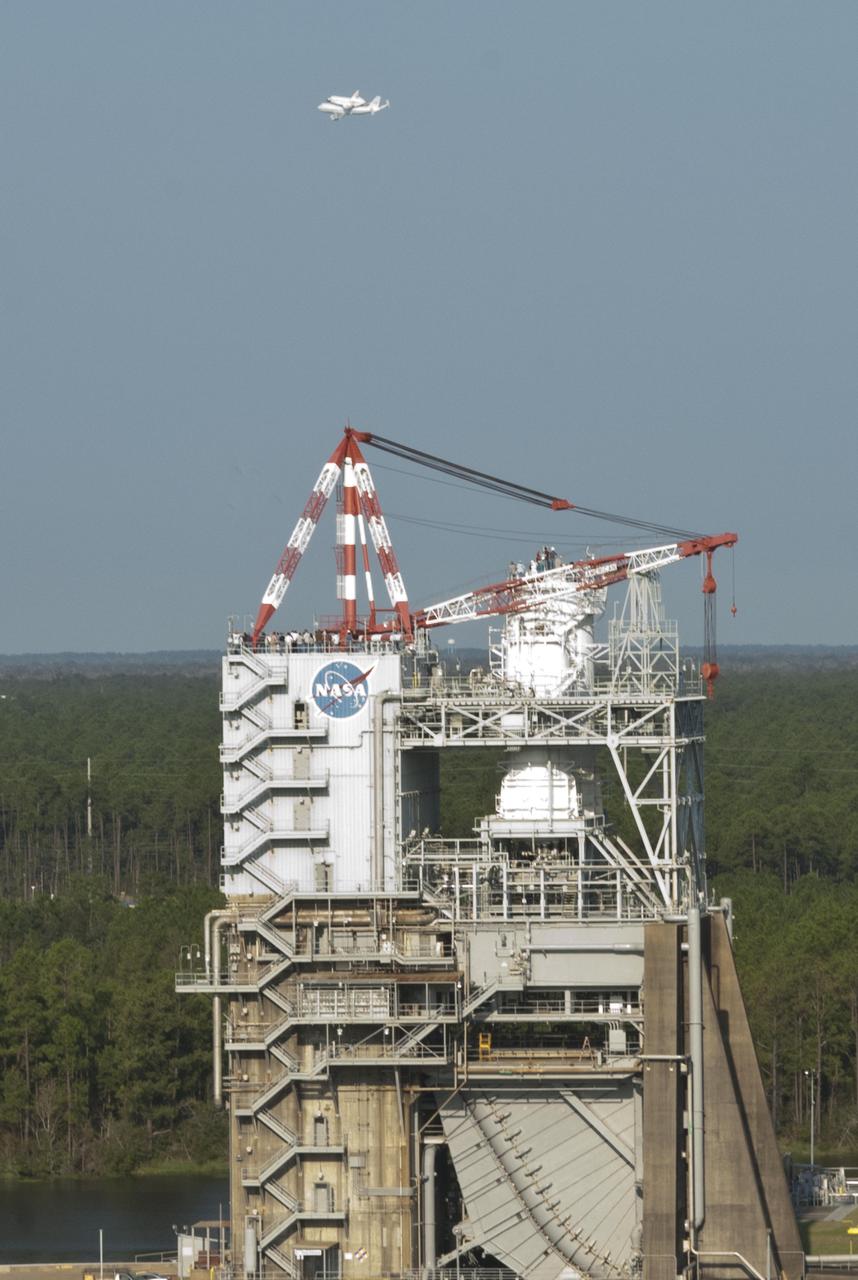
Space shuttle Endeavour made an early-morning flyover Stennis space Center on Sept. 19, en route to Los Angeles, where it will be displayed at the California Science Center. Employees viewed the low-level flyover from various locations, including atop the facility test stands. In this photo, employees watch as the shuttle is ferried above the A-1 Test Stand.

Stennis Space Center employees turned out in force to cheer space shuttle Endeavour as it flew low over the rocket engine test facility early on the morning of Sept. 19. The shuttle is headed to Los Angeles, where it will be on display at the California Science Center. Stennis employees applauded and cheered as the retired shuttle passed low overhead. In addition to those gathered on the lawn in front of the Roy S. Estess Building, many congregated on building rooftops and on facility test stands to view the flyover.
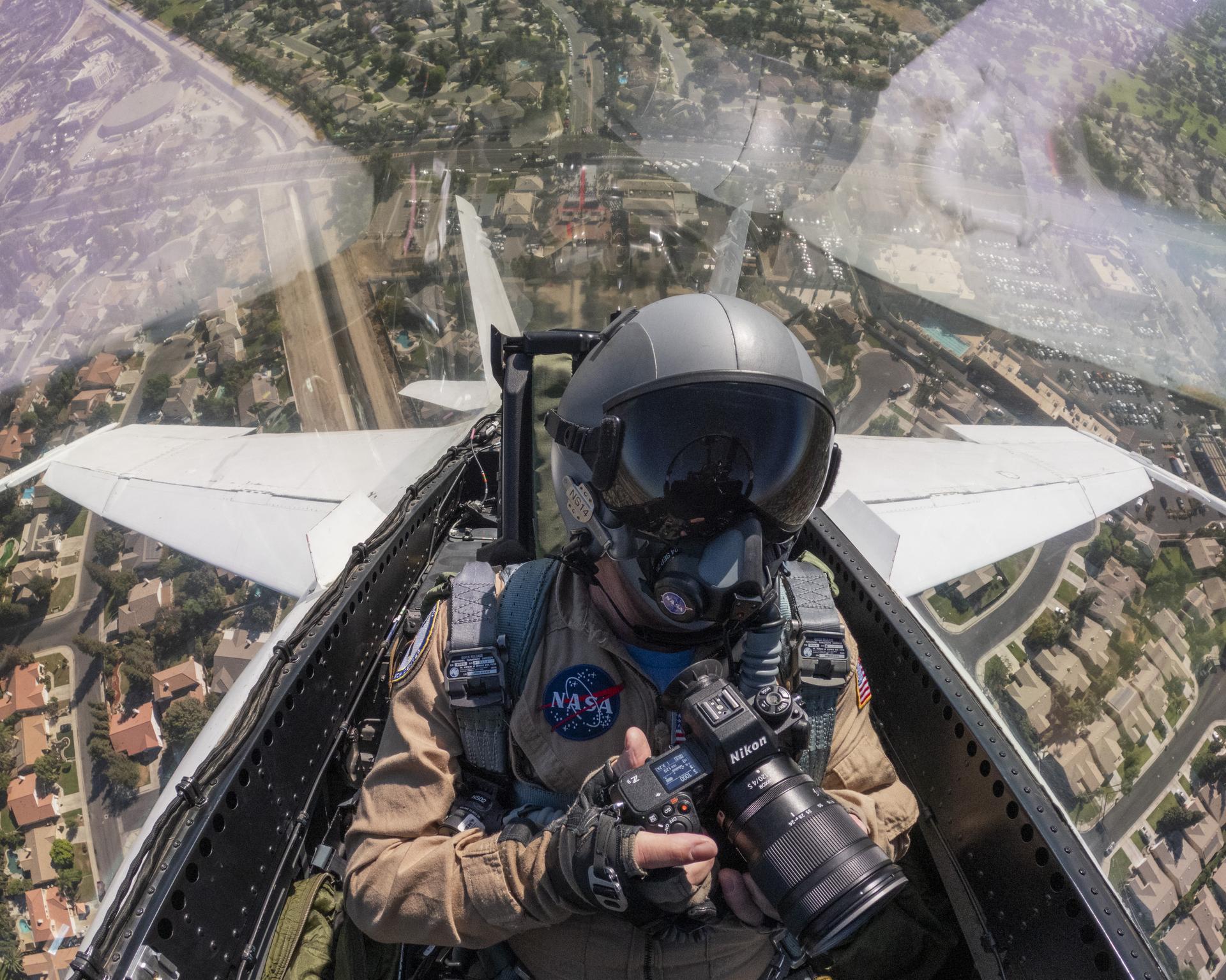
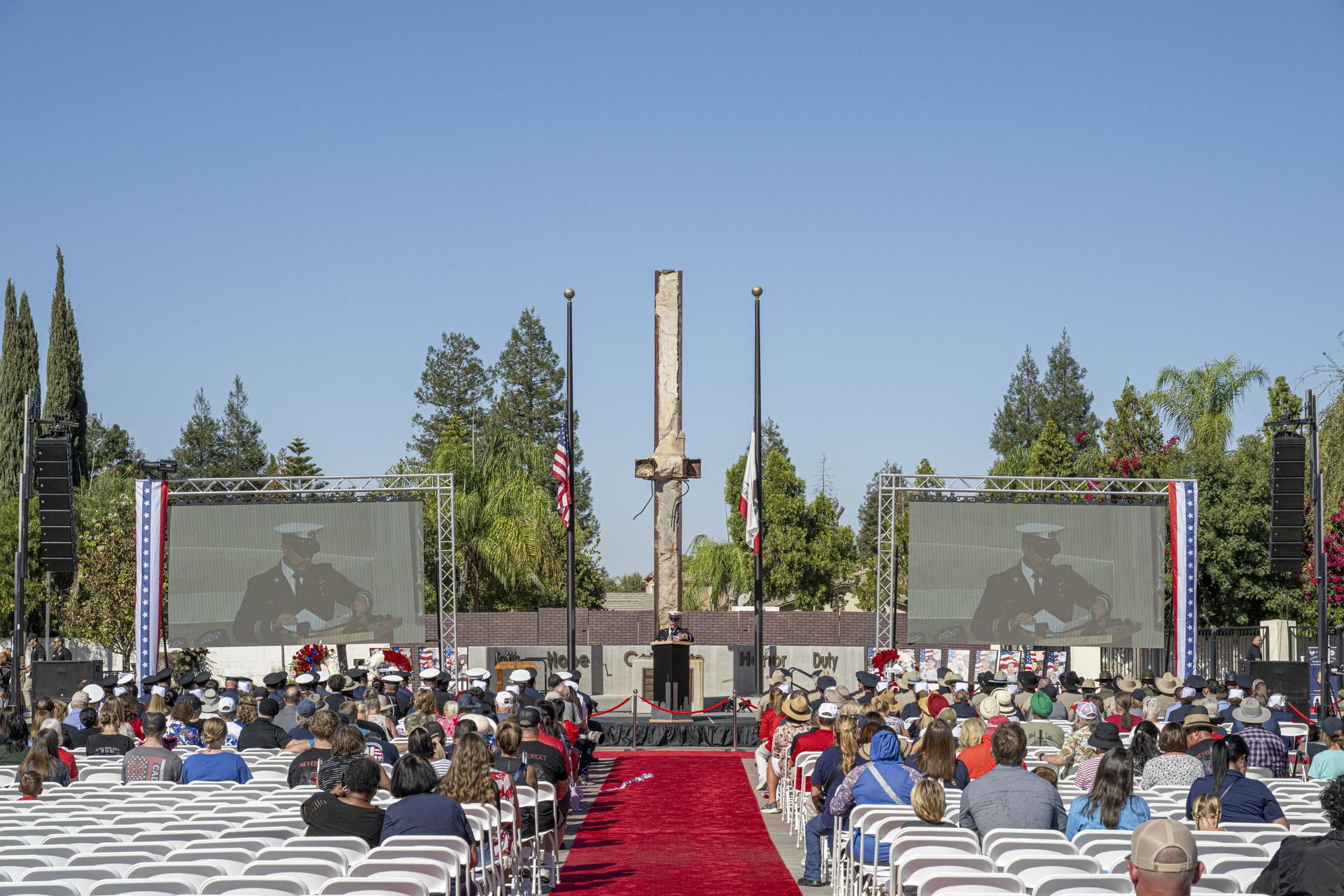
NASA photographer Jim Ross captured this view from inside the cockpit of an F/A‑18 aircraft during a commemorative flyover above the Bakersfield Fire Department and surrounding community in California on Friday, Sept. 11, 2026. The aircraft is based at NASA’s Armstrong Flight Research Center in Edwards, California. The flyover was part of an event honoring the 25th anniversary of Sept. 11, 2001.
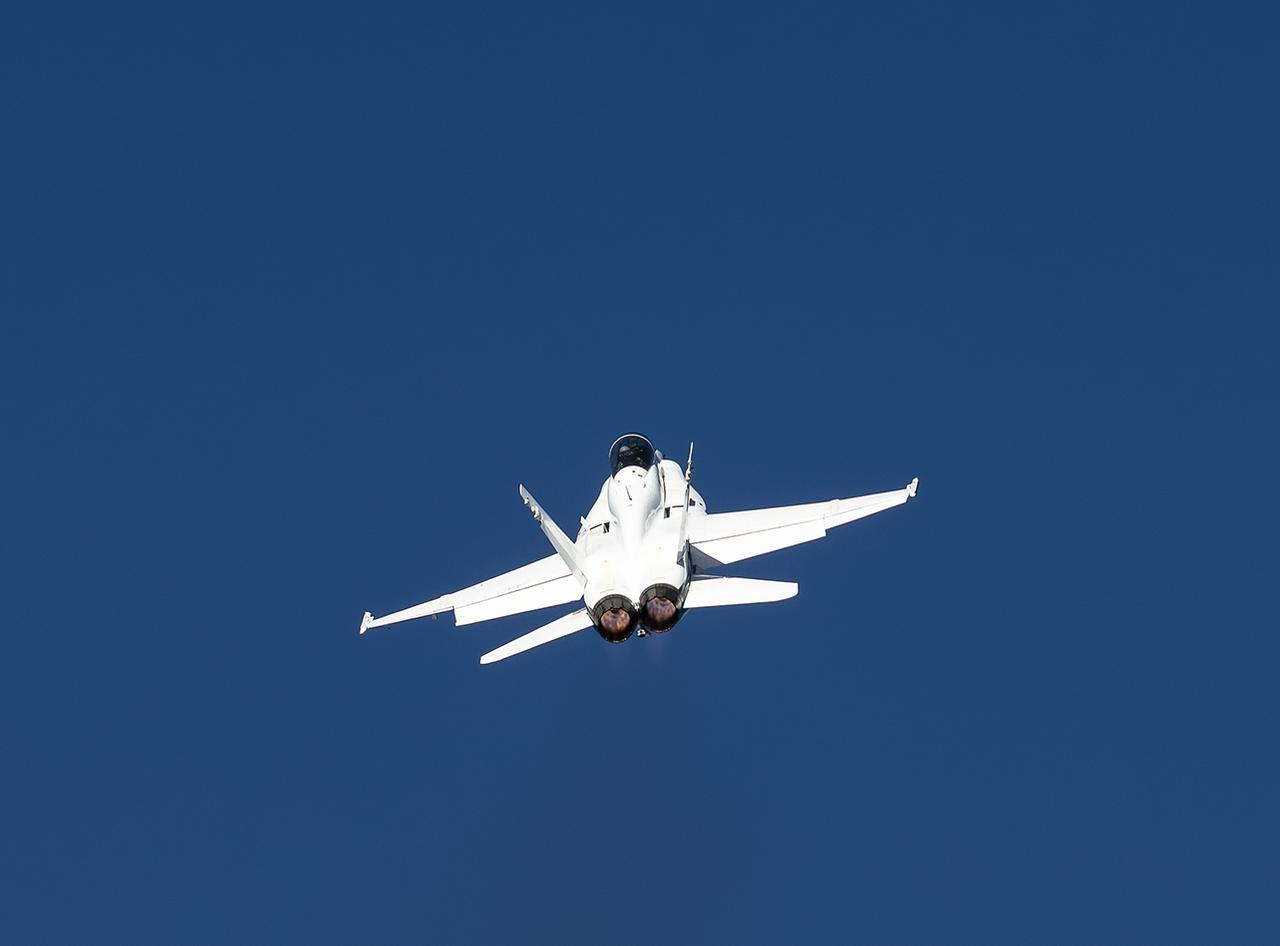
A NASA F/A‑18 aircraft flies over the Bakersfield Fire Department and surrounding community in California, on Friday, Sept. 11, 2026. The aircraft is based at NASA’s Armstrong Flight Research Center in Edwards, California. The flyover was part of an event honoring the 25th anniversary of Sept. 11, 2001.
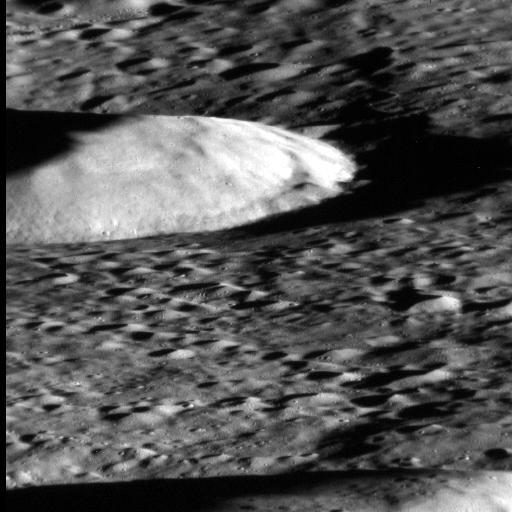
MESSENGER Flyover Movie. This frame from a movie consists of 214 images acquired by NASA MESSENGER Narrow Angle Camera NAC on June 8, 2014.

This image from NASA Mars Reconnaissance Orbiter MRO is part of simulated flyover showing rhythmic layers of sedimentary rock inside Becquerel crater on Mars.
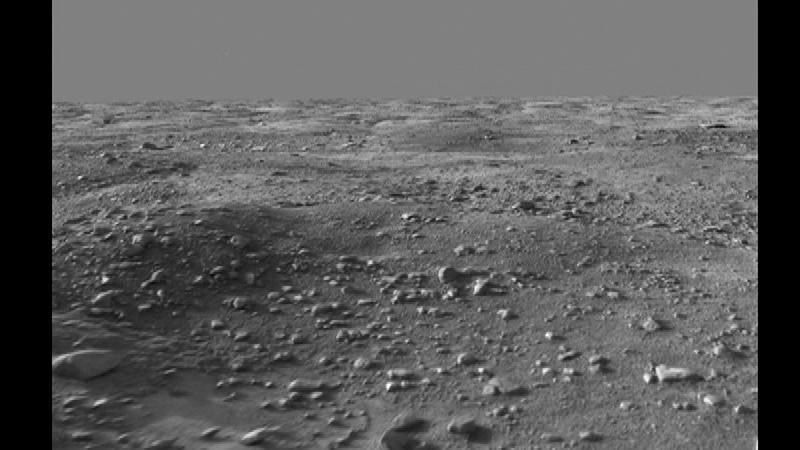
This image from an animated flyover of the workspace of NASA’s Phoenix Mars Lander’s was taken by the Surface Stereo Imager on Sol 14 June 8, 2008, or the 14th Martian day after landing.

Sometimes called The Gathering Place, Oahu is the third largest of the Hawaiian Islands. This image was captured by NASA Terra spacecraft. A flyover was created by draping ASTER image data acquired January 13, 2010.

This frame from a movie is based on data from NASA Cassini spacecraft and shows a flyover of an area of Saturn moon Titan known as Sotra Facula. Scientists believe Sotra is the best case for an ice volcano, or cryovolcano, region on Titan.
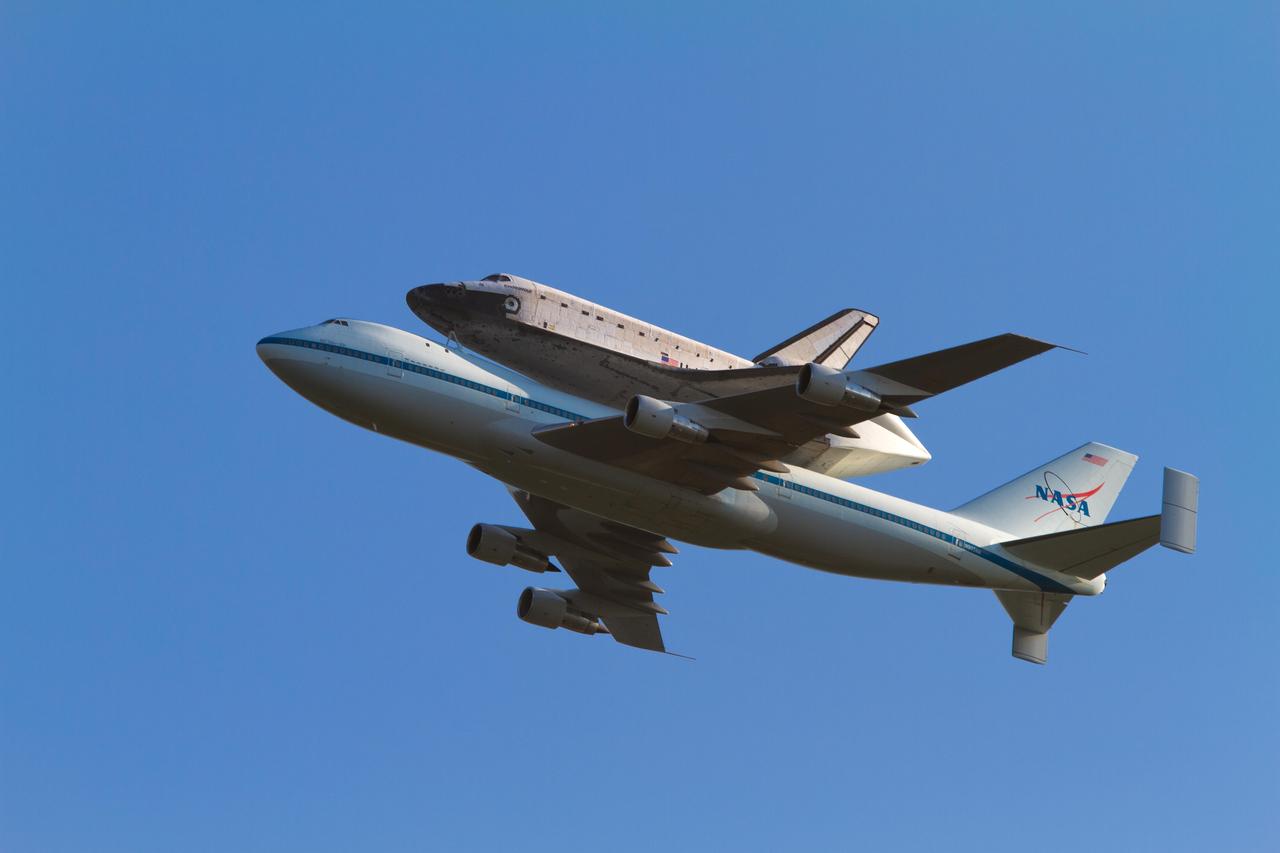
Space shuttle Endeavour embarked on the first leg of its final flight Sept. 19, departing Kennedy Space Center in Florida and making early-morning flyover visits to Stennis Space Center in Mississippi and nearby Michoud Assembly Facility in Louisiana. The shuttle flew atop the 747 Shuttle Carrier Aircraft, headed west, where it will go on display at the California Science Center in Los Angeles. The flight crew coordinated with the Federal Aviation Administration to conduct low-level flyovers at about 1,500 feet above Stennis and Michoud.
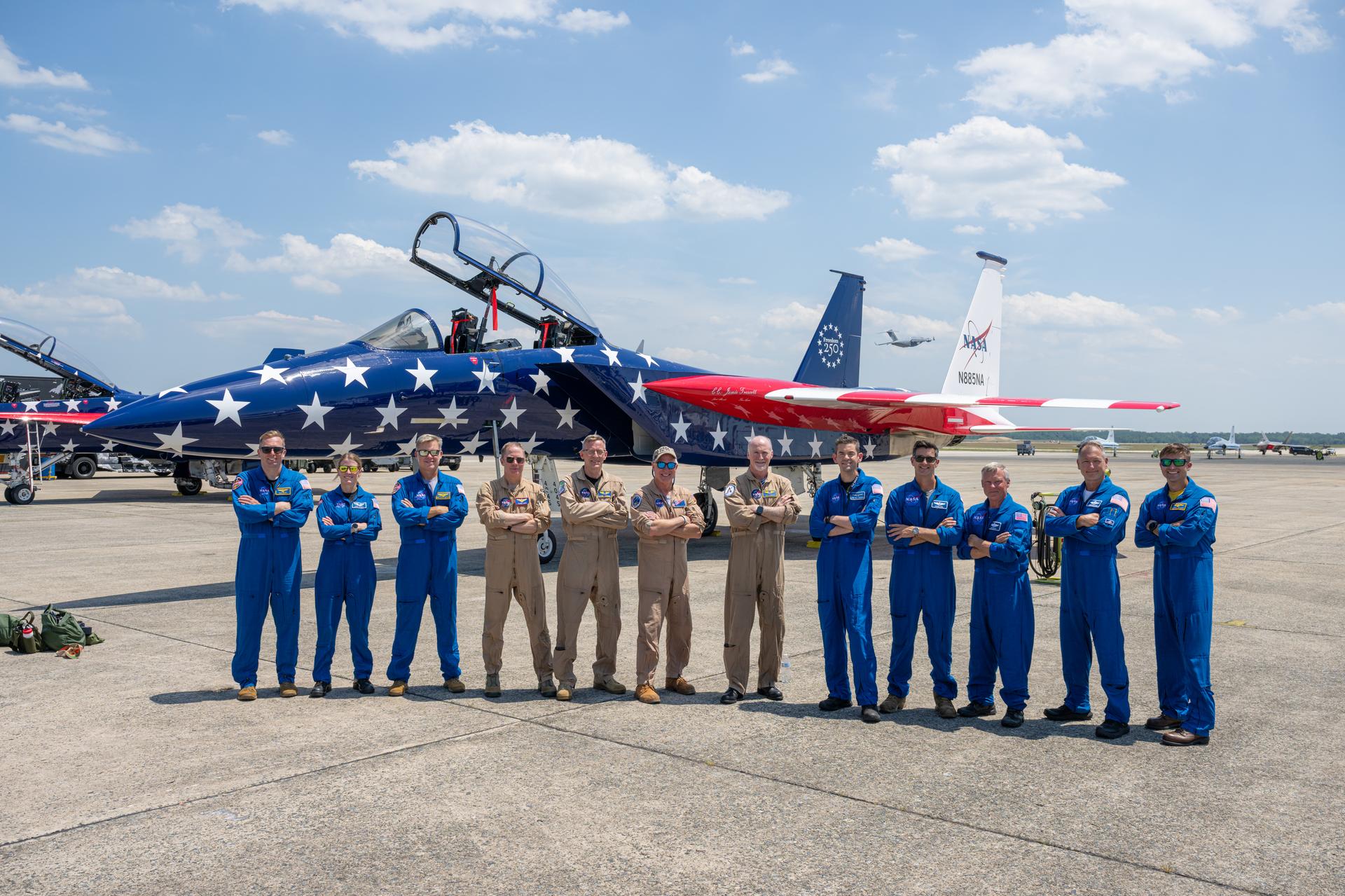
NASA Administrator Jared Isaacman, eighth from left, poses for a group photo with pilots and participants in NASA’s flyovers during the Great American State Fair, Saturday, July 4, 2026, at Joint Base Andrews in Prince George's County, Maryland. NASA aircraft conducted flyovers during the fair in Washington, D.C. Photo Credit: (NASA/John Kraus)

This frame from an animation simulates a flyover of a portion of a Martian canyon detailed in a geological map produced by the U.S. Geological Survey and based on observations by the HiRISE camera on NASA Mars Reconnaissance Orbiter.
Stennis Space Center employees turned out in force to cheer space shuttle Endeavour as it flew low over the rocket engine test facility early on the morning of Sept. 19. The shuttle is headed to Los Angeles, where it will be on display at the California Science Center. Stennis employees applauded and cheered as the retired shuttle passed low overhead. In addition to those gathered on the lawn in front of the Roy S. Estess Building, many congregated on building rooftops and on facility test stands to view the flyover.

Images downloaded from NASA's New Horizons spacecraft (through Sept. 11, 2015) were stitched together and rendered on a sphere to make a flyover "movie." The animation, made with images from New Horizons' Long Range Reconnaissance Imager (LORRI), begins with a low-altitude look at the informally named Norgay Montes, flies northward over the boundary between informally named Sputnik Planum and Cthulhu Regio, turns, and drifts slowly east. During the animation, the altitude of the observer rises until it is about 10 times higher to show about 80% of the hemisphere New Horizons flew closest to on July 14, 2015. http://photojournal.jpl.nasa.gov/catalog/PIA19951
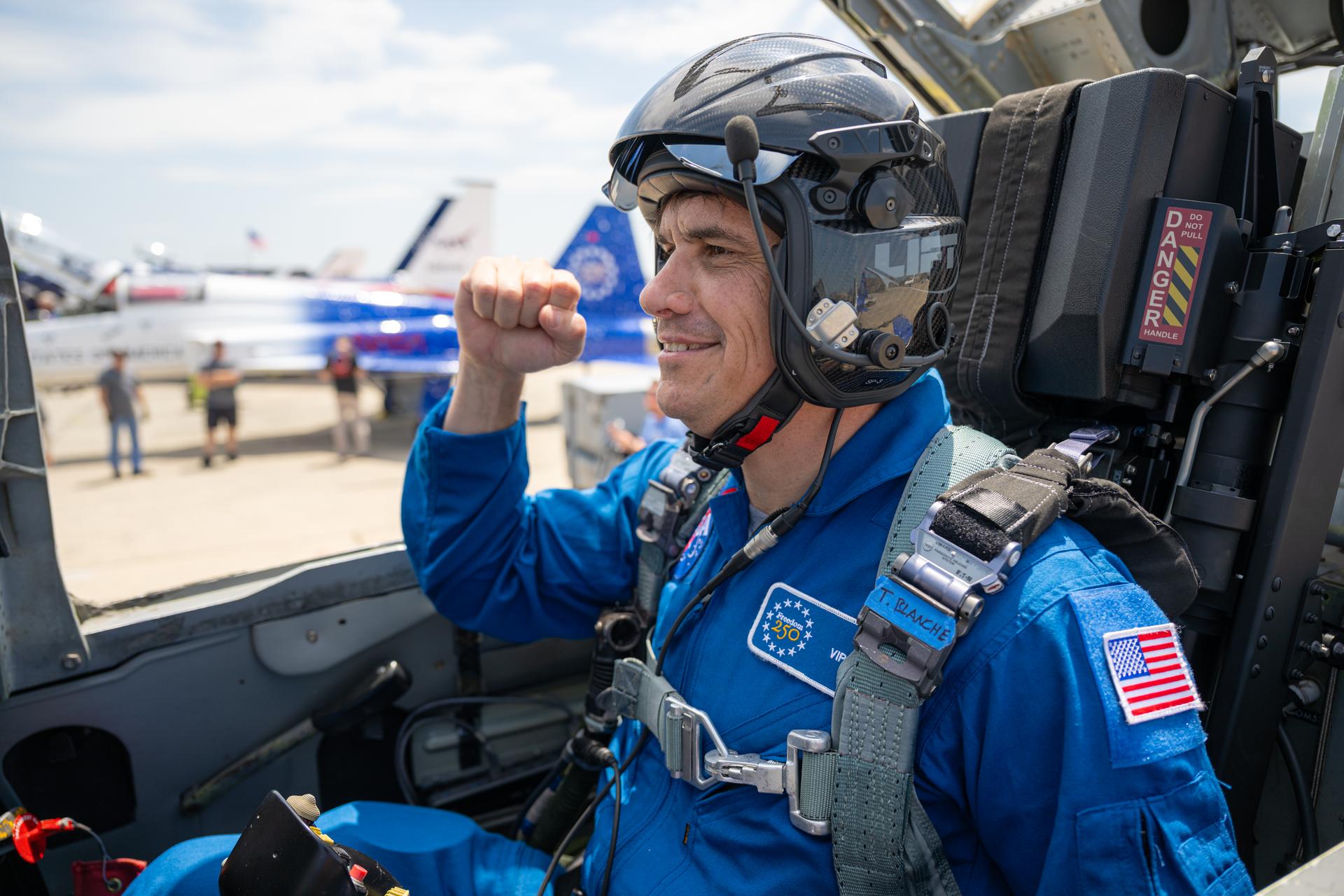
Todd Blanche, Acting U.S. Attorney General, is seen in an F-5 aircraft, Saturday, July 4, 2026, at Joint Base Andrews in Prince George's County, Maryland. NASA aircraft conducted flyovers during the Great American State Fair in Washington, D.C. Photo Credit: (NASA/John Kraus)
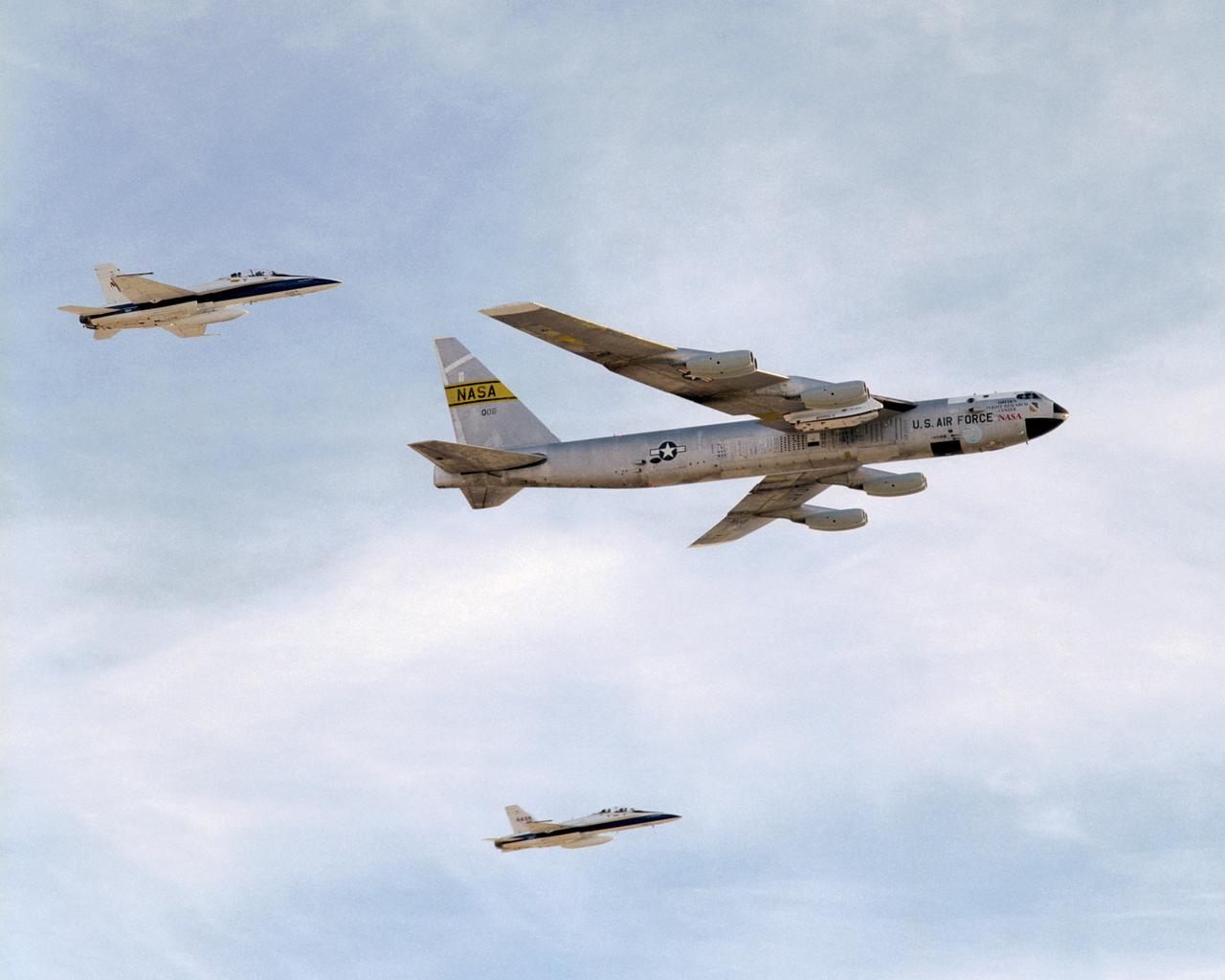
NASA's B-52B mothership, escorted by two F-18s, makes a final flyover after its last research mission that launched the X-43A on its record Mach 9.6 flight.
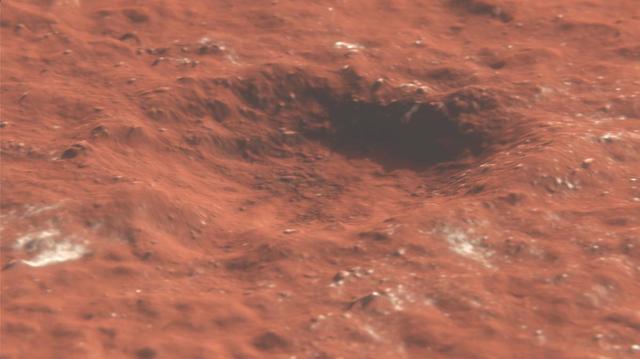
This animation depicts a flyover of a meteoroid impact crater on Mars that's surrounded by boulder-size chunks of ice. The animation was created using data from the High-Resolution Imaging Science Experiment (HiRISE) camera aboard NASA's Mars Reconnaissance Orbiter. The impact occurred on Dec. 24, 2021. Movie available at https://photojournal.jpl.nasa.gov/catalog/PIA25586
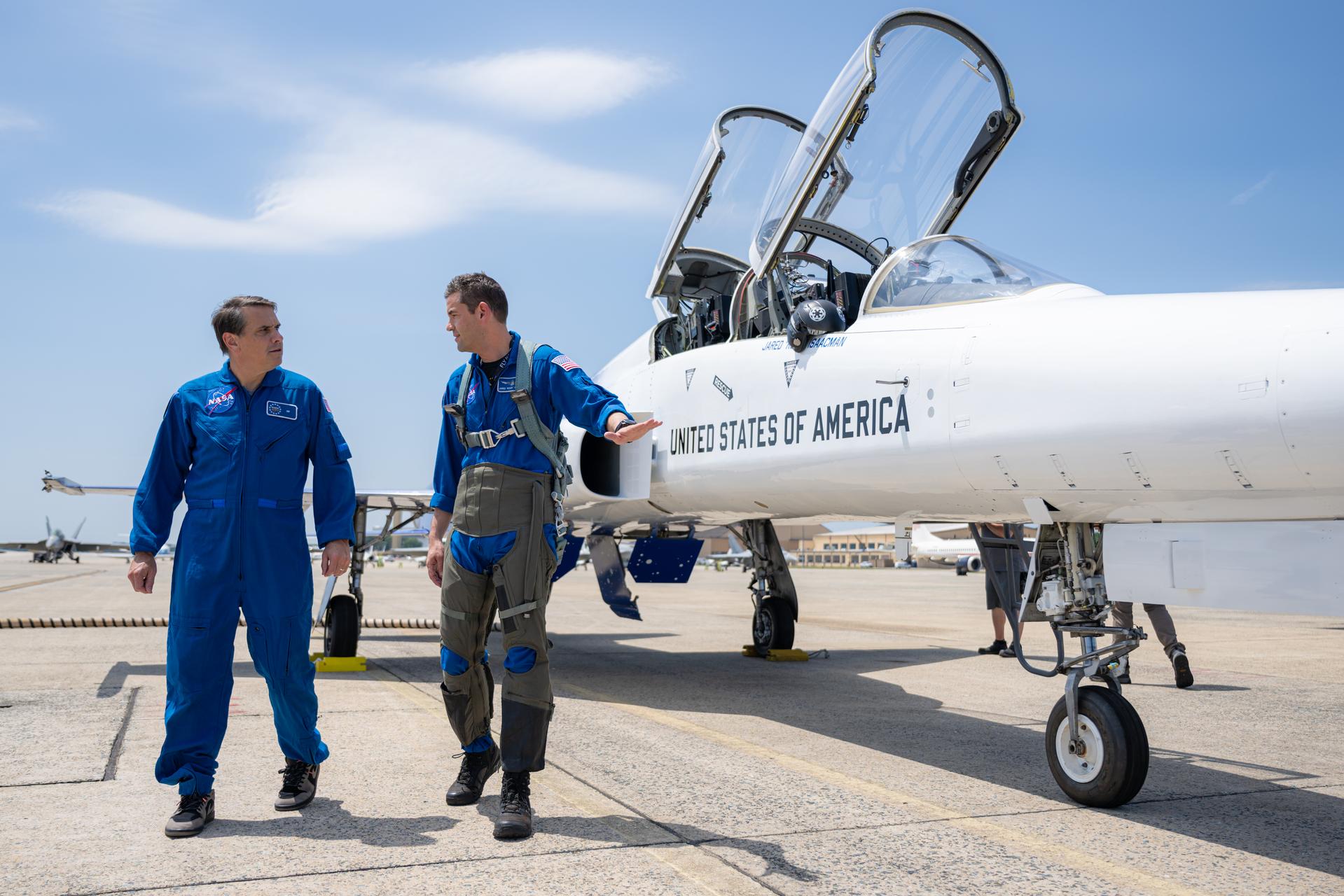
NASA Administrator Jared Isaacman, right, and Todd Blanche, Acting U.S. Attorney General, left, are seen during a preflight walk-around of an F-5 aircraft, Saturday, July 4, 2026, at Joint Base Andrews in Prince George's County, Maryland. NASA aircraft conducted flyovers during the Great American State Fair in Washington, D.C. Photo Credit: (NASA/John Kraus)
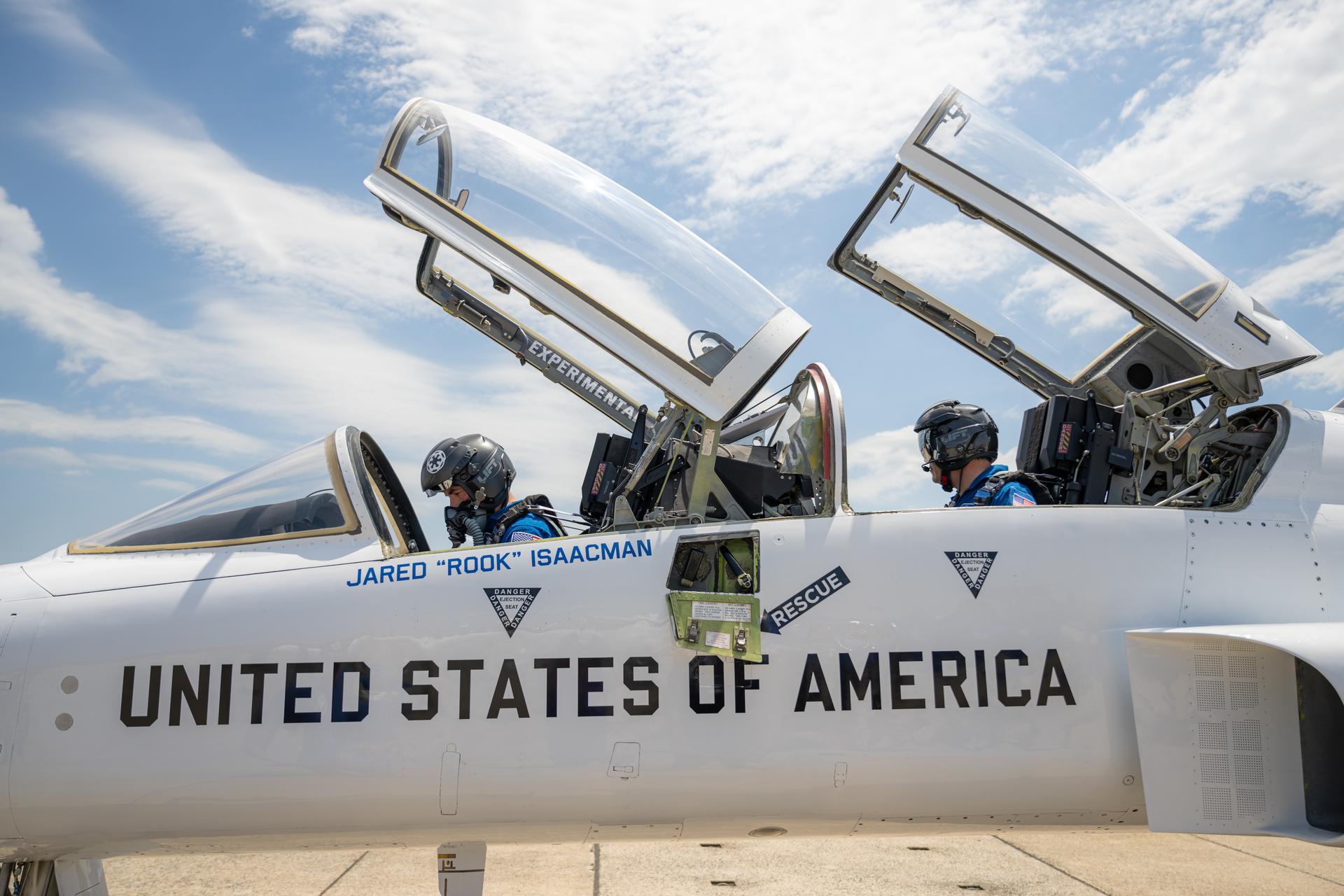
NASA Administrator Jared Isaacman, left, and Todd Blanche, Acting U.S. Attorney General, right, are seen in an F-5 aircraft, Saturday, July 4, 2026, at Joint Base Andrews in Prince George's County, Maryland. NASA aircraft conducted flyovers during the Great American State Fair in Washington, D.C. Photo Credit: (NASA/John Kraus)
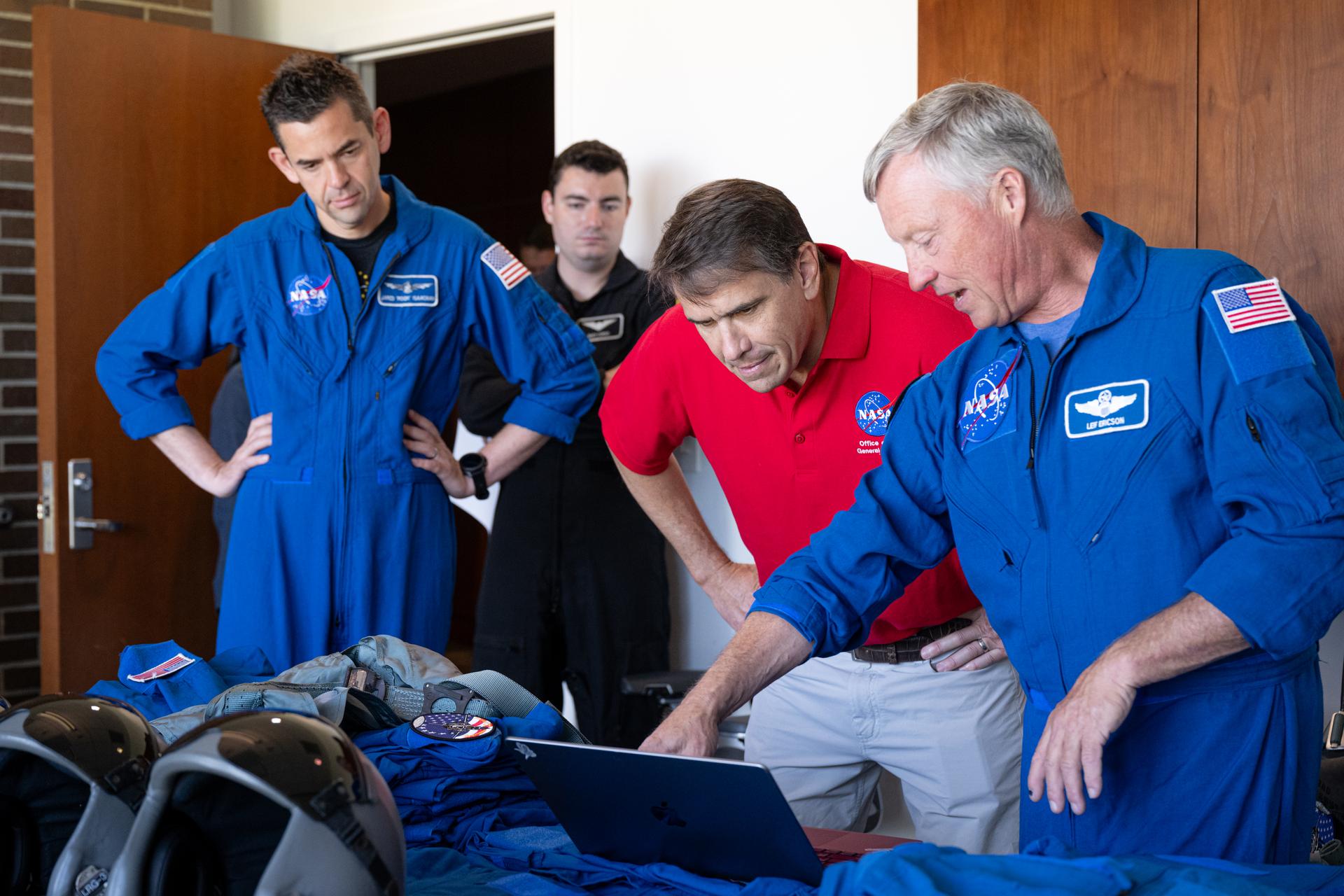
NASA Administrator Jared Isaacman, left; Todd Blanche, Acting U.S. Attorney General, center; and Todd Ericson, senior advisor to the administrator, right, participate in a preflight briefing, Saturday, July 4, 2026, at Joint Base Andrews in Prince George's County, Maryland. NASA aircraft conducted flyovers during the Great American State Fair in Washington, D.C. Photo Credit: (NASA/John Kraus)
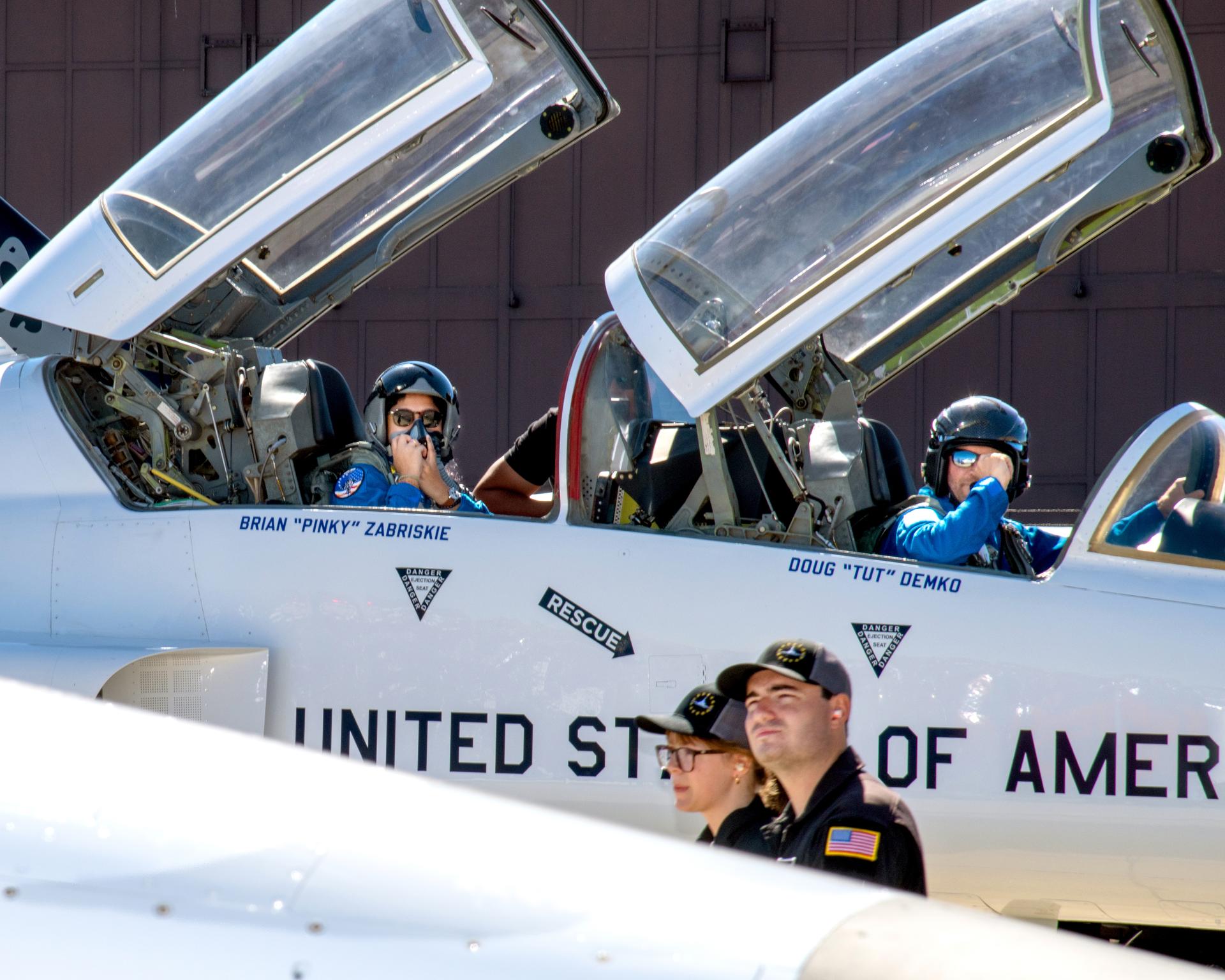
Rider Greeta Thaikattil talks with her pilot, Doug “Tut” Demko before engine start and take off for the Browns Stadium flyover. This was part of the 2026 NASA Inspiration Tours.
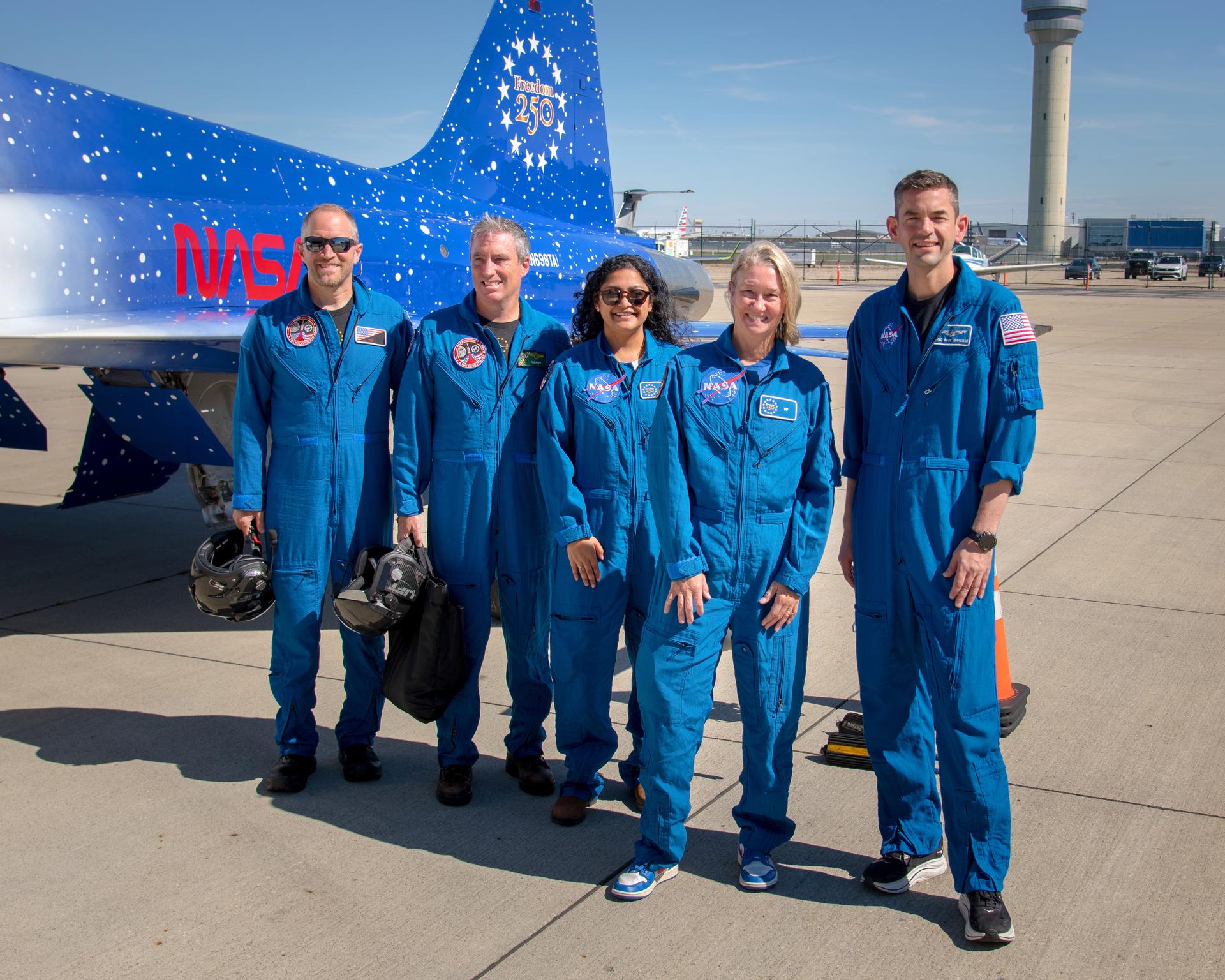
NASA Administrator Jared Isaacman and two GRC employees’ riders fly over the Cleveland browns football game start.The three pilots, Handy, Tut and Jared Isaacman, and the two riders, Greeta Thaikattil and Heather Brown, together for a photos after the flyover flight
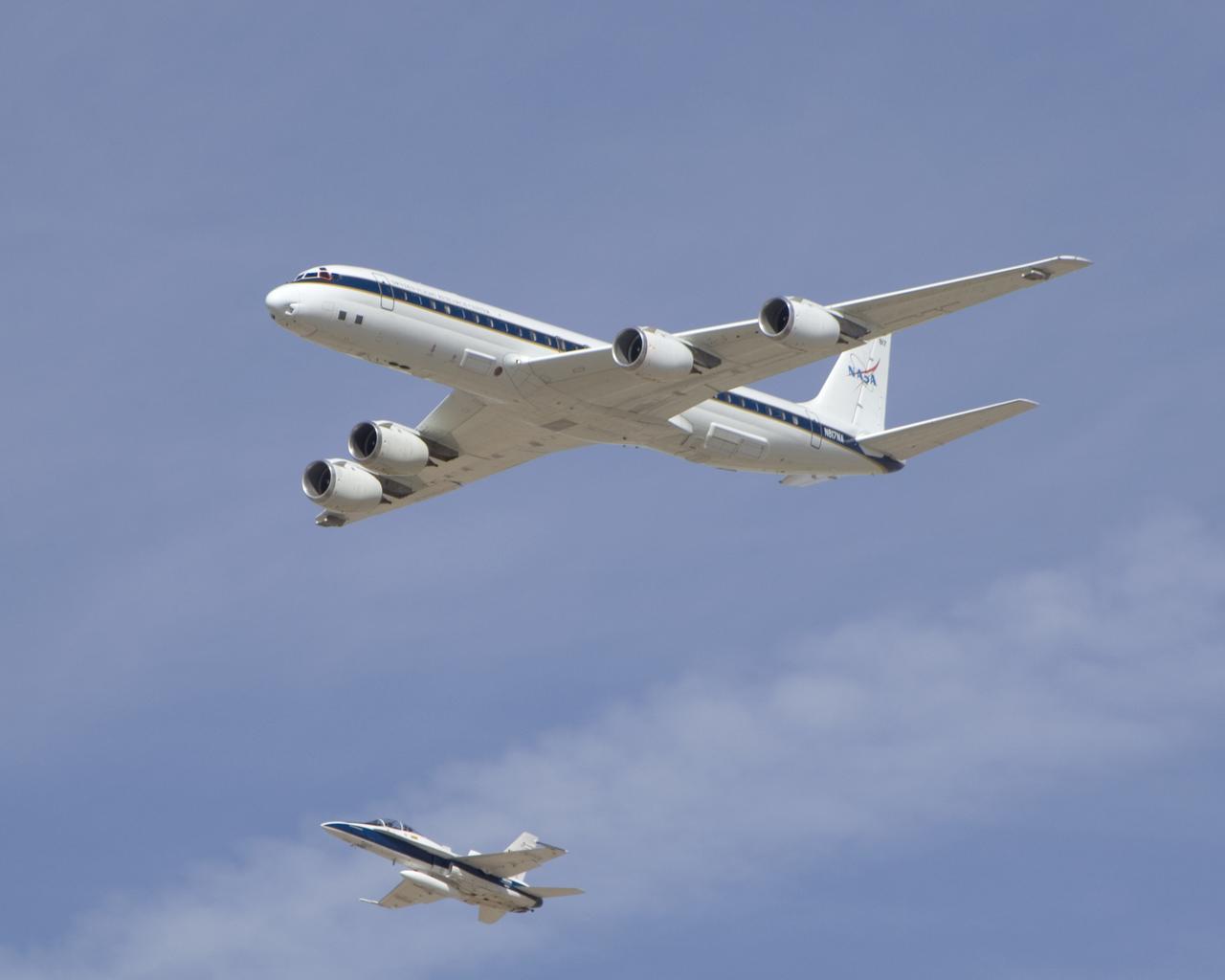
NASA's DC-8 airborne science laboratory is shadowed by a NASA F/A-18 chase plane during a flyover of the Dryden Aircraft Operations Facility in Palmdale, Calif.
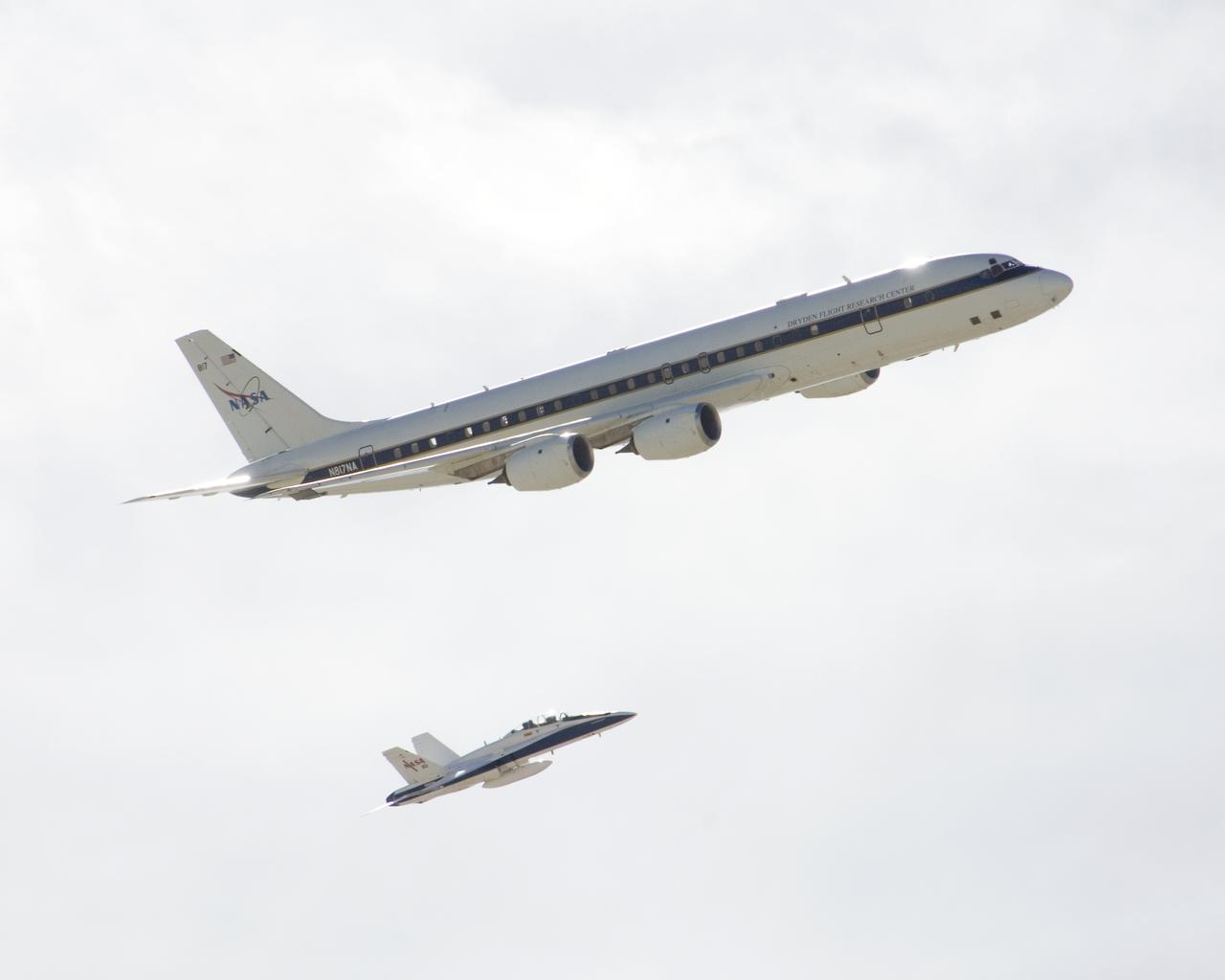
NASA's DC-8 airborne science laboratory is shadowed by a NASA F/A-18 chase plane during a flyover of the Dryden Aircraft Operations Facility in Palmdale, Calif.
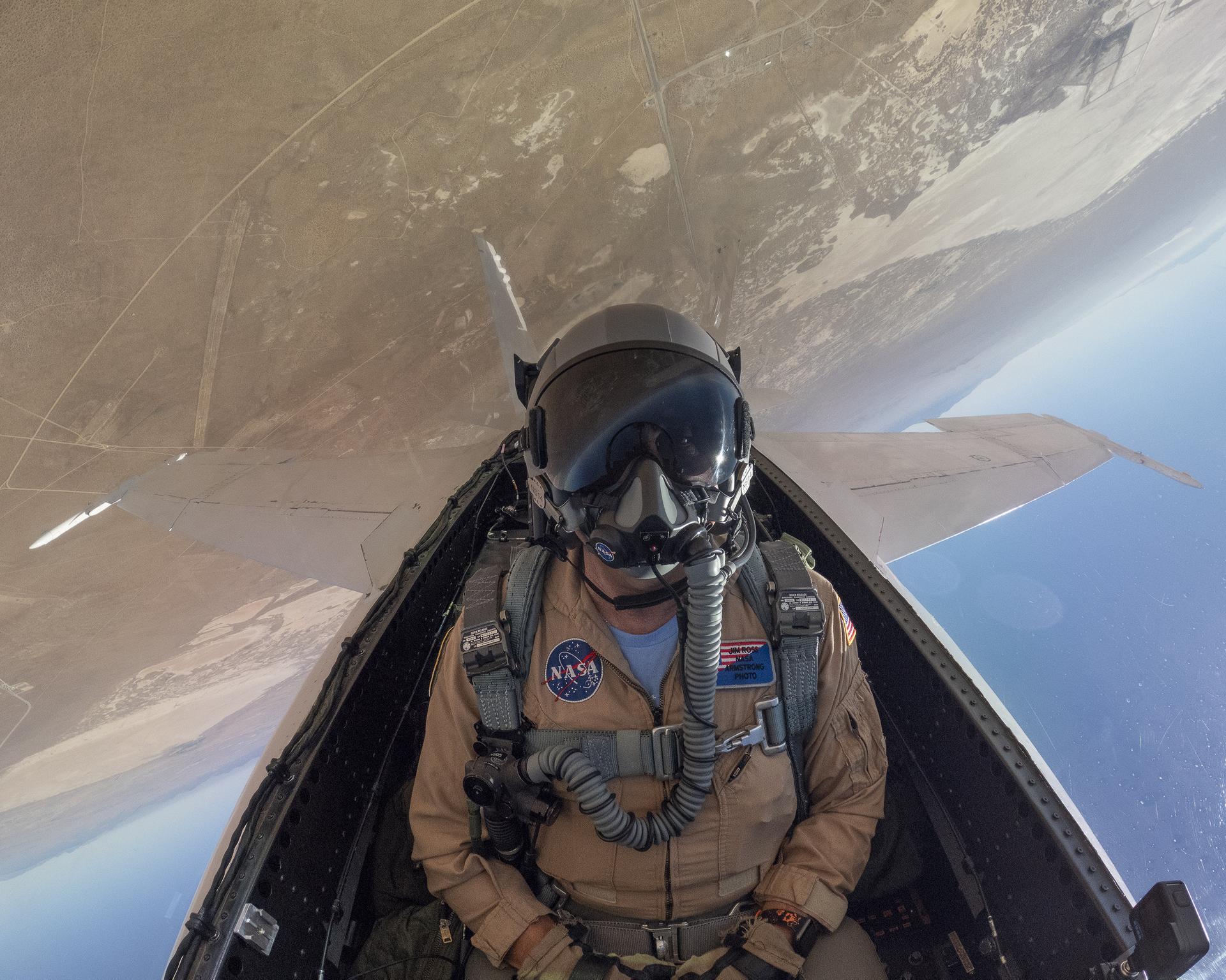
NASA photographer Jim Ross captures a selfie in the rear seat of an F/A-18 during a flyover of the U.S. Air Force Test Center’s Red, White, and Boom celebration of America’s 250th anniversary and NASA Armstrong’s commemoration of its 80th year at Edwards Air Force Base, California, on Friday, Sept. 18, 2026. The event brought together the workforce, families, and the Edwards community for a high‑energy day featuring a Flightline 5K, Ramp Fest and STEM Expo, static aircraft displays, hands‑on STEM activities, and a NASA flyover with a sonic boom.
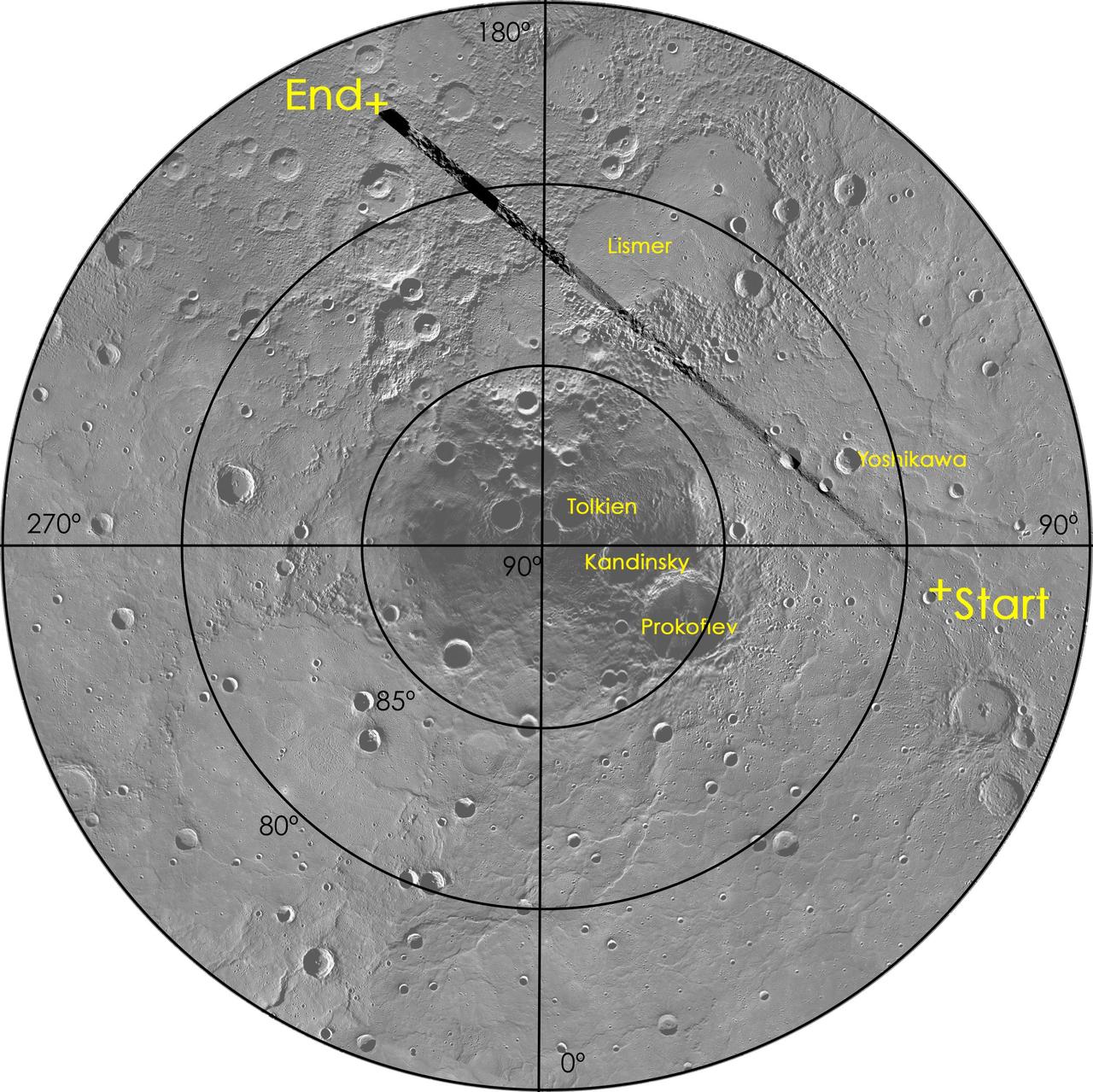
A View of MESSENGER Flight Path. This figure highlights the flight path of NASA MESSENGER during its acquisition of images used in its flyover movie.
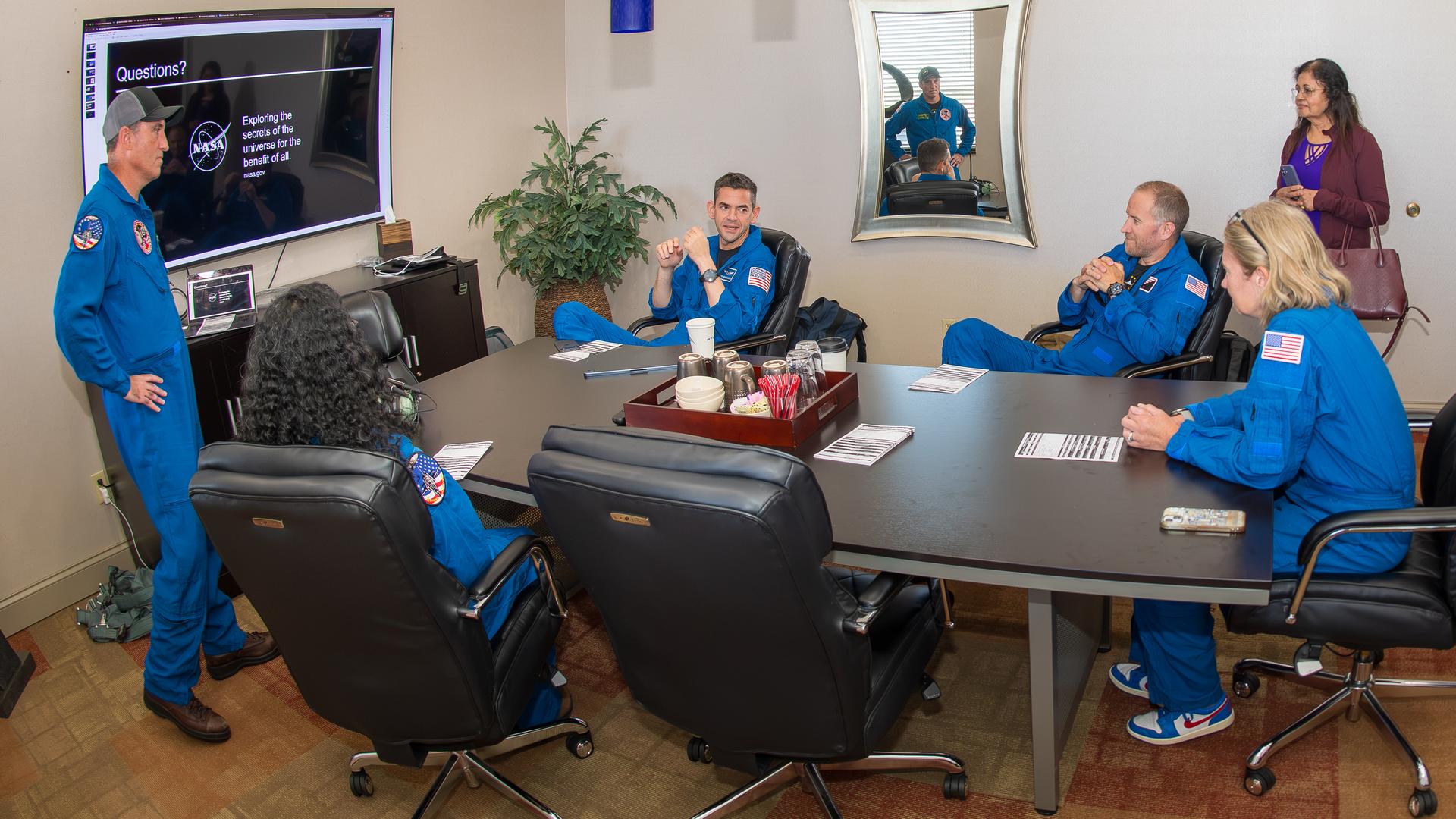
Pilots Brian HANDY Lauber, NASA Administrator Jared Isaacman, and Doug TUT Demko along with riders Greeta Thaikattil and Heather Brown sit for the flight briefing at Atlantic Aviation in Cleveland, Ohio for their Freedom 250 flight. Their flyover flight was for an NFL game between the Cleveland Browns and the Carolina Panthers at Huntington Bank Field, Sunday, September 27th, 2026, in Cleveland, Ohio. NASA’s engagement at NFL games is part of the agency’s Inspiration Tour, aimed at strengthening connections between NASA and its partners and showcasing innovation in air and space in the lead up to the MAX POWER aerospace technology expo and airshow at the agency’s Kennedy Space Center in early November.
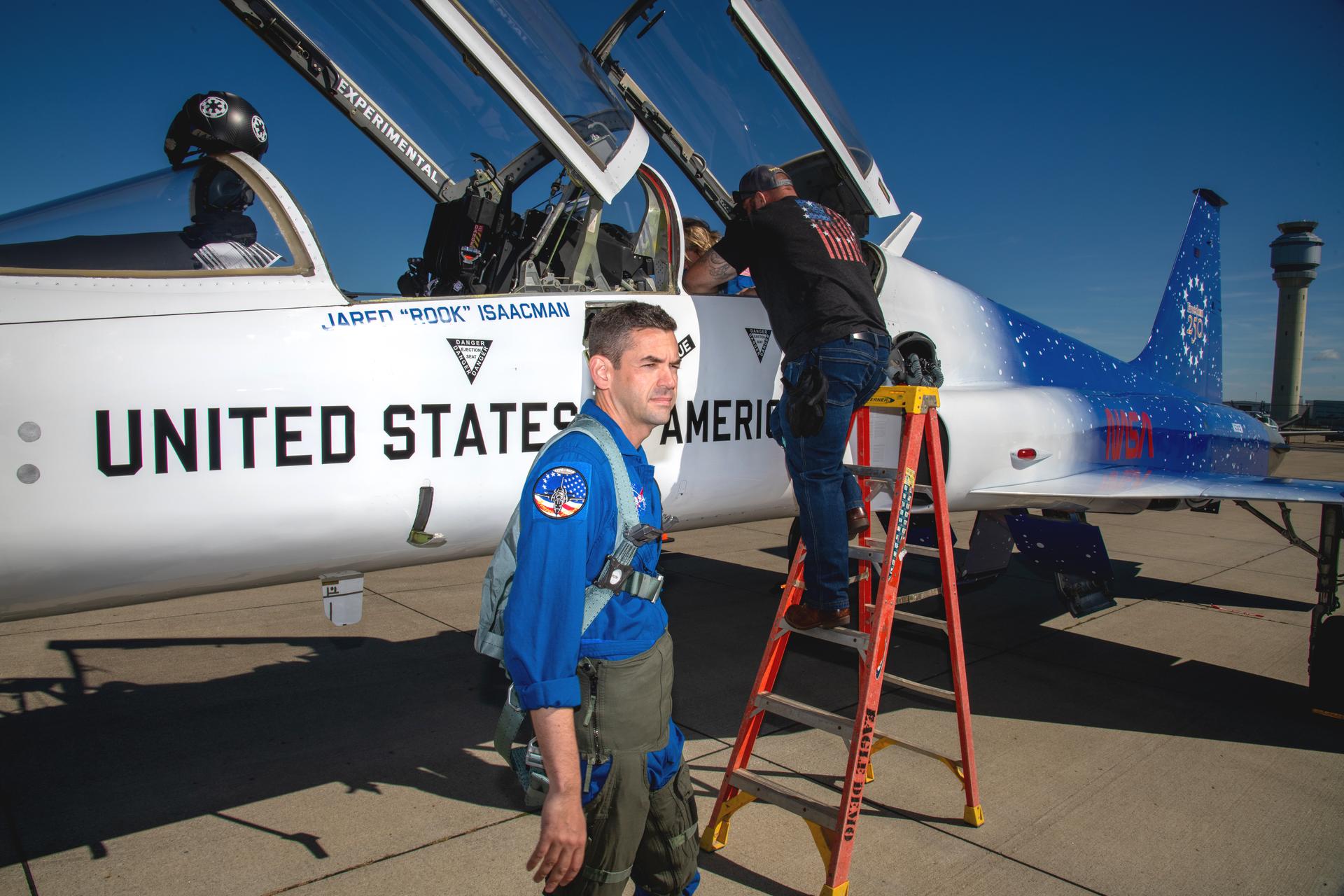
NASA Administrator Jared Isaacman stands next to his jet after his walk around flight check. He pauses before loading the F5 for the Freedom 250 flyover of the NFL game between the Cleveland Browns and the Carolina Panthers at Huntington Bank Field, Sunday, September 27th, 2026, in Cleveland, Ohio. NASA’s engagement at NFL games is part of the agency’s Inspiration Tour, aimed at strengthening connections between NASA and its partners and showcasing innovation in air and space in the lead up to the MAX POWER aerospace technology expo and airshow at the agency’s Kennedy Space Center in early November
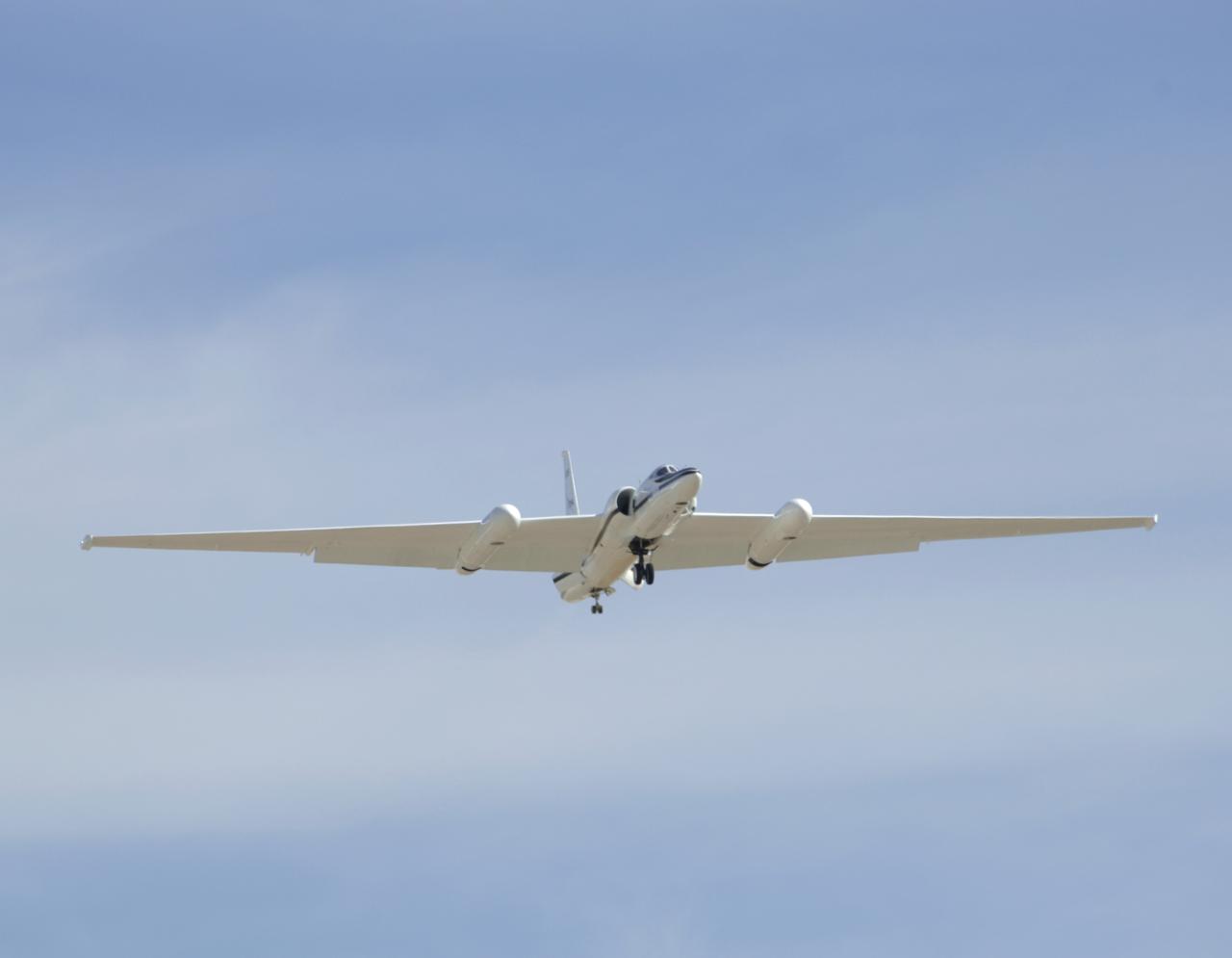
One of NASA's two ER-2 Earth resources aircraft shows off its lines during a flyover at the Edwards Air Force Base open house Oct. 28-29, 2006.
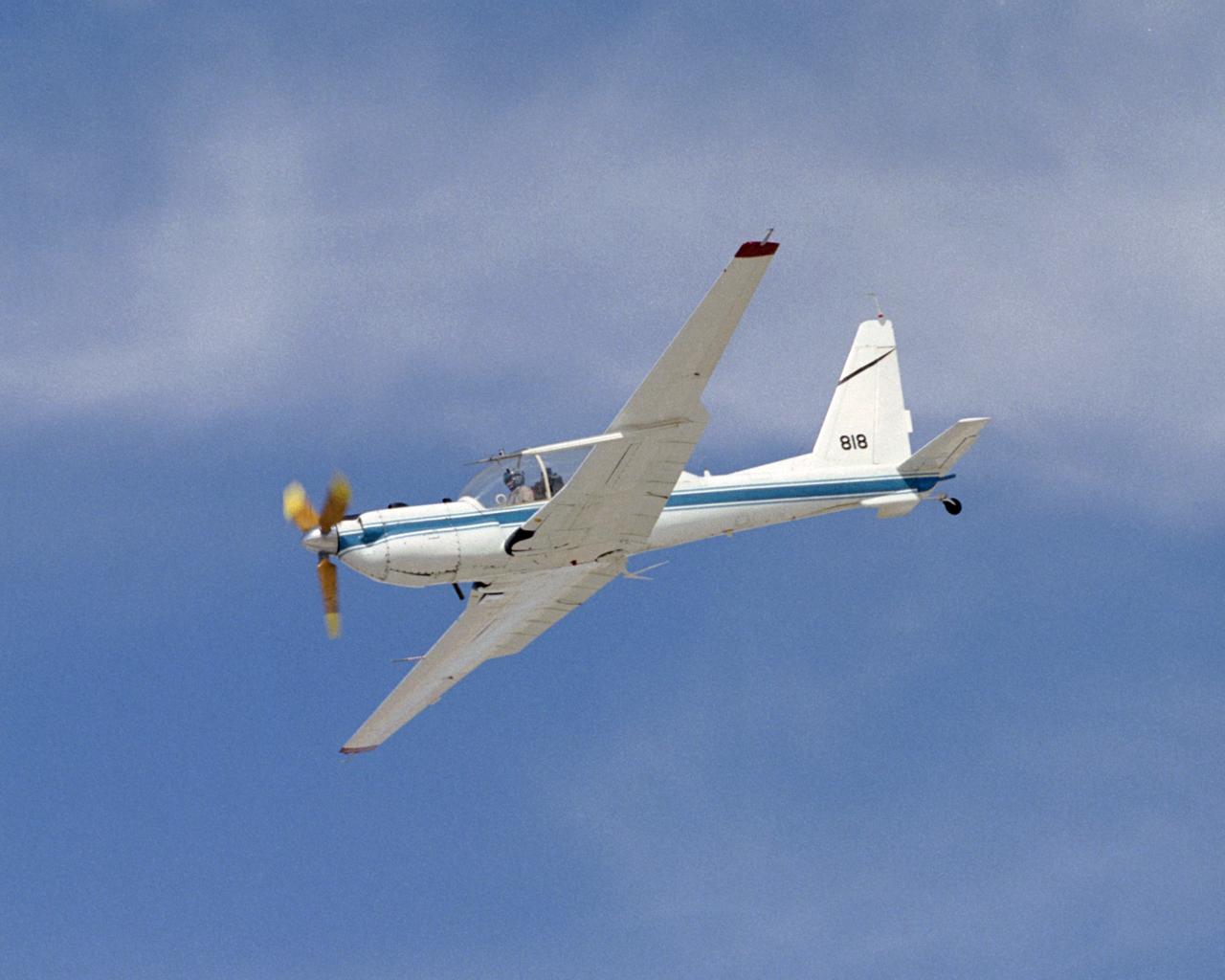
The slow-speed wooden propeller and long wings are evident as NASA's YO-3A acoustics research aircraft performs a low-level flyover at Edwards Air Force Base.
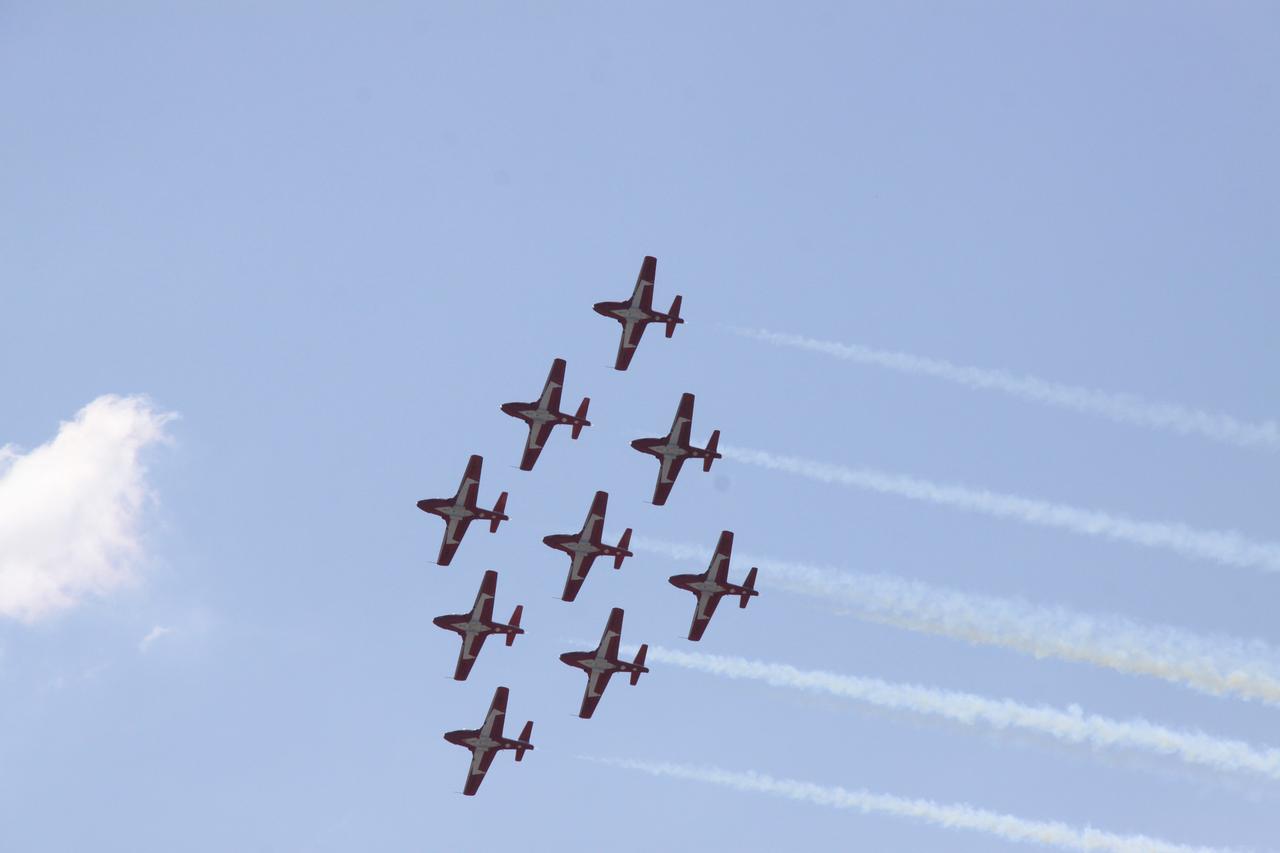
RCAF Snowbirds Flyover VAB Area

This frame from a colorized flyover movie from NASA Cassini mission shows the two largest seas on Saturn moon Titan and nearby lakes. The liquid in Titan lakes and seas is mostly methane and ethane.
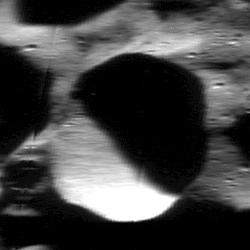
Up Close with MESSENGER Flight Path. This image from NASA MESSENGER provides a close-up view, at 50 m/pixel, of the surface MESSENGER imaged for the creation of its flyover video.
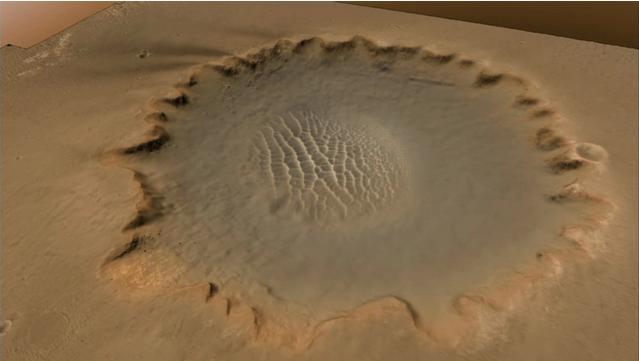
This animation shows a hypothetical flyover above Victoria Crater, where NASA Mars Exploration Rover Opportunity is perched on a rim. The rover is expected to begin rolling down into the crater in early July 2007.
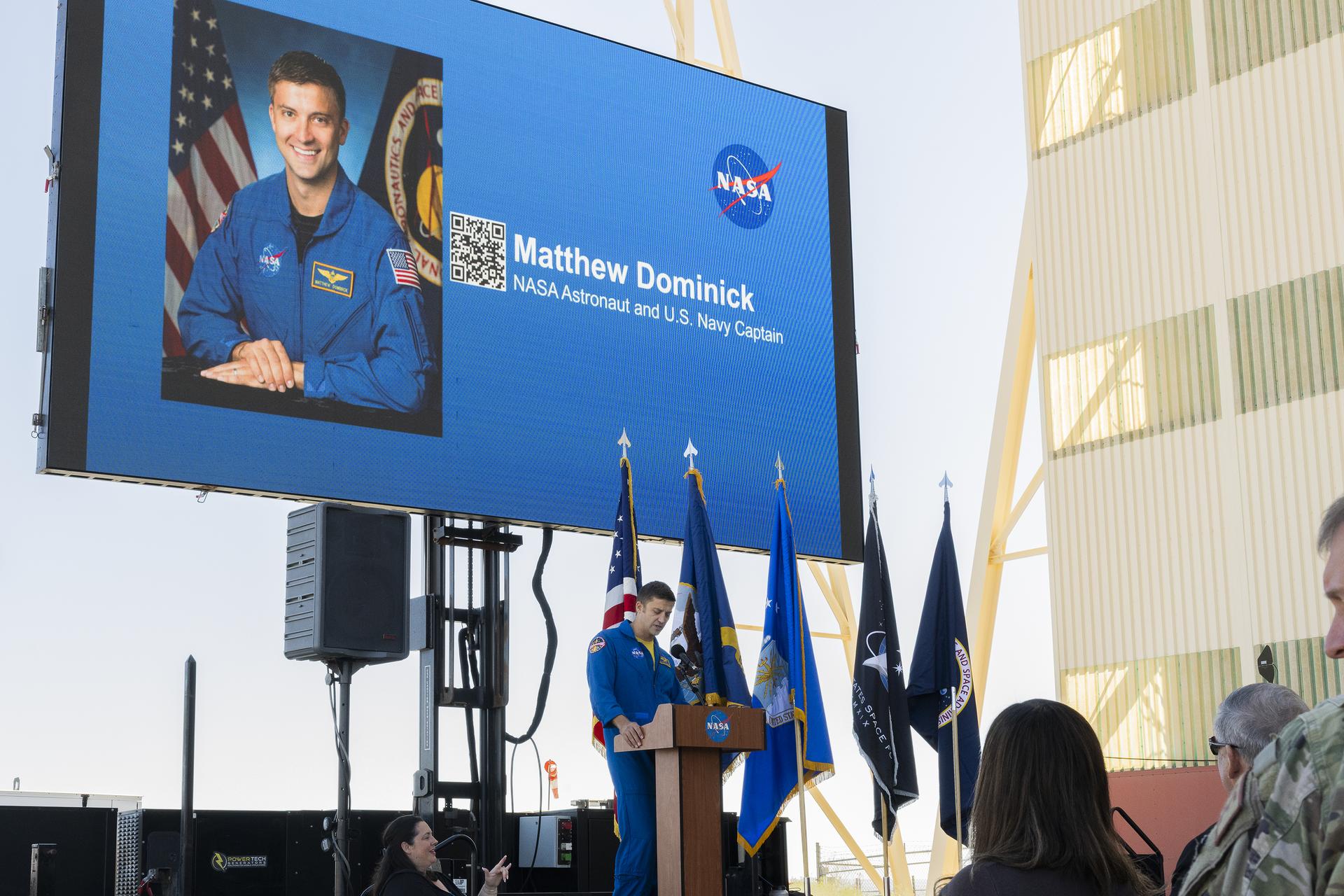
NASA astronaut Matthew Dominick shares inspiring remarks during the opening ceremony of Red, White, and Boom, the U.S. Air Force Test Center’s celebration of America’s 250th anniversary and NASA Armstrong’s commemoration of its 80th year at Edwards Air Force Base, California, on Friday, Sept. 18, 2026. The event brought together the workforce, families, and the Edwards community for a high‑energy day featuring a Flightline 5K, Ramp Fest and STEM Expo, static aircraft displays, hands‑on STEM activities, and a NASA flyover with a sonic boom.
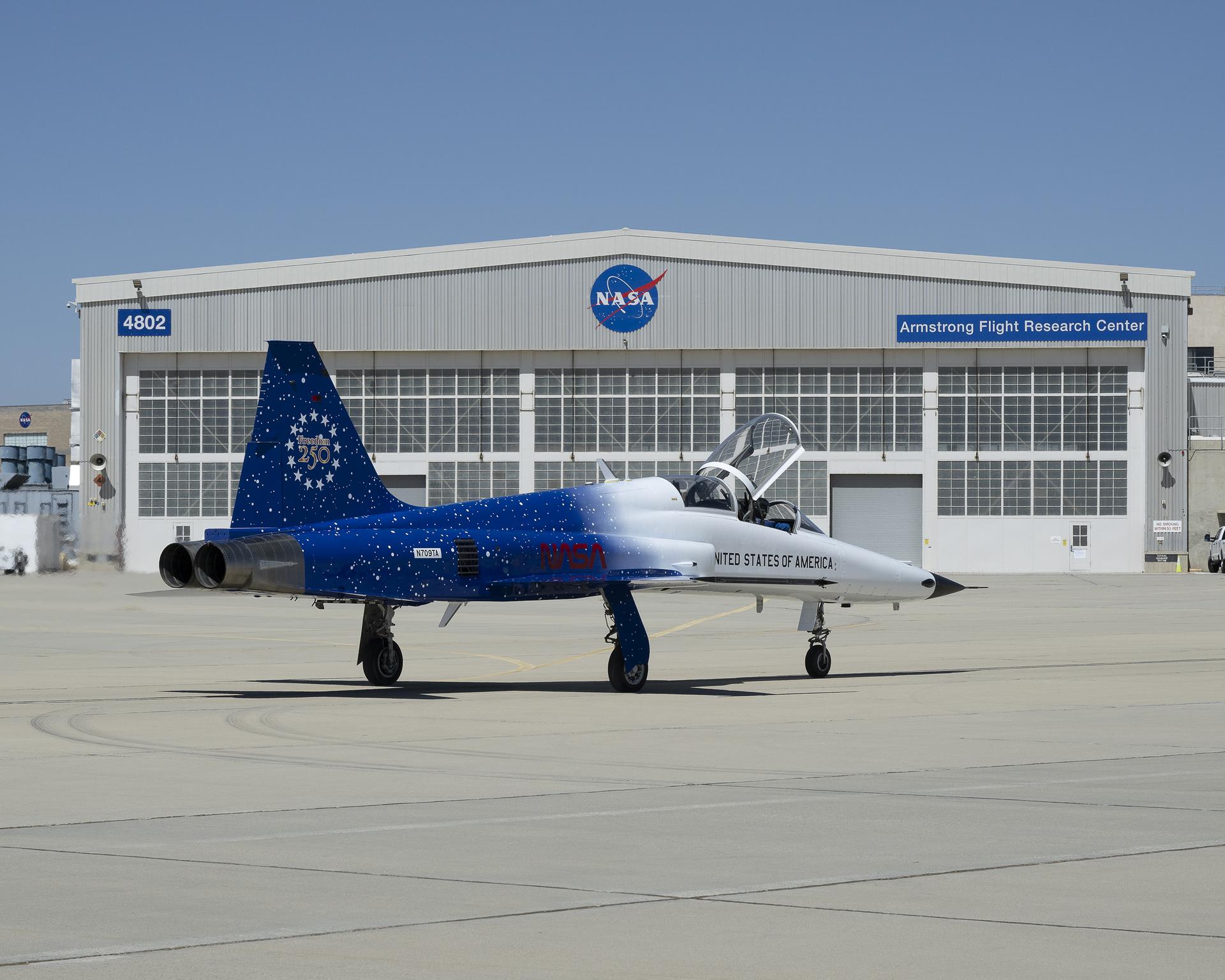
A Northrop F-5 Tiger II aircraft landed at NASA’s Armstrong Flight Research Center in Edwards, California, on Thursday, Sept. 17, 2026, in preparation for Red, White, and Boom, the U.S. Air Force Test Center’s celebration of America’s 250th anniversary and NASA Armstrong’s commemoration of its 80th year. The event brought together the workforce, families, and the Edwards community for a high‑energy day featuring a Flightline 5K, Ramp Fest and STEM Expo, static aircraft displays, hands‑on STEM activities, and a NASA flyover with sonic boom.
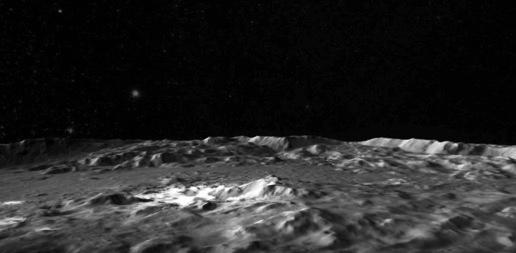
This frame from a video shows a flyover of the intriguing crater named Occator on dwarf planet Ceres. Occator is home to Ceres brightest area. Occator is home to Ceres' brightest area. It may have been produced by upwelling of salt-rich liquids after the impact that formed the crater. The animated flyover includes topographic and enhanced-color views of the crater, highlighting the central dome feature. The central area has been named Cerealia Facula. Occator's secondary group of bright spots is called Vinalia Faculae. A video is available at http://photojournal.jpl.nasa.gov/catalog/PIA21080
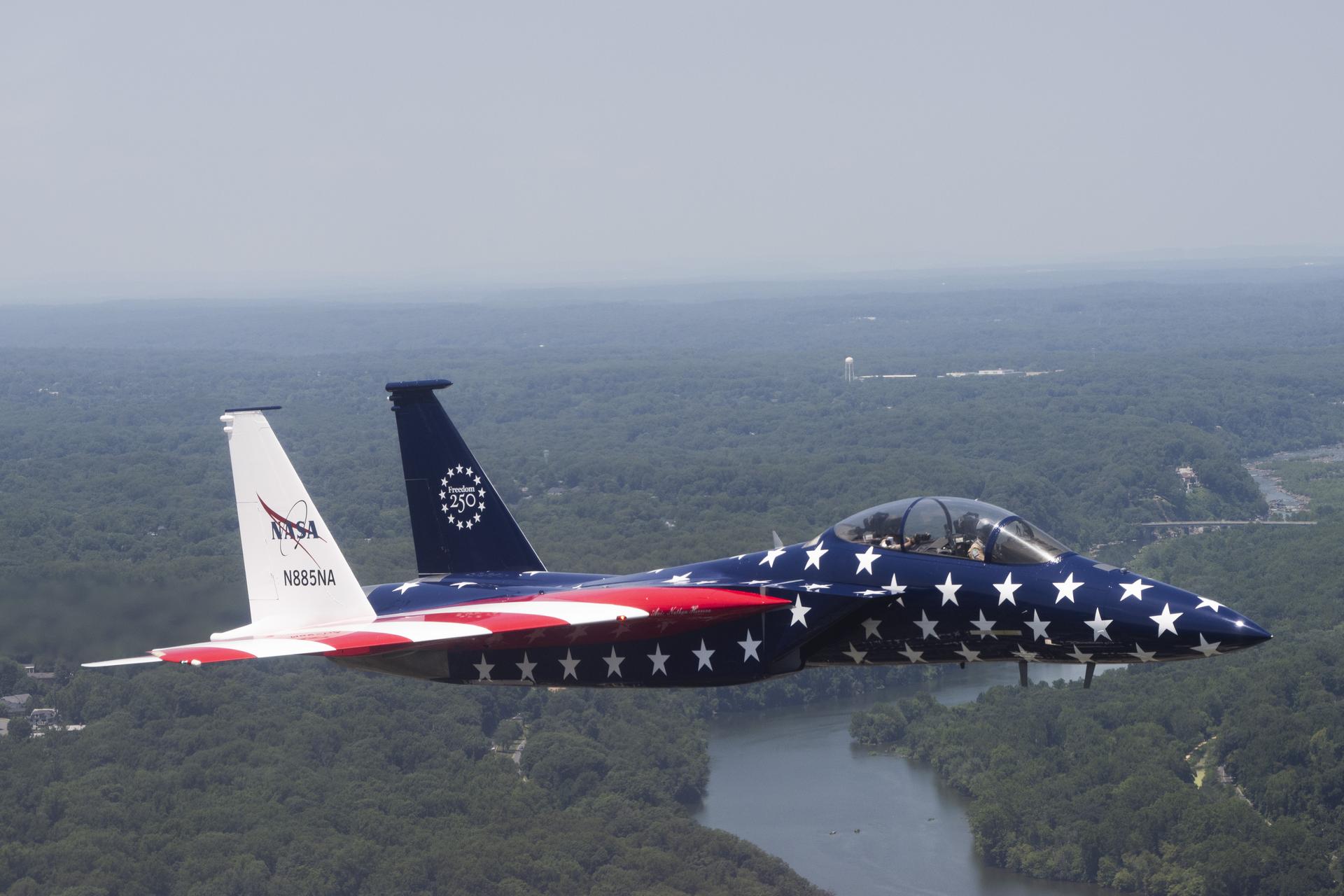
A NASA F-15 aircraft flies above Washington on Saturday, July 4, 2026, as part of a flyover to celebrate America’s 250th birthday. This aircraft is from NASA’s Armstrong Flight Research Center in Edwards, California, and it joined other NASA aircraft for the flyover.
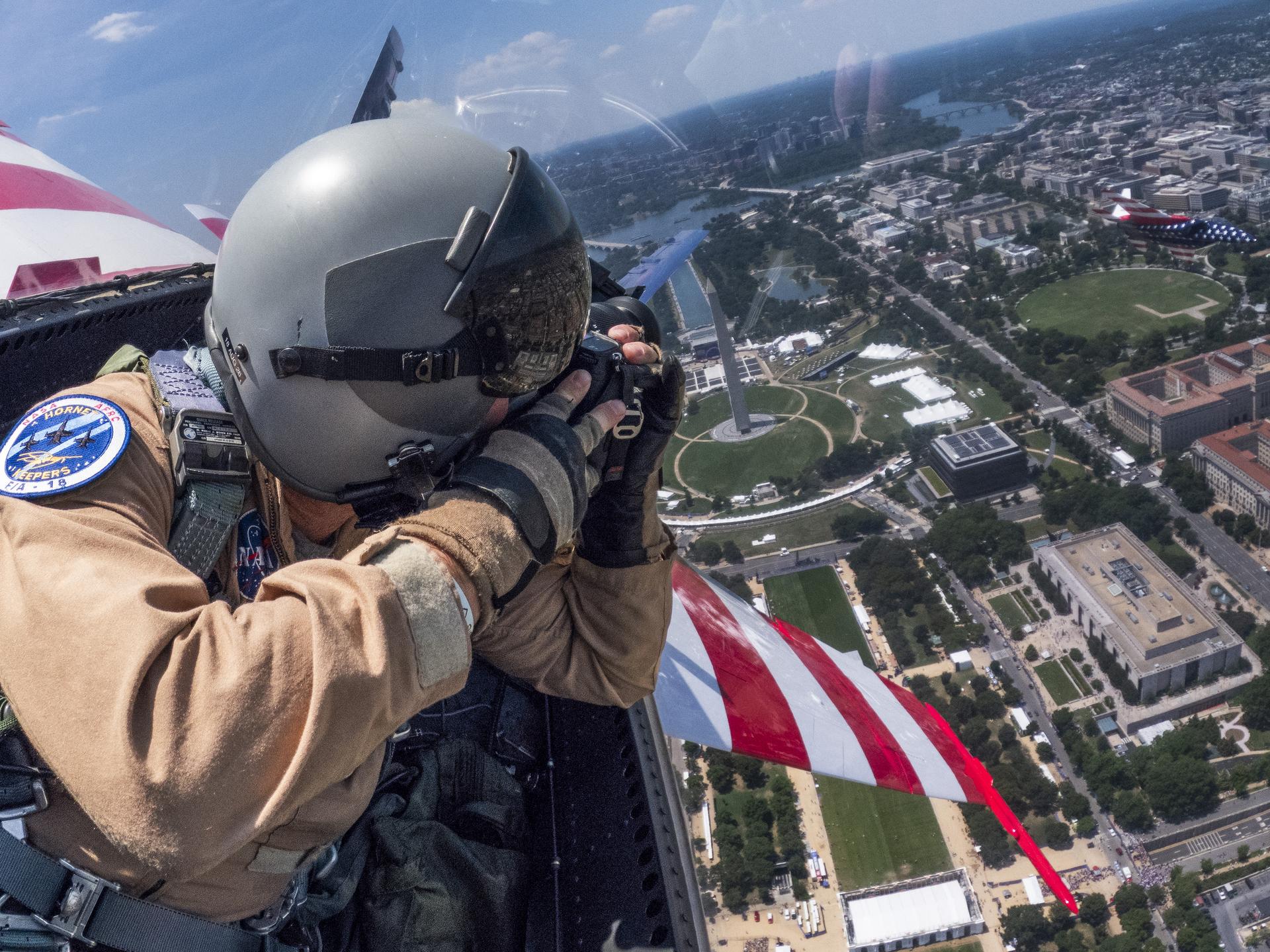
NASA photographer Jim Ross flies above the Washington Monument in Washington on Saturday, July 4, 2026, in an F-18 aircraft, as part of a flyover to celebrate America’s 250th birthday. This aircraft is from NASA’s Armstrong Flight Research Center in Edwards, California, and it joined other NASA aircraft for the flyover.
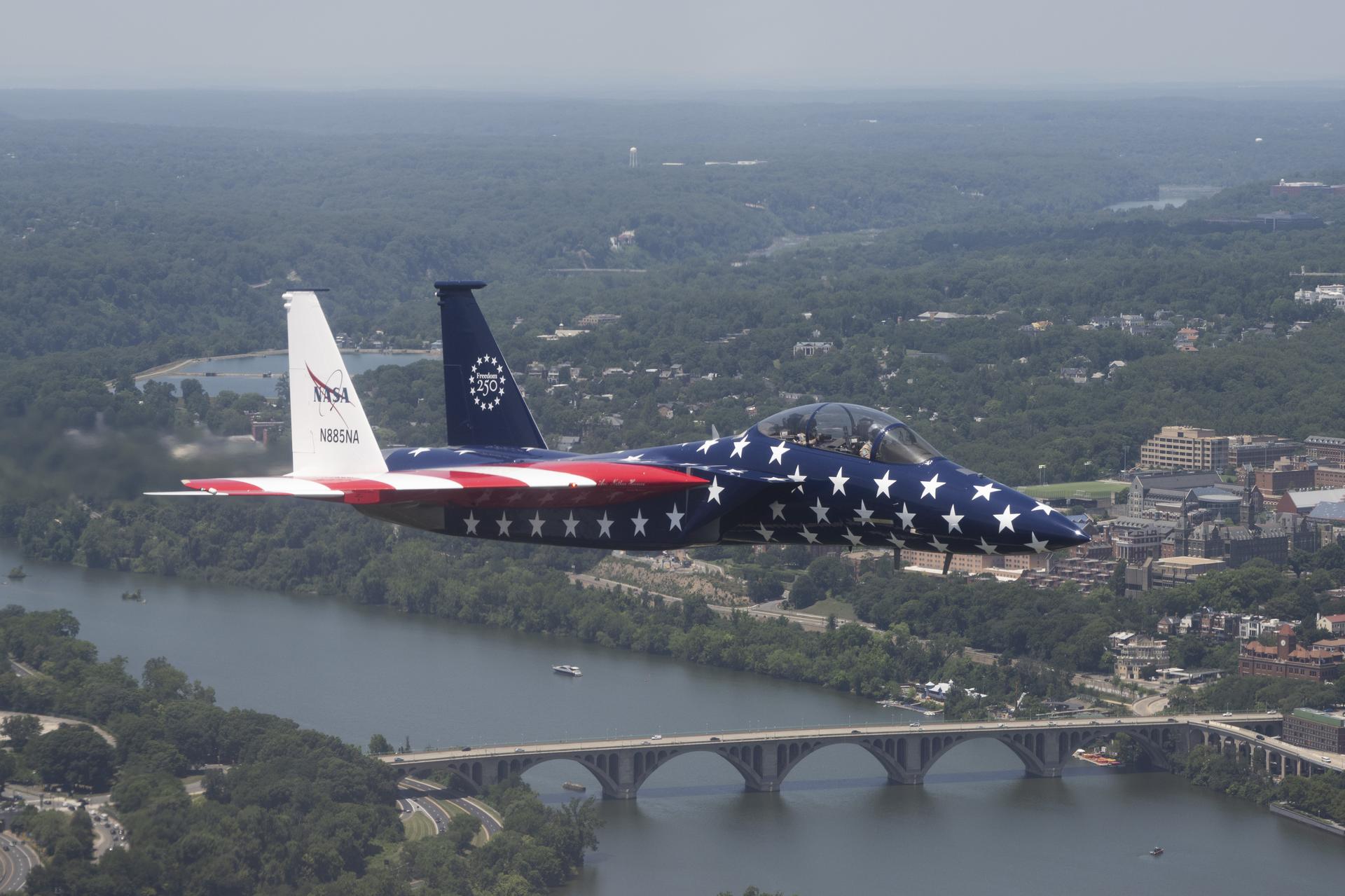
A NASA F-15 aircraft flies above Washington on Saturday, July 4, 2026, as part of a flyover to celebrate America’s 250th birthday. This aircraft is from NASA’s Armstrong Flight Research Center in Edwards, California, and it joined other NASA aircraft for the flyover.
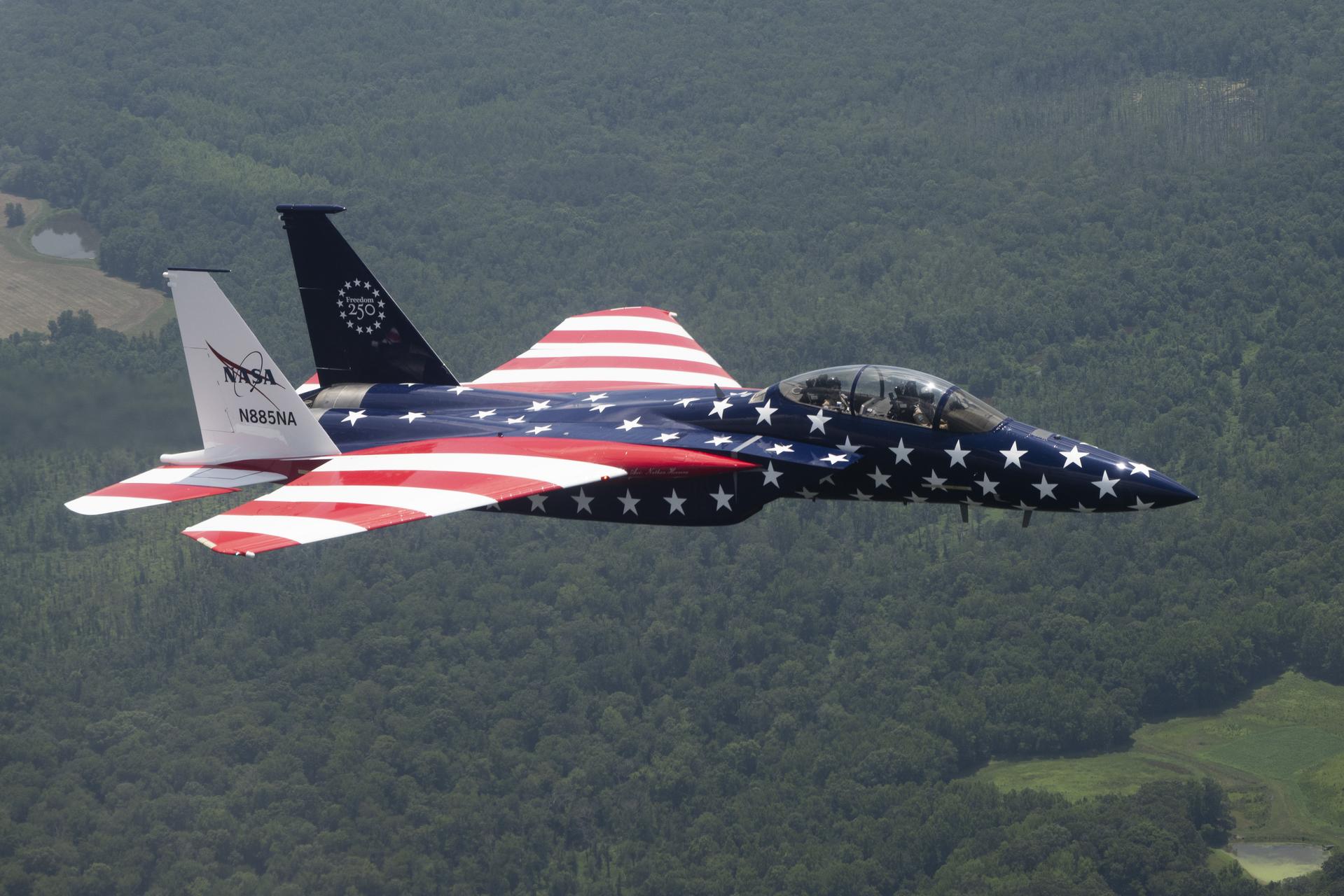
A NASA F-15 aircraft flies above Washington on Saturday, July 4, 2026, as part of a flyover to celebrate America’s 250th birthday. This aircraft is from NASA’s Armstrong Flight Research Center in Edwards, California, and it joined other NASA aircraft for the flyover.
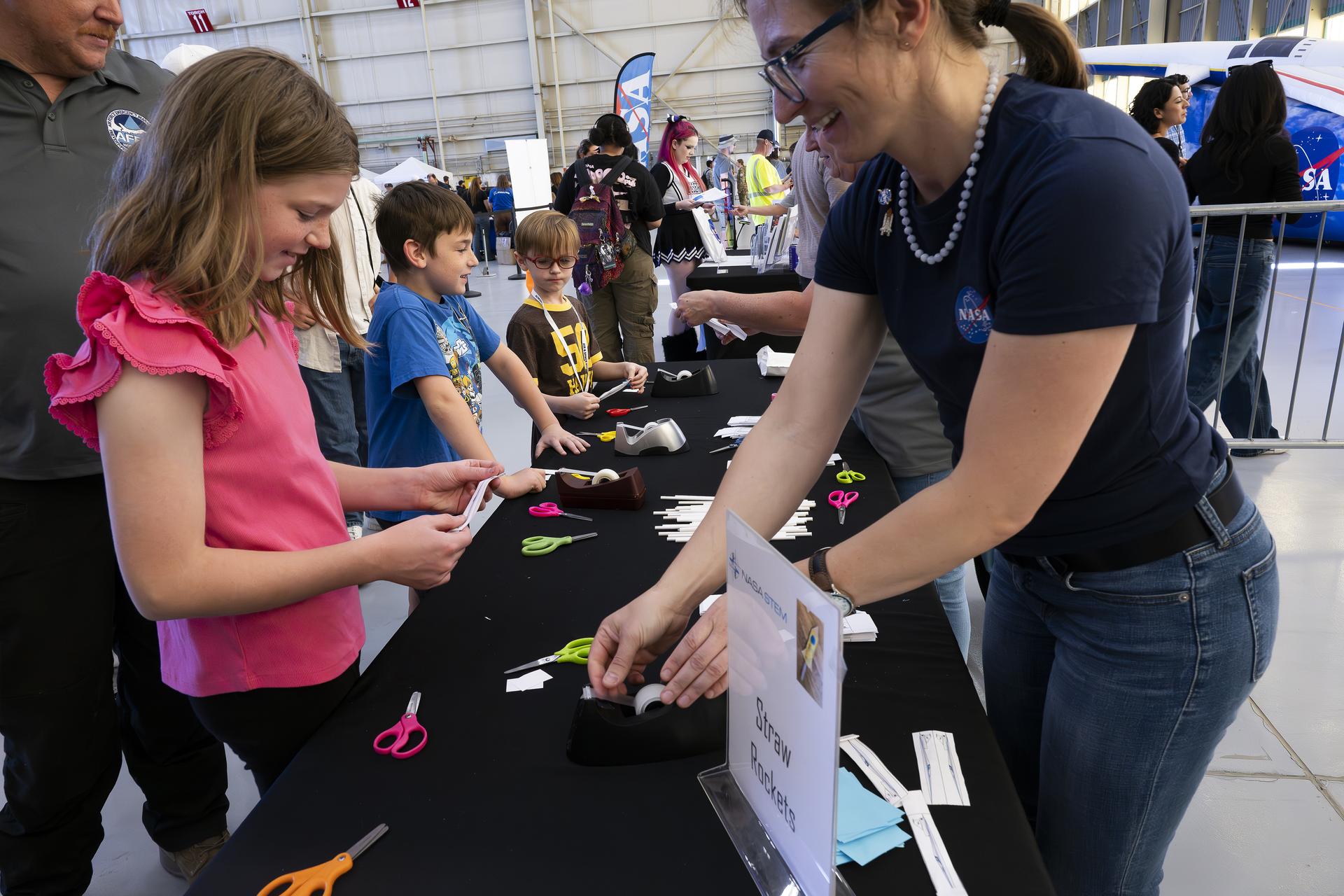
Students patriciate in educational activities provided by NASA’s Armstrong Flight Research Center Office of STEM Engagement during Red, White, and Boom, the U.S. Air Force Test Center’s celebration of America’s 250th anniversary and NASA Armstrong’s commemoration of its 80th year at Edwards Air Force Base, California, on Friday, Sept. 18, 2026. The event brought together the workforce, families, and the Edwards community for a high‑energy day featuring a Flightline 5K, Ramp Fest and STEM Expo, static aircraft displays, hands‑on STEM activities, and a NASA flyover with a sonic boom.
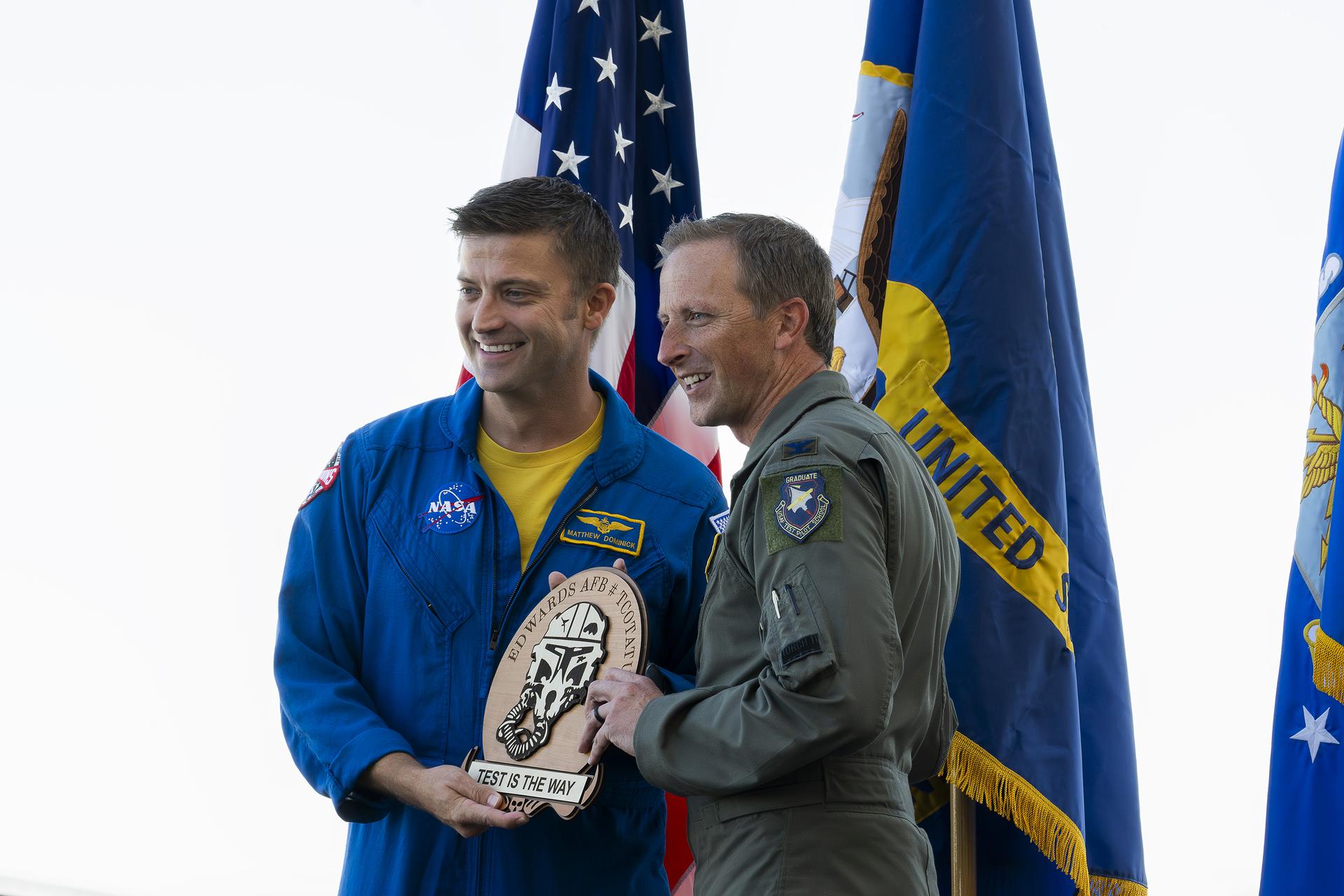
NASA astronaut Matthew Dominick receives a commemorative plaque from Col. Daniel Fredberg, Deputy Commander of the 412th Test Wing at Edwards Air Force Base, California, during Red, White, and Boom, the U.S. Air Force Test Center’s celebration of America’s 250th anniversary and NASA Armstrong’s commemoration of its 80th year on Friday, Sept. 18, 2026. The event brought together the workforce, families, and the Edwards community for a high‑energy day featuring a Flightline 5K, Ramp Fest and STEM Expo, static aircraft displays, hands‑on STEM activities, and a NASA flyover with a sonic boom.
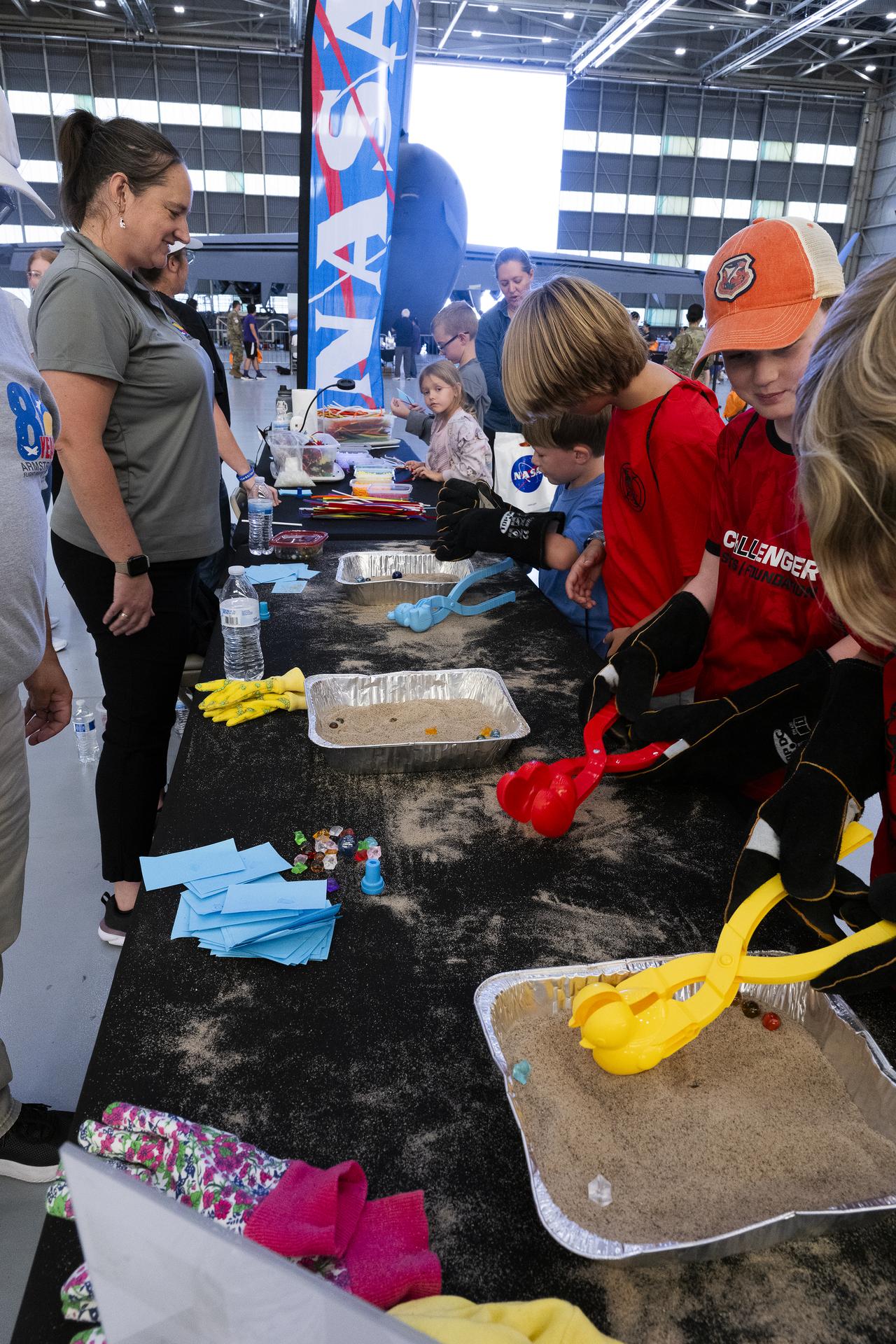
Students patriciate in educational activities provided by NASA’s Armstrong Flight Research Center Office of STEM Engagement during Red, White, and Boom, the U.S. Air Force Test Center’s celebration of America’s 250th anniversary and NASA Armstrong’s commemoration of its 80th year at Edwards Air Force Base, California, on Friday, Sept. 18, 2026. The event brought together the workforce, families, and the Edwards community for a high‑energy day featuring a Flightline 5K, Ramp Fest and STEM Expo, static aircraft displays, hands‑on STEM activities, and a NASA flyover with a sonic boom.
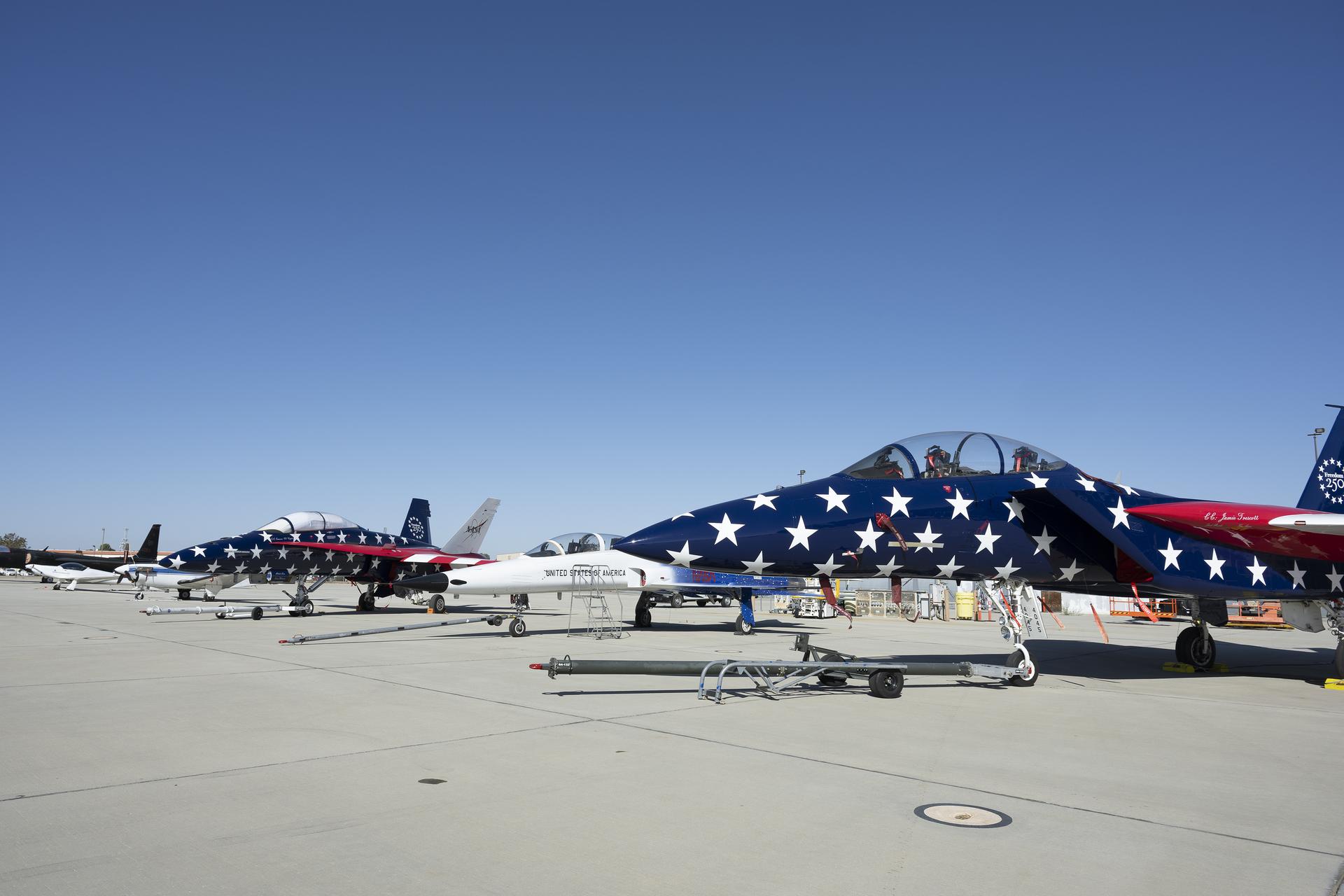
NASA’s F/A-18, a Northrop F-5 Tiger II, and NASA’s F-15 are on static display at Red, White, and Boom, the U.S. Air Force Test Center’s celebration of America’s 250th anniversary and NASA Armstrong’s commemoration of its 80th year at Edwards Air Force Base, California, on Friday, Sept. 18, 2026. The event brought together the workforce, families, and the Edwards community for a high‑energy day featuring a Flightline 5K, Ramp Fest and STEM Expo, static aircraft displays, hands‑on STEM activities, and a NASA flyover with a sonic boom.
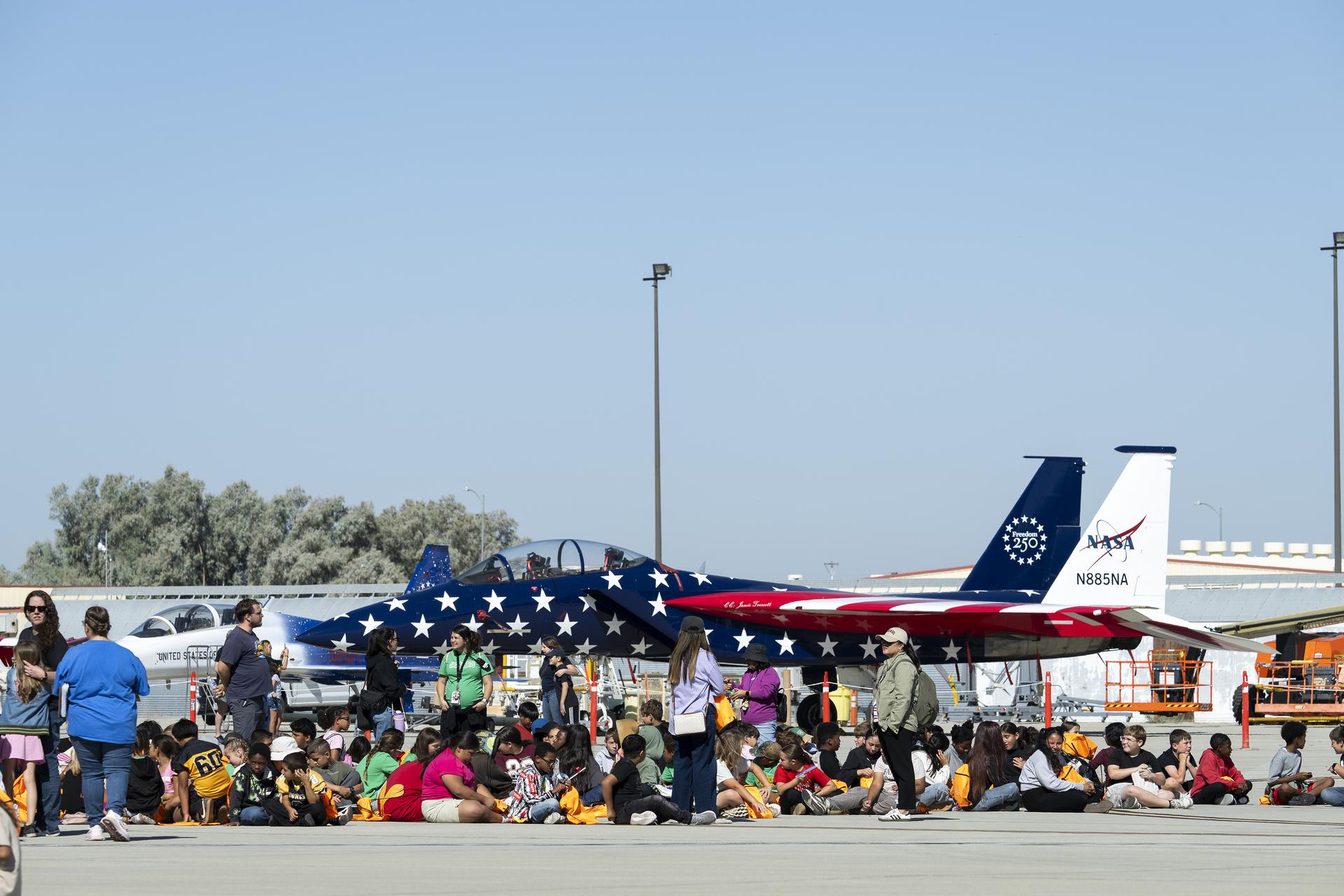
NASA’s F/A-18 and a Northrop F-5 Tiger II are on static display at Red, White, and Boom, the U.S. Air Force Test Center’s celebration of America’s 250th anniversary and NASA Armstrong Flight Research Center’s commemoration of its 80th year at Edwards Air Force Base, California, on Friday, Sept. 18, 2026. The event brought together the workforce, families, and the Edwards community for a high‑energy day featuring a Flightline 5K, Ramp Fest and STEM Expo, static aircraft displays, hands‑on STEM activities, and a NASA flyover with a sonic boom.
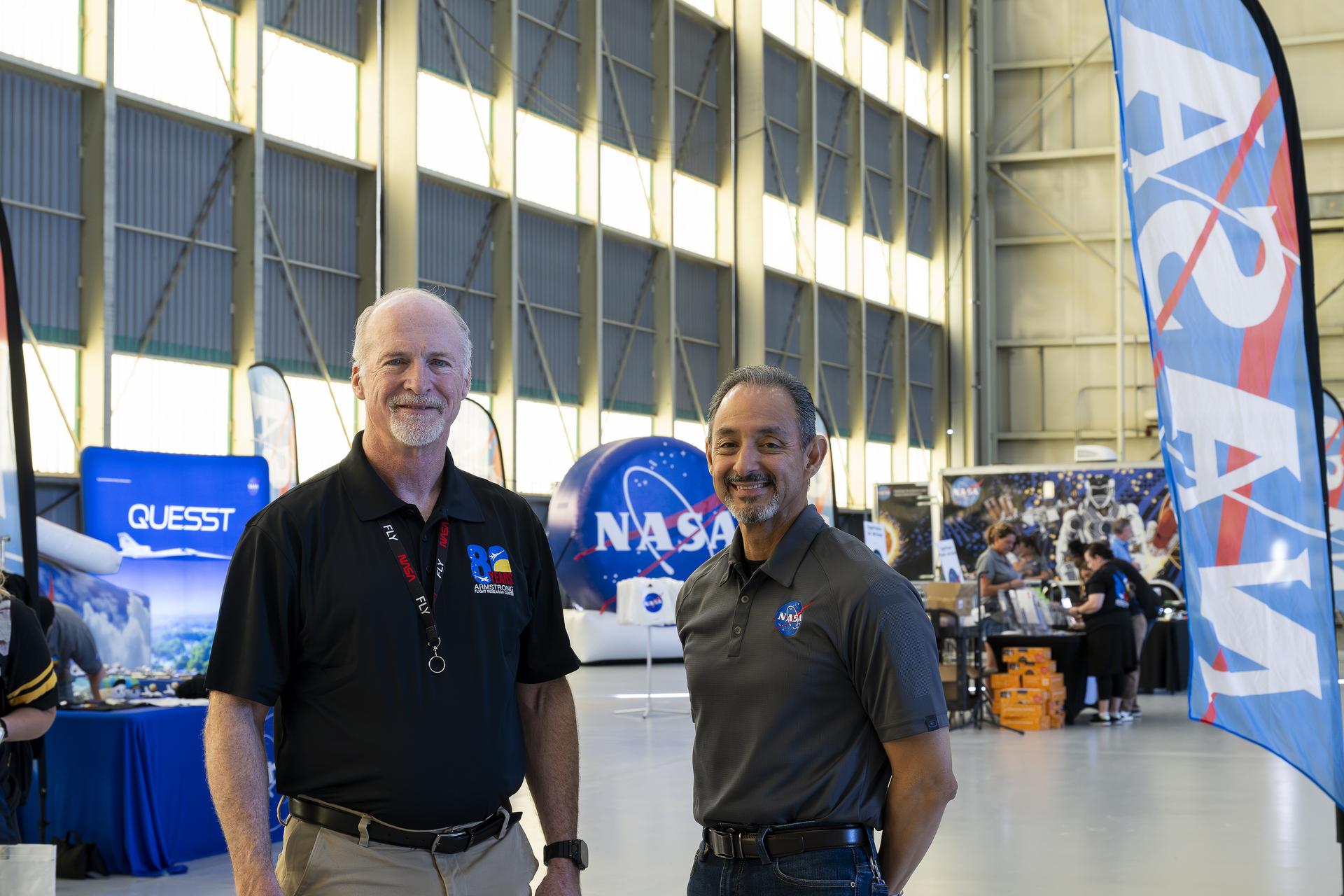
Troy Asher, acting center director at NASA’s Armstrong Flight Research Center in Edwards, California, and Eddie Zavala, acting deputy center director, participate in Red, White, and Boom, the U.S. Air Force Test Center’s celebration of America’s 250th anniversary and NASA Armstrong’s commemoration of its 80th year at Edwards Air Force Base on Friday, Sept. 18, 2026. The event brought together the workforce, families, and the Edwards community for a high‑energy day featuring a Flightline 5K, Ramp Fest and STEM Expo, static aircraft displays, hands‑on STEM activities, and a NASA flyover with a sonic boom.

NASA Administrator Jared Isaacman watches as two NASA T-38 Talon aircrafts conduct a flyover at an NFL game between the Pittsburgh Steelers and the Atlanta Falcons at Acrisure Stadium, Sunday, Sept. 13, 2026, in Pittsburgh, Pennsylvania. NASA’s engagement at NFL games is part of the agency's Inspiration Tour, aimed at strengthening connections between NASA and its partners and showcasing innovation in air and space in the lead up to the MAX POWER aerospace technology expo and airshow at the agency's Kennedy Space Center in early November. Photo Credit: (NASA/Aubrey Gemignani)
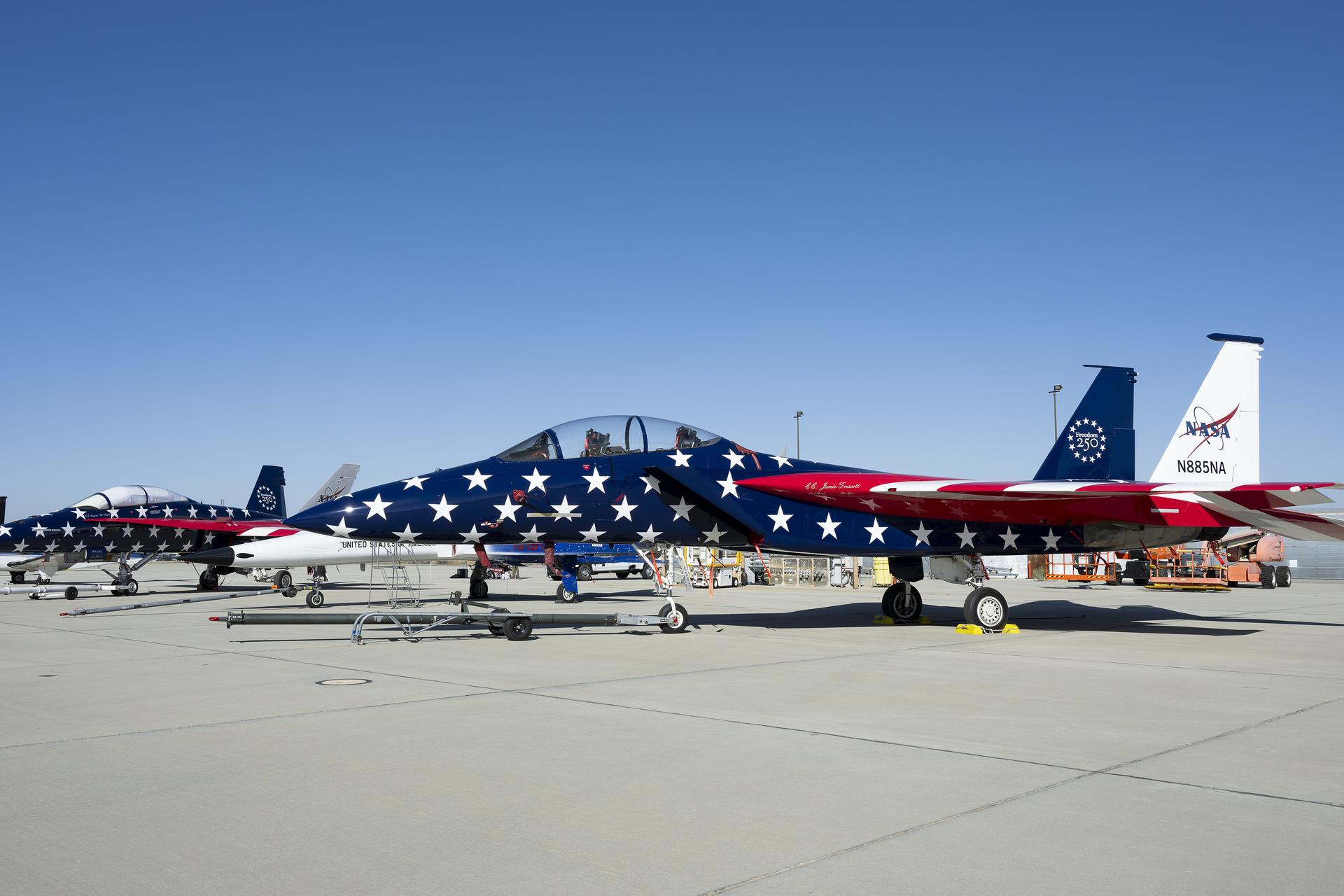
NASA’s F/A-18, a Northrop F-5 Tiger II, and NASA’s F-15 are on static display at Red, White, and Boom, the U.S. Air Force Test Center’s celebration of America’s 250th anniversary and NASA Armstrong’s commemoration of its 80th year at Edwards Air Force Base, California, on Friday, Sept. 18, 2026. The event brought together the workforce, families, and the Edwards community for a high‑energy day featuring a Flightline 5K, Ramp Fest and STEM Expo, static aircraft displays, hands‑on STEM activities, and a NASA flyover with sonic boom.
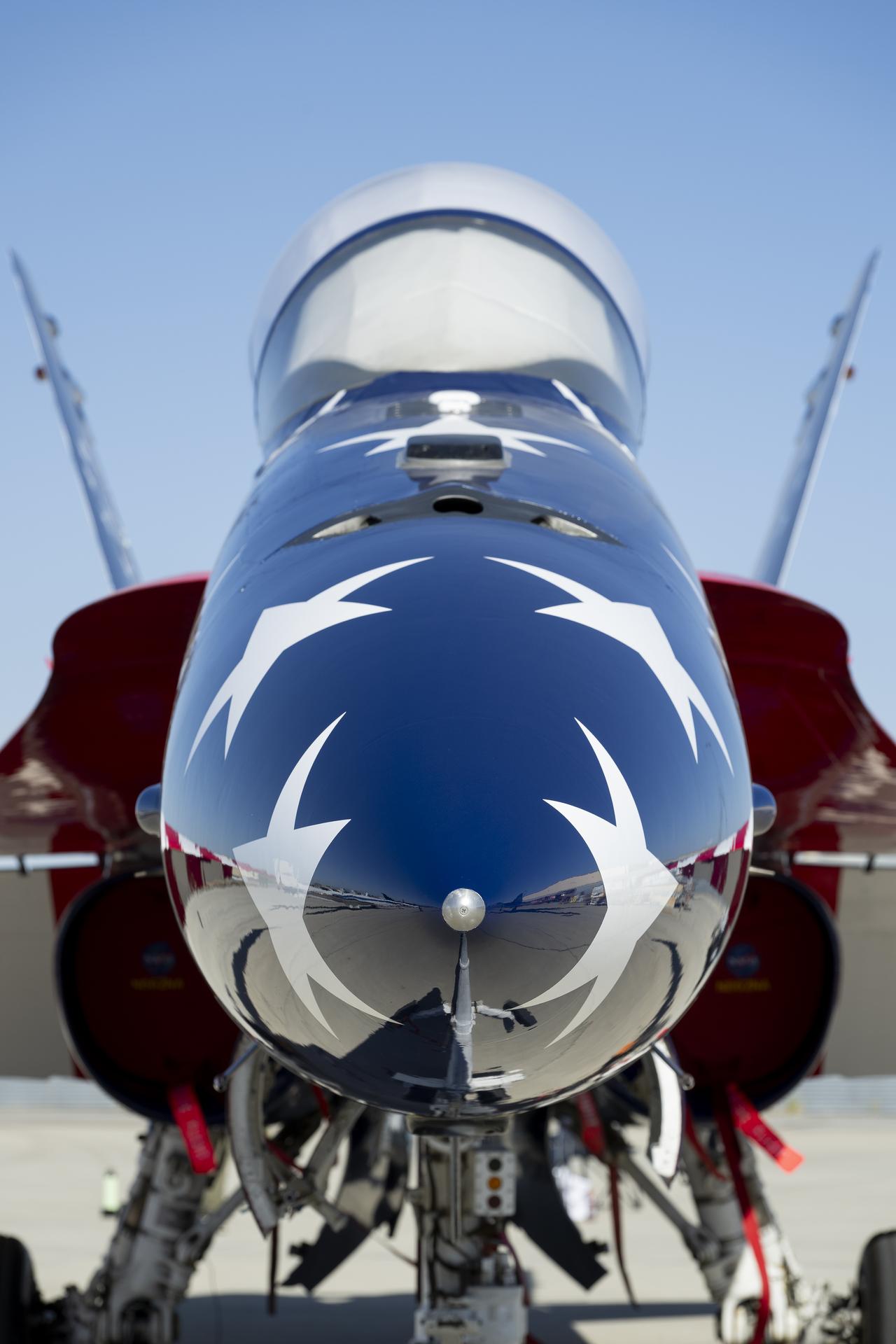
A red, white, and blue F/A-18 from NASA’s Armstrong Flight Research Center in Edwards, California, participated in Red, White, and Boom, the U.S. Air Force Test Center’s celebration of America’s 250th anniversary and NASA Armstrong’s commemoration of its 80th year at Edwards Air Force Base on Friday, Sept. 18, 2026. The event brought together the workforce, families, and the Edwards community for a high‑energy day featuring a Flightline 5K, Ramp Fest and STEM Expo, static aircraft displays, hands‑on STEM activities, and a NASA flyover with sonic boom.
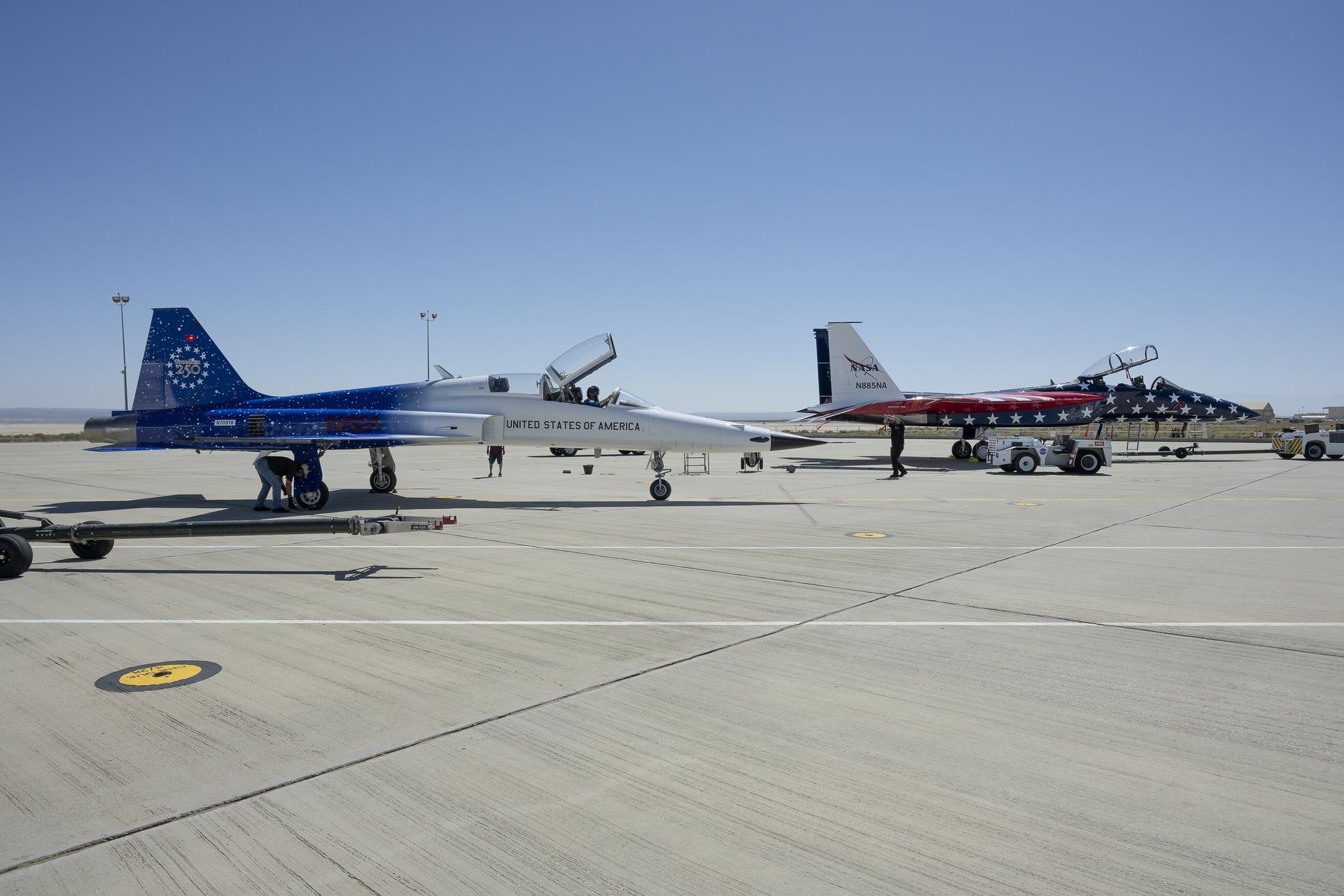
A Northrop F-5 Tiger II and NASA’s F-15 prepare for Red, White, and Boom, the U.S. Air Force Test Center’s celebration of America’s 250th anniversary and NASA Armstrong’s commemoration of its 80th year, at NASA’s Armstrong Flight Research Center in Edwards, California, on Thursday, Sept. 17, 2026. The event brought together the workforce, families, and the Edwards community for a high‑energy day featuring a Flightline 5K, Ramp Fest and STEM Expo, static aircraft displays, hands‑on STEM activities, and a NASA flyover with sonic boom.

NASA Administrator Jared Isaacman watches as two NASA T-38 Talon aircrafts conduct a flyover at an NFL game between the Pittsburgh Steelers and the Atlanta Falcons at Acrisure Stadium, Sunday, Sept. 13, 2026, in Pittsburgh, Pennsylvania. NASA’s engagement at NFL games is part of the agency's Inspiration Tour, aimed at strengthening connections between NASA and its partners and showcasing innovation in air and space in the lead up to the MAX POWER aerospace technology expo and airshow at the agency's Kennedy Space Center in early November. Photo Credit: (NASA/Aubrey Gemignani)
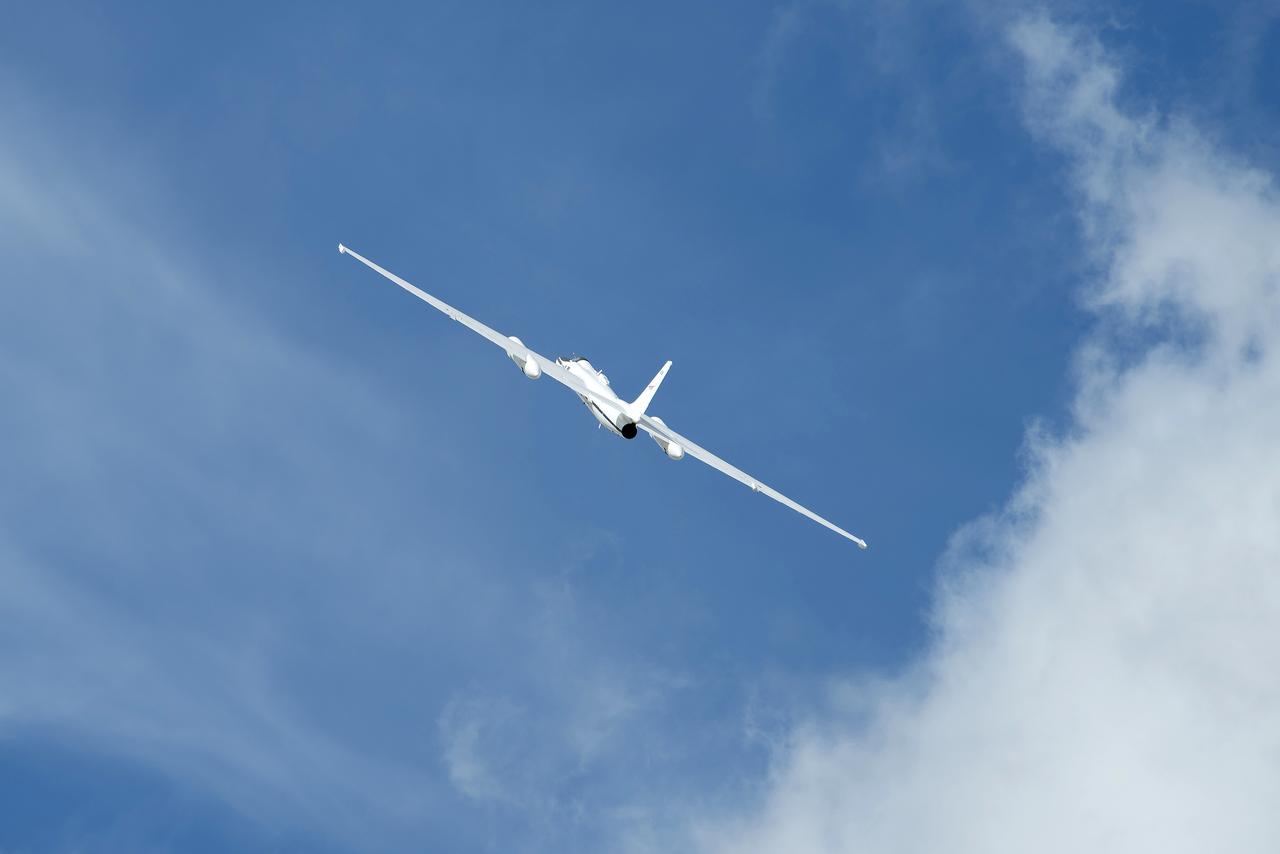
ER-2 flyover at L.A. County Airshow, March 25, 2017. NASA will be working with the National Oceanic and Atmospheric Administration’s (NOAA) on their newest weather satellite, Geostationary Operational Environmental Satellite-R-series, or GOES-R, that launched into orbit Nov. 19. Now that it has reached its final designated orbit, GOES-R will be known operationally as GOES-16. The ER-2 will help NOAA calibrate sensors and validate data transmitted down from the satellite. The formal ER-2 science flights will take place between March and Mary of 2017 in two phases; during phase one, flights will be operated from the aircraft's normal base of operations at NASA Armstrong Flight Research Center’s Building 703. Phase two flights will be based out of Warner Robbins Air Force Base in Georgia, where thunderstorm conditions can be more easily found and observed.
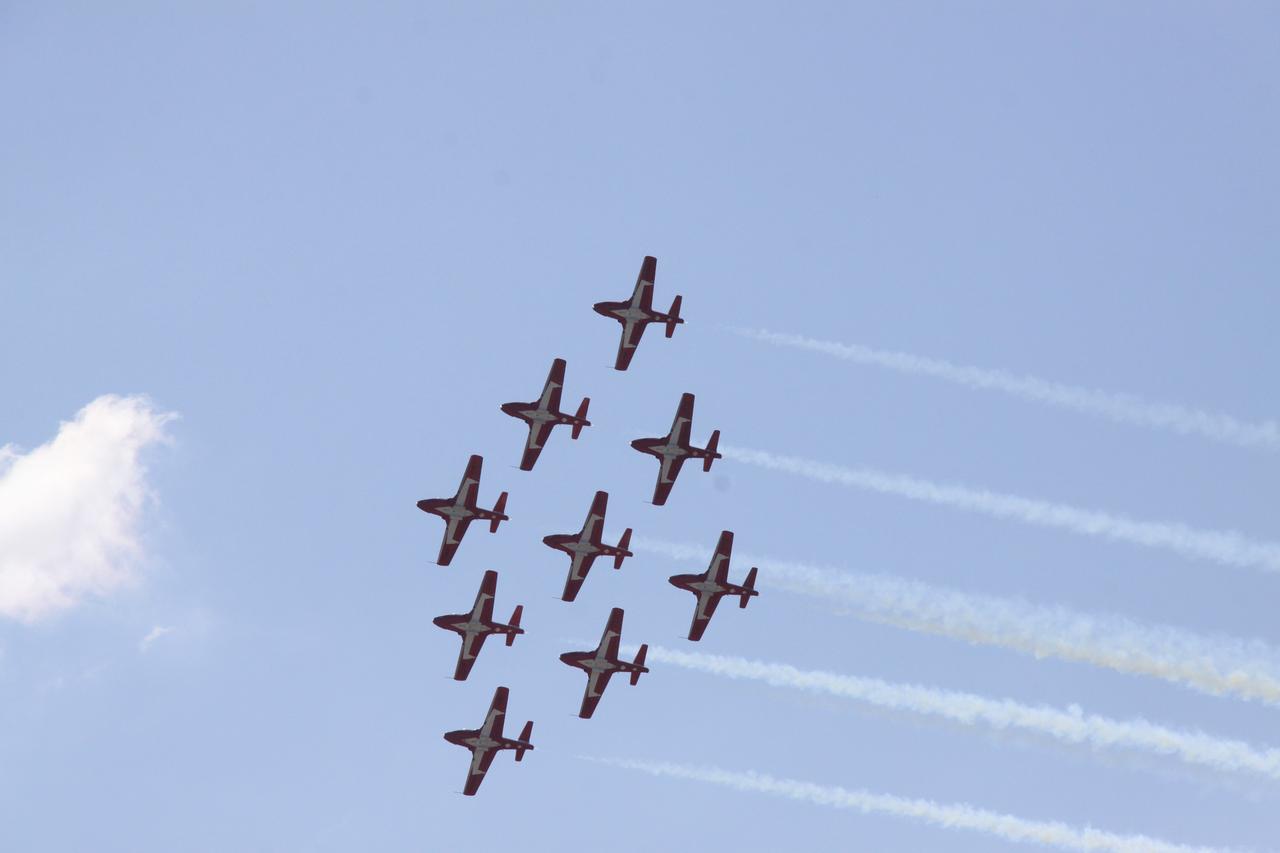
CAPE CANAVERAL, Fla. - The Royal Canadian Air Force Snowbird pilots flew their jets in tight formation over NASA's Kennedy Space Center in Florida. Photo credit: NASA/Jack Pfaller
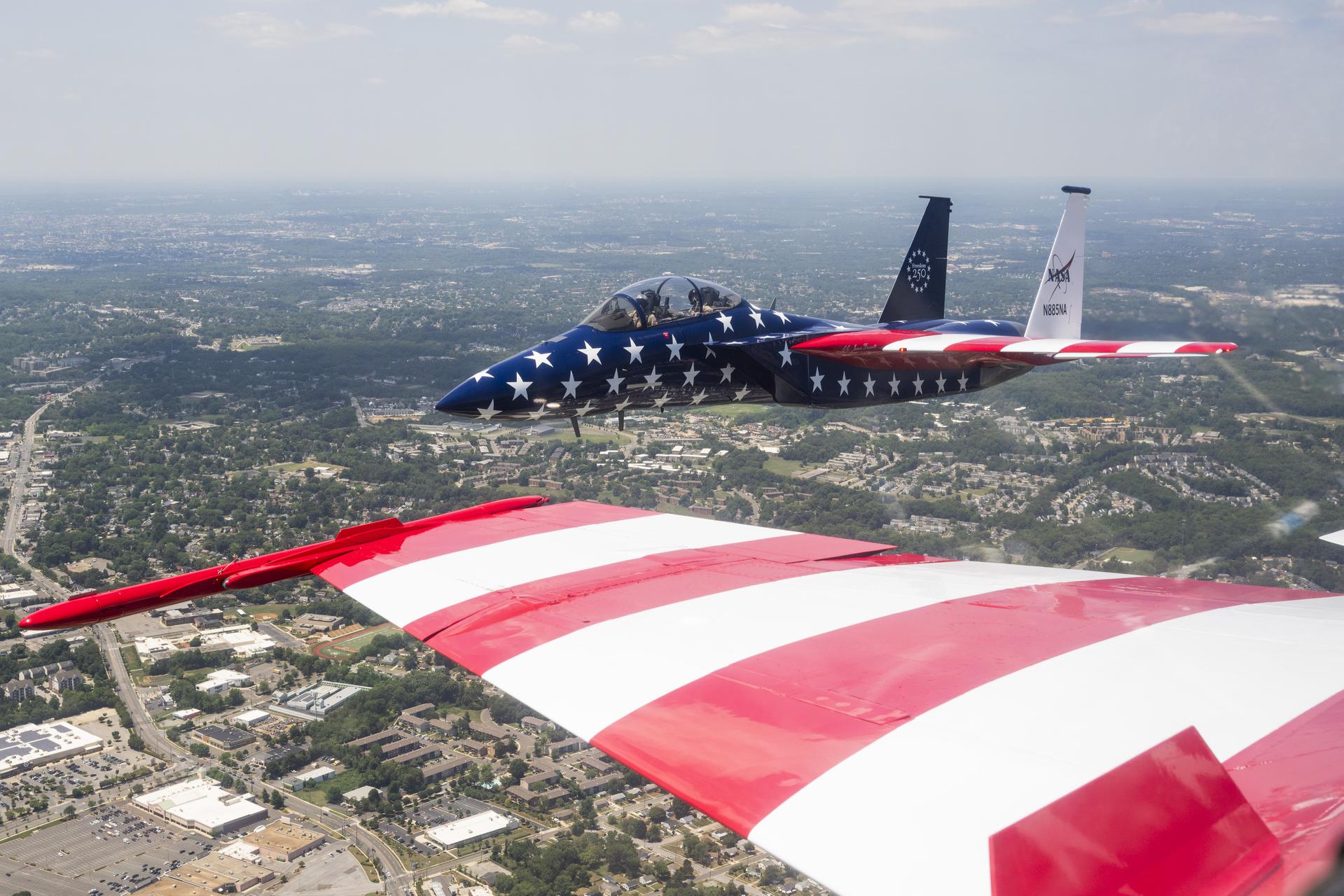
A NASA F-15 aircraft flies above Washington on Saturday, July 4, 2026, as part of a flyover to celebrate America’s 250th birthday. The wing of a NASA F-18 is seen in the foreground, as a NASA photographer captured this image from inside the cockpit. This aircraft is from NASA’s Armstrong Flight Research Center in Edwards, California, and it joined other NASA aircraft for the flyover.
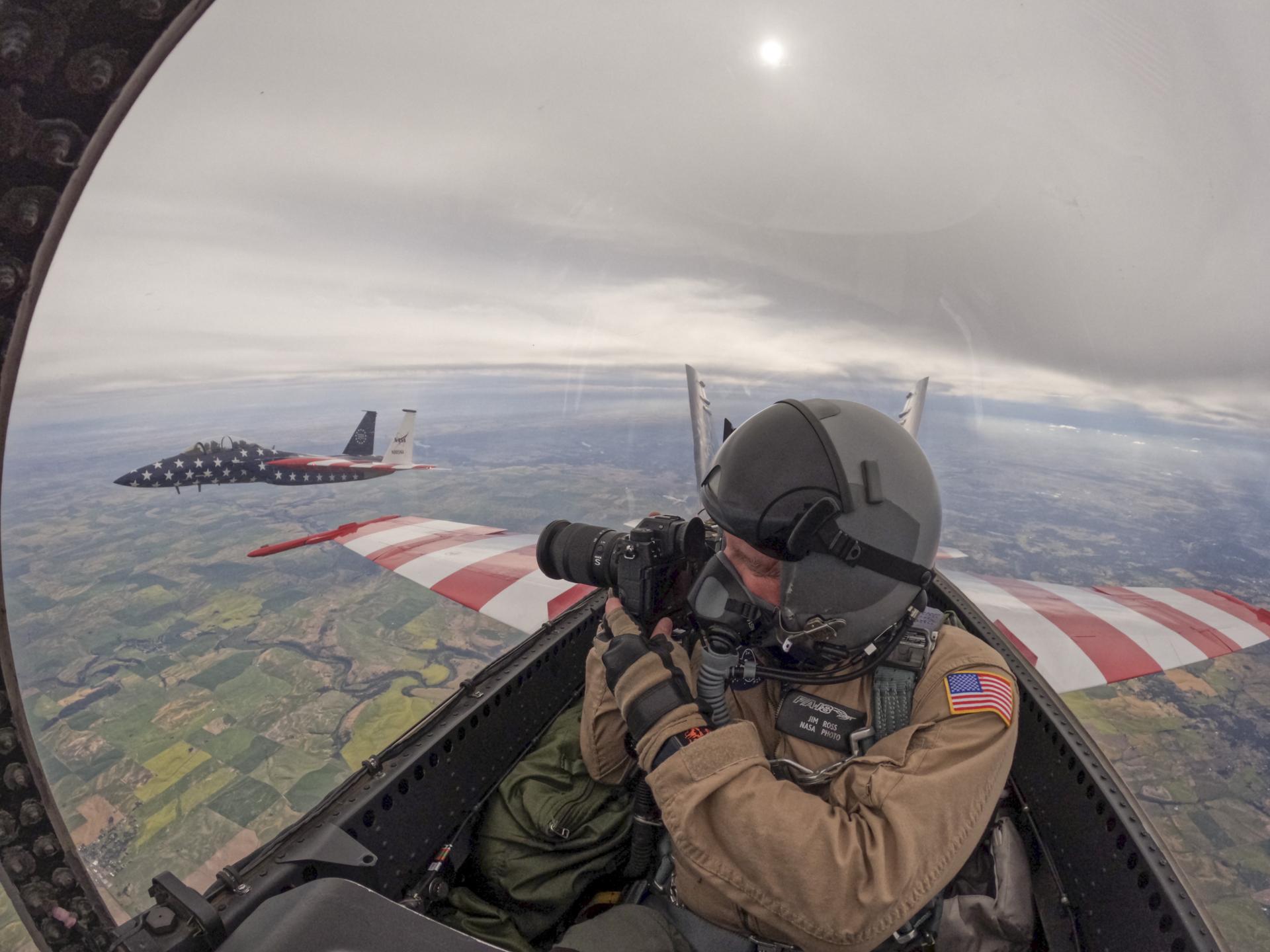
NASA photographer Jim Ross flies above Washington on Saturday, July 4, 2026, in an F-18 aircraft, as part of a flyover to celebrate America’s 250th birthday. This aircraft is from NASA’s Armstrong Flight Research Center in Edwards, California, and it joined other NASA aircraft for the flyover. A NASA F-15 is seen flying to the side of the NASA F-18.
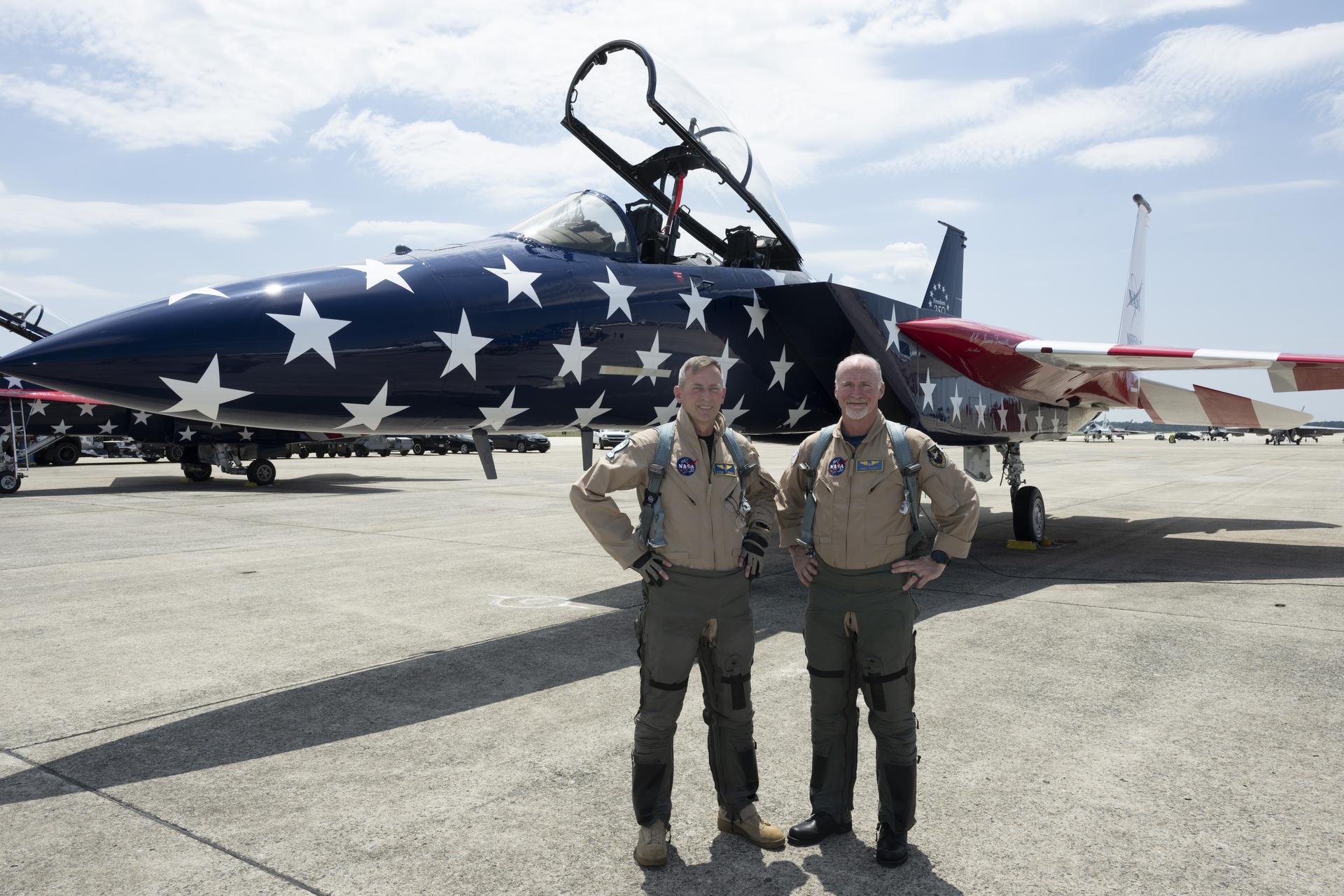
NASA Armstrong pilot Jim Less, left, and center director, Troy Asher, right, stand in front of a NASA F-15 aircraft on Saturday, July 4, 2026. Both pilots took part in a flyover to celebrate America’s 250th birthday. This aircraft is from NASA’s Armstrong Flight Research Center in Edwards, California, and it joined other NASA aircraft for the flyover.
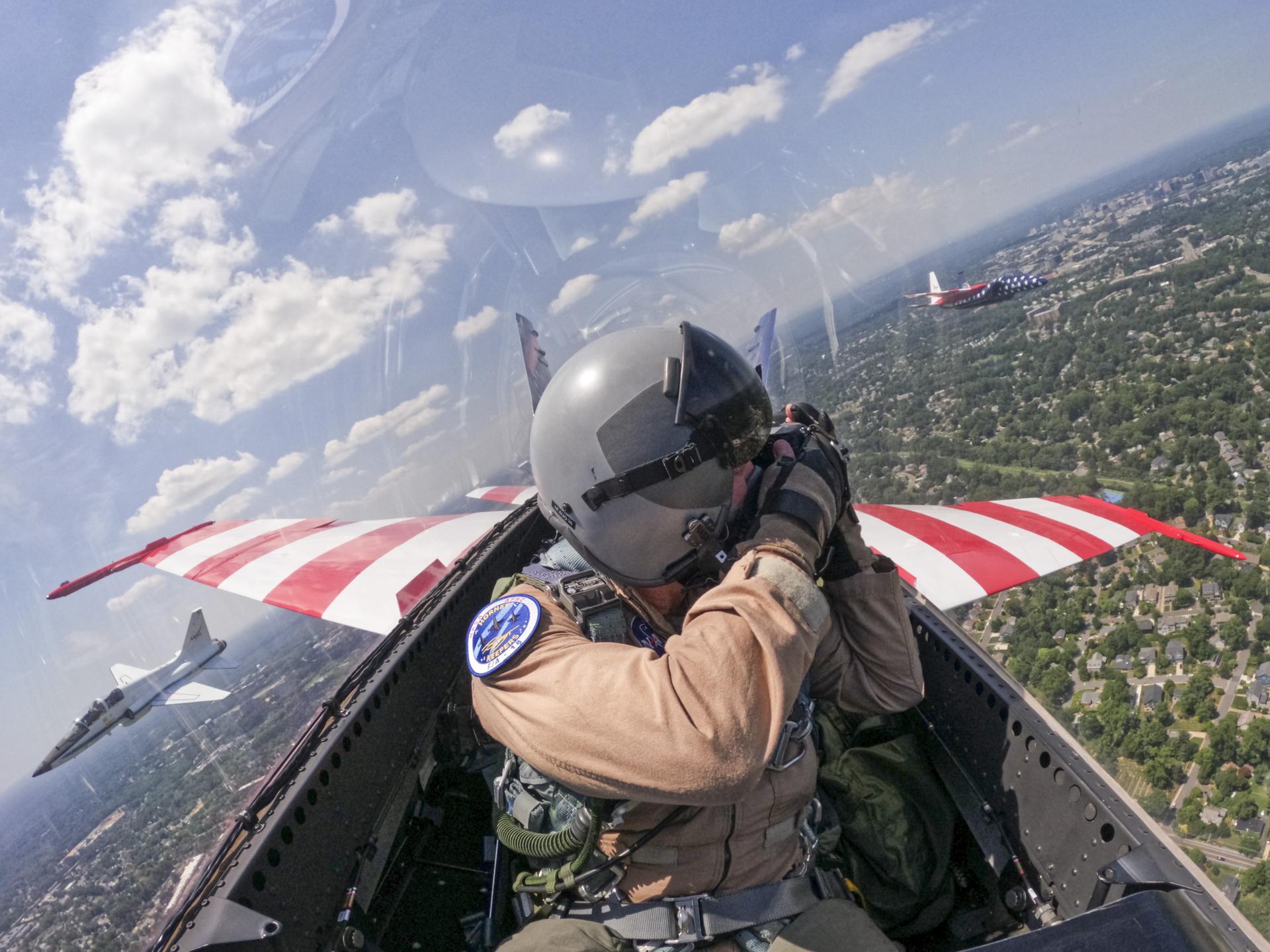
NASA photographer Jim Ross captures photos as he flies above Washington on Saturday, July 4, 2026, in an F-18 aircraft, as part of a flyover to celebrate America’s 250th birthday. This aircraft is from NASA’s Armstrong Flight Research Center in Edwards, California, and it joined other NASA aircraft for the flyover. A NASA F-15 and T-38 are seen flying to the sides of the NASA F-18.

Shadowed by two F/A-18s, NASA Dryden's venerable NB-52B is saluted by employees as it makes its final flyover after the last X-43A launch in November 2004.

This animation, constructed using stereo imaging data from the High Resolution Imaging Science Experiment (HiRISE) camera on NASA's Mars Reconnaissance Orbiter, provides an airborne perspective of the Mars 2020 landing site and its exploration area at Jezero Crater. Mars 2020 is expected to land to the southeast of an ancient river delta, a fan-shaped feature inside the northeast rim of Jezero Crater that provides solid evidence of a river and lake system active in and around the crater billions of years ago. The solid white line on the surface indicates a path the rover could take during its prime mission. Animation available at https://photojournal.jpl.nasa.gov/catalog/PIA22905
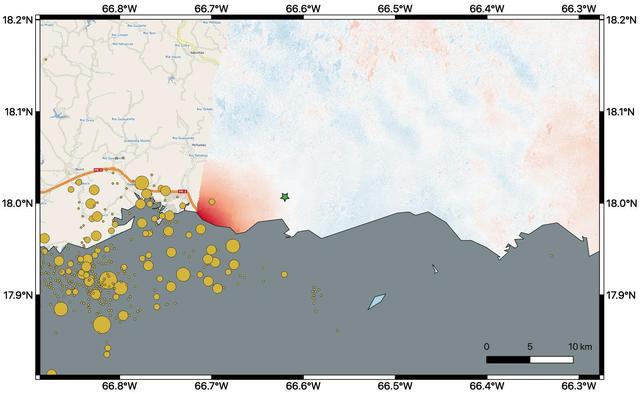
By comparing interferometric synthetic aperture radar (InSAR) data acquired on Jan. 9, 2020, with data acquired on Dec. 28, 2019, from the Copernicus Sentinel-1A satellite, NASA scientists were able to map where, how much and in what direction the ground shifted following a 6.4-magnitude earthquake off the coast of Puerto Rico. Managed by the European Space Agency (ESA), the Copernicus Sentinel-1A satellite was able to see the eastern two-thirds of the island during the Jan. 9 flyover. On the map, red indicates areas where the ground was changed, or displaced, with darker shades corresponding to more significant displacement. The scientists found that the greatest displacement from the flyover area occurred west of the city of Ponce (identified by the green star), not far from the quake's offshore epicenter. They recorded up to 5.5 inches (14 centimeters) of ground change there. The ground appeared to shift downward and slightly to the west. The epicenter of the quake and the cluster of quakes and aftershocks in the region identified by the United States Geological Survey (shown as orange circles) fall just west of the satellite's Jan. 9 track. Because of this, scientists also plan to analyze data from Sentinel-1A's forthcoming Jan. 14 flyover, which will include western Puerto Rico. https://photojournal.jpl.nasa.gov/catalog/PIA23428
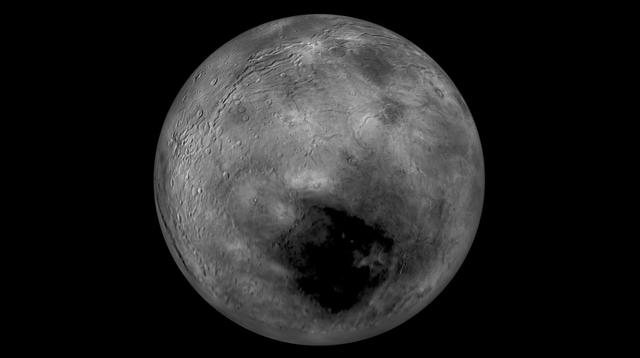
Images from NASA New Horizons spacecraft were used to create a flyover video (PIA19965) of Pluto largest moon, Charon. The flight starts with the informally named Mordor dark region near Charon north pole. In the video, the camera then moves south to a vast chasm, descending from 1,100 miles (1,800 kilometers) to just 40 miles (60 kilometers) above the surface to fly through the canyon system. From there it's a turn to the south to view the plains and "moat mountain," informally named Kubrick Mons, a prominent peak surrounded by a topographic depression. http://photojournal.jpl.nasa.gov/catalog/PIA19965
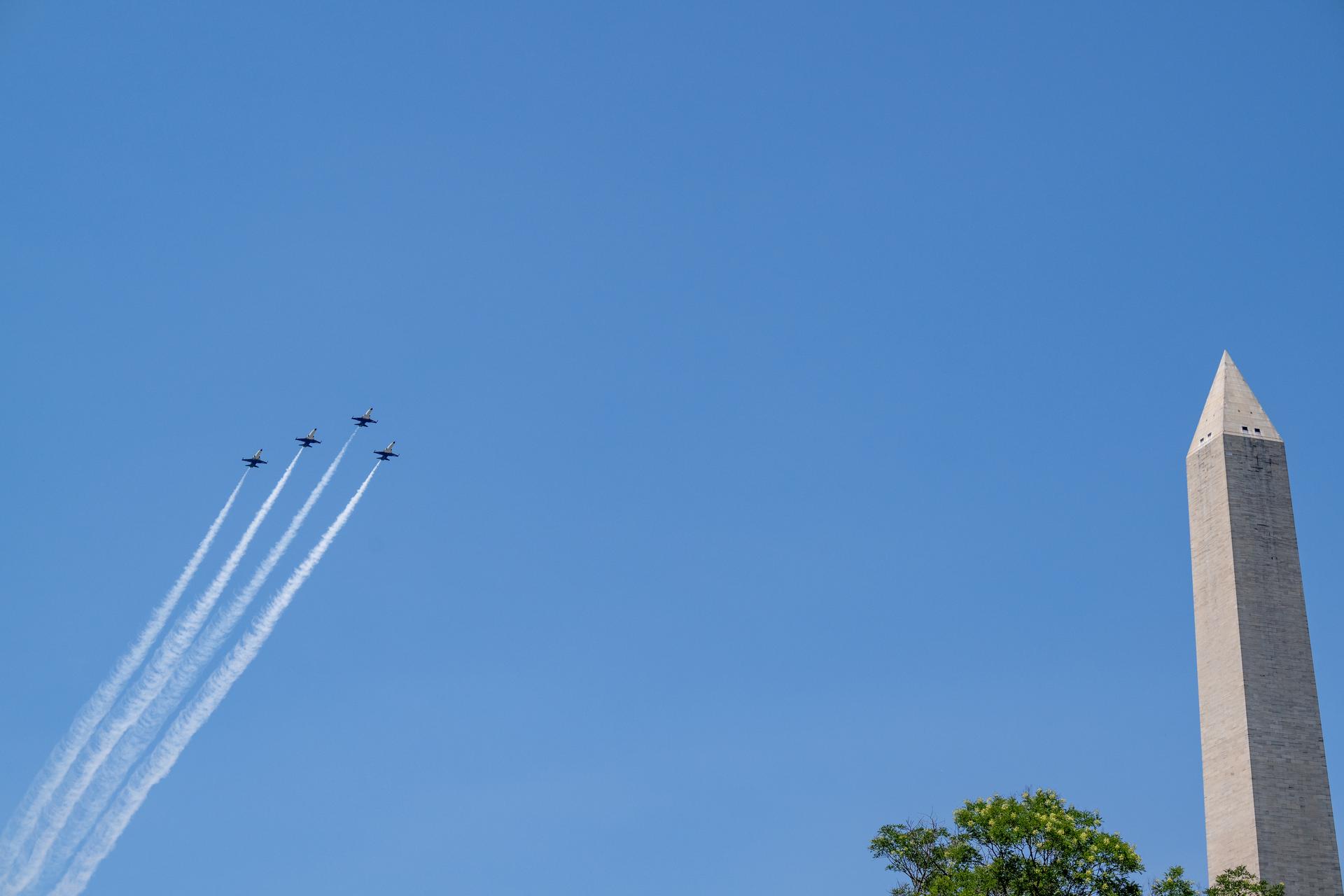
NASA Administrator Jared Isaacman leads a flyover featuring his personally owned F-5 Tiger during the Great American State Fair, Saturday, July 4, 2026, on the National Mall in Washington. Photo Credit: (NASA/Keegan Barber)
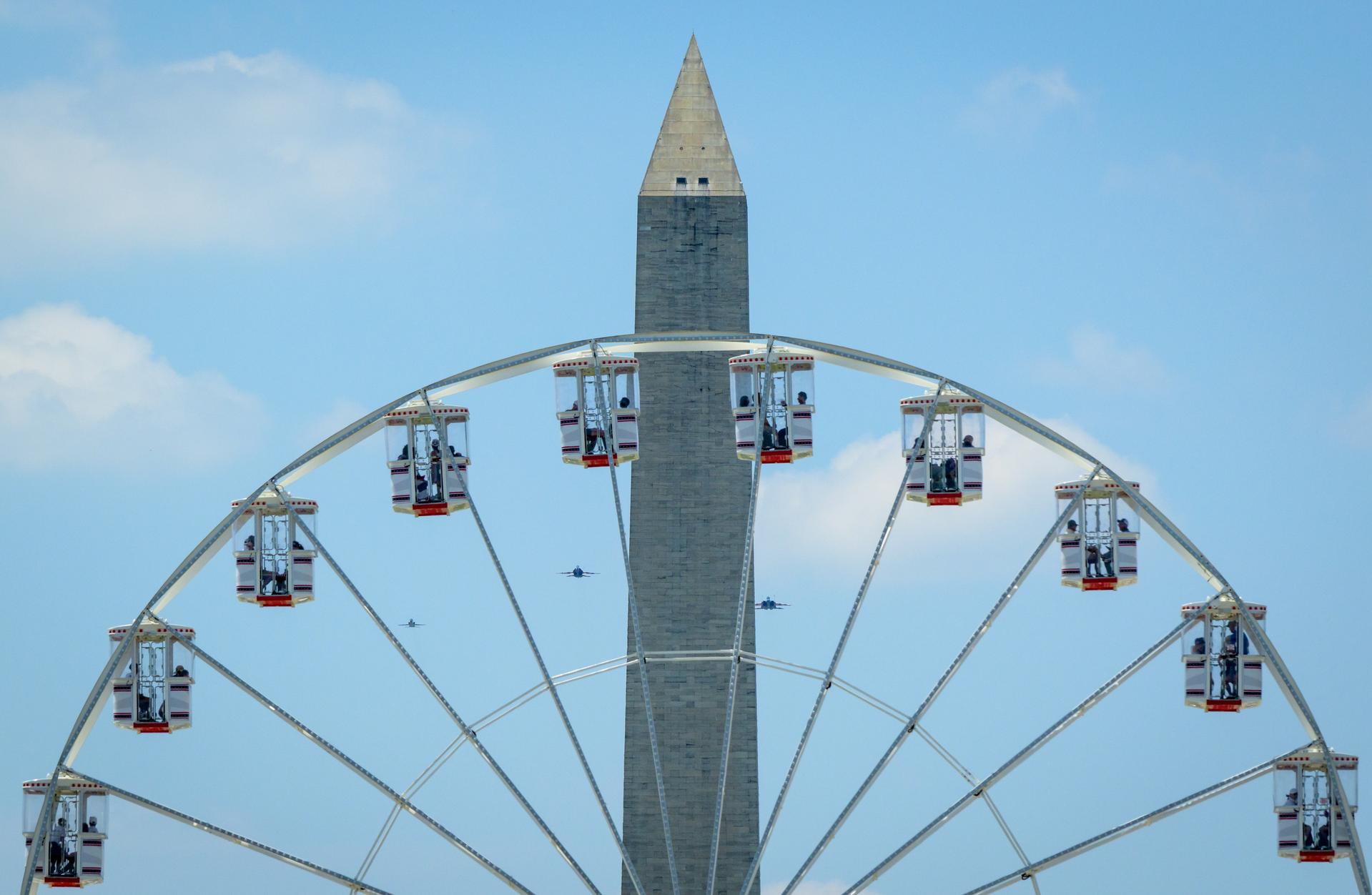
NASA’s T-38 Talon, left, F/A-18 Hornet and F-15 Eagle, right, aircraft are seen as they perform a flyover during the Great American State Fair, Saturday, July 4, 2026, on the National Mall in Washington. Photo Credit: (NASA/Bill Ingalls)
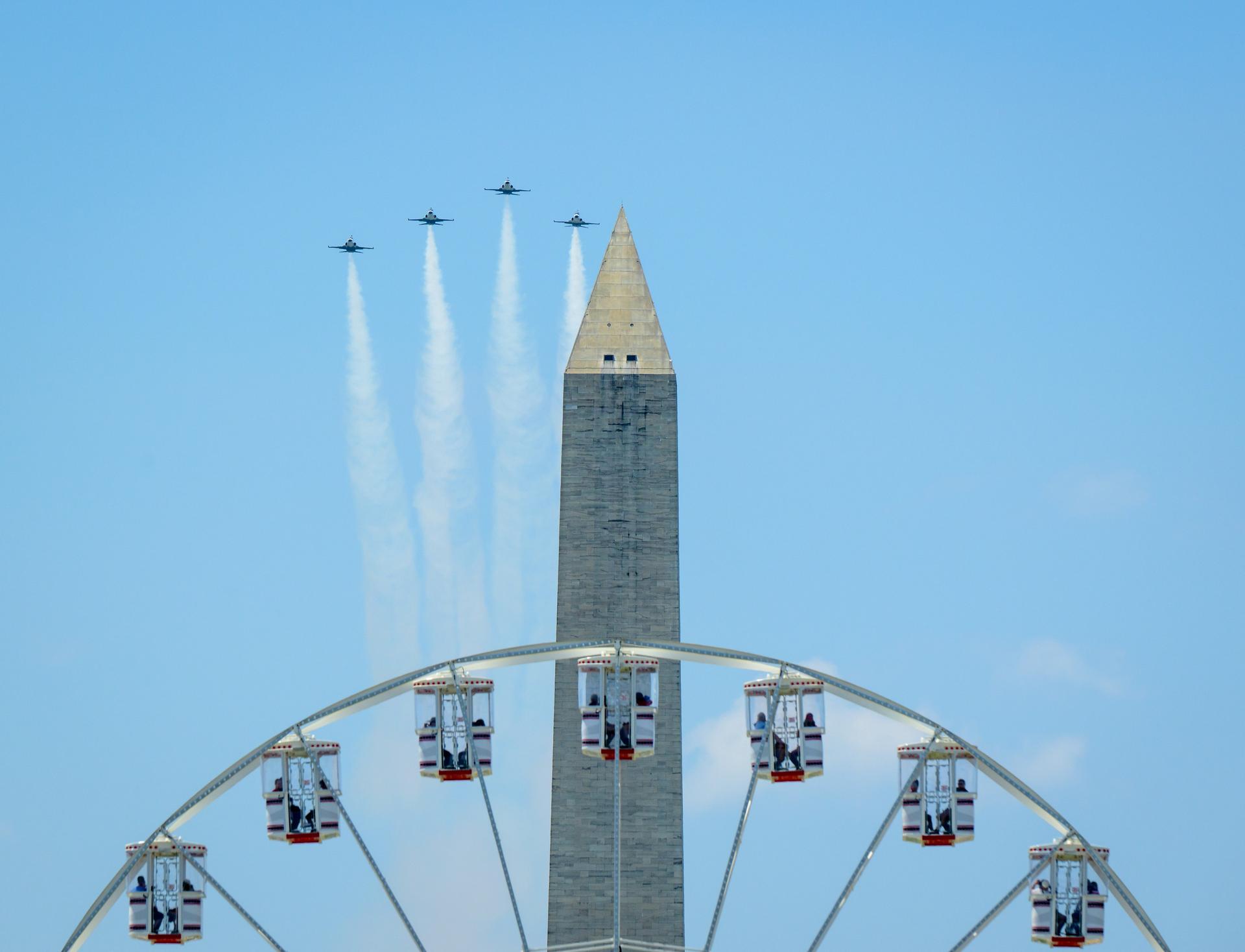
NASA Administrator Jared Isaacman leads a flyover featuring his personally owned F-5 Tiger over the Great American State Fair, Saturday, July 4, 2026, on the National Mall in Washington. Photo Credit: (NASA/Bill Ingalls)
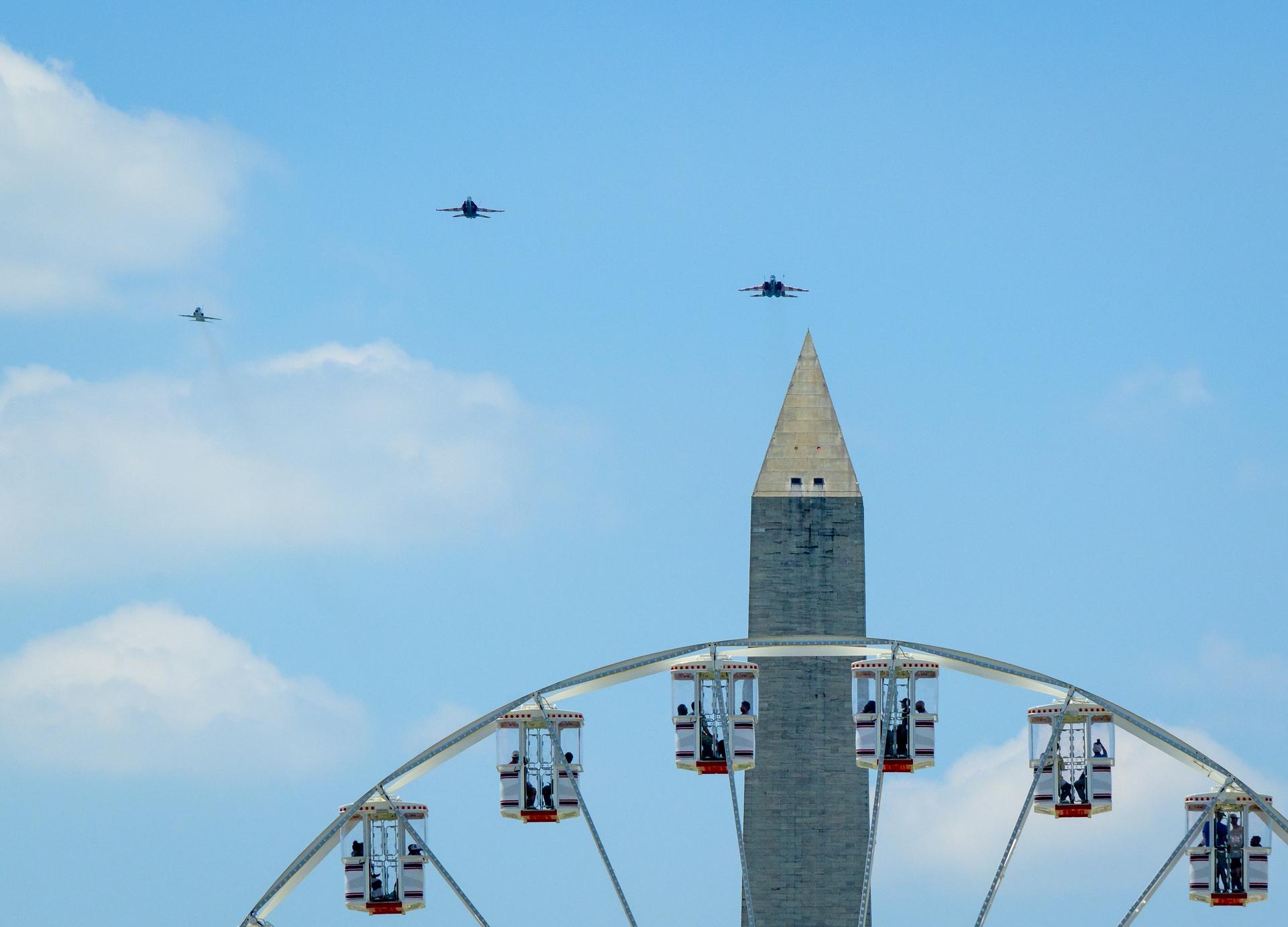
NASA’s T-38 Talon, left, F/A-18 Hornet and F-15 Eagle, right, aircraft are seen as they perform a flyover during the Great American State Fair, Saturday, July 4, 2026, on the National Mall in Washington. Photo Credit: (NASA/Bill Ingalls)
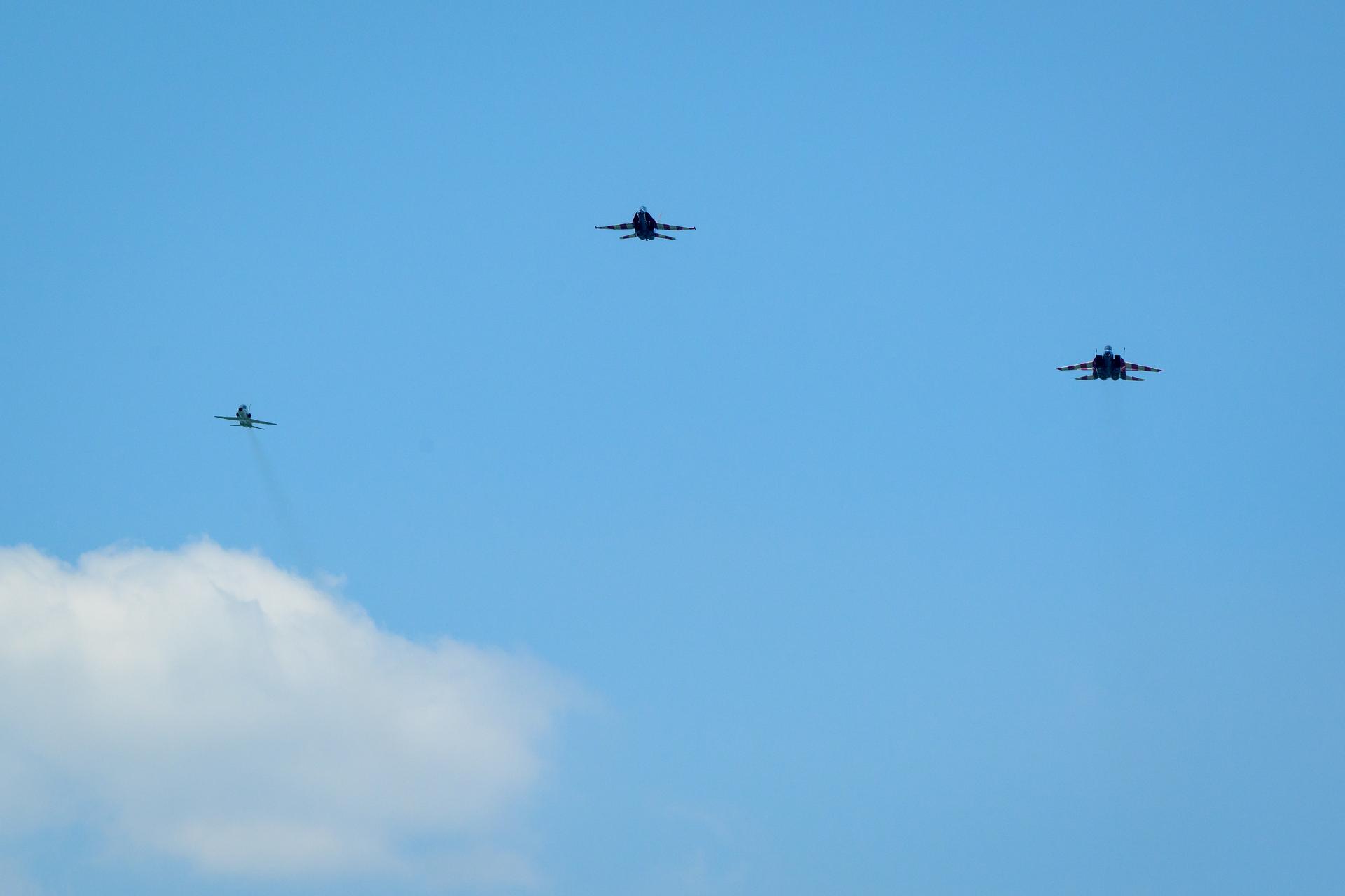
NASA’s T-38 Talon, left, F/A-18 Hornet and F-15 Eagle, right, aircraft are seen as they perform a flyover during the Great American State Fair, Saturday, July 4, 2026, on the National Mall in Washington. Photo Credit: (NASA/Bill Ingalls)
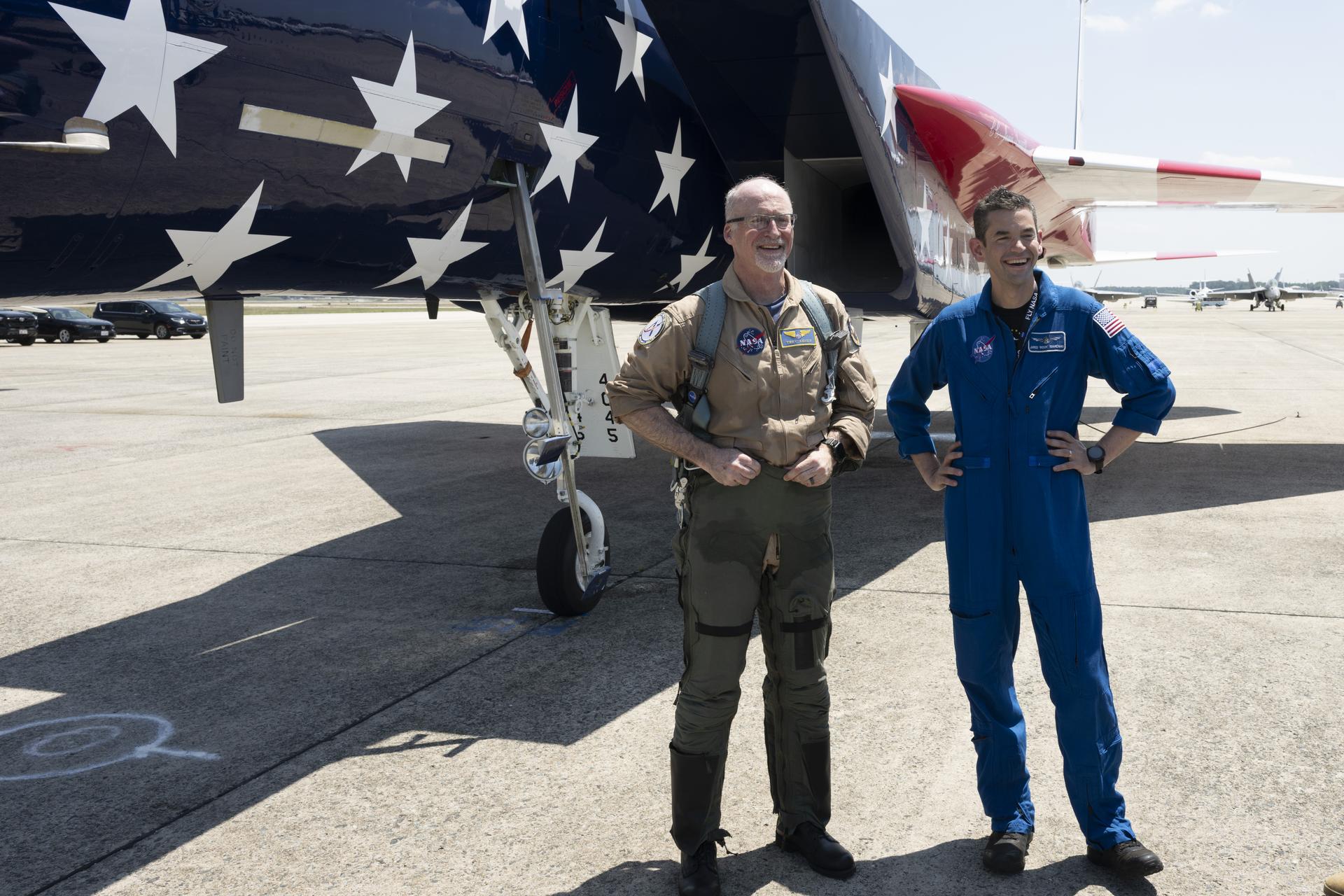
NASA Administrator Jared Isaacman stands to the right of NASA Armstrong Center Director Troy Asher, left, in front of an F-15 aircraft. Both pilots flew above Washington on Saturday, July 4, 2026, as part of a flyover to celebrate America’s 250th birthday.
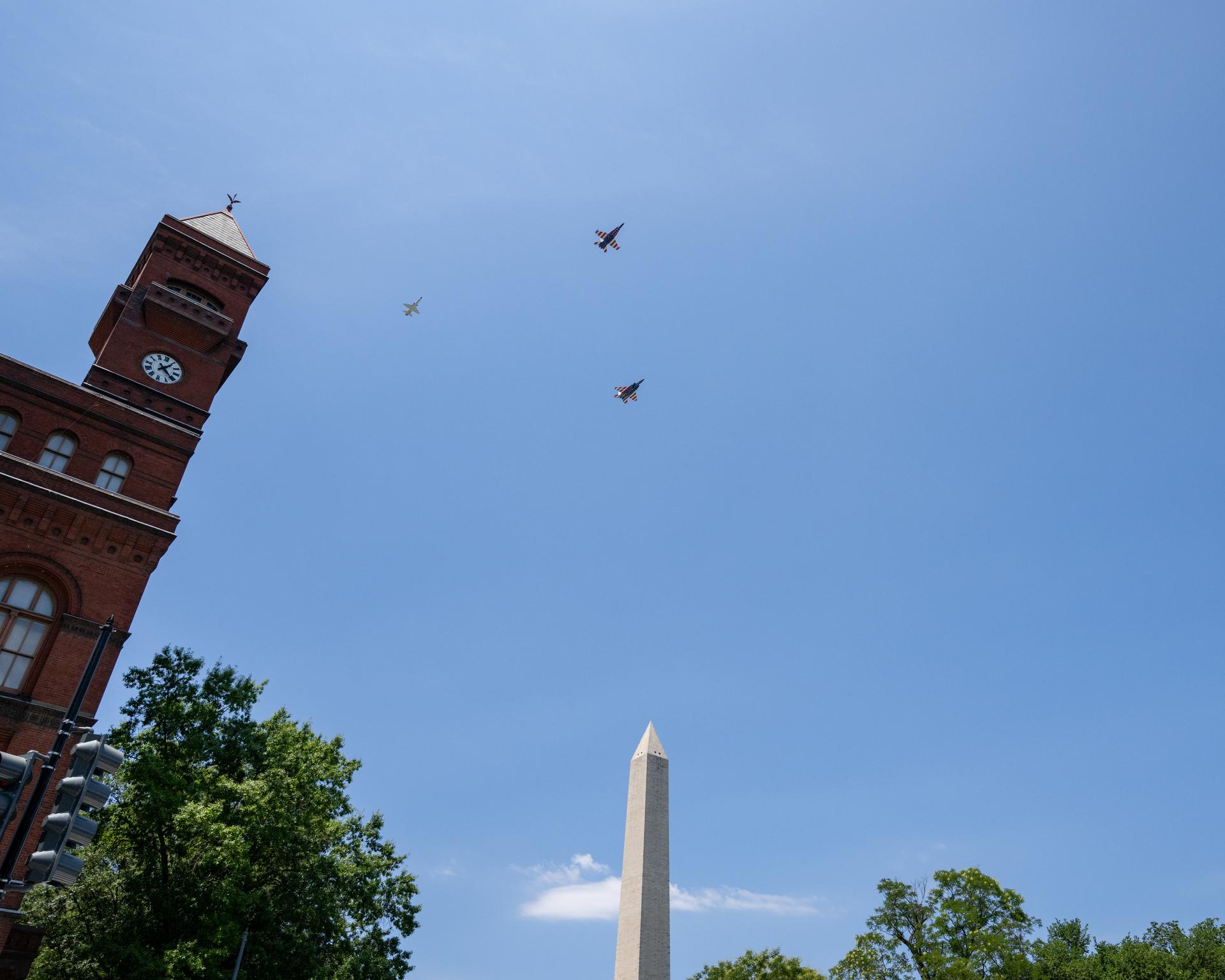
NASA’s T-38 Talon, F/A-18 Hornet and F-15 Eagle aircraft are seen as they perform a flyover during the Great American State Fair, Saturday, July 4, 2026, on the National Mall in Washington. Photo Credit: (NASA/Keegan Barber)
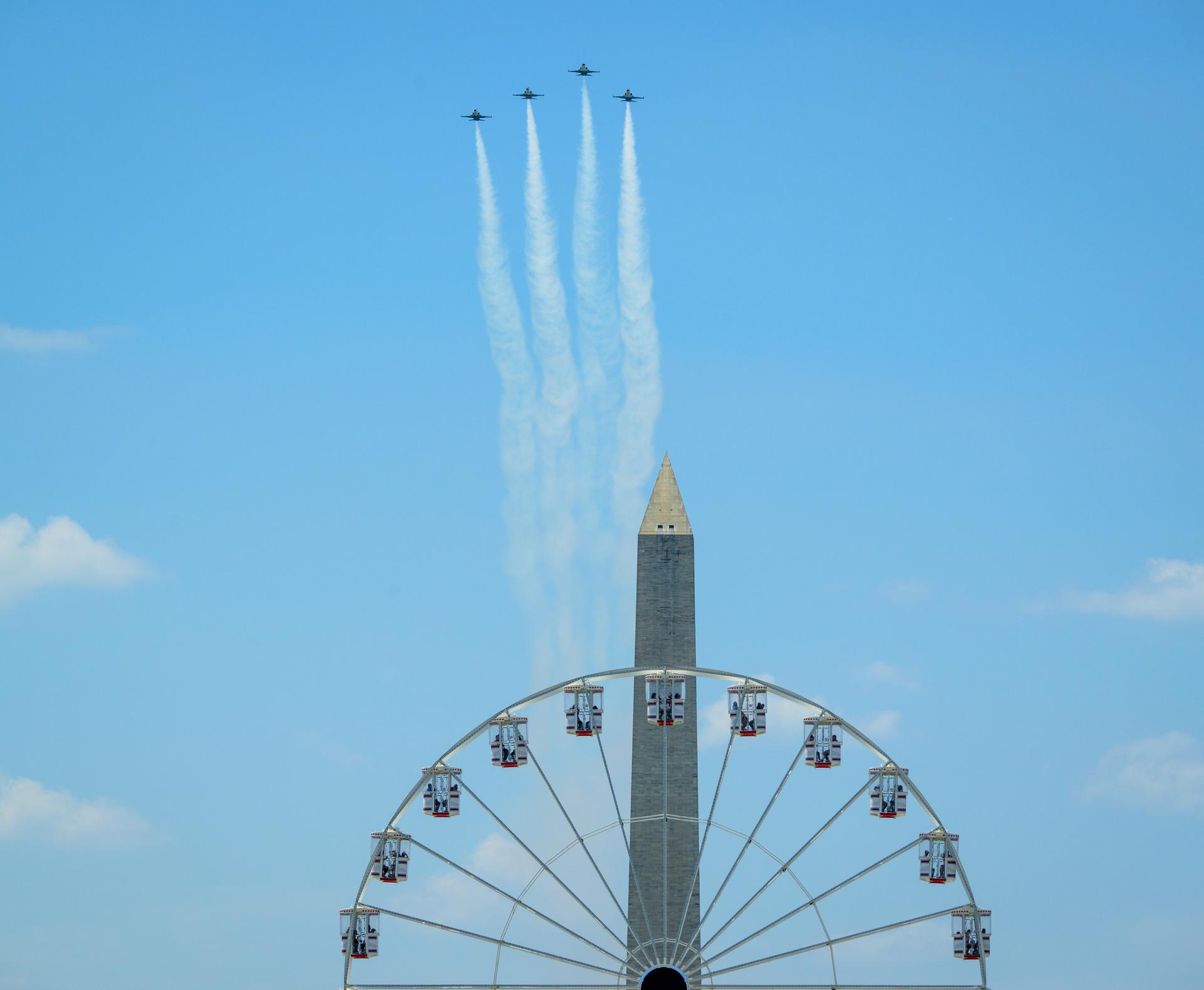
NASA Administrator Jared Isaacman leads a flyover featuring his personally owned F-5 Tiger over the Great American State Fair, Saturday, July 4, 2026, on the National Mall in Washington. Photo Credit: (NASA/Bill Ingalls)
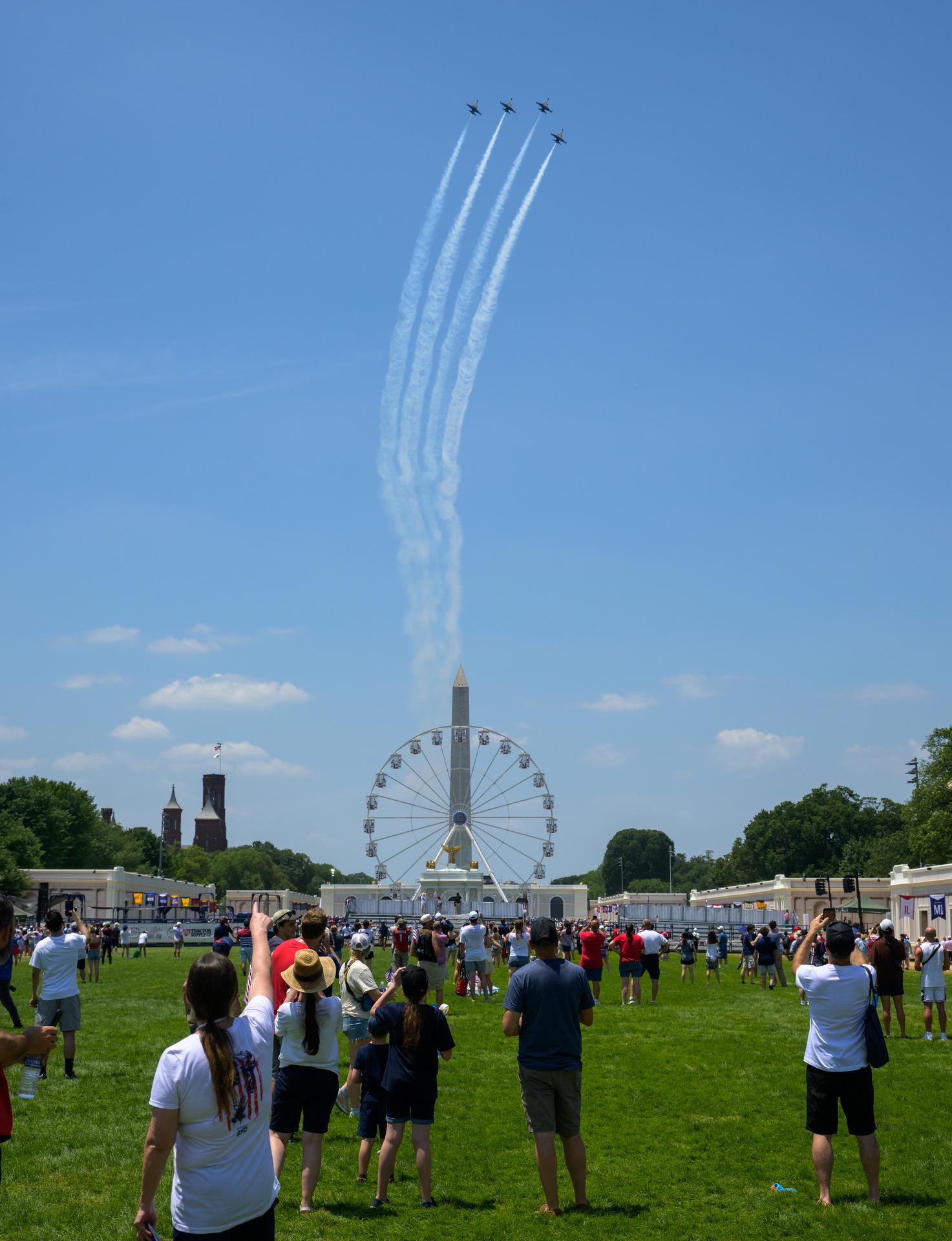
NASA Administrator Jared Isaacman leads a flyover featuring his personally owned F-5 Tiger over the Great American State Fair, Saturday, July 4, 2026, on the National Mall in Washington. Photo Credit: (NASA/Bill Ingalls)
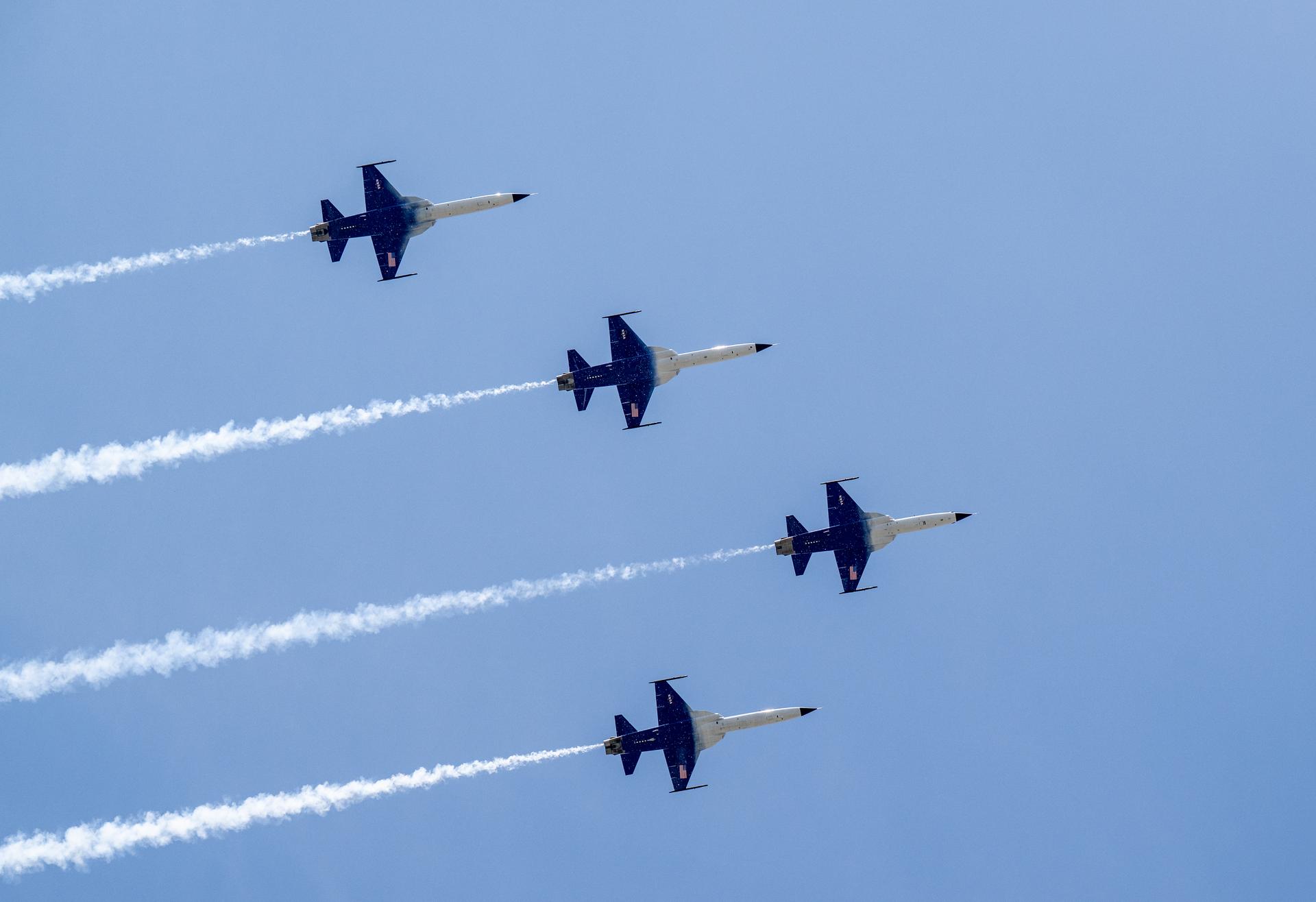
NASA Administrator Jared Isaacman leads a flyover featuring his personally owned F-5 Tiger during the Great American State Fair, Saturday, July 4, 2026, on the National Mall in Washington. Photo Credit: (NASA/Keegan Barber)
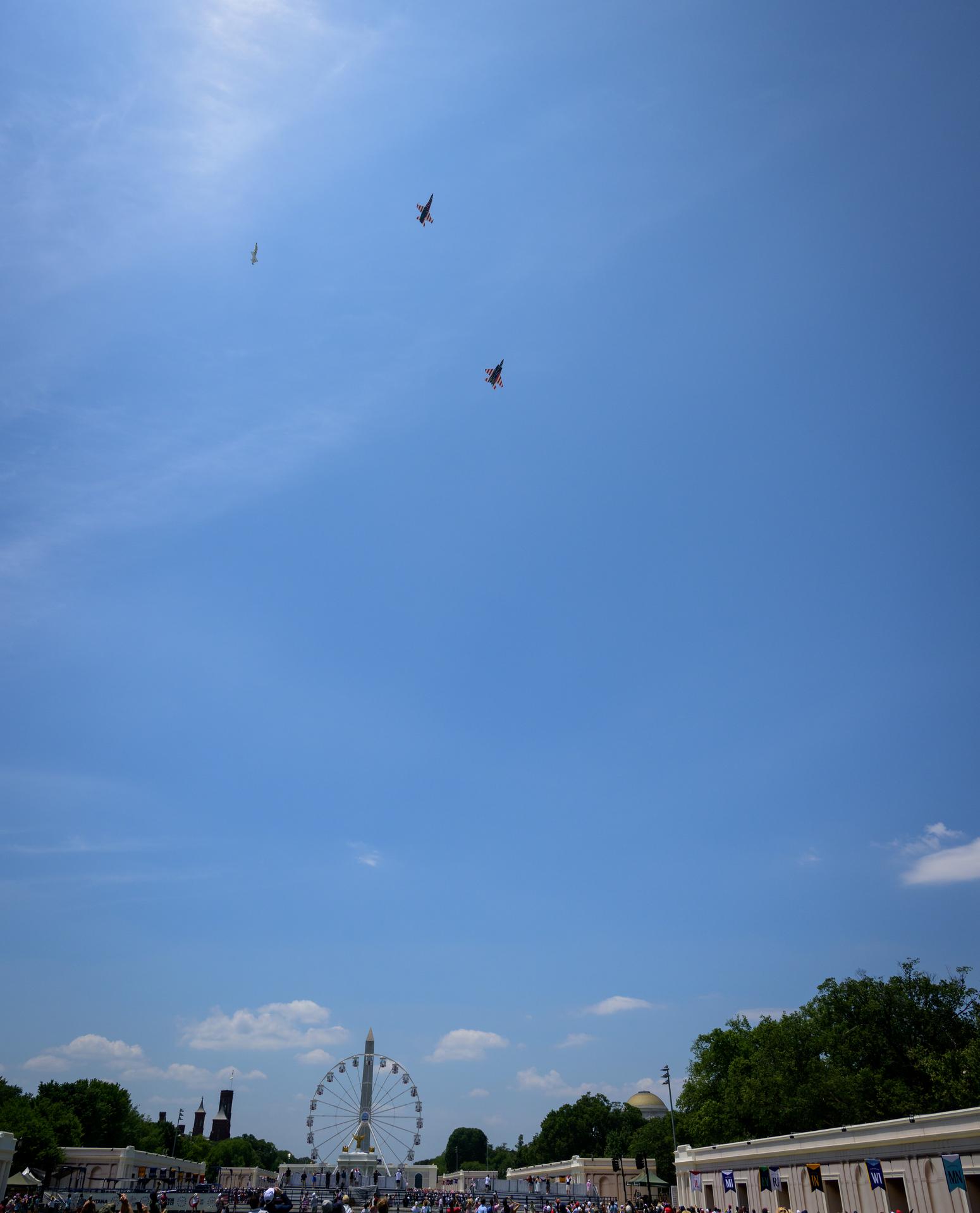
NASA’s T-38 Talon, left, F/A-18 Hornet and F-15 Eagle, right, aircraft are seen as they perform a flyover during the Great American State Fair, Saturday, July 4, 2026, on the National Mall in Washington. Photo Credit: (NASA/Bill Ingalls)
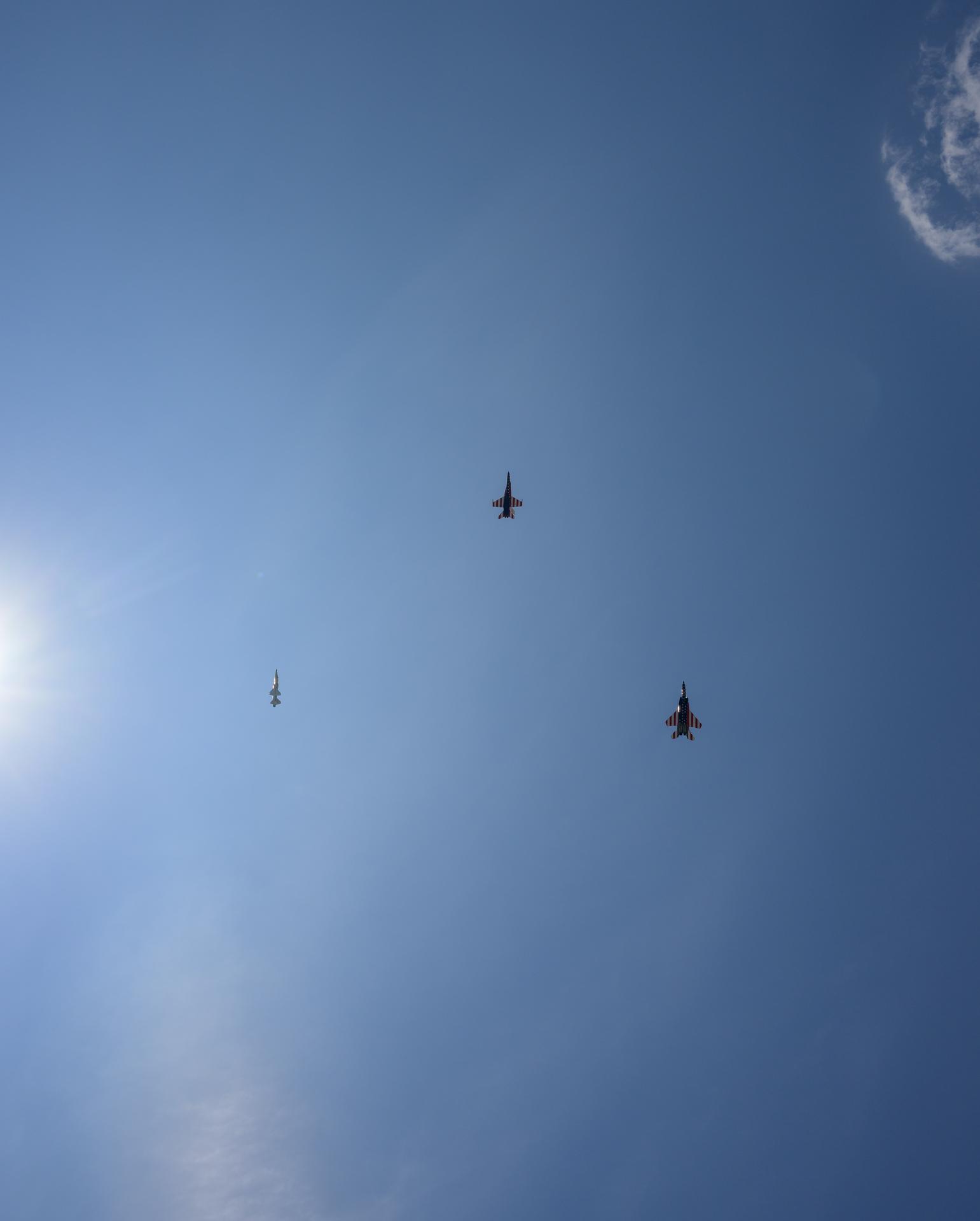
NASA’s T-38 Talon, left, F/A-18 Hornet and F-15 Eagle, right, aircraft are seen as they perform a flyover during the Great American State Fair, Saturday, July 4, 2026, on the National Mall in Washington. Photo Credit: (NASA/Bill Ingalls)
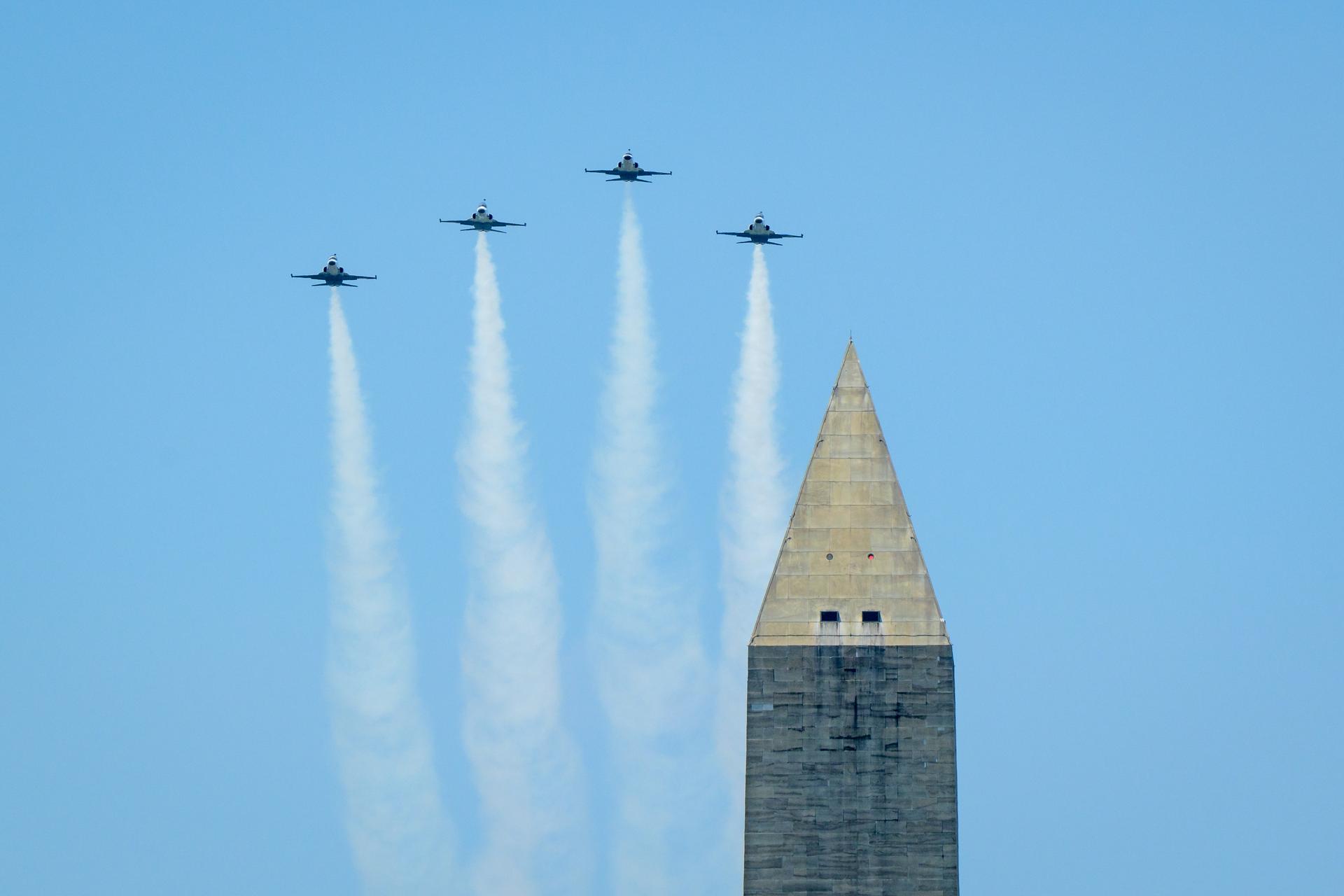
NASA Administrator Jared Isaacman leads a flyover featuring his personally owned F-5 Tiger over the Great American State Fair, Saturday, July 4, 2026, on the National Mall in Washington. Photo Credit: (NASA/Bill Ingalls)

NASA’s T-38 Talon, left, F/A-18 Hornet and F-15 Eagle, right, aircraft are seen as they perform a flyover during the Great American State Fair, Saturday, July 4, 2026, on the National Mall in Washington. Photo Credit: (NASA/Bill Ingalls)
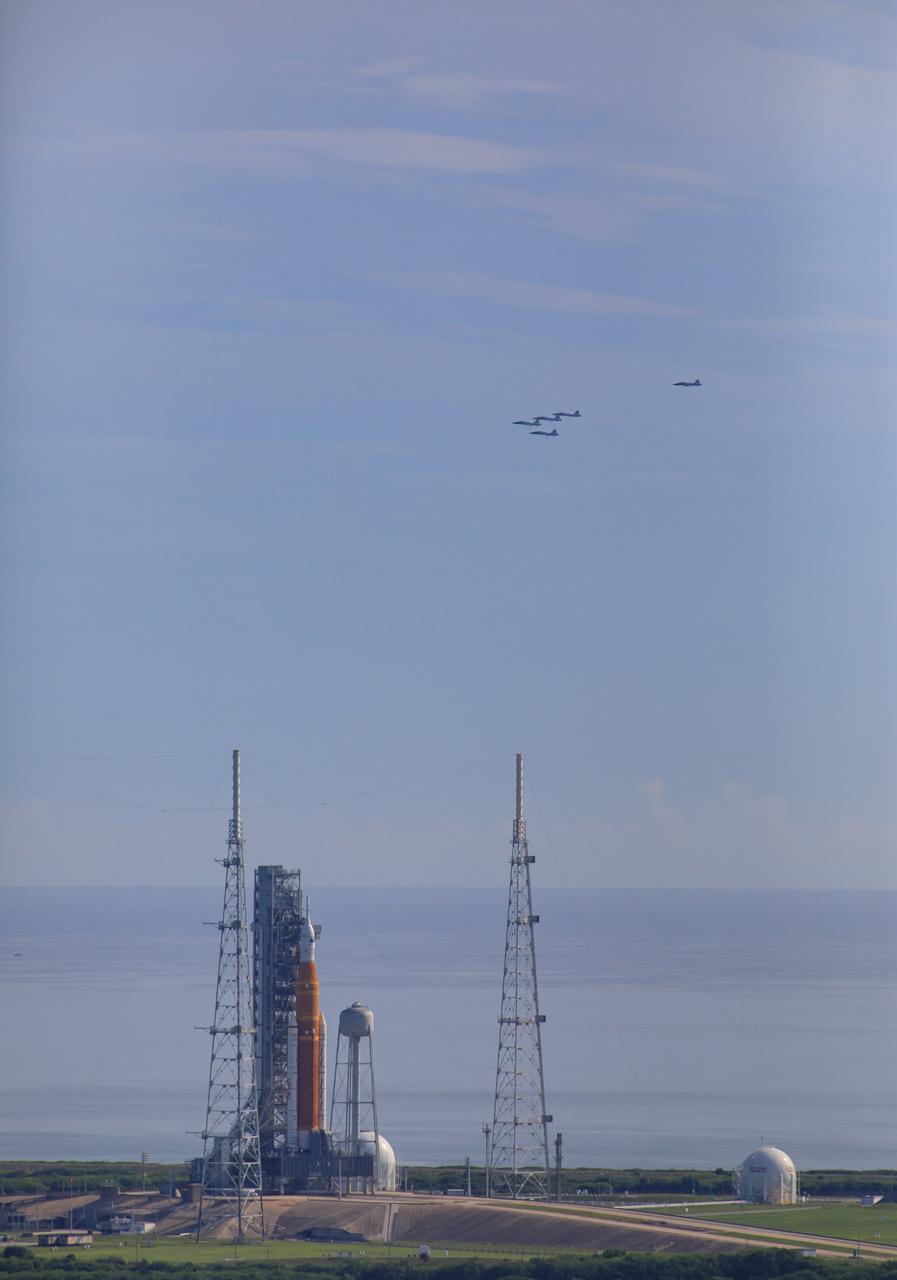
Ahead of NASA’s Artemis I launch, a flight of T-38 supersonic trainer aircraft from the Johnson Space Center Aircraft Operations Division flies in formation over the agency’s Space Launch System and Orion spacecraft on the pad at Launch Complex 39B at Kennedy Space Center in Florida, on Aug. 23, 2022. Pilots and passengers of the five aircraft include NASA Research Pilot Chris Condon and NASA Astronaut Zena Cardman in the lead plane, followed by NASA astronaut candidate Nicole Ayers and NASA astronaut Christina Koch in the second plane, Canadian Space Agency astronaut Jeremy Hansen and NASA astronaut Drew Morgan in the third plane, NASA astronaut Reid Wiseman and NASA astronaut Joe Acaba in the fourth plane, and NASA astronaut candidate Jack Hathaway and Josh Valcarcel, NASA photographer, in the chase plane. Artemis I is scheduled to launch at 8:33 a.m. EDT on Aug. 29, 2022. The first in a series of increasingly complex missions, Artemis I will provide a foundation for human deep space exploration and demonstrate our commitment and capability to extend human presence to the Moon and beyond. The primary goal of Artemis I is to thoroughly test the integrated systems before crewed missions by operating the spacecraft in a deep space environment, testing Orion’s heat shield, and recovering the crew module after reentry, descent, and splashdown.
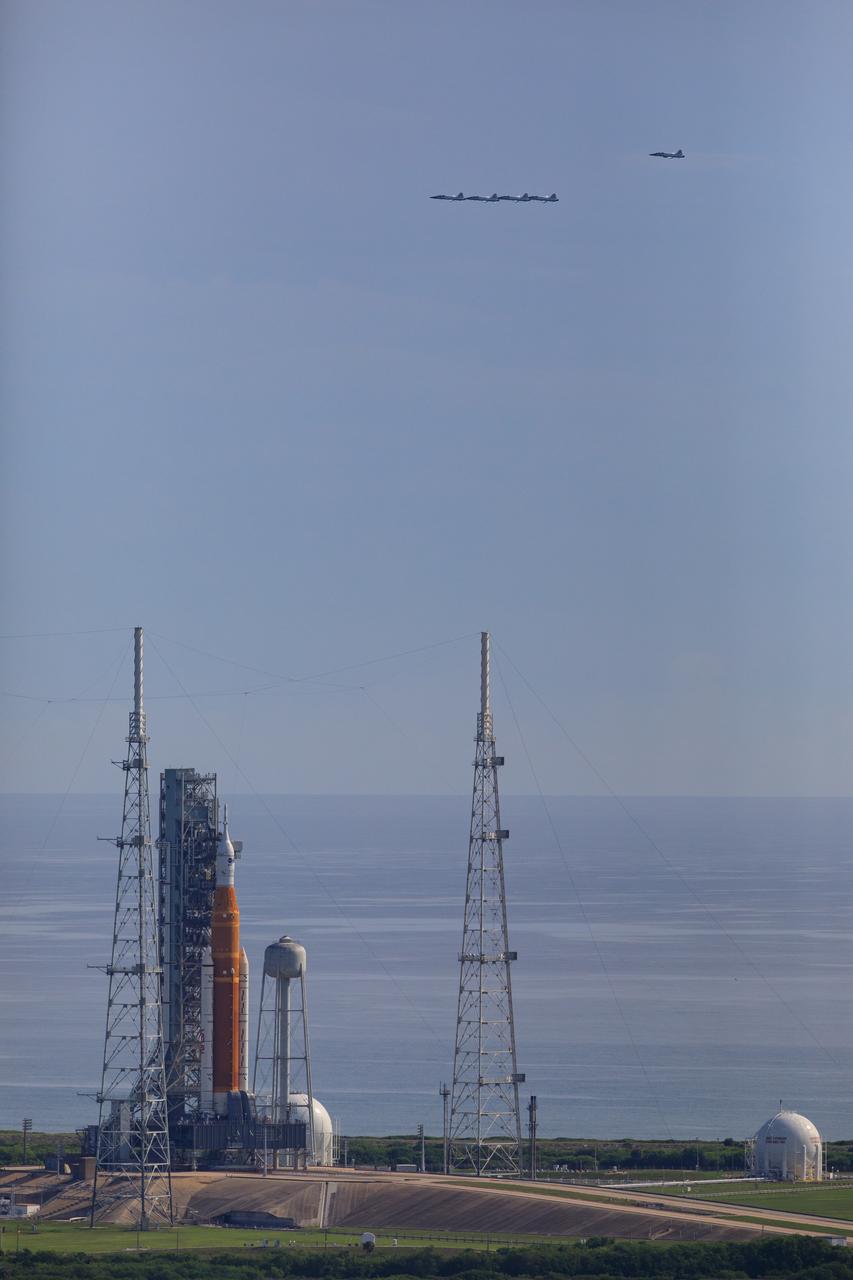
Ahead of NASA’s Artemis I launch, a flight of T-38 supersonic trainer aircraft from the Johnson Space Center Aircraft Operations Division flies in formation over the agency’s Space Launch System and Orion spacecraft on the pad at Launch Complex 39B at Kennedy Space Center in Florida, on Aug. 23, 2022. Pilots and passengers of the five aircraft include NASA Research Pilot Chris Condon and NASA Astronaut Zena Cardman in the lead plane, followed by NASA astronaut candidate Nicole Ayers and NASA astronaut Christina Koch in the second plane, Canadian Space Agency astronaut Jeremy Hansen and NASA astronaut Drew Morgan in the third plane, NASA astronaut Reid Wiseman and NASA astronaut Joe Acaba in the fourth plane, and NASA astronaut candidate Jack Hathaway and Josh Valcarcel, NASA photographer, in the chase plane. Artemis I is scheduled to launch at 8:33 a.m. EDT on Aug. 29, 2022. The first in a series of increasingly complex missions, Artemis I will provide a foundation for human deep space exploration and demonstrate our commitment and capability to extend human presence to the Moon and beyond. The primary goal of Artemis I is to thoroughly test the integrated systems before crewed missions by operating the spacecraft in a deep space environment, testing Orion’s heat shield, and recovering the crew module after reentry, descent, and splashdown.
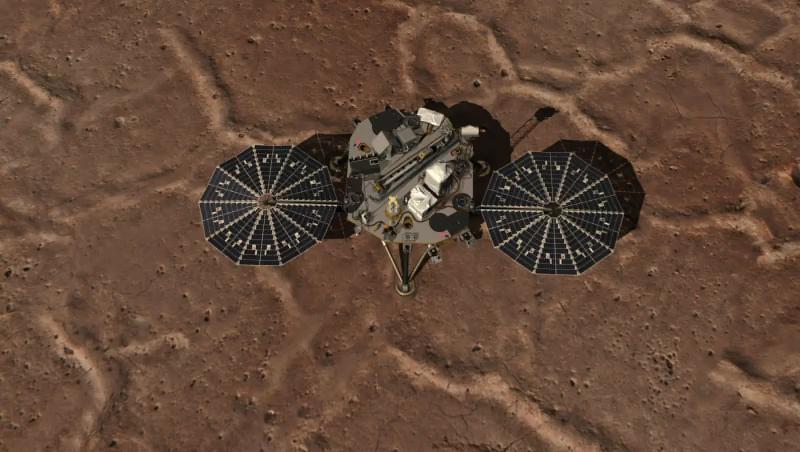
This image shows an overhead view of NASA Phoenix Mars Lander and the work area of the Robotic Arm.
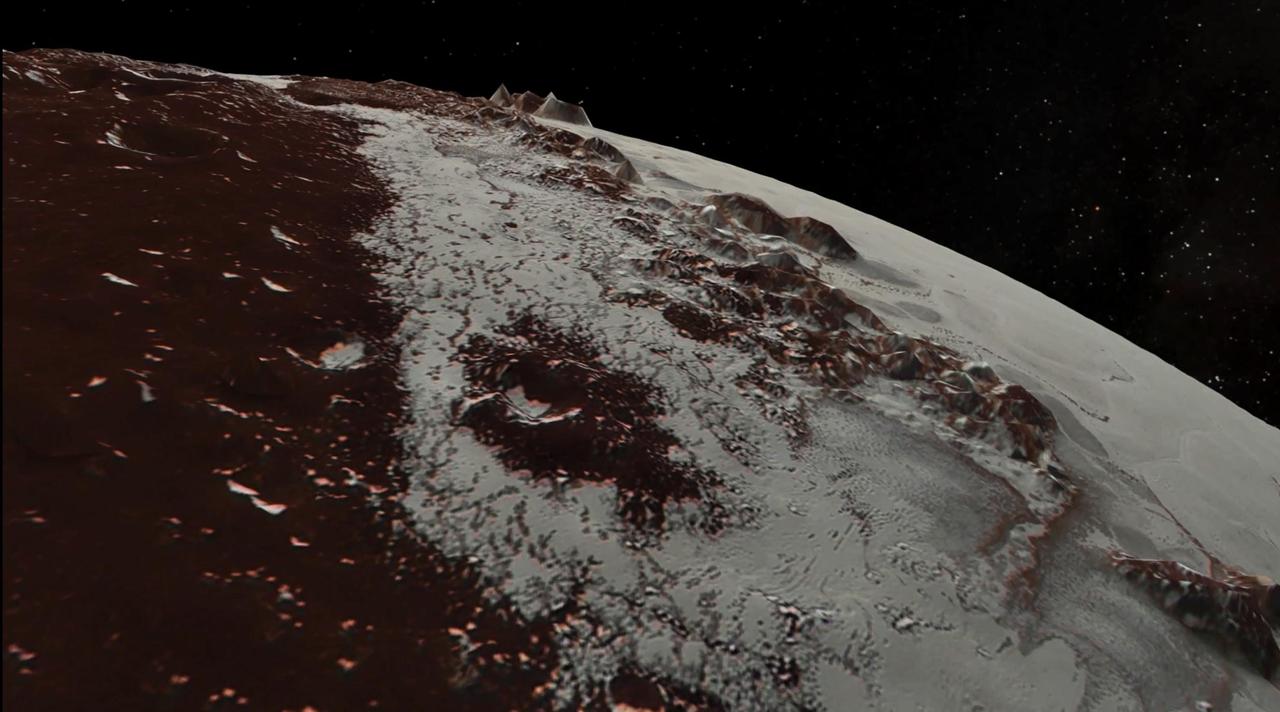
In July 2015, NASA's New Horizons spacecraft sent home the first close-up pictures of Pluto and its moons. Using actual New Horizons data and digital elevation models of Pluto and its largest moon, Charon, mission scientists created flyover movies that offer spectacular new perspectives of the many unusual features that were discovered and which have reshaped our views of the Pluto system -- from a vantage point even closer than a ride on New Horizons itself. The dramatic Pluto flyover begins over the highlands to the southwest of the great expanse of nitrogen ice plain informally named Sputnik Planitia. (Note that all feature names in the Pluto system are informal.) The viewer first passes over the western margin of Sputnik, where it borders the dark, cratered terrain of Cthulhu Macula, with the blocky mountain ranges located within the planitia seen on the right. The tour moves north past the rugged and fractured highlands of Voyager Terra and then turns southward over Pioneer Terra, which exhibits deep and wide pits, before concluding over the bladed terrain of Tartarus Dorsa in the far east of the encounter hemisphere. The topographic relief is exaggerated by a factor of 2 to 3 in these movies to emphasize topography; the surface colors have also been enhanced to bring out detail. Digital mapping and rendering were performed by Paul Schenk and John Blackwell of the Lunar and Planetary Institute in Houston. A video can be viewed at https://photojournal.jpl.nasa.gov/catalog/PIA21863
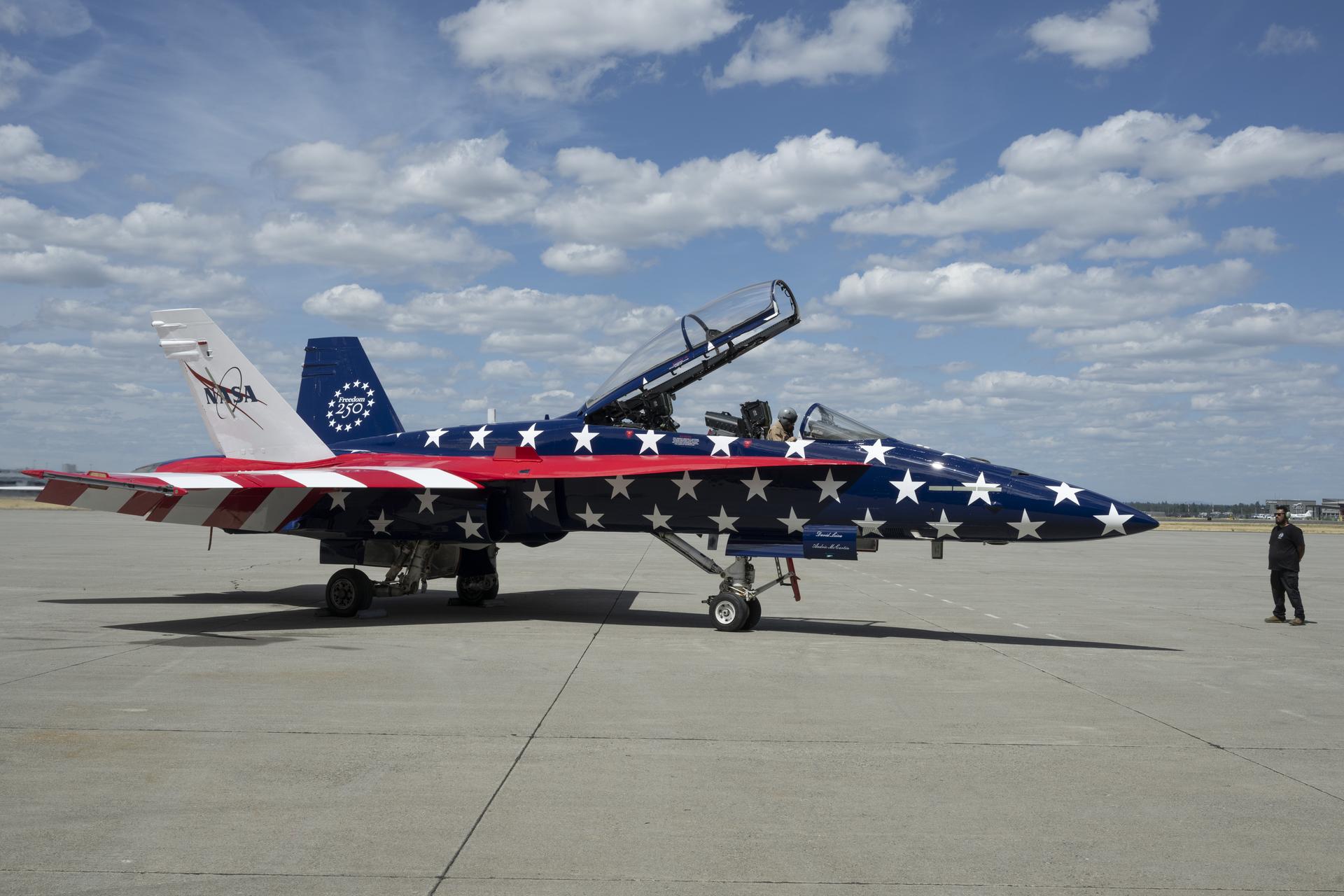
A NASA F/A‑18 aircraft is shown in Spokane, Washington, on Thursday, July 2, 2026, with new red, white, and blue paint to celebrate America’s 250th birthday. The aircraft, from NASA’s Armstrong Flight Research Center in Edwards, California, was preparing to fly cross‑country to Washington, D.C., where it participated in the Freedom 250 flyover with other NASA and military aircraft on Saturday, July 4, 2026. NASA/Jim Ross
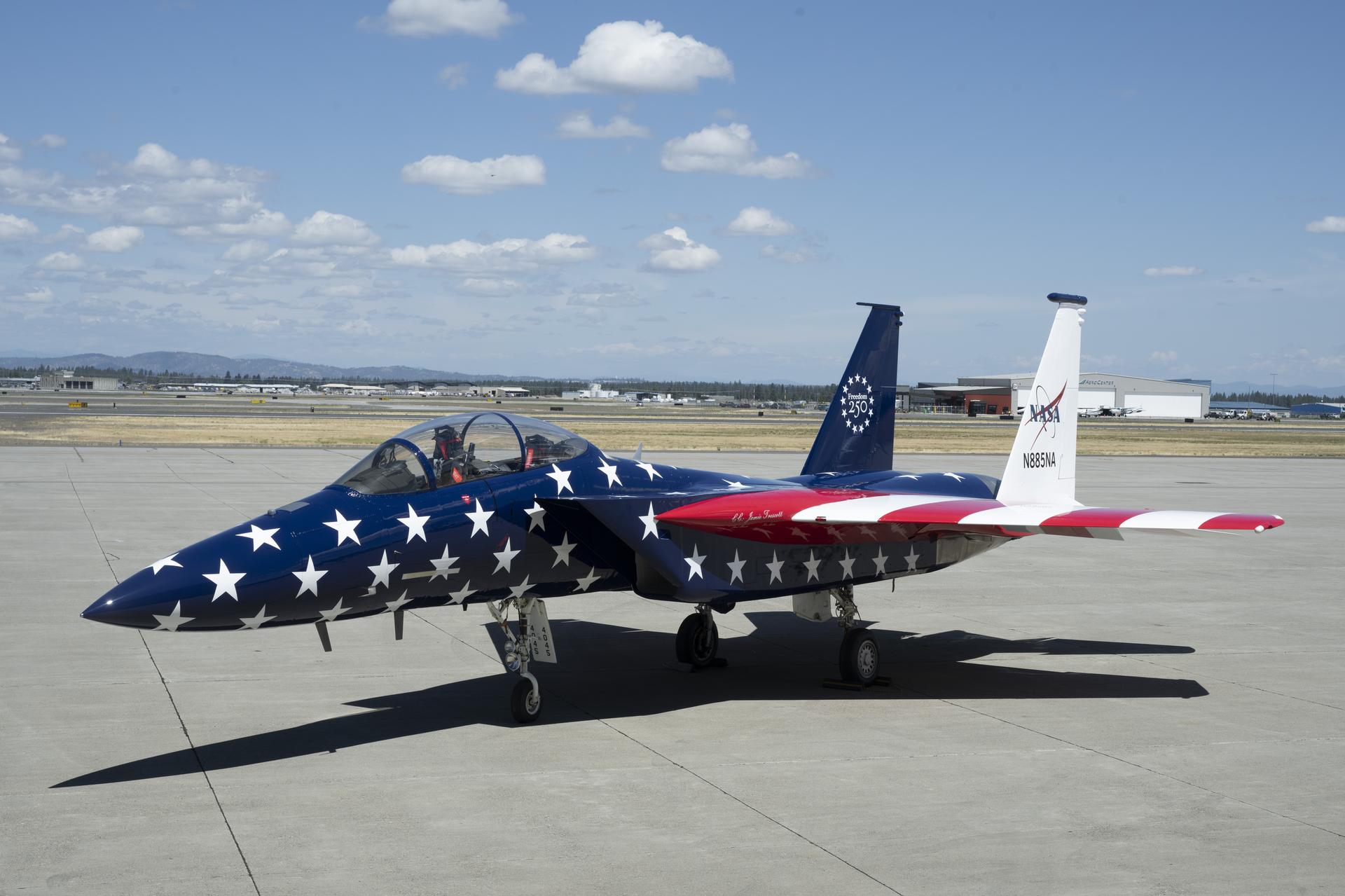
NASA’s F-15 aircraft is shown at International Aerospace Coatings Inc.’s facility in Spokane, Washington, on Thursday, July 2, 2026, with new red, white, and blue paint to celebrate America’s 250th birthday. The aircraft, from NASA’s Armstrong Flight Research Center in Edwards, California, participated in the Freedom 250 flyover in Washington on Saturday, July 4, 2026, with other NASA and military aircraft. NASA/Jim Ross
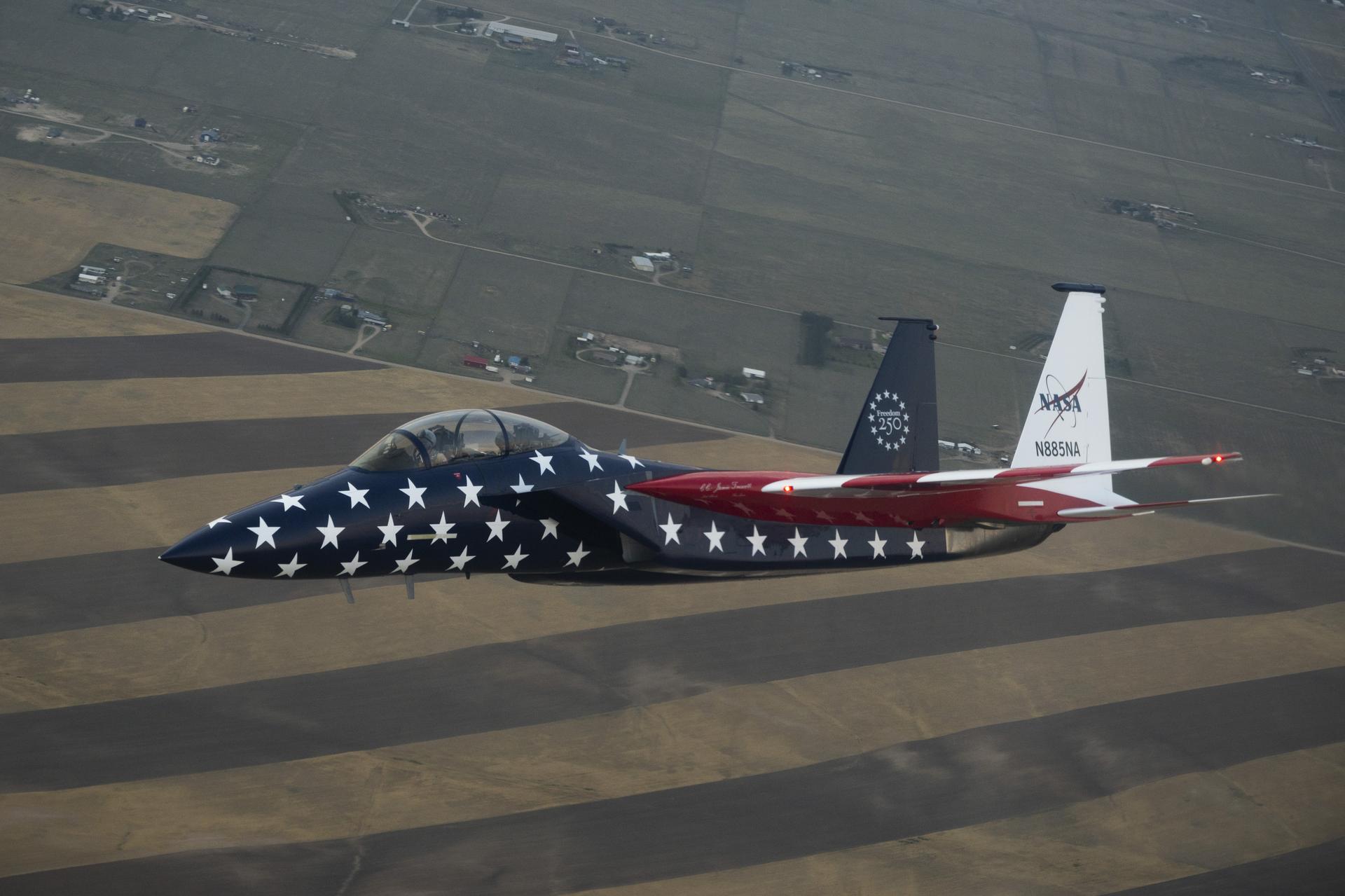
A NASA F‑15 aircraft is shown during a cross‑country flight from Spokane, Washington, to Washington, D.C., on Thursday, July 2, 2026. The aircraft displays new red, white, and blue paint to celebrate America’s 250th birthday. The F‑15, from NASA’s Armstrong Flight Research Center in Edwards, California, participated in the Freedom 250 flyover with other NASA and military aircraft on Saturday, July 4, 2026. NASA/Jim Ross
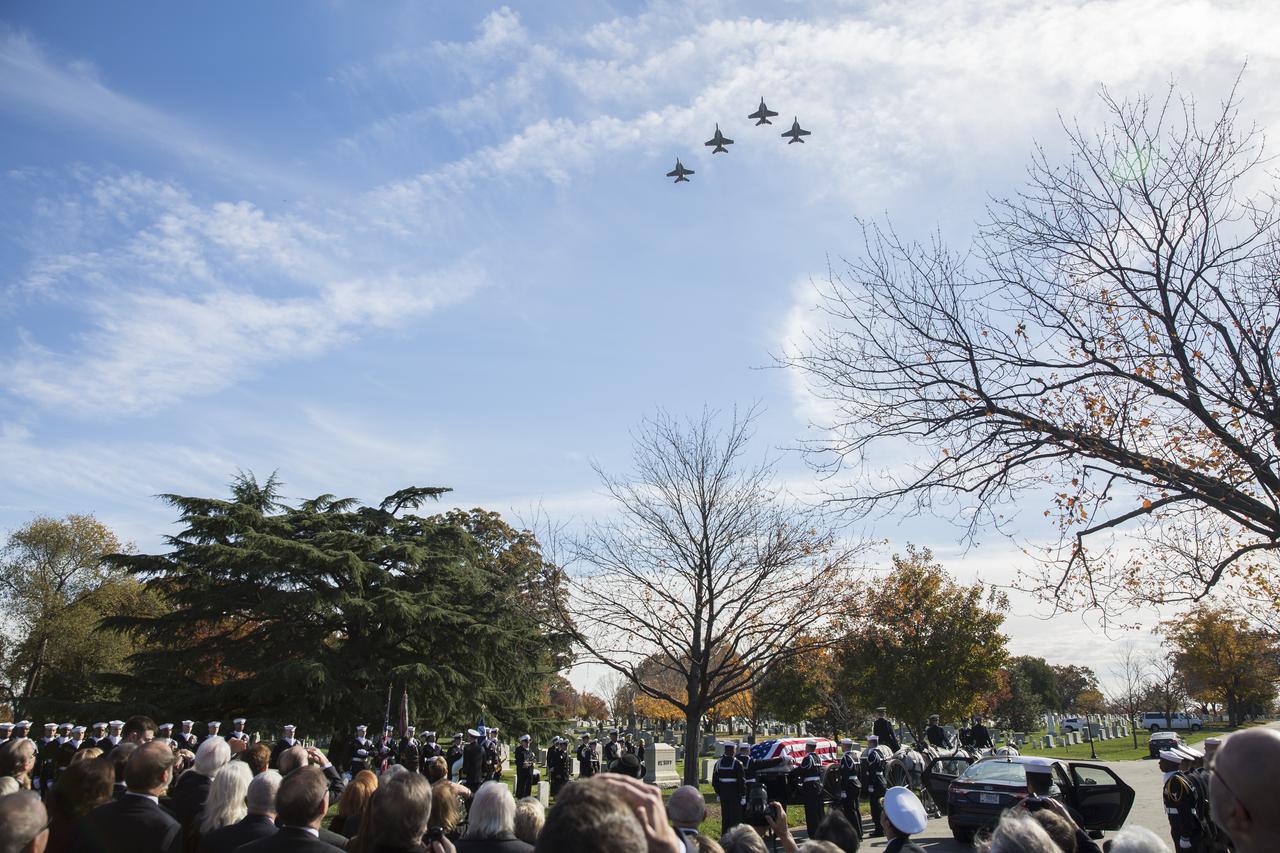
U.S. Navy F/A-18 Super Hornets conduct a flyover during interment services for former astronaut Alan Bean, Thursday, Nov. 8, 2018 at Arlington National Cemetery in Virginia. Selected as an astronaut in 1963, Bean flew in space twice, becoming the fourth human to walk on the Moon on Nov. 19, 1969 and spent 59 days in space as commander of the second Skylab mission in 1973. Photo Credit: (NASA/Joel Kowsky)
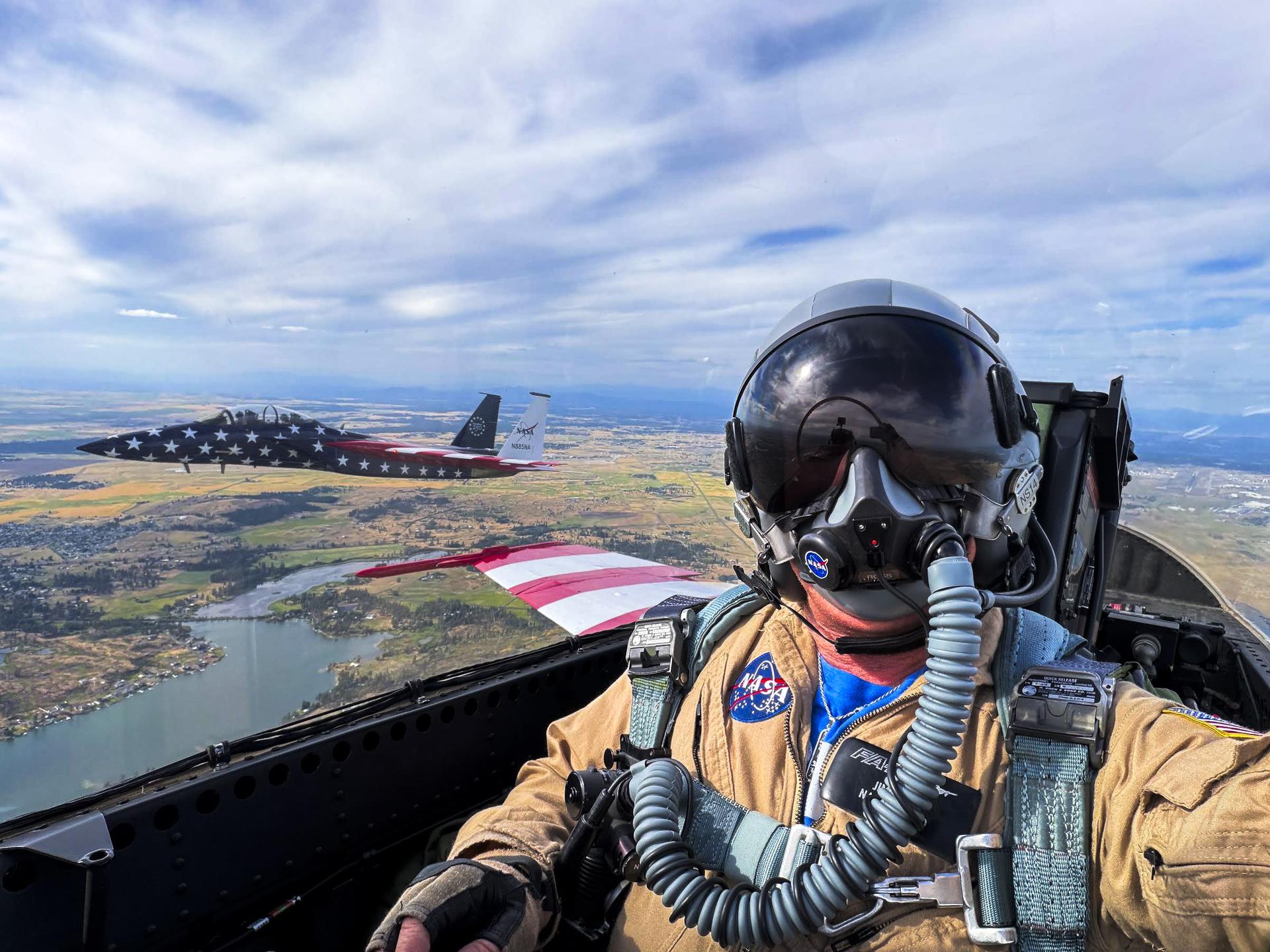
NASA photographer Jim Ross takes a selfie from the rear seat of a NASA F/A‑18 during a cross‑country flight from Spokane, Washington, to Washington, D.C., on Thursday, July 2, 2026. The agency’s F‑15, flying alongside the aircraft, is visible through the window. Both aircraft, from NASA’s Armstrong Flight Research Center in Edwards, California, participated in the Freedom 250 flyover with other NASA and military aircraft on Saturday, July 4, 2026.

This frame from a video from NASA's Dawn mission shows dwarf planet Ceres in false-color renderings, which highlight differences in surface materials. Images were used to create a movie of Ceres rotating, followed by a flyover view of Occator Crater, home of Ceres' brightest area. A video is available at http://photojournal.jpl.nasa.gov/catalog/PIA20182
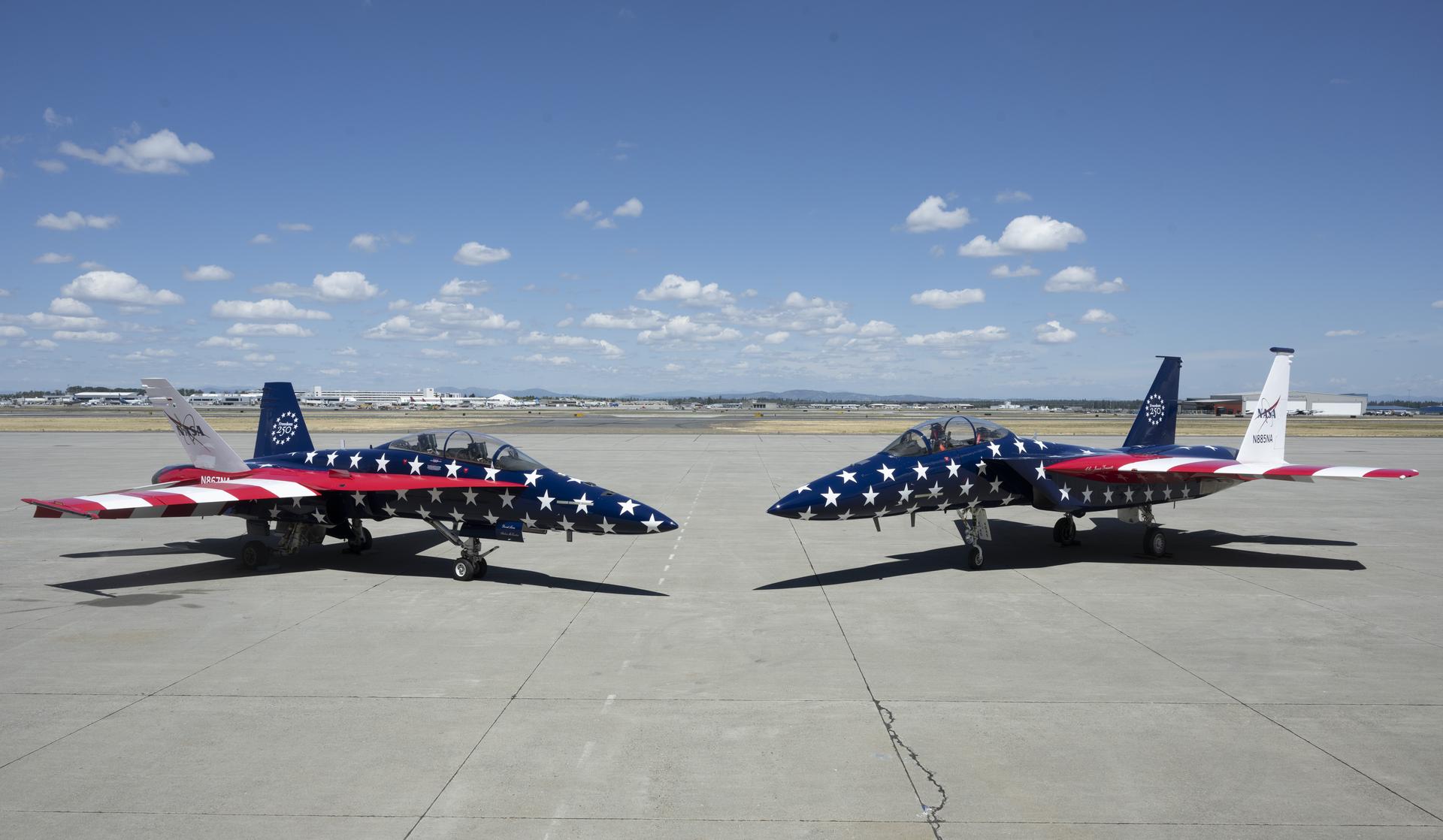
NASA’s F-15, right, and F/A-18 aircraft are shown at International Aerospace Coatings Inc.’s facility in Spokane, Washington, on Thursday, July 2, 2026, with new red, white, and blue paint to celebrate America’s 250th birthday. The aircraft, from NASA’s Armstrong Flight Research Center in Edwards, California, participated in the Freedom 250 flyover in Washington on Saturday, July 4, 2026, with other NASA and military aircraft. NASA/Jim Ross
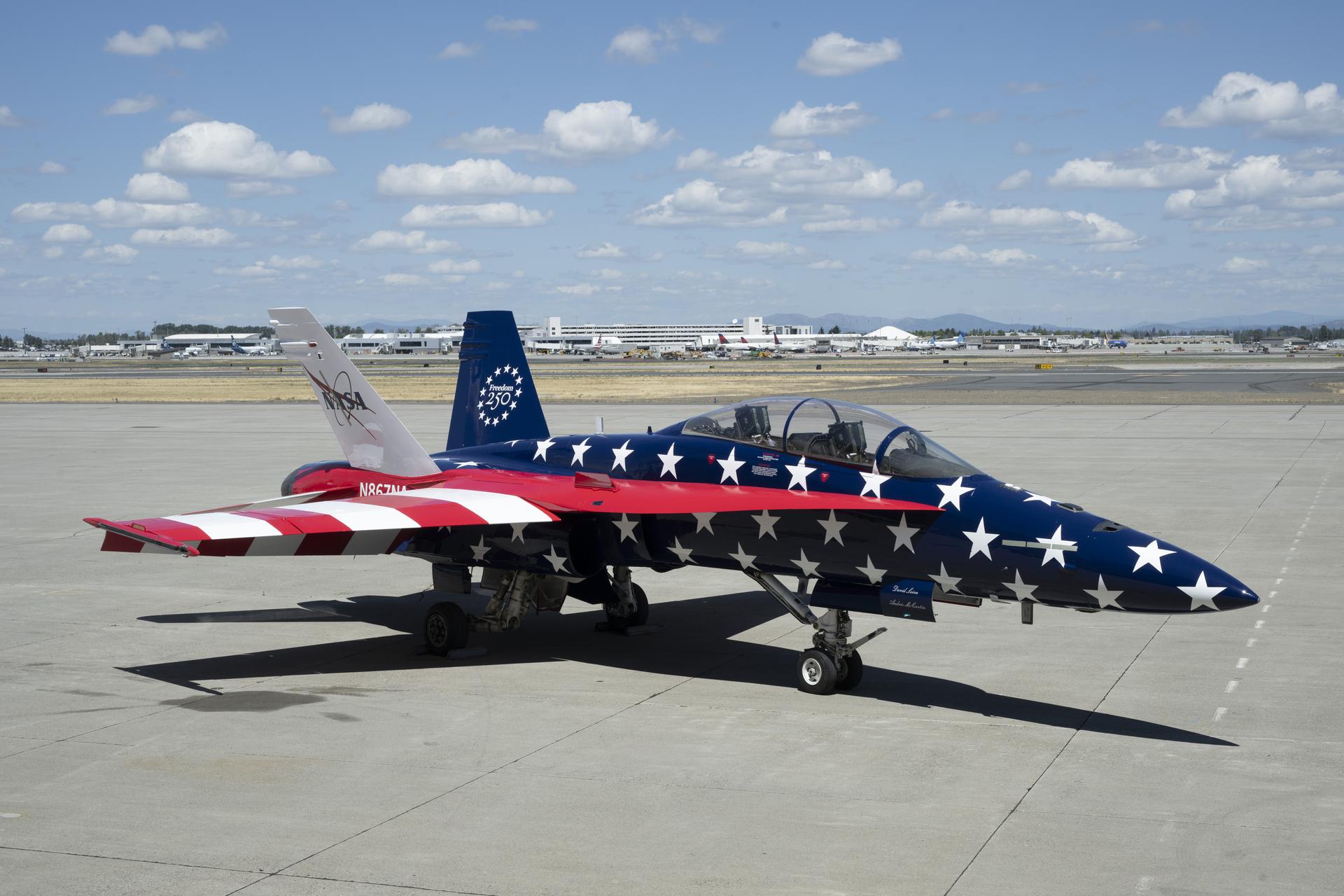
NASA’s F-18 aircraft is shown at International Aerospace Coatings Inc.’s facility in Spokane, Washington, on Thursday, July 2, 2026, with new red, white, and blue paint to celebrate America’s 250th birthday. The aircraft, from NASA’s Armstrong Flight Research Center in Edwards, California, participated in the Freedom 250 flyover in Washington on Saturday, July 4, 2026, with other NASA and military aircraft. NASA/Jim Ross
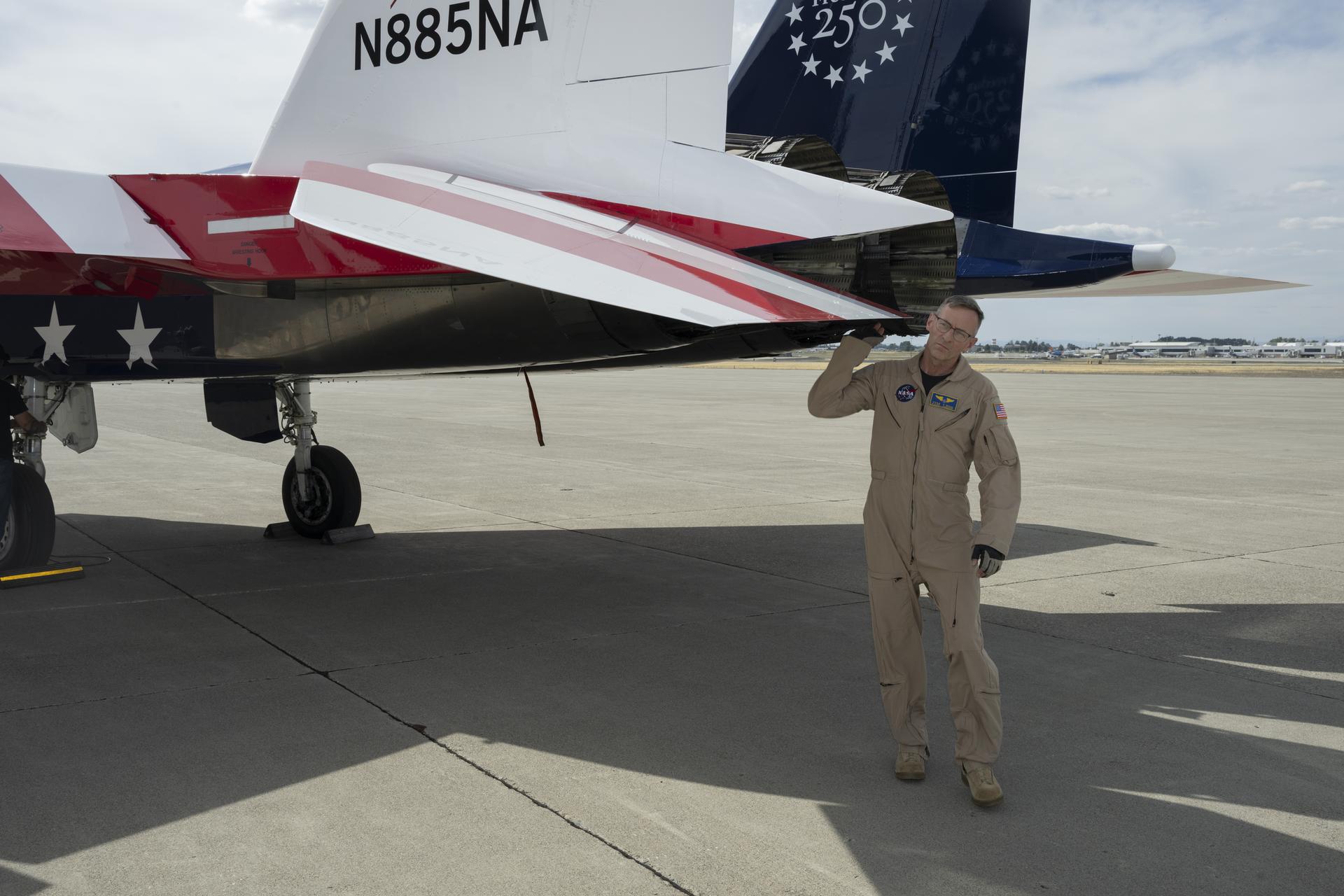
NASA test pilot Jim “Clue” Less completes pre‑flight checks on a NASA F‑15 in Spokane, Washington, on Thursday, July 2, 2026. The aircraft, from NASA’s Armstrong Flight Research Center in Edwards, California, displays new red, white, and blue paint to celebrate America’s 250th birthday and was preparing to fly cross‑country to Washington, D.C., where it participated in the Freedom 250 flyover with other NASA and military aircraft on Saturday, July 4, 2026. NASA/Jim Ross
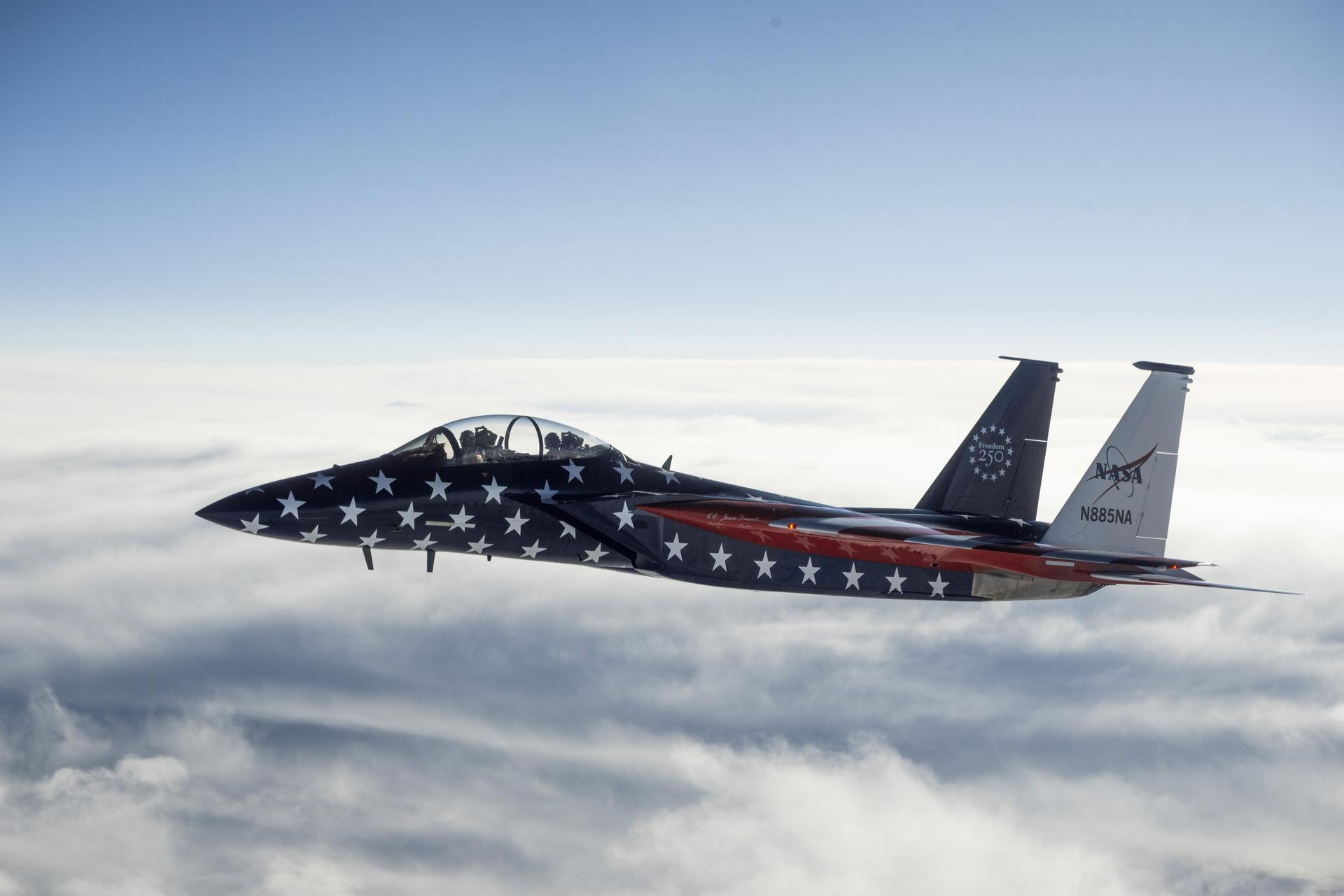
A NASA F‑15 aircraft is shown during a cross‑country flight from Spokane, Washington, to Washington, D.C., on Thursday, July 2, 2026. The aircraft displays new red, white, and blue paint to celebrate America’s 250th birthday. The F‑15, from NASA’s Armstrong Flight Research Center in Edwards, California, participated in the Freedom 250 flyover with other NASA and military aircraft on Saturday, July 4, 2026. NASA/Jim Ross
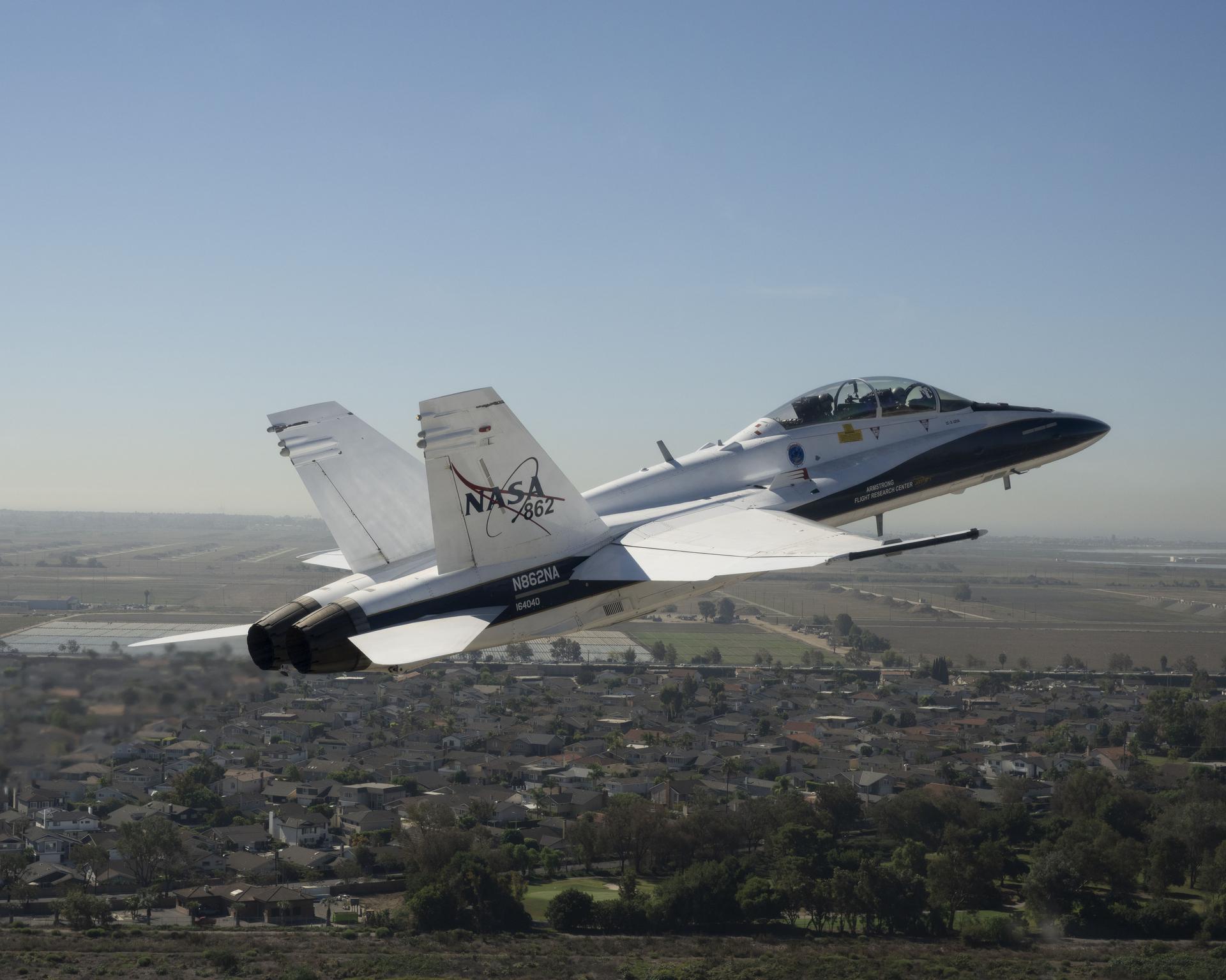
NASA test pilot Mike Lippert flies an F/A‑18 with videographer Lori Losey in the back seat during a Pacific Airshow flyover at Huntington Beach, California, Friday, Oct. 2, 2026. NASA is also hosting an exhibit featuring Artemis, the X‑59, SkyFall, a lunar globe, and an Apollo 15 Moon rock, with pilots and research experts available throughout the weekend.
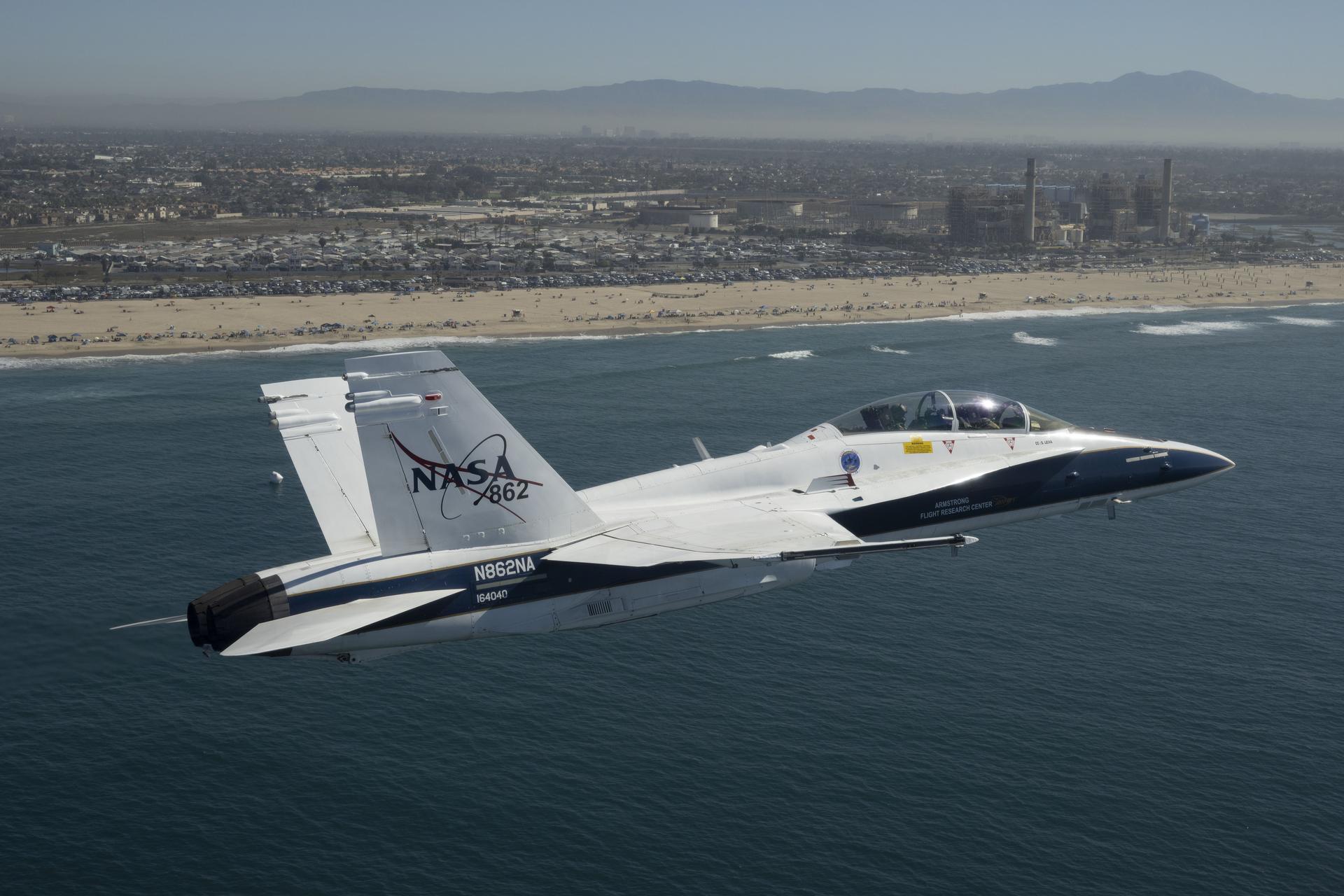
NASA test pilot Mike Lippert flies an F/A‑18 with videographer Lori Losey in the back seat during a Pacific Airshow flyover at Huntington Beach, California, Friday, Oct. 2, 2026. NASA is also hosting an exhibit featuring Artemis, the X‑59, SkyFall, a lunar globe, and an Apollo 15 Moon rock, with pilots and research experts available throughout the weekend.
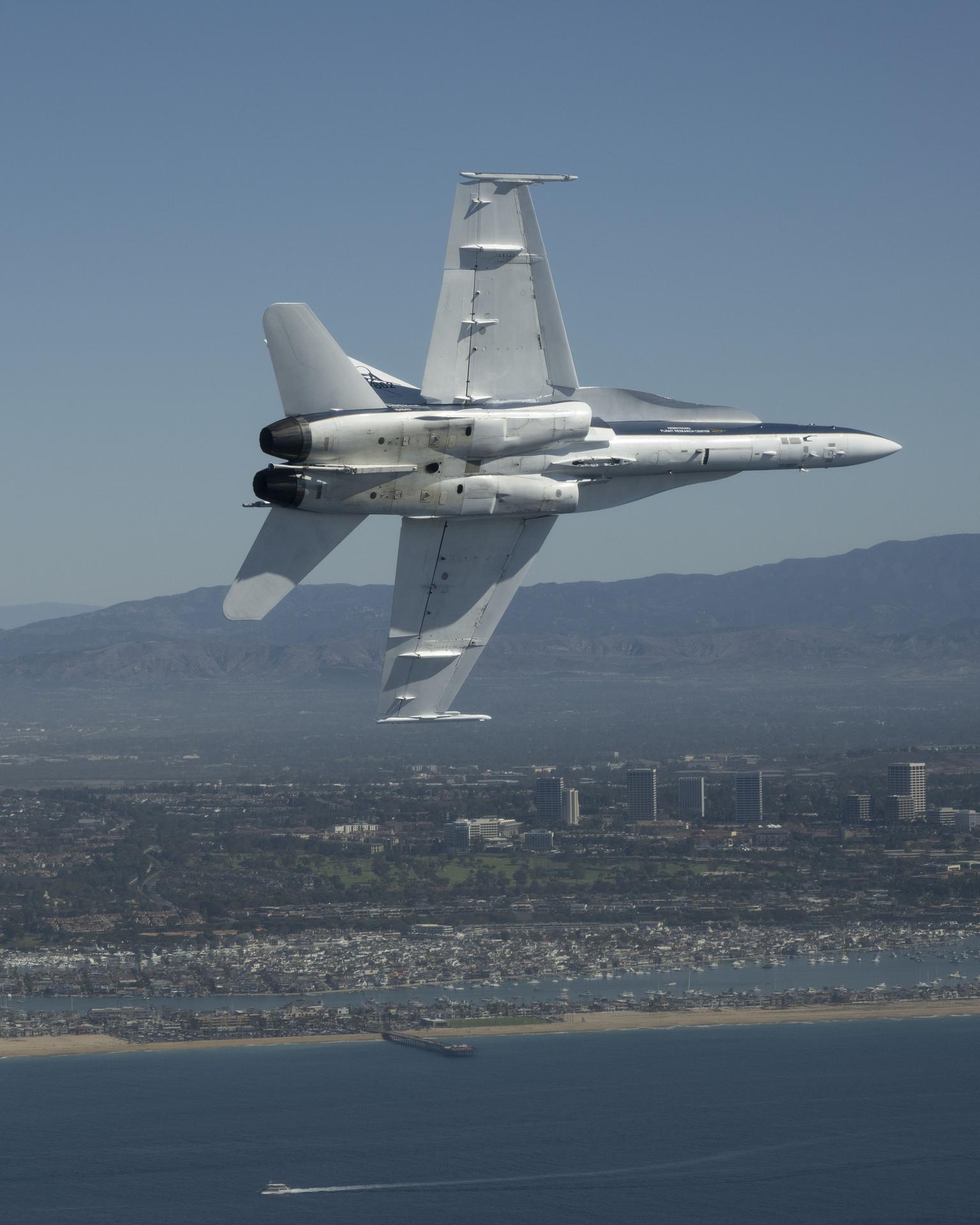
NASA test pilot Mike Lippert flies an F/A‑18 with videographer Lori Losey in the back seat during a Pacific Airshow flyover at Huntington Beach, California, Friday, Oct. 2, 2026. NASA is also hosting an exhibit featuring Artemis, the X‑59, SkyFall, a lunar globe, and an Apollo 15 Moon rock, with pilots and research experts available throughout the weekend.
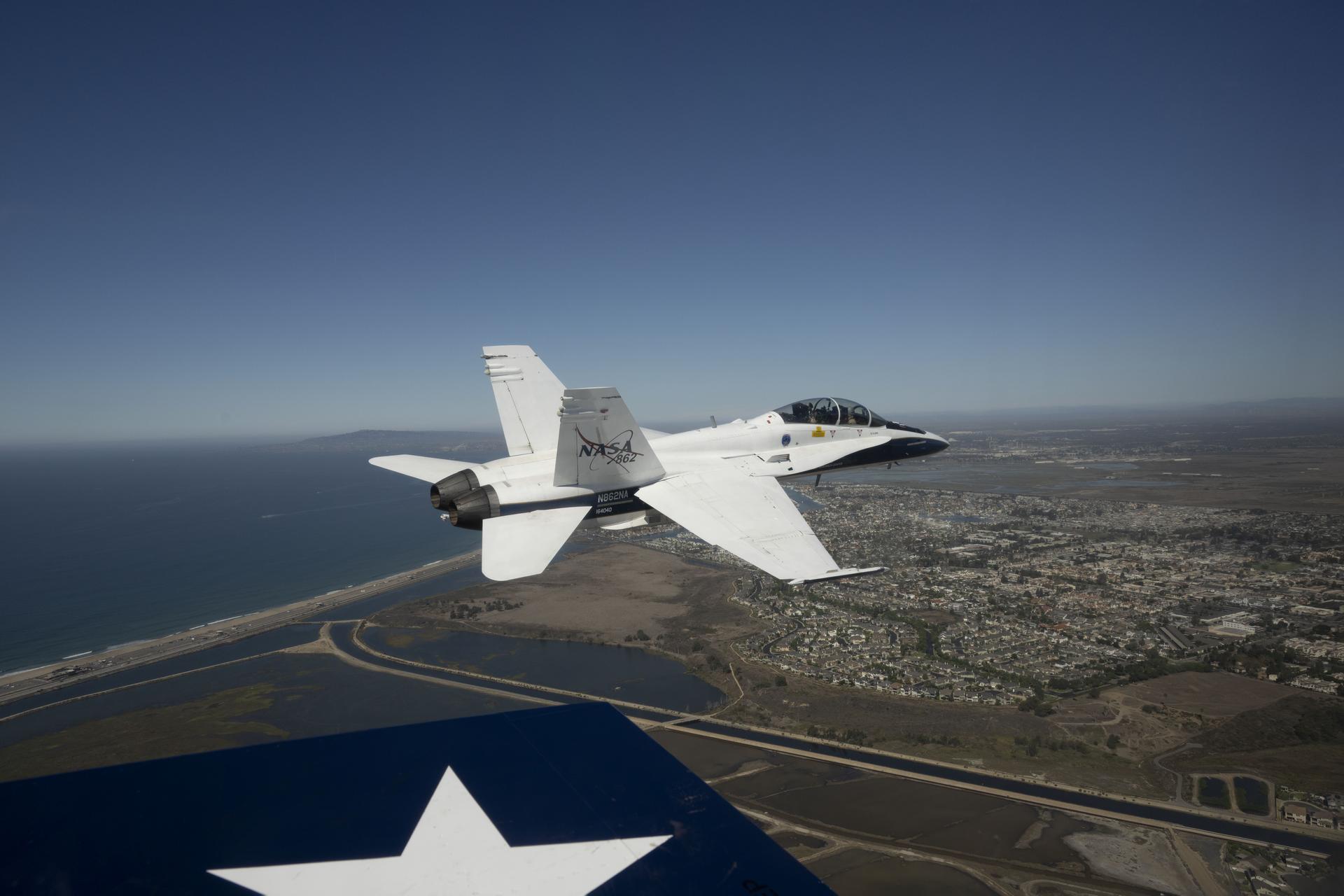
NASA test pilot Mike Lippert flies an F/A‑18 with videographer Lori Losey in the back seat during a Pacific Airshow flyover at Huntington Beach, California, Friday, Oct. 2, 2026. NASA is also hosting an exhibit featuring Artemis, the X‑59, SkyFall, a lunar globe, and an Apollo 15 Moon rock, with pilots and research experts available throughout the weekend.
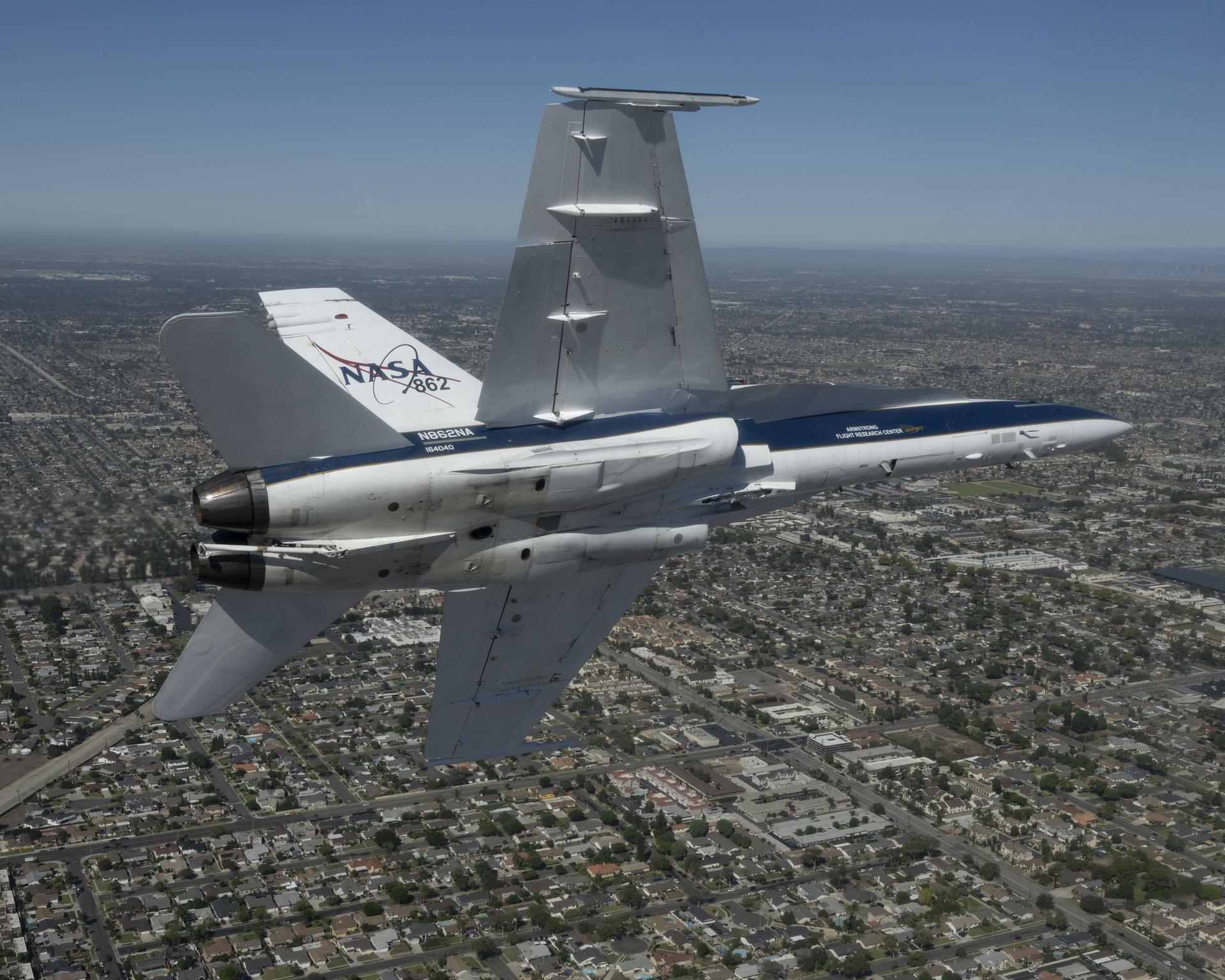
NASA test pilot Mike Lippert flies an F/A‑18 with videographer Lori Losey in the back seat during a Pacific Airshow flyover at Huntington Beach, California, Friday, Oct. 2, 2026. NASA is also hosting an exhibit featuring Artemis, the X‑59, SkyFall, a lunar globe, and an Apollo 15 Moon rock, with pilots and research experts available throughout the weekend.
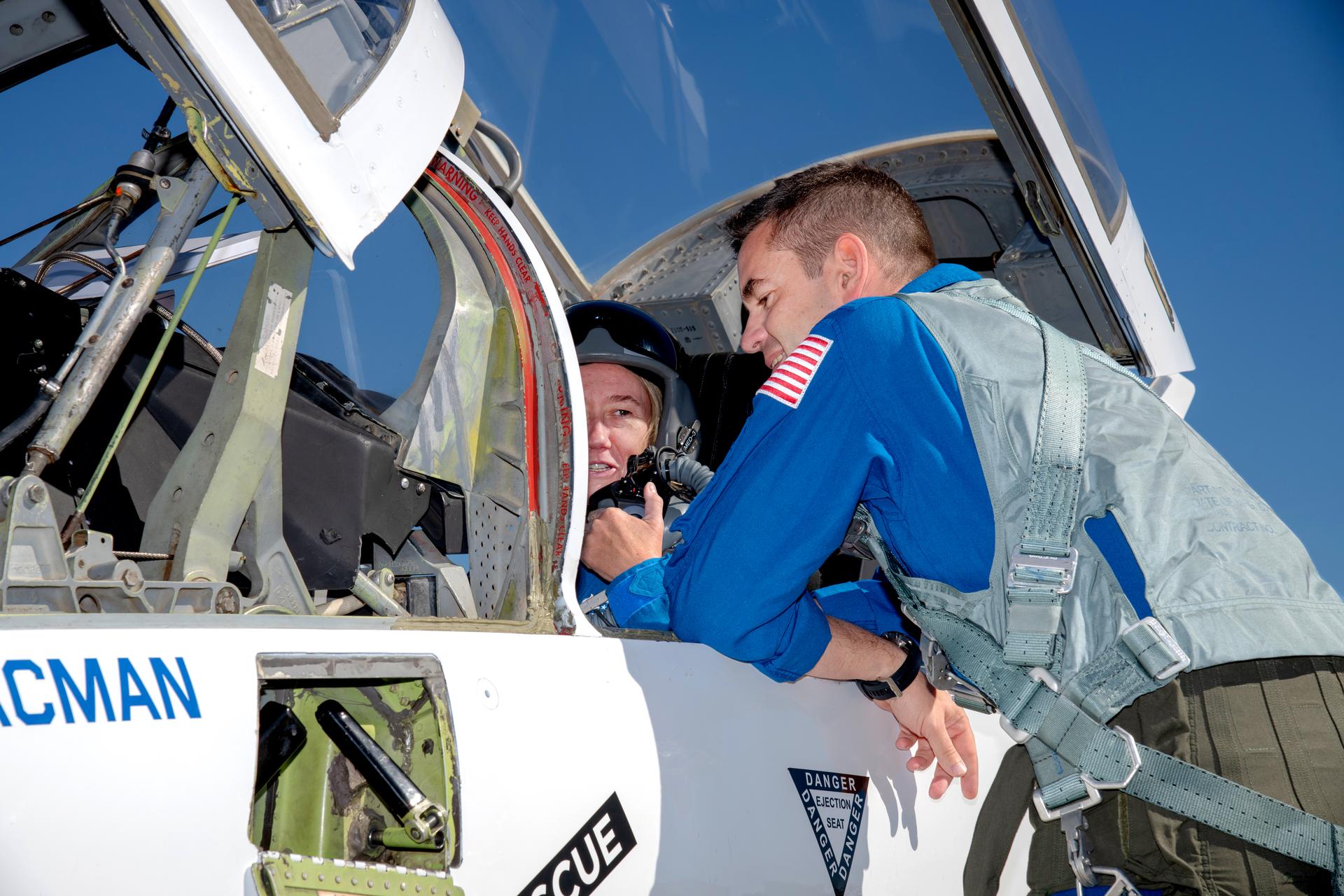
NASA Administrator Jared Isaacman talks with his rider Heather Brown just before their flight in the Freedom 250 flyover an NFL game between the Cleveland Browns and the Carolina Panthers at Huntington Bank Field, Sunday, September 27th, 2026, in Cleveland, Ohio. NASA’s engagement at NFL games is part of the agency’s Inspiration Tour, aimed at strengthening connections between NASA and its partners and showcasing innovation in air and space in the lead up to the MAX POWER aerospace technology expo and airshow at the agency’s Kennedy Space Center in early November.