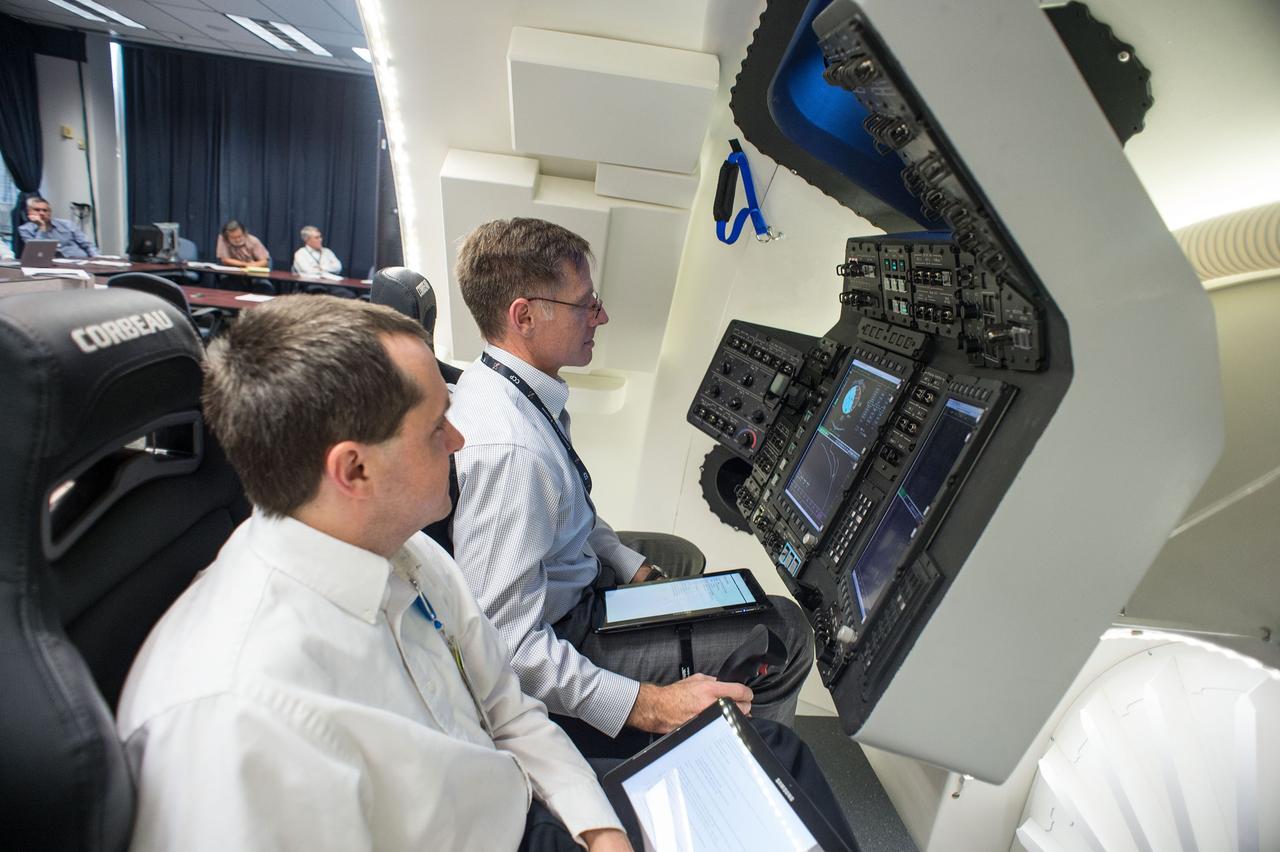
HOUSTON – Chris Ferguson, a former space shuttle commander who is now director of Crew and Mission Operations for Boeing Space Exploration, takes the controls inside the company's CST-100 spacecraft simulator. To Ferguson's right, an engineer observes the exercise. Boeing demonstrated that the CST-100's software allows a human pilot to take over control of the spacecraft from the computer during all phases of a mission following separation from the launch vehicle. The pilot-in-the-loop demonstration at the Houston Product Support Center is a milestone under Boeing's Commercial Crew Integrated Capability agreement with the agency and its Commercial Crew Program. Photo credit: NASA/Bill Stafford

Teams at NASA’s Marshall Space Flight Center help monitor launch conditions for the Crew 1 mission from the Huntsville Operations Support Center in Huntsville, Alabama. SpaceX will launch a Falcon 9 rocket carrying NASA astronauts aboard the company’s Crew Dragon spacecraft to the International Space Station on Nov. 14, 2020. The Marshall team is supporting flight control teams working with NASA’s Johnson Space Center in Houston, Texas, NASA’s Kennedy Space Center in Cape Canaveral, Florida, and SpaceX headquarters in Hawthorne, California, as they monitor the different phases of the upcoming mission. Engineers and technicians at Marshall will use headsets and loops to communicate with the multiple locations on console for the launch. The Crew 1 flight is part of NASA’s Commercial Crew Program. The Crew 1 astronauts will arrive at the space station for docking a short time later at 4:20 a.m. on Sunday, Nov. 15 to join Expedition 64 for a six-month science mission.
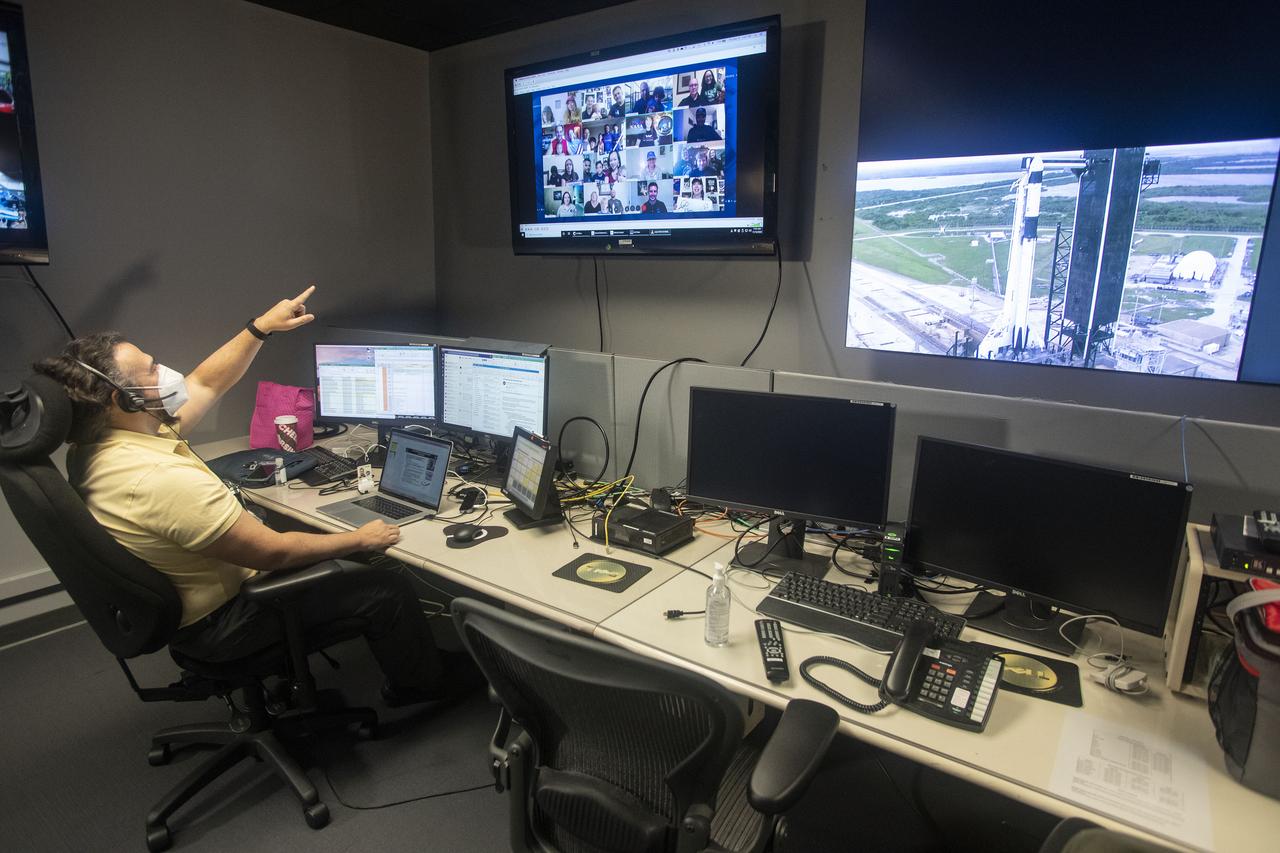
Teams at NASA’s Marshall Space Flight Center help monitor launch conditions for the Crew 1 mission from the Huntsville Operations Support Center in Huntsville, Alabama. SpaceX will launch a Falcon 9 rocket carrying NASA astronauts aboard the company’s Crew Dragon spacecraft to the International Space Station on Nov. 14, 2020. The Marshall team is supporting flight control teams working with NASA’s Johnson Space Center in Houston, Texas, NASA’s Kennedy Space Center in Cape Canaveral, Florida, and SpaceX headquarters in Hawthorne, California, as they monitor the different phases of the upcoming mission. Engineers and technicians at Marshall will use headsets and loops to communicate with the multiple locations on console for the launch. The Crew 1 flight is part of NASA’s Commercial Crew Program. The Crew 1 astronauts will arrive at the space station for docking a short time later at 4:20 a.m. on Sunday, Nov. 15 to join Expedition 64 for a six-month science mission.
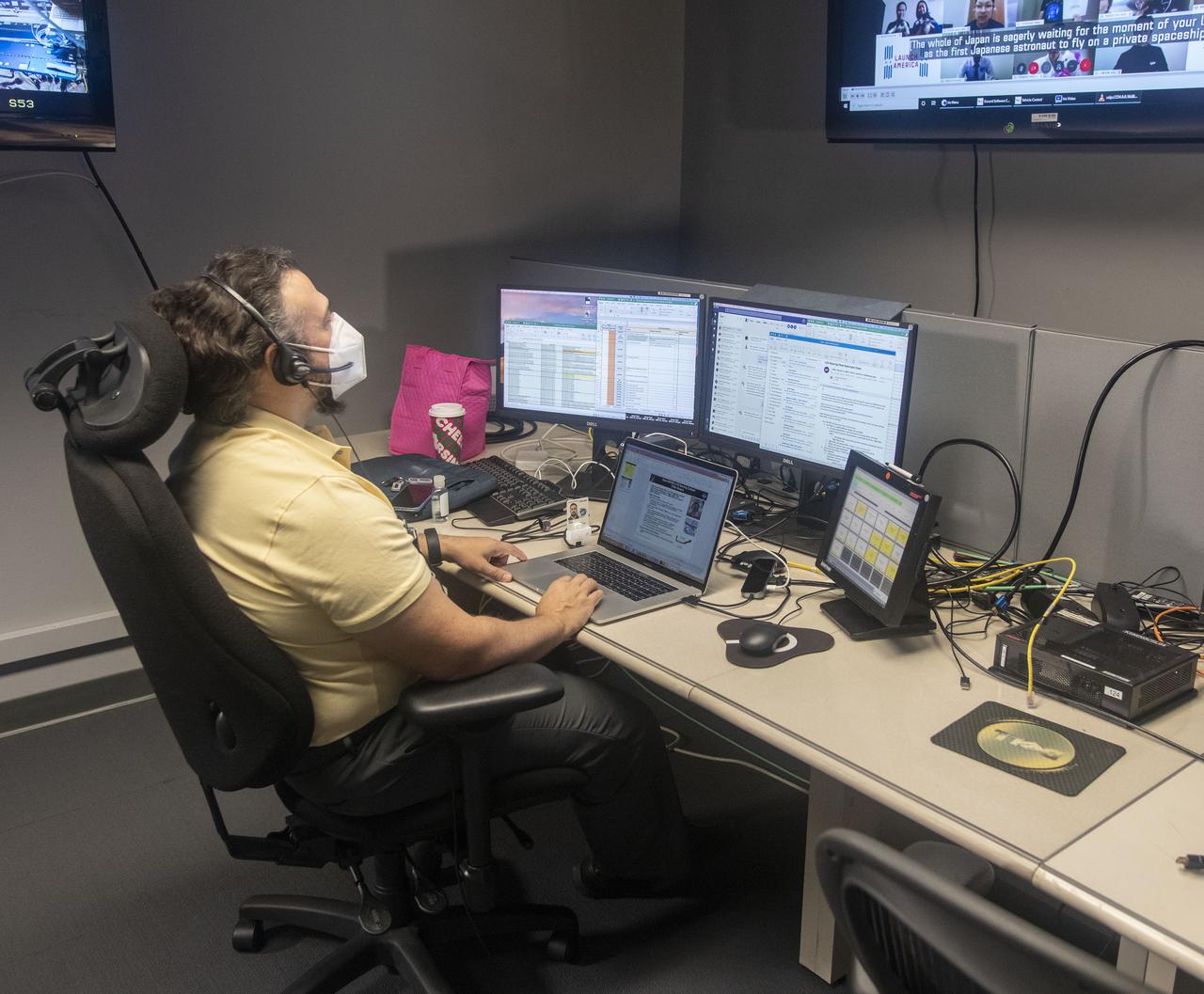
Teams at NASA’s Marshall Space Flight Center help monitor launch conditions for the Crew 1 mission from the Huntsville Operations Support Center in Huntsville, Alabama. SpaceX will launch a Falcon 9 rocket carrying NASA astronauts aboard the company’s Crew Dragon spacecraft to the International Space Station on Nov. 14, 2020. The Marshall team is supporting flight control teams working with NASA’s Johnson Space Center in Houston, Texas, NASA’s Kennedy Space Center in Cape Canaveral, Florida, and SpaceX headquarters in Hawthorne, California, as they monitor the different phases of the upcoming mission. Engineers and technicians at Marshall will use headsets and loops to communicate with the multiple locations on console for the launch. The Crew 1 flight is part of NASA’s Commercial Crew Program. The Crew 1 astronauts will arrive at the space station for docking a short time later at 4:20 a.m. on Sunday, Nov. 15 to join Expedition 64 for a six-month science mission.
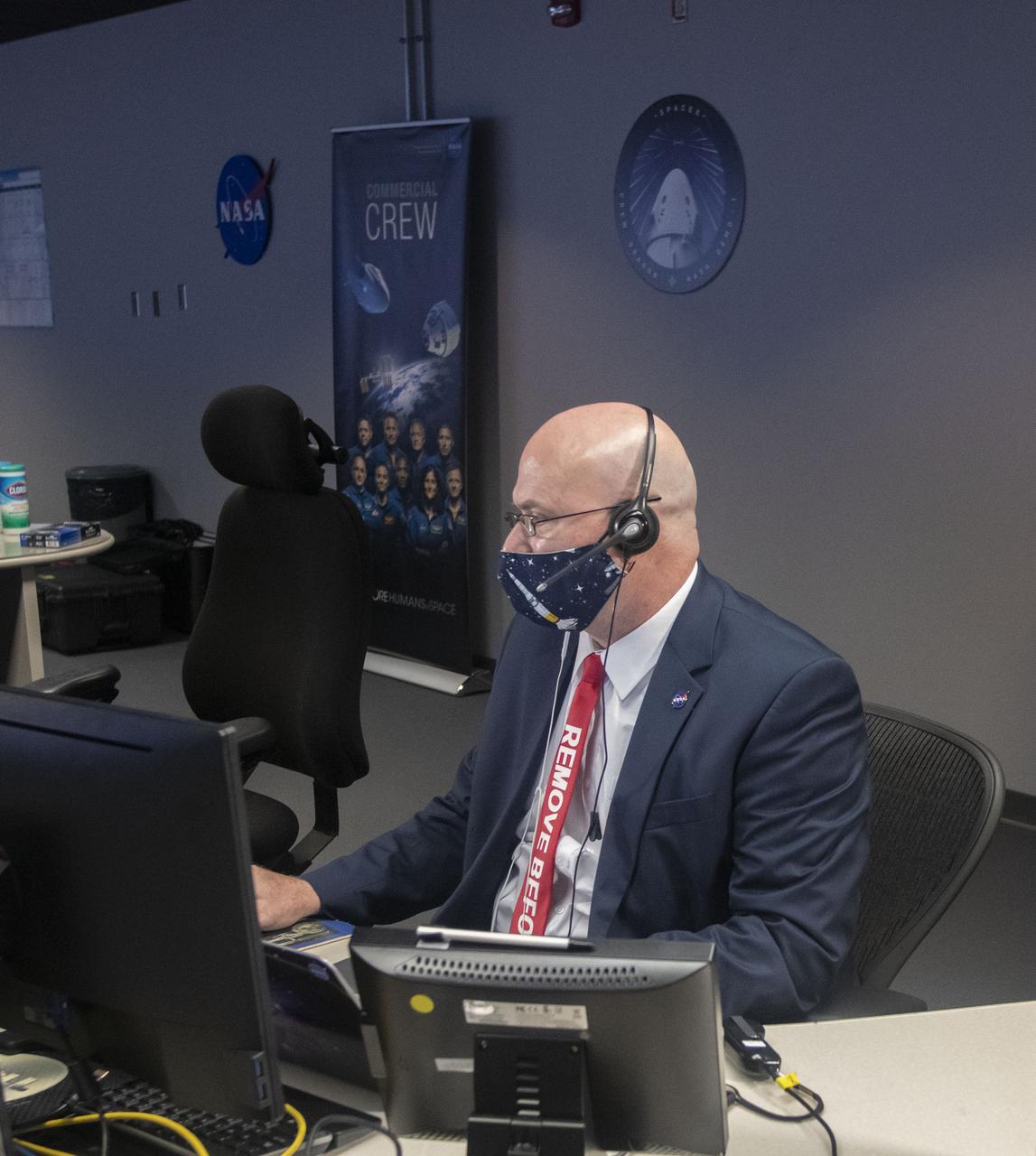
Teams at NASA’s Marshall Space Flight Center help monitor launch conditions for the Crew 1 mission from the Huntsville Operations Support Center in Huntsville, Alabama. SpaceX will launch a Falcon 9 rocket carrying NASA astronauts aboard the company’s Crew Dragon spacecraft to the International Space Station on Nov. 14, 2020. The Marshall team is supporting flight control teams working with NASA’s Johnson Space Center in Houston, Texas, NASA’s Kennedy Space Center in Cape Canaveral, Florida, and SpaceX headquarters in Hawthorne, California, as they monitor the different phases of the upcoming mission. Engineers and technicians at Marshall will use headsets and loops to communicate with the multiple locations on console for the launch. The Crew 1 flight is part of NASA’s Commercial Crew Program. The Crew 1 astronauts will arrive at the space station for docking a short time later at 4:20 a.m. on Sunday, Nov. 15 to join Expedition 64 for a six-month science mission.
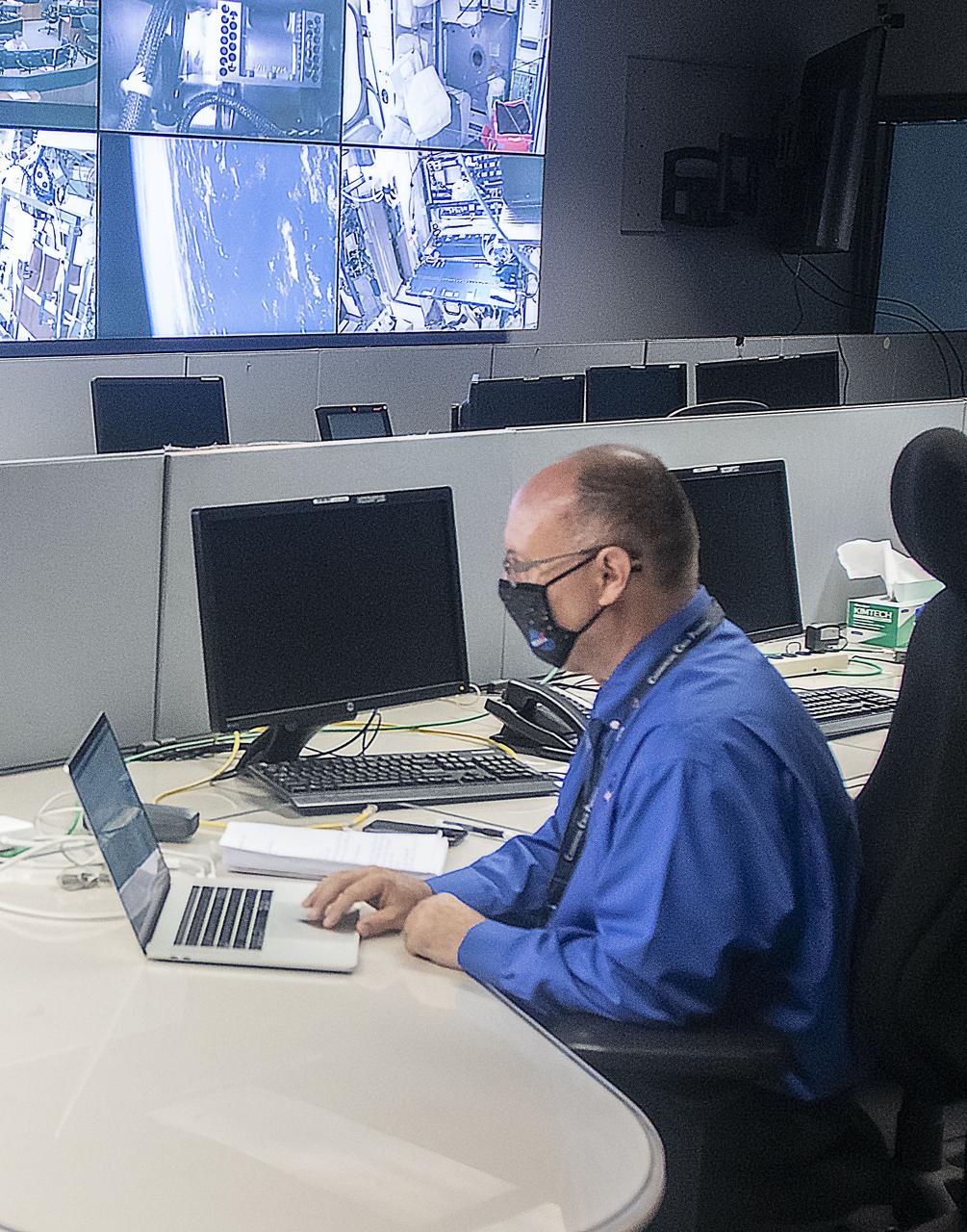
Teams at NASA’s Marshall Space Flight Center help monitor launch conditions for the Crew 1 mission from the Huntsville Operations Support Center in Huntsville, Alabama. SpaceX will launch a Falcon 9 rocket carrying NASA astronauts aboard the company’s Crew Dragon spacecraft to the International Space Station on Nov. 14, 2020. The Marshall team is supporting flight control teams working with NASA’s Johnson Space Center in Houston, Texas, NASA’s Kennedy Space Center in Cape Canaveral, Florida, and SpaceX headquarters in Hawthorne, California, as they monitor the different phases of the upcoming mission. Engineers and technicians at Marshall will use headsets and loops to communicate with the multiple locations on console for the launch. The Crew 1 flight is part of NASA’s Commercial Crew Program. The Crew 1 astronauts will arrive at the space station for docking a short time later at 4:20 a.m. on Sunday, Nov. 15 to join Expedition 64 for a six-month science mission.
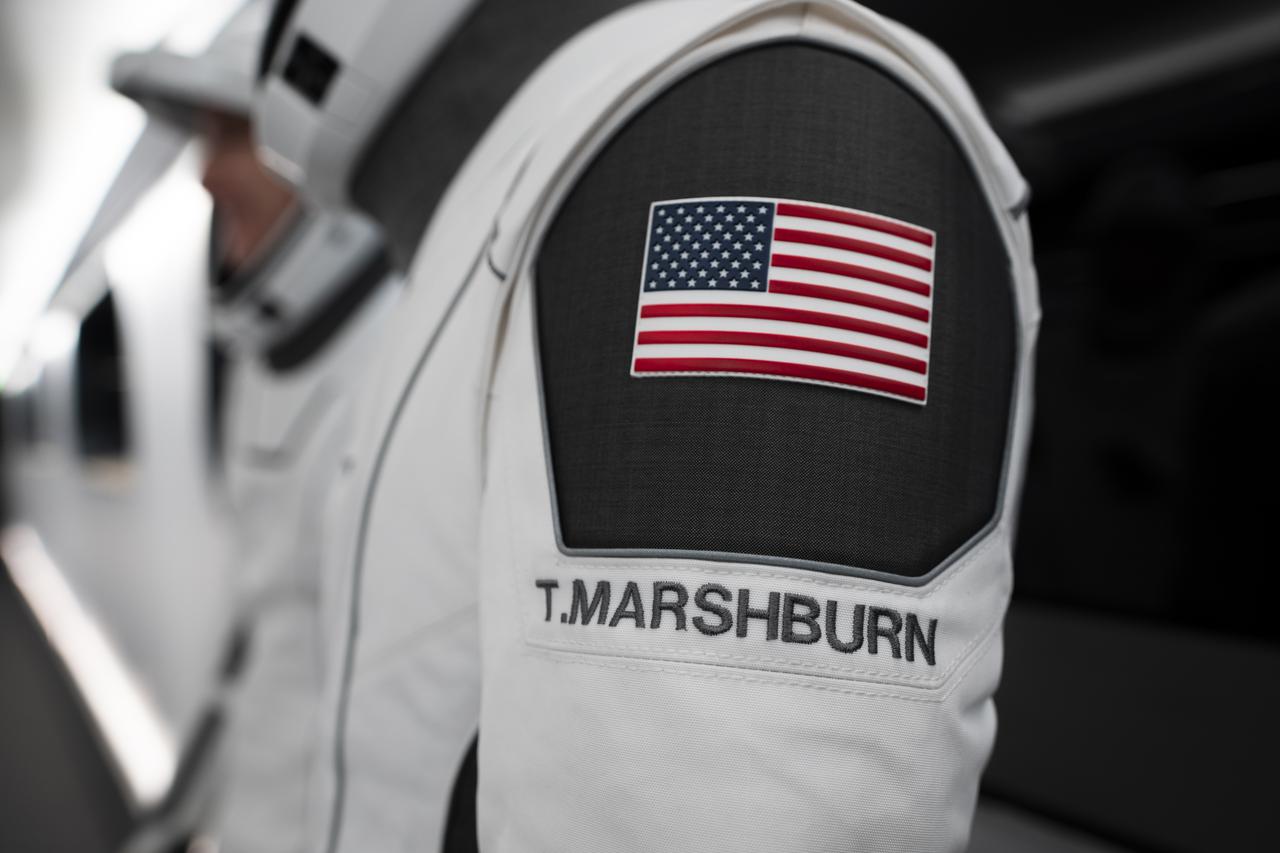
NASA’s SpaceX Crew-3 astronauts participate in a countdown dress rehearsal at the agency’s Kennedy Space Center in Florida on Oct. 28, 2021, to prepare for the upcoming Crew-3 launch. NASA astronaut Tom Marshburn, wearing a SpaceX spacesuit, is inside the crew access arm leading to the company’s Crew Dragon spacecraft during the rehearsal. Marshburn’ s spacesuit is embroidered with his name and the American flag. The four-person crew will launch aboard the Crew Dragon atop the Falcon 9 on Oct. 31 to the International Space Station. Launch is targeted for 2:21 a.m. EDT from Pad 39A. Crew-3 is the third crew rotation flight to the space station for NASA’s Commercial Crew Program, and the first flight of a new Crew Dragon spacecraft.
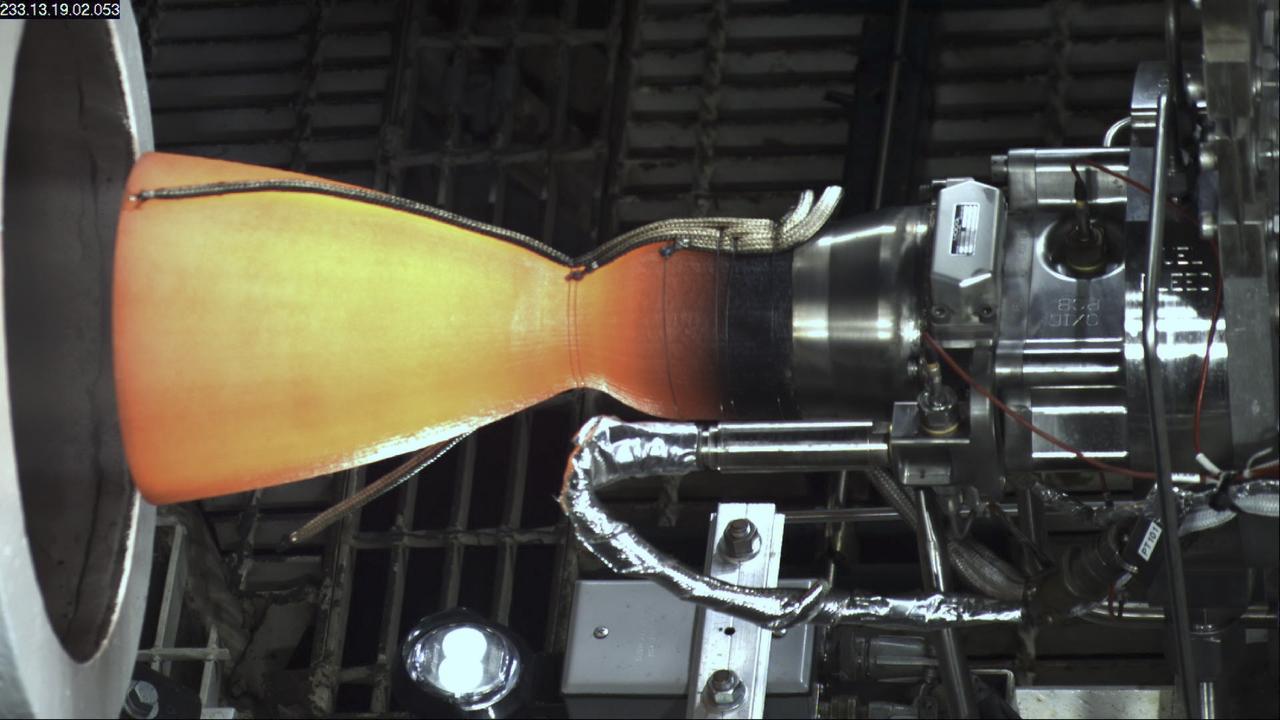
LAS CRUCES, N.M. – A thruster glows red during a hot-fire test for Boeing’s CST-100 spacecraft orbital maneuvering and attitude control OMAC system. During the tests at NASA’s White Sands Test Facility in Las Cruces, N.M., Boeing and partner Aerojet Rocketdyne tested two thrusters to demonstrate stable combustion and performance in a vacuum, simulating a space environment. Two additional thrusters were tested in a vacuum to demonstrate long-duration mission survivability. The 24 thrusters that compose the CST-100’s OMAC system will be jettisoned with the service module after the deorbit burn, prior to re-entry. The tests completed Milestone 9 of the company's funded Space Act Agreement with NASA’s Commercial Crew Program, or CCP, during the Commercial Crew Integrated Capability, or CCiCap, initiative. CCP is intended to lead to the availability of commercial human spaceflight services for government and commercial customers to low-Earth orbit. Future development and certification initiatives eventually will lead to the availability of human spaceflight services for NASA to send its astronauts to the International Space Station, where critical research is taking place daily. For more information about CCP, go to http://www.nasa.gov/commercialcrew. Photo credit: Boeing
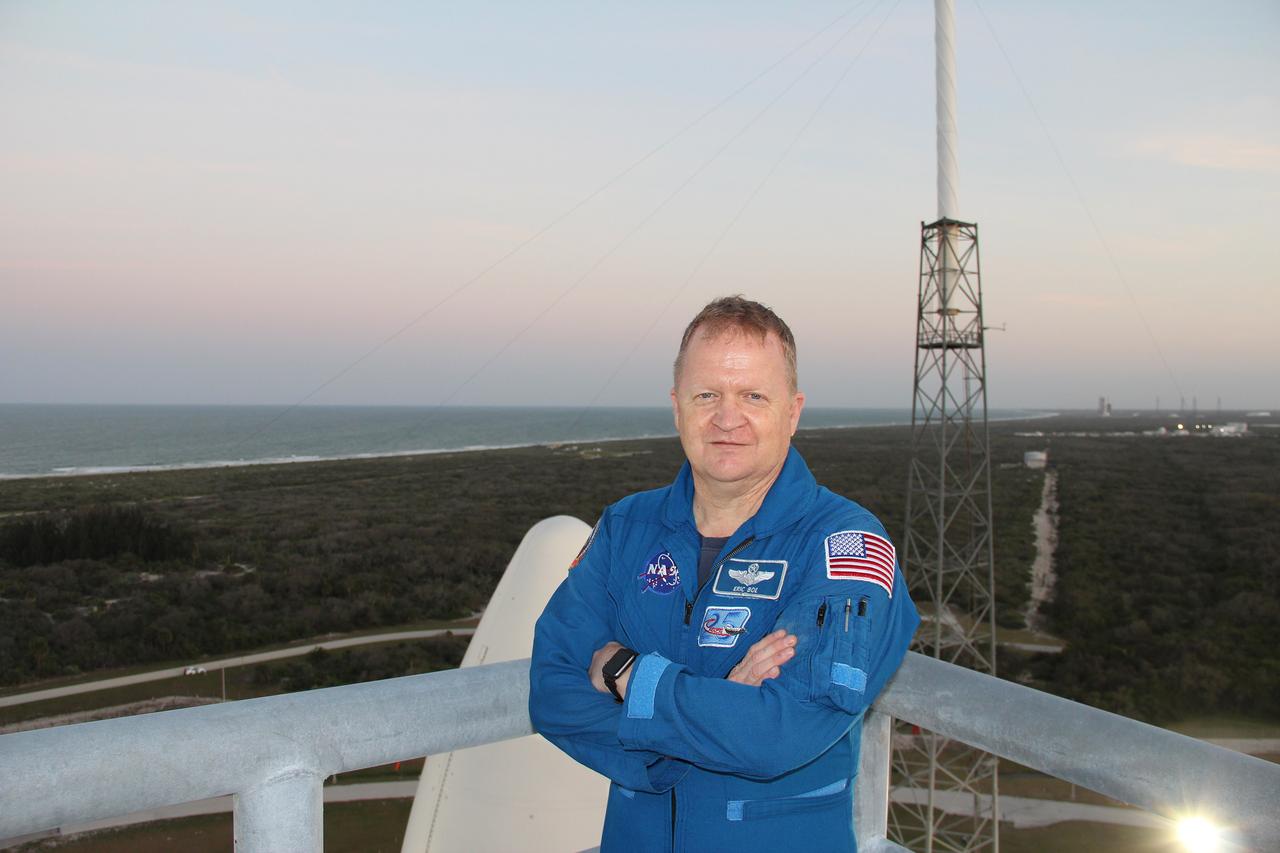
NASA astronaut Eric Boe, one of four astronauts working with the agency’s Commercial Crew Program, checked out the Crew Access Tower at Space Launch Complex 41. Boe is standing on the tower's uppermost level. Visible behind his right arm is the aerodynamic enclosure designed to protect NOAA's Geostationary Operational Environmental Satellite-S during launch – which successfully occurred March 1. To Boe’s left, one of four protective lightning masts is in view. Accompanied by NASA, Boeing and United Launch Alliance engineers, Boe inspected the launch tower to establish whether spotlight and lighting conditions will be acceptable after dark. The survey was required to ensure crew members will have suitable visibility as they prepare to board Boeing’s Starliner spacecraft and launch on missions such as the Crew Flight Test to the International Space Station, targeted for later this year.
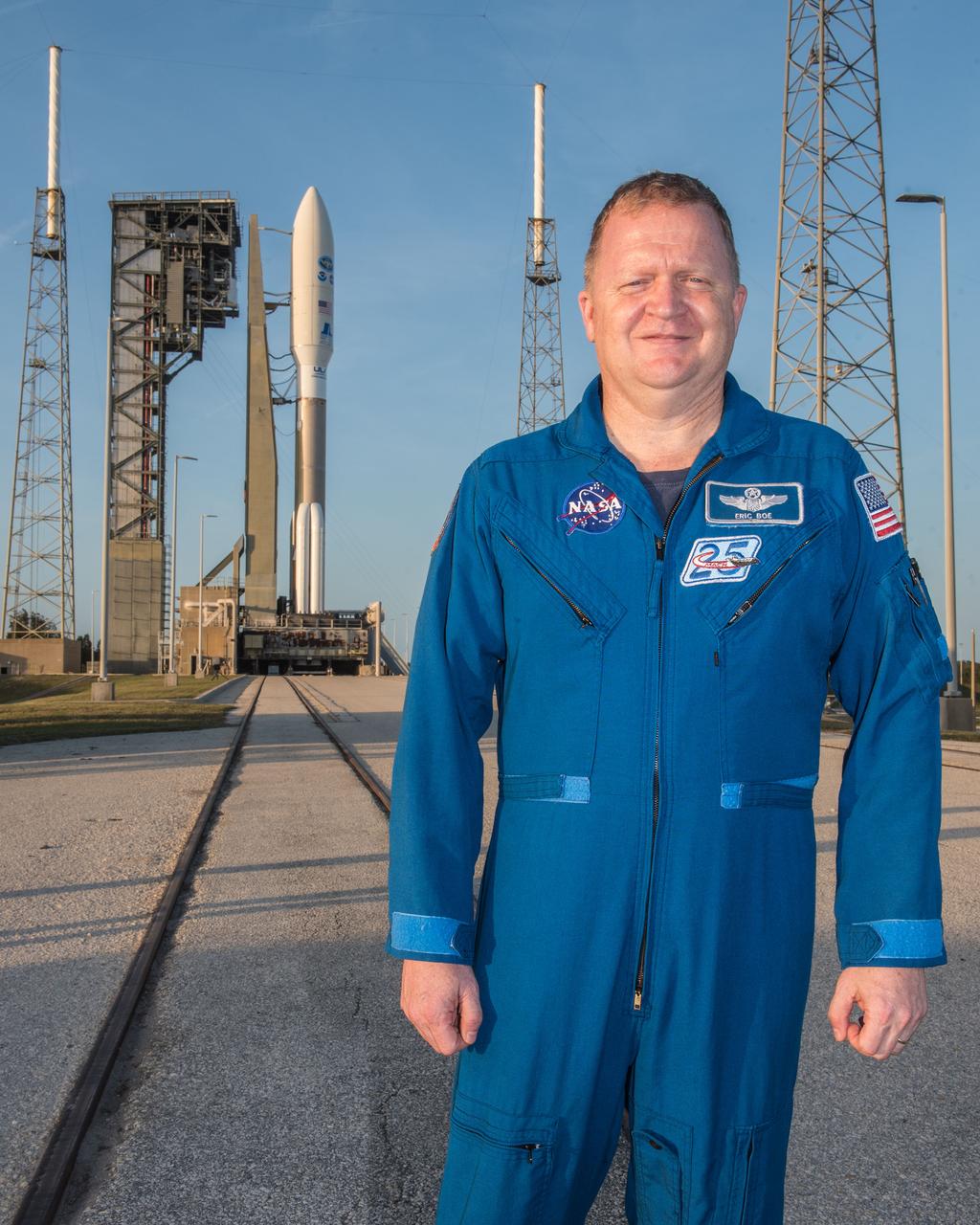
NASA astronaut Eric Boe, one of four astronauts working with the agency’s Commercial Crew Program, checked out the Crew Access Tower at Space Launch Complex 41. The United Launch Alliance (ULA) Atlas V in the background carried NOAA’s Geostationary Operational Environmental Satellite-S into orbit March 1. Later this year, the Atlas V also will carry astronauts to the International Space Station. Along with NASA, Boeing and ULA engineers, Boe inspected the launch pad and tower to establish whether spotlight and lighting conditions will be acceptable after dark. The survey helped to ensure crew members will have suitable visibility as they prepare to board Boeing’s Starliner spacecraft and launch on missions such as the Crew Flight Test to the International Space Station, targeted for later this year.
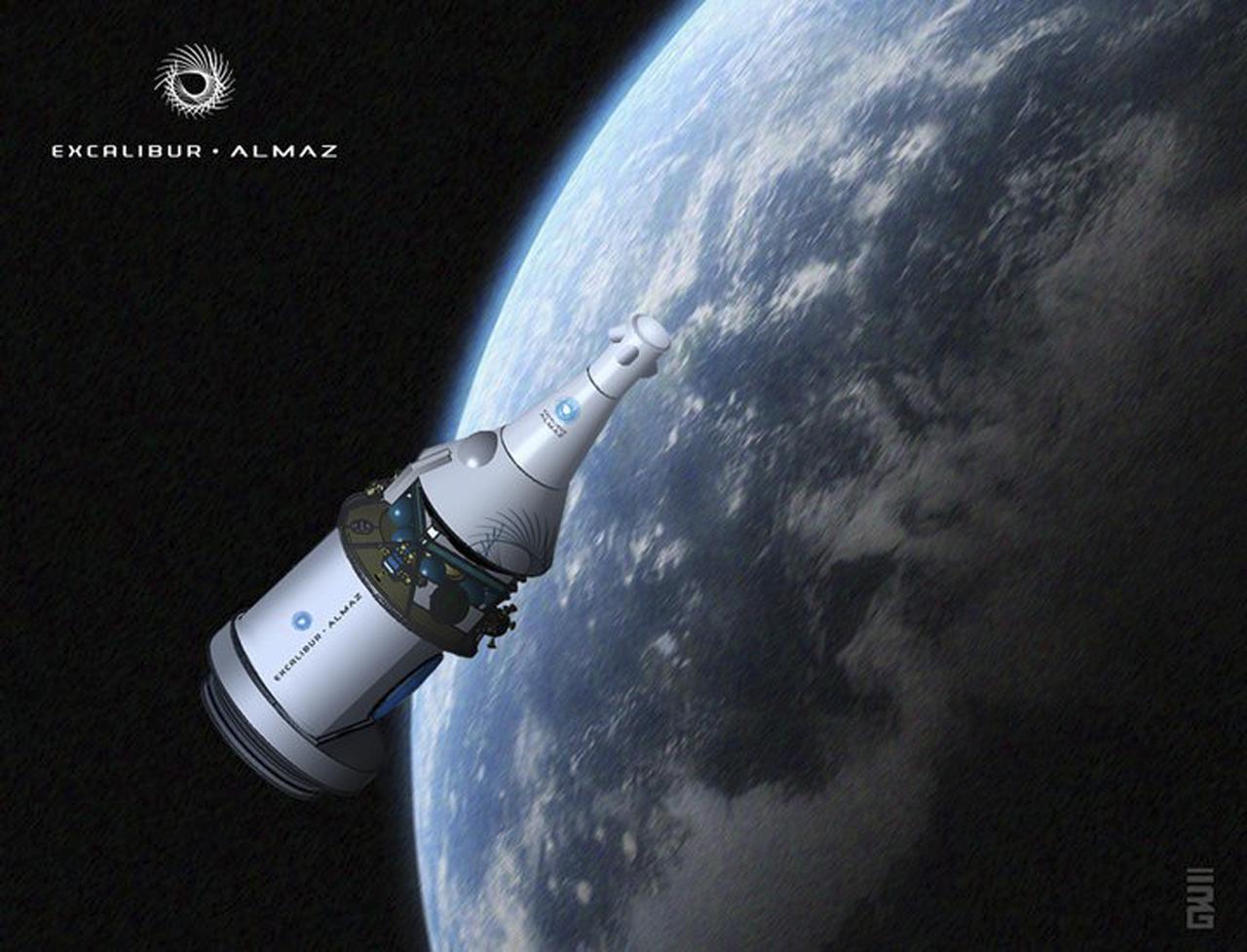
CAPE CANAVERAL, Fla. -- This is an artist's conception of an Almaz capsule, the basis of Excalibur Almaz Inc.'s Human Spacecraft design. In 2011, NASA's Commercial Crew Program CCP and the Houston-based company entered into an unfunded Space Act Agreement during Commercial Crew Development Round 2 CCDev2) activities to mature the design and development of a crew transportation system with the overall goal of accelerating a United States-led capability to the International Space Station. The goal of CCP is to drive down the cost of space travel as well as open up space to more people than ever before by balancing industry’s own innovative capabilities with NASA's 50 years of human spaceflight experience. Six other aerospace companies also are maturing launch vehicle and spacecraft designs under CCDev2, including Alliant Techsystems ATK, Blue Origin, The Boeing Co., Sierra Nevada Corp., Space Exploration Technologies SpaceX, and United Launch Alliance ULA. For more information, visit www.nasa.gov/commercialcrew. Image credit: Excalibur Almaz Limited
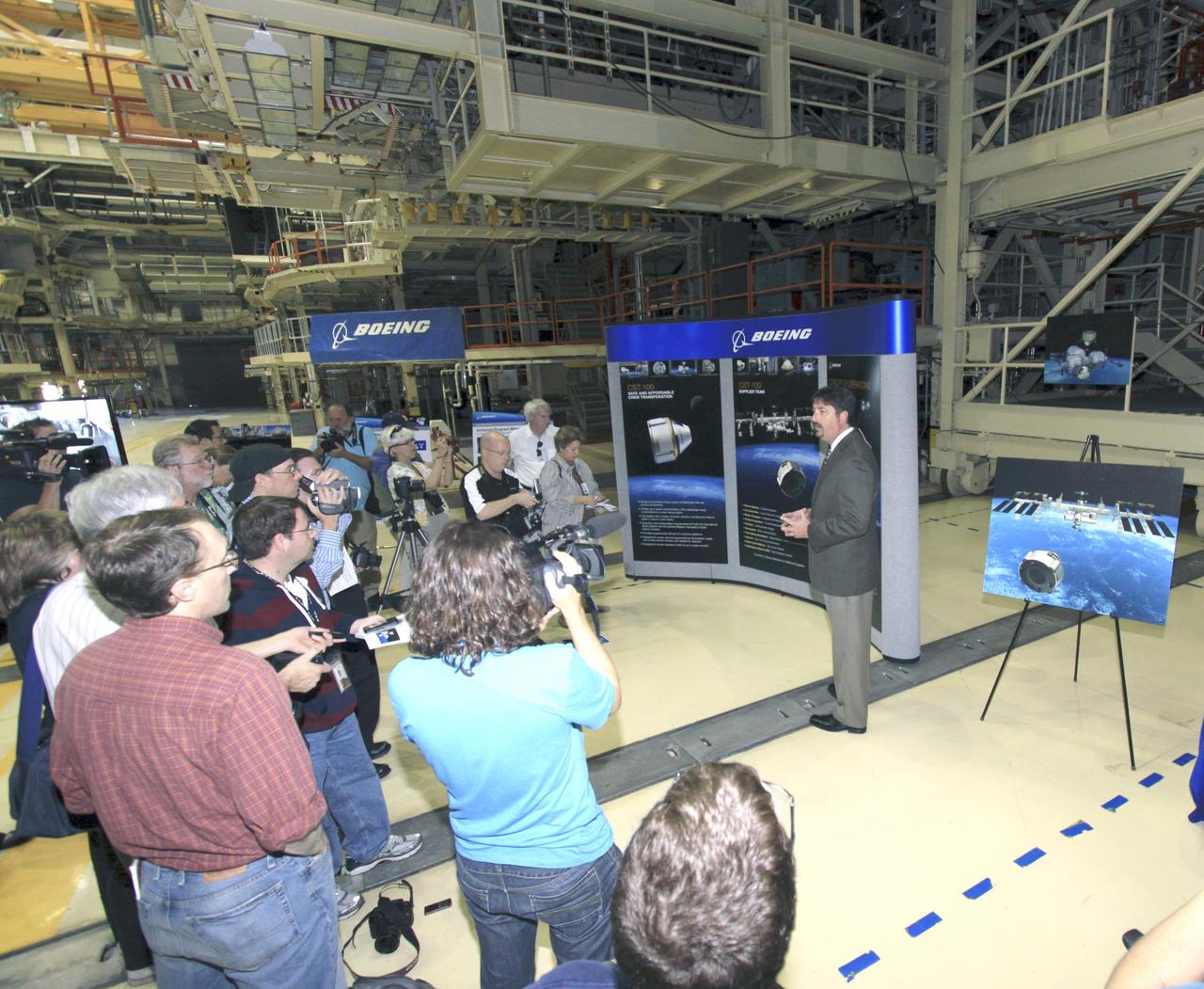
CAPE CANAVERAL, Fla. -- Chuck Hardison, the production and ground operations manager of The Boeing Co.'s Commercial Crew Transportation System, talks to media about plans to take NASA astronauts to the International Space Station in Orbiter Processing Facility-3 (OPF-3) at NASA's Kennedy Space Center in Florida. Boeing is maturing its CST-100 spacecraft design for NASA's Commercial Crew Program (CCP) under the Commercial Crew Development Round 2 (CCDev2) activities. Boeing's current design shows the CST-100 taking up to seven astronauts and cargo to the space station or other low Earth orbit destinations by the middle of the decade. Through an agreement with NASA and Space Florida, Boeing is leasing OPF-3, the Processing Control Facility (PCC) and Space Shuttle Main Engine Shop at Kennedy to design, manufacture, process and integrate the CST-100. This work is expected to generate up to 550 engineering and technical jobs for Florida's Space Coast. Hardison explained that the CST-100 will be manufactured using a spin-form technology, which is expected to bring down the cost and safety concerns of a traditional welded spacecraft. It's innovations such as this that CCP hopes will drive down the cost of space travel as well as open up space to more people than ever before. Seven aerospace companies are maturing launch vehicle and spacecraft designs under CCDev2, including Alliant Techsystems Inc. (ATK) of Promontory, Utah, Blue Origin of Kent, Wash., The Boeing Co., of Houston, Excalibur Almaz Inc. of Houston, Sierra Nevada Corp. of Louisville, Colo., Space Exploration Technologies (SpaceX) of Hawthorne, Calif., and United Launch Alliance (ULA) of Centennial, Colo. For more information, visit www.nasa.gov/exploration/commercial Photo credit: Jim Grossmann