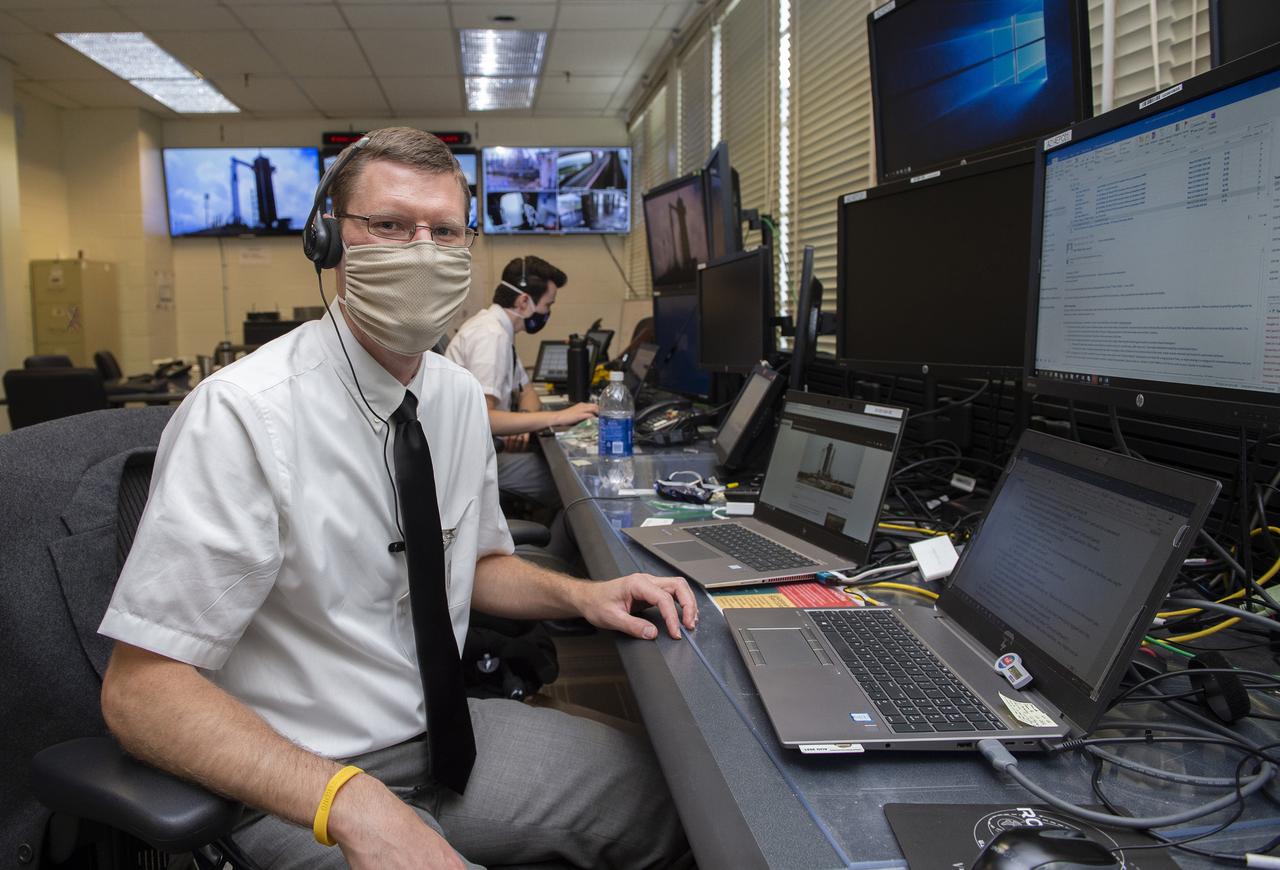
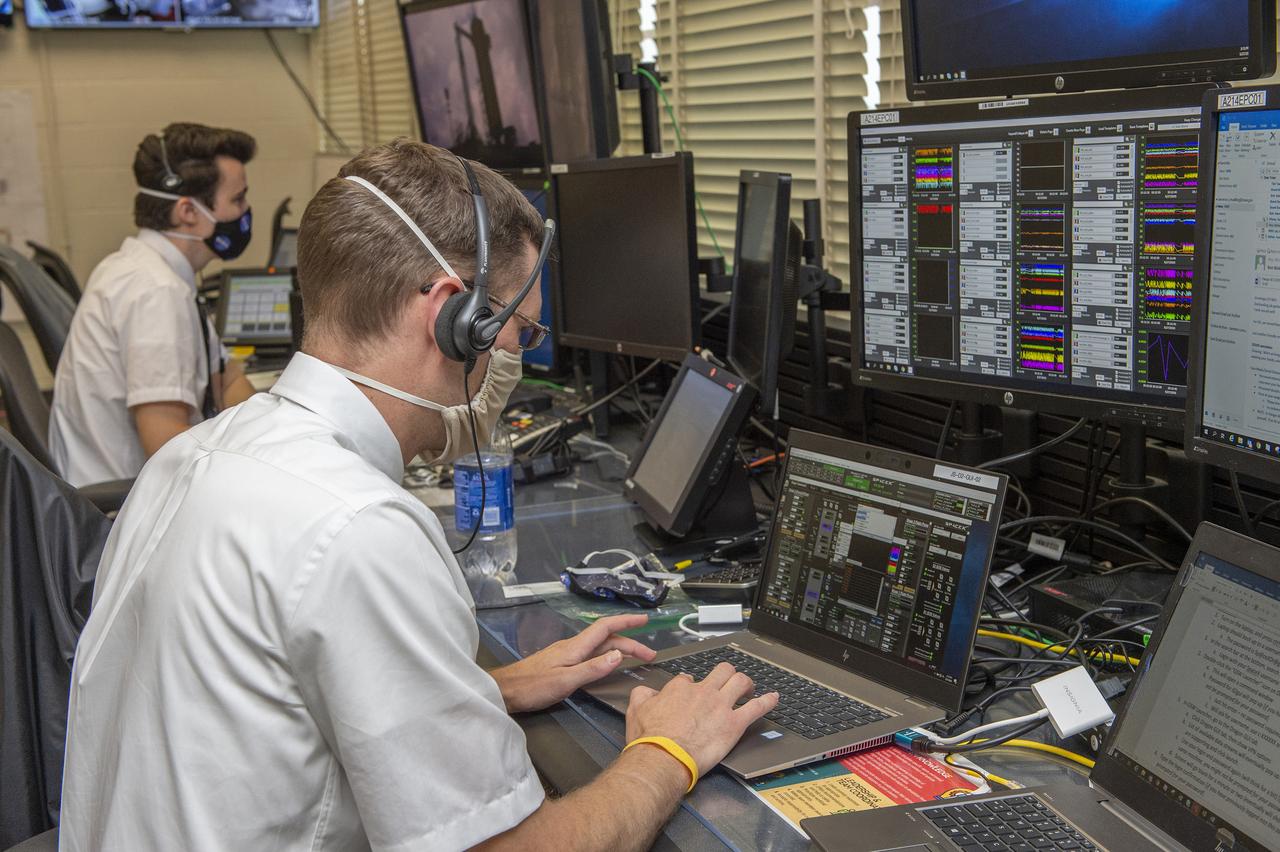
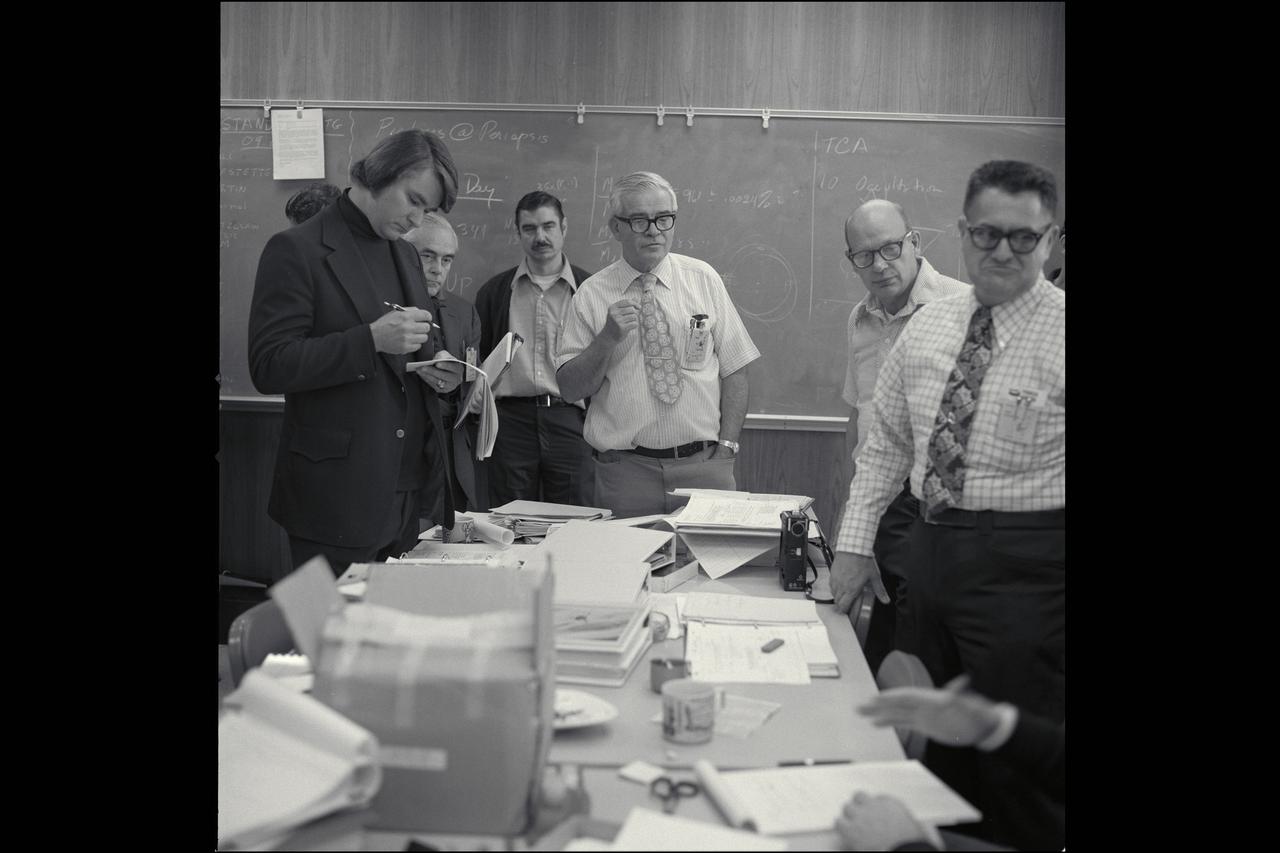
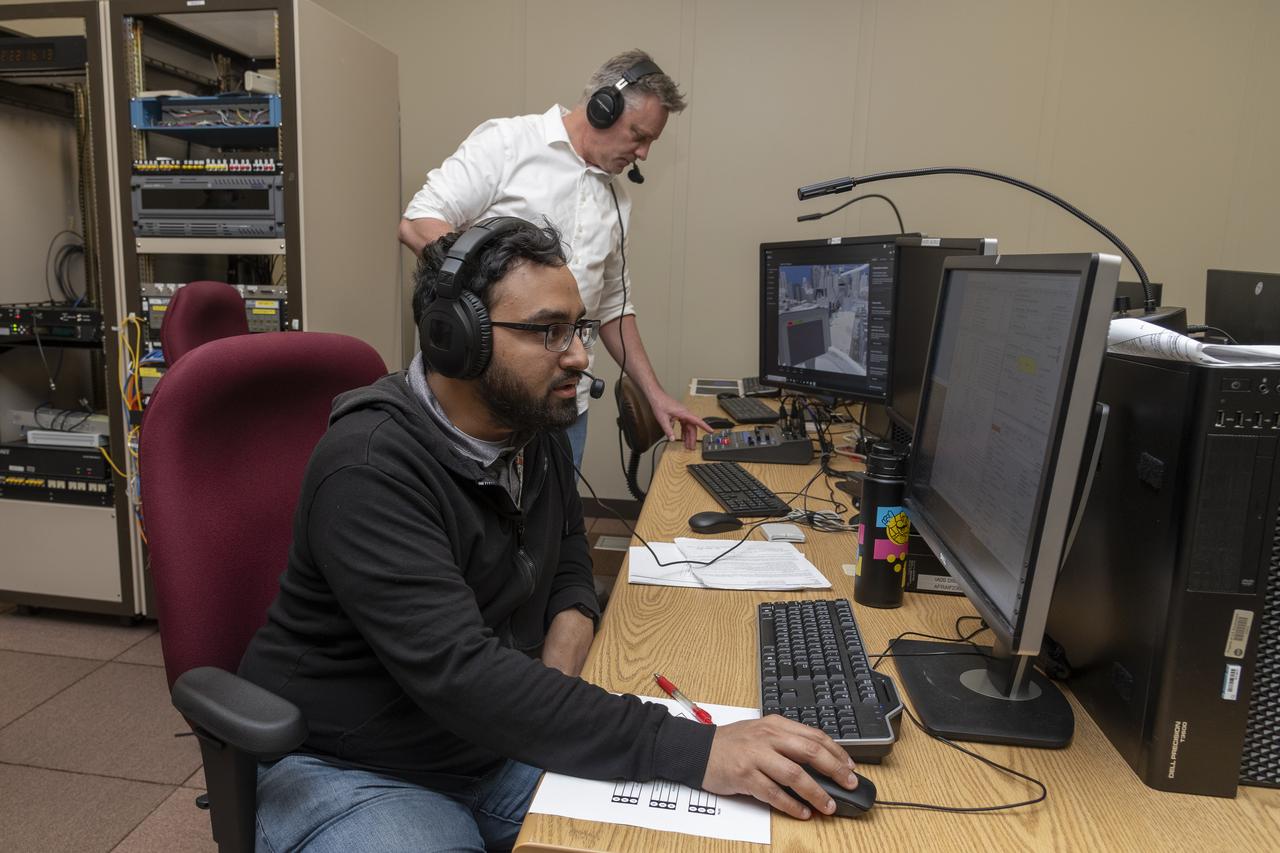
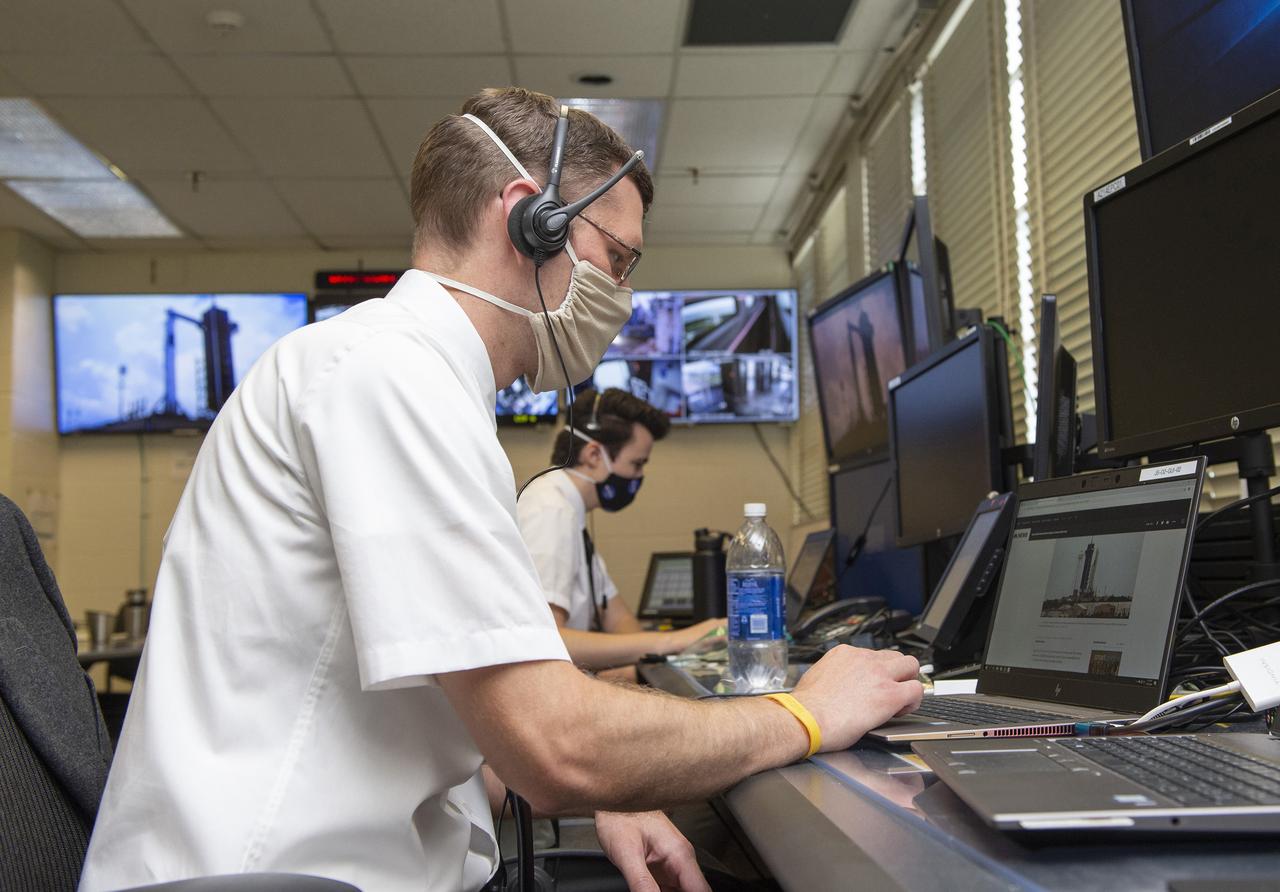
Stewart Whaley, Cameron Muelling, foreground, and teams  at NASA’s Marshall Space Flight Center help monitor launch conditions for the Demo-2 mission from the Huntsville Operations Support Center, HOSC.
Stewart Whaley, Cameron Muelling, foreground, and teams at NASA’s Marshall Space Flight Center help monitor launch conditions for the Demo-2 mission from the Huntsville Operations Support Center, HOSC.
 Stewart Whaley, Cameron Muelling, foreground, and teamsat NASA’s Marshall Space Flight Center help monitor launch conditions for the Demo-2 mission from the Huntsville Operations Support Center, HOSC.
Stewart Whaley, Cameron Muelling, foreground, and teams at NASA’s Marshall Space Flight Center help monitor launch conditions for the Demo-2 mission from the Huntsville Operations Support Center, HOSC.
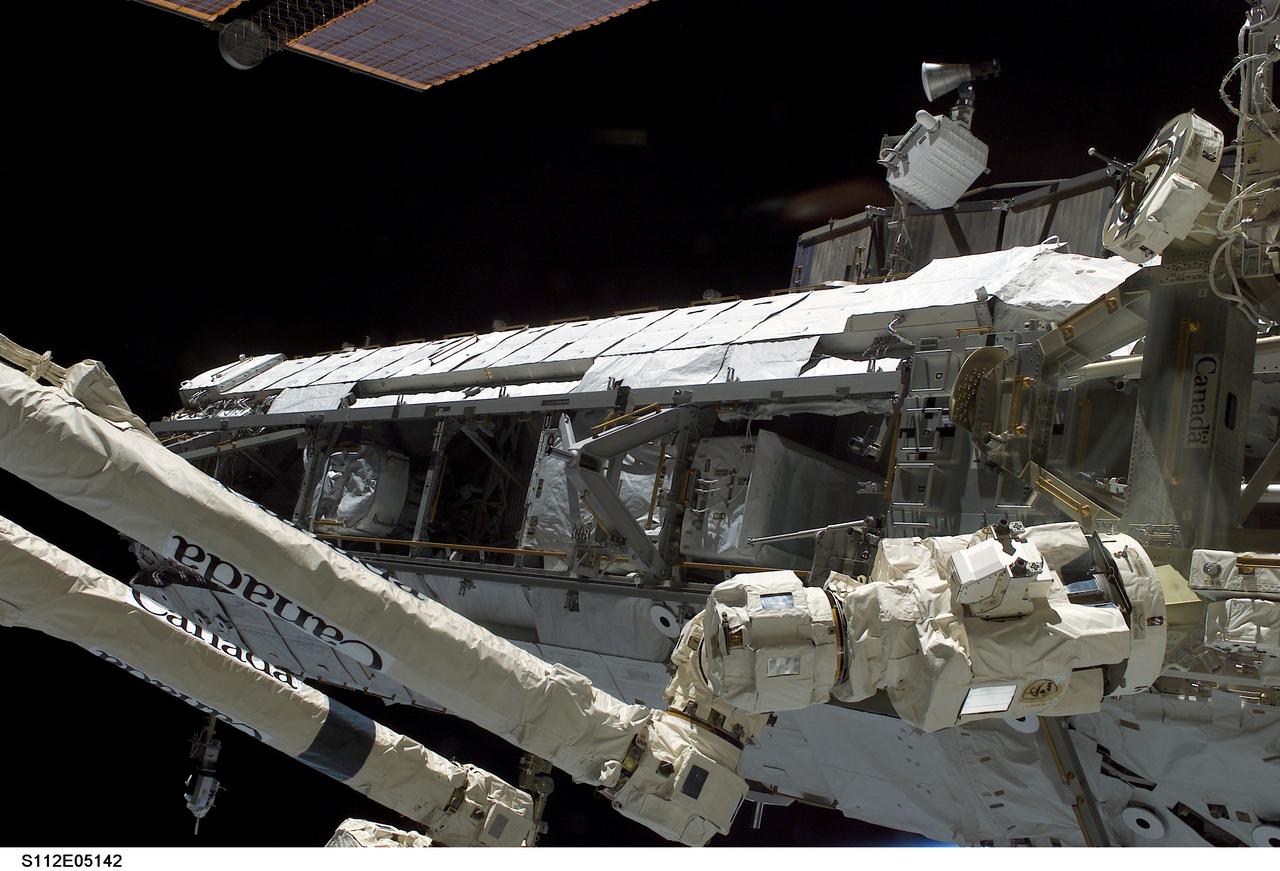
STS112-E-05142 (11 October 2002) --- A view of the Starboard One (S1) Truss, newly installed on the International Space Station (ISS). The station’s Canadarm2 is in the foreground.
S1 truss on ISS with Canadarm2 in foreground
Commercial Crew Program (CCP) SpaceX Merlin Engine Gas Generator (GG) Baffle Assessment, Mr. Brian Richardson (background), and Mr. Chad Eberhart (foreground)
Commercial Crew Program (CCP) SpaceX Merlin Engine Gas Generator
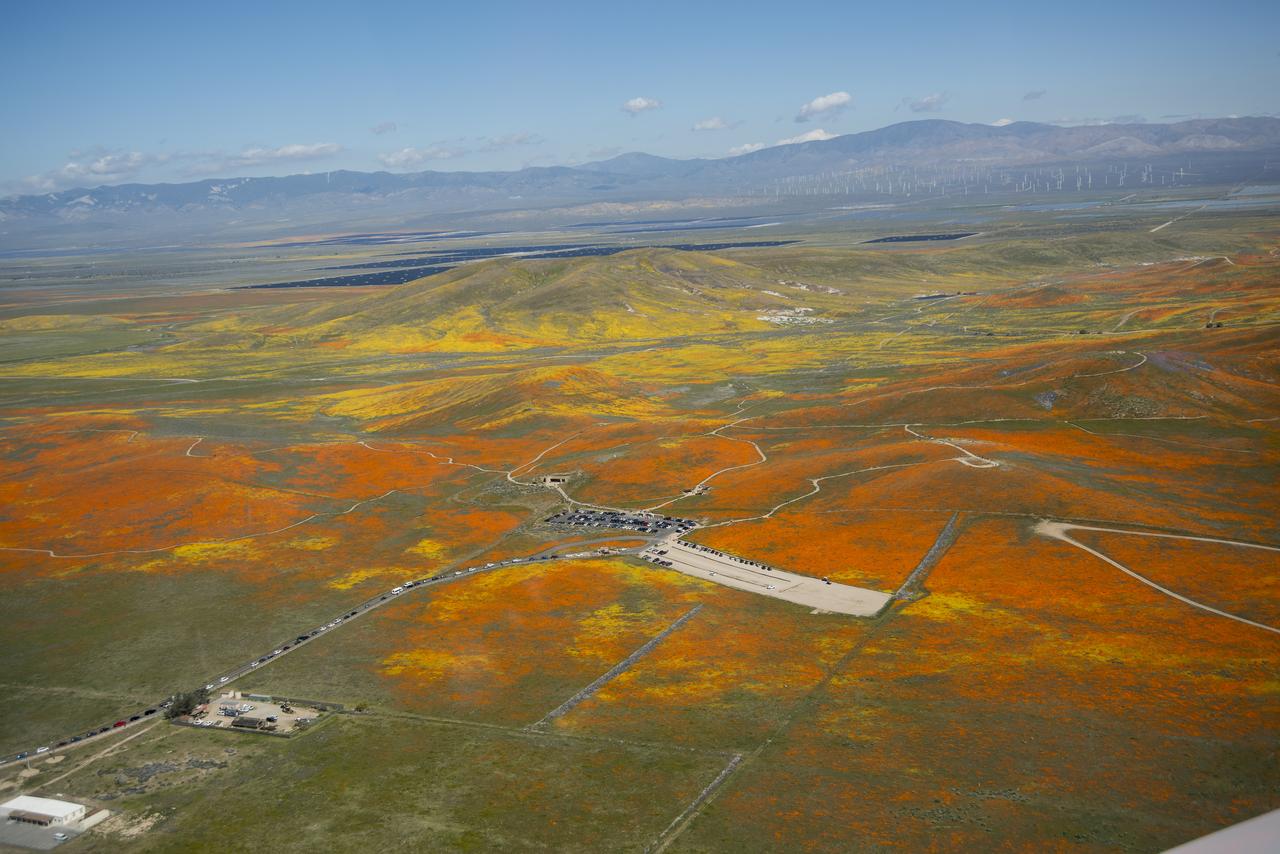
View from a NASA aircraft, TG-14, over the Superbloom of wildflowers and poppies from the Antelope Valley in Southern California. The Poppy Reserve is in the foreground and solar panels are in the background.
Rainy Winter Season Brings Abundance of Wildflowers and Poppies in Southern California’s Antelope Valley showing Poppy Reserve and solar panels are in the background.
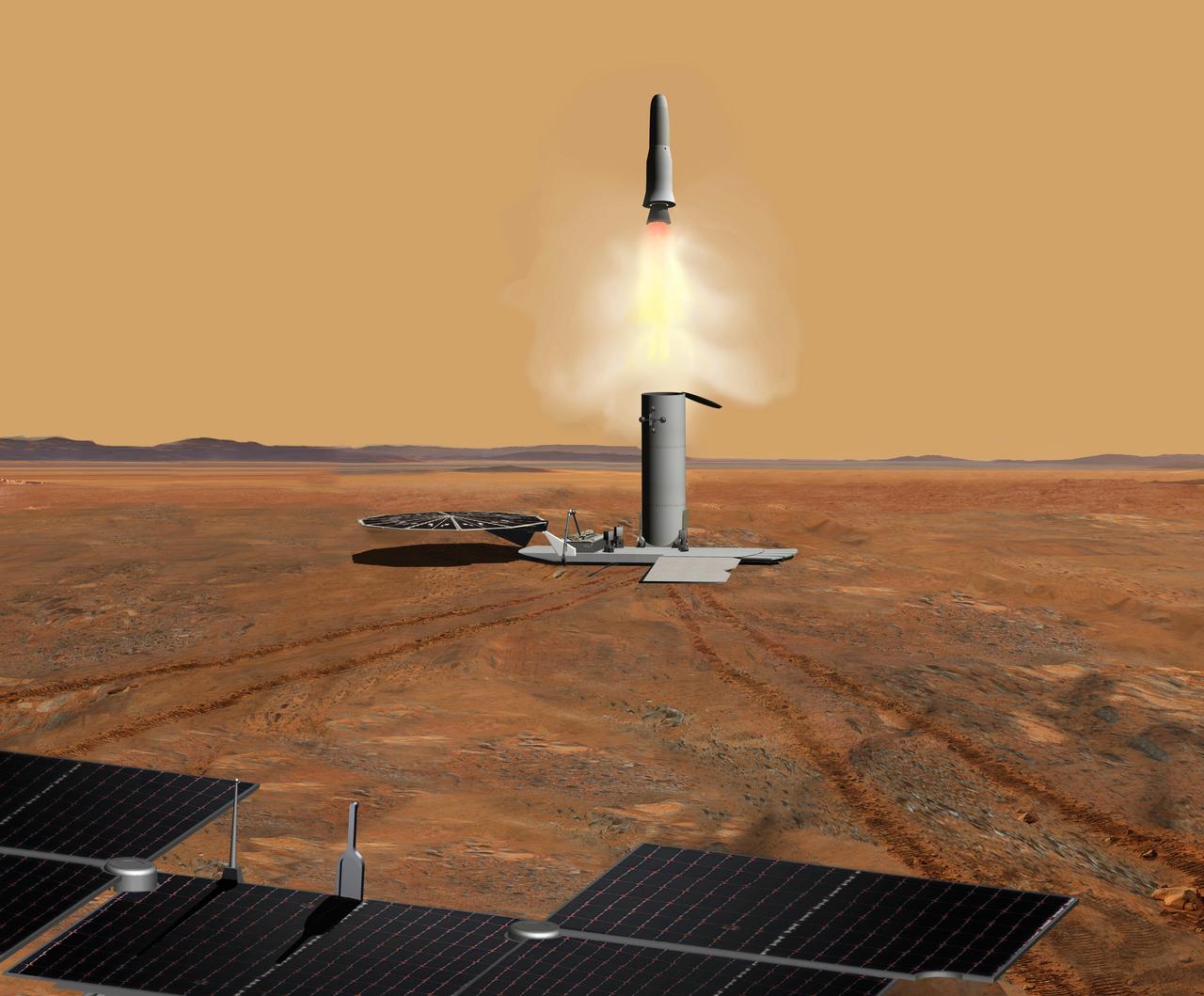
This artist concept of a proposed Mars sample return mission portrays the launch of an ascent vehicle. The solar panels in the foreground are part of a rover.
Martian Samples Leaving Mars Artist Concept
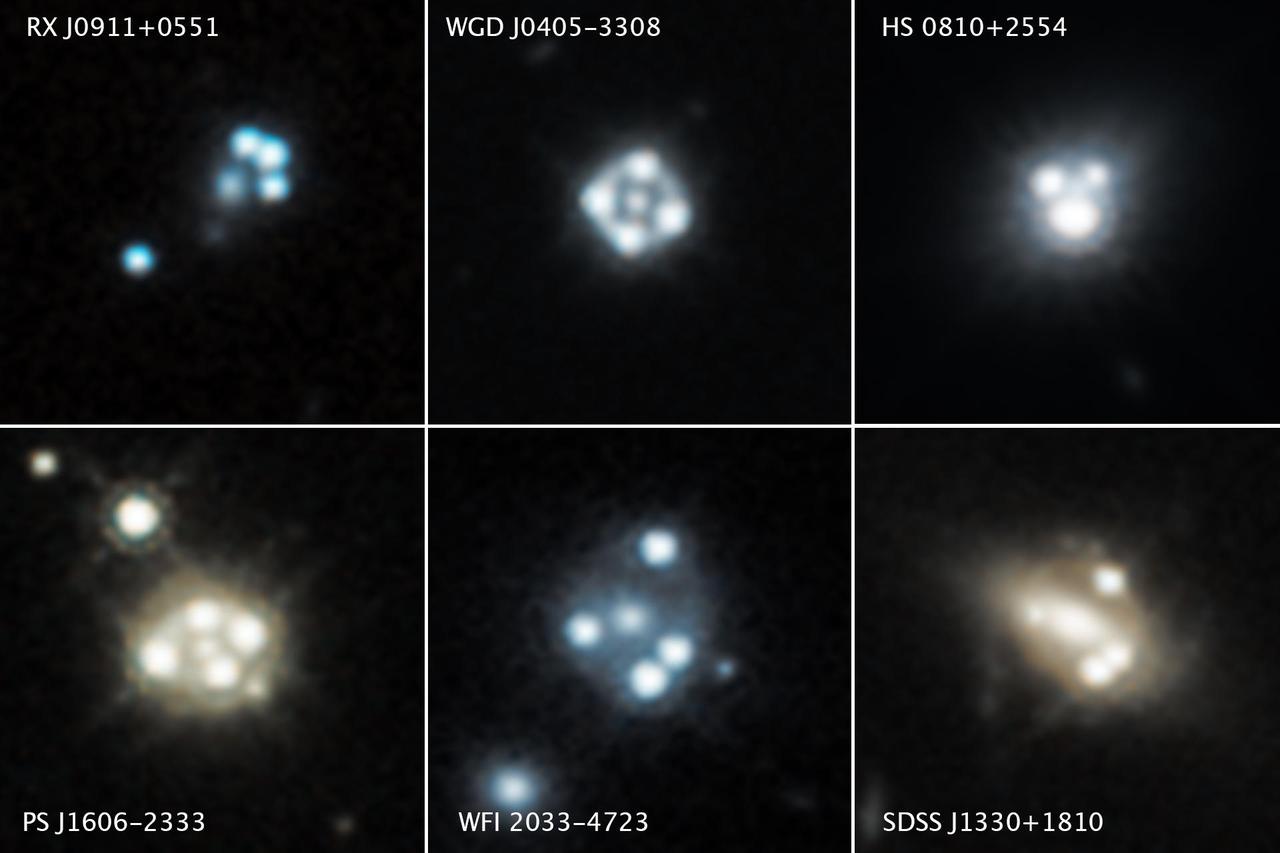
Each of these Hubble Space Telescope snapshots reveals four distorted images of a background quasar (an extremely bright region in the center of some distant galaxies) and its host galaxy surrounding the core of a foreground massive galaxy.  The gravity of the massive foreground galaxy acts like a magnifying glass by warping the quasar's light in an effect called gravitational lensing. Quasars are extremely distant cosmic "streetlights" produced by active black holes. Such quadruple images of quasars are rare because of the nearly exact alignment needed between the foreground galaxy and background quasar.  These images come from a study in which astronomers used the gravitational lensing effect to detect the smallest clumps of dark matter ever found. The clumps are located along the telescope's line of sight to the quasars as well as in and around the foreground lensing galaxies.  The presence of the dark matter concentrations alters the apparent brightness and position of each distorted quasar image. Astronomers compared these measurements with predictions of how the quasar images would look without the influence of the dark matter clumps. The researchers used these measurements to calculate the masses of the tiny dark matter concentrations.  Hubble's Wide Field Camera 3 captured the near-infrared light from each quasar and dispersed it into its component colors for study with spectroscopy. The images were taken between 2015 and 2018.  https://photojournal.jpl.nasa.gov/catalog/PIA23410
Quasars' Multiple Images Shed Light on Tiny Dark Matter Clumps
This graphic illustrates how a faraway quasar (an extremely bright region in the center of some distant galaxies) is altered by a massive foreground galaxy. The galaxy's powerful gravity warps and magnifies the quasar's light, producing four distorted images of the quasar.  Dark matter is an invisible substance that makes up the bulk of the universe's mass and creates the scaffolding upon which galaxies are built.  Quadruple images of a quasar rare because the background quasar and foreground galaxy require an almost perfect alignment.  https://photojournal.jpl.nasa.gov/catalog/PIA23641
Gravitational Lensing Graphic
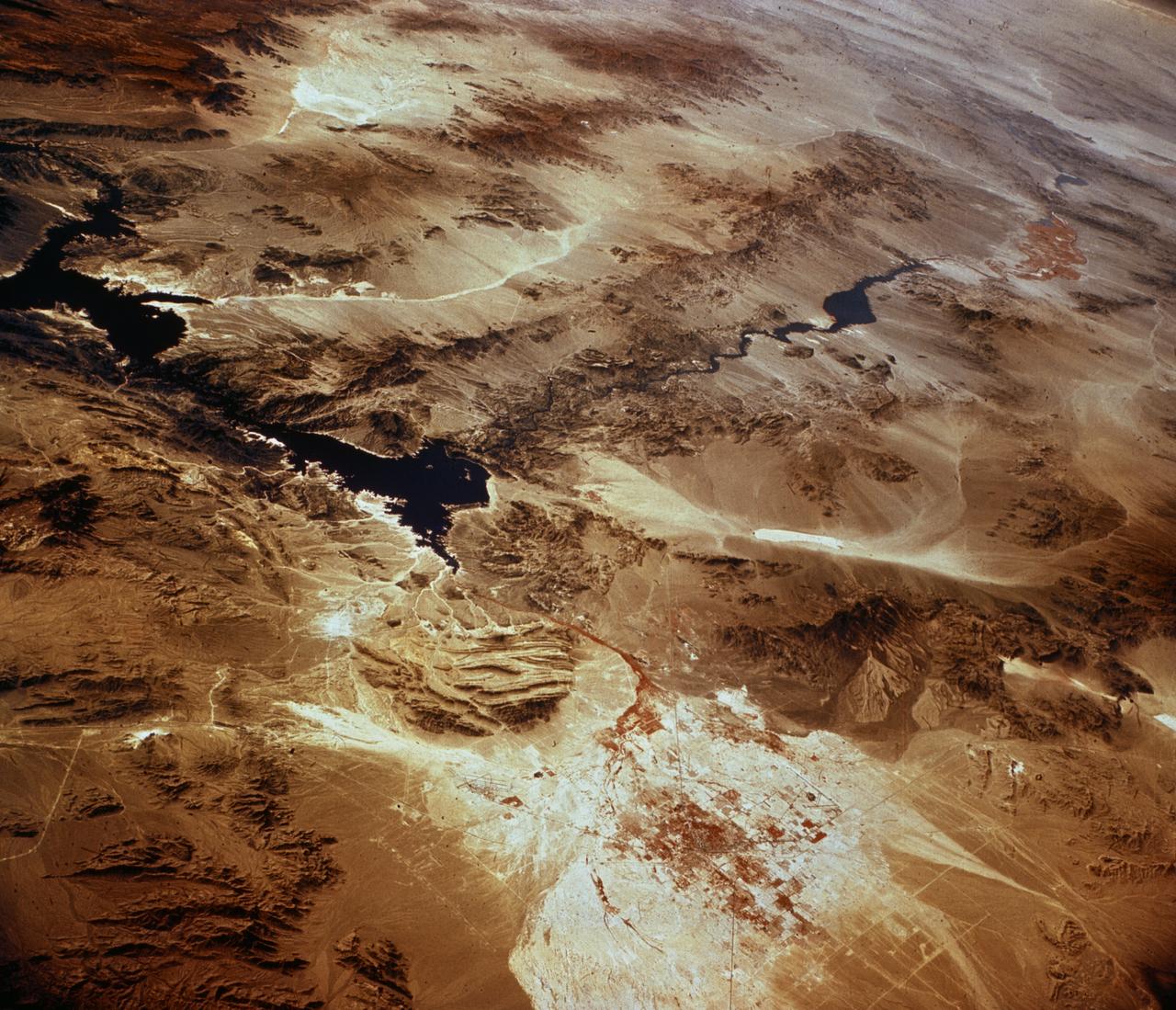
Southwestern US, with Las Vegas, NV in foreground, taken by X-15 Hycon HR-236 Camera during flt. 2-39-70 on June 27, 1965.
Southwestern US, with Las Vegas, NV in foreground, taken by X-15 Hycon HR-236 Camera during flt. 2-39-70 on June 27, 1965
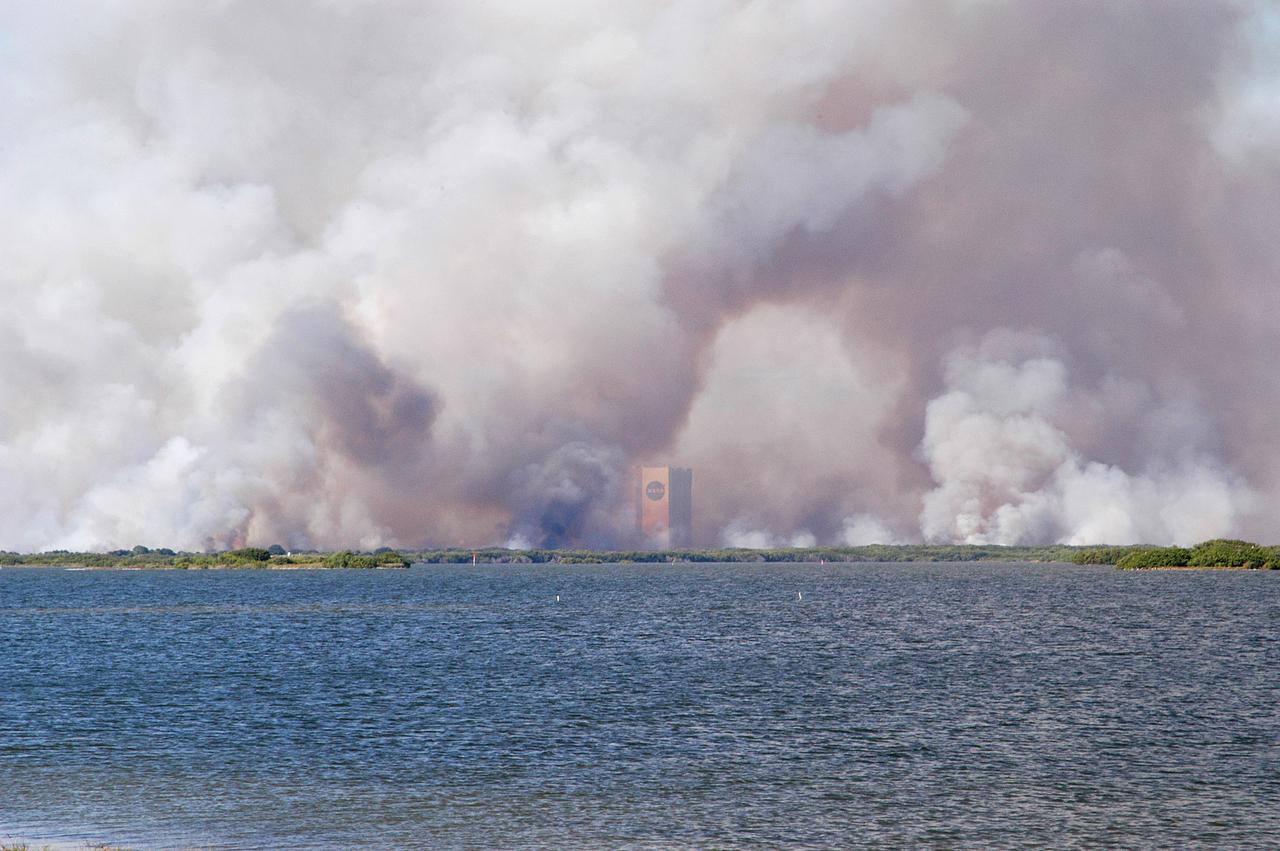
KENNEDY SPACE CENTER, FLA. - Smoke from a successful controlled burn near KSC’s Launch Complex 39 surrounds the Vehicle Assembly Building and spreads across the horizon.  The water in the foreground is the Banana River.
KENNEDY SPACE CENTER, FLA. - Smoke from a successful controlled burn near KSC’s Launch Complex 39 surrounds the Vehicle Assembly Building and spreads across the horizon. The water in the foreground is the Banana River.
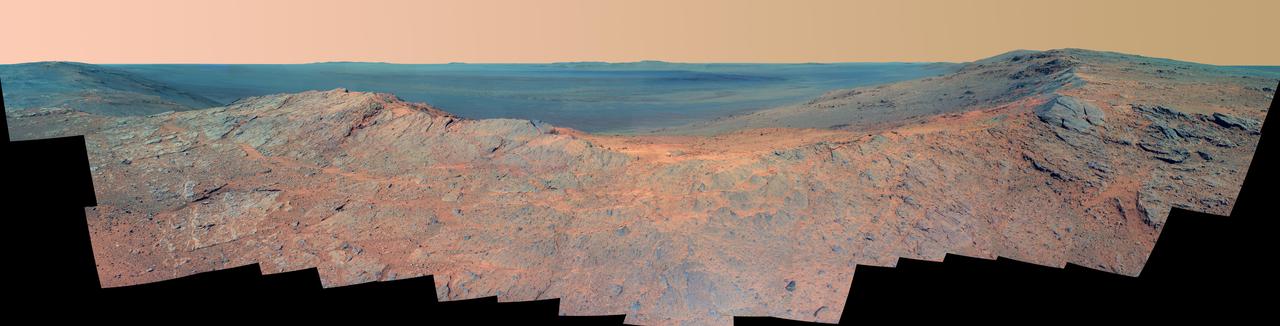
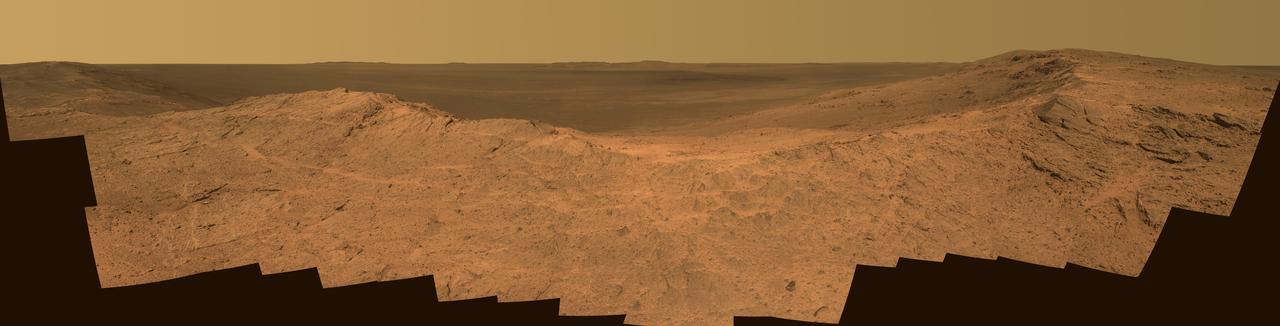
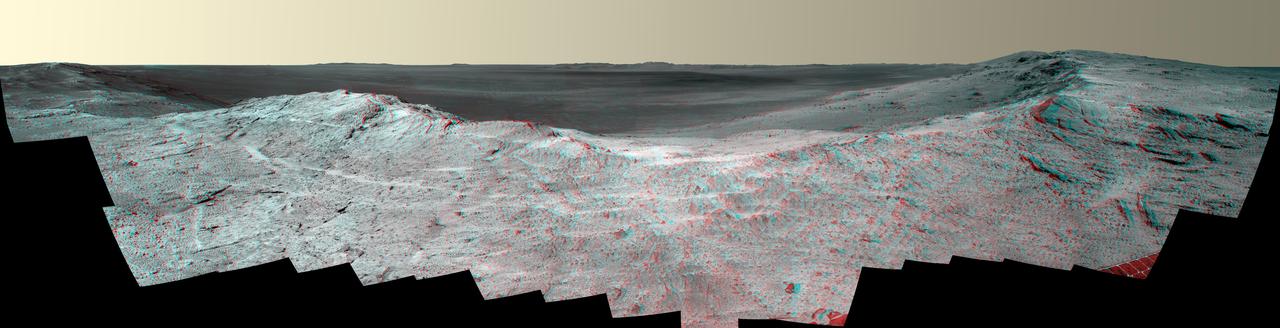
This scene from the panoramic camera Pancam on NASA Mars Exploration Rover Opportunity catches Pillinger Point, on the western rim of Endeavour Crater, in the foreground.
Pillinger Point Overlooking Endeavour Crater on Mars
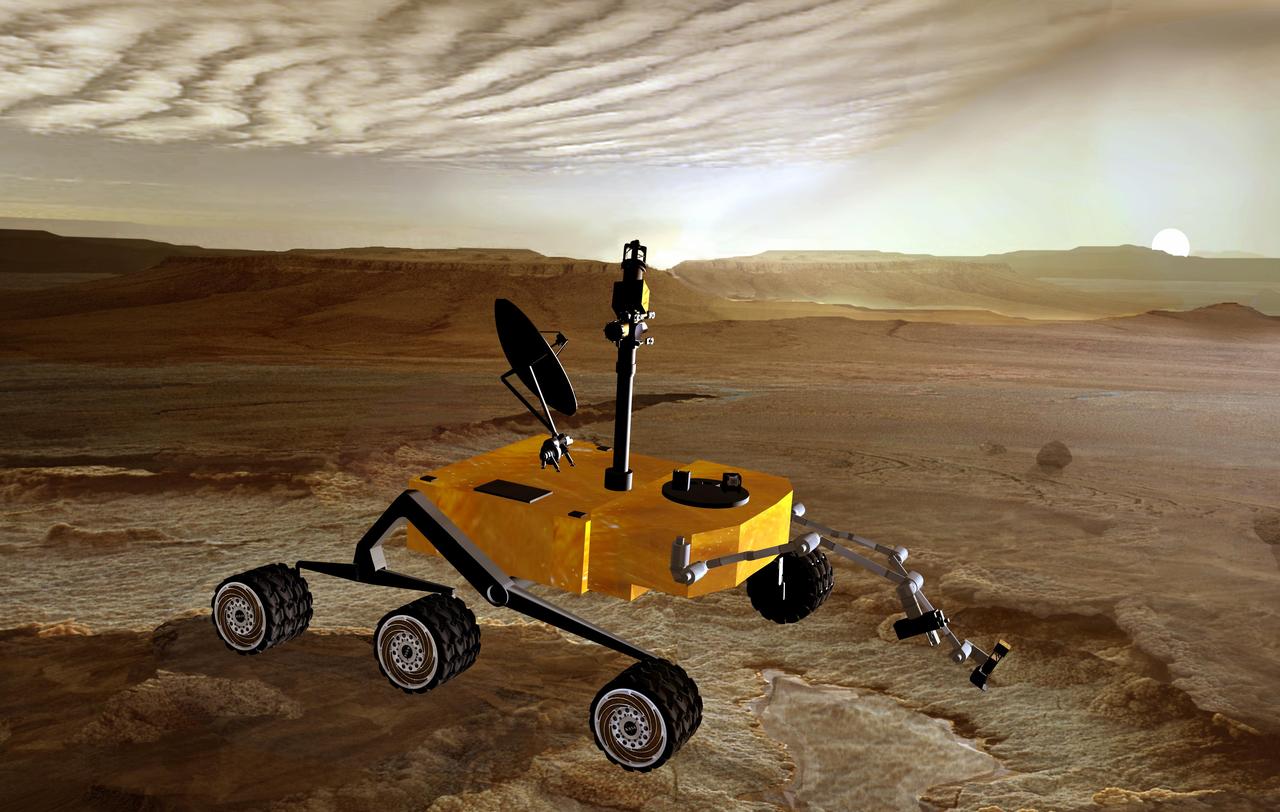
Sunset on Mars catches NASA Mars Science Laboratory in the foreground in this artist concept. The mission is under development for launch in 2009 and a precision landing on Mars in 2010.
Mars Science Laboratory at Sunset Artist Concept
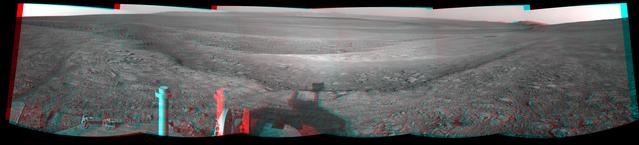
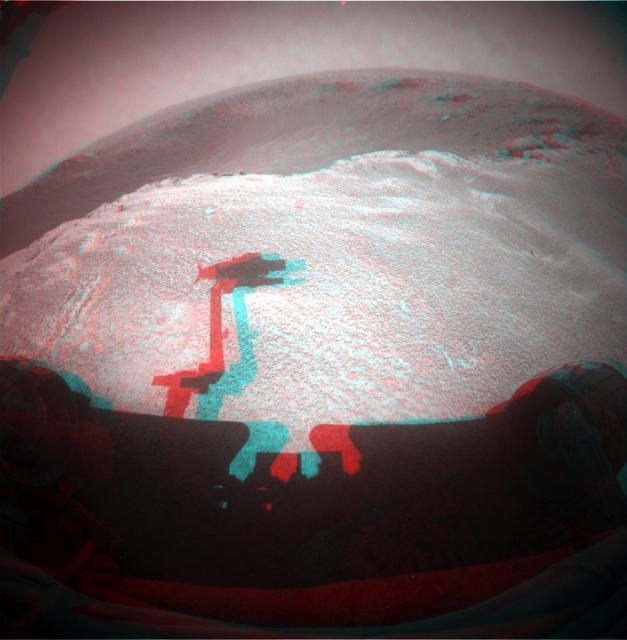
This 3-D view from the navigation camera on NASA Mars Exploration Rover Opportunity shows a vista across Endeavour Crater, with the rover own shadow in the foreground.
Opportunity Overlooking Endeavour Crater, Stereo View
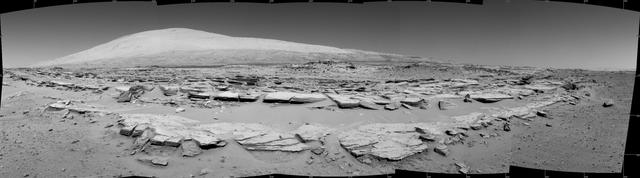
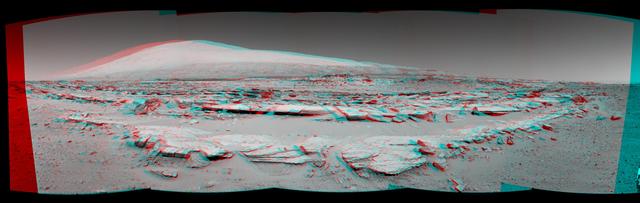
A landscape scene from NASA Curiosity Mars rover shows rock rows at Junda forming striations in the foreground, with Mount Sharp on the horizon.
Martian Landscape with Rock Rows and Mount Sharp
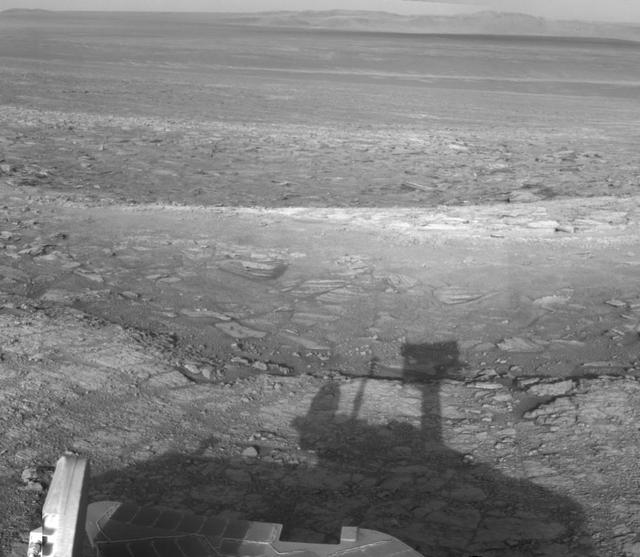
NASA Mars Exploration Rover Opportunity used its navigation camera to record this vista looking eastward across Endeavour Crater, with the rover own shadow in the foreground.
Opportunity Shadow and Endeavour Crater Vista
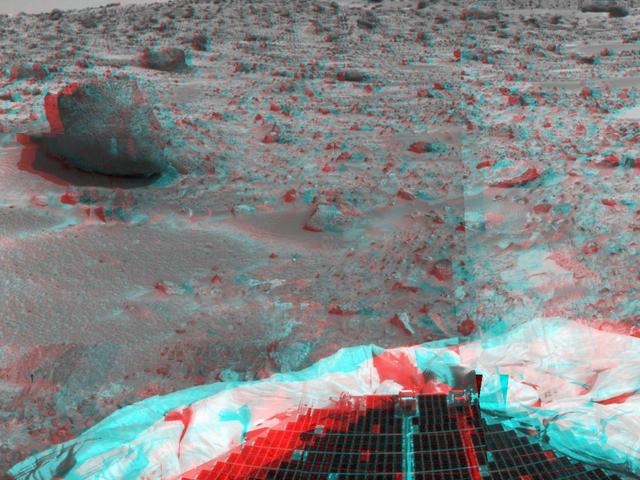
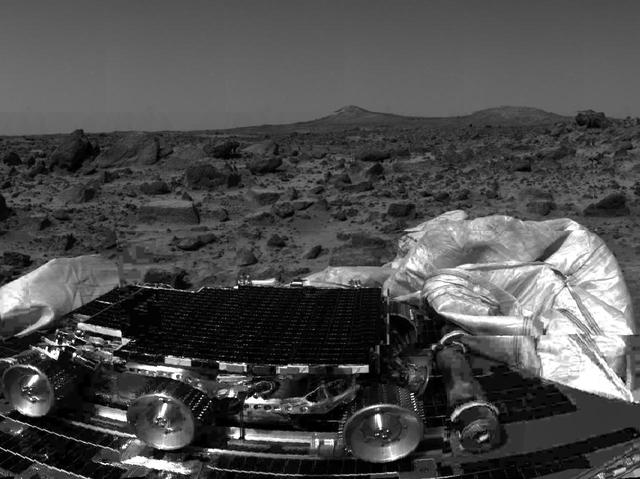
This 360-degree panorama was taken by NASA Mars Pathfinder. Three petals and the perimeter of the deflated airbags are seen in the foreground. 3D glasses are necessary to identify surface detail.
360-degree Panorama in 3-D
This false-color scene from the panoramic camera Pancam on NASA Mars Exploration Rover Opportunity catches Pillinger Point, on the western rim of Endeavour Crater, in the foreground.
Pillinger Point Overlooking Endeavour Crater on Mars False Color
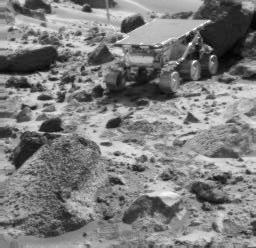
NASA's Sojourner rover is seen next to the rock "Shark," in this image taken by the Imager for Mars Pathfinder (IMP) near the end of daytime operations on Sol 52. The rover's Alpha Proton X-Ray Spectrometer is deployed against the rock. The rock "Wedge" is in the foreground. The Sojourner rover is seen next to the rock "Shark," in this image taken by the Imager for Mars Pathfinder (IMP) near the end of daytime operations on Sol 52. The rover's Alpha Proton X-Ray Spectrometer is deployed against the rock. The rock "Wedge" is in the foreground.
Sojourner APXS at Shark
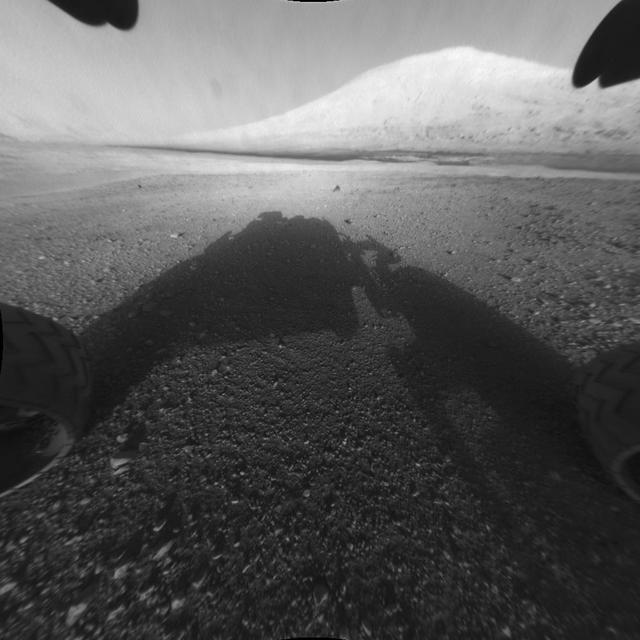
This image taken by NASA Curiosity shows what lies ahead for the rover -- its main science target, informally called Mount Sharp. The rover shadow can be seen in the foreground, and the dark bands beyond are dunes.
Behold Mount Sharp!
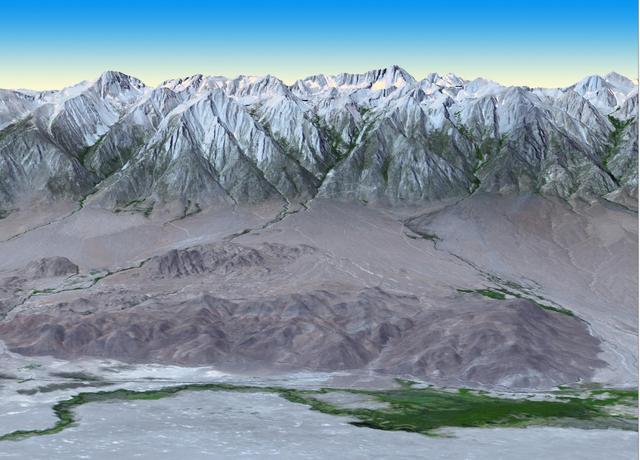
At 14,505 feet high, Mt. Whitney, the highest point in the contiguous U.S., is located in California Sierra Nevada Mountains, on the west side of Owens Valley. The Alabama Hills appear in the foreground of this image from NASA Terra spacecraft.
NASA Terra Spacecraft Views Mt. Whitney, the Highest Point in the Contiguous United States
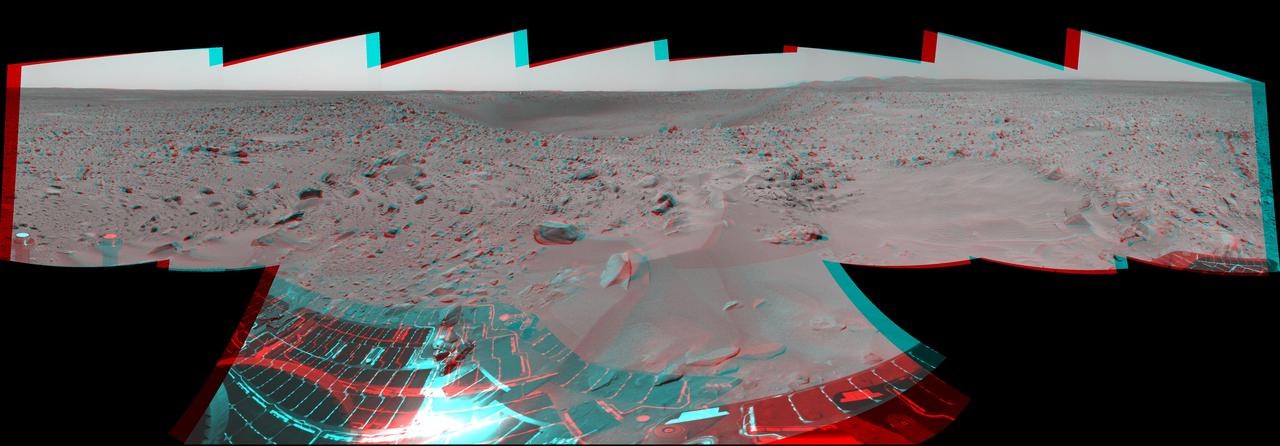
NASA Mars Exploration Rover Spirit took this 3-D navigation camera mosaic of the crater called Bonneville. The rover solar panels can be seen in the foreground. 3D glasses are necessary to view this image.
Almost Like Being at Bonneville
NASA Opportunity used its Pancam to record this view of the rise in the foreground, called Nobbys Head. This view is centered toward the south-southeast, with Opportunity next destination, Solander Point, toward the right edge of the view.
Nobbys Head on Opportunity Southward Route
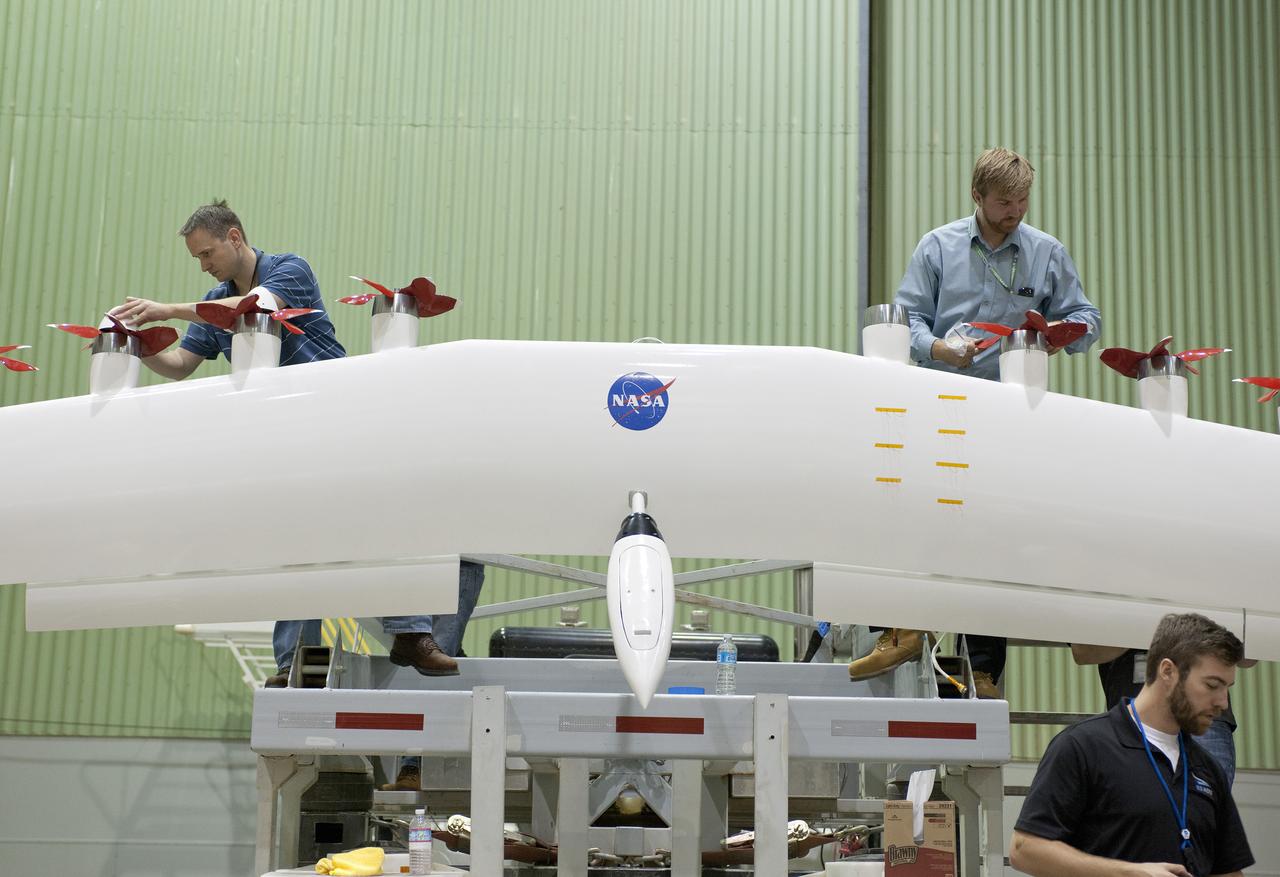
Engineers work on a wing with electric motors that is part of an integrated experimental testbed. From left are Sean Clarke, left, Kurt Papathakis at upper right and Anthony Cash in the foreground.
Piloted, Electric Propulsion-Powered Experimental Aircraft Underway
This north-looking vista from NASA Mars Rover Opportunity shows Wdowiak Ridge, from left foreground to center. This version is presented in false color, which enhances visibility of the rover wheel tracks at right.
Opportunity Northward View of Wdowiak Ridge False Color
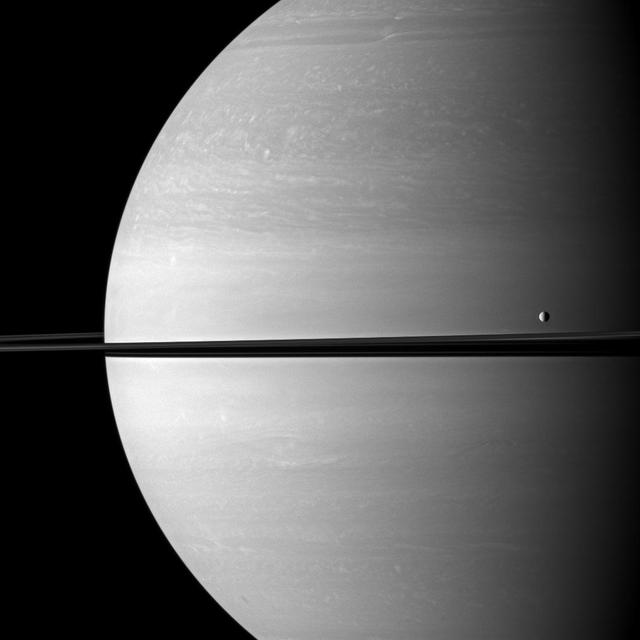
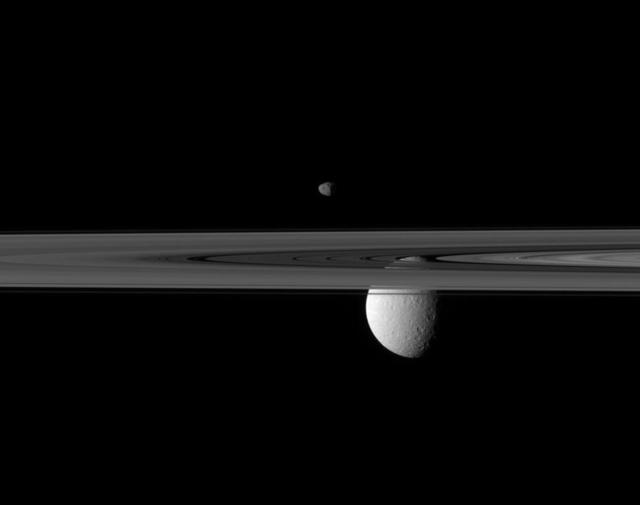
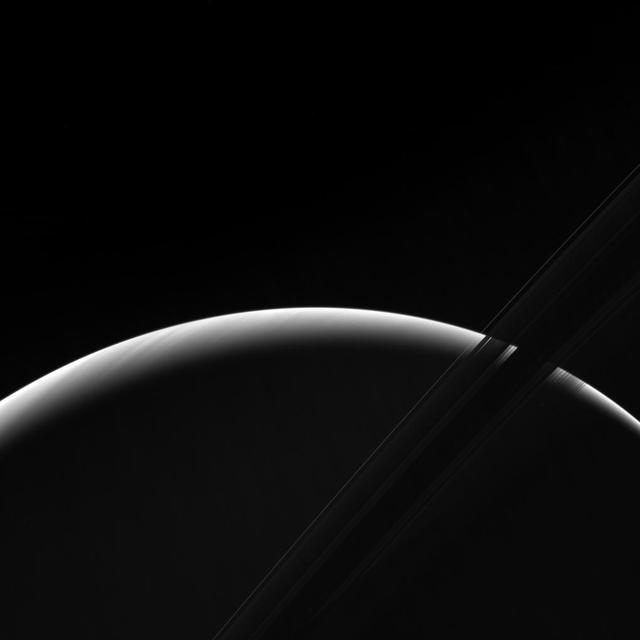
Saturn rings occupy the foreground of this image captured by NASA Cassini spacecraft. The small moon Janus appears to hover above, while the far larger moon Rhea is partially obscured by the rings.
Rings, Rhea and Janus
This image from NASA Mars Pathfinder shows the large rock nicknamed Yogi. Portions of a petal and deflated airbag are in the foreground. 3D glasses are necessary to identify surface detail.
Terrain and Rock Yogi - 3-D
This stereo vista from the panoramic camera Pancam of NASA Mars Exploration Rover Opportunity catches Pillinger Point, on the western rim of Endeavour Crater, in the foreground. You need 3-D glasses to view this image.
Pillinger Point Overlooking Endeavour Crater on Mars Stereo
This is the first 360-degree panoramic view from NASA Curiosity rover, taken with the Navigation cameras. Mount Sharp is to the right, and the north Gale Crater rim can be seen at center. The rover body is in the foreground.
Curiosity Takes It All In
This stereo vista from NASA Mars Rover Opportunity shows Wdowiak Ridge, from left foreground to center, as part of a northward look. You will need 3-D glasses to view this image.
Opportunity Northward View of Wdowiak Ridge Stereo
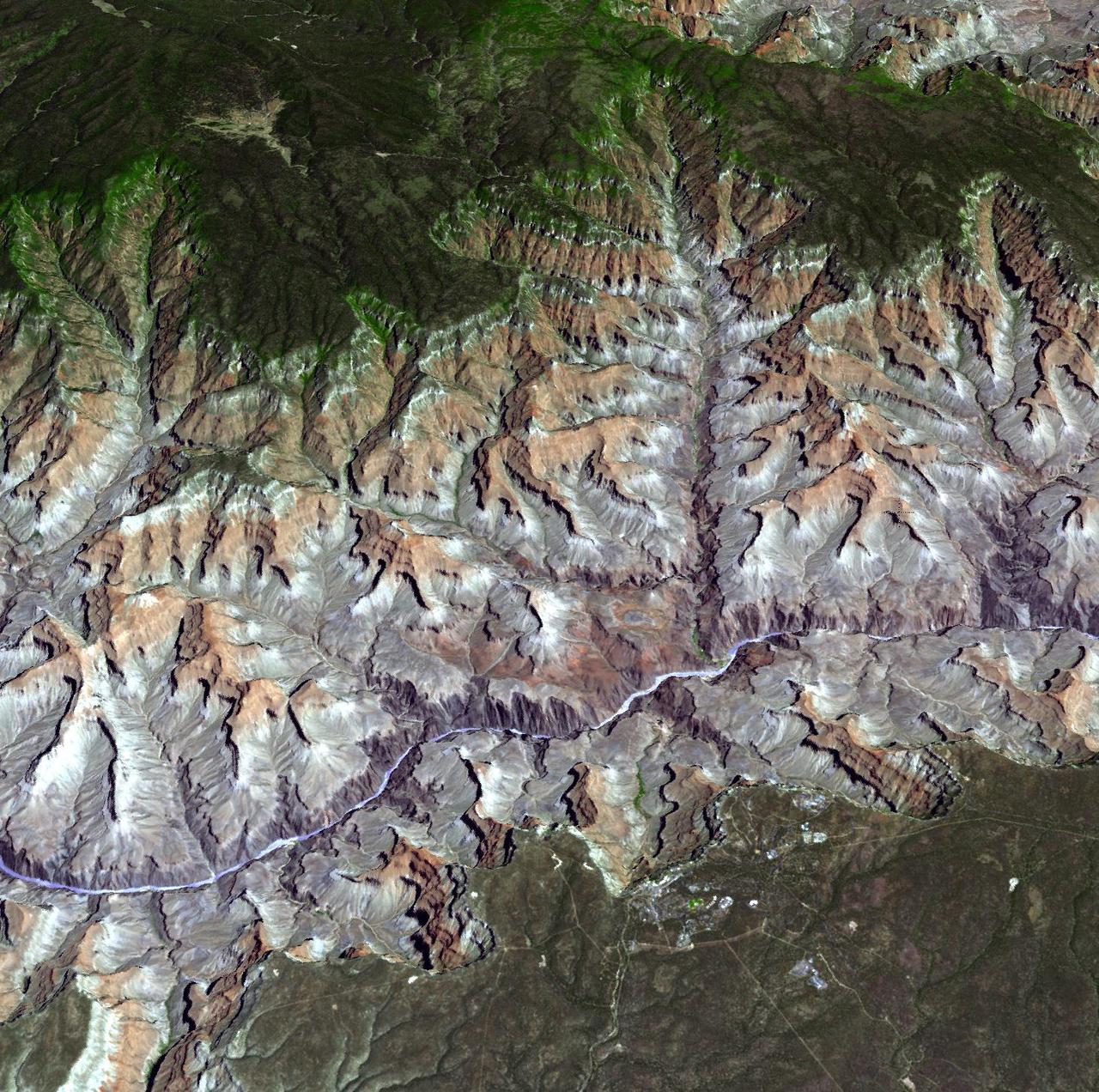
Arguably one of America most magnificent national parks is the Grand Canyon in northern Arizona. NASA Terra spacecraft captured this image looking to the northeast, the buildings and roads in the center foreground are Grand Canyon Village.
NASA Satellite Reveals Grandeur of Arizona Grand Canyon
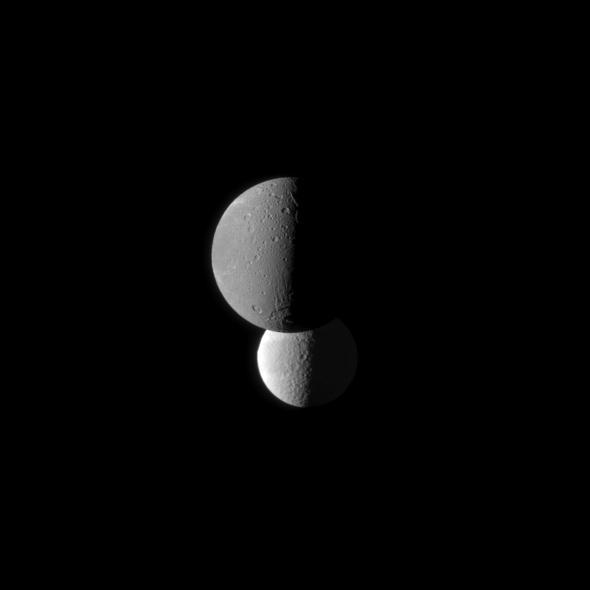
Saturn moon Dione, in the foreground of this image from NASA Cassini spacecraft, appears darker than the moon Tethys. Tethys appears brighter because it has a higher albedo than Dione, meaning Tethys reflects more sunlight.
Tethys and Darker Dione
This artist concept depicts in the foreground planet Kepler-62f, a super-Earth-size planet in the habitable zone of its star, which is seen peeking out from behind the right edge of the planet.
Morning Star Artist Concept
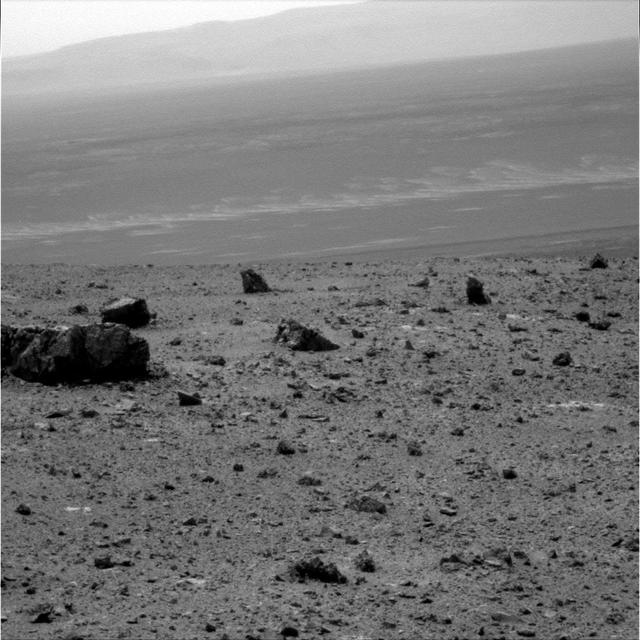
The large rock on the left in the foreground, informally named Tisdale 1. It is part of a group of rocks that appear to have been ejected by the excavation of Odyssey crater on the rim of Endeavour crater by NASA Mars rover Odyssey.
View Across Endeavour Crater
This long-exposure image from NASA Hubble Space Telescope of massive galaxy cluster Abell 2744 is the deepest ever made of any cluster of galaxies. Shown in the foreground is Abell 2744, located in the constellation Sculptor.
Hubble Frontier Field Abell 2744
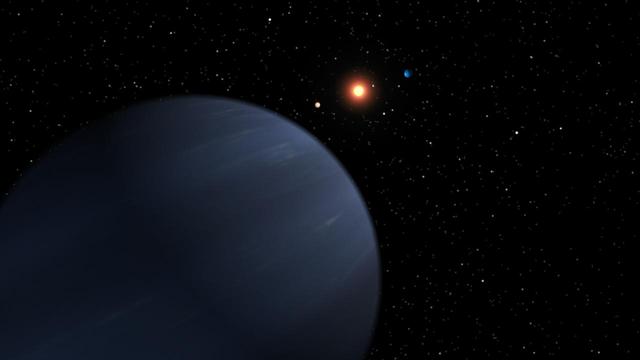
This artist concept shows four of the five planets that orbit 55 Cancri, a star much like our own. The most recently discovered planet, and the fourth out from the star, looms large in the foreground.
Plentiful Planetary System Artist Concept
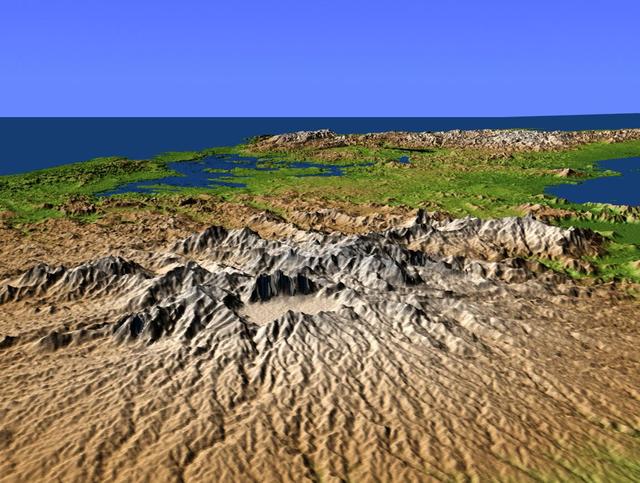
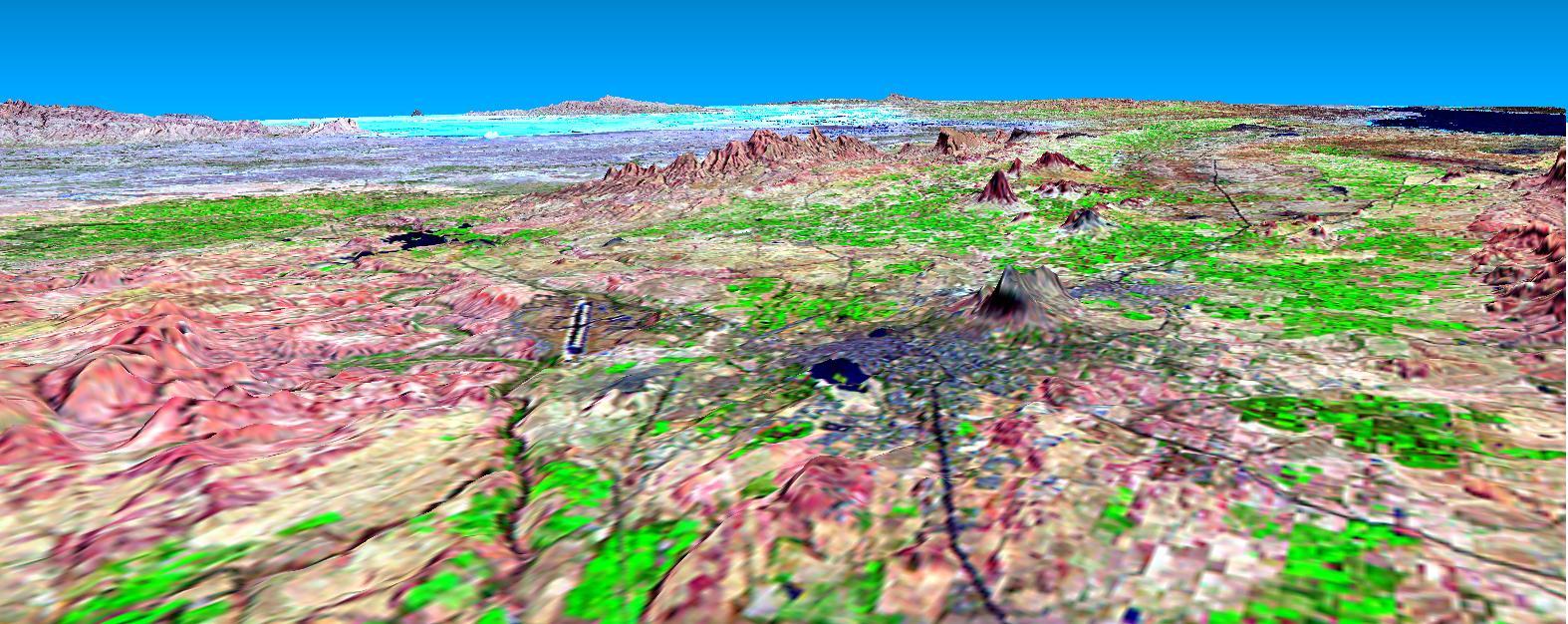
This perspective view from NASA Shuttle Radar Topography Mission SRTM, acquired on February 2000, shows central Panama, with the remnants of the extinct volcano El Valle in the foreground and the Caribbean Sea in the distance.
Perspective View with Color-Coded Shaded Relief, Central Panama
From just below the plane of Saturn rings, NASA Cassini spacecraft looks at the rings edge-on and sees the planet second largest moon beyond. Although Rhea may appear to be in the foreground of this image, it is not.
Rhea and Edge-On Rings
The moon Tethys occupies the right foreground of this Saturnian scene. This view from NASA Cassini spacecraft looks toward the anti-Saturn side of Tethys and toward the northern, sunlit side of the rings from just above the ringplane.
Tethys in the Fore
Titan, Saturn largest moon and Mimas in the foreground are seen together  in this view from Cassini. Titan gravity is weaker than Earth, so the  moon atmosphere is quite extended -- a quality hinted at in this view
Mimas...and Titan Beyond
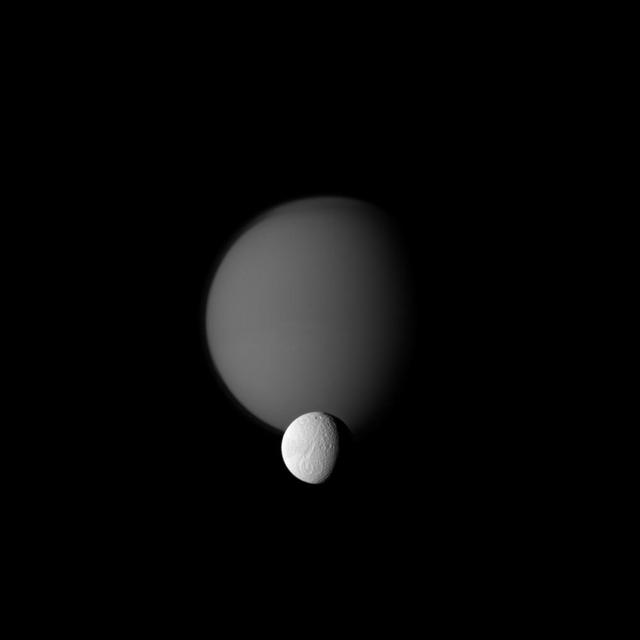
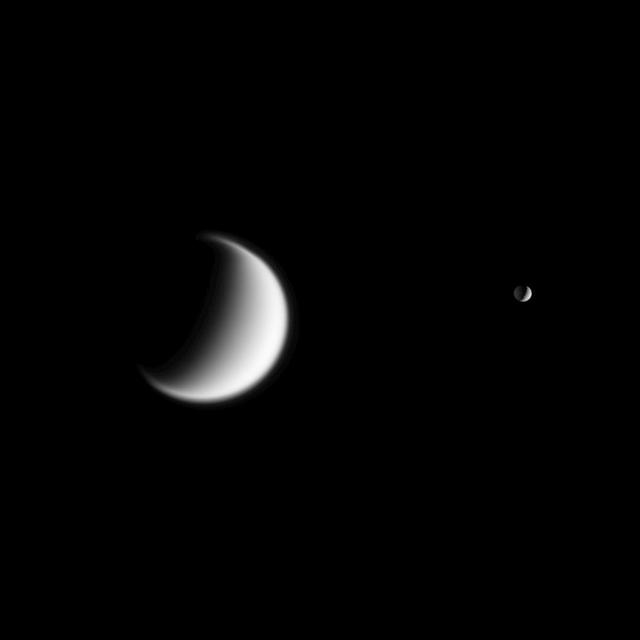
NASA Cassini spacecraft watches a pair of Saturn moons, showing the hazy orb of giant Titan beyond smaller Tethys. In the foreground of the image, Ithaca Chasma can be seen running roughly north-south on Tethys.
Titan and Tethys
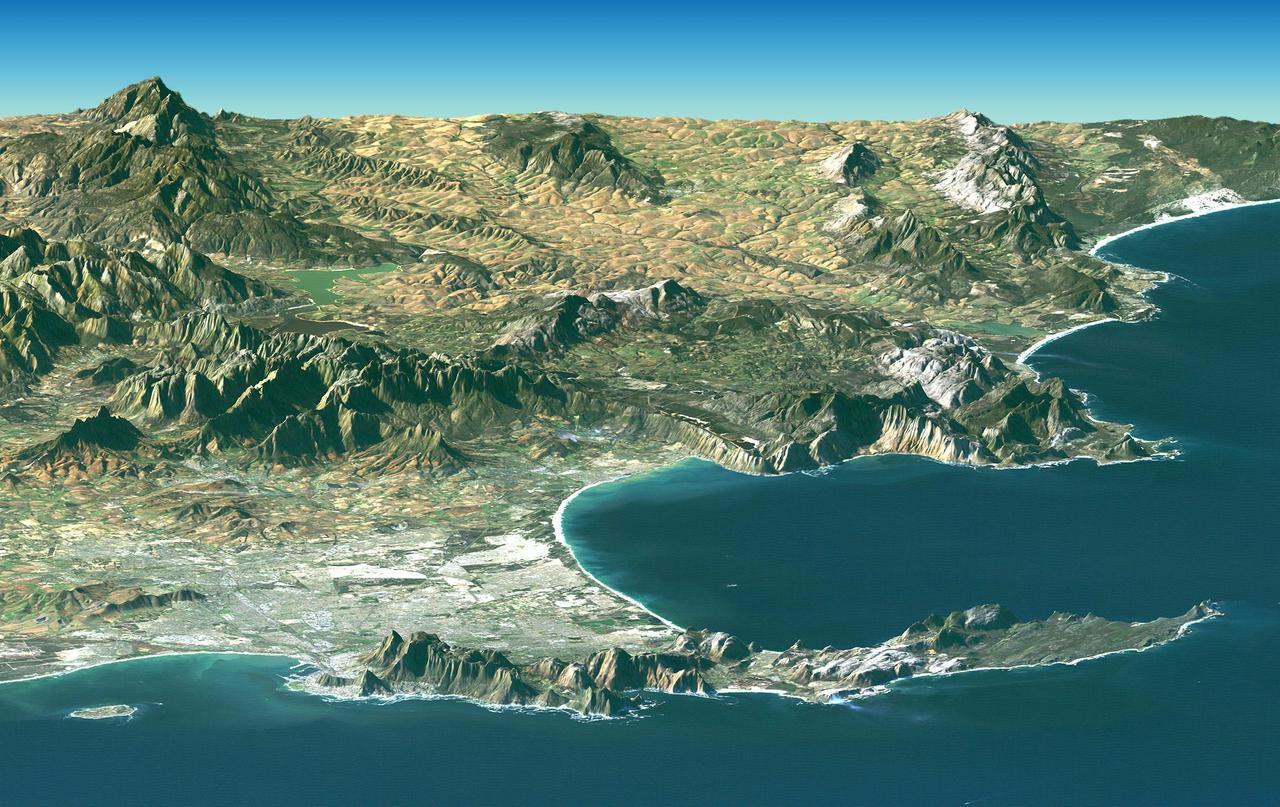
Cape Town and the Cape of Good Hope, South Africa, appear in the foreground of this perspective view generated from a Landsat satellite image and elevation data from NASA Space Shuttle Endeavour.
Cape Town, South Africa, Perspective View, Landsat Image over SRTM Elevation
An artist conception shows the Kepler-10 system, home to two rocky planets. In the foreground is Kepler-10c, a planet that weighs 17 times as much as Earth and is more than twice as large in size.
Kepler-10 System
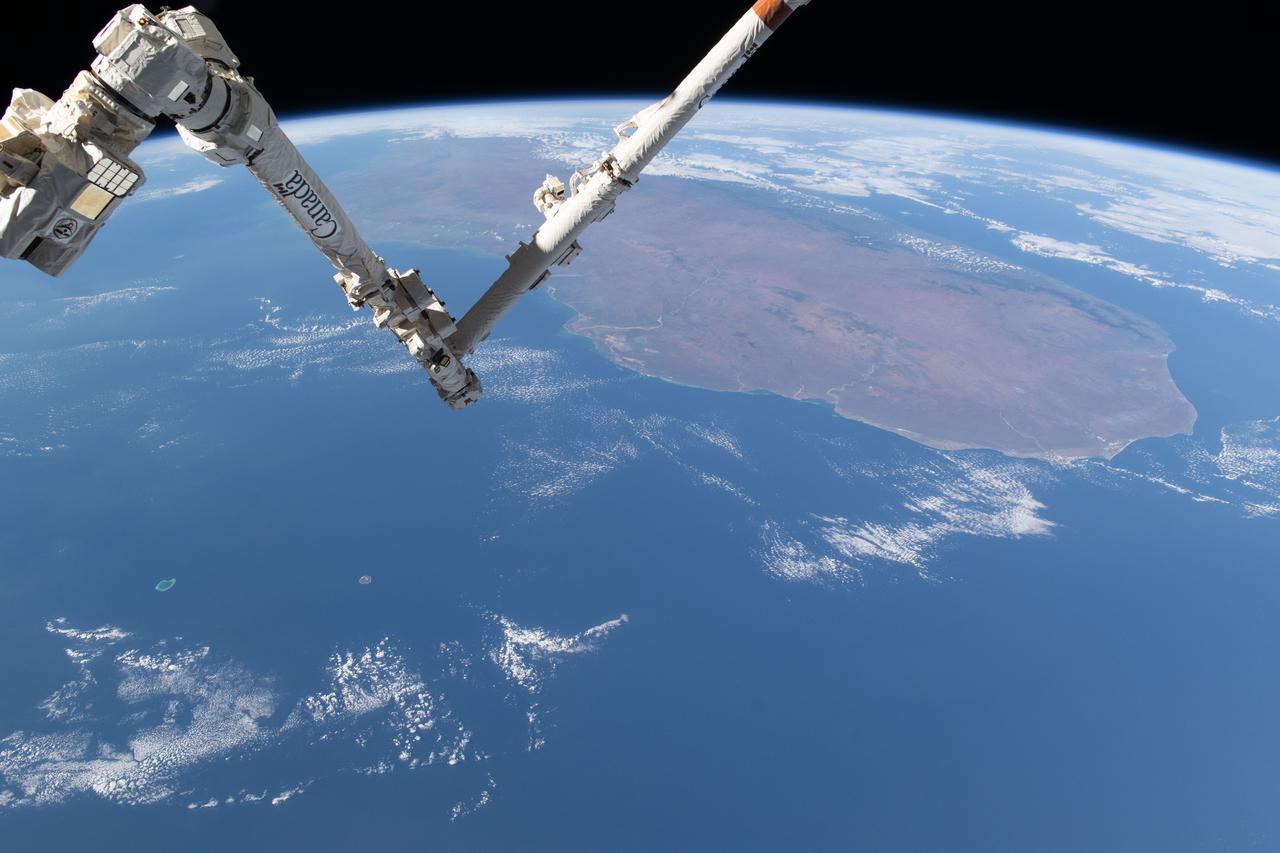
iss071e361950 (July 15, 2024) --- The International Space Station's 57.7-foot-long Canadarm2 robotic arm crosses the foreground as the orbital outpost soared 265 miles above the Mozambique Channel south of the African island nation of Madagascar.
The Canadarm2 robotic arm above the Mozambique Channel
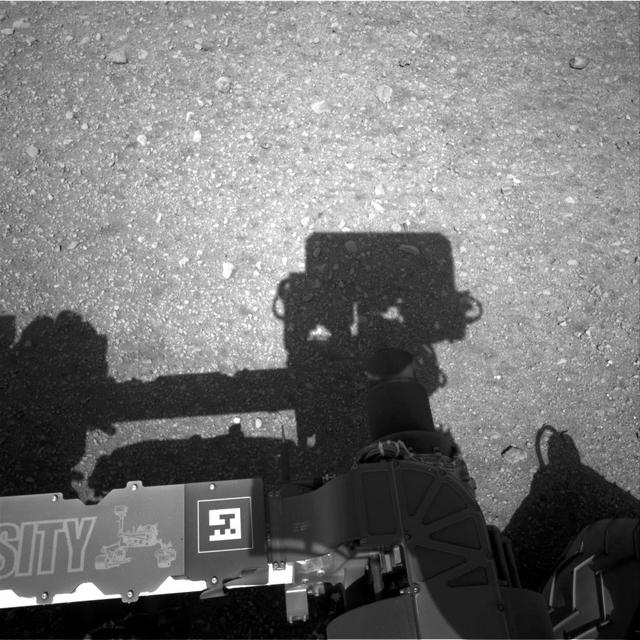
This is the first image taken by the Navigation cameras on NASA Curiosity rover. It shows the shadow of the rover now-upright mast in the center, and the arm shadow at left. The arm itself can be seen in the foreground.
Curiosity Looks Away from the Sun
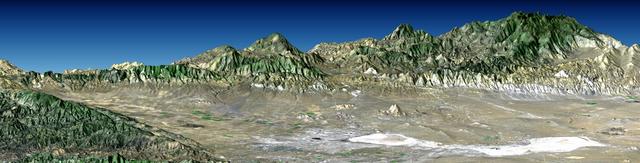
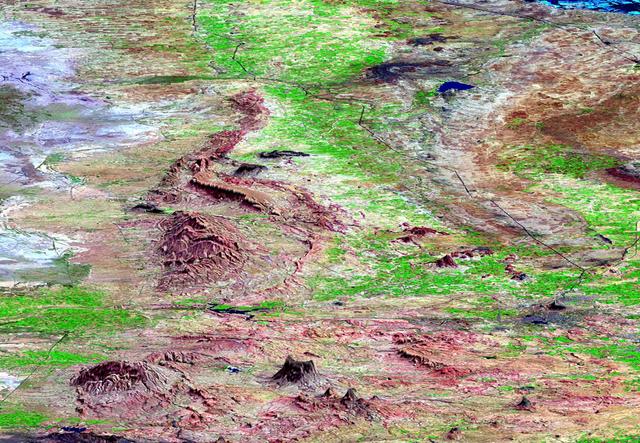
Antelope Valley is bounded by two of the most active faults in California: the Garlock fault, which fronts the distant mountains in this view, and the San Andreas fault, part of which is seen bounding the mountains in the left foreground.
Perspective with Landsat Overlay: Antelope Valley, California
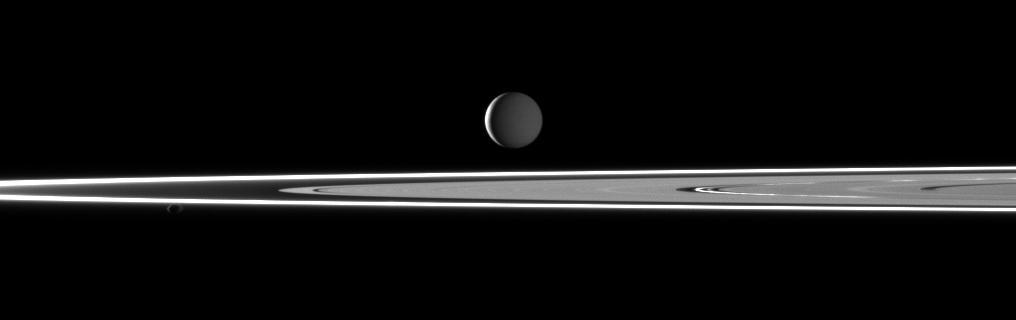
In this image taken by NASA Cassini spacecraft two light sources illuminate Saturn highly reflective moon Enceladus featuring bright rings and the small moon Pandora in the foreground.
Dual Illuminated Enceladus
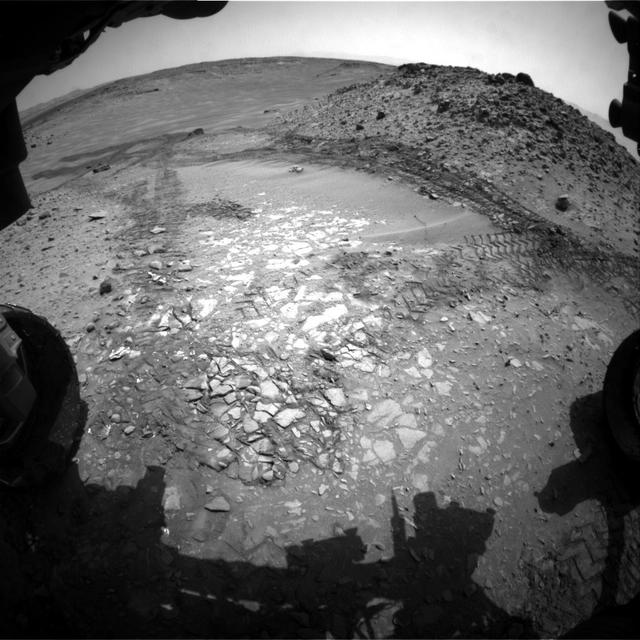
The pale rocks in the foreground of this Aug. 14, 2014, image from NASA Curiosity Mars rover include the Bonanza King target under consideration to become the fourth rock drilled by the rover.
View Down Hidden Valley Ramp at Bonanza King on Mars
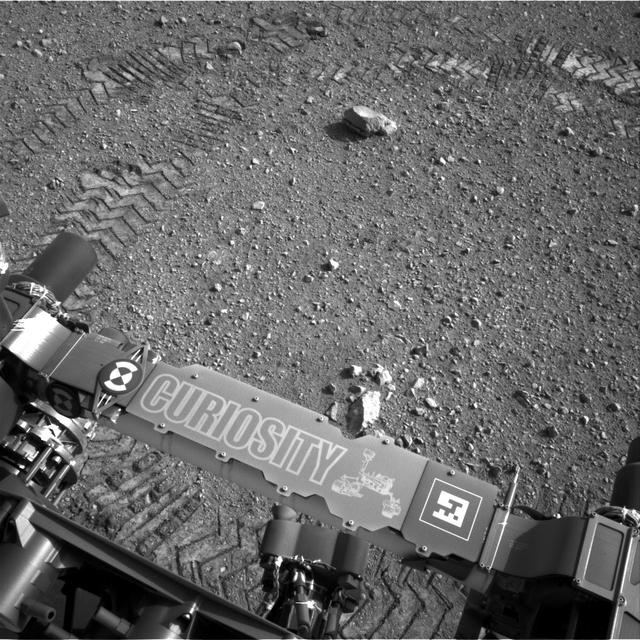
This image shows a close-up of track marks from the first test drive of NASA Curiosity rover. The rover arm is visible in the foreground. A close inspection of the tracks reveals a unique, repeating pattern: Morse code for JPL.
Curiosity Leaves Its Mark
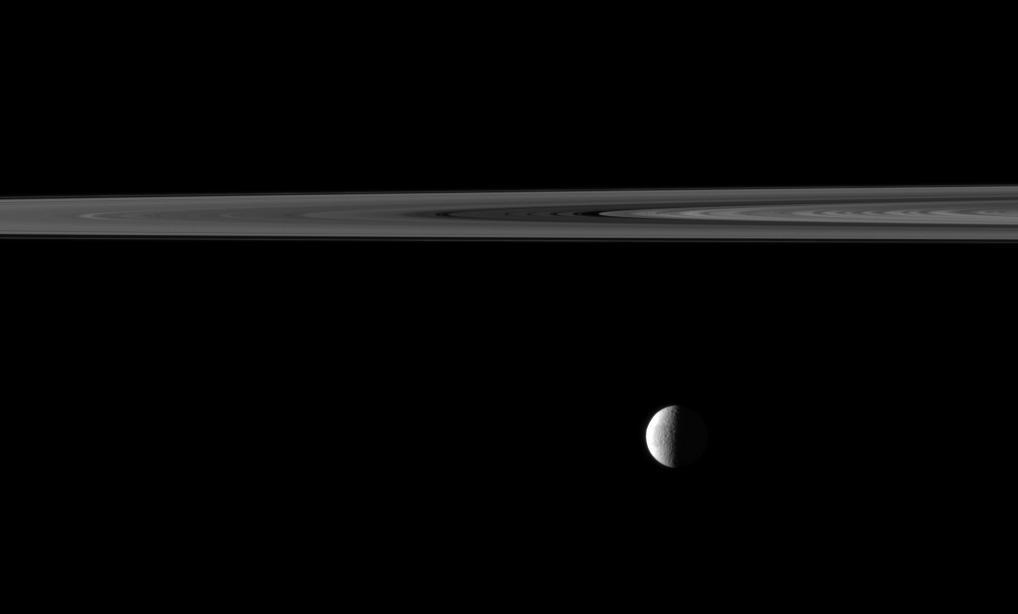
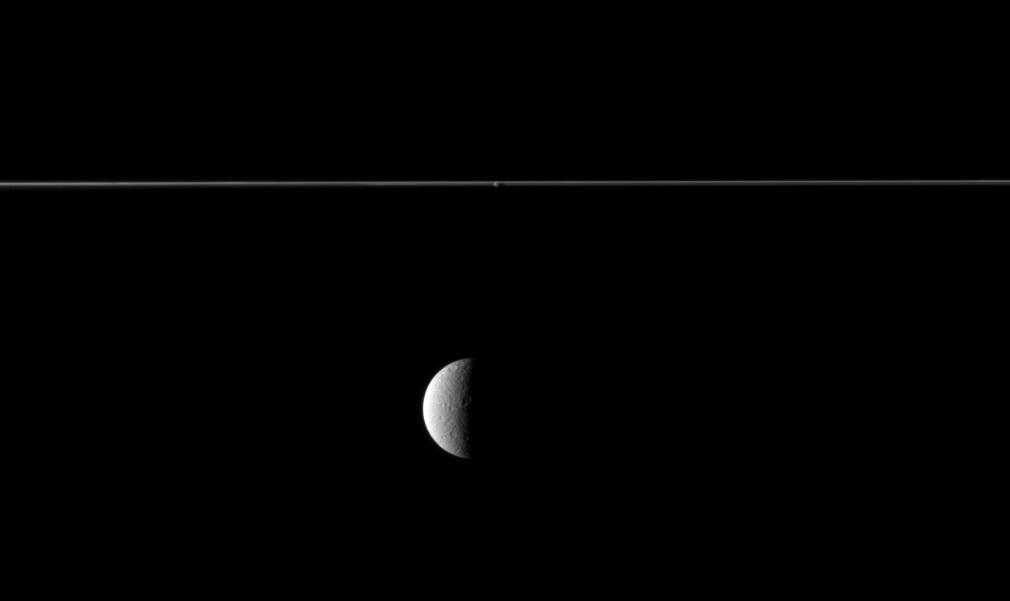
An illuminated quarter of the moon Tethys is imaged near a swath of Saturn rings. Though the moon appears to be hanging directly below the rings, Tethys is actually farther from NASA Cassini spacecraft, and the rings are in the foreground.
Rings and Quarter Tethys
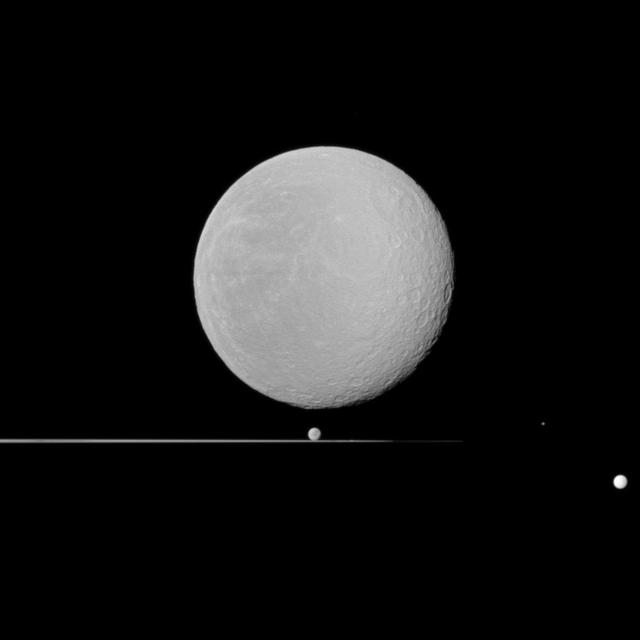
Five moons, dominated by Rhea in the foreground, share NASA Cassini spacecraft view with Saturn rings seen nearly edge-on. Also seen here are Dione, Epimetheus, Prometheus, and Tethys.
Five Orbs
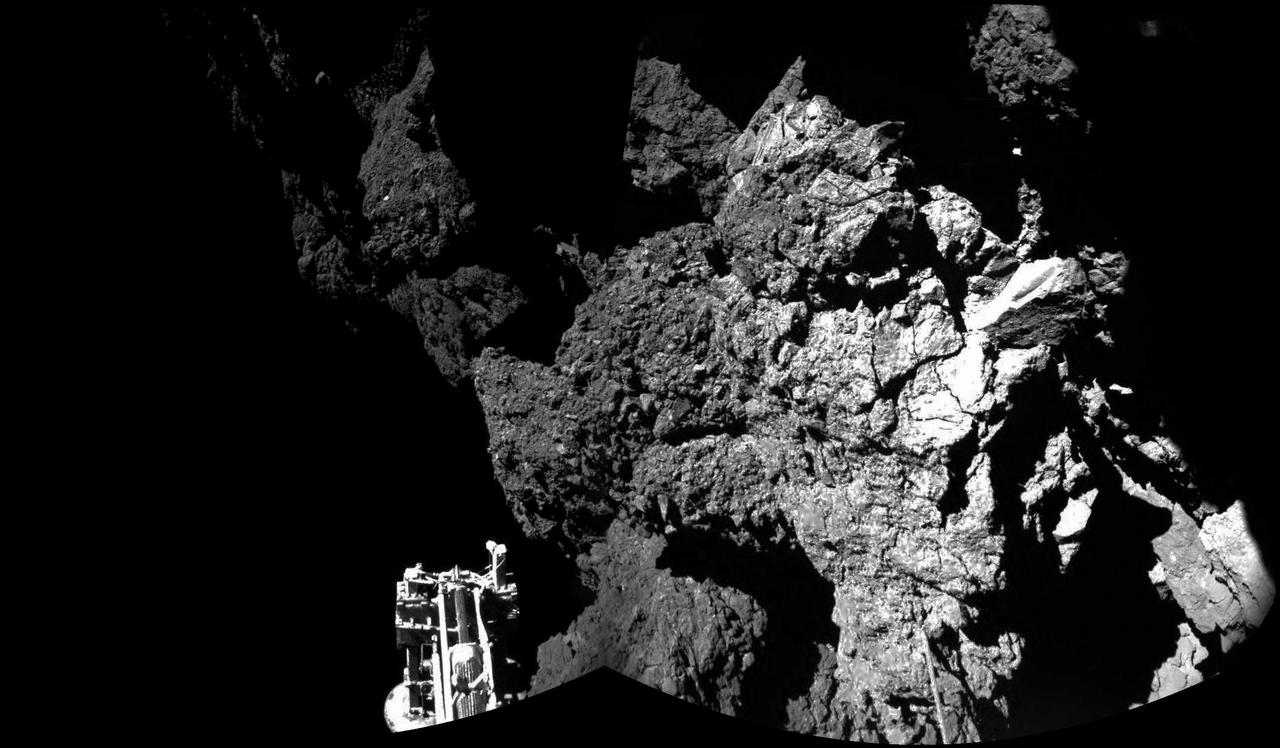
The Philae lander of the European Space Agency Rosetta mission is safely on the surface of Comet 67P/Churyumov-Gerasimenko, as these first two images from the lander CIVA camera confirm. One of the lander three feet can be seen in the foreground.
Welcome to a Comet, from Lander on Surface
This vista from NASA Mars Exploration Rover Opportunity shows Wdowiak Ridge, from left foreground to center, as part of a northward look with the rover tracks visible at right.
Opportunity Northward View of Wdowiak Ridge
A stereo landscape scene from NASA Curiosity Mars rover shows rock rows at Junda forming striations in the foreground, with Mount Sharp on the horizon. You need 3D glasses to view this image.
Martian Landscape With Rock Rows and Mount Sharp Stereo
Bright veins cutting across outcrop in a section of Endeavour crater rim called Botany Bay are visible in the foreground and middle distance of this view from NASA Mars Exploration Rover Opportunity on sol 2,681 Aug. 9, 2011.
Bright Veins in Botany Bay on rim of Endeavour Crater on Mars
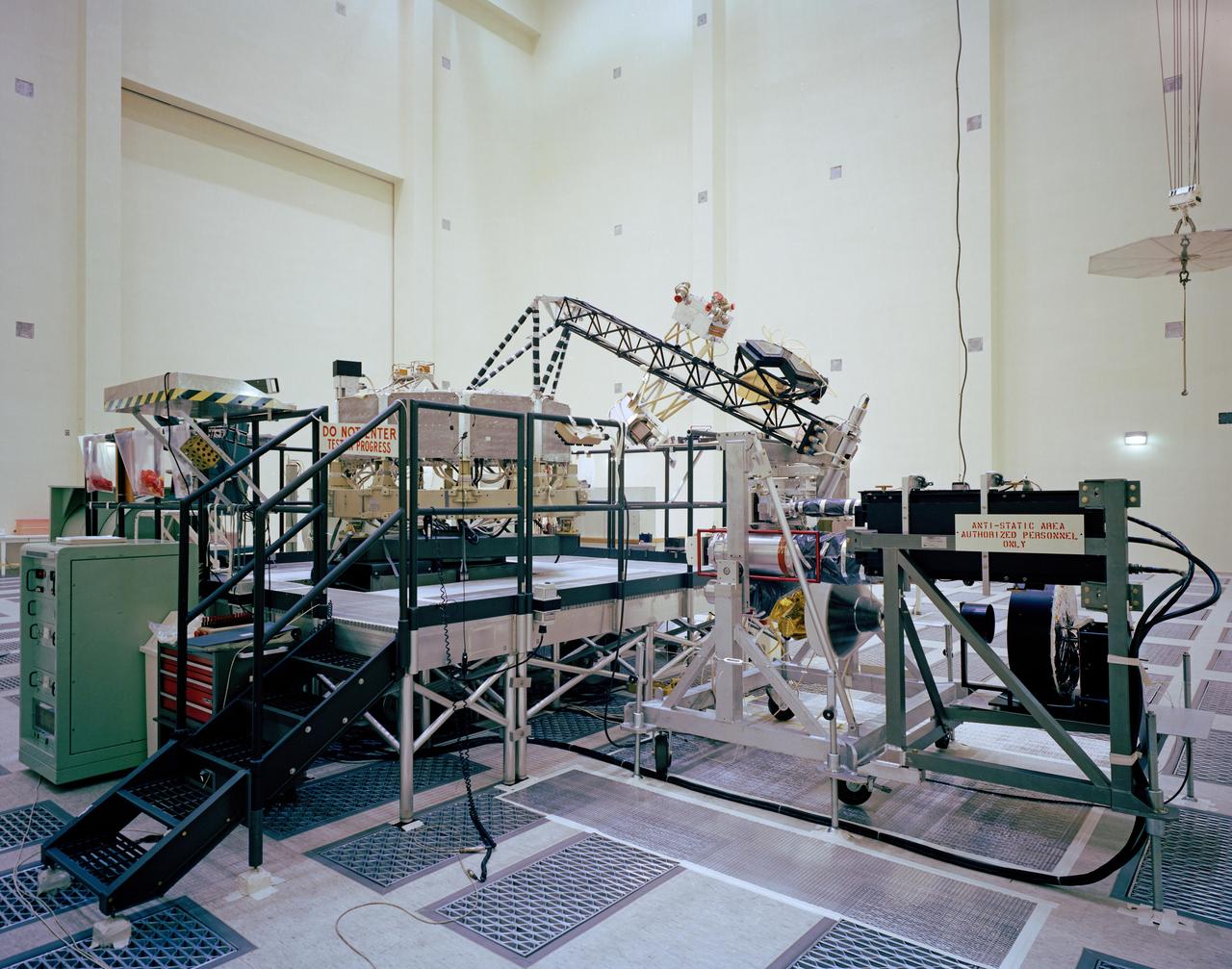
This archival photo shows the system test configuration for Voyager on October 1, 1976. The spacecraft's 10-sided bus is visible behind the catwalk railing in the foreground. The boom that holds several of the spacecraft's science instruments arches above the railing.  https://photojournal.jpl.nasa.gov/catalog/PIA21729
Voyager: System Test Configuration
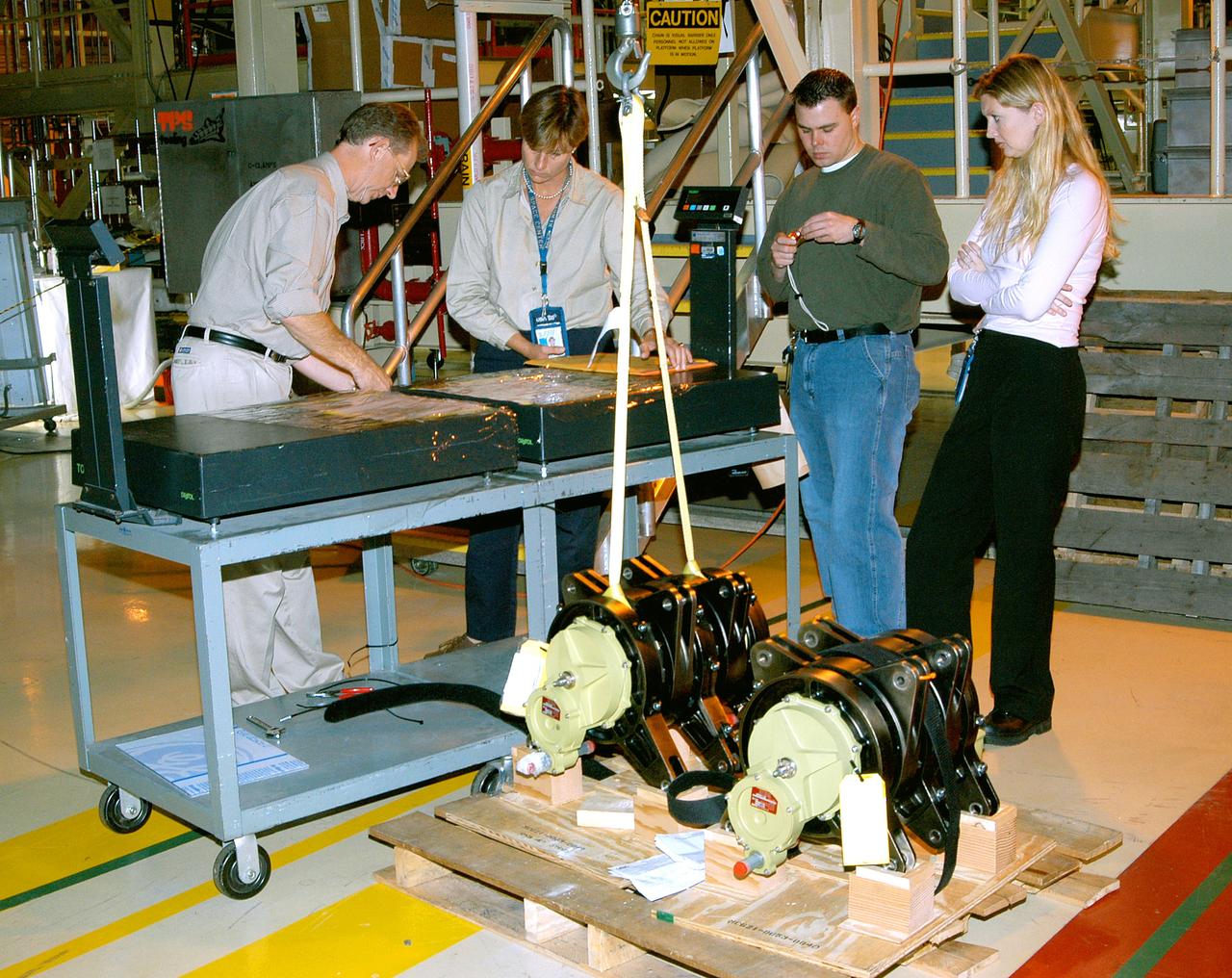
KENNEDY SPACE CENTER, FLA. -  Workers in the Orbiter Processing Facility get ready to measure the alignment of the bearings on the rudder speed brake actuators sitting on the floor in the foreground.  The actuators move an orbiter’s rudder, speed brake, elevons and main engines during flight.
KENNEDY SPACE CENTER, FLA. - Workers in the Orbiter Processing Facility get ready to measure the alignment of the bearings on the rudder speed brake actuators sitting on the floor in the foreground. The actuators move an orbiter’s rudder, speed brake, elevons and main engines during flight.
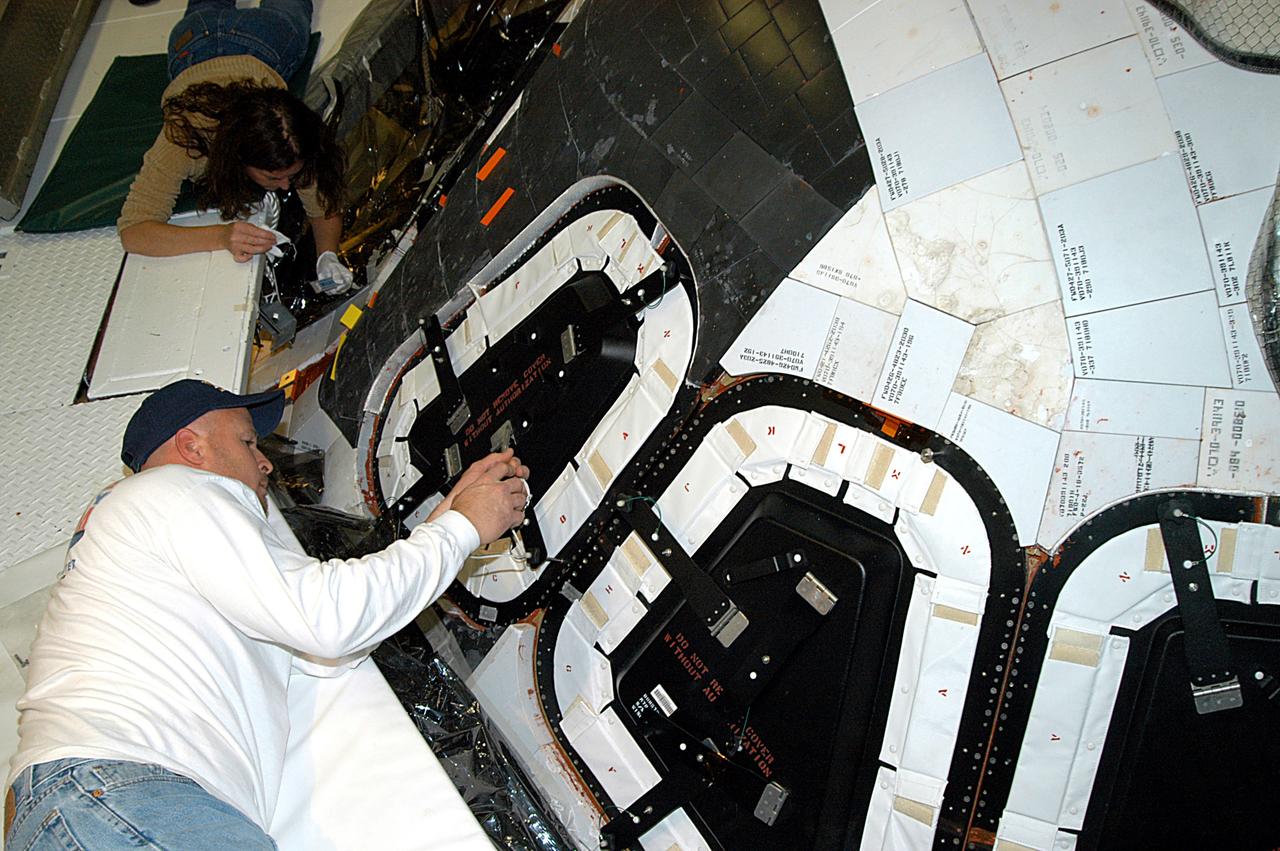
KENNEDY SPACE CENTER, FLA. -- Les Hanks (foreground) and Darlene Beville (background), with United Space Alliance,  prepare a window on Atlantis for removal.  The windows are being removed to inspect them for contaminants in the thermal seal.  Atlantis has been undergoing routine maintenance in the Orbiter Processing Facility for Return to Flight, on mission STS-114.
KENNEDY SPACE CENTER, FLA. -- Les Hanks (foreground) and Darlene Beville (background), with United Space Alliance, prepare a window on Atlantis for removal. The windows are being removed to inspect them for contaminants in the thermal seal. Atlantis has been undergoing routine maintenance in the Orbiter Processing Facility for Return to Flight, on mission STS-114.
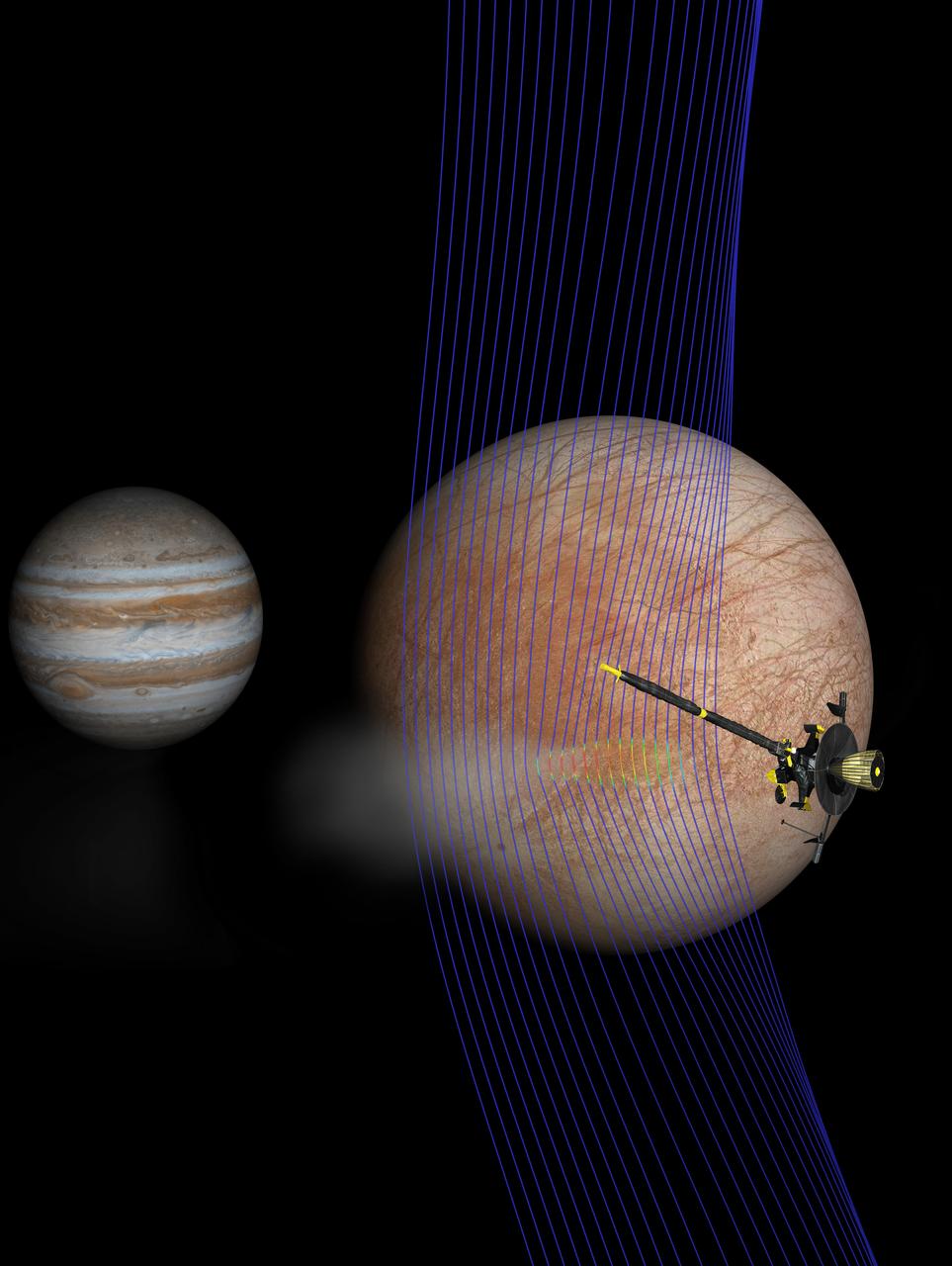
Artist's illustration of Jupiter and Europa (in the foreground) with the Galileo spacecraft after its pass through a plume erupting from Europa's surface.  A new computer simulation gives us an idea of how the magnetic field interacted with a plume. The magnetic field lines (depicted in blue) show how the plume interacts with the ambient flow of Jovian plasma. The red colors on the lines show more dense areas of plasma.  https://photojournal.jpl.nasa.gov/catalog/PIA21922
Europa Scene: Plume, Galileo, Magnetic Field (Artist's Concept)
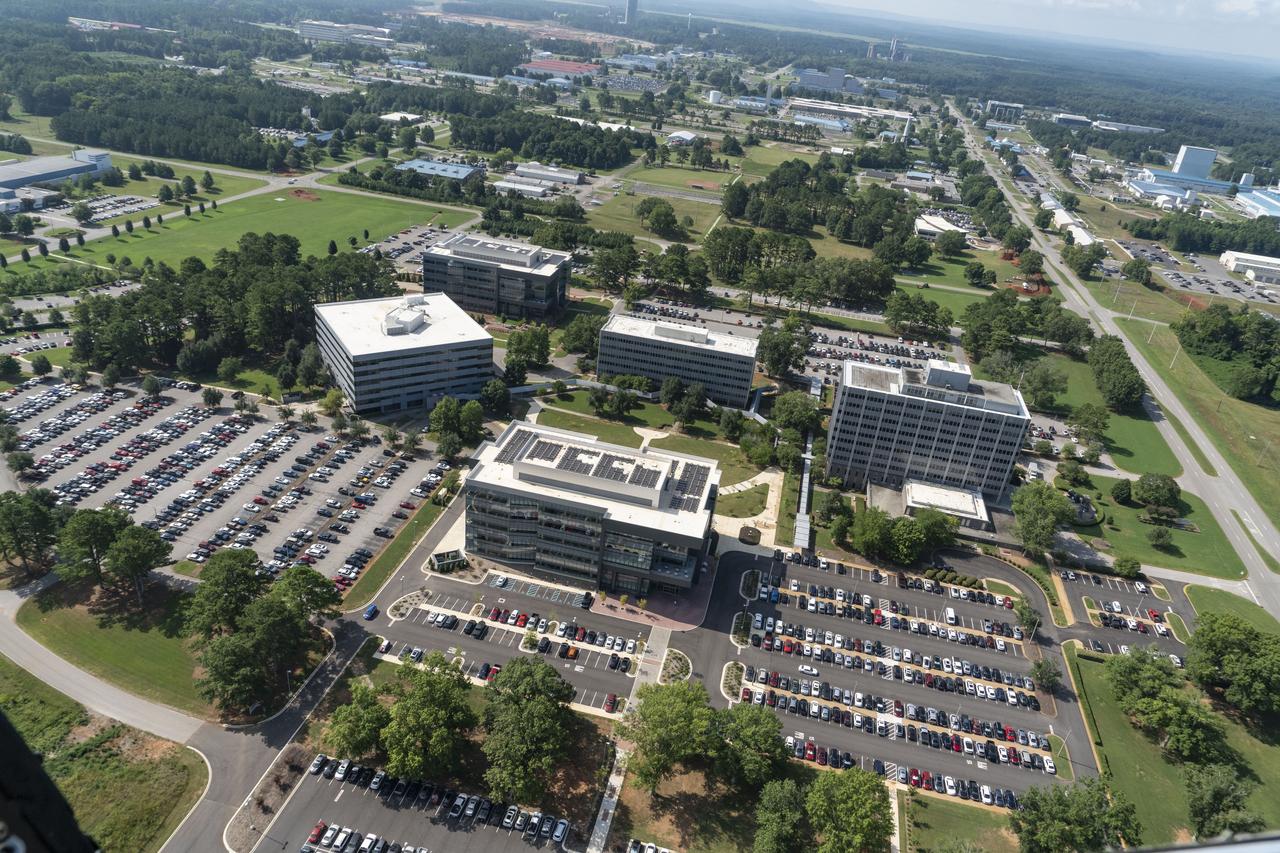
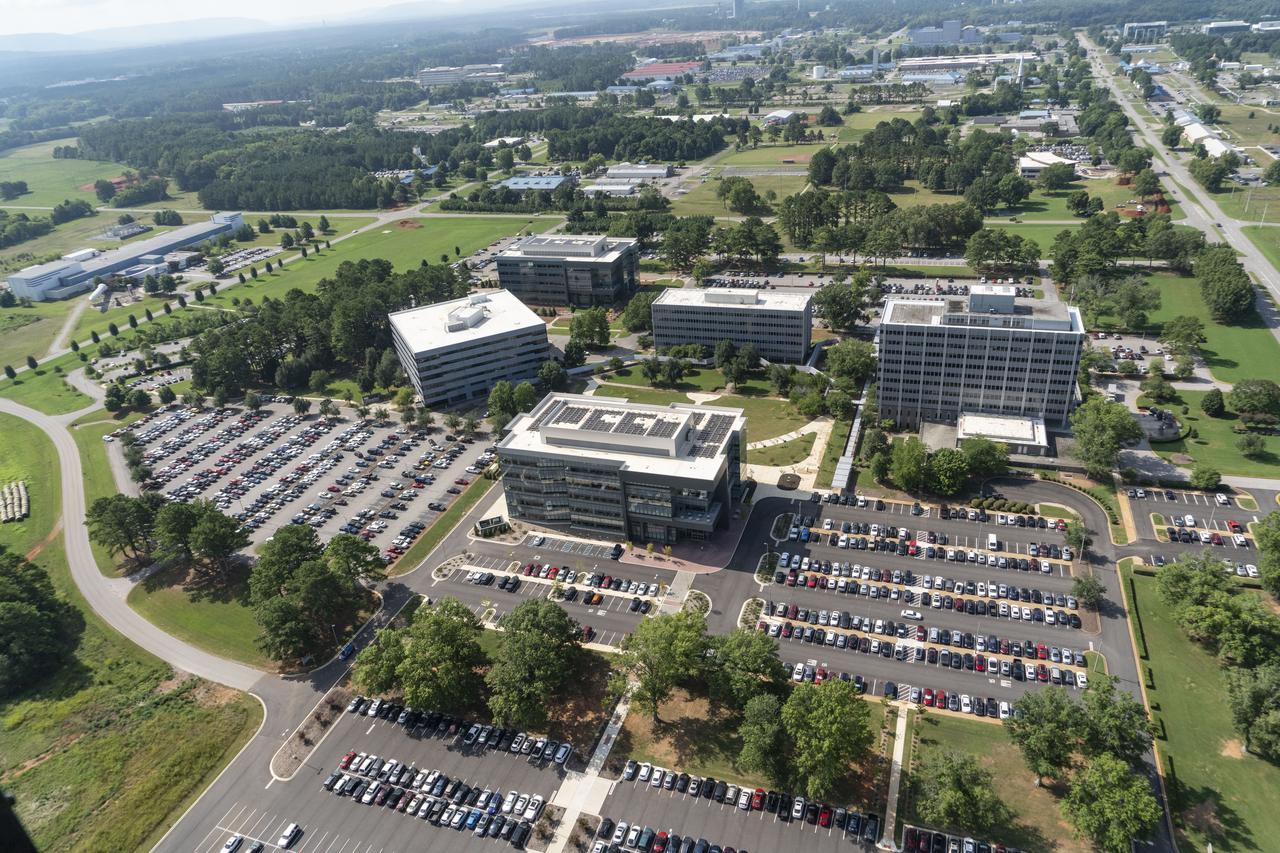
Aerial photograph of MSFC with the 4200 complex in the foreground
2019 Aerial Photographs
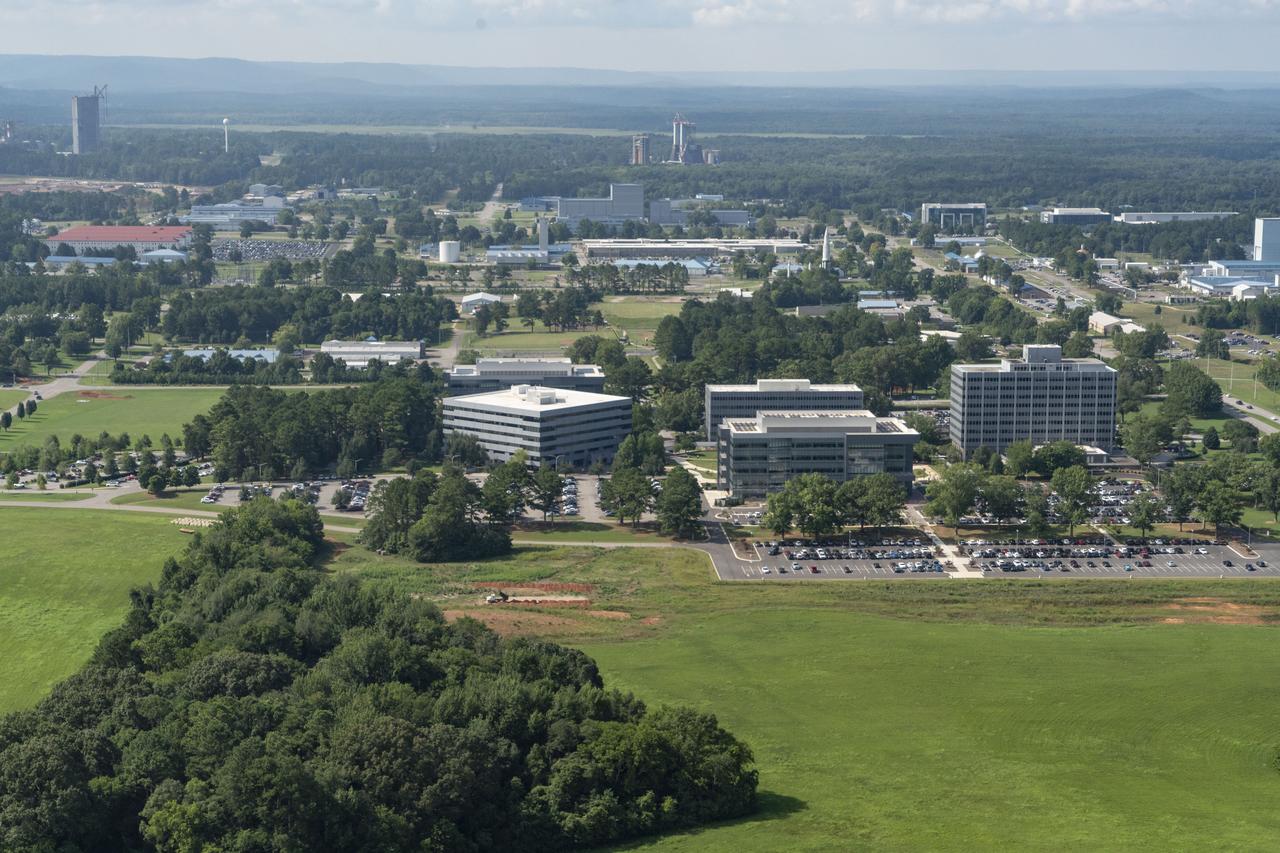
Aerial photograph of MSFC with the 4200 complex in the foreground
2019 Aerial Photographs
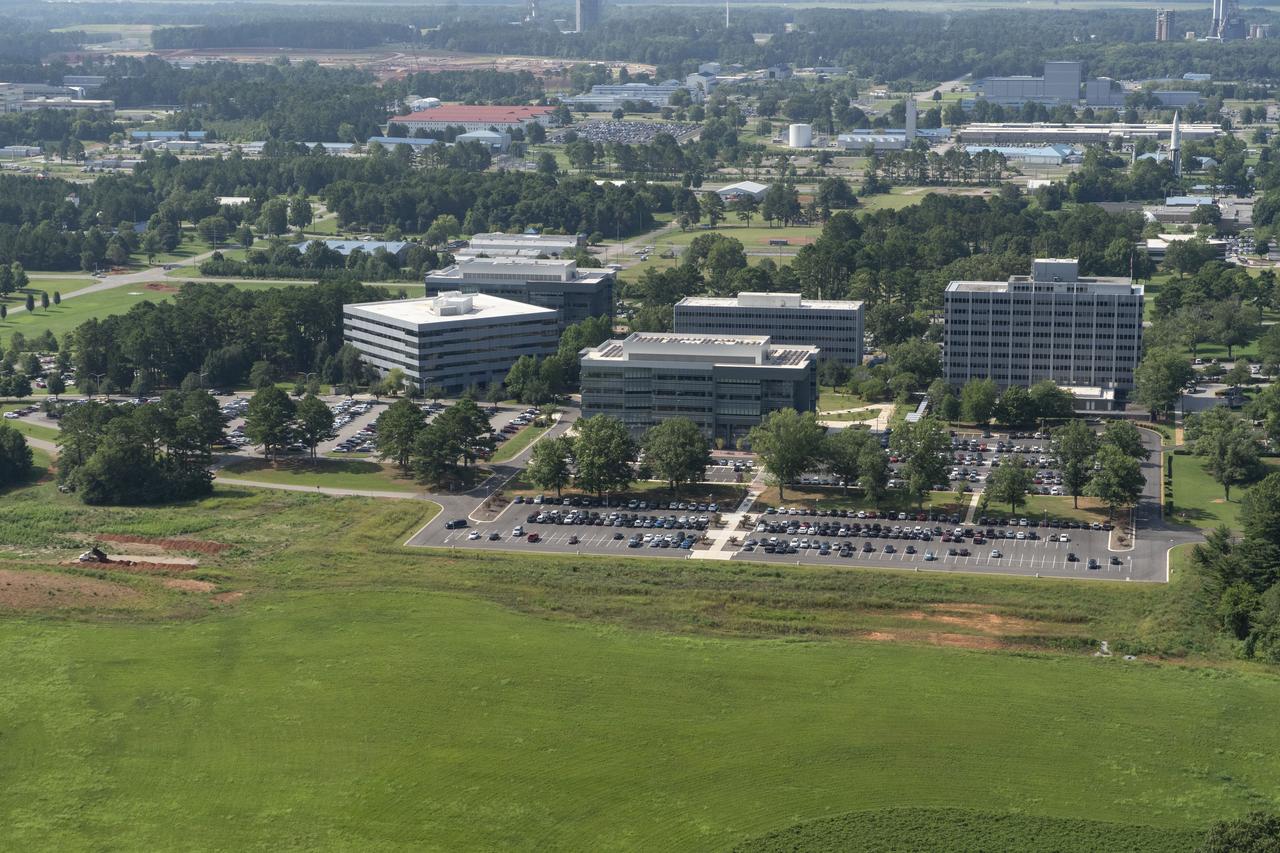
Aerial photograph of MSFC buildings with the 4200 complex in the foreground
2019 Aerial Photographs
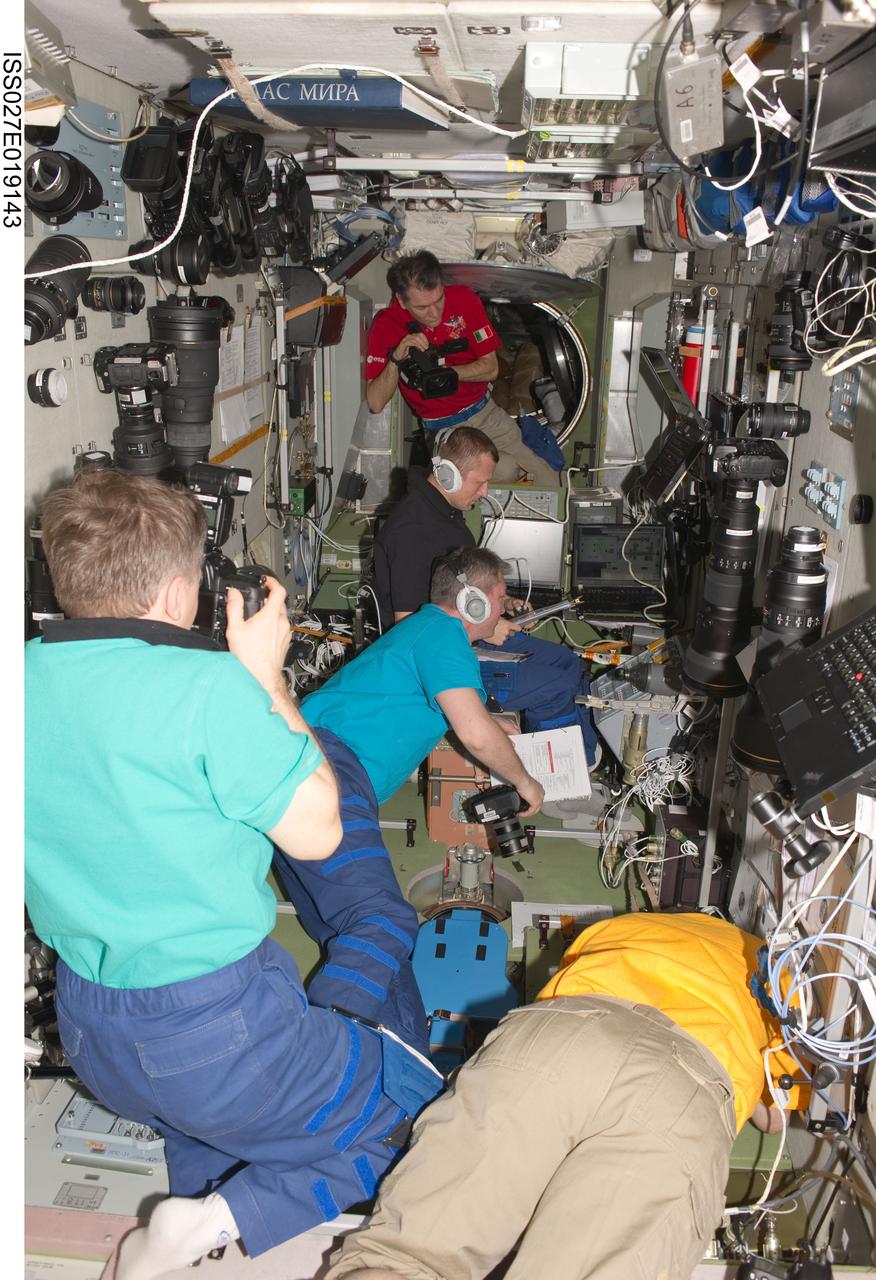
ISS027-E-019143 (29 April 2011) --- Expedition 27 crew members are busy at work in the Zvezda Service Module of the International Space Station during rendezvous and docking activities of the ISS Progress 42 supply vehicle. Pictured are Russian cosmonauts Andrey Borisenko (left foreground), Alexander Samokutyaev (center foreground) and Dmitry Kondratyev; along with European Space Agency astronaut Paolo Nespoli (background) and NASA astronaut Ron Garan (right foreground).
Crewmembers in the SM during Progress 42P Docking
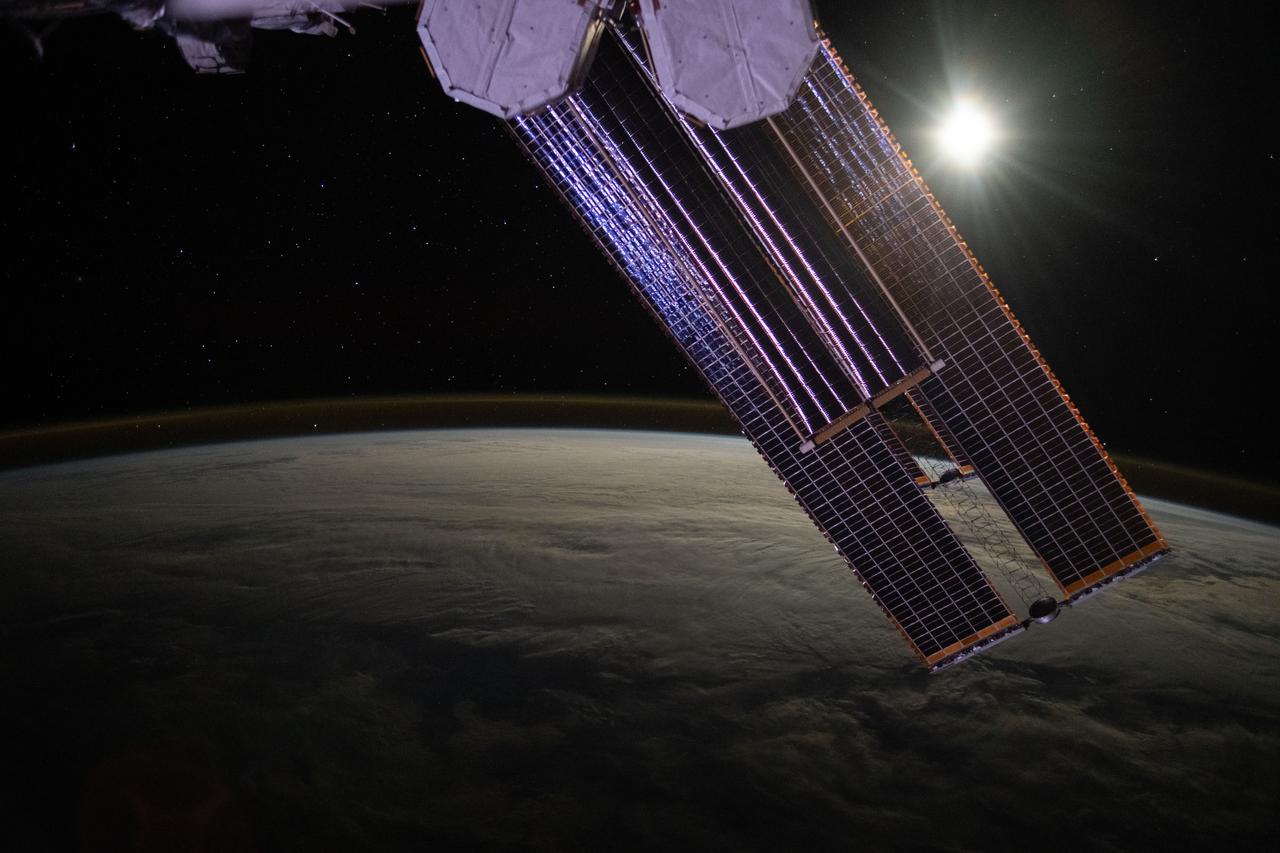
iss071e457356 (July 18, 2024) --- The Moon illuminates a cloud-covered Pacific Ocean as stars glitter in the background above the Earth's airglow. The International Space Station's solar arrays dominate the foreground as the orbital outpost soared 268 miles above.
The Moon illuminates a cloud-covered Pacific Ocean
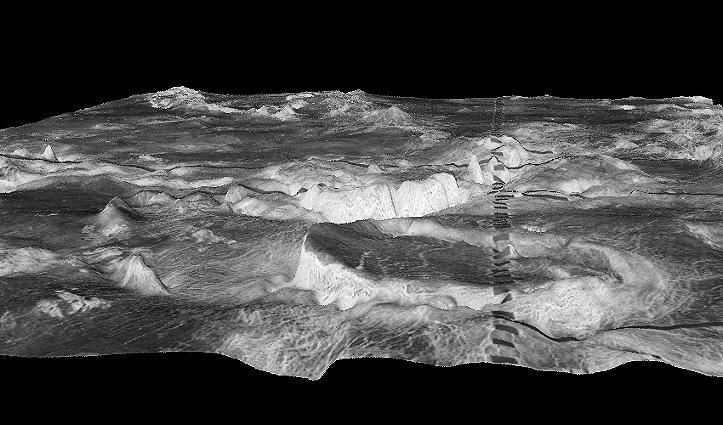
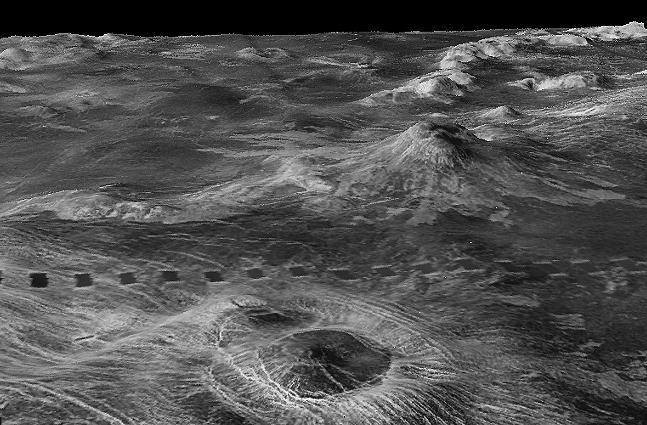
The view from NASA's Magellan spacecraft shows most of Galindo V-40 quadrangle looking east; Atete Corona, in the foreground, is a 600-km-long and about 450-km-wide, circular volcano-tectonic feature.  http://photojournal.jpl.nasa.gov/catalog/PIA00096
Three-dimensional perspective views of Venusian Terrains composed of reduced resolution left-looking synthetic-aperture radar images merged with altimetry data from the Magellan spacecraft.
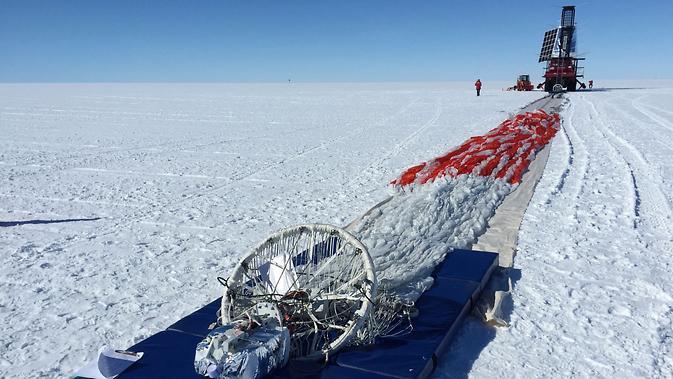
Prior to launch, the team laid out the parachute and hang lines in front of SPIDER, seen in the distance. The long-duration balloon that would carry SPIDER into the sky is attached to the end of the parachute shown here in the foreground.  http://photojournal.jpl.nasa.gov/catalog/PIA19177
SPIDER Readied for Launch
This archival photo shows the Voyager Proof Test Model (in the foreground right of center) undergoing a mechanical preparation and weight center of gravity test at NASA's Jet Propulsion Laboratory, Pasadena, California, on January 12, 1977.   https://photojournal.jpl.nasa.gov/catalog/PIA21476
Voyager Proof Test Model and Cleanroom
This composite view from NASA Voyager 2 shows Neptune on Triton horizon. The foreground in this computer generated view of Triton maria as they would appear from a point approximately 45 km above the surface.  http://photojournal.jpl.nasa.gov/catalog/PIA00344
Neptune on Triton Horizon
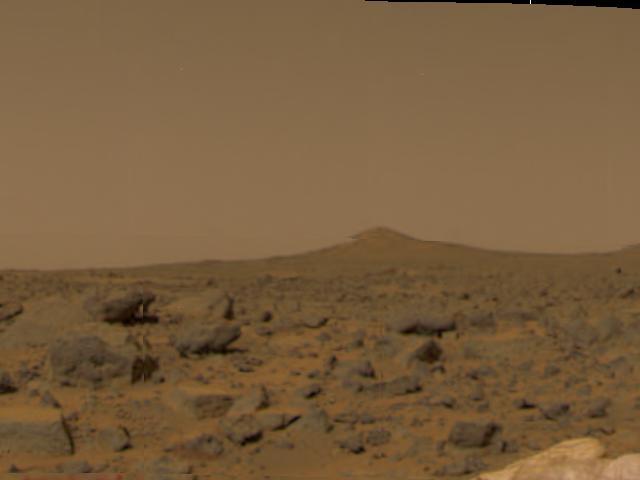
This image of the Martian surface was taken in the afternoon of Mars Pathfinder's first day on Mars. Taken by the Imager for Mars Pathfinder (IMP camera), the image shows a diversity of rocks strewn in the foreground. A hill is visible in the distance (the notch within the hill is an image artifact). Airbags are seen at the lower right.  http://photojournal.jpl.nasa.gov/catalog/PIA00612
Martian Surface & Pathfinder Airbags
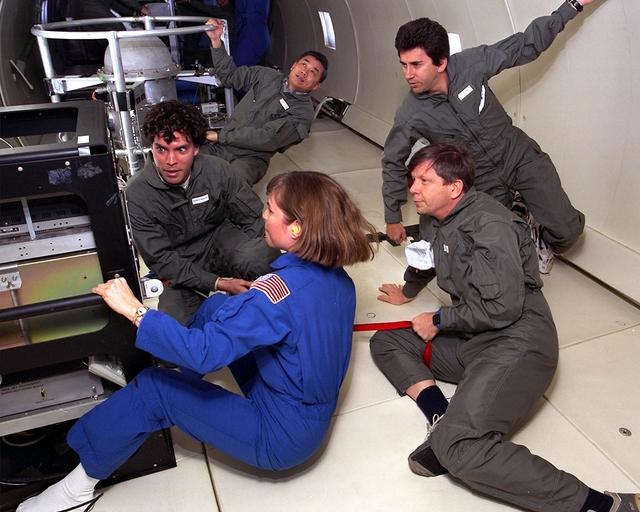
Mission specialist Janice Voss (center, foreground) trains with payload specialists Paul Rorney (right, background) and Roger Crouch (right, foreground) for the Materials Sciences Lab-1 (MSL-1) mission flown in 1997. They are aboard the NASA KC-135 low-g training aircraft.
Microgravity
Pioneer 10; Mission to Jupiter Project Manager Charlie Hall (center) leads the Pioneer staff through his efficient (and infamous) stand-up meeting  (also shown (L-foreground) Skip Nunamaker and (R-foreground) Richard Fimmel
ARC-1973-A73-9044-2
S98-16081 (10-29-98) --- Profile view of rear of Mission Control Center (MCC) featuring Mission Operations Director (MOD) console (foreground) and Spacecraft Communicator (CAPCOM) and Flight Director (FD) consoles (left background).  Astronaut Linda M. Godwin is at lower right foreground.
Photos taken in MCC during the launch of STS-95
Aerial photograph of MSFC buildings with the 4200 complex in the foreground and 4205 to the left
2019 Aerial Photographs
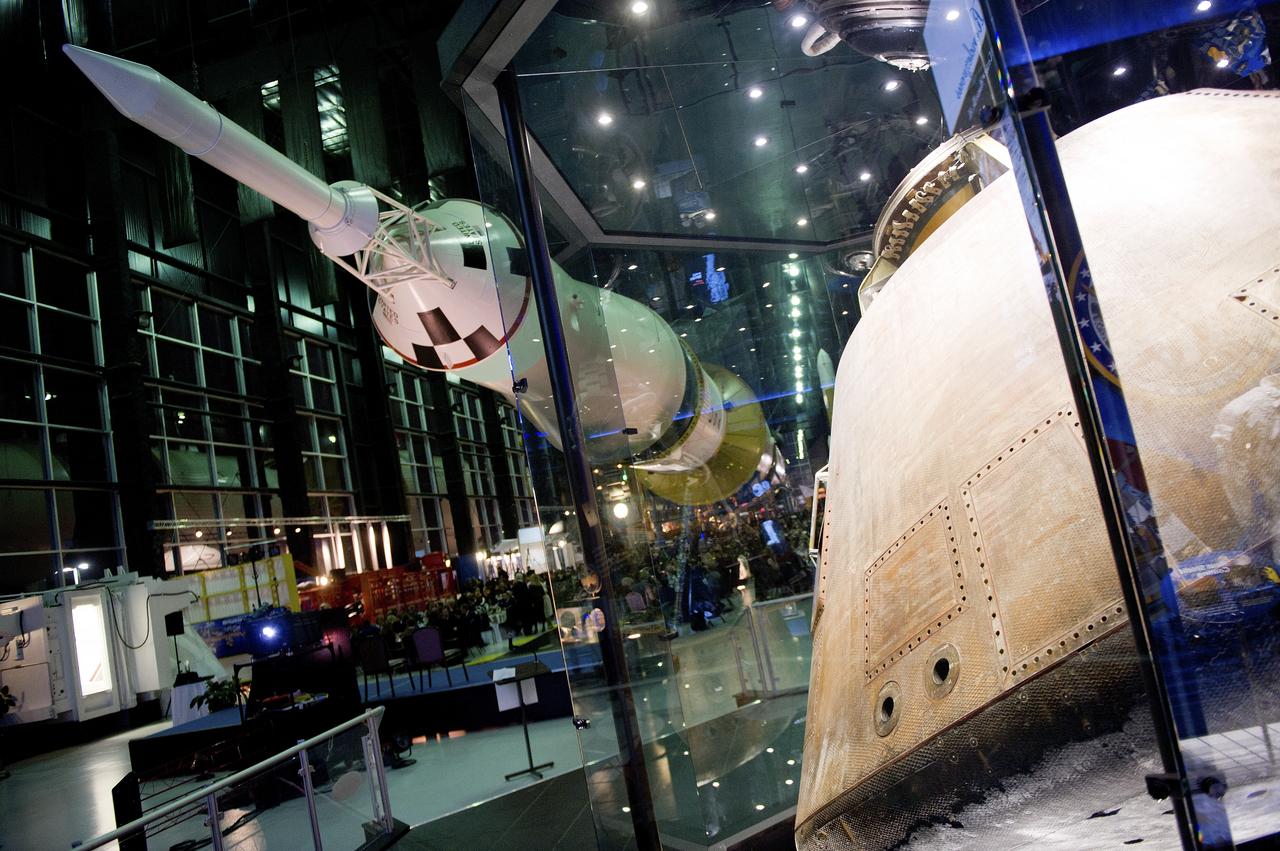
THE APOLLO 16 CAPSULE SITS ON DISPLAY IN THE FOREGROUND OF AN EVENT AT THE DAVIDSON CENTER.
1100071
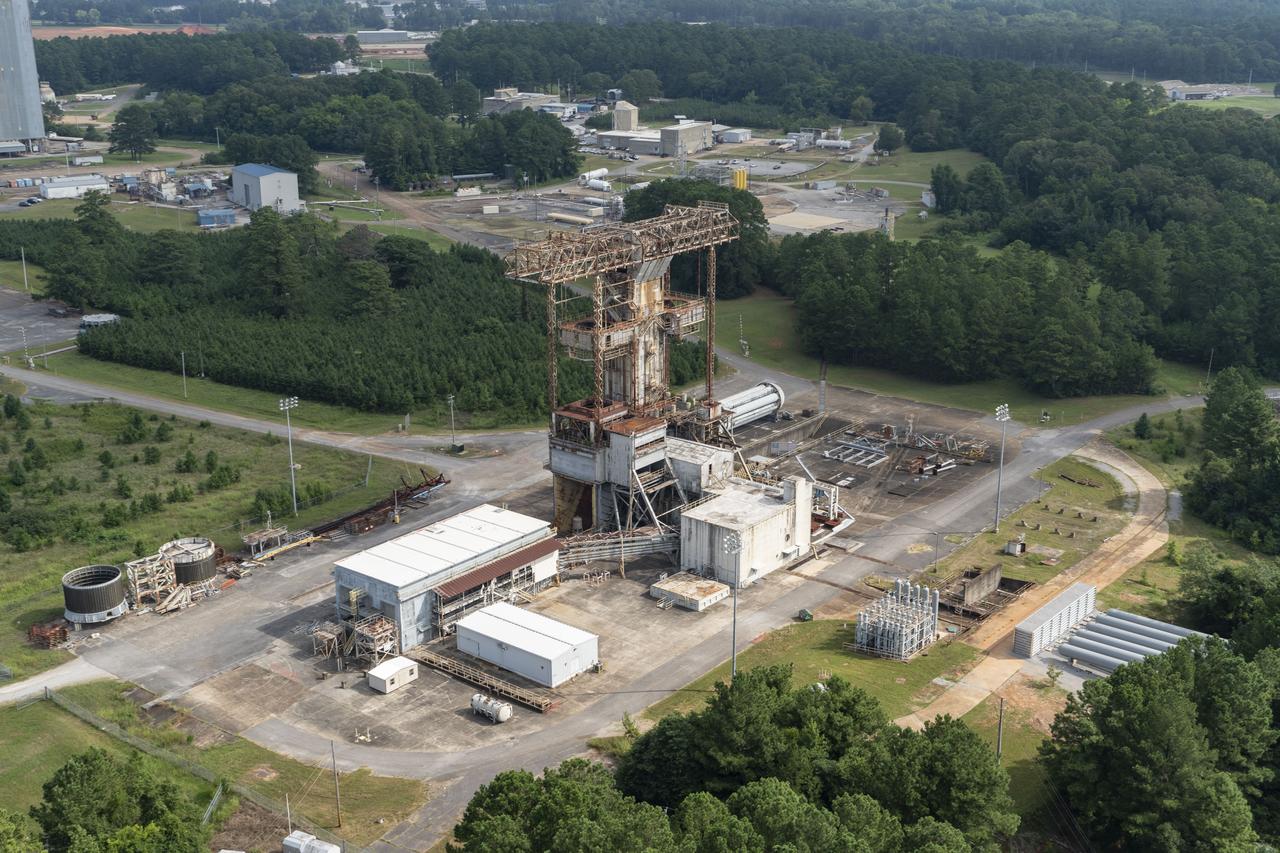
Aerial photograph of the MSFC West Test area with the T-Stand in the foreground
2019 Aerial Photographs
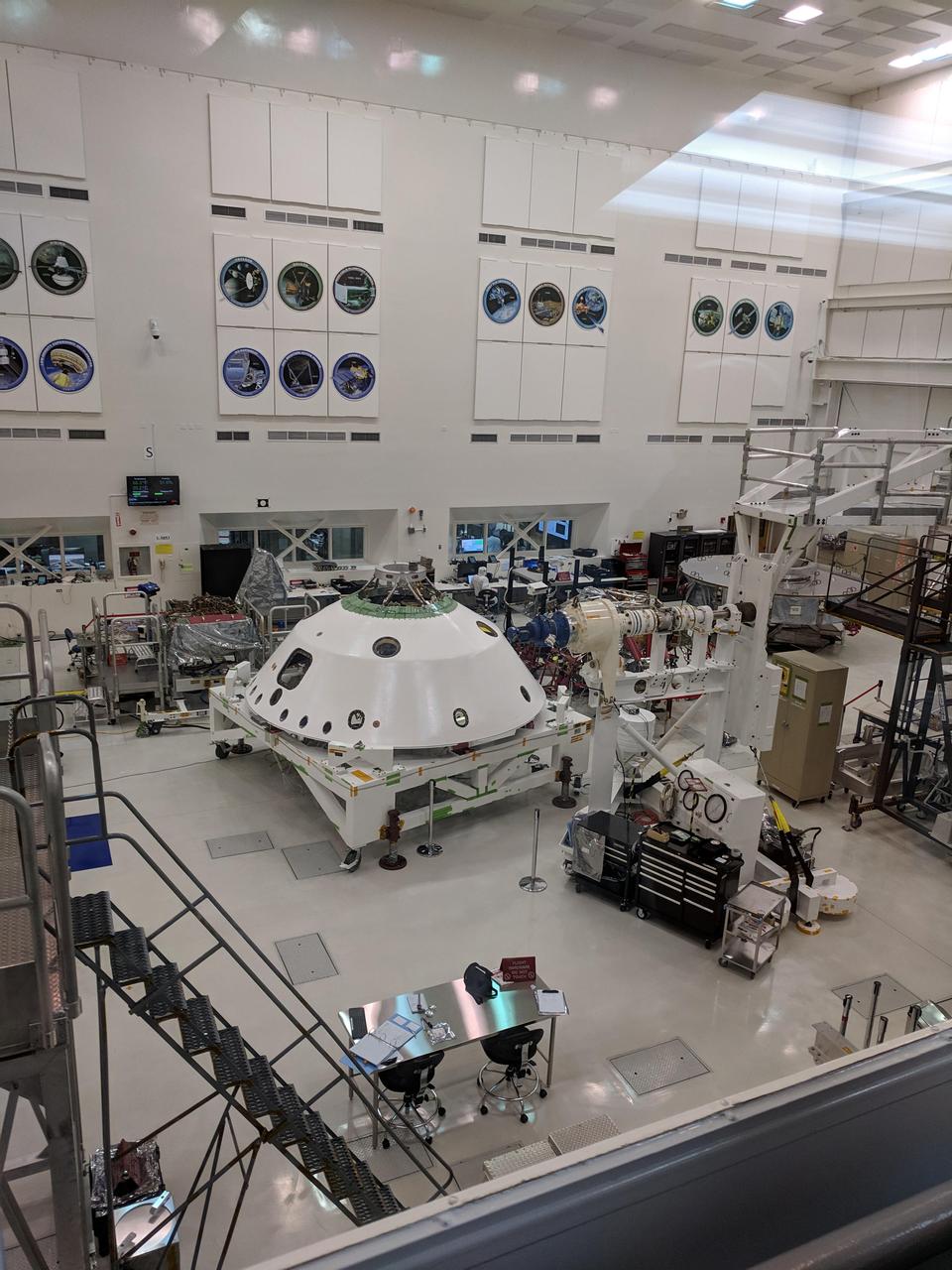
With the backshell that will help protect the Mars 2020 rover during its descent into the Martian atmosphere visible in the foreground, a technician on the project monitors the progress of Systems Test 1. Over two weeks in January 2019, 72 engineers and technicians assigned to the 2020 mission took over the High Bay 1 cleanroom in JPL's Spacecraft Assembly Facility to put the software and electrical systems aboard the mission's cruise, entry capsule, descent stage and rover through their paces.  https://photojournal.jpl.nasa.gov/catalog/PIA22966
Lonely Vigil
19-13-51-10:  Behind their Cosmonaut Hotel crew quarters in Baikonur, Kazakhstan, Expedition 39/40 Flight Engineer Steve Swanson of NASA (foreground, left), Soyuz Commander Alexander Skvortsov of the Russian Federal Space Agency (Roscosmos; foreground, center) and Flight Engineer Oleg Artemyev of Roscosmos (foreground, right) take a stroll down the Walk of Cosmonauts March 19. Behind Swanson is backup crewmember Barry Wilmore of NASA  and behind Artemyev is backup crewmember Elena Serova. Swanson, Skvortsov and Artemyev are scheduled to launch to the International Space Station March 26, Kazakh time, in the Soyuz TMA-12M spacecraft for a six-month mission.  NASA/Victor Zelentsov
jsc2014e026900
NASA researchers Curt Hanson (background) and Saravanakumaar Ramia (foreground) control the air taxi virtual reality flight simulator from computers during a test at NASA’s Armstrong Flight Research Center in Edwards, California in March 2024.
Air Taxi Passenger Comfort Simulator at NASA’s Armstrong Flight Research Center with Pilot
In the center foreground, NASA Curiosity rover arm holds the tool turret above a target called Wernecke on the John
Mars Stereo View from John
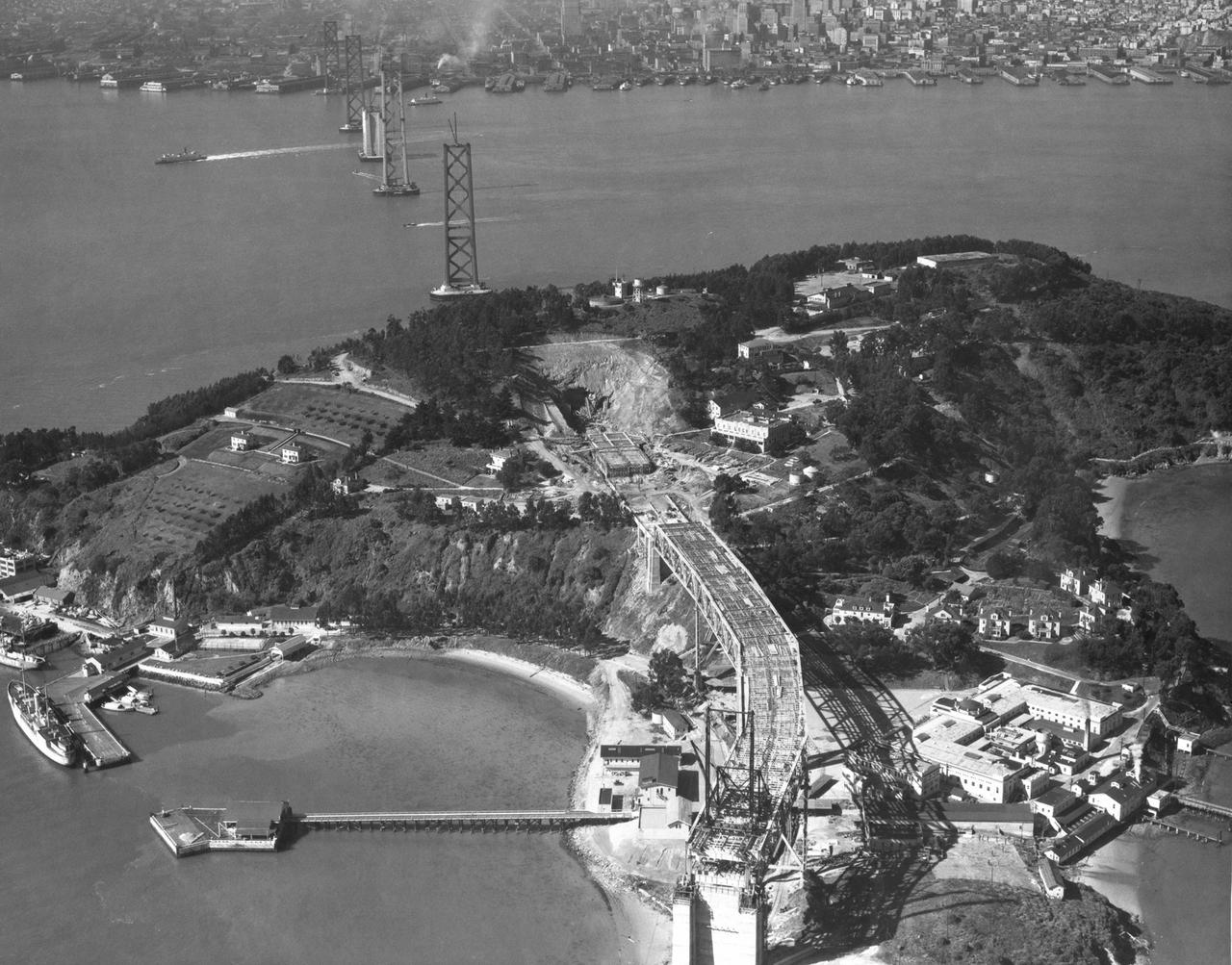
Navy San Franciso Bay Bridge Construction (looking west) toward San Francisco Yerba Buena Island in foreground
ARC-1935-A93-0075-7
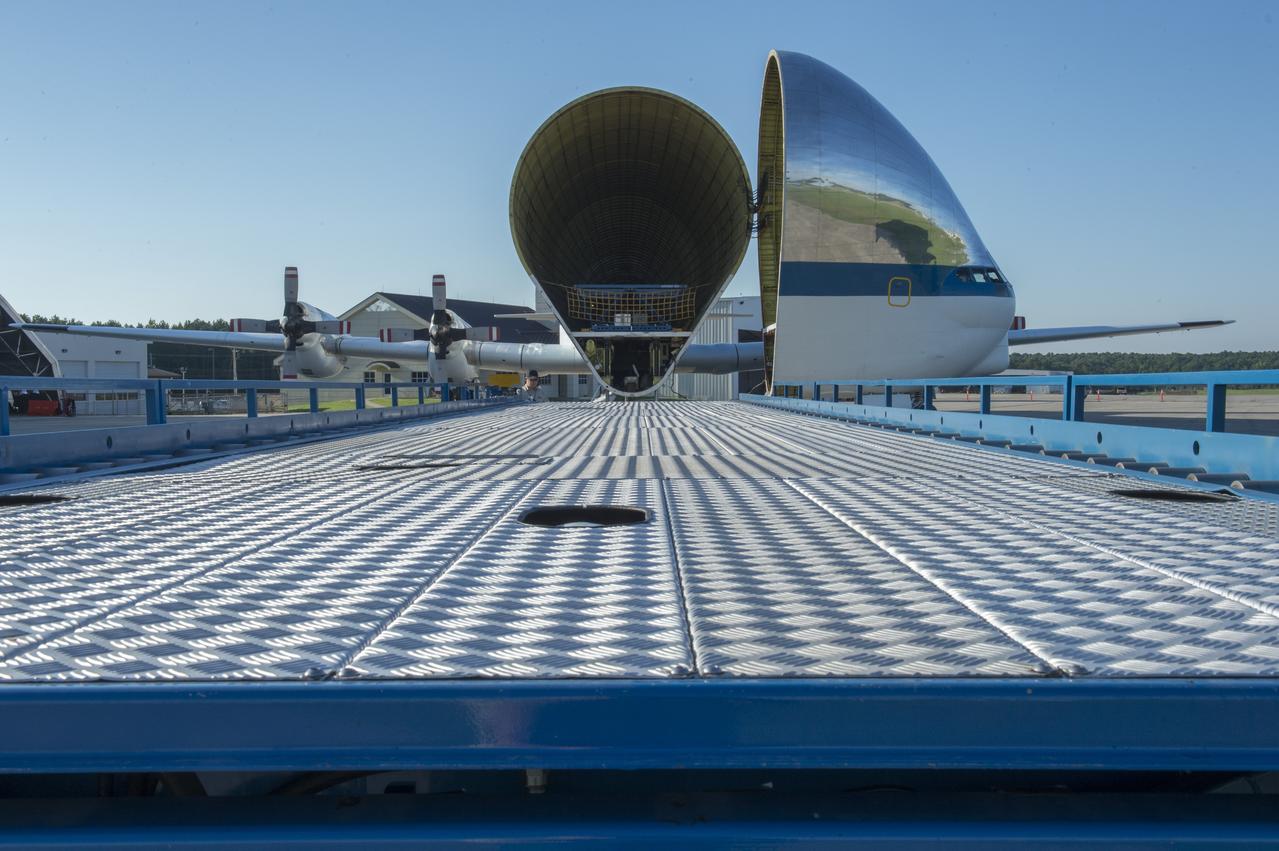
The platform which will be used to load the Orion stage adapter into NASA's Super Guppie aircraft is shown in the foreground with the Guppie aircraft in the background
MSFC-1700818
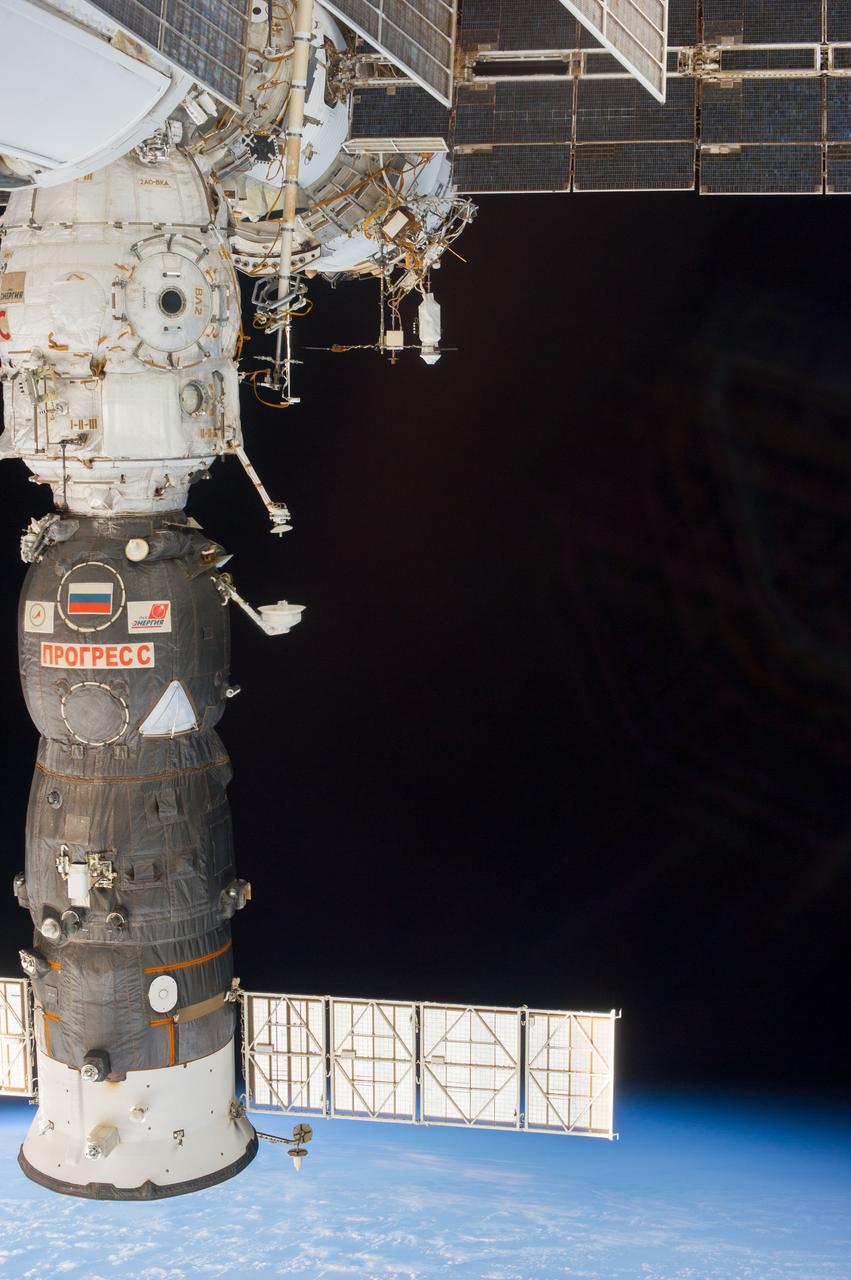
Earth observation taken during a day pass by the Expedition 37 crew. A docked Progress spacecraft is visible in the foreground.
Earth Observation taken during the Expedition 37 mission
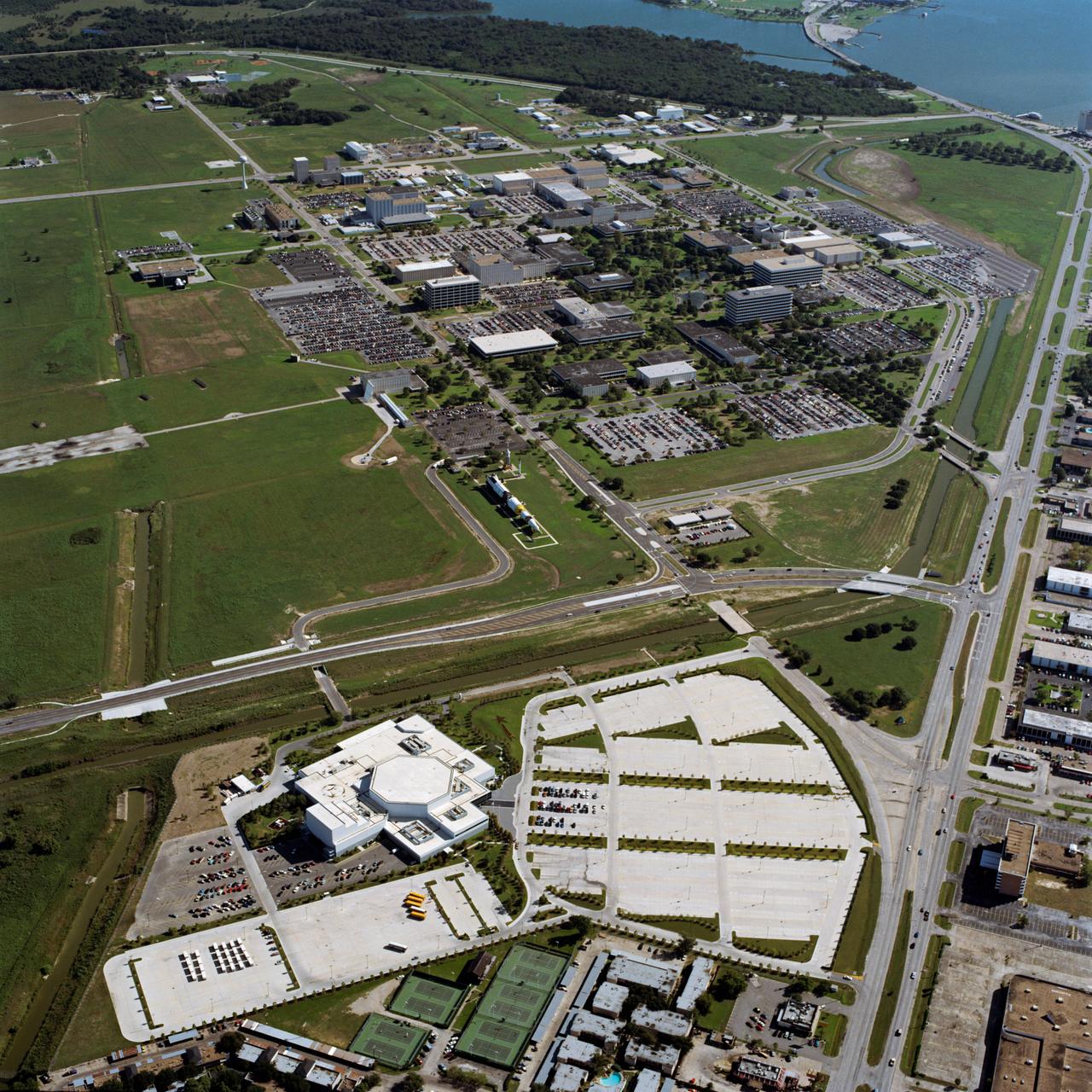
S93-45701 (1993) -- Aerial view of JSC with newly opened Space Center Houston in foreground. Photo credit: NASA
Aerial views of JSC site, Bldg 48 construction, and surrounding offsite areas
Dr. Wernher Von Braun, Dr. Eberhard Rees, and R.W. Cook at a press conference with cameras in the foreground.
Wernher von Braun
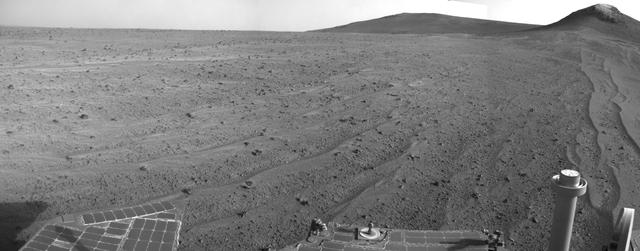
NASA Mars rover Opportunity captured this view southward just after completing a 338-foot 103-meter southward drive, in reverse, on Aug. 10, 2014. The foreground of this view from the rover Navcam includes the rear portion of the rover deck.
Opportunity Rear-Facing View Ahead After a Drive
This perspective view shows the city of Bhuj, India, in the foreground gray area after an earthquake in western India on January 26, 2001. This image was generated from NASA Landsat satellite and data from Shuttle Radar Topography Mission SRTM.
SRTM Perspective View with Landsat Overlay: Bhuj, India
This image from NASA Mars Rover Opportunity is from the edge of a football-field-size crater informally named Santa Maria. The rover upraised robotic arm, itself out of view, casts a dragon-shaped shadow in the foreground. 3D glasses are necessary.
Fisheye Stereo from Edge of Santa Maria Crater, Sol 2459
The foreground area is a portion of an area called Botany Bay between two ridges forming part of the western rim of Endeavour crater. NASA Mars Exploration Rover Opportunity recorded this mosaic view centered toward the southeast on Aug. 6, 2011.
Opportunity View Across Botany Bay and Endeavour on Sol 2678
This perspective view shows the city of Bhuj, India, in the foreground near the right side dark gray area. Bhuj and many other towns and cities nearby were almost completely destroyed by the January 26, 2001, earthquake in western India.
SRTM Perspective View with Landsat Overlay: Bhuj and Anjar, India
The view from NASA's Magellan spacecraft shows part of Galindo V40 quadrangle looking north; Nagavonyi Corona is in the foreground. Coronae are roughly circular, volcanic features believed to form over hot upwellings of magma within the Venusian mantle.  http://photojournal.jpl.nasa.gov/catalog/PIA00095
Three-dimensional perspective views of Venusian Terrains composed of reduced resolution left-looking synthetic-aperture radar images merged with altimetry data from the Magellan spacecraft.
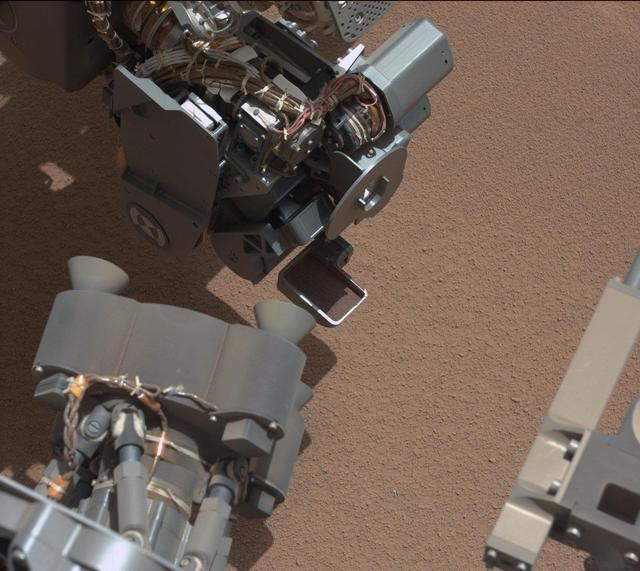
This image from NASA Curiosity shows a scoop full of sand and dust lifted by the rover first use of the scoop on its robotic arm. In the foreground, near bottom of this image, the bright object visible on the ground might be a piece of rover hardware.
View of Curiosity First Scoop Also Shows Bright Object
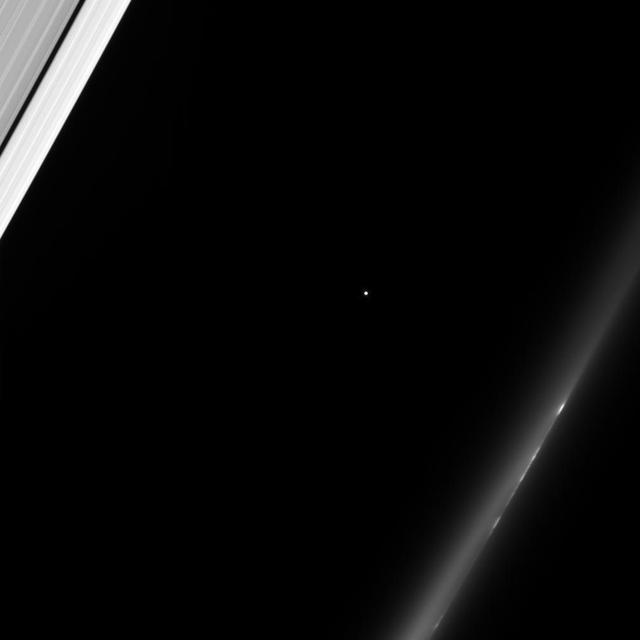
The Cassini spacecraft gazes toward a distant star as Saturn rings slip past in the foreground. At upper left is the outer A ring, with its dark Keeler Gap. At lower right, a train of bright clumps shuttles past in the wispy F ring
A Helpful Star
jsc2023e010191 (12/13/2022) --- LightCube CubeSat (foreground) and ARKSat-1 (background) await integration. Image courtesy of Jaime Sanchez de la Vega.
jsc2023e010191
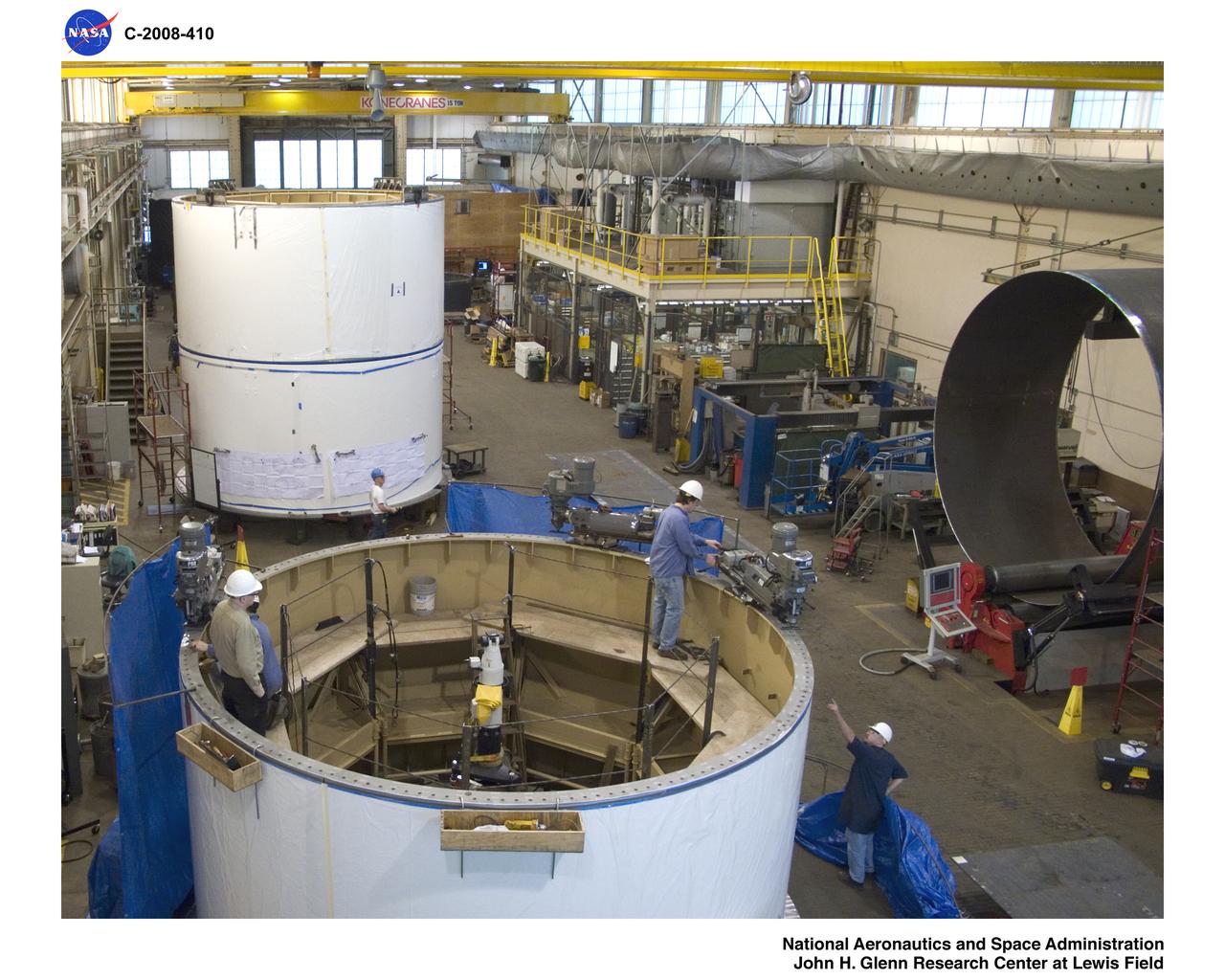
Inside Building 50, US-5 in foreground flange being milled, US-4 stacked on US-3 and steel rolled setting on Davi.
GRC-2008-C-00410
iss054e042061 (Feb. 11, 2018) --- A docked Russian Progress resupply ship dominates the foreground as Earth's limb is illuminated during an orbital night pass.
iss054e042061
PROPULSION AND STRUCTURAL TEST FACILITY (BUILDING 4572) AT THE GEORGE C. MARSHALL SPACE FLIGHT CENTER IN HUNTSVILLE, ALABAMA WITH THE SATURN S-1B STAGE (SA-) IN FOREGROUND
SATURN S-1B STAGE (SA-T) WITH PROPULSION AND STRUCTURAL TEST FAC
XV-15 Tilt Rotor (NASA-703) hovers at Ames Research Center with Navy P-3 Orion on flight line in foreground
ARC-1985-AC85-0186-38
CAPE CANAVERAL, Fla. – –  The Launch Control Center (foreground) and Vehicle Assembly Building at NASA's Kennedy Space Center in Florida.  Photo credit: NASA/Jack Pfaller
KSC-2009-4512
“MADE IS SPACE” 3D PRINTER IN FOREGROUND WITH MICROGRAVITY GLOVEBOX IN BACKGROUND, COVER PHOTO FOR NASA TECH BRIEFS MAGAZINE, JUNE 2014 ISSUE
1400494
NASA Ames Research Center interaction with environment. This evening shot was time exposed in front of the NASA Hangar with DC-8 (NASA-717) aircraft in the foreground.
ARC-1991-AC91-0121-23