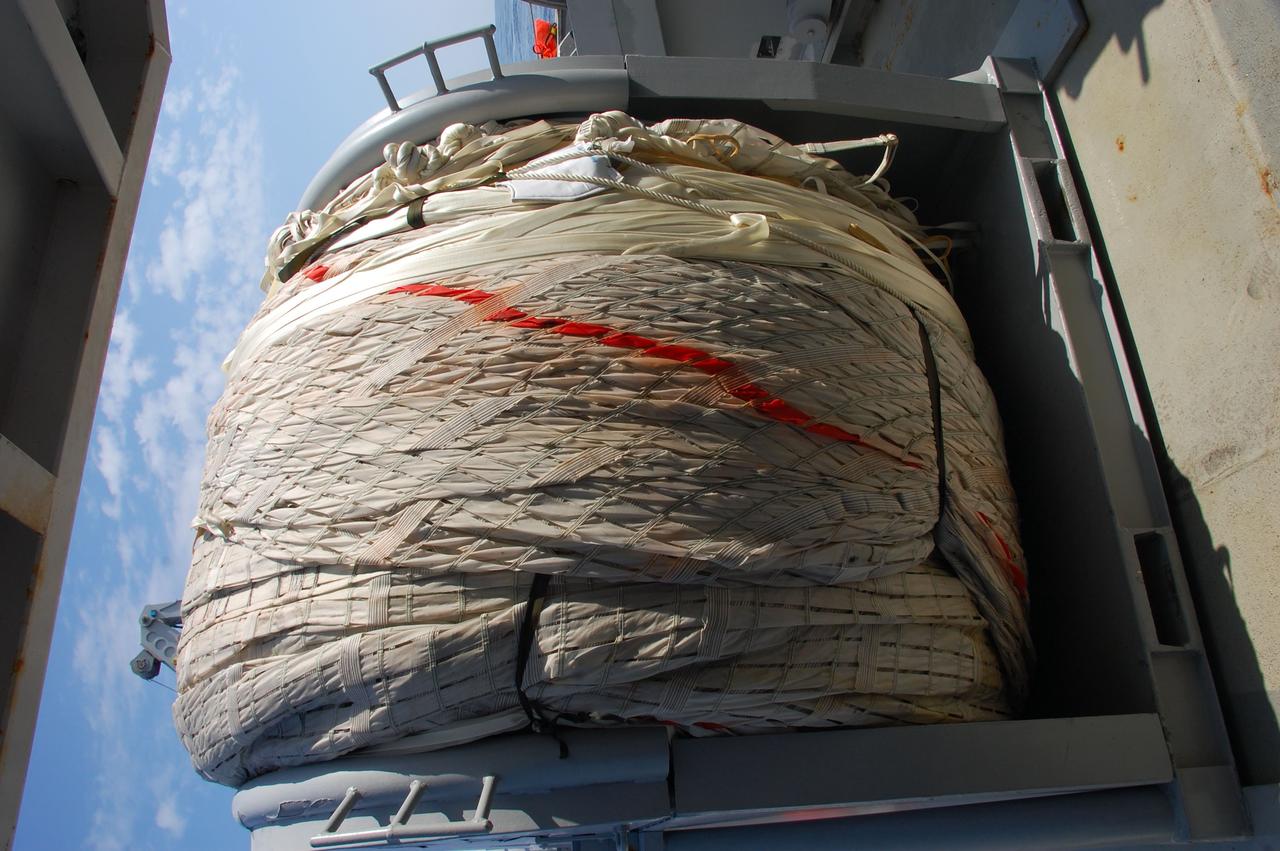
CAPE CANAVERAL, Fla. -- The massive parachute from the left spent booster is rolled up on the deck of Freedom Star, one of NASA's solid rocket booster retrieval ships, after recovery from the Atlantic Ocean and will be returned to Port Canaveral in Florida. The shuttle’s two solid rocket booster casings and associated flight hardware are recovered in the Atlantic Ocean after every launch by Liberty Star and Freedom Star. The boosters impact the Atlantic about seven minutes after liftoff and the retrieval ships are stationed about 10 miles from the impact area at the time of splashdown. After the spent segments are processed, they will be transported to Utah, where they will be refurbished and stored, if needed. Photo credit: NASA/Ben Smegelsky

CAPE CANAVERAL, Fla. -- Crew members in a skiff from Freedom Star, one of NASA's solid rocket booster retrieval ships, attach flotation devices, or buoys, to the parachute lines from the left spent booster from space shuttle Discovery's STS-133 launch. The shuttle’s two solid rocket booster casings and associated flight hardware are recovered in the Atlantic Ocean after every launch by Liberty Star and Freedom Star. The boosters impact the Atlantic about seven minutes after liftoff and the retrieval ships are stationed about 10 miles from the impact area at the time of splashdown. After the spent segments are processed, they will be transported to Utah, where they will be refurbished and stored, if needed. Photo credit: NASA/Ben Smegelsky
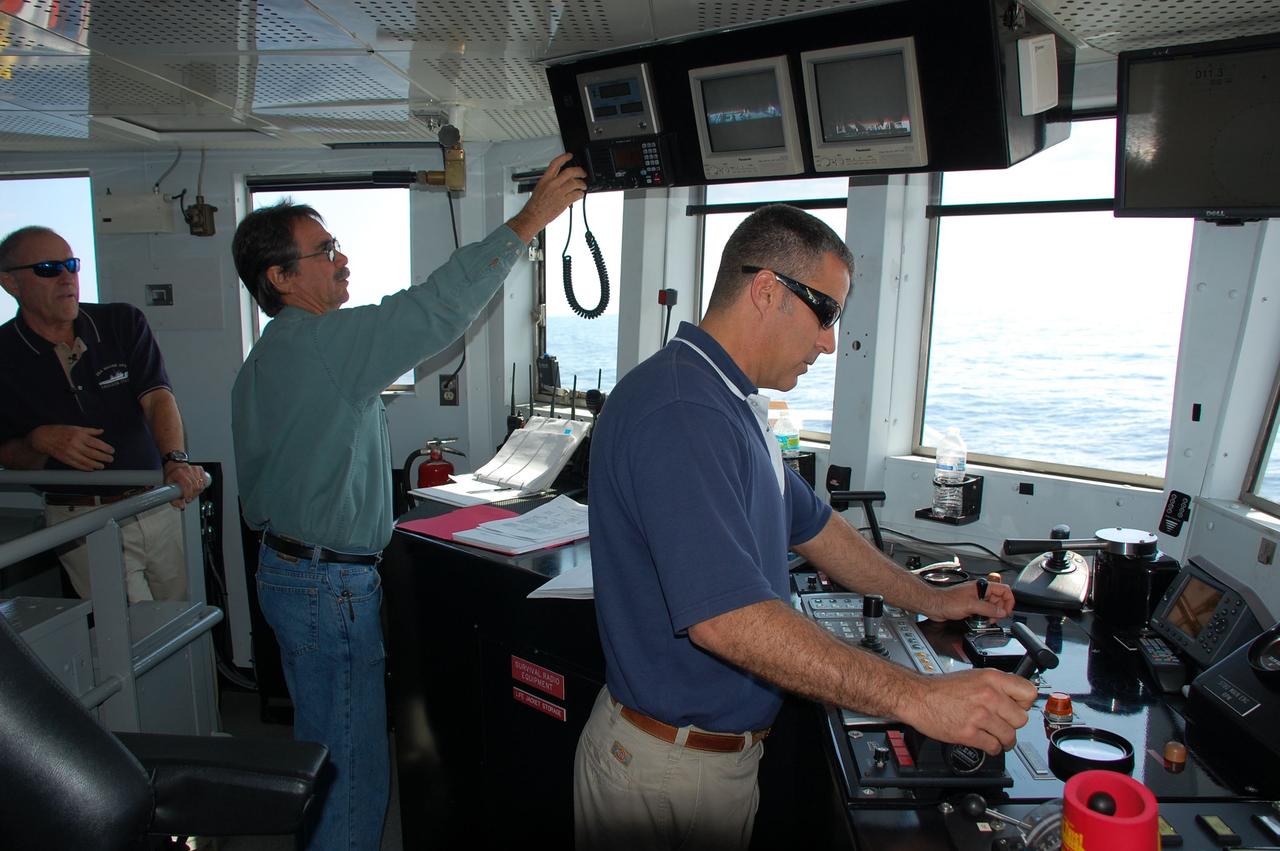
CAPE CANAVERAL, Fla. -- Captain Michael Nicholas mans the helm of Freedom Star, one of NASA's solid rocket booster retrieval ships, while John Fischbeck, Manager of Vessel Operations and Senior SRB Retrieval Supervisor, and Walt Adams, SRB Retrieval and Dive Supervisor, assist. The ship's crew members are recovering the left spent booster bobbing in the Atlantic Ocean from space shuttle Discovery's STS-133 launch. The shuttle’s two solid rocket booster casings and associated flight hardware are recovered in the Atlantic Ocean after every launch by Liberty Star and Freedom Star. The boosters impact the Atlantic about seven minutes after liftoff and the retrieval ships are stationed about 10 miles from the impact area at the time of splashdown. After the spent segments are processed, they will be transported to Utah, where they will be refurbished and stored, if needed. Photo credit: NASA/Ben Smegelsky
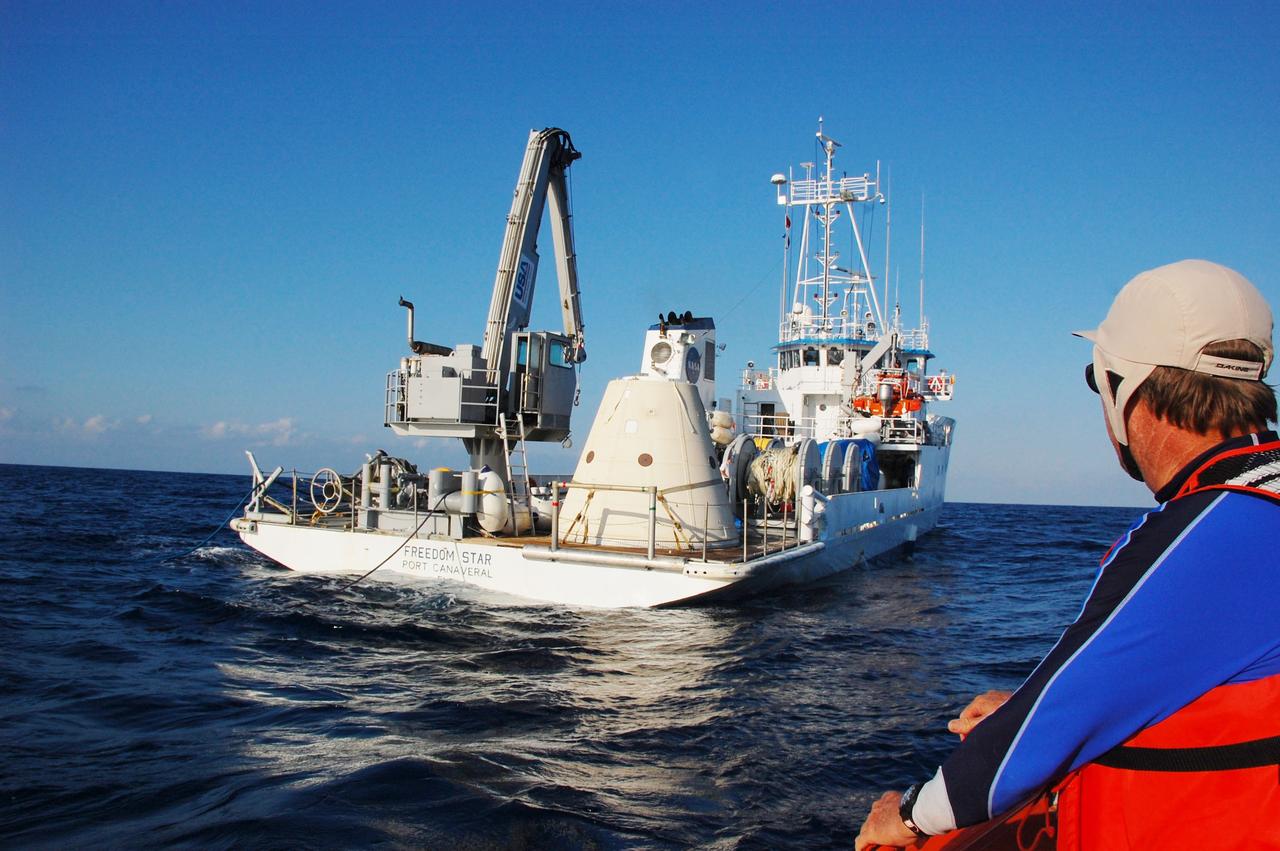
CAPE CANAVERAL, Fla. -- Crew members in a skiff from Freedom Star, one of NASA's solid rocket booster retrieval ships, look back at the vessel toward the left spent booster nose cap, which was recovered from the Atlantic Ocean and now secured on the deck for delivery back to Port Canaveral in Florida. The shuttle’s two solid rocket booster casings and associated flight hardware are recovered in the Atlantic Ocean after every launch by Liberty Star and Freedom Star. The boosters impact the Atlantic about seven minutes after liftoff and the retrieval ships are stationed about 10 miles from the impact area at the time of splashdown. After the spent segments are processed, they will be transported to Utah, where they will be refurbished and stored, if needed. Photo credit: NASA/Ben Smegelsky
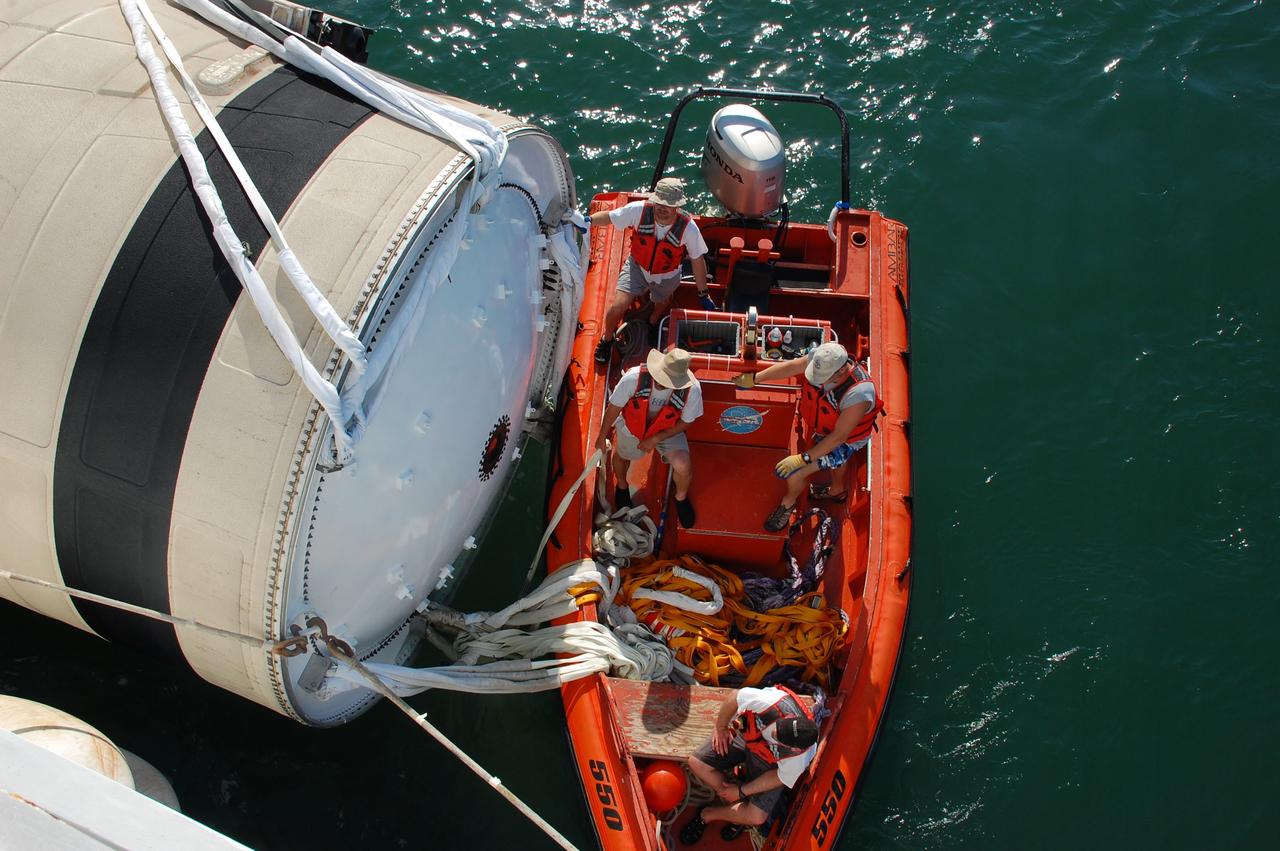
CAPE CANAVERAL, Fla. -- Crew members from Freedom Star, one of NASA's solid rocket booster retrieval ships, check the securing of the left spent booster from space shuttle Discovery's final launch, to the vessel, before continuing on the Hangar AF at Cape Canaveral Air Force Station. The shuttle’s two solid rocket booster casings and associated flight hardware are recovered in the Atlantic Ocean after every launch by Liberty Star and Freedom Star. The boosters impact the Atlantic about seven minutes after liftoff and the retrieval ships are stationed about 10 miles from the impact area at the time of splashdown. After the spent segments are processed, they will be transported to Utah, where they will be refurbished and stored, if needed. Photo credit: NASA/Ben Smegelsky
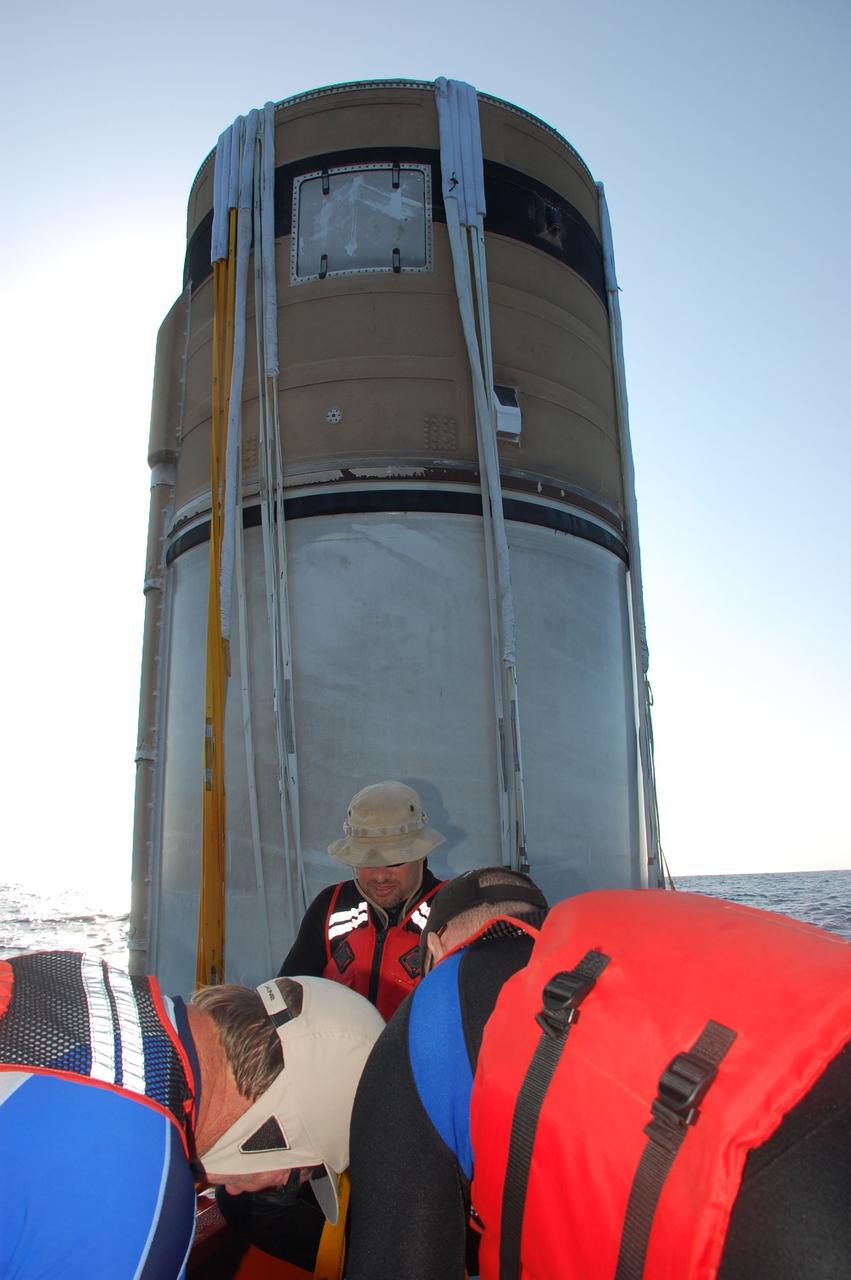
CAPE CANAVERAL, Fla. -- Crew members in a skiff from Freedom Star, one of NASA's solid rocket booster retrieval ships, attach a hose between the left spent booster and the vessel that will facilitate debris and water clearing and the pumping in of air in so the booster can float horizontally on the water's surface for towing back to Port Canaveral in Florida. The shuttle’s two solid rocket booster casings and associated flight hardware are recovered in the Atlantic Ocean after every launch by Liberty Star and Freedom Star. The boosters impact the Atlantic about seven minutes after liftoff and the retrieval ships are stationed about 10 miles from the impact area at the time of splashdown. After the spent segments are processed, they will be transported to Utah, where they will be refurbished and stored, if needed. Photo credit: NASA/Ben Smegelsky
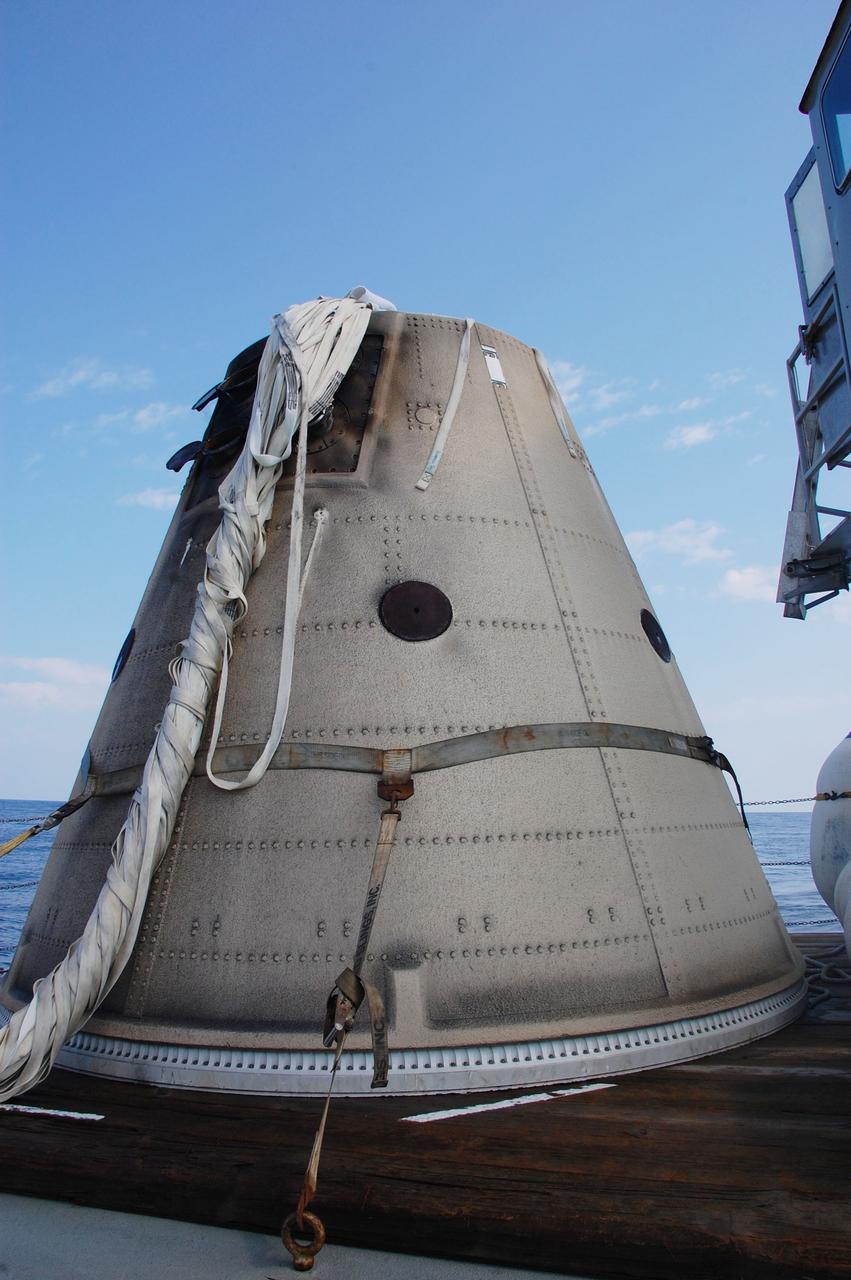
CAPE CANAVERAL, Fla. -- The left spent booster nose cap from space shuttle Discovery's final launch is secured to a pallet on Freedom Star, one of NASA's solid rocket booster retrieval ships and will be returned to Port Canaveral in Florida. The shuttle’s two solid rocket booster casings and associated flight hardware are recovered in the Atlantic Ocean after every launch by Liberty Star and Freedom Star. The boosters impact the Atlantic about seven minutes after liftoff and the retrieval ships are stationed about 10 miles from the impact area at the time of splashdown. After the spent segments are processed, they will be transported to Utah, where they will be refurbished and stored, if needed. Photo credit: NASA/Ben Smegelsky
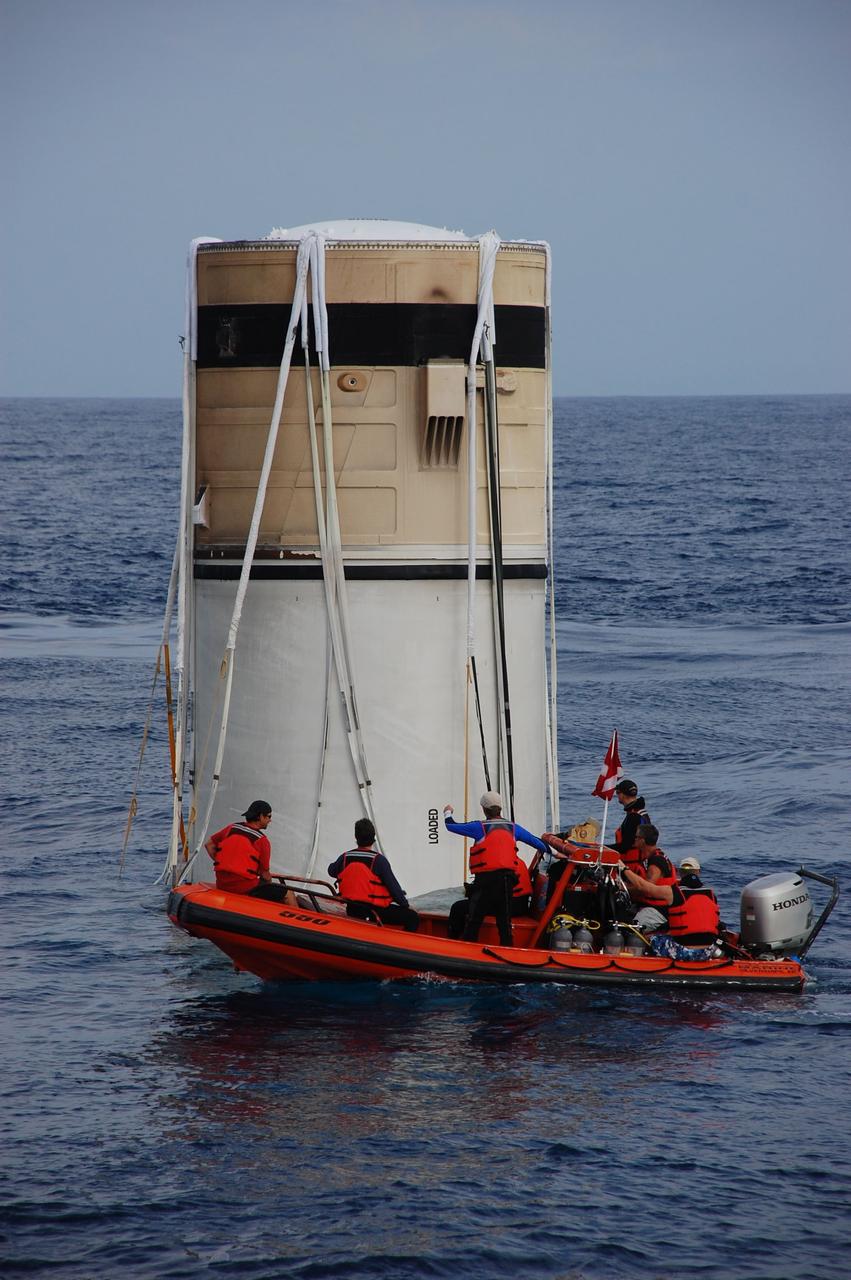
CAPE CANAVERAL, Fla. -- Crew members from Freedom Star, one of NASA's solid rocket booster retrieval ships, use a skiff to approach the left spent booster bobbing in the Atlantic Ocean after space shuttle Discovery's STS-133 launch. The shuttle’s two solid rocket booster casings and associated flight hardware are recovered in the Atlantic Ocean after every launch by Liberty Star and Freedom Star. The boosters impact the Atlantic about seven minutes after liftoff and the retrieval ships are stationed about 10 miles from the impact area at the time of splashdown. After the spent segments are processed, they will be transported to Utah, where they will be refurbished and stored, if needed. Photo credit: NASA/Ben Smegelsky
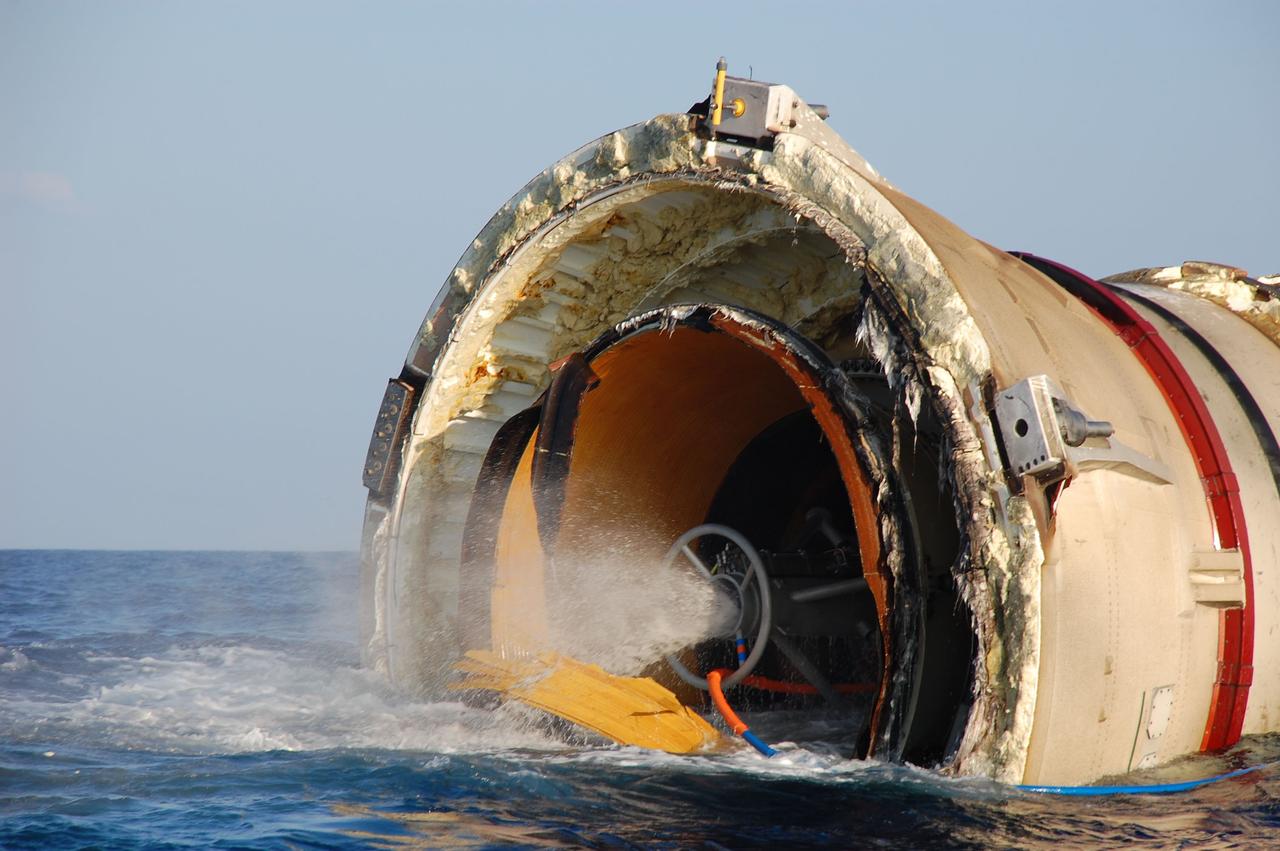
CAPE CANAVERAL, Fla. -- The left spent booster from space shuttle Discovery's final launch is seen floating on the water's surface while pumps on Freedom Star, one of NASA's solid rocket booster retrieval ships, push debris and water out of the booster, replacing with air to facilitate floating for its return to Port Canaveral in Florida. The shuttle’s two solid rocket booster casings and associated flight hardware are recovered in the Atlantic Ocean after every launch by Liberty Star and Freedom Star. The boosters impact the Atlantic about seven minutes after liftoff and the retrieval ships are stationed about 10 miles from the impact area at the time of splashdown. After the spent segments are processed, they will be transported to Utah, where they will be refurbished and stored, if needed. Photo credit: NASA/Ben Smegelsky
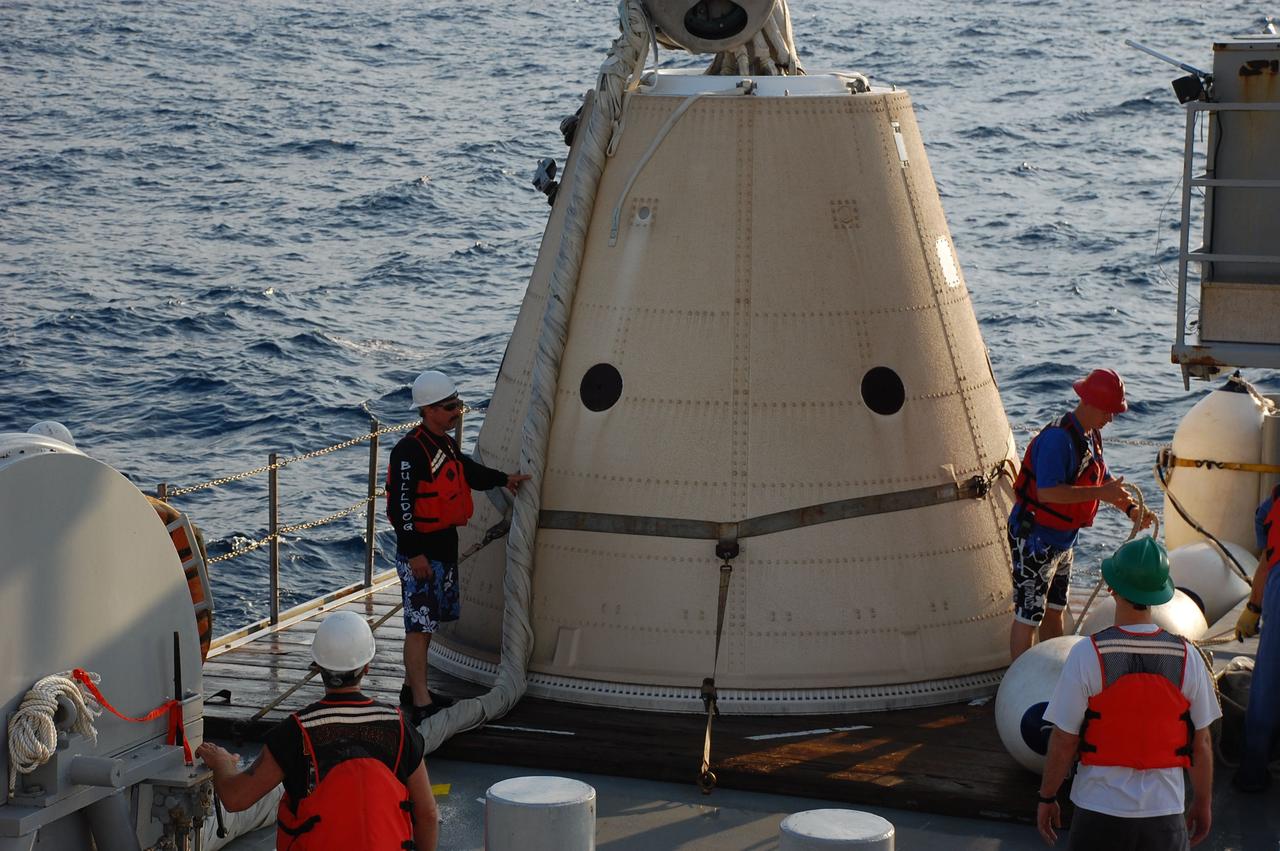
CAPE CANAVERAL, Fla. -- Crew members from Freedom Star, one of NASA's solid rocket booster retrieval ships, have recovered and secured the left spent booster nose cap to a pallet on the ship's deck after space shuttle Discovery's STS-133 launch. The shuttle’s two solid rocket booster casings and associated flight hardware are recovered in the Atlantic Ocean after every launch by Liberty Star and Freedom Star. The boosters impact the Atlantic about seven minutes after liftoff and the retrieval ships are stationed about 10 miles from the impact area at the time of splashdown. After the spent segments are processed, they will be transported to Utah, where they will be refurbished and stored, if needed. Photo credit: NASA/Ben Smegelsky
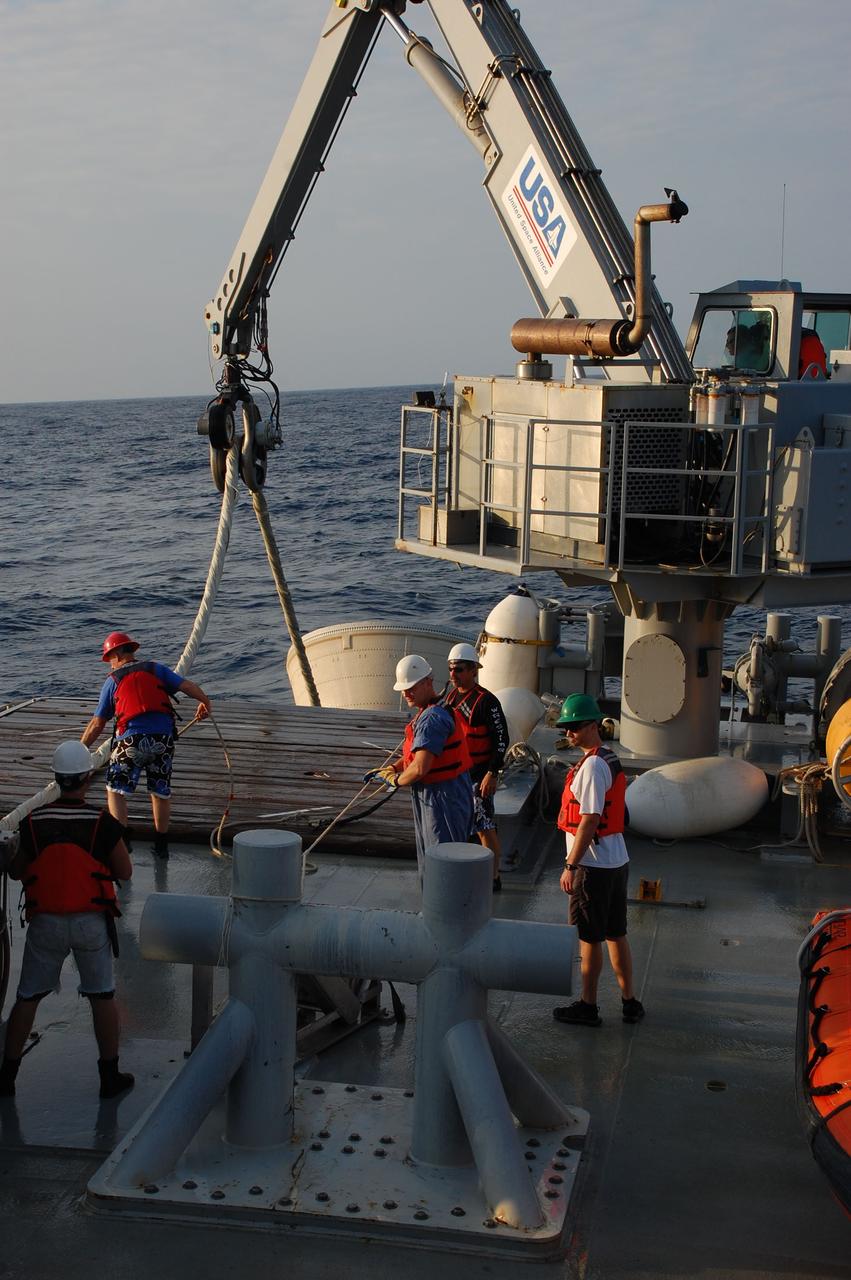
CAPE CANAVERAL, Fla. -- Crew members from Freedom Star, one of NASA's solid rocket booster retrieval ships, use a crane to pull the left spent booster nose cap out of the Atlantic Ocean after space shuttle Discovery's STS-133 launch. The shuttle’s two solid rocket booster casings and associated flight hardware are recovered in the Atlantic Ocean after every launch by Liberty Star and Freedom Star. The boosters impact the Atlantic about seven minutes after liftoff and the retrieval ships are stationed about 10 miles from the impact area at the time of splashdown. After the spent segments are processed, they will be transported to Utah, where they will be refurbished and stored, if needed. Photo credit: NASA/Ben Smegelsky
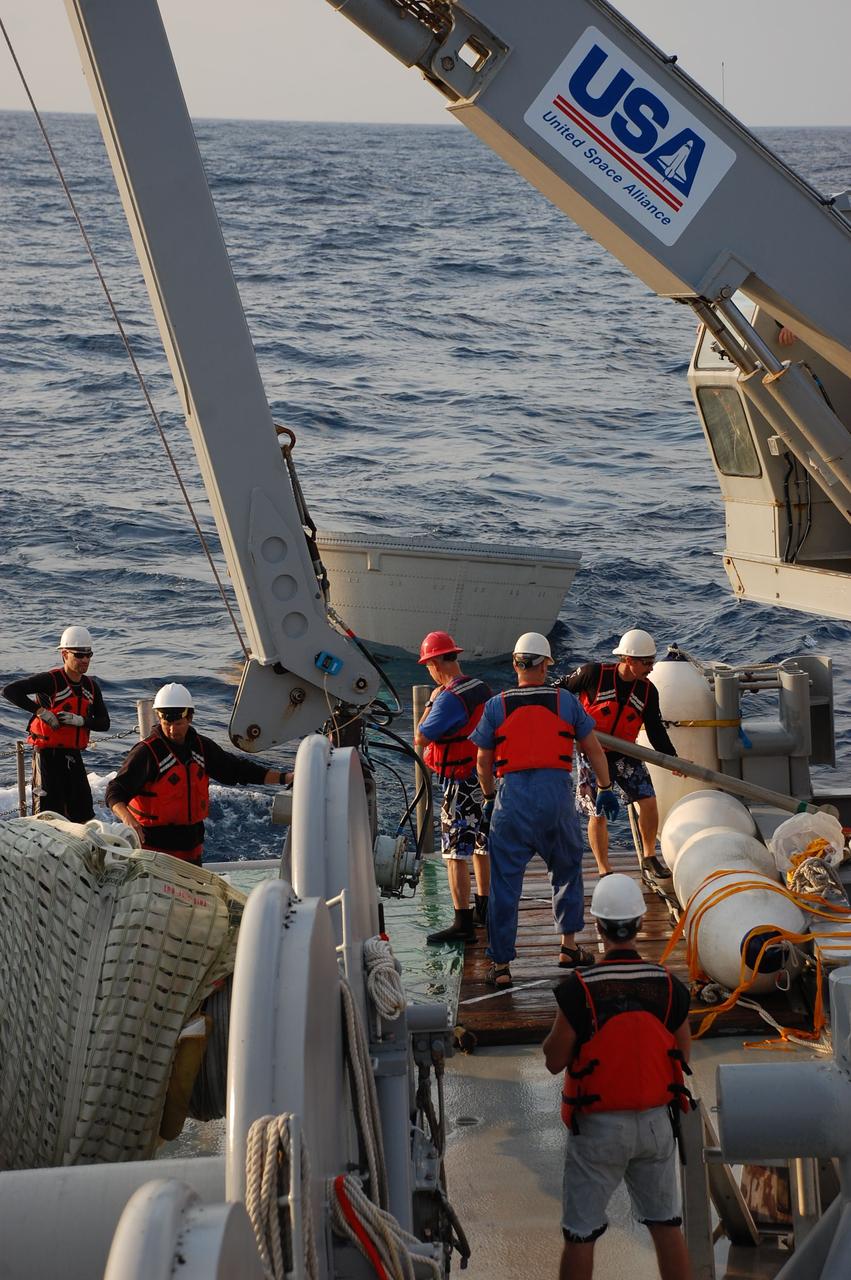
CAPE CANAVERAL, Fla. -- Crew members from Freedom Star, one of NASA's solid rocket booster retrieval ships, recover the left spent booster nose cap from the Atlantic Ocean after space shuttle Discovery's STS-133 launch. The shuttle’s two solid rocket booster casings and associated flight hardware are recovered in the Atlantic Ocean after every launch by Liberty Star and Freedom Star. The boosters impact the Atlantic about seven minutes after liftoff and the retrieval ships are stationed about 10 miles from the impact area at the time of splashdown. After the spent segments are processed, they will be transported to Utah, where they will be refurbished and stored, if needed. Photo credit: NASA/Ben Smegelsky
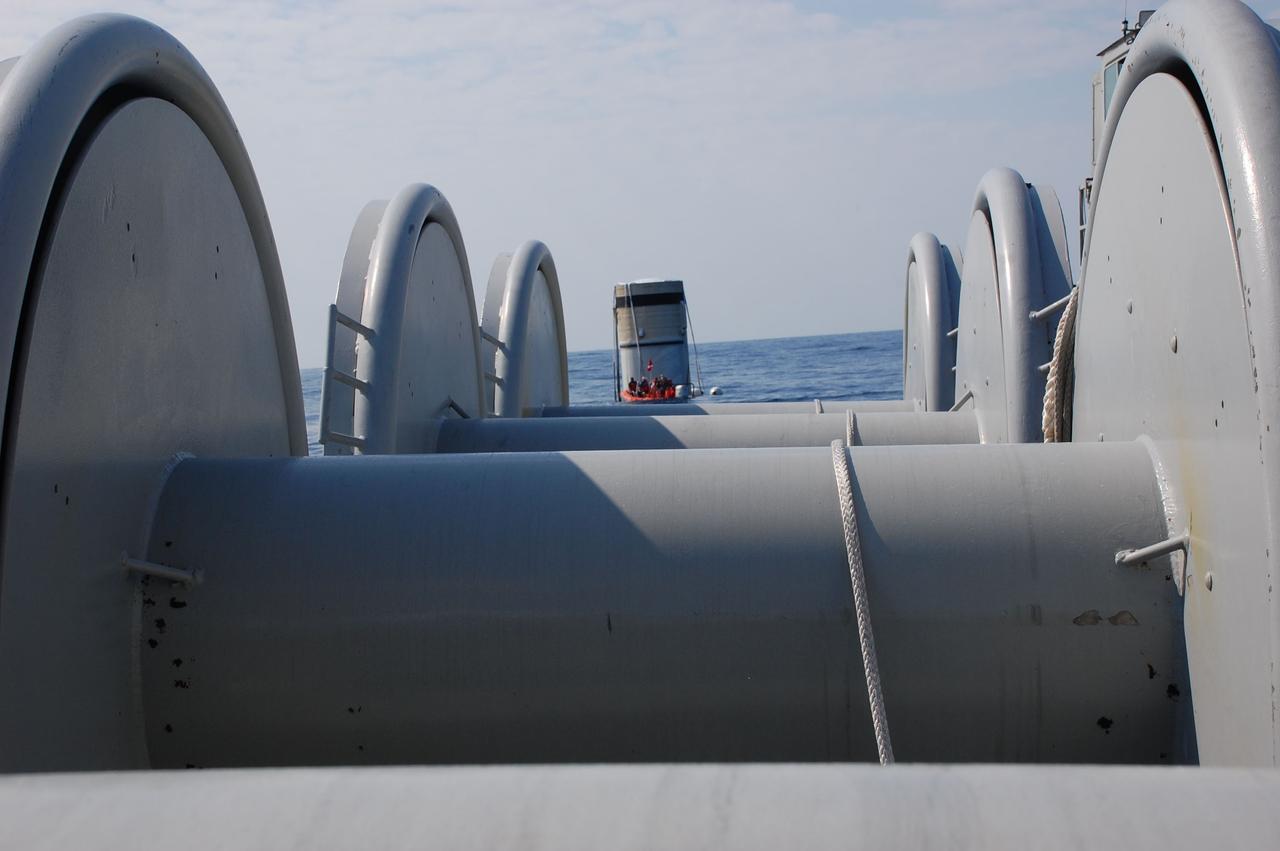
CAPE CANAVERAL, Fla. -- This image taken through a winding and storage device on Freedom Star, one of NASA's solid rocket booster retrieval ships, shows crew members in a skiff attaching flotation devices, or buoys to the parachute lines from the left spent booster after space shuttle Discovery's STS-133 launch. The shuttle’s two solid rocket booster casings and associated flight hardware are recovered in the Atlantic Ocean after every launch by Liberty Star and Freedom Star. The boosters impact the Atlantic about seven minutes after liftoff and the retrieval ships are stationed about 10 miles from the impact area at the time of splashdown. After the spent segments are processed, they will be transported to Utah, where they will be refurbished and stored, if needed. Photo credit: NASA/Ben Smegelsky
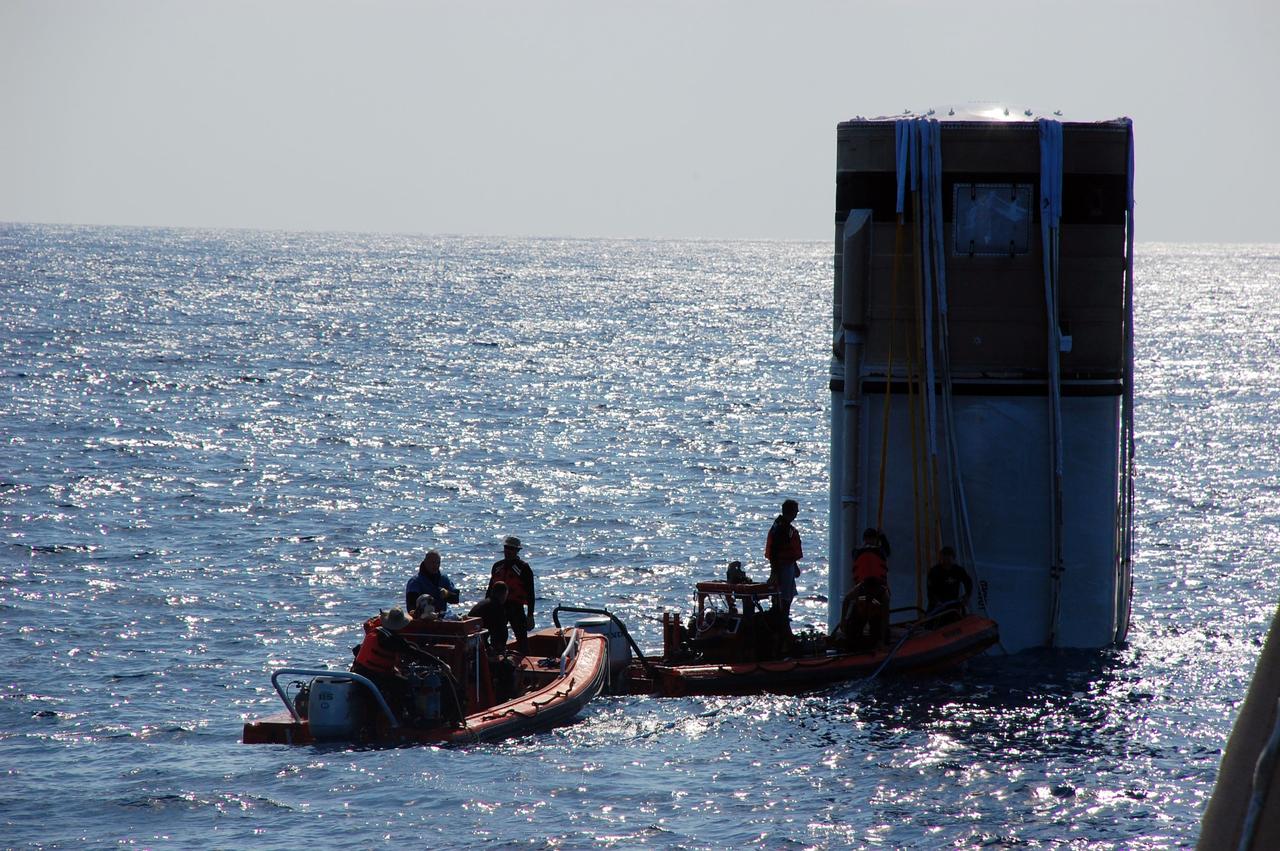
CAPE CANAVERAL, Fla. -- Crew members from Freedom Star, one of NASA's solid rocket booster retrieval ships, approach the left spent booster bobbing in the Atlantic Ocean to attach a hose that will facilitate debris and water clearing and the pumping in of air so the booster can float horizontally on the water's surface for towing back to Port Canaveral in Florida. The shuttle’s two solid rocket booster casings and associated flight hardware are recovered in the Atlantic Ocean after every launch by Liberty Star and Freedom Star. The boosters impact the Atlantic about seven minutes after liftoff and the retrieval ships are stationed about 10 miles from the impact area at the time of splashdown. After the spent segments are processed, they will be transported to Utah, where they will be refurbished and stored, if needed. Photo credit: NASA/Ben Smegelsky
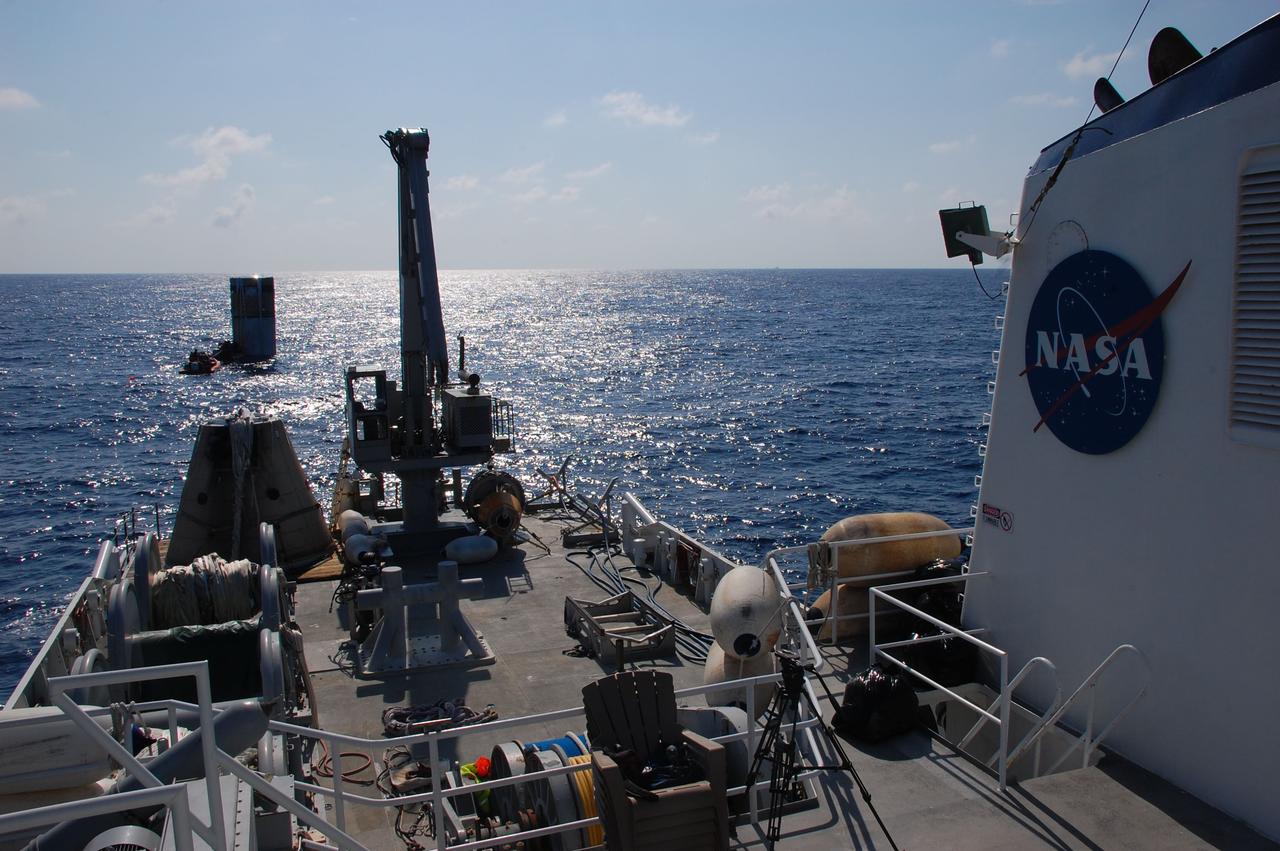
CAPE CANAVERAL, Fla. -- Freedom Star, one of NASA's solid rocket booster retrieval ships, waits for crew members near the left spent booster bobbing in the Atlantic Ocean to attach a hose between it and the vessel that will facilitate debris and water clearing and the pumping in of air so the booster can float horizontally on the water's surface for towing back to Port Canaveral in Florida. The shuttle’s two solid rocket booster casings and associated flight hardware are recovered in the Atlantic Ocean after every launch by Liberty Star and Freedom Star. The boosters impact the Atlantic about seven minutes after liftoff and the retrieval ships are stationed about 10 miles from the impact area at the time of splashdown. After the spent segments are processed, they will be transported to Utah, where they will be refurbished and stored, if needed. Photo credit: NASA/Ben Smegelsky
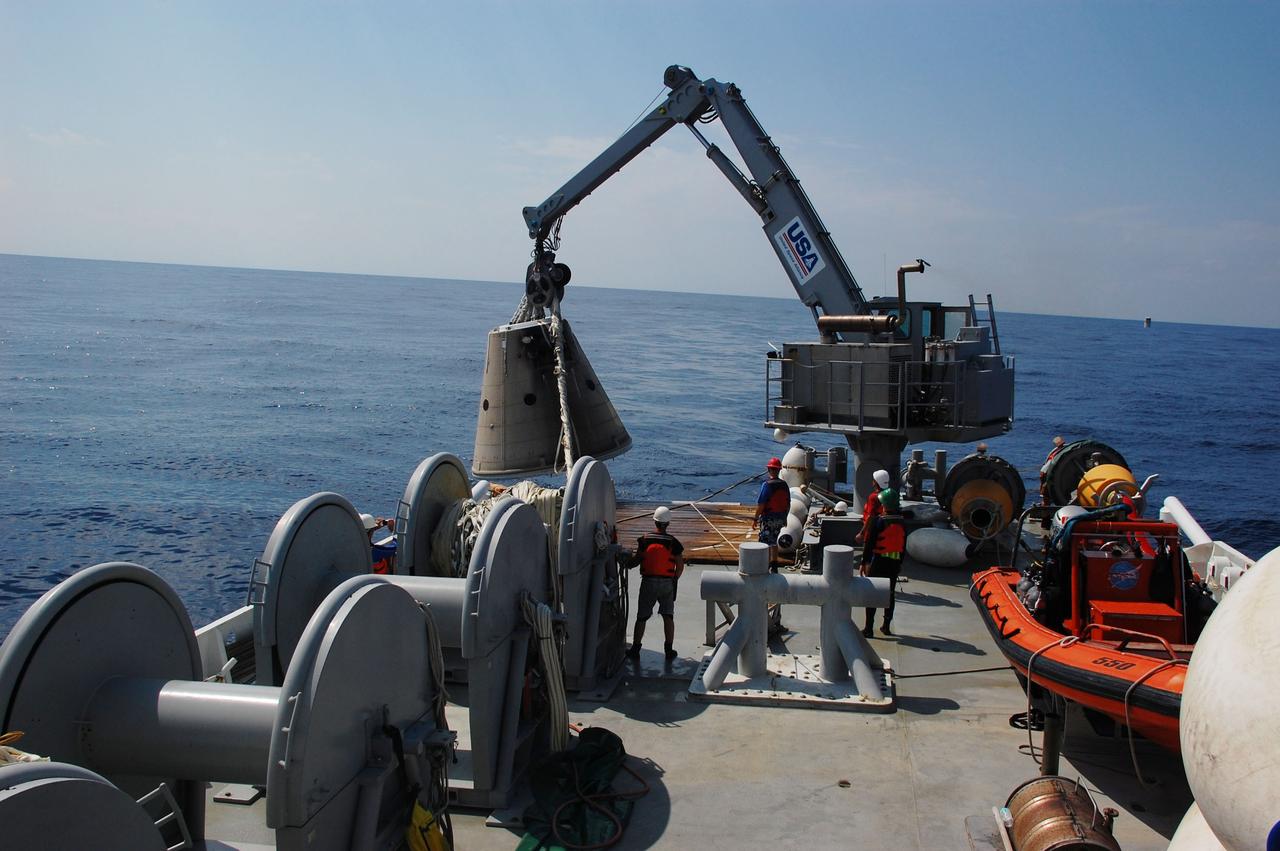
CAPE CANAVERAL, Fla. -- A crane on Freedom Star, one of NASA's solid rocket booster retrieval ships, heaves a spent booster nose cap from the from out of the Atlantic Ocean and onto the deck after space shuttle Discovery's final launch. The shuttle’s two solid rocket booster casings and associated flight hardware are recovered in the Atlantic Ocean after every launch by Liberty Star and Freedom Star. The boosters impact the Atlantic about seven minutes after liftoff and the retrieval ships are stationed about 10 miles from the impact area at the time of splashdown. After the spent segments are processed, they will be transported to Utah, where they will be refurbished and stored, if needed. Photo credit: NASA/Ben Smegelsky
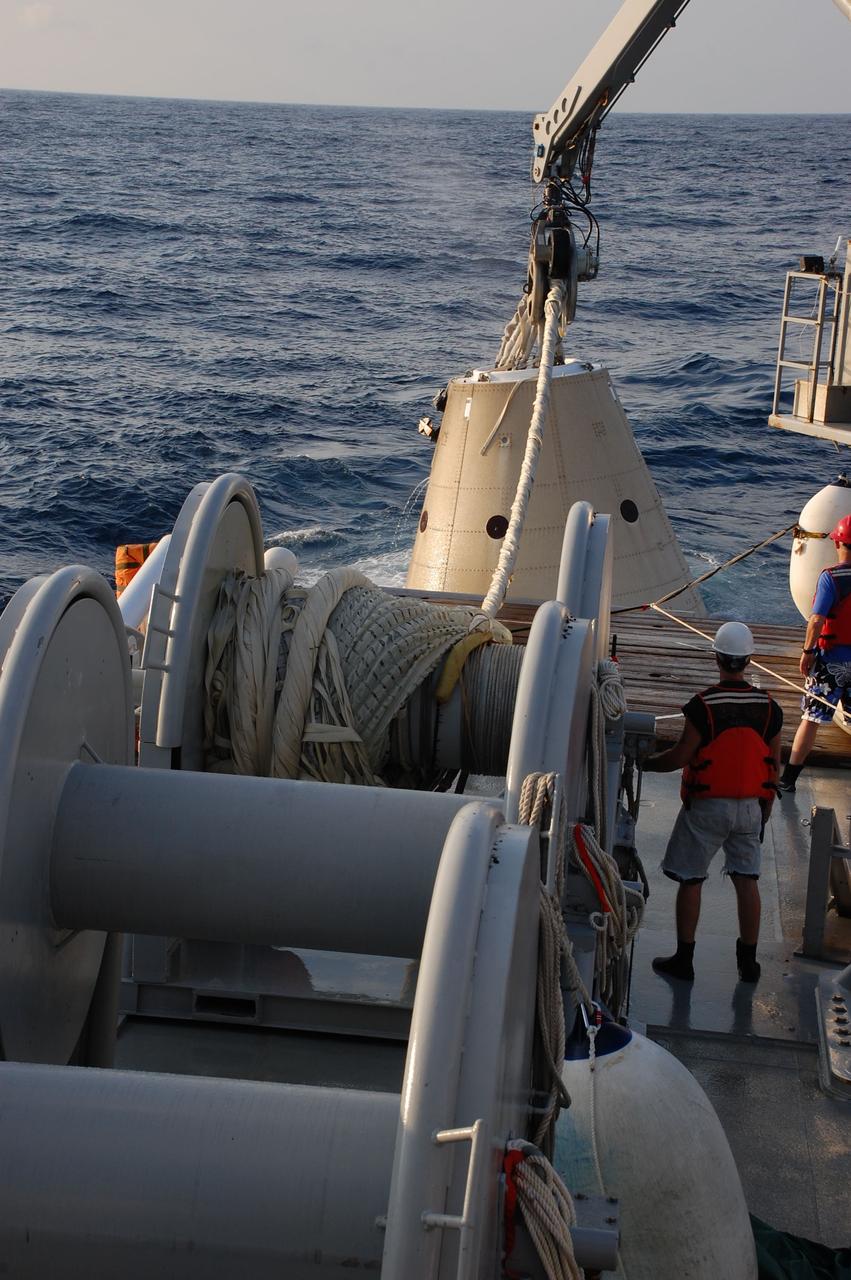
CAPE CANAVERAL, Fla. -- Crew members from Freedom Star, one of NASA's solid rocket booster retrieval ships, use a crane to pull the left spent booster nose cap out of the Atlantic Ocean after space shuttle Discovery's STS-133 launch. The shuttle’s two solid rocket booster casings and associated flight hardware are recovered in the Atlantic Ocean after every launch by Liberty Star and Freedom Star. The boosters impact the Atlantic about seven minutes after liftoff and the retrieval ships are stationed about 10 miles from the impact area at the time of splashdown. After the spent segments are processed, they will be transported to Utah, where they will be refurbished and stored, if needed. Photo credit: NASA/Ben Smegelsky
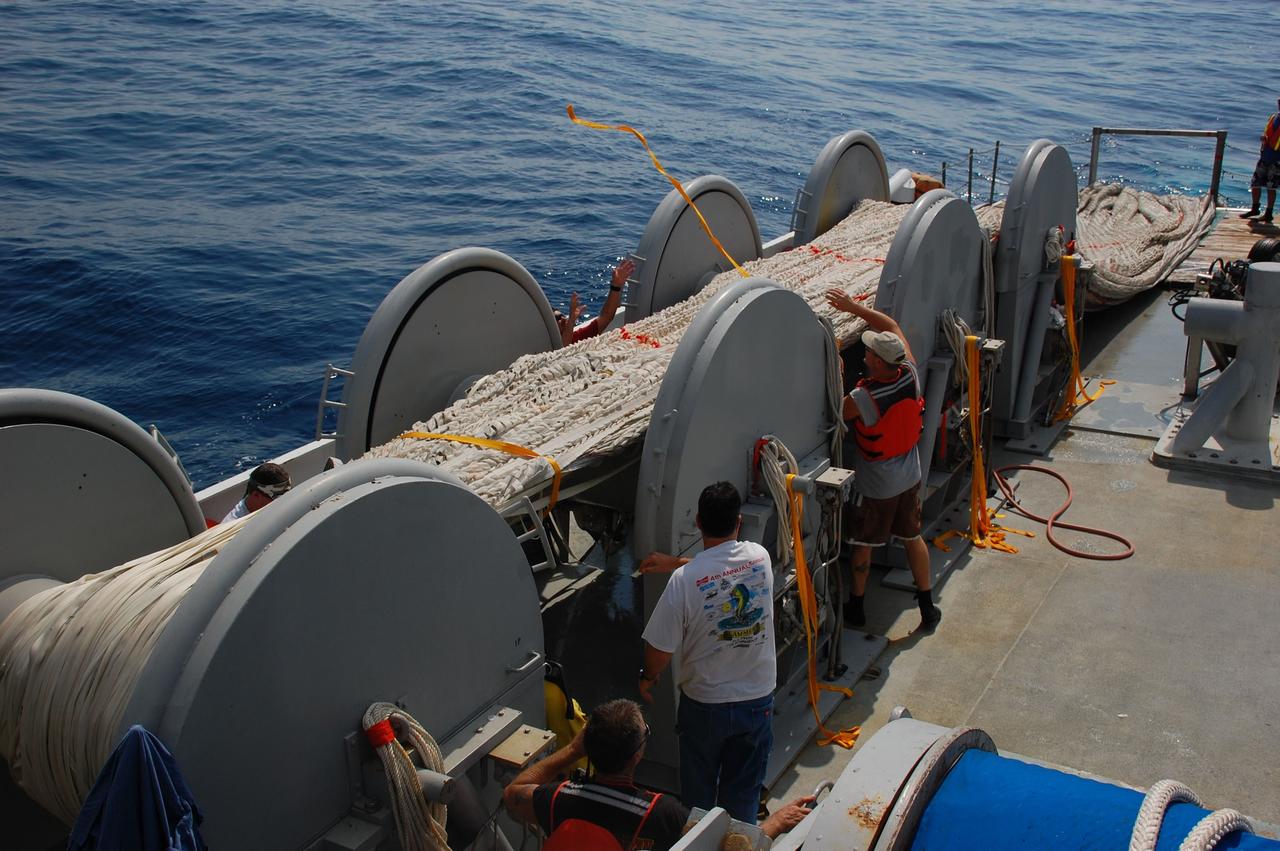
CAPE CANAVERAL, Fla. -- Crew members from Freedom Star, one of NASA's solid rocket booster retrieval ships, are pulling the parachute from the left spent booster out of the Atlantic Ocean. The shuttle’s two solid rocket booster casings and associated flight hardware are recovered in the Atlantic Ocean after every launch by Liberty Star and Freedom Star. The boosters impact the Atlantic about seven minutes after liftoff and the retrieval ships are stationed about 10 miles from the impact area at the time of splashdown. After the spent segments are processed, they will be transported to Utah, where they will be refurbished and stored, if needed. Photo credit: NASA/Ben Smegelsky
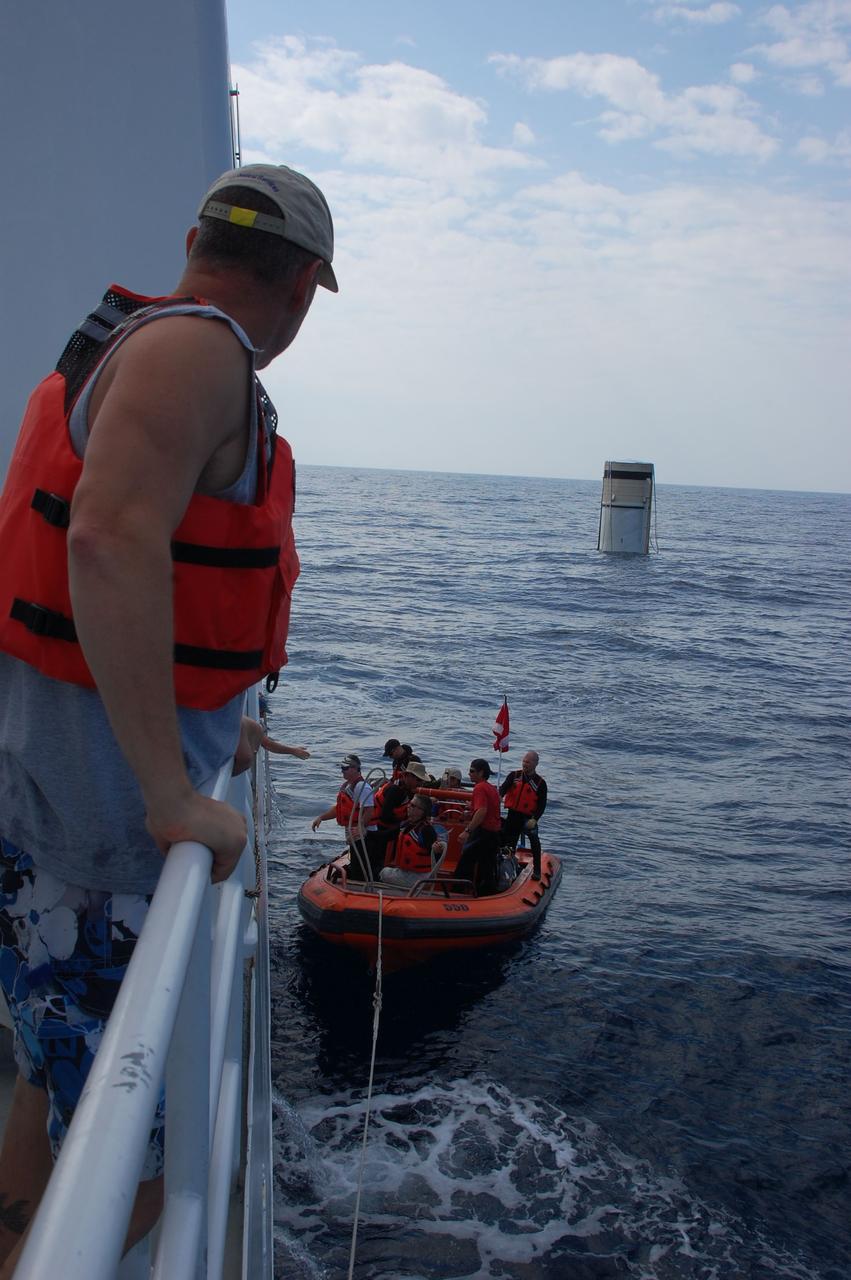
CAPE CANAVERAL, Fla. -- Crew members in a skiff from Freedom Star, one of NASA's solid rocket booster retrieval ships, make their way back to the vessel after inspecting the left spent booster bobbing in the Atlantic Ocean from space shuttle Discovery's STS-133 launch. The shuttle’s two solid rocket booster casings and associated flight hardware are recovered in the Atlantic Ocean after every launch by Liberty Star and Freedom Star. The boosters impact the Atlantic about seven minutes after liftoff and the retrieval ships are stationed about 10 miles from the impact area at the time of splashdown. After the spent segments are processed, they will be transported to Utah, where they will be refurbished and stored, if needed. Photo credit: NASA/Ben Smegelsky
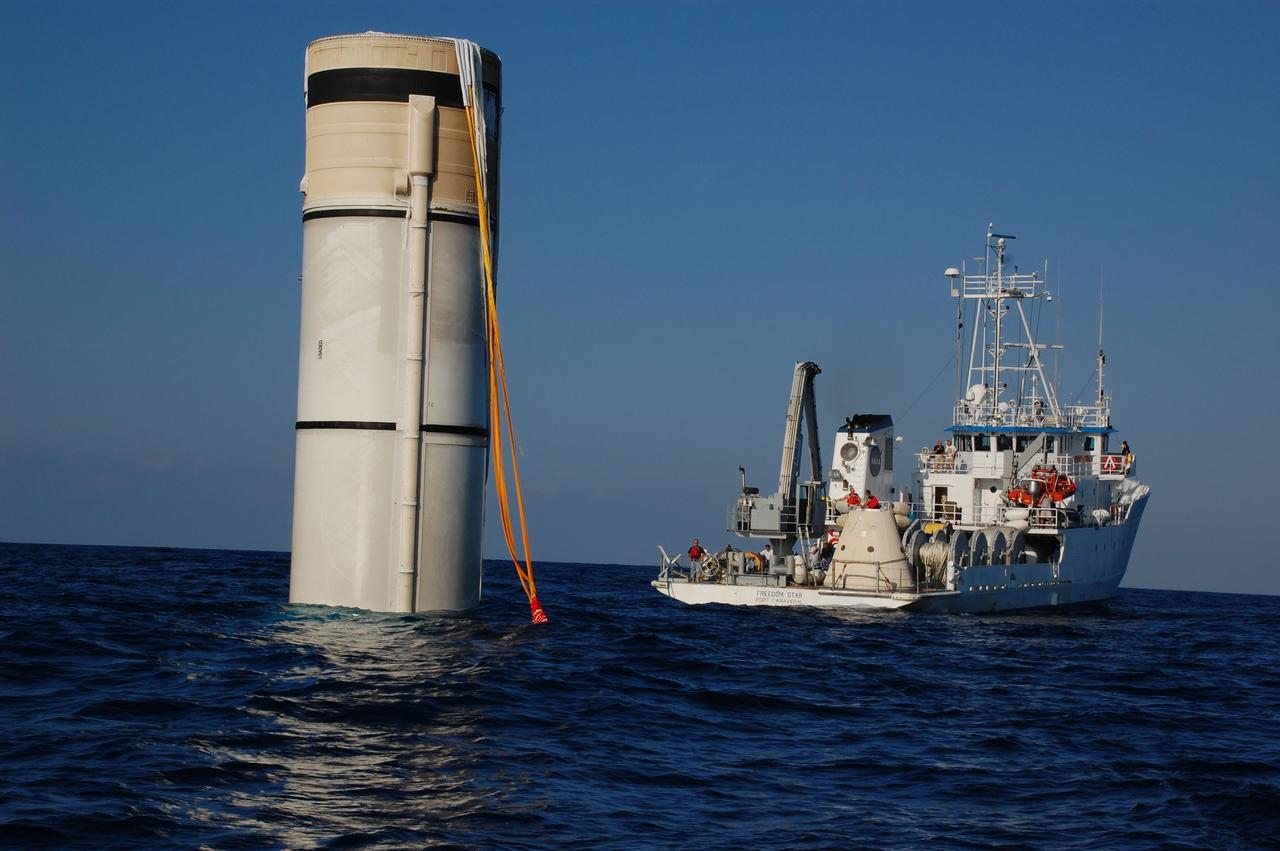
CAPE CANAVERAL, Fla. -- The left spent booster from space shuttle Discovery's final launch is seen bobbing in the Atlantic Ocean as air is pumped into it to lift it out of the water so it can float horizontally for towing back to Port Canaveral, Florida by Freedom Star, one of NASA's solid rocket booster retrieval ships. The shuttle’s two solid rocket booster casings and associated flight hardware are recovered in the Atlantic Ocean after every launch by Liberty Star and Freedom Star. The boosters impact the Atlantic about seven minutes after liftoff and the retrieval ships are stationed about 10 miles from the impact area at the time of splashdown. After the spent segments are processed, they will be transported to Utah, where they will be refurbished and stored, if needed. Photo credit: NASA/Ben Smegelsky
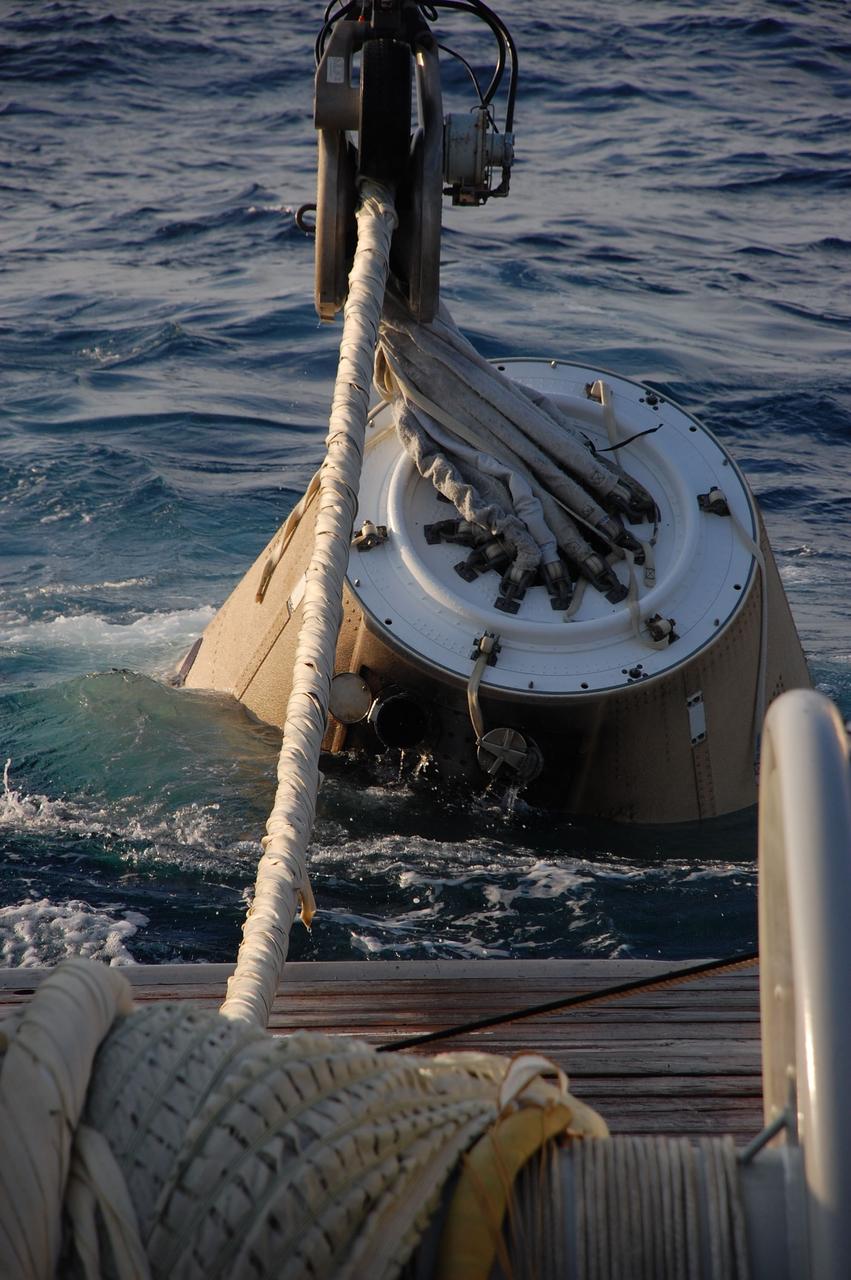
CAPE CANAVERAL, Fla. -- A crane on Freedom Star, one of NASA's solid rocket booster retrieval ships, heaves the left spent booster nose cap from the Atlantic Ocean and onto the deck after space shuttle Discovery's STS-133 launch. The shuttle’s two solid rocket booster casings and associated flight hardware are recovered in the Atlantic Ocean after every launch by Liberty Star and Freedom Star. The boosters impact the Atlantic about seven minutes after liftoff and the retrieval ships are stationed about 10 miles from the impact area at the time of splashdown. After the spent segments are processed, they will be transported to Utah, where they will be refurbished and stored, if needed. Photo credit: NASA/Ben Smegelsky
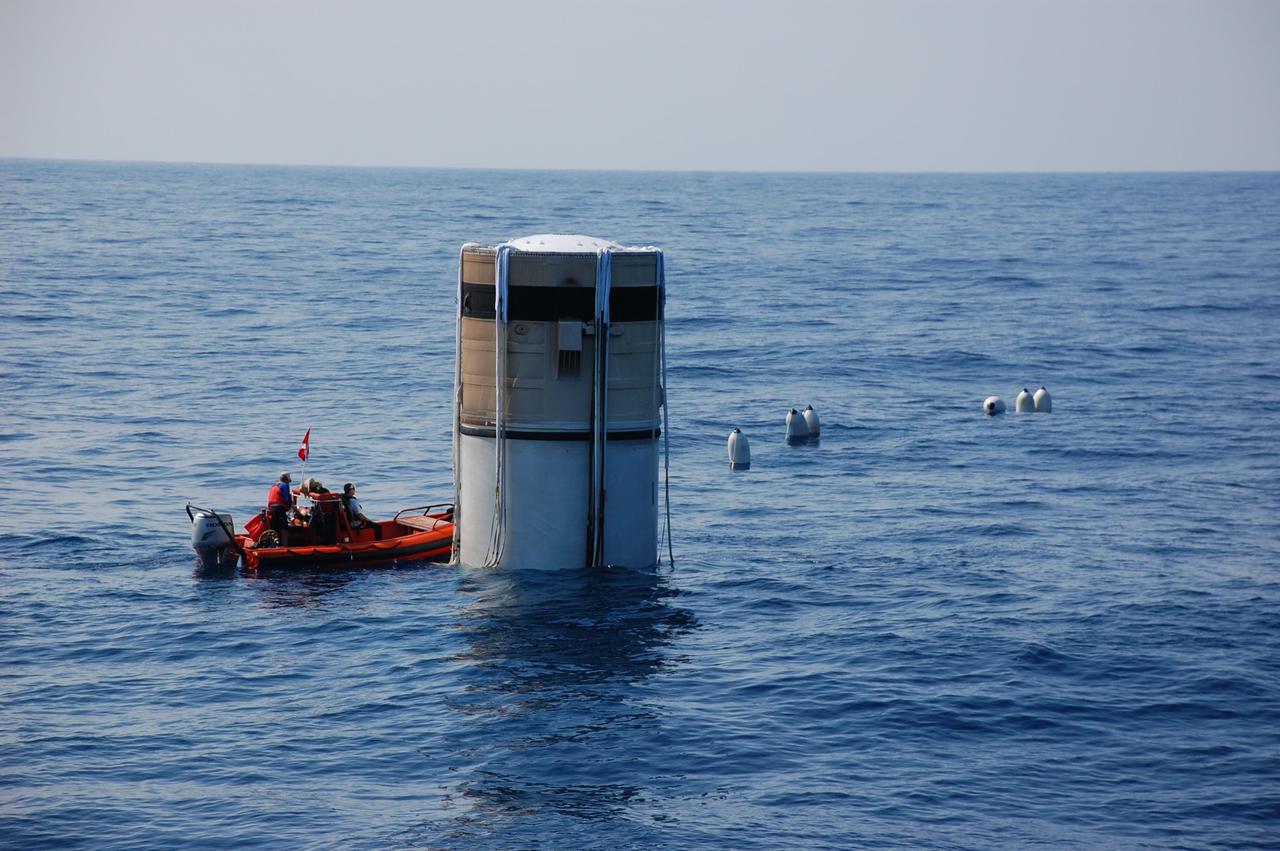
CAPE CANAVERAL, Fla. -- Crew members from Freedom Star, one of NASA's solid rocket booster retrieval ships, have attached a line, held up by flotation devices, between the left spent booster parachute and the ship. The shuttle’s two solid rocket booster casings and associated flight hardware are recovered in the Atlantic Ocean after every launch by Liberty Star and Freedom Star. The boosters impact the Atlantic about seven minutes after liftoff and the retrieval ships are stationed about 10 miles from the impact area at the time of splashdown. After the spent segments are processed, they will be transported to Utah, where they will be refurbished and stored, if needed. Photo credit: NASA/Ben Smegelsky

CAPE CANAVERAL, Fla. -- Crew members from Freedom Star, one of NASA's solid rocket booster retrieval ships, check the securing of the left spent booster from space shuttle Discovery's final launch, to the vessel, before continuing on the Hangar AF at Cape Canaveral Air Force Station. The shuttle’s two solid rocket booster casings and associated flight hardware are recovered in the Atlantic Ocean after every launch by Liberty Star and Freedom Star. The boosters impact the Atlantic about seven minutes after liftoff and the retrieval ships are stationed about 10 miles from the impact area at the time of splashdown. After the spent segments are processed, they will be transported to Utah, where they will be refurbished and stored, if needed. Photo credit: NASA/Ben Smegelsky
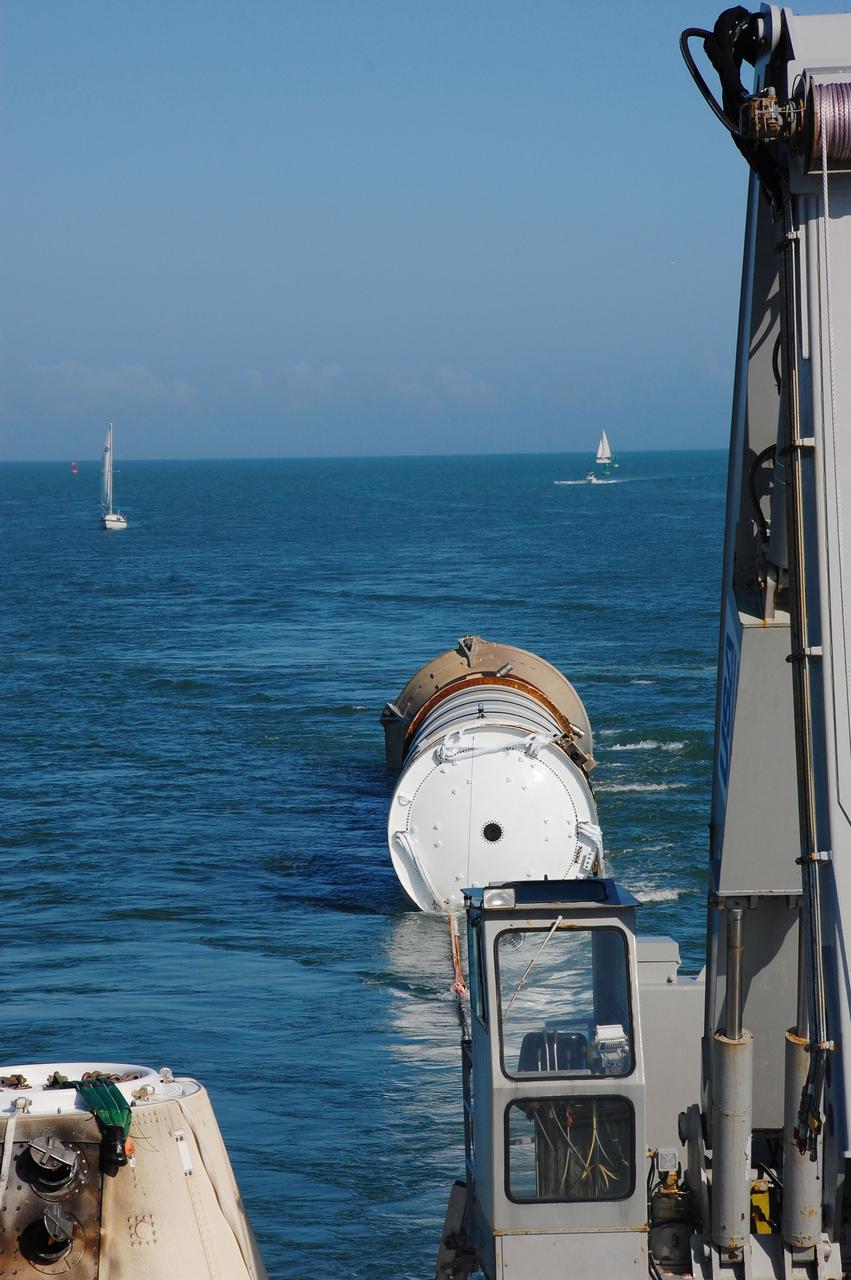
CAPE CANAVERAL, Fla. -- Freedom Star, one of NASA's solid rocket booster retrieval ships, tows the left spent booster from space shuttle Discovery's final launch, to Port Canaveral in Florida. The shuttle’s two solid rocket booster casings and associated flight hardware are recovered in the Atlantic Ocean after every launch by Liberty Star and Freedom Star. The boosters impact the Atlantic about seven minutes after liftoff and the retrieval ships are stationed about 10 miles from the impact area at the time of splashdown. After the spent segments are processed, they will be transported to Utah, where they will be refurbished and stored, if needed. Photo credit: NASA/Ben Smegelsky
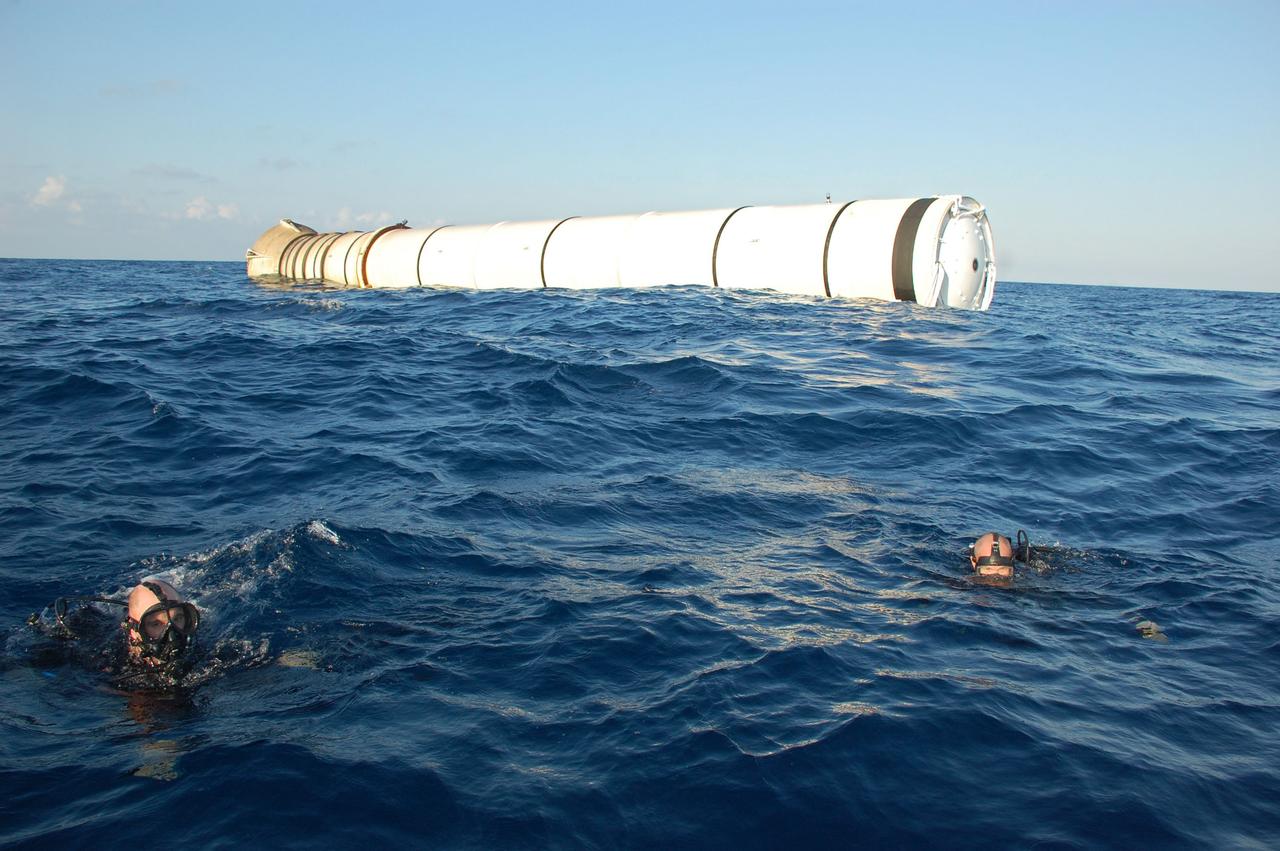
CAPE CANAVERAL, Fla. -- Divers from Freedom Star, one of NASA's solid rocket booster retrieval ships, help with the recovery of the left spent booster from space shuttle Discovery's final launch, which will be hauled alongside the vessel and towed back to Port Canaveral in Florida. The shuttle’s two solid rocket booster casings and associated flight hardware are recovered in the Atlantic Ocean after every launch by Liberty Star and Freedom Star. The boosters impact the Atlantic about seven minutes after liftoff and the retrieval ships are stationed about 10 miles from the impact area at the time of splashdown. After the spent segments are processed, they will be transported to Utah, where they will be refurbished and stored, if needed. Photo credit: NASA/Ben Smegelsky
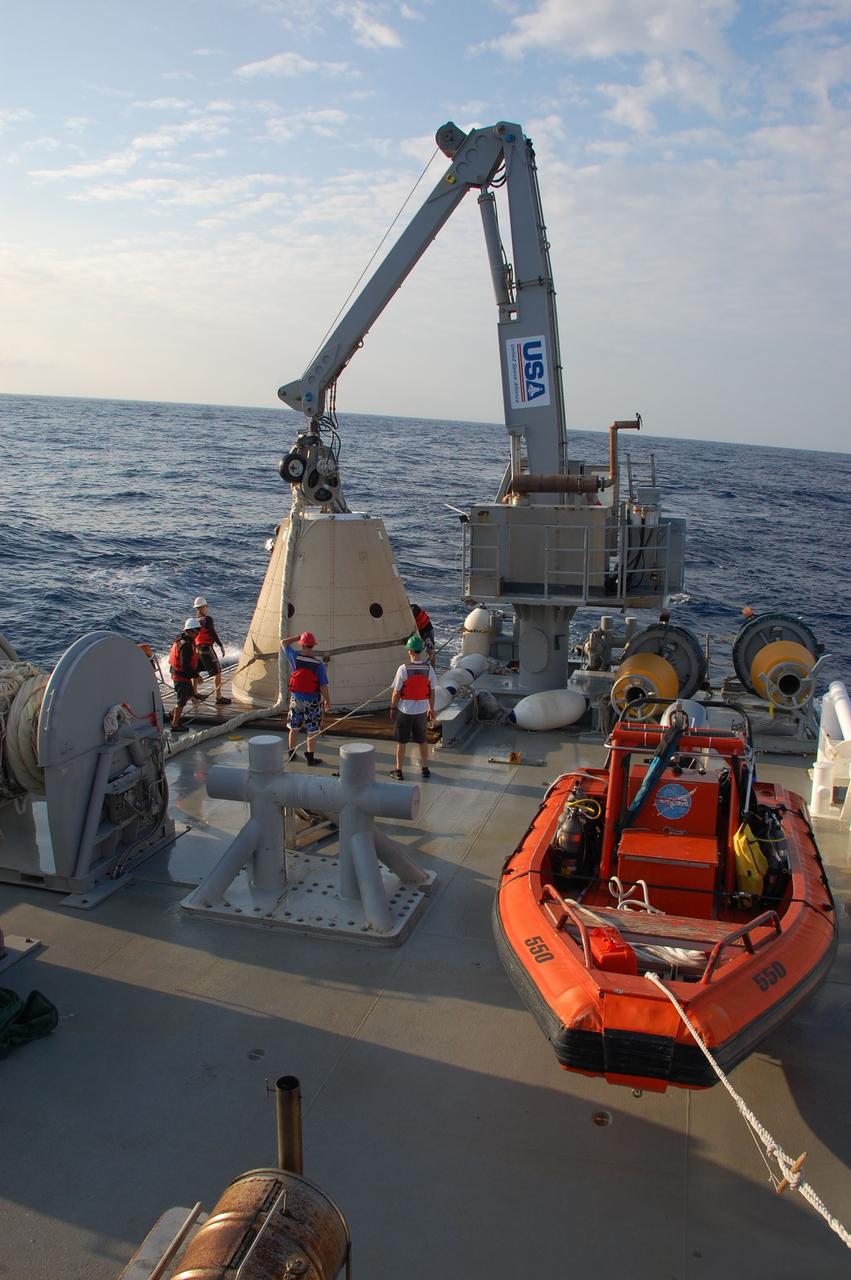
CAPE CANAVERAL, Fla. -- Crew members on Freedom Star, one of NASA's solid rocket booster retrieval ships, use a crane to pull the left spent booster nose cap out of the Atlantic Ocean after space shuttle Discovery's STS-133 launch. The shuttle’s two solid rocket booster casings and associated flight hardware are recovered in the Atlantic Ocean after every launch by Liberty Star and Freedom Star. The boosters impact the Atlantic about seven minutes after liftoff and the retrieval ships are stationed about 10 miles from the impact area at the time of splashdown. After the spent segments are processed, they will be transported to Utah, where they will be refurbished and stored, if needed. Photo credit: NASA/Ben Smegelsky
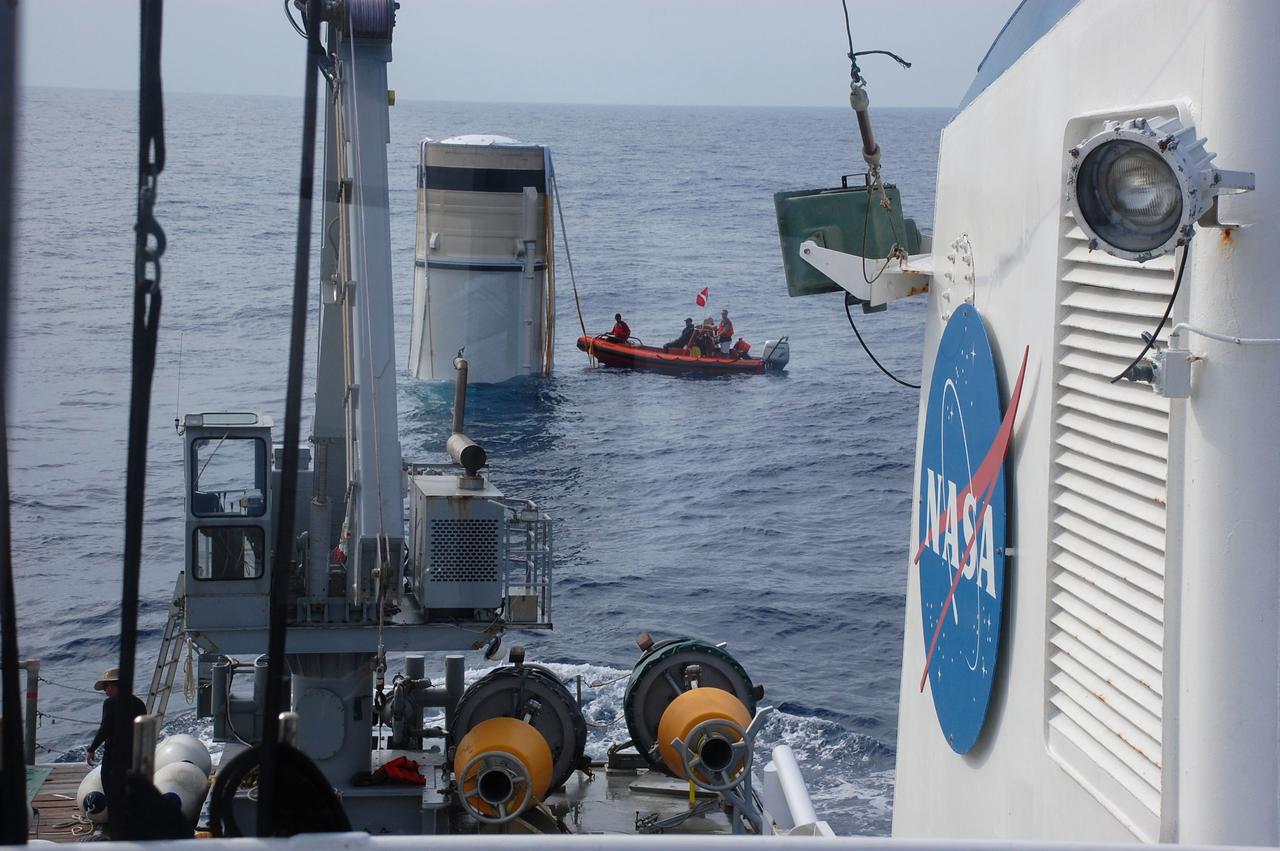
CAPE CANAVERAL, Fla. -- Crew members in a skiff from Freedom Star, one of NASA's solid rocket booster retrieval ships, approach and inspect the left spent booster bobbing in the Atlantic Ocean after space shuttle Discovery's STS-133 launch. The shuttle’s two solid rocket booster casings and associated flight hardware are recovered in the Atlantic Ocean after every launch by Liberty Star and Freedom Star. The boosters impact the Atlantic about seven minutes after liftoff and the retrieval ships are stationed about 10 miles from the impact area at the time of splashdown. After the spent segments are processed, they will be transported to Utah, where they will be refurbished and stored, if needed. Photo credit: NASA/Ben Smegelsky
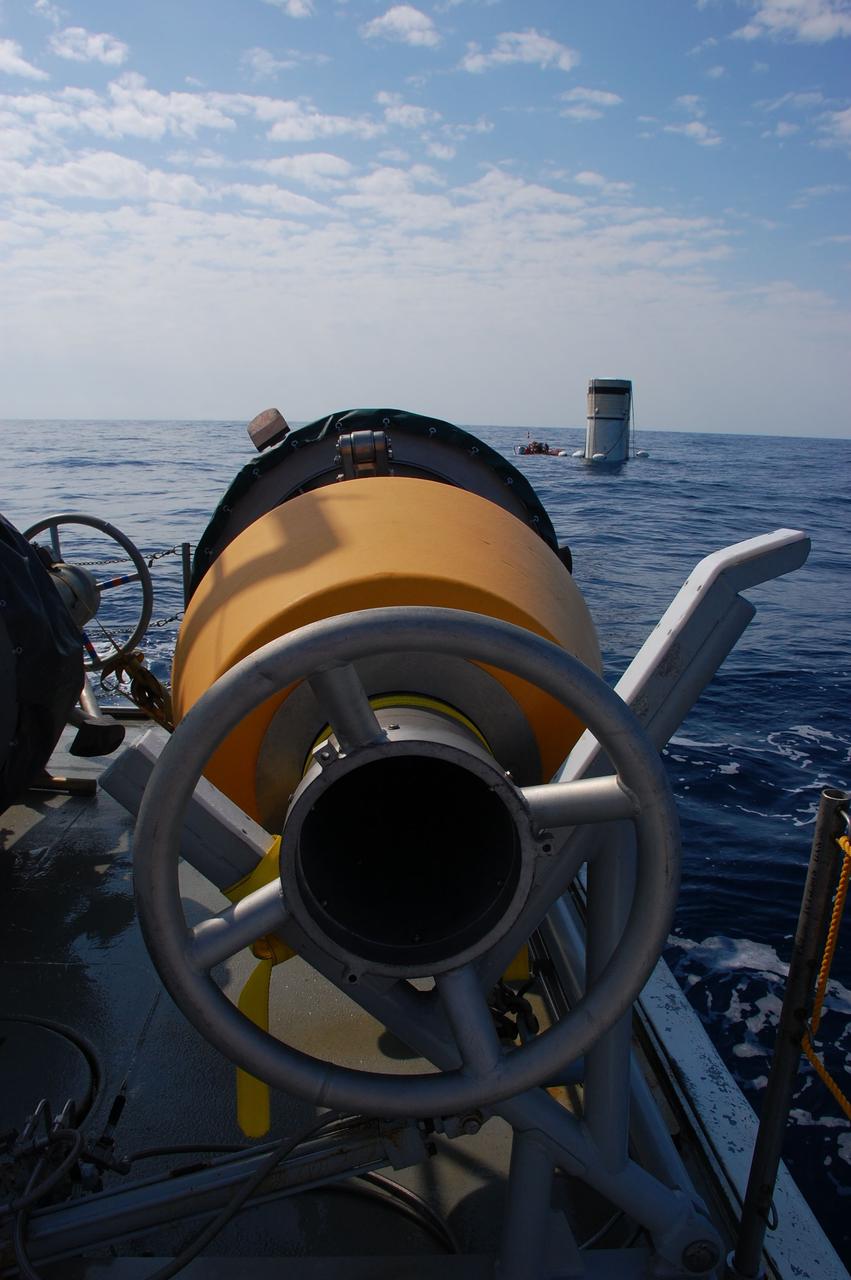
CAPE CANAVERAL, Fla. -- This image taken from the bow of Freedom Star, one of NASA's solid rocket booster retrieval ships, shows crew members in a skiff attaching flotation devices, or buoys, to the parachute lines from the left spent booster from space shuttle Discovery's STS-133 launch. The shuttle’s two solid rocket booster casings and associated flight hardware are recovered in the Atlantic Ocean after every launch by Liberty Star and Freedom Star. The boosters impact the Atlantic about seven minutes after liftoff and the retrieval ships are stationed about 10 miles from the impact area at the time of splashdown. After the spent segments are processed, they will be transported to Utah, where they will be refurbished and stored, if needed. Photo credit: NASA/Ben Smegelsky
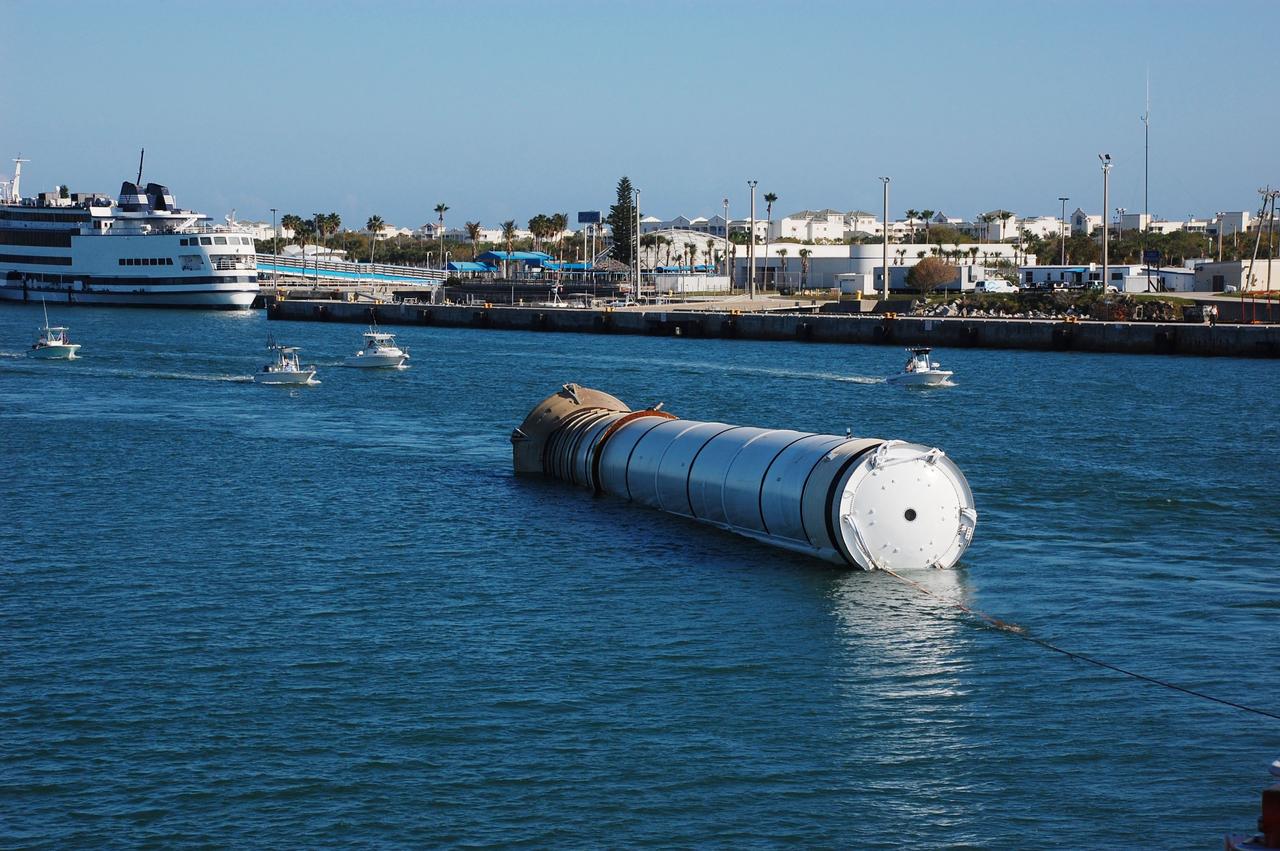
CAPE CANAVERAL, Fla. -- Freedom Star, one of NASA's solid rocket booster retrieval ships, reaches Port Canaveral, Florida with the left spent booster from space shuttle Discovery's final launch, in tow. The shuttle’s two solid rocket booster casings and associated flight hardware are recovered in the Atlantic Ocean after every launch by Liberty Star and Freedom Star. The boosters impact the Atlantic about seven minutes after liftoff and the retrieval ships are stationed about 10 miles from the impact area at the time of splashdown. After the spent segments are processed, they will be transported to Utah, where they will be refurbished and stored, if needed. Photo credit: NASA/Ben Smegelsky
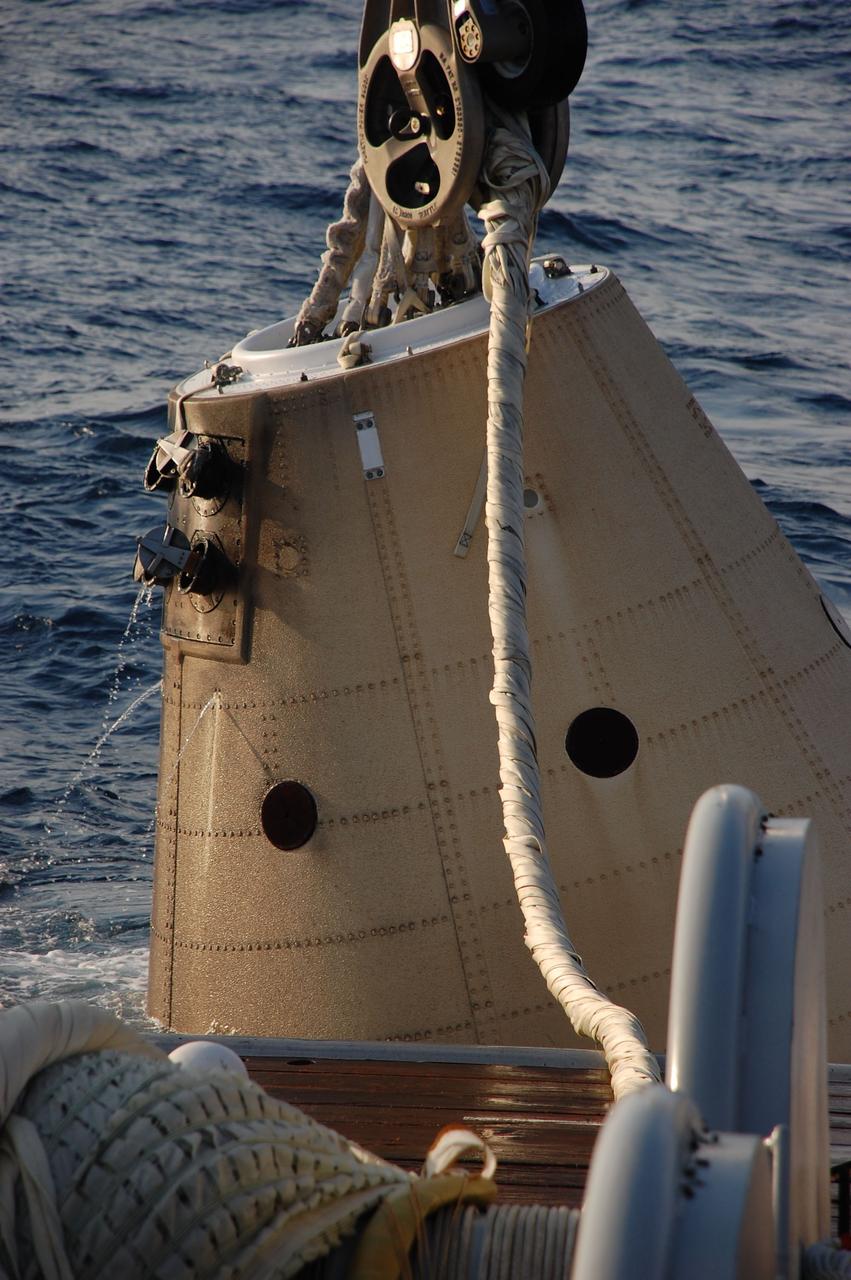
CAPE CANAVERAL, Fla. -- A crane on Freedom Star, one of NASA's solid rocket booster retrieval ships, heaves the left spent booster nose cap from the Atlantic Ocean and onto the deck after space shuttle Discovery's STS-133 launch. The shuttle’s two solid rocket booster casings and associated flight hardware are recovered in the Atlantic Ocean after every launch by Liberty Star and Freedom Star. The boosters impact the Atlantic about seven minutes after liftoff and the retrieval ships are stationed about 10 miles from the impact area at the time of splashdown. After the spent segments are processed, they will be transported to Utah, where they will be refurbished and stored, if needed. Photo credit: NASA/Ben Smegelsky
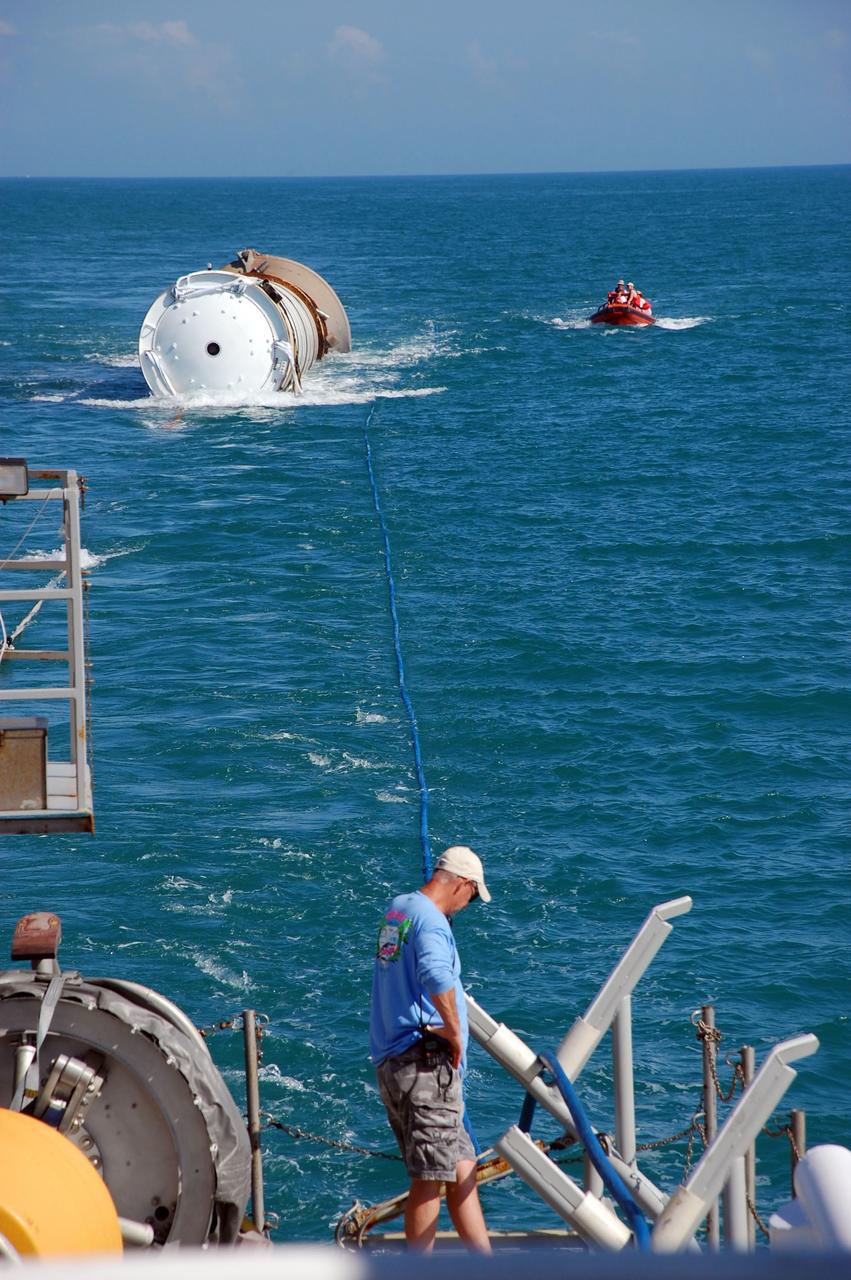
CAPE CANAVERAL, Fla. -- Crew members from Freedom Star, one of NASA's solid rocket booster retrieval ships, monitor the progress of the left spent booster from space shuttle Discovery's final launch, as it is towed toward the vessel for its return trip to Port Canaveral in Florida. The shuttle’s two solid rocket booster casings and associated flight hardware are recovered in the Atlantic Ocean after every launch by Liberty Star and Freedom Star. The boosters impact the Atlantic about seven minutes after liftoff and the retrieval ships are stationed about 10 miles from the impact area at the time of splashdown. After the spent segments are processed, they will be transported to Utah, where they will be refurbished and stored, if needed. Photo credit: NASA/Ben Smegelsky
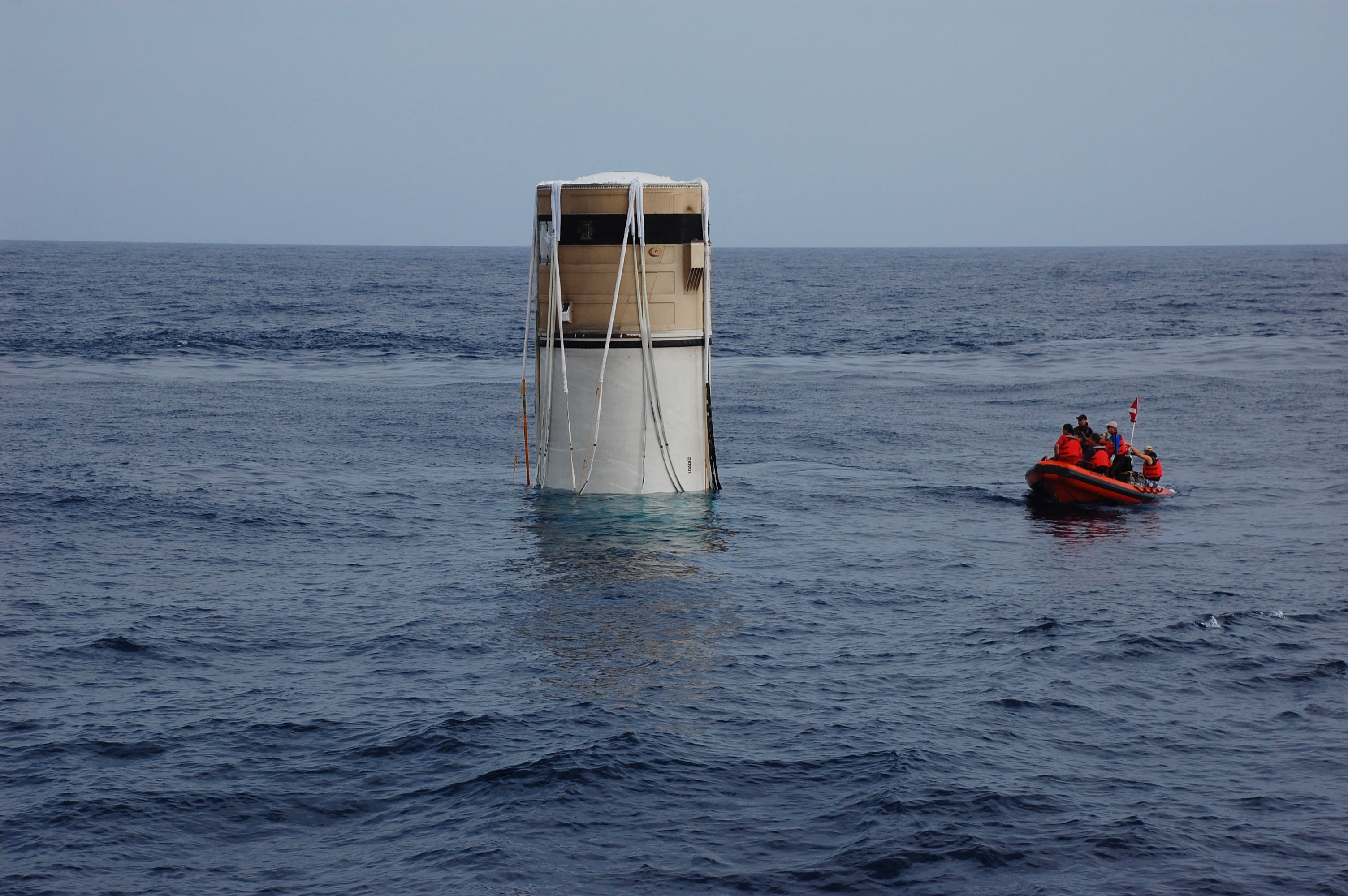
CAPE CANAVERAL, Fla. -- Crew members from Freedom Star, one of NASA's solid rocket booster retrieval ships, use a skiff to approach the left spent booster bobbing in the Atlantic Ocean after space shuttle Discovery's STS-133 launch. The shuttle’s two solid rocket booster casings and associated flight hardware are recovered in the Atlantic Ocean after every launch by Liberty Star and Freedom Star. The boosters impact the Atlantic about seven minutes after liftoff and the retrieval ships are stationed about 10 miles from the impact area at the time of splashdown. After the spent segments are processed, they will be transported to Utah, where they will be refurbished and stored, if needed. Photo credit: NASA/Ben Smegelsky
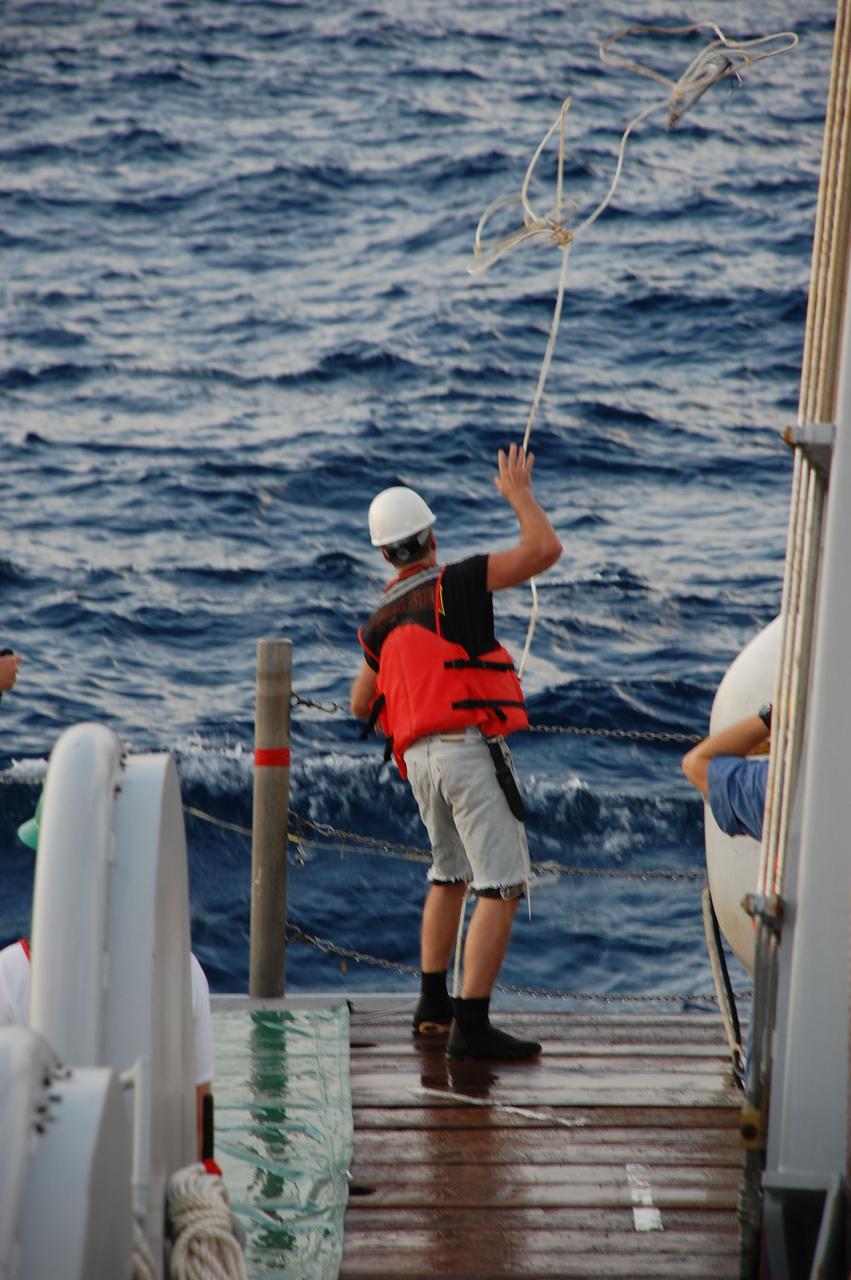
CAPE CANAVERAL, Fla. -- A crew member from Freedom Star, one of NASA's solid rocket booster retrieval ships, throws a tow line into the Atlantic Ocean in order to capture the left spent booster nose cap after space shuttle Discovery's STS-133 launch. The shuttle’s two solid rocket booster casings and associated flight hardware are recovered in the Atlantic Ocean after every launch by Liberty Star and Freedom Star. The boosters impact the Atlantic about seven minutes after liftoff and the retrieval ships are stationed about 10 miles from the impact area at the time of splashdown. After the spent segments are processed, they will be transported to Utah, where they will be refurbished and stored, if needed. Photo credit: NASA/Ben Smegelsky
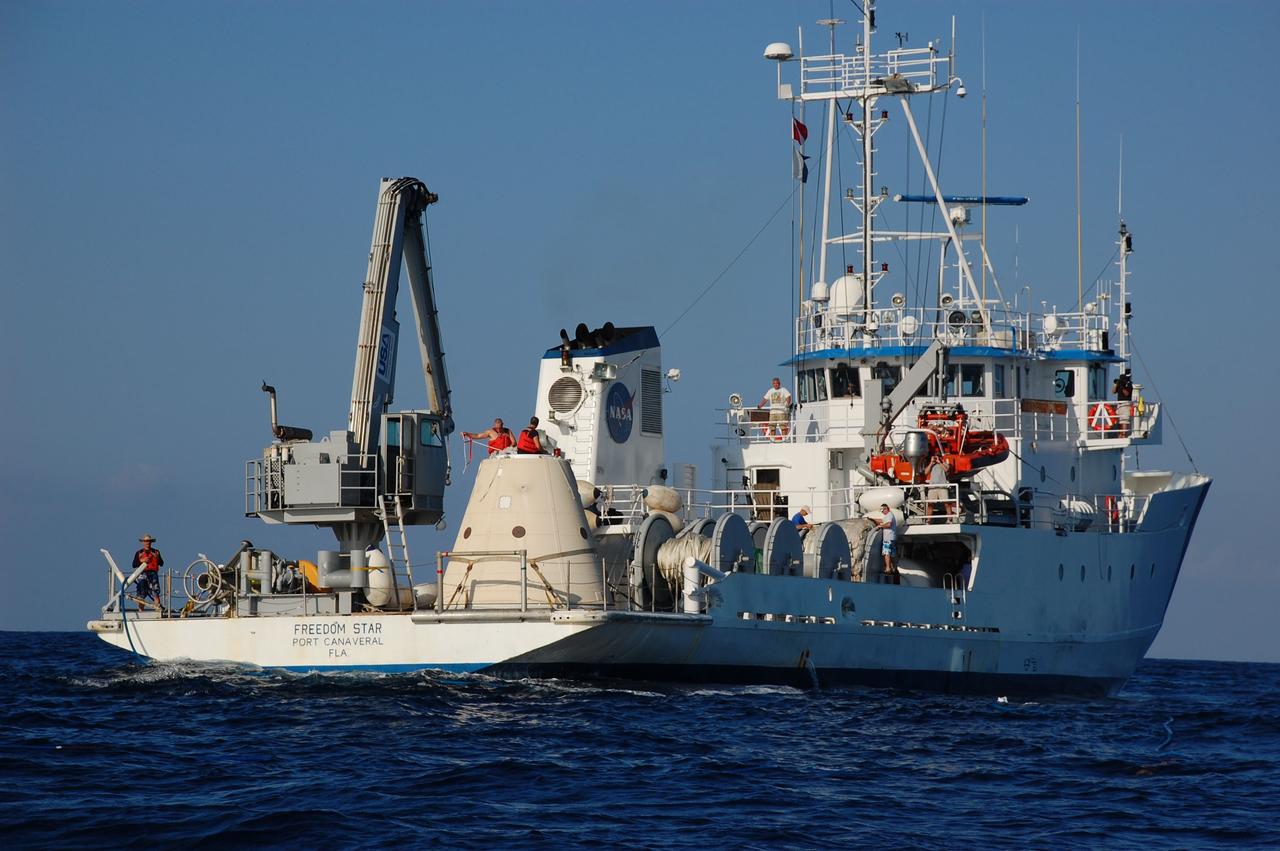
CAPE CANAVERAL, Fla. -- Crew members on Freedom Star, one of NASA's solid rocket booster retrieval ships, monitor the progress of the left spent booster from space shuttle Discovery's final launch, as it is elevated out of the water so it can float horizontally for towing back to Port Canaveral in Florida. The shuttle’s two solid rocket booster casings and associated flight hardware are recovered in the Atlantic Ocean after every launch by Liberty Star and Freedom Star. The boosters impact the Atlantic about seven minutes after liftoff and the retrieval ships are stationed about 10 miles from the impact area at the time of splashdown. After the spent segments are processed, they will be transported to Utah, where they will be refurbished and stored, if needed. Photo credit: NASA/Ben Smegelsky
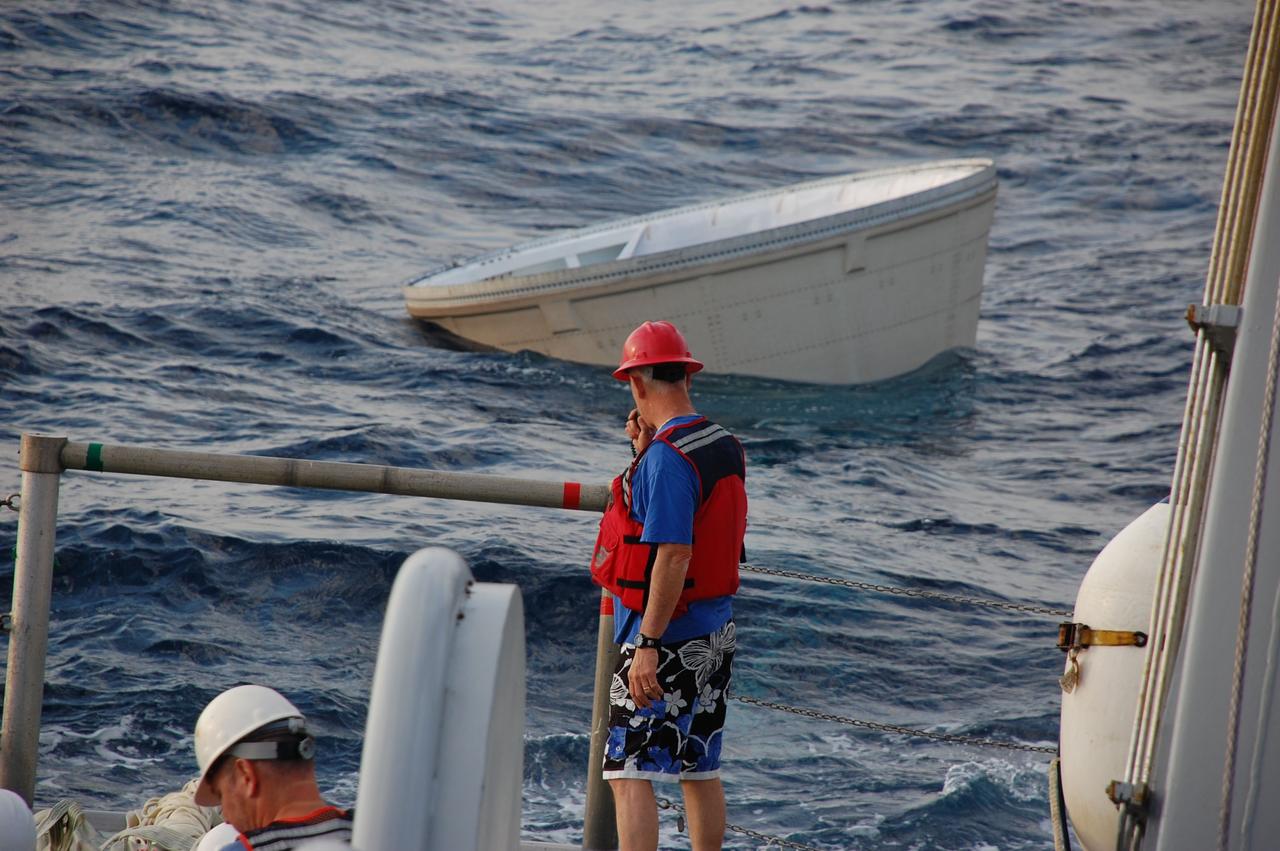
CAPE CANAVERAL, Fla. -- Crew members from Freedom Star, one of NASA's solid rocket booster retrieval ships, prepare to recover the left spent booster nose cap from the Atlantic Ocean after space shuttle Discovery's STS-133 launch. The shuttle’s two solid rocket booster casings and associated flight hardware are recovered in the Atlantic Ocean after every launch by Liberty Star and Freedom Star. The boosters impact the Atlantic about seven minutes after liftoff and the retrieval ships are stationed about 10 miles from the impact area at the time of splashdown. After the spent segments are processed, they will be transported to Utah, where they will be refurbished and stored, if needed. Photo credit: NASA/Ben Smegelsky
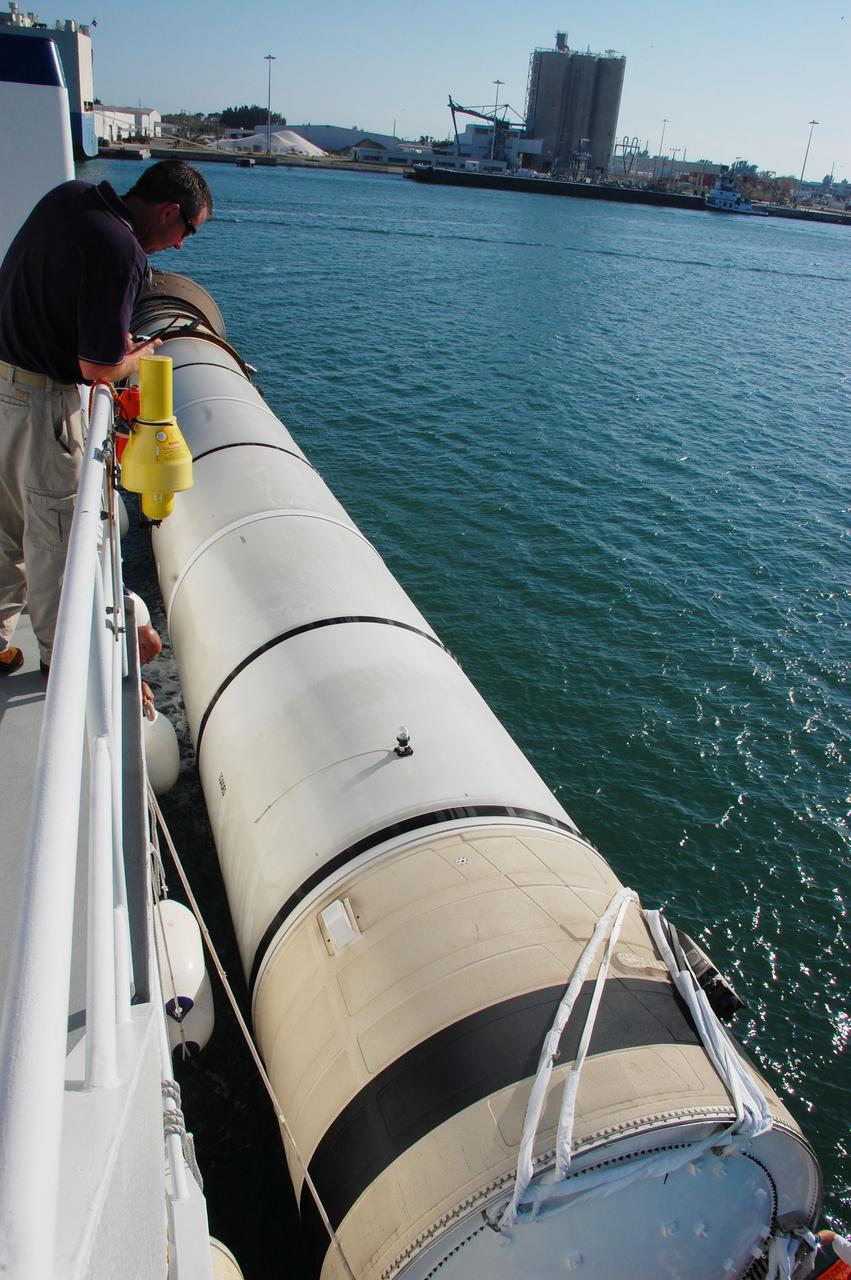
CAPE CANAVERAL, Fla. -- Jamie Harris Chief Mate for Freedom Star, one of NASA's solid rocket booster retrieval ships, checks the securing of the left spent booster from space shuttle Discovery's final launch, to the vessel, before continuing on the Hangar AF at Cape Canaveral Air Force Station. The shuttle’s two solid rocket booster casings and associated flight hardware are recovered in the Atlantic Ocean after every launch by Liberty Star and Freedom Star. The boosters impact the Atlantic about seven minutes after liftoff and the retrieval ships are stationed about 10 miles from the impact area at the time of splashdown. After the spent segments are processed, they will be transported to Utah, where they will be refurbished and stored, if needed. Photo credit: NASA/Ben Smegelsky
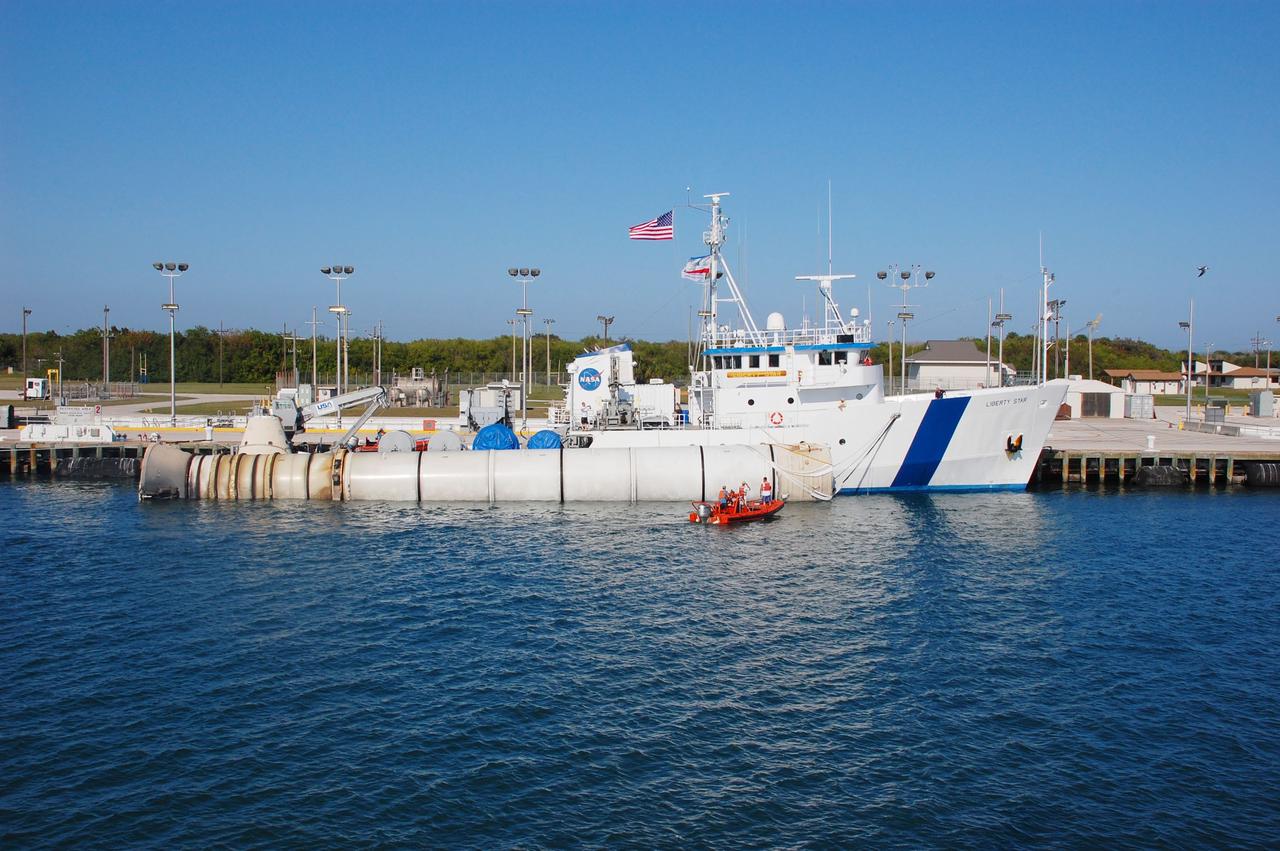
CAPE CANAVERAL, Fla. -- Freedom Star, one of NASA's solid rocket booster retrieval ships, is docked at Port Canaveral, Florida. The left spent booster from space shuttle Discovery's final launch is being positioned along side the vessel before continuing on to Hangar AF at Cape Canaveral Air Force Station. The shuttle’s two solid rocket booster casings and associated flight hardware are recovered in the Atlantic Ocean after every launch by Liberty Star and Freedom Star. The boosters impact the Atlantic about seven minutes after liftoff and the retrieval ships are stationed about 10 miles from the impact area at the time of splashdown. After the spent segments are processed, they will be transported to Utah, where they will be refurbished and stored, if needed. Photo credit: NASA/Ben Smegelsky
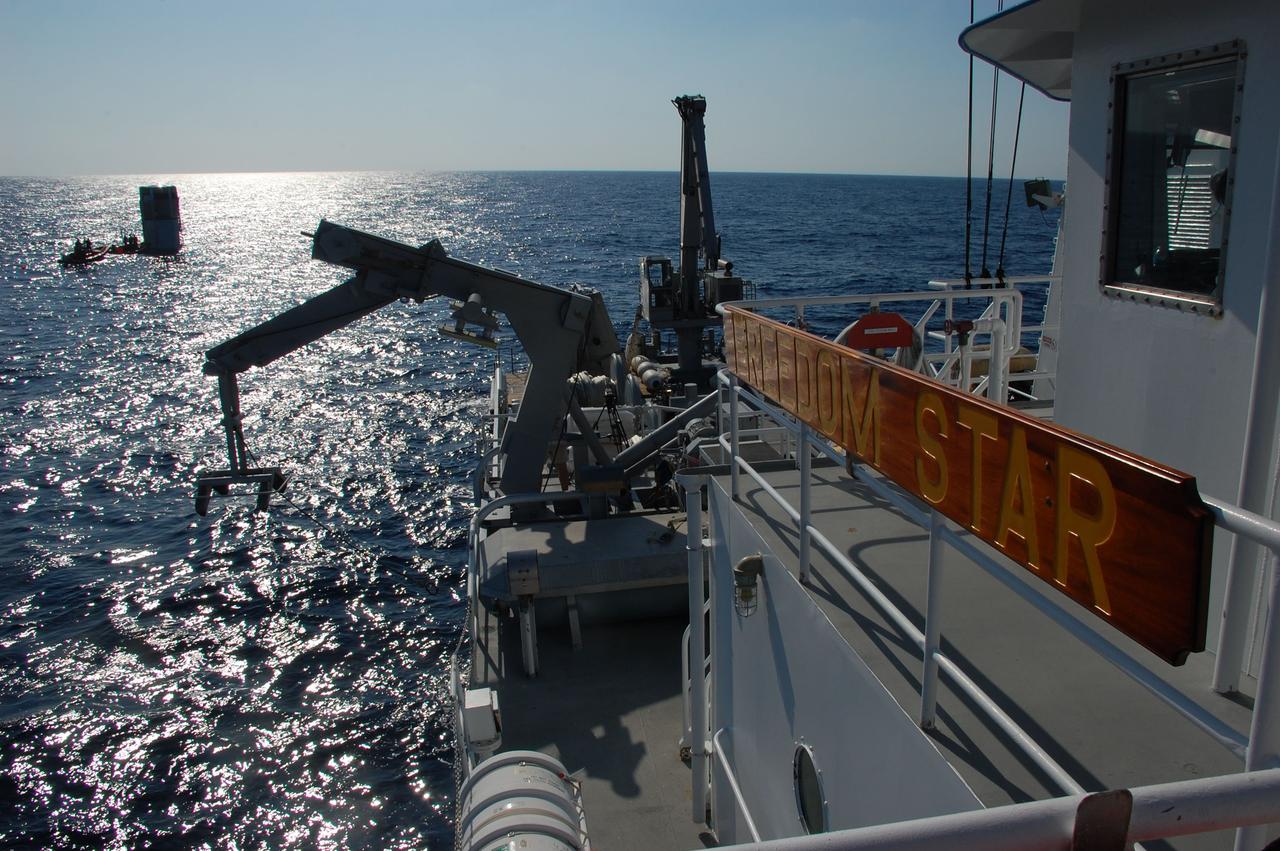
CAPE CANAVERAL, Fla. -- A crane is prepared to pluck the returning skiffs out of the water after crew members from Freedom Star, one of NASA's solid rocket booster retrieval ships, attached a hose between the left spent booster and the vessel that will facilitate debris and water clearing and the pumping in of air into the booster so it can float horizontally on the water's surface for towing back to Port Canaveral in Florida. The shuttle’s two solid rocket booster casings and associated flight hardware are recovered in the Atlantic Ocean after every launch by Liberty Star and Freedom Star. The boosters impact the Atlantic about seven minutes after liftoff and the retrieval ships are stationed about 10 miles from the impact area at the time of splashdown. After the spent segments are processed, they will be transported to Utah, where they will be refurbished and stored, if needed. Photo credit: NASA/Ben Smegelsky
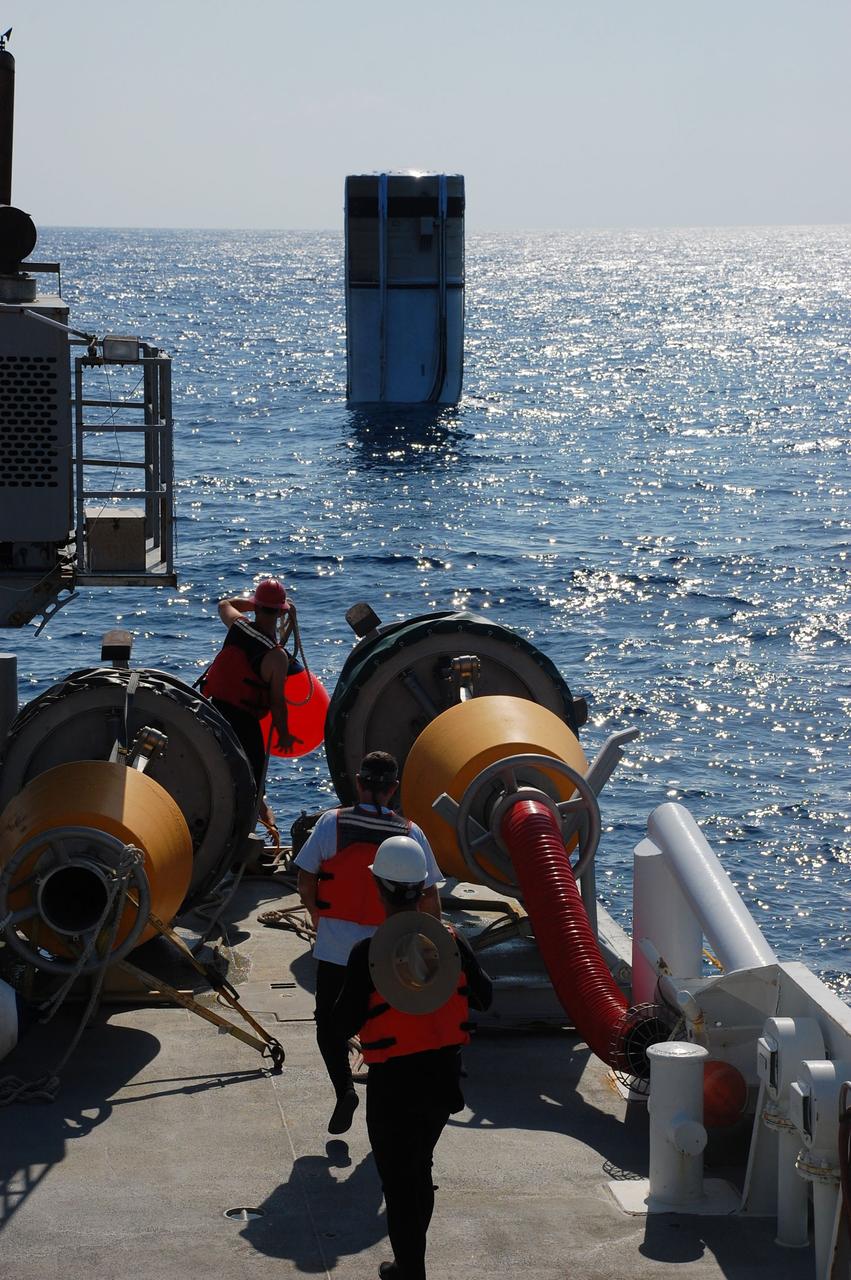
CAPE CANAVERAL, Fla. -- Freedom Star, one of NASA's solid rocket booster retrieval ships, and its crew are preparing to recover the left spent booster from the Atlantic Ocean. The round objects on deck are large pumping machines that will be attached to the booster by a hose that will blow out debris and water and then pump in air so the booster can float horizontally on the water's surface for towing back to Port Canaveral in Florida. The shuttle’s two solid rocket booster casings and associated flight hardware are recovered in the Atlantic Ocean after every launch by Liberty Star and Freedom Star. The boosters impact the Atlantic about seven minutes after liftoff and the retrieval ships are stationed about 10 miles from the impact area at the time of splashdown. After the spent segments are processed, they will be transported to Utah, where they will be refurbished and stored, if needed. Photo credit: NASA/Ben Smegelsky
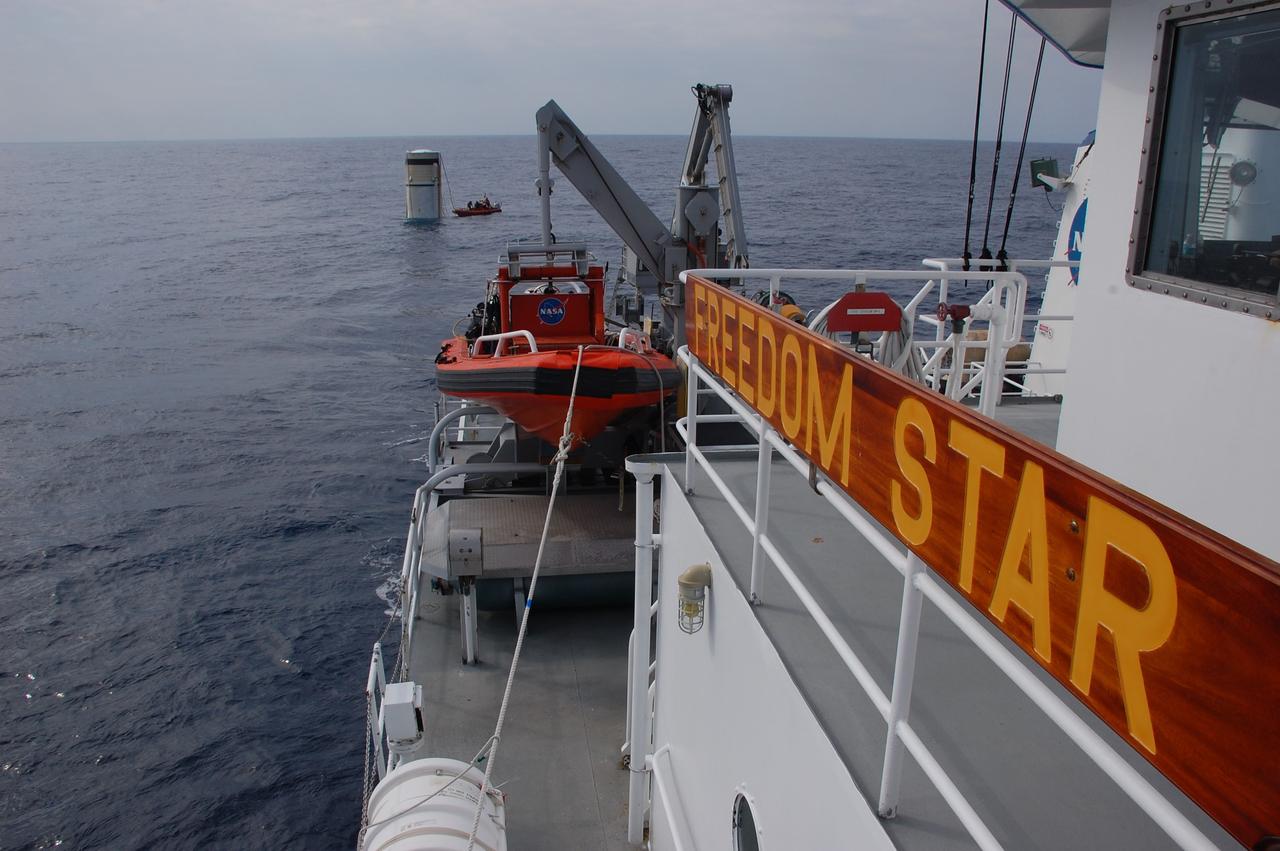
CAPE CANAVERAL, Fla. -- Crew members in a skiff from Freedom Star, one of NASA's solid rocket booster retrieval ships, inspect the left spent booster bobbing in the Atlantic Ocean after space shuttle Discovery's STS-133 launch. The shuttle’s two solid rocket booster casings and associated flight hardware are recovered in the Atlantic Ocean after every launch by Liberty Star and Freedom Star. The boosters impact the Atlantic about seven minutes after liftoff and the retrieval ships are stationed about 10 miles from the impact area at the time of splashdown. After the spent segments are processed, they will be transported to Utah, where they will be refurbished and stored, if needed. Photo credit: NASA/Ben Smegelsky
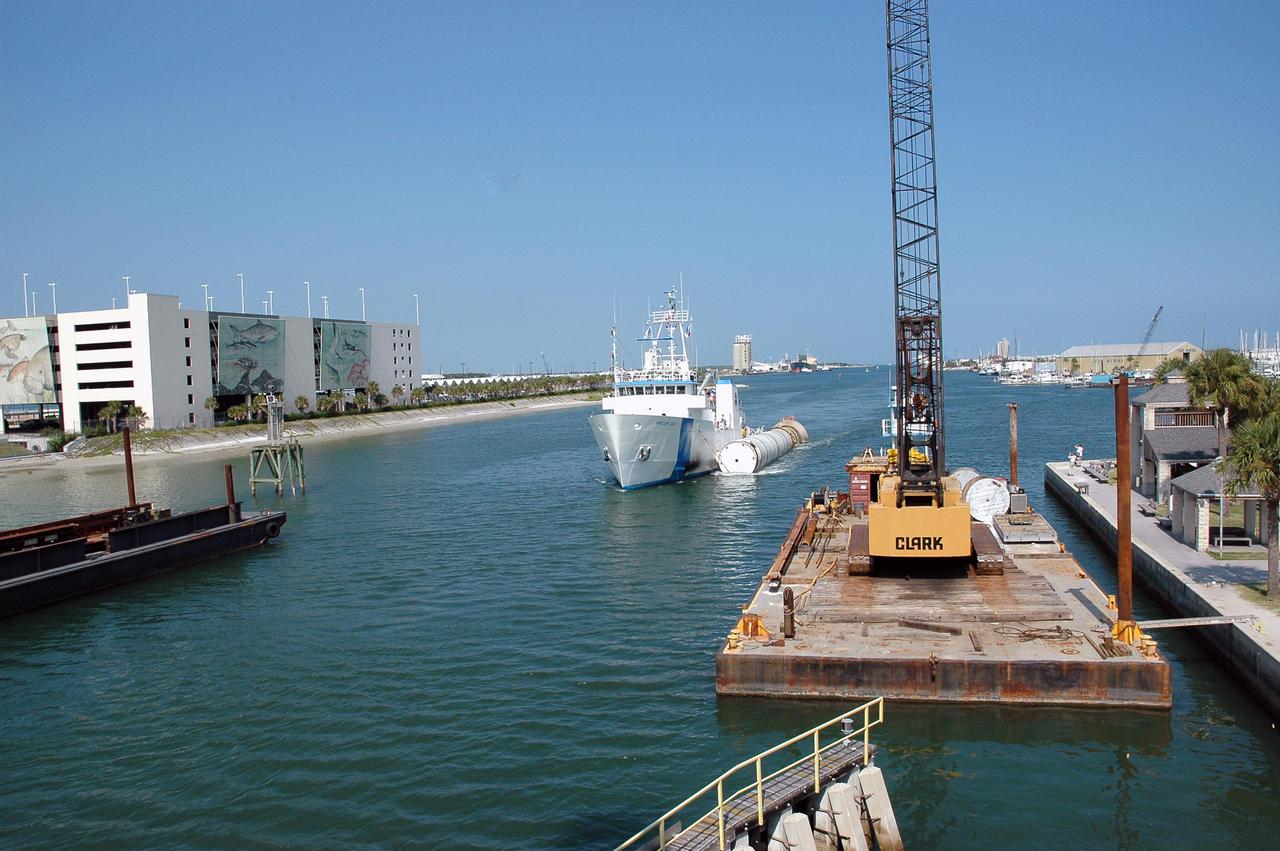
KENNEDY SPACE CENTER, FLA. - The solid rocket booster recovery ship Freedom Star makes its way through Port Canaveral with a spent solid rocket booster (SRB) from the STS-114 launch on July 26 in tow. The SRBs are the largest solid propellant motors ever flown and the first designed for reuse. After a Shuttle is launched, the SRBs are jettisoned at two minutes, seven seconds into the flight. At six minutes and 44 seconds after liftoff, the spent SRBs, weighing about 165,000 lb., have slowed their descent speed to about 62 mph and splashdown takes place in a predetermined area. They are retrieved from the Atlantic Ocean by special recovery vessels and returned for refurbishment and eventual reuse on future Shuttle flights. Once at Hangar AF, the SRBs are unloaded onto a hoisting slip and mobile gantry cranes lift them onto tracked dollies where they are safed and undergo their first washing.
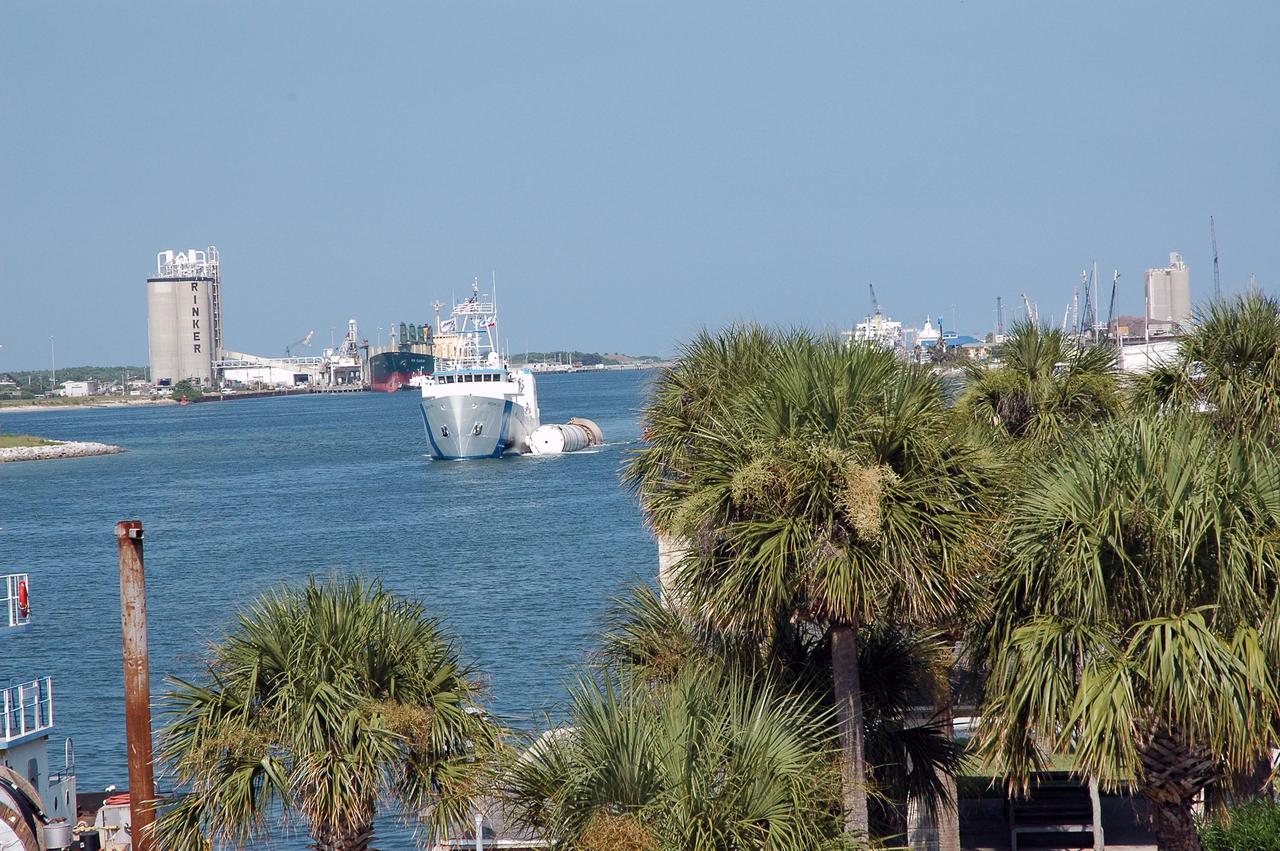
KENNEDY SPACE CENTER, FLA. - The solid rocket booster recovery ship Freedom Star enters Port Canaveral with a spent solid rocket booster (SRB) from the STS-114 launch on July 26 in tow. The SRBs are the largest solid propellant motors ever flown and the first designed for reuse. After a Shuttle is launched, the SRBs are jettisoned at two minutes, seven seconds into the flight. At six minutes and 44 seconds after liftoff, the spent SRBs, weighing about 165,000 lb., have slowed their descent speed to about 62 mph and splashdown takes place in a predetermined area. They are retrieved from the Atlantic Ocean by special recovery vessels and returned for refurbishment and eventual reuse on future Shuttle flights. Once at Hangar AF, the SRBs are unloaded onto a hoisting slip and mobile gantry cranes lift them onto tracked dollies where they are safed and undergo their first washing.
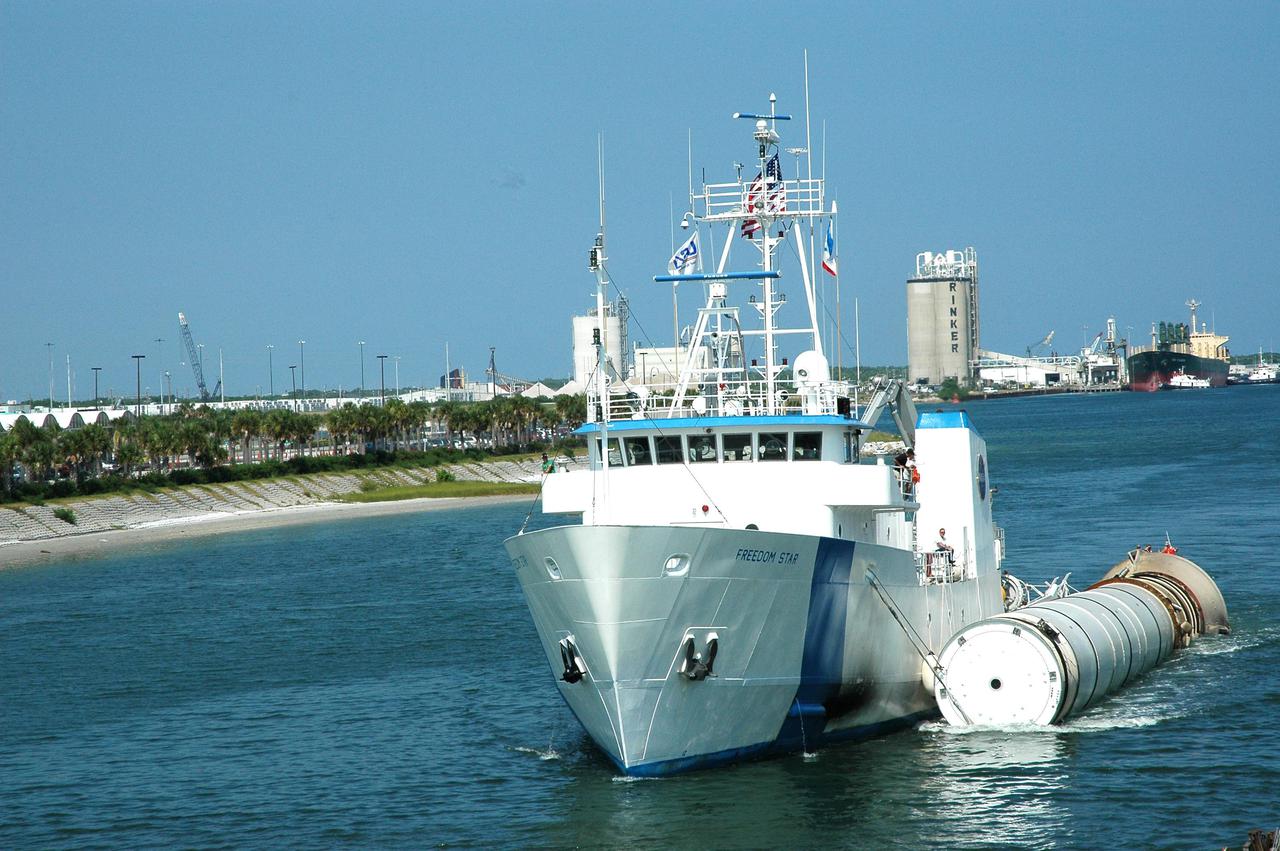
KENNEDY SPACE CENTER, FLA. - The solid rocket booster recovery ship Freedom Star travels through Port Canaveral with a spent solid rocket booster (SRB) from the STS-114 launch on July 26 in tow. The SRBs are the largest solid propellant motors ever flown and the first designed for reuse. After a Shuttle is launched, the SRBs are jettisoned at two minutes, seven seconds into the flight. At six minutes and 44 seconds after liftoff, the spent SRBs, weighing about 165,000 lb., have slowed their descent speed to about 62 mph and splashdown takes place in a predetermined area. They are retrieved from the Atlantic Ocean by special recovery vessels and returned for refurbishment and eventual reuse on future Shuttle flights. Once at Hangar AF, the SRBs are unloaded onto a hoisting slip and mobile gantry cranes lift them onto tracked dollies where they are safed and undergo their first washing.
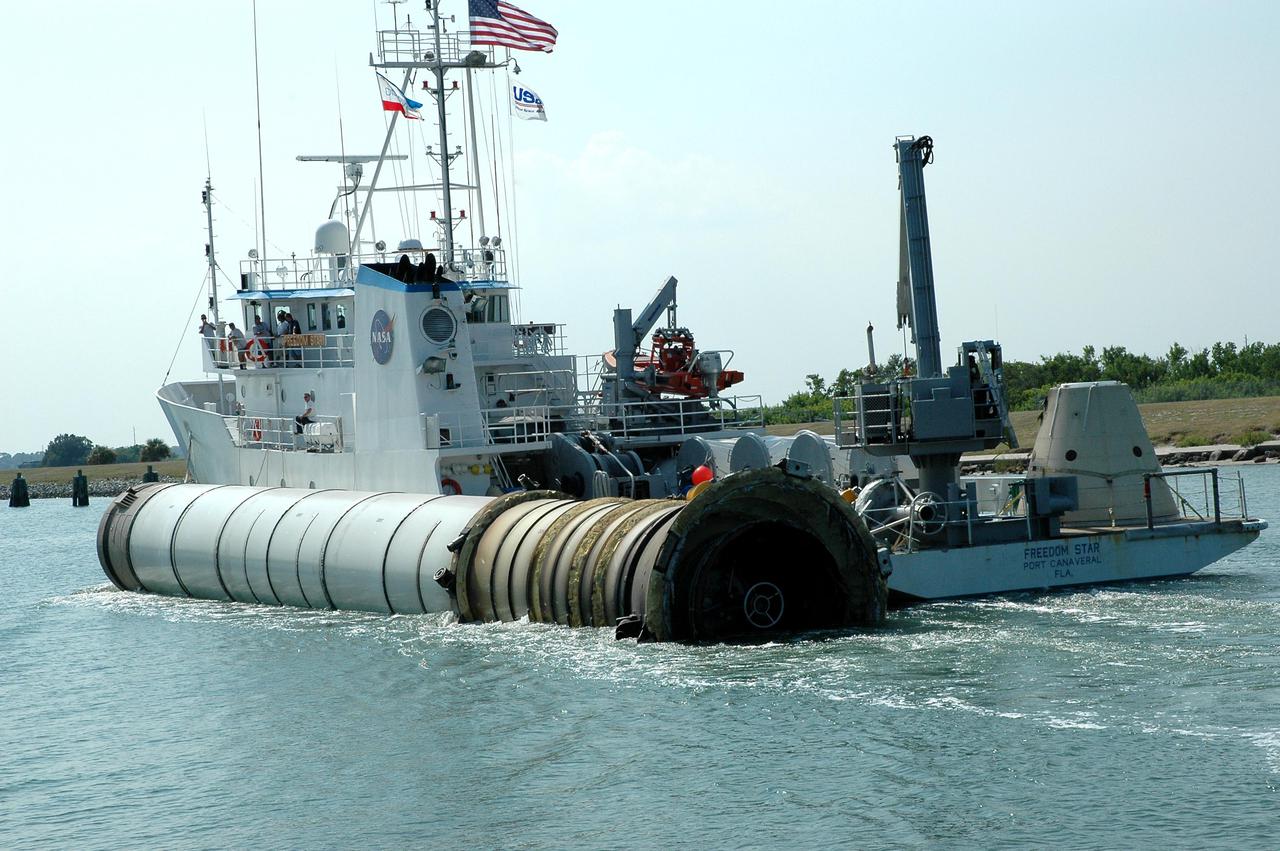
KENNEDY SPACE CENTER, FLA. - Kennedy Space Center employees on the solid rocket booster recovery ship Freedom Star acknowledge photographers awaiting their arrival at Port Canaveral. The ship, with a spent solid rocket booster (SRB) from the STS-114 launch on July 26 in tow, is headed for Hangar AF on Cape Canaveral Air Force Station. The SRBs are the largest solid propellant motors ever flown and the first designed for reuse. After a Shuttle is launched, the SRBs are jettisoned at two minutes, seven seconds into the flight. At six minutes and 44 seconds after liftoff, the spent SRBs, weighing about 165,000 lb., have slowed their descent speed to about 62 mph and splashdown takes place in a predetermined area. They are retrieved from the Atlantic Ocean by special recovery vessels and returned for refurbishment and eventual reuse on future Shuttle flights. Once at Hangar AF, the SRBs are unloaded onto a hoisting slip and mobile gantry cranes lift them onto tracked dollies where they are safed and undergo their first washing.
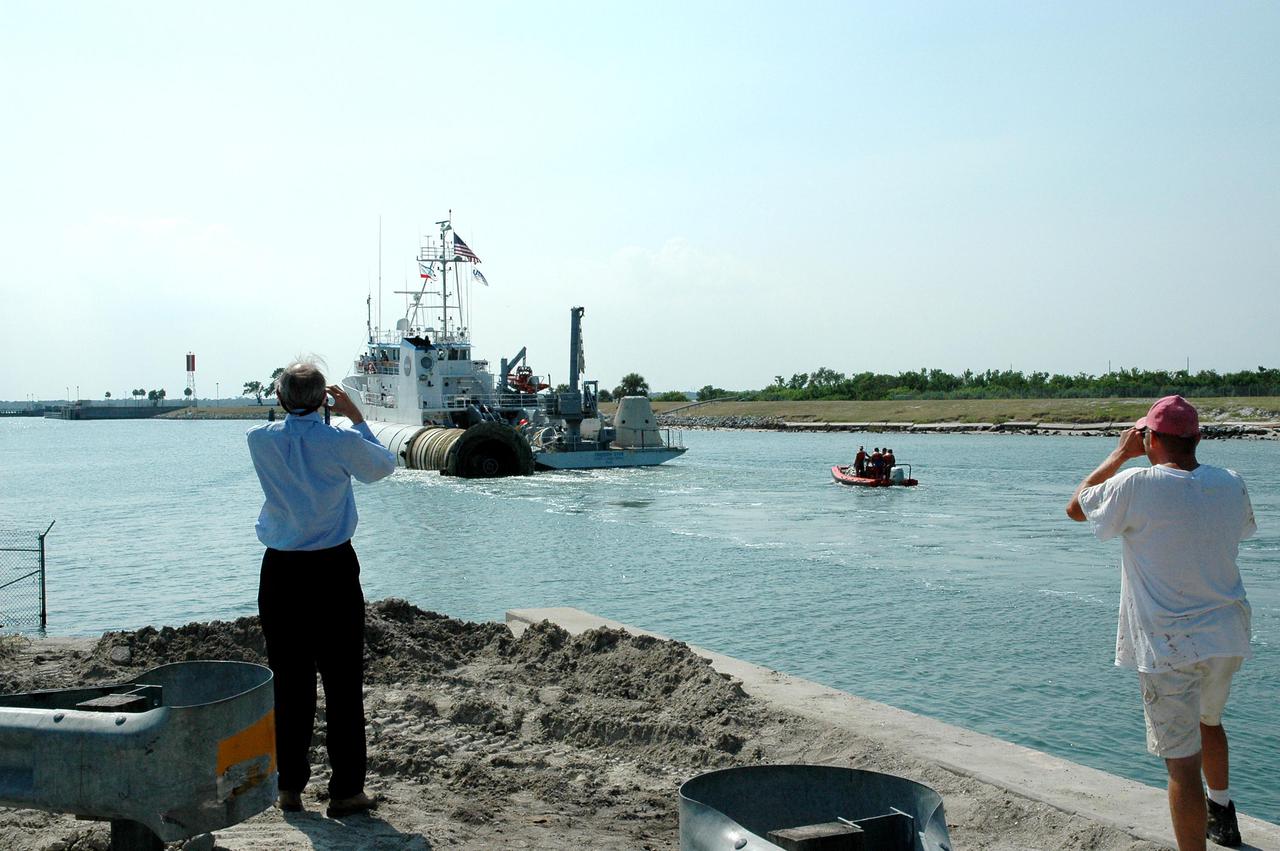
KENNEDY SPACE CENTER, FLA. - Photographers capture the solid rocket booster recovery ship Freedom Star, with a spent solid rocket booster (SRB) from the STS-114 launch on July 26 in tow, as it makes it way through Port Canaveral to Hangar AF on the Cape Canaveral Air Force Station. The SRBs are the largest solid propellant motors ever flown and the first designed for reuse. After a Shuttle is launched, the SRBs are jettisoned at two minutes, seven seconds into the flight. At six minutes and 44 seconds after liftoff, the spent SRBs, weighing about 165,000 lb., have slowed their descent speed to about 62 mph and splashdown takes place in a predetermined area. They are retrieved from the Atlantic Ocean by special recovery vessels and returned for refurbishment and eventual reuse on future Shuttle flights. Once at Hangar AF, the SRBs are unloaded onto a hoisting slip and mobile gantry cranes lift them onto tracked dollies where they are safed and undergo their first washing.
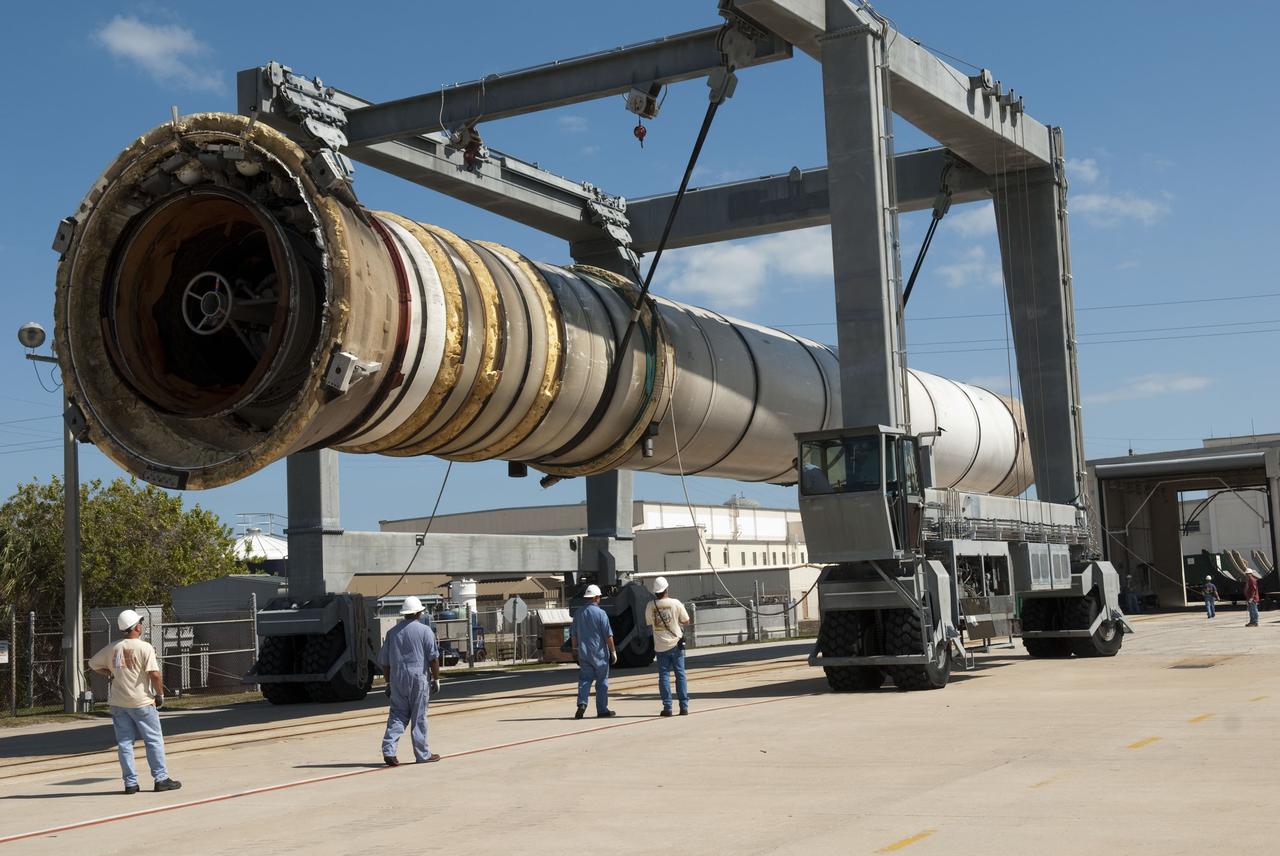
CAPE CANAVERAL, Fla. -- The left spent booster used during space shuttle Discovery's final launch hangs in a hoisting device at the Solid Rocket Booster Disassembly Facility at Hangar AF on Cape Canaveral Air Force Station in Florida. The shuttle's two solid rocket booster casings and associated flight hardware are recovered in the Atlantic Ocean after every launch by Freedom Star and Liberty Star. The boosters impact the Atlantic about seven minutes after liftoff and the retrieval ships are stationed about 10 miles from the impact area at the time of splashdown. After the spent segments are processed, they will be transported to Utah, where they will be refurbished and stored, if needed. Photo credit: NASA/Jim Grossmann
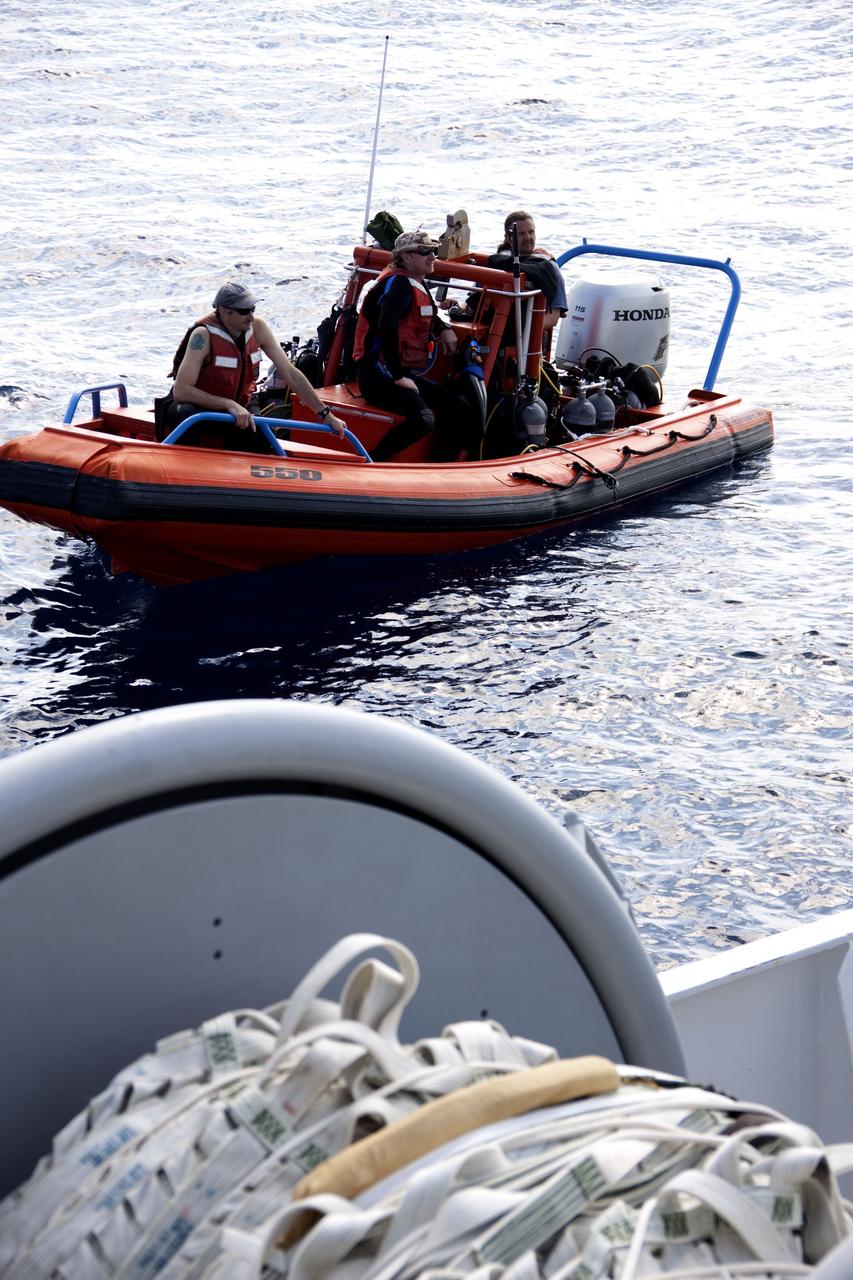
CAPE CANAVERAL, Fla. -- Crew members return to Liberty Star, one of NASA's solid rocket booster retrieval ships, in a skiff after the massive parachute from the right spent booster has been hauled on board from space shuttle Discovery's final launch. The shuttle's two solid rocket booster casings and associated flight hardware are recovered in the Atlantic Ocean after every launch by Freedom Star and Liberty Star. The boosters impact the Atlantic about seven minutes after liftoff and the retrieval ships are stationed about 10 miles from the impact area at the time of splashdown. After the spent segments are processed, they will be transported to Utah, where they will be refurbished and stored, if needed. Photo credit: NASA/Frank Michaux
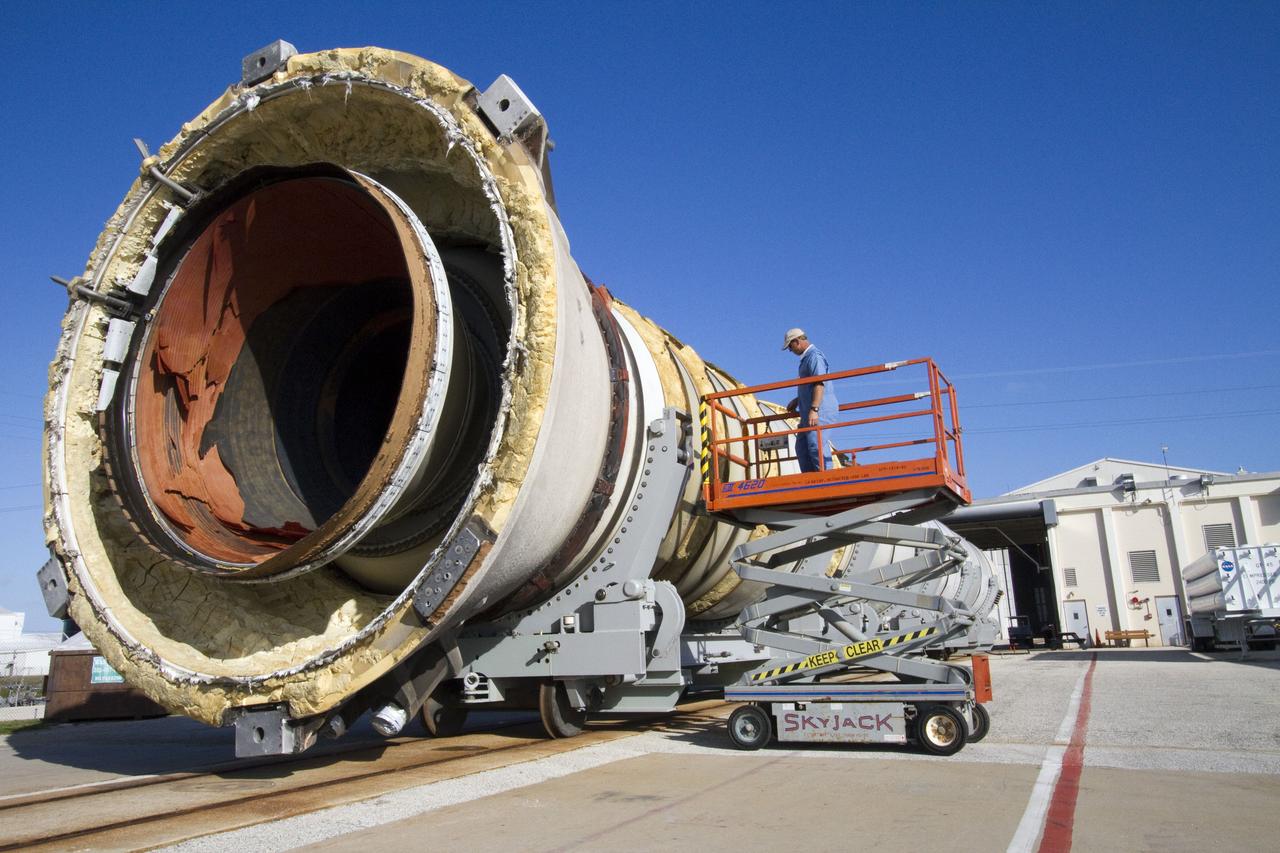
CAPE CANAVERAL, Fla. -- A technician inspects a spent shuttle solid rocket booster outside Hangar AF at Cape Canaveral Air Force Station in Florida. The booster was used during space shuttle Discovery's STS-133 launch from NASA Kennedy Space Center's Launch Pad 39A on Feb. 24. The shuttle’s two solid rocket booster casings and associated flight hardware were recovered in the Atlantic Ocean by retrieval ships Liberty Star and Freedom Star. The boosters impact the Atlantic about seven minutes after liftoff and the retrieval ships are stationed about 10 miles from the impact area at the time of splashdown. After the spent segments are processed, they will be transported to Utah, where they will be refurbished and stored, if needed. Photo credit: NASA/Jack Pfaller
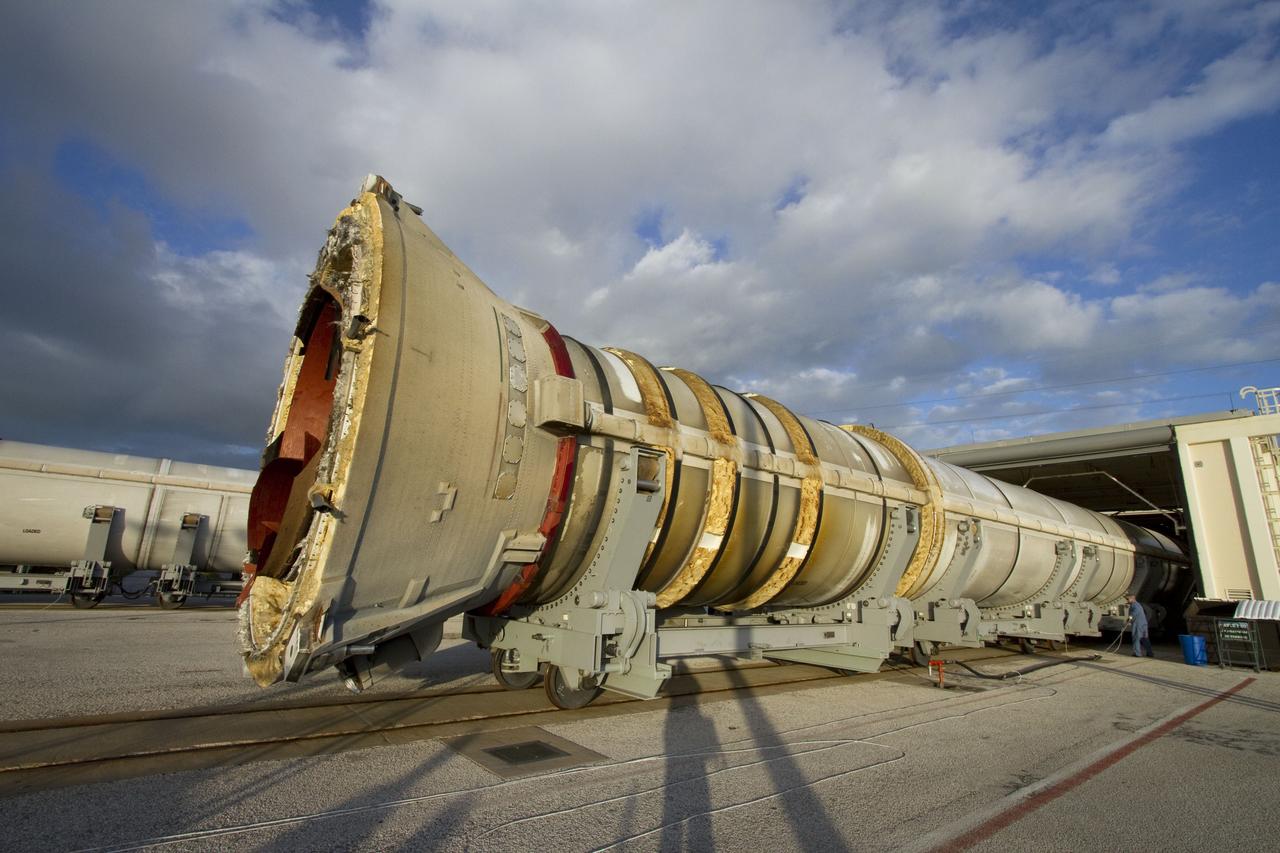
CAPE CANAVERAL, Fla. -- A spent shuttle solid rocket booster is moved into Hangar AF at Cape Canaveral Air Force Station in Florida, where it will be cleaned. The booster was used during space shuttle Discovery's STS-133 launch from NASA Kennedy Space Center's Launch Pad 39A on Feb. 24. The shuttle’s two solid rocket booster casings and associated flight hardware were recovered in the Atlantic Ocean by retrieval ships Liberty Star and Freedom Star. The boosters impact the Atlantic about seven minutes after liftoff and the retrieval ships are stationed about 10 miles from the impact area at the time of splashdown. After the spent segments are processed, they will be transported to Utah, where they will be refurbished and stored, if needed. Photo credit: NASA/Jack Pfaller
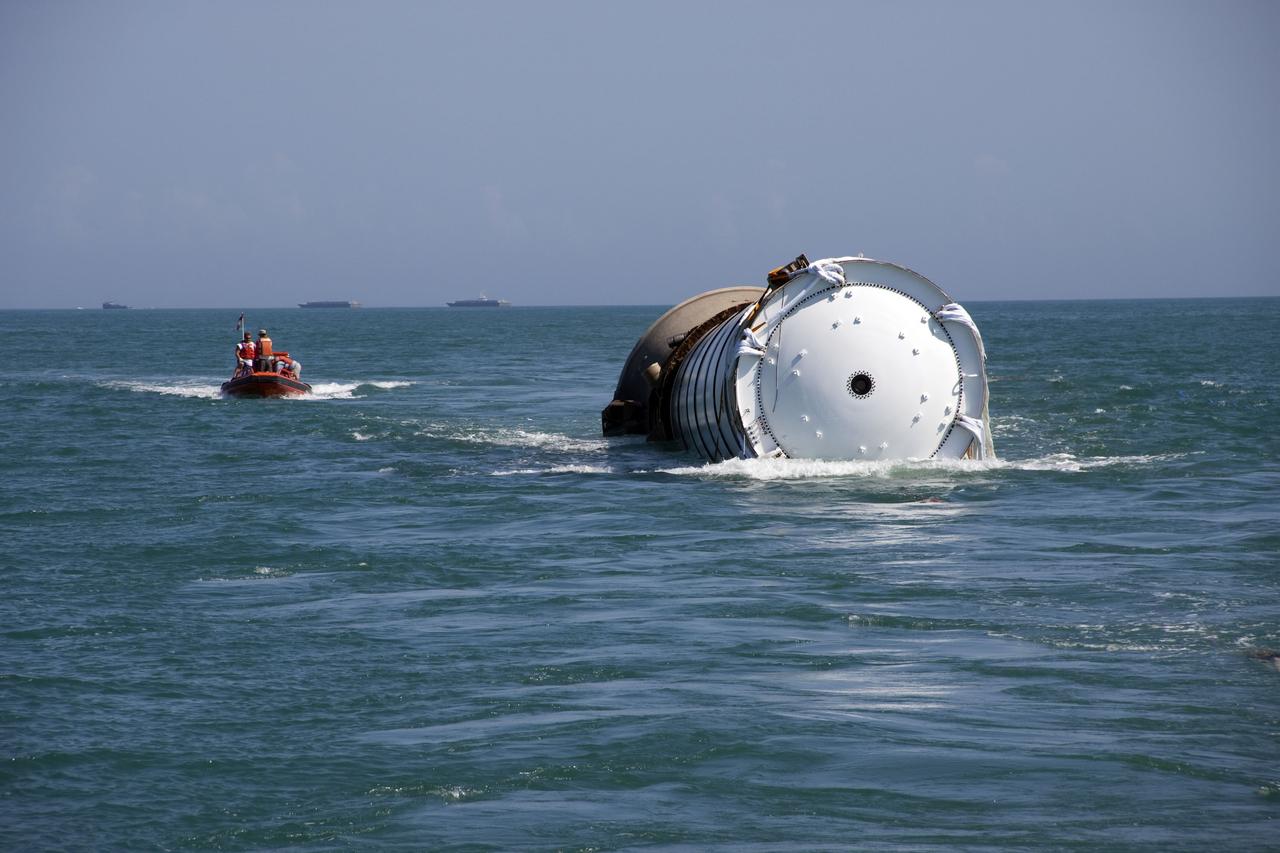
CAPE CANAVERAL, Fla. -- Liberty Star, one of NASA's solid rocket booster retrieval ships, tows the right spent booster from space shuttle Discovery's final launch, to Port Canaveral in Florida. The shuttle's two solid rocket booster casings and associated flight hardware are recovered in the Atlantic Ocean after every launch by Freedom Star and Liberty Star. The boosters impact the Atlantic about seven minutes after liftoff and the retrieval ships are stationed about 10 miles from the impact area at the time of splashdown. After the spent segments are processed, they will be transported to Utah, where they will be refurbished and stored, if needed. Photo credit: NASA/Frank Michaux
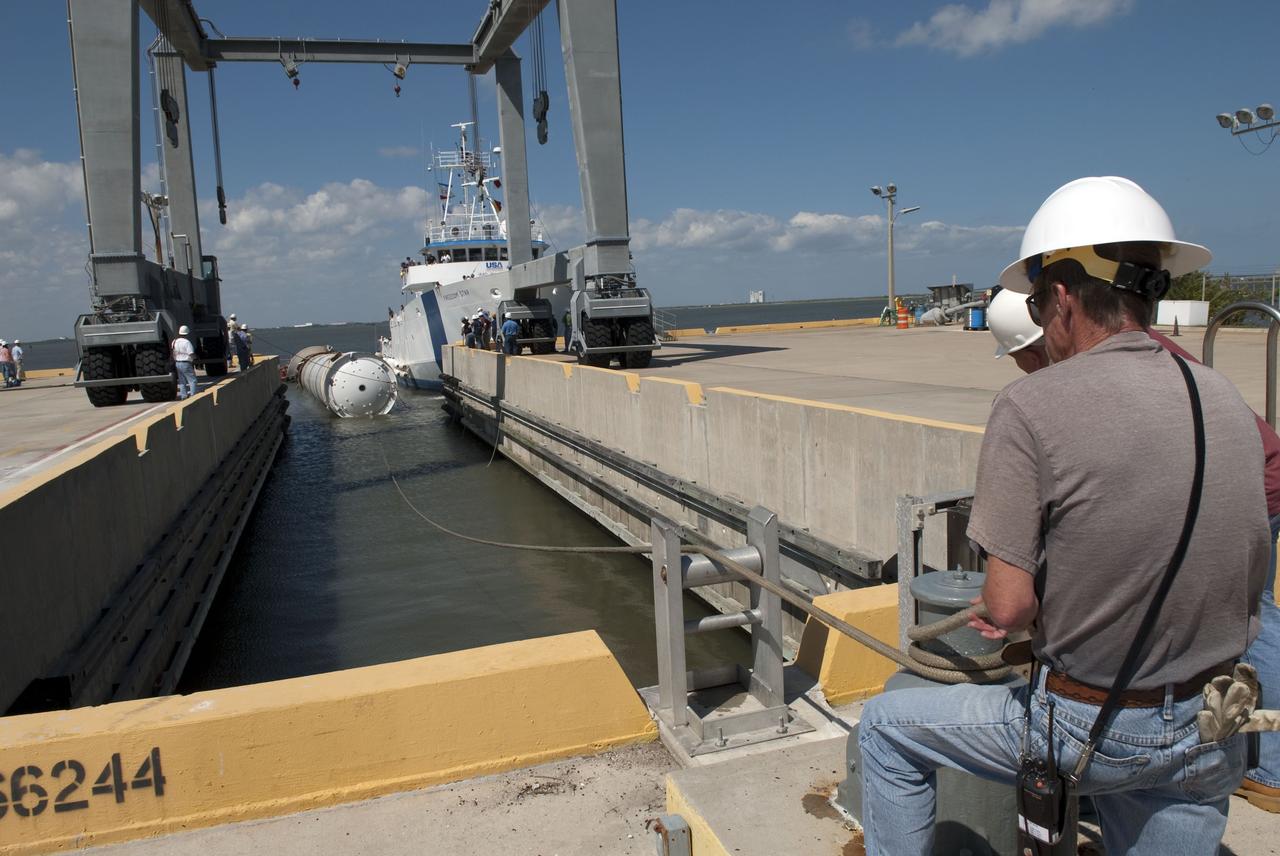
CAPE CANAVERAL, Fla. -- The left spent booster used during space shuttle Discovery's final launch is moved into a hoisting slip at the Solid Rocket Booster Disassembly Facility at Hangar AF on Cape Canaveral Air Force Station in Florida. The shuttle's two solid rocket booster casings and associated flight hardware are recovered in the Atlantic Ocean after every launch by Freedom Star and Liberty Star. The boosters impact the Atlantic about seven minutes after liftoff and the retrieval ships are stationed about 10 miles from the impact area at the time of splashdown. After the spent segments are processed, they will be transported to Utah, where they will be refurbished and stored, if needed. Photo credit: NASA/Jim Grossmann
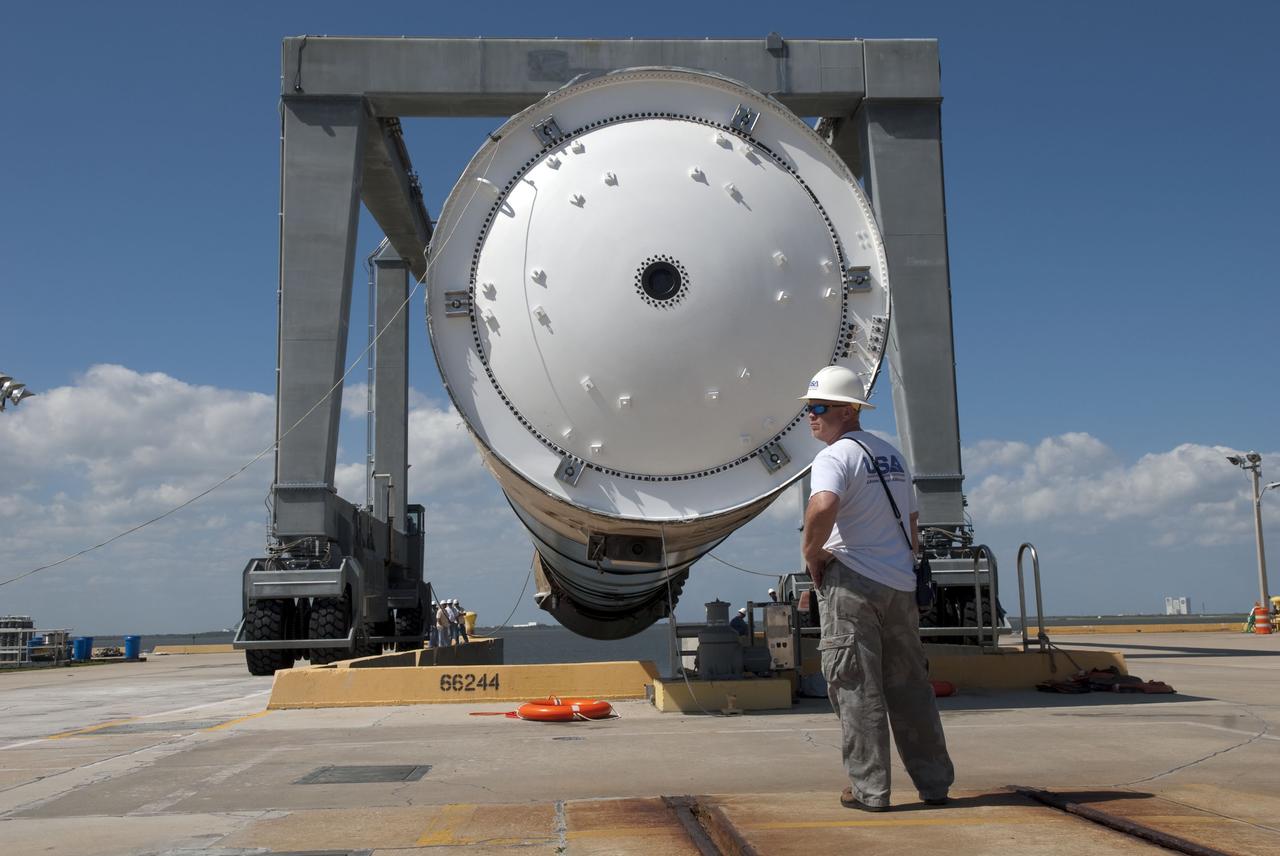
CAPE CANAVERAL, Fla. -- Workers at the hoisting slip at the Solid Rocket Booster Disassembly Facility at Hangar AF on Cape Canaveral Air Force Station in Florida, monitor the lifting of the left spent booster, used during space shuttle Discovery's final launch. The shuttle's two solid rocket booster casings and associated flight hardware are recovered in the Atlantic Ocean after every launch by Freedom Star and Liberty Star. The boosters impact the Atlantic about seven minutes after liftoff and the retrieval ships are stationed about 10 miles from the impact area at the time of splashdown. After the spent segments are processed, they will be transported to Utah, where they will be refurbished and stored, if needed. Photo credit: NASA/Jim Grossmann
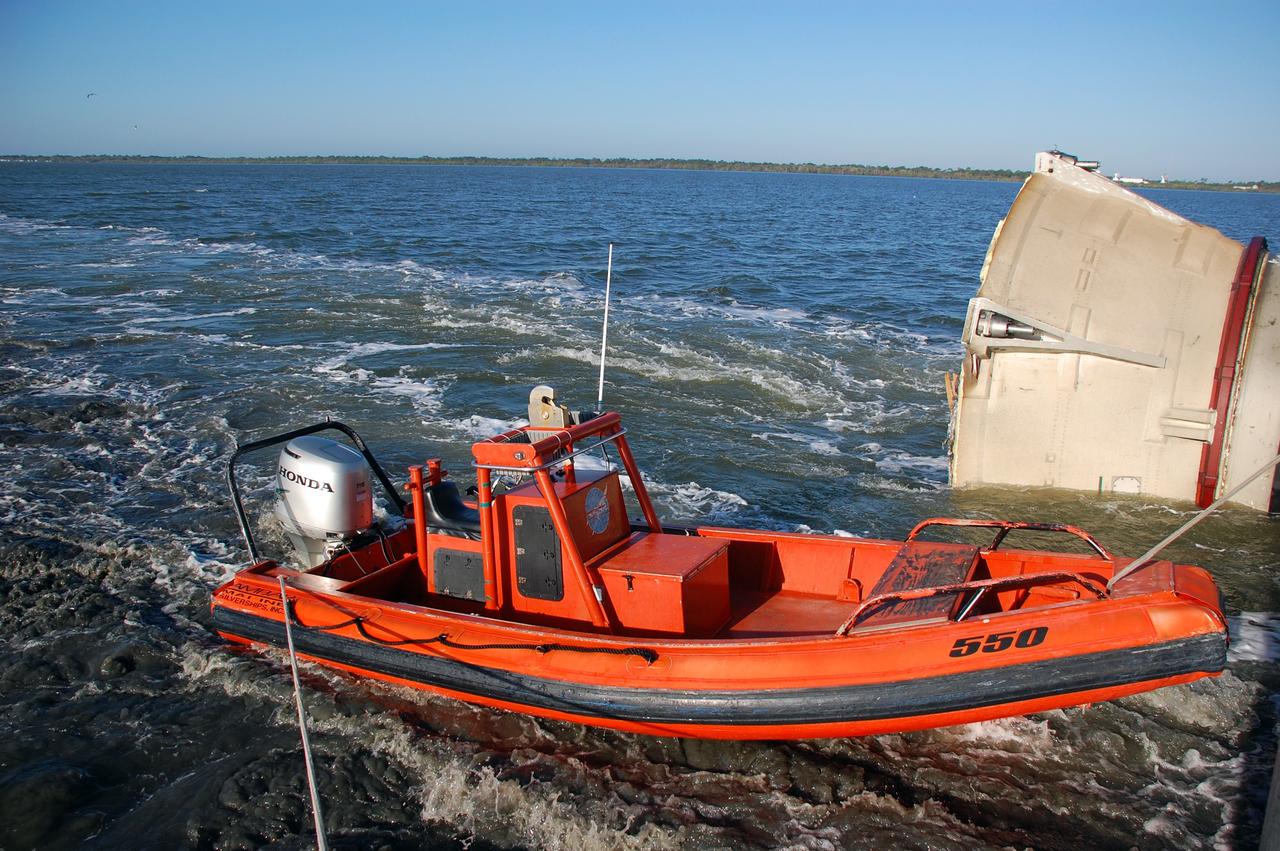
CAPE CANAVERAL, Fla. -- A skiff from Freedom Star, one of NASA's solid rocket booster retrieval ships, helped usher a spent shuttle booster through the shallow waters of the locks at Port Canaveral, Fla. The booster will be re-tied to the ship for the rest of the journey to Hangar AF at Cape Canaveral Air Force Station. The booster was used during space shuttle Discovery's STS-133 launch from NASA Kennedy Space Center's Launch Pad 39A on Feb. 24. The shuttle’s two solid rocket booster casings and associated flight hardware are recovered in the Atlantic Ocean after every launch by Freedom Star and Liberty Star. The boosters impact the Atlantic about seven minutes after liftoff and the retrieval ships are stationed about 10 miles from the impact area at the time of splashdown. After the spent segments are processed, they will be transported to Utah, where they will be refurbished and stored, if needed. Photo credit: NASA/Ben Smegelsky
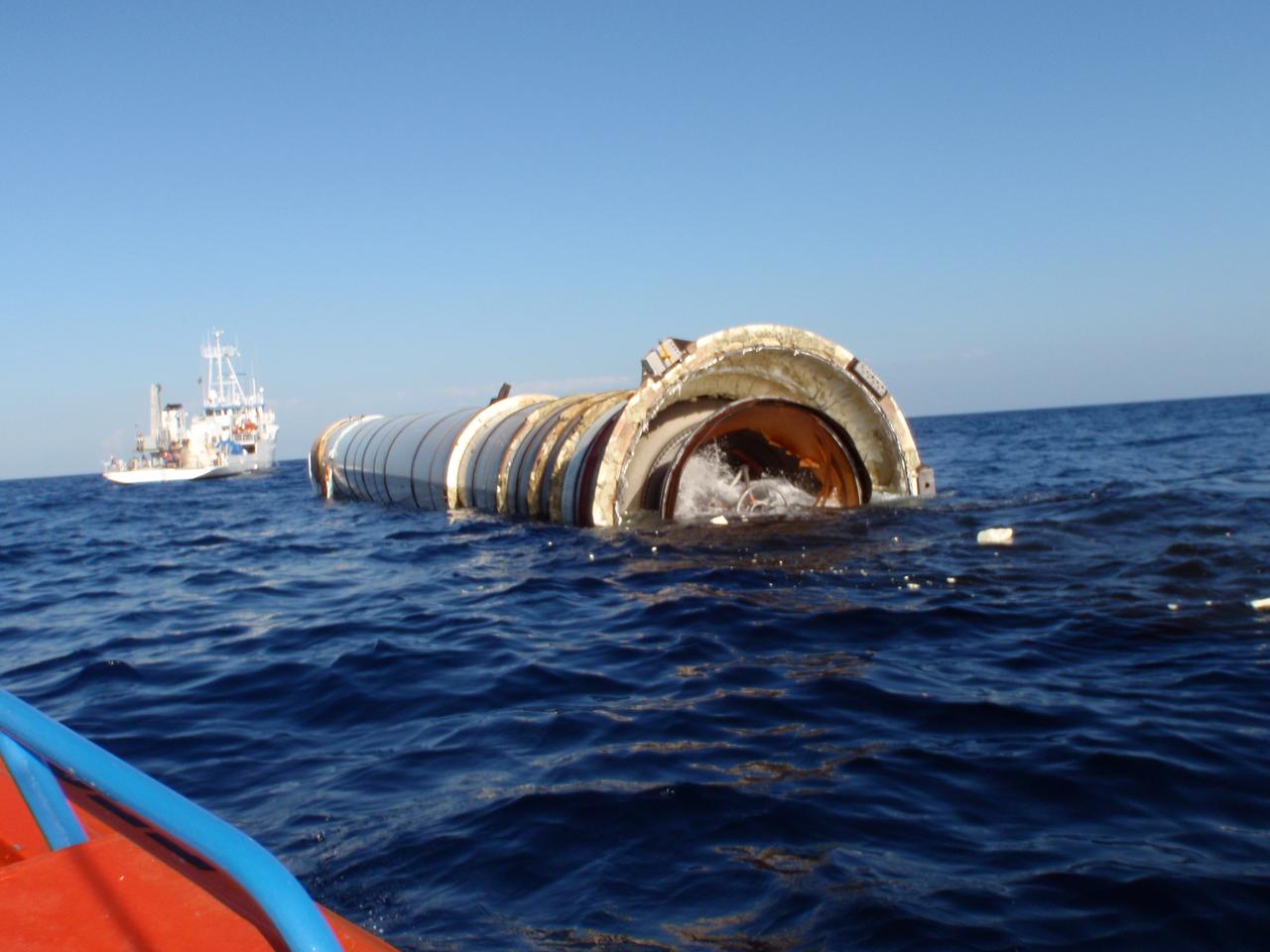
CAPE CANAVERAL, Fla. -- A spent solid rocket booster from Discovery's STS-133 launch bobbed in the Atlantis Ocean off the coast of Florida, before toppling over in a retrievable position. The booster is pumped with air to help maintain its flotation and horizontal position. Next, one of NASA's solid rocket booster retrieval ships, Liberty Star or Freedom Star, will tie up to the booster and transport it to Hangar AF at Cape Canaveral Air Force Station. The shuttle’s two solid rocket booster casings and associated flight hardware are recovered after every launch by the two ships. The boosters impact the Atlantic about seven minutes after liftoff and the retrieval ships are stationed about 10 miles from the impact area at the time of splashdown. After the spent segments are processed, they will be transported to Utah, where they will be refurbished and stored, if needed. Photo credit: NASA/Frank Michaux
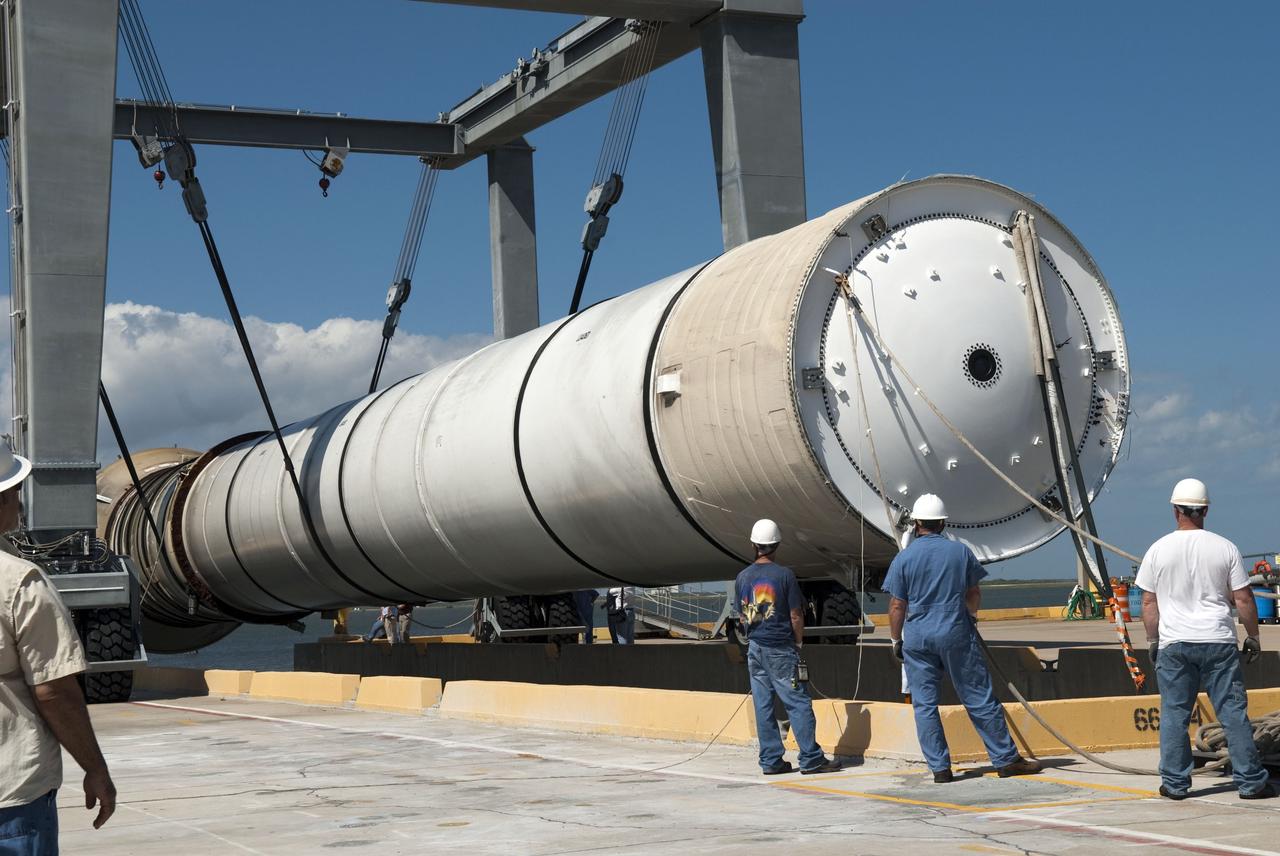
CAPE CANAVERAL, Fla. -- Workers at the hoisting slip at the Solid Rocket Booster Disassembly Facility at Hangar AF on Cape Canaveral Air Force Station in Florida, monitor the lifting of the left spent booster, used during space shuttle Discovery's final launch. The shuttle's two solid rocket booster casings and associated flight hardware are recovered in the Atlantic Ocean after every launch by Freedom Star and Liberty Star. The boosters impact the Atlantic about seven minutes after liftoff and the retrieval ships are stationed about 10 miles from the impact area at the time of splashdown. After the spent segments are processed, they will be transported to Utah, where they will be refurbished and stored, if needed. Photo credit: NASA/Jim Grossmann

CAPE CANAVERAL, Fla. -- Workers monitor the progress of the solid rocket booster retrieval ship Freedom Star as it tows a left spent booster to the dock at Hangar AF on Cape Canaveral Air Force Station in Florida. The booster was used during space shuttle Discovery's final launch. The shuttle's two solid rocket booster casings and associated flight hardware are recovered in the Atlantic Ocean after every launch by Freedom Star and Liberty Star. The boosters impact the Atlantic about seven minutes after liftoff and the retrieval ships are stationed about 10 miles from the impact area at the time of splashdown. After the spent segments are processed, they will be transported to Utah, where they will be refurbished and stored, if needed. Photo credit: NASA/Jim Grossmann
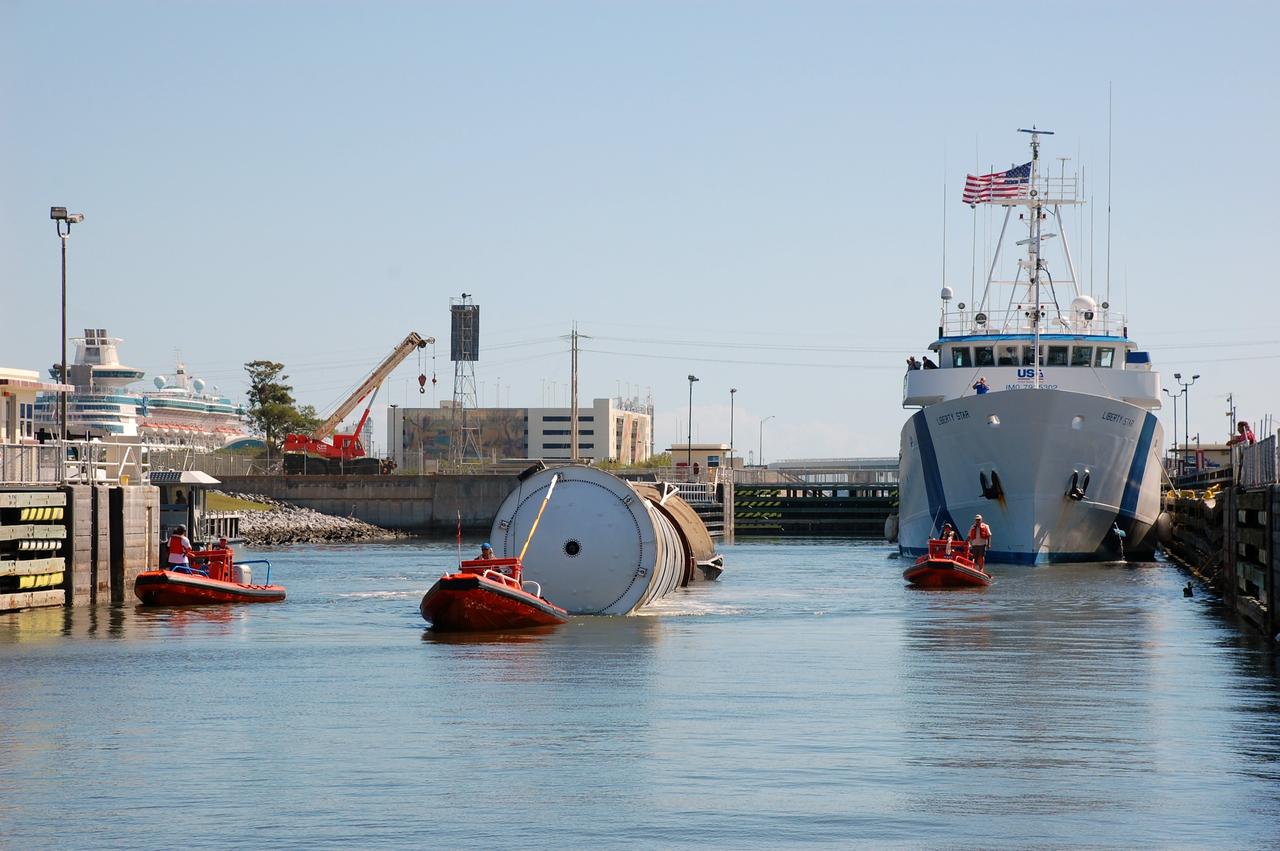
CAPE CANAVERAL, Fla. -- Crew members in a skiff and aboard Liberty Star, one of NASA's solid rocket booster retrieval ships, usher a spent shuttle booster to Hangar AF at Cape Canaveral Air Force Station in Florida. The booster was used during space shuttle Discovery's STS-133 launch from NASA Kennedy Space Center's Launch Pad 39A on Feb. 24. The shuttle’s two solid rocket booster casings and associated flight hardware are recovered in the Atlantic Ocean after every launch by Freedom Star and Liberty Star. The boosters impact the Atlantic about seven minutes after liftoff and the retrieval ships are stationed about 10 miles from the impact area at the time of splashdown. After the spent segments are processed, they will be transported to Utah, where they will be refurbished and stored, if needed. Photo credit: NASA/Ben Smegelsky

CAPE CANAVERAL, Fla. -- The Solid Rocket Booster Retrieval Ship Freedom Star is tied back up to a spent shuttle booster and ready to continue the journey to the dock at Hangar AF at Cape Canaveral Air Force Station in Florida. The booster was used during space shuttle Discovery's STS-133 launch from NASA Kennedy Space Center's Launch Pad 39A on Feb. 24. The shuttle’s two solid rocket booster casings and associated flight hardware are recovered in the Atlantic Ocean after every launch by Freedom Star and Liberty Star. The boosters impact the Atlantic about seven minutes after liftoff and the retrieval ships are stationed about 10 miles from the impact area at the time of splashdown. After the spent segments are processed, they will be transported to Utah, where they will be refurbished and stored, if needed. Photo credit: NASA/Ben Smegelsky
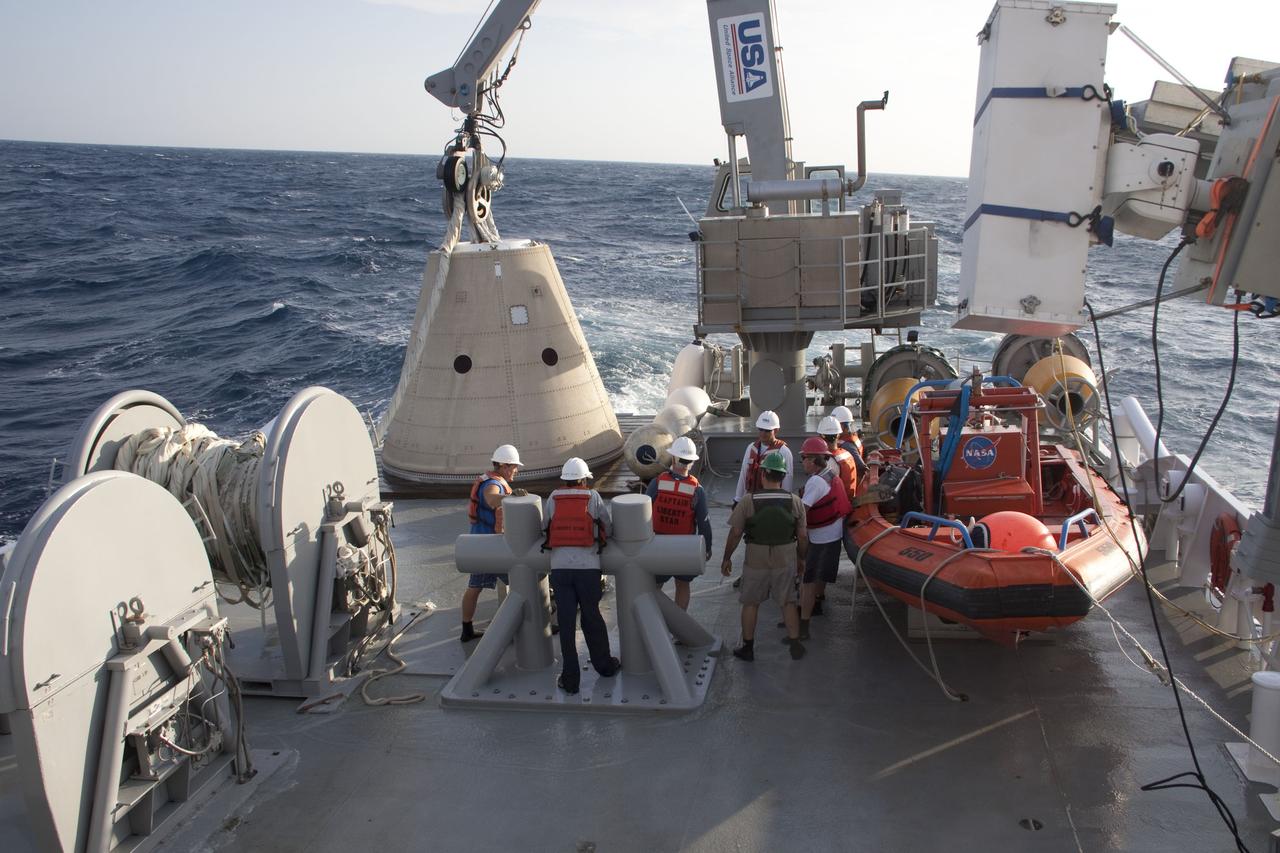
CAPE CANAVERAL, Fla. -- Crew members from Liberty Star, one of NASA's solid rocket booster retrieval ships, have recovered and secured the right spent booster nose cap to a pallet on the ship's deck that was recovered from the Atlantic Ocean after Discovery's final launch. The shuttle’s two solid rocket booster casings and associated flight hardware are recovered in the Atlantic Ocean after every launch by Freedom Star and Liberty Star. The boosters impact the Atlantic about seven minutes after liftoff and the retrieval ships are stationed about 10 miles from the impact area at the time of splashdown. After the spent segments are processed, they will be transported to Utah, where they will be refurbished and stored, if needed. Photo credit: NASA/Frank Michaux
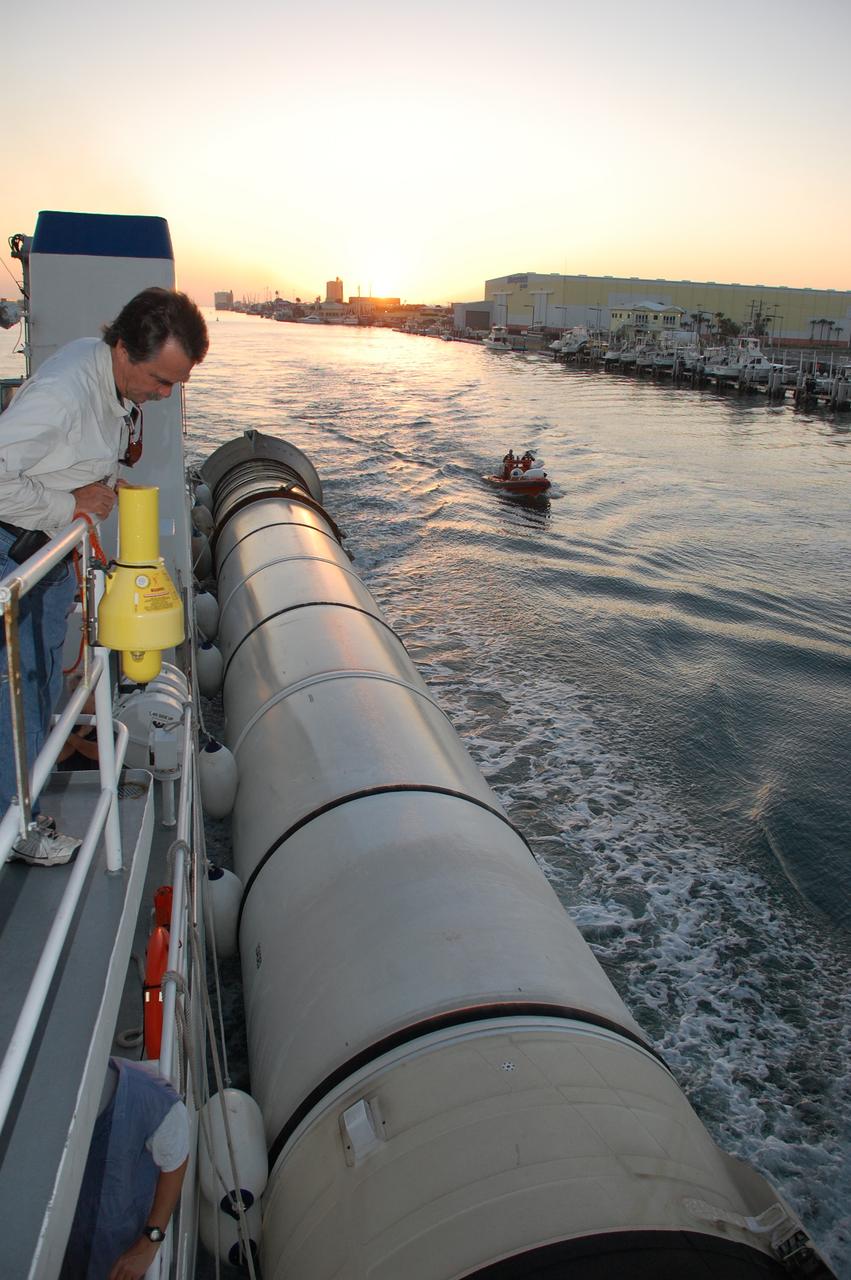
CAPE CANAVERAL, Fla. -- As daylight breaks, Walt Adams, a space shuttle solid rocket booster retrieval and dive supervisor, monitors a spent booster as it's towed by the Freedom Star retrieval ship through Port Canaveral in Florida on a journey to Hangar AF at Cape Canaveral Air Force Station. The booster was used during space shuttle Discovery's STS-133 launch from NASA Kennedy Space Center's Launch Pad 39A on Feb. 24. The shuttle’s two solid rocket booster casings and associated flight hardware are recovered in the Atlantic Ocean after every launch by Freedom Star and Liberty Star. The boosters impact the Atlantic about seven minutes after liftoff and the retrieval ships are stationed about 10 miles from the impact area at the time of splashdown. After the spent segments are processed, they will be transported to Utah, where they will be refurbished and stored, if needed. Photo credit: NASA/Ben Smegelsky
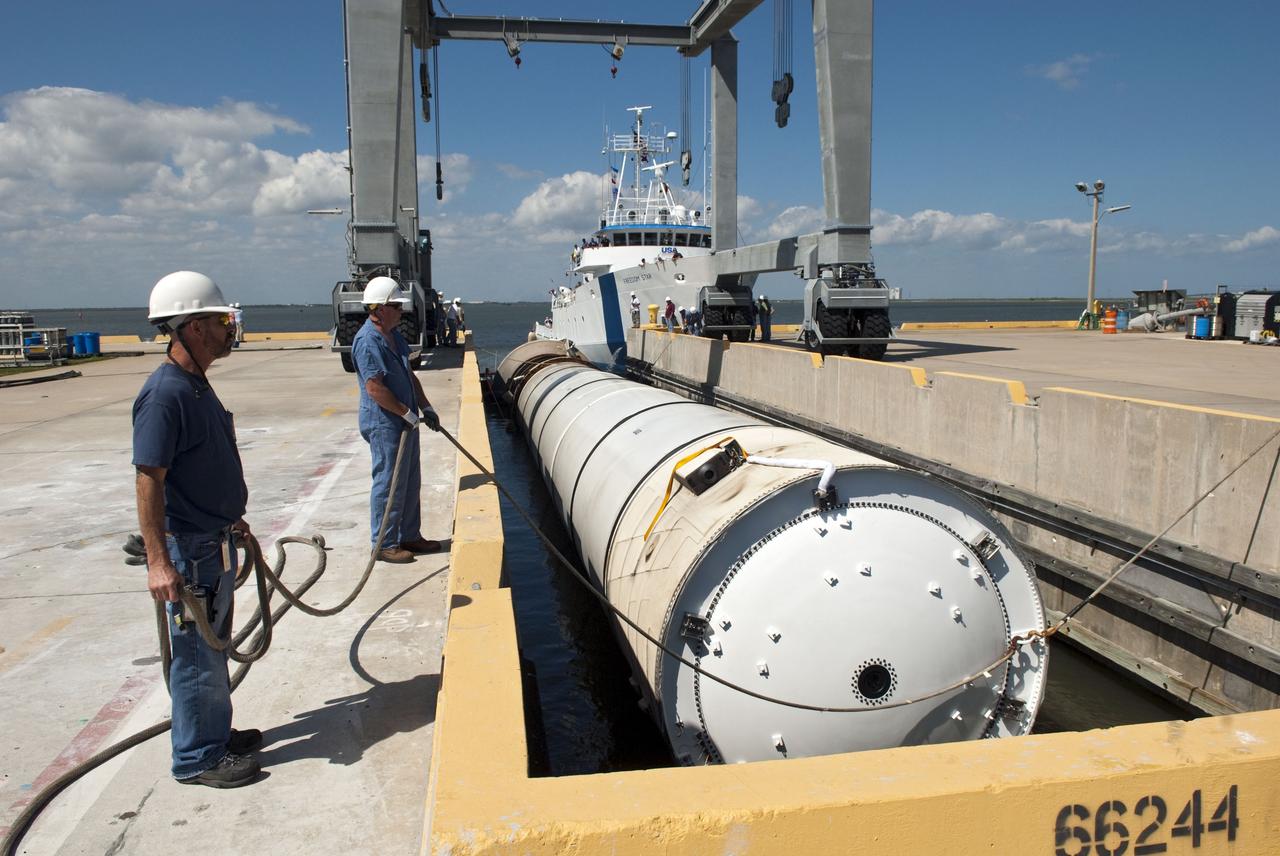
CAPE CANAVERAL, Fla. -- The left spent booster used during space shuttle Discovery's final launch is guided into a hoisting slip at the Solid Rocket Booster Disassembly Facility at Hangar AF on Cape Canaveral Air Force Station in Florida. The shuttle's two solid rocket booster casings and associated flight hardware are recovered in the Atlantic Ocean after every launch by Freedom Star and Liberty Star. The boosters impact the Atlantic about seven minutes after liftoff and the retrieval ships are stationed about 10 miles from the impact area at the time of splashdown. After the spent segments are processed, they will be transported to Utah, where they will be refurbished and stored, if needed. Photo credit: NASA/Jim Grossmann
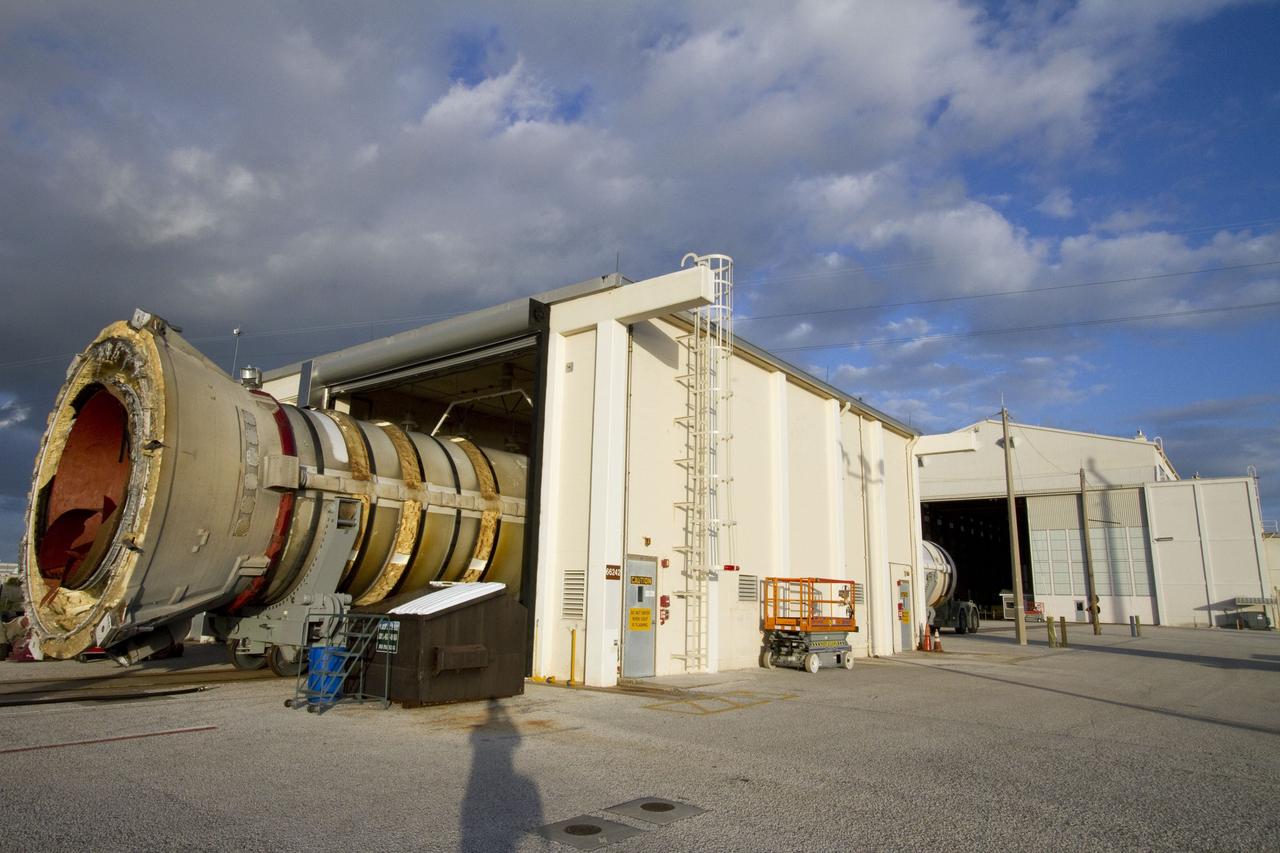
CAPE CANAVERAL, Fla. -- A spent shuttle solid rocket booster is moved into Hangar AF at Cape Canaveral Air Force Station in Florida, where it will be cleaned. The booster was used during space shuttle Discovery's STS-133 launch from NASA Kennedy Space Center's Launch Pad 39A on Feb. 24. The shuttle’s two solid rocket booster casings and associated flight hardware were recovered in the Atlantic Ocean by retrieval ships Liberty Star and Freedom Star. The boosters impact the Atlantic about seven minutes after liftoff and the retrieval ships are stationed about 10 miles from the impact area at the time of splashdown. After the spent segments are processed, they will be transported to Utah, where they will be refurbished and stored, if needed. Photo credit: NASA/Jack Pfaller
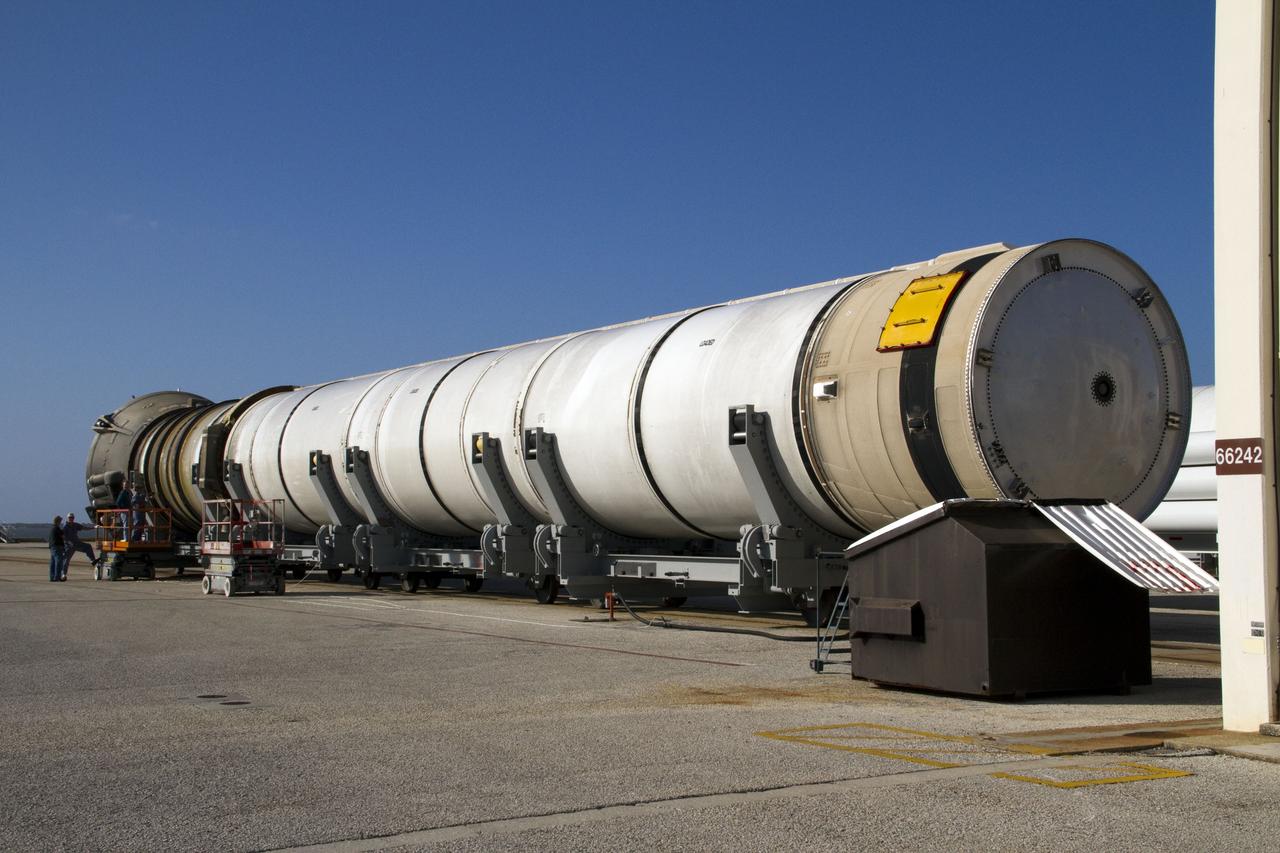
CAPE CANAVERAL, Fla. -- A spent shuttle solid rocket booster awaits inspection and cleaning near Hangar AF at Cape Canaveral Air Force Station in Florida. The booster was used during space shuttle Discovery's STS-133 launch from NASA Kennedy Space Center's Launch Pad 39A on Feb. 24. The shuttle’s two solid rocket booster casings and associated flight hardware were recovered in the Atlantic Ocean by retrieval ships Liberty Star and Freedom Star. The boosters impact the Atlantic about seven minutes after liftoff and the retrieval ships are stationed about 10 miles from the impact area at the time of splashdown. After the spent segments are processed, they will be transported to Utah, where they will be refurbished and stored, if needed. Photo credit: NASA/Jack Pfaller
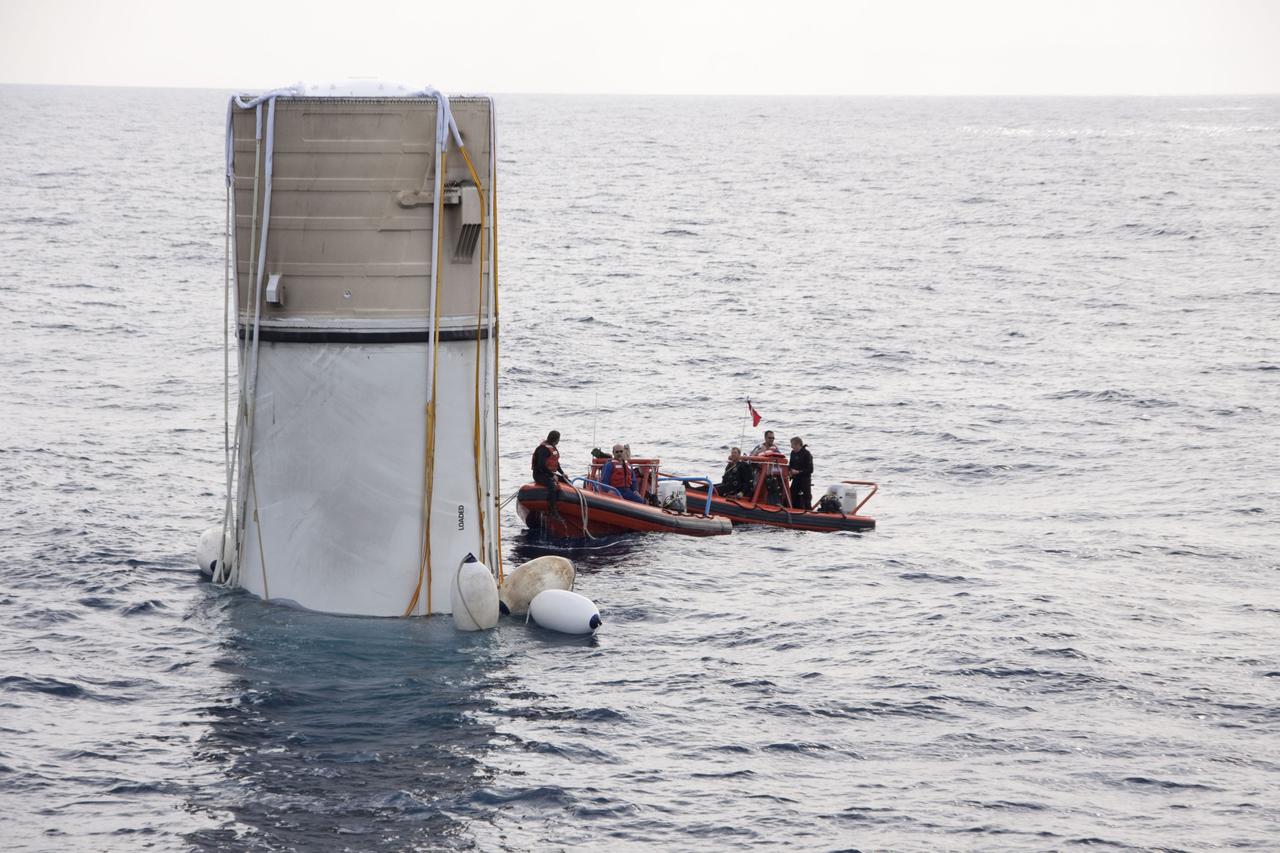
CAPE CANAVERAL, Fla. -- Crew members in a skiff from Liberty Star, one of NASA's solid rocket booster retrieval ships, attach flotation devices, or buoys, to the parachute lines from the right spent booster from space shuttle Discovery's final launch. The shuttle's two solid rocket booster casings and associated flight hardware are recovered in the Atlantic Ocean after every launch by Freedom Star and Liberty Star. The boosters impact the Atlantic about seven minutes after liftoff and the retrieval ships are stationed about 10 miles from the impact area at the time of splashdown. After the spent segments are processed, they will be transported to Utah, where they will be refurbished and stored, if needed. Photo credit: NASA/Frank Michaux
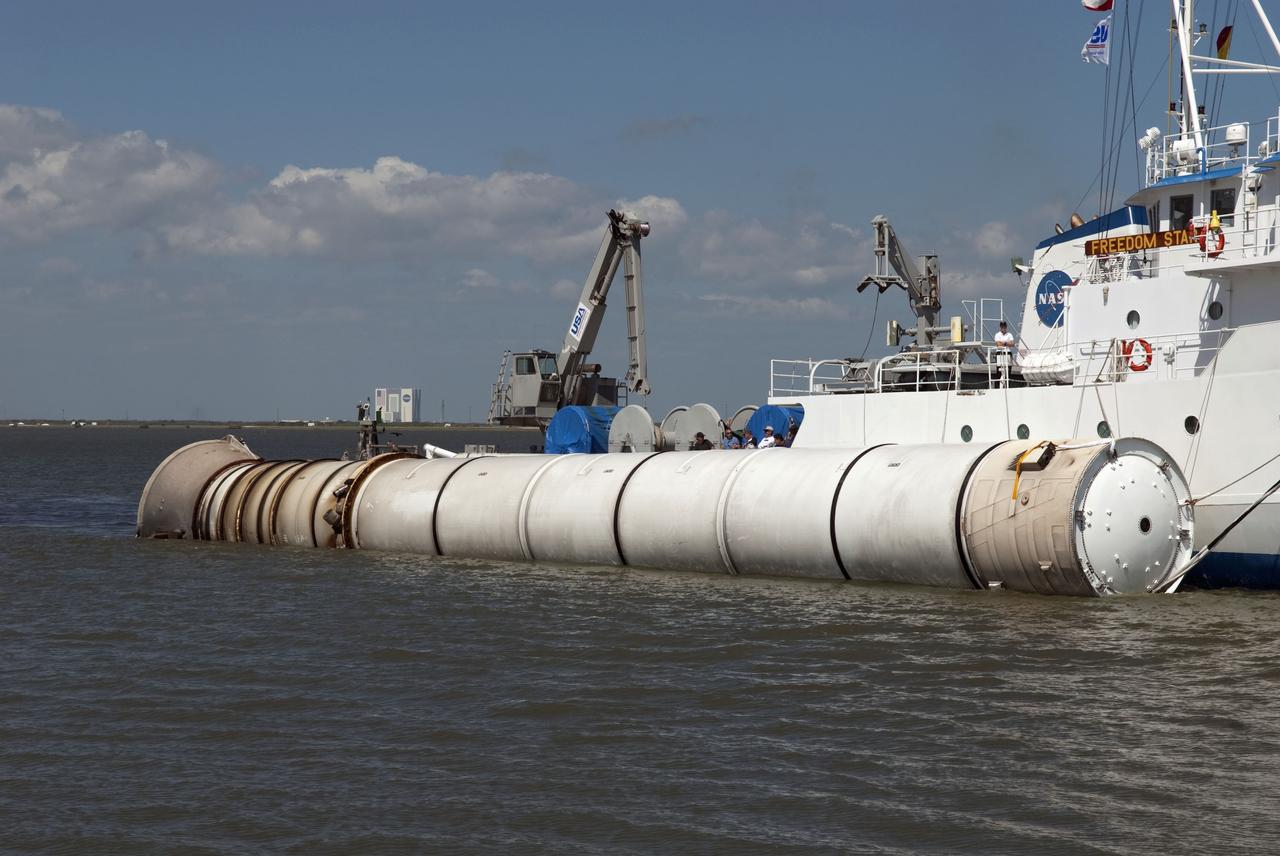
CAPE CANAVERAL, Fla. -- The solid rocket booster retrieval ship Freedom Star tows a left spent booster to the dock at Hangar AF on Cape Canaveral Air Force Station in Florida. The booster was used during space shuttle Discovery's final launch. The shuttle's two solid rocket booster casings and associated flight hardware are recovered in the Atlantic Ocean after every launch by Freedom Star and Liberty Star. The boosters impact the Atlantic about seven minutes after liftoff and the retrieval ships are stationed about 10 miles from the impact area at the time of splashdown. After the spent segments are processed, they will be transported to Utah, where they will be refurbished and stored, if needed. Photo credit: NASA/Jim Grossmann
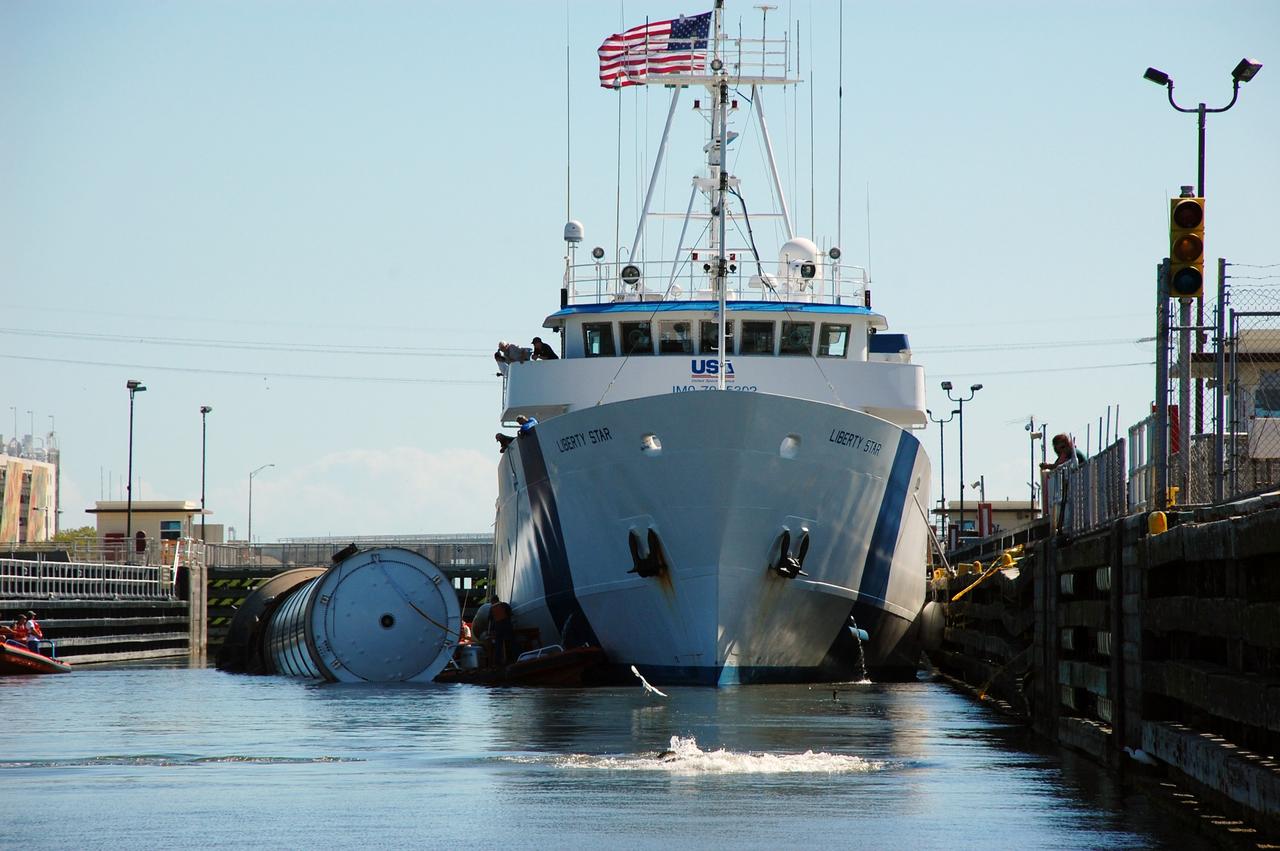
CAPE CANAVERAL, Fla. -- Liberty Star, one of NASA's solid rocket booster retrieval ships, ushers a spent shuttle booster to Hangar AF at Cape Canaveral Air Force Station in Florida. The booster was used during space shuttle Discovery's STS-133 launch from NASA Kennedy Space Center's Launch Pad 39A on Feb. 24. The shuttle’s two solid rocket booster casings and associated flight hardware are recovered in the Atlantic Ocean after every launch by Freedom Star and Liberty Star. The boosters impact the Atlantic about seven minutes after liftoff and the retrieval ships are stationed about 10 miles from the impact area at the time of splashdown. After the spent segments are processed, they will be transported to Utah, where they will be refurbished and stored, if needed. Photo credit: NASA/Ben Smegelsky
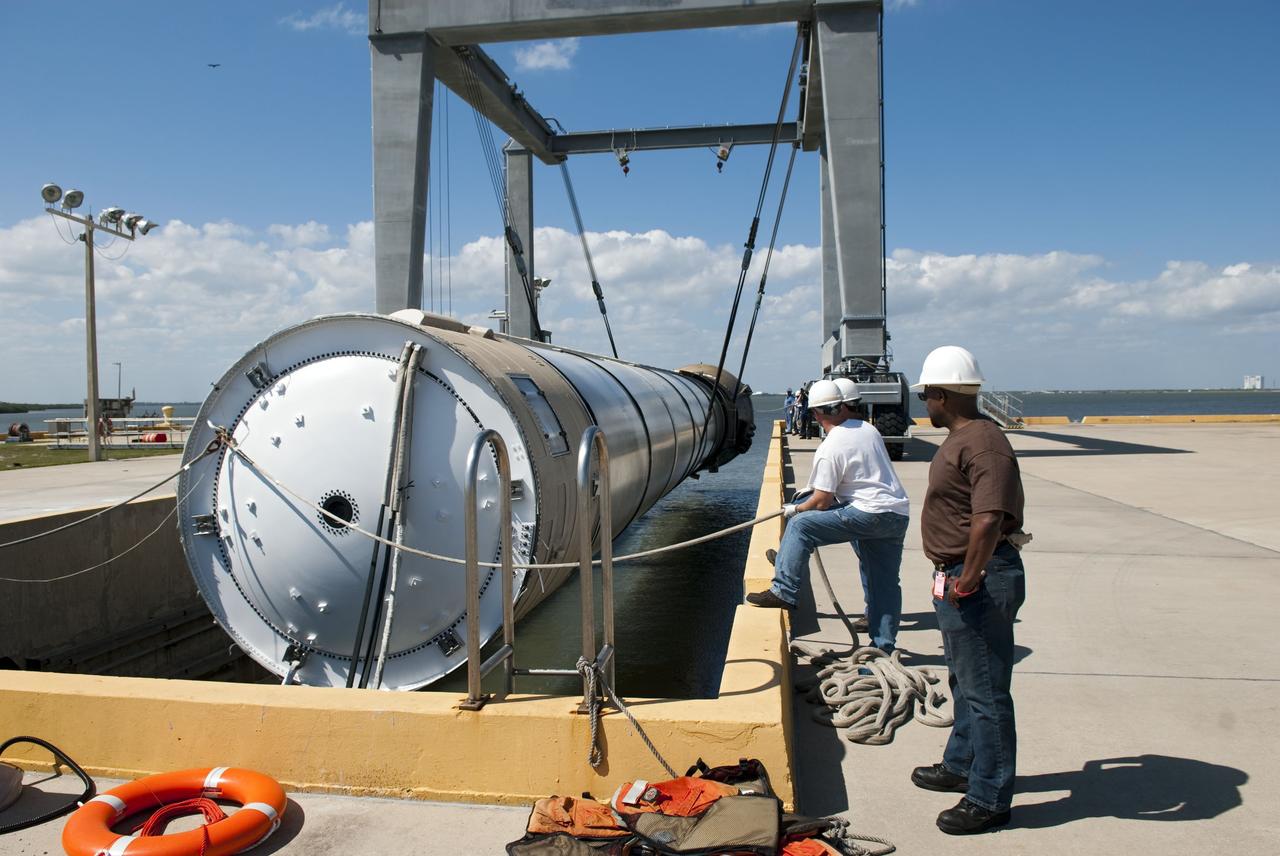
CAPE CANAVERAL, Fla. -- Workers at the hoisting slip at the Solid Rocket Booster Disassembly Facility at Hangar AF on Cape Canaveral Air Force Station in Florida, monitor the lifting of the left spent booster, used during space shuttle Discovery's final launch. The shuttle's two solid rocket booster casings and associated flight hardware are recovered in the Atlantic Ocean after every launch by Freedom Star and Liberty Star. The boosters impact the Atlantic about seven minutes after liftoff and the retrieval ships are stationed about 10 miles from the impact area at the time of splashdown. After the spent segments are processed, they will be transported to Utah, where they will be refurbished and stored, if needed. Photo credit: NASA/Jim Grossmann
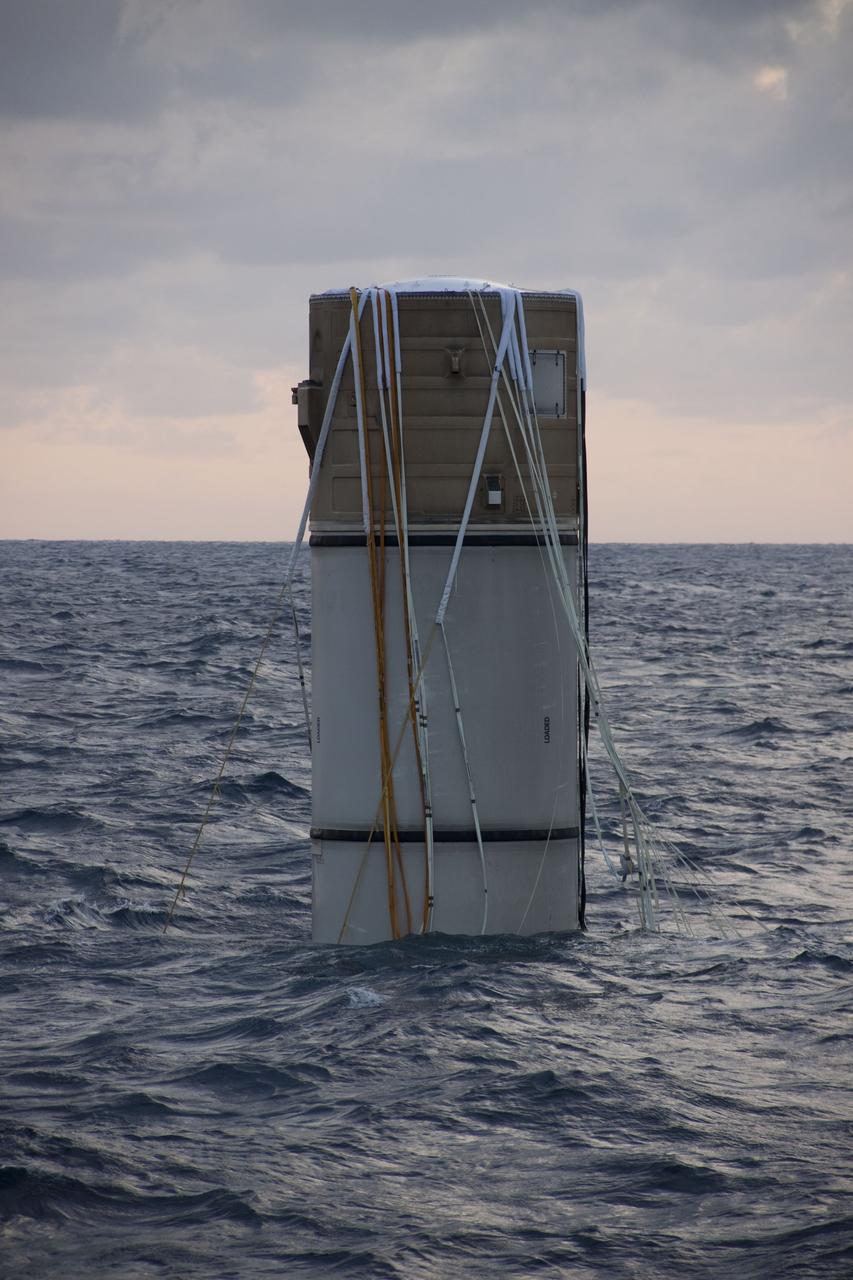
CAPE CANAVERAL, Fla. -- The right spent booster from shuttle Discovery's final launch is seen bobbing in the Atlantic Ocean. Crew members from Liberty Star, one of NASA's solid rocket booster retrieval ships, will recover the parachute and tow the booster back to Port Canaveral in Florida. The shuttle’s two solid rocket booster casings and associated flight hardware are recovered in the Atlantic Ocean after every launch by Freedom Star and Liberty Star. The boosters impact the Atlantic about seven minutes after liftoff and the retrieval ships are stationed about 10 miles from the impact area at the time of splashdown. After the spent segments are processed, they will be transported to Utah, where they will be refurbished and stored, if needed. Photo credit: NASA/Frank Michaux
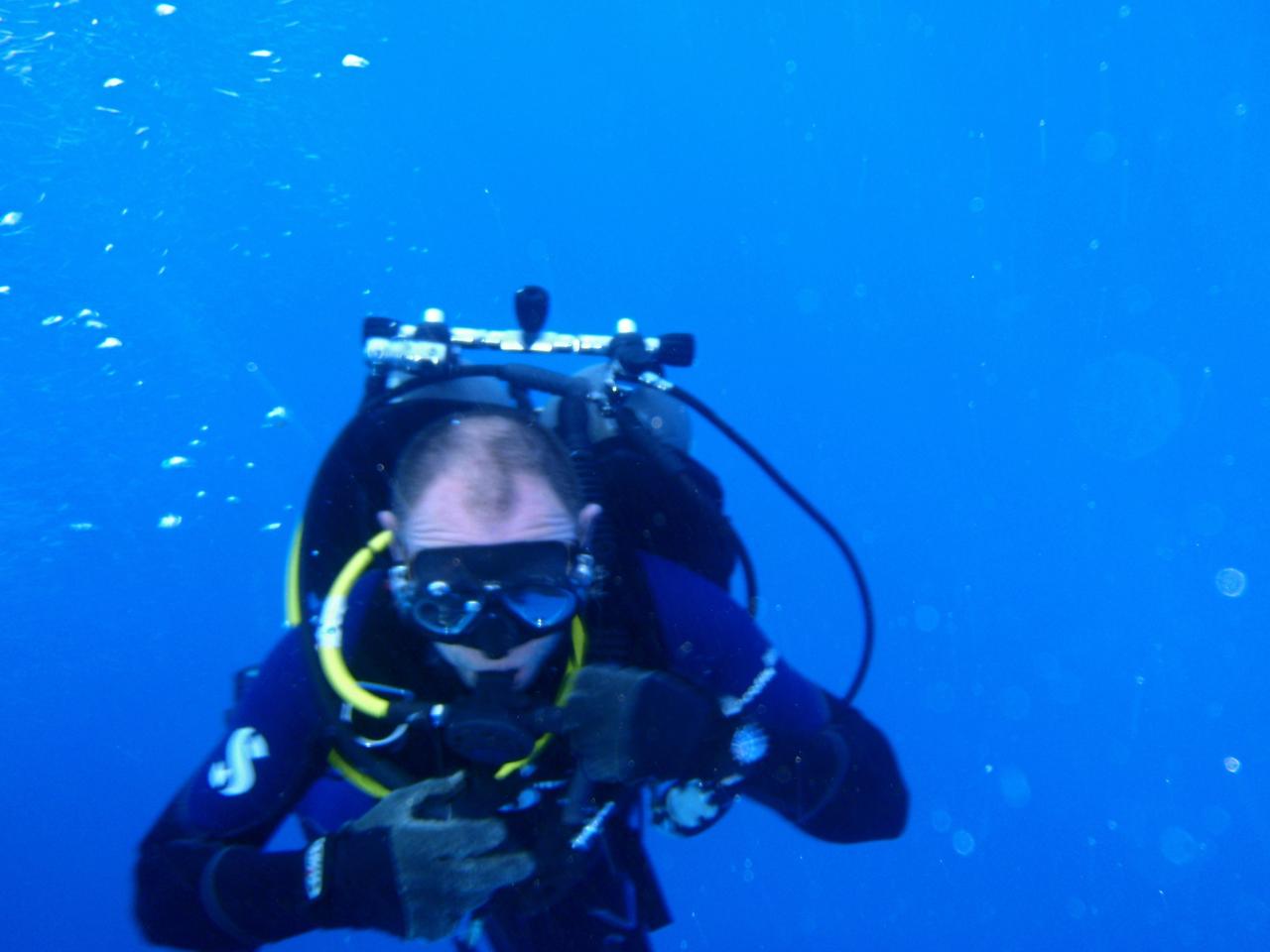
CAPE CANAVERAL, Fla. -- A diver from Liberty Star, one of NASA's solid rocket booster retrieval ships, helps retrieve a spent shuttle booster in the Atlantic Ocean off the coast of Florida. The booster, which was used during space shuttle Discovery's STS-133 launch from NASA Kennedy Space Center's Launch Pad 39A on Feb. 24, will be transported to Hangar AF at Cape Canaveral Air Force Station. The shuttle’s two solid rocket booster casings and associated flight hardware are recovered after every launch by Liberty Star and Freedom Star. The boosters impact the Atlantic about seven minutes after liftoff and the retrieval ships are stationed about 10 miles from the impact area at the time of splashdown. After the spent segments are processed, they will be transported to Utah, where they will be refurbished and stored, if needed. Photo credit: NASA/Frank Michaux
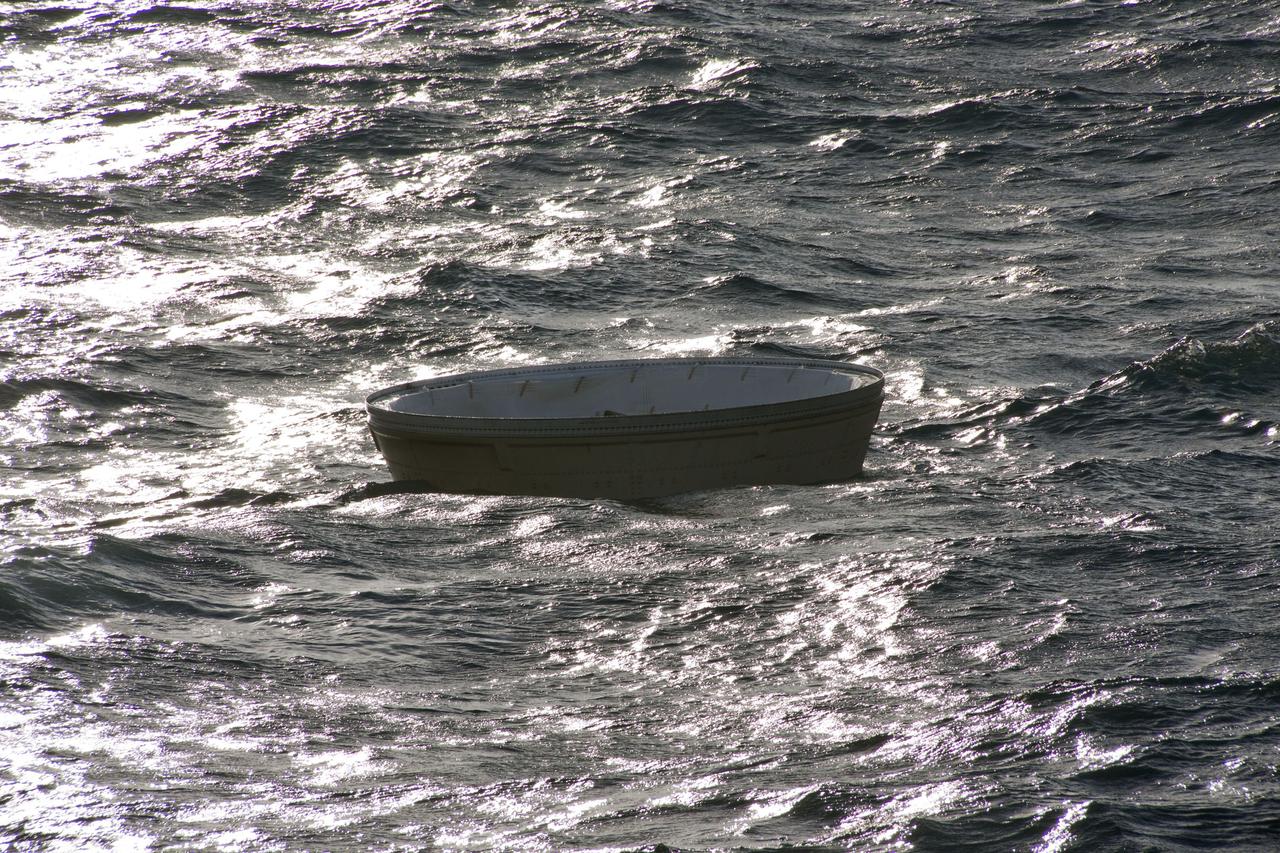
CAPE CANAVERAL, Fla. -- A nose cap from the right spent booster can be seen bobbing in the Atlantic Ocean, waiting to be recovered by the crew members of Liberty Star, one of NASA's solid rocket booster retrieval ships. The shuttle’s two solid rocket booster casings and associated flight hardware are recovered in the Atlantic Ocean after every launch by Freedom Star and Liberty Star. The boosters impact the Atlantic about seven minutes after liftoff and the retrieval ships are stationed about 10 miles from the impact area at the time of splashdown. After the spent segments are processed, they will be transported to Utah, where they will be refurbished and stored, if needed. Photo credit: NASA/Frank Michaux
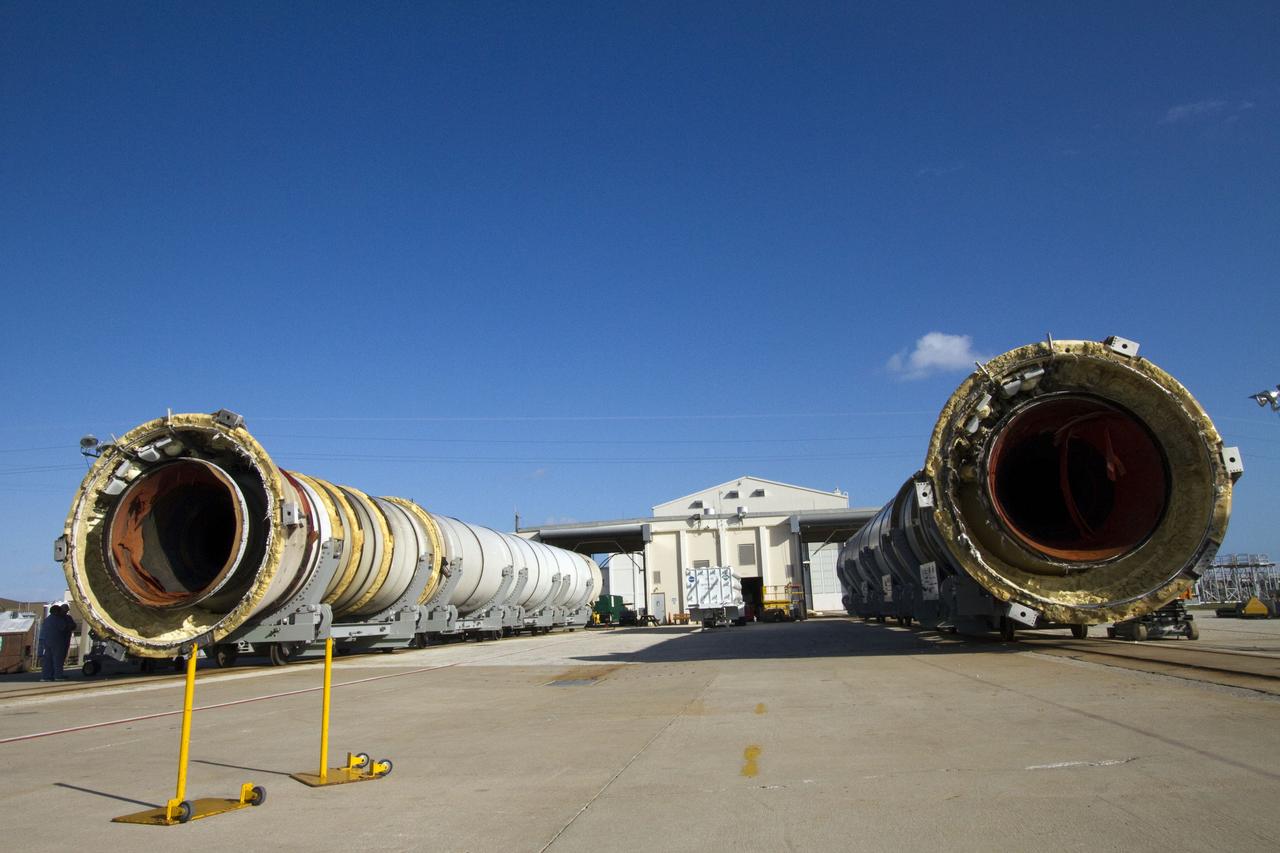
CAPE CANAVERAL, Fla. -- Two spent shuttle solid rocket boosters await inspection and cleaning near Hangar AF at Cape Canaveral Air Force Station in Florida. The boosters were used during space shuttle Discovery's STS-133 launch from NASA Kennedy Space Center's Launch Pad 39A on Feb. 24. The booster casings and associated flight hardware were recovered in the Atlantic Ocean by retrieval ships Liberty Star and Freedom Star. The boosters impact the Atlantic about seven minutes after liftoff and the retrieval ships are stationed about 10 miles from the impact area at the time of splashdown. After the spent segments are processed, they will be transported to Utah, where they will be refurbished and stored, if needed. Photo credit: NASA/Jack Pfaller

CAPE CANAVERAL, Fla. -- Workers install hoisting ropes around the left spent booster used during space shuttle Discovery's final launch at the Solid Rocket Booster Disassembly Facility at Hangar AF on Cape Canaveral Air Force Station in Florida. The shuttle's two solid rocket booster casings and associated flight hardware are recovered in the Atlantic Ocean after every launch by Freedom Star and Liberty Star. The boosters impact the Atlantic about seven minutes after liftoff and the retrieval ships are stationed about 10 miles from the impact area at the time of splashdown. After the spent segments are processed, they will be transported to Utah, where they will be refurbished and stored, if needed. Photo credit: NASA/Jim Grossmann
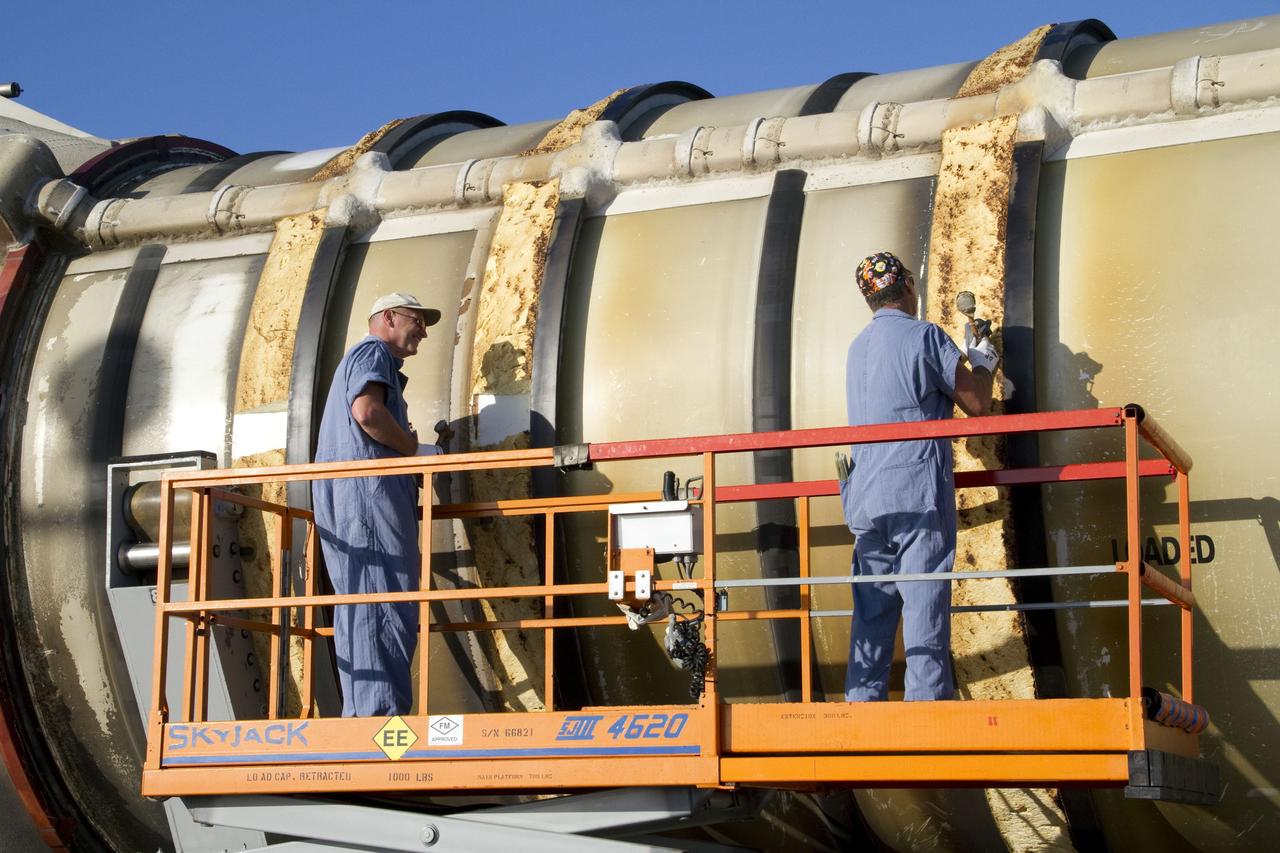
CAPE CANAVERAL, Fla. -- Technicians inspect a spent shuttle solid rocket booster outside Hangar AF at Cape Canaveral Air Force Station in Florida. The booster was used during space shuttle Discovery's STS-133 launch from NASA Kennedy Space Center's Launch Pad 39A on Feb. 24. The shuttle’s two solid rocket booster casings and associated flight hardware were recovered in the Atlantic Ocean by retrieval ships Liberty Star and Freedom Star. The boosters impact the Atlantic about seven minutes after liftoff and the retrieval ships are stationed about 10 miles from the impact area at the time of splashdown. After the spent segments are processed, they will be transported to Utah, where they will be refurbished and stored, if needed. Photo credit: NASA/Jack Pfaller
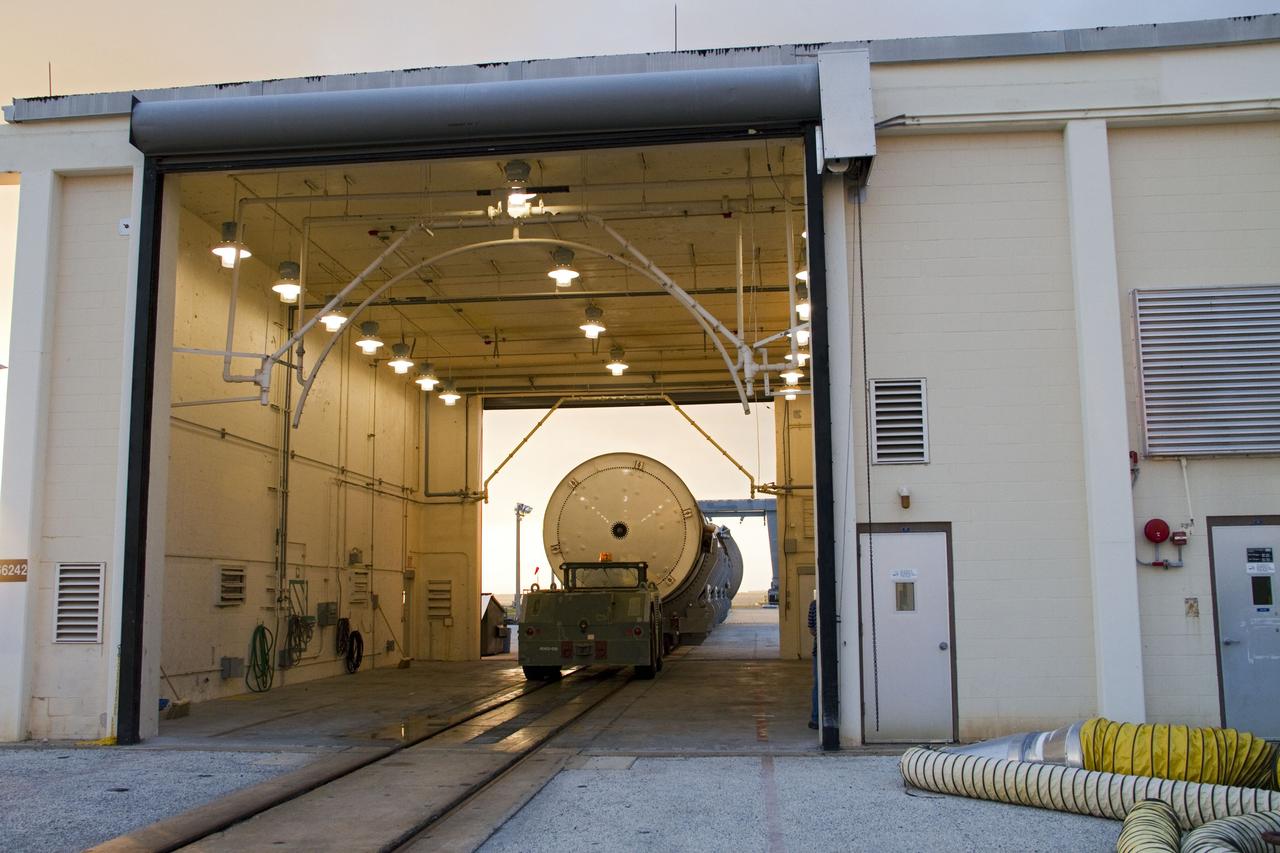
CAPE CANAVERAL, Fla. -- A spent shuttle solid rocket booster undergoes its first cleaning in Hangar AF at Cape Canaveral Air Force Station in Florida. The booster was used during space shuttle Discovery's STS-133 launch from NASA Kennedy Space Center's Launch Pad 39A on Feb. 24. The shuttle’s two solid rocket booster casings and associated flight hardware were recovered in the Atlantic Ocean by retrieval ships Liberty Star and Freedom Star. The boosters impact the Atlantic about seven minutes after liftoff and the retrieval ships are stationed about 10 miles from the impact area at the time of splashdown. After the spent segments are processed, they will be transported to Utah, where they will be refurbished and stored, if needed. Photo credit: NASA/Jack Pfaller
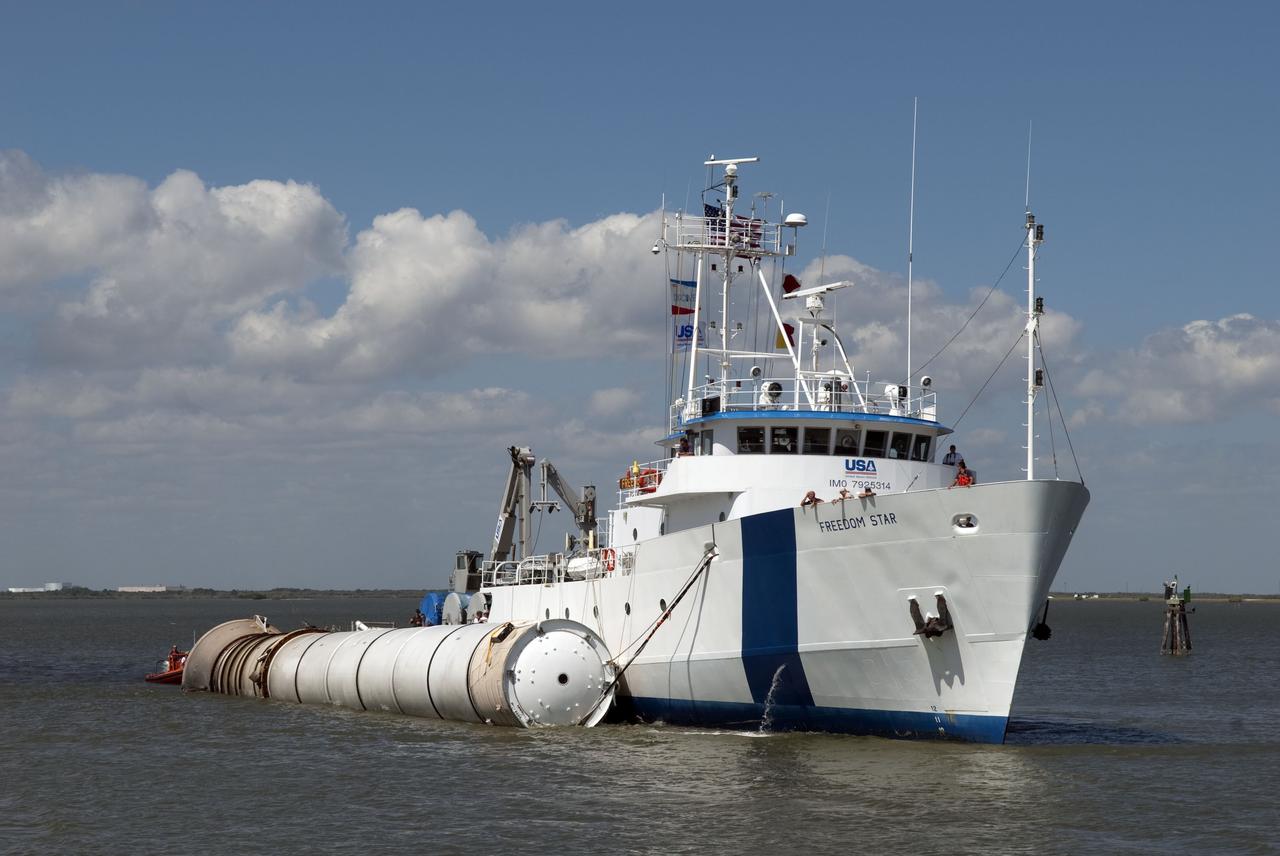
CAPE CANAVERAL, Fla. -- The solid rocket booster retrieval ship Freedom Star tows a left spent booster to the dock at Hangar AF on Cape Canaveral Air Force Station in Florida. The booster was used during space shuttle Discovery's final launch. The shuttle's two solid rocket booster casings and associated flight hardware are recovered in the Atlantic Ocean after every launch by Freedom Star and Liberty Star. The boosters impact the Atlantic about seven minutes after liftoff and the retrieval ships are stationed about 10 miles from the impact area at the time of splashdown. After the spent segments are processed, they will be transported to Utah, where they will be refurbished and stored, if needed. Photo credit: NASA/Jim Grossmann
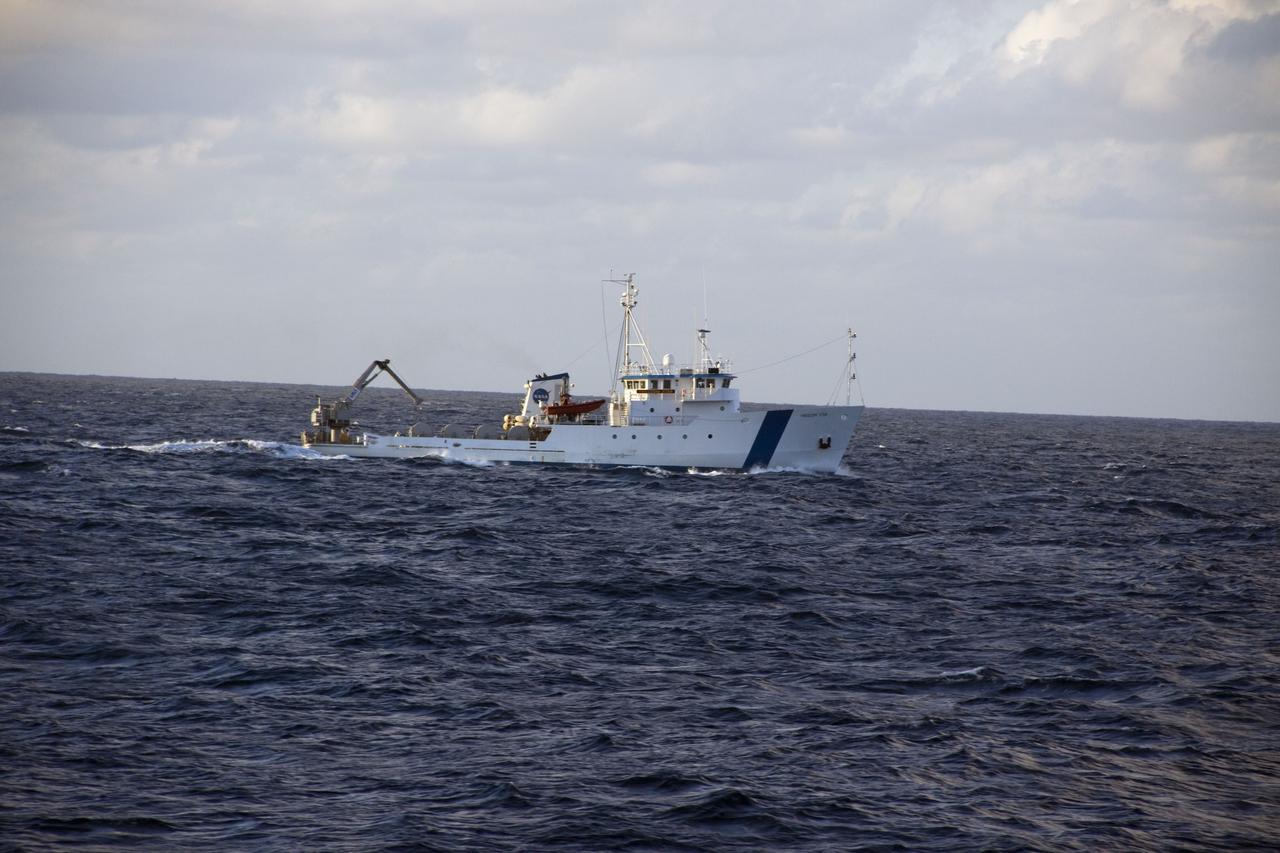
CAPE CANAVERAL, Fla. -- An expanse of ocean is seen on the horizon as Freedom Star, one of NASA's solid rocket booster retrieval ships, set sail to be in position in the Atlantic Ocean to recover the right spent booster that splashed down after space shuttle Discovery's final launch. The shuttle’s two solid rocket booster casings and associated flight hardware are recovered in the Atlantic Ocean after every launch by Freedom Star and Liberty Star. The boosters impact the Atlantic about seven minutes after liftoff and the retrieval ships are stationed about 10 miles from the impact area at the time of splashdown. After the spent segments are processed, they will be transported to Utah, where they will be refurbished and stored, if needed. Photo credit: NASA/Frank Michaux
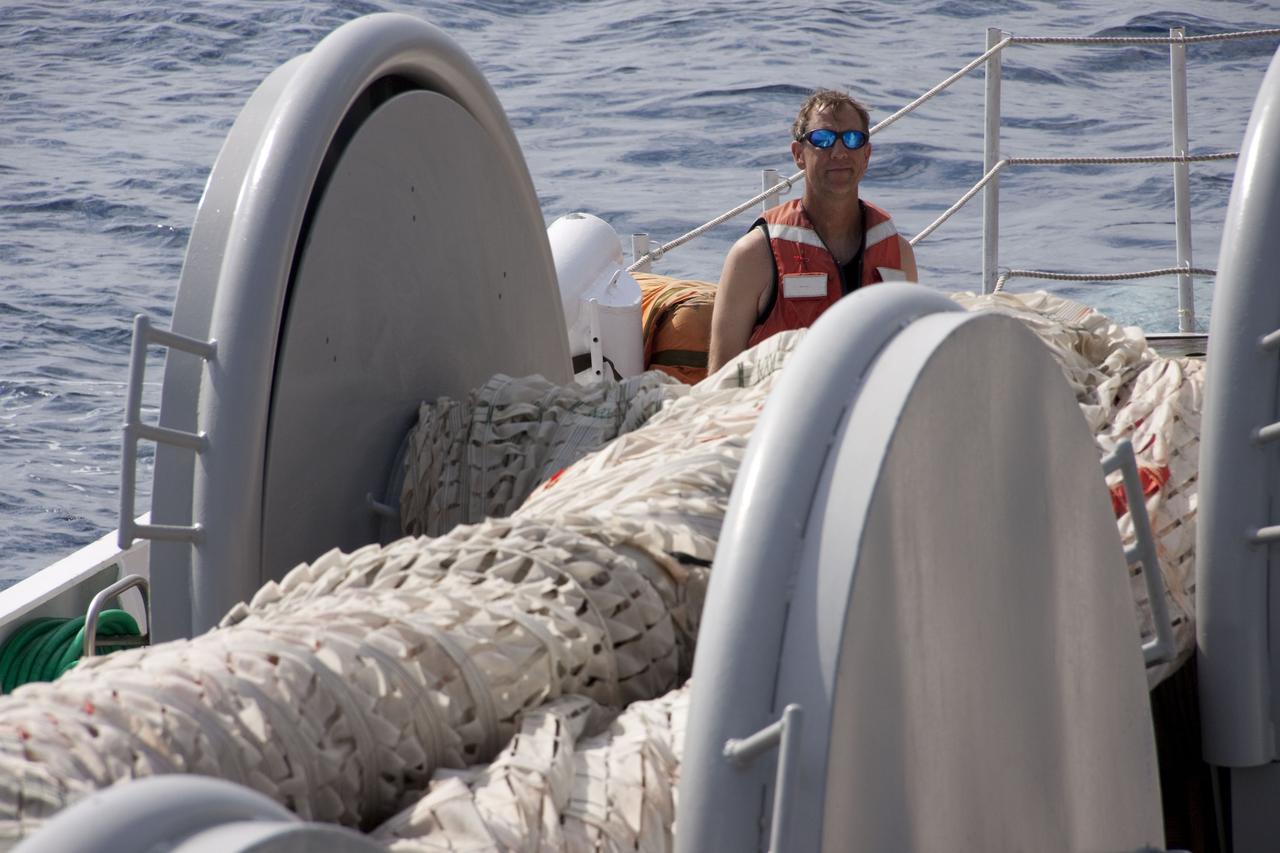
CAPE CANAVERAL, Fla. -- A crew member on Liberty Star, one of NASA's solid rocket booster retrieval ships, monitors the progress as the massive parachute from the right spent booster from space shuttle Discovery's final launch is hauled on board. The shuttle's two solid rocket booster casings and associated flight hardware are recovered in the Atlantic Ocean after every launch by Freedom Star and Liberty Star. The boosters impact the Atlantic about seven minutes after liftoff and the retrieval ships are stationed about 10 miles from the impact area at the time of splashdown. After the spent segments are processed, they will be transported to Utah, where they will be refurbished and stored, if needed. Photo credit: NASA/Frank Michaux
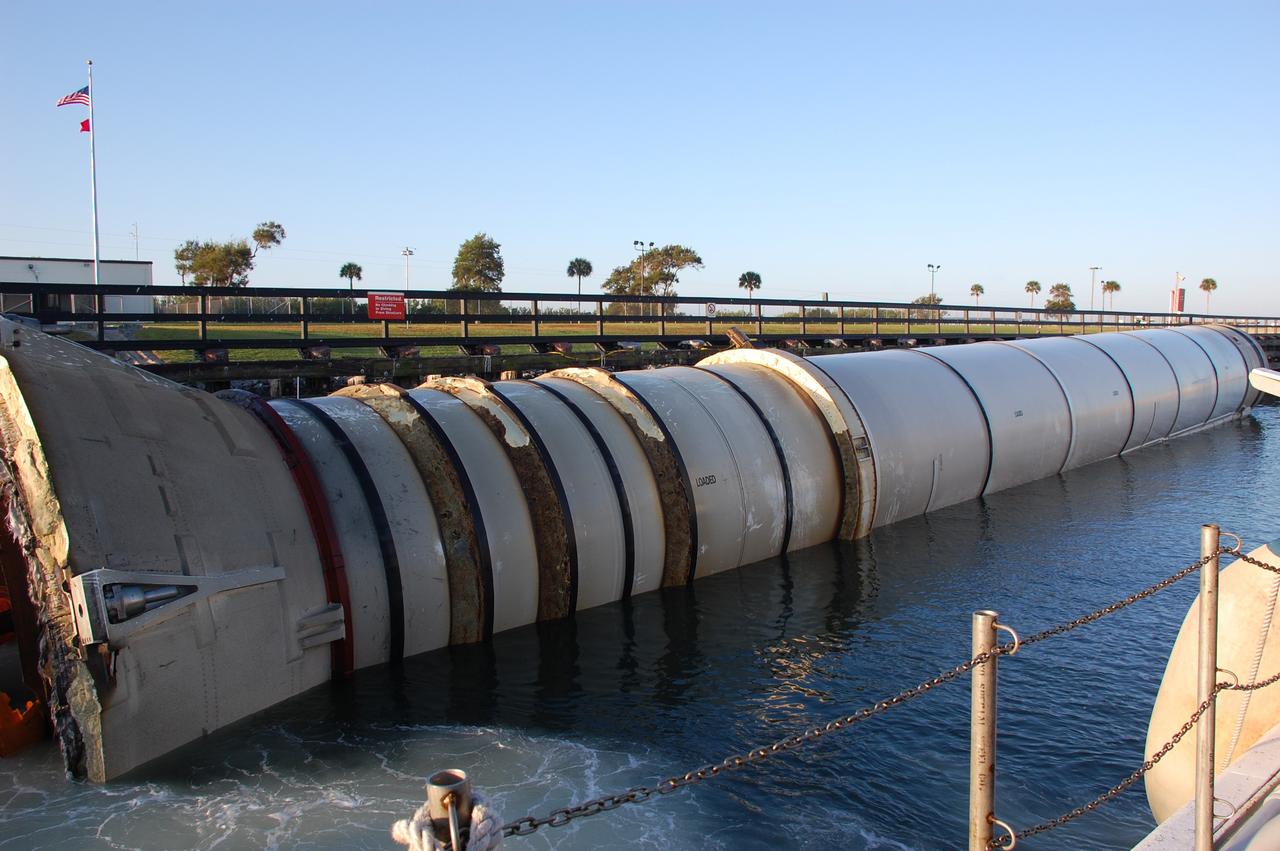
CAPE CANAVERAL, Fla. -- A spent shuttle booster will be ushered through the shallow waters of the locks at Port Canaveral, Fla., by a skiff from Freedom Star, one of NASA's solid rocket booster retrieval ships. The booster, which was used during space shuttle Discovery's STS-133 launch from NASA Kennedy Space Center's Launch Pad 39A on Feb. 24, is on its way to Hangar AF at Cape Canaveral Air Force Station. The shuttle’s two solid rocket booster casings and associated flight hardware are recovered in the Atlantic Ocean after every launch by Freedom Star and Liberty Star. The boosters impact the Atlantic about seven minutes after liftoff and the retrieval ships are stationed about 10 miles from the impact area at the time of splashdown. After the spent segments are processed, they will be transported to Utah, where they will be refurbished and stored, if needed. Photo credit: NASA/Ben Smegelsky
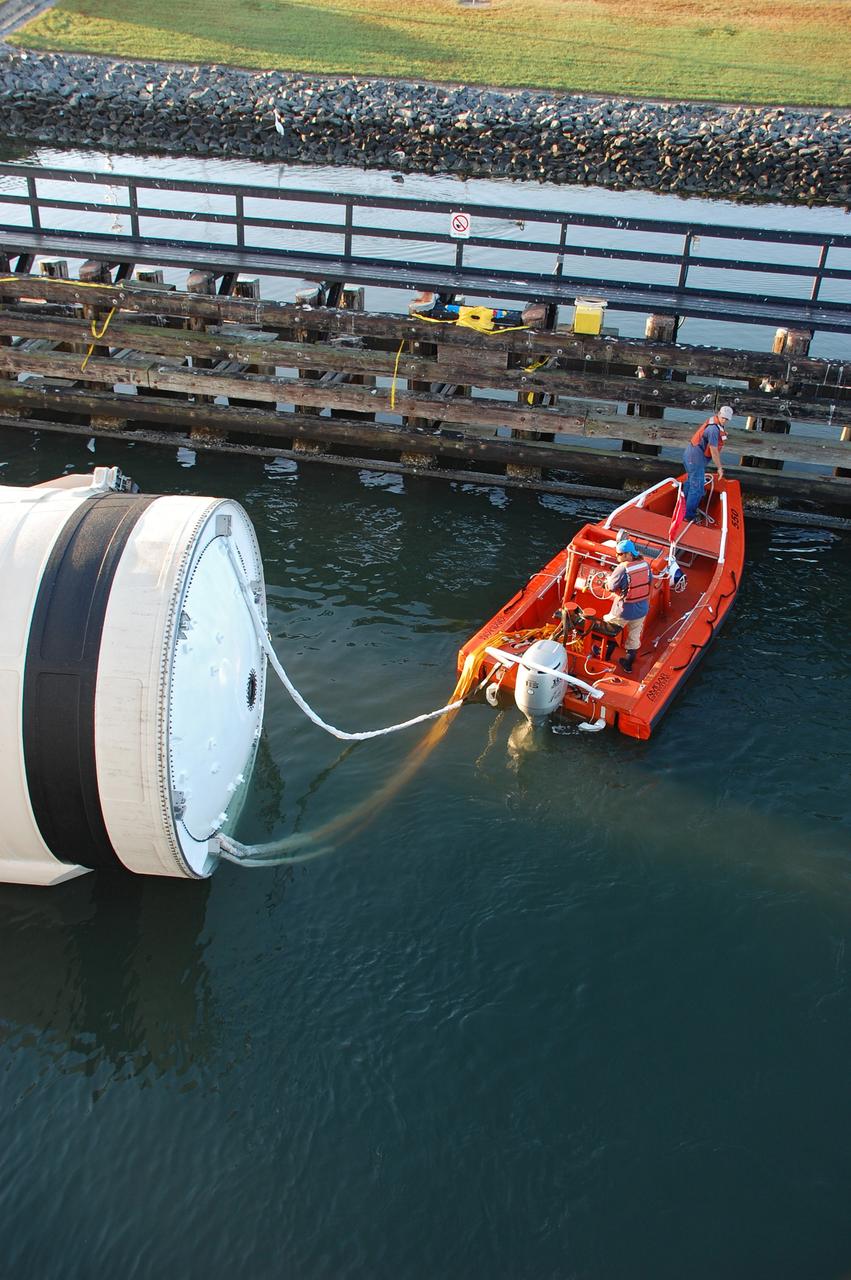
CAPE CANAVERAL, Fla. -- Crew members in a skiff from Freedom Star, one of NASA's solid rocket booster retrieval ships, will usher a spent shuttle booster through the shallow waters of the locks at Port Canaveral, Fla. The booster, which was used during space shuttle Discovery's STS-133 launch from NASA Kennedy Space Center's Launch Pad 39A on Feb. 24, is on its way to Hangar AF at Cape Canaveral Air Force Station. The shuttle’s two solid rocket booster casings and associated flight hardware are recovered in the Atlantic Ocean after every launch by Freedom Star and Liberty Star. The boosters impact the Atlantic about seven minutes after liftoff and the retrieval ships are stationed about 10 miles from the impact area at the time of splashdown. After the spent segments are processed, they will be transported to Utah, where they will be refurbished and stored, if needed. Photo credit: NASA/Ben Smegelsky
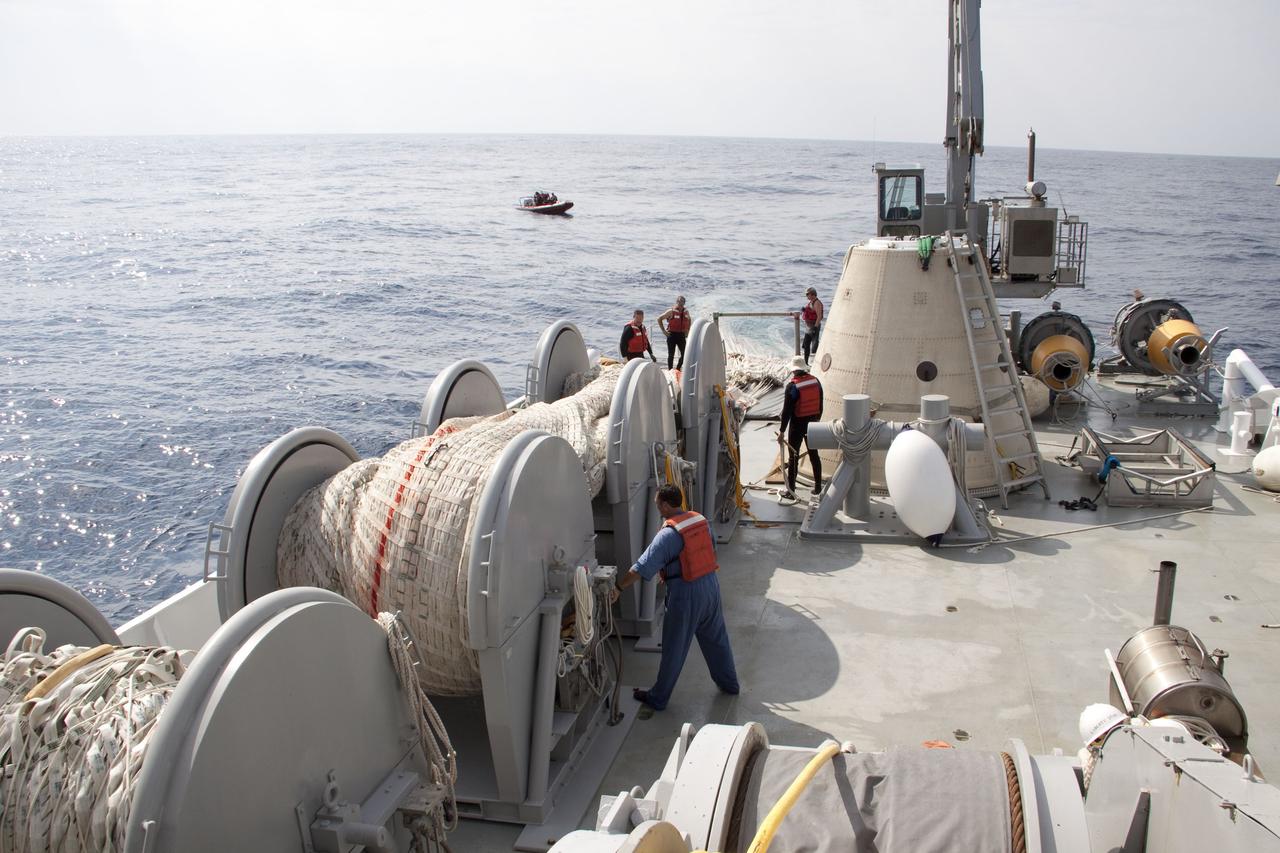
CAPE CANAVERAL, Fla. -- Crew members on board Liberty Star, one of NASA's solid rocket booster retrieval ships, haul in the massive parachute from the right spent booster from space shuttle Discovery's final launch. The shuttle's two solid rocket booster casings and associated flight hardware are recovered in the Atlantic Ocean after every launch by Freedom Star and Liberty Star. The boosters impact the Atlantic about seven minutes after liftoff and the retrieval ships are stationed about 10 miles from the impact area at the time of splashdown. After the spent segments are processed, they will be transported to Utah, where they will be refurbished and stored, if needed. Photo credit: NASA/Frank Michaux
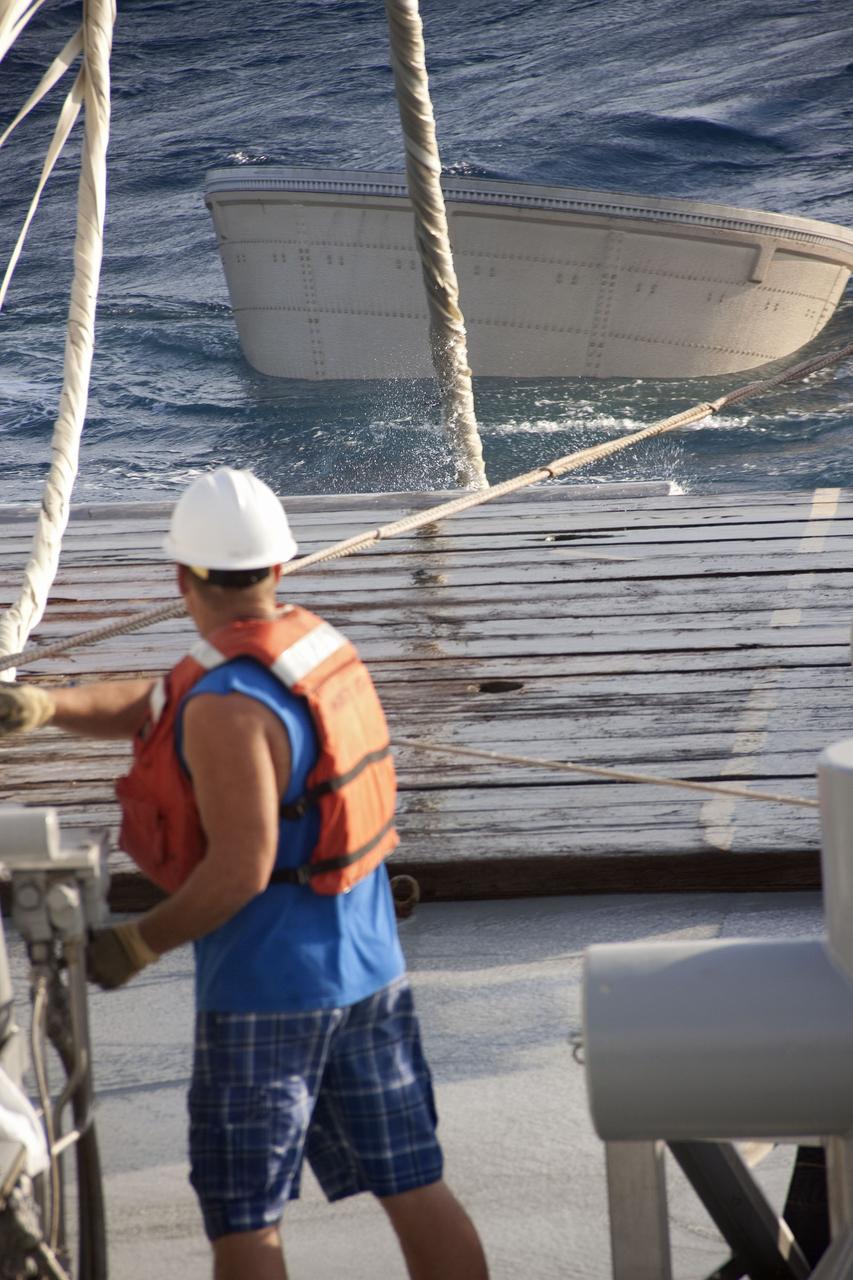
CAPE CANAVERAL, Fla. -- A crew member on Liberty Star, one of NASA's solid rocket booster retrieval ships, uses a crane to haul the right booster nose cap out of the Atlantic Ocean that splashed down after Discovery's final launch. The shuttle’s two solid rocket booster casings and associated flight hardware are recovered in the Atlantic Ocean after every launch by Freedom Star and Liberty Star. The boosters impact the Atlantic about seven minutes after liftoff and the retrieval ships are stationed about 10 miles from the impact area at the time of splashdown. After the spent segments are processed, they will be transported to Utah, where they will be refurbished and stored, if needed. Photo credit: NASA/Frank Michaux
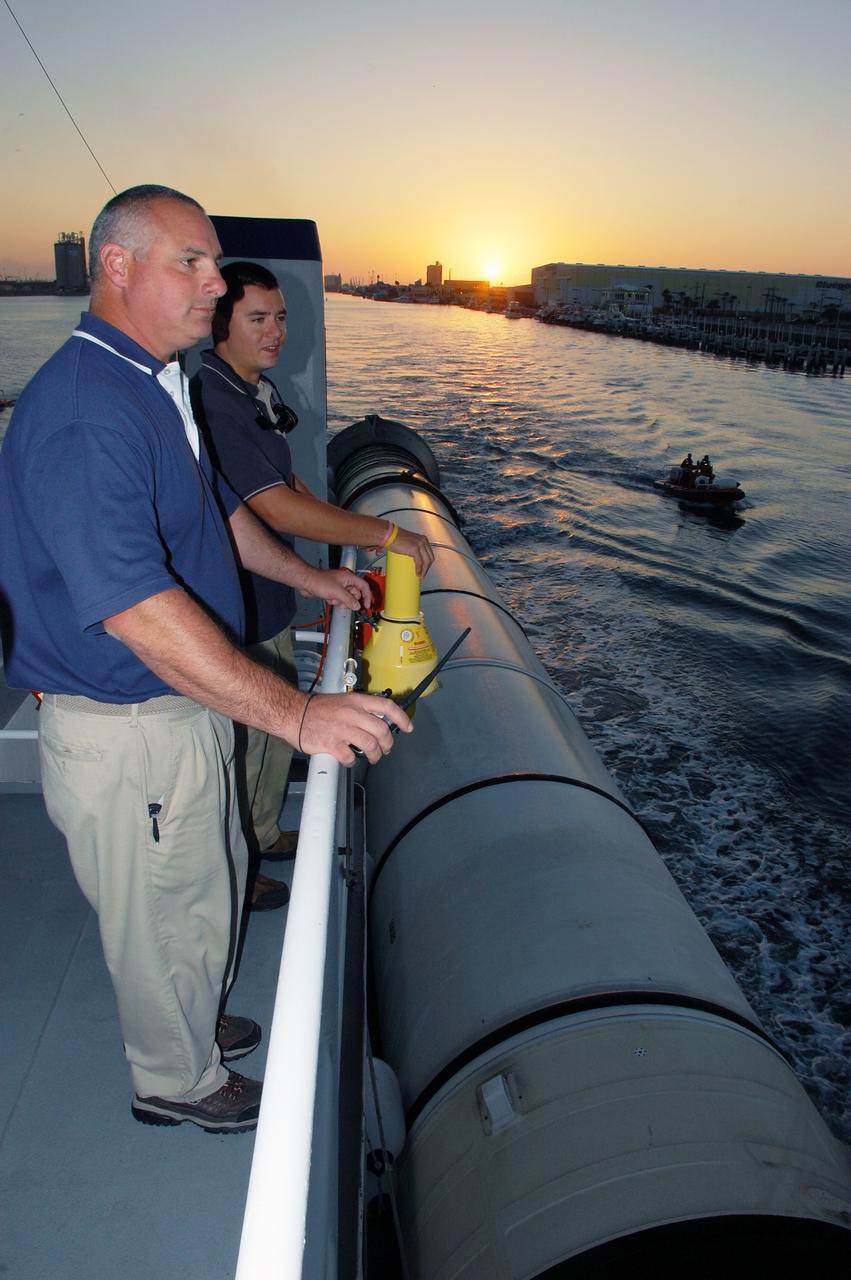
CAPE CANAVERAL, Fla. -- As daylight breaks, Allan Gravina and Cody Gordon with United Space Alliance monitor a spent booster as it's towed by the Freedom Star retrieval ship through Port Canaveral in Florida on a journey to Hangar AF at Cape Canaveral Air Force Station. The booster was used during space shuttle Discovery's STS-133 launch from NASA Kennedy Space Center's Launch Pad 39A on Feb. 24. The shuttle’s two solid rocket booster casings and associated flight hardware are recovered in the Atlantic Ocean after every launch by Freedom Star and Liberty Star. The boosters impact the Atlantic about seven minutes after liftoff and the retrieval ships are stationed about 10 miles from the impact area at the time of splashdown. After the spent segments are processed, they will be transported to Utah, where they will be refurbished and stored, if needed. Photo credit: NASA/Ben Smegelsky
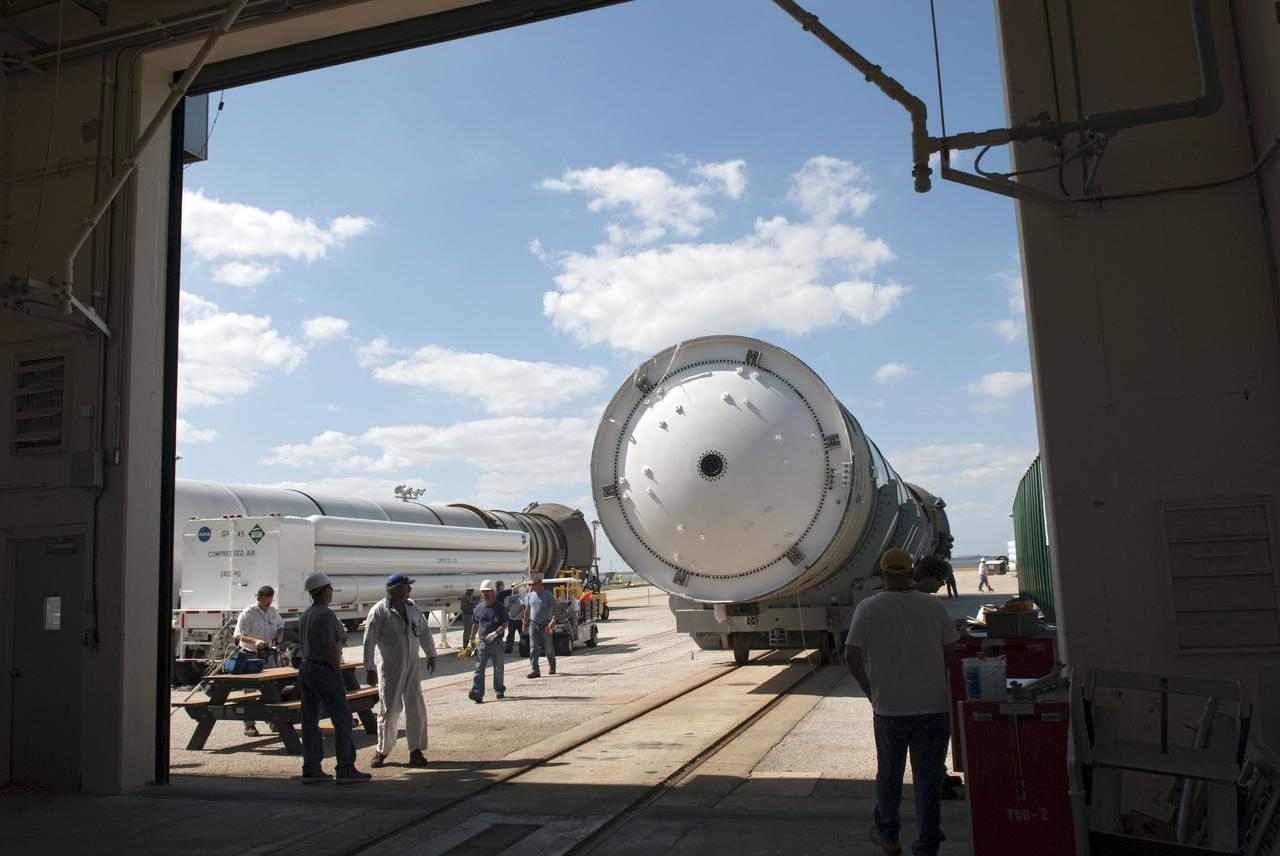
CAPE CANAVERAL, Fla. -- Workers at the Solid Rocket Booster Disassembly Facility at Hangar AF on Cape Canaveral Air Force Station in Florida, accompany the left spent booster, used during space shuttle Discovery's final launch, into the building for processing. The shuttle's two solid rocket booster casings and associated flight hardware are recovered in the Atlantic Ocean after every launch by Freedom Star and Liberty Star. The boosters impact the Atlantic about seven minutes after liftoff and the retrieval ships are stationed about 10 miles from the impact area at the time of splashdown. After the spent segments are processed, they will be transported to Utah, where they will be refurbished and stored, if needed. Photo credit: NASA/Jim Grossmann
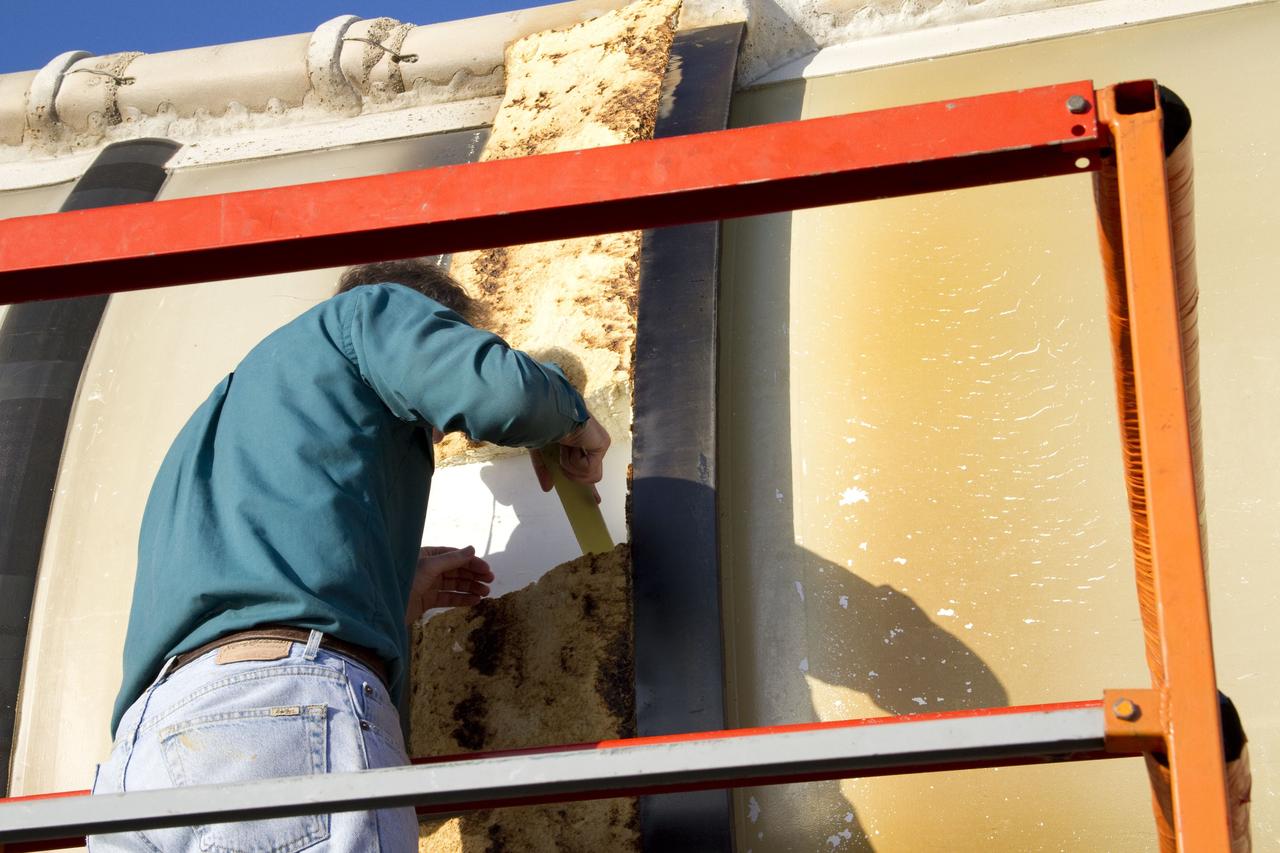
CAPE CANAVERAL, Fla. -- A technician inspects a spent shuttle solid rocket booster outside Hangar AF at Cape Canaveral Air Force Station in Florida. The booster was used during space shuttle Discovery's STS-133 launch from NASA Kennedy Space Center's Launch Pad 39A on Feb. 24. The shuttle’s two solid rocket booster casings and associated flight hardware were recovered in the Atlantic Ocean by retrieval ships Liberty Star and Freedom Star. The boosters impact the Atlantic about seven minutes after liftoff and the retrieval ships are stationed about 10 miles from the impact area at the time of splashdown. After the spent segments are processed, they will be transported to Utah, where they will be refurbished and stored, if needed. Photo credit: NASA/Jack Pfaller
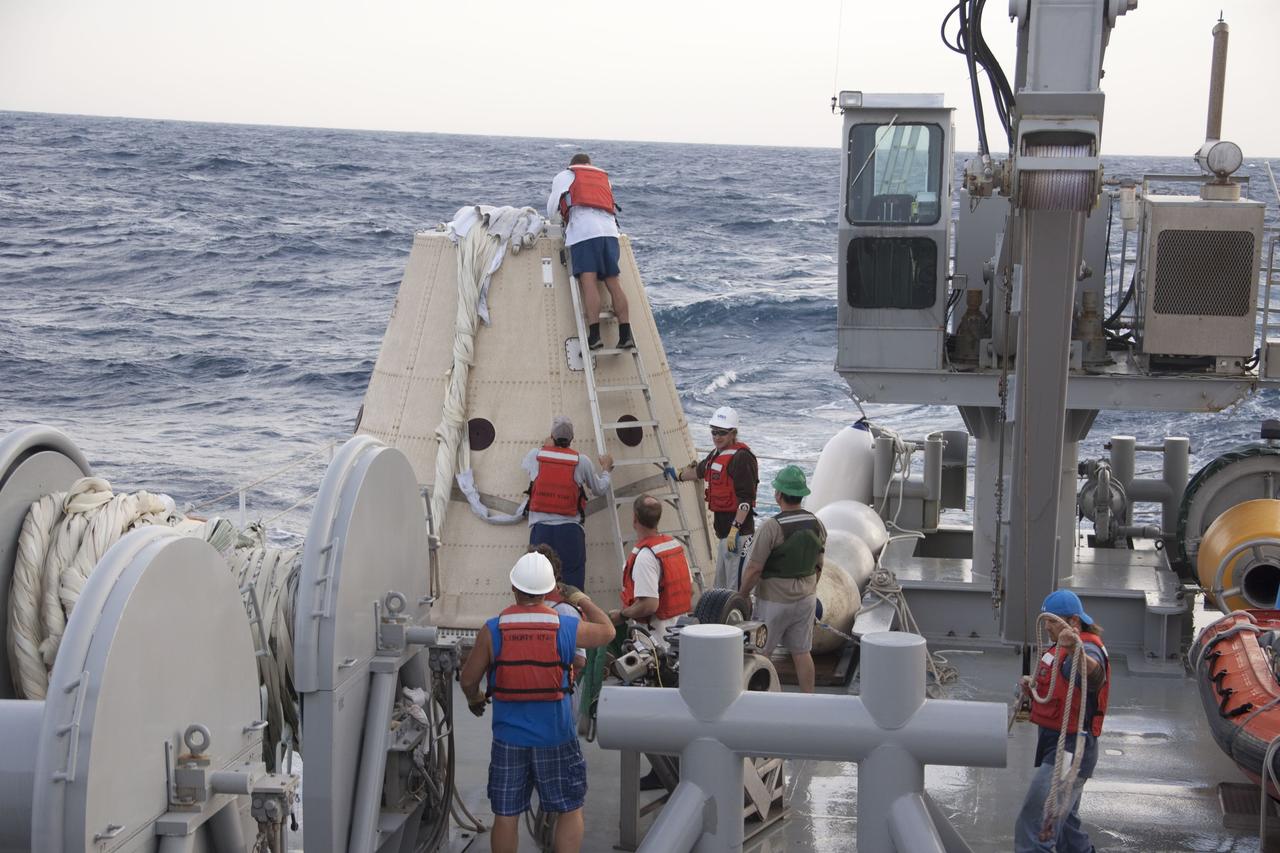
CAPE CANAVERAL, Fla. -- Crew members from Liberty Star, one of NASA's solid rocket booster retrieval ships, work on the parachute from the right spent booster nose cap that splashed down in the Atlantic Ocean after Discovery's final launch. The shuttle’s two solid rocket booster casings and associated flight hardware are recovered in the Atlantic Ocean after every launch by Freedom Star and Liberty Star. The boosters impact the Atlantic about seven minutes after liftoff and the retrieval ships are stationed about 10 miles from the impact area at the time of splashdown. After the spent segments are processed, they will be transported to Utah, where they will be refurbished and stored, if needed. Photo credit: NASA/Frank Michaux

CAPE CANAVERAL, Fla. -- The Solid Rocket Booster Retrieval Ship Freedom Star, with a spent shuttle booster in tow, just passed through a drawbridge on its way to the dock at Hangar AF at Cape Canaveral Air Force Station in Florida. The booster was used during space shuttle Discovery's STS-133 launch from NASA Kennedy Space Center's Launch Pad 39A on Feb. 24. The shuttle’s two solid rocket booster casings and associated flight hardware are recovered in the Atlantic Ocean after every launch by Freedom Star and Liberty Star. The boosters impact the Atlantic about seven minutes after liftoff and the retrieval ships are stationed about 10 miles from the impact area at the time of splashdown. After the spent segments are processed, they will be transported to Utah, where they will be refurbished and stored, if needed. Photo credit: NASA/Ben Smegelsky
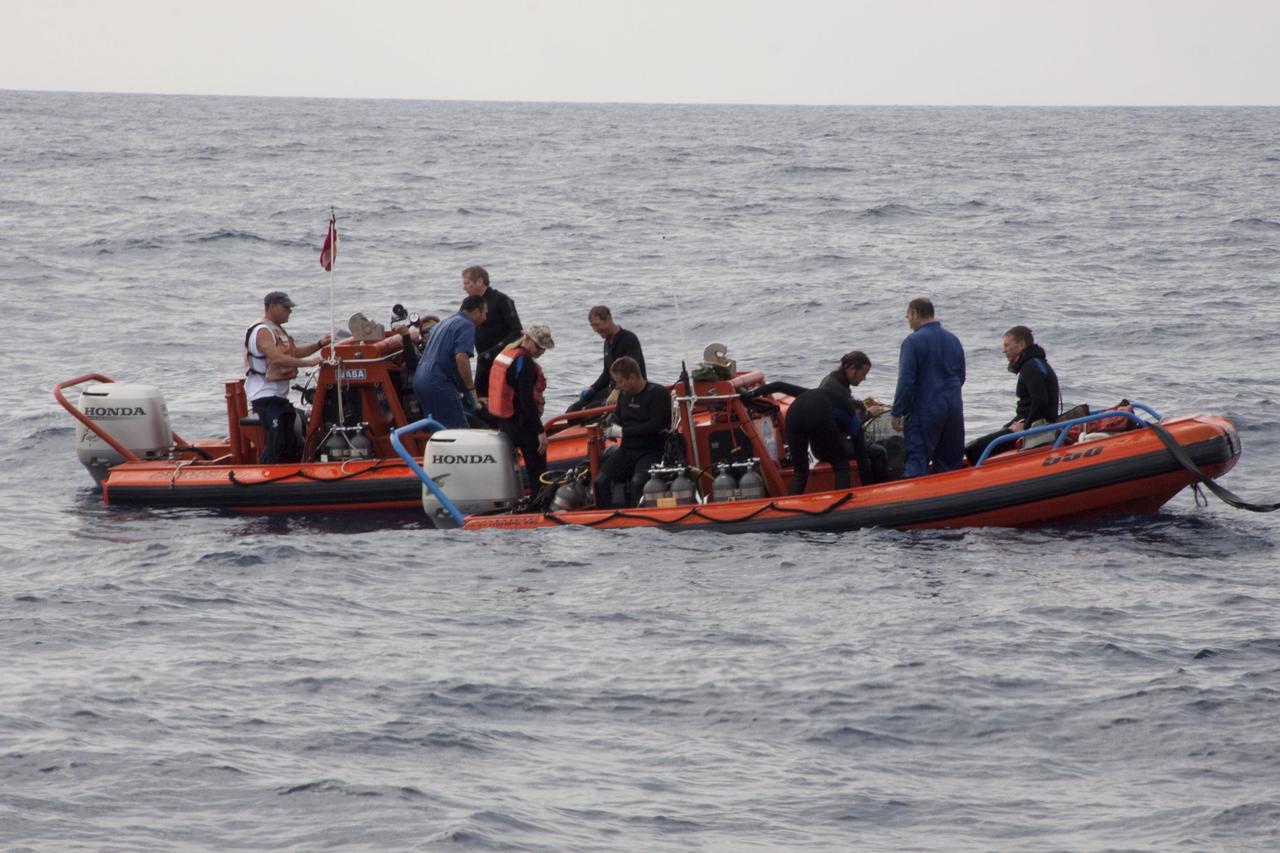
CAPE CANAVERAL, Fla. -- Crew members and divers in skiffs from Liberty Star, one of NASA's solid rocket booster retrieval ships, are prepared to retrieve the parachute lines from the right spent booster bobbing in the Atlantic Ocean from space shuttle Discovery's final launch. The shuttle's two solid rocket booster casings and associated flight hardware are recovered in the Atlantic Ocean after every launch by Freedom Star and Liberty Star. The boosters impact the Atlantic about seven minutes after liftoff and the retrieval ships are stationed about 10 miles from the impact area at the time of splashdown. After the spent segments are processed, they will be transported to Utah, where they will be refurbished and stored, if needed. Photo credit: NASA/Frank Michaux
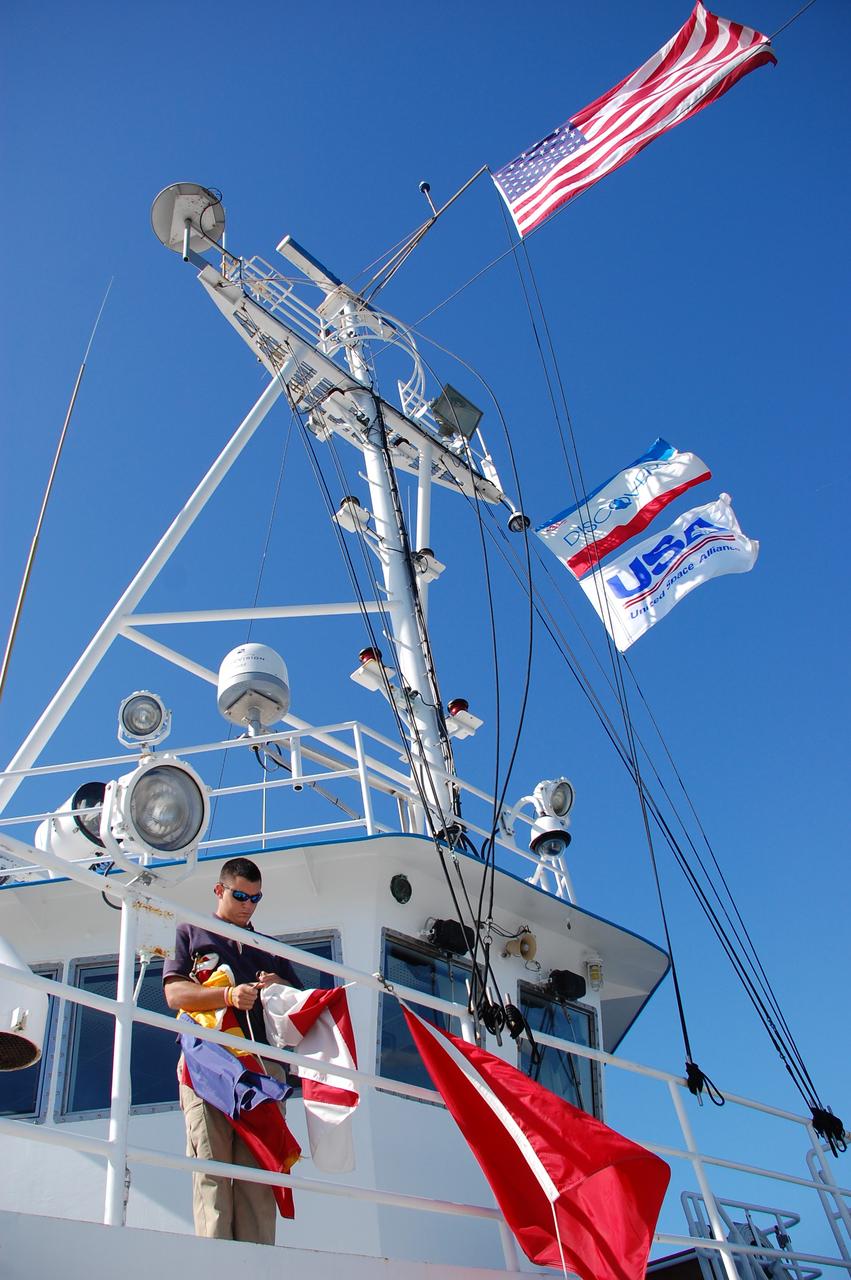
CAPE CANAVERAL, Fla. -- The Solid Rocket Booster Retrieval Ship Freedom Star delivers a spent shuttle booster to workers at Hangar AF at Cape Canaveral Air Force Station in Florida. The booster was used during space shuttle Discovery's STS-133 launch from NASA Kennedy Space Center's Launch Pad 39A on Feb. 24. The shuttle’s two solid rocket booster casings and associated flight hardware are recovered in the Atlantic Ocean after every launch by Freedom Star and Liberty Star. The boosters impact the Atlantic about seven minutes after liftoff and the retrieval ships are stationed about 10 miles from the impact area at the time of splashdown. After the spent segments are processed, they will be transported to Utah, where they will be refurbished and stored, if needed. Photo credit: NASA/Ben Smegelsky
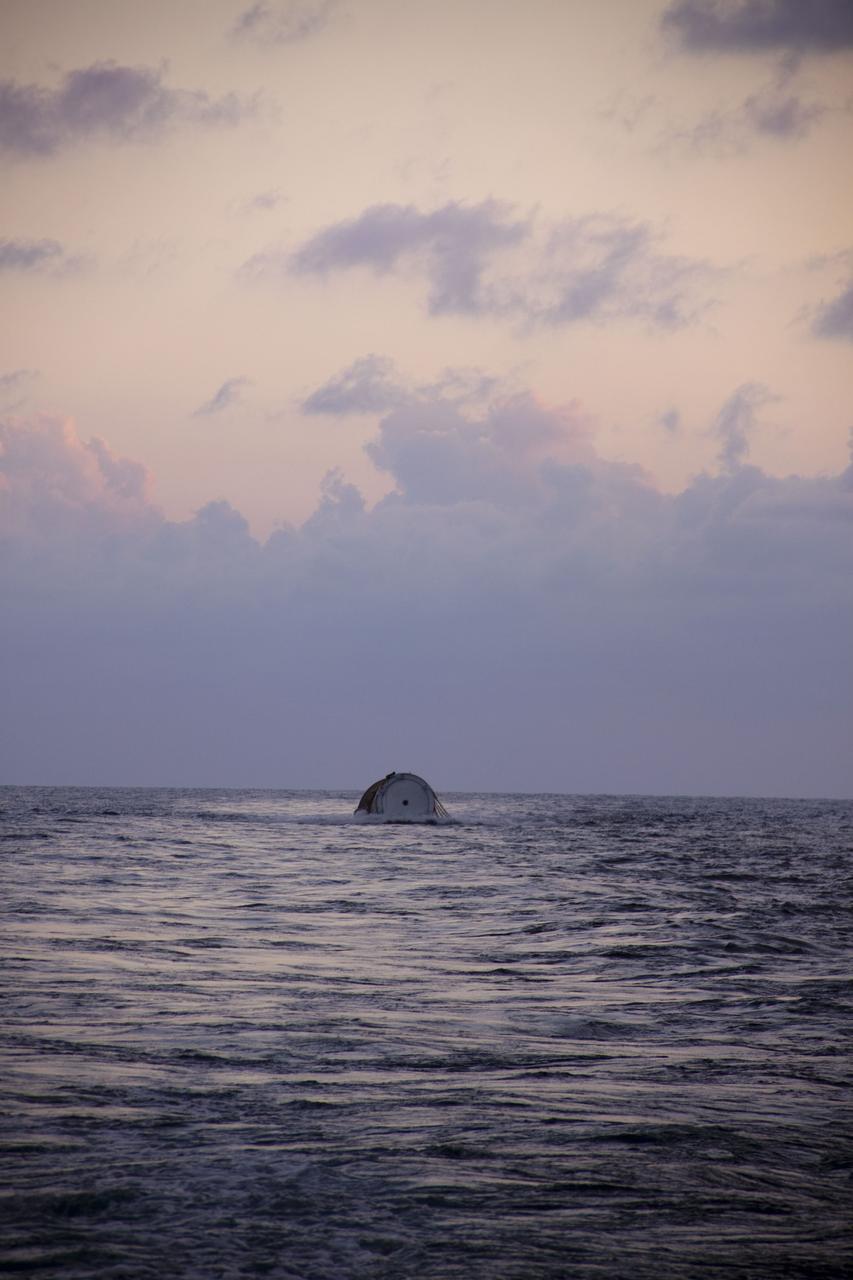
CAPE CANAVERAL, Fla. -- Liberty Star, one of NASA's solid rocket booster retrieval ships, tows the right spent booster from space shuttle Discovery's final launch, to Port Canaveral in Florida. The shuttle's two solid rocket booster casings and associated flight hardware are recovered in the Atlantic Ocean after every launch by Freedom Star and Liberty Star. The boosters impact the Atlantic about seven minutes after liftoff and the retrieval ships are stationed about 10 miles from the impact area at the time of splashdown. After the spent segments are processed, they will be transported to Utah, where they will be refurbished and stored, if needed. Photo credit: NASA/Frank Michaux
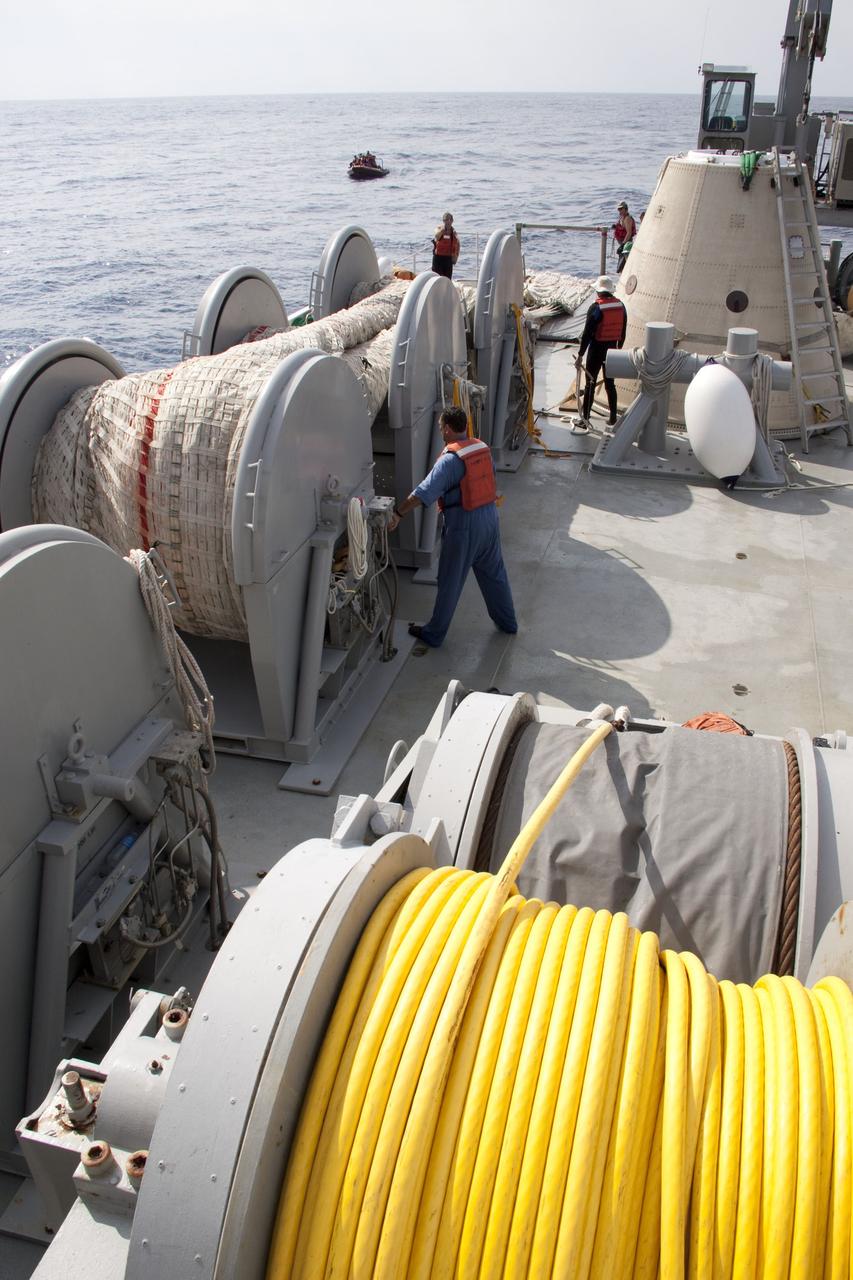
CAPE CANAVERAL, Fla. -- Crew members on board Liberty Star, one of NASA's solid rocket booster retrieval ships, haul in the massive parachute from the right spent booster from space shuttle Discovery's final launch. The shuttle's two solid rocket booster casings and associated flight hardware are recovered in the Atlantic Ocean after every launch by Freedom Star and Liberty Star. The boosters impact the Atlantic about seven minutes after liftoff and the retrieval ships are stationed about 10 miles from the impact area at the time of splashdown. After the spent segments are processed, they will be transported to Utah, where they will be refurbished and stored, if needed. Photo credit: NASA/Frank Michaux
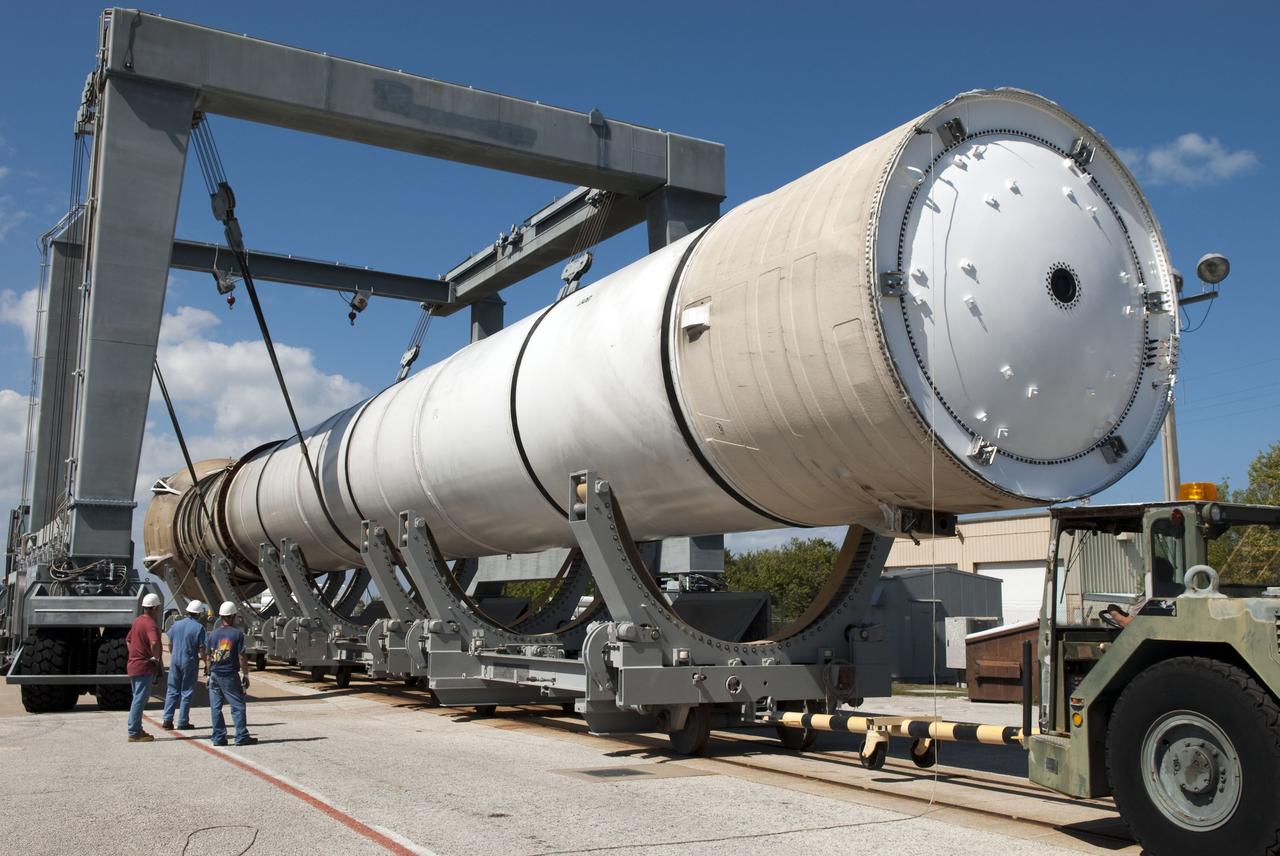
CAPE CANAVERAL, Fla. -- At the Solid Rocket Booster Disassembly Facility at Hangar AF on Cape Canaveral Air Force Station in Florida, the left spent booster, used during space shuttle Discovery's final launch, is lowered onto a tracked dolly for processing. The shuttle's two solid rocket booster casings and associated flight hardware are recovered in the Atlantic Ocean after every launch by Freedom Star and Liberty Star. The boosters impact the Atlantic about seven minutes after liftoff and the retrieval ships are stationed about 10 miles from the impact area at the time of splashdown. After the spent segments are processed, they will be transported to Utah, where they will be refurbished and stored, if needed. Photo credit: NASA/Jim Grossmann
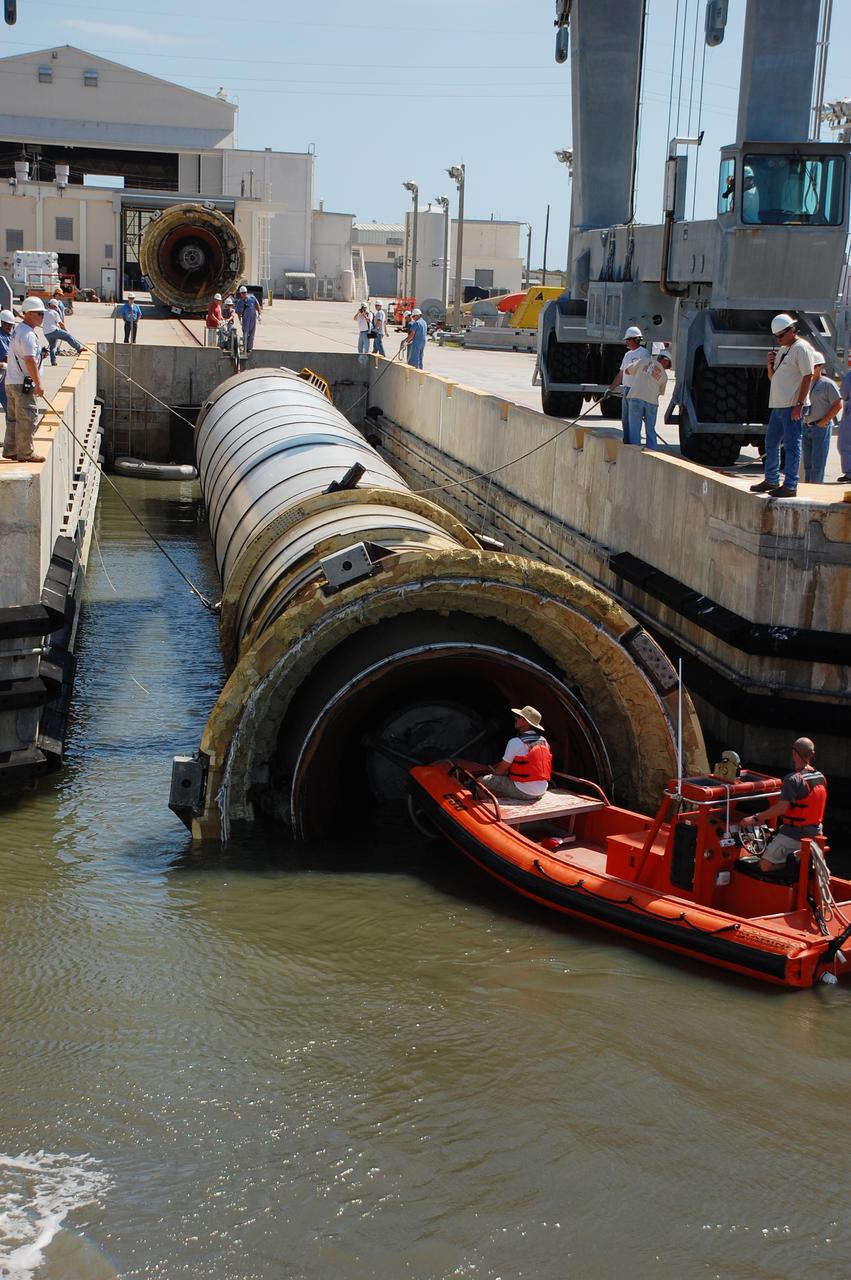
CAPE CANAVERAL, Fla. -- Crew members in a skiff from Liberty Star, one of NASA's solid rocket booster retrieval ships, usher a spent shuttle booster to Hangar AF at Cape Canaveral Air Force Station in Florida. The booster was used during space shuttle Discovery's STS-133 launch from NASA Kennedy Space Center's Launch Pad 39A on Feb. 24. The shuttle’s two solid rocket booster casings and associated flight hardware are recovered in the Atlantic Ocean after every launch by Freedom Star and Liberty Star. The boosters impact the Atlantic about seven minutes after liftoff and the retrieval ships are stationed about 10 miles from the impact area at the time of splashdown. After the spent segments are processed, they will be transported to Utah, where they will be refurbished and stored, if needed. Photo credit: NASA/Ben Smegelsky
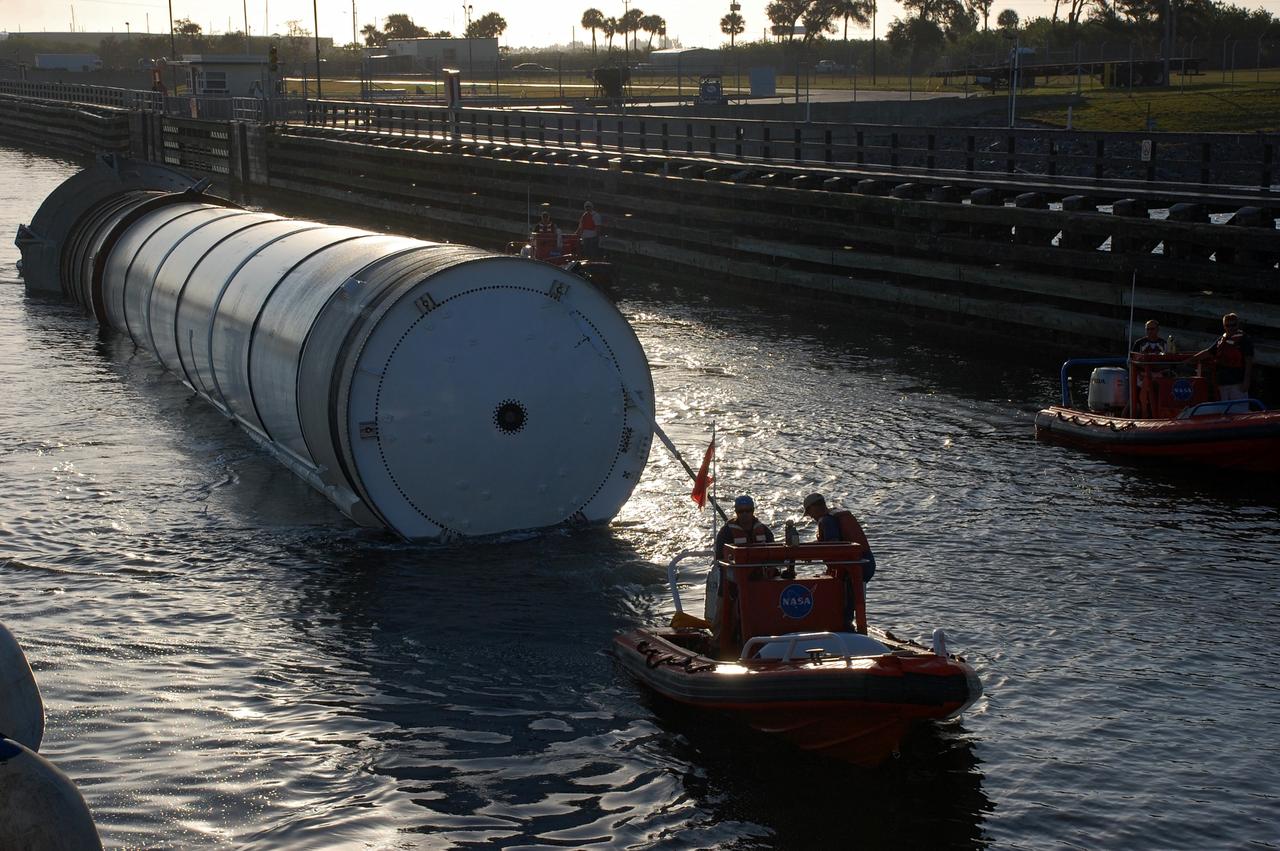
CAPE CANAVERAL, Fla. -- Crew members in a skiff from Freedom Star, one of NASA's solid rocket booster retrieval ships, usher a spent shuttle booster through the shallow waters of the locks at Port Canaveral, Fla. The booster, which was used during space shuttle Discovery's STS-133 launch from NASA Kennedy Space Center's Launch Pad 39A on Feb. 24, is on its way to Hangar AF at Cape Canaveral Air Force Station. The shuttle’s two solid rocket booster casings and associated flight hardware are recovered in the Atlantic Ocean after every launch by Freedom Star and Liberty Star. The boosters impact the Atlantic about seven minutes after liftoff and the retrieval ships are stationed about 10 miles from the impact area at the time of splashdown. After the spent segments are processed, they will be transported to Utah, where they will be refurbished and stored, if needed. Photo credit: NASA/Ben Smegelsky
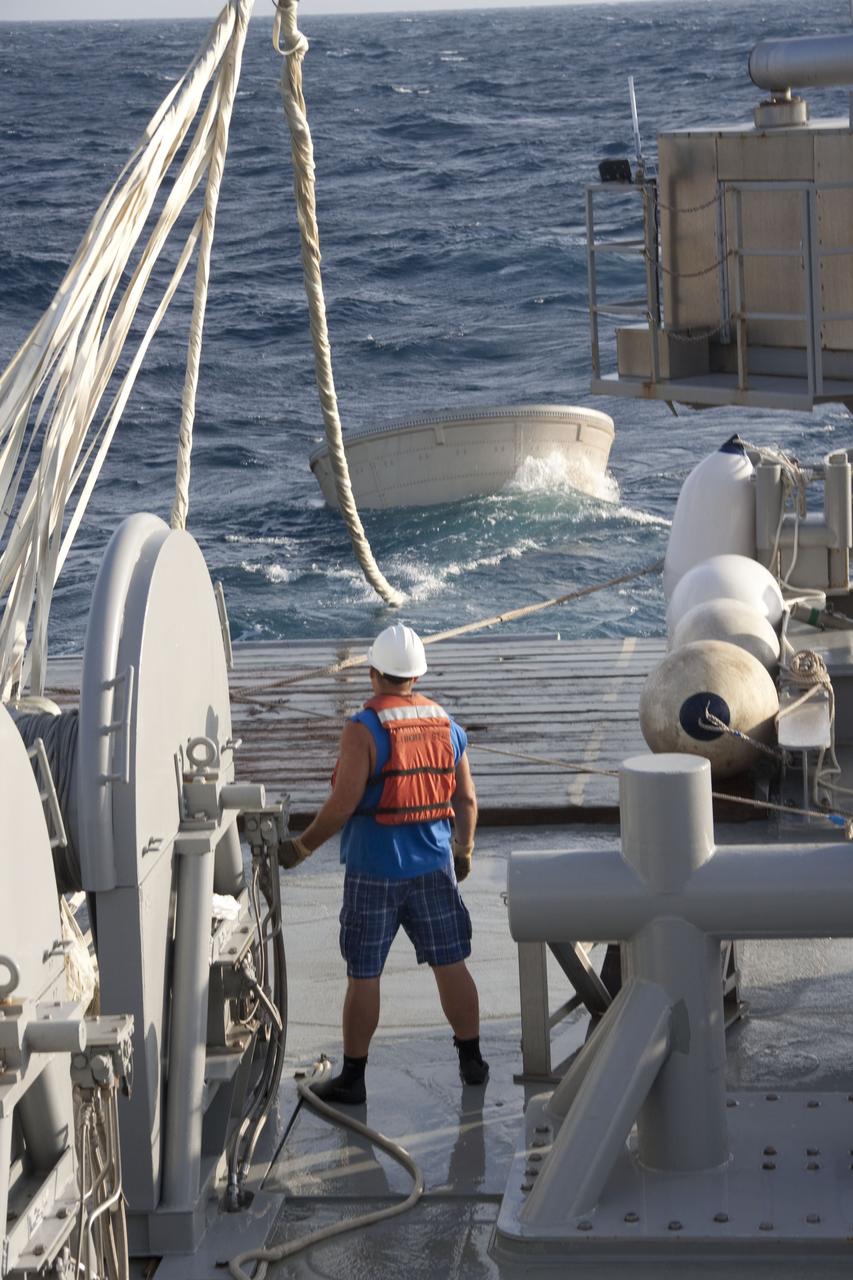
CAPE CANAVERAL, Fla. -- A crew member on Liberty Star, one of NASA's solid rocket booster retrieval ships, uses a crane to haul the right booster nose cap out of the Atlantic Ocean that splashed down after Discovery's final launch. The shuttle’s two solid rocket booster casings and associated flight hardware are recovered in the Atlantic Ocean after every launch by Freedom Star and Liberty Star. The boosters impact the Atlantic about seven minutes after liftoff and the retrieval ships are stationed about 10 miles from the impact area at the time of splashdown. After the spent segments are processed, they will be transported to Utah, where they will be refurbished and stored, if needed. Photo credit: NASA/Frank Michaux
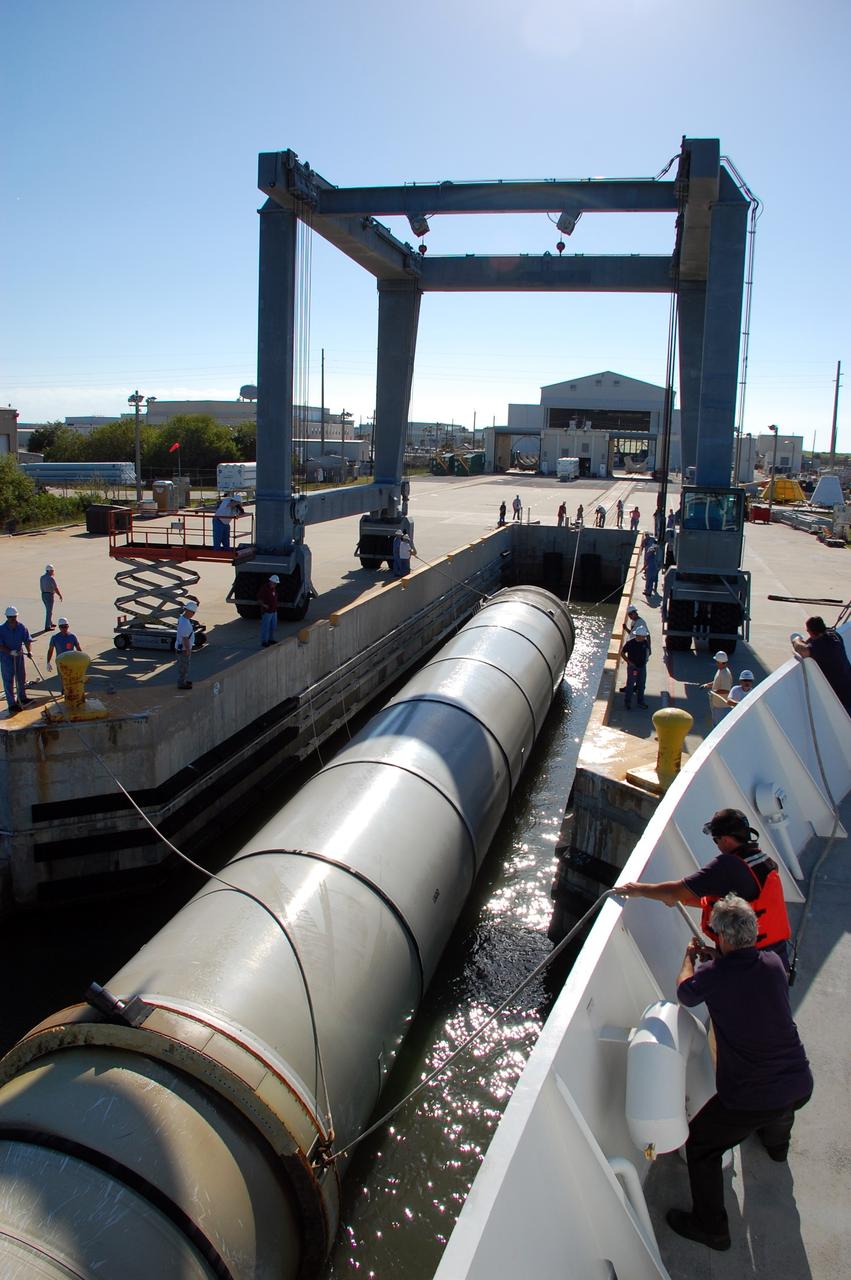
CAPE CANAVERAL, Fla. -- The Solid Rocket Booster Retrieval Ship Freedom Star delivers a spent shuttle booster to workers at Hangar AF at Cape Canaveral Air Force Station in Florida. The booster was used during space shuttle Discovery's STS-133 launch from NASA Kennedy Space Center's Launch Pad 39A on Feb. 24. The shuttle’s two solid rocket booster casings and associated flight hardware are recovered in the Atlantic Ocean after every launch by Freedom Star and Liberty Star. The boosters impact the Atlantic about seven minutes after liftoff and the retrieval ships are stationed about 10 miles from the impact area at the time of splashdown. After the spent segments are processed, they will be transported to Utah, where they will be refurbished and stored, if needed. Photo credit: NASA/Ben Smegelsky

CAPE CANAVERAL, Fla. -- Crew members in a skiff from Liberty Star, one of NASA's solid rocket booster retrieval ships, attach a tow rope to the parachute lines from the right spent booster bobbing in the Atlantic Ocean from space shuttle Discovery's final launch. The shuttle's two solid rocket booster casings and associated flight hardware are recovered in the Atlantic Ocean after every launch by Freedom Star and Liberty Star. The boosters impact the Atlantic about seven minutes after liftoff and the retrieval ships are stationed about 10 miles from the impact area at the time of splashdown. After the spent segments are processed, they will be transported to Utah, where they will be refurbished and stored, if needed. Photo credit: NASA/Frank Michaux
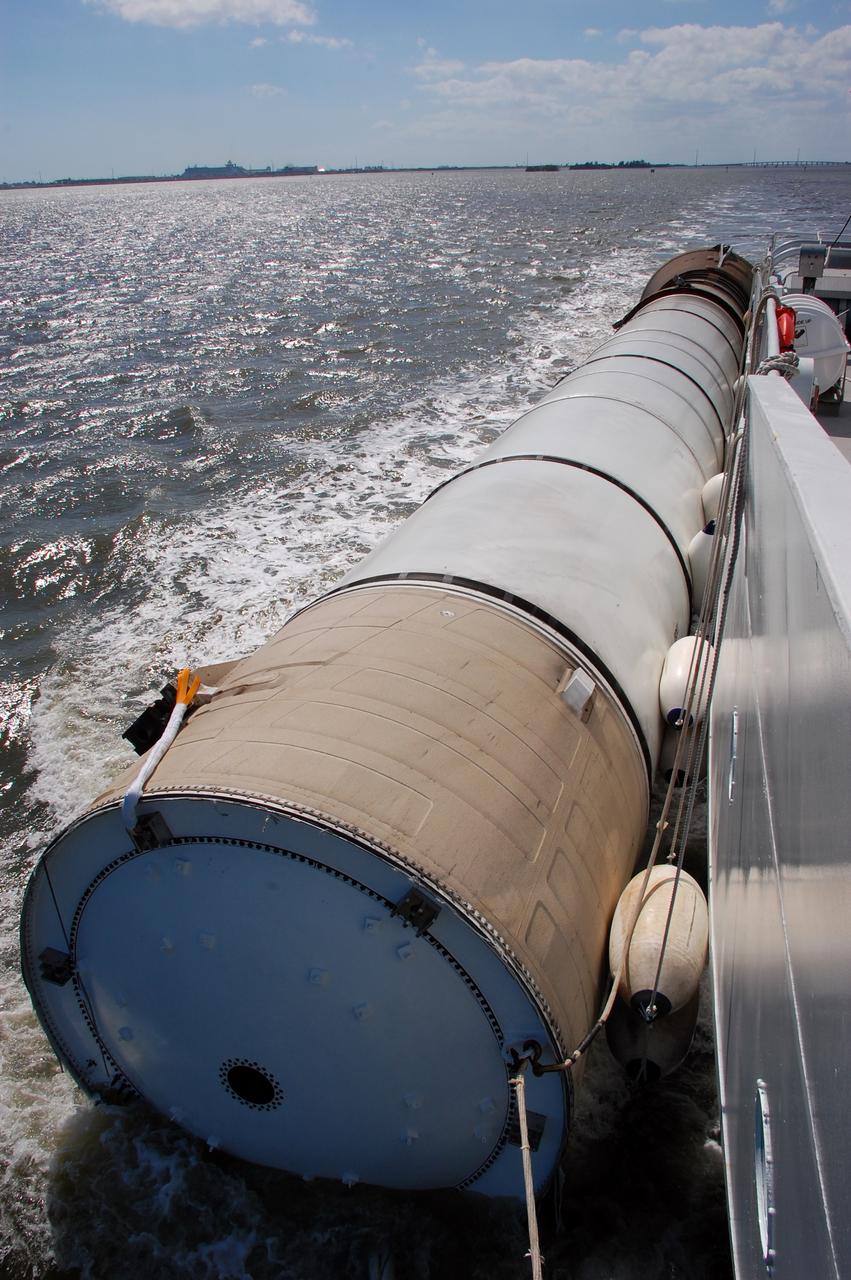
CAPE CANAVERAL, Fla. -- Liberty Star, one of NASA's solid rocket booster retrieval ships, ushers a spent shuttle booster to Hangar AF at Cape Canaveral Air Force Station in Florida. The booster was used during space shuttle Discovery's STS-133 launch from NASA Kennedy Space Center's Launch Pad 39A on Feb. 24. The shuttle’s two solid rocket booster casings and associated flight hardware are recovered in the Atlantic Ocean after every launch by Freedom Star and Liberty Star. The boosters impact the Atlantic about seven minutes after liftoff and the retrieval ships are stationed about 10 miles from the impact area at the time of splashdown. After the spent segments are processed, they will be transported to Utah, where they will be refurbished and stored, if needed. Photo credit: NASA/Ben Smegelsky
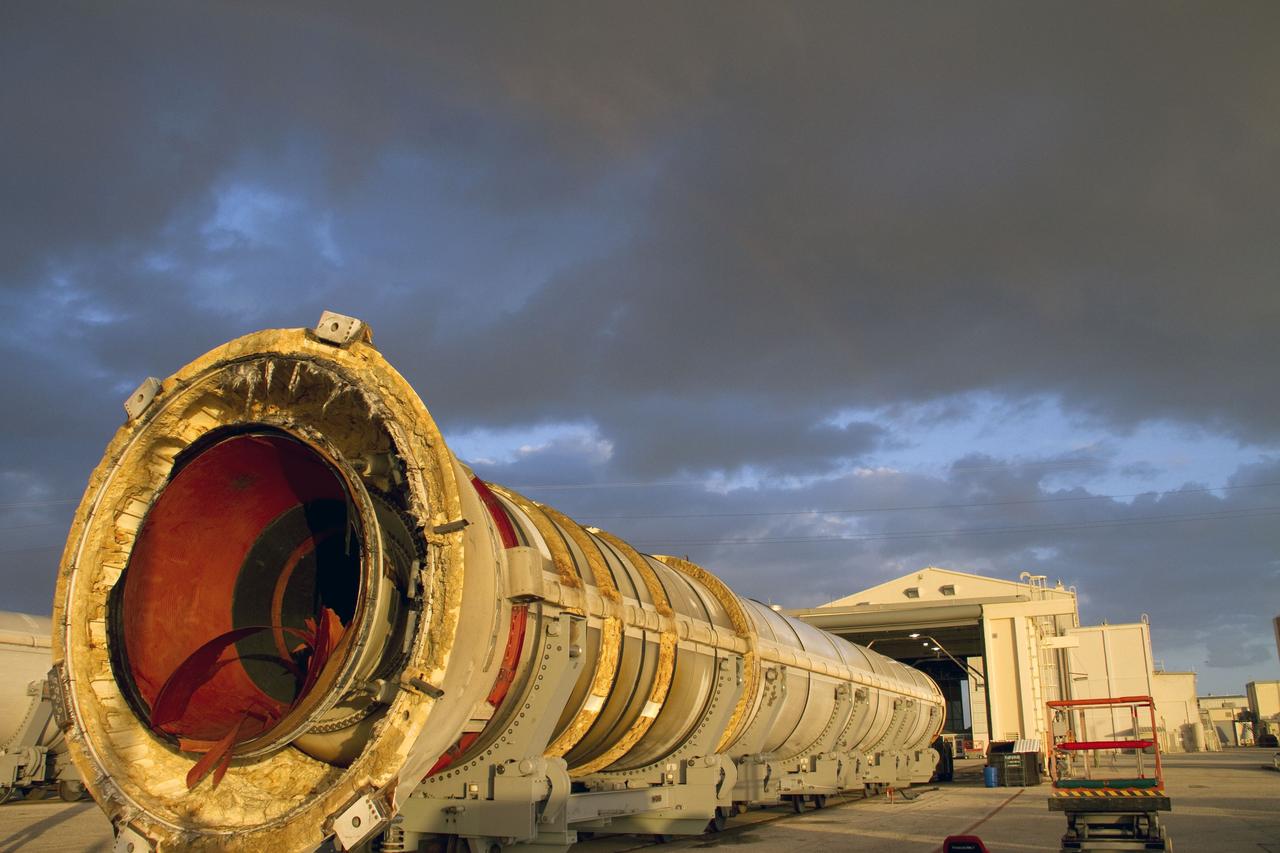
CAPE CANAVERAL, Fla. -- A spent shuttle solid rocket booster is moved into Hangar AF at Cape Canaveral Air Force Station in Florida, where it will be cleaned. The booster was used during space shuttle Discovery's STS-133 launch from NASA Kennedy Space Center's Launch Pad 39A on Feb. 24. The shuttle’s two solid rocket booster casings and associated flight hardware were recovered in the Atlantic Ocean by retrieval ships Liberty Star and Freedom Star. The boosters impact the Atlantic about seven minutes after liftoff and the retrieval ships are stationed about 10 miles from the impact area at the time of splashdown. After the spent segments are processed, they will be transported to Utah, where they will be refurbished and stored, if needed. Photo credit: NASA/Jack Pfaller
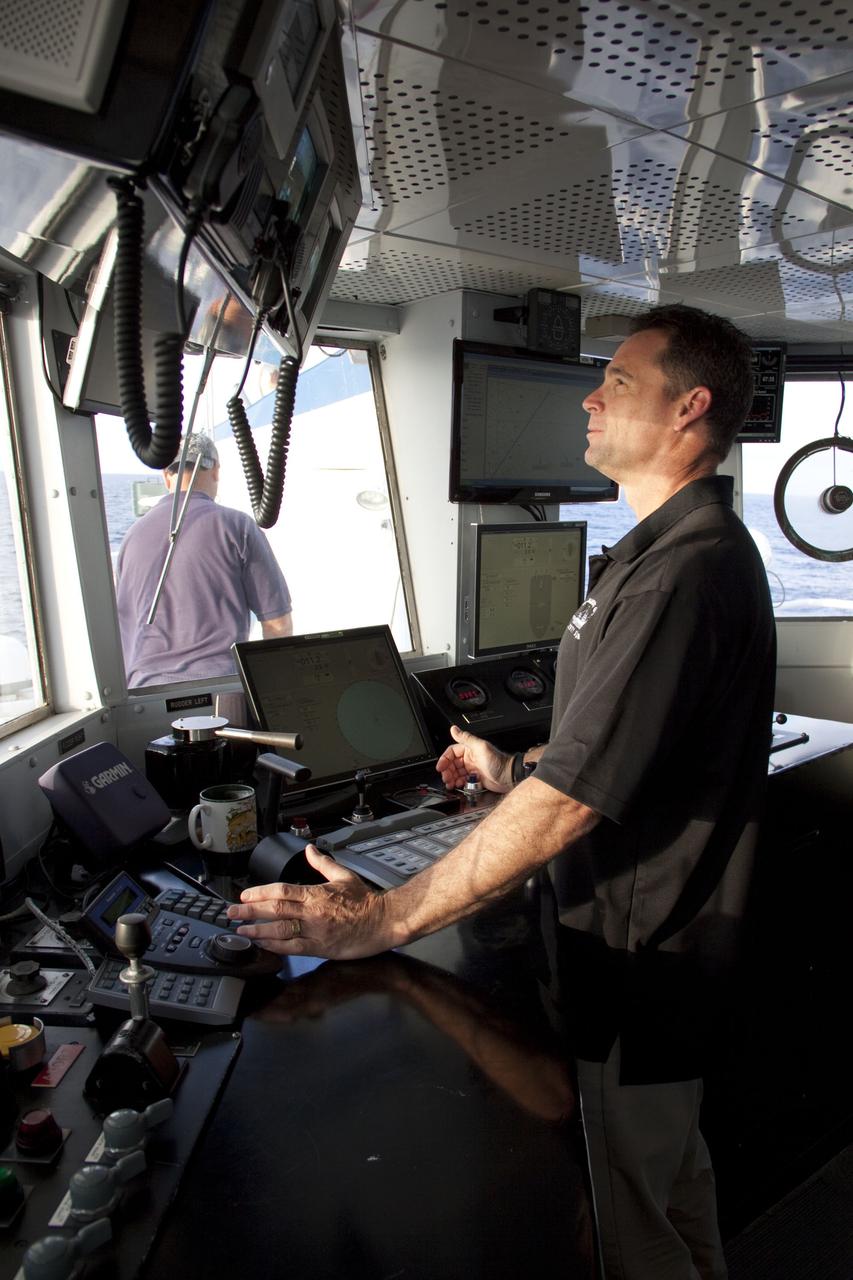
CAPE CANAVERAL, Fla. -- Captain Bren Wade is steering Liberty Star, one of NASA's solid rocket booster retrieval ships in the direction of the right spent booster that splashed down into the Atlantic Ocean after space shuttle Discovery's STS-133 launch. The shuttle’s two solid rocket booster casings and associated flight hardware are recovered in the Atlantic Ocean after every launch by Freedom Star and Liberty Star. The boosters impact the Atlantic about seven minutes after liftoff and the retrieval ships are stationed about 10 miles from the impact area at the time of splashdown. After the spent segments are processed, they will be transported to Utah, where they will be refurbished and stored, if needed. Photo credit: NASA/Frank Michaux
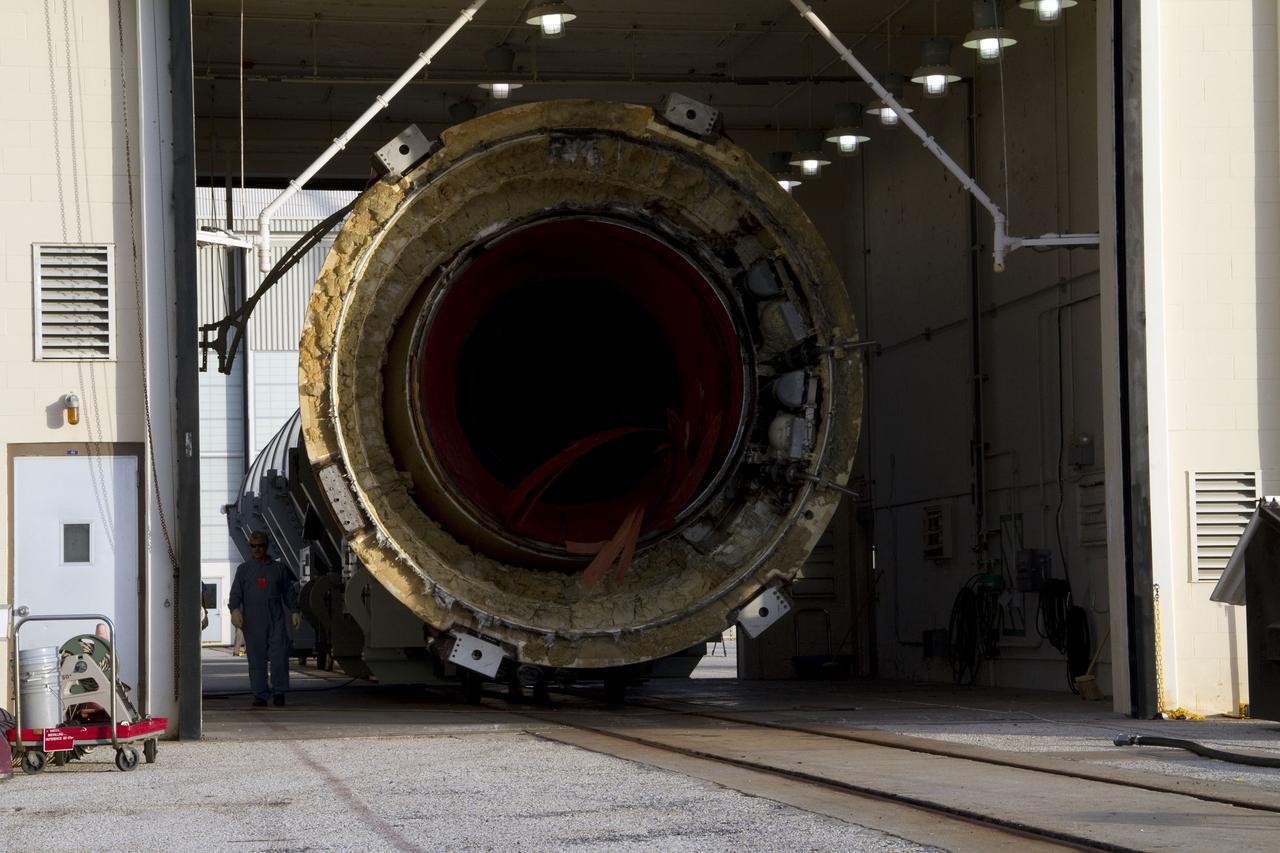
CAPE CANAVERAL, Fla. -- A spent shuttle solid rocket booster undergoes its first cleaning in Hangar AF at Cape Canaveral Air Force Station in Florida. The booster was used during space shuttle Discovery's STS-133 launch from NASA Kennedy Space Center's Launch Pad 39A on Feb. 24. The shuttle’s two solid rocket booster casings and associated flight hardware were recovered in the Atlantic Ocean by retrieval ships Liberty Star and Freedom Star. The boosters impact the Atlantic about seven minutes after liftoff and the retrieval ships are stationed about 10 miles from the impact area at the time of splashdown. After the spent segments are processed, they will be transported to Utah, where they will be refurbished and stored, if needed. Photo credit: NASA/Jack Pfaller