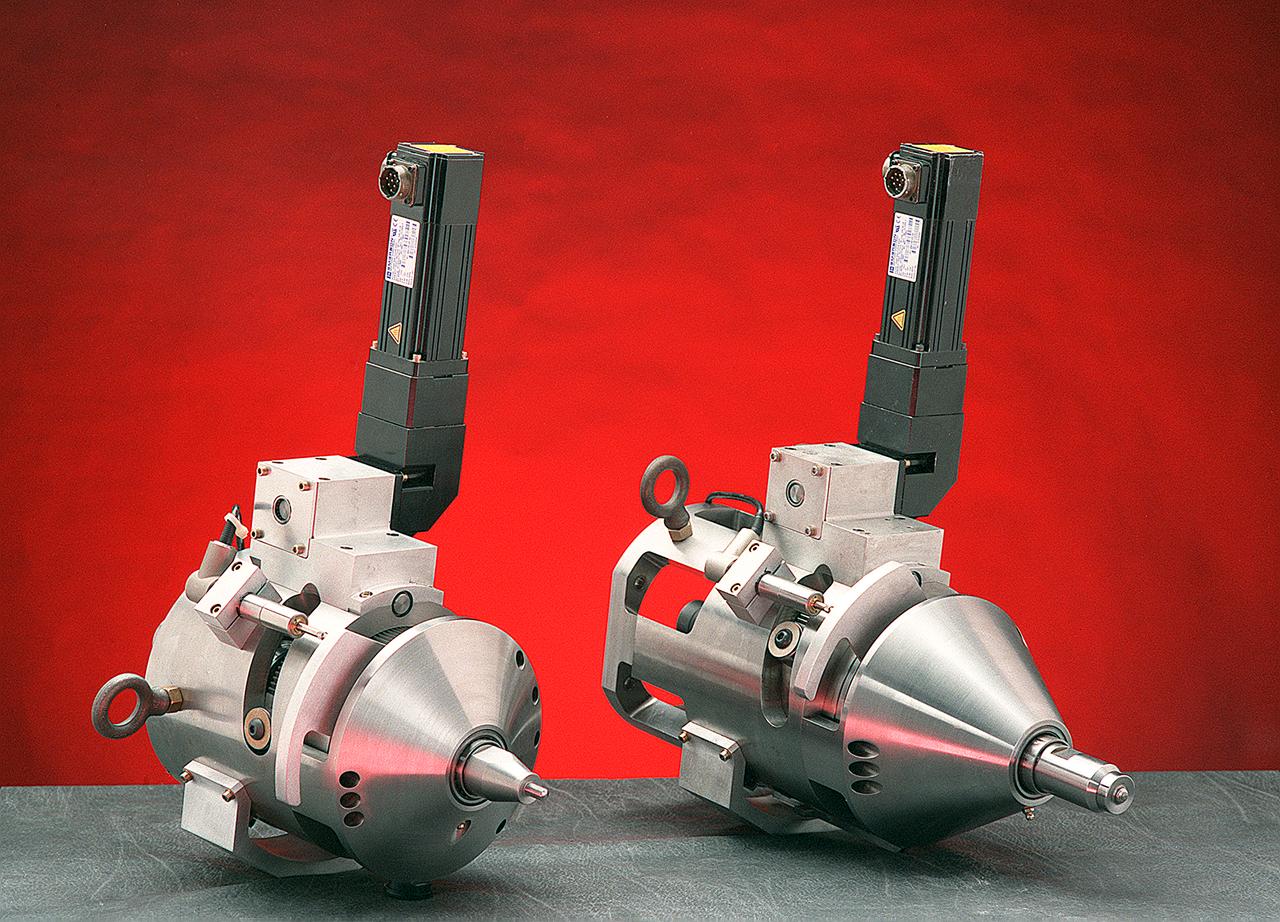
Two companies have successfully commercialized a specialized welding tool developed at the Marshall Space Flight Center (MSFC). Friction stir welding uses the high rotational speed of a tool and the resulting frictional heat created from contact to crush, "stir" together, and forge a bond between two metal alloys. It has had a major drawback, reliance on a single-piece pin tool. The pin is slowly plunged into the joint between two materials to be welded and rotated as high speed. At the end of the weld, the single-piece pin tool is retracted and leaves a "keyhole," something which is unacceptable when welding cylindrical objects such as drums, pipes and storage tanks. Another drawback is the requirement for different-length pin tools when welding materials of varying thickness. An engineer at the MSFC helped design an automatic retractable pin tool that uses a computer-controlled motor to automatically retract the pin into the shoulder of the tool at the end of the weld, preventing keyholes. This design allows the pin angle and length to be adjusted for changes in material thickness and results in a smooth hole closure at the end of the weld. Benefits of friction stir welding, using the MSFC retractable pin tool technology, include the following: The ability to weld a wide range of alloys, including previously unweldable and composite materials; provision of twice the fatigue resistance of fusion welds and no keyholes; minimization of material distortion; no creation of hazards such as welding fumes, radiation, high voltage, liquid metals, or arcing; automatic retraction of the pin at the end of the weld; and maintaining full penetration of the pin.

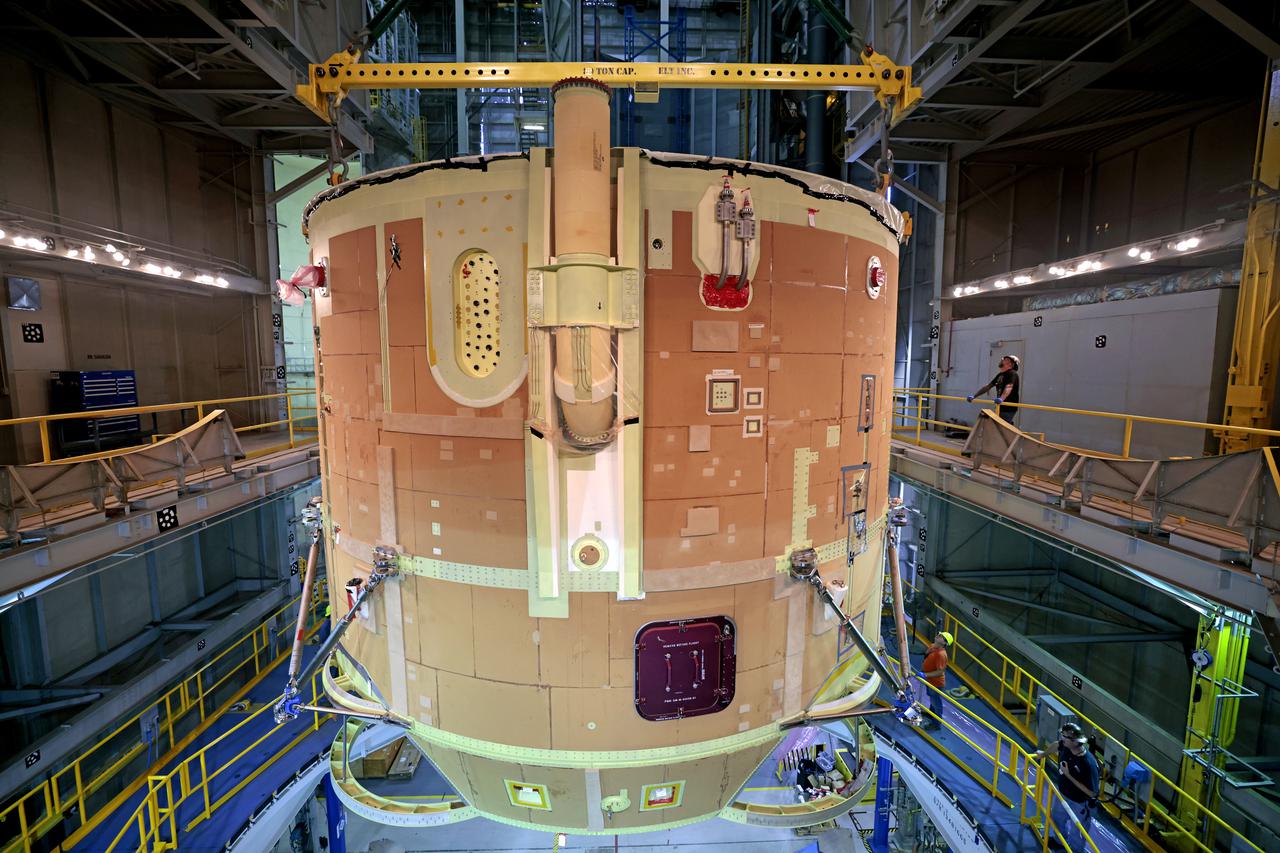
Technicians and engineers move the boat-tail structure for the core stage of NASA’s Space Launch System’s (SLS) rocket for Artemis II, the first crewed mission of NASA’s Artemis program at NASA’s Michoud Assembly Facility. The boat-tail, a fairing-like cover that attaches to the engine section on the bottom of the core stage, protects and covers most of the four RS-25 engines’ critical systems. Together with its four RS-25 engines, the rocket’s massive 212-foot-tall core stage — the largest stage NASA has ever built — and its twin solid rocket boosters will produce 8.8 million pounds of thrust to send NASA’s Orion spacecraft, astronauts and supplies beyond Earth’s orbit to the Moon and, ultimately, Mars. Offering more payload mass, volume capability and energy to speed missions through space, the SLS rocket, along with NASA’s Gateway in lunar orbit, the Human Landing System, and Orion spacecraft, is part of NASA’s backbone for deep space exploration and the Artemis lunar program. No other rocket is capable of carrying astronauts in Orion around the Moon in a single mission. Photographed on Wednesday, June 9, 2021. Image credit: NASA/Michael DeMocker
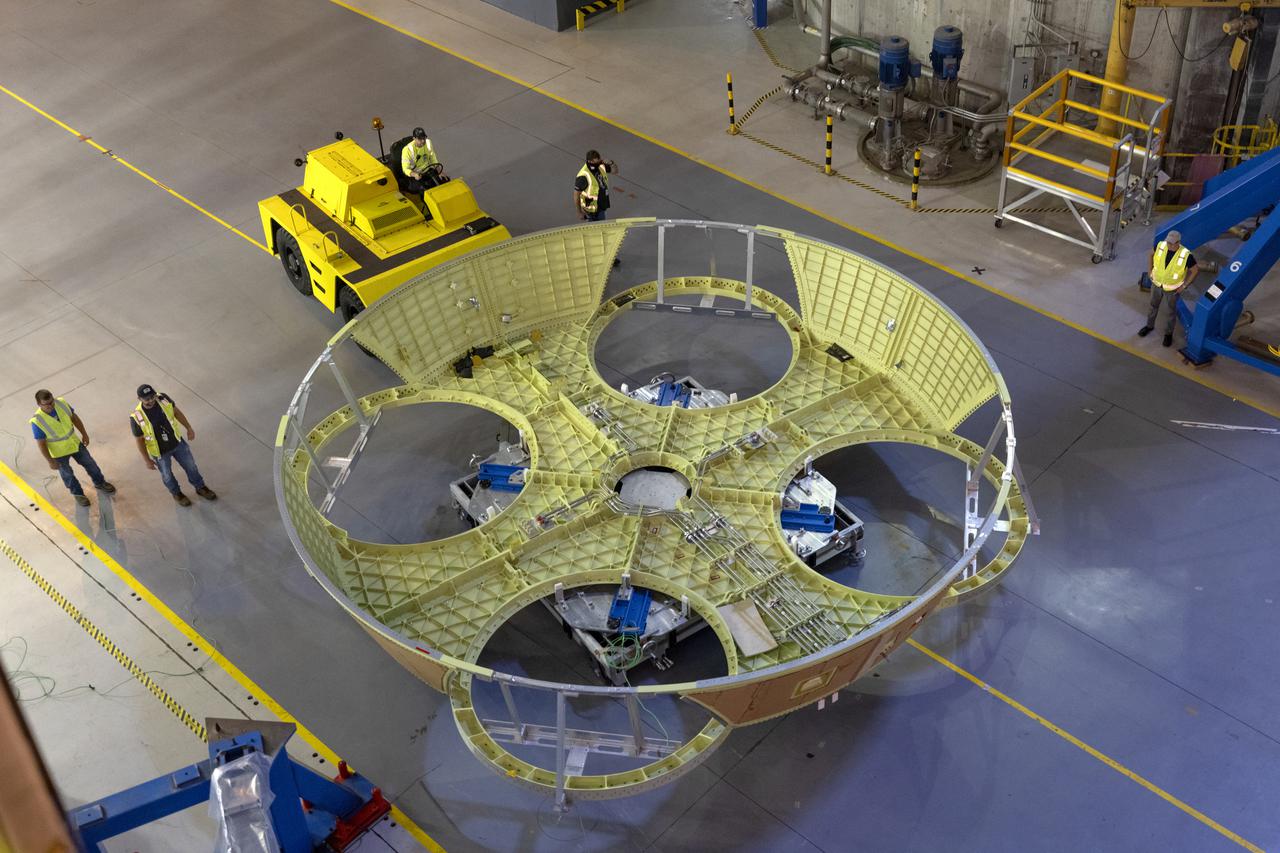
Technicians at NASA’s Michoud Assembly Facility have joined the engine and boat-tail sections of NASA’s Space Launch System rocket for Artemis II in preparation for its next step in production. When complete, the engine section will house the four RS-25 engines and include vital systems for mounting, controlling and delivering fuel from the propellant tanks to the rocket’s engines. The boat-tail is designed to protect the bottom end of the core stage and the RS-25 engines and was joined with the engine section to comprise the lowest portion of the 212-foot-tall core stage. Together with its four RS-25 engines and its twin solid rocket boosters, it will produce 8.8 million pounds of thrust to send NASA’s Orion spacecraft, astronauts, and supplies beyond Earth’s orbit to the Moon and, ultimately, Mars. Offering more payload mass, volume capability, and energy to speed missions through space, the SLS rocket, along with NASA’s Gateway in lunar orbit, the Human Landing System, and Orion spacecraft, is part of NASA’s backbone for deep space exploration and the Artemis lunar program. No other rocket is capable of carrying astronauts in Orion around the Moon in a single mission.
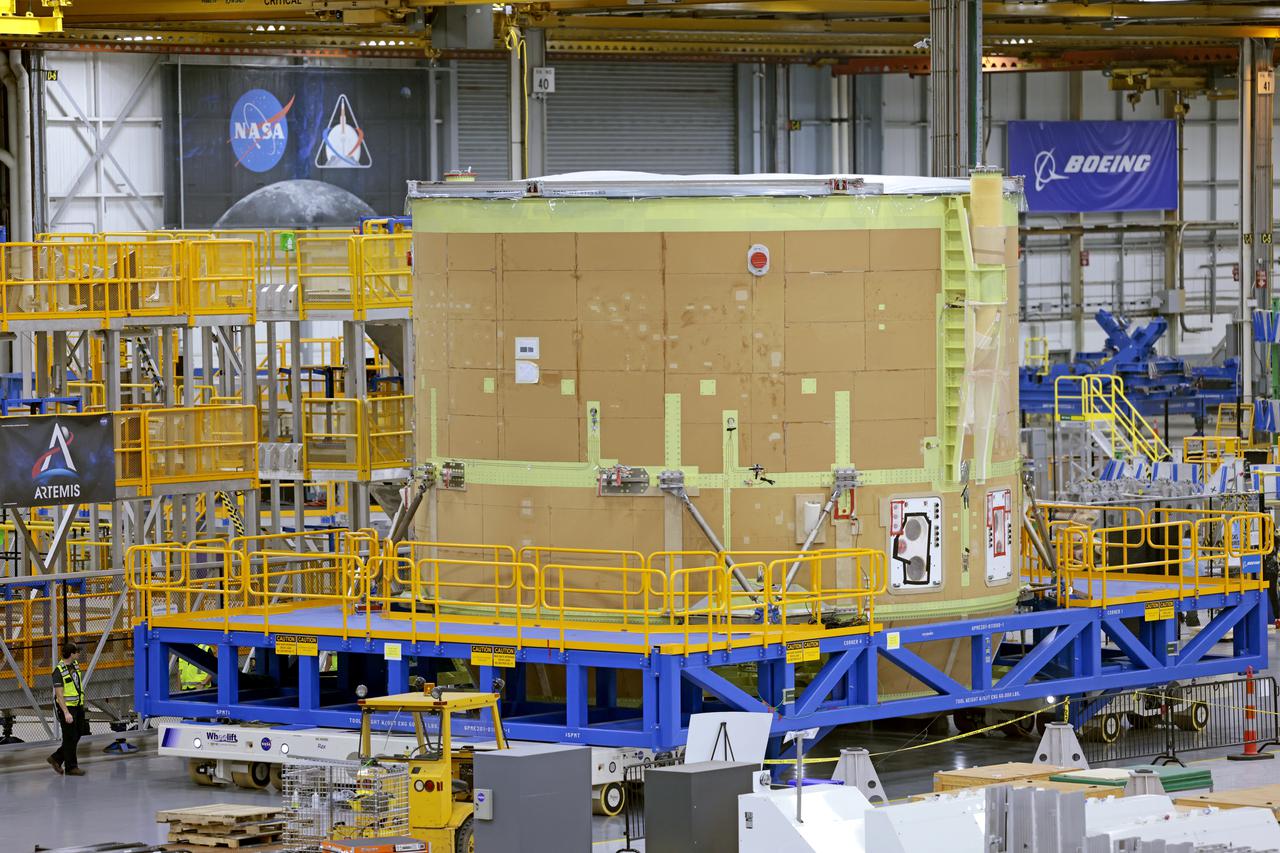
Technicians and engineers move the boat-tail structure for the core stage of NASA’s Space Launch System’s (SLS) rocket for Artemis II, the first crewed mission of NASA’s Artemis program at NASA’s Michoud Assembly Facility. The boat-tail, a fairing-like cover that attaches to the engine section on the bottom of the core stage, protects and covers most of the four RS-25 engines’ critical systems. Together with its four RS-25 engines, the rocket’s massive 212-foot-tall core stage — the largest stage NASA has ever built — and its twin solid rocket boosters will produce 8.8 million pounds of thrust to send NASA’s Orion spacecraft, astronauts and supplies beyond Earth’s orbit to the Moon and, ultimately, Mars. Offering more payload mass, volume capability and energy to speed missions through space, the SLS rocket, along with NASA’s Gateway in lunar orbit, the Human Landing System, and Orion spacecraft, is part of NASA’s backbone for deep space exploration and the Artemis lunar program. No other rocket is capable of carrying astronauts in Orion around the Moon in a single mission. Photographed on Wednesday, June 9, 2021. Image credit: NASA/Michael DeMocker
Technicians at NASA’s Michoud Assembly Facility have joined the engine and boat-tail sections of NASA’s Space Launch System rocket for Artemis II in preparation for its next step in production. When complete, the engine section will house the four RS-25 engines and include vital systems for mounting, controlling and delivering fuel from the propellant tanks to the rocket’s engines. The boat-tail is designed to protect the bottom end of the core stage and the RS-25 engines and was joined with the engine section to comprise the lowest portion of the 212-foot-tall core stage. Together with its four RS-25 engines and its twin solid rocket boosters, it will produce 8.8 million pounds of thrust to send NASA’s Orion spacecraft, astronauts, and supplies beyond Earth’s orbit to the Moon and, ultimately, Mars. Offering more payload mass, volume capability, and energy to speed missions through space, the SLS rocket, along with NASA’s Gateway in lunar orbit, the Human Landing System, and Orion spacecraft, is part of NASA’s backbone for deep space exploration and the Artemis lunar program. No other rocket is capable of carrying astronauts in Orion around the Moon in a single mission.
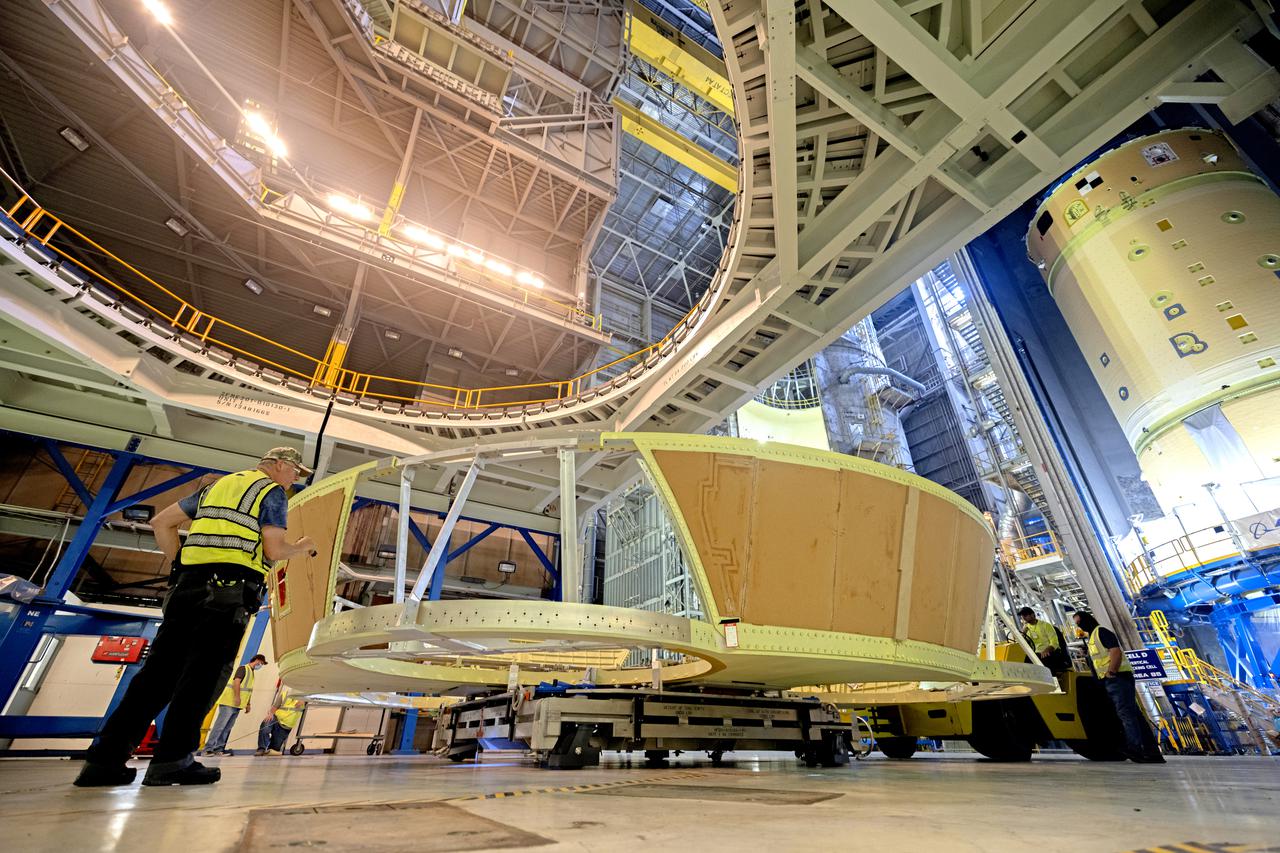
Technicians and engineers move the boat-tail structure for the core stage of NASA’s Space Launch System’s (SLS) rocket for Artemis II, the first crewed mission of NASA’s Artemis program at NASA’s Michoud Assembly Facility. The boat-tail, a fairing-like cover that attaches to the engine section on the bottom of the core stage, protects and covers most of the four RS-25 engines’ critical systems. Together with its four RS-25 engines, the rocket’s massive 212-foot-tall core stage — the largest stage NASA has ever built — and its twin solid rocket boosters will produce 8.8 million pounds of thrust to send NASA’s Orion spacecraft, astronauts and supplies beyond Earth’s orbit to the Moon and, ultimately, Mars. Offering more payload mass, volume capability and energy to speed missions through space, the SLS rocket, along with NASA’s Gateway in lunar orbit, the Human Landing System, and Orion spacecraft, is part of NASA’s backbone for deep space exploration and the Artemis lunar program. No other rocket is capable of carrying astronauts in Orion around the Moon in a single mission. Photographed on Wednesday, June 9, 2021. Image credit: NASA/Michael DeMocker
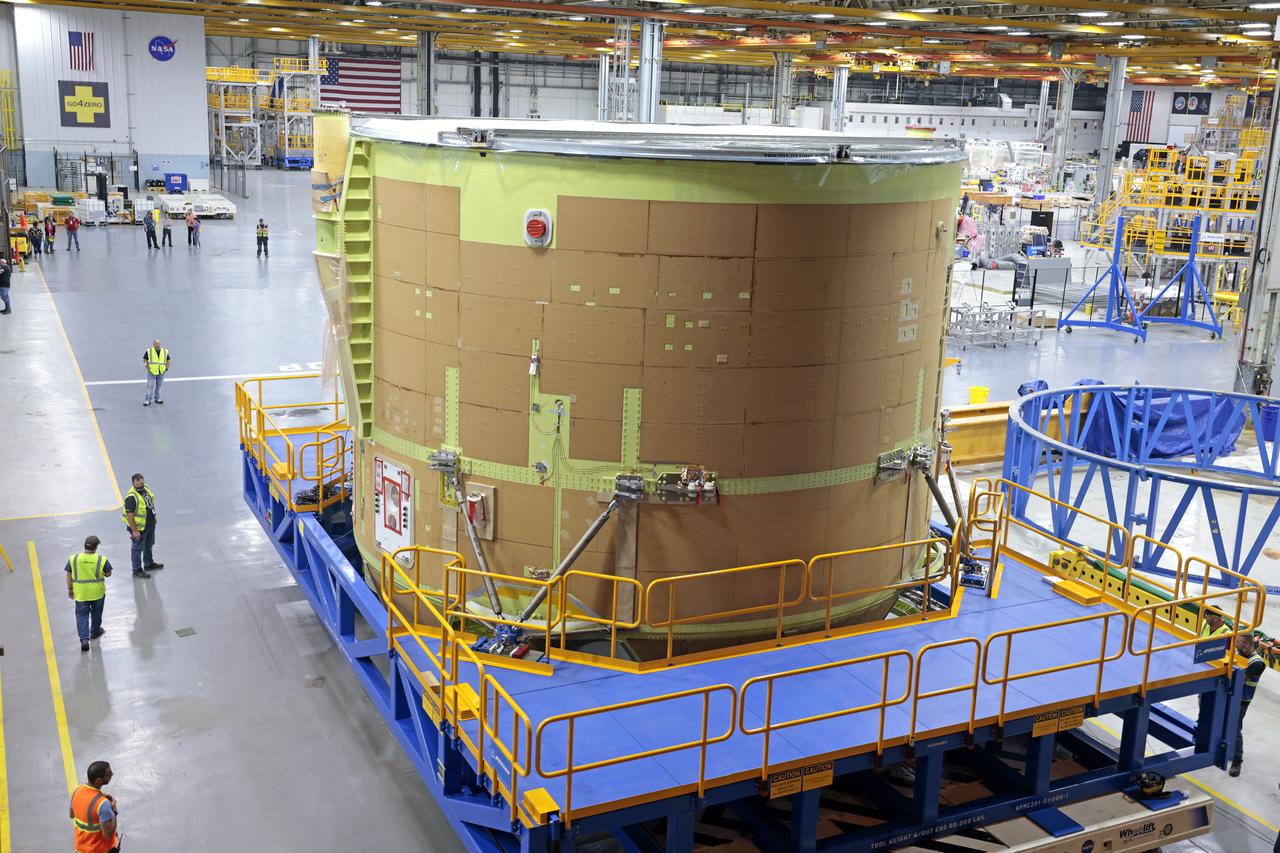
Technicians at NASA’s Michoud Assembly Facility have joined the engine and boat-tail sections of NASA’s Space Launch System rocket for Artemis II in preparation for its next step in production. When complete, the engine section will house the four RS-25 engines and include vital systems for mounting, controlling and delivering fuel from the propellant tanks to the rocket’s engines. The boat-tail is designed to protect the bottom end of the core stage and the RS-25 engines and was joined with the engine section to comprise the lowest portion of the 212-foot-tall core stage. Together with its four RS-25 engines and its twin solid rocket boosters, it will produce 8.8 million pounds of thrust to send NASA’s Orion spacecraft, astronauts, and supplies beyond Earth’s orbit to the Moon and, ultimately, Mars. Offering more payload mass, volume capability, and energy to speed missions through space, the SLS rocket, along with NASA’s Gateway in lunar orbit, the Human Landing System, and Orion spacecraft, is part of NASA’s backbone for deep space exploration and the Artemis lunar program. No other rocket is capable of carrying astronauts in Orion around the Moon in a single mission.

Technicians at NASA’s Michoud Assembly Facility have joined the engine and boat-tail sections of NASA’s Space Launch System rocket for Artemis II in preparation for its next step in production. When complete, the engine section will house the four RS-25 engines and include vital systems for mounting, controlling and delivering fuel from the propellant tanks to the rocket’s engines. The boat-tail is designed to protect the bottom end of the core stage and the RS-25 engines and was joined with the engine section to comprise the lowest portion of the 212-foot-tall core stage. Together with its four RS-25 engines and its twin solid rocket boosters, it will produce 8.8 million pounds of thrust to send NASA’s Orion spacecraft, astronauts, and supplies beyond Earth’s orbit to the Moon and, ultimately, Mars. Offering more payload mass, volume capability, and energy to speed missions through space, the SLS rocket, along with NASA’s Gateway in lunar orbit, the Human Landing System, and Orion spacecraft, is part of NASA’s backbone for deep space exploration and the Artemis lunar program. No other rocket is capable of carrying astronauts in Orion around the Moon in a single mission.
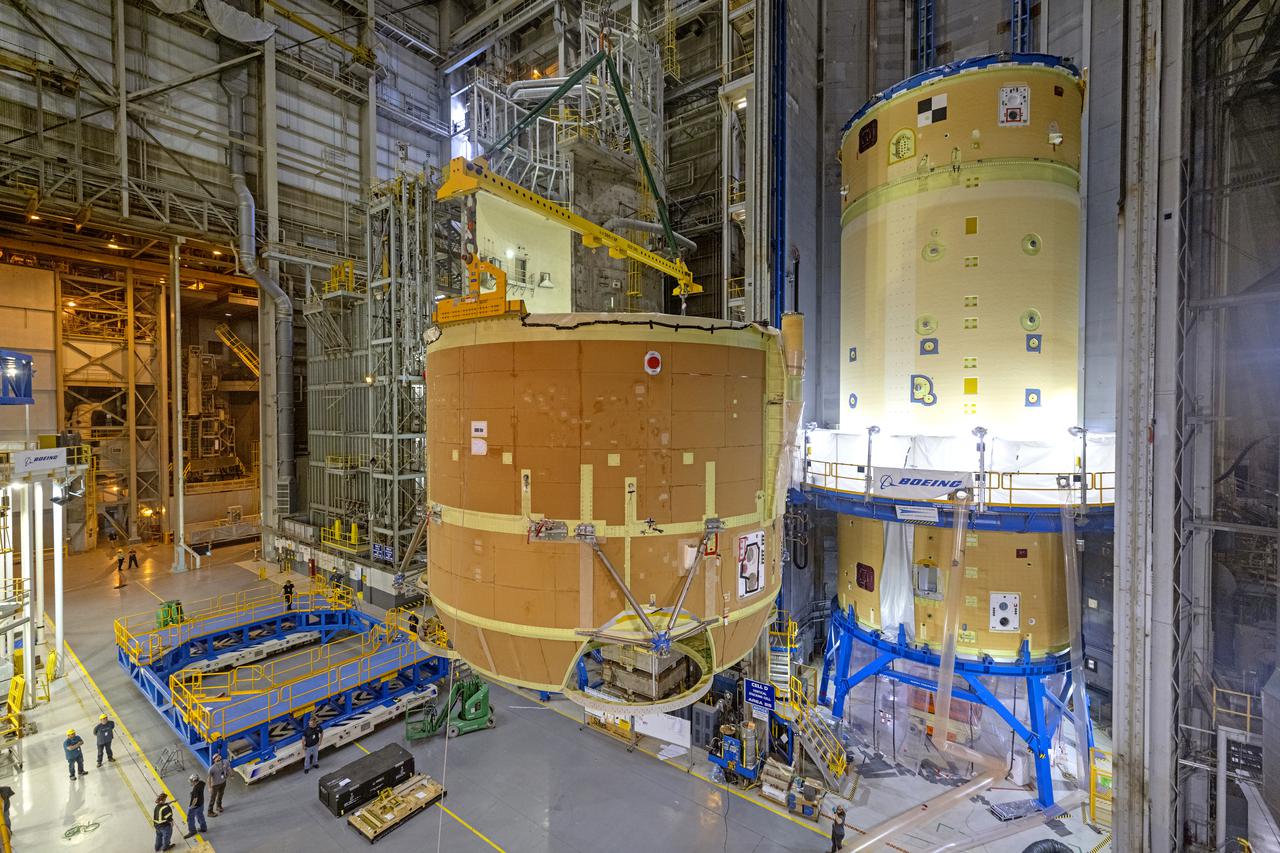
Technicians at NASA’s Michoud Assembly Facility have joined the engine and boat-tail sections of NASA’s Space Launch System rocket for Artemis II in preparation for its next step in production. When complete, the engine section will house the four RS-25 engines and include vital systems for mounting, controlling and delivering fuel from the propellant tanks to the rocket’s engines. The boat-tail is designed to protect the bottom end of the core stage and the RS-25 engines and was joined with the engine section to comprise the lowest portion of the 212-foot-tall core stage. Together with its four RS-25 engines and its twin solid rocket boosters, it will produce 8.8 million pounds of thrust to send NASA’s Orion spacecraft, astronauts, and supplies beyond Earth’s orbit to the Moon and, ultimately, Mars. Offering more payload mass, volume capability, and energy to speed missions through space, the SLS rocket, along with NASA’s Gateway in lunar orbit, the Human Landing System, and Orion spacecraft, is part of NASA’s backbone for deep space exploration and the Artemis lunar program. No other rocket is capable of carrying astronauts in Orion around the Moon in a single mission.
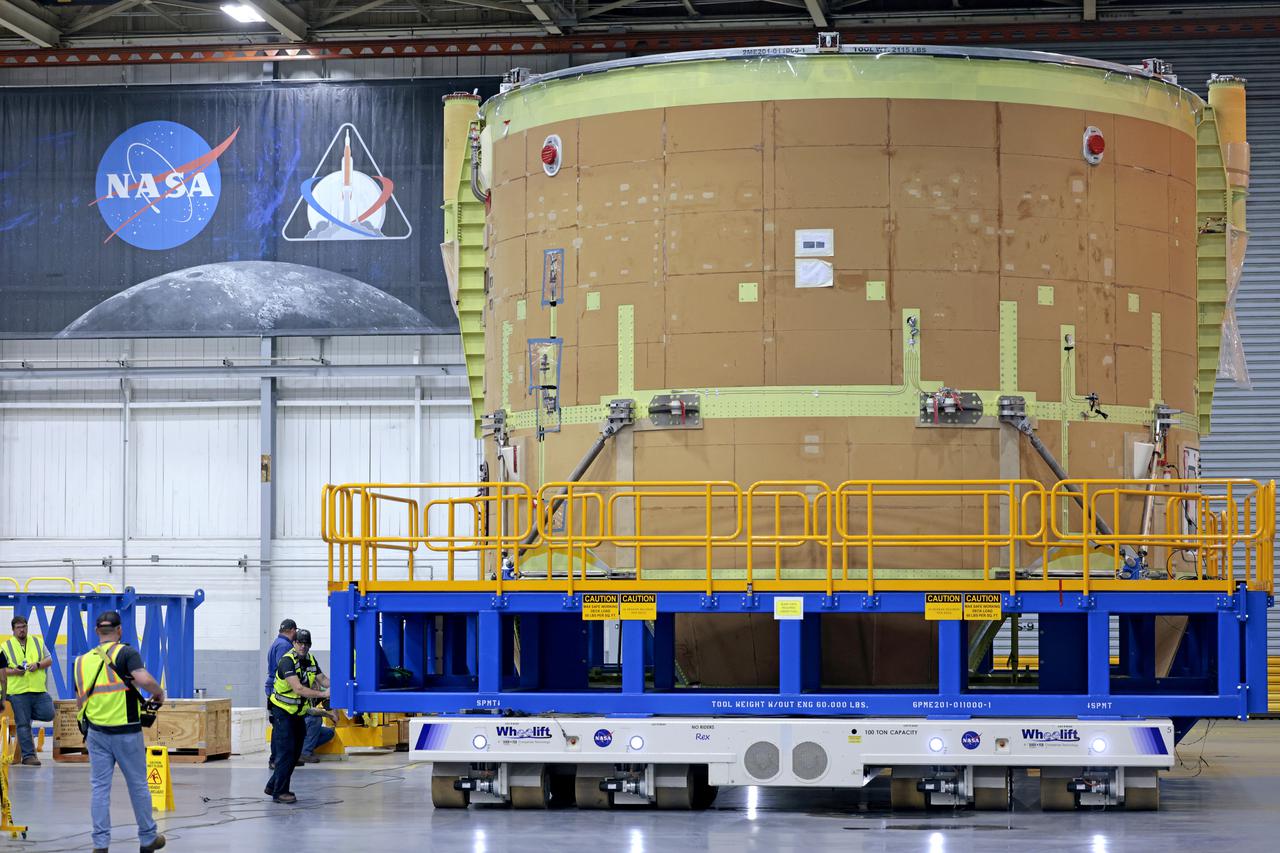
Technicians at NASA’s Michoud Assembly Facility have joined the engine and boat-tail sections of NASA’s Space Launch System rocket for Artemis II in preparation for its next step in production. When complete, the engine section will house the four RS-25 engines and include vital systems for mounting, controlling and delivering fuel from the propellant tanks to the rocket’s engines. The boat-tail is designed to protect the bottom end of the core stage and the RS-25 engines and was joined with the engine section to comprise the lowest portion of the 212-foot-tall core stage. Together with its four RS-25 engines and its twin solid rocket boosters, it will produce 8.8 million pounds of thrust to send NASA’s Orion spacecraft, astronauts, and supplies beyond Earth’s orbit to the Moon and, ultimately, Mars. Offering more payload mass, volume capability, and energy to speed missions through space, the SLS rocket, along with NASA’s Gateway in lunar orbit, the Human Landing System, and Orion spacecraft, is part of NASA’s backbone for deep space exploration and the Artemis lunar program. No other rocket is capable of carrying astronauts in Orion around the Moon in a single mission.
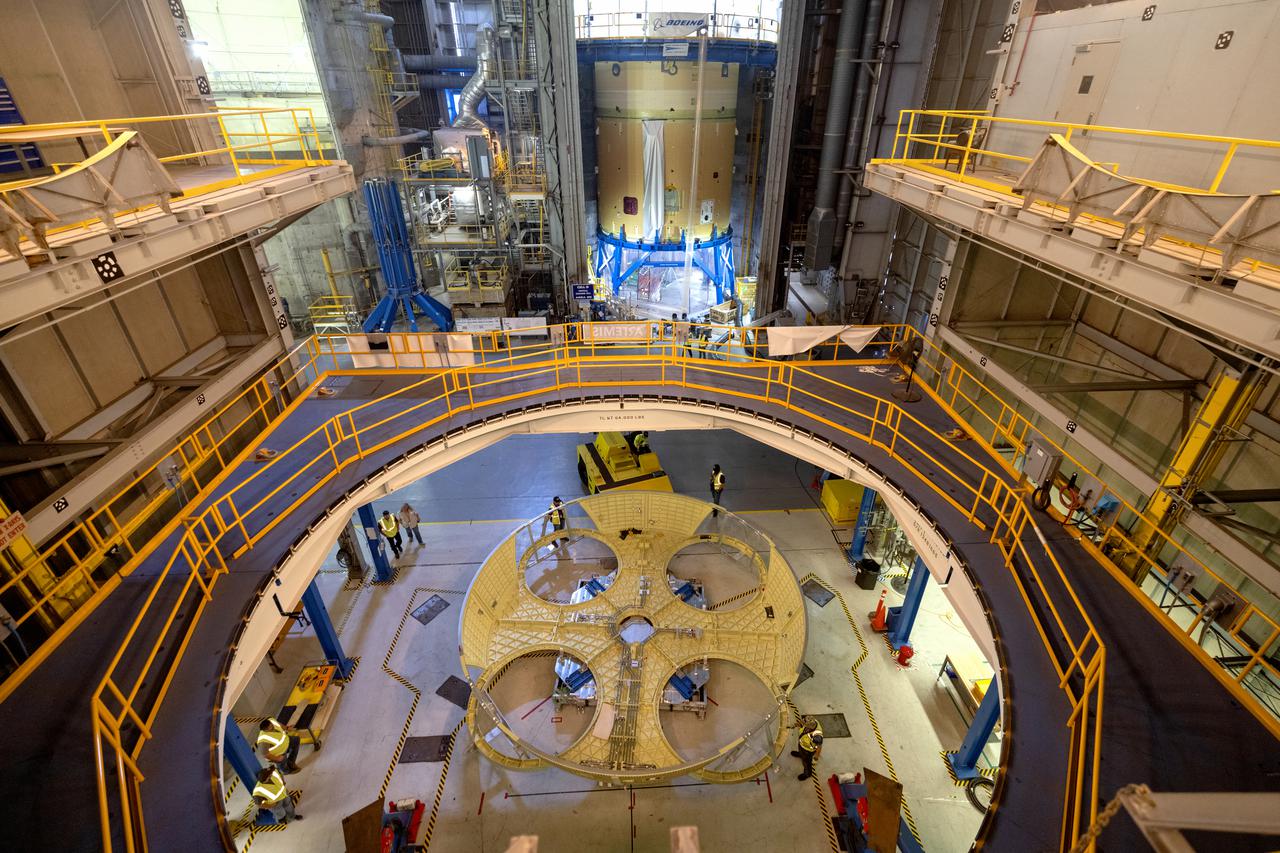
Technicians and engineers move the boat-tail structure for the core stage of NASA’s Space Launch System’s (SLS) rocket for Artemis II, the first crewed mission of NASA’s Artemis program at NASA’s Michoud Assembly Facility. The boat-tail, a fairing-like cover that attaches to the engine section on the bottom of the core stage, protects and covers most of the four RS-25 engines’ critical systems. Together with its four RS-25 engines, the rocket’s massive 212-foot-tall core stage — the largest stage NASA has ever built — and its twin solid rocket boosters will produce 8.8 million pounds of thrust to send NASA’s Orion spacecraft, astronauts and supplies beyond Earth’s orbit to the Moon and, ultimately, Mars. Offering more payload mass, volume capability and energy to speed missions through space, the SLS rocket, along with NASA’s Gateway in lunar orbit, the Human Landing System, and Orion spacecraft, is part of NASA’s backbone for deep space exploration and the Artemis lunar program. No other rocket is capable of carrying astronauts in Orion around the Moon in a single mission. Photographed on Wednesday, June 9, 2021. Image credit: NASA/Michael DeMocker
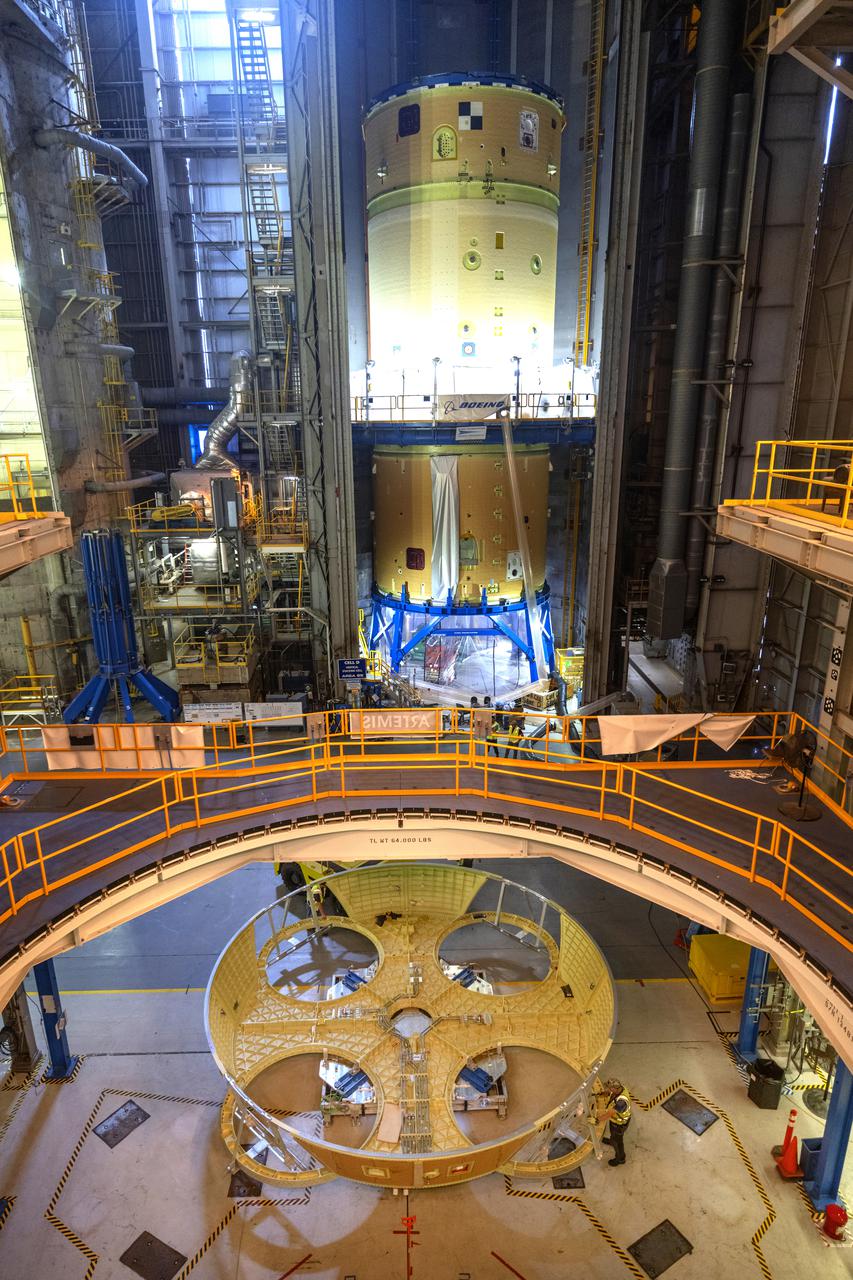
Technicians and engineers move the boat-tail structure for the core stage of NASA’s Space Launch System’s (SLS) rocket for Artemis II, the first crewed mission of NASA’s Artemis program at NASA’s Michoud Assembly Facility. The boat-tail, a fairing-like cover that attaches to the engine section on the bottom of the core stage, protects and covers most of the four RS-25 engines’ critical systems. Together with its four RS-25 engines, the rocket’s massive 212-foot-tall core stage — the largest stage NASA has ever built — and its twin solid rocket boosters will produce 8.8 million pounds of thrust to send NASA’s Orion spacecraft, astronauts and supplies beyond Earth’s orbit to the Moon and, ultimately, Mars. Offering more payload mass, volume capability and energy to speed missions through space, the SLS rocket, along with NASA’s Gateway in lunar orbit, the Human Landing System, and Orion spacecraft, is part of NASA’s backbone for deep space exploration and the Artemis lunar program. No other rocket is capable of carrying astronauts in Orion around the Moon in a single mission. Photographed on Wednesday, June 9, 2021. Image credit: NASA/Michael DeMocker
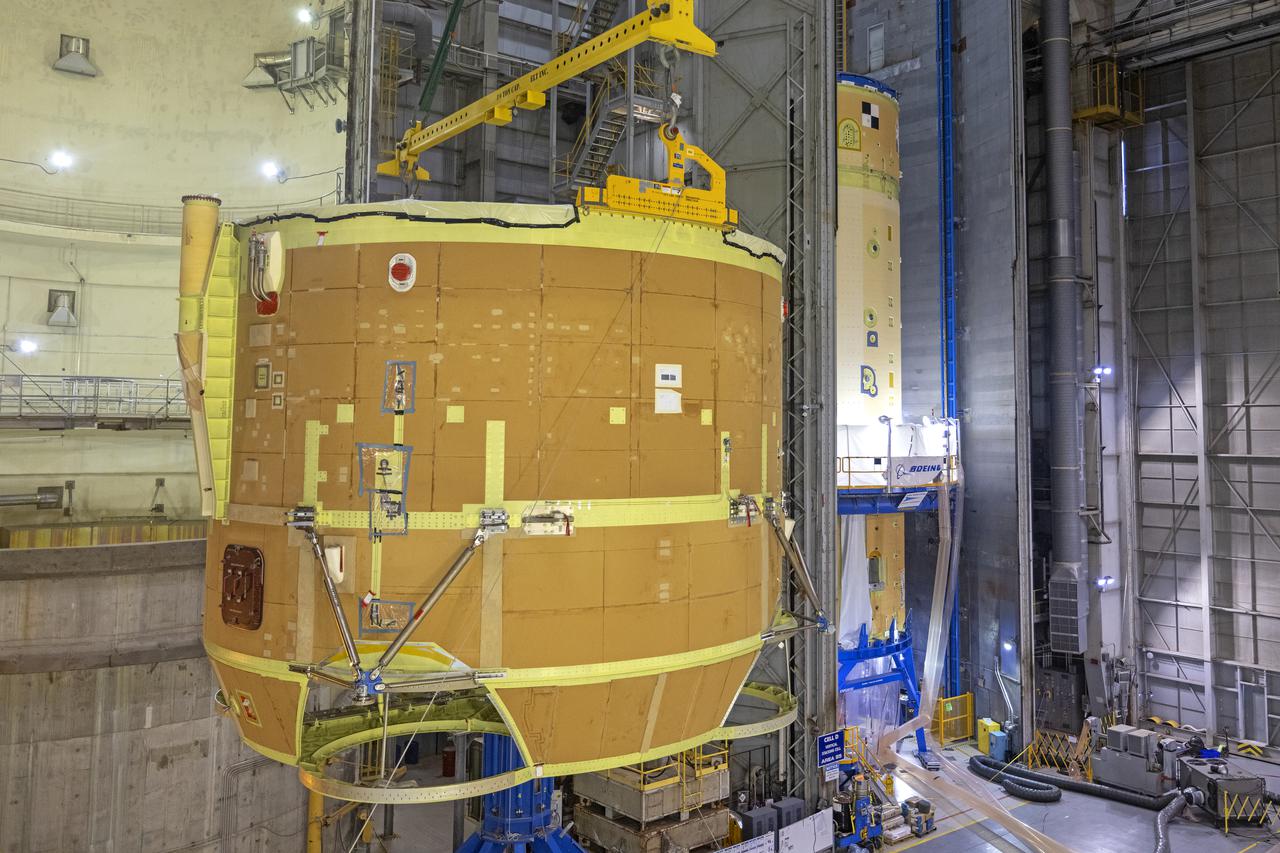
Technicians at NASA’s Michoud Assembly Facility have joined the engine and boat-tail sections of NASA’s Space Launch System rocket for Artemis II in preparation for its next step in production. When complete, the engine section will house the four RS-25 engines and include vital systems for mounting, controlling and delivering fuel from the propellant tanks to the rocket’s engines. The boat-tail is designed to protect the bottom end of the core stage and the RS-25 engines and was joined with the engine section to comprise the lowest portion of the 212-foot-tall core stage. Together with its four RS-25 engines and its twin solid rocket boosters, it will produce 8.8 million pounds of thrust to send NASA’s Orion spacecraft, astronauts, and supplies beyond Earth’s orbit to the Moon and, ultimately, Mars. Offering more payload mass, volume capability, and energy to speed missions through space, the SLS rocket, along with NASA’s Gateway in lunar orbit, the Human Landing System, and Orion spacecraft, is part of NASA’s backbone for deep space exploration and the Artemis lunar program. No other rocket is capable of carrying astronauts in Orion around the Moon in a single mission.
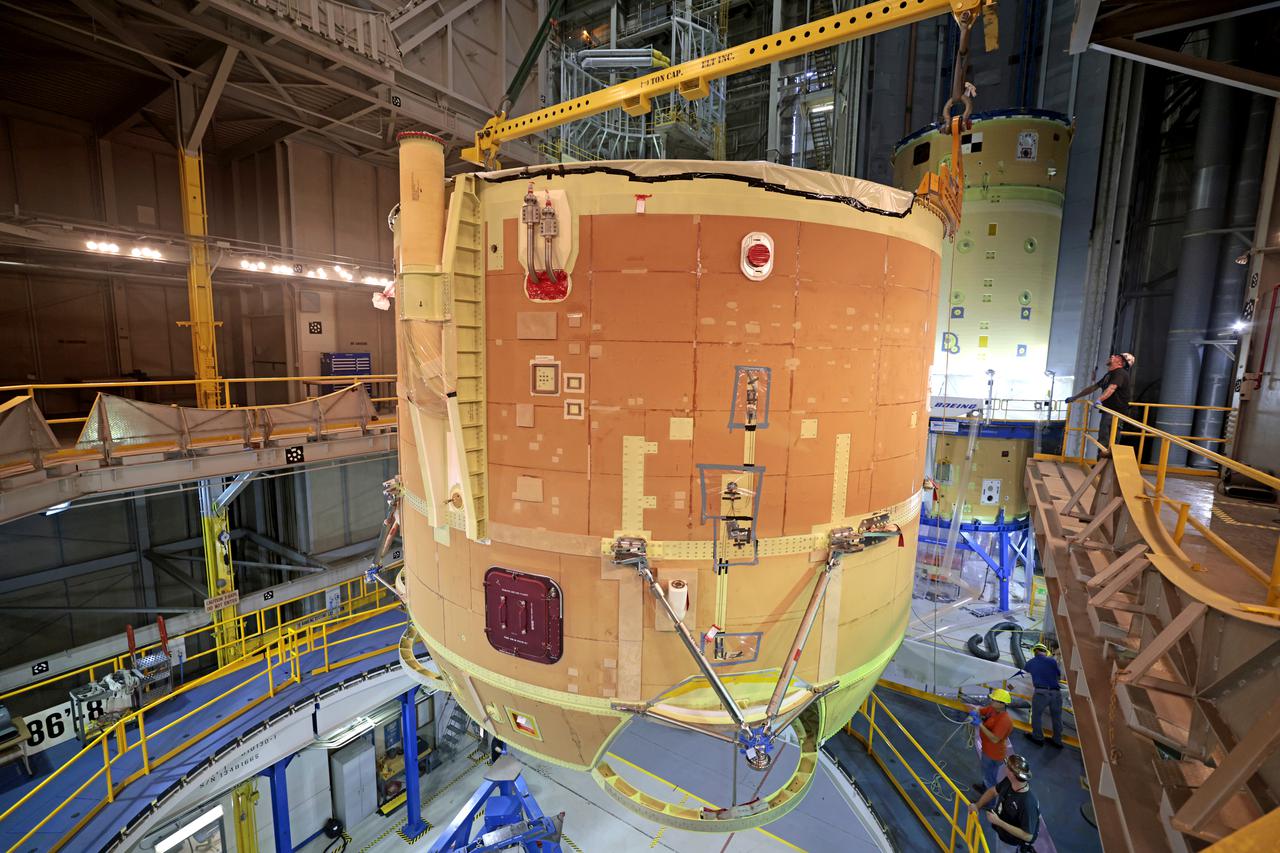
Technicians at NASA’s Michoud Assembly Facility have joined the engine and boat-tail sections of NASA’s Space Launch System rocket for Artemis II in preparation for its next step in production. When complete, the engine section will house the four RS-25 engines and include vital systems for mounting, controlling and delivering fuel from the propellant tanks to the rocket’s engines. The boat-tail is designed to protect the bottom end of the core stage and the RS-25 engines and was joined with the engine section to comprise the lowest portion of the 212-foot-tall core stage. Together with its four RS-25 engines and its twin solid rocket boosters, it will produce 8.8 million pounds of thrust to send NASA’s Orion spacecraft, astronauts, and supplies beyond Earth’s orbit to the Moon and, ultimately, Mars. Offering more payload mass, volume capability, and energy to speed missions through space, the SLS rocket, along with NASA’s Gateway in lunar orbit, the Human Landing System, and Orion spacecraft, is part of NASA’s backbone for deep space exploration and the Artemis lunar program. No other rocket is capable of carrying astronauts in Orion around the Moon in a single mission.
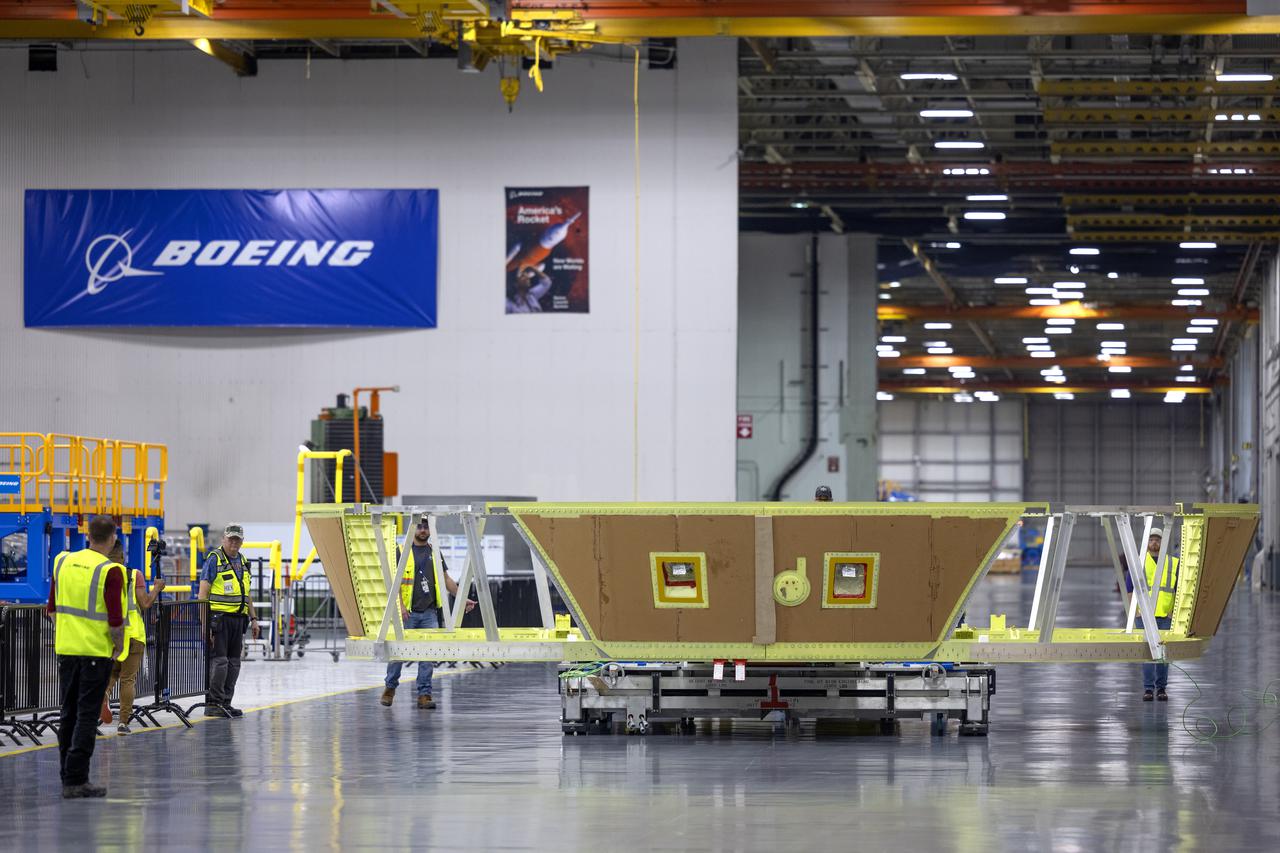
Technicians and engineers move the boat-tail structure for the core stage of NASA’s Space Launch System’s (SLS) rocket for Artemis II, the first crewed mission of NASA’s Artemis program at NASA’s Michoud Assembly Facility. The boat-tail, a fairing-like cover that attaches to the engine section on the bottom of the core stage, protects and covers most of the four RS-25 engines’ critical systems. Together with its four RS-25 engines, the rocket’s massive 212-foot-tall core stage — the largest stage NASA has ever built — and its twin solid rocket boosters will produce 8.8 million pounds of thrust to send NASA’s Orion spacecraft, astronauts and supplies beyond Earth’s orbit to the Moon and, ultimately, Mars. Offering more payload mass, volume capability and energy to speed missions through space, the SLS rocket, along with NASA’s Gateway in lunar orbit, the Human Landing System, and Orion spacecraft, is part of NASA’s backbone for deep space exploration and the Artemis lunar program. No other rocket is capable of carrying astronauts in Orion around the Moon in a single mission. Photographed on Wednesday, June 9, 2021. Image credit: NASA/Michael DeMocker
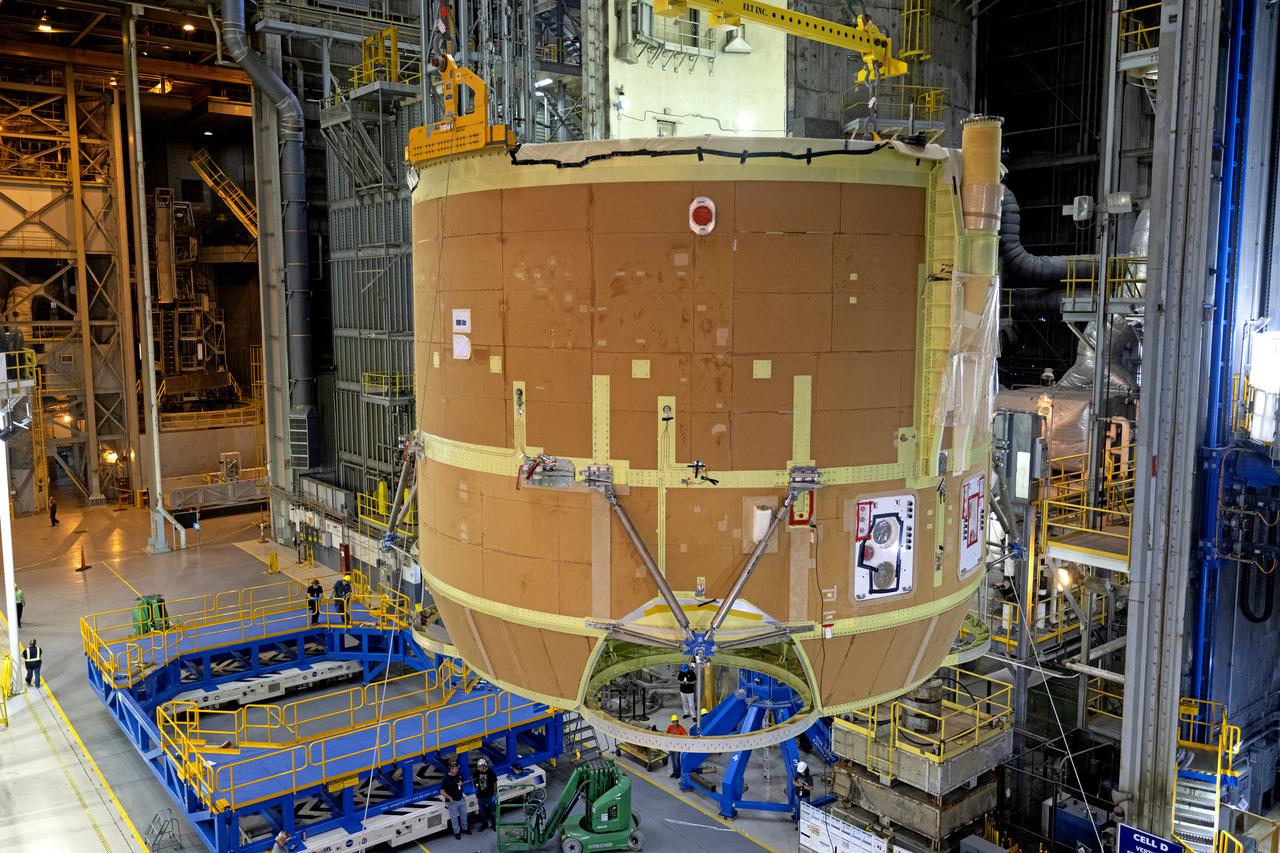
Technicians at NASA’s Michoud Assembly Facility have joined the engine and boat-tail sections of NASA’s Space Launch System rocket for Artemis II in preparation for its next step in production. When complete, the engine section will house the four RS-25 engines and include vital systems for mounting, controlling and delivering fuel from the propellant tanks to the rocket’s engines. The boat-tail is designed to protect the bottom end of the core stage and the RS-25 engines and was joined with the engine section to comprise the lowest portion of the 212-foot-tall core stage. Together with its four RS-25 engines and its twin solid rocket boosters, it will produce 8.8 million pounds of thrust to send NASA’s Orion spacecraft, astronauts, and supplies beyond Earth’s orbit to the Moon and, ultimately, Mars. Offering more payload mass, volume capability, and energy to speed missions through space, the SLS rocket, along with NASA’s Gateway in lunar orbit, the Human Landing System, and Orion spacecraft, is part of NASA’s backbone for deep space exploration and the Artemis lunar program. No other rocket is capable of carrying astronauts in Orion around the Moon in a single mission.
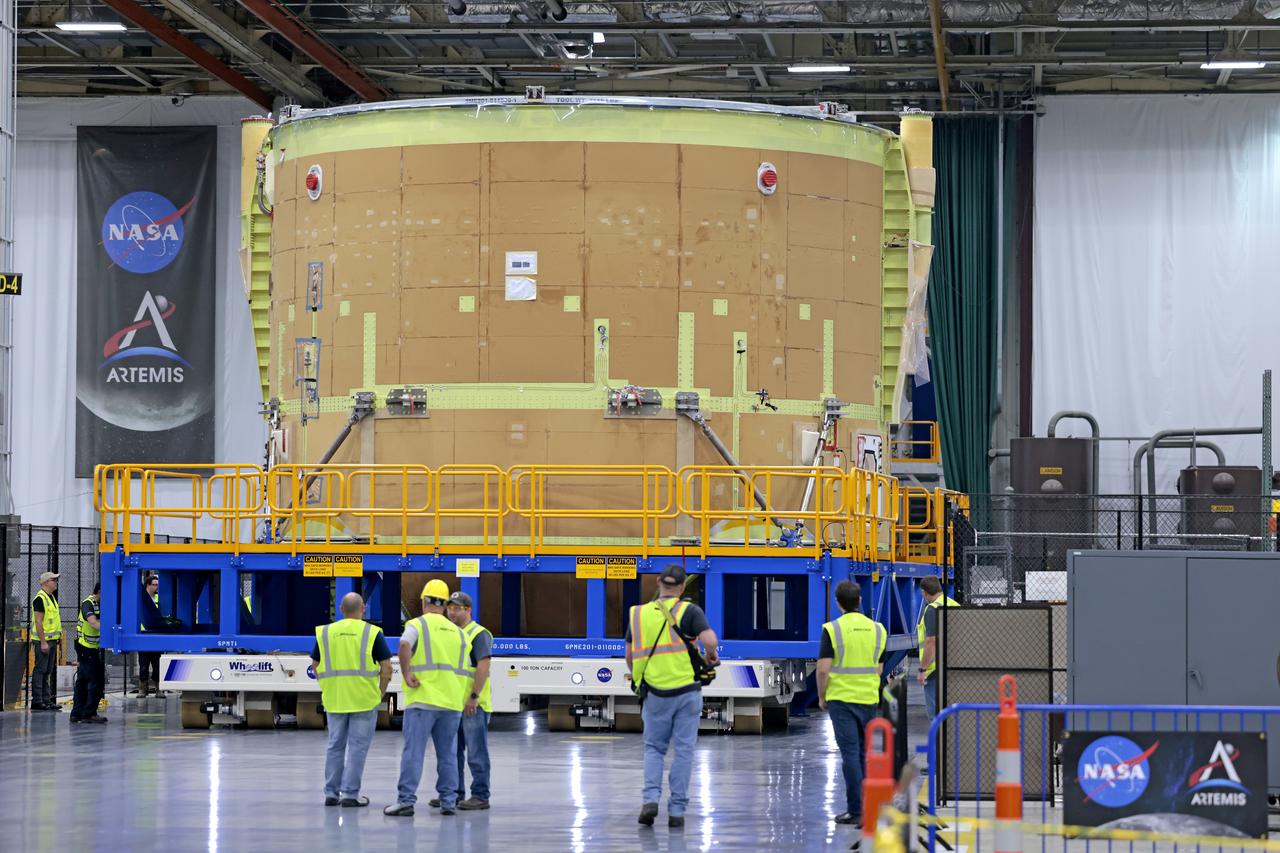
Technicians at NASA’s Michoud Assembly Facility have joined the engine and boat-tail sections of NASA’s Space Launch System rocket for Artemis II in preparation for its next step in production. When complete, the engine section will house the four RS-25 engines and include vital systems for mounting, controlling and delivering fuel from the propellant tanks to the rocket’s engines. The boat-tail is designed to protect the bottom end of the core stage and the RS-25 engines and was joined with the engine section to comprise the lowest portion of the 212-foot-tall core stage. Together with its four RS-25 engines and its twin solid rocket boosters, it will produce 8.8 million pounds of thrust to send NASA’s Orion spacecraft, astronauts, and supplies beyond Earth’s orbit to the Moon and, ultimately, Mars. Offering more payload mass, volume capability, and energy to speed missions through space, the SLS rocket, along with NASA’s Gateway in lunar orbit, the Human Landing System, and Orion spacecraft, is part of NASA’s backbone for deep space exploration and the Artemis lunar program. No other rocket is capable of carrying astronauts in Orion around the Moon in a single mission.
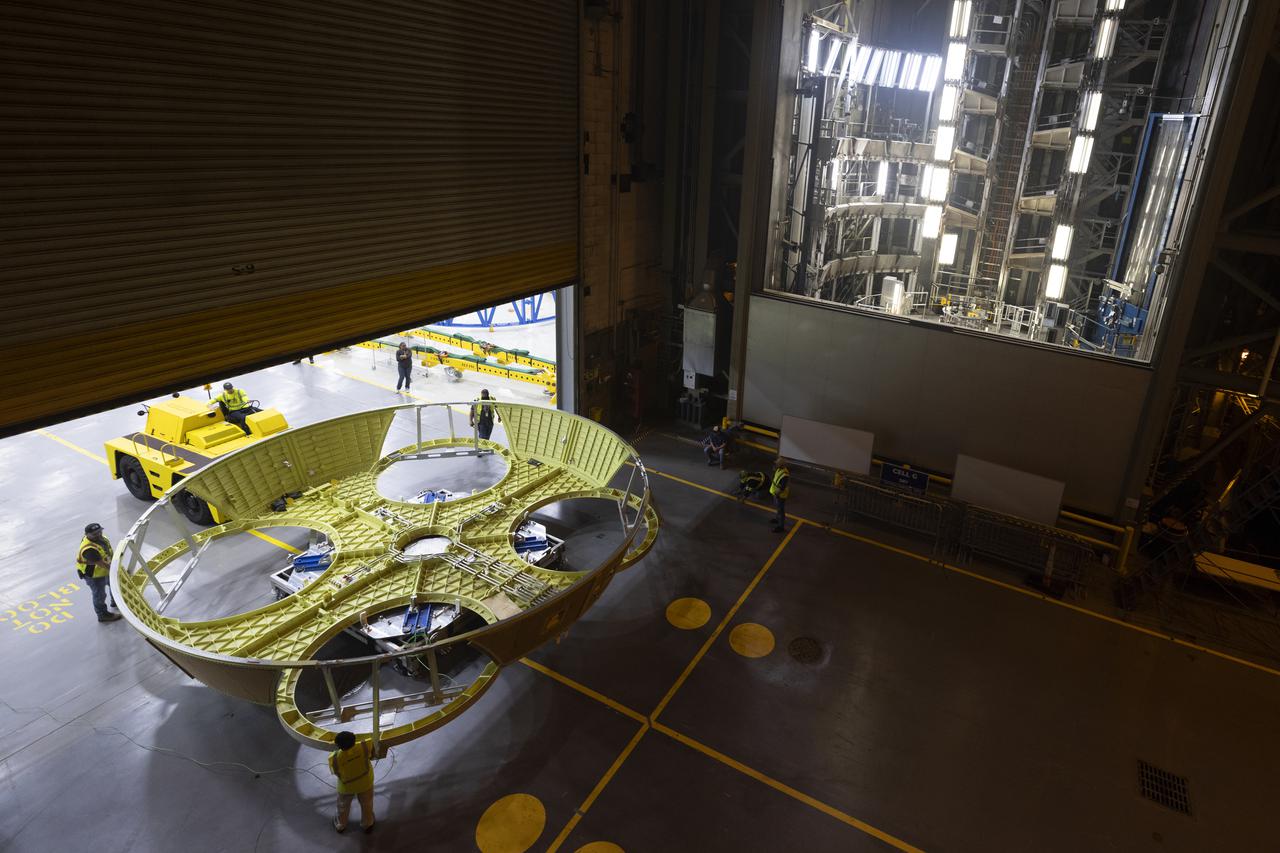
Technicians and engineers move the boat-tail structure for the core stage of NASA’s Space Launch System’s (SLS) rocket for Artemis II, the first crewed mission of NASA’s Artemis program at NASA’s Michoud Assembly Facility. The boat-tail, a fairing-like cover that attaches to the engine section on the bottom of the core stage, protects and covers most of the four RS-25 engines’ critical systems. Together with its four RS-25 engines, the rocket’s massive 212-foot-tall core stage — the largest stage NASA has ever built — and its twin solid rocket boosters will produce 8.8 million pounds of thrust to send NASA’s Orion spacecraft, astronauts and supplies beyond Earth’s orbit to the Moon and, ultimately, Mars. Offering more payload mass, volume capability and energy to speed missions through space, the SLS rocket, along with NASA’s Gateway in lunar orbit, the Human Landing System, and Orion spacecraft, is part of NASA’s backbone for deep space exploration and the Artemis lunar program. No other rocket is capable of carrying astronauts in Orion around the Moon in a single mission. Photographed on Wednesday, June 9, 2021. Image credit: NASA/Michael DeMocker
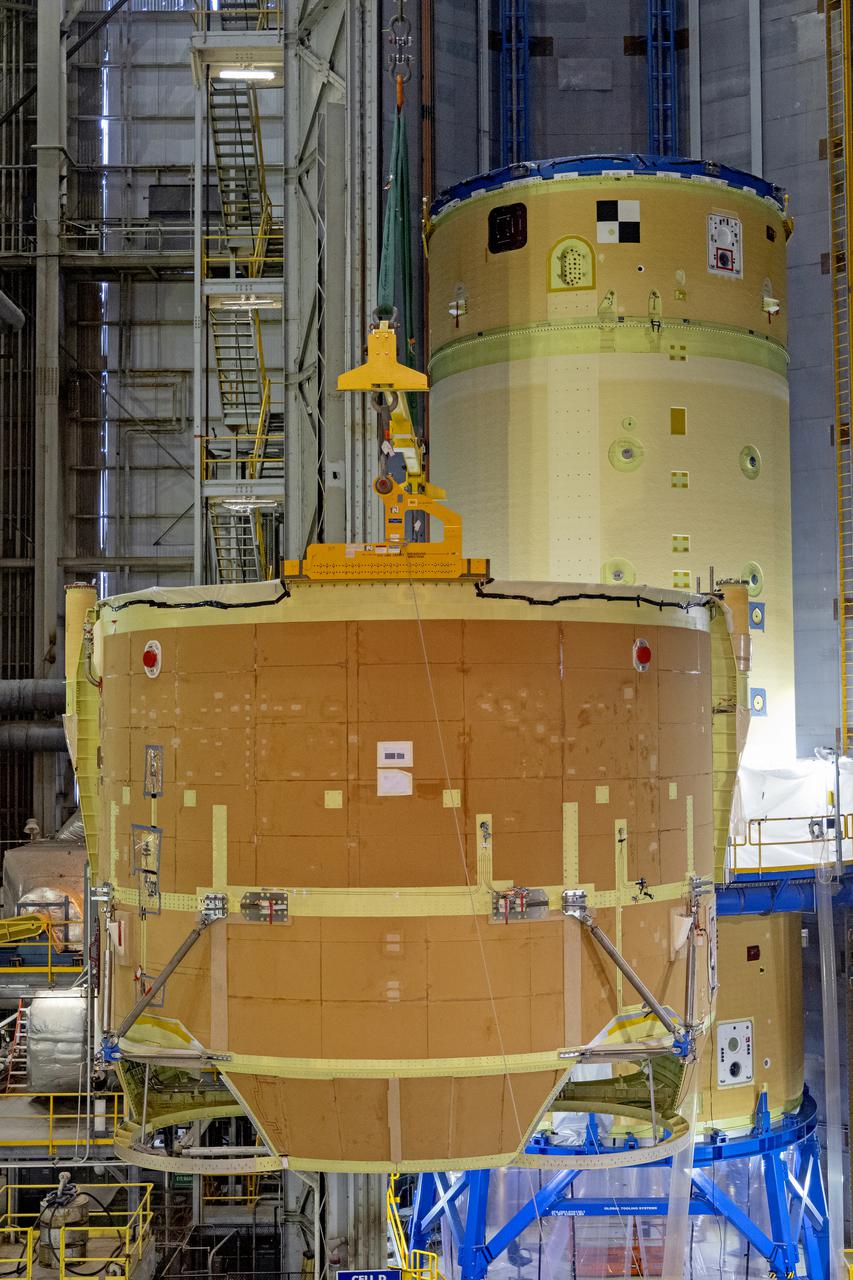
Technicians at NASA’s Michoud Assembly Facility have joined the engine and boat-tail sections of NASA’s Space Launch System rocket for Artemis II in preparation for its next step in production. When complete, the engine section will house the four RS-25 engines and include vital systems for mounting, controlling and delivering fuel from the propellant tanks to the rocket’s engines. The boat-tail is designed to protect the bottom end of the core stage and the RS-25 engines and was joined with the engine section to comprise the lowest portion of the 212-foot-tall core stage. Together with its four RS-25 engines and its twin solid rocket boosters, it will produce 8.8 million pounds of thrust to send NASA’s Orion spacecraft, astronauts, and supplies beyond Earth’s orbit to the Moon and, ultimately, Mars. Offering more payload mass, volume capability, and energy to speed missions through space, the SLS rocket, along with NASA’s Gateway in lunar orbit, the Human Landing System, and Orion spacecraft, is part of NASA’s backbone for deep space exploration and the Artemis lunar program. No other rocket is capable of carrying astronauts in Orion around the Moon in a single mission.
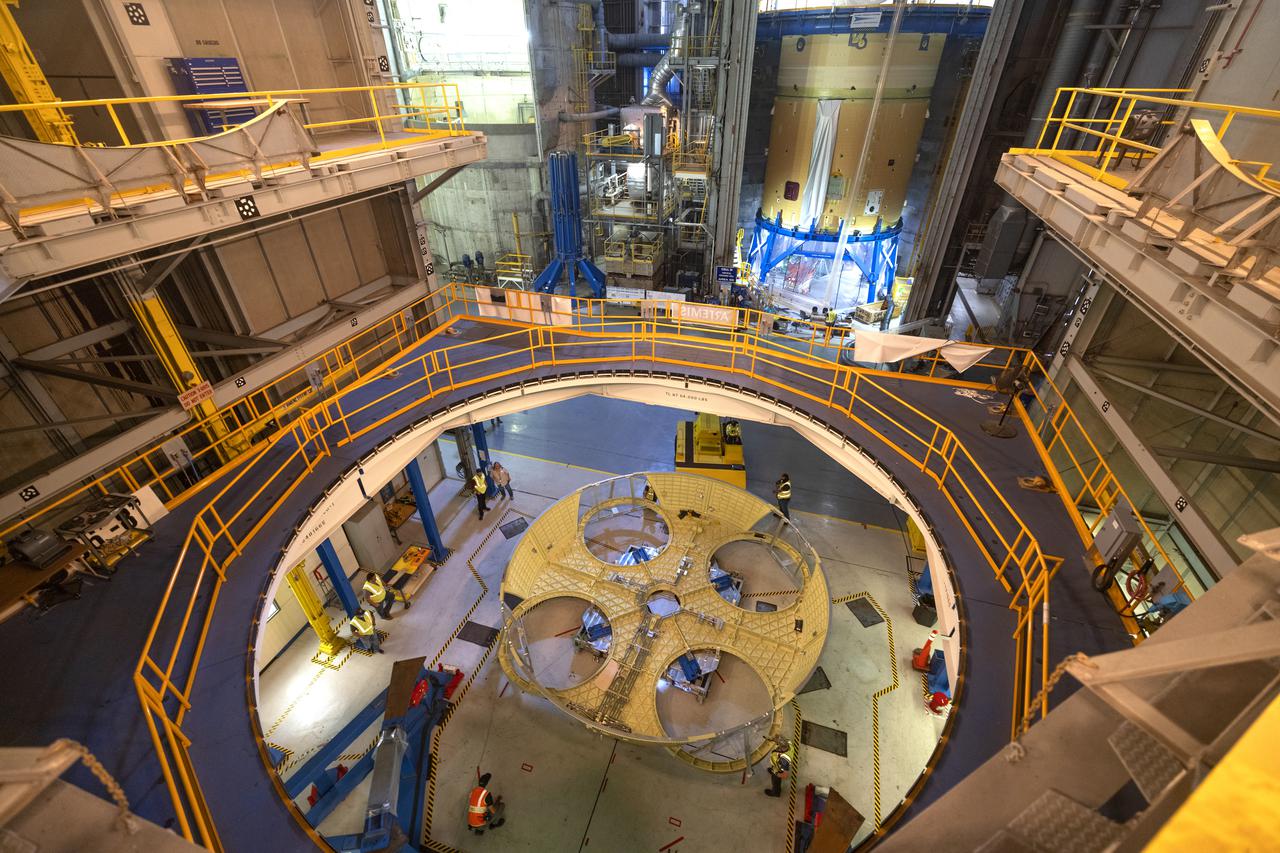
Technicians and engineers move the boat-tail structure for the core stage of NASA’s Space Launch System’s (SLS) rocket for Artemis II, the first crewed mission of NASA’s Artemis program at NASA’s Michoud Assembly Facility. The boat-tail, a fairing-like cover that attaches to the engine section on the bottom of the core stage, protects and covers most of the four RS-25 engines’ critical systems. Together with its four RS-25 engines, the rocket’s massive 212-foot-tall core stage — the largest stage NASA has ever built — and its twin solid rocket boosters will produce 8.8 million pounds of thrust to send NASA’s Orion spacecraft, astronauts and supplies beyond Earth’s orbit to the Moon and, ultimately, Mars. Offering more payload mass, volume capability and energy to speed missions through space, the SLS rocket, along with NASA’s Gateway in lunar orbit, the Human Landing System, and Orion spacecraft, is part of NASA’s backbone for deep space exploration and the Artemis lunar program. No other rocket is capable of carrying astronauts in Orion around the Moon in a single mission. Photographed on Wednesday, June 9, 2021. Image credit: NASA/Michael DeMocker