
You might see a DeLorean zipping around Greenbelt, Maryland, on Oct. 21, 2015, the day Marty McFly and Doc Brown arrive from 1985 in "Back to the Future, Part II," but don't look for flaming tread marks in its wake. The DeLorean DMC-12, commonly seen on the roads of NASA’s Goddard Space Flight Center in Greenbelt, Maryland, is better known for the version that starred as a plutonium-powered time machine in the “Back to the Future” trilogy. After some investigation, Goddard’s Office of Communications found the owner of the stainless steel, gull-winged, two-door coupe. Goddard software test engineer, Brendan Rebo bought the 1982 DeLorean off eBay about four and a half years ago. “The car attracts a lot more attention than I expected,” Rebo admitted. “I hear a lot of jokes about whether or not I’ve reached 88 miles per hour yet.” As “Back to the Future” fans around the world celebrate today, Rebo also celebrates his birthday. While the second film predicted technology, such as flying cars, that doesn’t yet exist, people can still marvel at the classic car and movie reference. Credit: NASA/Goddard/Rebecca Roth

You might see a DeLorean zipping around Greenbelt, Maryland, on Oct. 21, 2015, the day Marty McFly and Doc Brown arrive from 1985 in "Back to the Future, Part II," but don't look for flaming tread marks in its wake. The DeLorean DMC-12, commonly seen on the roads of NASA’s Goddard Space Flight Center in Greenbelt, Maryland, is better known for the version that starred as a plutonium-powered time machine in the “Back to the Future” trilogy. After some investigation, Goddard’s Office of Communications found the owner of the stainless steel, gull-winged, two-door coupe. Goddard software test engineer, Brendan Rebo bought the 1982 DeLorean off eBay about four and a half years ago. “The car attracts a lot more attention than I expected,” Rebo admitted. “I hear a lot of jokes about whether or not I’ve reached 88 miles per hour yet.” As “Back to the Future” fans around the world celebrate today, Rebo also celebrates his birthday. While the second film predicted technology, such as flying cars, that doesn’t yet exist, people can still marvel at the classic car and movie reference. Credit: NASA/Goddard/Rebecca Roth

You might see a DeLorean zipping around Greenbelt, Maryland, on Oct. 21, 2015, the day Marty McFly and Doc Brown arrive from 1985 in "Back to the Future, Part II," but don't look for flaming tread marks in its wake. The DeLorean DMC-12, commonly seen on the roads of NASA’s Goddard Space Flight Center in Greenbelt, Maryland, is better known for the version that starred as a plutonium-powered time machine in the “Back to the Future” trilogy. After some investigation, Goddard’s Office of Communications found the owner of the stainless steel, gull-winged, two-door coupe. Goddard software test engineer, Brendan Rebo bought the 1982 DeLorean off eBay about four and a half years ago. “The car attracts a lot more attention than I expected,” Rebo admitted. “I hear a lot of jokes about whether or not I’ve reached 88 miles per hour yet.” As “Back to the Future” fans around the world celebrate today, Rebo also celebrates his birthday. While the second film predicted technology, such as flying cars, that doesn’t yet exist, people can still marvel at the classic car and movie reference. Credit: NASA/Goddard/Rebecca Roth

You might see a DeLorean zipping around Greenbelt, Maryland, on Oct. 21, 2015, the day Marty McFly and Doc Brown arrive from 1985 in "Back to the Future, Part II," but don't look for flaming tread marks in its wake. The DeLorean DMC-12, commonly seen on the roads of NASA’s Goddard Space Flight Center in Greenbelt, Maryland, is better known for the version that starred as a plutonium-powered time machine in the “Back to the Future” trilogy. After some investigation, Goddard’s Office of Communications found the owner of the stainless steel, gull-winged, two-door coupe. Goddard software test engineer, Brendan Rebo bought the 1982 DeLorean off eBay about four and a half years ago. “The car attracts a lot more attention than I expected,” Rebo admitted. “I hear a lot of jokes about whether or not I’ve reached 88 miles per hour yet.” As “Back to the Future” fans around the world celebrate today, Rebo also celebrates his birthday. While the second film predicted technology, such as flying cars, that doesn’t yet exist, people can still marvel at the classic car and movie reference. Credit: NASA/Goddard/Rebecca Roth

You might see a DeLorean zipping around Greenbelt, Maryland, on Oct. 21, 2015, the day Marty McFly and Doc Brown arrive from 1985 in "Back to the Future, Part II," but don't look for flaming tread marks in its wake. The DeLorean DMC-12, commonly seen on the roads of NASA’s Goddard Space Flight Center in Greenbelt, Maryland, is better known for the version that starred as a plutonium-powered time machine in the “Back to the Future” trilogy. After some investigation, Goddard’s Office of Communications found the owner of the stainless steel, gull-winged, two-door coupe. Goddard software test engineer, Brendan Rebo bought the 1982 DeLorean off eBay about four and a half years ago. “The car attracts a lot more attention than I expected,” Rebo admitted. “I hear a lot of jokes about whether or not I’ve reached 88 miles per hour yet.” As “Back to the Future” fans around the world celebrate today, Rebo also celebrates his birthday. While the second film predicted technology, such as flying cars, that doesn’t yet exist, people can still marvel at the classic car and movie reference. Credit: NASA/Goddard/Rebecca Roth
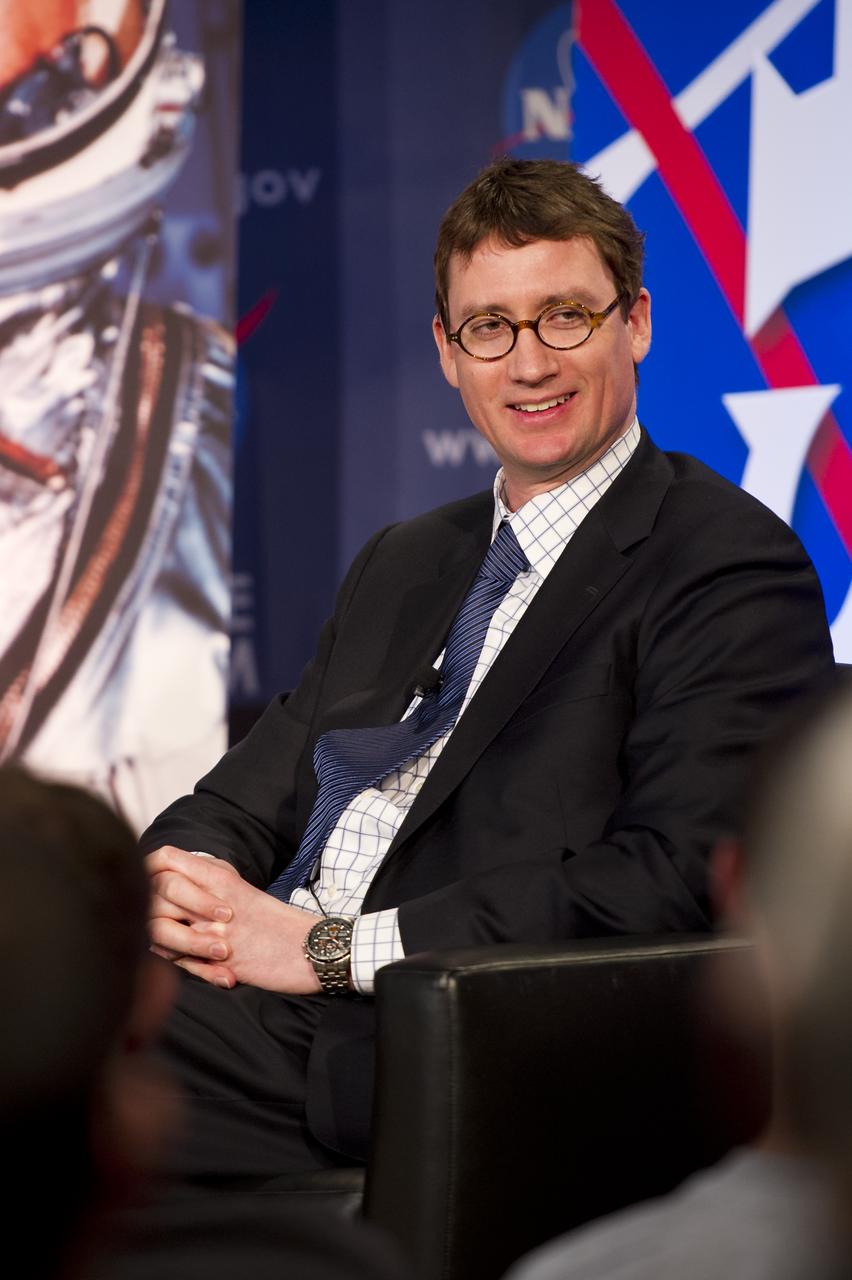
Jordan Hansell, chairman and CEO, NetJets Inc. talks during the NASA Future Forum panel titled "Importance of Technology, Science and Innovation for our Economic Future" at The Ohio State University on Tuesday, Feb. 21, 2012 in Columbus, Ohio. The NASA Future Forum features panel discussions on the importance of education to our nation's future in space, the benefit of commercialized space technology to our economy and lives here on Earth, and the shifting roles for the public, commercial and international communities in space. Photo Credit: (NASA/Bill Ingalls)

Laurie Leshin, dean of the School of Science, Rensselaer Polytechnic Institute, moderates the NASA Future Forum panel titled "Importance of Technology, Science and Innovation for our Economic Future" at The Ohio State University on Tuesday, Feb. 21, 2012 in Columbus, Ohio. The NASA Future Forum features panel discussions on the importance of education to our nation's future in space, the benefit of commercialized space technology to our economy and lives here on Earth, and the shifting roles for the public, commercial and international communities in space. Photo Credit: (NASA/Bill Ingalls)
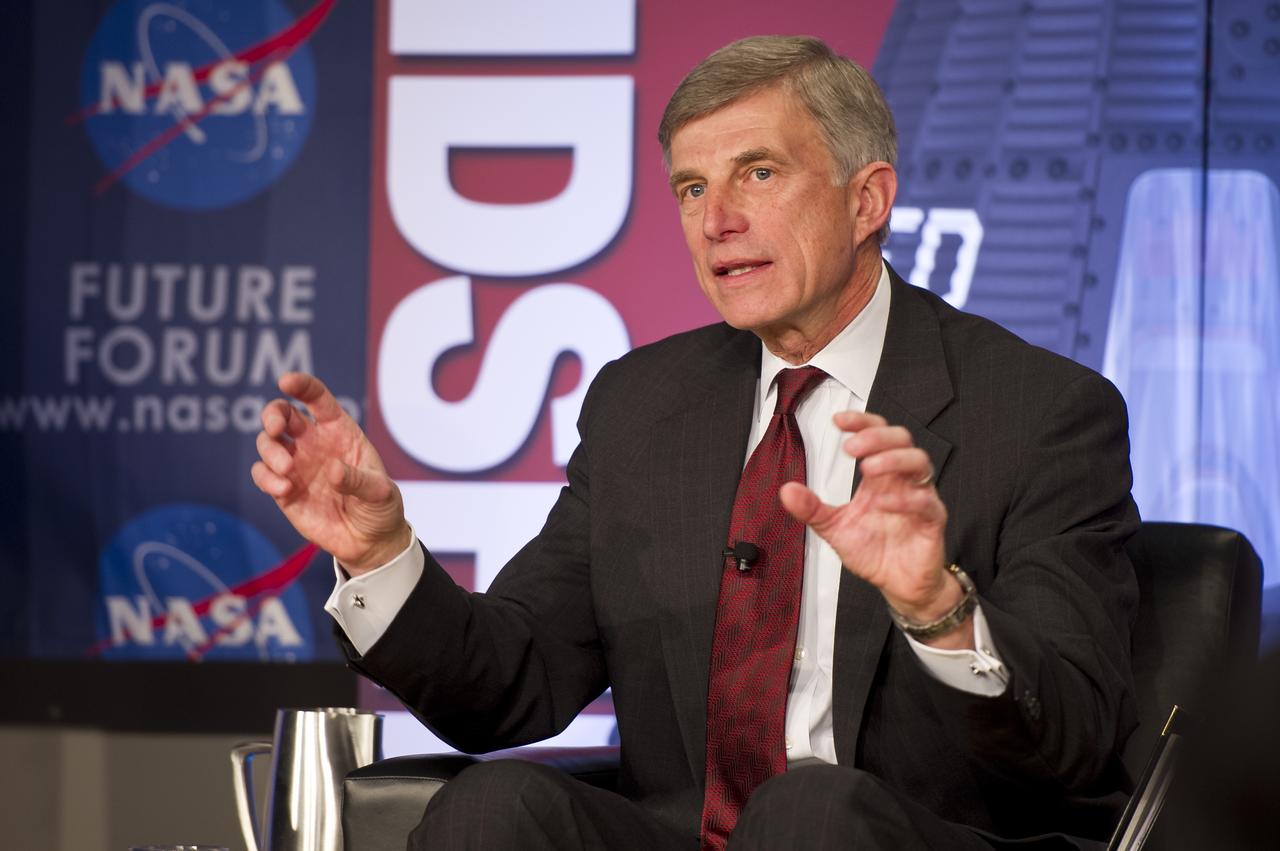
Ron Sega, Vice president and enterprise executive for Energy and the Environment, The Ohio State University and Colorado State University talks during the NASA Future Forum panel titled "Importance of Technology, Science and Innovation for our Economic Future" at The Ohio State University on Tuesday, Feb. 21, 2012 in Columbus, Ohio. The NASA Future Forum features panel discussions on the importance of education to our nation's future in space, the benefit of commercialized space technology to our economy and lives here on Earth, and the shifting roles for the public, commercial and international communities in space. Photo Credit: (NASA/Bill Ingalls)
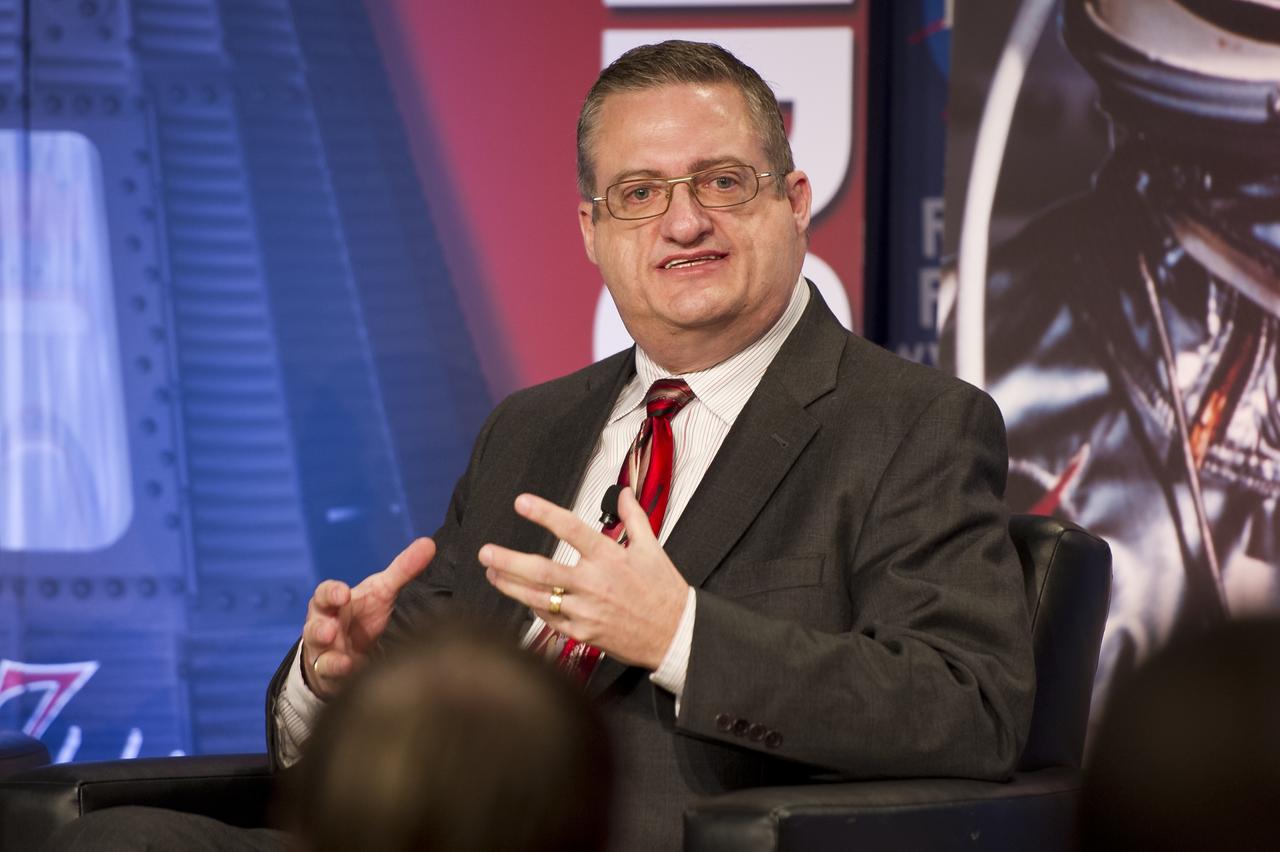
Michael Donovan, technology consultant, New Services Development, Hewlett-Packard Company talks during the NASA Future Forum panel titled "Importance of Technology, Science and Innovation for our Economic Future" at The Ohio State University on Tuesday, Feb. 21, 2012 in Columbus, Ohio. The NASA Future Forum features panel discussions on the importance of education to our nation's future in space, the benefit of commercialized space technology to our economy and lives here on Earth, and the shifting roles for the public, commercial and international communities in space. Photo Credit: (NASA/Bill Ingalls)

Ohio Space Grant Consortium (OSGC) Director Gary Slater talks during the NASA Future Forum Inspiration and Education Panel at The Ohio State University on Monday, Feb. 20, 2012, in Columbus, Ohio. The NASA Future Forum features panel discussions on the importance of education to our nation's future in space, the benefit of commercialized space technology to our economy and lives here on Earth, and the shifting roles for the public, commercial and international communities in space. Photo Credit: (NASA/Bill Ingalls)
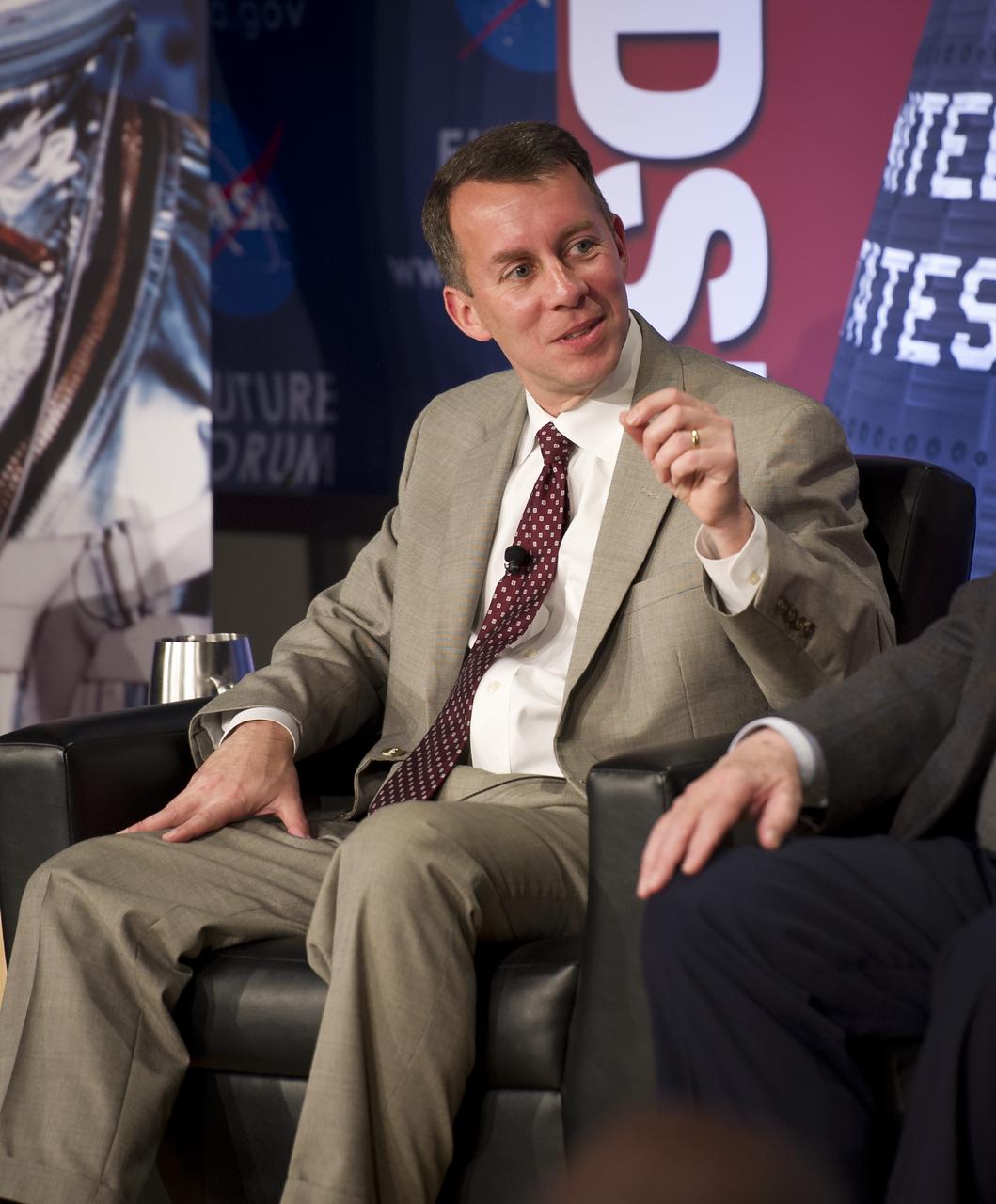
Bobby Braun, professor, Georgia Institute of Technology, talks during the NASA Future Forum panel titled "Shifting Roles for Public, Private, and International Players in Space" at The Ohio State University on Tuesday, Feb. 21, 2012 in Columbus, Ohio. The NASA Future Forum features panel discussions on the importance of education to our nation's future in space, the benefit of commercialized space technology to our economy and lives here on Earth, and the shifting roles for the public, commercial and international communities in space. Photo Credit: (NASA/Bill Ingalls)
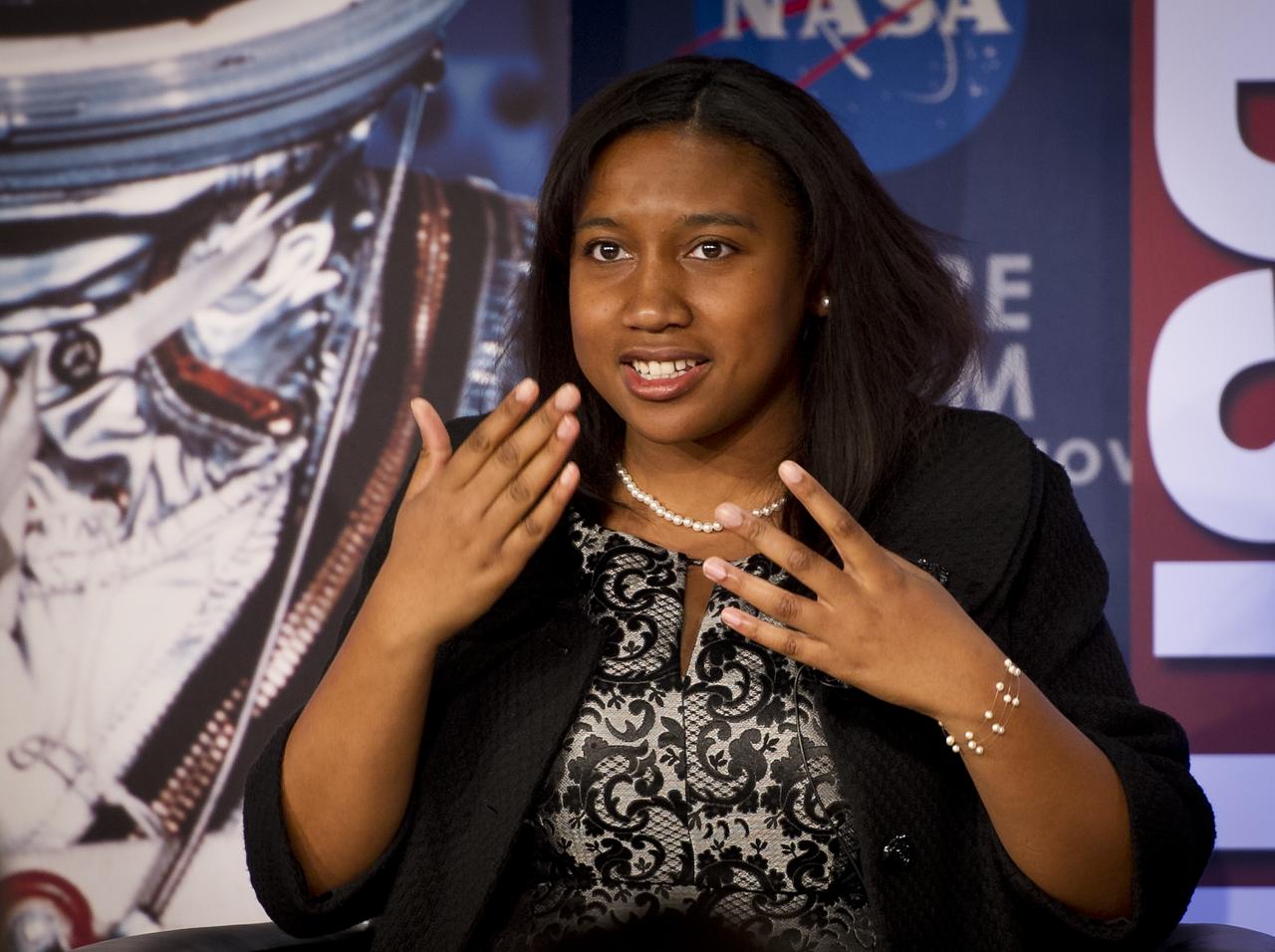
Ohio State University graduate student, biological sciences and NASA Student Ambassador, Monica Okon talks during the NASA Future Forum Inspiration and Education Panel at The Ohio State University on Monday, Feb. 20, 2012, in Columbus, Ohio. The NASA Future Forum features panel discussions on the importance of education to our nation's future in space, the benefit of commercialized space technology to our economy and lives here on Earth, and the shifting roles for the public, commercial and international communities in space. Photo Credit: (NASA/Bill Ingalls)

NASA Public Affairs Officer Lauren Worley kicks off the second day of the NASA Future Forum at The Ohio State University on Tuesday, Feb. 21, 2012 in Columbus, Ohio. The NASA Future Forum features panel discussions on the importance of education to our nation's future in space, the benefit of commercialized space technology to our economy and lives here on Earth, and the shifting roles for the public, commercial and international communities in space. Photo Credit: (NASA/Bill Ingalls)
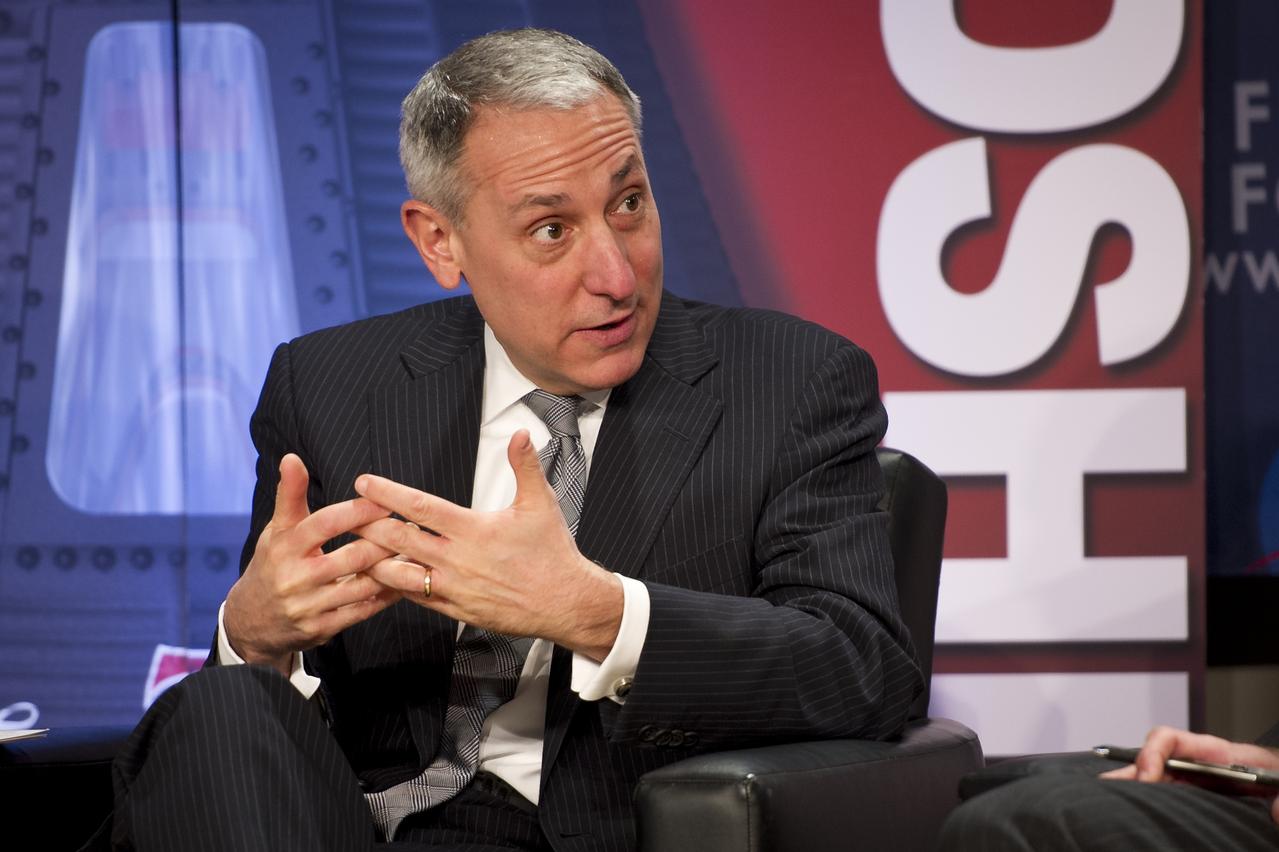
Eric Fingerhut, head of Education at Battelle, former chancellor of Ohio's Higher Education System, talks during the during the NASA Future Forum Inspiration and Education Panel at The Ohio State University on Monday, Feb. 20, 2012, in Columbus, Ohio. The NASA Future Forum features panel discussions on the importance of education to our nation's future in space, the benefit of commercialized space technology to our economy and lives here on Earth, and the shifting roles for the public, commercial and international communities in space. Photo Credit: (NASA/Bill Ingalls)
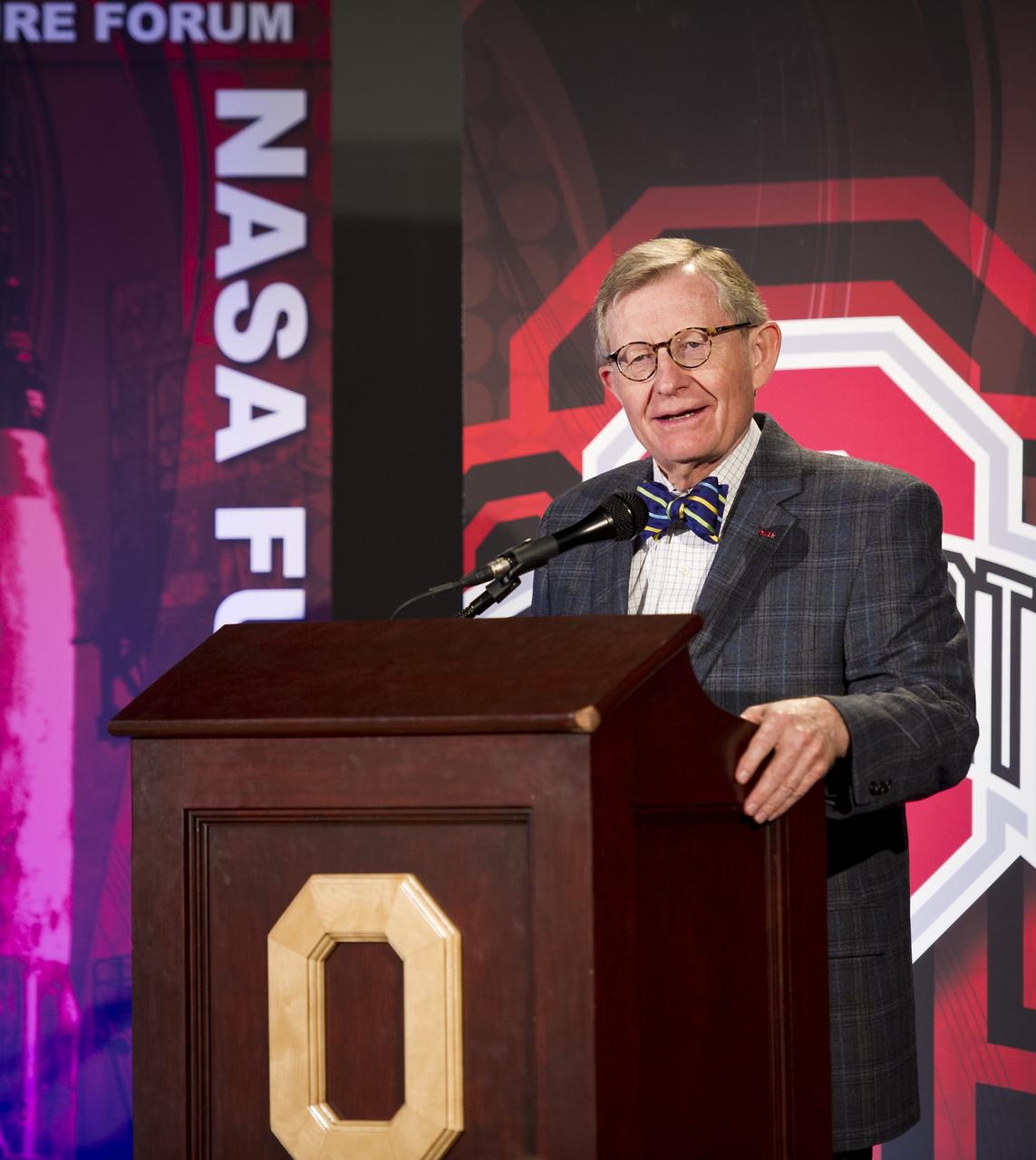
The Ohio State University President E. Gordon Gee speaks during the NASA Future Forum at The Ohio State University on Tuesday, Feb. 21, 2012 in Columbus, Ohio. The NASA Future Forum features panel discussions on the importance of education to our nation's future in space, the benefit of commercialized space technology to our economy and lives here on Earth, and the shifting roles for the public, commercial and international communities in space. Photo Credit: (NASA/Bill Ingalls)

Sen. John Glenn delivers the closing remarks for NASA's Future Forum at The Ohio State University on Tuesday, Feb. 21, 2012 in Columbus, Ohio. The NASA Future Forum features panel discussions on the importance of education to our nation's future in space, the benefit of commercialized space technology to our economy and lives here on Earth, and the shifting roles for the public, commercial and international communities in space. Photo Credit: (NASA/Bill Ingalls)

Sen. John Glenn delivers the closing remarks for NASA's Future Forum at The Ohio State University on Tuesday, Feb. 21, 2012 in Columbus, Ohio. The NASA Future Forum features panel discussions on the importance of education to our nation's future in space, the benefit of commercialized space technology to our economy and lives here on Earth, and the shifting roles for the public, commercial and international communities in space. Photo Credit: (NASA/Bill Ingalls)

Leland Melvin, NASA Associate Administrator for Education and NASA Astronaut, moderates the NASA Future Forum Inspiration and Education Panel at The Ohio State University on Monday, Feb. 20, 2012, in Columbus, Ohio. The NASA Future Forum features panel discussions on the importance of education to our nation's future in space, the benefit of commercialized space technology to our economy and lives here on Earth, and the shifting roles for the public, commercial and international communities in space. Photo Credit: (NASA/Bill Ingalls)

Founding head of MC2 STEM High School Jeffrey McClellan talks during the NASA Future Forum Inspiration and Education Panel at The Ohio State University on Monday, Feb. 20, 2012, in Columbus, Ohio. The NASA Future Forum features panel discussions on the importance of education to our nation's future in space, the benefit of commercialized space technology to our economy and lives here on Earth, and the shifting roles for the public, commercial and international communities in space. Photo Credit: (NASA/Bill Ingalls)

Carlos Grodsinsky, Vice Presiden of Technology, Zin Technologies, talks during the NASA Future Forum panel titled "Transferring and Commercializing Technology to Benefit Our Lives and Our Economy" at The Ohio State University on Tuesday, Feb. 21, 2012 in Columbus, Ohio. The NASA Future Forum features panel discussions on the importance of education to our nation's future in space, the benefit of commercialized space technology to our economy and lives here on Earth, and the shifting roles for the public, commercial and international communities in space. Photo Credit: (NASA/Bill Ingalls)

NASA Technology Transfer Program Executive Daniel Lockney moderates the NASA Future Forum panel titled "Transferring and Commercializing Technology to Benefit Our Lives and Our Economy" at The Ohio State University on Tuesday, Feb. 21, 2012 in Columbus, Ohio. The NASA Future Forum features panel discussions on the importance of education to our nation's future in space, the benefit of commercialized space technology to our economy and lives here on Earth, and the shifting roles for the public, commercial and international communities in space. Photo Credit: (NASA/Bill Ingalls)
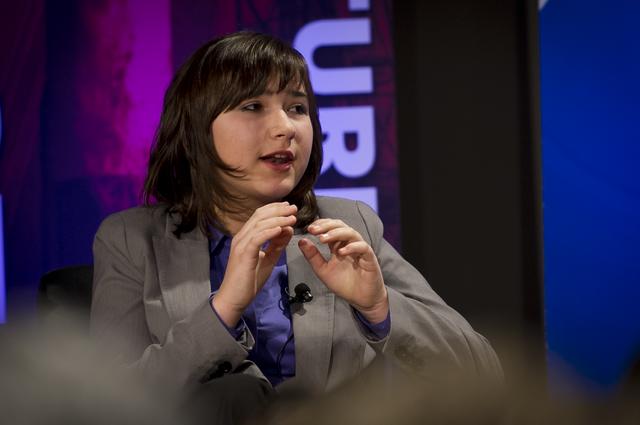
Dayton Regional STEM student Cheyenne Benson talks during the NASA Future Forum Inspiration and Education Panel at The Ohio State University on Monday, Feb. 20, 2012, in Columbus, Ohio. The NASA Future Forum features panel discussions on the importance of education to our nation's future in space, the benefit of commercialized space technology to our economy and lives here on Earth, and the shifting roles for the public, commercial and international communities in space. Photo Credit: (NASA/Bill Ingalls)
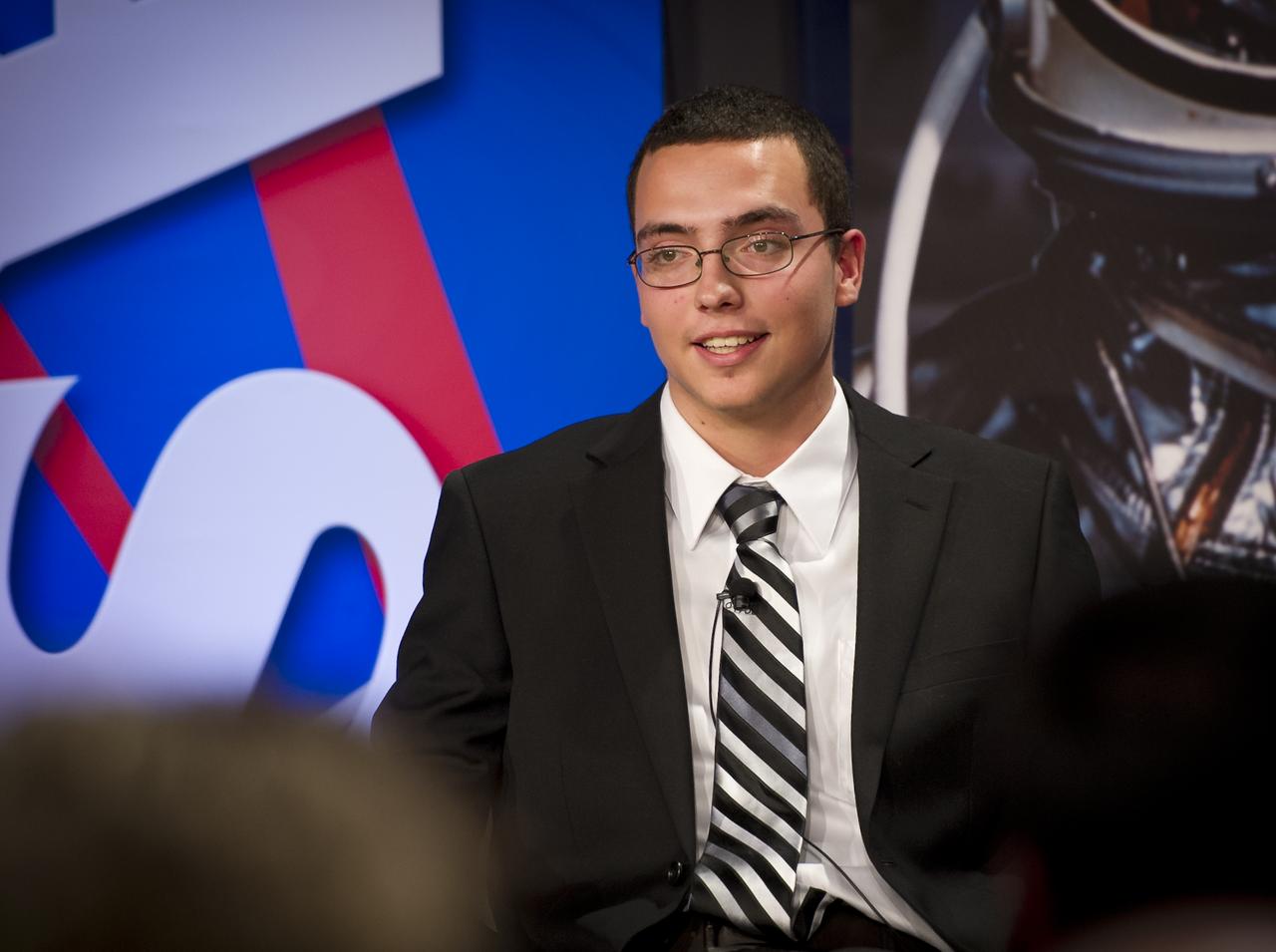
Metro High School Student Anthony Springer talks during the NASA Future Forum Inspiration and Education Panel at The Ohio State University on Monday, Feb. 20, 2012, in Columbus, Ohio. The NASA Future Forum features panel discussions on the importance of education to our nation's future in space, the benefit of commercialized space technology to our economy and lives here on Earth, and the shifting roles for the public, commercial and international communities in space. Photo Credit: (NASA/Bill Ingalls)
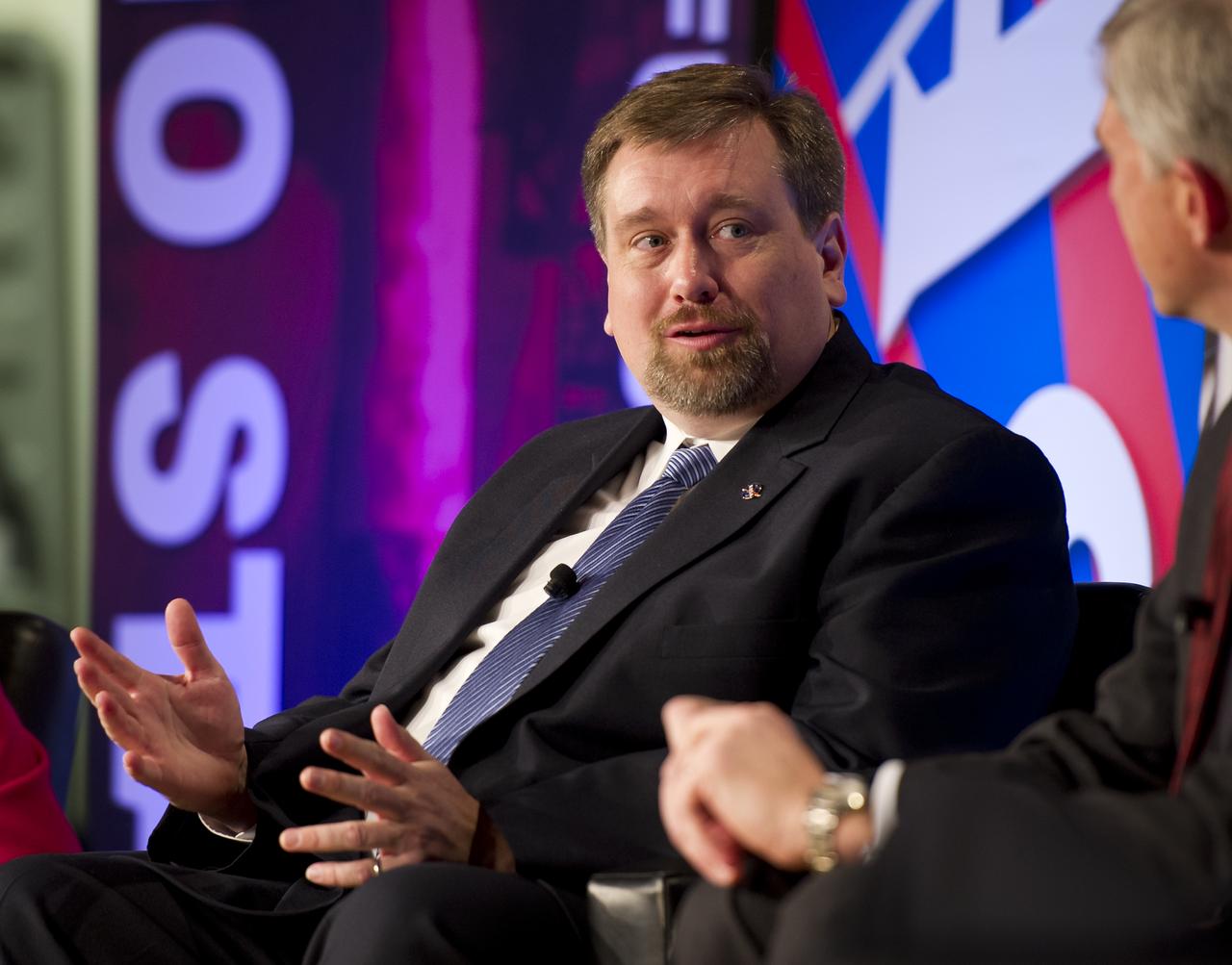
NASA Chief Technologist Mason Peck talks during the NASA Future Forum at The Ohio State University on Tuesday, Feb. 21, 2012 in Columbus, Ohio. The NASA Future Forum features panel discussions on the importance of education to our nation's future in space, the benefit of commercialized space technology to our economy and lives here on Earth, and the shifting roles for the public, commercial and international communities in space. Photo Credit: (NASA/Bill Ingalls)
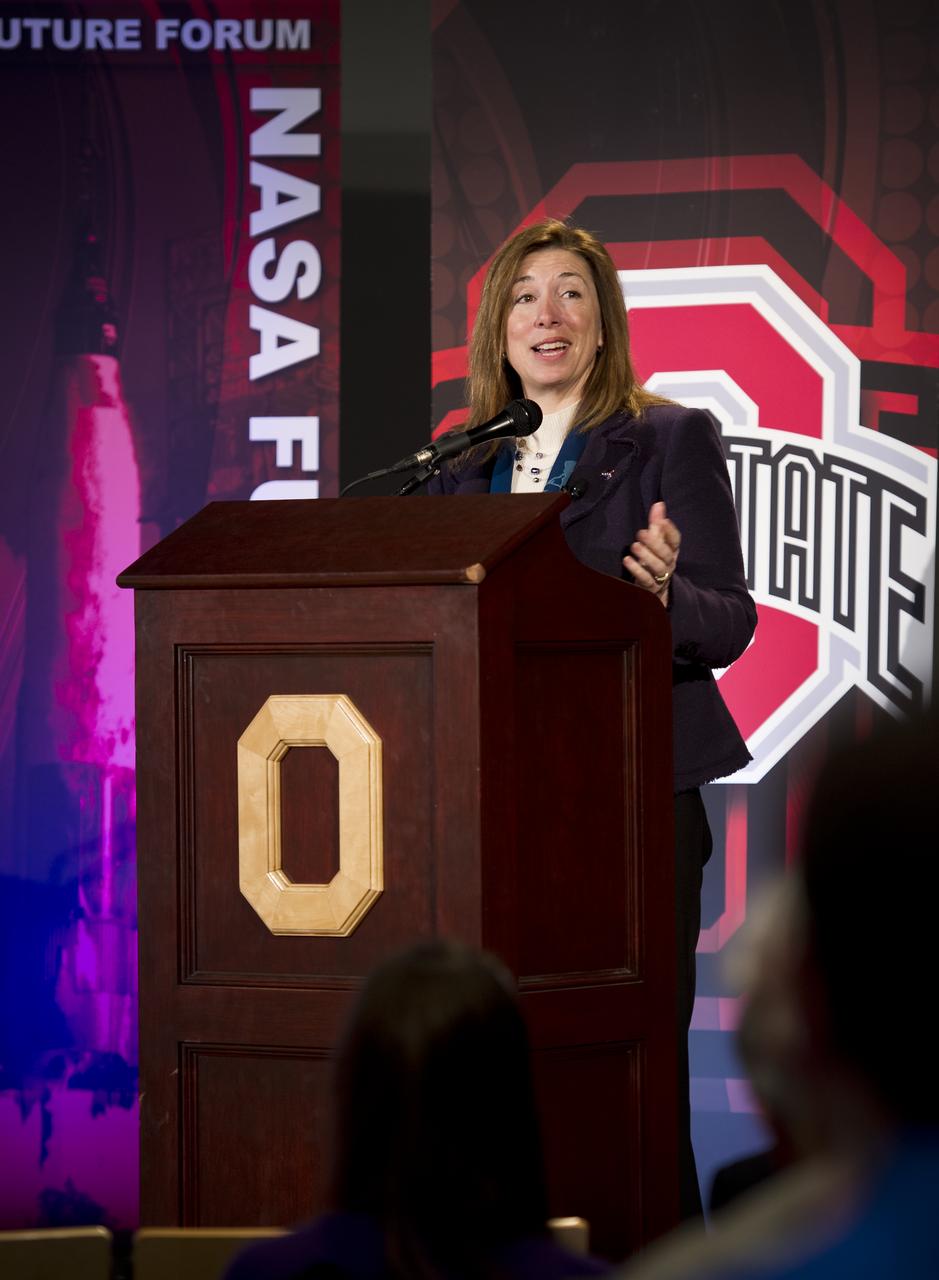
NASA Deputy Administrator Lori Garver speaks during the NASA Future Forum at The Ohio State University on Tuesday, Feb. 21, 2012 in Columbus, Ohio. The NASA Future Forum features panel discussions on the importance of education to our nation's future in space, the benefit of commercialized space technology to our economy and lives here on Earth, and the shifting roles for the public, commercial and international communities in space. Photo Credit: (NASA/Bill Ingalls)
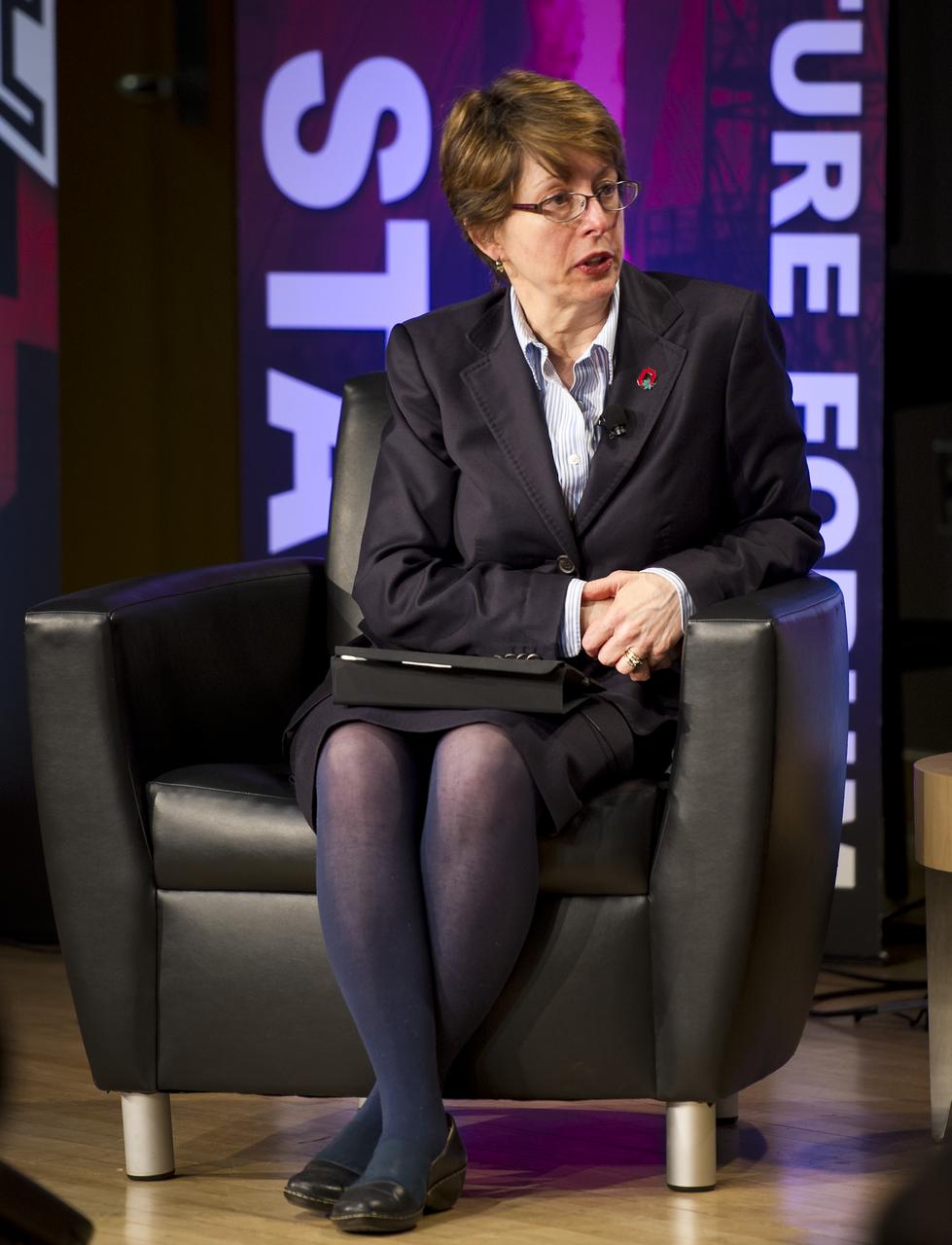
Dr. Caroline Wagner, associate professor, Ambassador Milton A. and Roslyn Z. Wolf Chair in International Affairs, and Director, Battelle Center for Science and Technology Policy, The Ohio State University moderates the NASA Future Forum panel titled "Shifting Roles for Public, Private, and International Players in Space" at The Ohio State University on Tuesday, Feb. 21, 2012 in Columbus, Ohio. The NASA Future Forum features panel discussions on the importance of education to our nation's future in space, the benefit of commercialized space technology to our economy and lives here on Earth, and the shifting roles for the public, commercial and international communities in space. Photo Credit: (NASA/Bill Ingalls)
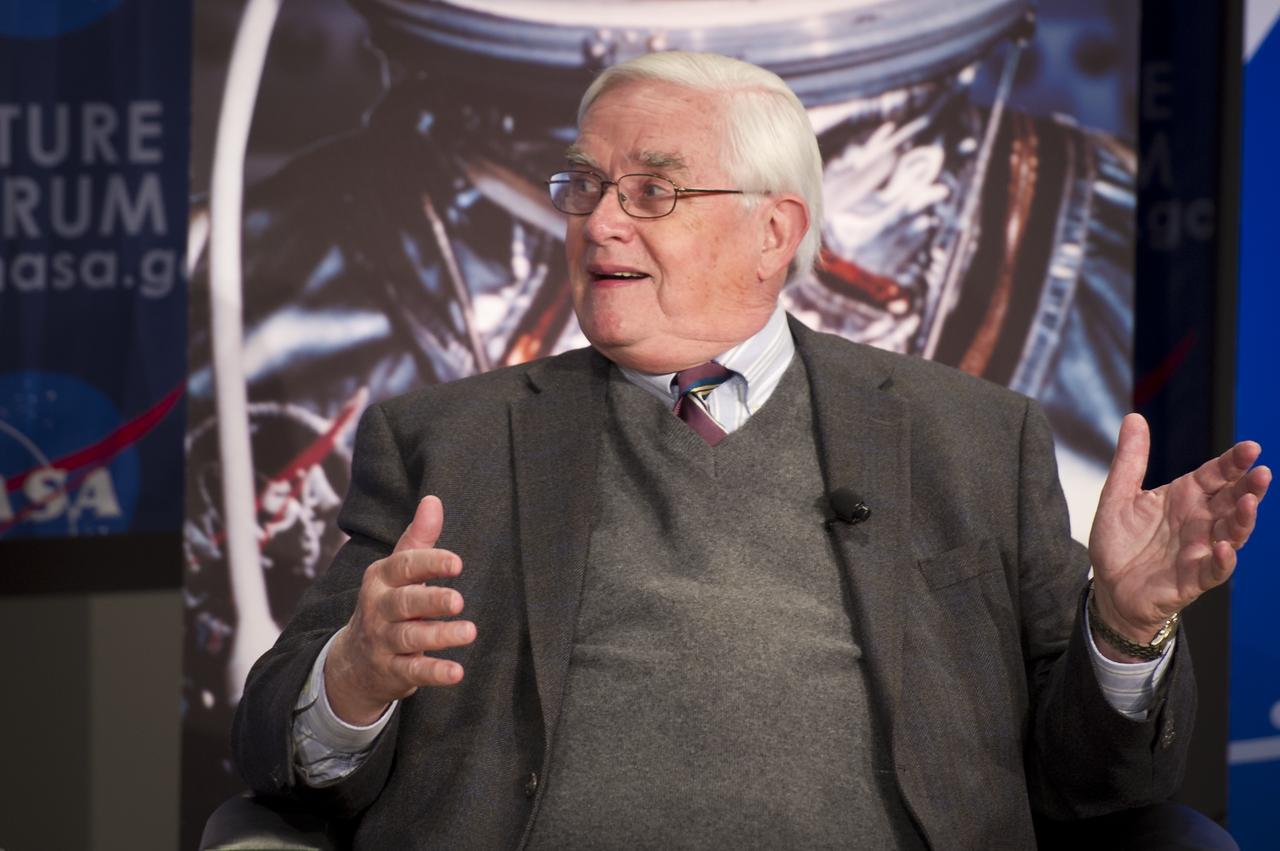
John Logsdon, professor emeritus of Political Science and International Affairs, Elliott School of International Affairs, George Washington University, talks during the NASA Future Forum panel titled "Shifting Roles for Public, Private, and International Players in Space" at The Ohio State University on Tuesday, Feb. 21, 2012 in Columbus, Ohio. The NASA Future Forum features panel discussions on the importance of education to our nation's future in space, the benefit of commercialized space technology to our economy and lives here on Earth, and the shifting roles for the public, commercial and international communities in space. Photo Credit: (NASA/Bill Ingalls)
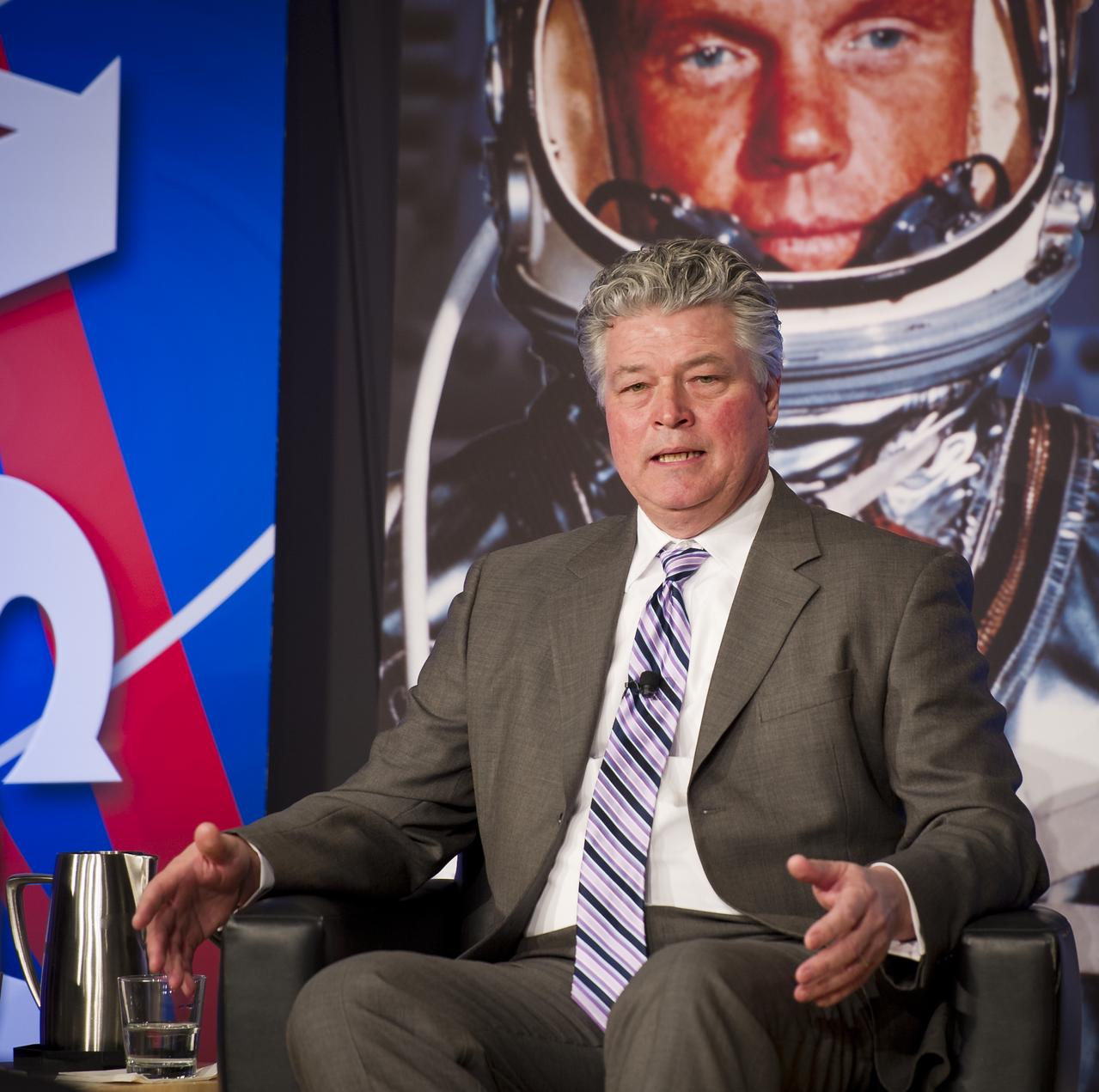
Fayette Collier, Aeronautics Research Mission Directorate, NASA Headquarters talks during the NASA Future Forum panel titled "Transferring and Commercializing Technology to Benefit Our Lives and Our Economy" at The Ohio State University on Tuesday, Feb. 21, 2012 in Columbus, Ohio. The NASA Future Forum features panel discussions on the importance of education to our nation's future in space, the benefit of commercialized space technology to our economy and lives here on Earth, and the shifting roles for the public, commercial and international communities in space. Photo Credit: (NASA/Bill Ingalls)
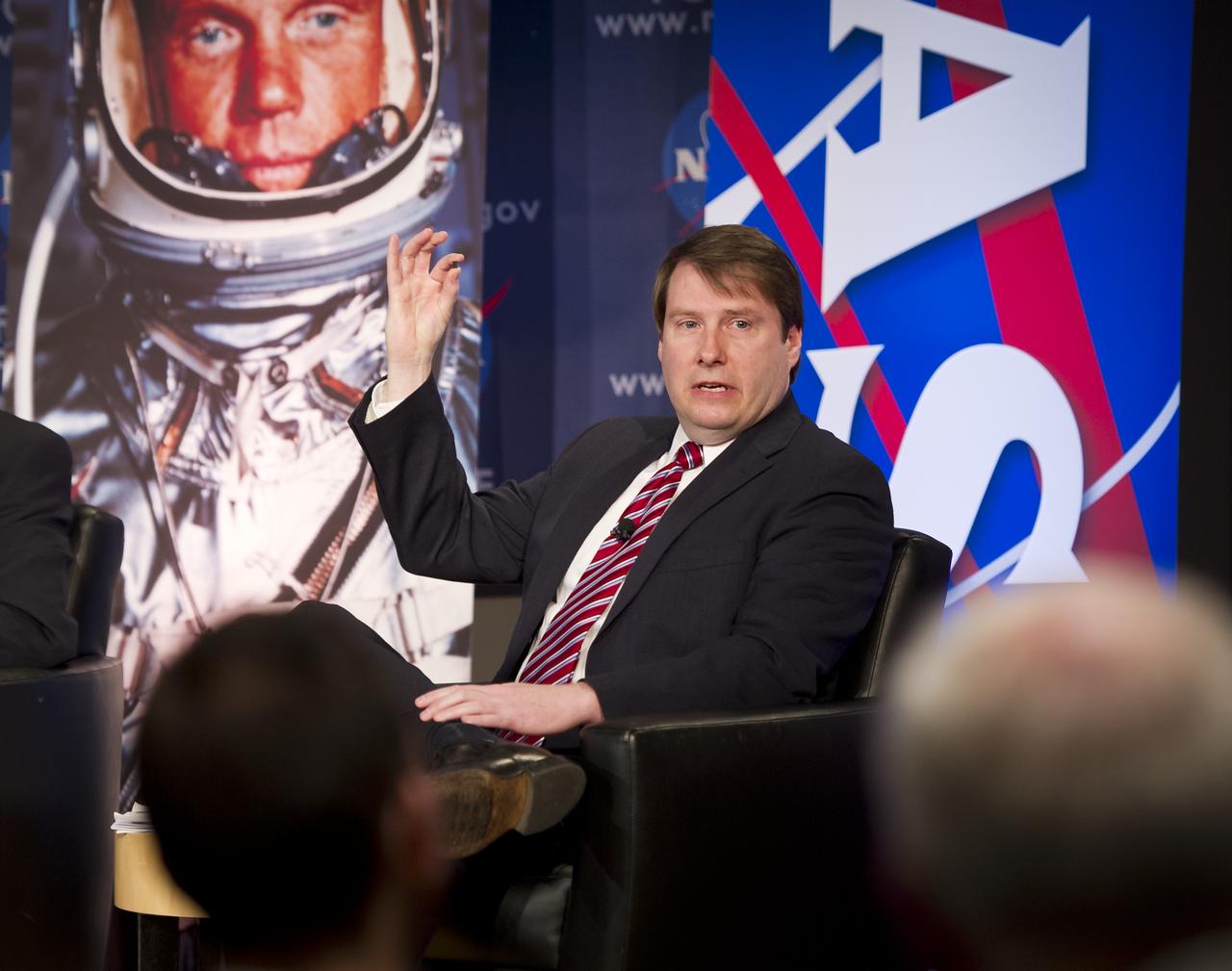
Neal Seater, President, Greenfield Solar, holds up a small solar chip during the NASA Future Forum panel titled "Transferring and Commercializing Technology to Benefit Our Lives and Our Economy" at The Ohio State University on Tuesday, Feb. 21, 2012 in Columbus, Ohio. The NASA Future Forum features panel discussions on the importance of education to our nation's future in space, the benefit of commercialized space technology to our economy and lives here on Earth, and the shifting roles for the public, commercial and international communities in space. Photo Credit: (NASA/Bill Ingalls)
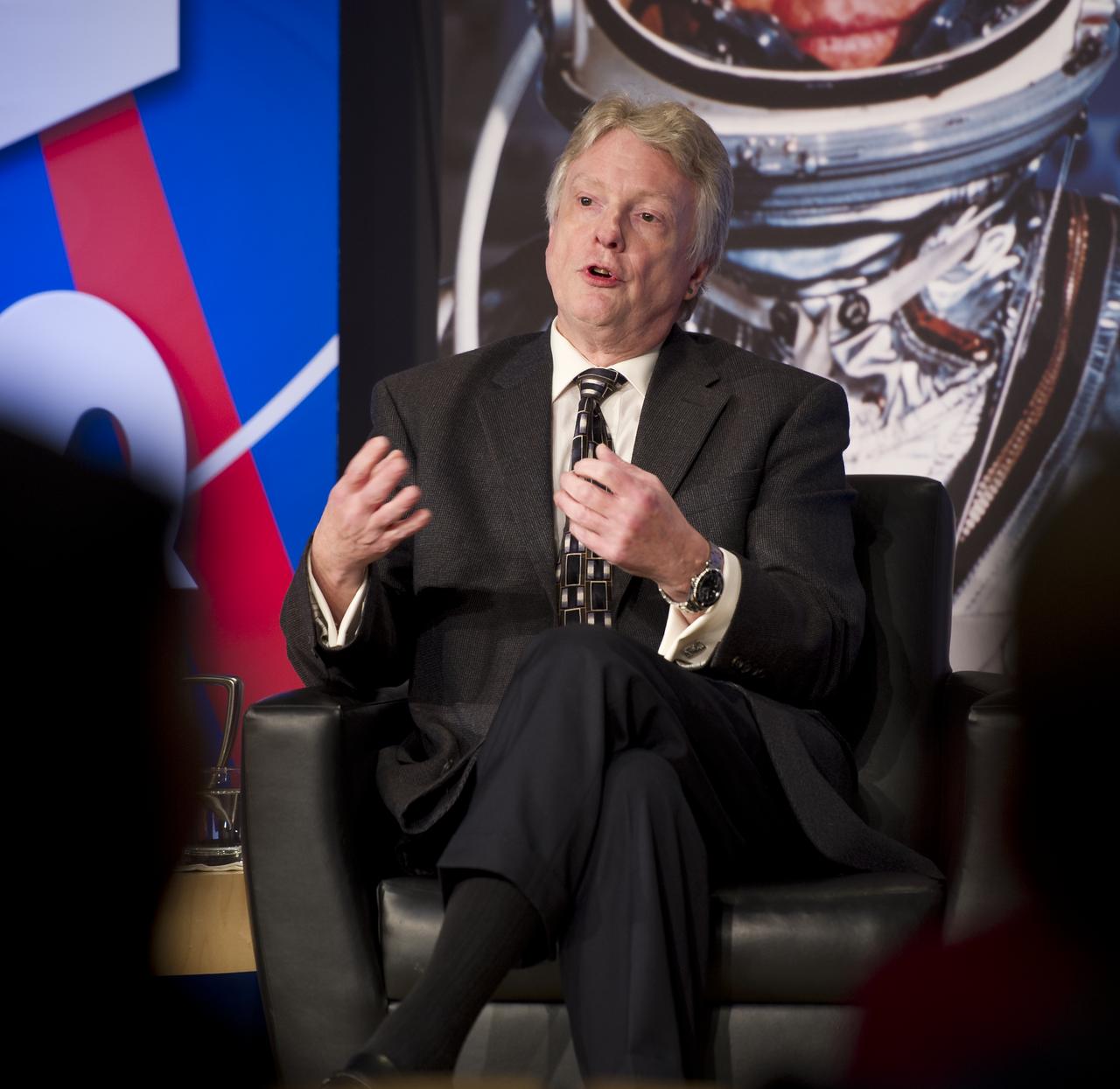
Roger Launius, senior curator, Smithsonian Institution National Air and Space Museum, talks during the NASA Future Forum panel titled "Shifting Roles for Public, Private, and International Players in Space" at The Ohio State University on Tuesday, Feb. 21, 2012 in Columbus, Ohio. The NASA Future Forum features panel discussions on the importance of education to our nation's future in space, the benefit of commercialized space technology to our economy and lives here on Earth, and the shifting roles for the public, commercial and international communities in space. Photo Credit: (NASA/Bill Ingalls)
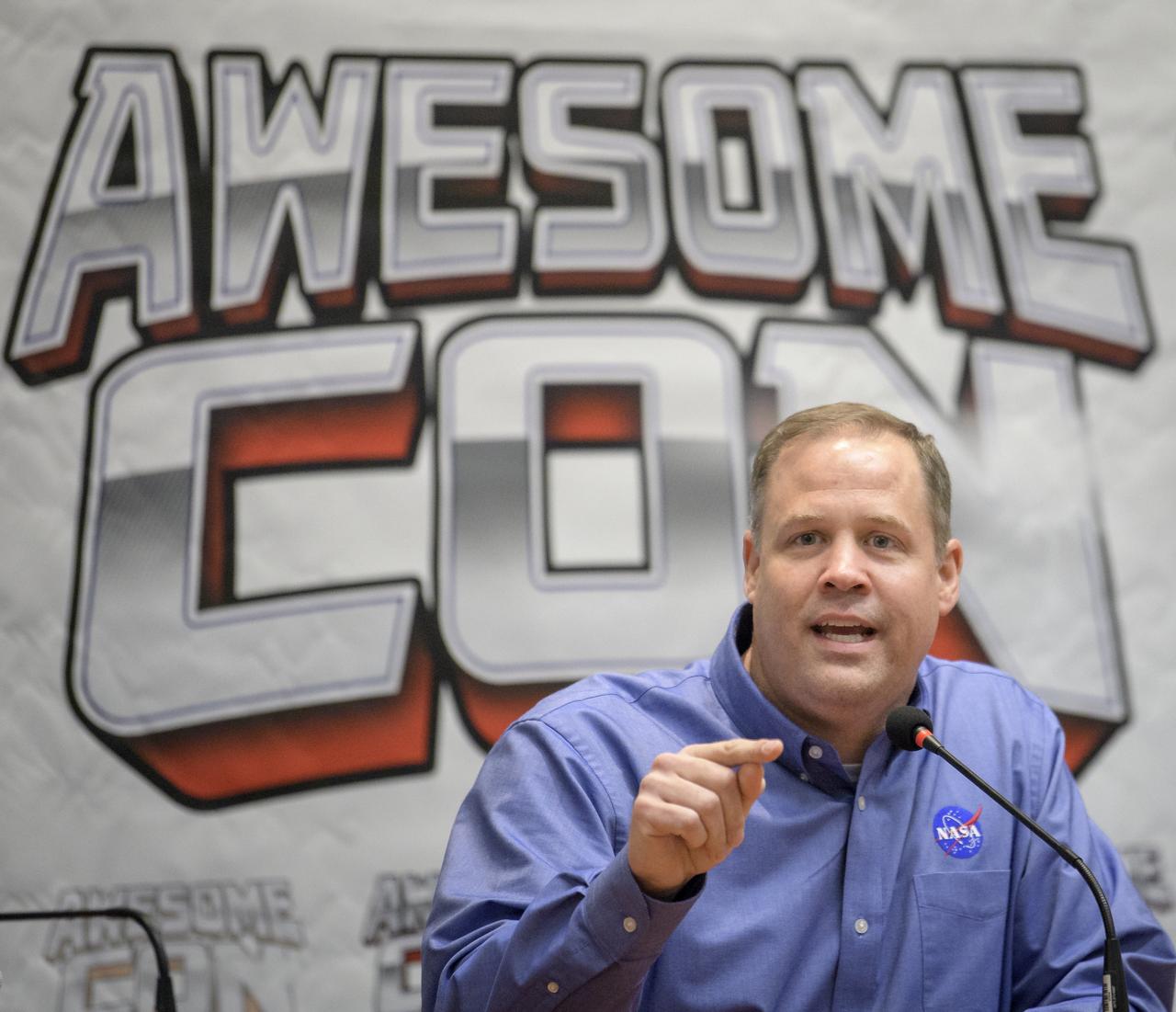
NASA Administrator Jim Bridenstine talks about getting American astronauts to the Moon in the next five years while participating in a Future Con panel discussion at Awesome Con, Saturday, April 27, 2019 at the Walter E. Washington Convention Center in Washington. Future Con highlights the intersection of science, technology, and science fiction inside D.C.’s largest pop culture event. Photo Credit: (NASA/Bill Ingalls)
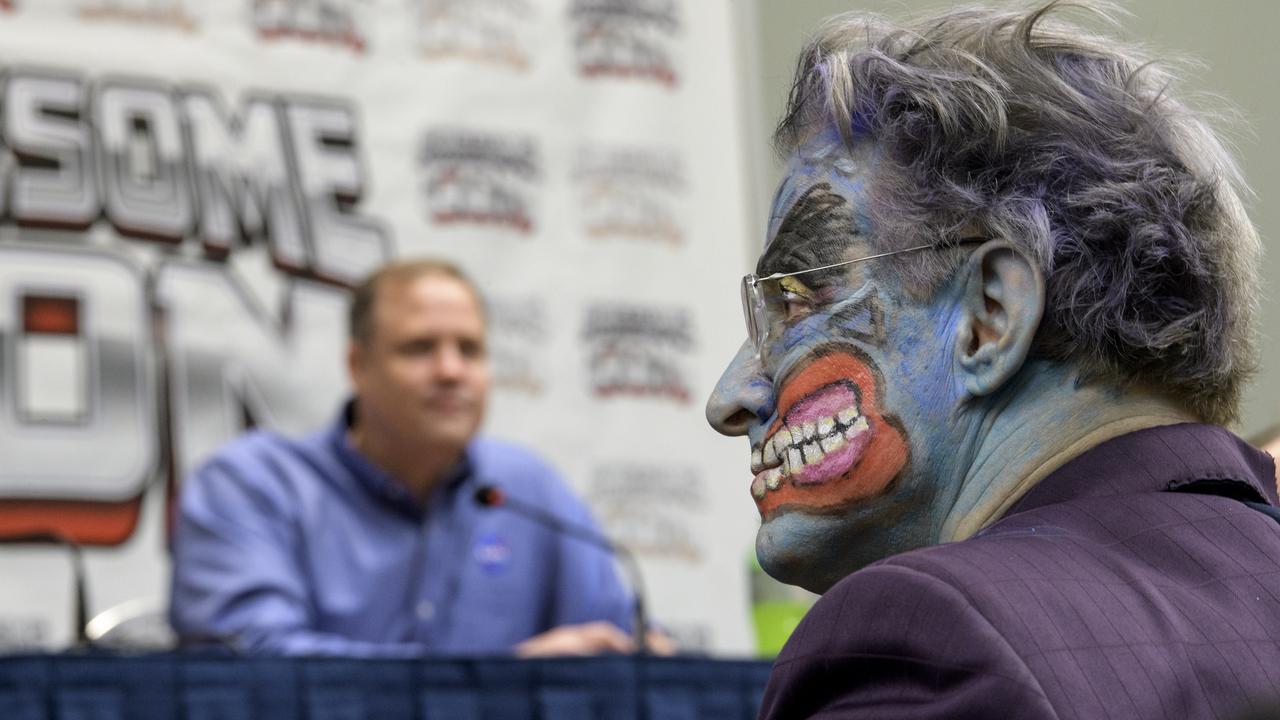
An audience member dressed in character listens as NASA Administrator Jim Bridenstine talks about getting American astronauts to the Moon in the next five years while participating in a Future Con panel discussion at Awesome Con, Saturday, April 27, 2019 at the Walter E. Washington Convention Center in Washington. Future Con highlights the intersection of science, technology, and science fiction inside D.C.’s largest pop culture event. Photo Credit: (NASA/Bill Ingalls)
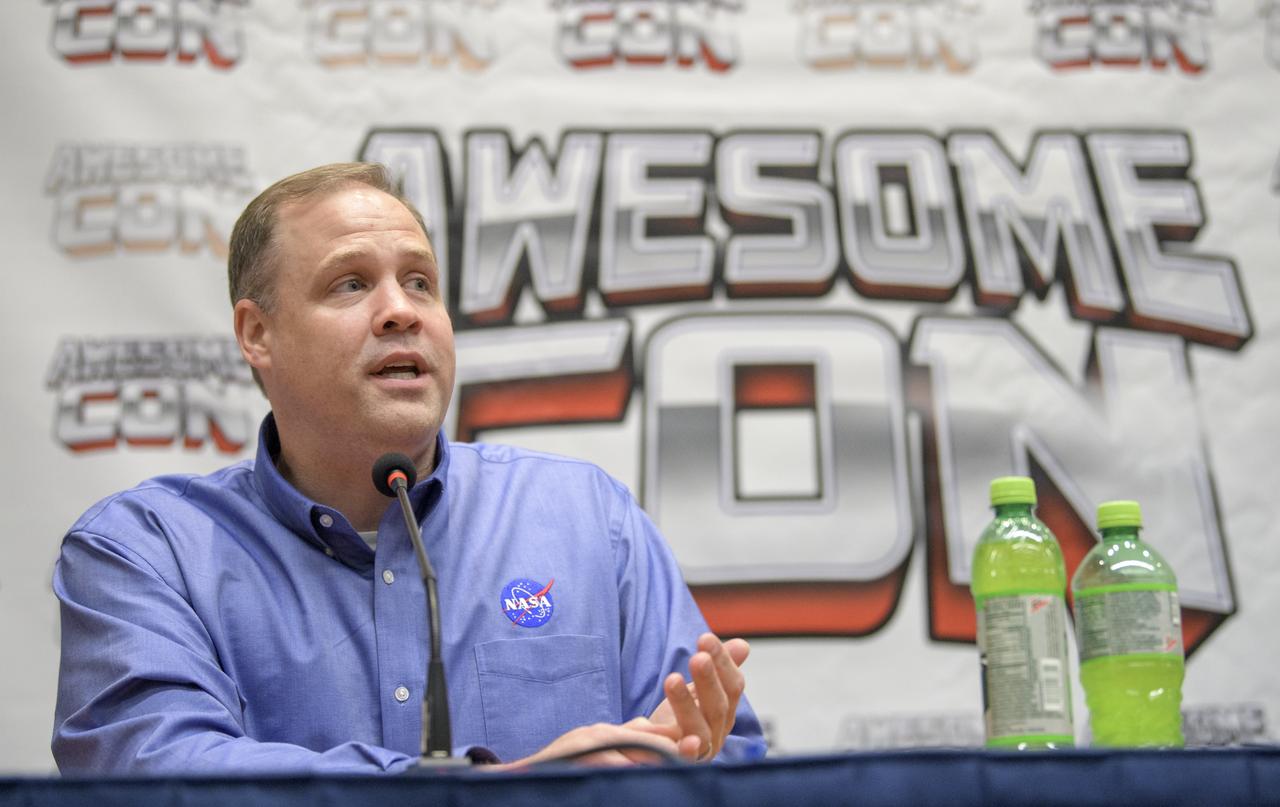
NASA Administrator Jim Bridenstine talks about getting American astronauts to the Moon in the next five years while participating in a Future Con panel discussion at Awesome Con, Saturday, April 27, 2019 at the Walter E. Washington Convention Center in Washington. Future Con highlights the intersection of science, technology, and science fiction inside D.C.’s largest pop culture event. Photo Credit: (NASA/Bill Ingalls)
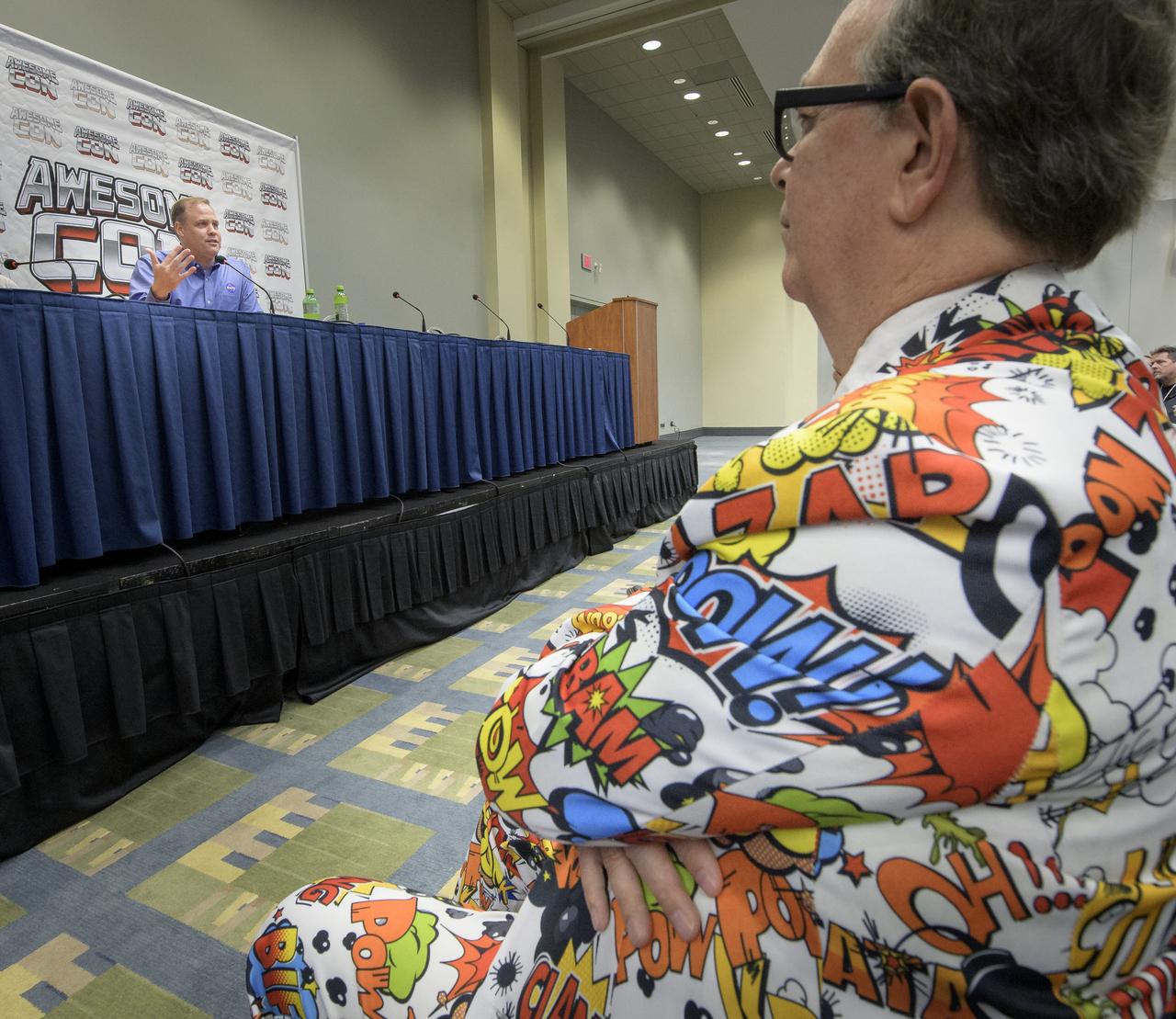
An audience member dressed in character listens as NASA Administrator Jim Bridenstine talks about getting American astronauts to the Moon in the next five years while participating in a Future Con panel discussion at Awesome Con, Saturday, April 27, 2019 at the Walter E. Washington Convention Center in Washington. Future Con highlights the intersection of science, technology, and science fiction inside D.C.’s largest pop culture event. Photo Credit: (NASA/Bill Ingalls)
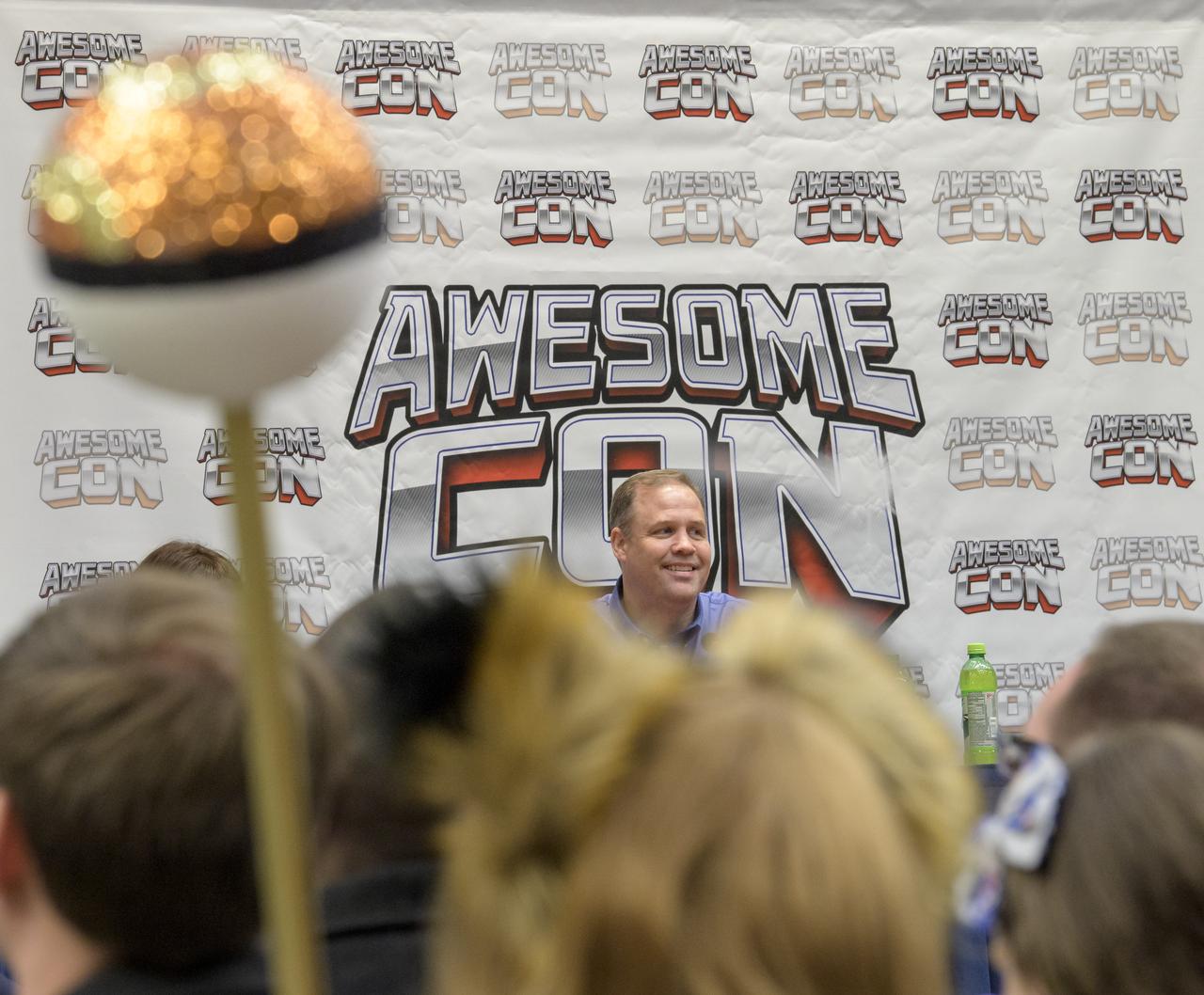
NASA Administrator Jim Bridenstine talks about getting American astronauts to the Moon in the next five years while participating in a Future Con panel discussion at Awesome Con, Saturday, April 27, 2019 at the Walter E. Washington Convention Center in Washington. Future Con highlights the intersection of science, technology, and science fiction inside D.C.’s largest pop culture event. Photo Credit: (NASA/Bill Ingalls)
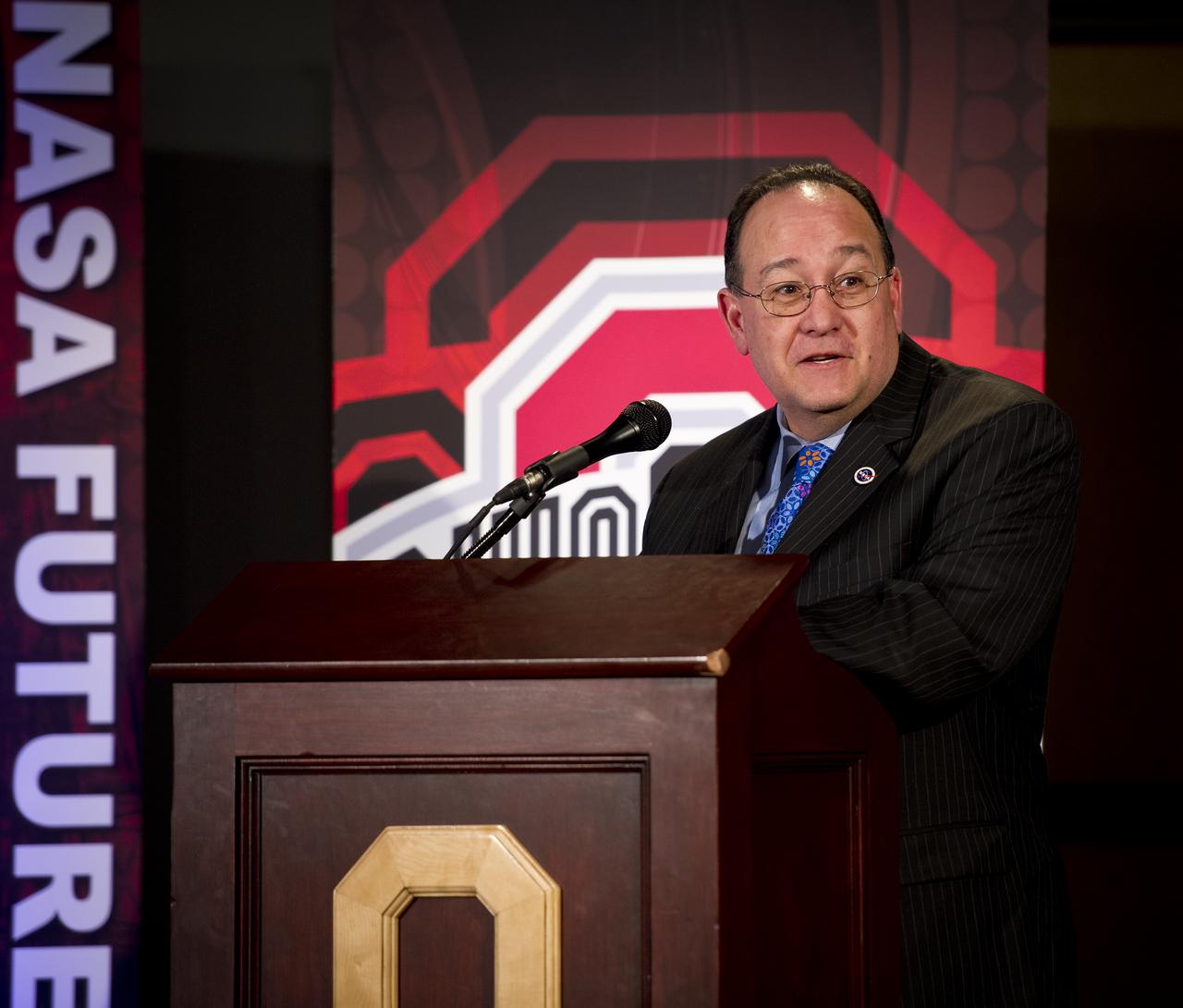
NASA Glenn Research Center Director Ray Lugo moderates a panel discussion with Sen. John Glenn titled "Learning from the Past to Innovate for the Future" during a NASA Future Forum held at The Ohio State University on Monday, Feb. 20, 2012, in Columbus, Ohio. Monday marked the 50th anniversary of Glenn's historic flight as the first American to orbit Earth. Photo Credit: (NASA/Bill Ingalls)
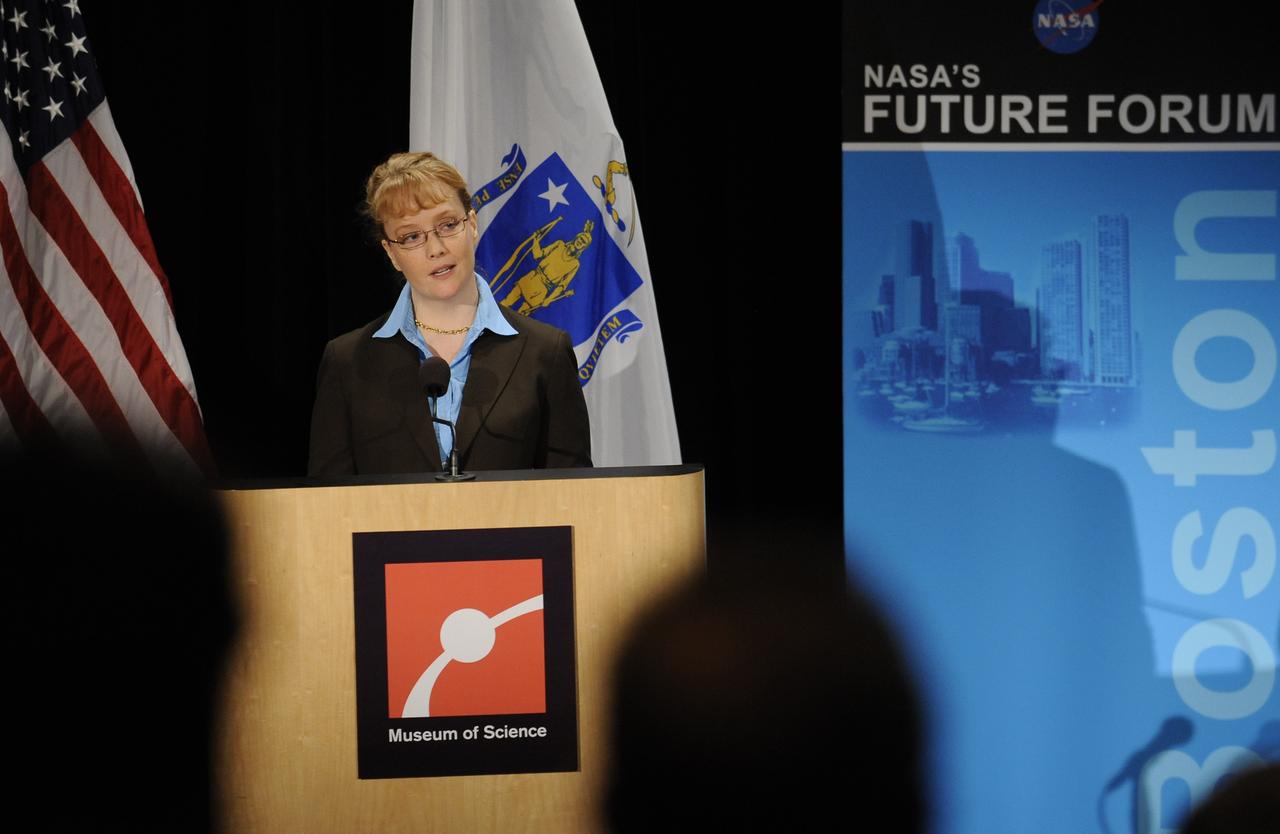
NASA Deputy Administrator Shana Dale delivers a keynote address during the NASA Future Forum event at the Museum of Science in Boston, MA, Thursday, September 18, 2008. Photo Credit: (NASA/Bill Ingalls)
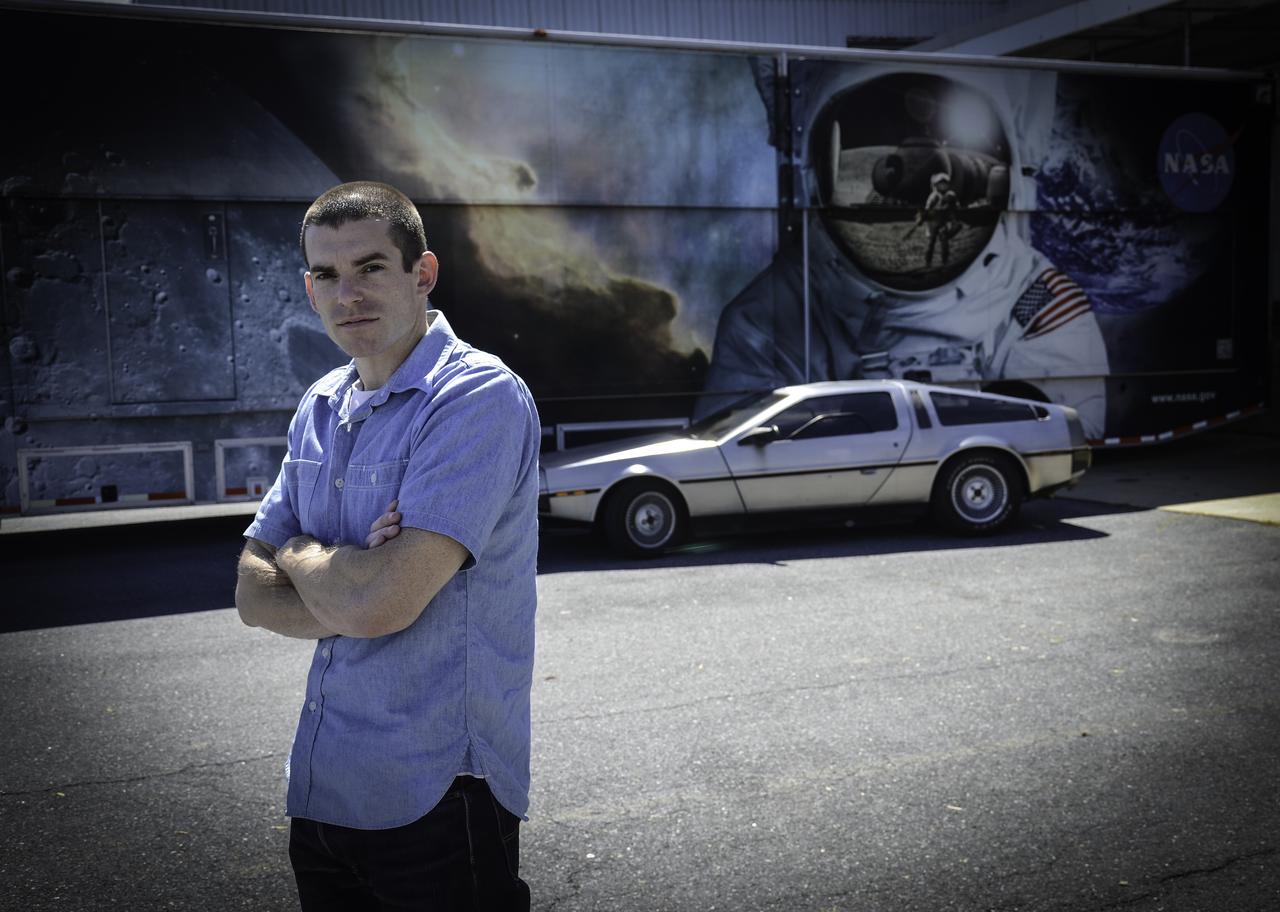
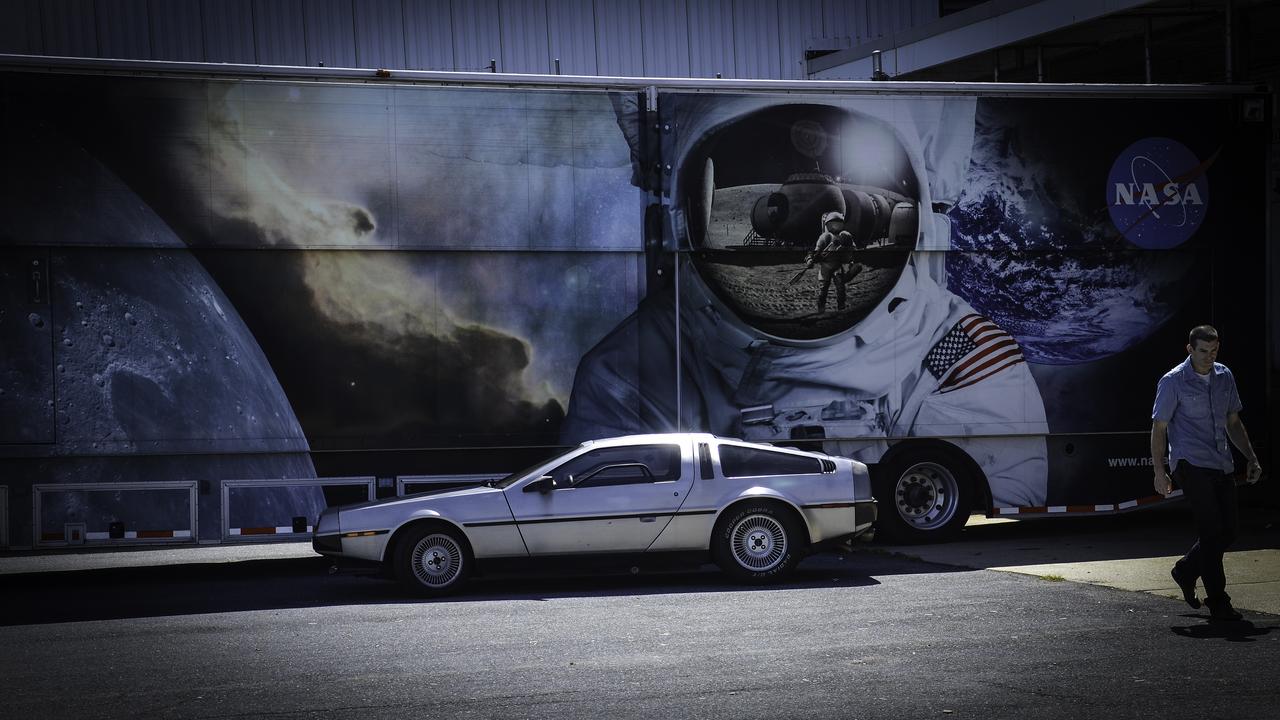
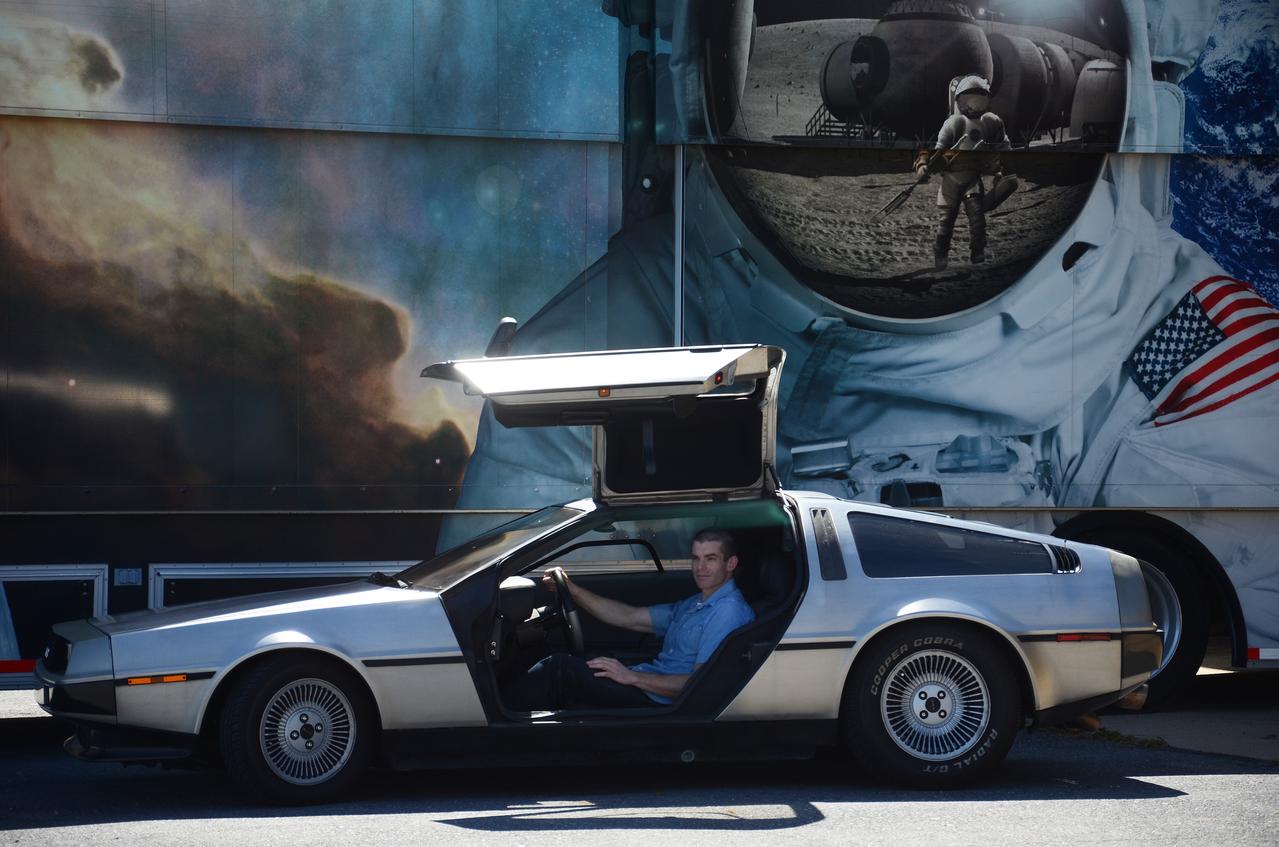
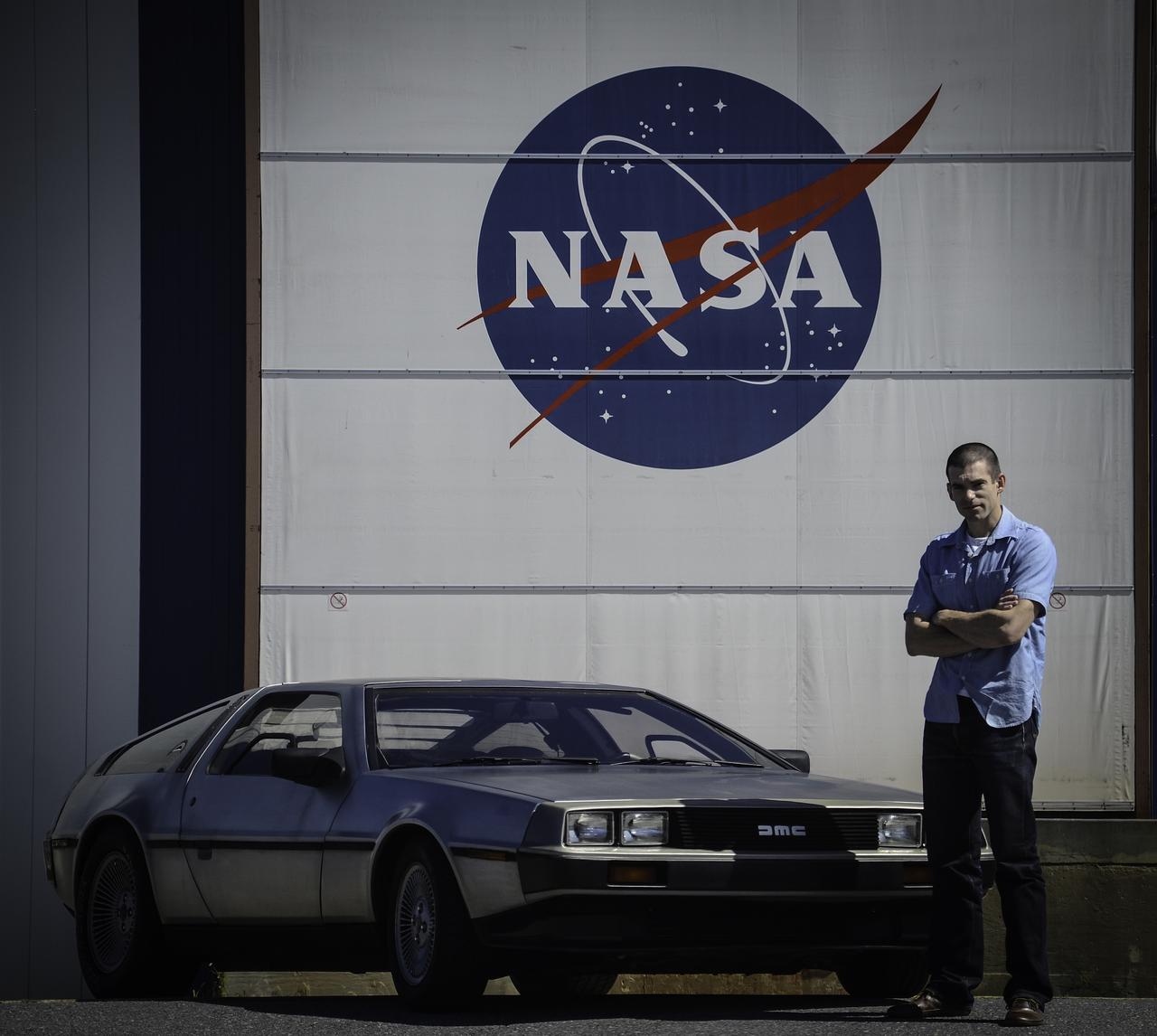
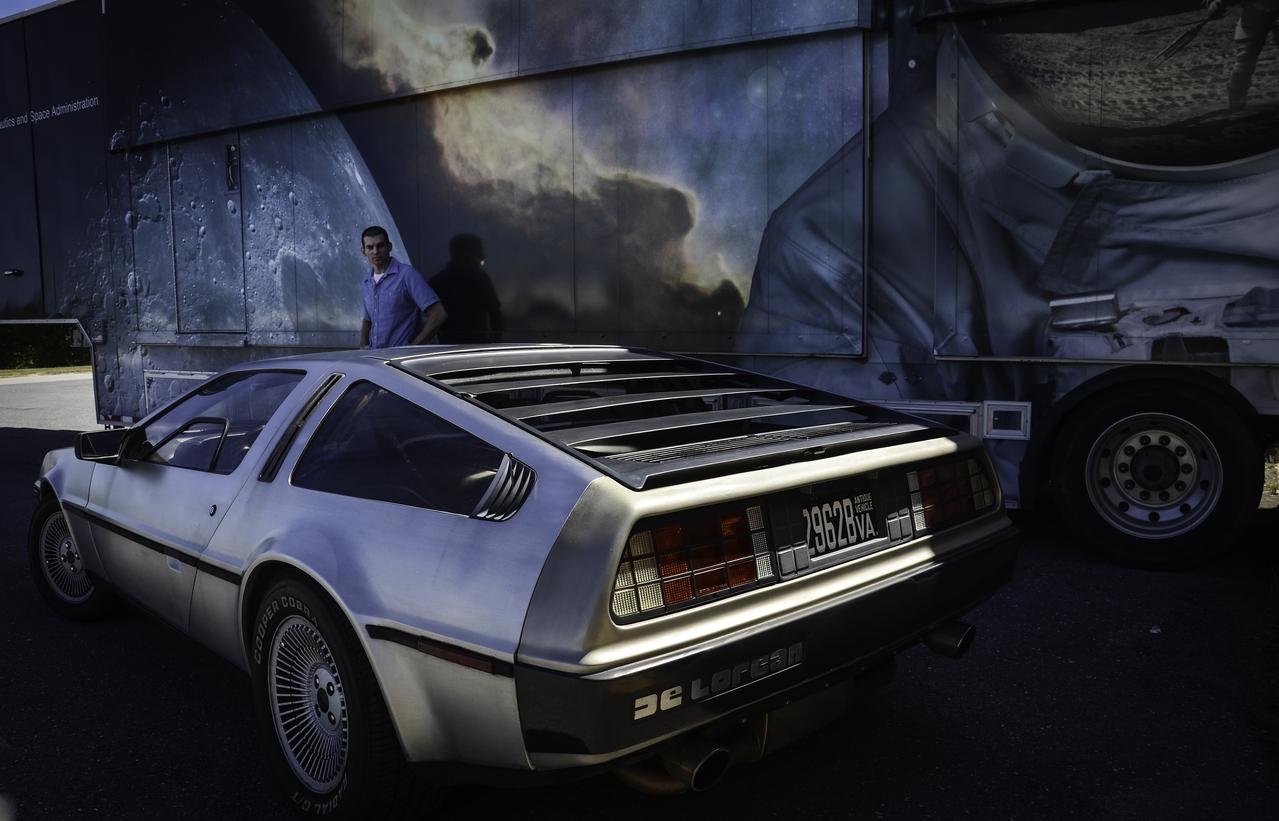
Great Scott, This is Heavy! You might see a DeLorean zipping around Greenbelt, Maryland, on Oct. 21, 2015, the day Marty McFly and Doc Brown arrive from 1985 in "Back to the Future, Part II," but don't look for flaming tread marks in its wake. The DeLorean DMC-12, commonly seen on the roads of NASA’s Goddard Space Flight Center in Greenbelt, Maryland, is better known for the version that starred as a plutonium-powered time machine in the “Back to the Future” trilogy. After some investigation, Goddard’s Office of Communications found the owner of the stainless steel, gull-winged, two-door coupe. Goddard software test engineer, Brendan Rebo bought the 1982 DeLorean off eBay about four and a half years ago. “The car attracts a lot more attention than I expected,” Rebo admitted. “I hear a lot of jokes about whether or not I’ve reached 88 miles per hour yet.” As “Back to the Future” fans around the world celebrate today, Rebo also celebrates his birthday. While the second film predicted technology, such as flying cars, that doesn’t yet exist, people can still marvel at the classic car and movie reference. Credit: NASA/Goddard/Rebecca Roth <b><a href="http://www.nasa.gov/audience/formedia/features/MP_Photo_Guidelines.html" rel="nofollow">NASA image use policy.</a></b> <b><a href="http://www.nasa.gov/centers/goddard/home/index.html" rel="nofollow">NASA Goddard Space Flight Center</a></b> enables NASA’s mission through four scientific endeavors: Earth Science, Heliophysics, Solar System Exploration, and Astrophysics. Goddard plays a leading role in NASA’s accomplishments by contributing compelling scientific knowledge to advance the Agency’s mission. <b>Follow us on <a href="http://twitter.com/NASAGoddardPix" rel="nofollow">Twitter</a></b> <b>Like us on <a href="http://www.facebook.com/pages/Greenbelt-MD/NASA-Goddard/395013845897?ref=tsd" rel="nofollow">Facebook</a></b> <b>Find us on <a href="http://instagrid.me/nasagoddard/?vm=grid" rel="nofollow">Instagram</a></b>
Great Scott, This is Heavy! You might see a DeLorean zipping around Greenbelt, Maryland, on Oct. 21, 2015, the day Marty McFly and Doc Brown arrive from 1985 in "Back to the Future, Part II," but don't look for flaming tread marks in its wake. The DeLorean DMC-12, commonly seen on the roads of NASA’s Goddard Space Flight Center in Greenbelt, Maryland, is better known for the version that starred as a plutonium-powered time machine in the “Back to the Future” trilogy. After some investigation, Goddard’s Office of Communications found the owner of the stainless steel, gull-winged, two-door coupe. Goddard software test engineer, Brendan Rebo bought the 1982 DeLorean off eBay about four and a half years ago. “The car attracts a lot more attention than I expected,” Rebo admitted. “I hear a lot of jokes about whether or not I’ve reached 88 miles per hour yet.” As “Back to the Future” fans around the world celebrate today, Rebo also celebrates his birthday. While the second film predicted technology, such as flying cars, that doesn’t yet exist, people can still marvel at the classic car and movie reference. Credit: NASA/Goddard/Rebecca Roth <b><a href="http://www.nasa.gov/audience/formedia/features/MP_Photo_Guidelines.html" rel="nofollow">NASA image use policy.</a></b> <b><a href="http://www.nasa.gov/centers/goddard/home/index.html" rel="nofollow">NASA Goddard Space Flight Center</a></b> enables NASA’s mission through four scientific endeavors: Earth Science, Heliophysics, Solar System Exploration, and Astrophysics. Goddard plays a leading role in NASA’s accomplishments by contributing compelling scientific knowledge to advance the Agency’s mission. <b>Follow us on <a href="http://twitter.com/NASAGoddardPix" rel="nofollow">Twitter</a></b> <b>Like us on <a href="http://www.facebook.com/pages/Greenbelt-MD/NASA-Goddard/395013845897?ref=tsd" rel="nofollow">Facebook</a></b> <b>Find us on <a href="http://instagrid.me/nasagoddard/?vm=grid" rel="nofollow">Instagram</a></b>
Great Scott, This is Heavy! You might see a DeLorean zipping around Greenbelt, Maryland, on Oct. 21, 2015, the day Marty McFly and Doc Brown arrive from 1985 in "Back to the Future, Part II," but don't look for flaming tread marks in its wake. The DeLorean DMC-12, commonly seen on the roads of NASA’s Goddard Space Flight Center in Greenbelt, Maryland, is better known for the version that starred as a plutonium-powered time machine in the “Back to the Future” trilogy. After some investigation, Goddard’s Office of Communications found the owner of the stainless steel, gull-winged, two-door coupe. Goddard software test engineer, Brendan Rebo bought the 1982 DeLorean off eBay about four and a half years ago. “The car attracts a lot more attention than I expected,” Rebo admitted. “I hear a lot of jokes about whether or not I’ve reached 88 miles per hour yet.” As “Back to the Future” fans around the world celebrate today, Rebo also celebrates his birthday. While the second film predicted technology, such as flying cars, that doesn’t yet exist, people can still marvel at the classic car and movie reference. Credit: NASA/Goddard/Rebecca Roth <b><a href="http://www.nasa.gov/audience/formedia/features/MP_Photo_Guidelines.html" rel="nofollow">NASA image use policy.</a></b> <b><a href="http://www.nasa.gov/centers/goddard/home/index.html" rel="nofollow">NASA Goddard Space Flight Center</a></b> enables NASA’s mission through four scientific endeavors: Earth Science, Heliophysics, Solar System Exploration, and Astrophysics. Goddard plays a leading role in NASA’s accomplishments by contributing compelling scientific knowledge to advance the Agency’s mission. <b>Follow us on <a href="http://twitter.com/NASAGoddardPix" rel="nofollow">Twitter</a></b> <b>Like us on <a href="http://www.facebook.com/pages/Greenbelt-MD/NASA-Goddard/395013845897?ref=tsd" rel="nofollow">Facebook</a></b> <b>Find us on <a href="http://instagrid.me/nasagoddard/?vm=grid" rel="nofollow">Instagram</a></b>
Great Scott, This is Heavy! You might see a DeLorean zipping around Greenbelt, Maryland, on Oct. 21, 2015, the day Marty McFly and Doc Brown arrive from 1985 in "Back to the Future, Part II," but don't look for flaming tread marks in its wake. The DeLorean DMC-12, commonly seen on the roads of NASA’s Goddard Space Flight Center in Greenbelt, Maryland, is better known for the version that starred as a plutonium-powered time machine in the “Back to the Future” trilogy. After some investigation, Goddard’s Office of Communications found the owner of the stainless steel, gull-winged, two-door coupe. Goddard software test engineer, Brendan Rebo bought the 1982 DeLorean off eBay about four and a half years ago. “The car attracts a lot more attention than I expected,” Rebo admitted. “I hear a lot of jokes about whether or not I’ve reached 88 miles per hour yet.” As “Back to the Future” fans around the world celebrate today, Rebo also celebrates his birthday. While the second film predicted technology, such as flying cars, that doesn’t yet exist, people can still marvel at the classic car and movie reference. Credit: NASA/Goddard/Rebecca Roth <b><a href="http://www.nasa.gov/audience/formedia/features/MP_Photo_Guidelines.html" rel="nofollow">NASA image use policy.</a></b> <b><a href="http://www.nasa.gov/centers/goddard/home/index.html" rel="nofollow">NASA Goddard Space Flight Center</a></b> enables NASA’s mission through four scientific endeavors: Earth Science, Heliophysics, Solar System Exploration, and Astrophysics. Goddard plays a leading role in NASA’s accomplishments by contributing compelling scientific knowledge to advance the Agency’s mission. <b>Follow us on <a href="http://twitter.com/NASAGoddardPix" rel="nofollow">Twitter</a></b> <b>Like us on <a href="http://www.facebook.com/pages/Greenbelt-MD/NASA-Goddard/395013845897?ref=tsd" rel="nofollow">Facebook</a></b> <b>Find us on <a href="http://instagrid.me/nasagoddard/?vm=grid" rel="nofollow">Instagram</a></b>
Great Scott, This is Heavy! You might see a DeLorean zipping around Greenbelt, Maryland, on Oct. 21, 2015, the day Marty McFly and Doc Brown arrive from 1985 in "Back to the Future, Part II," but don't look for flaming tread marks in its wake. The DeLorean DMC-12, commonly seen on the roads of NASA’s Goddard Space Flight Center in Greenbelt, Maryland, is better known for the version that starred as a plutonium-powered time machine in the “Back to the Future” trilogy. After some investigation, Goddard’s Office of Communications found the owner of the stainless steel, gull-winged, two-door coupe. Goddard software test engineer, Brendan Rebo bought the 1982 DeLorean off eBay about four and a half years ago. “The car attracts a lot more attention than I expected,” Rebo admitted. “I hear a lot of jokes about whether or not I’ve reached 88 miles per hour yet.” As “Back to the Future” fans around the world celebrate today, Rebo also celebrates his birthday. While the second film predicted technology, such as flying cars, that doesn’t yet exist, people can still marvel at the classic car and movie reference. Credit: NASA/Goddard/Rebecca Roth <b><a href="http://www.nasa.gov/audience/formedia/features/MP_Photo_Guidelines.html" rel="nofollow">NASA image use policy.</a></b> <b><a href="http://www.nasa.gov/centers/goddard/home/index.html" rel="nofollow">NASA Goddard Space Flight Center</a></b> enables NASA’s mission through four scientific endeavors: Earth Science, Heliophysics, Solar System Exploration, and Astrophysics. Goddard plays a leading role in NASA’s accomplishments by contributing compelling scientific knowledge to advance the Agency’s mission. <b>Follow us on <a href="http://twitter.com/NASAGoddardPix" rel="nofollow">Twitter</a></b> <b>Like us on <a href="http://www.facebook.com/pages/Greenbelt-MD/NASA-Goddard/395013845897?ref=tsd" rel="nofollow">Facebook</a></b> <b>Find us on <a href="http://instagrid.me/nasagoddard/?vm=grid" rel="nofollow">Instagram</a></b>

Pickerington High School student Jordan Elliott, left, and Dayton Regional STEM student Cheyenne Benson participate in the NASA Future Forum Inspiration and Education Panel at The Ohio State University on Monday, Feb. 20, 2012, in Columbus, Ohio. The NASA Future Forum features panel discussions on the importance of education to our nation's future in space, the benefit of commercialized space technology to our economy and lives here on Earth, and the shifting roles for the public, commercial and international communities in space. Photo Credit: (NASA/Bill Ingalls)
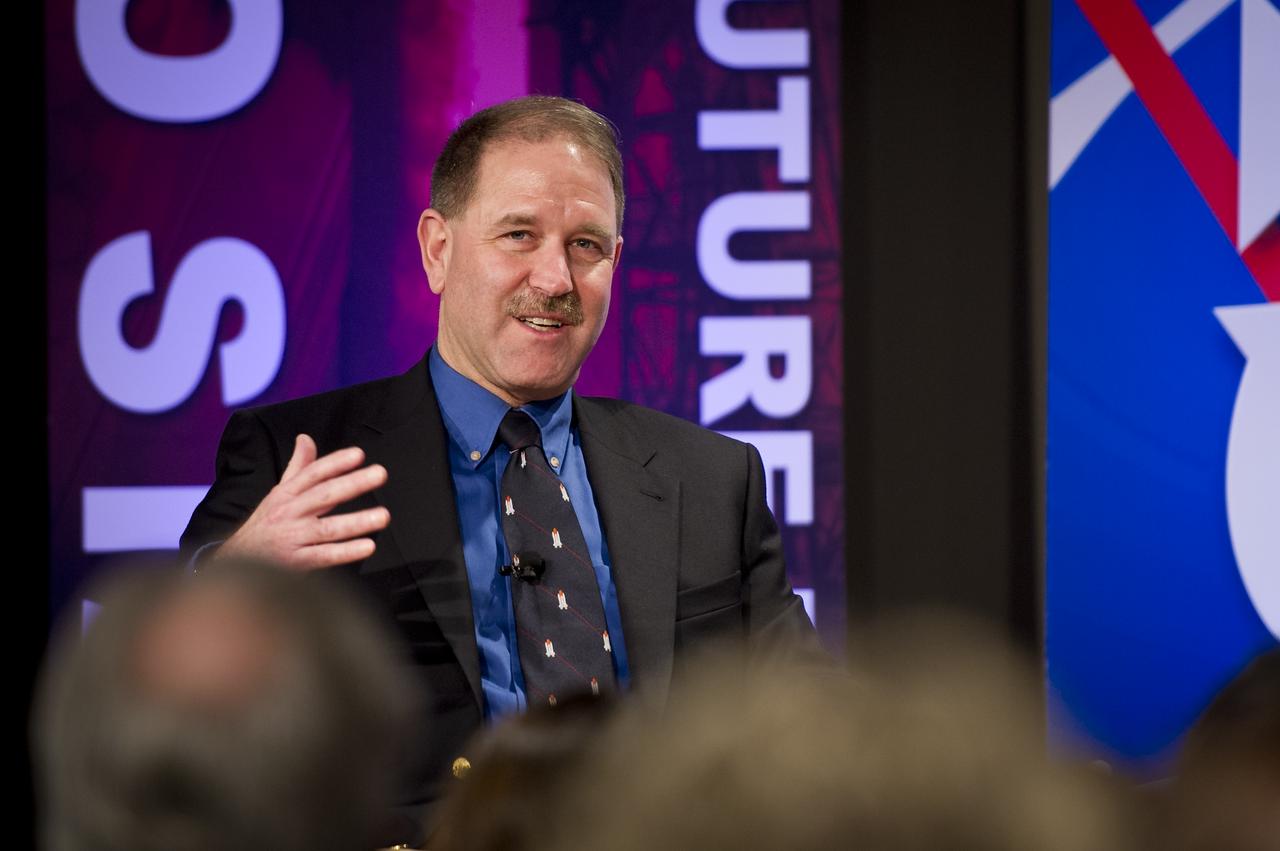
NASA Associate Administrator for Science Mission Directorate John Grunsfeld talks during a NASA Future Forum panel discussion at The Ohio State University on, Monday, Feb. 20, 2012, in Columbus, Ohio. Monday marked the 50th anniversary of Glenn's historic flight as the first American to orbit Earth. Photo Credit: (NASA/Bill Ingalls)
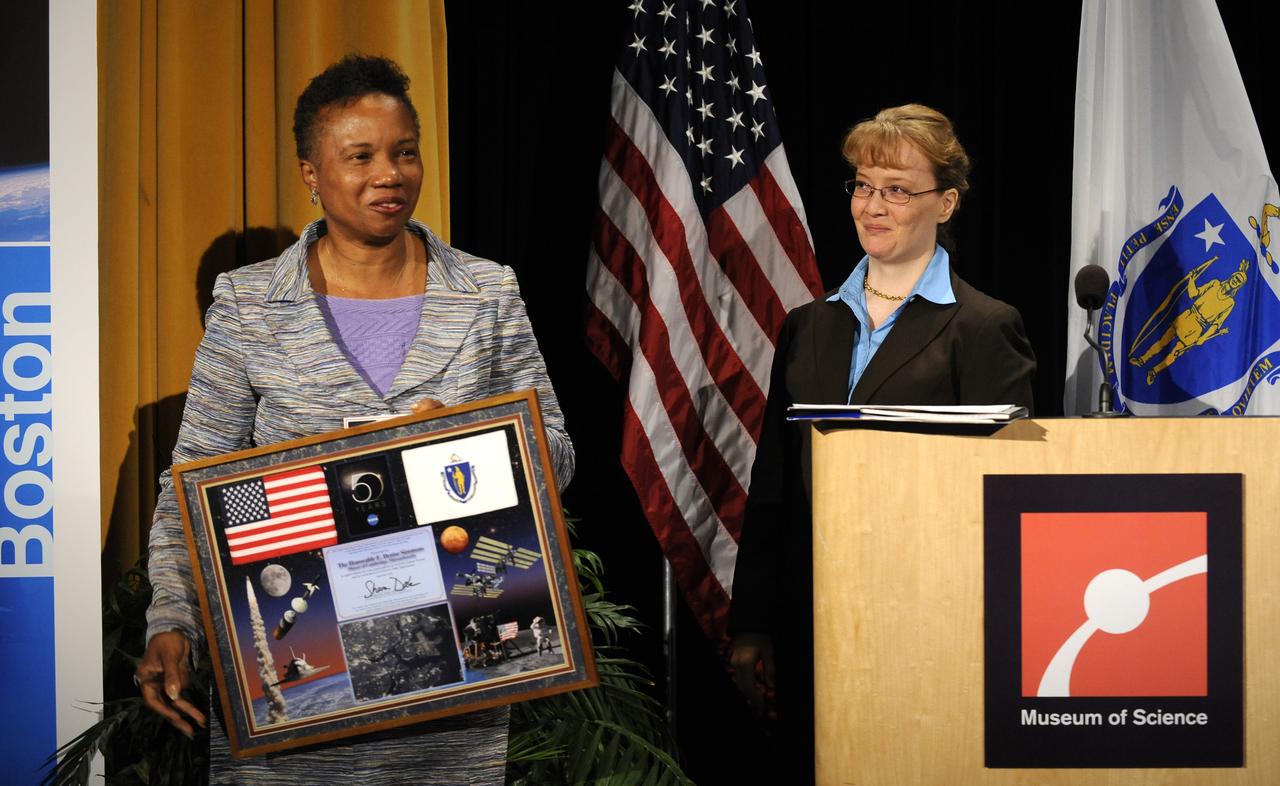
Mayor of Cambridge, Massachusetts, E. Denise Simmons, left, holds a plaque presented to her by NASA Deputy Administrator Ms. Shana Dale during the NASA Future Forum event at the Museum of Science in Boston, MA, Thursday, September 18, 2008. Photo Credit: (NASA/Bill Ingalls)
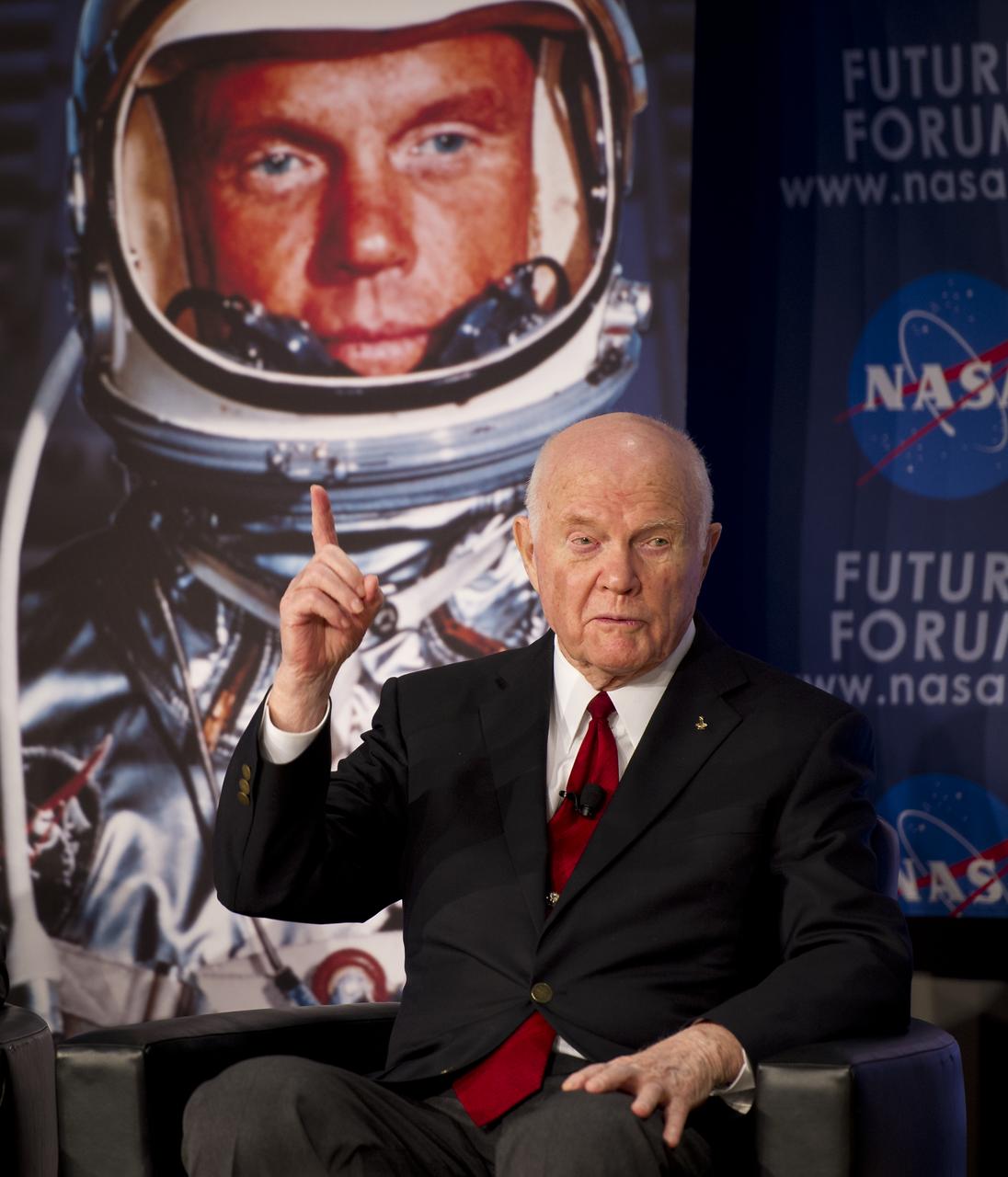
Sen. John Glenn speaks to guest at NASA's Future Forum at Ohio State University on Monday, Feb. 20, 2012, in Columbus, Ohio. Today marks the 50th anniversary of Glenn's historic flight. Glenn was the first American to orbit Earth. Photo Credit: (NASA/Bill Ingalls)
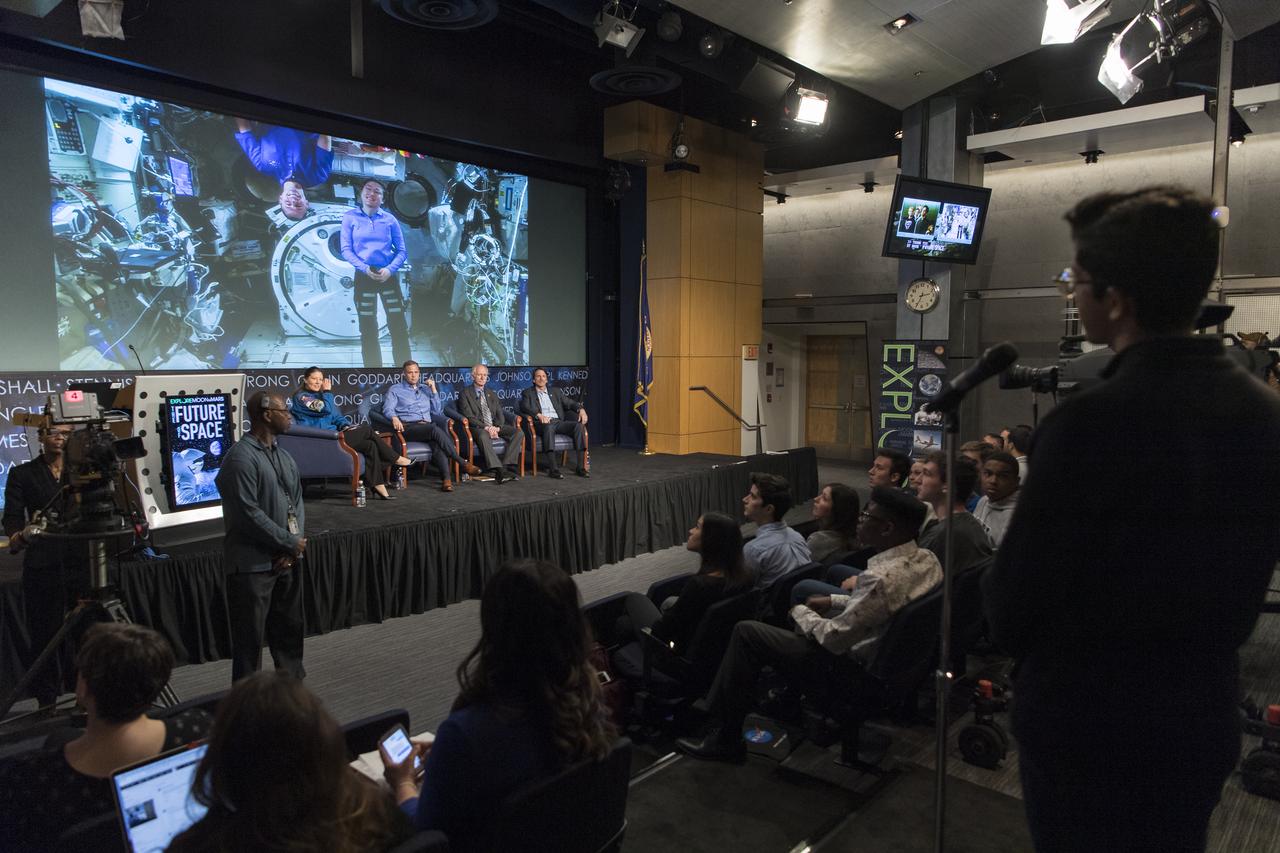
A student asks Nick Hague and Christina Koch, two astronauts currently living and working on the International Space Station, a question during a panel discussion with NASA Administrator Jim Bridenstine, NASA Associate Administrator for the Human Exploration and Operations Mission Directorate, Bill Gerstenmaier, and NASA Deputy Associate Administrator for Exploration, Steve Clarke at the "Future of Space" STEM event, Monday, April 29, 2019 at NASA Headquarters in Washington. NASA astronaut Tracy Caldwell Dyson, moderated the panel discussion. Photo Credit: (NASA/Aubrey Gemignani)
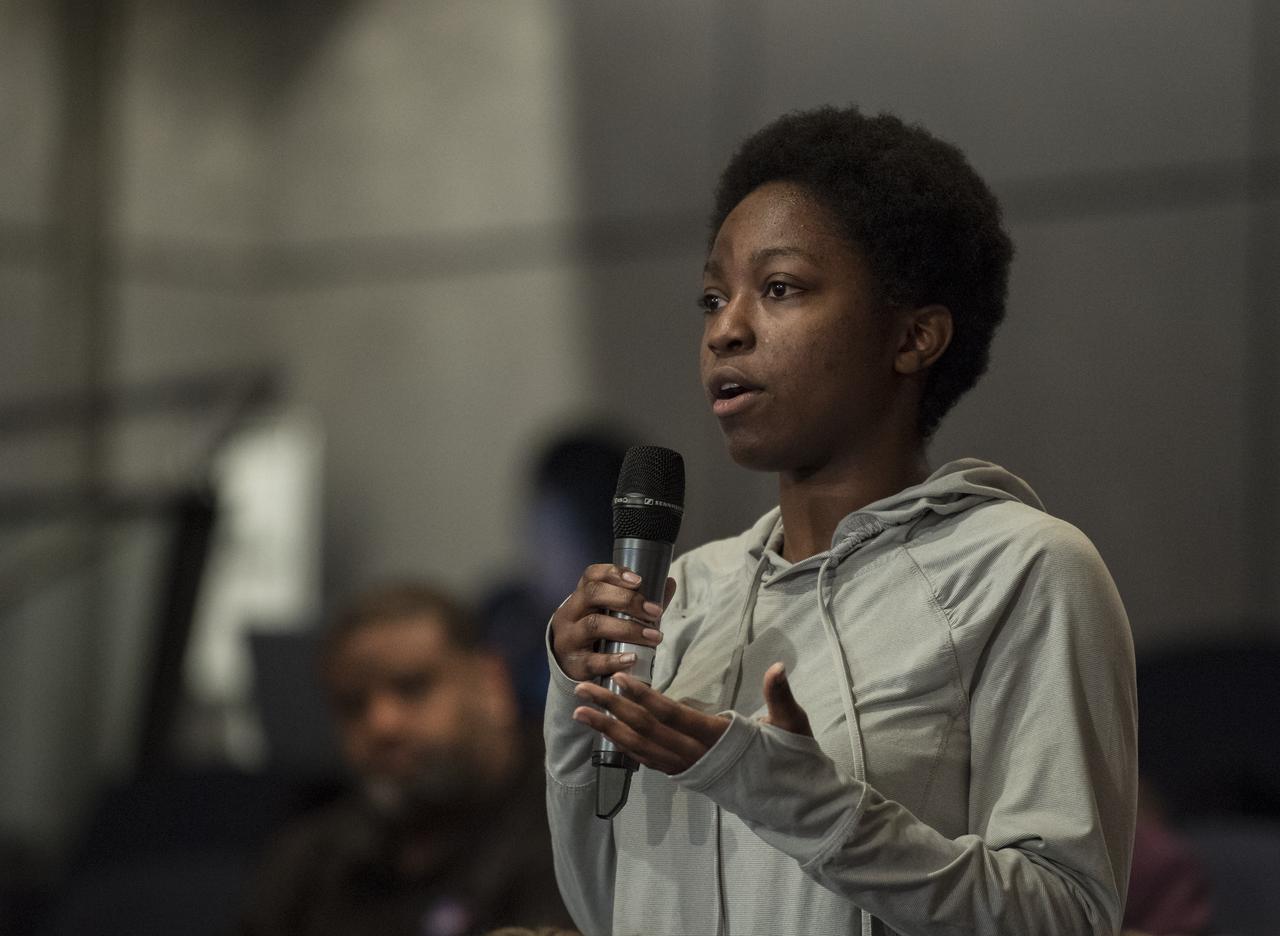
A student asks a questions during a panel discussion with NASA Administrator Jim Bridenstine, NASA Associate Administrator for the Human Exploration and Operations Mission Directorate, Bill Gerstenmaier, and NASA Deputy Associate Administrator for Exploration, Steve Clarke at the "Future of Space" STEM event, Monday, April 29, 2019 at NASA Headquarters in Washington. NASA astronaut Tracy Caldwell Dyson moderated the discussion. Photo Credit: (NASA/Aubrey Gemignani)
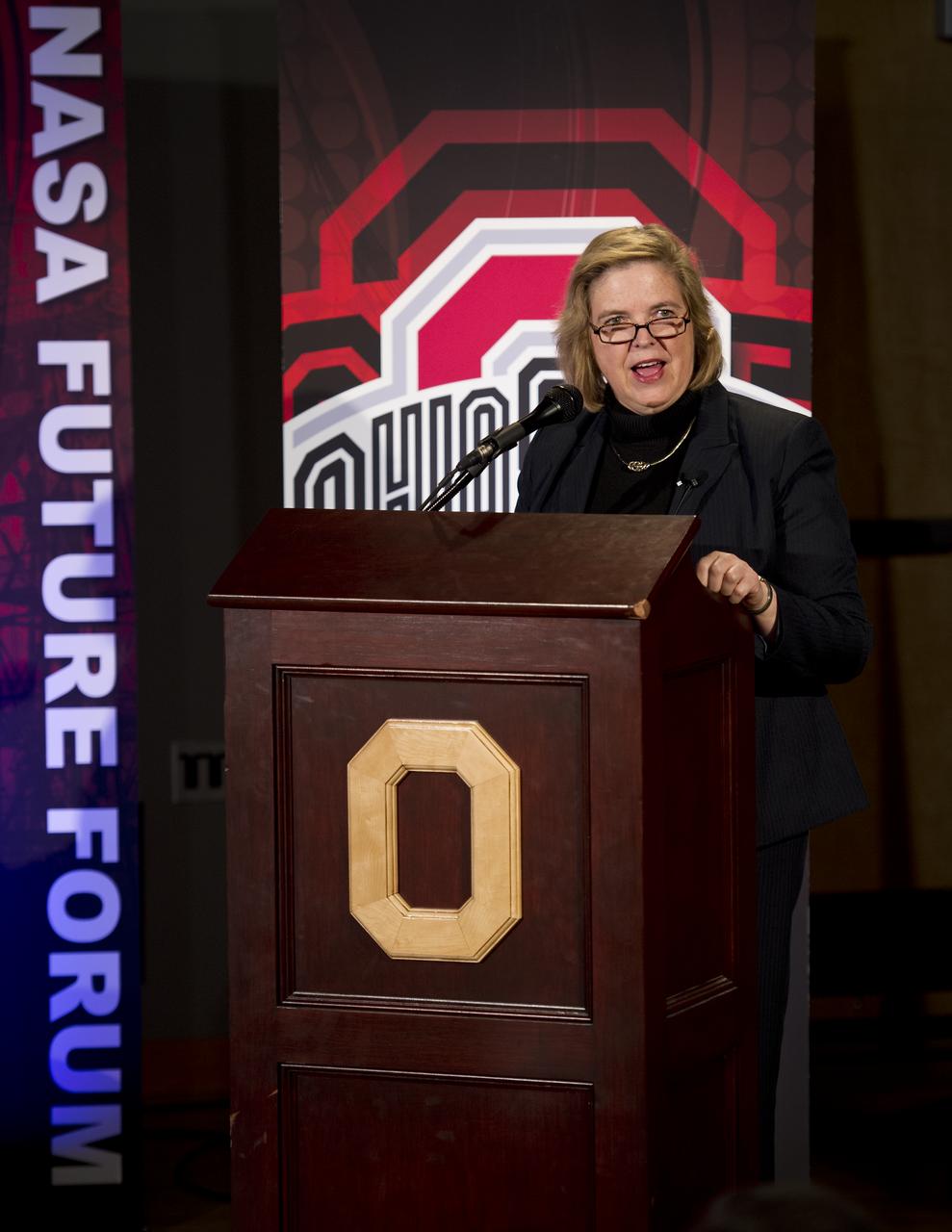
The Ohio State University Vice President for Research Dr. Caroline Whitacre kicks off the first panel discussion during NASA's Future Forum at The Ohio State University on Monday, Feb. 20, 2012, in Columbus, Ohio. Monday marked the 50th anniversary of Glenn's historic flight as the first American to orbit Earth. Photo Credit: (NASA/Bill Ingalls)
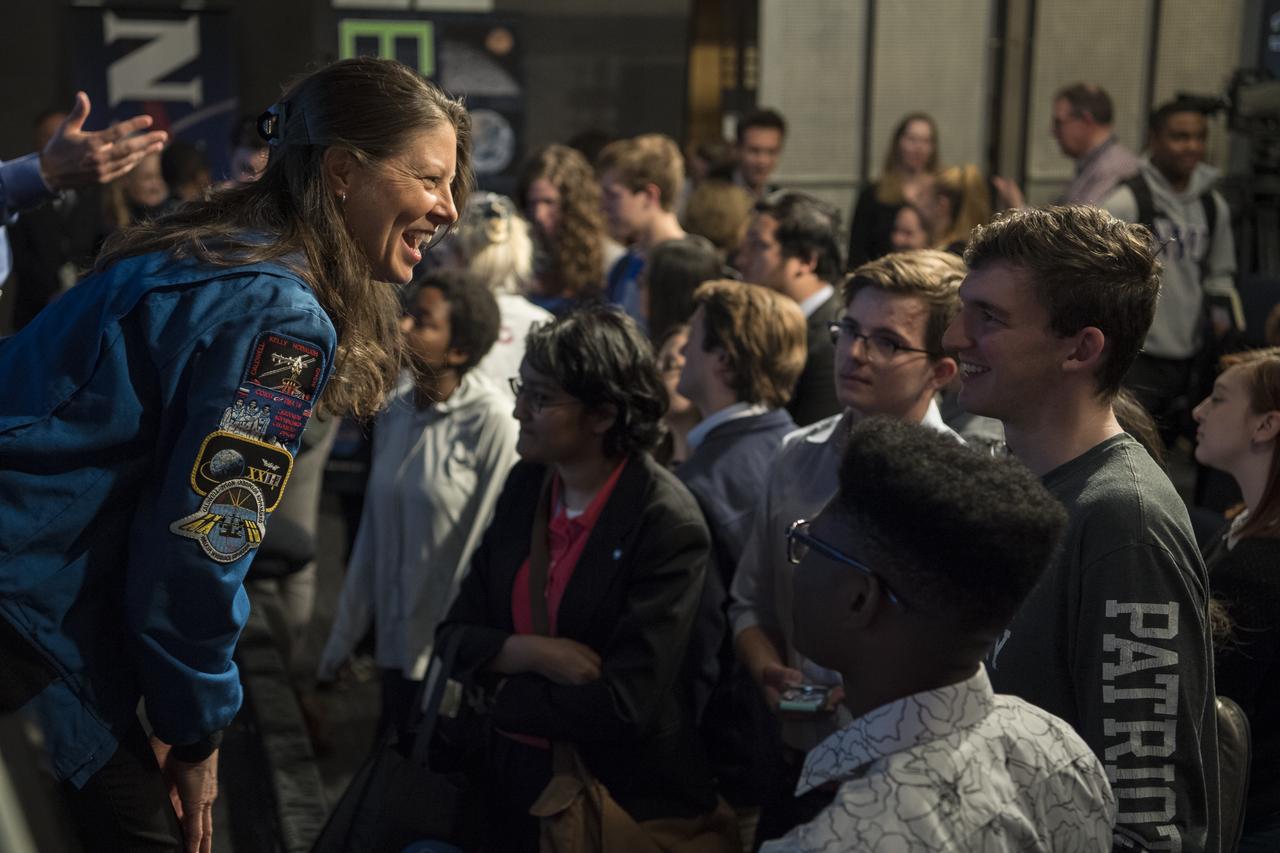
NASA astronaut Tracy Caldwell Dyson speaks with college students after the "Future of Space" STEM event, Monday, April 29, 2019 at NASA Headquarters in Washington. She moderated a panel discussion with NASA Administrator Jim Bridenstine, NASA Associate Administrator for the Human Exploration and Operations Mission Directorate, Bill Gerstenmaier, and NASA Deputy Associate Administrator for Exploration, Steve Clarke. Photo Credit: (NASA/Aubrey Gemignani)
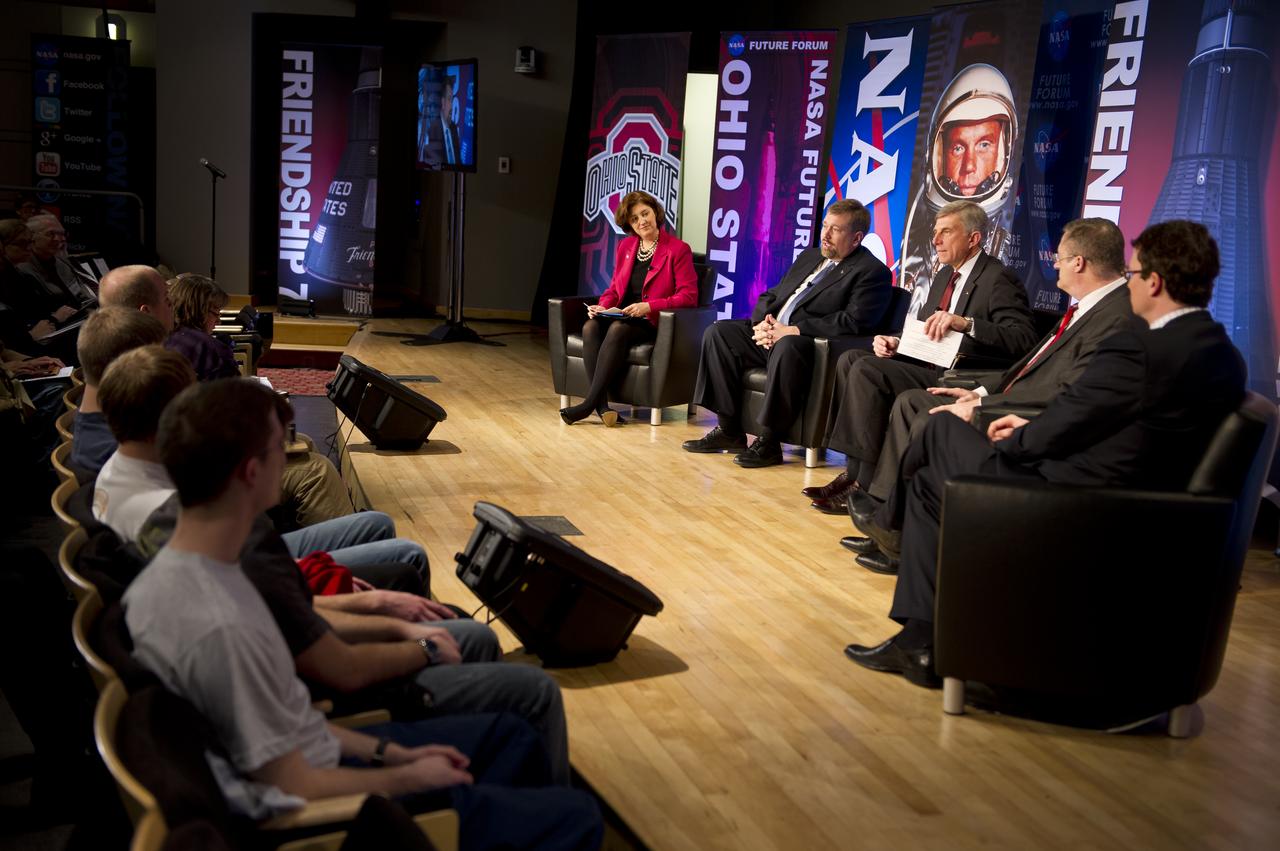
Laurie Leshin, dean of the School of Science, Rensselaer Polytechnic Institute, left, Mason Peck, NASA Chief Technologist, 2nd from left, Ron Sega, Vice president and enterprise executive for Energy and the Environment, The Ohio State University and Colorado State University, Michael Donovan, technology consultant, New Services Development, Hewlett-Packard Company, and, Jordan Hansell, chairman and CEO, NetJets Inc., right, participate in the NASA Future Forum panel titled "Importance of Technology, Science and Innovation for our Economic Future" at The Ohio State University on Tuesday, Feb. 21, 2012 in Columbus, Ohio. The NASA Future Forum features panel discussions on the importance of education to our nation's future in space, the benefit of commercialized space technology to our economy and lives here on Earth, and the shifting roles for the public, commercial and international communities in space. Photo Credit: (NASA/Bill Ingalls)
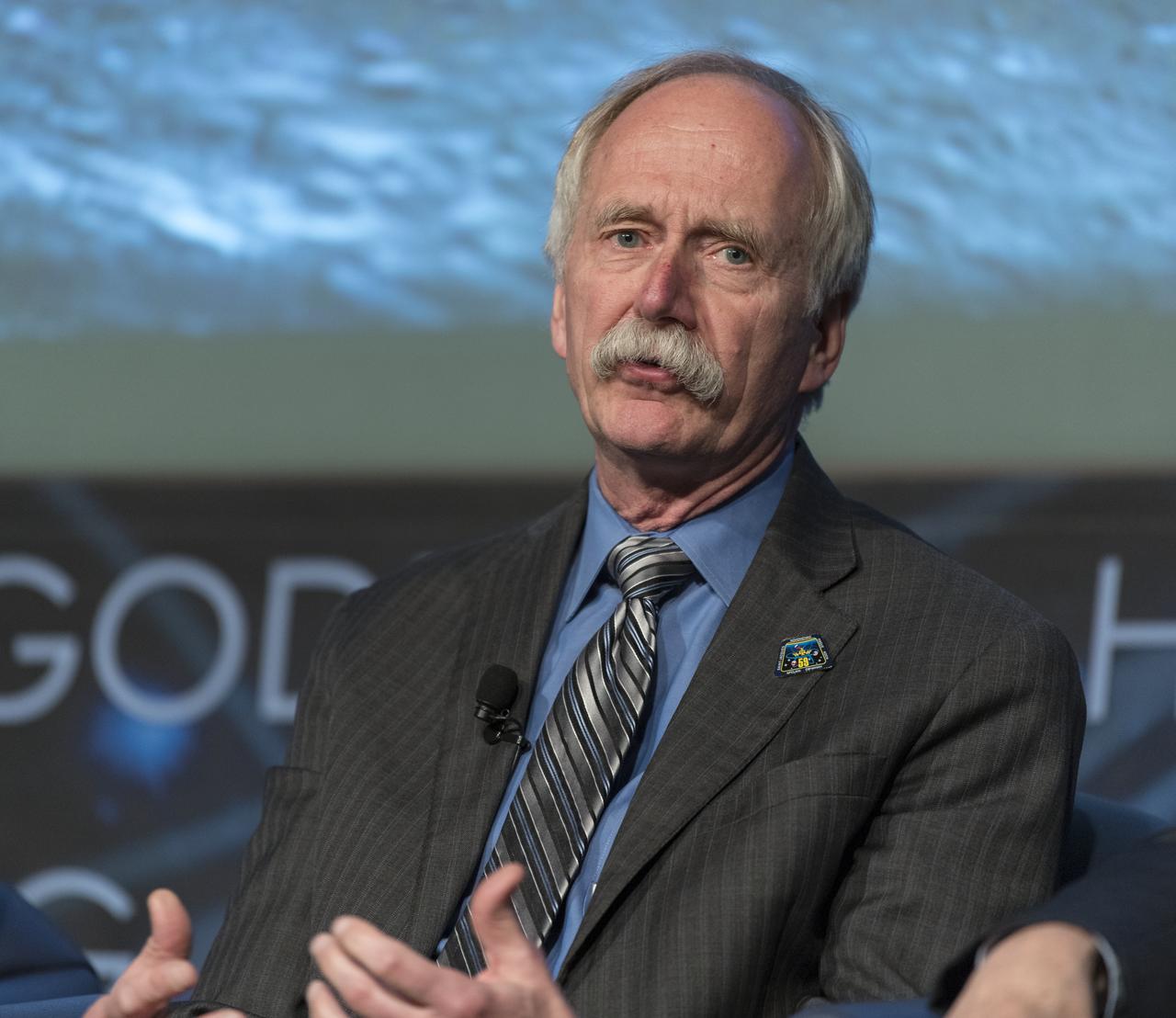
NASA Associate Administrator for the Human Exploration and Operations Mission Directorate, Bill Gerstenmaier speaks at the "Future of Space" STEM event, Monday, April 29, 2019 at NASA Headquarters in Washington, where college students were able to ask panelists, Gerstenmaier, NASA Administrator Jim Bridenstine, and NASA Deputy Associate Administrator for Exploration, Steve Clarke questions as well as speak with two astronauts currently on the International Space Station, Nick Hague and Christina Koch. NASA astronaut Tracy Caldwell Dyson moderated the panel discussion. Photo Credit: (NASA/Aubrey Gemignani)
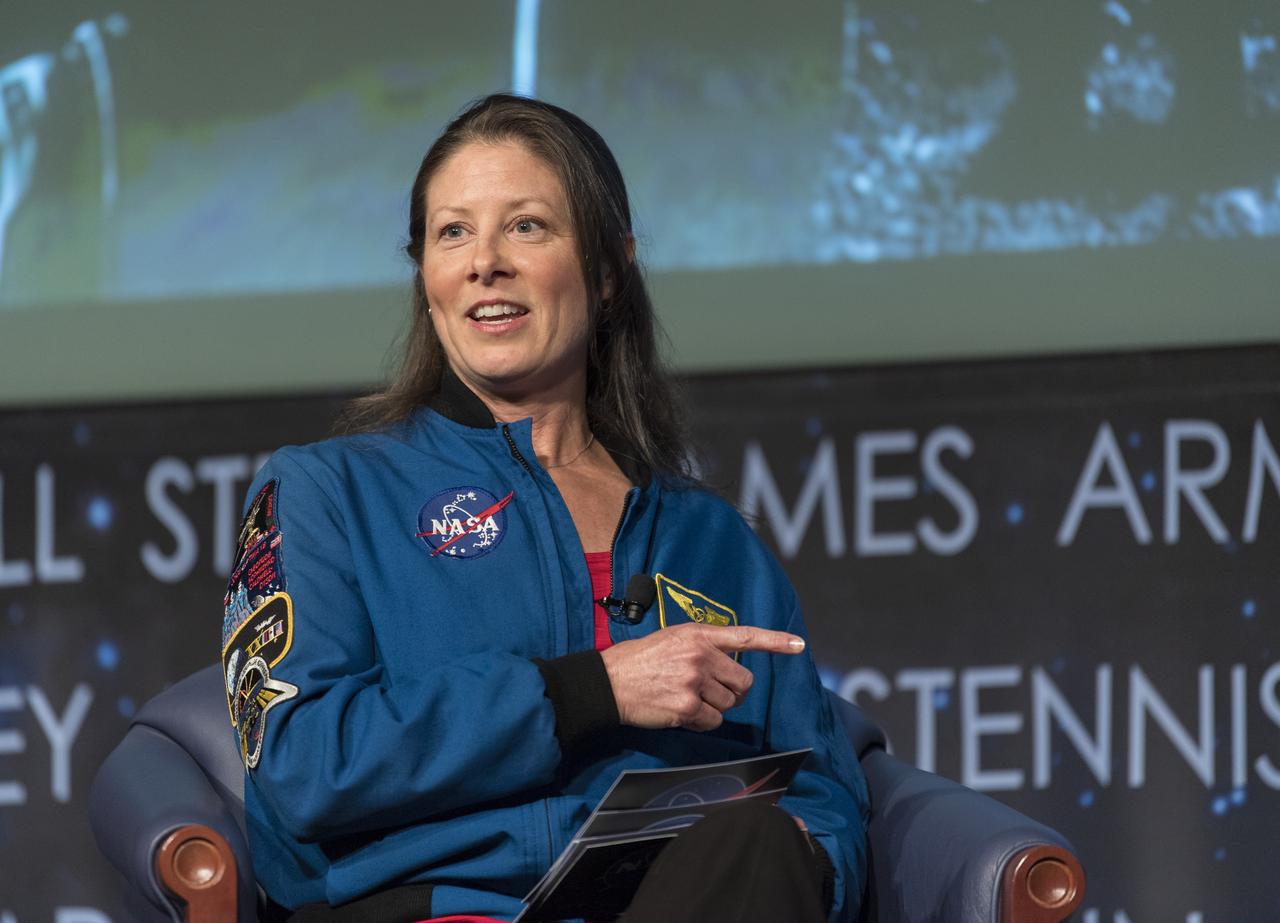
NASA astronaut Tracy Caldwell Dyson, moderates a panel discussion with NASA Administrator Jim Bridenstine, NASA Associate Administrator for the Human Exploration and Operations Mission Directorate, Bill Gerstenmaier, and NASA Deputy Associate Administrator for Exploration, Steve Clarke at the "Future of Space" STEM event, Monday, April 29, 2019 at NASA Headquarters in Washington, where college students were able to ask the panelists questions as well as speak with two astronauts currently on the International Space Station, Nick Hague and Christina Koch. Photo Credit: (NASA/Aubrey Gemignani)
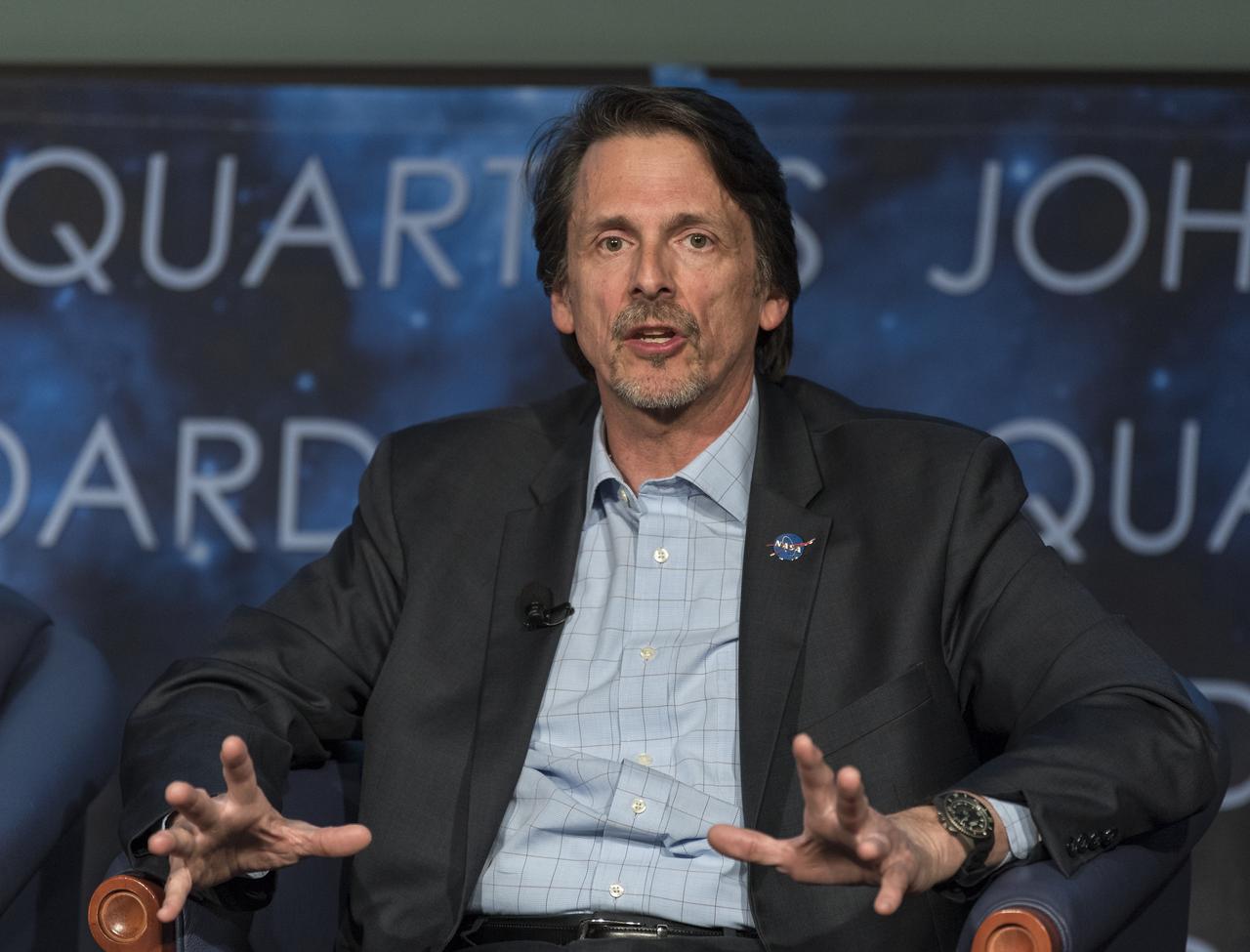
NASA Deputy Associate Administrator for Exploration, Steve Clarke speaks at the "Future of Space" STEM event, Monday, April 29, 2019 at NASA Headquarters in Washington, where college students were able to ask panelists, Clarke, NASA Administrator Jim Bridenstine, and NASA Associate Administrator for the Human Exploration and Operations Mission Directorate, Bill Gerstenmaier questions as well as speak with two astronauts currently on the International Space Station, Nick Hague and Christina Koch. NASA astronaut Tracy Caldwell Dyson moderated the panel discussion. Photo Credit: (NASA/Aubrey Gemignani)
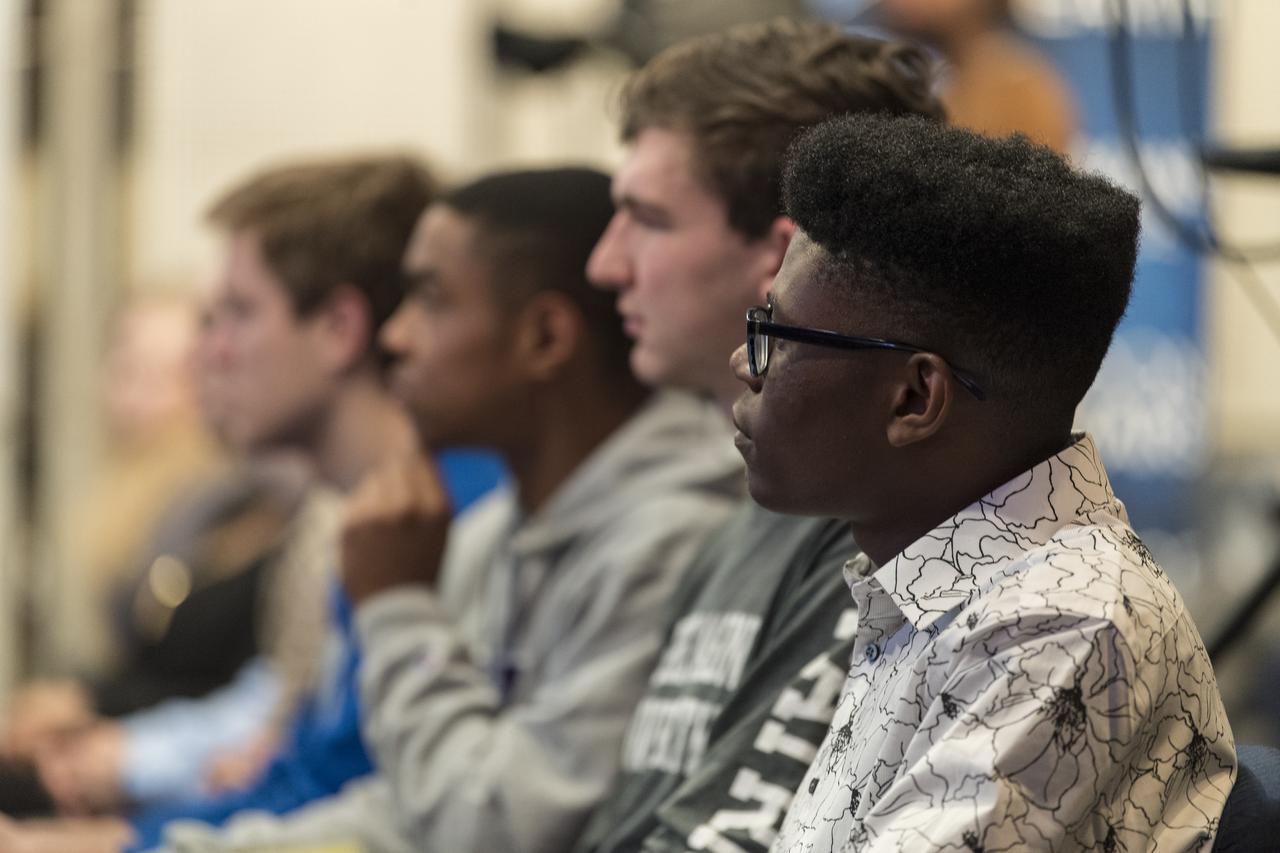
Students are seen in the audience as NASA astronaut Tracy Caldwell Dyson, moderates a panel discussion with NASA Administrator Jim Bridenstine, NASA Associate Administrator for the Human Exploration and Operations Mission Directorate, Bill Gerstenmaier, and NASA Deputy Associate Administrator for Exploration, Steve Clarke at the "Future of Space" STEM event, Monday, April 29, 2019 at NASA Headquarters in Washington. The students were able to ask the panelists questions as well as speak with two astronauts currently on the International Space Station, Nick Hague and Christina Koch. Photo Credit: (NASA/Aubrey Gemignani)
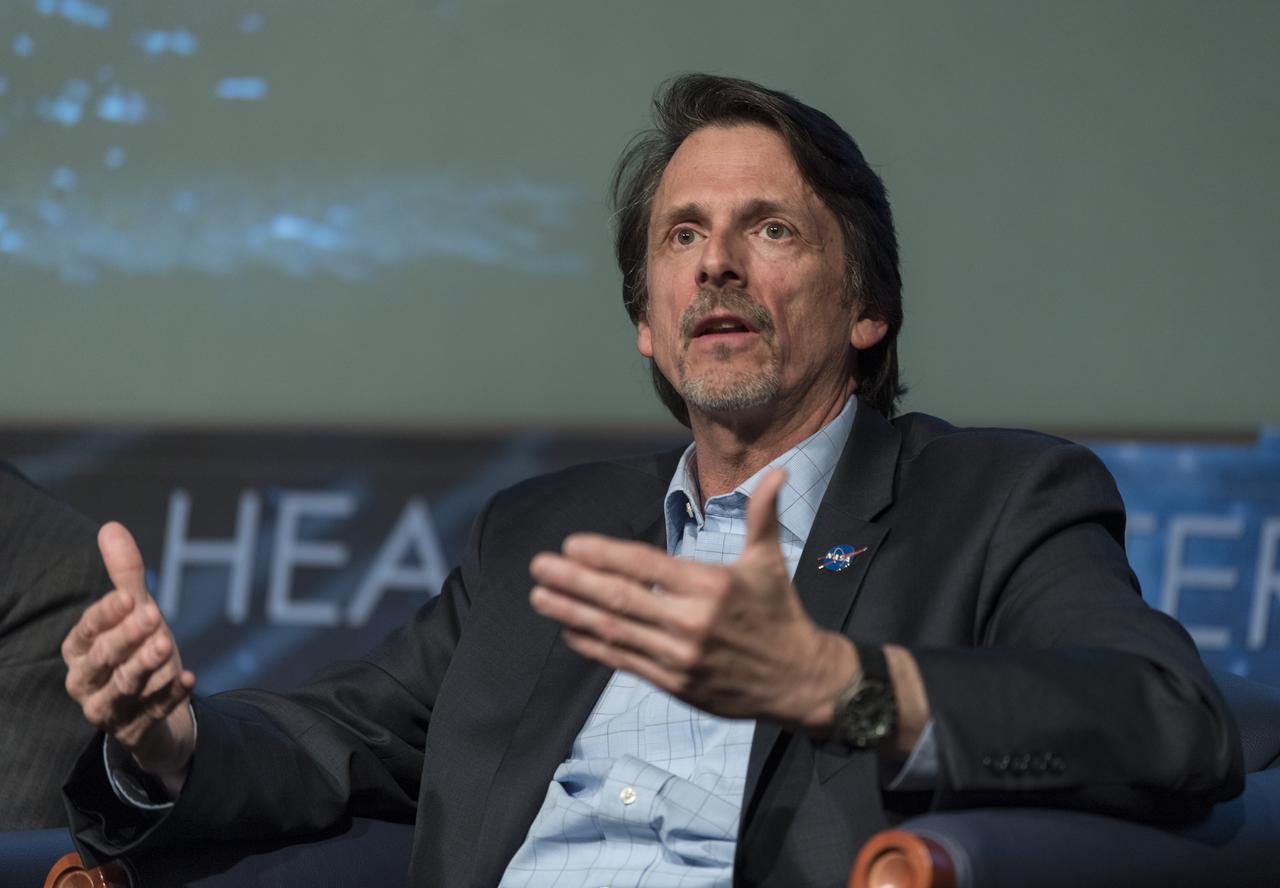
NASA Deputy Associate Administrator for Exploration, Steve Clarke speaks at the "Future of Space" STEM event, Monday, April 29, 2019 at NASA Headquarters in Washington, where college students were able to ask panelists, Clarke, NASA Administrator Jim Bridenstine, and NASA Associate Administrator for the Human Exploration and Operations Mission Directorate, Bill Gerstenmaier questions as well as speak with two astronauts currently on the International Space Station, Nick Hague and Christina Koch. NASA astronaut Tracy Caldwell Dyson moderated the panel discussion. Photo Credit: (NASA/Aubrey Gemignani)
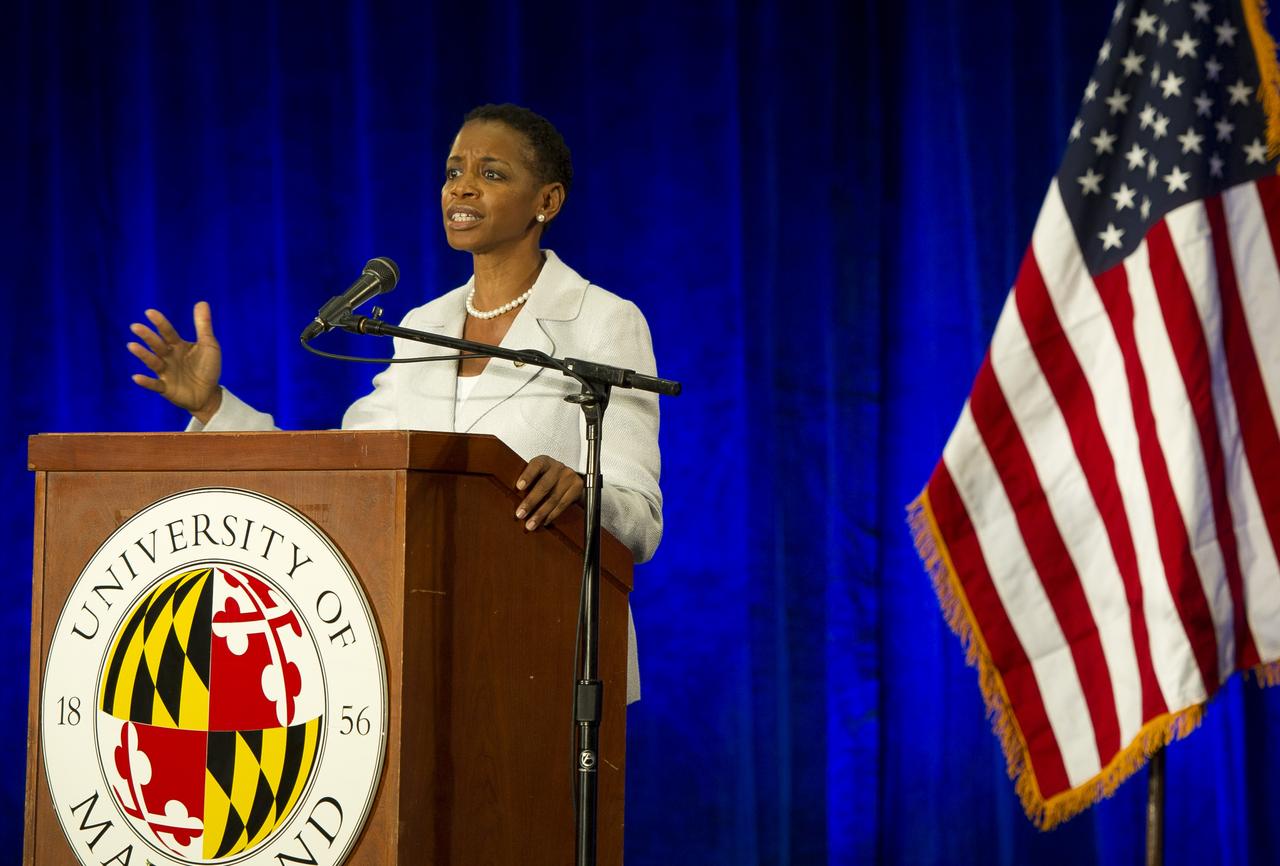
U.S. Rep. Donna Edwards, D-Md., addresses the audience at the 2011 NASA Future Forum, Thursday, Aug. 11, 2011, at the Riggs Alumni Center on the campus of the University of Maryland in College Park, Md. Photo Credit: (NASA/Paul E. Alers)
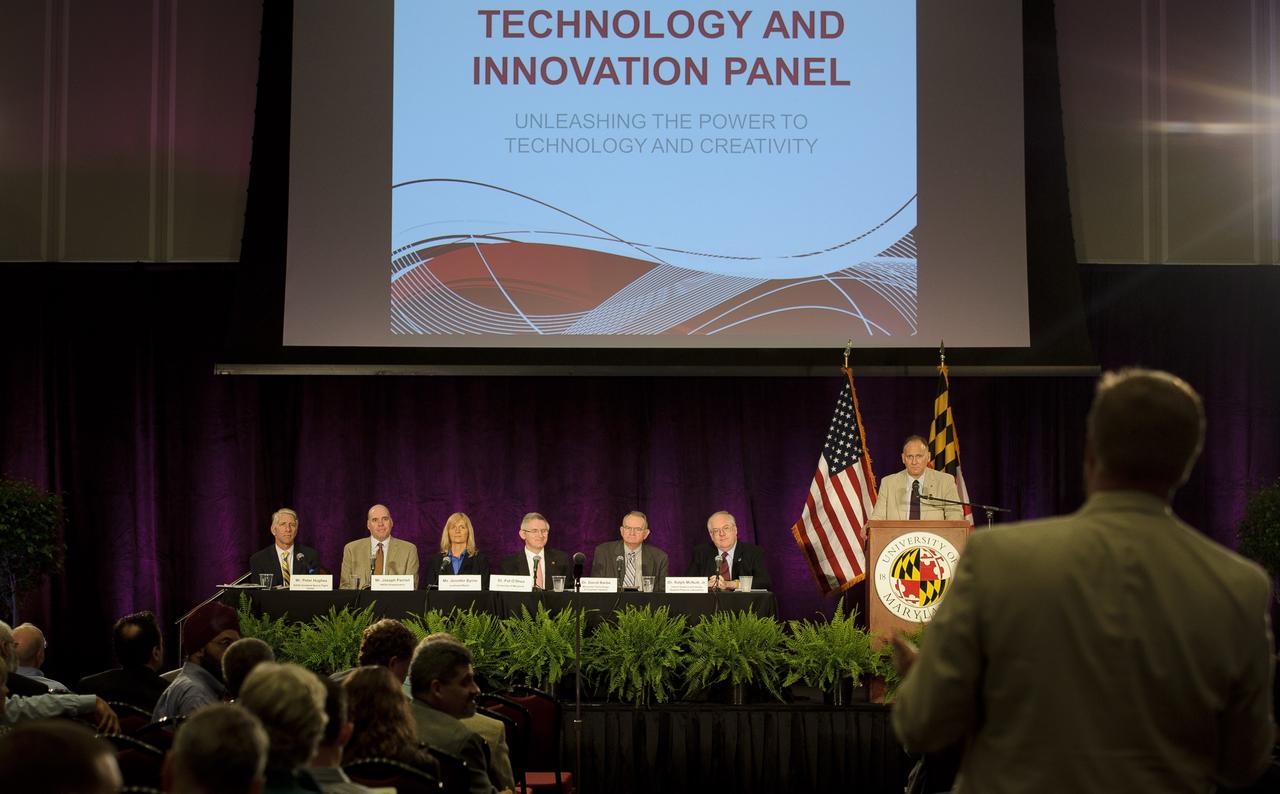
A member of the audience asks a question to the technology and innovation panel at the 2011 NASA Future Forum, Thursday, Aug. 11, 2011, at the Riggs Alumni Center on the campus of the University of Maryland in College Park, Md. Photo Credit: (NASA/Paul E. Alers)
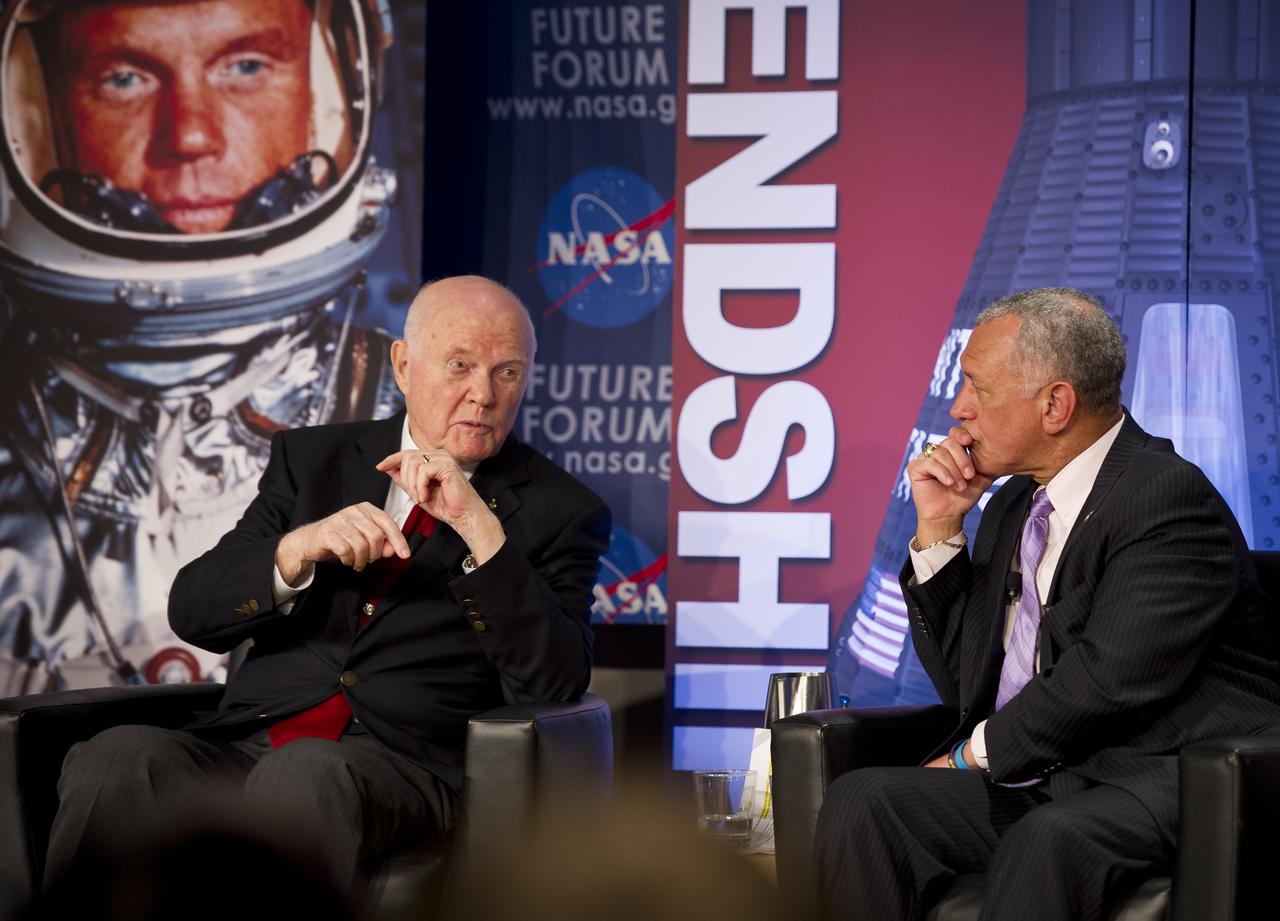
Sen. John Glenn, left, talks with NASA Administrator Charles Bolden during a NASA Future Forum panel discussion at The Ohio State University on Monday, Feb. 20, 2012, in Columbus, Ohio. Monday marked the 50th anniversary of Glenn's historic flight as the first American to orbit Earth. Photo Credit: (NASA/Bill Ingalls)
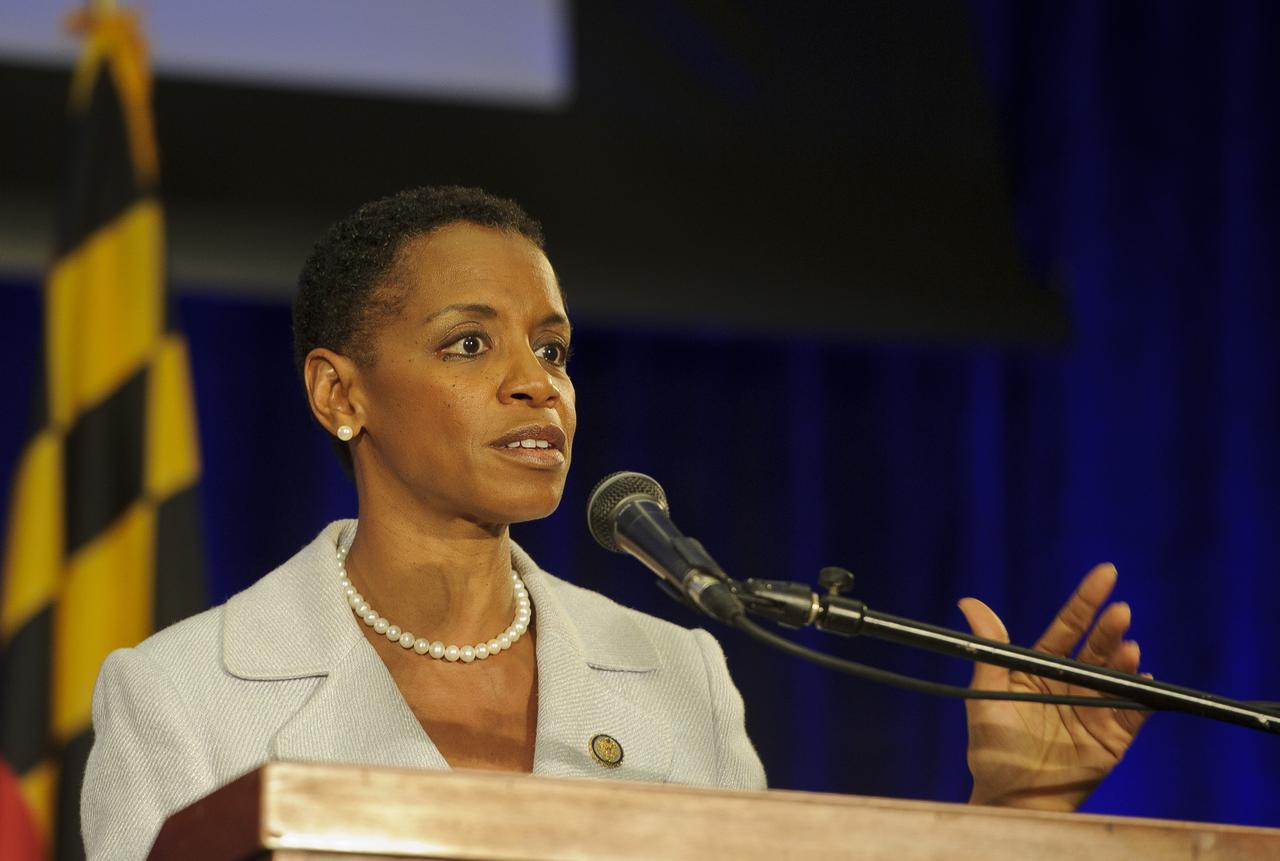
U.S. Rep. Donna Edwards, D-Md., addresses the audience at the 2011 NASA Future Forum, Thursday, Aug. 11, 2011, at the Riggs Alumni Center on the campus of the University of Maryland in College Park, Md. Photo Credit: (NASA/Paul E. Alers)
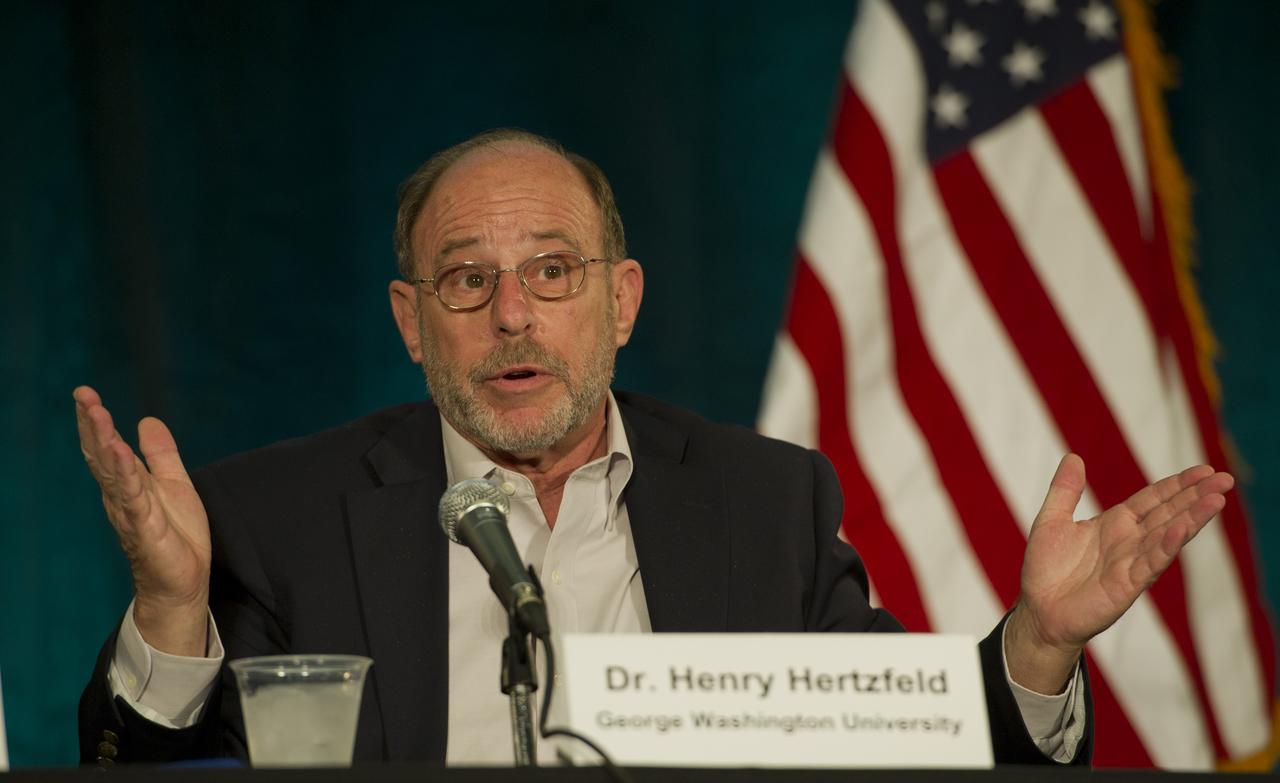
Dr. Henry Hertzfeld, from George Washington University, speaks about technology investments and their benefits during a panel discussion at the 2011 NASA Future Forum held at the Riggs Alumni Center on the campus of the University of Maryland, Thursday, Aug. 11, 2011, in College Park, Md. Photo Credit: (NASA/Paul E. Alers)
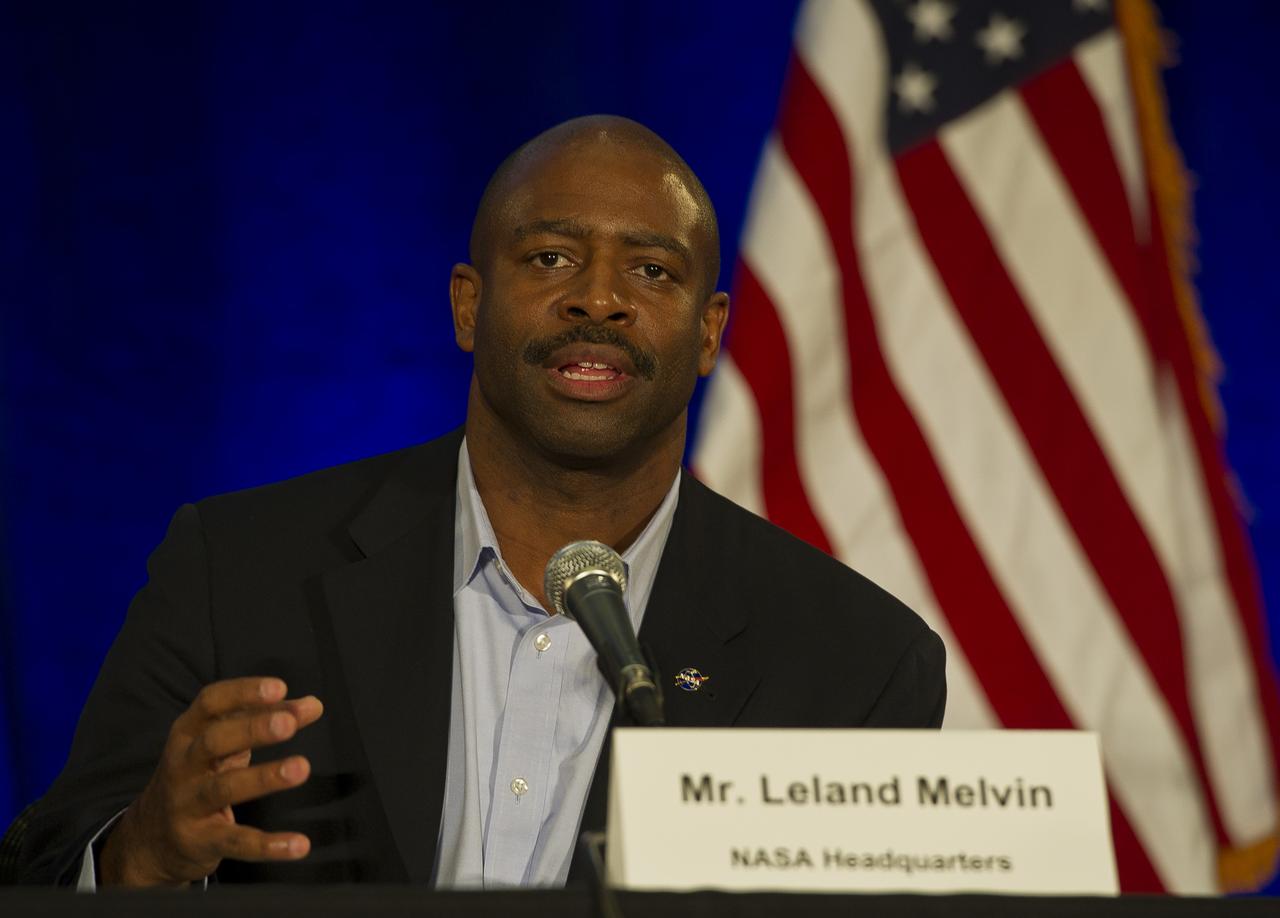
Leland Melvin, NASA Associate Administrator for Education, speaks during a panel discussion on inspiration in education at the 2011 NASA Future Forum held at the Riggs Alumni Center on the campus of the University of Maryland, Thursday, Aug. 11, 2011, in College Park, Md. Photo Credit: (NASA/Paul E. Alers)
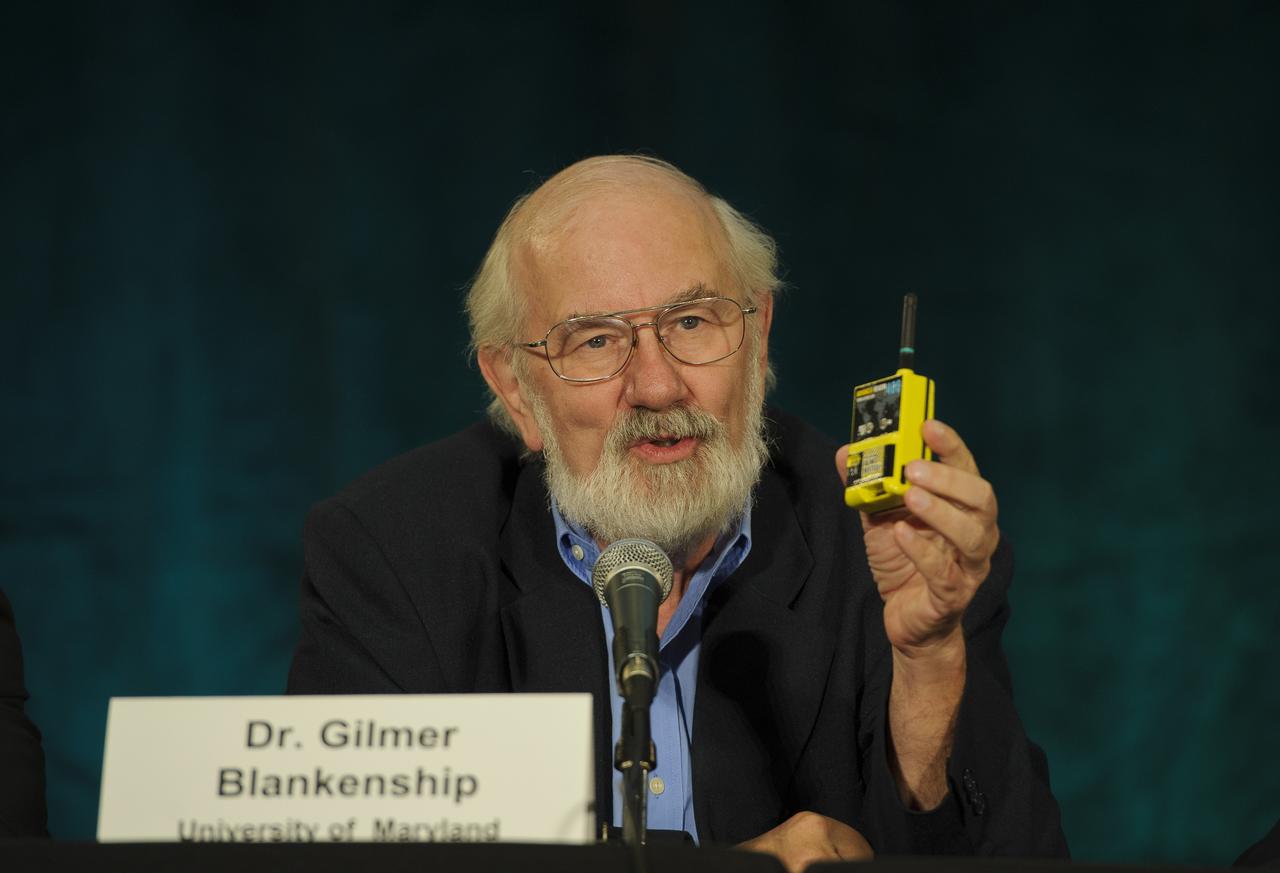
Dr. Gilmer Blankenship, of the University of Maryland, speaks about technology investments and their benefits during a panel discussion at the 2011 NASA Future Forum held at the Riggs Alumni Center on the campus of the University of Maryland, Thursday, Aug. 11, 2011, in College Park, Md. Photo Credit: (NASA/Paul E. Alers)
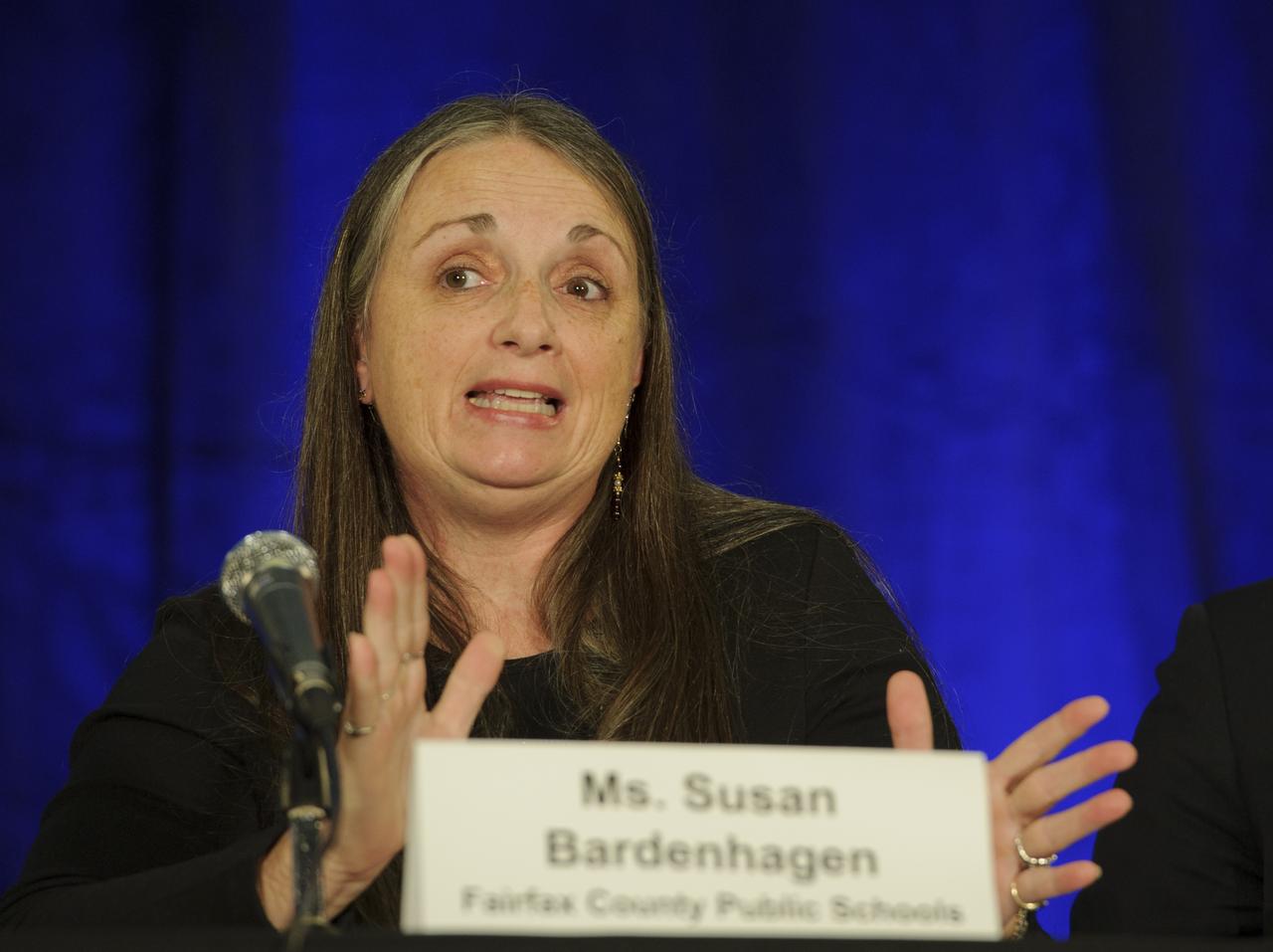
Susan Bardenhagen, an educator from the Fairfax County Public Schools, speaks during a panel discussion on inspiration in education at the 2011 NASA Future Forum held at the Riggs Alumni Center on the campus of the University of Maryland, Thursday, Aug. 11, 2011, in College Park, Md. Photo Credit: (NASA/Paul E. Alers)
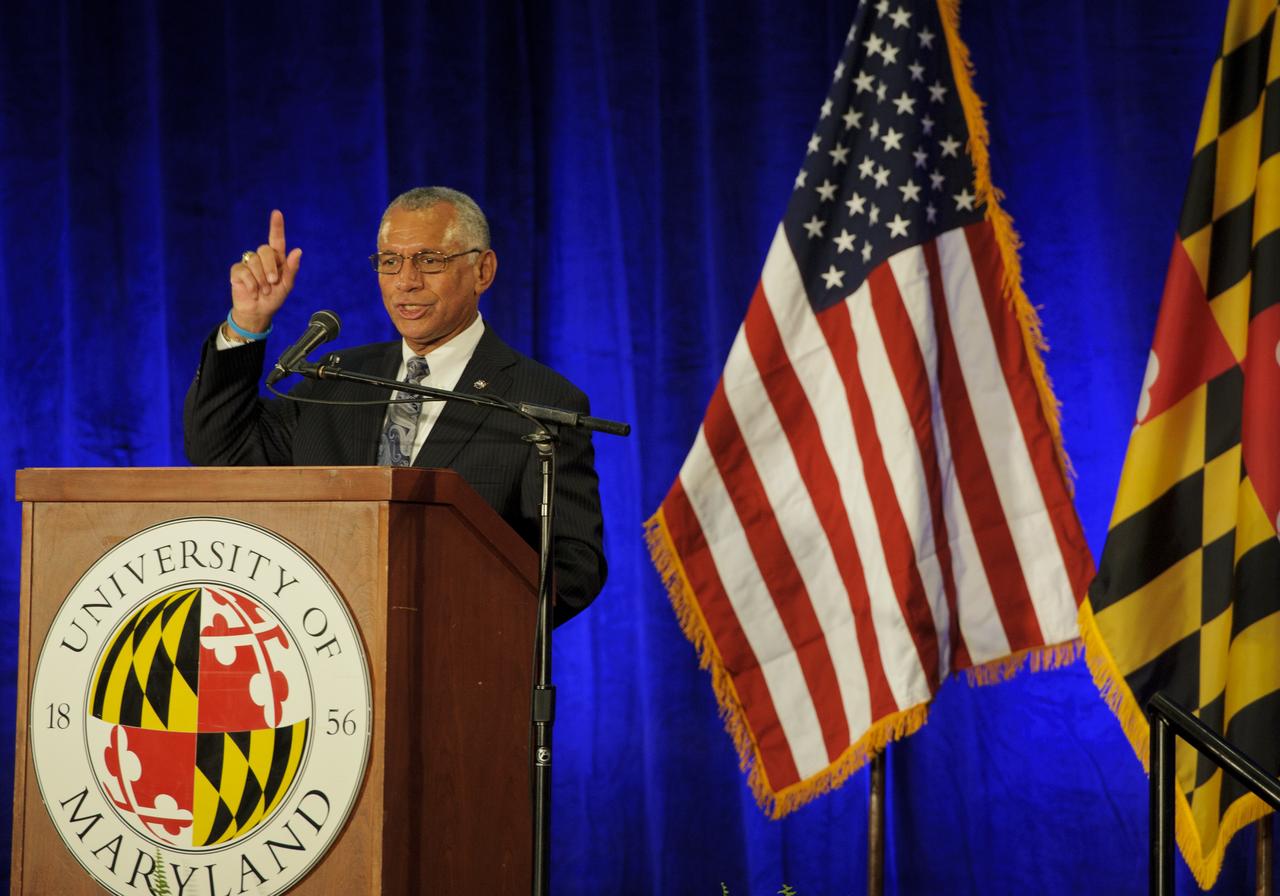
NASA Administrator Charles Bolden delivers opening remarks at the NASA Future Forum held at the Riggs Alumni Center on the campus of the University of Maryland, Thursday, Aug. 11, 2011 in College Park, Md. Photo Credit: (NASA/Paul E. Alers)
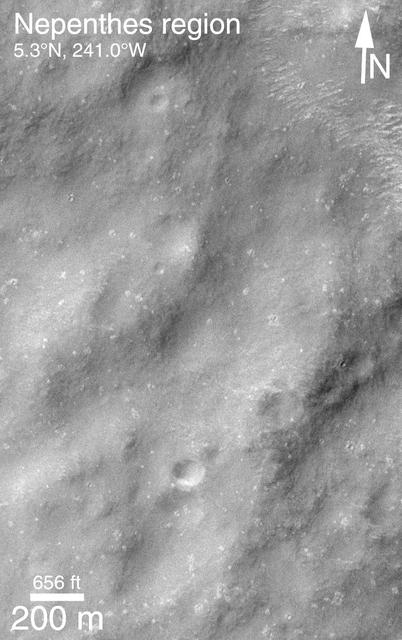
MOC Providing Clues For Future Landing Site Selection
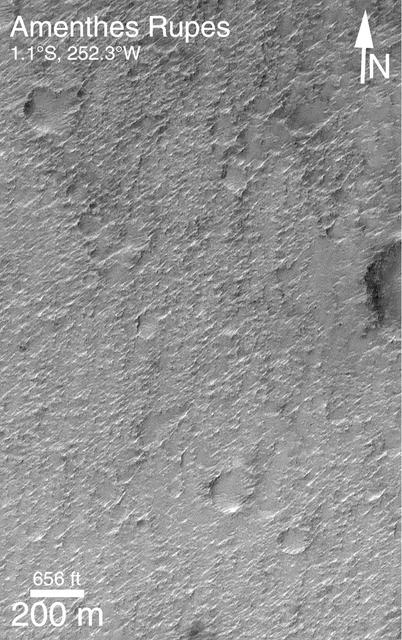
MOC Providing Clues For Future Landing Site Selection
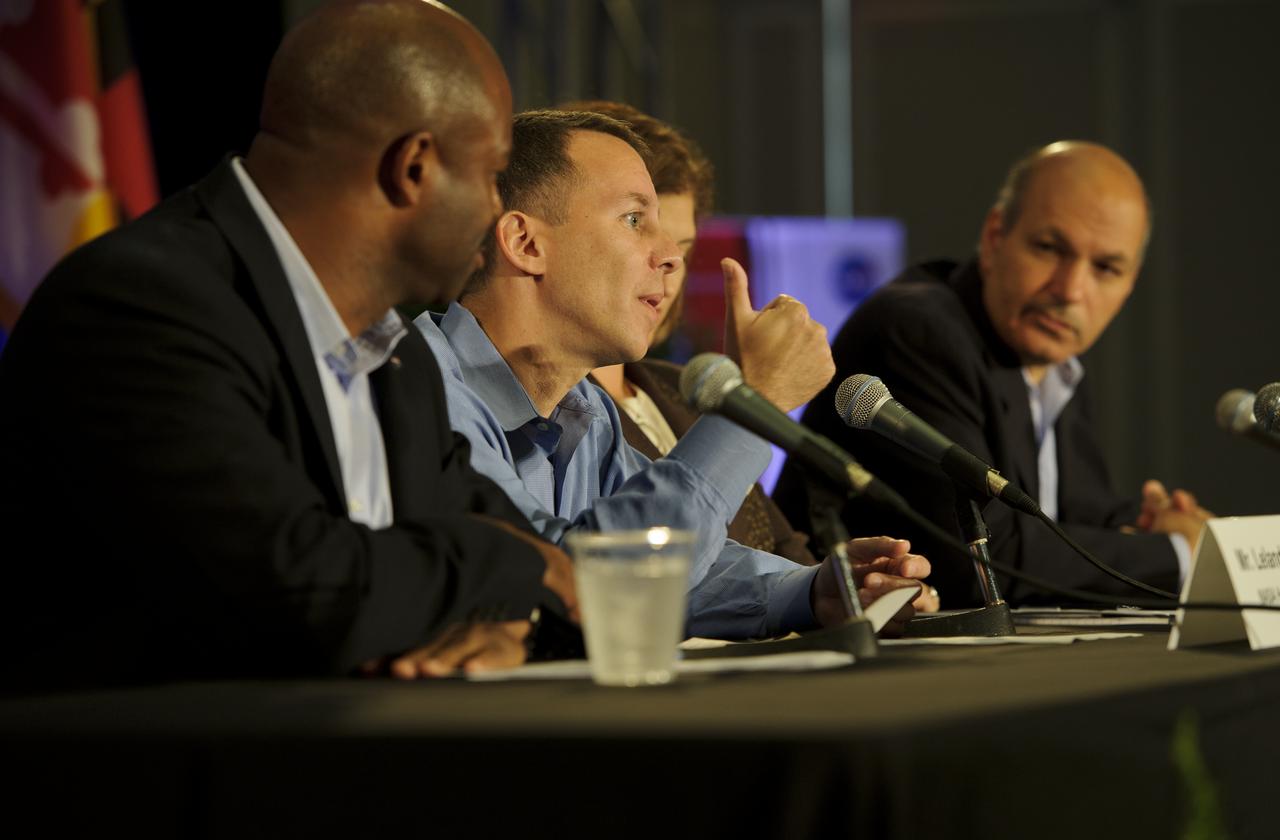
Dr. Robert Braun, NASA Chief Technologist, second from left, makes a point, as panelists Leland Melvin, Assoicate Administrator for NASA Education, left, Dr. Laurie Leshin, NASA Deputy Associate Administrator Exploration Systems Mission Directortorate, and Dr. Waleed Abdalati, NASA Chief Scientist, right, look on during a panel discussion at the NASA Future Forum held at the Riggs Alumni Center on the campus of the University of Maryland, Thursday, Aug. 11, 2011 in College Park, Md. Photo Credit: (NASA/Paul E. Alers)
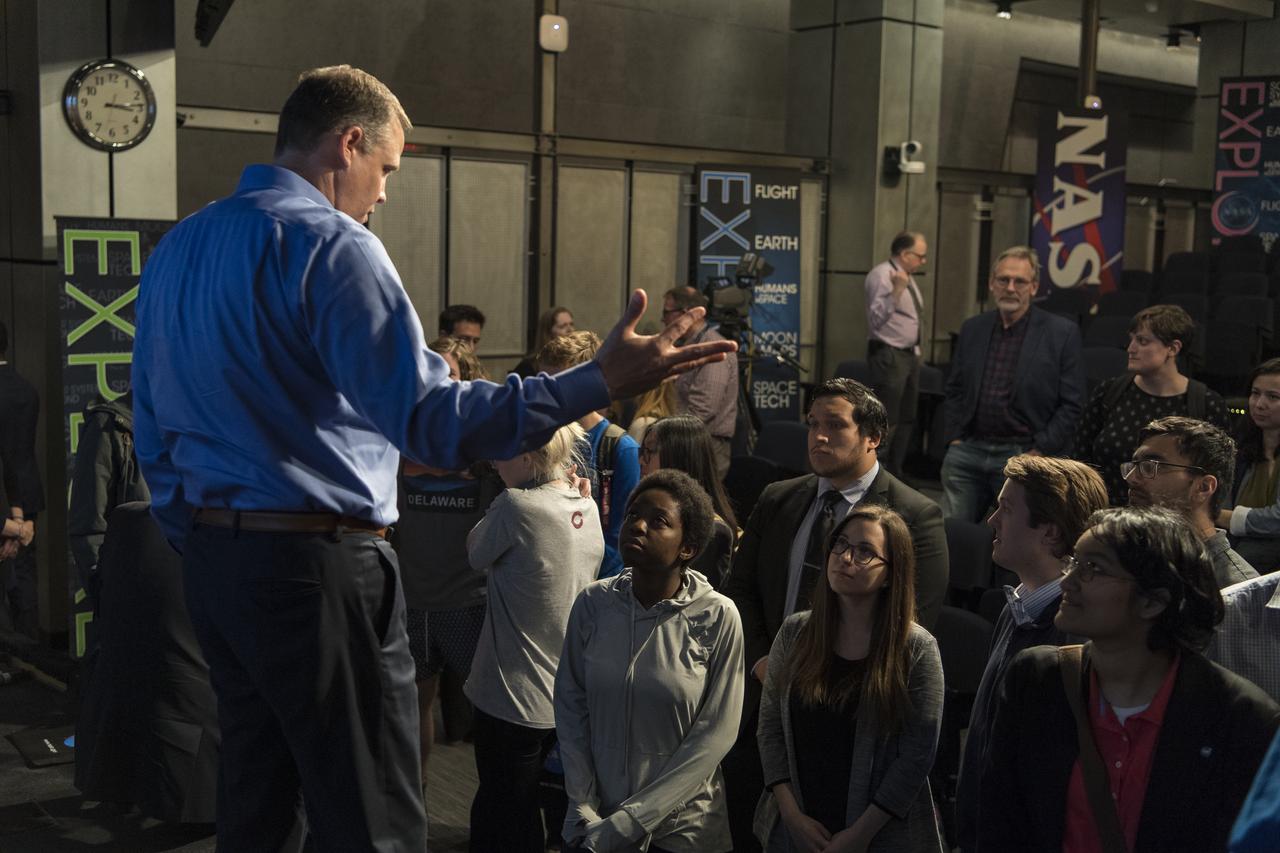
NASA Administrator Jim Bridenstine speaks with college students after the "Future of Space" STEM event, Monday, April 29, 2019 at NASA Headquarters in Washington. NASA astronaut Tracy Caldwell Dyson moderated a panel discussion with Bridenstine, NASA Associate Administrator for the Human Exploration and Operations Mission Directorate, Bill Gerstenmaier, and NASA Deputy Associate Administrator for Exploration, Steve Clarke. Photo Credit: (NASA/Aubrey Gemignani)
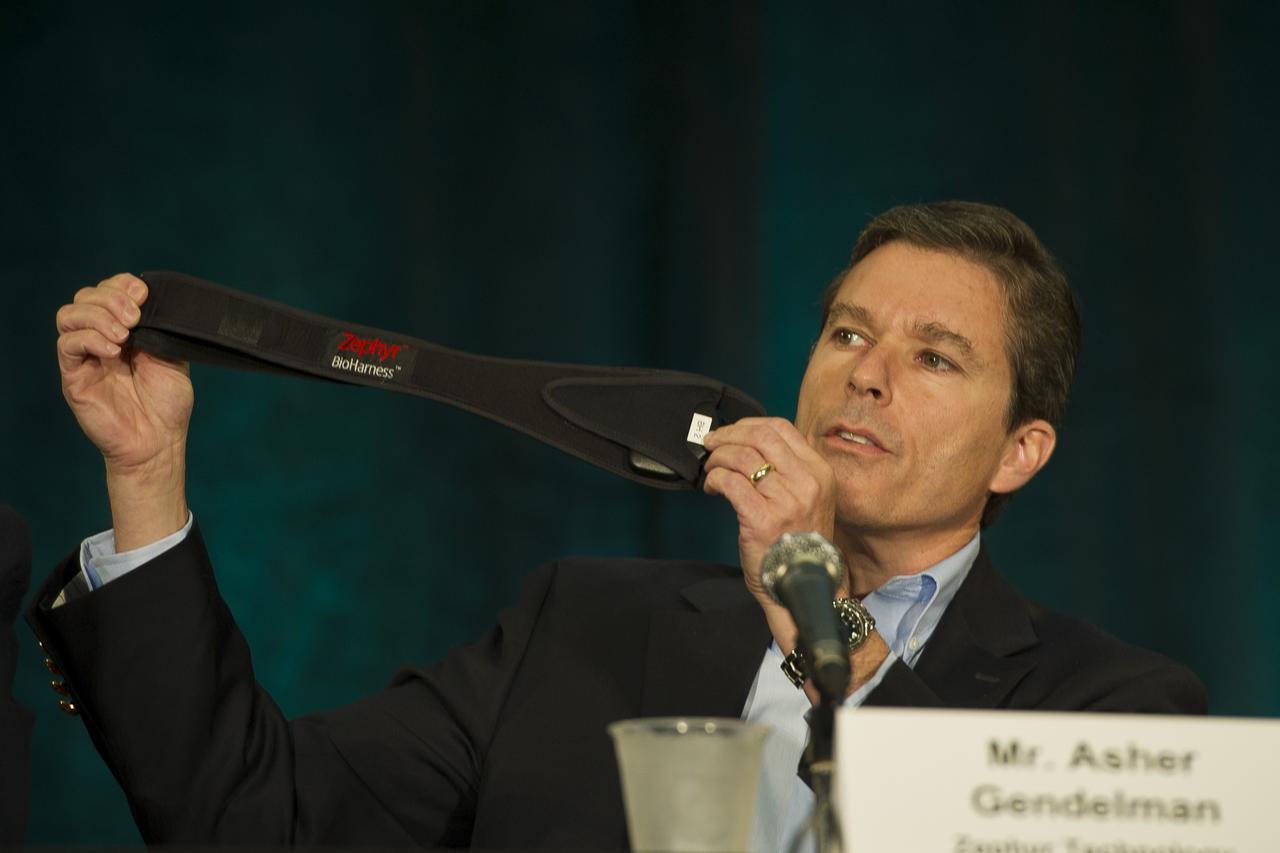
Asher Gendelman, a director of technology at Zephyr Technology, holds up chest belt as he speaks about technology investments and their benefits during a panel discussion at the 2011 NASA Future Forum held at the Riggs Alumni Center on the campus of the University of Maryland, Thursday, Aug. 11, 2011, in College Park, Md. Photo Credit: (NASA/Paul E. Alers)
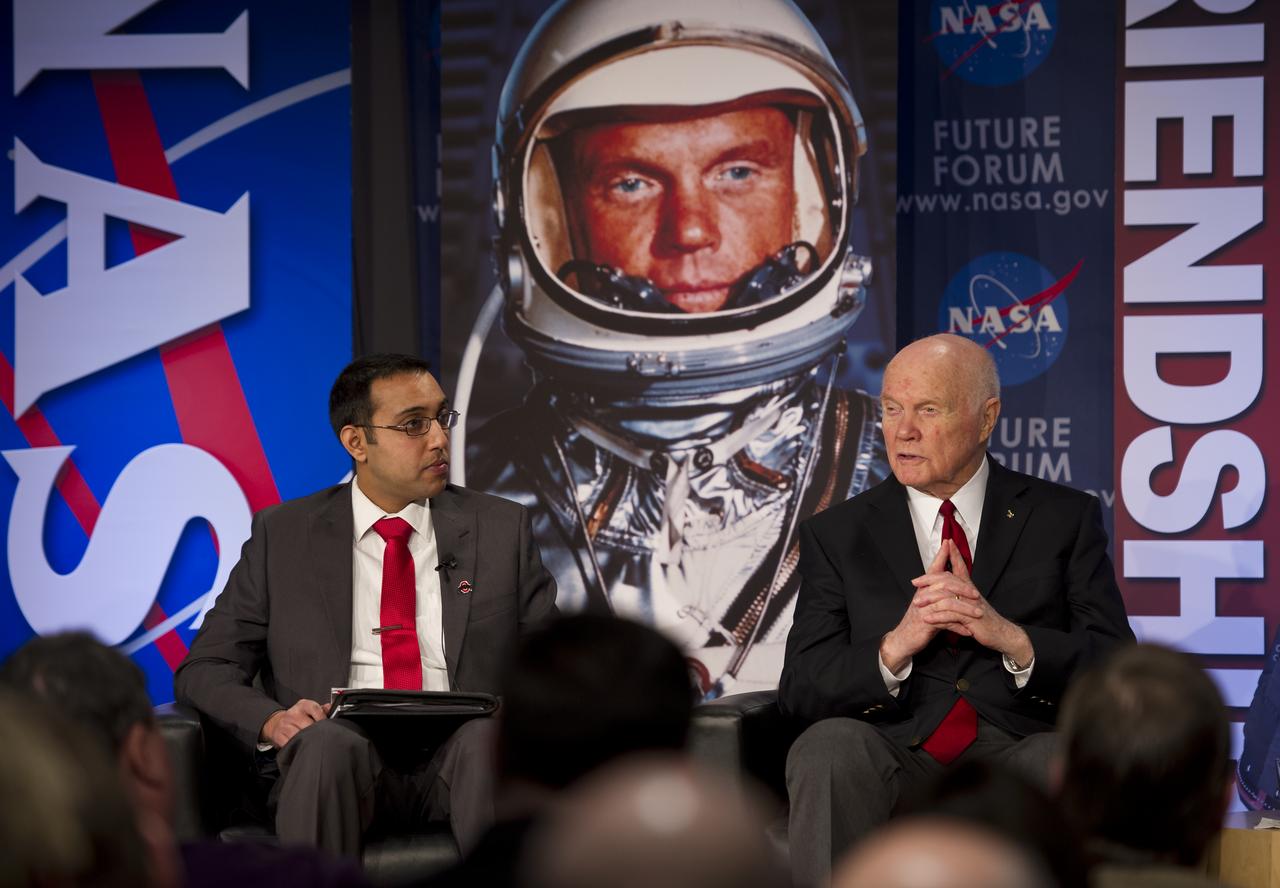
Ohio State University Graduate Research Associate Vijay Gadepally, left, listens as Sen. John Glenn talks during a NASA Future Forum panel discussion at The Ohio State University on Monday, Feb. 20, 2012, in Columbus, Ohio. Monday marked the 50th anniversary of Glenn's historic flight as the first American to orbit Earth. Photo Credit: (NASA/Bill Ingalls)
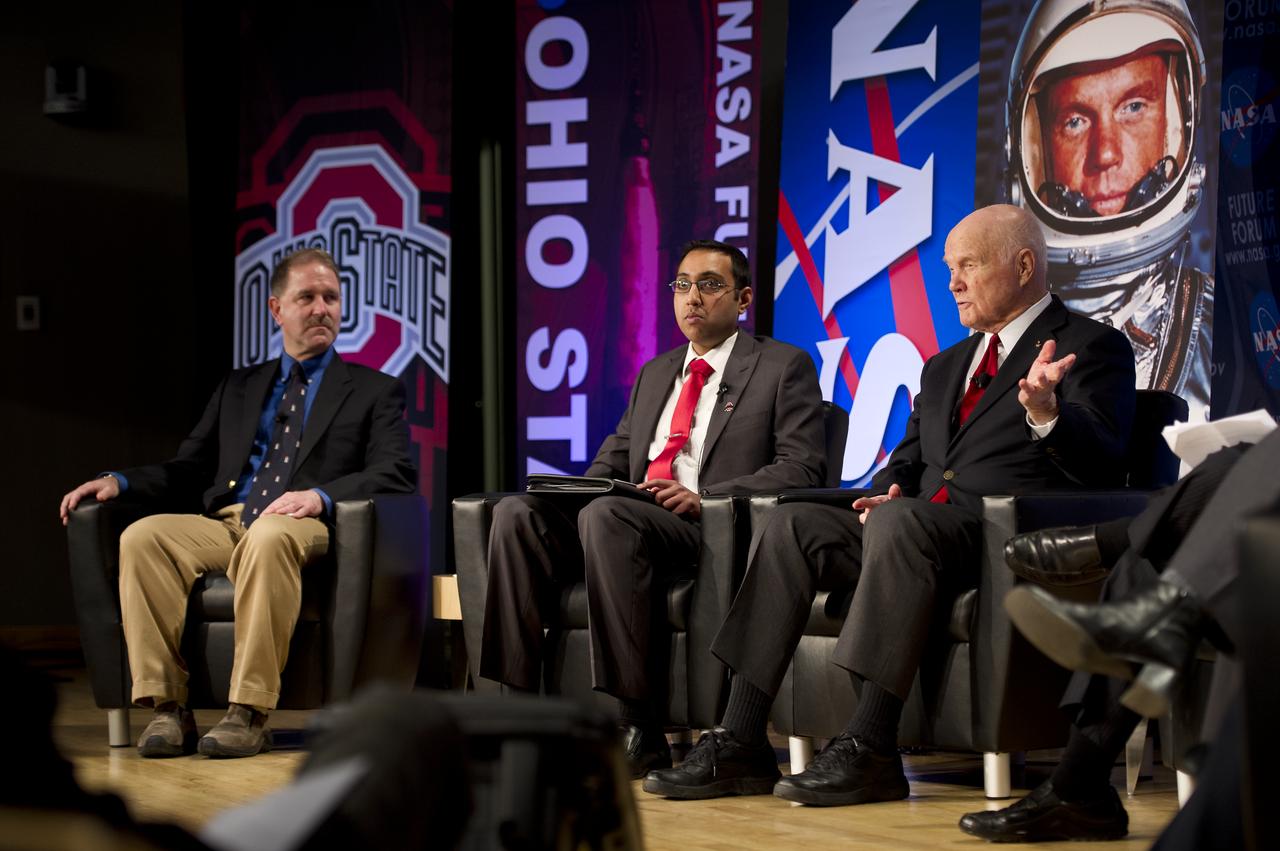
Sen. John Glenn, right, talks during a NASA Future Forum panel discussion at The Ohio State University as NASA Associate Administrator for Science Mission Directorate John Grunsfeld, left, and Ohio State University Graduate Research Associate Vijay Gadepally look on, Monday, Feb. 20, 2012, in Columbus, Ohio. Monday marked the 50th anniversary of Glenn's historic flight as the first American to orbit Earth. Photo Credit: (NASA/Bill Ingalls)

NASA Administrator Charles Bolden, right, talks as Sen. John Glenn, and Ohio State University Graduate Research Associate Vijay Gadepally, left, listen during a NASA Future Forum panel discussion at The Ohio State University on Monday, Feb. 20, 2012, in Columbus, Ohio. Monday marked the 50th anniversary of Glenn's historic flight as the first American to orbit Earth. Photo Credit: (NASA/Bill Ingalls)
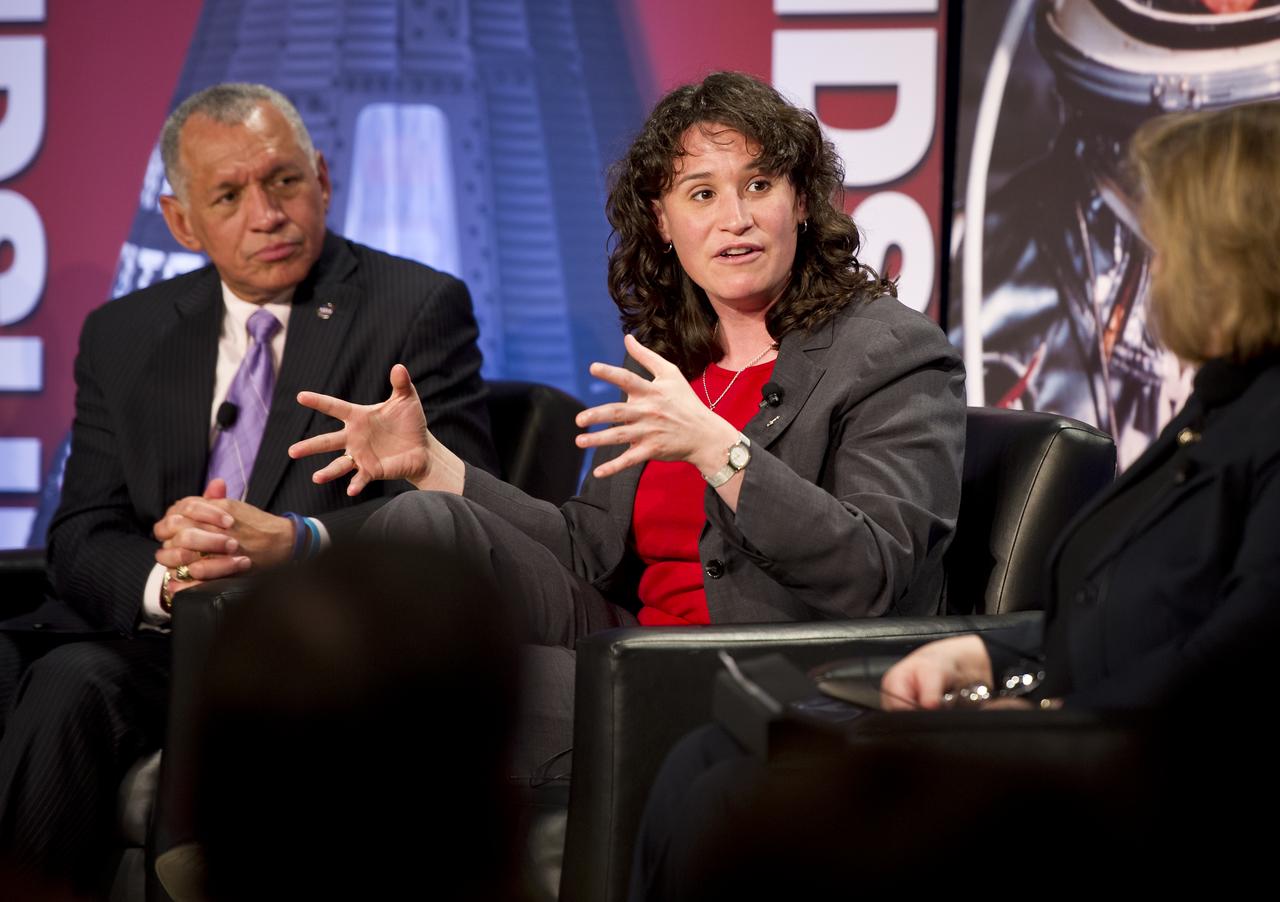
NASA 2009 Astronaut Candidate and Flight Surgeon Serena Auñón talks as NASA Administrator Charles Bolden looks on during a NASA Future Forum panel discussion at The Ohio State University on Monday, Feb. 20, 2012, in Columbus, Ohio. Monday marked the 50th anniversary of Glenn's historic flight as the first American to orbit Earth. Photo Credit: (NASA/Bill Ingalls)
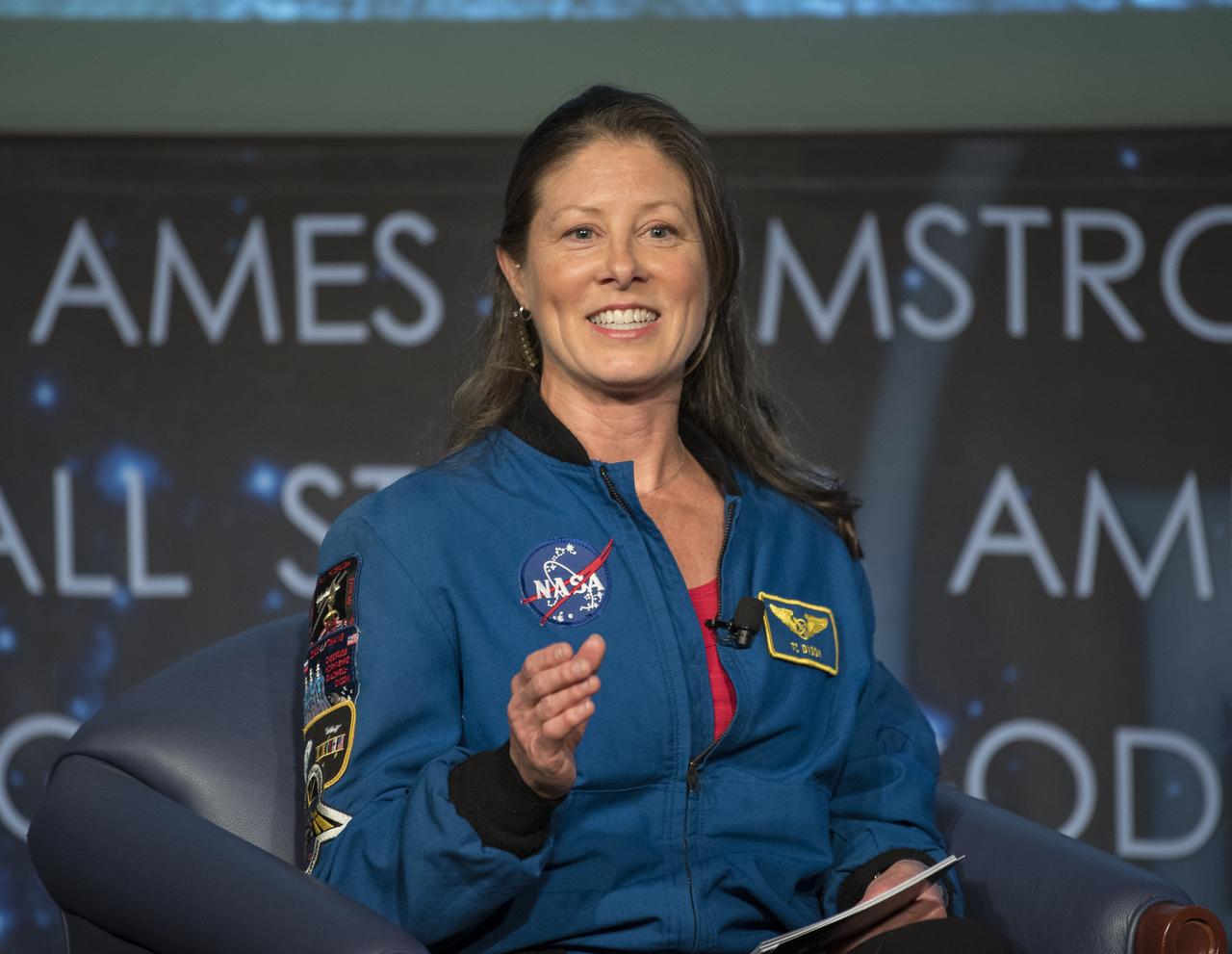
NASA astronaut Tracy Caldwell Dyson, moderates a panel discussion with NASA Administrator Jim Bridenstine, NASA Associate Administrator for the Human Exploration and Operations Mission Directorate, Bill Gerstenmaier, and NASA Deputy Associate Administrator for Exploration, Steve Clarke at the "Future of Space" STEM event, Monday, April 29, 2019 at NASA Headquarters in Washington, where college students were able to ask the panelists questions as well as speak with two astronauts currently on the International Space Station, Nick Hague and Christina Koch. Photo Credit: (NASA/Aubrey Gemignani)
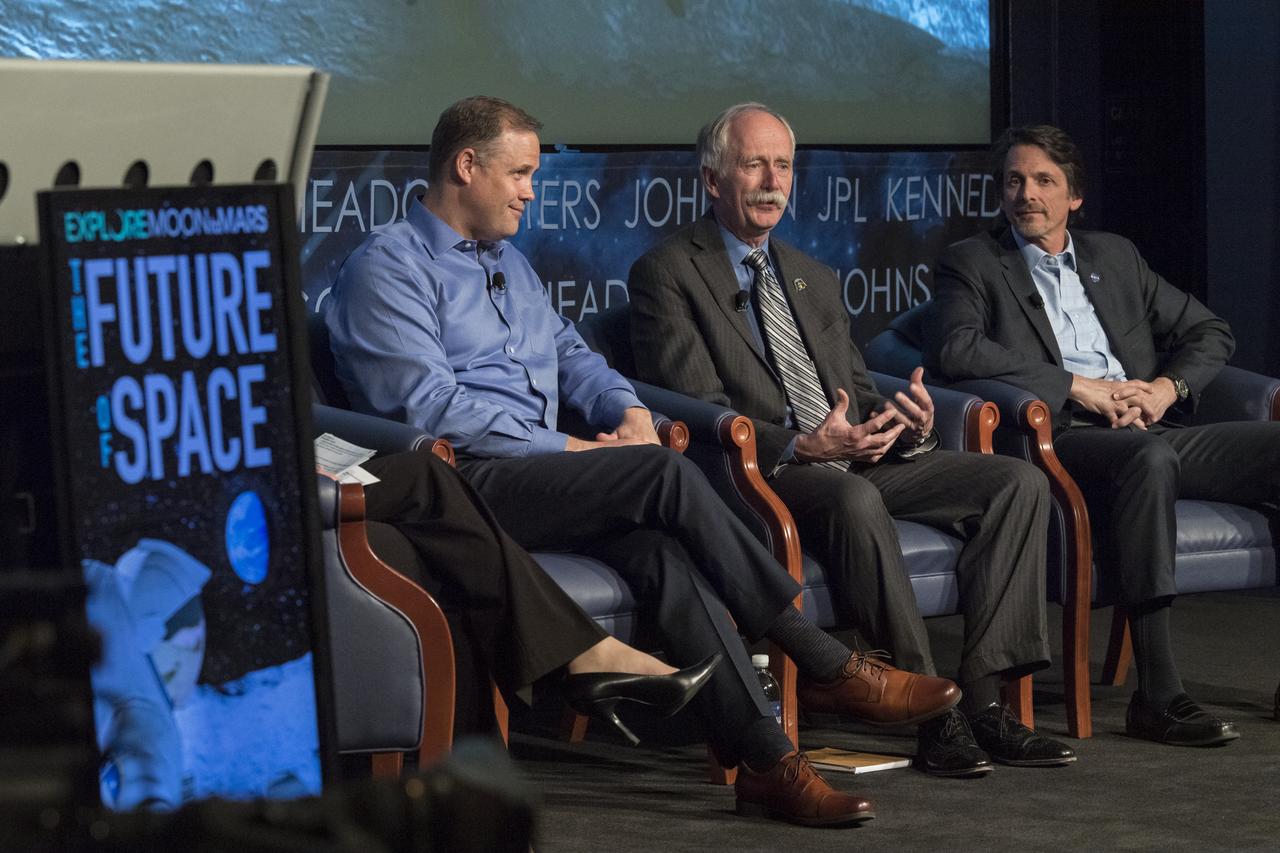
NASA Associate Administrator for the Human Exploration and Operations Mission Directorate, Bill Gerstenmaier, center, speaks at the "Future of Space" STEM event, Monday, April 29, 2019 at NASA Headquarters in Washington, where college students were able to ask panelists, NASA Administrator Jim Bridenstine, left, Gerstenmaier, and NASA Deputy Associate Administrator for Exploration, Steve Clarke, questions as well as speak with two astronauts currently on the International Space Station, Nick Hague and Christina Koch. NASA astronaut Tracy Caldwell Dyson moderated the panel discussion. Photo Credit: (NASA/Aubrey Gemignani)
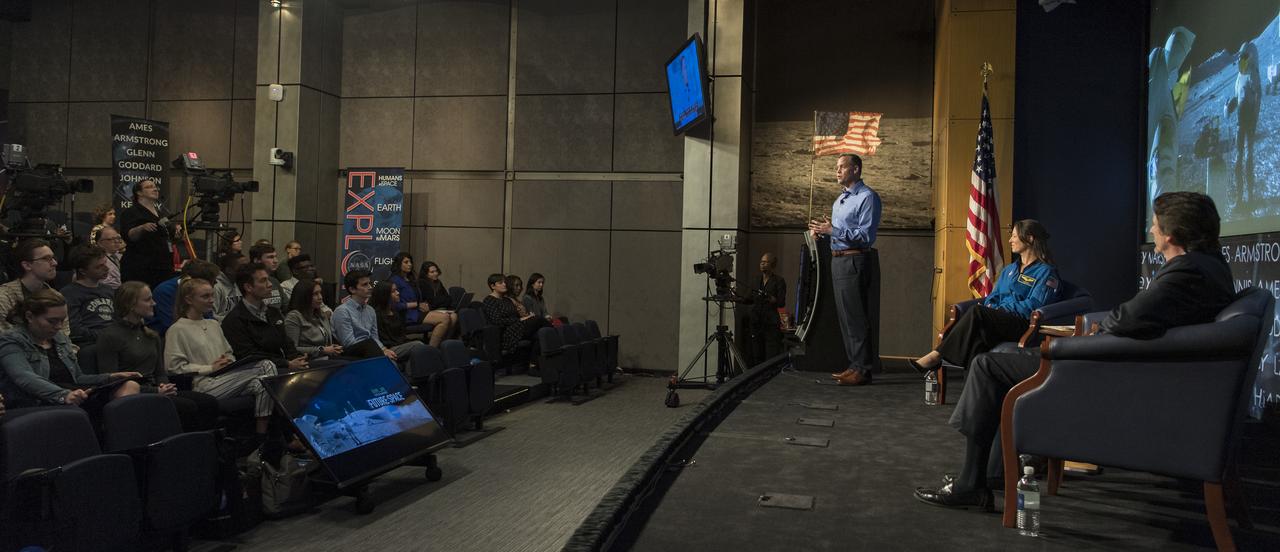
NASA Administrator Jim Bridenstine speaks at the "Future of Space" STEM event, Monday, April 29, 2019 at NASA Headquarters in Washington, where college students were able to ask panelists, Bridenstine, NASA Associate Administrator for the Human Exploration and Operations Mission Directorate, Bill Gerstenmaier, and NASA Deputy Associate Administrator for Exploration, Steve Clarke, questions as well as speak with two astronauts currently on the International Space Station, Nick Hague and Christina Koch. NASA astronaut Tracy Caldwell Dyson moderated the panel discussion. Photo Credit: (NASA/Aubrey Gemignani)
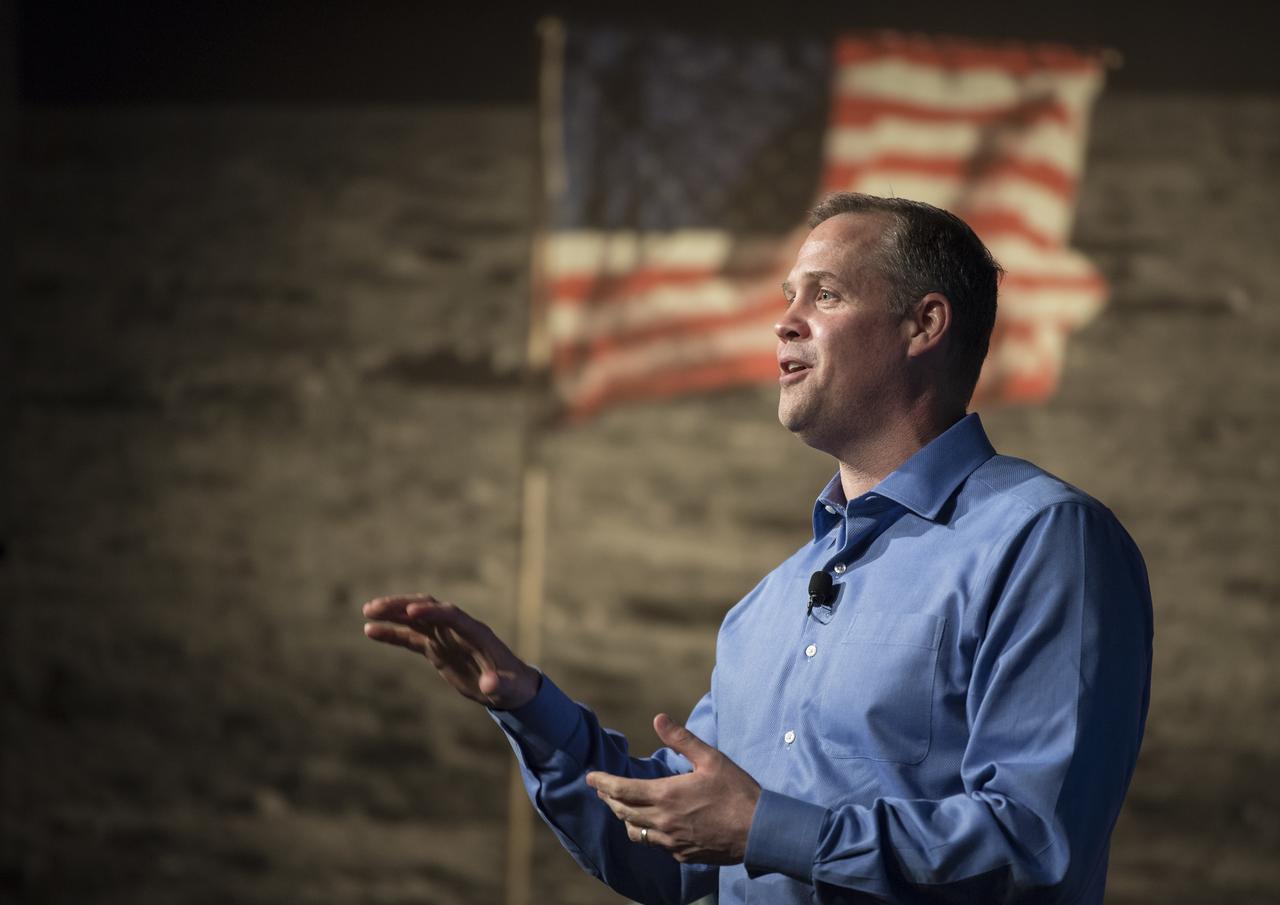
NASA Administrator Jim Bridenstine speaks at the "Future of Space" STEM event, Monday, April 29, 2019 at NASA Headquarters in Washington, where college students were able to ask panelists, Bridenstine, NASA Associate Administrator for the Human Exploration and Operations Mission Directorate, Bill Gerstenmaier, and NASA Deputy Associate Administrator for Exploration, Steve Clarke, questions as well as speak with two astronauts currently on the International Space Station, Nick Hague and Christina Koch. NASA astronaut Tracy Caldwell Dyson moderated the panel discussion. Photo Credit: (NASA/Aubrey Gemignani)
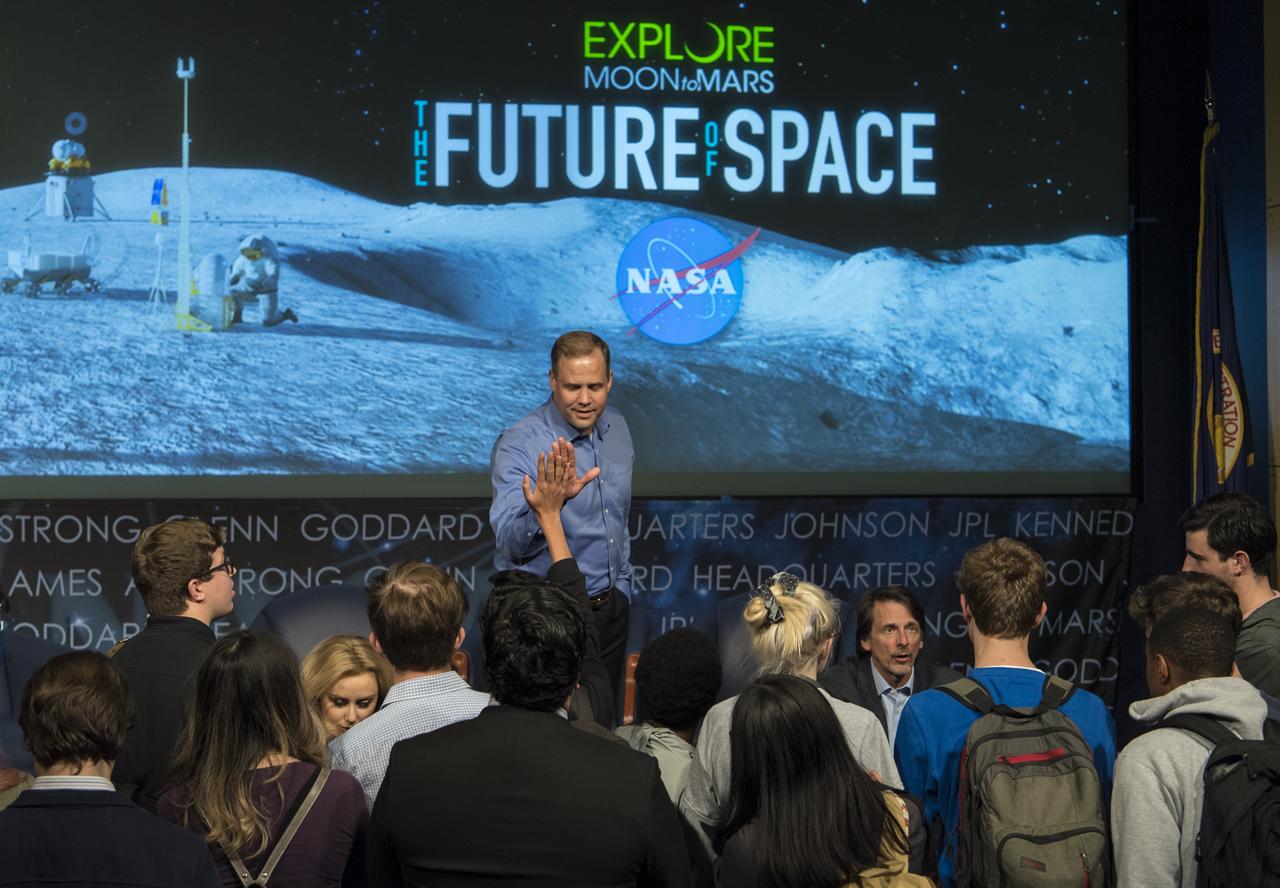
NASA Administrator Jim Bridenstine high fives a college student attending the same university he attended, Rice University, after the "Future of Space" STEM event, Monday, April 29, 2019 at NASA Headquarters in Washington, where they were able to ask panelists, Bridenstine, NASA Associate Administrator for the Human Exploration and Operations Mission Directorate, Bill Gerstenmaier, and NASA Deputy Associate Administrator for Exploration, Steve Clarke, questions as well as speak with two astronauts currently on the International Space Station, Nick Hague and Christina Koch. NASA astronaut Tracy Caldwell Dyson moderated the panel discussion. Photo Credit: (NASA/Aubrey Gemignani)
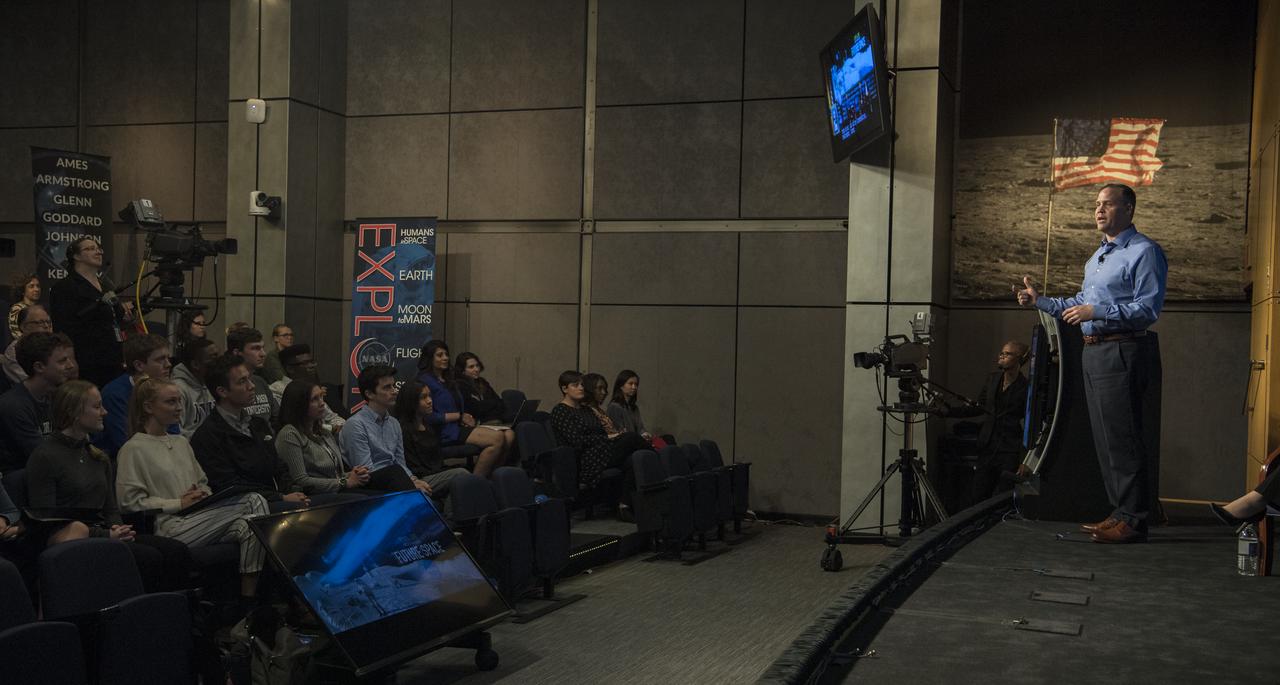
NASA Administrator Jim Bridenstine speaks at the "Future of Space" STEM event, Monday, April 29, 2019 at NASA Headquarters in Washington, where college students were able to ask panelists, Bridenstine, NASA Associate Administrator for the Human Exploration and Operations Mission Directorate, Bill Gerstenmaier, and NASA Deputy Associate Administrator for Exploration, Steve Clarke, questions as well as speak with two astronauts currently on the International Space Station, Nick Hague and Christina Koch. NASA astronaut Tracy Caldwell Dyson moderated the panel discussion. Photo Credit: (NASA/Aubrey Gemignani)
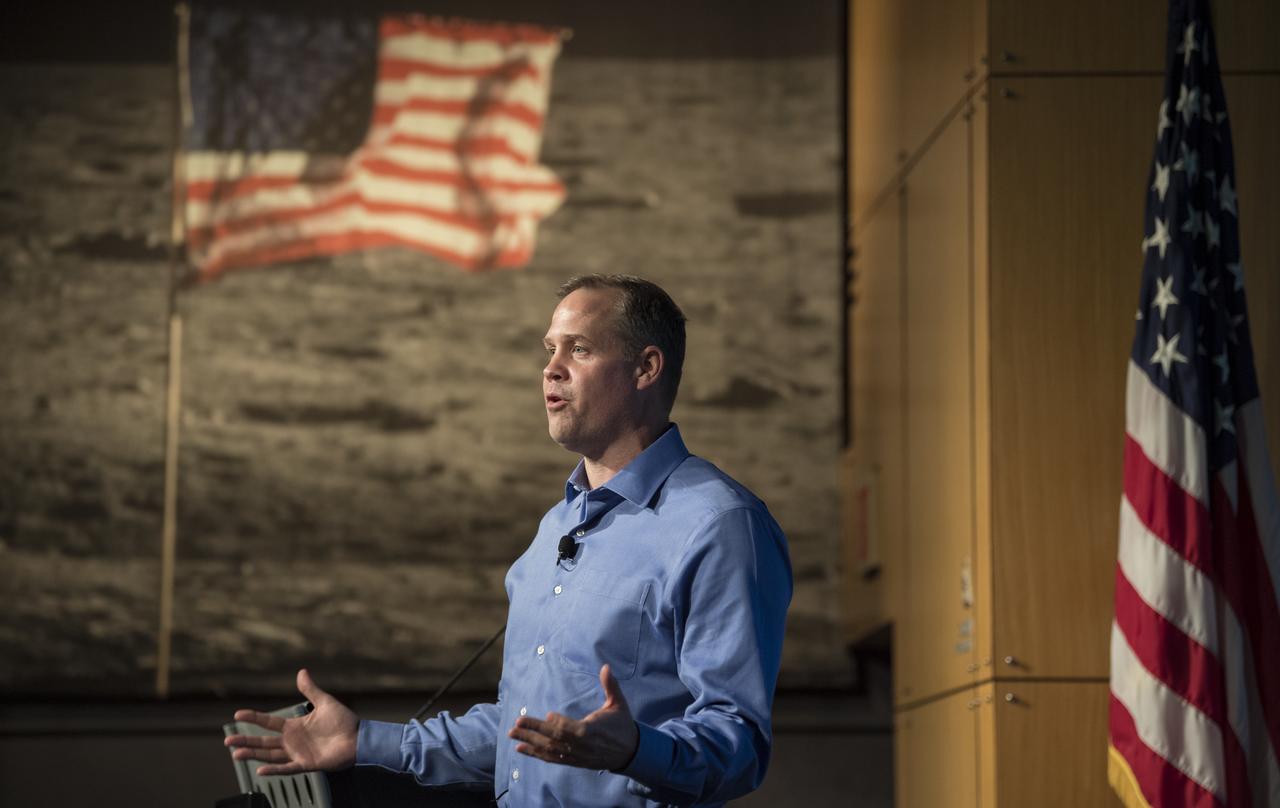
NASA Administrator Jim Bridenstine speaks at the "Future of Space" STEM event, Monday, April 29, 2019 at NASA Headquarters in Washington, where college students were able to ask panelists, Bridenstine, NASA Associate Administrator for the Human Exploration and Operations Mission Directorate, Bill Gerstenmaier, and NASA Deputy Associate Administrator for Exploration, Steve Clarke, questions as well as speak with two astronauts currently on the International Space Station, Nick Hague and Christina Koch. NASA astronaut Tracy Caldwell Dyson moderated the panel discussion. Photo Credit: (NASA/Aubrey Gemignani)
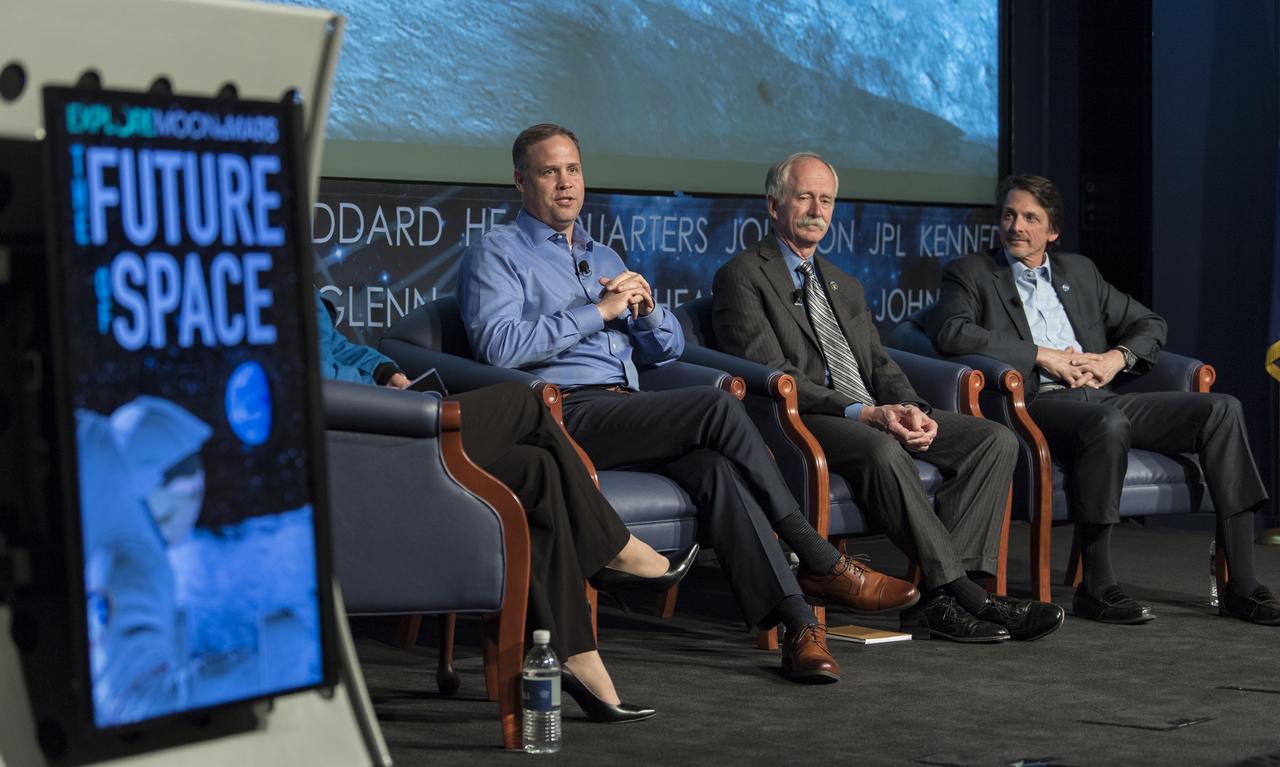
NASA Administrator Jim Bridenstine, left, speaks at the "Future of Space" STEM event, Monday, April 29, 2019 at NASA Headquarters in Washington, where college students were able to ask panelists, Bridenstine, NASA Associate Administrator for the Human Exploration and Operations Mission Directorate, Bill Gerstenmaier, center, and NASA Deputy Associate Administrator for Exploration, Steve Clarke, right, questions as well as speak with two astronauts currently on the International Space Station, Nick Hague and Christina Koch. NASA astronaut Tracy Caldwell Dyson moderated the panel discussion. Photo Credit: (NASA/Aubrey Gemignani)
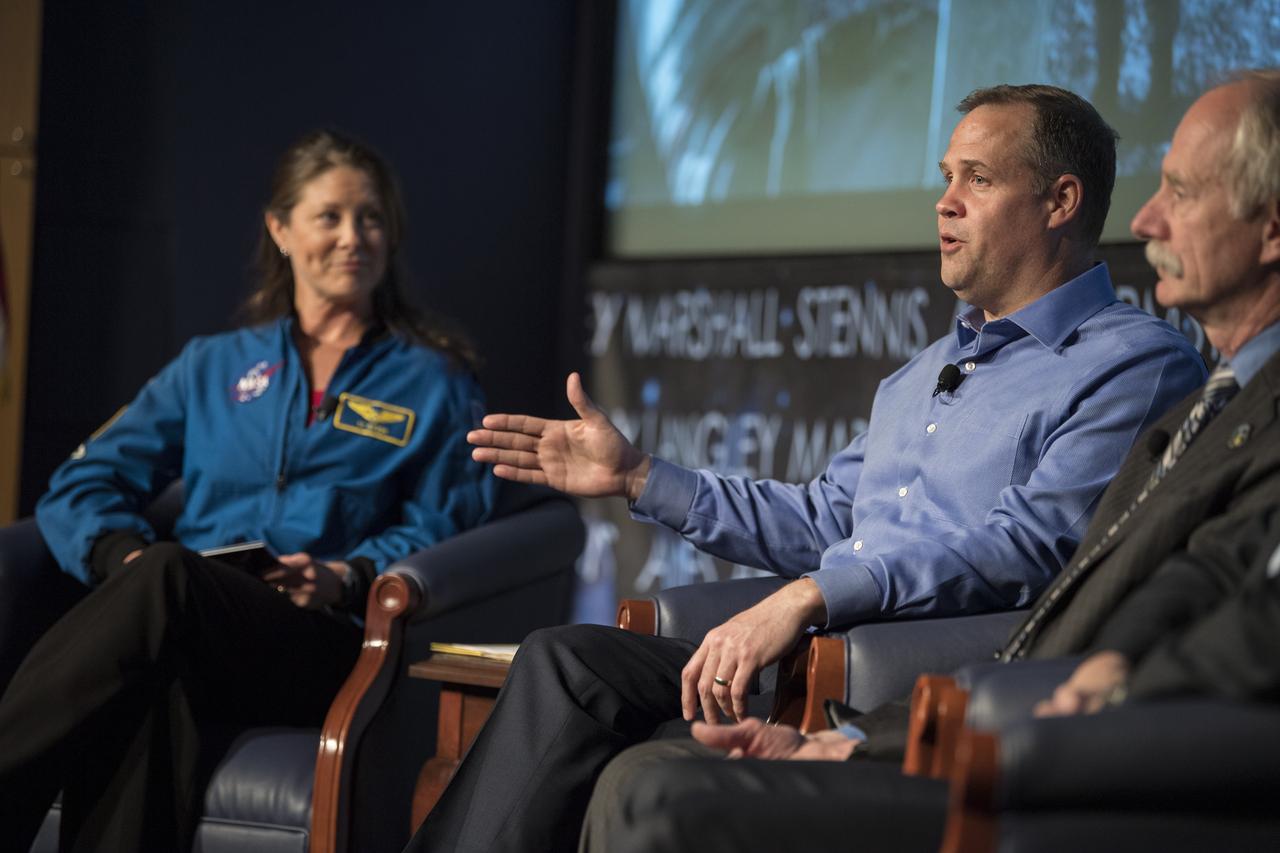
NASA Administrator Jim Bridenstine speaks at the "Future of Space" STEM event, Monday, April 29, 2019 at NASA Headquarters in Washington, where college students were able to ask panelists, Bridenstine, NASA Associate Administrator for the Human Exploration and Operations Mission Directorate, Bill Gerstenmaier, and NASA Deputy Associate Administrator for Exploration, Steve Clarke questions as well as speak with two astronauts currently on the International Space Station, Nick Hague and Christina Koch. NASA astronaut Tracy Caldwell Dyson moderated the panel discussion. Photo Credit: (NASA/Aubrey Gemignani)
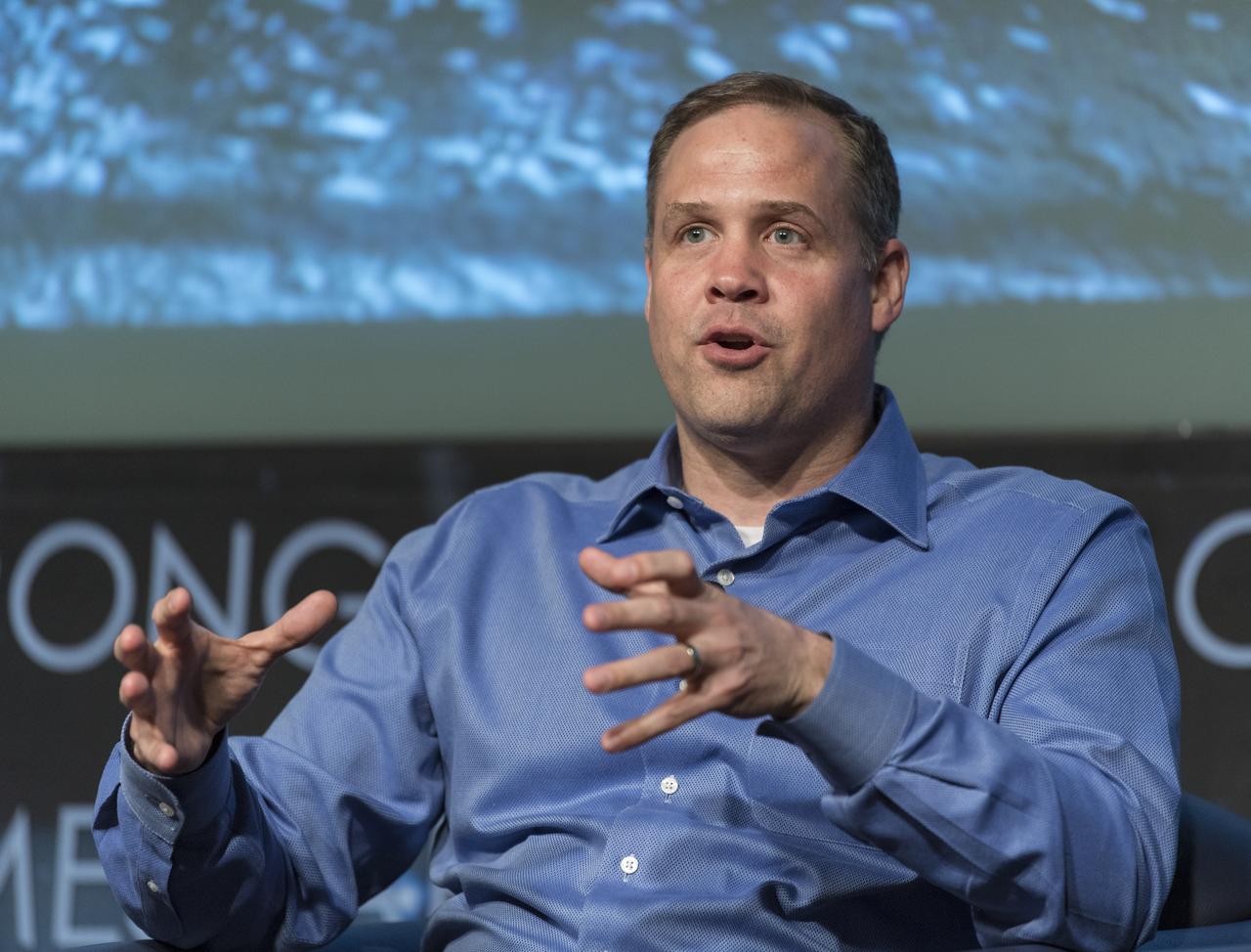
NASA Administrator Jim Bridenstine speaks at the "Future of Space" STEM event, Monday, April 29, 2019 at NASA Headquarters in Washington, where college students were able to ask panelists, Bridenstine, NASA Associate Administrator for the Human Exploration and Operations Mission Directorate, Bill Gerstenmaier, and NASA Deputy Associate Administrator for Exploration, Steve Clarke questions as well as speak with two astronauts currently on the International Space Station, Nick Hague and Christina Koch. NASA astronaut Tracy Caldwell Dyson moderated the panel discussion. Photo Credit: (NASA/Aubrey Gemignani)
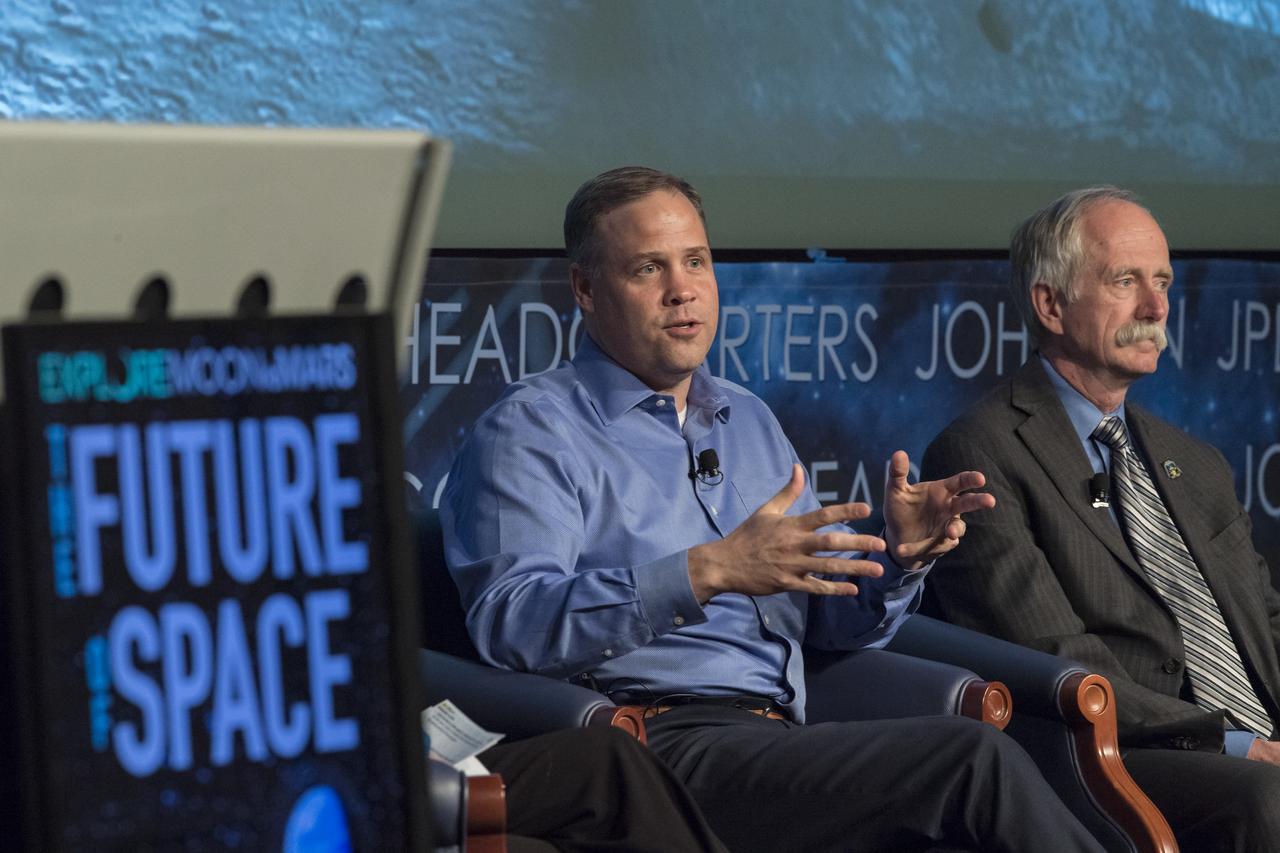
NASA Administrator Jim Bridenstine, left, speaks at the "Future of Space" STEM event, Monday, April 29, 2019 at NASA Headquarters in Washington, where college students were able to ask panelists, Bridenstine, NASA Associate Administrator for the Human Exploration and Operations Mission Directorate, Bill Gerstenmaier, right, and NASA Deputy Associate Administrator for Exploration, Steve Clarke, not pictured, questions as well as speak with two astronauts currently on the International Space Station, Nick Hague and Christina Koch. NASA astronaut Tracy Caldwell Dyson moderated the panel discussion. Photo Credit: (NASA/Aubrey Gemignani)
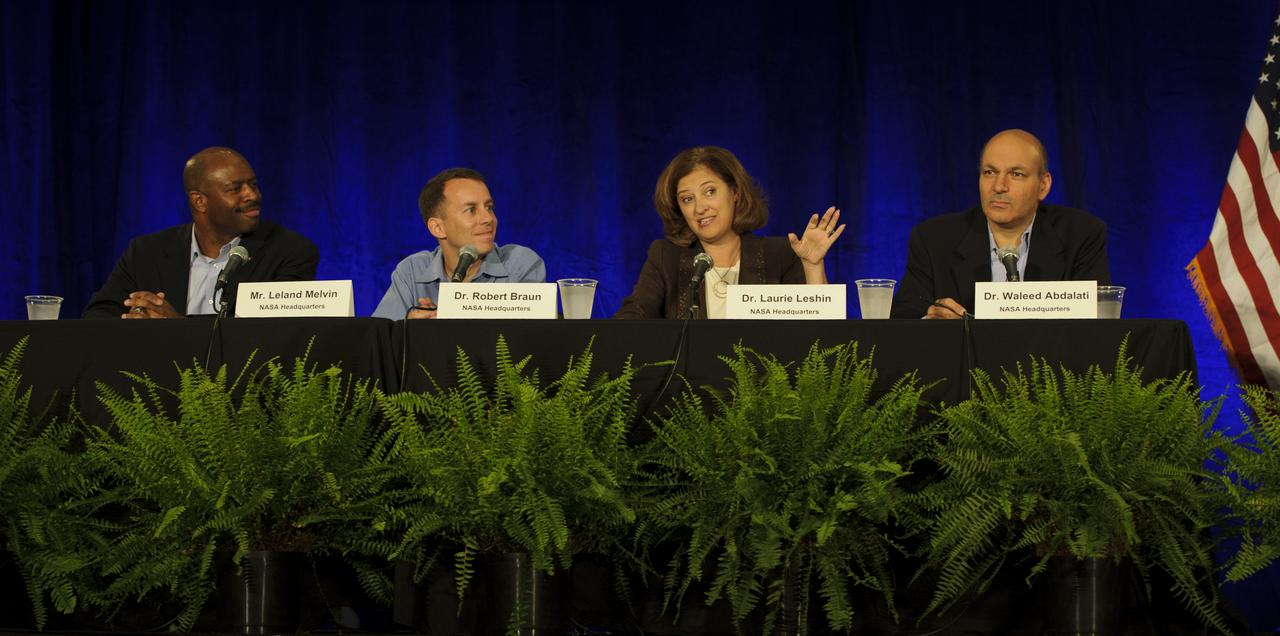
Dr. Laurie Leshin, NASA Deputy Associate Administrator Exploration Systems Mission Directortorate, second from right, speaks as Dr. Waleed Abdalati, NASA Chief Scientist, right, Dr. Robert Braun, NASA Chief Technologist, and Leland Melvin, Assoicate Administrator for NASA Education, far left, at the NASA Future Forum held at the Riggs Alumni Center on the campus of the University of Maryland, Thursday, Aug. 11, 2011 in College Park, Md. Photo Credit: (NASA/Paul E. Alers)
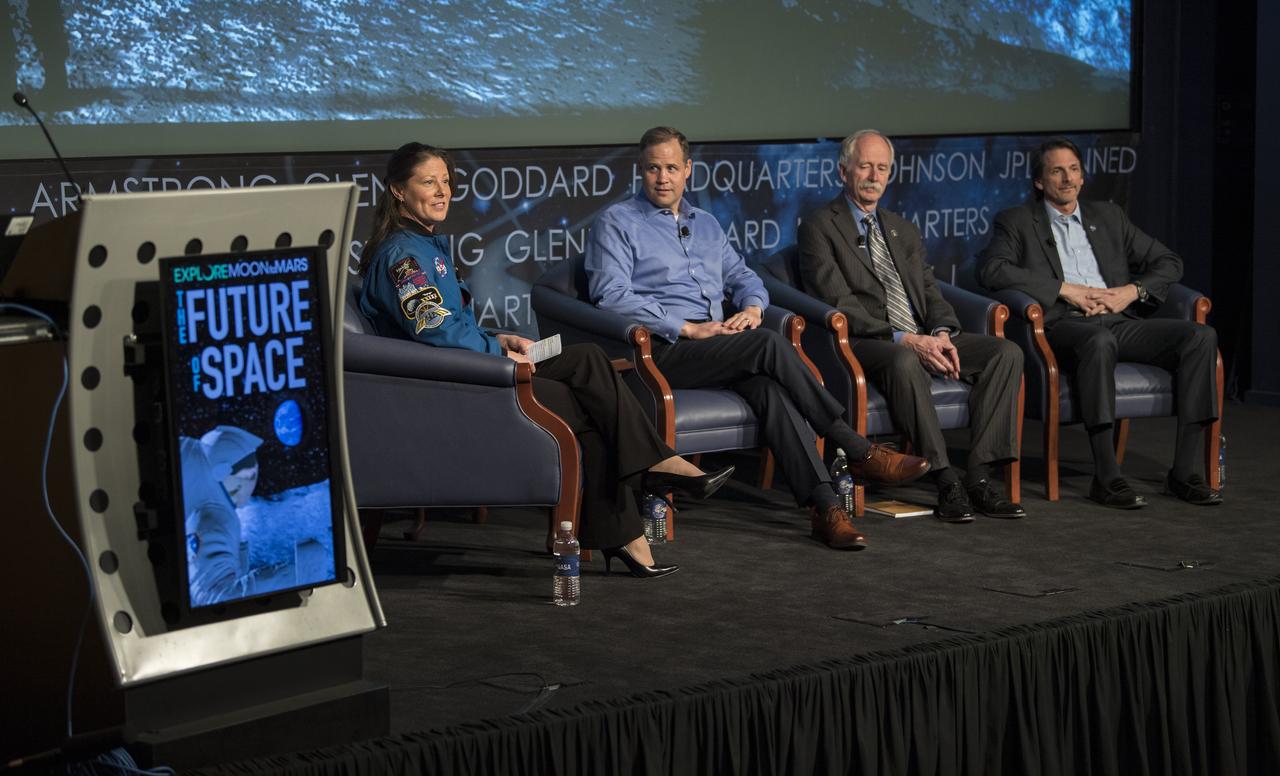
NASA astronaut Tracy Caldwell Dyson, left, moderates a panel discussion with NASA Administrator Jim Bridenstine, NASA Associate Administrator for the Human Exploration and Operations Mission Directorate, Bill Gerstenmaier, and NASA Deputy Associate Administrator for Exploration, Steve Clarke at the "Future of Space" STEM event, Monday, April 29, 2019 at NASA Headquarters in Washington, where college students were able to ask the panelists questions as well as speak with two astronauts currently on the International Space Station, Nick Hague and Christina Koch. Photo Credit: (NASA/Aubrey Gemignani)
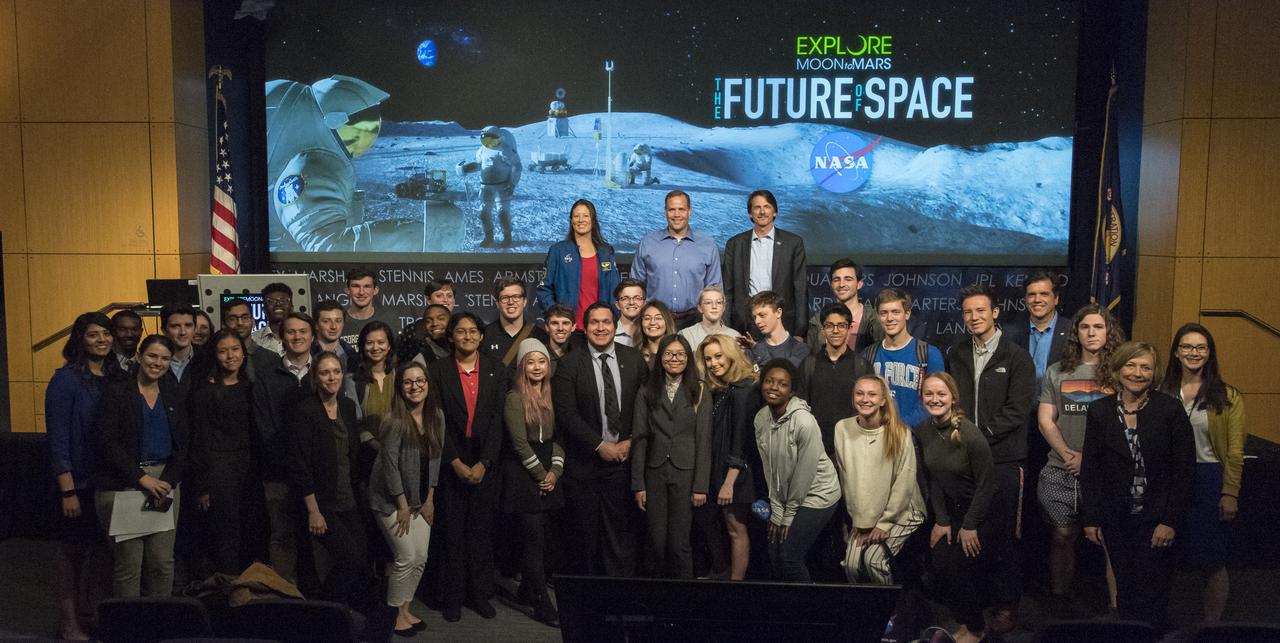
NASA Administrator Jim Bridenstine poses for a photo with college students after the "Future of Space" STEM event, Monday, April 29, 2019 at NASA Headquarters in Washington, where they were able to ask panelists, Bridenstine, NASA Associate Administrator for the Human Exploration and Operations Mission Directorate, Bill Gerstenmaier, and NASA Deputy Associate Administrator for Exploration, Steve Clarke, questions as well as speak with two astronauts currently on the International Space Station, Nick Hague and Christina Koch. NASA astronaut Tracy Caldwell Dyson moderated the panel discussion. Photo Credit: (NASA/Aubrey Gemignani)
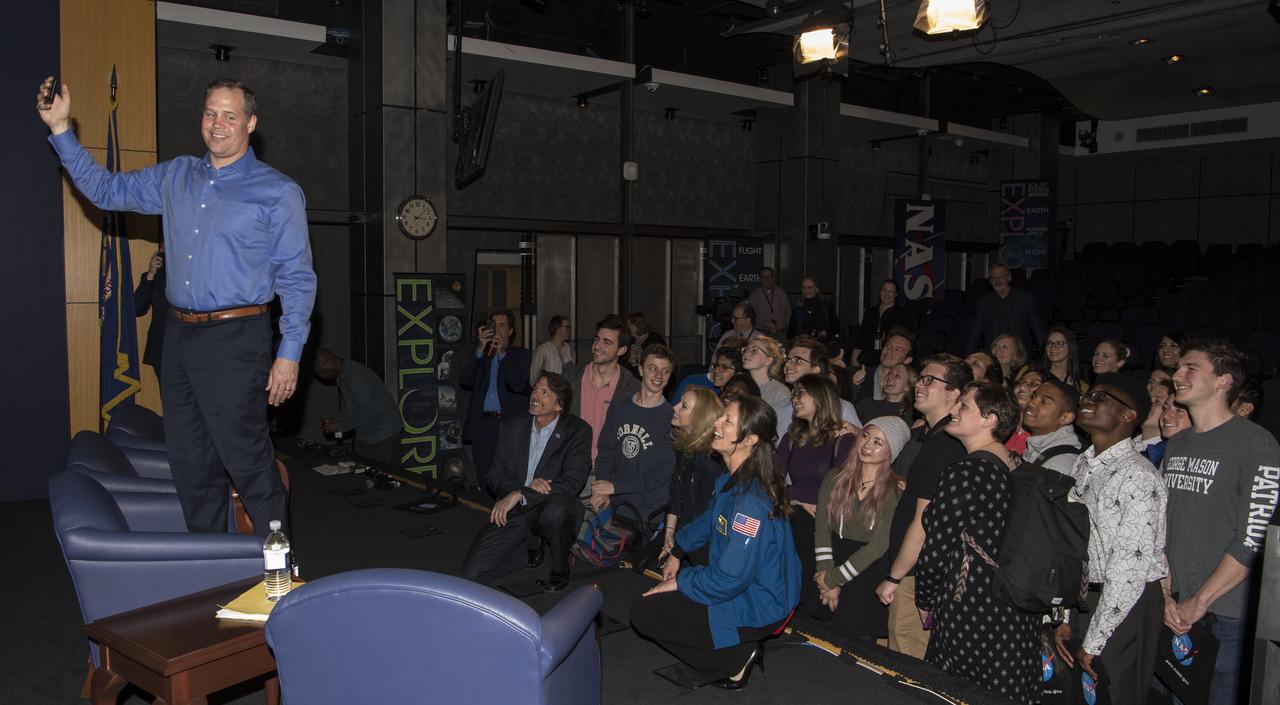
NASA Administrator Jim Bridenstine takes a selfie with college students after the "Future of Space" STEM event, Monday, April 29, 2019 at NASA Headquarters in Washington, where they were able to ask panelists, Bridenstine, NASA Associate Administrator for the Human Exploration and Operations Mission Directorate, Bill Gerstenmaier, and NASA Deputy Associate Administrator for Exploration, Steve Clarke, questions as well as speak with two astronauts currently on the International Space Station, Nick Hague and Christina Koch. NASA astronaut Tracy Caldwell Dyson moderated the panel discussion. Photo Credit: (NASA/Aubrey Gemignani)
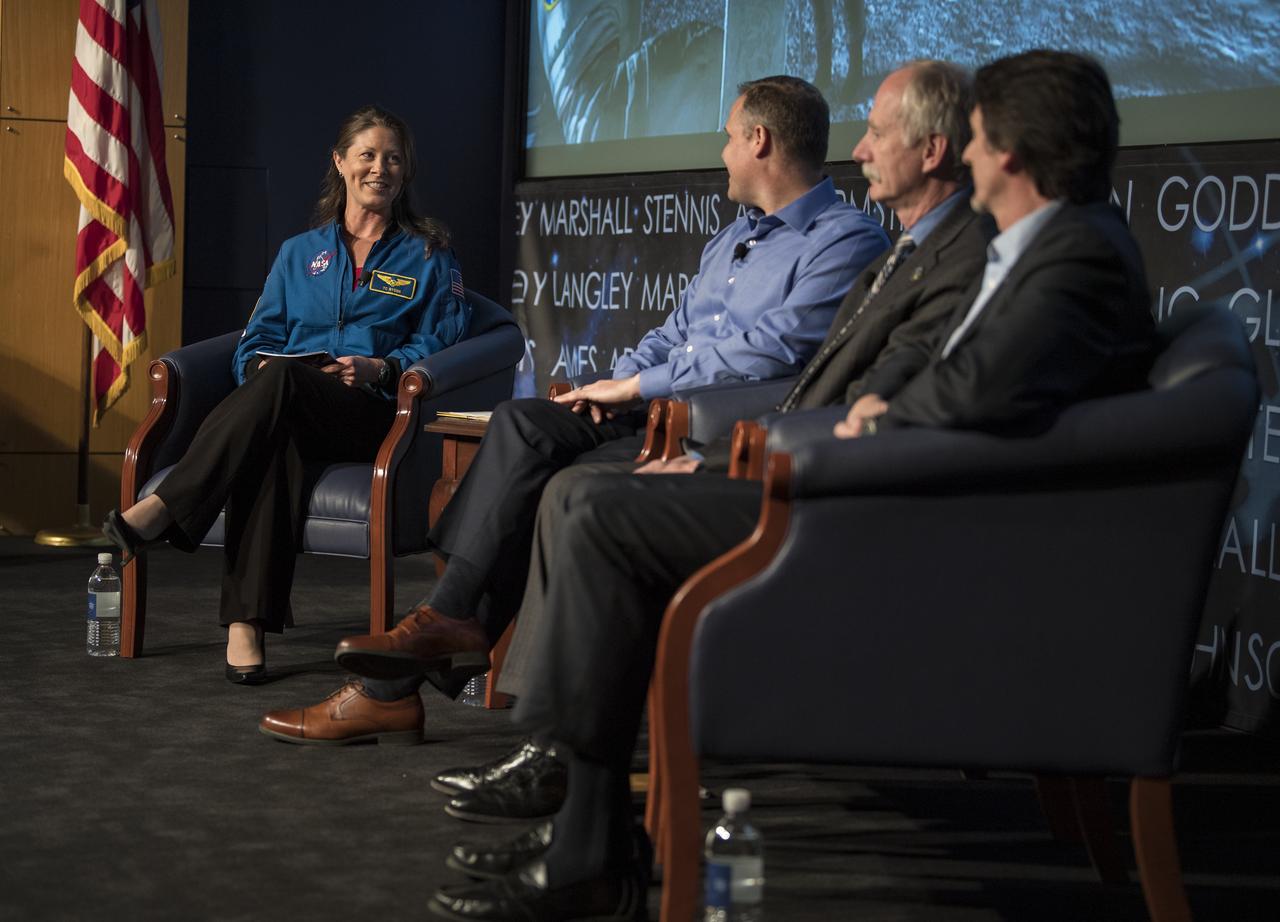
NASA astronaut Tracy Caldwell Dyson, left, moderates a panel discussion with NASA Administrator Jim Bridenstine, NASA Associate Administrator for the Human Exploration and Operations Mission Directorate, Bill Gerstenmaier, and NASA Deputy Associate Administrator for Exploration, Steve Clarke at the "Future of Space" STEM event, Monday, April 29, 2019 at NASA Headquarters in Washington, where college students were able to ask the panelists questions as well as speak with two astronauts currently on the International Space Station, Nick Hague and Christina Koch. Photo Credit: (NASA/Aubrey Gemignani)
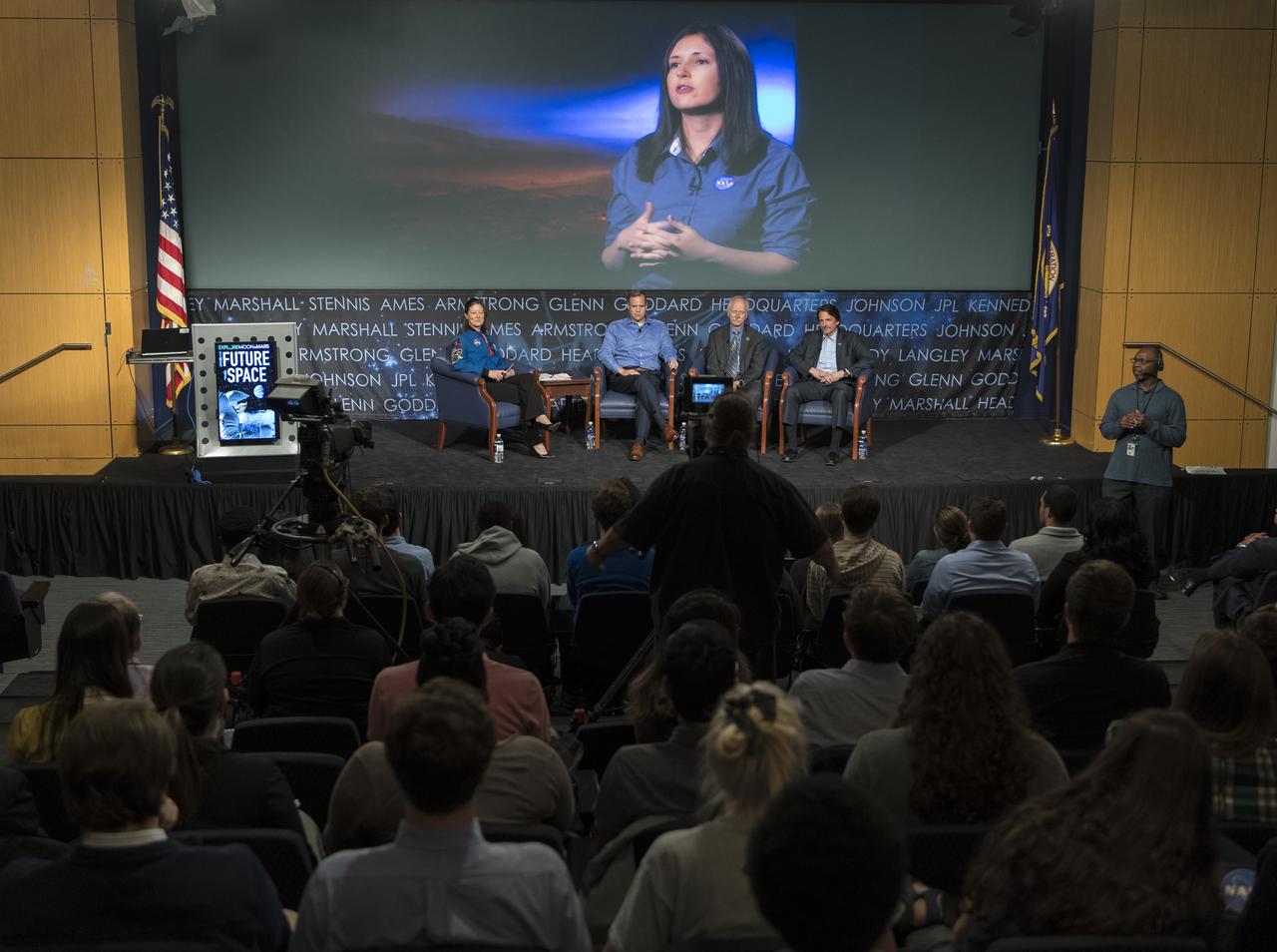
A video profile of a NASA employee is seen as NASA astronaut Tracy Caldwell Dyson, moderates a panel discussion with NASA Administrator Jim Bridenstine, NASA Associate Administrator for the Human Exploration and Operations Mission Directorate, Bill Gerstenmaier, and NASA Deputy Associate Administrator for Exploration, Steve Clarke at the "Future of Space" STEM event, Monday, April 29, 2019 at NASA Headquarters in Washington. The students were able to ask the panelists questions as well as speak with two astronauts currently on the International Space Station, Nick Hague and Christina Koch. Photo Credit: (NASA/Aubrey Gemignani)
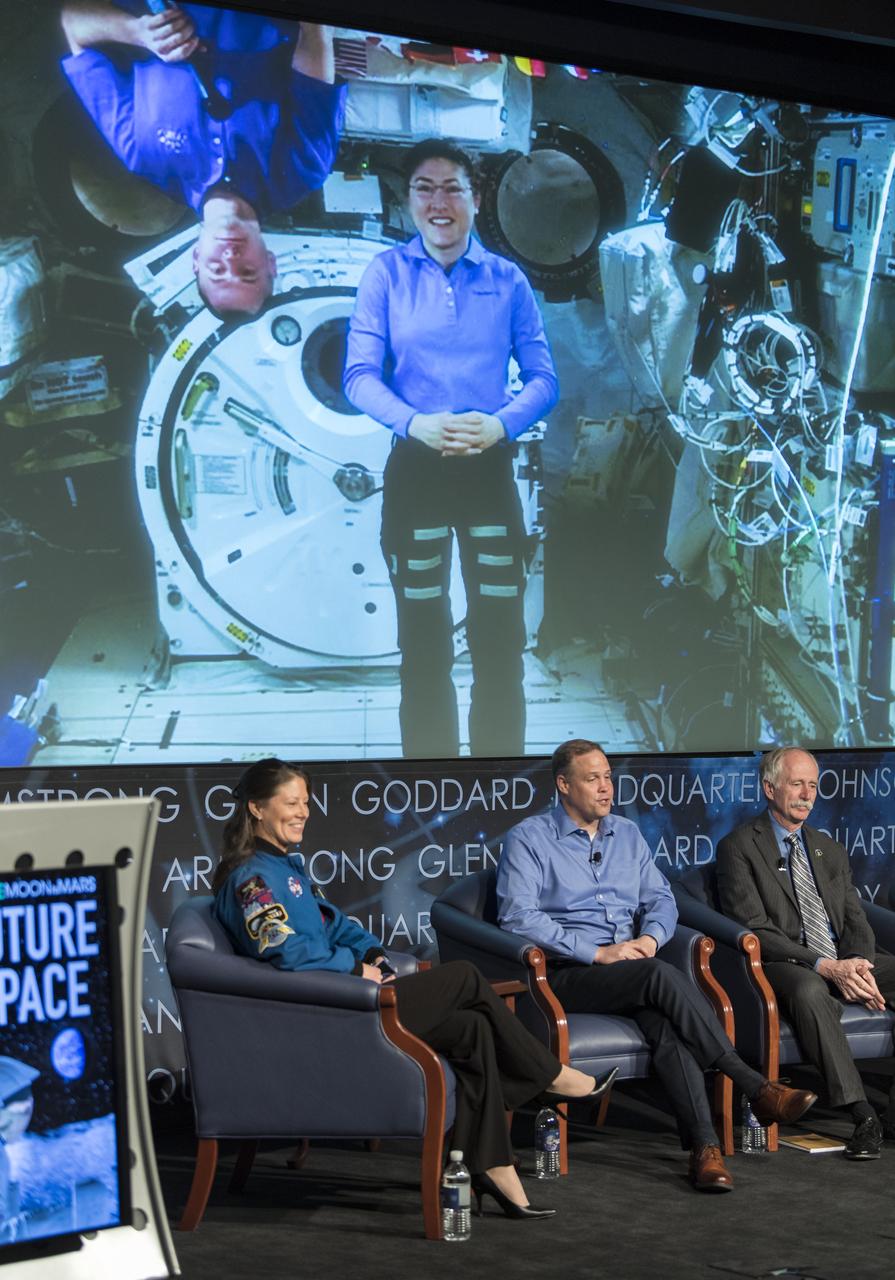
Nick Hague, left, and Christina Koch, two astronauts currently living and working on the International Space Station, are seen on the screen during a live uplink and panel discussion with NASA Administrator Jim Bridenstine, center, NASA Associate Administrator for the Human Exploration and Operations Mission Directorate, Bill Gerstenmaier, right, and NASA Deputy Associate Administrator for Exploration, Steve Clarke, not pictured, at the "Future of Space" STEM event, Monday, April 29, 2019 at NASA Headquarters in Washington. NASA astronaut Tracy Caldwell Dyson, left, moderated the panel discussion. Photo Credit: (NASA/Aubrey Gemignani)
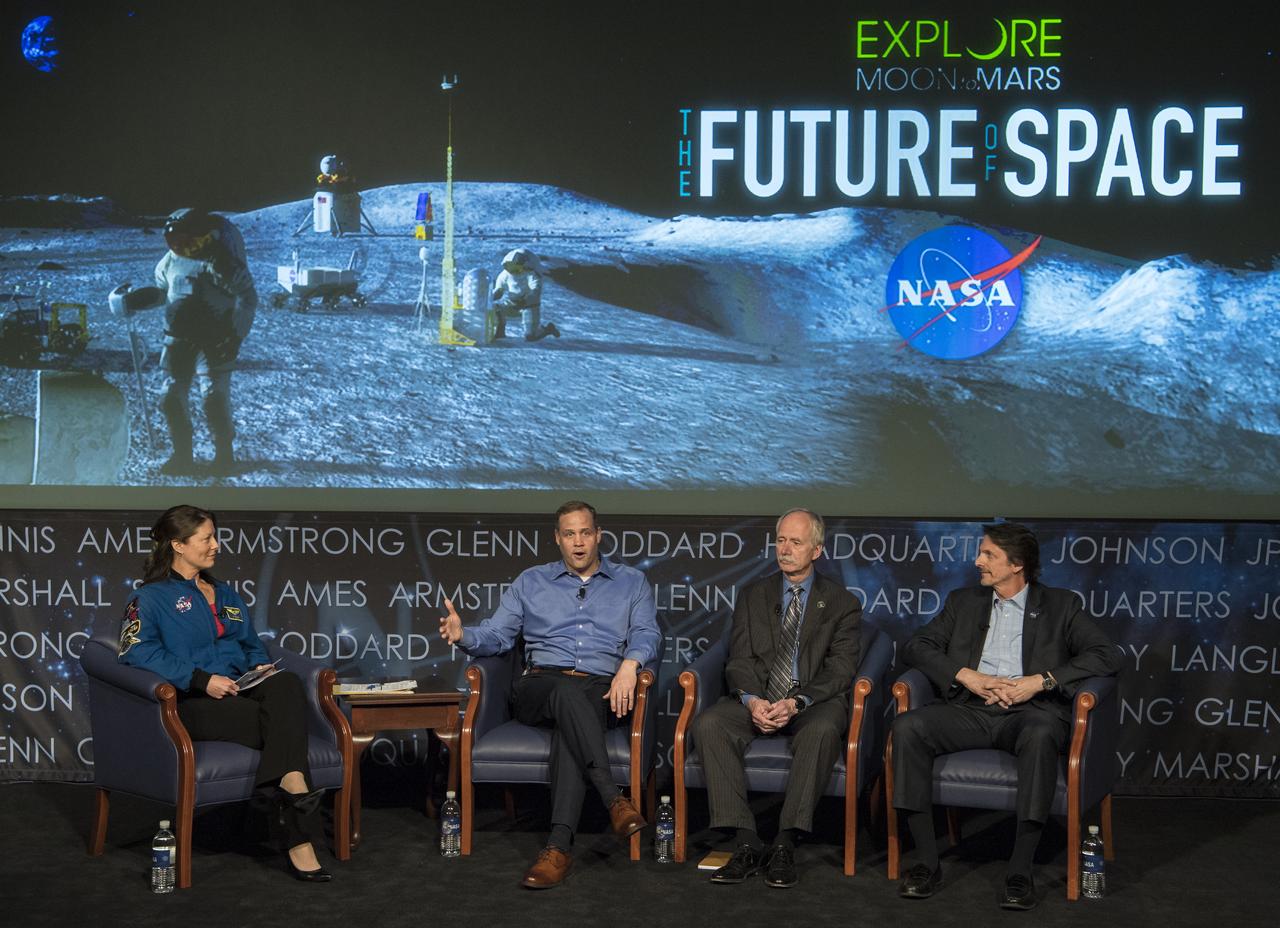
NASA Administrator Jim Bridenstine, second from left, speaks at the "Future of Space" STEM event, Monday, April 29, 2019 at NASA Headquarters in Washington, where college students were able to ask panelists, Bridenstine, NASA Associate Administrator for the Human Exploration and Operations Mission Directorate, Bill Gerstenmaier, second from right, and NASA Deputy Associate Administrator for Exploration, Steve Clarke, right, questions as well as speak with two astronauts currently on the International Space Station, Nick Hague and Christina Koch. NASA astronaut Tracy Caldwell Dyson, left, moderated the panel discussion. Photo Credit: (NASA/Aubrey Gemignani)
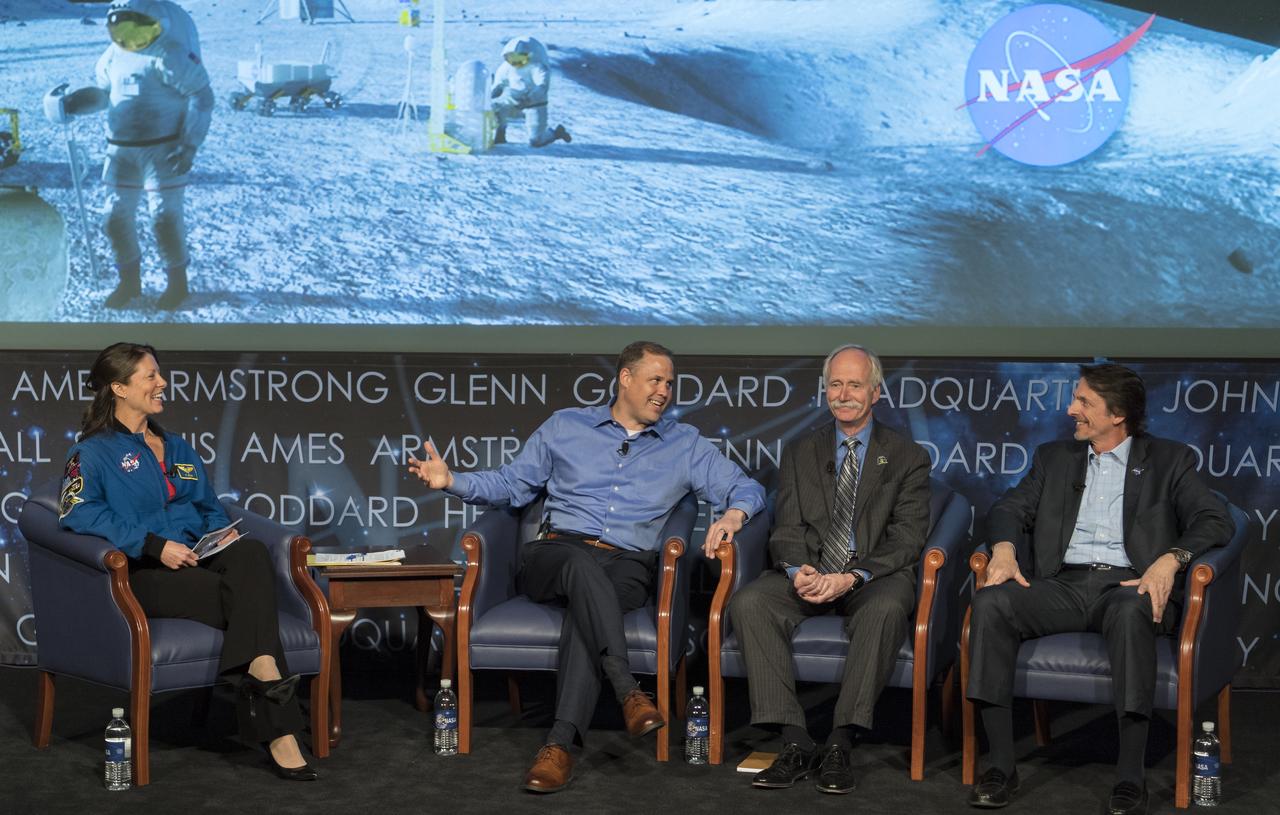
NASA Administrator Jim Bridenstine, second from left, speaks at the "Future of Space" STEM event, Monday, April 29, 2019 at NASA Headquarters in Washington, where college students were able to ask panelists, Bridenstine, NASA Associate Administrator for the Human Exploration and Operations Mission Directorate, Bill Gerstenmaier, second from right, and NASA Deputy Associate Administrator for Exploration, Steve Clarke, right, questions as well as speak with two astronauts currently on the International Space Station, Nick Hague and Christina Koch. NASA astronaut Tracy Caldwell Dyson, left, moderated the panel discussion. Photo Credit: (NASA/Aubrey Gemignani)
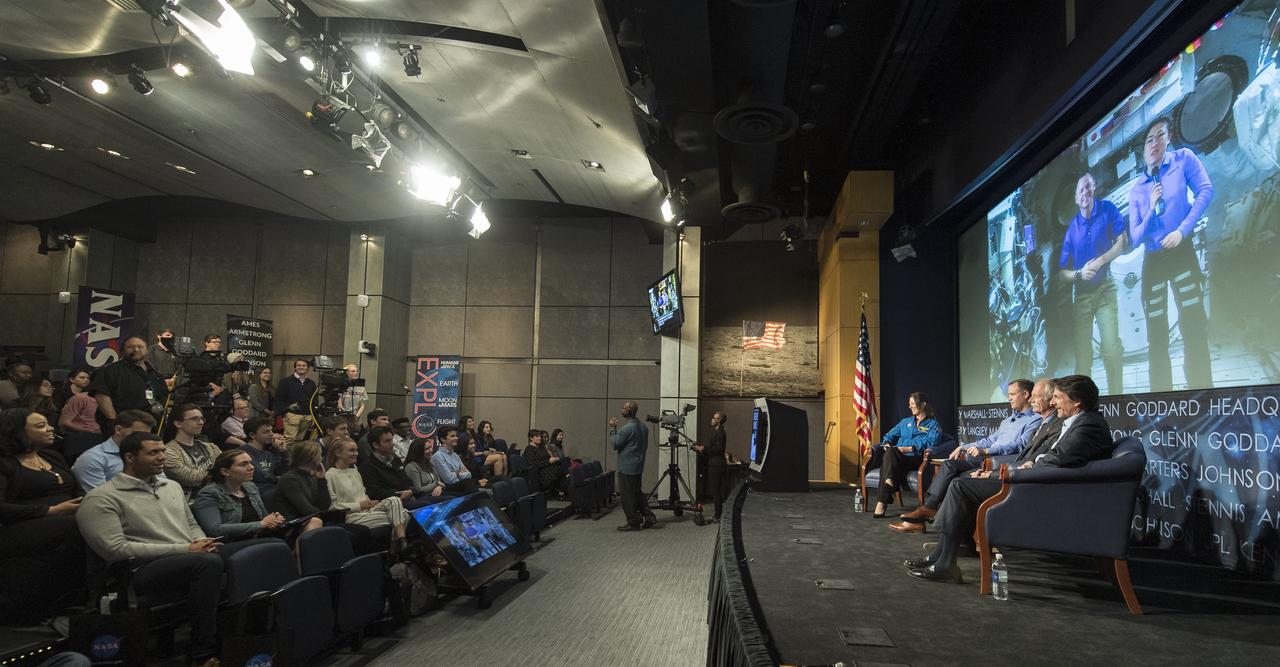
Nick Hague and Christina Koch, two astronauts currently living and working on the International Space Station, are seen on the screen during a live uplink and panel discussion with moderator NASA astronaut Tracy Caldwell Dyson, NASA Administrator Jim Bridenstine, NASA Associate Administrator for the Human Exploration and Operations Mission Directorate, Bill Gerstenmaier, and NASA Deputy Associate Administrator for Exploration, Steve Clarke, at the "Future of Space" STEM event, Monday, April 29, 2019 at NASA Headquarters in Washington. Photo Credit: (NASA/Aubrey Gemignani)
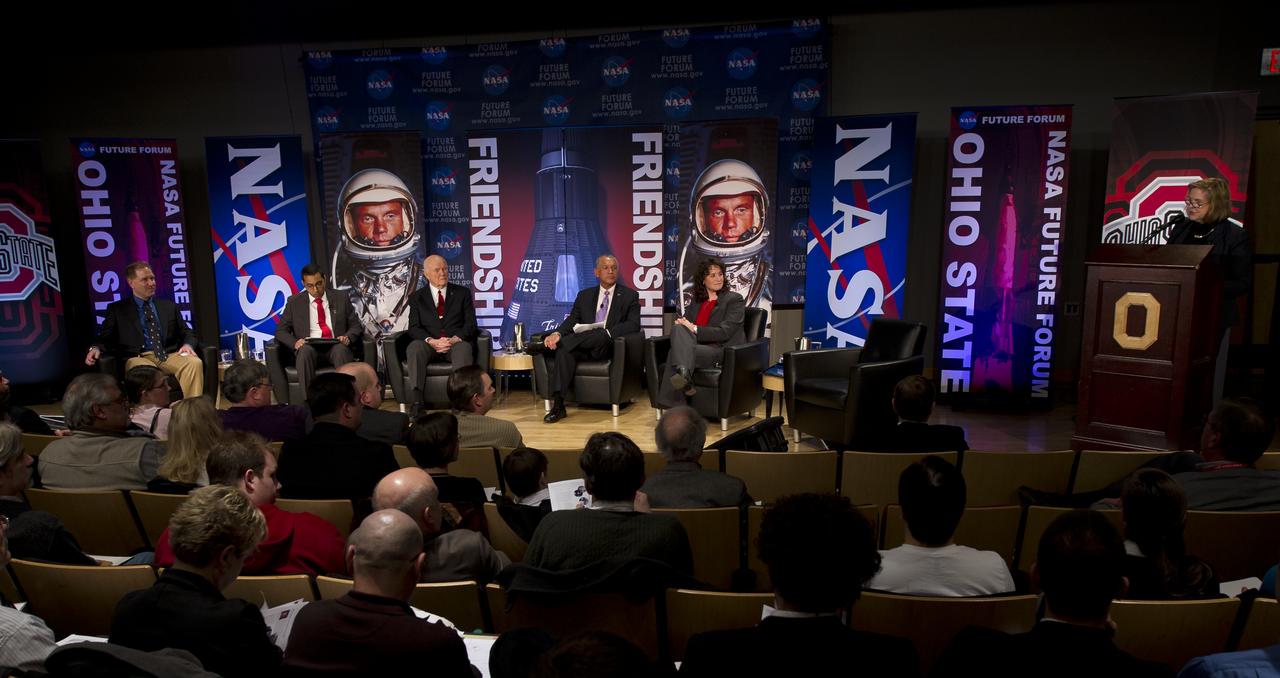
The Ohio State University Vice President for Research Dr. Caroline Whitacre, standing right, moderates the first panel discussion during NASA's Future Forum with NASA Associate Administrator for Science Mission Directorate John Grunsfeld, left, Ohio State University Graduate Research Associate Vijay Gadepally, Sen. John Glenn, NASA Administrator Charles Bolden, and NASA 2009 Astronaut Candidate and Flight Surgeon Serena Auñón, seated right, at The Ohio State University on Monday, Feb. 20, 2012, in Columbus, Ohio. Monday marked the 50th anniversary of Glenn's historic flight as the first American to orbit Earth. Photo Credit: (NASA/Bill Ingalls)
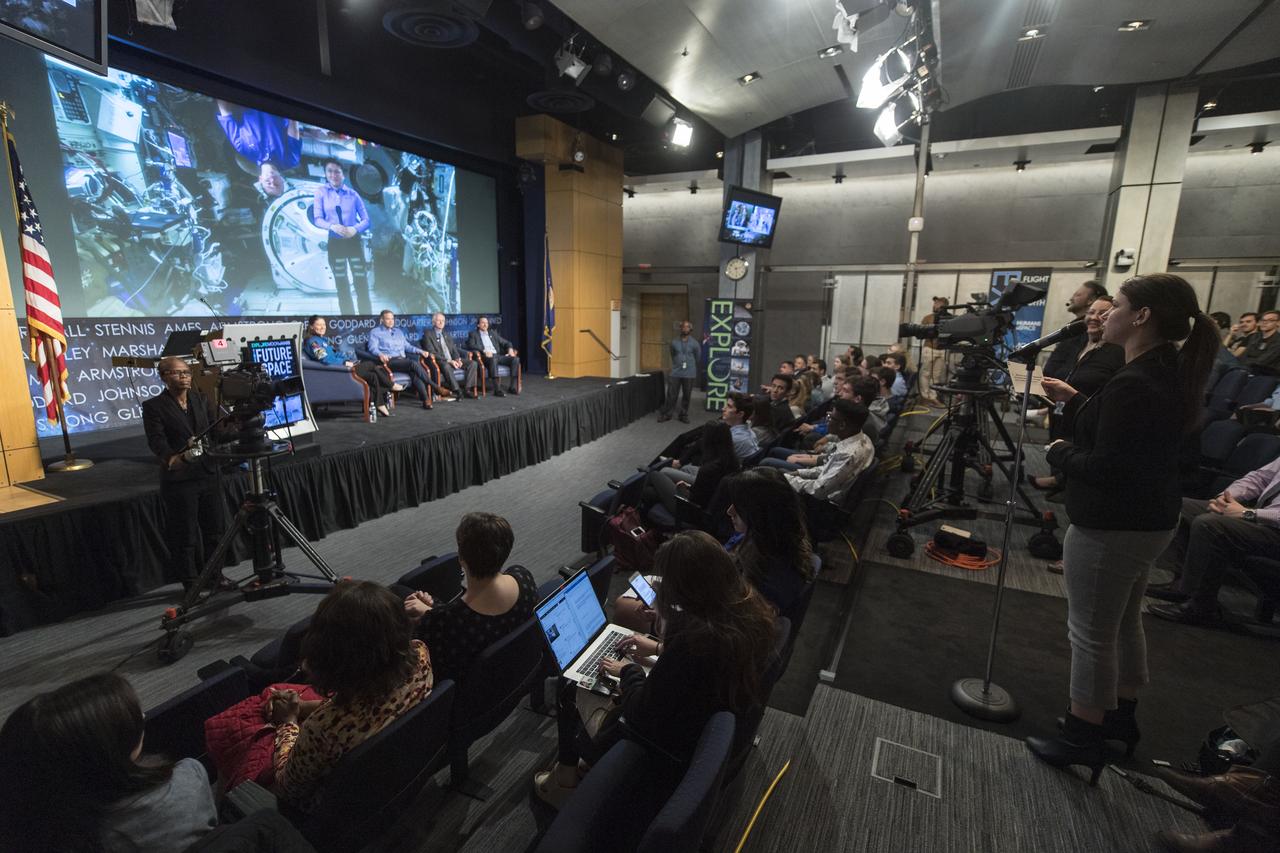
Anne Marie Demme asks Nick Hague and Christina Koch, two astronauts currently living and working on the International Space Station, a question during a panel discussion with NASA Administrator Jim Bridenstine, NASA Associate Administrator for the Human Exploration and Operations Mission Directorate, Bill Gerstenmaier, and NASA Deputy Associate Administrator for Exploration, Steve Clarke at the "Future of Space" STEM event, Monday, April 29, 2019 at NASA Headquarters in Washington. NASA astronaut Tracy Caldwell Dyson, moderated the panel discussion. Photo Credit: (NASA/Aubrey Gemignani)
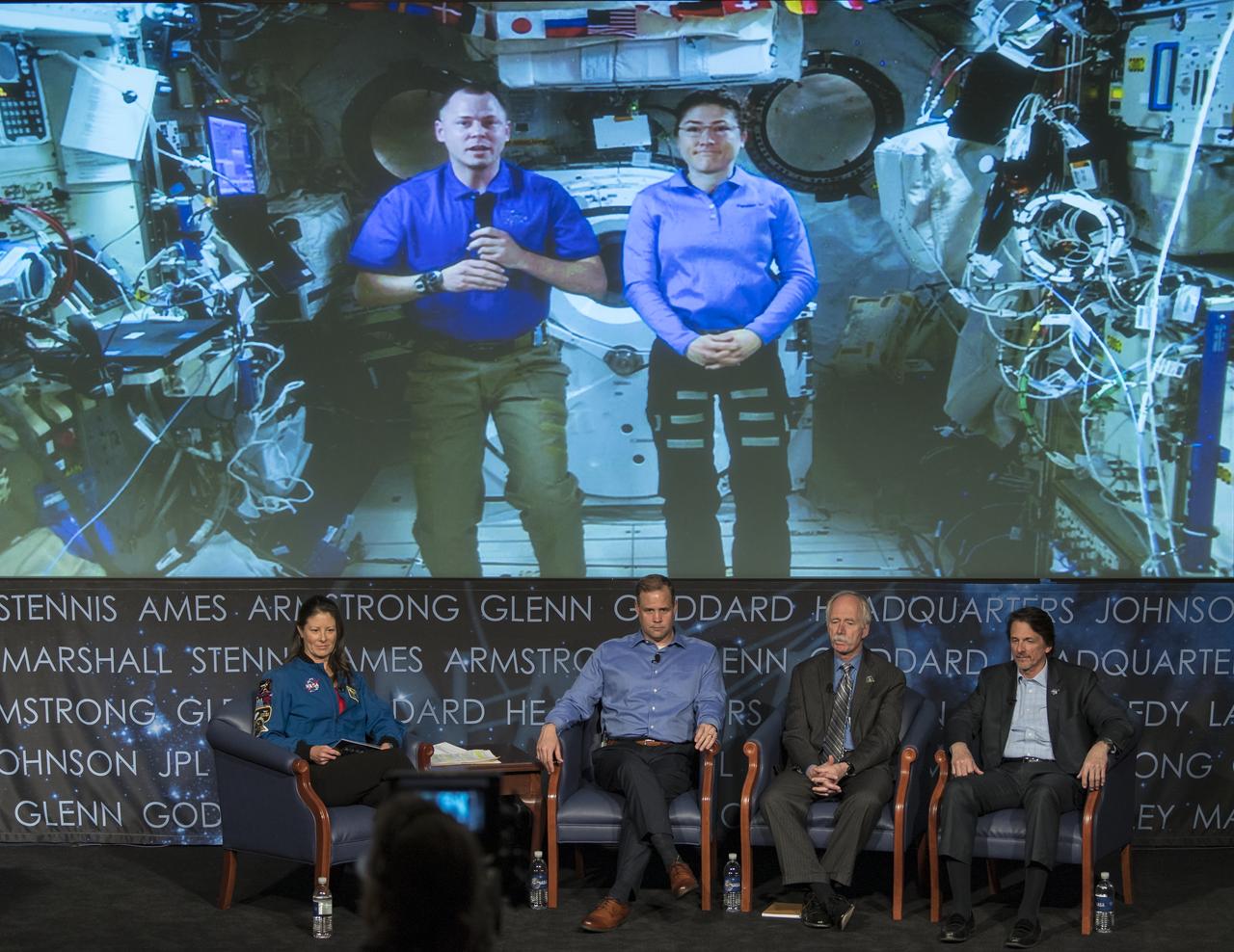
Nick Hague, left, and Christina Koch, two astronauts currently living and working on the International Space Station, are seen on the screen during a live uplink and panel discussion with, from left to right, moderator NASA astronaut Tracy Caldwell Dyson, NASA Administrator Jim Bridenstine, NASA Associate Administrator for the Human Exploration and Operations Mission Directorate, Bill Gerstenmaier, and NASA Deputy Associate Administrator for Exploration, Steve Clarke, at the "Future of Space" STEM event, Monday, April 29, 2019 at NASA Headquarters in Washington. Photo Credit: (NASA/Aubrey Gemignani)

Supervisory employees from NASA’s Kennedy Space Center participated in the Supervisor Cohort “Action Day” hosted by Leadership for the Future at Kennedy Space Center Visitor Complex in Florida on Friday, June 7, 2024. NASA Kennedy’s Leadership for the Future supervisor cohort initiative focuses on creating a space for supervisors to engage in providing solutions for important topics on center, as well as supporting the development of the supervisory community. The Leadership for the Future Champions hosted the Action Day to share expectations, form the teams, scope the projects, and launch. Leadership for the Future Champions, comprising several of the spaceport’s senior leaders, select the supervisor cohorts with the goal of advancing the spaceport, the agency, and America’s leadership in space.
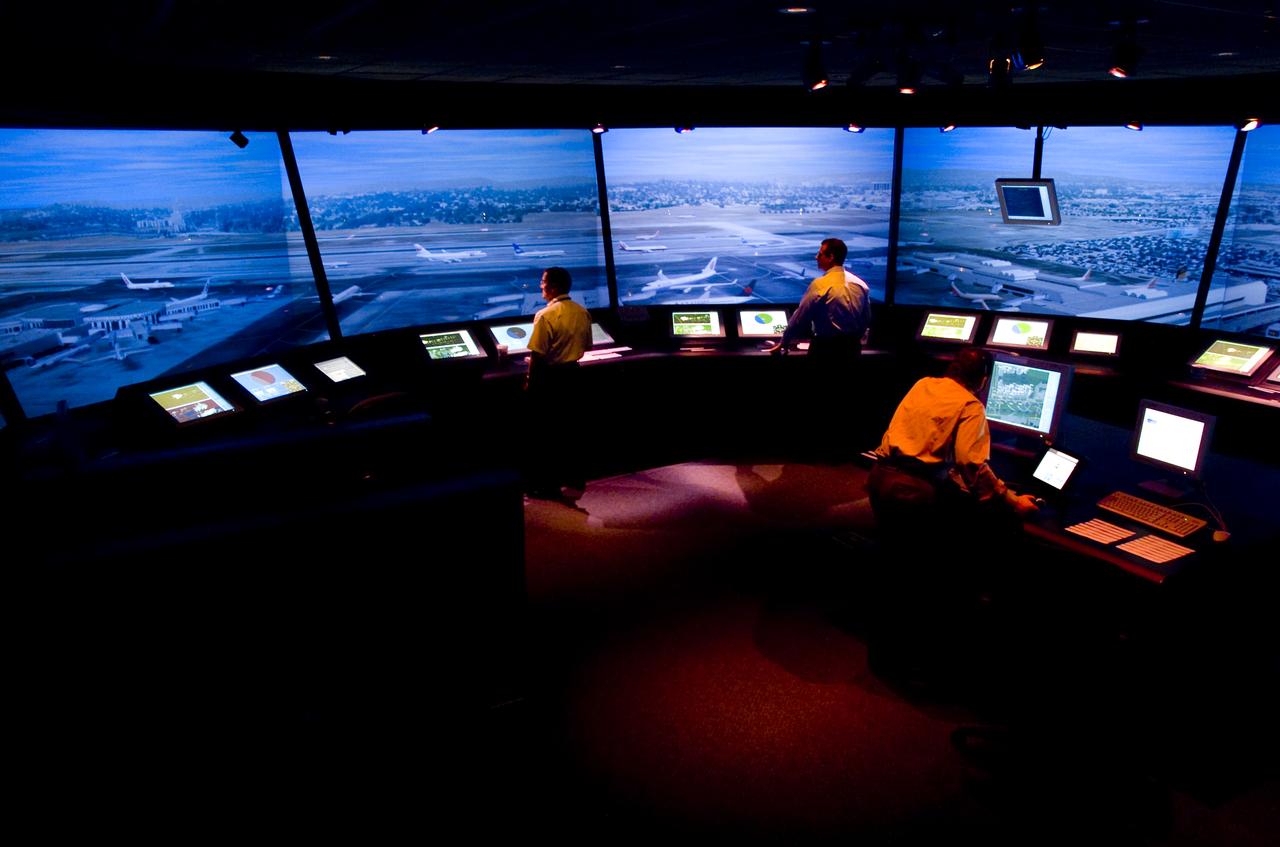
FFC (Future Flight Central) Simulator interior 'LAX' Configuration with Ken Christensen in tower