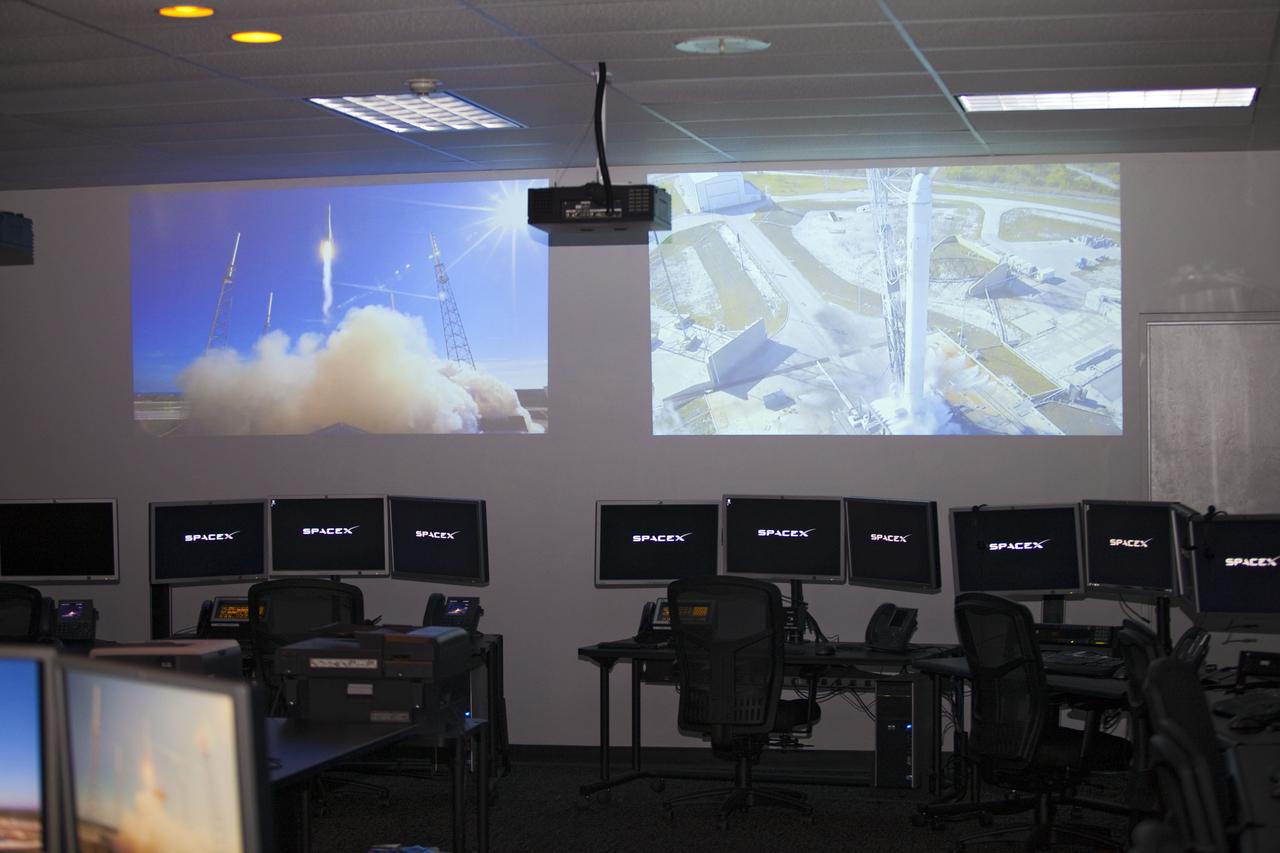
CAPE CANAVERAL, Fla. -- Space Exploration Technologies Corp., or SpaceX, shows off its Launch Control Center during a media tour at Cape Canaveral Air Force Station, or CCAFS, in Florida. In December 2010, SpaceX launched its Falcon 9 rocket and Dragon spacecraft from CCAFS's Launch Complex 40. The Dragon capsule went through several maneuvers before it re-entered the atmosphere and splashed down in the Pacific Ocean about 500 miles west of the coast of Mexico. That was the first demonstration flight for NASA's Commercial Orbital Transportation Services (COTS) program, which will provide cargo flights to the International Space Station in the future. The company is preparing for another launch in late 2011, in which the Dragon spacecraft and trunk will fly close to the space station so the station’s robotic arm can grab the spacecraft and bring it in for a docking. Photo credit: NASA/Frankie Martin
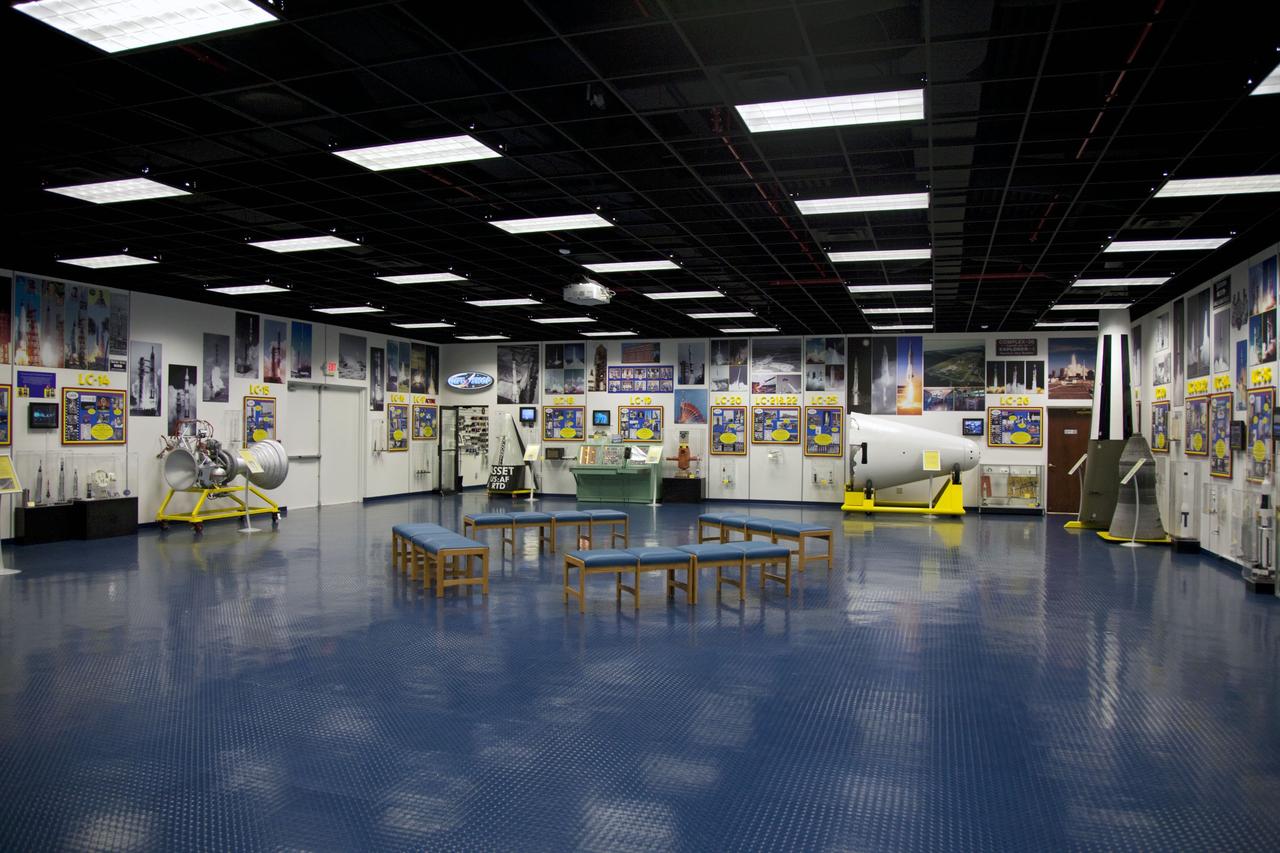
CAPE CANAVERAL, Fla. -- This is an inside view of the Air Force Space and Missile Museum's History Center, which is located outside the south gate of Cape Canaveral Air Force Station (CCAFS) in Florida. It contains historic information and displays for each launch complex at CCAFS. Since opening to the public in 1966, the museum has introduced millions of visitors to the history of rocketry and spaceflight. Its primary mission is to collect, restore and exhibit items of historical significance that relate to the development and heritage of U.S. Air Force space launch activities. Photo credit: NASA/Frankie Martin
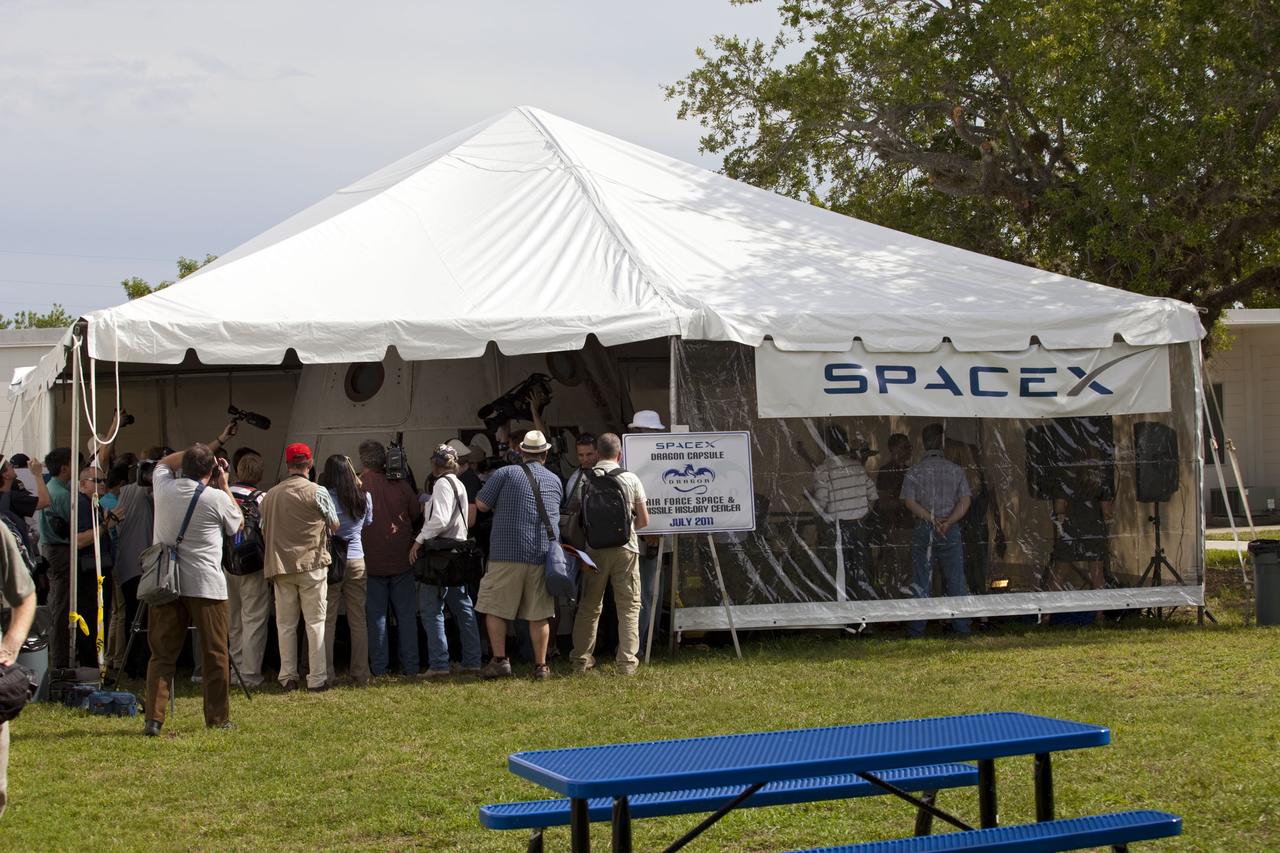
CAPE CANAVERAL, Fla. -- Space Exploration Technologies Corp., or SpaceX, displays a mock-up of its Dragon capsule during a media tour at Cape Canaveral Air Force Station, or CCAFS, in Florida. In December 2010, SpaceX launched its Falcon 9 rocket and Dragon spacecraft from CCAFS's Launch Complex 40. The Dragon capsule went through several maneuvers before it re-entered the atmosphere and splashed down in the Pacific Ocean about 500 miles west of the coast of Mexico. That was the first demonstration flight for NASA's Commercial Orbital Transportation Services (COTS) program, which will provide cargo flights to the International Space Station in the future. The company is preparing for another launch in late 2011, in which the Dragon spacecraft and trunk will fly close to the space station so the station’s robotic arm can grab the spacecraft and bring it in for a docking. Photo credit: NASA/Frankie Martin
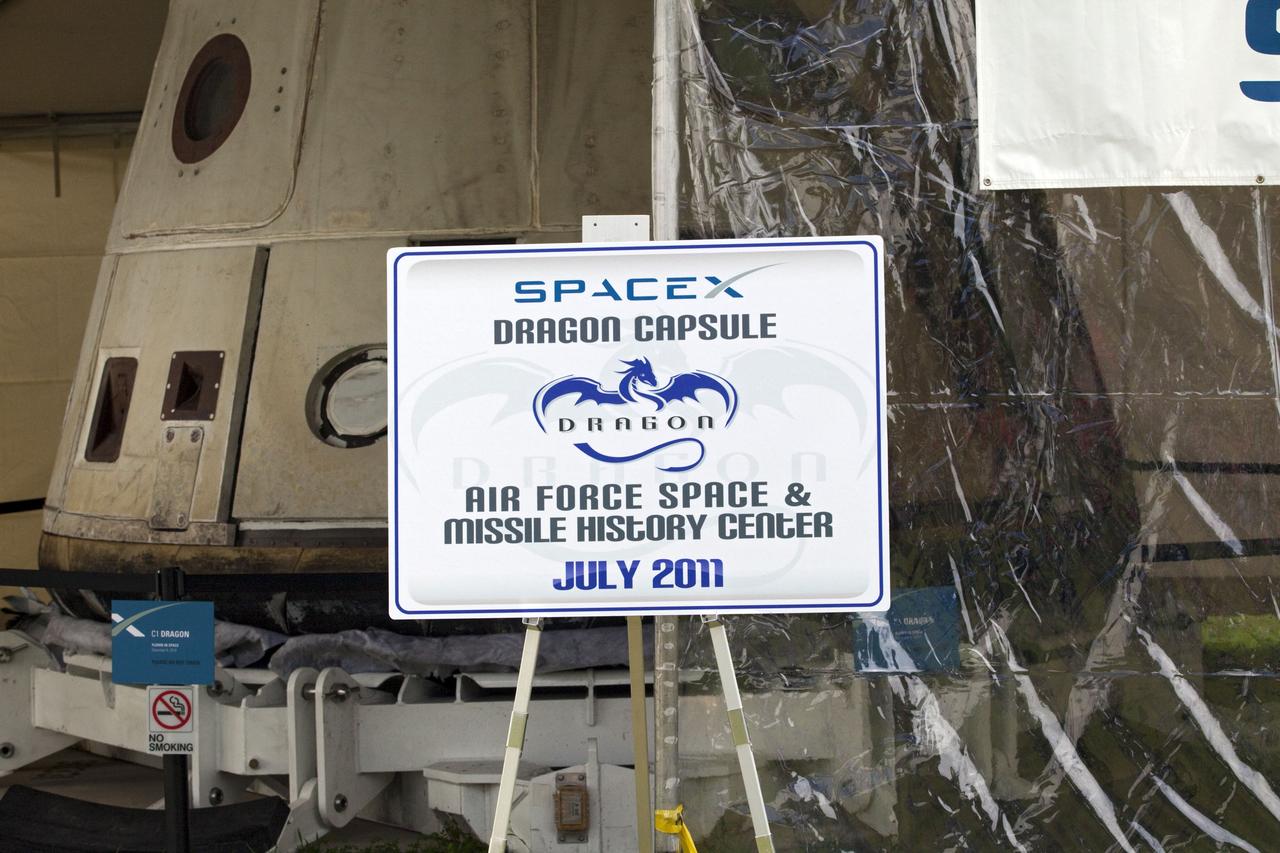
CAPE CANAVERAL, Fla. -- Space Exploration Technologies Corp., or SpaceX, displays a mock-up of its Dragon capsule during a media tour at Cape Canaveral Air Force Station, or CCAFS, in Florida. In December 2010, SpaceX launched its Falcon 9 rocket and Dragon spacecraft from CCAFS's Launch Complex 40. The Dragon capsule went through several maneuvers before it re-entered the atmosphere and splashed down in the Pacific Ocean about 500 miles west of the coast of Mexico. That was the first demonstration flight for NASA's Commercial Orbital Transportation Services (COTS) program, which will provide cargo flights to the International Space Station in the future. The company is preparing for another launch in late 2011, in which the Dragon spacecraft and trunk will fly close to the space station so the station’s robotic arm can grab the spacecraft and bring it in for a docking. Photo credit: NASA/Frankie Martin
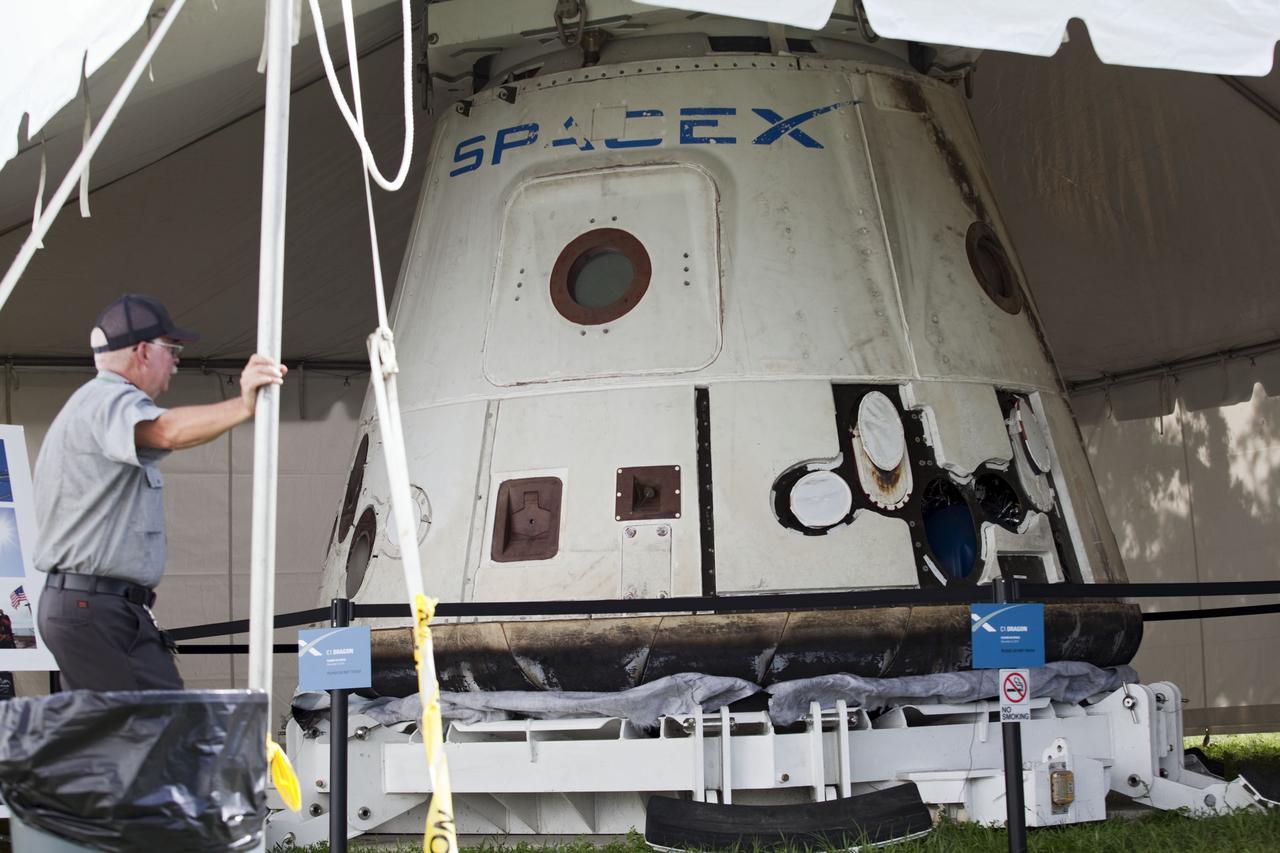
CAPE CANAVERAL, Fla. -- Space Exploration Technologies Corp., or SpaceX, displays a mock-up of its Dragon capsule during a media tour at Cape Canaveral Air Force Station, or CCAFS, in Florida. In December 2010, SpaceX launched its Falcon 9 rocket and Dragon spacecraft from CCAFS's Launch Complex 40. The Dragon capsule went through several maneuvers before it re-entered the atmosphere and splashed down in the Pacific Ocean about 500 miles west of the coast of Mexico. That was the first demonstration flight for NASA's Commercial Orbital Transportation Services (COTS) program, which will provide cargo flights to the International Space Station in the future. The company is preparing for another launch in late 2011, in which the Dragon spacecraft and trunk will fly close to the space station so the station’s robotic arm can grab the spacecraft and bring it in for a docking. Photo credit: NASA/Frankie Martin
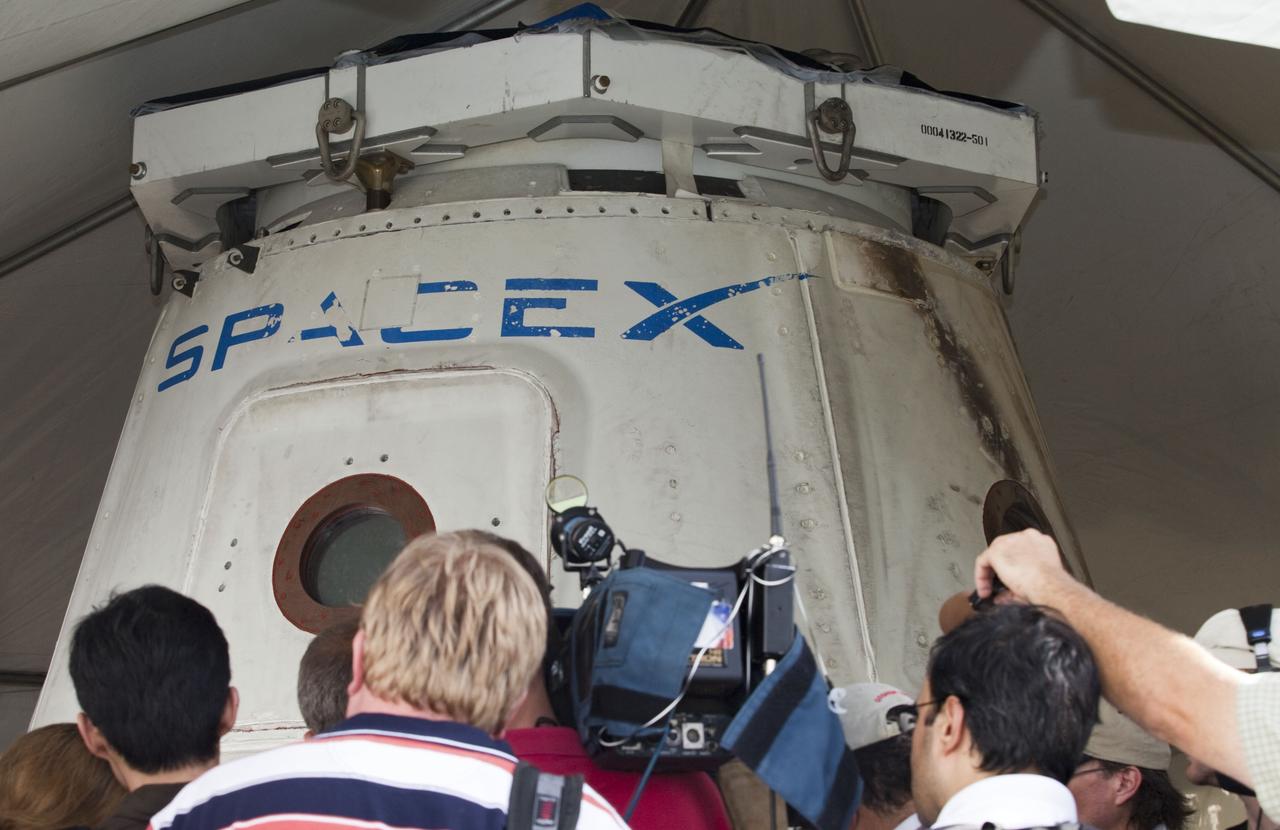
CAPE CANAVERAL, Fla. -- Space Exploration Technologies Corp., or SpaceX, displays a mock-up of its Dragon capsule during a media tour at Cape Canaveral Air Force Station, or CCAFS, in Florida. In December 2010, SpaceX launched its Falcon 9 rocket and Dragon spacecraft from CCAFS's Launch Complex 40. The Dragon capsule went through several maneuvers before it re-entered the atmosphere and splashed down in the Pacific Ocean about 500 miles west of the coast of Mexico. That was the first demonstration flight for NASA's Commercial Orbital Transportation Services (COTS) program, which will provide cargo flights to the International Space Station in the future. The company is preparing for another launch in late 2011, in which the Dragon spacecraft and trunk will fly close to the space station so the station’s robotic arm can grab the spacecraft and bring it in for a docking. Photo credit: NASA/Frankie Martin
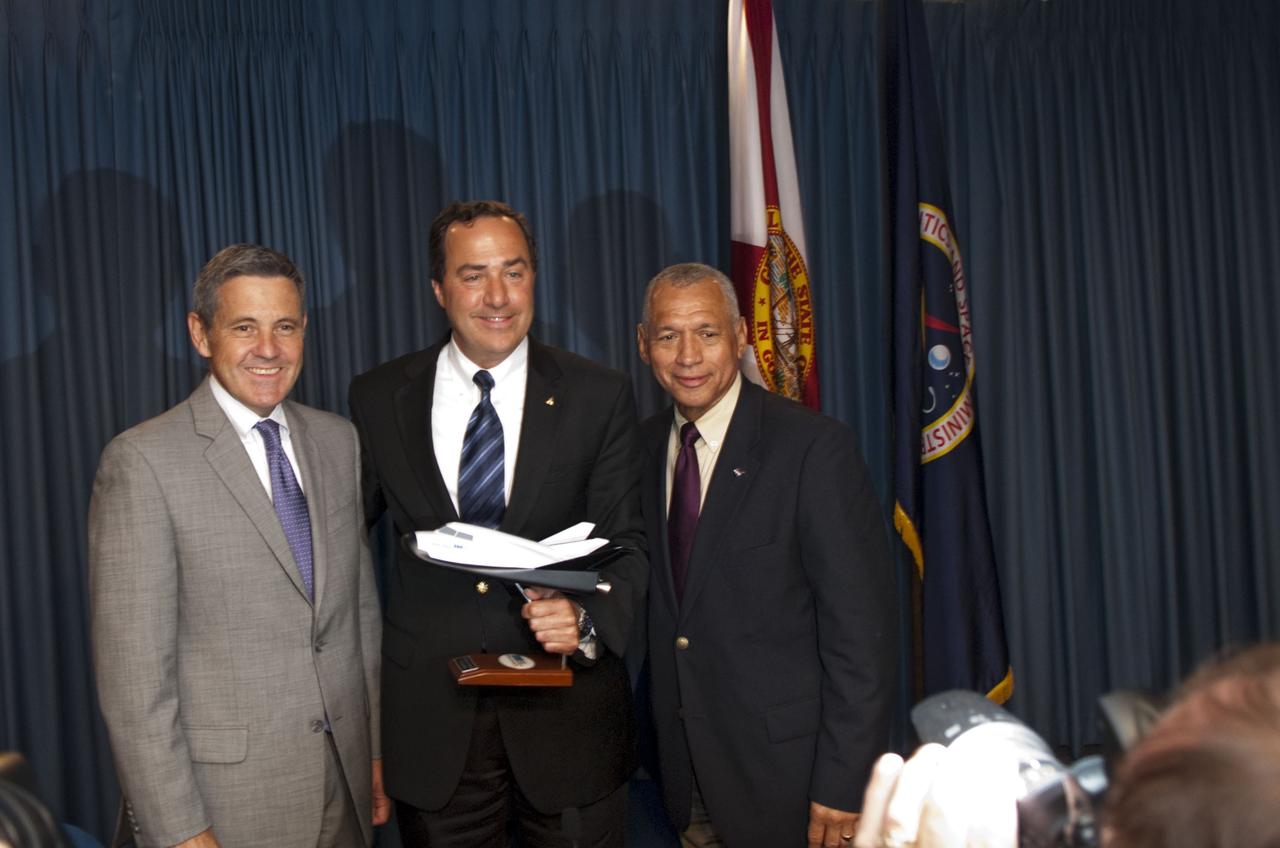
CAPE CANAVERAL, Fla. -- Kennedy Space Center Director Bob Cabana, left, Mark Sirangelo, head of Sierra Nevada Space Systems (SNSS) of Sparks, Nev., and NASA Administrator Charlie Bolden pose for a photo after signing a Space Act Agreement that will offer the company technical capabilities from Kennedy's uniquely skilled work force. Kennedy will help Sierra Nevada with the ground operations support of its lifting body reusable spacecraft called "Dream Chaser," which resembles a smaller version of the space shuttle orbiter. The spacecraft would carry as many as seven astronauts to the space station. Through the new agreement, Kennedy's work force will use its experience of processing the shuttle fleet for 30 years to help Sierra Nevada define and execute Dream Chaser's launch preparations and post-landing activities. In 2010 and 2011, Sierra Nevada was awarded grants as part of the initiative to stimulate the private sector in developing and demonstrating human spaceflight capabilities for NASA's Commercial Crew Program. The goal of the program, which is based in Florida at Kennedy, is to facilitate the development of a U.S. commercial crew space transportation capability by achieving safe, reliable and cost-effective access to and from the space station and future low Earth orbit destinations. Photo credit: NASA/Jim Grossmann
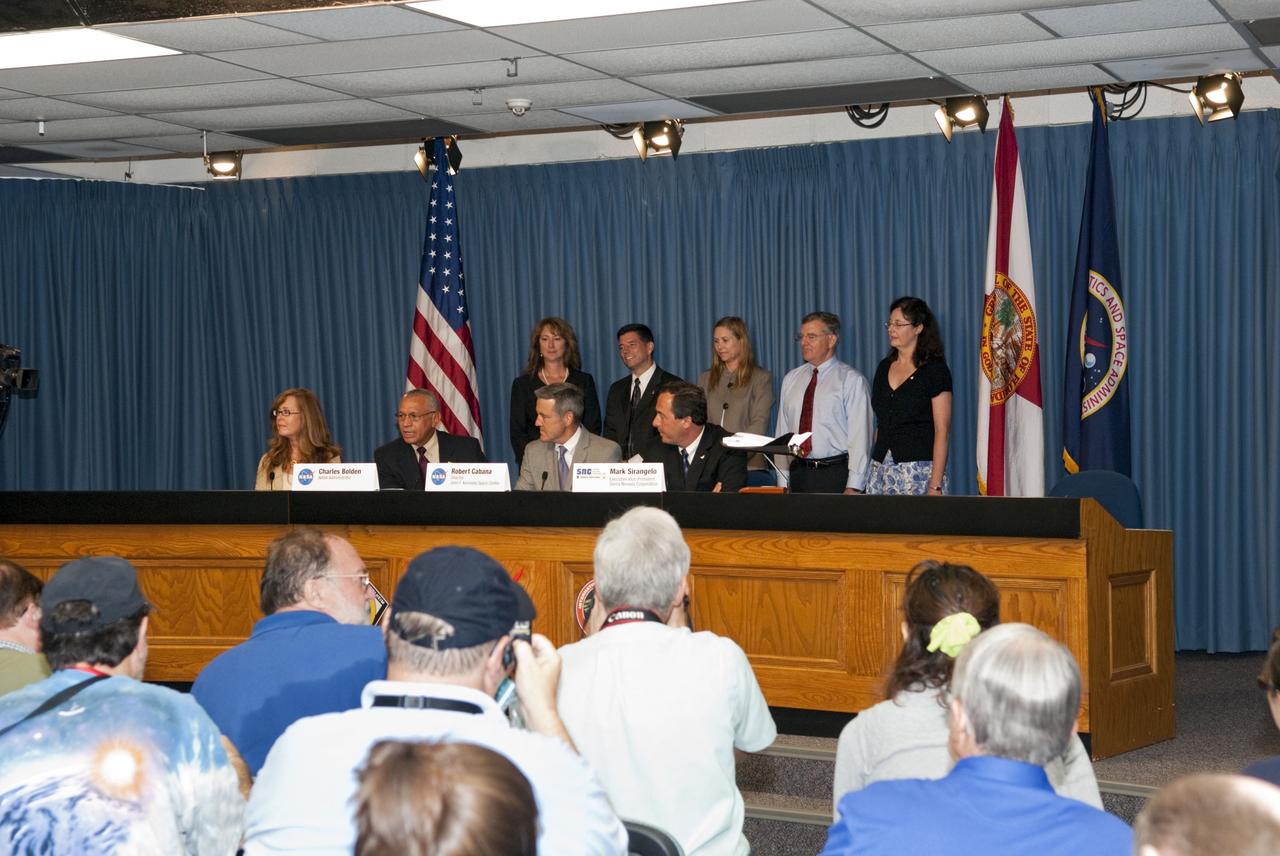
CAPE CANAVERAL, Fla. -- NASA and Sierra Nevada Space Systems (SNSS) of Sparks, Nev., prepare to sign a Space Act Agreement that will offer the company technical capabilities from Kennedy Space Center's uniquely skilled work force. Sitting, from left, are Kennedy Public Affairs Director Lisa Malone; NASA Administrator Charlie Bolden; Kennedy Center Director Bob Cabana; and Mark Sirangelo, head of Sierra Nevada. Standing, from left, are Joyce Riquelme, manager of Kennedy's Center Planning and Development Office; John Curry, director of Sierra Nevada's Systems Integration, Test and Operations; Kennedy Deputy Director Janet Petro; Jim Voss, vice president of Sierra Nevada's Space Exploration Systems; and Merri Sanchez, senior director of Sierra Nevada's Space Exploration Systems. Kennedy will help Sierra Nevada with the ground operations support of its lifting body reusable spacecraft called "Dream Chaser," which resembles a smaller version of the space shuttle orbiter. The spacecraft would carry as many as seven astronauts to the space station. Through the new agreement, Kennedy's work force will use its experience of processing the shuttle fleet for 30 years to help Sierra Nevada define and execute Dream Chaser's launch preparations and post-landing activities. In 2010 and 2011, Sierra Nevada was awarded grants as part of the initiative to stimulate the private sector in developing and demonstrating human spaceflight capabilities for NASA's Commercial Crew Program. The goal of the program, which is based in Florida at Kennedy, is to facilitate the development of a U.S. commercial crew space transportation capability by achieving safe, reliable and cost-effective access to and from the space station and future low Earth orbit destinations. Photo credit: NASA/Jim Grossmann
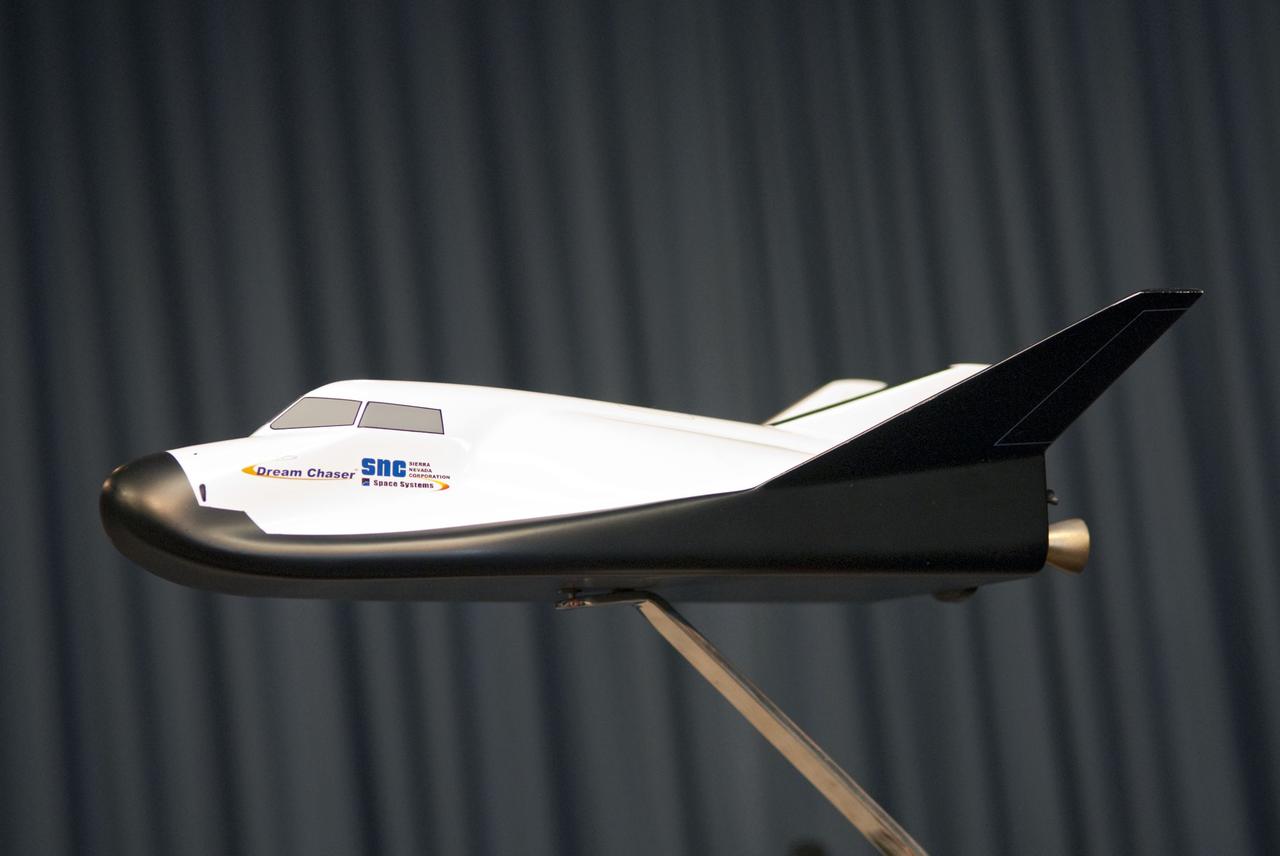
CAPE CANAVERAL, Fla. -- Sierra Nevada Space Systems (SNSS) of Sparks, Nev., and NASA signed a Space Act Agreement that will offer the company technical capabilities from Kennedy's uniquely skilled work force. Kennedy will help Sierra Nevada with the ground operations support of its lifting body reusable spacecraft called "Dream Chaser." The spacecraft, seen here as a display, resembles a smaller version of the space shuttle orbiter. The spacecraft would carry as many as seven astronauts to the space station. Through the new agreement, Kennedy's work force will use its experience of processing the shuttle fleet for 30 years to help Sierra Nevada define and execute Dream Chaser's launch preparations and post-landing activities. In 2010 and 2011, Sierra Nevada was awarded grants as part of the initiative to stimulate the private sector in developing and demonstrating human spaceflight capabilities for NASA's Commercial Crew Program. The goal of the program, which is based in Florida at Kennedy, is to facilitate the development of a U.S. commercial crew space transportation capability by achieving safe, reliable and cost-effective access to and from the space station and future low Earth orbit destinations. Photo credit: NASA/Jim Grossmann
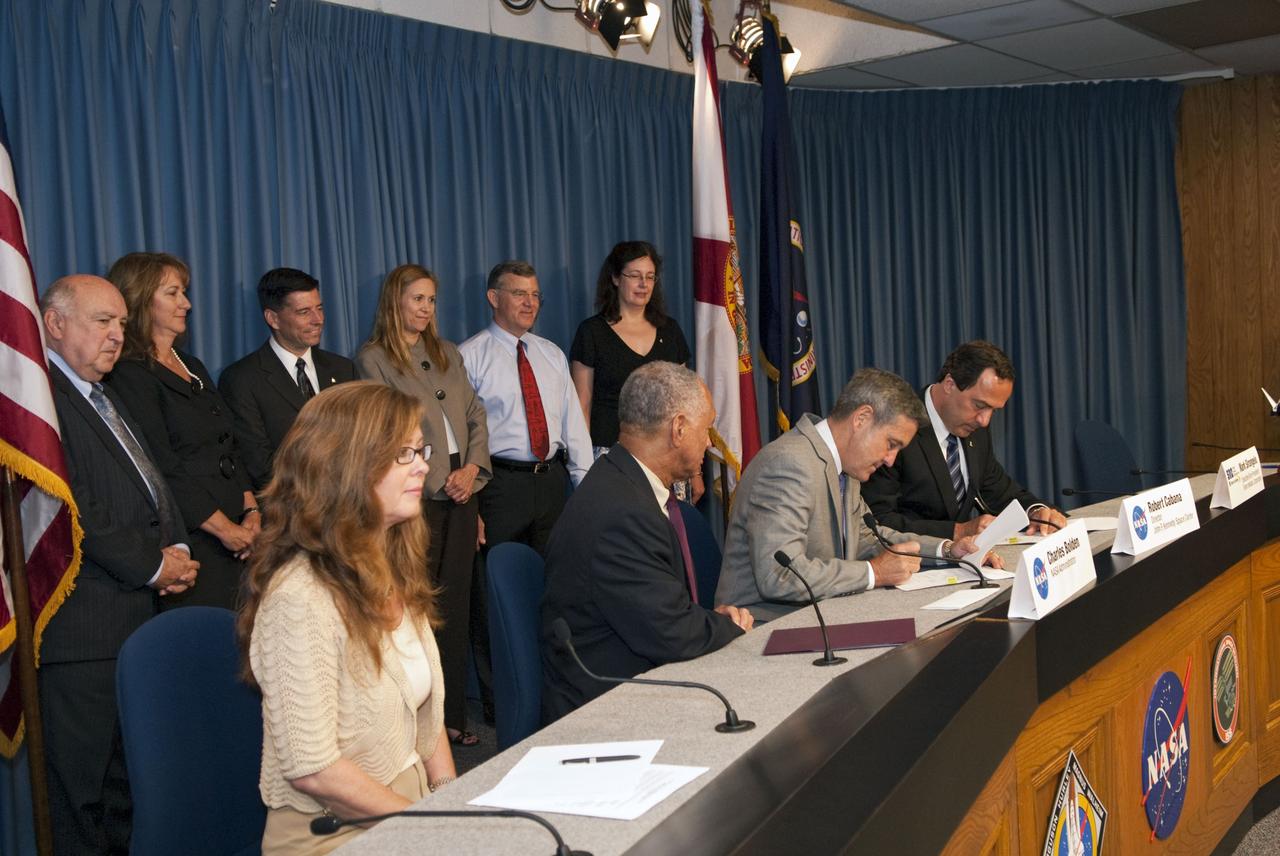
CAPE CANAVERAL, Fla. -- NASA and Sierra Nevada Space Systems (SNSS) of Sparks, Nev., sign a Space Act Agreement that will offer the company technical capabilities from Kennedy Space Center's uniquely skilled work force. Sitting, from left, are Kennedy Public Affairs Director Lisa Malone; NASA Administrator Charlie Bolden; Kennedy Center Director Bob Cabana; and Mark Sirangelo, head of Sierra Nevada. Standing, from left, are Frank DiBello, president of Space Florida; Joyce Riquelme, manager of Kennedy's Center Planning and Development Office; John Curry, director of Sierra Nevada's Systems Integration, Test and Operations; Kennedy Deputy Director Janet Petro; Jim Voss, vice president of Sierra Nevada's Space Exploration Systems; and Merri Sanchez, senior director of Sierra Nevada's Space Exploration Systems. Kennedy will help Sierra Nevada with the ground operations support of its lifting body reusable spacecraft called "Dream Chaser," which resembles a smaller version of the space shuttle orbiter. The spacecraft would carry as many as seven astronauts to the space station. Through the new agreement, Kennedy's work force will use its experience of processing the shuttle fleet for 30 years to help Sierra Nevada define and execute Dream Chaser's launch preparations and post-landing activities. In 2010 and 2011, Sierra Nevada was awarded grants as part of the initiative to stimulate the private sector in developing and demonstrating human spaceflight capabilities for NASA's Commercial Crew Program. The goal of the program, which is based in Florida at Kennedy, is to facilitate the development of a U.S. commercial crew space transportation capability by achieving safe, reliable and cost-effective access to and from the space station and future low Earth orbit destinations. Photo credit: NASA/Jim Grossmann
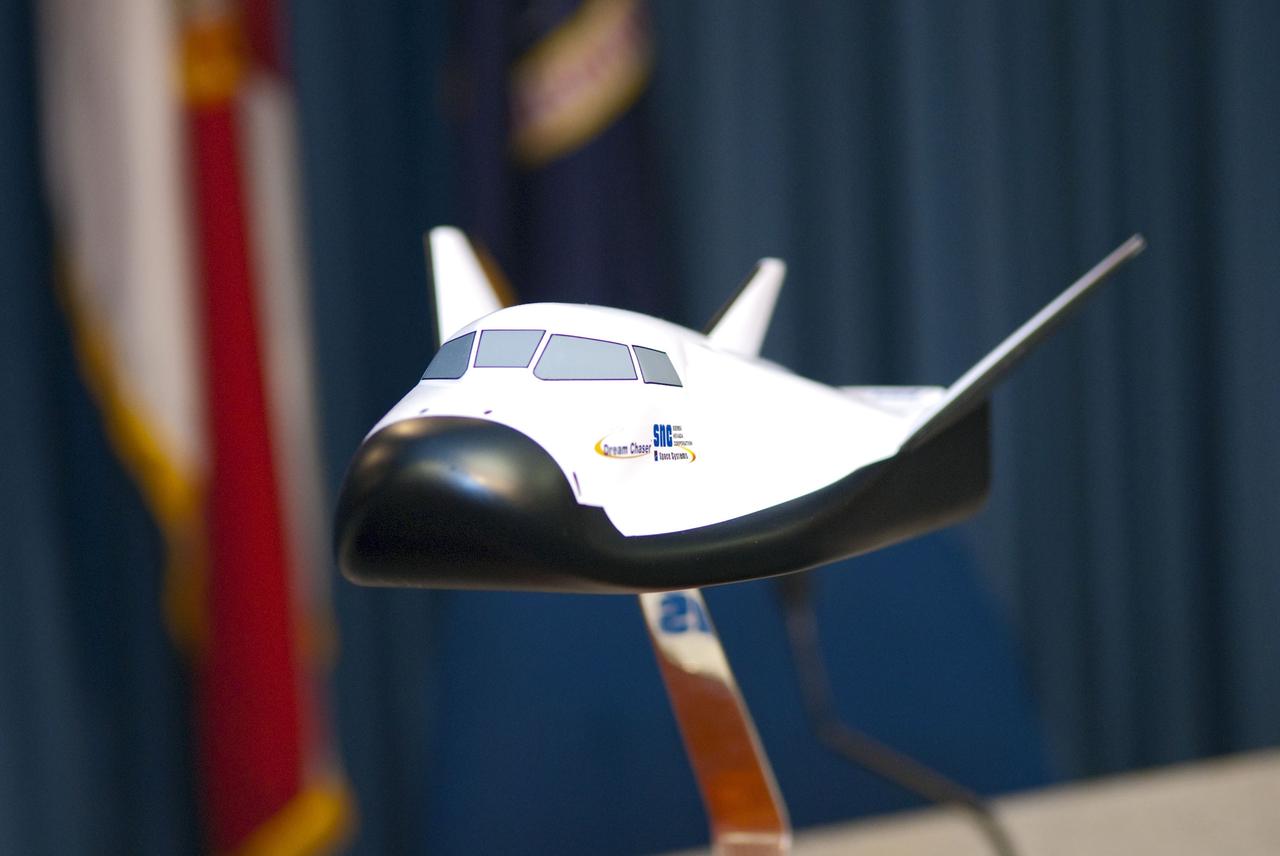
CAPE CANAVERAL, Fla. -- Sierra Nevada Space Systems (SNSS) of Sparks, Nev., and NASA signed a Space Act Agreement that will offer the company technical capabilities from Kennedy's uniquely skilled work force. Kennedy will help Sierra Nevada with the ground operations support of its lifting body reusable spacecraft called "Dream Chaser." The spacecraft, seen here as a display, resembles a smaller version of the space shuttle orbiter. The spacecraft would carry as many as seven astronauts to the space station. Through the new agreement, Kennedy's work force will use its experience of processing the shuttle fleet for 30 years to help Sierra Nevada define and execute Dream Chaser's launch preparations and post-landing activities. In 2010 and 2011, Sierra Nevada was awarded grants as part of the initiative to stimulate the private sector in developing and demonstrating human spaceflight capabilities for NASA's Commercial Crew Program. The goal of the program, which is based in Florida at Kennedy, is to facilitate the development of a U.S. commercial crew space transportation capability by achieving safe, reliable and cost-effective access to and from the space station and future low Earth orbit destinations. Photo credit: NASA/Jim Grossmann
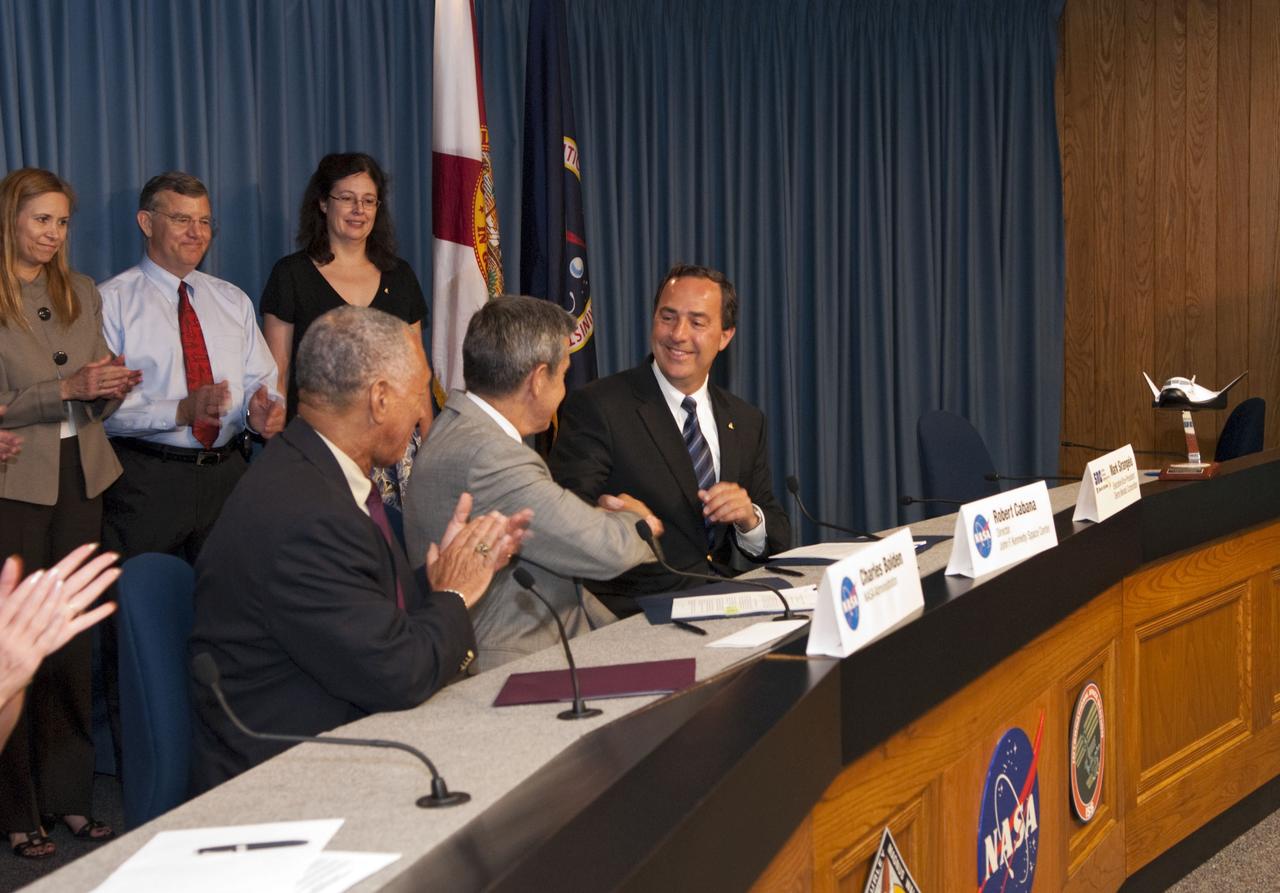
CAPE CANAVERAL, Fla. -- NASA and Sierra Nevada Space Systems (SNSS) of Sparks, Nev., enter into a Space Act Agreement that will offer the company technical capabilities from Kennedy Space Center's uniquely skilled work force. Sitting, from left, are NASA Administrator Charlie Bolden; Kennedy Center Director Bob Cabana; and Mark Sirangelo, head of Sierra Nevada. Standing, from left, Kennedy Deputy Director Janet Petro; Jim Voss, vice president of Sierra Nevada's Space Exploration Systems; and Merri Sanchez, senior director of Sierra Nevada's Space Exploration Systems. Kennedy will help Sierra Nevada with the ground operations support of its lifting body reusable spacecraft called "Dream Chaser," which resembles a smaller version of the space shuttle orbiter. The spacecraft would carry as many as seven astronauts to the space station. Through the new agreement, Kennedy's work force will use its experience of processing the shuttle fleet for 30 years to help Sierra Nevada define and execute Dream Chaser's launch preparations and post-landing activities. In 2010 and 2011, Sierra Nevada was awarded grants as part of the initiative to stimulate the private sector in developing and demonstrating human spaceflight capabilities for NASA's Commercial Crew Program. The goal of the program, which is based in Florida at Kennedy, is to facilitate the development of a U.S. commercial crew space transportation capability by achieving safe, reliable and cost-effective access to and from the space station and future low Earth orbit destinations. Photo credit: NASA/Jim Grossmann
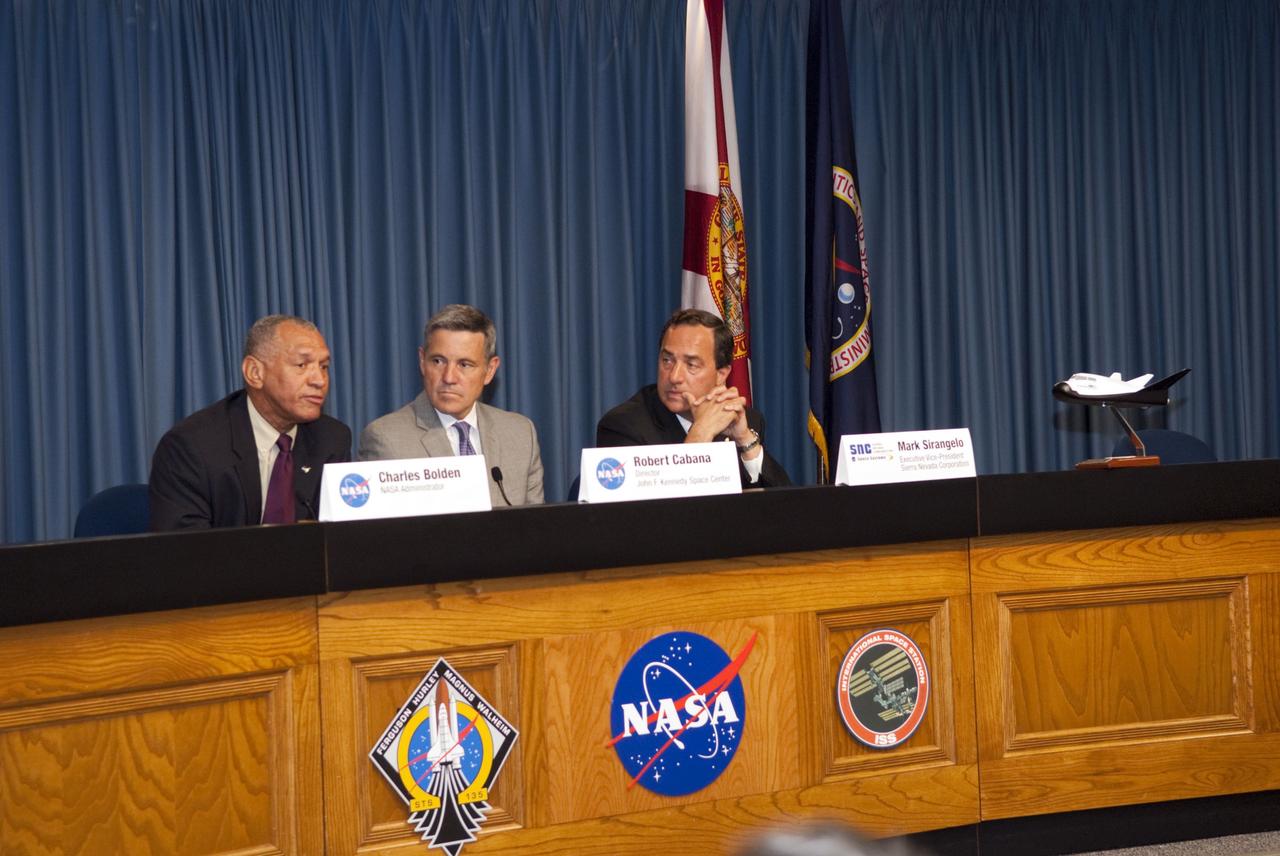
CAPE CANAVERAL, Fla. -- NASA Administrator Charlie Bolden, left, Kennedy Space Center Director Bob Cabana, and Mark Sirangelo, head of Sierra Nevada Space Systems (SNSS) of Sparks, Nev., talk to media after signing a Space Act Agreement that will offer the company technical capabilities from Kennedy's uniquely skilled work force. Kennedy will help Sierra Nevada with the ground operations support of its lifting body reusable spacecraft called "Dream Chaser," which resembles a smaller version of the space shuttle orbiter. The spacecraft would carry as many as seven astronauts to the space station. Through the new agreement, Kennedy's work force will use its experience of processing the shuttle fleet for 30 years to help Sierra Nevada define and execute Dream Chaser's launch preparations and post-landing activities. In 2010 and 2011, Sierra Nevada was awarded grants as part of the initiative to stimulate the private sector in developing and demonstrating human spaceflight capabilities for NASA's Commercial Crew Program. The goal of the program, which is based in Florida at Kennedy, is to facilitate the development of a U.S. commercial crew space transportation capability by achieving safe, reliable and cost-effective access to and from the space station and future low Earth orbit destinations. Photo credit: NASA/Jim Grossmann