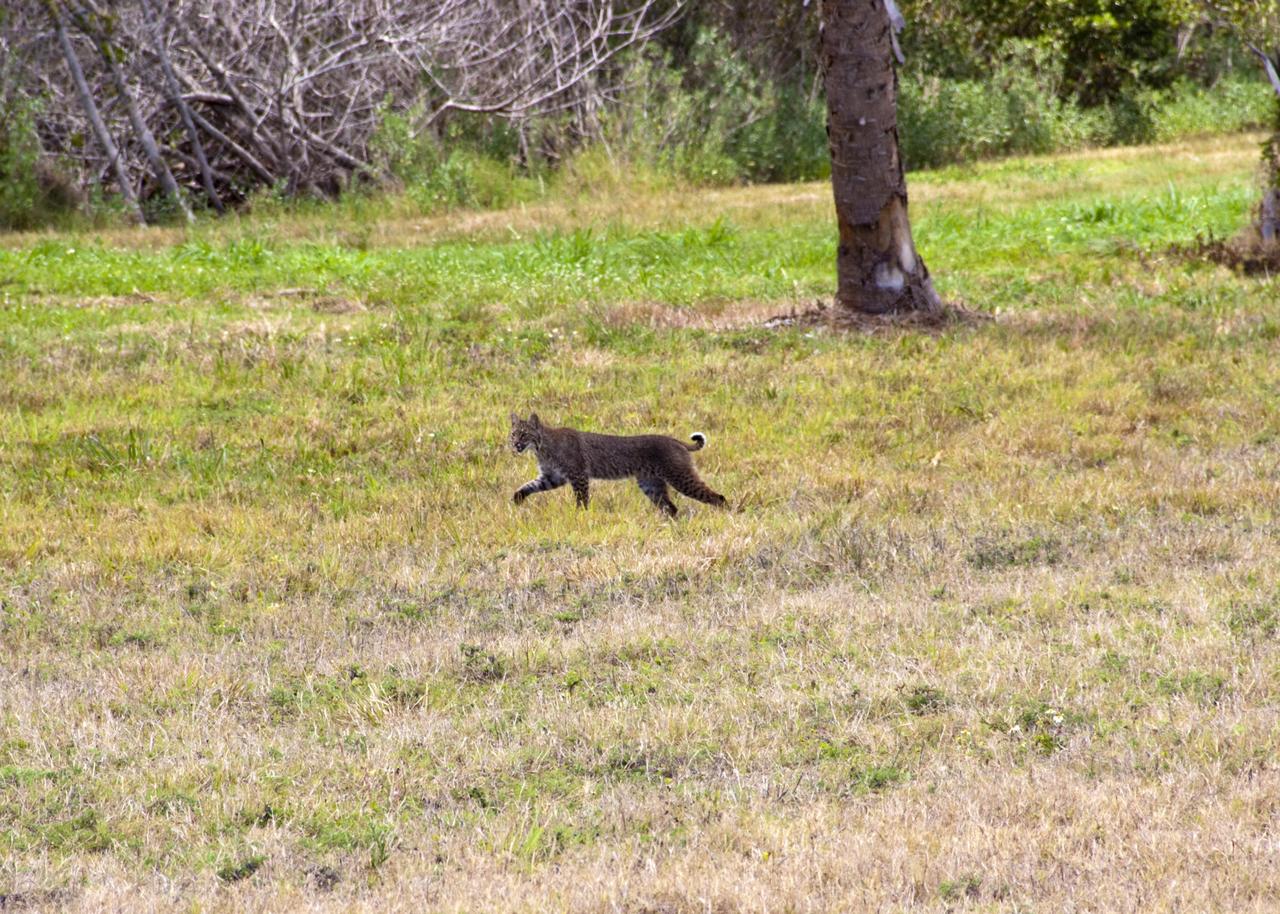
CAPE CANAVERAL, Fla. – A bobcat strolls across the causeway between NASA’s Kennedy Space Center and Cape Canaveral Air Force Station in Florida, oblivious to everything but the hunt for its next meal. The cat is seldom observed during the day unless scared from its daytime shelter. It is the last large mammalian predator remaining on the center. Kennedy and the Merritt Island National Wildlife Refuge mutually reside on 140,000 acres on central Florida’s east coast. The area’s coastal dunes, saltwater estuaries and marshes, freshwater impoundments, scrub, pine flatwoods, and hardwood hammocks provide habitats for more than 1,000 species of plants and animals, including about 331 species of birds. For more information, visit http://www.nasa.gov/kennedy. Photo credit: NASA/Jim Grossmann
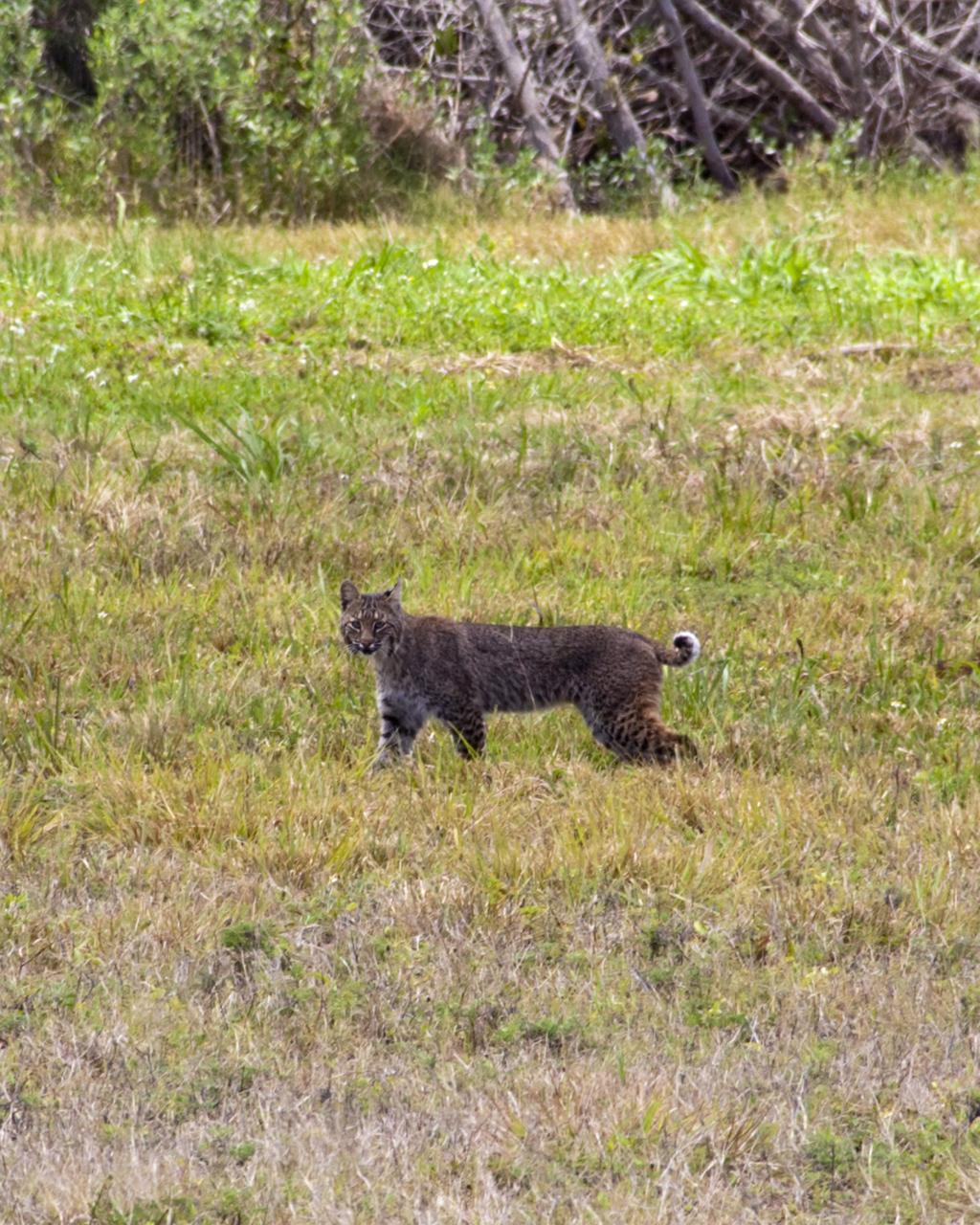
CAPE CANAVERAL, Fla. – A bobcat on the causeway between NASA’s Kennedy Space Center and Cape Canaveral Air Force Station in Florida pauses to check out the photographer who chanced upon it during the hunt for its next meal. The cat is seldom observed during the day unless scared from its daytime shelter. It is the last large mammalian predator remaining on the center. Kennedy and the Merritt Island National Wildlife Refuge mutually reside on 140,000 acres on central Florida’s east coast. The area’s coastal dunes, saltwater estuaries and marshes, freshwater impoundments, scrub, pine flatwoods, and hardwood hammocks provide habitats for more than 1,000 species of plants and animals, including about 331 species of birds. For more information, visit http://www.nasa.gov/kennedy. Photo credit: NASA/Jim Grossmann
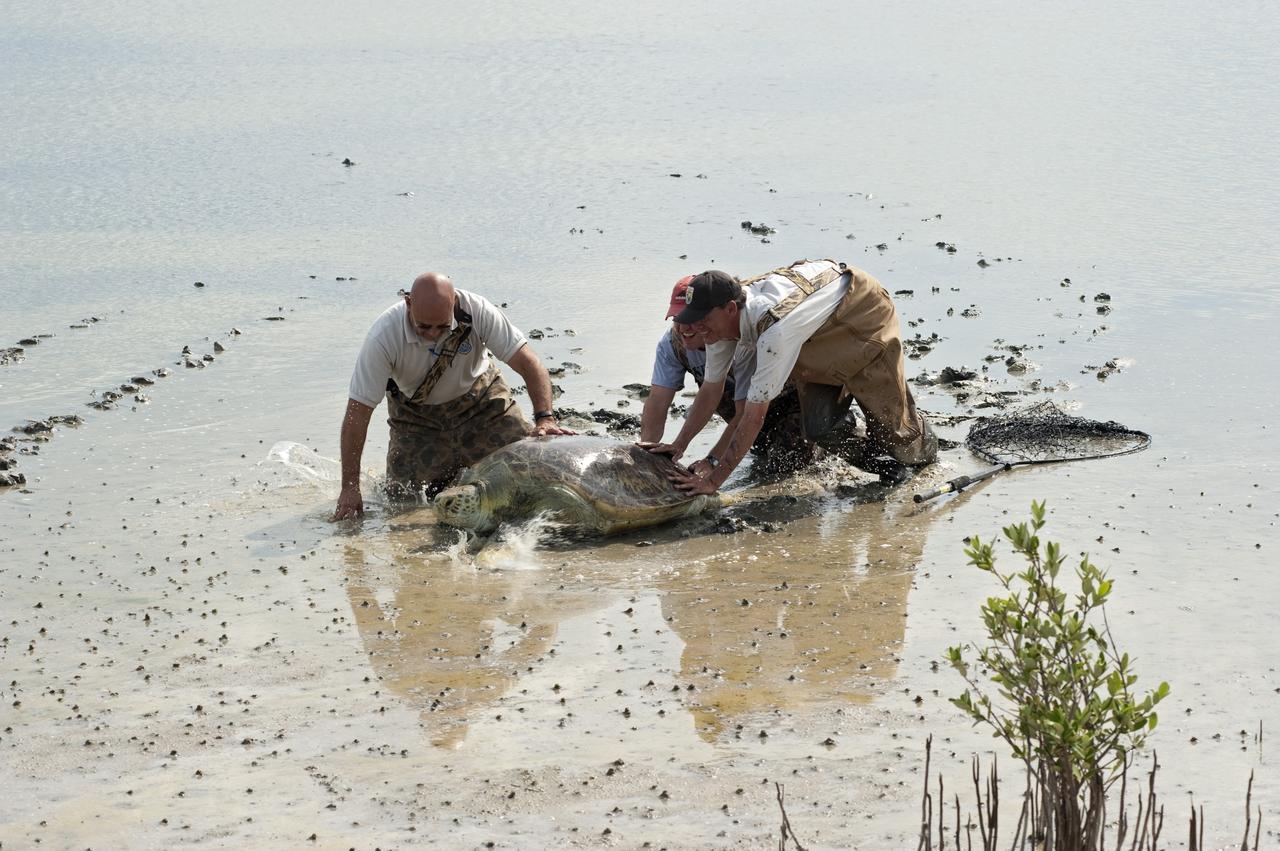
CAPE CANAVERAL, Fla. -- Harold Morrow with the U.S. Fish and Wildlife Service (FWS), left, Eric Reyier with Innovative Health Applications LLC and James Lyon with FWS help a green sea turtle move into deeper water at the Merritt Island National Wildlife Refuge in Florida. The female turtle, weighing about 350 pounds, became stuck on an impoundment in fresh water near NASA Kennedy Space Center's Launch Pad 39A. Kennedy shares a boundary with the refuge, which is a habitat for more than 310 species of birds, 25 mammals, 117 fish and 65 amphibians and reptiles. Photo credit: NASA/Carl Winebarger
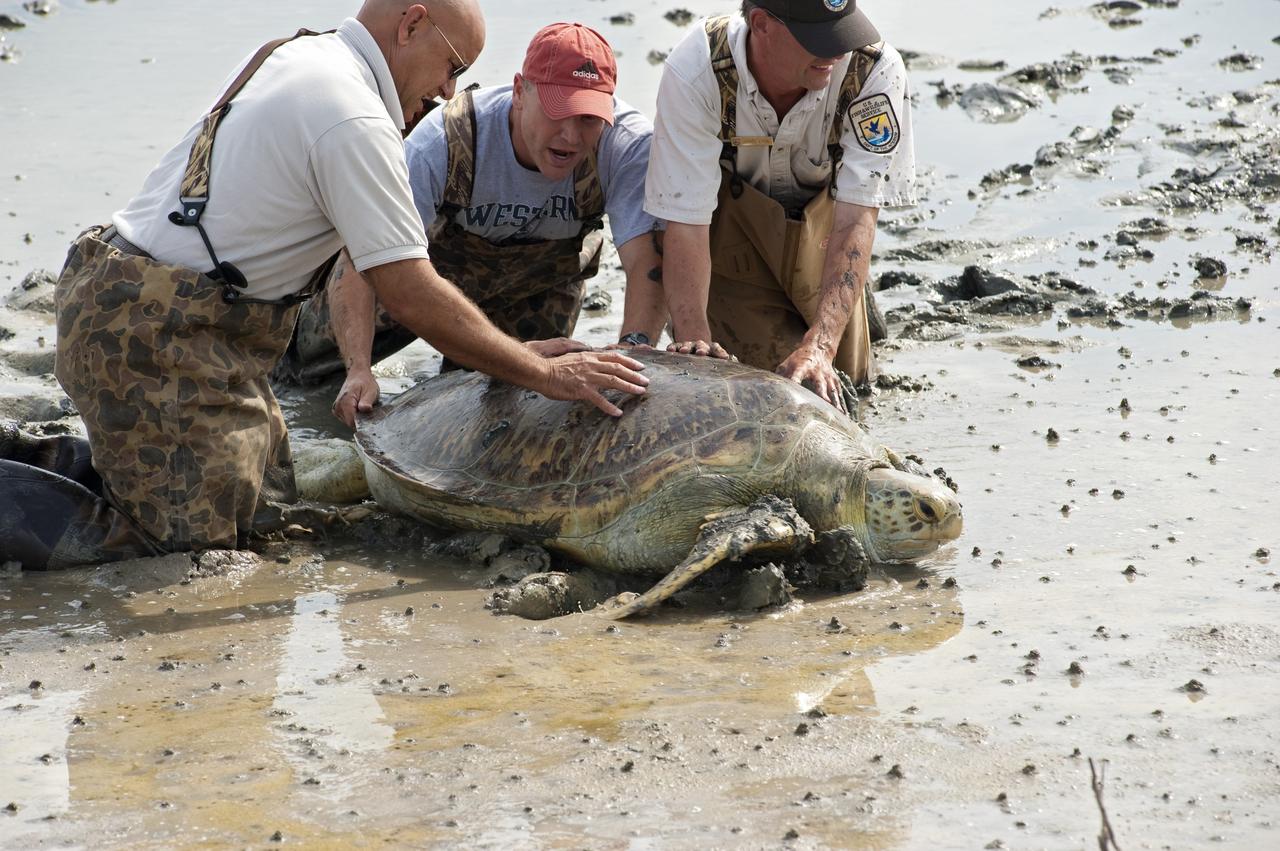
CAPE CANAVERAL, Fla. -- Harold Morrow with the U.S. Fish and Wildlife Service (FWS), left, Eric Reyier with Innovative Health Applications LLC and James Lyon with FWS help a green sea turtle move into deeper water at the Merritt Island National Wildlife Refuge in Florida. The female turtle, weighing about 350 pounds, became stuck on an impoundment in fresh water near NASA Kennedy Space Center's Launch Pad 39A. The refuge, located on Kennedy property, is a habitat for more than 310 species of birds, 25 mammals, 117 fish and 65 amphibians and reptiles. Photo credit: NASA/Carl Winebarger
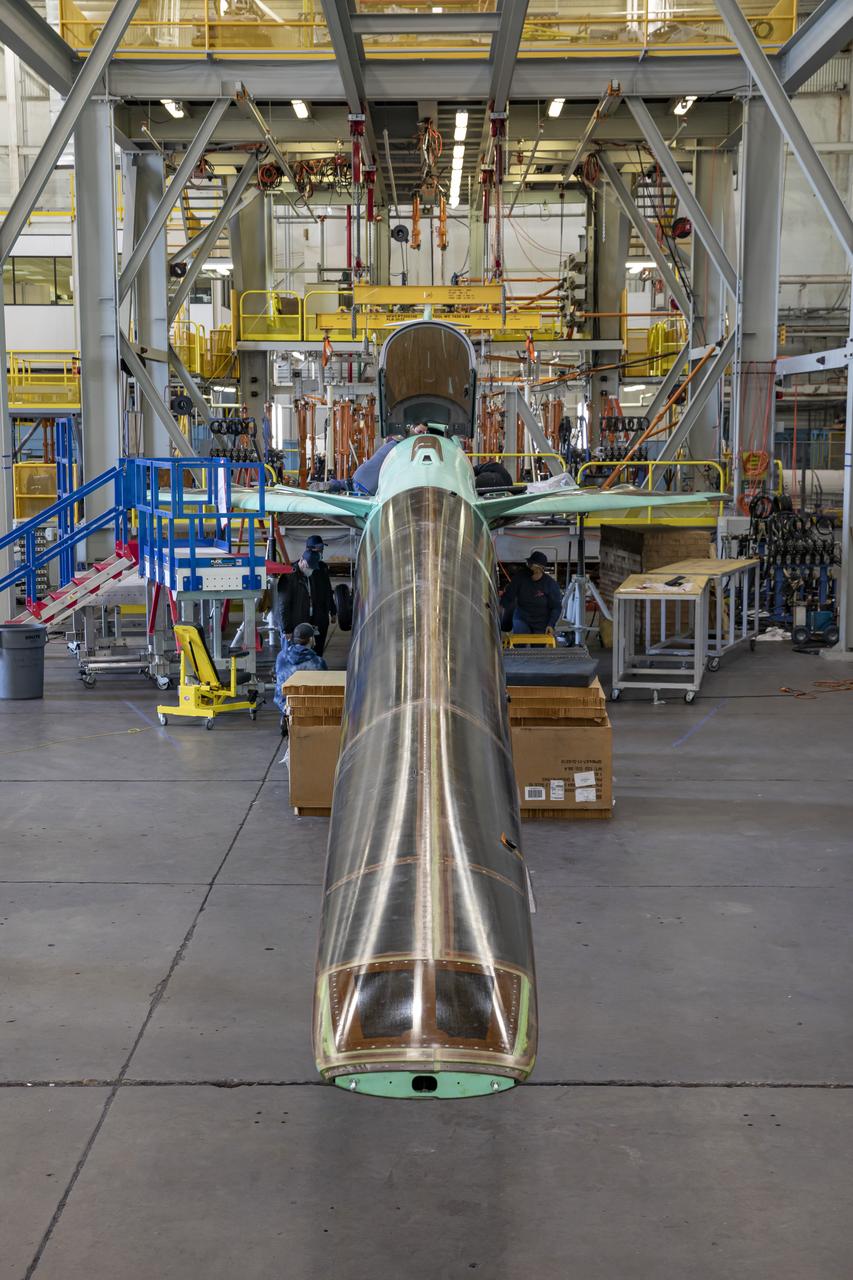
NASA’s X-59 undergoes a structural stress test at a Lockheed Martin facility in Fort Worth, Texas. The X-59’s nose makes up one third of the aircraft, at 38-feet in length. The X-59 is a one-of-a-kind airplane designed to fly at supersonic speeds without making aa startling sonic boom sound for the communities below. This is part of NASA’s Quesst mission which plans to help enable supersonic air travel over land
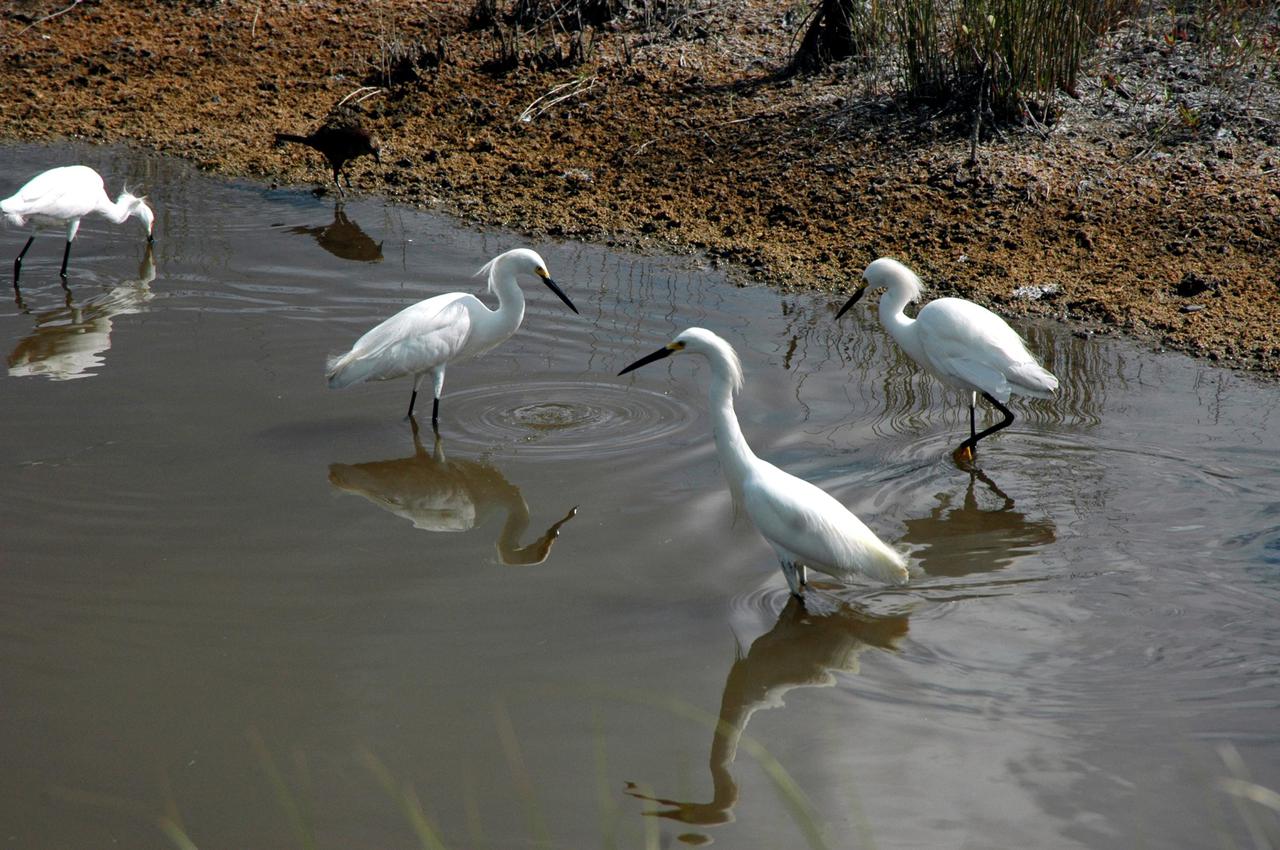
KENNEDY SPACE CENTER, FLA. - Snowy egrets join in a feeding frenzy in a marshy area of the Merritt Island National Wildlife Refuge. Ranging from northern California, Oklahoma and Maine to southern South America, the snowy egret winters north to California and South Carolina. In the East, they are best known as salt marsh birds. Once an endangered species, their numbers have increased. The refuge was established in 1963 on Kennedy Space Center land and water not used by NASA for the space program. The marshes and open water of the refuge provide wintering grounds for 23 species of migratory waterfowl, as well as a year-round home for great blue herons, wood storks, cormorants, brown pelicans and other species of marsh and shore birds.
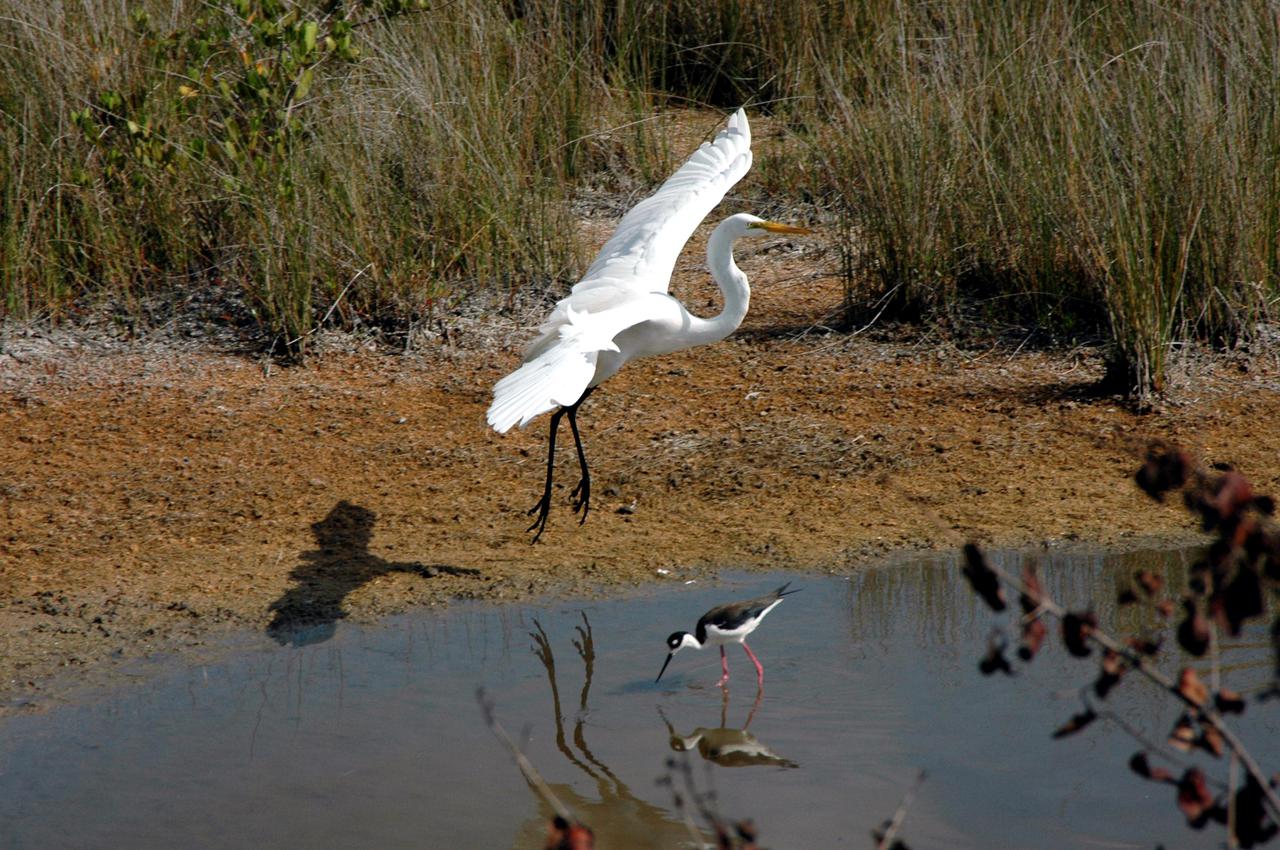
KENNEDY SPACE CENTER, FLA. - A black-necked stilt, foraging for food, pays no attention to a great egret as it comes in for a landing in a marshy area of the Merritt Island National Wildlife Refuge. The refuge was established in 1963 on Kennedy Space Center land and water not used by NASA for the space program. The marshes and open water of the refuge provide wintering grounds for 23 species of migratory waterfowl, as well as a year-round home for great blue herons, wood storks, cormorants, brown pelicans and other species of marsh and shore birds.
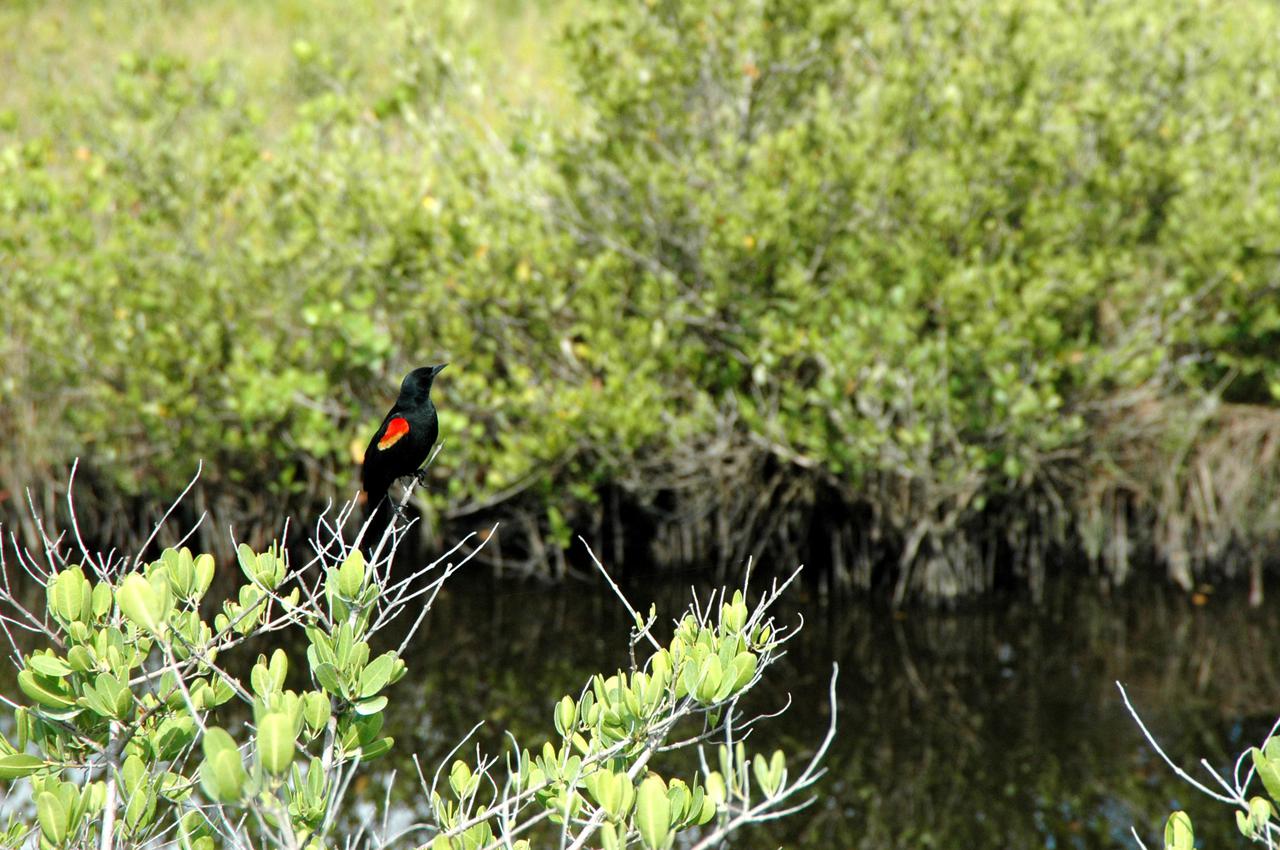
KENNEDY SPACE CENTER, FLA. - An adult male red-winged blackbird perches on a shrub in a marsh on the Merritt Island National Wildlife Refuge. Males have glossy black feathers except on the epaulets of their wings, where they are scarlet bordered with buff or yellow. The birds do not attain full adult plumage until their third year. The refuge was established in 1963 on Kennedy Space Center land and water not used by NASA for the space program. The marshes and open water of the refuge provide wintering grounds for 23 species of migratory waterfowl, as well as a year-round home for great blue herons, wood storks, cormorants, brown pelicans and other species of marsh and shore birds.
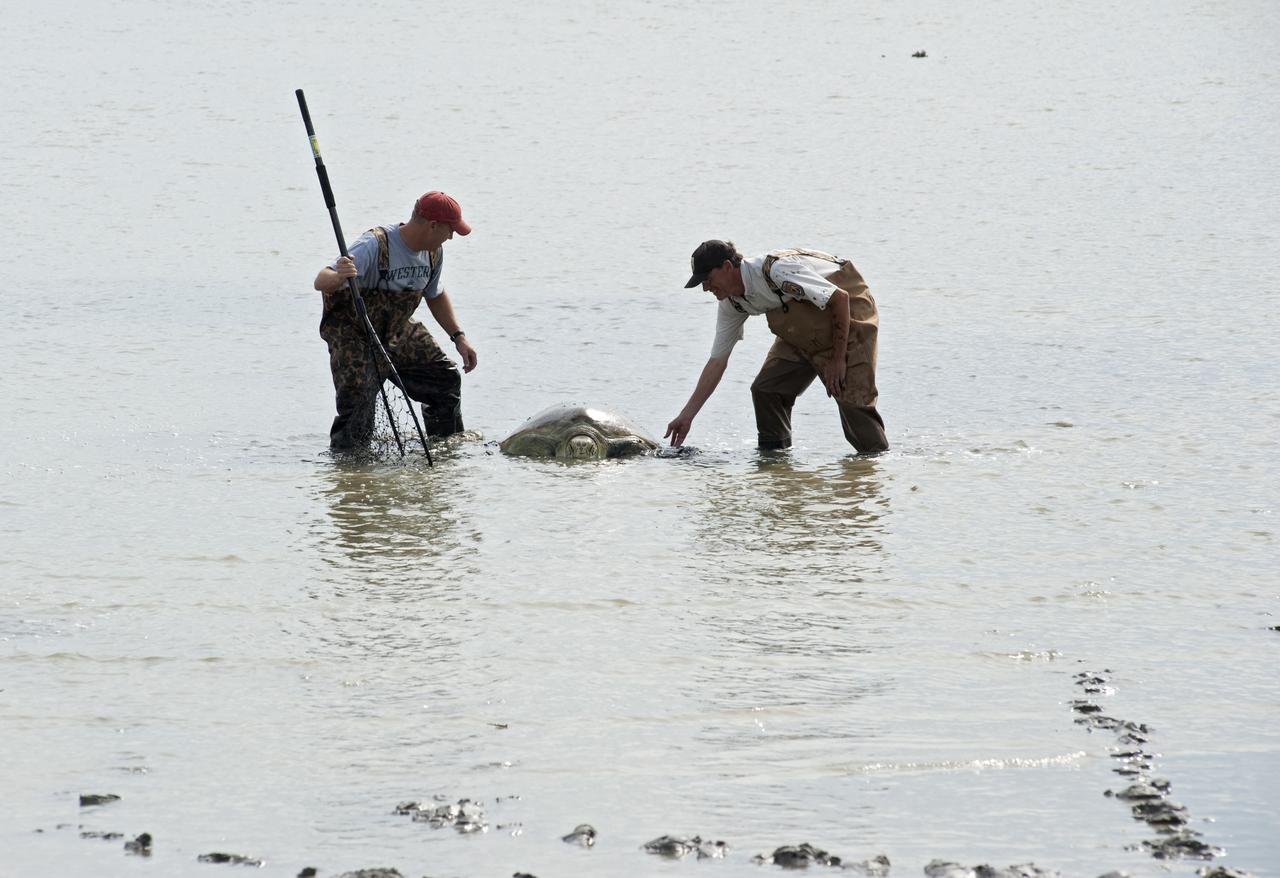
CAPE CANAVERAL, Fla. -- Eric Reyier with Innovative Health Applications LLC, left, and James Lyon with the U.S. Fish and Wildlife Service (FWS) help a green sea turtle move into deeper water at the Merritt Island National Wildlife Refuge in Florida. The female turtle, weighing about 350 pounds, became stuck on an impoundment in fresh water near NASA Kennedy Space Center's Launch Pad 39A. The refuge, located on Kennedy property, is a habitat for more than 310 species of birds, 25 mammals, 117 fish and 65 amphibians and reptiles. Photo credit: NASA/Carl Winebarger
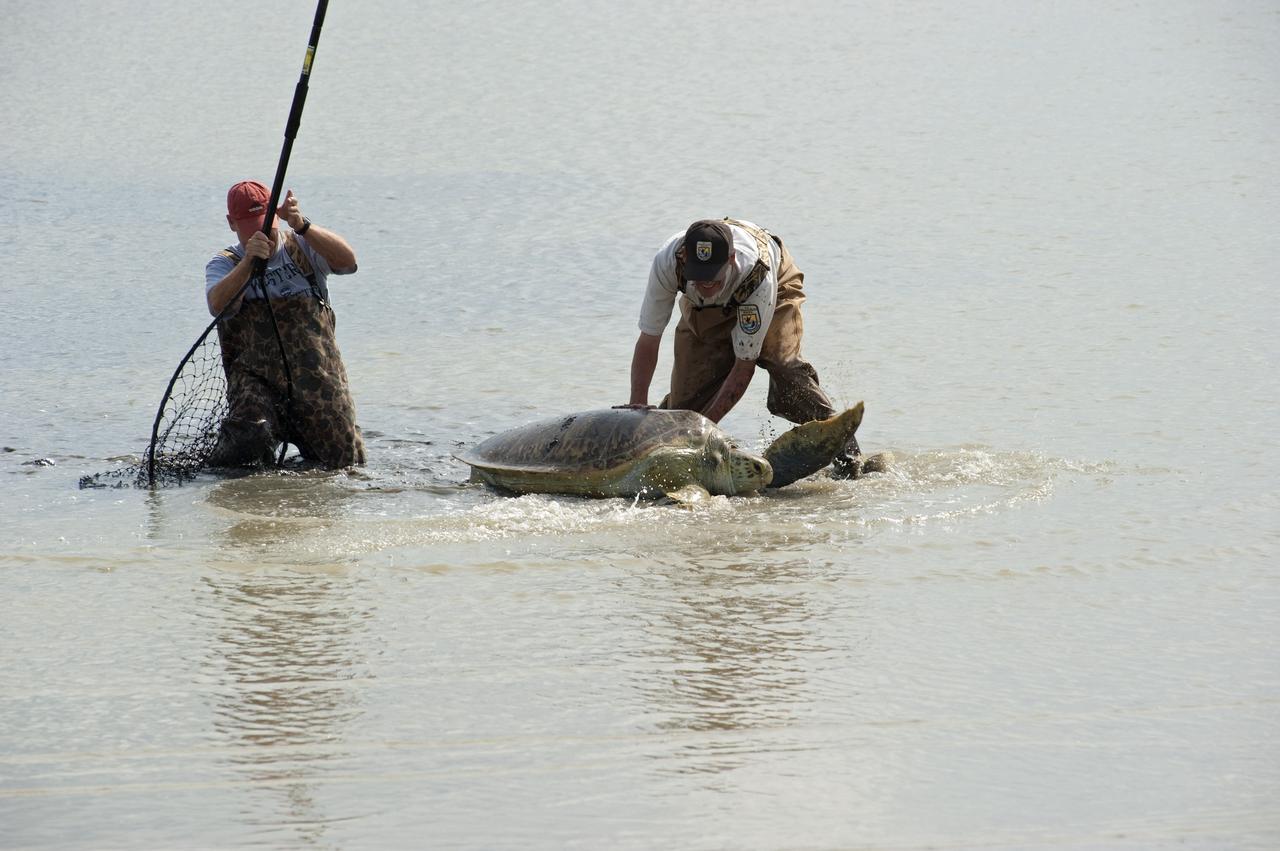
CAPE CANAVERAL, Fla. -- Eric Reyier with Innovative Health Applications LLC, left, and James Lyon with the U.S. Fish and Wildlife Service (FWS) help a green sea turtle move into deeper water at the Merritt Island National Wildlife Refuge in Florida. The female turtle, weighing about 350 pounds, became stuck on an impoundment in fresh water near NASA Kennedy Space Center's Launch Pad 39A. The refuge, located on Kennedy property, is a habitat for more than 310 species of birds, 25 mammals, 117 fish and 65 amphibians and reptiles. Photo credit: NASA/Carl Winebarger
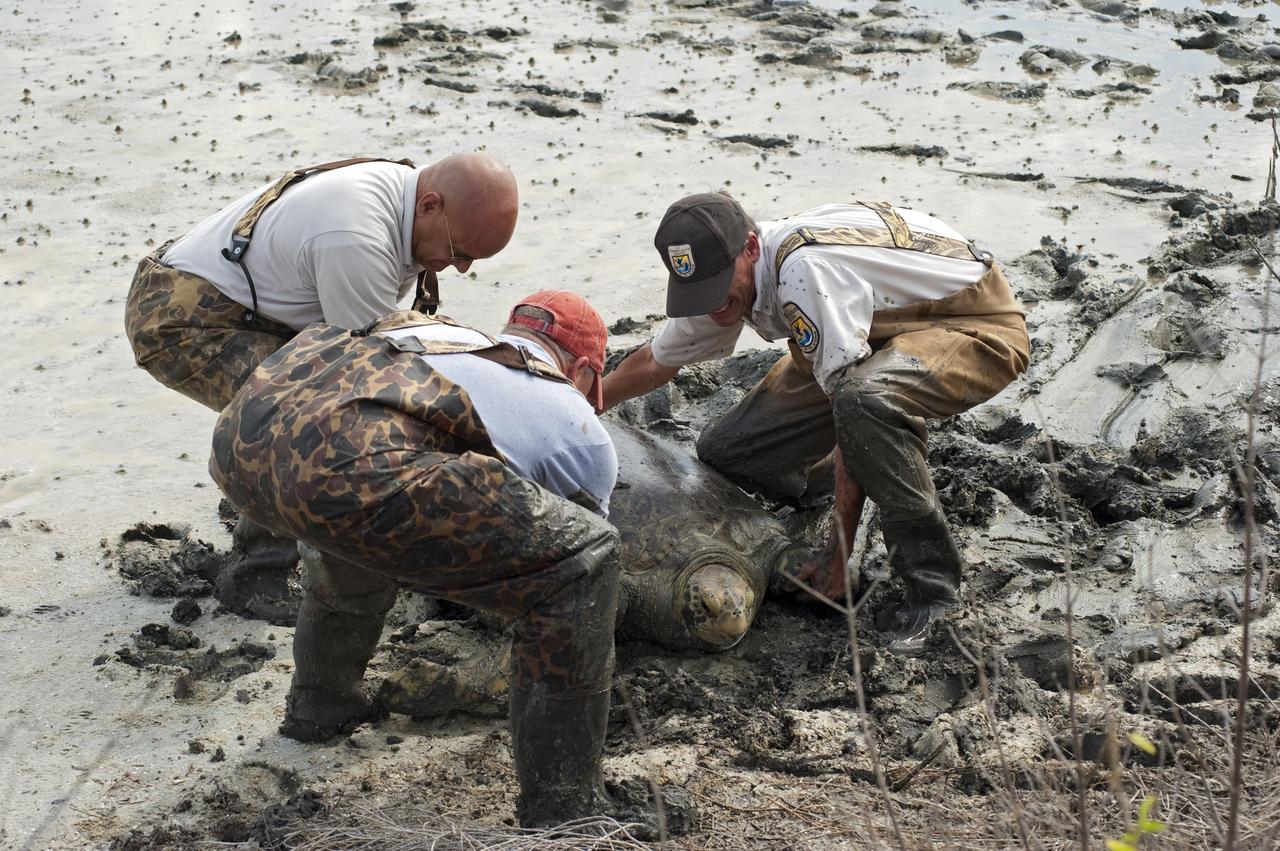
CAPE CANAVERAL, Fla. -- Workers from the U.S. Fish and Wildlife Service (FWS) and Innovative Health Applications LLC help a green sea turtle move into deeper water at the Merritt Island National Wildlife Refuge in Florida. The female turtle, weighing about 350 pounds, became stuck on an impoundment in fresh water near NASA Kennedy Space Center's Launch Pad 39A. The refuge, located on Kennedy property, is a habitat for more than 310 species of birds, 25 mammals, 117 fish and 65 amphibians and reptiles. Photo credit: NASA/Carl Winebarger
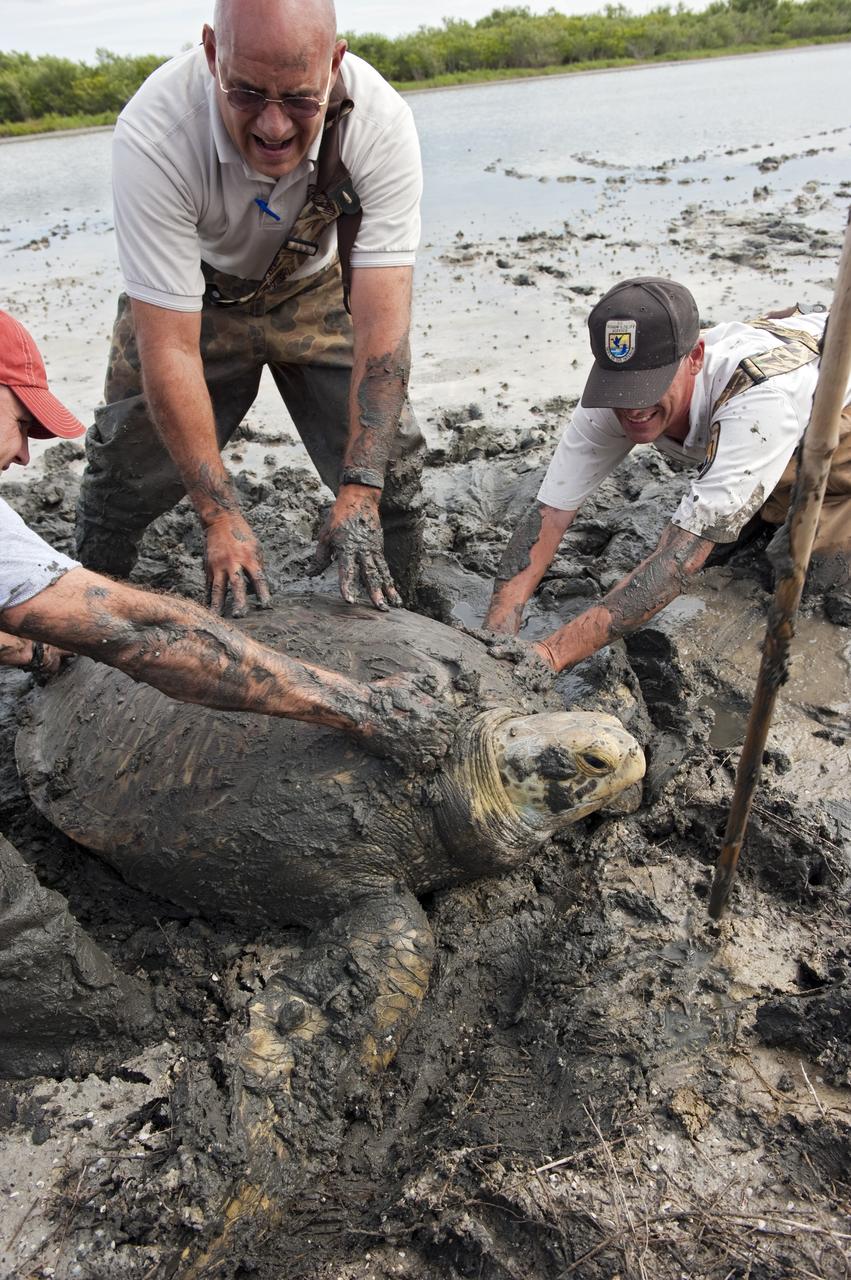
CAPE CANAVERAL, Fla. -- Eric Reyier with Innovative Health Applications LLC, left, along with Harold Morrow and James Lyon with the U.S. Fish and Wildlife Service (FWS) help a green sea turtle move into deeper water at the Merritt Island National Wildlife Refuge in Florida. The female turtle, weighing in at about 350 pounds, became stuck on an impoundment in fresh water near NASA Kennedy Space Center's Launch Pad 39A. The refuge, located on Kennedy property, is a habitat for more than 310 species of birds, 25 mammals, 117 fish and 65 amphibians and reptiles. Photo credit: NASA/Carl Winebarger