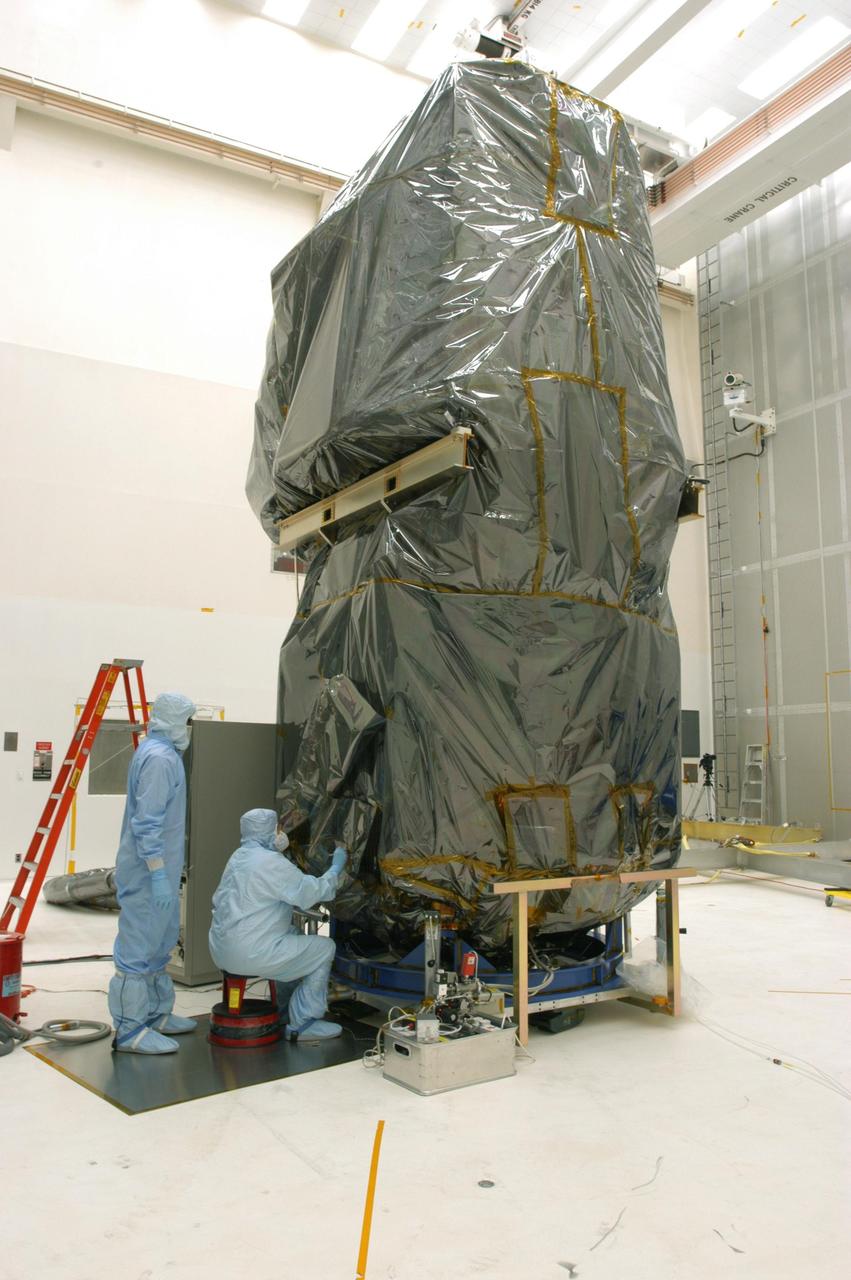
KENNEDY SPACE CENTER, FLA. - In the clean room at NASA’s Hangar AE on Cape Canaveral Air Force Station (CCAFS), Spectrolab technicians begin lifting the protective cover from the Swift spacecraft. Two of Swift’s solar cells on the solar array will be removed and replaced. Swift is a first-of-its-kind, multi-wavelength observatory dedicated to the study of gamma-ray burst (GRB) science. Its three instruments will work together to observe GRBs and afterglows in the gamma-ray, X-ray, ultraviolet and optical wavebands. The main mission objectives for Swift are to determine the origin of gamma-ray bursts, classify gamma-ray bursts and search for new types, determine how the blast wave evolves and interacts with the surroundings, use gamma-ray bursts to study the early universe and perform the first sensitive hard X-ray survey of the sky. Swift is scheduled to launch Oct. 26 from Launch Pad 17-A, CCAFS, on a Boeing Delta 7320 rocket.
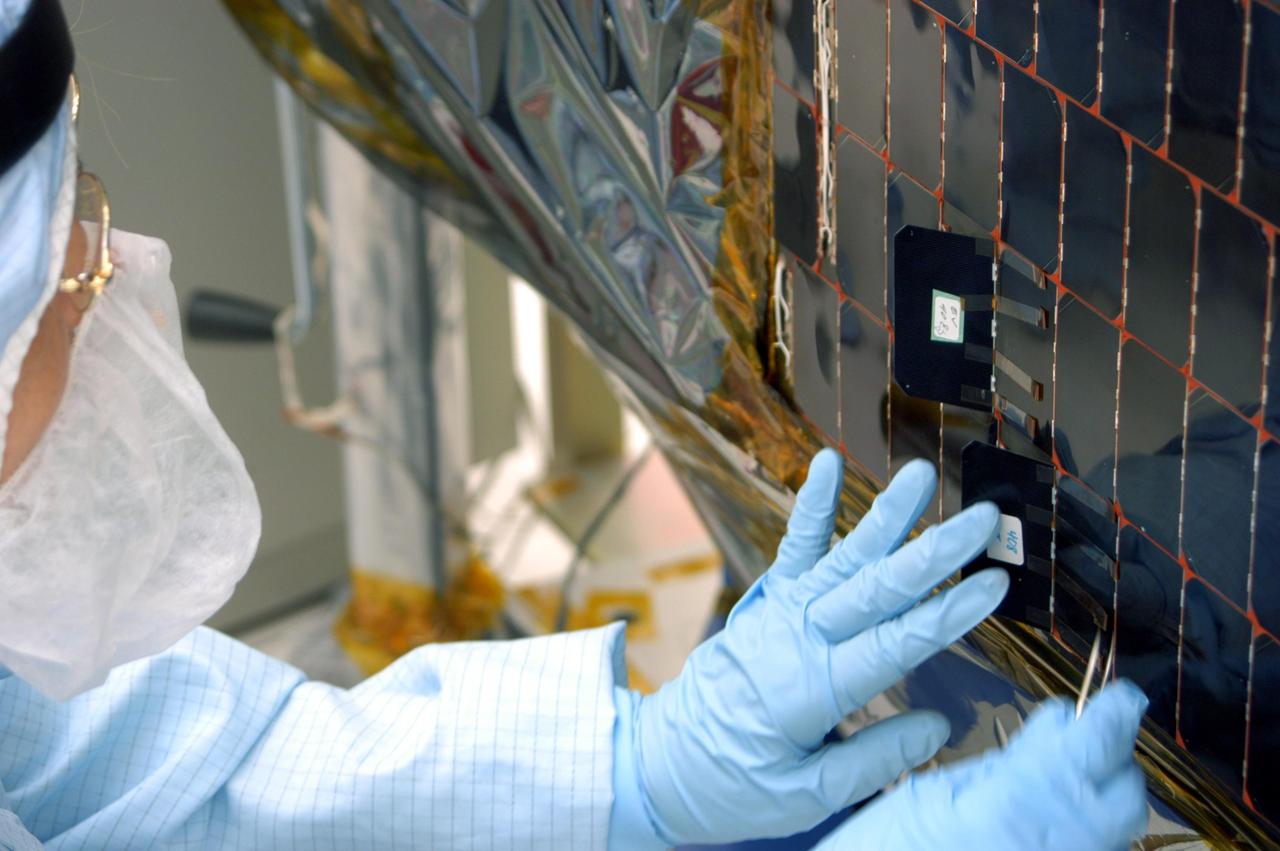
KENNEDY SPACE CENTER, FLA. - In the clean room at NASA’s Hangar AE on Cape Canaveral Air Force Station (CCAFS), a Spectrolab technician, Anna Herrera, places a new solar cell on the Swift spacecraft’s solar array. Swift is a first-of-its-kind, multi-wavelength observatory dedicated to the study of gamma-ray burst (GRB) science. Its three instruments will work together to observe GRBs and afterglows in the gamma-ray, X-ray, ultraviolet and optical wavebands. The main mission objectives for Swift are to determine the origin of gamma-ray bursts, classify gamma-ray bursts and search for new types, determine how the blast wave evolves and interacts with the surroundings, use gamma-ray bursts to study the early universe and perform the first sensitive hard X-ray survey of the sky. Swift is scheduled to launch Oct. 26 from Launch Pad 17-A, CCAFS, on a Boeing Delta 7320 rocket.
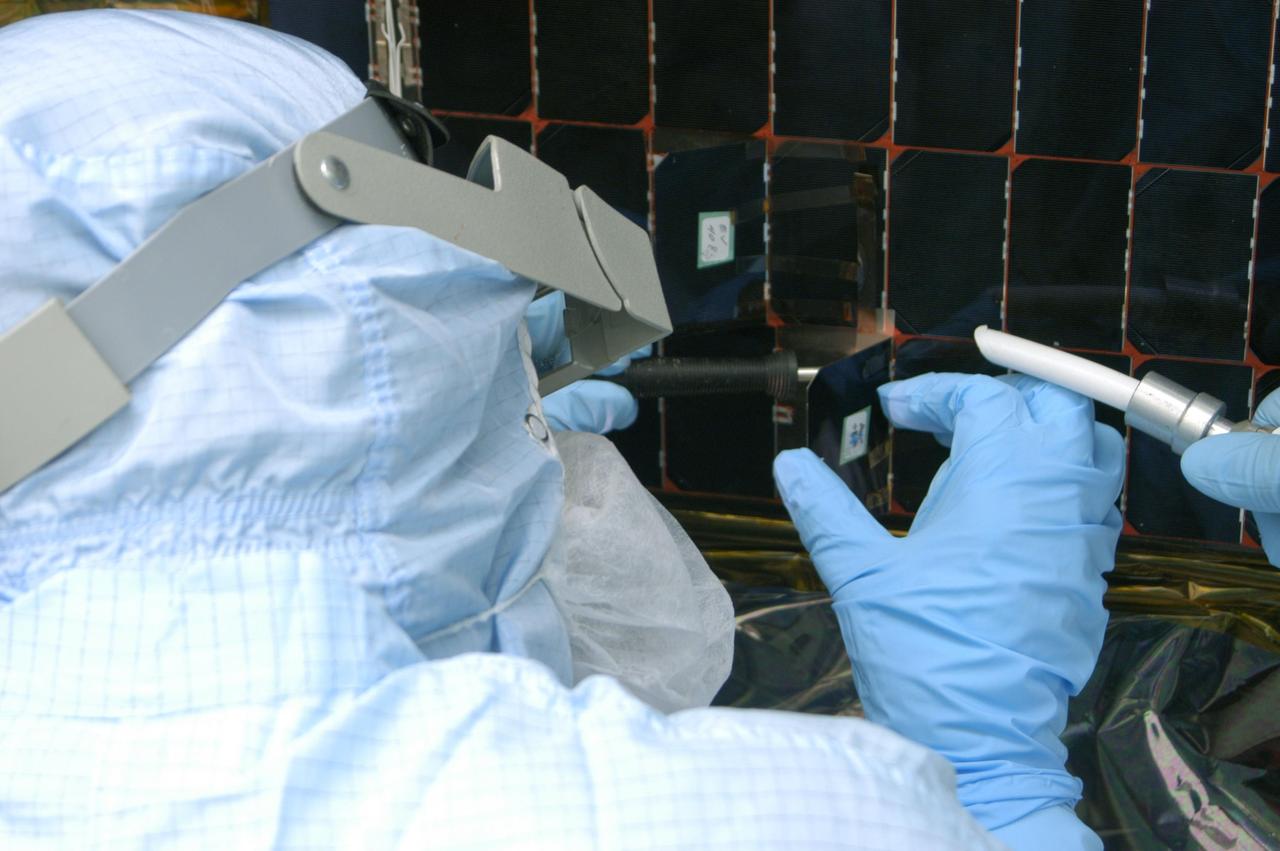
KENNEDY SPACE CENTER, FLA. - In the clean room at NASA’s Hangar AE on Cape Canaveral Air Force Station (CCAFS), a Spectrolab technician, Anna Herrera, places a new solar cell on the Swift spacecraft’s solar array. Swift is a first-of-its-kind, multi-wavelength observatory dedicated to the study of gamma-ray burst (GRB) science. Its three instruments will work together to observe GRBs and afterglows in the gamma-ray, X-ray, ultraviolet and optical wavebands. The main mission objectives for Swift are to determine the origin of gamma-ray bursts, classify gamma-ray bursts and search for new types, determine how the blast wave evolves and interacts with the surroundings, use gamma-ray bursts to study the early universe and perform the first sensitive hard X-ray survey of the sky. Swift is scheduled to launch Oct. 26 from Launch Pad 17-A, CCAFS, on a Boeing Delta 7320 rocket.
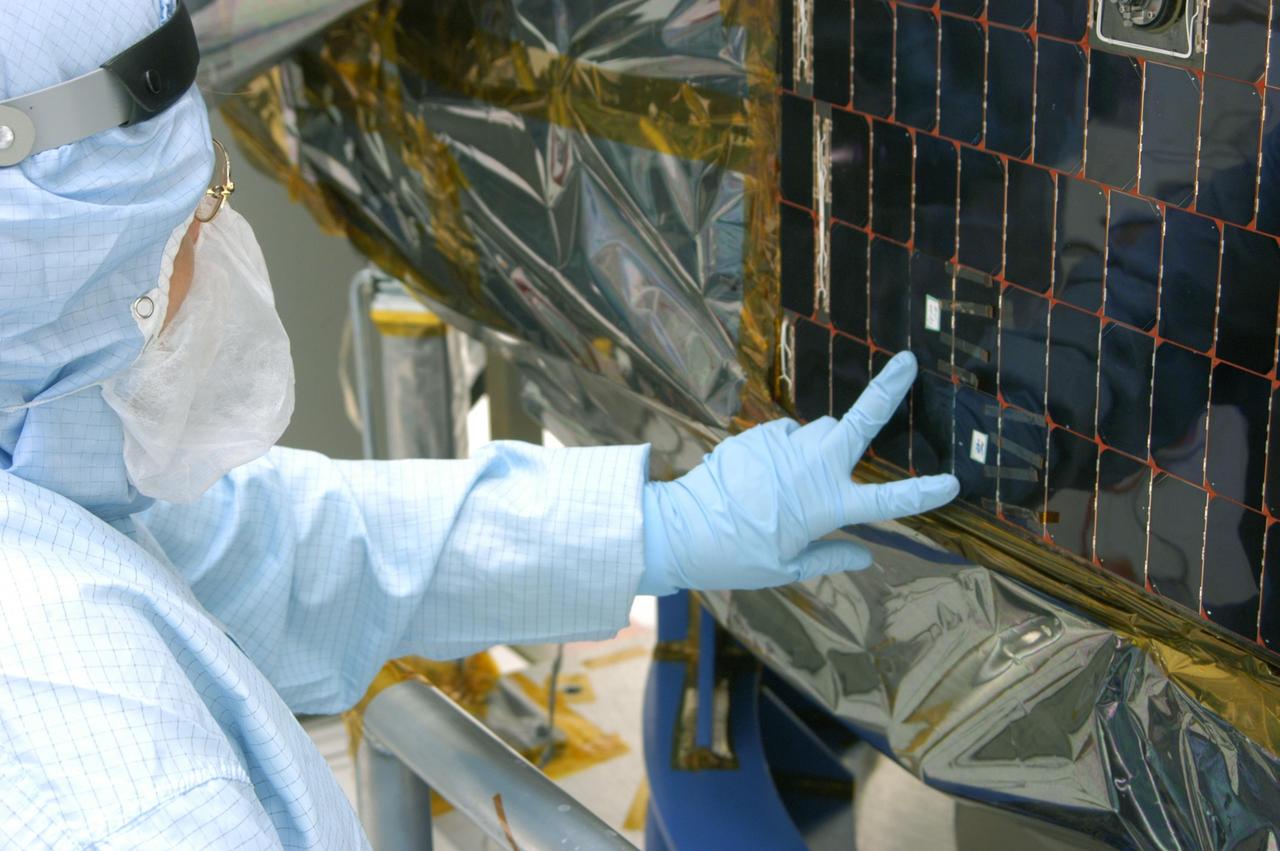
KENNEDY SPACE CENTER, FLA. - In the clean room at NASA’s Hangar AE on Cape Canaveral Air Force Station (CCAFS), a Spectrolab technician, Anna Herrera, points to the two new solar cells removed and replaced on the Swift spacecraft’s solar array. Swift is a first-of-its-kind, multi-wavelength observatory dedicated to the study of gamma-ray burst (GRB) science. Its three instruments will work together to observe GRBs and afterglows in the gamma-ray, X-ray, ultraviolet and optical wavebands. The main mission objectives for Swift are to determine the origin of gamma-ray bursts, classify gamma-ray bursts and search for new types, determine how the blast wave evolves and interacts with the surroundings, use gamma-ray bursts to study the early universe and perform the first sensitive hard X-ray survey of the sky. Swift is scheduled to launch Oct. 26 from Launch Pad 17-A, CCAFS, on a Boeing Delta 7320 rocket.
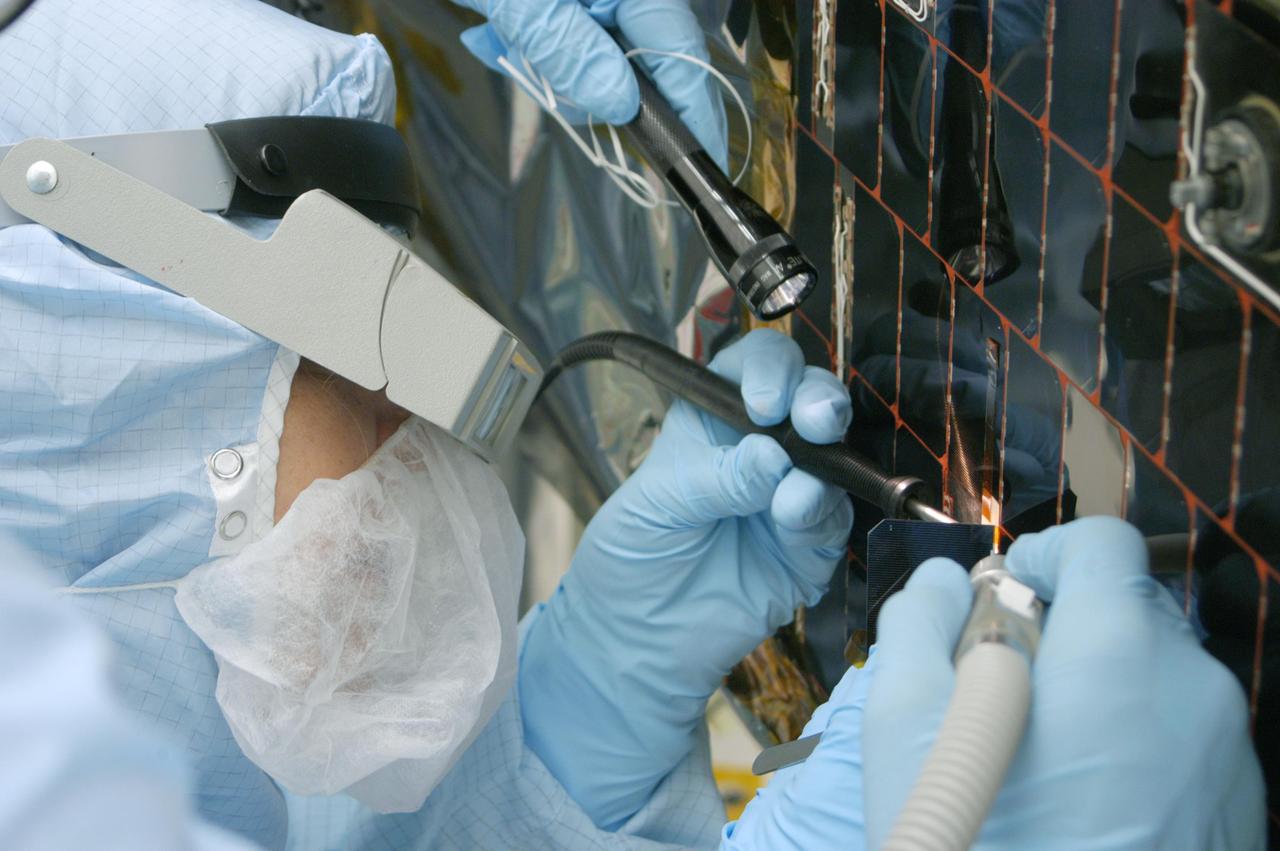
KENNEDY SPACE CENTER, FLA. - In the clean room at NASA’s Hangar AE on Cape Canaveral Air Force Station (CCAFS), a Spectrolab technician, Anna Herrera, removes one of the solar cells that will be replaced on the Swift spacecraft’s solar array. Swift is a first-of-its-kind, multi-wavelength observatory dedicated to the study of gamma-ray burst (GRB) science. Its three instruments will work together to observe GRBs and afterglows in the gamma-ray, X-ray, ultraviolet and optical wavebands. The main mission objectives for Swift are to determine the origin of gamma-ray bursts, classify gamma-ray bursts and search for new types, determine how the blast wave evolves and interacts with the surroundings, use gamma-ray bursts to study the early universe and perform the first sensitive hard X-ray survey of the sky. Swift is scheduled to launch Oct. 26 from Launch Pad 17-A, CCAFS, on a Boeing Delta 7320 rocket.
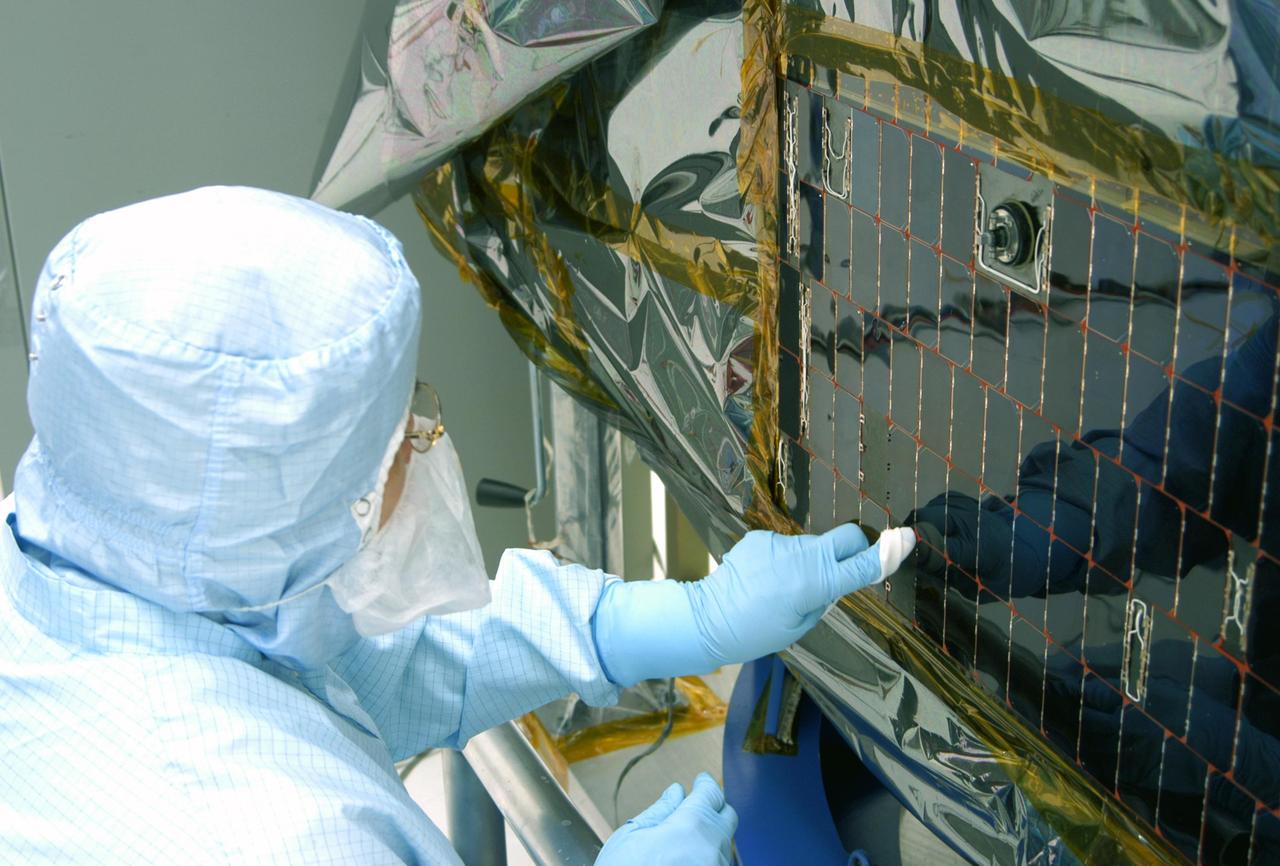
KENNEDY SPACE CENTER, FLA. - In the clean room at NASA’s Hangar AE on Cape Canaveral Air Force Station (CCAFS), a Spectrolab technician, Anna Herrera, points to an area on the Swift spacecraft’s solar array where cells will be removed and replaced. Swift is a first-of-its-kind, multi-wavelength observatory dedicated to the study of gamma-ray burst (GRB) science. Its three instruments will work together to observe GRBs and afterglows in the gamma-ray, X-ray, ultraviolet and optical wavebands. The main mission objectives for Swift are to determine the origin of gamma-ray bursts, classify gamma-ray bursts and search for new types, determine how the blast wave evolves and interacts with the surroundings, use gamma-ray bursts to study the early universe and perform the first sensitive hard X-ray survey of the sky. Swift is scheduled to launch Oct. 26 from Launch Pad 17-A, CCAFS, on a Boeing Delta 7320 rocket.
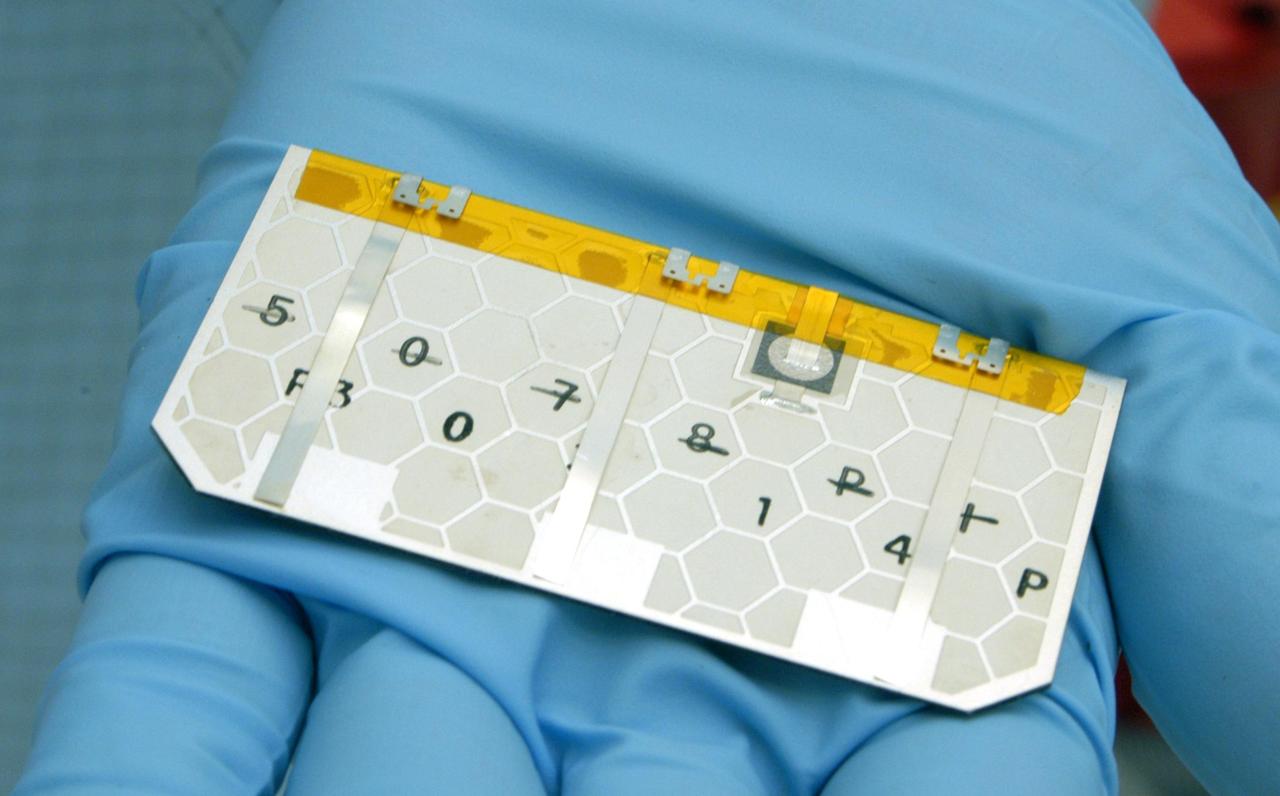
KENNEDY SPACE CENTER, FLA. - A closeup of one of the solar cells that will be removed and replaced on the Swift spacecraft’s solar array. Swift is a first-of-its-kind, multi-wavelength observatory dedicated to the study of gamma-ray burst (GRB) science. Its three instruments will work together to observe GRBs and afterglows in the gamma-ray, X-ray, ultraviolet and optical wavebands. The main mission objectives for Swift are to determine the origin of gamma-ray bursts, classify gamma-ray bursts and search for new types, determine how the blast wave evolves and interacts with the surroundings, use gamma-ray bursts to study the early universe and perform the first sensitive hard X-ray survey of the sky. Swift is scheduled to launch Oct. 26 from Launch Pad 17-A, CCAFS, on a Boeing Delta 7320 rocket.