
VANDENBERG AIR FORCE BASE, Calif. -- The Stage 0 motor of the Orbital Sciences Corp. Taurus XL is hoisted into launch position by crane at Space Launch Complex 576-E at Vandenberg Air Force Base in California. As part of the four-stage Taurus XL rocket that will carry NASA's Glory spacecraft into low Earth orbit, stages 1, 2 and 3 will join Stage 0 at the launch pad about a week later. Once Glory reaches orbit, it will collect data on the properties of aerosols and black carbon. It also will help scientists understand how the sun's irradiance affects Earth's climate. Launch is scheduled for 5:09 a.m. EST Feb. 23. For information, visit www.nasa.gov/glory. Photo credit: NASA/Don Kosoksa, VAFB
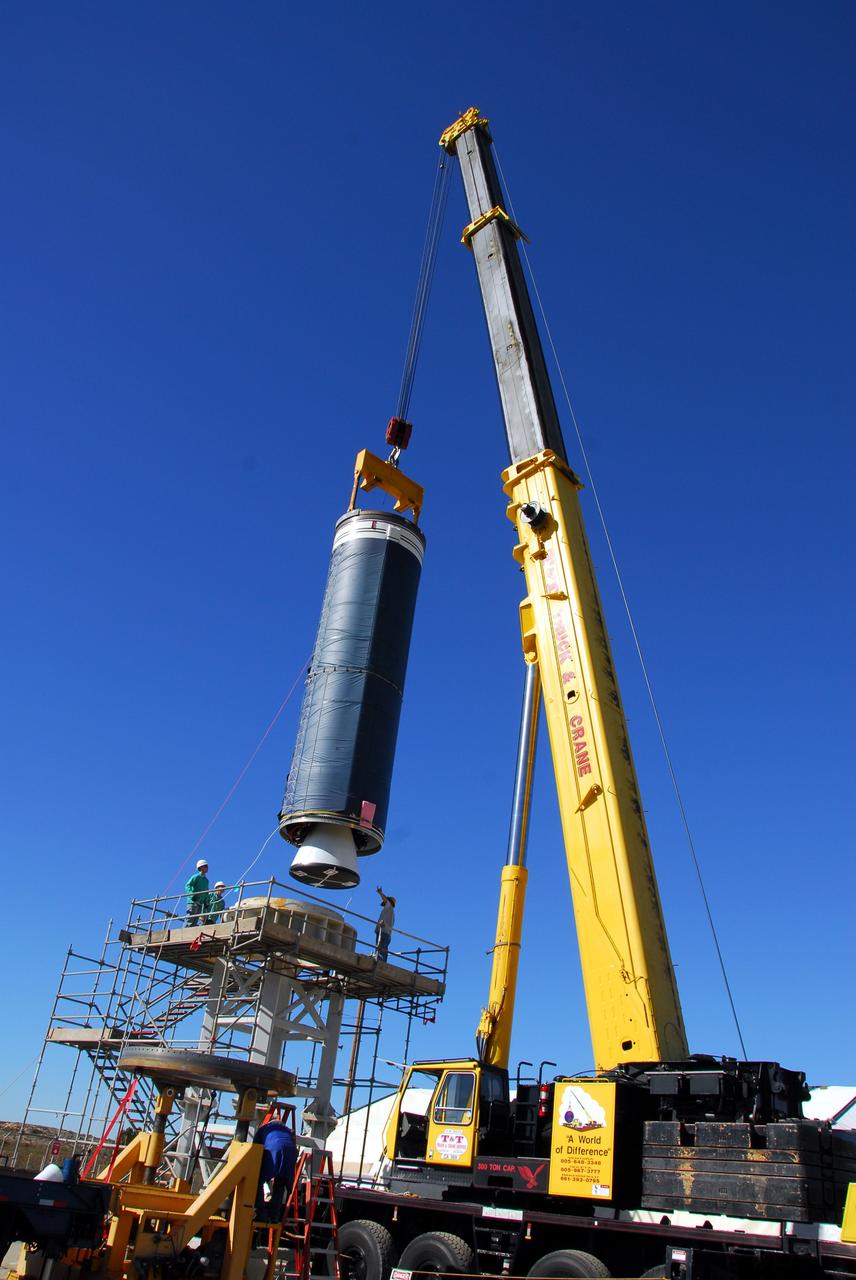
VANDENBERG AIR FORCE BASE, Calif. -- The Stage 0 motor of the Orbital Sciences Corp. Taurus XL is moved into launch position on Space Launch Complex 576-E at Vandenberg Air Force Base in California. As part of the four-stage Taurus XL rocket that will carry NASA's Glory spacecraft into low Earth orbit, stages 1, 2 and 3 will join Stage 0 at the launch pad about a week later. Once Glory reaches orbit, it will collect data on the properties of aerosols and black carbon. It also will help scientists understand how the sun's irradiance affects Earth's climate. Launch is scheduled for 5:09 a.m. EST Feb. 23. For information, visit www.nasa.gov/glory. Photo credit: NASA/Don Kosoksa, VAFB

VANDENBERG AIR FORCE BASE, Calif. -- Workers adjust the Stage 0 motor of the Orbital Sciences Corp. Taurus XL into launch position on Space Launch Complex 576-E at Vandenberg Air Force Base in California. As part of the four-stage Taurus XL rocket that will carry NASA's Glory spacecraft into low Earth orbit, stages 1, 2 and 3 will join Stage 0 at the launch pad about a week later. Once Glory reaches orbit, it will collect data on the properties of aerosols and black carbon. It also will help scientists understand how the sun's irradiance affects Earth's climate. Launch is scheduled for 5:09 a.m. EST Feb. 23. For information, visit www.nasa.gov/glory. Photo credit: NASA/Don Kosoksa, VAFB

VANDENBERG AIR FORCE BASE, Calif. -- The solar arrays of NASA's Glory spacecraft will be uncovered and illuminated in the Astrotech payload processing facility at Vandenberg Air Force Base in California. The spacecraft will be processed for flight, encapsulated in its protective payload fairing, and then transported to Space Launch Complex 576-E where is will be joined with the third stage of the Orbital Sciences Corp. Taurus XL rocket. Once Glory reaches orbit, it will collect data on the properties of aerosols and black carbon. It also will help scientists understand how the sun's irradiance affects Earth's climate. Launch is scheduled for 5:09 a.m. EST Feb. 23. For information, visit www.nasa.gov/glory. Photo credit: NASA/Randy Beaudoin, VAFB
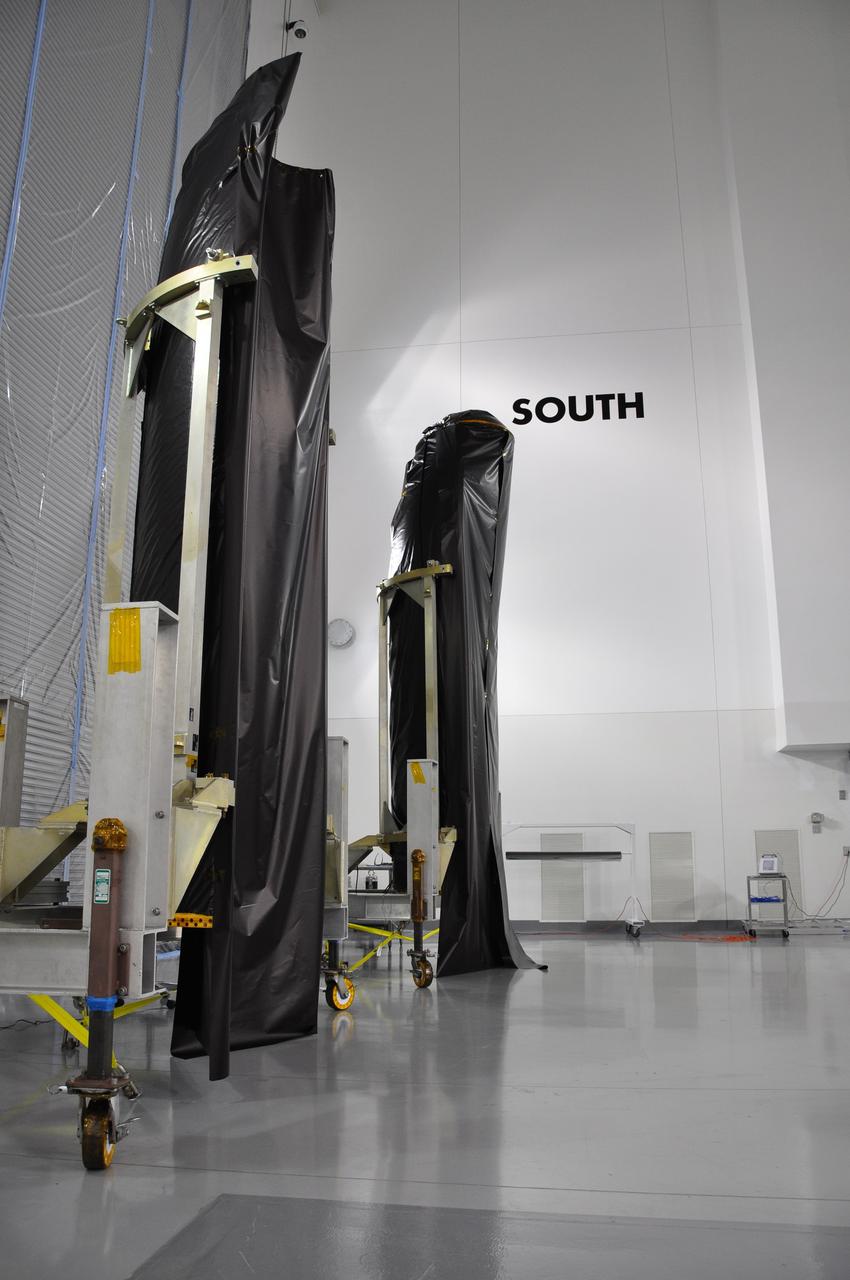
VANDENBERG AIR FORCE BASE, Calif. -- The payload fairing that will surround and protect NASA's Glory spacecraft during its trip to space await processing in the Astrotech payload processing facility at Vandenberg Air Force Base in California. Once encapsulated, Glory will be transported to Space Launch Complex 576-E where is will be joined with the third stage of the Orbital Sciences Corp. Taurus XL rocket. Once Glory reaches orbit, it will collect data on the properties of aerosols and black carbon. It also will help scientists understand how the sun's irradiance affects Earth's climate. Launch is scheduled for 5:09 a.m. EST Feb. 23. For information, visit www.nasa.gov/glory. Photo credit: NASA/Randy Beaudoin, VAFB

VANDENBERG AIR FORCE BASE, Calif. -- The Stage 0 motor of the Orbital Sciences Corp. Taurus XL rocket arrives at Space Launch Complex 576-E at Vandenberg Air Force Base in California. Next, Stage 0 will be hoisted into its launch position. As part of the four-stage Taurus XL rocket that will carry NASA's Glory spacecraft into low Earth orbit, stages 1, 2 and 3 will join Stage 0 at the launch pad about a week later. Once Glory reaches orbit, it will collect data on the properties of aerosols and black carbon. It also will help scientists understand how the sun's irradiance affects Earth's climate. Launch is scheduled for 5:09 a.m. EST Feb. 23. For information, visit www.nasa.gov/glory. Photo credit: NASA/Don Kosoksa, VAFB

VANDENBERG AIR FORCE BASE, Calif. -- The solar arrays of NASA's Glory spacecraft are illuminated in the Astrotech payload processing facility at Vandenberg Air Force Base in California. The spacecraft will be processed for flight, encapsulated in its protective payload fairing, and then transported to Space Launch Complex 576-E where is will be joined with the third stage of the Orbital Sciences Corp. Taurus XL rocket. Once Glory reaches orbit, it will collect data on the properties of aerosols and black carbon. It also will help scientists understand how the sun's irradiance affects Earth's climate. Launch is scheduled for 5:09 a.m. EST Feb. 23. For information, visit www.nasa.gov/glory. Photo credit: NASA/Ed Henry, VAFB

VANDENBERG AIR FORCE BASE, Calif. -- The solar arrays of NASA's Glory spacecraft are illuminated in the Astrotech payload processing facility at Vandenberg Air Force Base in California. The spacecraft will be processed for flight, encapsulated in its protective payload fairing, and then transported to Space Launch Complex 576-E where is will be joined with the third stage of the Orbital Sciences Corp. Taurus XL rocket. Once Glory reaches orbit, it will collect data on the properties of aerosols and black carbon. It also will help scientists understand how the sun's irradiance affects Earth's climate. Launch is scheduled for 5:09 a.m. EST Feb. 23. For information, visit www.nasa.gov/glory. Photo credit: NASA/Randy Beaudoin, VAFB
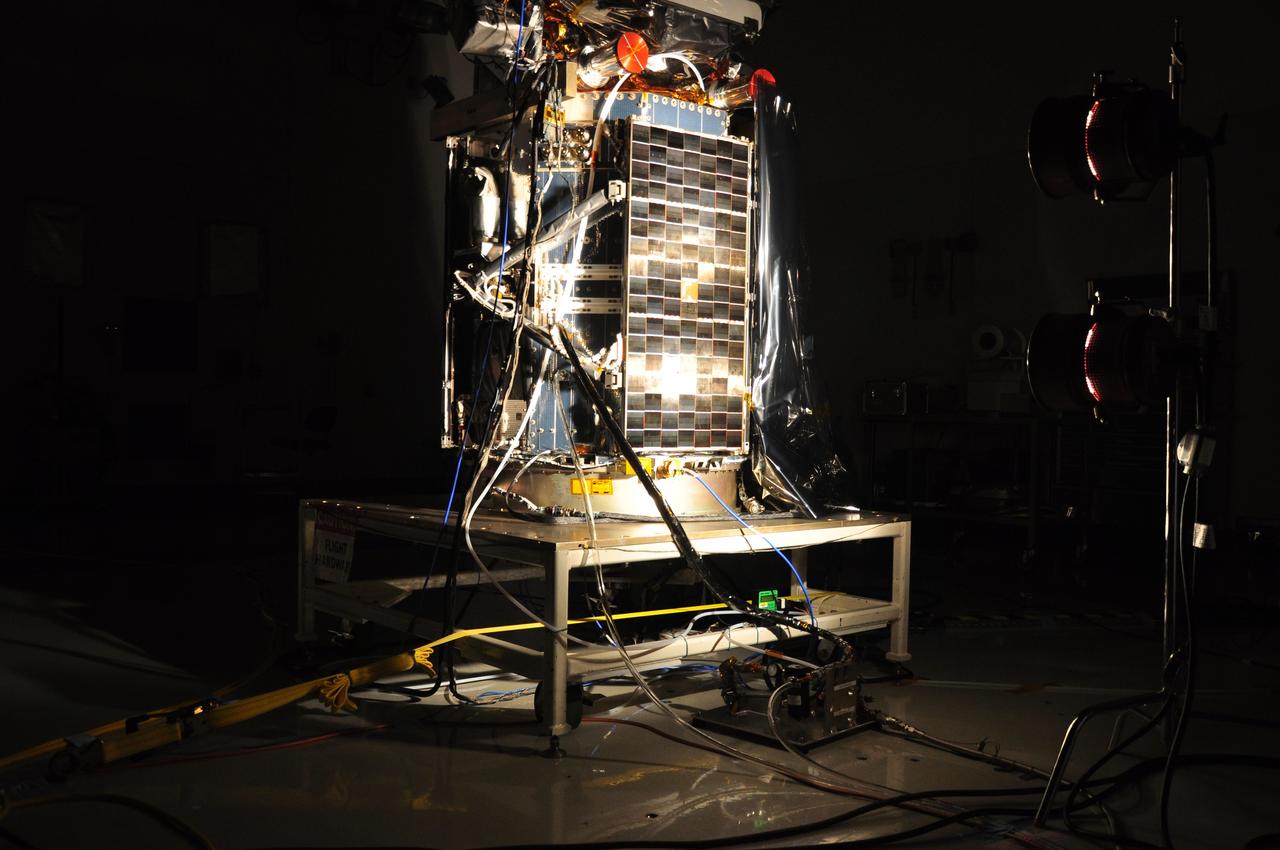
VANDENBERG AIR FORCE BASE, Calif. -- The solar arrays of NASA's Glory spacecraft are illuminated in the Astrotech payload processing facility at Vandenberg Air Force Base in California. The spacecraft will be processed for flight, encapsulated in its protective payload fairing, and then transported to Space Launch Complex 576-E where is will be joined with the third stage of the Orbital Sciences Corp. Taurus XL rocket. Once Glory reaches orbit, it will collect data on the properties of aerosols and black carbon. It also will help scientists understand how the sun's irradiance affects Earth's climate. Launch is scheduled for 5:09 a.m. EST Feb. 23. For information, visit www.nasa.gov/glory. Photo credit: NASA/Randy Beaudoin, VAFB

VANDENBERG AIR FORCE BASE, Calif. -- The solar arrays of NASA's Glory spacecraft are illuminated in the Astrotech payload processing facility at Vandenberg Air Force Base in California. The spacecraft will be processed for flight, encapsulated in its protective payload fairing, and then transported to Space Launch Complex 576-E where is will be joined with the third stage of the Orbital Sciences Corp. Taurus XL rocket. Once Glory reaches orbit, it will collect data on the properties of aerosols and black carbon. It also will help scientists understand how the sun's irradiance affects Earth's climate. Launch is scheduled for 5:09 a.m. EST Feb. 23. For information, visit www.nasa.gov/glory. Photo credit: NASA/Randy Beaudoin, VAFB