There is a Light that Never Goes Out Almost
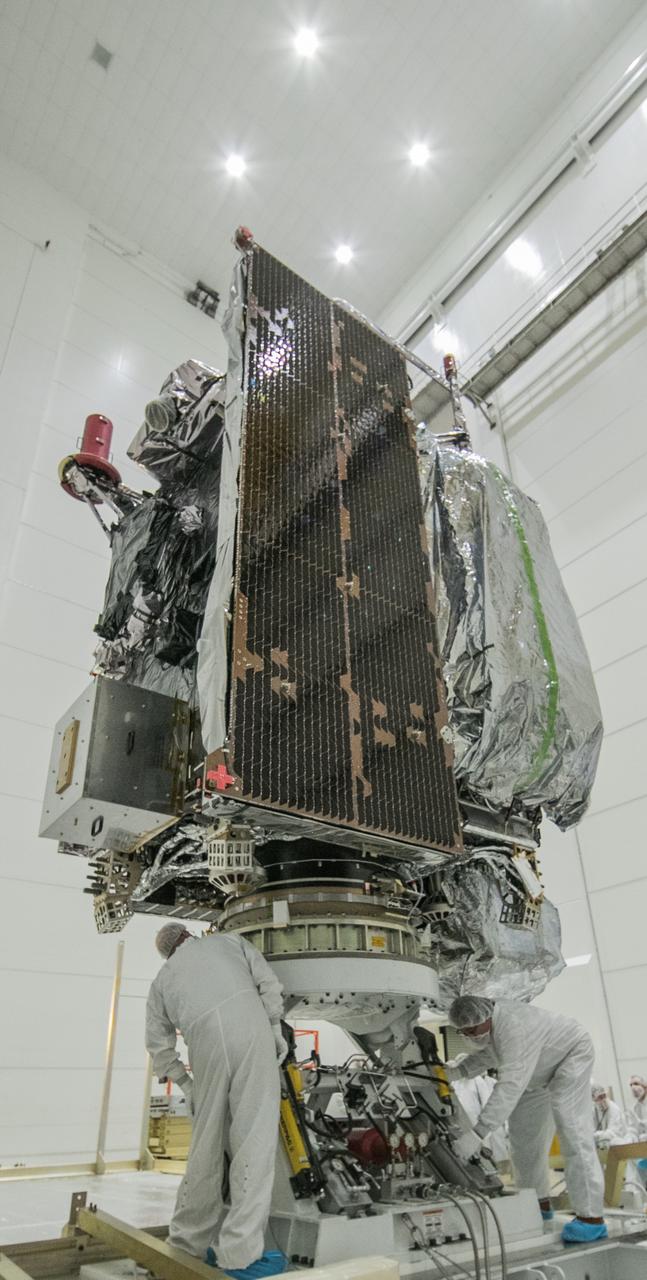
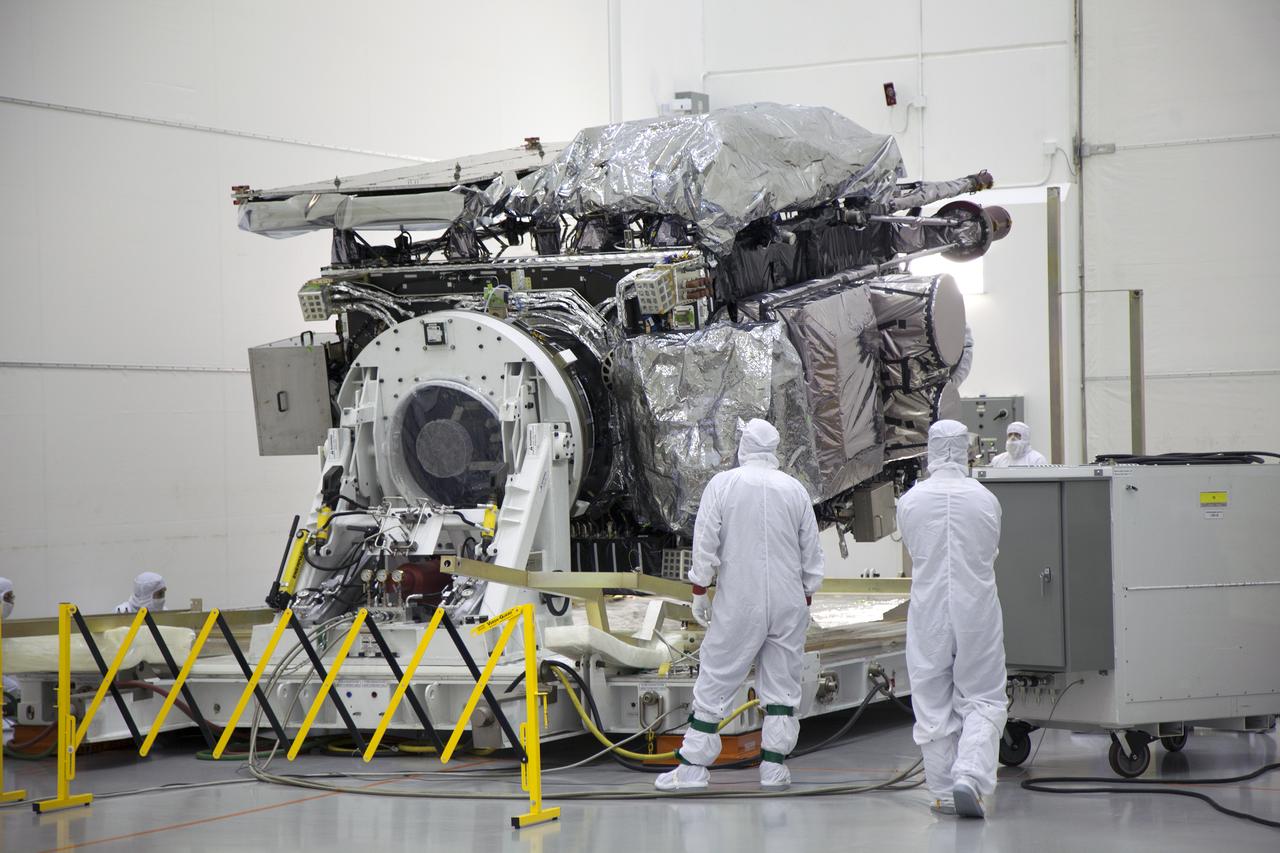
At Astrotech Space Operations in Titusville, Florida, technicians and engineers inspect NOAA's Geostationary Operation Environmental Satellite-S (GOES-S) after removal from its shipping container. GOES-S is the second in a series of four advanced geostationary weather satellites. The GOES-R series - consisting of the GOES-R, GOES-S, GOES-T and GOES-U spacecraft - will significantly improve the detection and observation of environmental phenomena that directly affect public safety, protection of property and the nation's economic health and prosperity. GOES-S is slated to launch March 1, 2018 aboard a United Launch Alliance Atlas V rocket from Cape Canaveral Air Force Station in Florida.
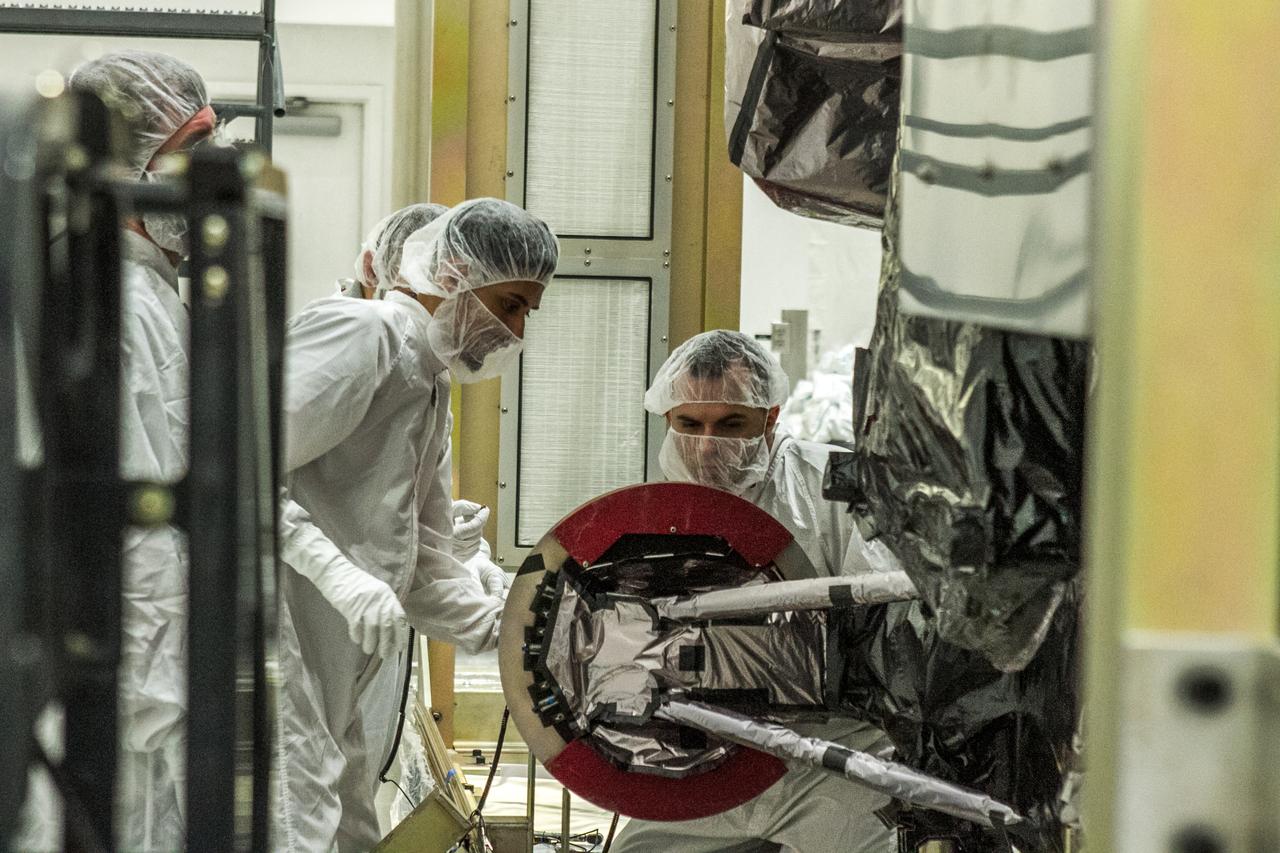
At Astrotech Space Operations in Titusville, Florida, technicians and engineers inspect NOAA's Geostationary Operation Environmental Satellite-S (GOES-S) after removal from its shipping container. GOES-S is the second in a series of four advanced geostationary weather satellites. The GOES-R series - consisting of the GOES-R, GOES-S, GOES-T and GOES-U spacecraft - will significantly improve the detection and observation of environmental phenomena that directly affect public safety, protection of property and the nation's economic health and prosperity. GOES-S is slated to launch March 1, 2018 aboard a United Launch Alliance Atlas V rocket from Cape Canaveral Air Force Station in Florida.
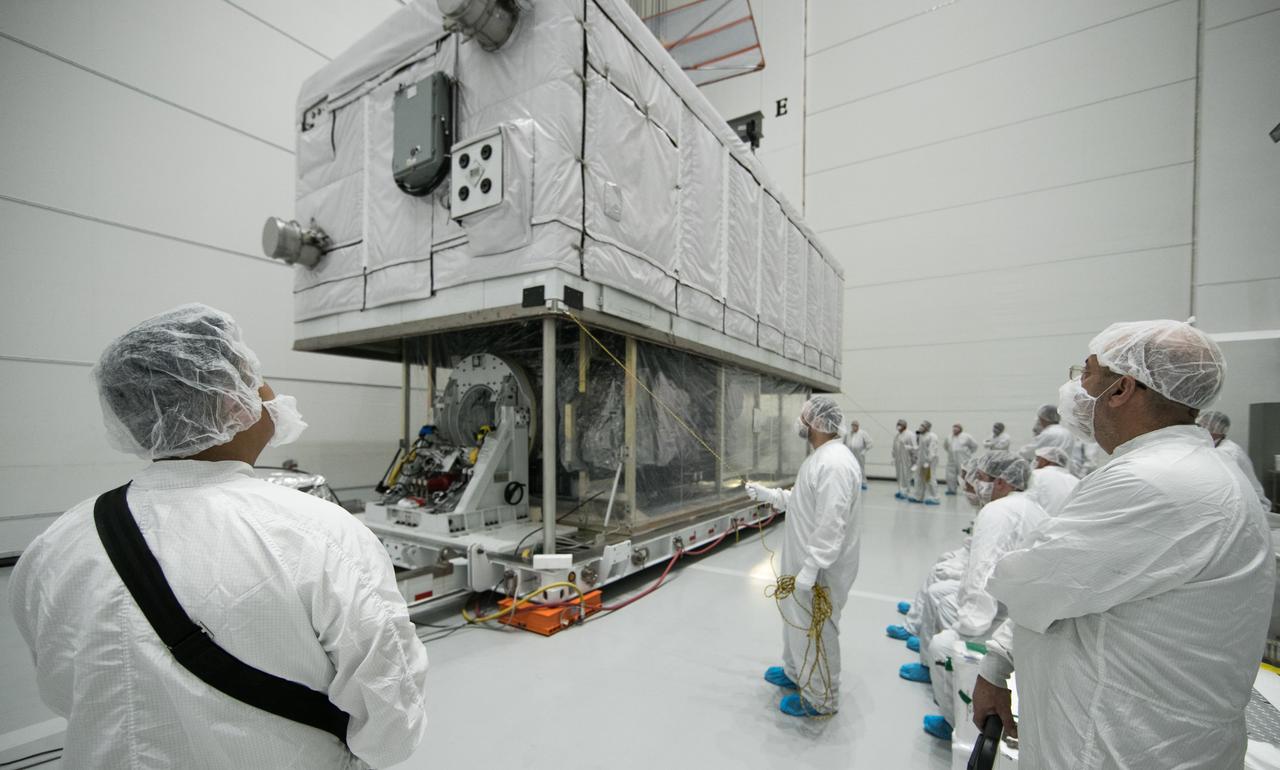
At Astrotech Space Operations in Titusville, Florida, technicians and engineers remove NOAA's Geostationary Operation Environmental Satellite-S (GOES-S) from its shipping container. GOES-S is the second in a series of four advanced geostationary weather satellites. The GOES-R series - consisting of the GOES-R, GOES-S, GOES-T and GOES-U spacecraft - will significantly improve the detection and observation of environmental phenomena that directly affect public safety, protection of property and the nation's economic health and prosperity. GOES-S is slated to launch March 1, 2018 aboard a United Launch Alliance Atlas V rocket from Cape Canaveral Air Force Station in Florida.
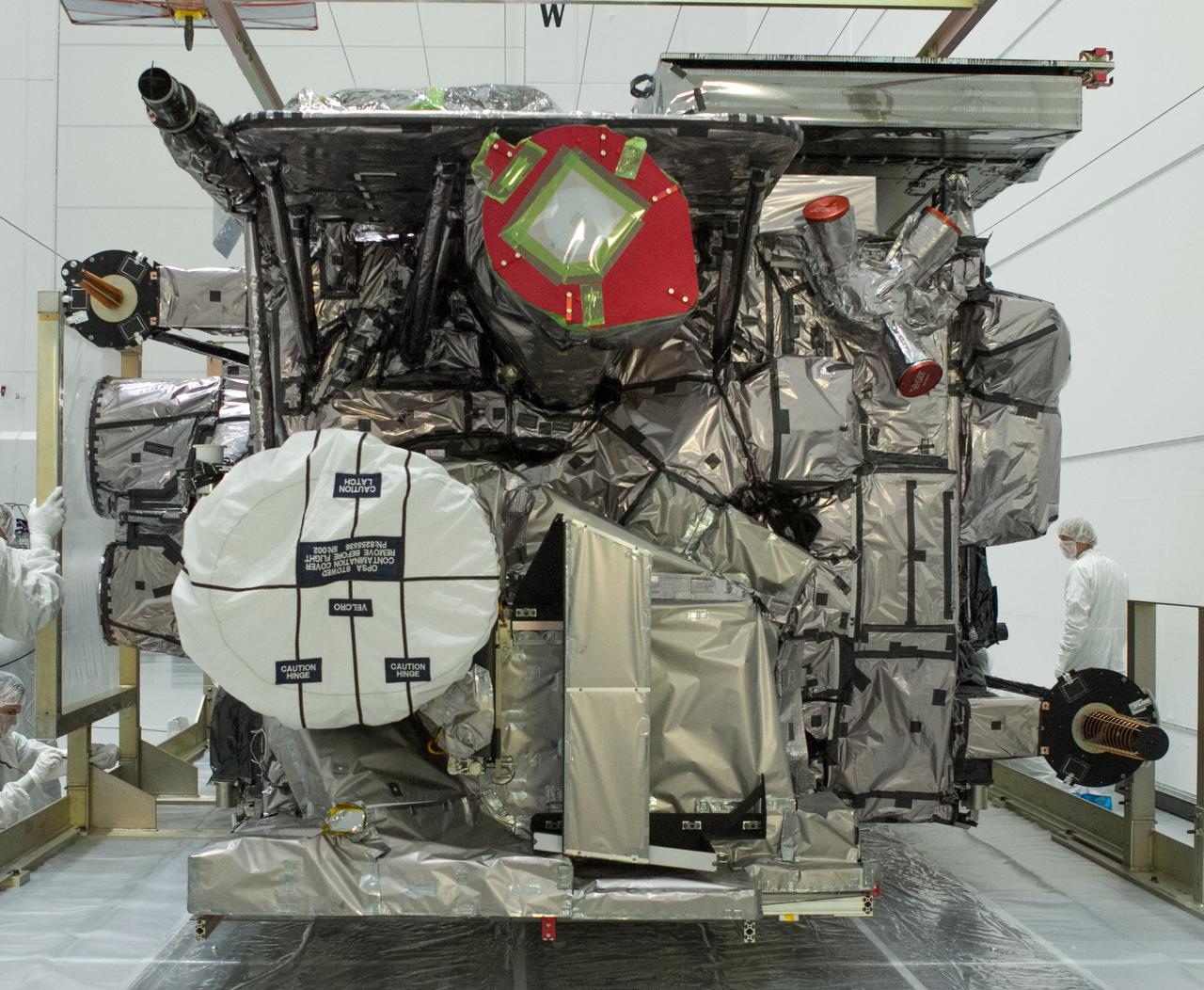
At Astrotech Space Operations in Titusville, Florida, NOAA's Geostationary Operation Environmental Satellite-S (GOES-S) has been removed from its shipping container. GOES-S is the second in a series of four advanced geostationary weather satellites. The GOES-R series - consisting of the GOES-R, GOES-S, GOES-T and GOES-U spacecraft - will significantly improve the detection and observation of environmental phenomena that directly affect public safety, protection of property and the nation's economic health and prosperity. GOES-S is slated to launch March 1, 2018 aboard a United Launch Alliance Atlas V rocket from Cape Canaveral Air Force Station in Florida.
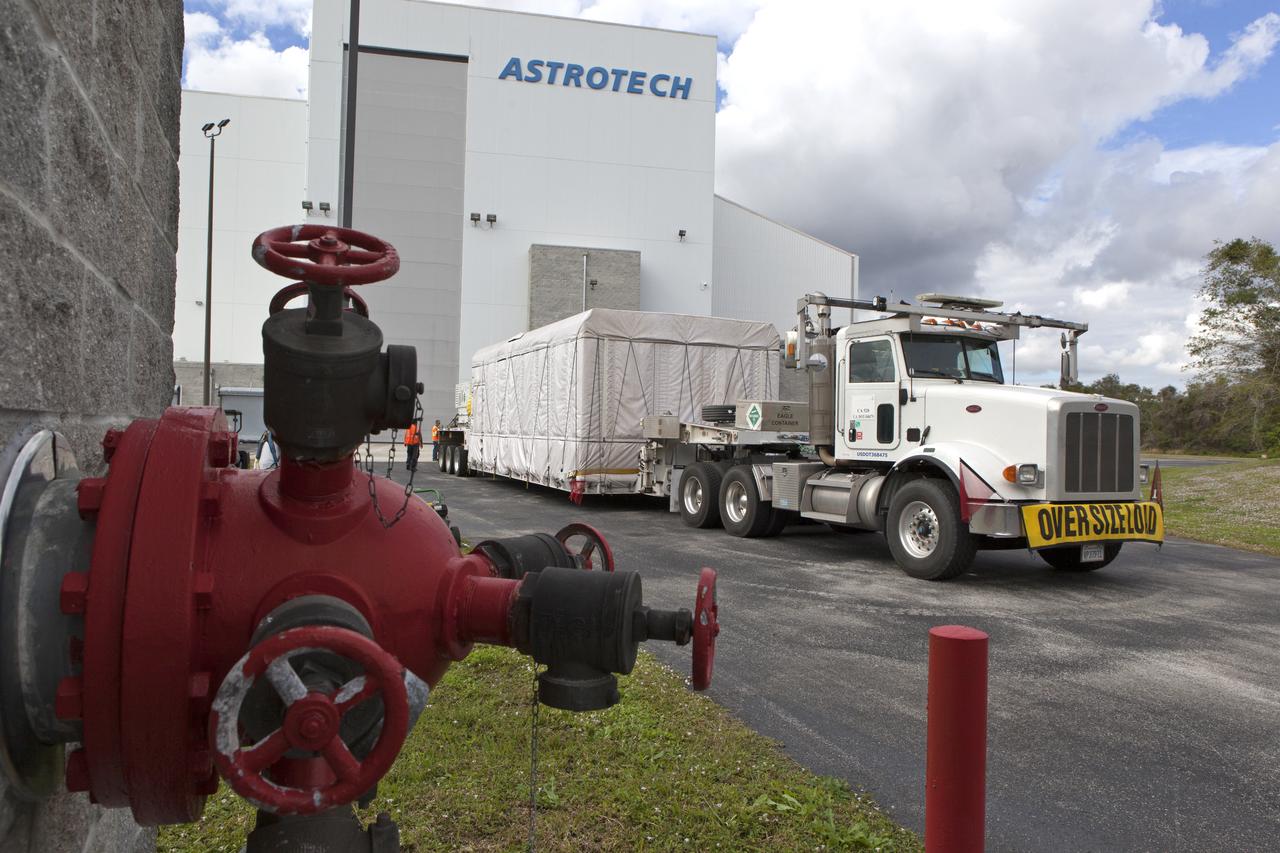
NOAA's Geostationary Operation Environmental Satellite-S (GOES-S) arrives at Astrotech Space Operations in Titusville, Florida, to prepare it for launch. The facility is located near NASA's Kennedy Space Center. GOES-S is the second in a series of four advanced geostationary weather satellites. The GOES-R series - consisting of the GOES-R, GOES-S, GOES-T and GOES-U spacecraft - will significantly improve the detection and observation of environmental phenomena that directly affect public safety, protection of property and the nation's economic health and prosperity. GOES-S is slated to launch March 1, 2018 aboard a United Launch Alliance Atlas V rocket from Cape Canaveral Air Force Station in Florida.
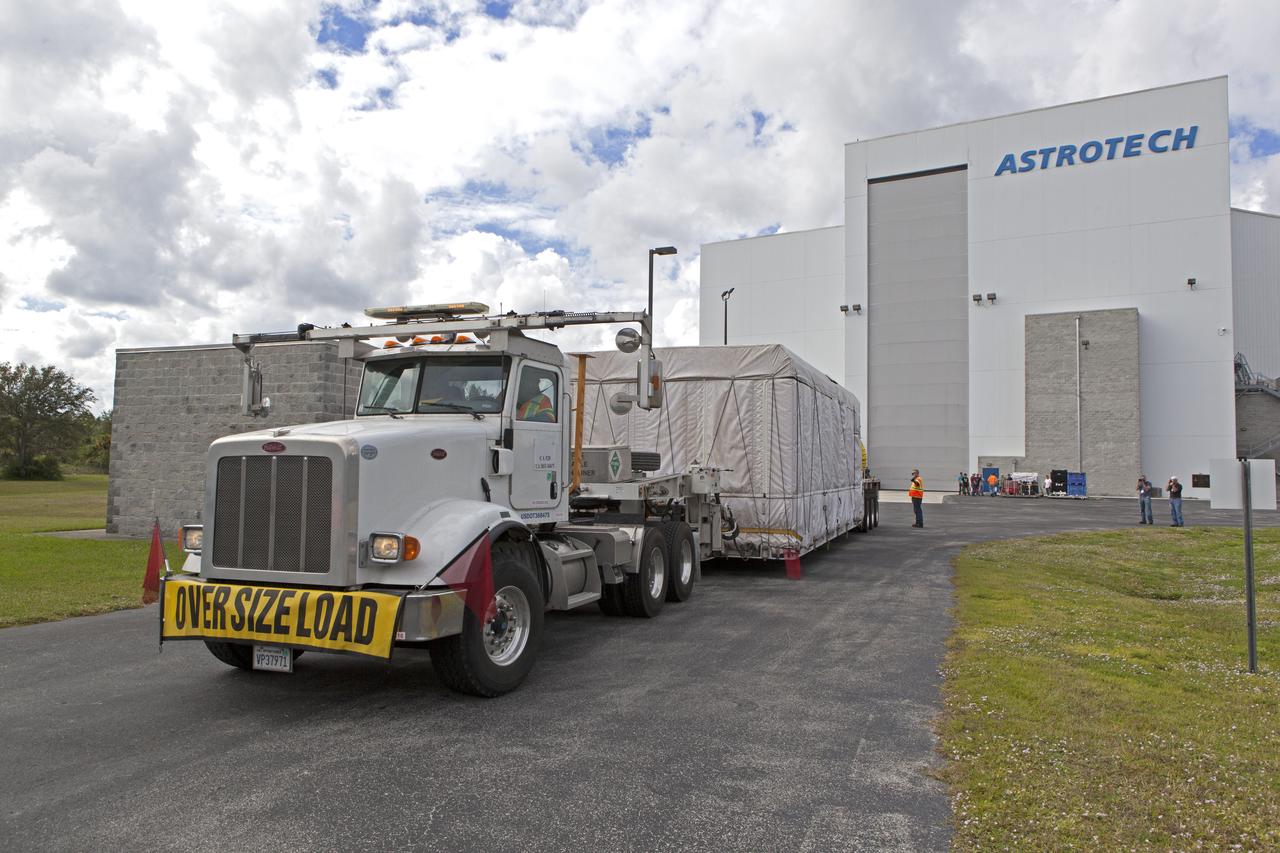
NOAA's Geostationary Operation Environmental Satellite-S (GOES-S) arrives at Astrotech Space Operations in Titusville, Florida, to prepare it for launch. The facility is located near NASA's Kennedy Space Center. GOES-S is the second in a series of four advanced geostationary weather satellites. The GOES-R series - consisting of the GOES-R, GOES-S, GOES-T and GOES-U spacecraft - will significantly improve the detection and observation of environmental phenomena that directly affect public safety, protection of property and the nation's economic health and prosperity. GOES-S is slated to launch March 1, 2018 aboard a United Launch Alliance Atlas V rocket from Cape Canaveral Air Force Station in Florida.
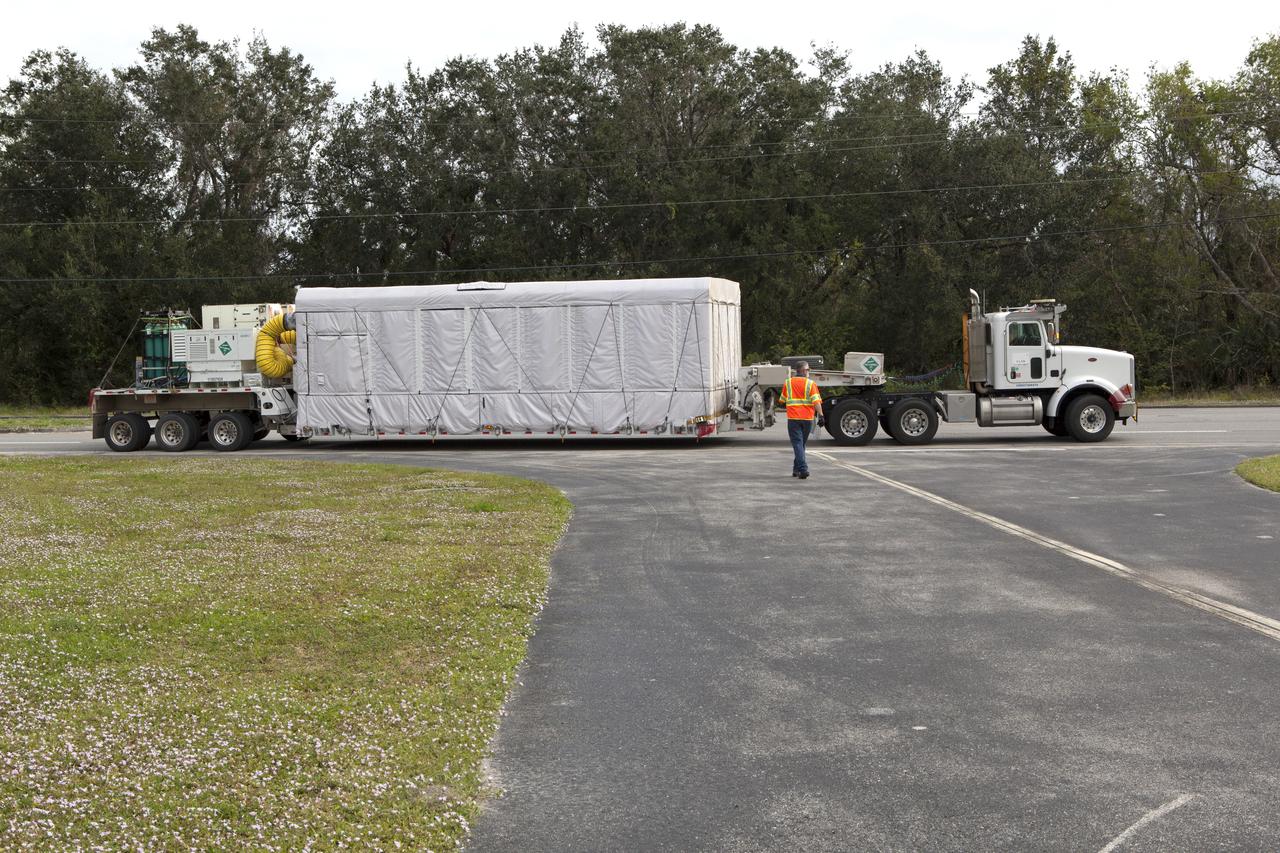
NOAA's Geostationary Operation Environmental Satellite-S (GOES-S) arrives at Astrotech Space Operations in Titusville, Florida, to prepare it for launch. The facility is located near NASA's Kennedy Space Center. GOES-S is the second in a series of four advanced geostationary weather satellites. The GOES-R series - consisting of the GOES-R, GOES-S, GOES-T and GOES-U spacecraft - will significantly improve the detection and observation of environmental phenomena that directly affect public safety, protection of property and the nation's economic health and prosperity. GOES-S is slated to launch March 1, 2018 aboard a United Launch Alliance Atlas V rocket from Cape Canaveral Air Force Station in Florida.
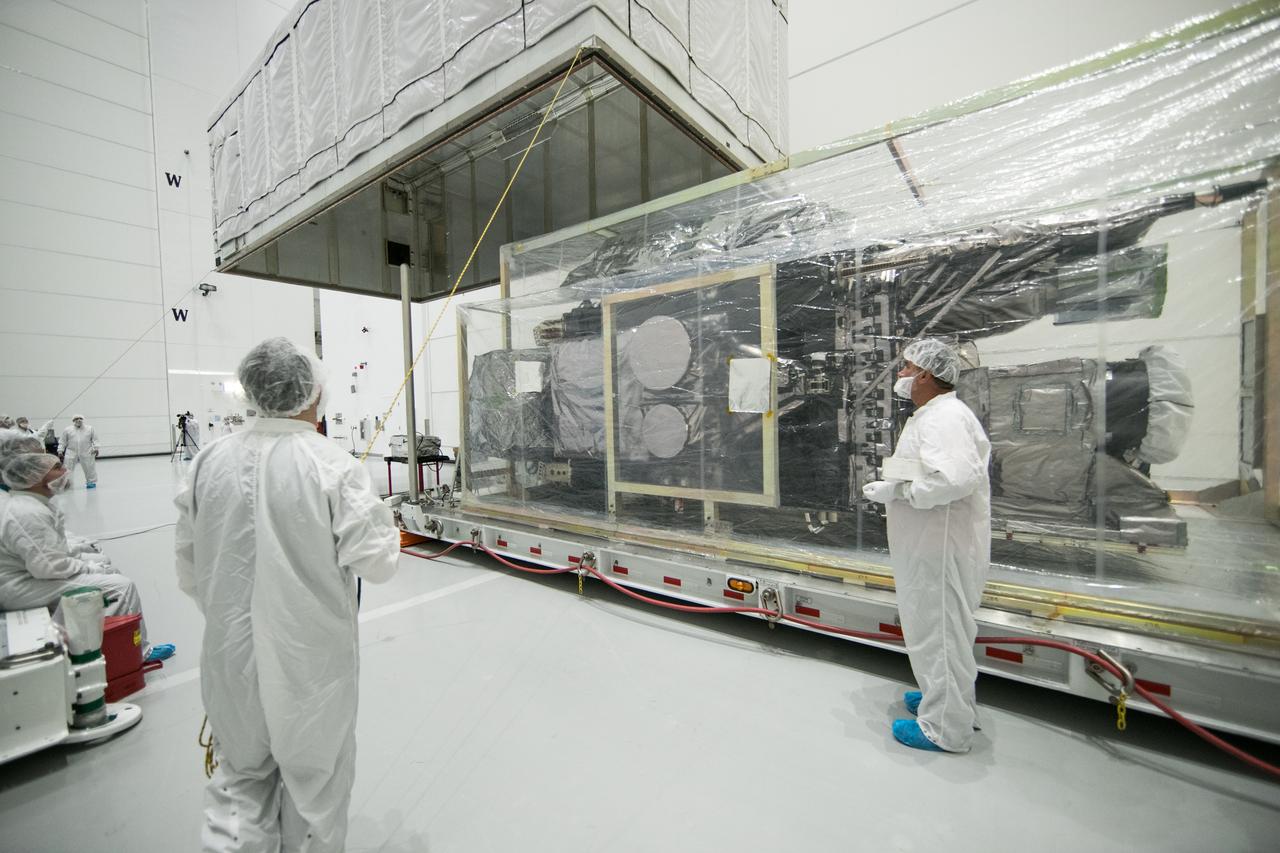
At Astrotech Space Operations in Titusville, Florida, technicians and engineers remove NOAA's Geostationary Operation Environmental Satellite-S (GOES-S) from its shipping container. GOES-S is the second in a series of four advanced geostationary weather satellites. The GOES-R series - consisting of the GOES-R, GOES-S, GOES-T and GOES-U spacecraft - will significantly improve the detection and observation of environmental phenomena that directly affect public safety, protection of property and the nation's economic health and prosperity. GOES-S is slated to launch March 1, 2018 aboard a United Launch Alliance Atlas V rocket from Cape Canaveral Air Force Station in Florida.
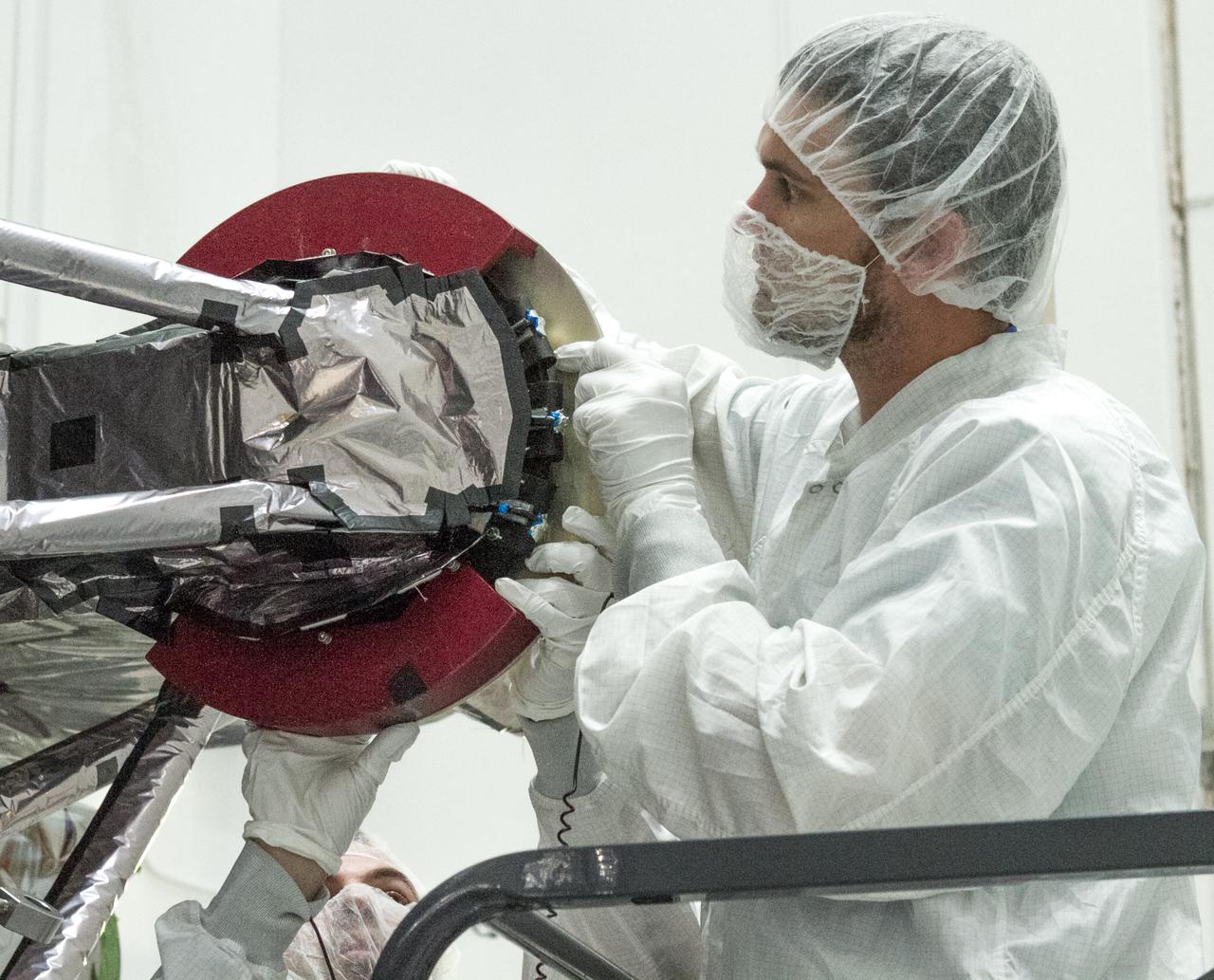
At Astrotech Space Operations in Titusville, Florida, technicians and engineers inspect NOAA's Geostationary Operation Environmental Satellite-S (GOES-S) after removal from its shipping container. GOES-S is the second in a series of four advanced geostationary weather satellites. The GOES-R series - consisting of the GOES-R, GOES-S, GOES-T and GOES-U spacecraft - will significantly improve the detection and observation of environmental phenomena that directly affect public safety, protection of property and the nation's economic health and prosperity. GOES-S is slated to launch March 1, 2018 aboard a United Launch Alliance Atlas V rocket from Cape Canaveral Air Force Station in Florida.
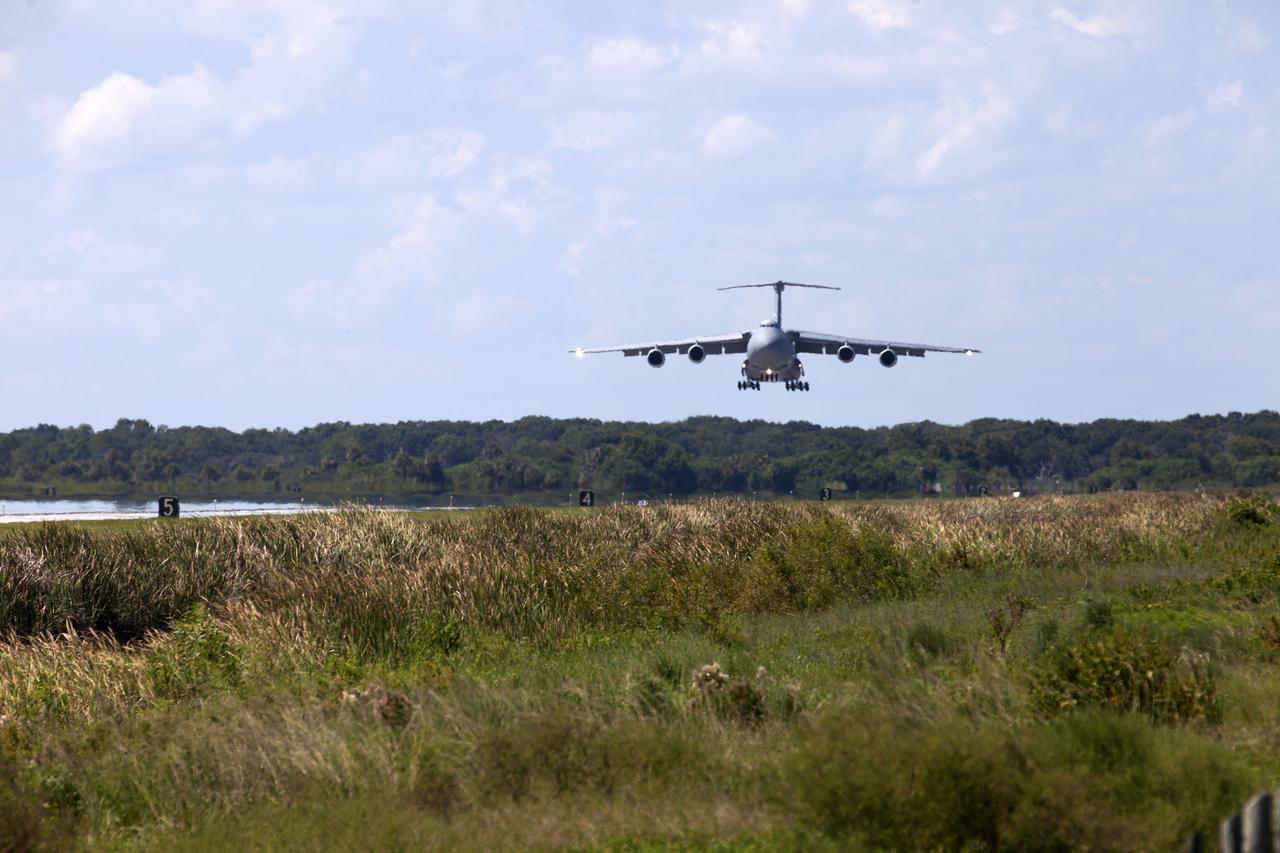
An Air Force C-5 Galaxy transport plane approaches the Shuttle Landing Facility at NASA's Kennedy Space Center in Florida to deliver the GOES-R spacecraft for launch processing. The GOES series are weather satellites operated by NOAA to enhance forecasts. The spacecraft is to launch aboard a United Launch Alliance Atlas V rocket in November.
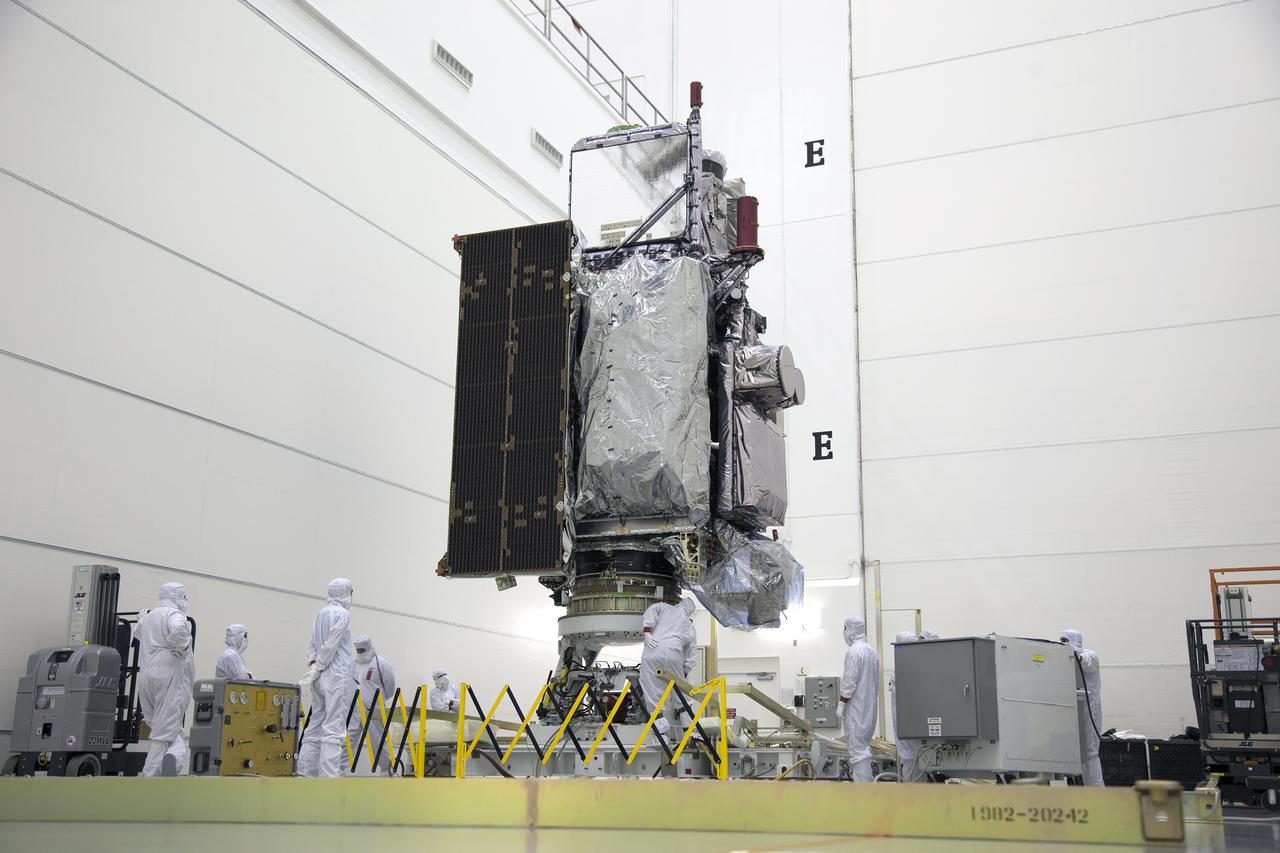
The GOES-R spacecraft stands vertically inside the Astrotech payload processing facility in Titusville, Florida near NASA’s Kennedy Space Center. GOES-R will be the first satellite in a series of next-generation NOAA Geostationary Operational Environmental Satellites. The spacecraft is to launch aboard a United Launch Alliance Atlas V rocket in November.
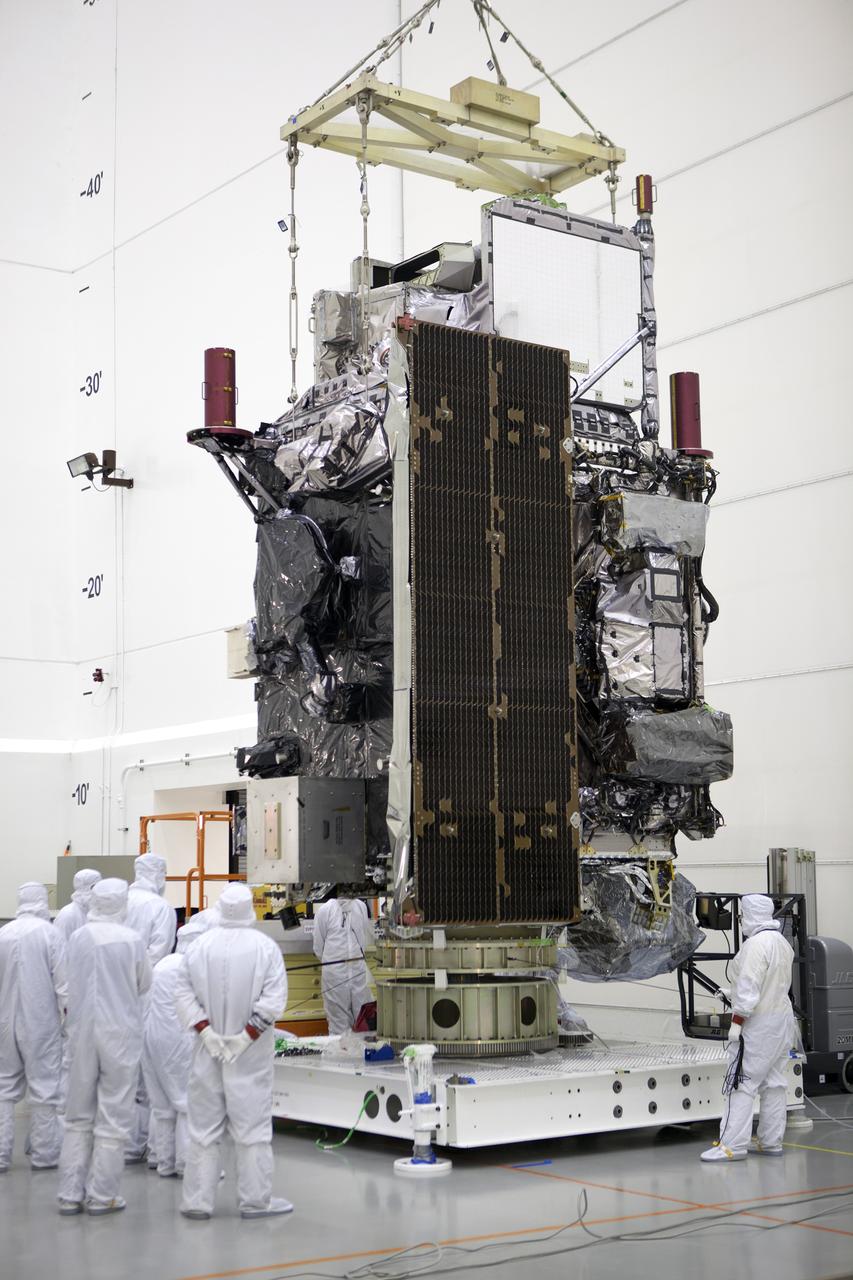
Team members monitor progress as an overhead crane lowers the GOES-R spacecraft into its work stand inside the Astrotech payload processing facility in Titusville, Florida near NASA’s Kennedy Space Center. GOES-R will be the first satellite in a series of next-generation NOAA Geostationary Operational Environmental Satellites. The spacecraft is to launch aboard a United Launch Alliance Atlas V rocket in November.
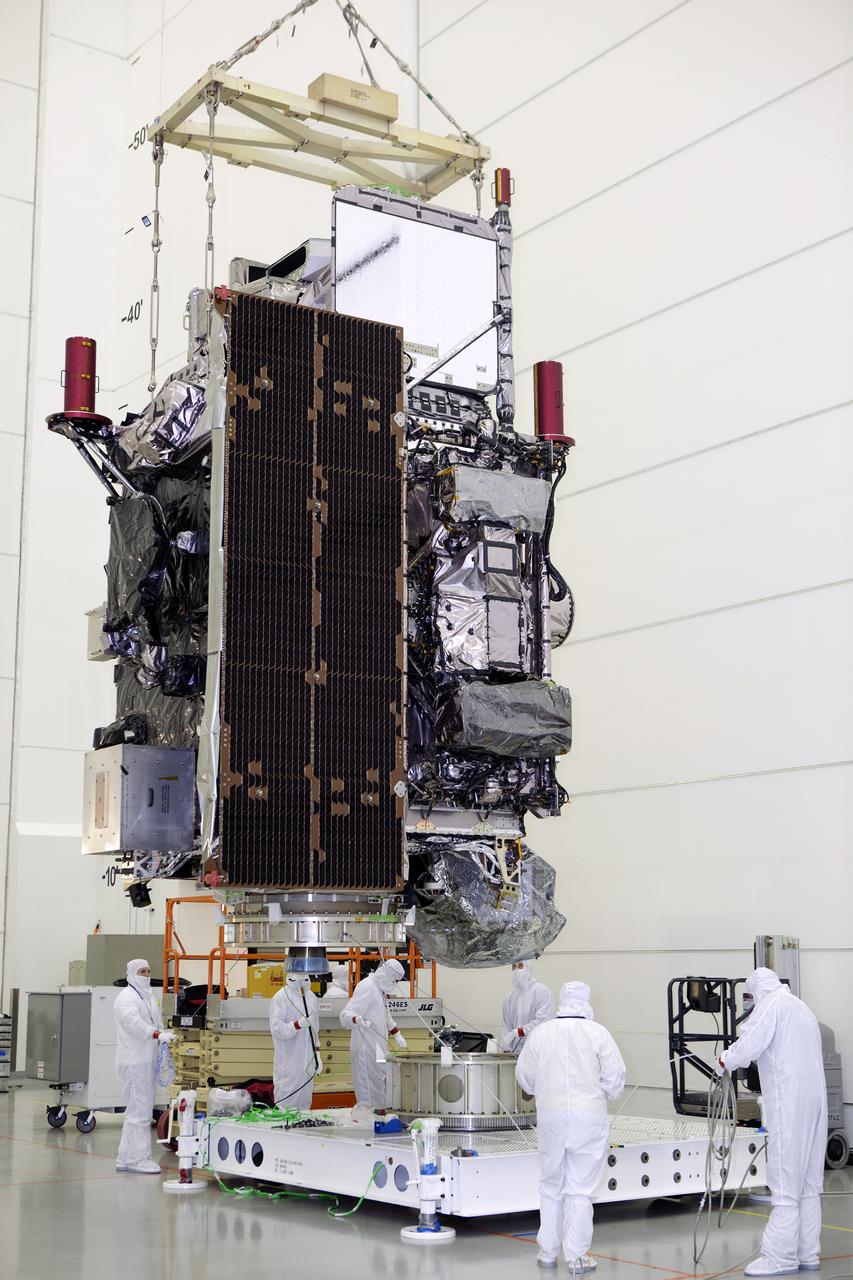
Team members monitor progress as an overhead crane lowers the GOES-R spacecraft toward its work stand inside the Astrotech payload processing facility in Titusville, Florida near NASA’s Kennedy Space Center. GOES-R will be the first satellite in a series of next-generation NOAA Geostationary Operational Environmental Satellites. The spacecraft is to launch aboard a United Launch Alliance Atlas V rocket in November.
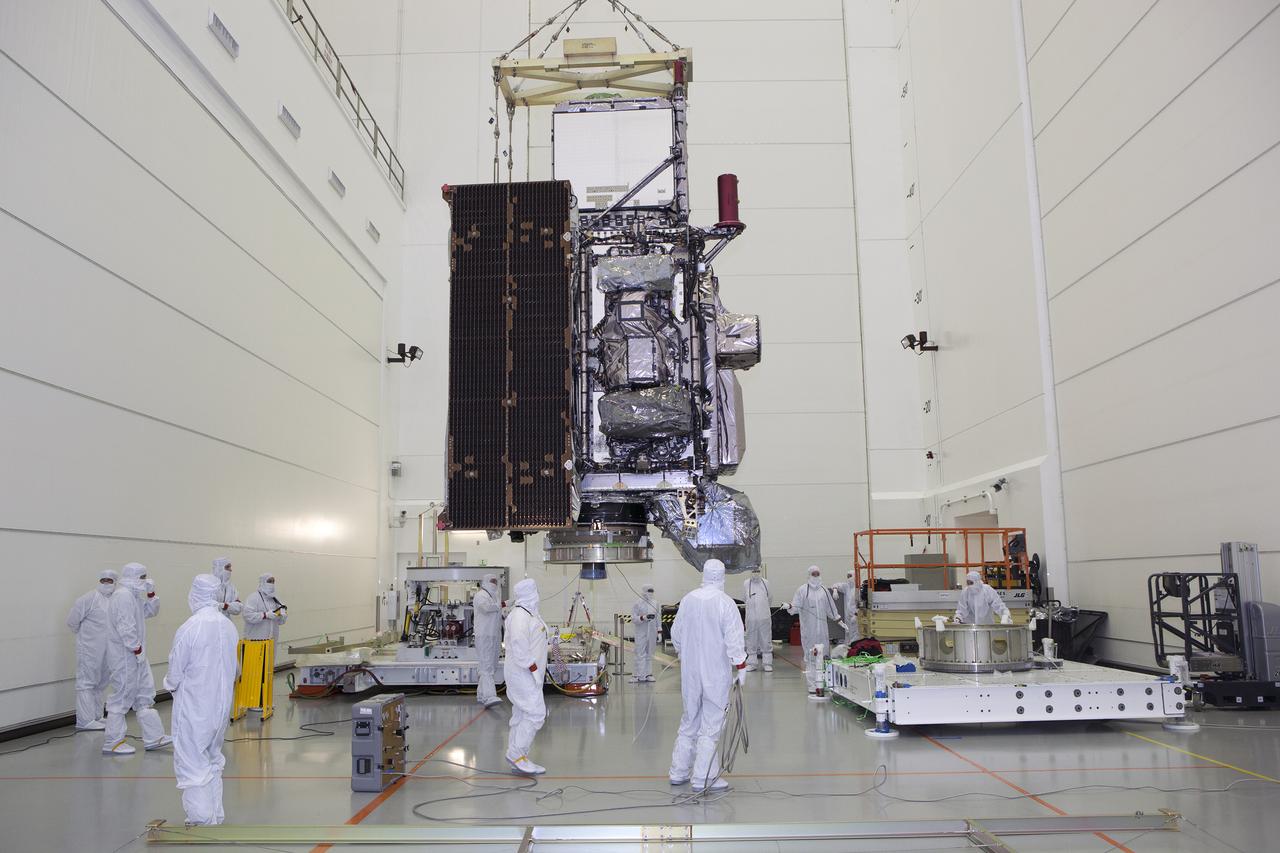
An overhead crane moves the GOES-R spacecraft toward its work stand inside the Astrotech payload processing facility in Titusville, Florida near NASA’s Kennedy Space Center. GOES-R will be the first satellite in a series of next-generation NOAA Geostationary Operational Environmental Satellites. The spacecraft is to launch aboard a United Launch Alliance Atlas V rocket in November.
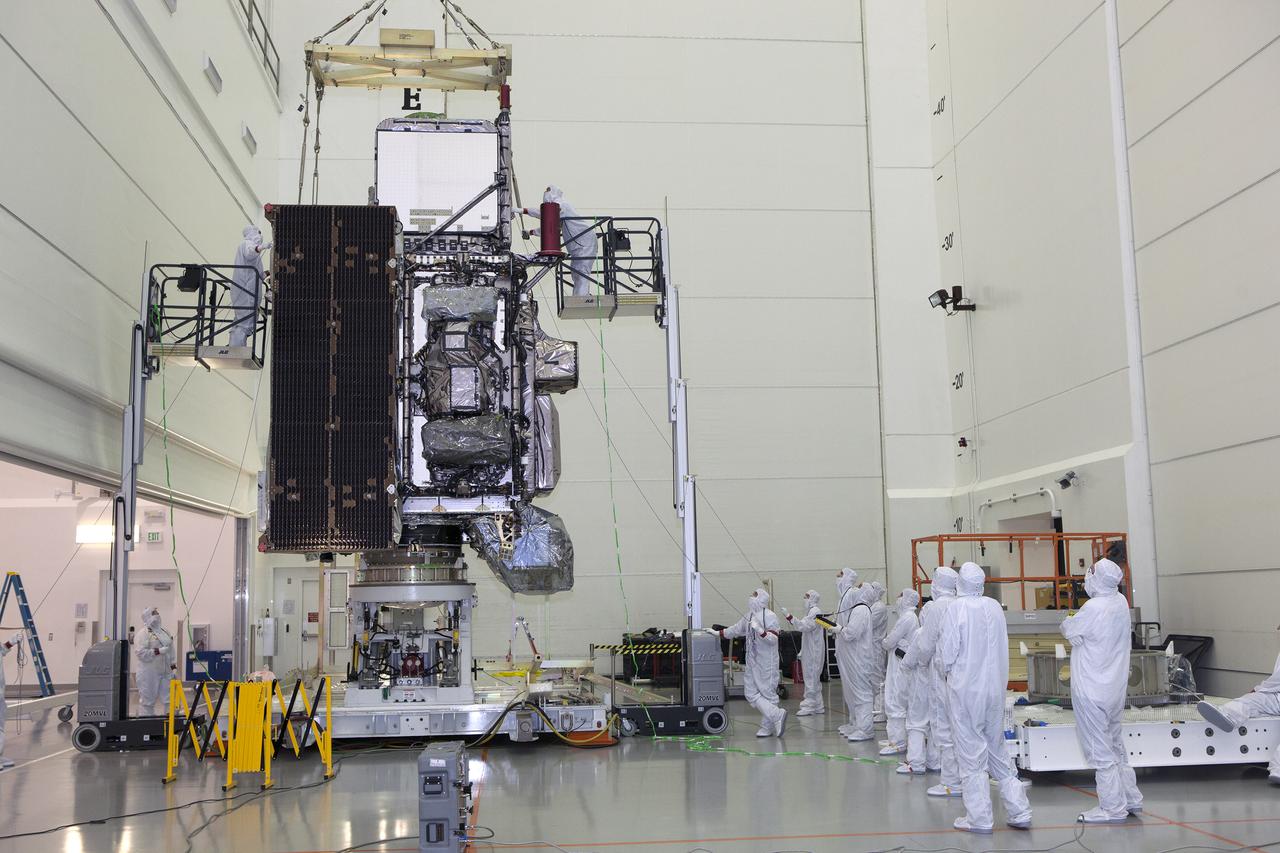
An overhead crane lifts the GOES-R spacecraft to move it into its work stand inside the Astrotech payload processing facility in Titusville, Florida near NASA’s Kennedy Space Center. GOES-R will be the first satellite in a series of next-generation NOAA Geostationary Operational Environmental Satellites. The spacecraft is to launch aboard a United Launch Alliance Atlas V rocket in November.
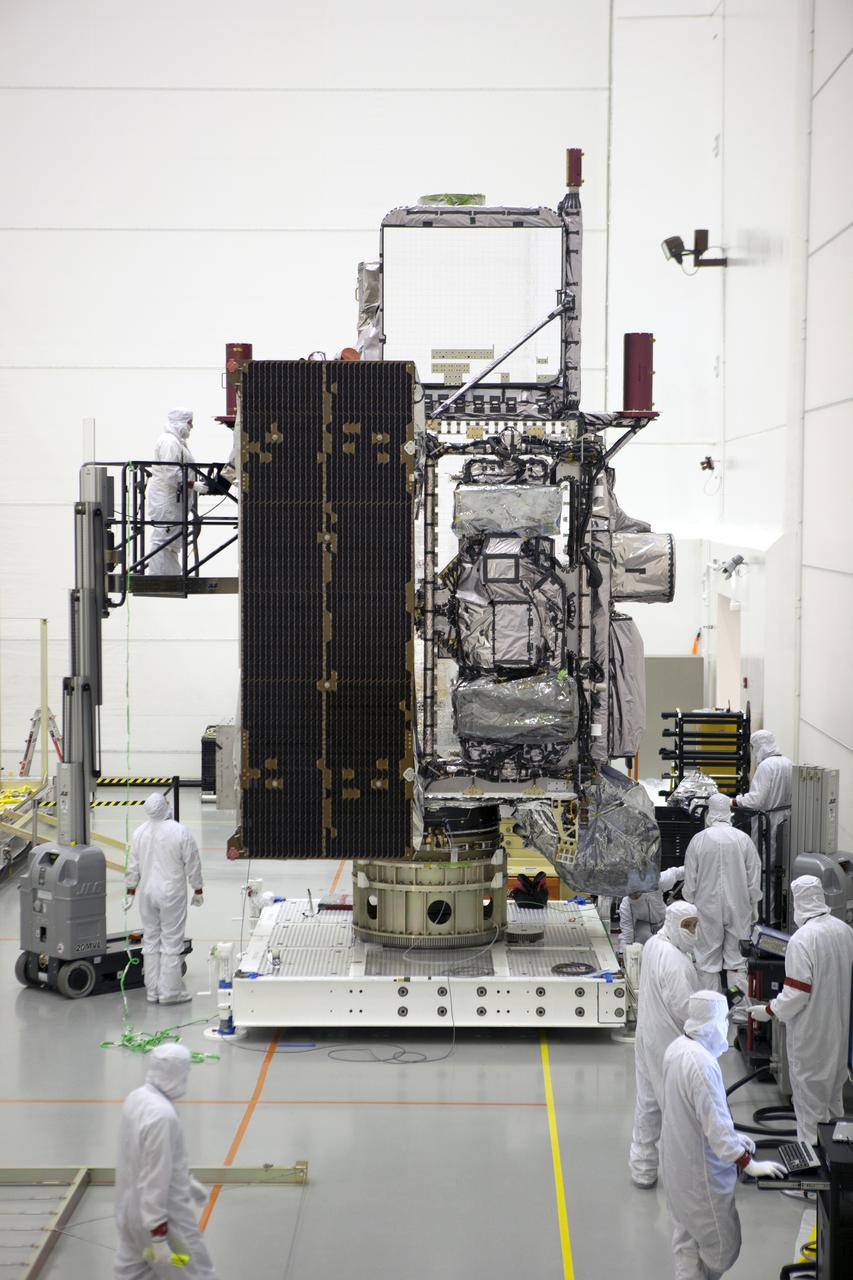
The GOES-R spacecraft is secured on its work stand inside the Astrotech payload processing facility in Titusville, Florida near NASA’s Kennedy Space Center. GOES-R will be the first satellite in a series of next-generation NOAA Geostationary Operational Environmental Satellites. The spacecraft is to launch aboard a United Launch Alliance Atlas V rocket in November.
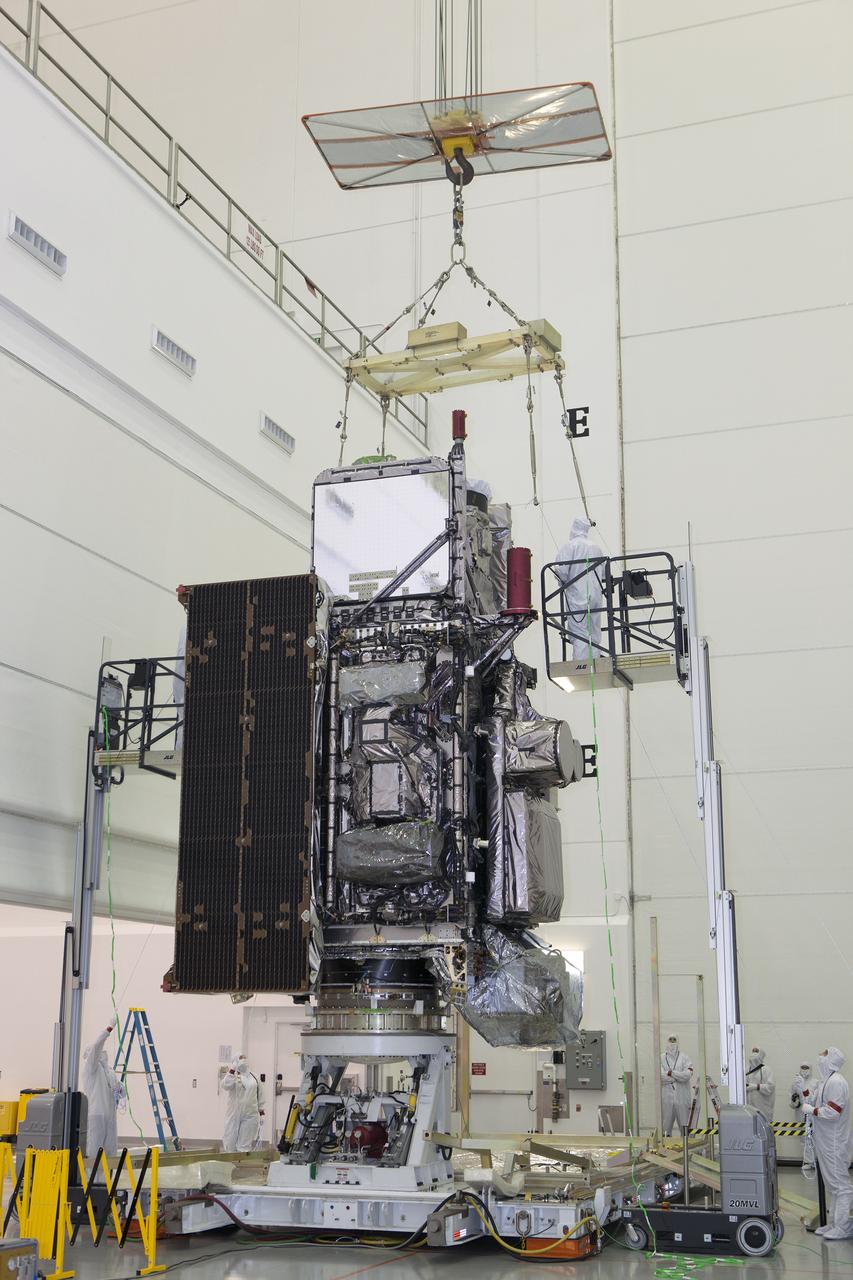
An overhead crane is positioned to move the GOES-R spacecraft into its work stand inside the Astrotech payload processing facility in Titusville, Florida near NASA’s Kennedy Space Center. GOES-R will be the first satellite in a series of next-generation NOAA Geostationary Operational Environmental Satellites. The spacecraft is to launch aboard a United Launch Alliance Atlas V rocket in November.
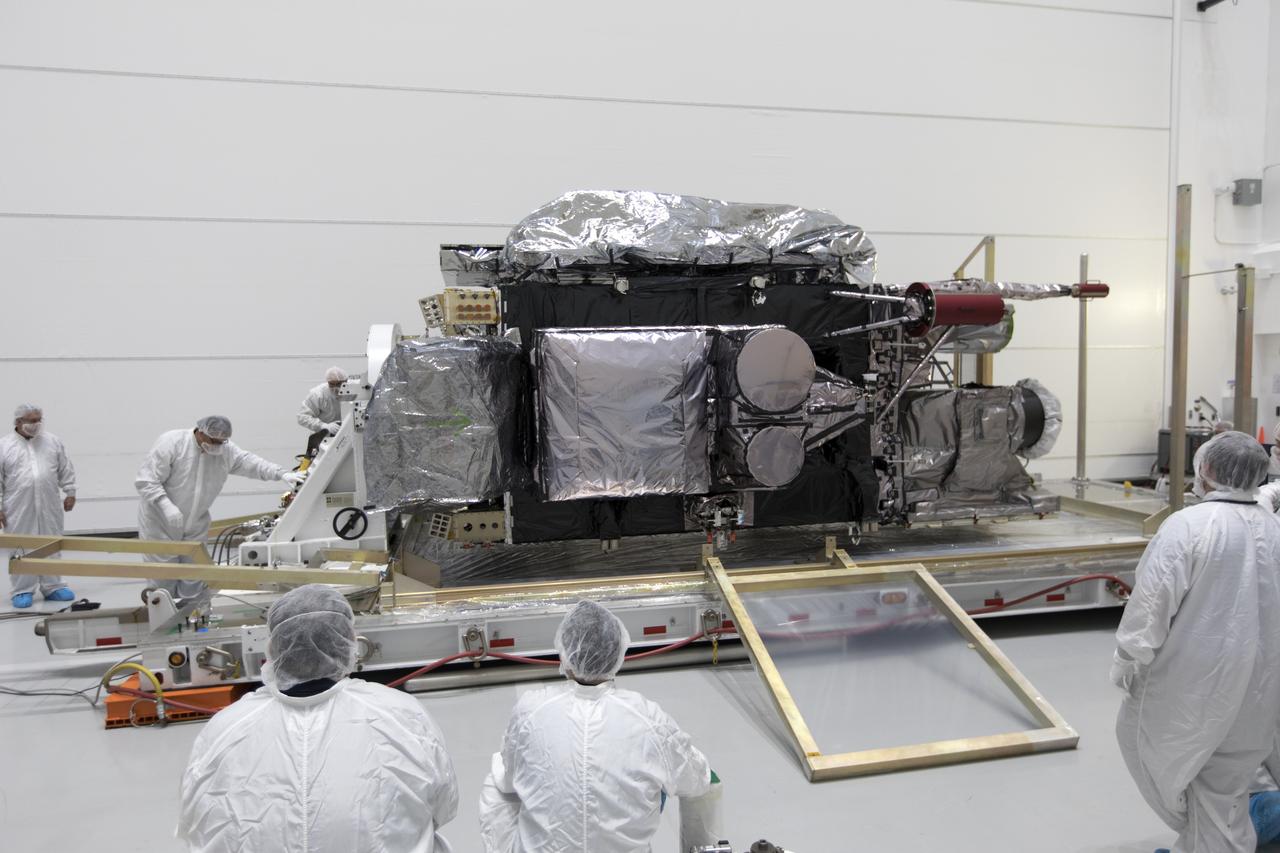
At Astrotech Space Operations in Titusville, Florida, technician and engineers inspect NOAA's Geostationary Operational Environmental Satellite-S (GOES-S) after it was uncrated from its shipping container. The facility is located near NASA's Kennedy Space Center. GOES-S is the second in a series of four advanced geostationary weather satellites. The GOES-R series - consisting of the GOES-R, GOES-S, GOES-T and GOES-U spacecraft - will significantly improve the detection and observation of environmental phenomena that directly affect public safety, protection of property and the nation's economic health and prosperity. GOES-S is slated to launch March 1, 2018 aboard a United Launch Alliance Atlas V rocket from Cape Canaveral Air Force Station in Florida.
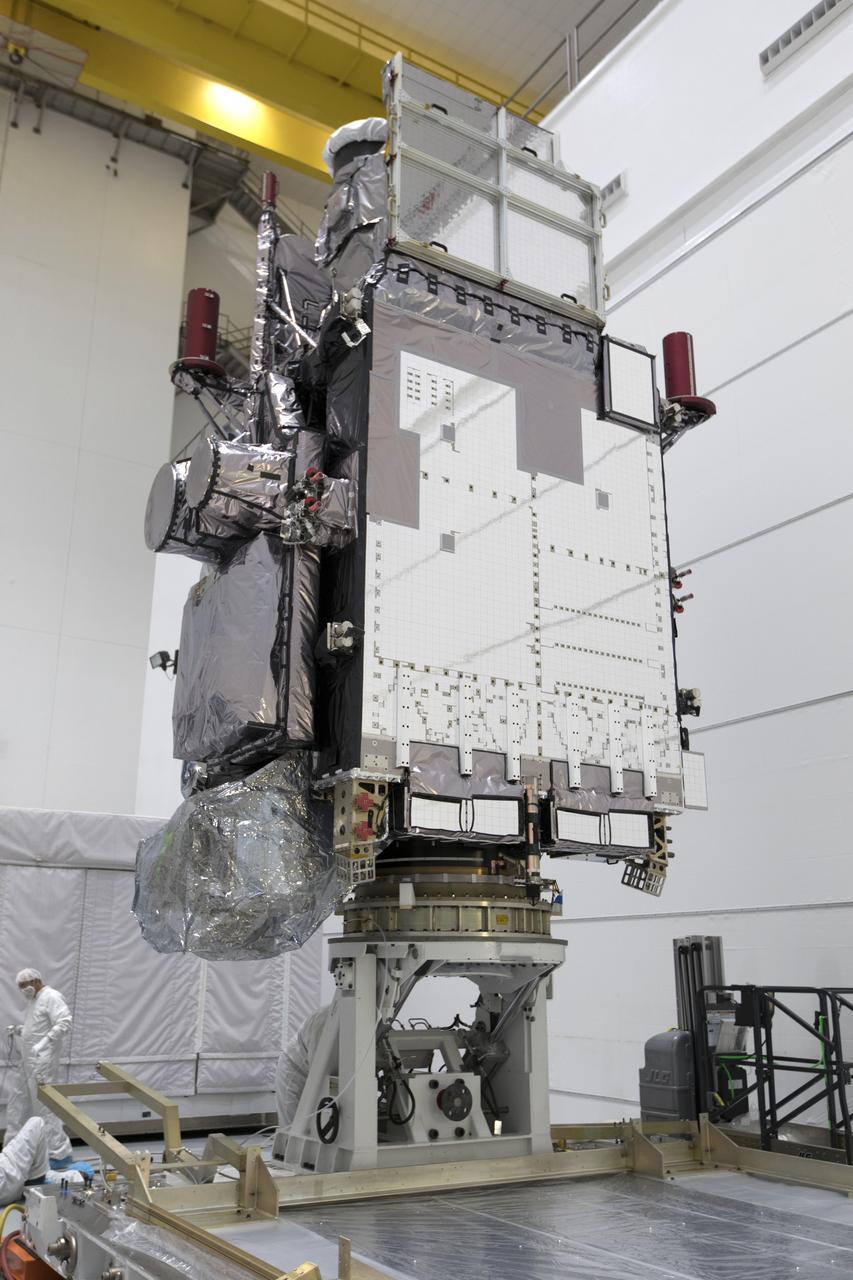
At Astrotech Space Operations in Titusville, Florida, NOAA's Geostationary Operational Environmental Satellite-S (GOES-S) has been rotated to a vertical position after it was uncrated from its shipping container. The facility is located near NASA's Kennedy Space Center. GOES-S is the second in a series of four advanced geostationary weather satellites. The GOES-R series - consisting of the GOES-R, GOES-S, GOES-T and GOES-U spacecraft - will significantly improve the detection and observation of environmental phenomena that directly affect public safety, protection of property and the nation's economic health and prosperity. GOES-S is slated to launch March 1, 2018 aboard a United Launch Alliance Atlas V rocket from Cape Canaveral Air Force Station in Florida.
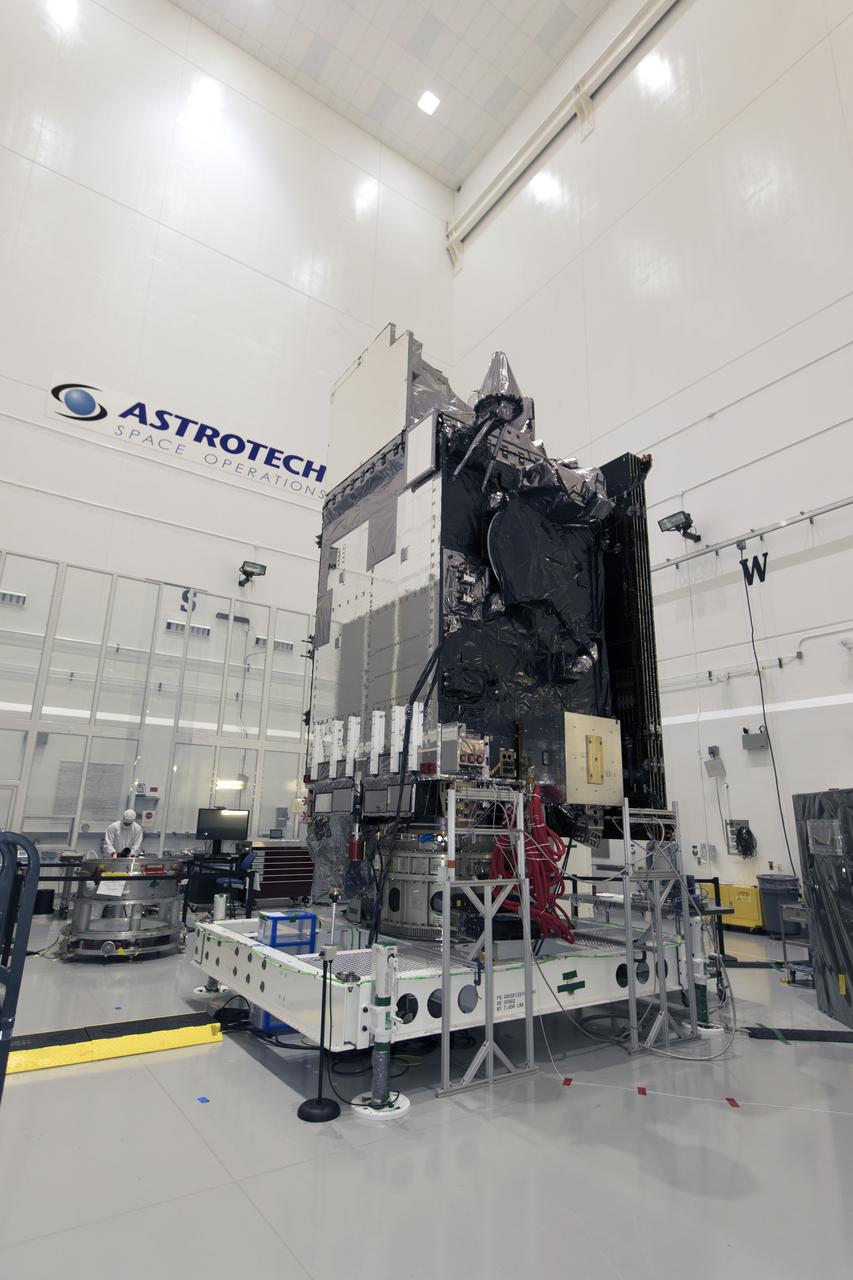
In a clean room at Astrotech Space Operations in Titusville, Florida, NOAA's Geostationary Operational Environmental Satellite-S, or GOES-S, is being prepared for encapsulation in it payload fairing. After encapsulation, the weather satellite will be moved to Space Launch Complex-41 at Cape Canaveral Air Force Station. GOES-S is the second in a series of four advanced geostationary weather satellites. The GOES-R series - consisting of the GOES-R, GOES-S, GOES-T and GOES-U spacecraft - will significantly improve the detection and observation of environmental phenomena that directly affect public safety, protection of property and the nation's economic health and prosperity. GOES-S is slated to launch March 1, 2018 aboard a United Launch Alliance Atlas V rocket.
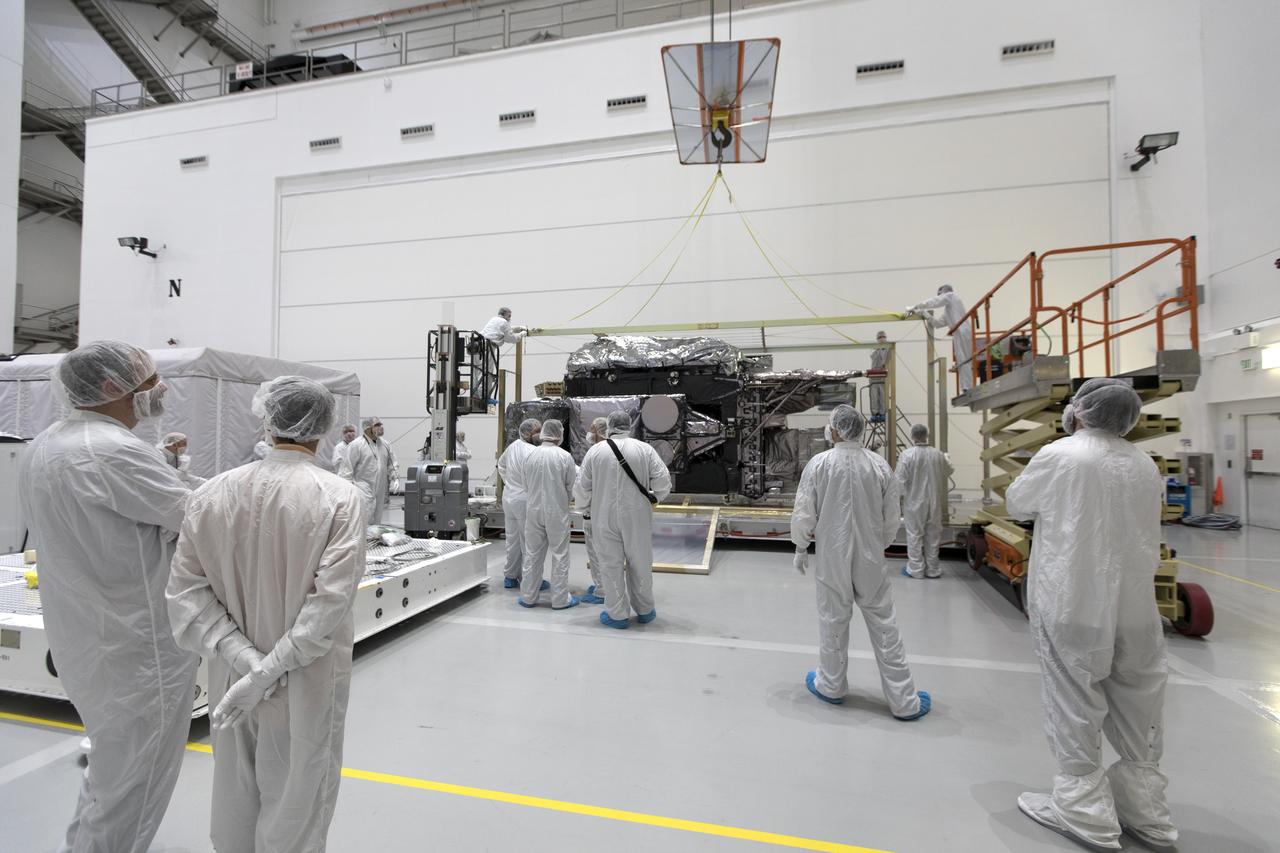
At Astrotech Space Operations in Titusville, Florida, technician and engineers inspect NOAA's Geostationary Operational Environmental Satellite-S (GOES-S) after it was uncrated from its shipping container. The facility is located near NASA's Kennedy Space Center. GOES-S is the second in a series of four advanced geostationary weather satellites. The GOES-R series - consisting of the GOES-R, GOES-S, GOES-T and GOES-U spacecraft - will significantly improve the detection and observation of environmental phenomena that directly affect public safety, protection of property and the nation's economic health and prosperity. GOES-S is slated to launch March 1, 2018 aboard a United Launch Alliance Atlas V rocket from Cape Canaveral Air Force Station in Florida.
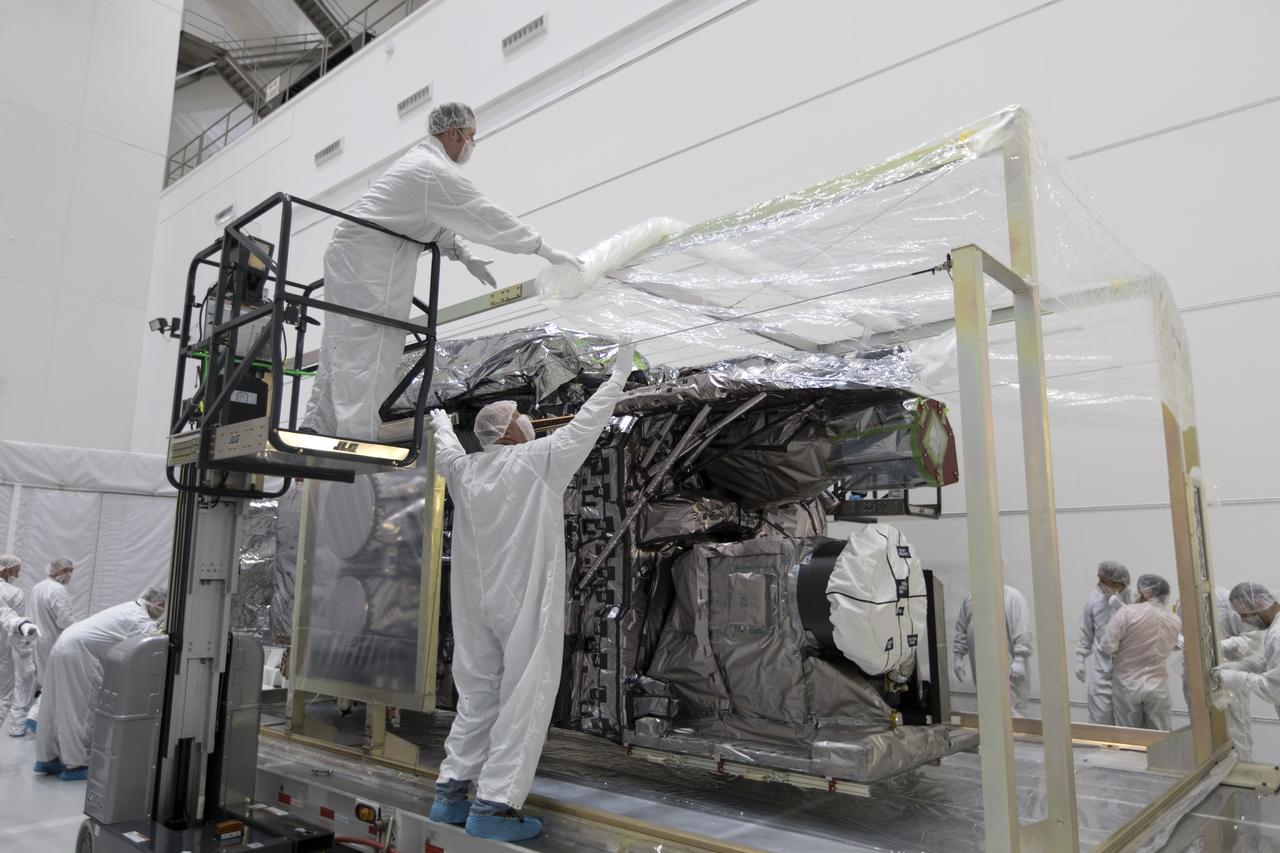
At Astrotech Space Operations in Titusville, Florida, technician and engineers inspect NOAA's Geostationary Operational Environmental Satellite-S (GOES-S) after it was uncrated from its shipping container. The facility is located near NASA's Kennedy Space Center. GOES-S is the second in a series of four advanced geostationary weather satellites. The GOES-R series - consisting of the GOES-R, GOES-S, GOES-T and GOES-U spacecraft - will significantly improve the detection and observation of environmental phenomena that directly affect public safety, protection of property and the nation's economic health and prosperity. GOES-S is slated to launch March 1, 2018 aboard a United Launch Alliance Atlas V rocket from Cape Canaveral Air Force Station in Florida.
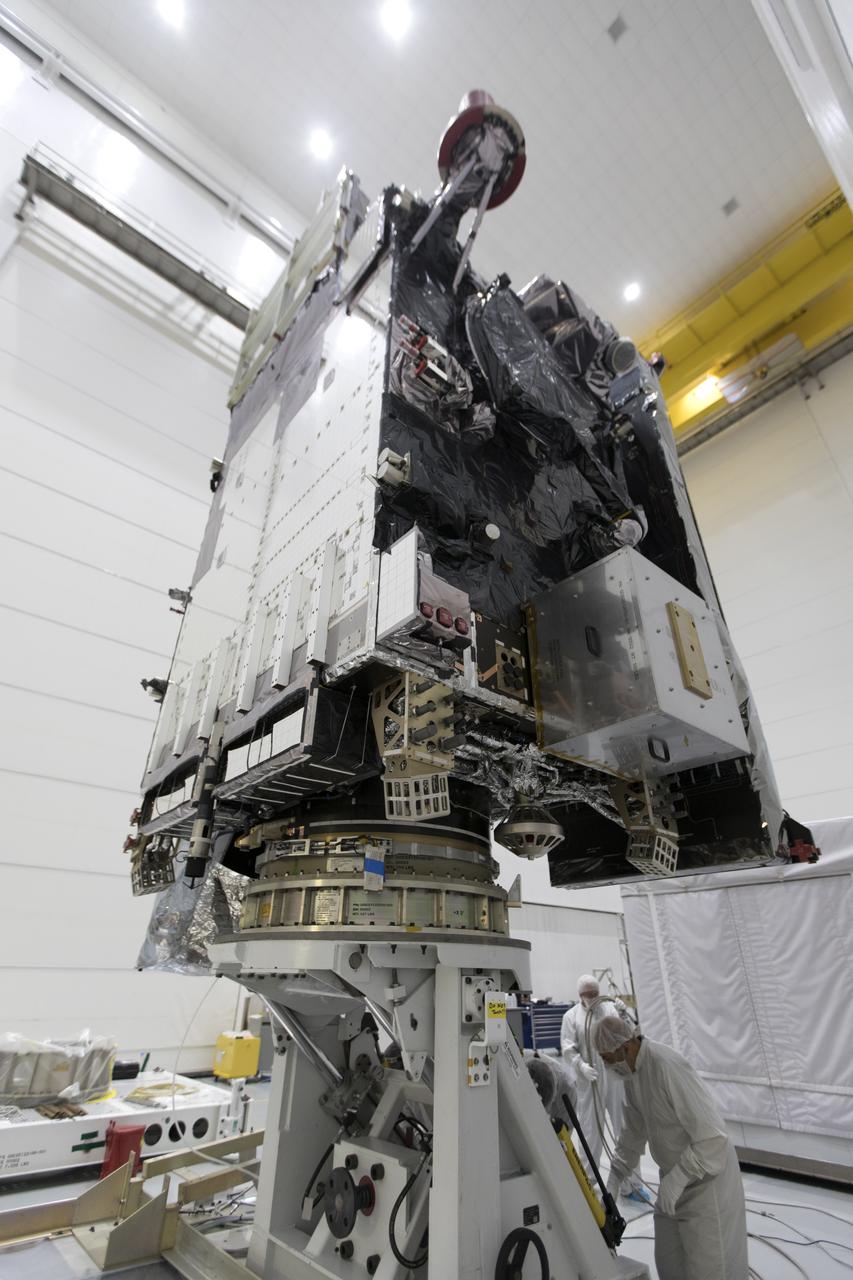
At Astrotech Space Operations in Titusville, Florida, NOAA's Geostationary Operational Environmental Satellite-S (GOES-S) has been rotated to a vertical position after it was uncrated from its shipping container. The facility is located near NASA's Kennedy Space Center. GOES-S is the second in a series of four advanced geostationary weather satellites. The GOES-R series - consisting of the GOES-R, GOES-S, GOES-T and GOES-U spacecraft - will significantly improve the detection and observation of environmental phenomena that directly affect public safety, protection of property and the nation's economic health and prosperity. GOES-S is slated to launch March 1, 2018 aboard a United Launch Alliance Atlas V rocket from Cape Canaveral Air Force Station in Florida.
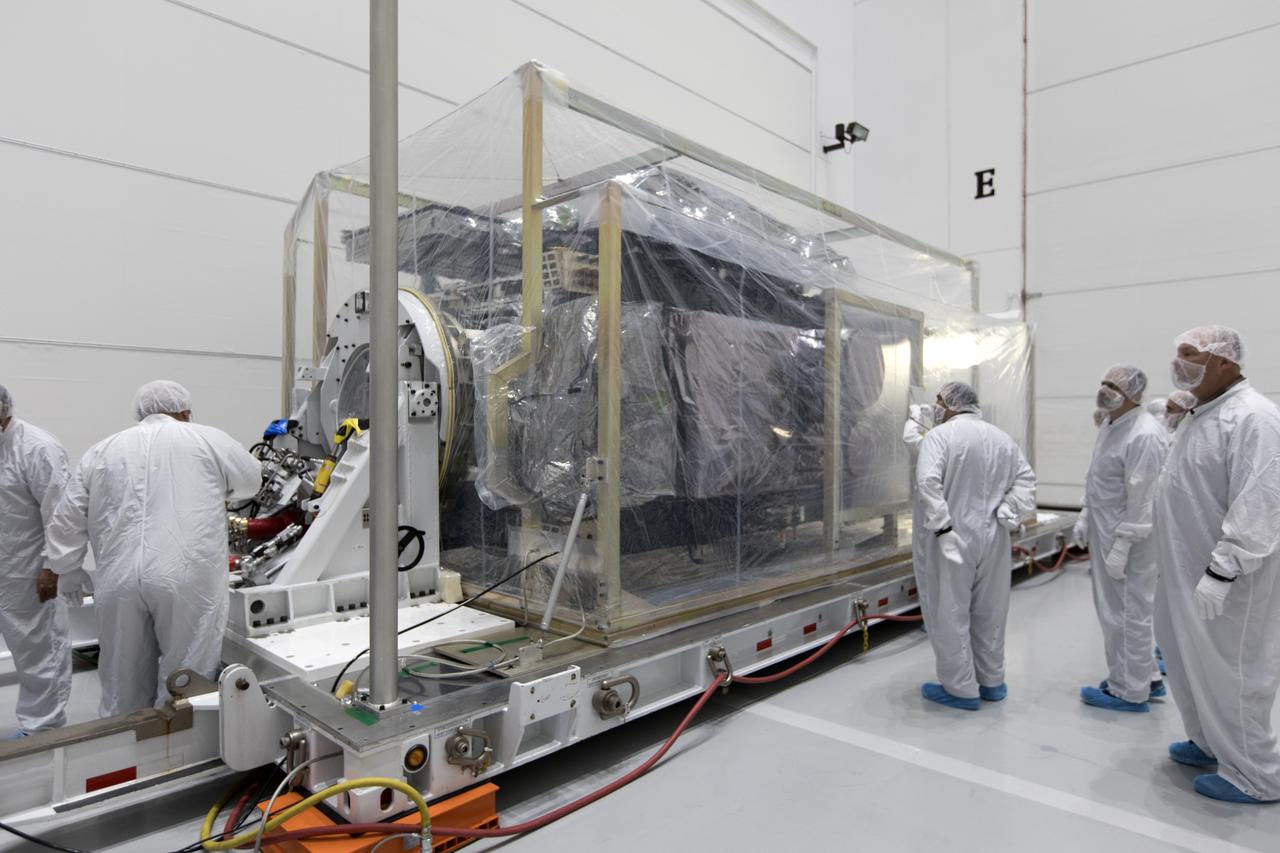
At Astrotech Space Operations in Titusville, Florida, technician and engineers inspect NOAA's Geostationary Operational Environmental Satellite-S (GOES-S) after it was uncrated from its shipping container. The facility is located near NASA's Kennedy Space Center. GOES-S is the second in a series of four advanced geostationary weather satellites. The GOES-R series - consisting of the GOES-R, GOES-S, GOES-T and GOES-U spacecraft - will significantly improve the detection and observation of environmental phenomena that directly affect public safety, protection of property and the nation's economic health and prosperity. GOES-S is slated to launch March 1, 2018 aboard a United Launch Alliance Atlas V rocket from Cape Canaveral Air Force Station in Florida.
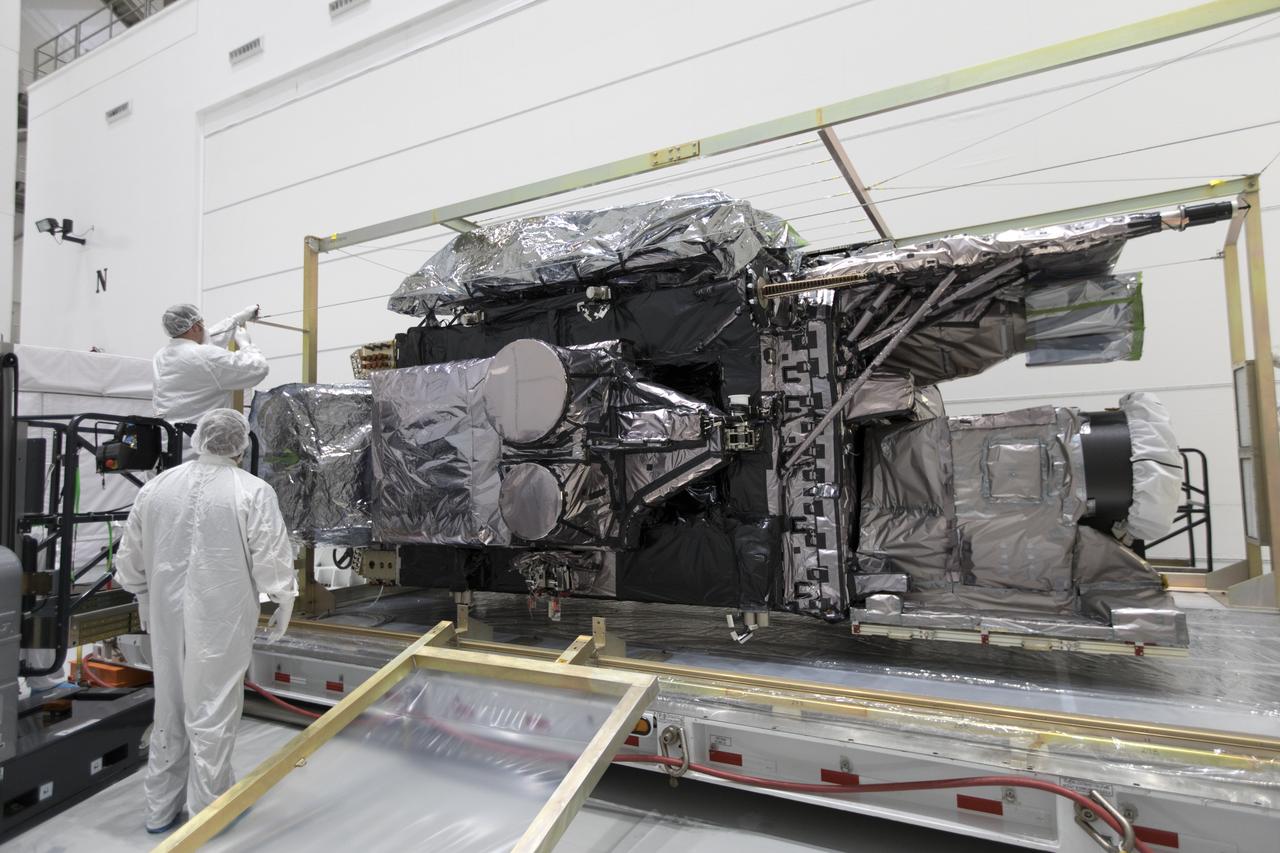
At Astrotech Space Operations in Titusville, Florida, a technician inspects NOAA's Geostationary Operational Environmental Satellite-S (GOES-S) after it was uncrated from its shipping container. The facility is located near NASA's Kennedy Space Center. GOES-S is the second in a series of four advanced geostationary weather satellites. The GOES-R series - consisting of the GOES-R, GOES-S, GOES-T and GOES-U spacecraft - will significantly improve the detection and observation of environmental phenomena that directly affect public safety, protection of property and the nation's economic health and prosperity. GOES-S is slated to launch March 1, 2018 aboard a United Launch Alliance Atlas V rocket from Cape Canaveral Air Force Station in Florida.
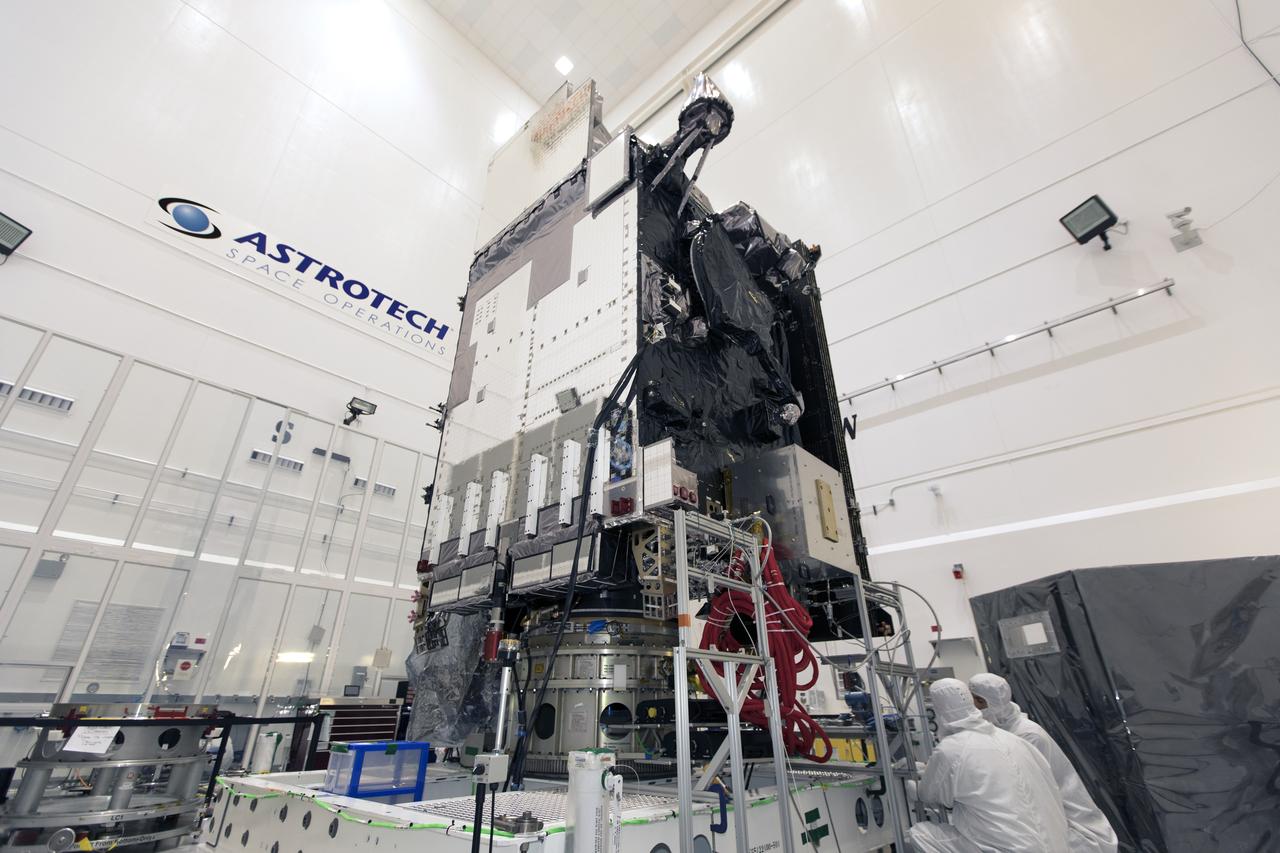
In a clean room at Astrotech Space Operations in Titusville, Florida, technicians and engineers are preparing NOAA's Geostationary Operational Environmental Satellite-S, or GOES-S, for encapsulation in it payload fairing. After encapsulation, the weather satellite will be moved to Space Launch Complex-41 at Cape Canaveral Air Force Station. GOES-S is the second in a series of four advanced geostationary weather satellites. The GOES-R series - consisting of the GOES-R, GOES-S, GOES-T and GOES-U spacecraft - will significantly improve the detection and observation of environmental phenomena that directly affect public safety, protection of property and the nation's economic health and prosperity. GOES-S is slated to launch March 1, 2018 aboard a United Launch Alliance Atlas V rocket.
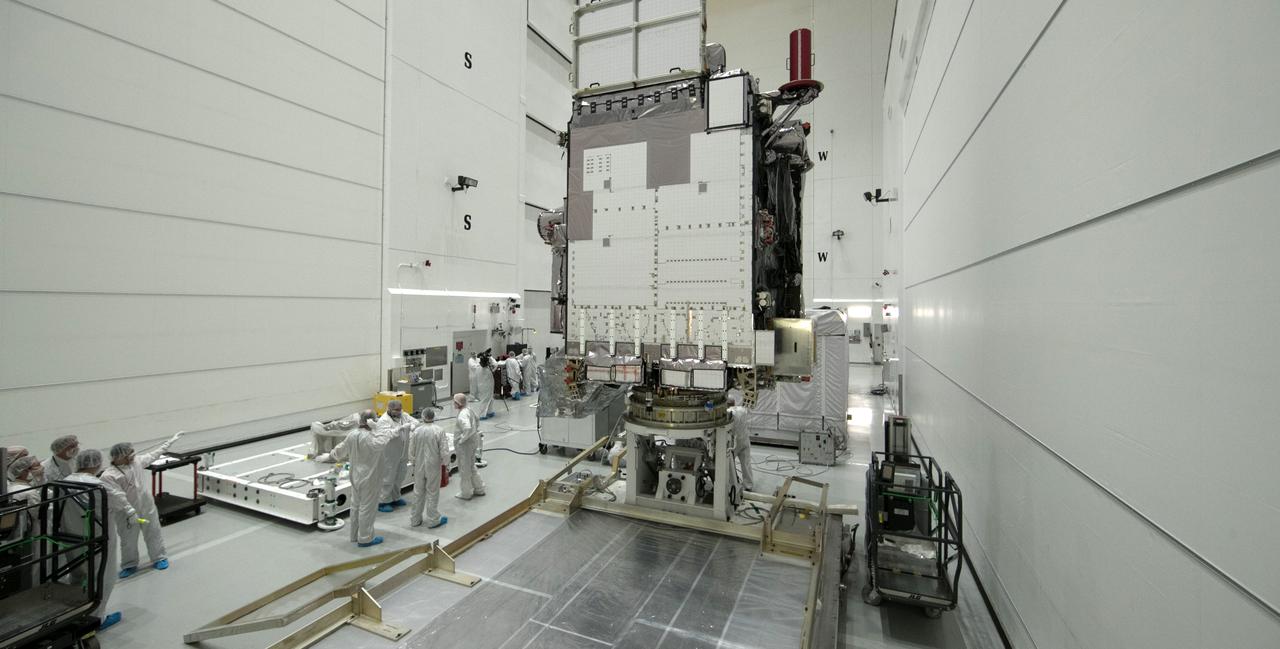
At Astrotech Space Operations in Titusville, Florida, technicians and engineers prepare to begin preflight processing of NOAA's Geostationary Operation Environmental Satellite-S (GOES-S) after removal from its shipping container. GOES-S is the second in a series of four advanced geostationary weather satellites. The GOES-R series - consisting of the GOES-R, GOES-S, GOES-T and GOES-U spacecraft - will significantly improve the detection and observation of environmental phenomena that directly affect public safety, protection of property and the nation's economic health and prosperity. GOES-S is slated to launch March 1, 2018 aboard a United Launch Alliance Atlas V rocket from Cape Canaveral Air Force Station in Florida.
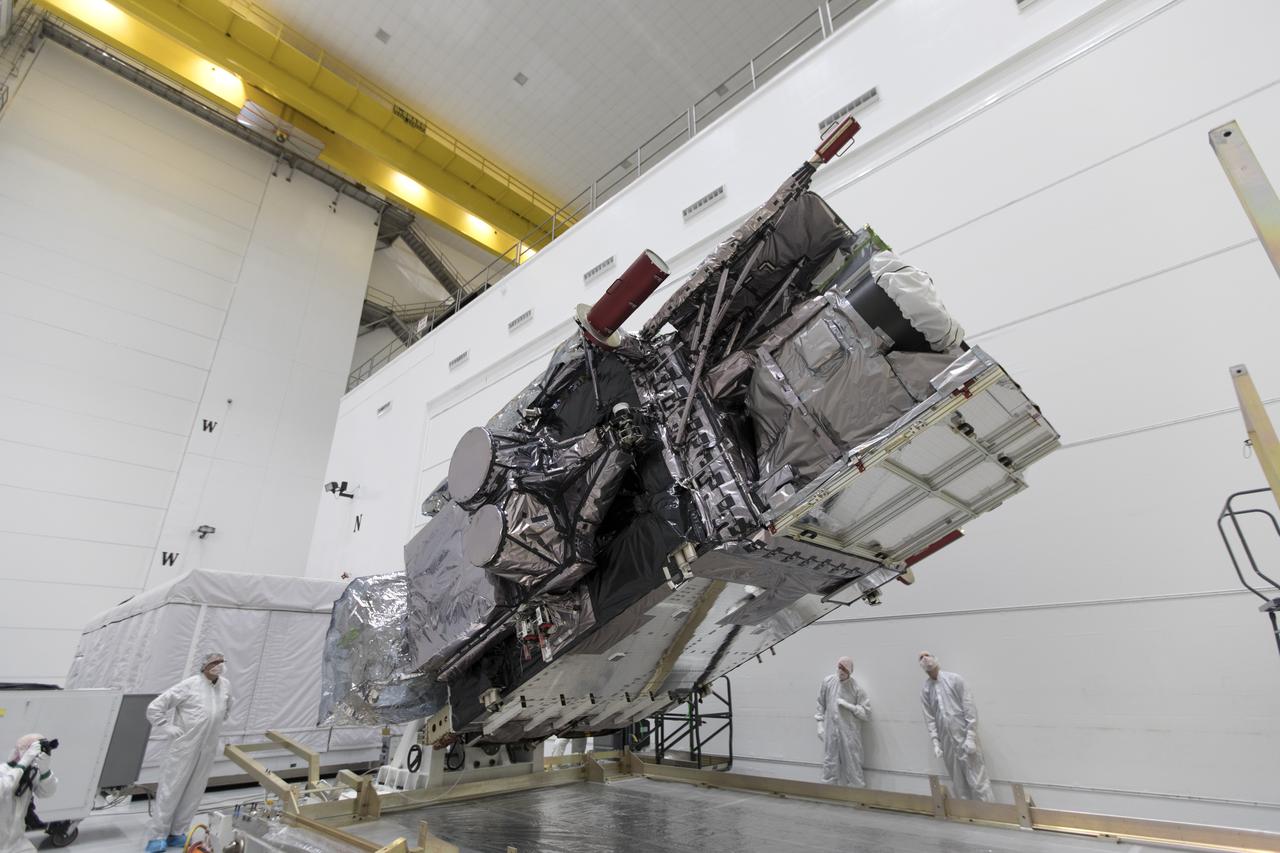
At Astrotech Space Operations in Titusville, Florida, NOAA's Geostationary Operational Environmental Satellite-S (GOES-S) is rotated to a vertical position after it was uncrated from its shipping container. The facility is located near NASA's Kennedy Space Center. GOES-S is the second in a series of four advanced geostationary weather satellites. The GOES-R series - consisting of the GOES-R, GOES-S, GOES-T and GOES-U spacecraft - will significantly improve the detection and observation of environmental phenomena that directly affect public safety, protection of property and the nation's economic health and prosperity. GOES-S is slated to launch March 1, 2018 aboard a United Launch Alliance Atlas V rocket from Cape Canaveral Air Force Station in Florida.
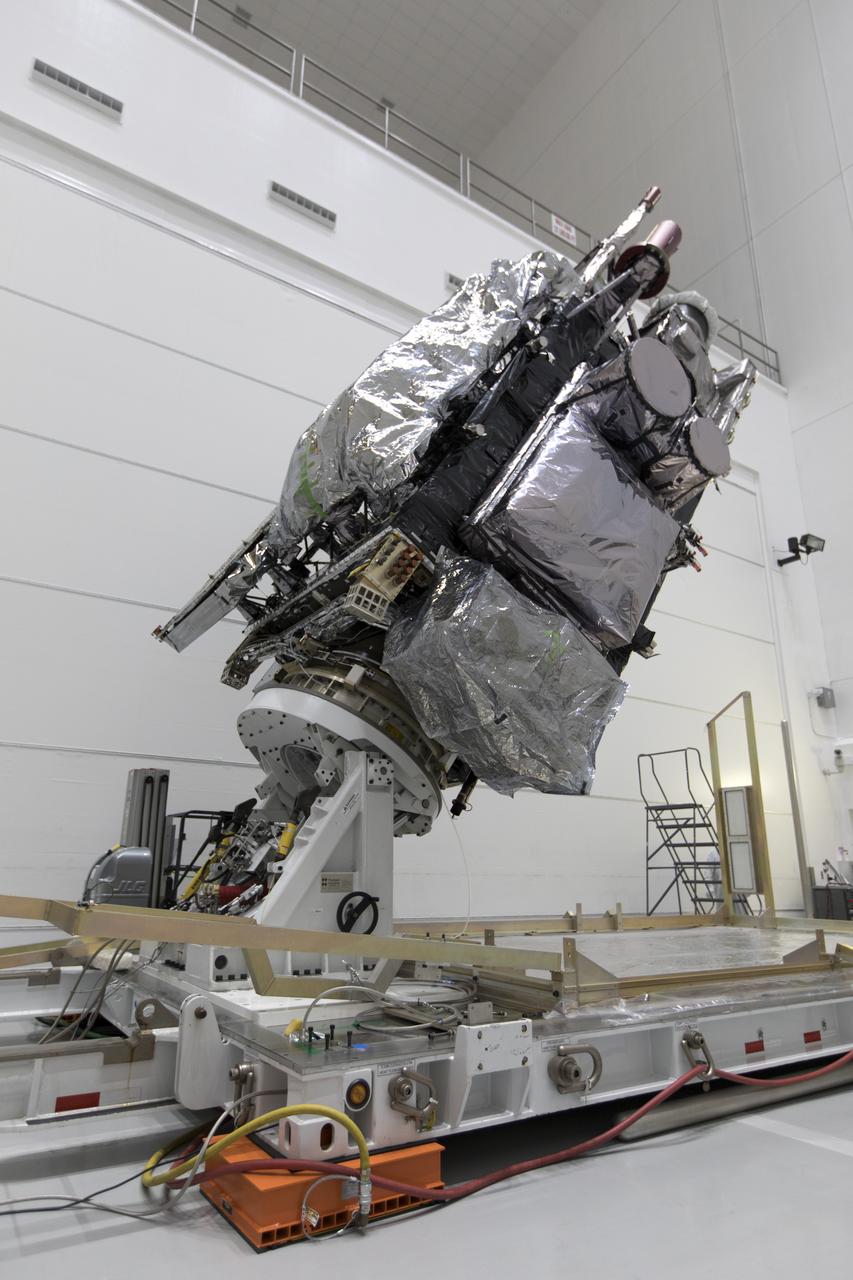
At Astrotech Space Operations in Titusville, Florida, NOAA's Geostationary Operational Environmental Satellite-S (GOES-S) is rotated to a vertical position after it was uncrated from its shipping container. The facility is located near NASA's Kennedy Space Center. GOES-S is the second in a series of four advanced geostationary weather satellites. The GOES-R series - consisting of the GOES-R, GOES-S, GOES-T and GOES-U spacecraft - will significantly improve the detection and observation of environmental phenomena that directly affect public safety, protection of property and the nation's economic health and prosperity. GOES-S is slated to launch March 1, 2018 aboard a United Launch Alliance Atlas V rocket from Cape Canaveral Air Force Station in Florida.
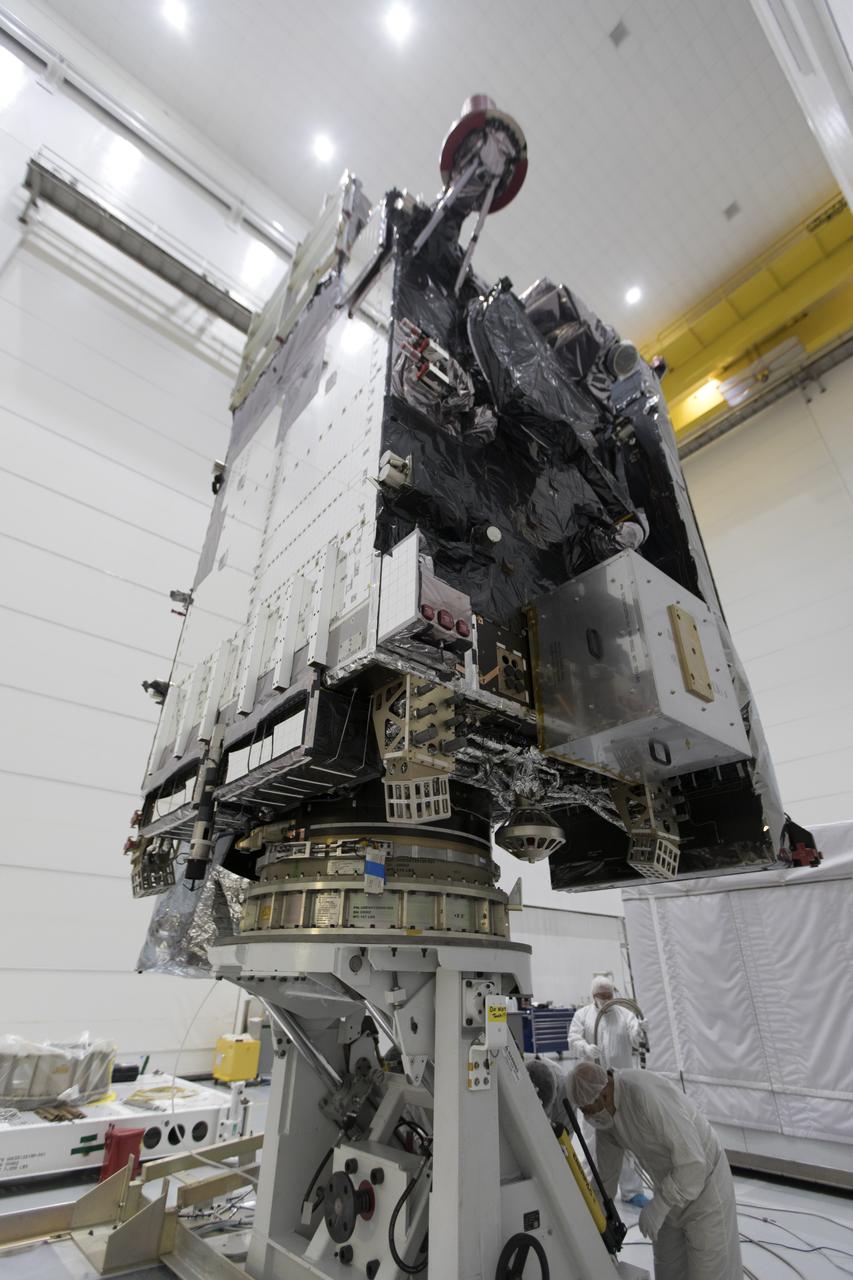
At Astrotech Space Operations in Titusville, Florida, NOAA's Geostationary Operational Environmental Satellite-S (GOES-S) has been rotated to a vertical position after it was uncrated from its shipping container. The facility is located near NASA's Kennedy Space Center. GOES-S is the second in a series of four advanced geostationary weather satellites. The GOES-R series - consisting of the GOES-R, GOES-S, GOES-T and GOES-U spacecraft - will significantly improve the detection and observation of environmental phenomena that directly affect public safety, protection of property and the nation's economic health and prosperity. GOES-S is slated to launch March 1, 2018 aboard a United Launch Alliance Atlas V rocket from Cape Canaveral Air Force Station in Florida.
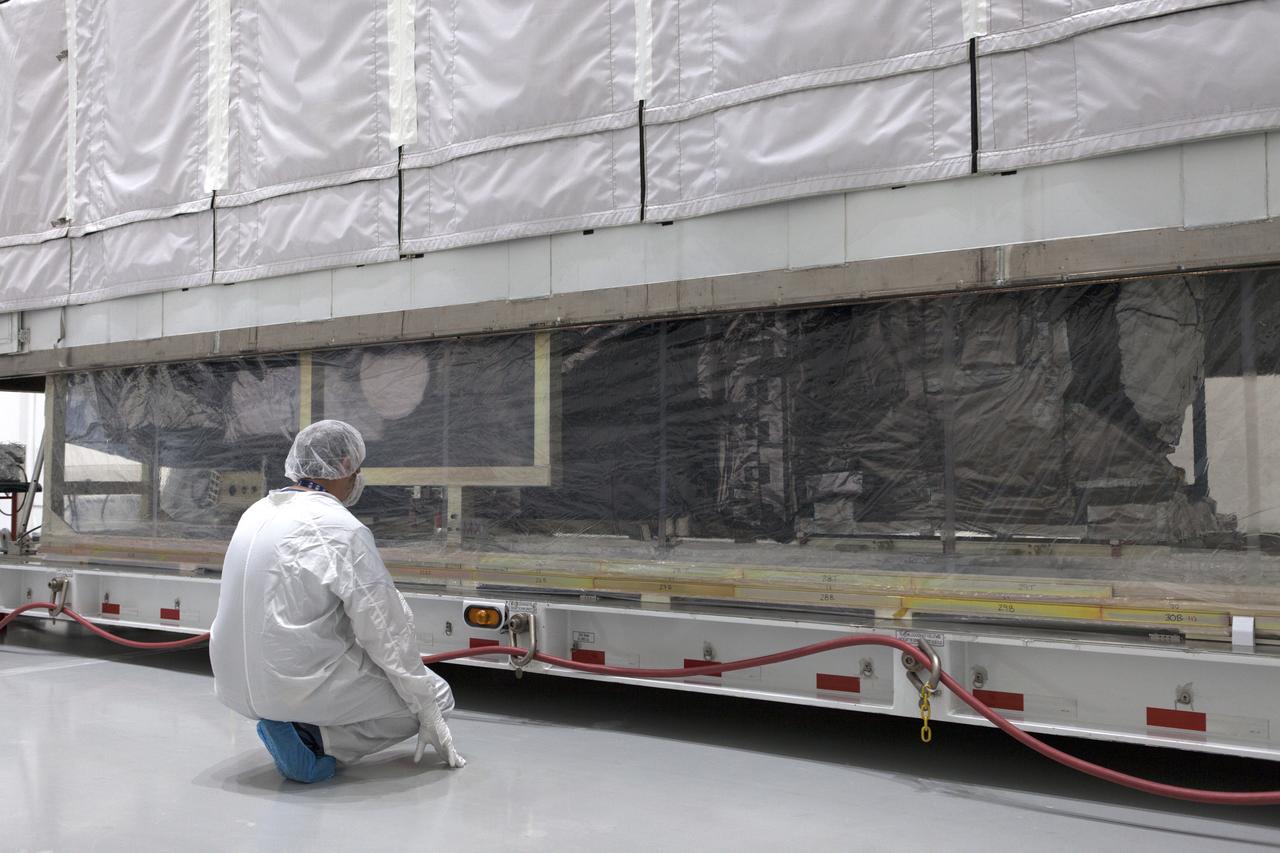
At Astrotech Space Operations in Titusville, Florida, a technician watches as NOAA's Geostationary Operational Environmental Satellite-S (GOES-S) is uncrated from its shipping container. The facility is located near NASA's Kennedy Space Center. GOES-S is the second in a series of four advanced geostationary weather satellites. The GOES-R series - consisting of the GOES-R, GOES-S, GOES-T and GOES-U spacecraft - will significantly improve the detection and observation of environmental phenomena that directly affect public safety, protection of property and the nation's economic health and prosperity. GOES-S is slated to launch March 1, 2018 aboard a United Launch Alliance Atlas V rocket from Cape Canaveral Air Force Station in Florida.
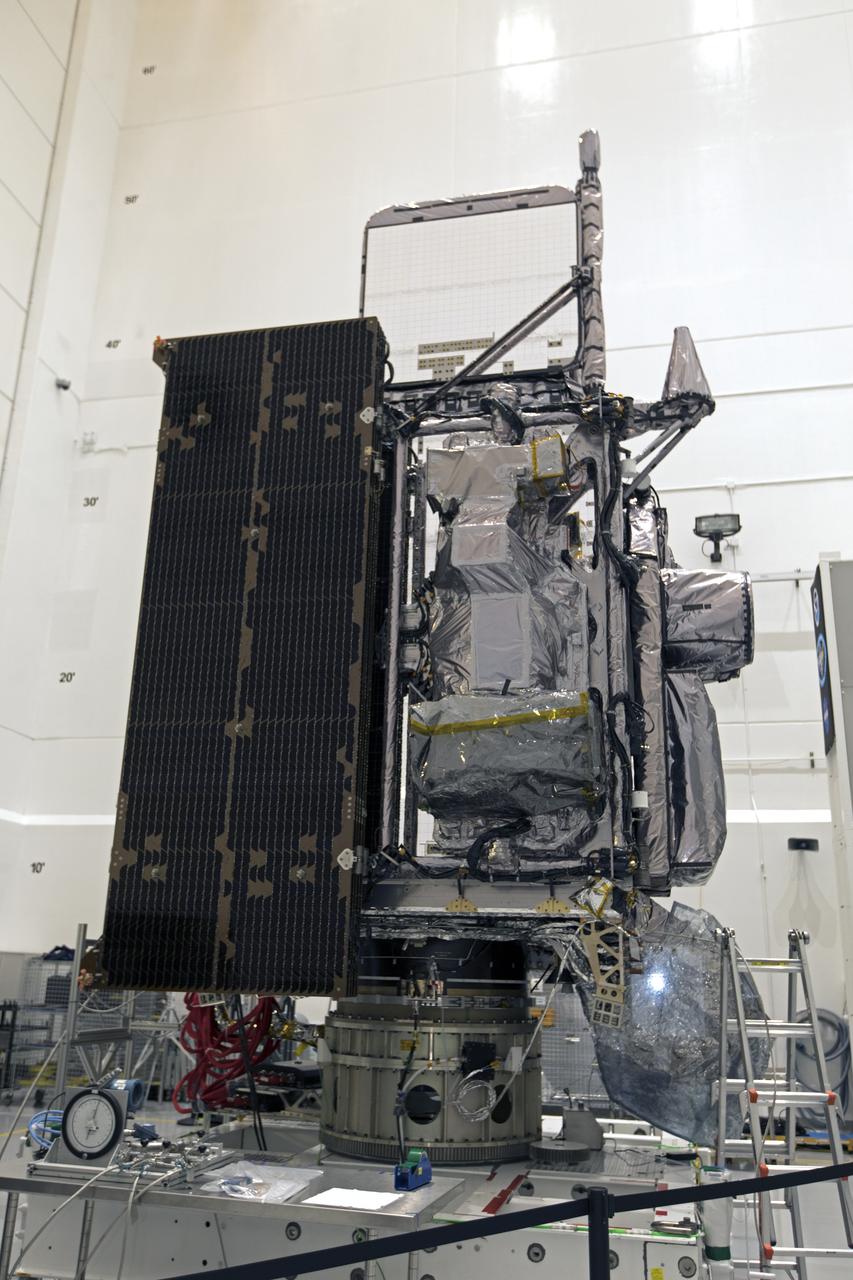
In a clean room at Astrotech Space Operations in Titusville, Florida, NOAA's Geostationary Operational Environmental Satellite-S, or GOES-S, is being prepared for encapsulation in it payload fairing. After encapsulation, the weather satellite will be moved to Space Launch Complex-41 at Cape Canaveral Air Force Station. GOES-S is the second in a series of four advanced geostationary weather satellites. The GOES-R series - consisting of the GOES-R, GOES-S, GOES-T and GOES-U spacecraft - will significantly improve the detection and observation of environmental phenomena that directly affect public safety, protection of property and the nation's economic health and prosperity. GOES-S is slated to launch March 1, 2018 aboard a United Launch Alliance Atlas V rocket.
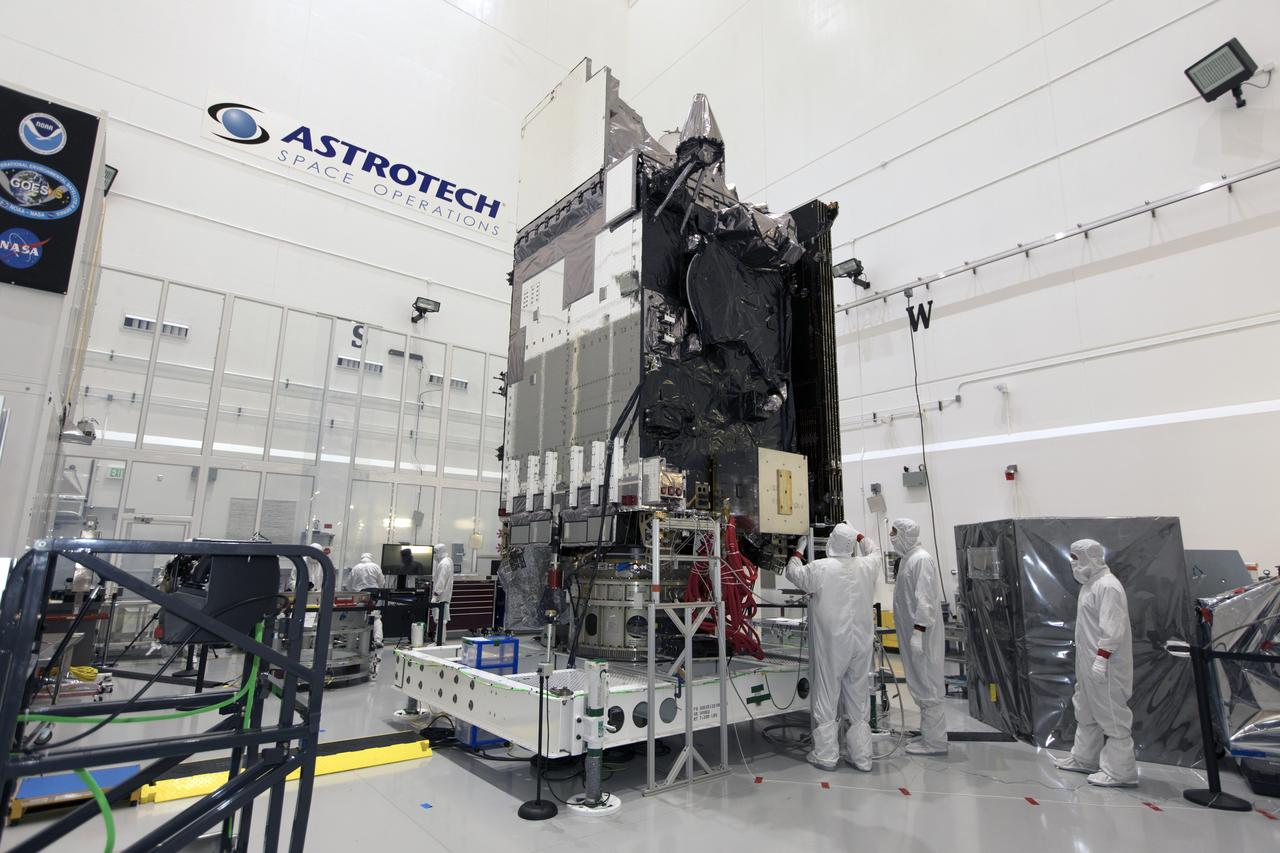
In a clean room at Astrotech Space Operations in Titusville, Florida, technicians and engineers are preparing NOAA's Geostationary Operational Environmental Satellite-S, or GOES-S, for encapsulation in it payload fairing. After encapsulation, the weather satellite will be moved to Space Launch Complex-41 at Cape Canaveral Air Force Station. GOES-S is the second in a series of four advanced geostationary weather satellites. The GOES-R series - consisting of the GOES-R, GOES-S, GOES-T and GOES-U spacecraft - will significantly improve the detection and observation of environmental phenomena that directly affect public safety, protection of property and the nation's economic health and prosperity. GOES-S is slated to launch March 1, 2018 aboard a United Launch Alliance Atlas V rocket.
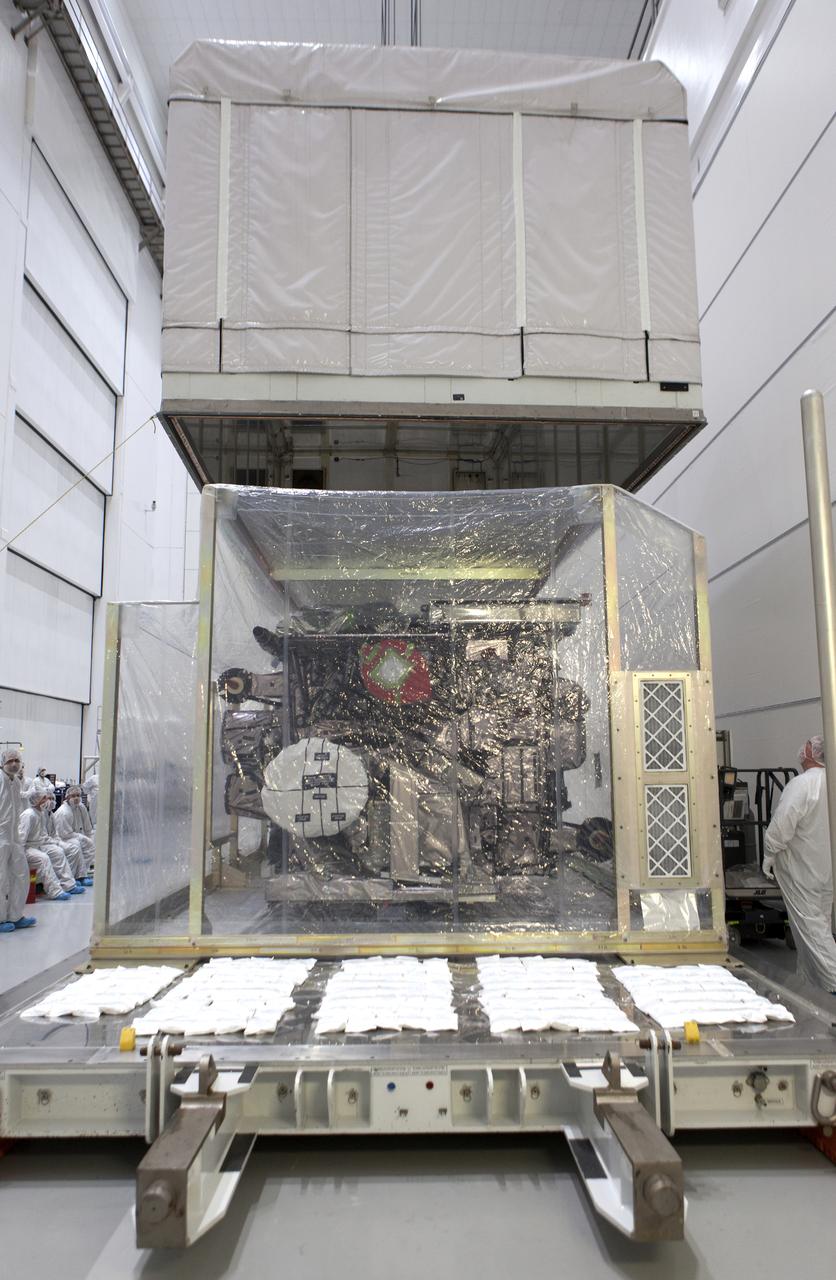
At Astrotech Space Operations in Titusville, Florida, NOAA's Geostationary Operational Environmental Satellite-S (GOES-S) is uncrated from its shipping container. The facility is located near NASA's Kennedy Space Center. GOES-S is the second in a series of four advanced geostationary weather satellites. The GOES-R series - consisting of the GOES-R, GOES-S, GOES-T and GOES-U spacecraft - will significantly improve the detection and observation of environmental phenomena that directly affect public safety, protection of property and the nation's economic health and prosperity. GOES-S is slated to launch March 1, 2018 aboard a United Launch Alliance Atlas V rocket from Cape Canaveral Air Force Station in Florida.
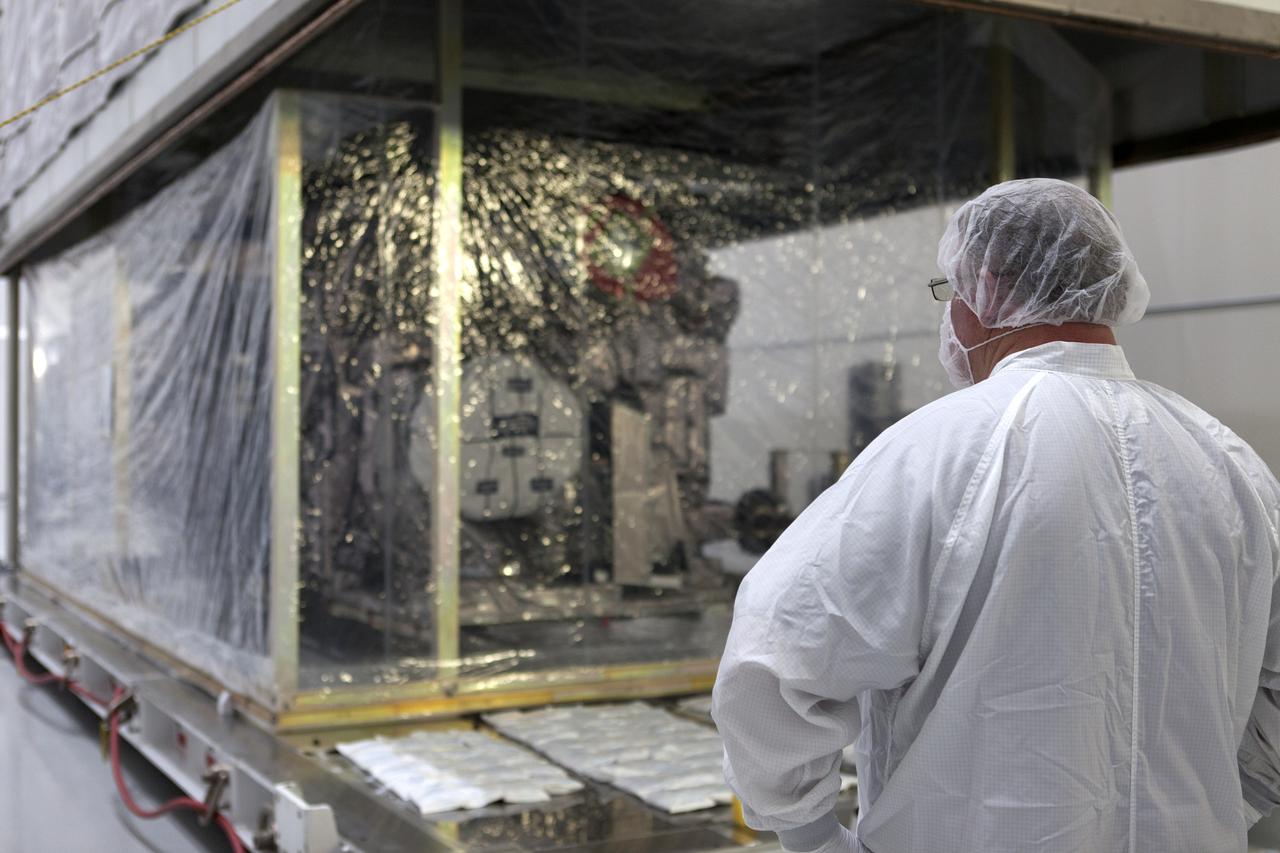
At Astrotech Space Operations in Titusville, Florida, a technician watches as NOAA's Geostationary Operational Environmental Satellite-S (GOES-S) is uncrated from its shipping container. The facility is located near NASA's Kennedy Space Center. GOES-S is the second in a series of four advanced geostationary weather satellites. The GOES-R series - consisting of the GOES-R, GOES-S, GOES-T and GOES-U spacecraft - will significantly improve the detection and observation of environmental phenomena that directly affect public safety, protection of property and the nation's economic health and prosperity. GOES-S is slated to launch March 1, 2018 aboard a United Launch Alliance Atlas V rocket from Cape Canaveral Air Force Station in Florida.
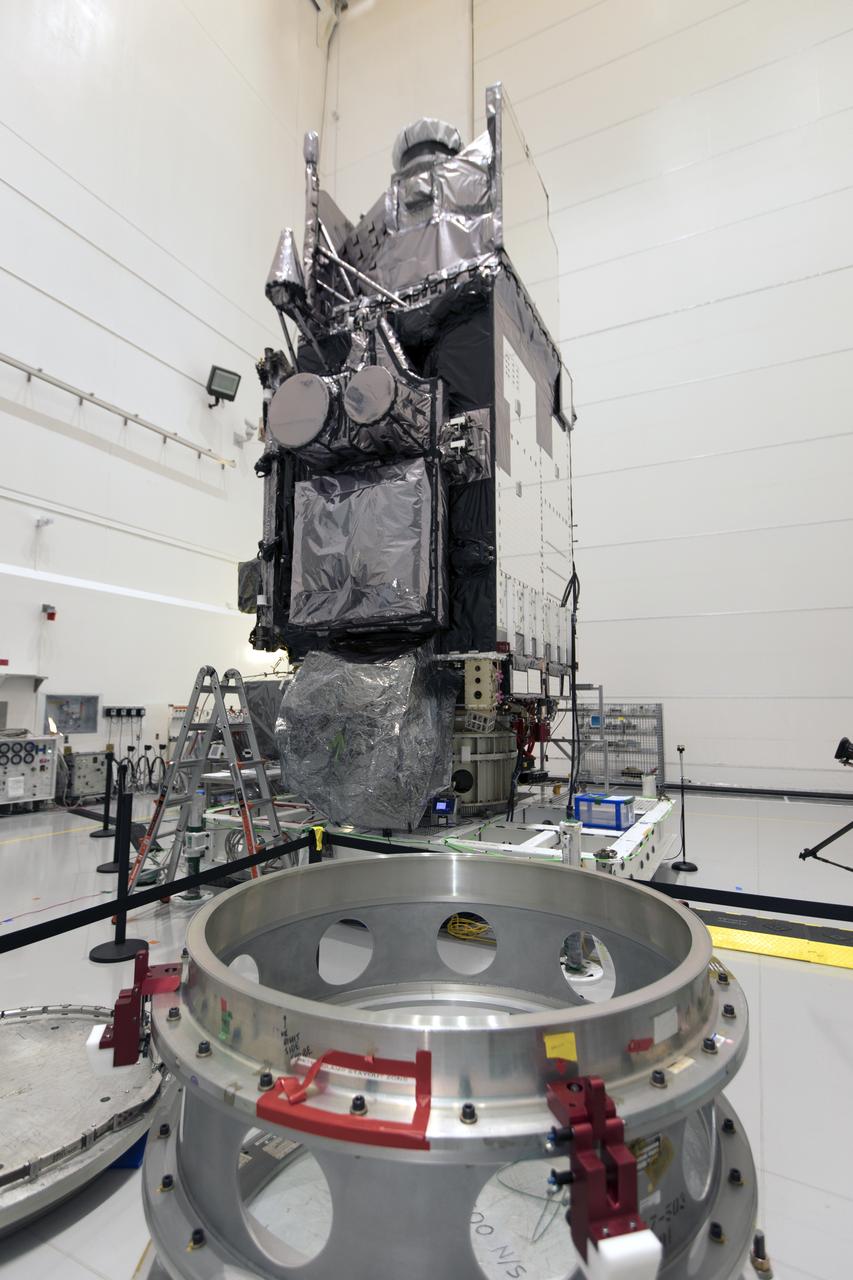
In a clean room at Astrotech Space Operations in Titusville, Florida, NOAA's Geostationary Operational Environmental Satellite-S, or GOES-S, is being prepared for encapsulation in it payload fairing. After encapsulation, the weather satellite will be moved to Space Launch Complex-41 at Cape Canaveral Air Force Station. GOES-S is the second in a series of four advanced geostationary weather satellites. The GOES-R series - consisting of the GOES-R, GOES-S, GOES-T and GOES-U spacecraft - will significantly improve the detection and observation of environmental phenomena that directly affect public safety, protection of property and the nation's economic health and prosperity. GOES-S is slated to launch March 1, 2018 aboard a United Launch Alliance Atlas V rocket.
In a clean room at Astrotech Space Operations in Titusville, Florida, NOAA's Geostationary Operational Environmental Satellite-S, or GOES-S, is being prepared for encapsulation in it payload fairing. After encapsulation, the weather satellite will be moved to Space Launch Complex-41 at Cape Canaveral Air Force Station. GOES-S is the second in a series of four advanced geostationary weather satellites. The GOES-R series - consisting of the GOES-R, GOES-S, GOES-T and GOES-U spacecraft - will significantly improve the detection and observation of environmental phenomena that directly affect public safety, protection of property and the nation's economic health and prosperity. GOES-S is slated to launch March 1, 2018 aboard a United Launch Alliance Atlas V rocket.
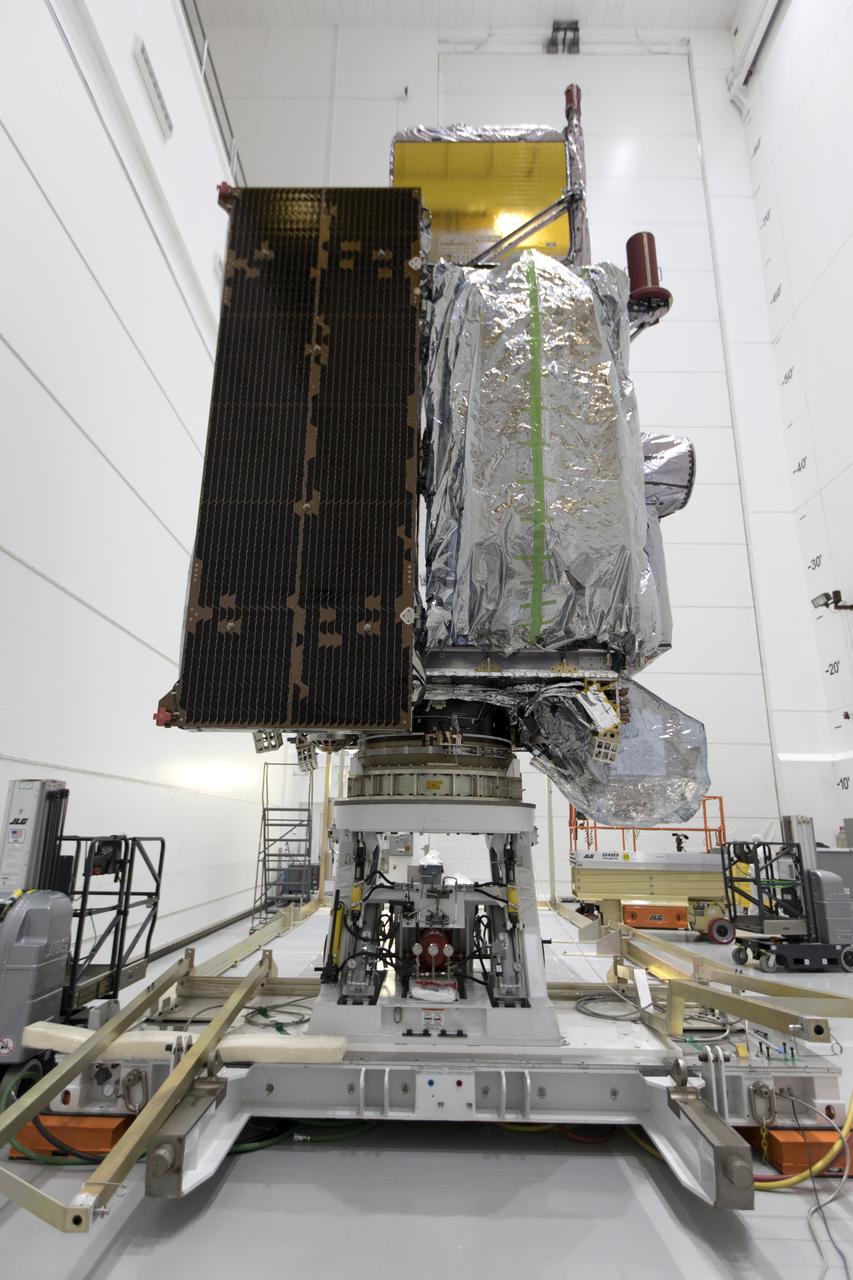
At Astrotech Space Operations in Titusville, Florida, NOAA's Geostationary Operational Environmental Satellite-S (GOES-S) has been rotated to a vertical position after it was uncrated from its shipping container. The facility is located near NASA's Kennedy Space Center. GOES-S is the second in a series of four advanced geostationary weather satellites. The GOES-R series - consisting of the GOES-R, GOES-S, GOES-T and GOES-U spacecraft - will significantly improve the detection and observation of environmental phenomena that directly affect public safety, protection of property and the nation's economic health and prosperity. GOES-S is slated to launch March 1, 2018 aboard a United Launch Alliance Atlas V rocket from Cape Canaveral Air Force Station in Florida.
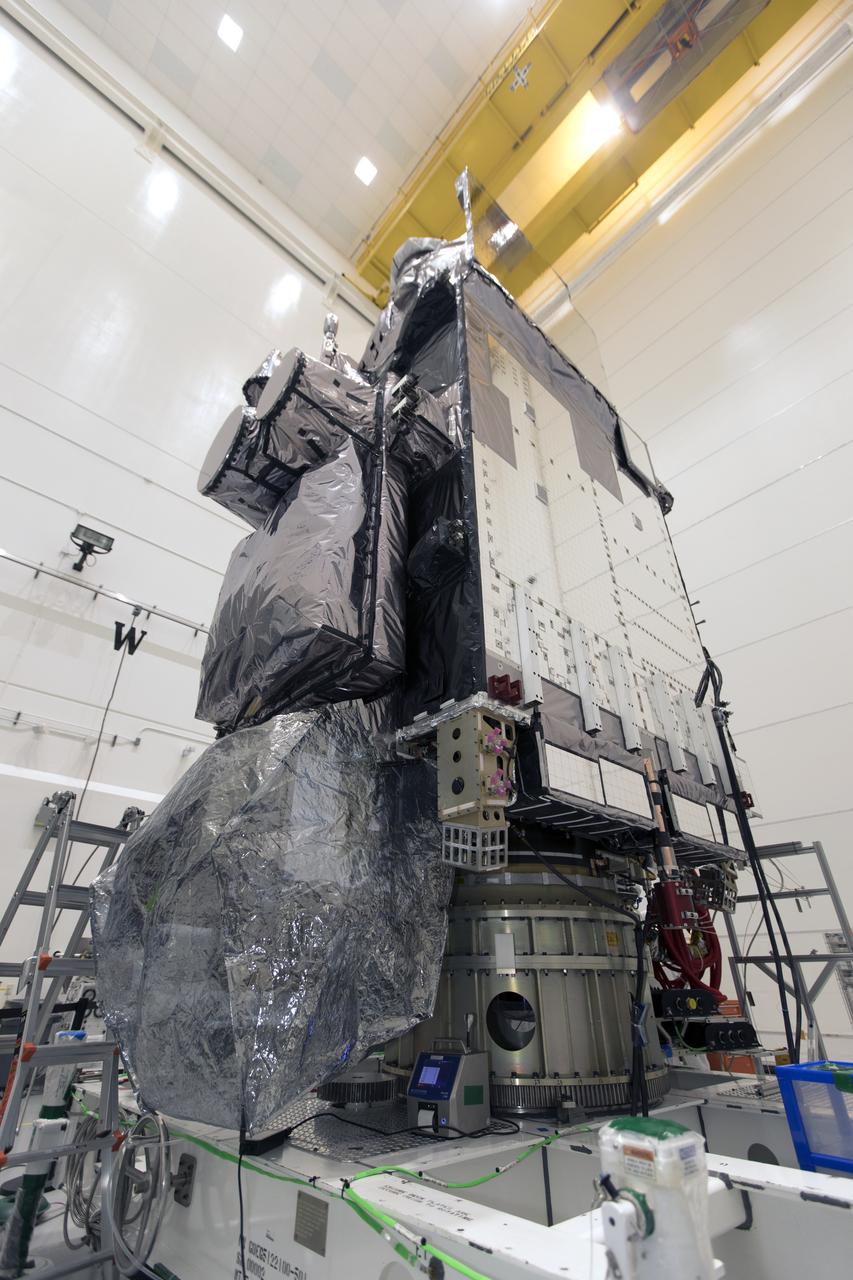
In a clean room at Astrotech Space Operations in Titusville, Florida, NOAA's Geostationary Operational Environmental Satellite-S, or GOES-S, is being prepared for encapsulation in it payload fairing. After encapsulation, the weather satellite will be moved to Space Launch Complex-41 at Cape Canaveral Air Force Station. GOES-S is the second in a series of four advanced geostationary weather satellites. The GOES-R series - consisting of the GOES-R, GOES-S, GOES-T and GOES-U spacecraft - will significantly improve the detection and observation of environmental phenomena that directly affect public safety, protection of property and the nation's economic health and prosperity. GOES-S is slated to launch March 1, 2018 aboard a United Launch Alliance Atlas V rocket.
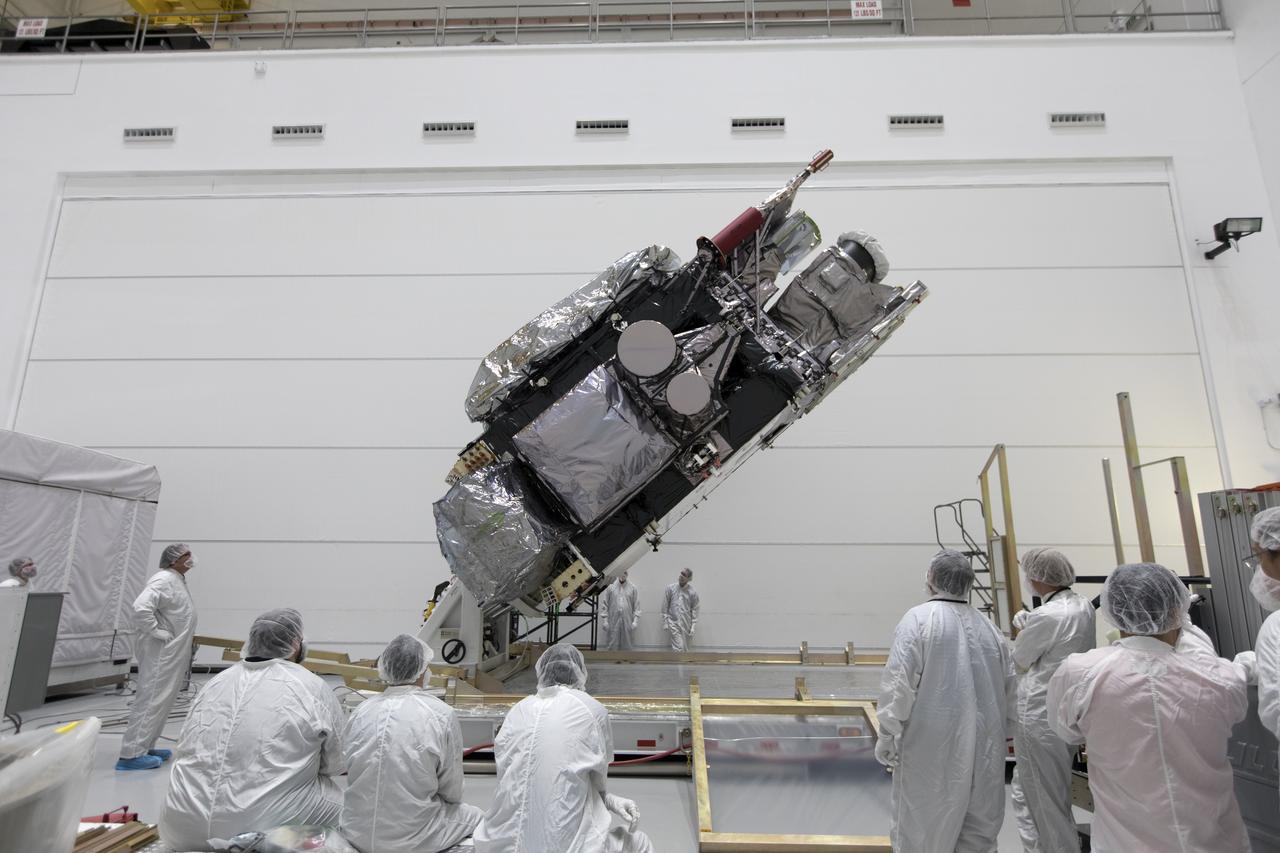
At Astrotech Space Operations in Titusville, Florida, NOAA's Geostationary Operational Environmental Satellite-S (GOES-S) is rotated to a vertical position after it was uncrated from its shipping container. The facility is located near NASA's Kennedy Space Center. GOES-S is the second in a series of four advanced geostationary weather satellites. The GOES-R series - consisting of the GOES-R, GOES-S, GOES-T and GOES-U spacecraft - will significantly improve the detection and observation of environmental phenomena that directly affect public safety, protection of property and the nation's economic health and prosperity. GOES-S is slated to launch March 1, 2018 aboard a United Launch Alliance Atlas V rocket from Cape Canaveral Air Force Station in Florida.
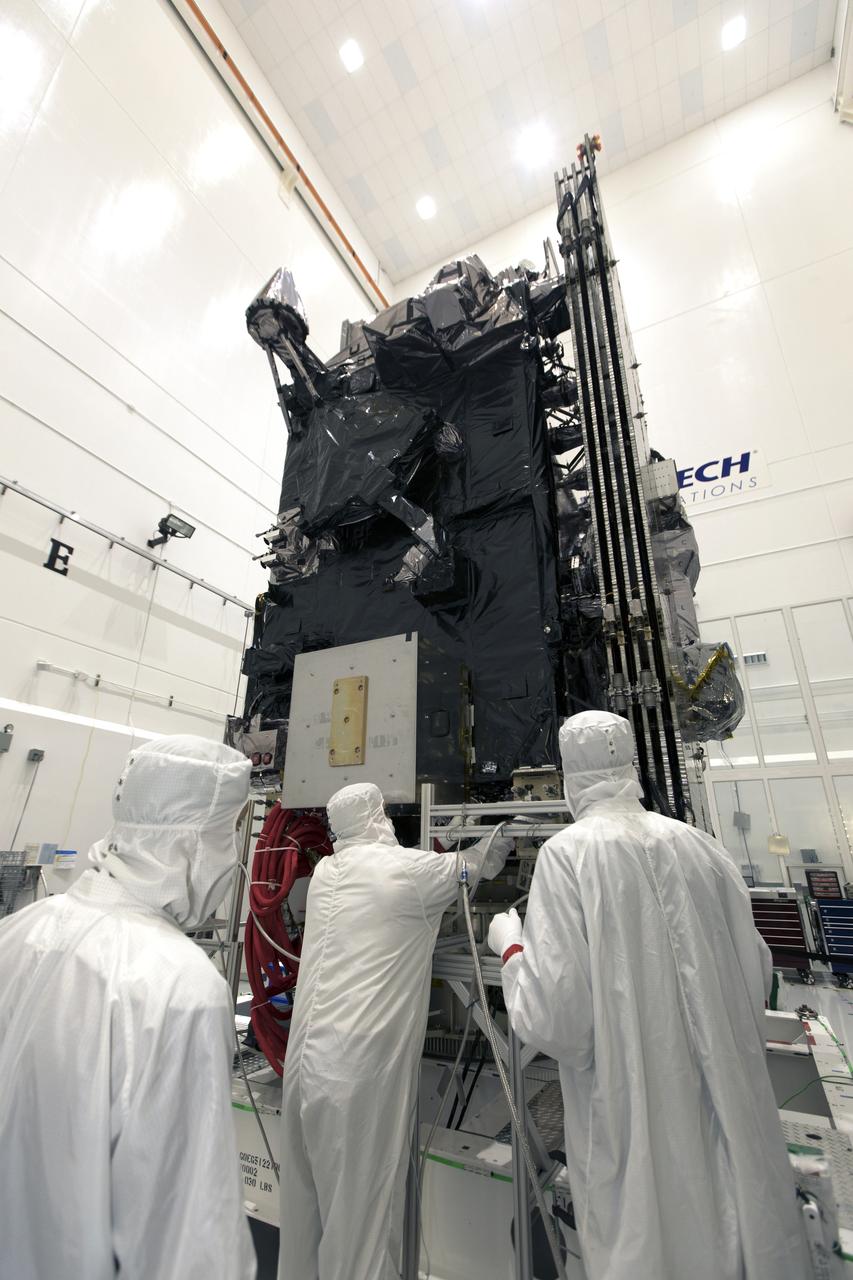
In a clean room at Astrotech Space Operations in Titusville, Florida, technicians and engineers are preparing NOAA's Geostationary Operational Environmental Satellite-S, or GOES-S, for encapsulation in it payload fairing. After encapsulation, the weather satellite will be moved to Space Launch Complex-41 at Cape Canaveral Air Force Station. GOES-S is the second in a series of four advanced geostationary weather satellites. The GOES-R series - consisting of the GOES-R, GOES-S, GOES-T and GOES-U spacecraft - will significantly improve the detection and observation of environmental phenomena that directly affect public safety, protection of property and the nation's economic health and prosperity. GOES-S is slated to launch March 1, 2018 aboard a United Launch Alliance Atlas V rocket.
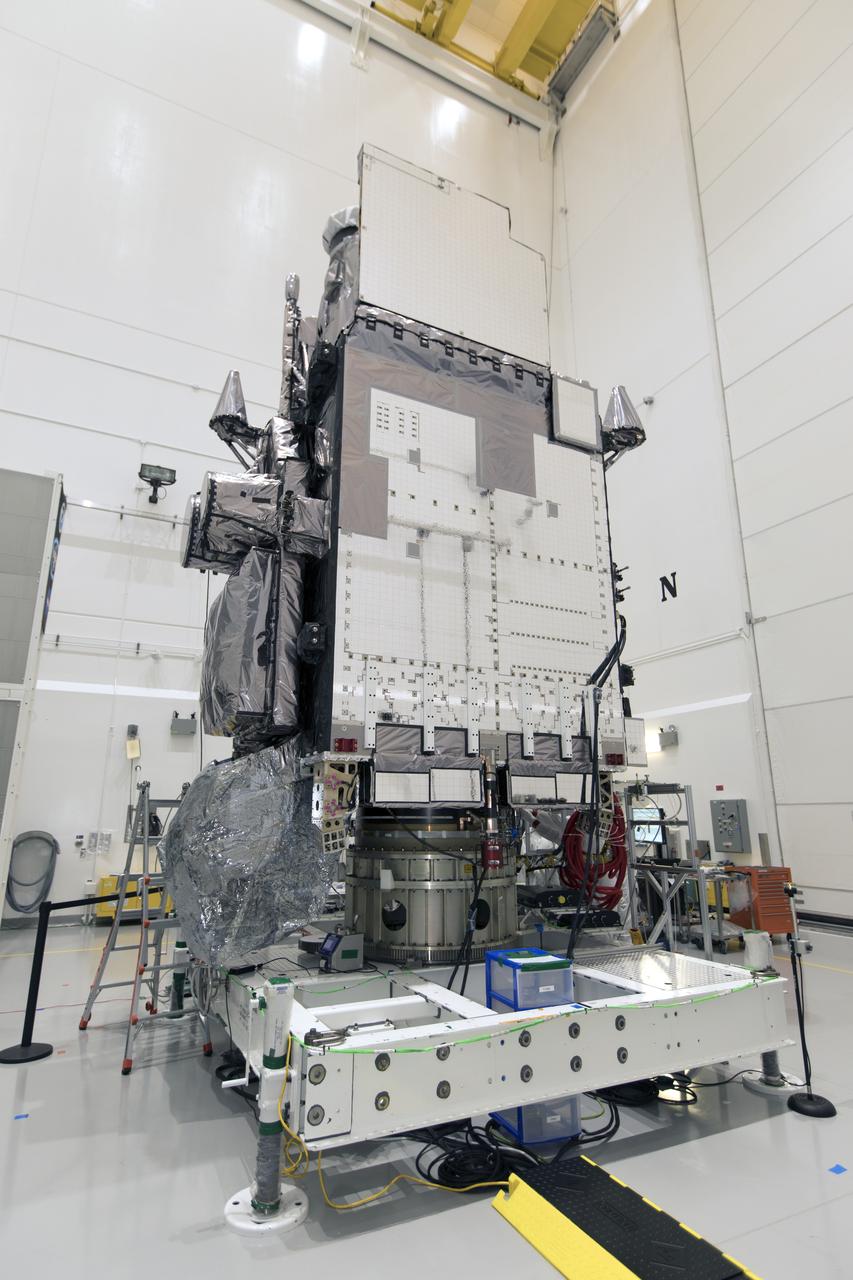
In a clean room at Astrotech Space Operations in Titusville, Florida, NOAA's Geostationary Operational Environmental Satellite-S, or GOES-S, is being prepared for encapsulation in it payload fairing. After encapsulation, the weather satellite will be moved to Space Launch Complex-41 at Cape Canaveral Air Force Station. GOES-S is the second in a series of four advanced geostationary weather satellites. The GOES-R series - consisting of the GOES-R, GOES-S, GOES-T and GOES-U spacecraft - will significantly improve the detection and observation of environmental phenomena that directly affect public safety, protection of property and the nation's economic health and prosperity. GOES-S is slated to launch March 1, 2018 aboard a United Launch Alliance Atlas V rocket.
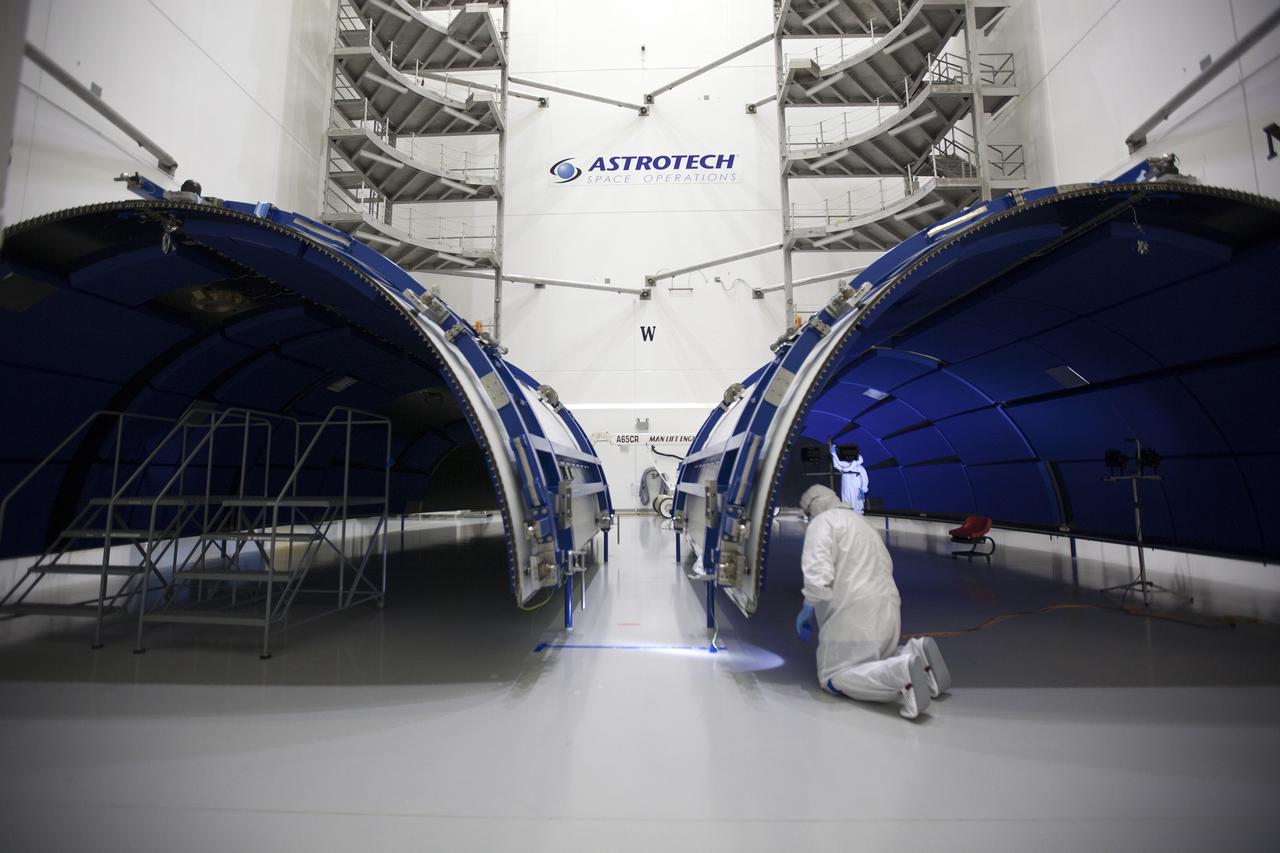
Team members with United Launch Alliance (ULA) inspect the first half of the fairing for the Geostationary Operational Environmental Satellite (GOES-R) inside the Astrotech payload processing facility in Titusville, Florida near NASA’s Kennedy Space Center. GOES-R will be the first satellite in a series of next-generation NOAA GOES Satellites. The spacecraft is to launch aboard a ULA Atlas V rocket in November.
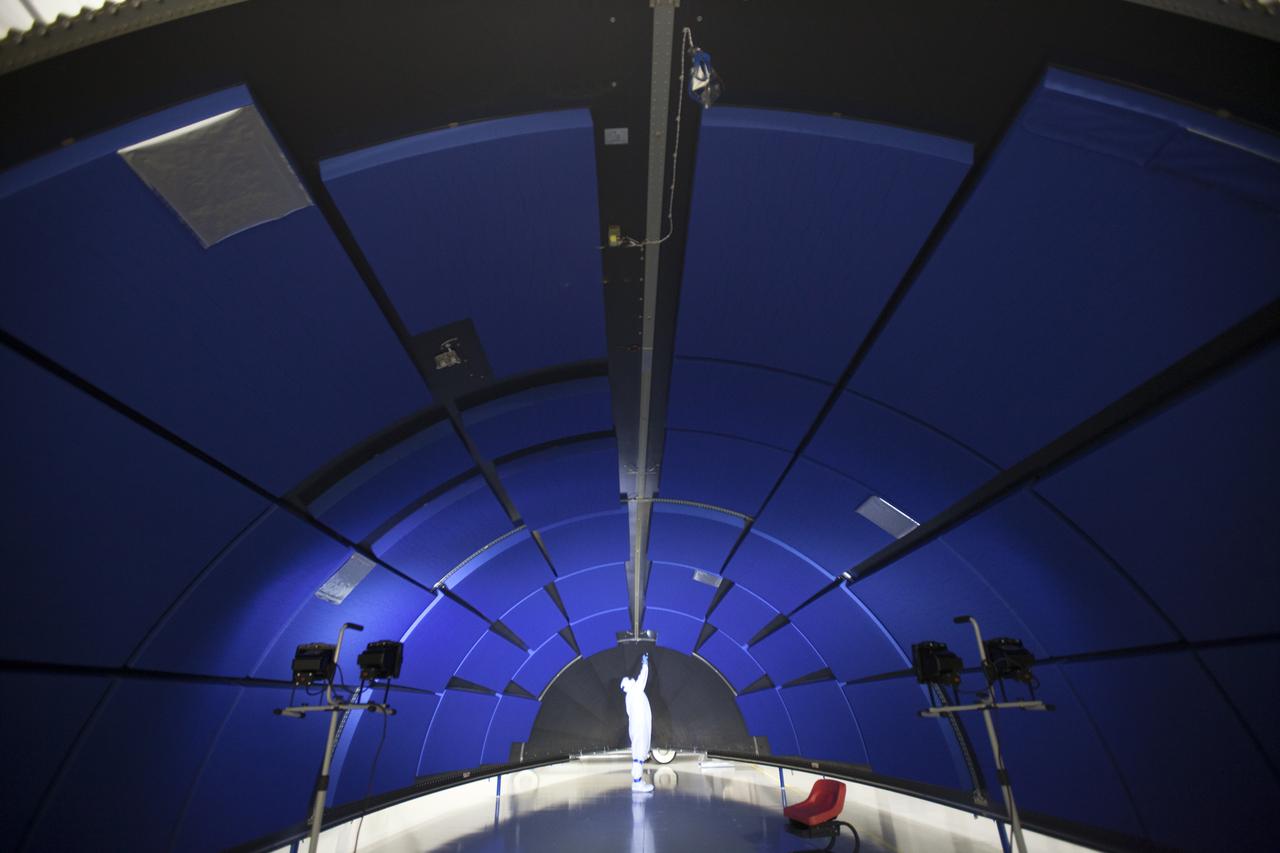
Team members with United Launch Alliance (ULA) inspect the first half of the fairing for the Geostationary Operational Environmental Satellite (GOES-R) inside the Astrotech payload processing facility in Titusville, Florida near NASA’s Kennedy Space Center. GOES-R will be the first satellite in a series of next-generation NOAA GOES Satellites. The spacecraft is to launch aboard a ULA Atlas V rocket in November.
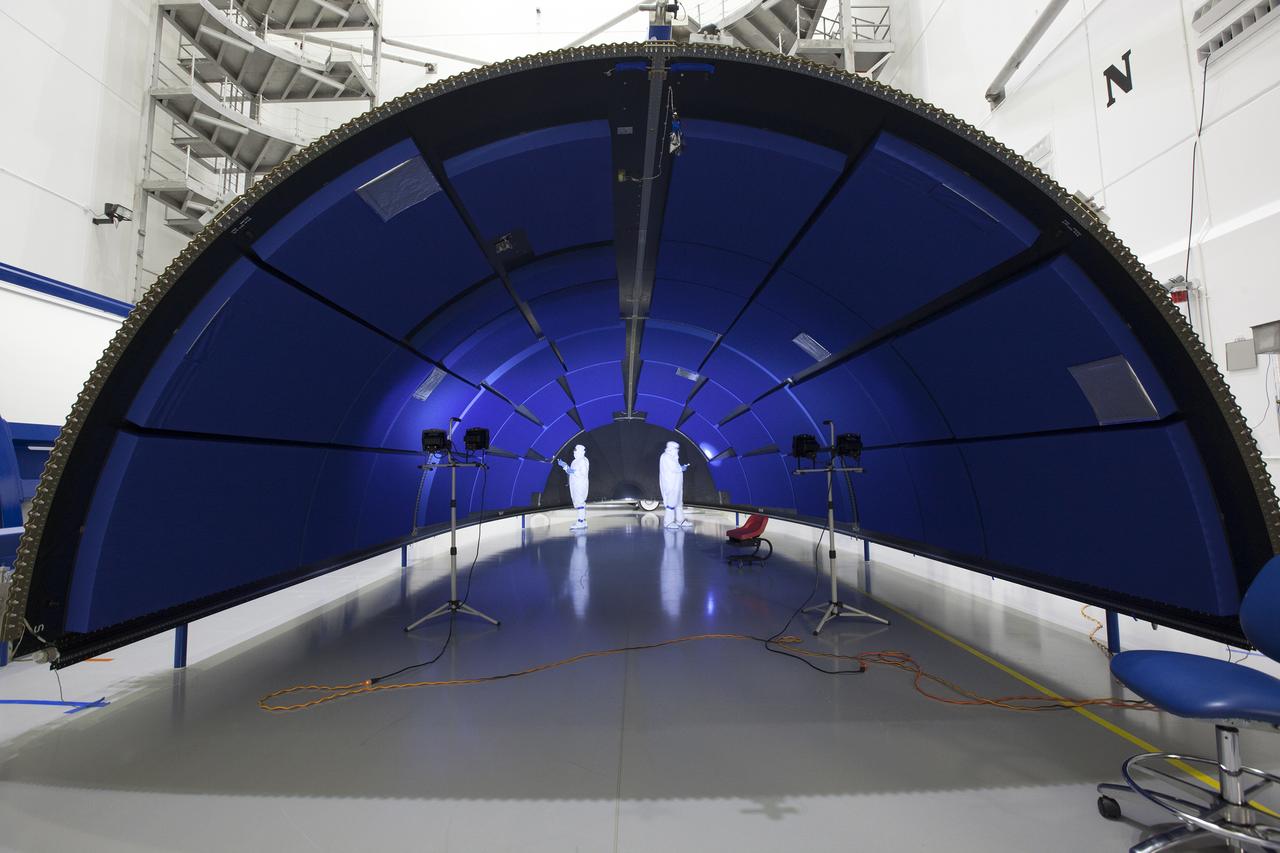
Team members with United Launch Alliance (ULA) inspect an clean the first half of the fairing for the Geostationary Operational Environmental Satellite (GOES-R) inside the Astrotech payload processing facility in Titusville, Florida near NASA’s Kennedy Space Center. GOES-R will be the first satellite in a series of next-generation NOAA GOES Satellites. The spacecraft is to launch aboard a ULA Atlas V rocket in November.
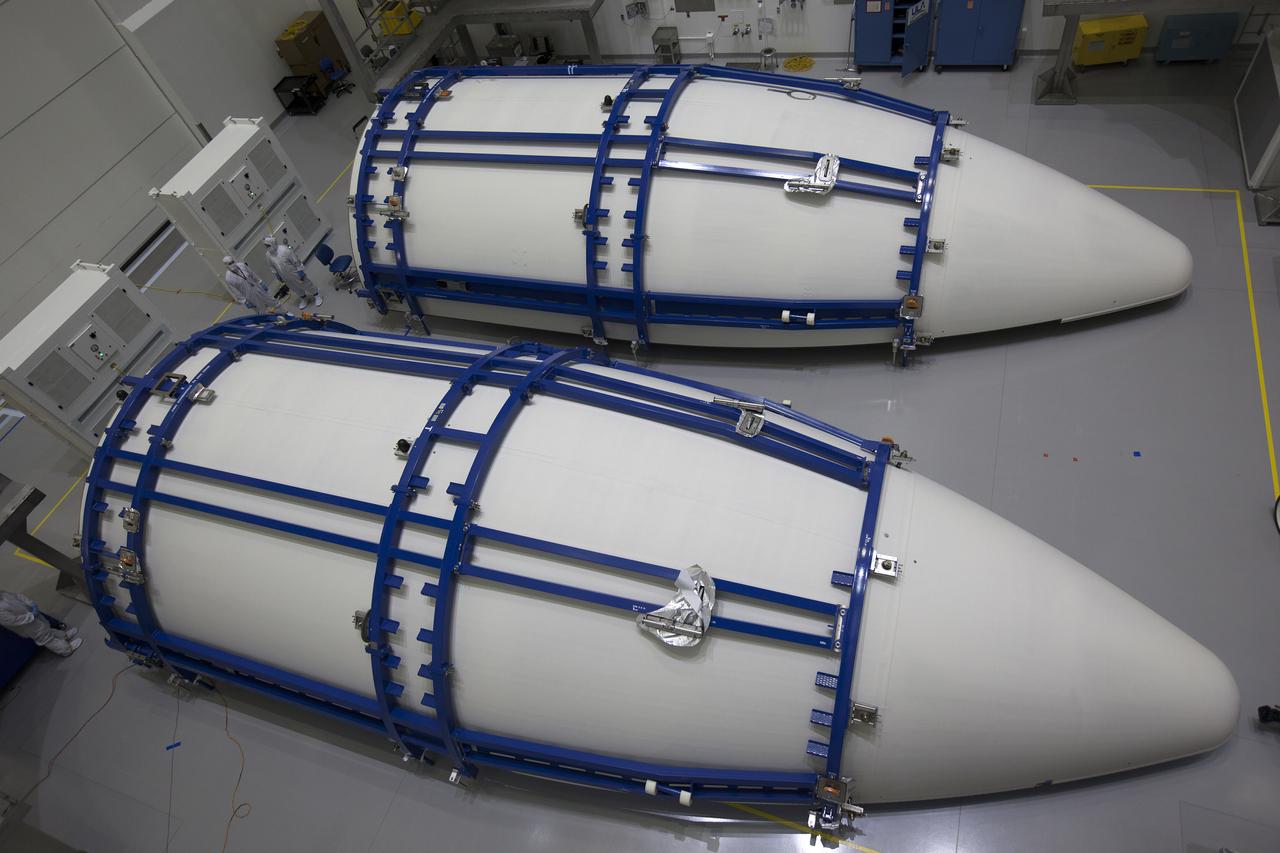
Both halves of the fairing for the Geostationary Operational Environmental Satellite (GOES-R) are being inspected and cleaned by United Launch Alliance (ULA) team members inside the Astrotech payload processing facility in Titusville, Florida near NASA’s Kennedy Space Center. GOES-R will be the first satellite in a series of next-generation NOAA GOES Satellites. The spacecraft is to launch aboard a ULA Atlas V rocket in November.

A truck with a specialized transporter drives out of the cargo hold of an Air Force C-5 Galaxy transport plane at the Shuttle Landing Facility at NASA's Kennedy Space Center in Florida to deliver the GOES-R spacecraft for launch processing. The GOES series are weather satellites operated by NOAA to enhance forecasts. The spacecraft is to launch aboard a United Launch Alliance Atlas V rocket in November.
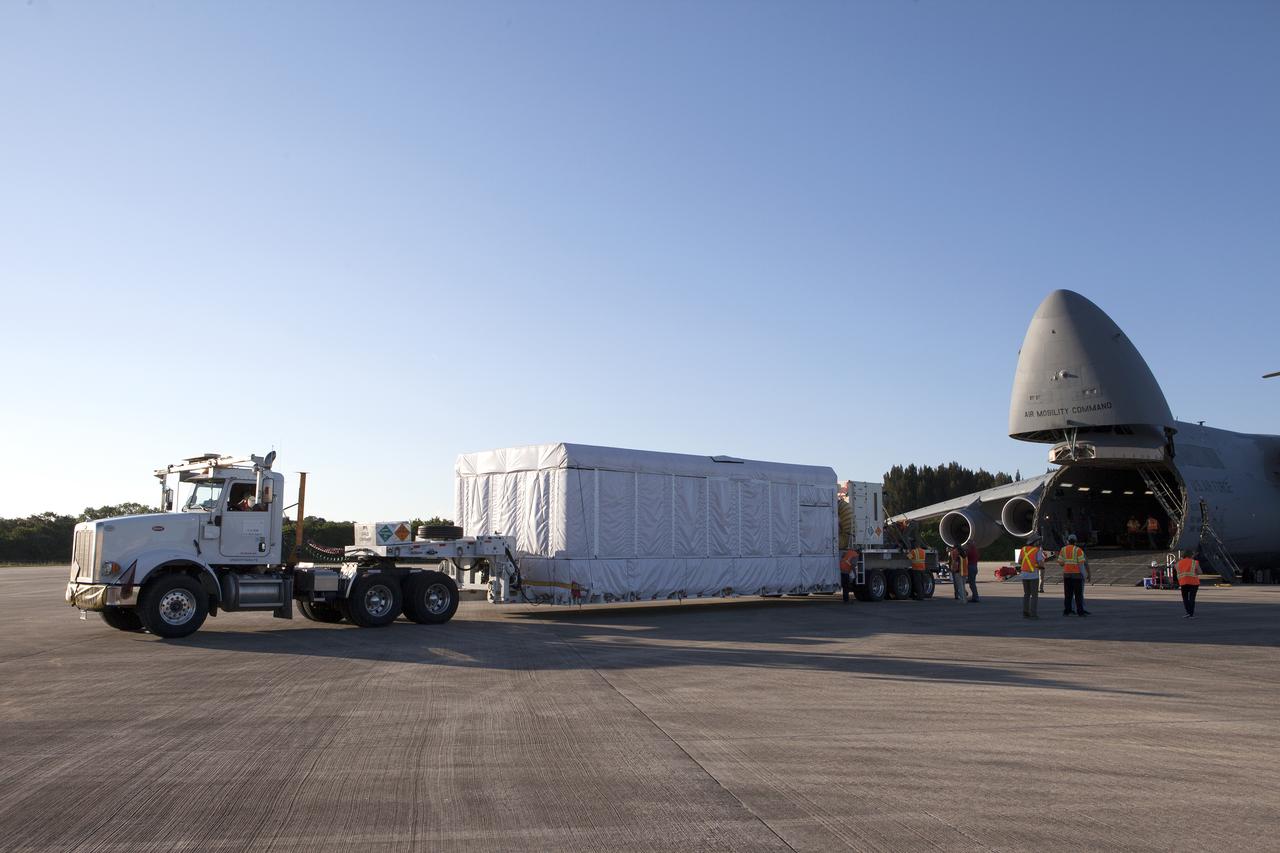
A truck with a specialized transporter drives away from an Air Force C-5 Galaxy transport plane at the Shuttle Landing Facility at NASA's Kennedy Space Center in Florida to deliver the GOES-R spacecraft for launch processing. The GOES series are weather satellites operated by NOAA to enhance forecasts. The spacecraft is to launch aboard a United Launch Alliance Atlas V rocket in November.
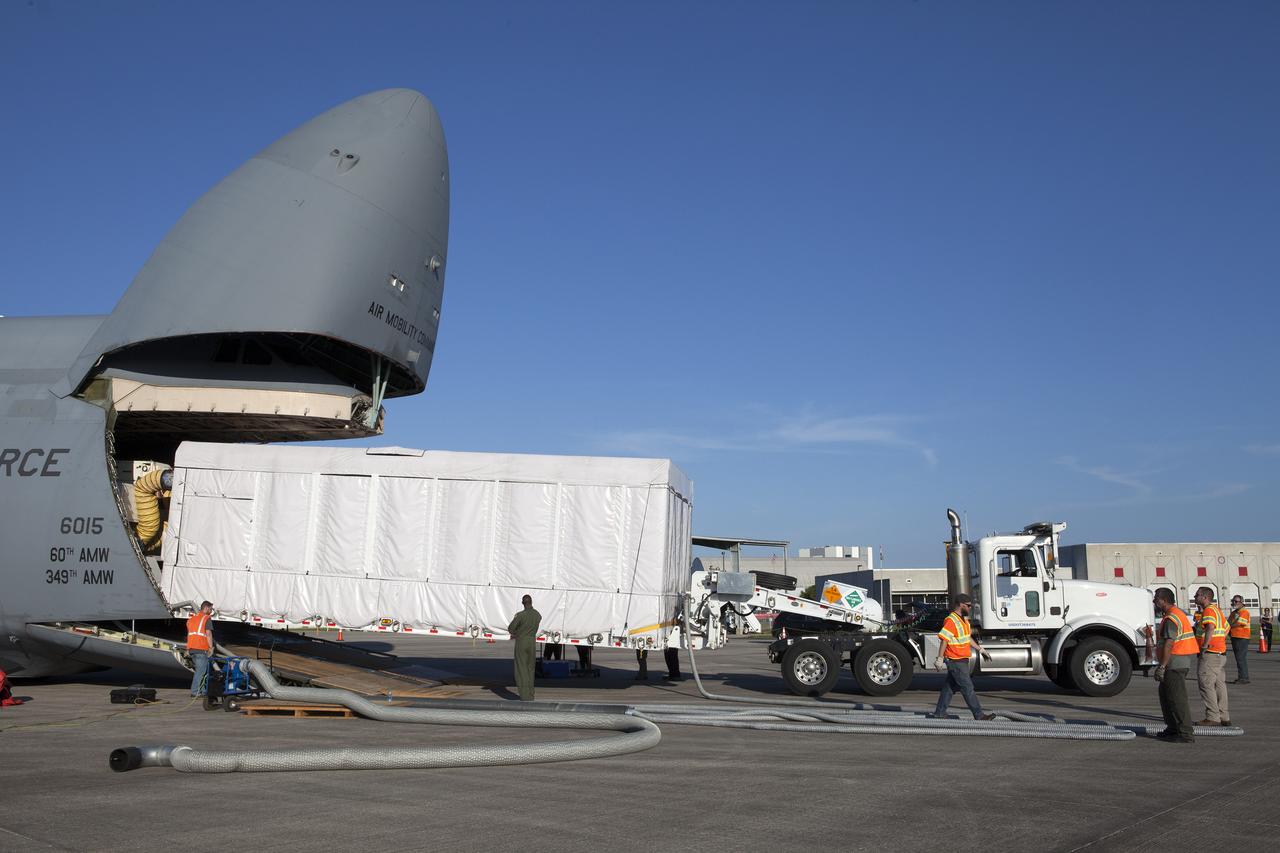
A truck with a specialized transporter drives out of the cargo hold of an Air Force C-5 Galaxy transport plane at the Shuttle Landing Facility at NASA's Kennedy Space Center in Florida to deliver the GOES-R spacecraft for launch processing. The GOES series are weather satellites operated by NOAA to enhance forecasts. The spacecraft is to launch aboard a United Launch Alliance Atlas V rocket in November.
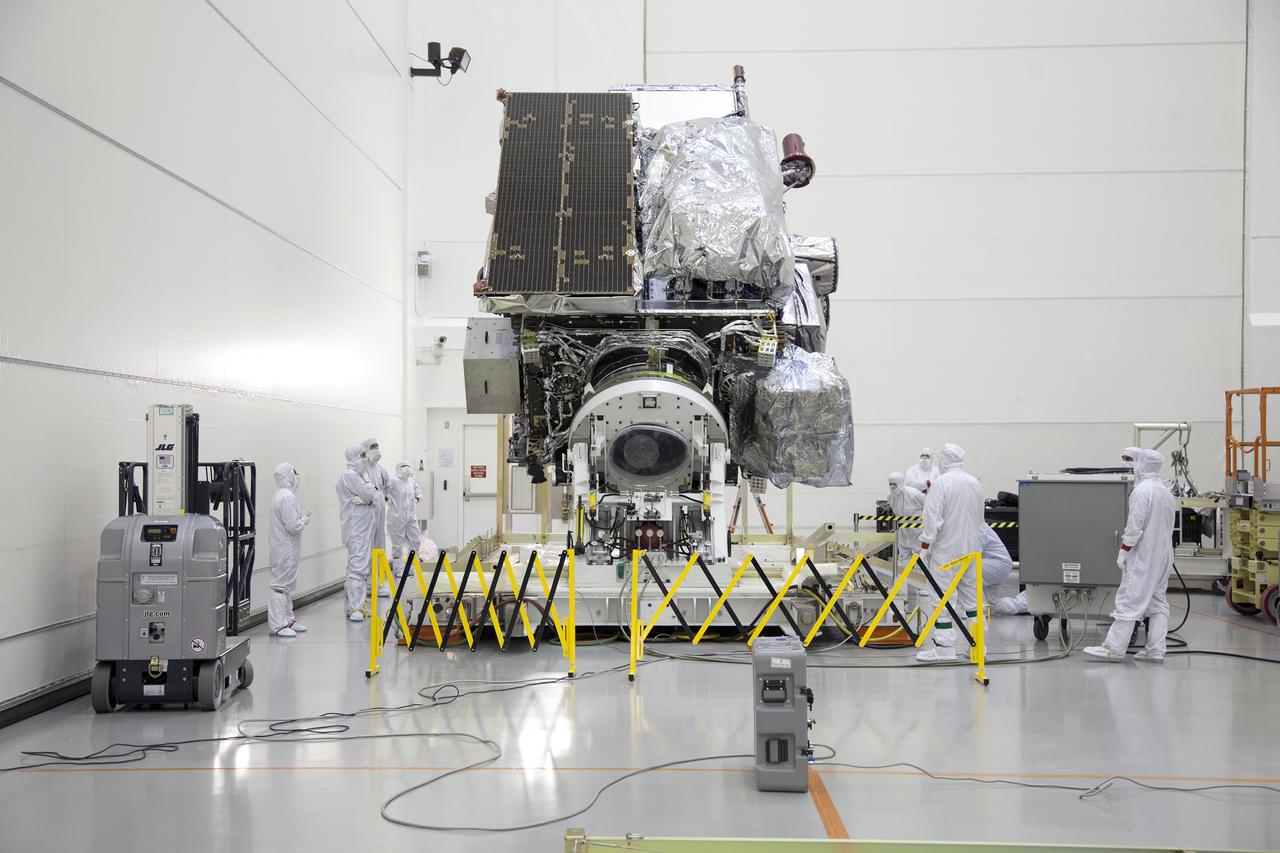
Team members monitor progress as the GOES-R spacecraft is lifted from horizontal to vertical inside the Astrotech payload processing facility in Titusville, Florida near NASA’s Kennedy Space Center. GOES-R will be the first satellite in a series of next-generation NOAA Geostationary Operational Environmental Satellites. The spacecraft is to launch aboard a United Launch Alliance Atlas V rocket in November.
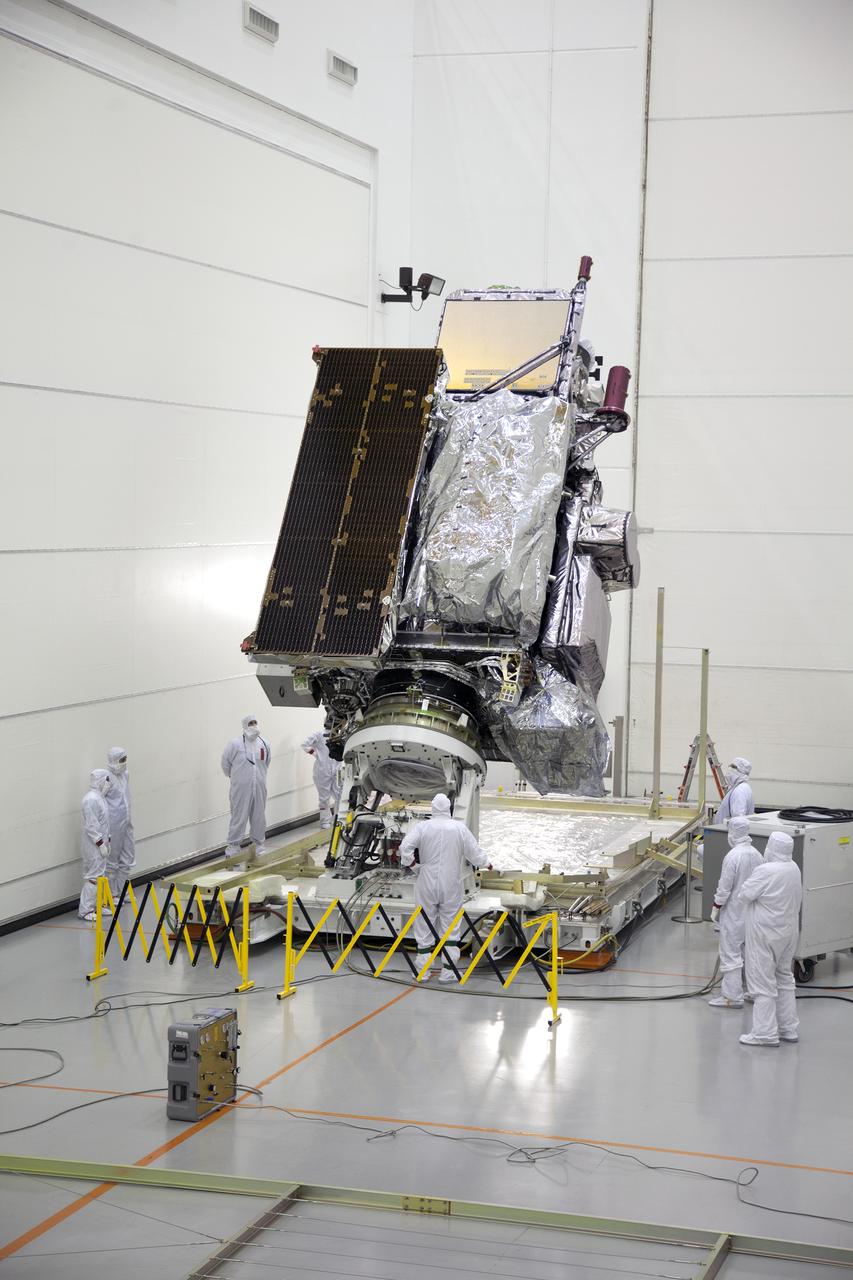
Team members monitor progress as the GOES-R spacecraft is raised to vertical inside the Astrotech payload processing facility in Titusville, Florida near NASA’s Kennedy Space Center. GOES-R will be the first satellite in a series of next-generation NOAA Geostationary Operational Environmental Satellites. The spacecraft is to launch aboard a United Launch Alliance Atlas V rocket in November.
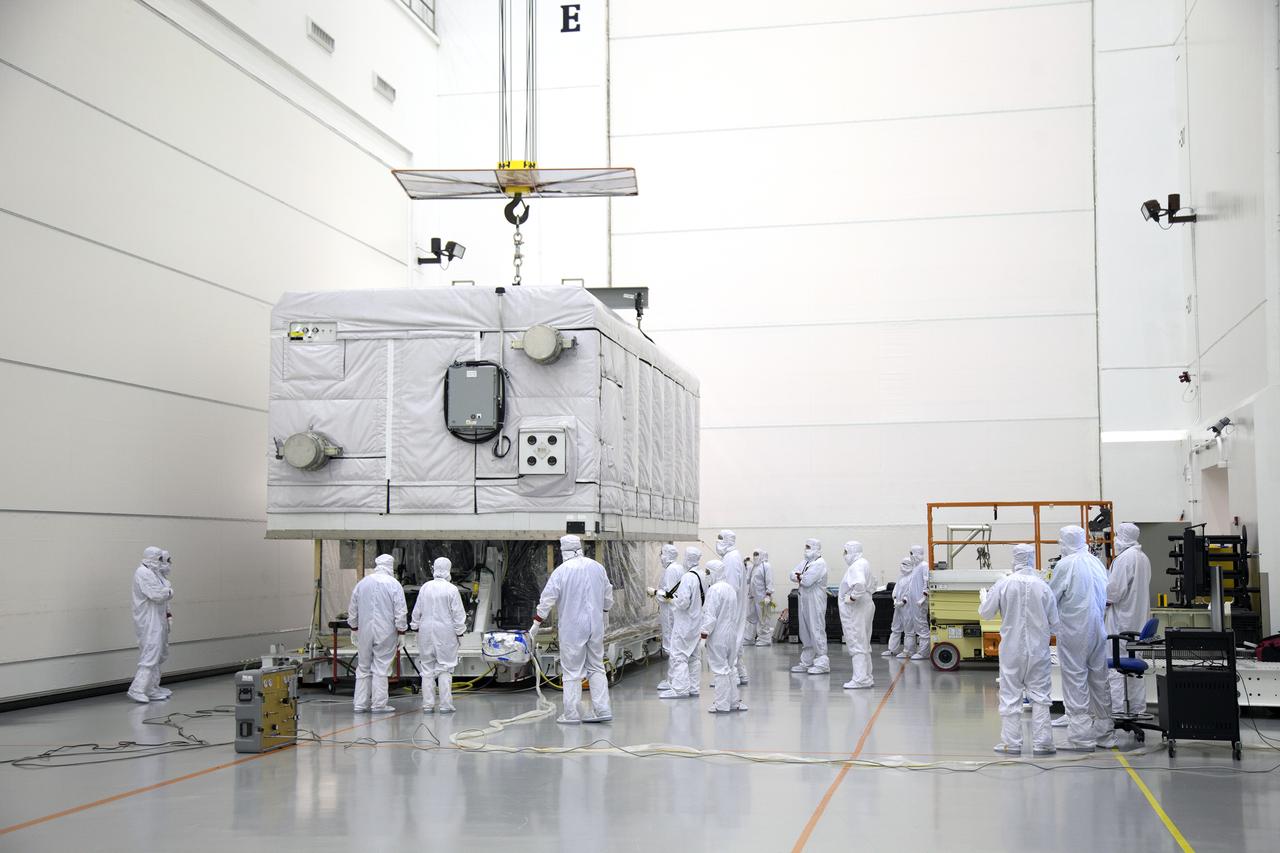
The shipping container is lifted off the GOES-R spacecraft inside the Astrotech payload processing facility in Titusville, Florida near NASA’s Kennedy Space Center. GOES-R will be the first satellite in a series of next-generation NOAA Geostationary Operational Environmental Satellites. The spacecraft is to launch aboard a United Launch Alliance Atlas V rocket in November.
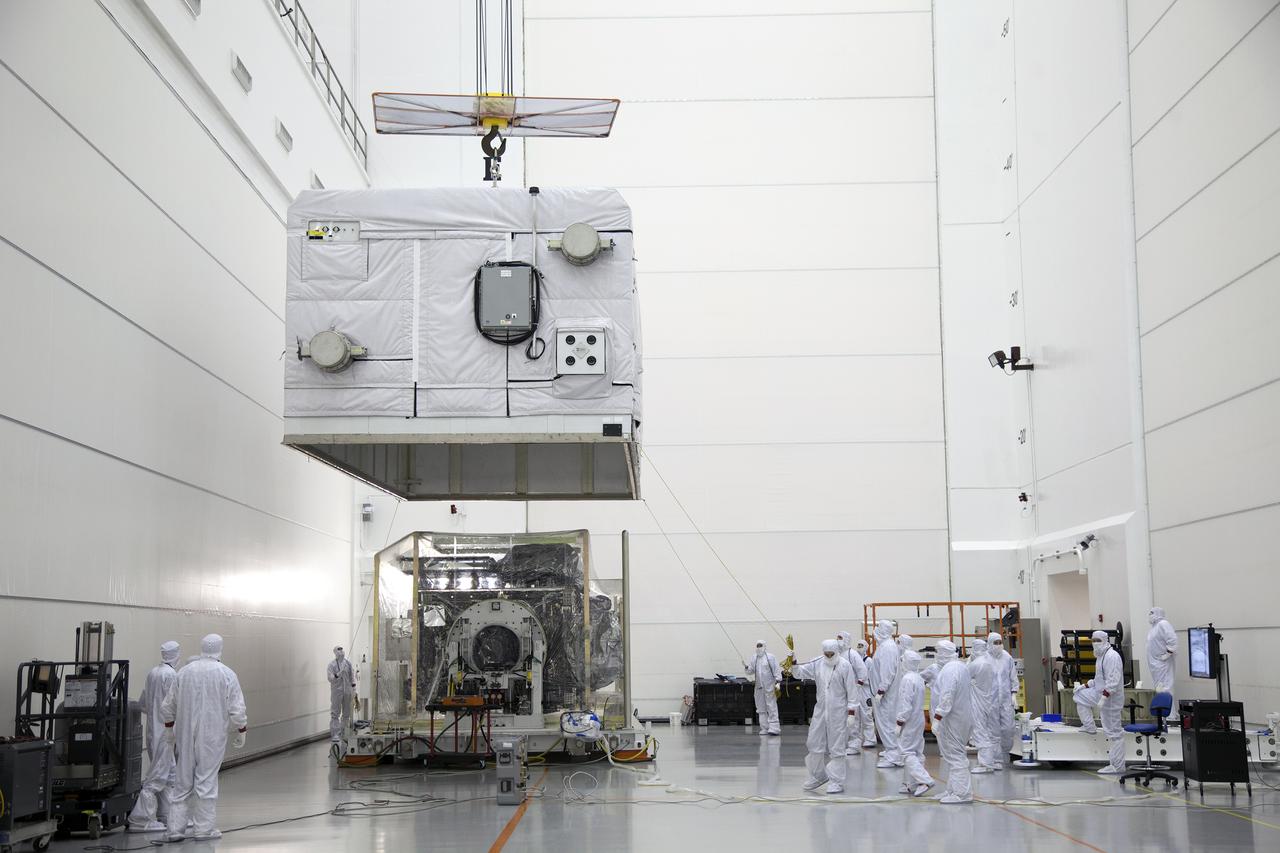
The shipping container is lifted off the GOES-R spacecraft inside the Astrotech payload processing facility in Titusville, Florida near NASA’s Kennedy Space Center. GOES-R will be the first satellite in a series of next-generation NOAA Geostationary Operational Environmental Satellites. The spacecraft is to launch aboard a United Launch Alliance Atlas V rocket in November.
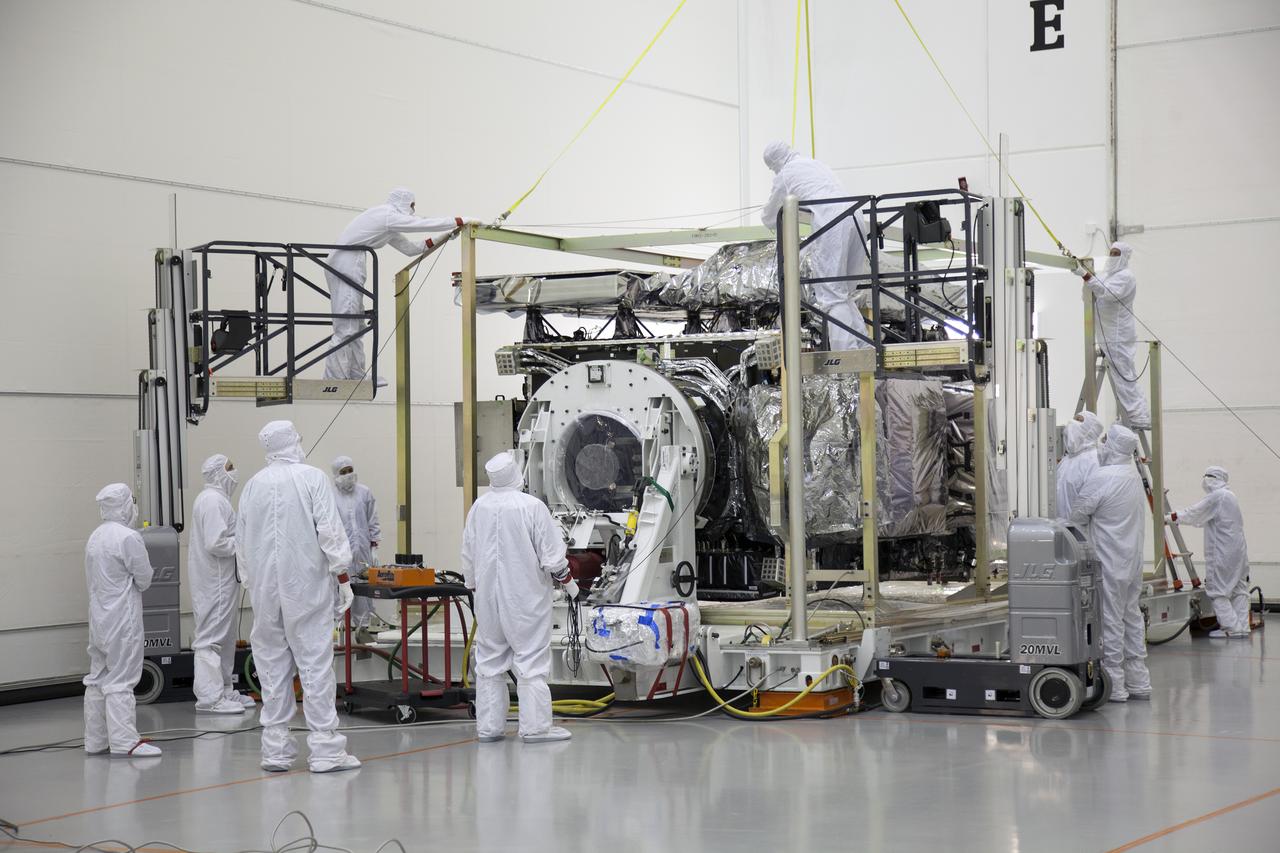
The GOES-R spacecraft is revealed following its uncrating inside the Astrotech payload processing facility in Titusville, Florida near NASA’s Kennedy Space Center. GOES-R will be the first satellite in a series of next-generation NOAA Geostationary Operational Environmental Satellites. The spacecraft is to launch aboard a United Launch Alliance Atlas V rocket in November.
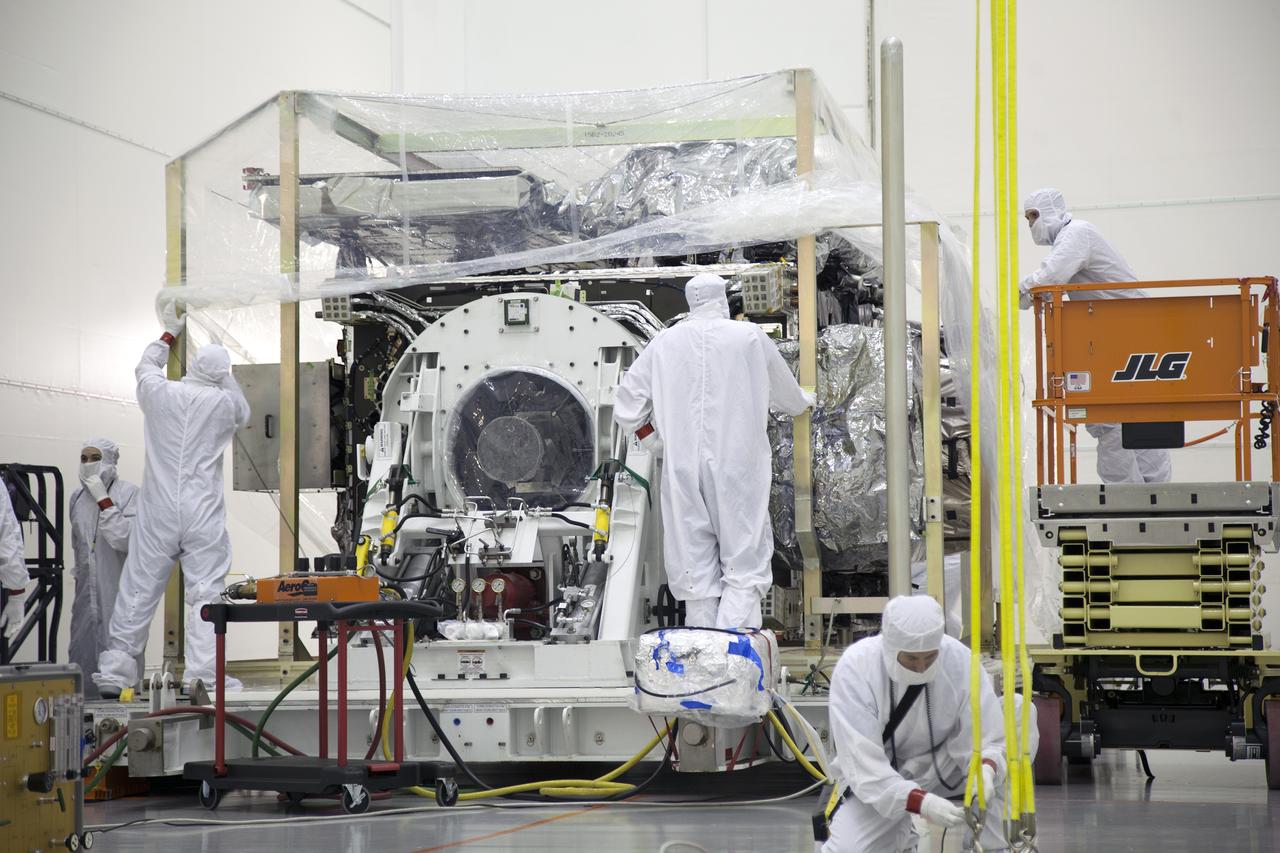
Team members remove a protective plastic covering from the GOES-R spacecraft inside the Astrotech payload processing facility in Titusville, Florida near NASA’s Kennedy Space Center. GOES-R will be the first satellite in a series of next-generation NOAA Geostationary Operational Environmental Satellites. The spacecraft is to launch aboard a United Launch Alliance Atlas V rocket in November.
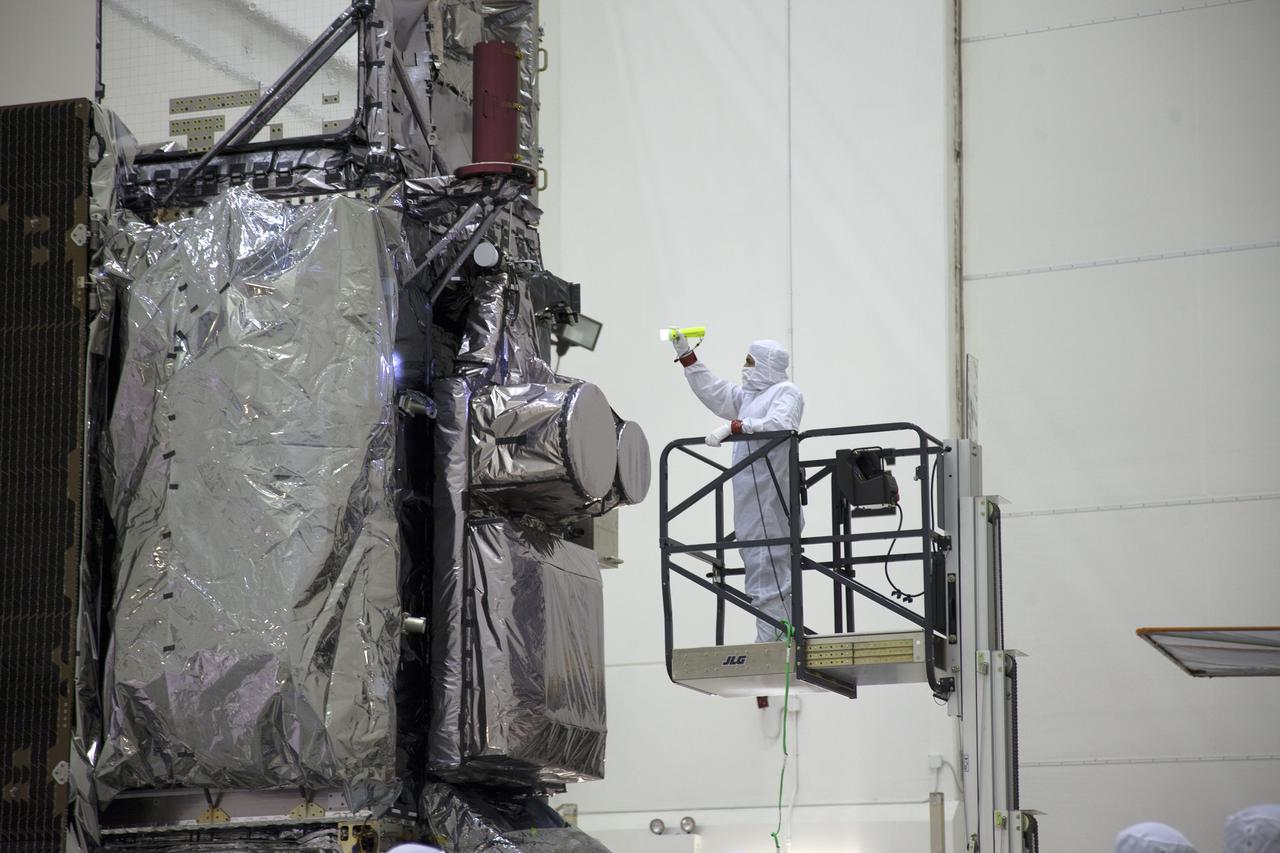
The GOES-R spacecraft is inspected after being uncrated and raised to vertical inside the Astrotech payload processing facility in Titusville, Florida near NASA’s Kennedy Space Center. GOES-R will be the first satellite in a series of next-generation NOAA Geostationary Operational Environmental Satellites. The spacecraft is to launch aboard a United Launch Alliance Atlas V rocket in November.
Team members monitor progress as the GOES-R spacecraft is lifted from horizontal to vertical inside the Astrotech payload processing facility in Titusville, Florida near NASA’s Kennedy Space Center. GOES-R will be the first satellite in a series of next-generation NOAA Geostationary Operational Environmental Satellites. The spacecraft is to launch aboard a United Launch Alliance Atlas V rocket in November.
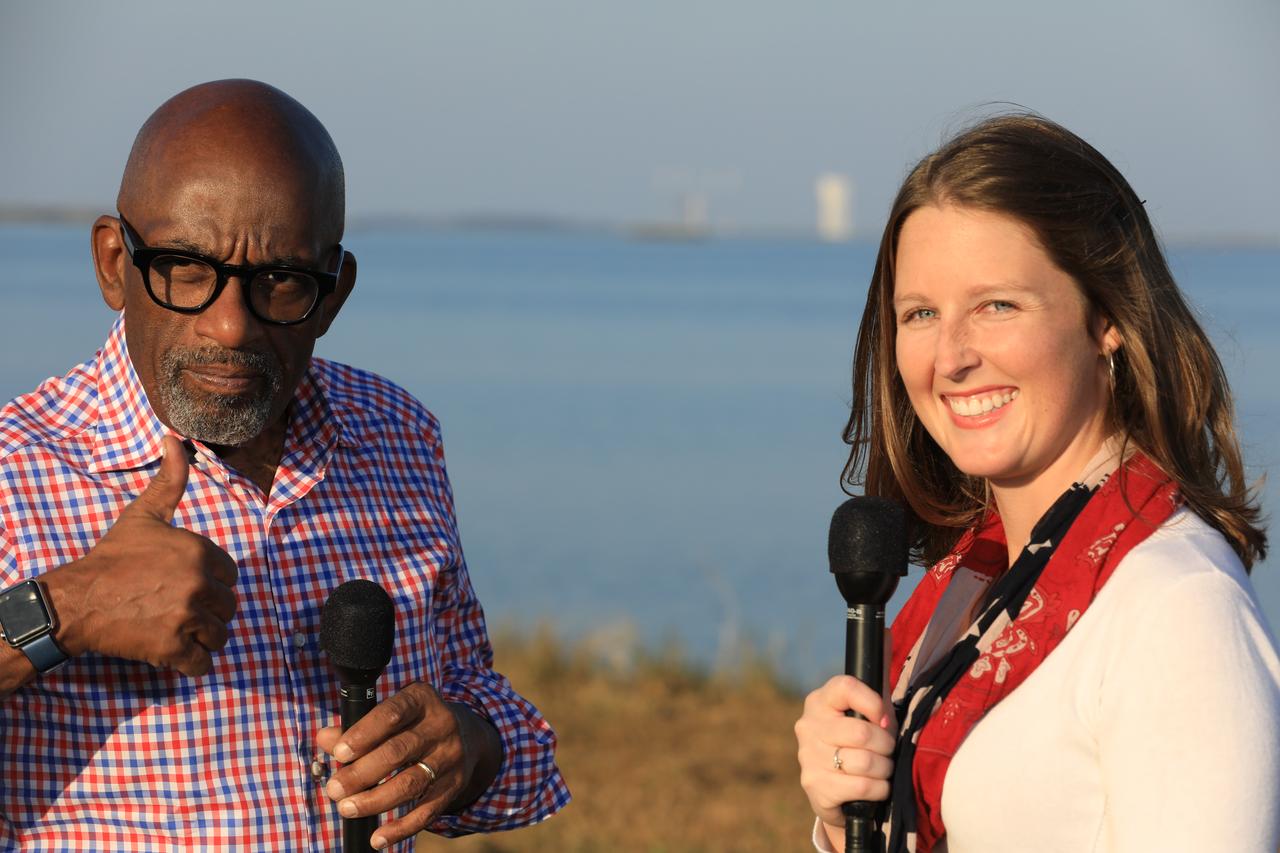
Al Roker Interview with NASA for GOES-R Mission.
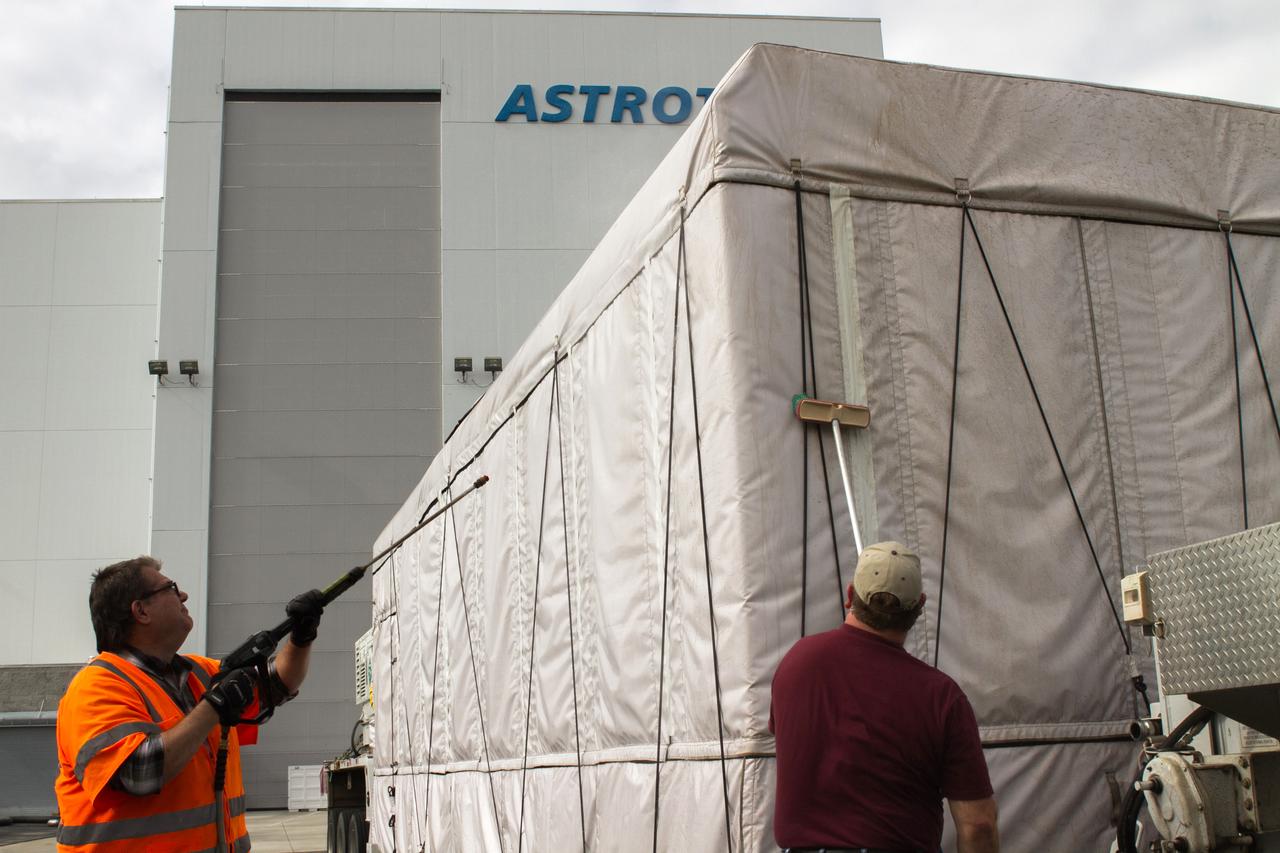
NOAA's Geostationary Operation Environmental Satellite-S (GOES-S) arrives at Astrotech Space Operations in Titusville, Florida, to prepare it for launch. The facility is located near NASA's Kennedy Space Center. GOES-S is the second in a series of four advanced geostationary weather satellites. The GOES-R series - consisting of the GOES-R, GOES-S, GOES-T and GOES-U spacecraft - will significantly improve the detection and observation of environmental phenomena that directly affect public safety, protection of property and the nation's economic health and prosperity. GOES-S is slated to launch March 1, 2018 aboard a United Launch Alliance Atlas V rocket from Cape Canaveral Air Force Station in Florida.
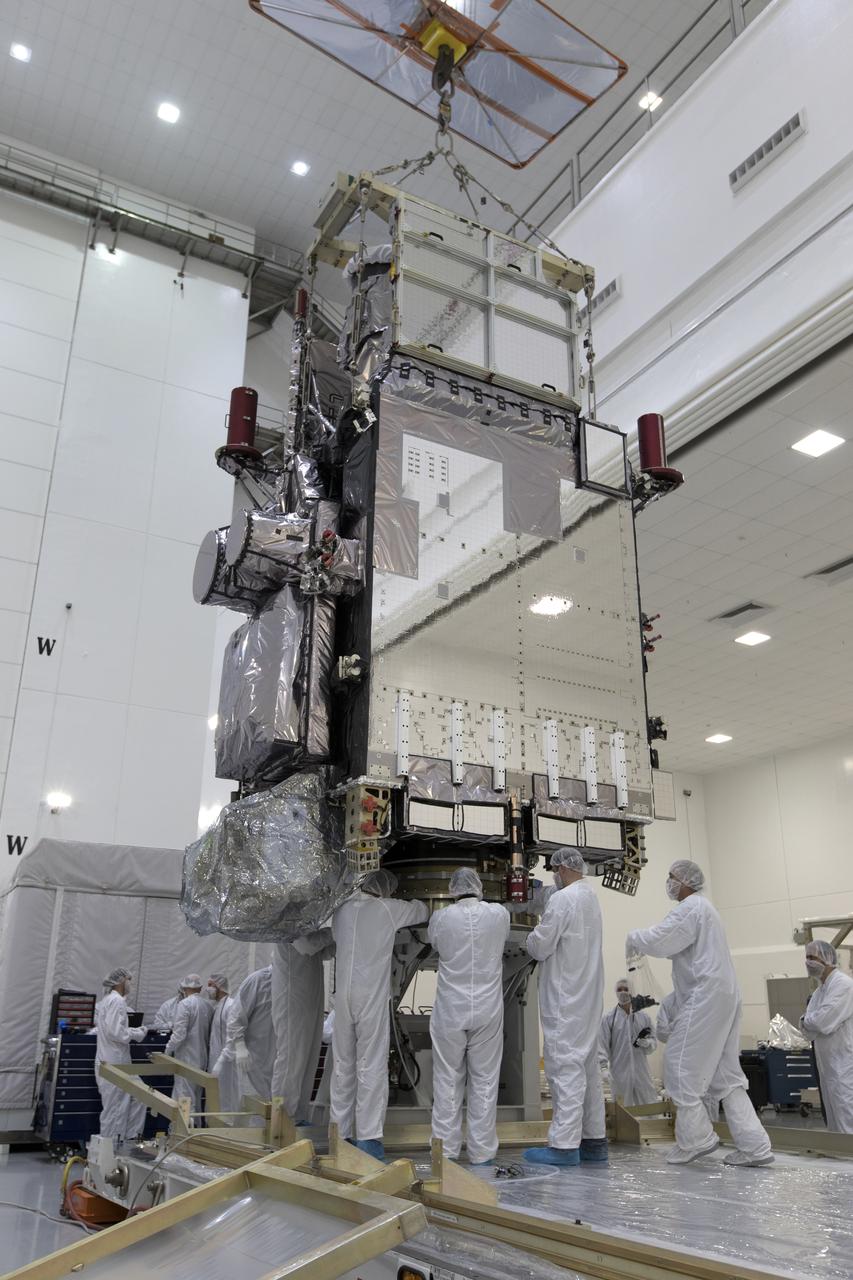
At Astrotech Space Operations in Titusville, Florida, technicians and engineers inspect NOAA's Geostationary Operational Environmental Satellite-S (GOES-S). The facility is located near NASA's Kennedy Space Center. GOES-S is the second in a series of four advanced geostationary weather satellites. The GOES-R series - consisting of the GOES-R, GOES-S, GOES-T and GOES-U spacecraft - will significantly improve the detection and observation of environmental phenomena that directly affect public safety, protection of property and the nation's economic health and prosperity. GOES-S is slated to launch March 1, 2018 aboard a United Launch Alliance Atlas V rocket from Cape Canaveral Air Force Station in Florida.
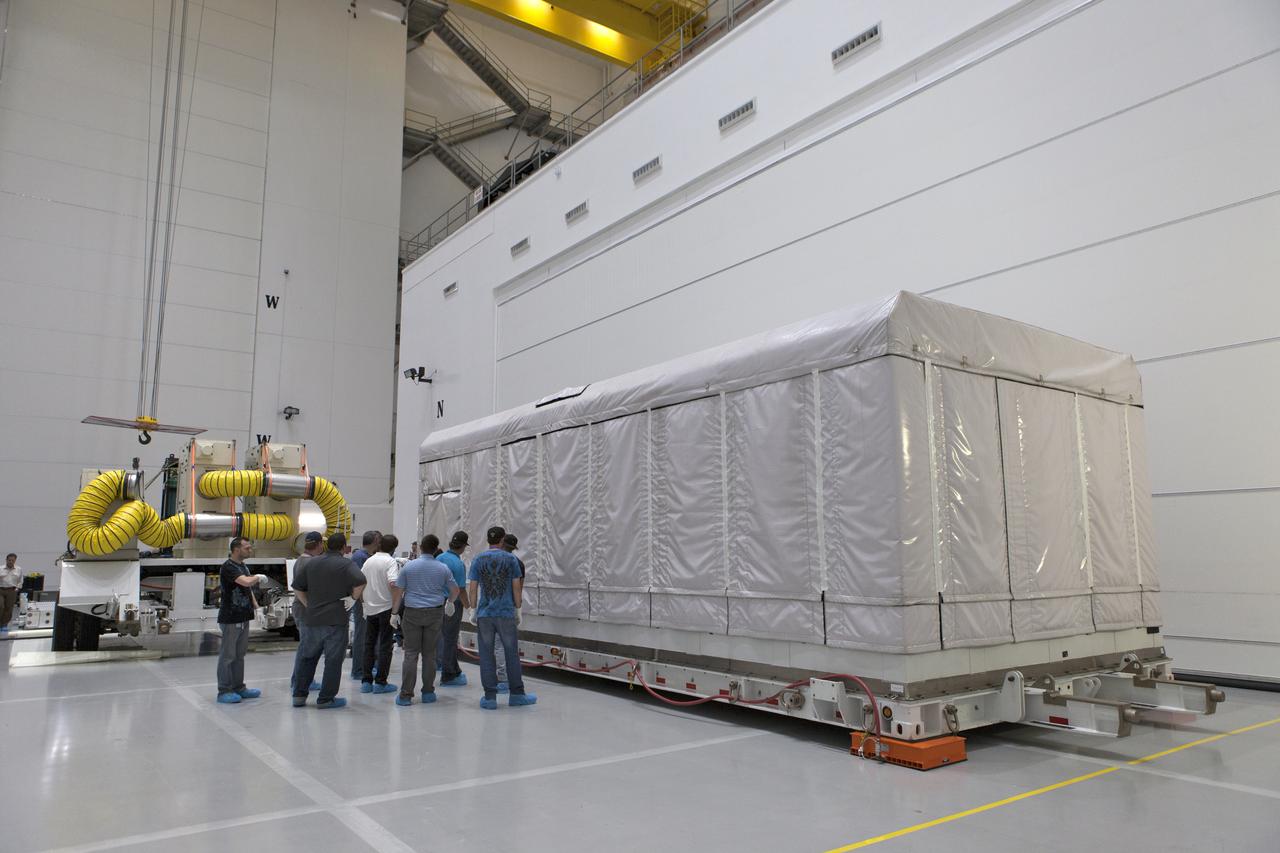
NOAA's Geostationary Operation Environmental Satellite-S (GOES-S) arrives inside Astrotech Space Operations in Titusville, Florida, to prepare it for launch. The facility is located near NASA's Kennedy Space Center. GOES-S is the second in a series of four advanced geostationary weather satellites. The GOES-R series - consisting of the GOES-R, GOES-S, GOES-T and GOES-U spacecraft - will significantly improve the detection and observation of environmental phenomena that directly affect public safety, protection of property and the nation's economic health and prosperity. GOES-S is slated to launch March 1, 2018 aboard a United Launch Alliance Atlas V rocket from Cape Canaveral Air Force Station in Florida.
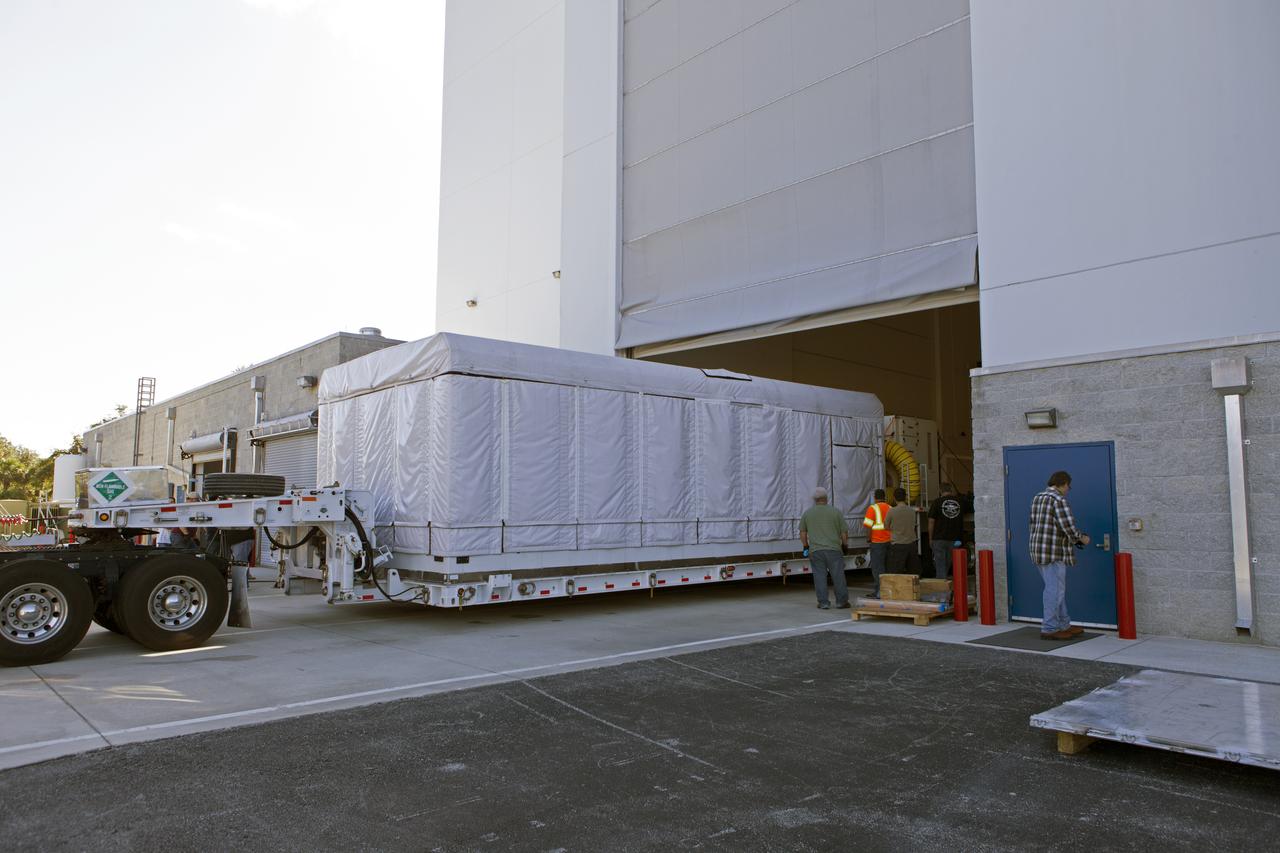
NOAA's Geostationary Operation Environmental Satellite-S (GOES-S) arrives at Astrotech Space Operations in Titusville, Florida, to prepare it for launch. The facility is located near NASA's Kennedy Space Center. GOES-S is the second in a series of four advanced geostationary weather satellites. The GOES-R series - consisting of the GOES-R, GOES-S, GOES-T and GOES-U spacecraft - will significantly improve the detection and observation of environmental phenomena that directly affect public safety, protection of property and the nation's economic health and prosperity. GOES-S is slated to launch March 1, 2018 aboard a United Launch Alliance Atlas V rocket from Cape Canaveral Air Force Station in Florida.
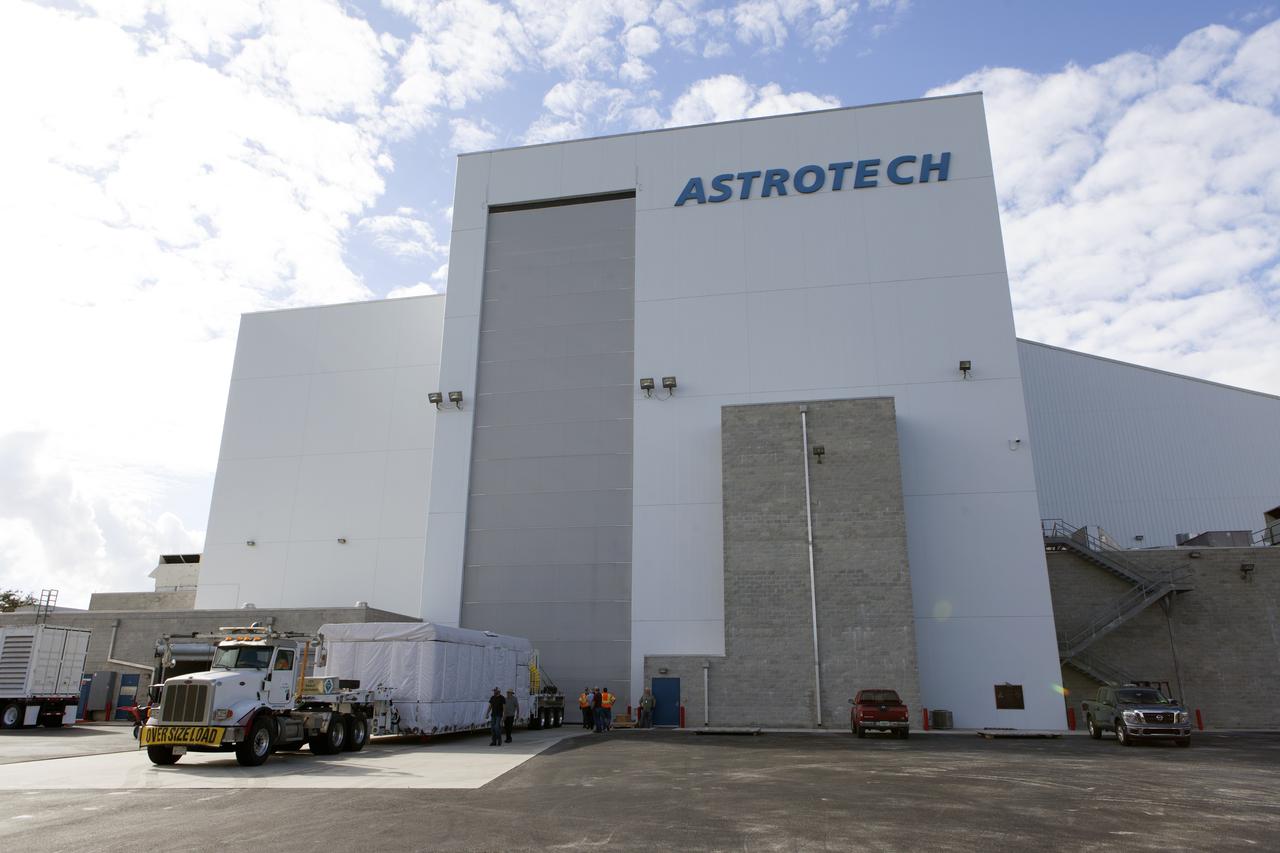
NOAA's Geostationary Operation Environmental Satellite-S (GOES-S) arrives at Astrotech Space Operations in Titusville, Florida, to prepare it for launch. The facility is located near NASA's Kennedy Space Center. GOES-S is the second in a series of four advanced geostationary weather satellites. The GOES-R series - consisting of the GOES-R, GOES-S, GOES-T and GOES-U spacecraft - will significantly improve the detection and observation of environmental phenomena that directly affect public safety, protection of property and the nation's economic health and prosperity. GOES-S is slated to launch March 1, 2018 aboard a United Launch Alliance Atlas V rocket from Cape Canaveral Air Force Station in Florida.
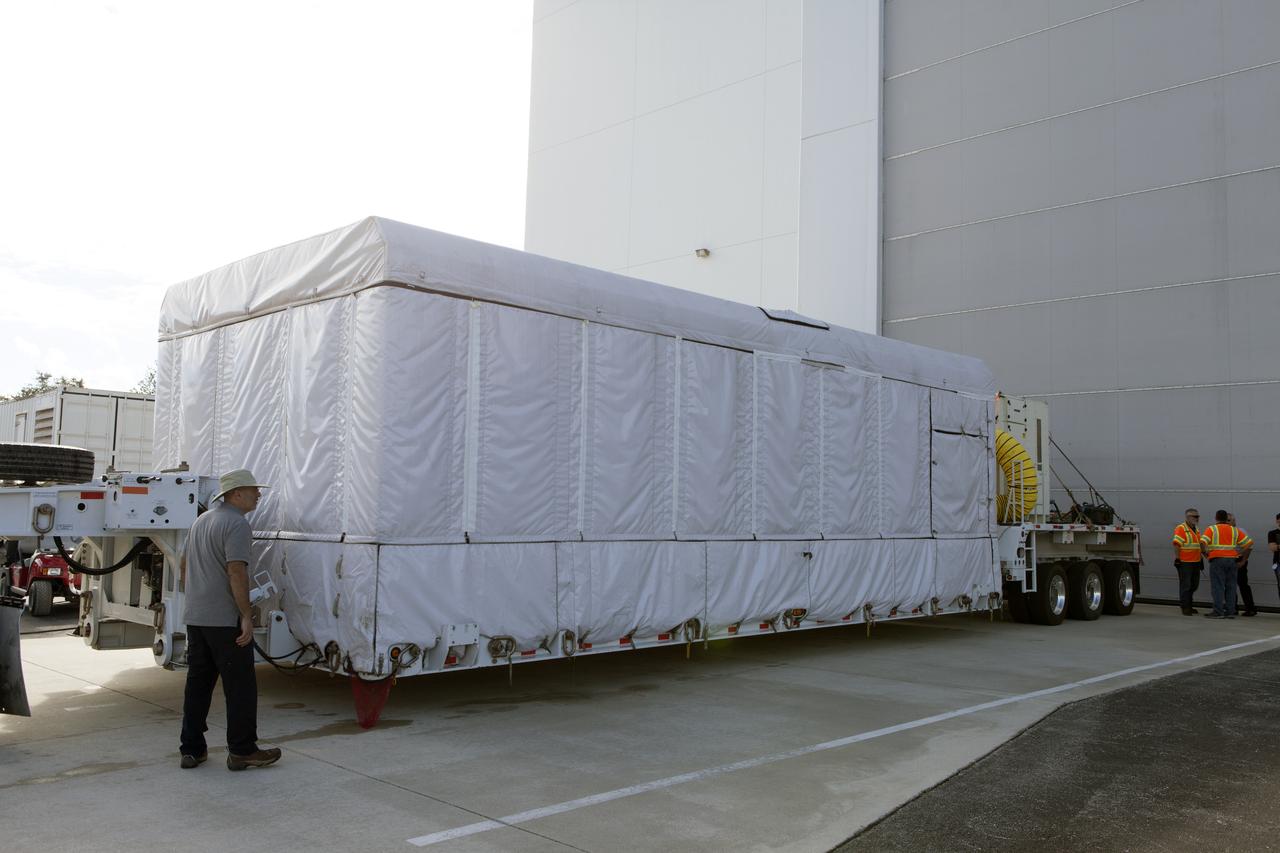
NOAA's Geostationary Operation Environmental Satellite-S (GOES-S) arrives at Astrotech Space Operations in Titusville, Florida, to prepare it for launch. The facility is located near NASA's Kennedy Space Center. GOES-S is the second in a series of four advanced geostationary weather satellites. The GOES-R series - consisting of the GOES-R, GOES-S, GOES-T and GOES-U spacecraft - will significantly improve the detection and observation of environmental phenomena that directly affect public safety, protection of property and the nation's economic health and prosperity. GOES-S is slated to launch March 1, 2018 aboard a United Launch Alliance Atlas V rocket from Cape Canaveral Air Force Station in Florida.
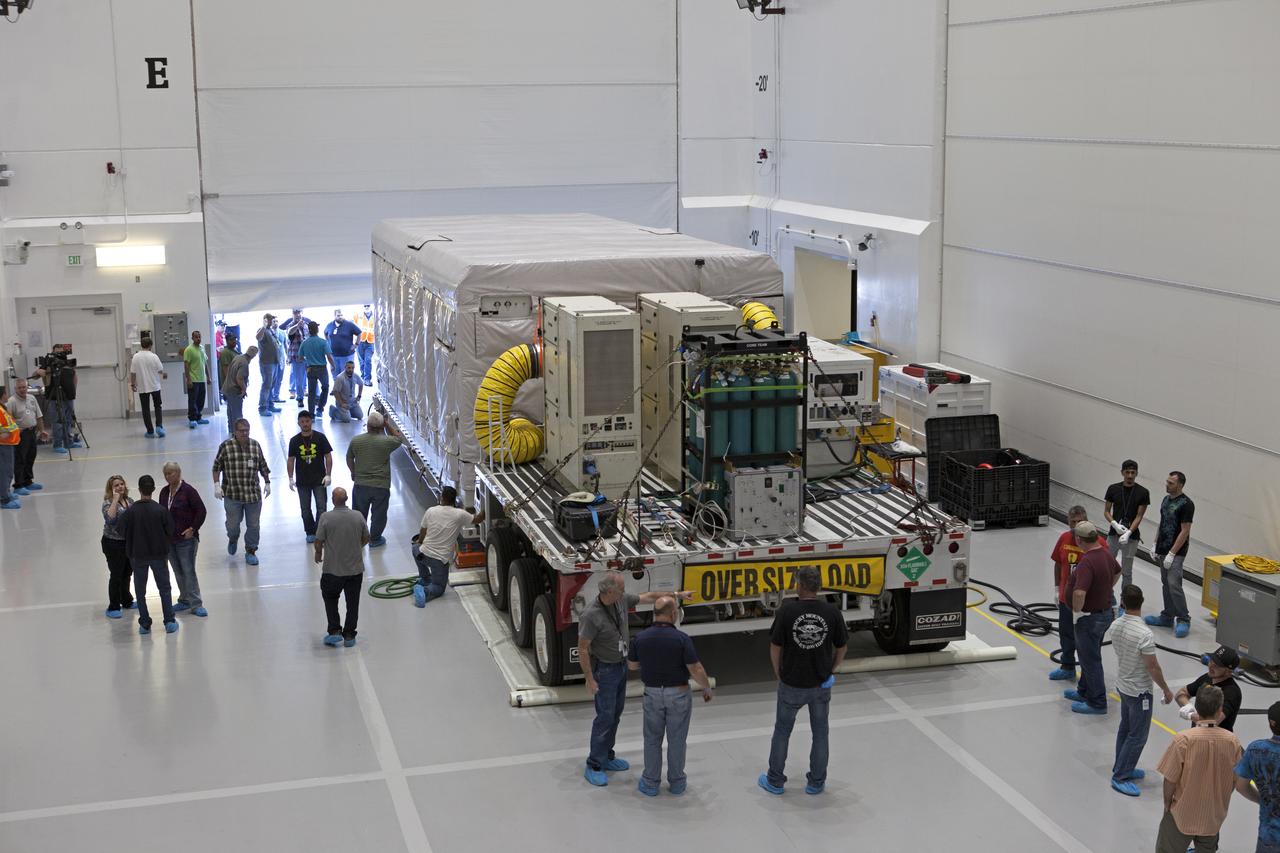
NOAA's Geostationary Operation Environmental Satellite-S (GOES-S) arrives inside Astrotech Space Operations in Titusville, Florida, to prepare it for launch. The facility is located near NASA's Kennedy Space Center. GOES-S is the second in a series of four advanced geostationary weather satellites. The GOES-R series - consisting of the GOES-R, GOES-S, GOES-T and GOES-U spacecraft - will significantly improve the detection and observation of environmental phenomena that directly affect public safety, protection of property and the nation's economic health and prosperity. GOES-S is slated to launch March 1, 2018 aboard a United Launch Alliance Atlas V rocket from Cape Canaveral Air Force Station in Florida.
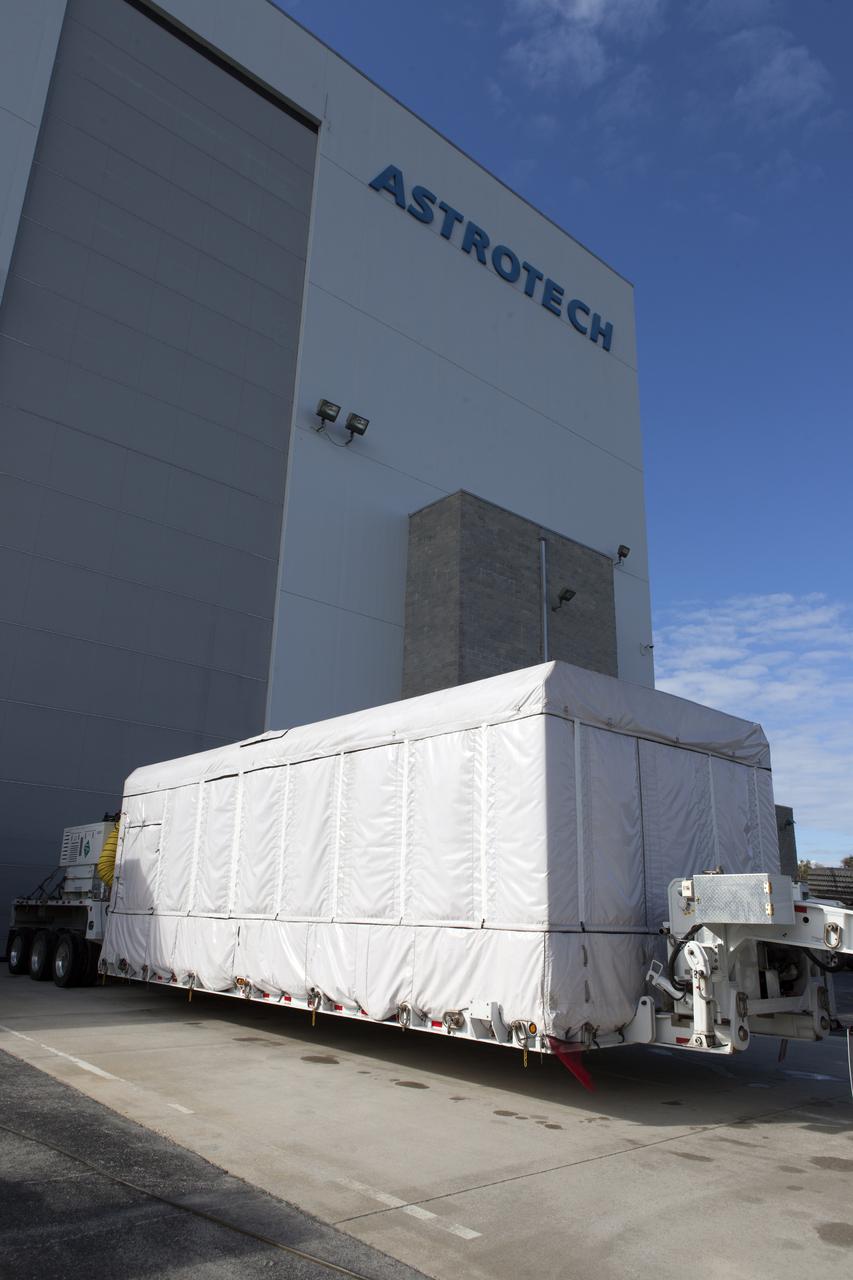
NOAA's Geostationary Operation Environmental Satellite-S (GOES-S) arrives at Astrotech Space Operations in Titusville, Florida, to prepare it for launch. The facility is located near NASA's Kennedy Space Center. GOES-S is the second in a series of four advanced geostationary weather satellites. The GOES-R series - consisting of the GOES-R, GOES-S, GOES-T and GOES-U spacecraft - will significantly improve the detection and observation of environmental phenomena that directly affect public safety, protection of property and the nation's economic health and prosperity. GOES-S is slated to launch March 1, 2018 aboard a United Launch Alliance Atlas V rocket from Cape Canaveral Air Force Station in Florida.
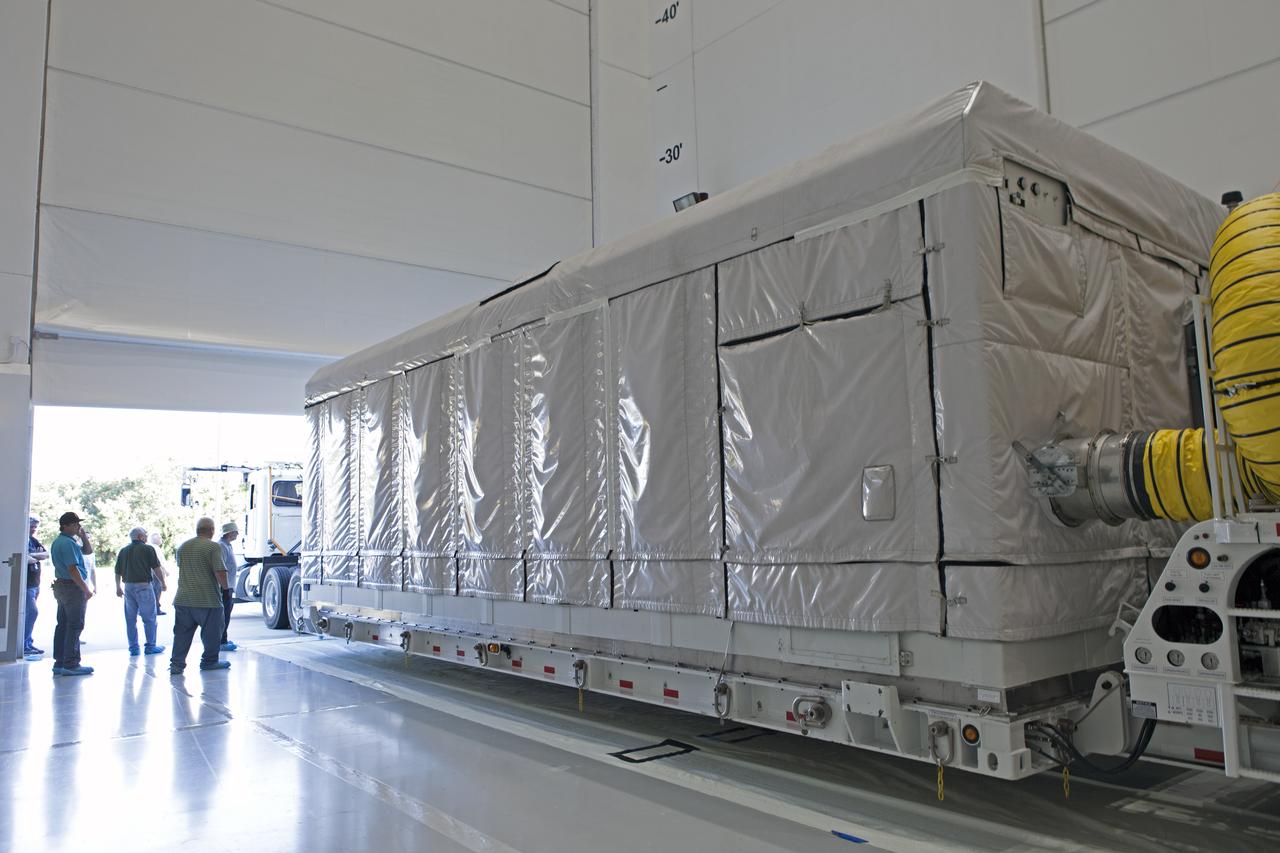
NOAA's Geostationary Operation Environmental Satellite-S (GOES-S) arrives at Astrotech Space Operations in Titusville, Florida, to prepare it for launch. The facility is located near NASA's Kennedy Space Center. GOES-S is the second in a series of four advanced geostationary weather satellites. The GOES-R series - consisting of the GOES-R, GOES-S, GOES-T and GOES-U spacecraft - will significantly improve the detection and observation of environmental phenomena that directly affect public safety, protection of property and the nation's economic health and prosperity. GOES-S is slated to launch March 1, 2018 aboard a United Launch Alliance Atlas V rocket from Cape Canaveral Air Force Station in Florida.
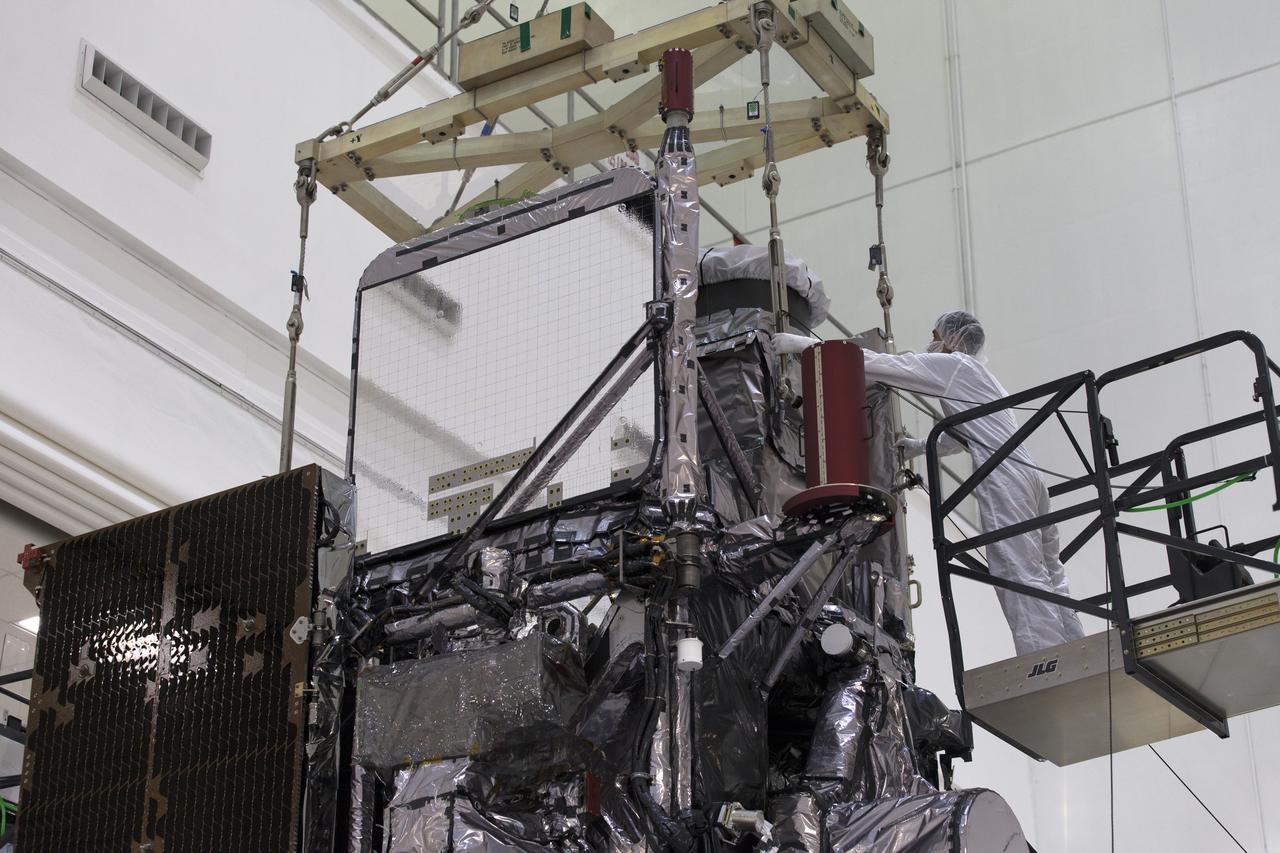
At Astrotech Space Operations in Titusville, Florida, a technician inspects NOAA's Geostationary Operational Environmental Satellite-S (GOES-S). The facility is located near NASA's Kennedy Space Center. GOES-S is the second in a series of four advanced geostationary weather satellites. The GOES-R series - consisting of the GOES-R, GOES-S, GOES-T and GOES-U spacecraft - will significantly improve the detection and observation of environmental phenomena that directly affect public safety, protection of property and the nation's economic health and prosperity. GOES-S is slated to launch March 1, 2018 aboard a United Launch Alliance Atlas V rocket from Cape Canaveral Air Force Station in Florida.
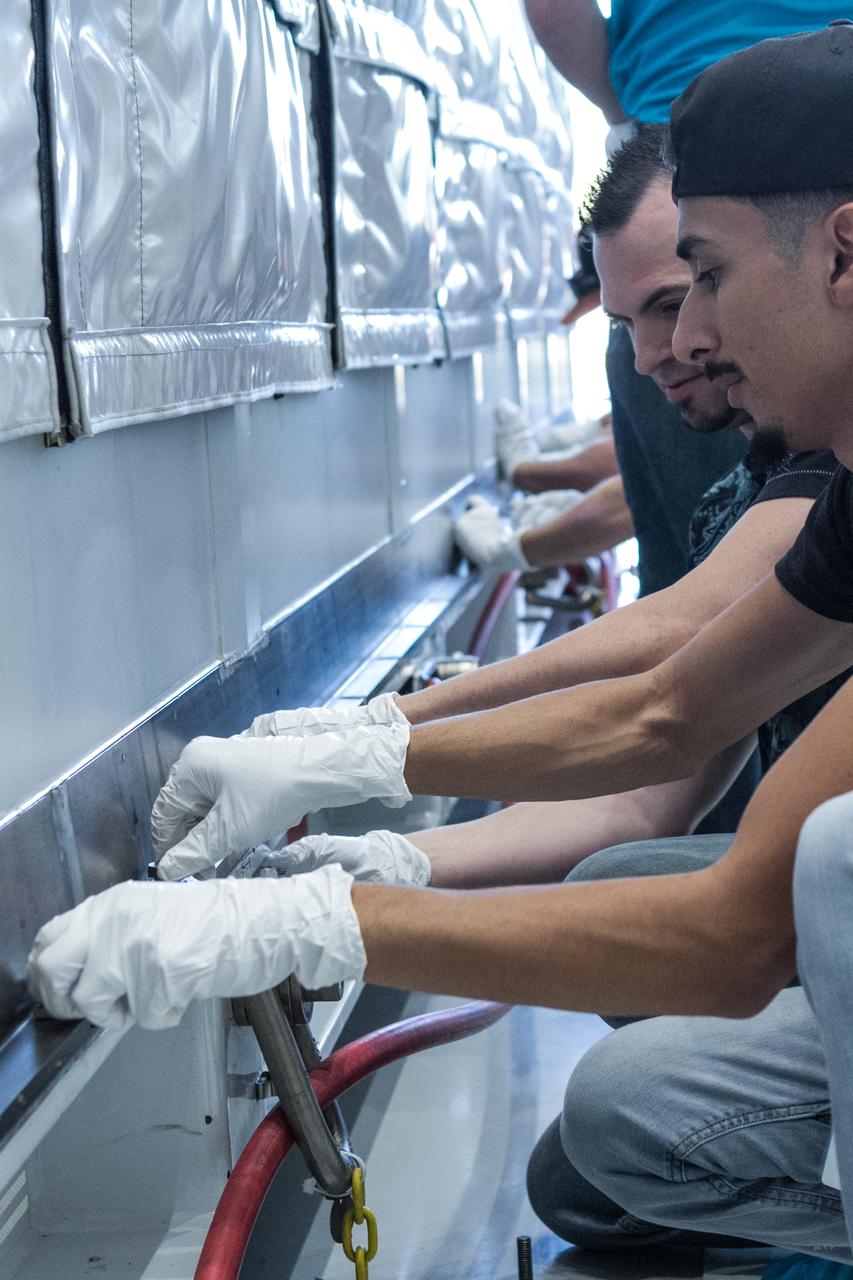
At Astrotech Space Operations in Titusville, Florida, technicians and engineers prepare to remove NOAA's Geostationary Operation Environmental Satellite-S (GOES-S) from its shipping container. GOES-S is the second in a series of four advanced geostationary weather satellites. The GOES-R series - consisting of the GOES-R, GOES-S, GOES-T and GOES-U spacecraft - will significantly improve the detection and observation of environmental phenomena that directly affect public safety, protection of property and the nation's economic health and prosperity. GOES-S is slated to launch March 1, 2018 aboard a United Launch Alliance Atlas V rocket from Cape Canaveral Air Force Station in Florida.
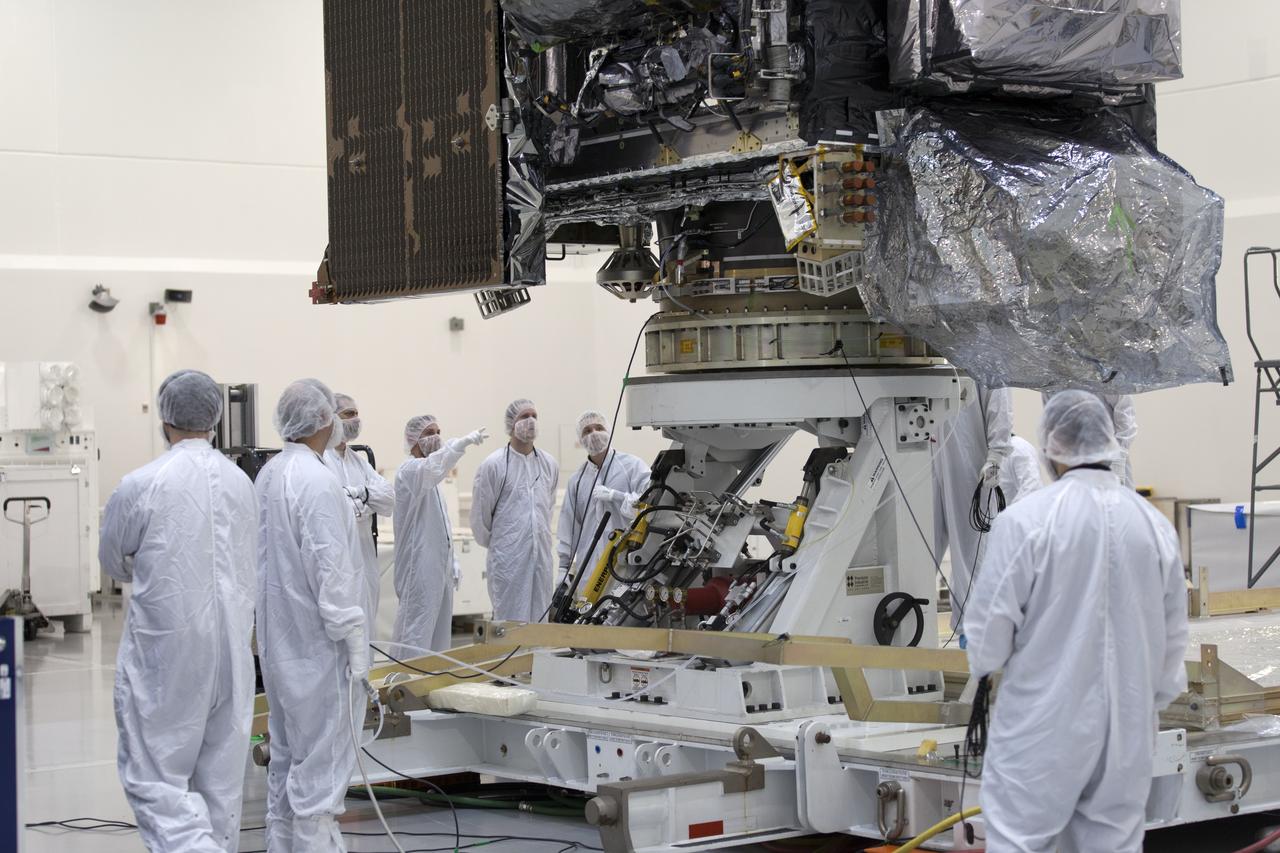
At Astrotech Space Operations in Titusville, Florida, technicians and engineers inspect NOAA's Geostationary Operational Environmental Satellite-S (GOES-S). The facility is located near NASA's Kennedy Space Center. GOES-S is the second in a series of four advanced geostationary weather satellites. The GOES-R series - consisting of the GOES-R, GOES-S, GOES-T and GOES-U spacecraft - will significantly improve the detection and observation of environmental phenomena that directly affect public safety, protection of property and the nation's economic health and prosperity. GOES-S is slated to launch March 1, 2018 aboard a United Launch Alliance Atlas V rocket from Cape Canaveral Air Force Station in Florida.
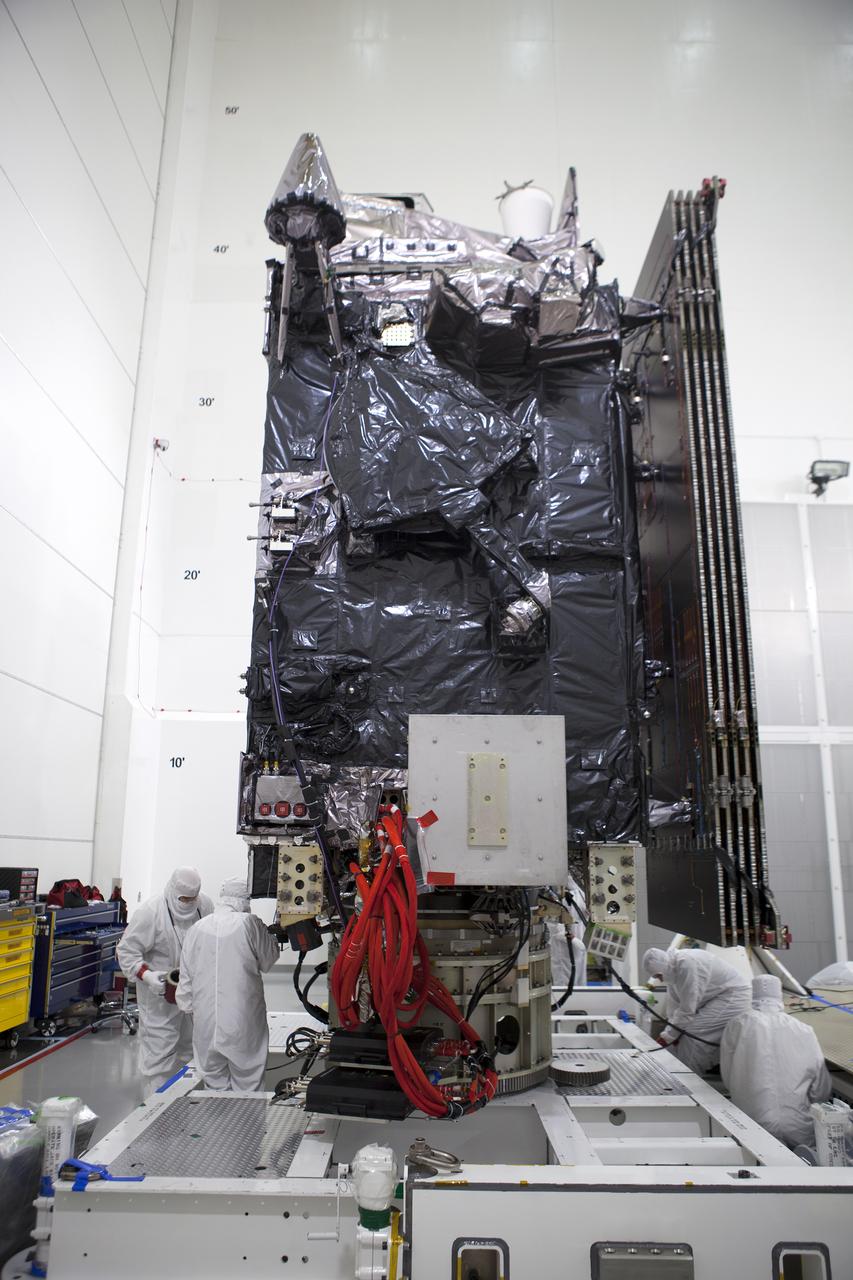
Team members check the Geostationary Operational Environmental Satellite (GOES-R) after it was lifted to the vertical position on an “up-ender” inside the Astrotech payload processing facility in Titusville, Florida near NASA’s Kennedy Space Center. GOES-R will be the first satellite in a series of next-generation NOAA GOES Satellites. The spacecraft is to launch aboard a United Launch Alliance Atlas V rocket in November.
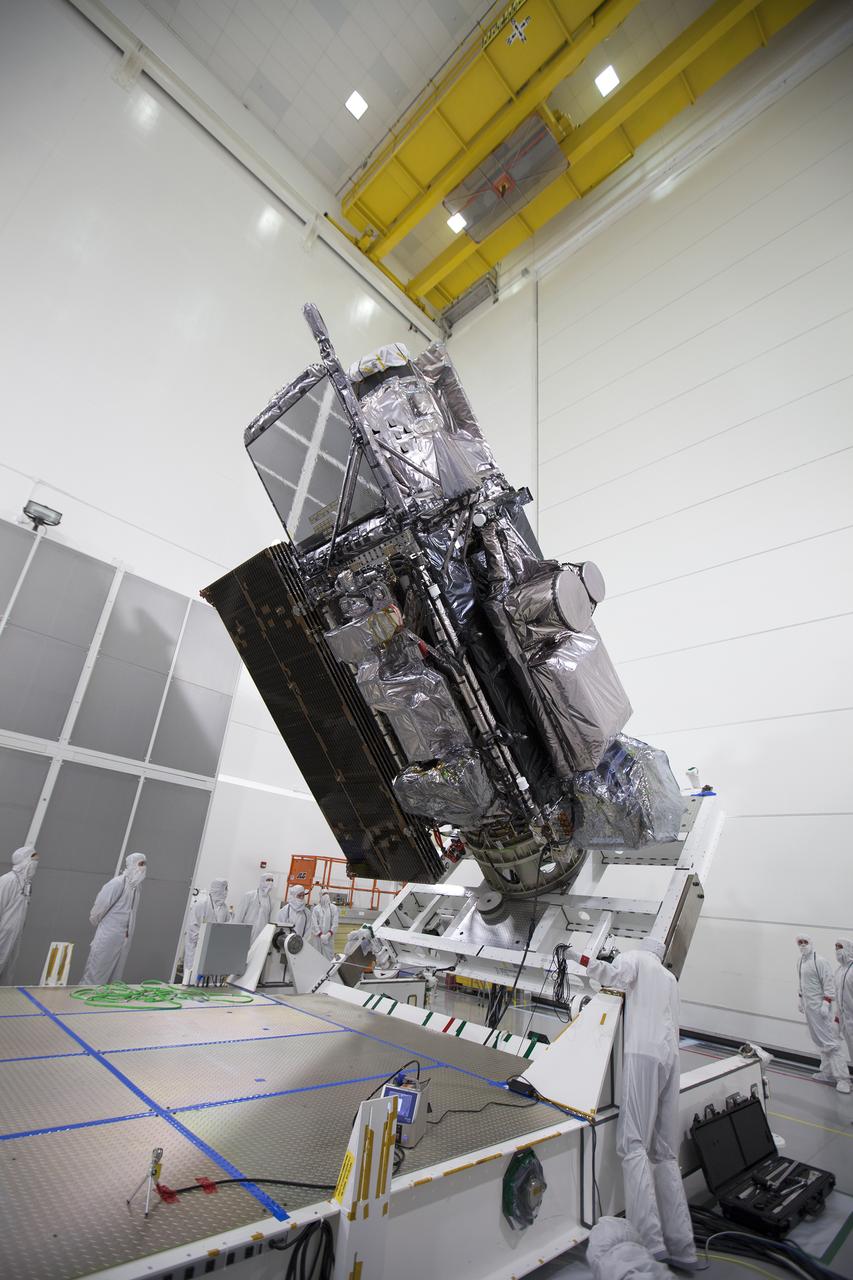
The Geostationary Operational Environmental Satellite (GOES-R) is raised to the vertical position on an “up-ender” inside the Astrotech payload processing facility in Titusville, Florida near NASA’s Kennedy Space Center. GOES-R will be the first satellite in a series of next-generation NOAA GOES Satellites. The spacecraft is to launch aboard a United Launch Alliance Atlas V rocket in November.
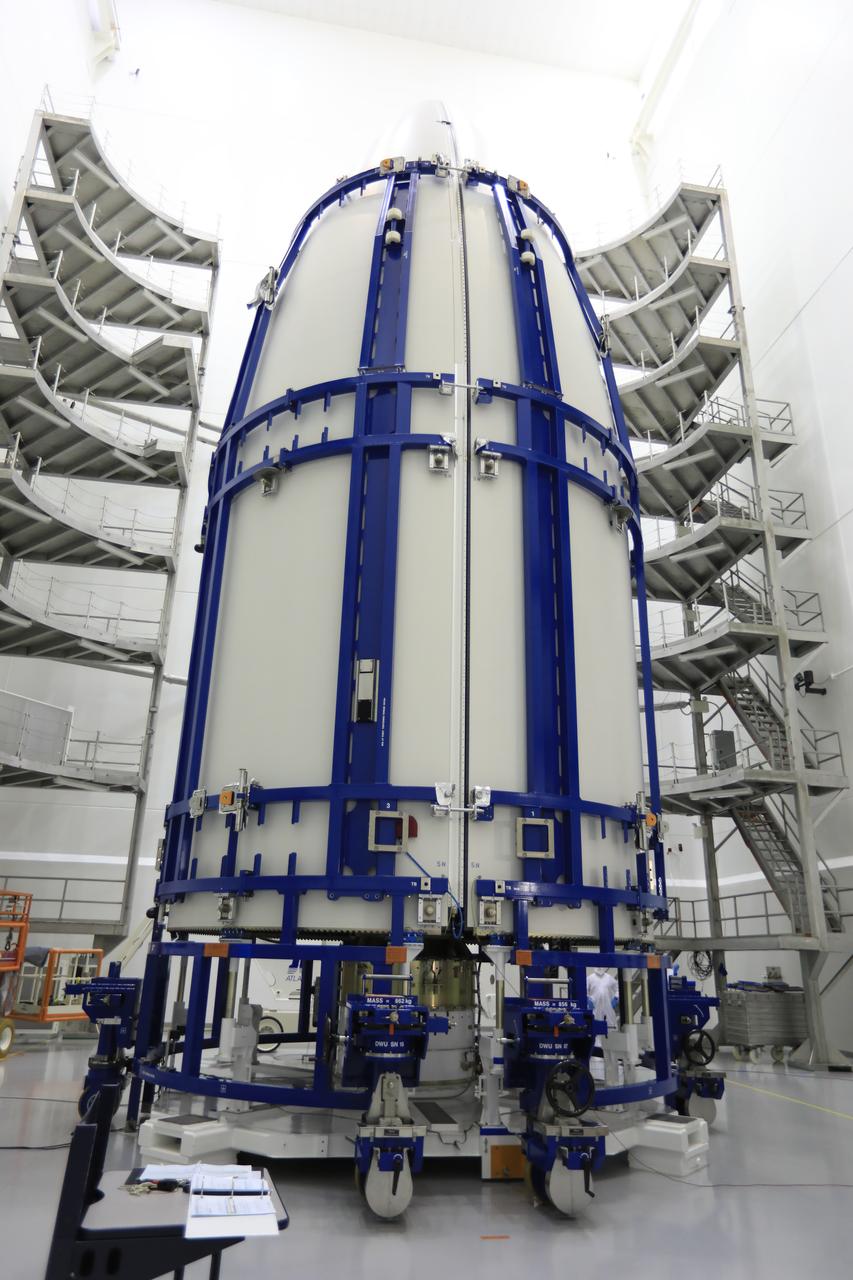
The two halves of the payload fairing are fully closed around the Geostationary Operational Environmental Satellite (GOES-R) inside the Astrotech payload processing facility in Titusville, Florida near NASA’s Kennedy Space Center. GOES-R will be the first satellite in a series of next-generation NOAA GOES Satellites. The spacecraft is to launch aboard a United Launch Alliance Atlas V rocket in November.
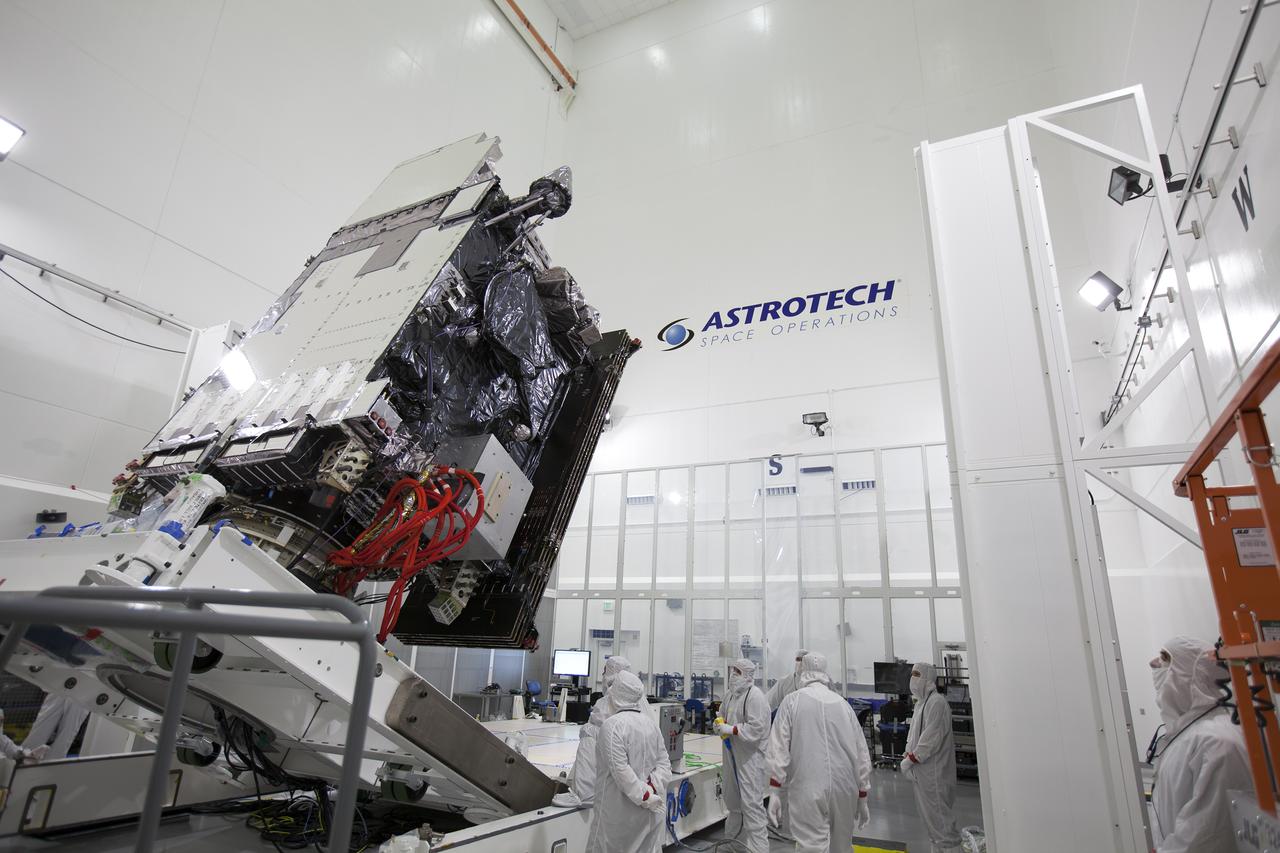
Team members monitor the progress as the Geostationary Operational Environmental Satellite (GOES-R) is lifted to the vertical position on an “up-ender” inside the Astrotech payload processing facility in Titusville, Florida near NASA’s Kennedy Space Center. GOES-R will be the first satellite in a series of next-generation NOAA GOES Satellites. The spacecraft is to launch aboard a United Launch Alliance Atlas V rocket in November.
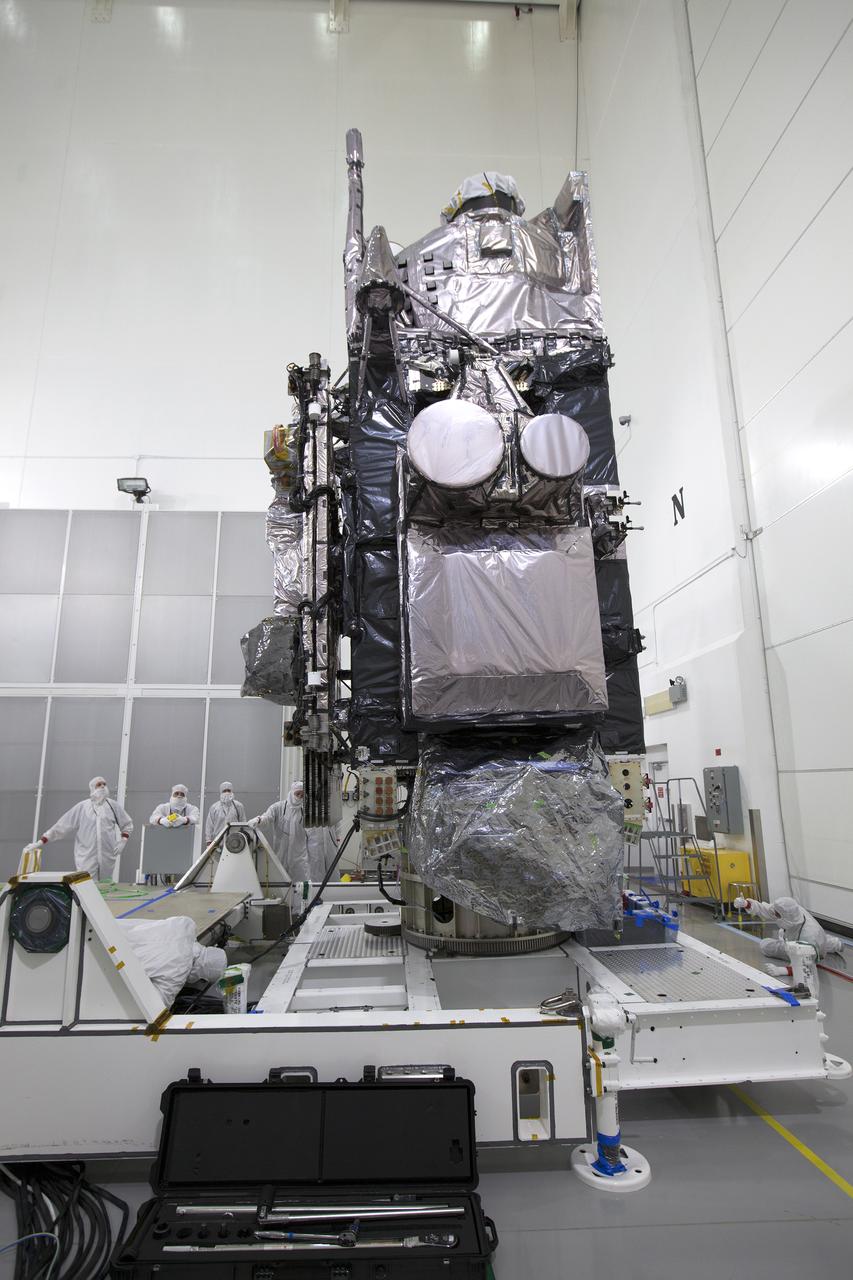
The Geostationary Operational Environmental Satellite (GOES-R) is lifted to the vertical position on an “up-ender” inside the Astrotech payload processing facility in Titusville, Florida near NASA’s Kennedy Space Center. GOES-R will be the first satellite in a series of next-generation NOAA GOES Satellites. The spacecraft is to launch aboard a United Launch Alliance Atlas V rocket in November.
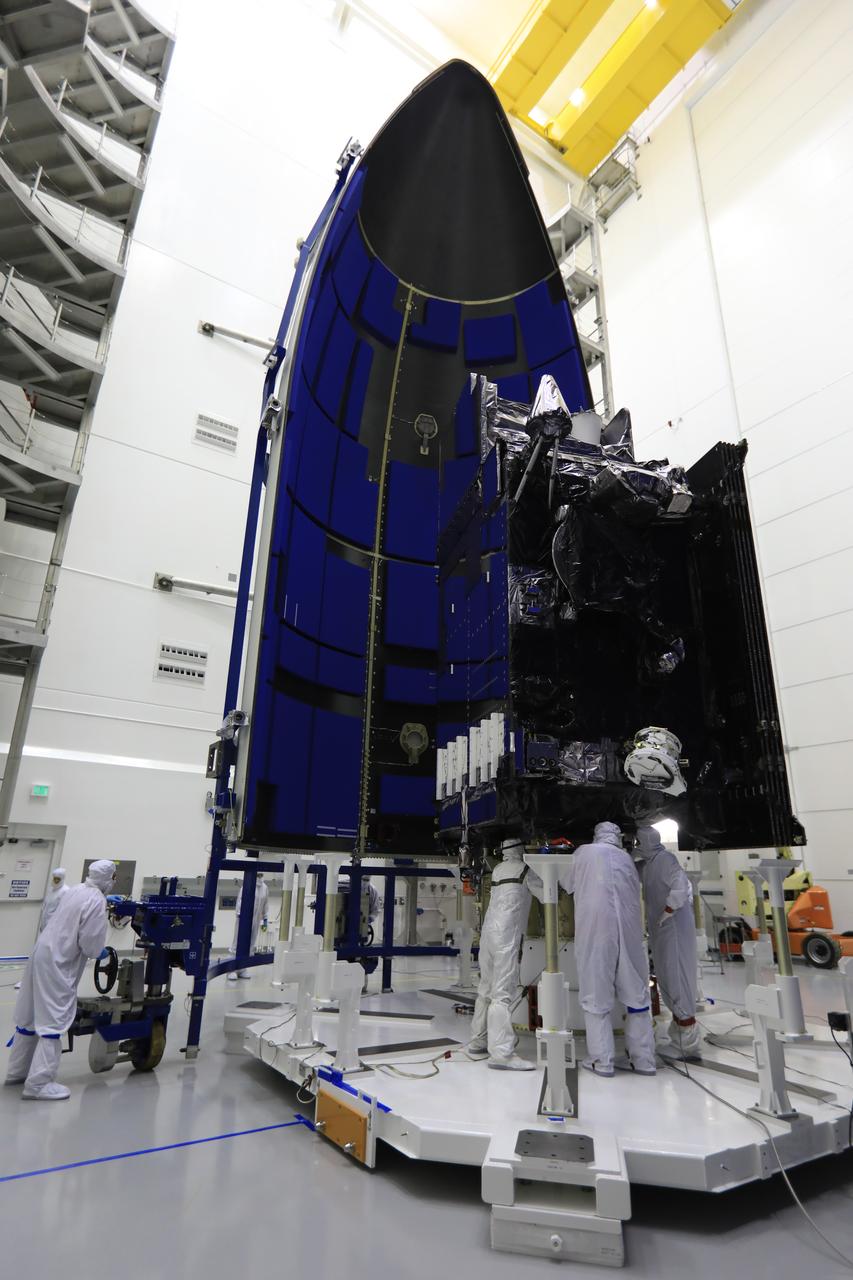
Team members with United Launch Alliance (ULA) prepare the Geostationary Operational Environmental Satellite (GOES-R) for encapsulation in the payload fairing inside the Astrotech payload processing facility in Titusville, Florida near NASA’s Kennedy Space Center. GOES-R will be the first satellite in a series of next-generation NOAA GOES Satellites. The spacecraft is to launch aboard a ULA Atlas V rocket in November.
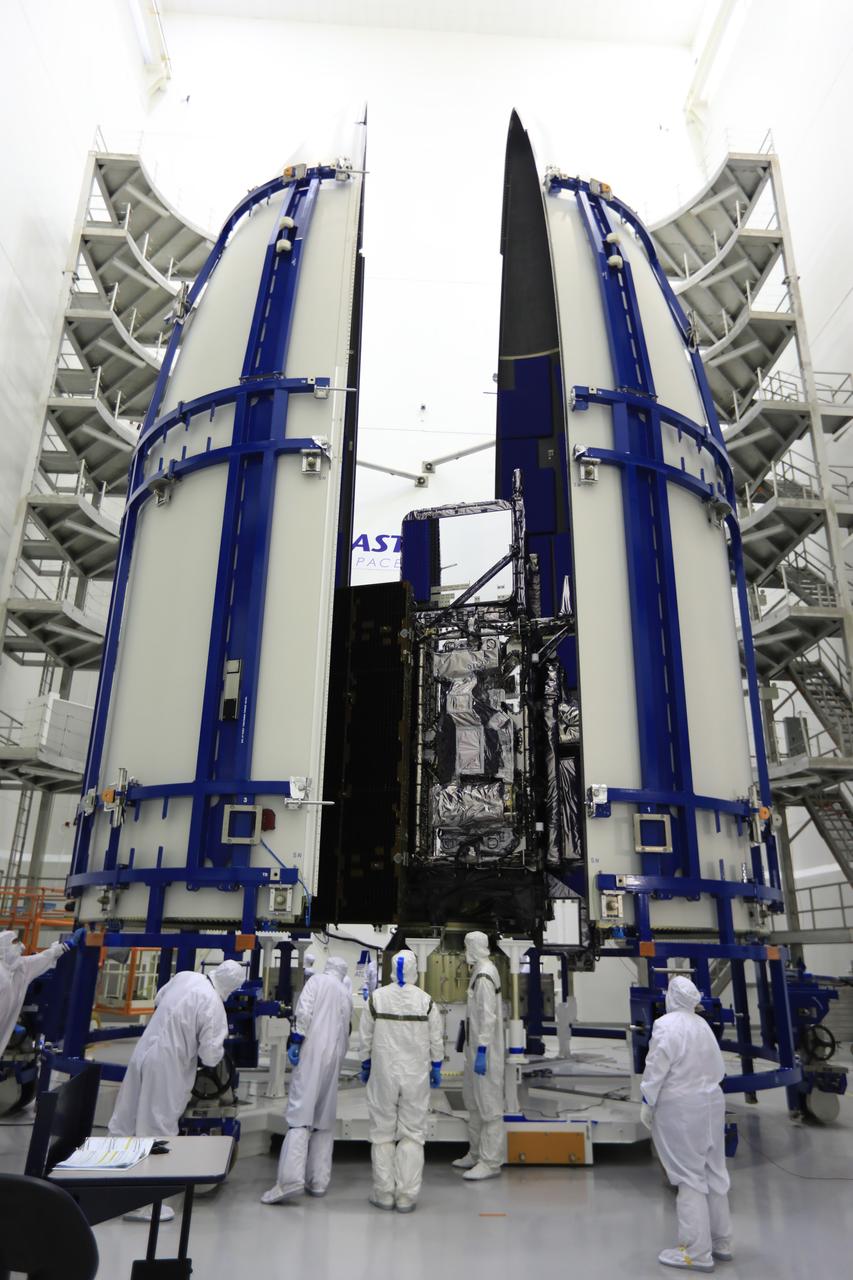
Team members with United Launch Alliance (ULA) monitor the progress as the two halves of the payload fairing begin to close around the Geostationary Operational Environmental Satellite (GOES-R) inside the Astrotech payload processing facility in Titusville, Florida near NASA’s Kennedy Space Center. GOES-R will be the first satellite in a series of next-generation NOAA GOES Satellites. The spacecraft is to launch aboard a ULA Atlas V rocket in November.

The Geostationary Operational Environmental Satellite (GOES-R) has been secured in the vertical position on an “up-ender” inside the Astrotech payload processing facility in Titusville, Florida near NASA’s Kennedy Space Center. GOES-R will be the first satellite in a series of next-generation NOAA GOES Satellites. The spacecraft is to launch aboard a United Launch Alliance Atlas V rocket in November.
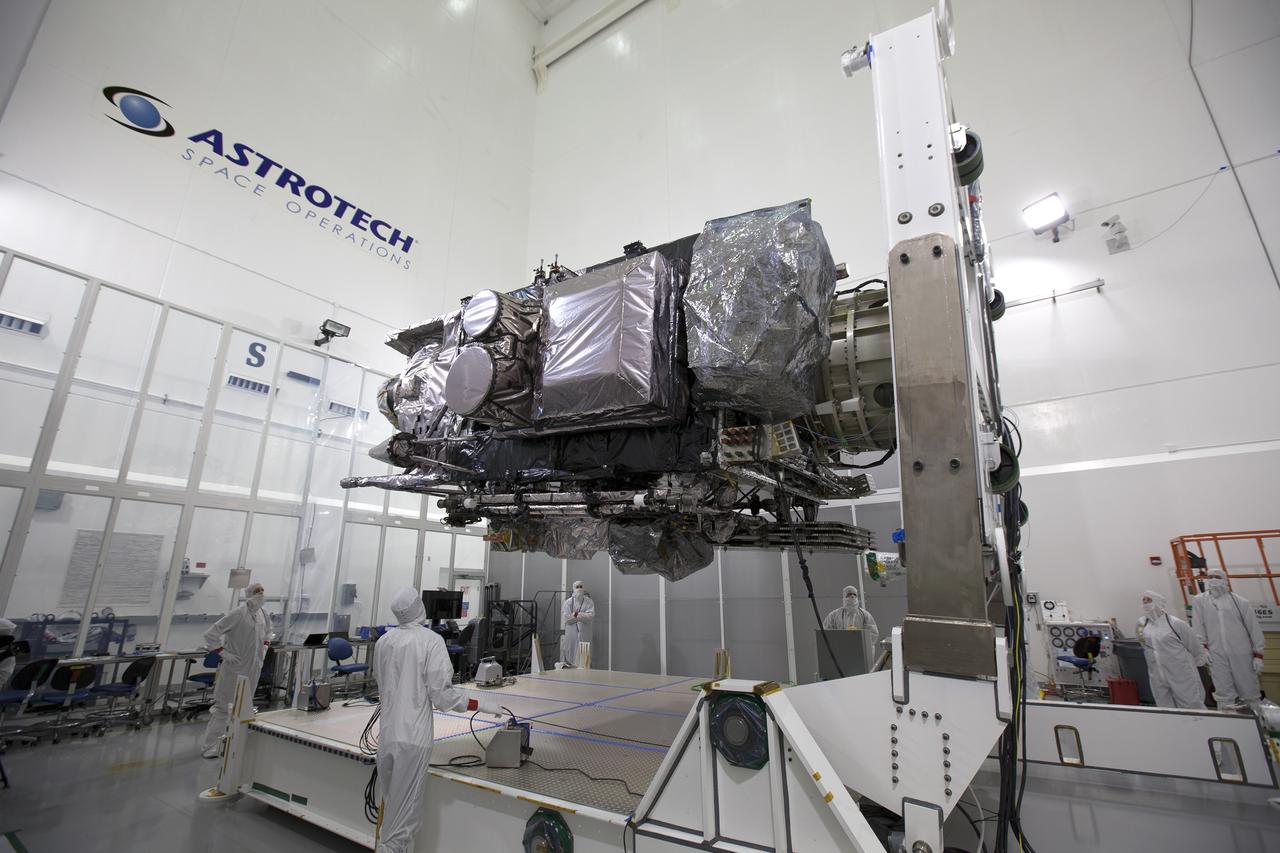
Team members assist as the Geostationary Operational Environmental Satellite (GOES-R) is raised and prepared for lifting to the vertical position on an “up-ender” inside the Astrotech payload processing facility in Titusville, Florida near NASA’s Kennedy Space Center. GOES-R will be the first satellite in a series of next-generation NOAA GOES Satellites. The spacecraft is to launch aboard a United Launch Alliance Atlas V rocket in November.

Team members assist as the Geostationary Operational Environmental Satellite (GOES-R) is raised and prepared for lifting to the vertical position on an “up-ender” inside the Astrotech payload processing facility in Titusville, Florida near NASA’s Kennedy Space Center. GOES-R will be the first satellite in a series of next-generation NOAA GOES Satellites. The spacecraft is to launch aboard a United Launch Alliance Atlas V rocket in November
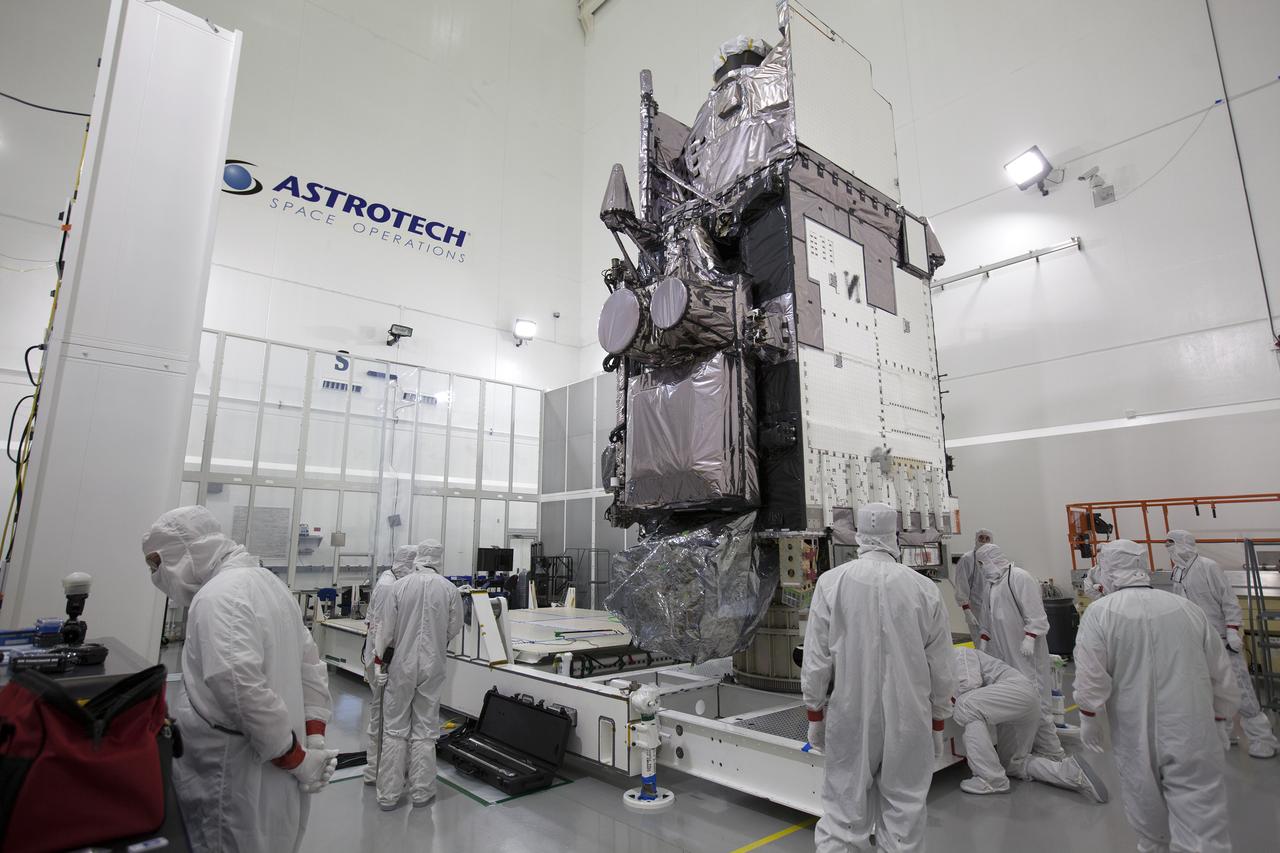
Team members are securing the Geostationary Operational Environmental Satellite (GOES-R) in the vertical position on an “up-ender” inside the Astrotech payload processing facility in Titusville, Florida near NASA’s Kennedy Space Center. GOES-R will be the first satellite in a series of next-generation NOAA GOES Satellites. The spacecraft is to launch aboard a United Launch Alliance Atlas V rocket in November.
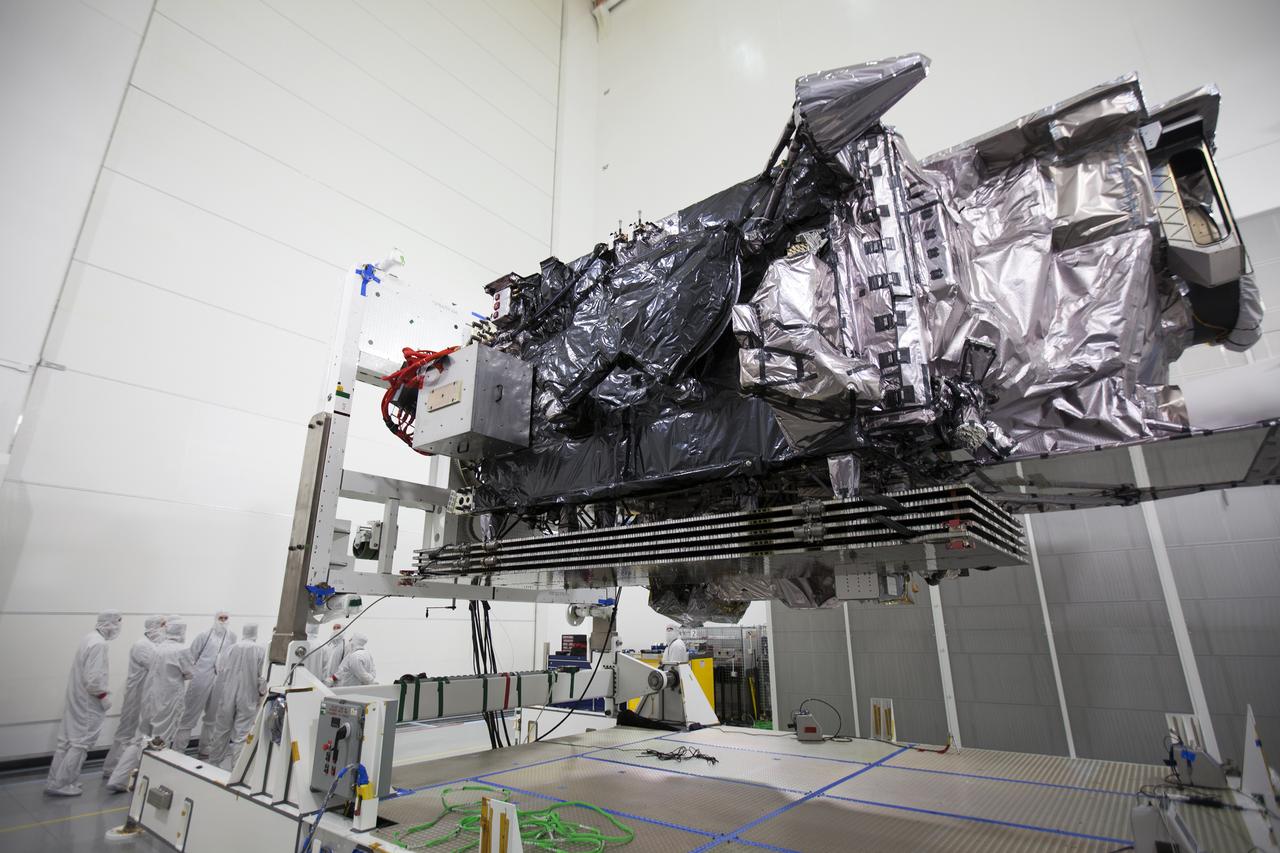
Team members assist as the Geostationary Operational Environmental Satellite (GOES-R) is prepared for lifting to the vertical position on an “up-ender” inside the Astrotech payload processing facility in Titusville, Florida near NASA’s Kennedy Space Center. GOES-R will be the first satellite in a series of next-generation NOAA GOES Satellites. The spacecraft is to launch aboard a United Launch Alliance Atlas V rocket in November.
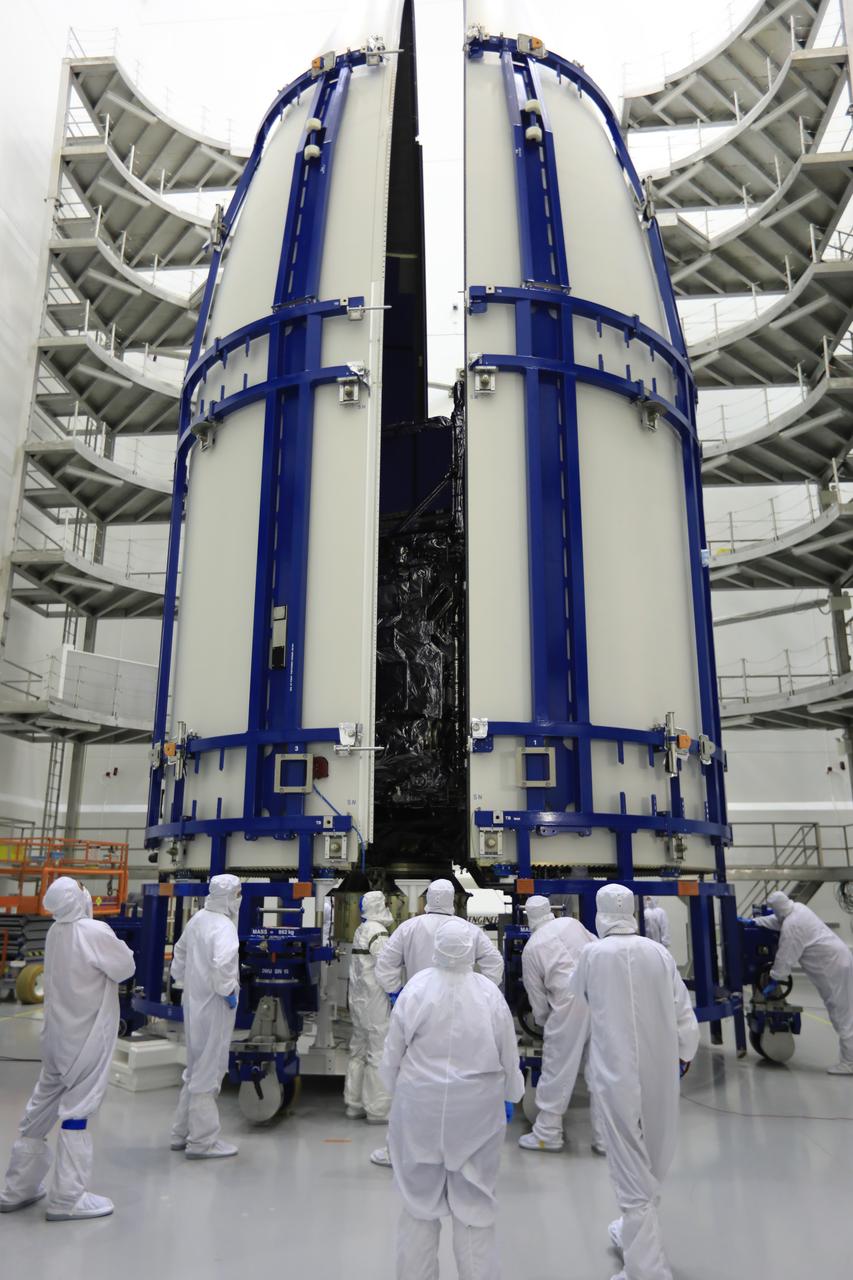
Team members with United Launch Alliance (ULA) monitor the progress as the two halves of the payload fairing close around the Geostationary Operational Environmental Satellite (GOES-R) inside the Astrotech payload processing facility in Titusville, Florida near NASA’s Kennedy Space Center. GOES-R will be the first satellite in a series of next-generation NOAA GOES Satellites. The spacecraft is to launch aboard a ULA Atlas V rocket in November.
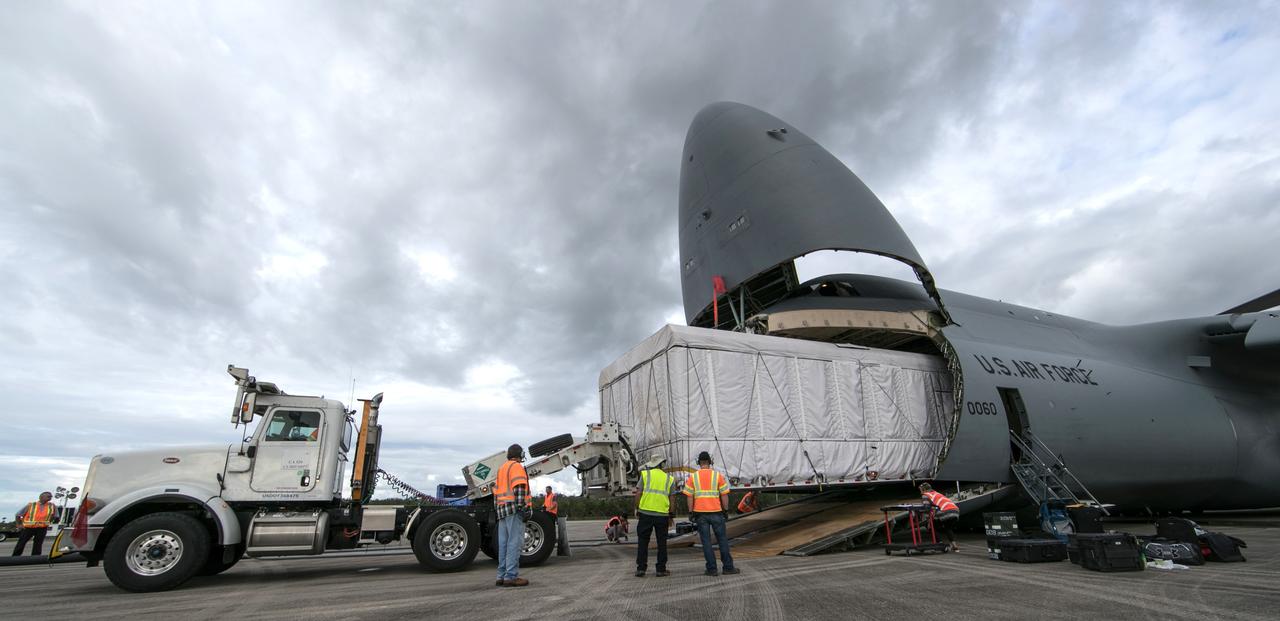
NOAA's Geostationary Operation Environmental Satellite-S (GOES-S) is being offloaded from a C-5 transport aircraft onto the flatbed of a heavy-lift truck at the Shuttle Landing Facility at NASA's Kennedy Space Center in Florida. The satellite will be transported to the Astrotech Space Operations facility in Titusville, Florida to prepare it for launch. GOES-S is the second in a series of four advanced geostationary weather satellites. The GOES-R series - consisting of the GOES-R, GOES-S, GOES-T and GOES-U spacecraft - will significantly improve the detection and observation of environmental phenomena that directly affect public safety, protection of property and the nation's economic health and prosperity. GOES-S is slated to launch March 1, 2018 aboard a United Launch Alliance Atlas V rocket from Cape Canaveral Air Force Station in Florida.
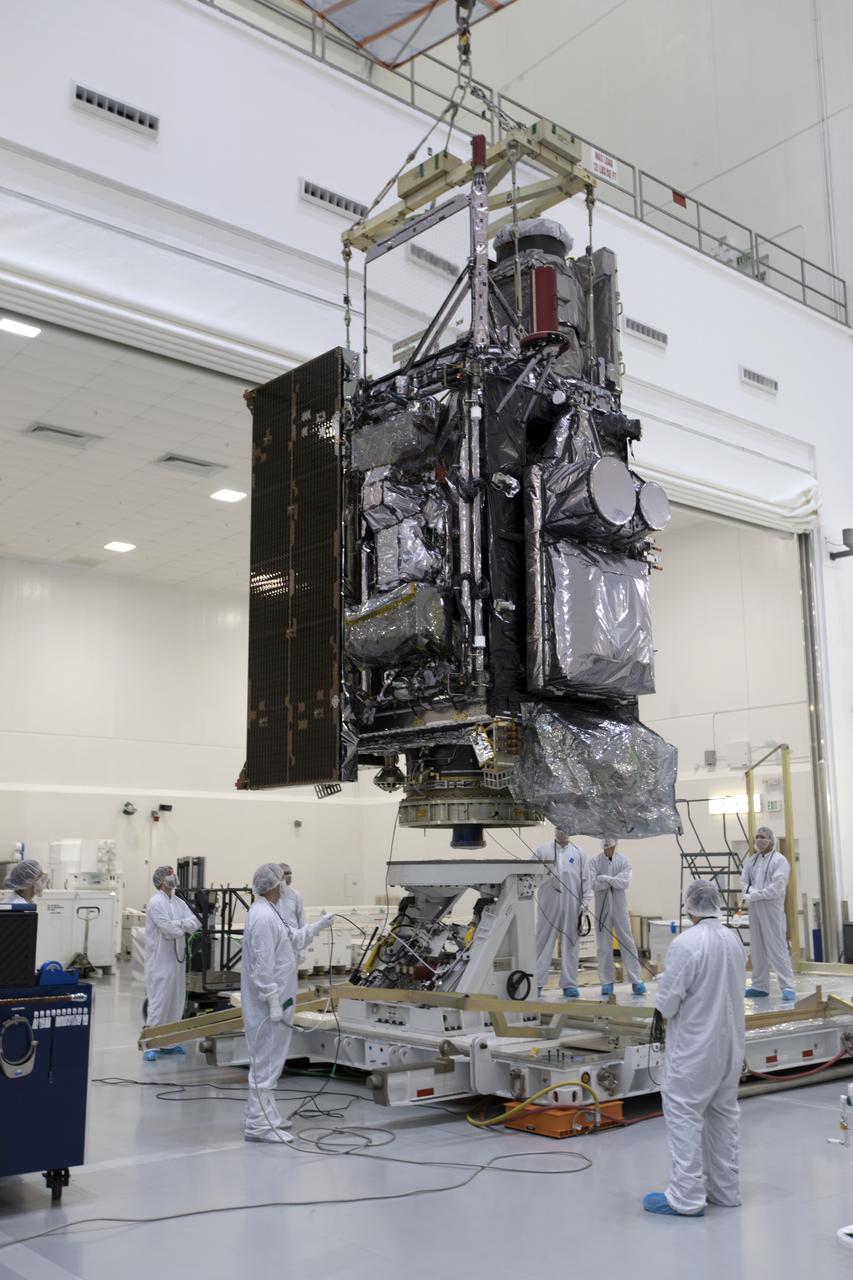
At Astrotech Space Operations in Titusville, Florida, technicians and engineers keep a watchful eye on NOAA's Geostationary Operational Environmental Satellite-S (GOES-S) as it is moved to a work stand. The facility is located near NASA's Kennedy Space Center. GOES-S is the second in a series of four advanced geostationary weather satellites. The GOES-R series - consisting of the GOES-R, GOES-S, GOES-T and GOES-U spacecraft - will significantly improve the detection and observation of environmental phenomena that directly affect public safety, protection of property and the nation's economic health and prosperity. GOES-S is slated to launch March 1, 2018 aboard a United Launch Alliance Atlas V rocket from Cape Canaveral Air Force Station in Florida.
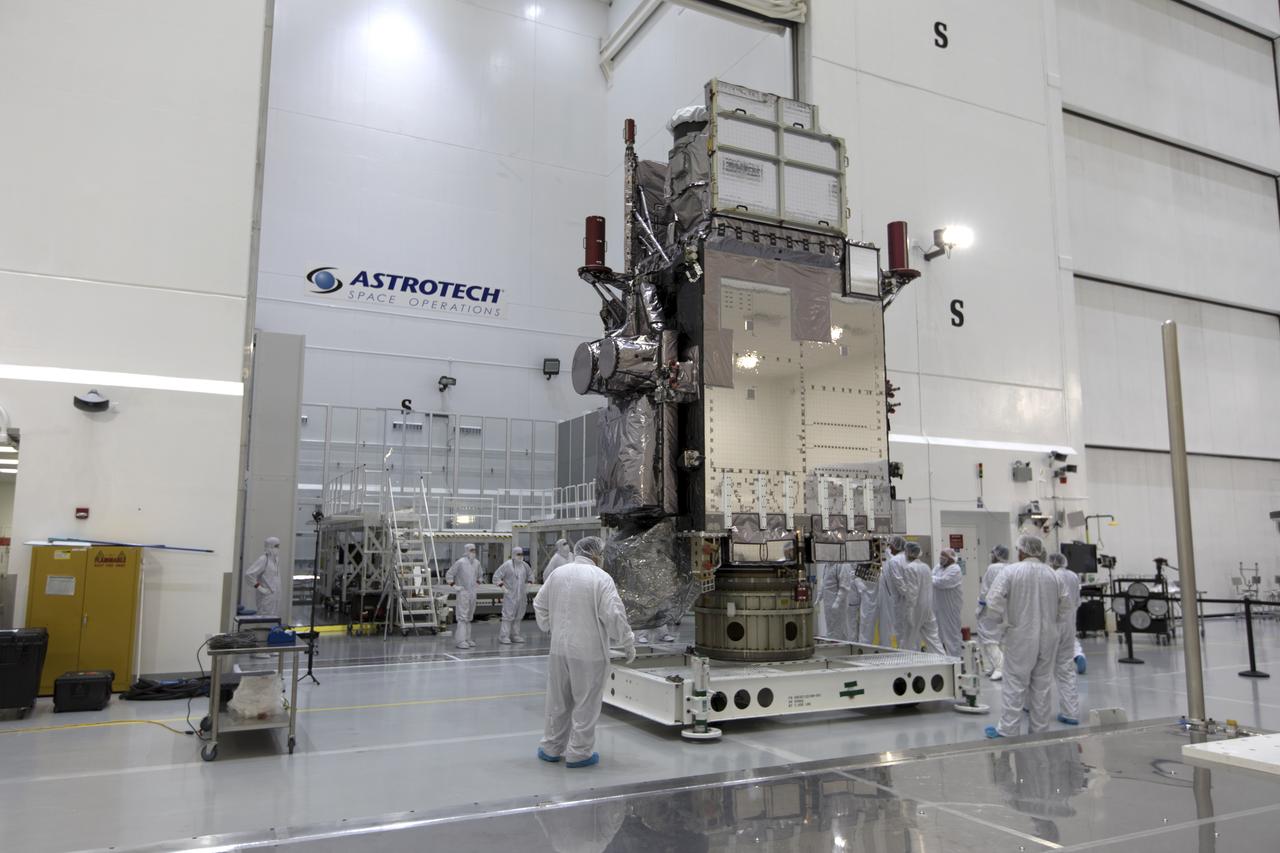
At Astrotech Space Operations in Titusville, Florida, technicians and engineers inspect NOAA's Geostationary Operational Environmental Satellite-S (GOES-S) after it was positioned on a work stand. The facility is located near NASA's Kennedy Space Center. GOES-S is the second in a series of four advanced geostationary weather satellites. The GOES-R series - consisting of the GOES-R, GOES-S, GOES-T and GOES-U spacecraft - will significantly improve the detection and observation of environmental phenomena that directly affect public safety, protection of property and the nation's economic health and prosperity. GOES-S is slated to launch March 1, 2018 aboard a United Launch Alliance Atlas V rocket from Cape Canaveral Air Force Station in Florida.
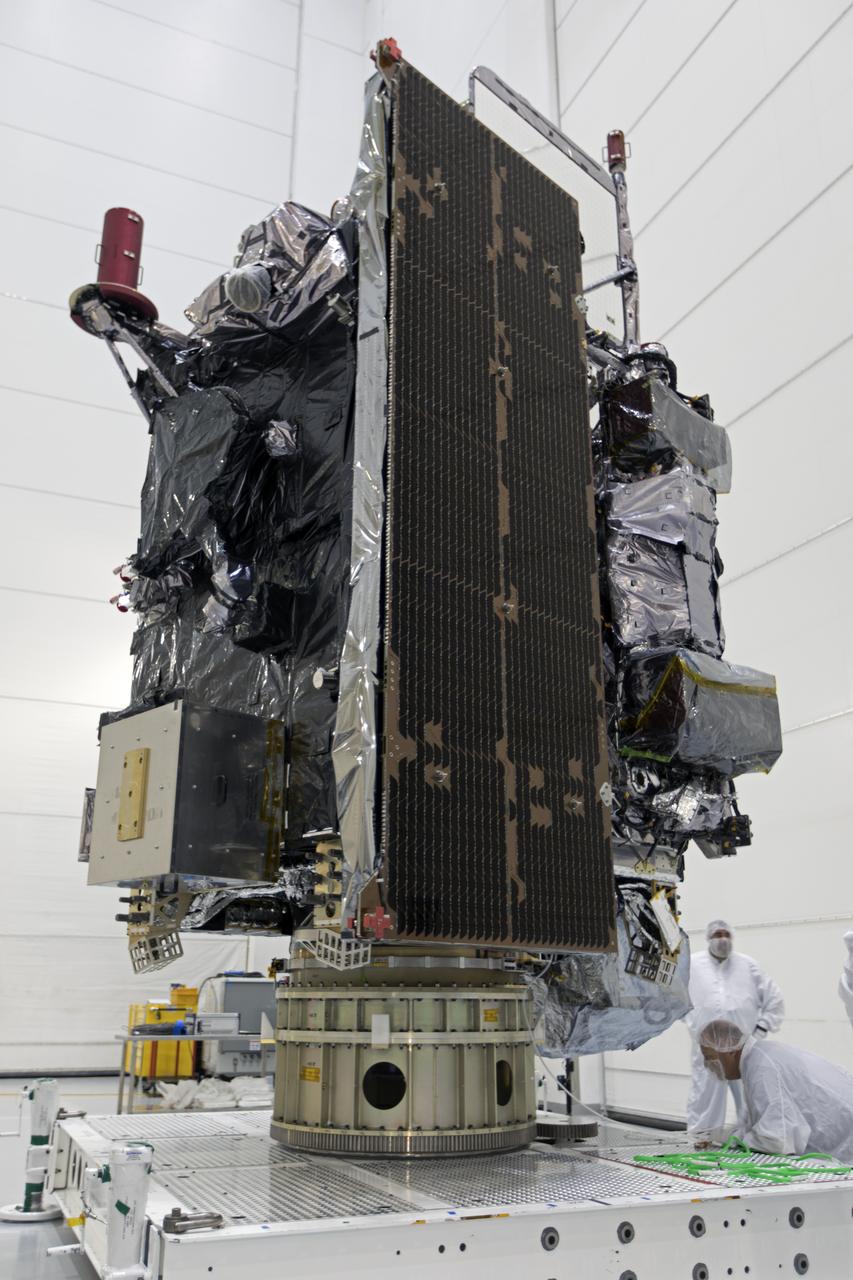
At Astrotech Space Operations in Titusville, Florida, technicians and engineers inspect NOAA's Geostationary Operational Environmental Satellite-S (GOES-S) after it was positioned on a work stand. The facility is located near NASA's Kennedy Space Center. GOES-S is the second in a series of four advanced geostationary weather satellites. The GOES-R series - consisting of the GOES-R, GOES-S, GOES-T and GOES-U spacecraft - will significantly improve the detection and observation of environmental phenomena that directly affect public safety, protection of property and the nation's economic health and prosperity. GOES-S is slated to launch March 1, 2018 aboard a United Launch Alliance Atlas V rocket from Cape Canaveral Air Force Station in Florida.
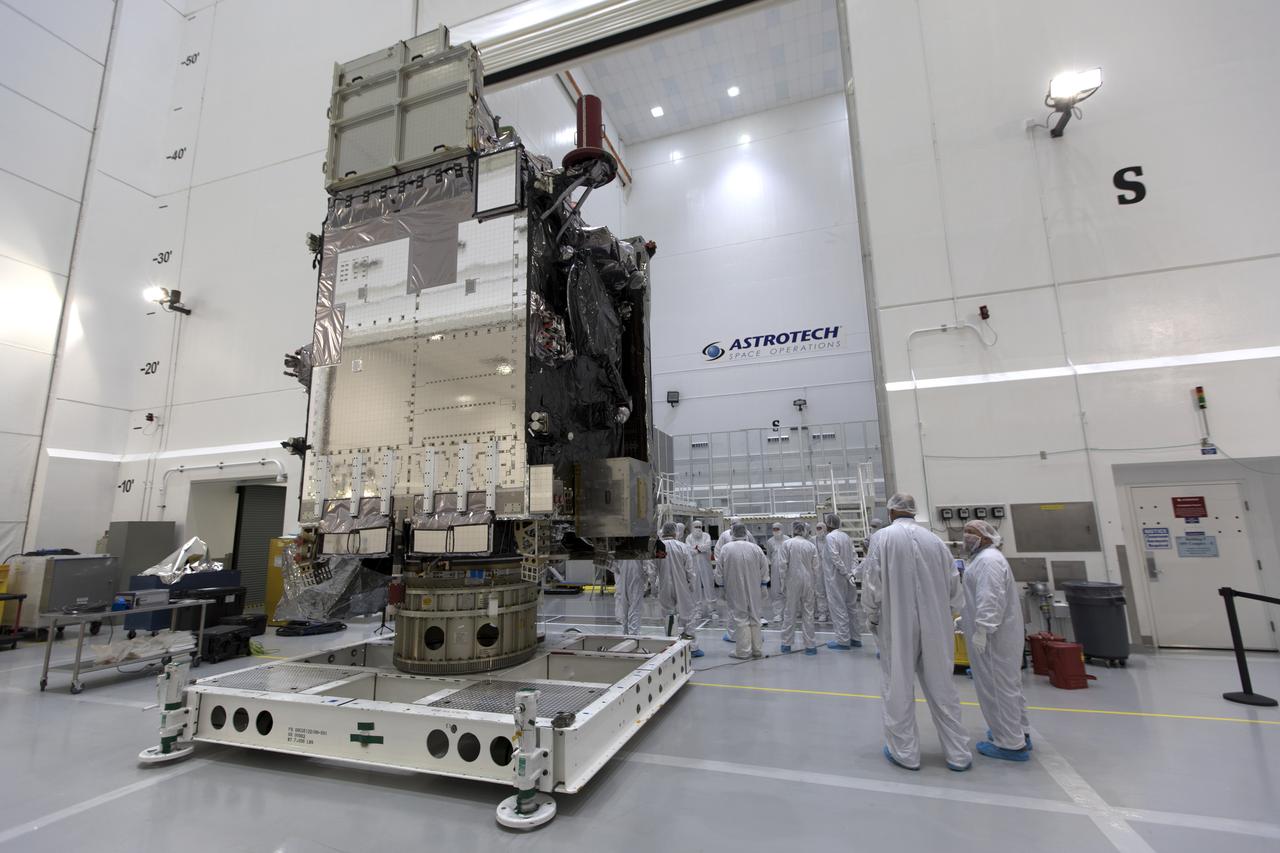
At Astrotech Space Operations in Titusville, Florida, NOAA's Geostationary Operational Environmental Satellite-S (GOES-S) has been positioned on a work stand. The facility is located near NASA's Kennedy Space Center. GOES-S is the second in a series of four advanced geostationary weather satellites. The GOES-R series - consisting of the GOES-R, GOES-S, GOES-T and GOES-U spacecraft - will significantly improve the detection and observation of environmental phenomena that directly affect public safety, protection of property and the nation's economic health and prosperity. GOES-S is slated to launch March 1, 2018 aboard a United Launch Alliance Atlas V rocket from Cape Canaveral Air Force Station in Florida.
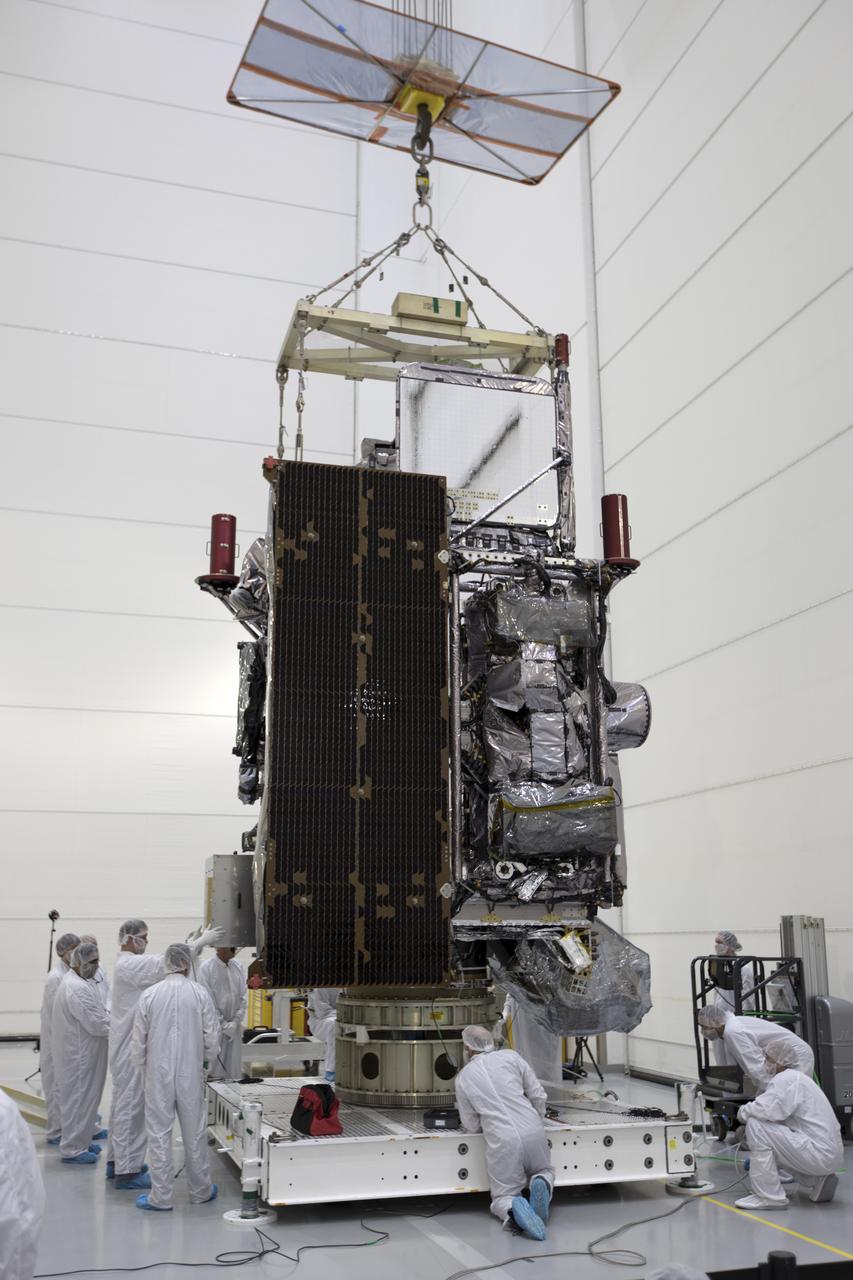
At Astrotech Space Operations in Titusville, Florida, technicians and engineers keep a watchful eye on NOAA's Geostationary Operational Environmental Satellite-S (GOES-S) as it is positioned on a work stand. The facility is located near NASA's Kennedy Space Center. GOES-S is the second in a series of four advanced geostationary weather satellites. The GOES-R series - consisting of the GOES-R, GOES-S, GOES-T and GOES-U spacecraft - will significantly improve the detection and observation of environmental phenomena that directly affect public safety, protection of property and the nation's economic health and prosperity. GOES-S is slated to launch March 1, 2018 aboard a United Launch Alliance Atlas V rocket from Cape Canaveral Air Force Station in Florida.
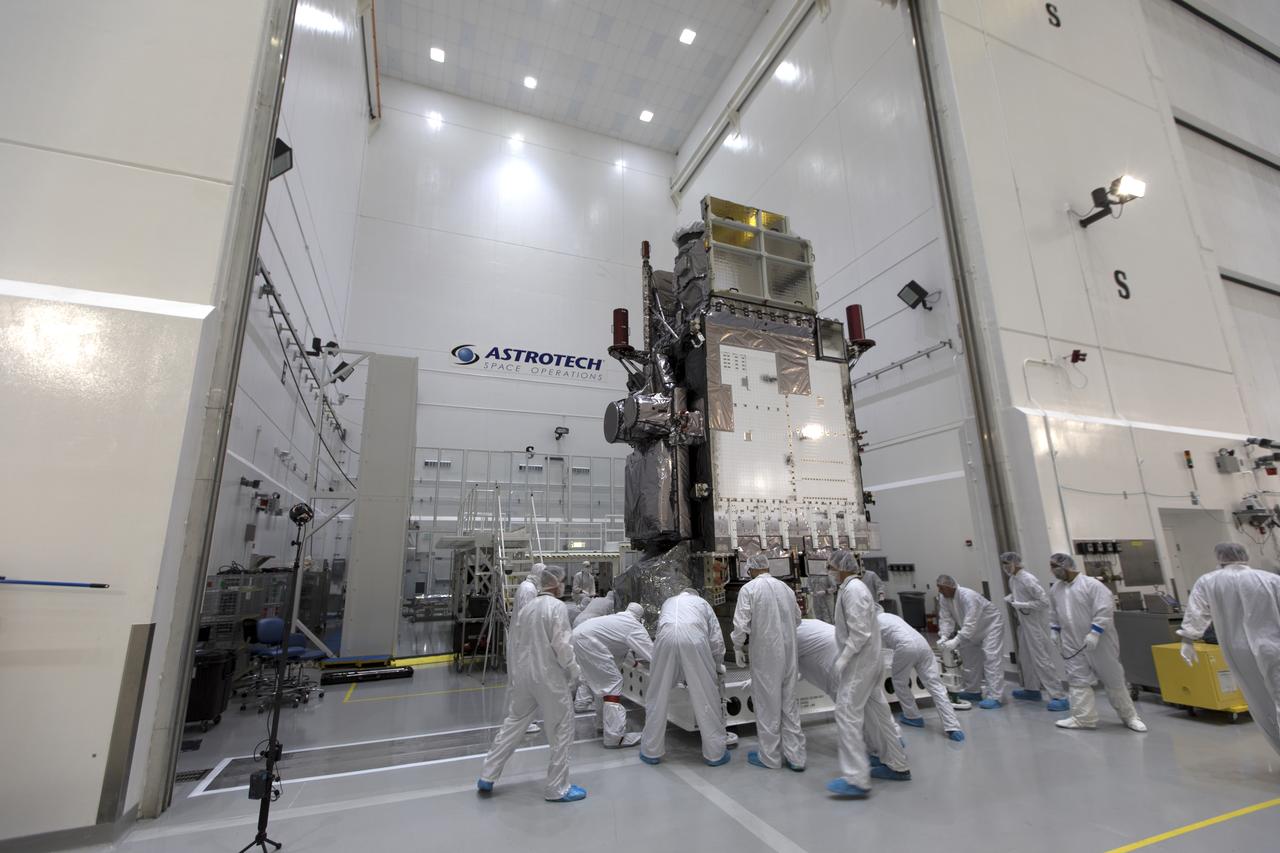
At Astrotech Space Operations in Titusville, Florida, technicians and engineers move NOAA's Geostationary Operational Environmental Satellite-S (GOES-S) into a clean room for further processing. The facility is located near NASA's Kennedy Space Center. GOES-S is the second in a series of four advanced geostationary weather satellites. The GOES-R series - consisting of the GOES-R, GOES-S, GOES-T and GOES-U spacecraft - will significantly improve the detection and observation of environmental phenomena that directly affect public safety, protection of property and the nation's economic health and prosperity. GOES-S is slated to launch March 1, 2018 aboard a United Launch Alliance Atlas V rocket from Cape Canaveral Air Force Station in Florida.
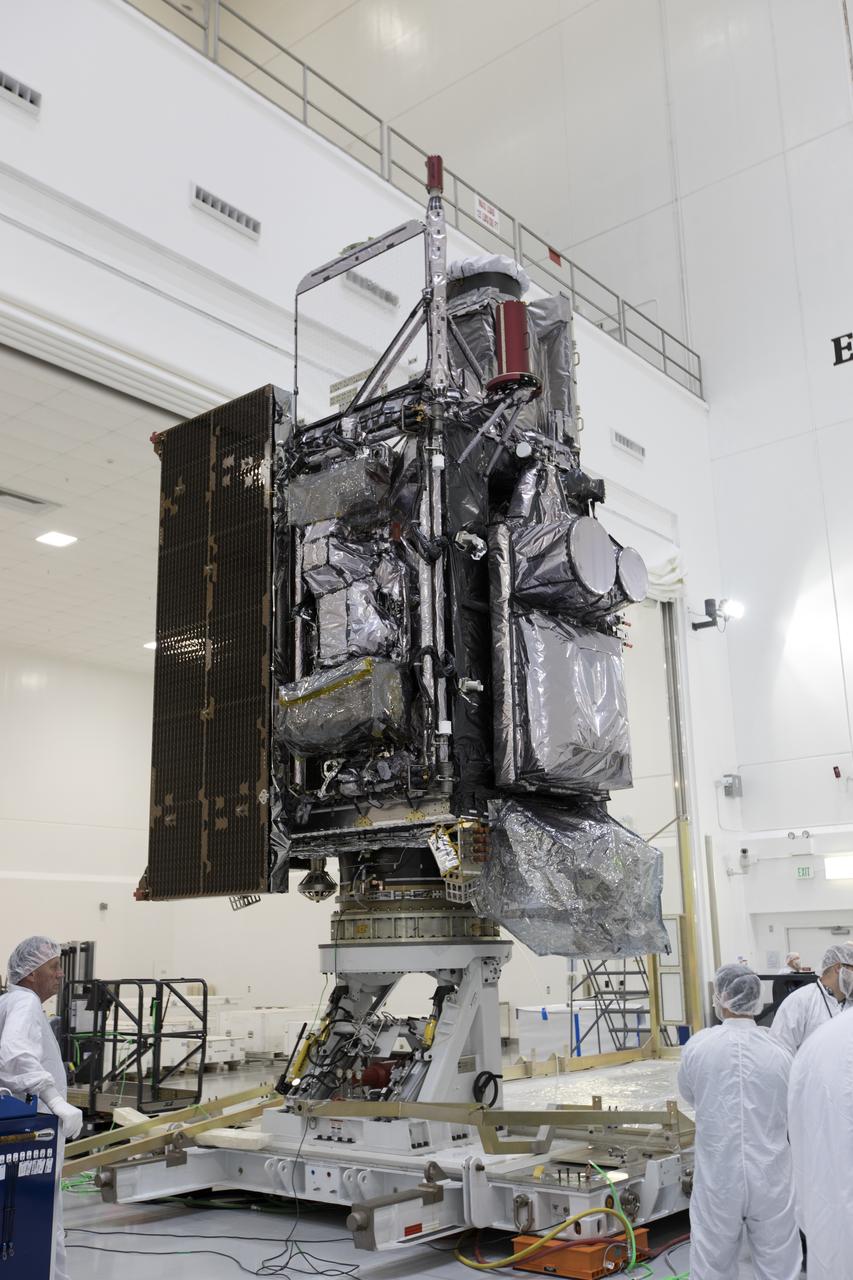
At Astrotech Space Operations in Titusville, Florida, NOAA's Geostationary Operational Environmental Satellite-S (GOES-S) has been rotated to a vertical position after it was uncrated from its shipping container. The facility is located near NASA's Kennedy Space Center. GOES-S is the second in a series of four advanced geostationary weather satellites. The GOES-R series - consisting of the GOES-R, GOES-S, GOES-T and GOES-U spacecraft - will significantly improve the detection and observation of environmental phenomena that directly affect public safety, protection of property and the nation's economic health and prosperity. GOES-S is slated to launch March 1, 2018 aboard a United Launch Alliance Atlas V rocket from Cape Canaveral Air Force Station in Florida.
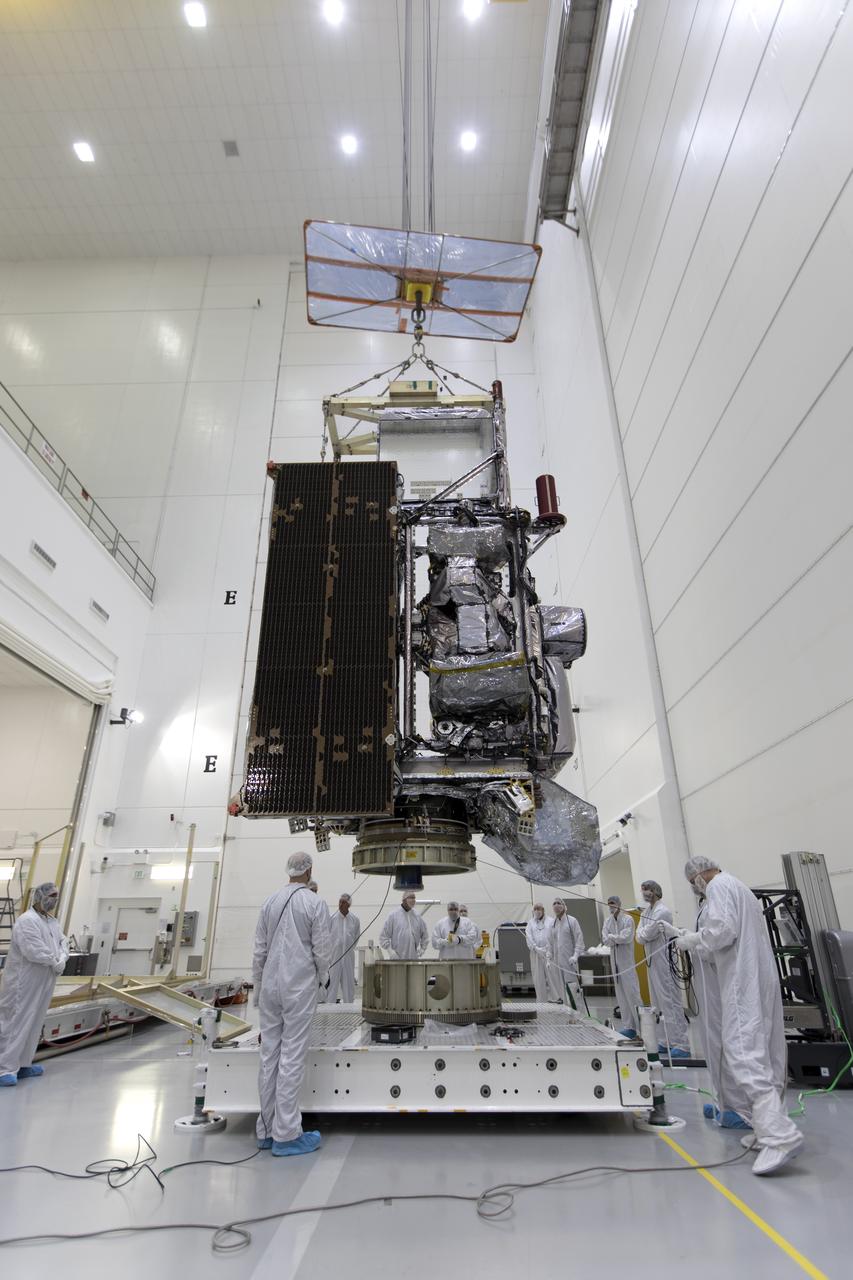
At Astrotech Space Operations in Titusville, Florida, technicians and engineers keep a watchful eye on NOAA's Geostationary Operational Environmental Satellite-S (GOES-S) as it is positioned on a work stand. The facility is located near NASA's Kennedy Space Center. GOES-S is the second in a series of four advanced geostationary weather satellites. The GOES-R series - consisting of the GOES-R, GOES-S, GOES-T and GOES-U spacecraft - will significantly improve the detection and observation of environmental phenomena that directly affect public safety, protection of property and the nation's economic health and prosperity. GOES-S is slated to launch March 1, 2018 aboard a United Launch Alliance Atlas V rocket from Cape Canaveral Air Force Station in Florida.
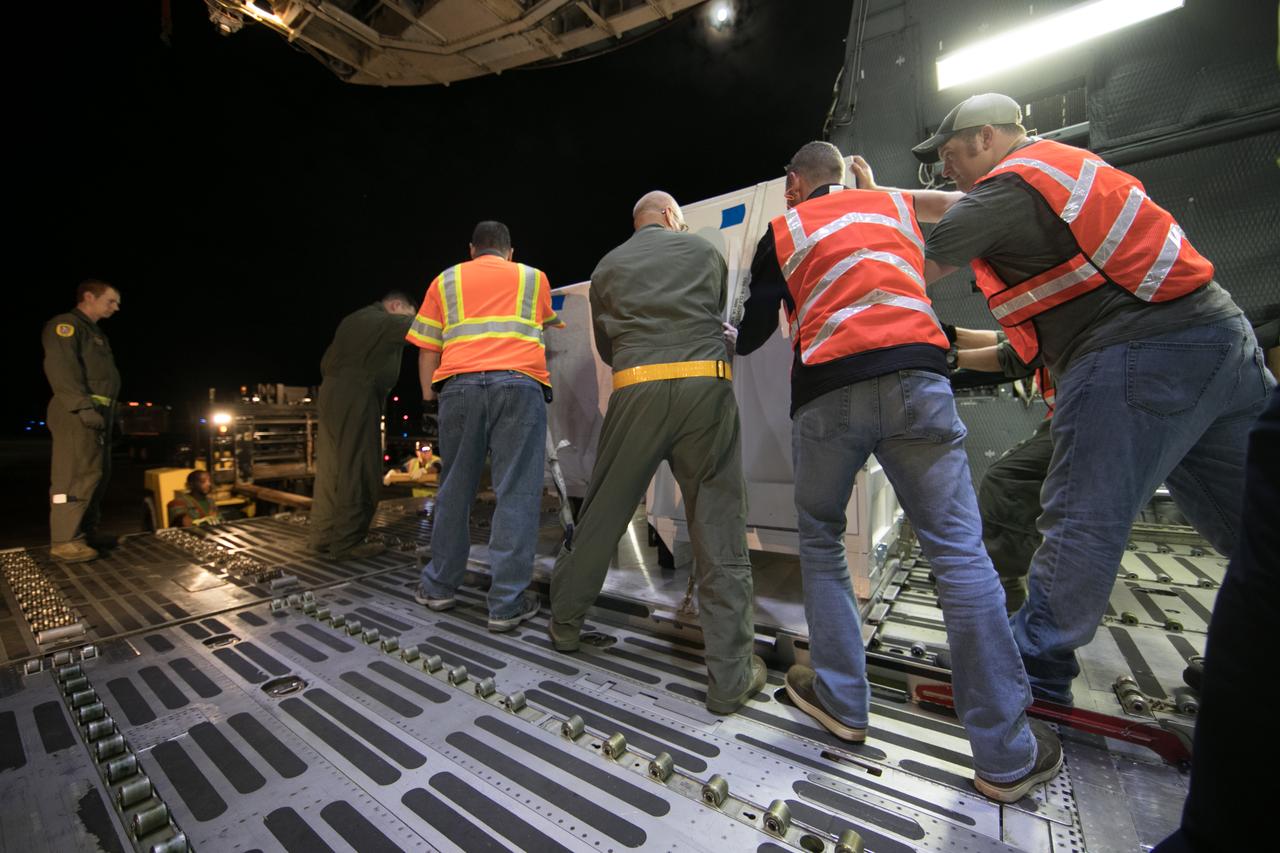
NOAA's Geostationary Operation Environmental Satellite-S (GOES-S) is being offloaded from a C-5 transport aircraft onto the flatbed of a heavy-lift truck at the Shuttle Landing Facility at NASA's Kennedy Space Center in Florida. The satellite will be transported to the Astrotech Space Operations facility in Titusville, Florida to prepare it for launch. GOES-S is the second in a series of four advanced geostationary weather satellites. The GOES-R series - consisting of the GOES-R, GOES-S, GOES-T and GOES-U spacecraft - will significantly improve the detection and observation of environmental phenomena that directly affect public safety, protection of property and the nation's economic health and prosperity. GOES-S is slated to launch March 1, 2018 aboard a United Launch Alliance Atlas V rocket from Cape Canaveral Air Force Station in Florida.
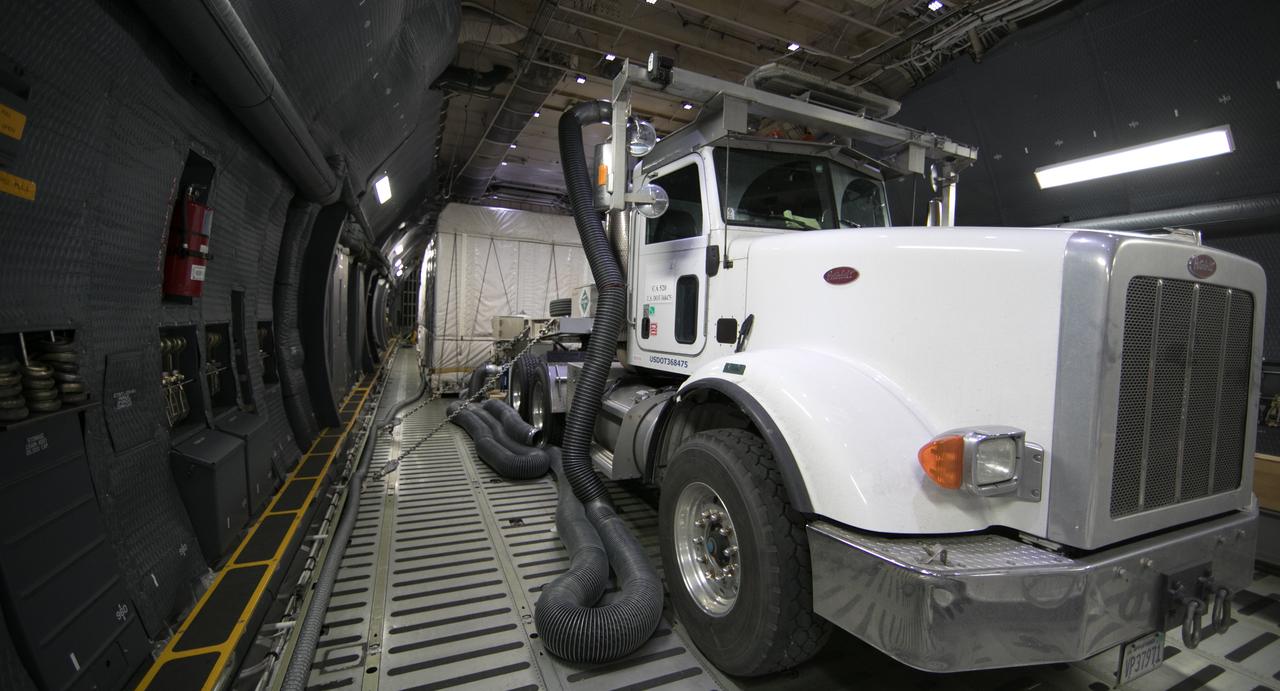
NOAA's Geostationary Operation Environmental Satellite-S (GOES-S) is being offloaded from a C-5 transport aircraft onto the flatbed of a heavy-lift truck at the Shuttle Landing Facility at NASA's Kennedy Space Center in Florida. The satellite will be transported to the Astrotech Space Operations facility in Titusville, Florida to prepare it for launch. GOES-S is the second in a series of four advanced geostationary weather satellites. The GOES-R series - consisting of the GOES-R, GOES-S, GOES-T and GOES-U spacecraft - will significantly improve the detection and observation of environmental phenomena that directly affect public safety, protection of property and the nation's economic health and prosperity. GOES-S is slated to launch March 1, 2018 aboard a United Launch Alliance Atlas V rocket from Cape Canaveral Air Force Station in Florida.
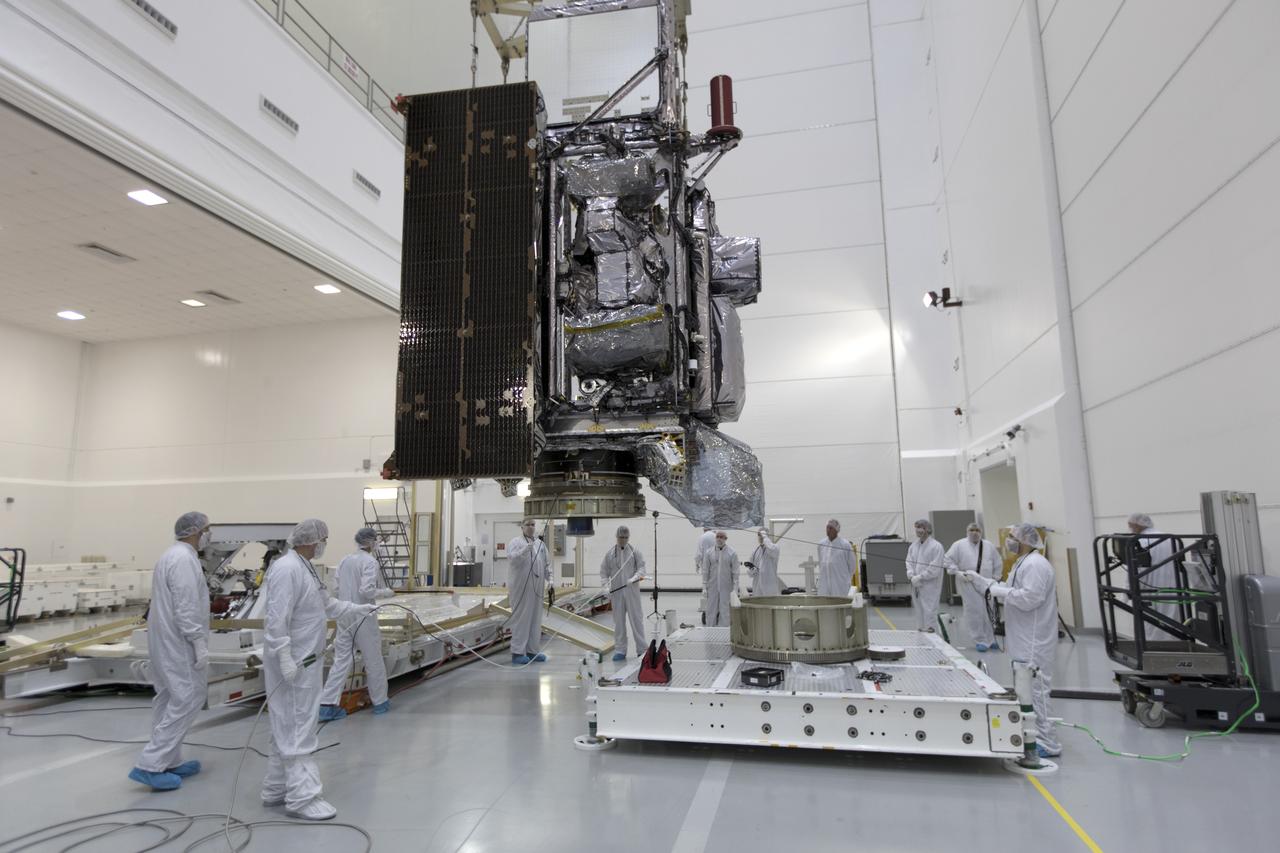
At Astrotech Space Operations in Titusville, Florida, technicians and engineers keep a watchful eye on NOAA's Geostationary Operational Environmental Satellite-S (GOES-S) as it is moved to a work stand. The facility is located near NASA's Kennedy Space Center. GOES-S is the second in a series of four advanced geostationary weather satellites. The GOES-R series - consisting of the GOES-R, GOES-S, GOES-T and GOES-U spacecraft - will significantly improve the detection and observation of environmental phenomena that directly affect public safety, protection of property and the nation's economic health and prosperity. GOES-S is slated to launch March 1, 2018 aboard a United Launch Alliance Atlas V rocket from Cape Canaveral Air Force Station in Florida.
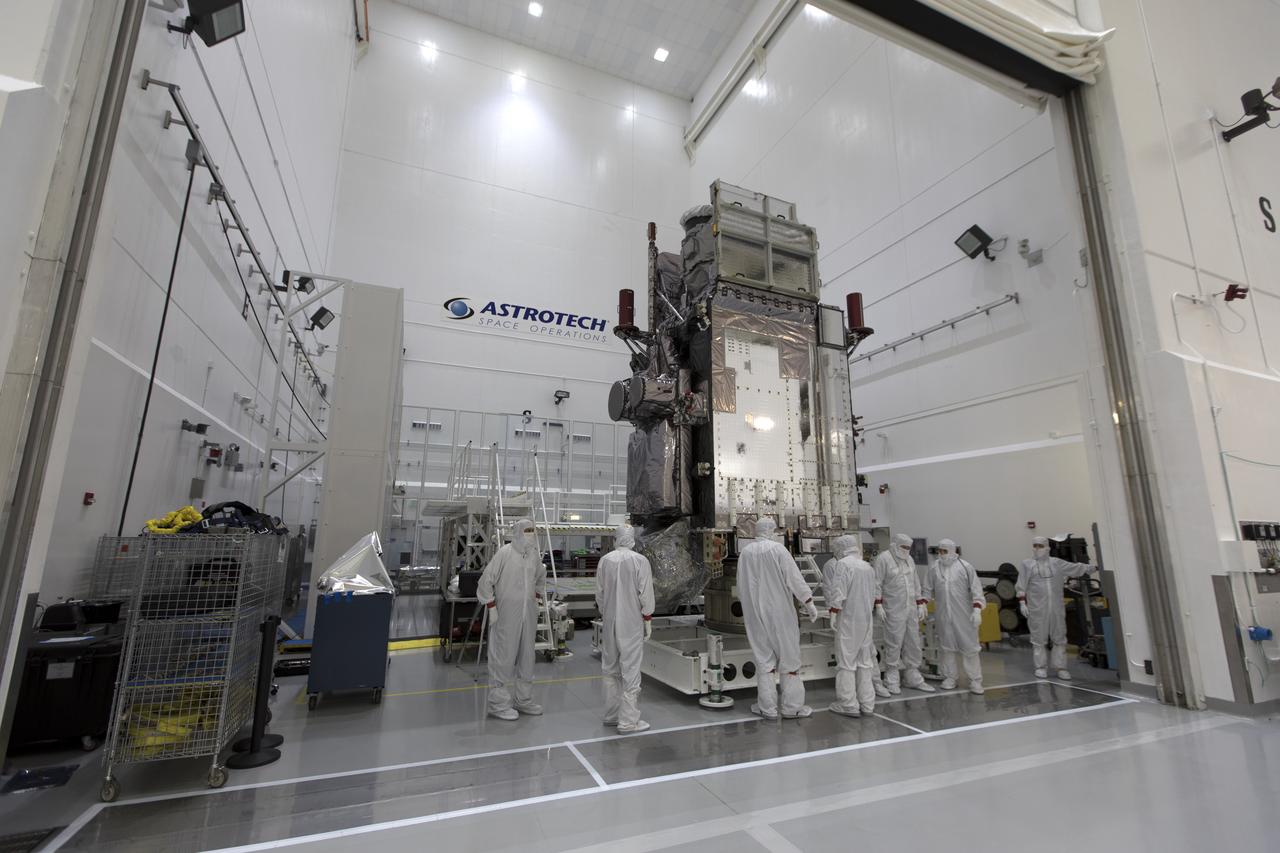
At Astrotech Space Operations in Titusville, Florida, technicians and engineers move NOAA's Geostationary Operational Environmental Satellite-S (GOES-S) into a clean room for further processing. The facility is located near NASA's Kennedy Space Center. GOES-S is the second in a series of four advanced geostationary weather satellites. The GOES-R series - consisting of the GOES-R, GOES-S, GOES-T and GOES-U spacecraft - will significantly improve the detection and observation of environmental phenomena that directly affect public safety, protection of property and the nation's economic health and prosperity. GOES-S is slated to launch March 1, 2018 aboard a United Launch Alliance Atlas V rocket from Cape Canaveral Air Force Station in Florida.
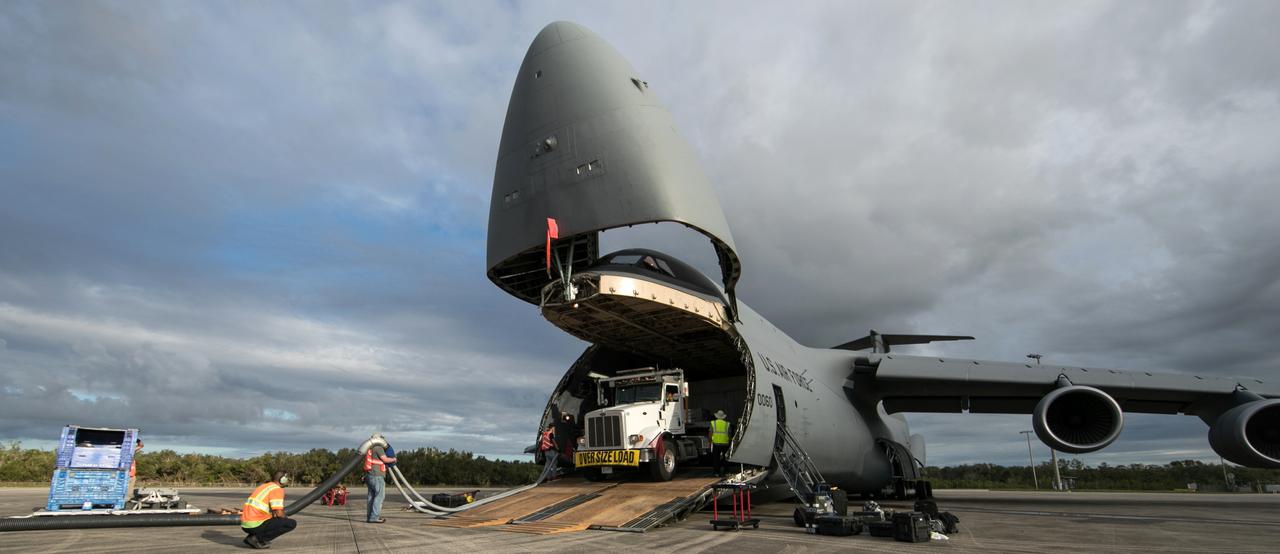
NOAA's Geostationary Operation Environmental Satellite-S (GOES-S) is being offloaded from a C-5 transport aircraft onto the flatbed of a heavy-lift truck at the Shuttle Landing Facility at NASA's Kennedy Space Center in Florida. The satellite will be transported to the Astrotech Space Operations facility in Titusville, Florida to prepare it for launch. GOES-S is the second in a series of four advanced geostationary weather satellites. The GOES-R series - consisting of the GOES-R, GOES-S, GOES-T and GOES-U spacecraft - will significantly improve the detection and observation of environmental phenomena that directly affect public safety, protection of property and the nation's economic health and prosperity. GOES-S is slated to launch March 1, 2018 aboard a United Launch Alliance Atlas V rocket from Cape Canaveral Air Force Station in Florida.
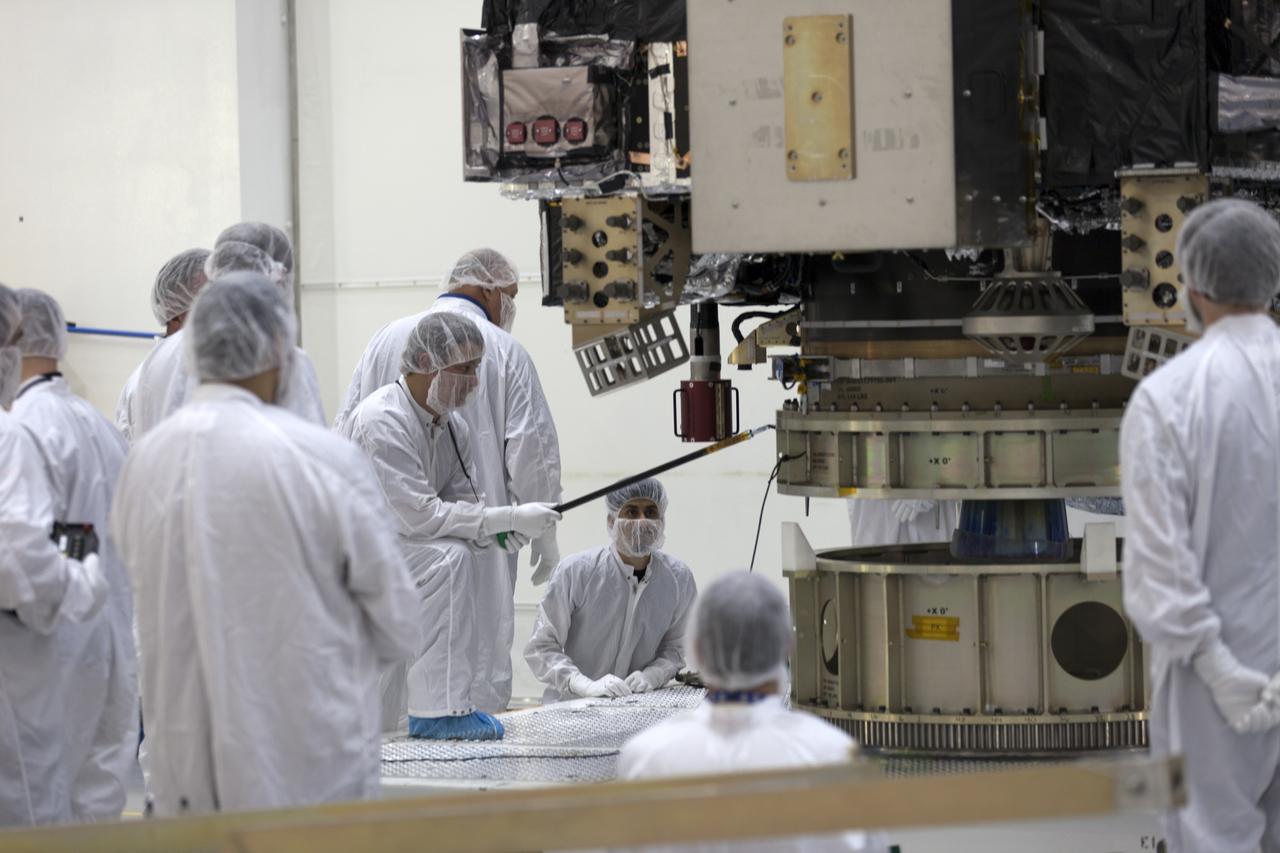
At Astrotech Space Operations in Titusville, Florida, technicians and engineers keep a watchful eye on NOAA's Geostationary Operational Environmental Satellite-S (GOES-S) as it is positioned on a work stand. The facility is located near NASA's Kennedy Space Center. GOES-S is the second in a series of four advanced geostationary weather satellites. The GOES-R series - consisting of the GOES-R, GOES-S, GOES-T and GOES-U spacecraft - will significantly improve the detection and observation of environmental phenomena that directly affect public safety, protection of property and the nation's economic health and prosperity. GOES-S is slated to launch March 1, 2018 aboard a United Launch Alliance Atlas V rocket from Cape Canaveral Air Force Station in Florida.
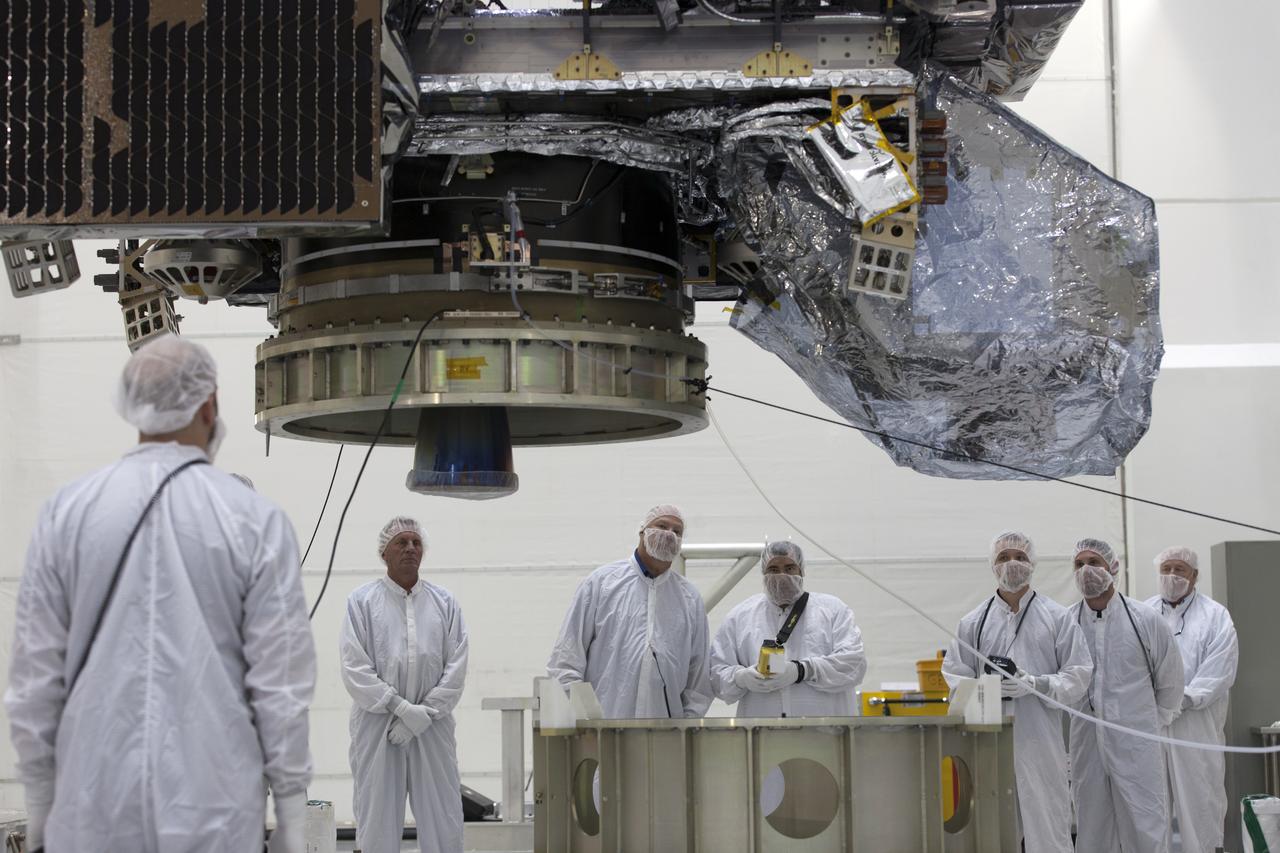
At Astrotech Space Operations in Titusville, Florida, technicians and engineers keep a watchful eye on NOAA's Geostationary Operational Environmental Satellite-S (GOES-S) as it is moved to a work stand. The facility is located near NASA's Kennedy Space Center. GOES-S is the second in a series of four advanced geostationary weather satellites. The GOES-R series - consisting of the GOES-R, GOES-S, GOES-T and GOES-U spacecraft - will significantly improve the detection and observation of environmental phenomena that directly affect public safety, protection of property and the nation's economic health and prosperity. GOES-S is slated to launch March 1, 2018 aboard a United Launch Alliance Atlas V rocket from Cape Canaveral Air Force Station in Florida.