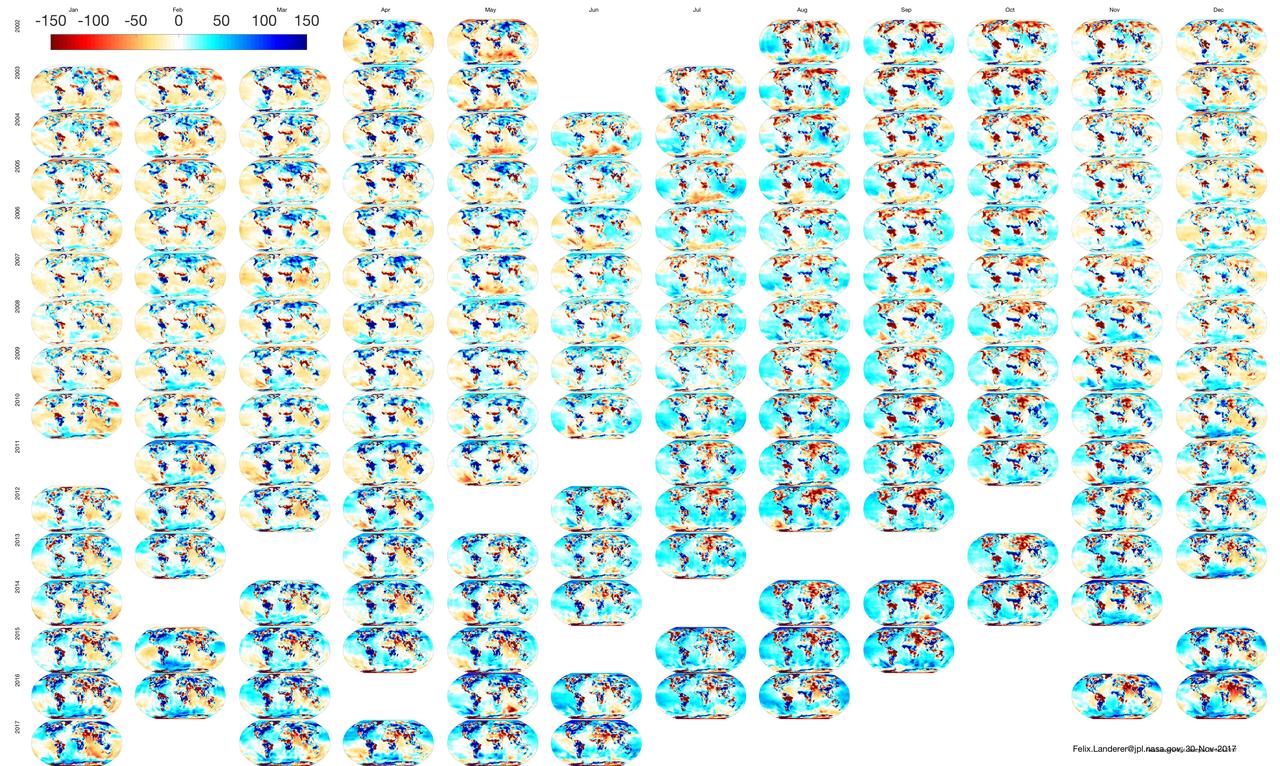
NASA's GRACE mission produced maps of anomalies in Earth's gravity field almost every month from April 2002 to June 2017. https://photojournal.jpl.nasa.gov/catalog/PIA22448
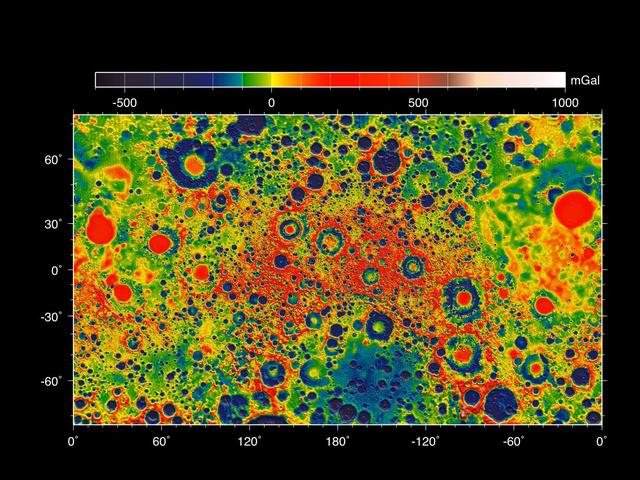
This map shows the gravity field of the moon as measured by NASA GRAIL mission. The viewing perspective, known as a Mercator projection, shows the far side of the moon in the center and the nearside as viewed from Earth at either side.
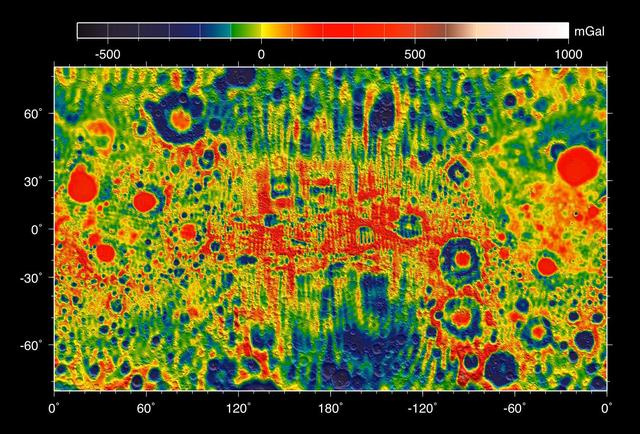
This map shows the gravity field of the moon from the Lunar Prospector mission. The viewing perspective, known as a Mercator projection, shows the far side of the moon in the center and the nearside as viewed from Earth at either side.
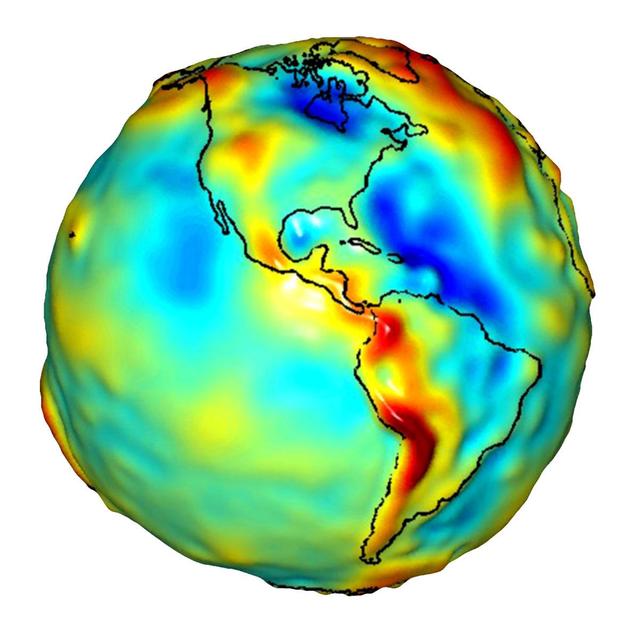
This visualization of a gravity model was created with data from NASA Gravity Recovery and Climate Experiment and shows variations in the gravity field across the Americas.
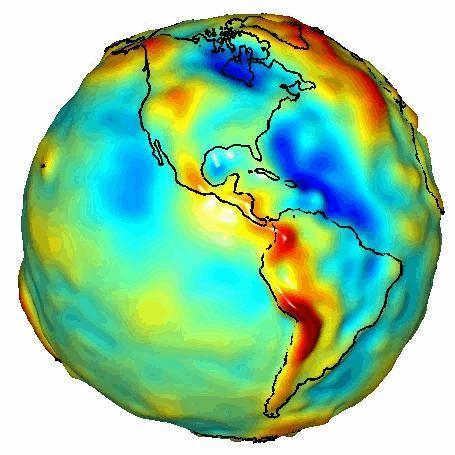
This visualization of a gravity model was created with data from NASA Gravity Recovery and Climate Experiment GRACE and shows variations in Earth’s gravity field.
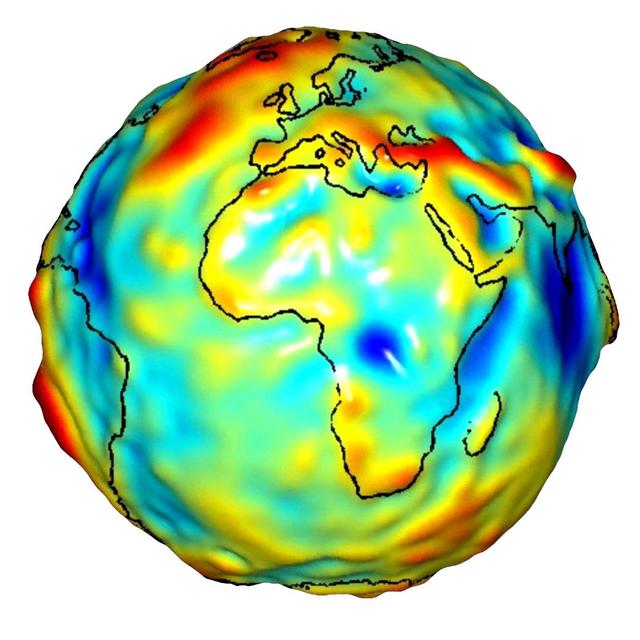
This visualization of a gravity model was created with data from NASA’s Gravity Recovery and Climate Experiment and shows variations in the gravity field across Africa and Europe.
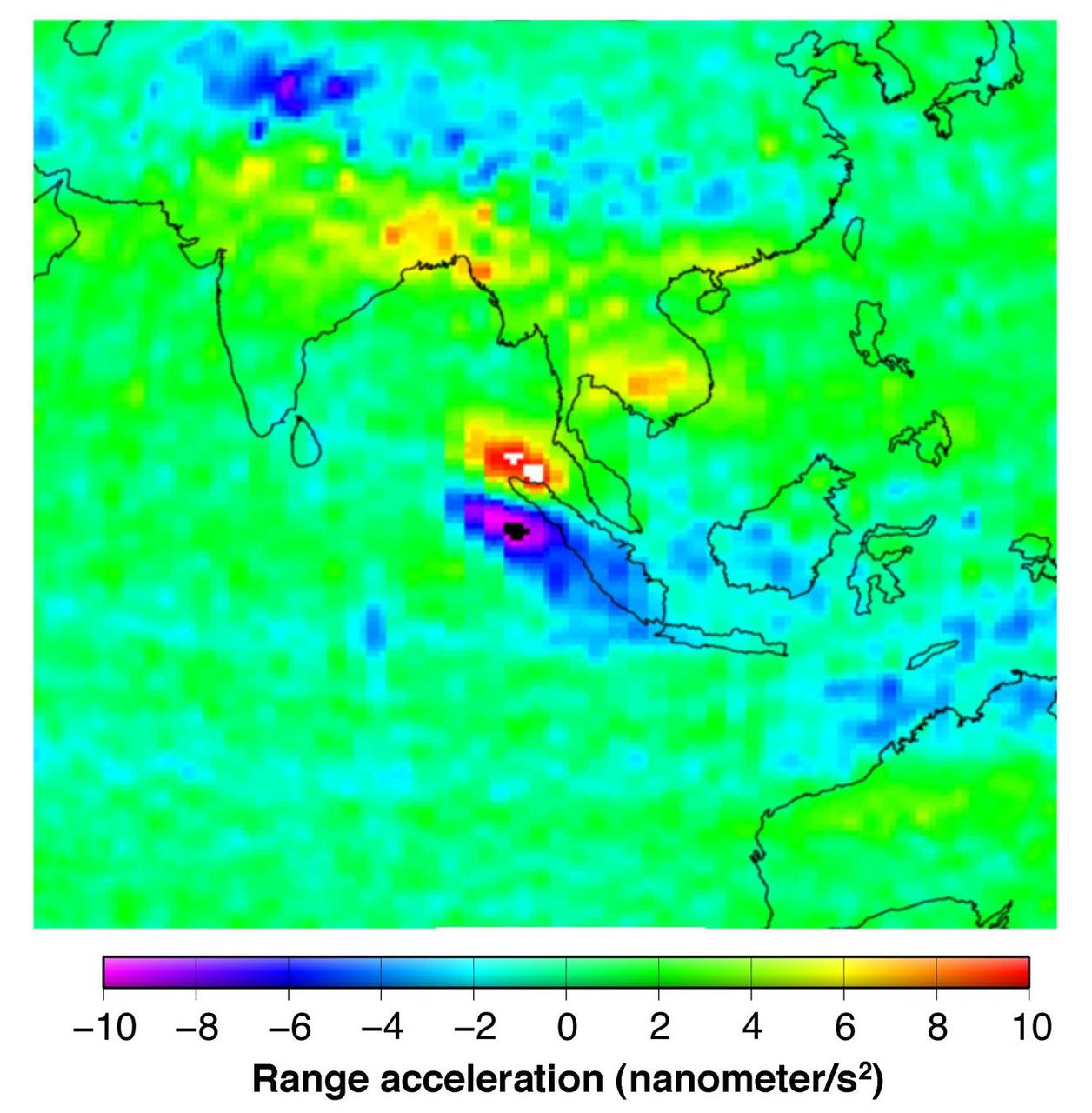
This figure shows the effect of the December 2004 great Sumatra earthquake on the Earth’s gravity field as observed by NASA GRACE.
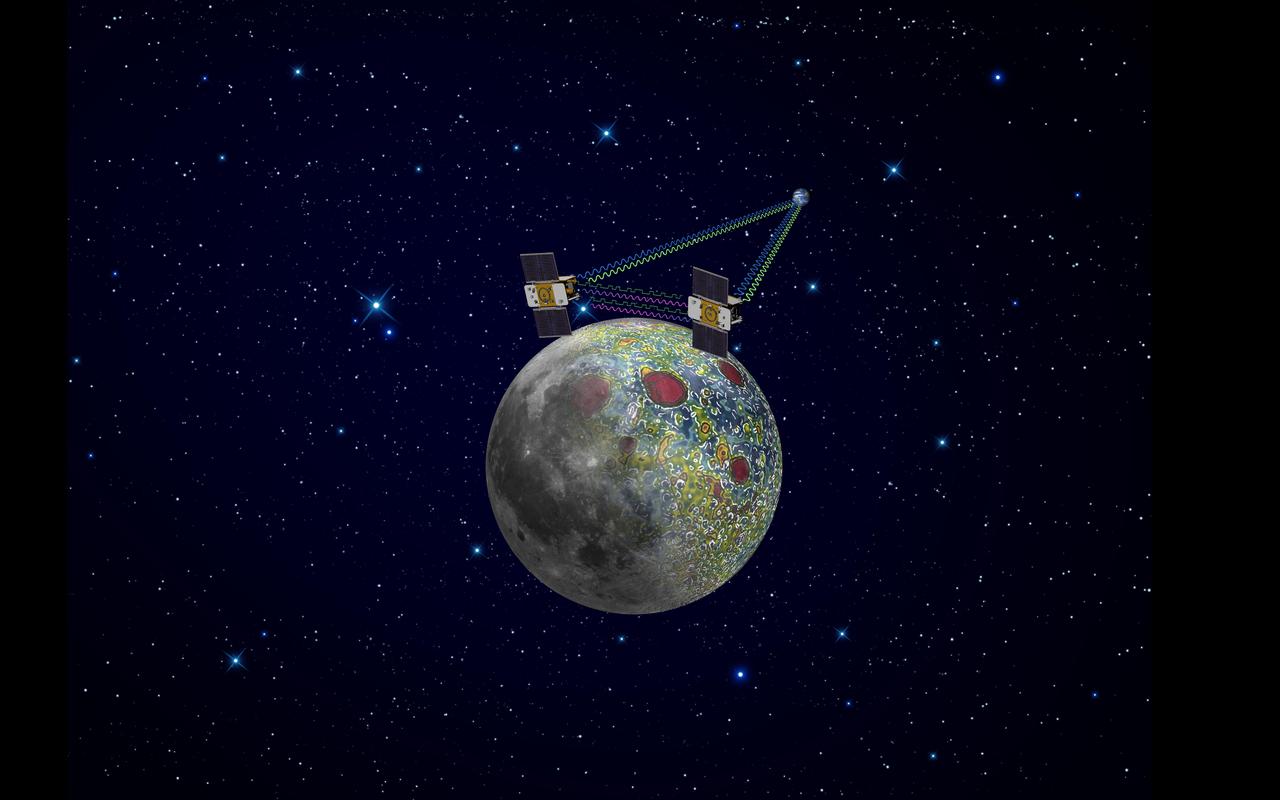
Using a precision formation-flying technique, the twin GRAIL spacecraft maps the moon gravity field, as depicted in this artist rendering.
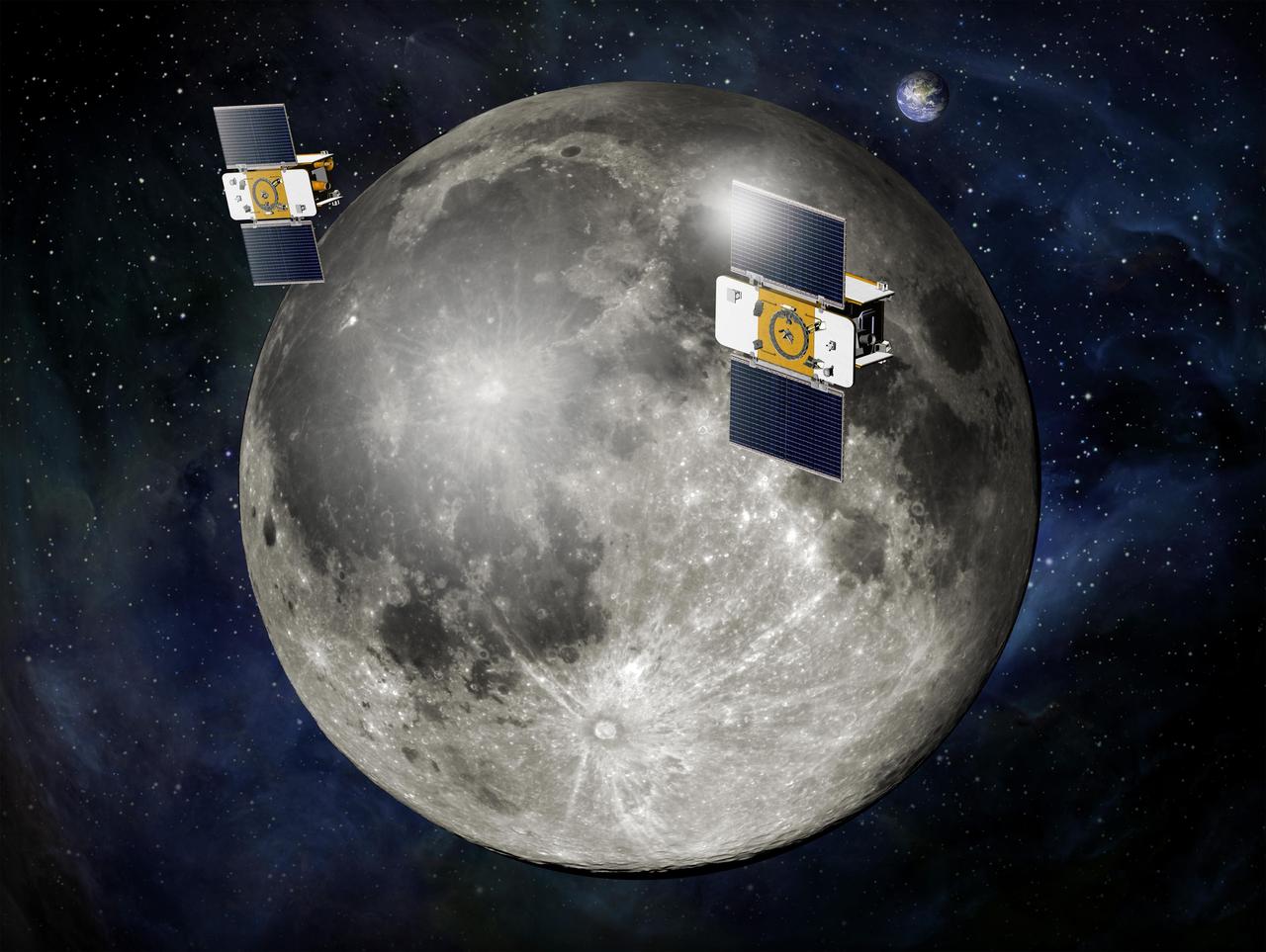
Using a precision formation-flying technique, NASA twin GRAIL spacecraft will map the moon gravity field. This is an artist concept.
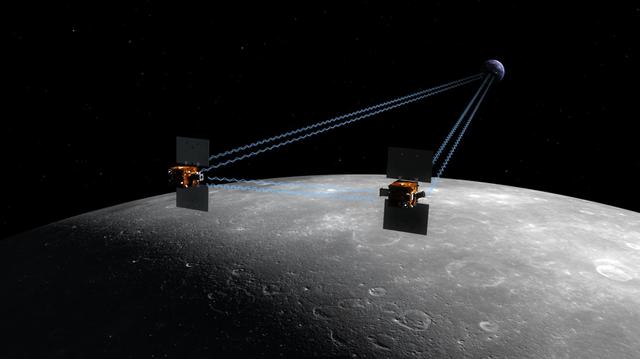
The Gravity Recovery and Interior Laboratory, or GRAIL, mission will fly twin spacecraft in tandem orbits around the moon to measure its gravity field in unprecedented detail. GRAIL is a part of NASA Discovery Program.
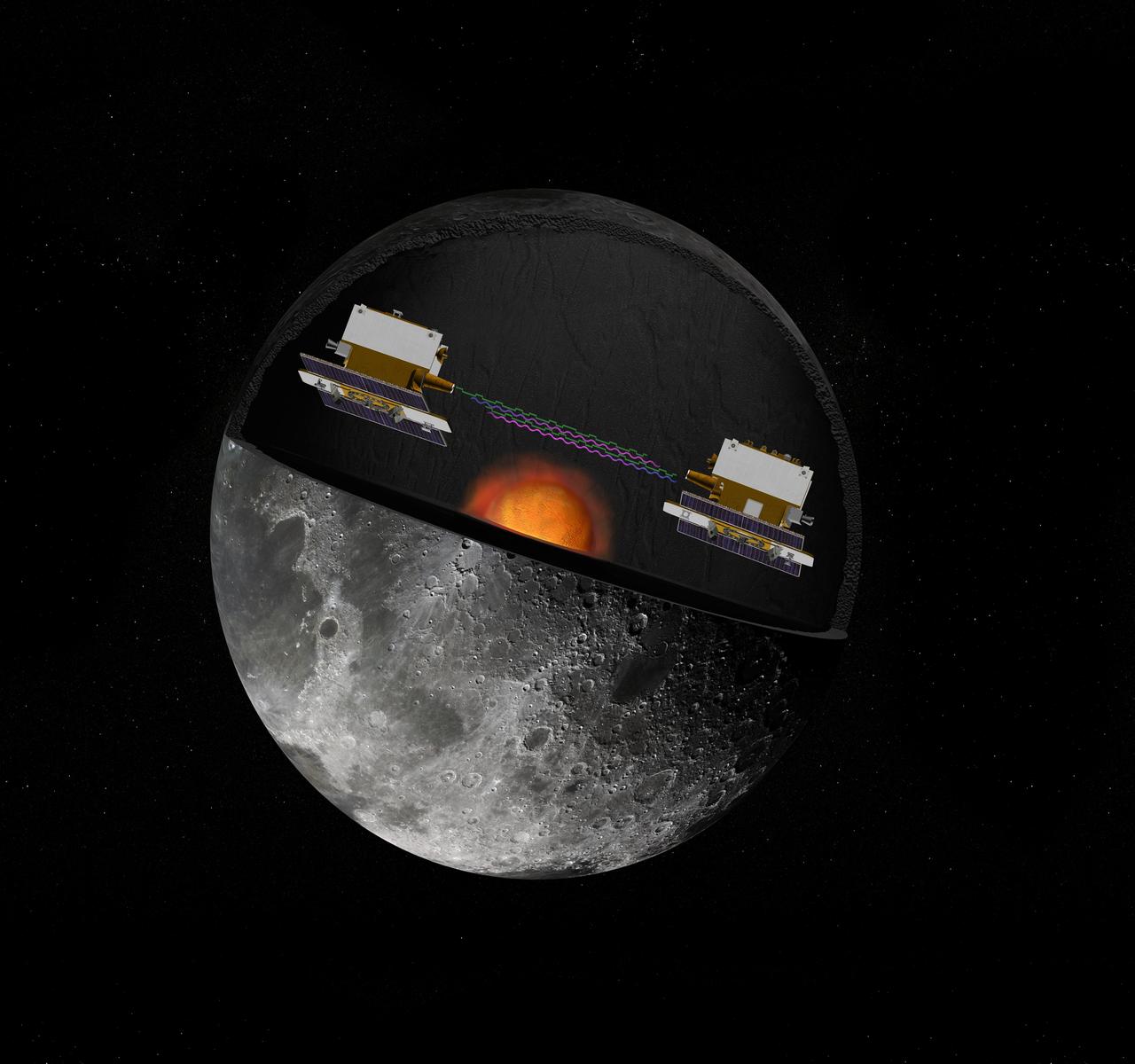
The Gravity Recovery and Interior Laboratory GRAIL mission utilizes the technique of twin spacecraft flying in formation with a known altitude above the lunar surface and known separation distance to investigate the gravity field of the moon.
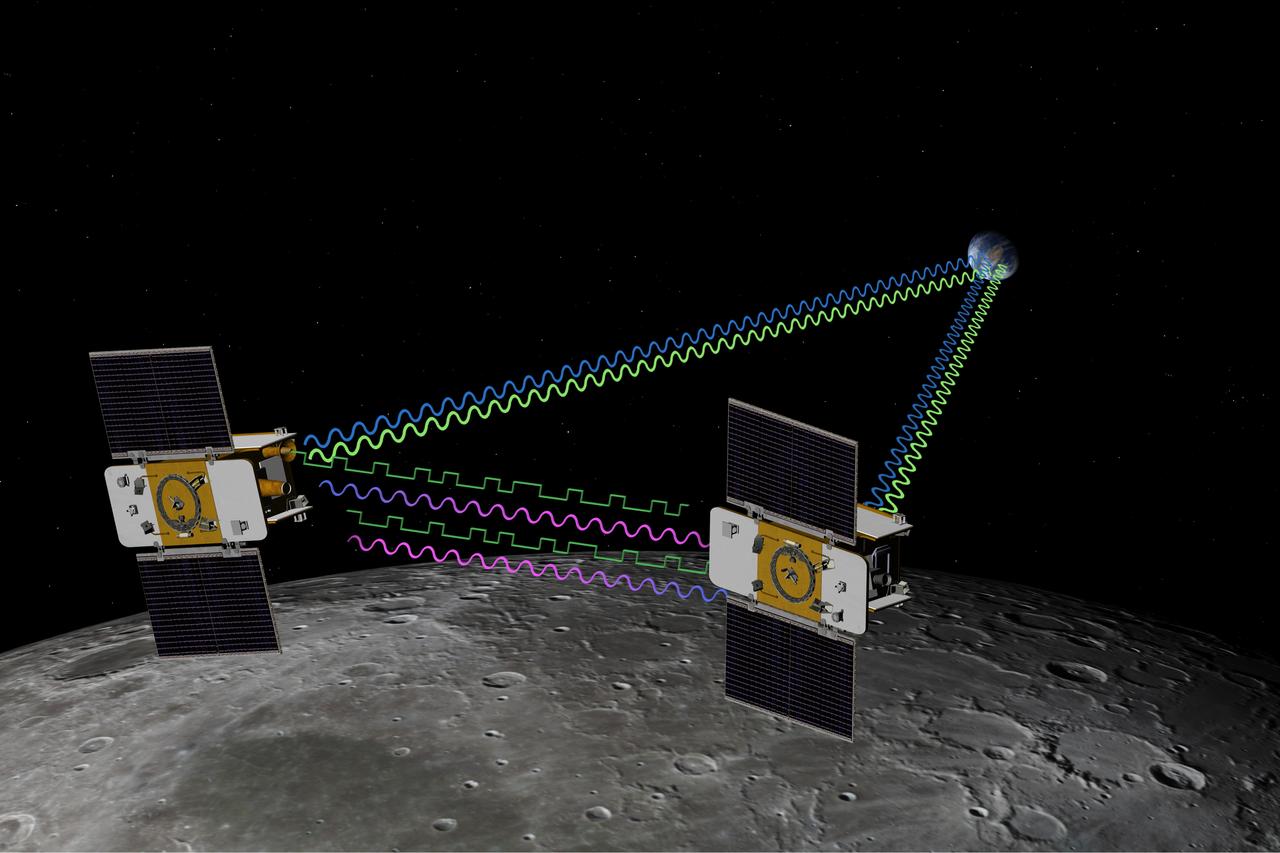
The Gravity Recovery and Interior Laboratory GRAIL mission utilizes the technique of twin spacecraft flying in formation with a known altitude above the lunar surface and known separation distance to investigate the gravity field of the moon.
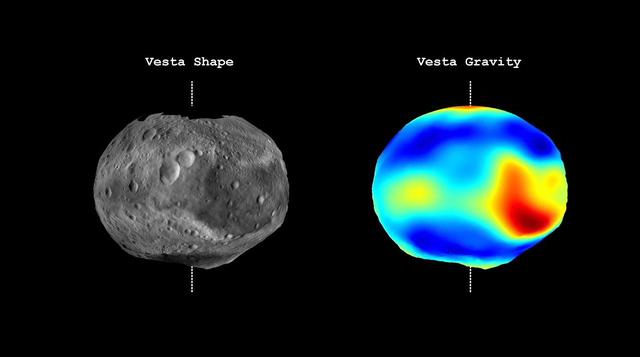
This frame from a video from NASA Dawn mission shows that the gravity field of Vesta closely matches the surface topography of the giant asteroid Vesta.
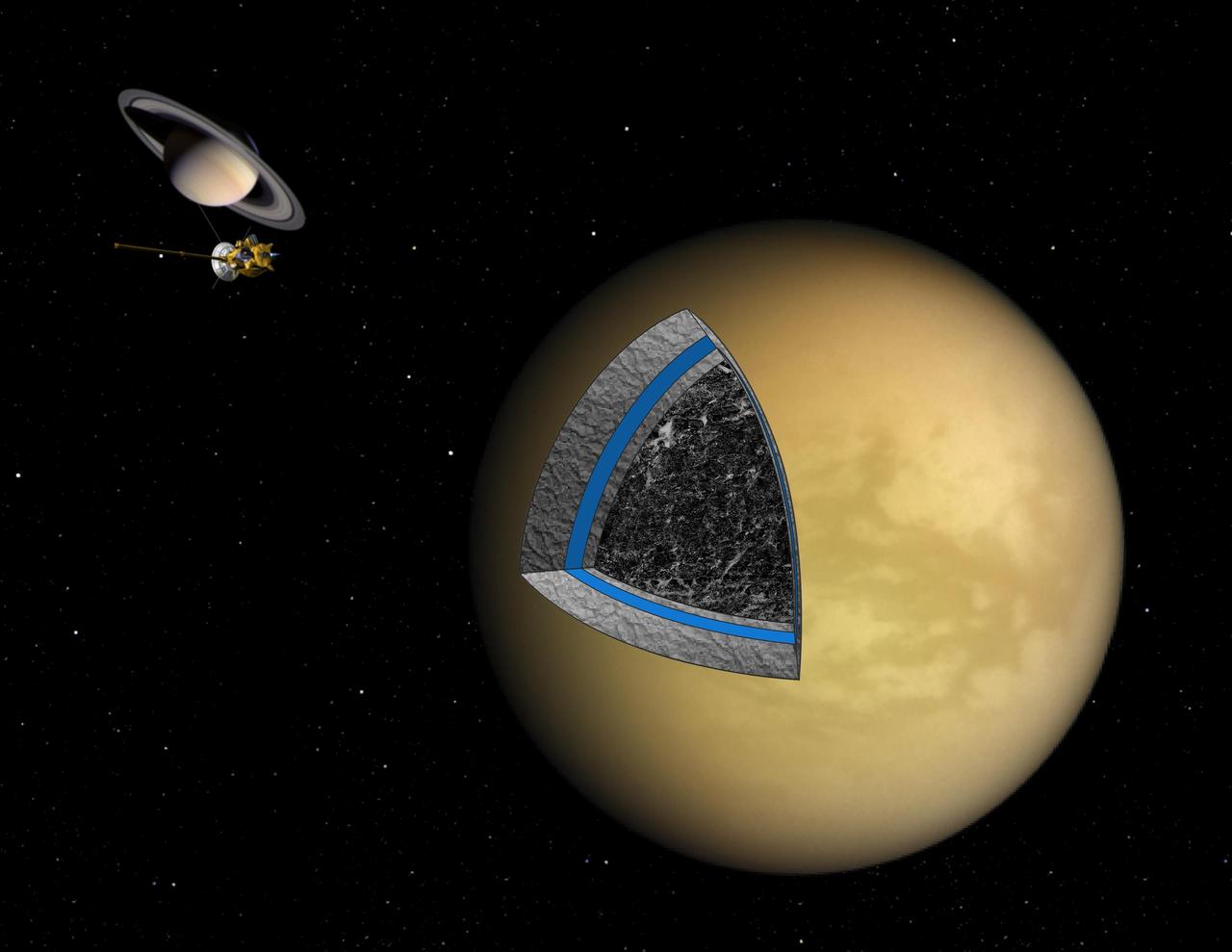
This artist illustration shows the likely interior structure of Saturn moon Titan deduced from gravity field data collected by NASA Cassini spacecraft.
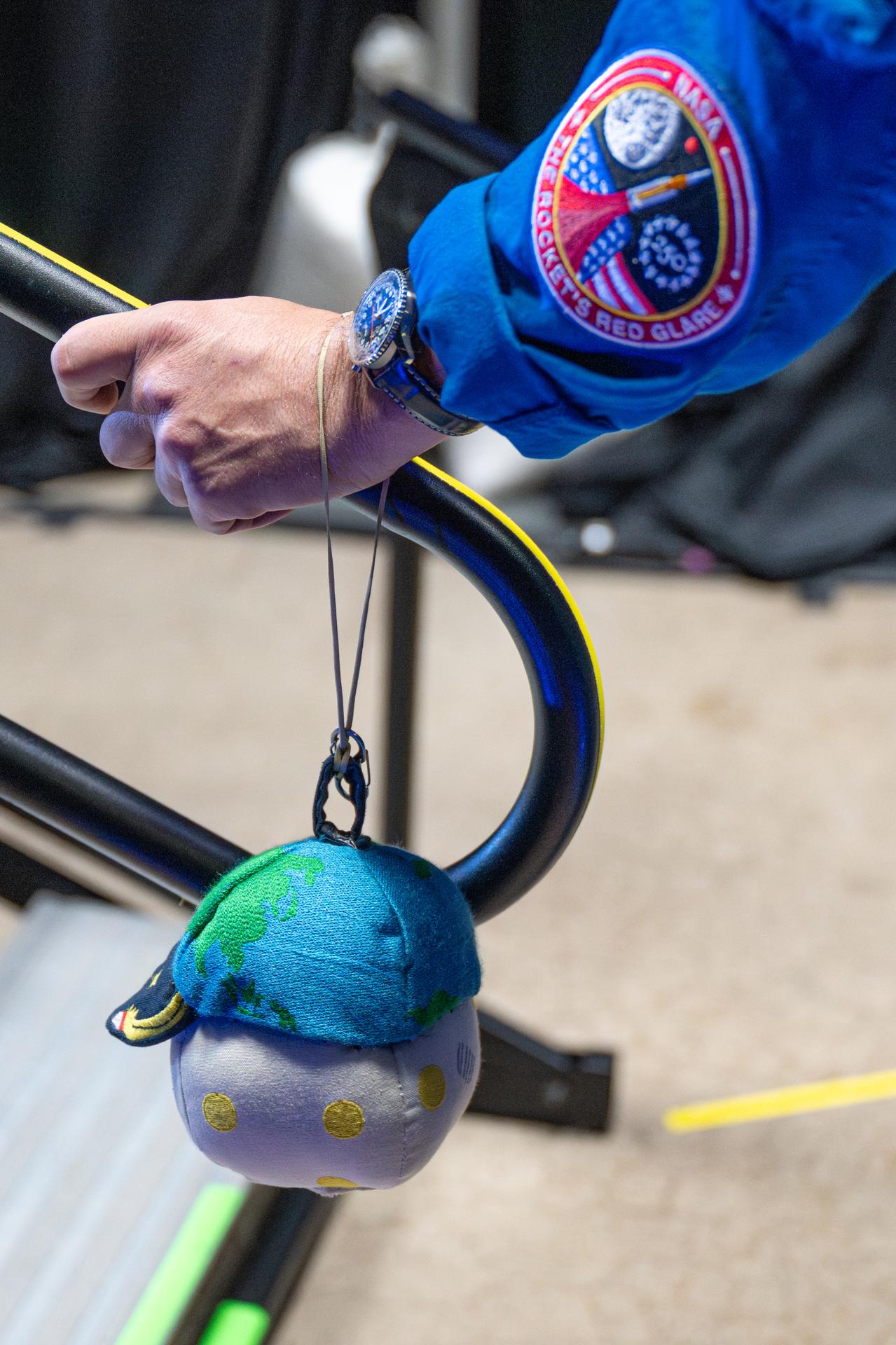
The Artemis II zero gravity indicator, "Rise," is seen looped around the wrist of NASA astronaut Reid Wiseman, Artemis II commander, before the Artemis II crew appeared on stage for a crew return event, Saturday, Apr. 11, 2026, at Ellington Field in Houston, Texas. NASA’s Artemis II test flight took Commander Reid Wiseman, Pilot Victor Glover, and Mission Specialist Christina Koch from NASA, and Mission Specialist Jeremy Hansen from the CSA (Canadian Space Agency) on an approximately nine-day mission around the Moon and back to Earth. Photo Credit: (NASA/John Kraus)
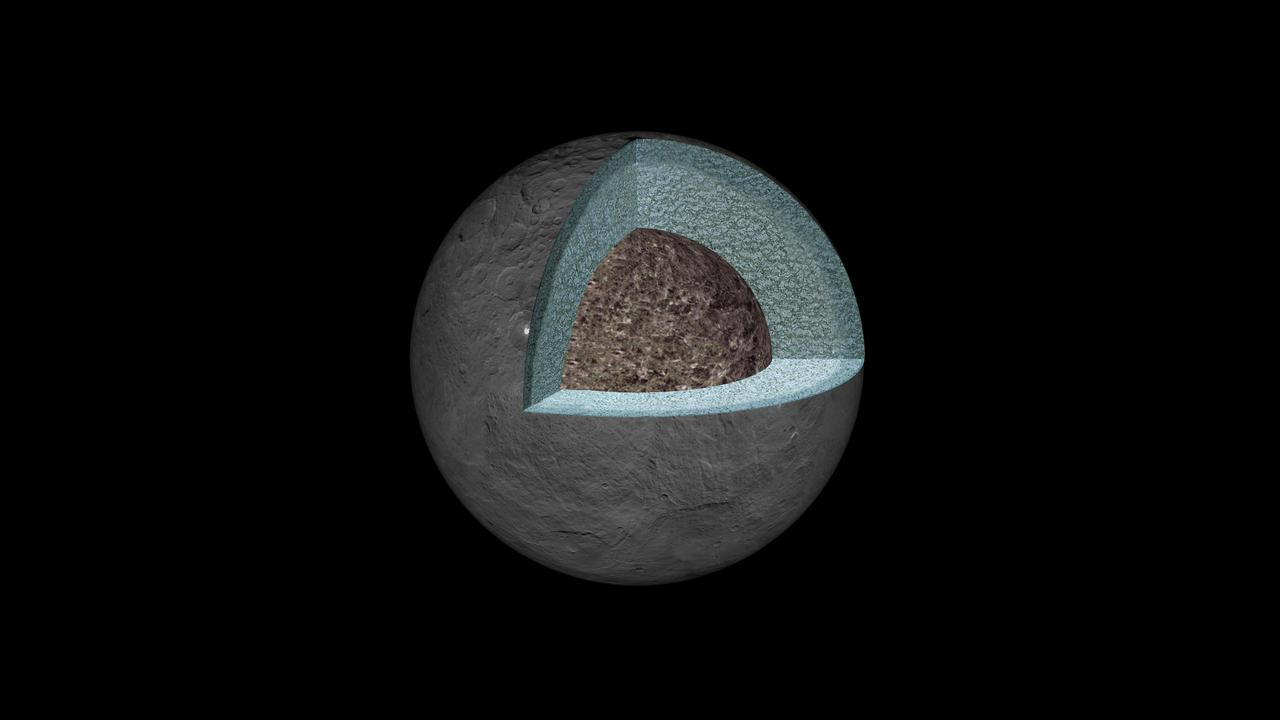
This artist's concept shows a diagram of how the inside of Ceres could be structured, based on data about the dwarf planet's gravity field from NASA's Dawn mission. Using information about Ceres' gravity and topography, scientists found that Ceres is "differentiated," which means that it has compositionally distinct layers at different depths. The densest layer is at the core, which scientists suspect is made of hydrated silicates. Above that is a volatile-rich shell, topped with a crust of mixed materials. This research teaches scientists about what internal processes could have occurred during the early history of Ceres. It appears that, during a heating phase early in the history of Ceres, water and other light materials partially separated from rock. These light materials and water then rose to the outer layer of Ceres. http://photojournal.jpl.nasa.gov/catalog/PIA20867

Gravity is the force that is responsible for the weight of an object and is determined by how the material that makes up the Earth is distributed throughout the Earth.
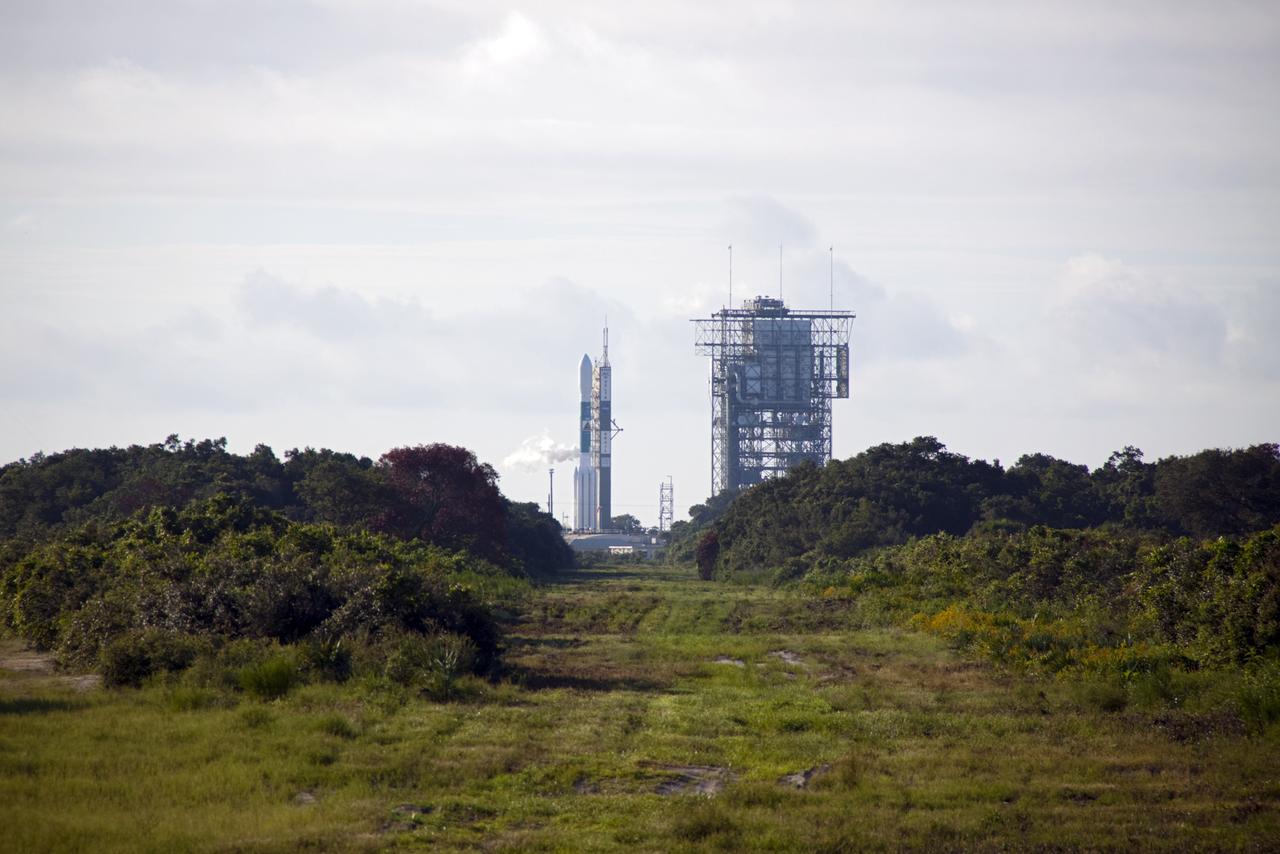
CAPE CANAVERAL, Fla. -- NASA's Gravity Recovery and Interior Laboratory mission is readied for liftoff aboard a United Launch Alliance Delta II Heavy rocket from Space Launch Complex 17B on Cape Canaveral Air Force Station. GRAIL will fly twin spacecraft in tandem around the moon to precisely measure and map variations in the moon's gravitational field. The mission will provide the most accurate global gravity field to date for any planet, including Earth. This detailed information will reveal differences in the density of the moon's crust and mantle and will help answer fundamental questions about the moon's internal structure, thermal evolution, and history of collisions with asteroids. The aim is to map the moon's gravity field so completely that future lunar vehicles can safely navigate anywhere on the moon’s surface. Launch is scheduled for 8:37:06 a.m. EDT Sept. 8. For more information, visit http://www.nasa.gov/grail. Photo credit: NASA
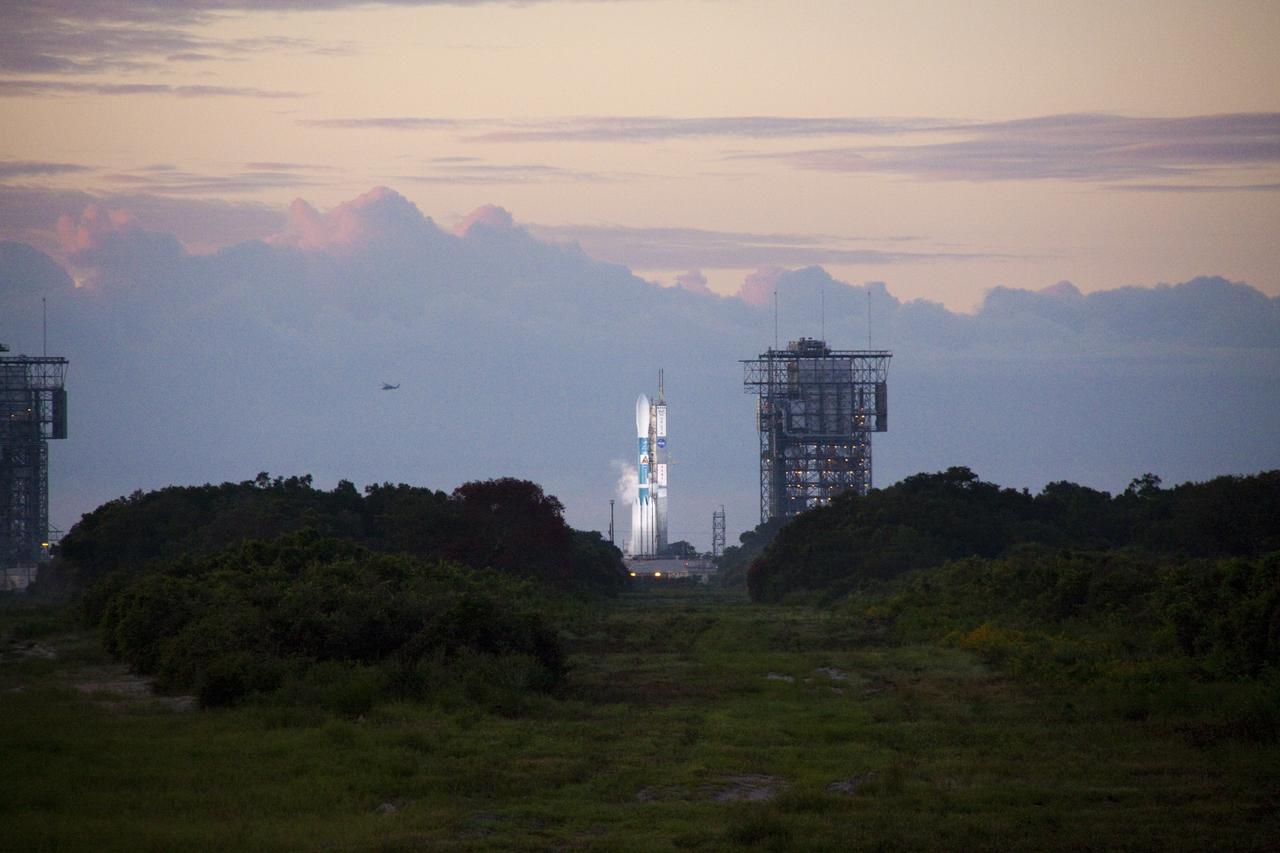
CAPE CANAVERAL, Fla. -- Launch preparations are under way as dawn breaks at Space Launch Complex 17B on Cape Canaveral Air Force Station for NASA's Gravity Recovery and Interior Laboratory mission aboard a United Launch Alliance Delta II Heavy rocket. GRAIL will fly twin spacecraft in tandem around the moon to precisely measure and map variations in the moon's gravitational field. The mission will provide the most accurate global gravity field to date for any planet, including Earth. This detailed information will reveal differences in the density of the moon's crust and mantle and will help answer fundamental questions about the moon's internal structure, thermal evolution, and history of collisions with asteroids. The aim is to map the moon's gravity field so completely that future lunar vehicles can safely navigate anywhere on the moon’s surface. Launch is scheduled for 8:37:06 a.m. EDT Sept. 8. For more information, visit http://www.nasa.gov/grail. Photo credit: NASA
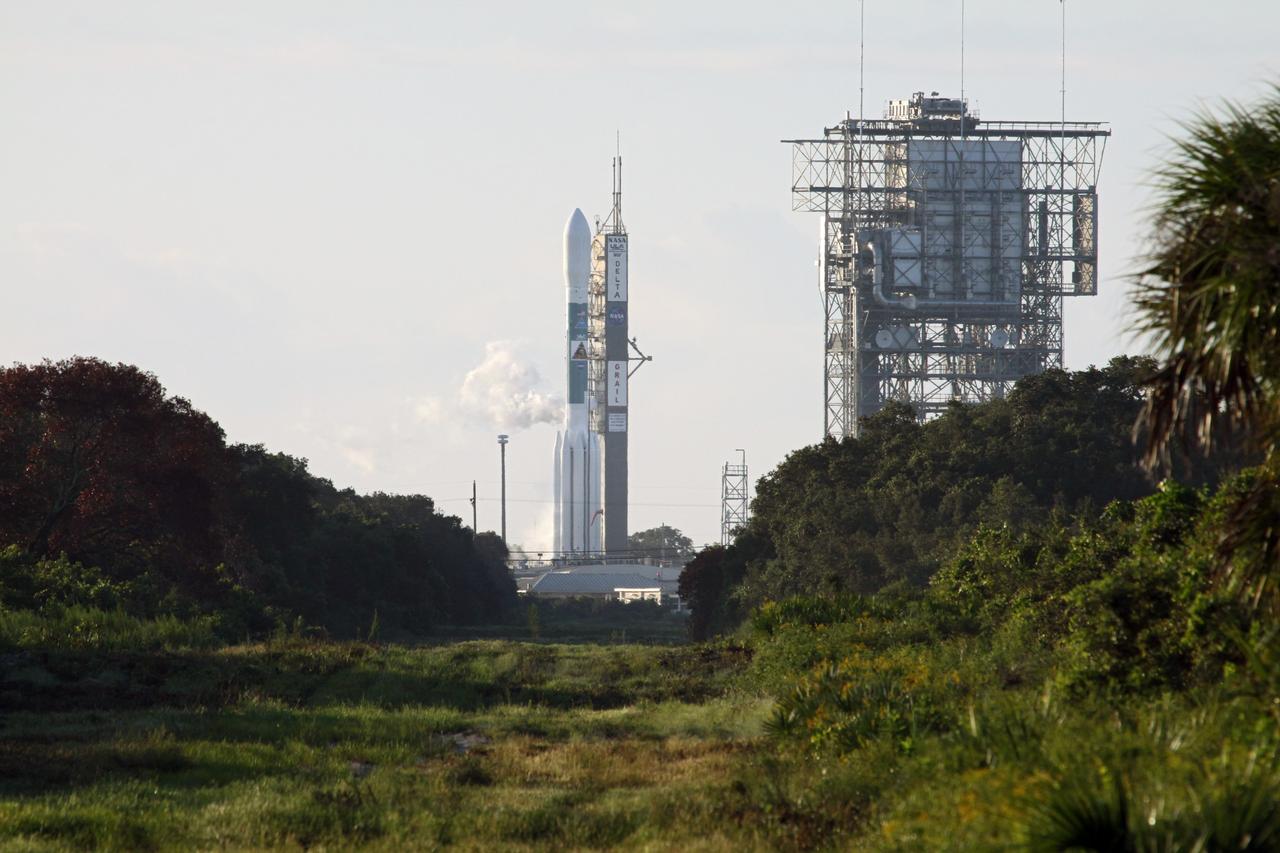
CAPE CANAVERAL, Fla. -- The countdown to launch of the United Launch Alliance Delta II Heavy rocket for NASA's Gravity Recovery and Interior Laboratory mission nears T-0 at Space Launch Complex 17B on Cape Canaveral Air Force Station. Liftoff is scheduled for 8:37:06 a.m. EDT. GRAIL will fly twin spacecraft in tandem around the moon to precisely measure and map variations in the moon's gravitational field. The mission will provide the most accurate global gravity field to date for any planet, including Earth. This detailed information will reveal differences in the density of the moon's crust and mantle and will help answer fundamental questions about the moon's internal structure, thermal evolution, and history of collisions with asteroids. The aim is to map the moon's gravity field so completely that future lunar vehicles can safely navigate anywhere on the moon’s surface. For more information, visit http://www.nasa.gov/grail. Photo credit: NASA/Ken Thornsley
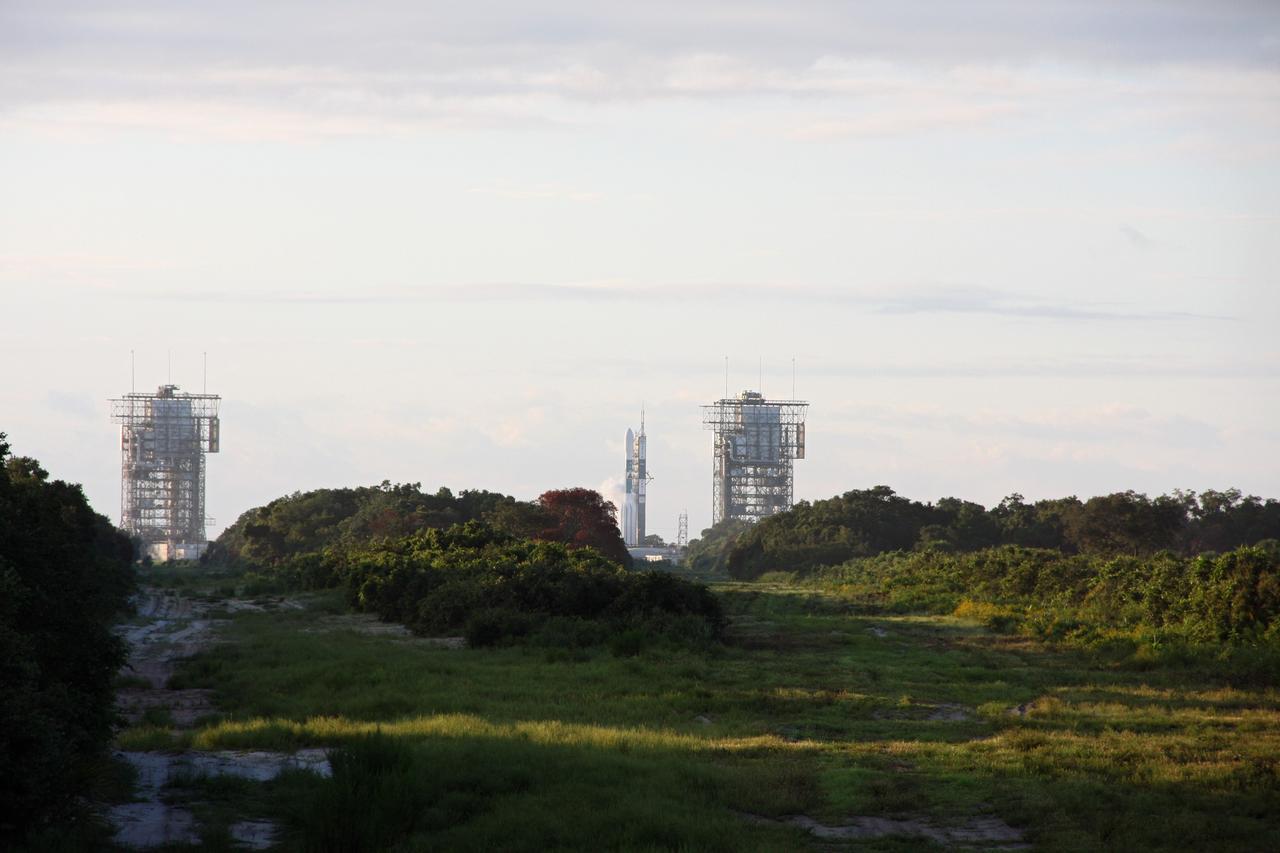
CAPE CANAVERAL, Fla. -- The countdown to launch of the United Launch Alliance Delta II Heavy rocket for NASA's Gravity Recovery and Interior Laboratory mission is winding down at Space Launch Complex 17B on Cape Canaveral Air Force Station. Liftoff is scheduled for 8:37:06 a.m. EDT. GRAIL will fly twin spacecraft in tandem around the moon to precisely measure and map variations in the moon's gravitational field. The mission will provide the most accurate global gravity field to date for any planet, including Earth. This detailed information will reveal differences in the density of the moon's crust and mantle and will help answer fundamental questions about the moon's internal structure, thermal evolution, and history of collisions with asteroids. The aim is to map the moon's gravity field so completely that future lunar vehicles can safely navigate anywhere on the moon’s surface. For more information, visit http://www.nasa.gov/grail. Photo credit: NASA/Ken Thornsley
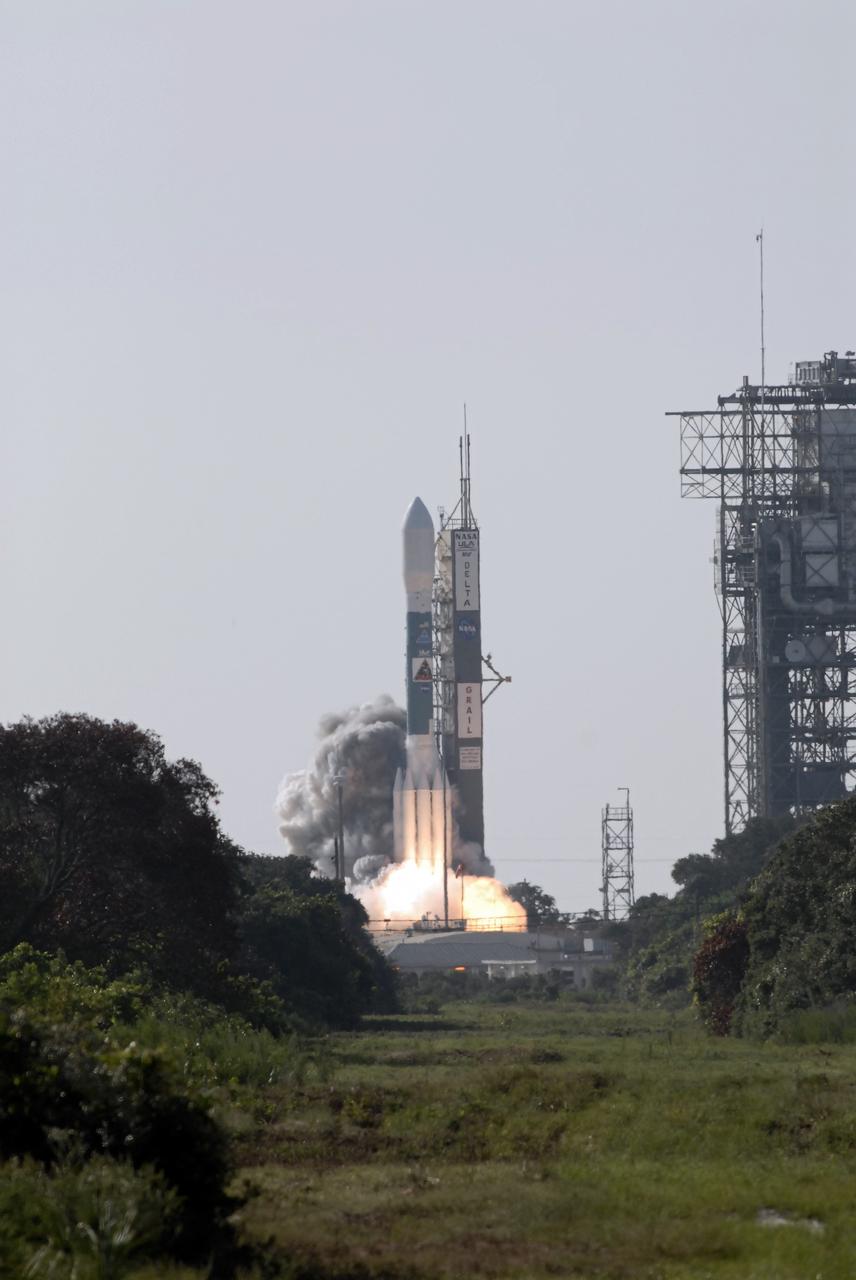
CAPE CANAVERAL, Fla. – The United Launch Alliance Delta II Heavy rocket lifted off at 9:08 a.m. EDT Sept. 10 from Space Launch Complex 17B on Cape Canaveral Air Force Station in Florida carrying NASA’s twin Gravity Recovery and Interior Laboratory (GRAIL) mission to the moon. GRAIL will fly twin spacecraft in tandem around the moon to precisely measure and map variations in the moon's gravitational field. The mission will provide the most accurate global gravity field to date for any planet, including Earth. This detailed information will reveal differences in the density of the moon's crust and mantle and will help answer fundamental questions about the moon's internal structure, thermal evolution, and history of collisions with asteroids. The aim is to map the moon's gravity field so completely that future moon vehicles can safely navigate anywhere on the moon’s surface. For more information, visit http://www.nasa.gov/grail. Photo credit: NASA/Kim Shiflett
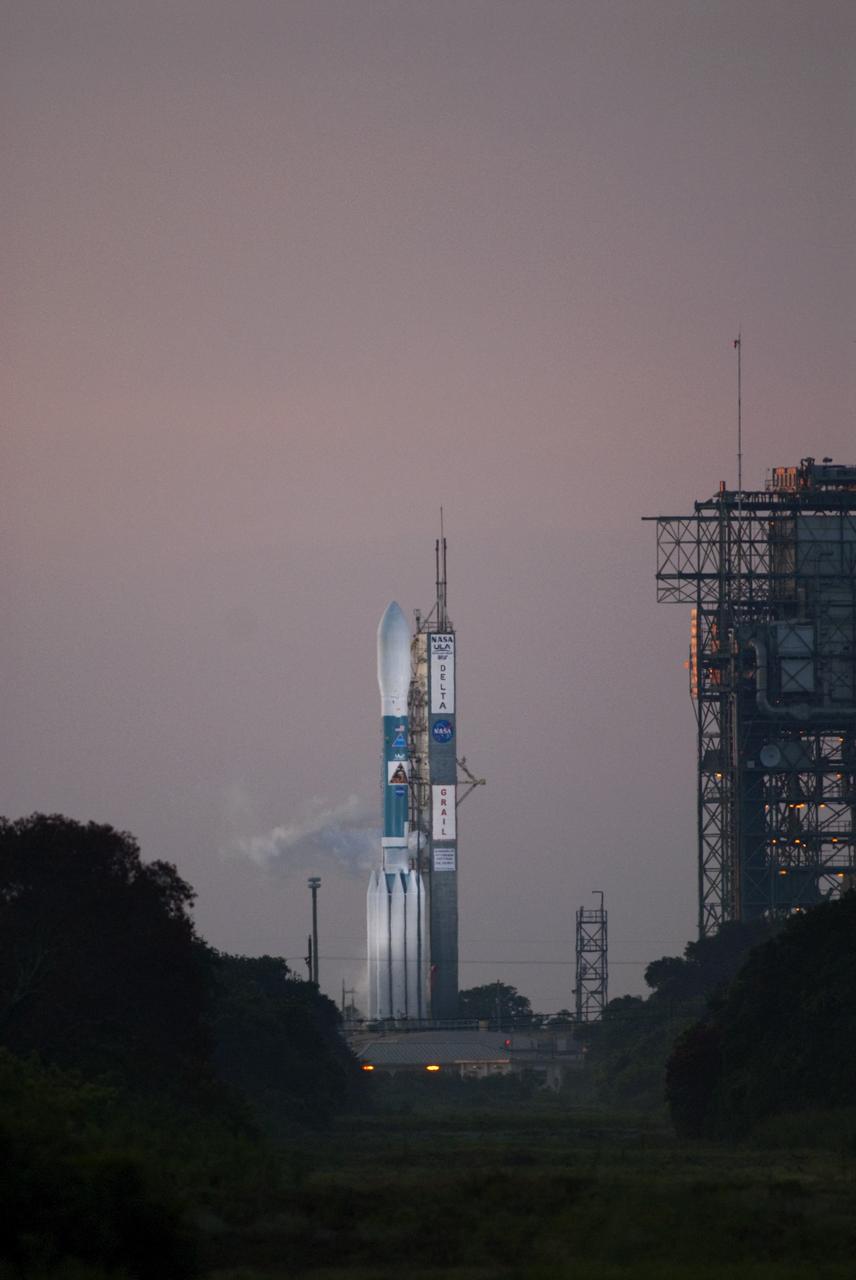
CAPE CANAVERAL, Fla. – Surrounded by an early morning sky, the United Launch Alliance Delta II Heavy rocket sits on Space Launch Complex 17B on Cape Canaveral Air Force Station in Florida as it waits to launch NASA’s twin Gravity Recovery and Interior Laboratory (GRAIL) mission to the moon. GRAIL will fly twin spacecraft in tandem around the moon to precisely measure and map variations in the moon's gravitational field. The mission will provide the most accurate global gravity field to date for any planet, including Earth. This detailed information will reveal differences in the density of the moon's crust and mantle and will help answer fundamental questions about the moon's internal structure, thermal evolution, and history of collisions with asteroids. The aim is to map the moon's gravity field so completely that future moon vehicles can safely navigate anywhere on the moon’s surface. For more information, visit http://www.nasa.gov/grail. Photo credit: NASA/Kim Shiflett
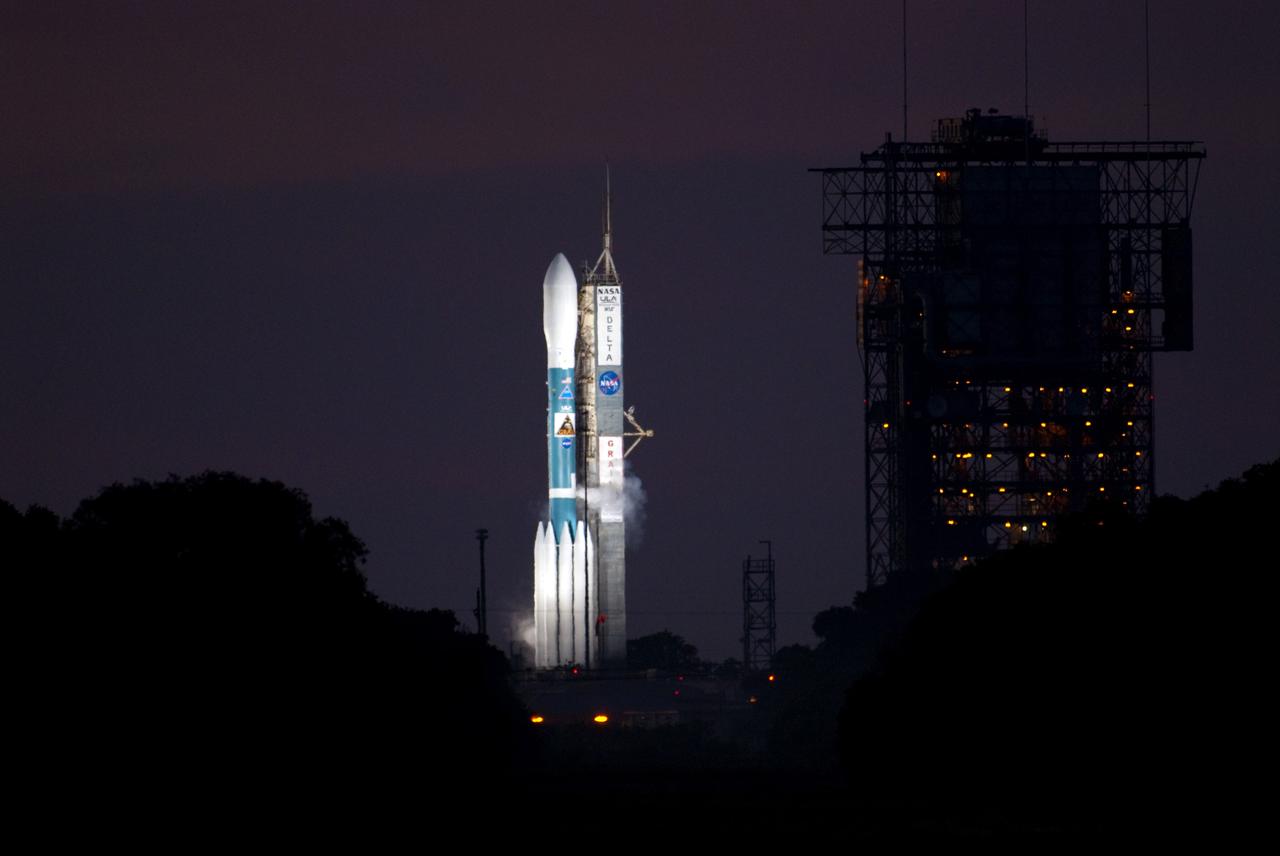
CAPE CANAVERAL, Fla. – Bathed in light against an early morning sky, the United Launch Alliance Delta II Heavy rocket sits on Space Launch Complex 17B on Cape Canaveral Air Force Station in Florida as it waits to launch NASA’s twin Gravity Recovery and Interior Laboratory (GRAIL) mission to the moon. GRAIL will fly twin spacecraft in tandem around the moon to precisely measure and map variations in the moon's gravitational field. The mission will provide the most accurate global gravity field to date for any planet, including Earth. This detailed information will reveal differences in the density of the moon's crust and mantle and will help answer fundamental questions about the moon's internal structure, thermal evolution, and history of collisions with asteroids. The aim is to map the moon's gravity field so completely that future moon vehicles can safely navigate anywhere on the moon’s surface. For more information, visit http://www.nasa.gov/grail. Photo credit: NASA/Kim Shiflett
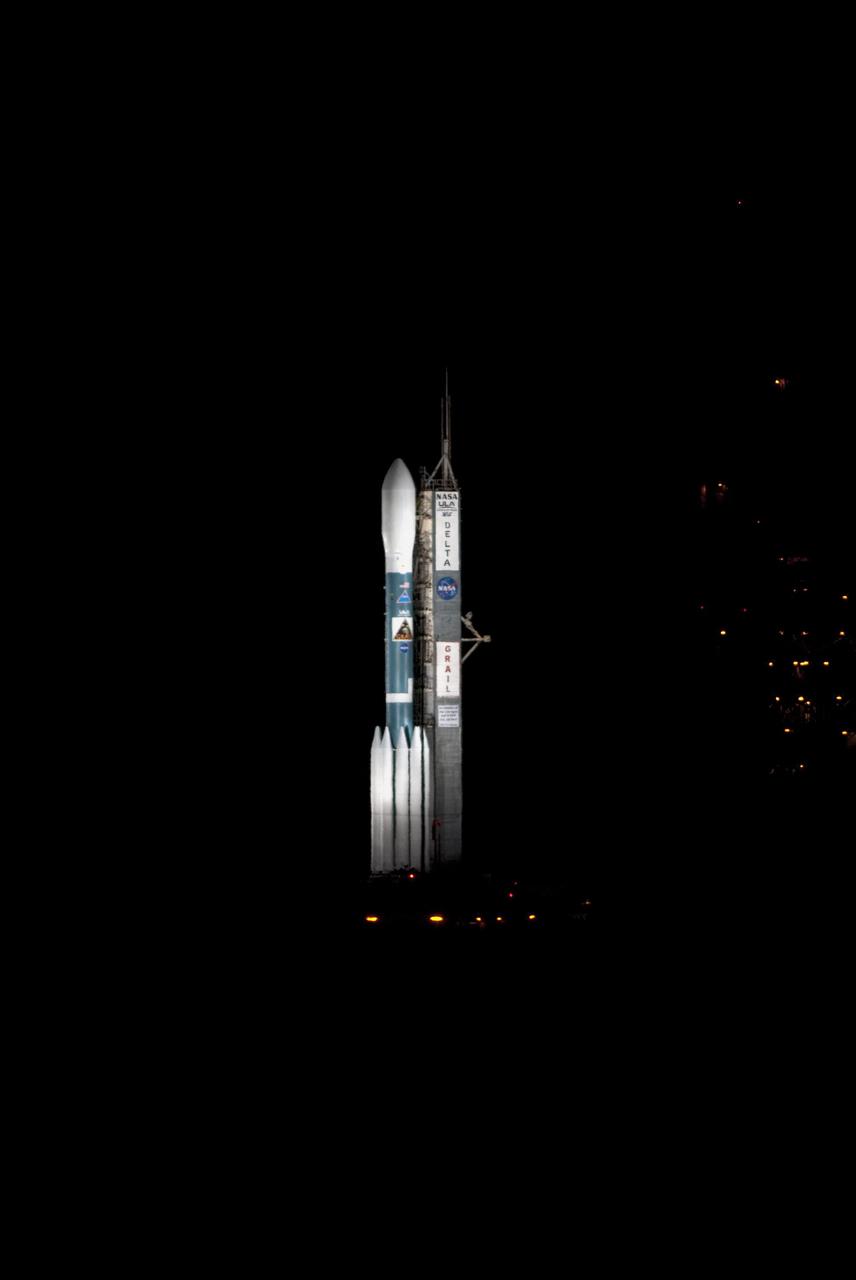
CAPE CANAVERAL, Fla. – Surrounded by an early morning sky, the United Launch Alliance Delta II Heavy rocket sits on Space Launch Complex 17B on Cape Canaveral Air Force Station in Florida as it waits to launch NASA’s twin Gravity Recovery and Interior Laboratory (GRAIL) mission to the moon. GRAIL will fly twin spacecraft in tandem around the moon to precisely measure and map variations in the moon's gravitational field. The mission will provide the most accurate global gravity field to date for any planet, including Earth. This detailed information will reveal differences in the density of the moon's crust and mantle and will help answer fundamental questions about the moon's internal structure, thermal evolution, and history of collisions with asteroids. The aim is to map the moon's gravity field so completely that future moon vehicles can safely navigate anywhere on the moon’s surface. For more information, visit http://www.nasa.gov/grail. Photo credit: NASA/Kim Shiflett
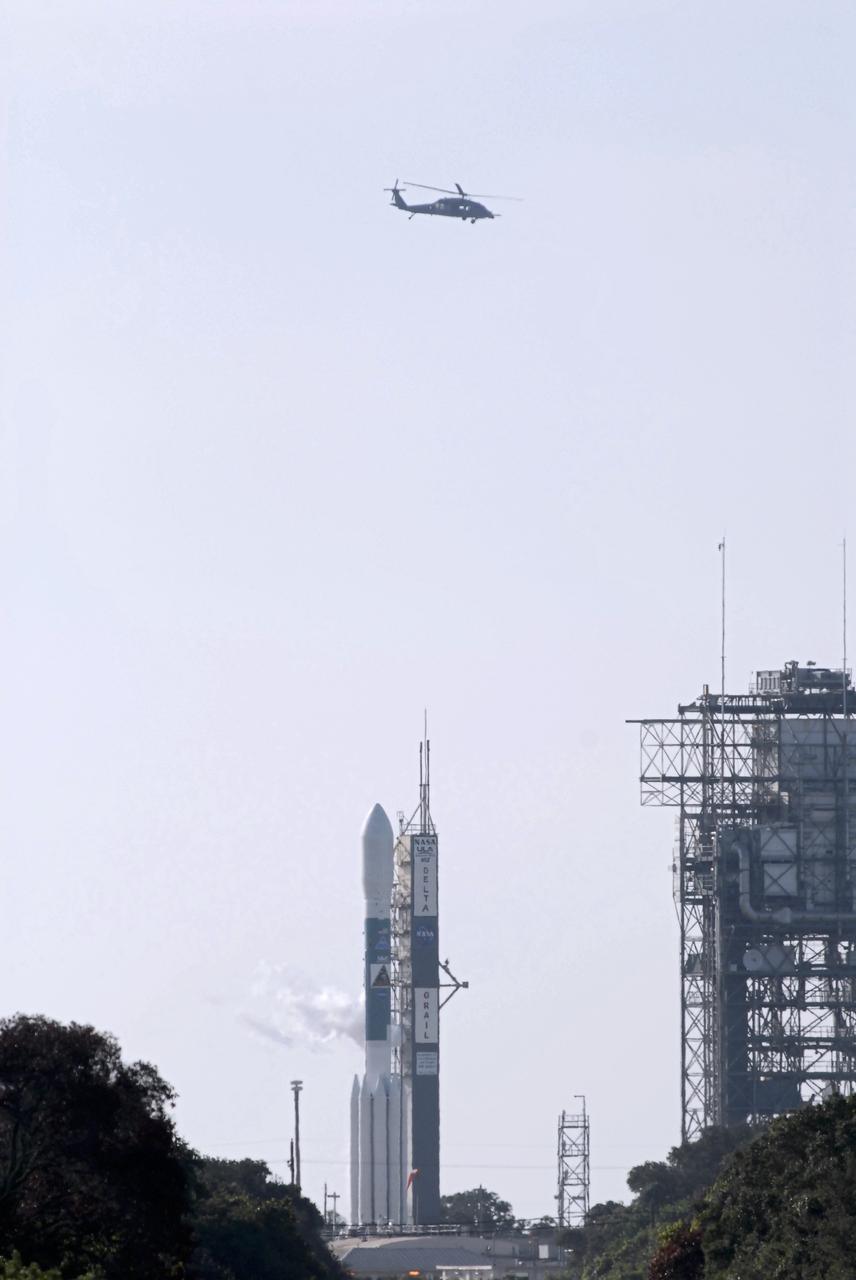
CAPE CANAVERAL, Fla. – A U.S. Air Force helicopter flies overhead as the United Launch Alliance Delta II Heavy rocket sits on Space Launch Complex 17B on Cape Canaveral Air Force Station in Florida waiting to launch NASA’s twin Gravity Recovery and Interior Laboratory (GRAIL) mission to the moon. GRAIL will fly twin spacecraft in tandem around the moon to precisely measure and map variations in the moon's gravitational field. The mission will provide the most accurate global gravity field to date for any planet, including Earth. This detailed information will reveal differences in the density of the moon's crust and mantle and will help answer fundamental questions about the moon's internal structure, thermal evolution, and history of collisions with asteroids. The aim is to map the moon's gravity field so completely that future moon vehicles can safely navigate anywhere on the moon’s surface. For more information, visit http://www.nasa.gov/grail. Photo credit: NASA/Kim Shiflett
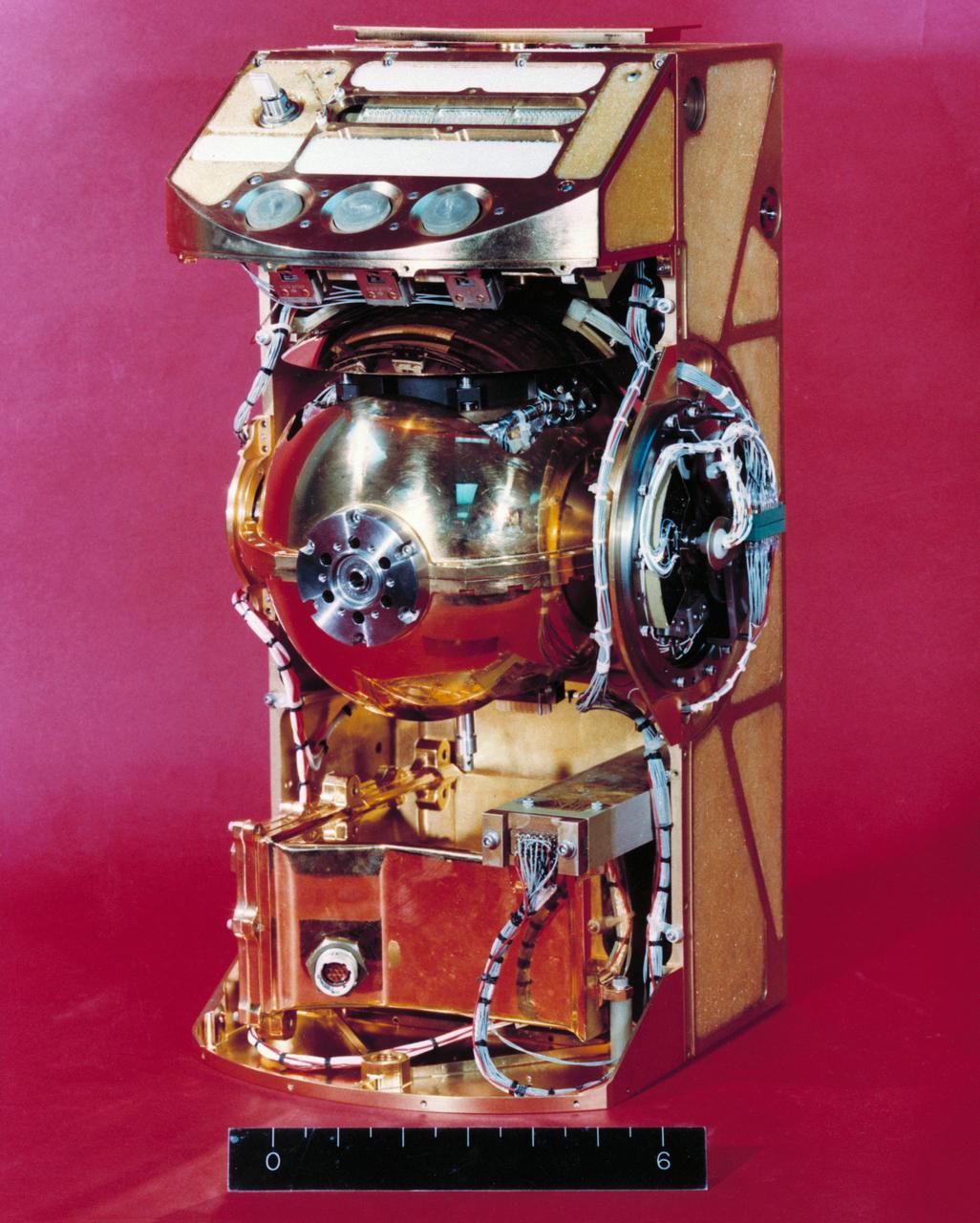
S72-53952 (November 1972) --- The Traverse Gravimeter Experiment (S-199), with cover removed, which will be used by the Apollo 17 crewmen at the Taurus-Littrow landing site. The purposes of this experiment are to make a high accuracy relative survey of the lunar gravitational field in the lunar landing area and to make an Earth-moon gravity tie. Specific experiment objectives related to these purposes are to: (1) measure the value of gravity, relative to the value at a lunar base station, at selected known locations along the lunar traverse; (2) measure the value of gravity at a known point on the lunar surface (base station) relative to the value of gravity at a known point on Earth.
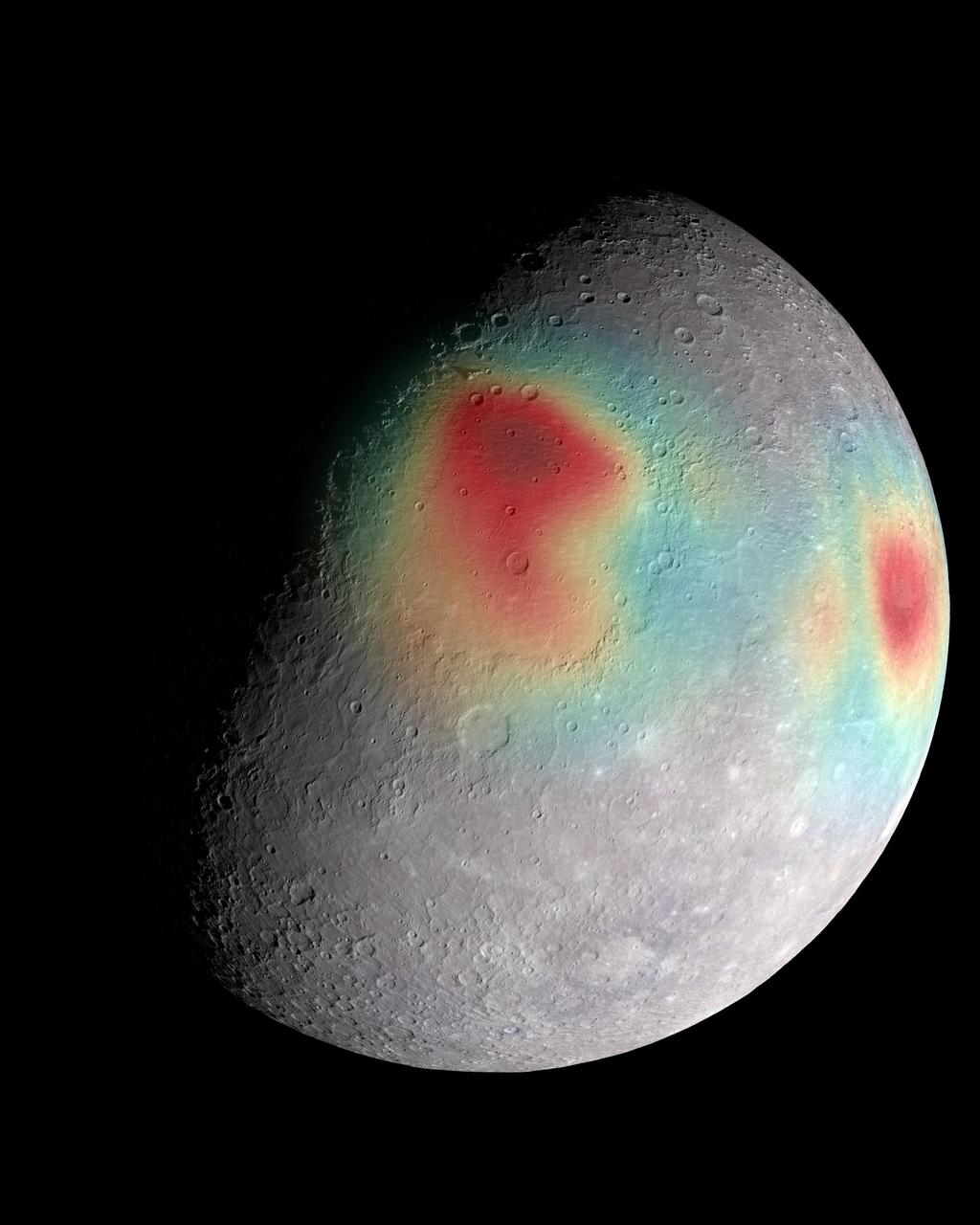
Analysis of radio tracking data have enabled maps of the gravity field of Mercury to be derived. In this image, overlain on a mosaic obtained by MESSENGER's Mercury Dual Imaging System and illuminated with a shape model determined from stereo-photoclinometry, Mercury's gravity anomalies are depicted in colors. Red tones indicate mass concentrations, centered on the Caloris basin (center) and the Sobkou region (right limb). Such large-scale gravitational anomalies are signatures of subsurface structure and evolution. The north pole is near the top of the sunlit area in this view. http://photojournal.jpl.nasa.gov/catalog/PIA19285
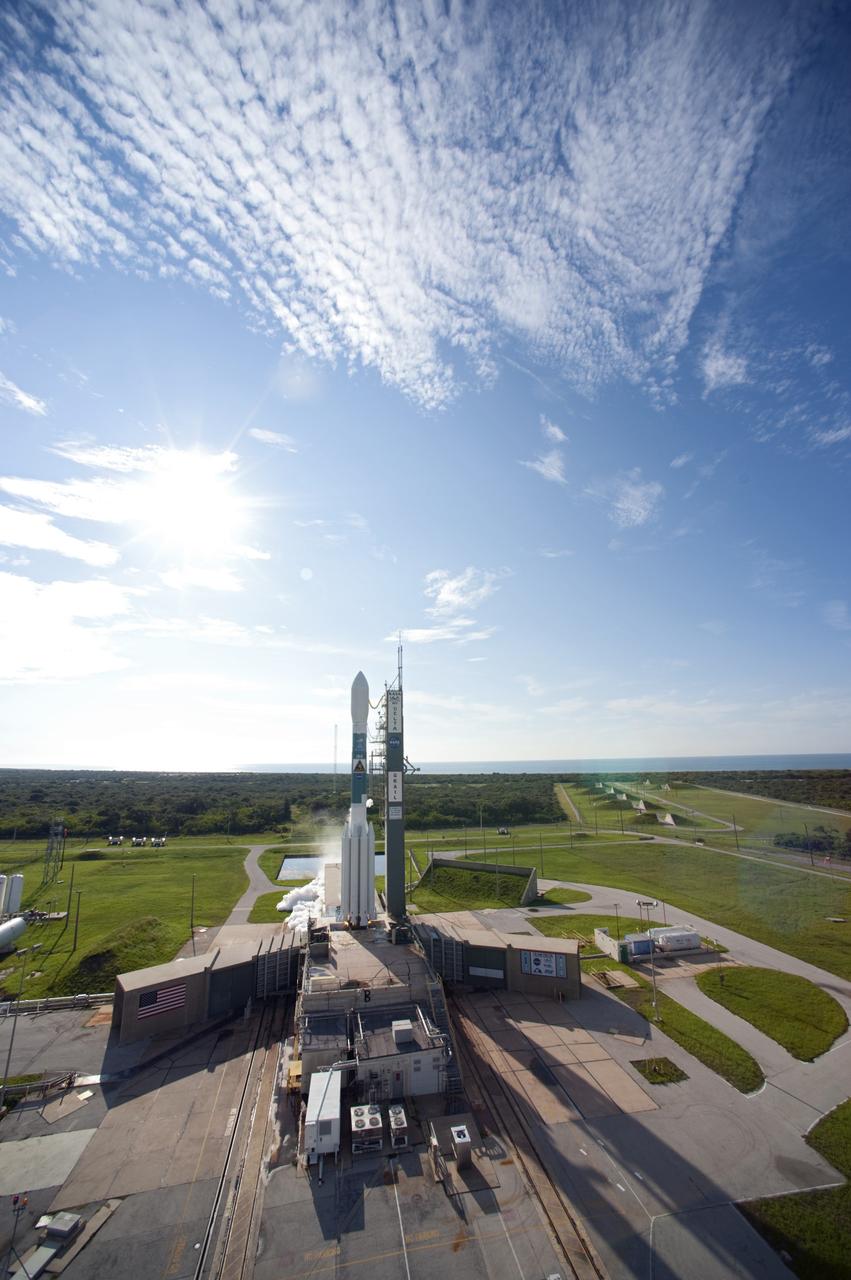
CAPE CANAVERAL, Fla. – Under a blue sky, engine ignition begins liftoff of the United Launch Alliance Delta II Heavy rocket carrying NASA’s twin Gravity Recovery and Interior Laboratory (GRAIL) mission off Space Launch Complex 17B on Cape Canaveral Air Force Station in Florida. The spacecraft launched at 9:08:52 a.m. EDT Sept. 10. GRAIL-A will separate from the second stage of the rocket at about one hour, 21 minutes after liftoff, followed by GRAIL-B at 90 minutes after launch. The spacecraft are embarking on a three-month journey to reach the moon. GRAIL will fly twin spacecraft in tandem around the moon to precisely measure and map variations in the moon's gravitational field. The mission will provide the most accurate global gravity field to date for any planet, including Earth. This detailed information will reveal differences in the density of the moon's crust and mantle and will help answer fundamental questions about the moon's internal structure, thermal evolution, and history of collisions with asteroids. The aim is to map the moon's gravity field so completely that future moon vehicles can safely navigate anywhere on the moon’s surface. For more information, visit http://www.nasa.gov/grail. Photo credit: NASA/Sandra Joseph and Don Kight
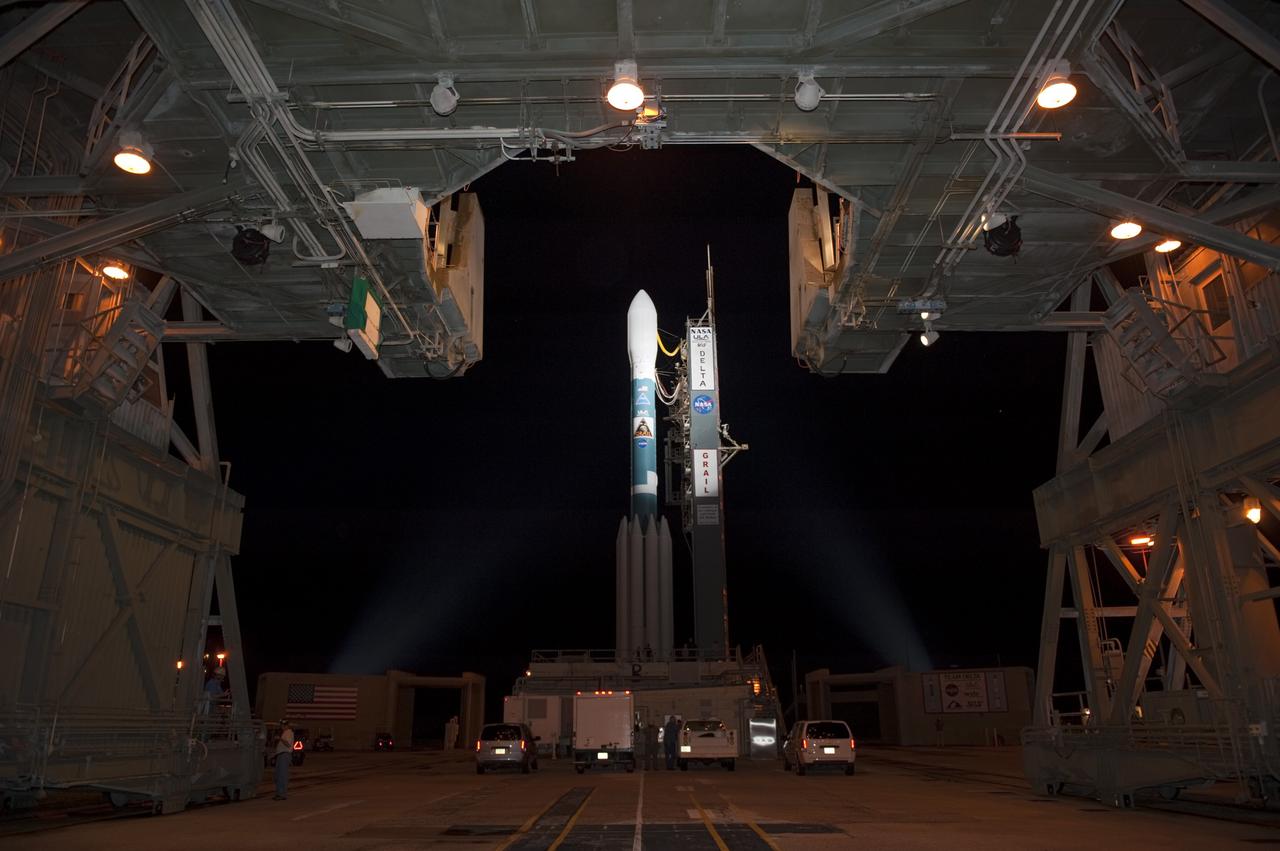
CAPE CANAVERAL, Fla. -- At Space Launch Complex 17B on Cape Canaveral Air Force Station, the mobile service tower slowly rolls away from the United Launch Alliance Delta II rocket that will launch NASA's Gravity Recovery and Interior Laboratory mission. The "rollback" began at about 11:20 p.m. EDT. GRAIL will fly twin spacecraft in tandem around the moon to precisely measure and map variations in the moon's gravitational field. The mission will provide the most accurate global gravity field to date for any planet, including Earth. This detailed information will reveal differences in the density of the moon's crust and mantle and will help answer fundamental questions about the moon's internal structure, thermal evolution, and history of collisions with asteroids. The aim is to map the moon's gravity field so completely that future lunar vehicles can safely navigate anywhere on the moon’s surface. Launch is scheduled for 8:37:06 a.m. EDT Sept. 8. For more information, visit http://www.nasa.gov/grail. Photo credit: NASA/Kim Shiflett
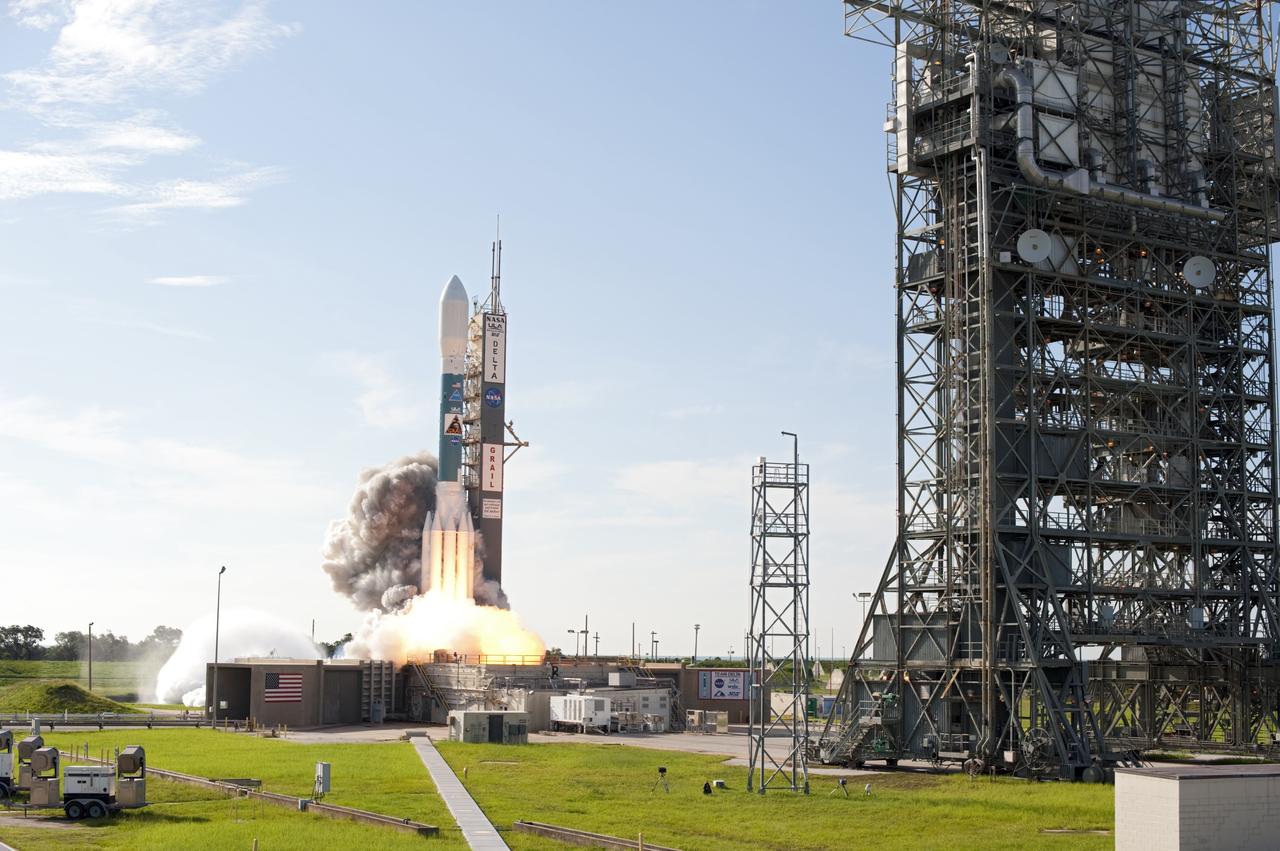
CAPE CANAVERAL, Fla. – At ignition, flames and smoke from the engines begin liftoff of the United Launch Alliance Delta II Heavy rocket carrying NASA’s twin Gravity Recovery and Interior Laboratory (GRAIL) mission off Space Launch Complex 17B on Cape Canaveral Air Force Station in Florida. At right is the pad’s mobile service tower. The spacecraft launched at 9:08:52 a.m. EDT Sept. 10. GRAIL-A will separate from the second stage of the rocket at about one hour, 21 minutes after liftoff, followed by GRAIL-B at 90 minutes after launch. The spacecraft are embarking on a three-month journey to reach the moon. GRAIL will fly twin spacecraft in tandem around the moon to precisely measure and map variations in the moon's gravitational field. The mission will provide the most accurate global gravity field to date for any planet, including Earth. This detailed information will reveal differences in the density of the moon's crust and mantle and will help answer fundamental questions about the moon's internal structure, thermal evolution, and history of collisions with asteroids. The aim is to map the moon's gravity field so completely that future moon vehicles can safely navigate anywhere on the moon’s surface. For more information, visit http://www.nasa.gov/grail. Photo credit: NASA/Tom Farrar and Tony Gray
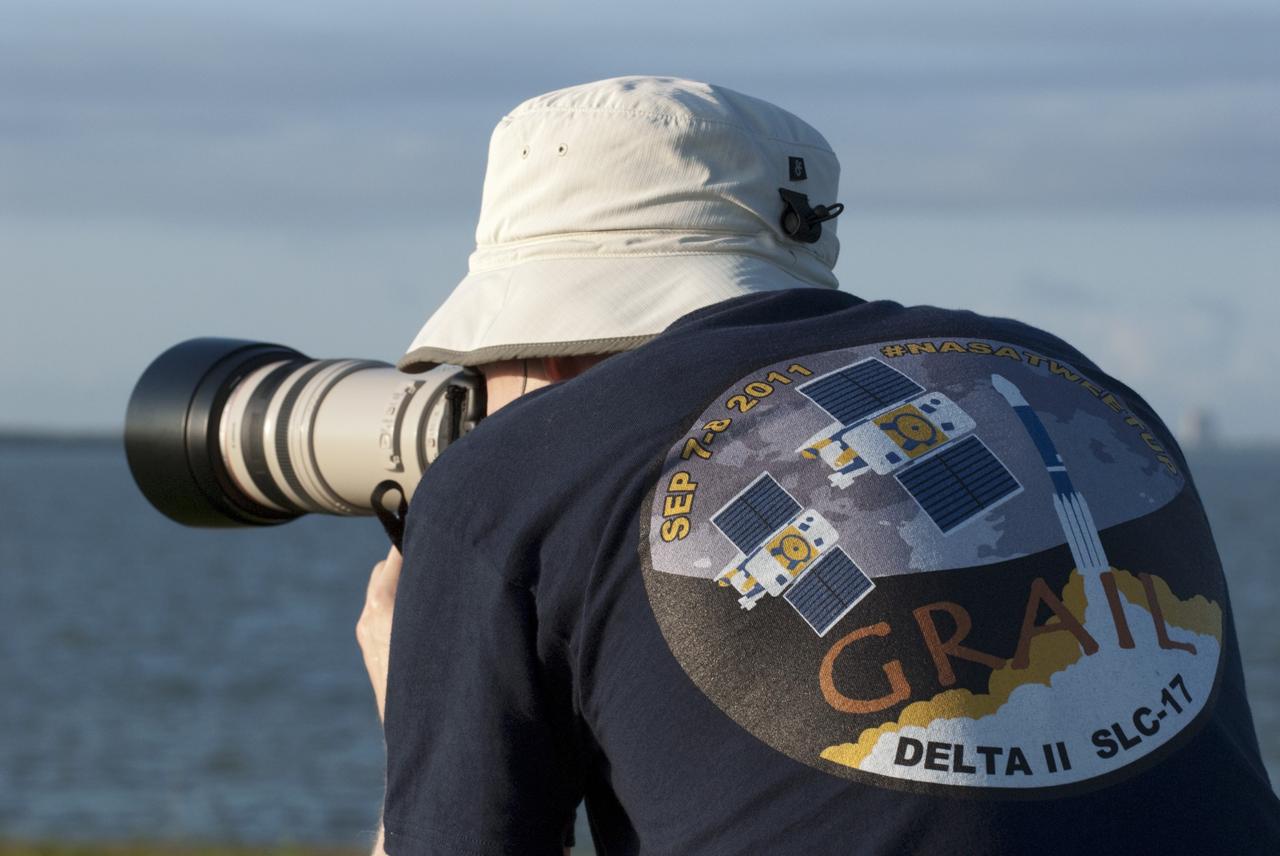
CAPE CANAVERAL, Fla. – A Tweetup participant searches for the right photo angle along the NASA Causeway launch viewing area at NASA’s Kennedy Space Center in Florida during prelaunch activities for the agency’s Gravity Recovery and Interior Laboratory (GRAIL) mission. Participants toured the center and got a close-up view of Space Launch Complex 17B at Cape Canaveral Air Force Station. The tweeters will share their experiences with followers through the social networking site Twitter. GRAIL will fly twin spacecraft in tandem around the moon to precisely measure and map variations in the moon’s gravitational field. The mission will provide the most accurate global gravity field to date for any planet, including Earth. This detailed information will reveal differences in the density of the moon’s crust and mantle and will help answer fundamental questions about the moon’s internal structure, thermal evolution, and history of collisions with asteroids. The aim is to map the moon’s gravity field so completely that future lunar vehicles can safely navigate anywhere on the moon’s surface. Launch is scheduled for 8:37:06 a.m. EDT Sept. 8. For more information, visit http://www.nasa.gov/grail. Photo credit: NASA/Kim Shiflett
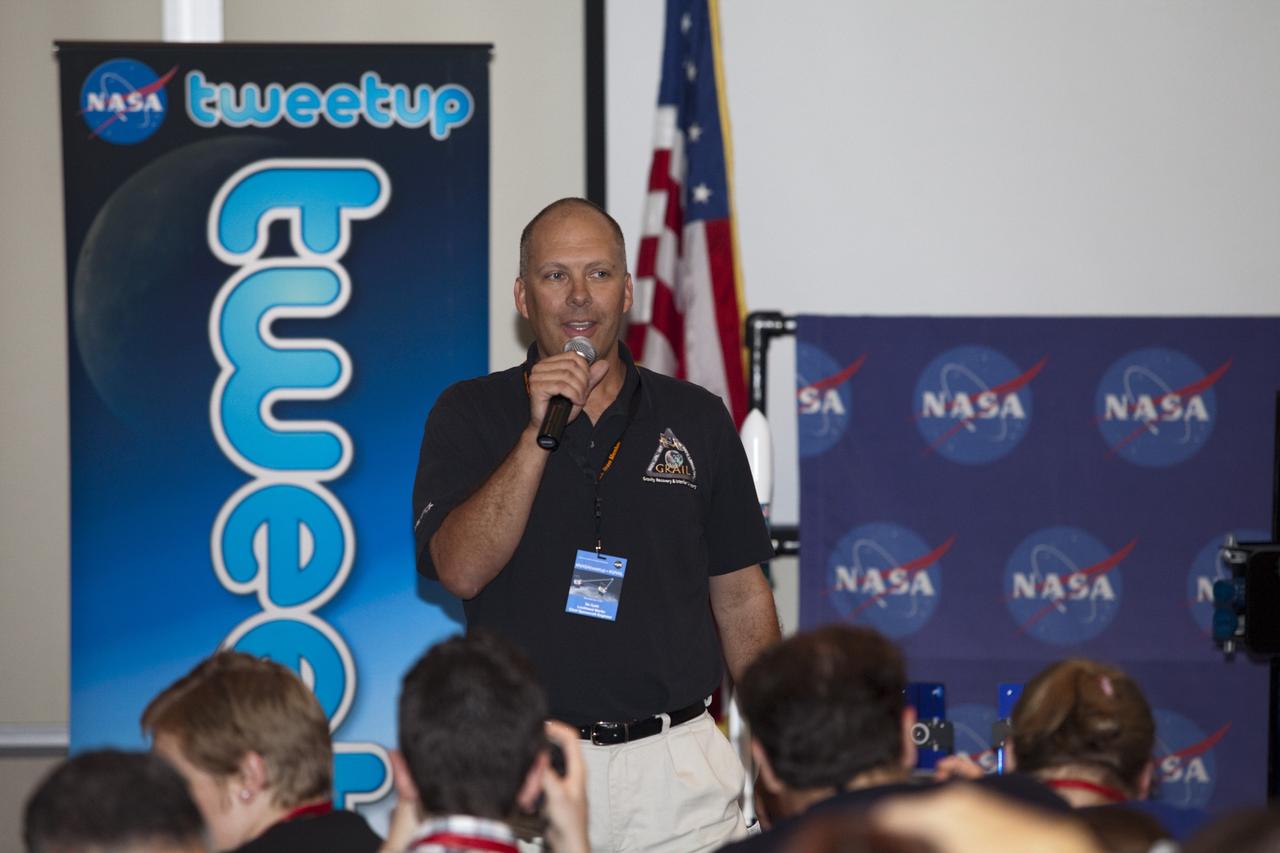
CAPE CANAVERAL, Fla. – Stu Spath, chief spacecraft engineer with Lockheed Martin, speaks to a group of Tweetup participants at the Kennedy Space Center Visitor Complex in Florida during prelaunch activities for the agency’s Gravity Recovery and Interior Laboratory (GRAIL) mission. Participants toured NASA’s Kennedy Space Center and got a close-up view of Space Launch Complex 17B at Cape Canaveral Air Force Station. The tweeters will share their experiences with followers through the social networking site Twitter. GRAIL will fly twin spacecraft in tandem around the moon to precisely measure and map variations in the moon’s gravitational field. The mission will provide the most accurate global gravity field to date for any planet, including Earth. This detailed information will reveal differences in the density of the moon’s crust and mantle and will help answer fundamental questions about the moon’s internal structure, thermal evolution, and history of collisions with asteroids. The aim is to map the moon’s gravity field so completely that future lunar vehicles can safely navigate anywhere on the moon’s surface. Launch is scheduled for 8:37:06 a.m. EDT Sept. 8. For more information, visit http://www.nasa.gov/grail. Photo credit: NASA/Gianni Woods
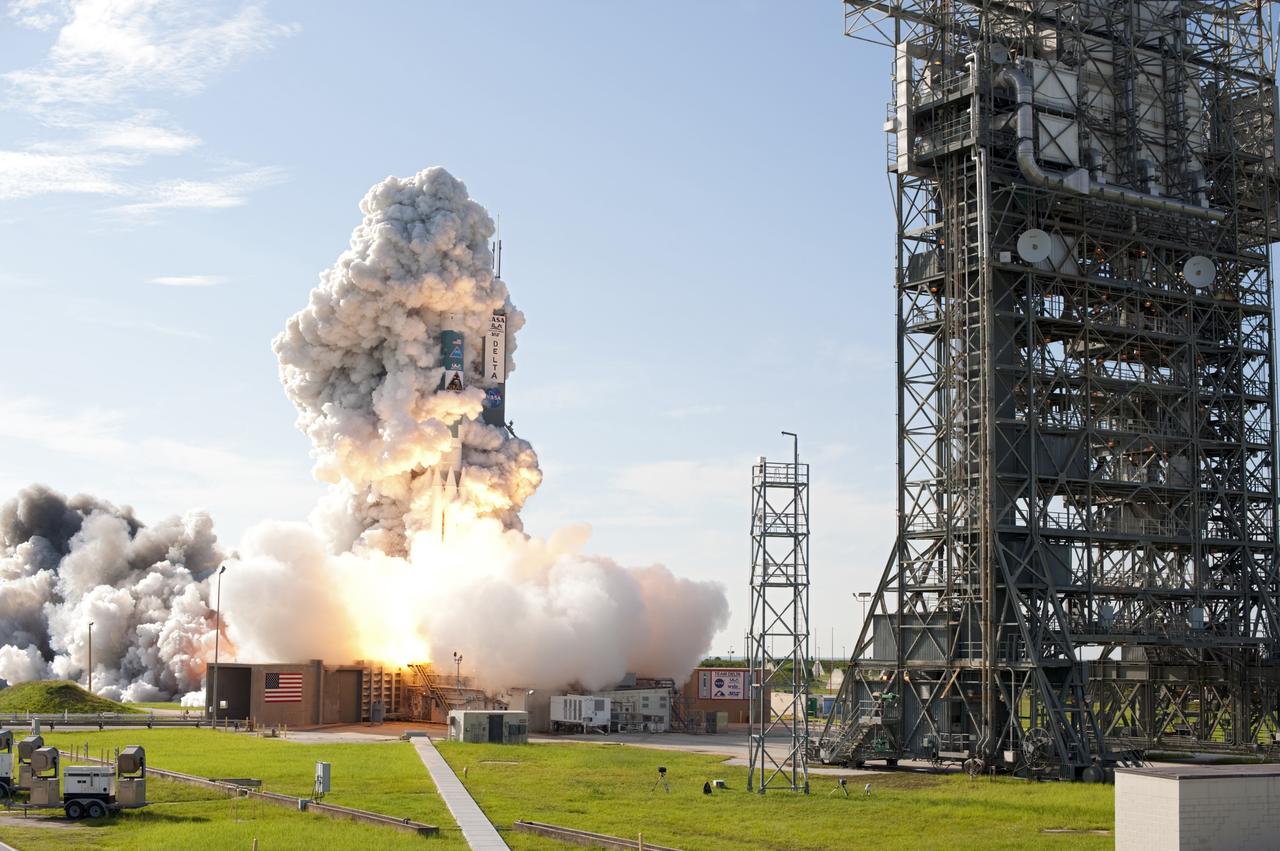
CAPE CANAVERAL, Fla. – Plumes of smoke surround of the United Launch Alliance Delta II Heavy rocket carrying NASA’s twin Gravity Recovery and Interior Laboratory (GRAIL) mission off Space Launch Complex 17B on Cape Canaveral Air Force Station in Florida. At right is the pad’s mobile service tower. The spacecraft launched at 9:08:52 a.m. EDT Sept. 10. GRAIL-A will separate from the second stage of the rocket at about one hour, 21 minutes after liftoff, followed by GRAIL-B at 90 minutes after launch. The spacecraft are embarking on a three-month journey to reach the moon. GRAIL will fly twin spacecraft in tandem around the moon to precisely measure and map variations in the moon's gravitational field. The mission will provide the most accurate global gravity field to date for any planet, including Earth. This detailed information will reveal differences in the density of the moon's crust and mantle and will help answer fundamental questions about the moon's internal structure, thermal evolution, and history of collisions with asteroids. The aim is to map the moon's gravity field so completely that future moon vehicles can safely navigate anywhere on the moon’s surface. For more information, visit http://www.nasa.gov/grail. Photo credit: NASA/Tom Farrar and Tony Gray
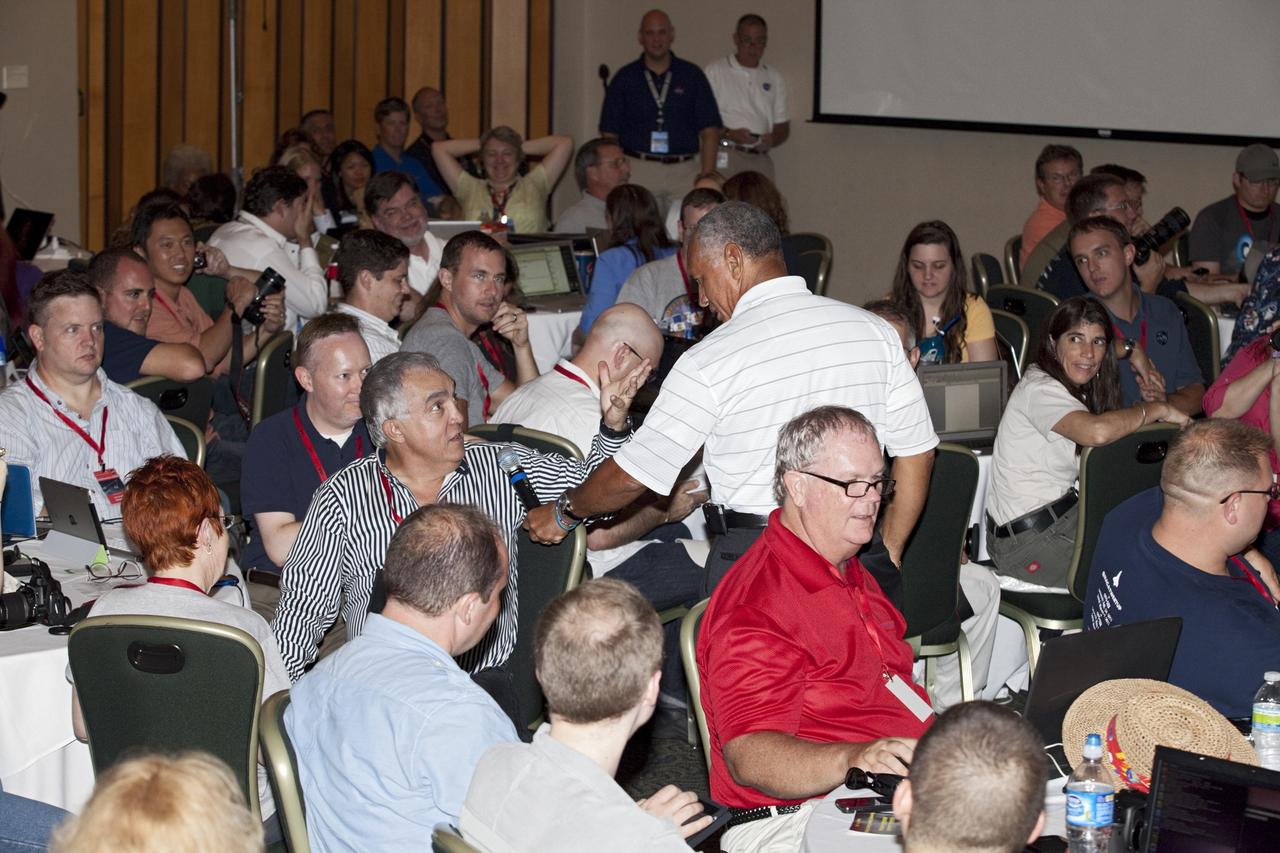
CAPE CANAVERAL, Fla. – NASA Administrator Charlie Bolden takes questions from a group of Tweetup participants at the Kennedy Space Center Visitor Complex in Florida during prelaunch activities for the agency’s Gravity Recovery and Interior Laboratory (GRAIL) mission. Participants toured NASA’s Kennedy Space Center and got a close-up view of Space Launch Complex 17B at Cape Canaveral Air Force Station. The tweeters will share their experiences with followers through the social networking site Twitter. GRAIL will fly twin spacecraft in tandem around the moon to precisely measure and map variations in the moon’s gravitational field. The mission will provide the most accurate global gravity field to date for any planet, including Earth. This detailed information will reveal differences in the density of the moon’s crust and mantle and will help answer fundamental questions about the moon’s internal structure, thermal evolution, and history of collisions with asteroids. The aim is to map the moon’s gravity field so completely that future lunar vehicles can safely navigate anywhere on the moon’s surface. Launch is scheduled for 8:37:06 a.m. EDT Sept. 8. For more information, visit http://www.nasa.gov/grail. Photo credit: NASA/Gianni Woods
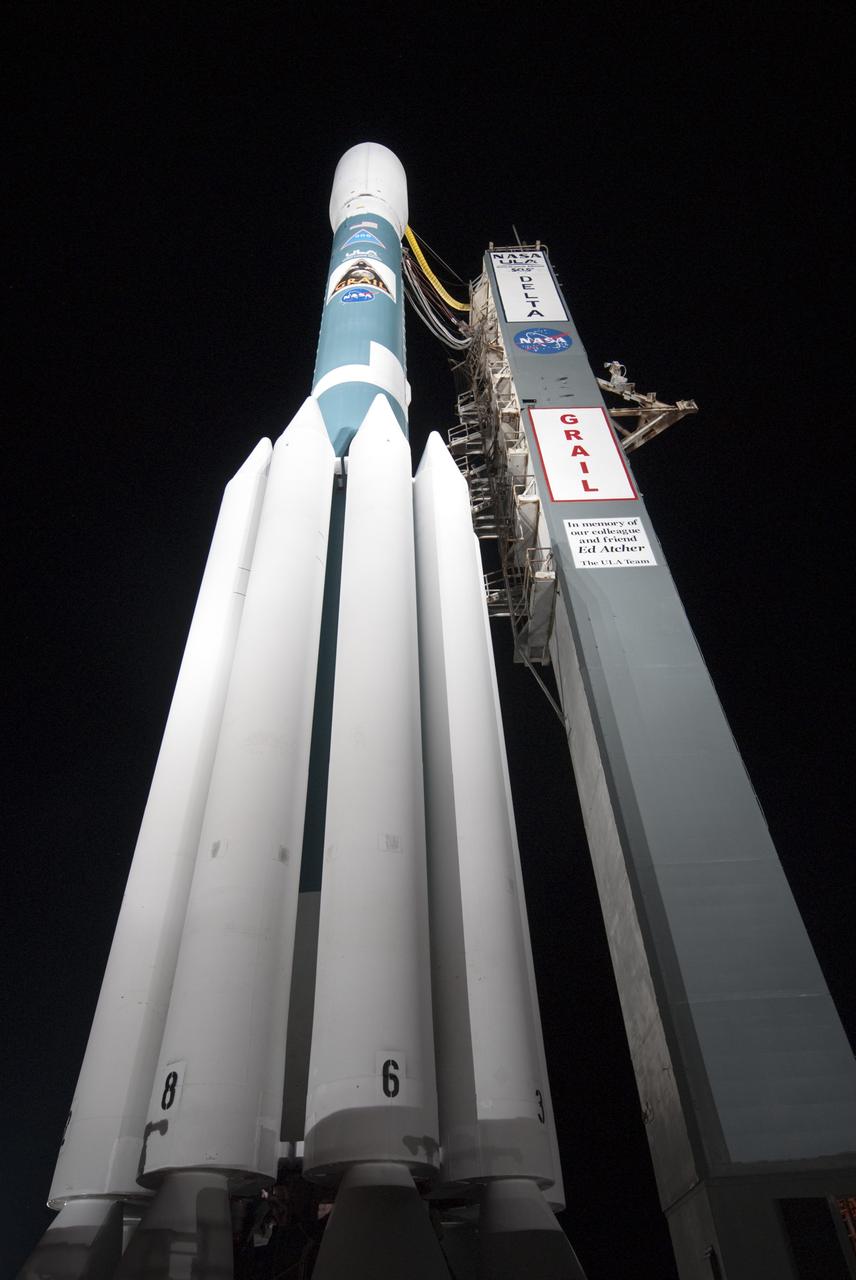
CAPE CANAVERAL, Fla. -- At Space Launch Complex 17B on Cape Canaveral Air Force Station, the United Launch Alliance Delta II rocket that will launch NASA's Gravity Recovery and Interior Laboratory mission towers over the pad. The mobile service tower has been rolled away from the vehicle for launch. The "rollback" began at about 11:20 p.m. EDT Sept. 7. GRAIL will fly twin spacecraft in tandem around the moon to precisely measure and map variations in the moon's gravitational field. The mission will provide the most accurate global gravity field to date for any planet, including Earth. This detailed information will reveal differences in the density of the moon's crust and mantle and will help answer fundamental questions about the moon's internal structure, thermal evolution, and history of collisions with asteroids. The aim is to map the moon's gravity field so completely that future lunar vehicles can safely navigate anywhere on the moon’s surface. Launch is scheduled for 8:37:06 a.m. EDT Sept. 8. For more information, visit http://www.nasa.gov/grail. Photo credit: NASA/Kim Shiflett
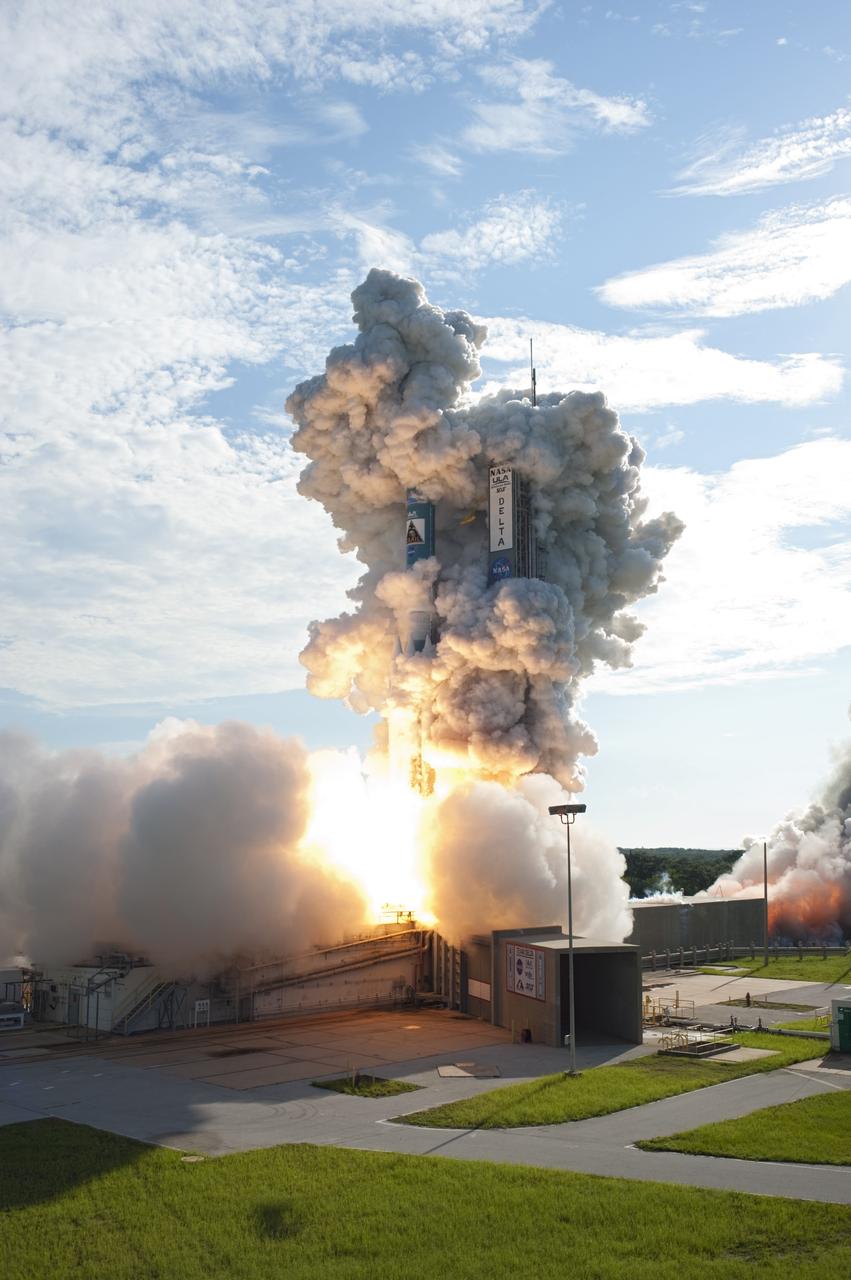
CAPE CANAVERAL, Fla. – At liftoff, plumes of smoke surround the United Launch Alliance Delta II Heavy rocket carrying NASA’s twin Gravity Recovery and Interior Laboratory (GRAIL) mission off Space Launch Complex 17B on Cape Canaveral Air Force Station in Florida. The spacecraft launched at 9:08:52 a.m. EDT Sept. 10. GRAIL-A will separate from the second stage of the rocket at about one hour, 21 minutes after liftoff, followed by GRAIL-B at 90 minutes after launch. The spacecraft are embarking on a three-month journey to reach the moon. GRAIL will fly twin spacecraft in tandem around the moon to precisely measure and map variations in the moon's gravitational field. The mission will provide the most accurate global gravity field to date for any planet, including Earth. This detailed information will reveal differences in the density of the moon's crust and mantle and will help answer fundamental questions about the moon's internal structure, thermal evolution, and history of collisions with asteroids. The aim is to map the moon's gravity field so completely that future moon vehicles can safely navigate anywhere on the moon’s surface. For more information, visit http://www.nasa.gov/grail. Photo credit: NASA/ Tony Gray and Tim Powers
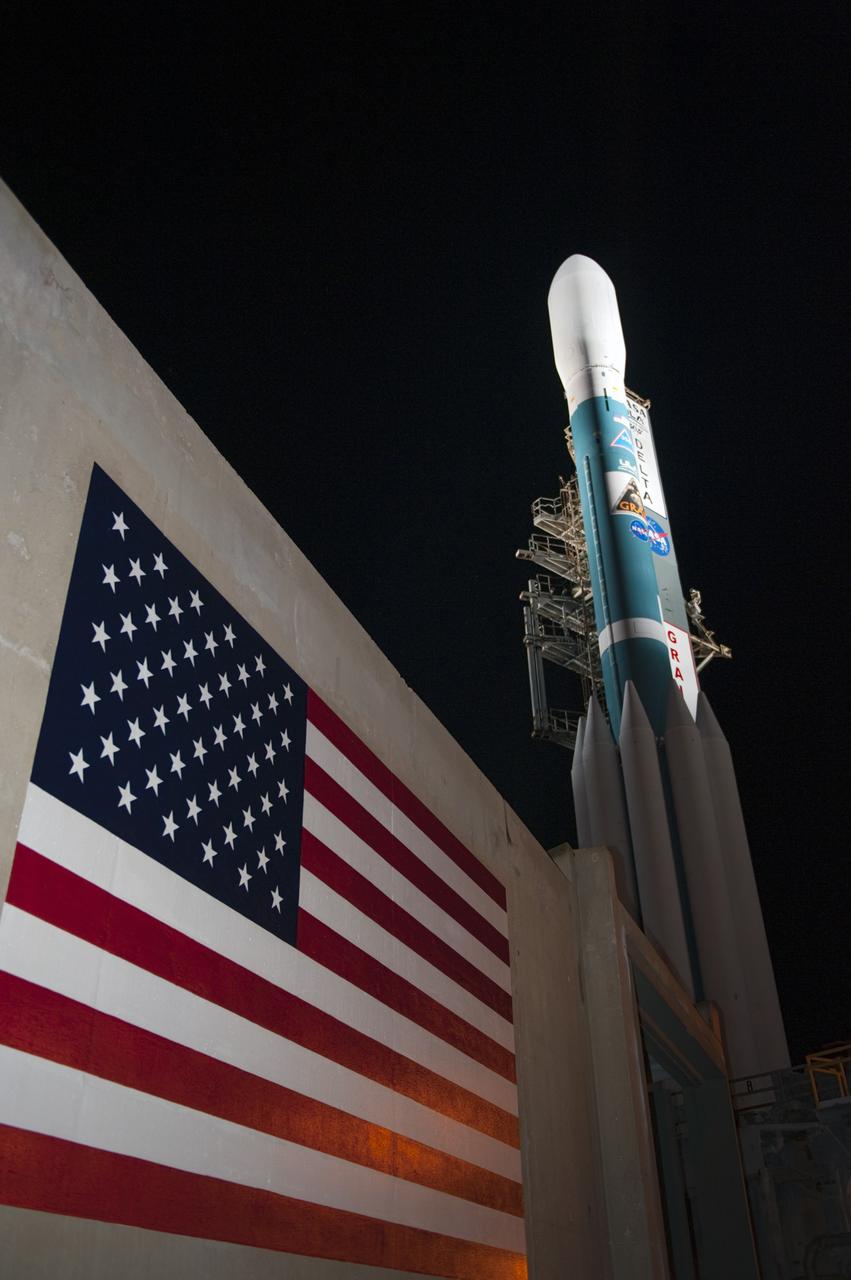
CAPE CANAVERAL, Fla. -- At Space Launch Complex 17B on Cape Canaveral Air Force Station, the United Launch Alliance Delta II rocket that will launch NASA's Gravity Recovery and Interior Laboratory mission towers over the U.S. flag painted on the pad's structure. The mobile service tower has been rolled away from the vehicle for launch. The "rollback" began at about 11:20 p.m. EDT Sept. 7. GRAIL will fly twin spacecraft in tandem around the moon to precisely measure and map variations in the moon's gravitational field. The mission will provide the most accurate global gravity field to date for any planet, including Earth. This detailed information will reveal differences in the density of the moon's crust and mantle and will help answer fundamental questions about the moon's internal structure, thermal evolution, and history of collisions with asteroids. The aim is to map the moon's gravity field so completely that future lunar vehicles can safely navigate anywhere on the moon’s surface. Launch is scheduled for 8:37:06 a.m. EDT Sept. 8. For more information, visit http://www.nasa.gov/grail. Photo credit: NASA/Kim Shiflett

CAPE CANAVERAL, Fla. – Flames and smoke from the engines surround the United Launch Alliance Delta II rocket at liftoff carrying NASA’s twin Gravity Recovery and Interior Laboratory (GRAIL) mission off Space Launch Complex 17B on Cape Canaveral Air Force Station in Florida. The spacecraft launched at 9:08:52 a.m. EDT Sept. 10. GRAIL-A will separate from the second stage of the rocket at about one hour, 21 minutes after liftoff, followed by GRAIL-B at 90 minutes after launch. The spacecraft are embarking on a three-month journey to reach the moon. GRAIL will fly twin spacecraft in tandem around the moon to precisely measure and map variations in the moon's gravitational field. The mission will provide the most accurate global gravity field to date for any planet, including Earth. This detailed information will reveal differences in the density of the moon's crust and mantle and will help answer fundamental questions about the moon's internal structure, thermal evolution, and history of collisions with asteroids. The aim is to map the moon's gravity field so completely that future moon vehicles can safely navigate anywhere on the moon’s surface. For more information, visit http://www.nasa.gov/grail. Photo credit: NASA/Sandra Joseph and Don Kight
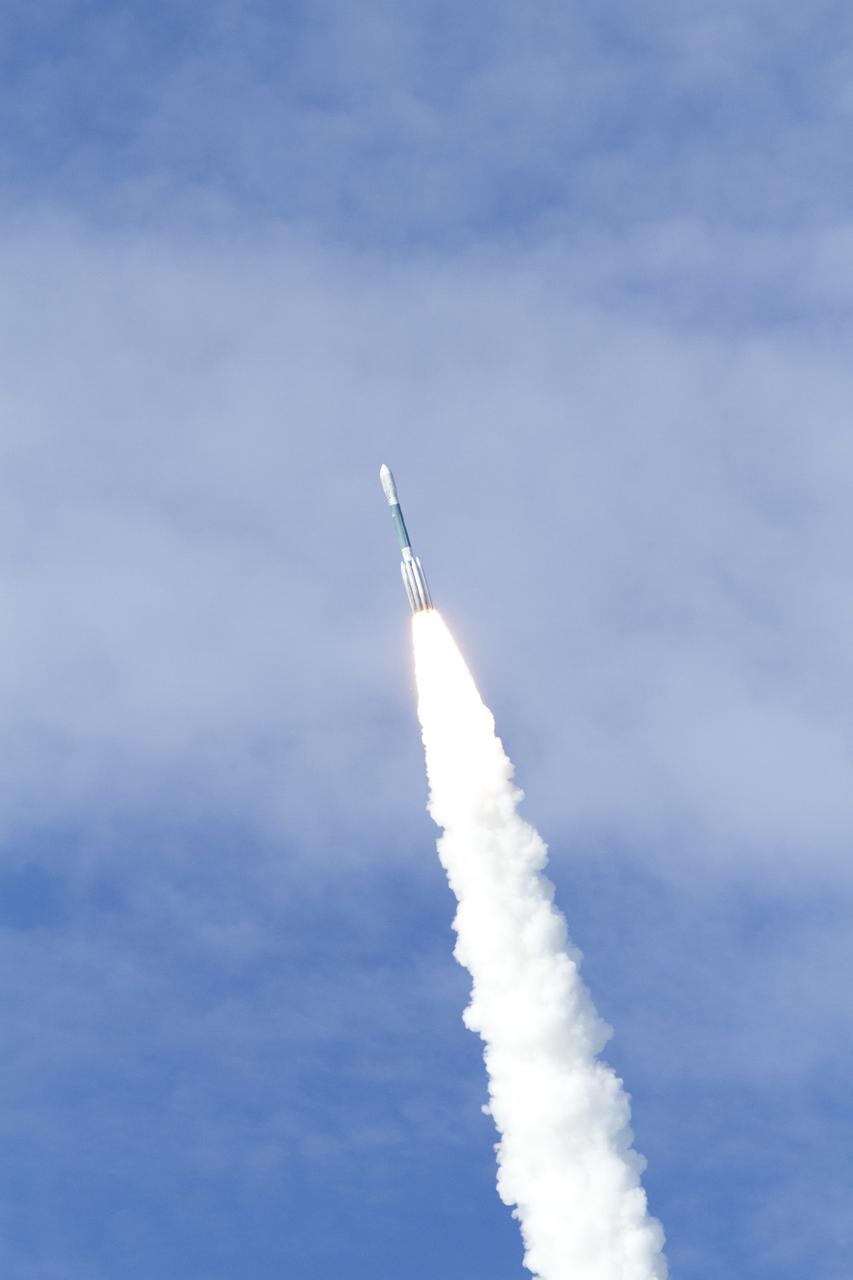
CAPE CANAVERAL, Fla. – Backdropped by a beautiful blue sky, the United Launch Alliance Delta II Heavy rocket propels NASA’s twin Gravity Recovery and Interior Laboratory (GRAIL) mission off Space Launch Complex 17B on Cape Canaveral Air Force Station in Florida. The spacecraft launched at 9:08:52 a.m. EDT Sept. 10. GRAIL-A will separate from the second stage of the rocket at about one hour, 21 minutes after liftoff, followed by GRAIL-B at 90 minutes after launch. The spacecraft are embarking on a three-month journey to reach the moon. GRAIL will fly twin spacecraft in tandem around the moon to precisely measure and map variations in the moon's gravitational field. The mission will provide the most accurate global gravity field to date for any planet, including Earth. This detailed information will reveal differences in the density of the moon's crust and mantle and will help answer fundamental questions about the moon's internal structure, thermal evolution, and history of collisions with asteroids. The aim is to map the moon's gravity field so completely that future moon vehicles can safely navigate anywhere on the moon’s surface. For more information, visit http://www.nasa.gov/grail. Photo credit: NASA/George Roberts
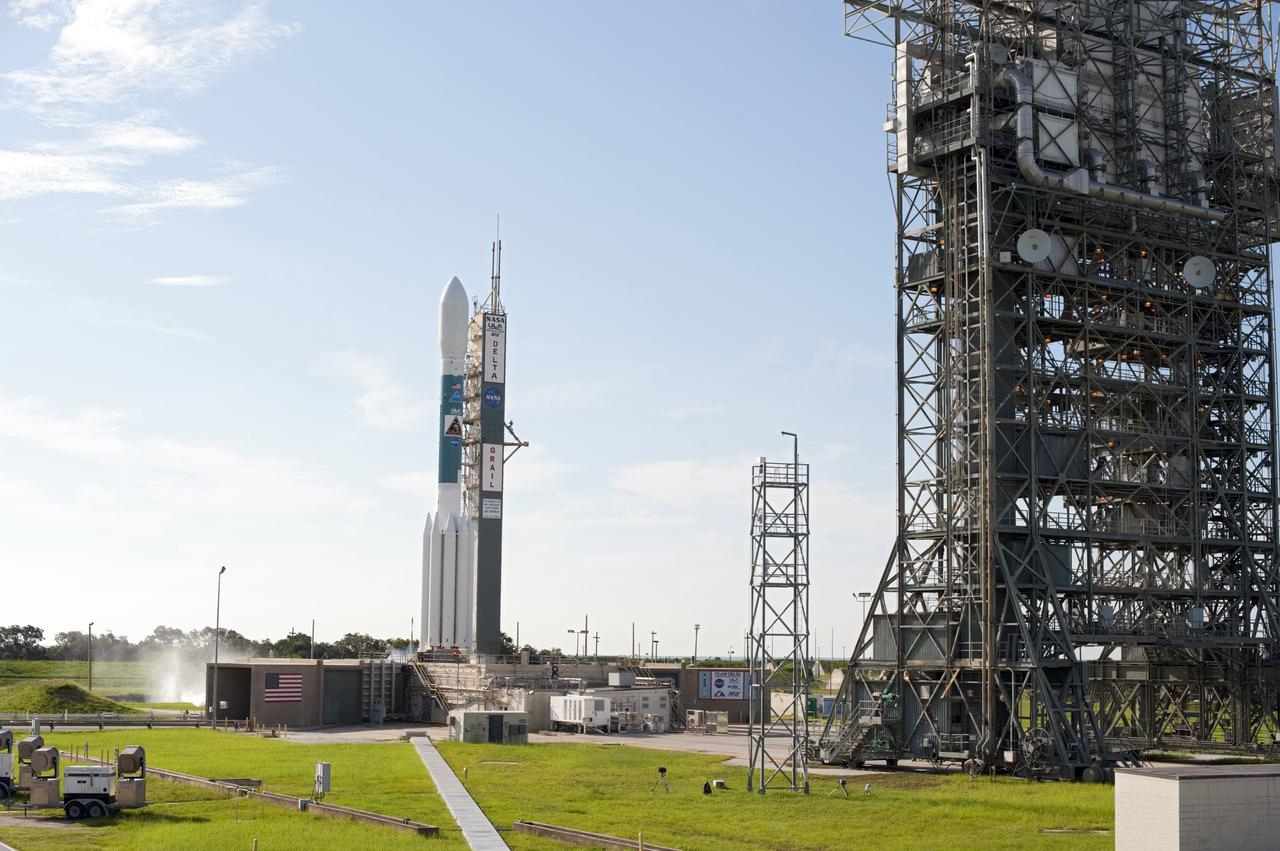
CAPE CANAVERAL, Fla. – Engine ignition begins liftoff of the United Launch Alliance Delta II Heavy rocket carrying NASA’s twin Gravity Recovery and Interior Laboratory (GRAIL) mission off Space Launch Complex 17B on Cape Canaveral Air Force Station in Florida. At right is the pad’s mobile service tower. The spacecraft launched at 9:08:52 a.m. EDT Sept. 10. GRAIL-A will separate from the second stage of the rocket at about one hour, 21 minutes after liftoff, followed by GRAIL-B at 90 minutes after launch. The spacecraft are embarking on a three-month journey to reach the moon. GRAIL will fly twin spacecraft in tandem around the moon to precisely measure and map variations in the moon's gravitational field. The mission will provide the most accurate global gravity field to date for any planet, including Earth. This detailed information will reveal differences in the density of the moon's crust and mantle and will help answer fundamental questions about the moon's internal structure, thermal evolution, and history of collisions with asteroids. The aim is to map the moon's gravity field so completely that future moon vehicles can safely navigate anywhere on the moon’s surface. For more information, visit http://www.nasa.gov/grail. Photo credit: NASA/Tom Farrar and Tony Gray
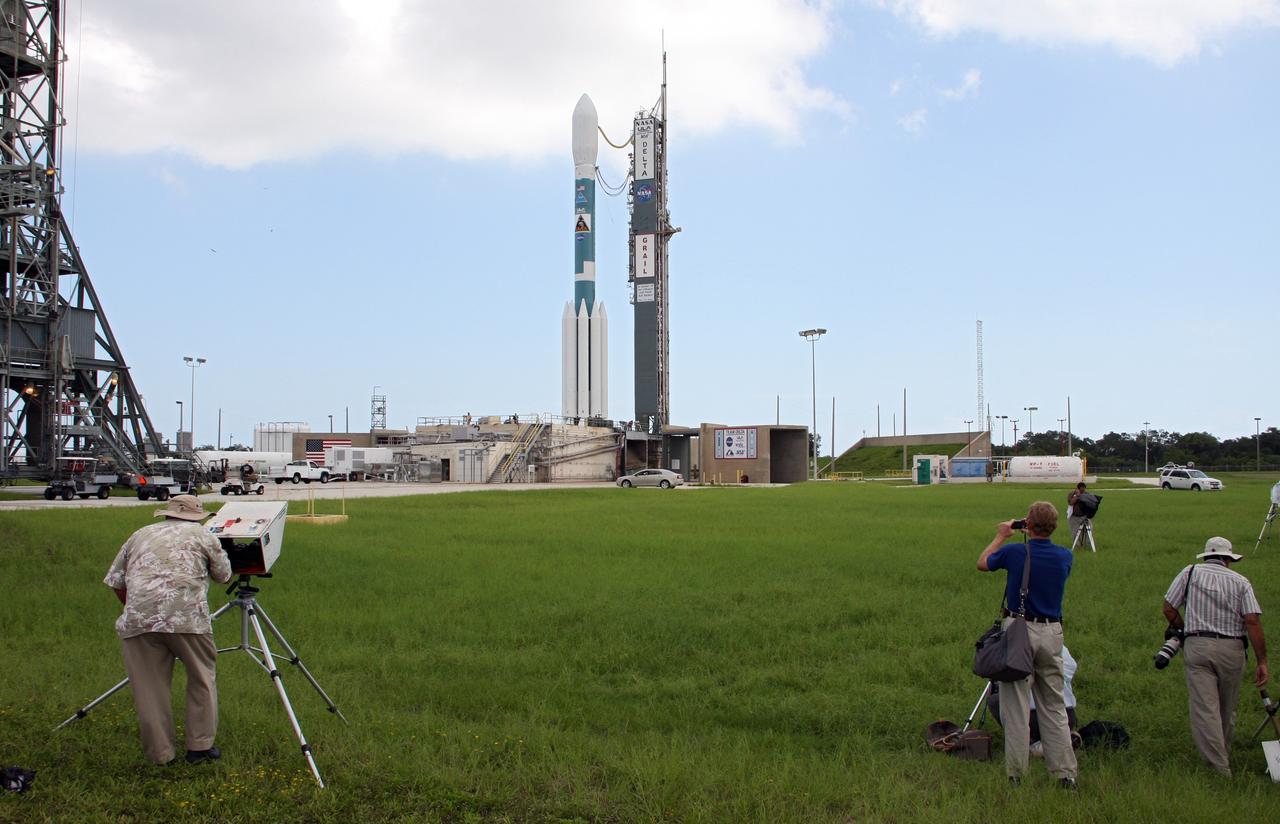
CAPE CANAVERAL, Fla. – News media photograph the United Launch Alliance Delta II heavy rocket carrying NASA’s twin Gravity Recovery and Interior Laboratory spacecraft at Launch Complex 17B as the mobile service tower is rolled back around to the vehicle after the first launch attempt was scrubbed due to upper-level winds. GRAIL is scheduled for another launch attempt Sept.10 at 8:29:45 a.m. EDT. at Cape Canaveral Air Force Station in Florida. GRAIL will fly twin spacecraft in tandem around the moon to precisely measure and map variations in the moon's gravitational field. The mission will provide the most accurate global gravity field to date for any planet, including Earth. This detailed information will reveal differences in the density of the moon's crust and mantle and will help answer fundamental questions about the moon's internal structure, thermal evolution, and history of collisions with asteroids. The aim is to map the moon's gravity field so completely that future moon vehicles can safely navigate anywhere on the moon’s surface. For more information, visit http://www.nasa.gov/grail. Photo credit: NASA/Ken Thornsley
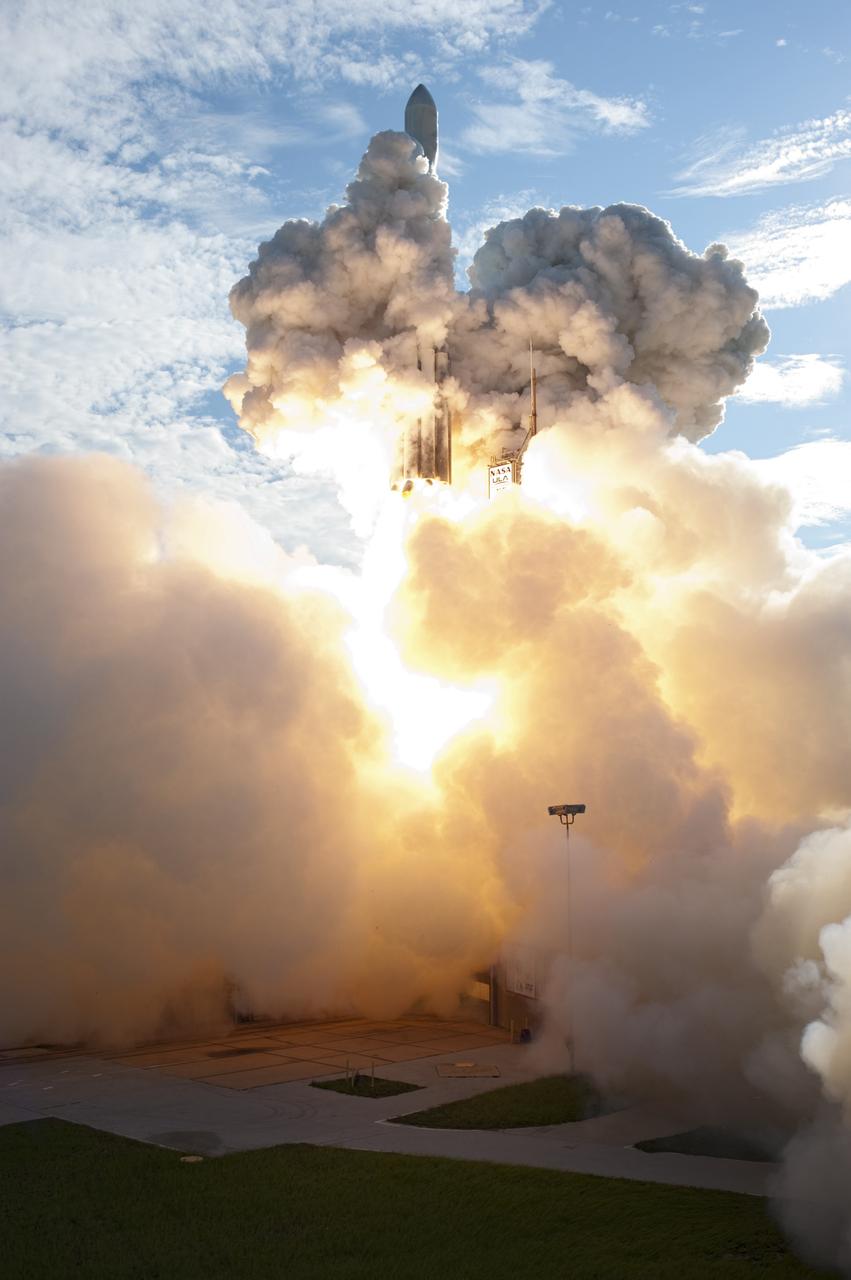
CAPE CANAVERAL, Fla. – Rising from fire and smoke after liftoff, NASA’s twin Gravity Recovery and Interior Laboratory (GRAIL) mission launches atop a United Launch Alliance Delta II Heavy rocket leaving from Space Launch Complex 17B on Cape Canaveral Air Force Station in Florida. Liftoff was at 9:08:52 a.m. EDT Sept. 10. GRAIL-A will separate from the second stage of the rocket at about one hour, 21 minutes after liftoff, followed by GRAIL-B at 90 minutes after launch. The spacecraft are embarking on a three-month journey to reach the moon. GRAIL will fly twin spacecraft in tandem around the moon to precisely measure and map variations in the moon's gravitational field. The mission will provide the most accurate global gravity field to date for any planet, including Earth. This detailed information will reveal differences in the density of the moon's crust and mantle and will help answer fundamental questions about the moon's internal structure, thermal evolution, and history of collisions with asteroids. The aim is to map the moon's gravity field so completely that future moon vehicles can safely navigate anywhere on the moon’s surface. For more information, visit http://www.nasa.gov/grail. Photo credit: NASA/ Tony Gray and Tim Powers
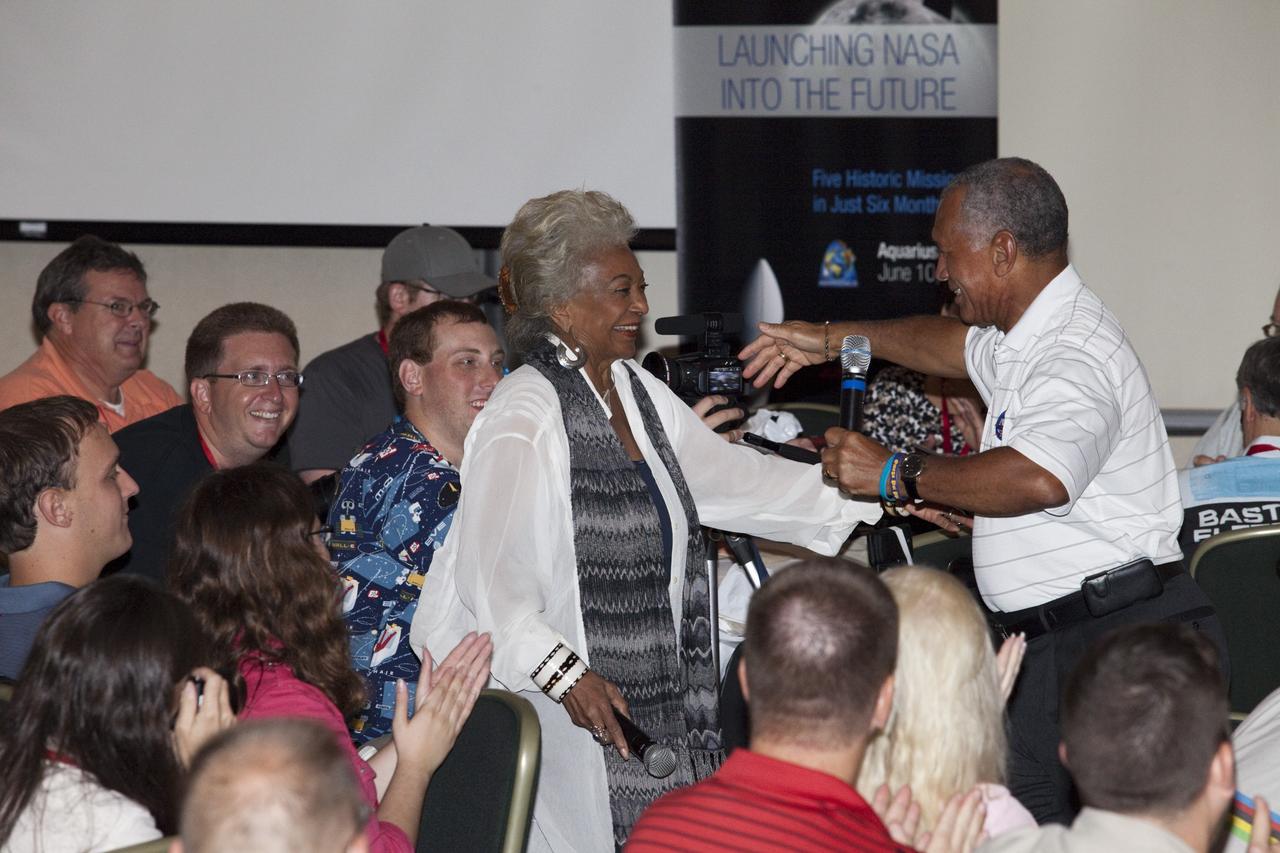
CAPE CANAVERAL, Fla. – NASA Administrator Charlie Bolden welcomes actress Nichelle Nichols (Lt. Uhura on Star Trek) to a Tweetup presentation at the Kennedy Space Center Visitor Complex in Florida during prelaunch activities for the agency’s Gravity Recovery and Interior Laboratory (GRAIL) mission. Participants toured NASA’s Kennedy Space Center and got a close-up view of Space Launch Complex 17B at Cape Canaveral Air Force Station. The tweeters will share their experiences with followers through the social networking site Twitter. GRAIL will fly twin spacecraft in tandem around the moon to precisely measure and map variations in the moon’s gravitational field. The mission will provide the most accurate global gravity field to date for any planet, including Earth. This detailed information will reveal differences in the density of the moon’s crust and mantle and will help answer fundamental questions about the moon’s internal structure, thermal evolution, and history of collisions with asteroids. The aim is to map the moon’s gravity field so completely that future lunar vehicles can safely navigate anywhere on the moon’s surface. Launch is scheduled for 8:37:06 a.m. EDT Sept. 8. For more information, visit http://www.nasa.gov/grail. Photo credit: NASA/Gianni Woods
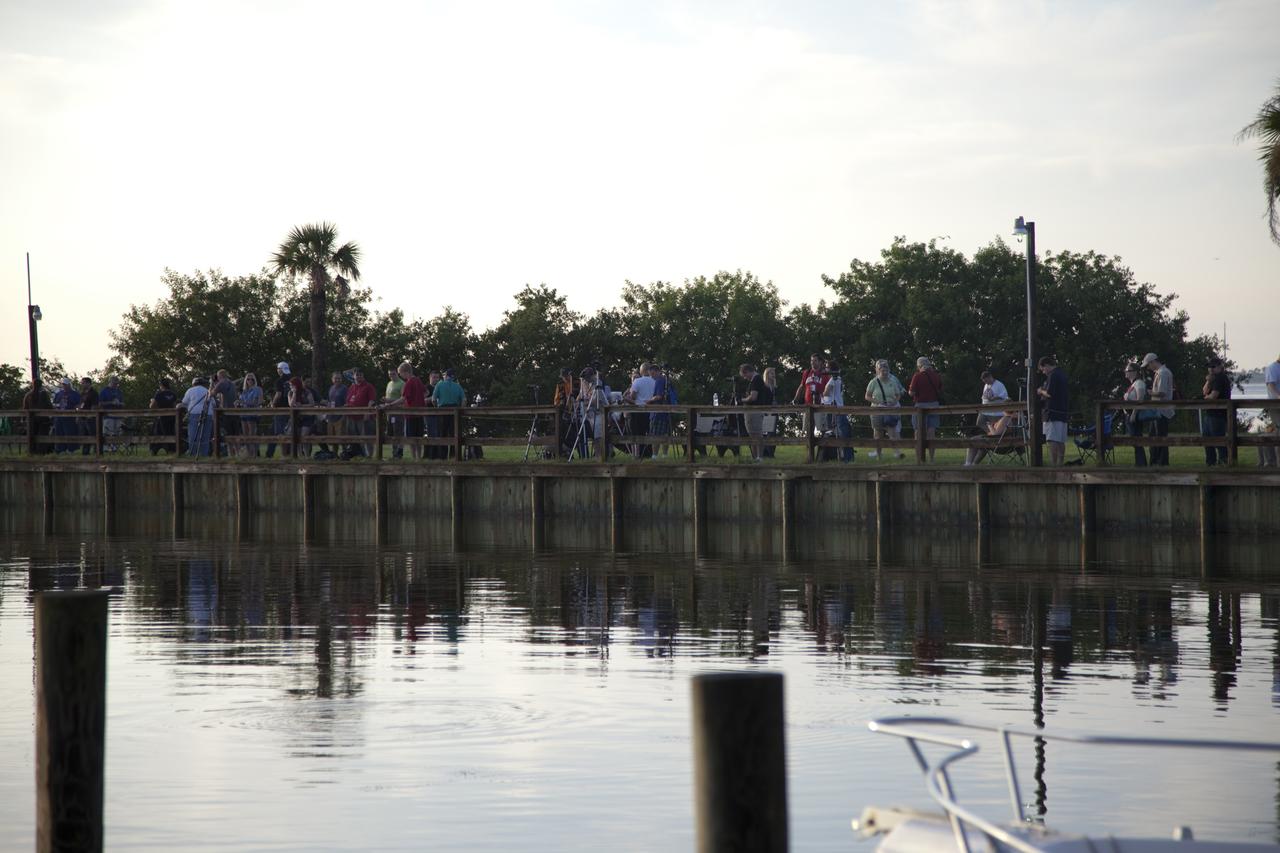
CAPE CANAVERAL, Fla. – At KARS Park 1 on Merritt Island in Florida, a group of Tweetup participants prepare to watch the United Launch Alliance Delta II Heavy rocket launch from Space Launch Complex 17B at Cape Canaveral Air Force Station carrying NASA’s Gravity Recovery and Interior Laboratory (GRAIL) mission to the moon. The tweeters will share their experiences with followers through the social networking site Twitter. GRAIL will fly twin spacecraft in tandem around the moon to precisely measure and map variations in the moon's gravitational field. The mission will provide the most accurate global gravity field to date for any planet, including Earth. This detailed information will reveal differences in the density of the moon's crust and mantle and will help answer fundamental questions about the moon's internal structure, thermal evolution, and history of collisions with asteroids. The aim is to map the moon's gravity field so completely that future moon vehicles can safely navigate anywhere on the moon’s surface. For more information, visit http://www.nasa.gov/grail. Photo credit: NASA/Frankie Martin
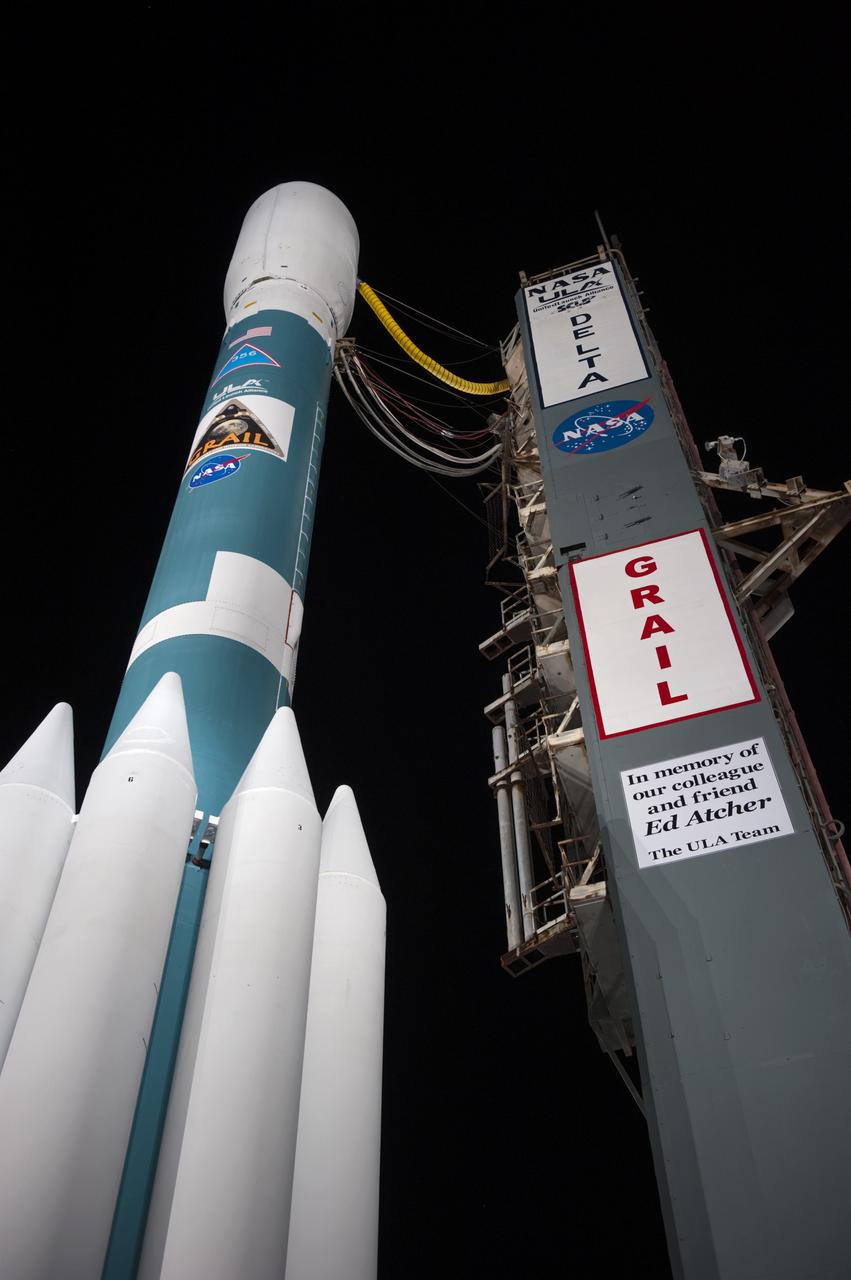
CAPE CANAVERAL, Fla. -- At Space Launch Complex 17B on Cape Canaveral Air Force Station, United Launch Alliance (ULA) honors the late Ed Atcher with a placard posted on the service tower next to the ULA Delta II rocket that will launch NASA's Gravity Recovery and Interior Laboratory mission. The mobile service tower has been rolled away from the vehicle for launch. The "rollback" began at about 11:20 p.m. EDT Sept. 7. GRAIL will fly twin spacecraft in tandem around the moon to precisely measure and map variations in the moon's gravitational field. The mission will provide the most accurate global gravity field to date for any planet, including Earth. This detailed information will reveal differences in the density of the moon's crust and mantle and will help answer fundamental questions about the moon's internal structure, thermal evolution, and history of collisions with asteroids. The aim is to map the moon's gravity field so completely that future lunar vehicles can safely navigate anywhere on the moon’s surface. Launch is scheduled for 8:37:06 a.m. EDT Sept. 8. For more information, visit http://www.nasa.gov/grail. Photo credit: NASA/Kim Shiflett
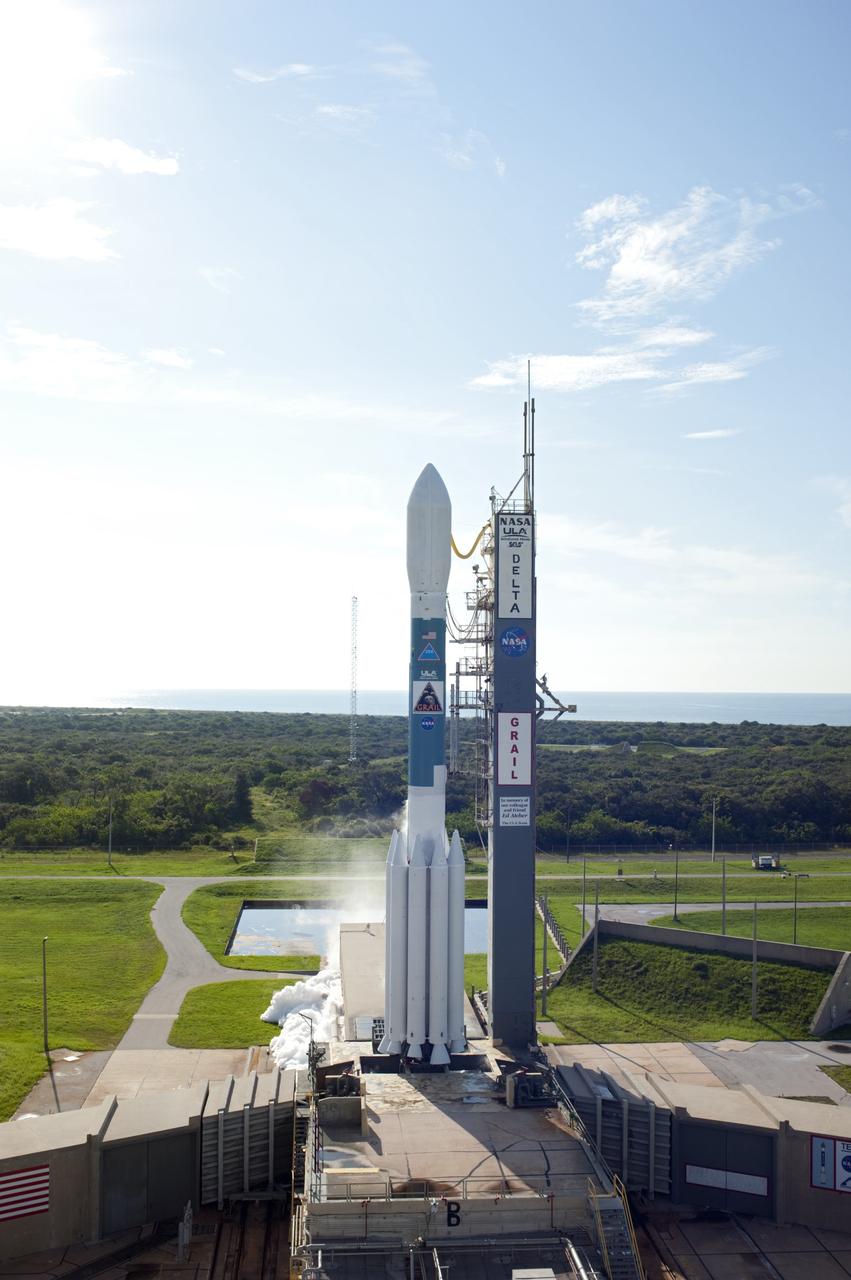
CAPE CANAVERAL, Fla. – Overlooking the Central Florida coast, engine ignition begins liftoff of the United Launch Alliance Delta II Heavy rocket carrying NASA’s twin Gravity Recovery and Interior Laboratory (GRAIL) mission off Space Launch Complex 17B on Cape Canaveral Air Force Station. The spacecraft launched at 9:08:52 a.m. EDT Sept. 10. GRAIL-A will separate from the second stage of the rocket at about one hour, 21 minutes after liftoff, followed by GRAIL-B at 90 minutes after launch. The spacecraft are embarking on a three-month journey to reach the moon. GRAIL will fly twin spacecraft in tandem around the moon to precisely measure and map variations in the moon's gravitational field. The mission will provide the most accurate global gravity field to date for any planet, including Earth. This detailed information will reveal differences in the density of the moon's crust and mantle and will help answer fundamental questions about the moon's internal structure, thermal evolution, and history of collisions with asteroids. The aim is to map the moon's gravity field so completely that future moon vehicles can safely navigate anywhere on the moon’s surface. For more information, visit http://www.nasa.gov/grail. Photo credit: NASA/Sandra Joseph and Don Kight
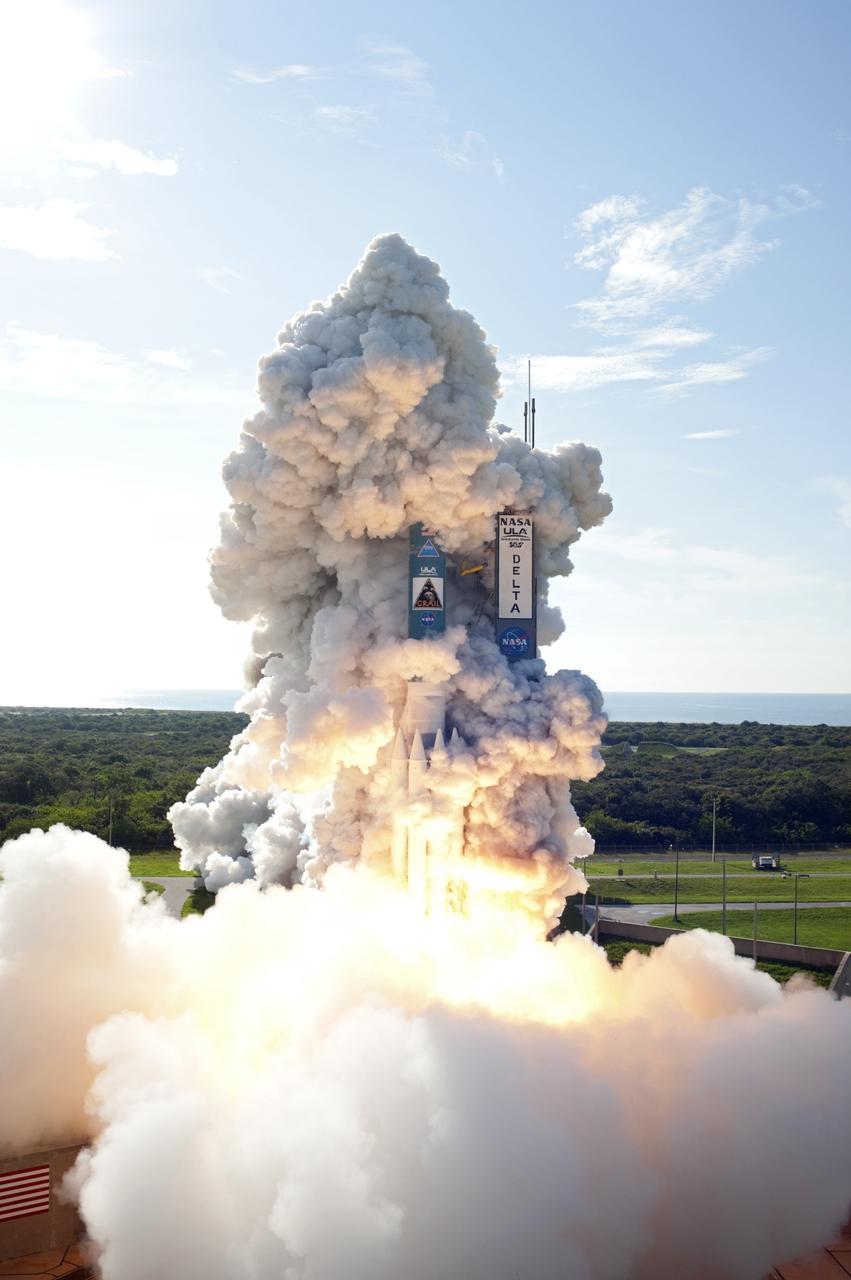
CAPE CANAVERAL, Fla. – Plumes of smoke surround of the United Launch Alliance Delta II Heavy rocket carrying NASA’s twin Gravity Recovery and Interior Laboratory (GRAIL) mission off Space Launch Complex 17B on Cape Canaveral Air Force Station In Florida. The spacecraft launched at 9:08:52 a.m. EDT Sept. 10. GRAIL-A will separate from the second stage of the rocket at about one hour, 21 minutes after liftoff, followed by GRAIL-B at 90 minutes after launch. The spacecraft are embarking on a three-month journey to reach the moon. GRAIL will fly twin spacecraft in tandem around the moon to precisely measure and map variations in the moon's gravitational field. The mission will provide the most accurate global gravity field to date for any planet, including Earth. This detailed information will reveal differences in the density of the moon's crust and mantle and will help answer fundamental questions about the moon's internal structure, thermal evolution, and history of collisions with asteroids. The aim is to map the moon's gravity field so completely that future moon vehicles can safely navigate anywhere on the moon’s surface. For more information, visit http://www.nasa.gov/grail. Photo credit: NASA/Sandra Joseph and Don Kight
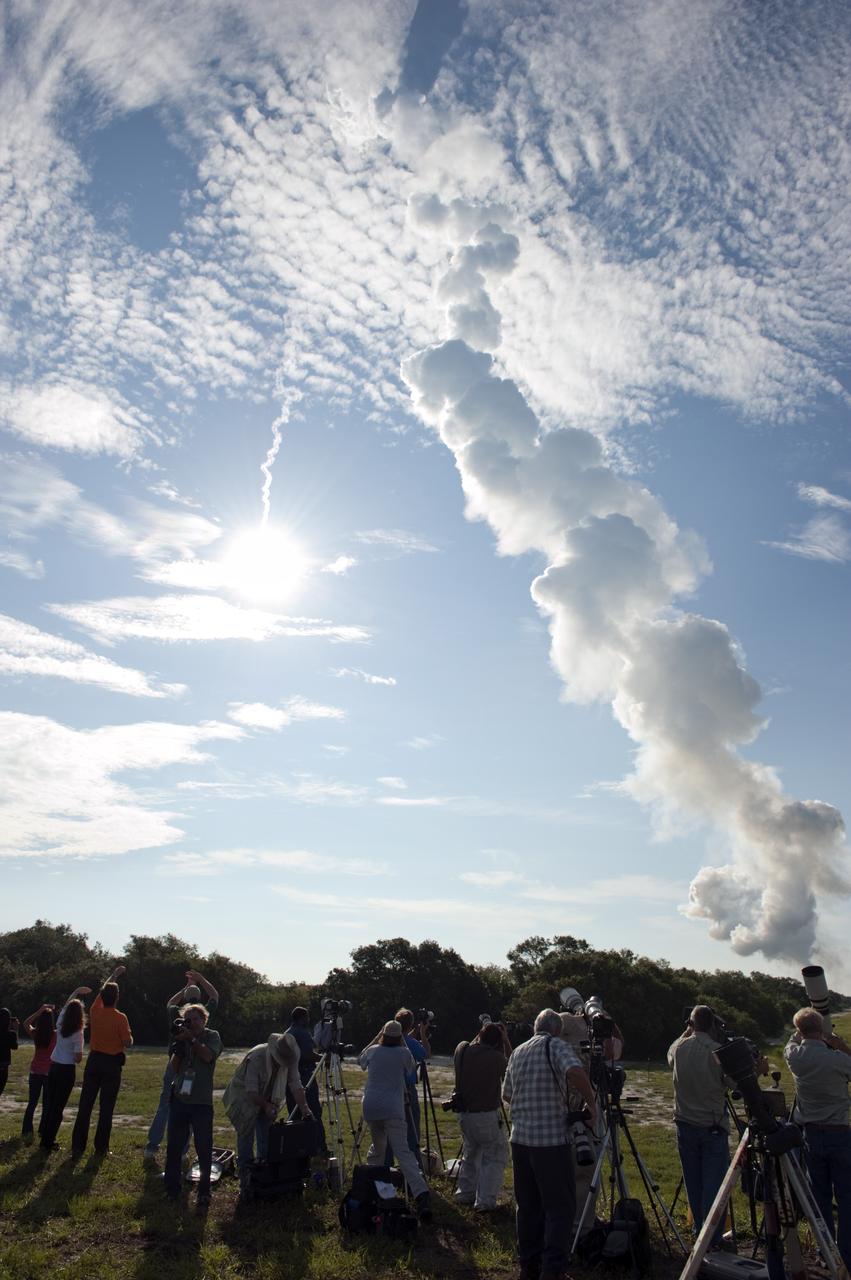
CAPE CANAVERAL, Fla. – Sun reflects off the United Launch Alliance Delta II Heavy rocket launching NASA’s Gravity Recovery and Interior Laboratory (GRAIL) mission into space as media representatives at Press Site 1 near Space Launch Complex 17B on Cape Canaveral Air Force Station in Florida capture the moment. Liftoff was at 9:08:52 a.m. EDT Sept.10. GRAIL-A will separate from the second stage of the rocket at about one hour, 21 minutes after liftoff, followed by GRAIL-B at 90 minutes after launch. The spacecraft are embarking on a three-month journey to reach the moon. GRAIL will fly twin spacecraft in tandem around the moon to precisely measure and map variations in the moon's gravitational field. The mission will provide the most accurate global gravity field to date for any planet, including Earth. This detailed information will reveal differences in the density of the moon's crust and mantle and will help answer fundamental questions about the moon's internal structure, thermal evolution, and history of collisions with asteroids. The aim is to map the moon's gravity field so completely that future moon vehicles can safely navigate anywhere on the moon’s surface. For more information, visit http://www.nasa.gov/grail. Photo credit: NASA/ Kim Shiflett
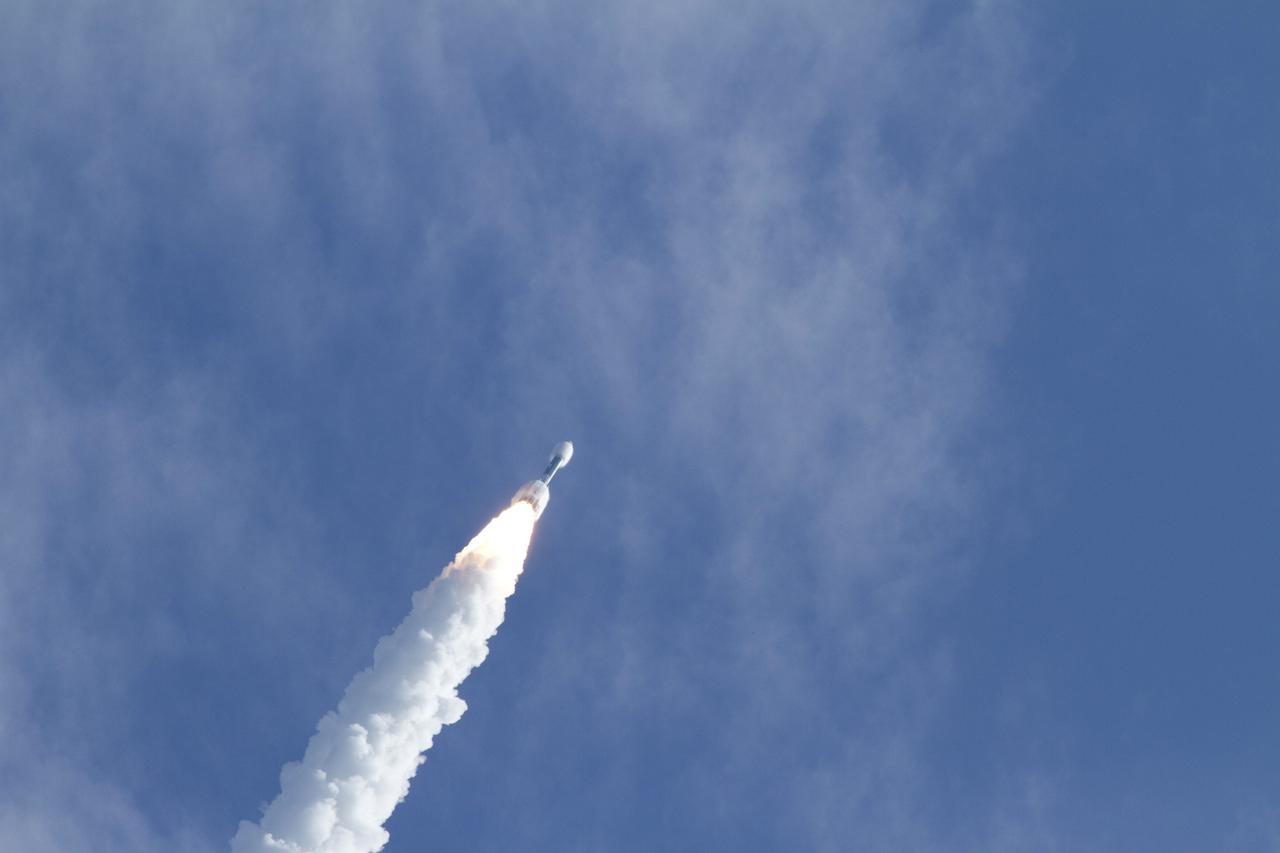
CAPE CANAVERAL, Fla. – The United Launch Alliance Delta II Heavy rocket propels NASA’s twin Gravity Recovery and Interior Laboratory (GRAIL) mission into the clouds over Space Launch Complex 17B on Cape Canaveral Air Force Station in Florida. The spacecraft launched at 9:08:52 a.m. EDT Sept. 10. GRAIL-A will separate from the second stage of the rocket at about one hour, 21 minutes after liftoff, followed by GRAIL-B at 90 minutes after launch. The spacecraft are embarking on a three-month journey to reach the moon. GRAIL will fly twin spacecraft in tandem around the moon to precisely measure and map variations in the moon's gravitational field. The mission will provide the most accurate global gravity field to date for any planet, including Earth. This detailed information will reveal differences in the density of the moon's crust and mantle and will help answer fundamental questions about the moon's internal structure, thermal evolution, and history of collisions with asteroids. The aim is to map the moon's gravity field so completely that future moon vehicles can safely navigate anywhere on the moon’s surface. For more information, visit http://www.nasa.gov/grail. Photo credit: NASA/Kenny Allen
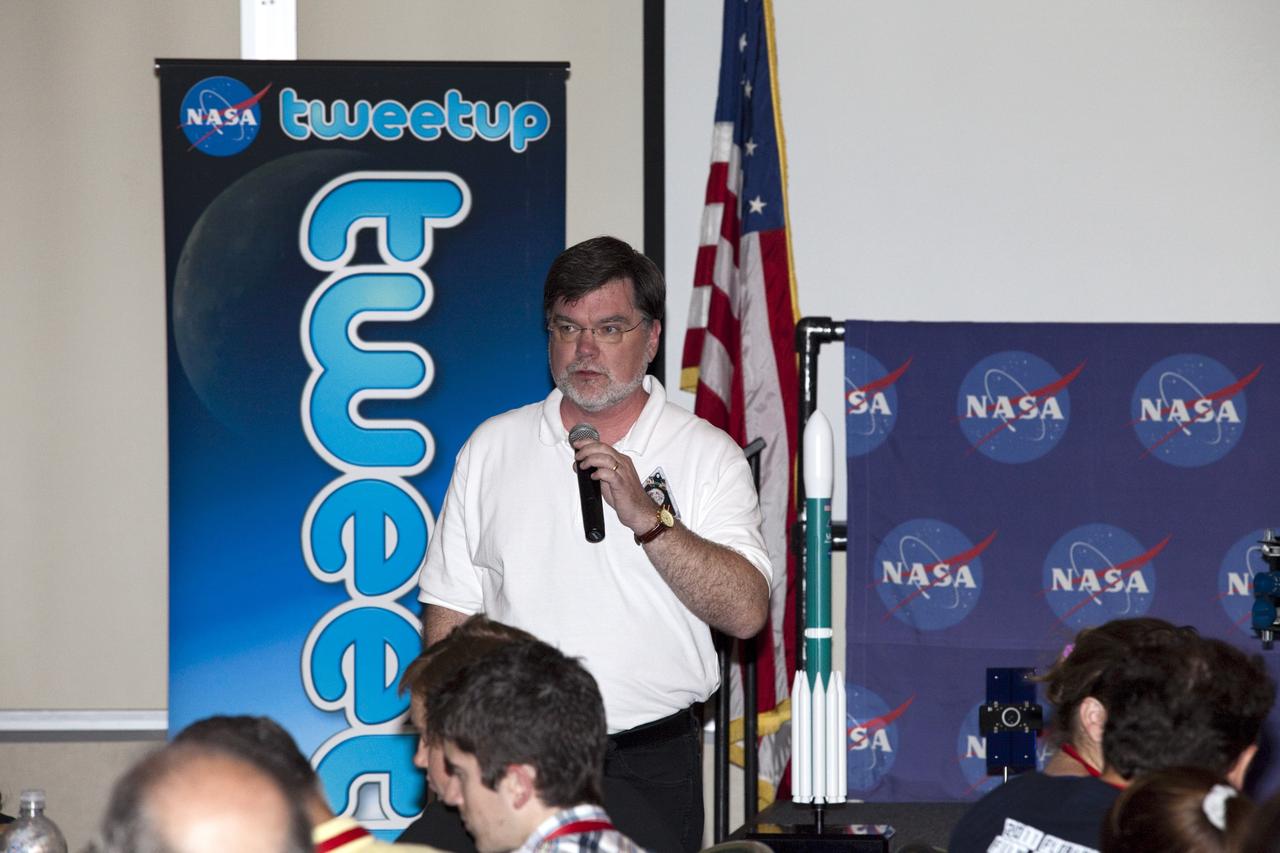
CAPE CANAVERAL, Fla. – Jim Adams, deputy director of planetary science at NASA Headquarters in Washington, speaks to a group of Tweetup participants at the Kennedy Space Center Visitor Complex in Florida during prelaunch activities for the agency’s Gravity Recovery and Interior Laboratory (GRAIL) mission. Participants toured NASA’s Kennedy Space Center and got a close-up view of Space Launch Complex 17B at Cape Canaveral Air Force Station. The tweeters will share their experiences with followers through the social networking site Twitter. GRAIL will fly twin spacecraft in tandem around the moon to precisely measure and map variations in the moon’s gravitational field. The mission will provide the most accurate global gravity field to date for any planet, including Earth. This detailed information will reveal differences in the density of the moon’s crust and mantle and will help answer fundamental questions about the moon’s internal structure, thermal evolution, and history of collisions with asteroids. The aim is to map the moon’s gravity field so completely that future lunar vehicles can safely navigate anywhere on the moon’s surface. Launch is scheduled for 8:37:06 a.m. EDT Sept. 8. For more information, visit http://www.nasa.gov/grail. Photo credit: NASA/Gianni Woods
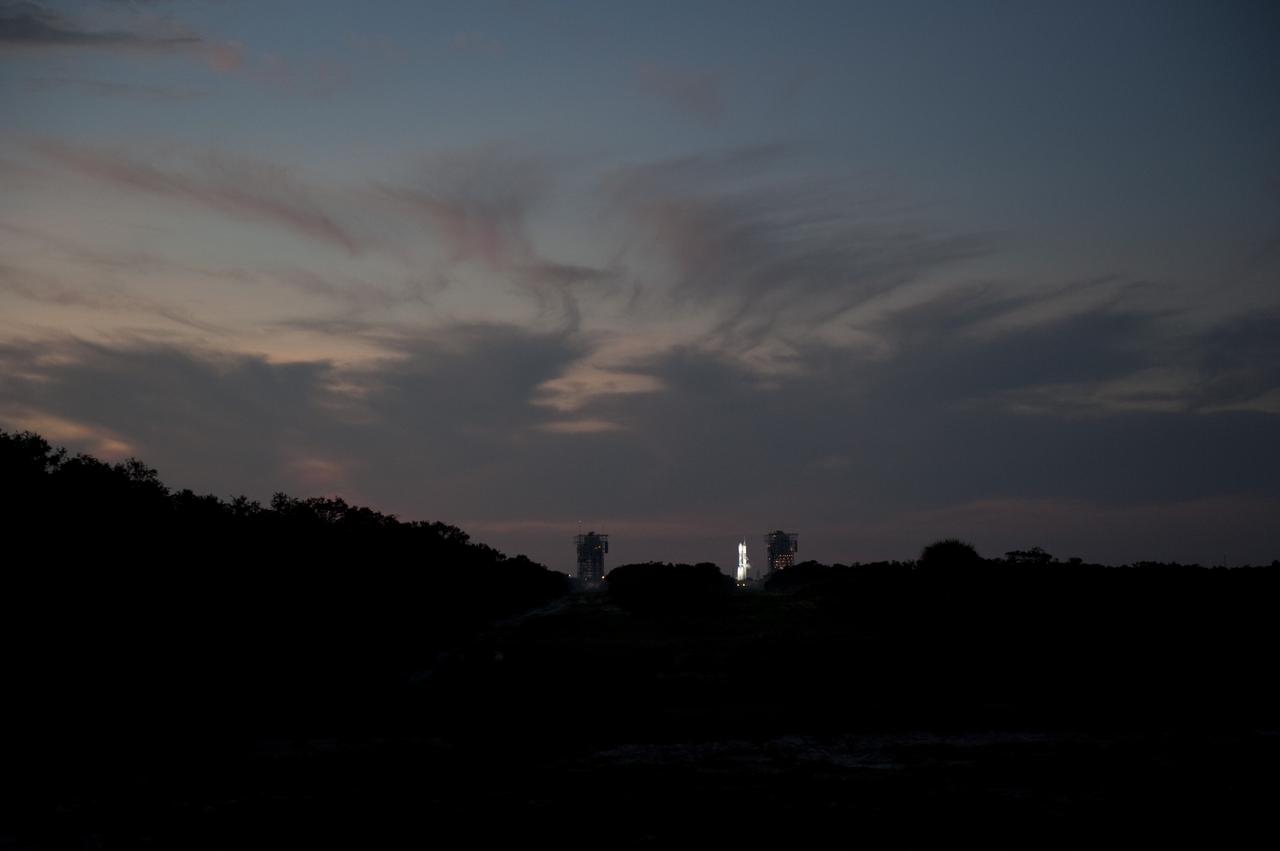
CAPE CANAVERAL, Fla. – As the sun rises, in the distance, spotlights illuminate the United Launch Alliance Delta II Heavy rocket that will launch NASA’s twin Gravity Recovery and Interior Laboratory (GRAIL) mission from Space Launch Complex 17B on Cape Canaveral Air Force Station in Florida. Liftoff is scheduled for 9:08:52 a.m. EDT Sept.10. GRAIL will fly twin spacecraft in tandem around the moon to precisely measure and map variations in the moon's gravitational field. The mission will provide the most accurate global gravity field to date for any planet, including Earth. This detailed information will reveal differences in the density of the moon's crust and mantle and will help answer fundamental questions about the moon's internal structure, thermal evolution, and history of collisions with asteroids. The aim is to map the moon's gravity field so completely that future moon vehicles can safely navigate anywhere on the moon’s surface. For more information, visit http://www.nasa.gov/grail. Photo credit: NASA/ Kim Shiflett
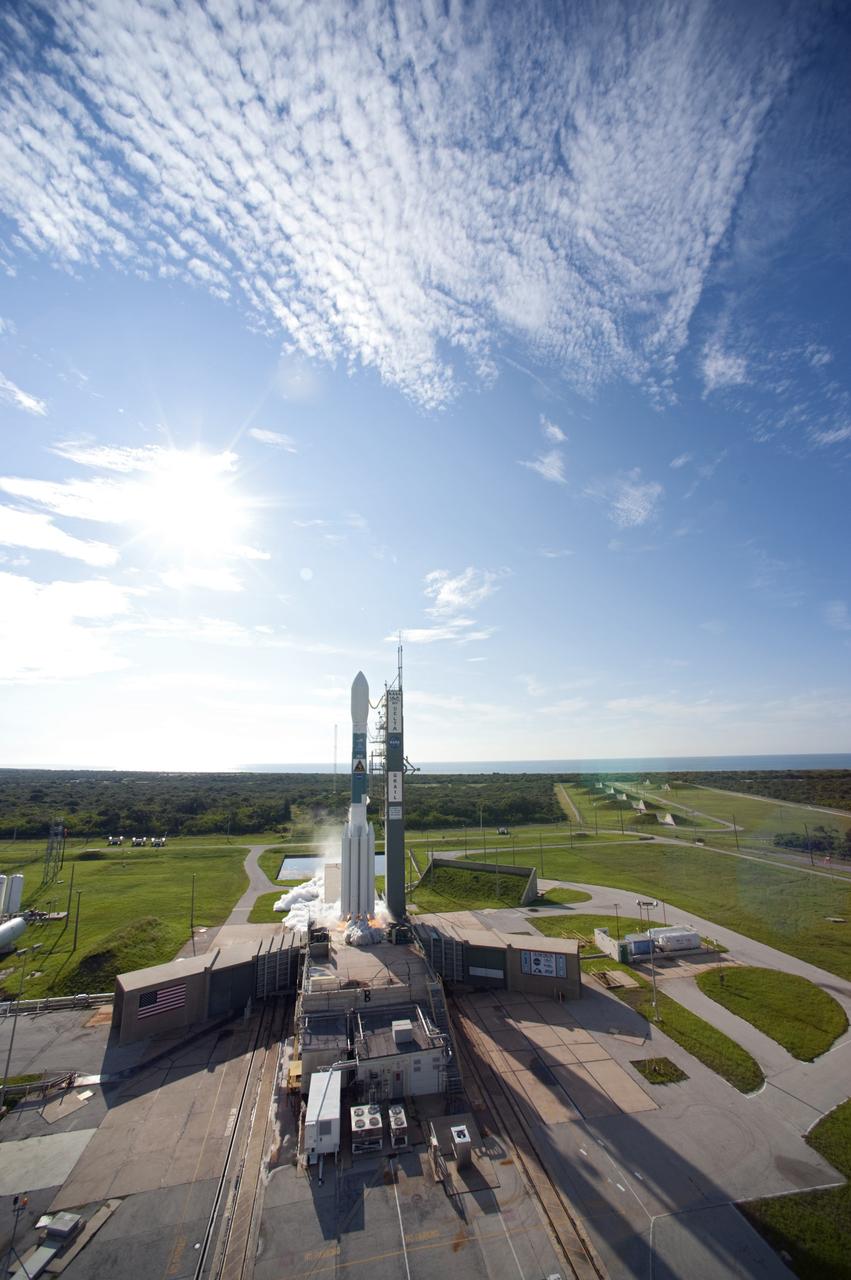
CAPE CANAVERAL, Fla. – Under a blue sky, engine ignition begins liftoff of the United Launch Alliance Delta II Heavy rocket carrying NASA’s twin Gravity Recovery and Interior Laboratory (GRAIL) mission off Space Launch Complex 17B on Cape Canaveral Air Force Station in Florida. The spacecraft launched at 9:08:52 a.m. EDT Sept. 10. GRAIL-A will separate from the second stage of the rocket at about one hour, 21 minutes after liftoff, followed by GRAIL-B at 90 minutes after launch. The spacecraft are embarking on a three-month journey to reach the moon. GRAIL will fly twin spacecraft in tandem around the moon to precisely measure and map variations in the moon's gravitational field. The mission will provide the most accurate global gravity field to date for any planet, including Earth. This detailed information will reveal differences in the density of the moon's crust and mantle and will help answer fundamental questions about the moon's internal structure, thermal evolution, and history of collisions with asteroids. The aim is to map the moon's gravity field so completely that future moon vehicles can safely navigate anywhere on the moon’s surface. For more information, visit http://www.nasa.gov/grail. Photo credit: NASA/Sandra Joseph and Don Kight
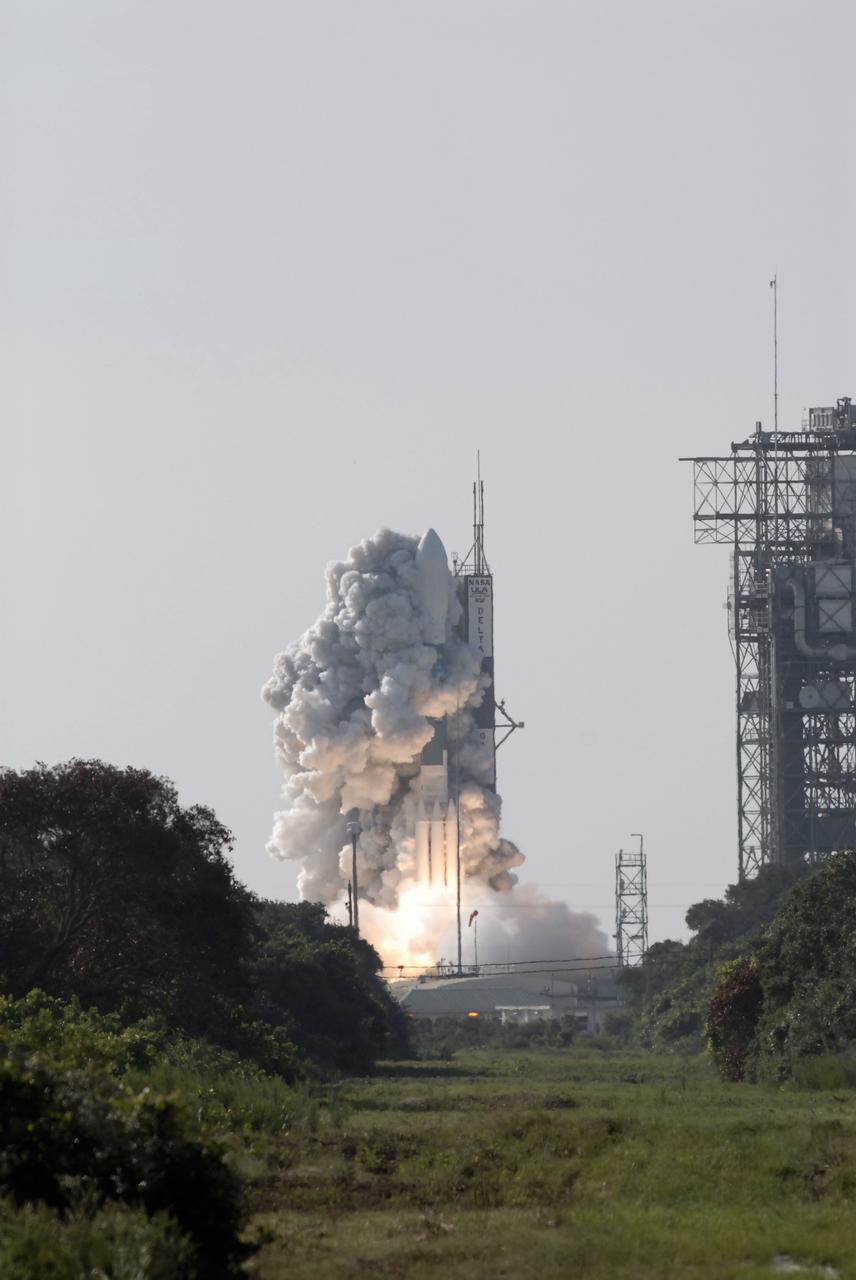
CAPE CANAVERAL, Fla. – Rising from fire and smoke, the United Launch Alliance Delta II Heavy rocket lifted off at 9:08 a.m. EDT Sept. 10 from Space Launch Complex 17B on Cape Canaveral Air Force Station in Florida carrying NASA’s twin Gravity Recovery and Interior Laboratory (GRAIL) mission to the moon. GRAIL will fly twin spacecraft in tandem around the moon to precisely measure and map variations in the moon's gravitational field. The mission will provide the most accurate global gravity field to date for any planet, including Earth. This detailed information will reveal differences in the density of the moon's crust and mantle and will help answer fundamental questions about the moon's internal structure, thermal evolution, and history of collisions with asteroids. The aim is to map the moon's gravity field so completely that future moon vehicles can safely navigate anywhere on the moon’s surface. For more information, visit http://www.nasa.gov/grail. Photo credit: NASA/Kim Shiflett
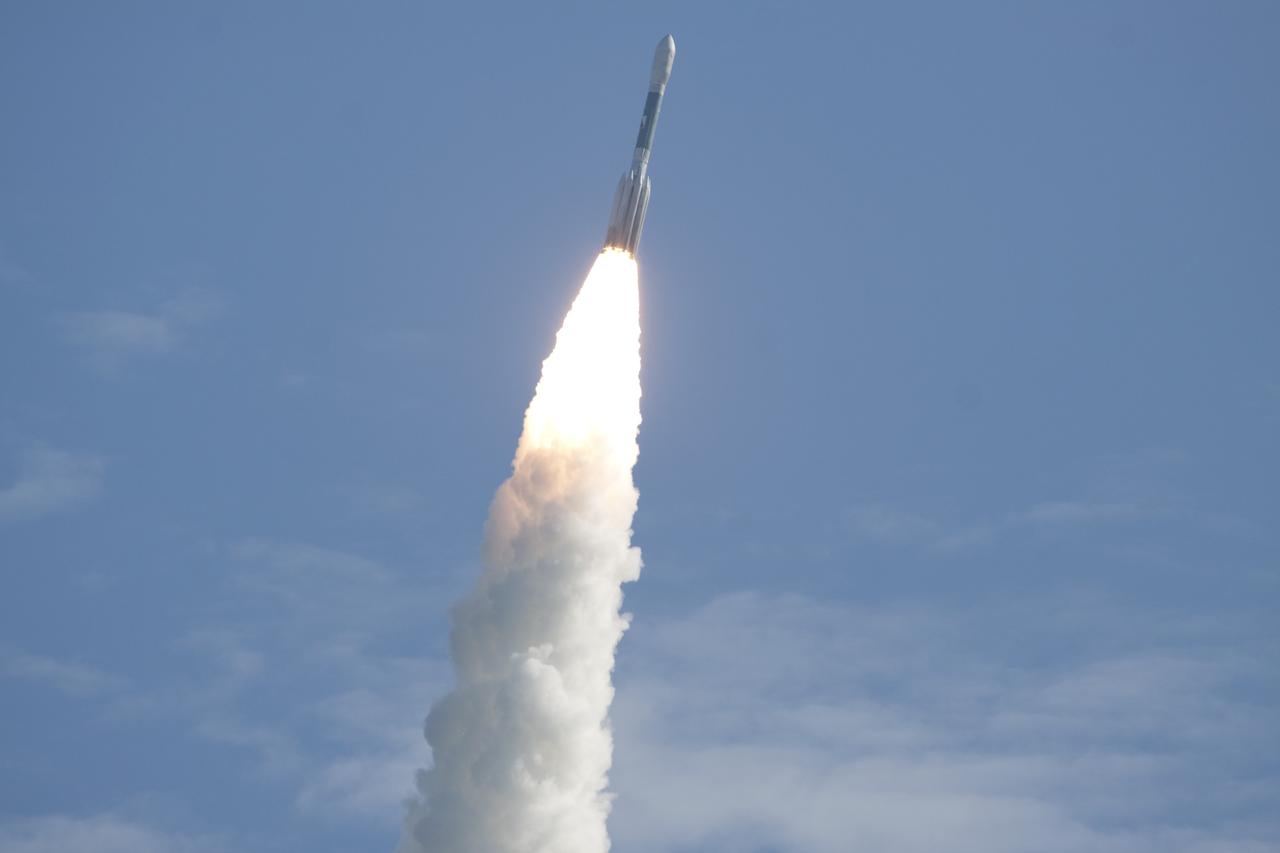
CAPE CANAVERAL, Fla. – Fire and smoke light up a blue sky as a United Launch Alliance Delta II Heavy rocket propels NASA’s Gravity Recovery and Interior Laboratory (GRAIL) mission into space. Liftoff from Space Launch Complex 17B on Cape Canaveral Air Force Station in Florida was at 9:08:52 a.m. EDT Sept.10. GRAIL-A will separate from the second stage of the rocket at about one hour, 21 minutes after liftoff, followed by GRAIL-B at 90 minutes after launch. The spacecraft are embarking on a three-month journey to reach the moon. GRAIL will fly twin spacecraft in tandem around the moon to precisely measure and map variations in the moon's gravitational field. The mission will provide the most accurate global gravity field to date for any planet, including Earth. This detailed information will reveal differences in the density of the moon's crust and mantle and will help answer fundamental questions about the moon's internal structure, thermal evolution, and history of collisions with asteroids. The aim is to map the moon's gravity field so completely that future moon vehicles can safely navigate anywhere on the moon’s surface. For more information, visit http://www.nasa.gov/grail. Photo credit: NASA/Darrell McCall
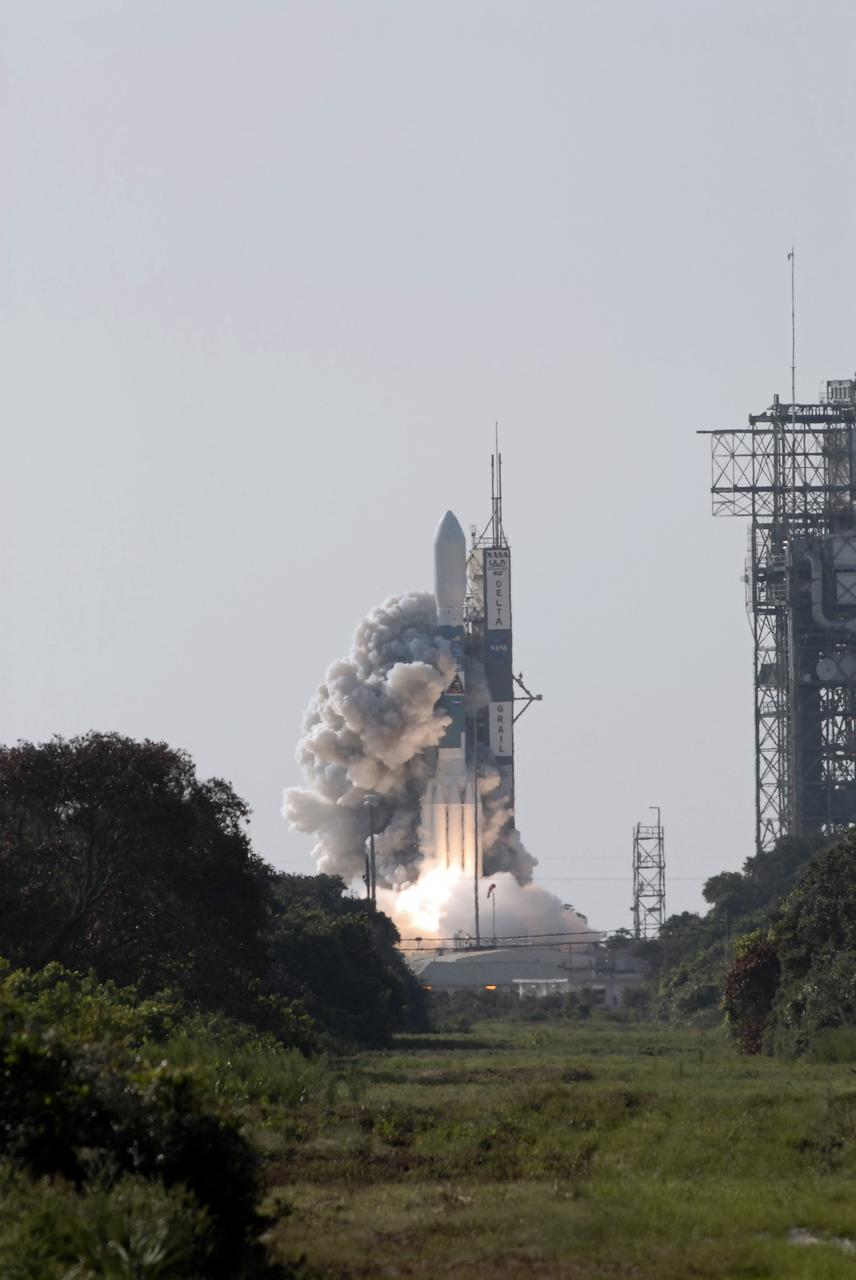
CAPE CANAVERAL, Fla. – Rising from fire and smoke, the United Launch Alliance Delta II Heavy rocket lifted off at 9:08 a.m. EDT Sept. 10 from Space Launch Complex 17B on Cape Canaveral Air Force Station in Florida carrying NASA’s twin Gravity Recovery and Interior Laboratory (GRAIL) mission to the moon. GRAIL will fly twin spacecraft in tandem around the moon to precisely measure and map variations in the moon's gravitational field. The mission will provide the most accurate global gravity field to date for any planet, including Earth. This detailed information will reveal differences in the density of the moon's crust and mantle and will help answer fundamental questions about the moon's internal structure, thermal evolution, and history of collisions with asteroids. The aim is to map the moon's gravity field so completely that future moon vehicles can safely navigate anywhere on the moon’s surface. For more information, visit http://www.nasa.gov/grail. Photo credit: NASA/Kim Shiflett
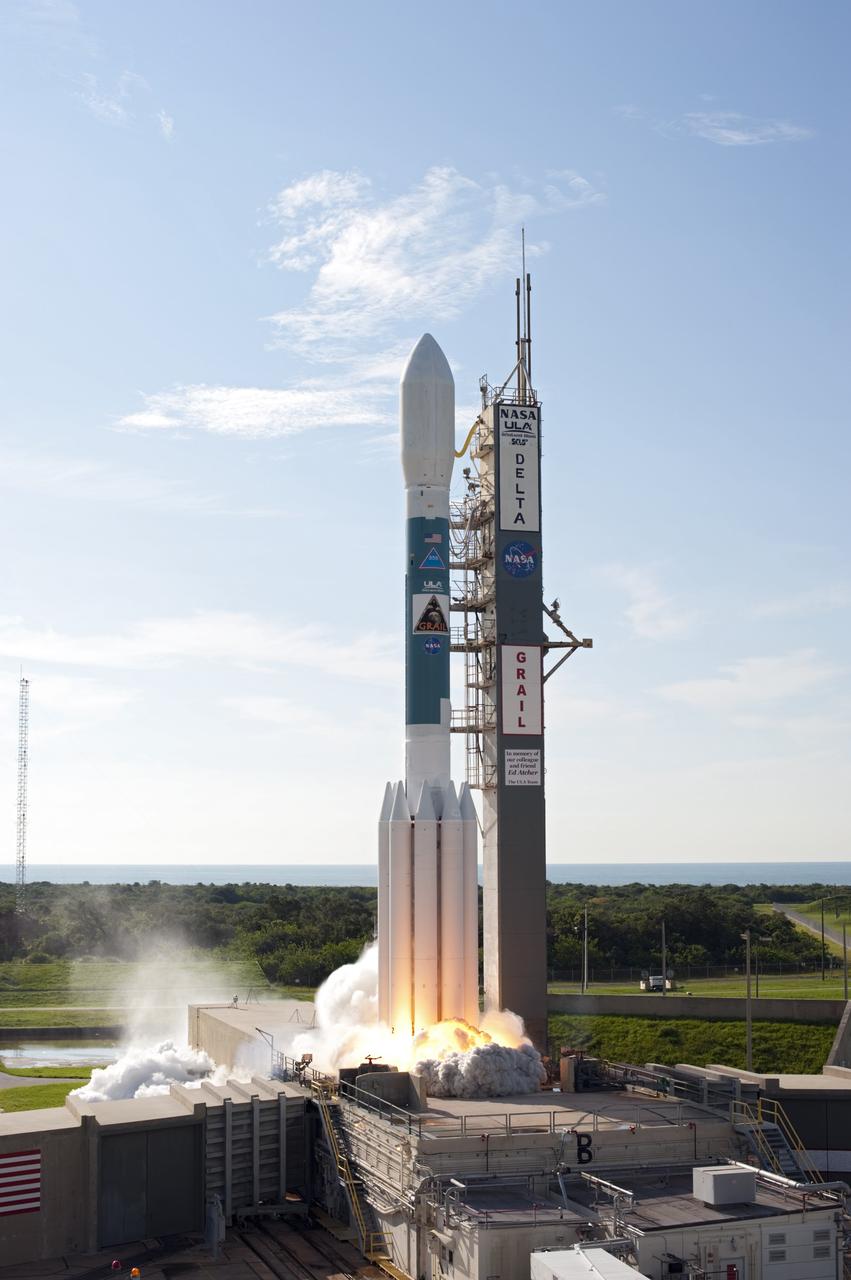
CAPE CANAVERAL, Fla. – At ignition, flames and smoke from the engines begin liftoff of the United Launch Alliance Delta II Heavy rocket carrying NASA’s twin Gravity Recovery and Interior Laboratory (GRAIL) mission off Space Launch Complex 17B on Cape Canaveral Air Force Station in Florida. The spacecraft launched at 9:08:52 a.m. EDT Sept. 10. GRAIL-A will separate from the second stage of the rocket at about one hour, 21 minutes after liftoff, followed by GRAIL-B at 90 minutes after launch. The spacecraft are embarking on a three-month journey to reach the moon. GRAIL will fly twin spacecraft in tandem around the moon to precisely measure and map variations in the moon's gravitational field. The mission will provide the most accurate global gravity field to date for any planet, including Earth. This detailed information will reveal differences in the density of the moon's crust and mantle and will help answer fundamental questions about the moon's internal structure, thermal evolution, and history of collisions with asteroids. The aim is to map the moon's gravity field so completely that future moon vehicles can safely navigate anywhere on the moon’s surface. For more information, visit http://www.nasa.gov/grail. Photo credit: NASA/Sandra Joseph and Don Kight
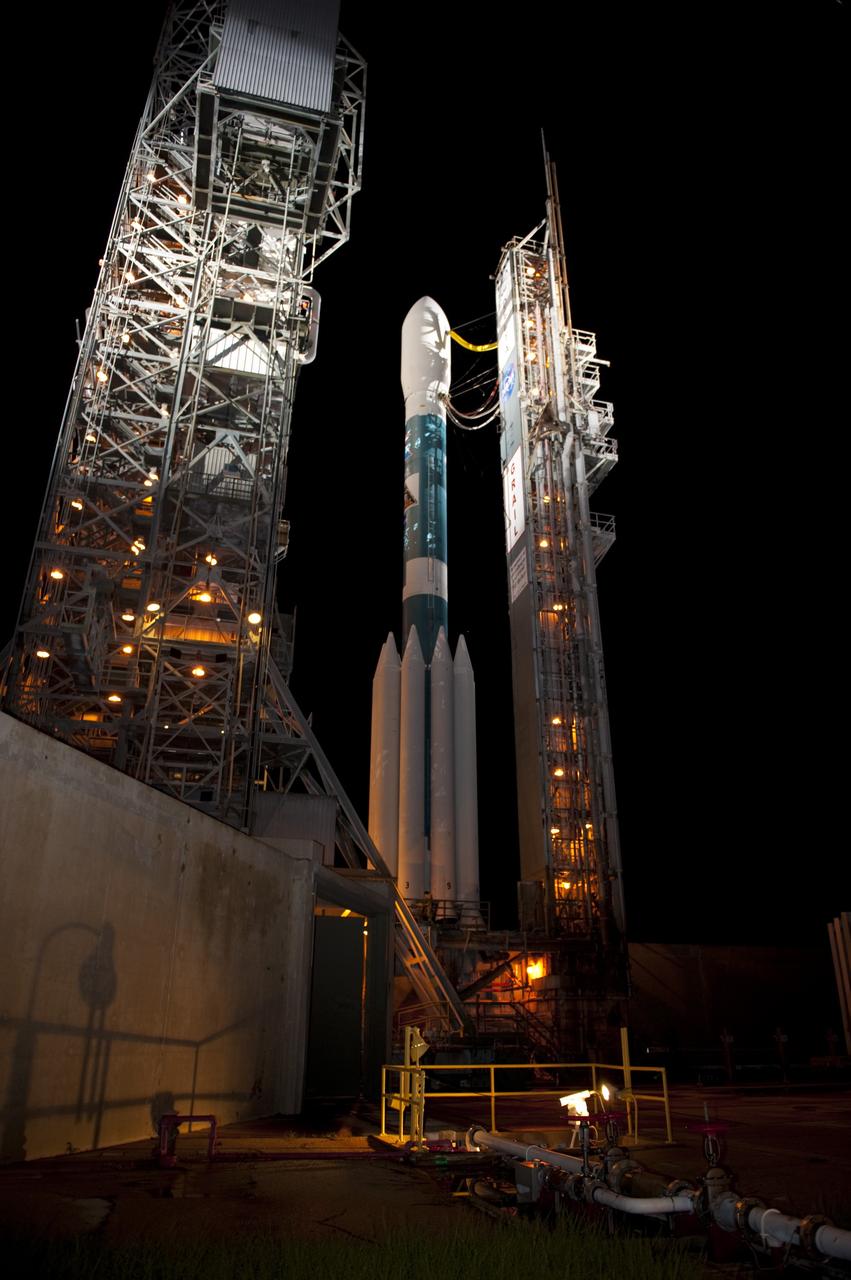
CAPE CANAVERAL, Fla. -- At Space Launch Complex 17B on Cape Canaveral Air Force Station, the mobile service tower rolls away from the United Launch Alliance Delta II rocket that will launch NASA's Gravity Recovery and Interior Laboratory mission. The "rollback" began at about 11:20 p.m. EDT. GRAIL will fly twin spacecraft in tandem around the moon to precisely measure and map variations in the moon's gravitational field. The mission will provide the most accurate global gravity field to date for any planet, including Earth. This detailed information will reveal differences in the density of the moon's crust and mantle and will help answer fundamental questions about the moon's internal structure, thermal evolution, and history of collisions with asteroids. The aim is to map the moon's gravity field so completely that future lunar vehicles can safely navigate anywhere on the moon’s surface. Launch is scheduled for 8:37:06 a.m. EDT Sept. 8. For more information, visit http://www.nasa.gov/grail. Photo credit: NASA/Kim Shiflett
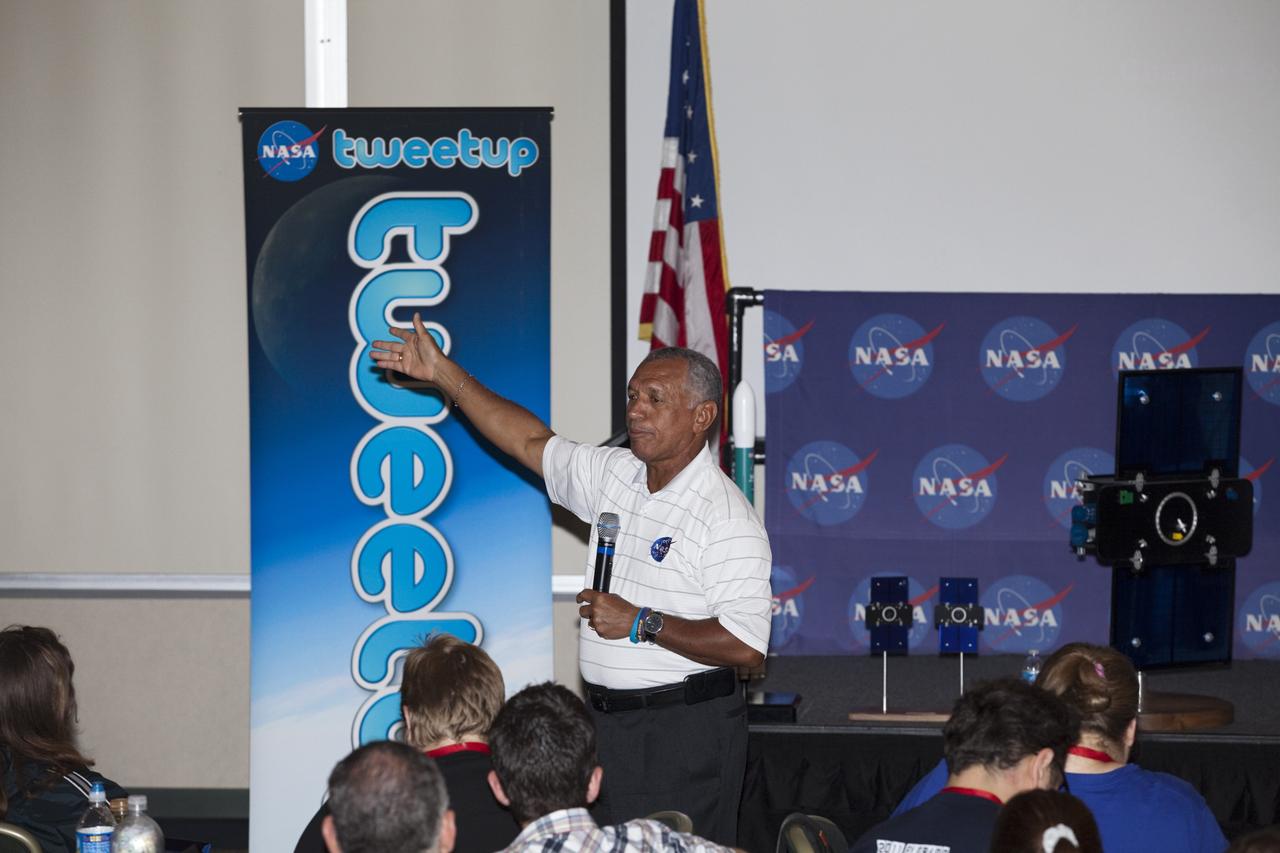
CAPE CANAVERAL, Fla. – NASA Administrator Charlie Bolden speaks to a group of Tweetup participants at the Kennedy Space Center Visitor Complex in Florida during prelaunch activities for the agency’s Gravity Recovery and Interior Laboratory (GRAIL) mission. Participants toured NASA’s Kennedy Space Center and got a close-up view of Space Launch Complex 17B at Cape Canaveral Air Force Station. The tweeters will share their experiences with followers through the social networking site Twitter. GRAIL will fly twin spacecraft in tandem around the moon to precisely measure and map variations in the moon’s gravitational field. The mission will provide the most accurate global gravity field to date for any planet, including Earth. This detailed information will reveal differences in the density of the moon’s crust and mantle and will help answer fundamental questions about the moon’s internal structure, thermal evolution, and history of collisions with asteroids. The aim is to map the moon’s gravity field so completely that future lunar vehicles can safely navigate anywhere on the moon’s surface. Launch is scheduled for 8:37:06 a.m. EDT Sept. 8. For more information, visit http://www.nasa.gov/grail. Photo credit: NASA/Gianni Woods
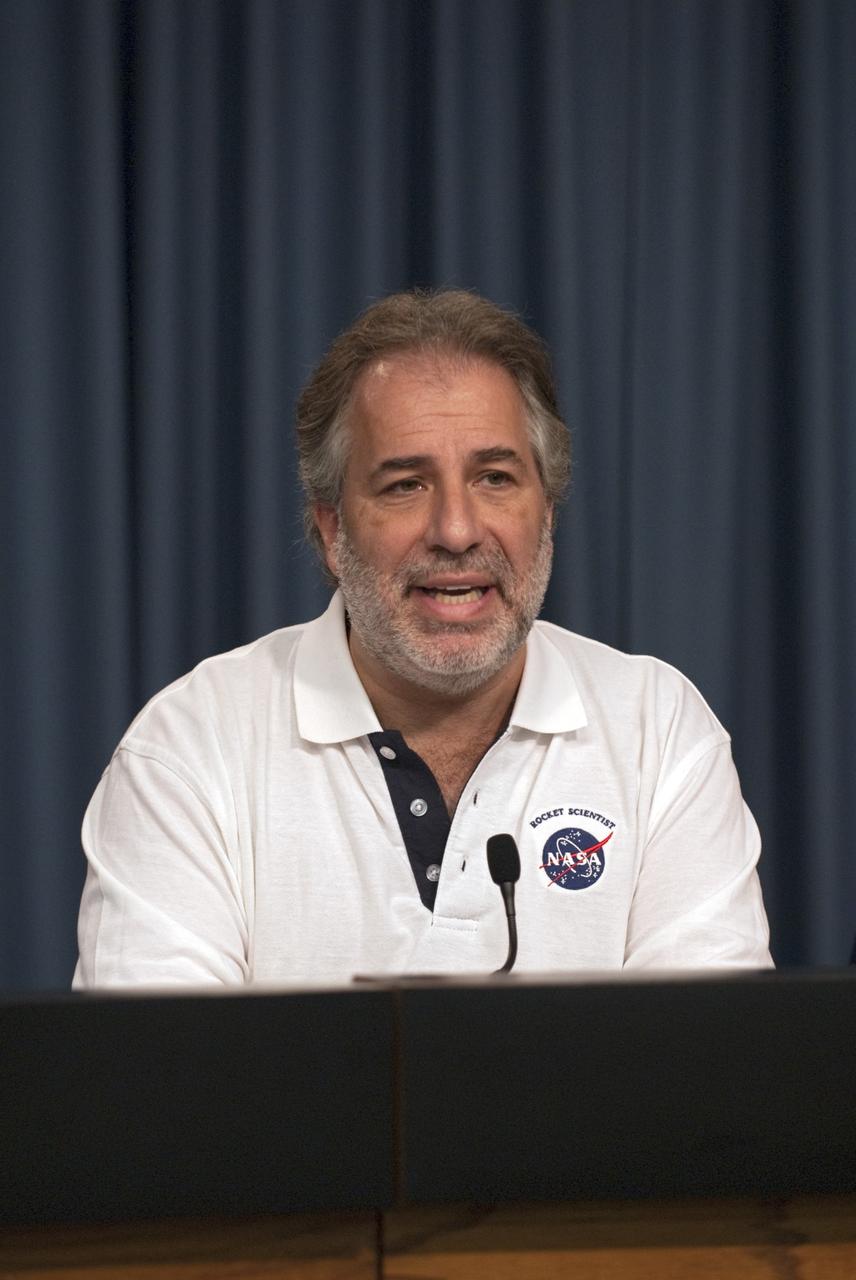
CAPE CANAVERAL, Fla. – Robert Fogel, NASA’s GRAIL program scientist, participates in the Gravity Recovery and Interior Laboratory (GRAIL) mission science briefing in the NASA Press Site auditorium at NASA's Kennedy Space Center in Florida. GRAIL is scheduled to launch Sept. 8 aboard a United Launch Alliance Delta II Heavy rocket from Cape Canaveral Air Force Station in Florida. GRAIL will fly twin spacecraft in tandem around the moon to precisely measure and map variations in the moon's gravitational field. The mission will provide the most accurate global gravity field to date for any planet, including Earth. This detailed information will reveal differences in the density of the moon's crust and mantle and will help answer fundamental questions about the moon's internal structure, thermal evolution, and history of collisions with asteroids. The aim is to map the moon's gravity field so completely that future moon vehicles can safely navigate anywhere on the moon’s surface. For more information, visit http://www.nasa.gov/grail. Photo credit: NASA/Kim Shiflett
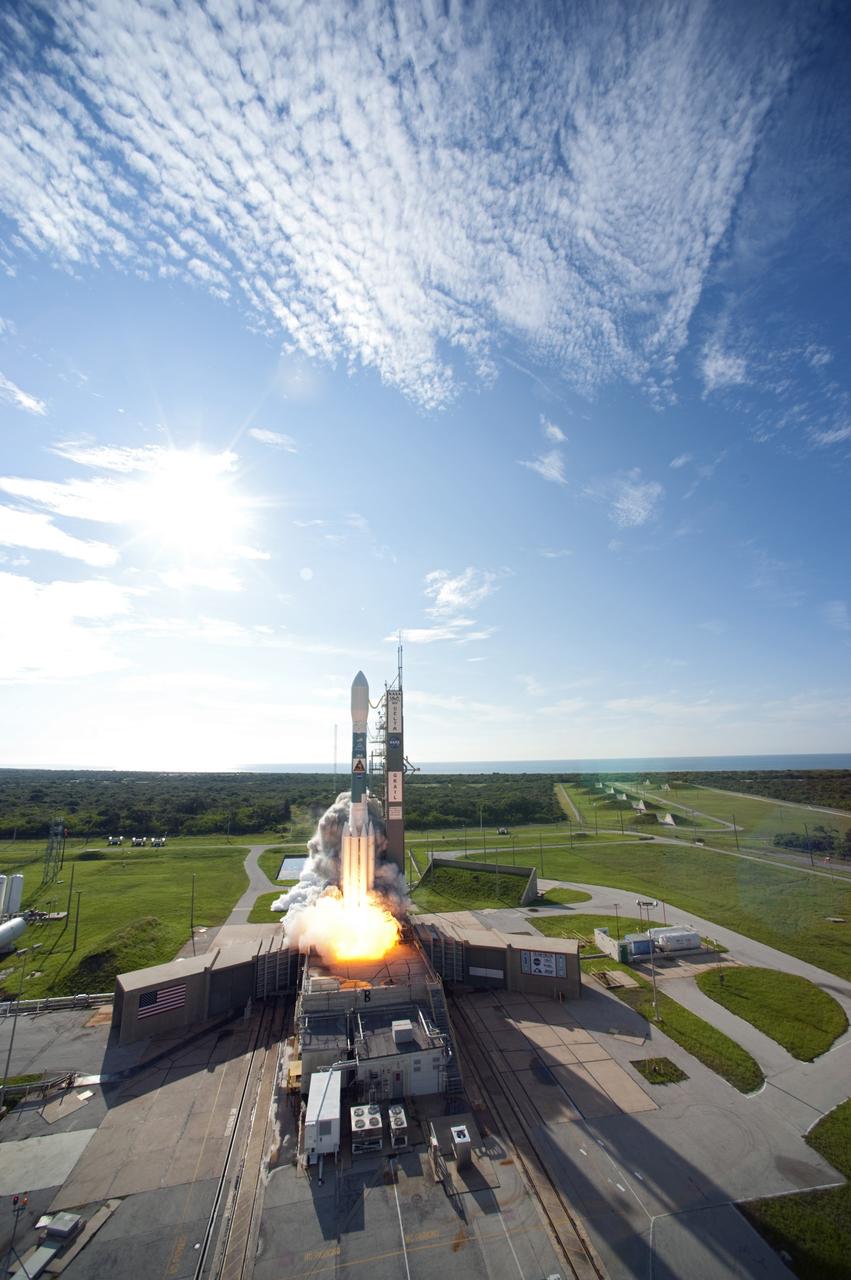
CAPE CANAVERAL, Fla. – Backdropped by a beautiful blue sky, at ignition, flames and smoke from the engines begin liftoff of the United Launch Alliance Delta II Heavy rocket carrying NASA’s twin Gravity Recovery and Interior Laboratory (GRAIL) mission off Space Launch Complex 17B on Cape Canaveral Air Force Station in Florida. At right is the pad’s mobile service tower. The spacecraft launched at 9:08:52 a.m. EDT Sept. 10. GRAIL-A will separate from the second stage of the rocket at about one hour, 21 minutes after liftoff, followed by GRAIL-B at 90 minutes after launch. The spacecraft are embarking on a three-month journey to reach the moon. GRAIL will fly twin spacecraft in tandem around the moon to precisely measure and map variations in the moon's gravitational field. The mission will provide the most accurate global gravity field to date for any planet, including Earth. This detailed information will reveal differences in the density of the moon's crust and mantle and will help answer fundamental questions about the moon's internal structure, thermal evolution, and history of collisions with asteroids. The aim is to map the moon's gravity field so completely that future moon vehicles can safely navigate anywhere on the moon’s surface. For more information, visit http://www.nasa.gov/grail. Photo credit: NASA/Sandra Joseph and Don Kight
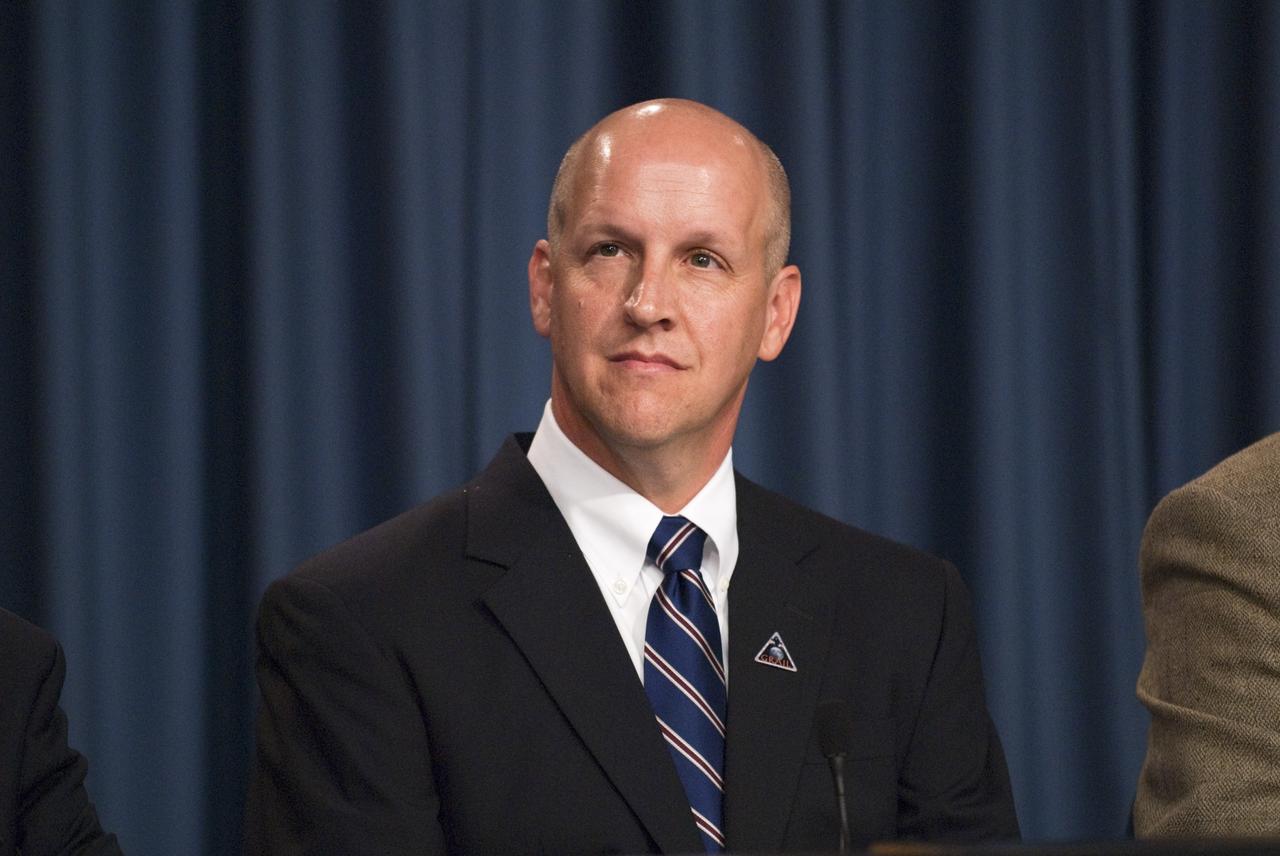
CAPE CANAVERAL, Fla. – Tim Dunn, NASA launch director for the agency’s Launch Services Program, participates in the Gravity Recovery and Interior Laboratory (GRAIL) prelaunch news conference in the NASA Press Site auditorium at NASA's Kennedy Space Center in Florida. GRAIL is scheduled to launch Sept. 8 aboard a United Launch Alliance Delta II Heavy rocket from Cape Canaveral Air Force Station in Florida. GRAIL will fly twin spacecraft in tandem around the moon to precisely measure and map variations in the moon's gravitational field. The mission will provide the most accurate global gravity field to date for any planet, including Earth. This detailed information will reveal differences in the density of the moon's crust and mantle and will help answer fundamental questions about the moon's internal structure, thermal evolution, and history of collisions with asteroids. The aim is to map the moon's gravity field so completely that future moon vehicles can safely navigate anywhere on the moon’s surface. For more information, visit http://www.nasa.gov/grail. Photo credit: NASA/Kim Shiflett
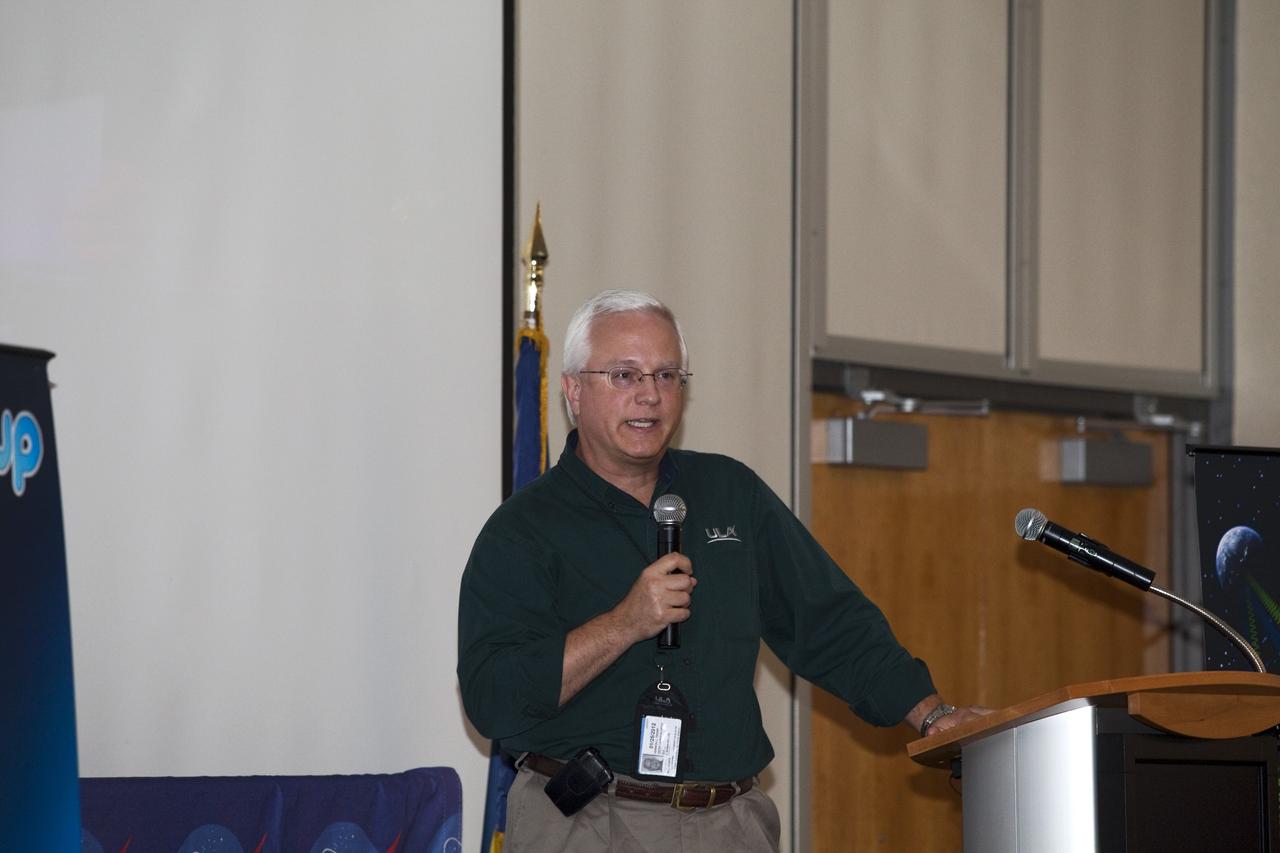
CAPE CANAVERAL, Fla. – Vern Thorp, manager of NASA Programs with United Launch Alliance, speaks to a group of Tweetup participants at the Kennedy Space Center Visitor Complex in Florida during prelaunch activities for the agency’s Gravity Recovery and Interior Laboratory (GRAIL) mission. Participants toured NASA’s Kennedy Space Center and got a close-up view of Space Launch Complex 17B at Cape Canaveral Air Force Station. The tweeters will share their experiences with followers through the social networking site Twitter. GRAIL will fly twin spacecraft in tandem around the moon to precisely measure and map variations in the moon’s gravitational field. The mission will provide the most accurate global gravity field to date for any planet, including Earth. This detailed information will reveal differences in the density of the moon’s crust and mantle and will help answer fundamental questions about the moon’s internal structure, thermal evolution, and history of collisions with asteroids. The aim is to map the moon’s gravity field so completely that future lunar vehicles can safely navigate anywhere on the moon’s surface. Launch is scheduled for 8:37:06 a.m. EDT Sept. 8. For more information, visit http://www.nasa.gov/grail. Photo credit: NASA/Gianni Woods
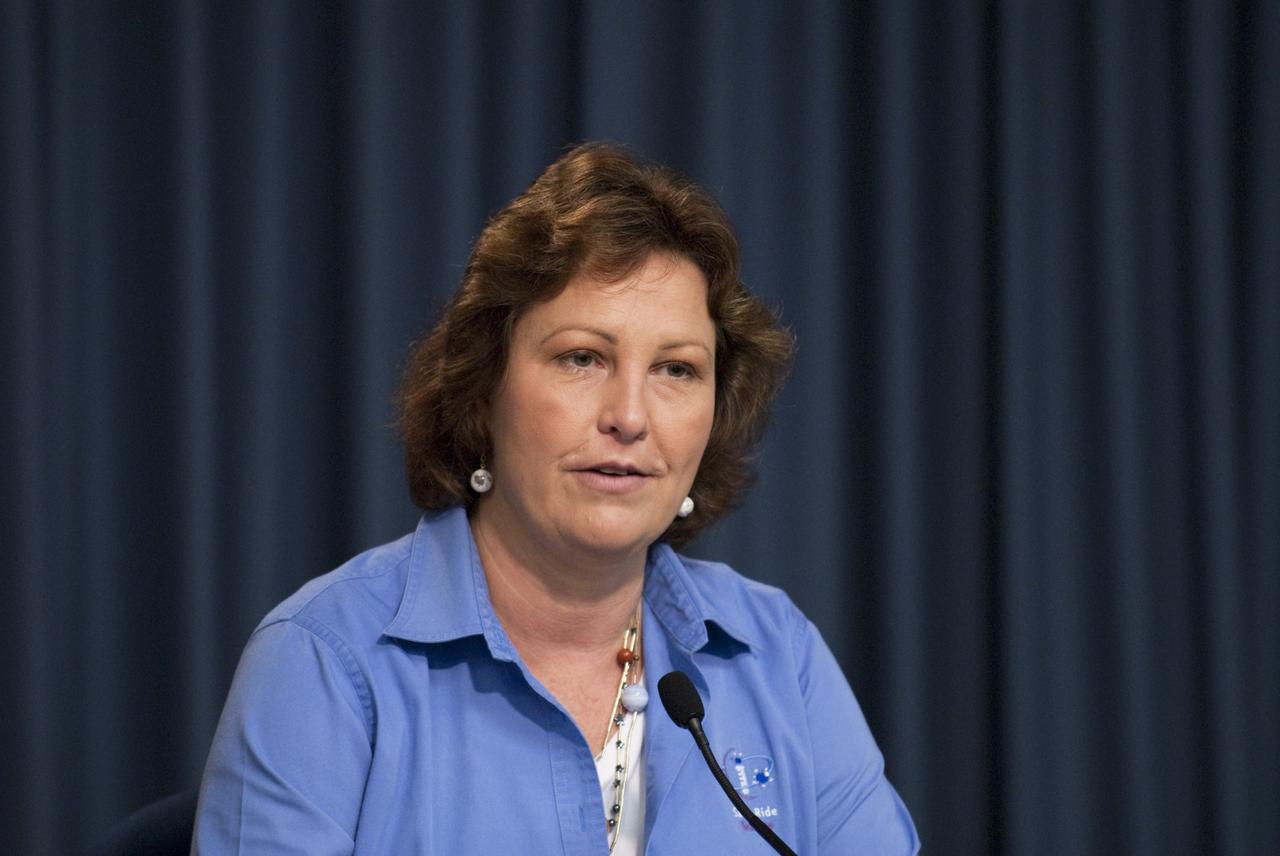
CAPE CANAVERAL, Fla. – – Leesa Hubbard, teacher in residence, Sally Ride Science, San Diego, participates in the Gravity Recovery and Interior Laboratory (GRAIL) mission science briefing in the NASA Press Site auditorium at NASA's Kennedy Space Center in Florida. GRAIL is scheduled to launch Sept. 8 aboard a United Launch Alliance Delta II Heavy rocket from Cape Canaveral Air Force Station in Florida. GRAIL will fly twin spacecraft in tandem around the moon to precisely measure and map variations in the moon's gravitational field. The mission will provide the most accurate global gravity field to date for any planet, including Earth. This detailed information will reveal differences in the density of the moon's crust and mantle and will help answer fundamental questions about the moon's internal structure, thermal evolution, and history of collisions with asteroids. The aim is to map the moon's gravity field so completely that future moon vehicles can safely navigate anywhere on the moon’s surface. For more information, visit http://www.nasa.gov/grail. Photo credit: NASA/Kim Shiflett
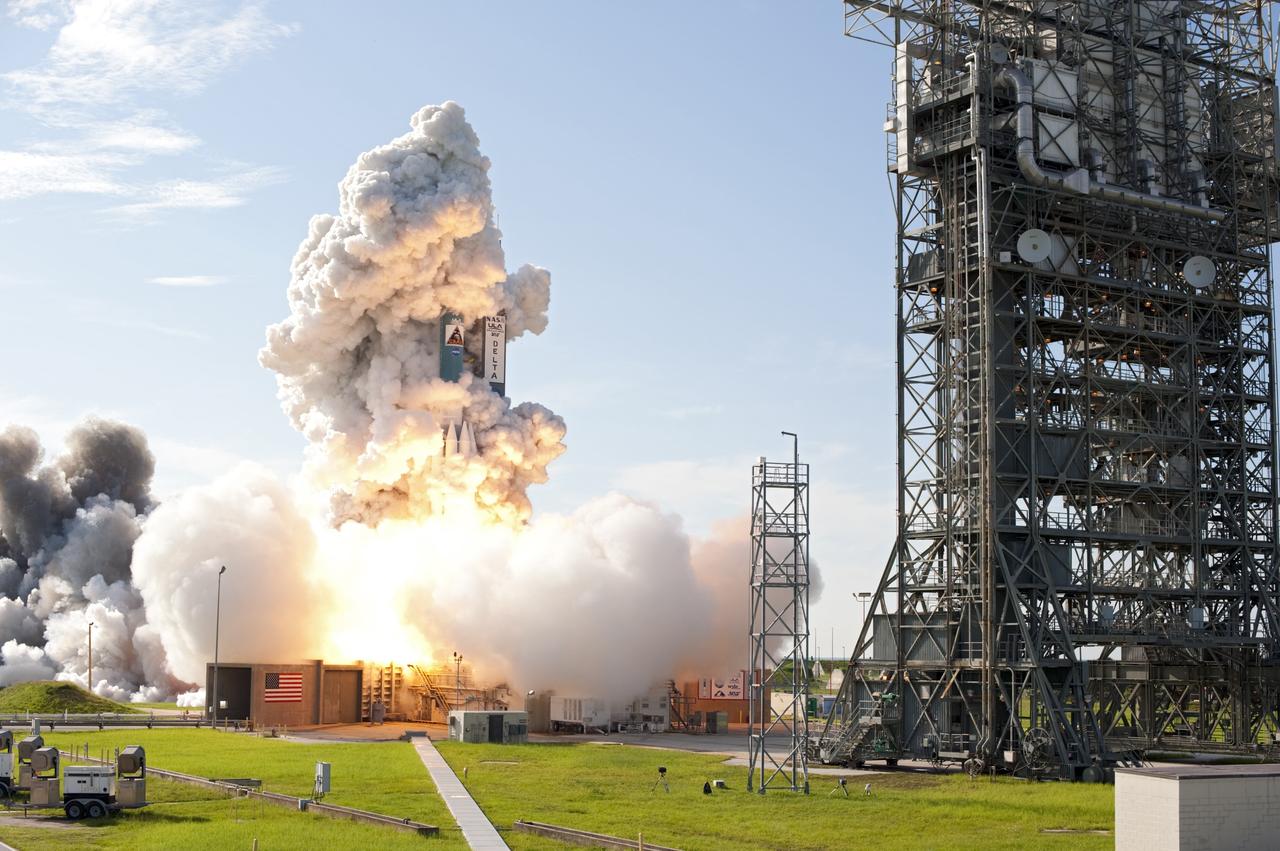
CAPE CANAVERAL, Fla. – Plumes of smoke surround of the United Launch Alliance Delta II Heavy rocket carrying NASA’s twin Gravity Recovery and Interior Laboratory (GRAIL) mission off Space Launch Complex 17B on Cape Canaveral Air Force Station in Florida. At right is the pad’s mobile service tower. The spacecraft launched at 9:08:52 a.m. EDT Sept. 10. GRAIL-A will separate from the second stage of the rocket at about one hour, 21 minutes after liftoff, followed by GRAIL-B at 90 minutes after launch. The spacecraft are embarking on a three-month journey to reach the moon. GRAIL will fly twin spacecraft in tandem around the moon to precisely measure and map variations in the moon's gravitational field. The mission will provide the most accurate global gravity field to date for any planet, including Earth. This detailed information will reveal differences in the density of the moon's crust and mantle and will help answer fundamental questions about the moon's internal structure, thermal evolution, and history of collisions with asteroids. The aim is to map the moon's gravity field so completely that future moon vehicles can safely navigate anywhere on the moon’s surface. For more information, visit http://www.nasa.gov/grail. Photo credit: NASA/Tom Farrar and Tony Gray
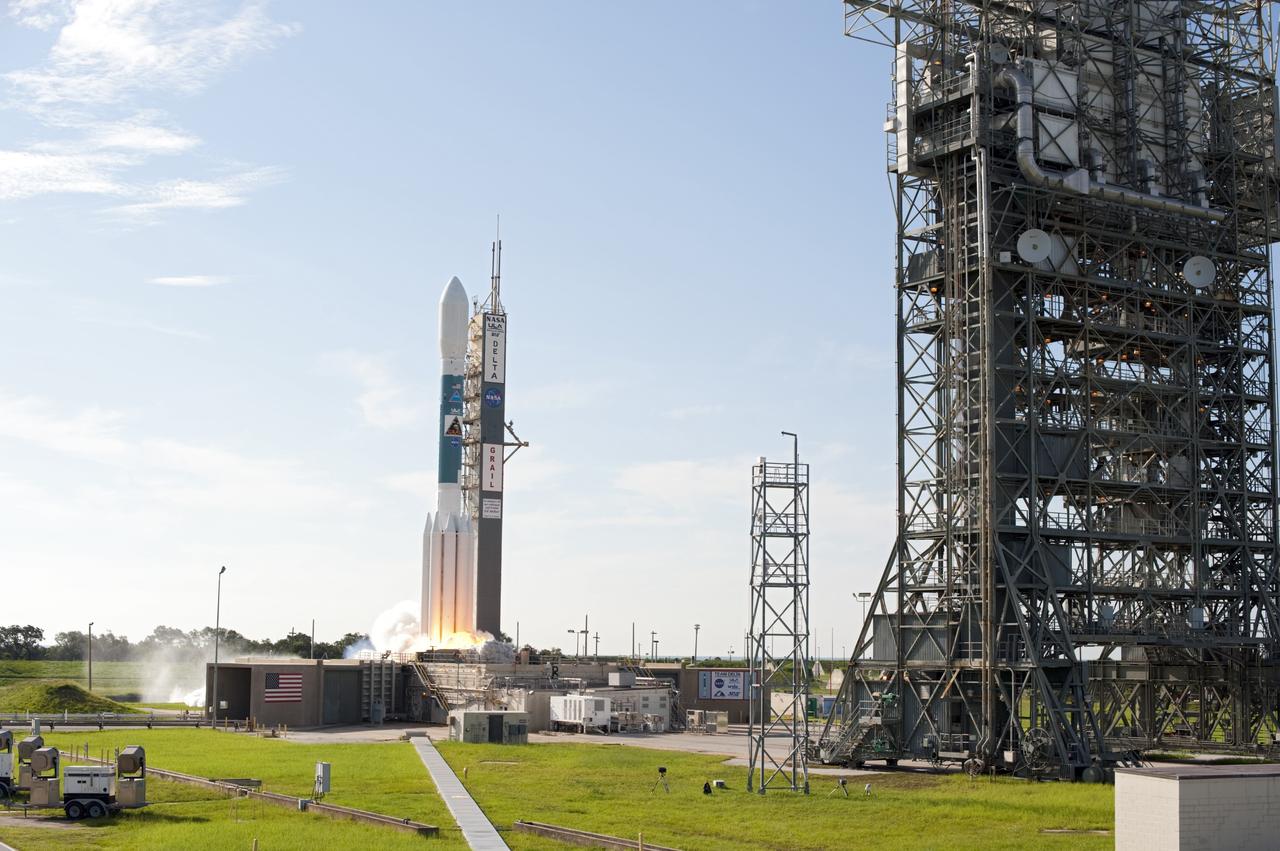
CAPE CANAVERAL, Fla. – Engine ignition begins liftoff of the United Launch Alliance Delta II Heavy rocket carrying NASA’s twin Gravity Recovery and Interior Laboratory (GRAIL) mission off Space Launch Complex 17B on Cape Canaveral Air Force Station in Florida. At right is the pad’s mobile service tower. The spacecraft launched at 9:08:52 a.m. EDT Sept. 10. GRAIL-A will separate from the second stage of the rocket at about one hour, 21 minutes after liftoff, followed by GRAIL-B at 90 minutes after launch. The spacecraft are embarking on a three-month journey to reach the moon. GRAIL will fly twin spacecraft in tandem around the moon to precisely measure and map variations in the moon's gravitational field. The mission will provide the most accurate global gravity field to date for any planet, including Earth. This detailed information will reveal differences in the density of the moon's crust and mantle and will help answer fundamental questions about the moon's internal structure, thermal evolution, and history of collisions with asteroids. The aim is to map the moon's gravity field so completely that future moon vehicles can safely navigate anywhere on the moon’s surface. For more information, visit http://www.nasa.gov/grail. Photo credit: NASA/Tom Farrar and Tony Gray

CAPE CANAVERAL, Fla. – CAPE CANAVERAL, Fla. – Actress Nichelle Nichols (Lt. Uhura on Star Trek) signs autographs for a guest at the Kennedy Space Center Visitor Complex in Florida during activities for the agency’s Gravity Recovery and Interior Laboratory mission (GRAIL). Nichols was on hand to celebrate the 45th anniversary of the first airing of the Star Trek television series. The Kennedy Space Center Visitor Complex is hosting “Star Trek: The Exhibition” to show visitors where “science fiction meets science fact.” GRAIL will fly twin spacecraft in tandem around the moon to precisely measure and map variations in the moon's gravitational field. The mission will provide the most accurate global gravity field to date for any planet, including Earth. This detailed information will reveal differences in the density of the moon's crust and mantle and will help answer fundamental questions about the moon's internal structure, thermal evolution, and history of collisions with asteroids. The aim is to map the moon's gravity field so completely that future moon vehicles can safely navigate anywhere on the moon’s surface. For more information, visit http://www.nasa.gov/grail. Photo credit: NASA/Frankie Martin
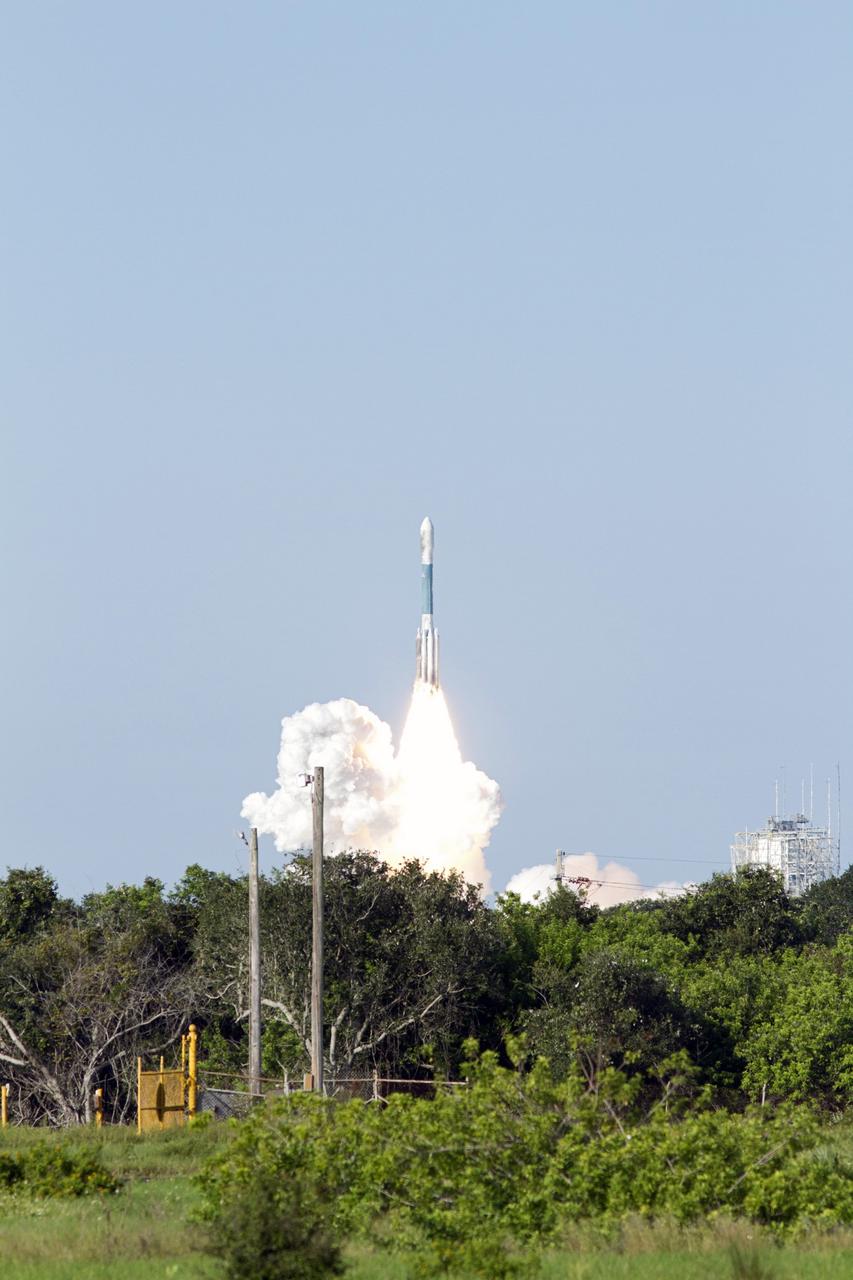
CAPE CANAVERAL, Fla. – A group of trees and bushes provides a frame for the launch of the United Launch Alliance Delta II Heavy rocket carrying NASA’s twin Gravity Recovery and Interior Laboratory (GRAIL) mission off Space Launch Complex 17B on Cape Canaveral Air Force Station in Florida. The spacecraft launched at 9:08:52 a.m. EDT Sept. 10. GRAIL-A will separate from the second stage of the rocket at about one hour, 21 minutes after liftoff, followed by GRAIL-B at 90 minutes after launch. The spacecraft are embarking on a three-month journey to reach the moon. GRAIL will fly twin spacecraft in tandem around the moon to precisely measure and map variations in the moon's gravitational field. The mission will provide the most accurate global gravity field to date for any planet, including Earth. This detailed information will reveal differences in the density of the moon's crust and mantle and will help answer fundamental questions about the moon's internal structure, thermal evolution, and history of collisions with asteroids. The aim is to map the moon's gravity field so completely that future moon vehicles can safely navigate anywhere on the moon’s surface. For more information, visit http://www.nasa.gov/grail. Photo credit: NASA/George Roberts

CAPE CANAVERAL, Fla. – At KARS Park 1 on Merritt Island in Florida, a group of Tweetup participants watch as a United Launch Alliance Delta II Heavy rocket lifts off at 9:08 a.m. EDT Sept. 10 from Space Launch Complex 17B at Cape Canaveral Air Force Station carrying NASA’s Gravity Recovery and Interior Laboratory (GRAIL) mission to the moon. The tweeters will share their experiences with followers through the social networking site Twitter. GRAIL will fly twin spacecraft in tandem around the moon to precisely measure and map variations in the moon's gravitational field. The mission will provide the most accurate global gravity field to date for any planet, including Earth. This detailed information will reveal differences in the density of the moon's crust and mantle and will help answer fundamental questions about the moon's internal structure, thermal evolution, and history of collisions with asteroids. The aim is to map the moon's gravity field so completely that future moon vehicles can safely navigate anywhere on the moon’s surface. For more information, visit http://www.nasa.gov/grail. Photo credit: NASA/Frankie Martin
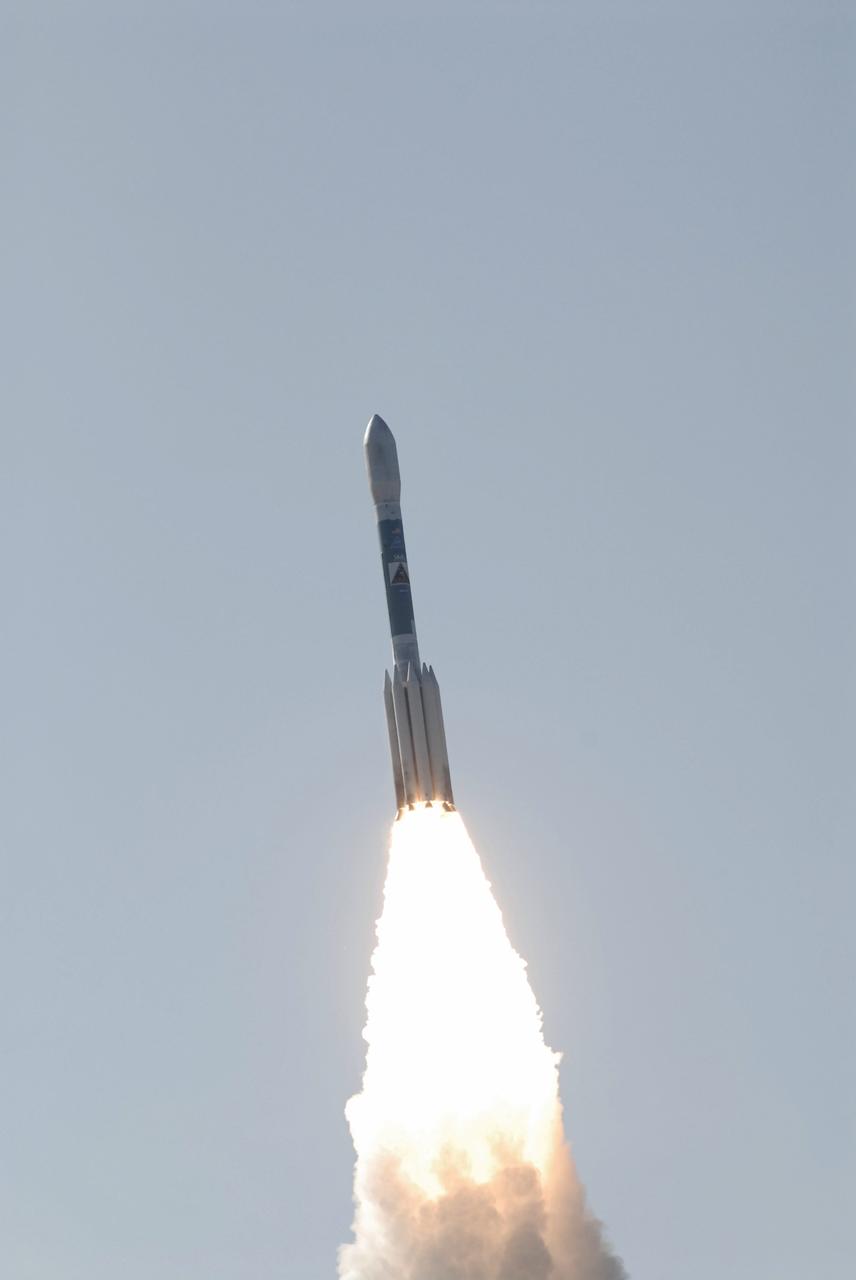
CAPE CANAVERAL, Fla. – With a clear blue sky for a background, the United Launch Alliance Delta II Heavy rocket is propelled skyward after lifting off at 9:08 a.m. EDT Sept. 10 from Space Launch Complex 17B on Cape Canaveral Air Force Station in Florida. The Delta II is carrying NASA’s twin Gravity Recovery and Interior Laboratory (GRAIL) mission to the moon. GRAIL will fly twin spacecraft in tandem around the moon to precisely measure and map variations in the moon's gravitational field. The mission will provide the most accurate global gravity field to date for any planet, including Earth. This detailed information will reveal differences in the density of the moon's crust and mantle and will help answer fundamental questions about the moon's internal structure, thermal evolution, and history of collisions with asteroids. The aim is to map the moon's gravity field so completely that future moon vehicles can safely navigate anywhere on the moon’s surface. For more information, visit http://www.nasa.gov/grail. Photo credit: NASA/Kim Shiflett
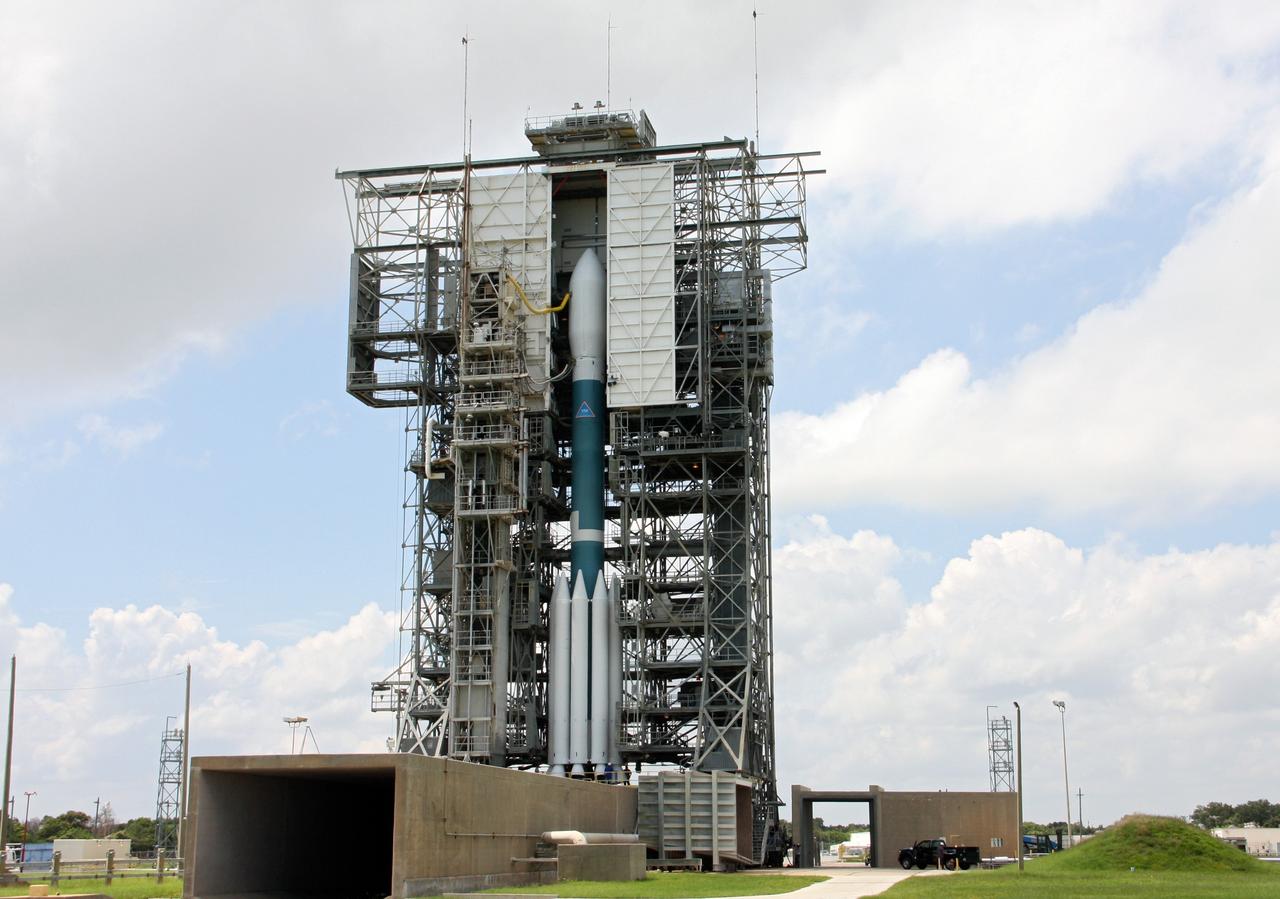
CAPE CANAVERAL, Fla. – At Space Launch Complex 17B on Cape Canaveral Air Force Station, the United Launch Alliance Delta II heavy rocket that will launch NASA's Gravity Recovery and Interior Laboratory spacecraft is rolled back around to the mobile service tower after the first launch attempt was scrubbed due to upper-level winds. GRAIL is scheduled for another launch attempt Sept.10 at 8:29:45 a.m. EDT. GRAIL will fly twin spacecraft in tandem around the moon to precisely measure and map variations in the moon's gravitational field. The mission will provide the most accurate global gravity field to date for any planet, including Earth. This detailed information will reveal differences in the density of the moon's crust and mantle and will help answer fundamental questions about the moon's internal structure, thermal evolution, and history of collisions with asteroids. The aim is to map the moon's gravity field so completely that future moon vehicles can safely navigate anywhere on the moon’s surface. For more information, visit http://www.nasa.gov/grail. Photo credit: NASA/Ken Thornsley
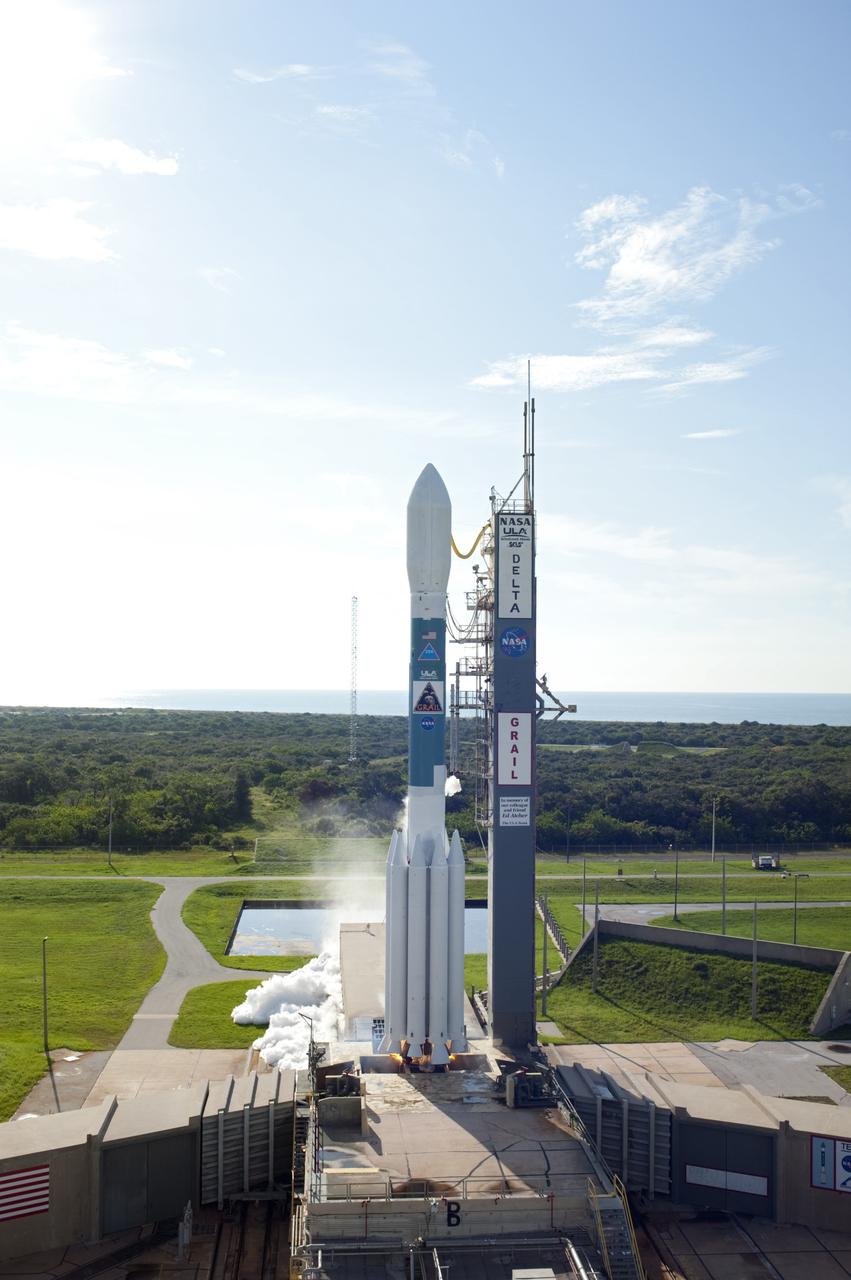
CAPE CANAVERAL, Fla. – Overlooking the Central Florida coast, engine ignition begins liftoff of the United Launch Alliance Delta II Heavy rocket carrying NASA’s twin Gravity Recovery and Interior Laboratory (GRAIL) mission off Space Launch Complex 17B on Cape Canaveral Air Force Station. The spacecraft launched at 9:08:52 a.m. EDT Sept. 10. GRAIL-A will separate from the second stage of the rocket at about one hour, 21 minutes after liftoff, followed by GRAIL-B at 90 minutes after launch. The spacecraft are embarking on a three-month journey to reach the moon. GRAIL will fly twin spacecraft in tandem around the moon to precisely measure and map variations in the moon's gravitational field. The mission will provide the most accurate global gravity field to date for any planet, including Earth. This detailed information will reveal differences in the density of the moon's crust and mantle and will help answer fundamental questions about the moon's internal structure, thermal evolution, and history of collisions with asteroids. The aim is to map the moon's gravity field so completely that future moon vehicles can safely navigate anywhere on the moon’s surface. For more information, visit http://www.nasa.gov/grail. Photo credit: NASA/Sandra Joseph and Don Kight
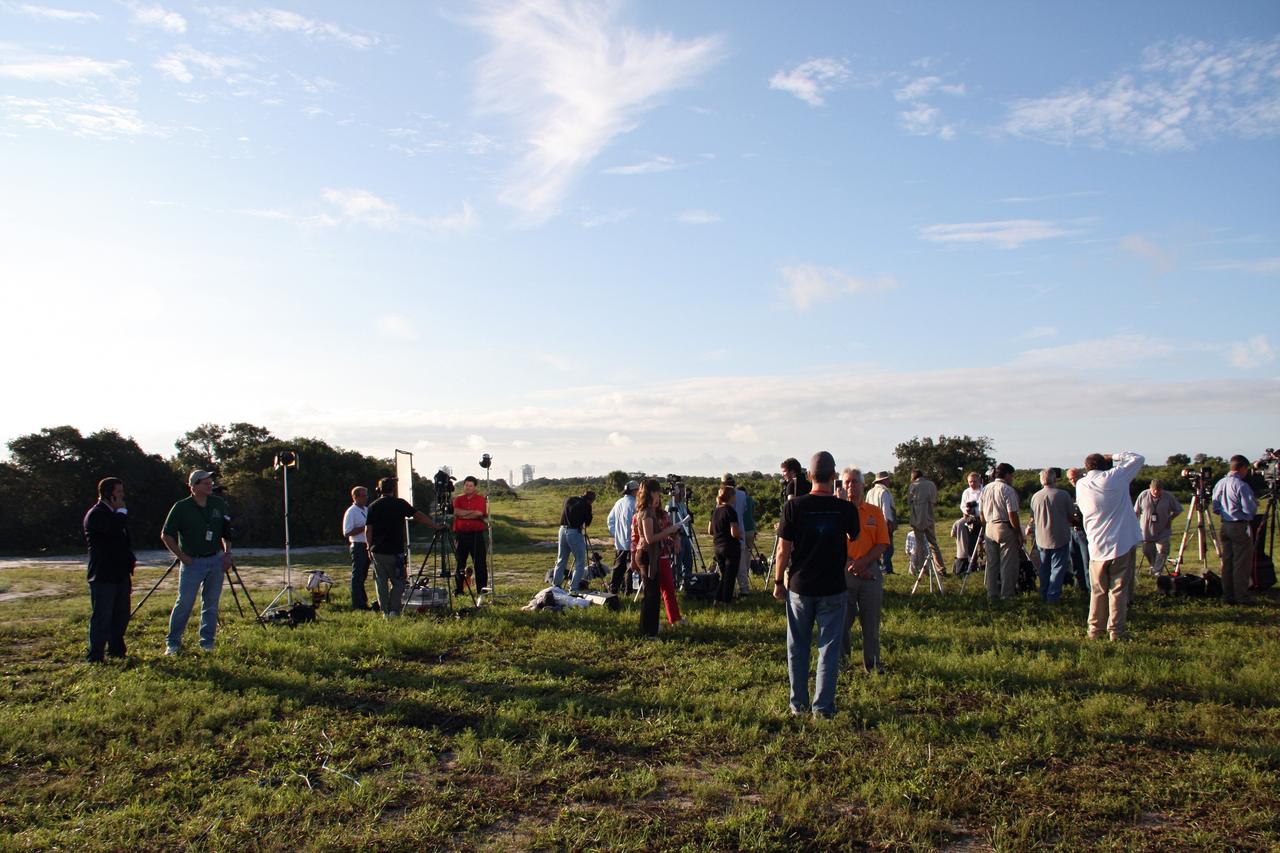
CAPE CANAVERAL, Fla. -- Media representatives at Press Site 1 near Space Launch Complex 17B on Cape Canaveral Air Force Station make their final preparations to cover the launch of NASA's Gravity Recovery and Interior Laboratory mission. Liftoff aboard a United Launch Alliance Delta II Heavy rocket is scheduled for 8:37:06 a.m. EDT. GRAIL will fly twin spacecraft in tandem around the moon to precisely measure and map variations in the moon's gravitational field. The mission will provide the most accurate global gravity field to date for any planet, including Earth. This detailed information will reveal differences in the density of the moon's crust and mantle and will help answer fundamental questions about the moon's internal structure, thermal evolution, and history of collisions with asteroids. The aim is to map the moon's gravity field so completely that future lunar vehicles can safely navigate anywhere on the moon’s surface. For more information, visit http://www.nasa.gov/grail. Photo credit: NASA/Ken Thornsley
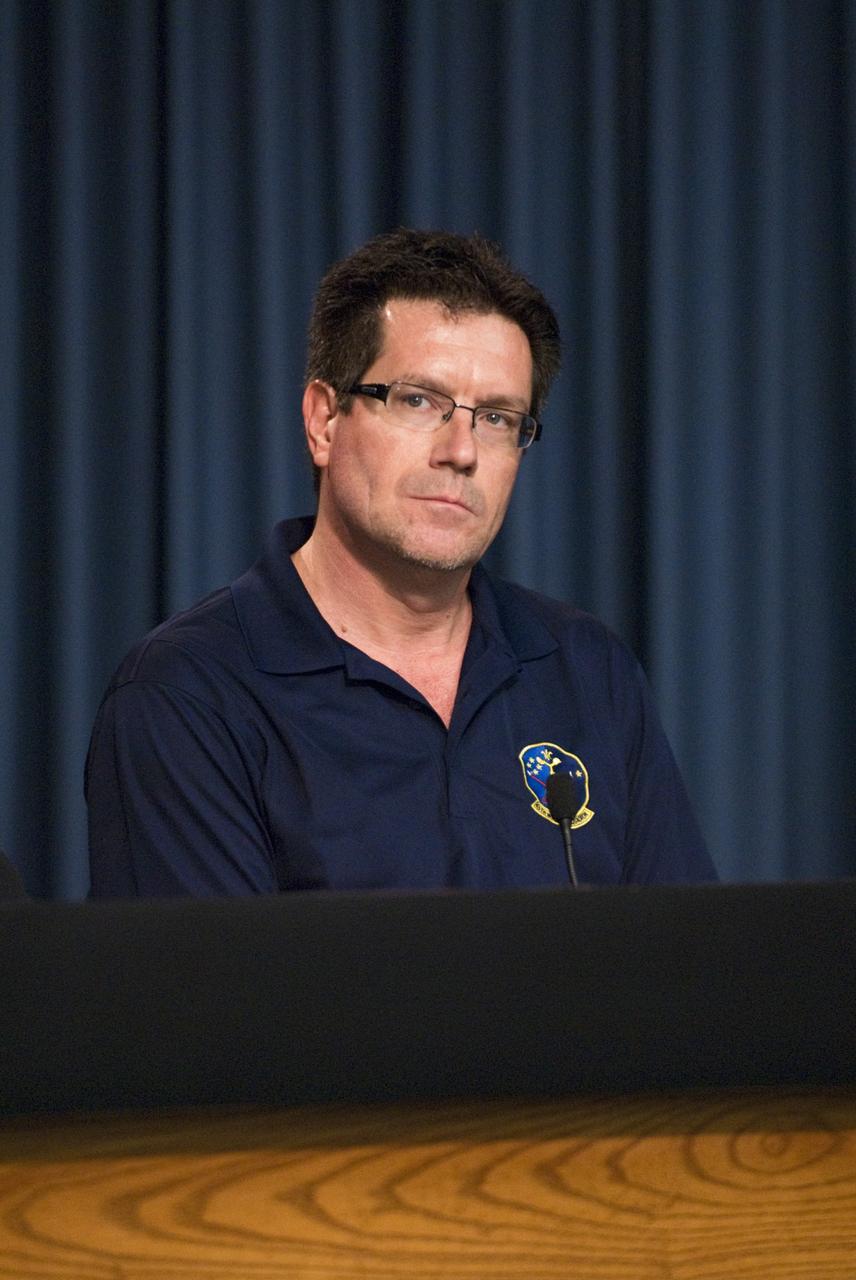
CAPE CANAVERAL, Fla. – Joel Tumbiolo, launch weather officer, 45th Weather Squadron, Cape Canaveral Air Force Station, Fla., participates in the Gravity Recovery and Interior Laboratory (GRAIL) prelaunch news conference in the NASA Press Site auditorium at NASA's Kennedy Space Center in Florida. GRAIL is scheduled to launch Sept. 8 aboard a United Launch Alliance Delta II Heavy rocket from Cape Canaveral Air Force Station in Florida. GRAIL will fly twin spacecraft in tandem around the moon to precisely measure and map variations in the moon's gravitational field. The mission will provide the most accurate global gravity field to date for any planet, including Earth. This detailed information will reveal differences in the density of the moon's crust and mantle and will help answer fundamental questions about the moon's internal structure, thermal evolution, and history of collisions with asteroids. The aim is to map the moon's gravity field so completely that future moon vehicles can safely navigate anywhere on the moon’s surface. For more information, visit http://www.nasa.gov/grail. Photo credit: NASA/Kim Shiflett
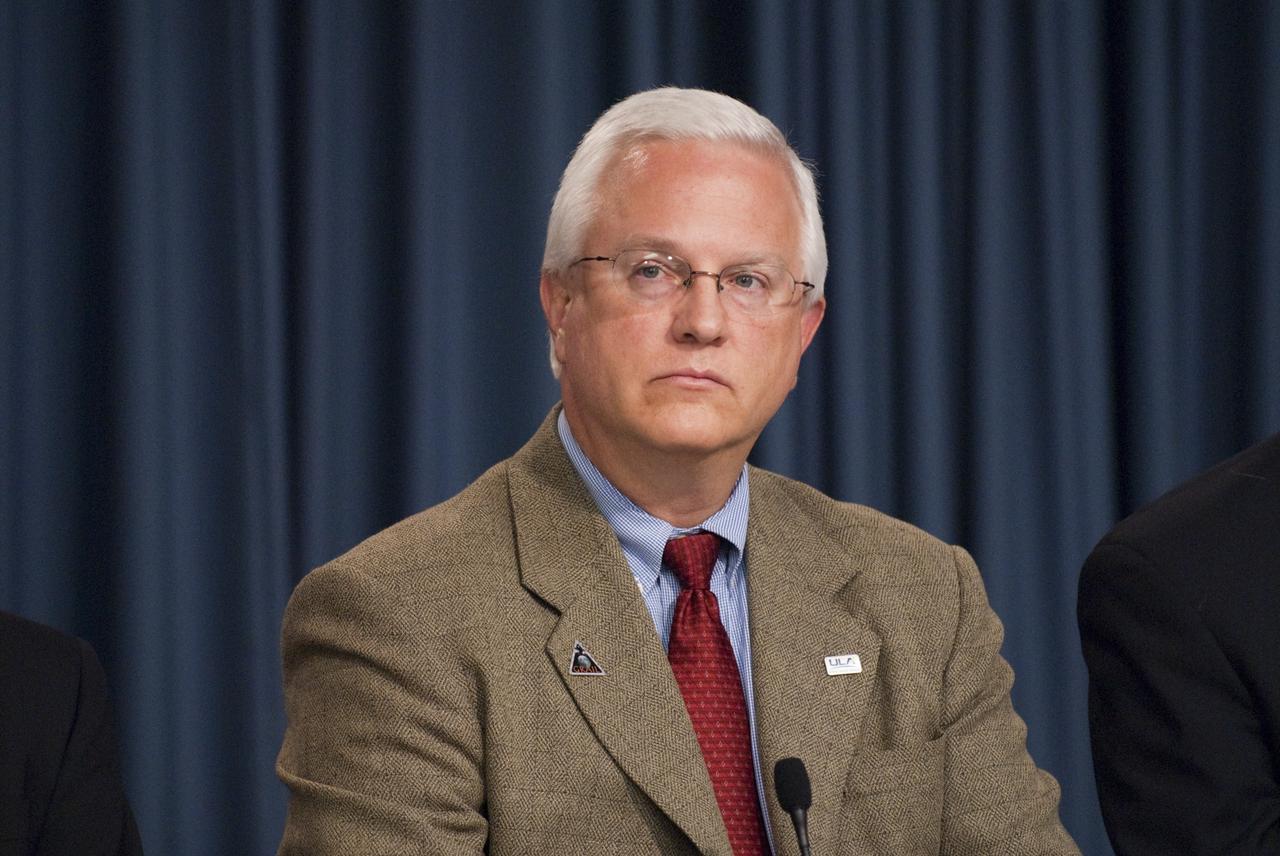
CAPE CANAVERAL, Fla. – Vernon Thorp, program manager, NASA Missions, United Launch Alliance, participates in the Gravity Recovery and Interior Laboratory (GRAIL) prelaunch news conference in the NASA Press Site auditorium at NASA's Kennedy Space Center in Florida. GRAIL is scheduled to launch Sept. 8 aboard a United Launch Alliance Delta II Heavy rocket from Cape Canaveral Air Force Station in Florida. GRAIL will fly twin spacecraft in tandem around the moon to precisely measure and map variations in the moon's gravitational field. The mission will provide the most accurate global gravity field to date for any planet, including Earth. This detailed information will reveal differences in the density of the moon's crust and mantle and will help answer fundamental questions about the moon's internal structure, thermal evolution, and history of collisions with asteroids. The aim is to map the moon's gravity field so completely that future moon vehicles can safely navigate anywhere on the moon’s surface. For more information, visit http://www.nasa.gov/grail. Photo credit: NASA/Kim Shiflett

CAPE CANAVERAL, Fla. – Tweetup participants ask questions during prelaunch activities for NASA’s Gravity Recovery and Interior Laboratory (GRAIL) mission at the Kennedy Space Center Visitor Complex in Florida. Participants toured NASA’s Kennedy Space Center and got a close-up view of Space Launch Complex 17B at Cape Canaveral Air Force Station. The tweeters will share their experiences with followers through the social networking site Twitter. GRAIL will fly twin spacecraft in tandem around the moon to precisely measure and map variations in the moon’s gravitational field. The mission will provide the most accurate global gravity field to date for any planet, including Earth. This detailed information will reveal differences in the density of the moon’s crust and mantle and will help answer fundamental questions about the moon’s internal structure, thermal evolution, and history of collisions with asteroids. The aim is to map the moon’s gravity field so completely that future lunar vehicles can safely navigate anywhere on the moon’s surface. Launch is scheduled for 8:37:06 a.m. EDT Sept. 8. For more information, visit http://www.nasa.gov/grail. Photo credit: NASA/Gianni Woods
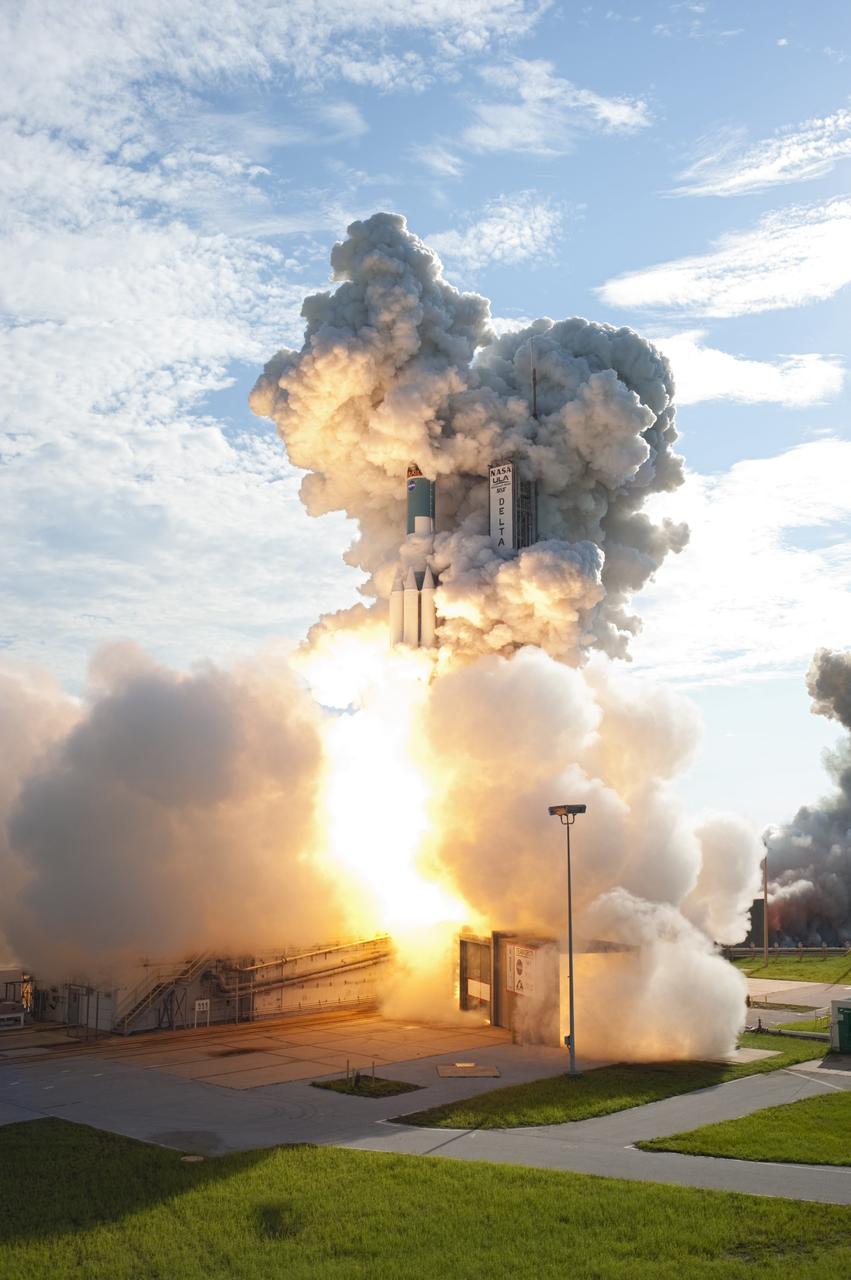
CAPE CANAVERAL, Fla. – At liftoff, plumes of smoke surround the United Launch Alliance Delta II Heavy rocket carrying NASA’s twin Gravity Recovery and Interior Laboratory (GRAIL) mission off Space Launch Complex 17B on Cape Canaveral Air Force Station in Florida. The spacecraft launched at 9:08:52 a.m. EDT Sept. 10. GRAIL-A will separate from the second stage of the rocket at about one hour, 21 minutes after liftoff, followed by GRAIL-B at 90 minutes after launch. The spacecraft are embarking on a three-month journey to reach the moon. GRAIL will fly twin spacecraft in tandem around the moon to precisely measure and map variations in the moon's gravitational field. The mission will provide the most accurate global gravity field to date for any planet, including Earth. This detailed information will reveal differences in the density of the moon's crust and mantle and will help answer fundamental questions about the moon's internal structure, thermal evolution, and history of collisions with asteroids. The aim is to map the moon's gravity field so completely that future moon vehicles can safely navigate anywhere on the moon’s surface. For more information, visit http://www.nasa.gov/grail. Photo credit: NASA/ Tony Gray and Tim Powers
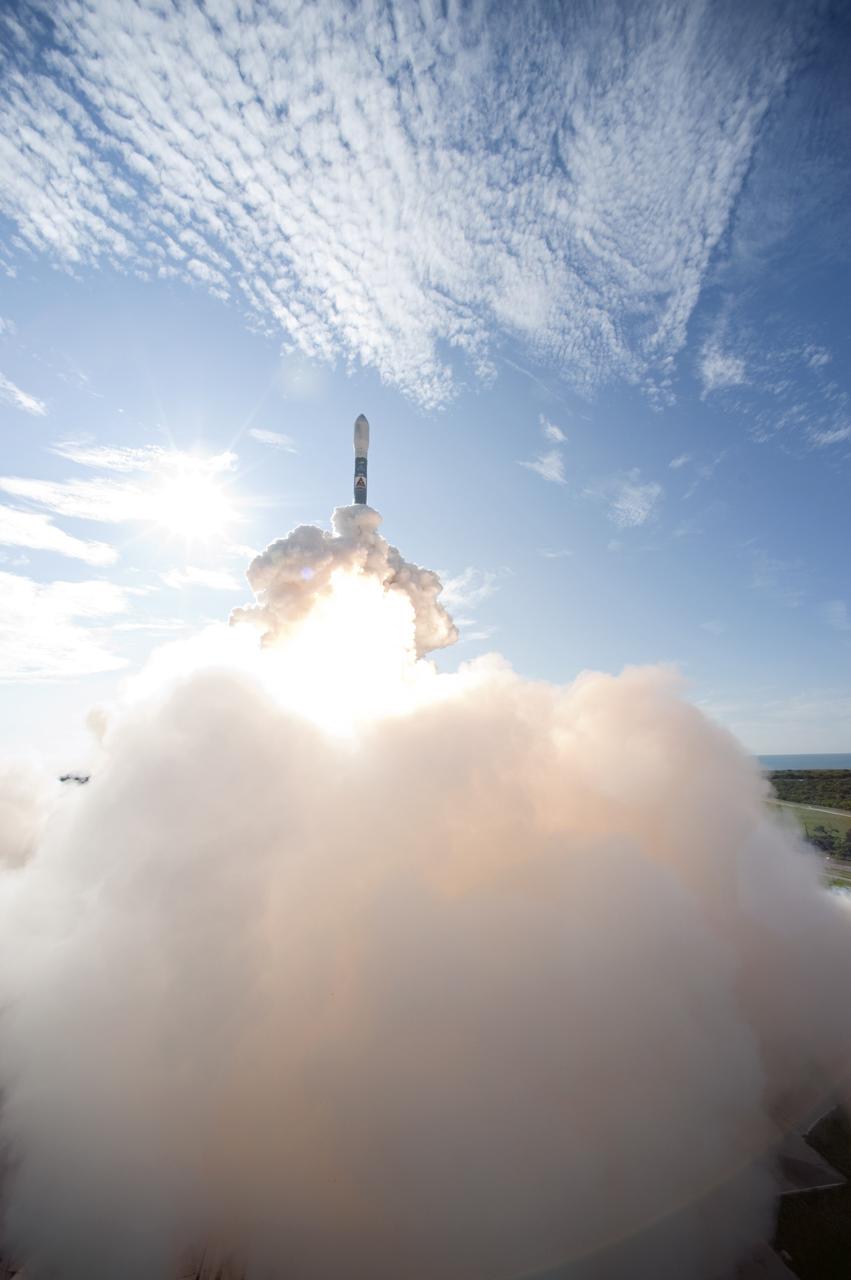
CAPE CANAVERAL, Fla. – Rising from fire and smoke under a blue sky, NASA’s twin Gravity Recovery and Interior Laboratory (GRAIL) mission launches atop a United Launch Alliance Delta II Heavy rocket leaving from Space Launch Complex 17B on Cape Canaveral Air Force Station in Florida. Liftoff was at 9:08:52 a.m. EDT Sept. 10. GRAIL-A will separate from the second stage of the rocket at about one hour, 21 minutes after liftoff, followed by GRAIL-B at 90 minutes after launch. The spacecraft are embarking on a three-month journey to reach the moon. GRAIL will fly twin spacecraft in tandem around the moon to precisely measure and map variations in the moon's gravitational field. The mission will provide the most accurate global gravity field to date for any planet, including Earth. This detailed information will reveal differences in the density of the moon's crust and mantle and will help answer fundamental questions about the moon's internal structure, thermal evolution, and history of collisions with asteroids. The aim is to map the moon's gravity field so completely that future moon vehicles can safely navigate anywhere on the moon’s surface. For more information, visit http://www.nasa.gov/grail. Photo credit: NASA/Sandra Joseph and Don Kight
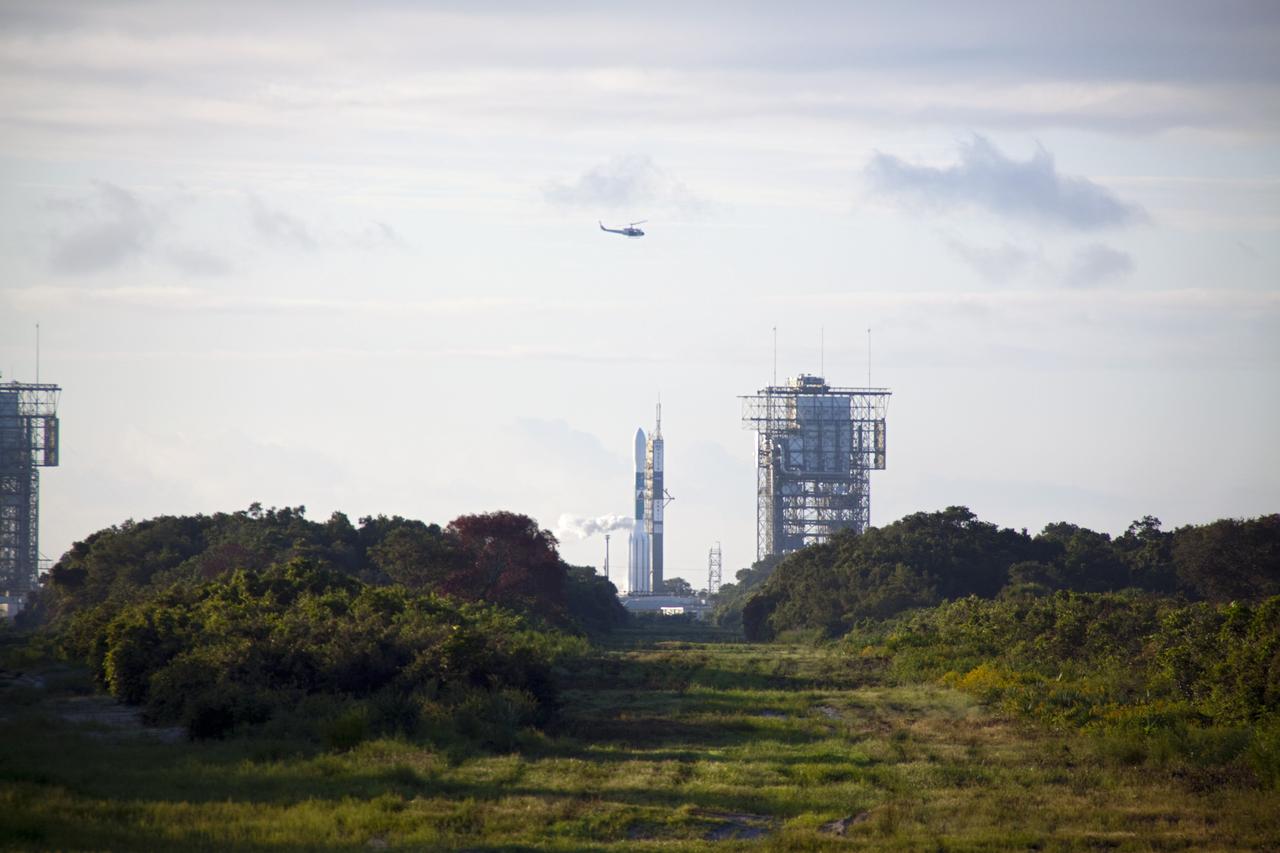
CAPE CANAVERAL, Fla. -- A surveillance helicopter passes over Space Launch Complex 17B on Cape Canaveral Air Force Station where preparations to launch the United Launch Alliance Delta II Heavy rocket that will carry NASA's Gravity Recovery and Interior Laboratory mission into space are being completed. GRAIL will fly twin spacecraft in tandem around the moon to precisely measure and map variations in the moon's gravitational field. The mission will provide the most accurate global gravity field to date for any planet, including Earth. This detailed information will reveal differences in the density of the moon's crust and mantle and will help answer fundamental questions about the moon's internal structure, thermal evolution, and history of collisions with asteroids. The aim is to map the moon's gravity field so completely that future lunar vehicles can safely navigate anywhere on the moon’s surface. Launch is scheduled for 8:37:06 a.m. EDT Sept. 8. For more information, visit http://www.nasa.gov/grail. Photo credit: NASA
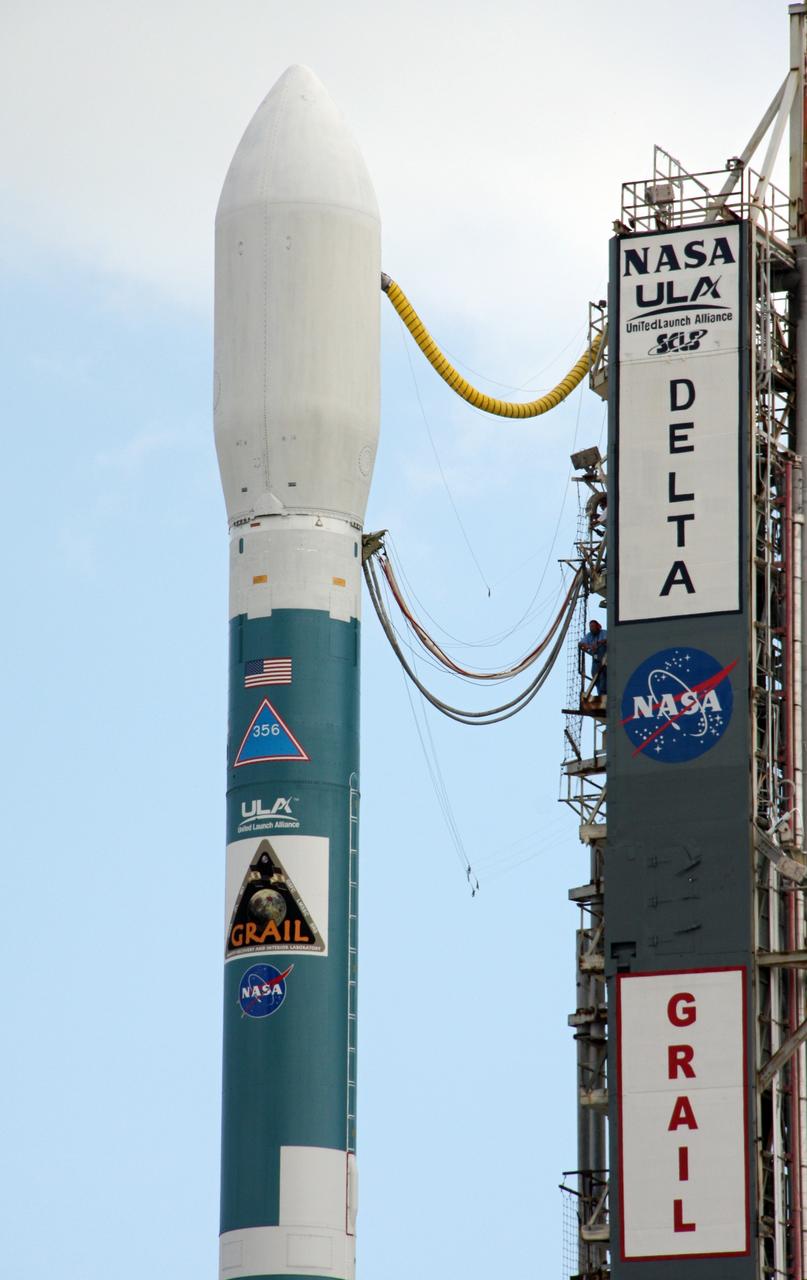
CAPE CANAVERAL, Fla. – At Space Launch Complex 17B on Cape Canaveral Air Force Station, the United Launch Alliance Delta II heavy rocket that will launch NASA's Gravity Recovery and Interior Laboratory spacecraft is rolled back around to the mobile service tower after the first launch attempt was scrubbed due to upper-level winds. GRAIL is scheduled for another launch attempt Sept.10 at 8:29:45 a.m. EDT. GRAIL will fly twin spacecraft in tandem around the moon to precisely measure and map variations in the moon's gravitational field. The mission will provide the most accurate global gravity field to date for any planet, including Earth. This detailed information will reveal differences in the density of the moon's crust and mantle and will help answer fundamental questions about the moon's internal structure, thermal evolution, and history of collisions with asteroids. The aim is to map the moon's gravity field so completely that future moon vehicles can safely navigate anywhere on the moon’s surface. For more information, visit http://www.nasa.gov/grail. Photo credit: NASA/Ken Thornsley
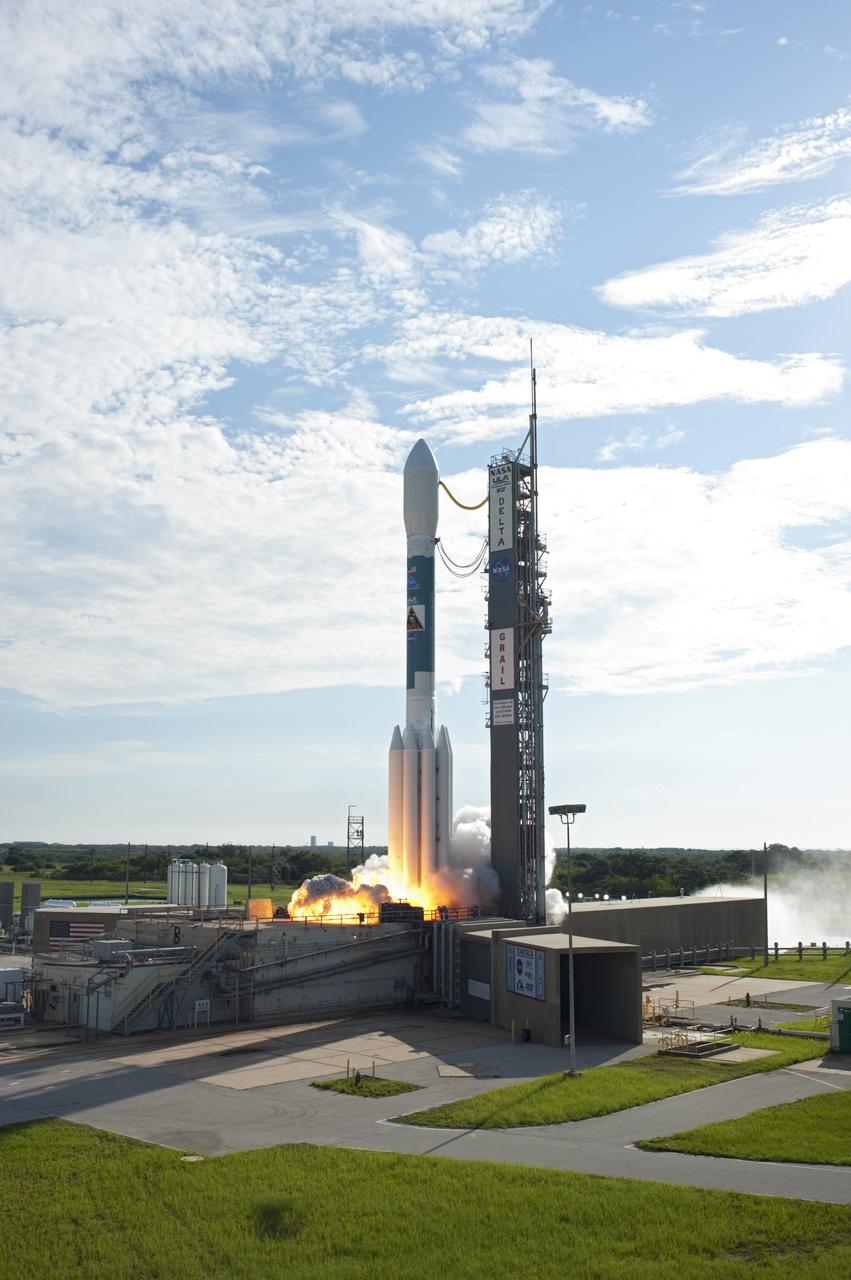
CAPE CANAVERAL, Fla. – At ignition, flames and smoke from the engines begin liftoff of the United Launch Alliance Delta II Heavy rocket carrying NASA’s twin Gravity Recovery and Interior Laboratory (GRAIL) mission off Space Launch Complex 17B on Cape Canaveral Air Force Station in Florida. The spacecraft launched at 9:08:52 a.m. EDT Sept. 10. GRAIL-A will separate from the second stage of the rocket at about one hour, 21 minutes after liftoff, followed by GRAIL-B at 90 minutes after launch. The spacecraft are embarking on a three-month journey to reach the moon. GRAIL will fly twin spacecraft in tandem around the moon to precisely measure and map variations in the moon's gravitational field. The mission will provide the most accurate global gravity field to date for any planet, including Earth. This detailed information will reveal differences in the density of the moon's crust and mantle and will help answer fundamental questions about the moon's internal structure, thermal evolution, and history of collisions with asteroids. The aim is to map the moon's gravity field so completely that future moon vehicles can safely navigate anywhere on the moon’s surface. For more information, visit http://www.nasa.gov/grail. Photo credit: NASA/ Tony Gray and Tim Powers
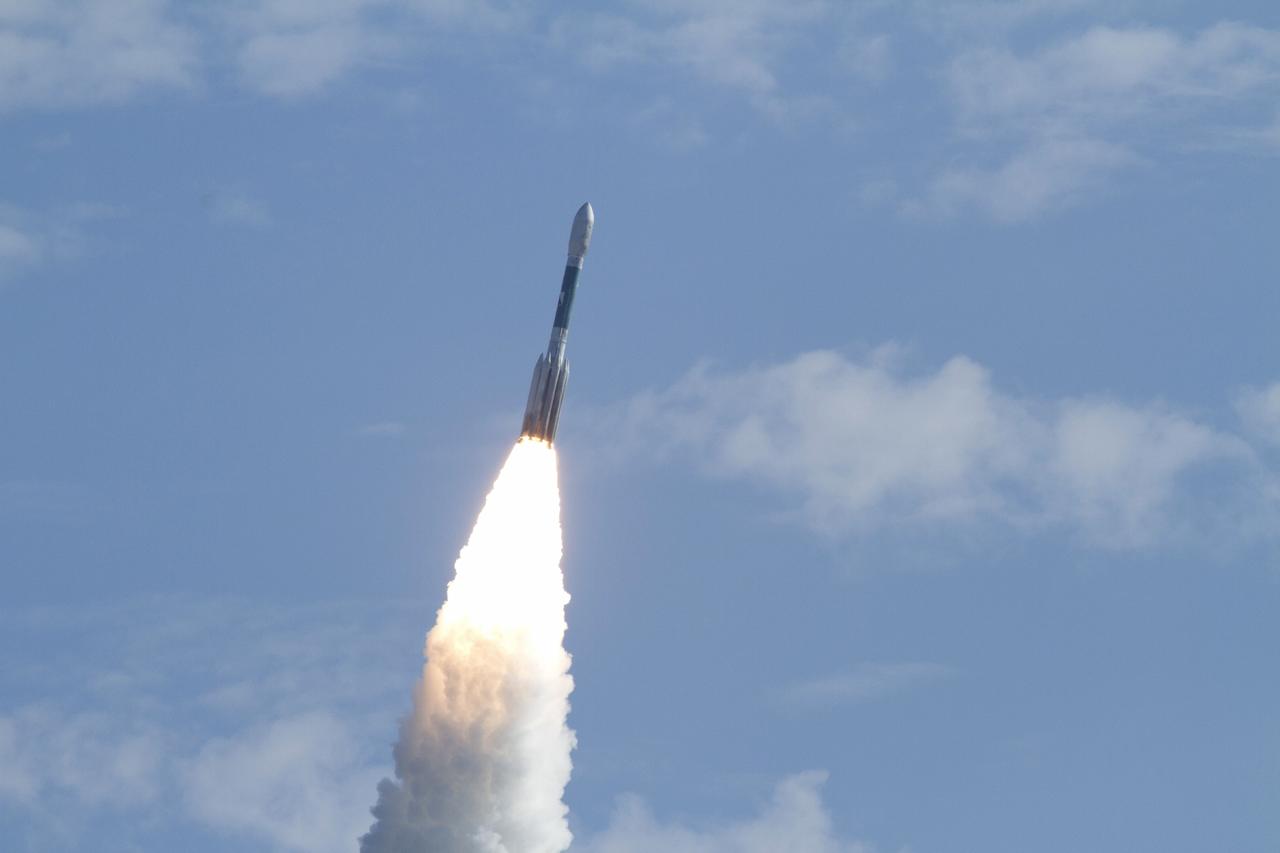
CAPE CANAVERAL, Fla. – Backdropped by a beautiful blue sky, the United Launch Alliance Delta II Heavy rocket propels NASA’s twin Gravity Recovery and Interior Laboratory (GRAIL) mission off Space Launch Complex 17B on Cape Canaveral Air Force Station in Florida. The spacecraft launched at 9:08:52 a.m. EDT Sept. 10. GRAIL-A will separate from the second stage of the rocket at about one hour, 21 minutes after liftoff, followed by GRAIL-B at 90 minutes after launch. The spacecraft are embarking on a three-month journey to reach the moon. GRAIL will fly twin spacecraft in tandem around the moon to precisely measure and map variations in the moon's gravitational field. The mission will provide the most accurate global gravity field to date for any planet, including Earth. This detailed information will reveal differences in the density of the moon's crust and mantle and will help answer fundamental questions about the moon's internal structure, thermal evolution, and history of collisions with asteroids. The aim is to map the moon's gravity field so completely that future moon vehicles can safely navigate anywhere on the moon’s surface. For more information, visit http://www.nasa.gov/grail. Photo credit: NASA/Kenny Allen
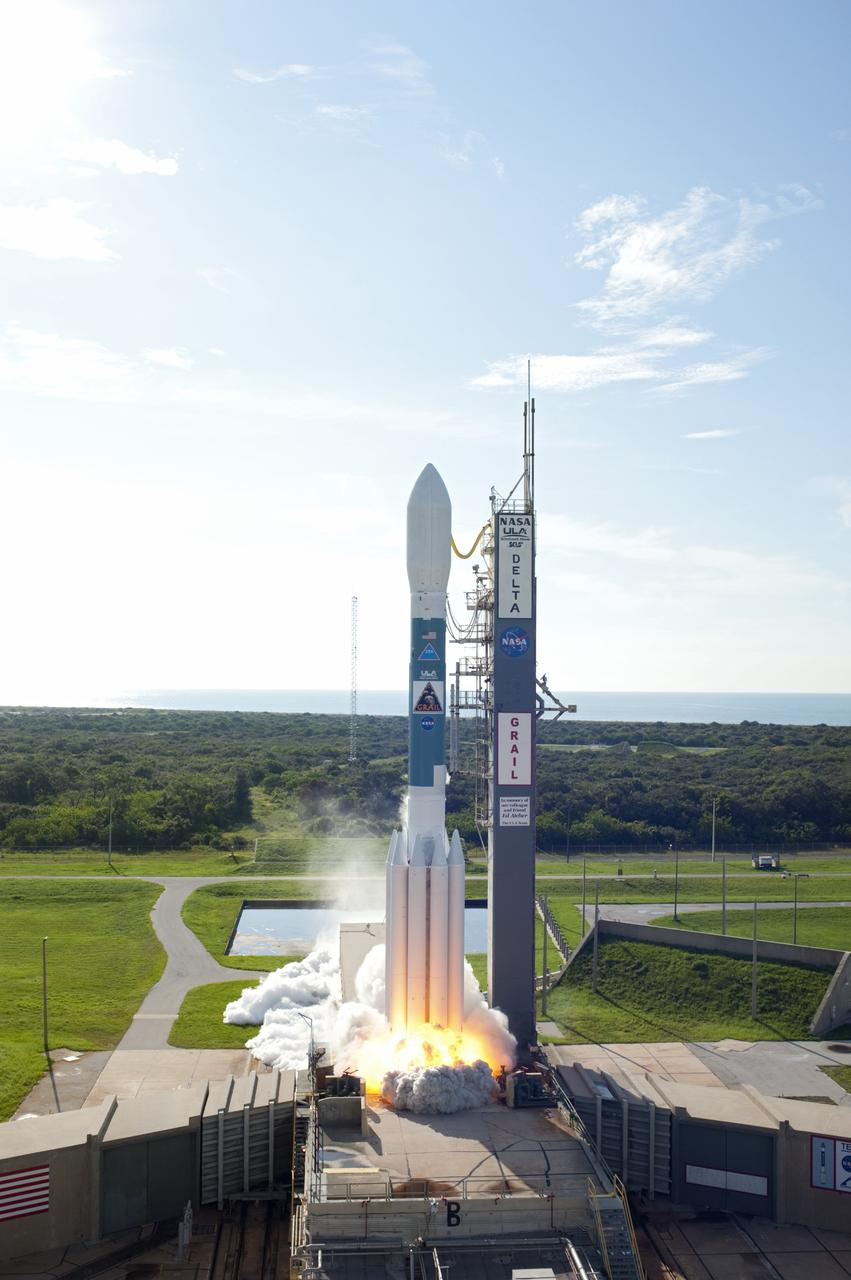
CAPE CANAVERAL, Fla. – At ignition, flames from the engines begin liftoff of the United Launch Alliance Delta II Heavy rocket carrying NASA’s twin Gravity Recovery and Interior Laboratory (GRAIL) mission off Space Launch Complex 17B on Cape Canaveral Air Force Station. The spacecraft launched at 9:08:52 a.m. EDT Sept. 10. GRAIL-A will separate from the second stage of the rocket at about one hour, 21 minutes after liftoff, followed by GRAIL-B at 90 minutes after launch. The spacecraft are embarking on a three-month journey to reach the moon. GRAIL will fly twin spacecraft in tandem around the moon to precisely measure and map variations in the moon's gravitational field. The mission will provide the most accurate global gravity field to date for any planet, including Earth. This detailed information will reveal differences in the density of the moon's crust and mantle and will help answer fundamental questions about the moon's internal structure, thermal evolution, and history of collisions with asteroids. The aim is to map the moon's gravity field so completely that future moon vehicles can safely navigate anywhere on the moon’s surface. For more information, visit http://www.nasa.gov/grail. Photo credit: NASA/Sandra Joseph and Don Kight

CAPE CANAVERAL, Fla. – Ed Weiler, NASA associate administrator, Science Mission Directorate, participates in the Gravity Recovery and Interior Laboratory (GRAIL) prelaunch news conference in the NASA Press Site auditorium at NASA's Kennedy Space Center in Florida. GRAIL is scheduled to launch Sept. 8 aboard a United Launch Alliance Delta II Heavy rocket from Cape Canaveral Air Force Station in Florida. GRAIL will fly twin spacecraft in tandem around the moon to precisely measure and map variations in the moon's gravitational field. The mission will provide the most accurate global gravity field to date for any planet, including Earth. This detailed information will reveal differences in the density of the moon's crust and mantle and will help answer fundamental questions about the moon's internal structure, thermal evolution, and history of collisions with asteroids. The aim is to map the moon's gravity field so completely that future moon vehicles can safely navigate anywhere on the moon’s surface. For more information, visit http://www.nasa.gov/grail. Photo credit: NASA/Kim Shiflett
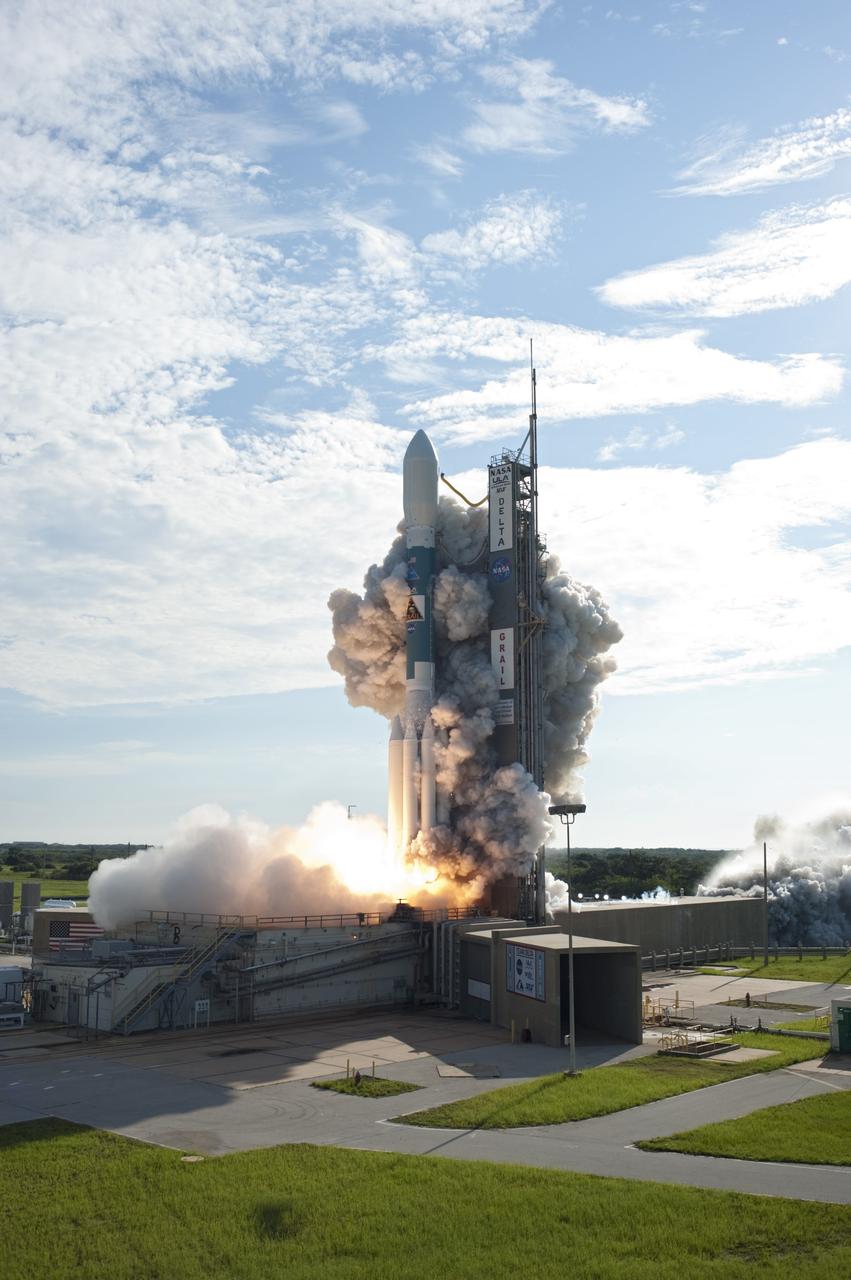
CAPE CANAVERAL, Fla. – At liftoff, flames and smoke from the engines surround the United Launch Alliance Delta II rocket carrying NASA’s twin Gravity Recovery and Interior Laboratory (GRAIL) mission off Space Launch Complex 17B on Cape Canaveral Air Force Station in Florida. The spacecraft launched at 9:08:52 a.m. EDT Sept. 10. GRAIL-A will separate from the second stage of the rocket at about one hour, 21 minutes after liftoff, followed by GRAIL-B at 90 minutes after launch. The spacecraft are embarking on a three-month journey to reach the moon. GRAIL will fly twin spacecraft in tandem around the moon to precisely measure and map variations in the moon's gravitational field. The mission will provide the most accurate global gravity field to date for any planet, including Earth. This detailed information will reveal differences in the density of the moon's crust and mantle and will help answer fundamental questions about the moon's internal structure, thermal evolution, and history of collisions with asteroids. The aim is to map the moon's gravity field so completely that future moon vehicles can safely navigate anywhere on the moon’s surface. For more information, visit http://www.nasa.gov/grail. Photo credit: NASA/ Tony Gray and Tim Powers
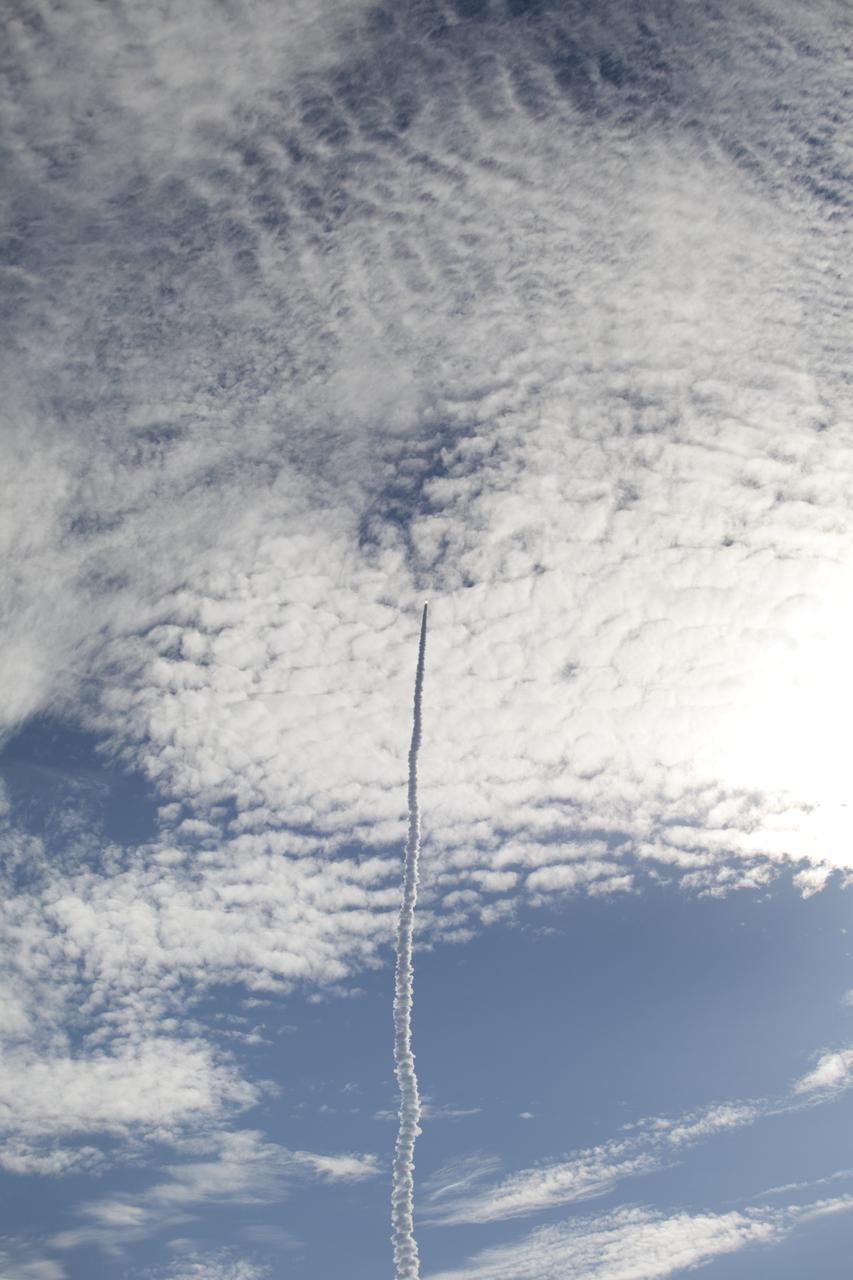
CAPE CANAVERAL, Fla. – Viewed from KARS Park 1 on Merritt Island in Florida, the United Launch Alliance Delta II Heavy rocket soars skyward after lifting off at 9:08 a.m. EDT Sept. 10 from Space Launch Complex 17B at Cape Canaveral Air Force Station. The Delta II is carrying NASA’s Gravity Recovery and Interior Laboratory (GRAIL) mission to the moon. A group of Tweetup participants viewed the launch from the park and will share their experiences with followers through the social networking site Twitter. GRAIL will fly twin spacecraft in tandem around the moon to precisely measure and map variations in the moon's gravitational field. The mission will provide the most accurate global gravity field to date for any planet, including Earth. This detailed information will reveal differences in the density of the moon's crust and mantle and will help answer fundamental questions about the moon's internal structure, thermal evolution, and history of collisions with asteroids. The aim is to map the moon's gravity field so completely that future moon vehicles can safely navigate anywhere on the moon’s surface. For more information, visit http://www.nasa.gov/grail. Photo credit: NASA/Frankie Martin
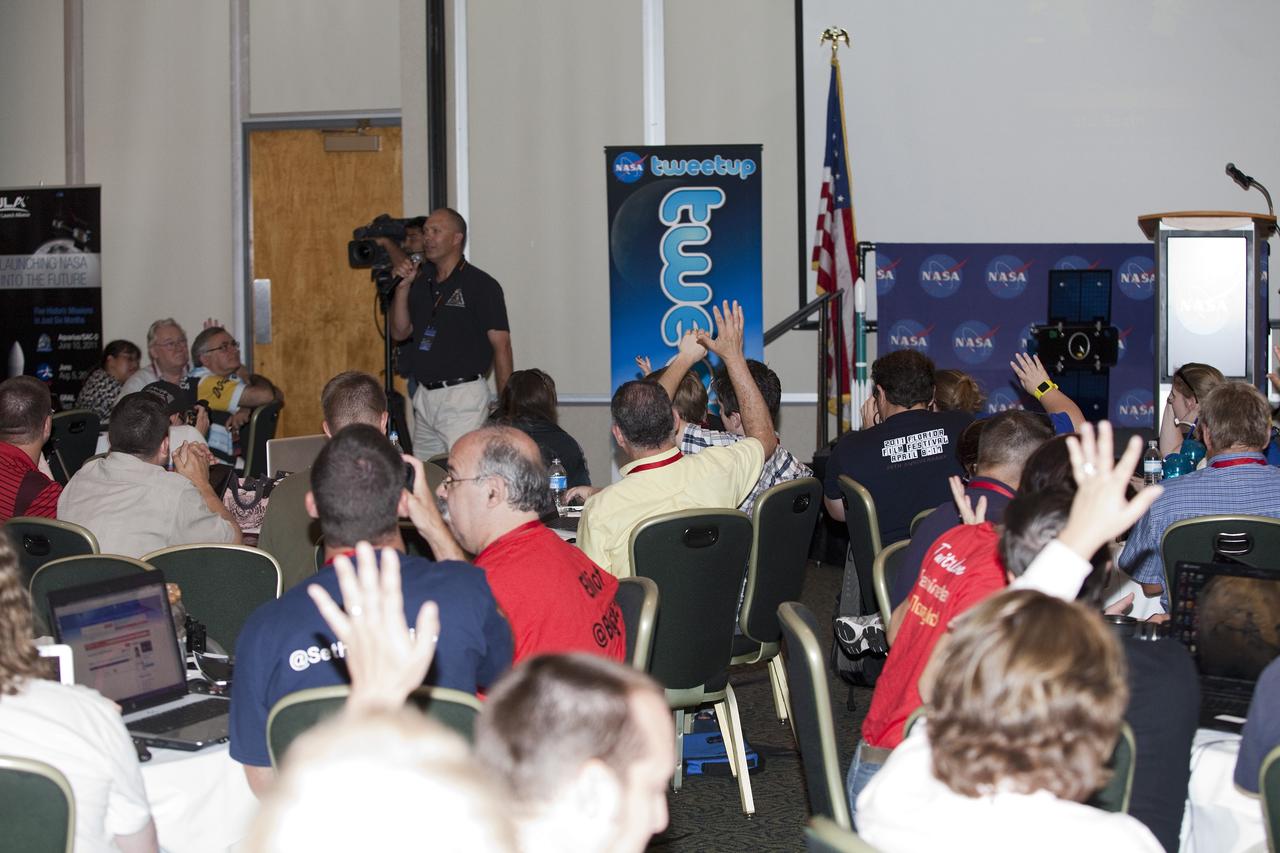
CAPE CANAVERAL, Fla. – Tweetup participants ask questions during prelaunch activities for NASA’s Gravity Recovery and Interior Laboratory (GRAIL) mission at the Kennedy Space Center Visitor Complex in Florida. Participants toured NASA’s Kennedy Space Center and got a close-up view of Space Launch Complex 17B at Cape Canaveral Air Force Station. The tweeters will share their experiences with followers through the social networking site Twitter. GRAIL will fly twin spacecraft in tandem around the moon to precisely measure and map variations in the moon’s gravitational field. The mission will provide the most accurate global gravity field to date for any planet, including Earth. This detailed information will reveal differences in the density of the moon’s crust and mantle and will help answer fundamental questions about the moon’s internal structure, thermal evolution, and history of collisions with asteroids. The aim is to map the moon’s gravity field so completely that future lunar vehicles can safely navigate anywhere on the moon’s surface. Launch is scheduled for 8:37:06 a.m. EDT Sept. 8. For more information, visit http://www.nasa.gov/grail. Photo credit: NASA/Gianni Woods
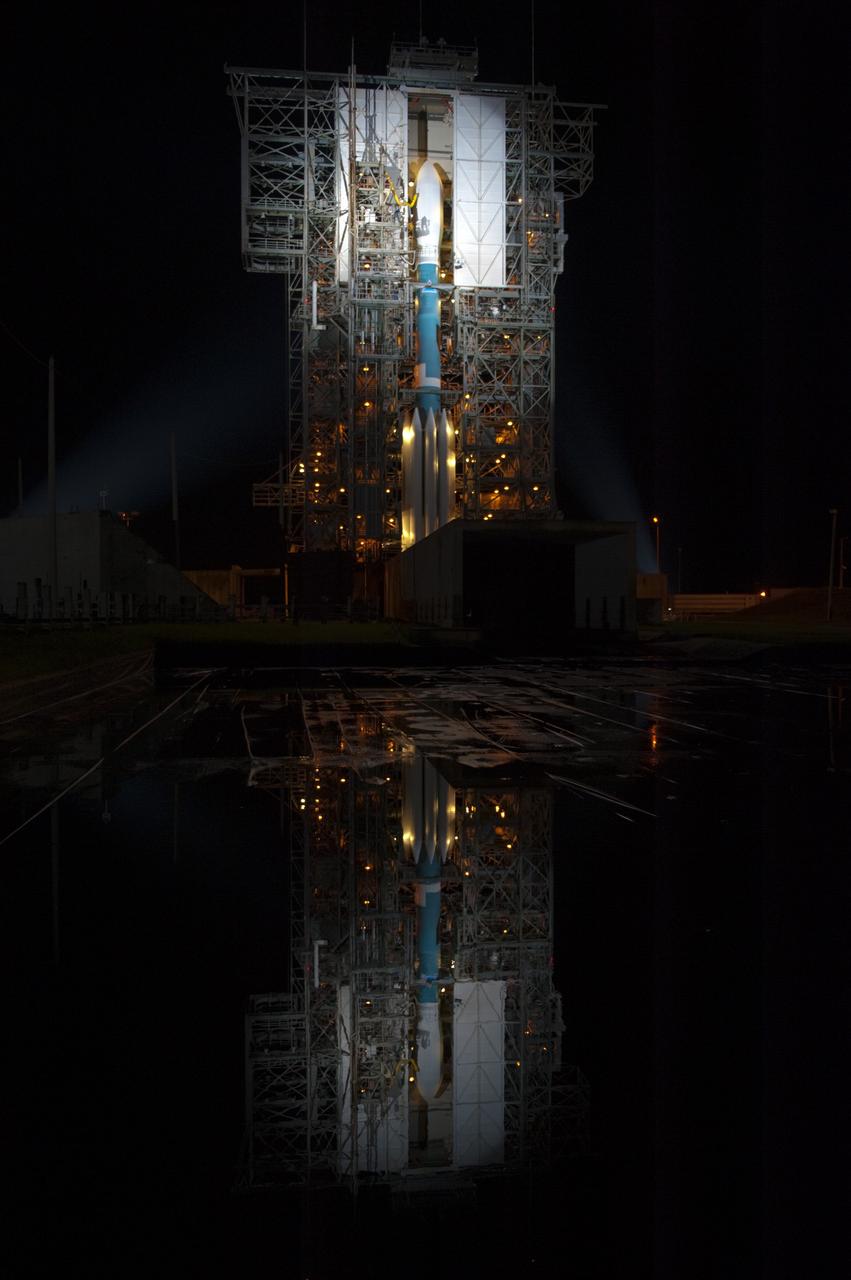
CAPE CANAVERAL, Fla. -- At Space Launch Complex 17B on Cape Canaveral Air Force Station, evening showers create the right conditions for the United Launch Alliance Delta II rocket that will launch NASA's Gravity Recovery and Interior Laboratory mission to be reflected on the surface of the pad. Preparations are under way to roll the mobile service tower away from the rocket. GRAIL will fly twin spacecraft in tandem around the moon to precisely measure and map variations in the moon's gravitational field. The mission will provide the most accurate global gravity field to date for any planet, including Earth. This detailed information will reveal differences in the density of the moon's crust and mantle and will help answer fundamental questions about the moon's internal structure, thermal evolution, and history of collisions with asteroids. The aim is to map the moon's gravity field so completely that future lunar vehicles can safely navigate anywhere on the moon’s surface. Launch is scheduled for 8:37:06 a.m. EDT Sept. 8. For more information, visit http://www.nasa.gov/grail. Photo credit: NASA/Kim Shiflett
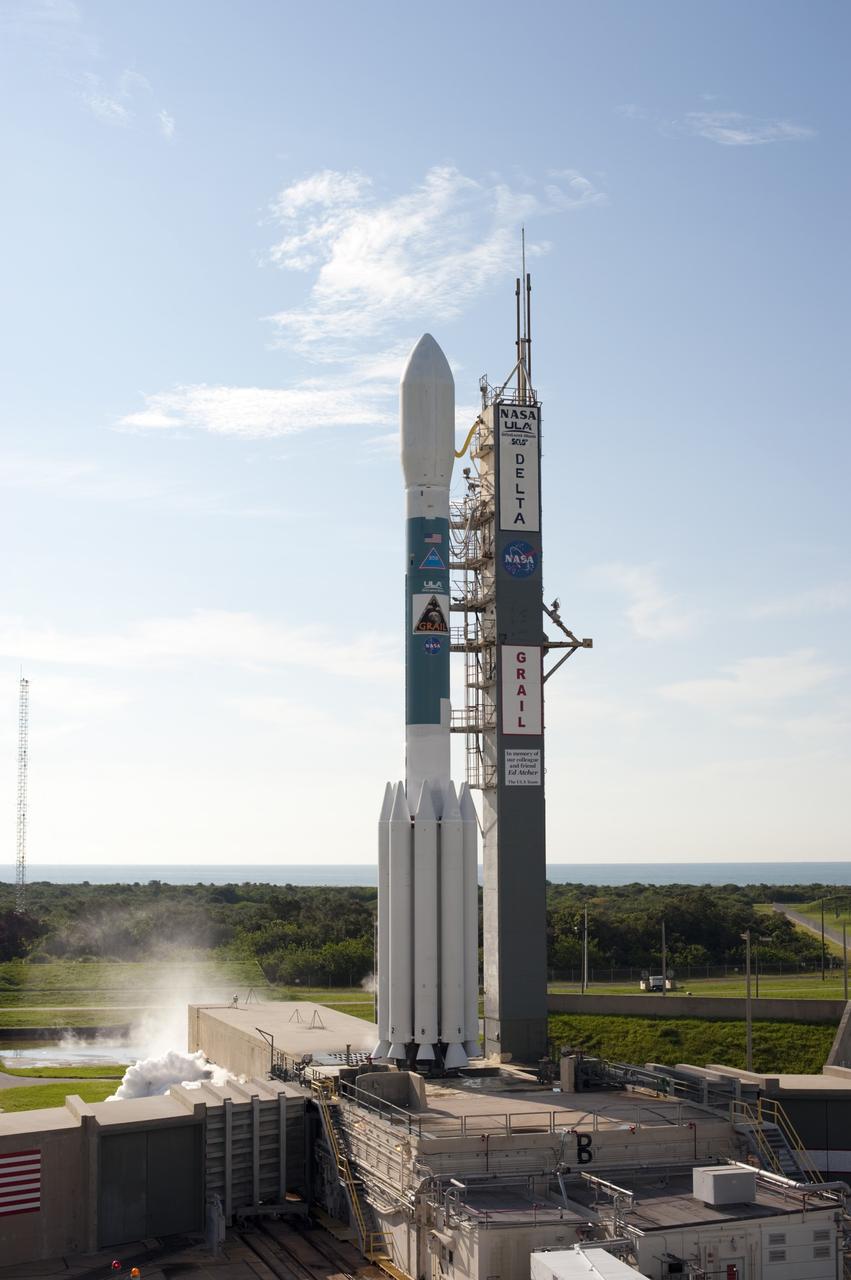
CAPE CANAVERAL, Fla. – Overlooking the Central Florida coast, engine ignition begins liftoff of the United Launch Alliance Delta II Heavy rocket carrying NASA’s twin Gravity Recovery and Interior Laboratory (GRAIL) mission off Space Launch Complex 17B on Cape Canaveral Air Force Station. The spacecraft launched at 9:08:52 a.m. EDT Sept. 10. GRAIL-A will separate from the second stage of the rocket at about one hour, 21 minutes after liftoff, followed by GRAIL-B at 90 minutes after launch. The spacecraft are embarking on a three-month journey to reach the moon. GRAIL will fly twin spacecraft in tandem around the moon to precisely measure and map variations in the moon's gravitational field. The mission will provide the most accurate global gravity field to date for any planet, including Earth. This detailed information will reveal differences in the density of the moon's crust and mantle and will help answer fundamental questions about the moon's internal structure, thermal evolution, and history of collisions with asteroids. The aim is to map the moon's gravity field so completely that future moon vehicles can safely navigate anywhere on the moon’s surface. For more information, visit http://www.nasa.gov/grail. Photo credit: NASA/Sandra Joseph and Don Kight
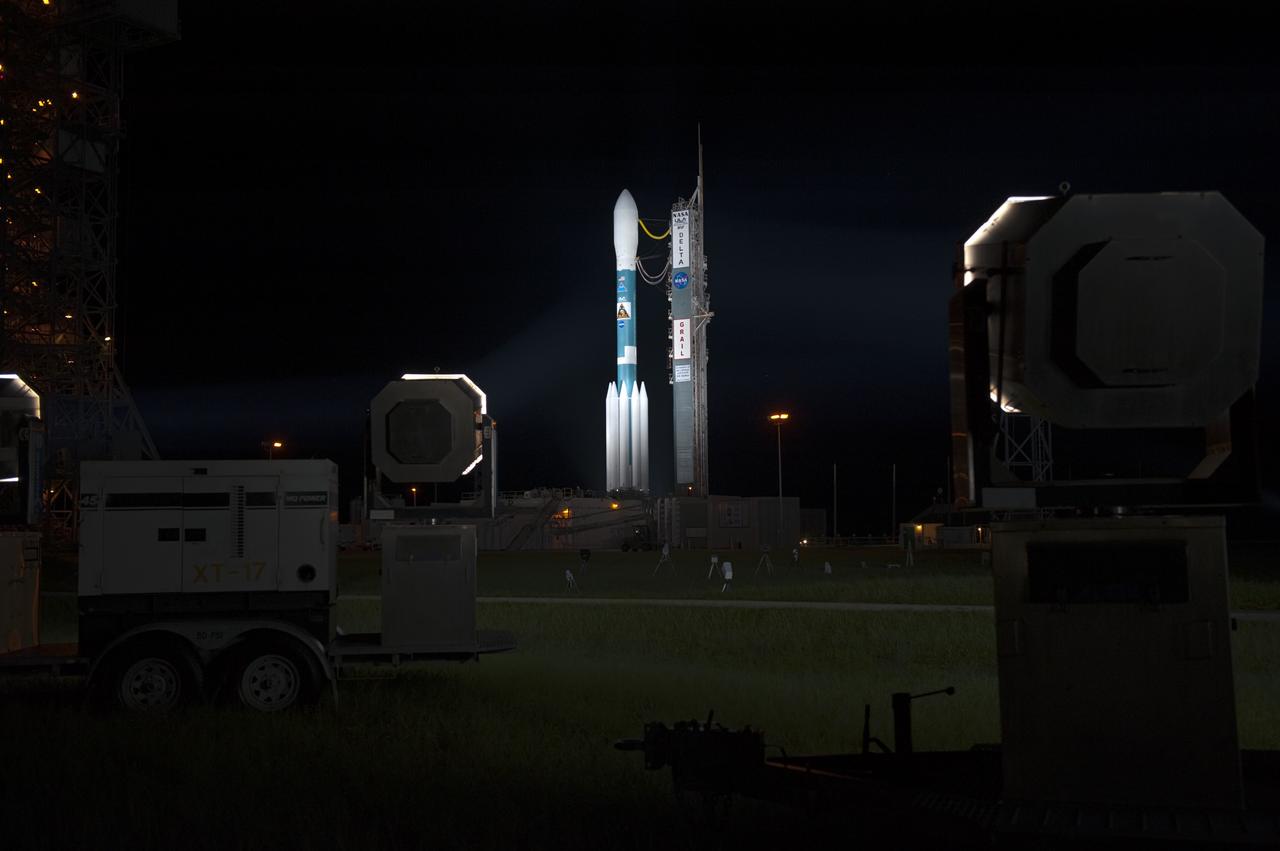
CAPE CANAVERAL, Fla. -- At Space Launch Complex 17B on Cape Canaveral Air Force Station, the United Launch Alliance Delta II rocket that will launch NASA's Gravity Recovery and Interior Laboratory mission undergoes final preparations for launch. The "rollback" of the mobile service tower began at about 11:20 p.m. EDT Sept. 7. GRAIL will fly twin spacecraft in tandem around the moon to precisely measure and map variations in the moon's gravitational field. The mission will provide the most accurate global gravity field to date for any planet, including Earth. This detailed information will reveal differences in the density of the moon's crust and mantle and will help answer fundamental questions about the moon's internal structure, thermal evolution, and history of collisions with asteroids. The aim is to map the moon's gravity field so completely that future lunar vehicles can safely navigate anywhere on the moon’s surface. Launch is scheduled for 8:37:06 a.m. EDT Sept. 8. For more information, visit http://www.nasa.gov/grail. Photo credit: NASA/Kim Shiflett
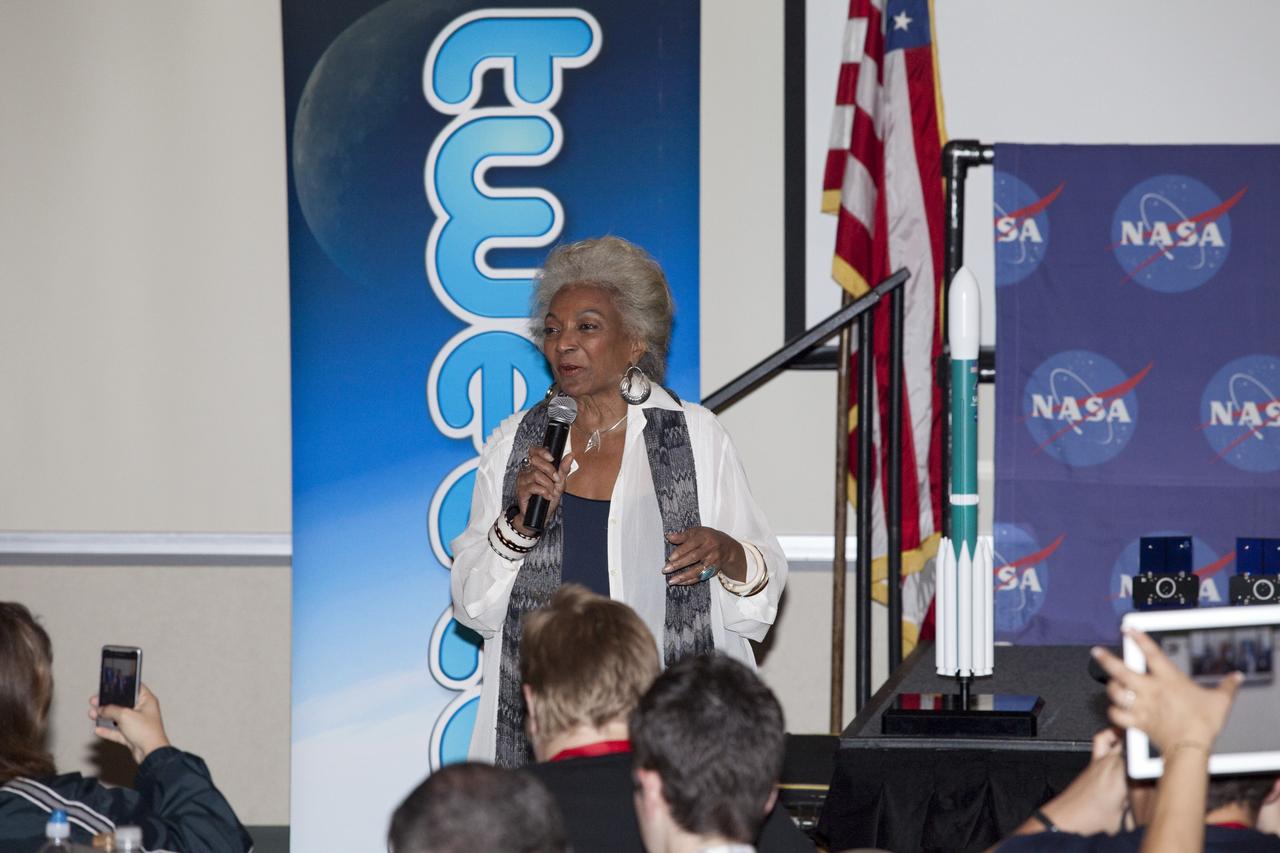
CAPE CANAVERAL, Fla. – Actress Nichelle Nichols (Lt. Uhura on Star Trek) speaks to a group of Tweetup participants at the Kennedy Space Center Visitor Complex in Florida during prelaunch activities for the agency’s Gravity Recovery and Interior Laboratory (GRAIL) mission. Participants toured NASA’s Kennedy Space Center and got a close-up view of Space Launch Complex 17B at Cape Canaveral Air Force Station. The tweeters will share their experiences with followers through the social networking site Twitter. GRAIL will fly twin spacecraft in tandem around the moon to precisely measure and map variations in the moon’s gravitational field. The mission will provide the most accurate global gravity field to date for any planet, including Earth. This detailed information will reveal differences in the density of the moon’s crust and mantle and will help answer fundamental questions about the moon’s internal structure, thermal evolution, and history of collisions with asteroids. The aim is to map the moon’s gravity field so completely that future lunar vehicles can safely navigate anywhere on the moon’s surface. Launch is scheduled for 8:37:06 a.m. EDT Sept. 8. For more information, visit http://www.nasa.gov/grail. Photo credit: NASA/Gianni Woods
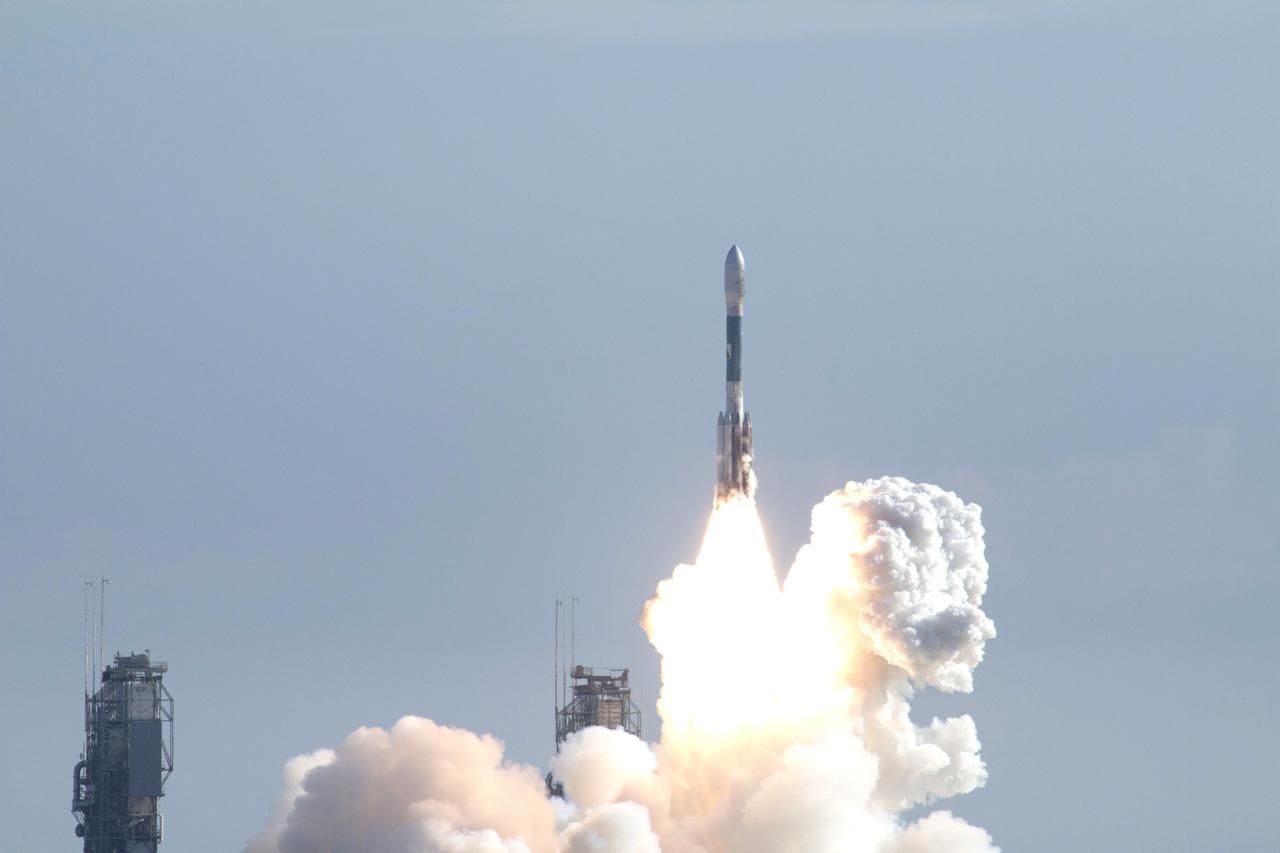
CAPE CANAVERAL, Fla. – Rising from fire and smoke after liftoff, NASA’s twin Gravity Recovery and Interior Laboratory (GRAIL) mission launches atop a United Launch Alliance Delta II Heavy rocket leaving from Space Launch Complex 17B on Cape Canaveral Air Force Station in Florida. At left is the pad’s mobile service tower. The spacecraft launched at 9:08:52 a.m. EDT Sept. 10. GRAIL-A will separate from the second stage of the rocket at about one hour, 21 minutes after liftoff, followed by GRAIL-B at 90 minutes after launch. The spacecraft are embarking on a three-month journey to reach the moon. GRAIL will fly twin spacecraft in tandem around the moon to precisely measure and map variations in the moon's gravitational field. The mission will provide the most accurate global gravity field to date for any planet, including Earth. This detailed information will reveal differences in the density of the moon's crust and mantle and will help answer fundamental questions about the moon's internal structure, thermal evolution, and history of collisions with asteroids. The aim is to map the moon's gravity field so completely that future moon vehicles can safely navigate anywhere on the moon’s surface. For more information, visit http://www.nasa.gov/grail. Photo credit: NASA/Kenny Allen
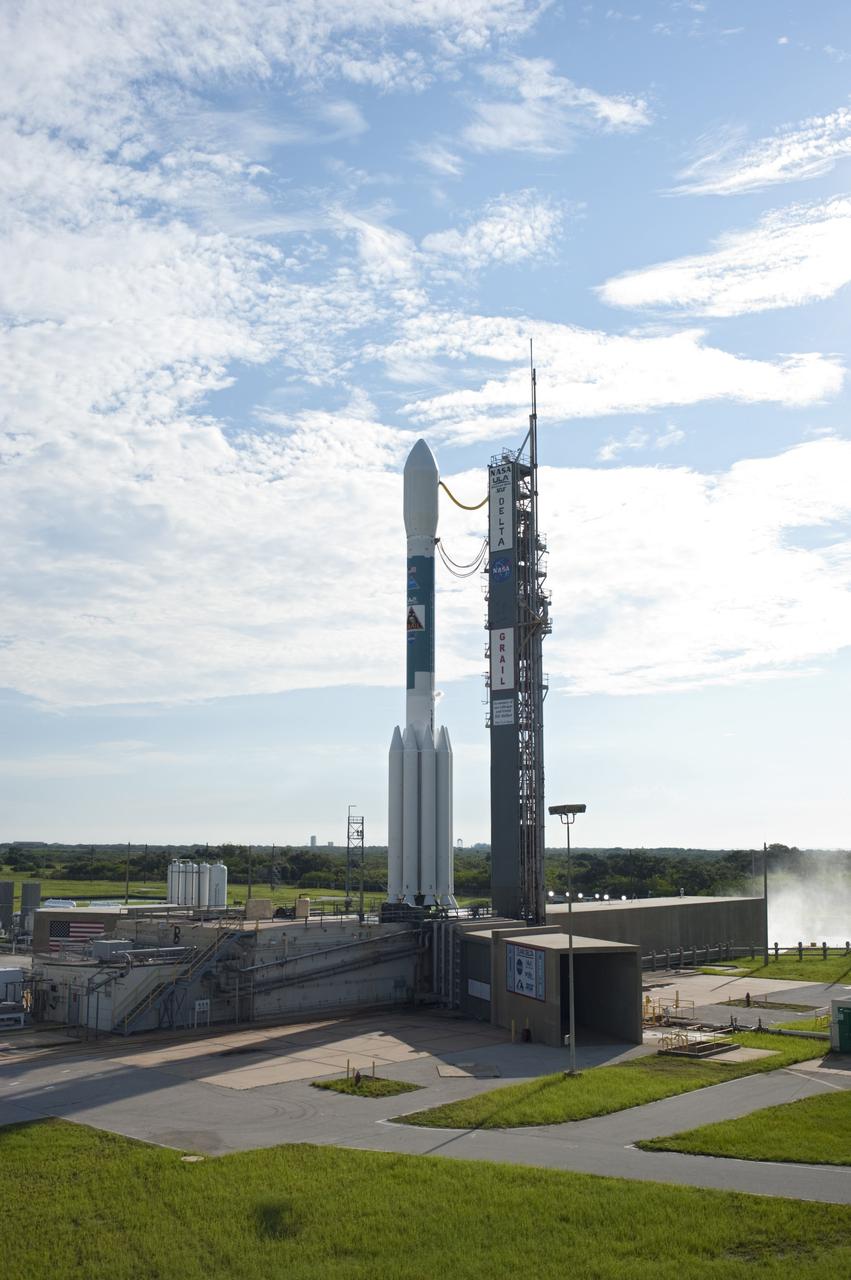
CAPE CANAVERAL, Fla. – Engine ignition begins liftoff of the United Launch Alliance Delta II Heavy rocket carrying NASA’s twin Gravity Recovery and Interior Laboratory (GRAIL) mission off Space Launch Complex 17B on Cape Canaveral Air Force Station in Florida. The spacecraft launched at 9:08:52 a.m. EDT Sept. 10. GRAIL-A will separate from the second stage of the rocket at about one hour, 21 minutes after liftoff, followed by GRAIL-B at 90 minutes after launch. The spacecraft are embarking on a three-month journey to reach the moon. GRAIL will fly twin spacecraft in tandem around the moon to precisely measure and map variations in the moon's gravitational field. The mission will provide the most accurate global gravity field to date for any planet, including Earth. This detailed information will reveal differences in the density of the moon's crust and mantle and will help answer fundamental questions about the moon's internal structure, thermal evolution, and history of collisions with asteroids. The aim is to map the moon's gravity field so completely that future moon vehicles can safely navigate anywhere on the moon’s surface. For more information, visit http://www.nasa.gov/grail. Photo credit: NASA/ Tony Gray and Tim Powers
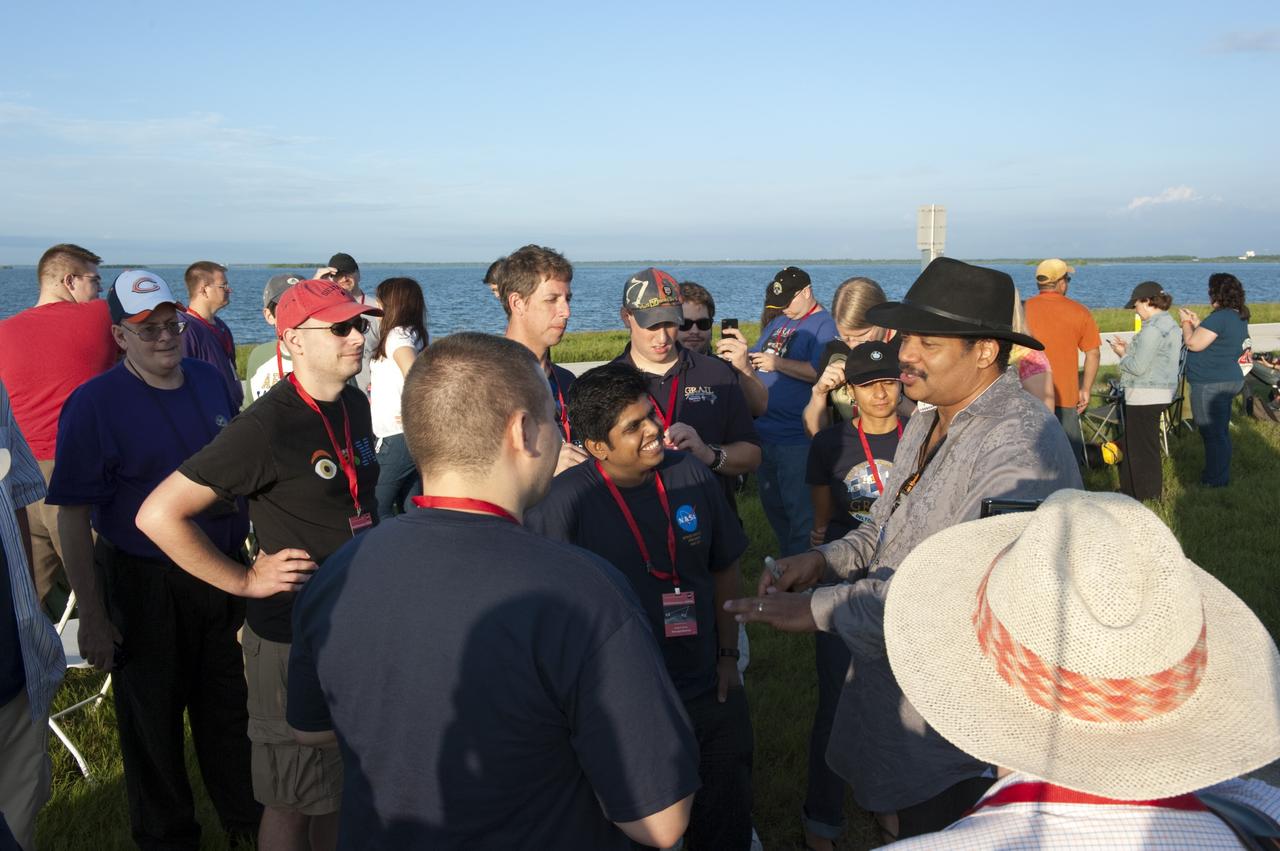
CAPE CANAVERAL, Fla. – Astrophysicist Dr. Neil deGrasse Tyson with the American Museum of Natural History’s Hayden Planetarium in New York, speaks to a group of Tweetup participants at NASA Kennedy Space Center’s NASA Causeway launch viewing site in Florida during prelaunch activities for the agency’s Gravity Recovery and Interior Laboratory (GRAIL) mission. Participants toured the center and got a close-up view of Space Launch Complex 17B at Cape Canaveral Air Force Station. The tweeters will share their experiences with followers through the social networking site Twitter.GRAIL will fly twin spacecraft in tandem around the moon to precisely measure and map variations in the moon’s gravitational field. The mission will provide the most accurate global gravity field to date for any planet, including Earth. This detailed information will reveal differences in the density of the moon’s crust and mantle and will help answer fundamental questions about the moon’s internal structure, thermal evolution, and history of collisions with asteroids. The aim is to map the moon’s gravity field so completely that future lunar vehicles can safely navigate anywhere on the moon’s surface. Launch is scheduled for 8:37:06 a.m. EDT Sept. 8. For more information, visit http://www.nasa.gov/grail. Photo credit: NASA/Kim Shiflett
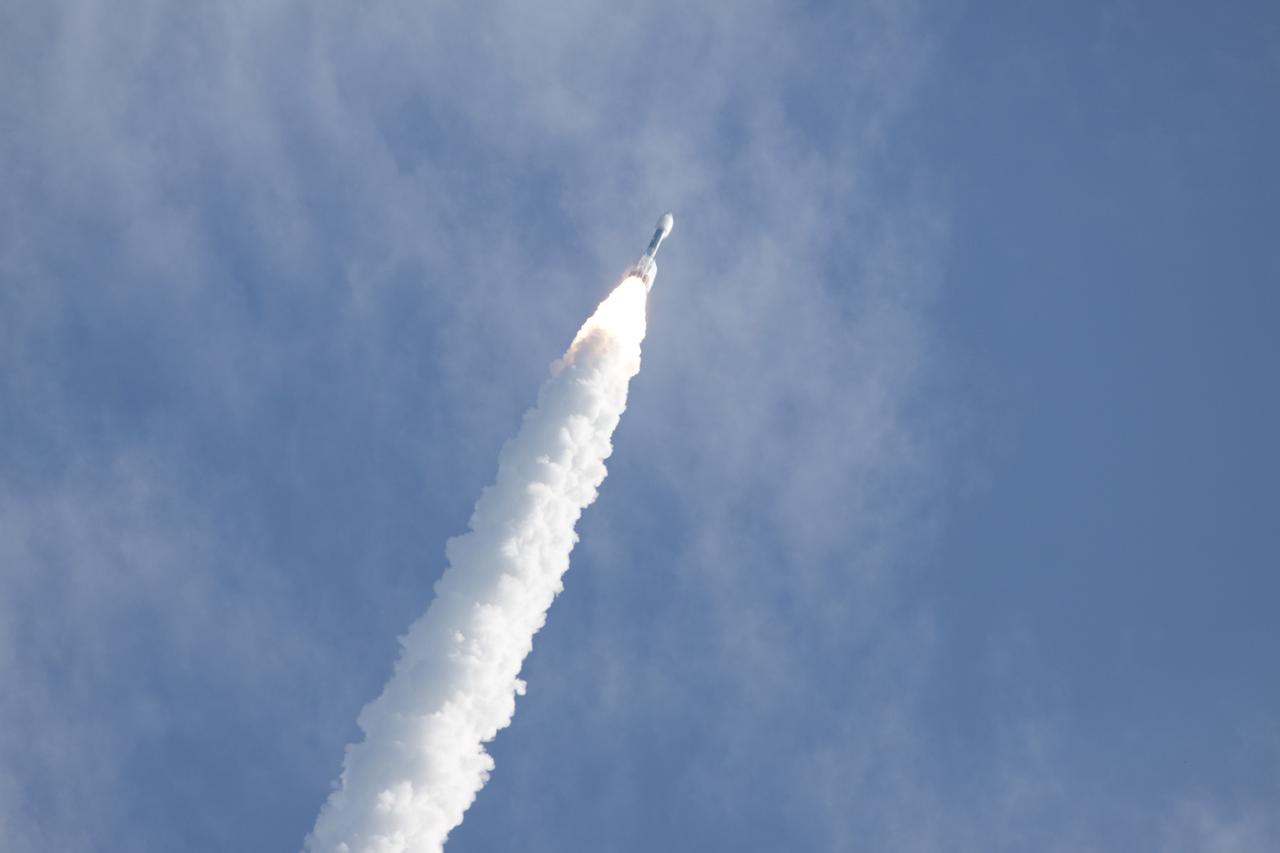
CAPE CANAVERAL, Fla. – The United Launch Alliance Delta II Heavy rocket propels NASA’s twin Gravity Recovery and Interior Laboratory (GRAIL) mission into the clouds over Space Launch Complex 17B on Cape Canaveral Air Force Station in Florida. Liftoff was at 9:08:52 a.m. EDT Sept.10. GRAIL-A will separate from the second stage of the rocket at about one hour 21 minutes after liftoff, followed by GRAIL-B at 90-minutes after launch. The spacecraft are embarking on a three-month journey to reach the moon. GRAIL will fly twin spacecraft in tandem around the moon to precisely measure and map variations in the moon's gravitational field. The mission will provide the most accurate global gravity field to date for any planet, including Earth. This detailed information will reveal differences in the density of the moon's crust and mantle and will help answer fundamental questions about the moon's internal structure, thermal evolution, and history of collisions with asteroids. The aim is to map the moon's gravity field so completely that future moon vehicles can safely navigate anywhere on the moon’s surface. For more information, visit http://www.nasa.gov/grail. Photo credit: NASA/Darrell McCall
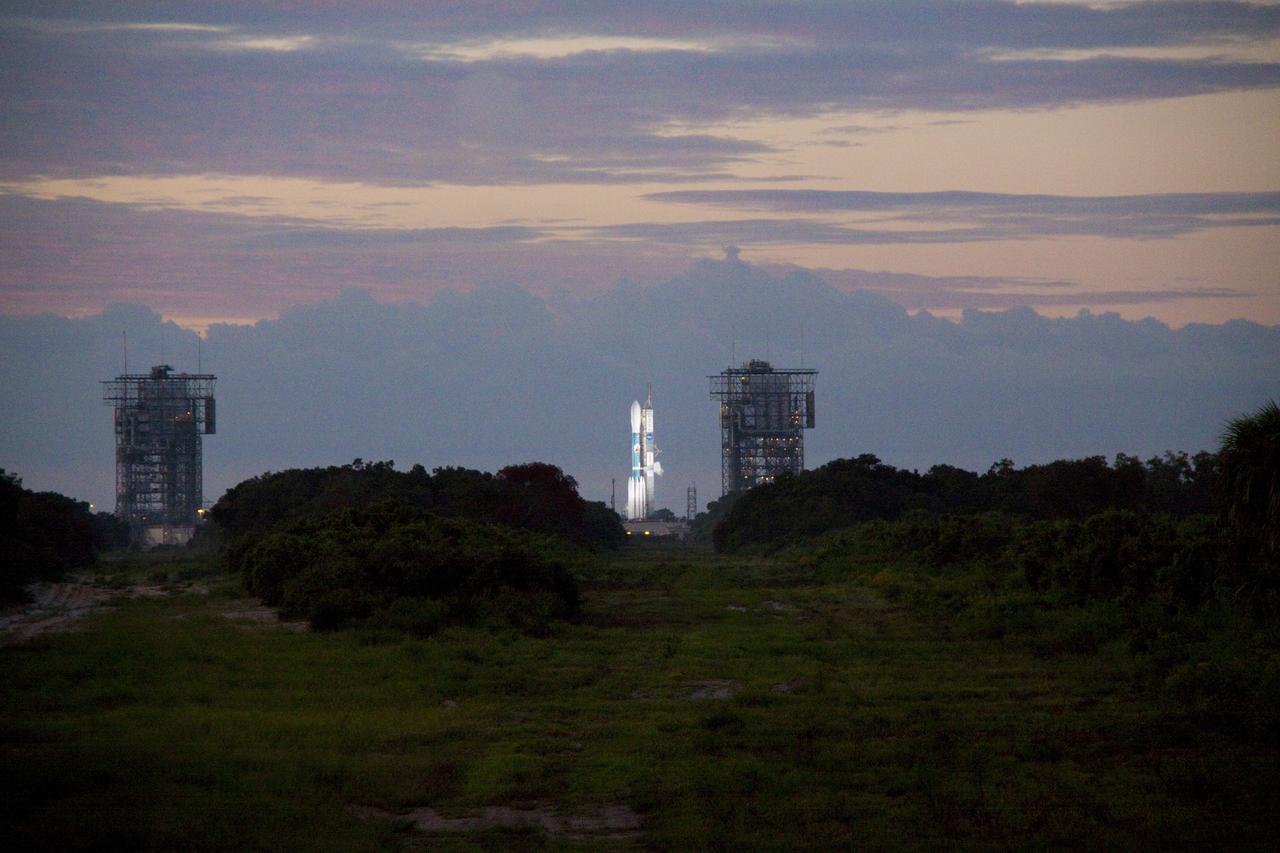
CAPE CANAVERAL, Fla. -- The sun rises over Space Launch Complex 17B on Cape Canaveral Air Force Station where the countdown to launch the United Launch Alliance Delta II Heavy rocket for NASA's Gravity Recovery and Interior Laboratory mission is under way. GRAIL will fly twin spacecraft in tandem around the moon to precisely measure and map variations in the moon's gravitational field. The mission will provide the most accurate global gravity field to date for any planet, including Earth. This detailed information will reveal differences in the density of the moon's crust and mantle and will help answer fundamental questions about the moon's internal structure, thermal evolution, and history of collisions with asteroids. The aim is to map the moon's gravity field so completely that future lunar vehicles can safely navigate anywhere on the moon’s surface. Launch is scheduled for 8:37:06 a.m. EDT Sept. 8. For more information, visit http://www.nasa.gov/grail. Photo credit: NASA
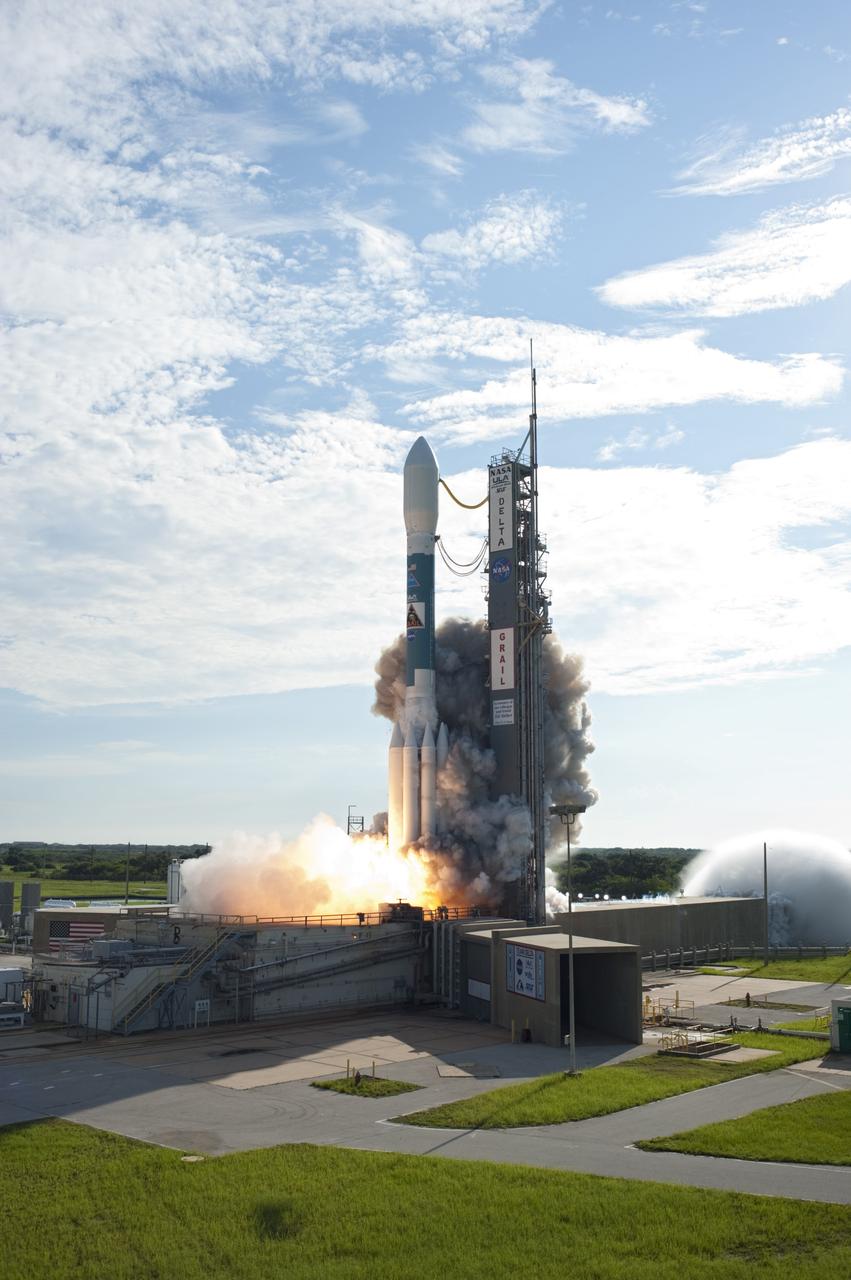
CAPE CANAVERAL, Fla. – At ignition, flames and smoke from the engines begin liftoff of the United Launch Alliance Delta II Heavy rocket carrying NASA’s twin Gravity Recovery and Interior Laboratory (GRAIL) mission off Space Launch Complex 17B on Cape Canaveral Air Force Station in Florida. The spacecraft launched at 9:08:52 a.m. EDT Sept. 10. GRAIL-A will separate from the second stage of the rocket at about one hour, 21 minutes after liftoff, followed by GRAIL-B at 90 minutes after launch. The spacecraft are embarking on a three-month journey to reach the moon. GRAIL will fly twin spacecraft in tandem around the moon to precisely measure and map variations in the moon's gravitational field. The mission will provide the most accurate global gravity field to date for any planet, including Earth. This detailed information will reveal differences in the density of the moon's crust and mantle and will help answer fundamental questions about the moon's internal structure, thermal evolution, and history of collisions with asteroids. The aim is to map the moon's gravity field so completely that future moon vehicles can safely navigate anywhere on the moon’s surface. For more information, visit http://www.nasa.gov/grail. Photo credit: NASA/ Tony Gray and Tim Powers
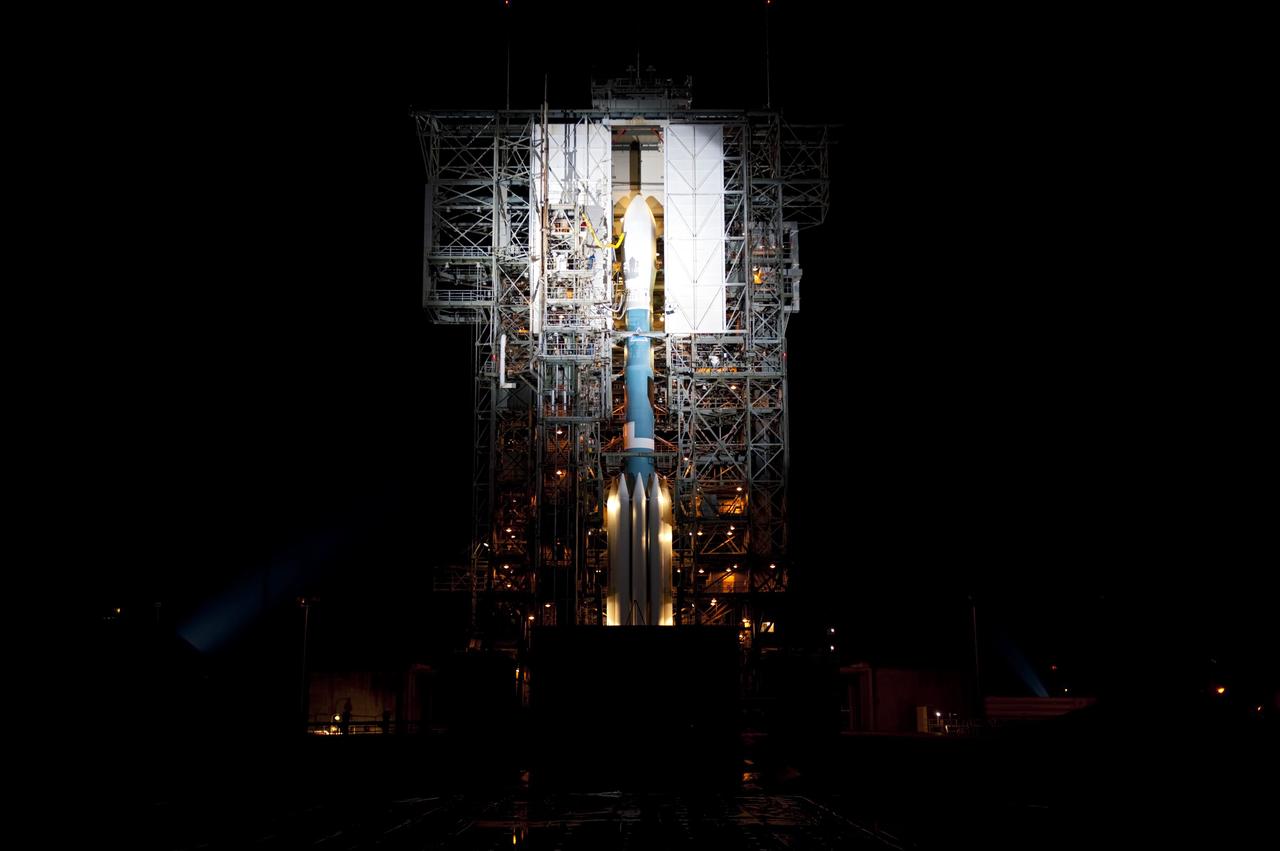
CAPE CANAVERAL, Fla. -- At Space Launch Complex 17B on Cape Canaveral Air Force Station, the start of the rollback of the mobile service tower from the United Launch Alliance Delta II rocket that will launch NASA's Gravity Recovery and Interior Laboratory mission is moments away. GRAIL will fly twin spacecraft in tandem around the moon to precisely measure and map variations in the moon's gravitational field. The mission will provide the most accurate global gravity field to date for any planet, including Earth. This detailed information will reveal differences in the density of the moon's crust and mantle and will help answer fundamental questions about the moon's internal structure, thermal evolution, and history of collisions with asteroids. The aim is to map the moon's gravity field so completely that future lunar vehicles can safely navigate anywhere on the moon’s surface. Launch is scheduled for 8:37:06 a.m. EDT Sept. 8. For more information, visit http://www.nasa.gov/grail. Photo credit: NASA/Kim Shiflett

CAPE CANAVERAL, Fla. – Fire lights up the sky as a United Launch Alliance Delta II Heavy rocket lofts NASA’s Gravity Recovery and Interior Laboratory (GRAIL) mission into space. Liftoff from Space Launch Complex 17B on Cape Canaveral Air Force Station in Florida was at 9:08:52 a.m. EDT Sept.10. GRAIL-A will separate from the second stage of the rocket at about one hour, 21 minutes after liftoff, followed by GRAIL-B at 90 minutes after launch. The spacecraft are embarking on a three-month journey to reach the moon. GRAIL will fly twin spacecraft in tandem around the moon to precisely measure and map variations in the moon's gravitational field. The mission will provide the most accurate global gravity field to date for any planet, including Earth. This detailed information will reveal differences in the density of the moon's crust and mantle and will help answer fundamental questions about the moon's internal structure, thermal evolution, and history of collisions with asteroids. The aim is to map the moon's gravity field so completely that future moon vehicles can safely navigate anywhere on the moon’s surface. For more information, visit http://www.nasa.gov/grail. Photo credit: NASA/Darrell McCall
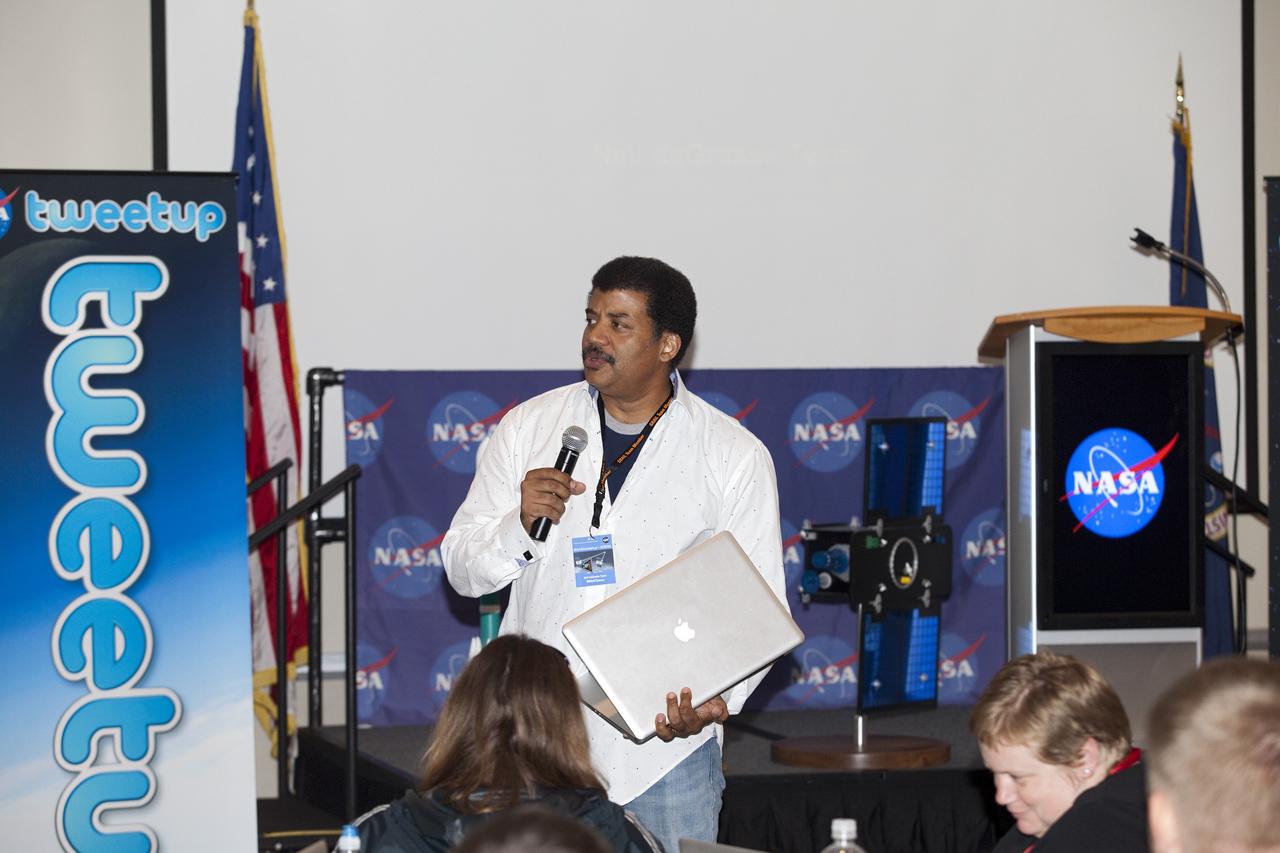
CAPE CANAVERAL, Fla. – Astrophysicist Dr. Neil deGrasse Tyson with the American Museum of Natural History’s Hayden Planetarium in New York, speaks to a group of Tweetup participants at the Kennedy Space Center Visitor Complex in Florida during prelaunch activities for the agency’s Gravity Recovery and Interior Laboratory (GRAIL) mission. Participants toured NASA’s Kennedy Space Center and got a close-up view of Space Launch Complex 17B at Cape Canaveral Air Force Station. The tweeters will share their experiences with followers through the social networking site Twitter. GRAIL will fly twin spacecraft in tandem around the moon to precisely measure and map variations in the moon’s gravitational field. The mission will provide the most accurate global gravity field to date for any planet, including Earth. This detailed information will reveal differences in the density of the moon’s crust and mantle and will help answer fundamental questions about the moon’s internal structure, thermal evolution, and history of collisions with asteroids. The aim is to map the moon’s gravity field so completely that future lunar vehicles can safely navigate anywhere on the moon’s surface. Launch is scheduled for 8:37:06 a.m. EDT Sept. 8. For more information, visit http://www.nasa.gov/grail. Photo credit: NASA/Gianni Woods