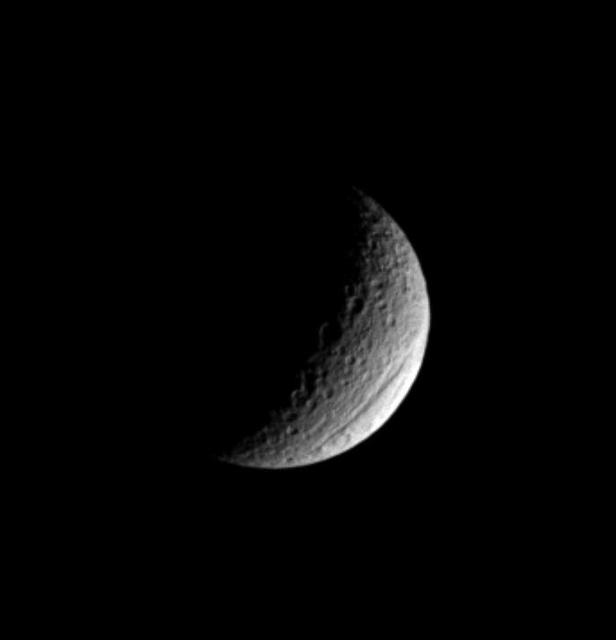
The Great Rift
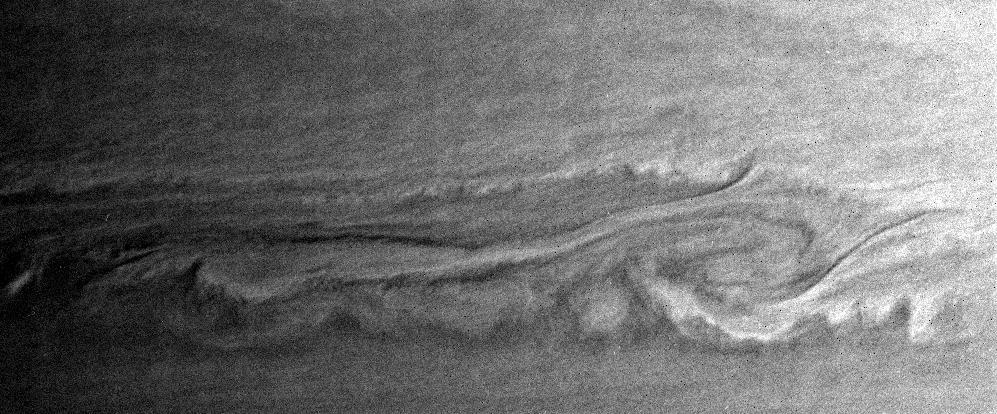
Such Great Heights
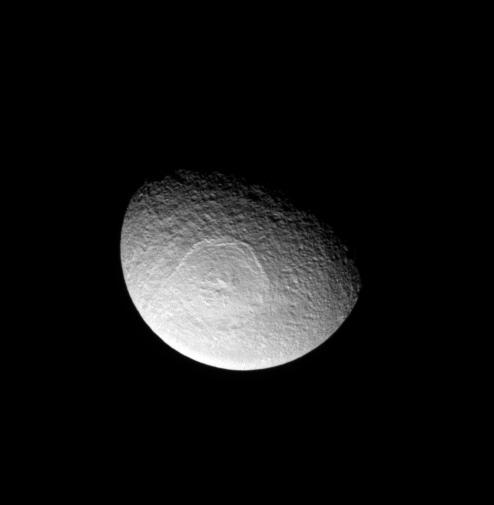
Odysseus the Great
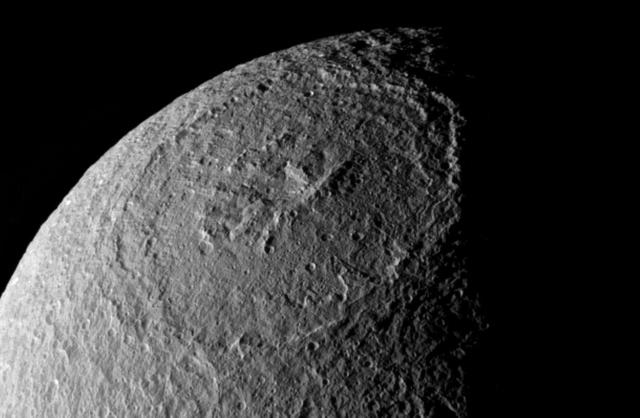
The Great Basin
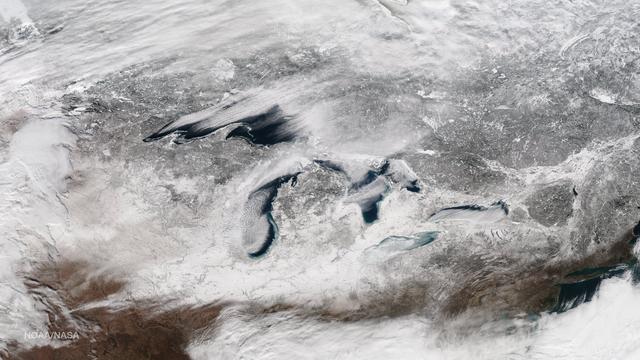
This image taken on January 13, 2015 from the Suomi NPP satellite's VIIRS instrument shows the Great Lakes and surrounding areas. The latest Great Lakes Surface Environmental Analysis (GLSEA) from the NOAA Great Lakes Environmental Research Laboratory shows total ice cover of 29.3% as of January 13th. Credit: NOAA/NASA/NPP Via <b><a href="www.nnvl.noaa.gov/" rel="nofollow"> NOAA Environmental Visualization Laboratory</a></b>

This illustration depicts NASA's Juno spacecraft in orbit above Jupiter's Great Red Spot. https://photojournal.jpl.nasa.gov/catalog/PIA21770
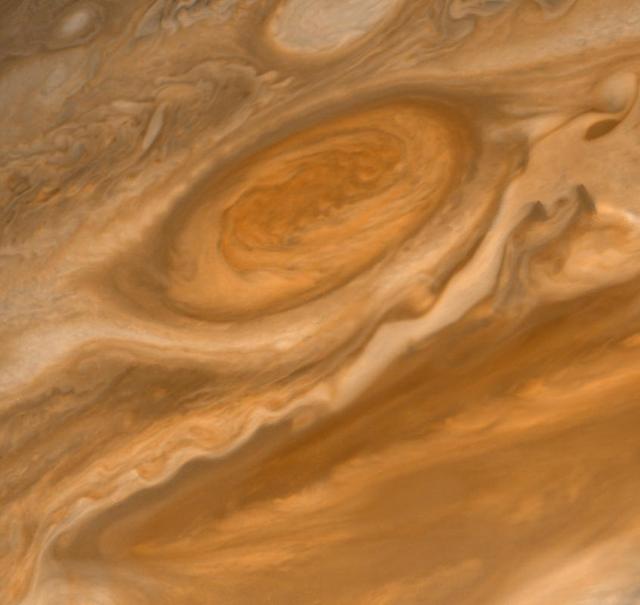
NASA Voyager 2 shows the Great Red Spot and the south equatorial belt extending into the equatorial region. At right is an interchange of material between the south equatorial belt and the equatorial zone. The clouds in the equatorial zone are more diffuse and do not display the structures seen in other locations. Considerable structure is evident within the Great Red Spot. http://photojournal.jpl.nasa.gov/catalog/PIA00456
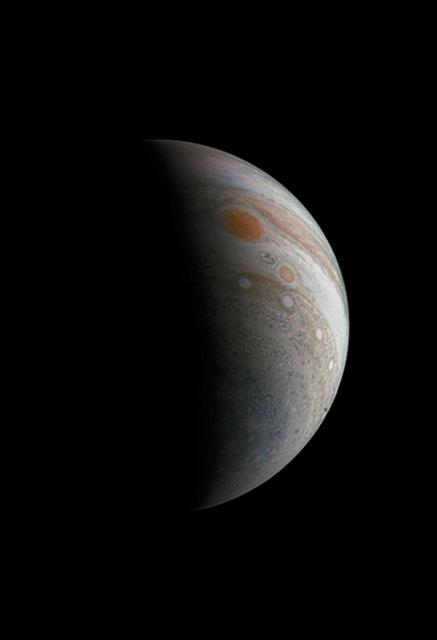
This image of a crescent Jupiter and the iconic Great Red Spot was created by a citizen scientist (Roman Tkachenko) using data from Juno's JunoCam instrument. You can also see a series of storms shaped like white ovals, known informally as the "string of pearls." Below the Great Red Spot a reddish long-lived storm known as Oval BA is visible. The image was taken on Dec. 11, 2016 at 2:30 p.m. PST (5:30 p.m. EST), as the Juno spacecraft performed its third close flyby of Jupiter. At the time the image was taken, the spacecraft was about 285,100 miles (458,800 kilometers) from the planet. http://photojournal.jpl.nasa.gov/catalog/PIA21376 . - Enhanced image by Roman Tkachenko (CC-BY) based on images provided courtesy of NASA/JPL-Caltech/SwRI/MSSS

Jupiter Great Red Spot
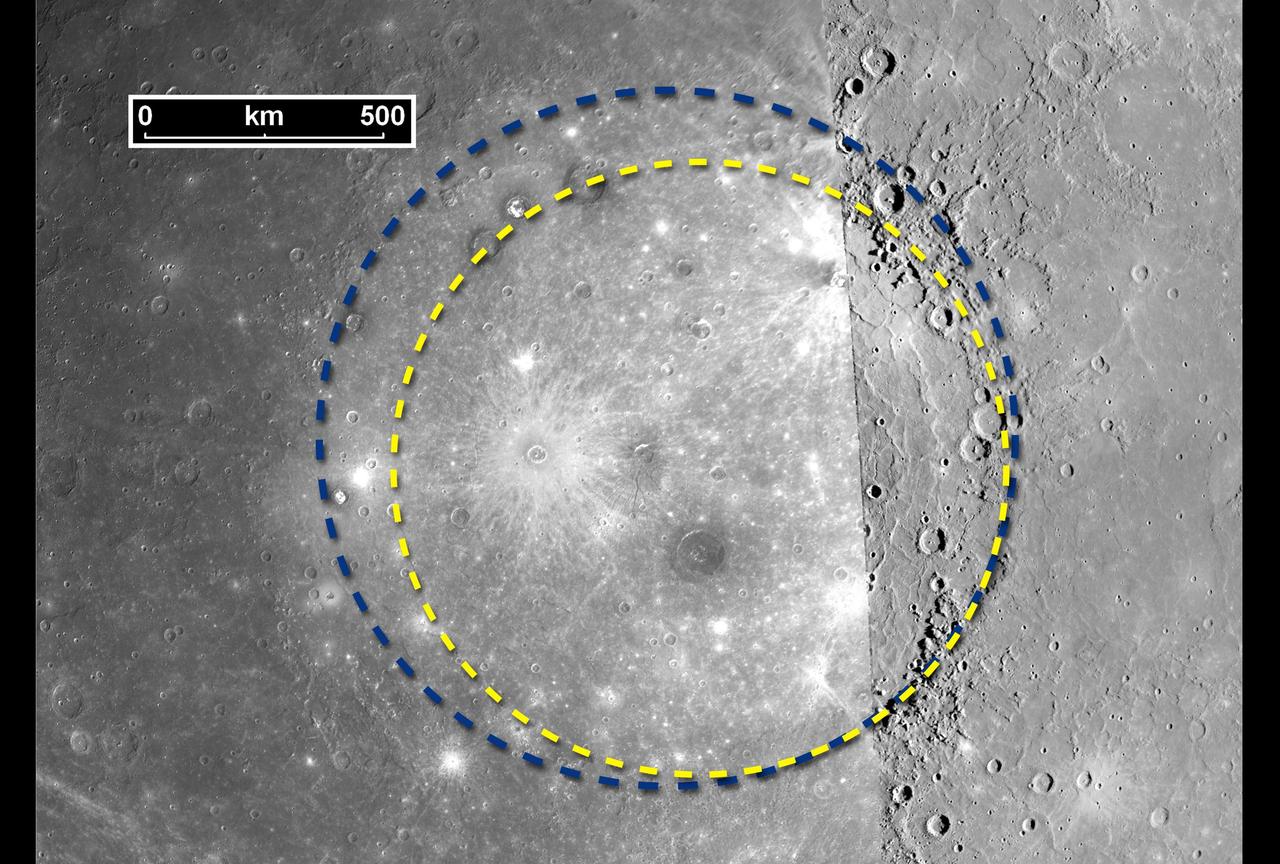
The Great Caloris Basin on Mercury

A Great Place to Watch the Weather
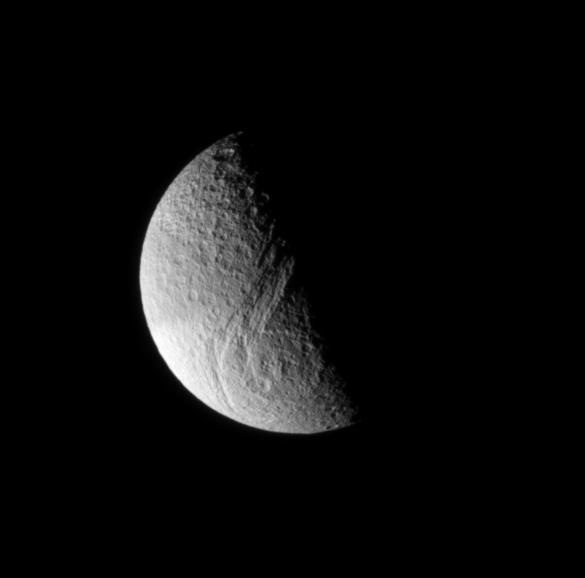
Tethys Great Rift
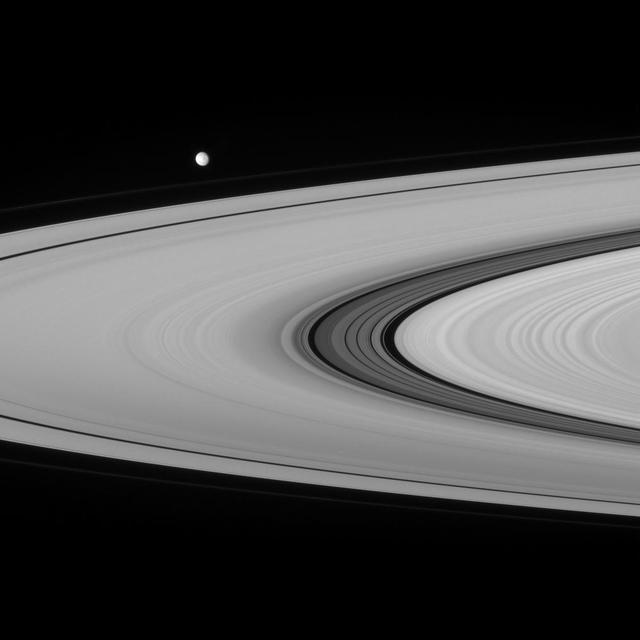
Mimas and the Great Division
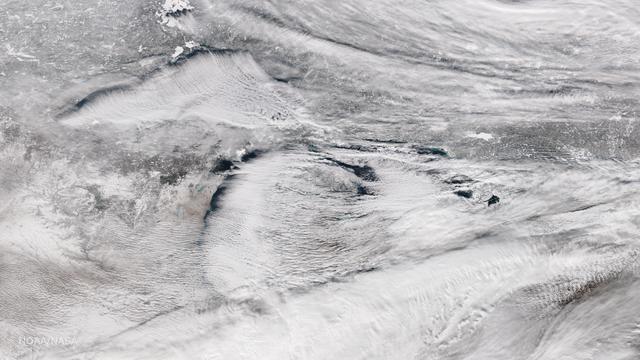
Bands of lake effect snow drift eastward from the western Great Lakes in this true-color image captured by the NOAA/NASA Suomi NPP satellite's Visible Infrared Imaging Radiometer Suite (VIIRS) instrument on January 5, 2017. National Weather Service forecasters expect light to moderate lake effect snow showers to continue throughout the day today and into Saturday (1/7). Lake-effect snow forms when cold air passes over the warmer waters of a lake. This causes some lake water to evaporate into the air and warm it. This warmer, wetter air rises and cools as it moves away from the lake. When it cools, it releases that moisture and, if it’s cold enough, that moisture turns into snow. Although true-color images like this may appear to be photographs of Earth, they aren't. They are created by combining data from the three color channels on the VIIRS instrument sensitive to the red, green and blue (or RGB) wavelengths of light into one composite image. In addition, data from several other channels are often also included to cancel out or correct atmospheric interference that may blur parts of the image. Credit: NOAA/NASA/Suomi NPP via NOAA's Environmental Visualization Laboratory
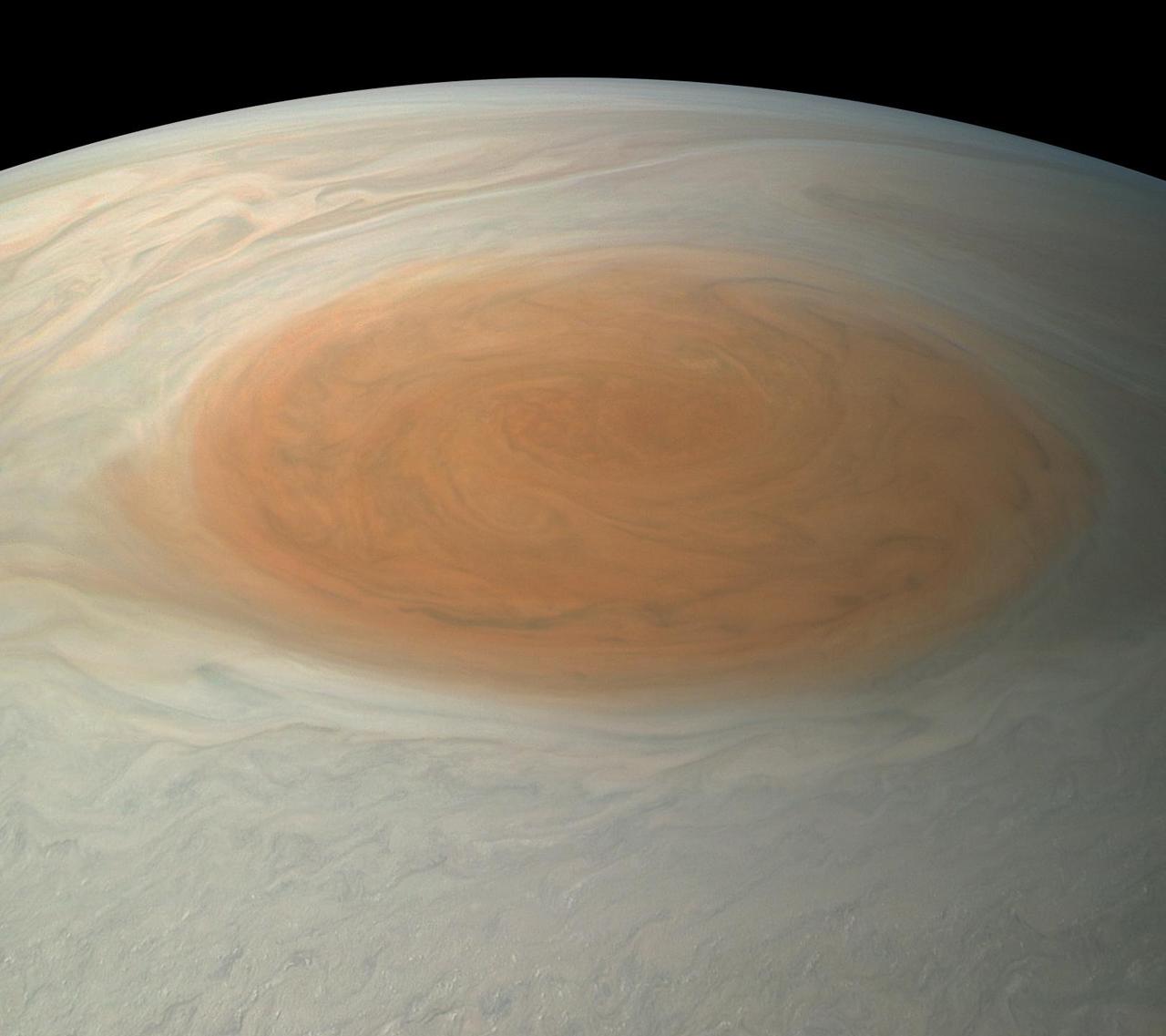
This image of Jupiter's iconic Great Red Spot (GRS) was created by citizen scientist Björn Jónsson using data from the JunoCam imager on NASA's Juno spacecraft. This true-color image offers a natural color rendition of what the Great Red Spot and surrounding areas would look like to human eyes from Juno's position. The tumultuous atmospheric zones in and around the Great Red Spot are clearly visible. The image was taken on July 10, 2017 at 07:10 p.m. PDT (10:10 p.m. EDT), as the Juno spacecraft performed its seventh close flyby of Jupiter. At the time the image was taken, the spacecraft was about 8,648 miles (13,917 kilometers) from the tops of the clouds of the planet at a latitude of -32.6 degrees. https://photojournal.jpl.nasa.gov/catalog/PIA21775. - Enhanced image by Björn Jónsson (CC-NC-SA) based on images provided courtesy of NASA/JPL-Caltech/SwRI/MSSS

This frame from an animation takes the viewer on a simulated flight into, and then out of, Jupiter's upper atmosphere at the location of the Great Red Spot. The perspective begins about 2,000 miles (3,000 kilometers) above the cloud tops of the planet's southern hemisphere. The bar at far left indicates altitude during the quick descent; a second gauge next to that depicts the dramatic increase in temperature that occurs as the perspective dives deeper down. The clouds turn crimson as the perspective passes through the Great Red Spot. Finally, the view ascends out of the spot. This video was created by combining an image from the JunoCam imager on NASA's Juno spacecraft with a computer-generated animation. The animation is available at https://photojournal.jpl.nasa.gov/catalog/PIA22176. - Enhanced image by Gerald Eichstädt / Justin Cowart based on images provided courtesy of NASA/JPL-Caltech/SwRI/MSSS
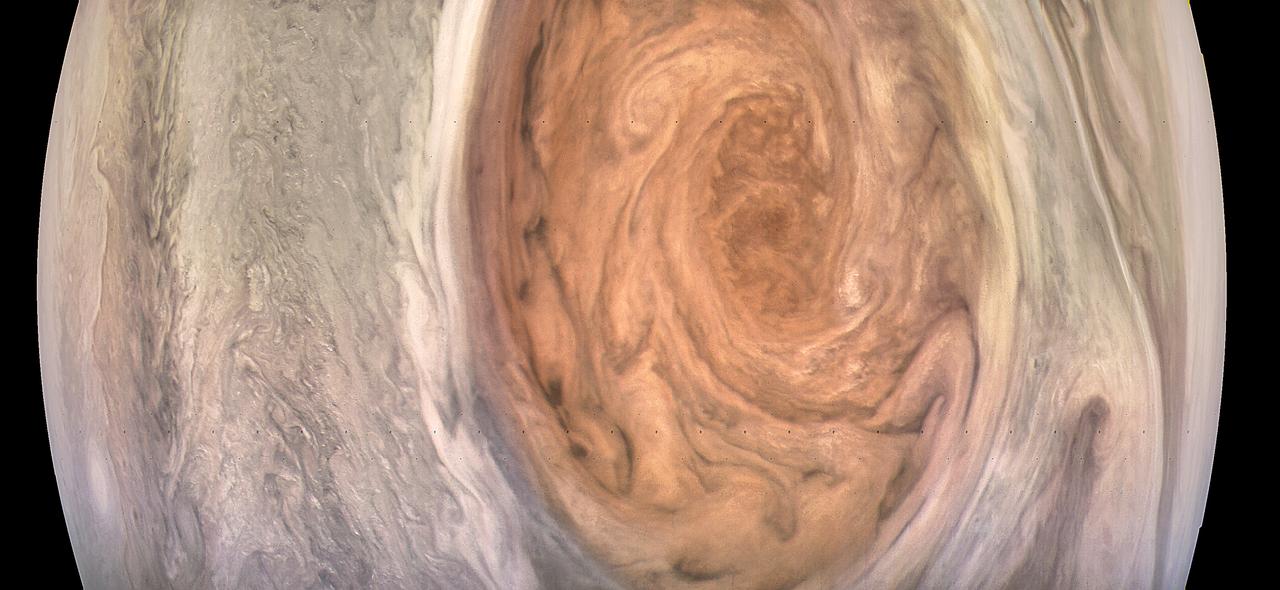
This enhanced-color image of Jupiter's Great Red Spot was created by citizen scientist Kevin Gill using data from the JunoCam imager on NASA's Juno spacecraft. The image was taken on July 10, 2017 at 07:07 p.m. PDT (10:07 p.m. EDT), as the Juno spacecraft performed its 7th close flyby of Jupiter. At the time the image was taken, the spacecraft was about 6,130 miles (9,866 kilometers) from the tops of the clouds of the planet. https://photojournal.jpl.nasa.gov/catalog/PIA21395 . - Enhanced image by Kevin M. Gill (CC-BY) based on images provided courtesy of NASA/JPL-Caltech/SwRI/MSSS
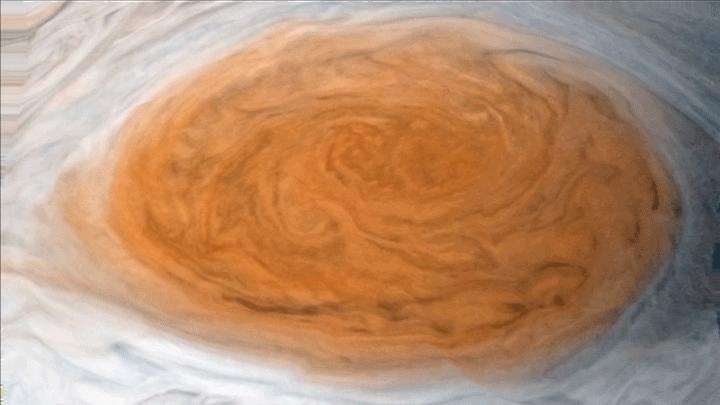
Winds around Jupiter's Great Red Spot are simulated in this JunoCam view that has been animated using a model of the winds there. The wind model, called a velocity field, was derived from data collected by NASA's Voyager spacecraft and Earth-based telescopes. NASA's Juno spacecraft acquired the original, static view during passage over the spot on July 10, 2017. Citizen scientists Gerald Eichstädt and Justin Cowart turned the JunoCam data into a color image mosaic. Juno scientists Shawn Ewald and Andrew Ingersoll applied the velocity data to the image to produce a looping animation. An animation is available at https://photojournal.jpl.nasa.gov/catalog/PIA22178
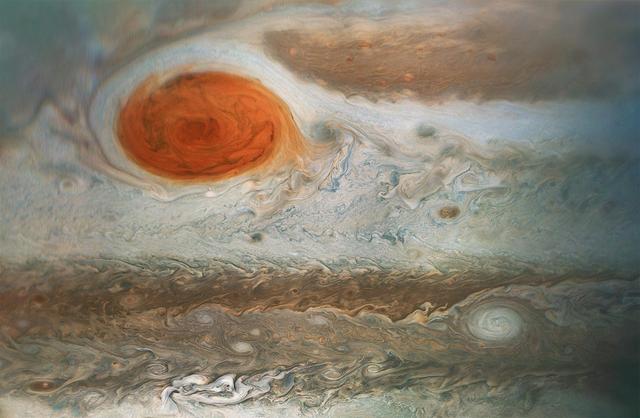
This image of Jupiter's iconic Great Red Spot and surrounding turbulent zones was captured by NASA's Juno spacecraft. The color-enhanced image is a combination of three separate images taken on April 1 between 3:09 a.m. PDT (6:09 a.m. EDT) and 3:24 a.m. PDT (6:24 a.m. EDT), as Juno performed its 12th close flyby of Jupiter. At the time the images were taken, the spacecraft was 15,379 miles (24,749 kilometers) to 30,633 miles (49,299 kilometers) from the tops of the clouds of the planet at a southern latitude spanning 43.2 to 62.1 degrees. Citizen scientists Gerald Eichstädt and Seán Doran processed this image using data from the JunoCam imager. https://photojournal.jpl.nasa.gov/catalog/PIA21985

This photograph shows the last face on view of the Great Dark Spot that Voyager will make with the narrow angle camera. The image was shuttered 45 hours before closest approach at a distance of 2.8 million kilometers (1.7 million miles). The smallest structures that can be seen are of an order of 50 kilometers (31 miles). The image shows feathery white clouds that overlie the boundary of the dark and light blue regions. The pinwheel (spiral) structure of both the dark boundary and the white cirrus suggest a storm system rotating counterclockwise. Periodic small scale patterns in the white cloud, possibly waves, are short lived and do not persist from one Neptunian rotation to the next. This color composite was made from the clear and green filters of the narrow-angle camera. http://photojournal.jpl.nasa.gov/catalog/PIA00052
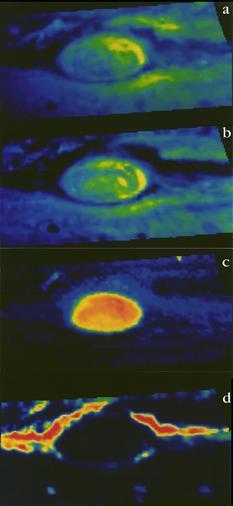
The Near-Infrared Mapping Spectrometer (NIMS) instrument looks at Jupiter's Great Red Spot, in these views from June 26, 1996. NIMS studies infrared wavelengths of light that our eye cannot see. These maps are at four different infrared wavelengths, each one picked to reveal something different about the atmosphere. The top image is a false color map of a wavelength that is at the red edge of our ability to see. It shows the shapes of features that we would see with our eyes. The second map is of ammonia ice, red showing where the most ice is, blue where none exists. The differences between this and the first image are due to the amount and size of ammonia ice crystals. The third map down is from a wavelength that shows cloud heights, with the highest clouds in red, and the lowest in blue. The bottom map uses a wavelength that shows the hot Jupiter shining through the clouds. Red represents the thinnest clouds, and blue is thickest where it is more difficult to see below. Comparing the bottom two images, note that the highest clouds are in the center of the Great Red Spot, while there are relatively few clouds around the edges. http://photojournal.jpl.nasa.gov/catalog/PIA00501
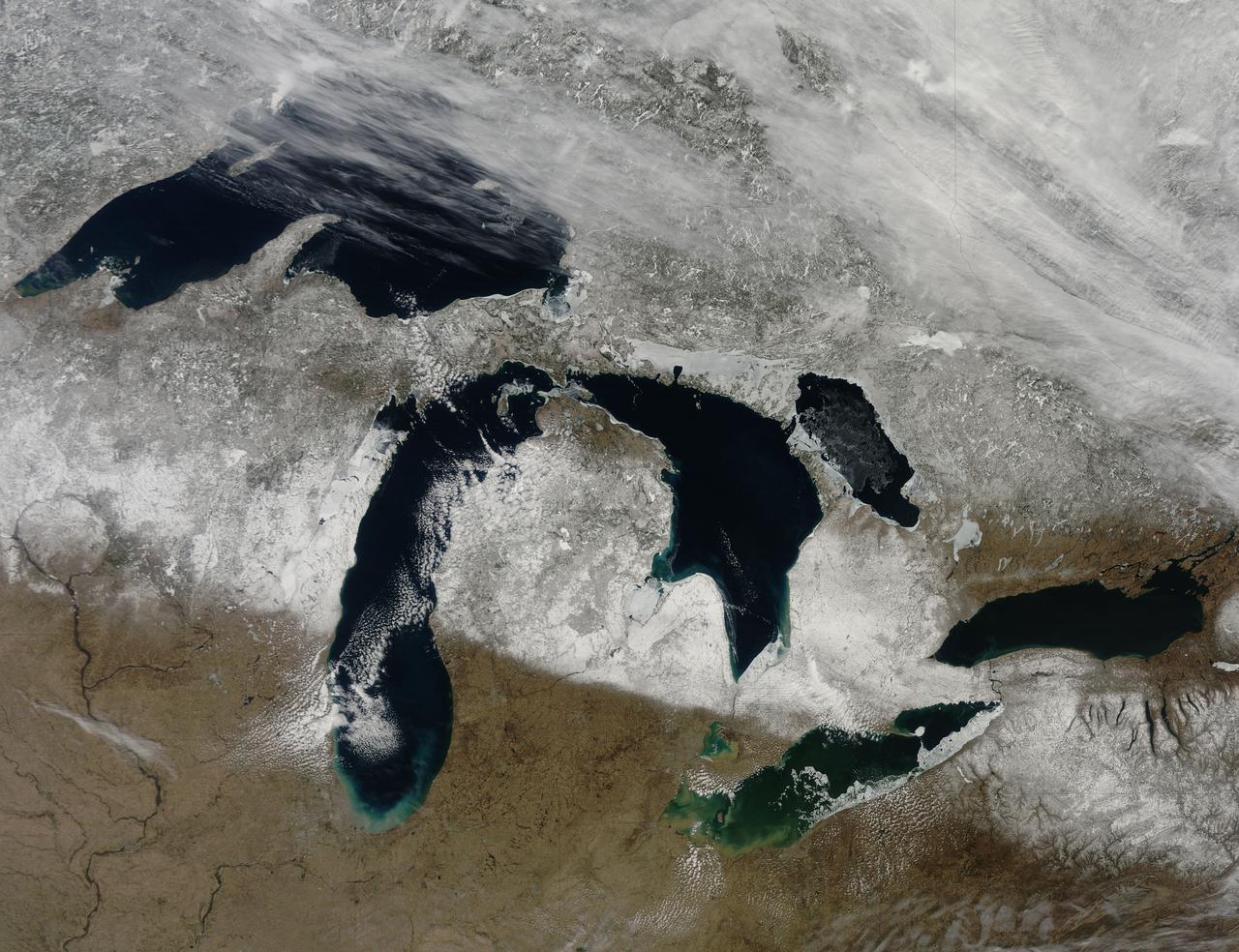
NASA image captured March 28, 2011 The Great Lakes Satellite: Terra <b><a href="http://www.nasa.gov/centers/goddard/home/index.html" rel="nofollow">NASA Goddard Space Flight Center</a></b> enables NASA’s mission through four scientific endeavors: Earth Science, Heliophysics, Solar System Exploration, and Astrophysics. Goddard plays a leading role in NASA’s accomplishments by contributing compelling scientific knowledge to advance the Agency’s mission. <b>Follow us on <a href="http://twitter.com/NASA_GoddardPix" rel="nofollow">Twitter</a></b> <b>Join us on <a href="http://www.facebook.com/pages/Greenbelt-MD/NASA-Goddard/395013845897?ref=tsd" rel="nofollow">Facebook</a></b>

Jupiter - Southeast of Great Red Spot
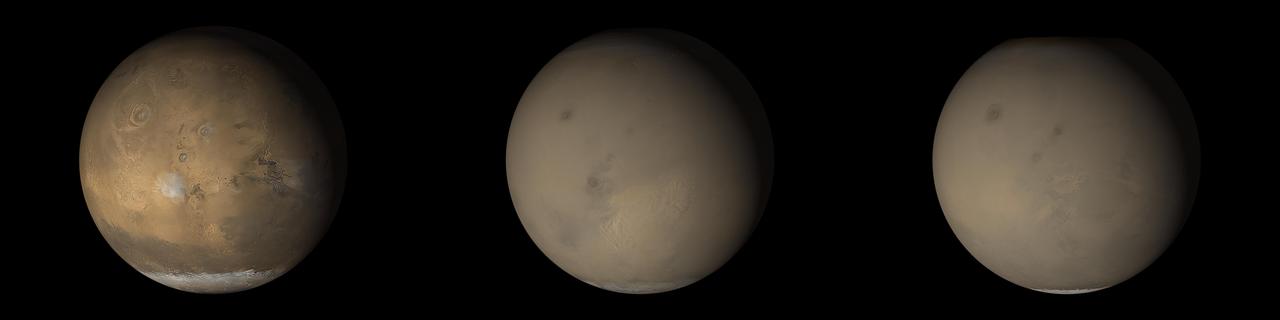
The 2001 Great Dust Storms - Tharsis
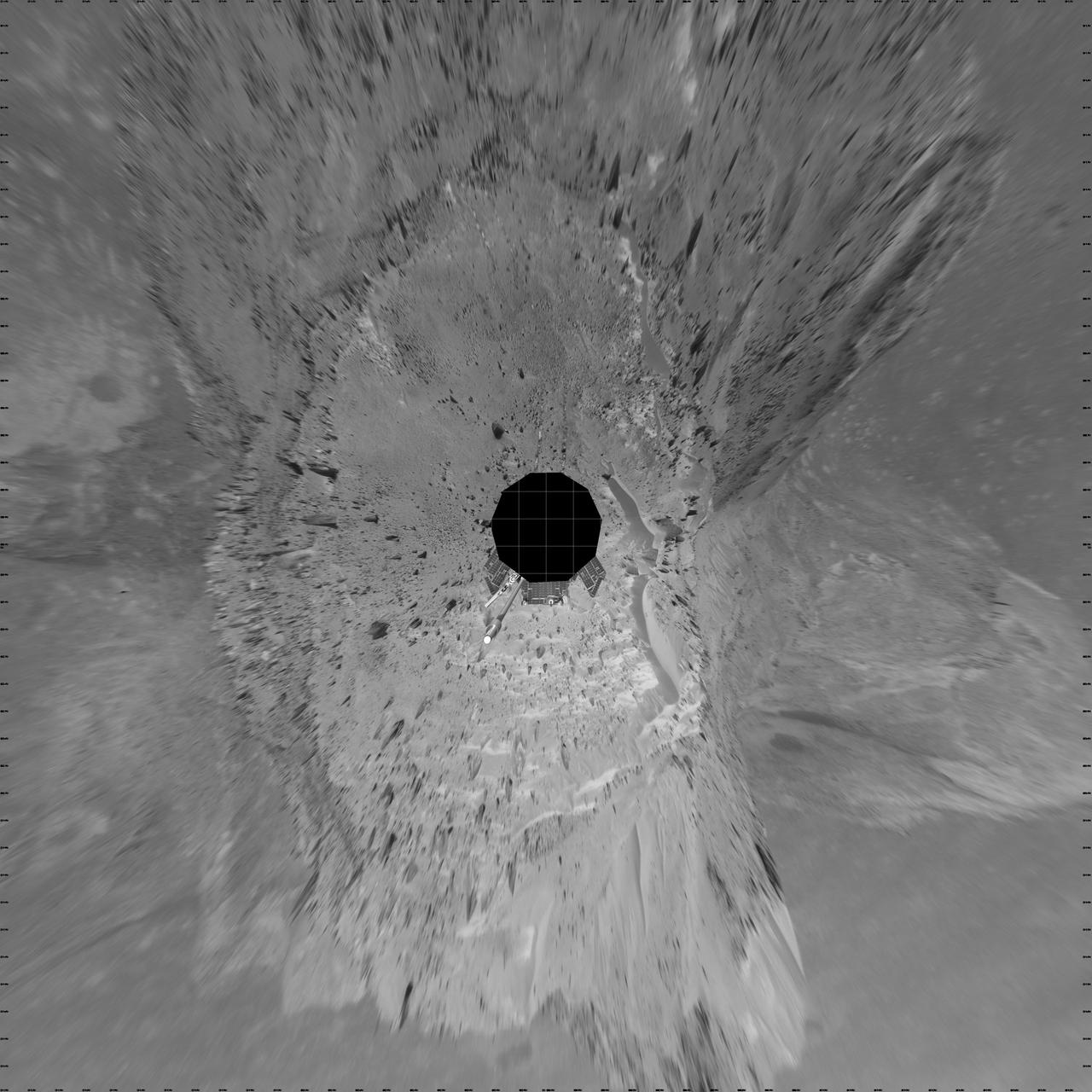
A Great Place to Watch the Weather vertical
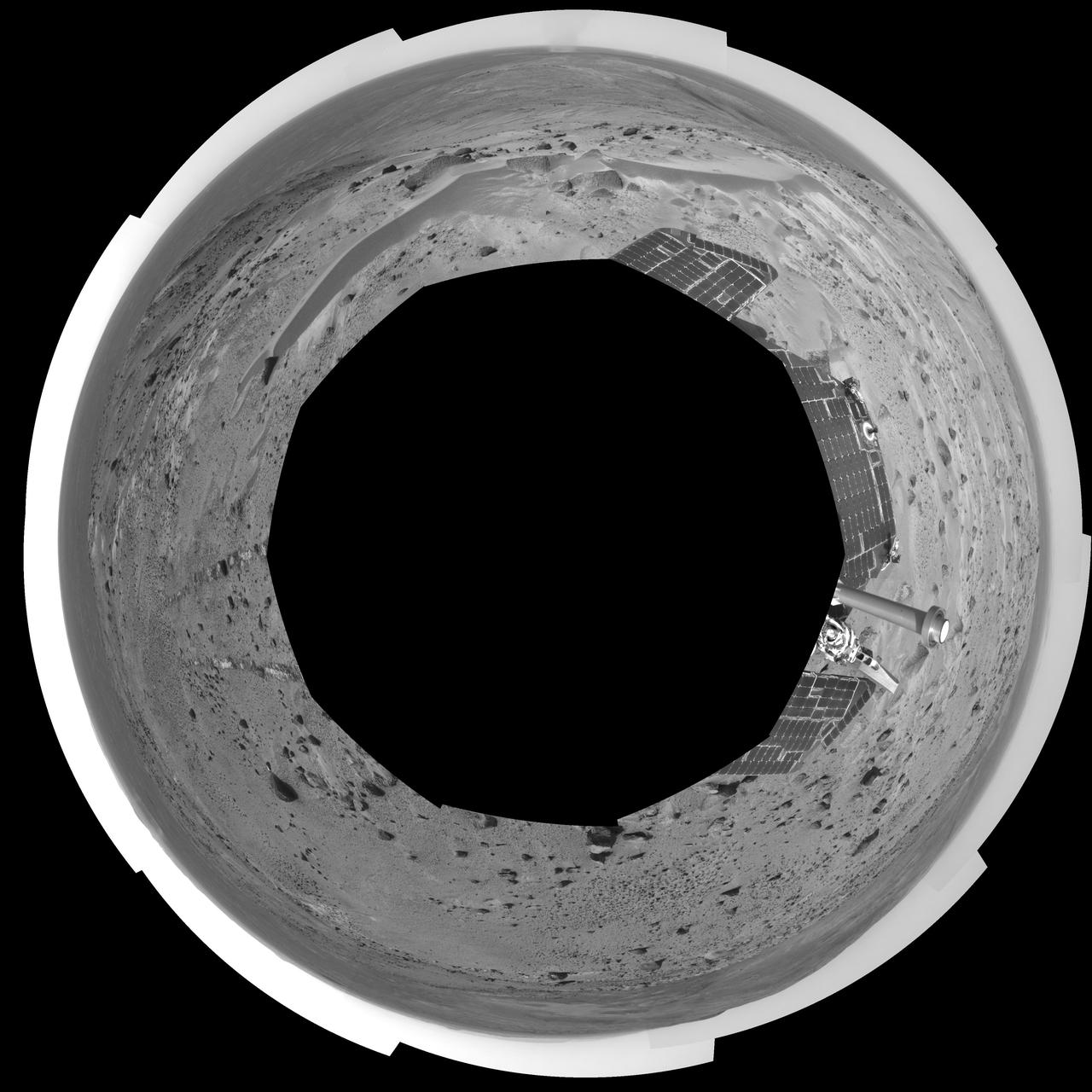
A Great Place to Watch the Weather polar
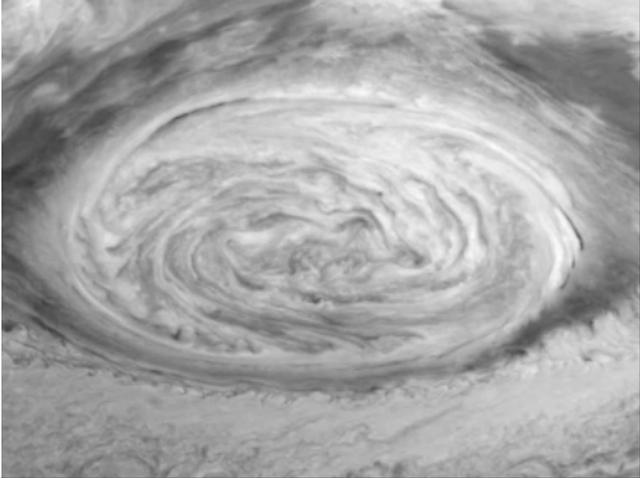
Dynamics of Jupiter's Great Red Spot in the NIR filter (756 nm) of the Galileo imaging system. Each of the three frames is a mosaic of six images that have been map-projected to a uniform grid of latitude and longitude. North is at the top. There is a nine-hour separation between the first two frames and seventy minutes between the next two. All of the images were taken on June 26, 1996. The Red Spot is 20,000 km long and has been followed by observers on Earth since the telescope was invented 300 years ago. It is a huge storm made visible by variations in the composition of the cloud particles and the amount of cloud cover. Winds in the outer part of the Red Spot reach 250 mph while the center remains quiescent. These Galileo data will help scientists understand what drives this storm and why it persists for so many years. http://photojournal.jpl.nasa.gov/catalog/PIA01083
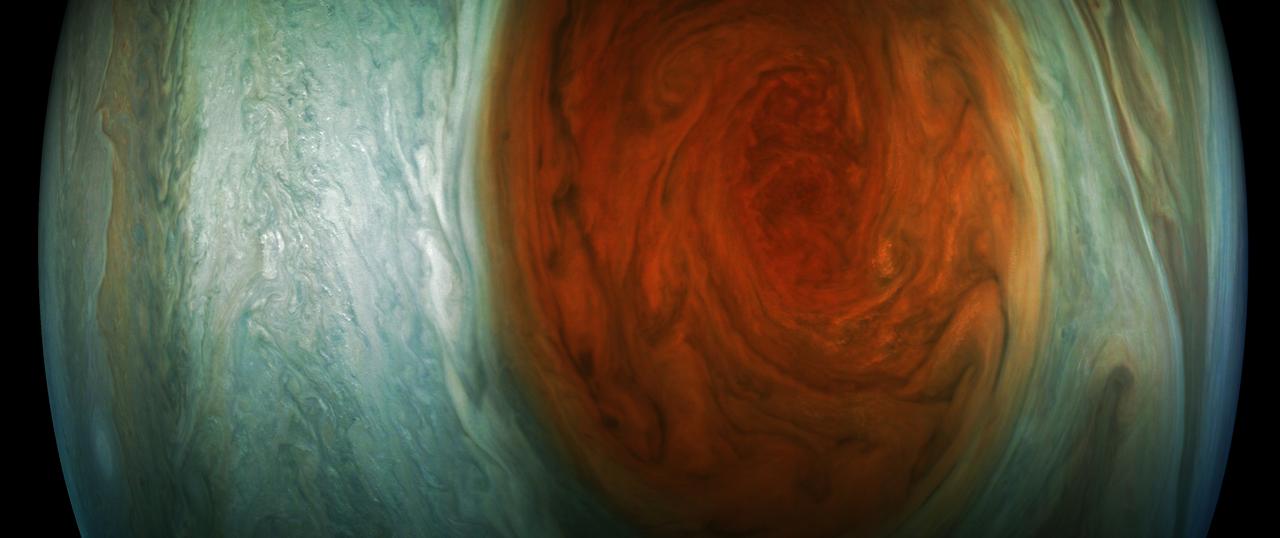
This enhanced-color image of Jupiter's Great Red Spot was created by citizen scientist Gerald Eichstädt using data from the JunoCam imager on NASA's Juno spacecraft. The image was taken on July 10, 2017 at 07:10 p.m. PDT (10:10 p.m. EDT), as the Juno spacecraft performed its 7th close flyby of Jupiter. At the time the image was taken, the spacecraft was about 8,648 miles (13,917 kilometers) from the tops of the clouds of the planet. https://photojournal.jpl.nasa.gov/catalog/PIA21772. - Enhanced image by Gerald Eichstädt based on images provided courtesy of NASA/JPL-Caltech/SwRI/MSSS
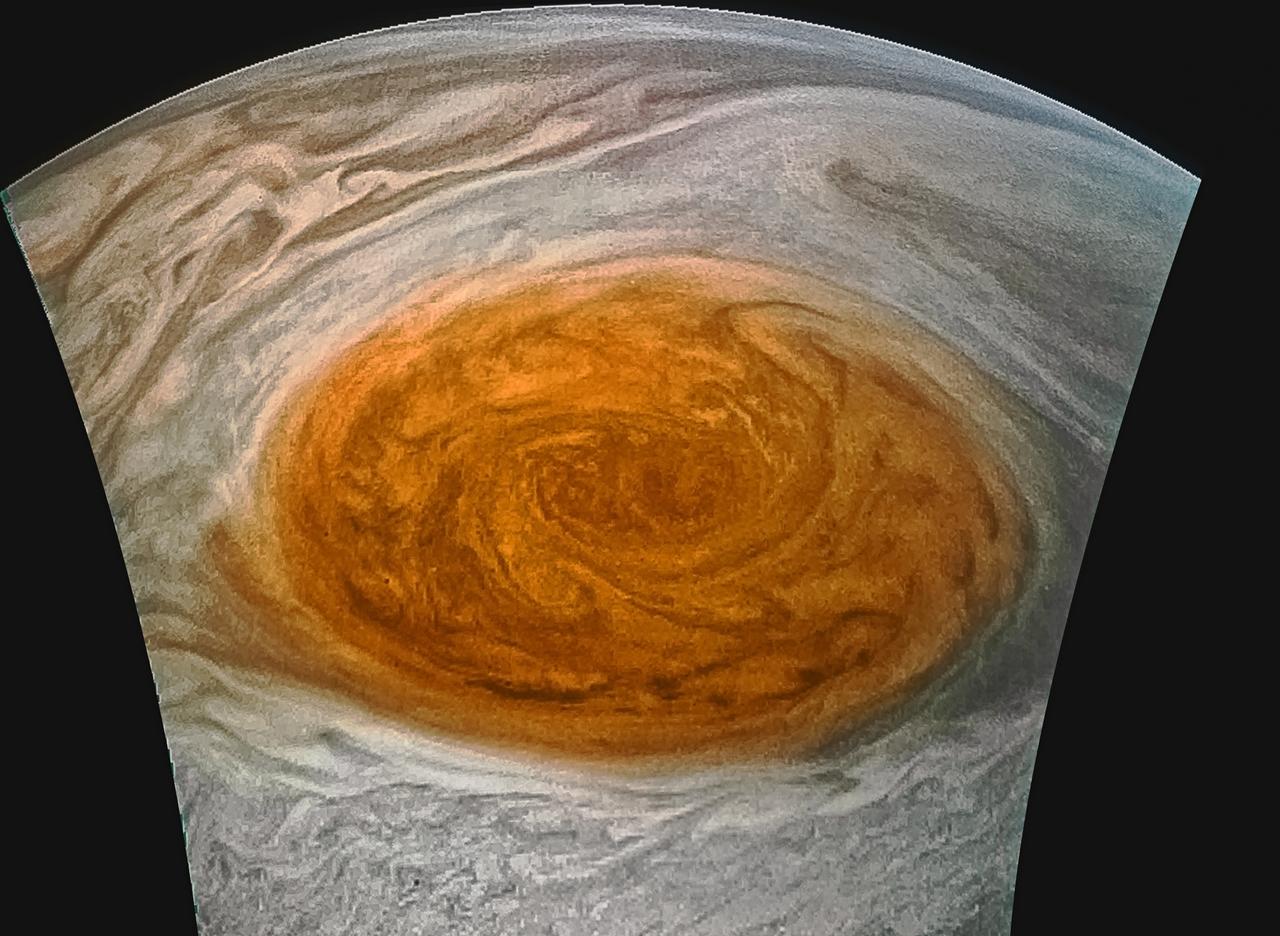
This enhanced-color image of Jupiter's Great Red Spot was created by citizen scientist Jason Major using data from the JunoCam imager on NASA's Juno spacecraft. The image was taken on July 10, 2017 at 07:10 p.m. PDT (10:10 p.m. EDT), as the Juno spacecraft performed its 7th close flyby of Jupiter. At the time the image was taken, the spacecraft was about 8,648 miles (13,917 kilometers) from the tops of the clouds of the planet. https://photojournal.jpl.nasa.gov/catalog/PIA21772 . - Enhanced image by Jason Major based on images provided courtesy of NASA/JPL-Caltech/SwRI/MSSS
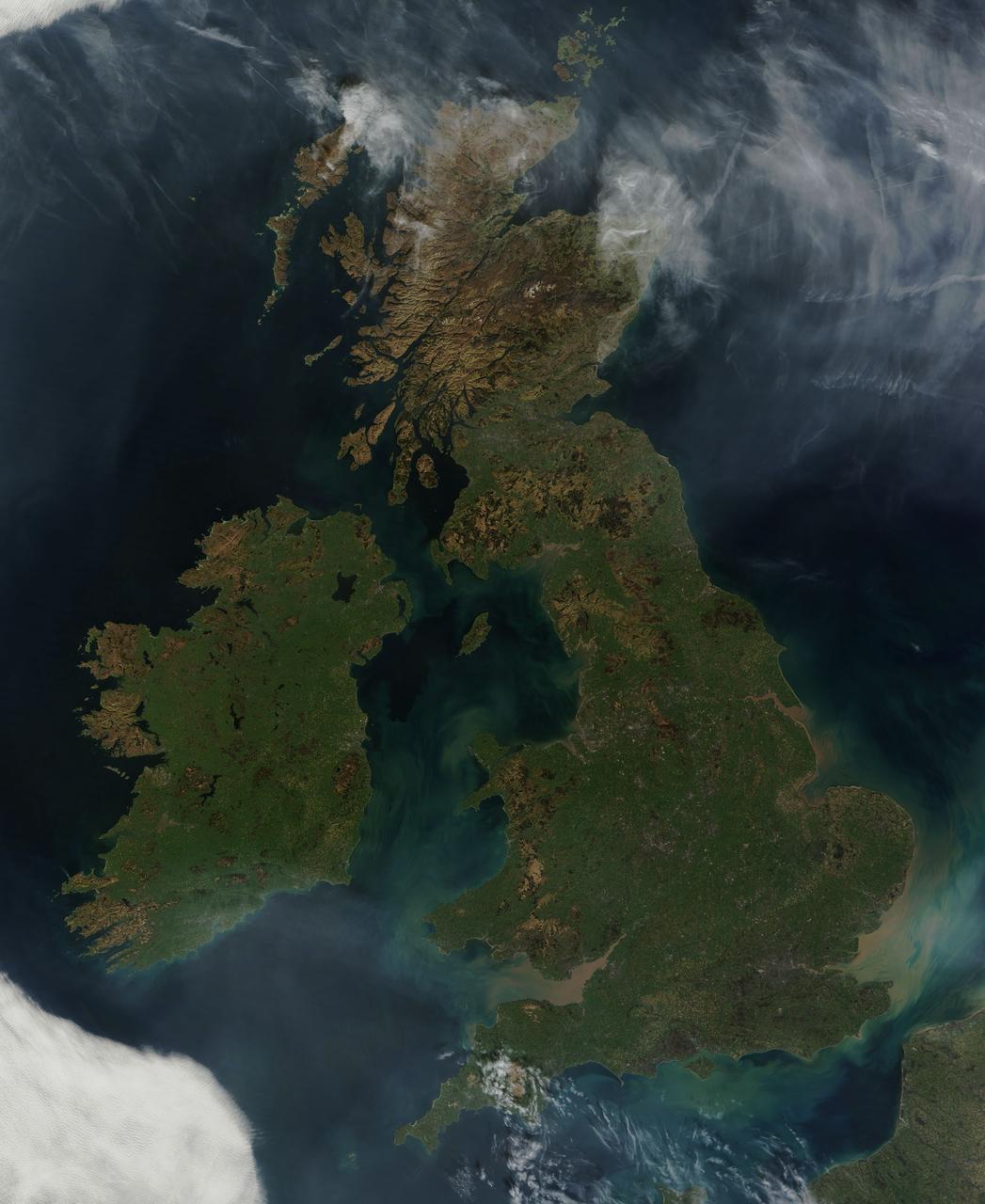
NASA image acquired March 26, 2012 This nearly cloud-free view of Great Britain and Ireland was acquired by the Moderate Resolution Imaging Spectroradiometer (MODIS) aboard NASA’s Terra satellite on March 26, 2012. Just a few days into spring, most of the land appears green, although not quite as brilliant as the summertime hues that give Ireland the nickname “the Emerald Island”. The islands of Ireland (west) and Great Britain (east) are separated by the Irish Sea, which is filled with the turquoise, green and tan swirls typical of sediment, although blooming algae could also contribute some color to the waters. To the southeast, the English Channel separates the island of Great Britain from France (south) and Belgium (north). London can be seen as a gray circle situated inland on the tan-colored River Thames. The sediment from the Thames flows into the English Channel due east of London. The United Kingdom is made up of Wales, Scotland and England, all located primarily on the island of Great Britain, and of Northern Ireland, which comprises the northern section of the island of Ireland. Dublin, in the Republic of Ireland, can be seen as a gray smudge on the eastern coast of the island. Almost due west Galway can be seen as a linear gray streak on the northern coast of Galway Bay, with the blue waters of Loch Corrib to the north. Most of the United Kingdom and Ireland are part of the Celtic broadleaf forest ecoregion, where acid-loving oak and mixed oak forests abound, along with fen and swamp forests and ombrotrophic mires. A portion of the Scottish Highlands, in the north of Great Britain, are covered by the Caledon conifer forest ecoregion. The Caledonia conifers once covered a large area of Scotland, but now only about 1% of the original forest survives, mostly high in the cooler areas of the Highlands. NASA/GSFC/Jeff Schmaltz/MODIS Land Rapid Response Team <b><a href="http://www.nasa.gov/audience/formedia/features/MP_Photo_Guidelines.html" rel="nofollow">NASA image use policy.</a></b> <b><a href="http://www.nasa.gov/centers/goddard/home/index.html" rel="nofollow">NASA Goddard Space Flight Center</a></b> enables NASA’s mission through four scientific endeavors: Earth Science, Heliophysics, Solar System Exploration, and Astrophysics. Goddard plays a leading role in NASA’s accomplishments by contributing compelling scientific knowledge to advance the Agency’s mission. <b>Follow us on <a href="http://twitter.com/NASA_GoddardPix" rel="nofollow">Twitter</a></b> <b>Like us on <a href="http://www.facebook.com/pages/Greenbelt-MD/NASA-Goddard/395013845897?ref=tsd" rel="nofollow">Facebook</a></b> <b>Find us on <a href="http://instagrid.me/nasagoddard/?vm=grid" rel="nofollow">Instagram</a></b>

This false-color image of Jupiter was taken on May 18, 2017, with a mid-infrared filter centered at a wavelength of 8.8 microns, at the Subaru Telescope in Hawaii, in collaboration with observations of Jupiter by NASA's Juno mission. The selected wavelength is sensitive to Jupiter's tropospheric temperatures and the thickness of a cloud near the condensation level of ammonia gas. The Great Red Spot appears distinctively at the lower center of the planet as a cold region with a thick cloud layer. It is surrounded by a warm and relatively clear periphery. To its northwest is a turbulent and chaotic region where bands of gas that is warm and dry alternate with bands of gas that is cold and moist. This image, taken a few hours before Juno's sixth close approach to Jupiter, shows the detailed atmospheric structure of the Great Red Spot and its surroundings that the Juno mission will encounter on its seventh closest approach to Jupiter on July 10, 2017, Pacific Time (July 11, Universal Time). The instrument used to take this image is Cooled Mid-Infrared Camera and Spectrometer (COMICS) of the National Astronomical Observatory of Japan's Subaru Telescope on Hawaii's Maunakea peak. https://photojournal.jpl.nasa.gov/catalog/PIA21714
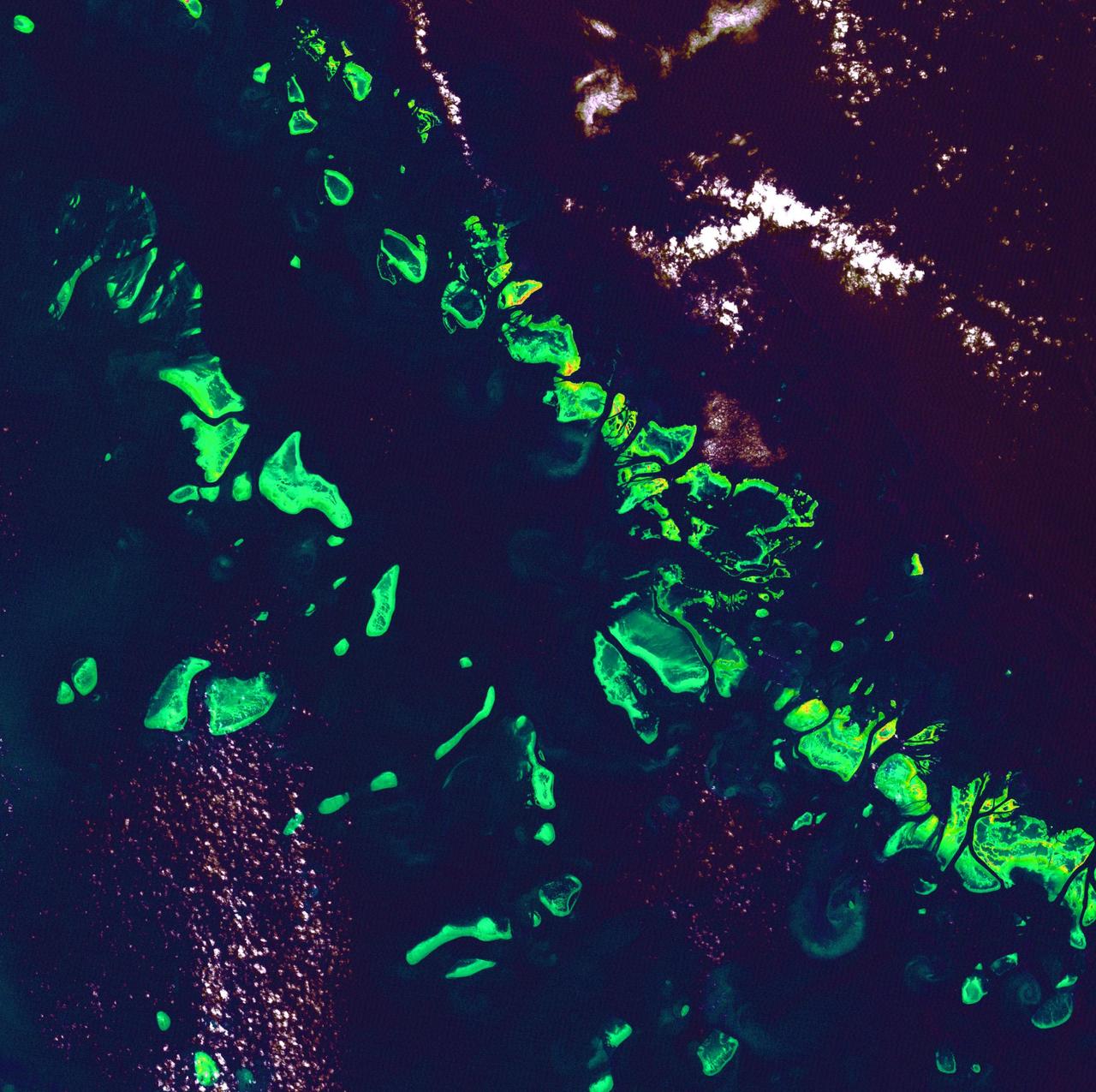
Great Barrier Reef - August 8th, 1999 Description: What might be mistaken for dinosaur bones being unearthed at a paleontological dig are some of the individual reefs that make up the Great Barrier Reef, the world's largest tropical coral reef system. The reef stretches more than 2,000 kilometers (1,240 miles) along the coast of Queensland, Australia. It supports astoundingly complex and diverse communities of marine life and is the largest structure on the planet built by living organisms. Credit: USGS/NASA/Landsat 7 To learn more about the Landsat satellite go to: <a href="http://landsat.gsfc.nasa.gov/" rel="nofollow">landsat.gsfc.nasa.gov/</a> <b><a href="http://www.nasa.gov/centers/goddard/home/index.html" rel="nofollow">NASA Goddard Space Flight Center</a></b> enables NASA’s mission through four scientific endeavors: Earth Science, Heliophysics, Solar System Exploration, and Astrophysics. Goddard plays a leading role in NASA’s accomplishments by contributing compelling scientific knowledge to advance the Agency’s mission. <b>Follow us on <a href="http://twitter.com/NASA_GoddardPix" rel="nofollow">Twitter</a></b> <b>Join us on <a href="http://www.facebook.com/pages/Greenbelt-MD/NASA-Goddard/395013845897?ref=tsd" rel="nofollow">Facebook</a></b>
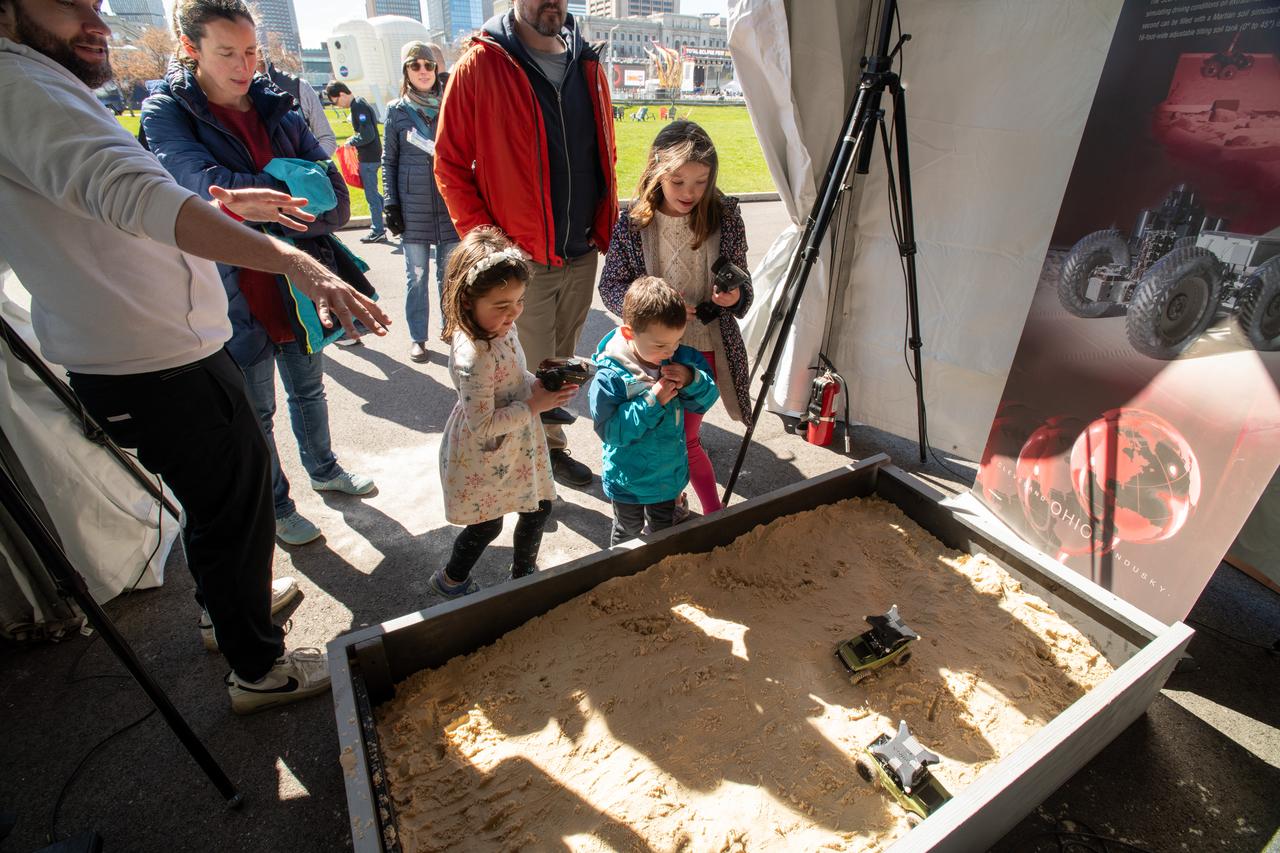
Guests interact with the VIPER exhibit at the Total Solar Eclipse Fest at the Great Lakes Science Center in Cleveland, OH on April 6, 2024. A total solar eclipse swept across a narrow portion of the North American continent from Mexico’s Pacific coast to the Atlantic coast of Newfoundland, Canada. A partial solar eclipse was visible across the entire North American continent along with parts of Central America and Europe. Photo Credit: (NASA/Sara Lowthian-Hanna)
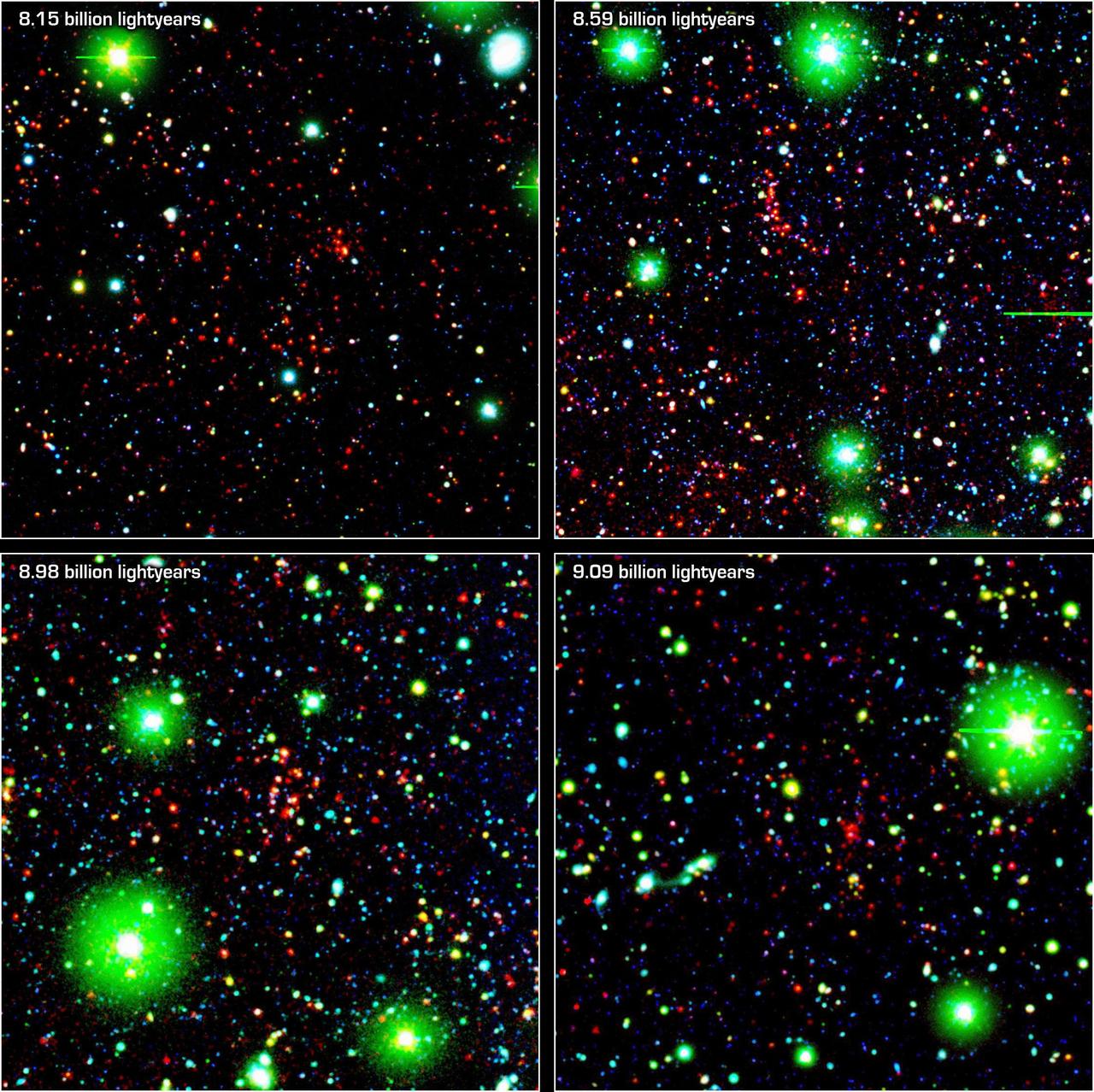
Like great friends, galaxies stick together. Astronomers using NASA Spitzer Space Telescope have spotted a handful of great galactic pals bonding back when the universe was a mere 4.6 billion years old.
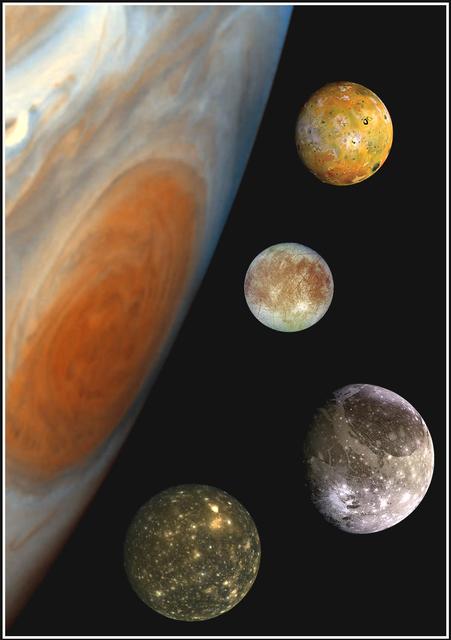
This "family portrait," a composite of the Jovian system, includes the edge of Jupiter with its Great Red Spot, and Jupiter's four largest moons, known as the Galilean satellites. From top to bottom, the moons shown are Io, Europa, Ganymede and Callisto. The Great Red Spot, a storm in Jupiter's atmosphere, is at least 300 years old. Winds blow counterclockwise around the Great Red Spot at about 400 kilometers per hour (250 miles per hour). The storm is larger than one Earth diameter from north to south, and more than two Earth diameters from east to west. In this oblique view, the Great Red Spot appears longer in the north-south direction. Europa, the smallest of the four moons, is about the size of Earth's moon, while Ganymede is the largest moon in the solar system. North is at the top of this composite picture in which the massive planet and its largest satellites have all been scaled to a common factor of 15 kilometers (9 miles) per picture element. The Solid State Imaging (CCD) system aboard NASA's Galileo spacecraft obtained the Jupiter, Io and Ganymede images in June 1996, while the Europa images were obtained in September 1996. Because Galileo focuses on high resolution imaging of regional areas on Callisto rather than global coverage, the portrait of Callisto is from the 1979 flyby of NASA's Voyager spacecraft. http://photojournal.jpl.nasa.gov/catalog/PIA00600
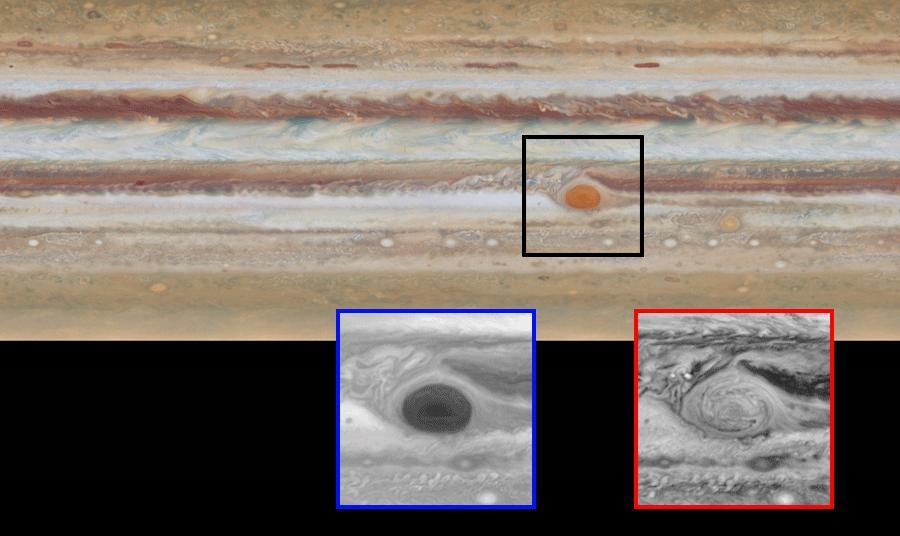
This image is one of two images from NASA Hubble Space Telescope comparing the movement of Jupiter clouds. The movement of Jupiter's clouds can be seen by comparing the first map to the second one in this animated pair of images. Zooming in on the Great Red Spot at blue (below, at left) and red (below, at right) wavelengths reveals a unique filamentary feature not previously seen. http://photojournal.jpl.nasa.gov/catalog/PIA19648
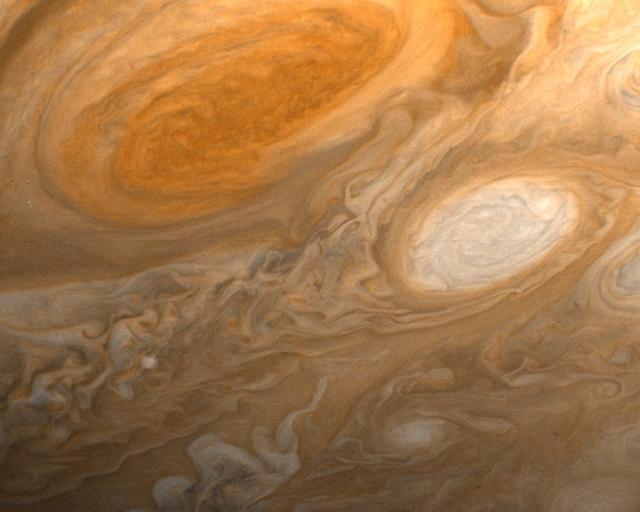
Jupiter Great Red Spot and White Ovals
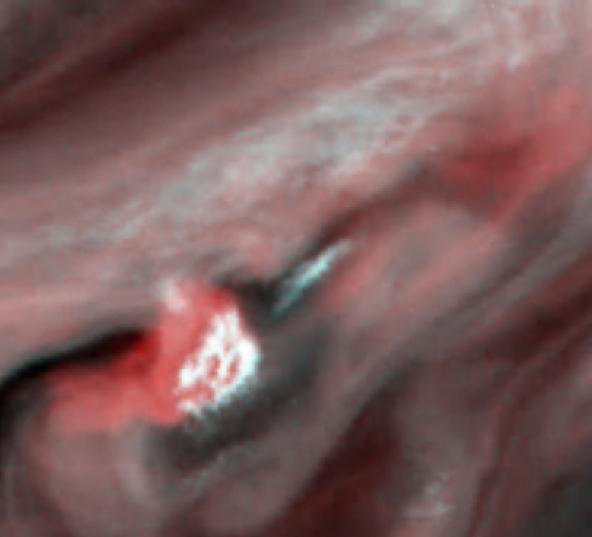
Water Cloud Thunderstorm Northwest of Great Red Spot

Turbulent Region Near Jupiter Great Red Spot
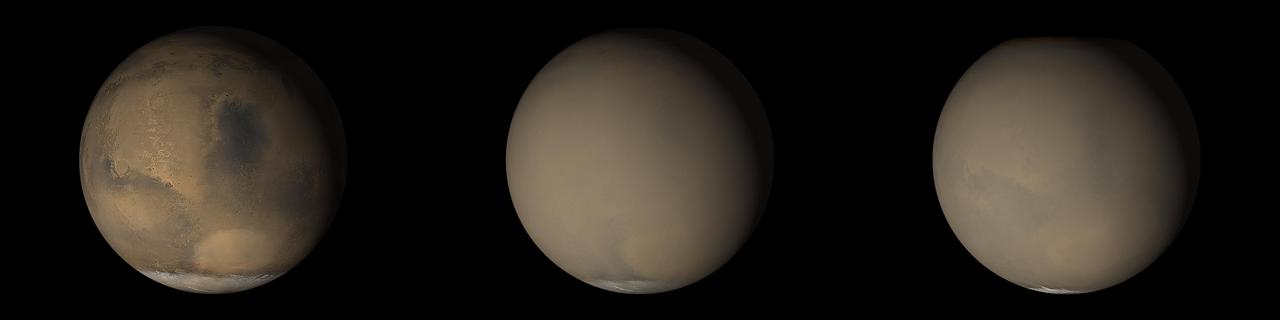
The 2001 Great Dust Storms - Hellas/Syrtis Major
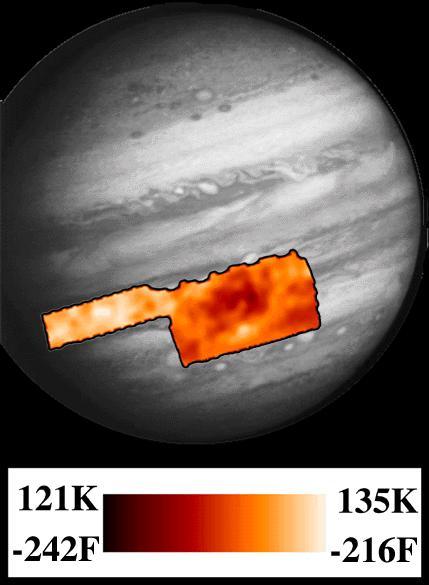
PPR Great Red Spot Temperature Map

Ammonia Ice near Jupiter Great Red Spot
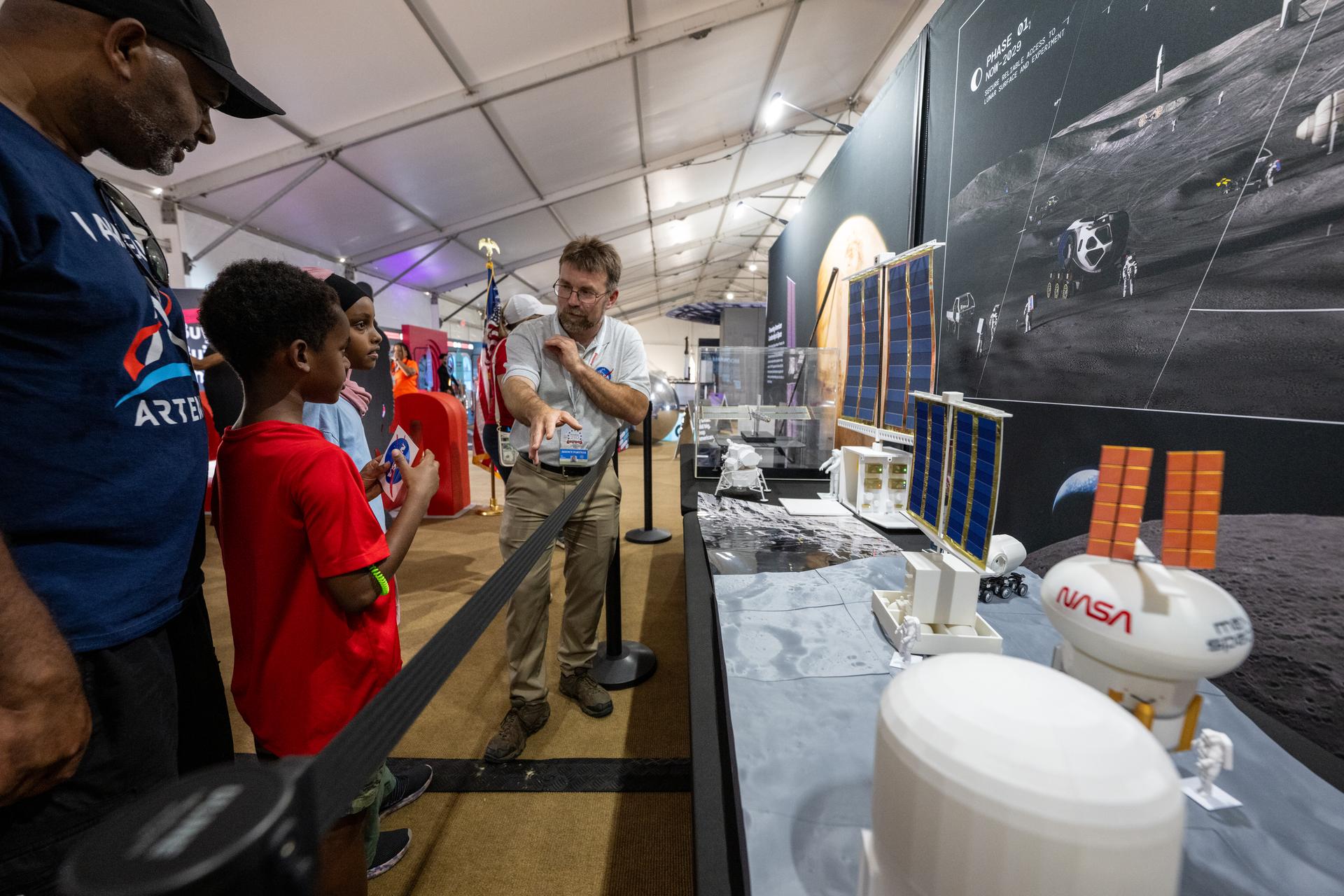
Visitors to the Great American State Fair are seen as they view exhibits in the NASA Pavilion, Thursday, June 25, 2026, on the National Mall in Washington, D.C. Photo Credit: (NASA/Keegan Barber)
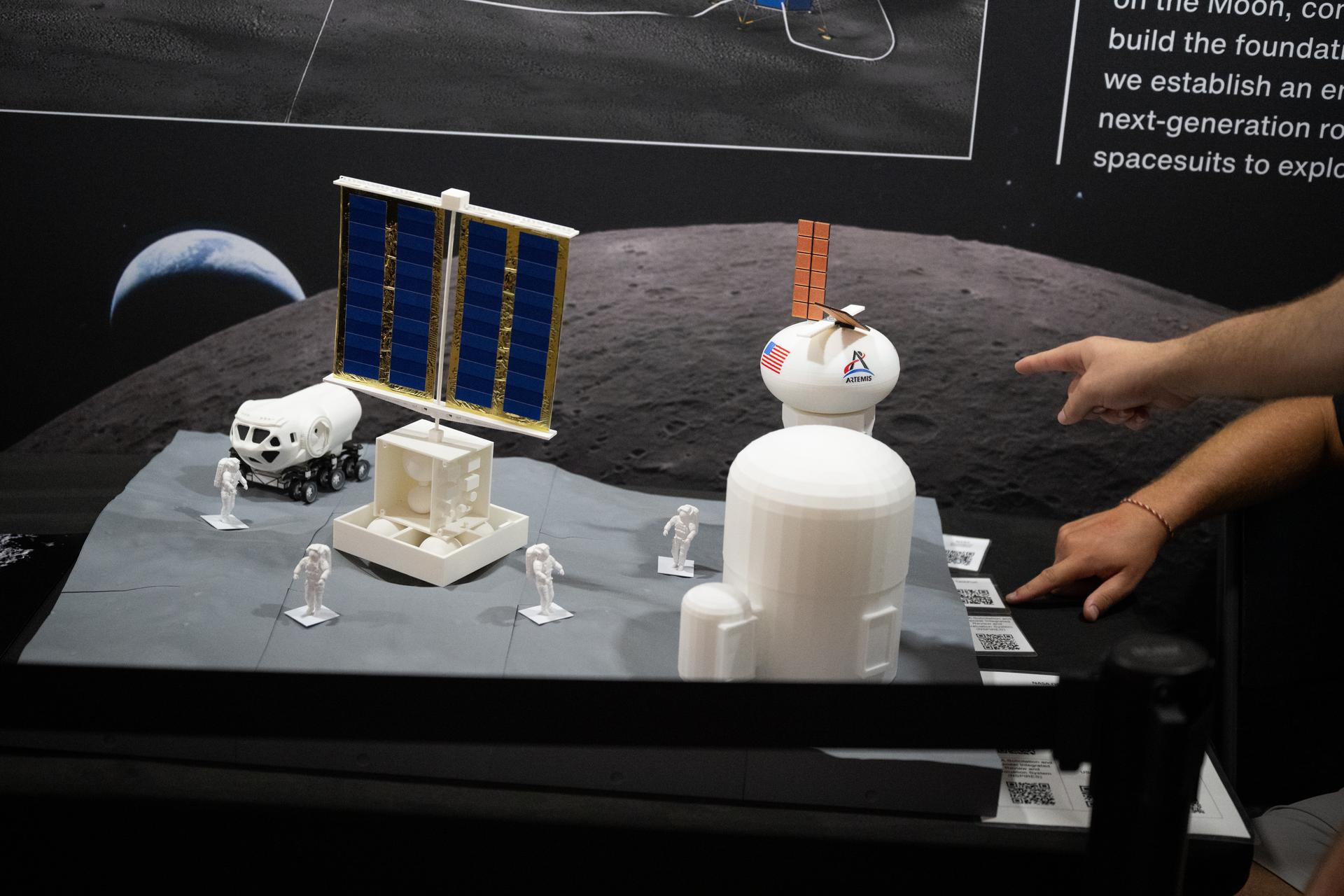
Visitors to the Great American State Fair are seen as they view exhibits in the NASA Pavilion, Wednesday, July 8, 2026, on the National Mall in Washington, D.C. Photo Credit: (NASA/Joel Kowsky)

Visitors to the Great American State Fair are seen as they view exhibits in the NASA Pavilion, Thursday, June 25, 2026, on the National Mall in Washington, D.C. Photo Credit: (NASA/Keegan Barber)
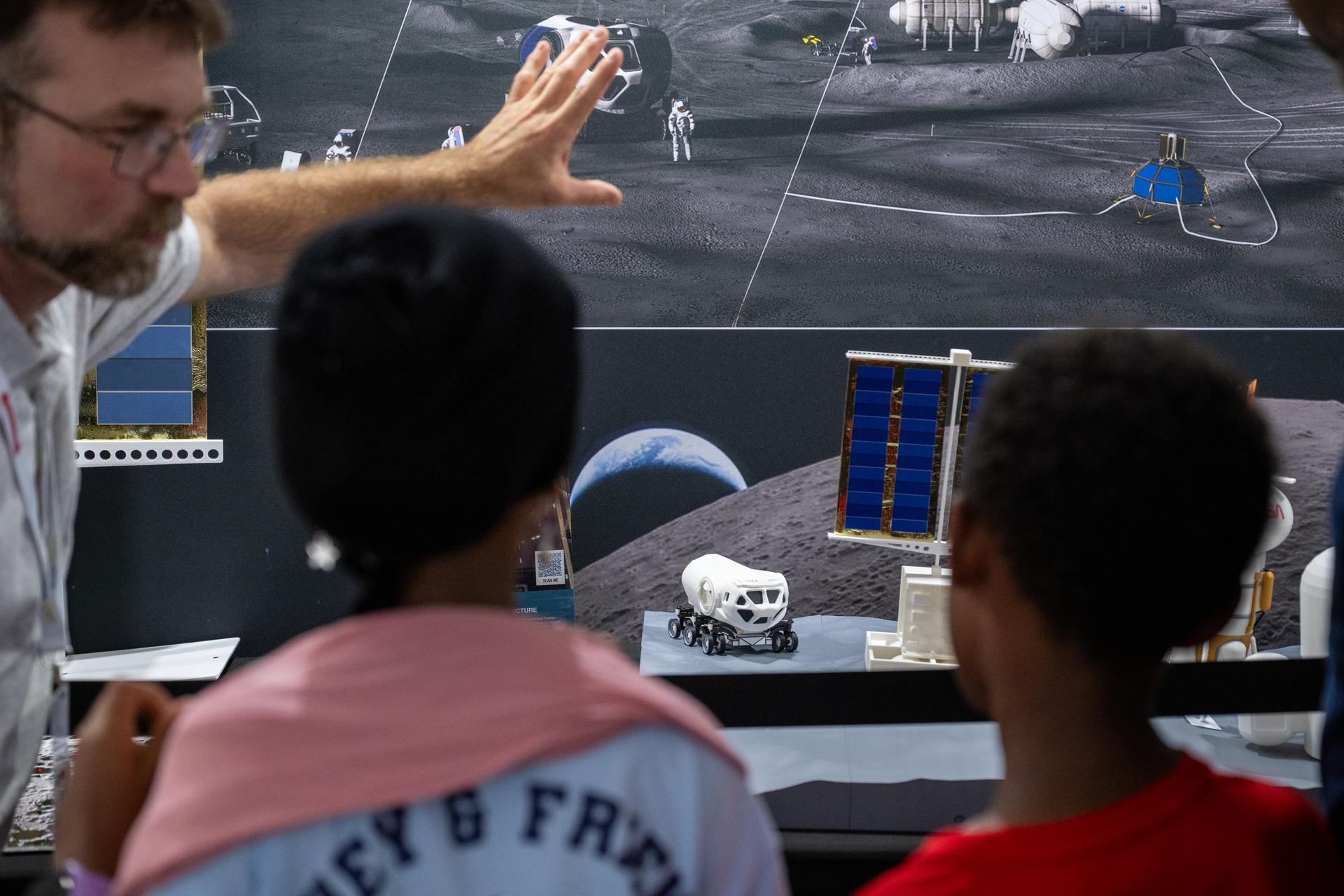
Visitors to the Great American State Fair are seen as they view exhibits in the NASA Pavilion, Thursday, June 25, 2026, on the National Mall in Washington, D.C. Photo Credit: (NASA/Keegan Barber)
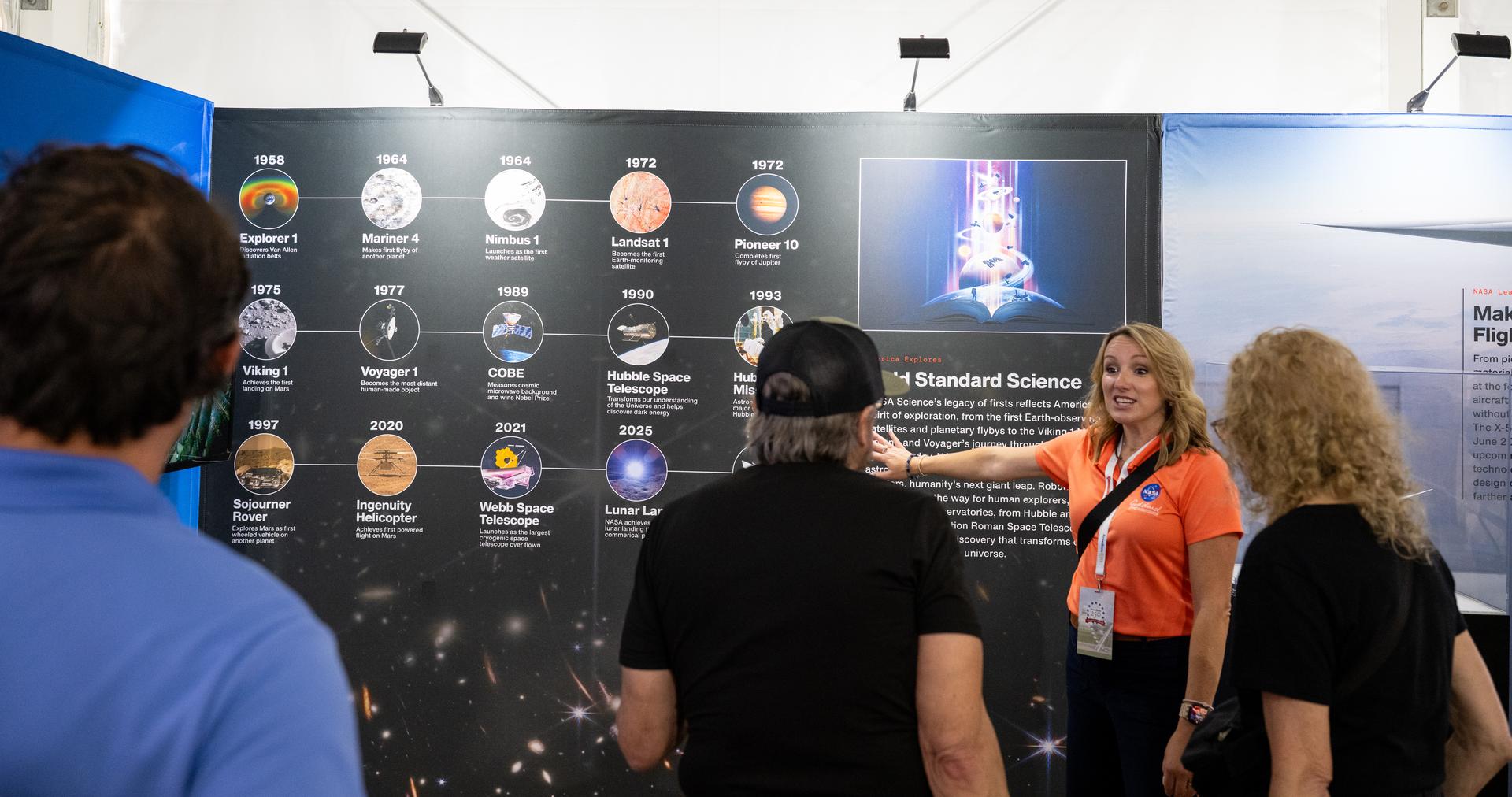
Visitors to the Great American State Fair are seen as they view exhibits in the NASA Pavilion, Thursday, June 25, 2026, on the National Mall in Washington, D.C. Photo Credit: (NASA/Keegan Barber)
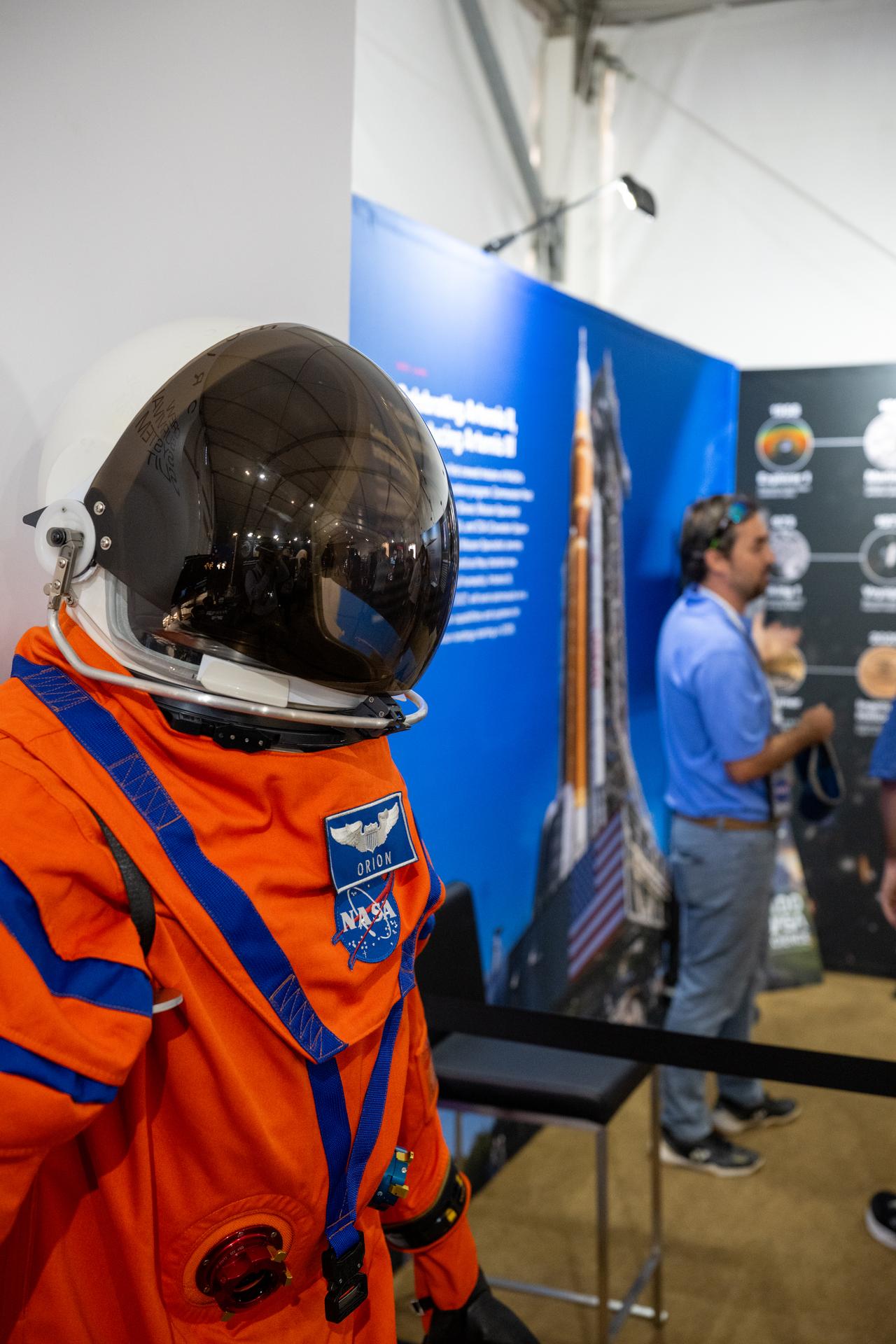
Visitors to the Great American State Fair are seen as they view exhibits in the NASA Pavilion, Thursday, June 25, 2026, on the National Mall in Washington, D.C. Photo Credit: (NASA/Keegan Barber)

Visitors to the Great American State Fair are seen as they view exhibits in the NASA Pavilion, Thursday, June 25, 2026, on the National Mall in Washington, D.C. Photo Credit: (NASA/Keegan Barber)
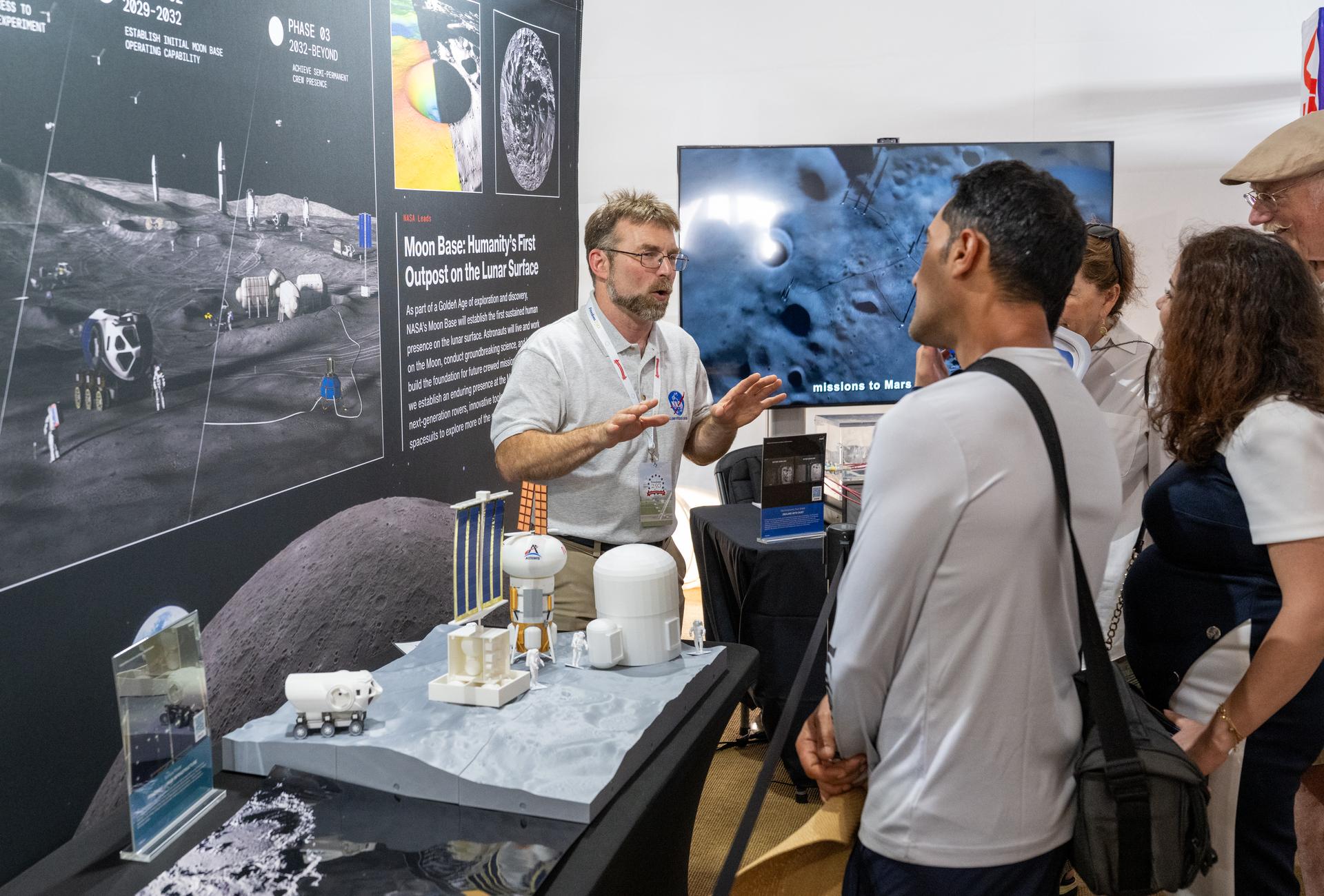
Visitors to the Great American State Fair are seen as they view exhibits in the NASA Pavilion, Thursday, June 25, 2026, on the National Mall in Washington, D.C. Photo Credit: (NASA/Keegan Barber)
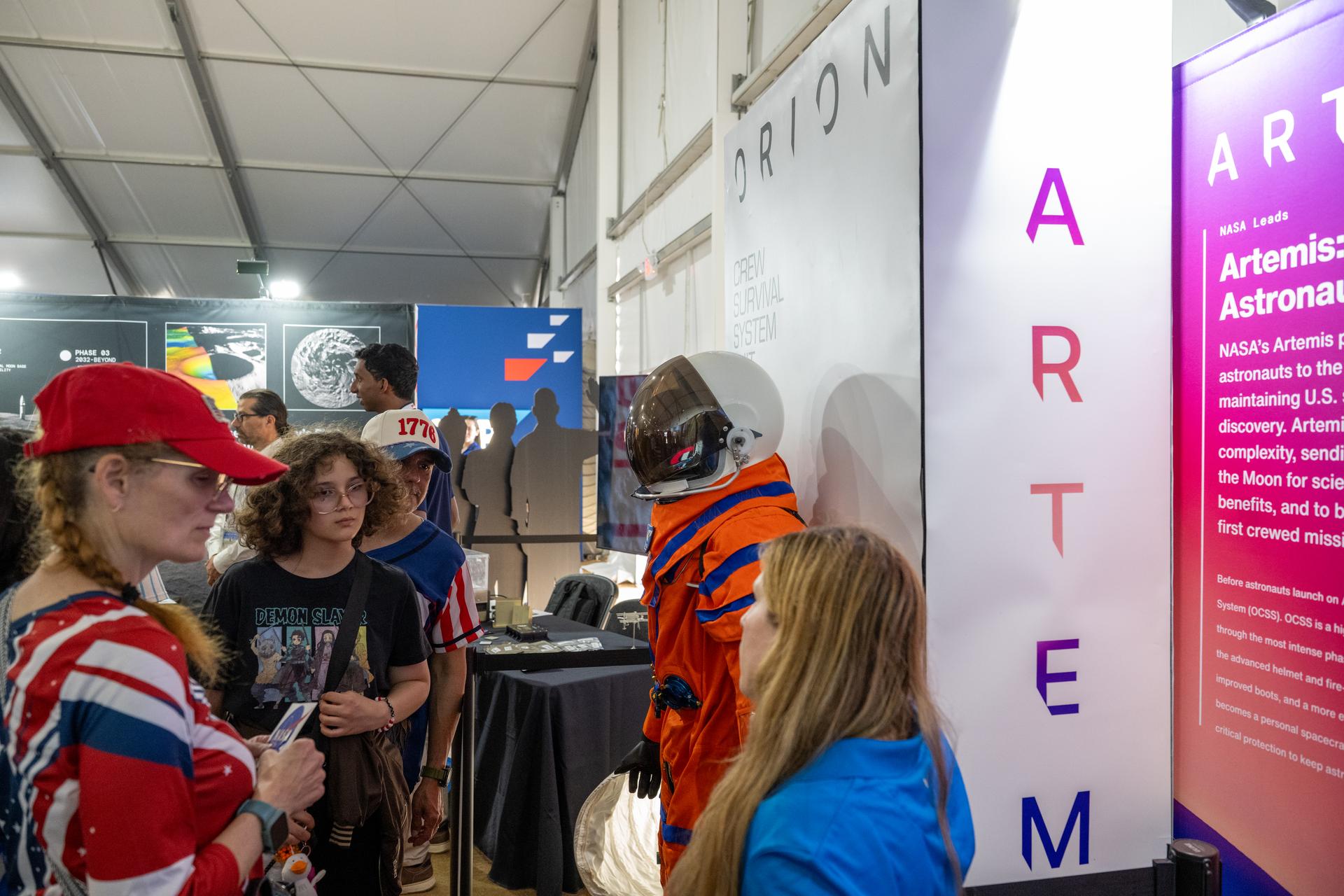
Visitors to the Great American State Fair are seen as they view exhibits in the NASA Pavilion, Thursday, June 25, 2026, on the National Mall in Washington, D.C. Photo Credit: (NASA/Keegan Barber)
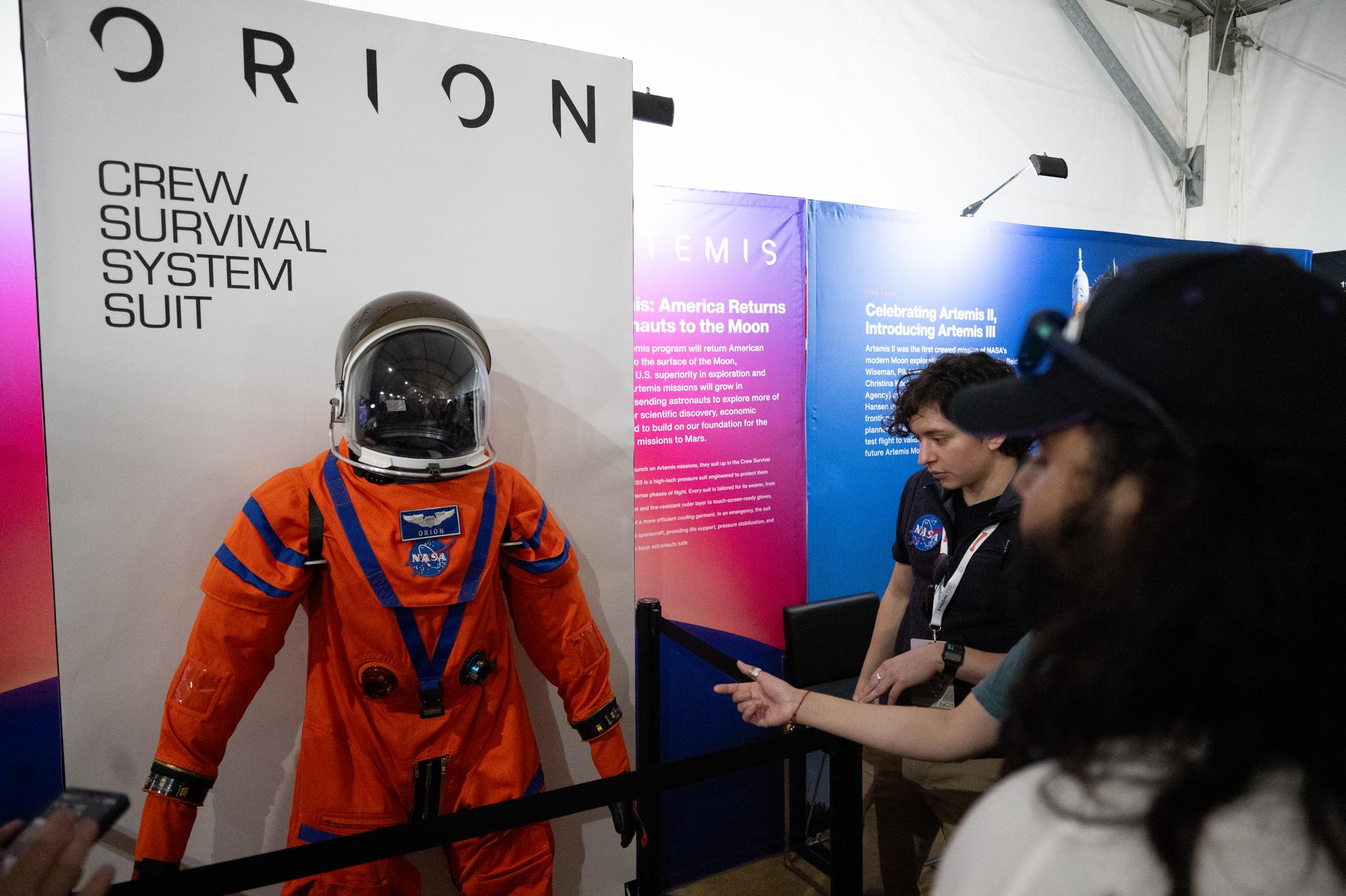
Visitors to the Great American State Fair are seen as they view NASA exhibits in the American Innovation Pavilion, Wednesday, July 8, 2026, on the National Mall in Washington, D.C. Photo Credit: (NASA/Joel Kowsky)
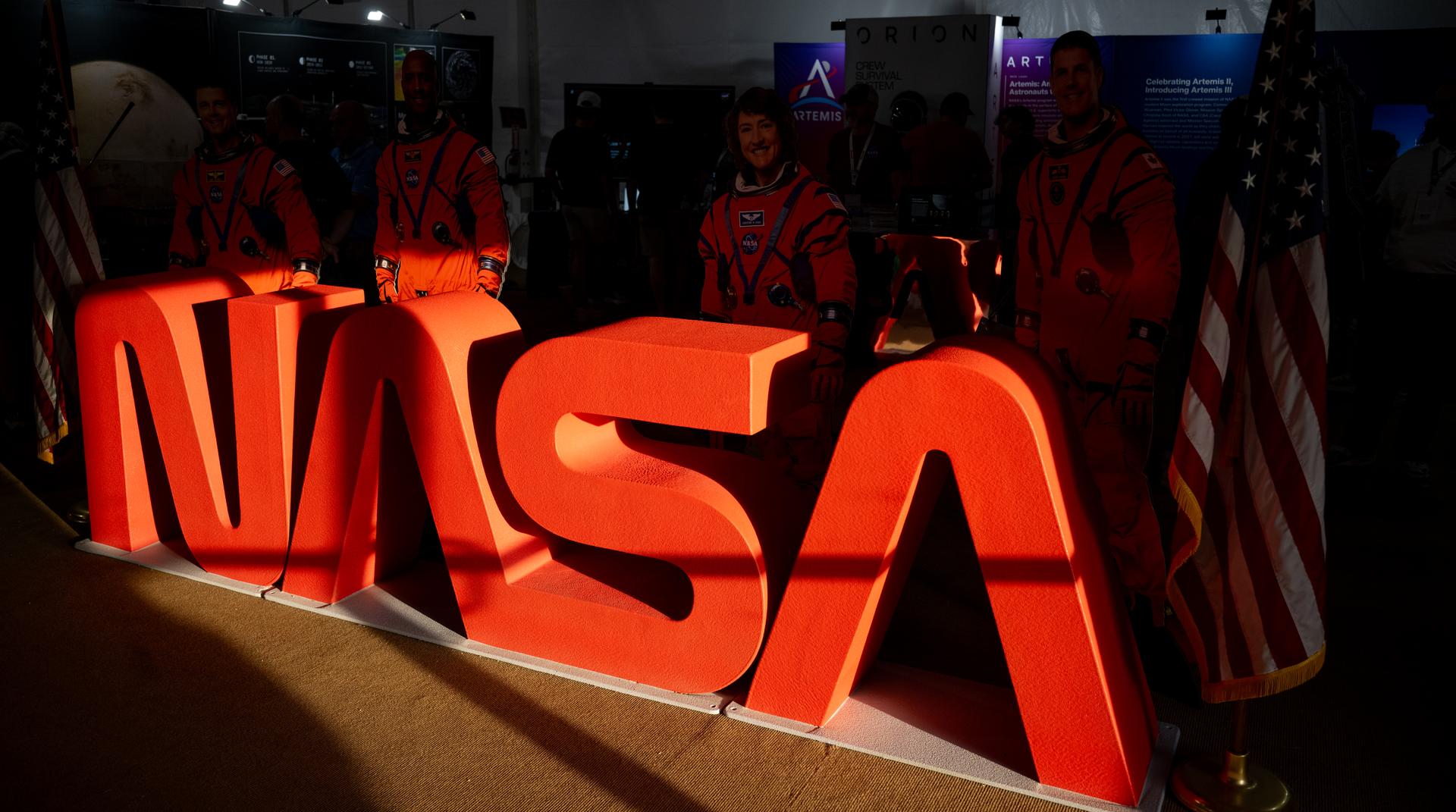
Visitors to the Great American State Fair are seen as they view exhibits in the NASA Pavilion, Wednesday, July 8, 2026, on the National Mall in Washington, D.C. Photo Credit: (NASA/Joel Kowsky)
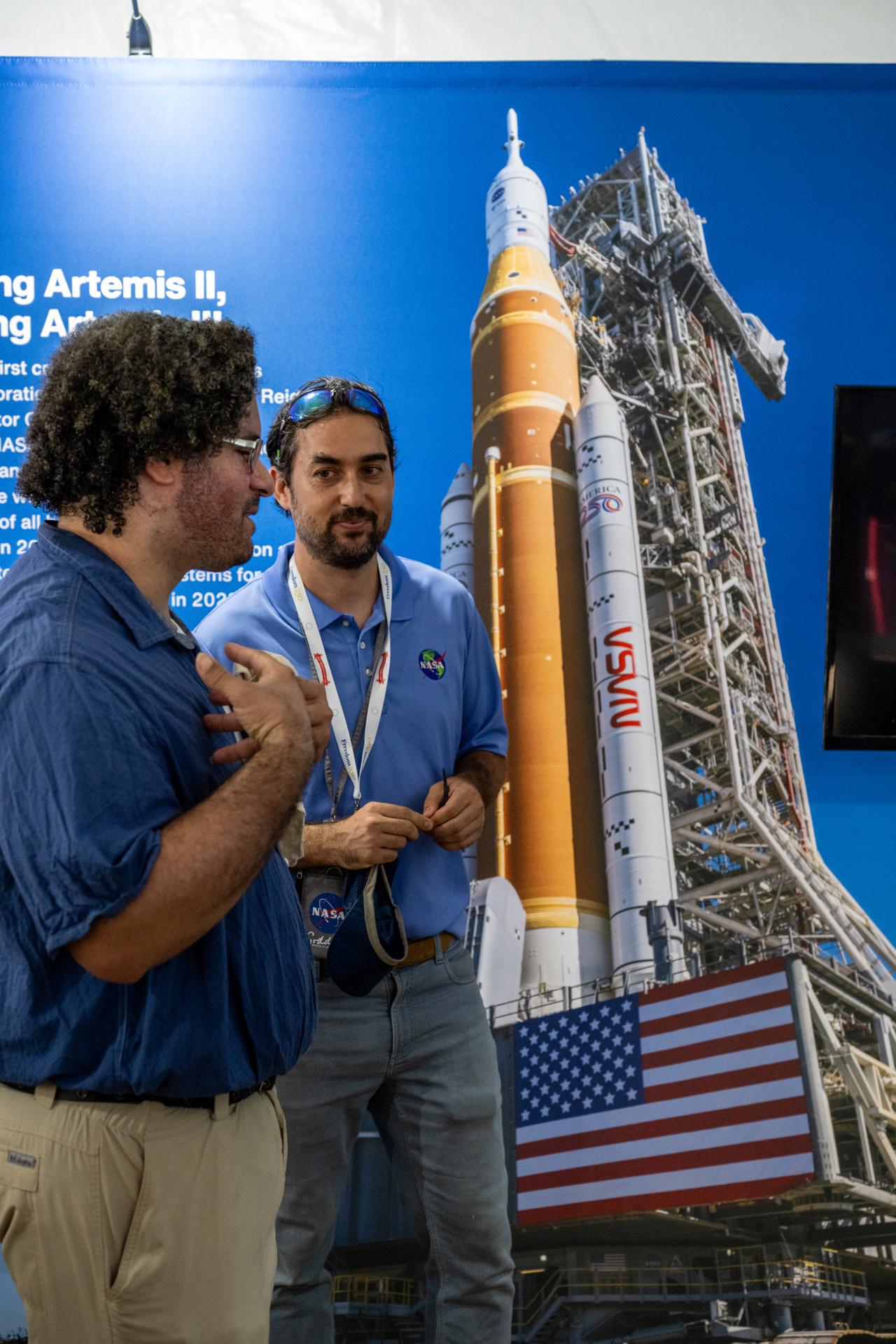
Visitors to the Great American State Fair are seen as they view exhibits in the NASA Pavilion, Thursday, June 25, 2026, on the National Mall in Washington, D.C. Photo Credit: (NASA/Keegan Barber)
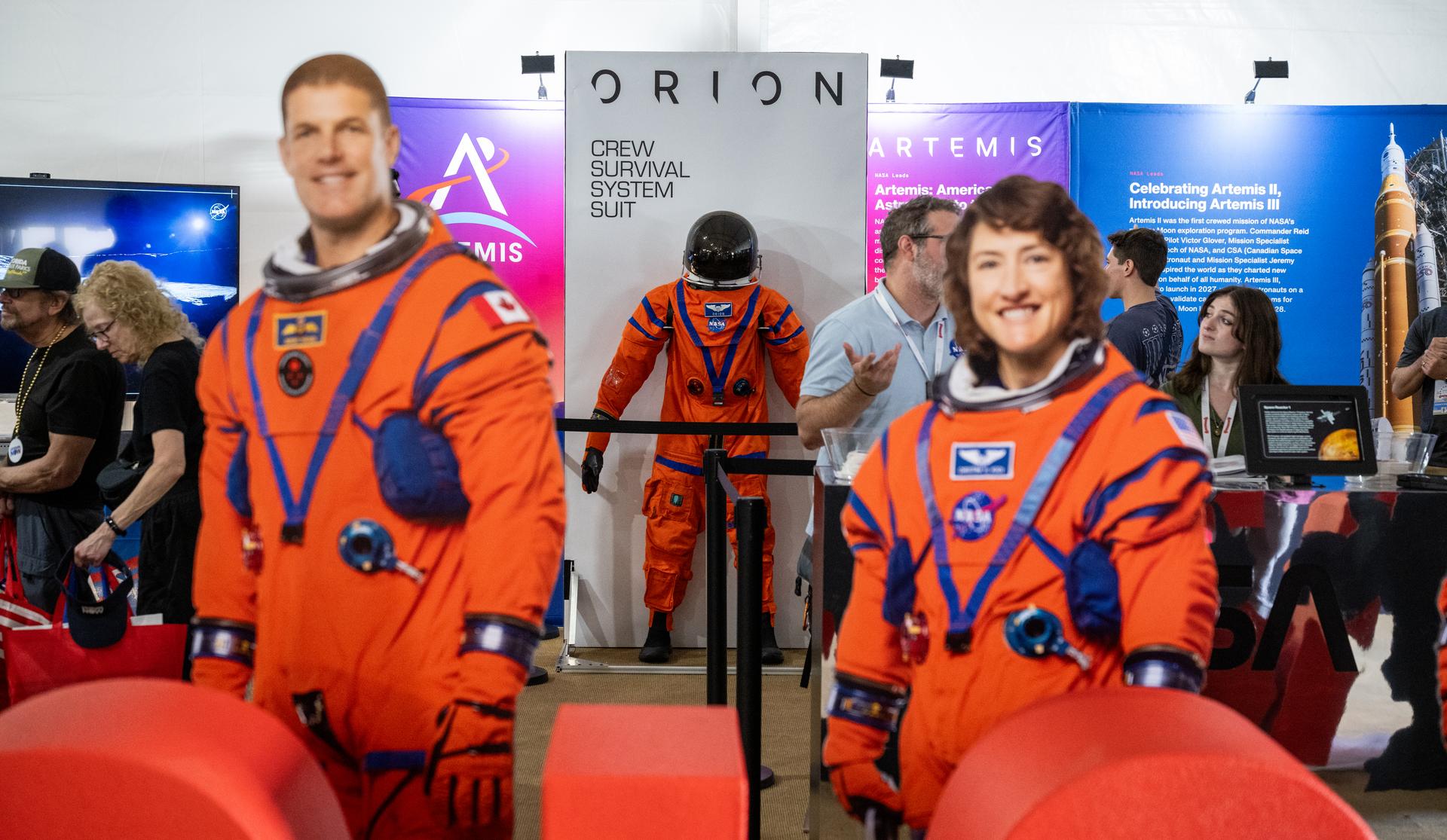
Visitors to the Great American State Fair are seen as they view exhibits in the NASA Pavilion, Thursday, June 25, 2026, on the National Mall in Washington, D.C. Photo Credit: (NASA/Keegan Barber)
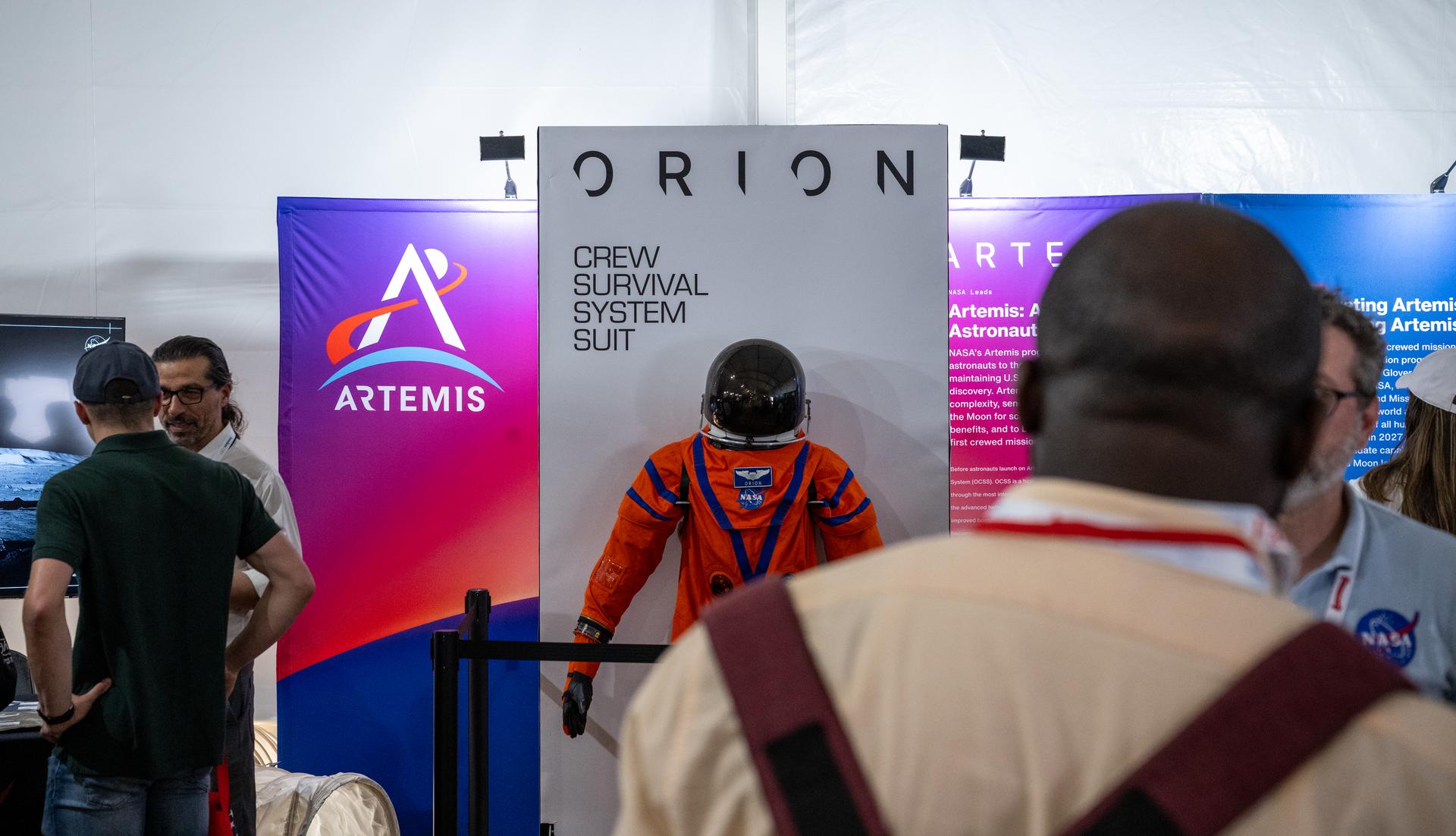
Visitors to the Great American State Fair are seen as they view exhibits in the NASA Pavilion, Thursday, June 25, 2026, on the National Mall in Washington, D.C. Photo Credit: (NASA/Keegan Barber)

This view of Jupiter Great Red Spot is a mosaic of two images taken by NASA Galileo spacecraft. The Great Red Spot is a storm in Jupiter atmosphere and is at least 300 years-old. The image was taken on June 26, 1996. http://photojournal.jpl.nasa.gov/catalog/PIA00296
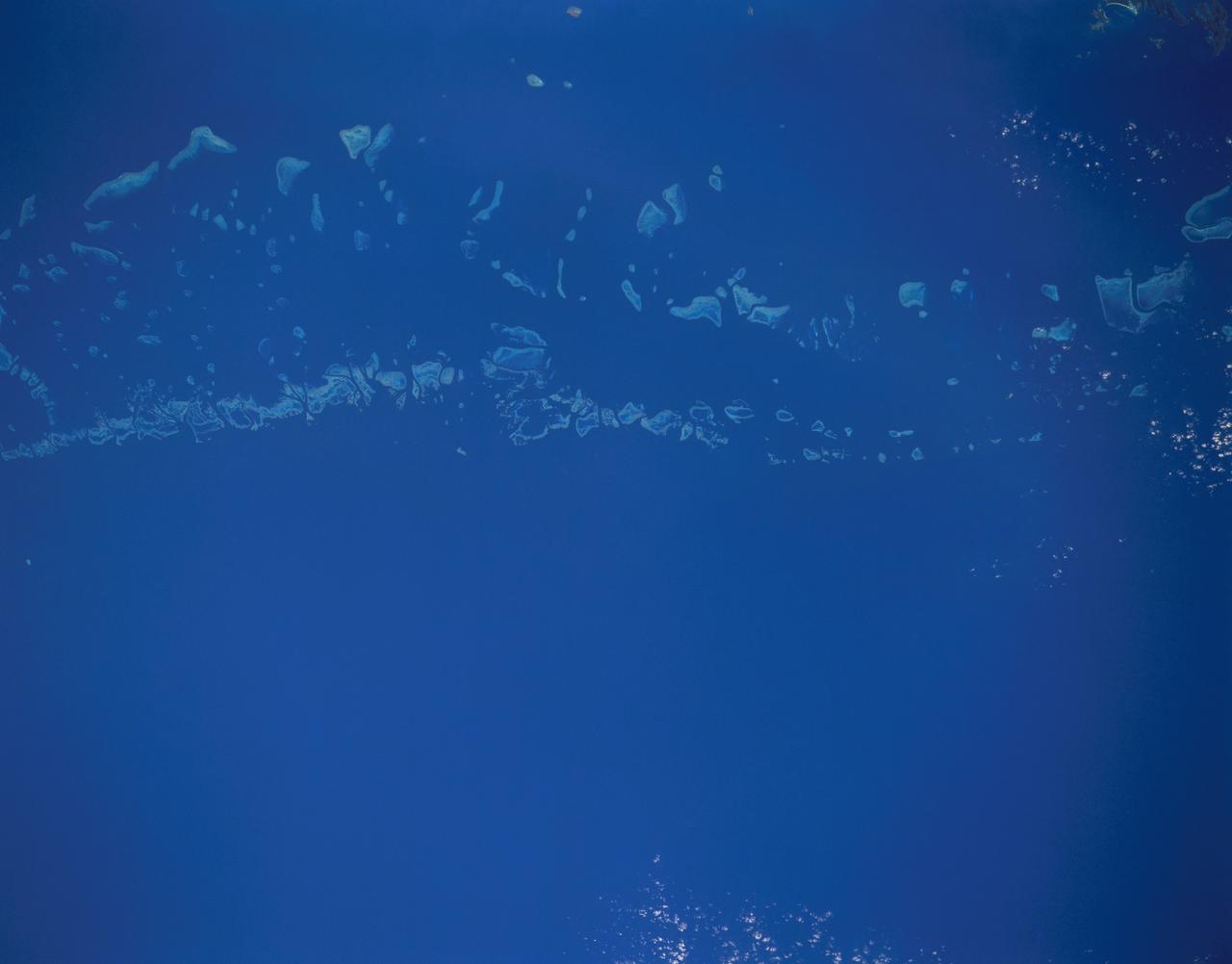
STS048-151-250 (12-18 Sept. 1991) --- The Great Barrier Reef extends for roughly 2,000 kilometers along the northeast coast of Australia. The great Barrier Reef is made up of thousands of individual reefs which define the edge of the continental shelf. The southern part of the feature, called Swain Reef, is seen here. Water depths around the reefs are quite shallow (less than 1 meter to about 36 meters in depth), but only a few kilometers offshore, water depths are roughly 1,000 meters.
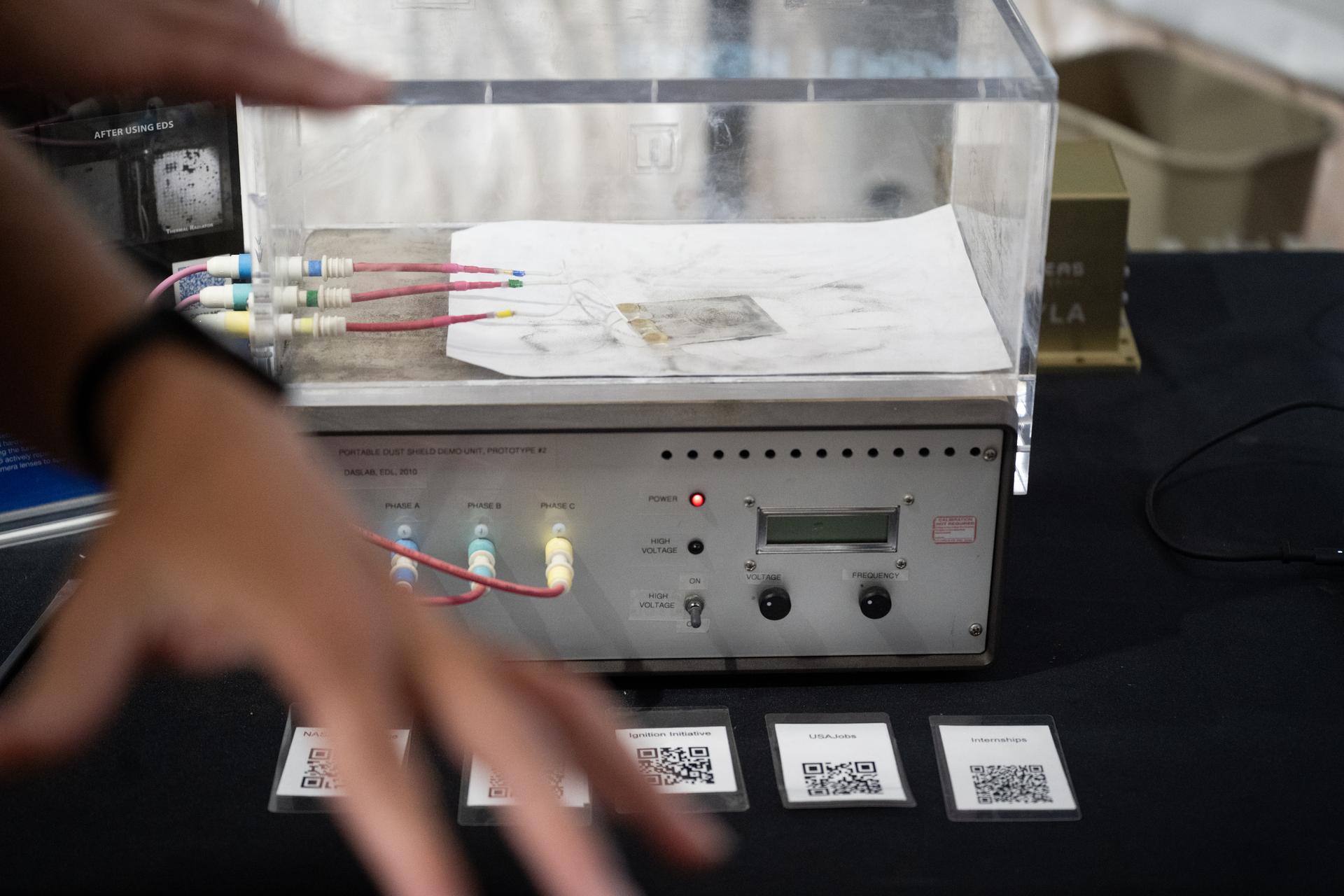
A demonstration of NASA’s Electrodynamic Dust Shield (EDS) is seen at the Great American State Fair as visitors view NASA exhibits in the American Innovation Pavilion, Wednesday, July 8, 2026, on the National Mall in Washington, D.C Photo Credit: (NASA/Joel Kowsky)
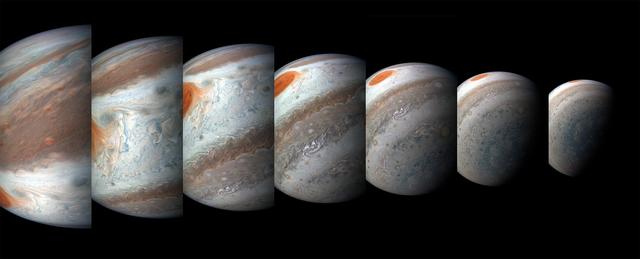
A south tropical disturbance has just passed Jupiter's iconic Great Red Spot and is captured stealing threads of orange haze from the Great Red Spot in this series of color-enhanced images from NASA's Juno spacecraft. From left to right, this sequence of images was taken between 2:57 a.m. and 3:36 a.m. PDT (5:57 a.m. and 6:36 a.m. EDT) on April 1, 2018, as the spacecraft performed its 12th close flyby of Jupiter. Citizen scientists Gerald Eichstädt and Seán Doran created this image using data from the spacecraft's JunoCam imager. https://photojournal.jpl.nasa.gov/catalog/PIA22937 ** Image Credit: Enhanced Image by Gerald Eichstädt and Seán Doran (CC BY-NC-SA) based on images provided courtesy of NASA/JPL-Caltech/SwRI/MSSS

NASA astronaut Reid Wiseman, Artemis II commander, participates in a panel discussion during the Great American State Fair, Saturday, July 4, 2026, on the National Mall in Washington, D.C. Photo Credit: (NASA/Bill Ingalls)

NASA astronaut Victor Glover, Artemis II pilot, participates in a panel discussion during the Great American State Fair, Saturday, July 4, 2026, on the National Mall in Washington, D.C. Photo Credit: (NASA/Bill Ingalls)
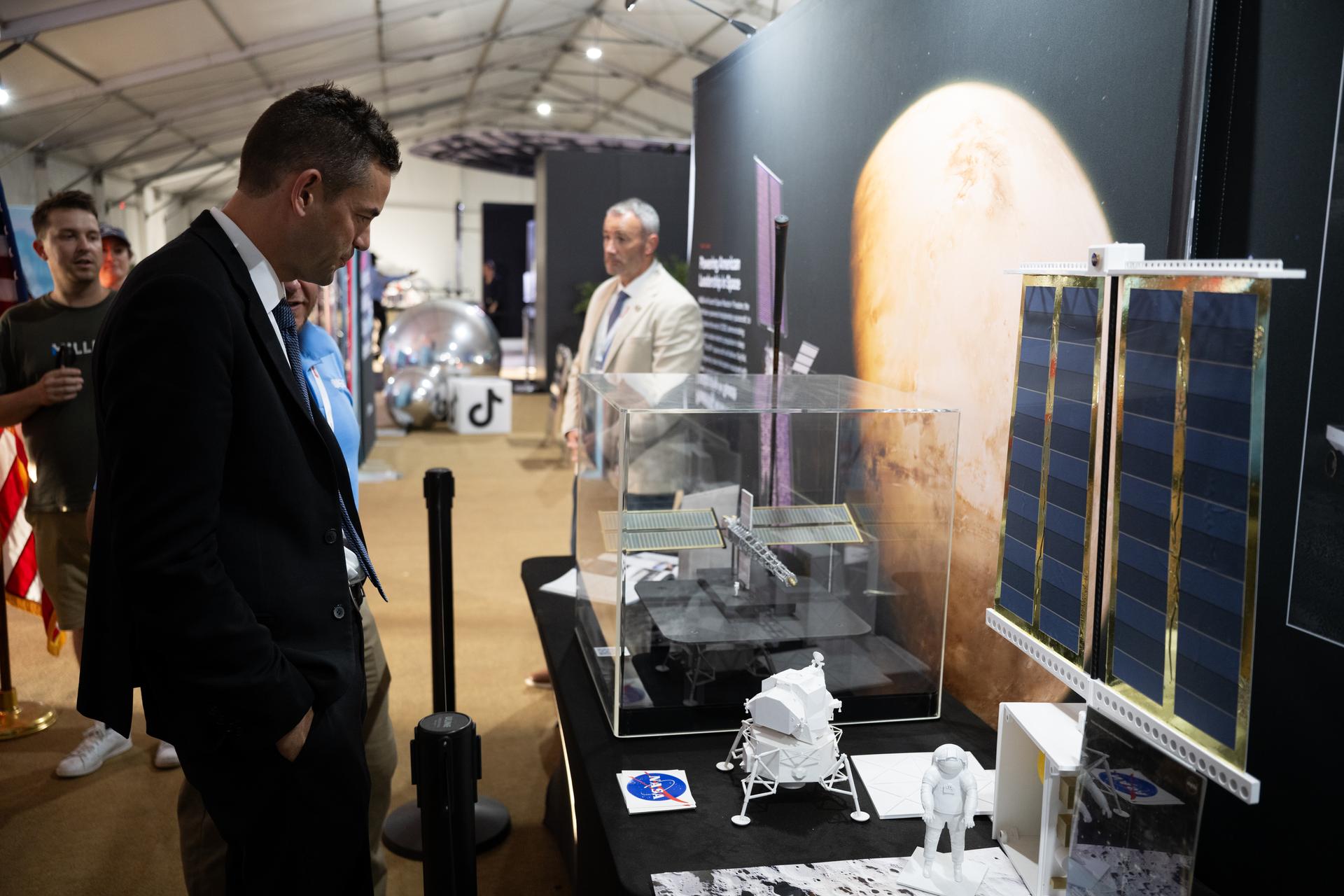
NASA Administrator Jared Isaacman visits the agency’s exhibit at the Great American State Fair in the American Innovation Pavilion, Wednesday, July 8, 2026, on the National Mall in Washington, D.C. Photo Credit: (NASA/Joel Kowsky)

NASA Administrator Jared Isaacman visits the agency’s exhibit at the Great American State Fair in the American Innovation Pavilion, Wednesday, July 8, 2026, on the National Mall in Washington, D.C. Photo Credit: (NASA/Joel Kowsky)

NASA Administrator Jared Isaacman visits the agency’s exhibit at the Great American State Fair in the American Innovation Pavilion, Wednesday, July 8, 2026, on the National Mall in Washington, D.C. Photo Credit: (NASA/Joel Kowsky)

NASA Administrator Jared Isaacman is seen in conversation with Katie Pavlich about the past, present, and future of space exploration on the Freedom Stage at the Great American State Fair, Wednesday, July 8, 2026, on the National Mall in Washington, D.C. Photo Credit: (NASA/Joel Kowsky)
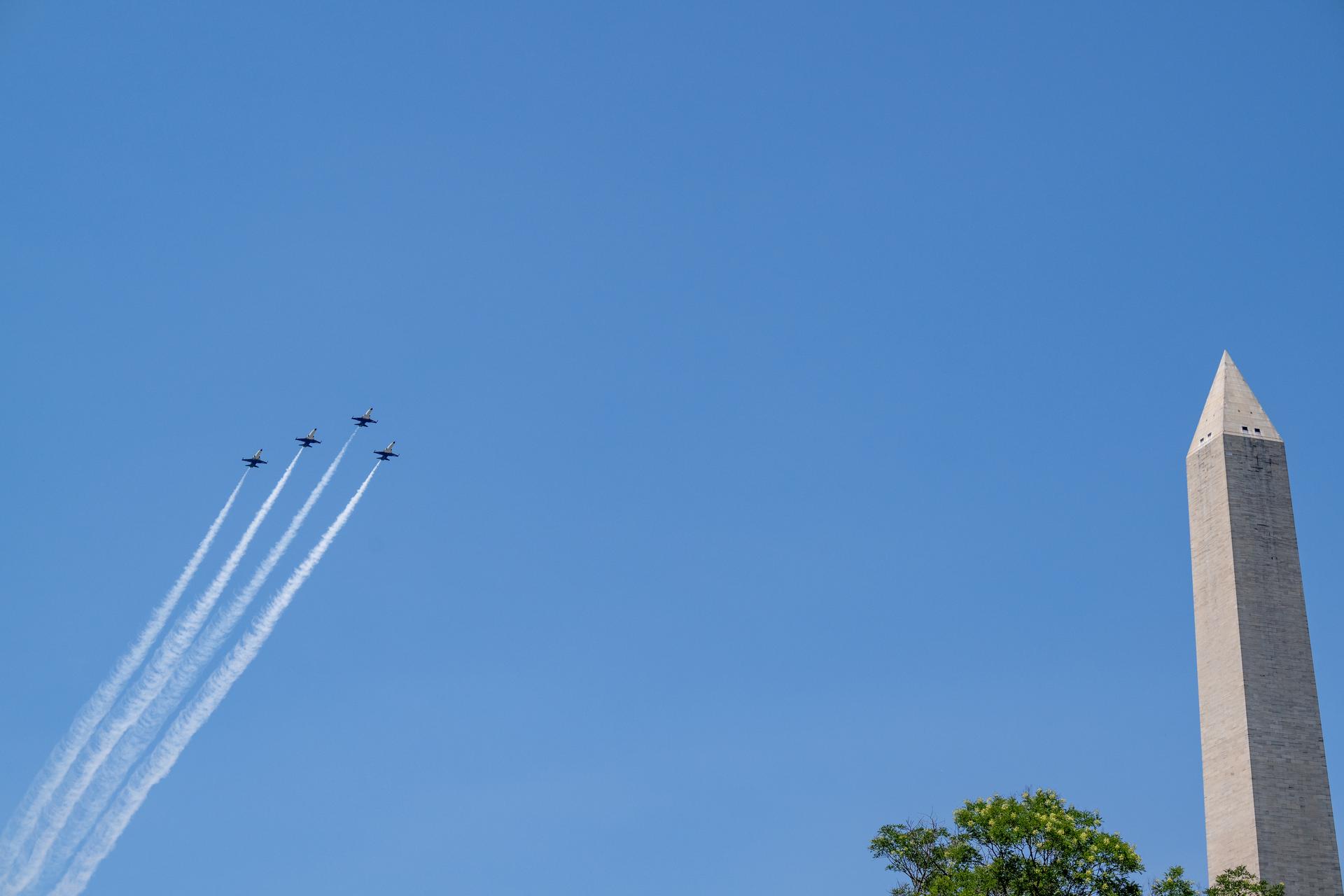
NASA Administrator Jared Isaacman leads a flyover featuring his personally owned F-5 Tiger during the Great American State Fair, Saturday, July 4, 2026, on the National Mall in Washington. Photo Credit: (NASA/Keegan Barber)

CSA (Canadian Space Agency) astronaut Jeremy Hansen, Artemis II mission specialist, participates in a panel discussion during the Great American State Fair, Saturday, July 4, 2026, on the National Mall in Washington, D.C. Photo Credit: (NASA/Bill Ingalls)
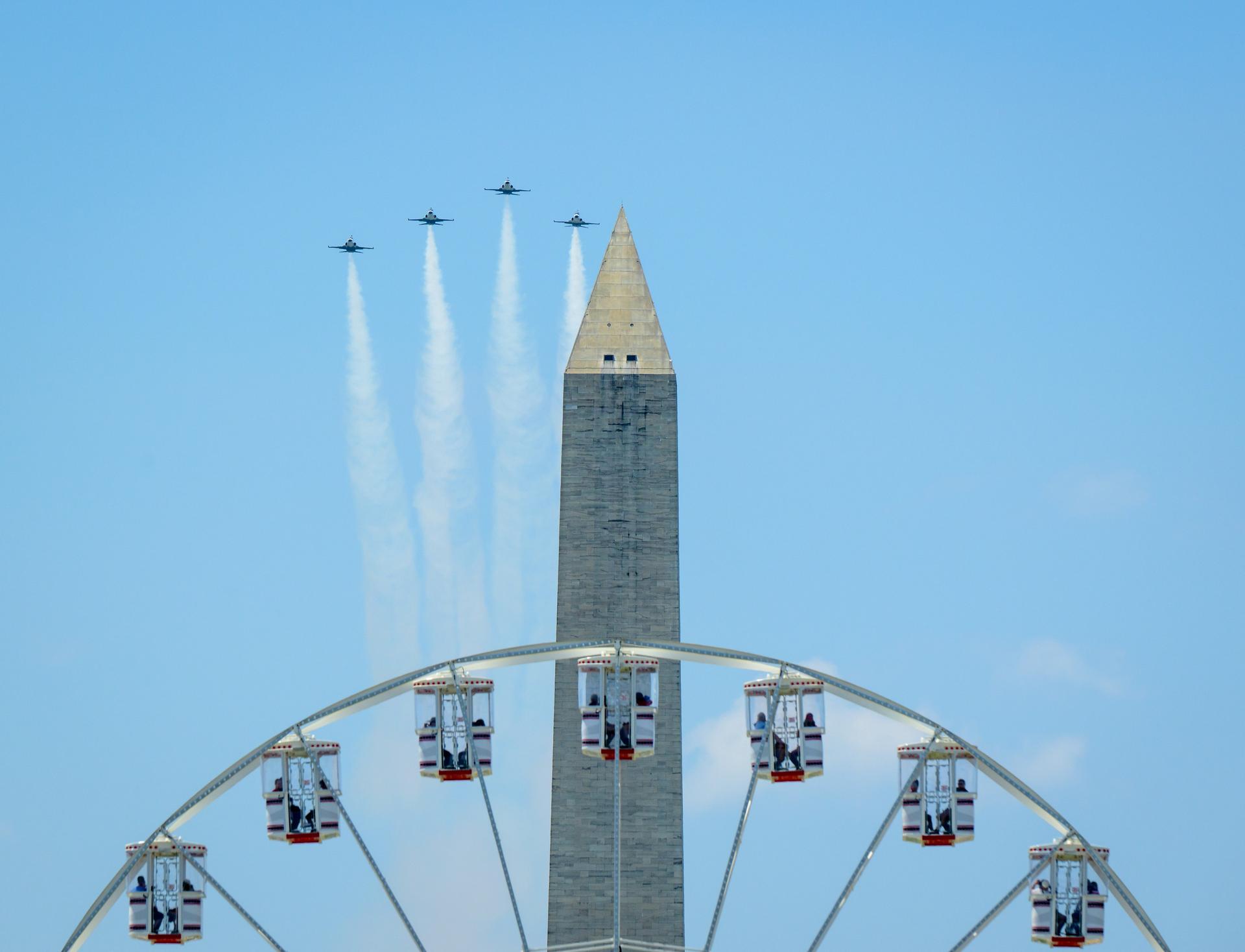
NASA Administrator Jared Isaacman leads a flyover featuring his personally owned F-5 Tiger over the Great American State Fair, Saturday, July 4, 2026, on the National Mall in Washington. Photo Credit: (NASA/Bill Ingalls)
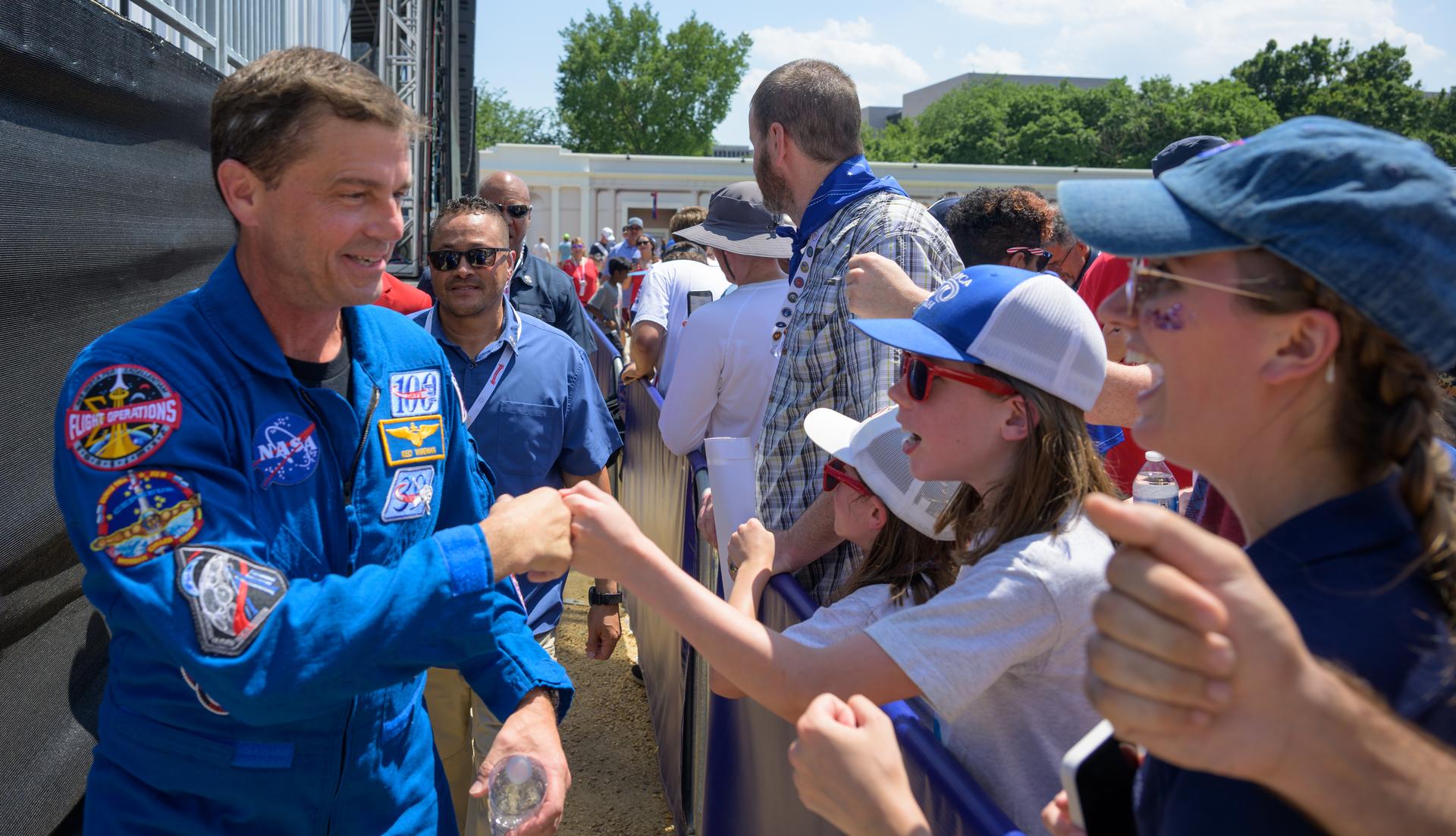
NASA astronaut Reid Wiseman, Artemis II commander, fist bumps an audience member after participating in a panel discussion during the Great American State Fair, Saturday, July 4, 2026, on the National Mall in Washington, D.C. Photo Credit: (NASA/Bill Ingalls)

NASA Administrator Jared Isaacman speaks with attendees following a conversation with Katie Pavlich about the past, present, and future of space exploration on the Freedom Stage at the Great American State Fair, Wednesday, July 8, 2026, on the National Mall in Washington, D.C. Photo Credit: (NASA/Joel Kowsky)
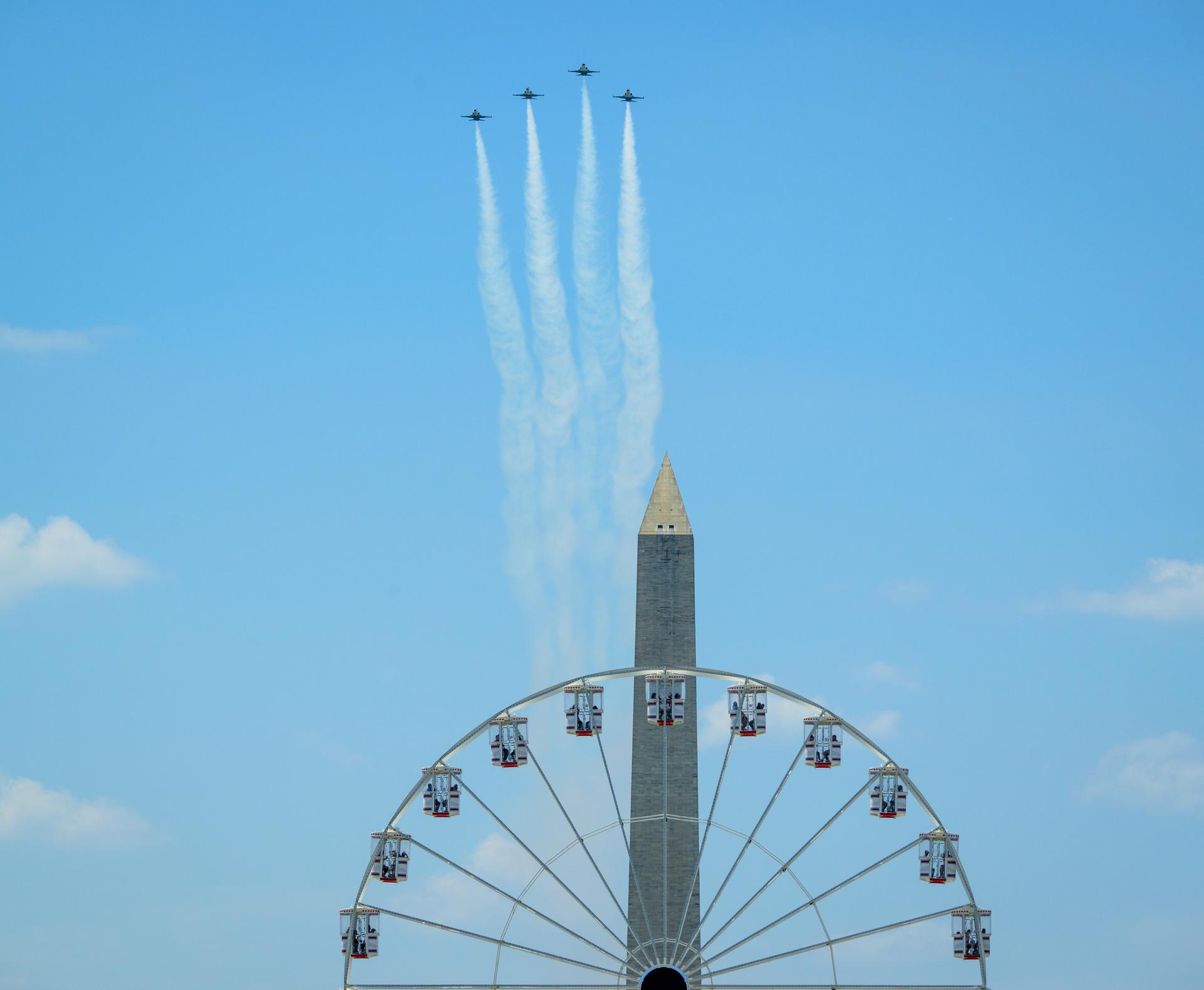
NASA Administrator Jared Isaacman leads a flyover featuring his personally owned F-5 Tiger over the Great American State Fair, Saturday, July 4, 2026, on the National Mall in Washington. Photo Credit: (NASA/Bill Ingalls)
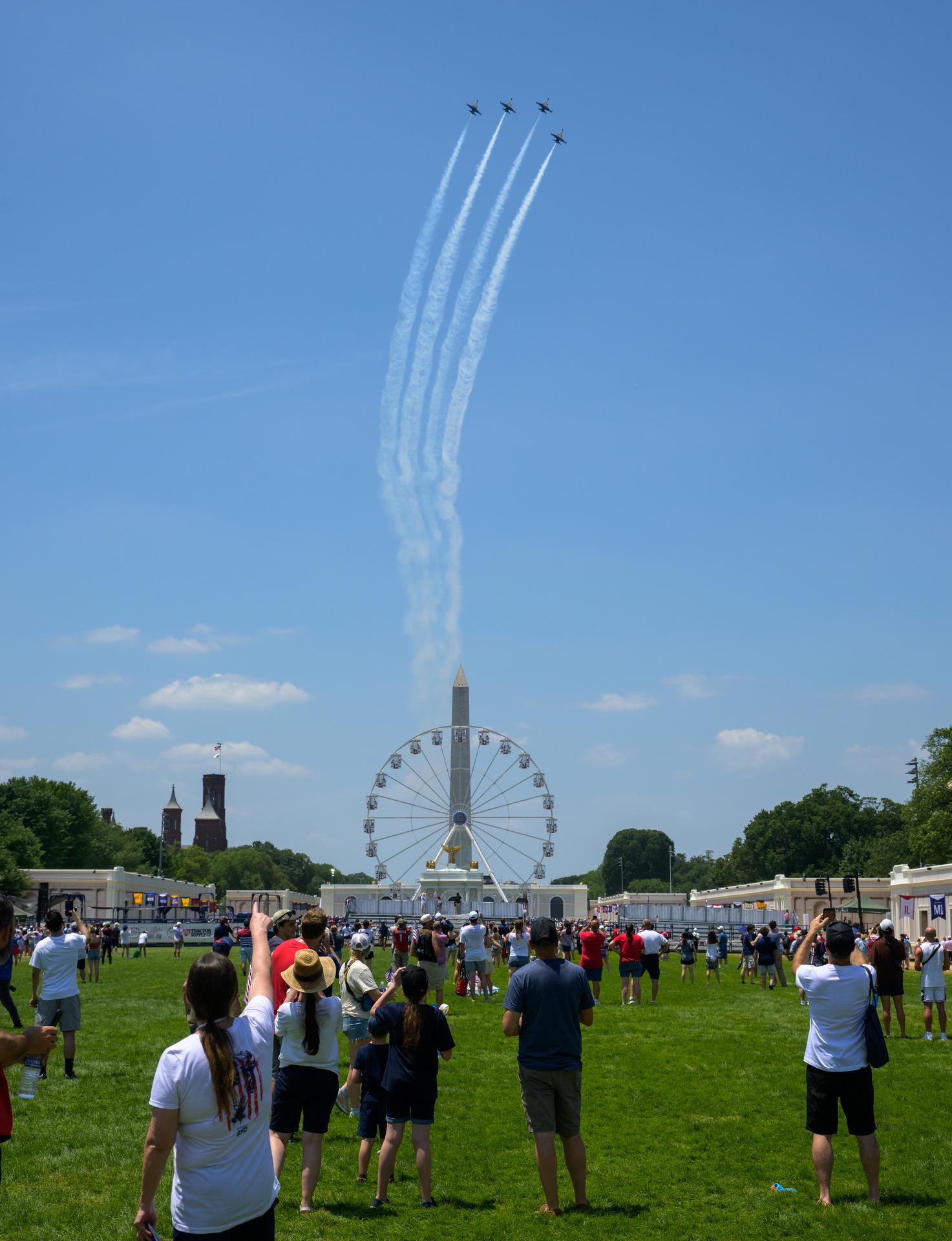
NASA Administrator Jared Isaacman leads a flyover featuring his personally owned F-5 Tiger over the Great American State Fair, Saturday, July 4, 2026, on the National Mall in Washington. Photo Credit: (NASA/Bill Ingalls)
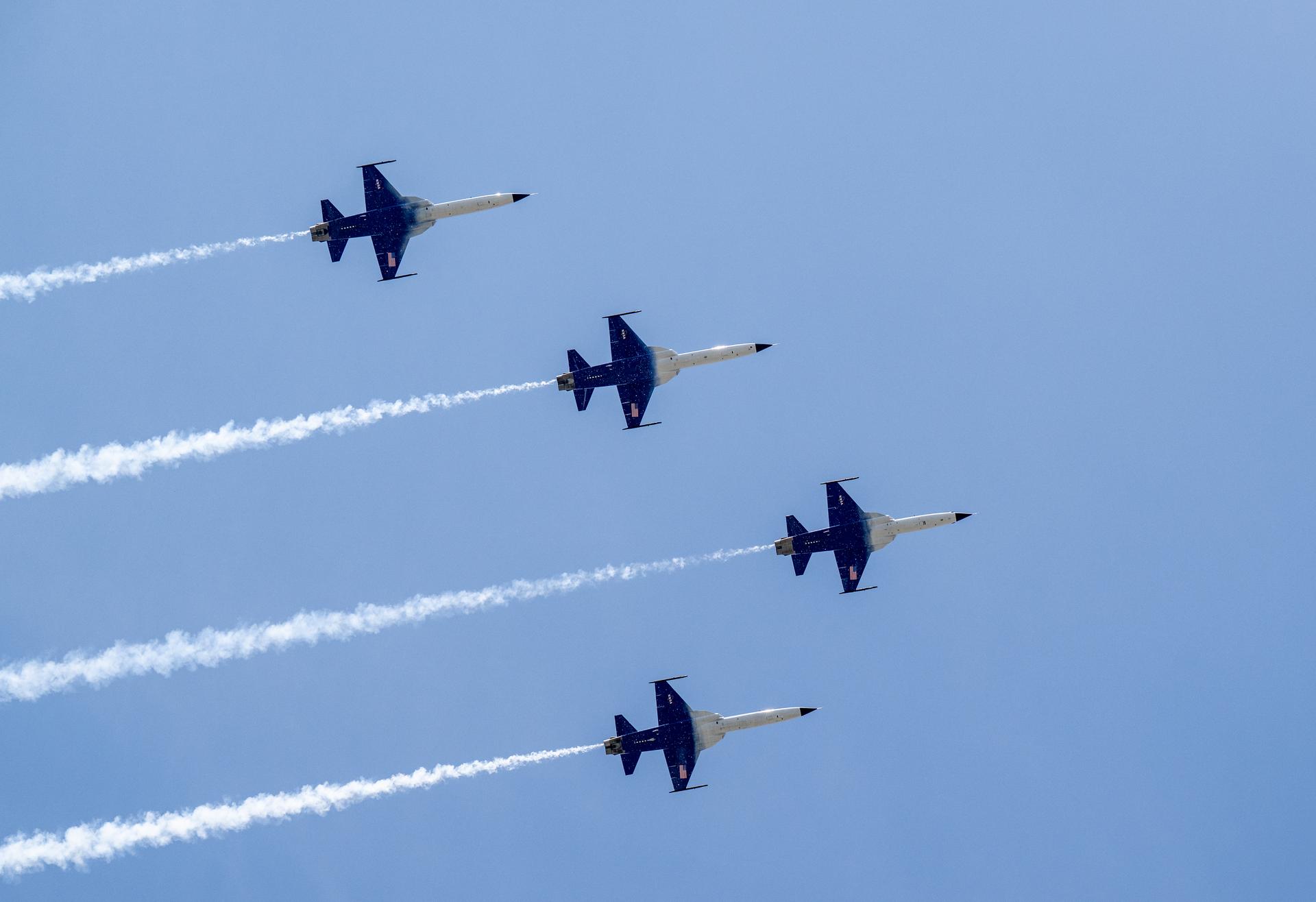
NASA Administrator Jared Isaacman leads a flyover featuring his personally owned F-5 Tiger during the Great American State Fair, Saturday, July 4, 2026, on the National Mall in Washington. Photo Credit: (NASA/Keegan Barber)

NASA astronaut Christina Koch, Artemis II mission specialist, participates in a panel discussion during the Great American State Fair, Saturday, July 4, 2026, on the National Mall in Washington, D.C. Photo Credit: (NASA/Bill Ingalls)

NASA Administrator Jared Isaacman is seen in conversation with Katie Pavlich about the past, present, and future of space exploration on the Freedom Stage at the Great American State Fair, Wednesday, July 8, 2026, on the National Mall in Washington, D.C. Photo Credit: (NASA/Joel Kowsky)
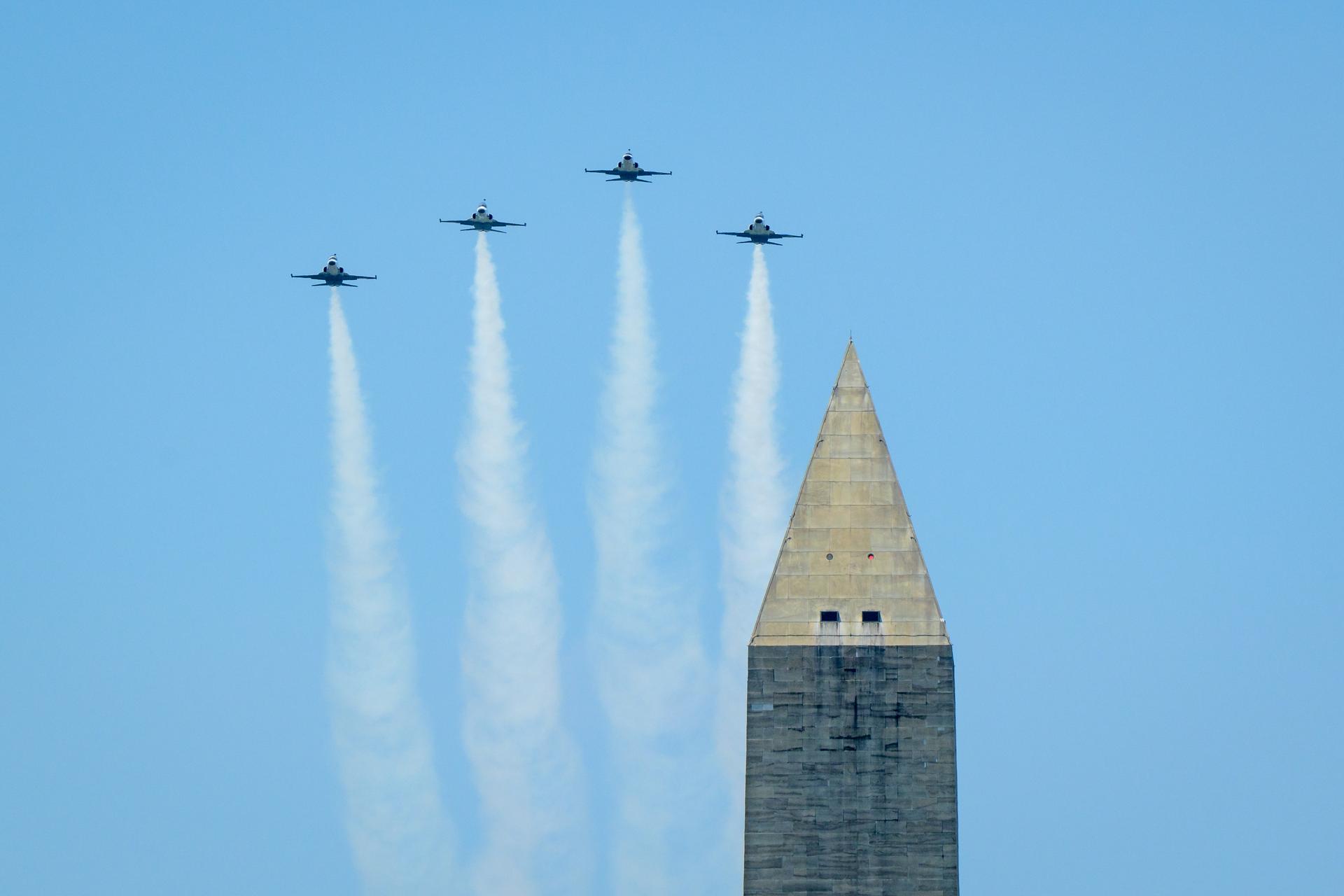
NASA Administrator Jared Isaacman leads a flyover featuring his personally owned F-5 Tiger over the Great American State Fair, Saturday, July 4, 2026, on the National Mall in Washington. Photo Credit: (NASA/Bill Ingalls)

NASA astronaut Victor Glover, Artemis II pilot, fist bumps an audience member after participating in a panel discussion during the Great American State Fair, Saturday, July 4, 2026, on the National Mall in Washington, D.C. Photo Credit: (NASA/Bill Ingalls)
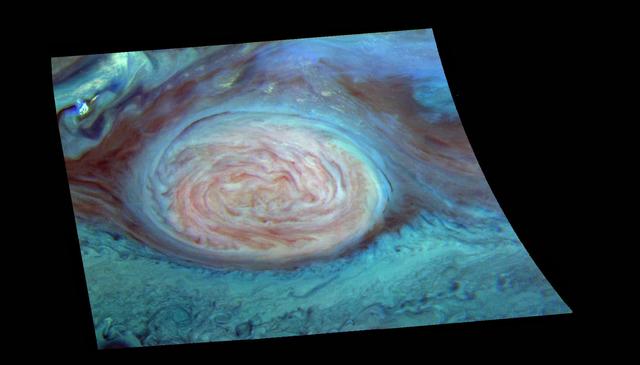
False color representation of Jupiter Great Red Spot GRS taken by NASA Galileo imaging system. The Great Red Spot appears pink and the surrounding region blue because of the particular color coding used in this representation.
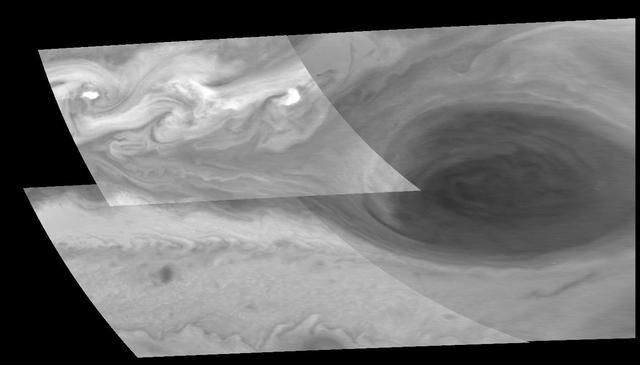
Turbulent region west of Jupiter Great Red Spot. This four image mosaic shows the Great Red Spot on Jupiter eastern edge or limb as seen by NASA Galileo orbiter d on June 26, 1996.
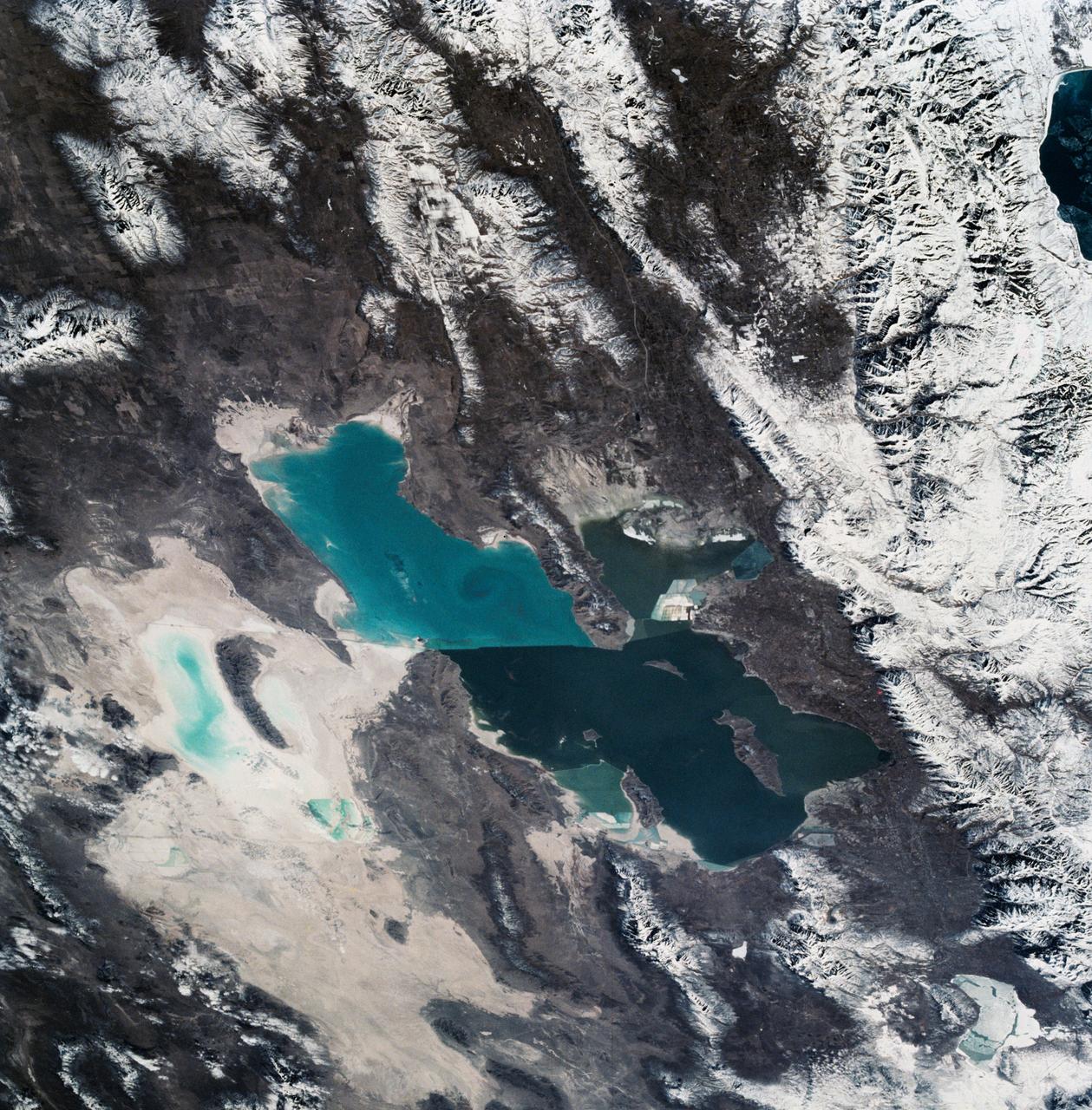
As seen from space, the Great Salt Lake, Utah, USA (41.5N, 112.5W) appears as two separate bodies of water with a narrow divider in the middle. At the turn of the century, a railroad bridge without culverts, was built across the lake and ever since, the water and salinity levels have been uneqal on either side. Fed by snowmelt from the nearby Wasatch Mountains, the lake in recent years has had record high water levels, threatening to flood the local areas.
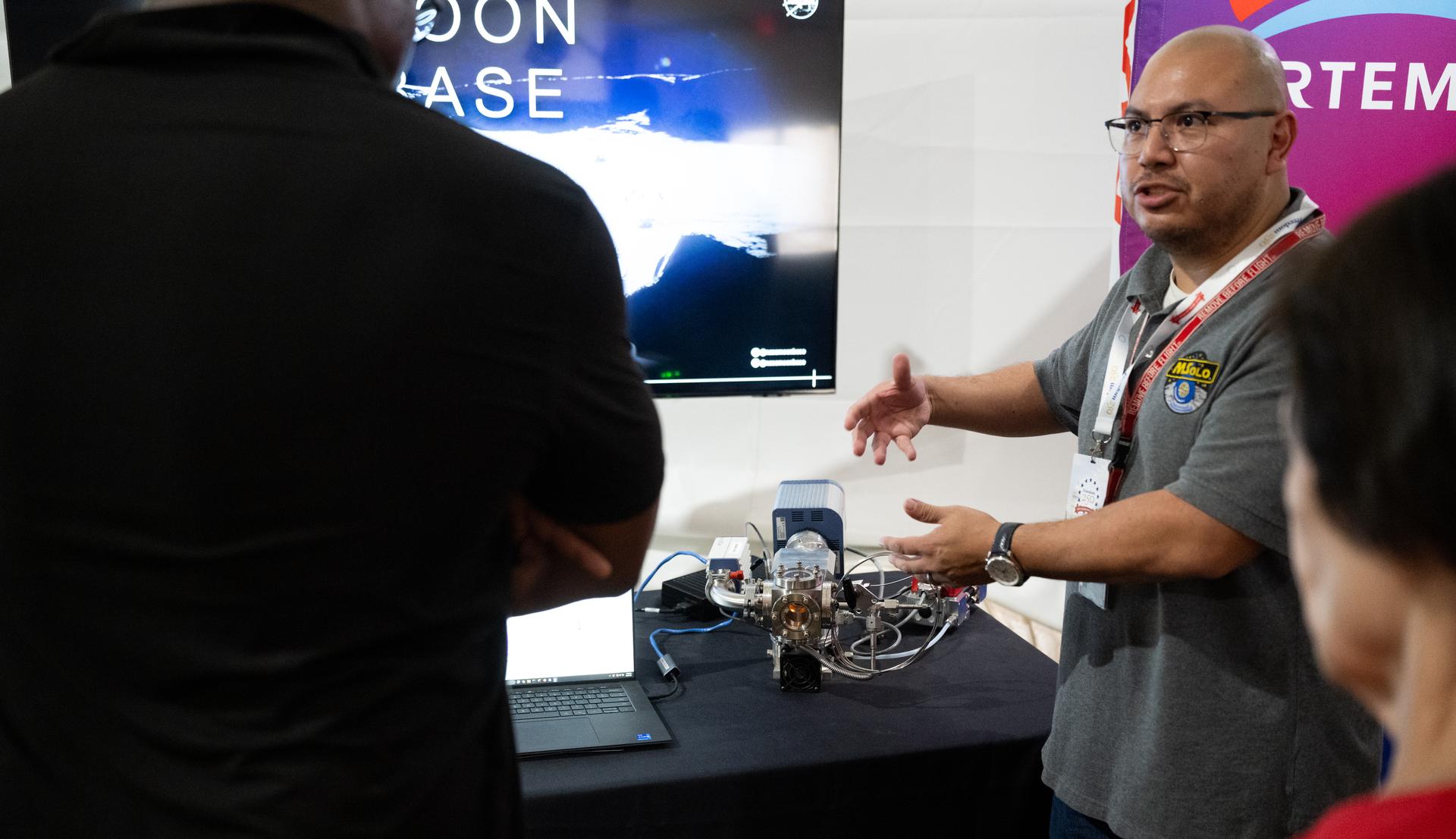
A demonstration model of the Mass Spectrometer observing lunar operations, or MSolo, is seen Great American State Fair as visitors view NASA exhibits in the American Innovation Pavilion, Wednesday, July 8, 2026, on the National Mall in Washington, D.C. MSolo is a modified commercial off-the-shelf mass spectrometer developed at NASA’s Kennedy Space Center to analyze the chemical makeup of the Moon’s surface. Photo Credit: (NASA/Joel Kowsky)
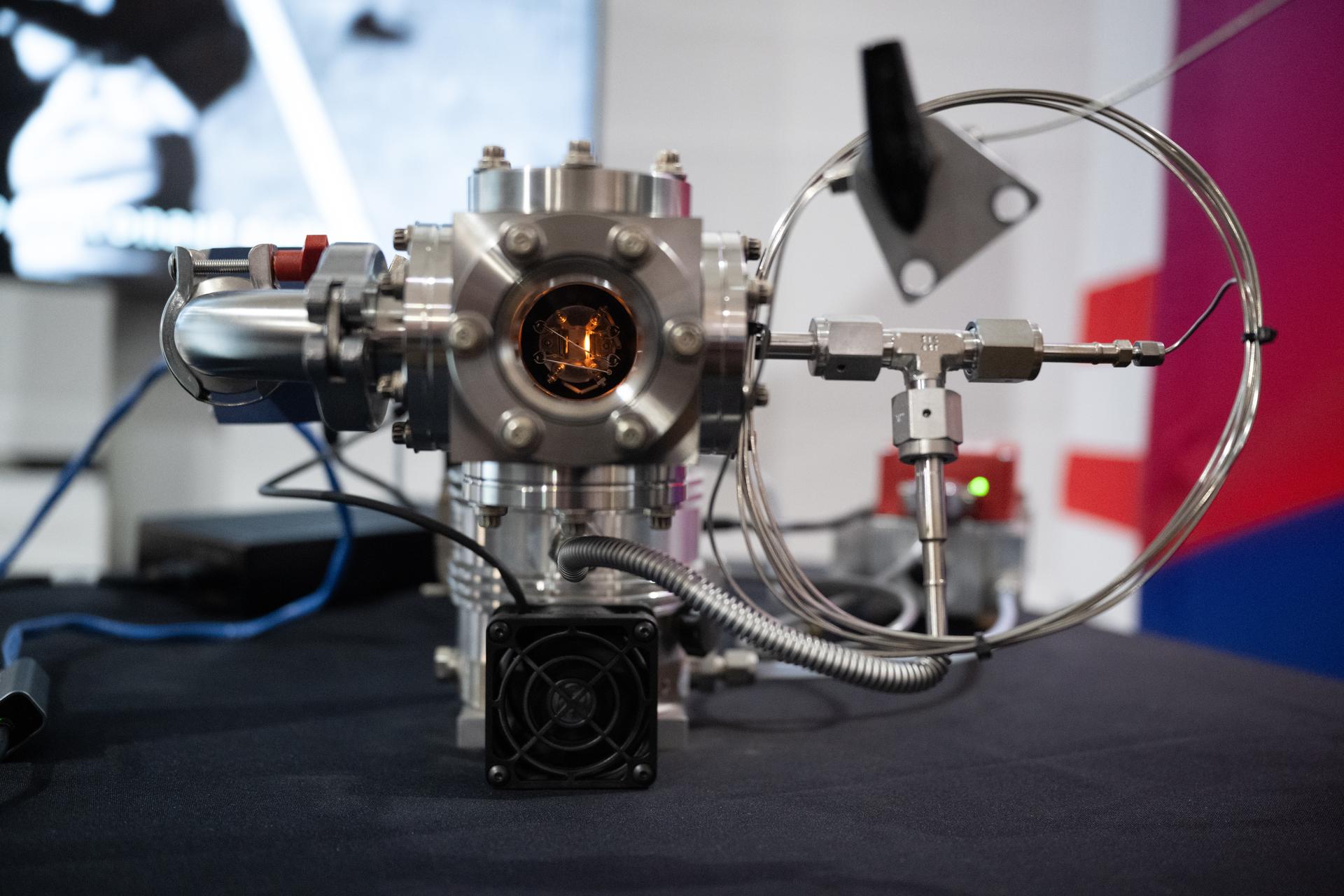
A demonstration model of the Mass Spectrometer observing lunar operations, or MSolo, is seen at the Great American State Fair as visitors view NASA exhibits in the American Innovation Pavilion, Wednesday, July 8, 2026, on the National Mall in Washington, D.C. MSolo is a modified commercial off-the-shelf mass spectrometer developed at NASA’s Kennedy Space Center to analyze the chemical makeup of the Moon’s surface. Photo Credit: (NASA/Joel Kowsky)

This photo of Jupiter Great Red Spot was taken by Voyager 1 in early March 1979.
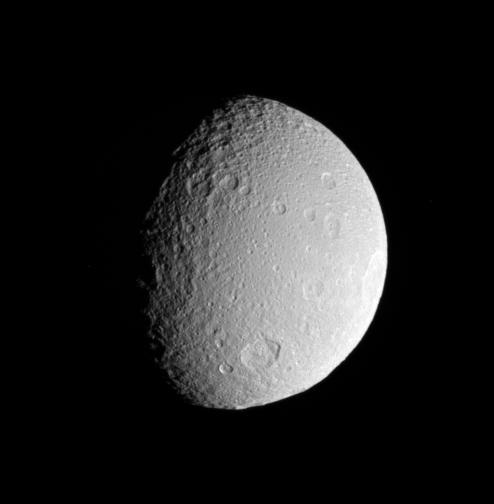
The Cassini spacecraft surveys the battered surface of icy Tethys. The great impact basin straddling the terminator is itself overprinted by many smaller impact sites
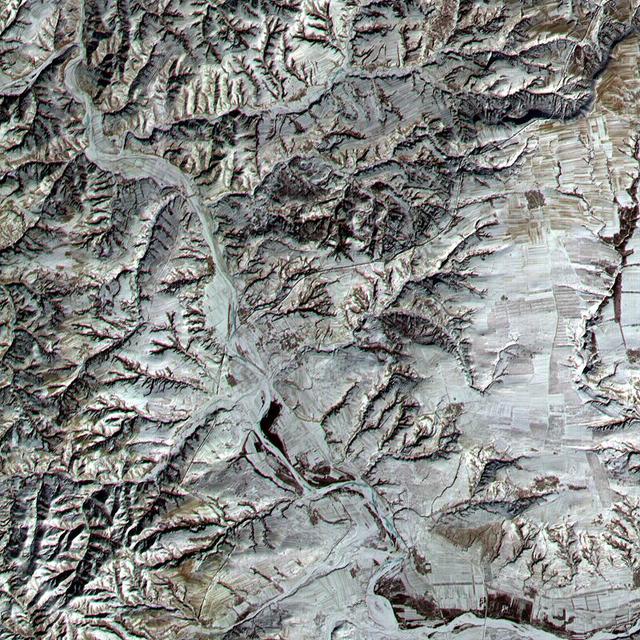
This ASTER sub-image covers a 12 x 12 km area in northern Shanxi Province, China, and was acquired January 9, 2001. The low sun angle, and light snow cover highlight a section of the Great Wall, visible as a black line running diagonally through the image from lower left to upper right. The Great Wall is over 2000 years old and was built over a period of 1000 years. Stretching 4500 miles from Korea to the Gobi Desert it was first built to protect China from marauders from the north. This image is located at 40.2 degrees north latitude and 112.8 degrees east longitude. http://photojournal.jpl.nasa.gov/catalog/PIA02669
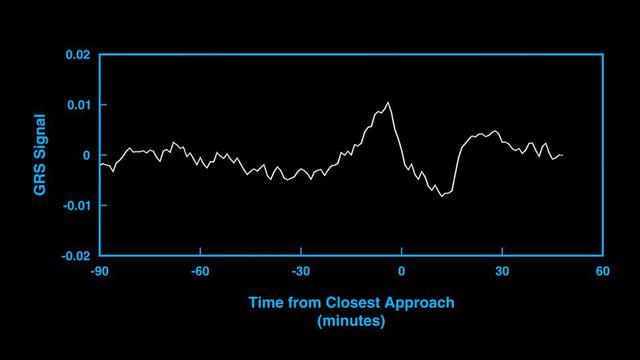
This animation and audio represent the subtle gravitational signal acquired by an antenna of NASA's Deep Space Network as the agency's Juno spacecraft performed a close flyby of Jupiter's Great Red Spot in July 2019. The changes in the signal frequency represent the changes in the local gravity as the spacecraft flew low overhead. Juno flew twice over the Great Red Spot in 2019, with the goal of picking up the subtle gravitational signal of the vortex. The concentration of mass caused by the powerful winds surrounding the Great Red Spot minutely change the spacecraft's velocity, inducing a Doppler shift on the radio signals relayed back to Earth. Movie available at https://photojournal.jpl.nasa.gov/catalog/PIA24963

This view of Jupiter was taken by Voyager 1. This image was taken through color filters and recombined to produce the color image. This photo was assembled from three black and white negatives by the Image Processing Lab at Jet Propulsion Laboratory. http://photojournal.jpl.nasa.gov/catalog/PIA01384
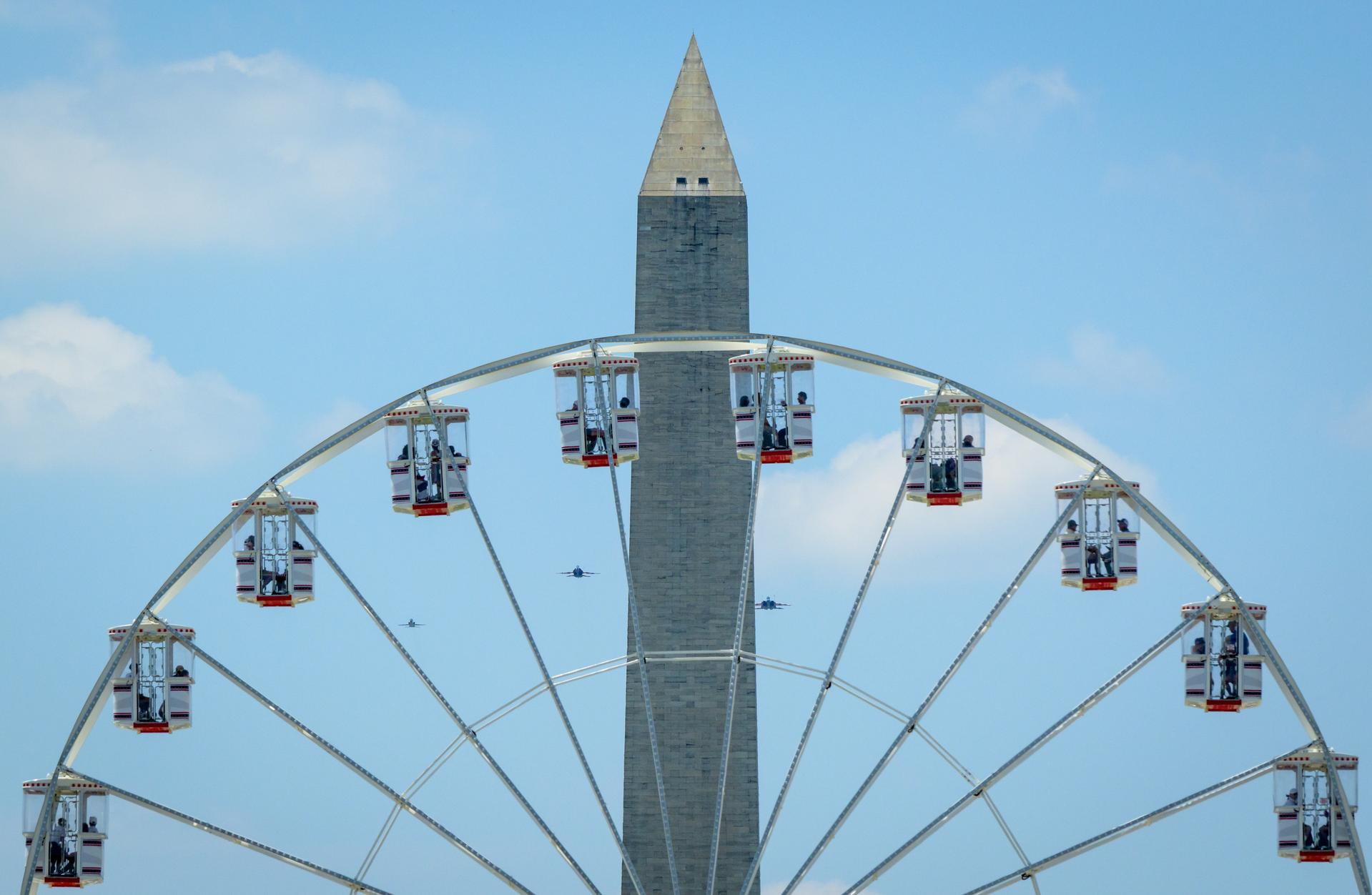
NASA’s T-38 Talon, left, F/A-18 Hornet and F-15 Eagle, right, aircraft are seen as they perform a flyover during the Great American State Fair, Saturday, July 4, 2026, on the National Mall in Washington. Photo Credit: (NASA/Bill Ingalls)

NASA Administrator Jared Isaacman, left, is seen in conversation with Katie Pavlich about the past, present, and future of space exploration on the Freedom Stage at the Great American State Fair, Wednesday, July 8, 2026, on the National Mall in Washington, D.C. Photo Credit: (NASA/Joel Kowsky)

NASA Administrator Jared Isaacman, left, is seen in conversation with Katie Pavlich about the past, present, and future of space exploration on the Freedom Stage at the Great American State Fair, Wednesday, July 8, 2026, on the National Mall in Washington, D.C. Photo Credit: (NASA/Joel Kowsky)
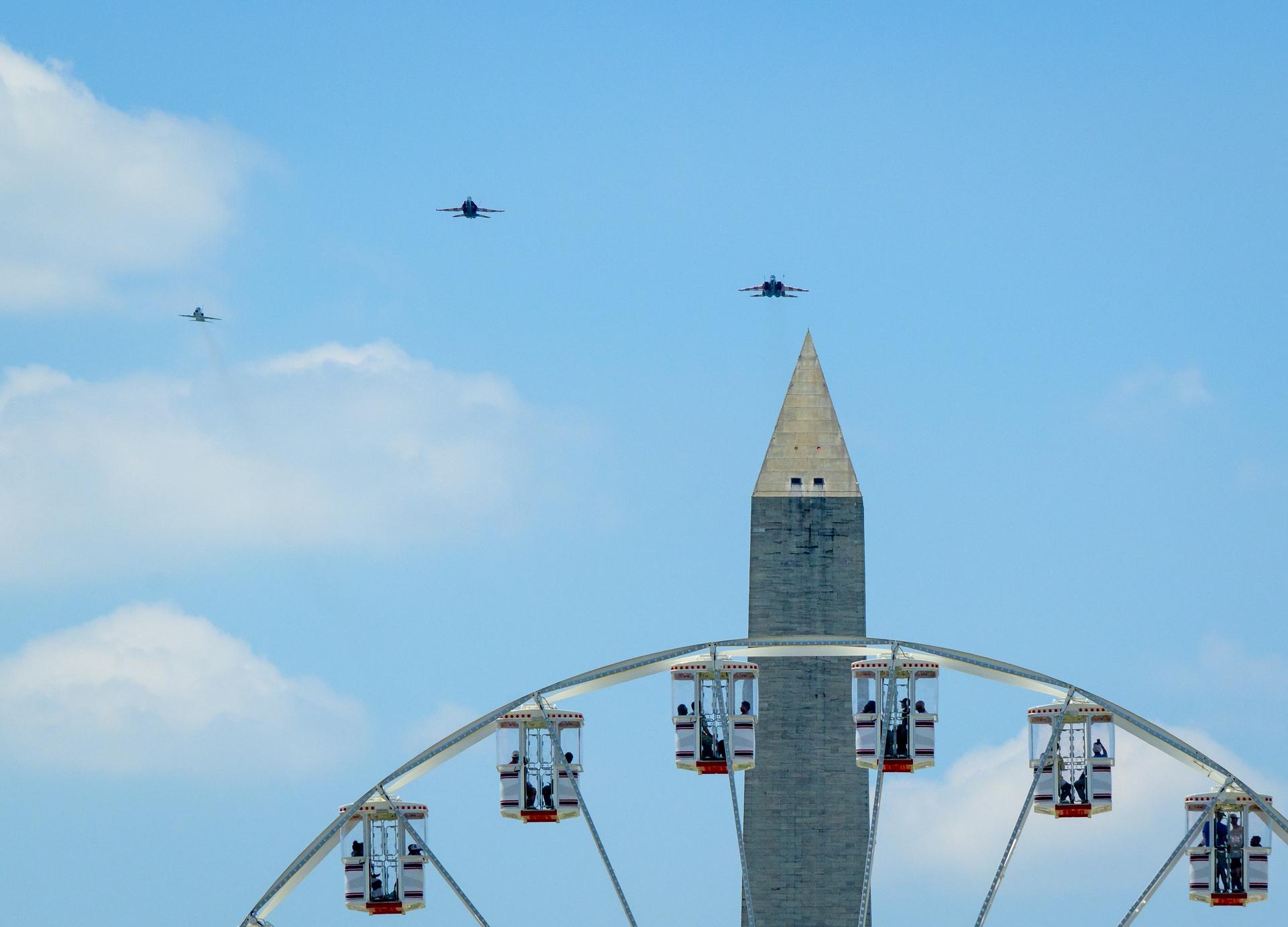
NASA’s T-38 Talon, left, F/A-18 Hornet and F-15 Eagle, right, aircraft are seen as they perform a flyover during the Great American State Fair, Saturday, July 4, 2026, on the National Mall in Washington. Photo Credit: (NASA/Bill Ingalls)
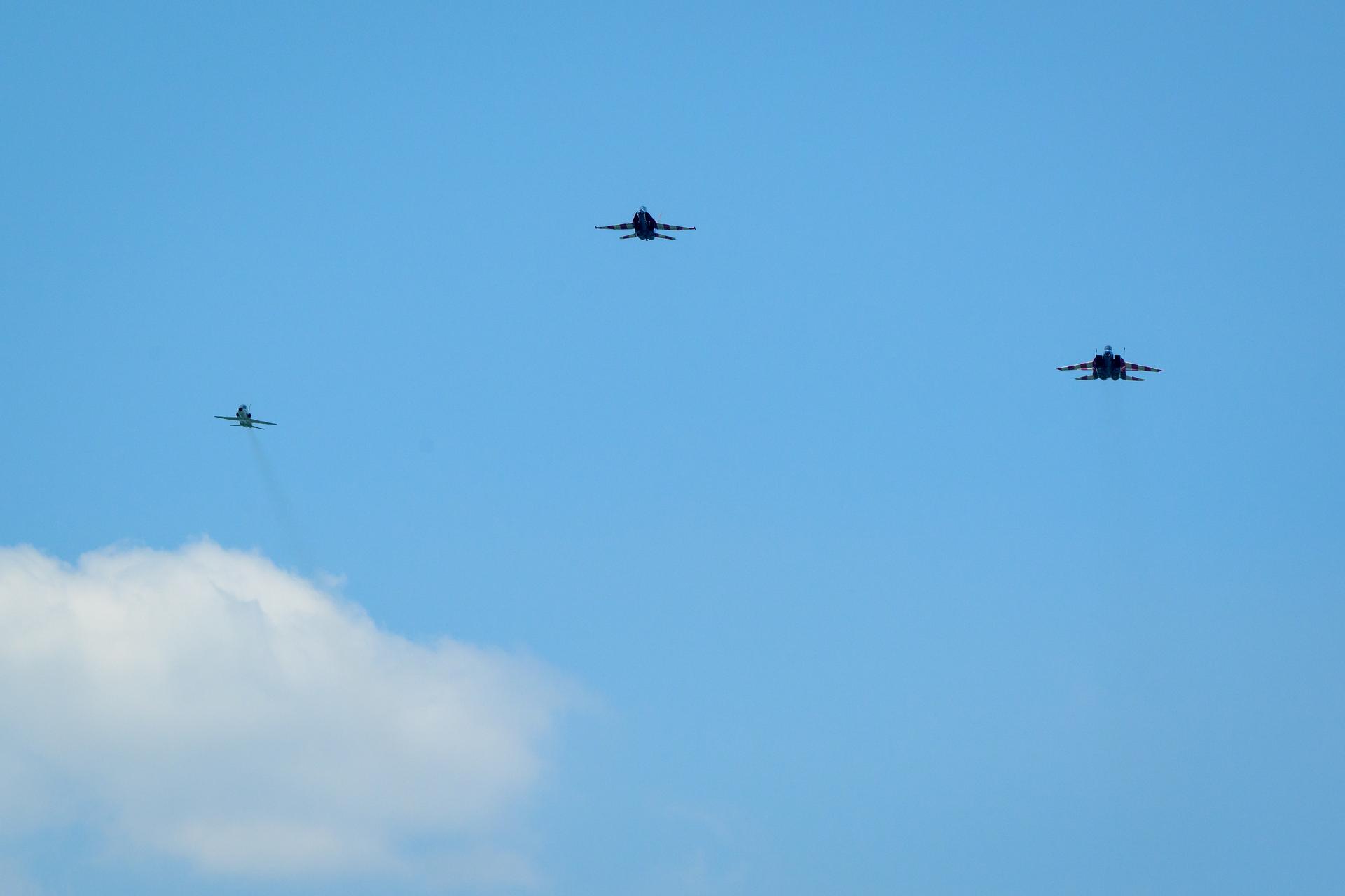
NASA’s T-38 Talon, left, F/A-18 Hornet and F-15 Eagle, right, aircraft are seen as they perform a flyover during the Great American State Fair, Saturday, July 4, 2026, on the National Mall in Washington. Photo Credit: (NASA/Bill Ingalls)

NASA Administrator Jared Isaacman, left, is seen in conversation with Katie Pavlich about the past, present, and future of space exploration on the Freedom Stage at the Great American State Fair, Wednesday, July 8, 2026, on the National Mall in Washington, D.C. Photo Credit: (NASA/Joel Kowsky)
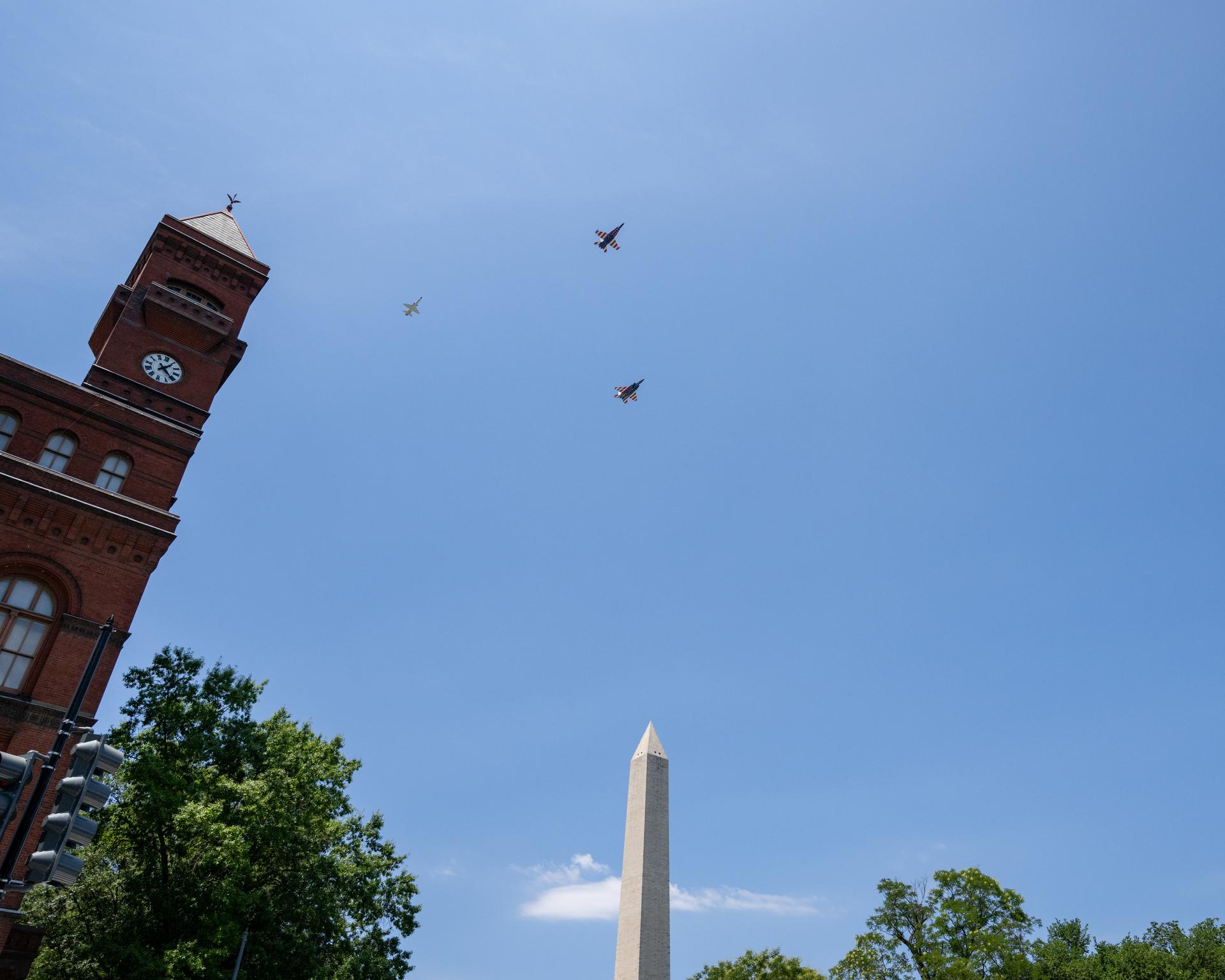
NASA’s T-38 Talon, F/A-18 Hornet and F-15 Eagle aircraft are seen as they perform a flyover during the Great American State Fair, Saturday, July 4, 2026, on the National Mall in Washington. Photo Credit: (NASA/Keegan Barber)

NASA Administrator Jared Isaacman, left, is seen in conversation with Katie Pavlich about the past, present, and future of space exploration on the Freedom Stage at the Great American State Fair, Wednesday, July 8, 2026, on the National Mall in Washington, D.C. Photo Credit: (NASA/Joel Kowsky)
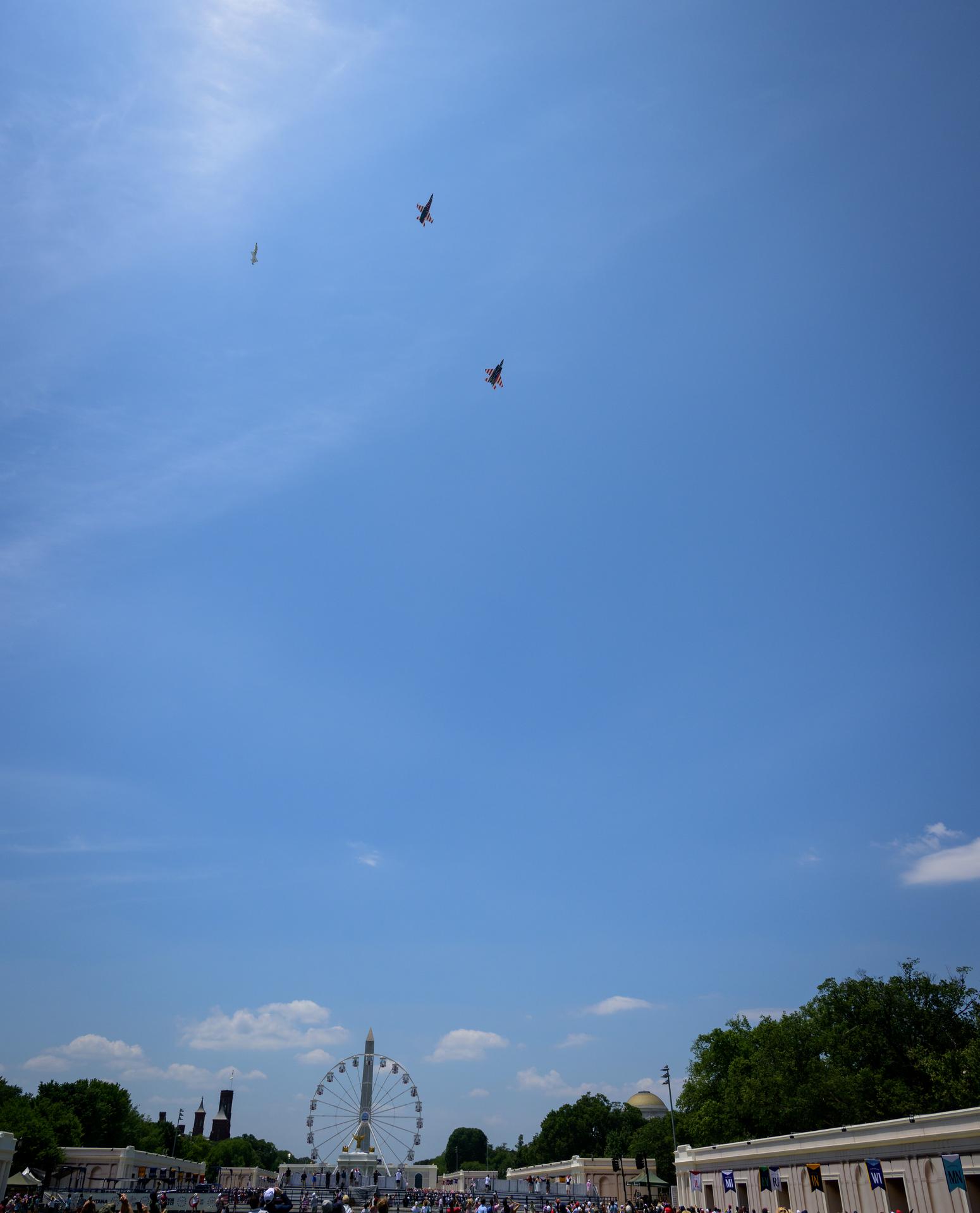
NASA’s T-38 Talon, left, F/A-18 Hornet and F-15 Eagle, right, aircraft are seen as they perform a flyover during the Great American State Fair, Saturday, July 4, 2026, on the National Mall in Washington. Photo Credit: (NASA/Bill Ingalls)
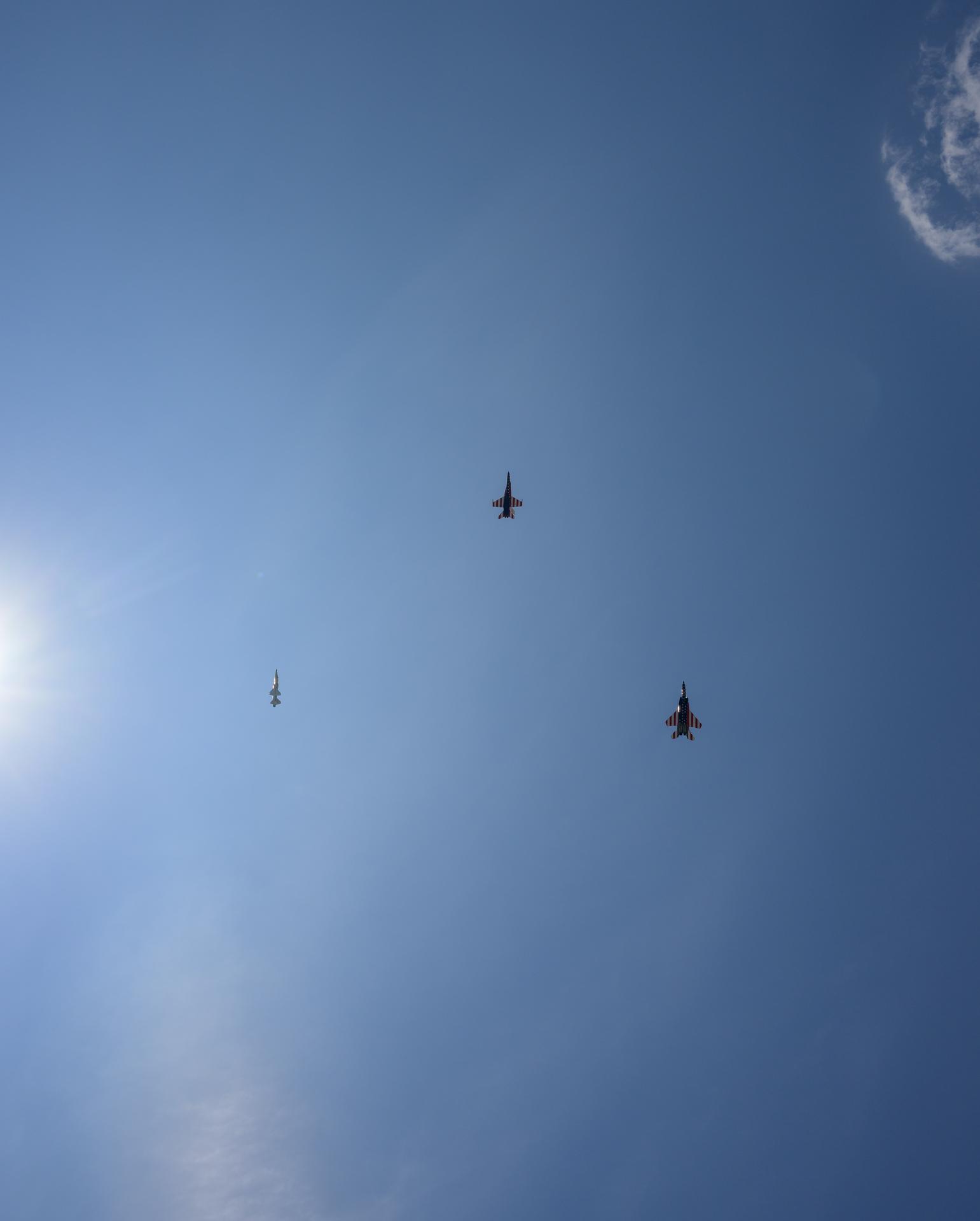
NASA’s T-38 Talon, left, F/A-18 Hornet and F-15 Eagle, right, aircraft are seen as they perform a flyover during the Great American State Fair, Saturday, July 4, 2026, on the National Mall in Washington. Photo Credit: (NASA/Bill Ingalls)
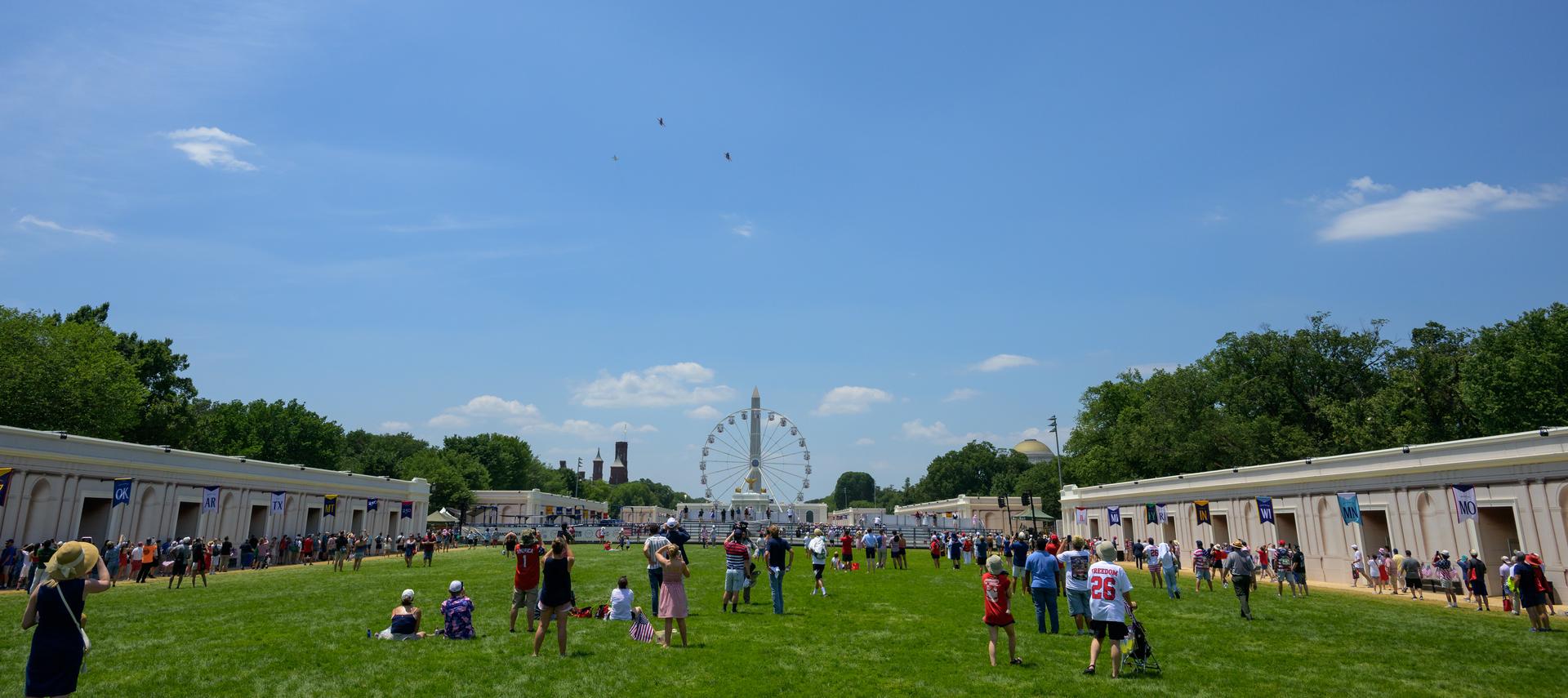
NASA’s T-38 Talon, left, F/A-18 Hornet and F-15 Eagle, right, aircraft are seen as they perform a flyover during the Great American State Fair, Saturday, July 4, 2026, on the National Mall in Washington. Photo Credit: (NASA/Bill Ingalls)

Mickey Smith Jr., America’s Educator and Motivator, moderates a panel discussion with NASA astronauts Reid Wiseman, commander; Victor Glover, pilot; Christina Koch, mission specialist; and CSA (Canadian Space Agency) astronaut Jeremy Hansen, mission specialist, during the Great American State Fair, Saturday, July 4, 2026, on the National Mall in Washington, D.C. Photo Credit: (NASA/Bill Ingalls)