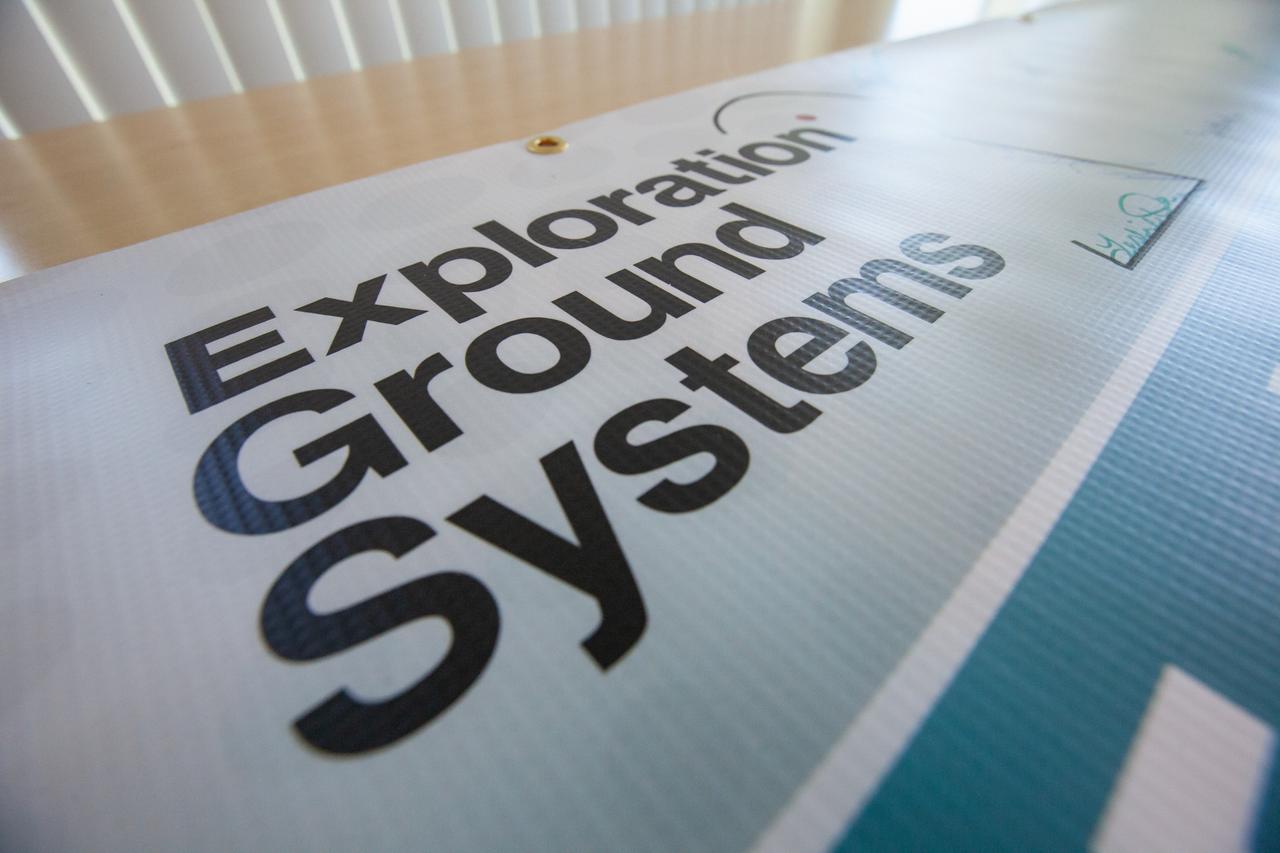
A banner signing event was held April 22, 2019, at NASA’s Kennedy Space Center in Florida, to mark the accomplishments of the Kennedy engineering team that supported the Ground Support Equipment (GSE) Subsystem Software development. This team includes the software leads, local developers, remote developers, modelers, project engineers, software quality assurance, build team members, integrators, system engineers, a chief engineer and some software managers. There are 60 unique instances of GSE Subsystem Software code. As of today, 58 of those 60 instances have completed software Level 5 Verification (L5V) and are in the process of completing Subsystem Verification & Validation.
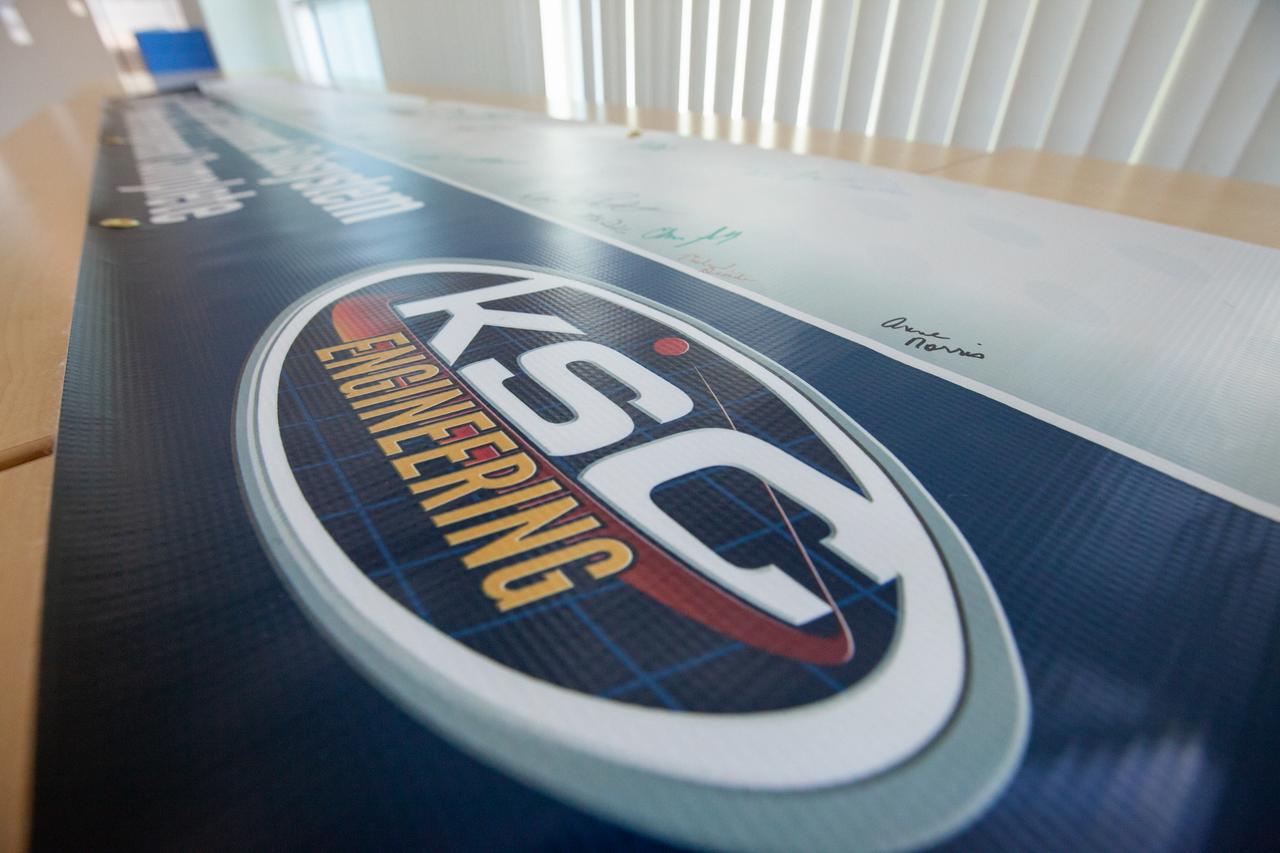
A banner signing event was held April 22, 2019, at NASA’s Kennedy Space Center in Florida, to mark the accomplishments of the Kennedy engineering team that supported the Ground Support Equipment (GSE) Subsystem Software development. This team includes the software leads, local developers, remote developers, modelers, project engineers, software quality assurance, build team members, integrators, system engineers, a chief engineer and some software managers. There are 60 unique instances of GSE Subsystem Software code. As of today, 58 of those 60 instances have completed software Level 5 Verification (L5V) and are in the process of completing Subsystem Verification & Validation.
A banner signing event was held April 22, 2019, at NASA’s Kennedy Space Center in Florida, to mark the accomplishments of the Kennedy engineering team that supported the Ground Support Equipment (GSE) Subsystem Software development. This team includes the software leads, local developers, remote developers, modelers, project engineers, software quality assurance, build team members, integrators, system engineers, a chief engineer and some software managers. There are 60 unique instances of GSE Subsystem Software code. As of today, 58 of those 60 instances have completed software Level 5 Verification (L5V) and are in the process of completing Subsystem Verification & Validation.
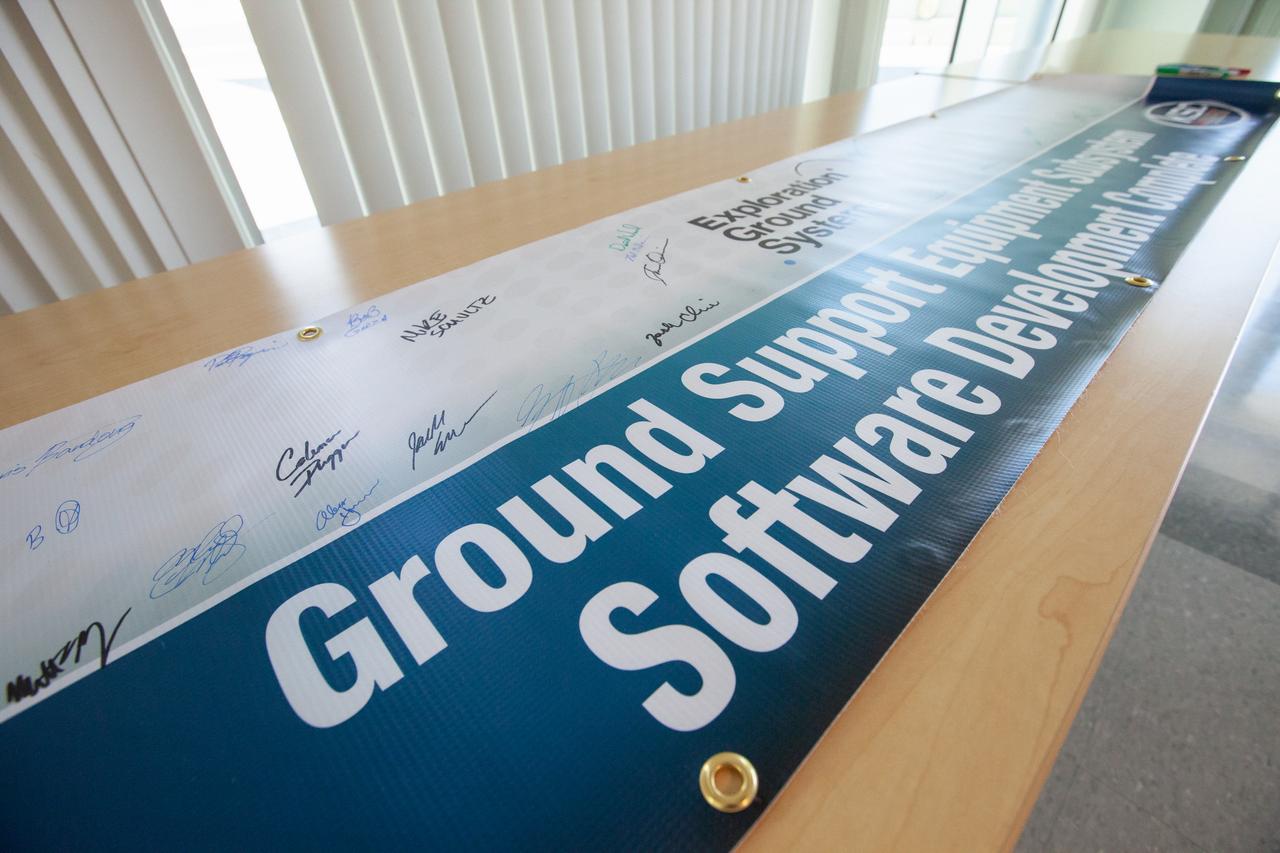
A banner signing event was held April 22, 2019, at NASA’s Kennedy Space Center in Florida, to mark the accomplishments of the Kennedy engineering team that supported the Ground Support Equipment (GSE) Subsystem Software development. This team includes the software leads, local developers, remote developers, modelers, project engineers, software quality assurance, build team members, integrators, system engineers, a chief engineer and some software managers. There are 60 unique instances of GSE Subsystem Software code. As of today, 58 of those 60 instances have completed software Level 5 Verification (L5V) and are in the process of completing Subsystem Verification & Validation.

A banner signing event was held April 22, 2019, at NASA’s Kennedy Space Center in Florida, to mark the accomplishments of the Kennedy engineering team that supported the Ground Support Equipment (GSE) Subsystem Software development. This team includes the software leads, local developers, remote developers, modelers, project engineers, software quality assurance, build team members, integrators, system engineers, a chief engineer and some software managers. There are 60 unique instances of GSE Subsystem Software code. As of today, 58 of those 60 instances have completed software Level 5 Verification (L5V) and are in the process of completing Subsystem Verification & Validation.
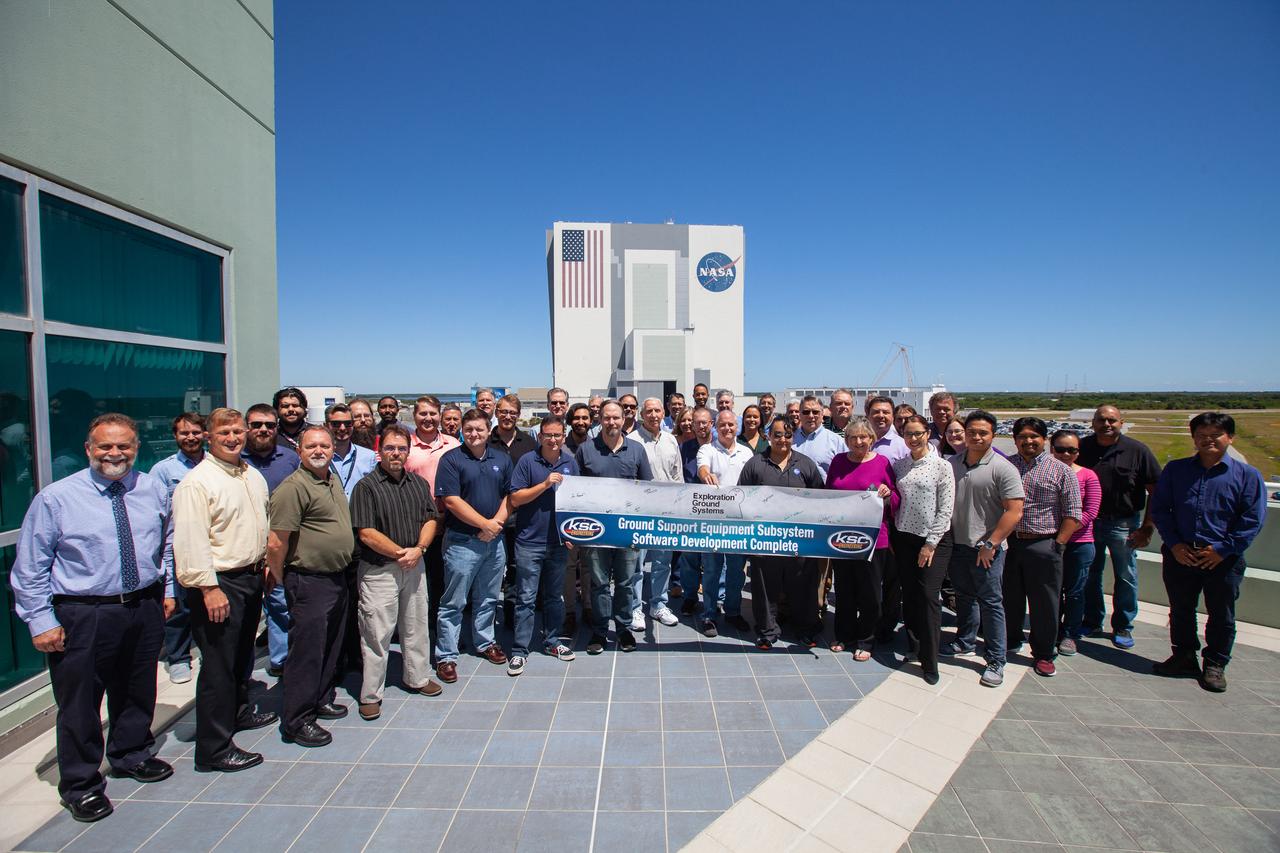
A banner signing event was held April 22, 2019, at NASA’s Kennedy Space Center in Florida, to mark the accomplishments of the Kennedy engineering team that supported the Ground Support Equipment (GSE) Subsystem Software development. The team gathered in the observation area of the Operations Support Building II with a view of the Vehicle Assembly Building behind them. This team includes the software leads, local developers, remote developers, modelers, project engineers, software quality assurance, build team members, integrators, system engineers, a chief engineer and some software managers. There are 60 unique instances of GSE Subsystem Software code. As of today, 58 of those 60 instances have completed software Level 5 Verification (L5V) and are in the process of completing Subsystem Verification & Validation.

Inside the Space Station Processing Facility low bay at NASA’s Kennedy Space Center in Florida, technicians use a crane to lift the cover off ground support equipment for the Orbital ATK OA-7 commercial resupply services mission. The Orbital ATK CRS-7 with the Cygnus cargo module will lift off atop a United Launch Alliance Atlas V rocket from Space launch Complex 41 at Cape Canaveral Air Force Station. The commercial resupply services mission to the International Space Station will deliver thousands of pounds of supplies, equipment and scientific research materials that improve life on Earth and drive progress toward future space exploration.

Sealed in its shipping container, the ground support equipment for the Orbital ATK OA-7 commercial resupply services mission has arrived at the Space Station Processing Facility at NASA's Kennedy Space Center in Florida. The container will be moved inside the low bay of the facility. The Orbital ATK CRS-7 with the Cygnus cargo module will lift off atop a United Launch Alliance Atlas V rocket from Space launch Complex 41 at Cape Canaveral Air Force Station. The commercial resupply services mission to the International Space Station will deliver thousands of pounds of supplies, equipment and scientific research materials that improve life on Earth and drive progress toward future space exploration.
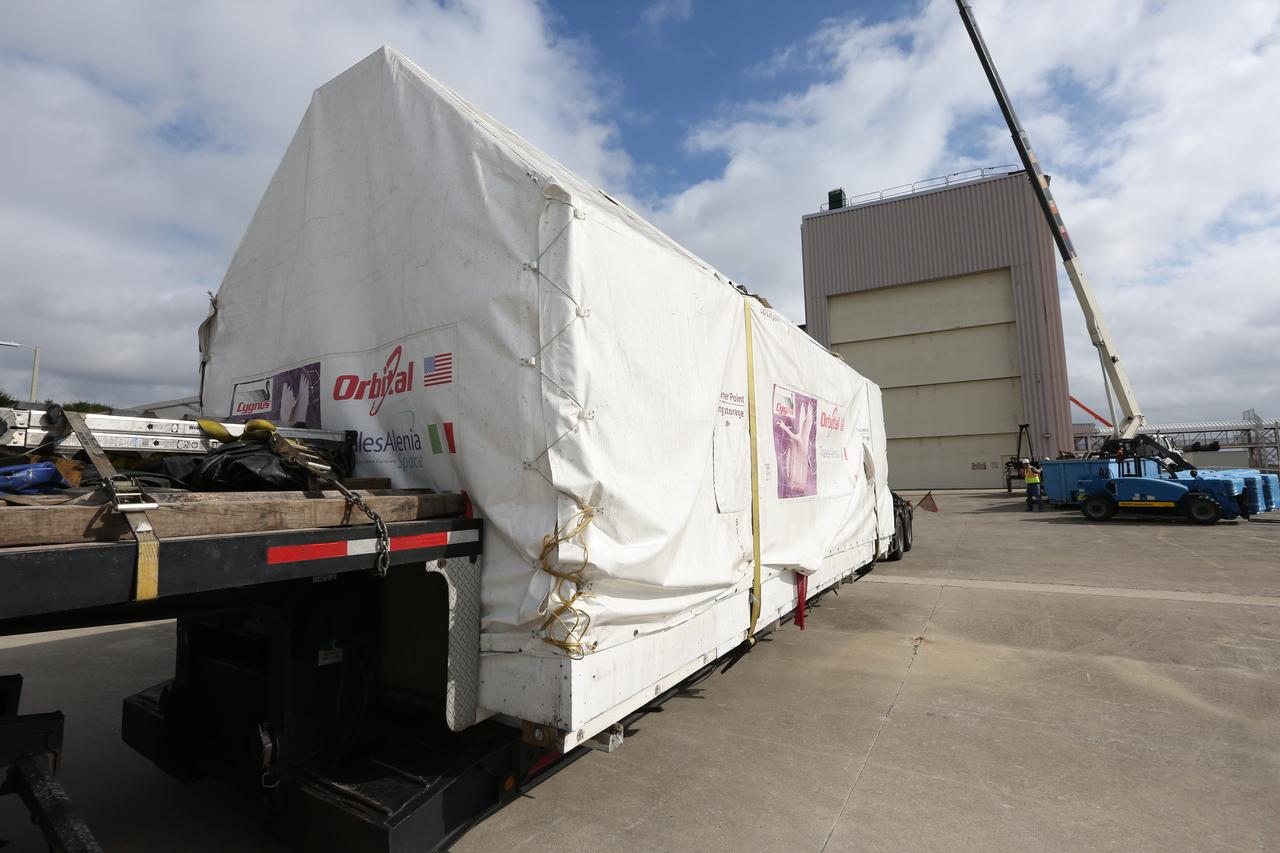
Sealed in its shipping container, the ground support equipment for the Orbital ATK OA-7 commercial resupply services mission has arrived at the Space Station Processing Facility at NASA's Kennedy Space Center in Florida. The container will be moved inside the low bay of the facility. The Orbital ATK CRS-7 with the Cygnus cargo module will lift off atop a United Launch Alliance Atlas V rocket from Space launch Complex 41 at Cape Canaveral Air Force Station. The commercial resupply services mission to the International Space Station will deliver thousands of pounds of supplies, equipment and scientific research materials that improve life on Earth and drive progress toward future space exploration.
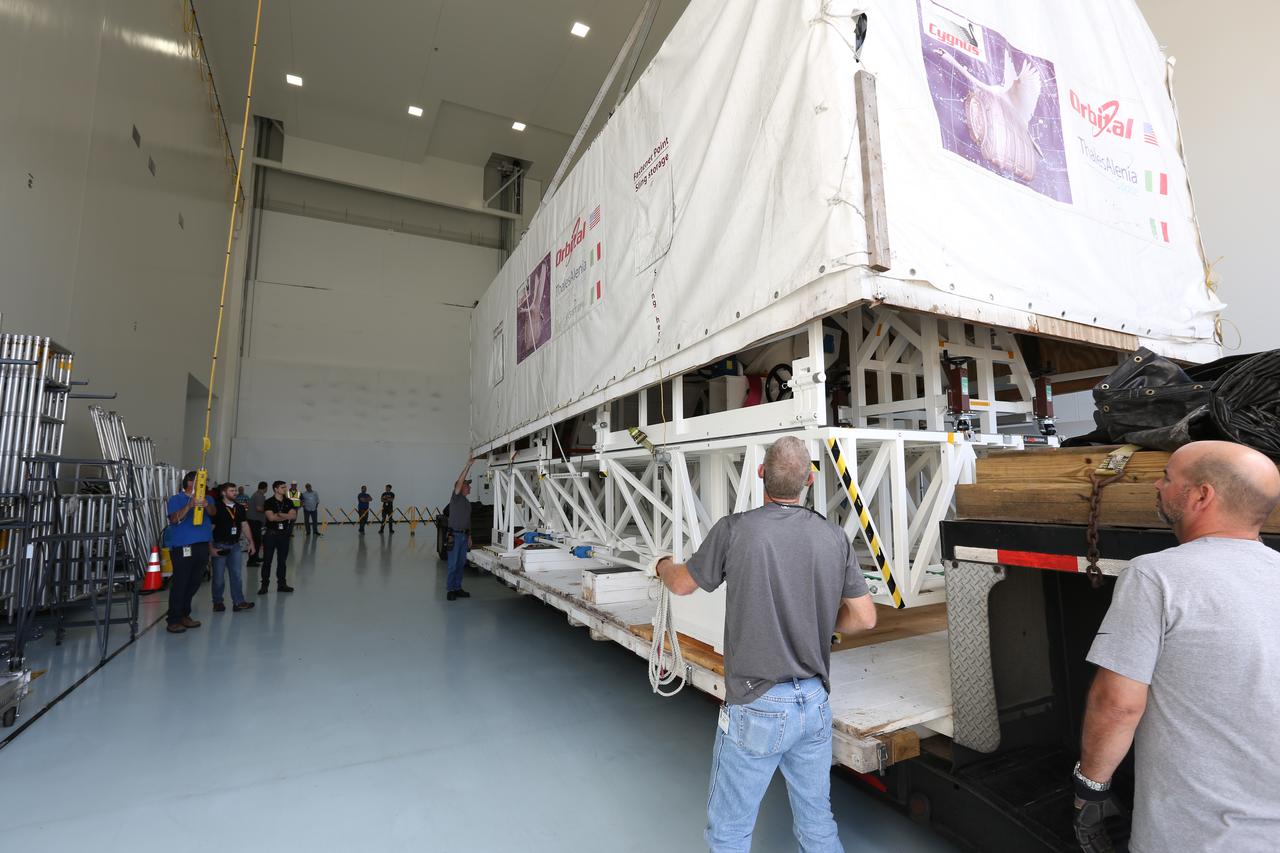
Inside the Space Station Processing Facility low bay at NASA’s Kennedy Space Center in Florida, technicians use a crane to lift the cover off ground support equipment for the Orbital ATK OA-7 commercial resupply services mission. The Orbital ATK CRS-7 with the Cygnus cargo module will lift off atop a United Launch Alliance Atlas V rocket from Space launch Complex 41 at Cape Canaveral Air Force Station. The commercial resupply services mission to the International Space Station will deliver thousands of pounds of supplies, equipment and scientific research materials that improve life on Earth and drive progress toward future space exploration.
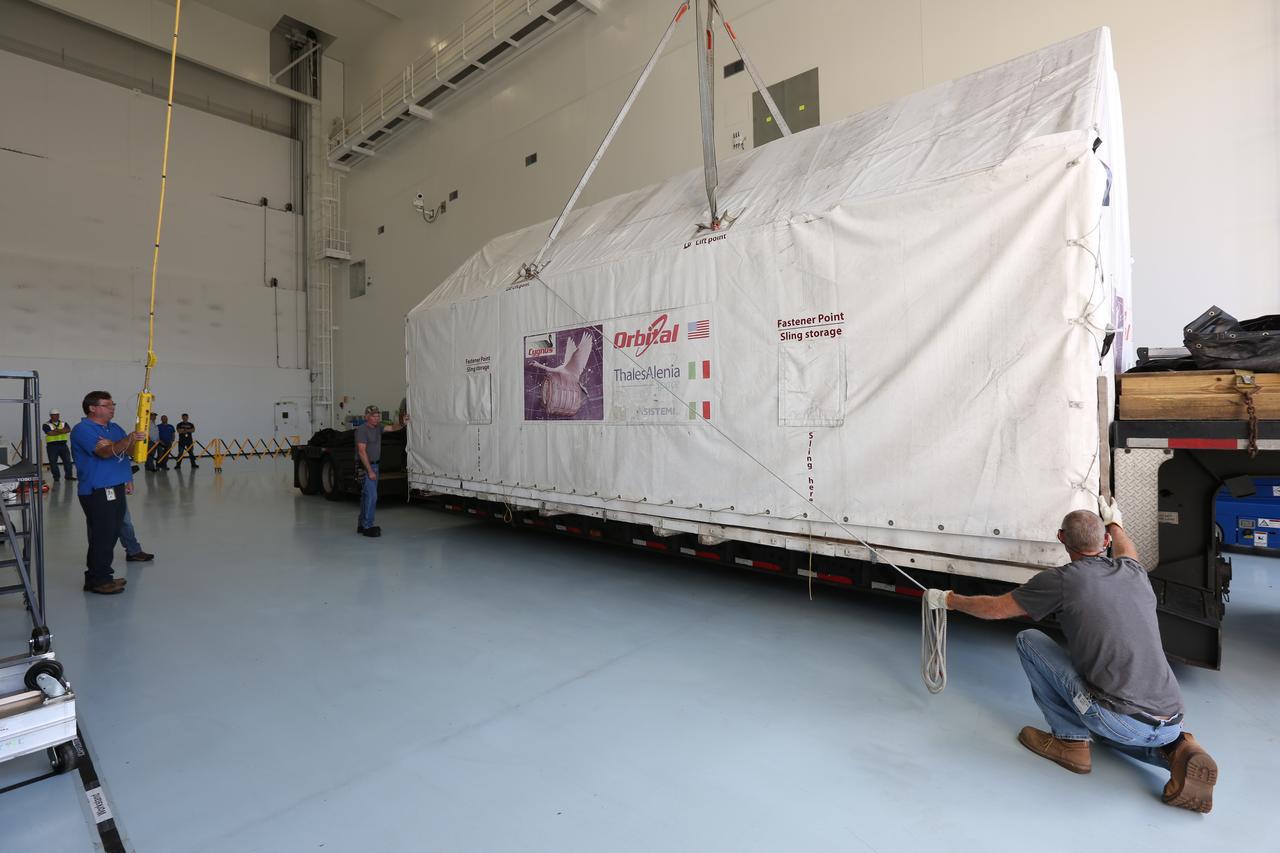
Sealed in its shipping container, the ground support equipment for the Orbital ATK OA-7 commercial resupply services mission was moved inside the low bay of the Space Station Processing Facility at NASA's Kennedy Space Center in Florida. The Orbital ATK CRS-7 with the Cygnus cargo module will lift off atop a United Launch Alliance Atlas V rocket from Space launch Complex 41 at Cape Canaveral Air Force Station. The commercial resupply services mission to the International Space Station will deliver thousands of pounds of supplies, equipment and scientific research materials that improve life on Earth and drive progress toward future space exploration.
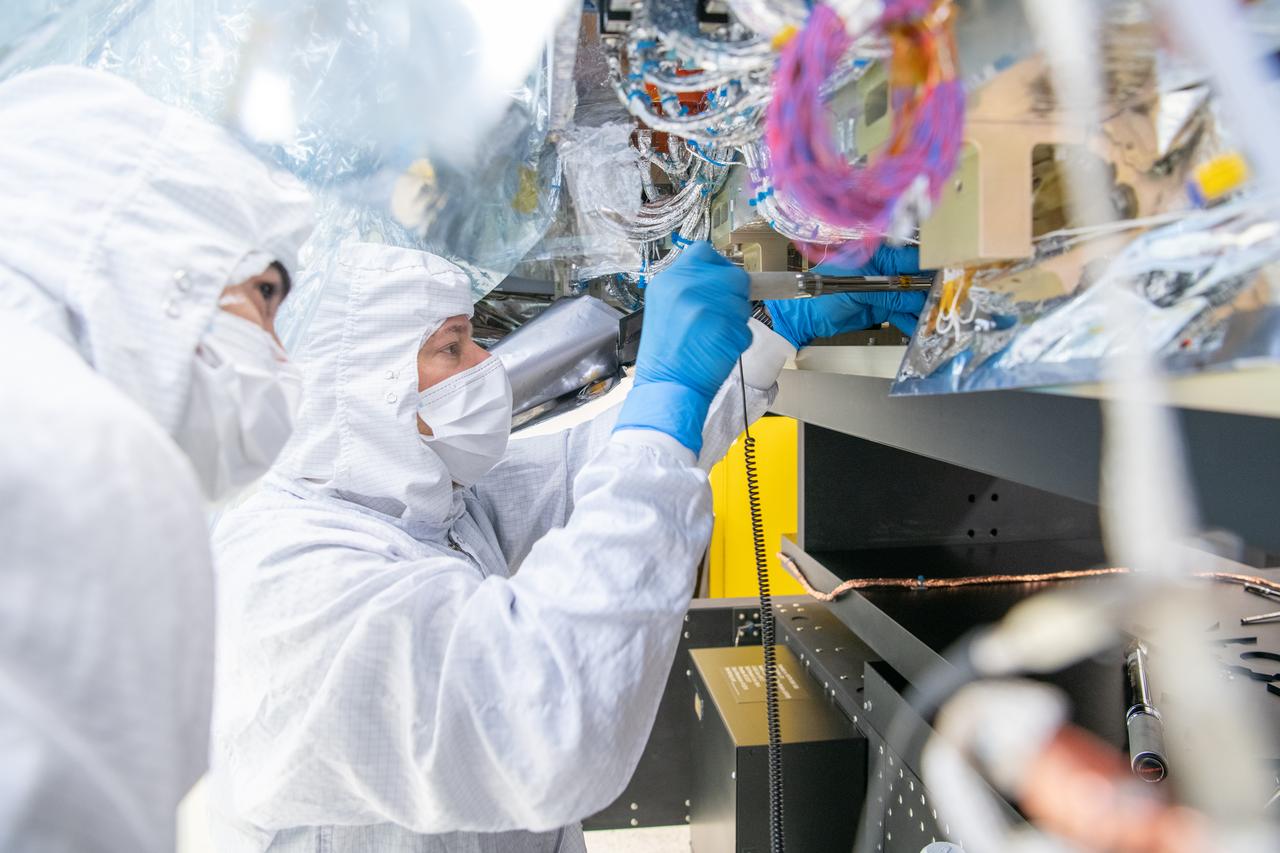
Mechanical technician, Thomas Huber, tightens bolts on the Ocean Color Instrument (OCI) is installed onto the Ground Support Equipment Application for Tilt or Rotation (GAToR) made by Newton Engineering. GAToR will allow engineers to tilt and rotate OCI in different orientations for further testing prior to integration onto the PACE (Plankton, Aerosol, Cloud, ocean Ecosystem) spacecraft. OCI is a highly advanced optical spectrometer that will be used to measure properties of light over portions of the electromagnetic spectrum. It will enable continuous measurement of light at finer wavelength resolution than previous NASA satellite sensors, extending key system ocean color data records for climate studies. OCI is PACE's (Plankton, Aerosol, Cloud, ocean Ecosystem) primary sensor built at Goddard Space Flight Center in Greenbelt, MD.

The Ocean Color Instrument (OCI) Electro-Magnetic Interference (EMI) & Electrical Ground Support Equipment (EGSE) Team pose in the control room. From this room, they are able to analyze the data from the test remotely and send commands through electrical cables that run through the walls into the EMI lab. OCI is a highly advanced optical spectrometer that will be used to measure properties of light over portions of the electromagnetic spectrum. It will enable continuous measurement of light at finer wavelength resolution than previous NASA satellite sensors, extending key system ocean color data records for climate studies. OCI is PACE's (Plankton, Aerosol, Cloud, ocean Ecosystem) primary sensor built at Goddard Space Flight Center in Greenbelt, MD.
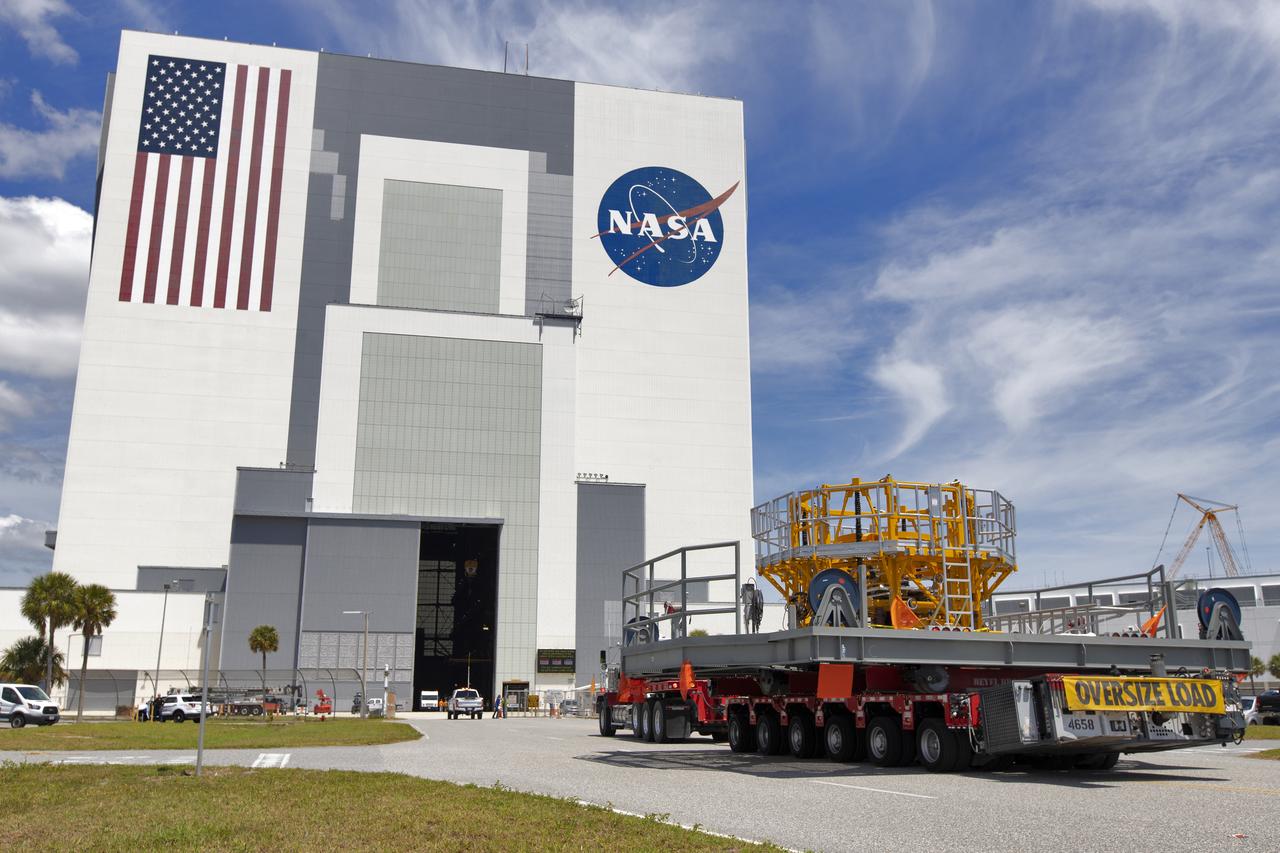
The engine vertical installer for NASA’s Space Launch System (SLS) arrives at the Vehicle Assembly at NASA’s Kennedy Space Center in Florida on April 25, 2019. The engine installer arrived from the manufacturer, Precision Fabrication and Cleaning in Canaveral Groves, Florida. The new ground support equipment will be ready for preflight processing in the event one of the four RS-25 engines on the core stage of the SLS rocket needs to be replaced. During launch of the SLS and Orion spacecraft, the four core stage engines will provide the thrust needed to lift the rocket and Orion spacecraft off Launch Pad 39B at Kennedy for Exploration Mission-1. The uncrewed Orion will travel on a three-week test mission thousands of miles beyond the Moon and back to Earth for a splashdown in the Pacific Ocean.
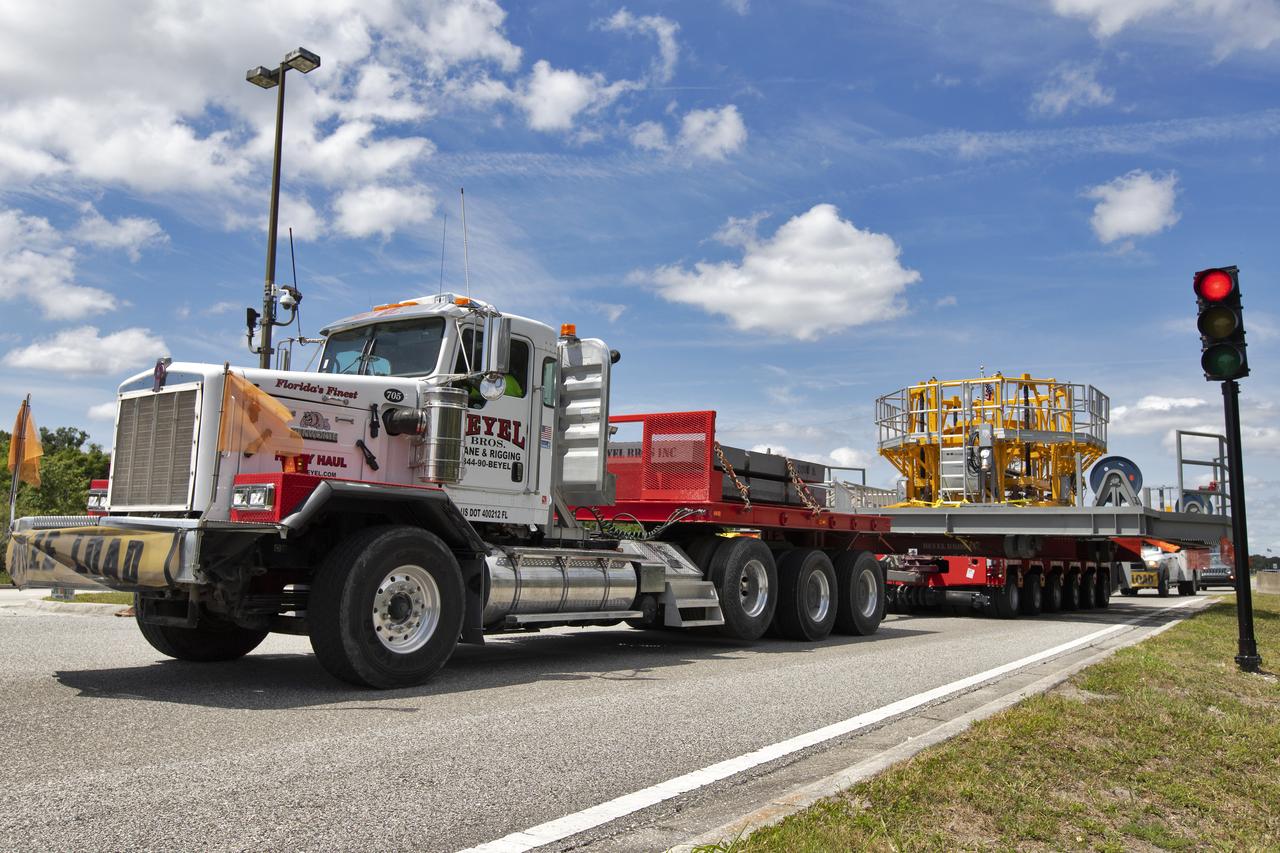
The engine vertical installer for NASA’s Space Launch System (SLS) arrives by large transport truck at NASA’s Kennedy Space Center in Florida on April 25, 2019. The engine installer arrived from the manufacturer, Precision Fabrication and Cleaning in Canaveral Groves, Florida. The new ground support equipment will be delivered to the Vehicle Assembly where it will be ready for preflight processing in the event one of the four RS-25 engines on the core stage of the SLS rocket needs to be replaced. During launch of the SLS and Orion spacecraft, the four core stage engines will provide the thrust needed to lift the rocket and Orion spacecraft off Launch Pad 39B at Kennedy for Exploration Mission-1. The uncrewed Orion will travel on a three-week test mission thousands of miles beyond the Moon and back to Earth for a splashdown in the Pacific Ocean.
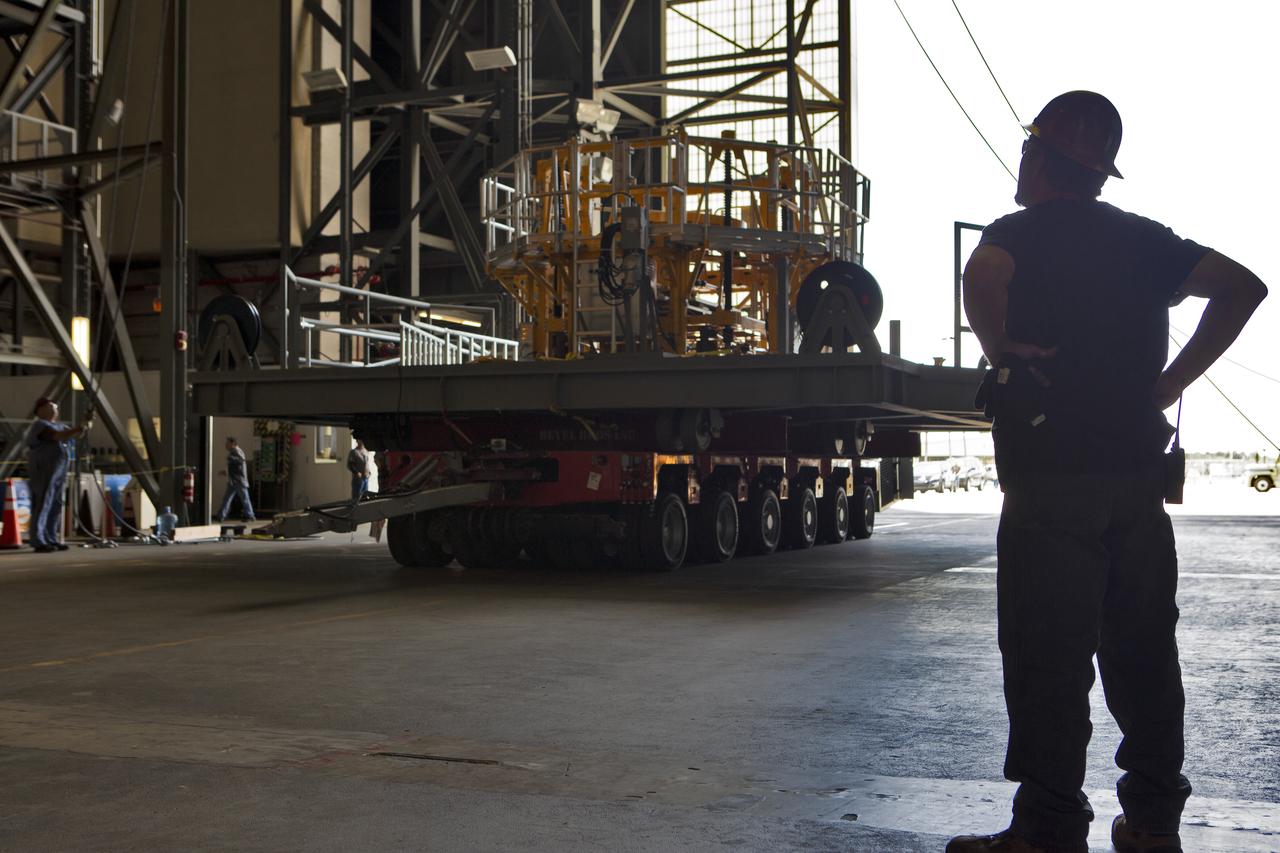
The engine vertical installer for NASA’s Space Launch System (SLS) is inside the Vehicle Assembly at NASA’s Kennedy Space Center in Florida on April 25, 2019. The engine installer will be lifted up by crane for transfer to High Bay 3. The engine installer arrived from the manufacturer, Precision Fabrication and Cleaning in Canaveral Groves, Florida. The new ground support equipment will be ready for preflight processing in the event one of the four RS-25 engines on the core stage of the SLS rocket needs to be replaced. During launch of the SLS and Orion spacecraft, the four core stage engines will provide the thrust needed to lift the rocket and Orion spacecraft off Launch Pad 39B at Kennedy for Exploration Mission-1. The uncrewed Orion will travel on a three-week test mission thousands of miles beyond the Moon and back to Earth for a splashdown in the Pacific Ocean.
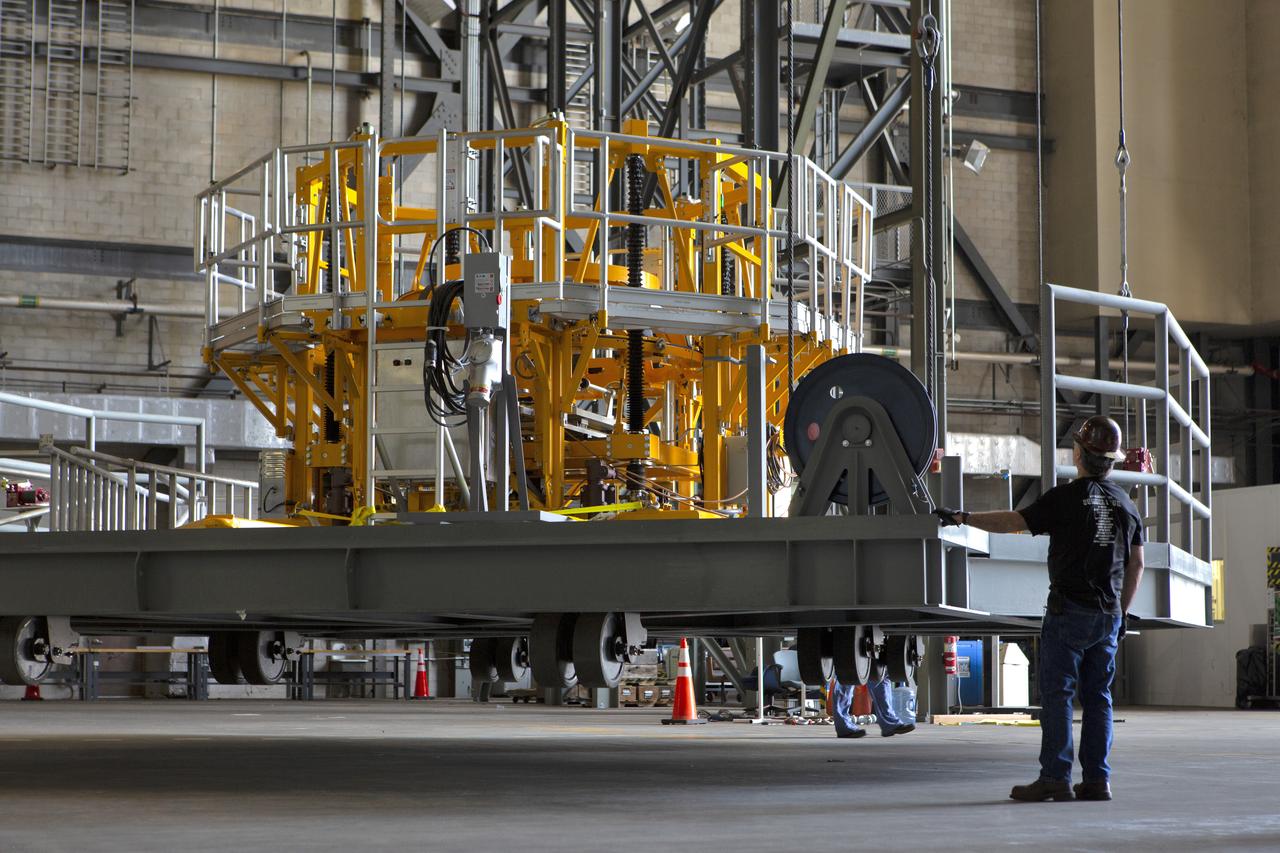
The engine vertical installer for NASA’s Space Launch System (SLS) is inside the Vehicle Assembly at NASA’s Kennedy Space Center in Florida on April 25, 2019. The engine installer is being lifted up by crane for transfer to High Bay 3. The engine installer arrived from the manufacturer, Precision Fabrication and Cleaning in Canaveral Groves, Florida. The new ground support equipment will be ready for preflight processing in the event one of the four RS-25 engines on the core stage of the SLS rocket needs to be replaced. During launch of the SLS and Orion spacecraft, the four core stage engines will provide the thrust needed to lift the rocket and Orion spacecraft off Launch Pad 39B at Kennedy for Exploration Mission-1. The uncrewed Orion will travel on a three-week test mission thousands of miles beyond the Moon and back to Earth for a splashdown in the Pacific Ocean.

The engine vertical installer for NASA’s Space Launch System (SLS) arrives inside the Vehicle Assembly at NASA’s Kennedy Space Center in Florida on April 25, 2019. The engine installer arrived from the manufacturer, Precision Fabrication and Cleaning in Canaveral Groves, Florida. The new ground support equipment will be ready for preflight processing in the event one of the four RS-25 engines on the core stage of the SLS rocket needs to be replaced. During launch of the SLS and Orion spacecraft, the four core stage engines will provide the thrust needed to lift the rocket and Orion spacecraft off Launch Pad 39B at Kennedy for Exploration Mission-1. The uncrewed Orion will travel on a three-week test mission thousands of miles beyond the Moon and back to Earth for a splashdown in the Pacific Ocean.
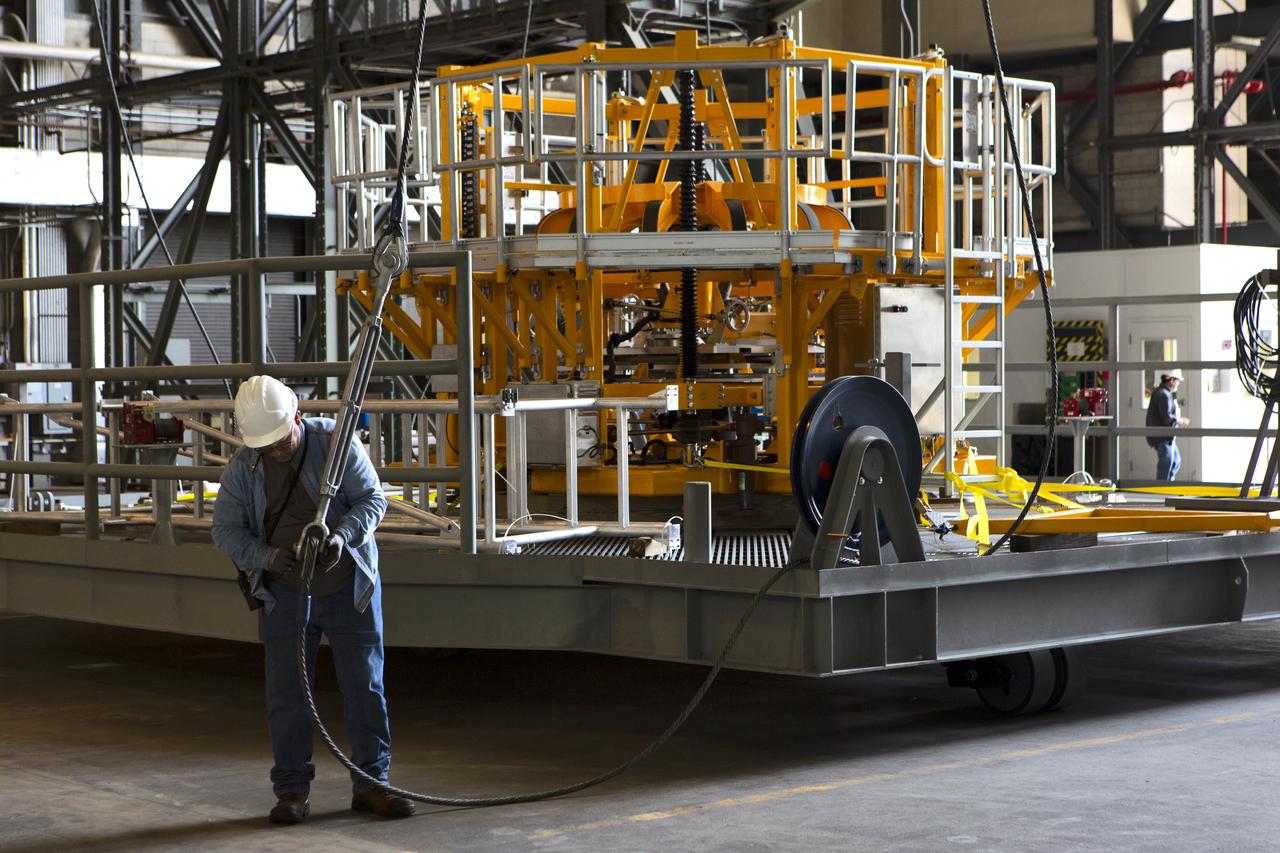
The engine vertical installer for NASA’s Space Launch System (SLS) is inside the Vehicle Assembly at NASA’s Kennedy Space Center in Florida on April 25, 2019. Preparations are underway to lift the engine installer up and into High Bay 3. The engine installer arrived from the manufacturer, Precision Fabrication and Cleaning in Canaveral Groves, Florida. The new ground support equipment will be ready for preflight processing in the event one of the four RS-25 engines on the core stage of the SLS rocket needs to be replaced. During launch of the SLS and Orion spacecraft, the four core stage engines will provide the thrust needed to lift the rocket and Orion spacecraft off Launch Pad 39B at Kennedy for Exploration Mission-1. The uncrewed Orion will travel on a three-week test mission thousands of miles beyond the Moon and back to Earth for a splashdown in the Pacific Ocean.
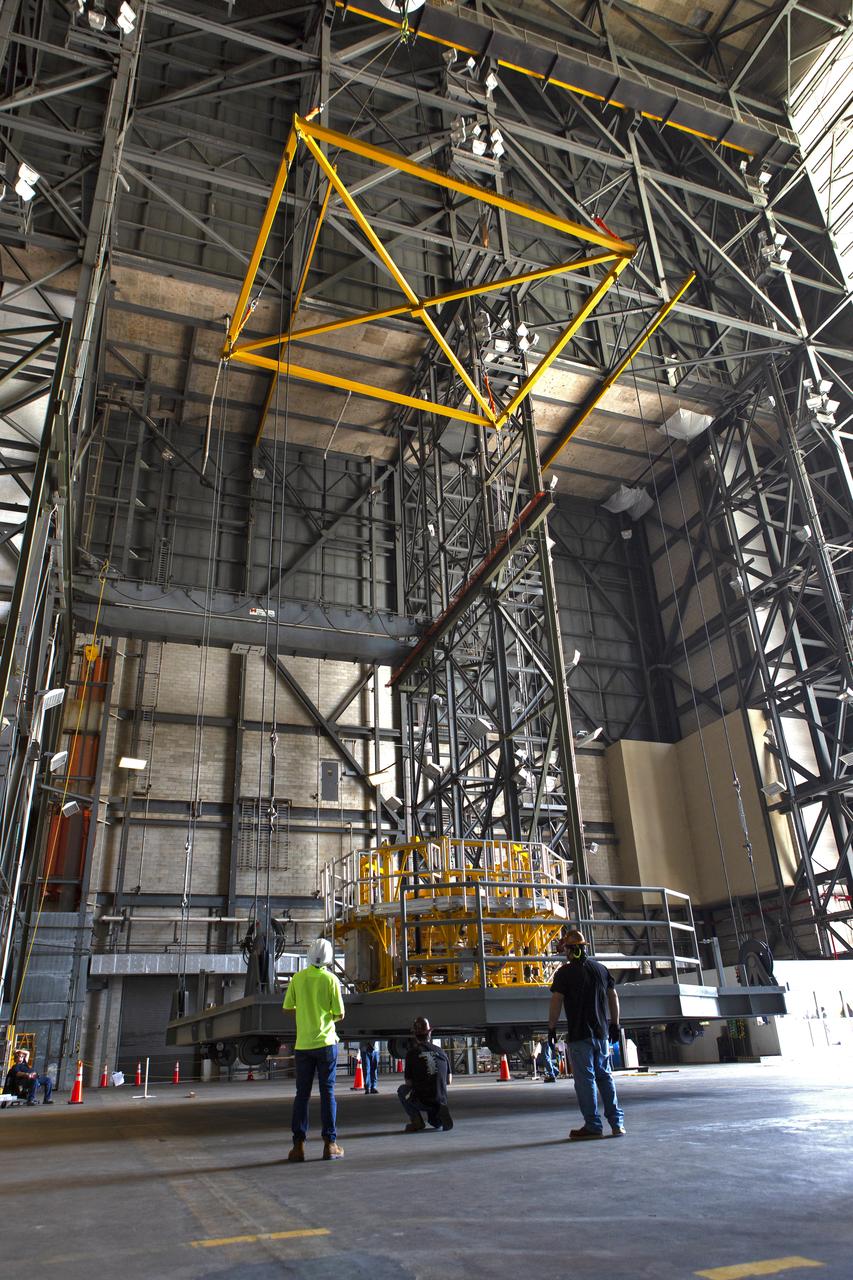
The engine vertical installer for NASA’s Space Launch System (SLS) is inside the Vehicle Assembly at NASA’s Kennedy Space Center in Florida on April 25, 2019. The engine installer is being lifted up by crane for transfer to High Bay 3. The engine installer arrived from the manufacturer, Precision Fabrication and Cleaning in Canaveral Groves, Florida. The new ground support equipment will be ready for preflight processing in the event one of the four RS-25 engines on the core stage of the SLS rocket needs to be replaced. During launch of the SLS and Orion spacecraft, the four core stage engines will provide the thrust needed to lift the rocket and Orion spacecraft off Launch Pad 39B at Kennedy for Exploration Mission-1. The uncrewed Orion will travel on a three-week test mission thousands of miles beyond the Moon and back to Earth for a splashdown in the Pacific Ocean.
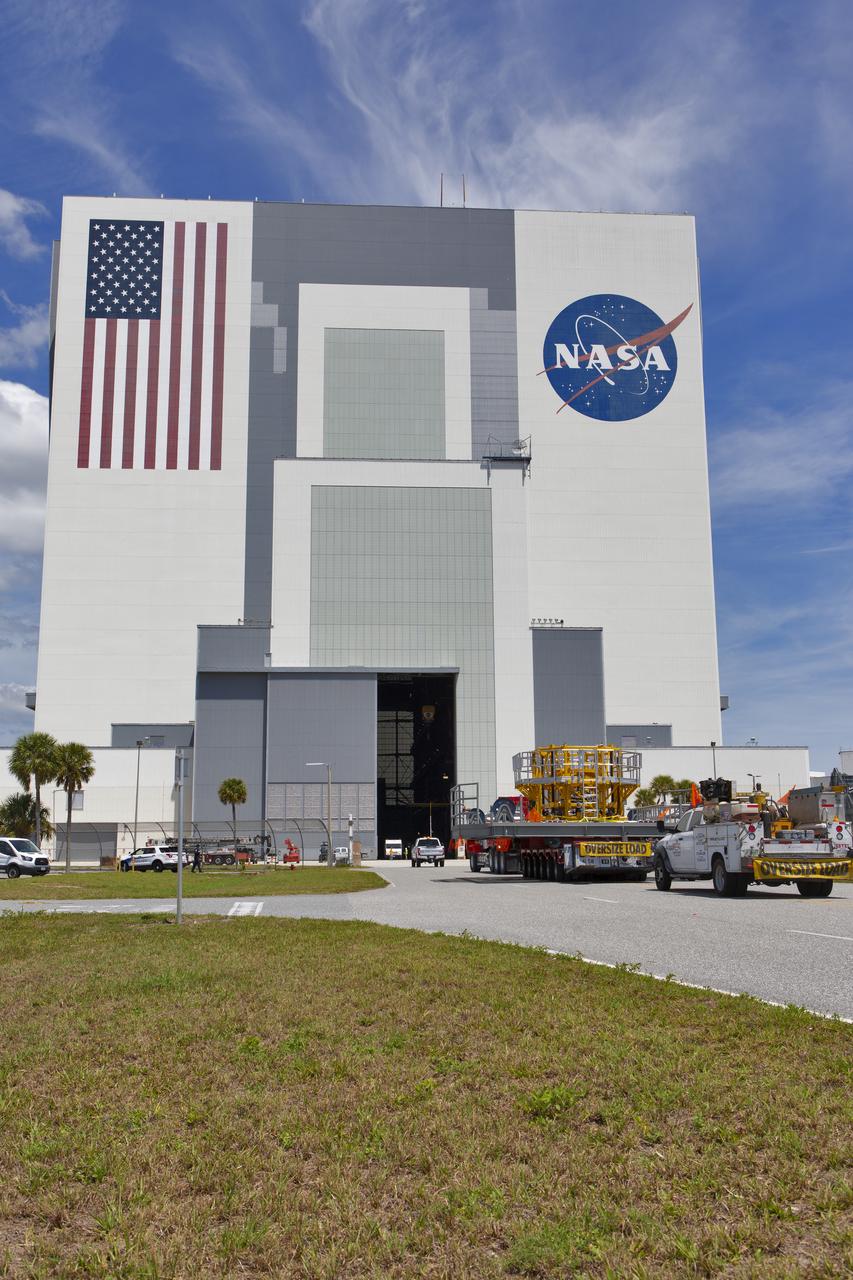
The engine vertical installer for NASA’s Space Launch System (SLS) arrives by large transport truck at the Vehicle Assembly Building at NASA’s Kennedy Space Center in Florida on April 25, 2019. The engine installer arrived from the manufacturer, Precision Fabrication and Cleaning in Canaveral Groves, Florida. The new ground support equipment will be ready for preflight assembly in the event one of the four RS-25 engines on the core stage of the SLS rocket needs to be replaced. During launch of the SLS and Orion spacecraft, the four core stage engines will provide the thrust needed to lift the rocket and Orion spacecraft off Launch Pad 39B at Kennedy for Exploration Mission-1. The uncrewed Orion will travel on a three-week test mission thousands of miles beyond the Moon and back to Earth for a splashdown in the Pacific Ocean.
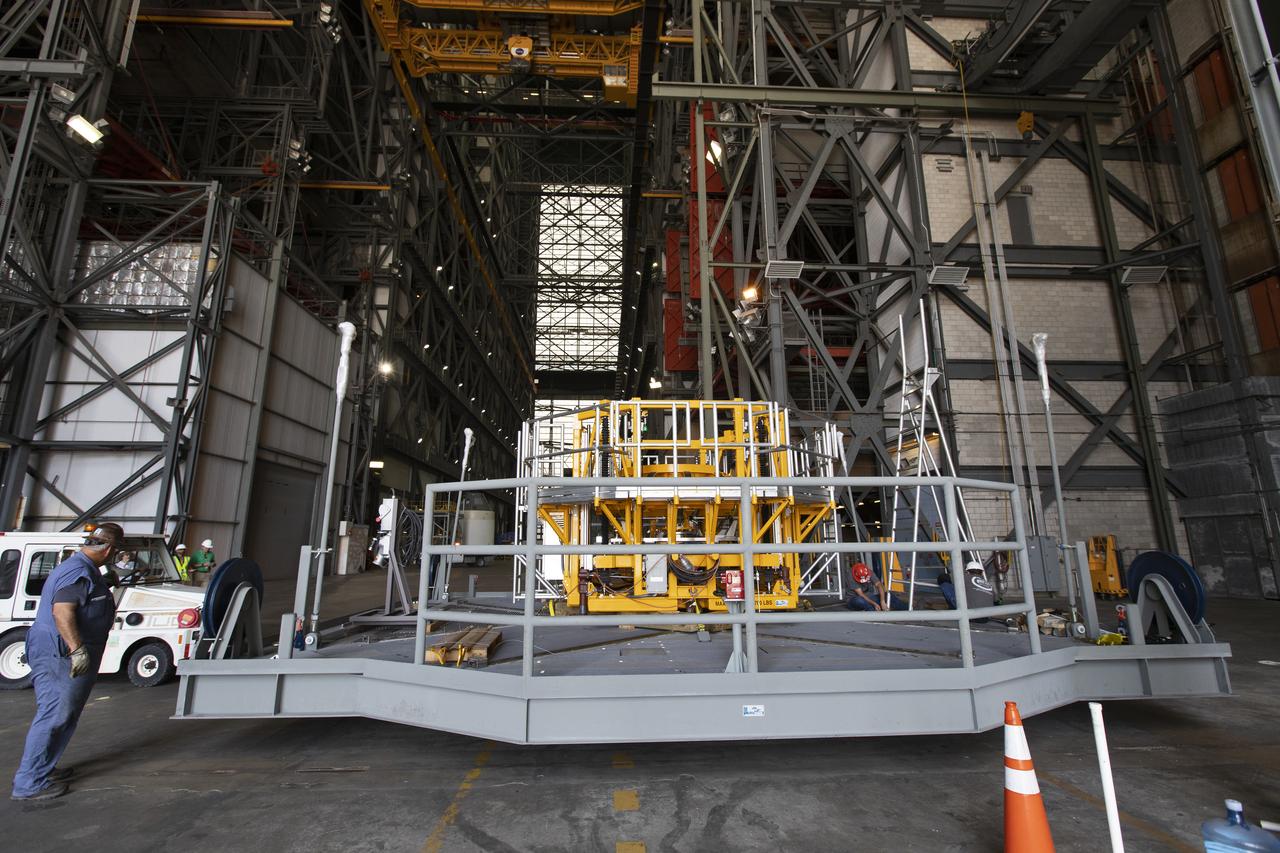
The engine vertical installer for NASA’s Space Launch System (SLS) arrives inside the Vehicle Assembly at NASA’s Kennedy Space Center in Florida on April 25, 2019. The engine installer arrived from the manufacturer, Precision Fabrication and Cleaning in Canaveral Groves, Florida. The new ground support equipment will be ready for preflight processing in the event one of the four RS-25 engines on the core stage of the SLS rocket needs to be replaced. During launch of the SLS and Orion spacecraft, the four core stage engines will provide the thrust needed to lift the rocket and Orion spacecraft off Launch Pad 39B at Kennedy for Exploration Mission-1. The uncrewed Orion will travel on a three-week test mission thousands of miles beyond the Moon and back to Earth for a splashdown in the Pacific Ocean.
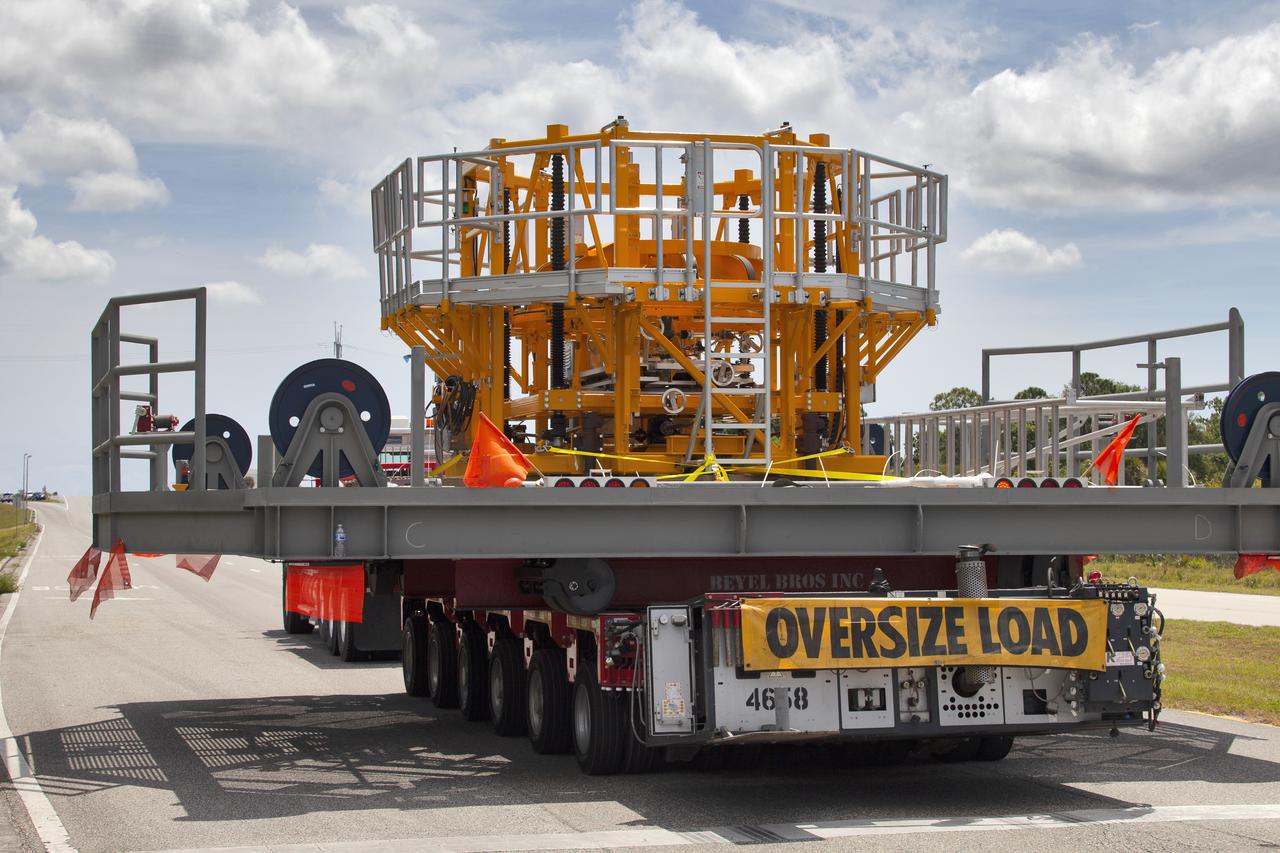
The engine vertical installer for NASA’s Space Launch System (SLS) arrives by large transport truck at NASA’s Kennedy Space Center in Florida on April 25, 2019, from the manufacturer, Precision Fabrication and Cleaning in Canaveral Groves, Florida. The new ground support equipment will be delivered to the Vehicle Assembly Building where it will be ready for preflight assembly in the event one of the four RS-25 engines on the core stage of the SLS rocket needs to be replaced. During launch of the SLS and Orion spacecraft, the four core stage engines will provide the thrust needed to lift the rocket and Orion spacecraft off Launch Pad 39B at Kennedy for Exploration Mission-1. The uncrewed Orion will travel on a three-week test mission thousands of miles beyond the Moon and back to Earth for a splashdown in the Pacific Ocean.
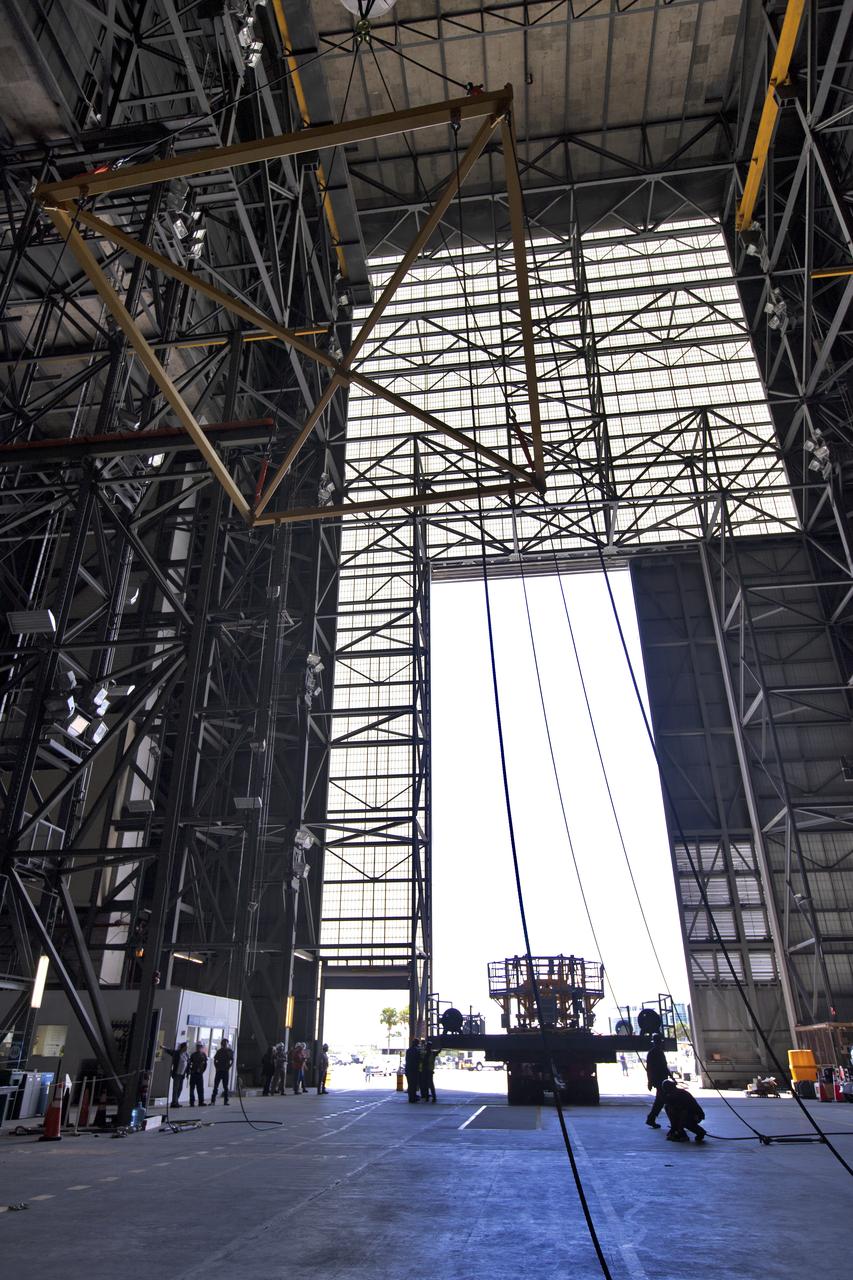
The engine vertical installer for NASA’s Space Launch System (SLS) arrives inside the Vehicle Assembly at NASA’s Kennedy Space Center in Florida on April 25, 2019. The engine installer arrived from the manufacturer, Precision Fabrication and Cleaning in Canaveral Groves, Florida. The new ground support equipment will be ready for preflight processing in the event one of the four RS-25 engines on the core stage of the SLS rocket needs to be replaced. During launch of the SLS and Orion spacecraft, the four core stage engines will provide the thrust needed to lift the rocket and Orion spacecraft off Launch Pad 39B at Kennedy for Exploration Mission-1. The uncrewed Orion will travel on a three-week test mission thousands of miles beyond the Moon and back to Earth for a splashdown in the Pacific Ocean.
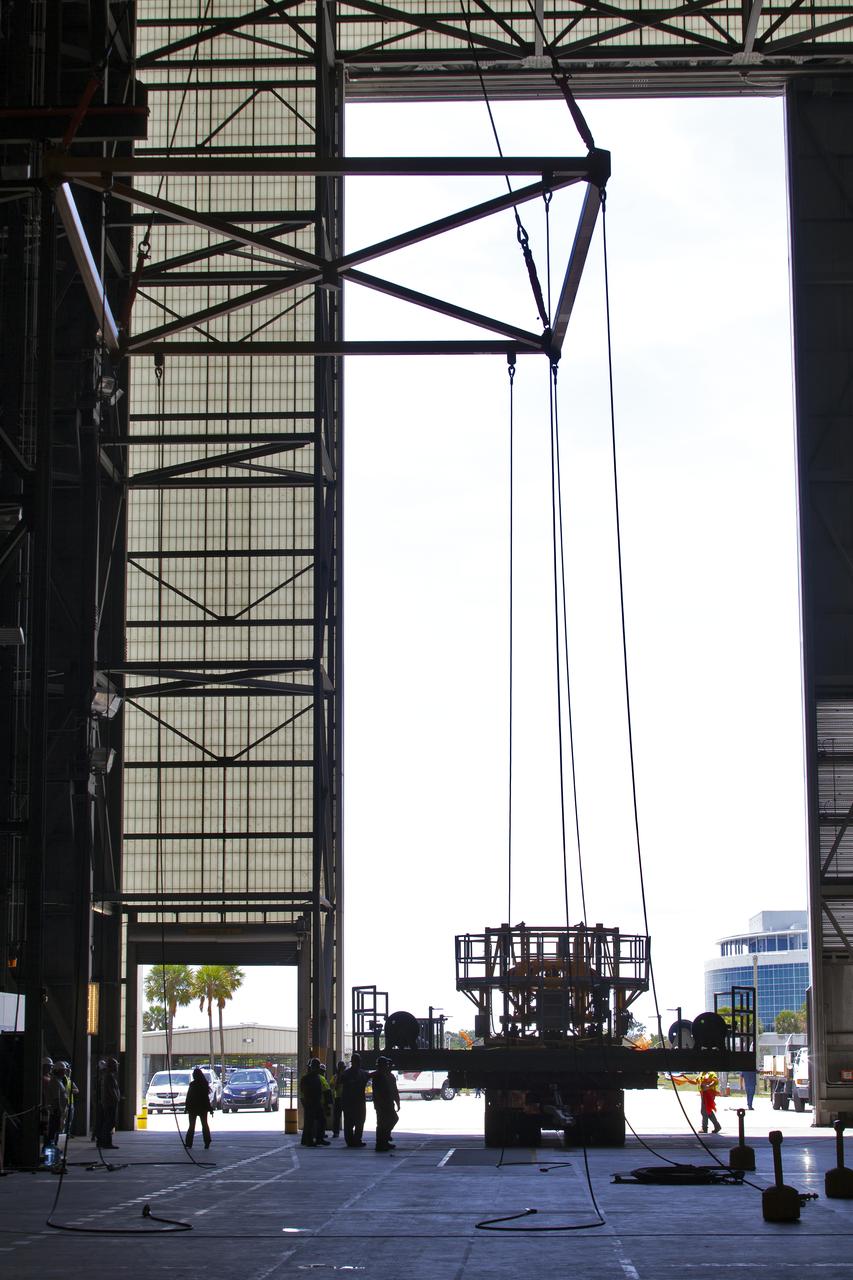
The engine vertical installer for NASA’s Space Launch System (SLS) is being lifted by crane in the Vehicle Assembly Building at NASA’s Kennedy Space Center in Florida on April 25, 2019. The engine installer arrived from the manufacturer, Precision Fabrication and Cleaning in Canaveral Groves, Florida. The new ground support equipment will be transferred into High Bay 3 where it will be ready for preflight processing in the event one of the four RS-25 engines on the core stage of the SLS rocket needs to be replaced. During launch of the SLS and Orion spacecraft, the four core stage engines will provide the thrust needed to lift the rocket and Orion spacecraft off Launch Pad 39B at Kennedy for Exploration Mission-1. The uncrewed Orion will travel on a three-week test mission thousands of miles beyond the Moon and back to Earth for a splashdown in the Pacific Ocean.
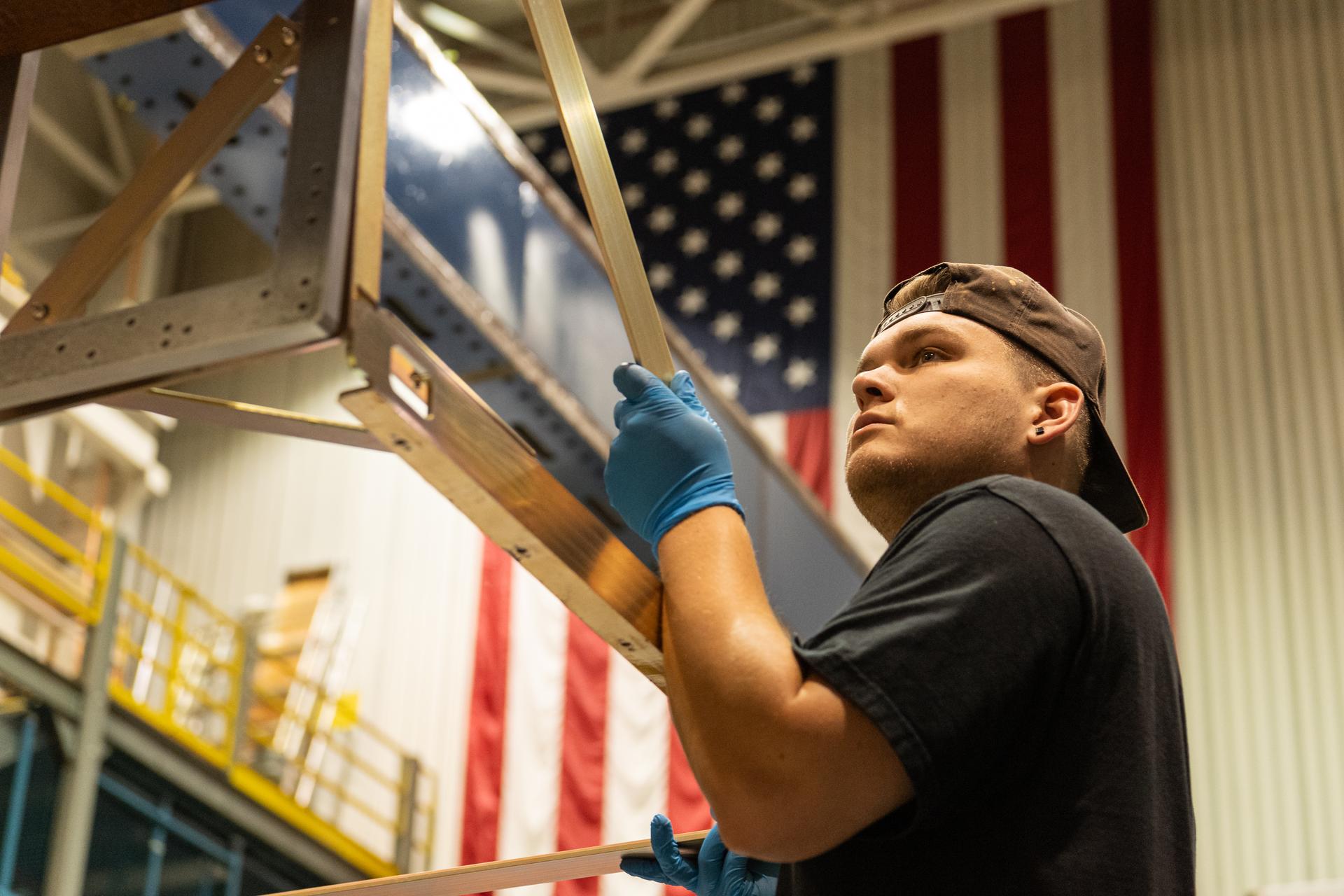
Mechanical engineering and integration technician, Lucas Keim, holds up a piece of ground support equipment during a proof test at Goddard Space Flight Center, Greenbelt Md., June 22, 2023. This photo has been reviewed by OSAM1 project management and the Export Control Office and is released for public view. NASA/Mike Guinto
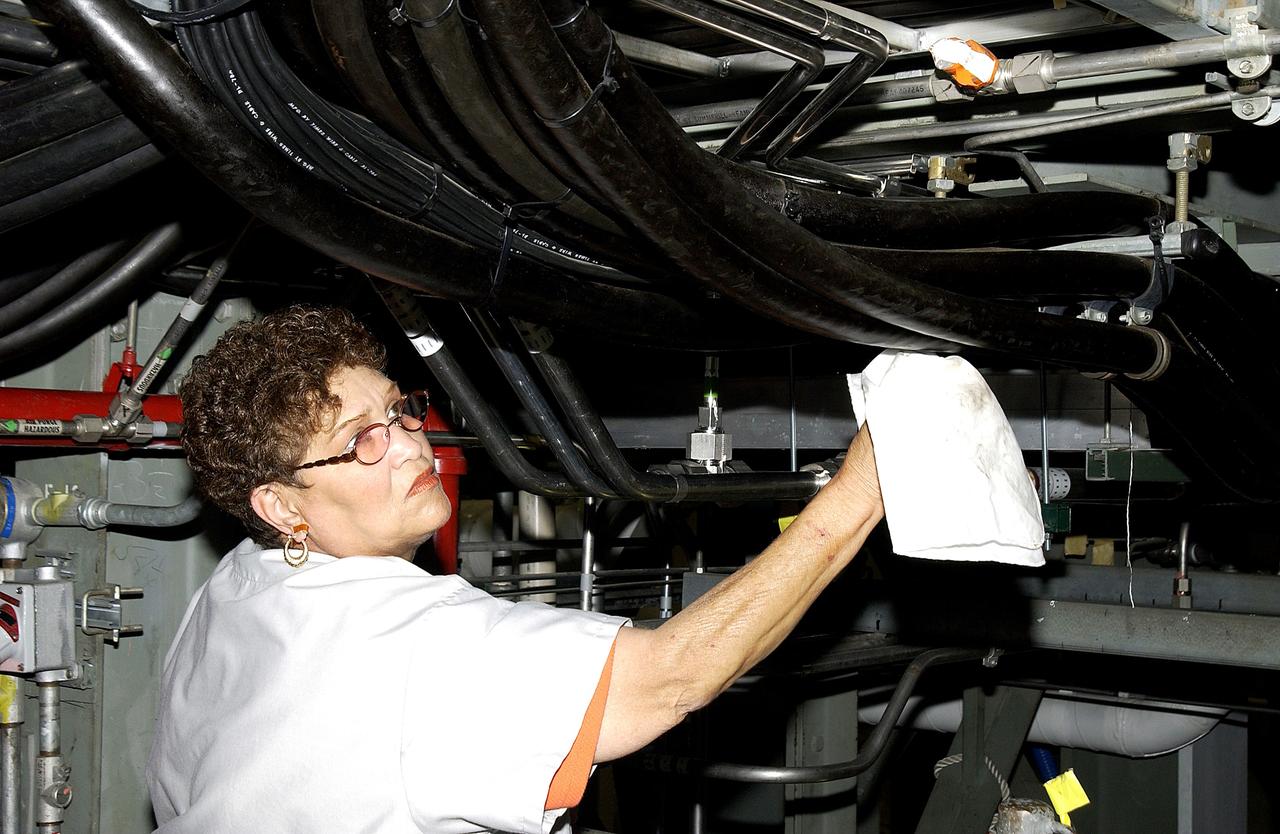
KENNEDY SPACE CENTER, FLA. - A KSC employee wipes down some of the hoses of the ground support equipment in the Orbiter Processing Facility (OPF) where Space Shuttle Atlantis is being processed for flight. Preparations are under way for the next launch of Atlantis on mission STS-114, a utilization and logistics flight to the International Space Station.
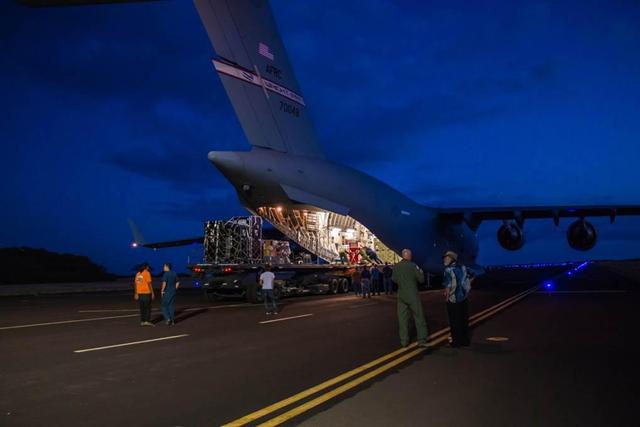
Engineers unload ground support equipment for a June engineering test flight above Kauai, Hawaii. The test flight is part of NASA LDSD project, which is investigating cutting-edge landing technologies that could fly on future Mars missions.
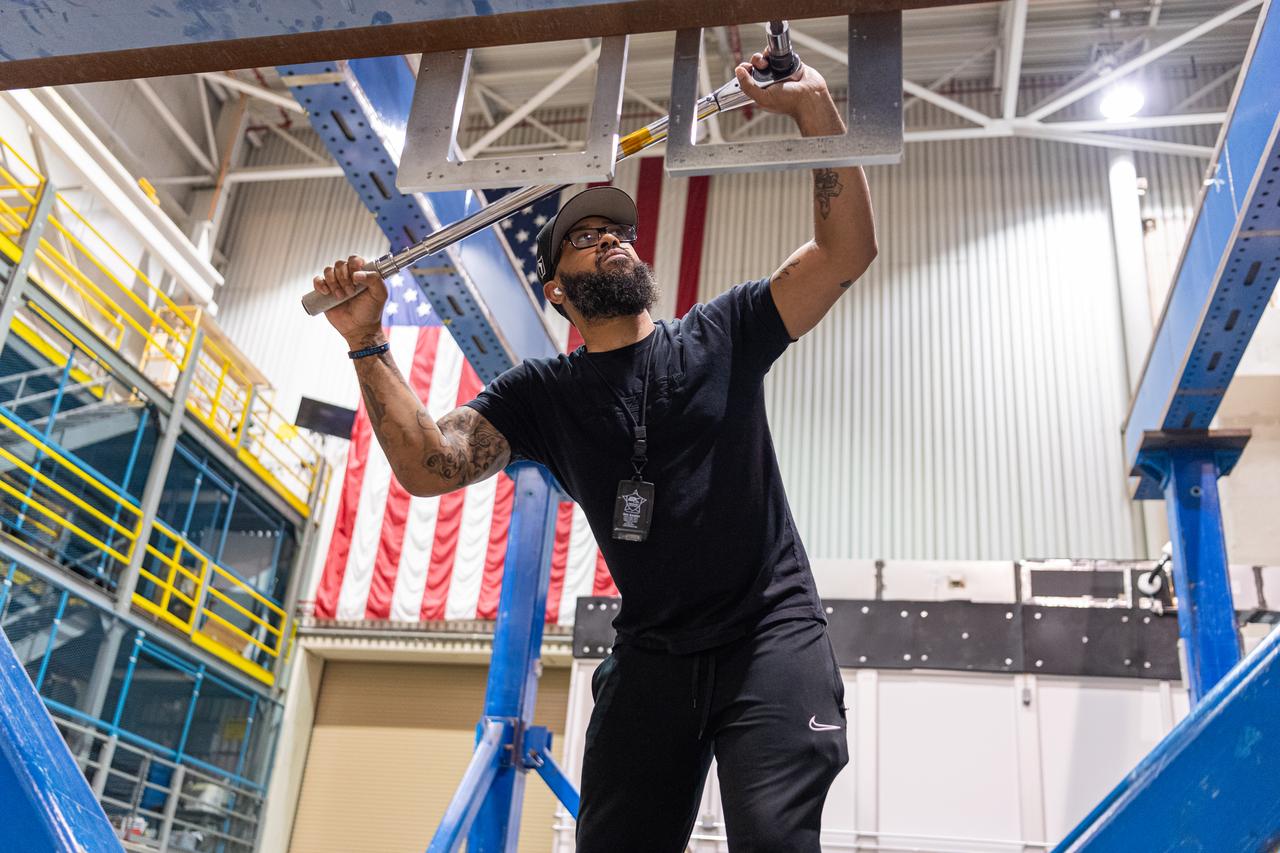
Mechanical engineering and integration technician Ivan Pratt installs brackets onto the static load testing platform in preparation of an OSAM-1 ground support equipment proof test at Goddard Space Flight Center, Greenbelt Md., July 19, 2023. This photo has been reviewed by OSAM1 project management and the Export Control Office and is released for public view. NASA/Mike Guinto
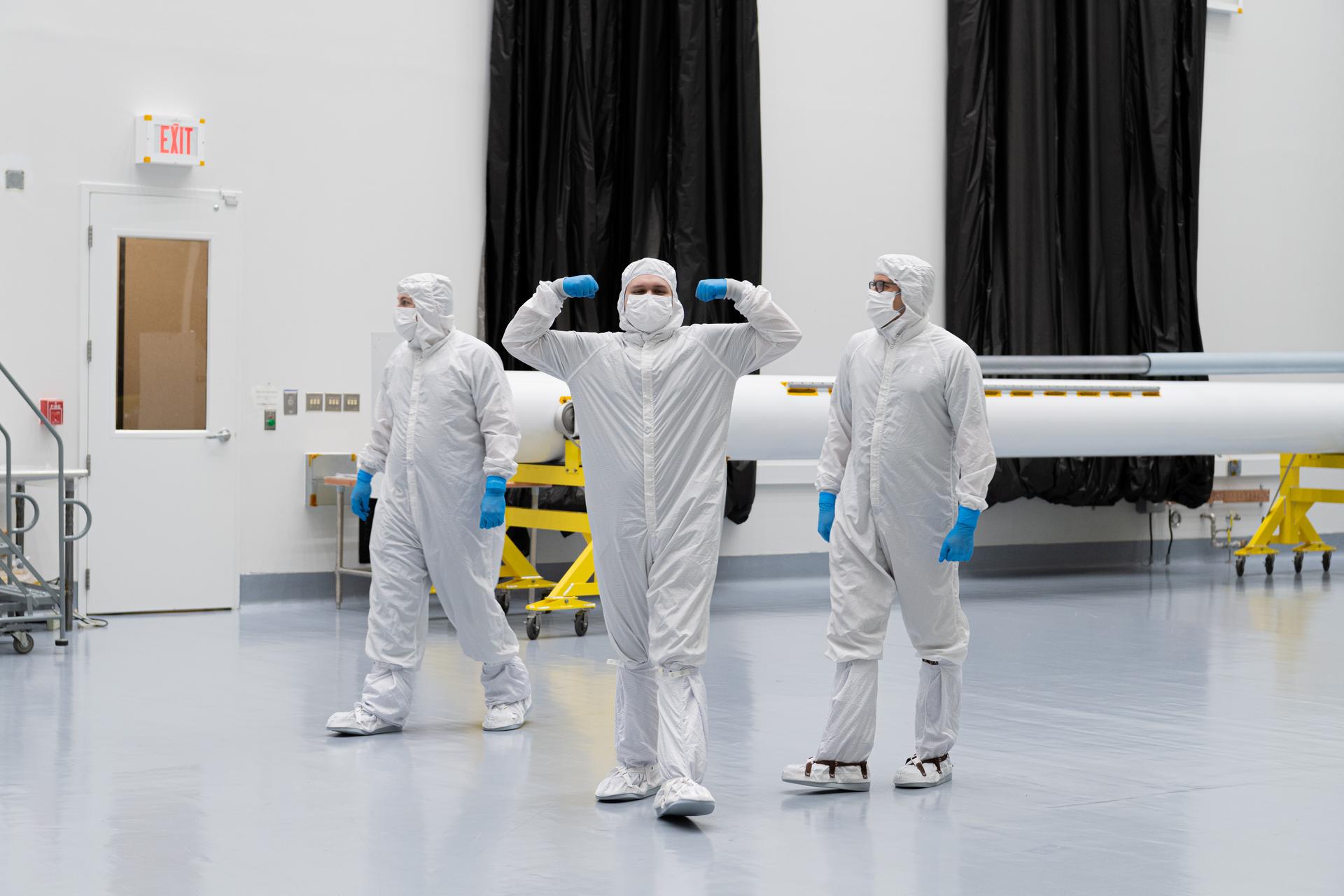
Lucas Keim, a mechanical engineering and integration technician, flexes after helping move ground support equipment into a cleanroom at Goddard Space Flight Center, Greenbelt, Md., Feb 20, 2023.
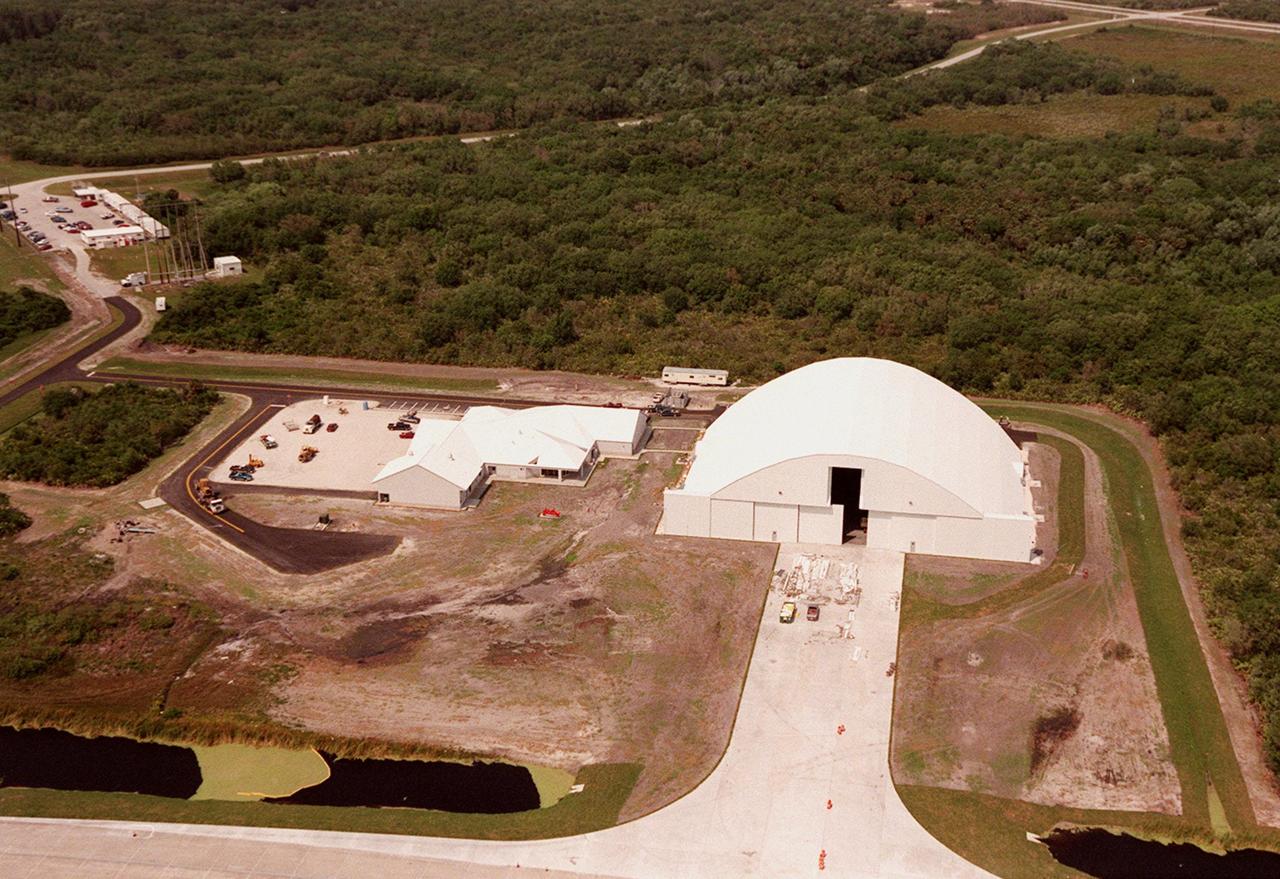
Construction of the new remote launch vehicle hangar (right) is closer to completion. It is at the south end of the Shuttle Landing Facility at KSC. Next to the multi-purpose RLV hangar are facilities for related ground support equipment and administrative/technical support. Astronaut Road is seen near the top of the photo
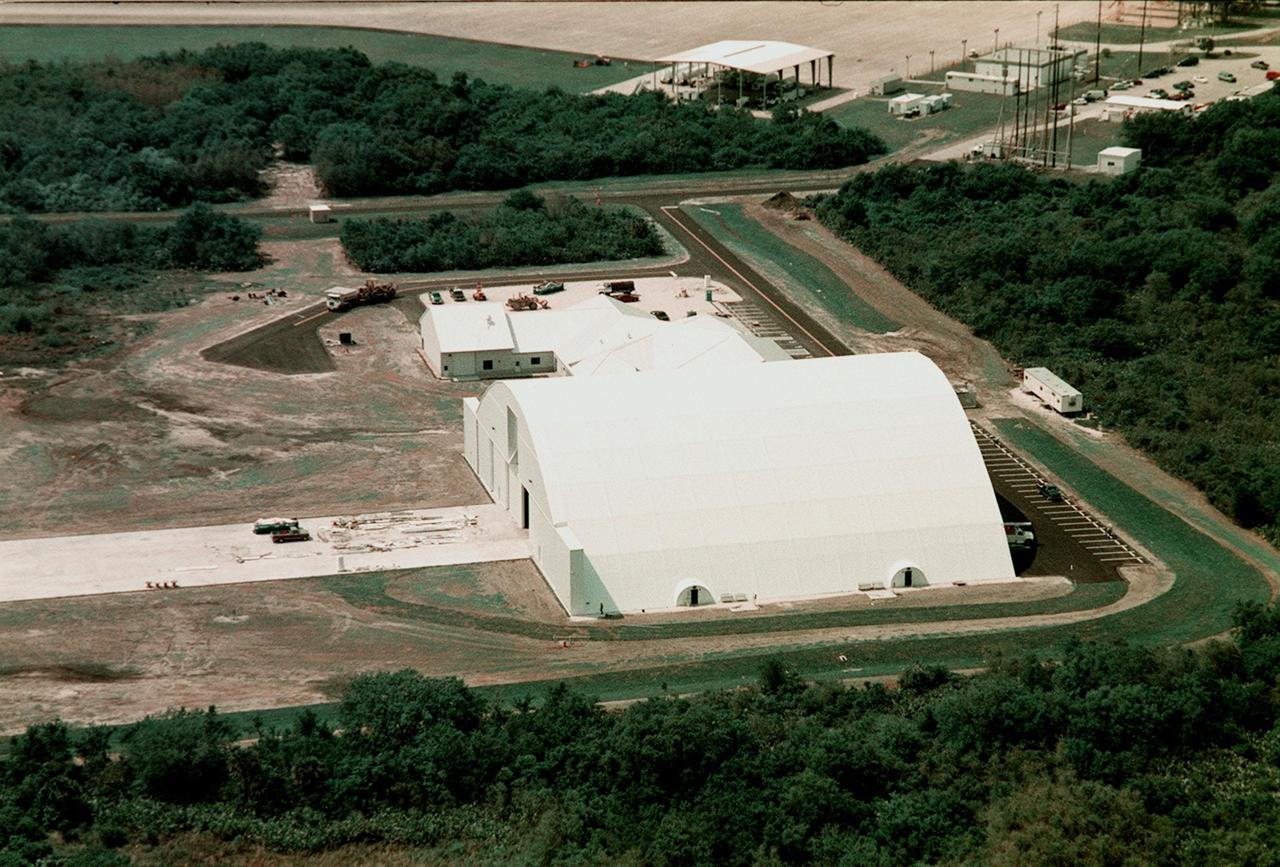
This aerial photo focuses on the remote launch vehicle (RLV) hangar, still under construction. It sits at the south end of the Shuttle Landing Facility. Adjacent to the multi-purpose RLV hangar (above it) are facilities for related ground support equipment and administrative/technical support. The top of the photo captures a portion of the parking tarmac near the runway

Construction of the new remote launch vehicle hangar (right) is closer to completion. It is at the south end of the Shuttle Landing Facility at KSC. Next to the multi-purpose RLV hangar are facilities for related ground support equipment and administrative/technical support. Astronaut Road is seen near the top of the photo
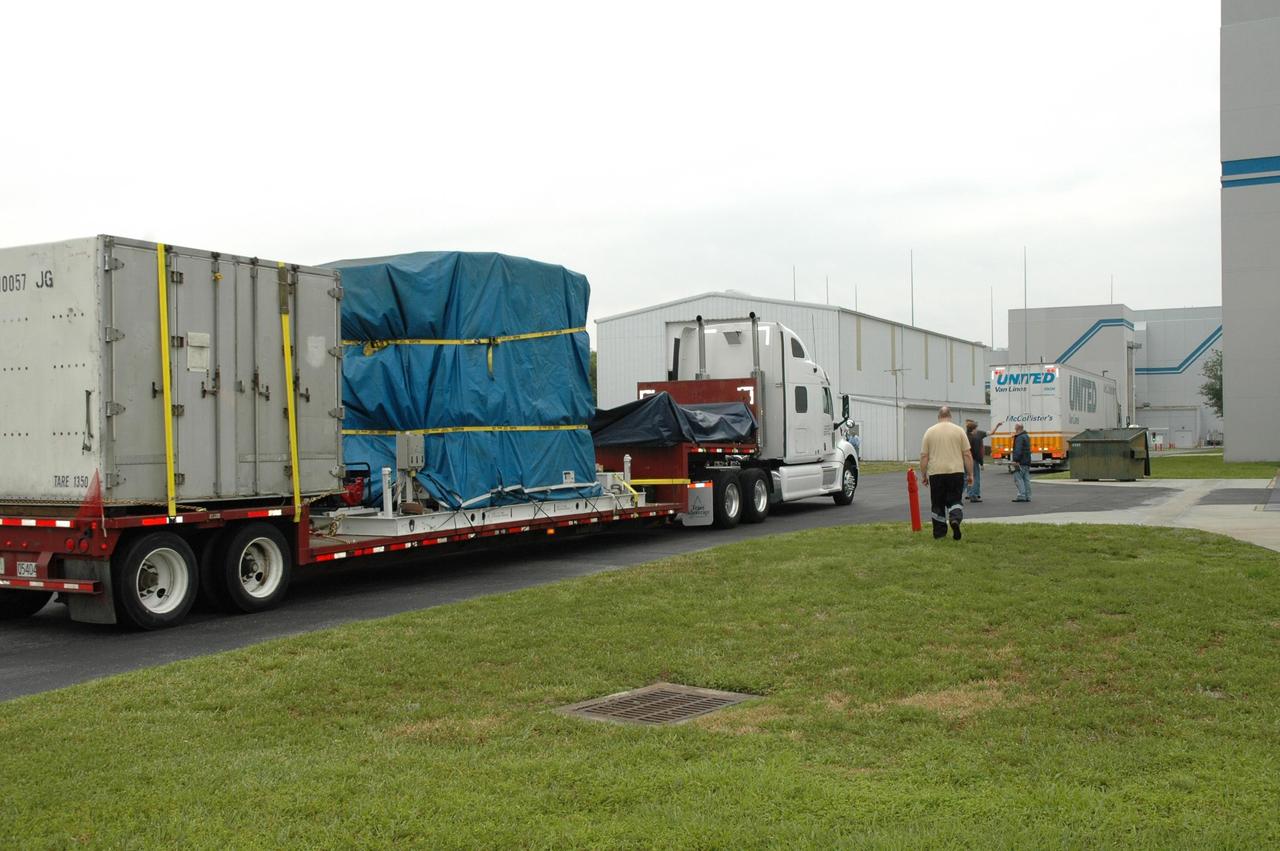
KENNEDY SPACE CENTER, FLA. -- Two trucks (one air-ride, one flat-bed) deliver the Dawn spacecraft, as well as additional electrical and ground support equipment and xenon ground support equipment, to Astrotech. Dawn will be moved from the truck and the shipping container removed. The spacecraft will then be moved into the high bay of the Payload Processing Facility. Dawn's mission is to explore two of the asteroid belt's most intriguing and dissimilar occupants: asteroid Vesta and the dwarf planet Ceres. The Dawn mission is managed by JPL, a division of the California Institute of Technology in Pasadena, for NASA's Science Mission Directorate in Washington, D.C. Photo credit: NASA/Jim Grossmann
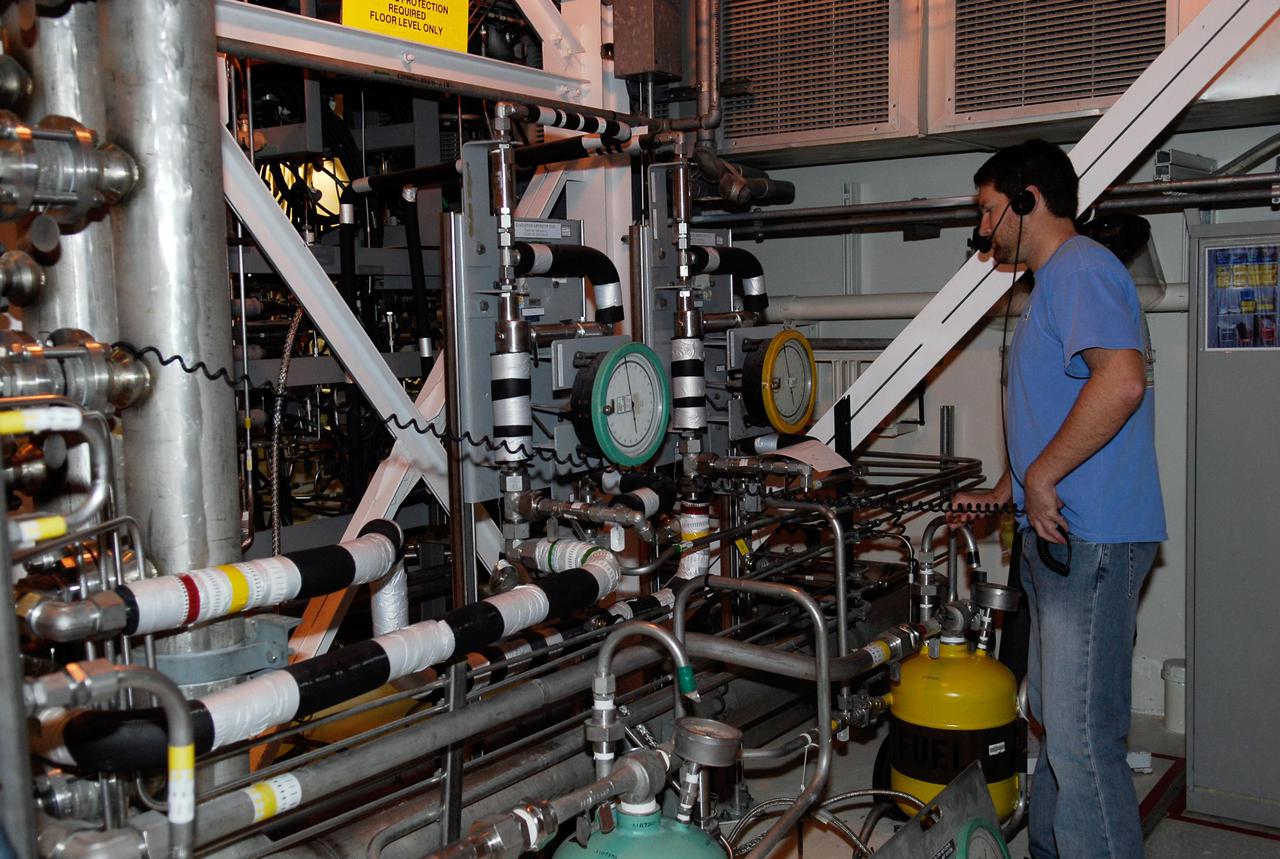
KENNEDY SPACE CENTER, FLA. -- In the hypergolic maintenance facility at NASA's Kennedy Space Center, a technician monitors equipment during testing of the Ares I-X Roll Control System, or RoCS. The RoCS Servicing Simulation Test is to gather data that will be used to help certify the ground support equipment design and validate the servicing requirements and processes. The RoCS is part of the Interstage structure, the lowest axial segment of the Upper Stage Simulator. In an effort to reduce costs and meet the schedule, most of the ground support equipment that will be used for the RoCS servicing is of space shuttle heritage. This high-fidelity servicing simulation will provide confidence that servicing requirements can be met with the heritage system. At the same time, the test will gather process data that will be used to modify or refine the equipment and processes to be used for the actual flight element. Photo credit: NASA_Kim Shiflett
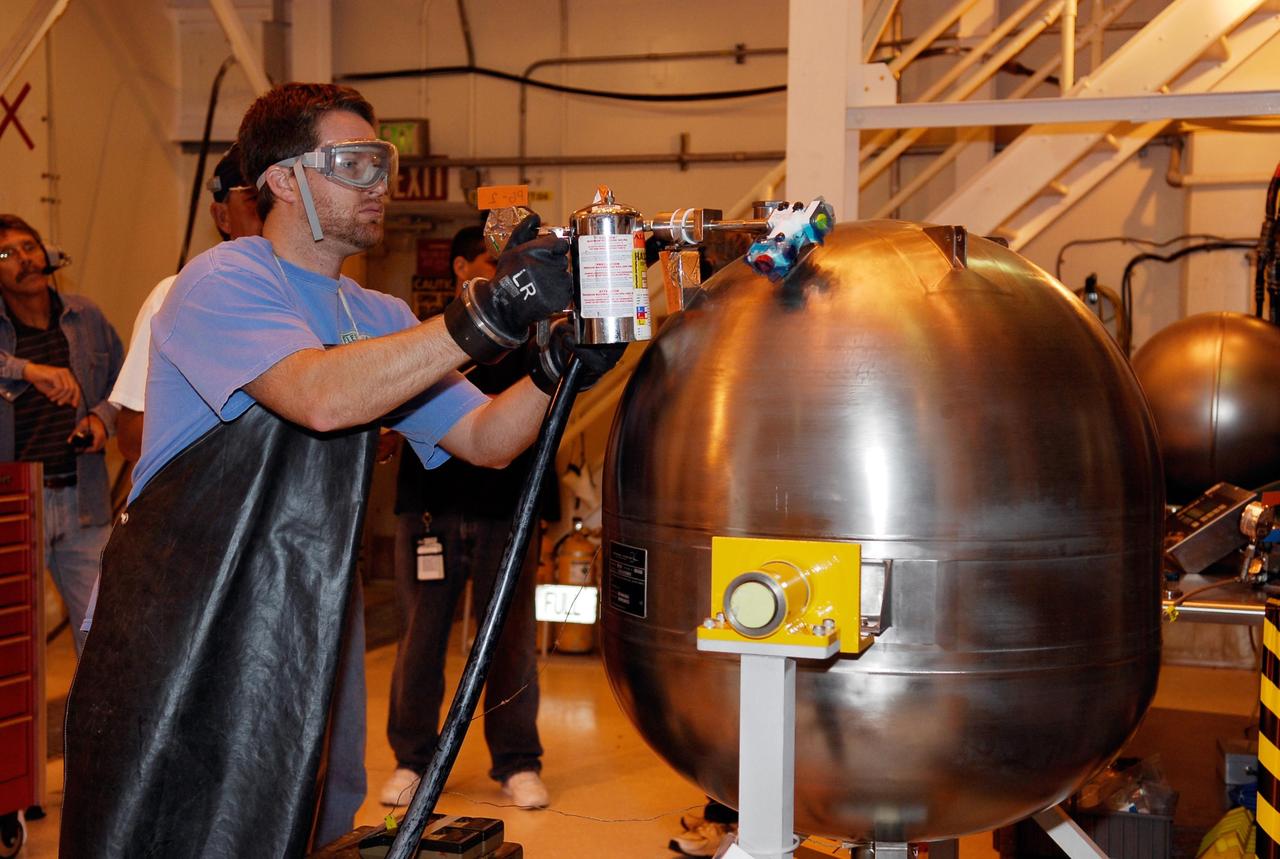
KENNEDY SPACE CENTER, FLA. -- In the hypergolic maintenance facility at NASA's Kennedy Space Center, a technician adjusts equipment during testing of the Ares I-X Roll Control System, or RoCS. The RoCS Servicing Simulation Test is to gather data that will be used to help certify the ground support equipment design and validate the servicing requirements and processes. The RoCS is part of the Interstage structure, the lowest axial segment of the Upper Stage Simulator. In an effort to reduce costs and meet the schedule, most of the ground support equipment that will be used for the RoCS servicing is of space shuttle heritage. This high-fidelity servicing simulation will provide confidence that servicing requirements can be met with the heritage system. At the same time, the test will gather process data that will be used to modify or refine the equipment and processes to be used for the actual flight element. Photo credit: NASA/Kim Shiflett
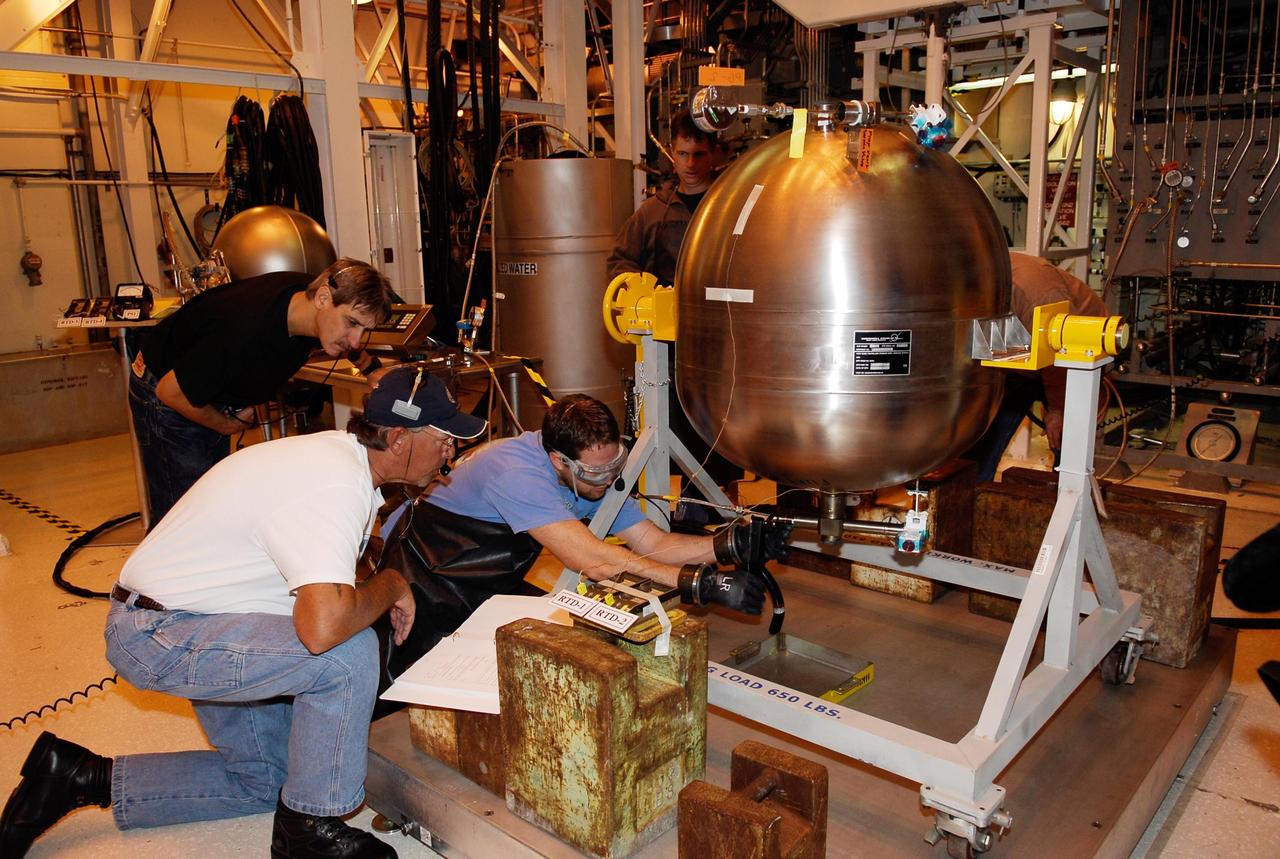
KENNEDY SPACE CENTER, FLA. -- In the hypergolic maintenance facility at NASA's Kennedy Space Center, a technician (right) adjusts equipment during testing of the Ares I-X Roll Control System, or RoCS. The RoCS Servicing Simulation Test is to gather data that will be used to help certify the ground support equipment design and validate the servicing requirements and processes. The RoCS is part of the Interstage structure, the lowest axial segment of the Upper Stage Simulator. In an effort to reduce costs and meet the schedule, most of the ground support equipment that will be used for the RoCS servicing is of space shuttle heritage. This high-fidelity servicing simulation will provide confidence that servicing requirements can be met with the heritage system. At the same time, the test will gather process data that will be used to modify or refine the equipment and processes to be used for the actual flight element. Photo credit: NASA/Kim Shiflett
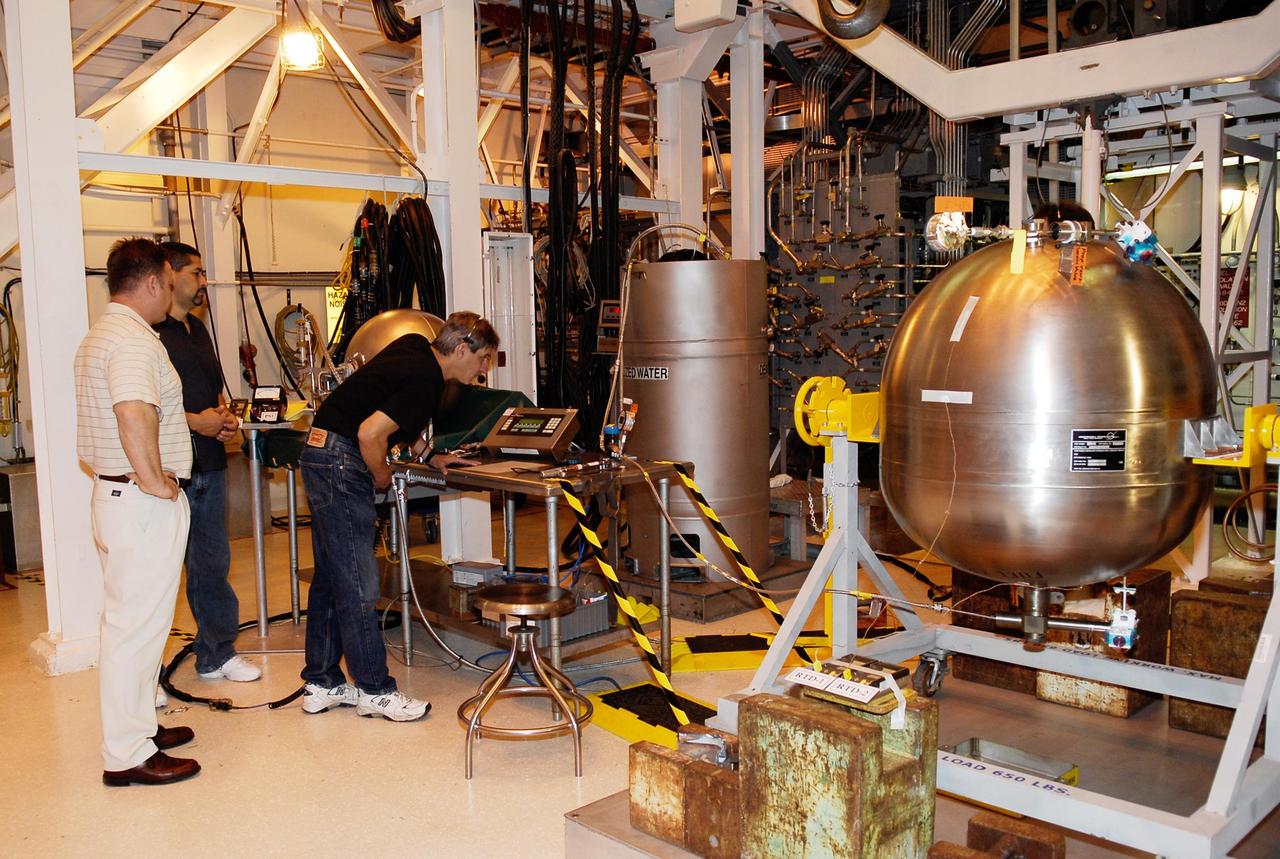
KENNEDY SPACE CENTER, FLA. -- In the hypergolic maintenance facility at NASA's Kennedy Space Center, technicians monitor equipment during testing of the Ares I-X Roll Control System, or RoCS. The RoCS Servicing Simulation Test is to gather data that will be used to help certify the ground support equipment design and validate the servicing requirements and processes. The RoCS is part of the Interstage structure, the lowest axial segment of the Upper Stage Simulator. In an effort to reduce costs and meet the schedule, most of the ground support equipment that will be used for the RoCS servicing is of space shuttle heritage. This high-fidelity servicing simulation will provide confidence that servicing requirements can be met with the heritage system. At the same time, the test will gather process data that will be used to modify or refine the equipment and processes to be used for the actual flight element. Photo credit: NASA/Kim Shiflett
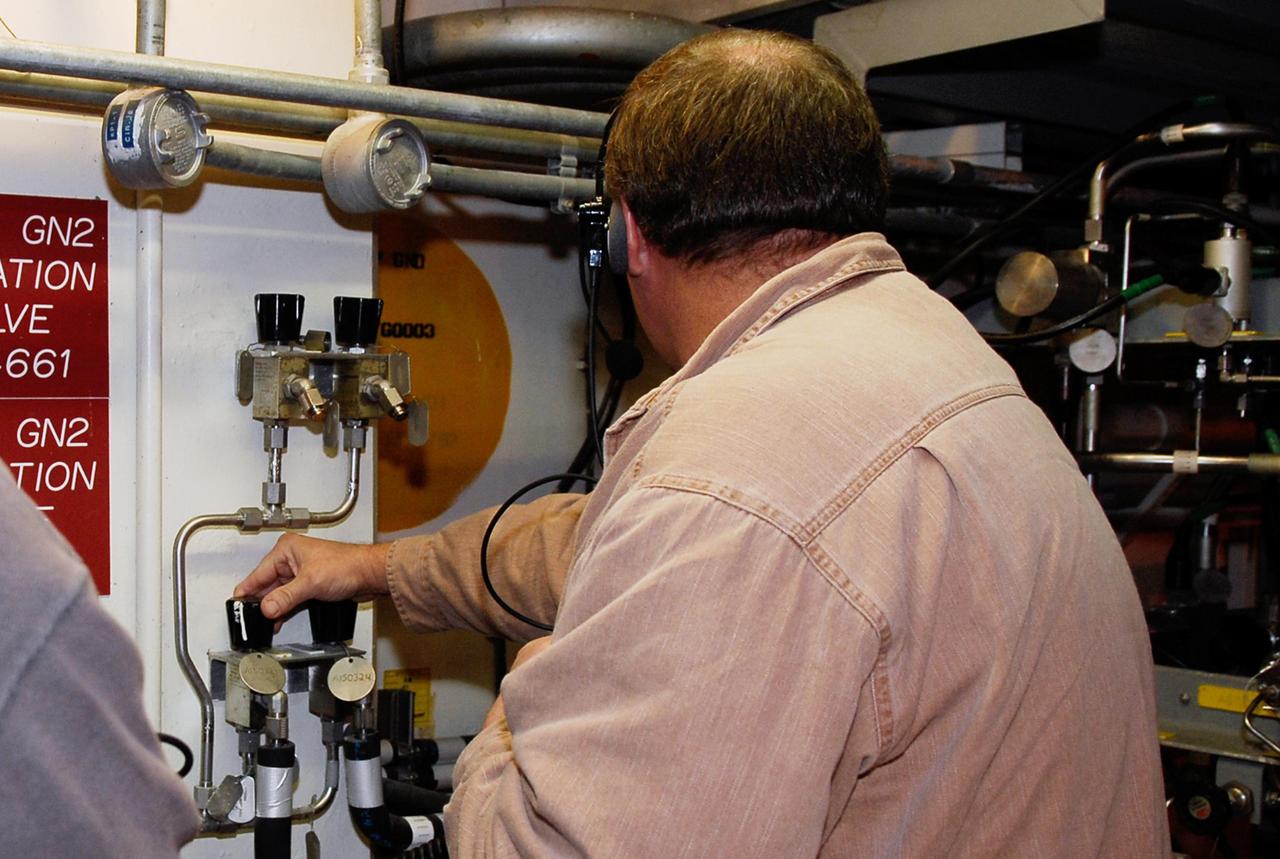
KENNEDY SPACE CENTER, FLA. -- In the hypergolic maintenance facility at NASA's Kennedy Space Center, a technician adjusts equipment during testing of the Ares I-X Roll Control System, or RoCS. The RoCS Servicing Simulation Test is to gather data that will be used to help certify the ground support equipment design and validate the servicing requirements and processes. The RoCS is part of the Interstage structure, the lowest axial segment of the Upper Stage Simulator. In an effort to reduce costs and meet the schedule, most of the ground support equipment that will be used for the RoCS servicing is of space shuttle heritage. This high-fidelity servicing simulation will provide confidence that servicing requirements can be met with the heritage system. At the same time, the test will gather process data that will be used to modify or refine the equipment and processes to be used for the actual flight element. Photo credit: NASA/Kim Shiflett

KENNEDY SPACE CENTER, FLA. -- In the hypergolic maintenance facility at NASA's Kennedy Space Center, technicians monitor equipment during testing of the Ares I-X Roll Control System, or RoCS. The RoCS Servicing Simulation Test is to gather data that will be used to help certify the ground support equipment design and validate the servicing requirements and processes. The RoCS is part of the Interstage structure, the lowest axial segment of the Upper Stage Simulator. In an effort to reduce costs and meet the schedule, most of the ground support equipment that will be used for the RoCS servicing is of space shuttle heritage. This high-fidelity servicing simulation will provide confidence that servicing requirements can be met with the heritage system. At the same time, the test will gather process data that will be used to modify or refine the equipment and processes to be used for the actual flight element. Photo credit: NASA/Kim Shiflett

KENNEDY SPACE CENTER, FLA. -- In the hypergolic maintenance facility at NASA's Kennedy Space Center, a technician monitors equipment during testing of the Ares I-X Roll Control System, or RoCS. The RoCS Servicing Simulation Test is to gather data that will be used to help certify the ground support equipment design and validate the servicing requirements and processes. The RoCS is part of the Interstage structure, the lowest axial segment of the Upper Stage Simulator. In an effort to reduce costs and meet the schedule, most of the ground support equipment that will be used for the RoCS servicing is of space shuttle heritage. This high-fidelity servicing simulation will provide confidence that servicing requirements can be met with the heritage system. At the same time, the test will gather process data that will be used to modify or refine the equipment and processes to be used for the actual flight element. Photo credit: NASA/Kim Shiflett

KENNEDY SPACE CENTER, FLA. -- In the hypergolic maintenance facility at NASA's Kennedy Space Center, technicians monitor equipment during testing of the Ares I-X Roll Control System, or RoCS. The RoCS Servicing Simulation Test is to gather data that will be used to help certify the ground support equipment design and validate the servicing requirements and processes. The RoCS is part of the Interstage structure, the lowest axial segment of the Upper Stage Simulator. In an effort to reduce costs and meet the schedule, most of the ground support equipment that will be used for the RoCS servicing is of space shuttle heritage. This high-fidelity servicing simulation will provide confidence that servicing requirements can be met with the heritage system. At the same time, the test will gather process data that will be used to modify or refine the equipment and processes to be used for the actual flight element. Photo credit: NASA/Kim Shiflett
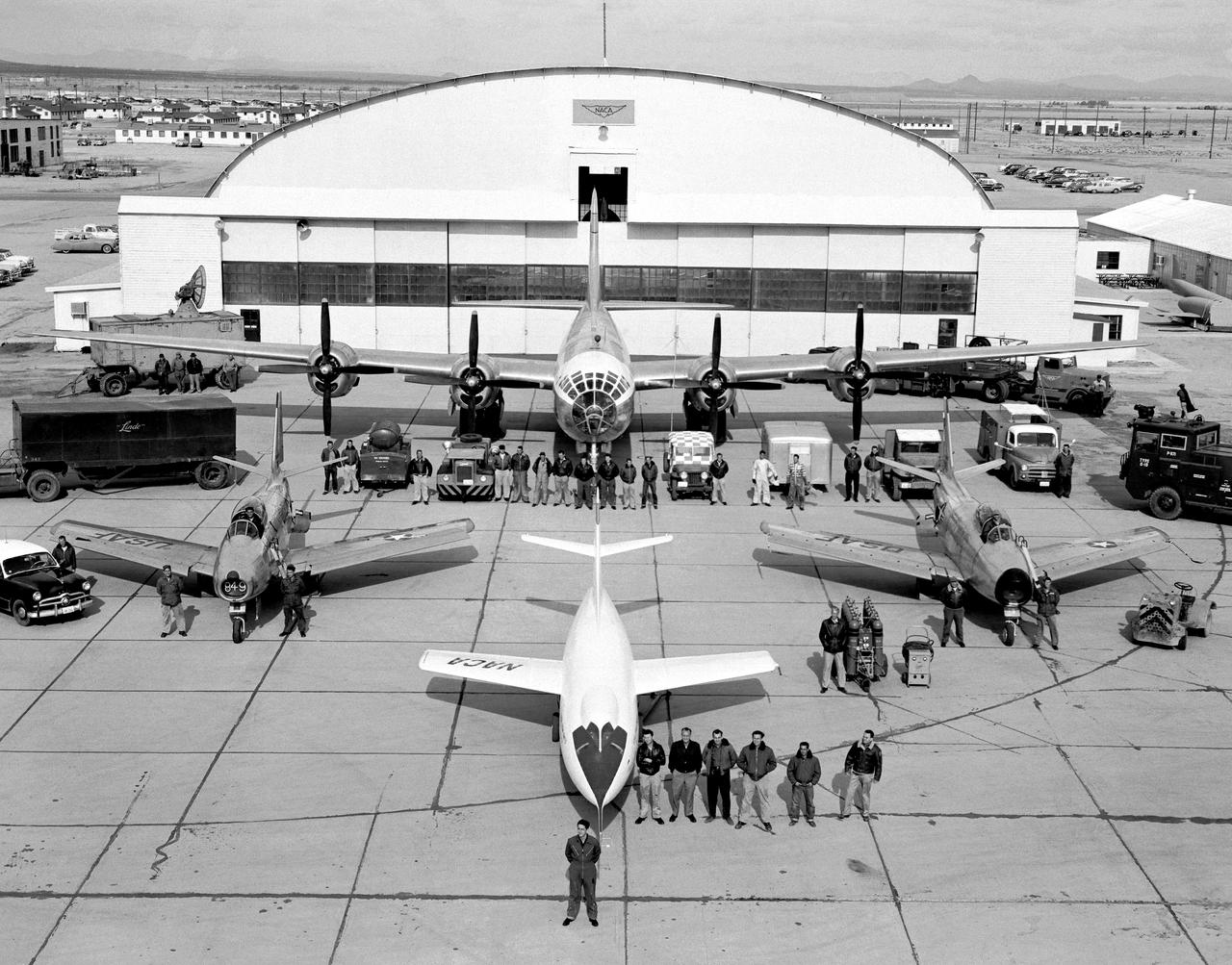
These people and this equipment supported the flight of the NACA D-558-2 Skyrocket at the High-Speed Flight Station at South Base, Edwards AFB. Note the two Sabre chase planes, the P2B-1S launch aircraft, and the profusion of ground support equipment, including communications, tracking, maintenance, and rescue vehicles. Research pilot A. Scott Crossfield stands in front of the Skyrocket.
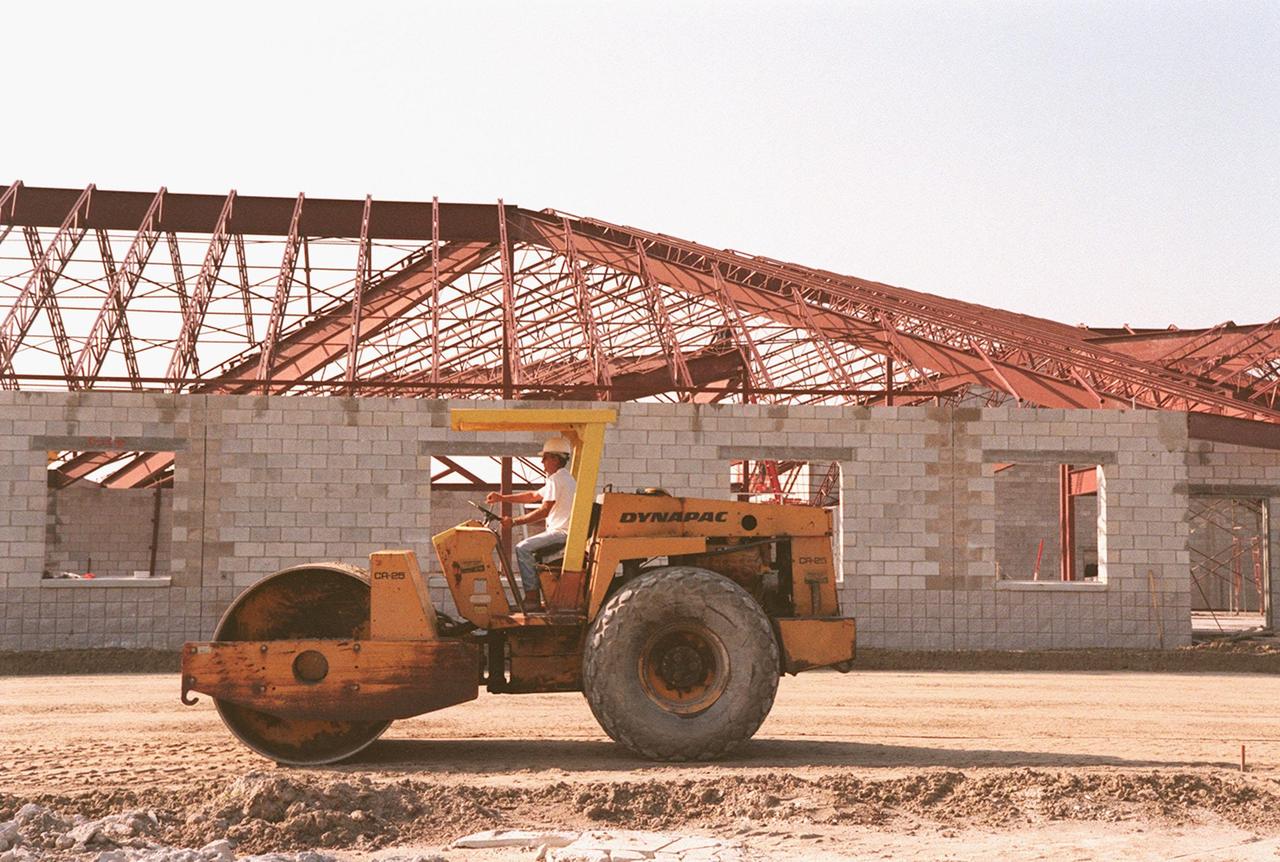
A steam roller packs down the ground next to construction of a support building, part of the $8 million Reusable Launch Vehicle (RLV) Support Complex at Kennedy Space Center. The RLV complex, which includes a multi-purpose hangar and the building to be used for related ground support equipment and administrative/technical support, will be available to accommodate the Space Shuttle; the X-34 RLV technology demonstrator; the L-1011 carrier aircraft for Pegasus and X-34; and other RLV and X-vehicle programs. The complex is jointly funded by the Spaceport Florida Authority, NASA's Space Shuttle Program and KSC. The facility will be operational in early 2000
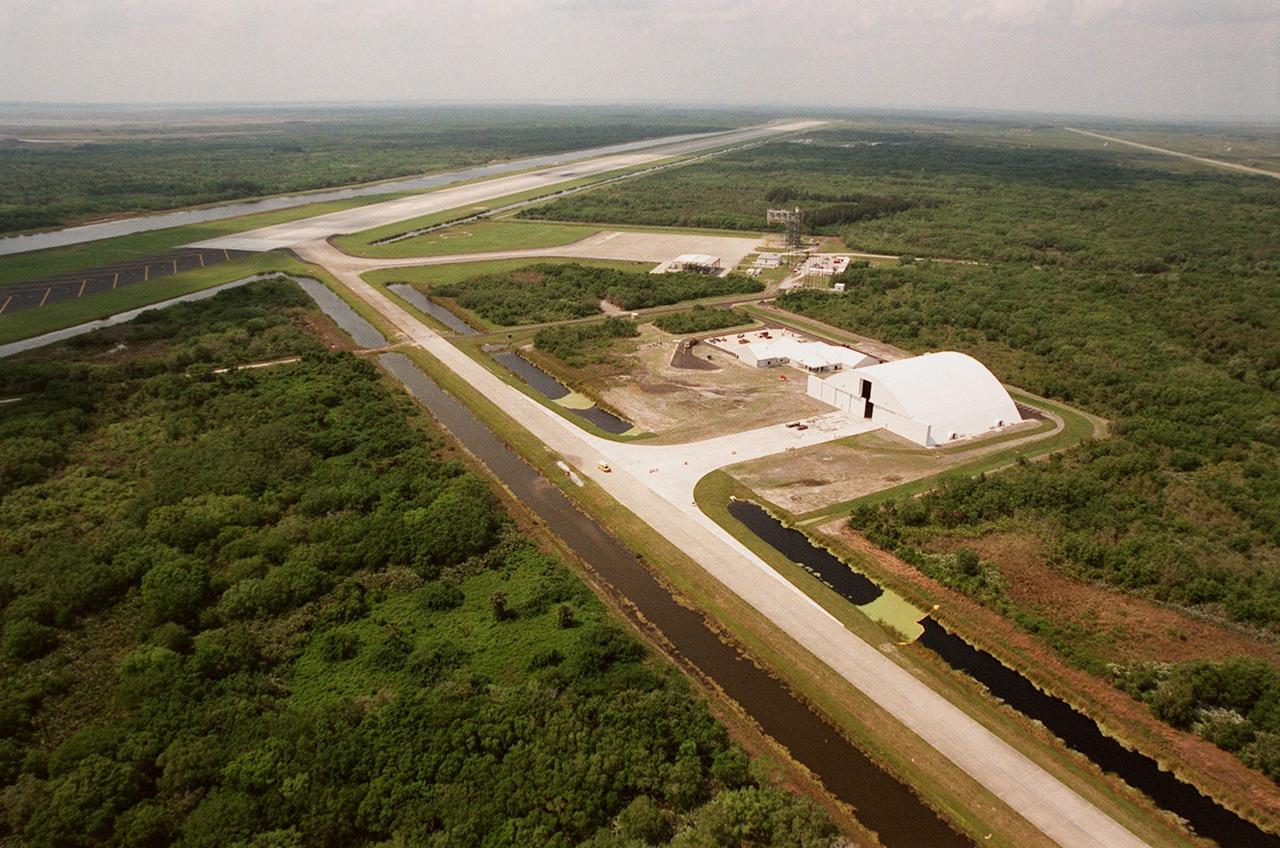
This broad aerial view shows the runway at KSC (top), the parking facility with the mate/demate device (center), and the remote launch vehicle (RLV) hangar, at right, still under construction at the south end of the Shuttle Landing Facility. Next to the multi-purpose RLV hangar are facilities for related ground support equipment and administrative/technical support. The tow-way stretches from the runway past the hangar to lower right in the photo. Stretching toward the horizon are the grounds of the Merritt island National Wildlife Refuge, which shares a boundary with KSC
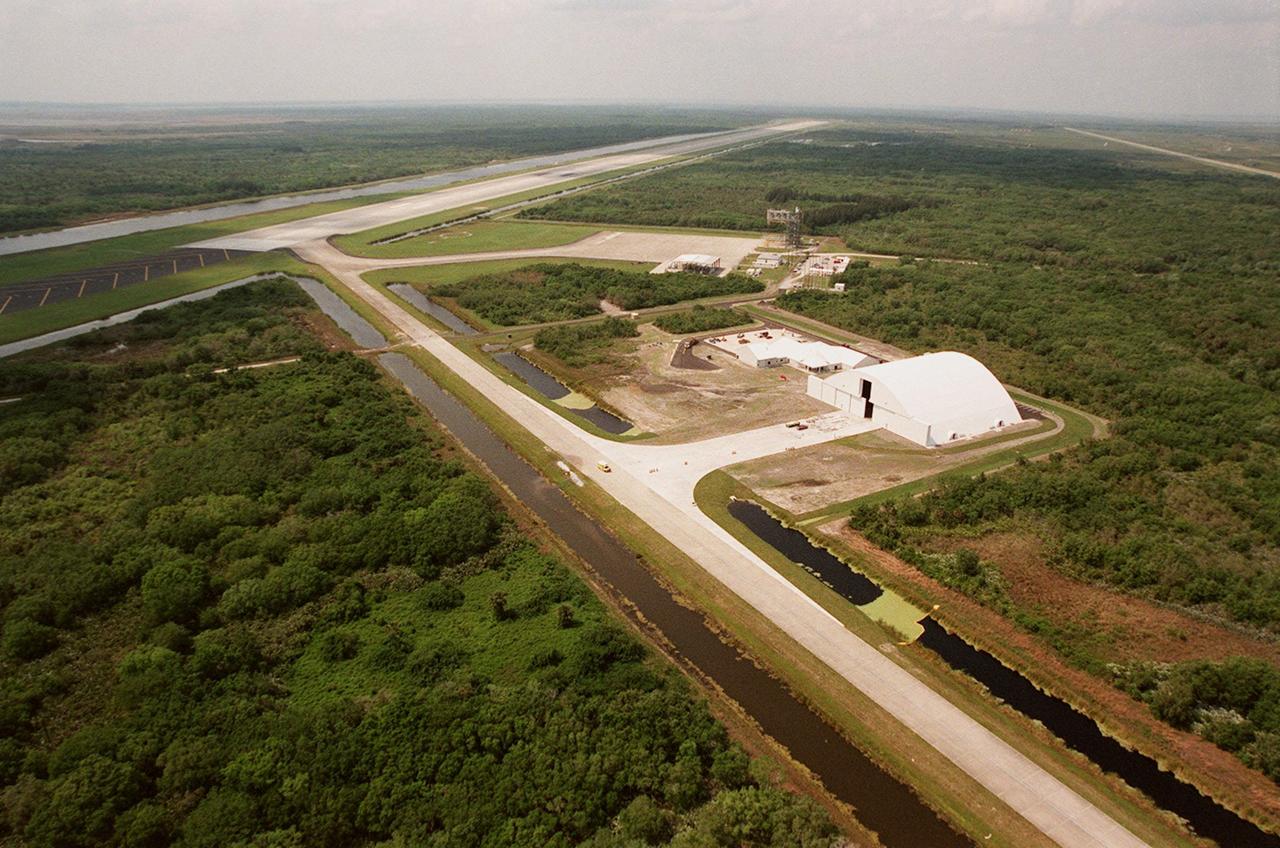
This broad aerial view shows the runway at KSC (top), the parking facility with the mate/demate device (center), and the remote launch vehicle (RLV) hangar, at right, still under construction at the south end of the Shuttle Landing Facility. Next to the multi-purpose RLV hangar are facilities for related ground support equipment and administrative/technical support. The tow-way stretches from the runway past the hangar to lower right in the photo. Stretching toward the horizon are the grounds of the Merritt island National Wildlife Refuge, which shares a boundary with KSC
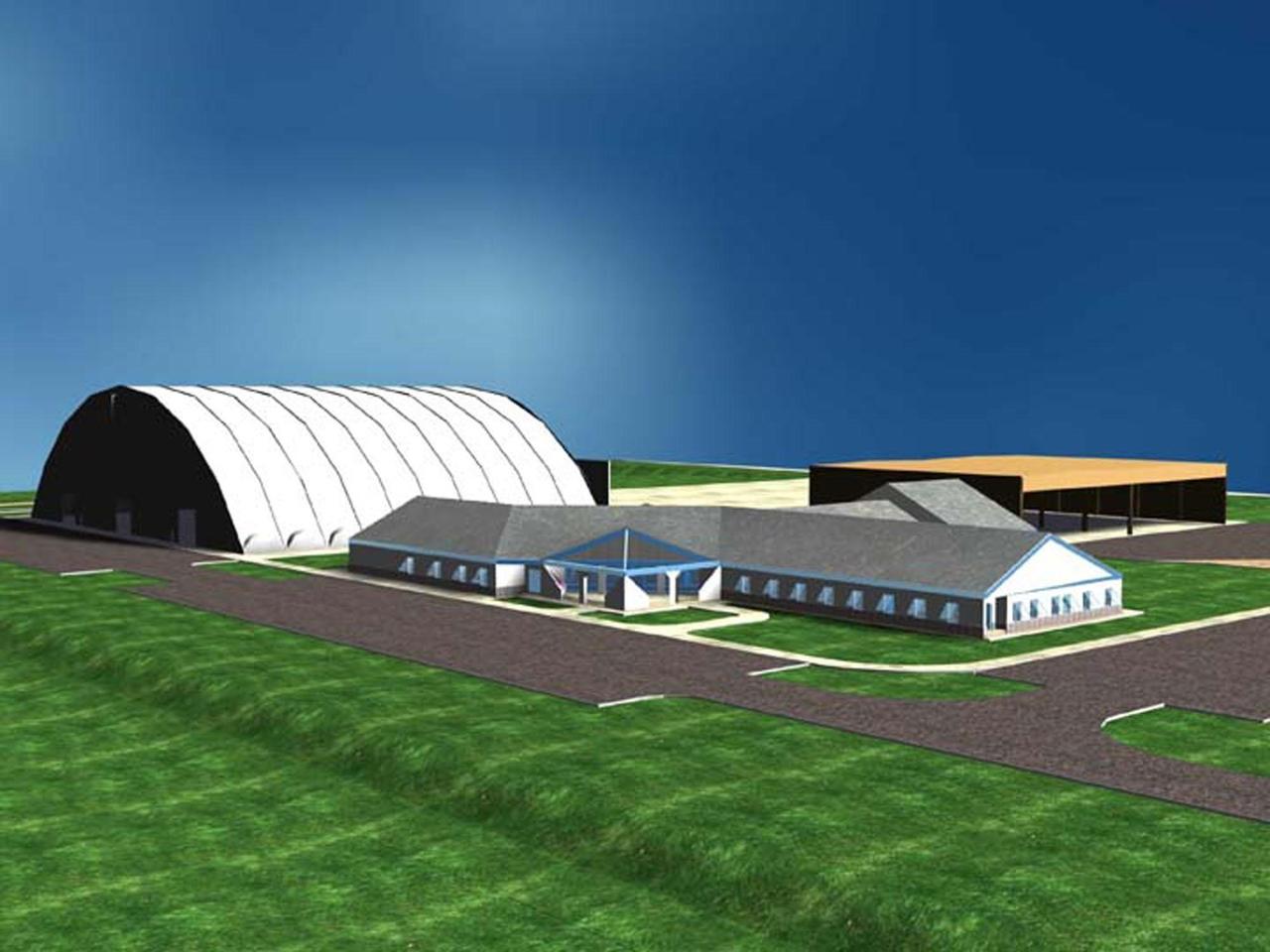
An artist's rendering shows the $8-million Reusable Launch Vehicle (RLV) Support Complex planned for the Shuttle Landing Facility (SLF) at Kennedy Space Center. The ground breaking took place today. To be located at the tow-way adjacent to the SLF, the complex will include a multi-purpose RLV hangar and adjacent facilities for related ground support equipment and administrative/technical support. It will be available to accommodate the Space Shuttle, the X-34 RLV technology demonstrator, the L-1011 carrier aircraft for Pegasus and X-34, and other RLV and X-vehicle programs. The complex is jointly funded by the Spaceport Florida Authority, NASA's Space Shuttle Program and KSC. The facility will be operational in early 2000
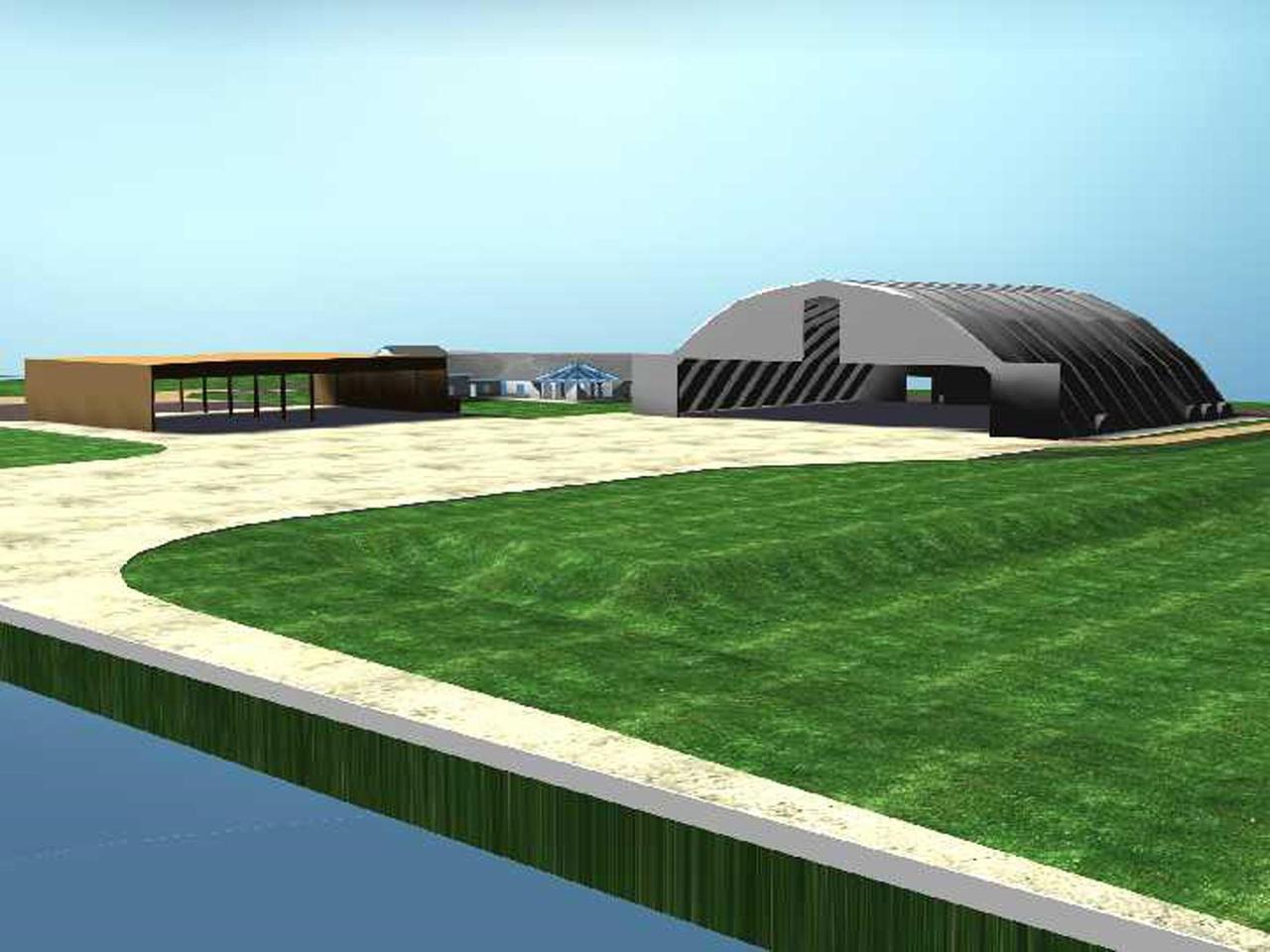
An artist's rendering shows the $8-million Reusable Launch Vehicle (RLV) Support Complex planned for the Shuttle Landing Facility (SLF) at Kennedy Space Center. The ground breaking took place today. To be located at the tow-way adjacent to the SLF, the complex will include a multi-purpose RLV hangar and adjacent facilities for related ground support equipment and administrative/technical support. It will be available to accommodate the Space Shuttle, the X-34 RLV technology demonstrator, the L-1011 carrier aircraft for Pegasus and X-34, and other RLV and X-vehicle programs. The complex is jointly funded by the Spaceport Florida Authority, NASA's Space Shuttle Program and KSC. The facility will be operational in early 2000
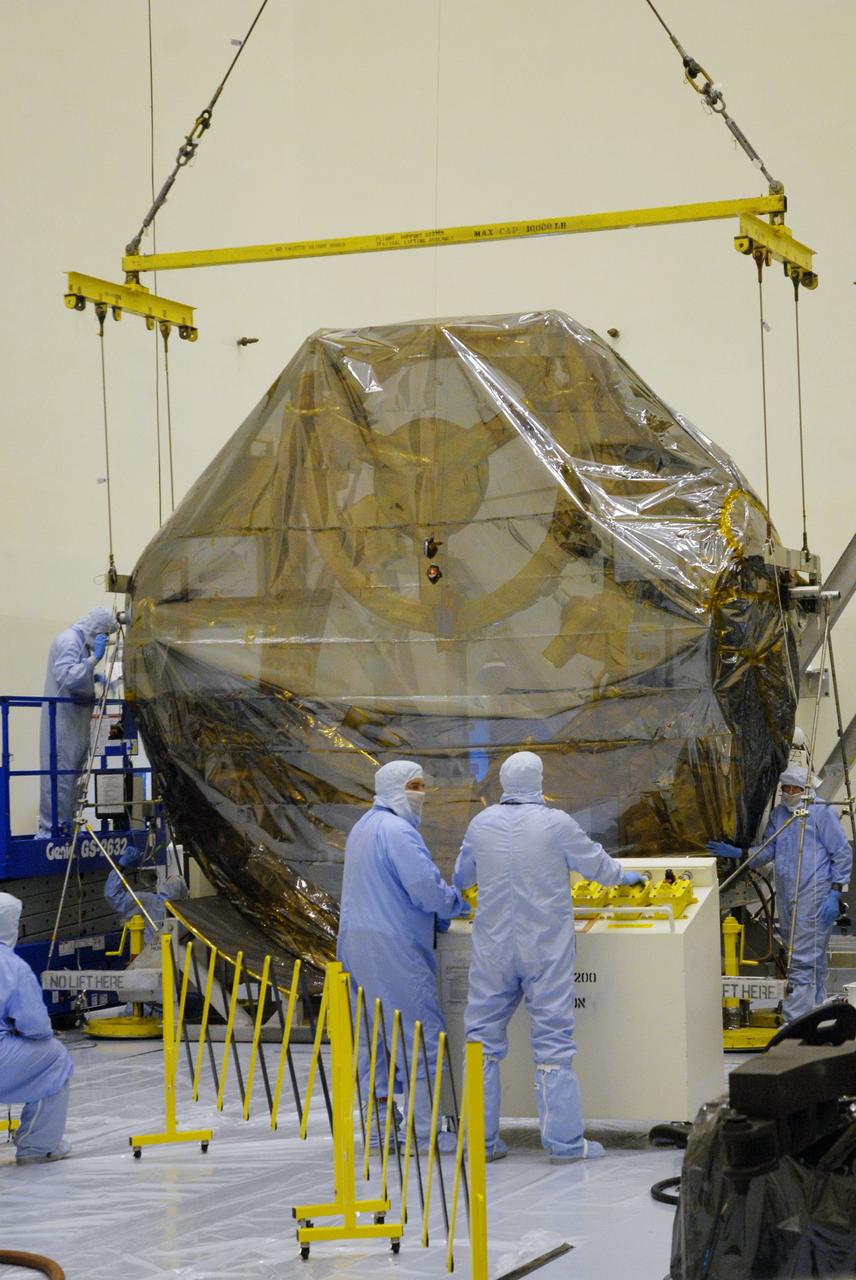
CAPE CANAVERAL, Fla. – In the Payload Hazardous Servicing Facility at NASA's Kennedy Space Center, workers get ready to release the crane that lowered the ground support equipment for the STS-125 Hubble Servicing Mission onto a work stand. The GSE are carriers, or pallets, that will hold equipment in space shuttle Atlantis’ payload bay. Under the protective covering of the carrier can be seen the soft capture mechanism. The carriers will be prepared for the integration of telescope science instruments, both internal and external replacement components, as well as the flight support equipment to be used by the astronauts during the servicing mission. The three payload carriers or pallets are the Flight Support System, the Super Lightweight Interchangeable Carrier and the Orbital Replacement Unit Carrier. At the end of July, a fourth and final carrier, the Multi-Use Lightweight Equipment carrier will join the others in the Payload Hazardous Servicing Facility where the Hubble payload is being prepared for launch. Photo credit: NASA/Cory Huston
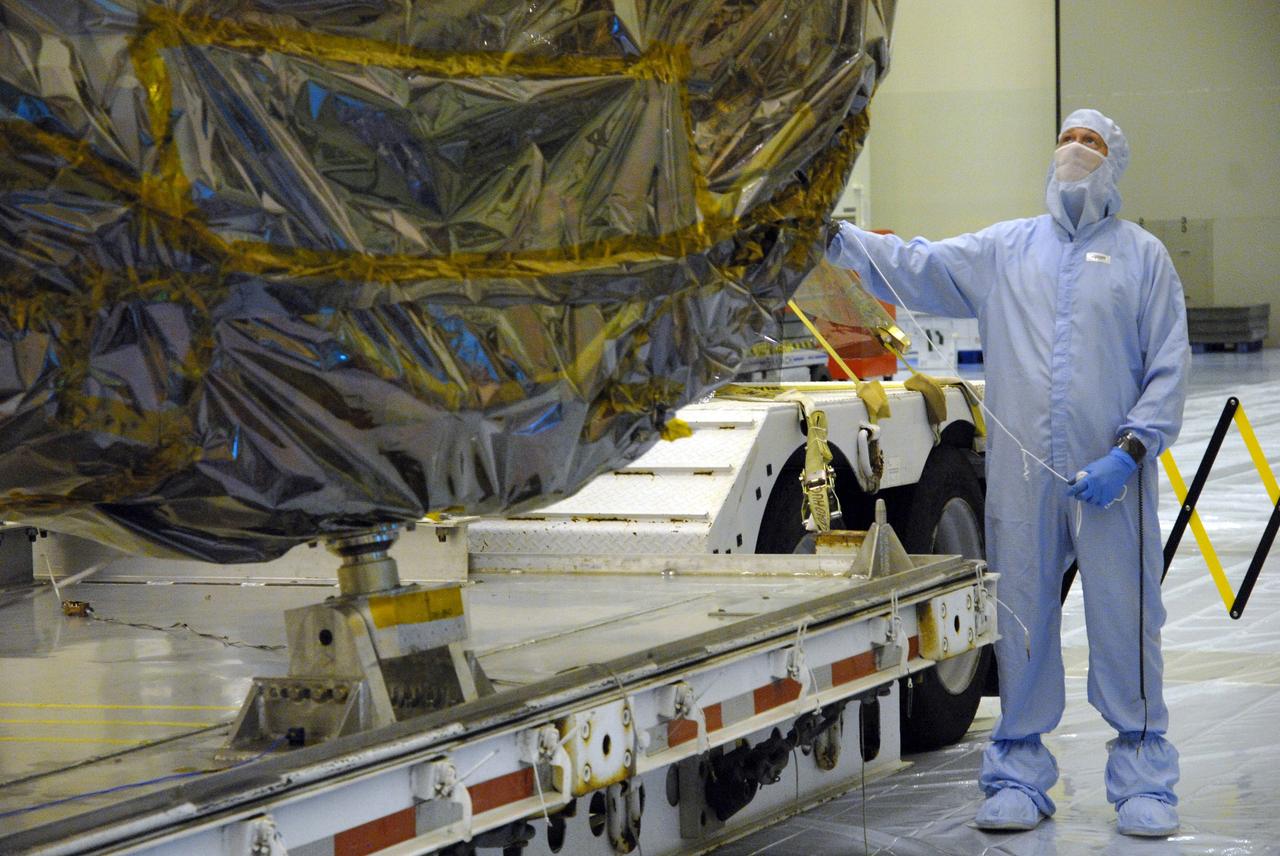
CAPE CANAVERAL, Fla. – In the Payload Hazardous Servicing Facility at NASA's Kennedy Space Center, an overhead crane lifts the newly arrived ground support equipment for the STS-125 Hubble Servicing Mission off its transporter. The GSE are carriers, or pallets, that will hold equipment in space shuttle Atlantis’ payload bay. Under the protective covering of the carrier can be seen the soft capture mechanism. This carrier will be moved to a work stand. The carriers will be prepared for the integration of telescope science instruments, both internal and external replacement components, as well as the flight support equipment to be used by the astronauts during the servicing mission. The three payload carriers or pallets are the Flight Support System, the Super Lightweight Interchangeable Carrier and the Orbital Replacement Unit Carrier. At the end of July, a fourth and final carrier, the Multi-Use Lightweight Equipment carrier will join the others in the Payload Hazardous Servicing Facility where the Hubble payload is being prepared for launch. Photo credit: NASA/Cory Huston
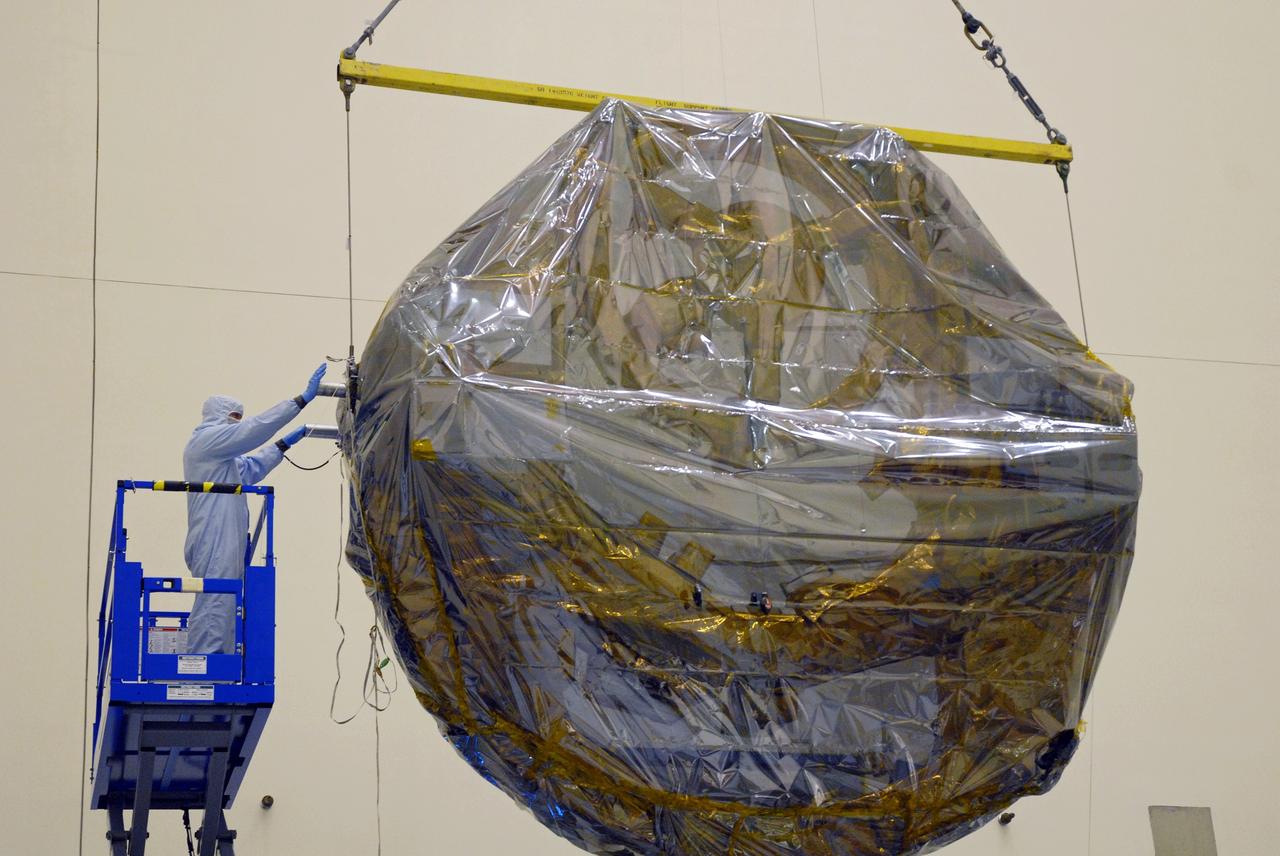
CAPE CANAVERAL, Fla. – In the Payload Hazardous Servicing Facility at NASA's Kennedy Space Center, an overhead crane lifts the newly arrived ground support equipment for the STS-125 Hubble Servicing Mission off its transporter. The GSE are carriers, or pallets, that will hold equipment in space shuttle Atlantis’ payload bay. Under the protective covering of the carrier can be seen the soft capture mechanism. This carrier will be moved to a work stand. The carriers will be prepared for the integration of telescope science instruments, both internal and external replacement components, as well as the flight support equipment to be used by the astronauts during the servicing mission. The three payload carriers or pallets are the Flight Support System, the Super Lightweight Interchangeable Carrier and the Orbital Replacement Unit Carrier. At the end of July, a fourth and final carrier, the Multi-Use Lightweight Equipment carrier will join the others in the Payload Hazardous Servicing Facility where the Hubble payload is being prepared for launch. Photo credit: NASA/Cory Huston
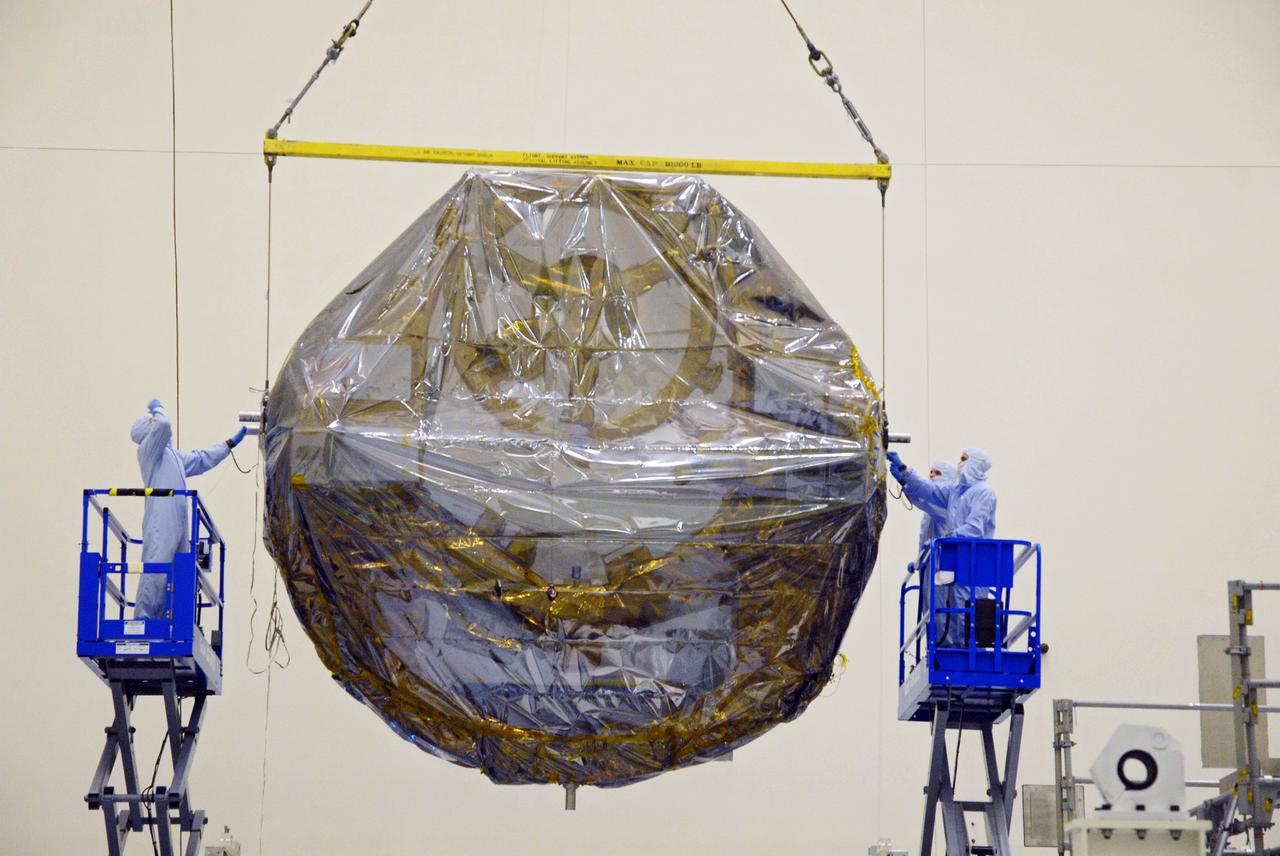
CAPE CANAVERAL, Fla. – In the Payload Hazardous Servicing Facility at NASA's Kennedy Space Center, workers check the attachments on the ground support equipment for the STS-125 Hubble Servicing Mission as it is transferred to a work stand. The GSE are carriers, or pallets, that will hold equipment in space shuttle Atlantis’ payload bay. Under the protective covering of the carrier can be seen the soft capture mechanism. The carriers will be prepared for the integration of telescope science instruments, both internal and external replacement components, as well as the flight support equipment to be used by the astronauts during the servicing mission. The three payload carriers or pallets are the Flight Support System, the Super Lightweight Interchangeable Carrier and the Orbital Replacement Unit Carrier. At the end of July, a fourth and final carrier, the Multi-Use Lightweight Equipment carrier will join the others in the Payload Hazardous Servicing Facility where the Hubble payload is being prepared for launch. Photo credit: NASA/Cory Huston
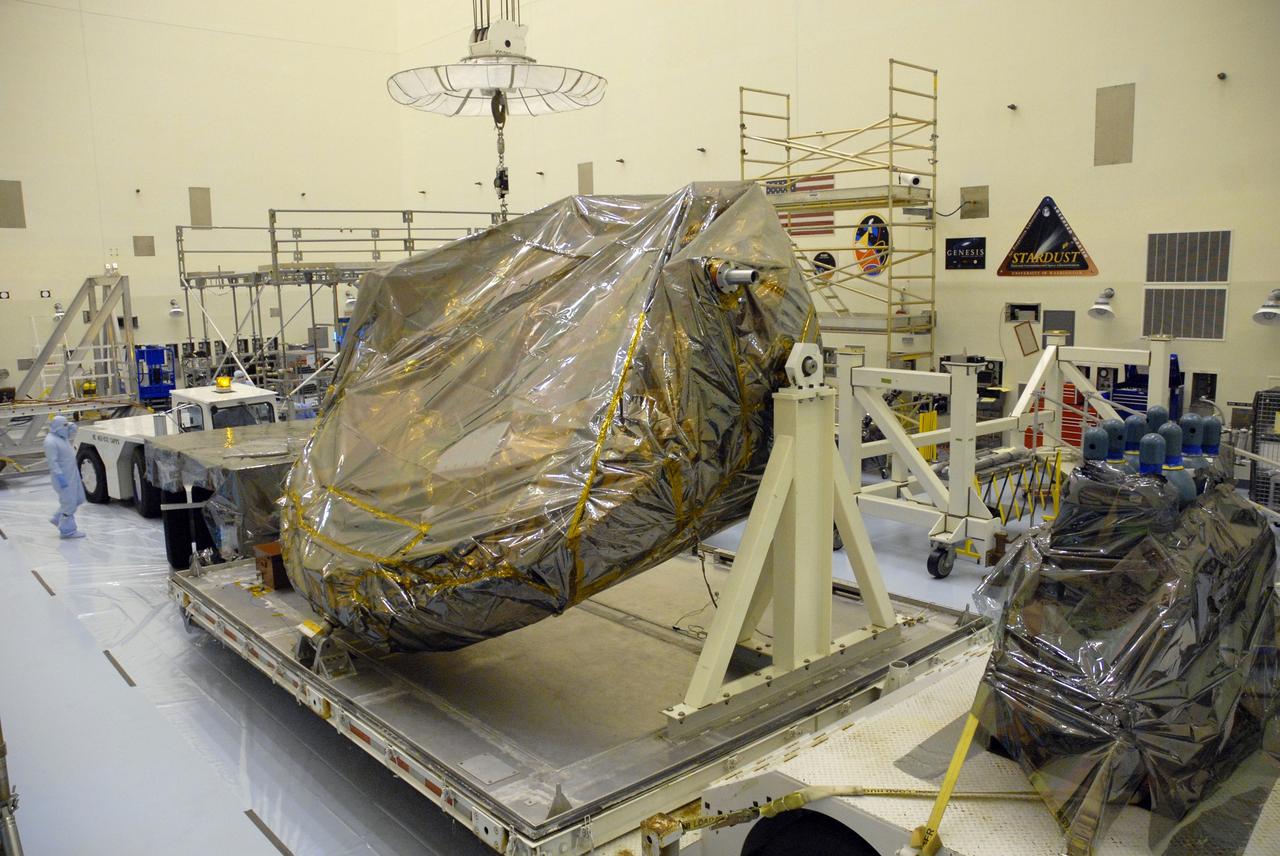
CAPE CANAVERAL, Fla. – In the Payload Hazardous Servicing Facility at NASA's Kennedy Space Center, workers begin to attach a crane to part of the ground support equipment for the STS-125 Hubble Servicing Mission. The GSE are carriers, or pallets, that will hold equipment in space shuttle Atlantis’ payload bay. This carrier will be moved to a work stand. The carriers will be prepared for the integration of telescope science instruments, both internal and external replacement components, as well as the flight support equipment to be used by the astronauts during the servicing mission. The three payload carriers or pallets are the Flight Support System, the Super Lightweight Interchangeable Carrier and the Orbital Replacement Unit Carrier. At the end of July, a fourth and final carrier, the Multi-Use Lightweight Equipment carrier will join the others in the Payload Hazardous Servicing Facility where the Hubble payload is being prepared for launch. Photo credit: NASA/Cory Huston
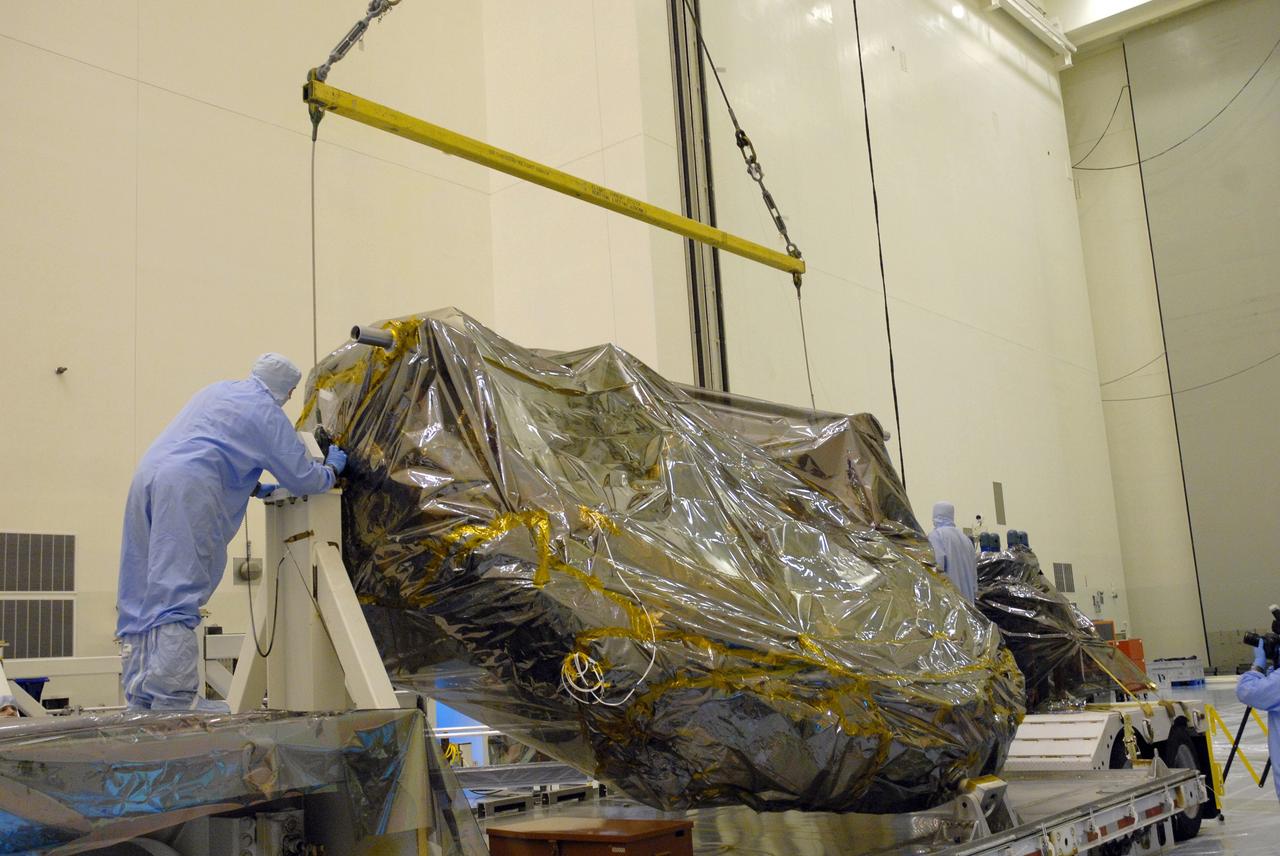
CAPE CANAVERAL, Fla. – In the Payload Hazardous Servicing Facility at NASA's Kennedy Space Center, a worker checks the position of the ground support equipment for the STS-125 Hubble Servicing Mission as it is lifted off the transporter. The GSE are carriers, or pallets, that will hold equipment in space shuttle Atlantis’ payload bay. This carrier will be moved to a work stand. The carriers will be prepared for the integration of telescope science instruments, both internal and external replacement components, as well as the flight support equipment to be used by the astronauts during the servicing mission. The three payload carriers or pallets are the Flight Support System, the Super Lightweight Interchangeable Carrier and the Orbital Replacement Unit Carrier. At the end of July, a fourth and final carrier, the Multi-Use Lightweight Equipment carrier will join the others in the Payload Hazardous Servicing Facility where the Hubble payload is being prepared for launch. Photo credit: NASA/Cory Huston
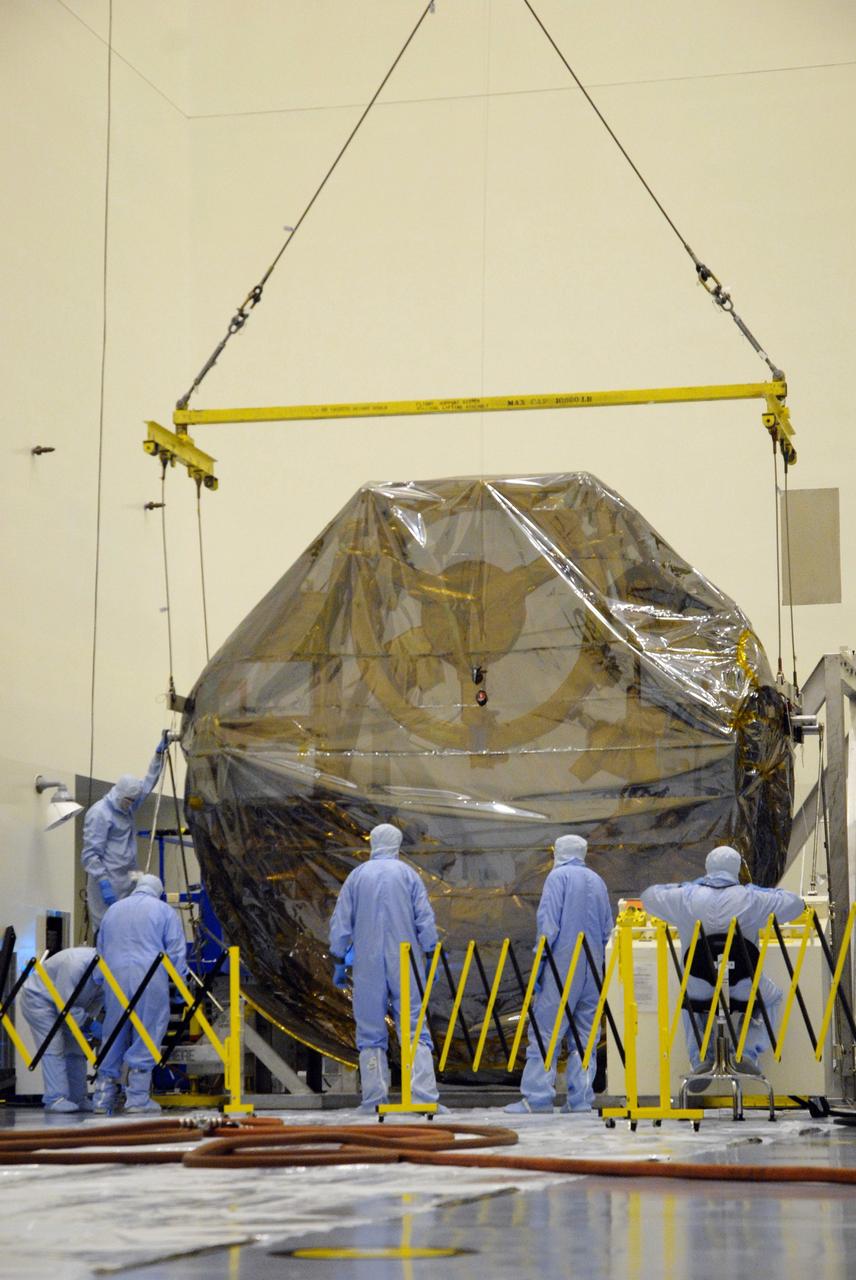
CAPE CANAVERAL, Fla. – In the Payload Hazardous Servicing Facility at NASA's Kennedy Space Center, workers get ready to release the crane that lowered the ground support equipment for the STS-125 Hubble Servicing Mission onto a work stand. The GSE are carriers, or pallets, that will hold equipment in space shuttle Atlantis’ payload bay. Under the protective covering of the carrier can be seen the soft capture mechanism. The carrier will be moved to a work stand. The carriers will be prepared for the integration of telescope science instruments, both internal and external replacement components, as well as the flight support equipment to be used by the astronauts during the servicing mission. The three payload carriers or pallets are the Flight Support System, the Super Lightweight Interchangeable Carrier and the Orbital Replacement Unit Carrier. At the end of July, a fourth and final carrier, the Multi-Use Lightweight Equipment carrier will join the others in the Payload Hazardous Servicing Facility where the Hubble payload is being prepared for launch. Photo credit: NASA/Cory Huston
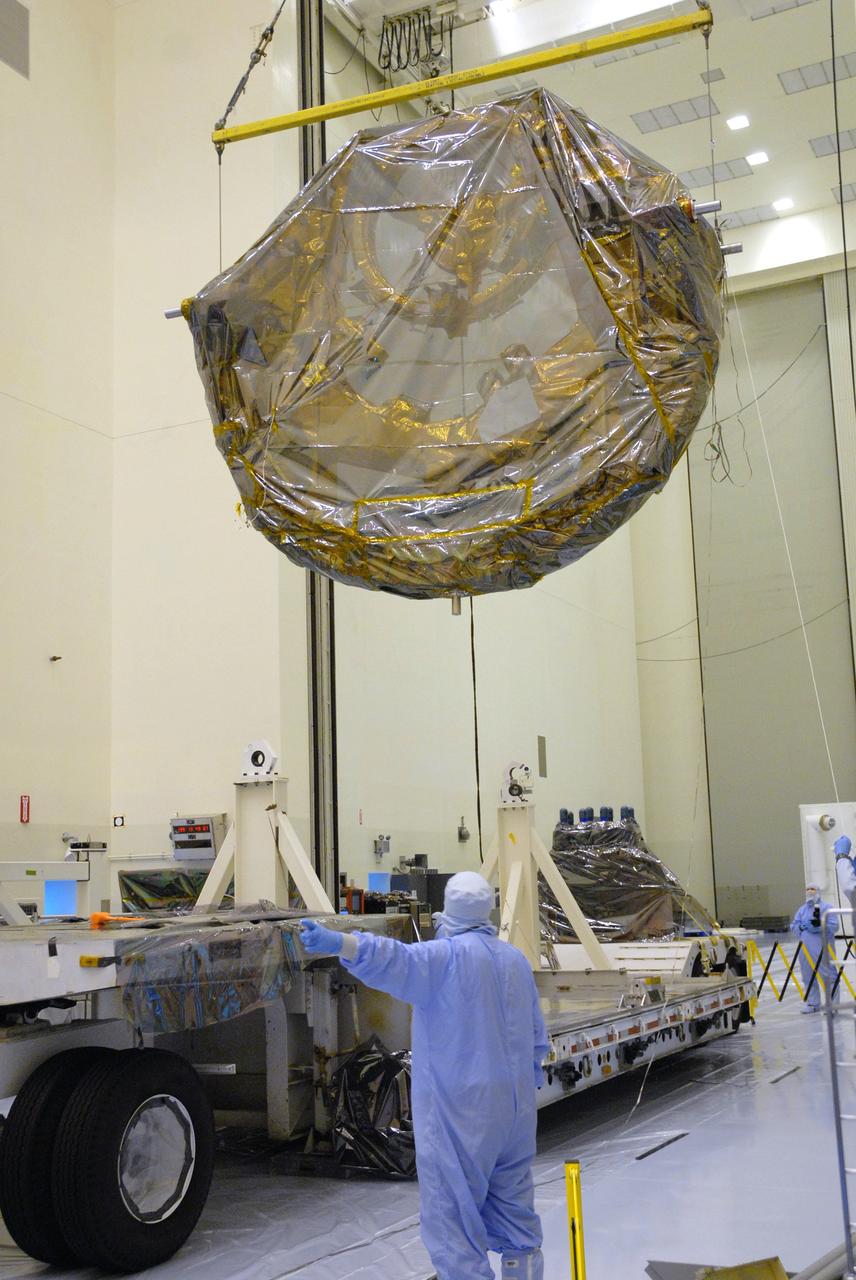
CAPE CANAVERAL, Fla. – Inside the Payload Hazardous Servicing Facility at NASA's Kennedy Space Center, the newly arrived ground support equipment for the STS-125 Hubble Servicing Mission waits to be moved to a work stand. The GSE are carriers, or pallets, that will hold equipment in space shuttle Atlantis’ payload bay. The carriers will be prepared for the integration of telescope science instruments, both internal and external replacement components, as well as the flight support equipment to be used by the astronauts during the servicing mission. The three payload carriers or pallets are the Flight Support System, the Super Lightweight Interchangeable Carrier and the Orbital Replacement Unit Carrier. At the end of July, a fourth and final carrier, the Multi-Use Lightweight Equipment carrier will join the others in the Payload Hazardous Servicing Facility where the Hubble payload is being prepared for launch. Photo credit: NASA/Cory Huston
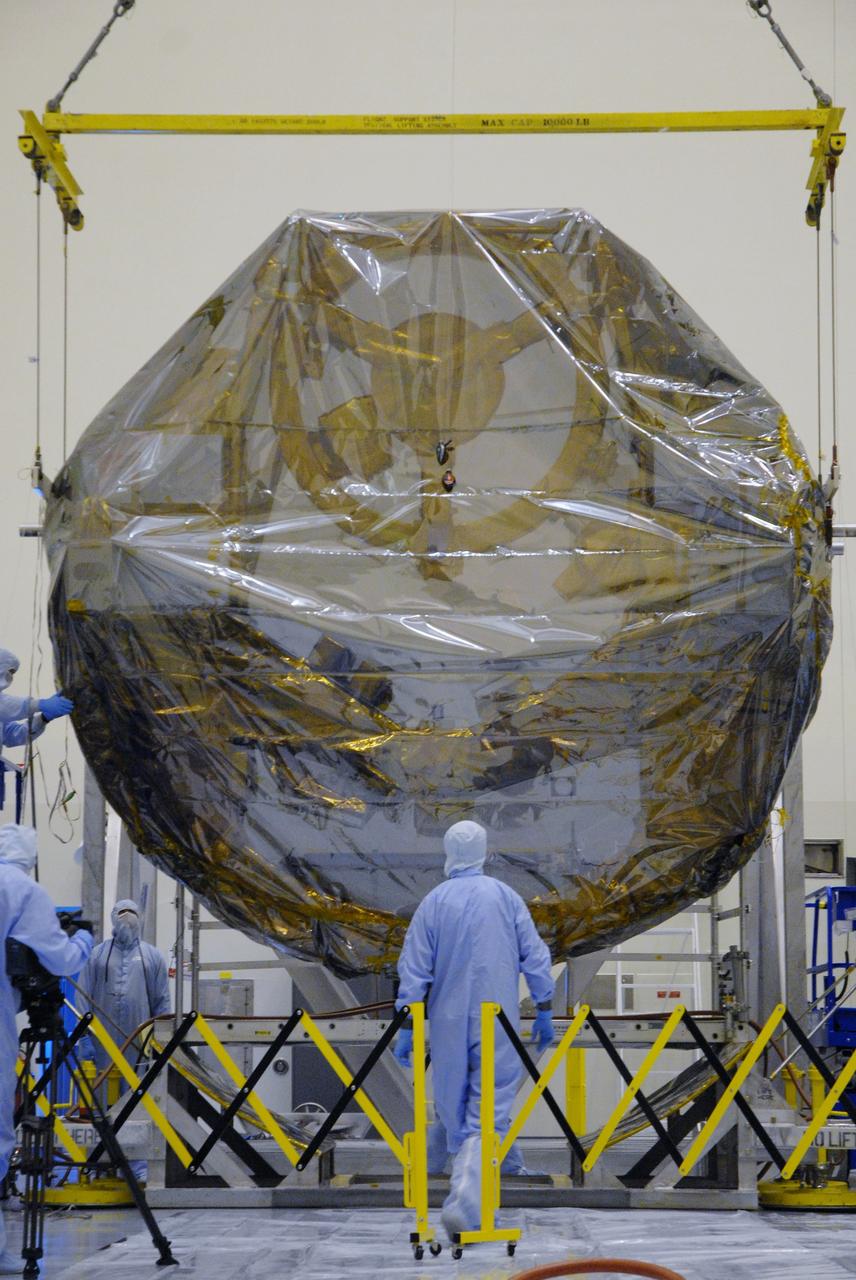
CAPE CANAVERAL, Fla. – In the Payload Hazardous Servicing Facility at NASA's Kennedy Space Center, the overhead crane lowers the ground support equipment for the STS-125 Hubble Servicing Mission toward a work stand. The GSE are carriers, or pallets, that will hold equipment in space shuttle Atlantis’ payload bay. Under the protective covering of the carrier can be seen the soft capture mechanism. The carriers will be prepared for the integration of telescope science instruments, both internal and external replacement components, as well as the flight support equipment to be used by the astronauts during the servicing mission. The three payload carriers or pallets are the Flight Support System, the Super Lightweight Interchangeable Carrier and the Orbital Replacement Unit Carrier. At the end of July, a fourth and final carrier, the Multi-Use Lightweight Equipment carrier will join the others in the Payload Hazardous Servicing Facility where the Hubble payload is being prepared for launch. Photo credit: NASA/Cory Huston
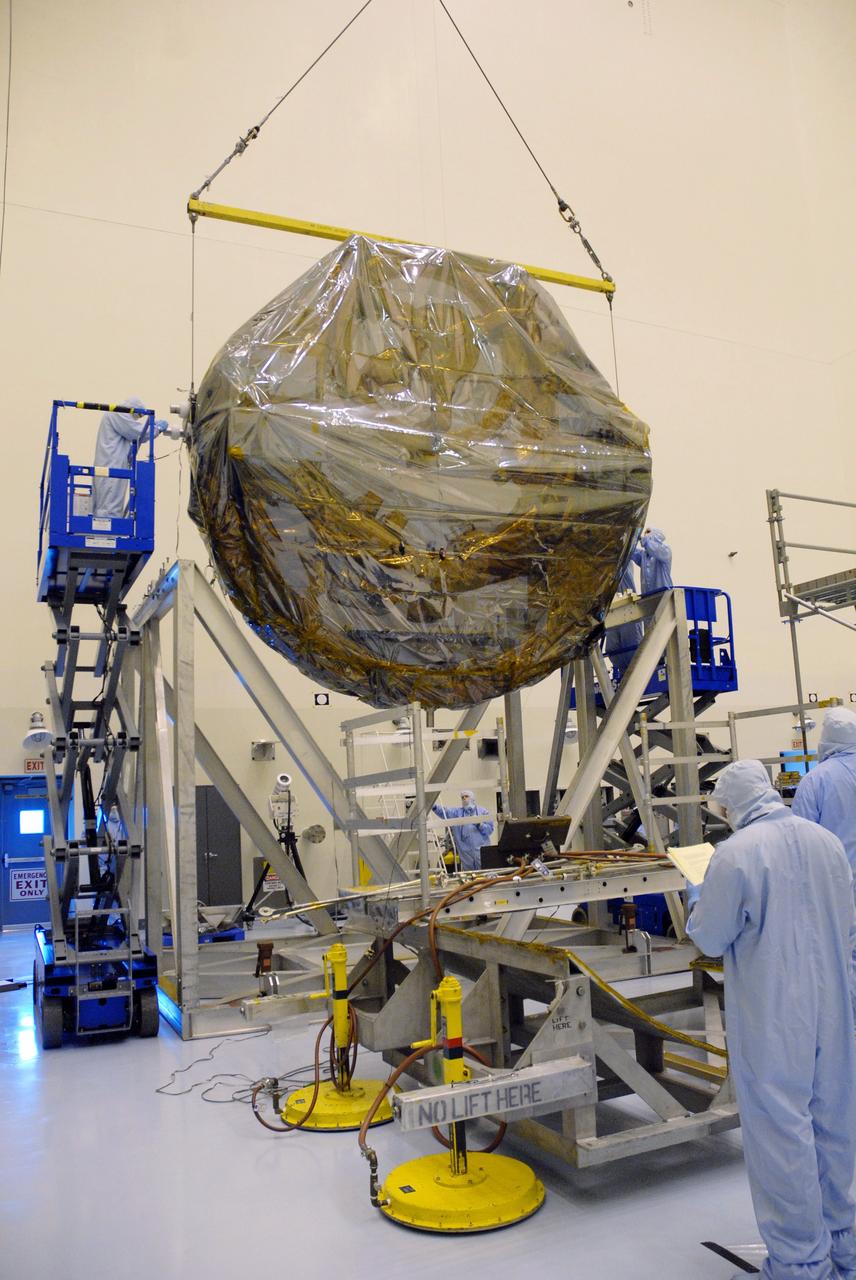
CAPE CANAVERAL, Fla. – In the Payload Hazardous Servicing Facility at NASA's Kennedy Space Center, the overhead crane lowers the newly arrived ground support equipment for the STS-125 Hubble Servicing Mission toward a thermal vacuum fixture. The GSE are carriers, or pallets, that will hold equipment in space shuttle Atlantis’ payload bay. Under the protective covering of the carrier can be seen the soft capture mechanism. The carriers will be prepared for the integration of telescope science instruments, both internal and external replacement components, as well as the flight support equipment to be used by the astronauts during the servicing mission. The three payload carriers or pallets are the Flight Support System, the Super Lightweight Interchangeable Carrier and the Orbital Replacement Unit Carrier. At the end of July, a fourth and final carrier, the Multi-Use Lightweight Equipment carrier will join the others in the Payload Hazardous Servicing Facility where the Hubble payload is being prepared for launch. Photo credit: NASA/Cory Huston
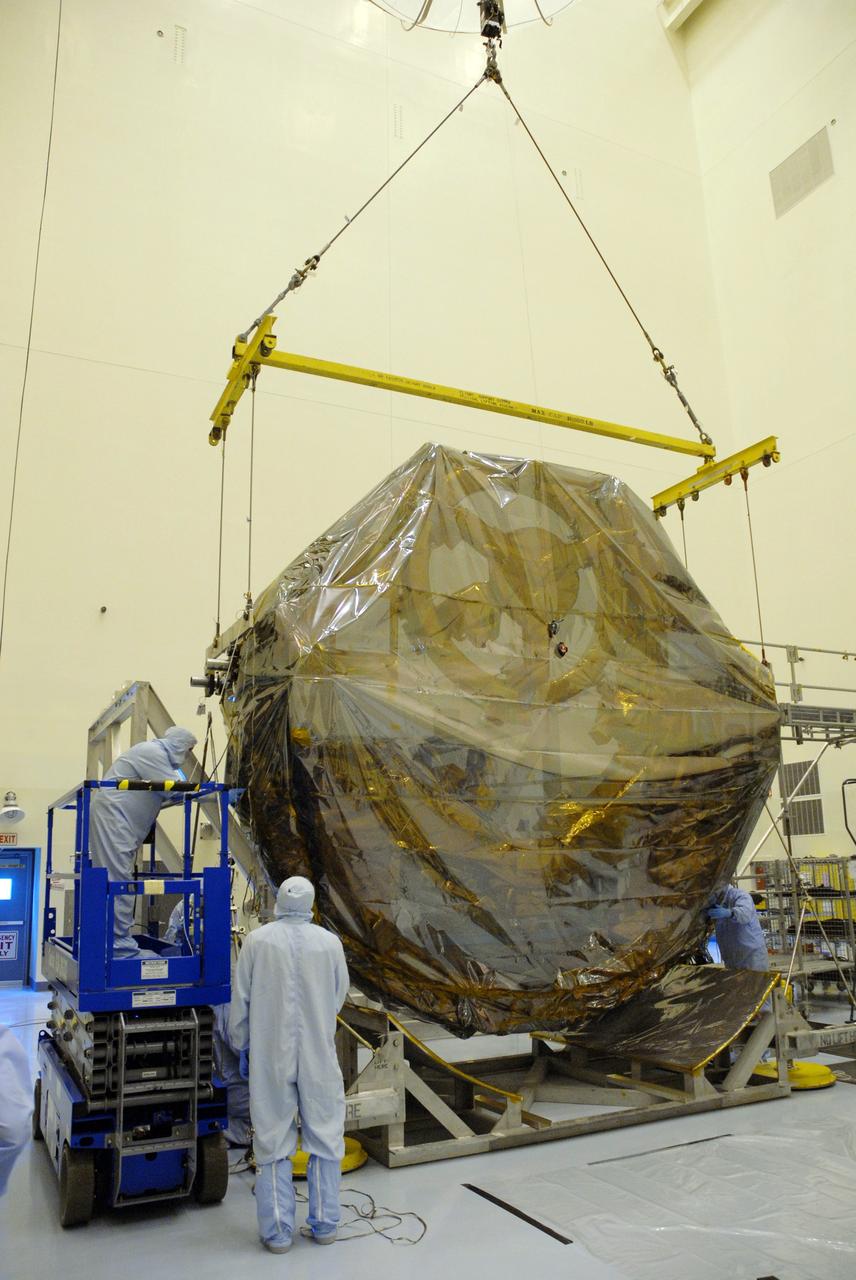
CAPE CANAVERAL, Fla. – In the Payload Hazardous Servicing Facility at NASA's Kennedy Space Center, the overhead crane lowers the ground support equipment for the STS-125 Hubble Servicing Mission onto a work stand. The GSE are carriers, or pallets, that will hold equipment in space shuttle Atlantis’ payload bay. Under the protective covering of the carrier can be seen the soft capture mechanism. The carriers will be prepared for the integration of telescope science instruments, both internal and external replacement components, as well as the flight support equipment to be used by the astronauts during the servicing mission. The three payload carriers or pallets are the Flight Support System, the Super Lightweight Interchangeable Carrier and the Orbital Replacement Unit Carrier. At the end of July, a fourth and final carrier, the Multi-Use Lightweight Equipment carrier will join the others in the Payload Hazardous Servicing Facility where the Hubble payload is being prepared for launch. Photo credit: NASA/Cory Huston
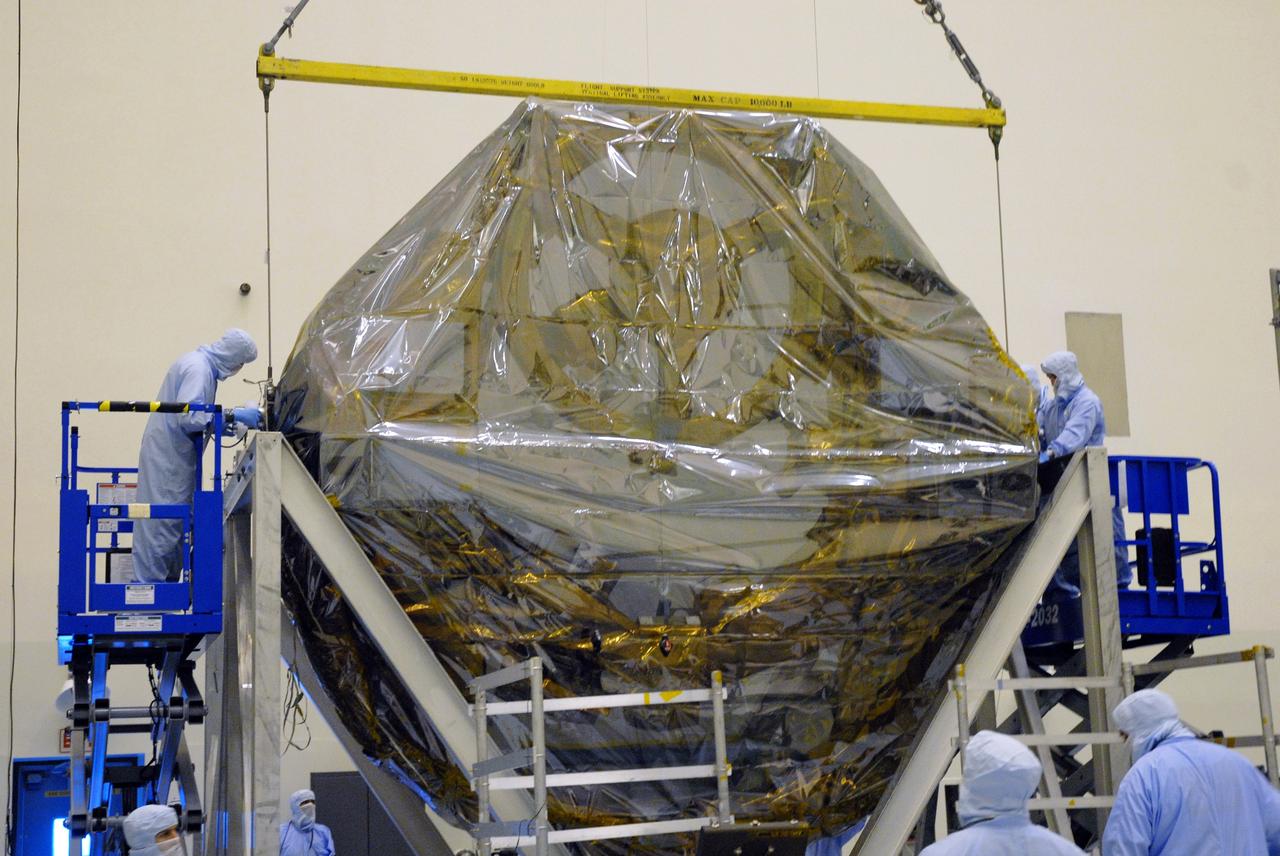
CAPE CANAVERAL, Fla. – In the Payload Hazardous Servicing Facility at NASA's Kennedy Space Center, the overhead crane lowers the ground support equipment for the STS-125 Hubble Servicing Mission into a thermal vacuum fixture. The GSE are carriers, or pallets, that will hold equipment in space shuttle Atlantis’ payload bay. Under the protective covering of the carrier can be seen the soft capture mechanism. The carriers will be prepared for the integration of telescope science instruments, both internal and external replacement components, as well as the flight support equipment to be used by the astronauts during the servicing mission. The three payload carriers or pallets are the Flight Support System, the Super Lightweight Interchangeable Carrier and the Orbital Replacement Unit Carrier. At the end of July, a fourth and final carrier, the Multi-Use Lightweight Equipment carrier will join the others in the Payload Hazardous Servicing Facility where the Hubble payload is being prepared for launch. Photo credit: NASA/Cory Huston

CAPE CANAVERAL, Fla. – In the airlock of the Payload Hazardous Servicing Facility at NASA's Kennedy Space Center, workers prepare to move the ground support equipment for the STS-125 Hubble Servicing Mission delivered July 16. The GSE are carriers, or pallets, that will hold equipment in space shuttle Atlantis’ payload bay. This carrier will be moved to a work stand. The carriers will be prepared for the integration of telescope science instruments, both internal and external replacement components, as well as the flight support equipment to be used by the astronauts during the servicing mission. The three payload carriers or pallets are the Flight Support System, the Super Lightweight Interchangeable Carrier and the Orbital Replacement Unit Carrier. At the end of July, a fourth and final carrier, the Multi-Use Lightweight Equipment carrier will join the others in the Payload Hazardous Servicing Facility where the Hubble payload is being prepared for launch. Photo credit: NASA/Cory Huston

CAPE CANAVERAL, Fla. – In the airlock of the Payload Hazardous Servicing Facility at NASA's Kennedy Space Center, workers prepare to move the ground support equipment for the STS-125 Hubble Servicing Mission delivered July 16. The GSE are carriers, or pallets, that will hold equipment in space shuttle Atlantis’ payload bay. This carrier will be moved to a work stand. The carriers will be prepared for the integration of telescope science instruments, both internal and external replacement components, as well as the flight support equipment to be used by the astronauts during the servicing mission. The three payload carriers or pallets are the Flight Support System, the Super Lightweight Interchangeable Carrier and the Orbital Replacement Unit Carrier. At the end of July, a fourth and final carrier, the Multi-Use Lightweight Equipment carrier will join the others in the Payload Hazardous Servicing Facility where the Hubble payload is being prepared for launch. Photo credit: NASA/Cory Huston
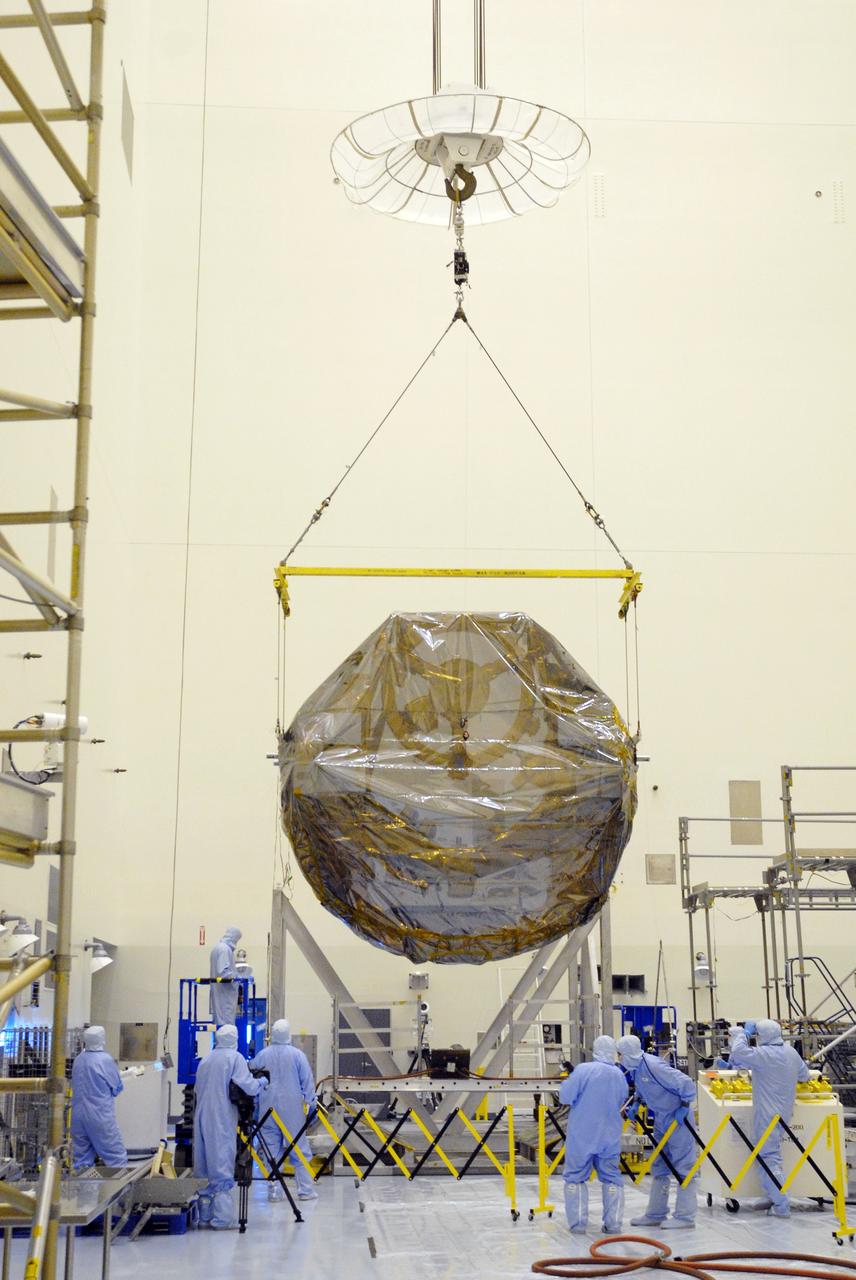
CAPE CANAVERAL, Fla. – In the Payload Hazardous Servicing Facility at NASA's Kennedy Space Center, the overhead crane lifts the ground support equipment for the STS-125 Hubble Servicing Mission away from the thermal vacuum fixture. The GSE are carriers, or pallets, that will hold equipment in space shuttle Atlantis’ payload bay. Under the protective covering of the carrier can be seen the soft capture mechanism. The carrier will be moved to a work stand. The carriers will be prepared for the integration of telescope science instruments, both internal and external replacement components, as well as the flight support equipment to be used by the astronauts during the servicing mission. The three payload carriers or pallets are the Flight Support System, the Super Lightweight Interchangeable Carrier and the Orbital Replacement Unit Carrier. At the end of July, a fourth and final carrier, the Multi-Use Lightweight Equipment carrier will join the others in the Payload Hazardous Servicing Facility where the Hubble payload is being prepared for launch. Photo credit: NASA/Cory Huston
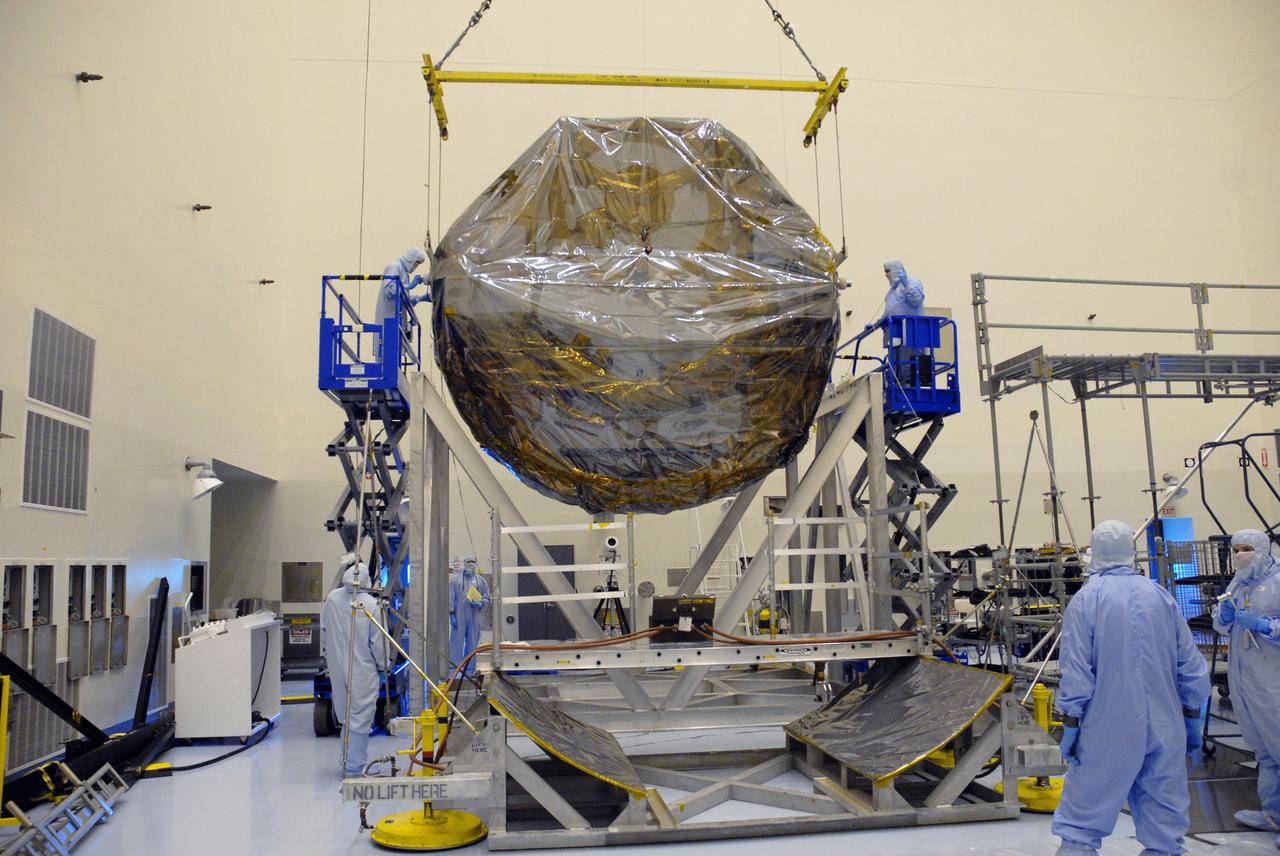
CAPE CANAVERAL, Fla. – In the Payload Hazardous Servicing Facility at NASA's Kennedy Space Center, the overhead crane lifts the ground support equipment for the STS-125 Hubble Servicing Mission out of the thermal vacuum fixture. The GSE are carriers, or pallets, that will hold equipment in space shuttle Atlantis’ payload bay. Under the protective covering of the carrier can be seen the soft capture mechanism. The carriers will be prepared for the integration of telescope science instruments, both internal and external replacement components, as well as the flight support equipment to be used by the astronauts during the servicing mission. The three payload carriers or pallets are the Flight Support System, the Super Lightweight Interchangeable Carrier and the Orbital Replacement Unit Carrier. At the end of July, a fourth and final carrier, the Multi-Use Lightweight Equipment carrier will join the others in the Payload Hazardous Servicing Facility where the Hubble payload is being prepared for launch. Photo credit: NASA/Cory Huston
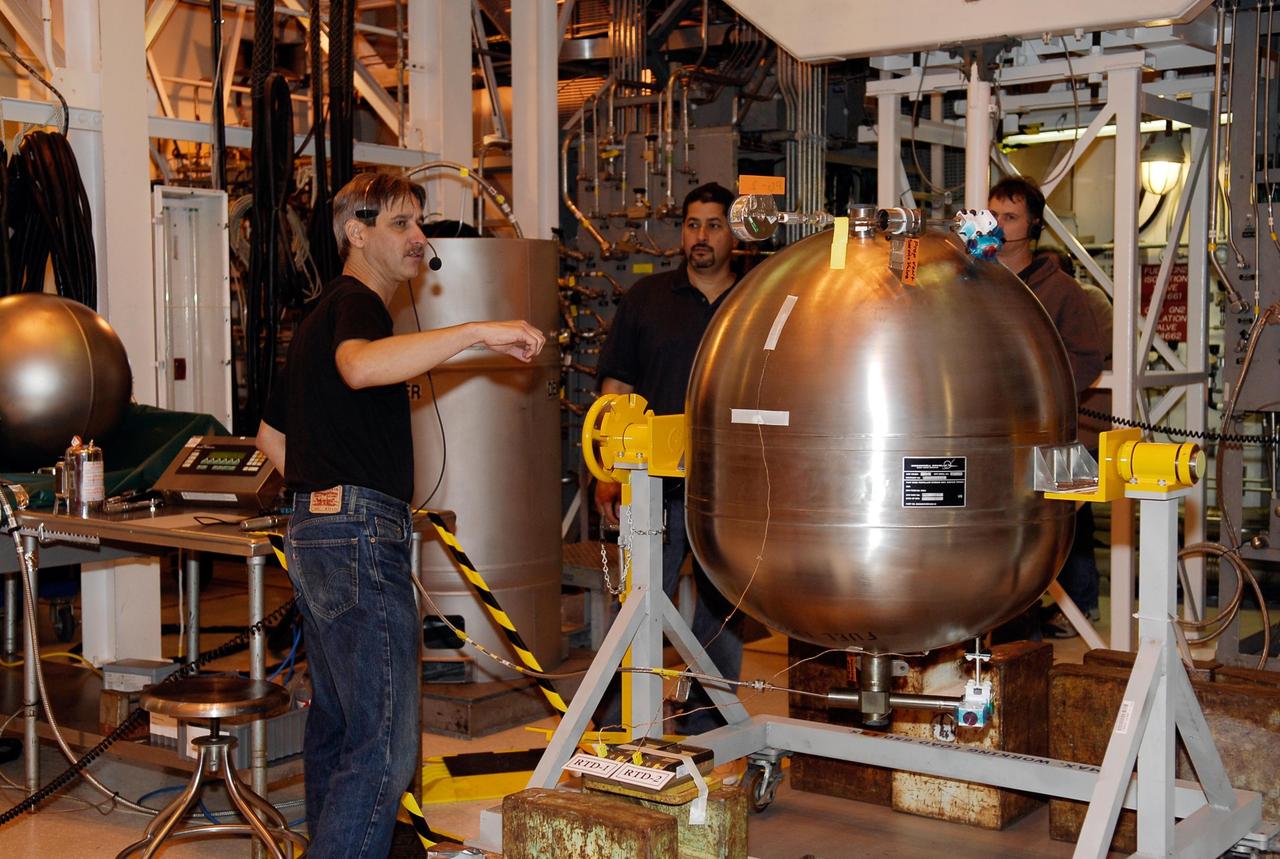
KENNEDY SPACE CENTER, FLA. -- In the hypergolic maintenance facility at NASA's Kennedy Space Center, technicians look at some of the elements to be tested in the Ares I-X Roll Control System, or RoCS. The RoCS Servicing Simulation Test is to gather data that will be used to help certify the ground support equipment design and validate the servicing requirements and processes. The RoCS is part of the Interstage structure, the lowest axial segment of the Upper Stage Simulator. In an effort to reduce costs and meet the schedule, most of the ground support equipment that will be used for the RoCS servicing is of space shuttle heritage. This high-fidelity servicing simulation will provide confidence that servicing requirements can be met with the heritage system. At the same time, the test will gather process data that will be used to modify or refine the equipment and processes to be used for the actual flight element. Photo credit: NASA/Kim Shiflett
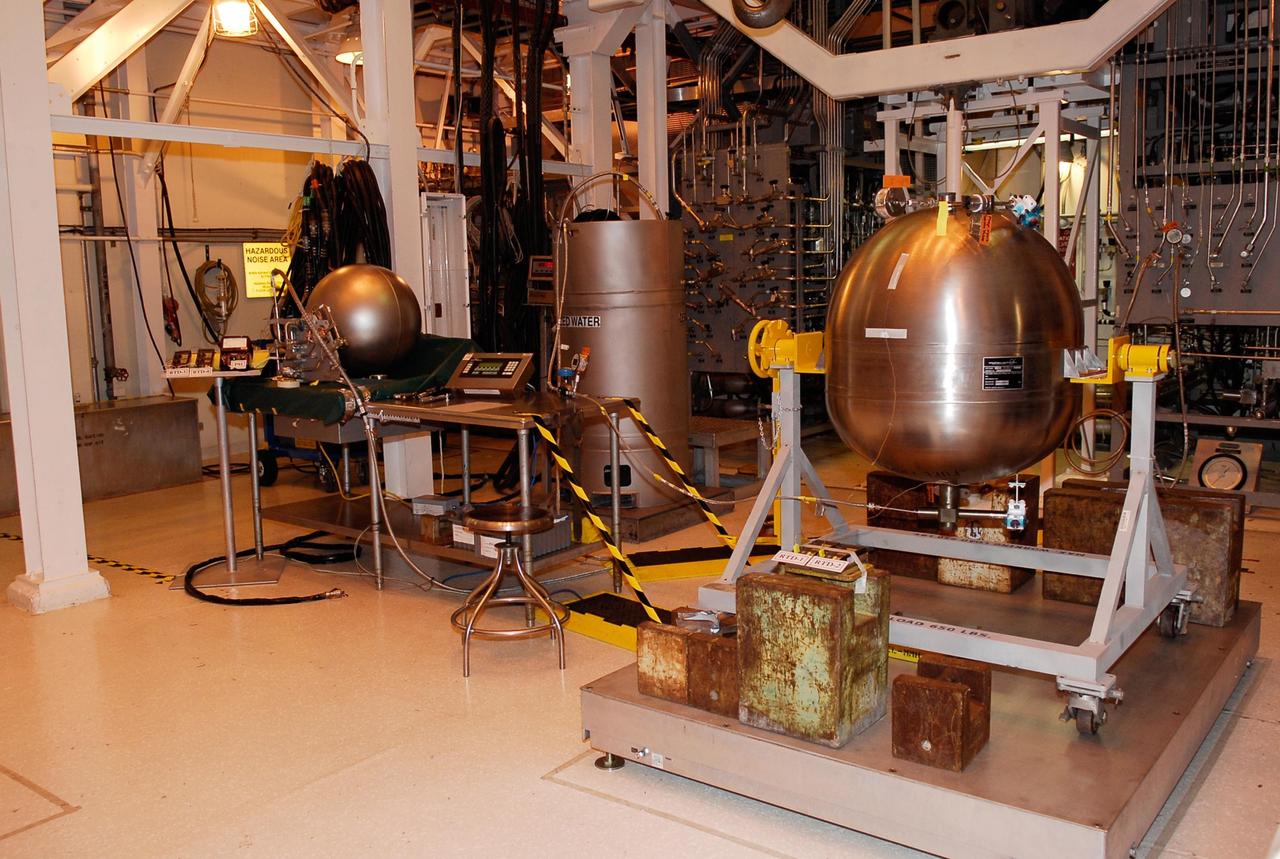
KENNEDY SPACE CENTER, FLA. -- In the hypergolic maintenance facility at NASA's Kennedy Space Center, elements of the ARES I-X Roll Control System, or RoCS, will undergo testing. The RoCS Servicing Simulation Test is to gather data that will be used to help certify the ground support equipment design and validate the servicing requirements and processes. The RoCS is part of the Interstage structure, the lowest axial segment of the Upper Stage Simulator. In an effort to reduce costs and meet the schedule, most of the ground support equipment that will be used for the RoCS servicing is of space shuttle heritage. This high-fidelity servicing simulation will provide confidence that servicing requirements can be met with the heritage system. At the same time, the test will gather process data that will be used to modify or refine the equipment and processes to be used for the actual flight element. Photo credit: NASA/Kim Shiflett
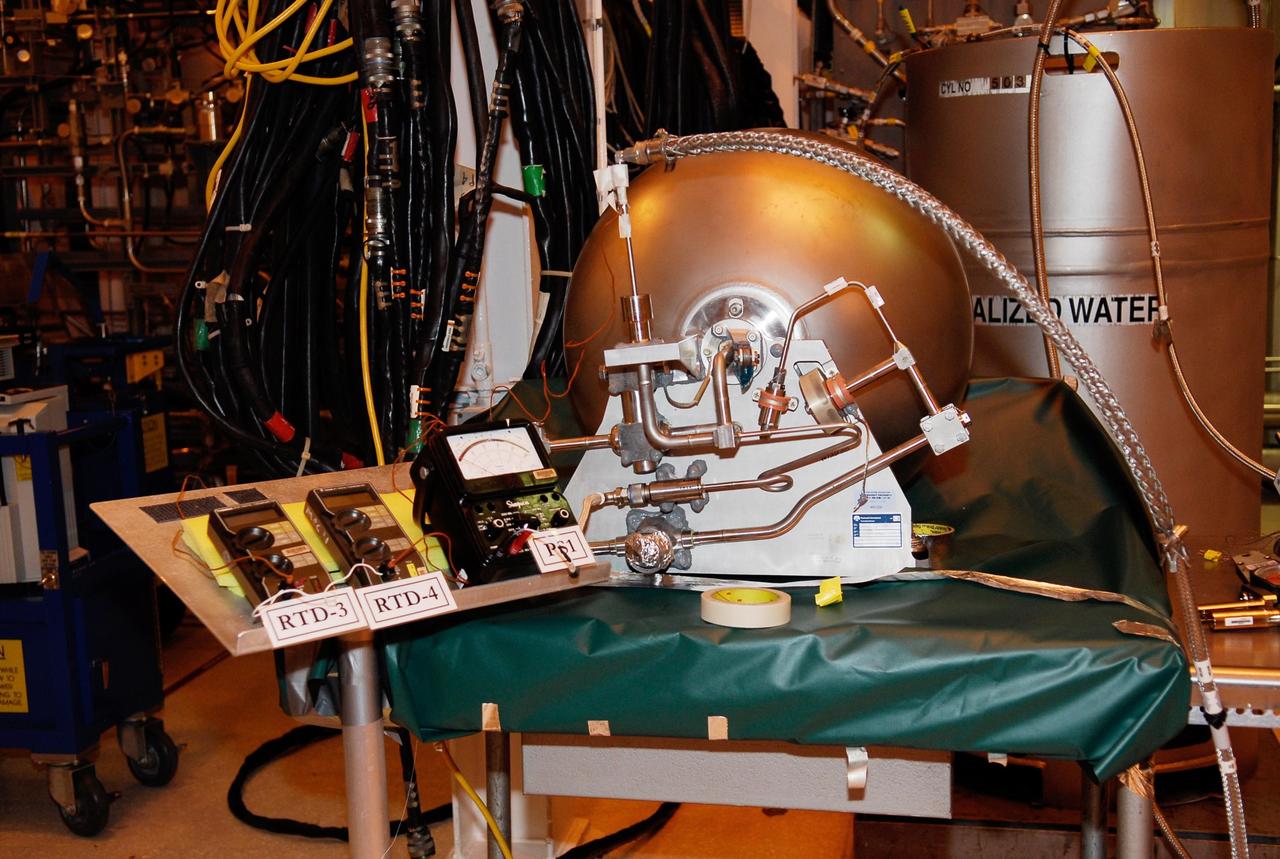
KENNEDY SPACE CENTER, FLA. -- In the hypergolic maintenance facility at NASA's Kennedy Space Center, some of the internal elements seen here of the ARES I-X Roll Control System, or RoCS, will undergo testing. The RoCS Servicing Simulation Test is to gather data that will be used to help certify the ground support equipment design and validate the servicing requirements and processes. The RoCS is part of the Interstage structure, the lowest axial segment of the Upper Stage Simulator. In an effort to reduce costs and meet the schedule, most of the ground support equipment that will be used for the RoCS servicing is of space shuttle heritage. This high-fidelity servicing simulation will provide confidence that servicing requirements can be met with the heritage system. At the same time, the test will gather process data that will be used to modify or refine the equipment and processes to be used for the actual flight element. Photo credit: NASA/Kim Shiflett

KENNEDY SPACE CENTER, FLA. -- In the hypergolic maintenance facility at NASA's Kennedy Space Center, technicians get ready to begin testing elements of the Ares I-X Roll Control System, or RoCS. The RoCS Servicing Simulation Test is to gather data that will be used to help certify the ground support equipment design and validate the servicing requirements and processes. The RoCS is part of the Interstage structure, the lowest axial segment of the Upper Stage Simulator. In an effort to reduce costs and meet the schedule, most of the ground support equipment that will be used for the RoCS servicing is of space shuttle heritage. This high-fidelity servicing simulation will provide confidence that servicing requirements can be met with the heritage system. At the same time, the test will gather process data that will be used to modify or refine the equipment and processes to be used for the actual flight element. Photo credit: NASA/Kim Shiflett
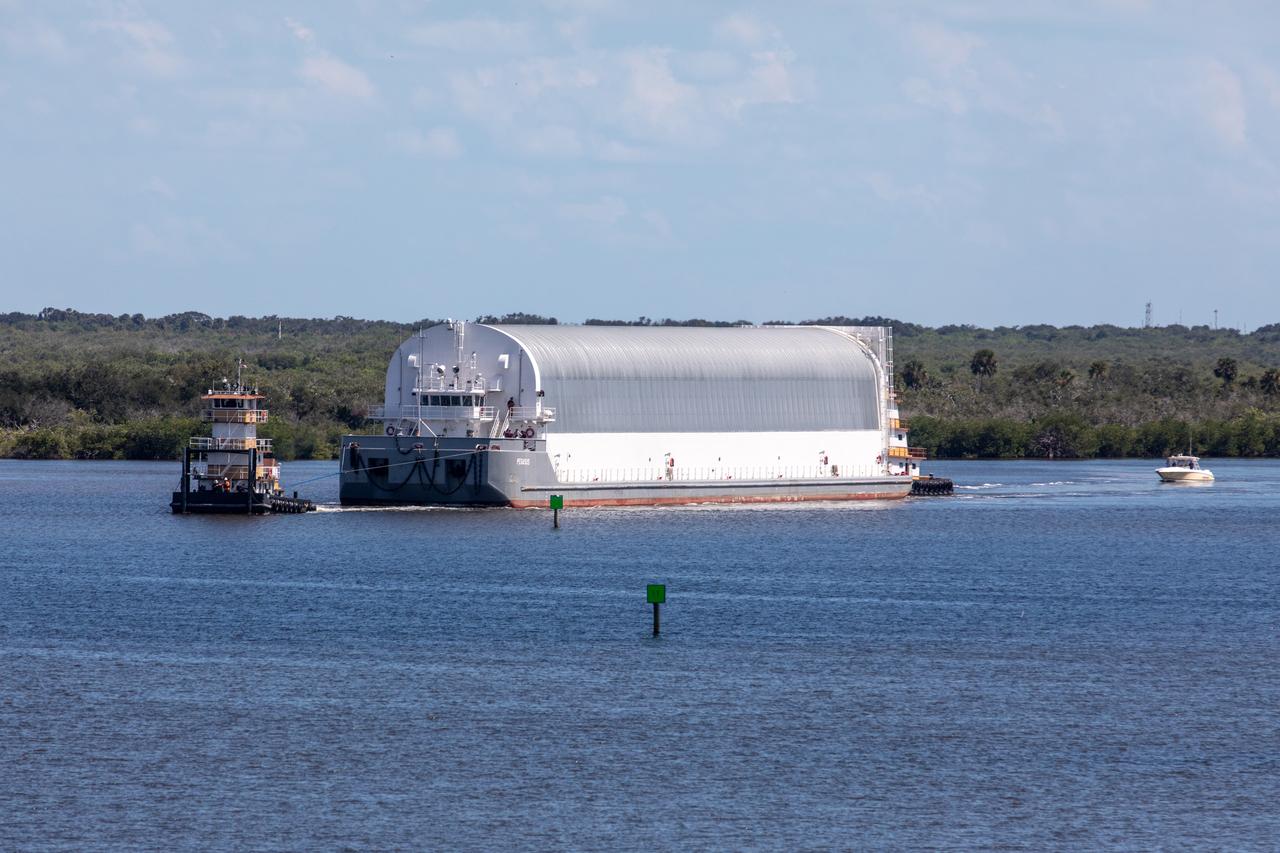
NASA's Pegasus Barge, which has a storied history of supporting the Space Shuttle Program, arrived at the Kennedy Space Center Launch Complex 39B turn basin wharf, carrying its first load in support of the agency's Artemis missions. The upgraded 310-foot-long barge arrived Friday, Sept. 27, ferrying the 212-foot-long Space Launch System (SLS) core stage pathfinder. Weighing in at 228,000 pounds, the pathfinder is a full-scale mockup of the rocket's core stage. The pathfinder will be utilized by the Exploration Ground Systems Program and their contractor, Jacobs, to practice offloading, moving and stacking maneuvers, utilizing important ground support equipment to train employees and certify all the equipment works properly. The pathfinder will stay at Kennedy for approximately one month before trekking back to NASA's Michoud Assembly Facility in Louisiana.
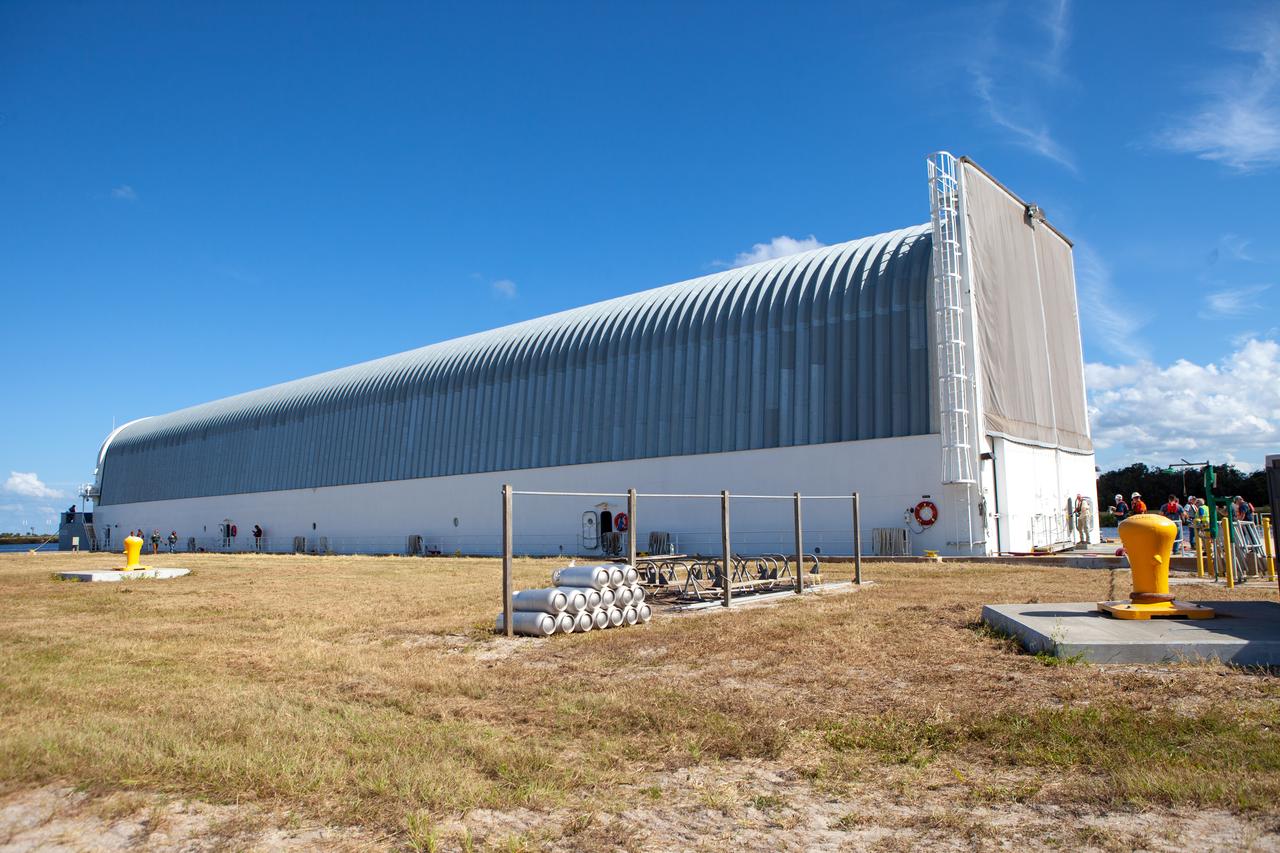
NASA's Pegasus Barge, which has a storied history of supporting the Space Shuttle Program, arrived at the Kennedy Space Center Launch Complex 39B turn basin wharf, carrying its first load in support of the agency's Artemis missions. The upgraded 310-foot-long barge arrived Friday, Sept. 27, ferrying the 212-foot-long Space Launch System (SLS) core stage pathfinder. Weighing in at 228,000 pounds, the pathfinder is a full-scale mockup of the rocket's core stage. The pathfinder will be utilized by the Exploration Ground Systems Program and their contractor, Jacobs, to practice offloading, moving and stacking maneuvers, utilizing important ground support equipment to train employees and certify all the equipment works properly. The pathfinder will stay at Kennedy for approximately one month before trekking back to NASA's Michoud Assembly Facility in Louisiana.
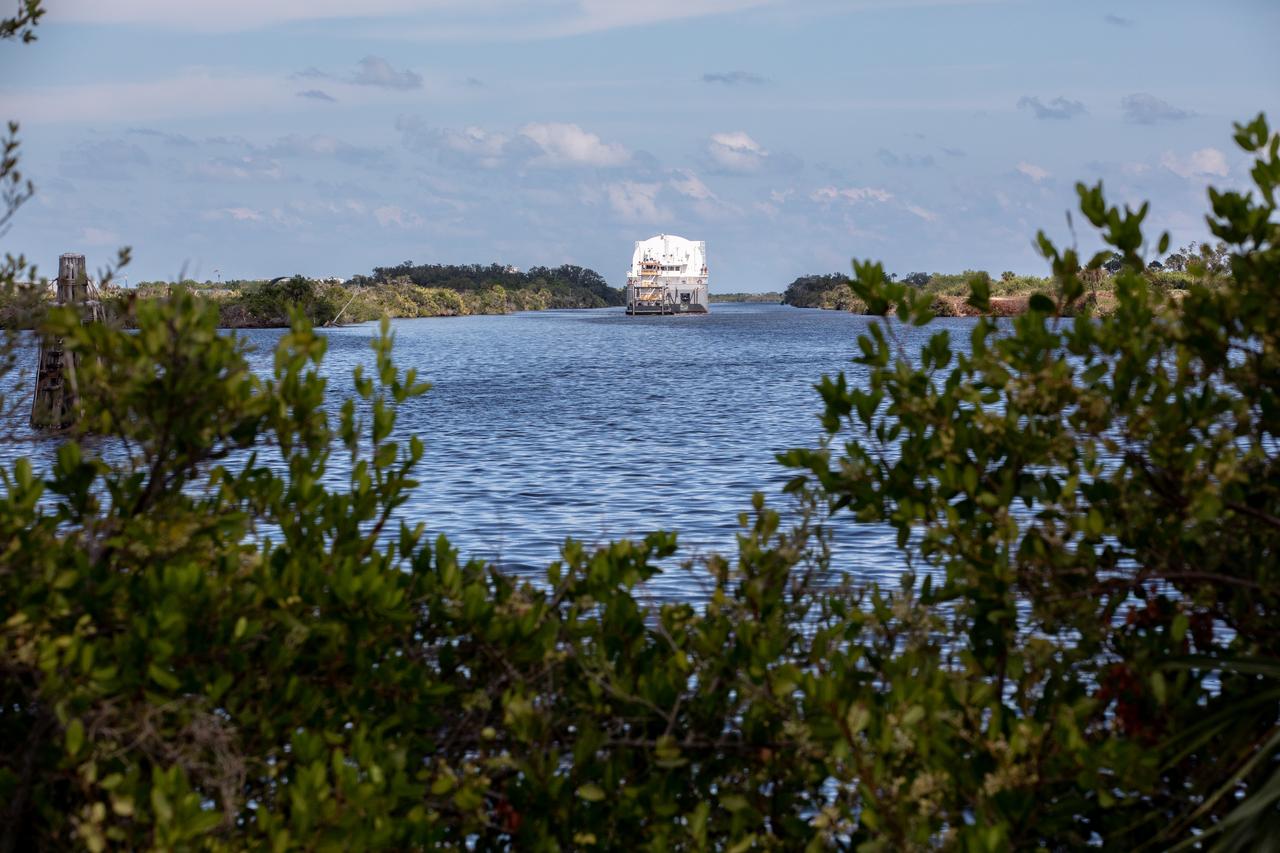
NASA's Pegasus Barge, which has a storied history of supporting the Space Shuttle Program, arrived at the Kennedy Space Center Launch Complex 39B turn basin wharf, carrying its first load in support of the agency's Artemis missions. The upgraded 310-foot-long barge arrived Friday, Sept. 27, ferrying the 212-foot-long Space Launch System (SLS) core stage pathfinder. Weighing in at 228,000 pounds, the pathfinder is a full-scale mockup of the rocket's core stage. The pathfinder will be utilized by the Exploration Ground Systems Program and their contractor, Jacobs, to practice offloading, moving and stacking maneuvers, utilizing important ground support equipment to train employees and certify all the equipment works properly. The pathfinder will stay at Kennedy for approximately one month before trekking back to NASA's Michoud Assembly Facility in Louisiana.
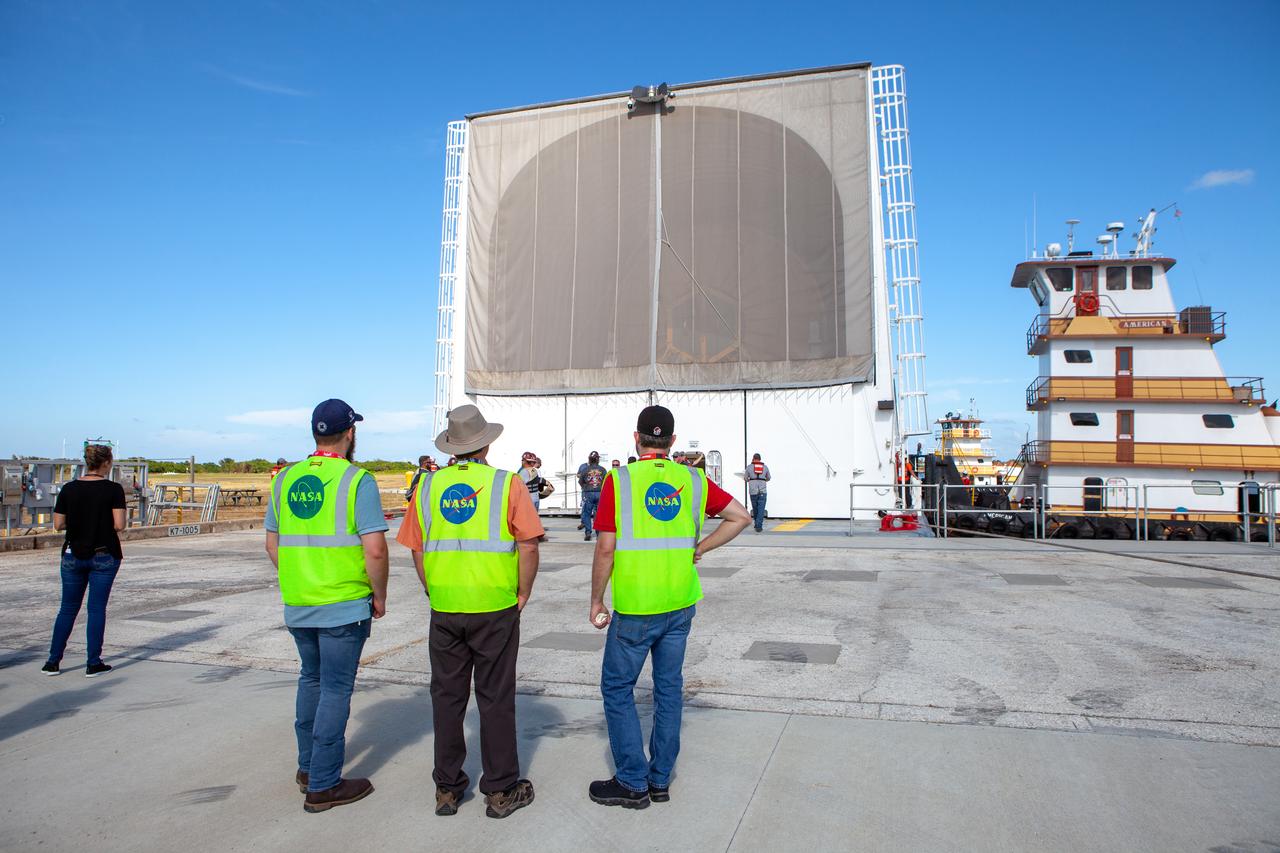
NASA's Pegasus Barge, which has a storied history of supporting the Space Shuttle Program, arrived at the Kennedy Space Center Launch Complex 39B turn basin wharf, carrying its first load in support of the agency's Artemis missions. The upgraded 310-foot-long barge arrived Friday, Sept. 27, ferrying the 212-foot-long Space Launch System (SLS) core stage pathfinder. Weighing in at 228,000 pounds, the pathfinder is a full-scale mockup of the rocket's core stage. The pathfinder will be utilized by the Exploration Ground Systems Program and their contractor, Jacobs, to practice offloading, moving and stacking maneuvers, utilizing important ground support equipment to train employees and certify all the equipment works properly. The pathfinder will stay at Kennedy for approximately one month before trekking back to NASA's Michoud Assembly Facility in Louisiana.
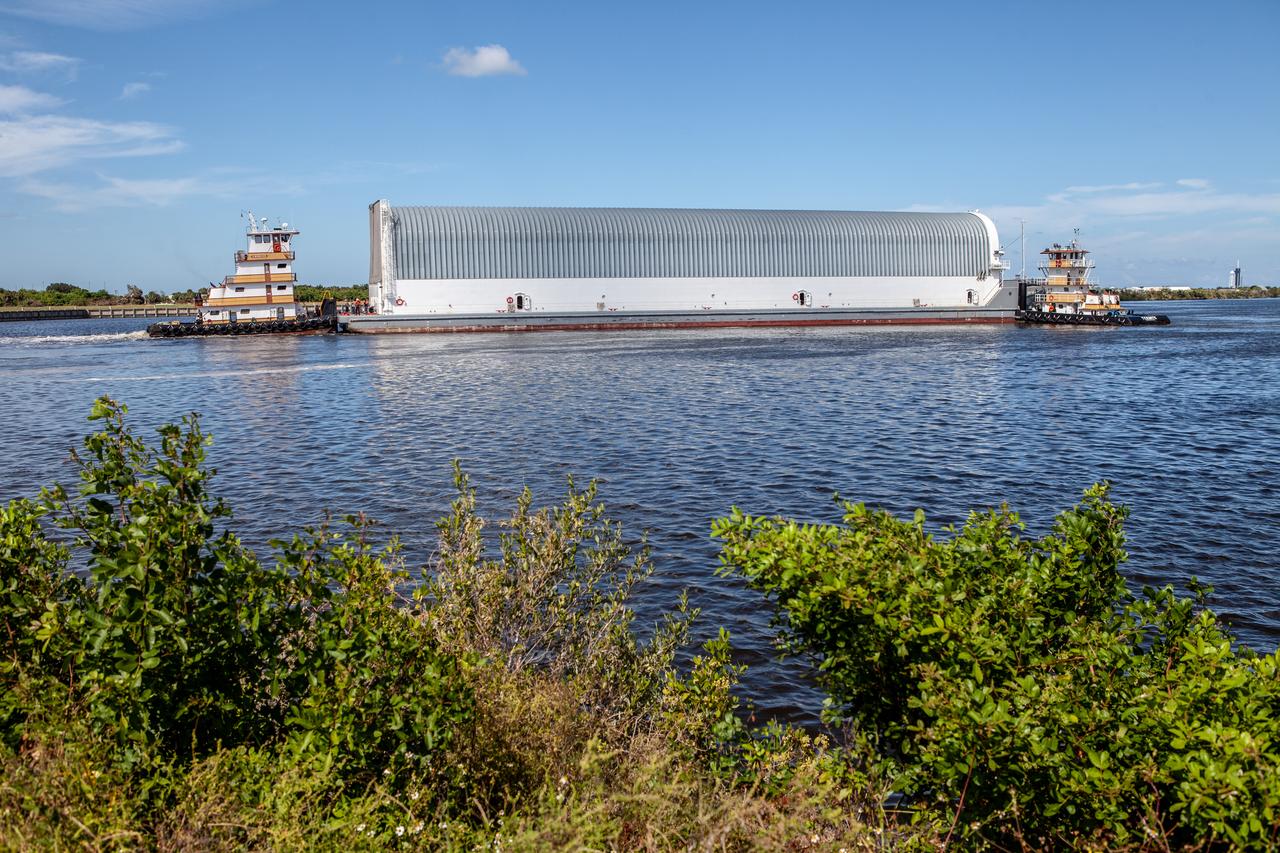
NASA's Pegasus Barge, which has a storied history of supporting the Space Shuttle Program, arrived at the Kennedy Space Center Launch Complex 39B turn basin wharf, carrying its first load in support of the agency's Artemis missions. The upgraded 310-foot-long barge arrived Friday, Sept. 27, ferrying the 212-foot-long Space Launch System (SLS) core stage pathfinder. Weighing in at 228,000 pounds, the pathfinder is a full-scale mockup of the rocket's core stage. The pathfinder will be utilized by the Exploration Ground Systems Program and their contractor, Jacobs, to practice offloading, moving and stacking maneuvers, utilizing important ground support equipment to train employees and certify all the equipment works properly. The pathfinder will stay at Kennedy for approximately one month before trekking back to NASA's Michoud Assembly Facility in Louisiana.
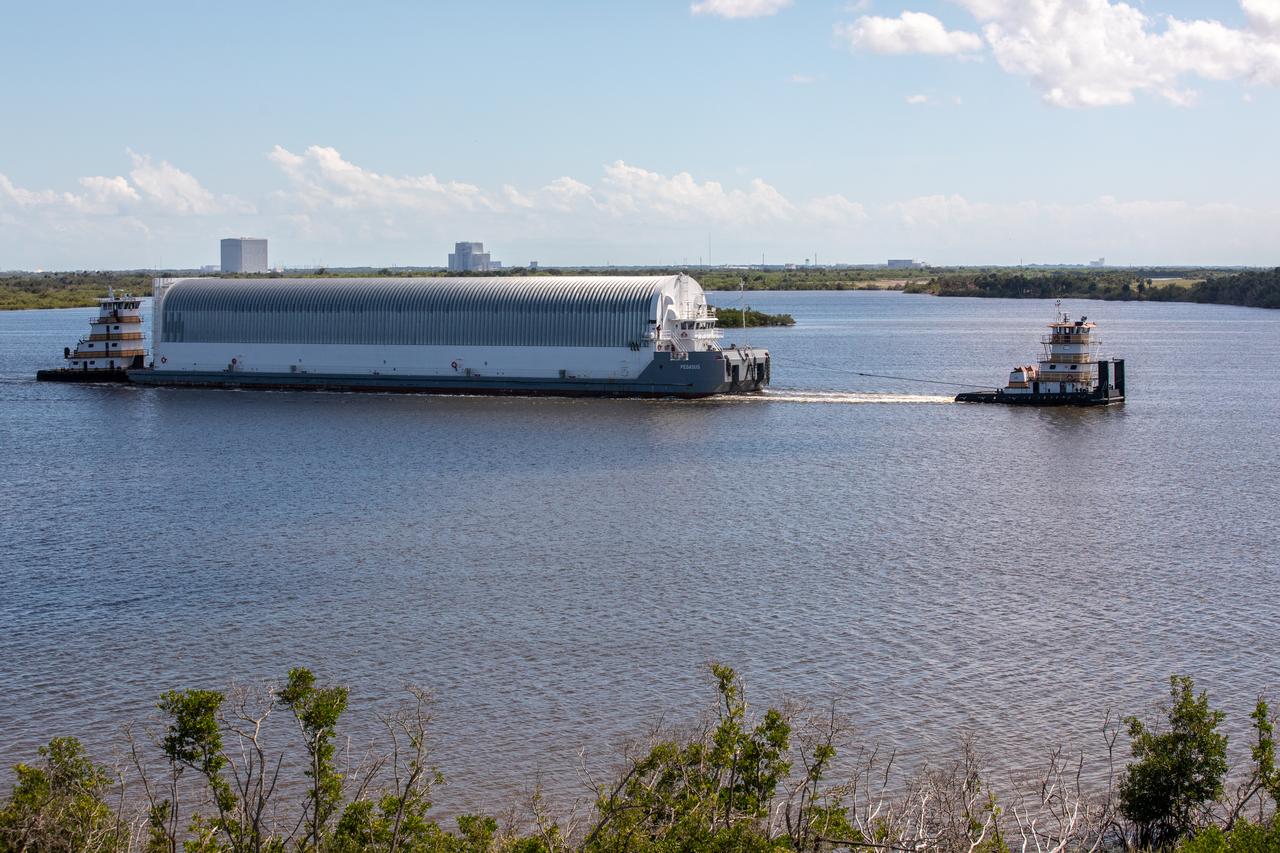
NASA's Pegasus Barge, which has a storied history of supporting the Space Shuttle Program, arrived at the Kennedy Space Center Launch Complex 39B turn basin wharf, carrying its first load in support of the agency's Artemis missions. The upgraded 310-foot-long barge arrived Friday, Sept. 27, ferrying the 212-foot-long Space Launch System (SLS) core stage pathfinder. Weighing in at 228,000 pounds, the pathfinder is a full-scale mockup of the rocket's core stage. The pathfinder will be utilized by the Exploration Ground Systems Program and their contractor, Jacobs, to practice offloading, moving and stacking maneuvers, utilizing important ground support equipment to train employees and certify all the equipment works properly. The pathfinder will stay at Kennedy for approximately one month before trekking back to NASA's Michoud Assembly Facility in Louisiana.
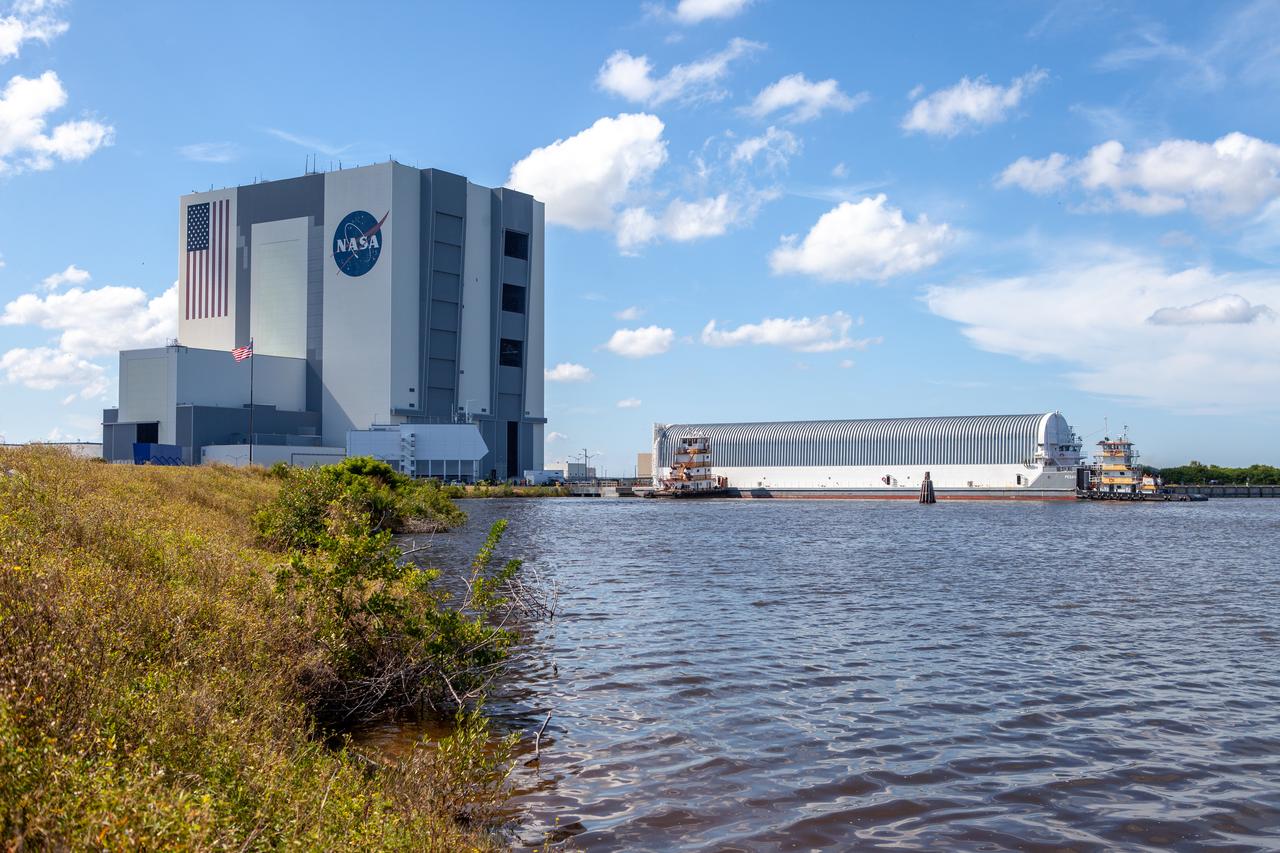
NASA's Pegasus Barge, which has a storied history of supporting the Space Shuttle Program, arrived at the Kennedy Space Center Launch Complex 39B turn basin wharf, carrying its first load in support of the agency's Artemis missions. The upgraded 310-foot-long barge arrived Friday, Sept. 27, ferrying the 212-foot-long Space Launch System (SLS) core stage pathfinder. Weighing in at 228,000 pounds, the pathfinder is a full-scale mockup of the rocket's core stage. The pathfinder will be utilized by the Exploration Ground Systems Program and their contractor, Jacobs, to practice offloading, moving and stacking maneuvers, utilizing important ground support equipment to train employees and certify all the equipment works properly. The pathfinder will stay at Kennedy for approximately one month before trekking back to NASA's Michoud Assembly Facility in Louisiana.
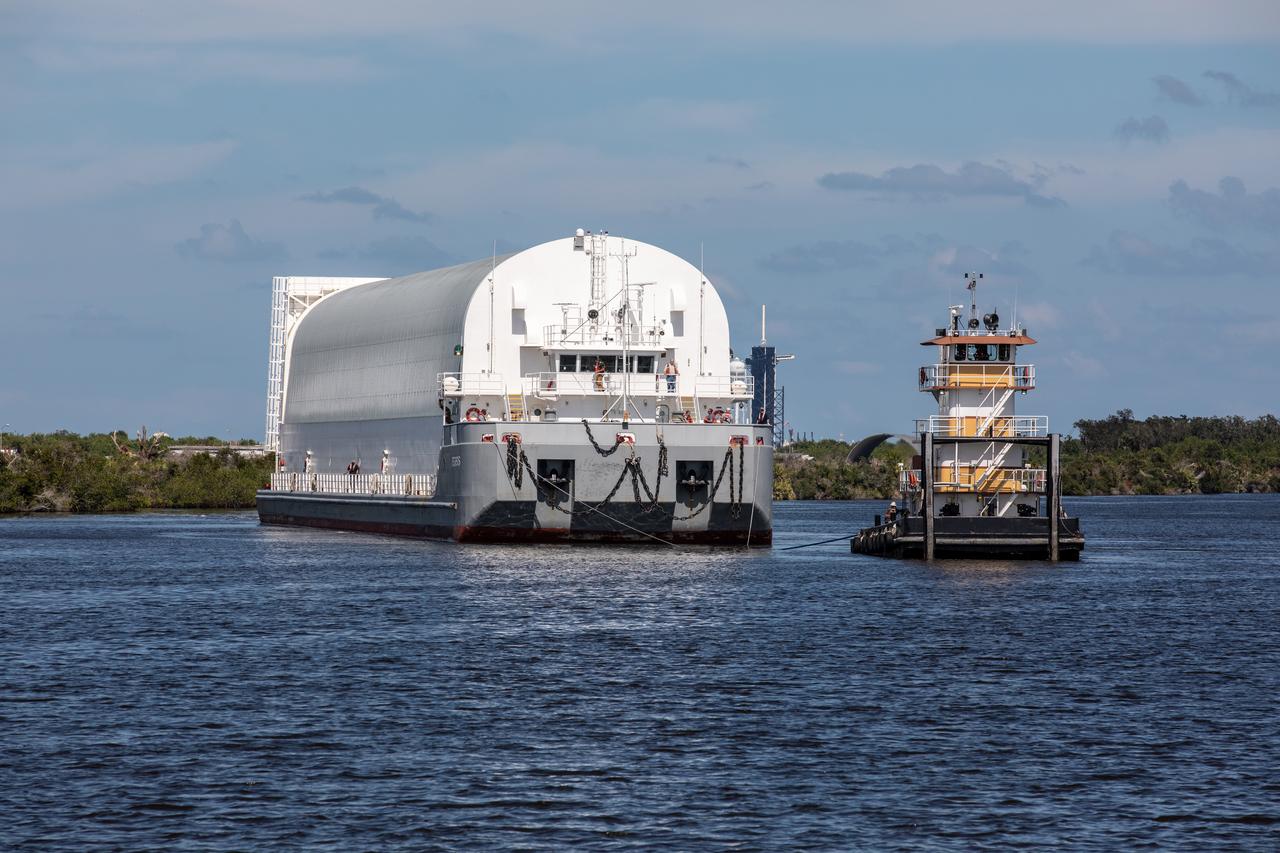
NASA's Pegasus Barge, which has a storied history of supporting the Space Shuttle Program, arrived at the Kennedy Space Center Launch Complex 39B turn basin wharf, carrying its first load in support of the agency's Artemis missions. The upgraded 310-foot-long barge arrived Friday, Sept. 27, ferrying the 212-foot-long Space Launch System (SLS) core stage pathfinder. Weighing in at 228,000 pounds, the pathfinder is a full-scale mockup of the rocket's core stage. The pathfinder will be utilized by the Exploration Ground Systems Program and their contractor, Jacobs, to practice offloading, moving and stacking maneuvers, utilizing important ground support equipment to train employees and certify all the equipment works properly. The pathfinder will stay at Kennedy for approximately one month before trekking back to NASA's Michoud Assembly Facility in Louisiana.
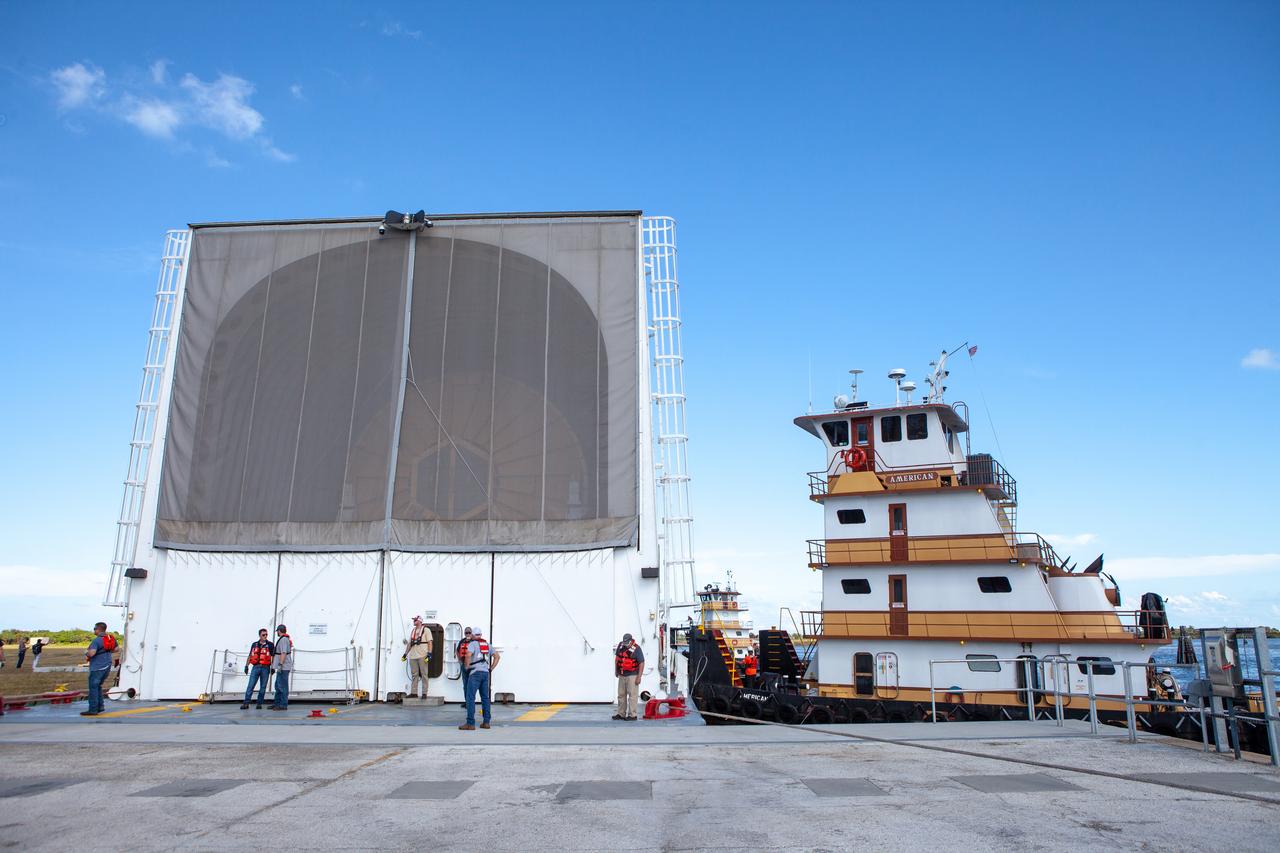
NASA's Pegasus Barge, which has a storied history of supporting the Space Shuttle Program, arrived at the Kennedy Space Center Launch Complex 39B turn basin wharf, carrying its first load in support of the agency's Artemis missions. The upgraded 310-foot-long barge arrived Friday, Sept. 27, ferrying the 212-foot-long Space Launch System (SLS) core stage pathfinder. Weighing in at 228,000 pounds, the pathfinder is a full-scale mockup of the rocket's core stage. The pathfinder will be utilized by the Exploration Ground Systems Program and their contractor, Jacobs, to practice offloading, moving and stacking maneuvers, utilizing important ground support equipment to train employees and certify all the equipment works properly. The pathfinder will stay at Kennedy for approximately one month before trekking back to NASA's Michoud Assembly Facility in Louisiana.
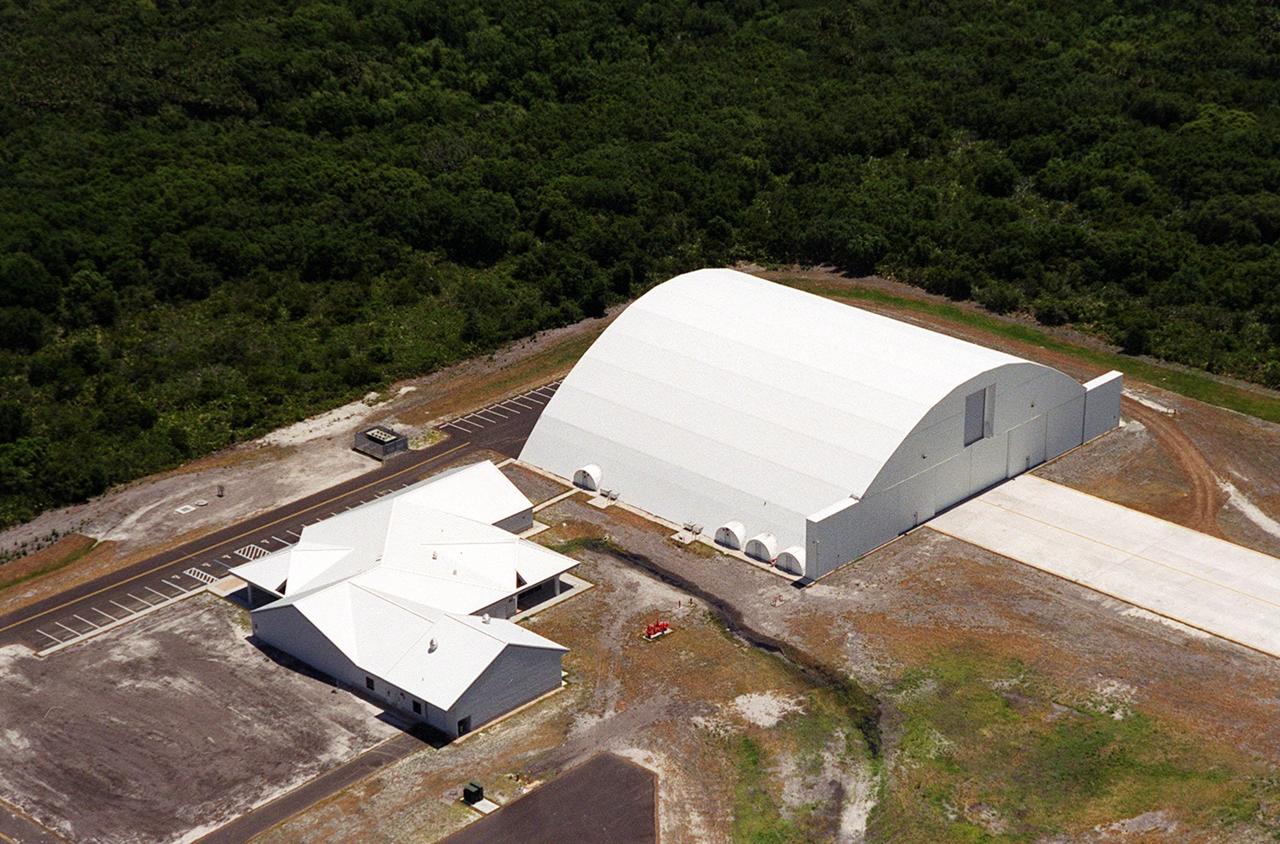
This closeup photo shows the Reusable Launch Vehicle (RLV) Support Complex at Kennedy Space Center. At right is a multi-purpose hangar and to the left is a building for related ground support equipment and administrative/ technical support. The complex is situated at the Shuttle Landing Facility. The RLV complex will be available to accommodate the Space Shuttle; the X-34 RLV technology demonstrator; the L-1011 carrier aircraft for Pegasus and X-34; and other RLV and X-vehicle programs. The complex is jointly funded by the Spaceport Florida Authority, NASA’s Space Shuttle Program and KSC
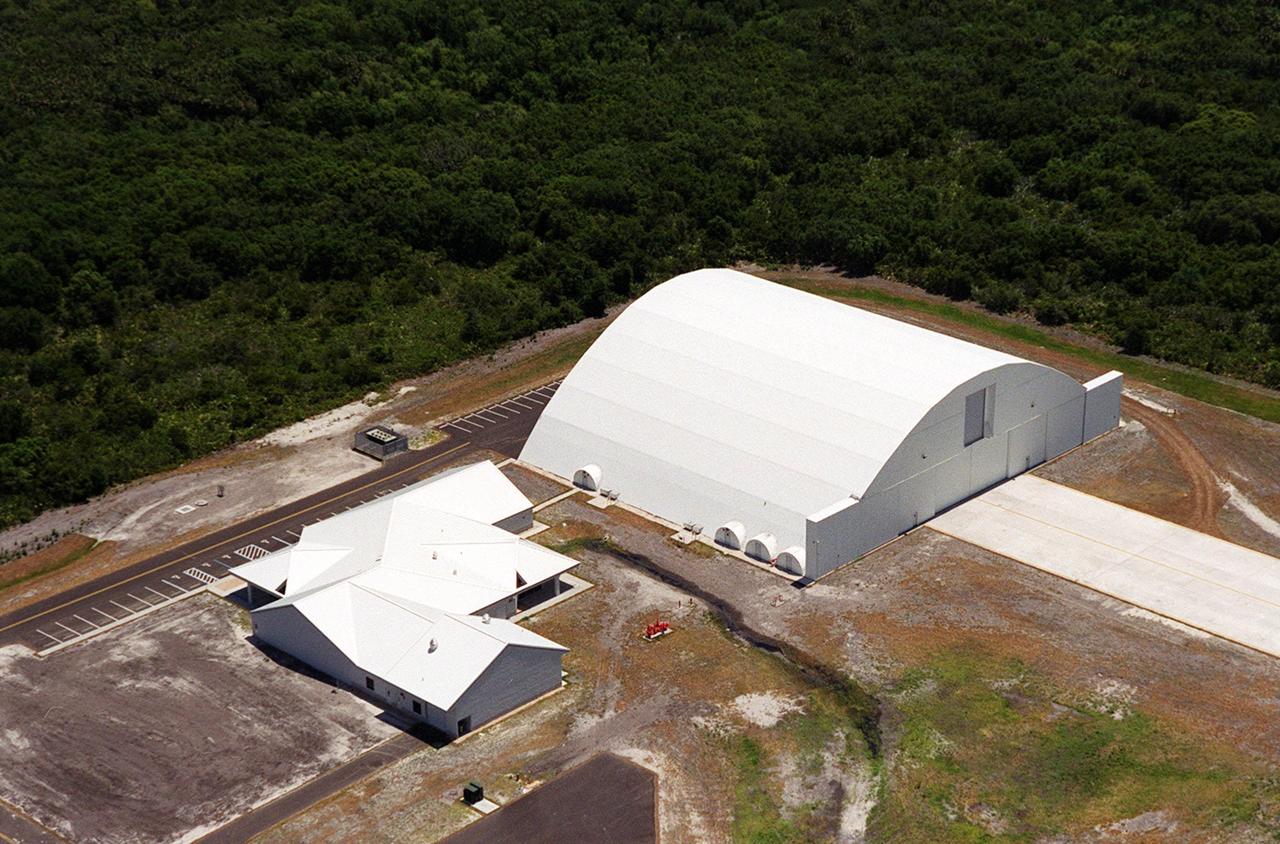
This closeup photo shows the Reusable Launch Vehicle (RLV) Support Complex at Kennedy Space Center. At right is a multi-purpose hangar and to the left is a building for related ground support equipment and administrative/ technical support. The complex is situated at the Shuttle Landing Facility. The RLV complex will be available to accommodate the Space Shuttle; the X-34 RLV technology demonstrator; the L-1011 carrier aircraft for Pegasus and X-34; and other RLV and X-vehicle programs. The complex is jointly funded by the Spaceport Florida Authority, NASA’s Space Shuttle Program and KSC

NASA's Pegasus barge arrived at Stennis Space Center on Nov. 16, delivering space shuttle main engine ground support equipment to the south Mississippi facility. Stennis tested every main engine used on all 135 space shuttle flights.
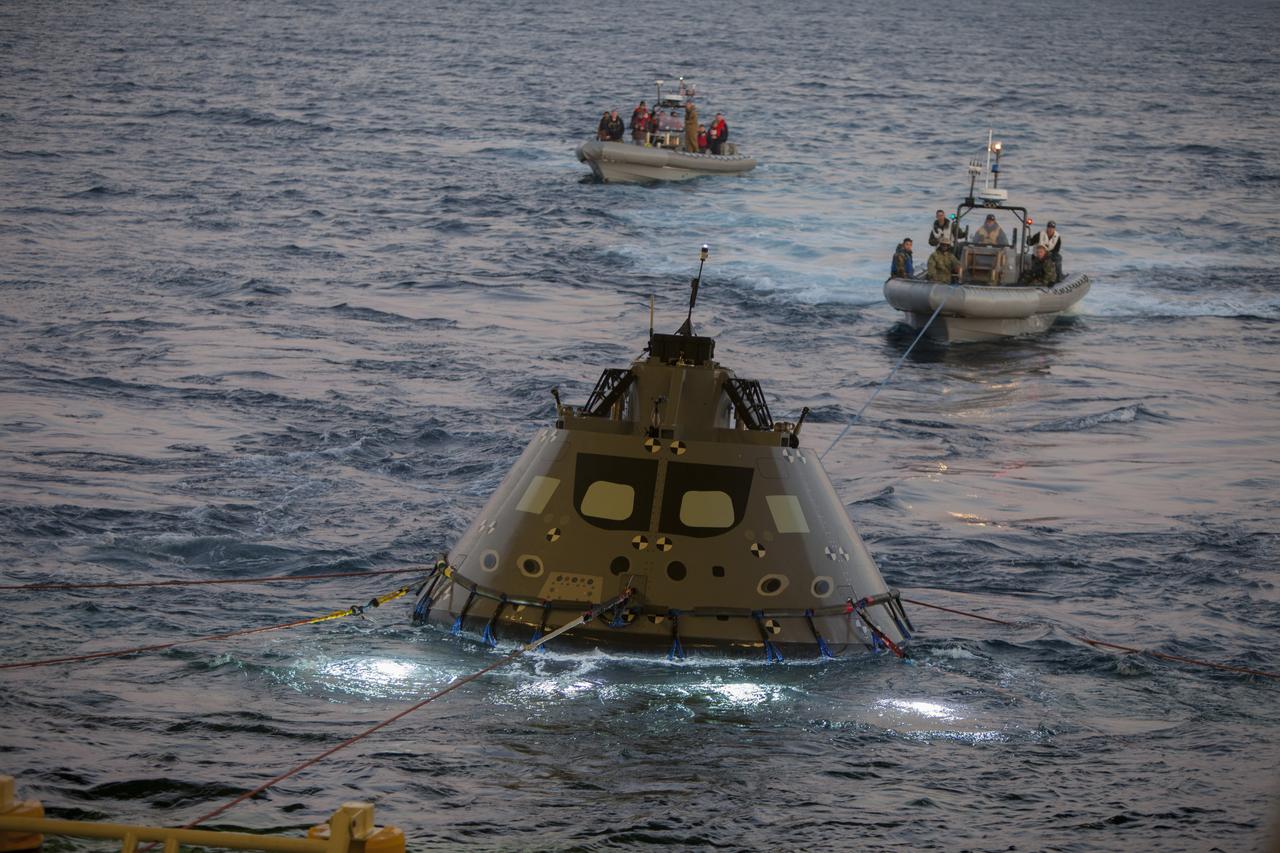
During Underway Recovery Test 6, Kennedy Space Center's NASA Recovery Team spent a week aboard the USS Anchorage where they and the U.S. Navy tested procedures and ground support equipment to improve recovery procedures and hardware ahead of Orion's next flight, Exploration Mission-1, when it splashes down in the Pacific Ocean.
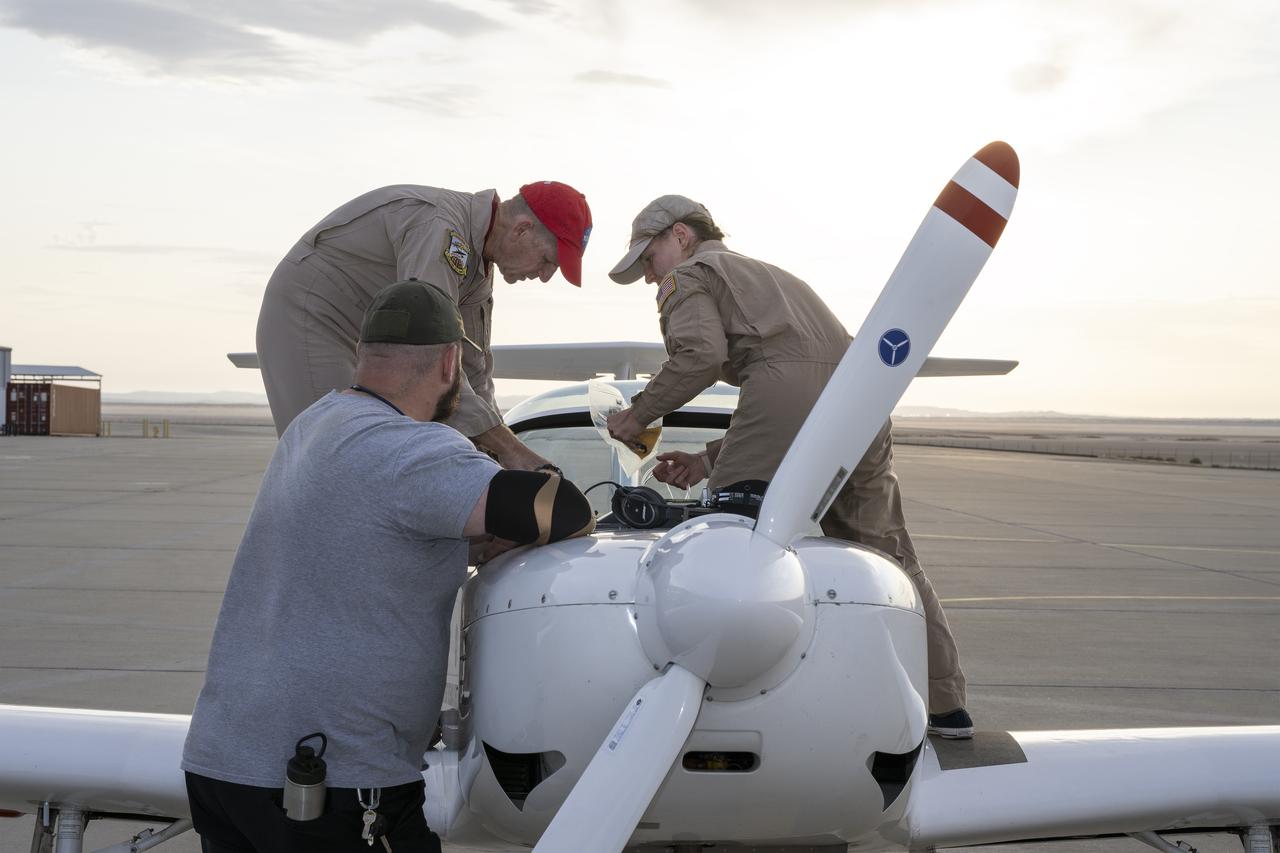
A NASA TG-14 glider aircraft is prepared for flight at NASA’s Armstrong Flight Research Center in Edwards, California, in support of the agency’s Quesst mission. The aircraft is equipped with onboard microphones to capture sonic boom noise generated during rehearsal flights, helping researchers measure the acoustic signature of supersonic aircraft closer to the ground.

During Underway Recovery Test 6, Kennedy Space Center's NASA Recovery Team spent a week aboard the USS Anchorage where they and the U.S. Navy tested procedures and ground support equipment to improve recovery procedures and hardware ahead of Orion's next flight, Exploration Mission-1, when it splashes down in the Pacific Ocean.
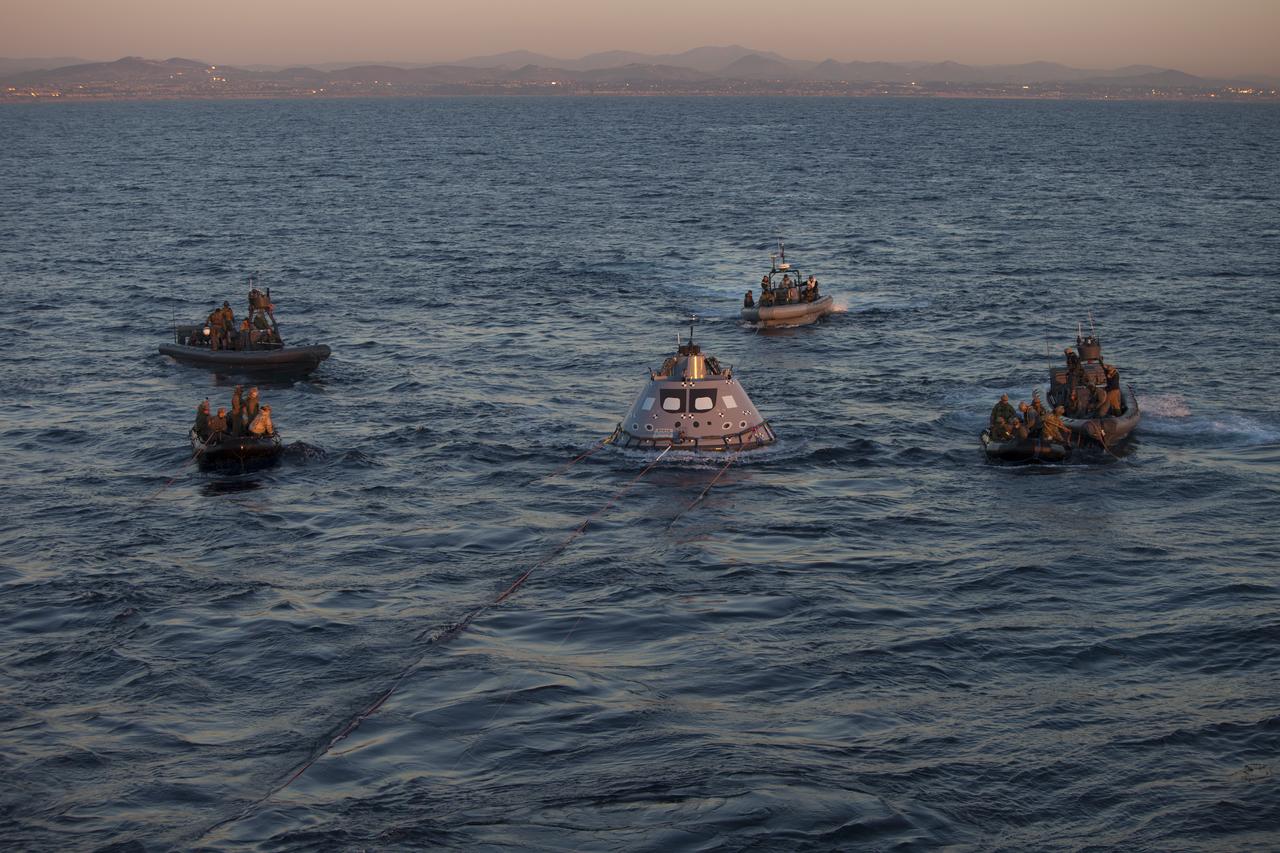
During Underway Recovery Test 6, Kennedy Space Center's NASA Recovery Team spent a week aboard the USS Anchorage where they and the U.S. Navy tested procedures and ground support equipment to improve recovery procedures and hardware ahead of Orion's next flight, Exploration Mission-1, when it splashes down in the Pacific Ocean.
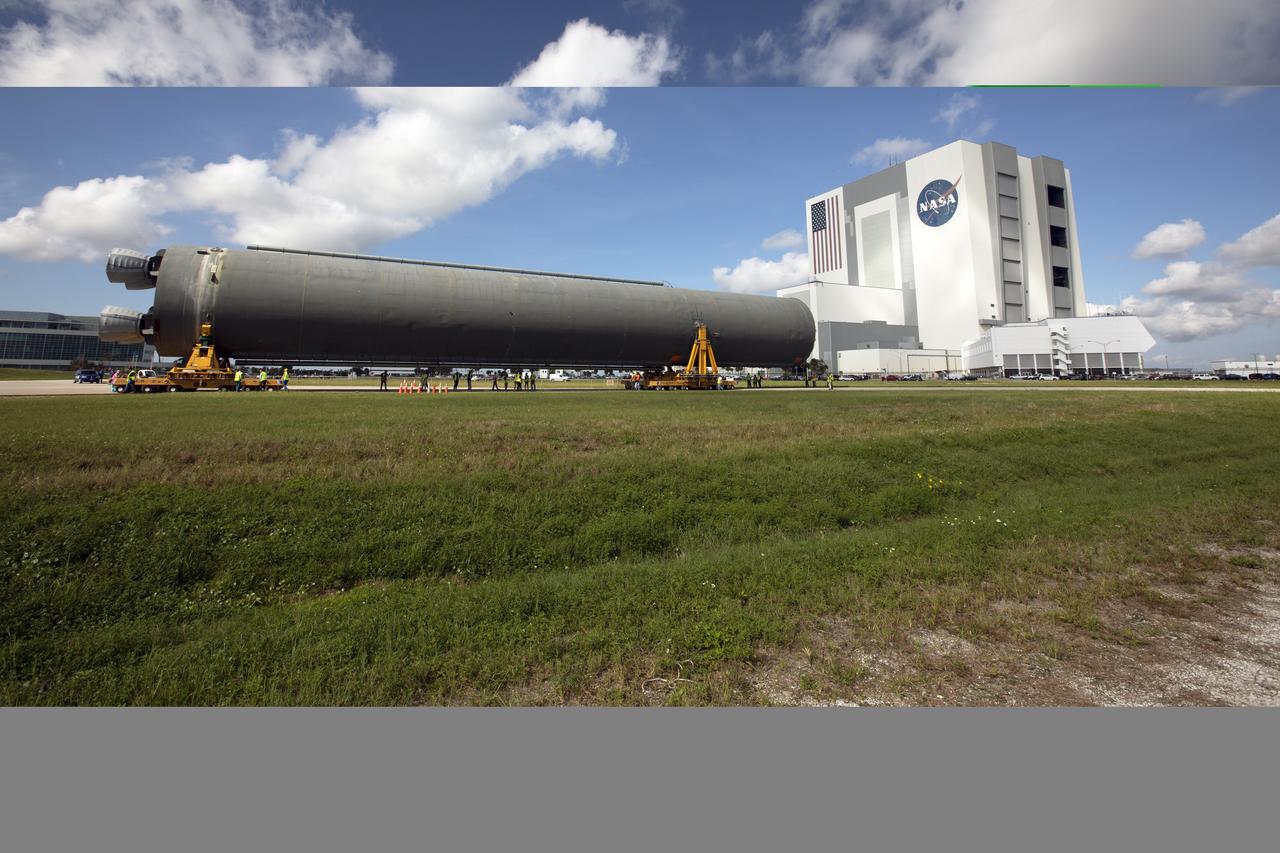
The 212-foot-long Space Launch System (SLS) rocket core stage pathfinder is being transported back to the Pegasus barge at the Launch Complex 39 turn basin wharf at NASA’s Kennedy Space Center in Florida on Oct. 28, 2019. The core stage pathfinder is a full-scale mock-up of the rocket's core stage. It was used by the Exploration Ground Systems Program and their contractor, Jacobs, to practice offloading, moving and stacking maneuvers inside the Vehicle Assembly Building, using important ground support equipment to train employees and certify all the equipment works properly. The pathfinder was at Kennedy for about a month. It will make the trek back to NASA's Michoud Assembly Facility in Louisiana.
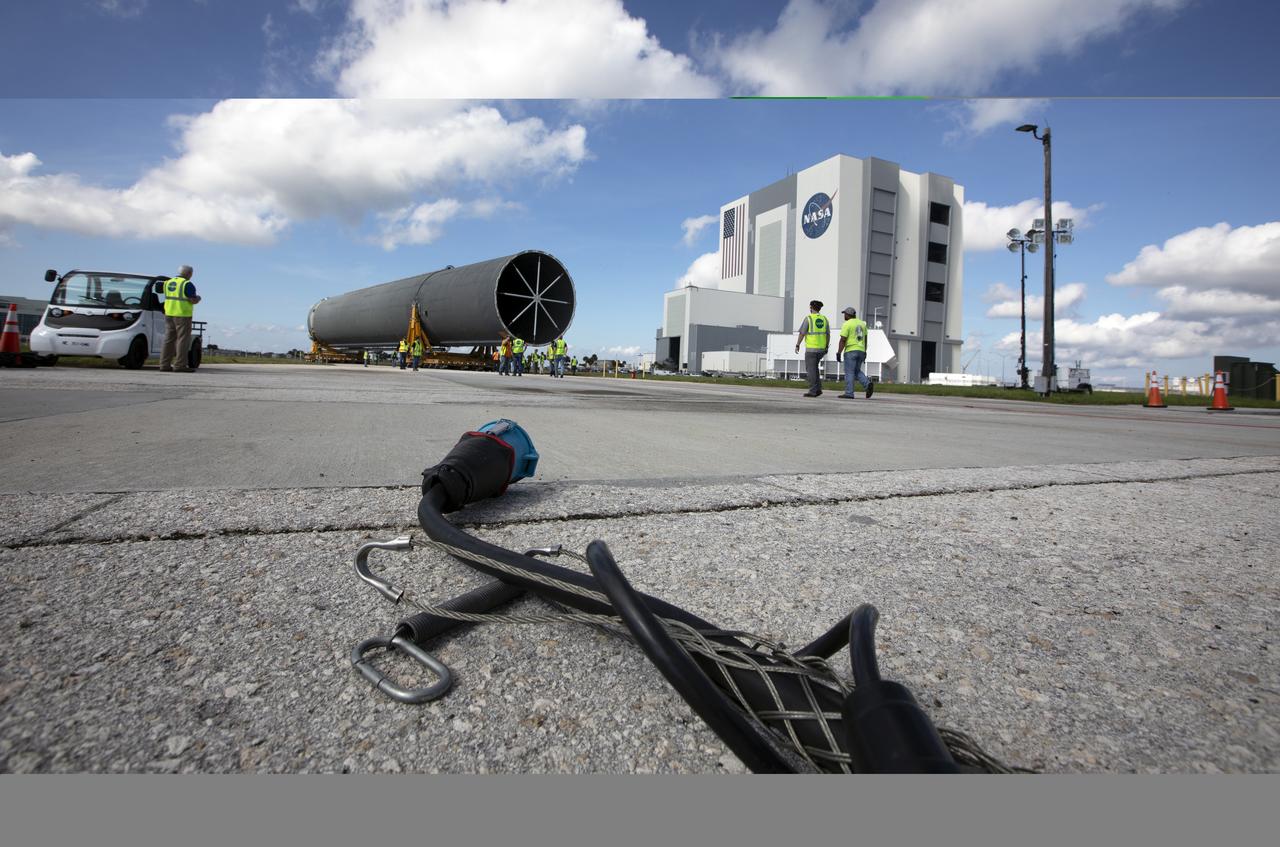
The 212-foot-long Space Launch System (SLS) rocket core stage pathfinder nears the entrance ramp to the Pegasus barge at the Launch Complex 39 turn basin wharf at NASA’s Kennedy Space Center in Florida on Oct. 28, 2019. The core stage pathfinder is a full-scale mock-up of the rocket's core stage. It was used by the Exploration Ground Systems Program and their contractor, Jacobs, to practice offloading, moving and stacking maneuvers inside the Vehicle Assembly Building, using important ground support equipment to train employees and certify all the equipment works properly. The pathfinder was at Kennedy for about a month. It will make the trek back to NASA's Michoud Assembly Facility in Louisiana.
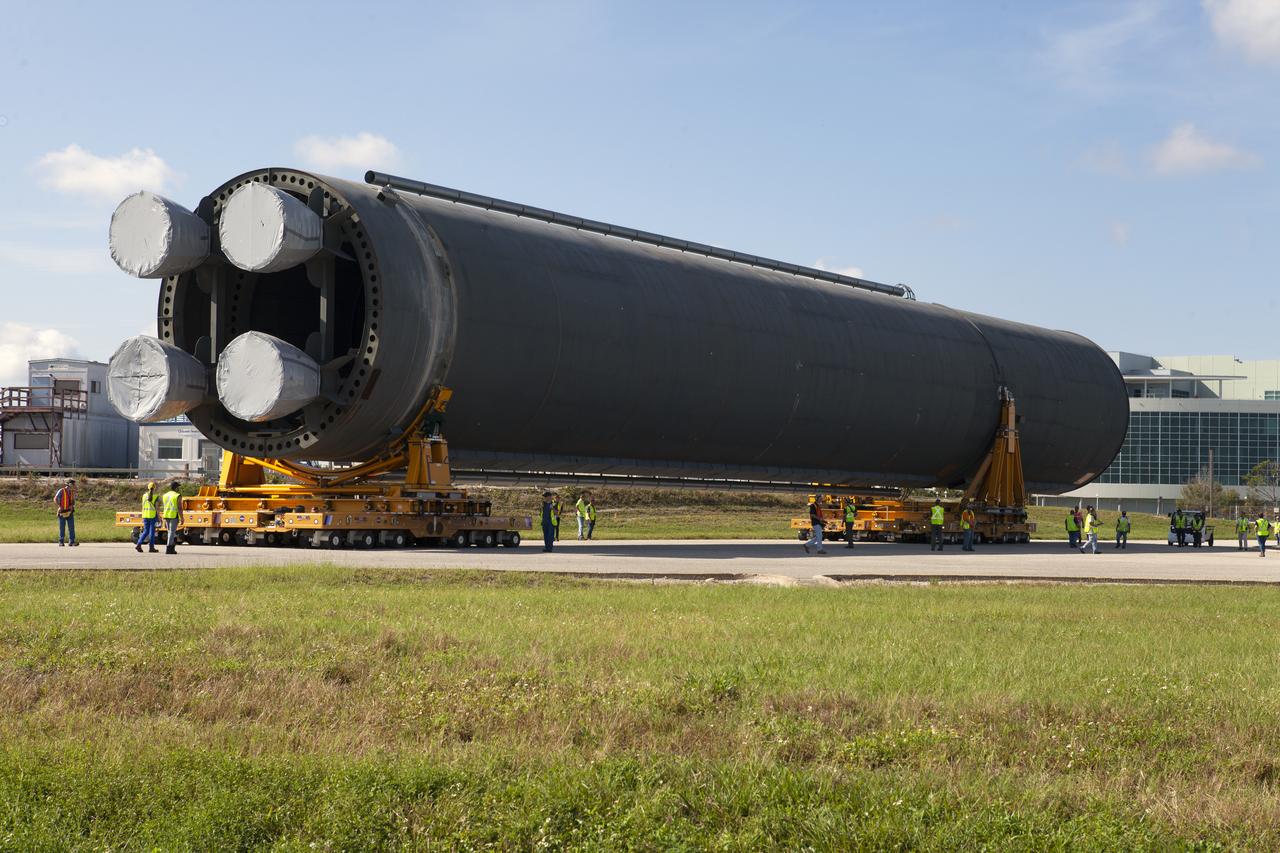
The 212-foot-long Space Launch System (SLS) rocket core stage pathfinder is being transported back to the Pegasus barge at the Launch Complex 39 turn basin wharf at NASA’s Kennedy Space Center in Florida on Oct. 28, 2019. The core stage pathfinder is a full-scale mock-up of the rocket's core stage. It was used by the Exploration Ground Systems Program and their contractor, Jacobs, to practice offloading, moving and stacking maneuvers inside the Vehicle Assembly Building, using important ground support equipment to train employees and certify all the equipment works properly. The pathfinder was at Kennedy for about a month. It will make the trek back to NASA's Michoud Assembly Facility in Louisiana.
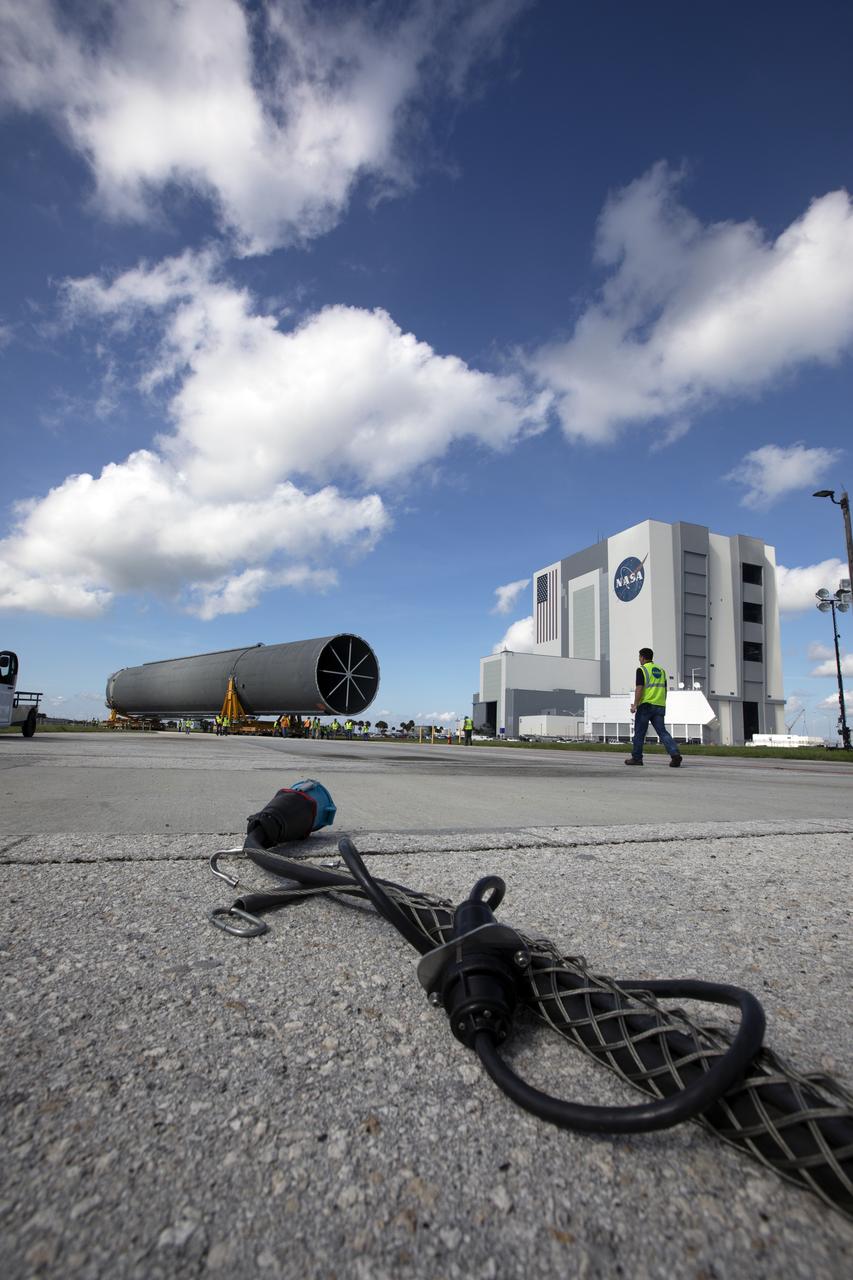
The 212-foot-long Space Launch System (SLS) rocket core stage pathfinder nears the entrance ramp to the Pegasus barge at the Launch Complex 39 turn basin wharf at NASA’s Kennedy Space Center in Florida on Oct. 28, 2019. The core stage pathfinder is a full-scale mock-up of the rocket's core stage. It was used by the Exploration Ground Systems Program and their contractor, Jacobs, to practice offloading, moving and stacking maneuvers inside the Vehicle Assembly Building, using important ground support equipment to train employees and certify all the equipment works properly. The pathfinder was at Kennedy for about a month. It will make the trek back to NASA's Michoud Assembly Facility in Louisiana.
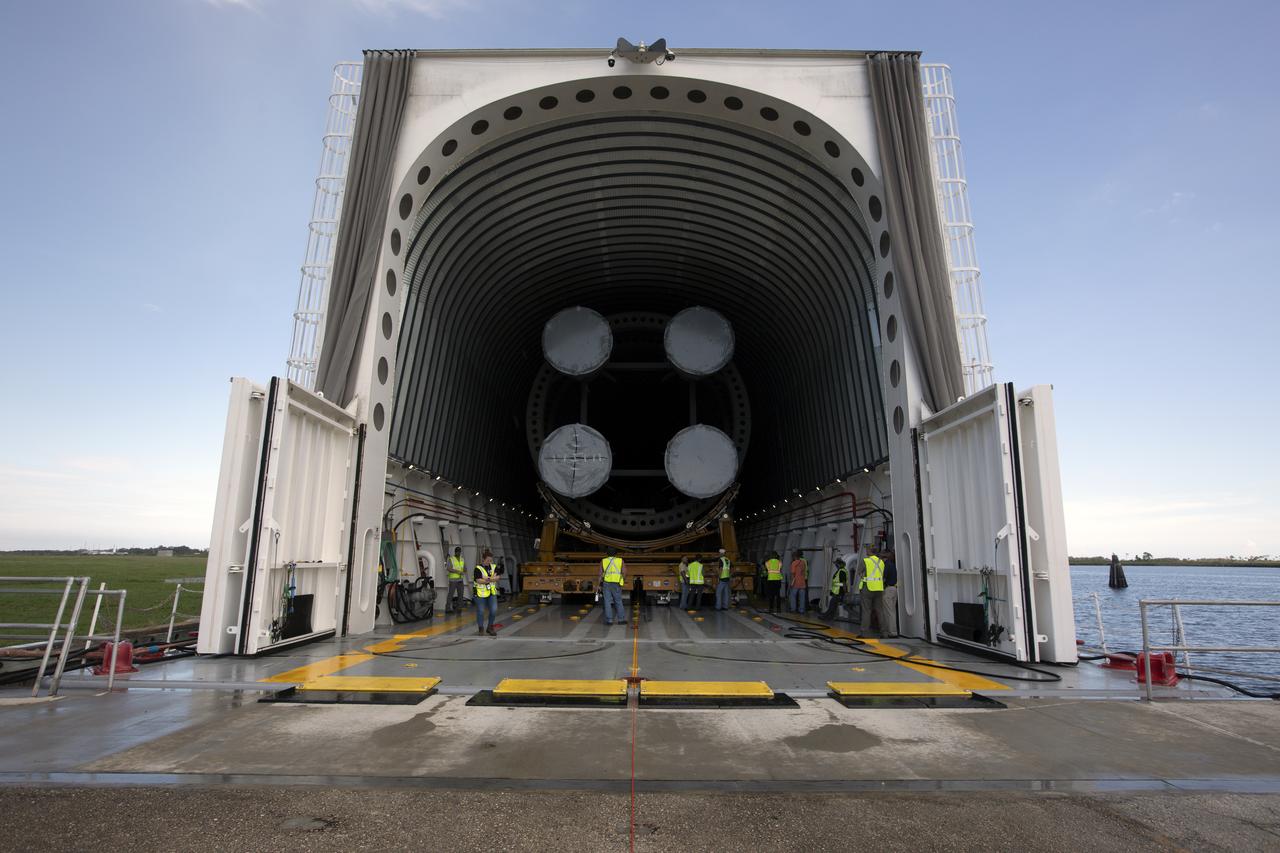
NASA and Jacobs workers assist as the 212-foot-long Space Launch System (SLS) rocket core stage pathfinder is moved inside the Pegasus barge at the Launch Complex 39 turn basin wharf at NASA’s Kennedy Space Center in Florida on Oct. 28, 2019. The core stage pathfinder is a full-scale mock-up of the rocket's core stage. It was used by the Exploration Ground Systems Program and their contractor, Jacobs, to practice offloading, moving and stacking maneuvers inside the Vehicle Assembly Building, using important ground support equipment to train employees and certify all the equipment works properly. The pathfinder was at Kennedy for about a month. It will make the trek back to NASA's Michoud Assembly Facility in Louisiana.
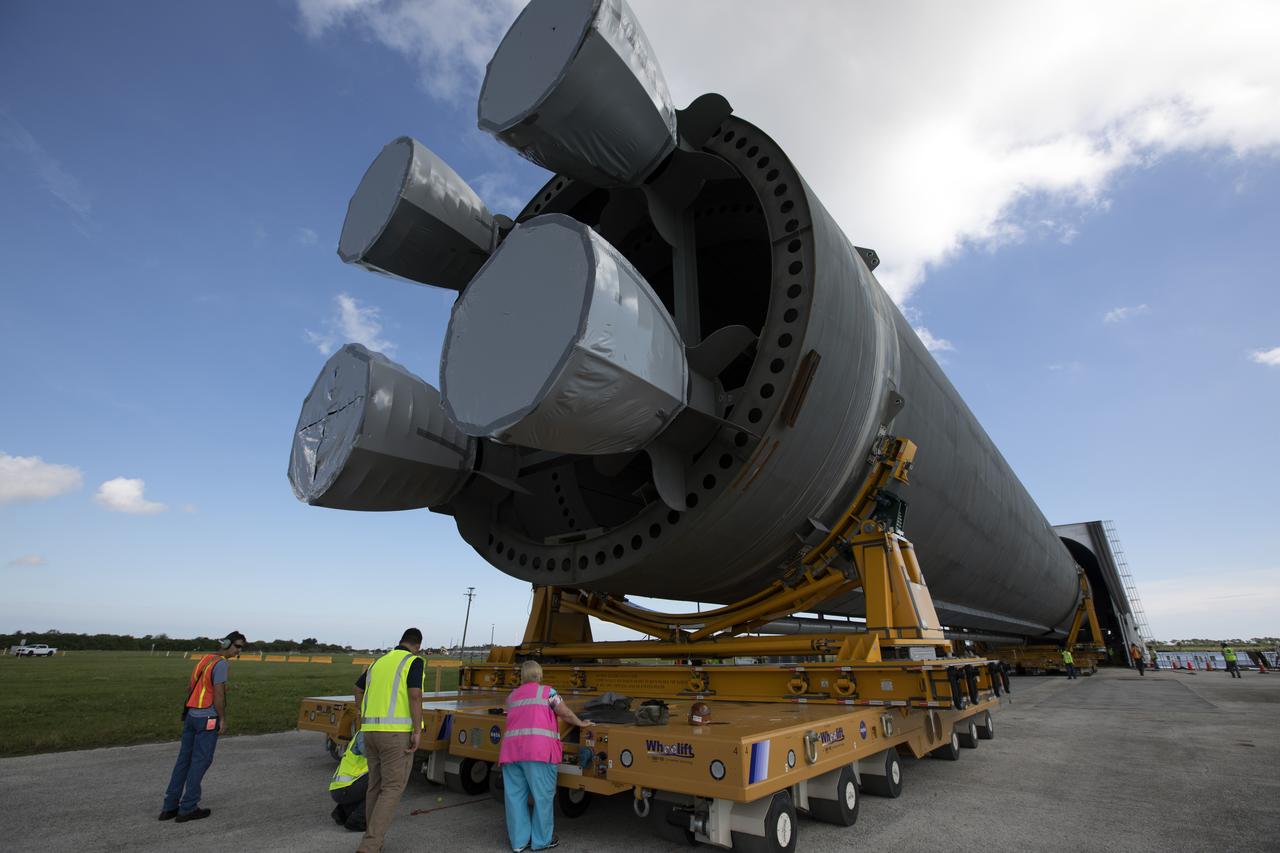
The 212-foot-long Space Launch System (SLS) rocket core stage pathfinder nears the entrance ramp to the Pegasus barge at the Launch Complex 39 turn basin wharf at NASA’s Kennedy Space Center in Florida on Oct. 28, 2019. The core stage pathfinder is a full-scale mock-up of the rocket's core stage. It was used by the Exploration Ground Systems Program and their contractor, Jacobs, to practice offloading, moving and stacking maneuvers inside the Vehicle Assembly Building, using important ground support equipment to train employees and certify all the equipment works properly. The pathfinder was at Kennedy for about a month. It will make the trek back to NASA's Michoud Assembly Facility in Louisiana.
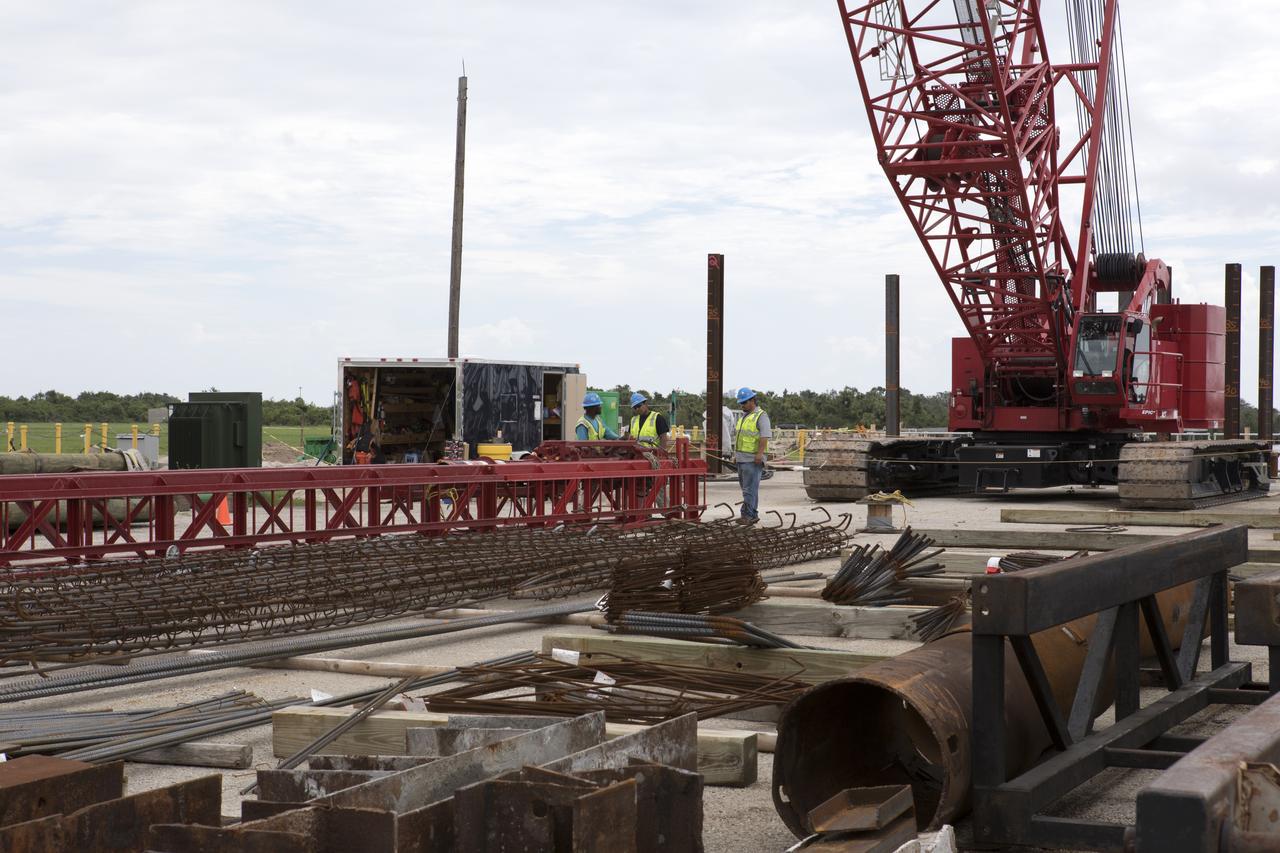
Modifications are underway at the Launch Complex 39 turn basin wharf at NASA's Kennedy Space Center in Florida to prepare for the arrival of the agency's massive Space Launch System (SLS) core stage aboard the barge Pegasus. Equipment is staged and a crane will be used to lift up precast concrete poles and position them to be driven to a depth of about 70 feet into the bedrock below the water around the turn basin. The upgrades are necessary to accommodate the increased weight of the core stage along with ground support and transportation equipment aboard the modified barge Pegasus. The Ground Systems Development and Operations Program is overseeing the upgrades to the turn basin wharf.
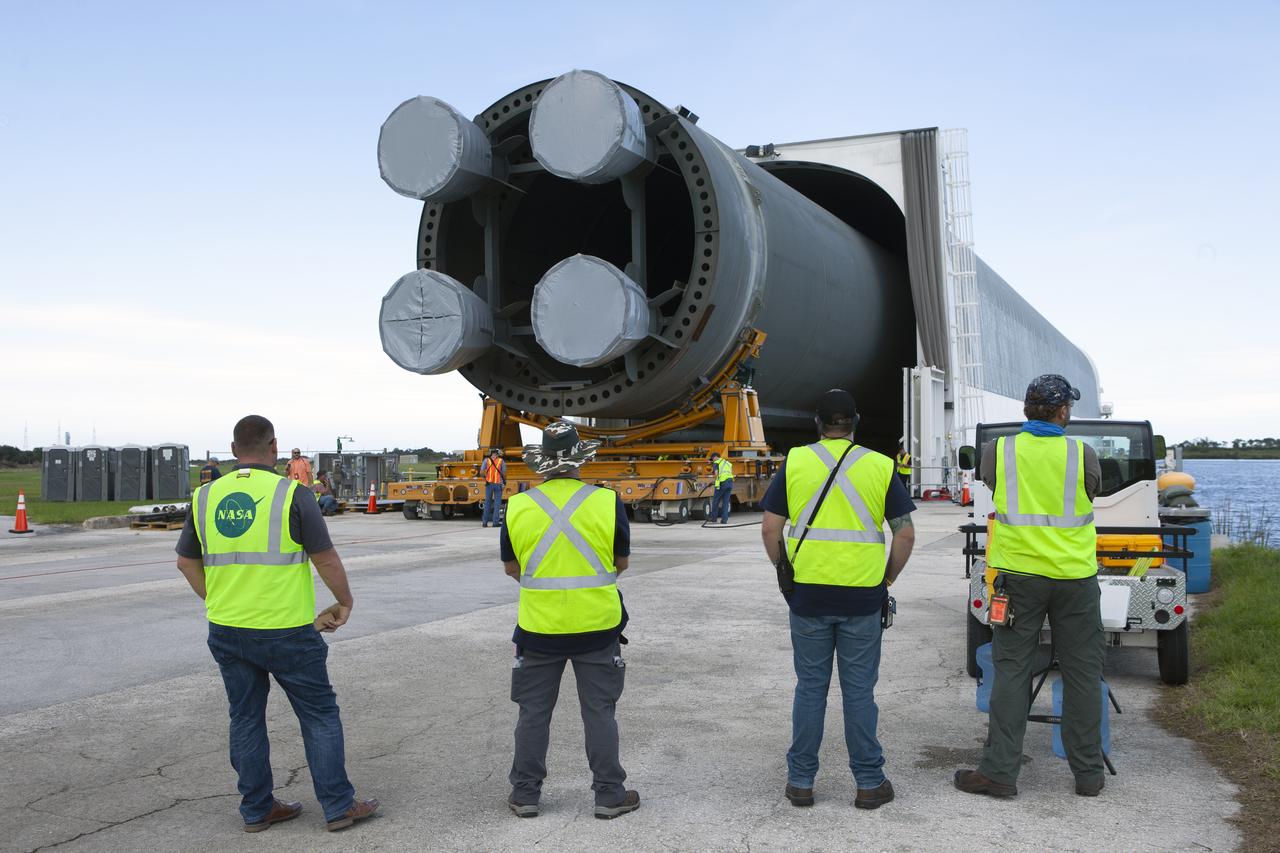
NASA and Jacobs workers watch as the 212-foot-long Space Launch System (SLS) rocket core stage pathfinder is moved inside the Pegasus barge at the Launch Complex 39 turn basin wharf at NASA’s Kennedy Space Center in Florida on Oct. 28, 2019. The core stage pathfinder is a full-scale mock-up of the rocket's core stage. It was used by the Exploration Ground Systems Program and their contractor, Jacobs, to practice offloading, moving and stacking maneuvers inside the Vehicle Assembly Building, using important ground support equipment to train employees and certify all the equipment works properly. The pathfinder was at Kennedy for about a month. It will make the trek back to NASA's Michoud Assembly Facility in Louisiana.
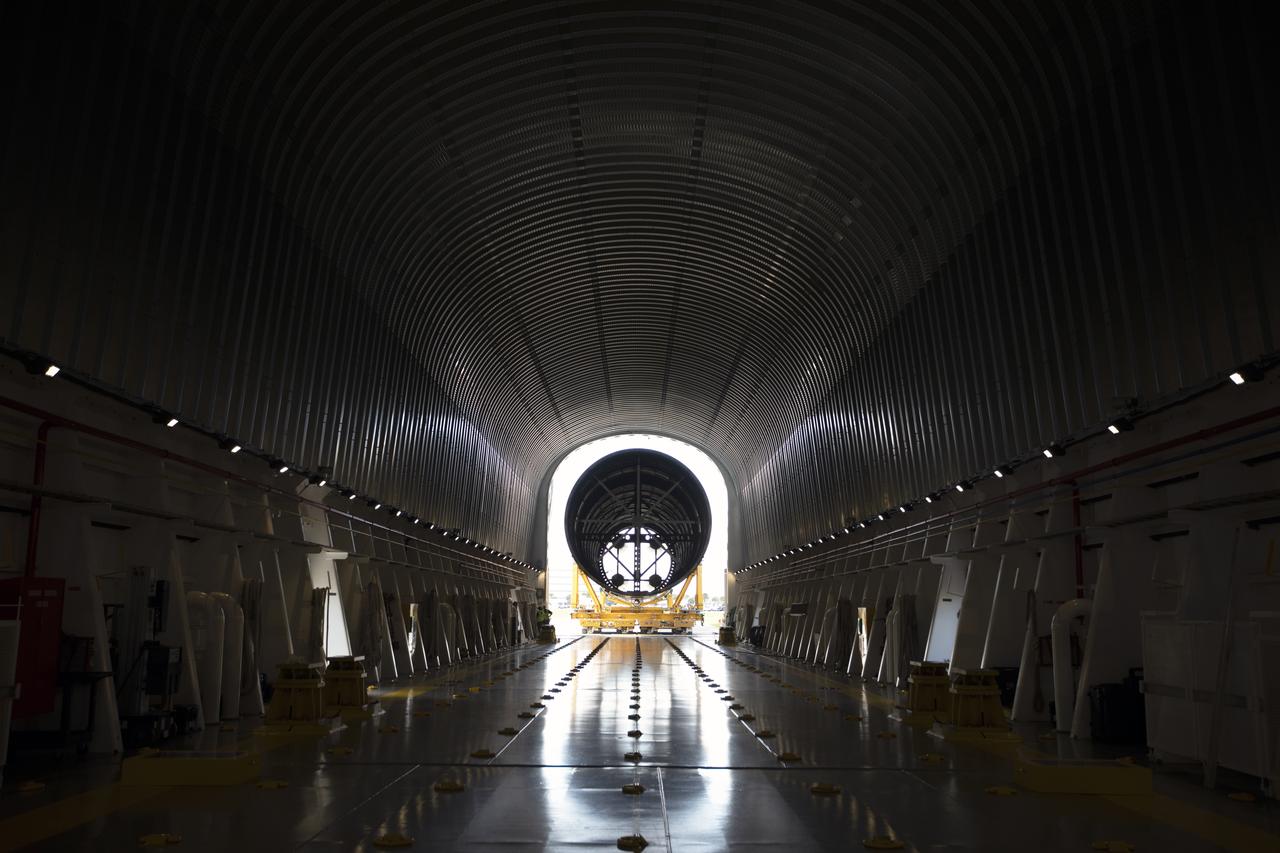
A view of the inside of the Pegasus barge at the Launch Complex 39 turn basin at NASA’s Kennedy Space Center in Florida, as the 212-foot-long Space Launch System (SLS) rocket core stage pathfinder is moved inside the barge on Oct. 28, 2019. The core stage pathfinder is a full-scale mock-up of the rocket's core stage. It was used by the Exploration Ground Systems Program and their contractor, Jacobs, to practice offloading, moving and stacking maneuvers inside the Vehicle Assembly Building, using important ground support equipment to train employees and certify all the equipment works properly. The pathfinder was at Kennedy for about a month. It will make the trek back to NASA's Michoud Assembly Facility in Louisiana.
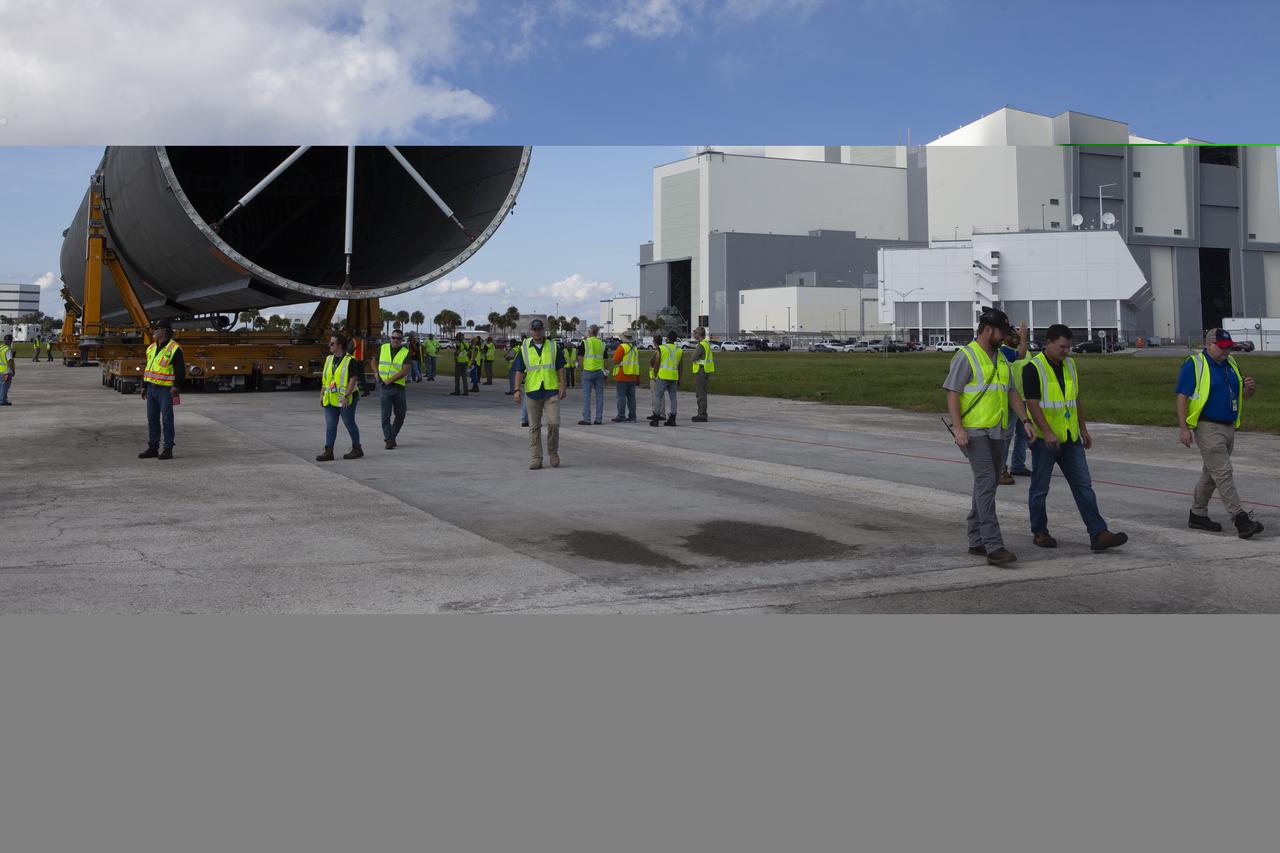
The 212-foot-long Space Launch System (SLS) rocket core stage pathfinder is being transported back to the Pegasus barge at the Launch Complex 39 turn basin wharf at NASA’s Kennedy Space Center in Florida on Oct. 28, 2019. The core stage pathfinder is a full-scale mock-up of the rocket's core stage. It was used by the Exploration Ground Systems Program and their contractor, Jacobs, to practice offloading, moving and stacking maneuvers inside the Vehicle Assembly Building, using important ground support equipment to train employees and certify all the equipment works properly. The pathfinder was at Kennedy for about a month. It will make the trek back to NASA's Michoud Assembly Facility in Louisiana.
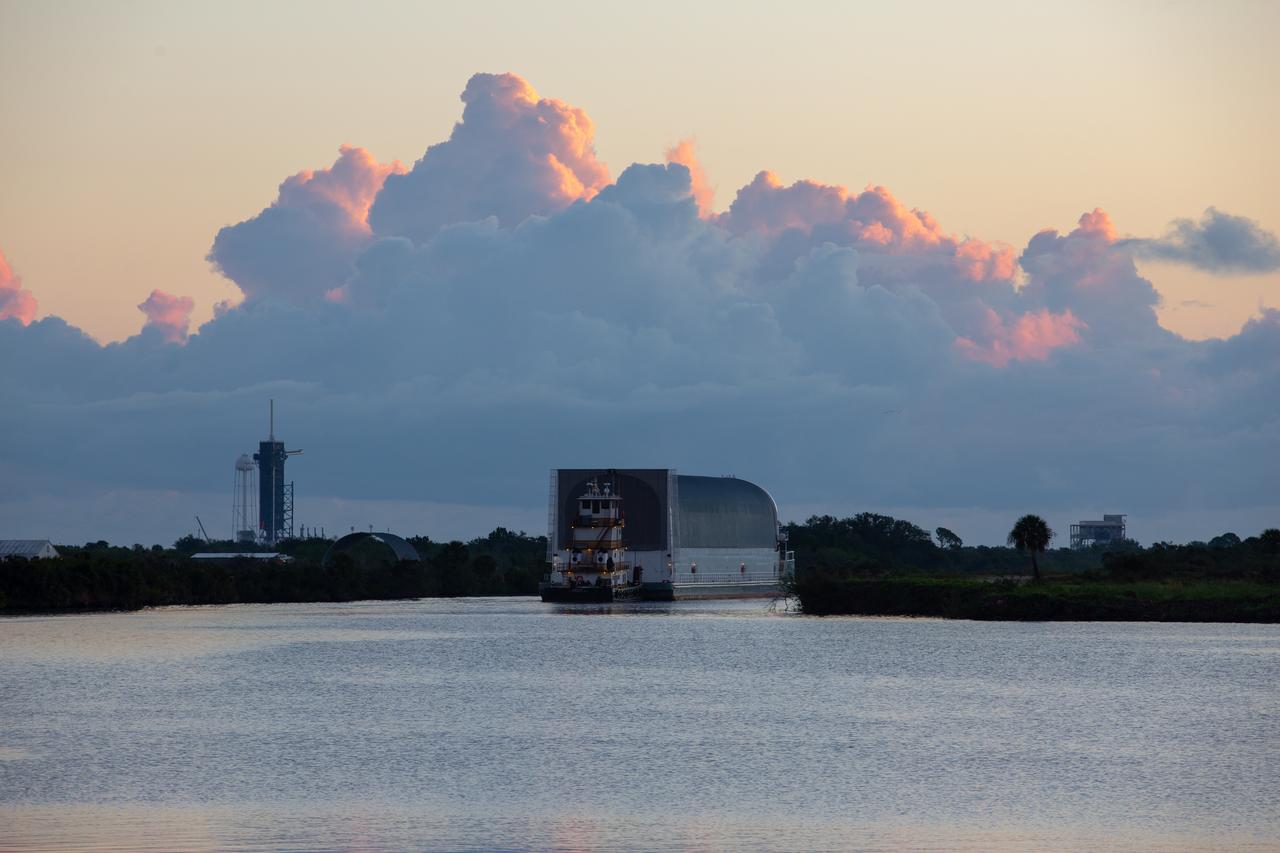
NASA’s Pegasus barge, with the 212-foot-long Space Launch System (SLS) rocket core stage pathfinder secured inside, departs the Launch Complex 39 turn basin wharf at NASA’s Kennedy Space Center in Florida on Oct. 31, 2019. The core stage pathfinder is a full-scale mock-up of the rocket's core stage. It was used by the Exploration Ground Systems Program and their contractor, Jacobs, to practice offloading, moving and stacking maneuvers inside the Vehicle Assembly Building, using important ground support equipment to train employees and certify all the equipment works properly. The pathfinder was at Kennedy for about a month. The barge with the pathfinder will make the trek back to NASA's Michoud Assembly Facility in Louisiana.
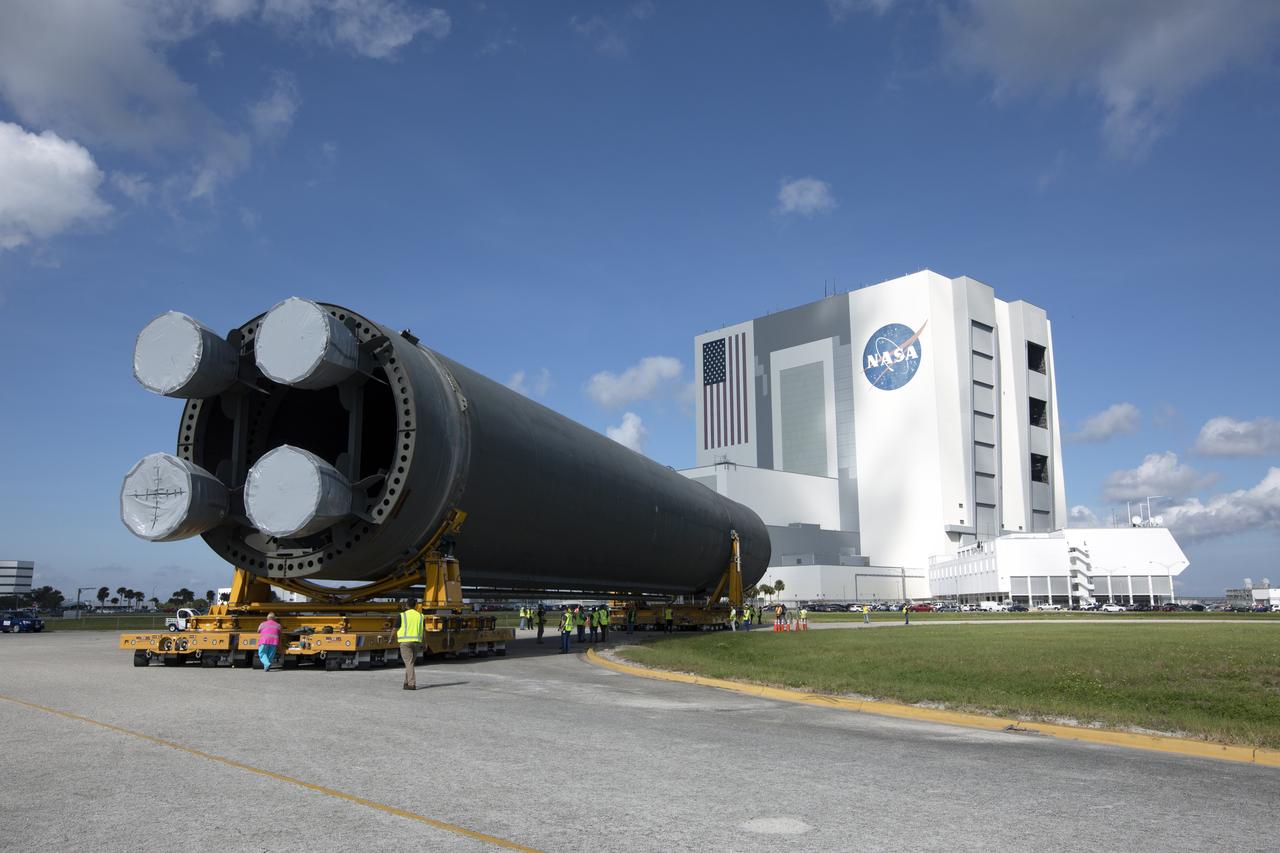
The 212-foot-long Space Launch System (SLS) rocket core stage pathfinder is being transported back to the Pegasus barge at the Launch Complex 39 turn basin wharf at NASA’s Kennedy Space Center in Florida on Oct. 28, 2019. The core stage pathfinder is a full-scale mock-up of the rocket's core stage. It was used by the Exploration Ground Systems Program and their contractor, Jacobs, to practice offloading, moving and stacking maneuvers inside the Vehicle Assembly Building, using important ground support equipment to train employees and certify all the equipment works properly. The pathfinder was at Kennedy for about a month. It will make the trek back to NASA's Michoud Assembly Facility in Louisiana.
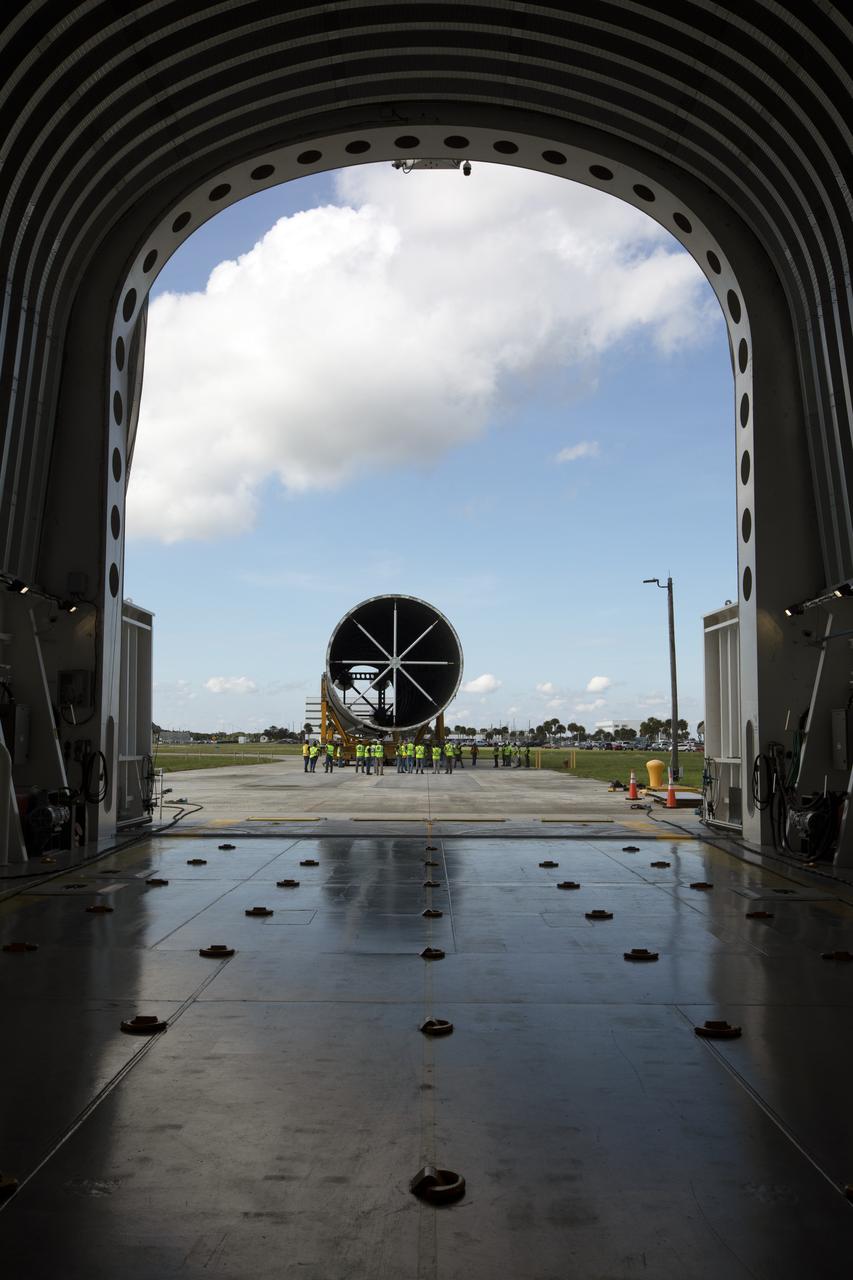
The 212-foot-long Space Launch System (SLS) rocket core stage pathfinder nears the entrance ramp to the Pegasus barge at the Launch Complex 39 turn basin wharf at NASA’s Kennedy Space Center in Florida on Oct. 28, 2019. The core stage pathfinder is a full-scale mock-up of the rocket's core stage. It was used by the Exploration Ground Systems Program and their contractor, Jacobs, to practice offloading, moving and stacking maneuvers inside the Vehicle Assembly Building, using important ground support equipment to train employees and certify all the equipment works properly. The pathfinder was at Kennedy for about a month. It will make the trek back to NASA's Michoud Assembly Facility in Louisiana.
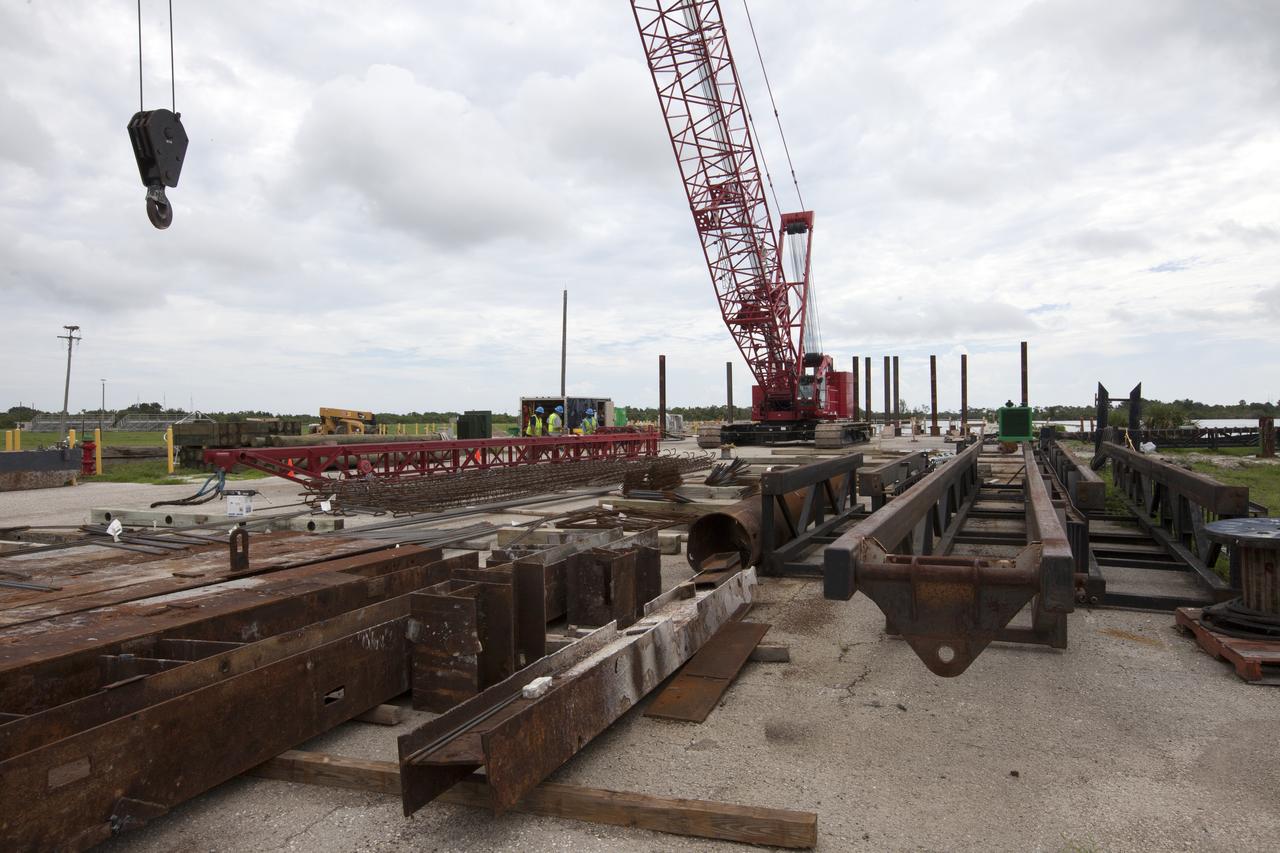
Modifications are underway at the Launch Complex 39 turn basin wharf at NASA's Kennedy Space Center in Florida to prepare for the arrival of the agency's massive Space Launch System (SLS) core stage aboard the barge Pegasus. Equipment is staged and a crane will be used to lift up precast concrete poles and position them to be driven to a depth of about 70 feet into the bedrock below the water around the turn basin. The upgrades are necessary to accommodate the increased weight of the core stage along with ground support and transportation equipment aboard the modified barge Pegasus. The Ground Systems Development and Operations Program is overseeing the upgrades to the turn basin wharf.
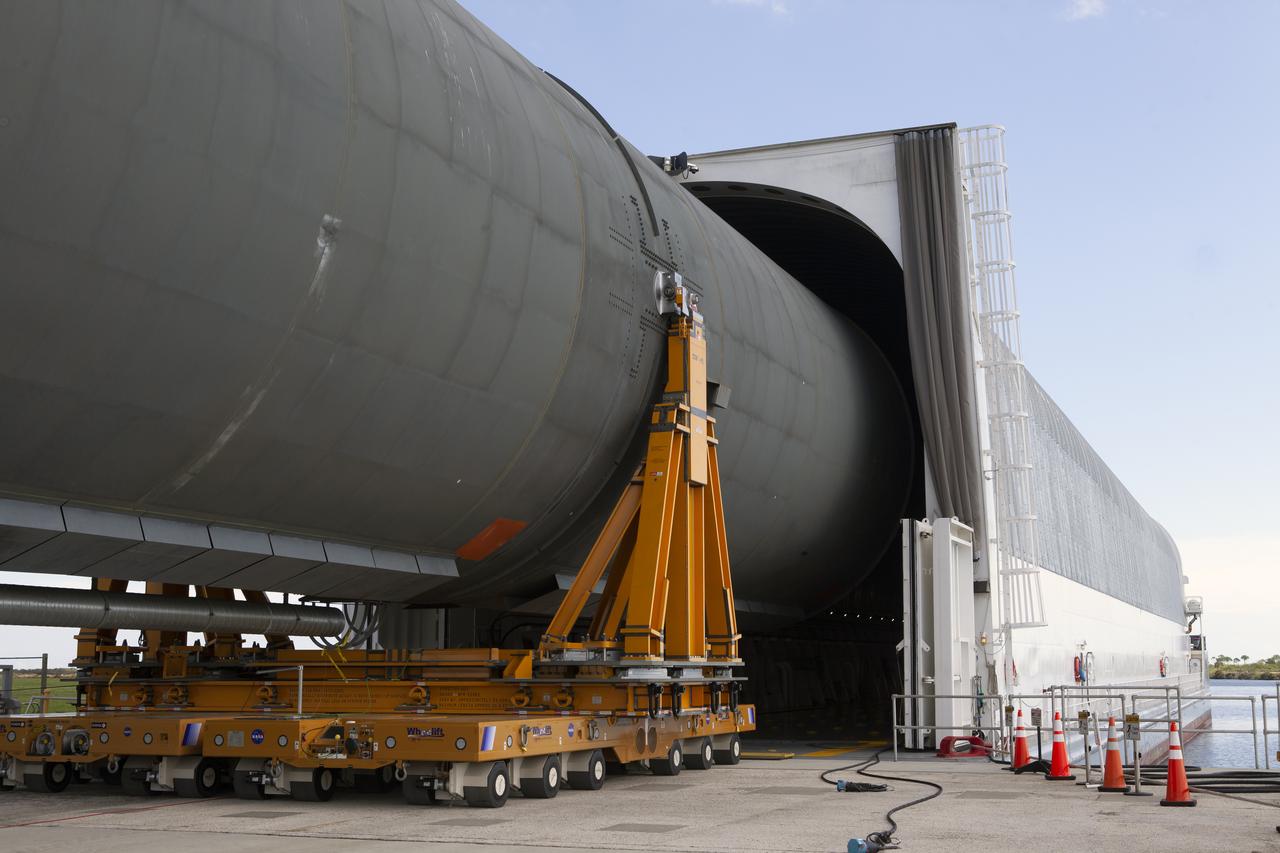
The 212-foot-long Space Launch System (SLS) rocket core stage pathfinder is moved inside the Pegasus barge at the Launch Complex 39 turn basin wharf at NASA’s Kennedy Space Center in Florida on Oct. 28, 2019. The core stage pathfinder is a full-scale mock-up of the rocket's core stage. It was used by the Exploration Ground Systems Program and their contractor, Jacobs, to practice offloading, moving and stacking maneuvers inside the Vehicle Assembly Building, using important ground support equipment to train employees and certify all the equipment works properly. The pathfinder was at Kennedy for about a month. It will make the trek back to NASA's Michoud Assembly Facility in Louisiana.
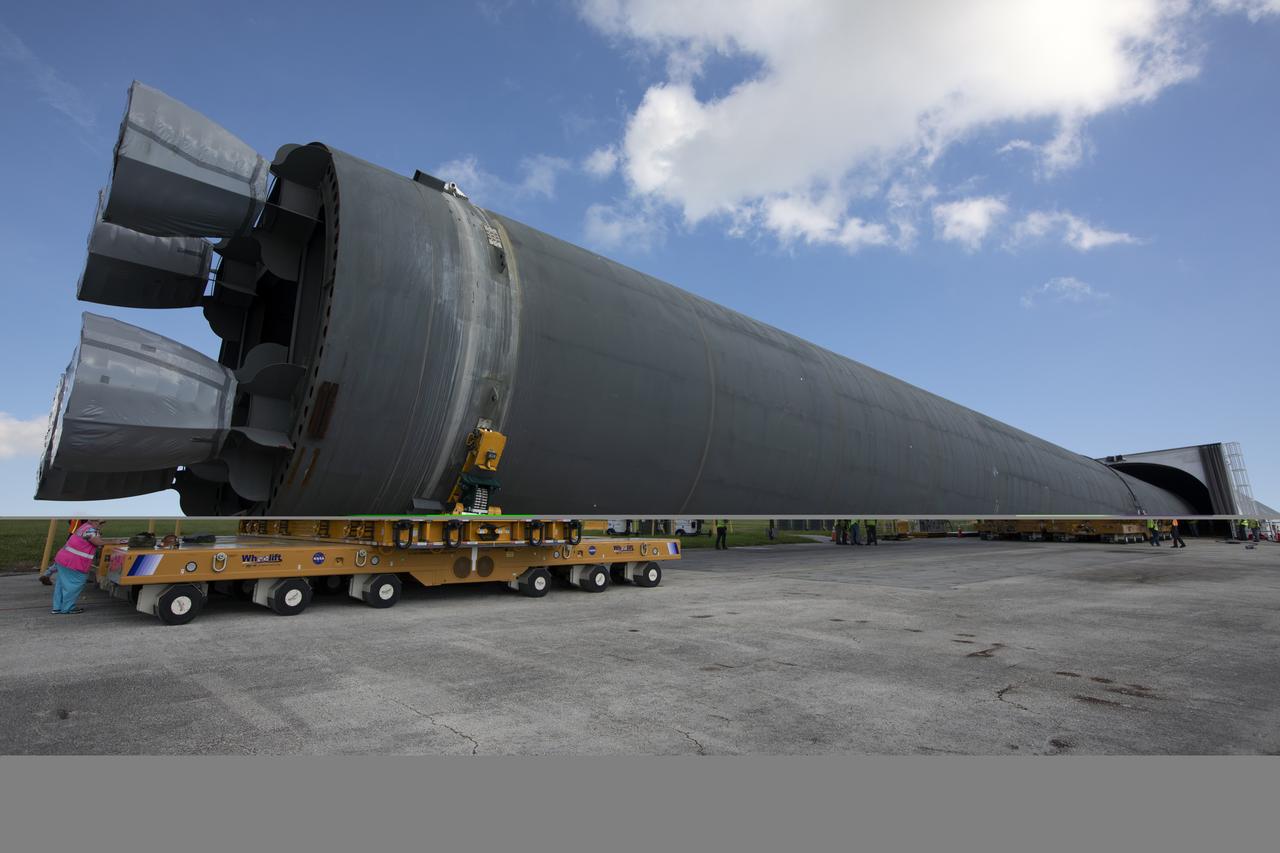
The 212-foot-long Space Launch System (SLS) rocket core stage pathfinder is moved inside the Pegasus barge at the Launch Complex 39 turn basin wharf at NASA’s Kennedy Space Center in Florida on Oct. 28, 2019. The core stage pathfinder is a full-scale mock-up of the rocket's core stage. It was used by the Exploration Ground Systems Program and their contractor, Jacobs, to practice offloading, moving and stacking maneuvers inside the Vehicle Assembly Building, using important ground support equipment to train employees and certify all the equipment works properly. The pathfinder was at Kennedy for about a month. It will make the trek back to NASA's Michoud Assembly Facility in Louisiana.