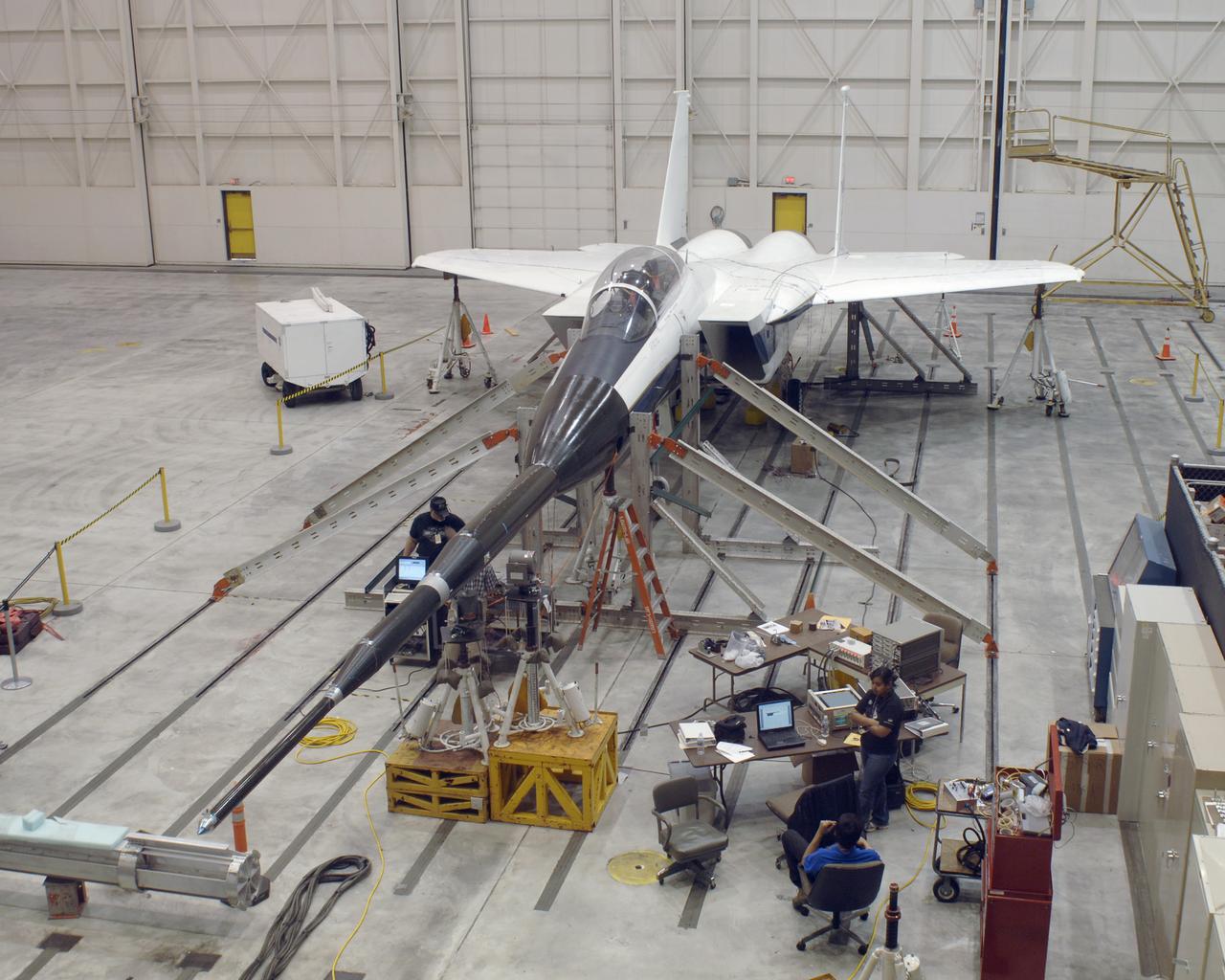
NASA Dryden's F-15B testbed aircraft with the Gulfstream Quiet Spike sonic boom mitigator attached undergoes ground vibration testing in preparation for test flights. The project seeks to verify the structural integrity of the multi-segmented, articulating spike attachment designed to reduce and control a sonic boom.
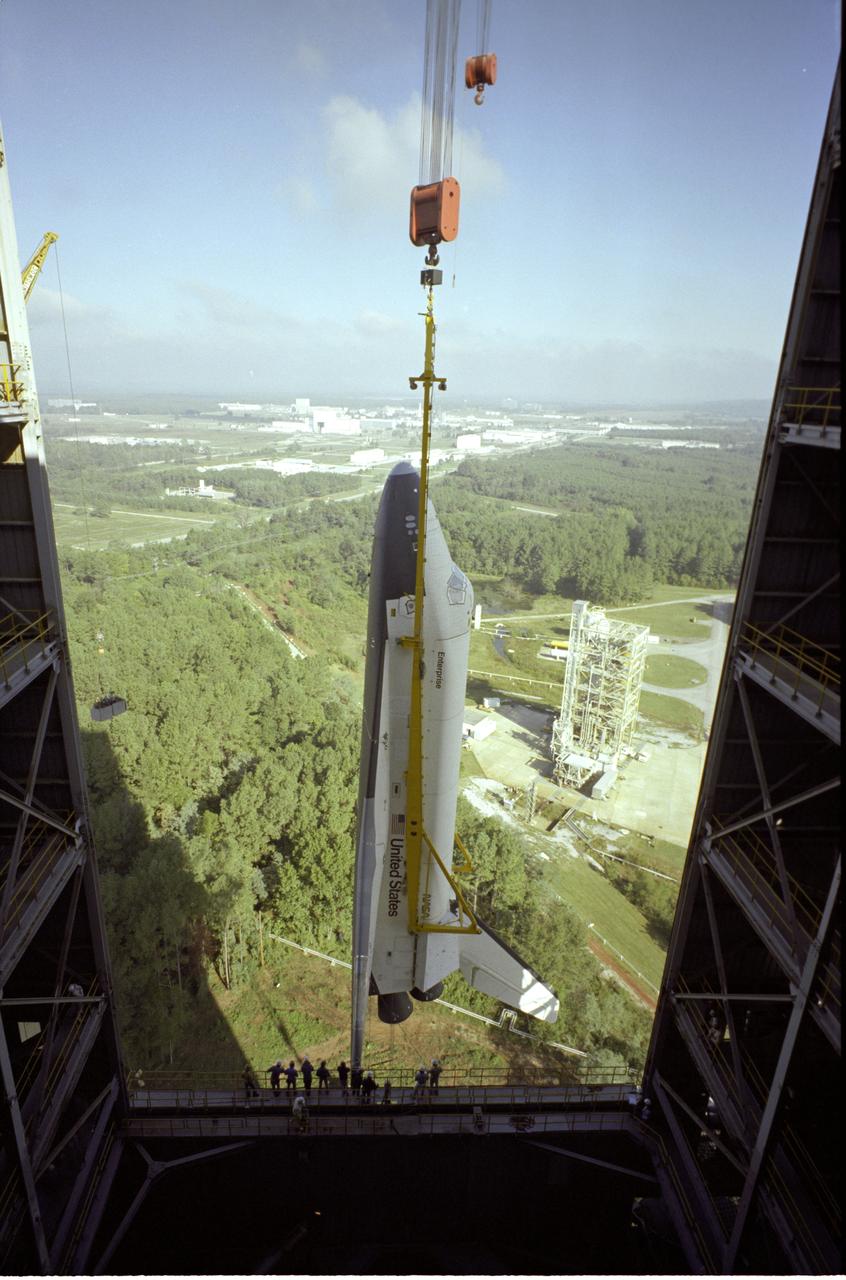
The Shuttle Orbiter Enterprise is being installed into liftoff configuration at Marshall Space Flight Center's Dynamic Test Stand for Mated Vertical Ground Vibration tests (MVGVT). The tests marked the first time ever that the entire shuttle complement (including Orbiter, external tank, and solid rocket boosters) were mated vertically.
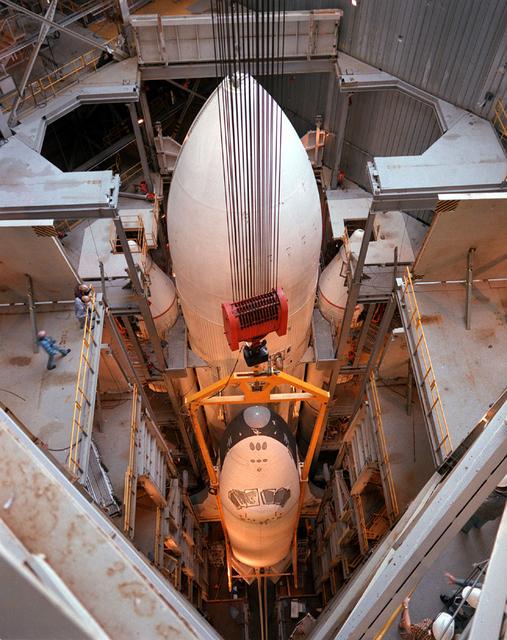
The Shuttle Orbiter Enterprise inside of Marshall Space Flight Center's Dynamic Test Stand for Mated Vertical Ground Vibration tests (MVGVT). The tests marked the first time ever that the entire shuttle complement including Orbiter, external tank, and solid rocket boosters were vertically mated.
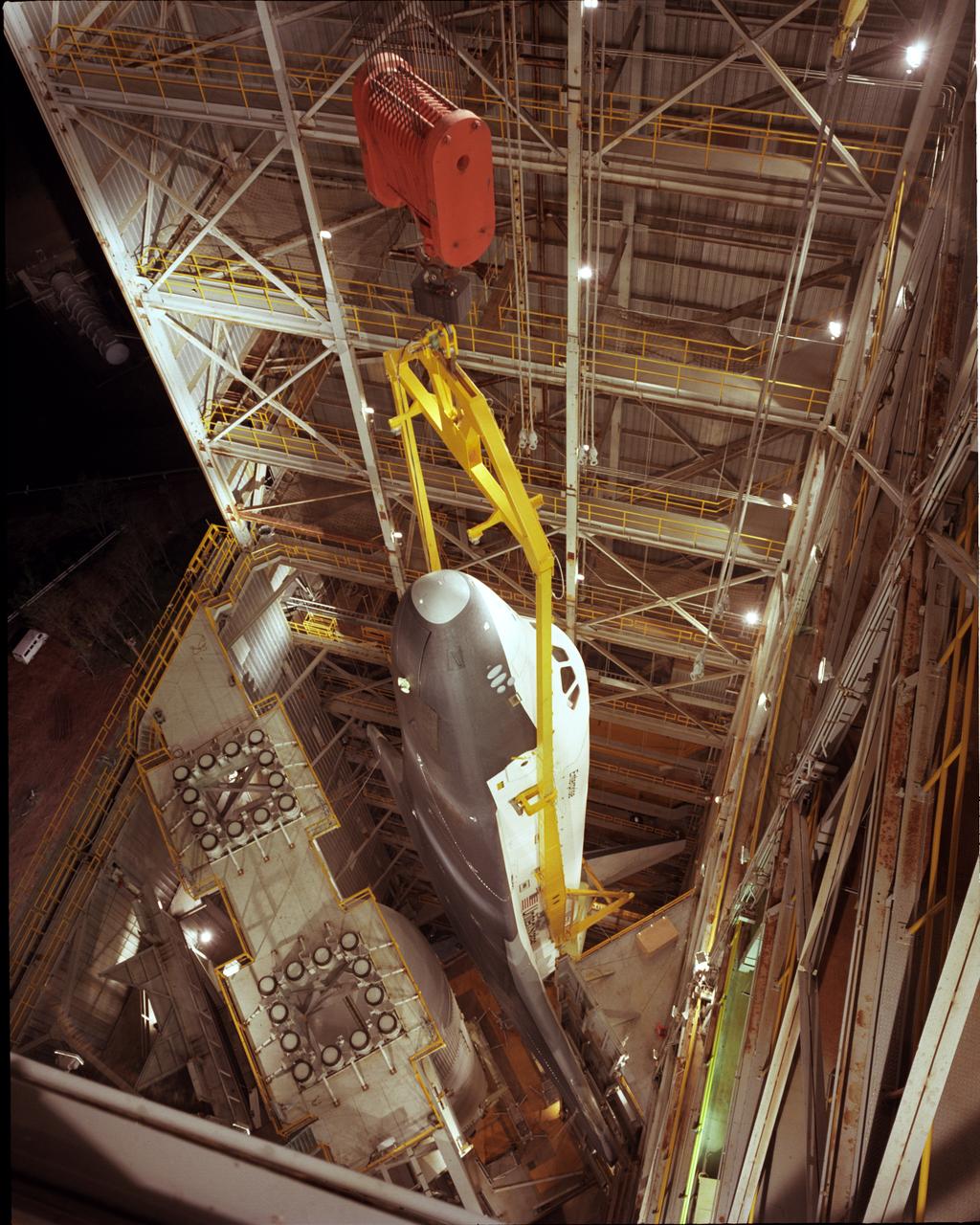
The Shuttle Orbiter Enterprise is lowered into the Dynamic Test Stand for Mated Vertical Ground Vibration tests (MVGVT) at the Marshall Space Flight Center. The tests marked the first time ever that the entire shuttle complement (including Orbiter, external tank, and solid rocket boosters) were mated vertically.
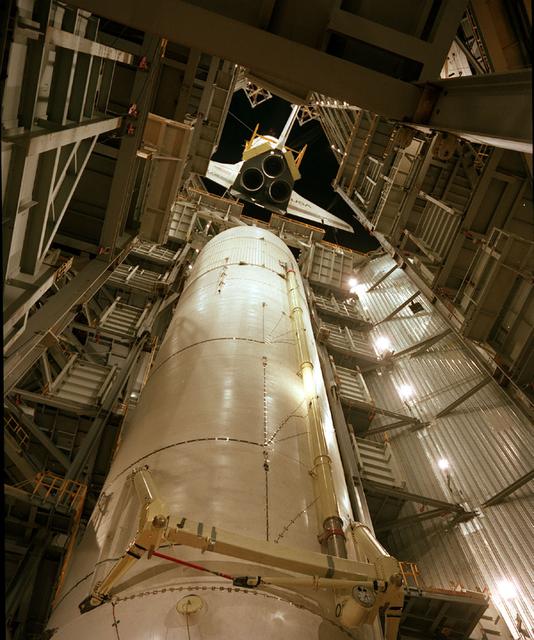
This is an interior ground level view of the Shuttle Orbiter Enterprise being lowered for mating to External Tank (ET) inside Marshall Space Flight Center's Dynamic Test Stand for Mated Vertical Ground Vibration tests (MVGVT). The tests marked the first time ever that the entire shuttle complement (including Orbiter, external tank, and solid rocket boosters) were mated vertically.
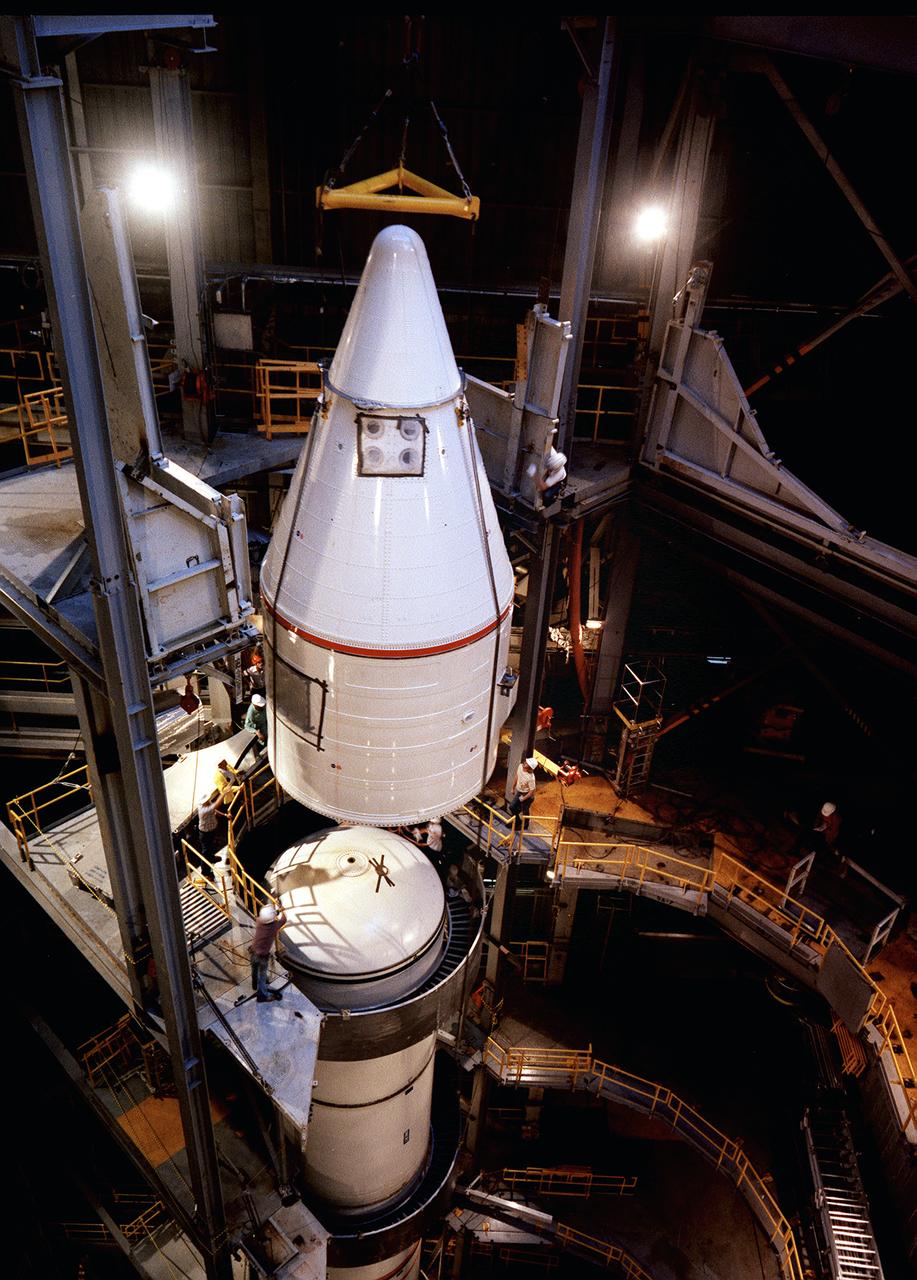
Workmen in the Dynamic Test Stand lowered the nose cone into place to complete stacking of the left side of the solid rocket booster (SRB) in the Dynamic Test Stand at the east test area of the Marshall Space Flight Center (MSFC). The SRB would be attached to the external tank (ET) and then the orbiter later for the Mated Vertical Ground Vibration Test (MVGVT), that resumed in October 1978. The stacking of a complete Shuttle in the Dynamic Test Stand allowed test engineers to perform ground vibration testing on the Shuttle in its liftoff configuration. The purpose of the MVGVT was to verify that the Space Shuttle would perform as predicted during launch. The platforms inside the Dynamic Test Stand were modified to accommodate two SRB'S to which the ET was attached.
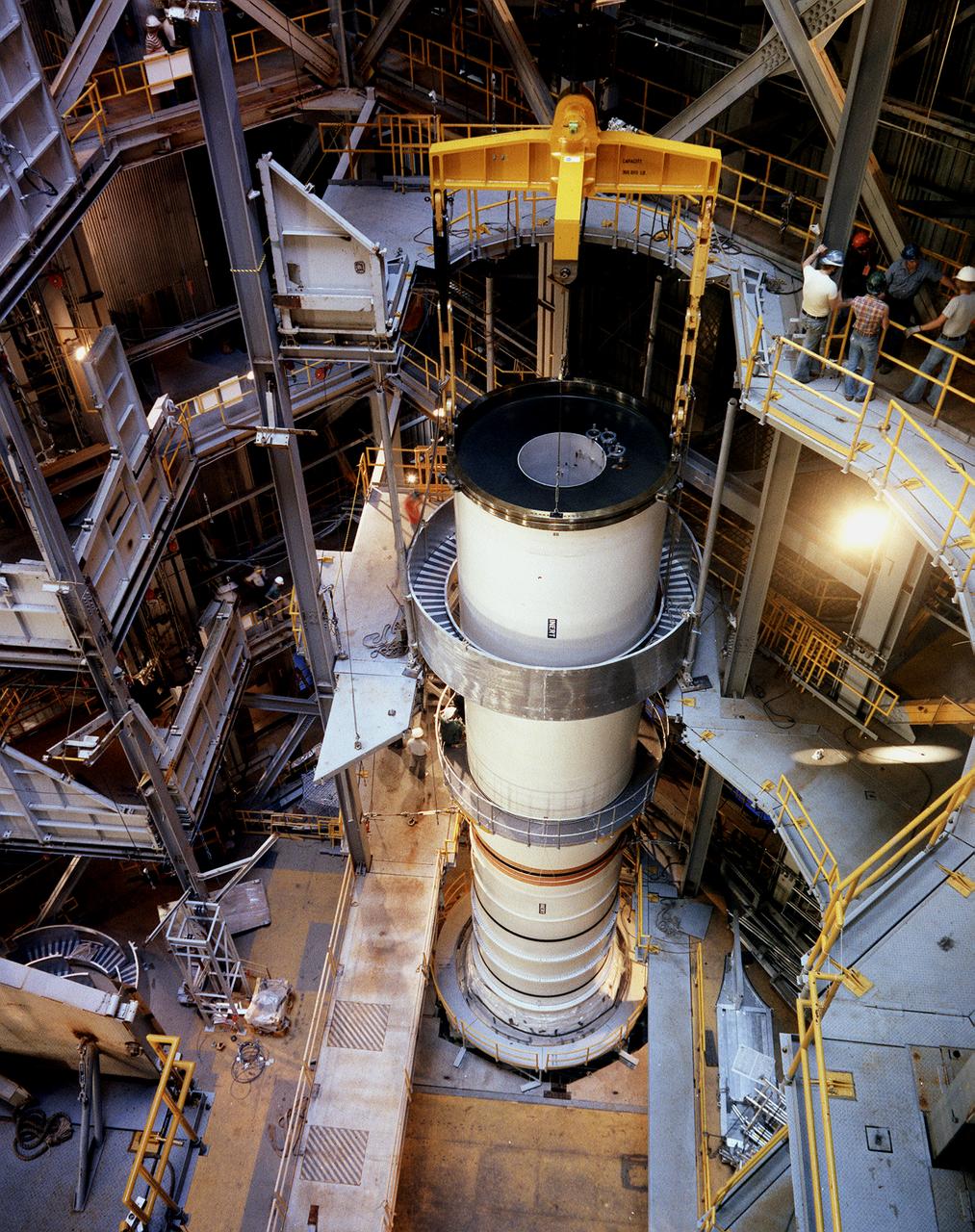
This photograph shows stacking of the left side of the solid rocket booster (SRB) segments in the Dynamic Test Stand at the east test area of the Marshall Space Flight Center (MSFC). Staging shown here are the aft skirt, aft segment, and aft center segment. The SRB was attached to the external tank (ET) and then the orbiter later for the Mated Vertical Ground Vibration Test (MVGVT), that resumed in October 1978. The stacking of a complete Shuttle in the Dynamic Test Stand allowed test engineers to perform ground vibration testing on the Shuttle in its liftoff configuration. The purpose of the MVGVT is to verify that the Space Shuttle would perform as predicted during launch. The platforms inside the Dynamic Test Stand were modified to accommodate two SRB's to which the ET was attached.
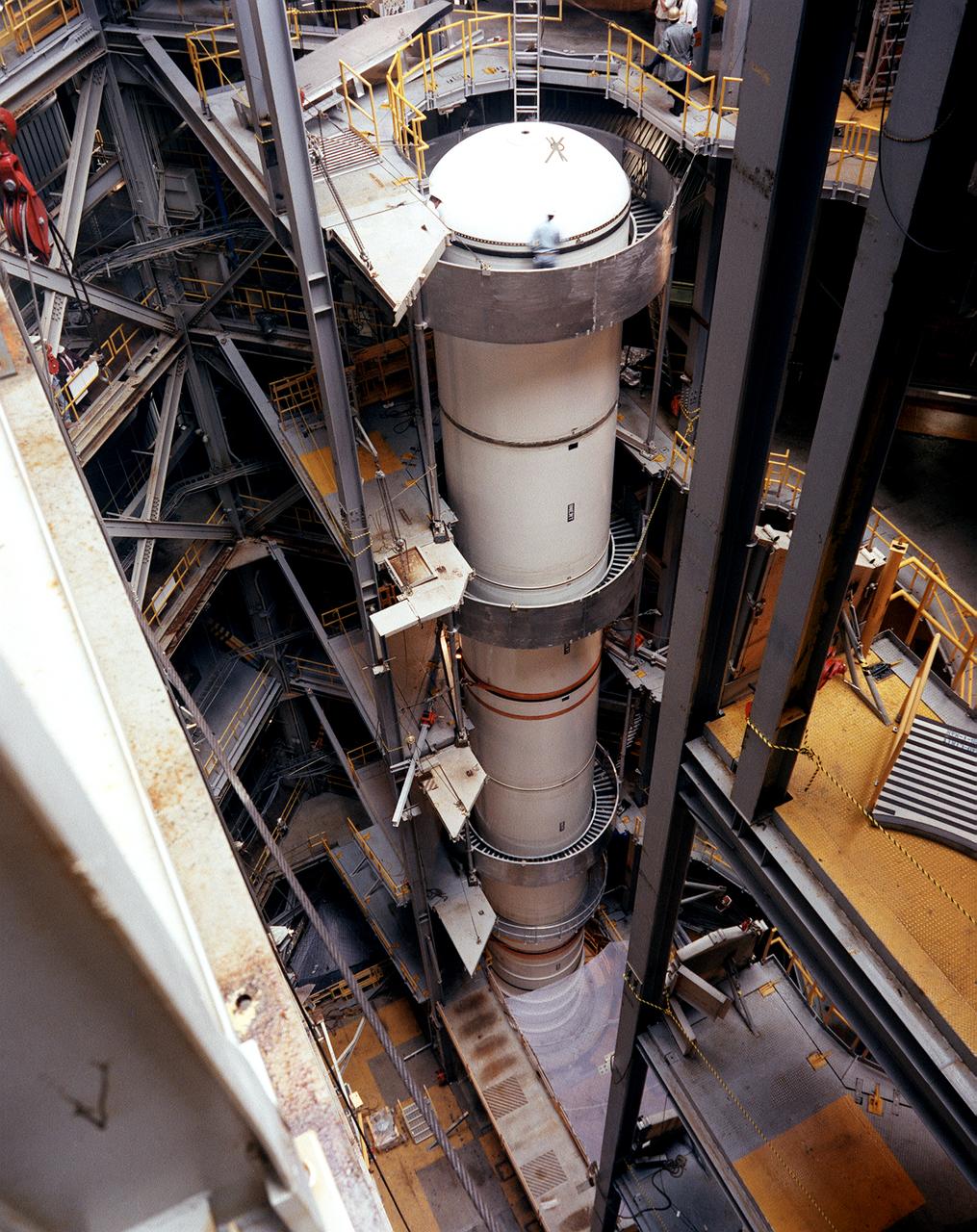
This photograph shows the left side of the solid rocket booster (SRB) segment as it awaits being mated to the nose cone and forward skirt in the Dynamic Test Stand at the east test area of the Marshall Space Flight Center (MSFC). The SRB would be attached to the external tank (ET) and then the orbiter later for the Mated Vertical Ground Vibration Test (MVGVT), that resumed in October 1978. The stacking of a complete Shuttle in the Dynamic Test Stand allowed test engineers to perform ground vibration testing on the Shuttle in its liftoff configuration. The purpose of the MVGVT was to verify that the Space Shuttle would perform as predicted during launch. The platforms inside the Dynamic Test Stand were modified to accommodate two SRB's to which the ET was attached.
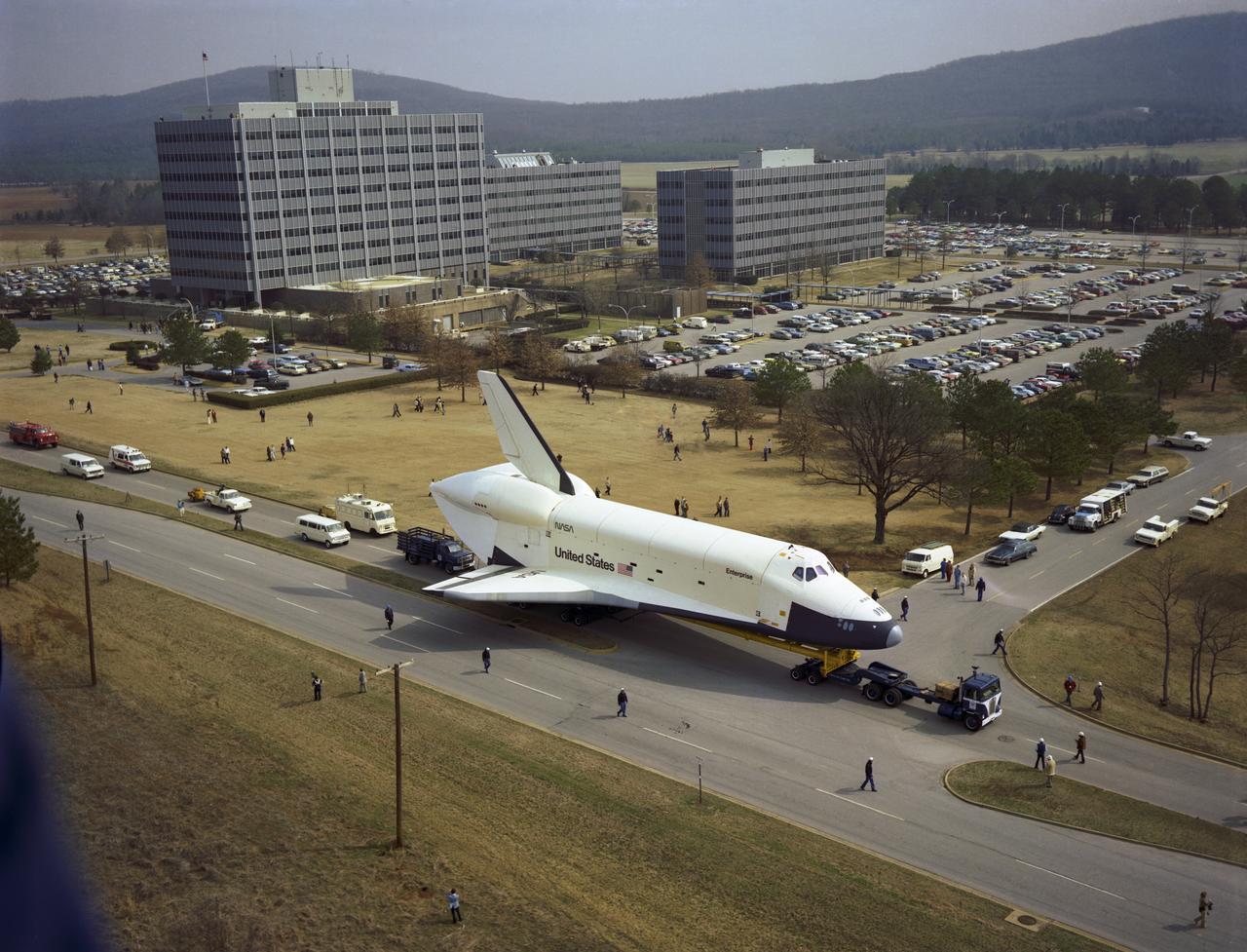
In this view, the Shuttle Orbiter Enterprise is seen heading South on Rideout Road with Marshall Space Flight Center's (MSFC'S) administrative 4200 Complex in the background, as it is being transported to MSFC's building 4755 for later Mated Vertical Ground Vibration tests (MVGVT) at MSFC's Dynamic Test Stand. The tests marked the first time ever that the entire shuttle complement (including Orbiter, external tank, and solid rocket boosters) were mated vertically.
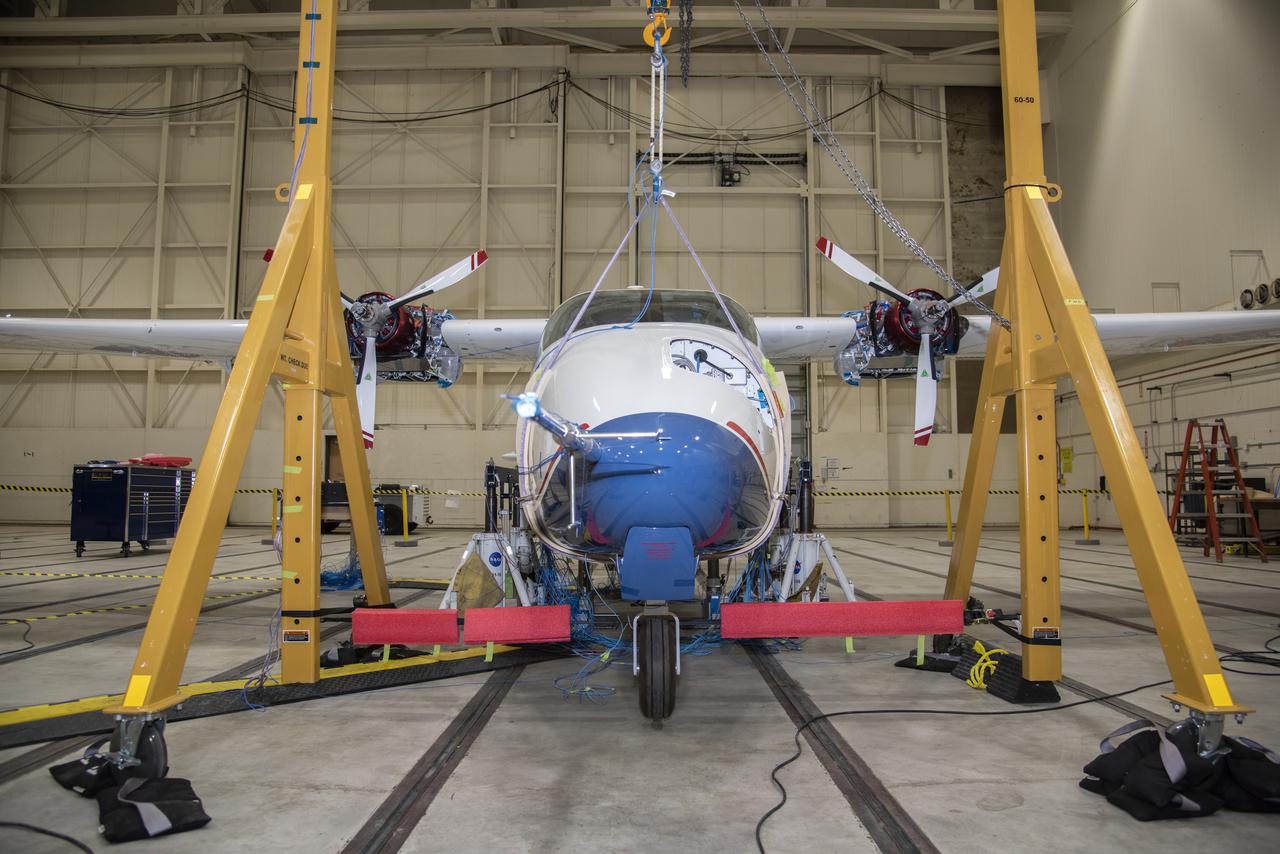
NASA’s all-electric X-57 Maxwell prepares for ground vibration testing, or GVT, at NASA’s Armstrong Flight Research Center in California. Done in parallel with cruise motor controller testing, the GVT tested the vehicle at various vibration levels, helping engineers to examine and validate the integrity of the vehicle for flight conditions. A goal of X-57 is to help the Federal Aviation Administration set certification standards for emerging electric aircraft markets.
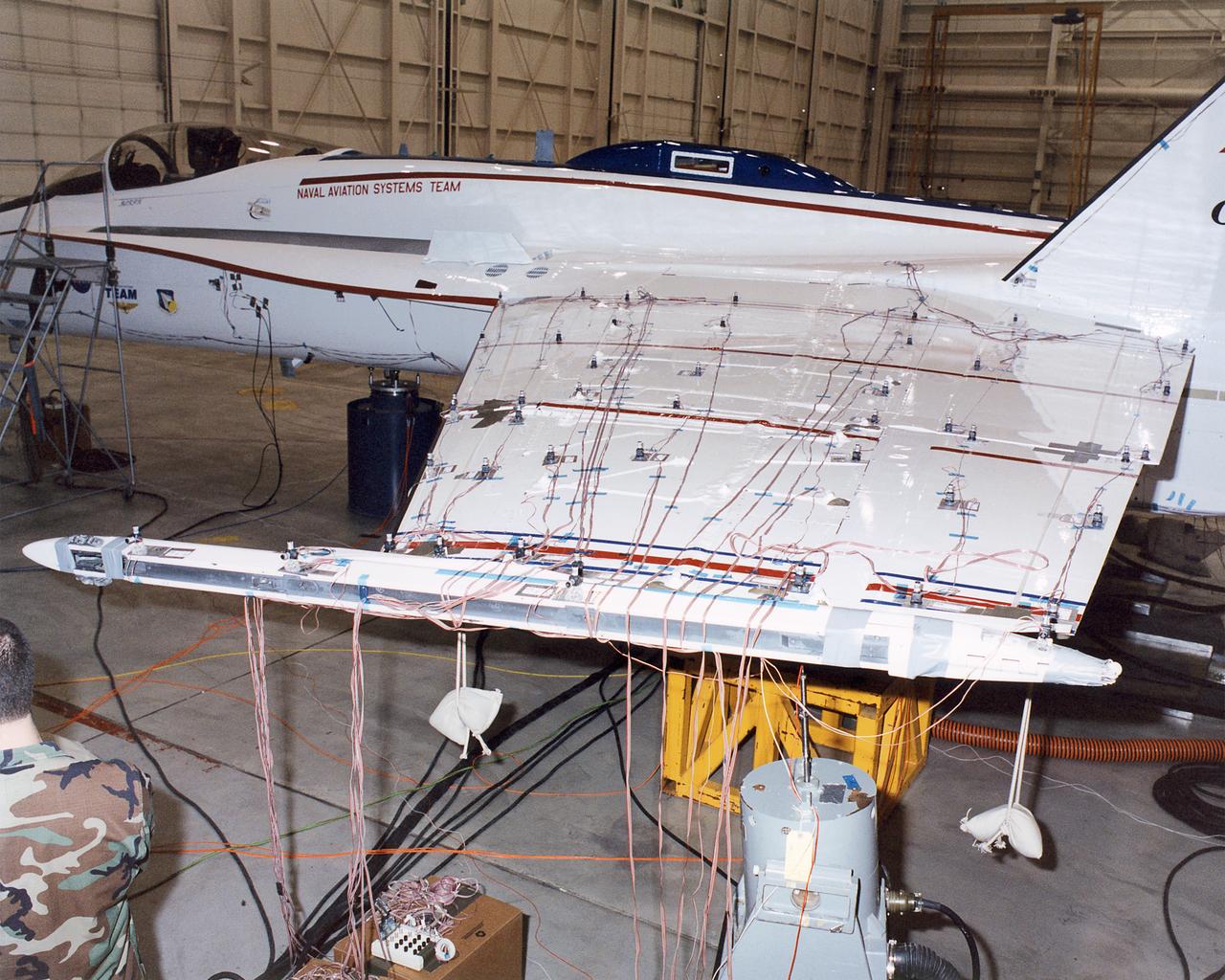
The upper wing surfaces of the Active Aeroelastic Wing F/A-18 test aircraft are covered with accelerometers and other sensors during ground vibration tests at NASA Dryden Flight Research Center.
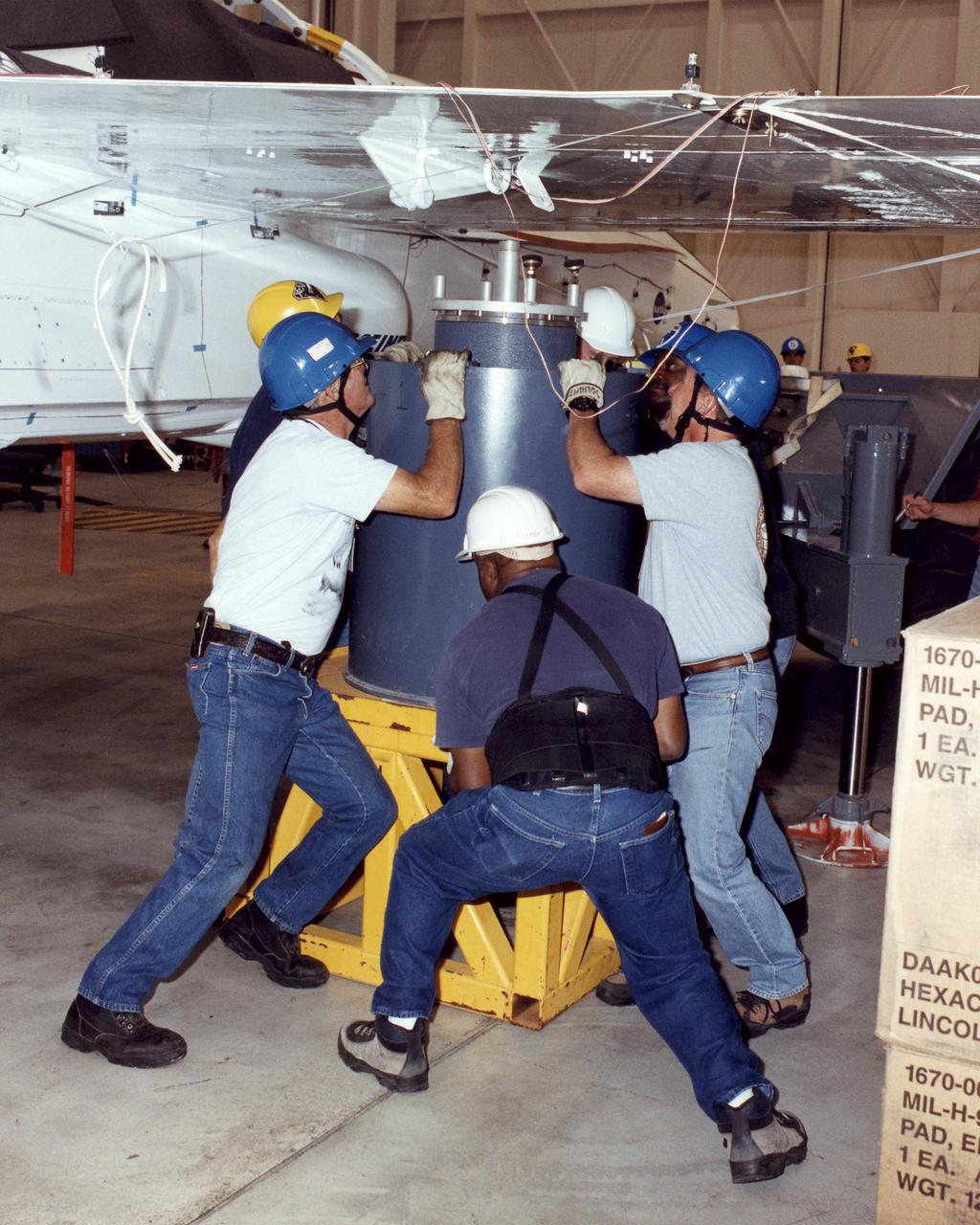
NASA Dryden technicians (Dave Dennis, Freddy Green and Jeff Doughty) position a support cylinder under the right wing of the Active Aeroelastic Wing F/A-18 test aircraft prior to ground vibration tests.
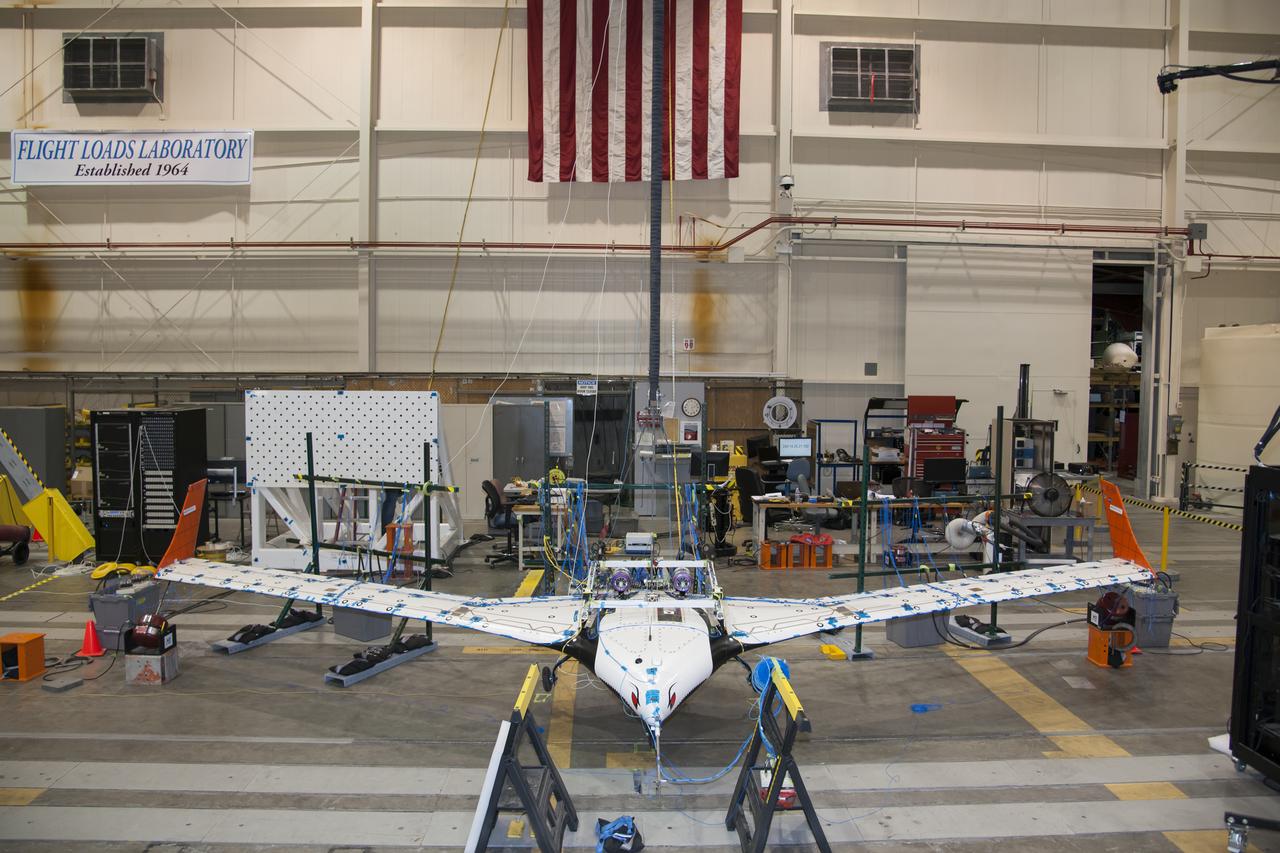
The X-56 Multi-Utility Technology Testbed (MUTT) undergoes ground vibration tests in Armstrong's Flight Loads Laboratory.
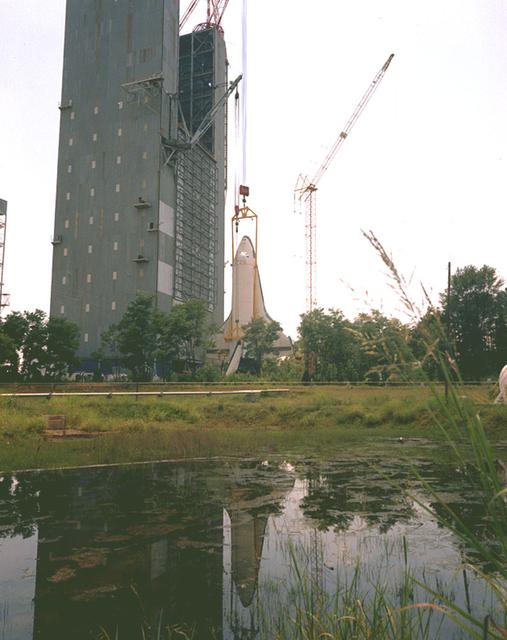
This photo is of the removal of the Orbiter Enterprise from the Marshall Space Flight Center's Dynamic Test Stand after its first Mated Vertical Ground Vibration Test (MVGVT).
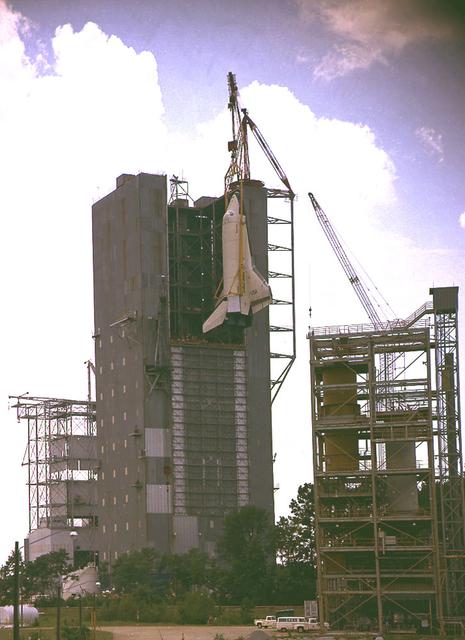
This is a photo of the removal of the Orbiter Enterprise from the Marshall Space Flight Center Dynamic Test Stand after its first Mated Vertical Ground Vibration Test (MVGVT).
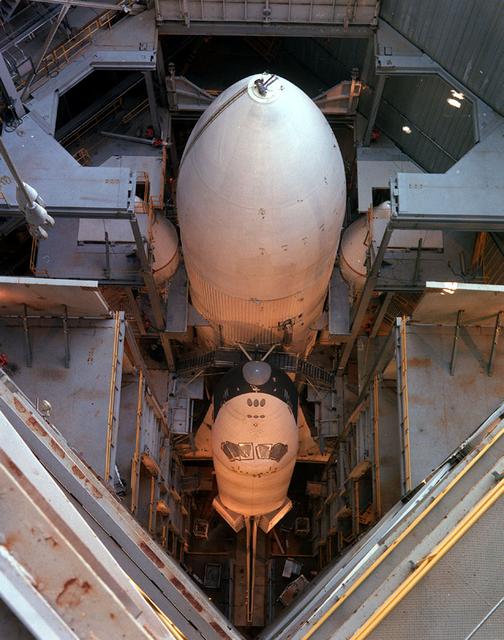
In its mated liftoff configuration of External Tank (ET) and Solid Rocket Boosters (SRB's), the Orbiter Enterprise (OV101) is pictured in the Marshall Space Flight Center Dynamic Test Stand for a Mated Vertical Ground Vibration Test (MVGVT).
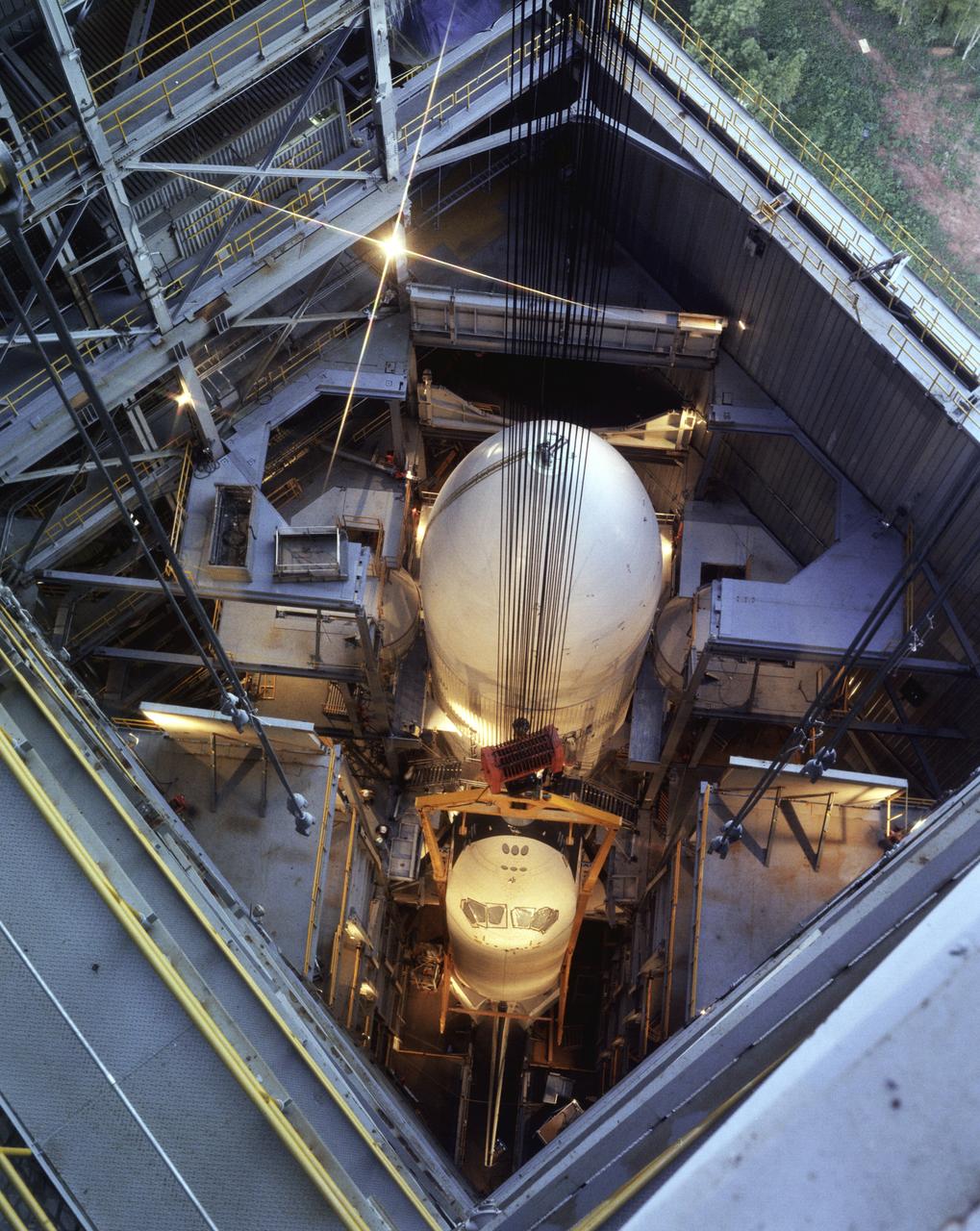
This photograph was taken of the Orbiter Enterprise installation, in its liftoff configuration, into the Marshall Space Flight Center Dynamic Test Stand for a Mated Vertical Ground Vibration Test (MVGVT).
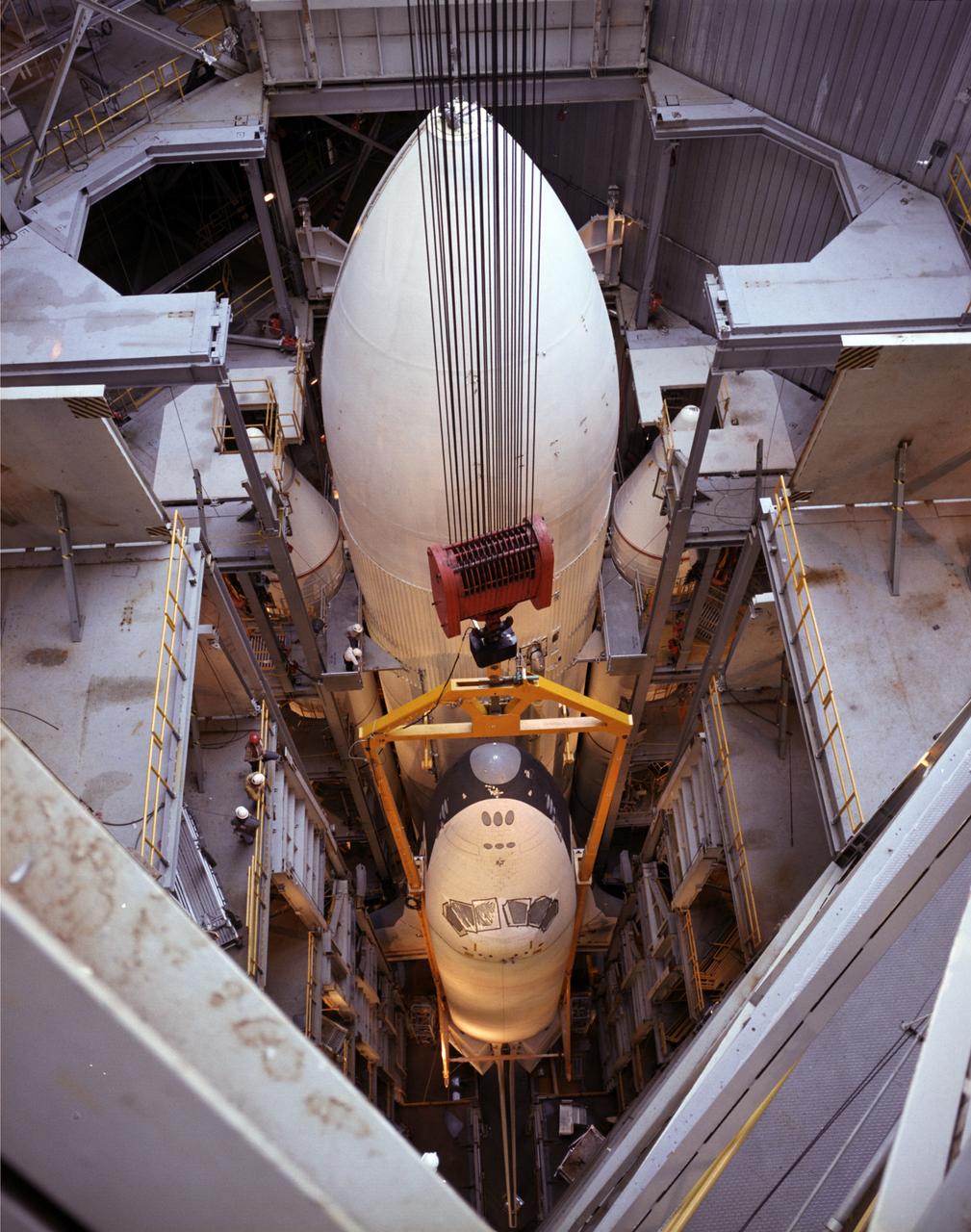
This photograph was taken at the Orbiter Enterprise installation, in its liftoff configuration, into the Marshall Space Flight Center Dynamic Test Stand for a Mated Vertical Ground Vibration Test (MVGVT).
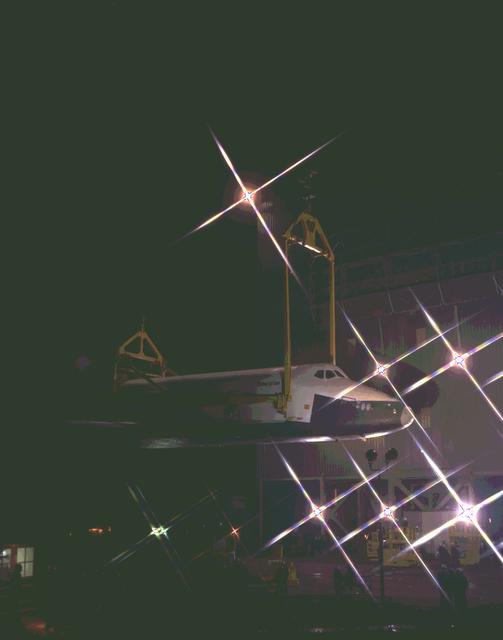
Shown here is the Shuttle Orbiter Enterprise being erected, just prior to installation into the Marshall Space Flight Center (MSFC) Dynamic Test Stand, for a Mated Vertical Ground Vibration Test (MVGVT).
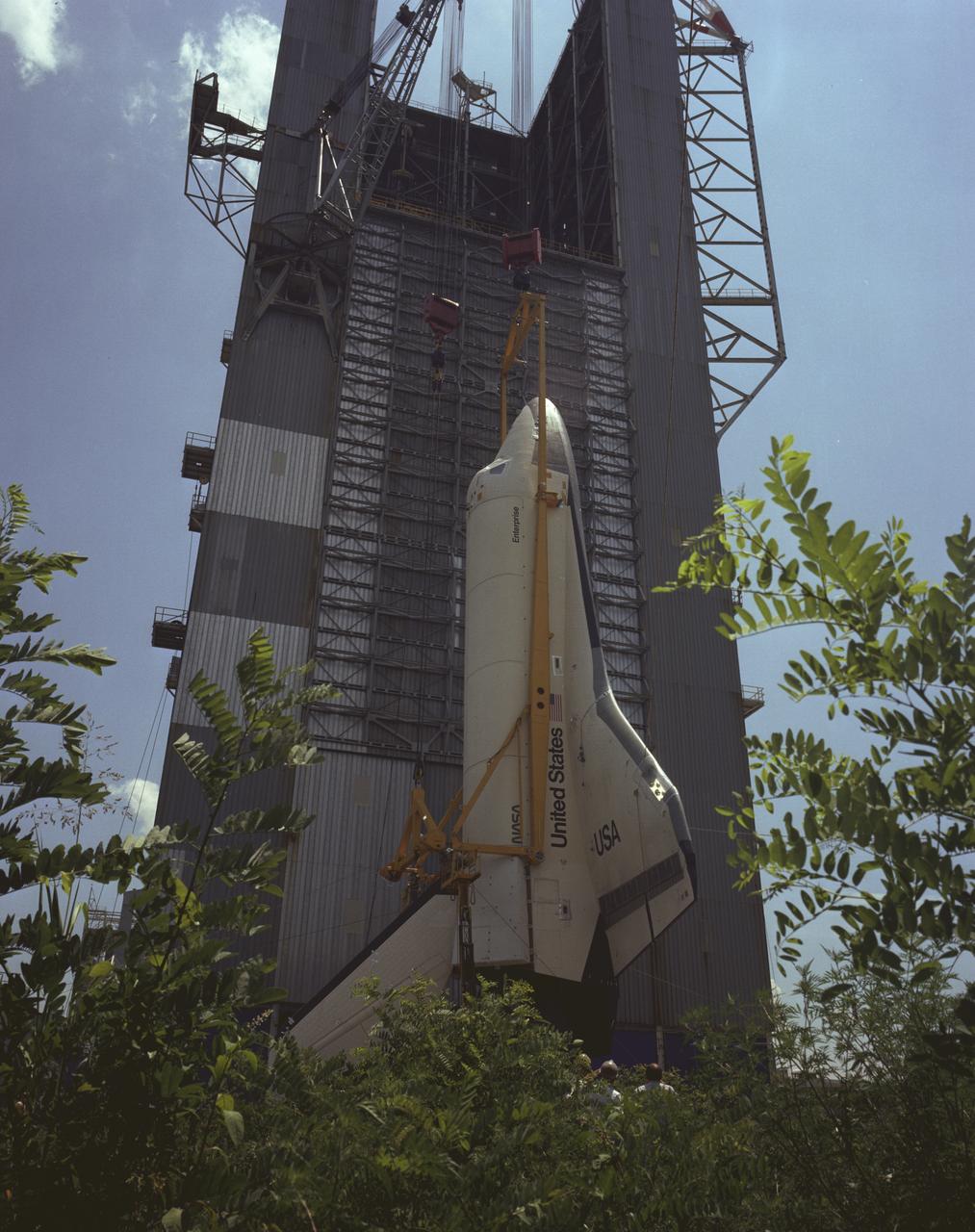
This photo depicts the removal of the Orbiter Enterprise from The Marshall Space Flight Center's Dynamic Test Stand after its first Mated Vertical Ground Vibration Test (MVGVT).
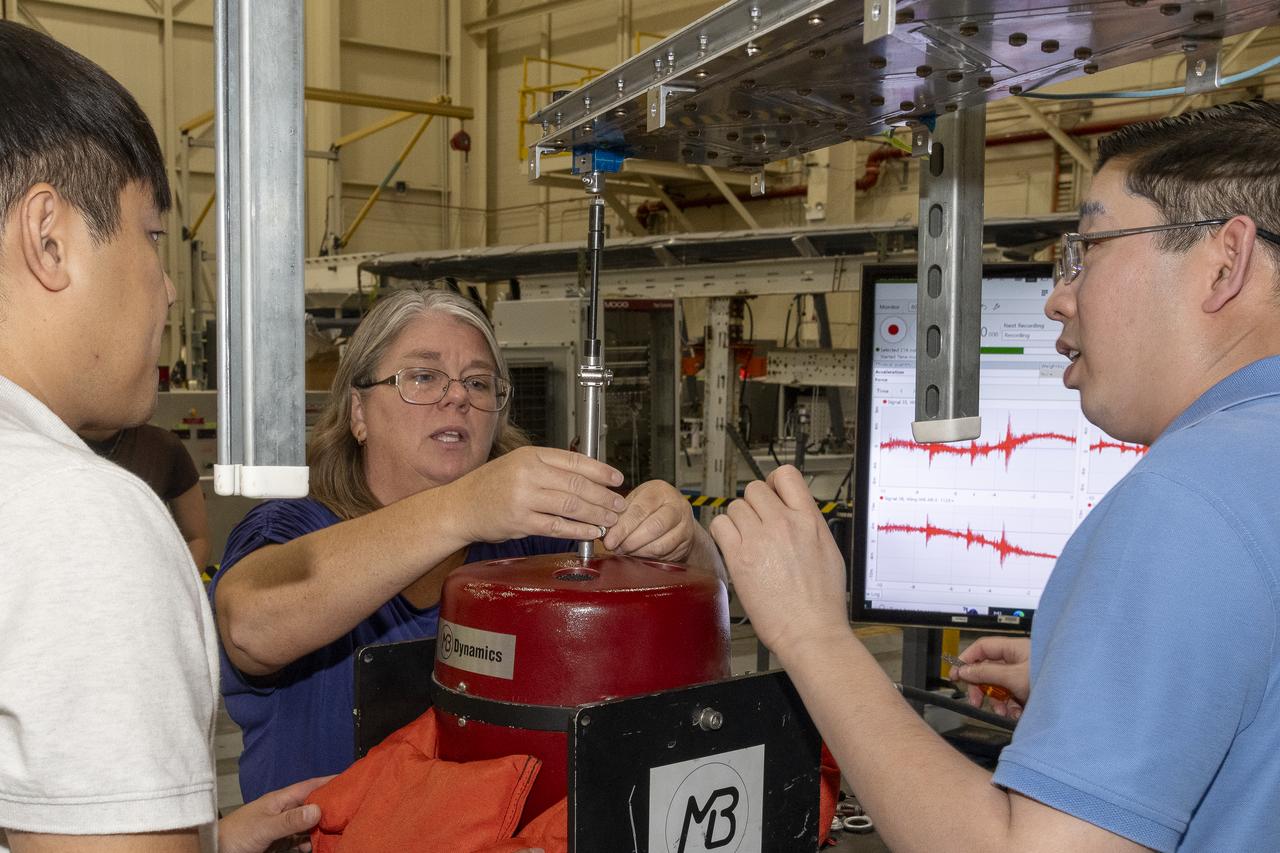
Researchers test a 10-foot Mock Truss-Braced Wing at NASA’s Armstrong Flight Research Center in Edwards, California. From left, ground vibration test director Ben Park, Natalie Spivey, and Samson Truong, prepare for a vibration test. The aircraft concept involves a wing braced on an aircraft using diagonal struts that also add lift and could result in significantly improved aerodynamics.
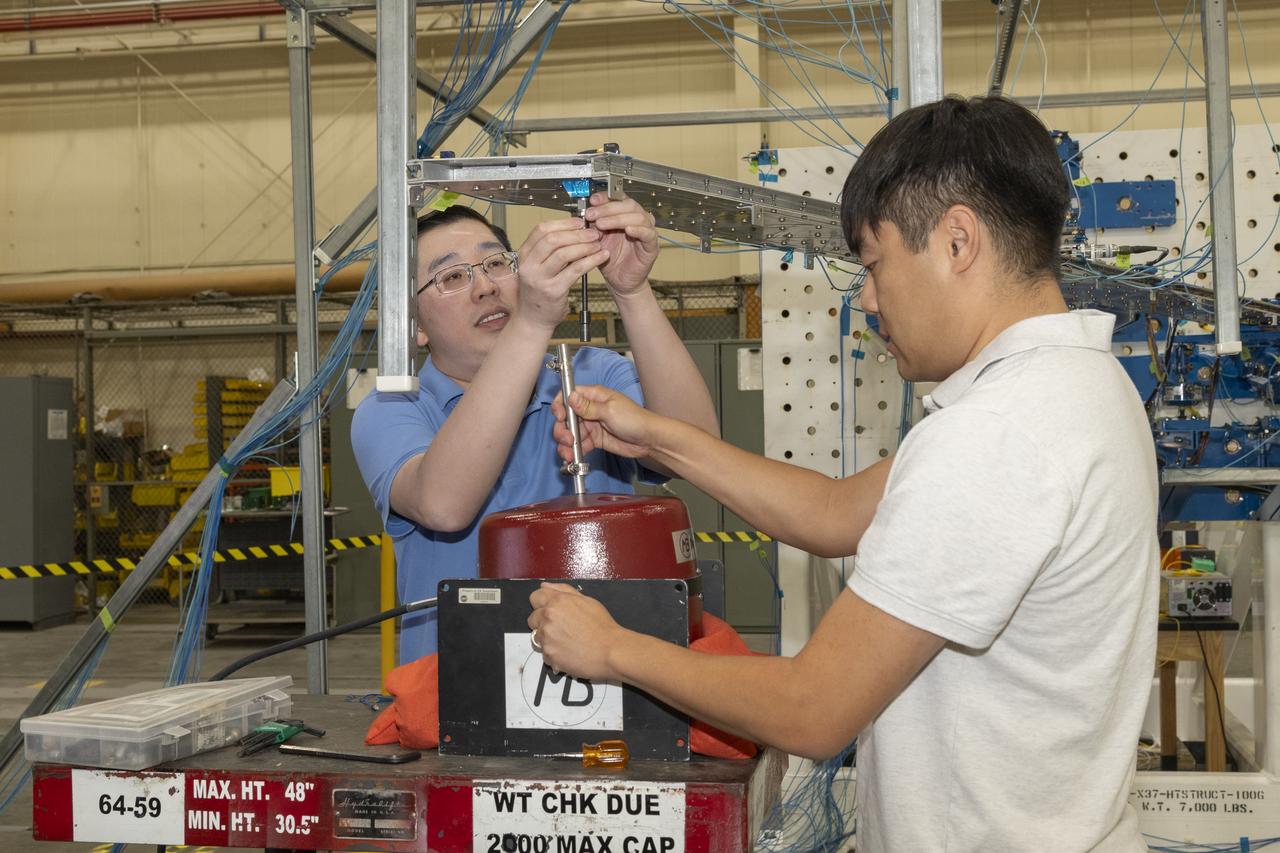
Researchers test a 10-foot Mock Truss-Braced Wing at NASA’s Armstrong Flight Research Center in Edwards, California. Samson Truong, from left, and Ben Park, NASA mock wing ground vibration test director, prepare for a vibration test. The aircraft concept involves a wing braced on an aircraft using diagonal struts that also add lift and could result in significantly improved aerodynamics.
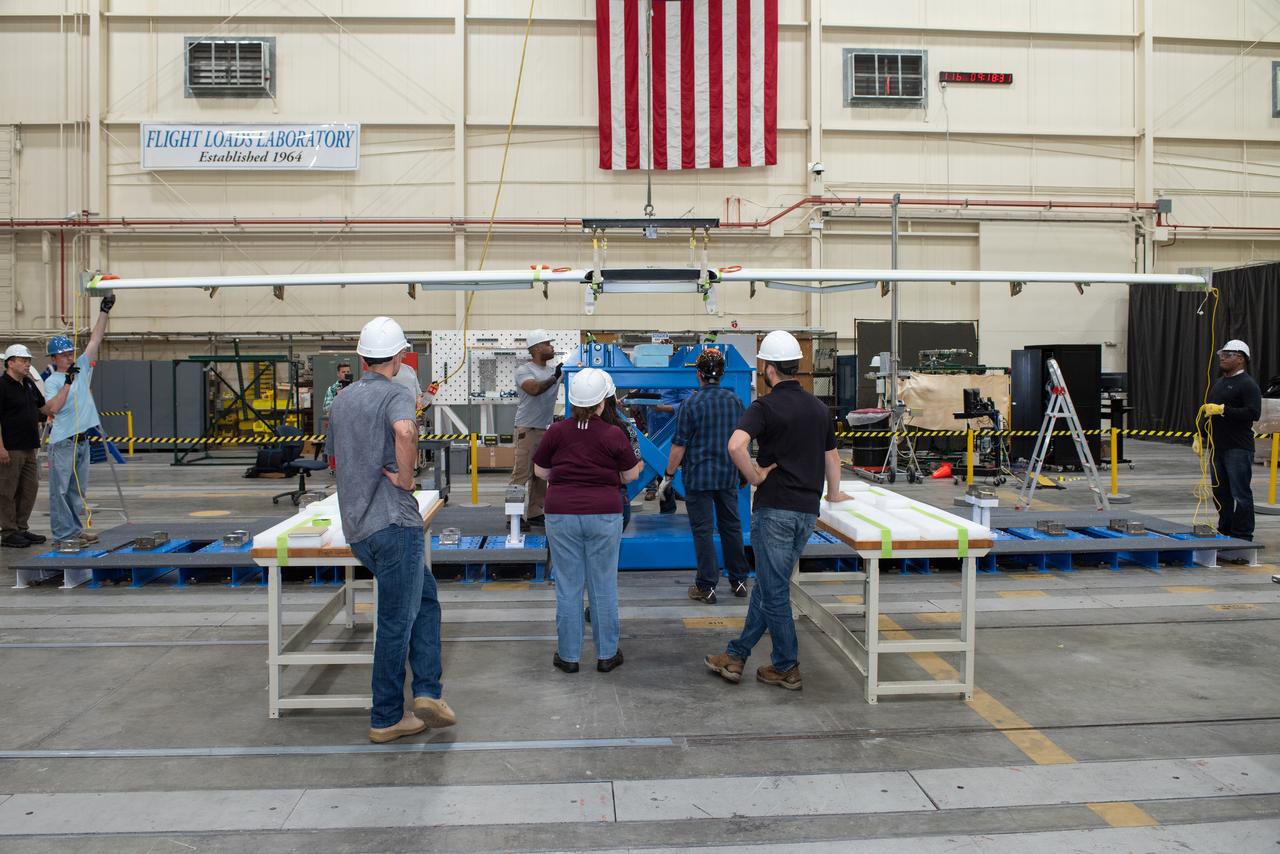
Engineers and specialists prepare X-57s Mod III wing for testing in the Flight Loads Laboratory at NASA’s Armstrong Flight Research Center in Edwards, California. Here, the wing began preparation for several tests, including weight and balance measurement, ground vibration testing, and wing loading tests.
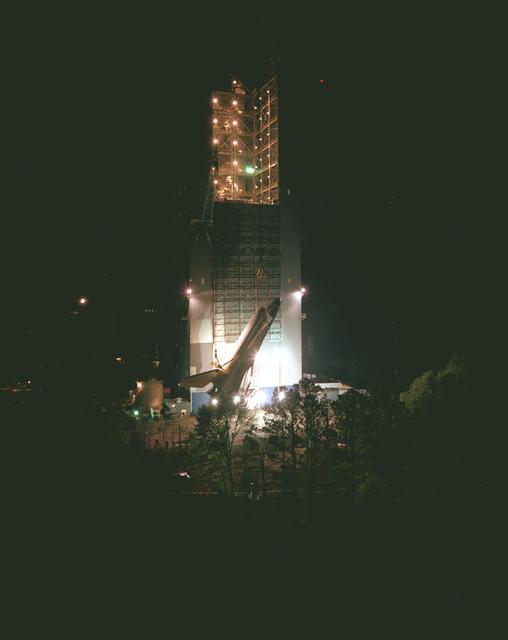
In preparation for the Mated Vertical Ground Vibration Test (MVGVT), the Shuttle Orbiter Enterprise is being erected just prior to installation into the Marshall Space Flight Center's Dynamic Test Stand for testing. This particular view is from Test Stand 500.
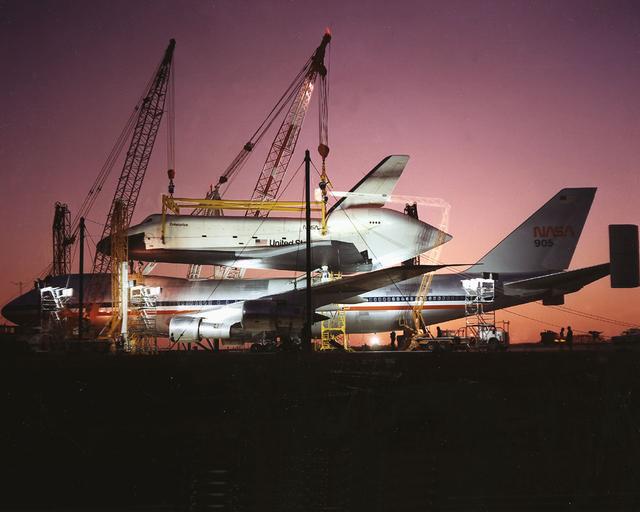
The Shuttle Orbiter Enterprise is off-loaded at Redstone Arsenal Airfield for later Mated Vertical Ground Vibration tests (MVGVT) at Marshall Space Flight Center's Dynamic Test Stand. The tests marked the first time ever that the entire shuttle complement (including orbiter, external tank, and solid rocket boosters) were mated vertically.
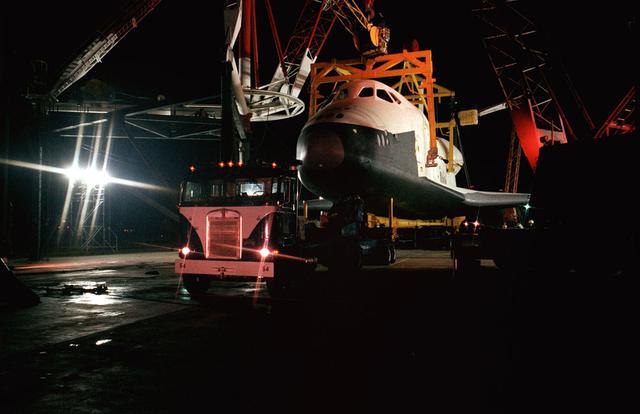
The Shuttle Orbiter Enterprise is off-loaded at Redstone Arsenal Airfield for later Mated Vertical Ground Vibration tests (MVGVT) at Marshall Space Flight Center's Dynamic Test Stand. The tests marked the first time ever that the entire shuttle complement including orbiter, external tank, and solid rocket boosters were vertically mated.
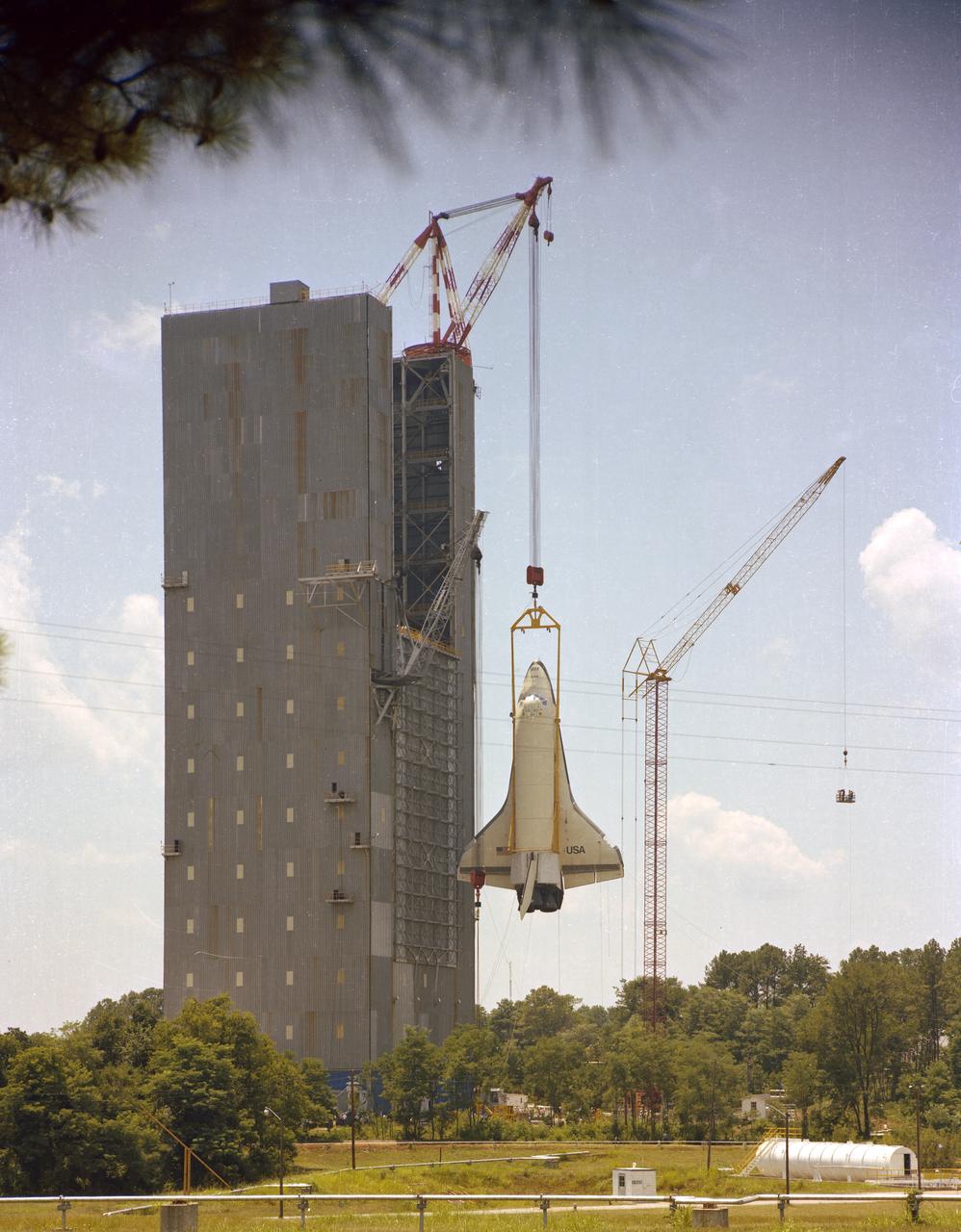
The Shuttle Orbiter Enterprise is removed from Marshall Space Flight Center's Dynamic Test Stand following its first Mated Vertical Ground Vibration test (MVGVT). The tests marked the first time ever that the entire shuttle complement (including Orbiter, external tank, and solid rocket boosters) were mated vertically.
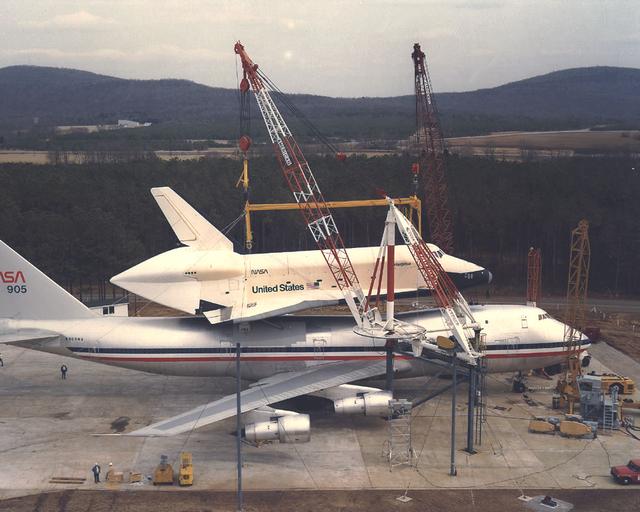
The Shuttle Orbiter Enterprise is off-loaded at Redstone Arsenal Airfield for later Mated Vertical Ground Vibration tests (MVGVT) at Marshall Space Flight Center's Dynamic Test Stand. The tests marked the first time ever that the entire shuttle complement (including orbiter, external tank, and solid rocket boosters) were mated vertically.
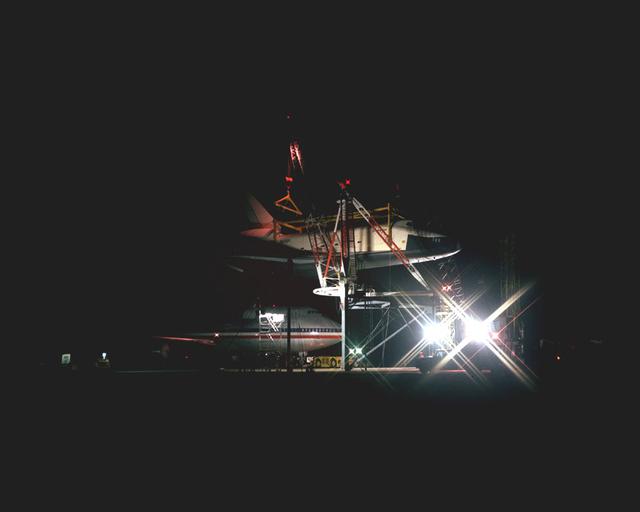
The Shuttle Orbiter Enterprise is off-loaded Redstone Arsenal Airfield for later Mated Vertical Ground Vibration tests (MVGVT) at Marshall Space Flight Center's Dynamic Test Stand. The tests marked the first time ever that the entire shuttle complement (including orbiter, external tank, and solid rocket boosters) were mated vertically.
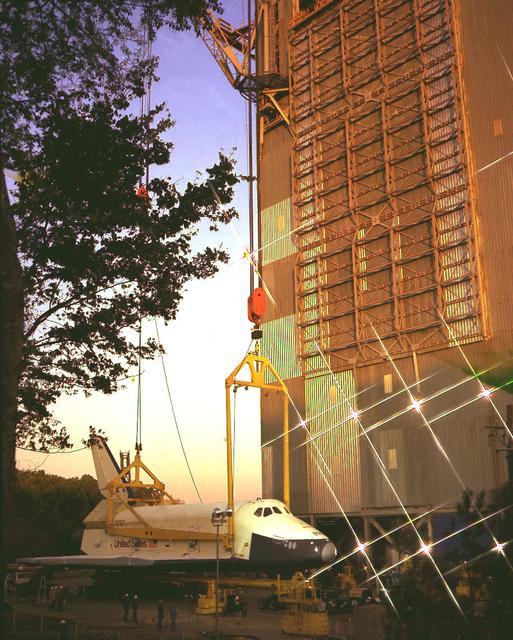
This is a double exposure of the Shuttle Orbiter Enterprise on the strong back of the Dynamic Test Stand at Marshall Space Flight Center's building 4550 as it undergoes a Mated Vertical Ground Vibration Test (MVGVT). One exposure depicts a sunset view, while the other depicts a post-sunset view.
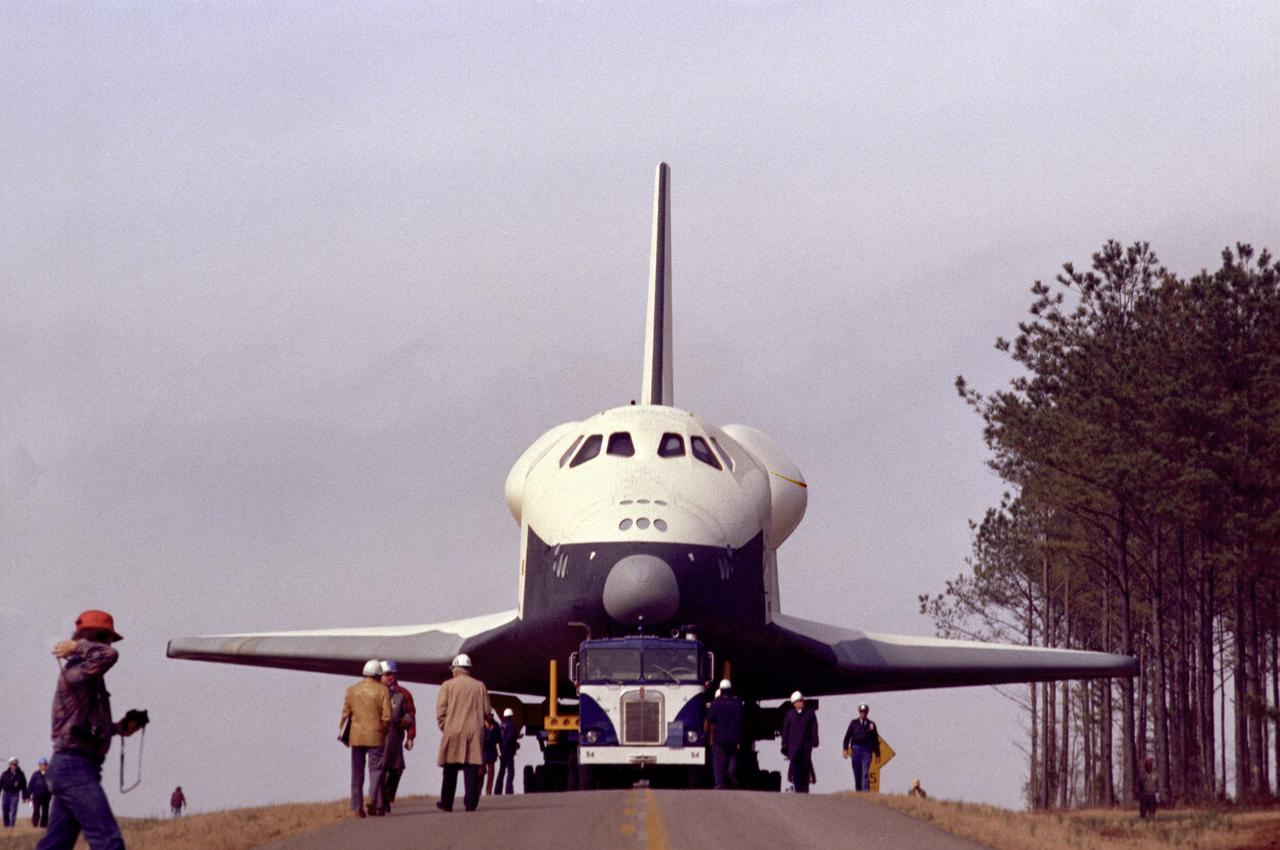
The Shuttle Orbiter Enterprise is transported via road across Marshall Space Flight Center (MSFC) for later Mated Vertical Ground Vibration tests (MVGVT) at MSFC's Dynamic Test Stand. The tests marked the first time ever that the entire shuttle complement including Orbiter, external tank, and solid rocket boosters were vertically mated.
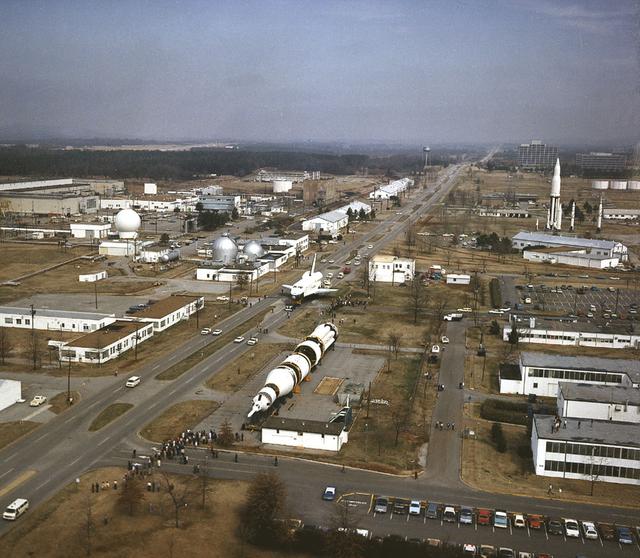
In this view looking northwest over the Marshall Space Flight Center (MSFC), the Shuttle Orbiter Enterprise is seen heading South on Rideout Road near the Redstone Arsenal Fire Station as it is being transported to MSFC's building 4755 for later Mated Vertical Ground Vibration tests (MVGVT) at MSFC's Dynamic Test Stand. The tests marked the first time ever that the entire shuttle complement (including Orbiter, external tank, and solid rocket boosters) were mated vertically.

The Shuttle Orbiter Enterprise atop a 747 landing at Redstone Arsenal Airfield for later Mated Vertical Ground Vibration tests (MVGVT) at Marshall Space Flight Center's Dynamic Test Stand. The tests marked the first time ever that the entire shuttle complement (including orbiter, external tank, and solid rocket boosters) were mated vertically.
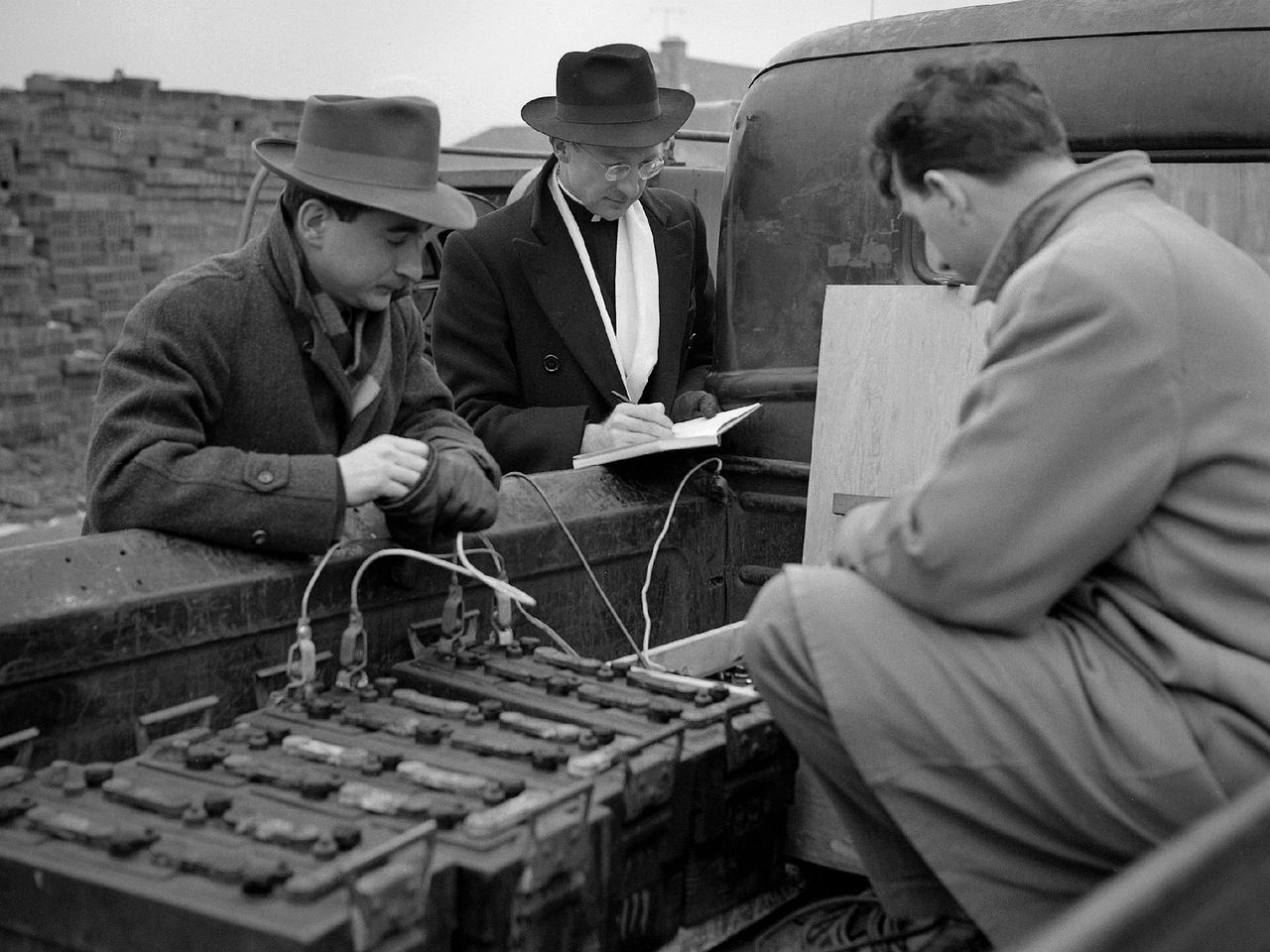
Reverend Henry Birkenhauer and E.F. Carome measure ground vibrations on West 220th Street caused by the operation of the 8- by 6-Foot Supersonic Wind Tunnel at the National Advisory Committee for Aeronautics (NACA) Lewis Flight Propulsion Laboratory. The 8- by 6 was the laboratory’s first large supersonic wind tunnel. It was also the NACA’s most powerful supersonic tunnel, and the NACA’s first facility capable of running an engine at supersonic speeds. The 8- by 6 was originally an open-throat and non-return tunnel. This meant that the supersonic air flow was blown through the test section and out the other end into the atmosphere. Complaints from the local community led to the installation of a muffler at the tunnel exit and the eventual addition of a return leg. Reverend Brikenhauer, a seismologist, and Carome, an electrical technician were brought in from John Carroll University to take vibration measurements during the 8- by 6 tunnel’s first run with a supersonic engine. They found that the majority of the vibrations came from the air and not the ground. The tunnel’s original muffler offered some relief during the facility checkout runs, but it proved inadequate during the operation of an engine in the test section. Tunnel operation was suspended until a new muffler was designed and installed. The NACA researchers, however, were pleased with the tunnel’s operation. They claimed it was the first time a jet engine was operated in an airflow faster than Mach 2.
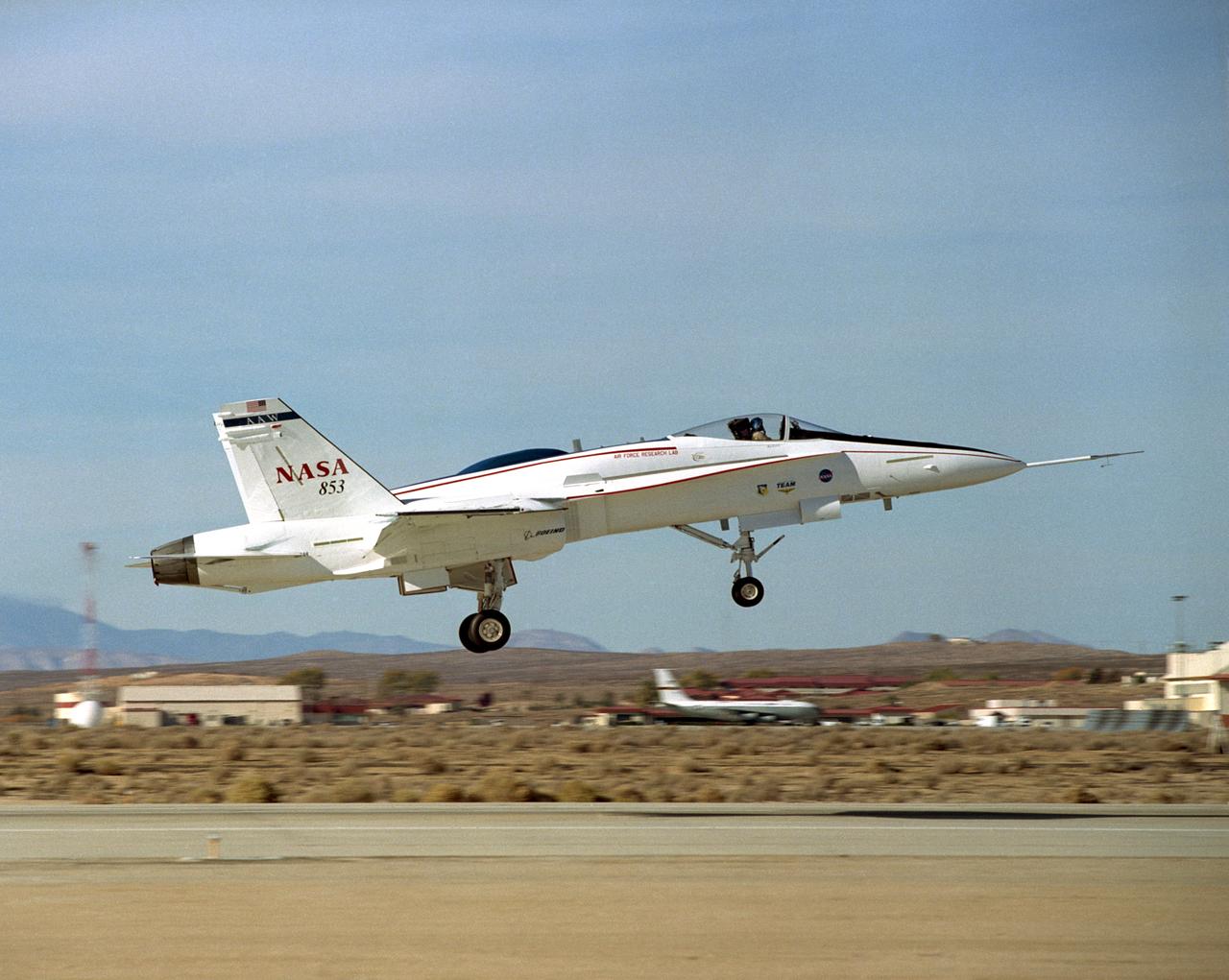
The Active Aeroelastic Wing F-18A lifts off on its first checkout flight November 15, 2002, from NASA's Dryden Flight Research Center at Edwards Air Force Base, Calif. The checkout flight initiated a two-phase NASA--Air Force flight research program that will investigate the potential of aerodynamically twisting flexible wings to improve maneuverability of high-performance aircraft at transonic and supersonic speeds.
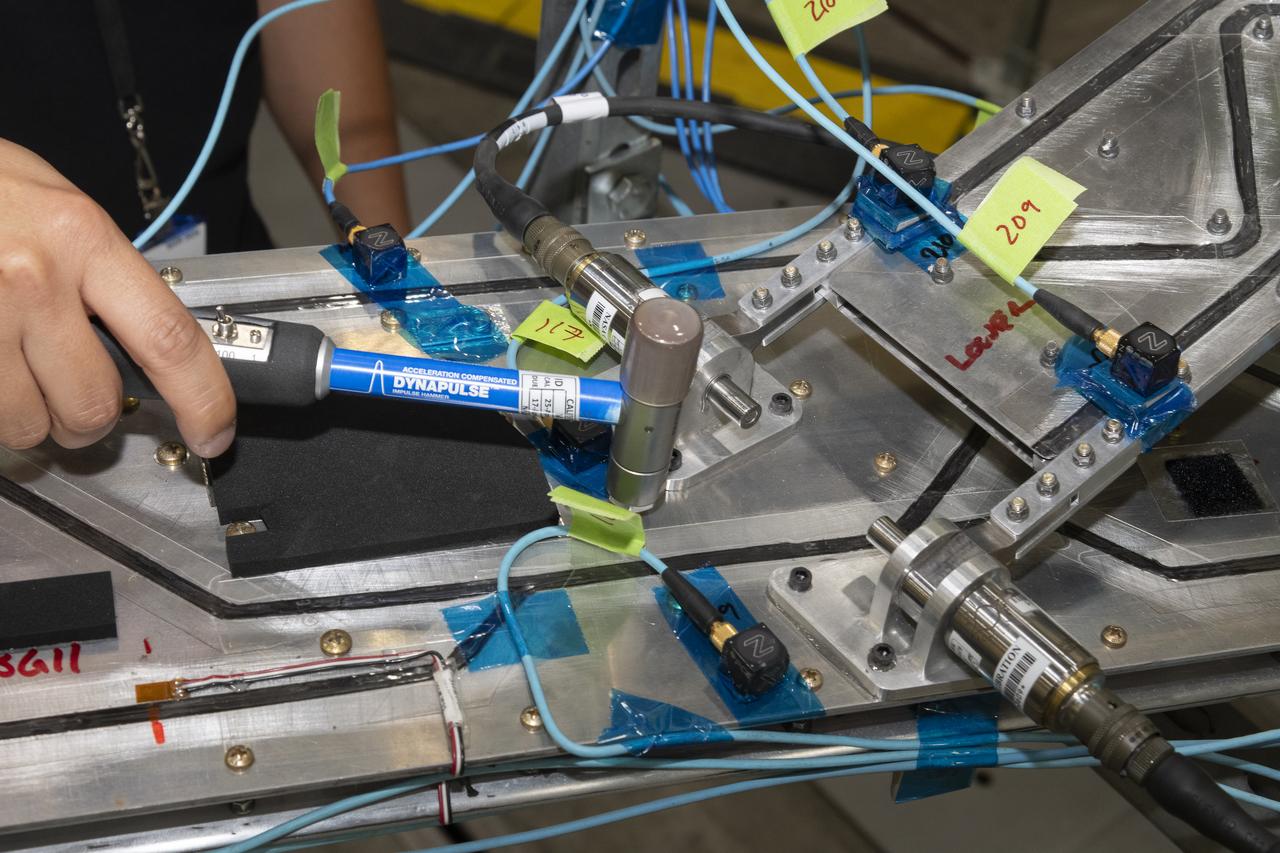
Researchers test a 10-foot Mock Truss-Braced Wing at NASA’s Armstrong Flight Research Center in Edwards, California. Ben Park, NASA mock wing ground vibration test director, taps the wing structure with an instrumented hammer in key locations and sensors monitor the results. The aircraft concept involves a wing braced on an aircraft using diagonal struts that also add lift and could result in significantly improved aerodynamics.
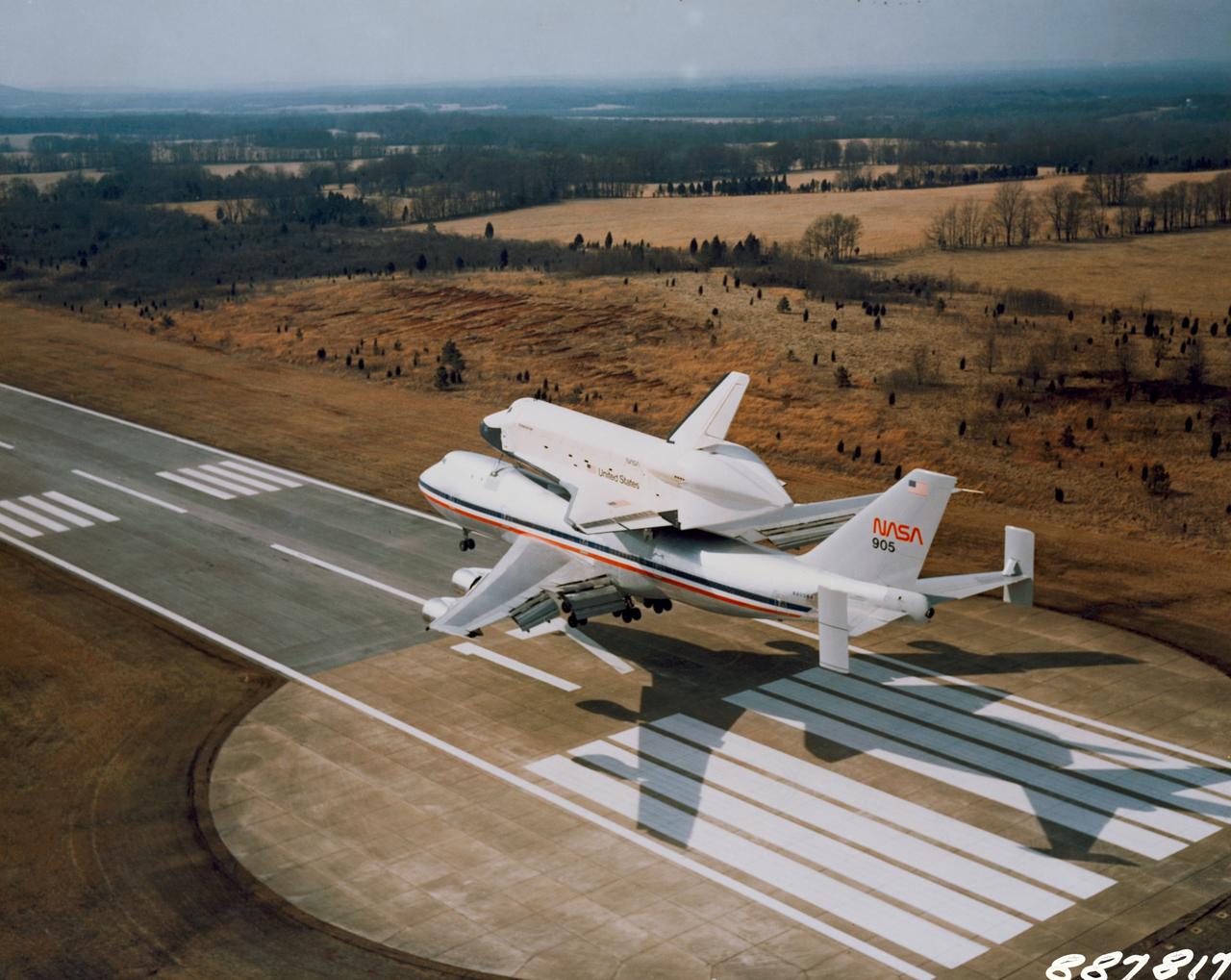
S78-27238 (13 March 1978) --- The space shuttle orbiter 101 Enterprise approaches riding atop its 747 carrier aircraft, arrives at the Redstone Arsenal airstrip near Marshall Space Flight Center (MSFC), Huntsville, Alabama, on March 13, 1978. It is to undergo ground vibration tests along with the external tank and solid rocket boosters, in preparation for Orbiter Flight Tests (OFT) in which its successor craft (Orbiter 102) will take several two-man crews into Earth orbit. Photo credit: NASA
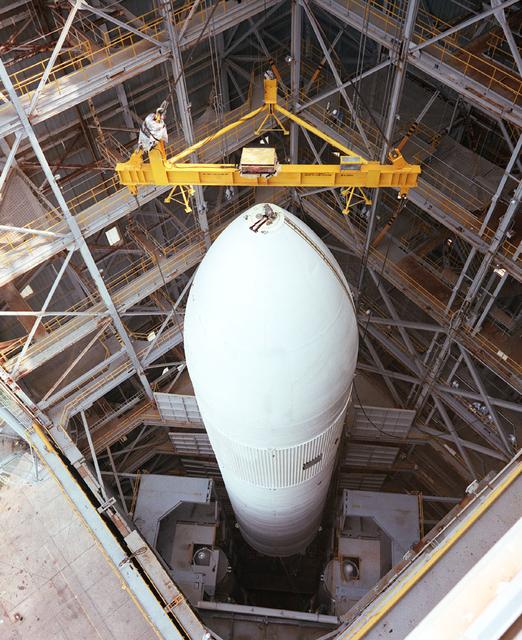
This photo depicts the installation of an External Tank (ET) into the Marshall Space Flight Center Dynamic Test Stand, building 4550. It is being mated to the Solid Rocket Boosters (SRB's) for a Mated Vertical Ground Vibration Test (MVGVT). At 154-feet long and more than 27-feet in diameter, the ET is the largest component of the Space Shuttle, the structural backbone of the entire Shuttle system, and is the only part of the vehicle that is not reusable.
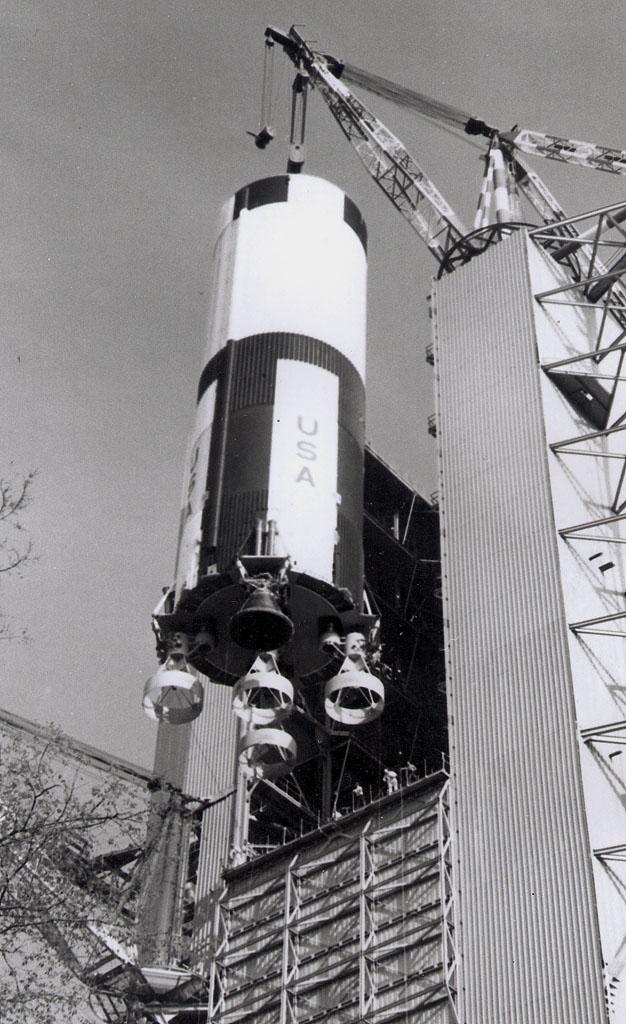
This photo shows the Saturn V first stage being lowered to the ground following a successful test to determine the effects of continual vibrations simulating the effects of an actual launch. The towering 363-foot Saturn V was a multi-stage, multi-engine launch vehicle standing taller than the Statue of Liberty. Altogether, the Saturn V engines produced as much power as 85 Hoover Dams.
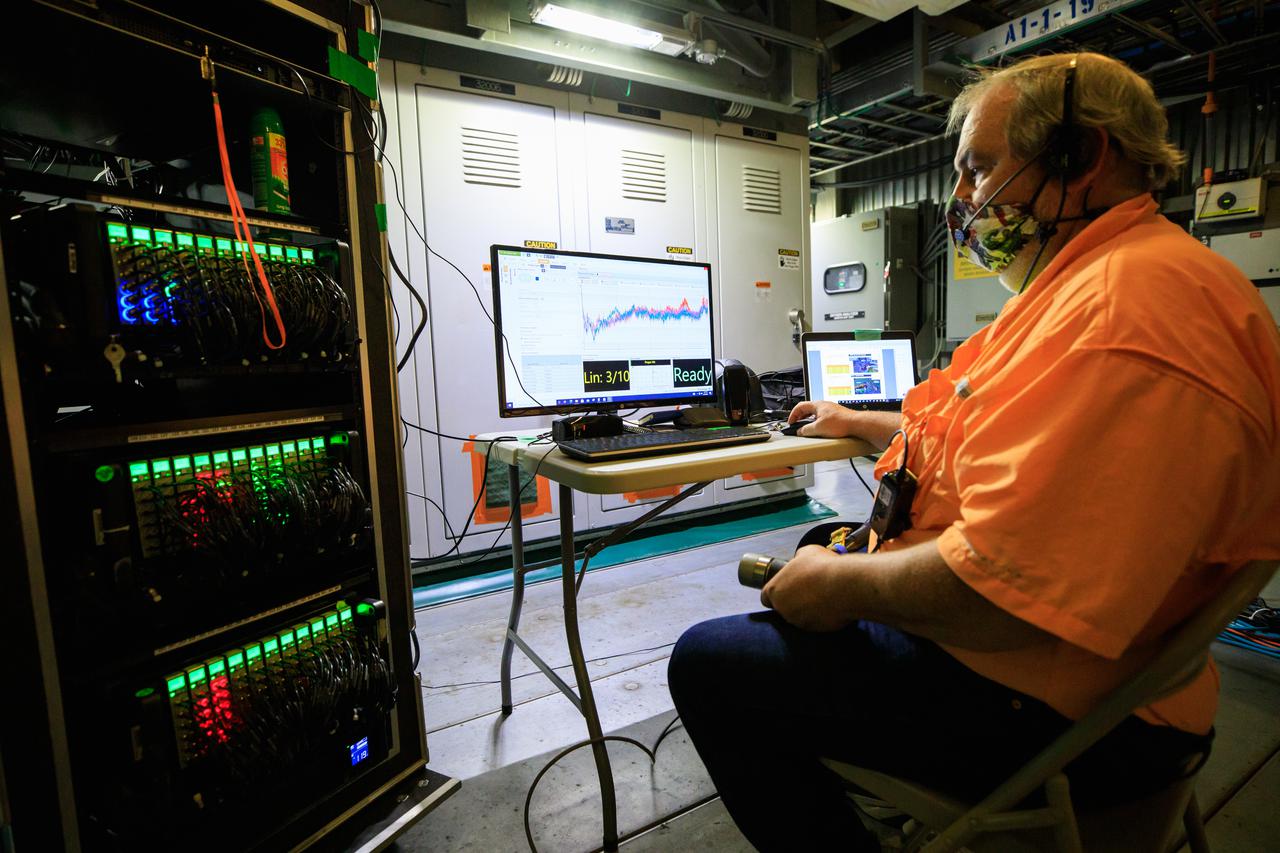
An engineer with contractor Jacobs prepares for a modal tap test on the Space Launch System (SLS) rocket for Artemis I in a room under the zero deck of the mobile launcher inside the Vehicle Assembly Building at NASA’s Kennedy Space Center in Florida on Aug. 16, 2021. The Exploration Ground systems and Jacobs team, along with the SLS team from NASA’s Marshall Space Flight Center in Huntsville, Alabama, are performing the tests with support from personnel at other NASA centers. Engineers are using the mass simulator for Orion and the Orion stage adapter structural test article for the modal test. The tests will determine the different modes of vibration with the recently stacked and integrated SLS rocket before launch of the Artemis I mission. Artemis I will be an uncrewed test of the Orion spacecraft and SLS rocket as an integrated system ahead of crewed flights to the Moon. Under Artemis, NASA aims to land the first woman and first person of color on the Moon and establish sustainable lunar exploration.
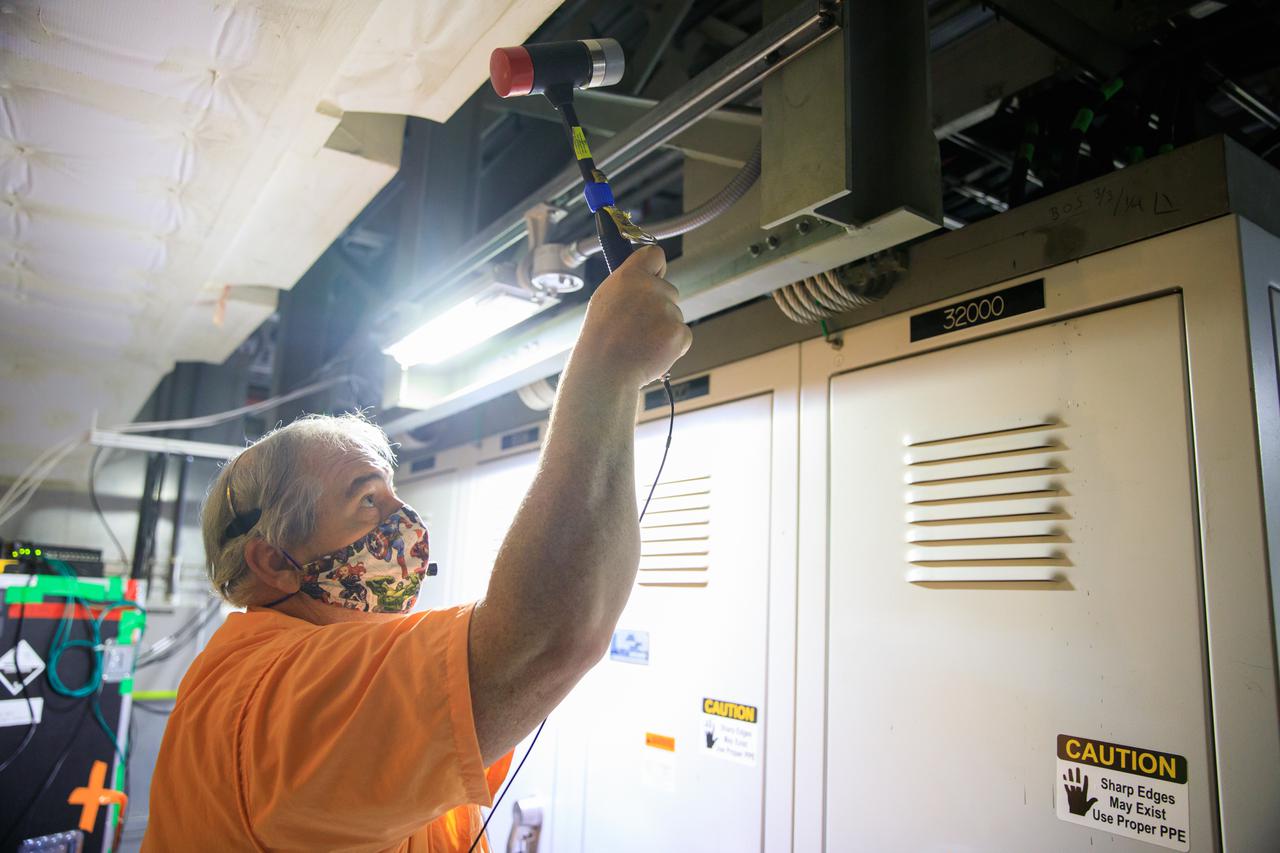
An engineer with contractor Jacobs prepares for a modal tap test on the Space Launch System (SLS) rocket for Artemis I in a room under the zero deck of the mobile launcher inside the Vehicle Assembly Building at NASA’s Kennedy Space Center in Florida on Aug. 16, 2021. The Exploration Ground systems and Jacobs team, along with the SLS team from NASA’s Marshall Space Flight Center in Huntsville, Alabama, are performing the tests with support from personnel at other NASA centers. Engineers are using the mass simulator for Orion and the Orion stage adapter structural test article for the modal test. The tests will determine the different modes of vibration with the recently stacked and integrated SLS rocket before launch of the Artemis I mission. Artemis I will be an uncrewed test of the Orion spacecraft and SLS rocket as an integrated system ahead of crewed flights to the Moon. Under Artemis, NASA aims to land the first woman and first person of color on the Moon and establish sustainable lunar exploration.
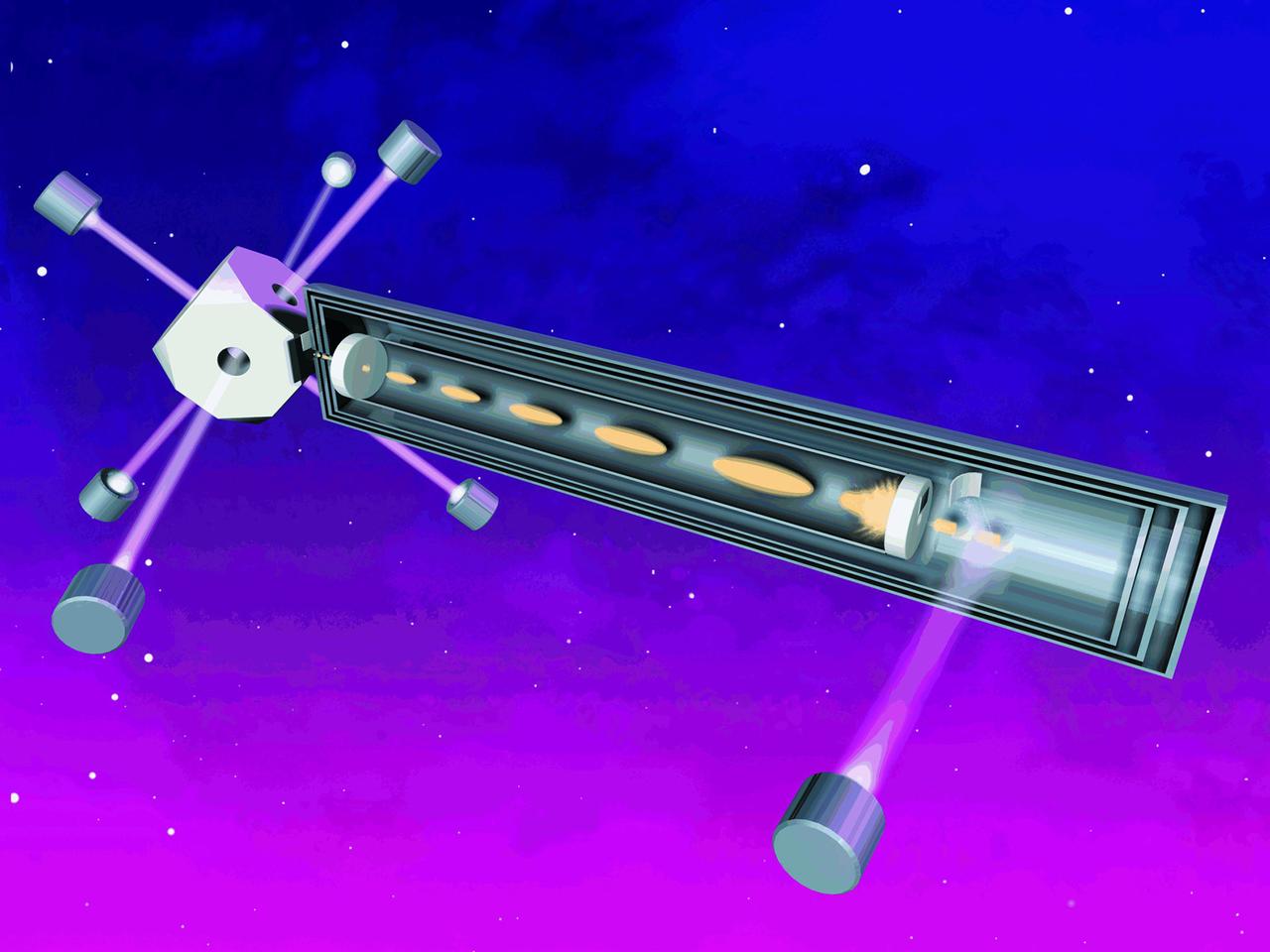
An artist's concept of the Primary Atomic Clock Reference System (PARCS) plarned to fly on the International Space Station (ISS). PARCS will make even more accurate atomic time available to everyone, from physicists testing Einstein's Theory of Relativity, to hikers using the Global Positioning System to find their way. In ground-based atomic clocks, lasers are used to cool and nearly stop atoms of cesium whose vibrations are used as the time base. The microgravity of space will allow the atoms to be suspended in the clock rather than circulated in an atomic fountain, as required on Earth. PARCS is being developed by the Jet Propulsion Laboratory with principal investigators at the National Institutes of Standards and Technology and the University of Colorado, Boulder. See also No. 0103191
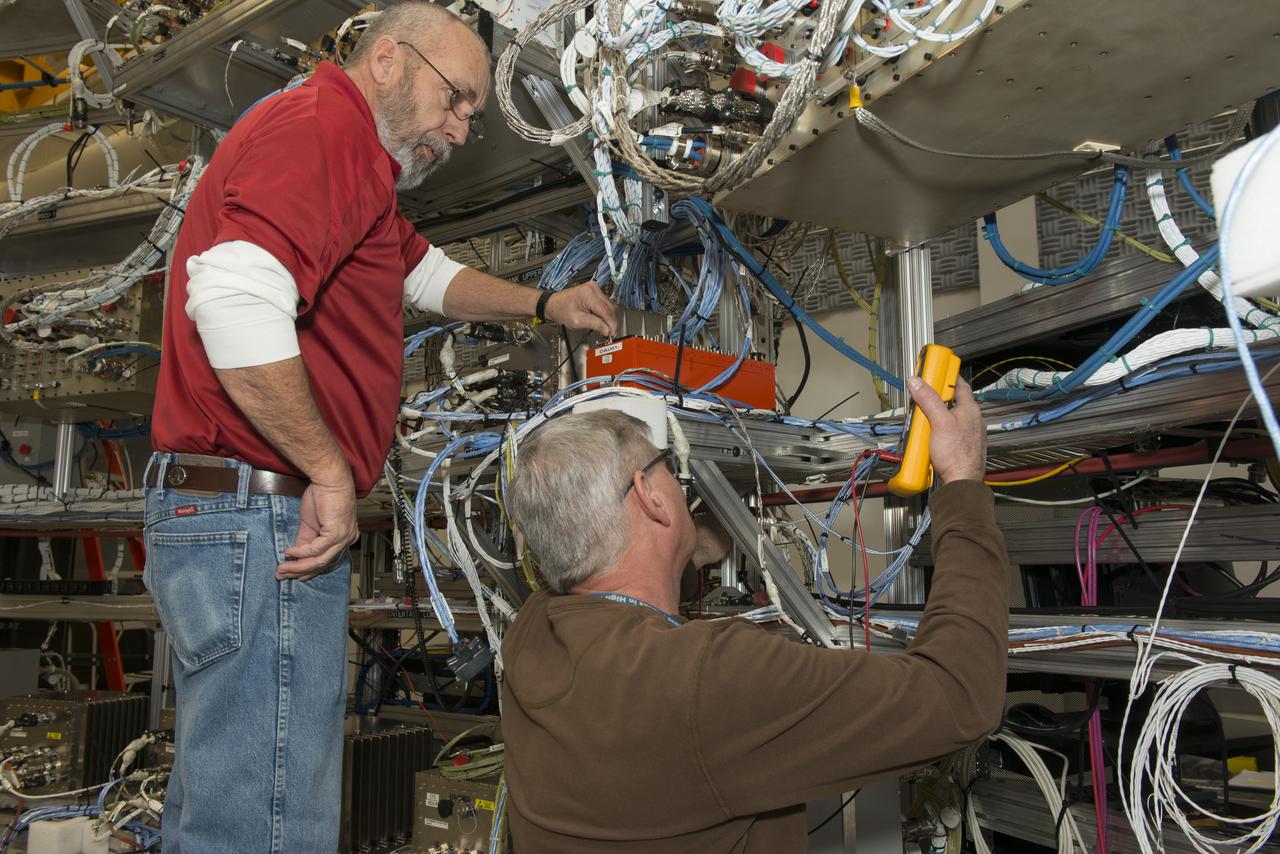
From left, Wayne Arrington, a Boeing Company technician, and Steve Presti, a mechanical technician at NASA's Marshall Space Flight Center in Huntsville, Ala., install Developmental Flight Instrumentation Data Acquisition Units in Marshall's Systems Integration and Test Facility. The units are part of NASA's Space Launch System (SLS) core stage avionics, which will guide the biggest, most powerful rocket in history to deep space missions. When completed, the core stage will be more than 200 feet tall and store cryogenic liquid hydrogen and liquid oxygen that will feed the vehicle's RS-25 engines. The hardware, software and operating systems for the SLS are arranged in flight configuration in the facility for testing. The new Data Acquisition Units will monitor vehicle behavior in flight -- like acceleration, thermal environments, shock and vibration. That data will then be used to validate previous ground tests and analyses models that were used in the development of the SLS vehicle.
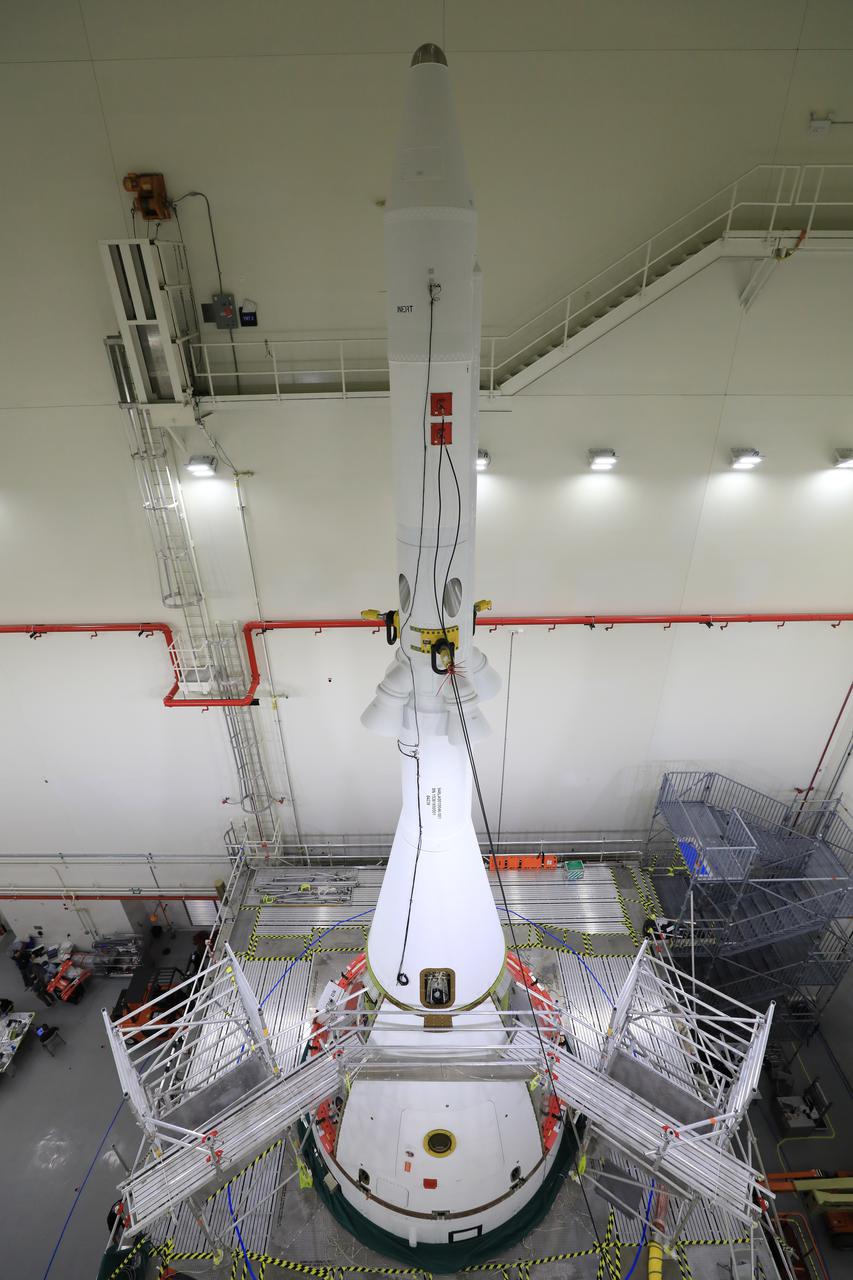
Technicians and engineers with Exploration Ground Systems and Jacobs connect the ogive fairings for Orion’s Artemis I mission to the launch abort system (LAS) inside the Launch Abort System Facility high bay at NASA’s Kennedy Space Center in Florida on Aug. 20, 2021. The ogives are four protective panels that will shield the crew module from the severe vibrations and sounds it will experience during launch. During Artemis missions, the 44-foot-tall LAS will detach from the spacecraft when it is no longer needed. Launching in 2021, Artemis I will be an uncrewed test of the Orion spacecraft and Space Launch System rocket as an integrated system ahead of crewed flights to the Moon. Under Artemis, NASA aims to land the first woman and first person of color on the Moon and establish sustainable lunar exploration.
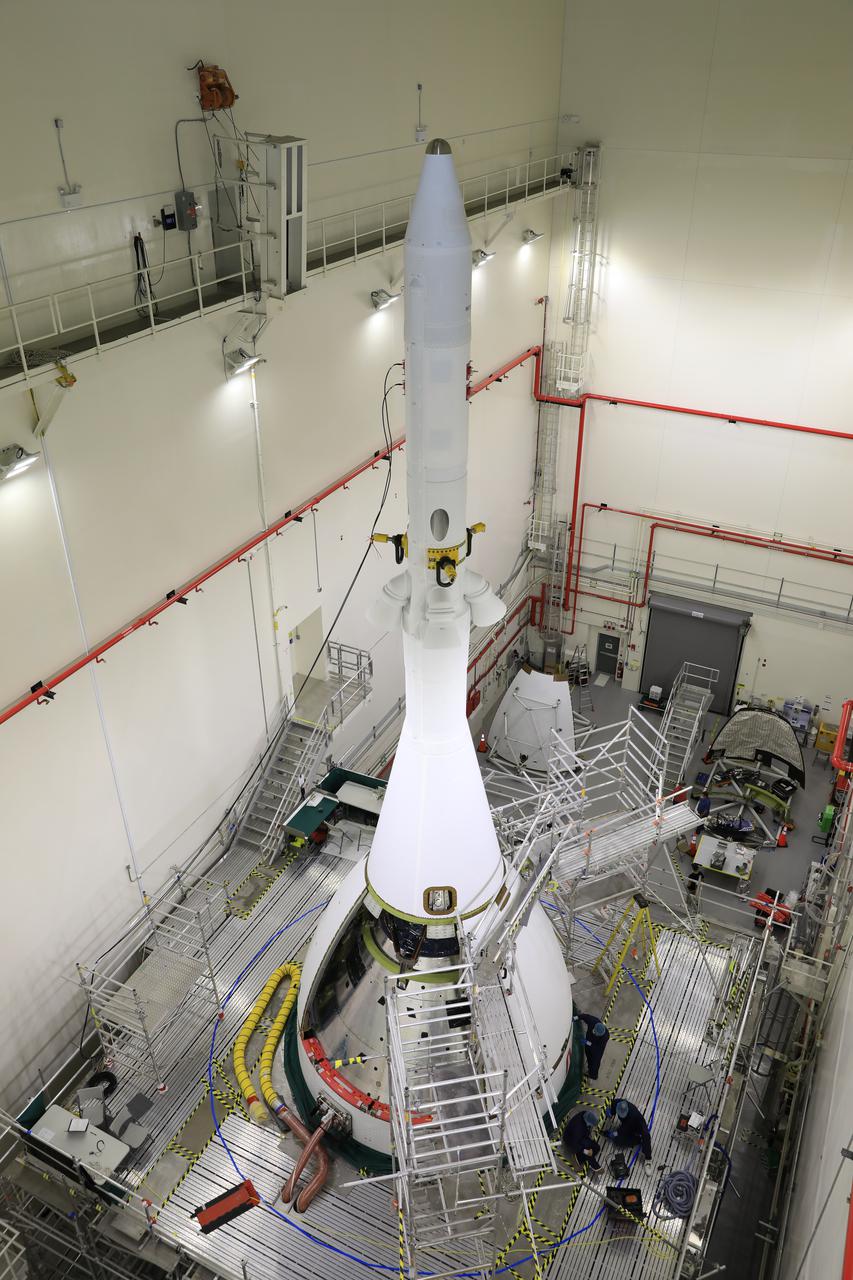
Technicians and engineers with Exploration Ground Systems and Jacobs connect the second ogive fairing for Orion’s Artemis I mission to the launch abort system (LAS) inside the Launch Abort System Facility high bay at NASA’s Kennedy Space Center in Florida on Aug. 23, 2021. The ogives consist of four protective panels that will shield the crew module from the severe vibrations and sounds it will experience during launch. During Artemis missions, the 44-foot-tall LAS will detach from the spacecraft when it is no longer needed. Launching in 2021, Artemis I will be an uncrewed test of the Orion spacecraft and Space Launch System rocket as an integrated system ahead of crewed flights to the Moon. Under Artemis, NASA aims to land the first woman and first person of color on the Moon and establish sustainable lunar exploration.
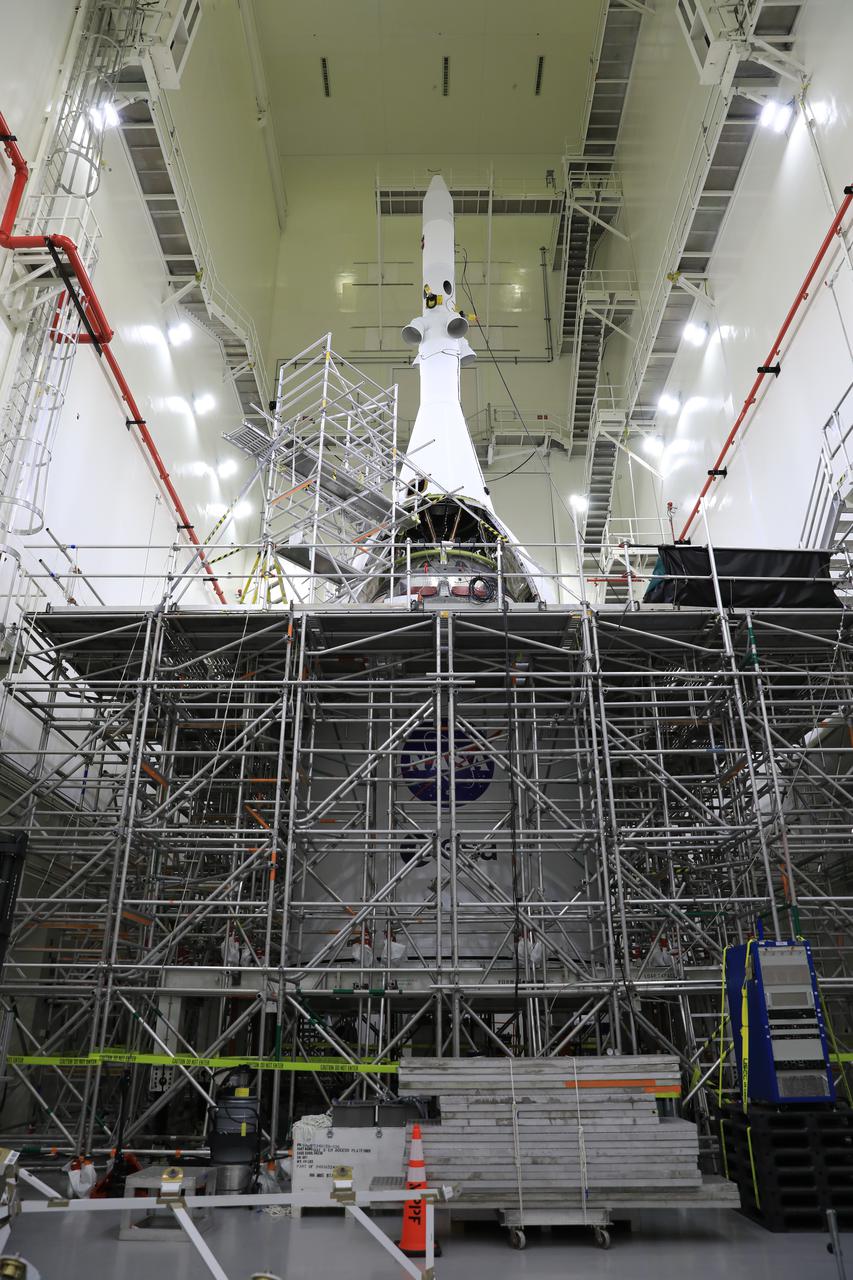
Technicians and engineers with Exploration Ground Systems and Jacobs connect the second ogive fairing for Orion’s Artemis I mission to the launch abort system (LAS) inside the Launch Abort System Facility high bay at NASA’s Kennedy Space Center in Florida on Aug. 23, 2021. The ogives consist of four protective panels that will shield the crew module from the severe vibrations and sounds it will experience during launch. During Artemis missions, the 44-foot-tall LAS will detach from the spacecraft when it is no longer needed. Launching in 2021, Artemis I will be an uncrewed test of the Orion spacecraft and Space Launch System rocket as an integrated system ahead of crewed flights to the Moon. Under Artemis, NASA aims to land the first woman and first person of color on the Moon and establish sustainable lunar exploration.
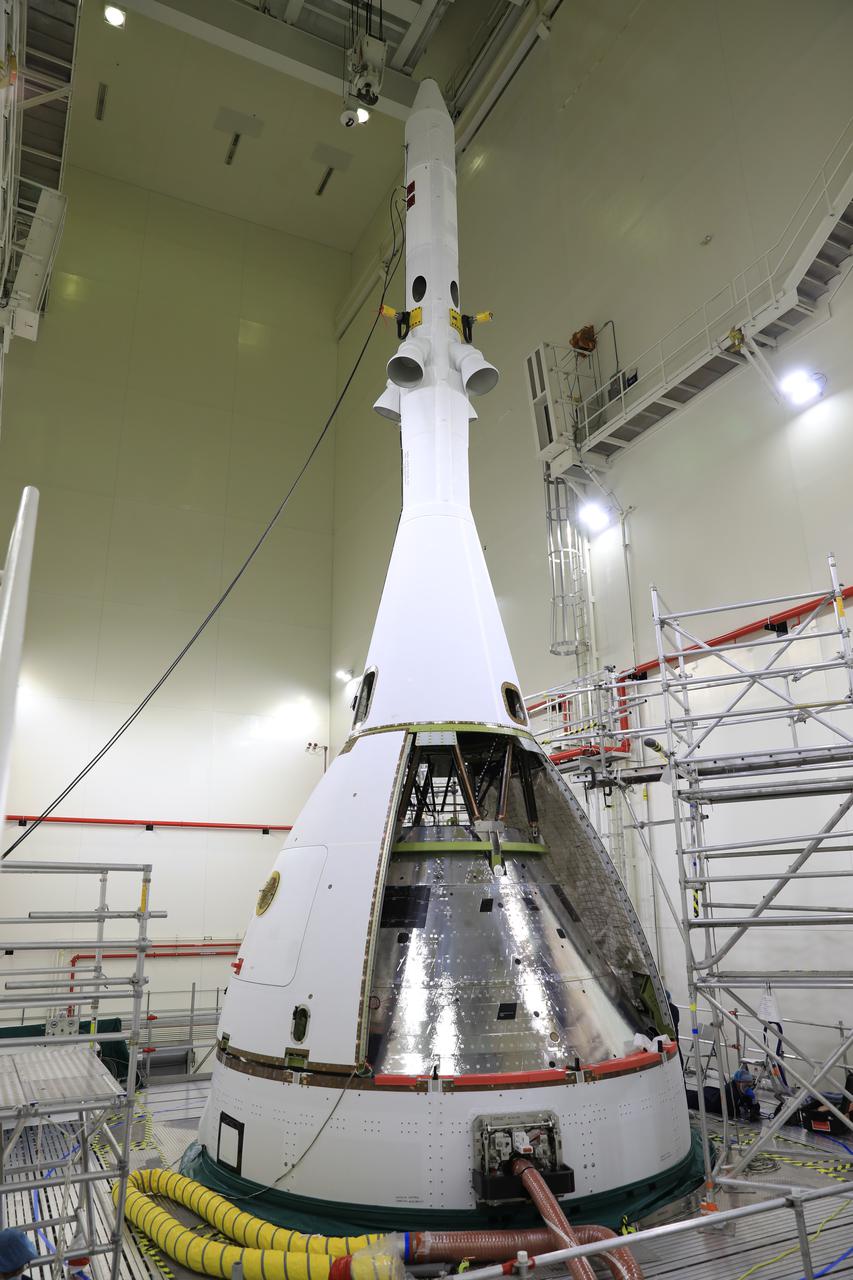
Technicians and engineers with Exploration Ground Systems and Jacobs connect the second ogive fairing for Orion’s Artemis I mission to the launch abort system (LAS) inside the Launch Abort System Facility high bay at NASA’s Kennedy Space Center in Florida on Aug. 23, 2021. The ogives consist of four protective panels that will shield the crew module from the severe vibrations and sounds it will experience during launch. During Artemis missions, the 44-foot-tall LAS will detach from the spacecraft when it is no longer needed. Launching in 2021, Artemis I will be an uncrewed test of the Orion spacecraft and Space Launch System rocket as an integrated system ahead of crewed flights to the Moon. Under Artemis, NASA aims to land the first woman and first person of color on the Moon and establish sustainable lunar exploration.
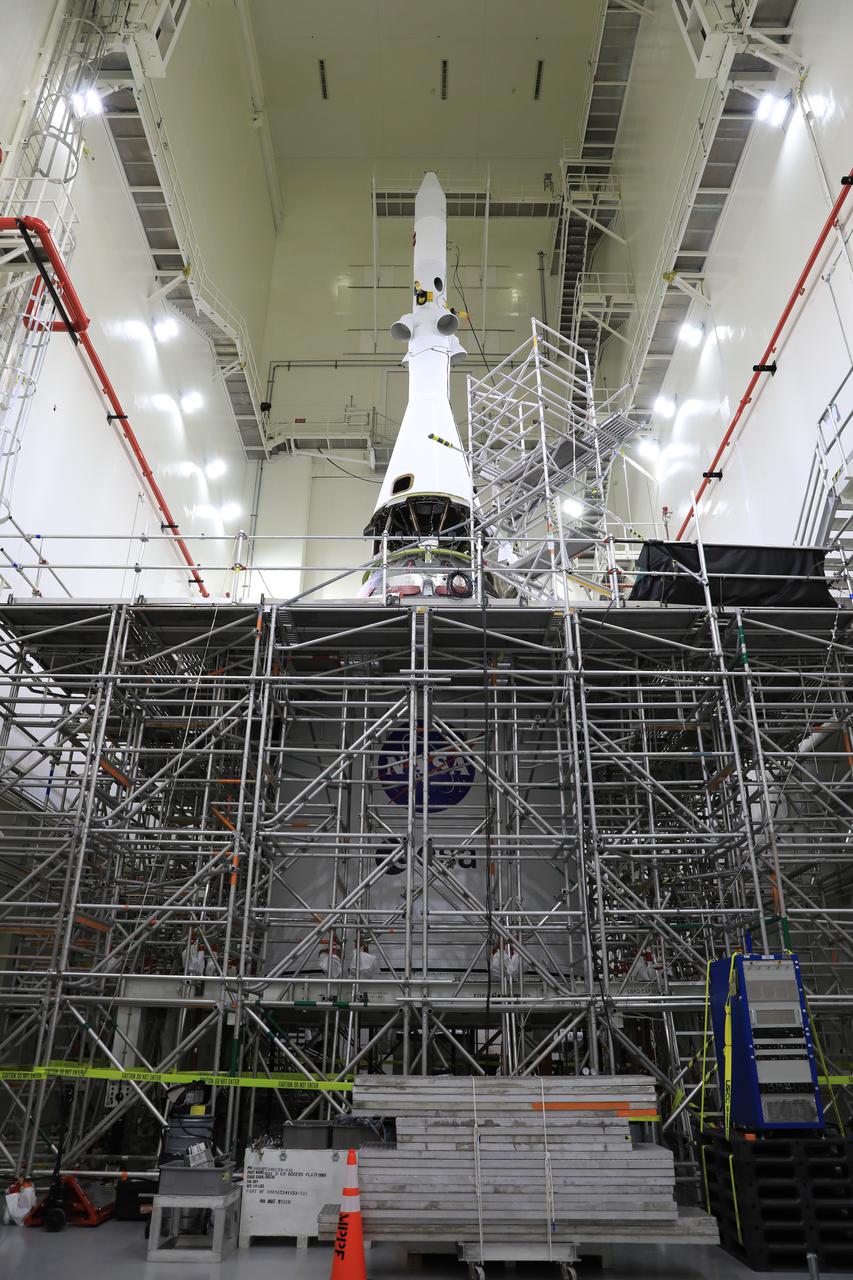
A view of the launch abort system (LAS) for Orion’s Artemis I mission after technicians and engineers with Exploration Ground Systems and Jacobs connected the ogive fairings to it inside the Launch Abort System Facility high bay at NASA’s Kennedy Space Center in Florida on Aug. 20, 2021. The ogives are four protective panels that will shield the crew module from the severe vibrations and sounds it will experience during launch. During Artemis missions, the 44-foot-tall LAS will detach from the spacecraft when it is no longer needed. Launching in 2021, Artemis I will be an uncrewed test of the Orion spacecraft and Space Launch System rocket as an integrated system ahead of crewed flights to the Moon. Under Artemis, NASA aims to land the first woman and first person of color on the Moon and establish sustainable lunar exploration.
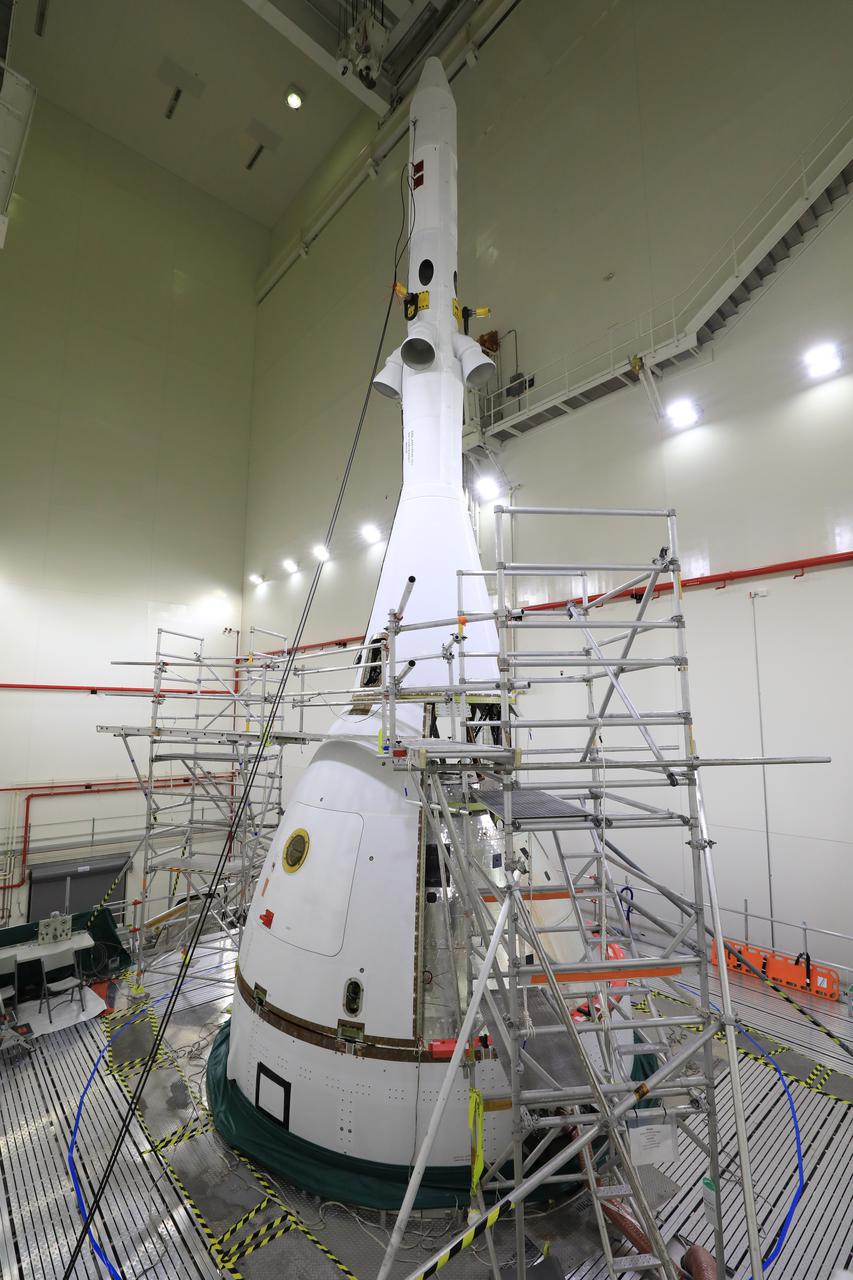
Technicians and engineers with Exploration Ground Systems and Jacobs connect the ogive fairings for Orion’s Artemis I mission to the launch abort system (LAS) inside the Launch Abort System Facility high bay at NASA’s Kennedy Space Center in Florida on Aug. 20, 2021. The ogives are four protective panels that will shield the crew module from the severe vibrations and sounds it will experience during launch. During Artemis missions, the 44-foot-tall LAS will detach from the spacecraft when it is no longer needed. Launching in 2021, Artemis I will be an uncrewed test of the Orion spacecraft and Space Launch System rocket as an integrated system ahead of crewed flights to the Moon. Under Artemis, NASA aims to land the first woman and first person of color on the Moon and establish sustainable lunar exploration.
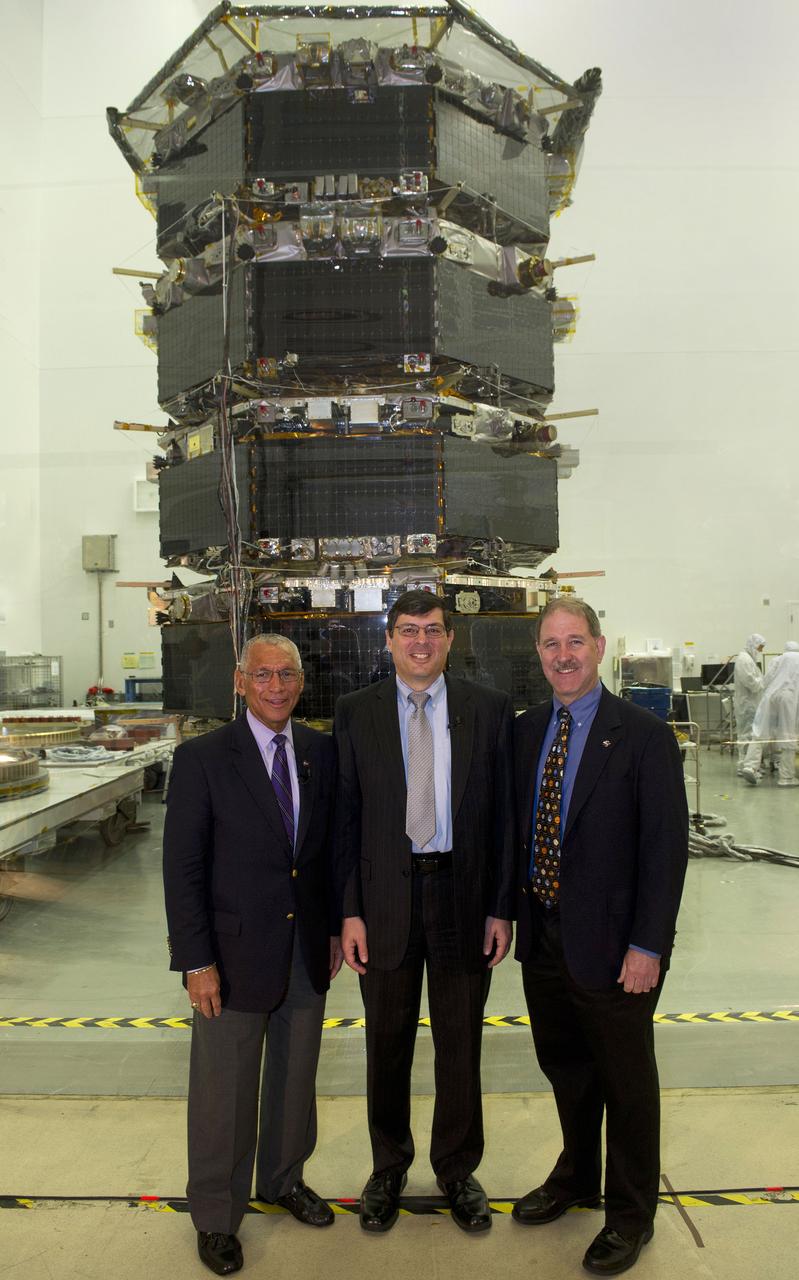
NASA Administrator Charles Bolden got a firsthand look at work being done on the four Magnetospheric Multiscale (MMS) spacecraft during his visit to the agency's Goddard Space Flight Center in Greenbelt, Maryland, on May 12. Standing 20 feet high inside a Goddard clean room, the spacecraft were in their "four-stack" formation, similar to how they will be arranged inside their launch vehicle. The MMS spacecraft recently completed vibration testing. With MMS as a backdrop, Bolden and Goddard Center Director Chris Scolese discussed the mission, ground testing and preparations for launch with project personnel. Read more: <a href="http://go.nasa.gov/1jSza7E" rel="nofollow">go.nasa.gov/1jSza7E</a> Credit: NASA/Goddard/Bill Hrybyk <b><a href="http://www.nasa.gov/audience/formedia/features/MP_Photo_Guidelines.html" rel="nofollow">NASA image use policy.</a></b> <b><a href="http://www.nasa.gov/centers/goddard/home/index.html" rel="nofollow">NASA Goddard Space Flight Center</a></b> enables NASA’s mission through four scientific endeavors: Earth Science, Heliophysics, Solar System Exploration, and Astrophysics. Goddard plays a leading role in NASA’s accomplishments by contributing compelling scientific knowledge to advance the Agency’s mission. <b>Follow us on <a href="http://twitter.com/NASAGoddardPix" rel="nofollow">Twitter</a></b> <b>Like us on <a href="http://www.facebook.com/pages/Greenbelt-MD/NASA-Goddard/395013845897?ref=tsd" rel="nofollow">Facebook</a></b> <b>Find us on <a href="http://instagram.com/nasagoddard?vm=grid" rel="nofollow">Instagram</a></b>
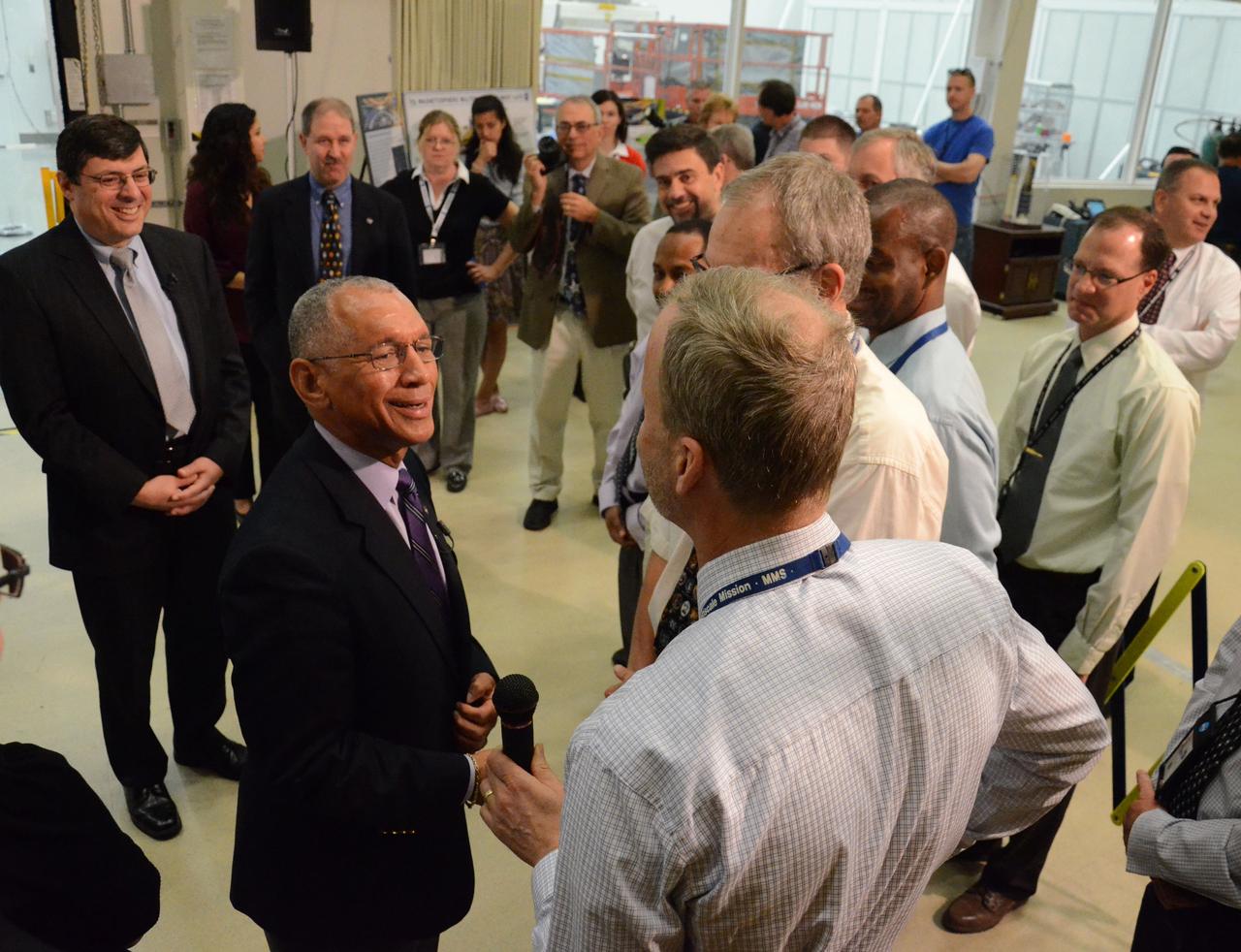
NASA Administrator Charles Bolden got a firsthand look at work being done on the four Magnetospheric Multiscale (MMS) spacecraft during his visit to the agency's Goddard Space Flight Center in Greenbelt, Maryland, on May 12. Standing 20 feet high inside a Goddard clean room, the spacecraft were in their "four-stack" formation, similar to how they will be arranged inside their launch vehicle. The MMS spacecraft recently completed vibration testing. With MMS as a backdrop, Bolden and Goddard Center Director Chris Scolese discussed the mission, ground testing and preparations for launch with project personnel. Read more: <a href="http://go.nasa.gov/1jSza7E" rel="nofollow">go.nasa.gov/1jSza7E</a> Credit: NASA/Goddard/Rebecca Roth <b><a href="http://www.nasa.gov/audience/formedia/features/MP_Photo_Guidelines.html" rel="nofollow">NASA image use policy.</a></b> <b><a href="http://www.nasa.gov/centers/goddard/home/index.html" rel="nofollow">NASA Goddard Space Flight Center</a></b> enables NASA’s mission through four scientific endeavors: Earth Science, Heliophysics, Solar System Exploration, and Astrophysics. Goddard plays a leading role in NASA’s accomplishments by contributing compelling scientific knowledge to advance the Agency’s mission. <b>Follow us on <a href="http://twitter.com/NASAGoddardPix" rel="nofollow">Twitter</a></b> <b>Like us on <a href="http://www.facebook.com/pages/Greenbelt-MD/NASA-Goddard/395013845897?ref=tsd" rel="nofollow">Facebook</a></b> <b>Find us on <a href="http://instagram.com/nasagoddard?vm=grid" rel="nofollow">Instagram</a></b>
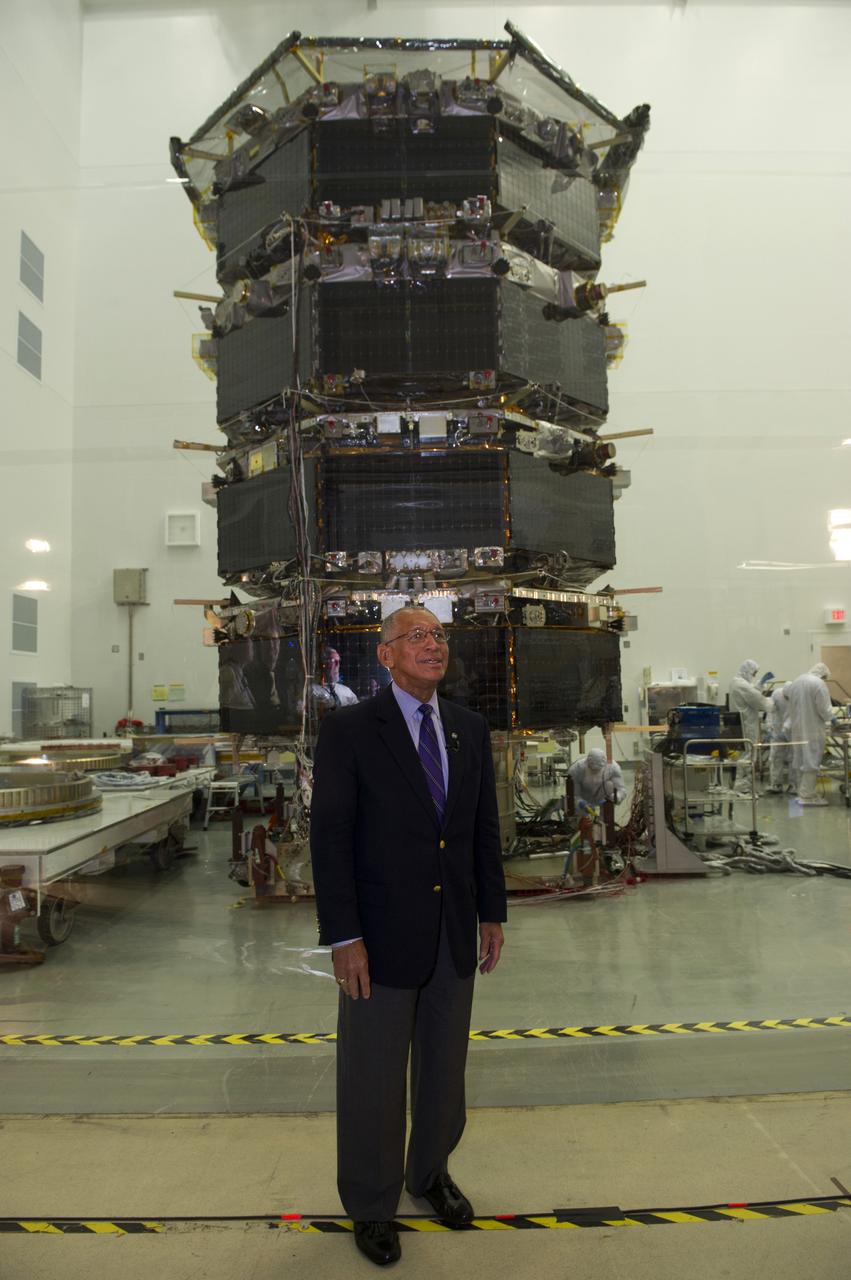
NASA Administrator Charles Bolden got a firsthand look at work being done on the four Magnetospheric Multiscale (MMS) spacecraft during his visit to the agency's Goddard Space Flight Center in Greenbelt, Maryland, on May 12. Standing 20 feet high inside a Goddard clean room, the spacecraft were in their "four-stack" formation, similar to how they will be arranged inside their launch vehicle. The MMS spacecraft recently completed vibration testing. With MMS as a backdrop, Bolden and Goddard Center Director Chris Scolese discussed the mission, ground testing and preparations for launch with project personnel. Read more: <a href="http://go.nasa.gov/1jSza7E" rel="nofollow">go.nasa.gov/1jSza7E</a> Credit: NASA/Goddard/Bill Hrybyk <b><a href="http://www.nasa.gov/audience/formedia/features/MP_Photo_Guidelines.html" rel="nofollow">NASA image use policy.</a></b> <b><a href="http://www.nasa.gov/centers/goddard/home/index.html" rel="nofollow">NASA Goddard Space Flight Center</a></b> enables NASA’s mission through four scientific endeavors: Earth Science, Heliophysics, Solar System Exploration, and Astrophysics. Goddard plays a leading role in NASA’s accomplishments by contributing compelling scientific knowledge to advance the Agency’s mission. <b>Follow us on <a href="http://twitter.com/NASAGoddardPix" rel="nofollow">Twitter</a></b> <b>Like us on <a href="http://www.facebook.com/pages/Greenbelt-MD/NASA-Goddard/395013845897?ref=tsd" rel="nofollow">Facebook</a></b> <b>Find us on <a href="http://instagram.com/nasagoddard?vm=grid" rel="nofollow">Instagram</a></b>
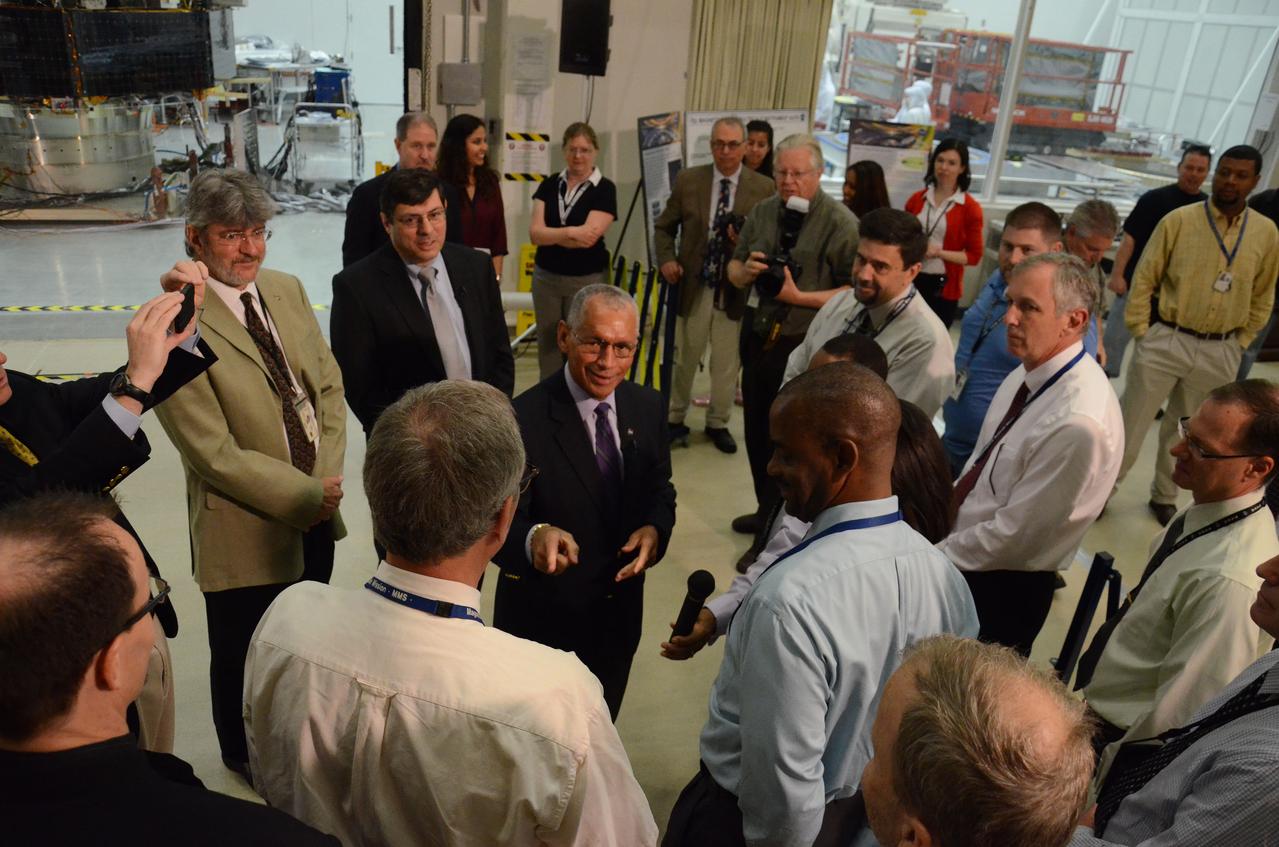
NASA Administrator Charles Bolden got a firsthand look at work being done on the four Magnetospheric Multiscale (MMS) spacecraft during his visit to the agency's Goddard Space Flight Center in Greenbelt, Maryland, on May 12. Standing 20 feet high inside a Goddard clean room, the spacecraft were in their "four-stack" formation, similar to how they will be arranged inside their launch vehicle. The MMS spacecraft recently completed vibration testing. With MMS as a backdrop, Bolden and Goddard Center Director Chris Scolese discussed the mission, ground testing and preparations for launch with project personnel. Read more: <a href="http://go.nasa.gov/1jSza7E" rel="nofollow">go.nasa.gov/1jSza7E</a> Credit: NASA/Goddard/Rebecca Roth <b><a href="http://www.nasa.gov/audience/formedia/features/MP_Photo_Guidelines.html" rel="nofollow">NASA image use policy.</a></b> <b><a href="http://www.nasa.gov/centers/goddard/home/index.html" rel="nofollow">NASA Goddard Space Flight Center</a></b> enables NASA’s mission through four scientific endeavors: Earth Science, Heliophysics, Solar System Exploration, and Astrophysics. Goddard plays a leading role in NASA’s accomplishments by contributing compelling scientific knowledge to advance the Agency’s mission. <b>Follow us on <a href="http://twitter.com/NASAGoddardPix" rel="nofollow">Twitter</a></b> <b>Like us on <a href="http://www.facebook.com/pages/Greenbelt-MD/NASA-Goddard/395013845897?ref=tsd" rel="nofollow">Facebook</a></b> <b>Find us on <a href="http://instagram.com/nasagoddard?vm=grid" rel="nofollow">Instagram</a></b>
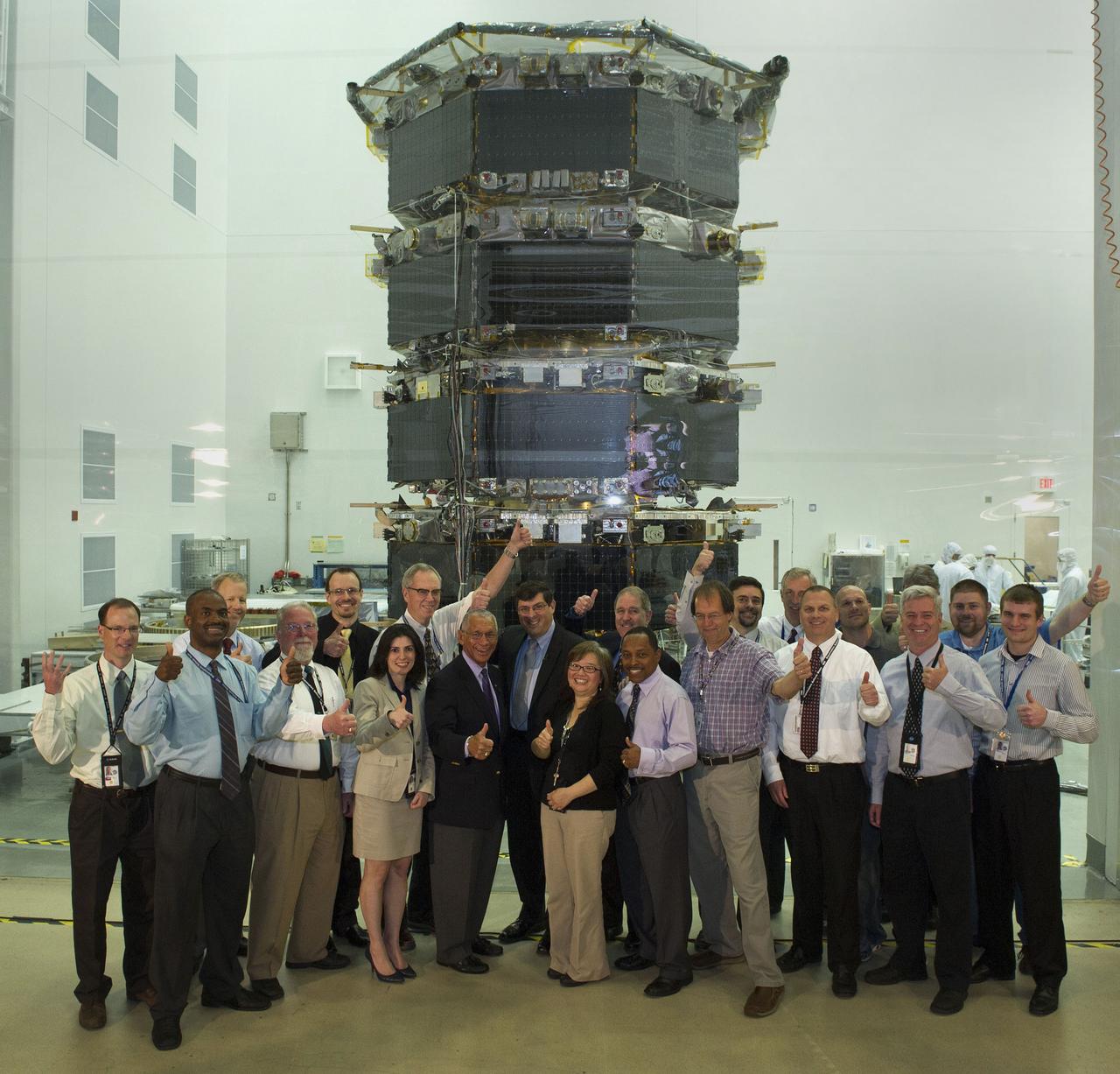
NASA Administrator Charles Bolden got a firsthand look at work being done on the four Magnetospheric Multiscale (MMS) spacecraft during his visit to the agency's Goddard Space Flight Center in Greenbelt, Maryland, on May 12. Standing 20 feet high inside a Goddard clean room, the spacecraft were in their "four-stack" formation, similar to how they will be arranged inside their launch vehicle. The MMS spacecraft recently completed vibration testing. With MMS as a backdrop, Bolden and Goddard Center Director Chris Scolese discussed the mission, ground testing and preparations for launch with project personnel. Read more: <a href="http://go.nasa.gov/1jSza7E" rel="nofollow">go.nasa.gov/1jSza7E</a> Credit: NASA/Goddard/Bill Hrybyk <b><a href="http://www.nasa.gov/audience/formedia/features/MP_Photo_Guidelines.html" rel="nofollow">NASA image use policy.</a></b> <b><a href="http://www.nasa.gov/centers/goddard/home/index.html" rel="nofollow">NASA Goddard Space Flight Center</a></b> enables NASA’s mission through four scientific endeavors: Earth Science, Heliophysics, Solar System Exploration, and Astrophysics. Goddard plays a leading role in NASA’s accomplishments by contributing compelling scientific knowledge to advance the Agency’s mission. <b>Follow us on <a href="http://twitter.com/NASAGoddardPix" rel="nofollow">Twitter</a></b> <b>Like us on <a href="http://www.facebook.com/pages/Greenbelt-MD/NASA-Goddard/395013845897?ref=tsd" rel="nofollow">Facebook</a></b> <b>Find us on <a href="http://instagram.com/nasagoddard?vm=grid" rel="nofollow">Instagram</a></b>
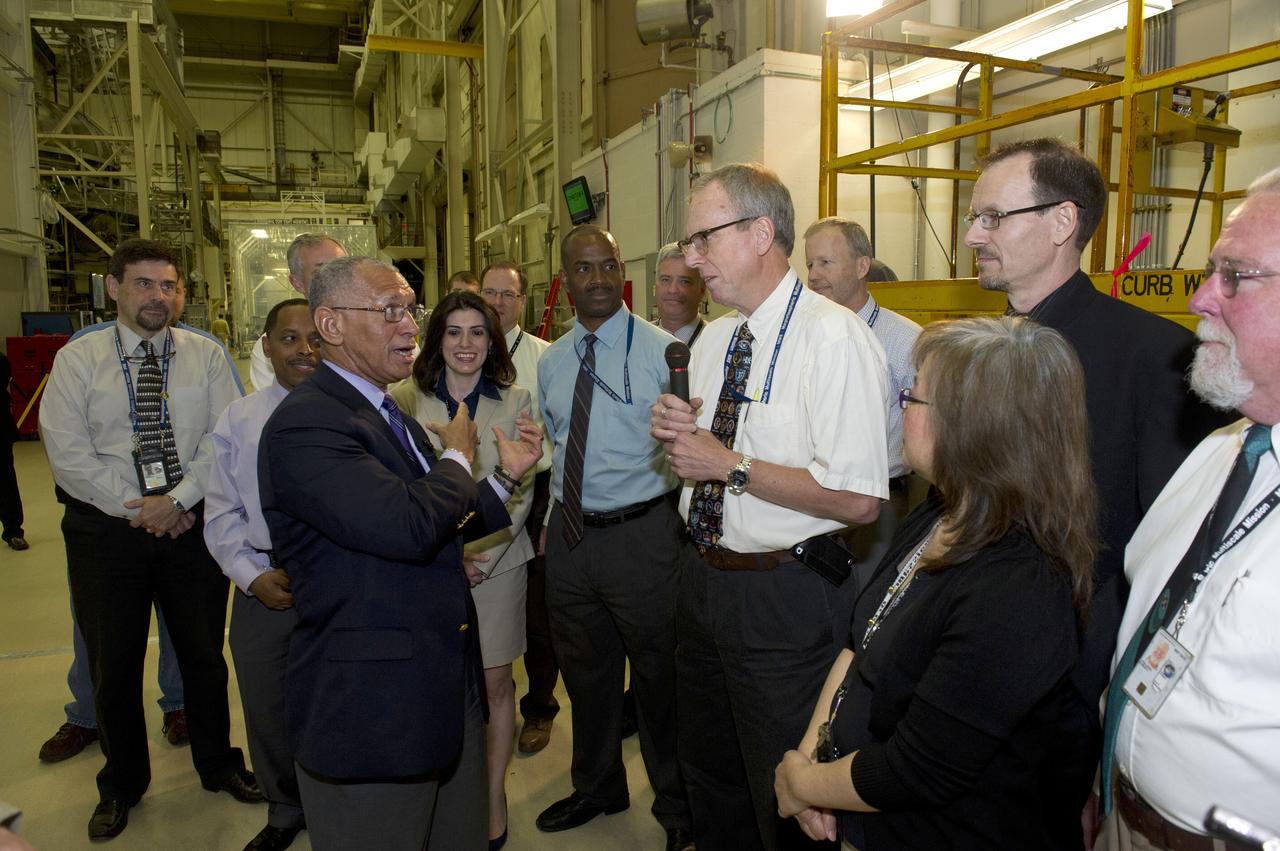
NASA Administrator Charles Bolden got a firsthand look at work being done on the four Magnetospheric Multiscale (MMS) spacecraft during his visit to the agency's Goddard Space Flight Center in Greenbelt, Maryland, on May 12. Standing 20 feet high inside a Goddard clean room, the spacecraft were in their "four-stack" formation, similar to how they will be arranged inside their launch vehicle. The MMS spacecraft recently completed vibration testing. With MMS as a backdrop, Bolden and Goddard Center Director Chris Scolese discussed the mission, ground testing and preparations for launch with project personnel. Read more: <a href="http://go.nasa.gov/1jSza7E" rel="nofollow">go.nasa.gov/1jSza7E</a> Credit: NASA/Goddard/Bill Hrybyk <b><a href="http://www.nasa.gov/audience/formedia/features/MP_Photo_Guidelines.html" rel="nofollow">NASA image use policy.</a></b> <b><a href="http://www.nasa.gov/centers/goddard/home/index.html" rel="nofollow">NASA Goddard Space Flight Center</a></b> enables NASA’s mission through four scientific endeavors: Earth Science, Heliophysics, Solar System Exploration, and Astrophysics. Goddard plays a leading role in NASA’s accomplishments by contributing compelling scientific knowledge to advance the Agency’s mission. <b>Follow us on <a href="http://twitter.com/NASAGoddardPix" rel="nofollow">Twitter</a></b> <b>Like us on <a href="http://www.facebook.com/pages/Greenbelt-MD/NASA-Goddard/395013845897?ref=tsd" rel="nofollow">Facebook</a></b> <b>Find us on <a href="http://instagram.com/nasagoddard?vm=grid" rel="nofollow">Instagram</a></b>
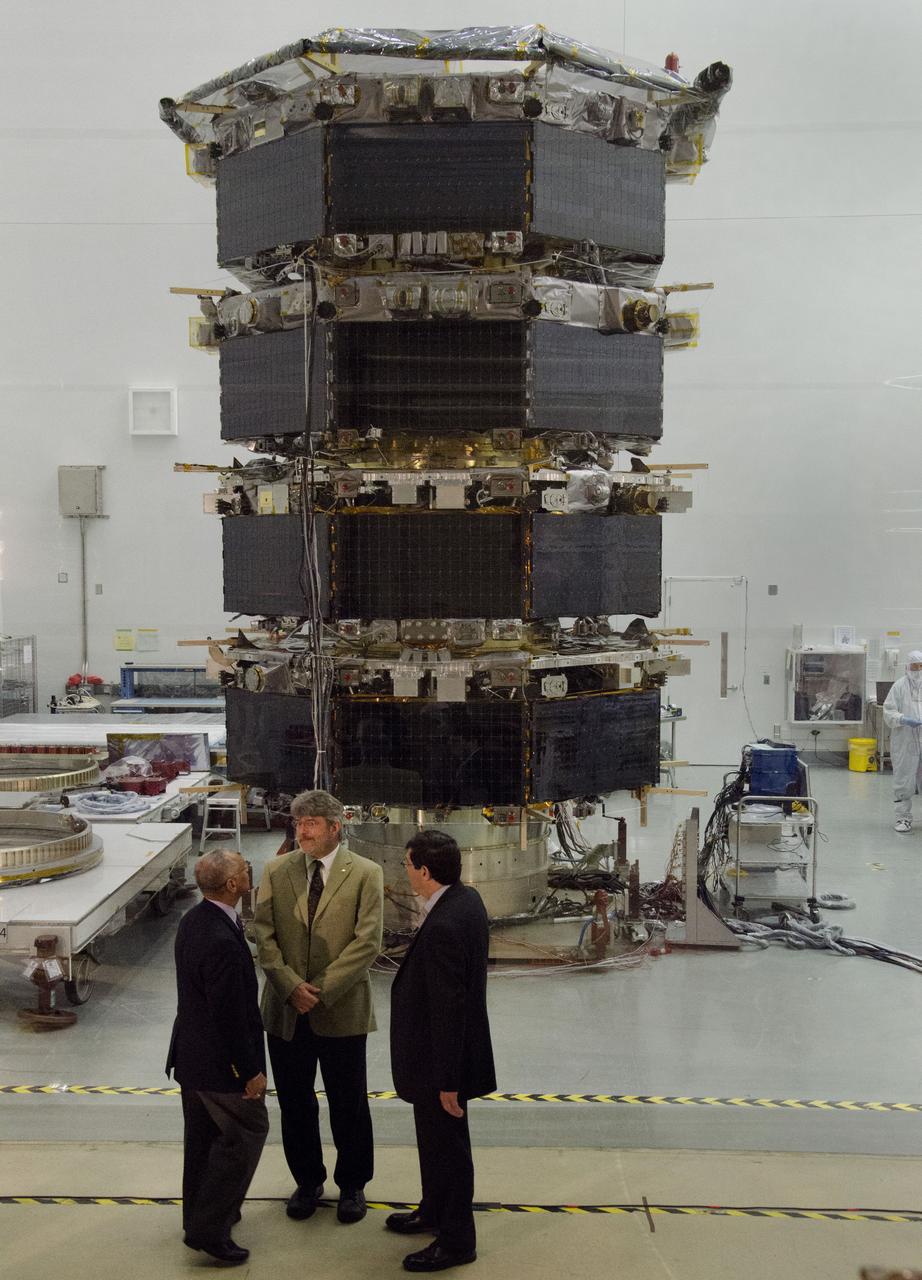
NASA Administrator Charles Bolden got a firsthand look at work being done on the four Magnetospheric Multiscale (MMS) spacecraft during his visit to the agency's Goddard Space Flight Center in Greenbelt, Maryland, on May 12. Standing 20 feet high inside a Goddard clean room, the spacecraft were in their "four-stack" formation, similar to how they will be arranged inside their launch vehicle. The MMS spacecraft recently completed vibration testing. With MMS as a backdrop, Bolden and Goddard Center Director Chris Scolese discussed the mission, ground testing and preparations for launch with project personnel. Read more: <a href="http://go.nasa.gov/1jSza7E" rel="nofollow">go.nasa.gov/1jSza7E</a> Credit: NASA/Goddard/Rebecca Roth <b><a href="http://www.nasa.gov/audience/formedia/features/MP_Photo_Guidelines.html" rel="nofollow">NASA image use policy.</a></b> <b><a href="http://www.nasa.gov/centers/goddard/home/index.html" rel="nofollow">NASA Goddard Space Flight Center</a></b> enables NASA’s mission through four scientific endeavors: Earth Science, Heliophysics, Solar System Exploration, and Astrophysics. Goddard plays a leading role in NASA’s accomplishments by contributing compelling scientific knowledge to advance the Agency’s mission. <b>Follow us on <a href="http://twitter.com/NASAGoddardPix" rel="nofollow">Twitter</a></b> <b>Like us on <a href="http://www.facebook.com/pages/Greenbelt-MD/NASA-Goddard/395013845897?ref=tsd" rel="nofollow">Facebook</a></b> <b>Find us on <a href="http://instagram.com/nasagoddard?vm=grid" rel="nofollow">Instagram</a></b>