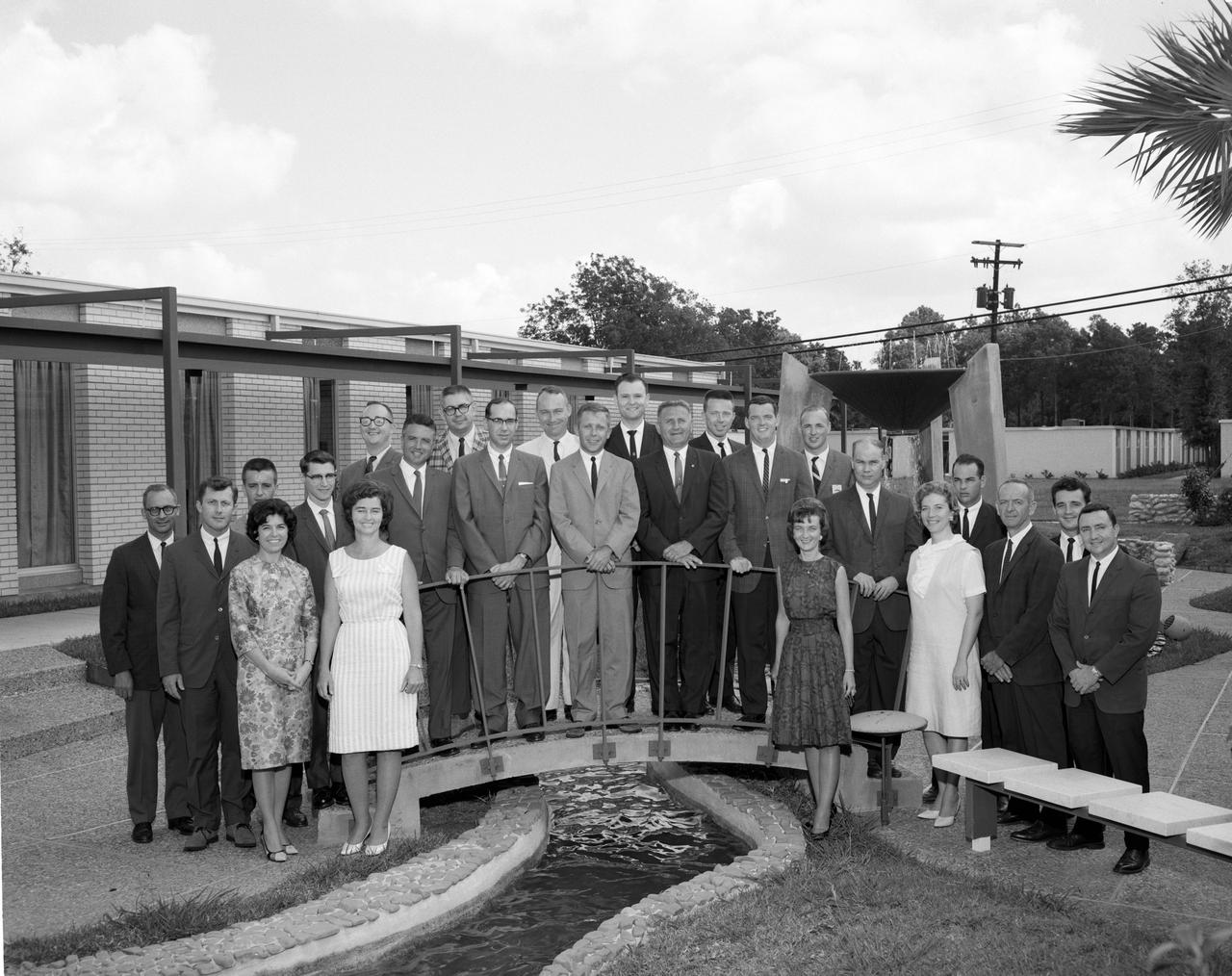
Group shot of the nucleus of the 1960 Flight Operations Division for the Mercury Program. Image taken at the Houston Petroleum Center (HPC) in Houston, TX, prior to their move to the Manned Spacecraft Center (MSC). This photo was published in the Space News Roundup, 07/08/1964. The women are (L-R): Doris Folkes, Cathy Osgood, Shirley Hunt and Mary Shep Burton. The men are (L-R): Dick Koos, Paul Brumberg, John O'Loughlin, Emil Schiesser, Jim Dalby, Morris Jenkins, Carl Huss, John Mayer, Bill Tindall, Hal Beck, Charlie Allen, Ted Skopinski, Jack Hartung, Glynn Lunney, John Shoosmith, Bill Reini, Lyn Dunseith, Jerry Engel, Harold Miller and Clay Hicks. ( 26644 ); Houston, TX
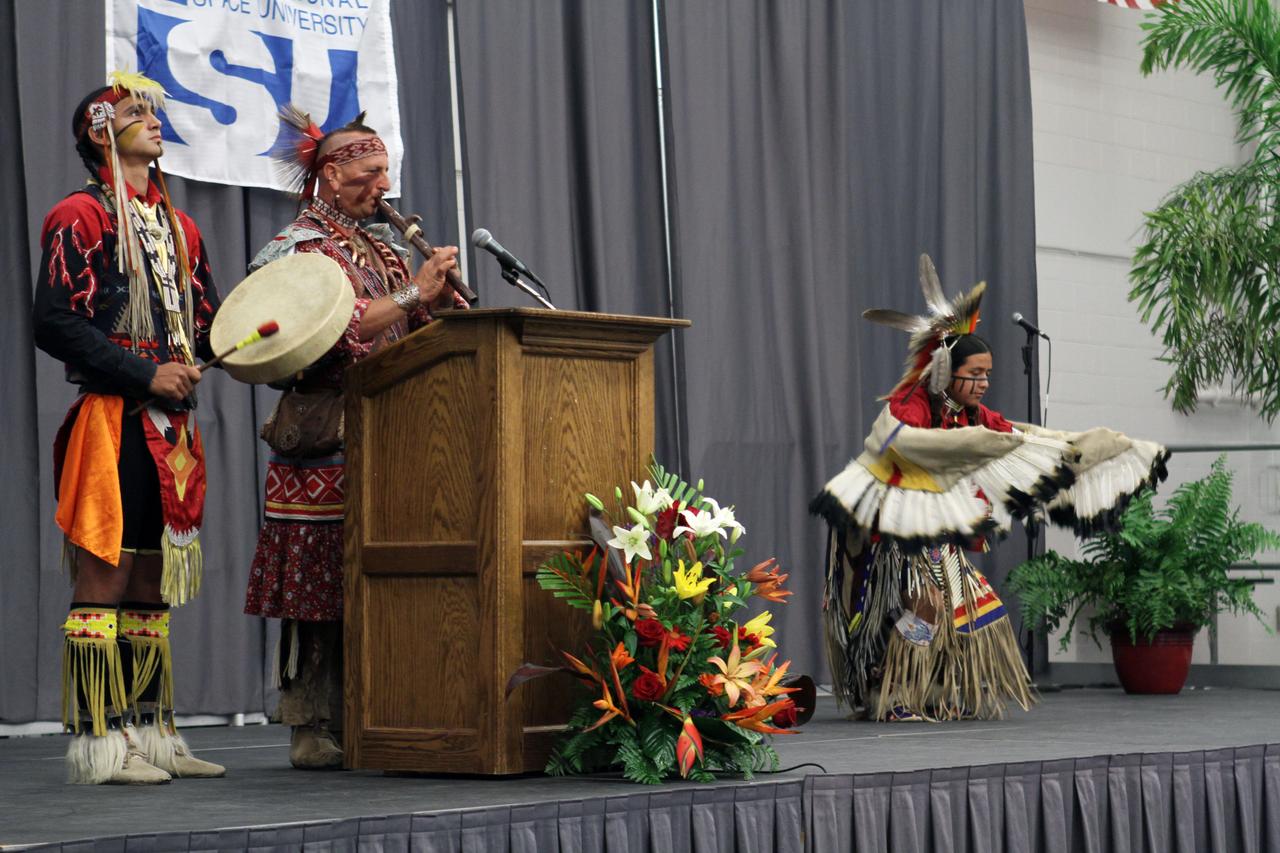
International Space University Opening Ceremony & Group Shot
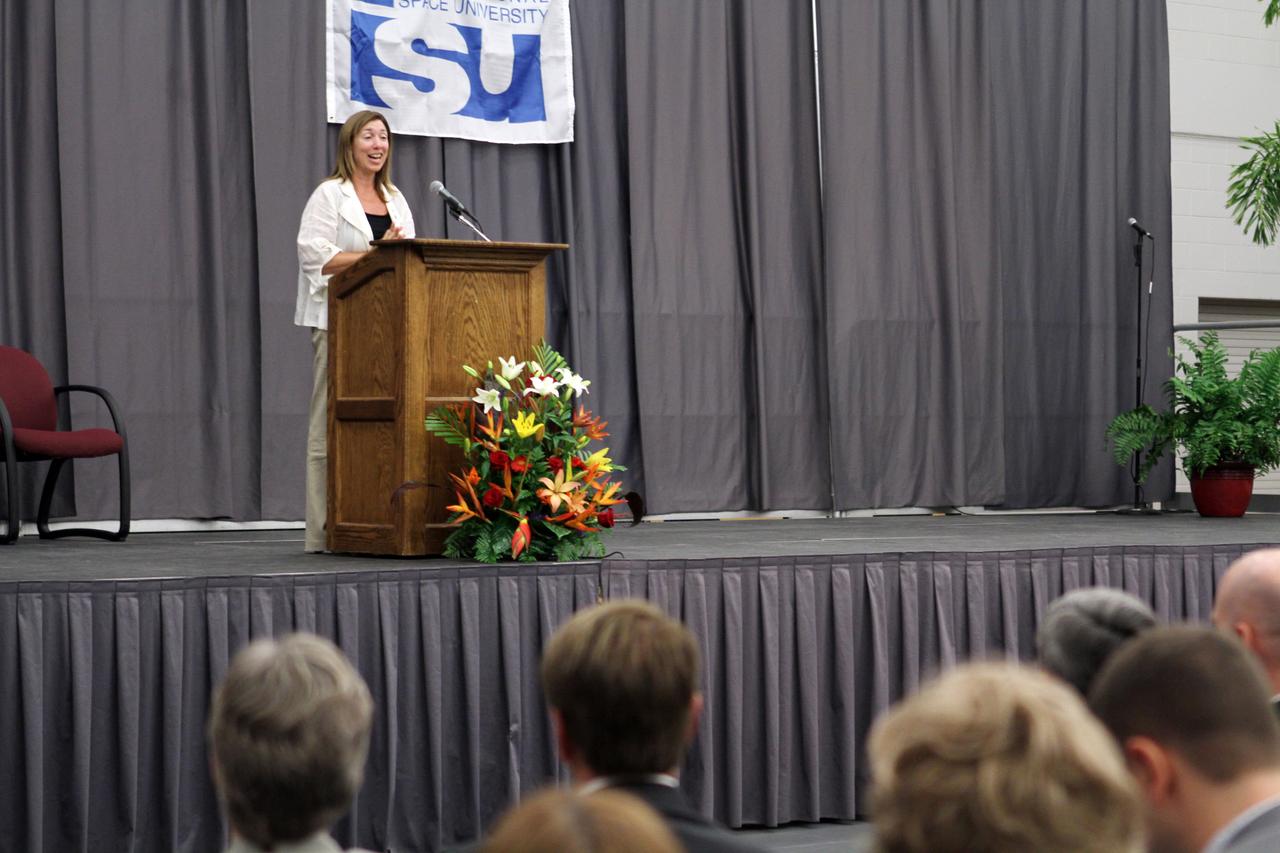
International Space University Opening Ceremony & Group Shot
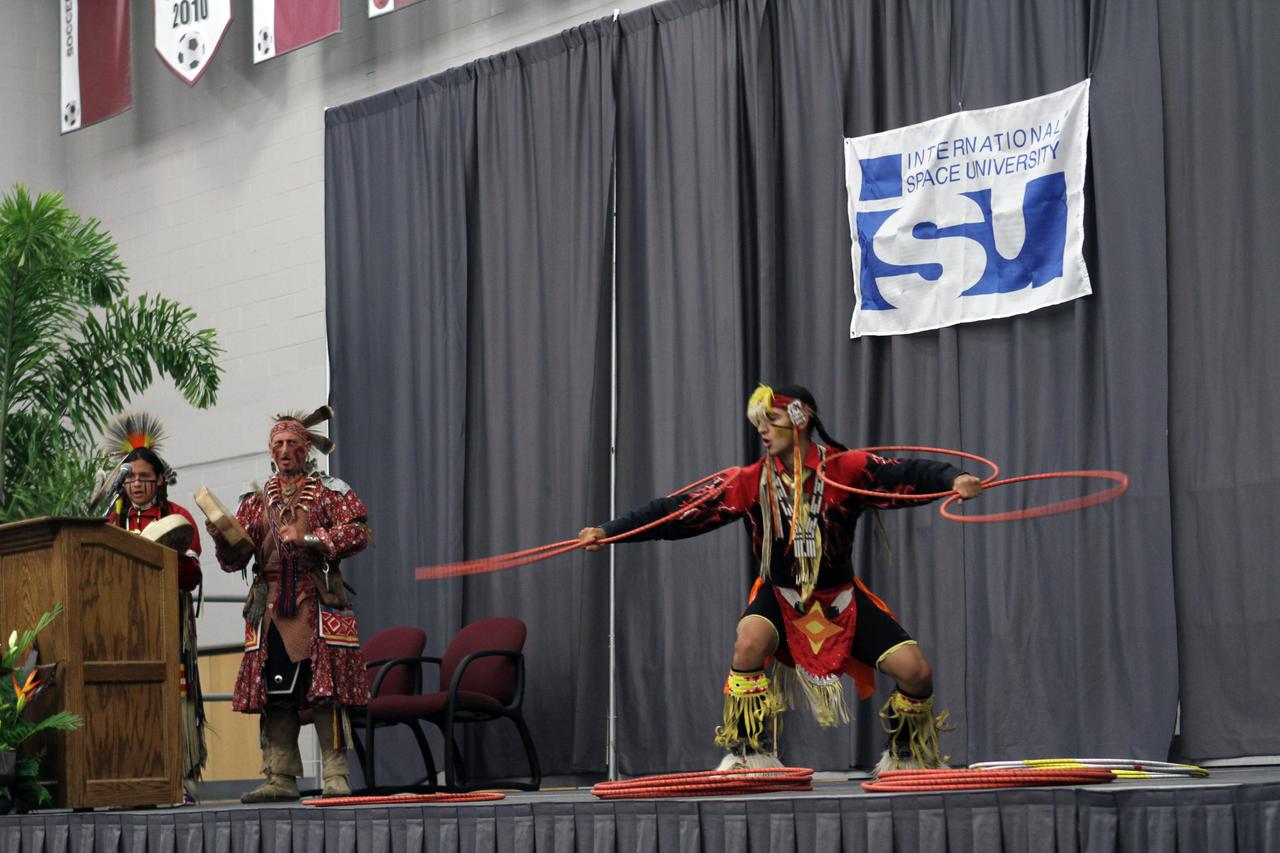
International Space University Opening Ceremony & Group Shot
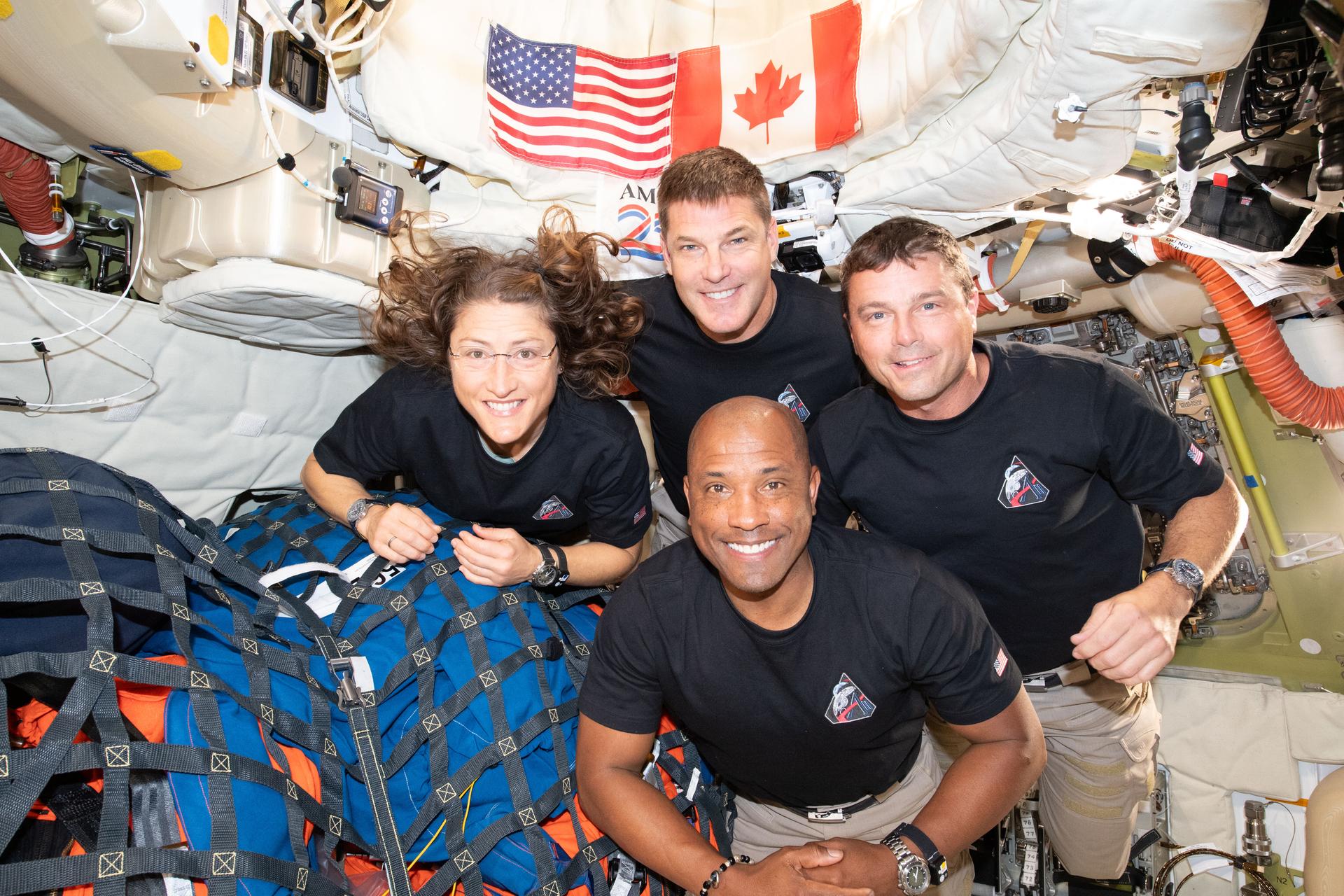
art002e013361 (April 7, 2026) – The Artemis II crew – (clockwise from left) Mission Specialist Christina Koch, Mission Specialist Jeremy Hansen, Commander Reid Wiseman, and Pilot Victor Glover – pause for a group photo inside the Orion spacecraft on their way home. Following a swing around the far side of the Moon on April 6, 2026, the crew exited the lunar sphere of influence (the point at which the Moon's gravity has a stronger pull on Orion than the Earth's) on April 7, and are headed back to Earth for a splashdown in the Pacific Ocean on April 10.
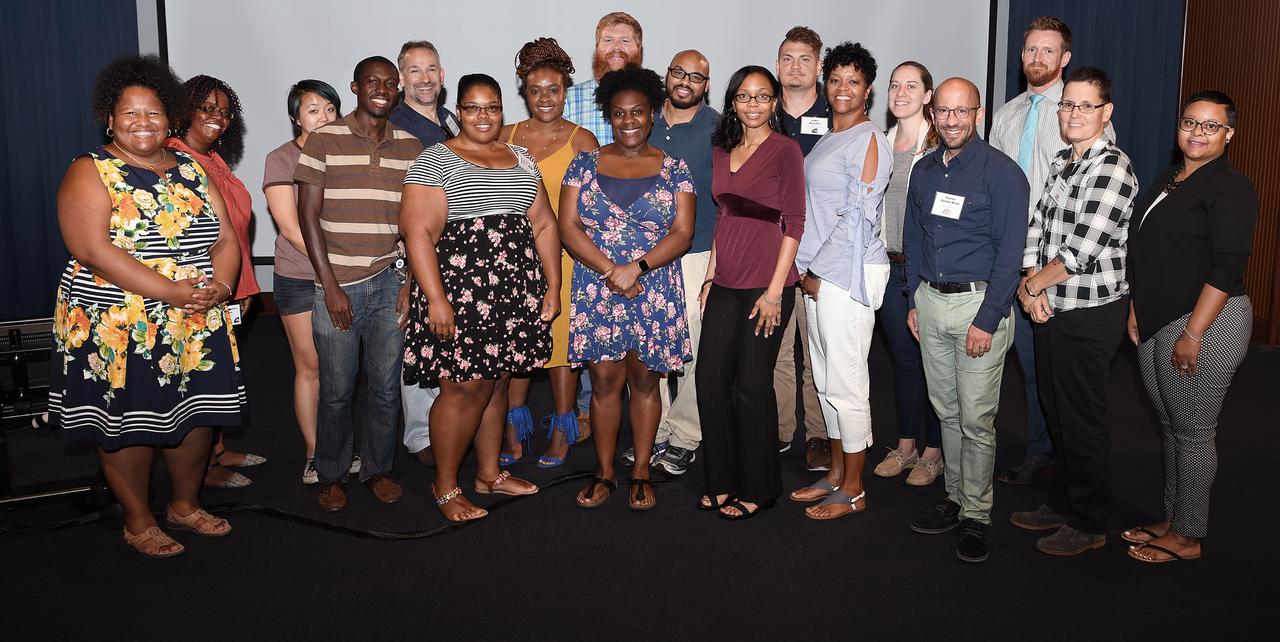
Diversity and Inclusion Program D&IP Advisory Committee Orientation was held August 9, 2018 Group shot
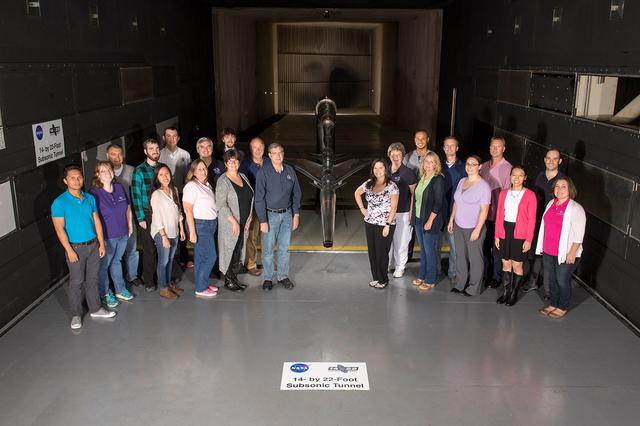
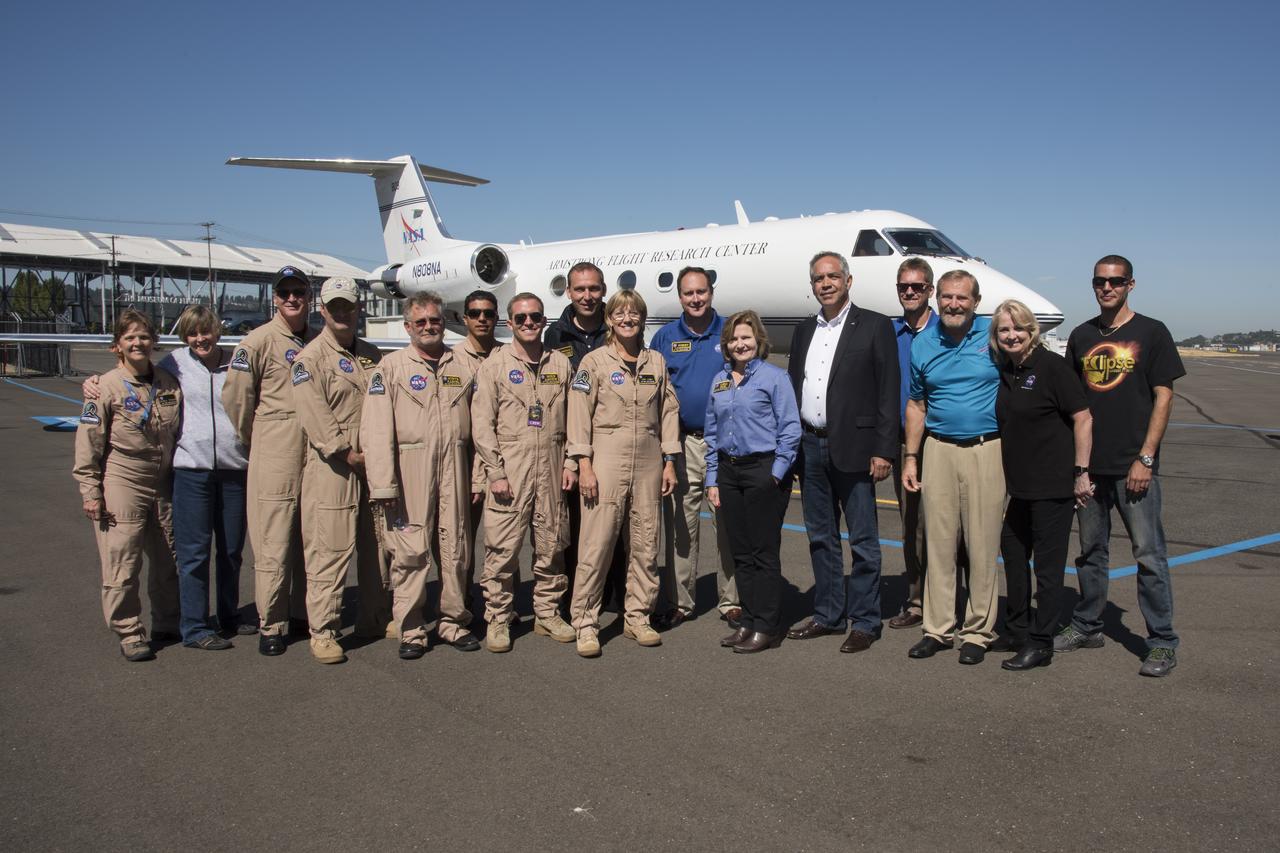
NASA Armstrong and NASA senior management Gulfstream III team pose for group shot by aircraft after return from covering Total solar eclipse. Photo Credit: (NASA/Carla Thomas)
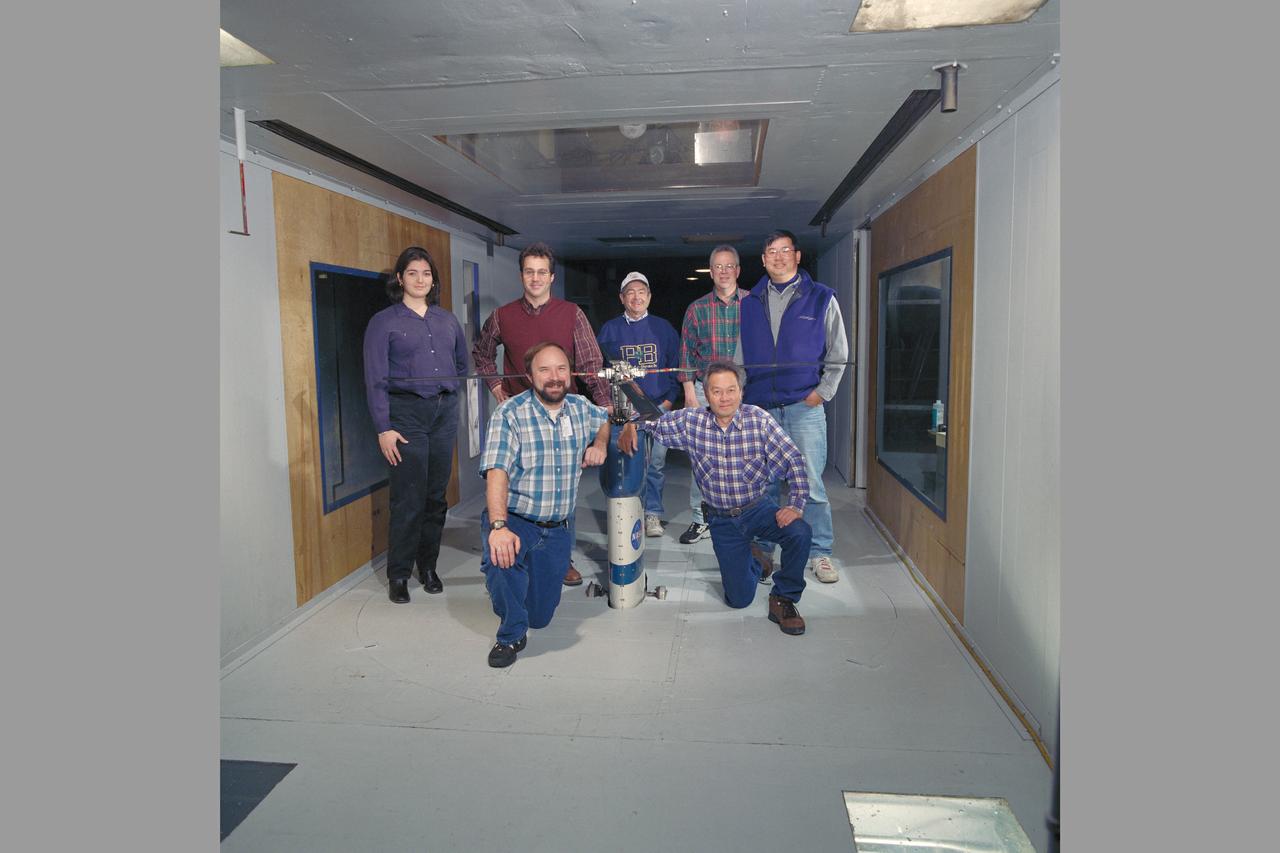
ADM Swept Group Shot: Anita Abergo, Brian Chan, Joel Gunter, Dave Pfluger, Steve Chan, Dave Sharpe, Tom Maier, in 7 x 10 ft. # 1 Wind Tunnel Test-7101099.
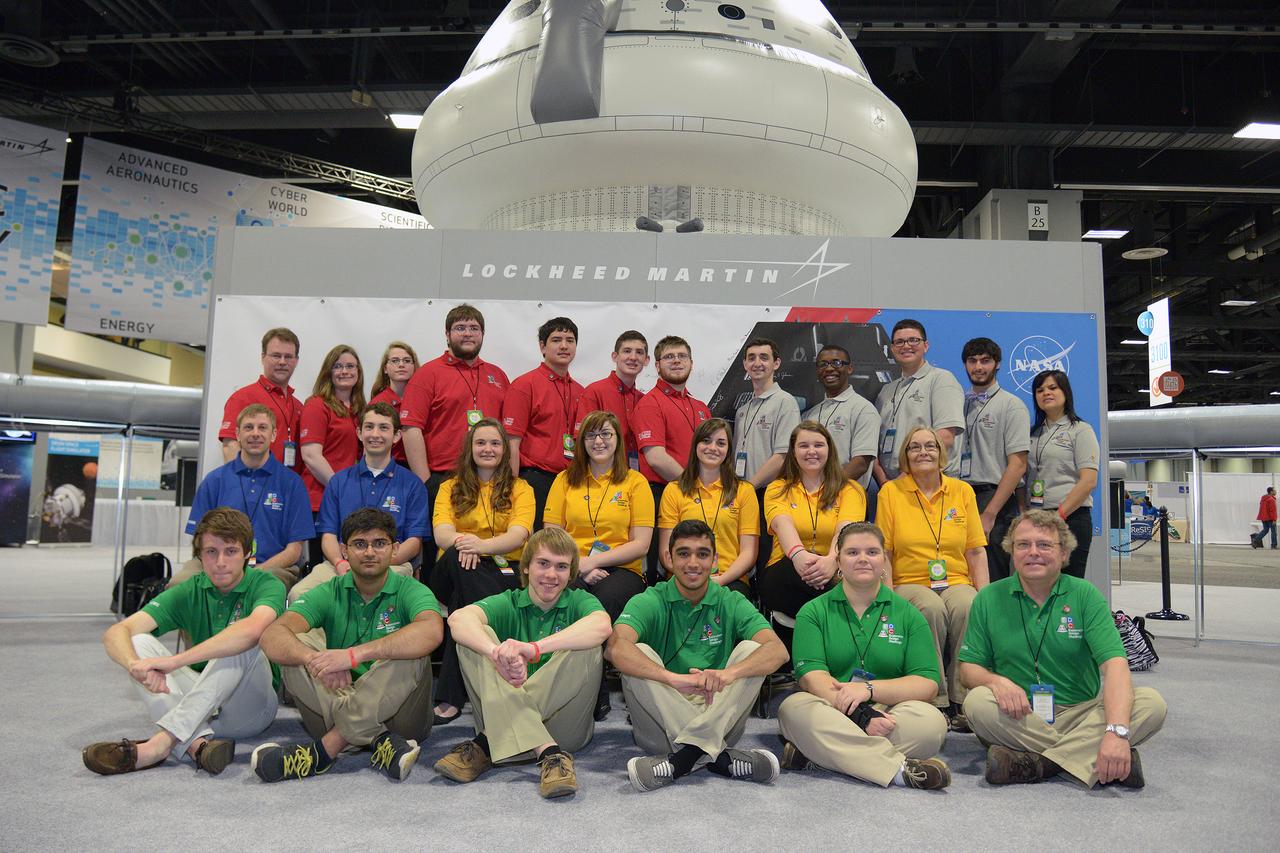
The winner of the high school portion of the Exploration Design Challenge is announced at the USA Science and Engineering Festival in Washington on April 25, 2014. Group shot of students. Part of Batch image transfer from Flickr.
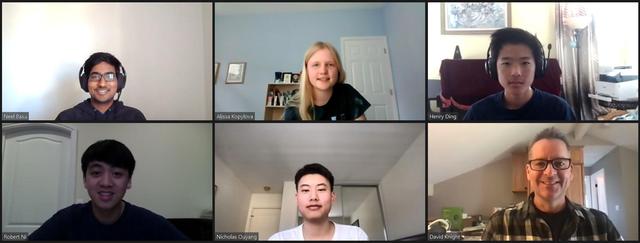
For the fourth consecutive year, Irvine's University High School won the Southern California regional round of the National Science Bowl, hosted by JPL. The team, including coach David Knight (lower right), paused for a group shot after their victory on March 20, 2021. https://photojournal.jpl.nasa.gov/catalog/PIA23730
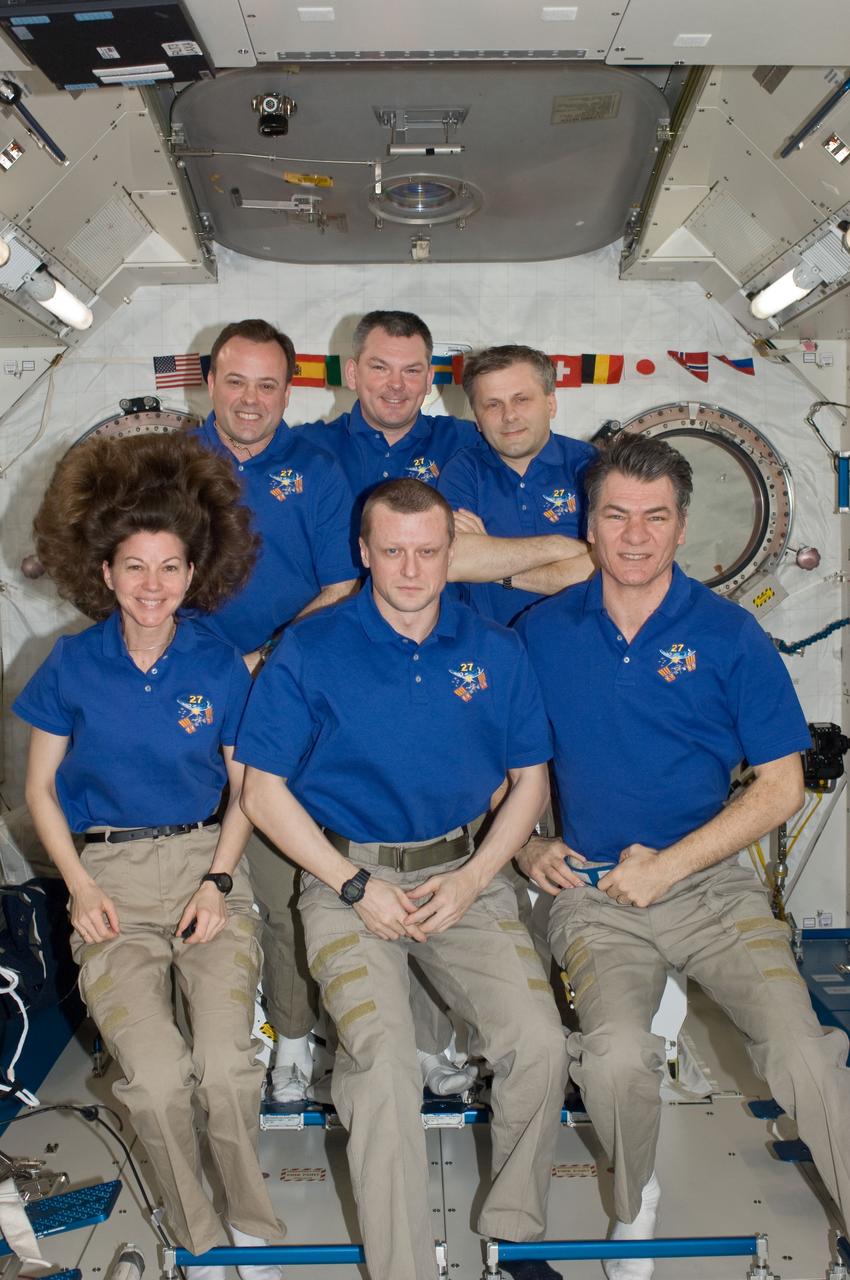
ISS027-E-035709 (21 May 2011) --- Inside the Kibo lab onboard the International Space Station, the six astronauts and cosmonauts making up the Expedition 27 crew pose for a traditional group shot. From left to right (front row) are NASA astronaut Cady Coleman, Russian cosmonaut Dmitry Kondratyev and European Space Agency astronaut Paolo Nespoli; and (back row) NASA astronaut Ron Garan, along with cosmonauts Alexander Samokutyaev and Andrey Borisenko.

ISS027-E-035707 (21 May 2011) --- Inside the Kibo lab onboard the International Space Station, the six astronauts and cosmonauts making up the Expedition 27 crew pose for a traditional group shot. From left to right (front row) are NASA astronaut Cady Coleman, Russian cosmonaut Dmitry Kondratyev and European Space Agency astronaut Paolo Nespoli; and (back row) NASA astronaut Ron Garan, along with cosmonauts Alexander Samokutyaev and Andrey Borisenko.
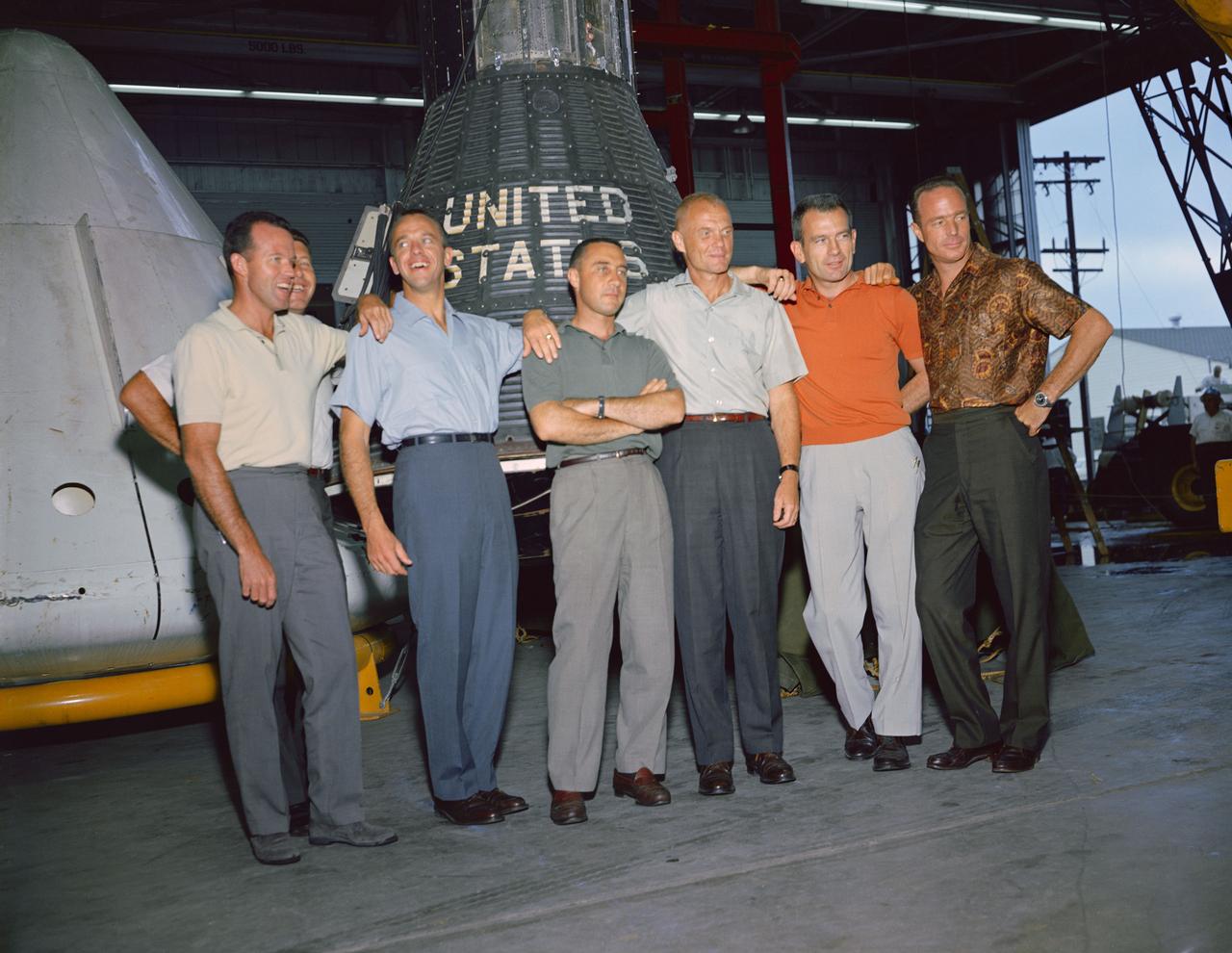
S63-18853 (1963) --- Group shot of the original Mercury astronauts taken at the Manned Spacecraft Center (MSC), Houston, Texas. The astronauts are left-to-right: L. Gordon Cooper Jr., Walter M. Schirra, Alan B. Shepard Jr., Virgil I. Grissom, John H. Glenn Jr., Donald K. Slayton and M. Scott Carpenter. Photo credit: NASA
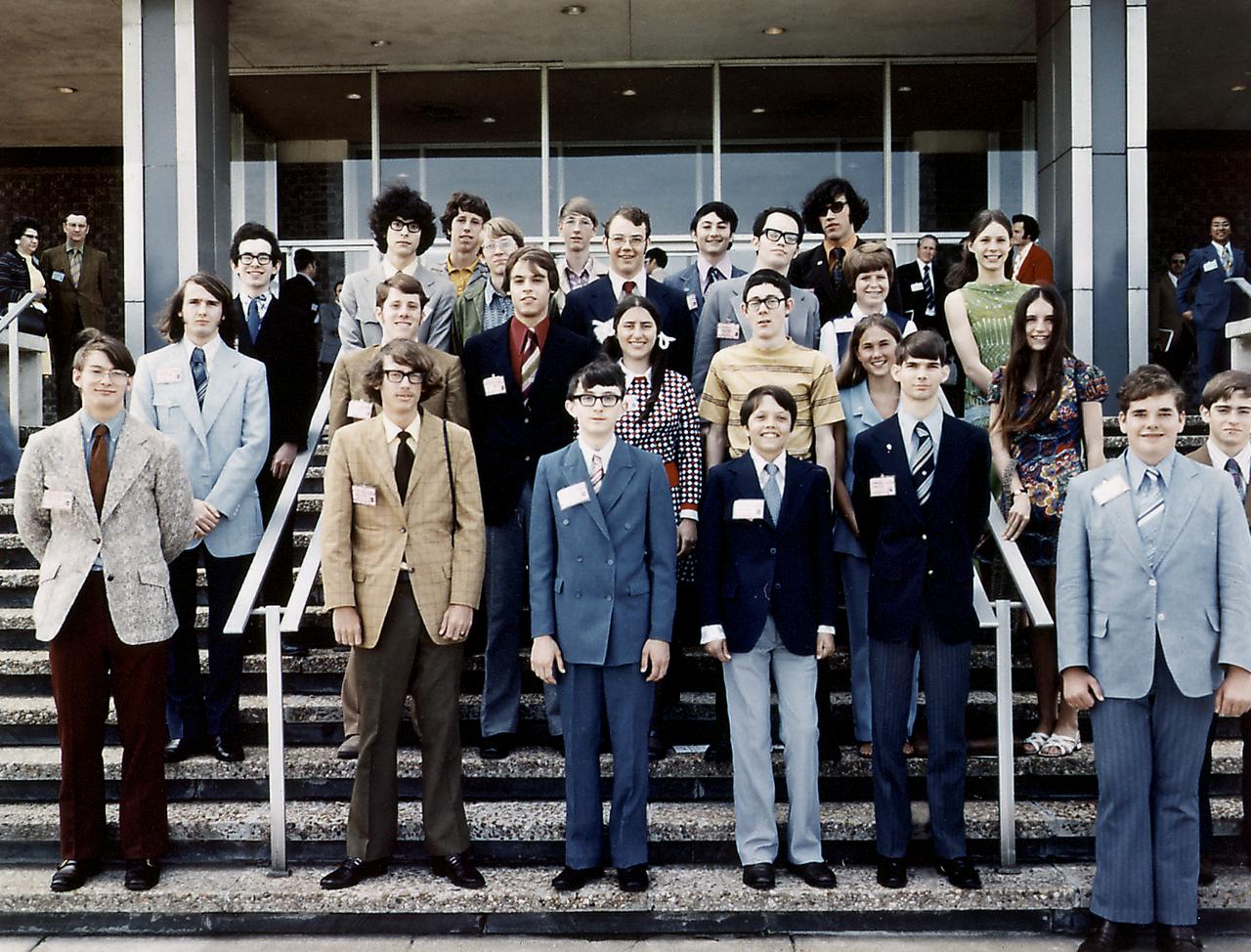
One of the most successful of the Skylab educational efforts was the Skylab Student Project. This was a nationwide contest in which secondary school students submitted proposals for experiments to fly on Skylab. After the official announcement of this project, over 4,000 students responded with 3,409 proposals from which 25 winners were selected. In the subsequent evaluation of these 25 proposed experiments in terms of their suitability for flight, the Marshall Space Flight Center, the lead center for Skylab, selected 19. This photograph is a group shot of the 25 winners in the Skylab student program when they met for the first time at the Marshall Space Flight Center in May 1972.
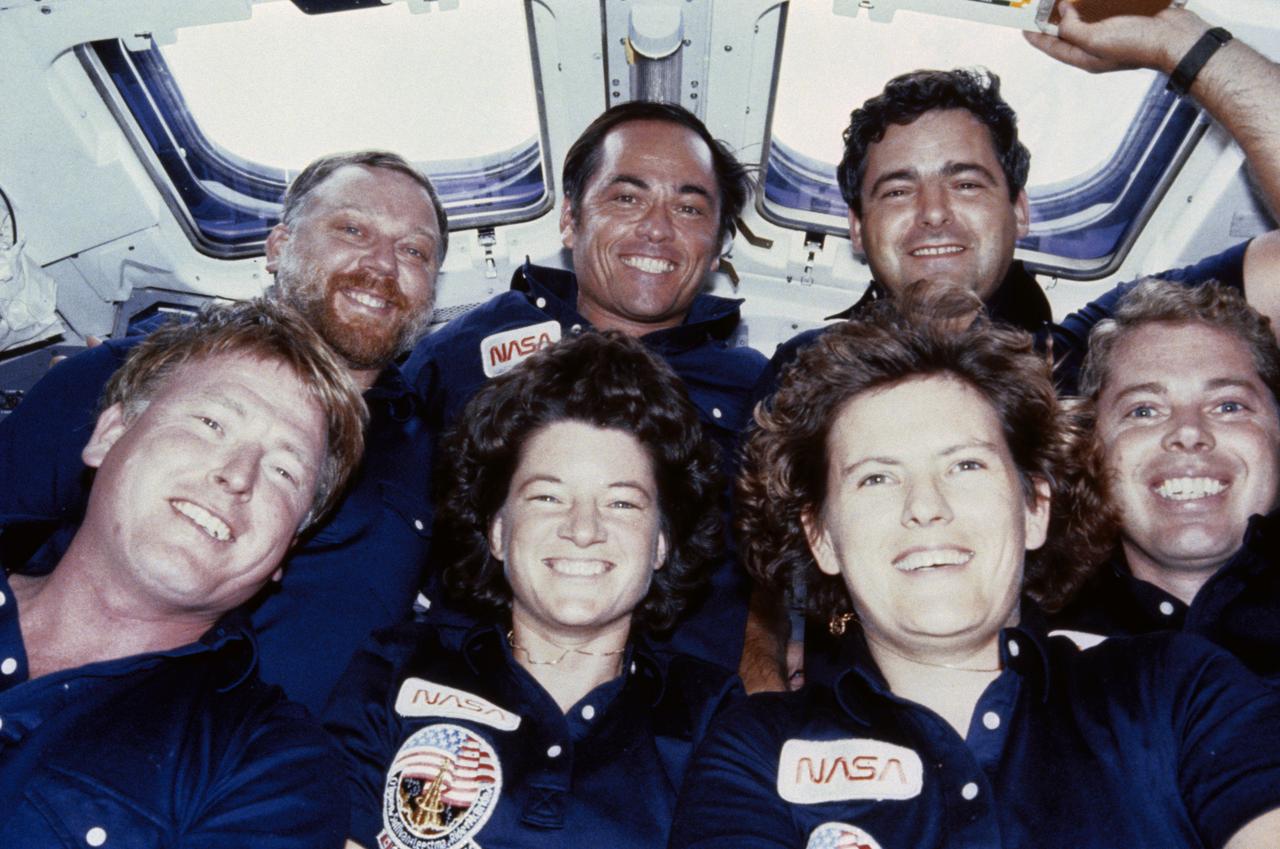
41G-19-006 (5-13 Oct. 1984) --- The seven-member 41-G crew assembles for a group shot on the flight deck of the Earth-orbiting space shuttle Challenger. Robert L. Crippen, commander, is in center of the back row. Others pictured are (front row, l.-r.) Jon A. McBride, pilot; Sally K. Ride, Kathryn D. Sullivan and David C. Leestma, all mission specialists; and Paul D. Scully-Power (left) and Marc Garneau, both payload specialists, on the back row. Garneau represents the National Research Council of Canada and Scully-Power is a civilian oceanographer with the U.S. Navy. Photo credit: NASA
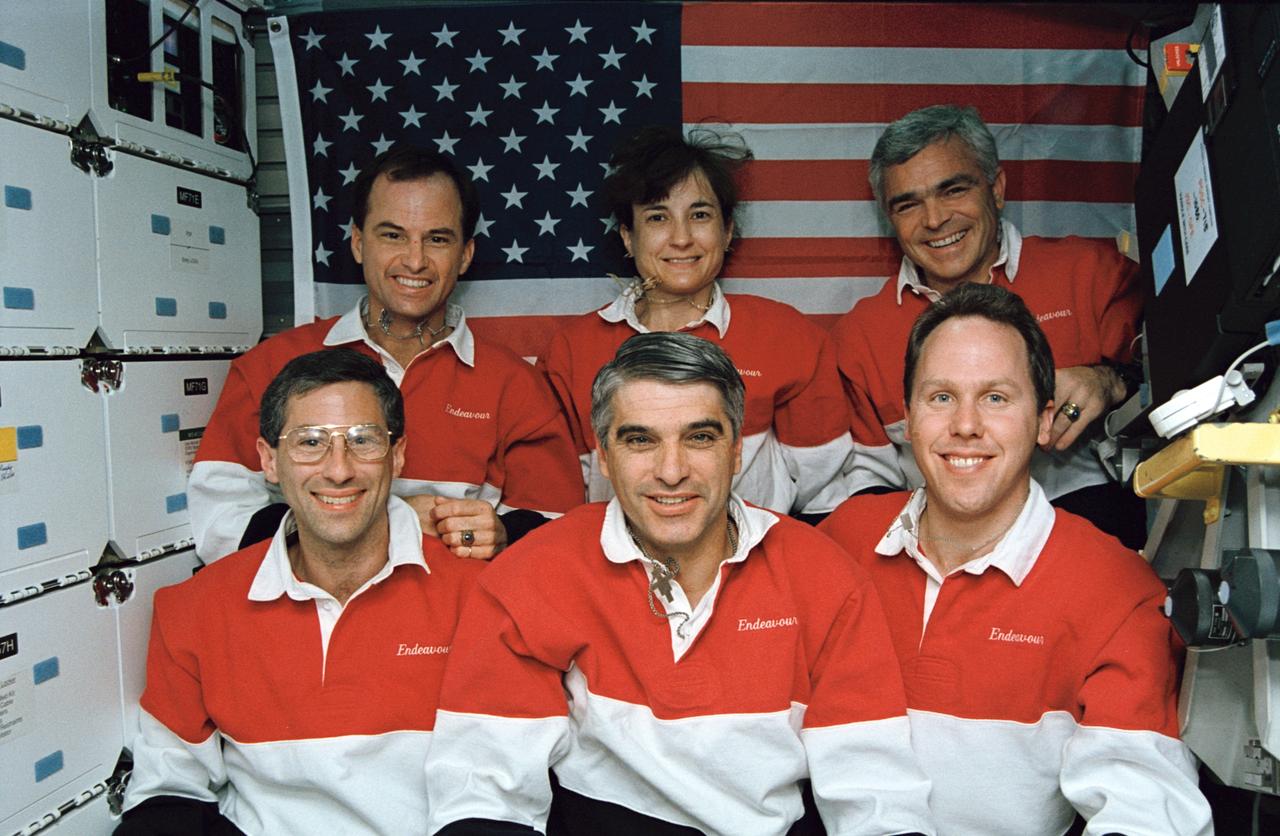
STS059-44-004 (9-20 April 1994) --- This middeck scene aboard the Space Shuttle Endeavour caught all six STS-59 crew members in a rare group shot. Astronaut Sidney M. Gutierrez, mission commander (front center) is flanked by astronauts Jerome (Jay) Apt and Thomas D. Jones, both mission specialists. On the back row are (left to right) astronaut Kevin P. Chilton, pilot; Linda M. Godwin, payload commander; and Michael R. (Rich) Clifford, mission specialist. Most of the week and a half was divided into two work shifts for the crew members.
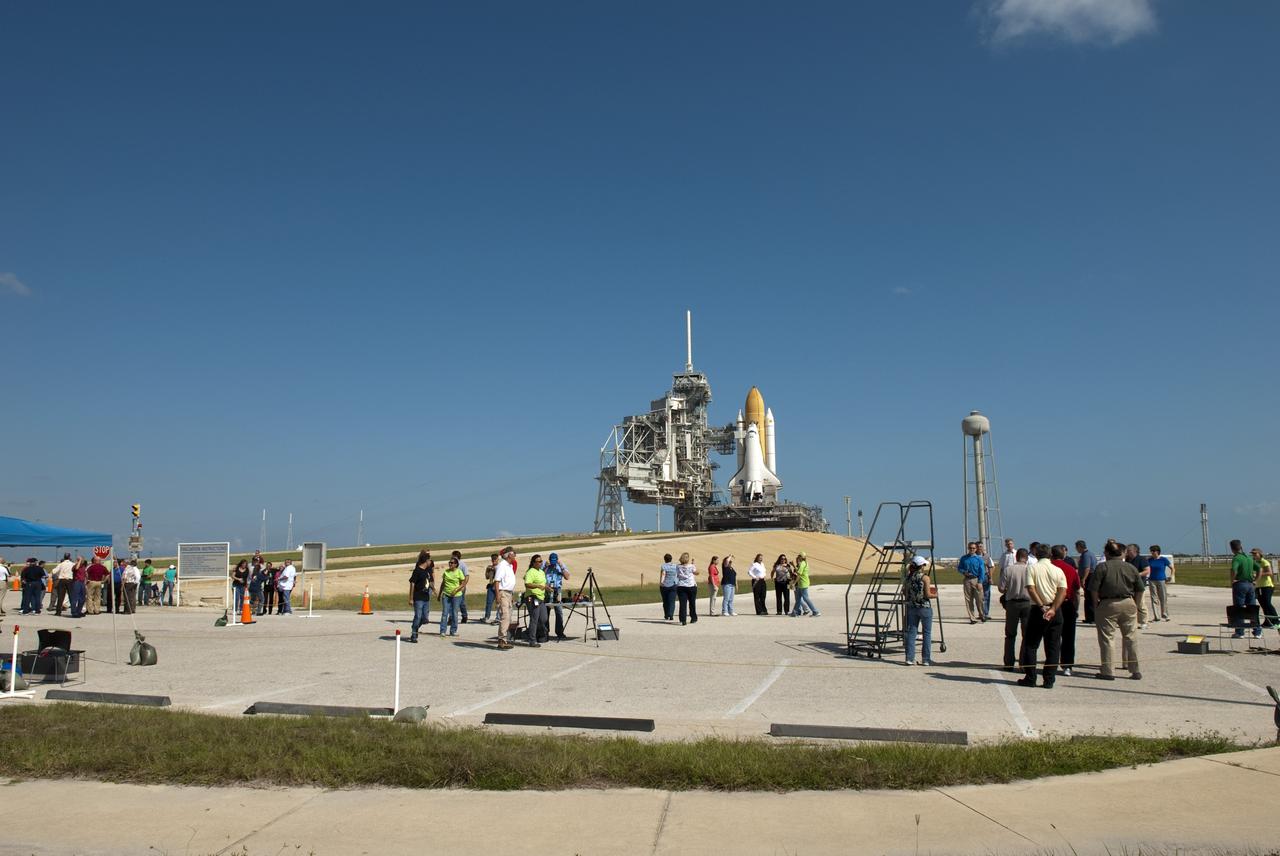
CAPE CANAVERAL, Fla. -- At NASA's Kennedy Space Center in Florida, space center employees snap photos and prepare to take group shots in front of space shuttle Discovery, which is visible on Launch Pad 39A. Later, the rotating service structure that protects the shuttle from the elements will be moved into place. It took the spacecraft about six hours to make the journey, known as "rollout," from the Vehicle Assembly Building to the pad. Rollout sets the stage for Discovery's STS-133 crew to practice countdown and launch procedures during the Terminal Countdown Demonstration Test in mid-October. Targeted to liftoff Nov. 1, Discovery will take the Permanent Multipurpose Module (PMM) packed with supplies and critical spare parts, as well as Robonaut 2 (R2) to the International Space Station. Photo credit: NASA/Jim Grossmann
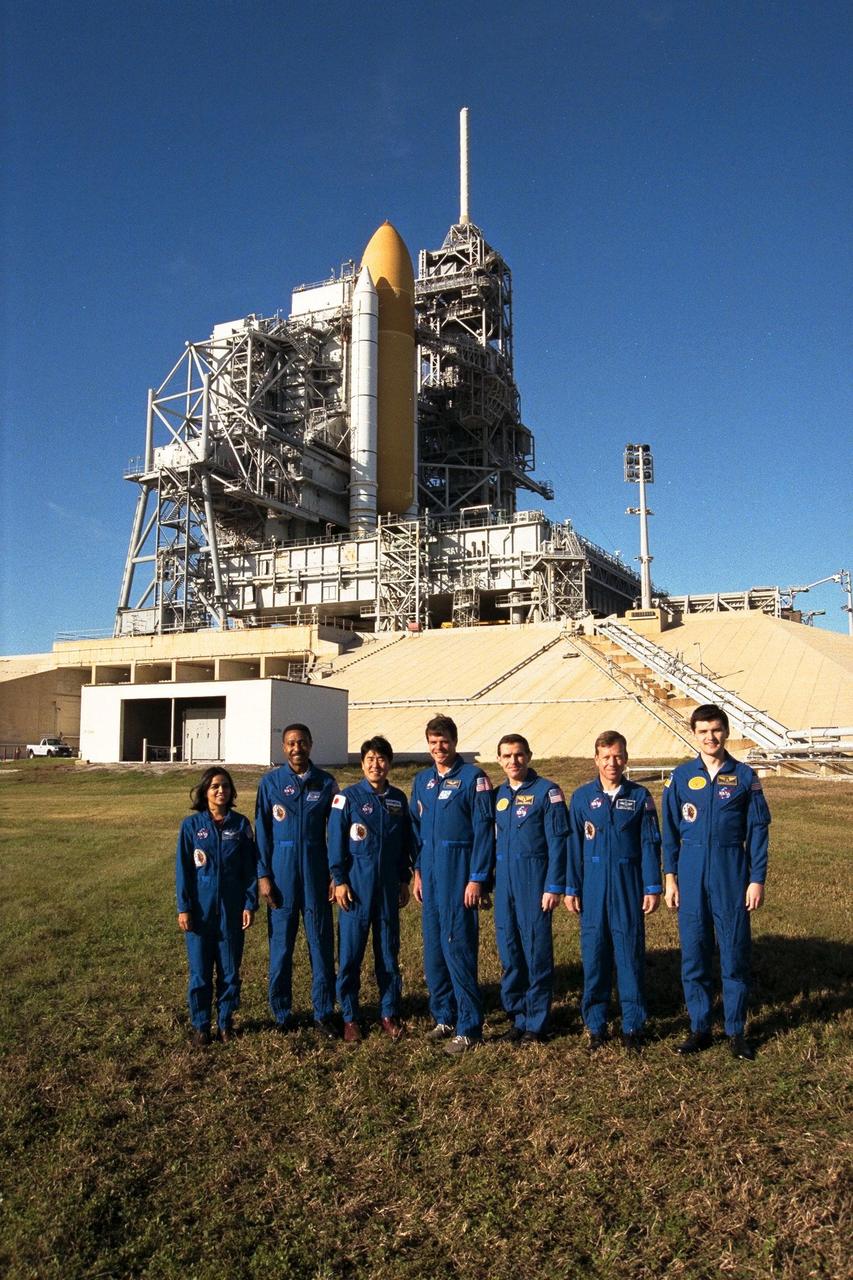
The crew of the STS-87 mission, scheduled for launch Nov. 19 aboard the Space Shuttle Columbia from Pad 39B at Kennedy Space Center (KSC), participate in the Terminal Countdown Demonstration Test (TCDT) at KSC. Posing for a group shot by Pad 39B are, from left to right, Mission Specialist Kalpana Chawla, Ph.D.; Mission Specialist Winston Scott; Mission Specialist Takao Doi, Ph.D., of the National Space Development Agency of Japan; Commander Kevin Kregel; Payload Specialist Leonid Kadenyuk of the National Space Agency of Ukraine (NSAU); Pilot Steven Lindsey; and Kadenyuk’s back-up, Yaroslav Pustovyi, Ph.D., also of NSAU. The TCDT is held at KSC prior to each Space Shuttle flight, providing the crew of each mission opportunities to participate in simulated countdown activities. The crew also spends time undergoing emergency egress training exercises at the pad and has an opportunity to view and inspect the payloads in the orbiter's payload bay
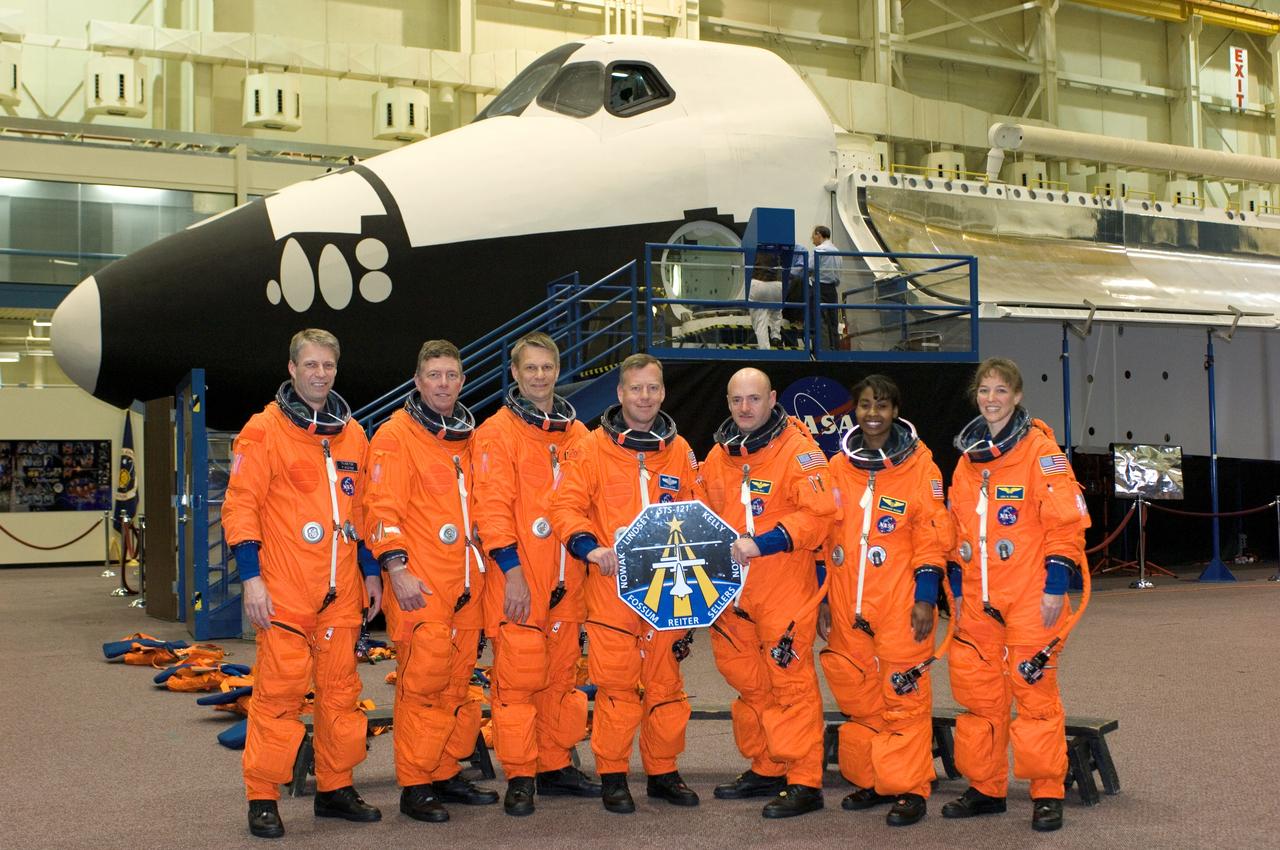
JSC2006-E-09827 (21 March 2006) --- The crewmembers assigned to STS-121 take a break from training for a group shot in the Johnson Space Center's Space Vehicle Mockup Facility. From the left are astronauts Thomas Reiter of the European Space Agency, Michael E. Fossum, Piers J. Sellers, Steven W. Lindsey, Mark E. Kelly, Stephanie D. Wilson and Lisa M. Nowak. Lindsey is mission commander and Kelly is pilot, with the other five serving as mission specialists. Once onboard the International Space Station, Reiter, who flew for six months on the Russian space station Mir, will become the first non-American or non-Russian long-duration crewmember on the Station. Joining the Expedition 13 crew, he will fly under a commercial agreement between ESA and Roscosmos.
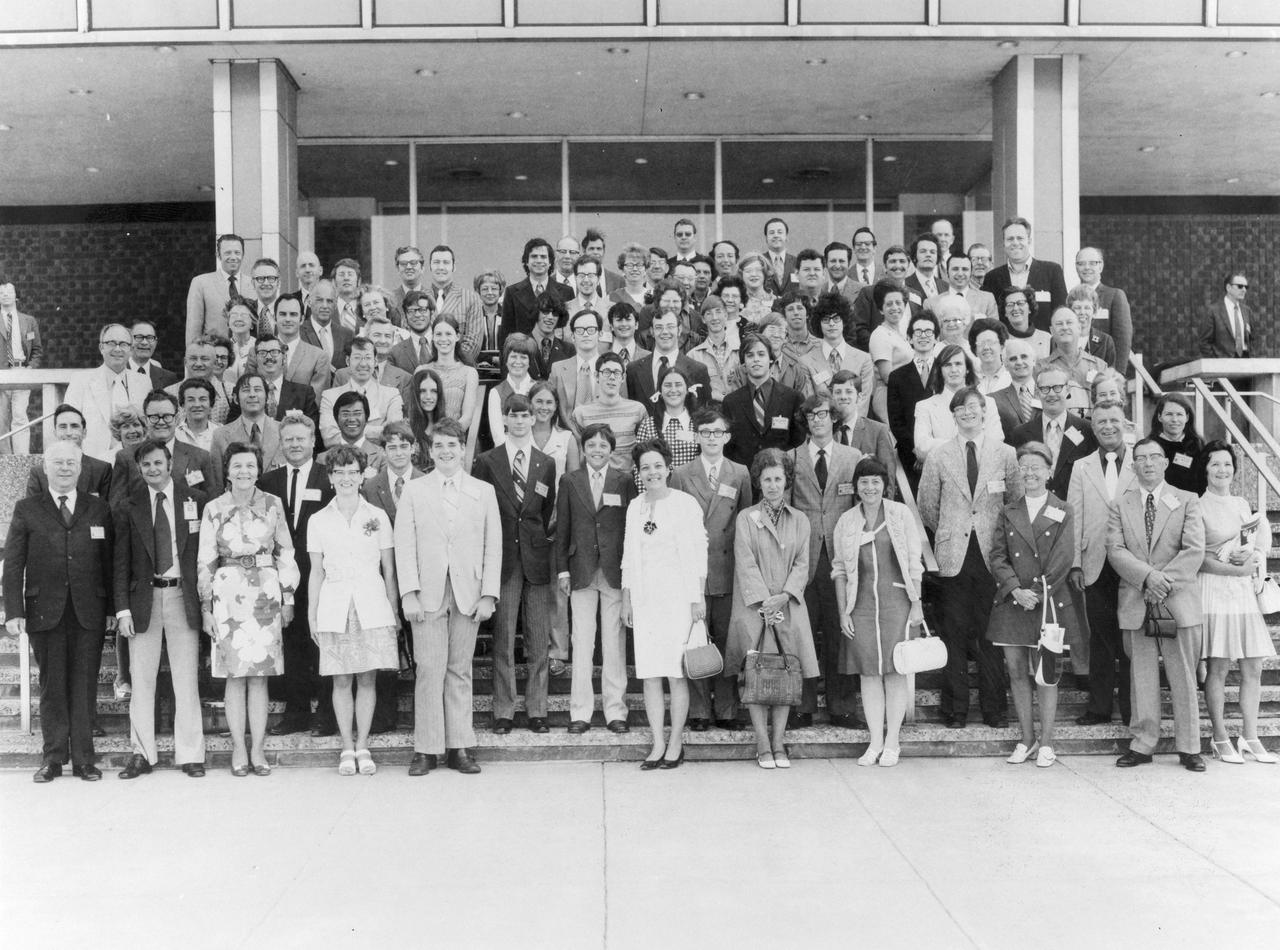
One of the most successful of the Skylab educational efforts was the Skylab Student Project. A nationwide scientific competition was sponsored by the National Science Teachers Association and the National Aeronautics and Space Administration (NASA) in which secondary students were encouraged to submit proposals for experiments to be conducted on Skylan in Earth orbit the following year. After the official announcement of this project, over 4,000 students responded with 3,409 proposals. The winning 25 students, along with their parents and sponsor teachers, visited Marshall Space Flight Center (MSFC), the lead center for Skylab, where they met with scientists and engineers, participated in design reviews for their experiments, and toured MSFC facilities. Of the 25 students, 6 did not see their experiments conducted on Skylab because the experiments were not compatible with Skylab hardware and timelines. Of the 19 remaining, 11 experiments required the manufacture of additional equipment. This photograph is a group shot of the 25 winners, parents, and sponsors when they met for the first time on the steps of Building 4200 at MSFC in the Spring of 1972.
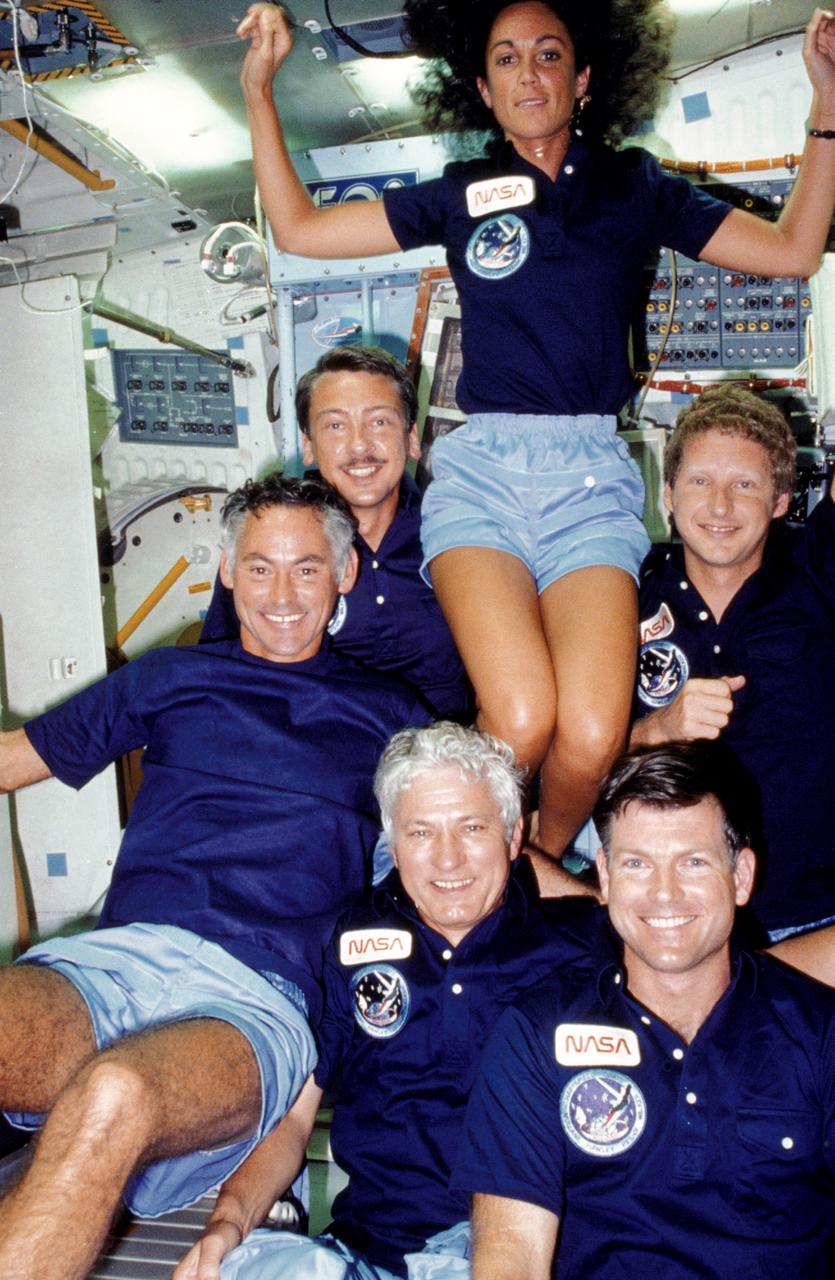
41D-12-034 (30 Aug.- 5 Sept. 1984) --- Following the completion of their six-day mission in space, the six crew members of NASA's 41-D mission mentioned that though a great deal of work was accomplished, there were "fun" moments too. From all appearance this group shot was one of the lighter moments aboard the Discovery. Crew members are (counter-clockwise from center) Henry W. Hartsfield Jr., crew commander; Michael L. Coats, pilot; Steven A. Hawley and Judith A. Resnik, both mission specialists; Charles D. Walker, payload specialist; and Richard M. (Mike) Mullane, mission specialist. A pre-set 35mm camera was used to expose the frame. Walker stands near the project that occupied the majority of his time onboard--the continuous flow electrophoresis systems (CFES) experiment. Photo credit: NASA
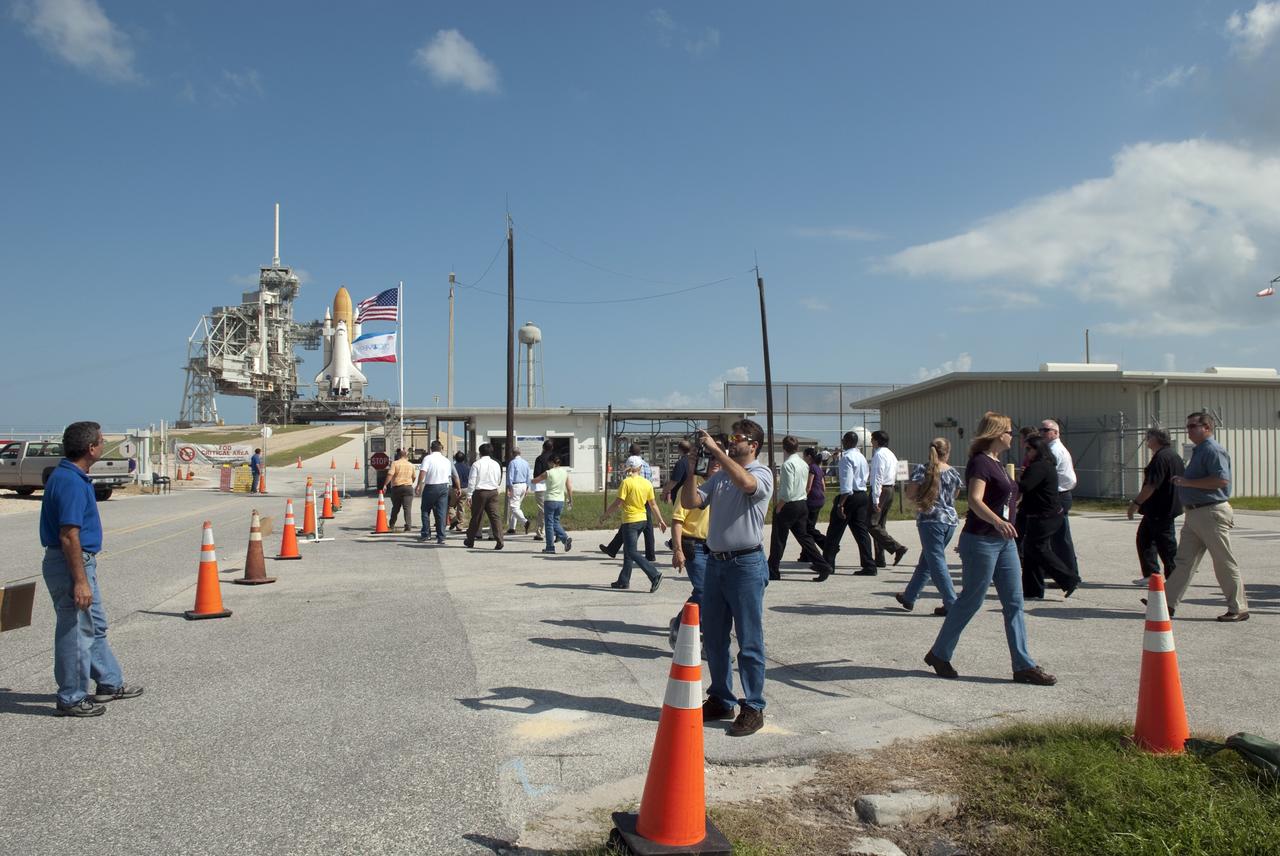
CAPE CANAVERAL, Fla. -- At NASA's Kennedy Space Center in Florida, space center employees snap photos and prepare to take group shots in front of space shuttle Discovery, which is visible on Launch Pad 39A. Later, the rotating service structure that protects the shuttle from the elements will be moved into place. It took the spacecraft about six hours to make the journey, known as "rollout," from the Vehicle Assembly Building to the pad. Rollout sets the stage for Discovery's STS-133 crew to practice countdown and launch procedures during the Terminal Countdown Demonstration Test in mid-October. Targeted to liftoff Nov. 1, Discovery will take the Permanent Multipurpose Module (PMM) packed with supplies and critical spare parts, as well as Robonaut 2 (R2) to the International Space Station. Photo credit: NASA/Jim Grossmann
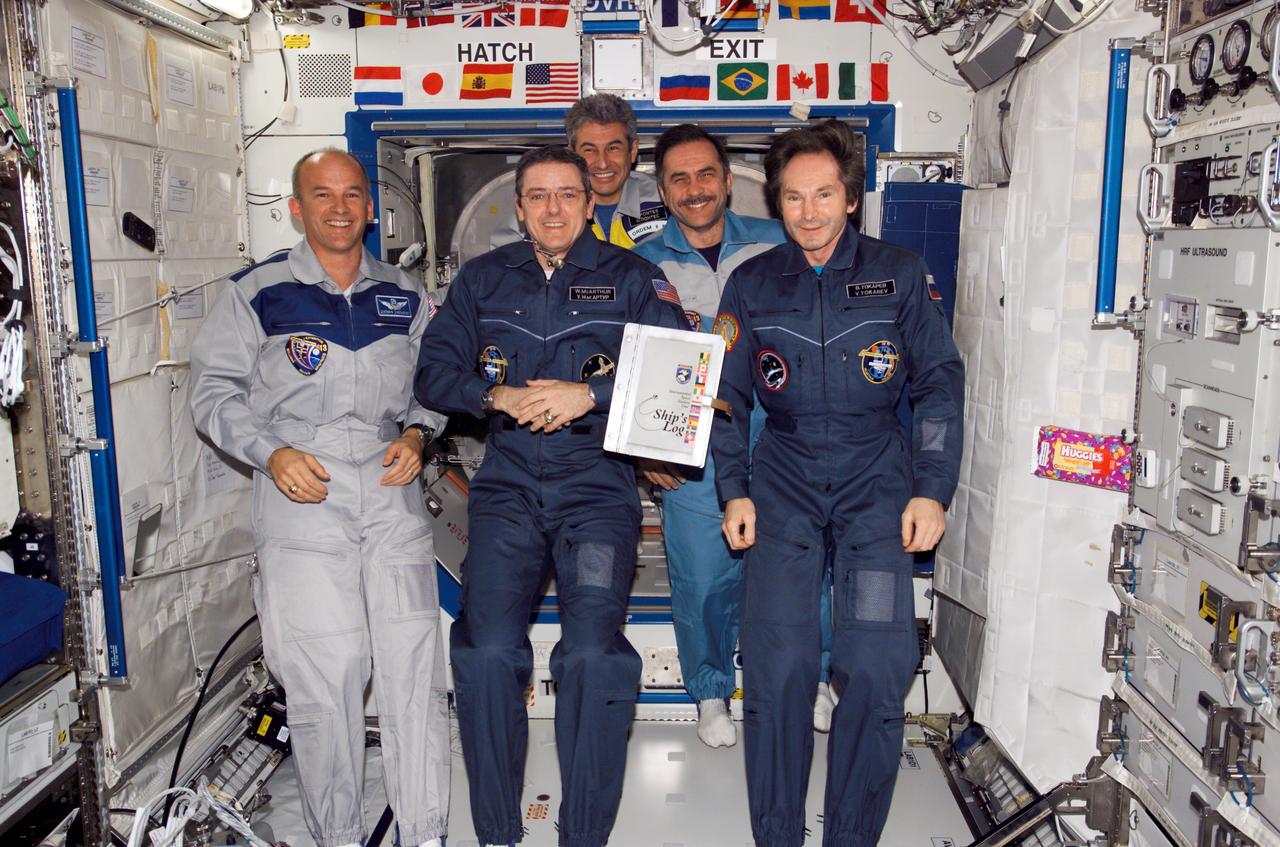
ISS012-E-24274 (7 April 2006) --- The crewmembers onboard the International Space Station pose for a group photo during the ceremony of Changing-of-Command from Expedition 12 to Expedition 13 in the Destiny laboratory of the International Space Station. From the left (front row) are astronauts Jeffrey N. Williams, Expedition 13 NASA space station science officer and flight engineer; William S. (Bill) McArthur, Jr., Expedition 12 commander and NASA space station science officer; and cosmonaut Valery I. Tokarev, Expedition 12 flight engineer representing Russia's Federal Space Agency. From the left (back row) are Brazilian Space Agency astronaut Marcos C. Pones and cosmonaut Pavel V. Vinogradov, Expedition 13 commander representing Russia's Federal Space Agency. The "ship's log" floats freely in the foreground.
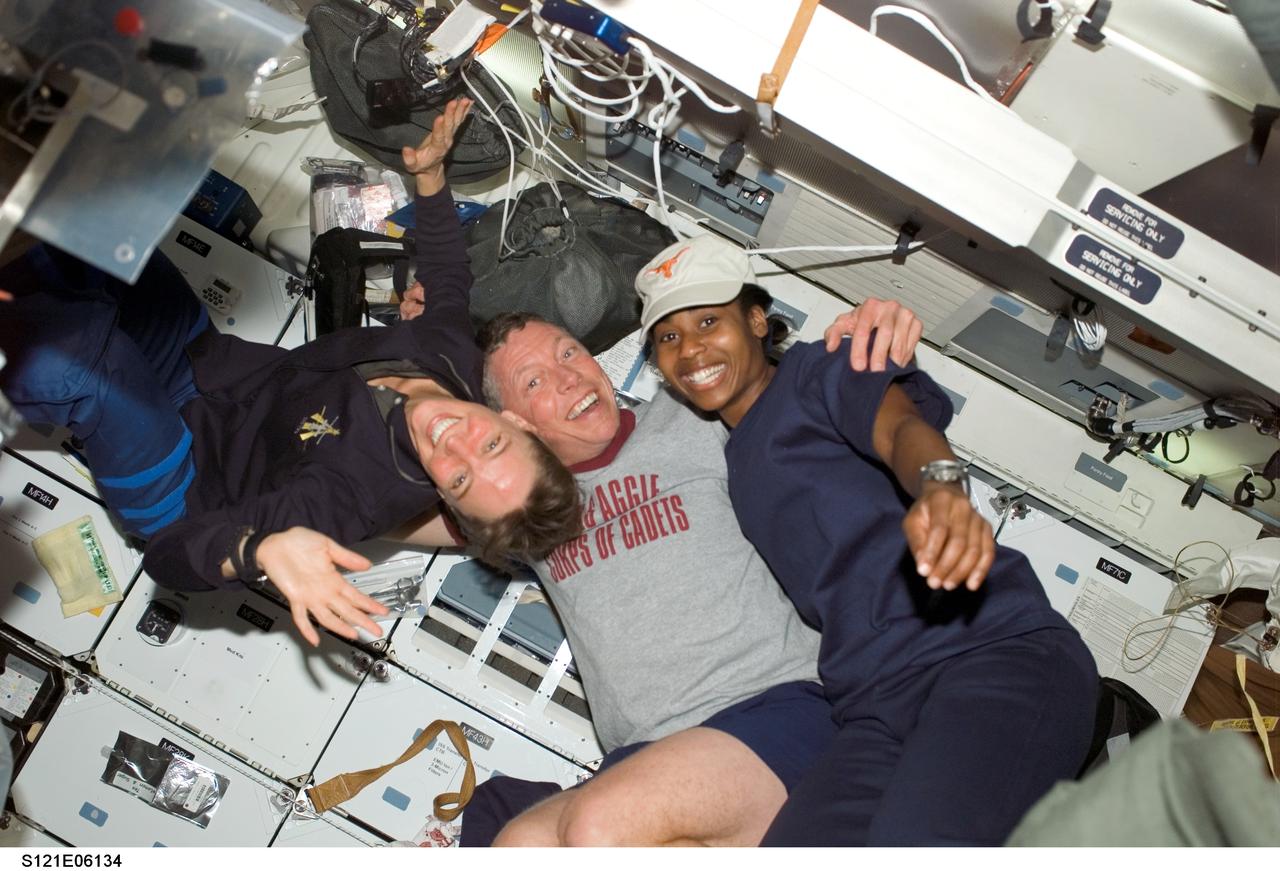
S121-E-06134 (8 July 2006) --- Astronaut Lisa M. Nowak (left), Michael E. Fossum and Stephanie D. Wilson, STS-121 mission specialists, enjoy a light moment on the middeck of the Space Shuttle Discovery while docked with the International Space Station.
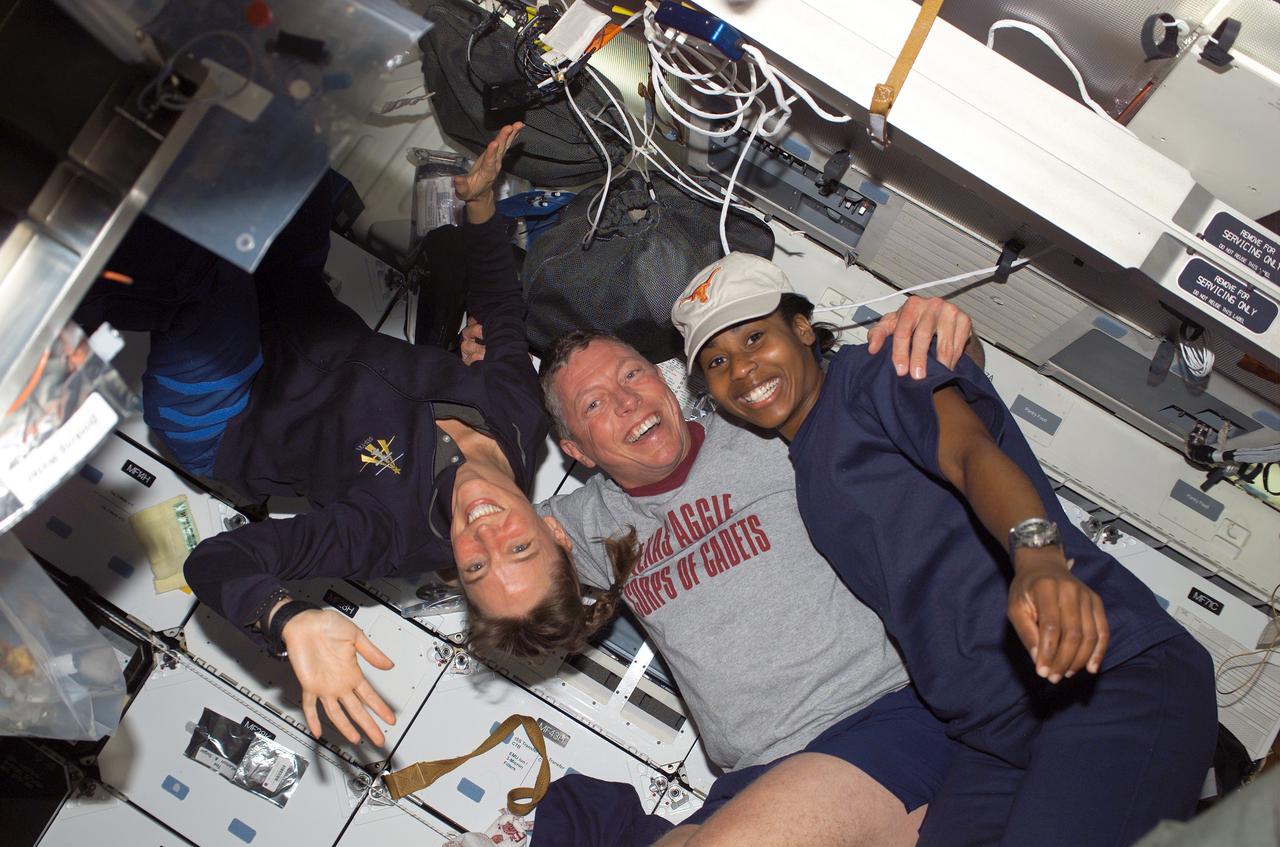
S121-E-06135 (8 July 2006) --- Astronaut Lisa M. Nowak (left), Michael E. Fossum and Stephanie D. Wilson, STS-121 mission specialists, enjoy a light moment on the middeck of the Space Shuttle Discovery while docked with the International Space Station.

ISS013-E-51244 (13 July 2006) --- Crewmembers onboard the International Space Station pose for a photo in the Zvezda Service Module while Space Shuttle Discovery was docked with the station. Pictured from the left (front) are European Space Agency (ESA) astronaut Thomas Reiter, Expedition 13 flight engineer; astronauts Piers J. Sellers and Lisa M. Nowak, STS-121 mission specialists. From the left (back row) are astronauts Mark E. Kelly (partially obscured), STS-121 pilot; Stephanie D. Wilson, STS-121 mission specialist; and cosmonaut Pavel V. Vinogradov, Expedition 13 commander representing Russia's Federal Space Agency. A model of the early station floats freely in the foreground.
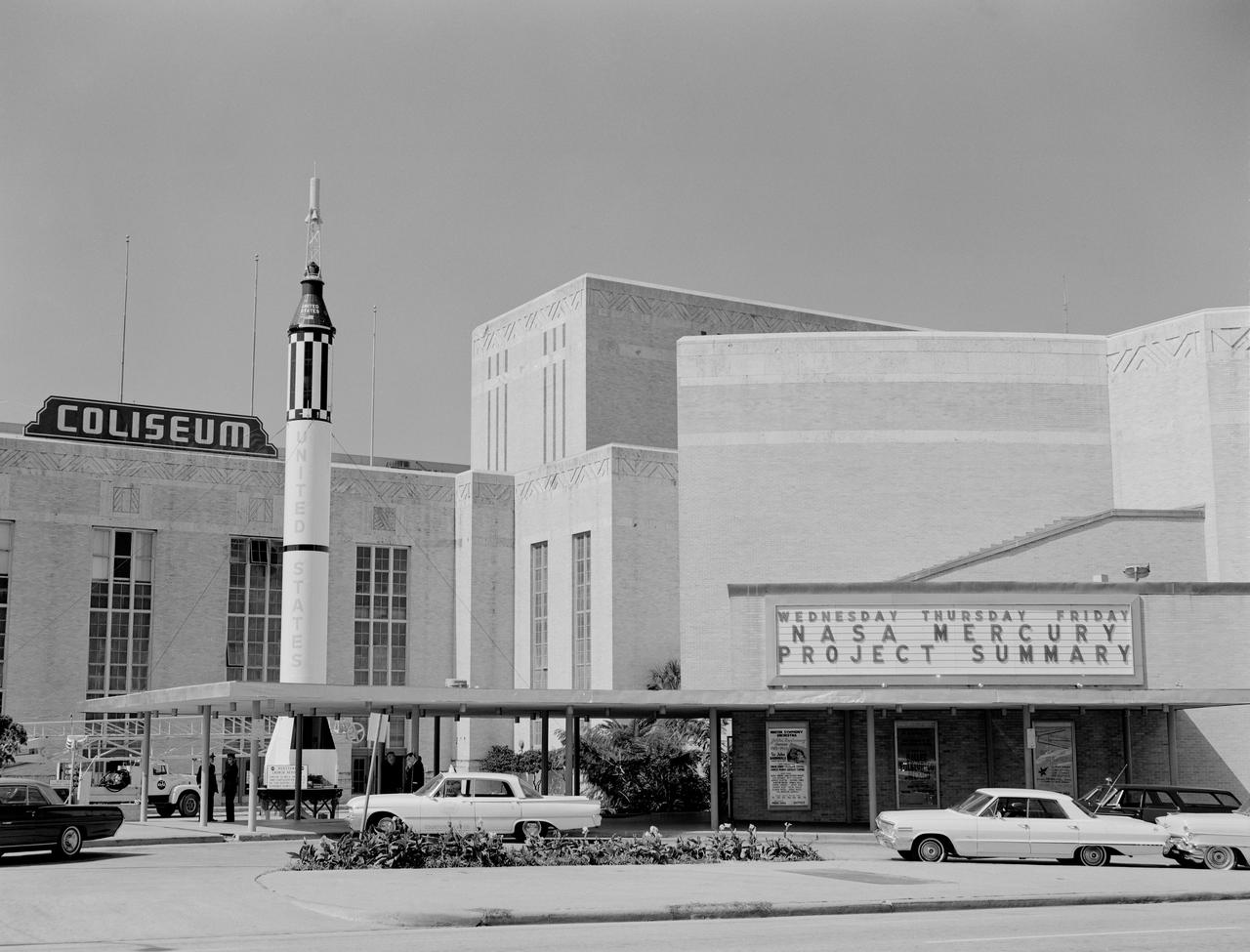
In October 1963, the Project Mercury Summary Conference was held in the Houston, TX, Coliseum. This series of 44 photos is documentation of that conference. A view of the Houston, TX, Coliseum, and parking area in front with a Mercury Redstone Rocket setup in the parking lot for display (S63-16451). A view of an Air Force Atlas Rocket, a Mercury Redstone Rocket, and a Mercury Spacecraft on a test booster on display in the front area of the Coliseum (S63-16452). A view an Air Force Atlas Rocket and a Mercury Redstone Rocket set up for display with the Houston City Hall in the background (S63- 16453). This view shows the Atlas Rocket, Mercury Redstone, and Mercury Test Rocket with the Houston, TX, Coliseum in the background (S63- 16454). A balcony view, from the audience right side, of the attendees looking at the stage (S63-16455). A view of the NASA Space Science Demonstration with equipment setup on a table, center stage and Space Science Specialist briefing the group as he pours Liquid Oxygen into a beaker (S63-16456). View of the audience from the balcony on the audience right showing the speakers lecturn on stage to the audience left (S63-16457). A view of attendees in the lobby. Bennet James, MSC Public Affairs Office is seen to the left of center (S63-16458). Another view of the attendees in the lobby (S63- 16459). In this view, Astronaut Neil Armstrong is seen writing as others look on (S63-16460). In this view of the attendees, Astronauts Buzz Aldrin and Walt Cunningham are seen in the center of the shot. The October Calendar of Events is visable in the background (S63-16461). Dr. Charles Berry is seen in this view to the right of center, seated in the audience (S63-16462). View of " Special Registration " and the five ladies working there (S63-16463). A view from behind the special registration table, of the attendees being registered (S63-16464). A view of a conference table with a panel seated. (R-L): Dr. Robert R. Gilruth, Hugh L. Dryden, Walter C. Williams, and an unidentified man (S63- 16465). A closeup of the panel at the table with Dr. Gilruth on the left (S63-16466). About the same shot as number S63-16462, Dr. Berry is seen in this shot as well (S63-16467). In this view the audio setup is seen. In the audience, (L-R): C. C. Kraft, Vernon E. (Buddy) Powell, Public Affairs Office (PAO); and, in the foreground mixing the audio is Art Tantillo; and, at the recorder is Doyle Hodges both of the audio people are contractors that work for PAO at MSC (S63-16468). In this view Maxime Faget is seen speaking at the lecturn (S63-16469). Unidentified person at the lecturn (S63-16470). In this view the motion picture cameras and personel are shown documenting the conference (S63-16471). A motion picture cameraman in the balcony is shown filming the audience during a break (S63- 16472). Family members enjoy an exhibit (S63-16473). A young person gets a boost to look in a Gemini Capsule on display (S63-16474). A young person looks at the Gemini Capsule on display (S63-16475). Dr. Robert R. Gilruth is seen at the conference table (S63-16476). Walt Williams is seen in this view at the conference table (S63-16477). Unidentified man sitting next to Walt Williams (S63-16478). (L-R): Seated at the conference table, Dr. Robert Gilruth, Hugh L. Dryden, and Walt Williams (S63- 16479). Group in lobby faces visable, (L-R): Walt Williams, unidentified person, Dr. Robert Gilruth, Congressman (S63-16480). Man in uniform at the lecturn (S63-16481). Astronaut Leroy Gordon Cooper at the lecturn (S63-16482). Astronaut Cooper at the lecturn with a picture on the screen with the title, " Astronaut Names for Spacecraft " (S63-16483). Dr. Gilruth at the lecturn (S63-16484). Walt Williams at the lecturn (S63-16485). Unidentified man at the lecturn (S63-16486). John H. Boynton addresses the Summary Conference (S63-16487). (L-R): Astronaut Leroy Gordon Cooper, Mrs. Cooper, Senator Cris Cole, and Mrs. Cole (S63- 16488). In this view in the lobby, Senator and Mrs. Cris Cole, with Astronaut Gordon Cooper standing near the heatshield, and Mrs. Cooper; next, on the right is a press photographer (S63-16489). (L-R): Astronaut L. Gordon Cooper and Mrs. Cooper, unidentified man, and Senator Walter Richter (S63-16490). (L-R): Eugene Horton, partially obscured, briefs a group on the Mercury Spacecraft, an unidentified person, Harold Ogden, a female senator, Senator Chris Cole, Mrs. Cole, an unidentified female, Senator Walter Richter, Jim Bower, and an unidentified female (S63-16491). In this view, Mrs. Jim Bates is seen in the center, and Senator Walter Richter to the right (S63- 16492). The next three (3) shots are 4X5 CN (S63-16493 - S63-16495). In this view a NASA Space Science Demonstration is seen (S63-16493). In this view a shot of the conference table is seen, and, (L-R): Dr. Robert R. Gilruth, Hugh L. Dryden, Mr. Walter Williams, and an unidentfied man (S63-16494 - S63-16495). HOUSTON, TX
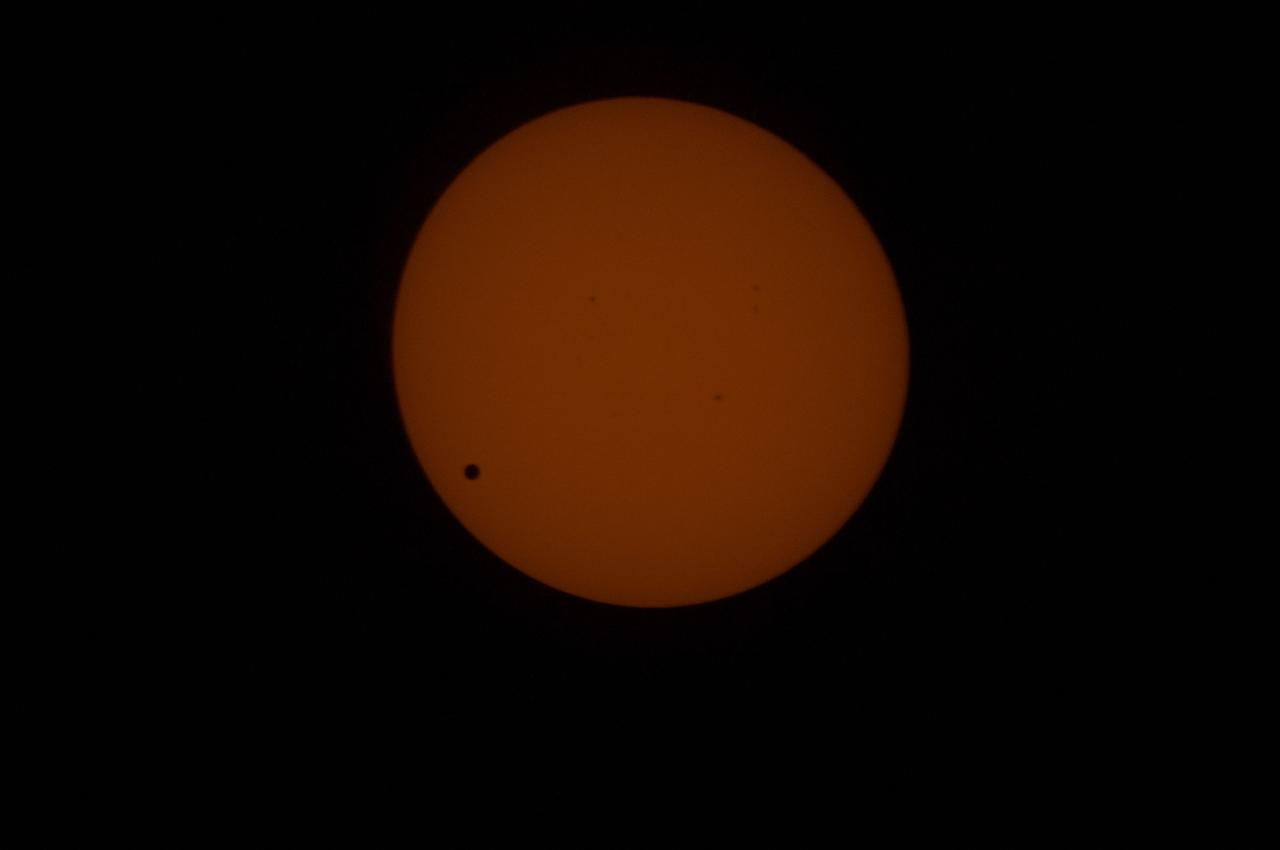
Transit of Venus as seen at 762nm in the CO Module. This image is from NASA Astronaut Don Petttit shot from onboard the International Space Station on June 5, 2012. Petttit, who had the foresight to bring a solar filter for his camera, will be capturing the June 5 Venus Transit from the International Space Station with the images downloading in almost real-time. He will photograph through the European Space Agency-built "cupola", removing the scratch panes to get crisp, clear images. Credit: NASA <b>To read more about the 2012 Venus Transit go to: <a href="http://sunearthday.nasa.gov/transitofvenus" rel="nofollow">sunearthday.nasa.gov/transitofvenus</a> </b> <b>Add your photos of the Transit of Venus to our Flickr Group here: <a href="http://www.flickr.com/groups/venustransit/">www.flickr.com/groups/venustransit/</a> </b> <b><a href="http://www.nasa.gov/audience/formedia/features/MP_Photo_Guidelines.html" rel="nofollow">NASA image use policy.</a></b> <b><a href="http://www.nasa.gov/centers/goddard/home/index.html" rel="nofollow">NASA Goddard Space Flight Center</a></b> enables NASA’s mission through four scientific endeavors: Earth Science, Heliophysics, Solar System Exploration, and Astrophysics. Goddard plays a leading role in NASA’s accomplishments by contributing compelling scientific knowledge to advance the Agency’s mission. <b>Follow us on <a href="http://twitter.com/NASA_GoddardPix" rel="nofollow">Twitter</a></b> <b>Like us on <a href="http://www.facebook.com/pages/Greenbelt-MD/NASA-Goddard/395013845897?ref=tsd" rel="nofollow">Facebook</a></b> <b>Find us on <a href="http://instagrid.me/nasagoddard/?vm=grid" rel="nofollow">Instagram</a></b>
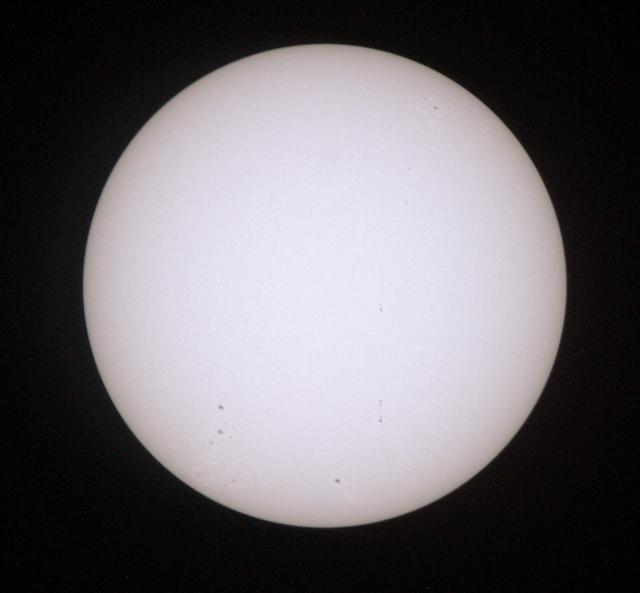
UT154 solar test CO 934_0253 This is a sample low res test image from NASA Astronaut Don Petttit shot from onboard the International Space Station on June 5, 2012. Petttit, who had the foresight to bring a solar filter for his camera, will be capturing the June 5 Venus Transit from the International Space Station with the images downloading in almost real-time. He will photograph through the European Space Agency-built "cupola", removing the scratch panes to get crisp, clear images. Credit: NASA <b>To read more about the 2012 Venus Transit go to: <a href="http://sunearthday.nasa.gov/transitofvenus" rel="nofollow">sunearthday.nasa.gov/transitofvenus</a> </b> <b>Add your photos of the Transit of Venus to our Flickr Group here: <a href="http://www.flickr.com/groups/venustransit/">www.flickr.com/groups/venustransit/</a> </b> <b><a href="http://www.nasa.gov/audience/formedia/features/MP_Photo_Guidelines.html" rel="nofollow">NASA image use policy.</a></b> <b><a href="http://www.nasa.gov/centers/goddard/home/index.html" rel="nofollow">NASA Goddard Space Flight Center</a></b> enables NASA’s mission through four scientific endeavors: Earth Science, Heliophysics, Solar System Exploration, and Astrophysics. Goddard plays a leading role in NASA’s accomplishments by contributing compelling scientific knowledge to advance the Agency’s mission. <b>Follow us on <a href="http://twitter.com/NASA_GoddardPix" rel="nofollow">Twitter</a></b> <b>Like us on <a href="http://www.facebook.com/pages/Greenbelt-MD/NASA-Goddard/395013845897?ref=tsd" rel="nofollow">Facebook</a></b> <b>Find us on <a href="http://instagrid.me/nasagoddard/?vm=grid" rel="nofollow">Instagram</a></b>
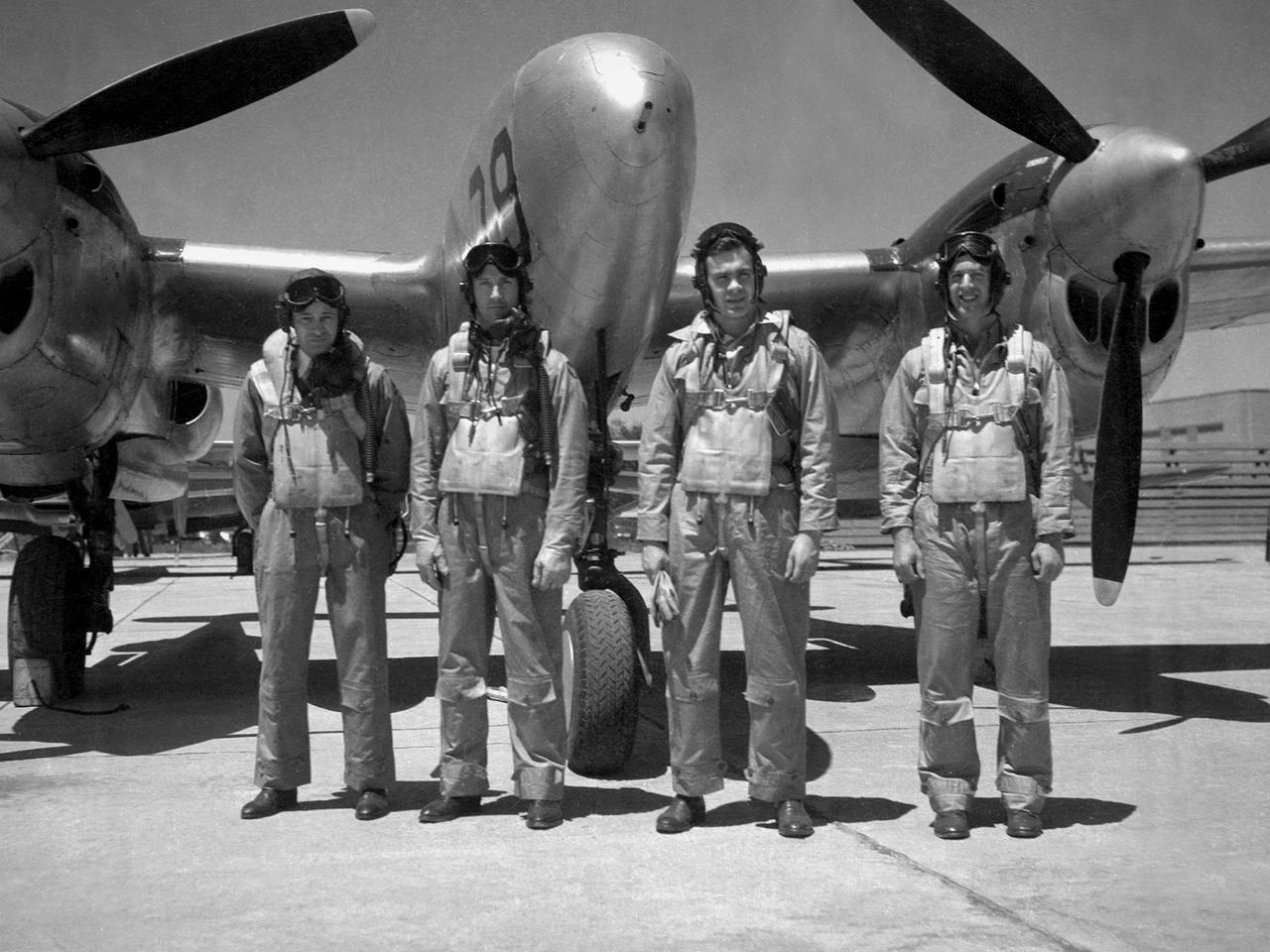
The Aircraft Engine Research Laboratory’s pilot corps during the final days of World War II: from left to right, Joseph Vensel, Howard Lilly, William Swann, and Joseph Walker. William “Eb” Gough joined the group months after this photograph. These men were responsible for flying the various National Advisory Committee for Aeronautics (NACA) aircraft to test new engine modifications, study ice buildup, and determine fuel performance. Vensel, a veteran pilot from Langley, was the Chief of Flight Operations and a voice of reason at the laboratory. In April 1947 Vensel was transferred to lead the new Muroc Flight Tests Unit in California until 1966. Lilly was a young pilot with recent Navy experience. Lilly also flew in the 1946 National Air Races. He followed Vensel to Muroc in July 1947 where he became the first NACA pilot to penetrate the sound barrier. On May 3, 1948, Lilly became the first NACA pilot to die in the line of duty. Swann was a young civilian pilot when he joined the NACA. He spent his entire career at the Cleveland laboratory, and led the flight operations group from the early 1960s until 1979. Two World War II veterans joined the crew after the war. Walker was a 24-year-old P–38 reconnaissance pilot. He joined the NACA as a physicist in early 1945 but soon worked his way into the cadre of pilots. Walker later gained fame as an X-plane pilot at Muroc and was killed in a June 1966 fatal crash. Gough survived being shot down twice during the war and was decorated for flying rescue missions in occupied areas.
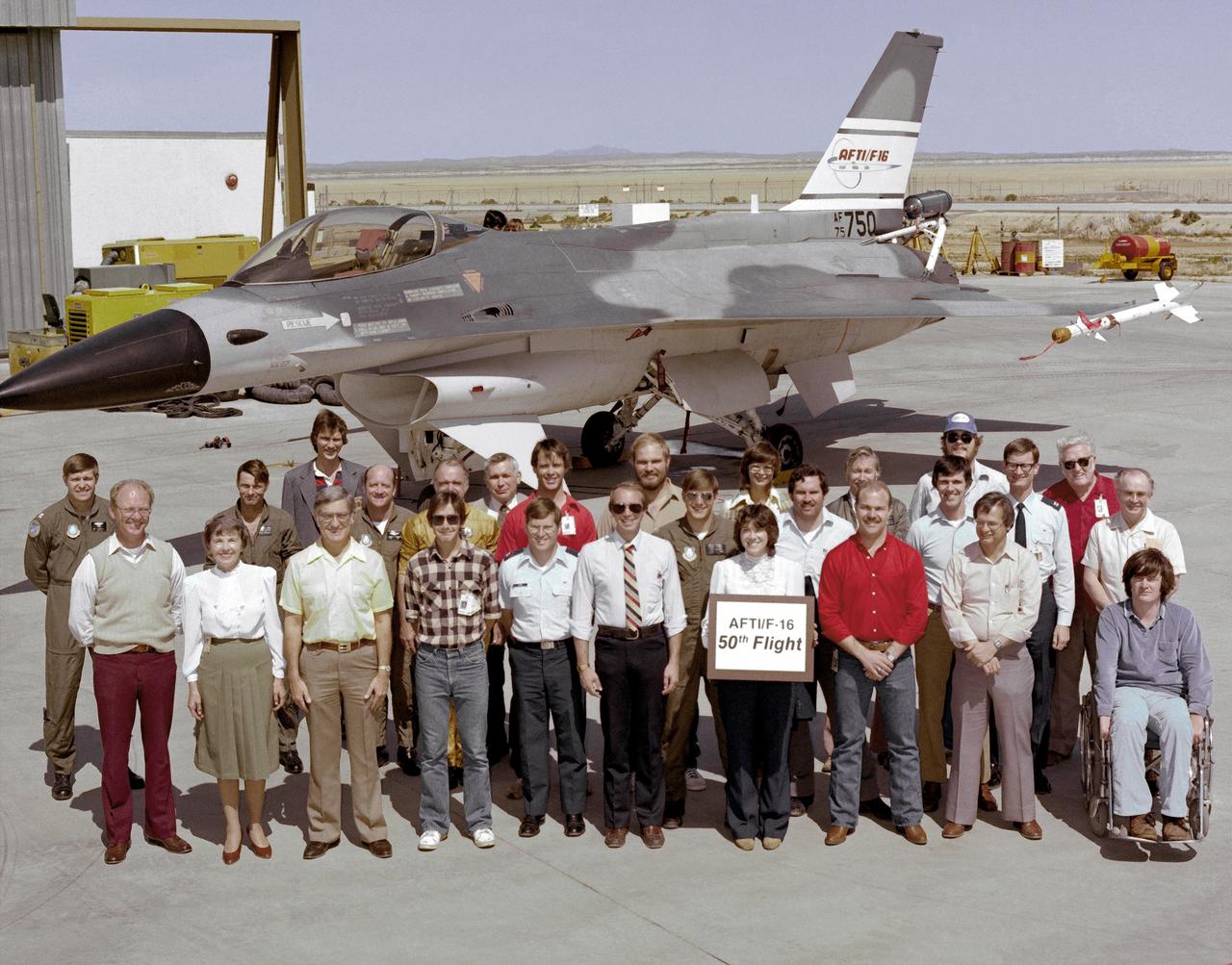
An early (1983) photograph of the AFTI F-16 team, commemorating the aircraft's 50th flight. It shows the initial configuration and paint finish of the AFTI F-16, as well as the forward mounted canards and the spin chute.
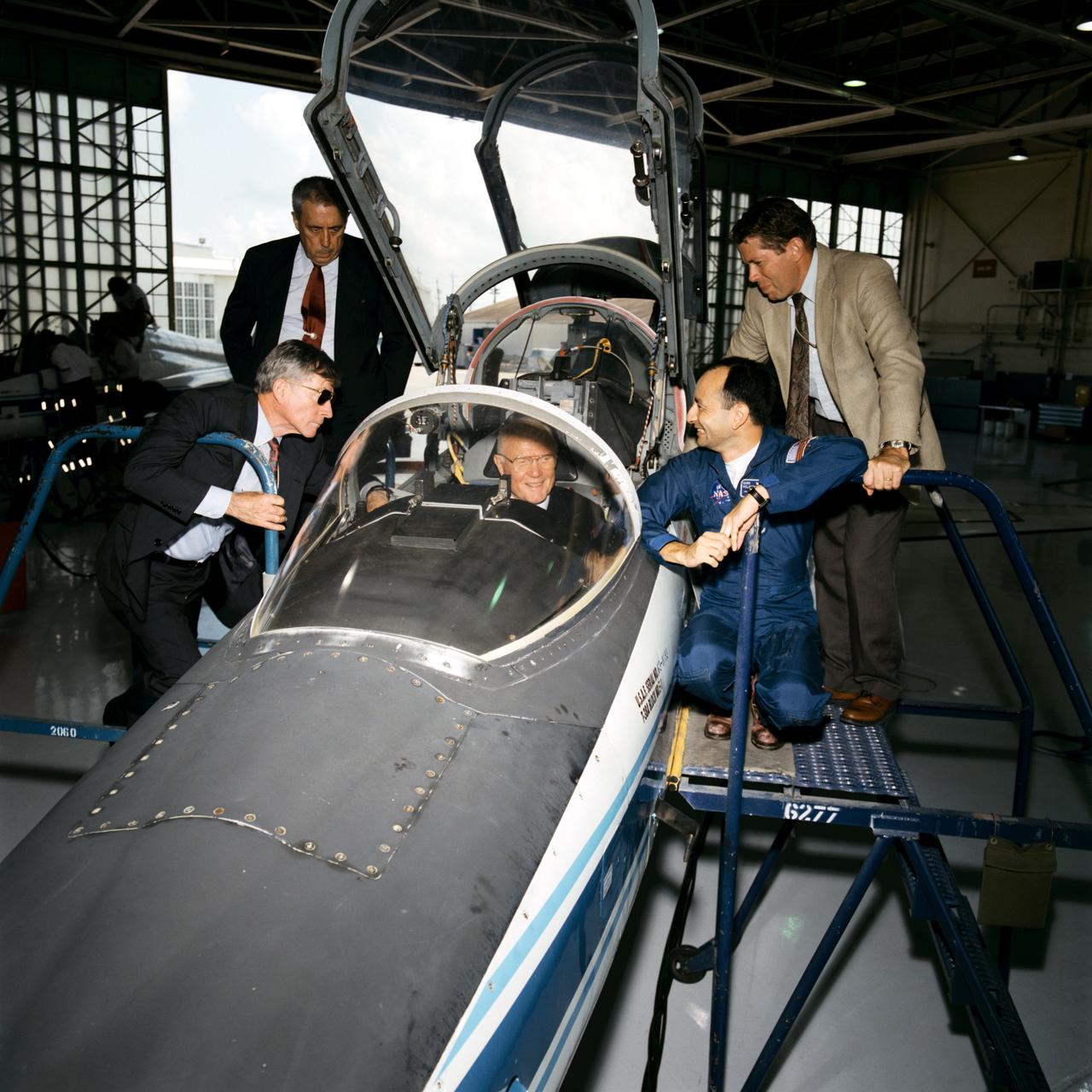
Senator John Glenn visit to Johnson Space Center (JSC). Views of Glenn sitting in cockpit of T-38 in Hangar 276 with John Young, George Abbey, David Leestma and Mark Polansky observing (11150). An engineer explains SPIFEX experiment hardware to Abby, Young and Glenn in Bldg 13 (11151, 11153). Glenn talks with astronaut Terrence T. Henricks and employees in Bldg 9C, Virtual reality lab (11152). Lunch in Bldg 17 Flight Crew support division with Dr. Ellen Baker, Robert "Hoot" Gibson and John Glenn (11154). Linda Godwin, Robert Cabana, Abbey, Young, Baker, Gibson and Glenn at lunch (11155). Astronaut Mark Lee shows Glenn and his aide how to use the virtural reality helmets (11156-7). Glenn shakes the hand of Franklin Chang-Diaz with his plasma rocket in the background in the Sonny Carter Training Facility (SCTF) (11158). Glenn in the Manipulator Development Facility (MDF) Remote Manipulator System (RMS) station mock-up in Bldg 9A with Abbey, Young and aide (11159, 11186). Glenn signs a book for Thomas D. Jones as Frederick Sturckow and Linda Godwin look on (11160). Glenn inside visual-vestibular trainer in Bldg 9B (11161). In conference room meeting with astronaut corps in Bldg 4S, Glenn shakes Robert Cabana's hand (11162). John Glenn and John Young pose for a group shot with Bldg 17 Food lab personnel (11163). Glenn thanks the food lab personnel (11164). Glenn visits Bldg 5 Fixed Base (FB) middeck simulator with astronauts Terrence Henricks and Mary Ellen Weber (11165). Glenn with Charles T. Bourland (11166). STS-70 crew Donald Thomas, Terrence Henricks, Mary Ellen Weber, Nancy Currie and Kevin Kregel with Glenn's advisor (11167). STS-70 crew Thomas, Henricks, Weber, Currie and Kregel with John Glenn (11175). Glenn with Thomas, Kregel, Weber, Henricks and trainer (11176-7). David J. Homan assists Glenn's aide with virtual reality goggles (11168) and Glenn (11174). John Young in Bldg 9C equilibrium trainer (11169). Glenn with Carl Walz in flight deck mock-up of MDF in Bldg 9NE (11170, 11187). Young, Abbey, aides, Glenn and Walz examine helium balloon in MDF (11171-2). Chang-Diaz shows Glenn's tour group the plasma rocket (11173). Glenn's presentation to astronaut corps (11178-81, 11184-5). Glenn is presented with framed picture of Sonny Carter Training Facility (SCTF) (11182) and framed picture of space station (11183).

For five years, Jeremy Harbeck has worked as a support scientist for NASA’s Operation IceBridge, an airborne mission to study polar ice. The data processing that he does typically takes place in an office at NASA’s Goddard Space Flight Center in Maryland. However, to speed the process of delivering data to the Arctic sea ice forecasting community, Harbeck traveled to Greenland for the first time in spring 2015. He had just arrived at Greenland’s Thule Air Base on March 20 when a mechanical issue grounded the aircraft. No science flight could happen for a few days. As teams in the United States and Greenland scrambled to locate and deliver a replacement part, researchers on the ground waited. Some of them hiked to what was locally known as “the iceberg.” The unnamed berg pictured above has been frozen in place by sea ice in North Star Bay. Harbeck shot the photograph—a composite of four 49-second images—on March 21 at about 2:30 a.m. local time. The sun never fully sets at this time of year in the Arctic, so sunlight appears on the left side of the image. Lights from Thule are visible on the right side. Look for the Milky Way (top left) and a few very faint meteors visible in the early morning sky. Harbeck left the dock at Thule with sea ice scientist (and current IceBridge project scientist) Nathan Kurtz and a local recreation officer at about 10 p.m. From there, the group hiked 2.4 kilometers (1.5 miles) across the still-thick sea ice in weather that Harbeck called a “pleasant” minus 18 degrees Celsius (0 degrees Fahrenheit). They paused frequently on the way, and they even circled the berg to check for polar bears. “You don’t have a sense of scale of this berg until you get up to it,” Harbeck said. “It’s about the size of my apartment building, and that’s only the part protruding from the water.” Assuming the berg is ungrounded (which is uncertain), about one-tenth of its mass is above water. Photograph by Jeremy Harbeck, support scientist for NASA's Operation IceBridge mission. Caption by Kathryn Hansen. Credit: <b><a href="http://www.earthobservatory.nasa.gov/" rel="nofollow"> NASA Earth Observatory</a></b> <b><a href="http://www.nasa.gov/audience/formedia/features/MP_Photo_Guidelines.html" rel="nofollow">NASA image use policy.</a></b> <b><a href="http://www.nasa.gov/centers/goddard/home/index.html" rel="nofollow">NASA Goddard Space Flight Center</a></b> enables NASA’s mission through four scientific endeavors: Earth Science, Heliophysics, Solar System Exploration, and Astrophysics. Goddard plays a leading role in NASA’s accomplishments by contributing compelling scientific knowledge to advance the Agency’s mission. <b>Follow us on <a href="http://twitter.com/NASAGoddardPix" rel="nofollow">Twitter</a></b> <b>Like us on <a href="http://www.facebook.com/pages/Greenbelt-MD/NASA-Goddard/395013845897?ref=tsd" rel="nofollow">Facebook</a></b> <b>Find us on <a href="http://instagrid.me/nasagoddard/?vm=grid" rel="nofollow">Instagram</a></b>

This image depicts a vast canyon of dust and gas in the Orion Nebula from a 3-D computer model based on observations by NASA's Hubble Space Telescope and created by science visualization specialists at the Space Telescope Science Institute (STScI) in Baltimore, Md. A 3-D visualization of this model takes viewers on an amazing four-minute voyage through the 15-light-year-wide canyon. Credit: NASA, G. Bacon, L. Frattare, Z. Levay, and F. Summers (STScI/AURA) Go here to learn more about Hubble 3D: <a href="http://www.nasa.gov/topics/universe/features/hubble_imax_premiere.html" rel="nofollow">www.nasa.gov/topics/universe/features/hubble_imax_premier...</a> or <a href="http://www.imax.com/hubble/" rel="nofollow">www.imax.com/hubble/</a> Take an exhilarating ride through the Orion Nebula, a vast star-making factory 1,500 light-years away. Swoop through Orion's giant canyon of gas and dust. Fly past behemoth stars whose brilliant light illuminates and energizes the entire cloudy region. Zoom by dusty tadpole-shaped objects that are fledgling solar systems. This virtual space journey isn't the latest video game but one of several groundbreaking astronomy visualizations created by specialists at the Space Telescope Science Institute (STScI) in Baltimore, the science operations center for NASA's Hubble Space Telescope. The cinematic space odysseys are part of the new Imax film "Hubble 3D," which opens today at select Imax theaters worldwide. The 43-minute movie chronicles the 20-year life of Hubble and includes highlights from the May 2009 servicing mission to the Earth-orbiting observatory, with footage taken by the astronauts. The giant-screen film showcases some of Hubble's breathtaking iconic pictures, such as the Eagle Nebula's "Pillars of Creation," as well as stunning views taken by the newly installed Wide Field Camera 3. While Hubble pictures of celestial objects are awe-inspiring, they are flat 2-D photographs. For this film, those 2-D images have been converted into 3-D environments, giving the audience the impression they are space travelers taking a tour of Hubble's most popular targets. "A large-format movie is a truly immersive experience," says Frank Summers, an STScI astronomer and science visualization specialist who led the team that developed the movie visualizations. The team labored for nine months, working on four visualization sequences that comprise about 12 minutes of the movie. "Seeing these Hubble images in 3-D, you feel like you are flying through space and not just looking at picture postcards," Summers continued. "The spacescapes are all based on Hubble images and data, though some artistic license is necessary to produce the full depth of field needed for 3-D." The most ambitious sequence is a four-minute voyage through the Orion Nebula's gas-and-dust canyon, about 15 light-years across. During the ride, viewers will see bright and dark, gaseous clouds; thousands of stars, including a grouping of bright, hefty stars called the Trapezium; and embryonic planetary systems. The tour ends with a detailed look at a young circumstellar disk, which is much like the structure from which our solar system formed 4.5 billion years ago. Based on a Hubble image of Orion released in 2006, the visualization was a collaborative effort between science visualization specialists at STScI, including Greg Bacon, who sculpted the Orion Nebula digital model, with input from STScI astronomer Massimo Roberto; the National Center for Supercomputing Applications at the University of Illinois at Urbana-Champaign; and the Spitzer Science Center at the California Institute of Technology in Pasadena. For some of the sequences, STScI imaging specialists developed new techniques for transforming the 2-D Hubble images into 3-D. STScI image processing specialists Lisa Frattare and Zolt Levay, for example, created methods of splitting a giant gaseous pillar in the Carina Nebula into multiple layers to produce a 3-D effect, giving the structure depth. The Carina Nebula is a nursery for baby stars. Frattare painstakingly removed the thousands of stars in the image so that Levay could separate the gaseous layers on the isolated Carina pillar. Frattare then replaced the stars into both foreground and background layers to complete the 3-D model. For added effect, the same separation was done for both visible and infrared Hubble images, allowing the film to cross-fade between wavelength views in 3-D. In another sequence viewers fly into a field of 170,000 stars in the giant star cluster Omega Centauri. STScI astronomer Jay Anderson used his stellar database to create a synthetic star field in 3-D that matches recent razor-sharp Hubble photos. The film's final four-minute sequence takes viewers on a voyage from our Milky Way Galaxy past many of Hubble's best galaxy shots and deep into space. Some 15,000 galaxies from Hubble's deepest surveys stretch billions of light-years across the universe in a 3-D sequence created by STScI astronomers and visualizers. The view dissolves into a cobweb that traces the universe's large-scale structure, the backbone from which galaxies were born. In addition to creating visualizations, STScI's education group also provided guidance on the "Hubble 3D" Educator Guide, which includes standards-based lesson plans and activities about Hubble and its mission. Students will use the guide before or after seeing the movie. "The guide will enhance the movie experience for students and extend the movie into classrooms," says Bonnie Eisenhamer, STScI's Hubble Formal Education manager. The Hubble Space Telescope is a project of international cooperation between NASA and the European Space Agency (ESA) and is managed by NASA’s Goddard Space Flight Center (GSFC) in Greenbelt, Md. The Space Telescope Science Institute (STScI) conducts Hubble science operations. The institute is operated for NASA by the Association of Universities for Research in Astronomy, Inc., Washington, D.C.