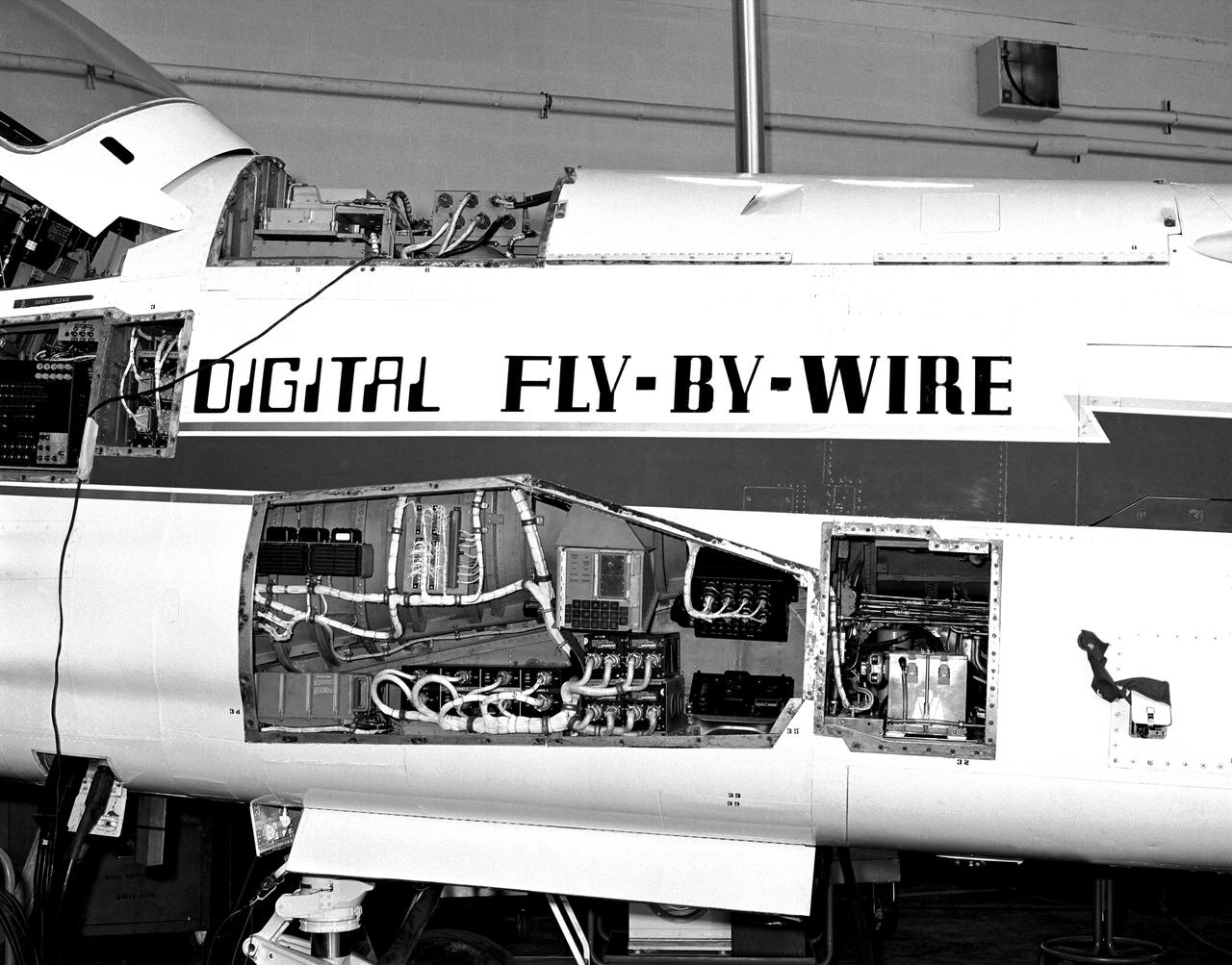
The Apollo hardware jammed into the F-8C. The computer is partially visible in the avionics bay at the top of the fuselage behind the cockpit. Note the display and keyboard unit in the gun bay. To carry the computers and other equipment, the F-8 DFBW team removed the aircraft's guns and ammunition boxes.
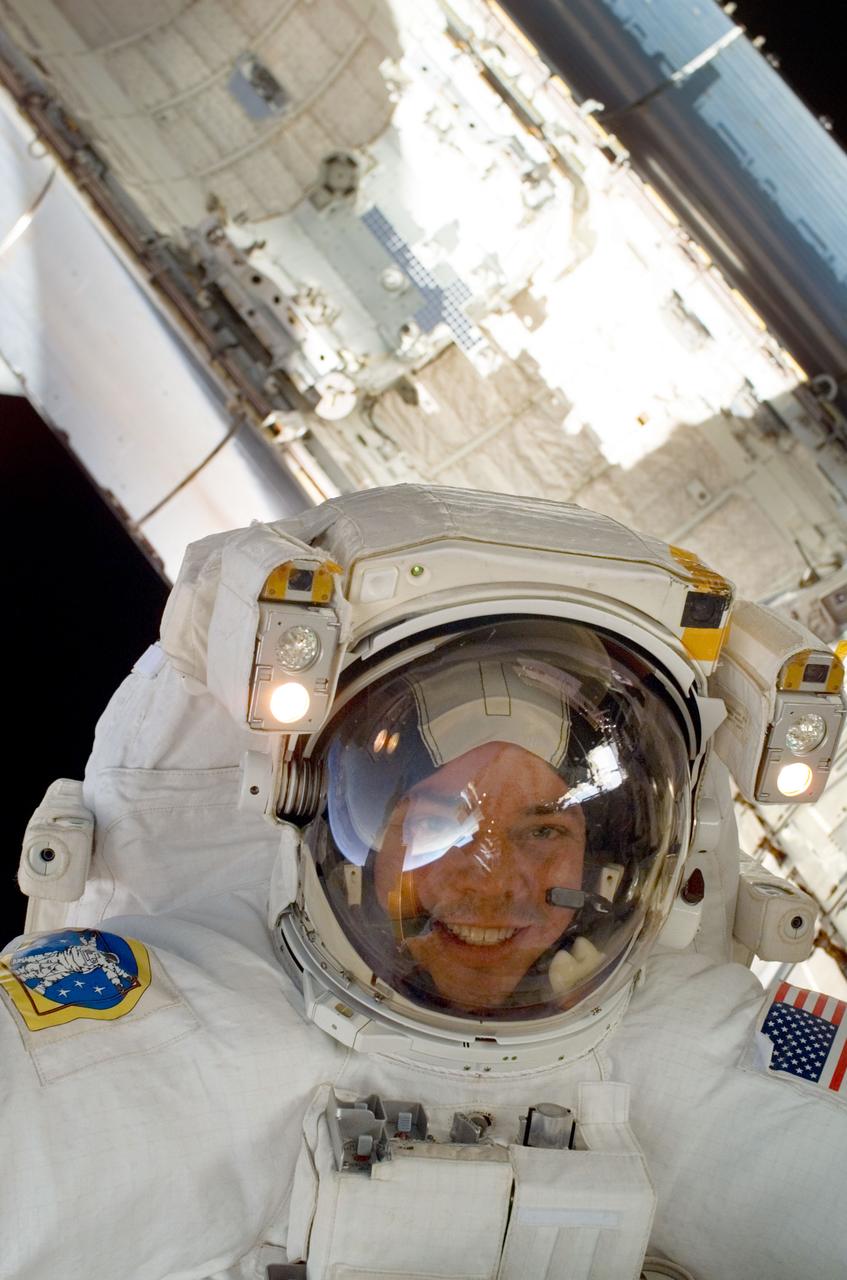
ISS016-E-033400 (21 March 2008) --- Astronaut Robert L. Behnken, STS-123 mission specialist, participates in the mission's fourth scheduled session of extravehicular activity (EVA) as construction and maintenance continue on the International Space Station. During the 6-hour, 24-minute spacewalk, Behnken and astronaut Mike Foreman (out of frame), mission specialist, replaced a failed Remote Power Control Module -- essentially a circuit breaker -- on the station's truss. The spacewalkers also tested a repair method for damaged heat resistant tiles on the space shuttle. This technique used a caulk-gun-like tool named the Tile Repair Ablator Dispenser to dispense a material called Shuttle Tile Ablator-54 into purposely damaged heat shield tiles. The sample tiles will be returned to Earth to undergo extensive testing on the ground. A portion of the Space Shuttle Endeavour payload bay is visible in the background.
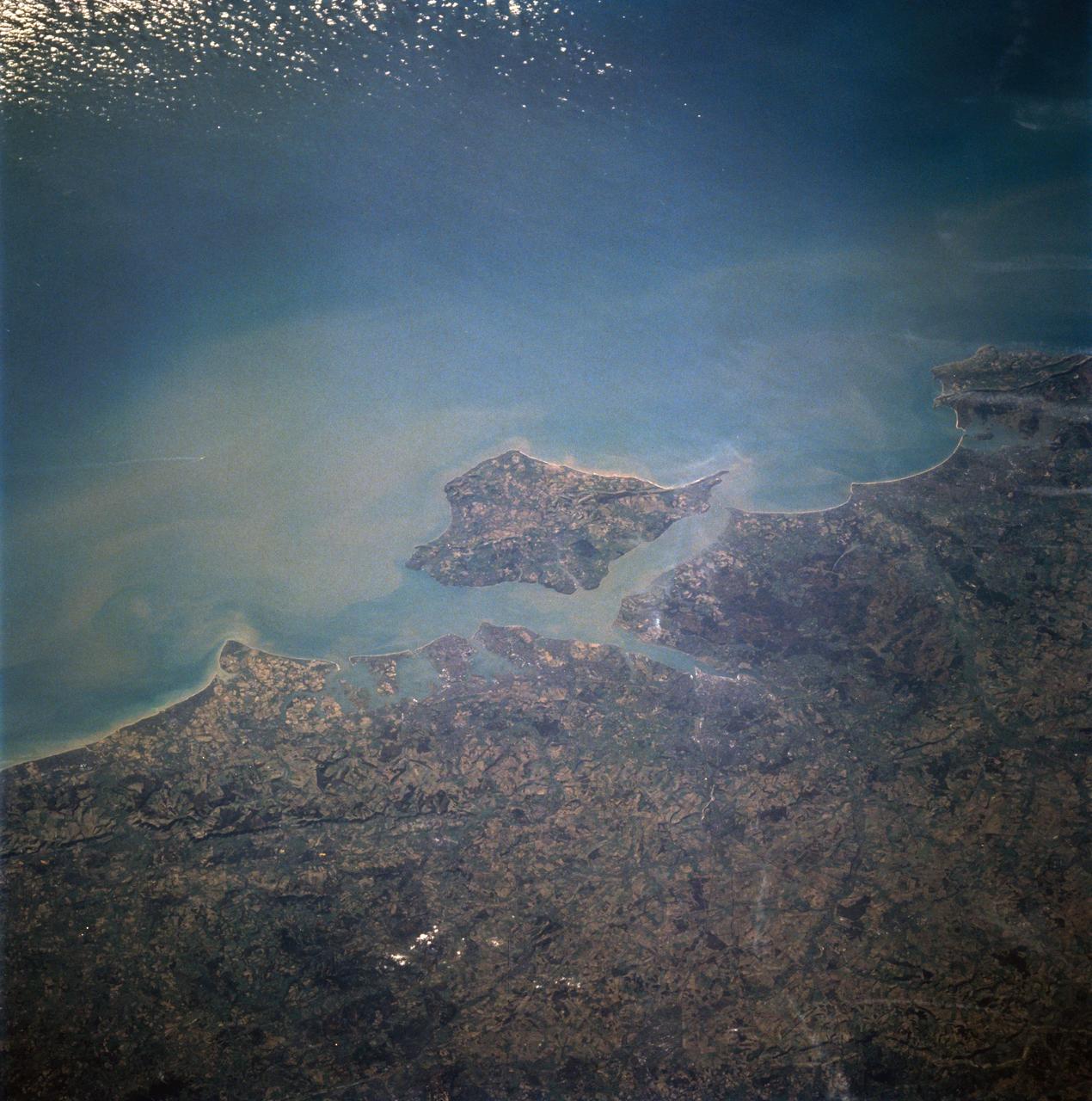
STS060-94-007 (3-11 Feb 1994) --- The Isle of Wight, over 380 square kilometers, is a diamond-shaped island located off the south coast of England. Separated from the mainland by The Solent, a narrow channel of water, the island is a popular resort area due to its scenery and mild climate. Sediment from English Lowland drainage systems, most notably the River Test, is visible entering The Solent and spilling into the English Channel. At the tip of the linear, northwestward inlet is the mouth of the Test and the city of Southampton, discernible as a small patch of lighter gray. Further east is a series of protected bays which are, from west to east: Portsmouth Harbour, Langstone Harbour, and Chichester Harbour. The city of Portsmouth is the location of Great Britain's chief naval station and arsenal. Portsmouth houses numerous ships of past and present glory. Two of the most notable vessels in Portsmouth are the 104-gun Victory, and the remains of the Mary Rose. The renowned HMS Victory, still carried on active duty rolls of the Royal Navy, and the acting Post Ship of the Royal Navy Base Commander, was built in 1765. The HMS Victory was severely damaged and dismasted in battle. A careful inspection of the original film will show the 175-foot long HMS Victory in this frame. According to NASA geologists it is extremely unusual for Portsmouth to be this cloud-free. It has been a site of some interest for many Space Shuttle missions during the past 10 years.