
How differential deflection of the inboard and outboard leading-edge flaps affected the handling qualities of this modified F/A-18A was evaluated during the first check flight in the Active Aeroelastic Wing program at NASA's Dryden Flight Research Center.
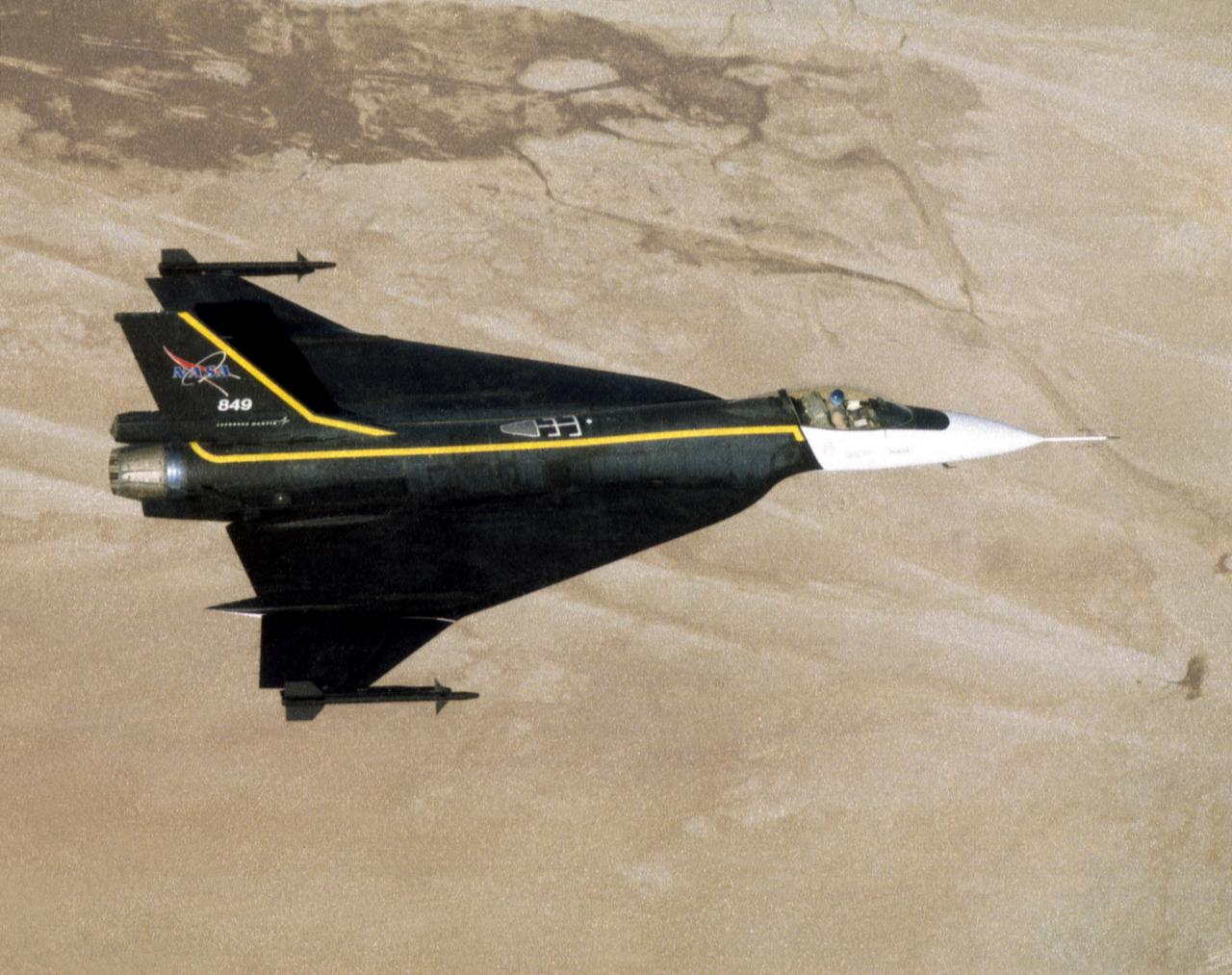
An image of the F-16XL #1 during its functional flight check of the Digital Flight Control System (DFCS) on December 16, 1997. The mission was flown by NASA research pilot Dana Purifoy, and lasted 1 hour and 25 minutes. The tests included pilot familiarly, functional check, and handling qualities evaluation maneuvers to a speed of Mach 0.6 and 300 knots. Purifoy completed all the briefed data points with no problems, and reported that the DFCS handled as well, if not better than the analog computer system that it replaced.
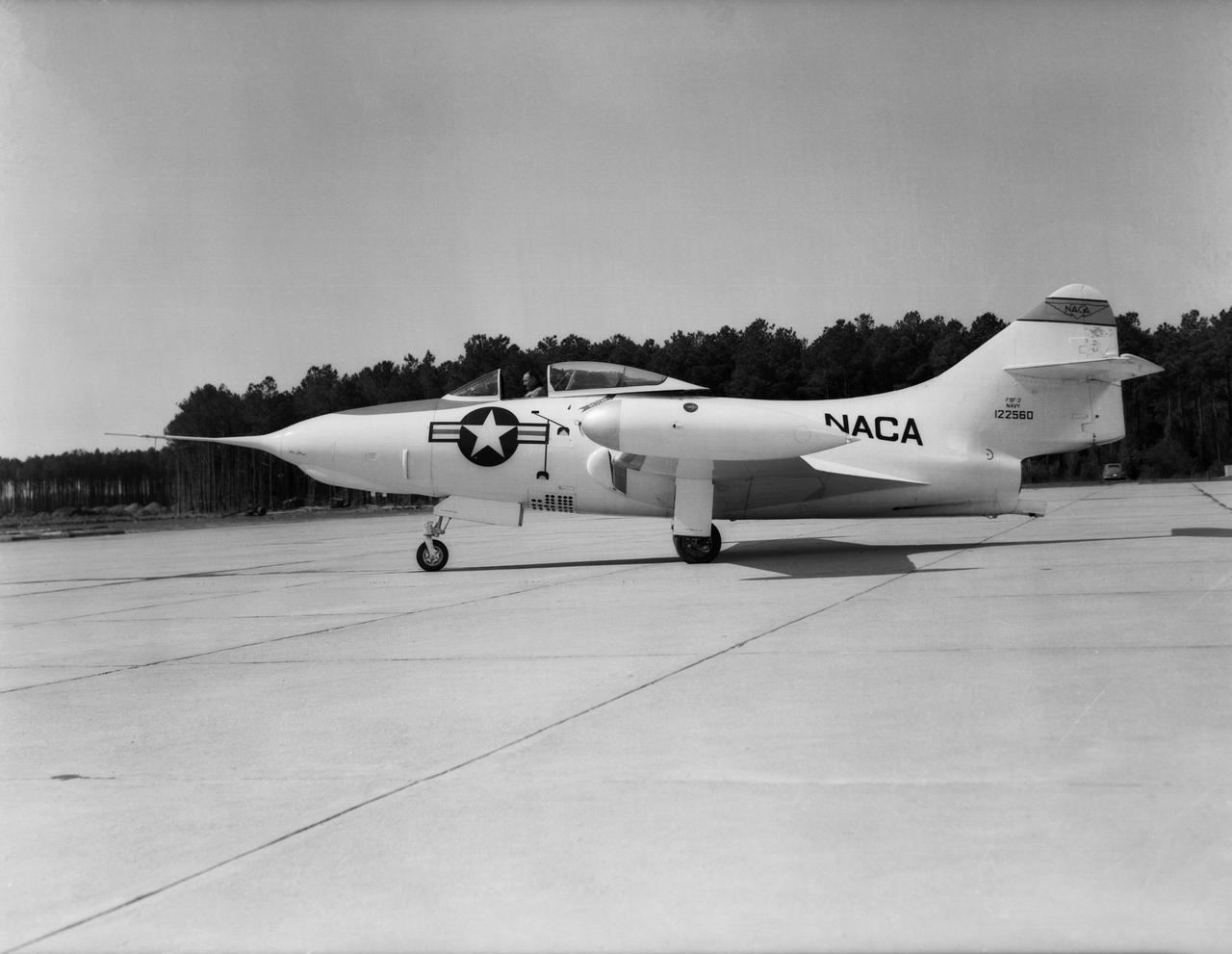
Grumman F9F-2 Panther: Originally built as a F9F-3, this Grumman F9F-2 Panther has a Pratt and Whitney J42 turbojet power plant, hence the designation change. This Panther underwent handling quality tests, serving long enough at Langley to witness the change from the NACA to NASA.
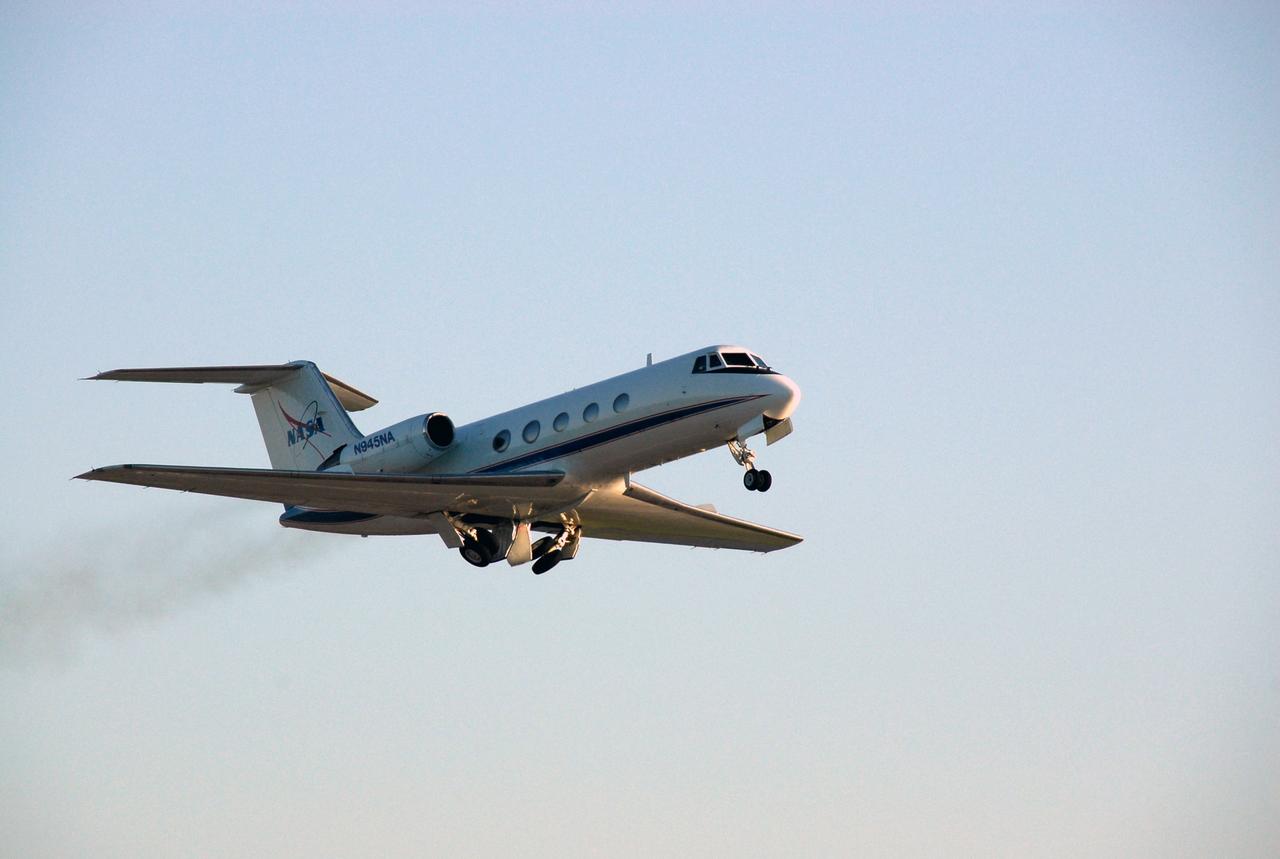
CAPE CANAVERAL, Fla. -- One of the shuttle training aircraft, or STA, takes off from the runway at NASA Kennedy Space Center's Shuttle Landing Facility. Handling the controls is the pilot of the STS-124 mission, Ken Ham, who will practice landing the shuttle. The STA is a Grumman American Aviation-built Gulf Stream II jet that was modified to simulate an orbiter's cockpit, motion and visual cues, and handling qualities. In flight, the aircraft duplicates the orbiter's atmospheric descent trajectory from approximately 35,000 feet altitude to landing on a runway. Space shuttle Discovery is scheduled to lift off on the STS-124 mission at 5:02 p.m. May 31. Photo credit: NASA/Kim Shiflett
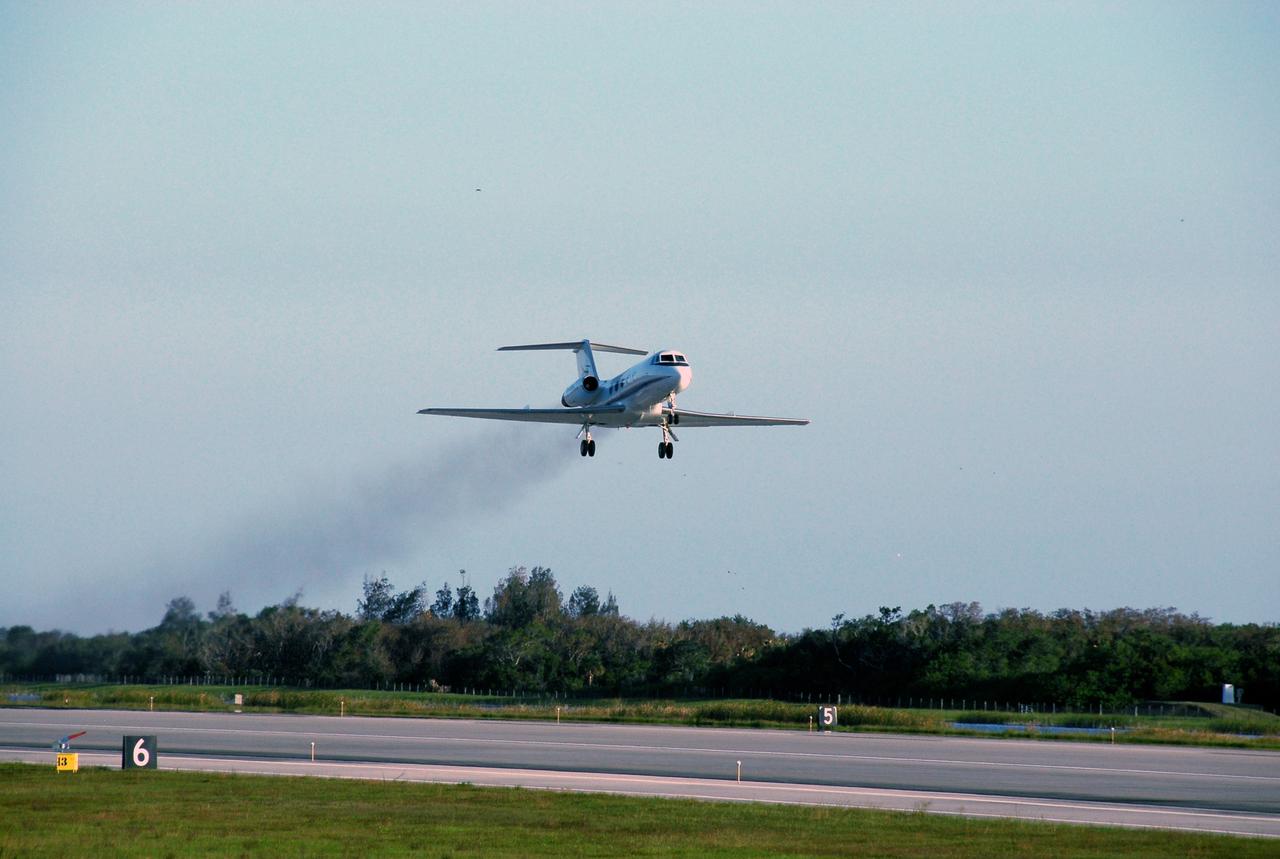
CAPE CANAVERAL, Fla. -- One of the shuttle training aircraft, or STA, takes off from the runway at NASA Kennedy Space Center's Shuttle Landing Facility. Handling the controls is the commander of the STS-124 mission, Mark Kelly, who will practice landing the shuttle. The STA is a Grumman American Aviation-built Gulf Stream II jet that was modified to simulate an orbiter's cockpit, motion and visual cues, and handling qualities. In flight, the aircraft duplicates the orbiter's atmospheric descent trajectory from approximately 35,000 feet altitude to landing on a runway. Space shuttle Discovery is scheduled to lift off on the STS-124 mission at 5:02 p.m. May 31. Photo credit: NASA/Kim Shiflett
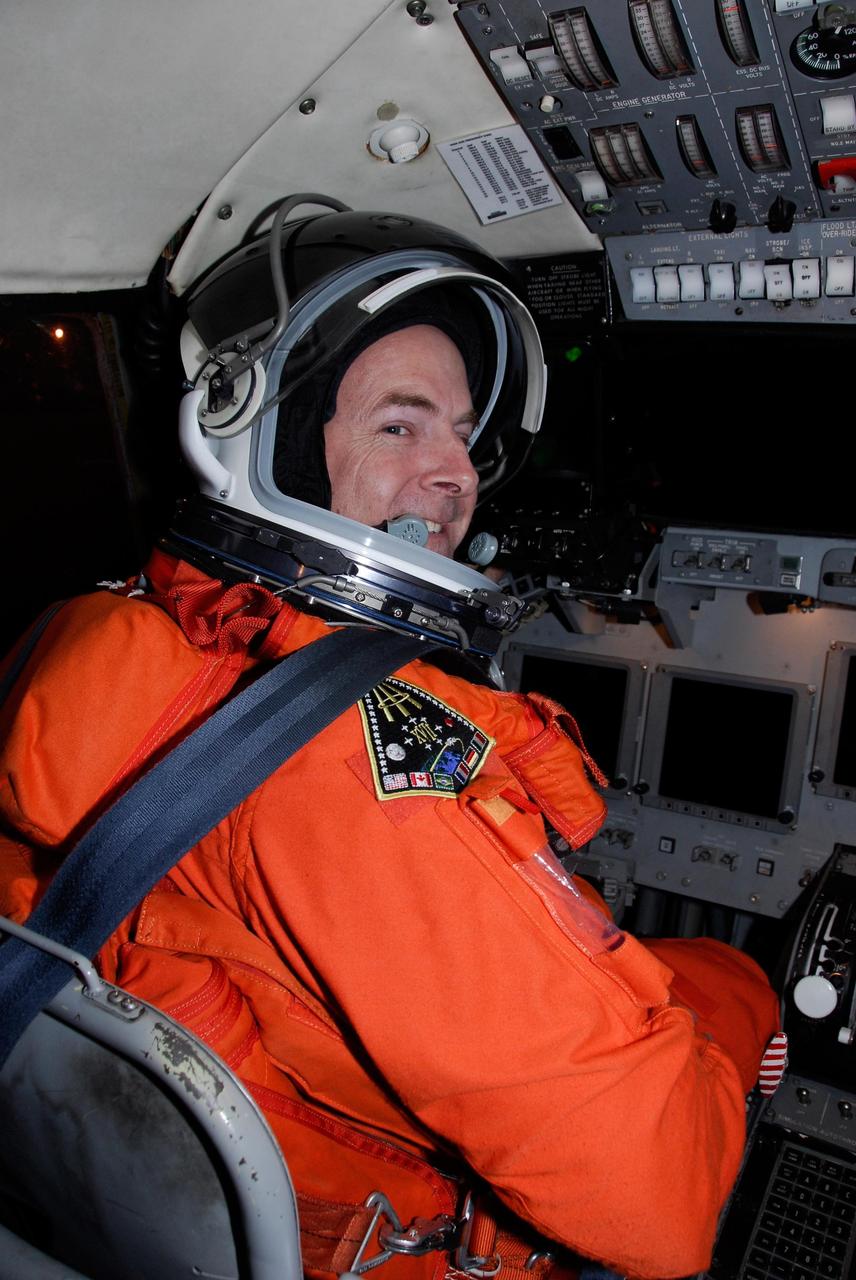
KENNEDY SPACE CENTER, FLA. -- Dressed in his launch and entry suit, STS-122 Pilot Alan Poindexter is seated in the shuttle training aircraft, or STA, at NASA's Kennedy Space Center. Poindexter and Commander Steve Frick will practice shuttle landings in the STA before the Dec. 6 launch on space shuttle Atlantis. The STA is a Grumman American Aviation-built Gulf Stream II jet that was modified to simulate an orbiter's cockpit, motion and visual cues, and handling qualities. Photo credit: NASA/Kim Shiflett
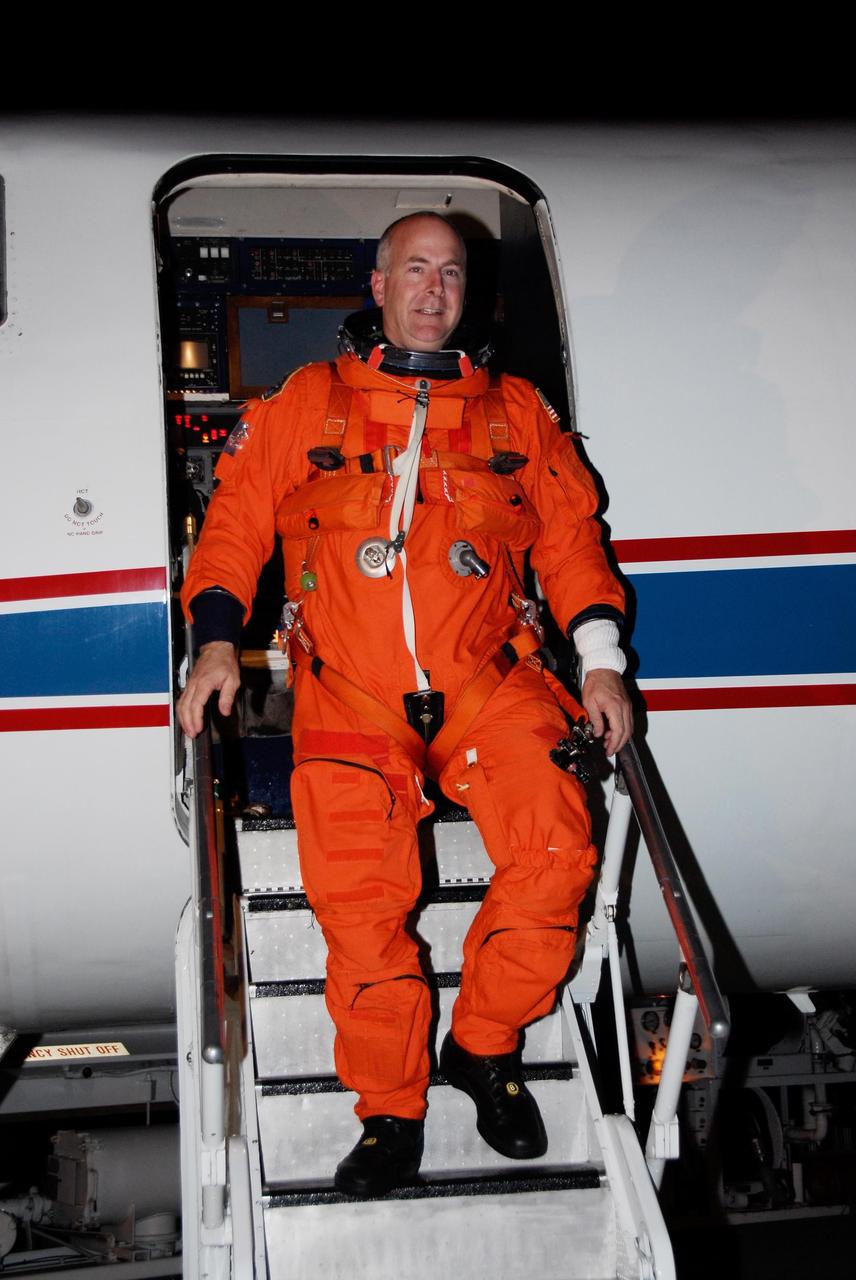
KENNEDY SPACE CENTER, FLA. -- STS-122 Pilot Alan Poindexter seems satisfied with the landing practice session he has just completed aboard a shuttle training aircraft, or STA, at Kennedy Space Center's Shuttle Landing Facility. Poindexter and Commander Steve Frick are preparing for the Dec. 6 launch on space shuttle Atlantis. The STA is a Grumman American Aviation-built Gulf Stream II jet that was modified to simulate an orbiter's cockpit, motion and visual cues, and handling qualities. Photo credit: NASA/Kim Shiflett
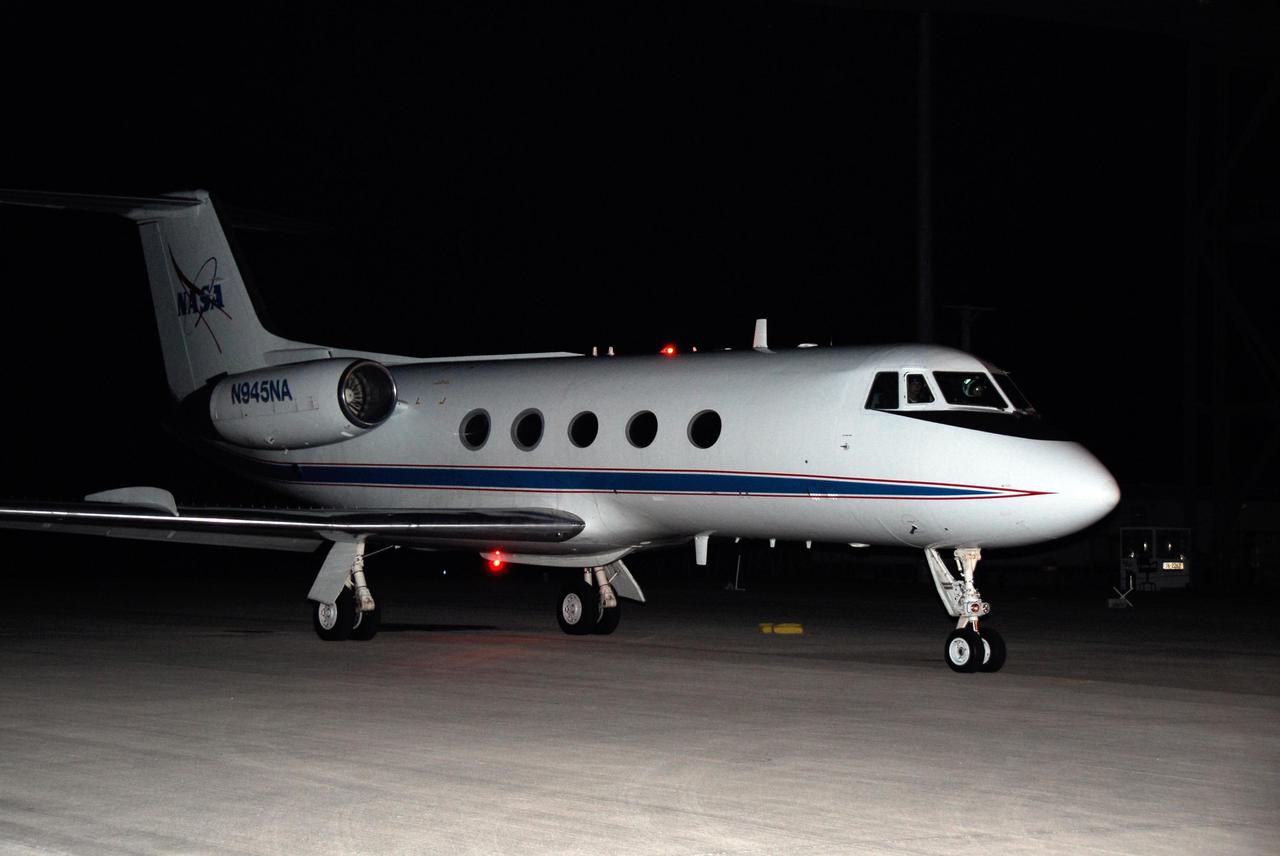
KENNEDY SPACE CENTER, FLA. -- On the Shuttle Landing Facility at NASA's Kennedy Space Center, the shuttle training aircraft, or STA, is ready to roll out for practice landings. In the cockpit are Commander Steve Frick and Pilot Alan Poindexter, who are preparing for the Dec. 6 launch on space shuttle Atlantis. The STA is a Grumman American Aviation-built Gulf Stream II jet that was modified to simulate an orbiter's cockpit, motion and visual cues, and handling qualities. Photo credit: NASA/Kim Shiflett
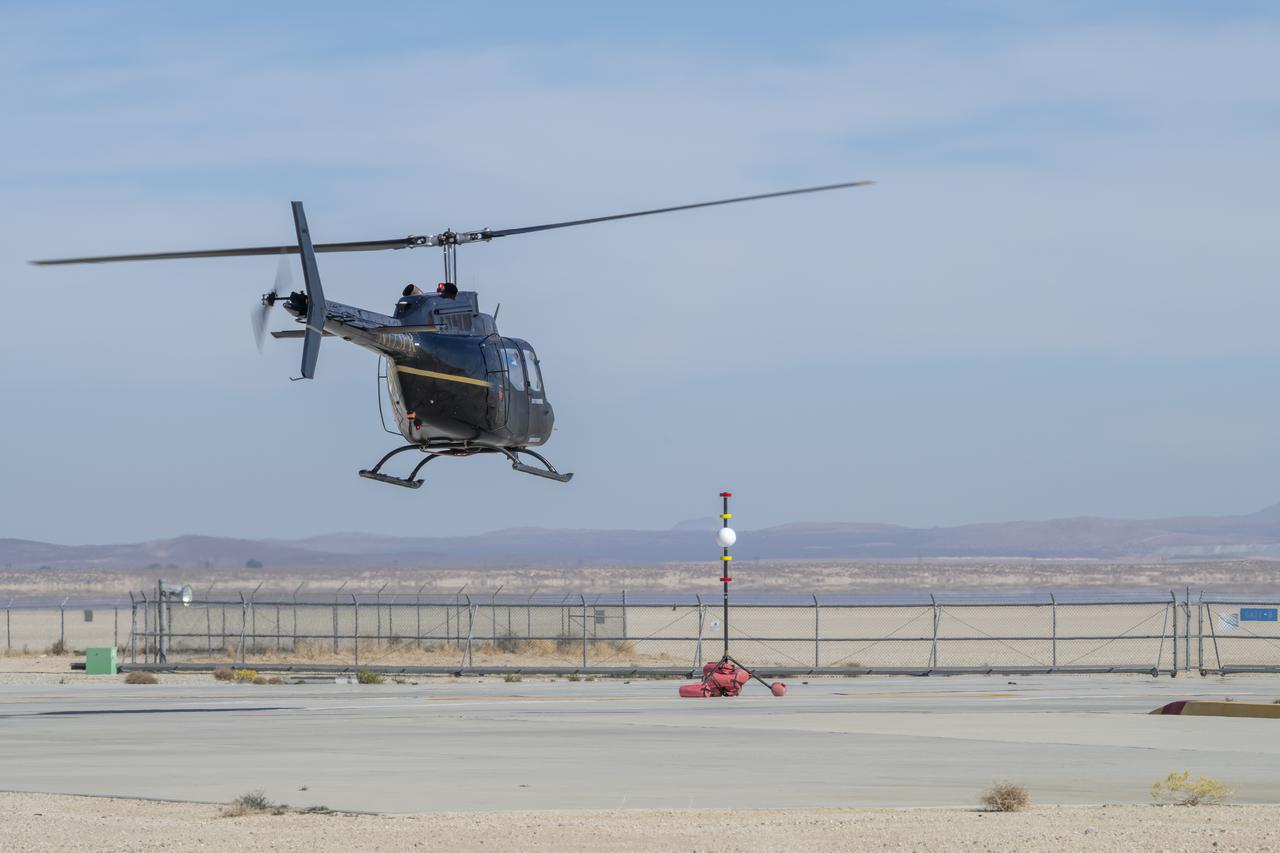
A Bell OH-58 Kiowa helicopter provided by Flight Research Inc. flies around a visual aid, known as a tetherball, created to serve as the pilot's visual height reference while performing handling qualities testing at NASA's Armstrong Flight Research Center in Edwards, California, Nov. 8-10. NASA's Advanced Air Mobility National Campaign used the helicopter to study urban air mobility vehicle and airspace requirements.
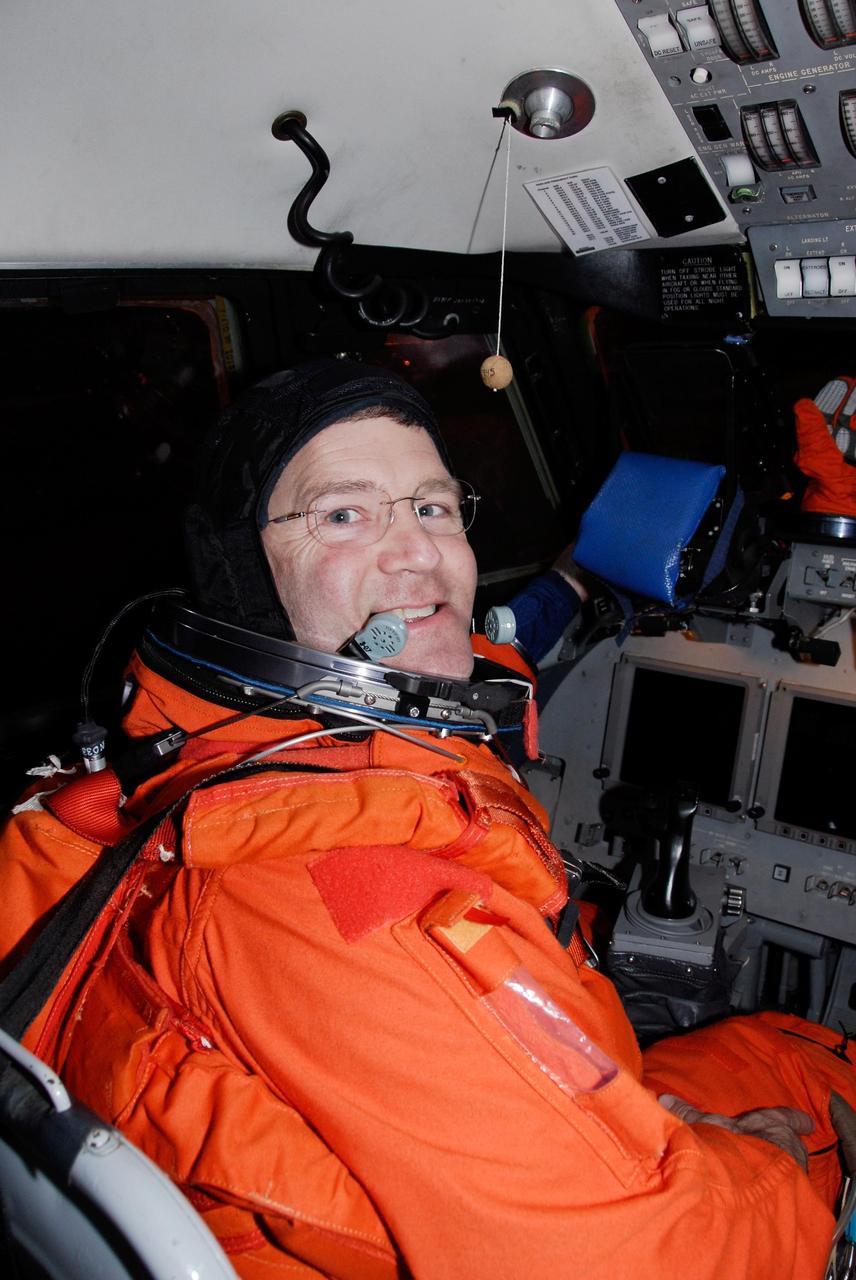
KENNEDY SPACE CENTER, FLA. -- Dressed in his launch and entry suit, STS-122 Commander Steve Frick is seated in the shuttle training aircraft, or STA, at NASA's Kennedy Space Center. Frick and Pilot Alan Poindexter will practice shuttle landings in the STA before the Dec. 6 launch on space shuttle Atlantis. The STA is a Grumman American Aviation-built Gulf Stream II jet that was modified to simulate an orbiter's cockpit, motion and visual cues, and handling qualities. Photo credit: NASA/Kim Shiflett
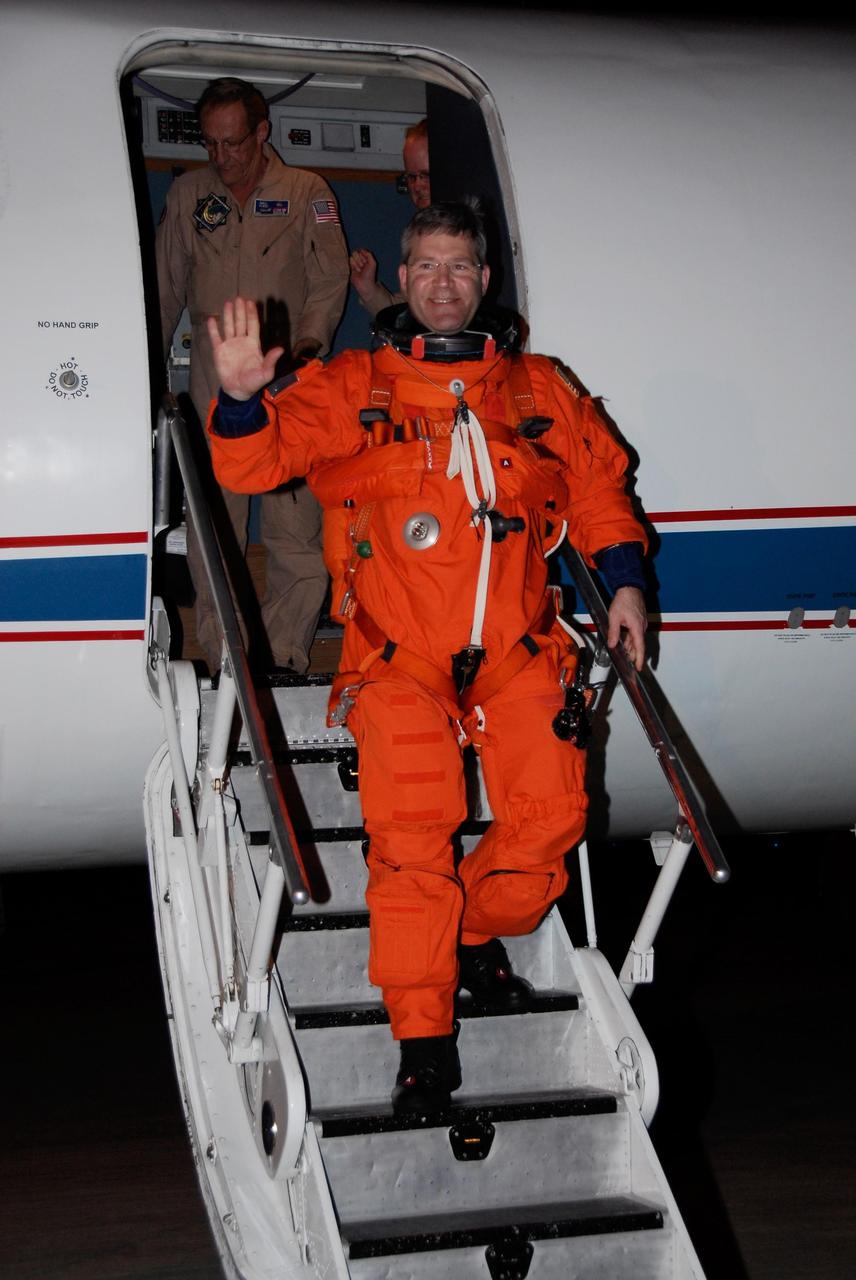
KENNEDY SPACE CENTER, FLA. -- STS-122 Commander Steve Frick seems satisfied with the landing practice session he has just completed aboard a shuttle training aircraft, or STA, at Kennedy Space Center's Shuttle Landing Facility. Frick and Pilot Alan Poindexter are preparing for the Dec. 6 launch on space shuttle Atlantis. The STA is a Grumman American Aviation-built Gulf Stream II jet that was modified to simulate an orbiter's cockpit, motion and visual cues, and handling qualities. Photo credit: NASA/Kim Shiflett
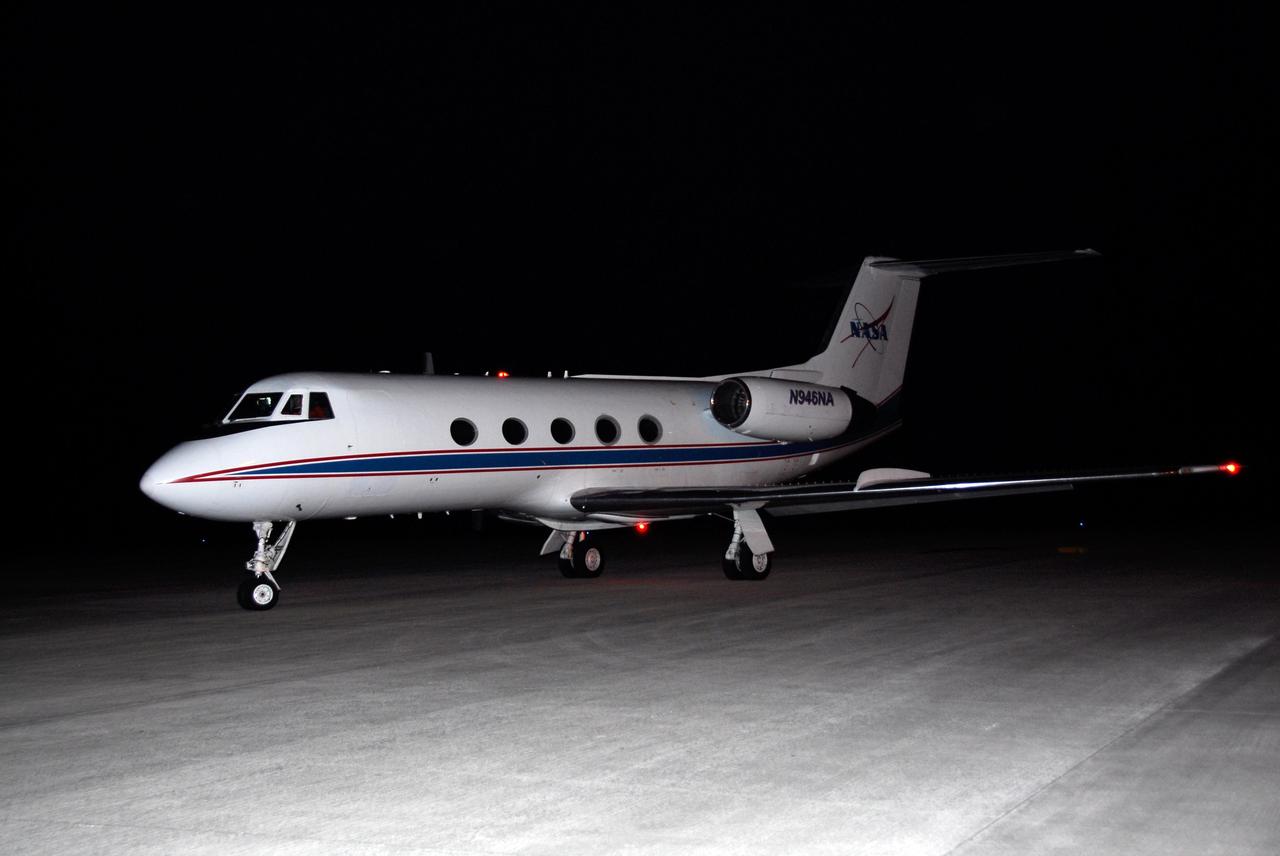
KENNEDY SPACE CENTER, FLA. -- On the Shuttle Landing Facility at NASA's Kennedy Space Center, the shuttle training aircraft, or STA, taxis toward the runway for practice landings. In the cockpit are Commander Steve Frick and Pilot Alan Poindexter, who are preparing for the Dec. 6 launch on space shuttle Atlantis. The STA is a Grumman American Aviation-built Gulf Stream II jet that was modified to simulate an orbiter's cockpit, motion and visual cues, and handling qualities. Photo credit: NASA/Kim Shiflett
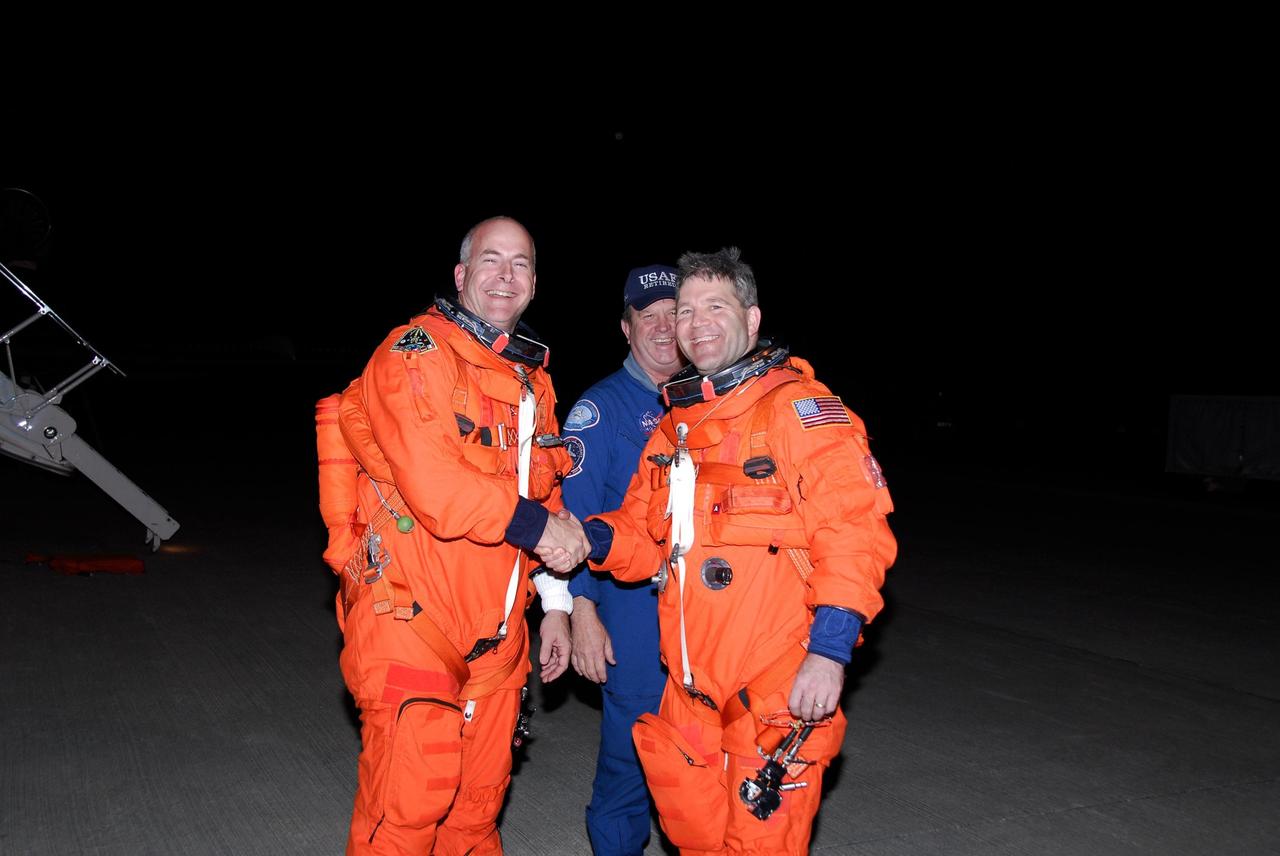
KENNEDY SPACE CENTER, FLA. -- STS-122 Commander Steve Frick (right) and Pilot Alan Poindexter (left) congratulate each other on the successful landing practice completed aboard a shuttle training aircraft, or STA, at Kennedy Space Center's Shuttle Landing Facility. They are preparing for the Dec. 6 launch on space shuttle Atlantis. The STA is a Grumman American Aviation-built Gulf Stream II jet that was modified to simulate an orbiter's cockpit, motion and visual cues, and handling qualities. Photo credit: NASA/Kim Shiflett
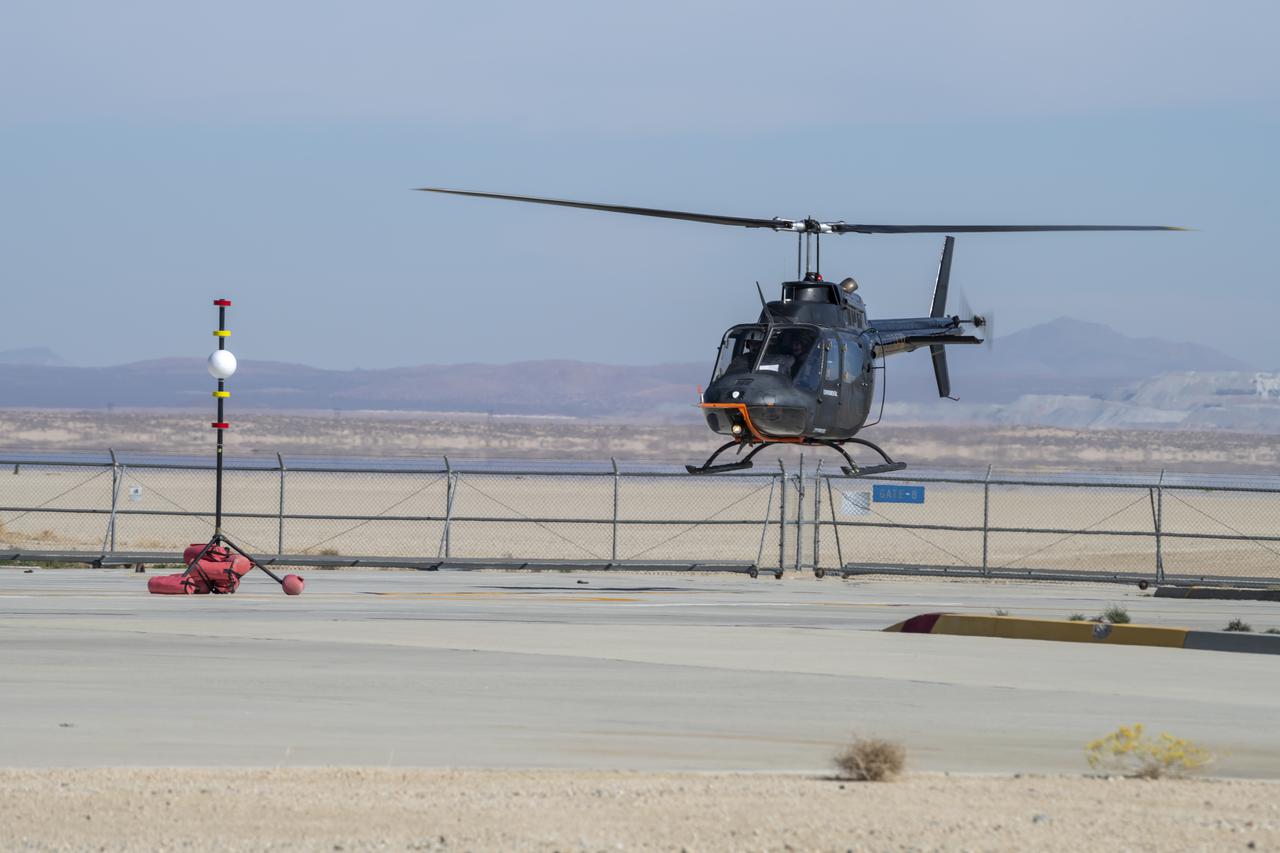
Flight Research Inc.'s Bell OH-58 Kiowa helicopter flies around a visual aid, known as a tetherball, created to serve as the pilot's visual height reference while performing handling qualities testing at NASA's Armstrong Flight Research Center in Edwards, California, Nov. 8-10. NASA's Advanced Air Mobility National Campaign used the helicopter to study urban air mobility vehicle and airspace requirements.
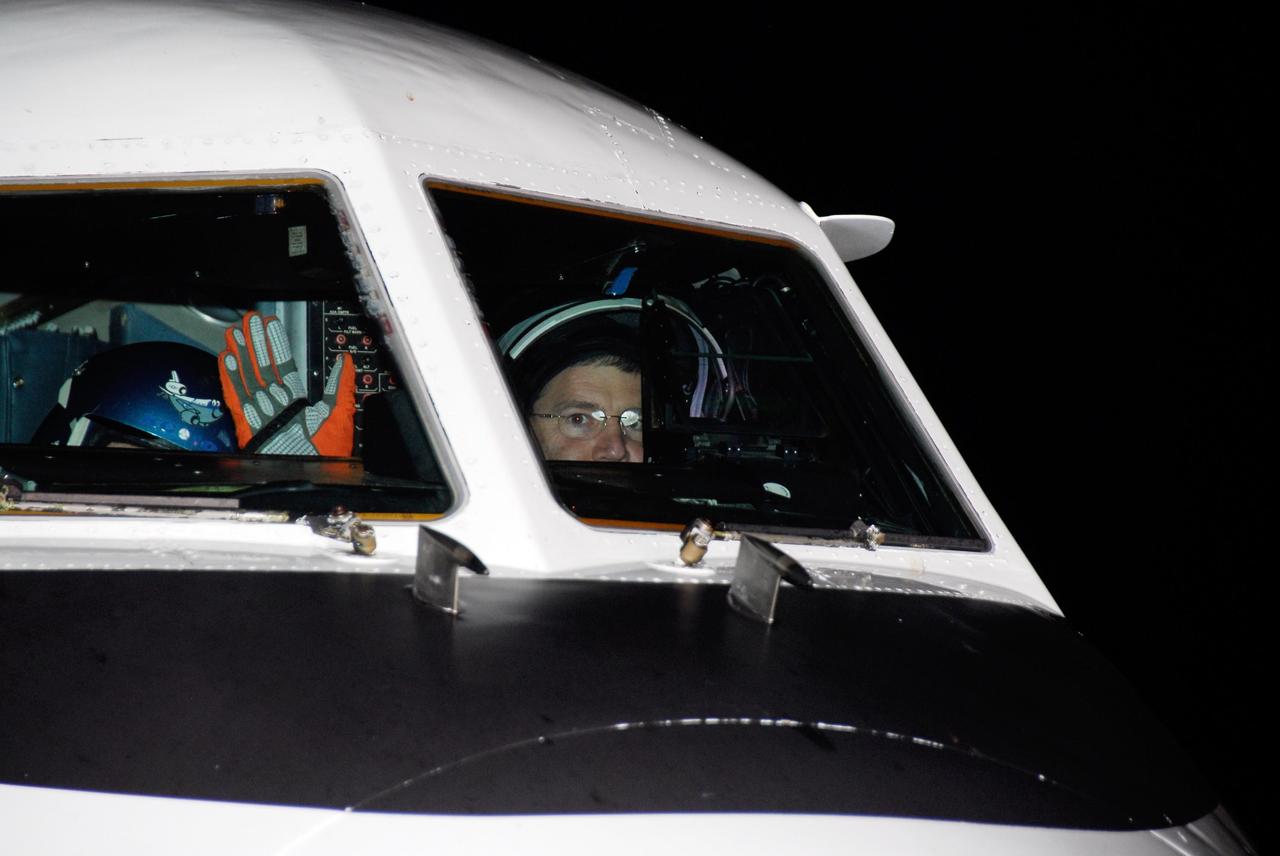
KENNEDY SPACE CENTER, FLA. -- STS-122 Commander Steve Frick waves from inside the cockpit of the shuttle training aircraft, or STA, at NASA's Kennedy Space Center. Frick and Pilot Alan Poindexter will practice shuttle landings in the STA before the Dec. 6 launch on space shuttle Atlantis. The STA is a Grumman American Aviation-built Gulf Stream II jet that was modified to simulate an orbiter's cockpit, motion and visual cues, and handling qualities. Photo credit: NASA/Kim Shiflett
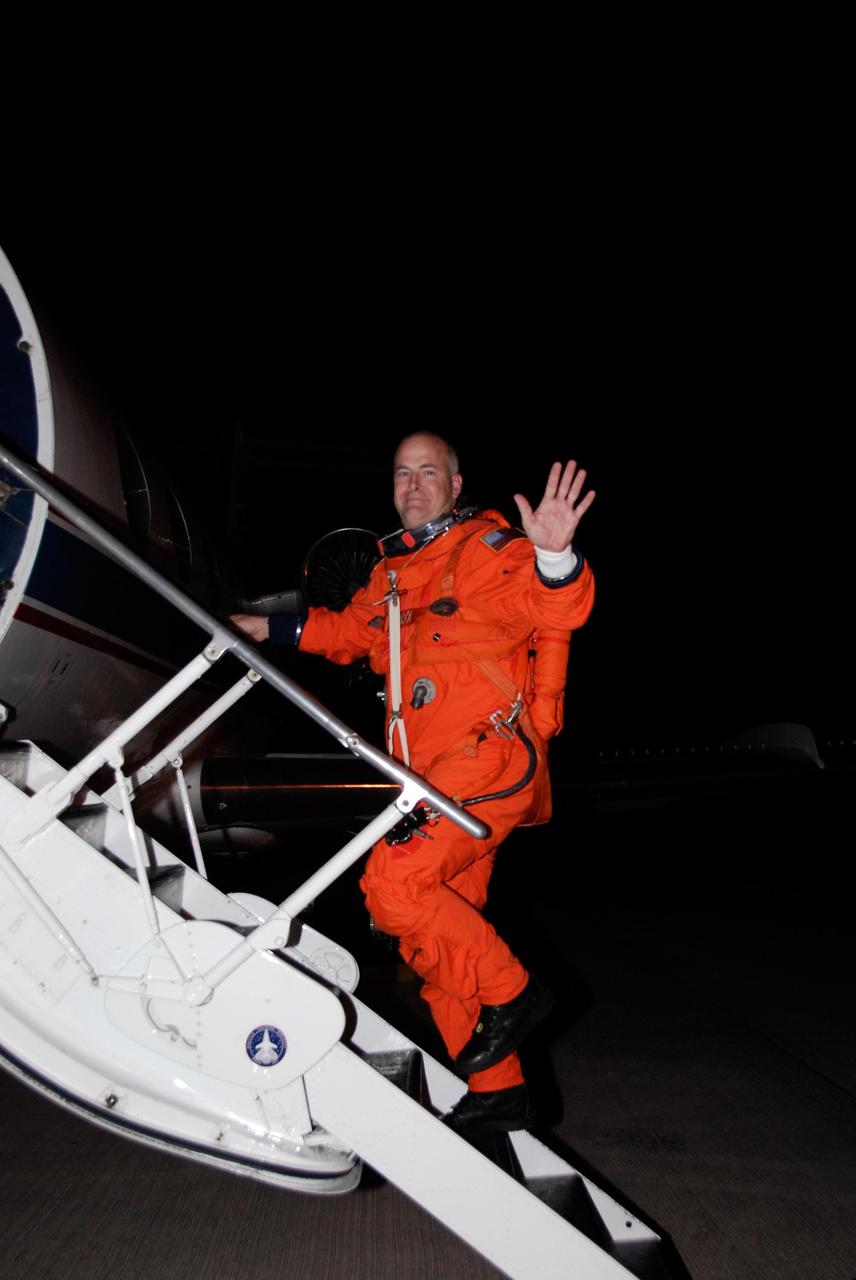
KENNEDY SPACE CENTER, FLA. -- Dressed in his launch and entry suit, STS-122 Pilot Alan Poindexter climbs the steps to the shuttle training aircraft, or STA, at NASA's Kennedy Space Center. Poindexter and Commander Steve Frick will practice shuttle landings in the STA before the Dec. 6 launch on space shuttle Atlantis. The STA is a Grumman American Aviation-built Gulf Stream II jet that was modified to simulate an orbiter's cockpit, motion and visual cues, and handling qualities. Photo credit: NASA/Kim Shiflett
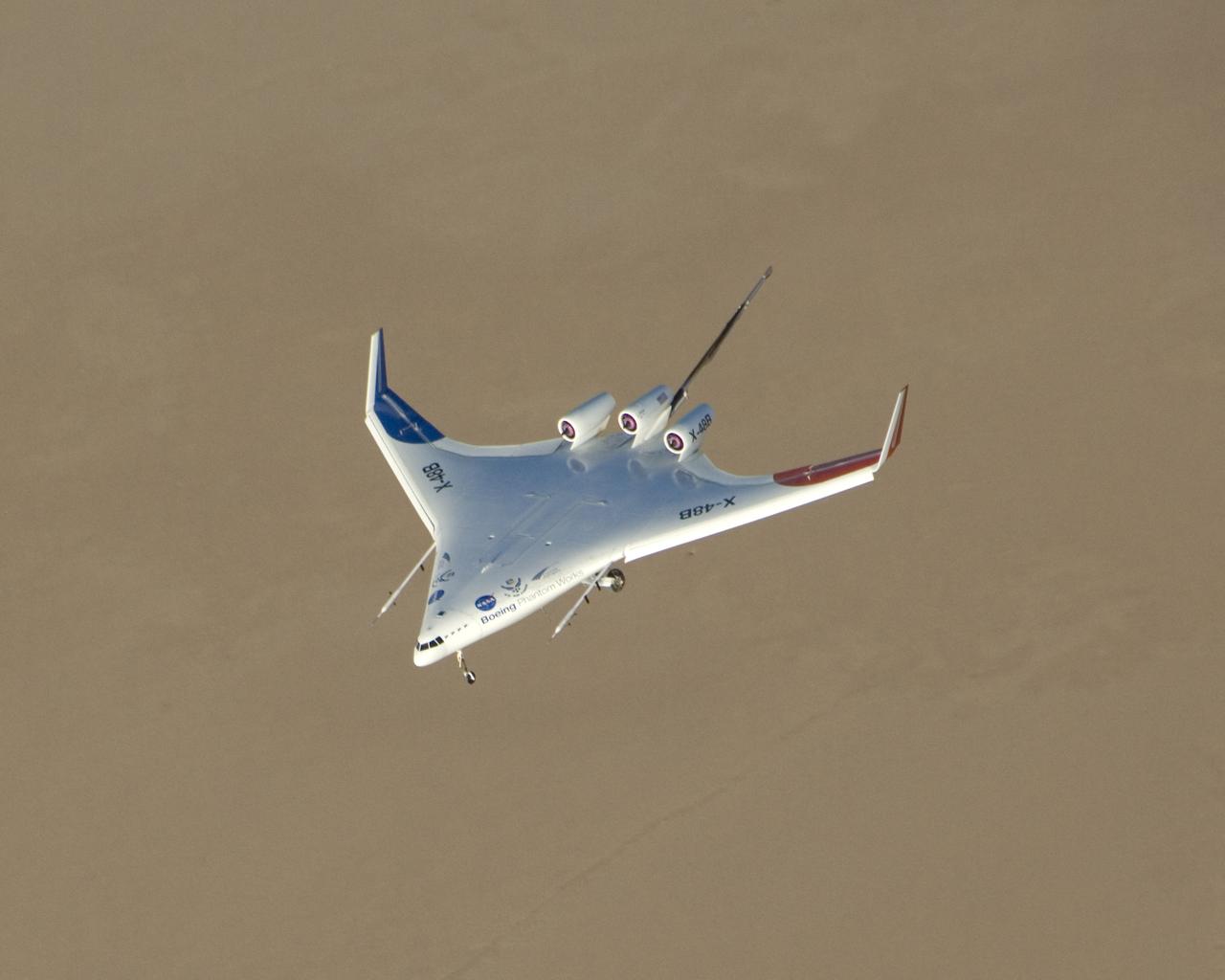
Boeing Phantom Works' subscale Blended Wing Body technology demonstration aircraft began its initial flight tests from NASA's Dryden Flight Research Center at Edwards Air Force Base, Calif. in the summer of 2007. The 8.5 percent dynamically scaled unmanned aircraft, designated the X-48B by the Air Force, is designed to mimic the aerodynamic characteristics of a full-scale large cargo transport aircraft with the same blended wing body shape. The initial flight tests focused on evaluation of the X-48B's low-speed flight characteristics and handling qualities. About 25 flights were planned to gather data in these low-speed flight regimes. Based on the results of the initial flight test series, a second set of flight tests was planned to test the aircraft's low-noise and handling characteristics at transonic speeds.
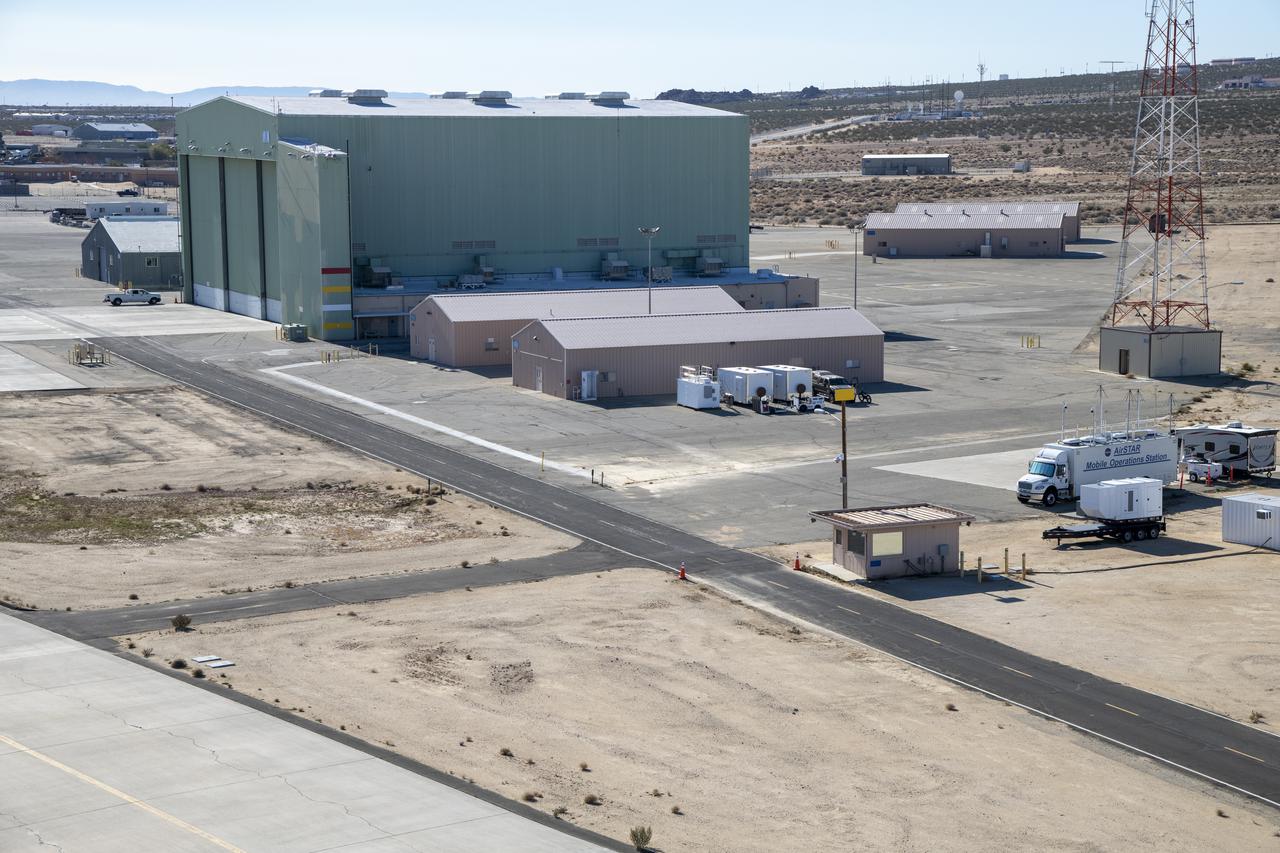
An aerial image taken by one of NASA’s photographers during recent helicopter flights shows a view of the building 4833 structure and the mobile operating facility at NASA’s Armstrong Flight Research Center in Edwards, California. NASA’s Advanced Air Mobility National Campaign uses the mobile operations facility vehicle shown in the lower right corner during test operations. The red, yellow, and white building markings applied to building 4833 are used to provide visual aids to the pilot during handling qualities testing used to research advanced air mobility flight requirements.
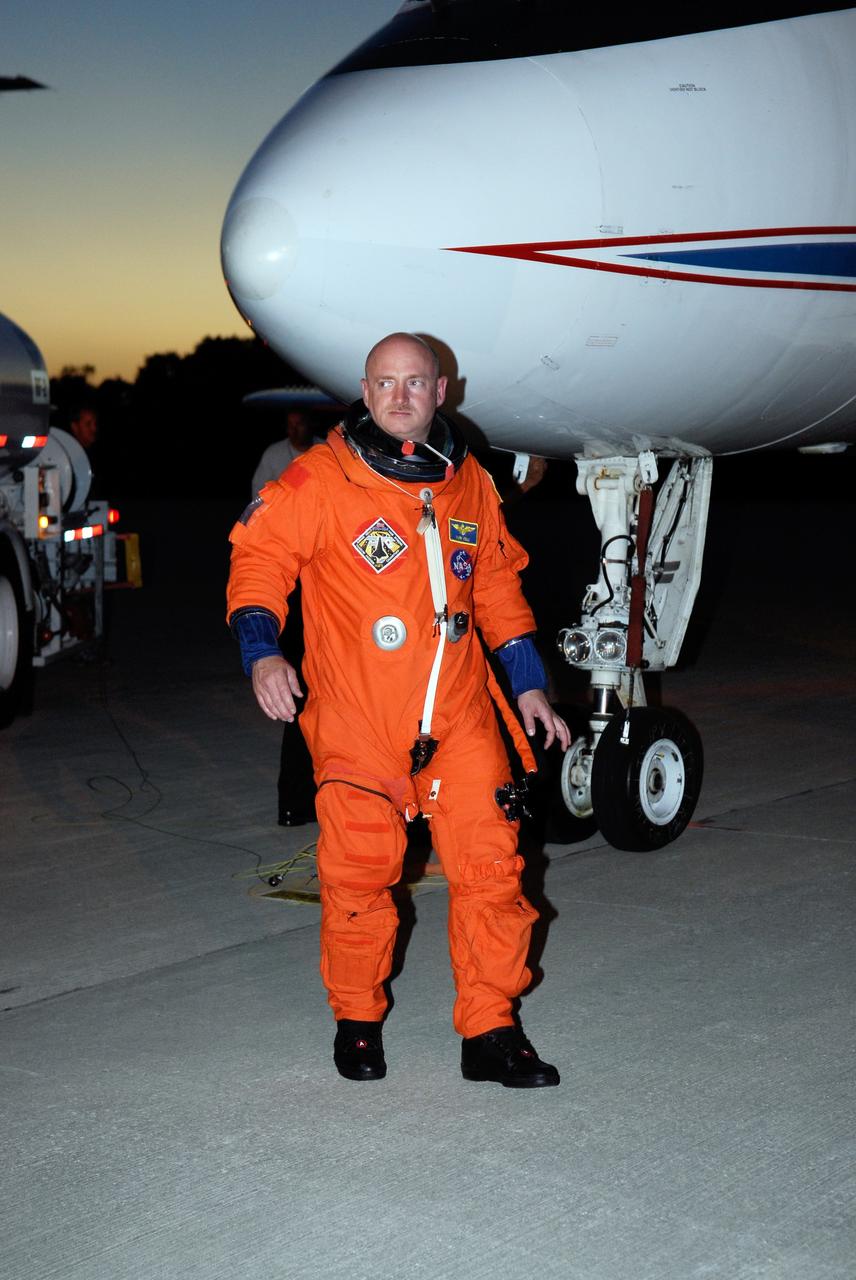
CAPE CANAVERAL, Fla. -- On the Shuttle Landing Facility at NASA's Kennedy Space Center, STS-124 Commander Mark Kelly walks away from the shuttle training aircraft after landing practice. The STA is a Grumman American Aviation-built Gulf Stream II jet that was modified to simulate an orbiter's cockpit, motion and visual cues, and handling qualities. In flight, the aircraft duplicates the orbiter's atmospheric descent trajectory from approximately 35,000 feet altitude to landing on a runway. Space shuttle Discovery is scheduled to lift off on the STS-124 mission at 5:02 p.m. May 31. Photo credit: NASA/Kim Shiflett
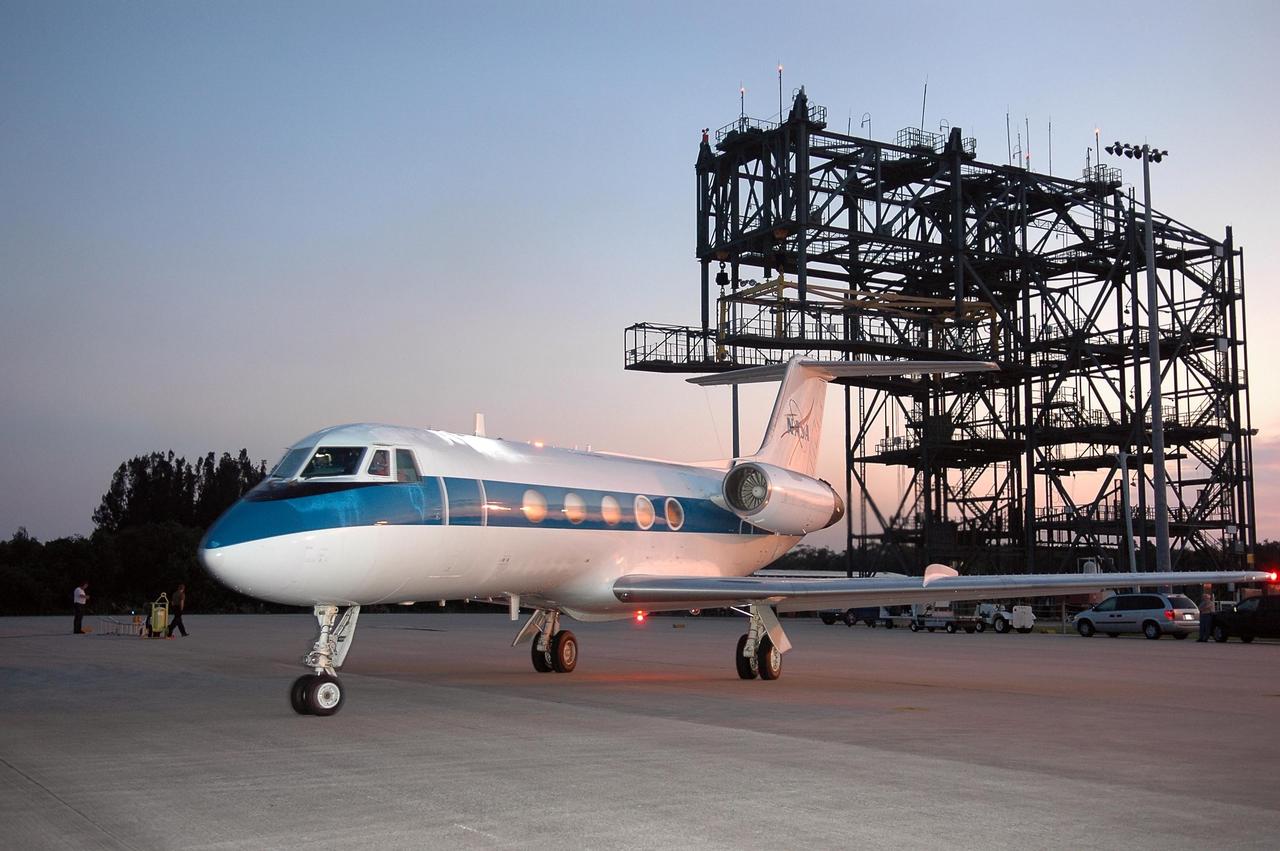
KENNEDY SPACE CENTER, FLA. - In the early dawn, STS-121 Pilot Mark Kelly is ready for takeoff from the Shuttle Training Facility to practice landing a shuttle in preparation for the July 1 launch of Space Shuttle Discovery. The STA is a Grumman American Aviation-built Gulf Stream II jet that was modified to simulate an orbiter’s cockpit, motion and visual cues, and handling qualities. In flight, the STA duplicates the orbiter’s atmospheric descent trajectory from approximately 35,000 feet altitude to landing on a runway. Because the orbiter is unpowered during re-entry and landing, its high-speed glide must be perfectly executed the first time. Photo credit: NASA/Kim Shiflett
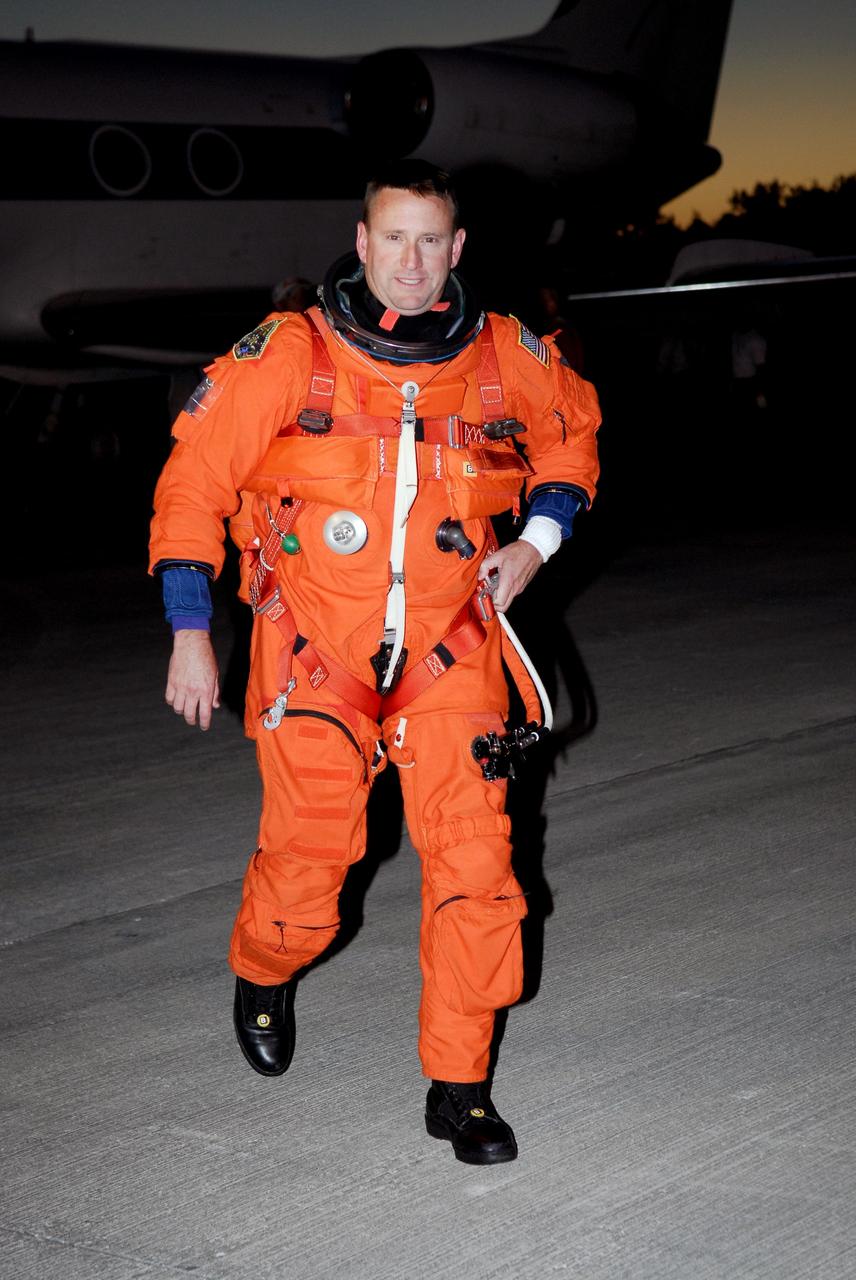
CAPE CANAVERAL, Fla. -- On the Shuttle Landing Facility at NASA's Kennedy Space Center, STS-124 Pilot Ken Ham walks away from the shuttle training aircraft after landing practice. The STA is a Grumman American Aviation-built Gulf Stream II jet that was modified to simulate an orbiter's cockpit, motion and visual cues, and handling qualities. In flight, the aircraft duplicates the orbiter's atmospheric descent trajectory from approximately 35,000 feet altitude to landing on a runway. Space shuttle Discovery is scheduled to lift off on the STS-124 mission at 5:02 p.m. May 31. Photo credit: NASA/Kim Shiflett
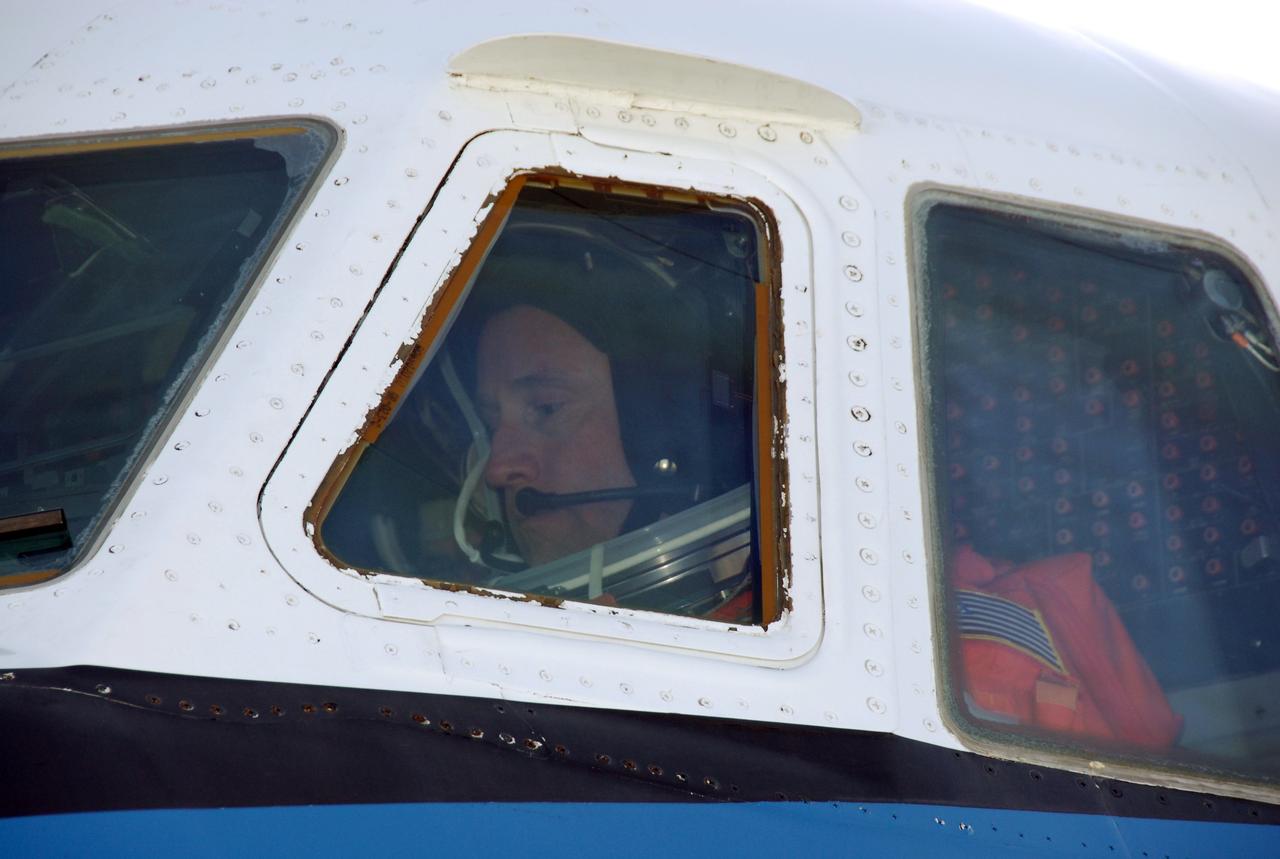
CAPE CANAVERAL, Fla. -- On the Shuttle Landing Facility at NASA's Kennedy Space Center, the commander of the STS-124 mission, Mark Kelly, sits in the cockpit of the shuttle training aircraft, or STA. He is getting ready to practice landing the shuttle on the SLF runway. The STA is a Grumman American Aviation-built Gulf Stream II jet that was modified to simulate an orbiter's cockpit, motion and visual cues, and handling qualities. In flight, the aircraft duplicates the orbiter's atmospheric descent trajectory from approximately 35,000 feet altitude to landing on a runway. Space shuttle Discovery is scheduled to lift off on the STS-124 mission at 5:02 p.m. May 31. Photo credit: NASA/Kim Shiflett
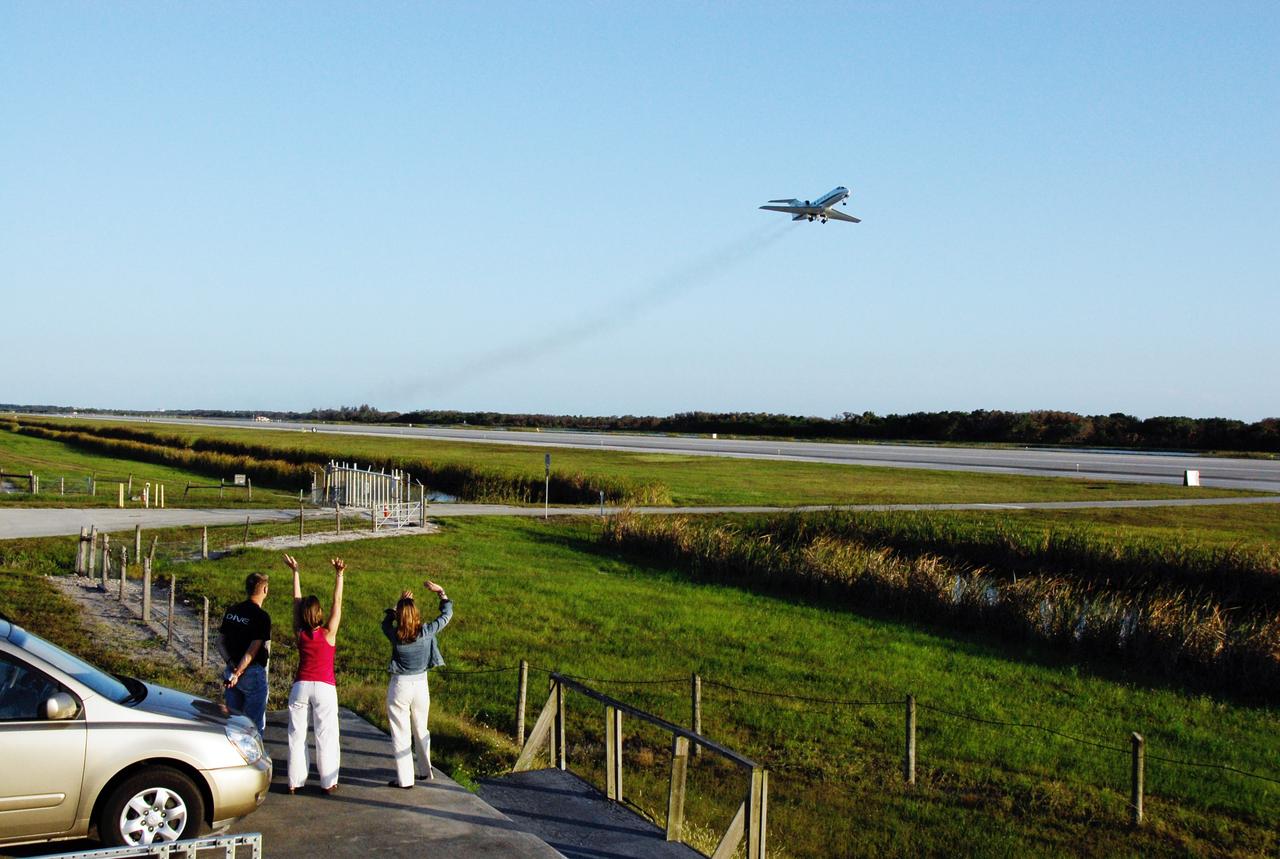
CAPE CANAVERAL, Fla. -- One of the shuttle training aircraft, or STA, takes off from the runway at NASA Kennedy Space Center's Shuttle Landing Facility. The commander and pilot of the STS-124 mission, Mark Kelly and Ken Ham, are practicing landing the shuttle on the runway. The STA is a Grumman American Aviation-built Gulf Stream II jet that was modified to simulate an orbiter's cockpit, motion and visual cues, and handling qualities. In flight, the aircraft duplicates the orbiter's atmospheric descent trajectory from approximately 35,000 feet altitude to landing on a runway. Space shuttle Discovery is scheduled to lift off on the STS-124 mission at 5:02 p.m. May 31. Photo credit: NASA/Kim Shiflett
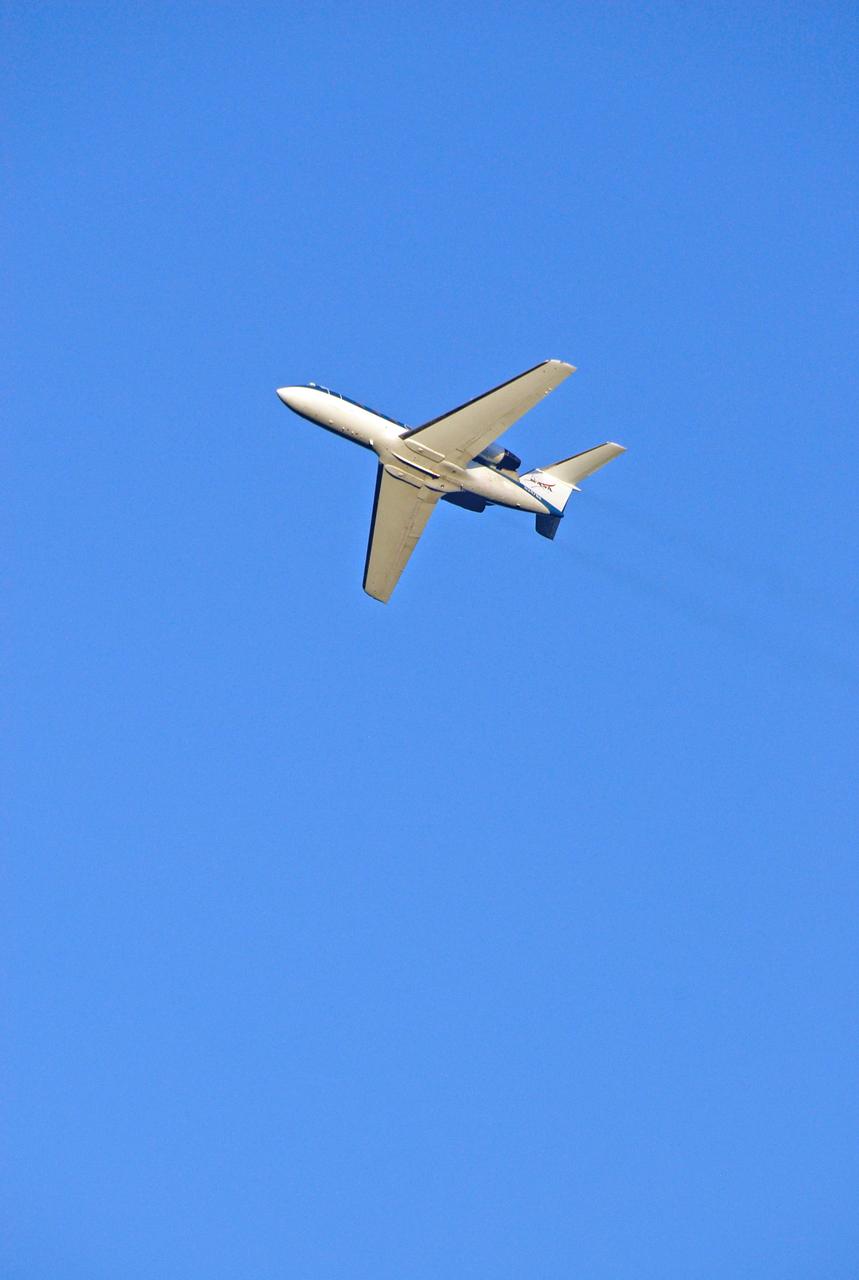
CAPE CANAVERAL, Fla. -- One of the shuttle training aircraft, or STA, flies over NASA Kennedy Space Center's Shuttle Landing Facility during landing practice. The commander and pilot of the STS-124 mission, Mark Kelly and Ken Ham, are making the practice landings. The STA is a Grumman American Aviation-built Gulf Stream II jet that was modified to simulate an orbiter's cockpit, motion and visual cues, and handling qualities. In flight, the aircraft duplicates the orbiter's atmospheric descent trajectory from approximately 35,000 feet altitude to landing on a runway. Space shuttle Discovery is scheduled to lift off on the STS-124 mission at 5:02 p.m. May 31. Photo credit: NASA/Kim Shiflett
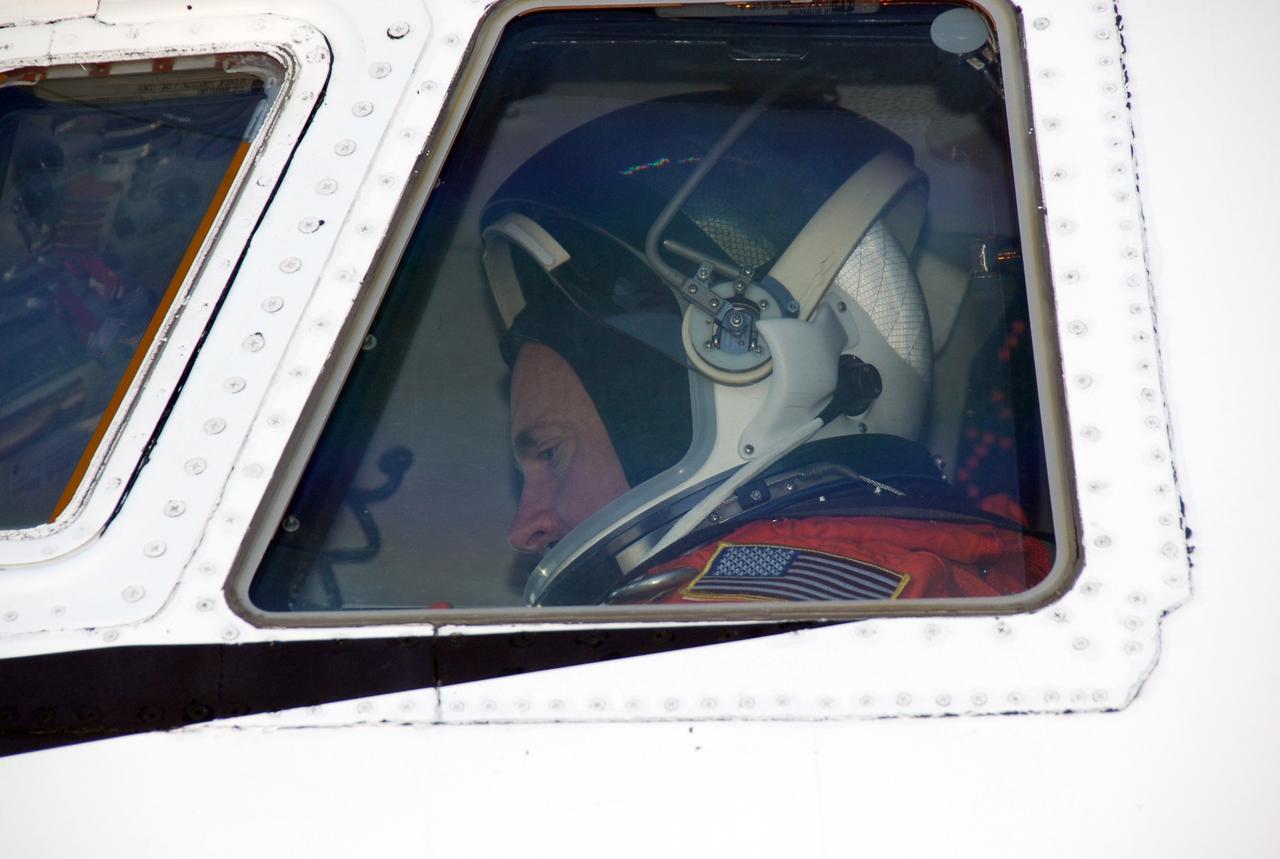
CAPE CANAVERAL, Fla. -- On the Shuttle Landing Facility at NASA's Kennedy Space Center, the commander of the STS-124 mission, Mark Kelly, sits in the cockpit of the shuttle training aircraft, or STA. He is getting ready to practice landing the shuttle on the SLF runway. The STA is a Grumman American Aviation-built Gulf Stream II jet that was modified to simulate an orbiter's cockpit, motion and visual cues, and handling qualities. In flight, the aircraft duplicates the orbiter's atmospheric descent trajectory from approximately 35,000 feet altitude to landing on a runway. Space shuttle Discovery is scheduled to lift off on the STS-124 mission at 5:02 p.m. May 31. Photo credit: NASA/Kim Shiflett
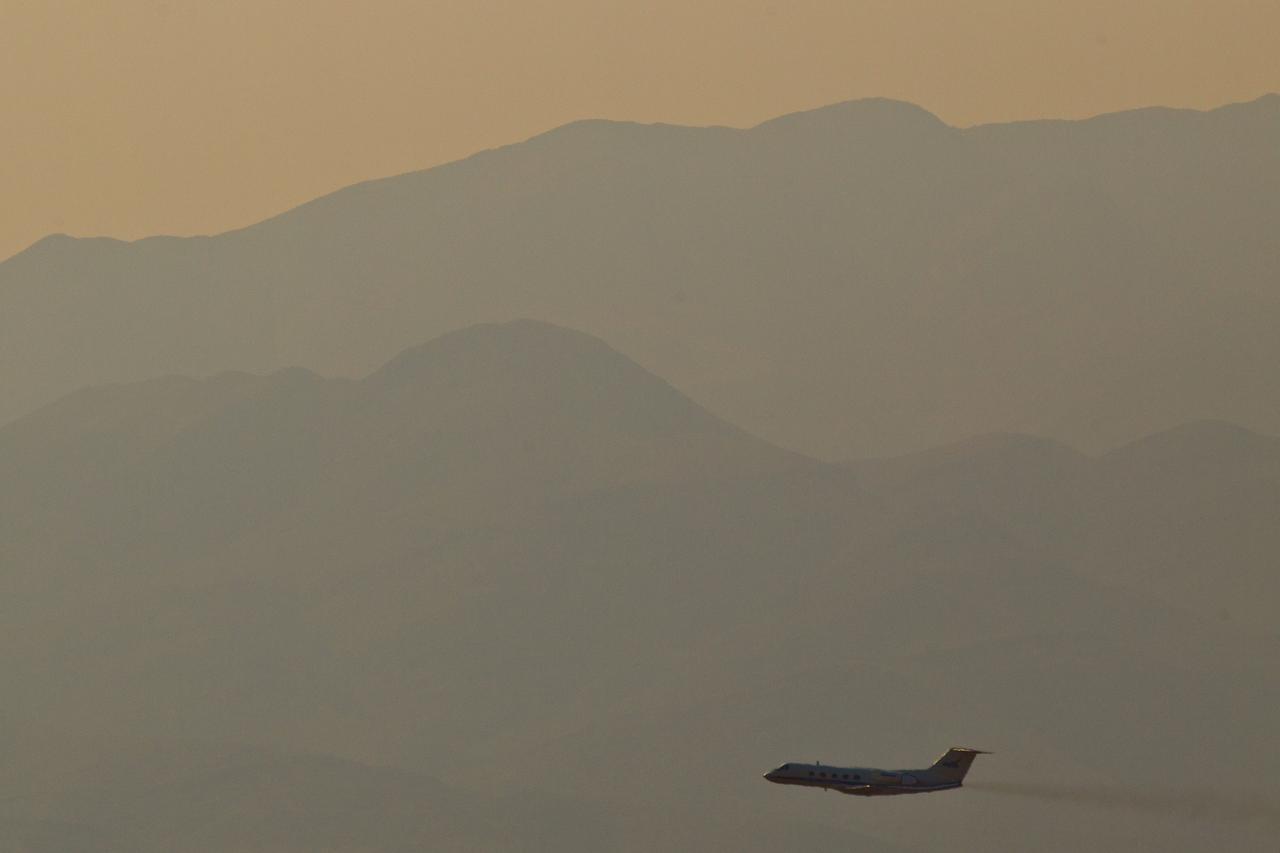
JSC2011-E-059510 (14 June 2011) --- A shuttle training aircraft takes off from NASA?s Johnson Space Center's El Paso Forward Operating Location on June 14, 2011, in El Paso. The Shuttle Training Aircraft or STA is a modified Grumman Gulfstream 2 aircraft that duplicates the space shuttle's handling qualities to allow astronauts to simulate shuttle landings. Since the beginning of the shuttle program over 100,000 landing simulations have been performed from the El Paso location at the nearby White Sands Space Harbor. Photo credit: NASA Photo/Houston Chronicle, Smiley N. Pool
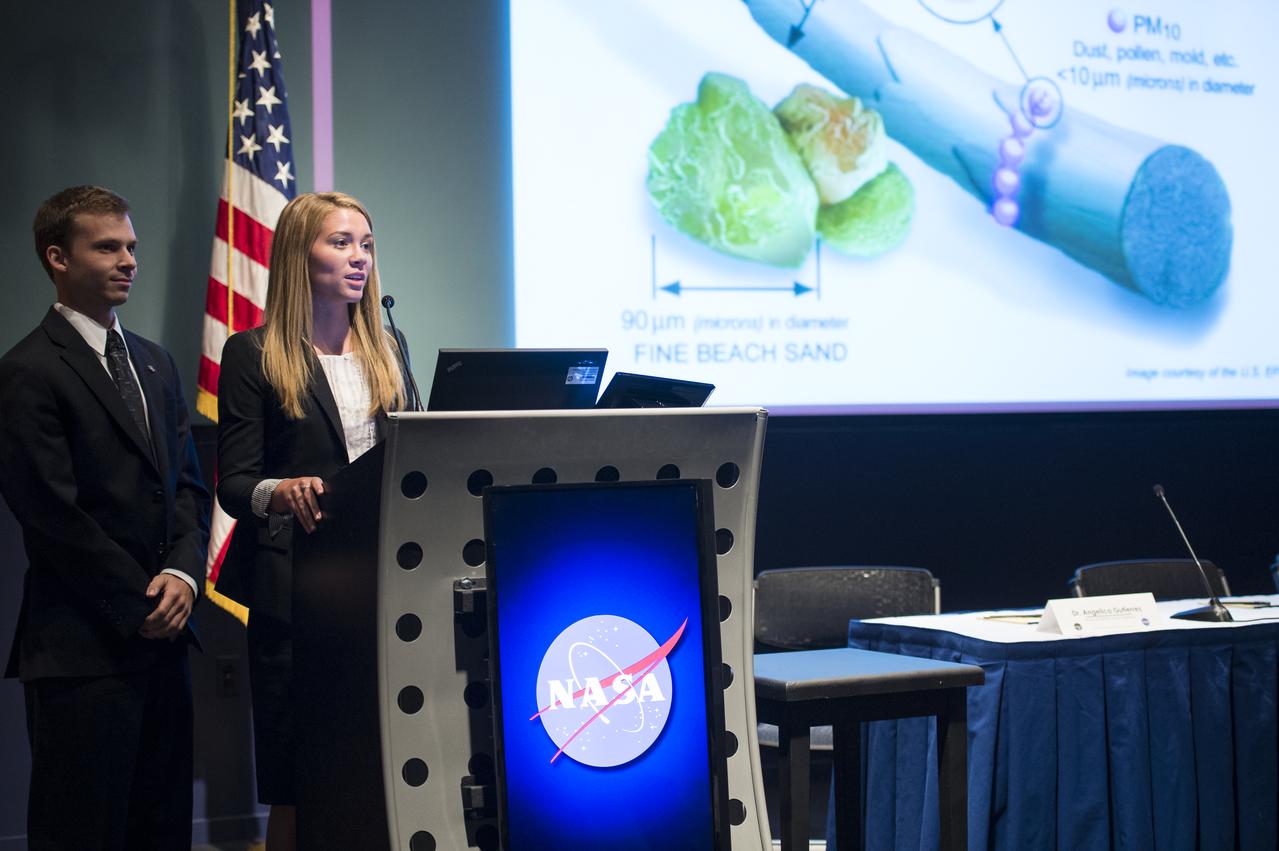
Lisa Waldron and Justin Roberts-Pierel present their project on Texas health and air quality during the annual DEVELOP Earth Science Application Showcase at NASA headquarters Tuesday, August 5, 2014. The Earth Science Applications Showcase highlights the work of over 150 participants in the 10-week DEVELOP program that started in June. The DEVELOP Program bridges the gap between NASA Earth science and society, building capacity in both its participants and partner organizations, to better prepare them to handle the challenges that face our society and future generations. Photo Credit: (NASA/Aubrey Gemignani)

KENNEDY SPACE CENTER, FLA. - At the Shuttle Landing Facility, the Shuttle Training Aircraft (STA) waits for the STS-121 pilot and commander to begin their practice flights. The STA is a modified Grumman American Aviation-built Gulf Stream II jet that was modified to simulate an orbiter’s cockpit, motion and visual cues, and handling qualities. In flight, the STA duplicates the orbiter’s atmospheric descent trajectory from approximately 35,000 feet altitude to landing on a runway. Because the orbiter is unpowered during re-entry and landing, its high-speed glide must be perfectly executed the first time. Space Shuttle Discovery is scheduled to launch July 1 on mission STS-121. Photo credit: NASA/Kim Shiflett
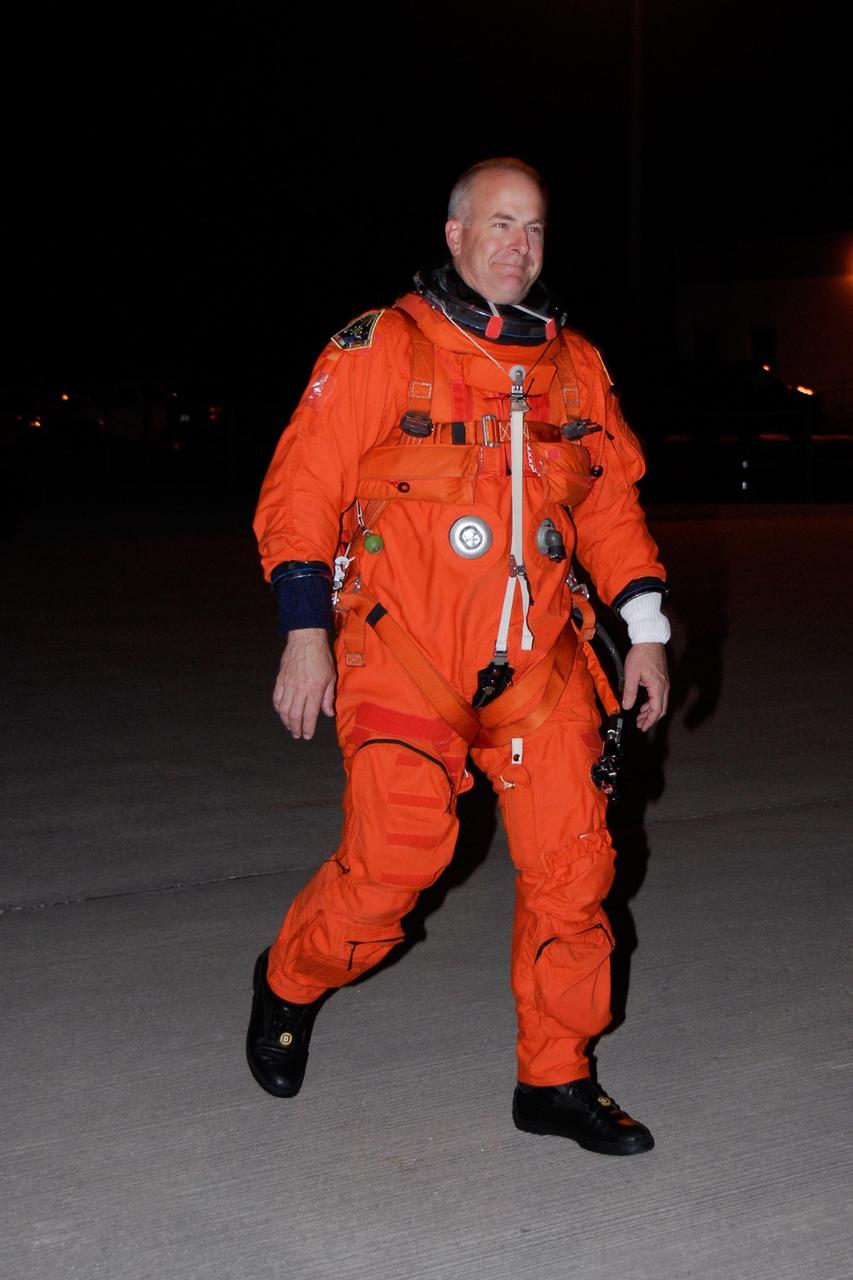
KENNEDY SPACE CENTER, FLA. -- Dressed in his launch and entry suit, STS-122 Pilot Alan Poindexter heads across the Shuttle Landing Facility at NASA's Kennedy Space Center to the shuttle training aircraft, or STA. Poindexter and Commander Steve Frick will practice shuttle landings in the STA before the Dec. 6 launch on space shuttle Atlantis. The STA is a Grumman American Aviation-built Gulf Stream II jet that was modified to simulate an orbiter's cockpit, motion and visual cues, and handling qualities. Photo credit: NASA/Kim Shiflett
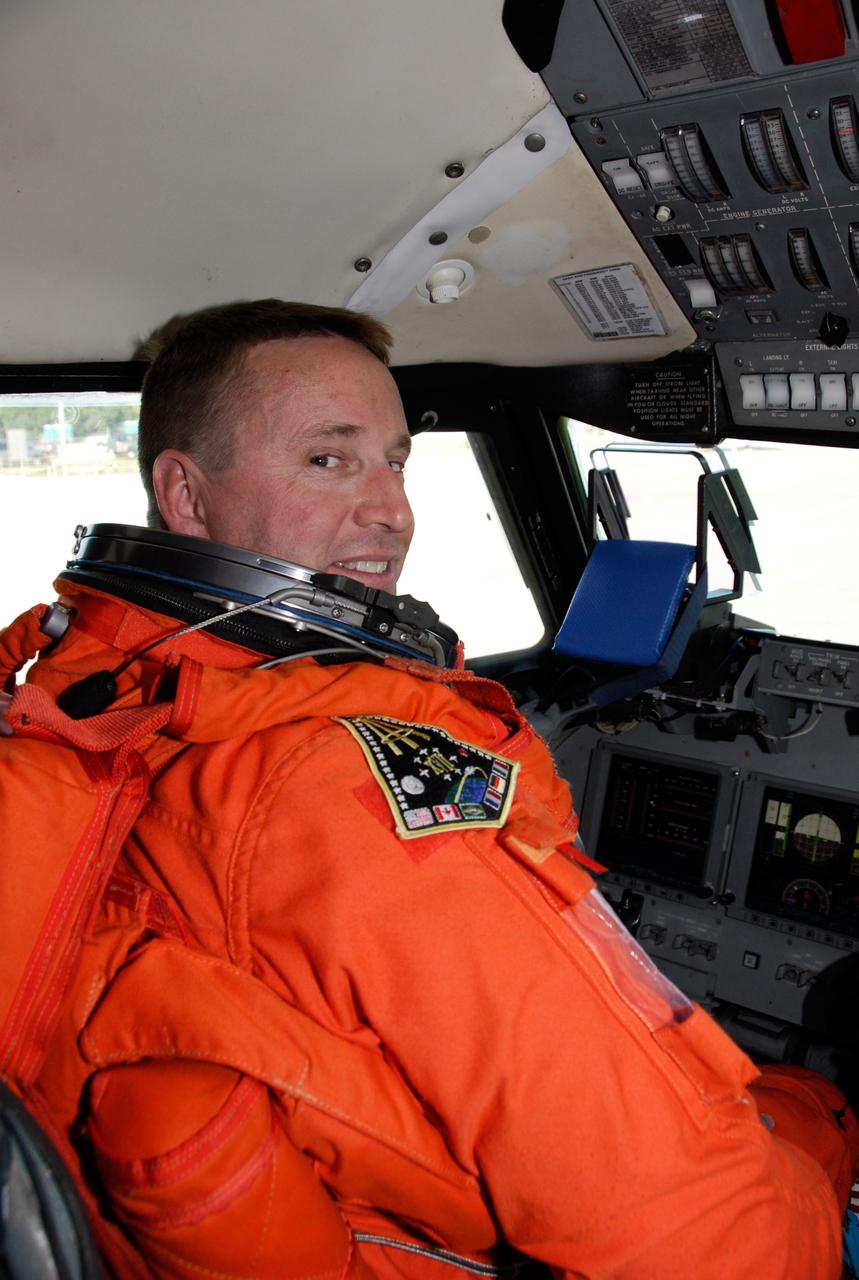
CAPE CANAVERAL, Fla. -- On the Shuttle Landing Facility at NASA's Kennedy Space Center, the pilot of the STS-124 mission, Ken Ham, sits in the cockpit of the shuttle training aircraft, or STA. He is getting ready to practice landing the shuttle on the SLF runway. The STA is a Grumman American Aviation-built Gulf Stream II jet that was modified to simulate an orbiter's cockpit, motion and visual cues, and handling qualities. In flight, the aircraft duplicates the orbiter's atmospheric descent trajectory from approximately 35,000 feet altitude to landing on a runway. Space shuttle Discovery is scheduled to lift off on the STS-124 mission at 5:02 p.m. May 31. Photo credit: NASA/Kim Shiflett
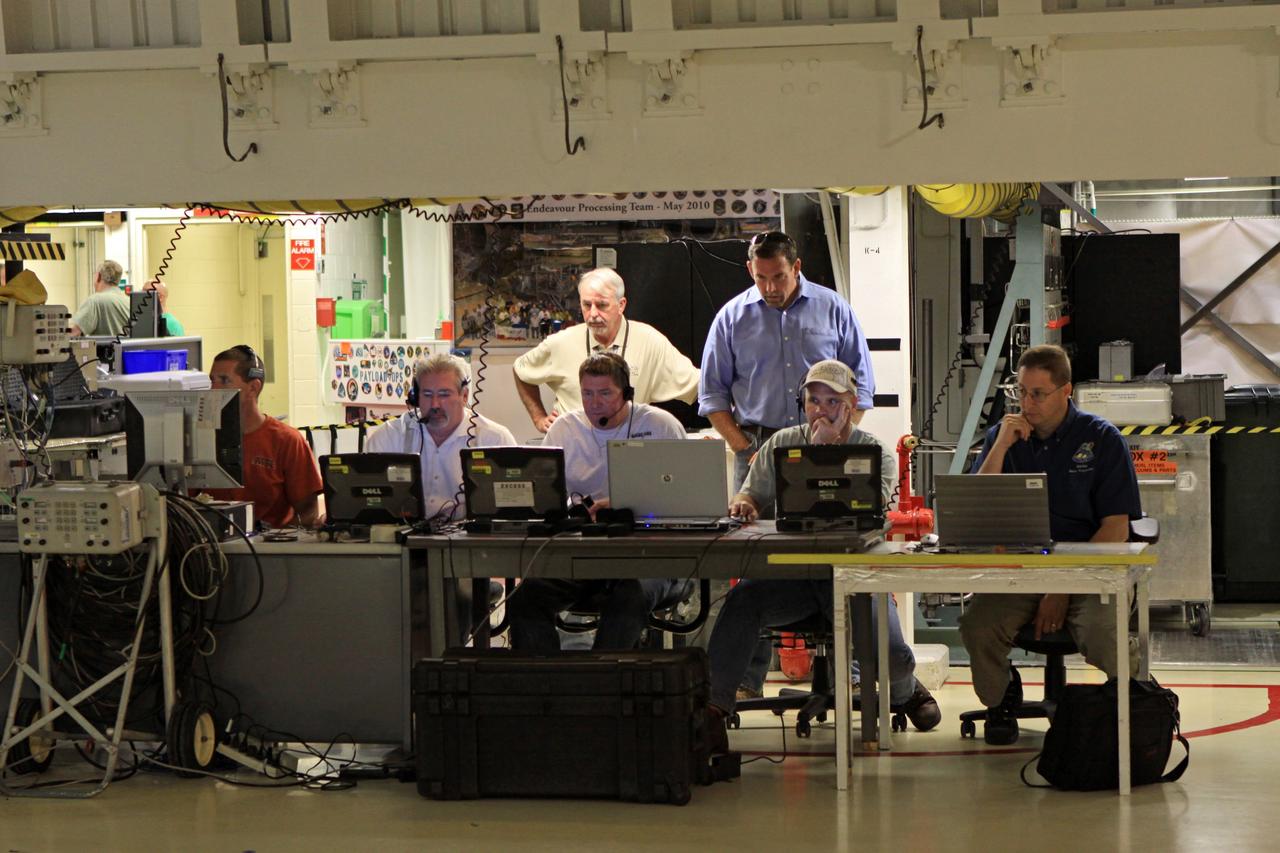
CAPE CANAVERAL, Fla. – In Orbiter Processing Facility OPF Bay 2 at NASA’s Kennedy Space Center in Florida, weight and center of gravity checks are underway on the space shuttle Endeavour. Monitoring data on the activity are United Space Alliance USA OPF Manager Mark Barnes, standing to the left, and Mike McClure, of USA Orbiter Handling Engineering. Seated, from the left, are USA move director Cliff Semonski, USA move director Mark McGee, USA lead aerospace Quality Mission Assurance inspector Jesse English, Doug Robison, of USA Orbiter Handling Engineering, and Robert Handl, of Boeing Mass Properties. The work is part of Transition and Retirement of the remaining space shuttles, Endeavour and Atlantis. Endeavour is being prepared for public display at the California Science Center in Los Angeles. Its ferry flight to California is targeted for mid-September. Endeavour was the last space shuttle added to NASA’s orbiter fleet. Over the course of its 19-year career, Endeavour spent 299 days in space during 25 missions. For more information, visit http://www.nasa.gov/transition Photo credit: NASA/ Jim Grossmann
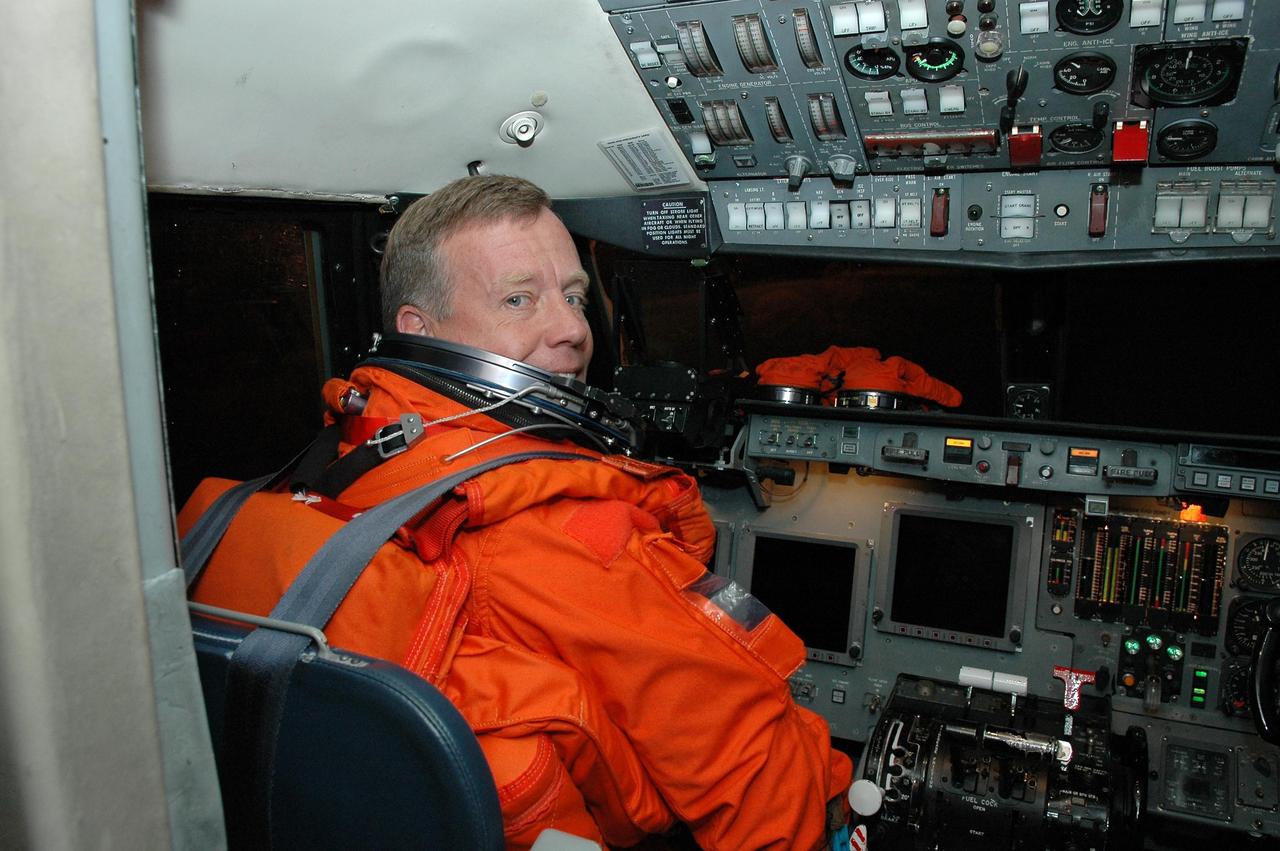
KENNEDY SPACE CENTER, FLA. - Inside the Shuttle Training Aircraft (STA), STS-121 Commander Steven Lindsey settles into his seat in the cockpit. Lindsey and Pilot Mark Kelly will be making practice landings in preparation for the July 1 launch of Space Shuttle Discovery. The STA is a Grumman American Aviation-built Gulf Stream II jet that was modified to simulate an orbiter’s cockpit, motion and visual cues, and handling qualities. In flight, the STA duplicates the orbiter’s atmospheric descent trajectory from approximately 35,000 feet altitude to landing on a runway. Because the orbiter is unpowered during re-entry and landing, its high-speed glide must be perfectly executed the first time. Photo credit: NASA/Kim Shiflett
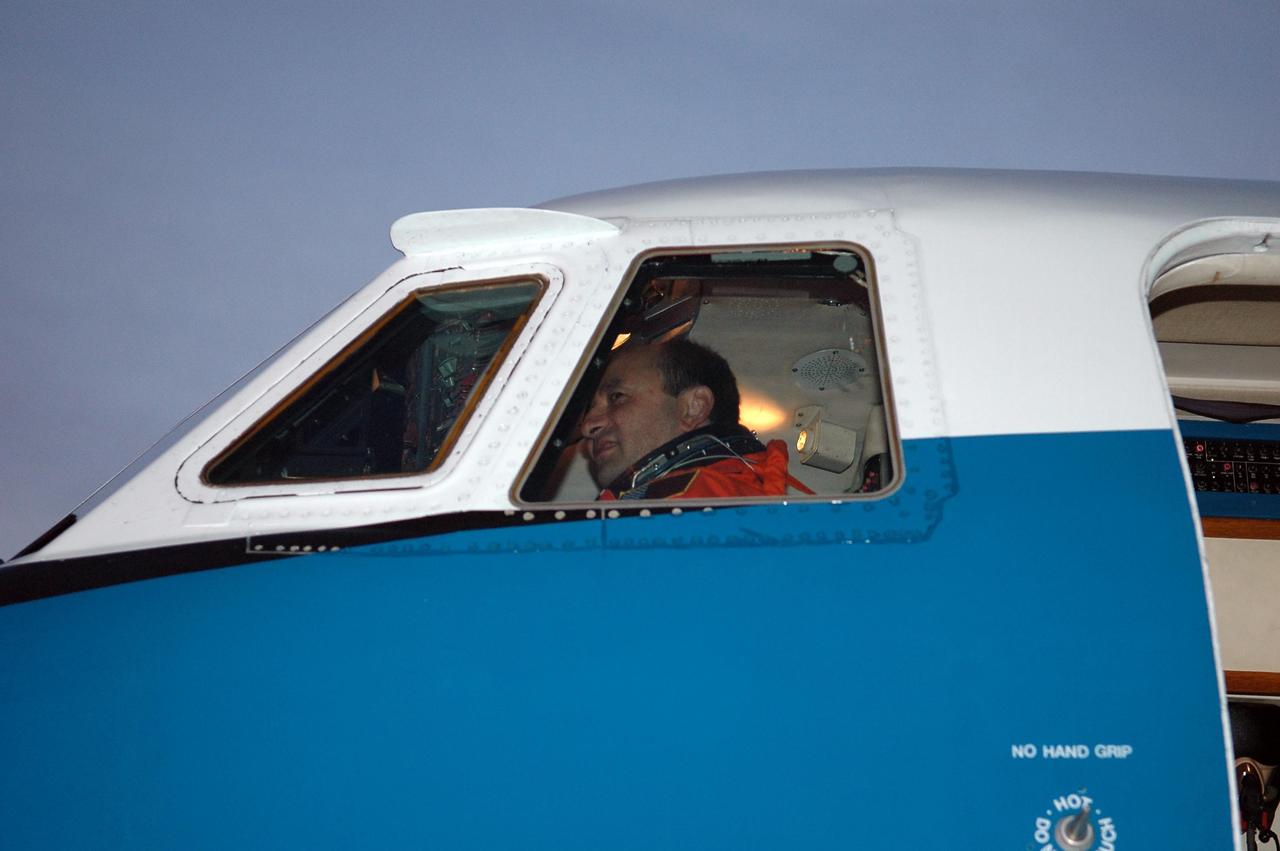
KENNEDY SPACE CENTER, FLA. -- At the Shuttle Landing Facility, STS-116 Commander Mark Polansky is in the pilot's seat of the shuttle training aircraft (STA), getting ready to practice landing the orbiter. The mission crew is at KSC for the terminal countdown demonstration test, which are prelaunch preparations that include a simulated launch countdown. STA practice is part of the TCDT. The STA is a Grumman American Aviation-built Gulf Stream II jet that was modified to simulate an orbiter's cockpit, motion and visual cues, and handling qualities. In flight, the STA duplicates the orbiter's atmospheric descent trajectory from approximately 35,000 feet altitude to landing on a runway. Because the orbiter is unpowered during re-entry and landing, its high-speed glide must be perfectly executed the first time. Photo credit: NASA/Kim Shiflett
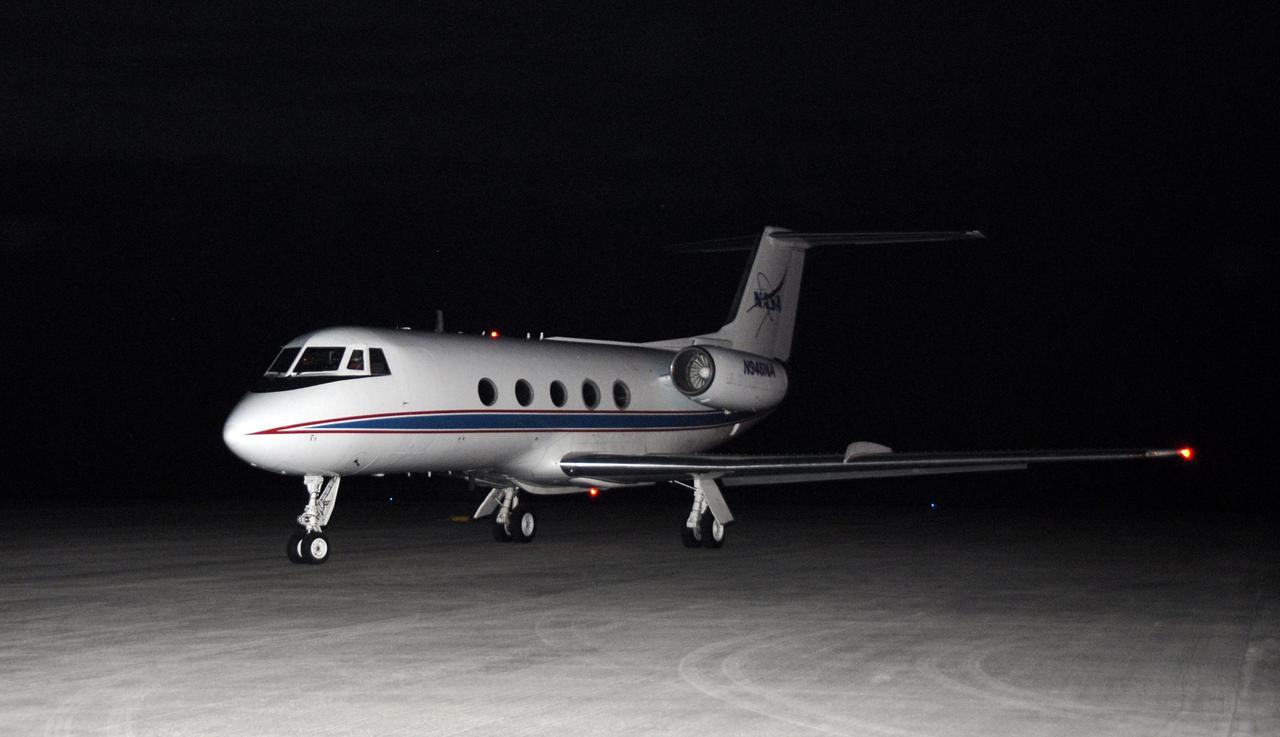
CAPE CANAVERAL, Fla. – On the Shuttle Landing Facility at NASA's Kennedy Space Center in Florida, a shuttle training aircraft is ready for takeoff. STS-119 Commander Lee Archambault and Pilot Tony Antonelli are practicing shuttle landings as part of the Terminal Countdown Demonstration Test activities. The TCDT includes equipment familiarization and a simulated launch countdown. The STA is a Grumman American Aviation-built Gulf Stream II jet that was modified to simulate a shuttle’s cockpit, motion and visual cues, and handling qualities. In flight, the aircraft duplicates the shuttle’s atmospheric descent trajectory from approximately 35,000 feet to landing. The crew of space shuttle Discovery is targeted to launch on the STS-119 mission Feb. 12. During Discovery's 14-day mission, the crew will install the S6 truss segment and solar arrays to the starboard side of the International Space Station, completing the station's truss, or backbone. Photo credit: NASA/Kim Shiflett
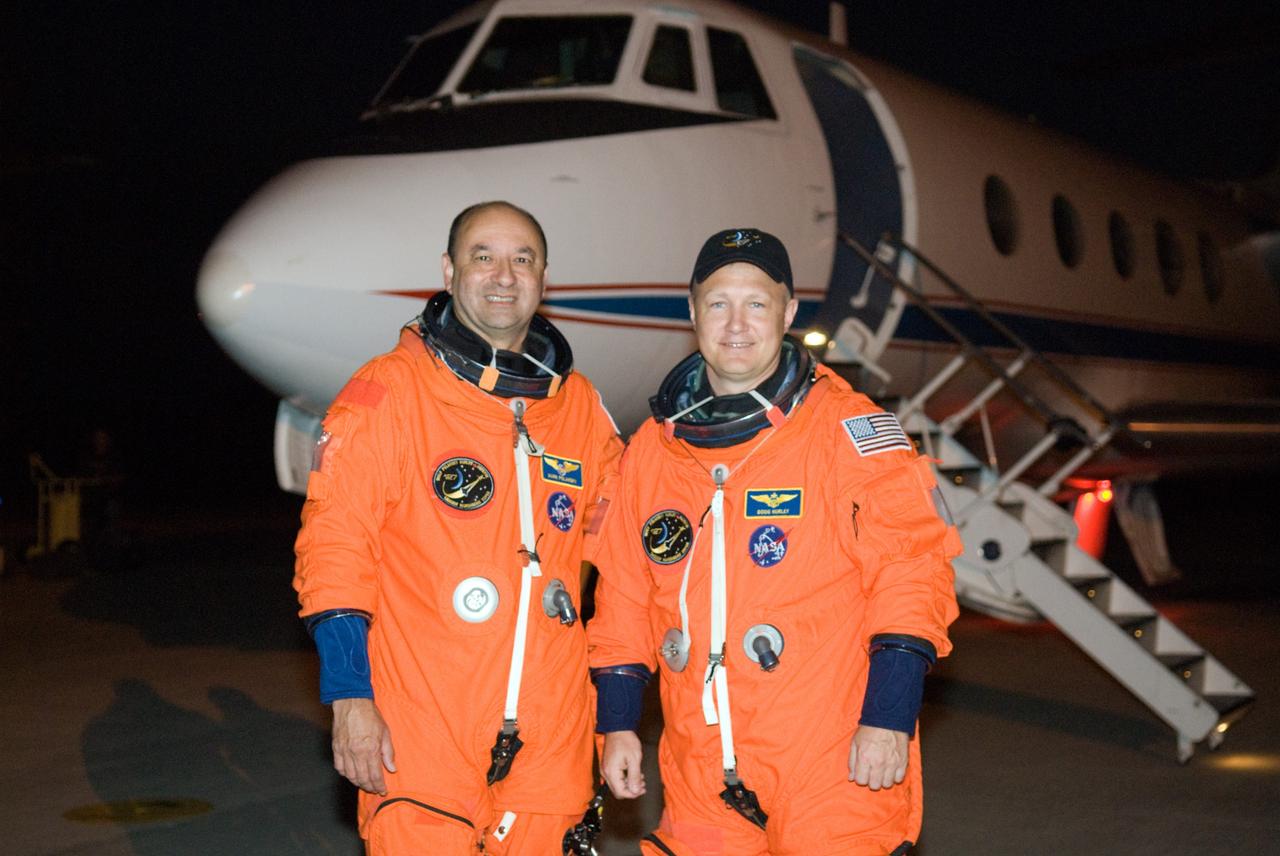
CAPE CANAVERAL, Fla. – At the Shuttle Landing Facility at NASA's Kennedy Space Center in Florida, STS-127 Commander Mark Polansky and Pilot Doug Hurley are ready to begin practicing landings in the Shuttle Training Aircraft. They are practicing in preparation for launch of space shuttle Endeavour on the STS-127 mission on June 13 to the International Space Station. The STA is a Grumman American Aviation-built Gulfstream II jet that was modified to simulate a shuttle’s cockpit, motion and visual cues, and handling qualities. Endeavour will deliver the Japanese Experiment Module's Exposed Facility, or JEM-EF, and the Experiment Logistics Module-Exposed Section, or ELM-ES. on STS-127. The mission is the final of three flights dedicated to the assembly of the Japan Aerospace Exploration Agency's Kibo laboratory complex on the space station. Photo credit: NASA/Kim Shiflett
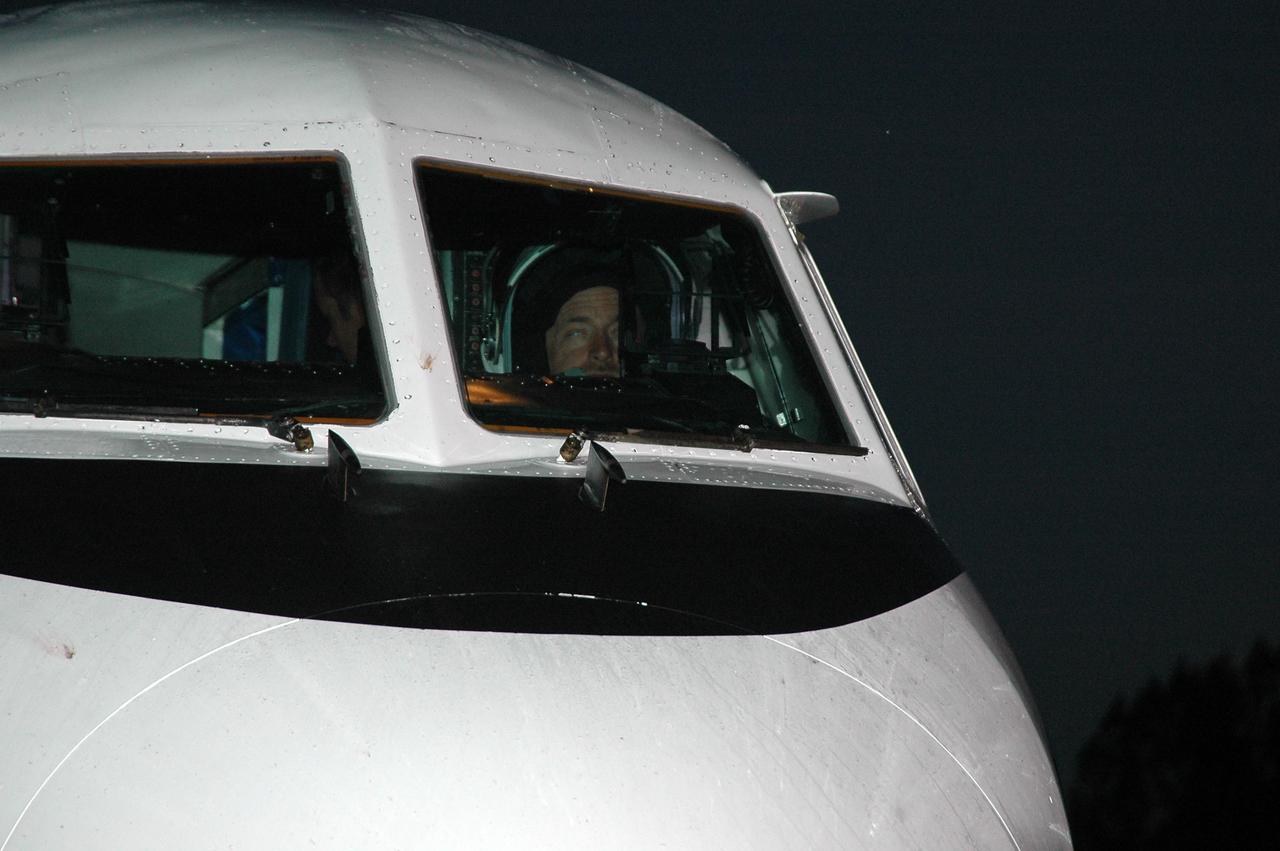
KENNEDY SPACE CENTER, FLA. - In the cockpit of the Shuttle Training Aircraft (STA), STS-121 Pilot Mark Kelly is ready for takeoff from the Shuttle Landing Facility. Kelly and Commander Steven Lindsey will be making practice landings in preparation for the July 1 launch of Space Shuttle Discovery. The STA is a Grumman American Aviation-built Gulf Stream II jet that was modified to simulate an orbiter’s cockpit, motion and visual cues, and handling qualities. In flight, the STA duplicates the orbiter’s atmospheric descent trajectory from approximately 35,000 feet altitude to landing on a runway. Because the orbiter is unpowered during re-entry and landing, its high-speed glide must be perfectly executed the first time. Photo credit: NASA/Kim Shiflett
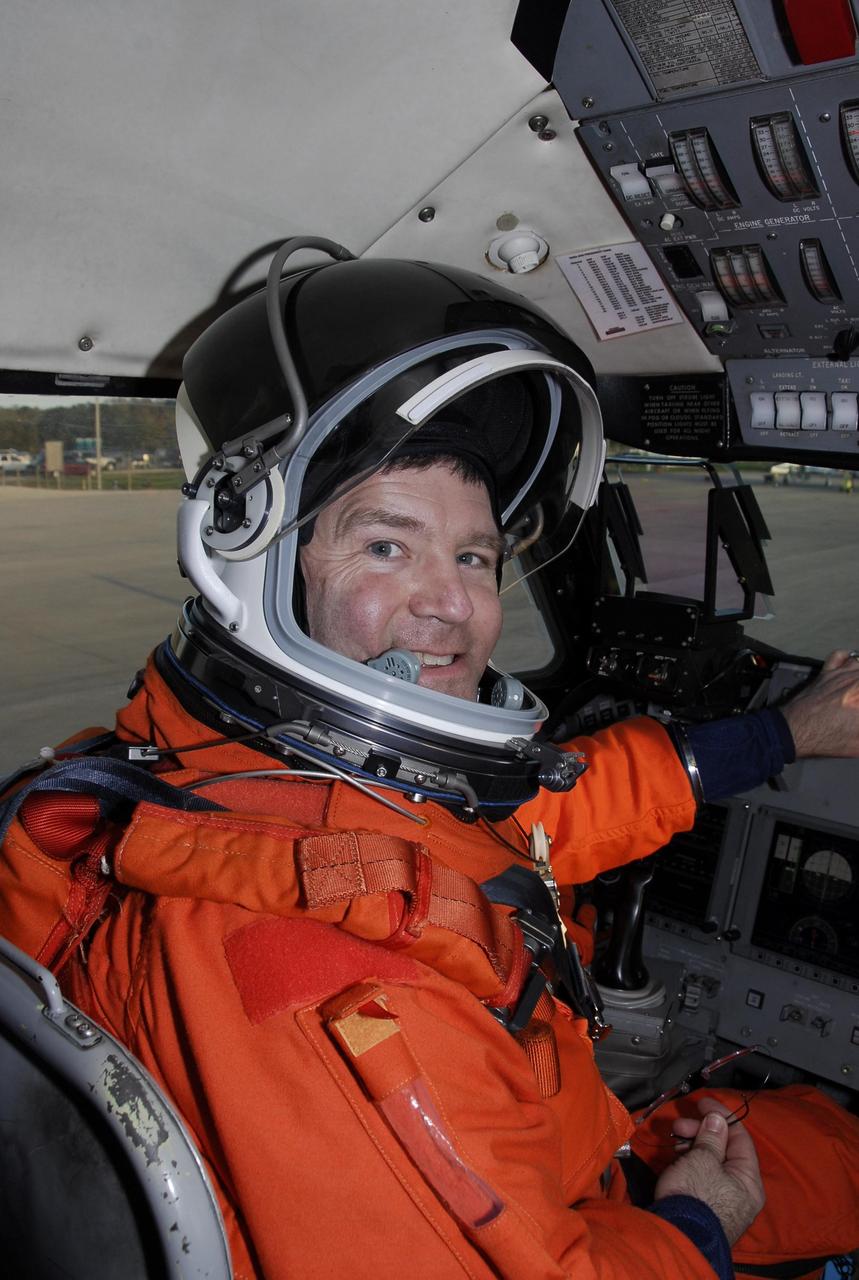
KENNEDY SPACE CENTER, FLA. -- Dressed in his launch and entry suit, STS-122 Commander Steve Frick is seated in the shuttle training aircraft, or STA, at NASA's Kennedy Space Center. Frick and Pilot Alan Poindexter are practicing shuttle landings in the STA before the Feb. 7 launch of space shuttle Atlantis. The STA is a Grumman American Aviation-built Gulf Stream II jet that was modified to simulate an orbiter's cockpit, motion and visual cues, and handling qualities. In flight, the STA duplicates the orbiter's atmospheric descent trajectory from approximately 35,000 feet altitude to landing on a runway. Because the orbiter is unpowered during re-entry and landing, its high-speed glide must be perfectly executed the first time. Photo credit: NASA/Kim Shiflett
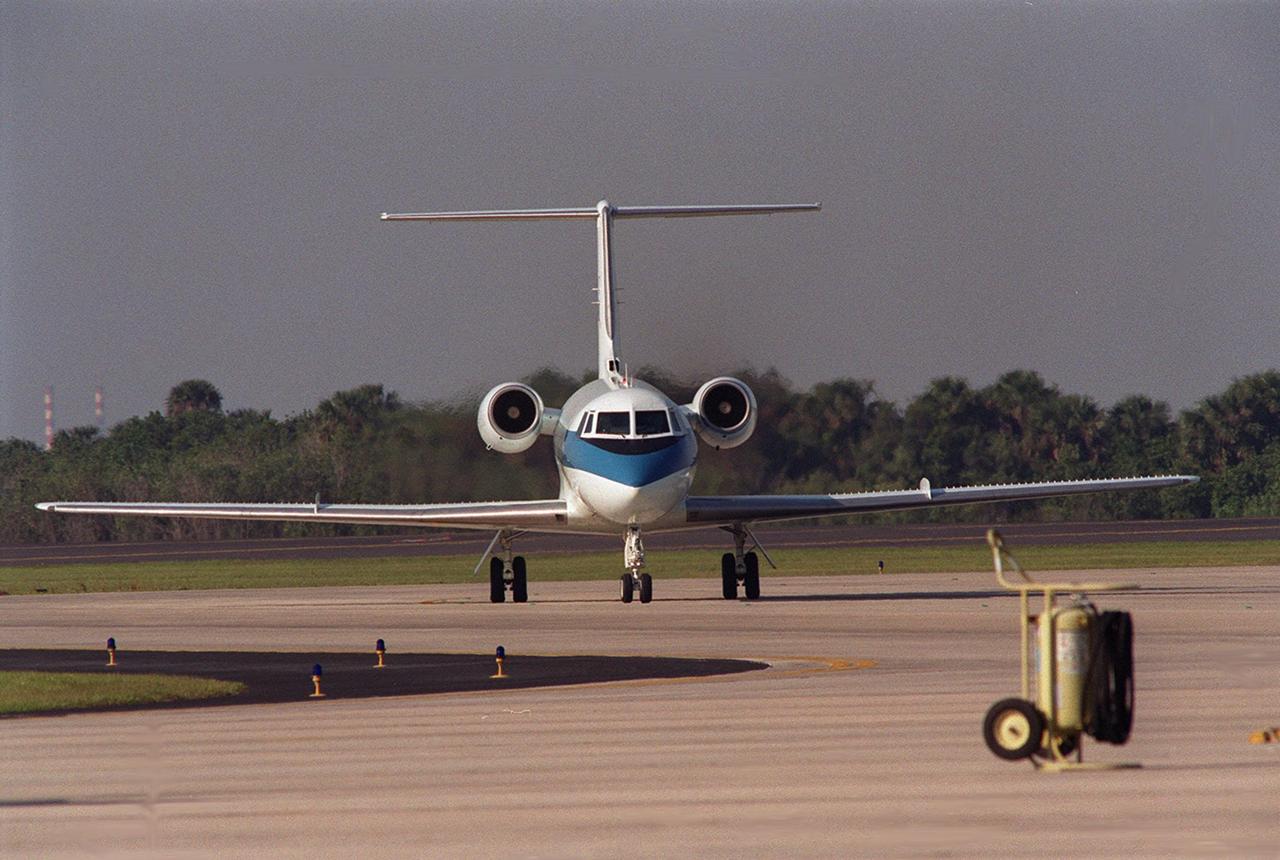
A Shuttle Training Aircraft (STA) taxis into the parking area of KSC's Shuttle Landing Facility. The STA is a modified Grumman American Aviation-built Gulfstream II executive jet that was modified to simulate an orbiter's cockpit, motion and visual cues, and handling qualities. It is used by Shuttle flight crews to practice landing the orbiter. In flight, the STA duplicates the orbiter's atmospheric descent trajectory from approximately 35,000 feet altitude to landing on a runway. The orbiter differs in at least one major aspect from conventional aircraft; it is unpowered during re-entry and landing so its high-speed glide must be perfectly executed the first time there is no go-around capability. The orbiter touchdown speed is 213 to 226 miles (343 to 364 kilometers) per hour. There are two STAs, based in Houston
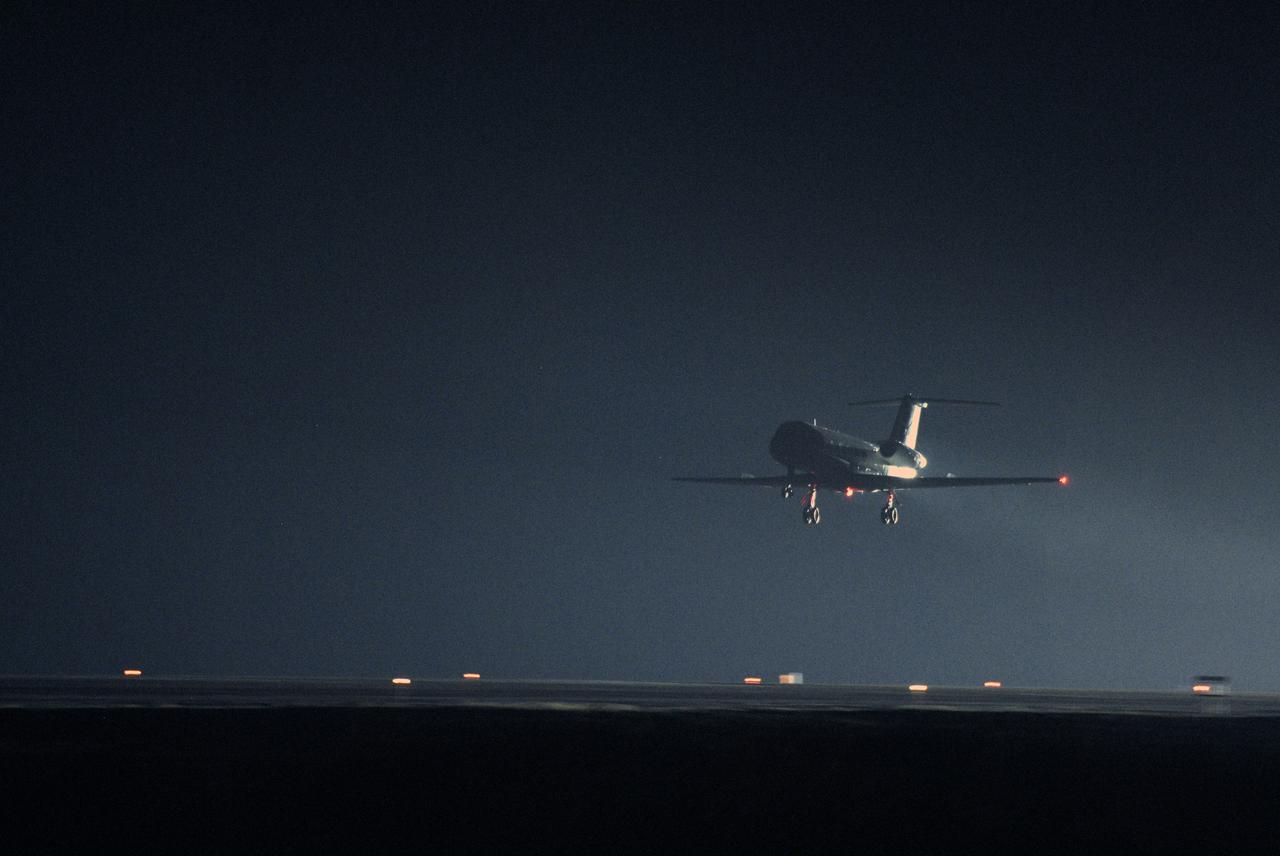
CAPE CANAVERAL, Fla. – A shuttle training aircraft drops for touchdown on the Shuttle Landing Facility runway at NASA's Kennedy Space Center in Florida. STS-119 Commander Lee Archambault and Pilot Tony Antonelli are practicing shuttle landings as part of the Terminal Countdown Demonstration Test activities. The TCDT includes equipment familiarization and a simulated launch countdown. The STA is a Grumman American Aviation-built Gulf Stream II jet that was modified to simulate a shuttle’s cockpit, motion and visual cues, and handling qualities. In flight, the aircraft duplicates the shuttle’s atmospheric descent trajectory from approximately 35,000 feet to landing. The crew of space shuttle Discovery is targeted to launch on the STS-119 mission Feb. 12. During Discovery's 14-day mission, the crew will install the S6 truss segment and solar arrays to the starboard side of the International Space Station, completing the station's truss, or backbone. Photo credit: NASA/Kim Shiflett
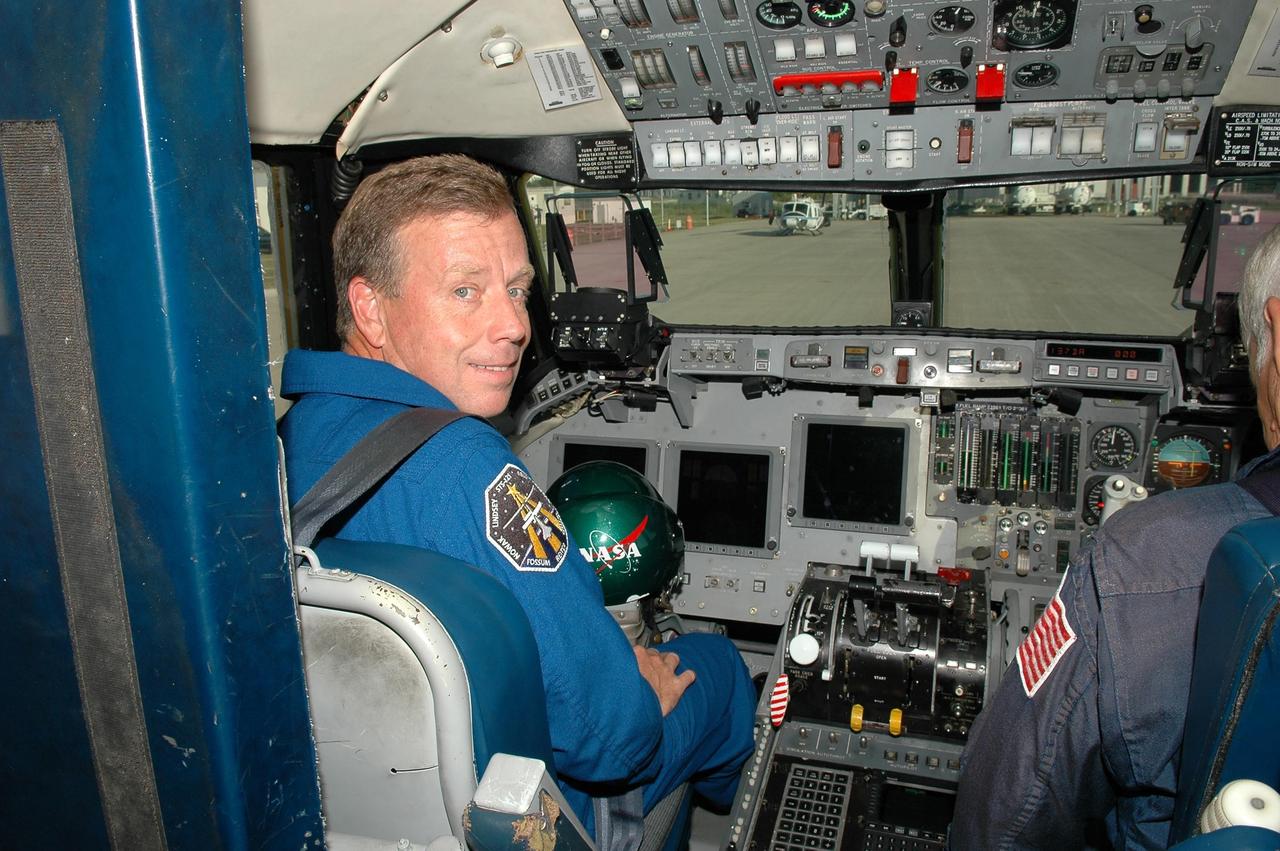
KENNEDY SPACE CENTER, FLA. - At the Shuttle Landing Facility, STS-121 Commander Steven Lindsey gets ready for a training flight in a Shuttle Training Aircraft (STA). He will be practicing landing the orbiter using the STA, which is a modified Grumman American Aviation-built Gulf Stream II jet that was modified to simulate an orbiter’s cockpit, motion and visual cues, and handling qualities. In flight, the STA duplicates the orbiter’s atmospheric descent trajectory from approximately 35,000 feet altitude to landing on a runway. Because the orbiter is unpowered during re-entry and landing, its high-speed glide must be perfectly executed the first time. Space Shuttle Discovery is scheduled to launch July 1 on mission STS-121. Photo credit: NASA/Kim Shiflett
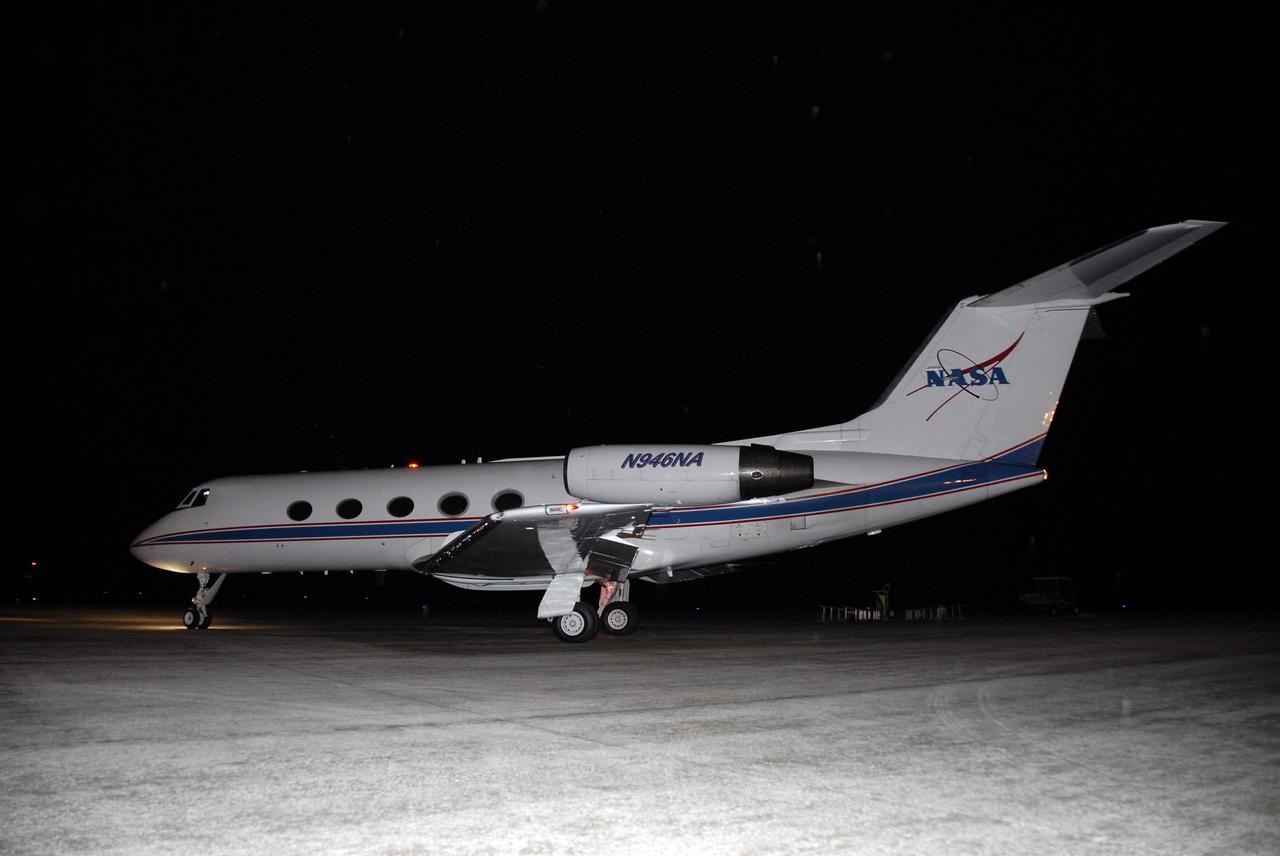
CAPE CANAVERAL, Fla. - At the Shuttle Landing Facility at NASA's Kennedy Space Center in Florida, the shuttle training aircraft piloted by STS-125 Pilot Gregory C. Johnson taxis toward the runway for practice shuttle landings. The STA is a Grumman American Aviation-built Gulf Stream II jet that was modified to simulate a shuttle’s cockpit, motion and visual cues, and handling qualities. In flight, the aircraft duplicates the shuttle’s atmospheric descent trajectory from approximately 35,000 feet altitude to landing on a runway. The practice is part of a terminal countdown demonstration test, or TCDT, to prepare for launch. TCDT provides astronauts and ground crews with an opportunity to participate in various simulated countdown activities, including equipment familiarization, emergency training and a simulated launch countdown. Space shuttle Atlantis’ STS-125 mission to service NASA’s Hubble Space Telescope is targeted to launch Oct. 10. Photo credit: NASA/Kim Shiflett
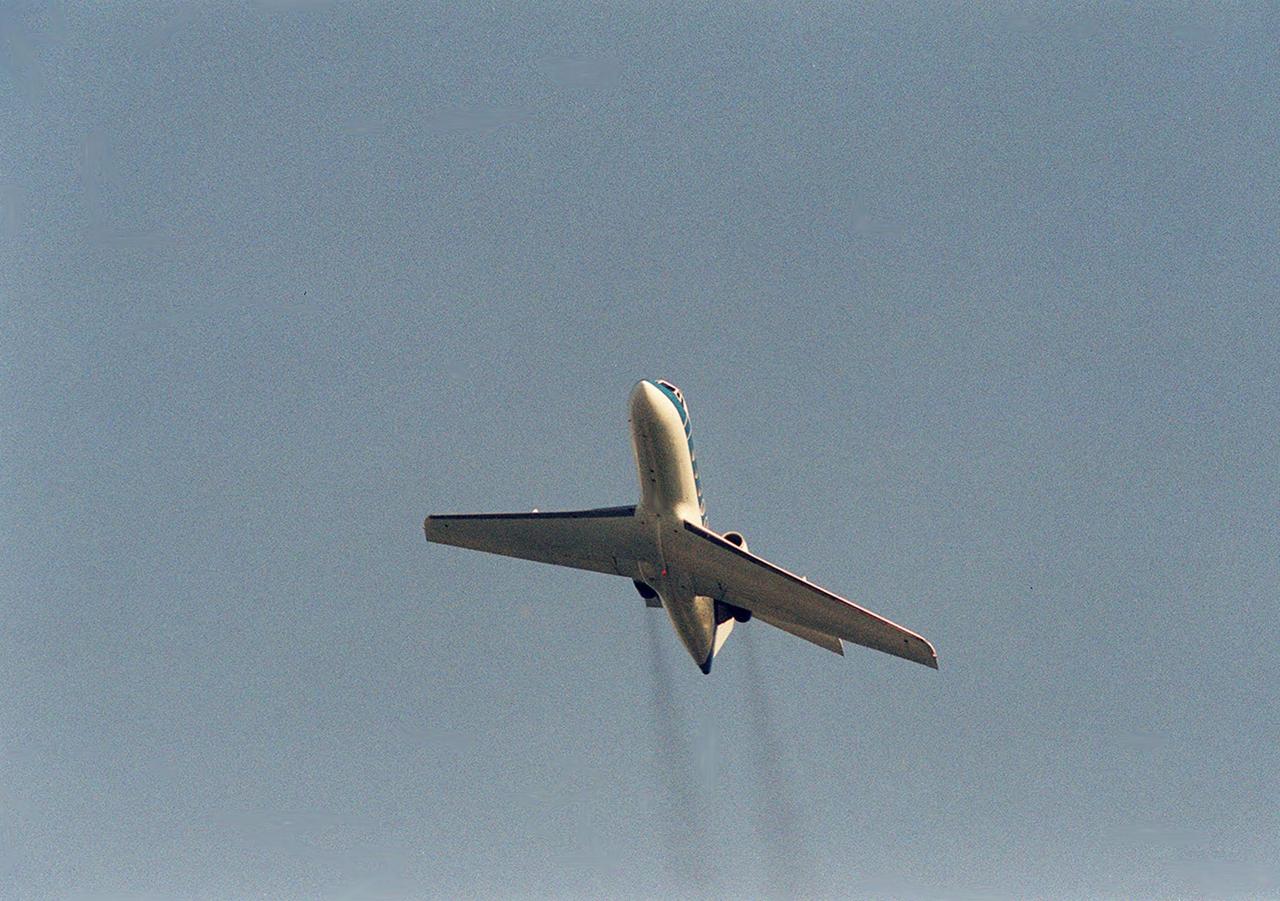
A Shuttle Training Aircraft (STA) soars into the blue sky above Kennedy Space Center. The STA is a modified Grumman American Aviation-built Gulfstream II executive jet that was modified to simulate an orbiter's cockpit, motion and visual cues, and handling qualities. It is used by Shuttle flight crews to practice landing the orbiter. In flight, the STA duplicates the orbiter's atmospheric descent trajectory from approximately 35,000 feet altitude to landing on a runway. The orbiter differs in at least one major aspect from conventional aircraft; it is unpowered during re-entry and landing so its high-speed glide must be perfectly executed the first time there is no go-around capability. The orbiter touchdown speed is 213 to 226 miles (343 to 364 kilometers) per hour. There are two STAs, based in Houston
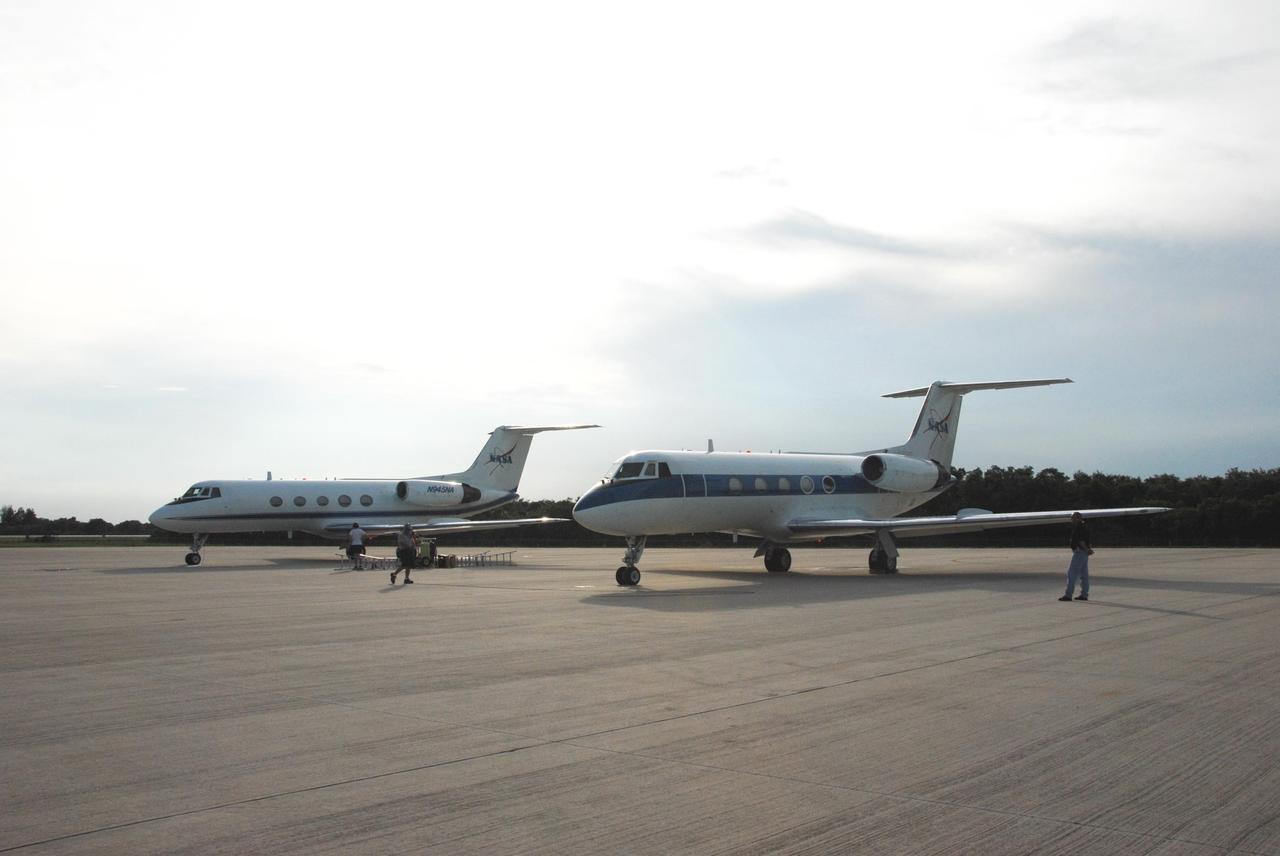
KENNEDY SPACE CENTER, Fla. -- Two shuttle training aircraft, or STAs, wait to taxi onto the runway at the Shuttle Landing Facility. STS-118 Commander Scott Kelly and Pilot Charlie Hobaugh are each piloting one of the STAs for landing practice. The practice is part of Terminal Countdown Demonstration Test, or TCDT, activities that include a simulated launch countdown. The STA is a Grumman American Aviation-built Gulf Stream II jet that was modified to simulate an orbiter's cockpit, motion and visual cues, and handling qualities. In flight, the STA duplicates the orbiter's atmospheric descent trajectory from approximately 35,000 feet altitude to landing on a runway. The STS-118 mission is the 22nd flight to the International Space Station and is targeted for launch on Aug. 7. The mission payload aboard Space Shuttle Endeavour includes the S5 truss, a SPACEHAB module and external stowage platform 3. NASA/George Shelton
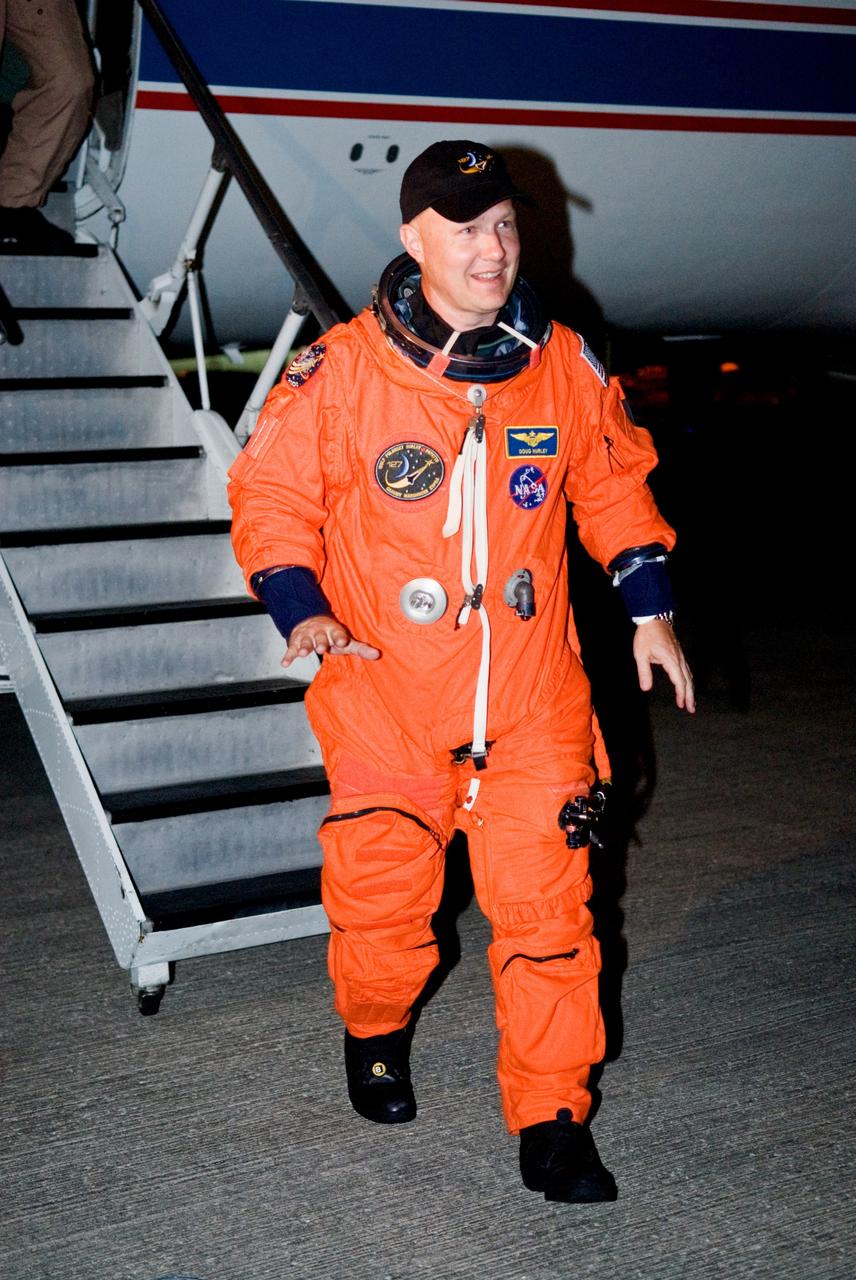
CAPE CANAVERAL, Fla. – On the Shuttle Landing Facility at NASA's Kennedy Space Center in Florida, STS-127 Pilot Doug Hurley exits the Shuttle Training Aircraft. He and Commander Mark Polansky have been practicing shuttle landings in preparation for launch of space shuttle Endeavour on the STS-127 mission, targeted for June 13. The STA is a Grumman American Aviation-built Gulf Stream II jet that was modified to simulate a shuttle’s cockpit, motion and visual cues, and handling qualities. The crew is at Kennedy for a launch dress rehearsal called the terminal countdown demonstration test, or TCDT, which includes emergency egress training and equipment familiarization. The STS-127 mission is the final of three flights dedicated to the assembly of the Japanese Kibo laboratory complex on the International Space Station. It is the 127th shuttle flight and the 29th in the assembly of the space station. Photo credit: NASA/Kim Shiflett
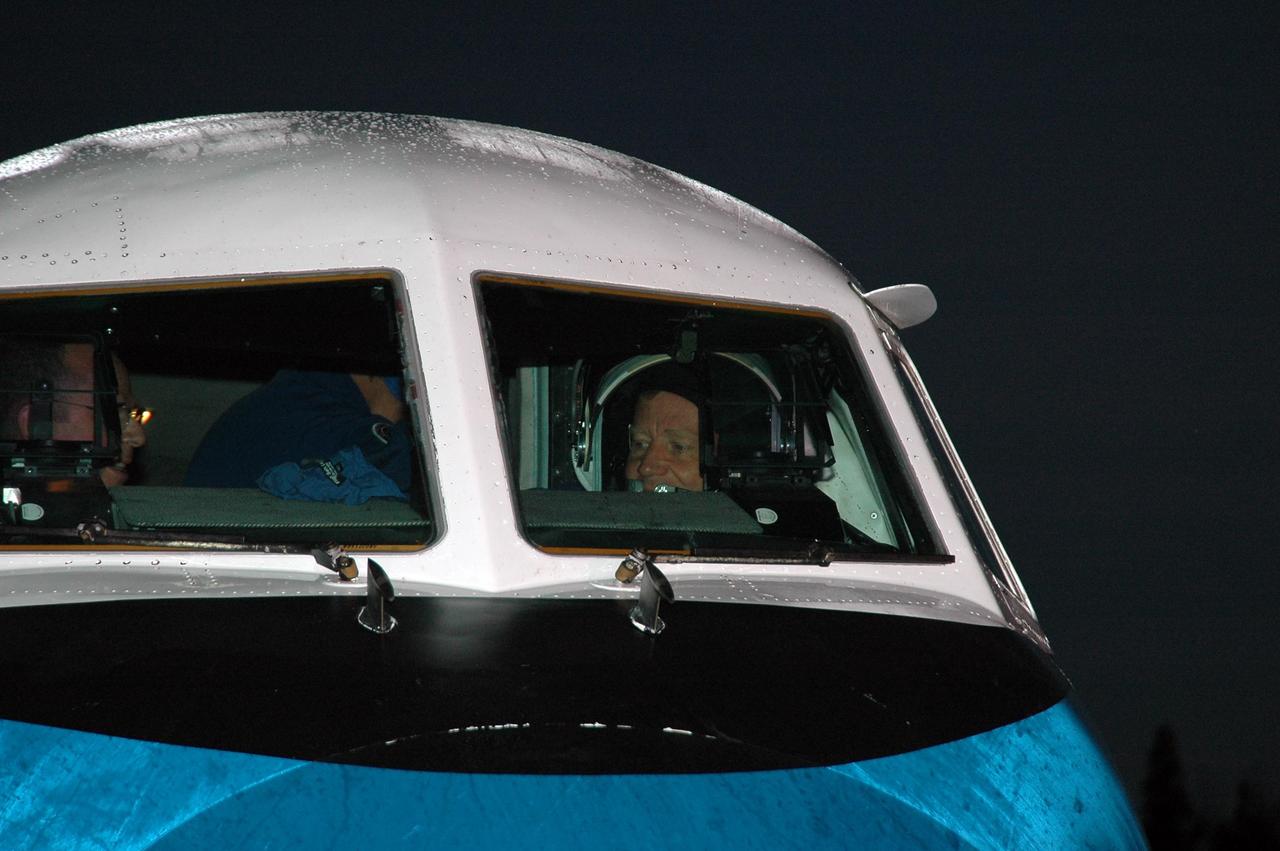
KENNEDY SPACE CENTER, FLA. - In the cockpit of the Shuttle Training Aircraft (STA), STS-121 Commander Steven Lindsey is ready for takeoff from the Shuttle Landing Facility. Lindsey and Pilot Mark Kelly will be making practice landings in preparation for the July 1 launch of Space Shuttle Discovery. The STA is a Grumman American Aviation-built Gulf Stream II jet that was modified to simulate an orbiter’s cockpit, motion and visual cues, and handling qualities. In flight, the STA duplicates the orbiter’s atmospheric descent trajectory from approximately 35,000 feet altitude to landing on a runway. Because the orbiter is unpowered during re-entry and landing, its high-speed glide must be perfectly executed the first time. Photo credit: NASA/Kim Shiflett
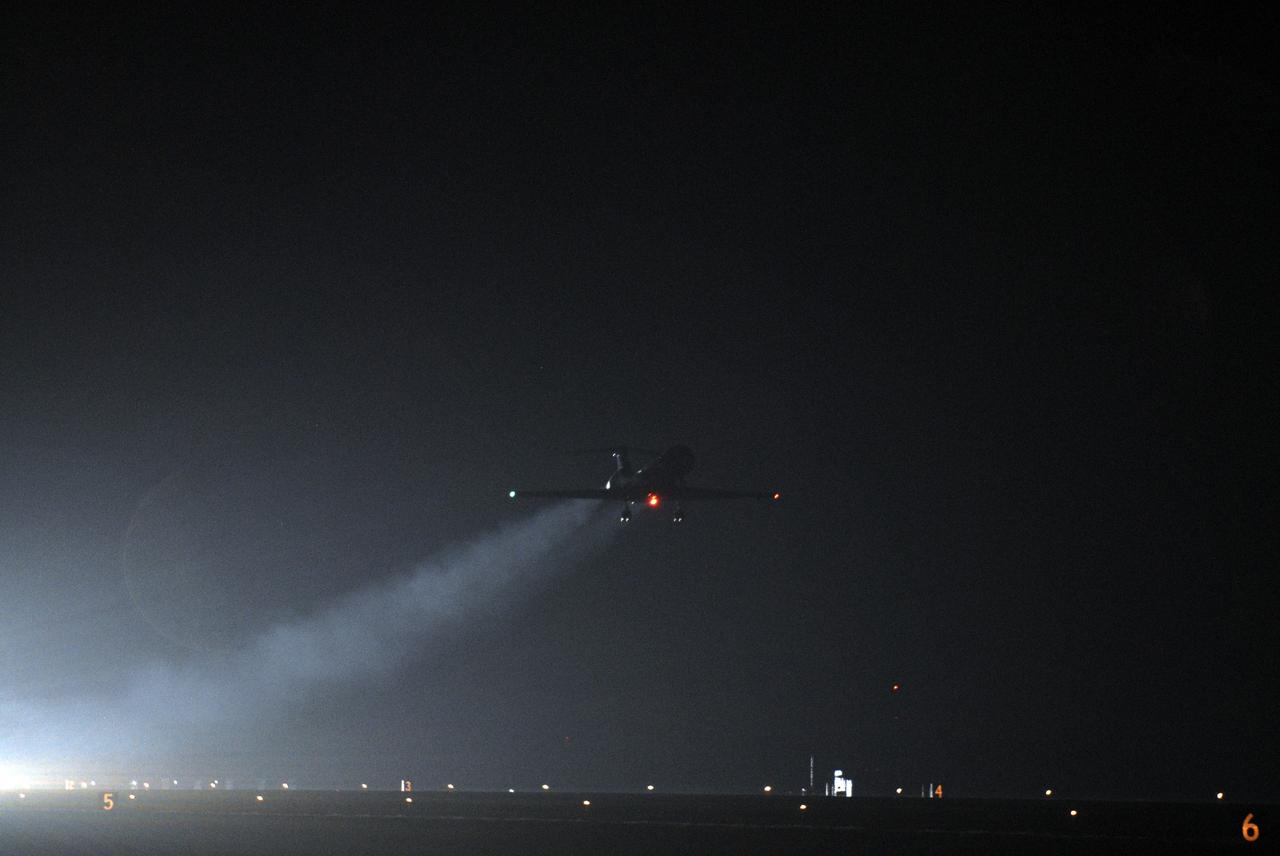
CAPE CANAVERAL, Fla. – From the Shuttle Landing Facility at NASA's Kennedy Space Center in Florida, a shuttle training aircraft takes off into the night sky. STS-119 Commander Lee Archambault and Pilot Tony Antonelli are practicing shuttle landings as part of the Terminal Countdown Demonstration Test activities. The TCDT includes equipment familiarization and a simulated launch countdown. The STA is a Grumman American Aviation-built Gulf Stream II jet that was modified to simulate a shuttle’s cockpit, motion and visual cues, and handling qualities. In flight, the aircraft duplicates the shuttle’s atmospheric descent trajectory from approximately 35,000 feet to landing. The crew of space shuttle Discovery is targeted to launch on the STS-119 mission Feb. 12. During Discovery's 14-day mission, the crew will install the S6 truss segment and solar arrays to the starboard side of the International Space Station, completing the station's truss, or backbone. Photo credit: NASA/Kim Shiflett
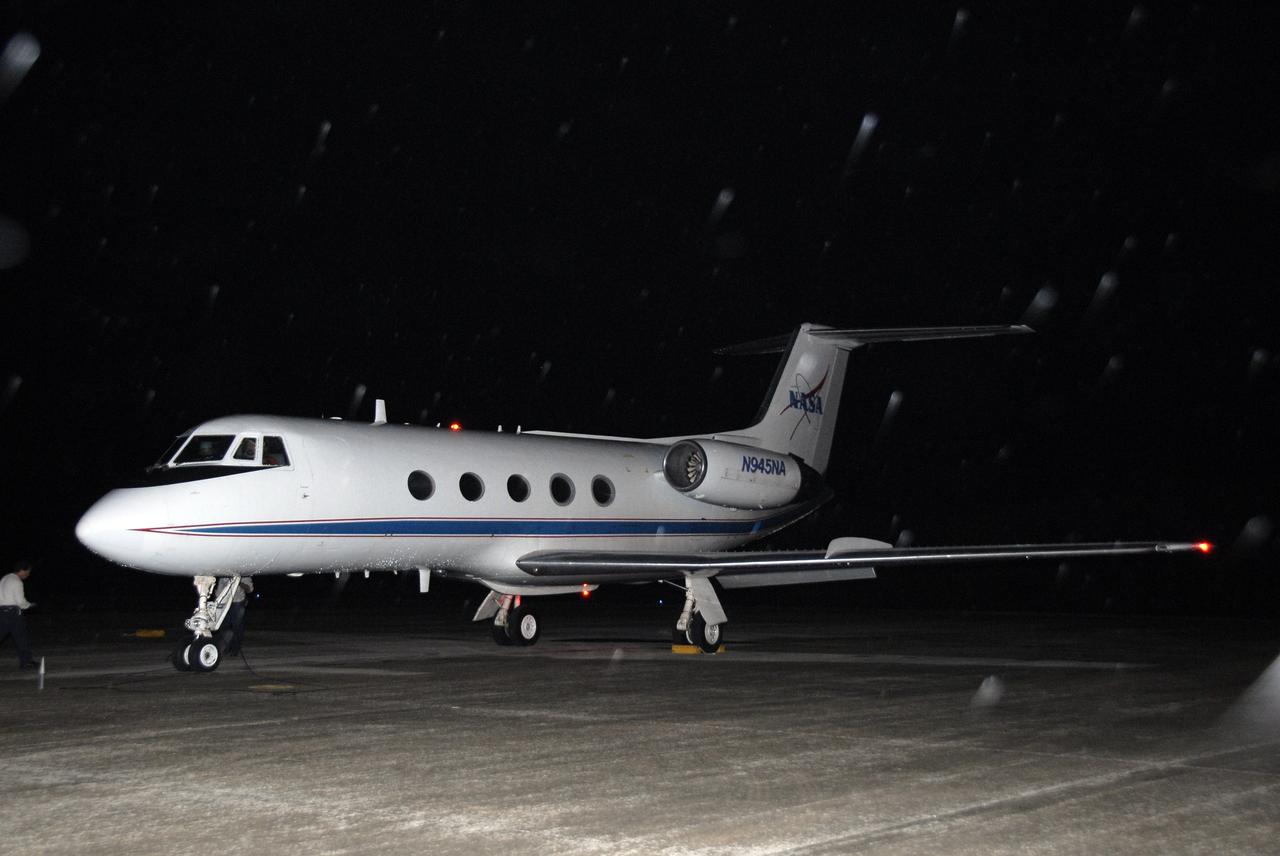
CAPE CANAVERAL, Fla. - At the Shuttle Landing Facility at NASA's Kennedy Space Center in Florida, the shuttle training aircraft piloted by STS-125 Commander Scott Altman is ready to taxi to the runway for practice shuttle landings. The STA is a Grumman American Aviation-built Gulf Stream II jet that was modified to simulate a shuttle’s cockpit, motion and visual cues, and handling qualities. In flight, the aircraft duplicates the shuttle’s atmospheric descent trajectory from approximately 35,000 feet altitude to landing on a runway. The practice is part of a terminal countdown demonstration test, or TCDT, to prepare for launch. TCDT provides astronauts and ground crews with an opportunity to participate in various simulated countdown activities, including equipment familiarization, emergency training and a simulated launch countdown. Space shuttle Atlantis’ STS-125 mission to service NASA’s Hubble Space Telescope is targeted to launch Oct. 10. Photo credit: NASA/Kim Shiflett
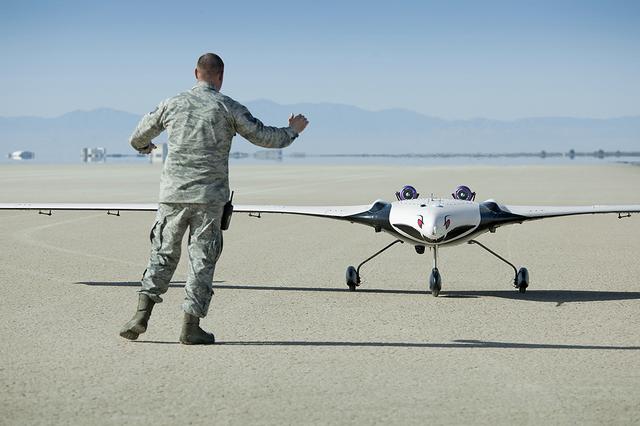
The X-56A Multi-Utility Technology Testbed (MUTT) is greeted on an Edwards Air Force Base runway by a U.S. Air Force Research Laboratory (AFRL) team member. NASA’s Armstrong Flight Research Center and the AFRL, along with participants from Langley Research Center and Glenn Research Center, and support from Lockheed Martin, are using the second X-56A (dubbed “Buckeye”) to check out aircraft systems, evaluate handling qualities, characterize and expand the airplane’s performance envelope, and verify pre-flight predictions regarding aircraft behavior. The 20-minute flight marked the beginning of a research effort designed to yield significant advances in aeroservoelastic technology using a low-cost, modular, remotely piloted aerial vehicle.
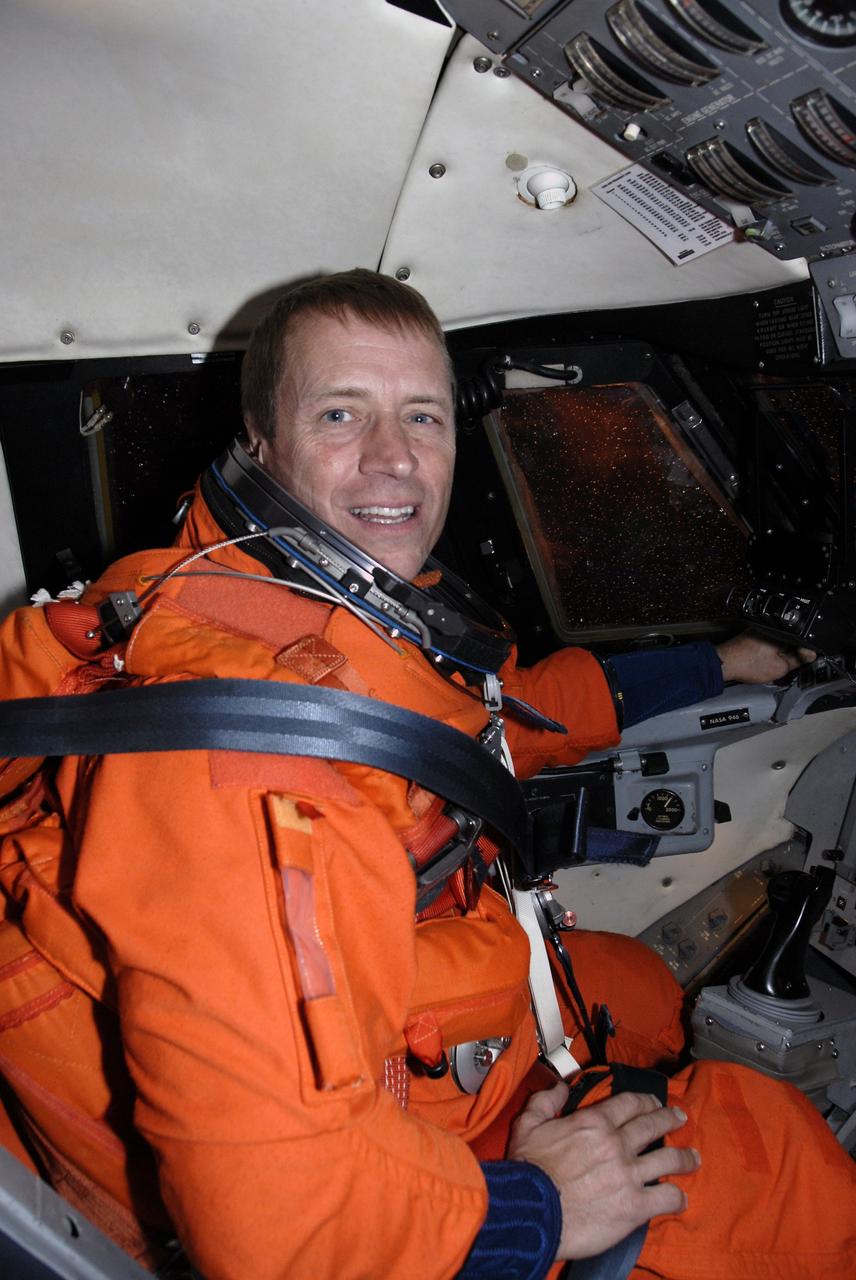
CAPE CANAVERAL, Fla. - STS-125 Pilot Gregory C. Johnson takes his seat in the shuttle training aircraft for practice shuttle landings on the runway of the Shuttle Landing Facility at NASA's Kennedy Space Center in Florida. The STA is a Grumman American Aviation-built Gulf Stream II jet that was modified to simulate a shuttle’s cockpit, motion and visual cues, and handling qualities. In flight, the aircraft duplicates the shuttle’s atmospheric descent trajectory from approximately 35,000 feet altitude to landing on a runway. The practice is part of a terminal countdown demonstration test, or TCDT, to prepare for launch. TCDT provides astronauts and ground crews with an opportunity to participate in various simulated countdown activities, including equipment familiarization, emergency training and a simulated launch countdown. Space shuttle Atlantis’ STS-125 mission to service NASA’s Hubble Space Telescope is targeted to launch Oct. 10. Photo credit: NASA/Kim Shiflett
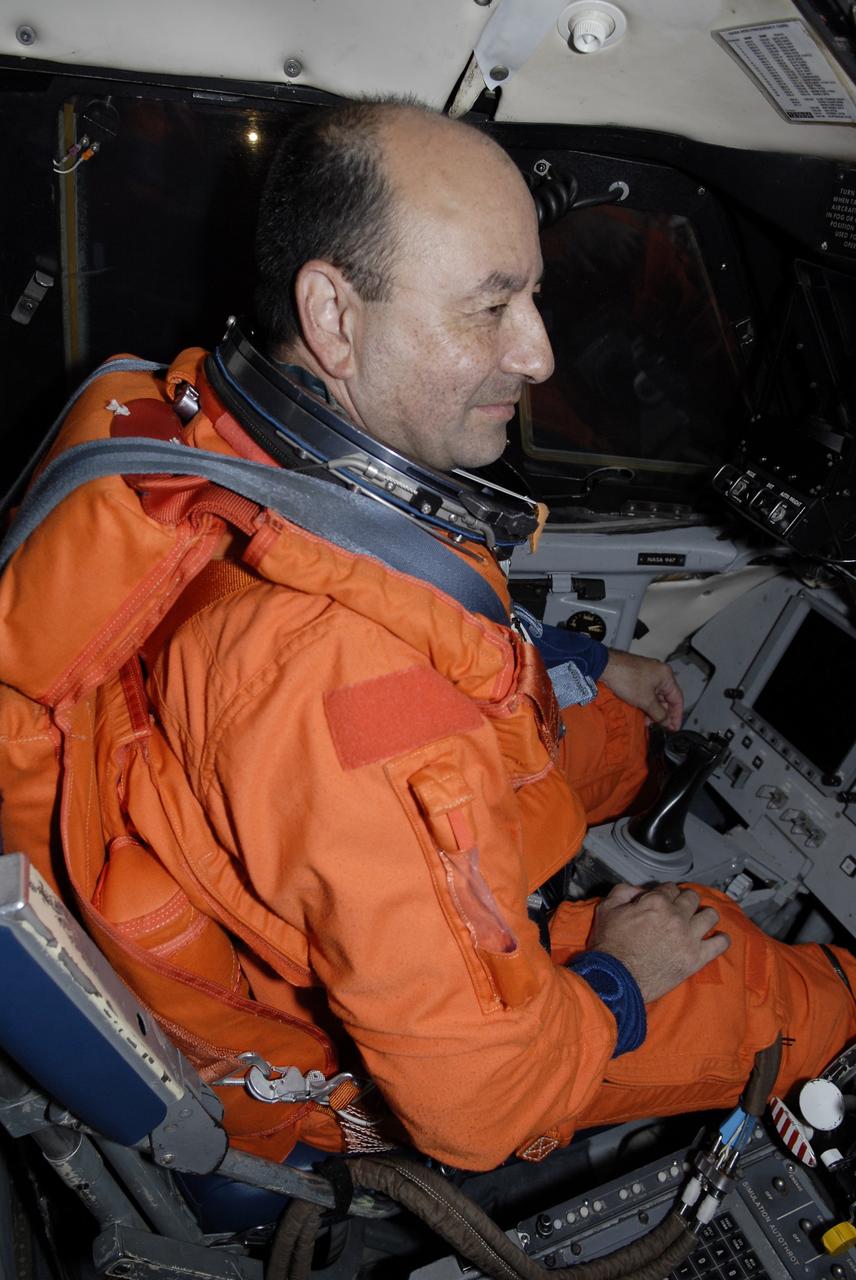
CAPE CANAVERAL, Fla. – On the Shuttle Landing Facility at NASA's Kennedy Space Center in Florida, STS-127 Commander Mark Polansky is wearing his complete launch-and-entry suit in the cockpit of the Shuttle Training Aircraft. He is preparing to practice shuttle landings in preparation for launch of space shuttle Endeavour on the STS-127 mission, targeted for June 13. The STA is a Grumman American Aviation-built Gulf Stream II jet that was modified to simulate a shuttle’s cockpit, motion and visual cues, and handling qualities. The crew is at Kennedy for a launch dress rehearsal called the terminal countdown demonstration test, or TCDT, which includes emergency egress training and equipment familiarization. The STS-127 mission is the final of three flights dedicated to the assembly of the Japanese Kibo laboratory complex on the International Space Station. It is the 127th shuttle flight and the 29th in the assembly of the space station. Photo credit: NASA/Kim Shiflett
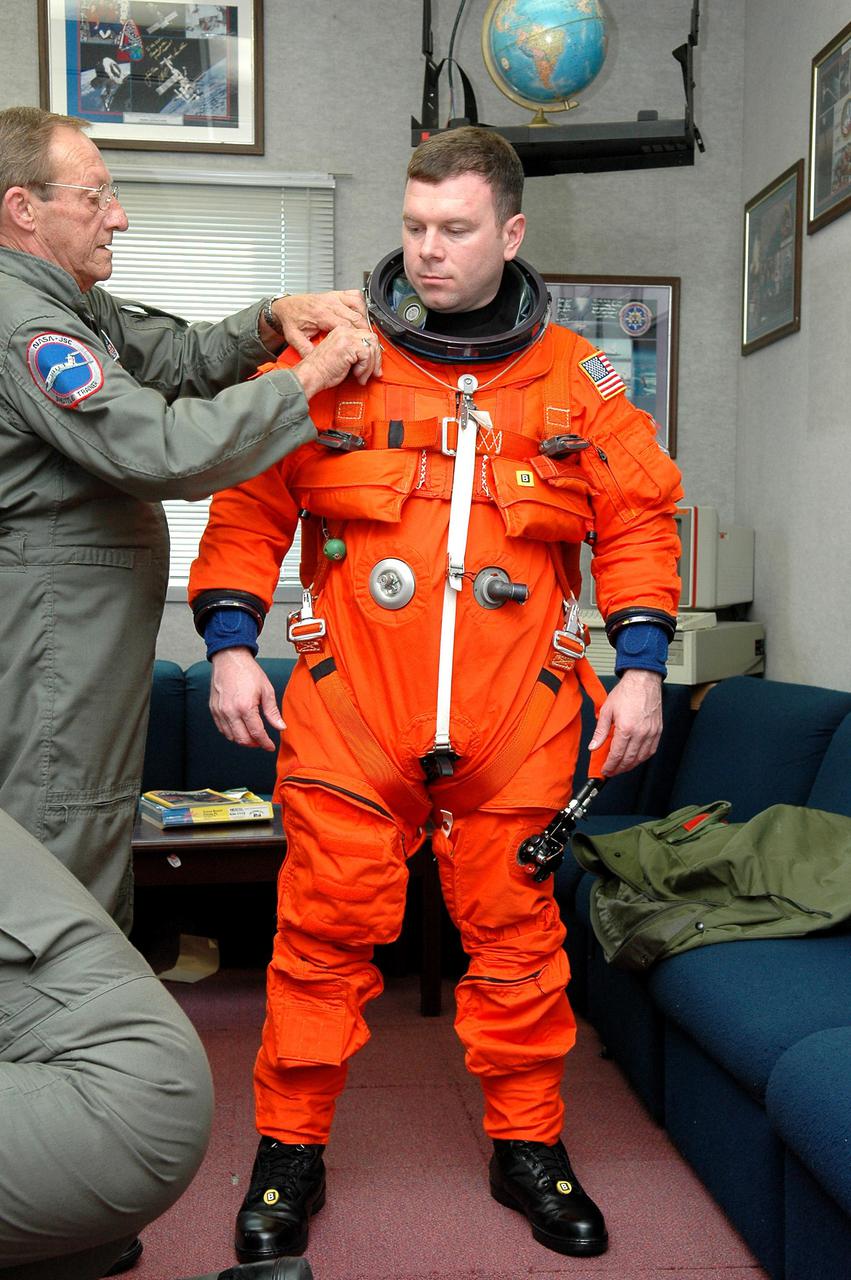
KENNEDY SPACE CENTER, FLA. - STS-114 Pilot James Kelly suits up for practice flights on a Shuttle Training Aircraft (STA) used by Shuttle flight crews to practice landing the orbiter. The STA is a modified Grumman American Aviation-built Gulfstream II executive jet that was modified to simulate an orbiter’s cockpit, motion and visual cues, and handling qualities. In flight, the STA duplicates the orbiter’s atmospheric descent trajectory from approximately 35,000 feet altitude to landing on a runway. The orbiter differs in at least one major aspect from conventional aircraft; it is unpowered during re-entry and landing so its high-speed glide must be perfectly executed the first time. There is no go-around capability. The orbiter touchdown speed is 213 to 226 miles per hour. There are two STAs, based in Houston. STS-114 is the first Return to Flight mission, scheduled to launch July 13 in a window that extends through July 31.

CAPE CANAVERAL, Fla. - Under cloudy skies painted by a setting sun, the Shuttle Training Aircraft, or STA, piloted by space shuttle Endeavour’s STS-126 commander, Chris Ferguson, lands on the Shuttle Landing Facility at NASA's Kennedy Space Center in Florida. Ferguson is flying the STA to practice landing a shuttle on the runway. The STA is a Grumman American Aviation-built Gulf Stream II jet that was modified to simulate a shuttle’s cockpit, motion and visual cues, and handling qualities. In flight, the aircraft duplicates the shuttle’s atmospheric descent trajectory from approximately 35,000 feet altitude to landing on a runway. Ferguson previously served as pilot on the STS-115 mission, which flew in September 2006. The STS-126 mission to the International Space Station is targeted to launch Nov. 16. Photo credit: NASA/Cory Huston
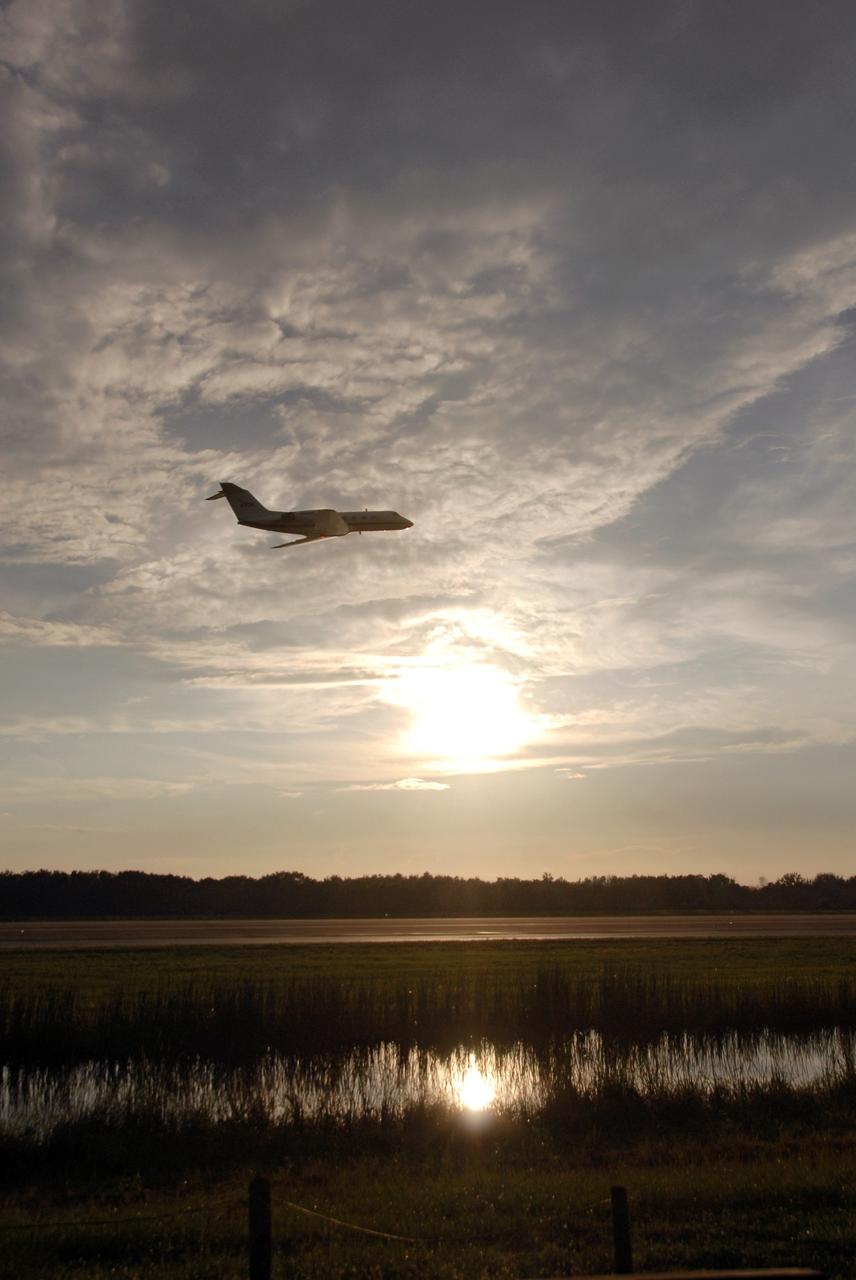
CAPE CANAVERAL, Fla. - The Shuttle Training Aircraft, or STA, piloted by space shuttle Endeavour’s STS-126 commander, Chris Ferguson, is silhouetted against the cloudy gray sky and setting sun over NASA's Kennedy Space Center in Florida. Ferguson is flying the STA to practice landing a shuttle on the runway of the Shuttle Landing Facility. The STA is a Grumman American Aviation-built Gulf Stream II jet that was modified to simulate a shuttle’s cockpit, motion and visual cues, and handling qualities. In flight, the aircraft duplicates the shuttle’s atmospheric descent trajectory from approximately 35,000 feet altitude to landing on a runway. Ferguson previously served as pilot on the STS-115 mission, which flew in September 2006. The STS-126 mission to the International Space Station is targeted to launch Nov. 16. Photo credit: NASA/Cory Huston
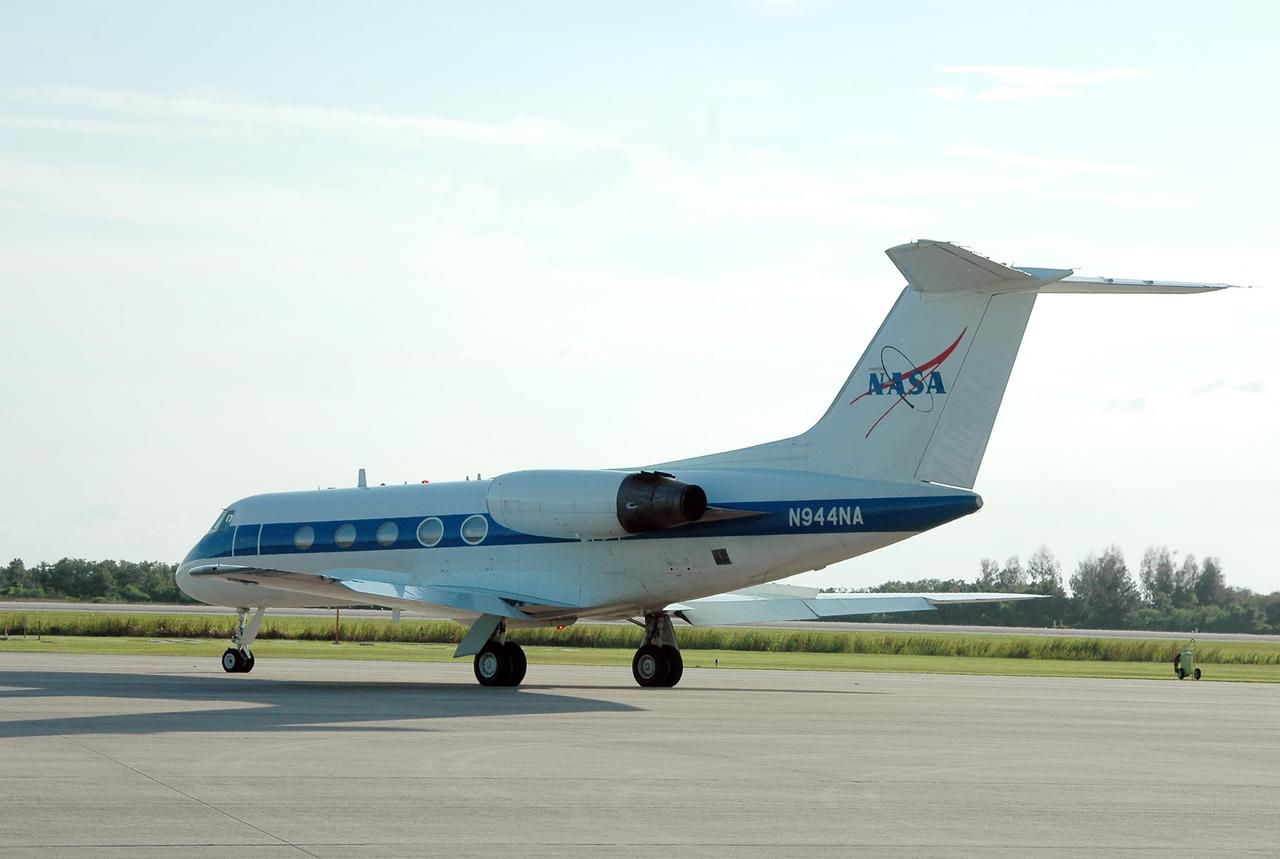
KENNEDY SPACE CENTER, FLA. - At the Shuttle Landing Facility, the Shuttle Training Aircraft (STA) taxis to the runway with the STS-121 pilot and commander in the cockpit for practice flights. The STA is a modified Grumman American Aviation-built Gulf Stream II jet that was modified to simulate an orbiter’s cockpit, motion and visual cues, and handling qualities. In flight, the STA duplicates the orbiter’s atmospheric descent trajectory from approximately 35,000 feet altitude to landing on a runway. Because the orbiter is unpowered during re-entry and landing, its high-speed glide must be perfectly executed the first time. Space Shuttle Discovery is scheduled to launch July 1 on mission STS-121. Photo credit: NASA/Kim Shiflett
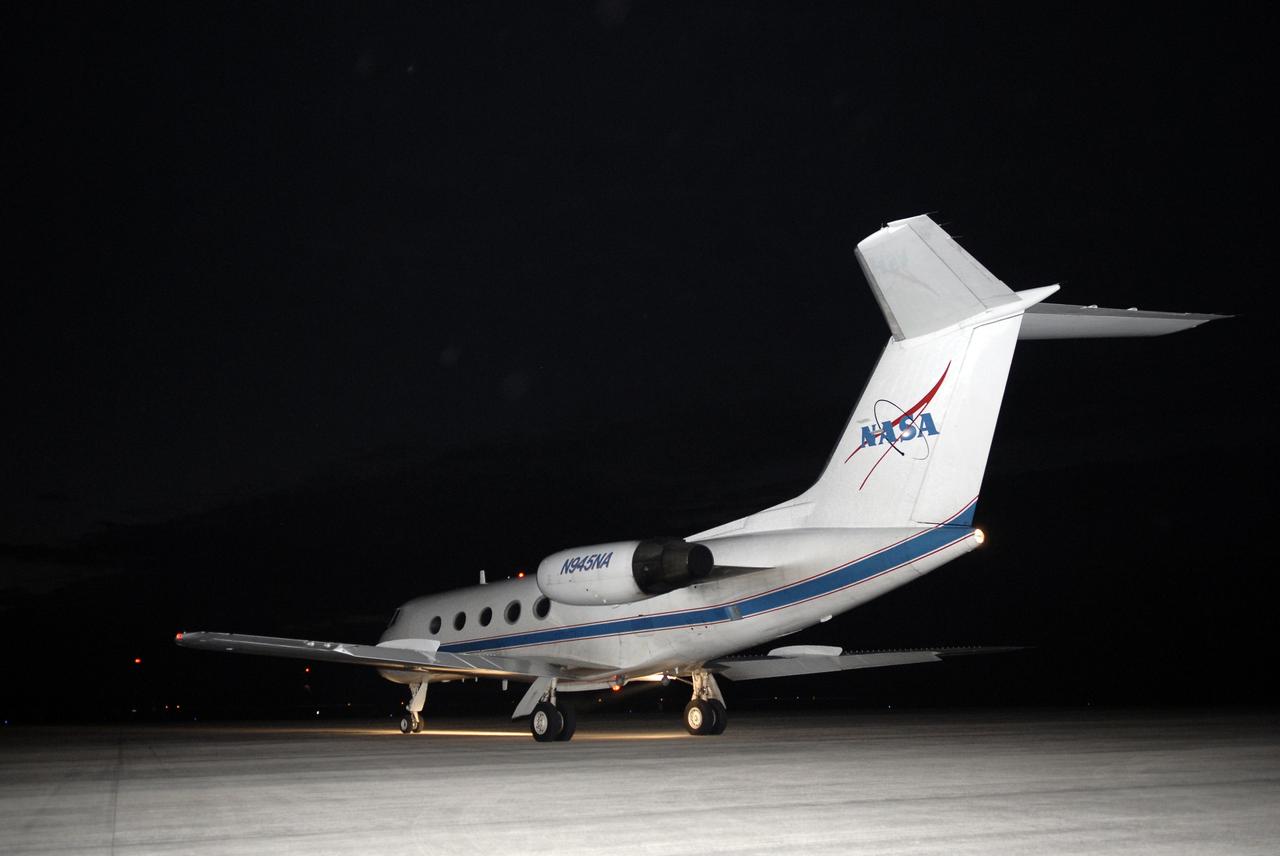
CAPE CANAVERAL, Fla. – On the Shuttle Landing Facility at NASA's Kennedy Space Center in Florida, a shuttle training aircraft taxis toward the runway for takeoff. STS-119 Commander Lee Archambault and Pilot Tony Antonelli are practicing shuttle landings as part of the Terminal Countdown Demonstration Test activities. The TCDT includes equipment familiarization and a simulated launch countdown. The STA is a Grumman American Aviation-built Gulf Stream II jet that was modified to simulate a shuttle’s cockpit, motion and visual cues, and handling qualities. In flight, the aircraft duplicates the shuttle’s atmospheric descent trajectory from approximately 35,000 feet to landing. The crew of space shuttle Discovery is targeted to launch on the STS-119 mission Feb. 12. During Discovery's 14-day mission, the crew will install the S6 truss segment and solar arrays to the starboard side of the International Space Station, completing the station's truss, or backbone. Photo credit: NASA/Kim Shiflett
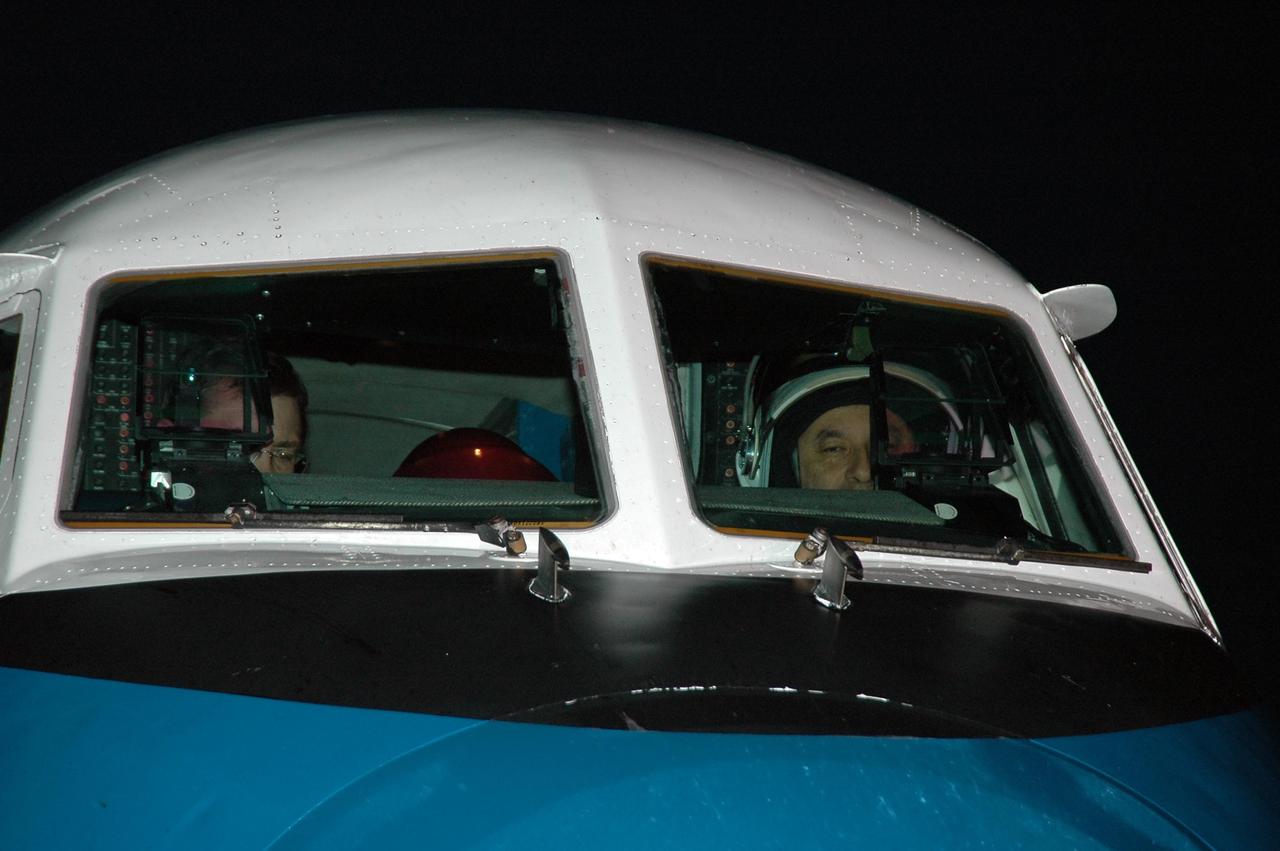
KENNEDY SPACE CENTER, FLA. -- Inside the shuttle training aircraft at the Shuttle Landing Facility, STS-116 Pilot William Oefelein (left) and Commander Mark Polansky are seated in the cockpit, getting ready to practice landing the orbiter. The mission crew is at KSC for the terminal countdown demonstration test, which are prelaunch preparations that include a simulated launch countdown. STA practice is part of the TCDT. The STA is a Grumman American Aviation-built Gulf Stream II jet that was modified to simulate an orbiter's cockpit, motion and visual cues, and handling qualities. In flight, the STA duplicates the orbiter's atmospheric descent trajectory from approximately 35,000 feet altitude to landing on a runway. Because the orbiter is unpowered during re-entry and landing, its high-speed glide must be perfectly executed the first time. Photo credit: NASA/Kim Shiflett
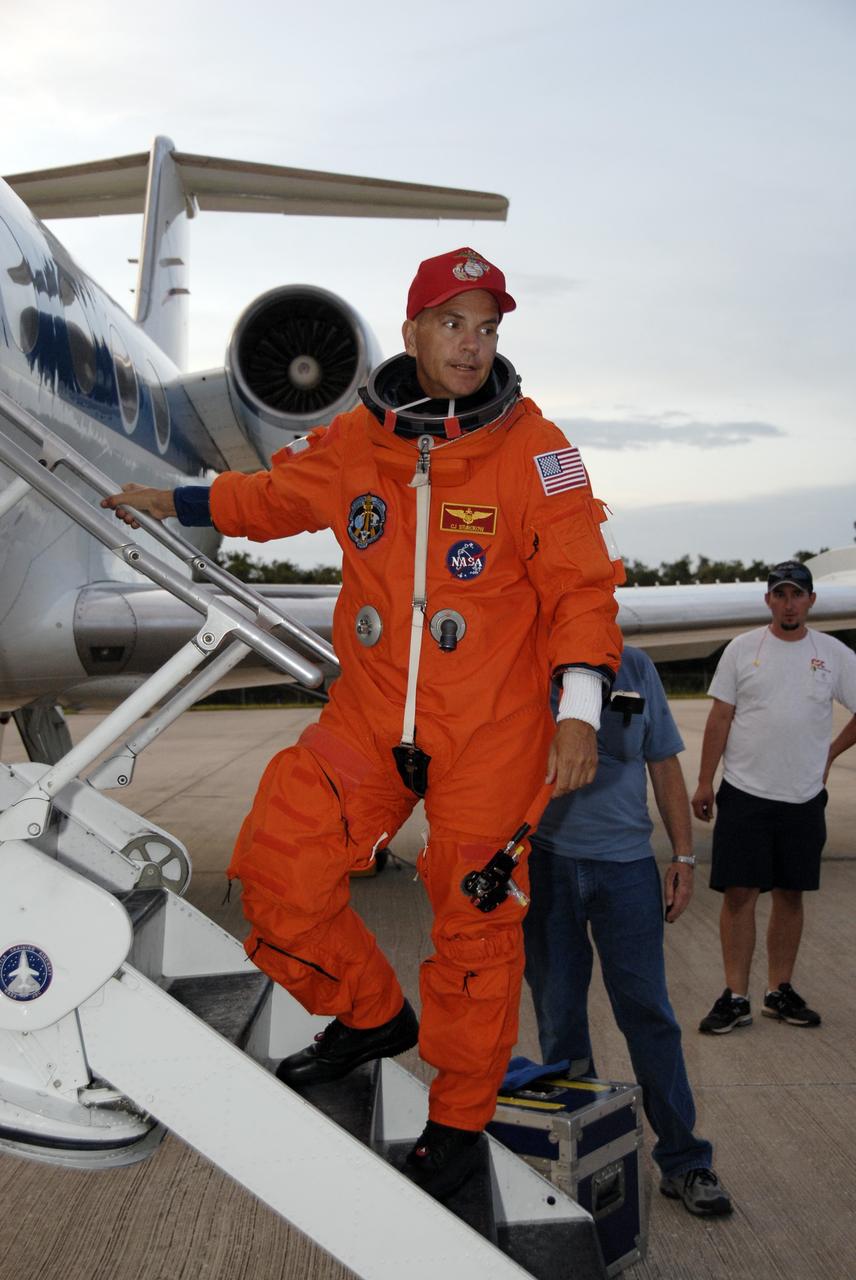
CAPE CANAVERAL, Fla. – At the Shuttle Landing Facility at NASA's Kennedy Space Center in Florida, STS-128 Commander Rick Sturckow heads up the stairs to the cockpit of the Shuttle Training Aircraft, or STA, to practice shuttle landings. The practice is in preparation for launch of space shuttle Discovery's STS-128 mission in late August to the International Space Station. The STA is a Grumman American Aviation-built Gulfstream II jet that was modified to simulate a shuttle’s cockpit, motion and visual cues, and handling qualities. The STS-128 crew is at Kennedy for a launch dress rehearsal called the terminal countdown demonstration test, or TCDT, which includes emergency exit training and equipment familiarization, as well as a simulated launch countdown. Discovery will deliver 33,000 pounds of equipment to the station, including science and storage racks, a freezer to store research samples, a new sleeping compartment and the COLBERT treadmill. Photo credit: NASA/Kim Shiflett
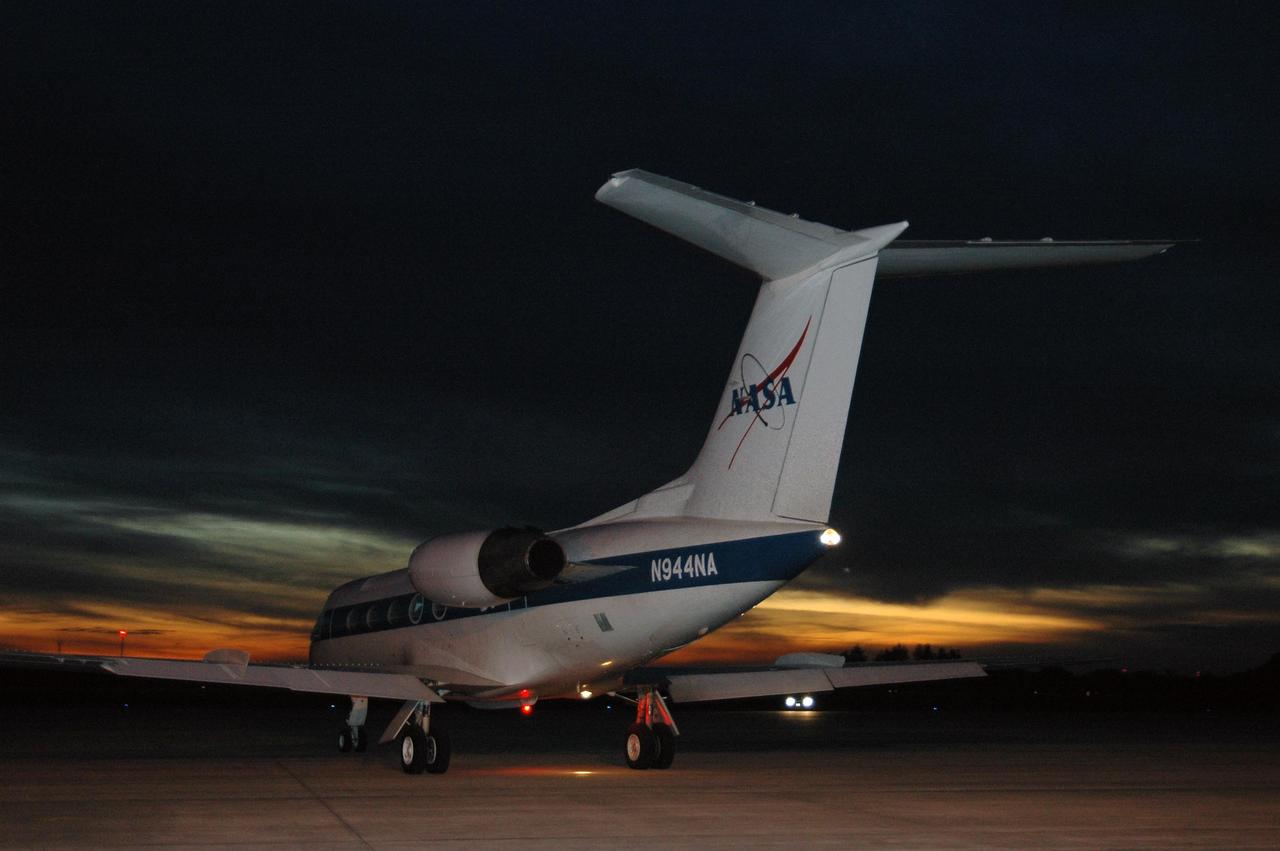
KENNEDY SPACE CENTER, FLA. -- At the Shuttle Landing Facility, the shuttle training aircraft taxis onto the runway. Inside are STS-116 Pilot William Oefelein and Commander Mark Polansky, who are flying the aircraft to practice landing the orbiter. The mission crew is at KSC for the terminal countdown demonstration test, which are prelaunch preparations that include a simulated launch countdown. STA practice is part of the TCDT. The STA is a Grumman American Aviation-built Gulf Stream II jet that was modified to simulate an orbiter's cockpit, motion and visual cues, and handling qualities. In flight, the STA duplicates the orbiter's atmospheric descent trajectory from approximately 35,000 feet altitude to landing on a runway. Because the orbiter is unpowered during re-entry and landing, its high-speed glide must be perfectly executed the first time. Photo credit: NASA/Kim Shiflett
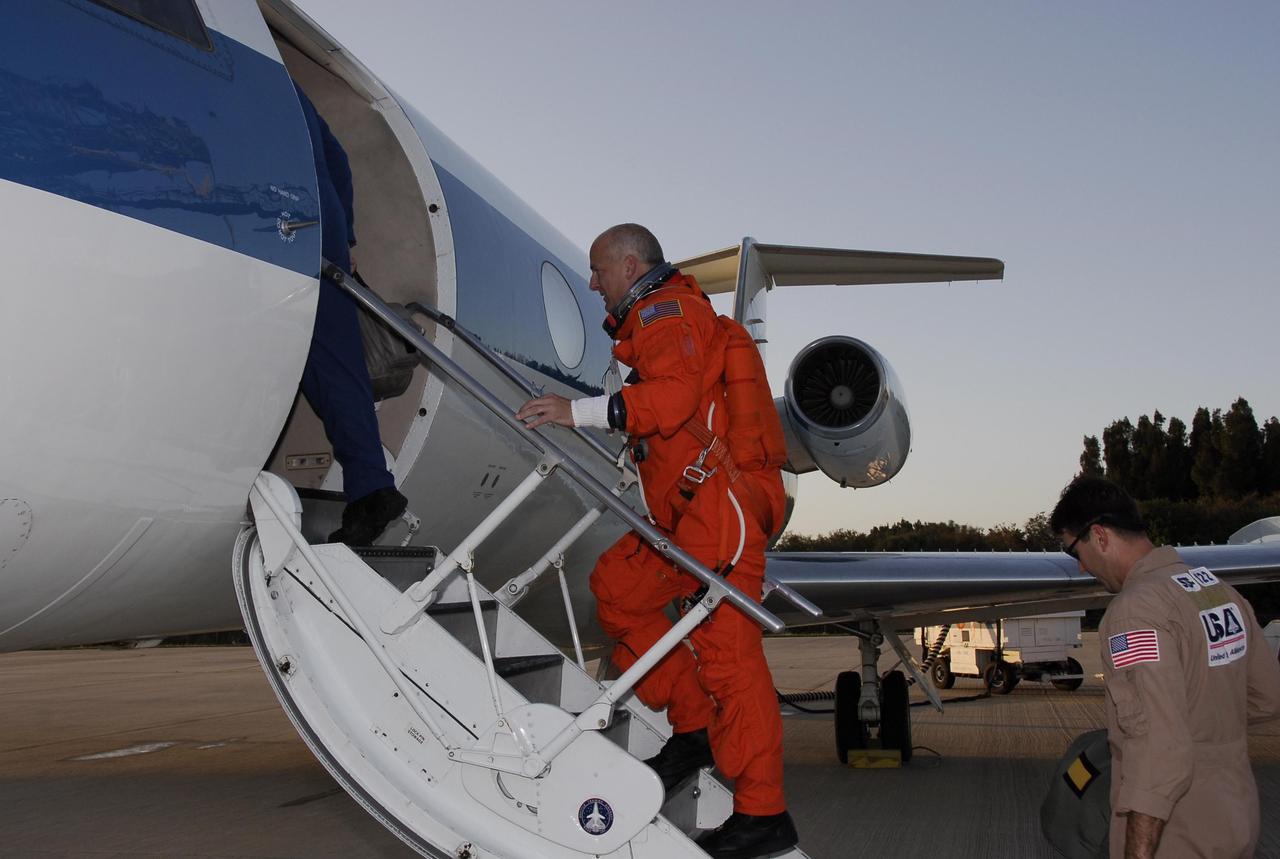
KENNEDY SPACE CENTER, FLA. -- Dressed in his launch and entry suit, STS-122 Pilot Alan Poindexter enters the shuttle training aircraft, or STA, at NASA's Kennedy Space Center. Poindexter and Commander Steve Frick are practicing shuttle landings in the STA before the Feb. 7 launch of space shuttle Atlantis. The STA is a Grumman American Aviation-built Gulf Stream II jet that was modified to simulate an orbiter's cockpit, motion and visual cues, and handling qualities. In flight, the STA duplicates the orbiter's atmospheric descent trajectory from approximately 35,000 feet altitude to landing on a runway. Because the orbiter is unpowered during re-entry and landing, its high-speed glide must be perfectly executed the first time. Photo credit: NASA/Kim Shiflett

A Shuttle Training Aircraft (STA) taxis down the runway at KSC's Shuttle Landing Facility. The STA is a modified Grumman American Aviation-built Gulfstream II executive jet that was modified to simulate an orbiter's cockpit, motion and visual cues, and handling qualities. It is used by Shuttle flight crews to practice landing the orbiter. In flight, the STA duplicates the orbiter's atmospheric descent trajectory from approximately 35,000 feet altitude to landing on a runway. The orbiter differs in at least one major aspect from conventional aircraft; it is unpowered during re-entry and landing so its high-speed glide must be perfectly executed the first time there is no go-around capability. The orbiter touchdown speed is 213 to 226 miles (343 to 364 kilometers) per hour. There are two STAs, based in Houston
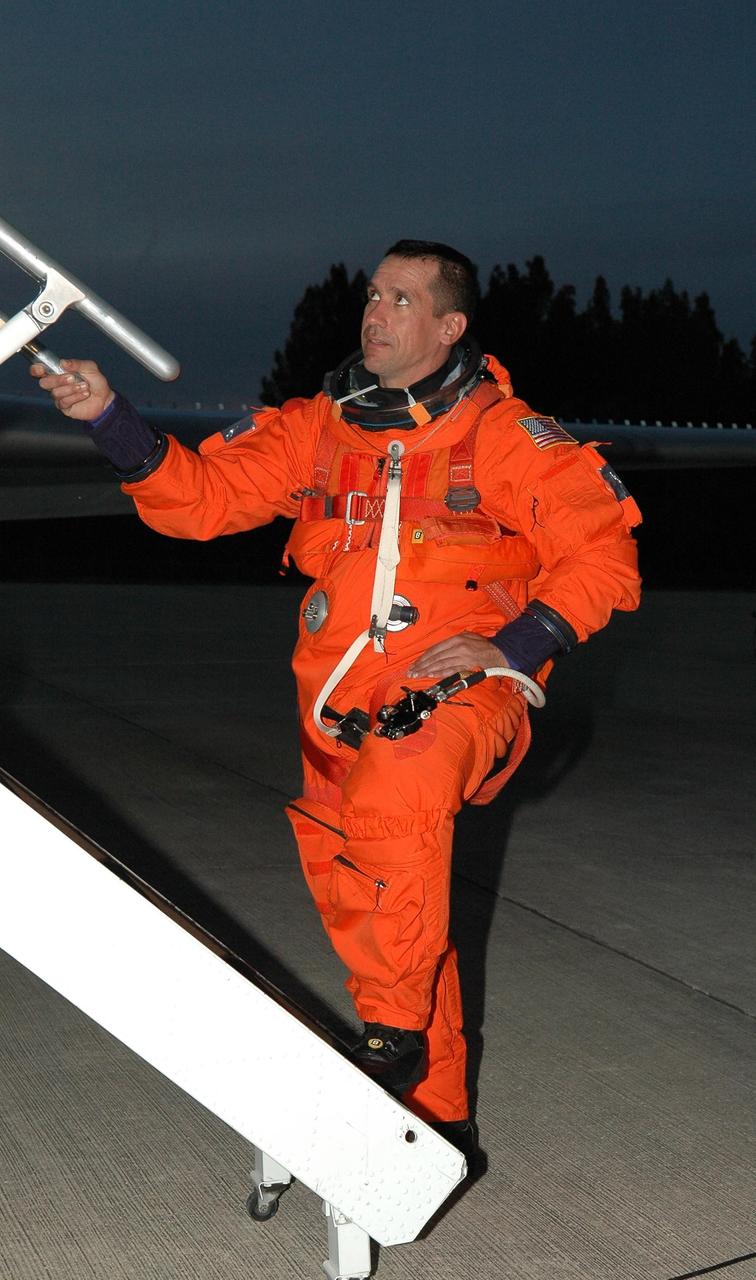
KENNEDY SPACE CENTER, FLA. -- At the Shuttle Landing Facility, STS-116 Pilot William Oelefein steps on the stairs to the shuttle training aircraft (STA) to practice landing the orbiter. The mission crew is at KSC for the terminal countdown demonstration test, which are prelaunch preparations that include a simulated launch countdown. STA practice is part of the TCDT. The STA is a Grumman American Aviation-built Gulf Stream II jet that was modified to simulate an orbiter's cockpit, motion and visual cues, and handling qualities. In flight, the STA duplicates the orbiter's atmospheric descent trajectory from approximately 35,000 feet altitude to landing on a runway. Because the orbiter is unpowered during re-entry and landing, its high-speed glide must be perfectly executed the first time. Photo credit: NASA/Kim Shiflett
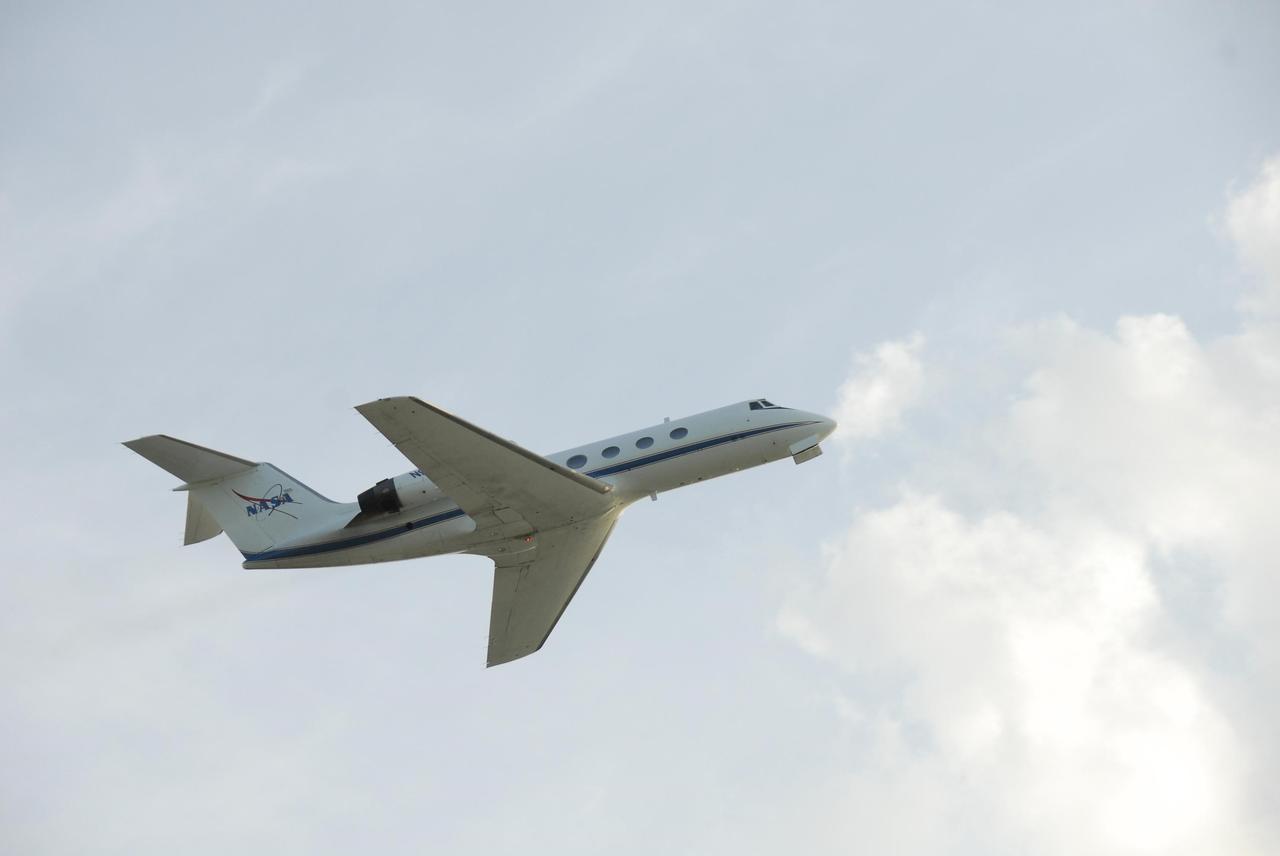
KENNEDY SPACE CENTER, FLA. -- STS-117 Commander Frederick Sturckow and Pilot Lee Archambault aim high to begin landing practice in the shuttle training aircraft (STA). The STA is a Grumman American Aviation-built Gulf Stream II jet that was modified to simulate an orbiter's cockpit, motion and visual cues, and handling qualities. In flight, the STA duplicates the orbiter's atmospheric descent trajectory from approximately 35,000 feet altitude to landing on a runway. STS-117 is scheduled to launch at 7:38 p.m. June 8. During the 11-day mission and three spacewalks, the crew will work with flight controllers at NASA's Johnson Space Center in Houston to install the 17-ton segment on the station's girder-like truss and deploy the set of solar arrays, S3/S4. The mission will increase the space station's power capability in preparation for the arrival of new science modules from the European and Japanese space agencies. Photo credit: NASA/Kim Shiflett
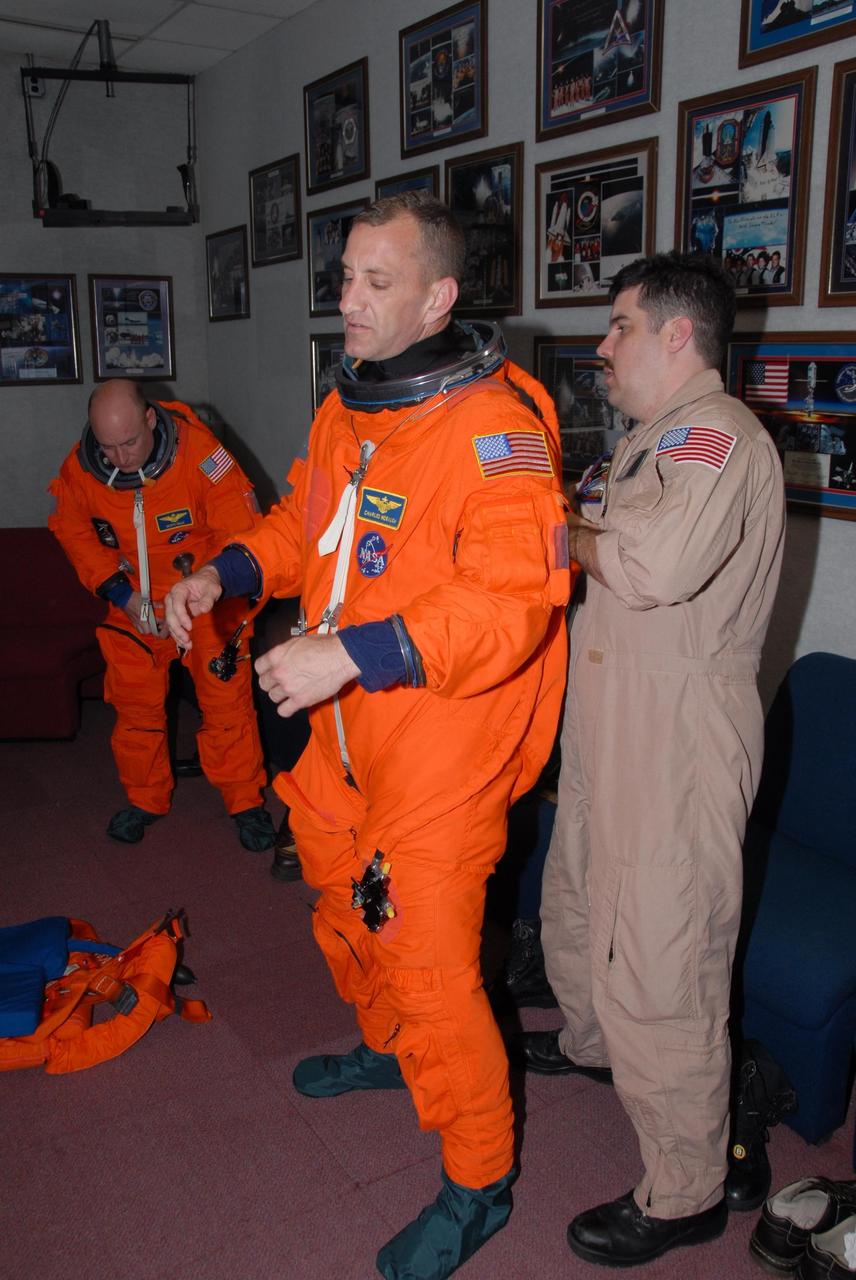
KENNEDY SPACE CENTER, Fla. -- STS-118 Commander Scott Kelly, left, and Pilot Charlie Hobaugh check the fit of their launch and entry suits. The fitting is part of the Terminal Countdown Demonstration Test, or TCDT, activities that include a simulated launch countdown. Kelly and Hobaugh are suiting up also for landing practice in the shuttle training aircraft, known as an STA. The STA is a Grumman American Aviation-built Gulf Stream II jet that was modified to simulate an orbiter's cockpit, motion and visual cues, and handling qualities. In flight, the STA duplicates the orbiter's atmospheric descent trajectory from approximately 35,000 feet altitude to landing on a runway. The STS-118 mission is the 22nd flight to the International Space Station and is targeted for launch on Aug. 7. The mission payload aboard Space Shuttle Endeavour includes the S5 truss, a SPACEHAB module and external stowage platform 3. NASA/George Shelton
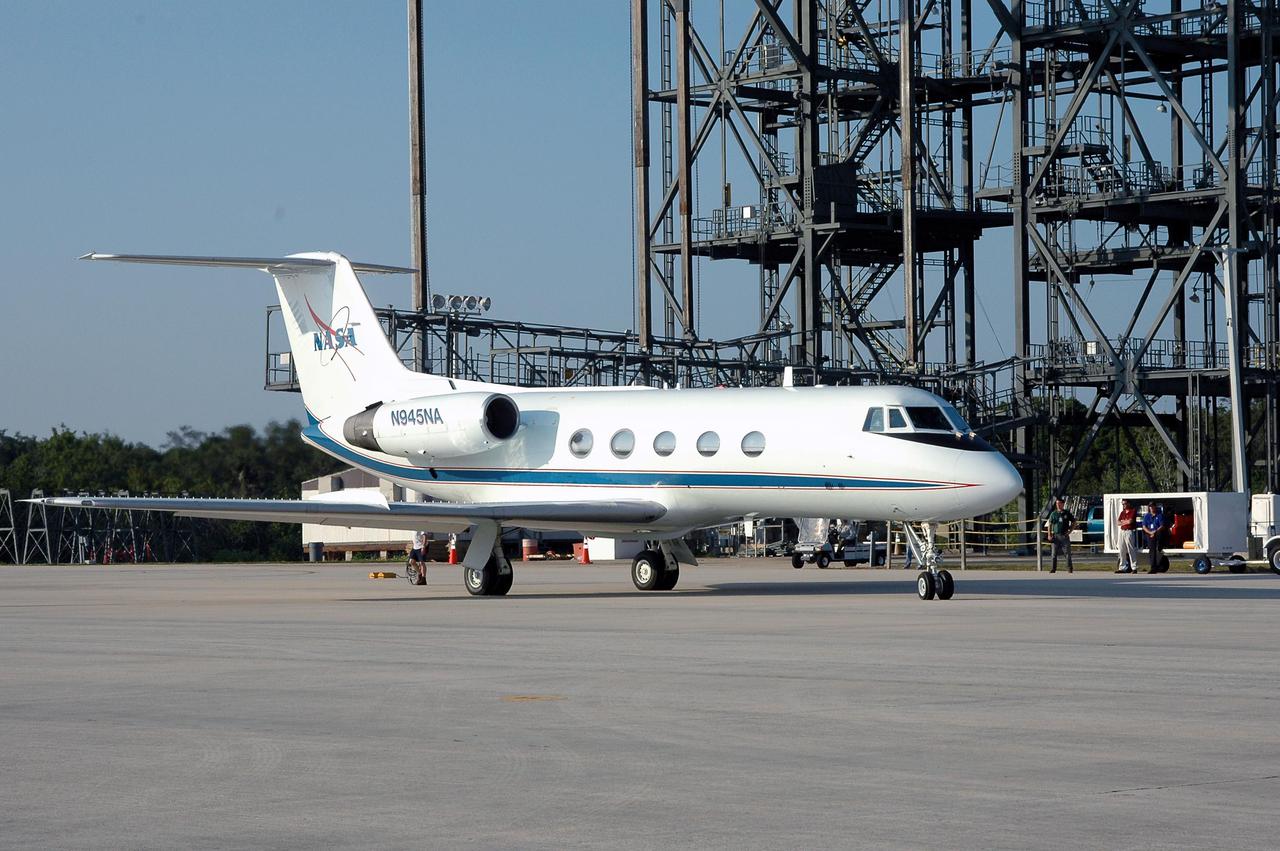
KENNEDY SPACE CENTER, FLA. - A Shuttle Training Aircraft (STA) is ready for STS-114 Commander Eileen Collins to begin practice landing the orbiter. The STA is a modified Grumman American Aviation-built Gulfstream II executive jet that was modified to simulate an orbiter’s cockpit, motion and visual cues, and handling qualities. In flight, the STA duplicates the orbiter’s atmospheric descent trajectory from approximately 35,000 feet altitude to landing on a runway. The orbiter differs in at least one major aspect from conventional aircraft; it is unpowered during re-entry and landing so its high-speed glide must be perfectly executed the first time. There is no go-around capability. The orbiter touchdown speed is 213 to 226 miles per hour. There are two STAs, based in Houston. STS-114 is the first Return to Flight mission, scheduled to launch July 13 in a window that extends through July 31.
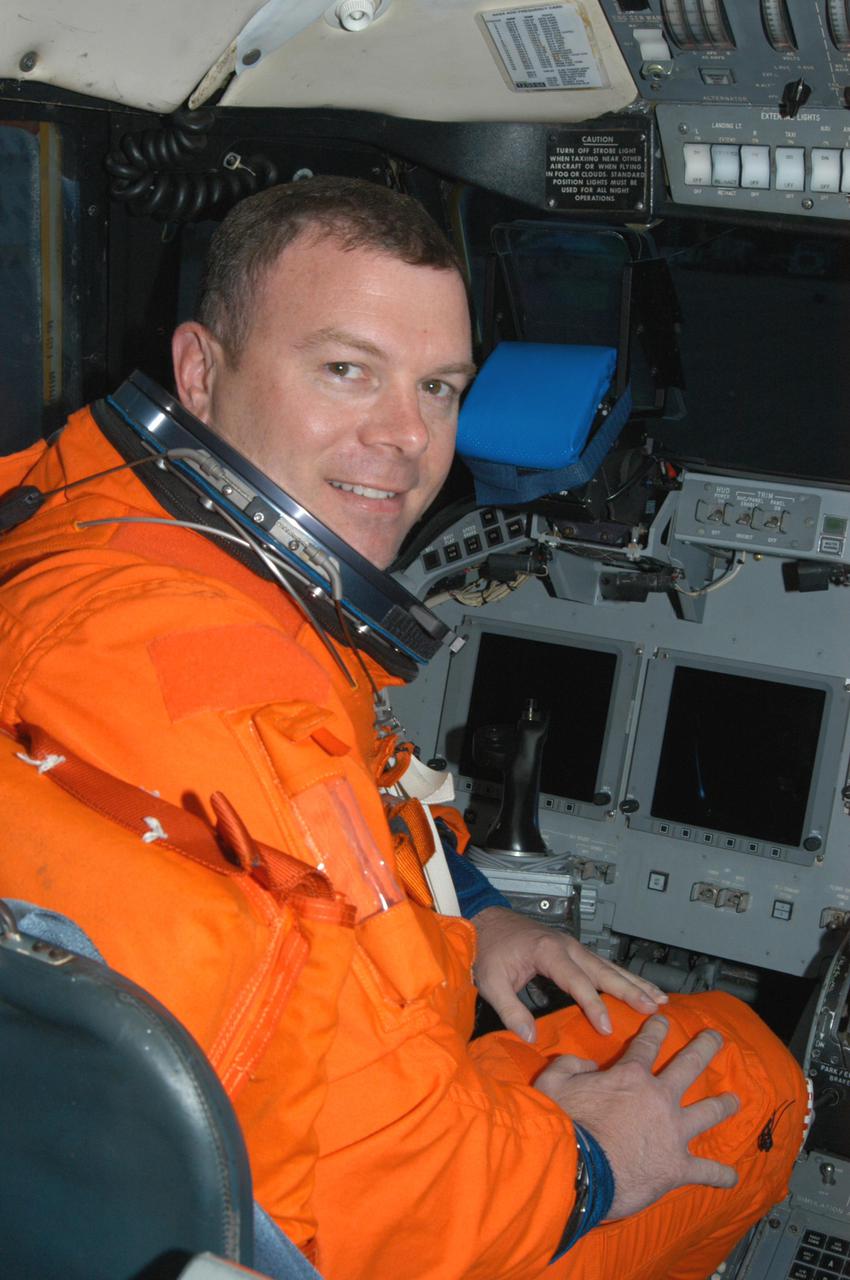
KENNEDY SPACE CENTER, FLA. - At the Shuttle Landing Facility on NASA Kennedy Space Center, STS-114 Pilot James Kelly sits in the cockpit of the Shuttle Training Aircraft (STA) after landing. He and Mission Commander Eileen Collins have been practicing night landings in preparation for the mission. The STA is a modified Grumman American Aviation-built Gulf Stream II executive jet that was modified to simulate an orbiter’s cockpit, motion and visual cues, and handling qualities. In flight, the STA duplicates the orbiter’s atmospheric descent trajectory from approximately 35,000 feet altitude to landing on a runway. Because the orbiter is unpowered during re-entry and landing, its high-speed glide must be perfectly executed the first time. Return to Flight Mission STS-114 is scheduled to launch aboard Space Shuttle Discovery with a crew of seven at 10:39 a.m. EDT on July 26. Landing is expected on Aug. 7.

KENNEDY SPACE CENTER, FLA. -- Seated in the cockpit of the shuttle training aircraft, or STA, STS-120 Commander Pamela Melroy is eager to begin landing practice on NASA's Shuttle Landing Facility runway. A modified Grumman American Aviation-built Gulf Stream II jet, the STA simulates an orbiter's cockpit, motion and visual cues and handling qualities. In flight, the STA duplicates the orbiter's atmospheric descent trajectory from approximately 35,000 feet altitude to landing on a runway. Melroy and other crew members are at Kennedy Space Center to take part in the terminal countdown demonstration test, which also includes a simulated launch countdown. Mission STS-120 is targeted for Oct. 23. Photo credit: NASA/Kim Shiflett
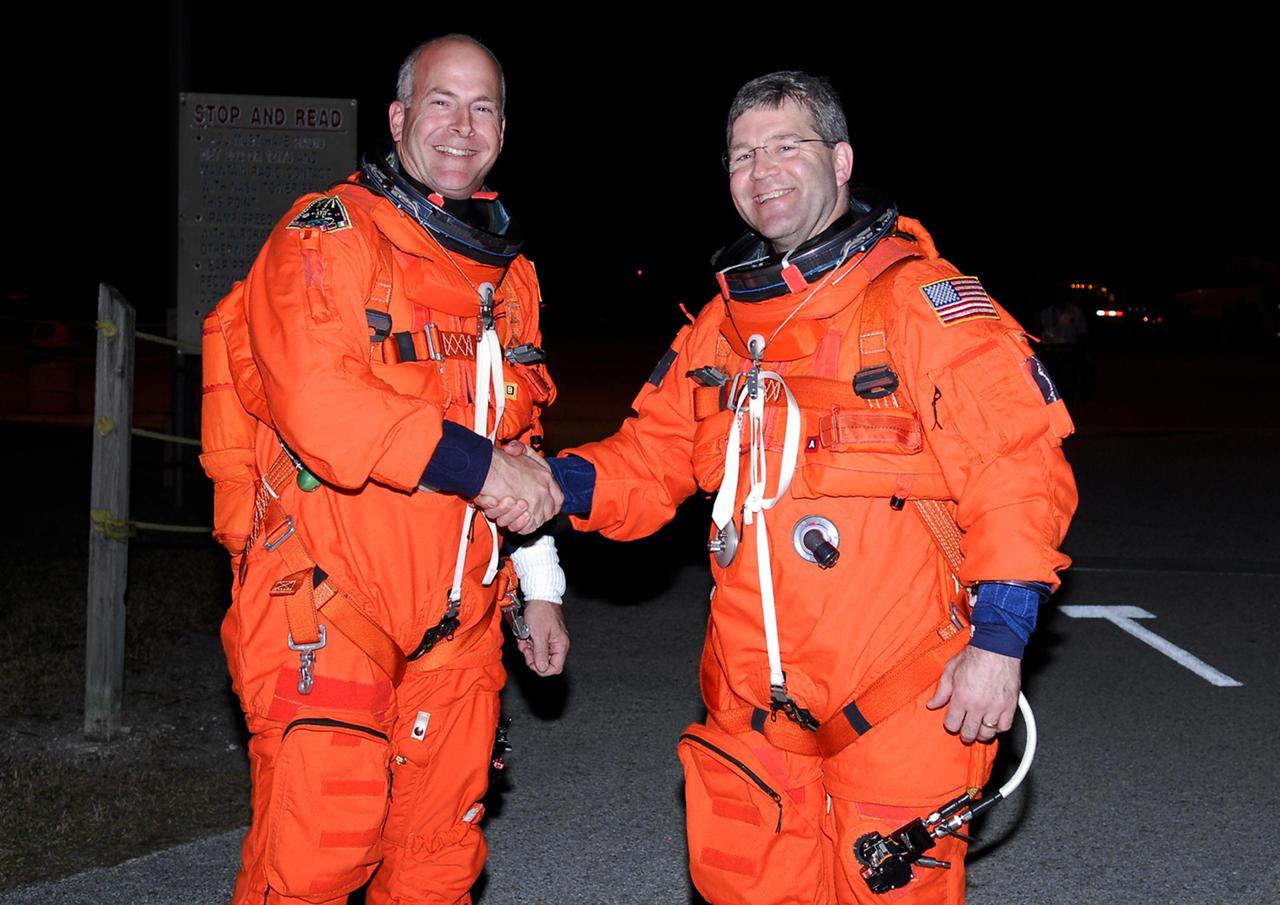
KENNEDY SPACE CENTER, FLA. -- STS-122 Pilot Alan Poindexter (left) and Commander Steve Frick congratulate each other on successful completion of practice shuttle landings in the shuttle training aircraft. before the Feb. 7 launch of space shuttle Atlantis. The STA is a Grumman American Aviation-built Gulf Stream II jet that was modified to simulate an orbiter's cockpit, motion and visual cues, and handling qualities. In flight, the STA duplicates the orbiter's atmospheric descent trajectory from approximately 35,000 feet altitude to landing on a runway. Because the orbiter is unpowered during re-entry and landing, its high-speed glide must be perfectly executed the first time. Photo credit: NASA/Kim Shiflett
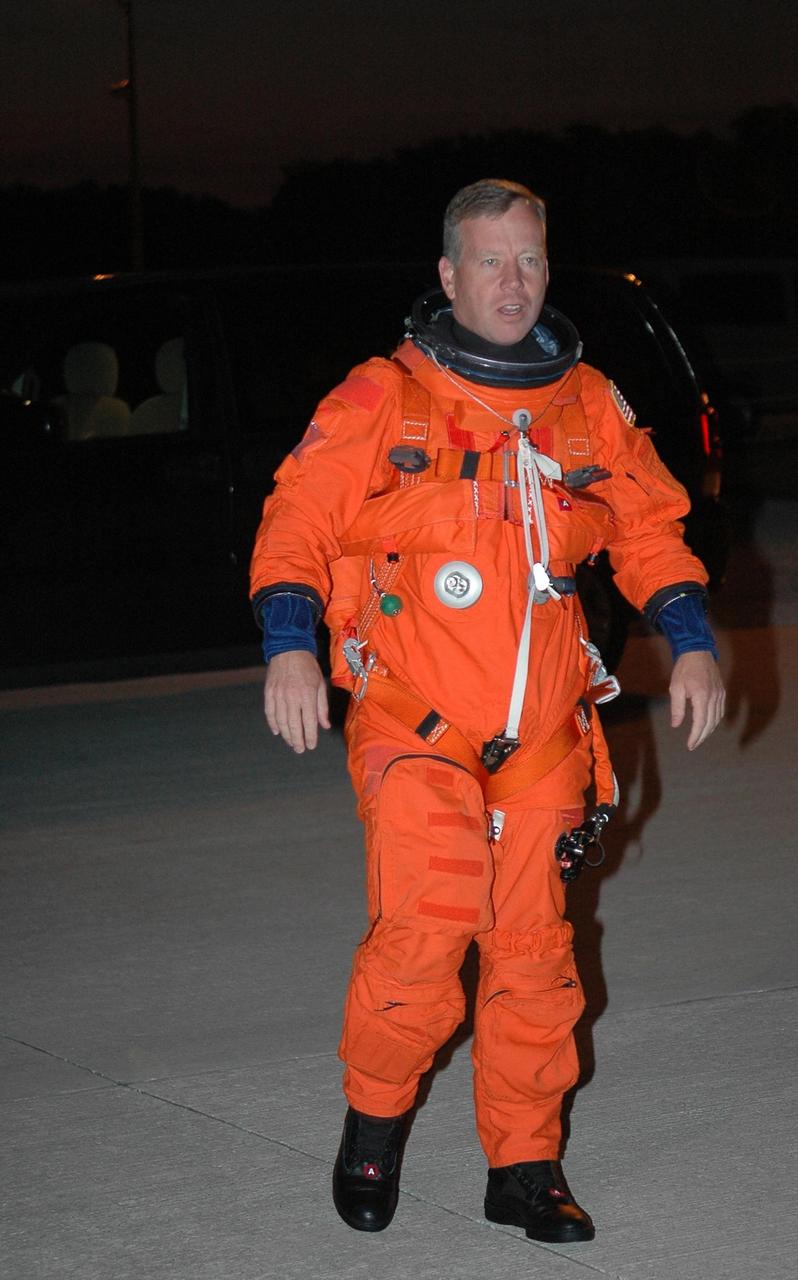
KENNEDY SPACE CENTER, FLA. - In the pre-dawn hours, STS-121 Commander Steven Lindsey walks across the Shuttle Landing Facility to the Shuttle Training Aircraft (STA). Lindsey and Pilot Mark Kelly will be making practice landings in preparation for the July 1 launch of Space Shuttle Discovery. The STA is a Grumman American Aviation-built Gulf Stream II jet that was modified to simulate an orbiter’s cockpit, motion and visual cues, and handling qualities. In flight, the STA duplicates the orbiter’s atmospheric descent trajectory from approximately 35,000 feet altitude to landing on a runway. Because the orbiter is unpowered during re-entry and landing, its high-speed glide must be perfectly executed the first time. Photo credit: NASA/Kim Shiflett
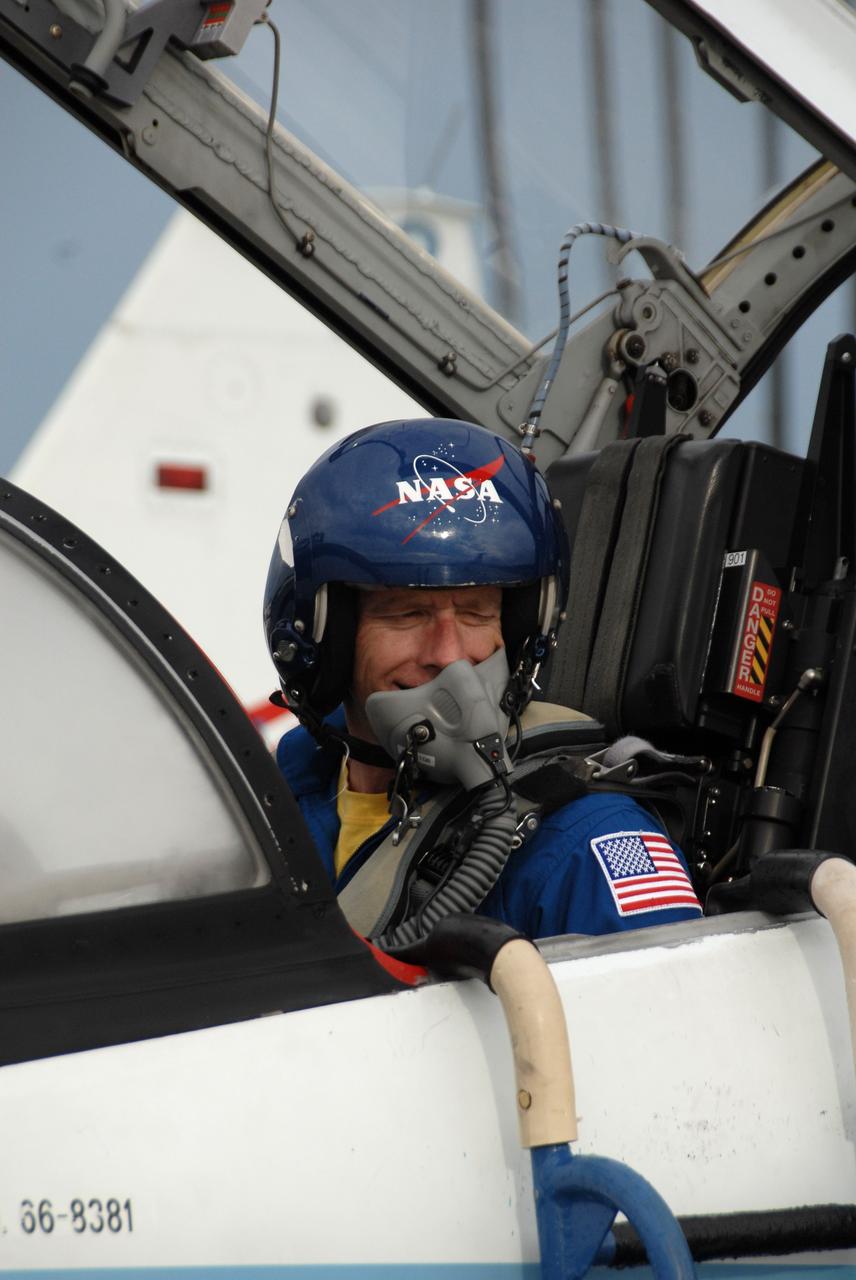
CAPE CANAVERAL, Fla. - Space shuttle Endeavour’s STS-126 commander, Chris Ferguson, arrives at NASA's Kennedy Space Center in Florida aboard a T-38 jet trainer. Ferguson will pilot the Shuttle Training Aircraft, or STA, to practice landing a shuttle on the runway of the Shuttle Landing Facility. The STA is a Grumman American Aviation-built Gulf Stream II jet that was modified to simulate a shuttle’s cockpit, motion and visual cues, and handling qualities. In flight, the aircraft duplicates the shuttle’s atmospheric descent trajectory from approximately 35,000 feet altitude to landing on a runway. Ferguson previously served as pilot on the STS-115 mission, which flew in September 2006. The STS-126 mission to the International Space Station is targeted to launch Nov. 16. Photo credit: NASA/Cory Huston
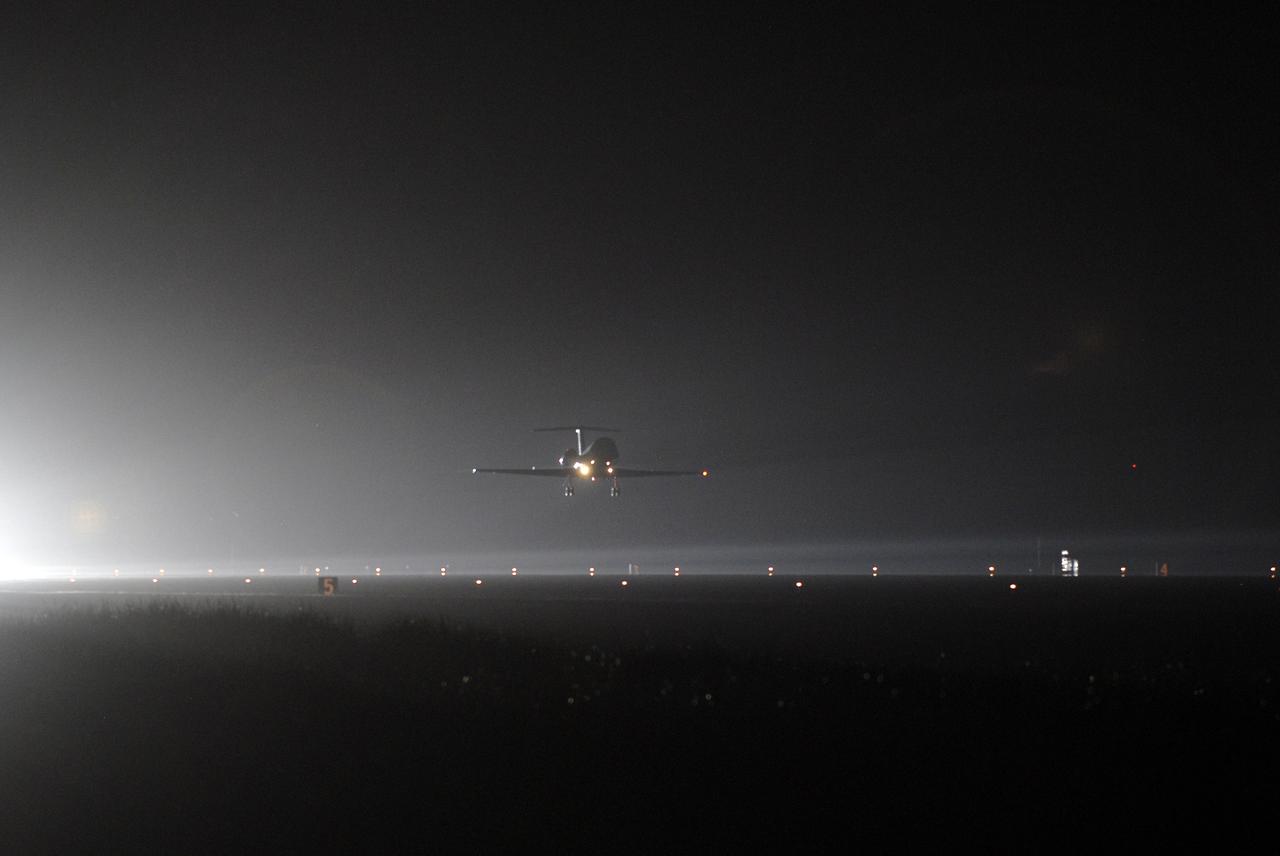
CAPE CANAVERAL, Fla. –At the Shuttle Landing Facility at NASA's Kennedy Space Center in Florida, a Shuttle Training Aircraft, or STA, approaches the runway during landing practice. STS-128 Commander Rick Sturckow and Pilot Kevin Ford are using the STAs to practice shuttle landings. The practice is in preparation for launch of space shuttle Discovery's STS-128 mission in late August to the International Space Station. The STA is a Grumman American Aviation-built Gulfstream II jet that was modified to simulate a shuttle’s cockpit, motion and visual cues, and handling qualities. The STS-128 crew is at Kennedy for a launch dress rehearsal called the terminal countdown demonstration test, or TCDT, which includes emergency exit training and equipment familiarization, as well as a simulated launch countdown. Discovery will deliver 33,000 pounds of equipment to the station, including science and storage racks, a freezer to store research samples, a new sleeping compartment and the COLBERT treadmill. Photo credit: NASA/Kim Shiflett
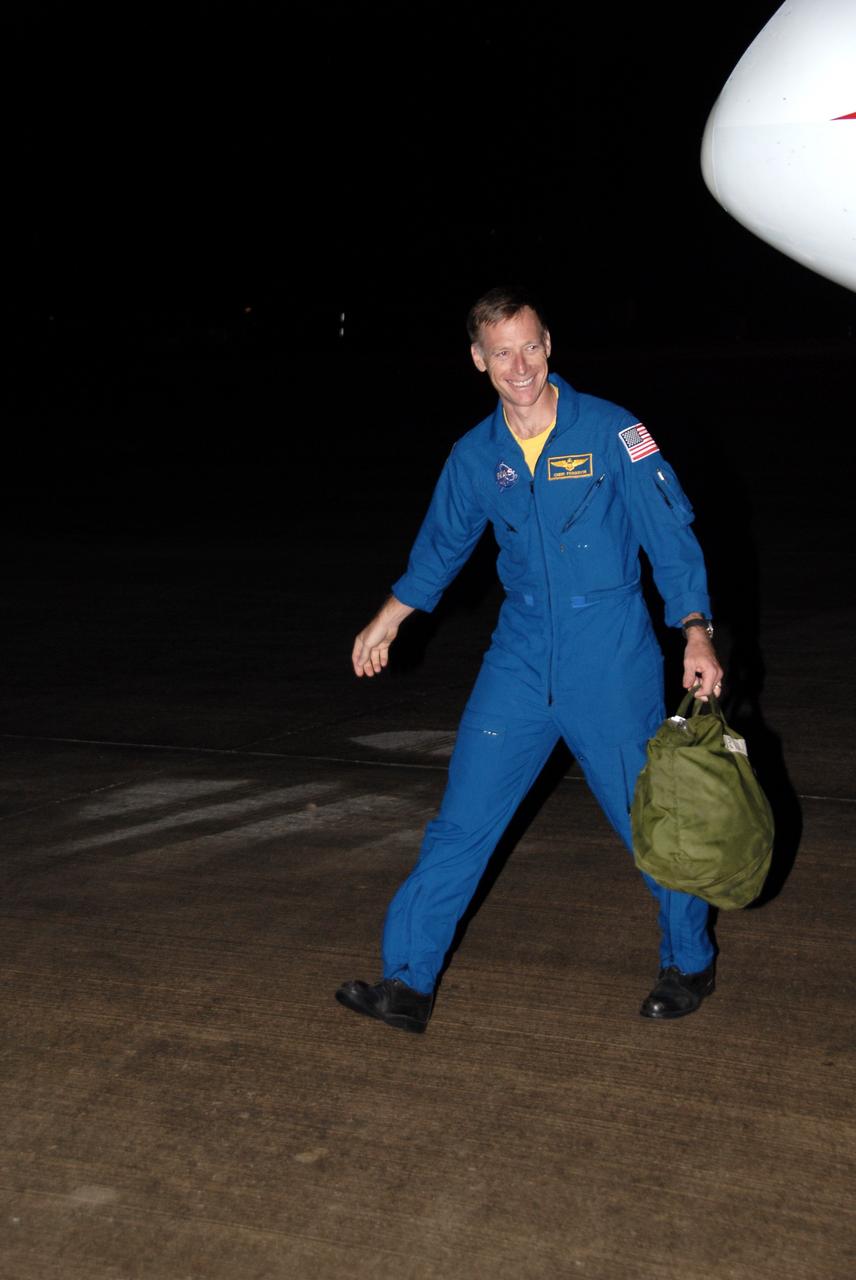
CAPE CANAVERAL, Fla. - On the Shuttle Landing Facility at NASA's Kennedy Space Center in Florida, space shuttle Endeavour’s STS-126 commander, Chris Ferguson, walks away from the Shuttle Training Aircraft, or STA. Ferguson flew the STA to practice landing the shuttle on the runway. The STA is a Grumman American Aviation-built Gulf Stream II jet that was modified to simulate a shuttle’s cockpit, motion and visual cues, and handling qualities. In flight, the aircraft duplicates the shuttle’s atmospheric descent trajectory from approximately 35,000 feet altitude to landing on a runway. Ferguson previously served as pilot on the STS-115 mission, which flew in September 2006. The STS-126 mission to the International Space Station is targeted to launch Nov. 16. Photo credit: NASA/Cory Huston
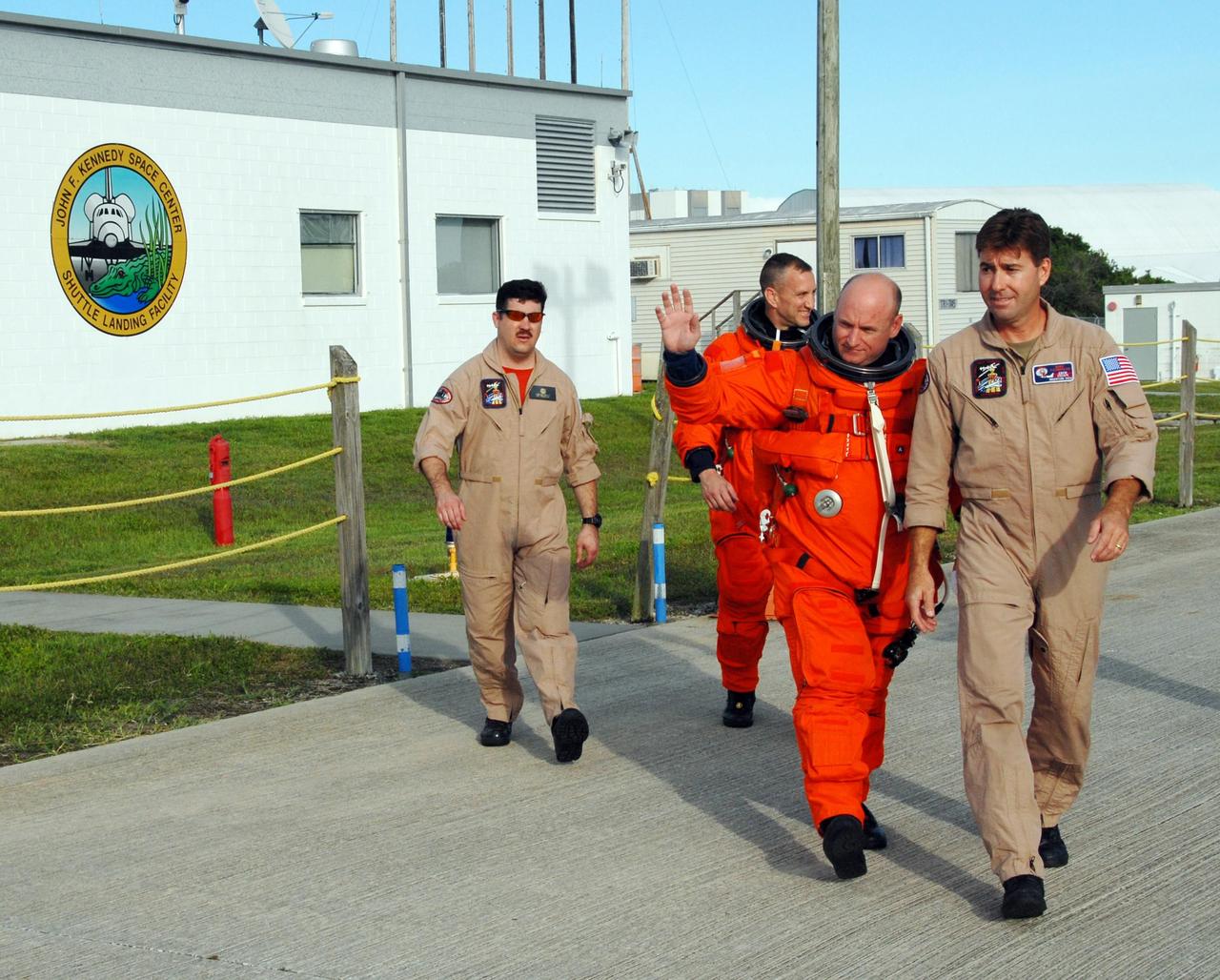
KENNEDY SPACE CENTER, Fla. -- Dressed in their launch and entry suits, STS-118 Pilot Charlie Hobaugh and Commander Scott Kelly (waving) are headed for the runway for landing practice in the shuttle training aircraft, known as an STA. The practice is part of Terminal Countdown Demonstration Test, or TCDT, activities that include a simulated launch countdown. The STA is a Grumman American Aviation-built Gulf Stream II jet that was modified to simulate an orbiter's cockpit, motion and visual cues, and handling qualities. In flight, the STA duplicates the orbiter's atmospheric descent trajectory from approximately 35,000 feet altitude to landing on a runway. The STS-118 mission is the 22nd flight to the International Space Station and is targeted for launch on Aug. 7. The mission payload aboard Space Shuttle Endeavour includes the S5 truss, a SPACEHAB module and external stowage platform 3. NASA/George Shelton

KENNEDY SPACE CENTER, Fla. -- STS-118 Commander Scott Kelly settles in his cockpit seat aboard the shuttle training aircraft, known as an STA, for landing practice. The practice is part of Terminal Countdown Demonstration Test, or TCDT, activities that include a simulated launch countdown. The STA is a Grumman American Aviation-built Gulf Stream II jet that was modified to simulate an orbiter's cockpit, motion and visual cues, and handling qualities. In flight, the STA duplicates the orbiter's atmospheric descent trajectory from approximately 35,000 feet altitude to landing on a runway. The STS-118 mission is the 22nd flight to the International Space Station and is targeted for launch on Aug. 7. The mission payload aboard Space Shuttle Endeavour includes the S5 truss, a SPACEHAB module and external stowage platform 3. NASA/George Shelton
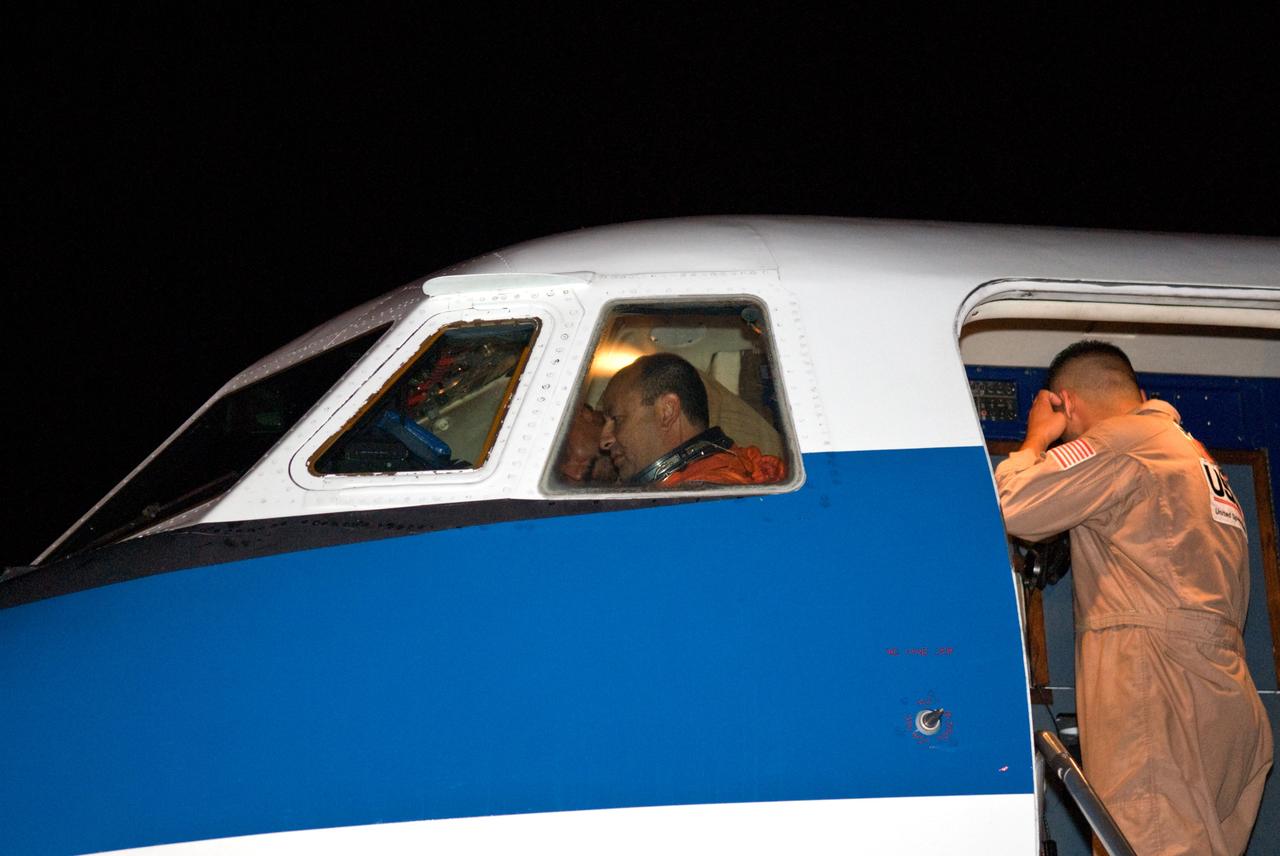
CAPE CANAVERAL, Fla. – At the Shuttle Landing Facility at NASA's Kennedy Space Center in Florida, STS-127 Commander Mark Polansky checks cockpit controls seated in the Shuttle Training Aircraft. Polansky will fly the STA to practice landings in preparation for launch of space shuttle Endeavour on the STS-127 mission on June 13 to the International Space Station. The STA is a Grumman American Aviation-built Gulfstream II jet that was modified to simulate a shuttle’s cockpit, motion and visual cues, and handling qualities. Endeavour will deliver the Japanese Experiment Module's Exposed Facility, or JEM-EF, and the Experiment Logistics Module-Exposed Section, or ELM-ES. on STS-127. The mission is the final of three flights dedicated to the assembly of the Japan Aerospace Exploration Agency's Kibo laboratory complex on the space station. Photo credit: NASA/Kim Shiflett
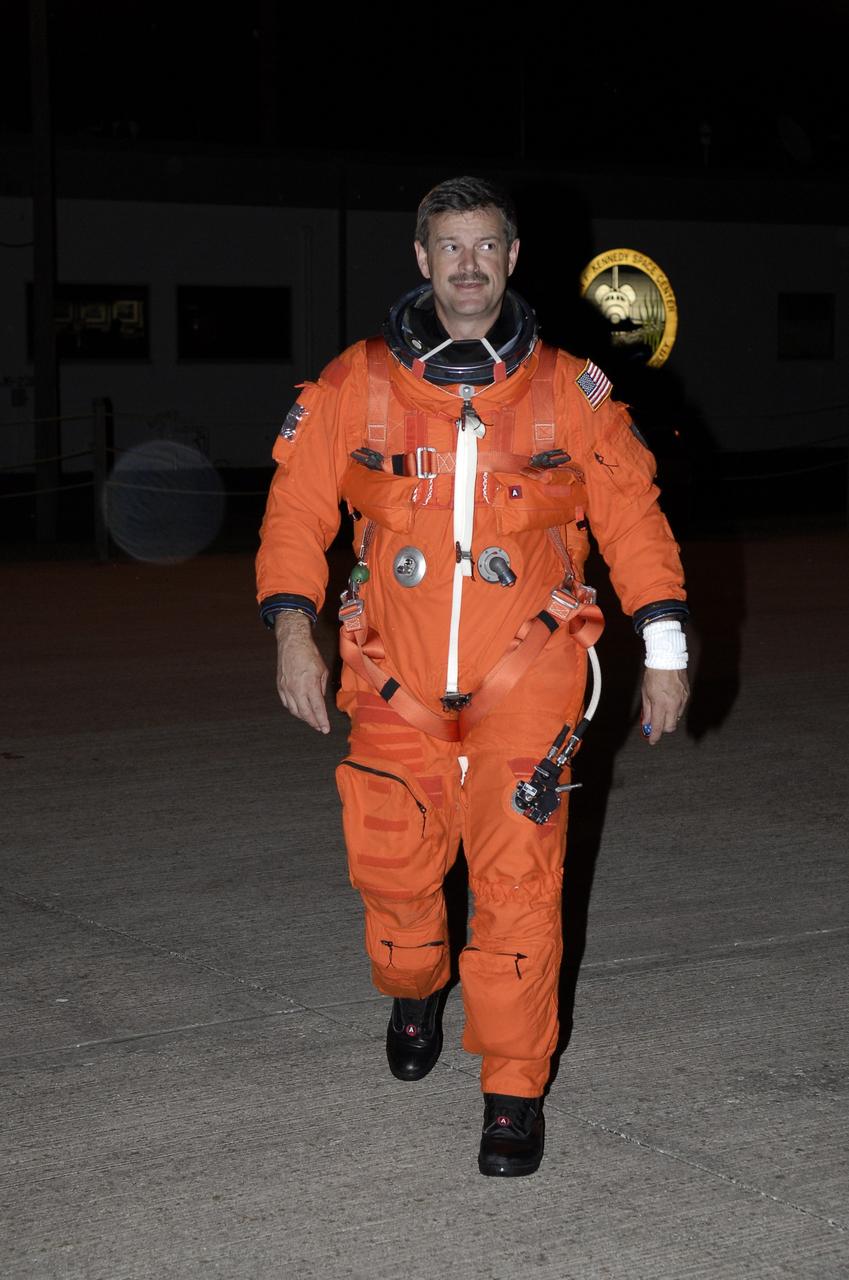
CAPE CANAVERAL, Fla. - STS-125 Commander Scott Altman walks toward the shuttle training aircraft on the Shuttle Landing Facility at NASA's Kennedy Space Center in Florida. He will practice shuttle landings on the runway. The STA is a Grumman American Aviation-built Gulf Stream II jet that was modified to simulate a shuttle’s cockpit, motion and visual cues, and handling qualities. In flight, the aircraft duplicates the shuttle’s atmospheric descent trajectory from approximately 35,000 feet altitude to landing on a runway. The practice is part of a terminal countdown demonstration test, or TCDT, to prepare for launch. TCDT provides astronauts and ground crews with an opportunity to participate in various simulated countdown activities, including equipment familiarization, emergency training and a simulated launch countdown. Space shuttle Atlantis’ STS-125 mission to service NASA’s Hubble Space Telescope is targeted to launch Oct. 10. Photo credit: NASA/Kim Shiflett
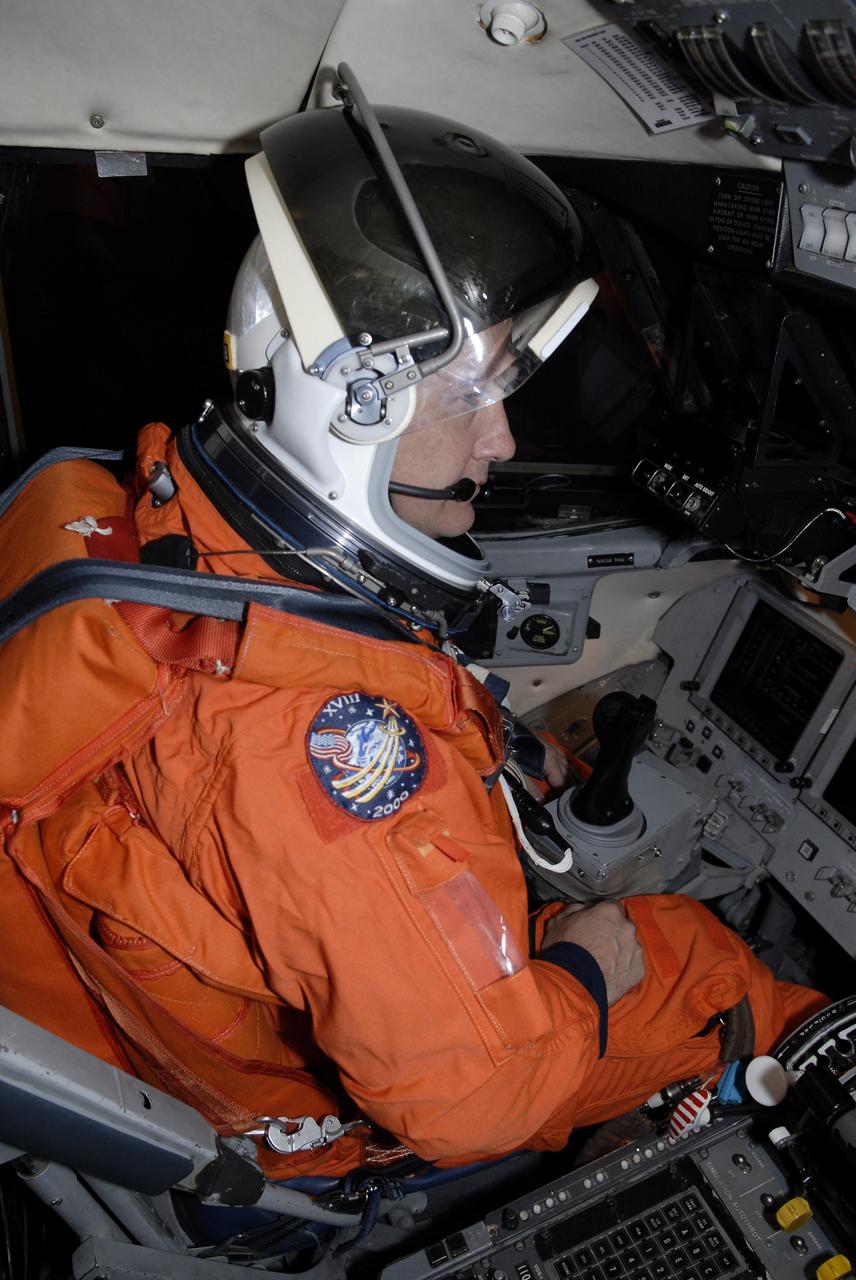
CAPE CANAVERAL, Fla. – On the Shuttle Landing Facility at NASA's Kennedy Space Center in Florida, STS-127 Pilot Doug Hurley is wearing his complete launch-and-entry suit in the cockpit of the Shuttle Training Aircraft. He is preparing to practice shuttle landings in preparation for launch of space shuttle Endeavour on the STS-127 mission, targeted for June 13. The STA is a Grumman American Aviation-built Gulf Stream II jet that was modified to simulate a shuttle’s cockpit, motion and visual cues, and handling qualities. The crew is at Kennedy for a launch dress rehearsal called the terminal countdown demonstration test, or TCDT, which includes emergency egress training and equipment familiarization. The STS-127 mission is the final of three flights dedicated to the assembly of the Japanese Kibo laboratory complex on the International Space Station. It is the 127th shuttle flight and the 29th in the assembly of the space station. Photo credit: NASA/Kim Shiflett
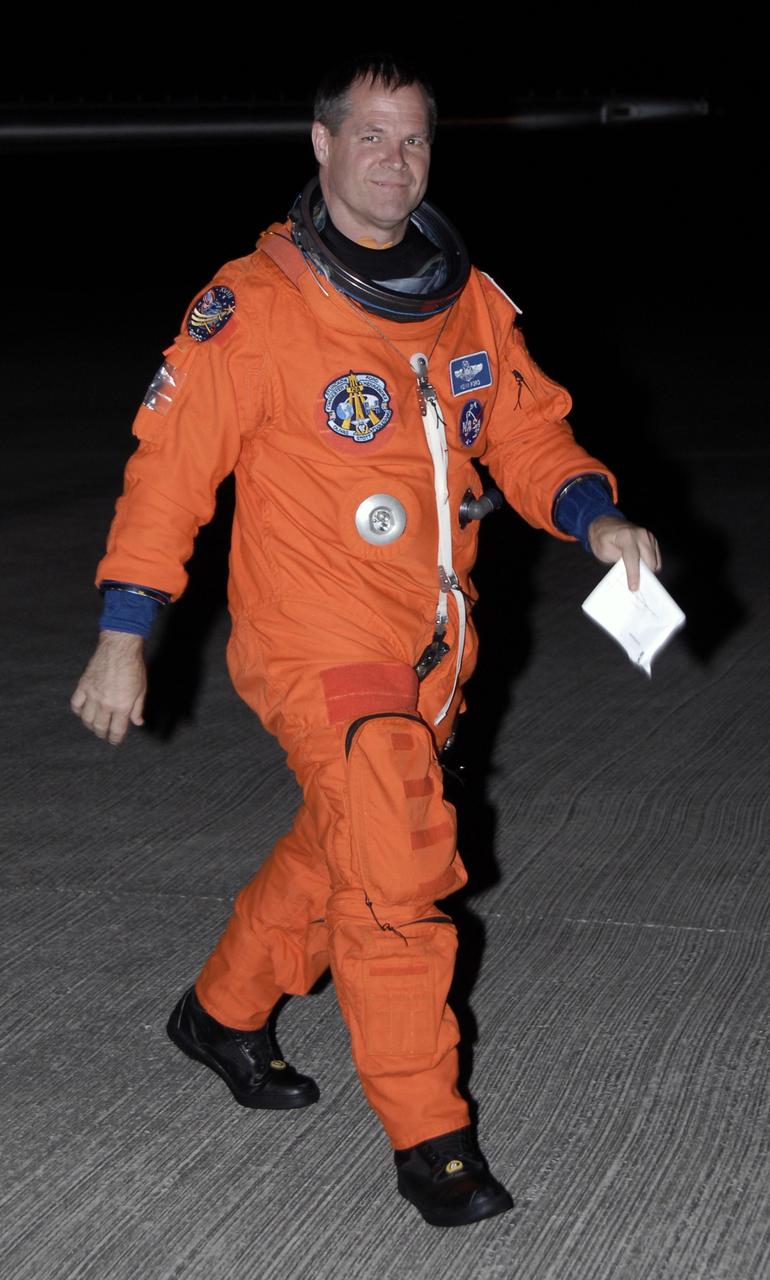
CAPE CANAVERAL, Fla. –At the Shuttle Landing Facility at NASA's Kennedy Space Center in Florida, STS-128 Pilot Kevin Ford walks away from the Shuttle Training Aircraft, or STA, after completing shuttle landing practice. The practice is in preparation for launch of space shuttle Discovery's STS-128 mission in late August to the International Space Station. The STA is a Grumman American Aviation-built Gulfstream II jet that was modified to simulate a shuttle’s cockpit, motion and visual cues, and handling qualities. The STS-128 crew is at Kennedy for a launch dress rehearsal called the terminal countdown demonstration test, or TCDT, which includes emergency exit training and equipment familiarization, as well as a simulated launch countdown. Discovery will deliver 33,000 pounds of equipment to the station, including science and storage racks, a freezer to store research samples, a new sleeping compartment and the COLBERT treadmill. Photo credit: NASA/Kim Shiflett
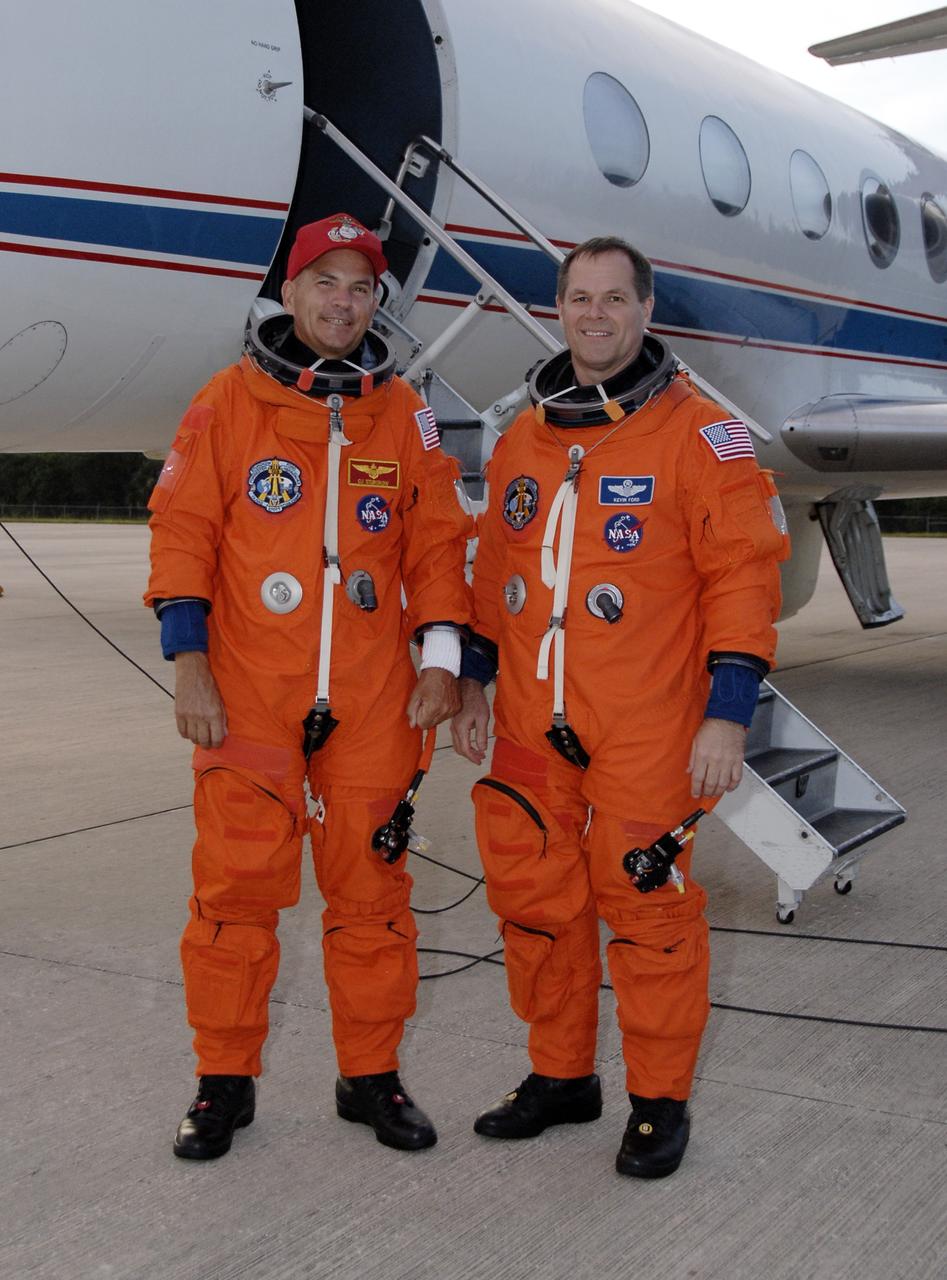
CAPE CANAVERAL, Fla. – At the Shuttle Landing Facility at NASA's Kennedy Space Center in Florida, STS-128 Commander Rick Sturckow (left) and Pilot Kevin Ford are ready to begin practicing shuttle landings in the Shuttle Training Aircraft, or STA. The practice is in preparation for launch of space shuttle Discovery's STS-128 mission in late August to the International Space Station. The STA is a Grumman American Aviation-built Gulfstream II jet that was modified to simulate a shuttle’s cockpit, motion and visual cues, and handling qualities. The STS-128 crew is at Kennedy for a launch dress rehearsal called the terminal countdown demonstration test, or TCDT, which includes emergency exit training and equipment familiarization, as well as a simulated launch countdown. Discovery will deliver 33,000 pounds of equipment to the station, including science and storage racks, a freezer to store research samples, a new sleeping compartment and the COLBERT treadmill. Photo credit: NASA/Kim Shiflett
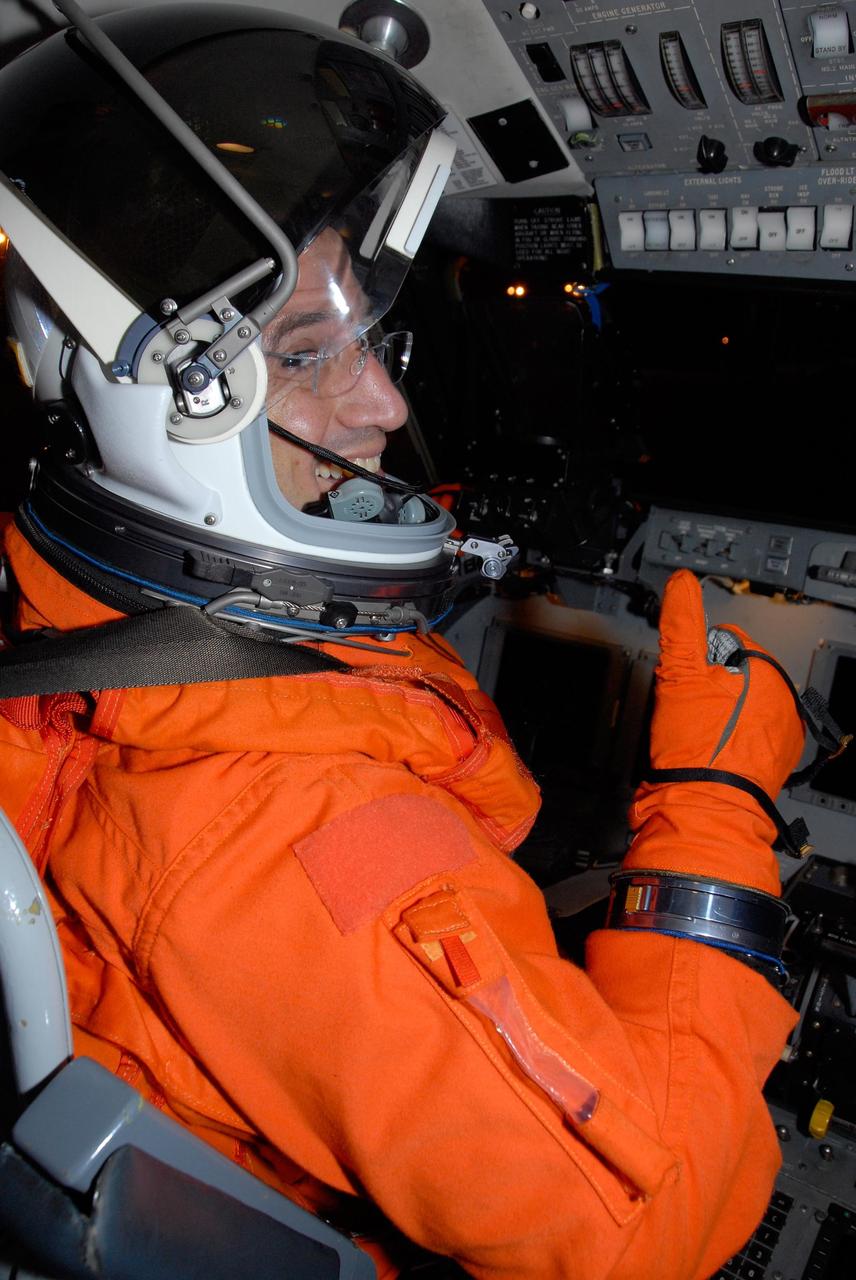
KENNEDY SPACE CENTER, FLA. -- Seated in the cockpit of the shuttle training aircraft, STS-120 Pilot George Zamka is eager to begin landing practice on NASA's Shuttle Landing Facility runway. A modified Grumman American Aviation-built Gulf Stream II jet, the STA simulates an orbiter's cockpit, motion and visual cues and handling qualities. In flight, the STA duplicates the orbiter's atmospheric descent trajectory from approximately 35,000 feet altitude to landing on a runway. Melroy and other crew members are at Kennedy Space Center to take part in the terminal countdown demonstration test, which also includes a simulated launch countdown. Mission STS-120 is targeted for Oct. 23. Photo credit: NASA/Kim Shiflett
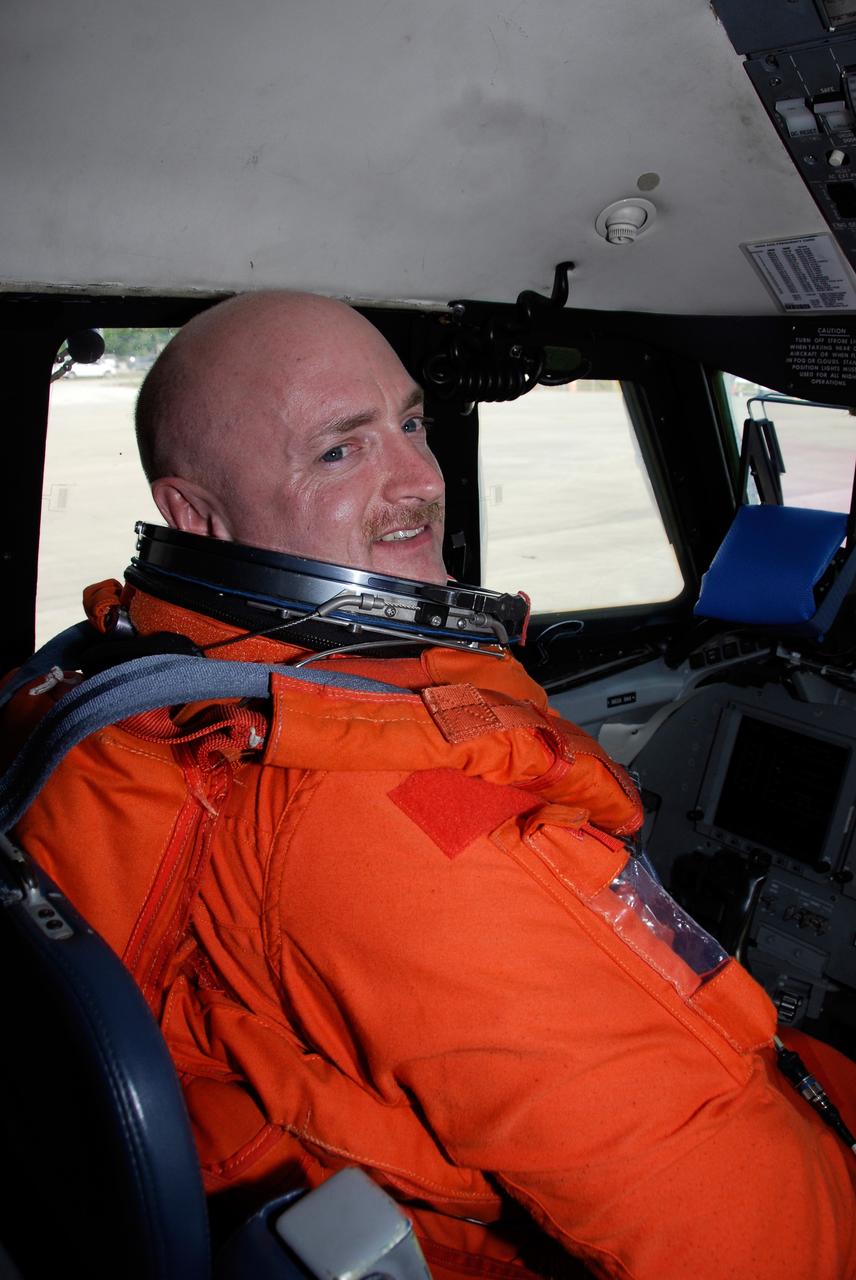
CAPE CANAVERAL, Fla. -- STS-124 Commander Mark Kelly sits in the cockpit of NASA's Shuttle Training Aircraft, or STA, preparing to practice space shuttle landings. The STA is a Grumman American Aviation-built Gulf Stream II jet that was modified to simulate an orbiter's cockpit, motion and visual cues, and handling qualities. In flight, the STA duplicates the orbiter's atmospheric descent trajectory from approximately 35,000 feet altitude to landing on a runway. Because the orbiter is unpowered during re-entry and landing, its high-speed glide must be perfectly executed the first time. The crew for space shuttle Discovery's STS-124 mission is at Kennedy for a full launch dress rehearsal, known as the terminal countdown demonstration test, or TCDT. Providing astronauts and ground crews with an opportunity to participate in various simulated countdown activities, TCDT includes equipment familiarization and emergency training. Discovery's launch is targeted for May 31. Photo credit: NASA/Kim Shiflett
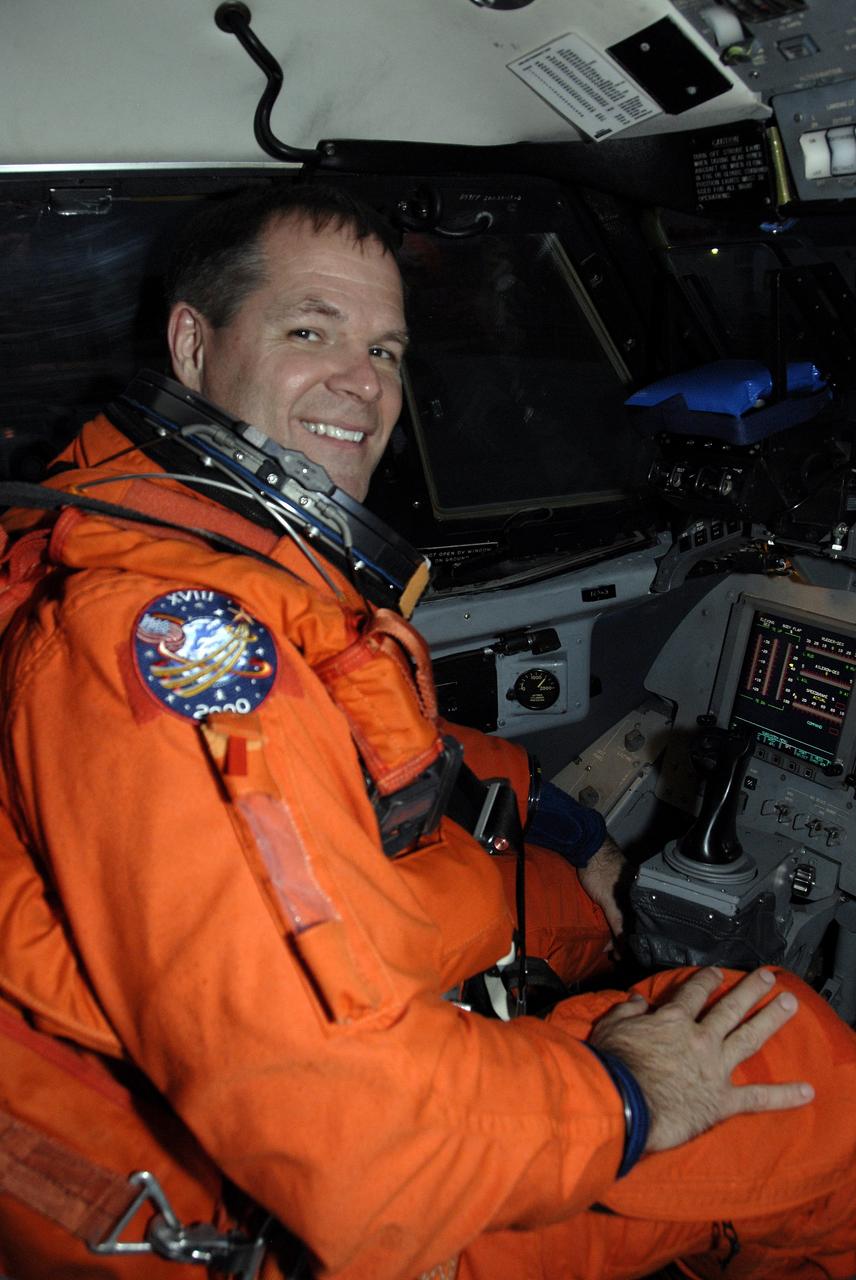
CAPE CANAVERAL, Fla. –At the Shuttle Landing Facility at NASA's Kennedy Space Center in Florida, STS-128 Pilot Kevin Ford settles in the cockpit of the Shuttle Training Aircraft, or STA, to practice shuttle landings. The practice is in preparation for launch of space shuttle Discovery's STS-128 mission in late August to the International Space Station. The STA is a Grumman American Aviation-built Gulfstream II jet that was modified to simulate a shuttle’s cockpit, motion and visual cues, and handling qualities. The STS-128 crew is at Kennedy for a launch dress rehearsal called the terminal countdown demonstration test, or TCDT, which includes emergency exit training and equipment familiarization, as well as a simulated launch countdown. Discovery will deliver 33,000 pounds of equipment to the station, including science and storage racks, a freezer to store research samples, a new sleeping compartment and the COLBERT treadmill. Photo credit: NASA/Kim Shiflett
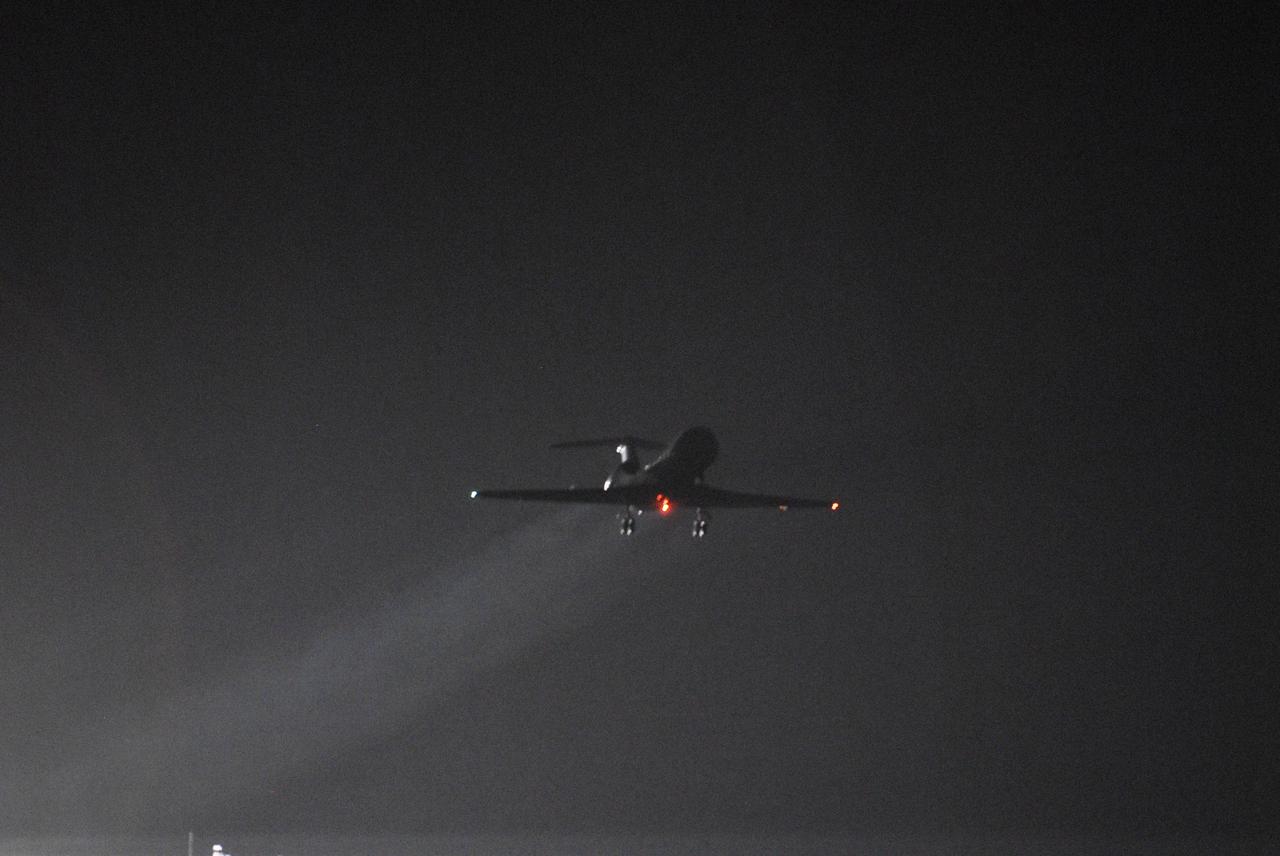
CAPE CANAVERAL, Fla. - One of the shuttle training aircraft takes off from the Shuttle Landing Facility at NASA's Kennedy Space Center in Florida. STS-125 Commander Scott Altman and Pilot Gregory C. Johnson are practicing shuttle landings in the aircraft. The STA is a Grumman American Aviation-built Gulf Stream II jet that was modified to simulate a shuttle’s cockpit, motion and visual cues, and handling qualities. In flight, the aircraft duplicates the shuttle’s atmospheric descent trajectory from approximately 35,000 feet altitude to landing on a runway. The practice is part of a terminal countdown demonstration test, or TCDT, to prepare for launch. TCDT provides astronauts and ground crews with an opportunity to participate in various simulated countdown activities, including equipment familiarization, emergency training and a simulated launch countdown. Space shuttle Atlantis’ STS-125 mission to service NASA’s Hubble Space Telescope is targeted to launch Oct. 10. Photo credit: NASA/Kim Shiflett
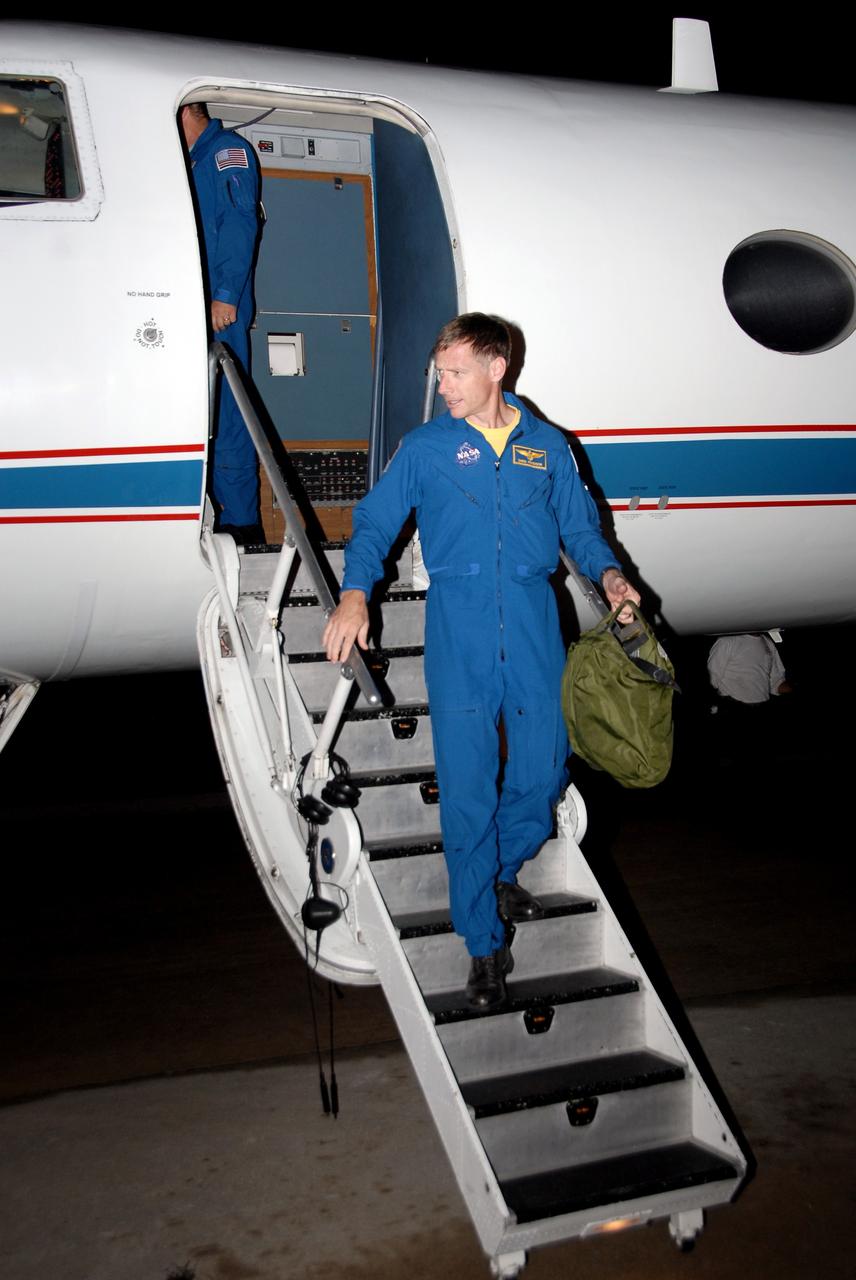
CAPE CANAVERAL, Fla. - On the Shuttle Landing Facility at NASA's Kennedy Space Center in Florida, space shuttle Endeavour’s STS-126 commander, Chris Ferguson, exits the Shuttle Training Aircraft, or STA. Ferguson flew the STA to practice landing the shuttle on the runway. The STA is a Grumman American Aviation-built Gulf Stream II jet that was modified to simulate a shuttle’s cockpit, motion and visual cues, and handling qualities. In flight, the aircraft duplicates the shuttle’s atmospheric descent trajectory from approximately 35,000 feet altitude to landing on a runway. Ferguson previously served as pilot on the STS-115 mission, which flew in September 2006. The STS-126 mission to the International Space Station is targeted to launch Nov. 16. Photo credit: NASA/Cory Huston

KENNEDY SPACE CENTER, FLA. -- At the Shuttle Landing Facility on NASA’s Kennedy Space Center, Return to Flight STS-114 Pilot James Kelly and Mission Commander Eileen Collins join support personnel after completing practice runs on the Shuttle Training Aircraft (STA). Kelly and Collins are practicing landing the orbiter using the STA, which is a modified Grumman American Aviation-built Gulf Stream II executive jet that was modified to simulate an orbiter’s cockpit, motion and visual cues, and handling qualities. In flight, the STA duplicates the orbiter’s atmospheric descent trajectory from approximately 35,000 feet altitude to landing on a runway. Because the orbiter is unpowered during re-entry and landing, its high-speed glide must be perfectly executed the first time. Mission STS-114 is scheduled to launch aboard Space Shuttle Discovery with a crew of seven on July 13 at 3:51 p.m. from Launch Pad 39B.
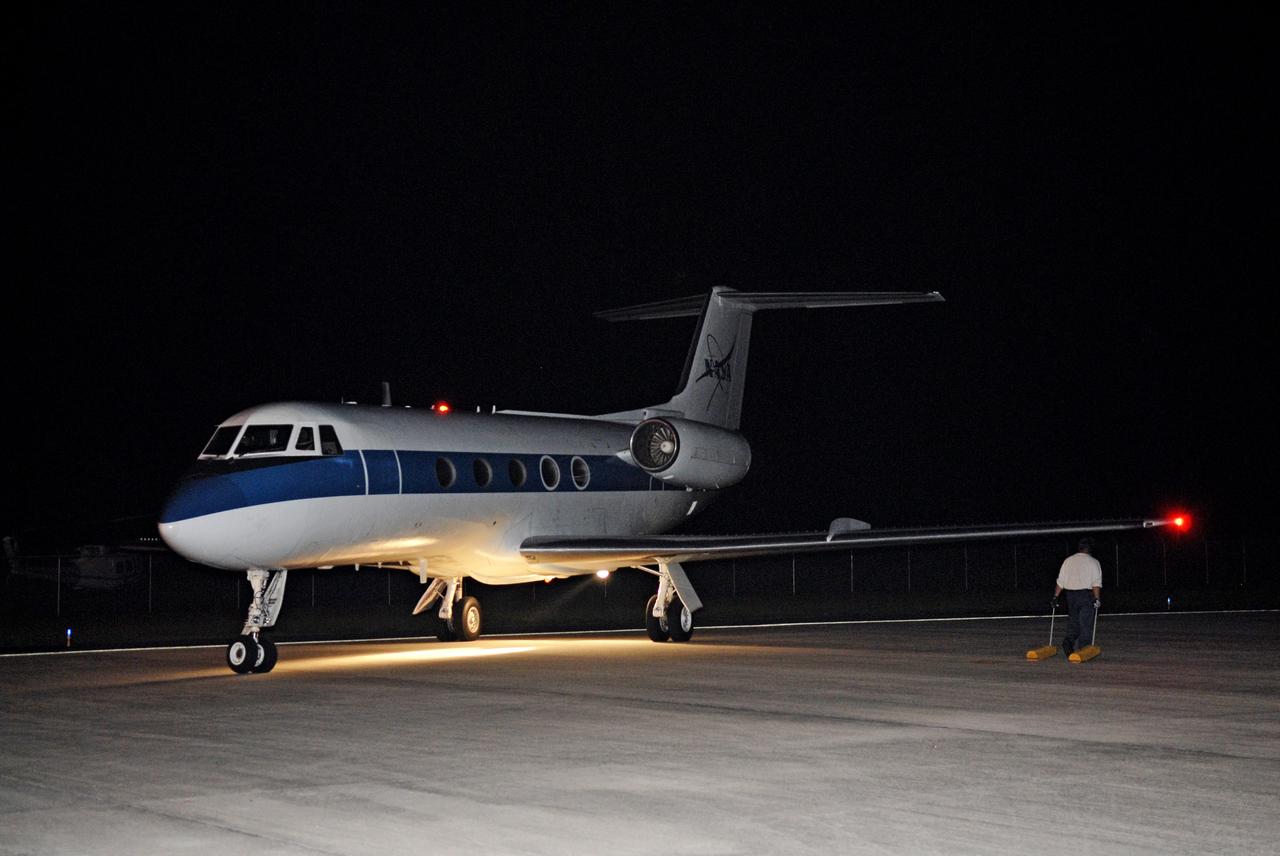
CAPE CANAVERAL, Fla. – A Shuttle Training Aircraft returns to the Shuttle Landing Facility at NASA's Kennedy Space Center in Florida. STS-127 Commander Mark Polansky and Pilot Doug Hurley have been practicing shuttle landings in preparation for launch of space shuttle Endeavour on the STS-127 mission, targeted for June 13. The STA is a Grumman American Aviation-built Gulf Stream II jet that was modified to simulate a shuttle’s cockpit, motion and visual cues, and handling qualities. The crew is at Kennedy for a launch dress rehearsal called the terminal countdown demonstration test, or TCDT, which includes emergency egress training and equipment familiarization. The STS-127 mission is the final of three flights dedicated to the assembly of the Japanese Kibo laboratory complex on the International Space Station. It is the 127th shuttle flight and the 29th in the assembly of the space station. Photo credit: NASA/Kim Shiflett
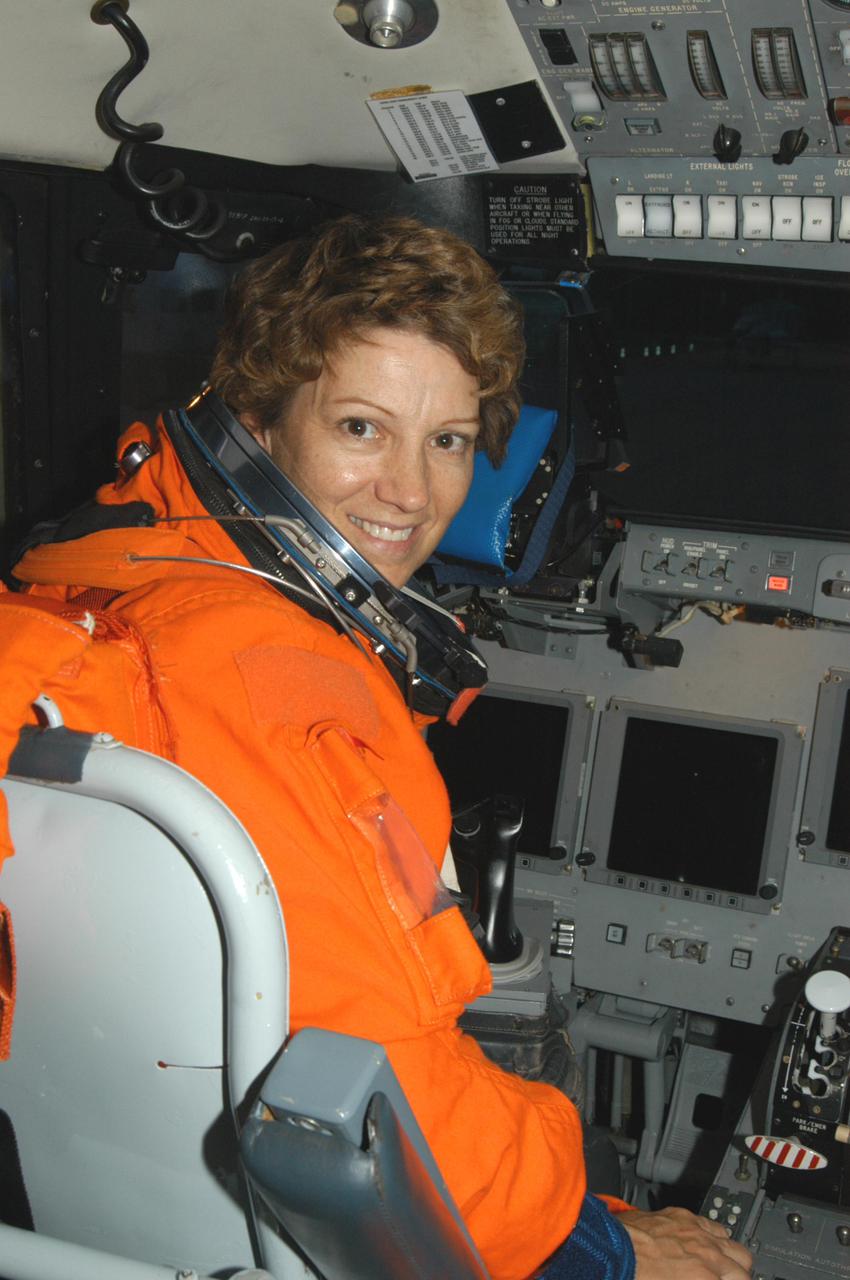
KENNEDY SPACE CENTER, FLA. - At the Shuttle Landing Facility on NASA Kennedy Space Center, STS-114 Mission Commander Eileen Collins sits in the cockpit of the Shuttle Training Aircraft (STA) after landing. She and Pilot James Kelly have been practicing night landings in preparation for the mission. The STA is a modified Grumman American Aviation-built Gulf Stream II executive jet that was modified to simulate an orbiter’s cockpit, motion and visual cues, and handling qualities. In flight, the STA duplicates the orbiter’s atmospheric descent trajectory from approximately 35,000 feet altitude to landing on a runway. Because the orbiter is unpowered during re-entry and landing, its high-speed glide must be perfectly executed the first time. Return to Flight Mission STS-114 is scheduled to launch aboard Space Shuttle Discovery with a crew of seven at 10:39 a.m. EDT on July 26. Landing is expected on Aug. 7.
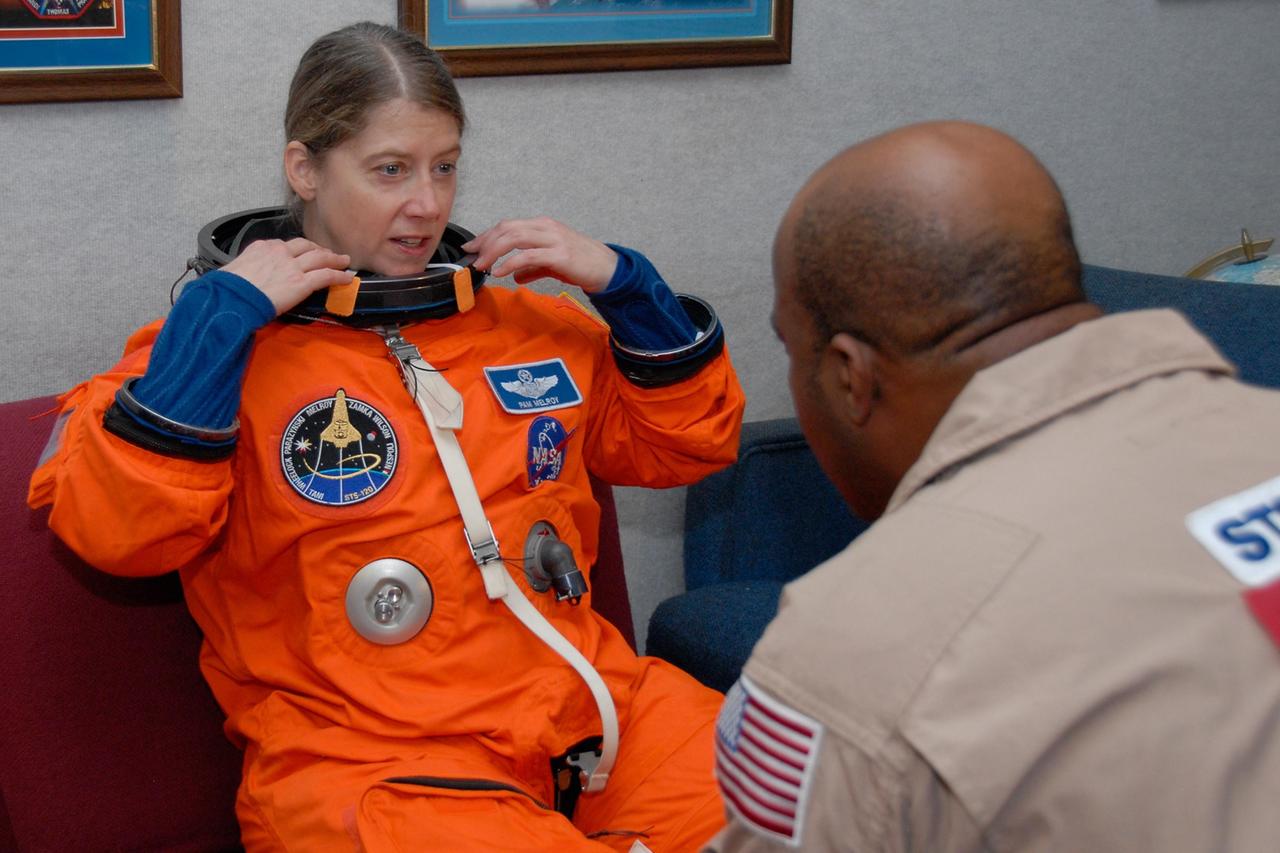
KENNEDY SPACE CENTER, FLA. -- STS-120 Commander Pamela Melroy dons her launch and entry suit. She will be practicing landing on NASA's Shuttle Landing Facility runway in the shuttle training aircraft, or STA. A modified Grumman American Aviation-built Gulf Stream II jet, the STA simulates an orbiter's cockpit, motion and visual cues and handling qualities. In flight, the STA duplicates the orbiter's atmospheric descent trajectory from approximately 35,000 feet altitude to landing on a runway. Melroy and other crew members are at Kennedy Space Center to take part in the terminal countdown demonstration test, which also includes a simulated launch countdown. Mission STS-120 is targeted for Oct. 23. Photo credit: NASA/Kim Shiflett
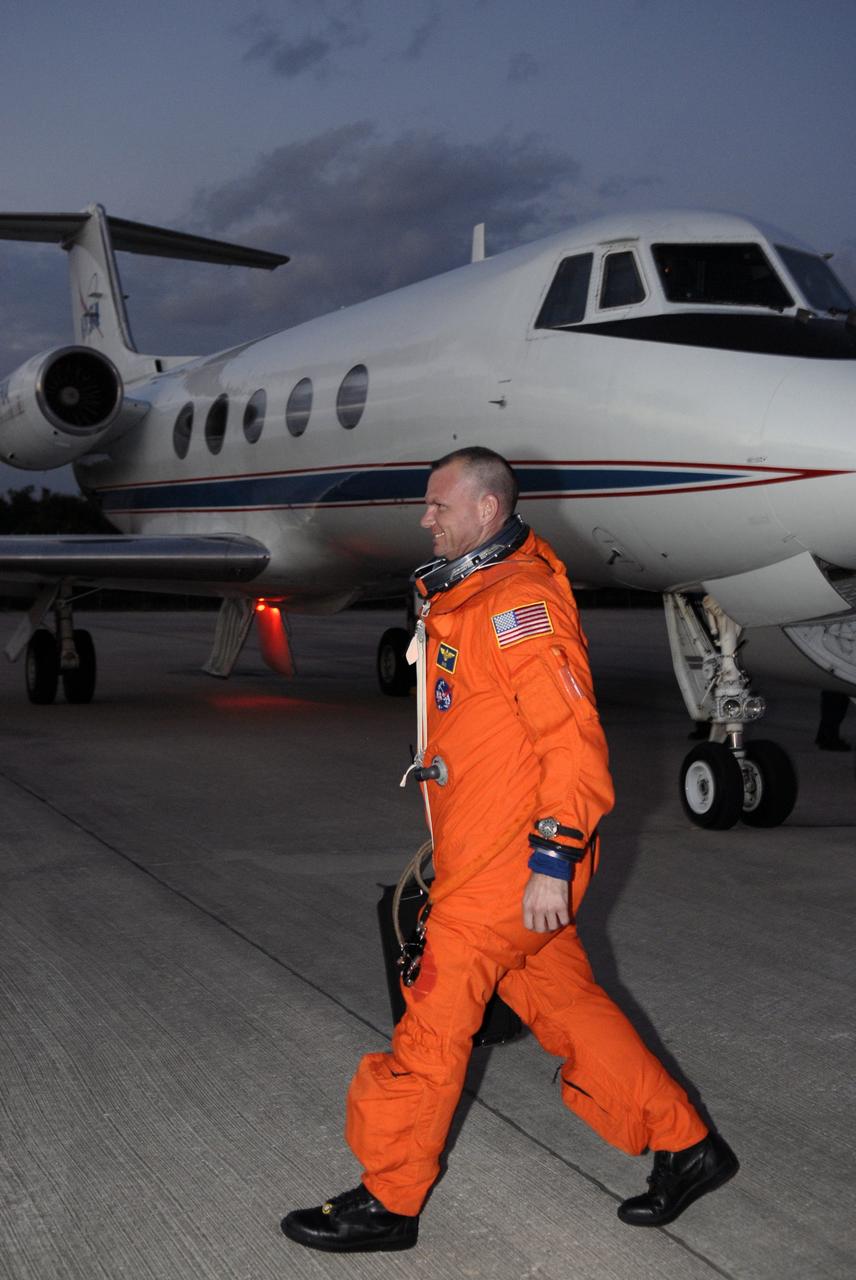
CAPE CANAVERAL, Fla. – STS-119 Pilot Tony Antonelli heads across the tarmac of the Shuttle Landing Facility at NASA's Kennedy Space Center in Florida to practice shuttle landings in the shuttle training aircraft, or STA. Antonelli and the rest of the crew are at Kennedy to prepare for launch as part of the Terminal Countdown Demonstration Test activities. The TCDT includes equipment familiarization and a simulated launch countdown. The STA is a Grumman American Aviation-built Gulf Stream II jet that was modified to simulate a shuttle’s cockpit, motion and visual cues, and handling qualities. In flight, the aircraft duplicates the shuttle’s atmospheric descent trajectory from approximately 35,000 feet to landing. The crew of space shuttle Discovery is targeted to launch on the STS-119 mission Feb. 12. During Discovery's 14-day mission, the crew will install the S6 truss segment and solar arrays to the starboard side of the International Space Station, completing the station's truss, or backbone. Photo credit: NASA/Kim Shiflett
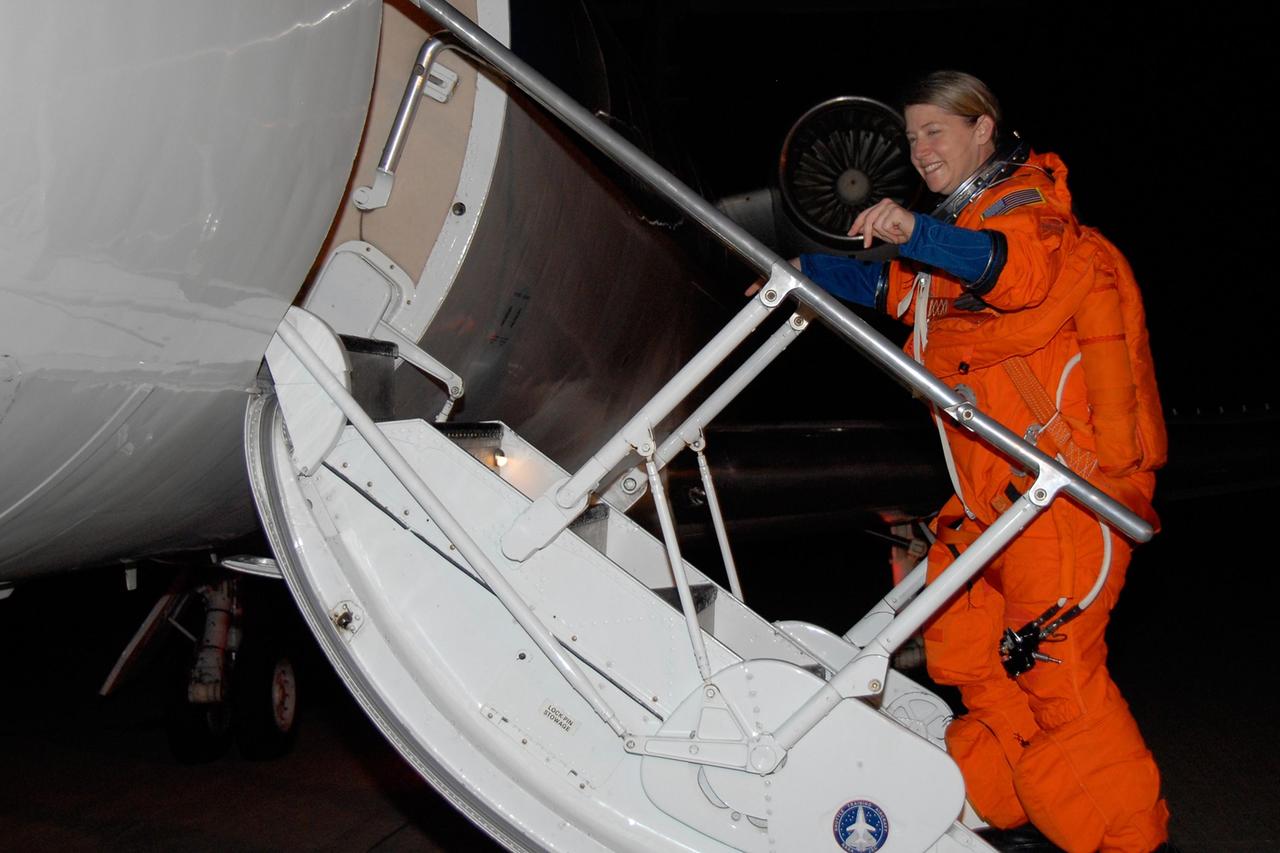
KENNEDY SPACE CENTER, FLA. -- STS-120 Commander Pamela Melroy is eager to enter the shuttle training aircraft, or STA, to practice landing on NASA's Shuttle Landing Facility runway. A modified Grumman American Aviation-built Gulf Stream II jet, the STA simulates an orbiter's cockpit, motion and visual cues and handling qualities. In flight, the STA duplicates the orbiter's atmospheric descent trajectory from approximately 35,000 feet altitude to landing on a runway. Melroy and other crew members are at Kennedy Space Center to take part in the terminal countdown demonstration test, which also includes a simulated launch countdown. Mission STS-120 is targeted for Oct. 23. Photo credit: NASA/Kim Shiflett

CAPE CANAVERAL, Fla. - On the Shuttle Landing Facility at NASA's Kennedy Space Center in Florida, space shuttle Endeavour’s STS-126 commander, Chris Ferguson, sits at the controls of the Shuttle Training Aircraft, or STA. Ferguson flew the STA to practice landing the shuttle on the runway. The STA is a Grumman American Aviation-built Gulf Stream II jet that was modified to simulate a shuttle’s cockpit, motion and visual cues, and handling qualities. In flight, the aircraft duplicates the shuttle’s atmospheric descent trajectory from approximately 35,000 feet altitude to landing on a runway. Ferguson previously served as pilot on the STS-115 mission, which flew in September 2006. The STS-126 mission to the International Space Station is targeted to launch Nov. 16. Photo credit: NASA/Cory Huston
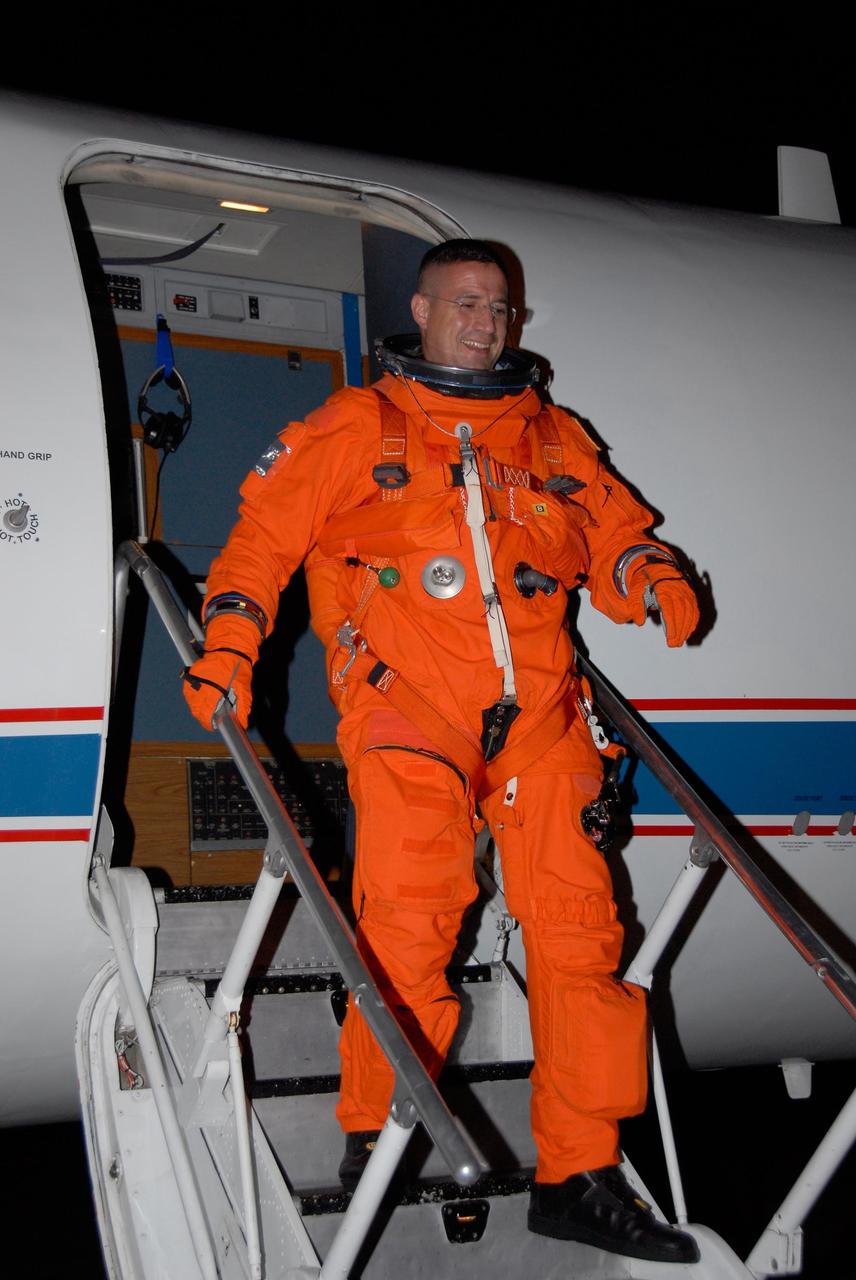
KENNEDY SPACE CENTER, FLA. -- STS-120 Pilot George Zamka disembarks from the shuttle training aircraft, or STA, after successful landing practice on NASA's Shuttle Landing Facility runway. A modified Grumman American Aviation-built Gulf Stream II jet, the STA simulates an orbiter's cockpit, motion and visual cues and handling qualities. In flight, the STA duplicates the orbiter's atmospheric descent trajectory from approximately 35,000 feet altitude to landing on a runway. Melroy and other crew members are at Kennedy Space Center to take part in the terminal countdown demonstration test, which also includes a simulated launch countdown. Mission STS-120 is targeted for Oct. 23. Photo credit: NASA/Kim Shiflett
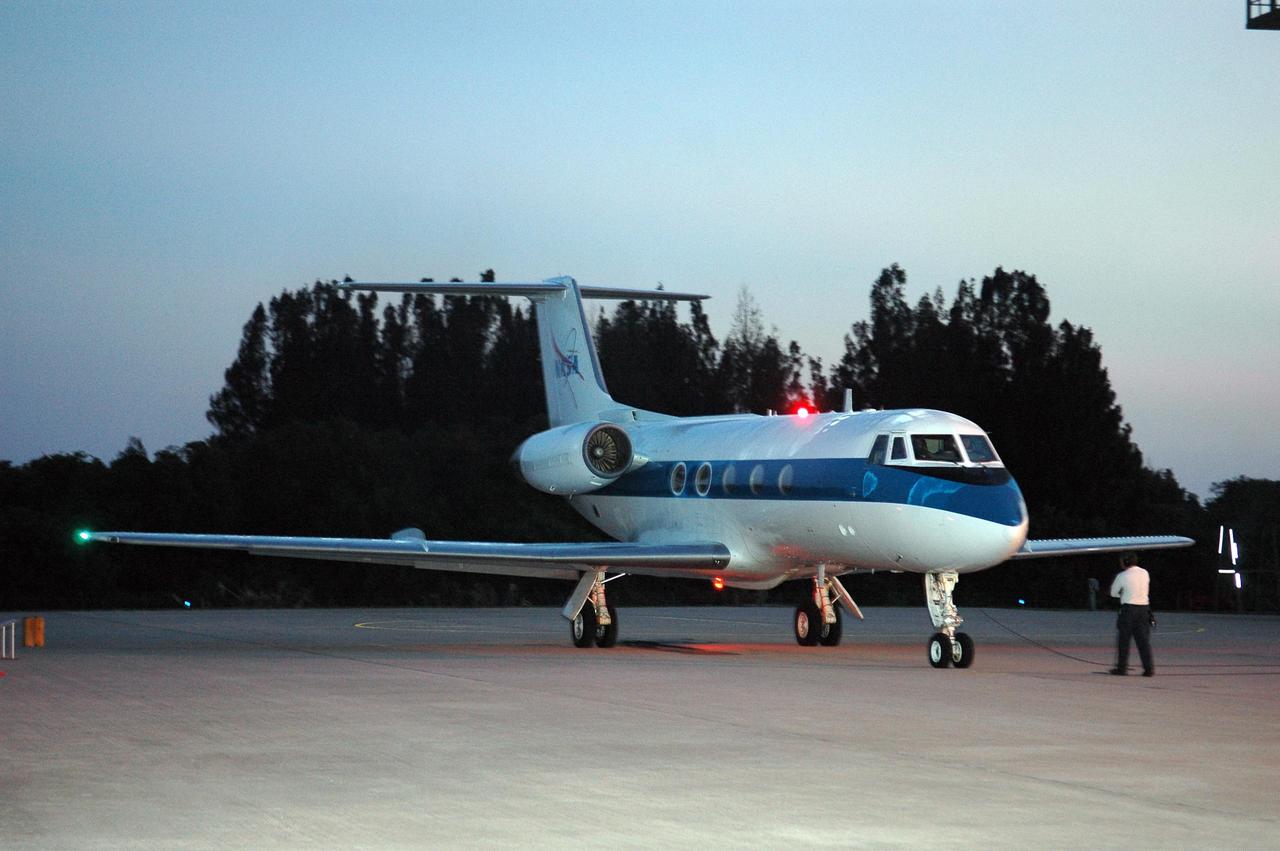
KENNEDY SPACE CENTER, FLA. - As dawn washes the sky in pink, STS-121 Commander Steven Lindsey is ready for his first flight in the Shuttle Training Aircraft today to practice landing a shuttle in preparation for the July 1 launch of Space Shuttle Discovery. The STA is a Grumman American Aviation-built Gulf Stream II jet that was modified to simulate an orbiter’s cockpit, motion and visual cues, and handling qualities. In flight, the STA duplicates the orbiter’s atmospheric descent trajectory from approximately 35,000 feet altitude to landing on a runway. Because the orbiter is unpowered during re-entry and landing, its high-speed glide must be perfectly executed the first time. Photo credit: NASA/Kim Shiflett
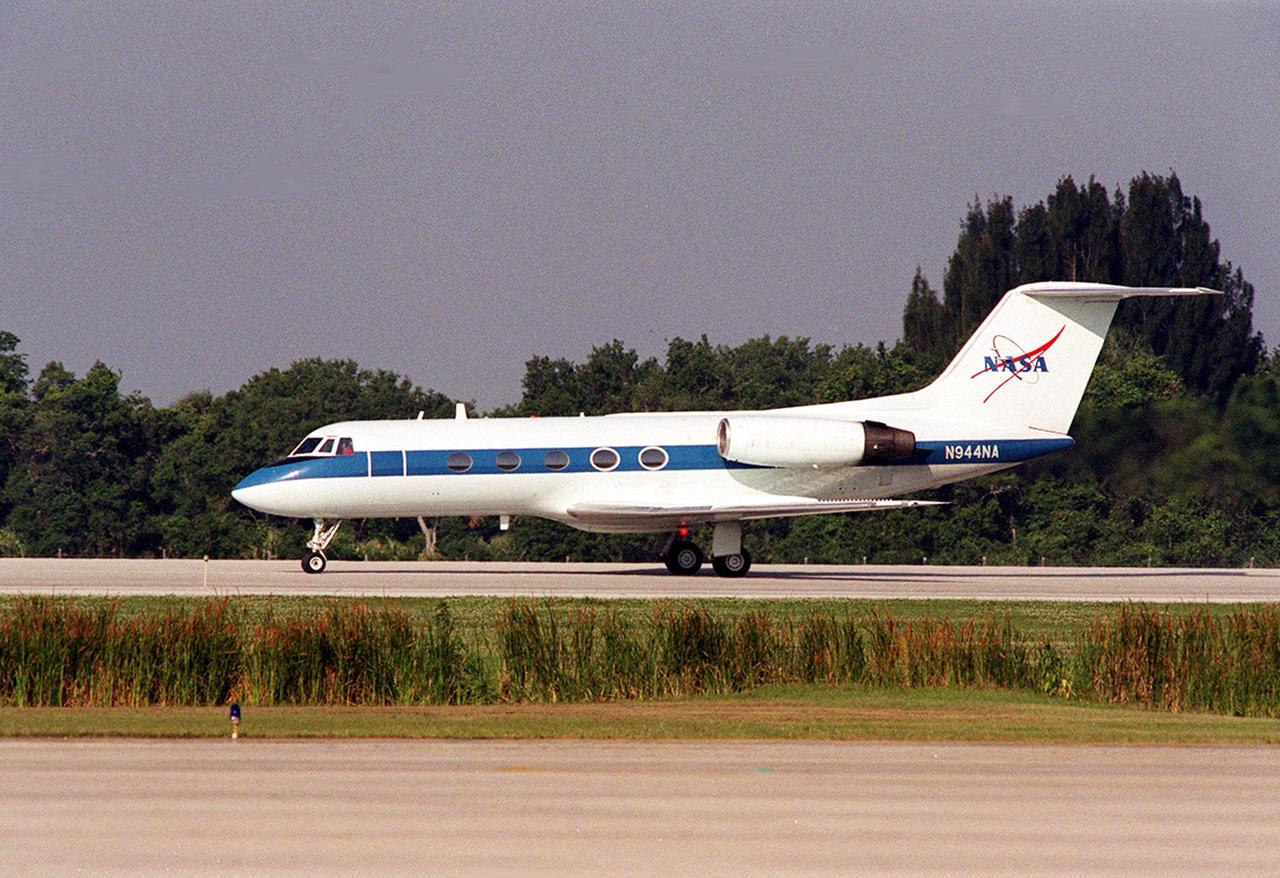
A Shuttle Training Aircraft (STA) taxis down the runway at KSC's Shuttle Landing Facility. The STA is a modified Grumman American Aviation-built Gulfstream II executive jet that was modified to simulate an orbiter's cockpit, motion and visual cues, and handling qualities. It is used by Shuttle flight crews to practice landing the orbiter. In flight, the STA duplicates the orbiter's atmospheric descent trajectory from approximately 35,000 feet altitude to landing on a runway. The orbiter differs in at least one major aspect from conventional aircraft; it is unpowered during re-entry and landing so its high-speed glide must be perfectly executed the first time there is no go-around capability. The orbiter touchdown speed is 213 to 226 miles (343 to 364 kilometers) per hour. There are two STAs, based in Houston
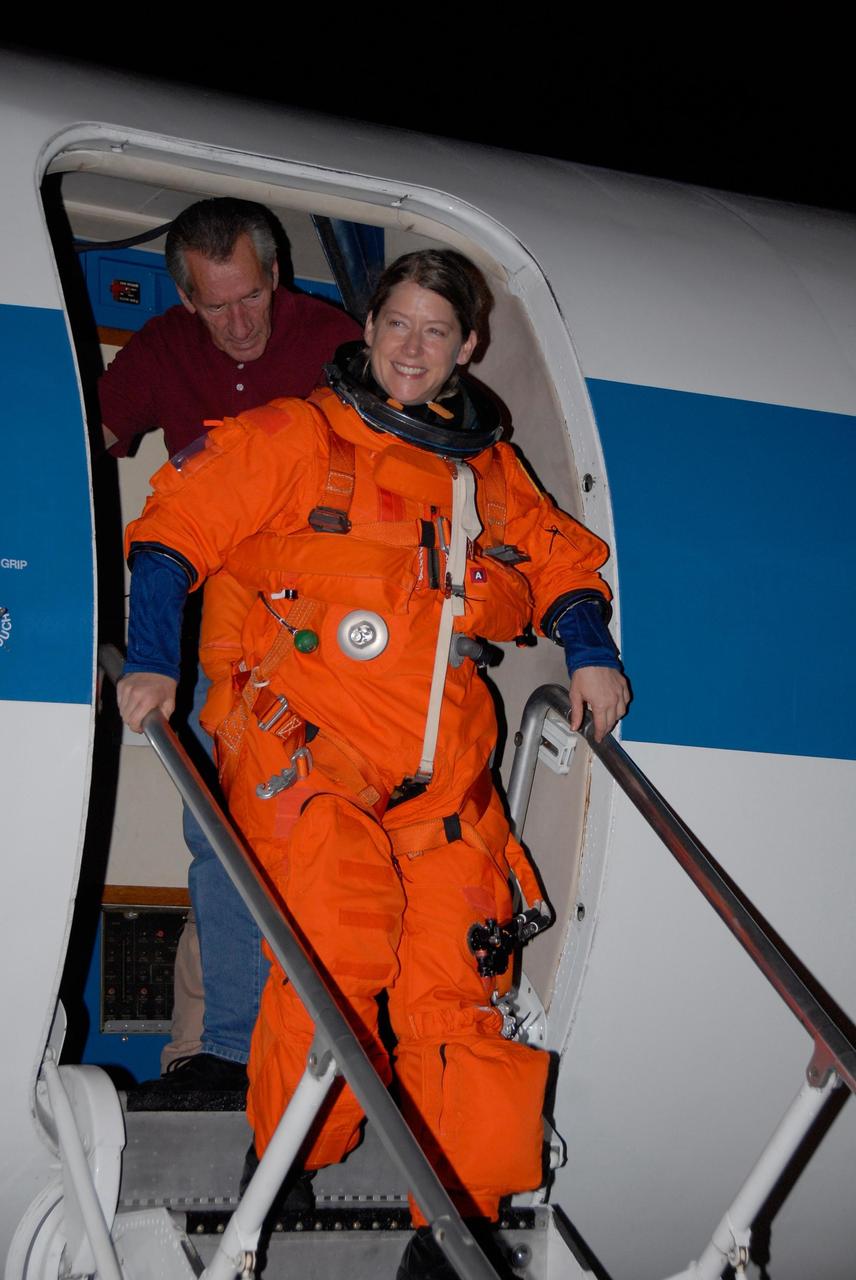
KENNEDY SPACE CENTER, FLA. -- STS-120 Commander Pamela Melroy disembarks from the shuttle training aircraft, or STA, after successful landing practice on NASA's Shuttle Landing Facility runway. A modified Grumman American Aviation-built Gulf Stream II jet, the STA simulates an orbiter's cockpit, motion and visual cues and handling qualities. In flight, the STA duplicates the orbiter's atmospheric descent trajectory from approximately 35,000 feet altitude to landing on a runway. Melroy and other crew members are at Kennedy Space Center to take part in the terminal countdown demonstration test, which also includes a simulated launch countdown. Mission STS-120 is targeted for Oct. 23. Photo credit: NASA/Kim Shiflett
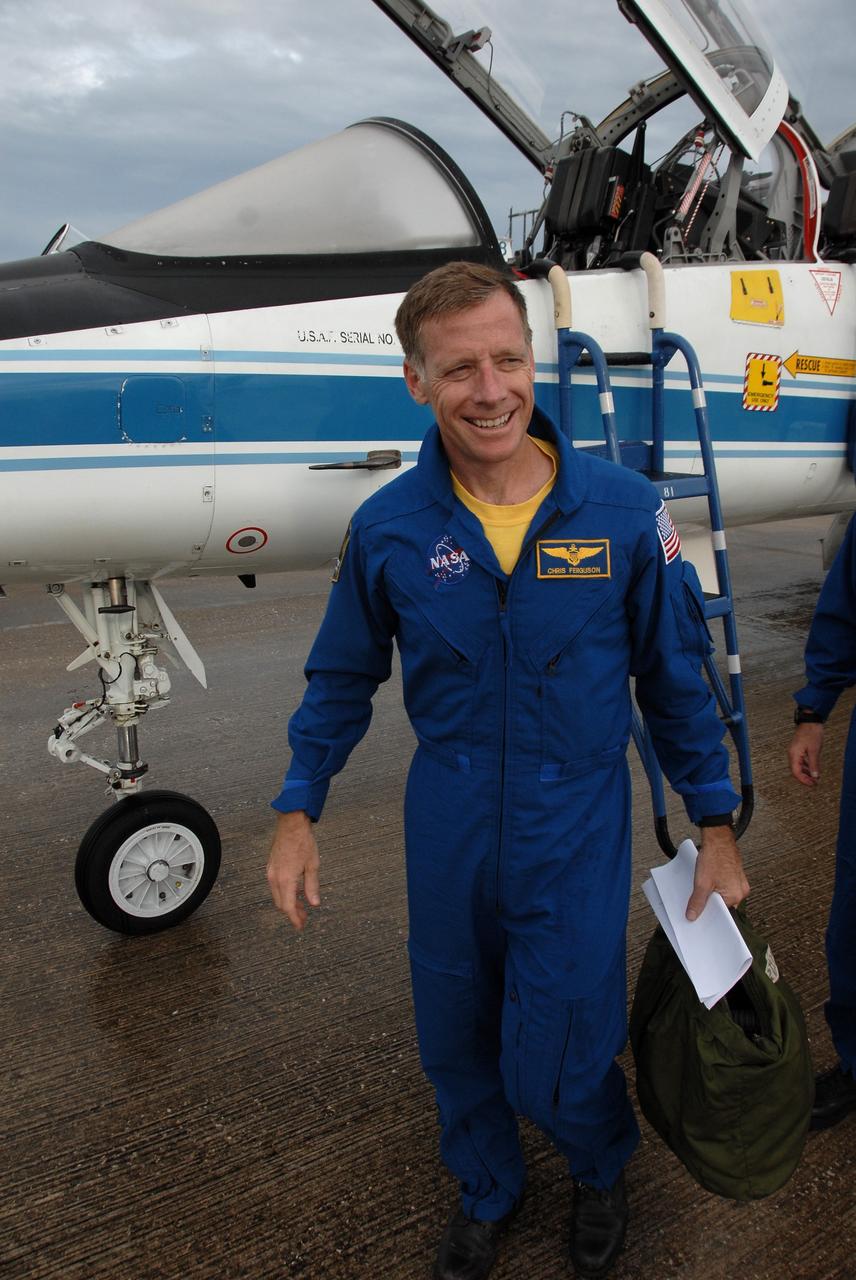
CAPE CANAVERAL, Fla. - Space shuttle Endeavour’s STS-126 commander, Chris Ferguson, leaves the runway of the Shuttle Landing Facility at NASA's Kennedy Space Center in Florida after arriving aboard a T-38 jet trainer (behind him). Ferguson will pilot the Shuttle Training Aircraft, or STA, to practice landing a shuttle on the runway of the Shuttle Landing Facility. The STA is a Grumman American Aviation-built Gulf Stream II jet that was modified to simulate a shuttle’s cockpit, motion and visual cues, and handling qualities. In flight, the aircraft duplicates the shuttle’s atmospheric descent trajectory from approximately 35,000 feet altitude to landing on a runway. Ferguson previously served as pilot on the STS-115 mission, which flew in September 2006. The STS-126 mission to the International Space Station is targeted to launch Nov. 16. Photo credit: NASA/Cory Huston
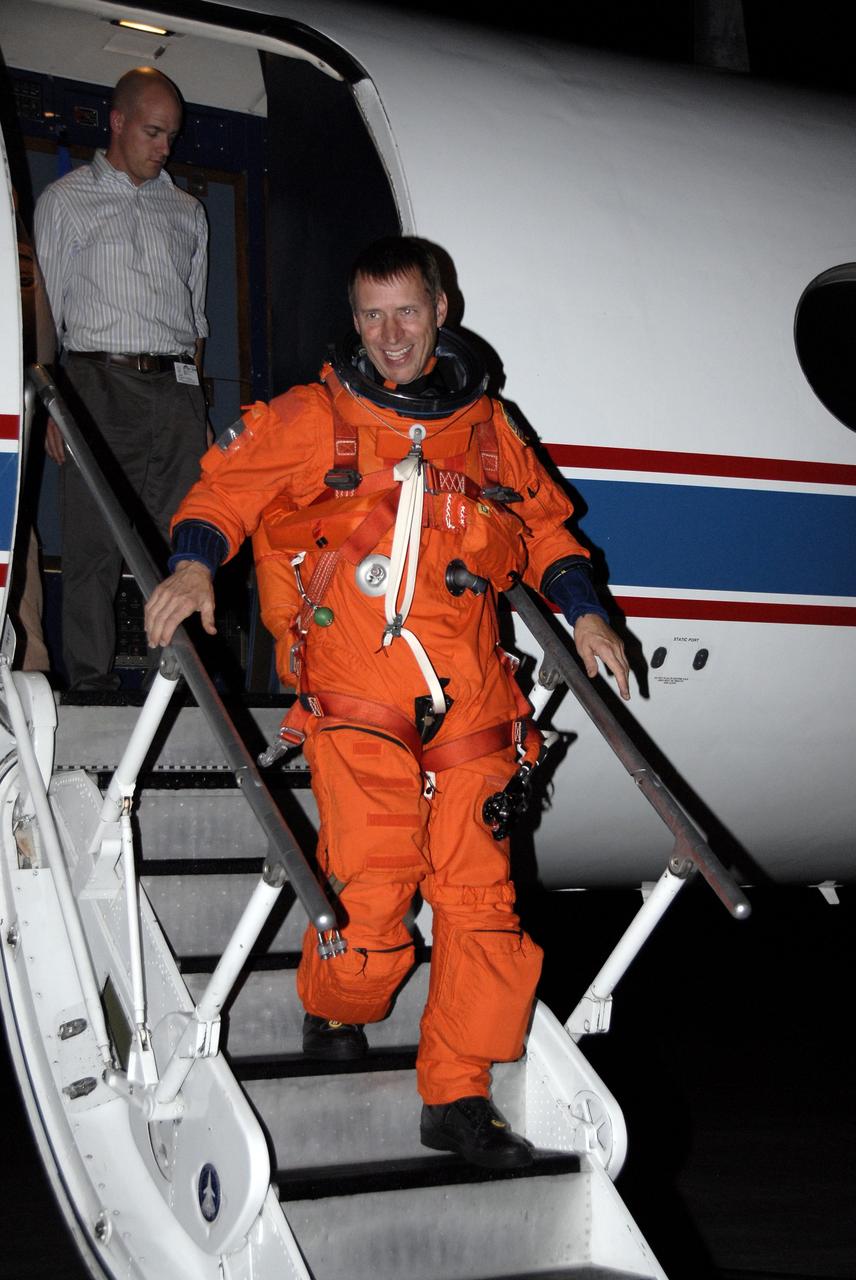
CAPE CANAVERAL, Fla. - STS-125 Pilot Gregory C. Johnson exits the shuttle training aircraft at the Shuttle Landing Facility at NASA's Kennedy Space Center in Florida after practicing shuttle landings in the aircraft. The STA is a Grumman American Aviation-built Gulf Stream II jet that was modified to simulate a shuttle’s cockpit, motion and visual cues, and handling qualities. In flight, the aircraft duplicates the shuttle’s atmospheric descent trajectory from approximately 35,000 feet altitude to landing on a runway. The practice is part of a terminal countdown demonstration test, or TCDT, to prepare for launch. TCDT provides astronauts and ground crews with an opportunity to participate in various simulated countdown activities, including equipment familiarization, emergency training and a simulated launch countdown. Space shuttle Atlantis’ STS-125 mission to service NASA’s Hubble Space Telescope is targeted to launch Oct. 10. Photo credit: NASA/Kim Shiflett
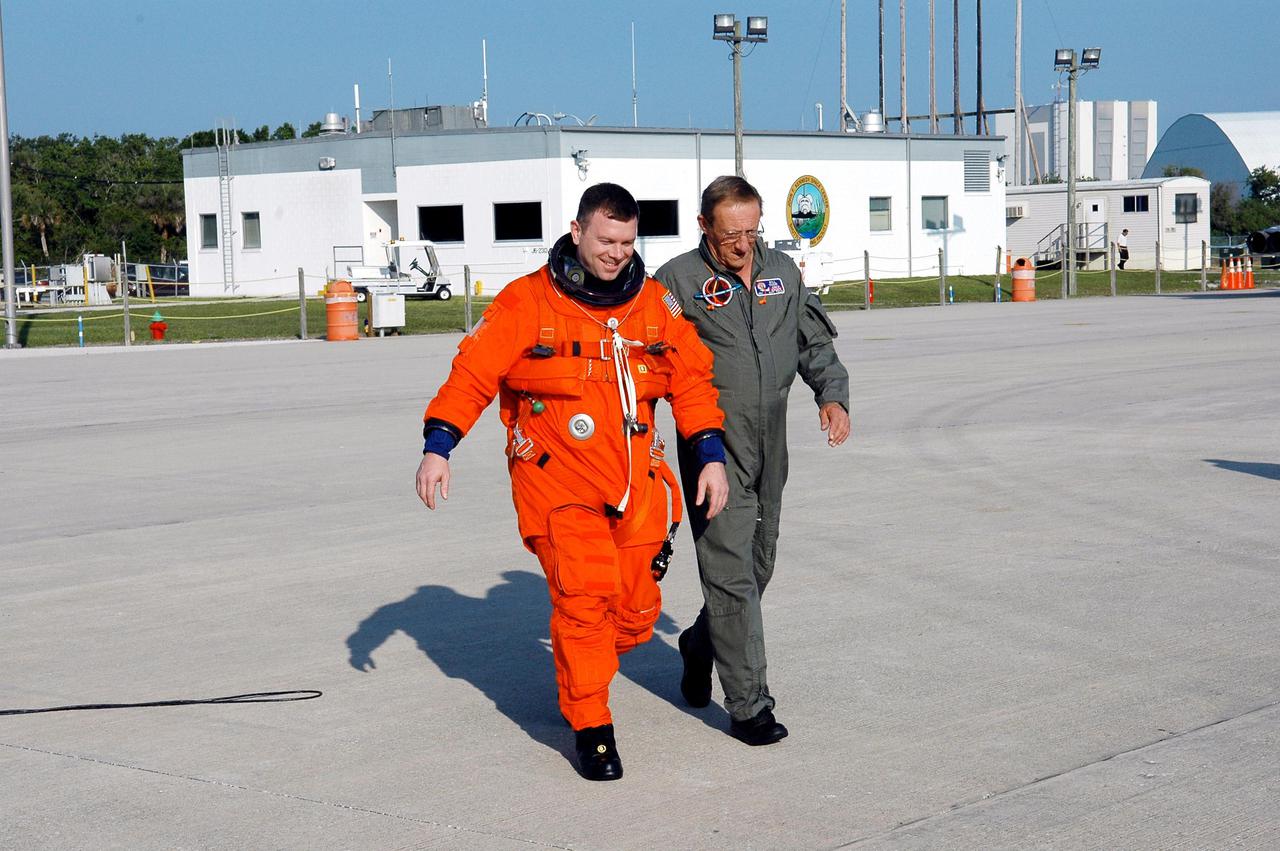
KENNEDY SPACE CENTER, FLA. - STS-114 Pilot James Kelly walks across the Shuttle Landing Facility to a Shuttle Training Aircraft (STA) to practice landing the orbiter. The STA is a modified Grumman American Aviation-built Gulfstream II executive jet that was modified to simulate an orbiter’s cockpit, motion and visual cues, and handling qualities. In flight, the STA duplicates the orbiter’s atmospheric descent trajectory from approximately 35,000 feet altitude to landing on a runway. The orbiter differs in at least one major aspect from conventional aircraft; it is unpowered during re-entry and landing so its high-speed glide must be perfectly executed the first time. There is no go-around capability. The orbiter touchdown speed is 213 to 226 miles per hour. There are two STAs, based in Houston. STS-114 is the first Return to Flight mission, scheduled to launch July 13 in a window that extends through July 31.
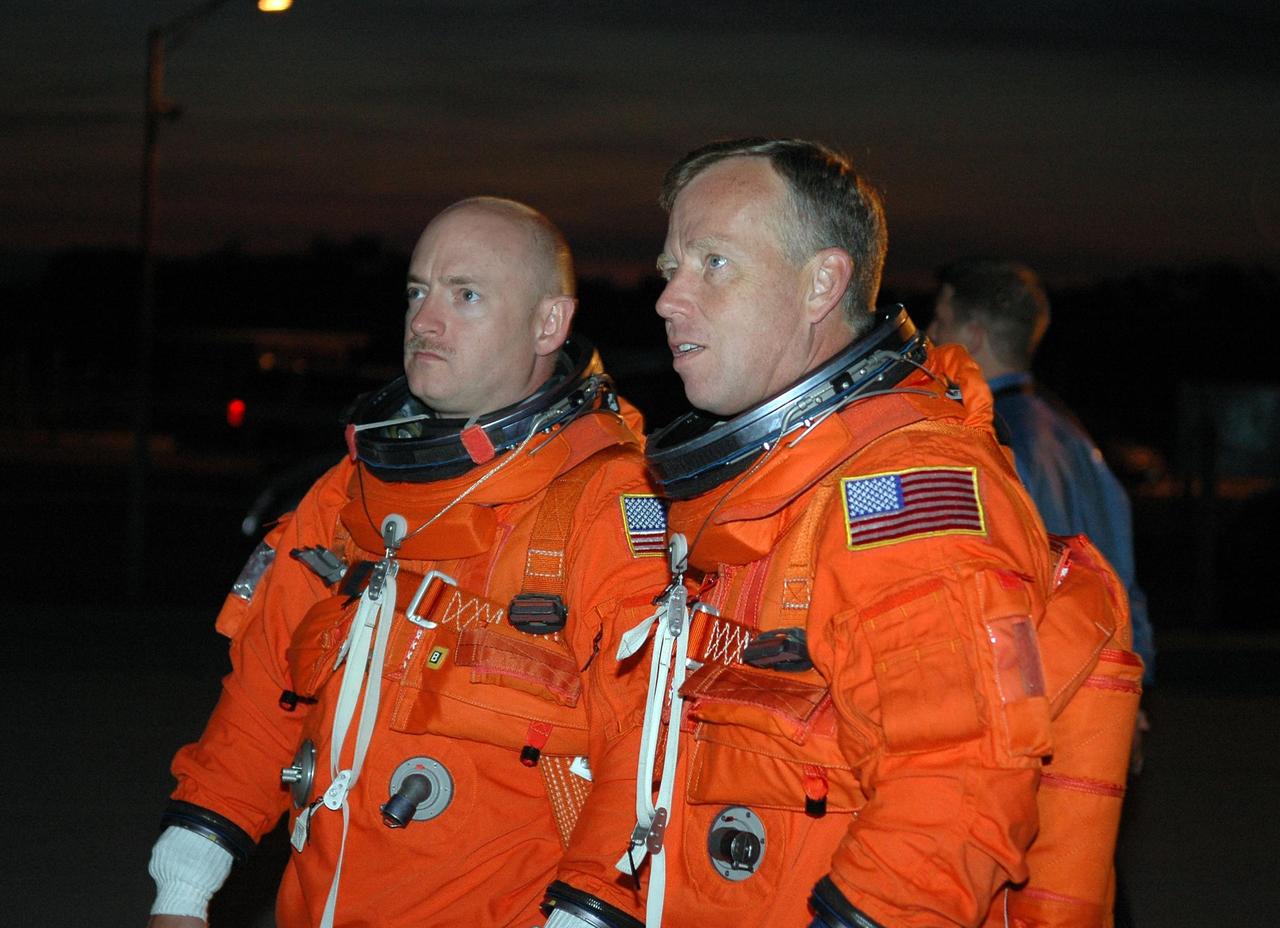
KENNEDY SPACE CENTER, FLA. - In the pre-dawn hours, STS-121 Pilot Mark Kelly (left) and Commander Steven Lindsey look at the Shuttle Training Aircraft (STA) they will be flying to practice landings in preparation for the July 1 launch of Space Shuttle Discovery. The STA is a Grumman American Aviation-built Gulf Stream II jet that was modified to simulate an orbiter’s cockpit, motion and visual cues, and handling qualities. In flight, the STA duplicates the orbiter’s atmospheric descent trajectory from approximately 35,000 feet altitude to landing on a runway. Because the orbiter is unpowered during re-entry and landing, its high-speed glide must be perfectly executed the first time. Photo credit: NASA/Kim Shiflett
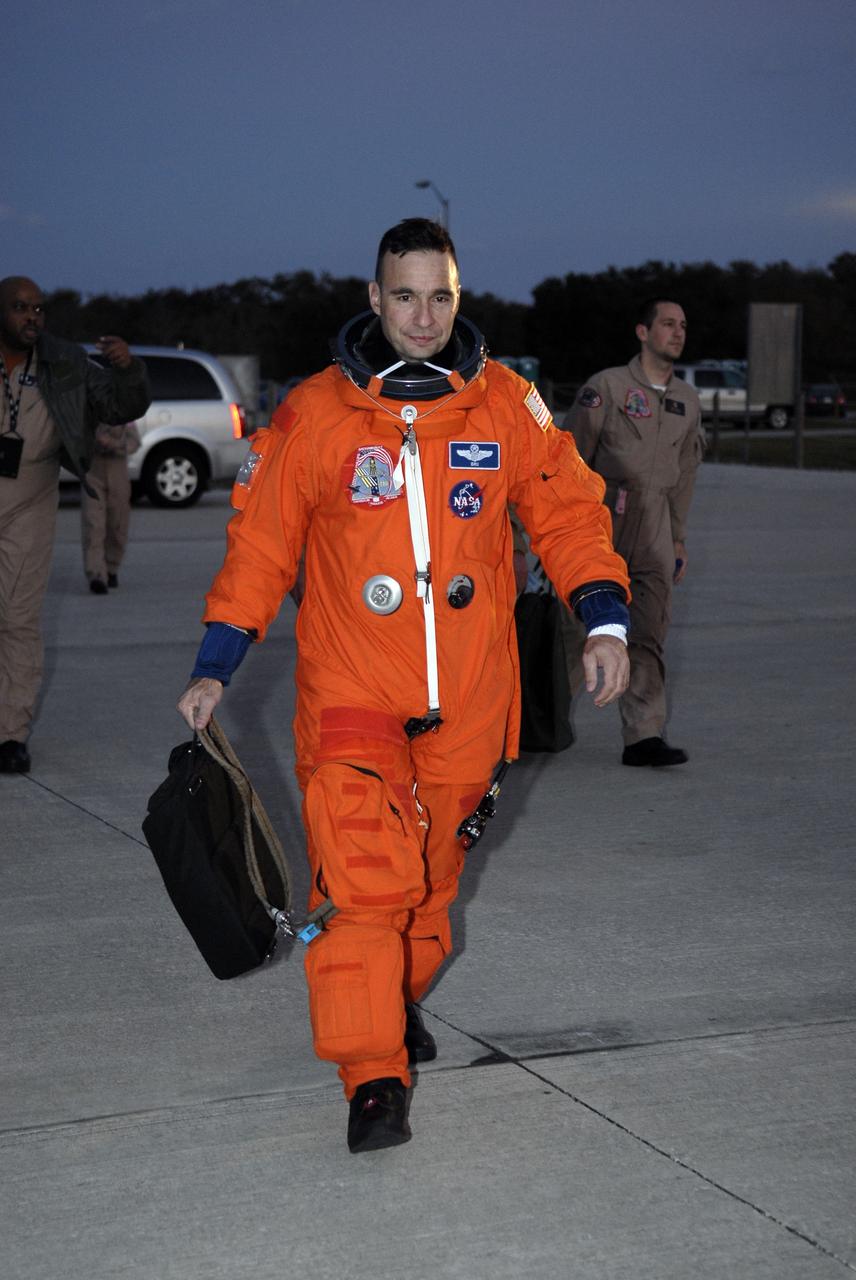
CAPE CANAVERAL, Fla. – STS-119 Commander Lee Archambault heads across the tarmac of the Shuttle Landing Facility at NASA's Kennedy Space Center in Florida to practice shuttle landings in the shuttle training aircraft, or STA. Archambault and the rest of the crew are at Kennedy to prepare for launch as part of the Terminal Countdown Demonstration Test activities. The TCDT includes equipment familiarization and a simulated launch countdown. The STA is a Grumman American Aviation-built Gulf Stream II jet that was modified to simulate a shuttle’s cockpit, motion and visual cues, and handling qualities. In flight, the aircraft duplicates the shuttle’s atmospheric descent trajectory from approximately 35,000 feet to landing. The crew of space shuttle Discovery is targeted to launch on the STS-119 mission Feb. 12. During Discovery's 14-day mission, the crew will install the S6 truss segment and solar arrays to the starboard side of the International Space Station, completing the station's truss, or backbone. Photo credit: NASA/Kim Shiflett
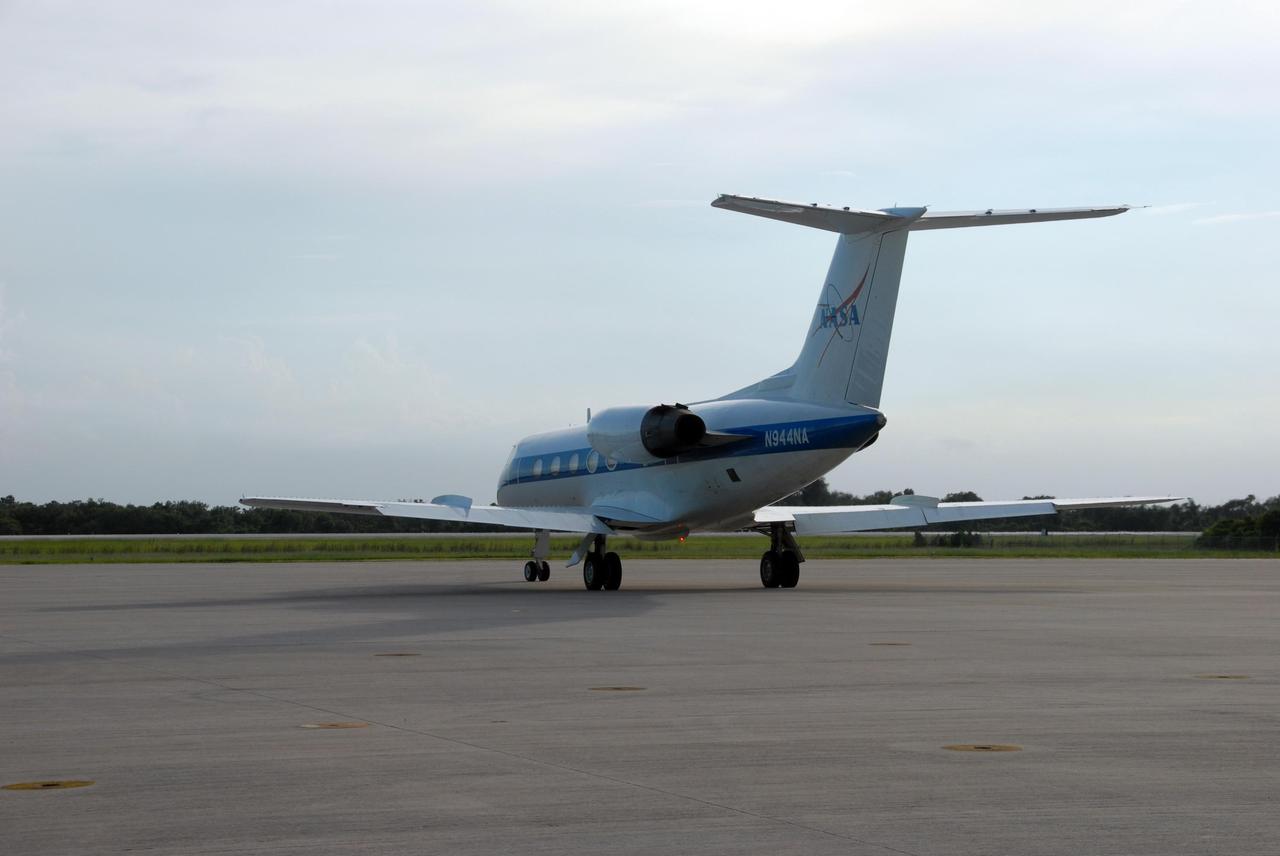
KENNEDY SPACE CENTER, Fla. -- One of two shuttle training aircraft, or STA, taxis out to the runway at the Shuttle Landing Facility. STS-118 Commander Scott Kelly and Pilot Charlie Hobaugh are each piloting one of the STAs for landing practice. The practice is part of Terminal Countdown Demonstration Test, or TCDT, activities that include a simulated launch countdown. The STA is a Grumman American Aviation-built Gulf Stream II jet that was modified to simulate an orbiter's cockpit, motion and visual cues, and handling qualities. In flight, the STA duplicates the orbiter's atmospheric descent trajectory from approximately 35,000 feet altitude to landing on a runway. The STS-118 mission is the 22nd flight to the International Space Station and is targeted for launch on Aug. 7. The mission payload aboard Space Shuttle Endeavour includes the S5 truss, a SPACEHAB module and external stowage platform 3. NASA/George Shelton