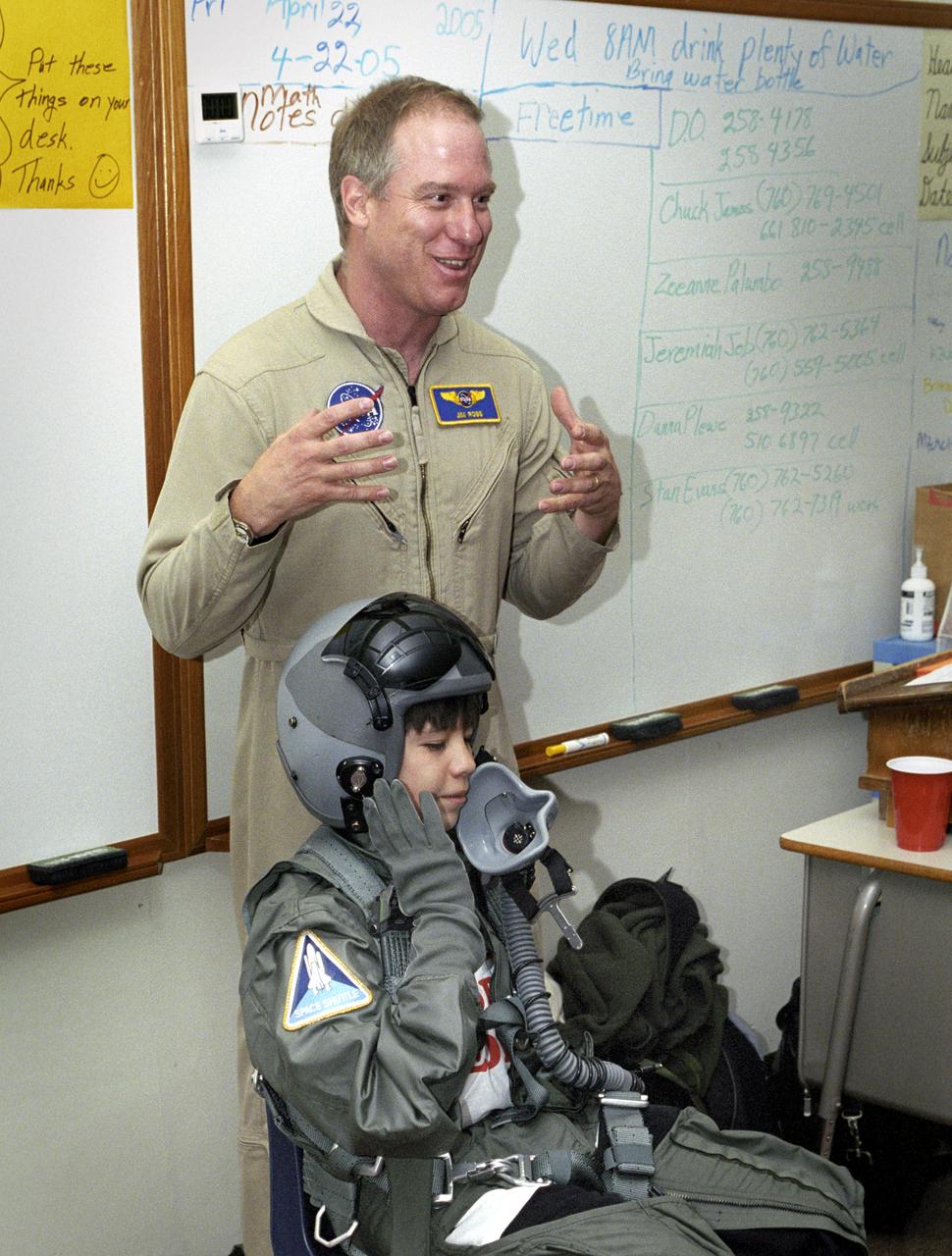
While NASA Dryden's Jim Ross outlined his job as an aerial photographer, sixth-grade student Leo Banuelos learned first-hand about the gear Ross wears in the cockpit.
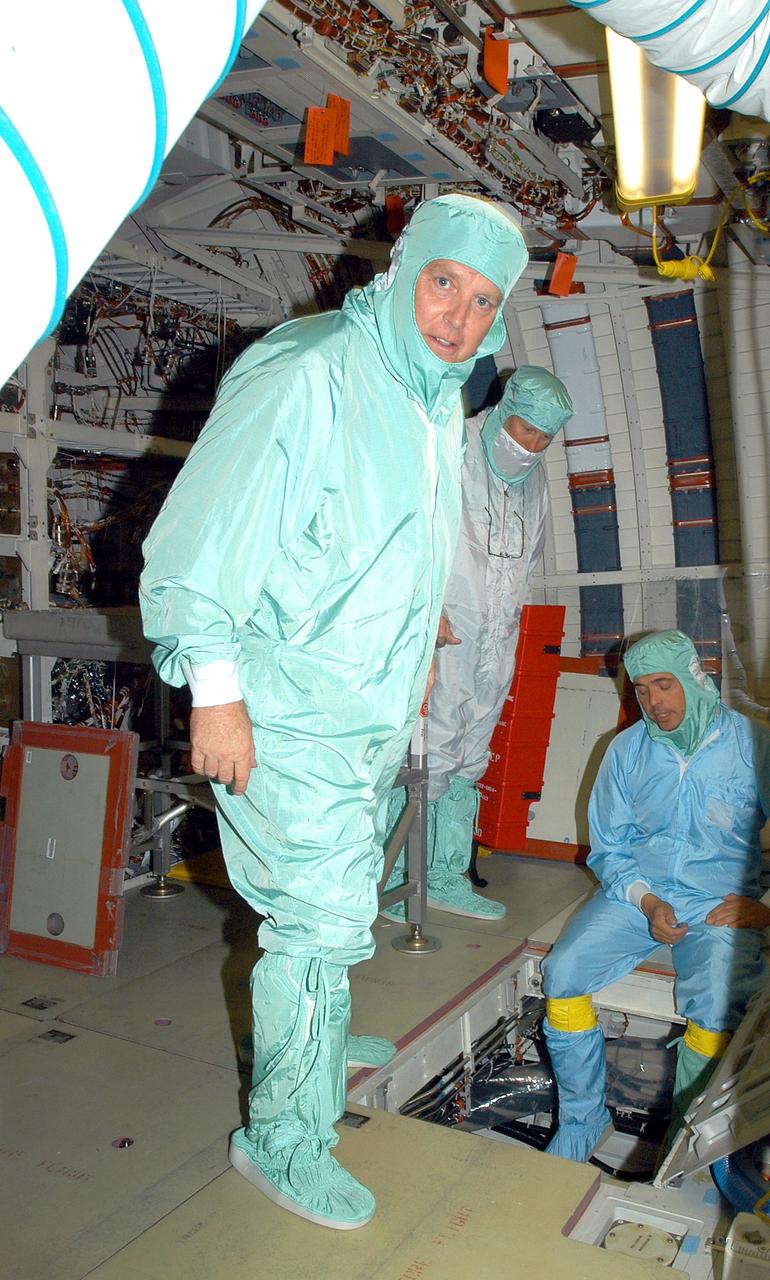
KENNEDY SPACE CENTER, FLA. - Inside Endeavour, in the Orbiter Processing Facility, Center Director Jim Kennedy (foreground) learns from workers how they do their work. Kennedy is taking an opportunity to learn first-hand what workers are doing to enable Return to Flight. Endeavour is in an Orbiter Major Modification period.
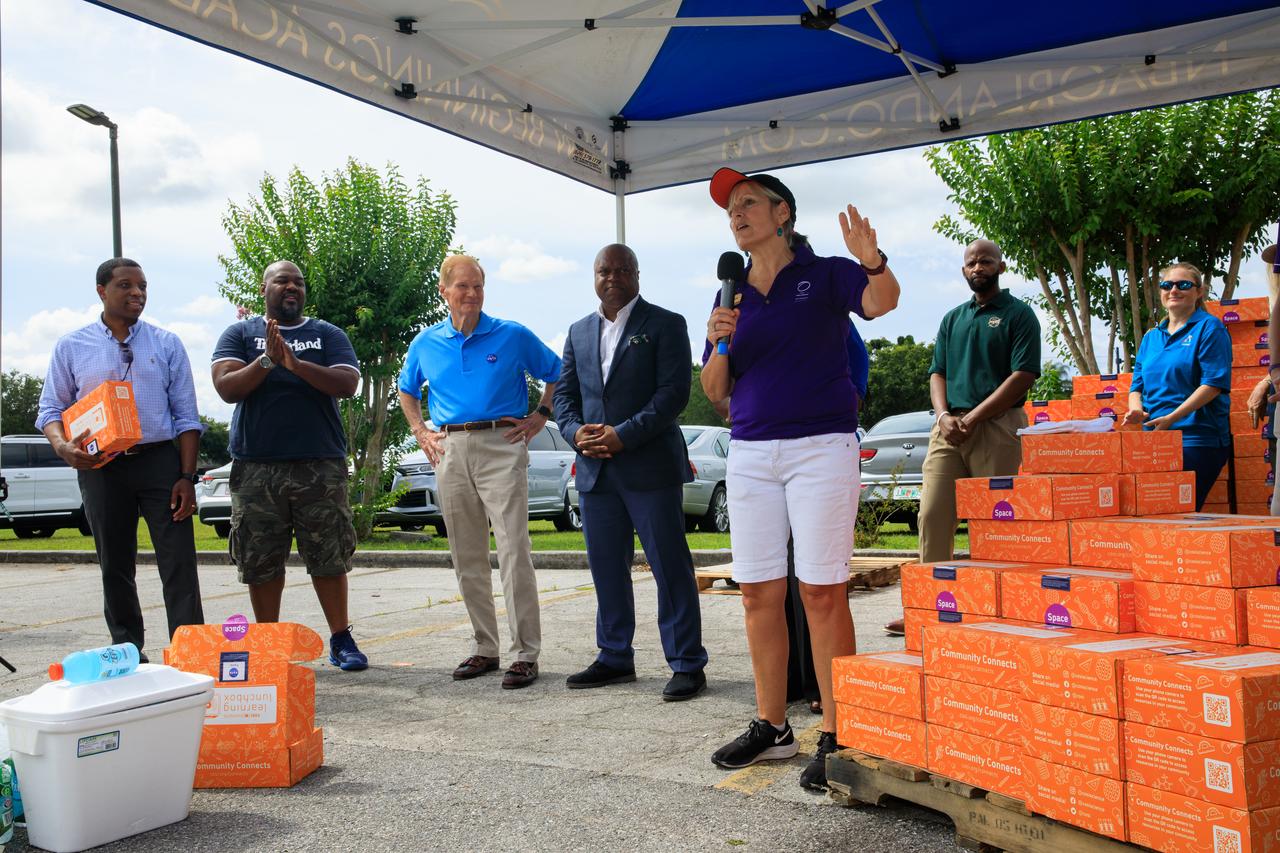
Dr. Frederic Bertley (center), president and CEO, Center of Science and Industry (COSI), speaks at New Beginnings Church – The Gathering Place in Orlando, Florida on Friday, June 3, as part of the launch of a new initiative to deliver food and hands-on science, technology, engineering, and math kits, called Learning Lunchboxes. NASA Administrator Bill Nelson and other agency representatives were on hand to hand out the lunchboxes, which are aimed at inspiring and educating youth and families about NASA’s upcoming Artemis missions, including landing the first woman and person of color on the Moon and helping prepare for human exploration of Mars. Along with COSI, NASA’s partners on the initiative include the Second Harvest Food Bank and the Orlando Science Center. The NASA Artemis Learning Lunchbox is made possible through NASA’s Teams Engaging Affiliated Museums and Informal Institutions (TEAM II) program. NASA Learning Lunchboxes provide five space-focused learning activities that showcase the diversity of STEM at NASA. COSI will distribute 30,000 NASA Learning Lunchboxes at local food banks across the country to help feed hungry lives and feed hungry minds. This innovative, community-based model will bring together other science centers and museums, afterschool providers, and community leaders to highlight the importance of STEM. This project also includes digital extension resources.
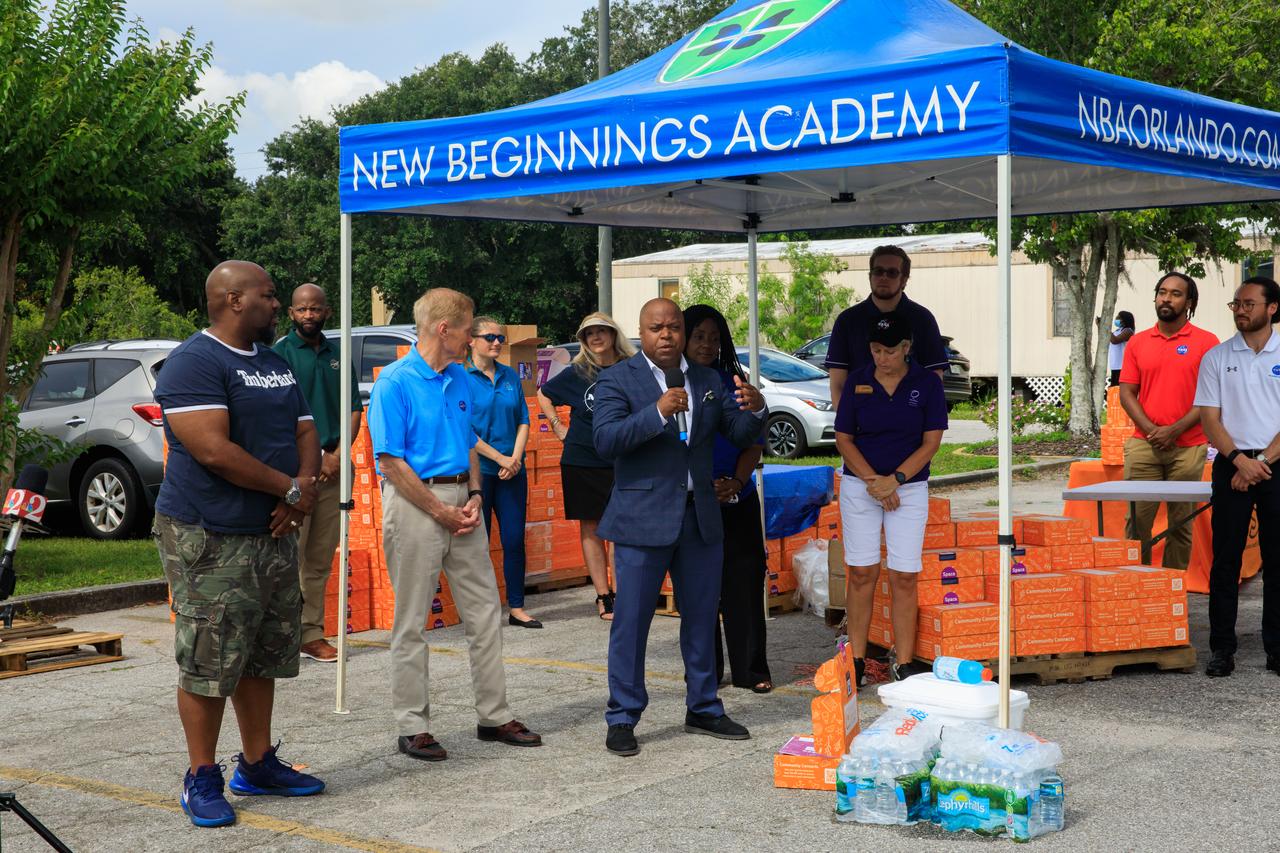
Dr. Frederic Bertley (center), president and CEO, Center of Science and Industry (COSI), speaks at New Beginnings Church – The Gathering Place in Orlando, Florida on Friday, June 3, as part of the launch of a new initiative to deliver food and hands-on science, technology, engineering, and math kits, called Learning Lunchboxes. NASA Administrator Bill Nelson and other agency representatives were on hand to hand out the lunchboxes, which are aimed at inspiring and educating youth and families about NASA’s upcoming Artemis missions, including landing the first woman and person of color on the Moon and helping prepare for human exploration of Mars. Along with COSI, NASA’s partners on the initiative include the Second Harvest Food Bank and the Orlando Science Center. The NASA Artemis Learning Lunchbox is made possible through NASA’s Teams Engaging Affiliated Museums and Informal Institutions (TEAM II) program. NASA Learning Lunchboxes provide five space-focused learning activities that showcase the diversity of STEM at NASA. COSI will distribute 30,000 NASA Learning Lunchboxes at local food banks across the country to help feed hungry lives and feed hungry minds. This innovative, community-based model will bring together other science centers and museums, afterschool providers, and community leaders to highlight the importance of STEM. This project also includes digital extension resources.
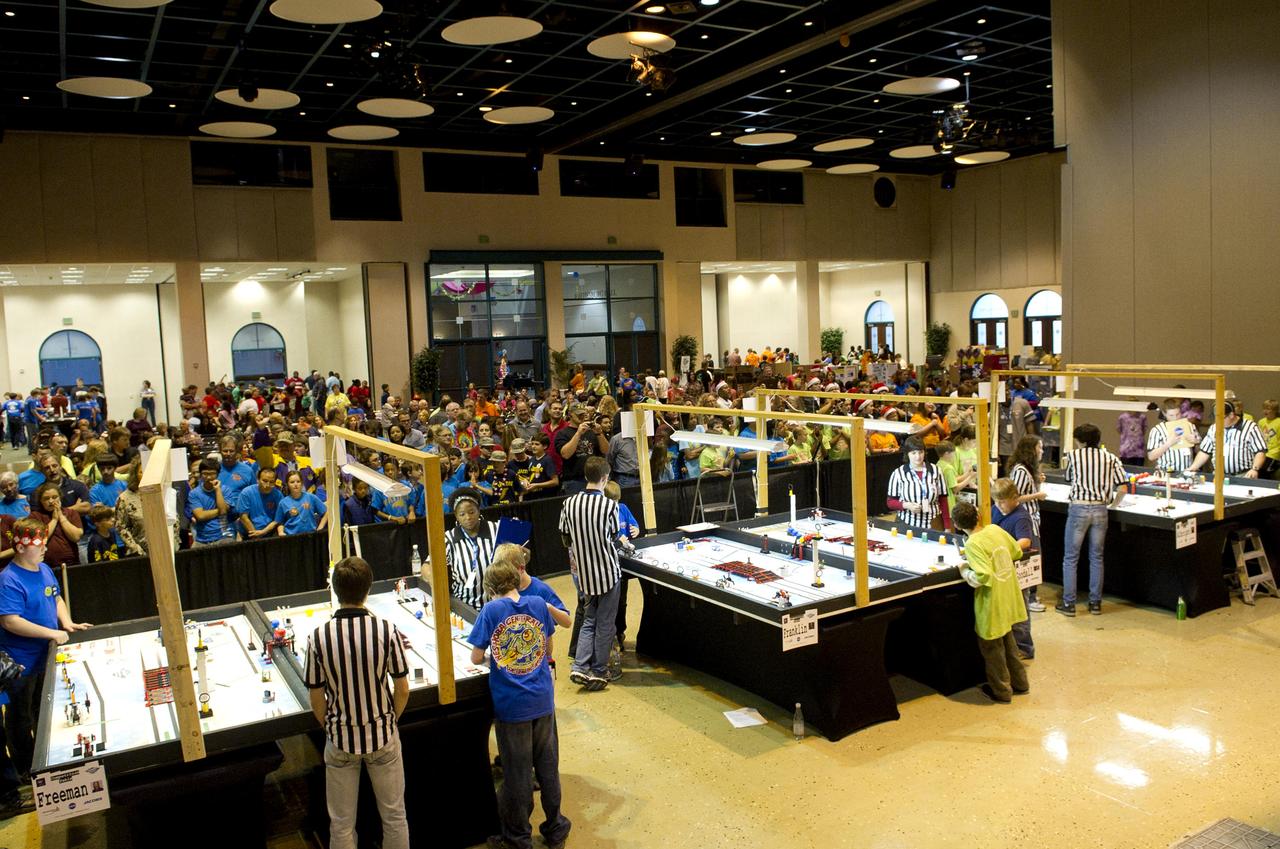
The 2012 FIRST LEGO League Mississippi Championship Tournament in Hattiesburg, Miss., on Dec. 1, drew 46 teams from across Mississippi. The focus of the annual competition celebrates science and technology through hands-on participation and learning.
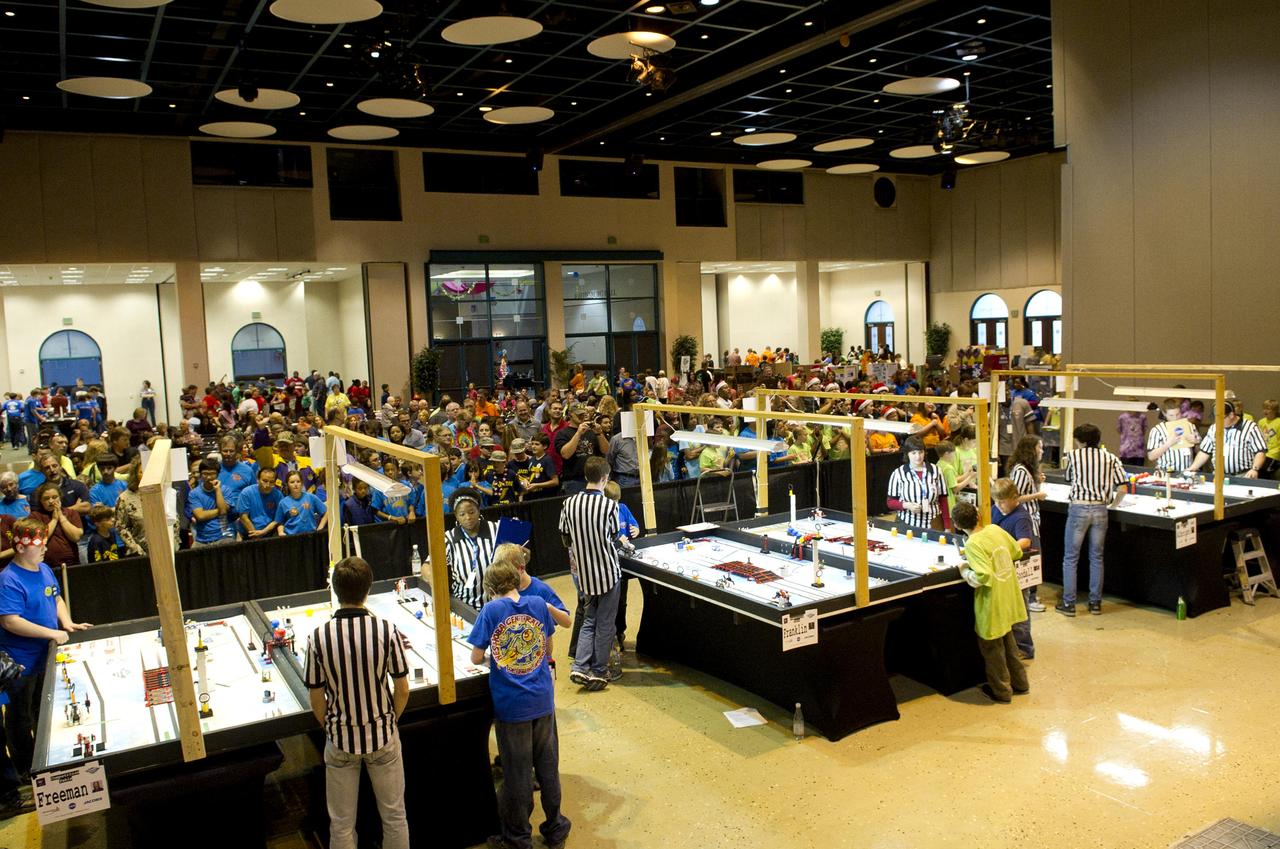
The 2012 FIRST LEGO League Mississippi Championship Tournament in Hattiesburg, Miss., on Dec. 1, drew 46 teams from across Mississippi. The focus of the annual competition celebrates science and technology through hands-on participation and learning.
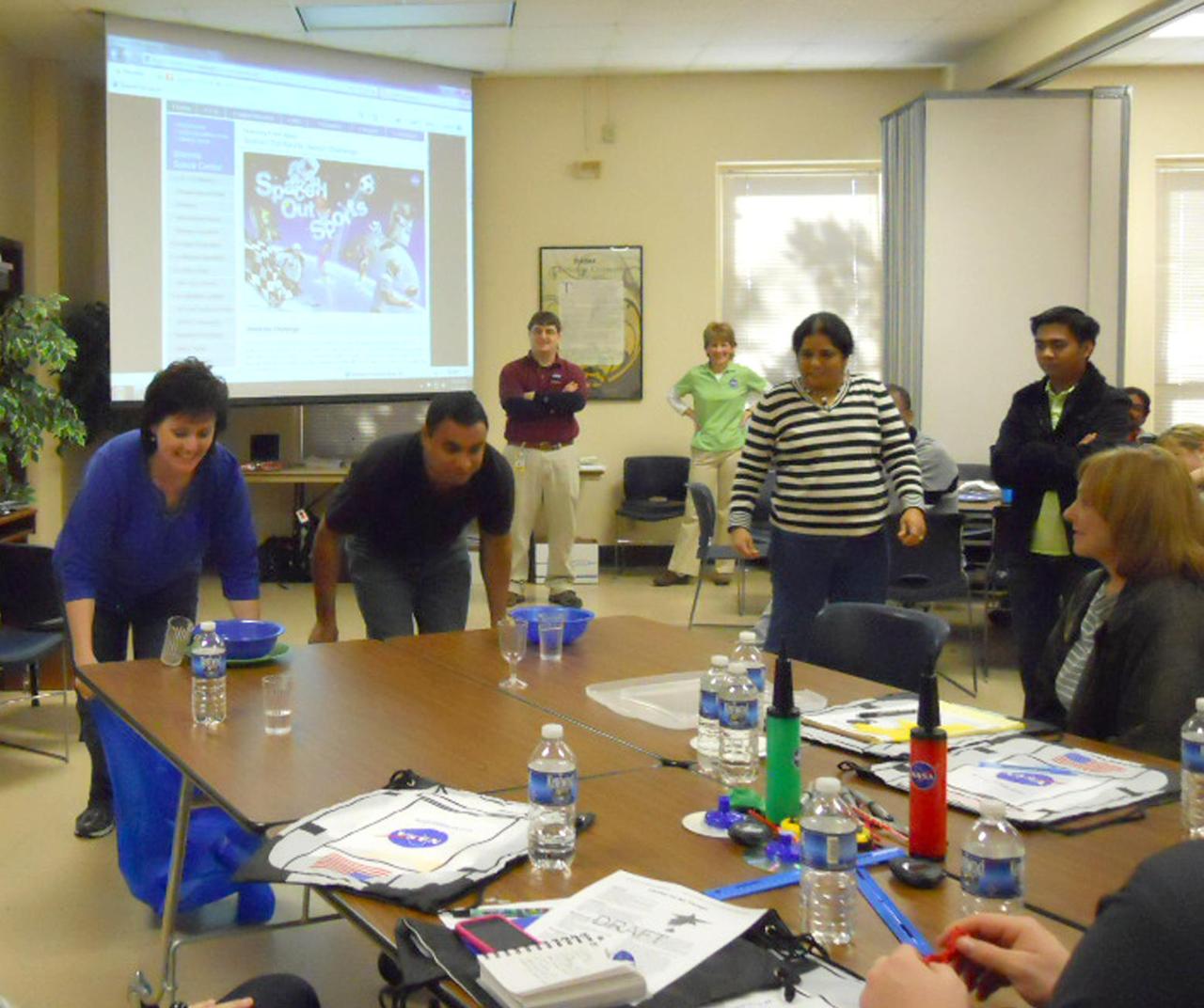
Middle school teachers from across Louisiana participate in a hands-on activity during a professional development workshop at Louisiana State University in Baton Rouge on Jan. 22, 2011. Fifty-five teachers participated in the workshop, which was hosted by the Stennis Education Office. During the workshop, Stennis specialists presented hands-on, problem-based learning and technology-based activities teachers can use in their classrooms to promote interest in areas of science, technology, engineering and mathematics.
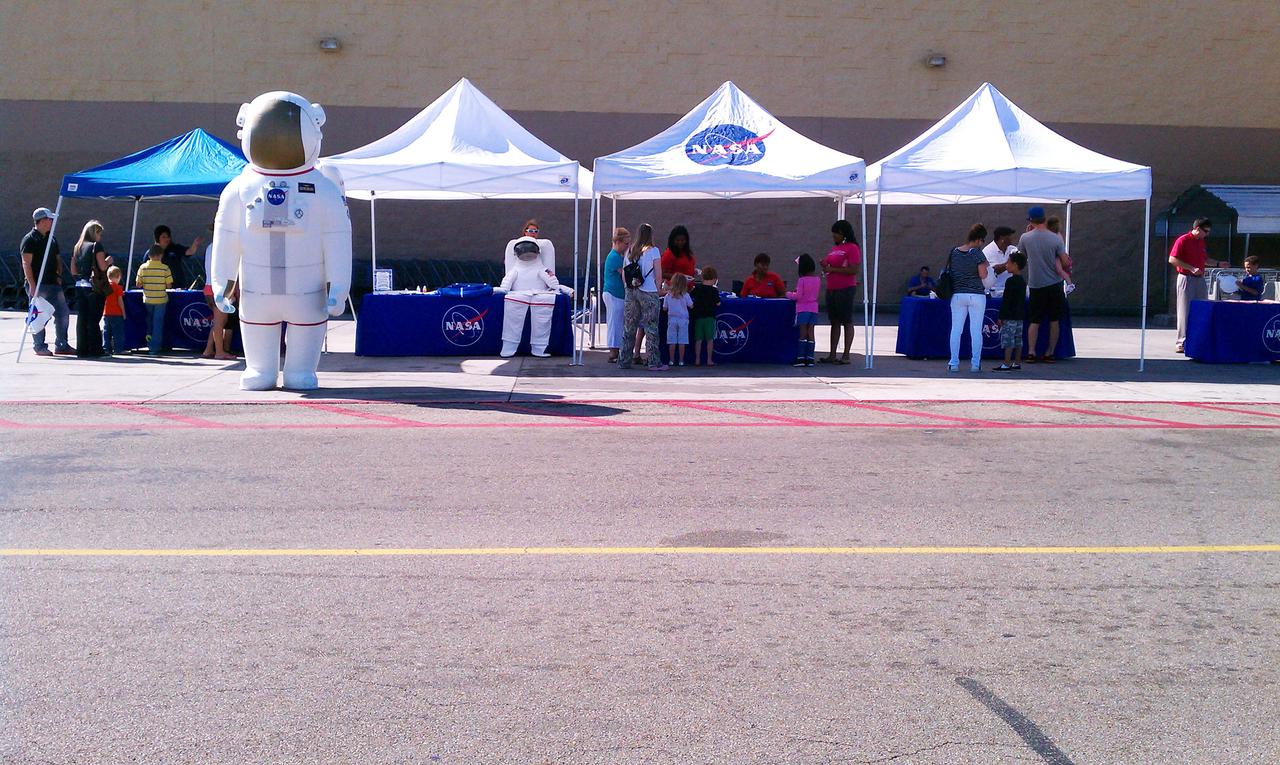
John C. Stennis Space Center hosted outreach activities at the Walmart Supercenter Store in Picayune on Nov. 3, focusing on helping area residents learn about NASA and Stennis' role in the future of space exploration. Visitors could learn about living and working in space, participate in hands-on educational activities, discover facts about the International Space Station, view images from NASA's latest rover mission to Mars and find out about rocket engine test work at Stennis Space Center.
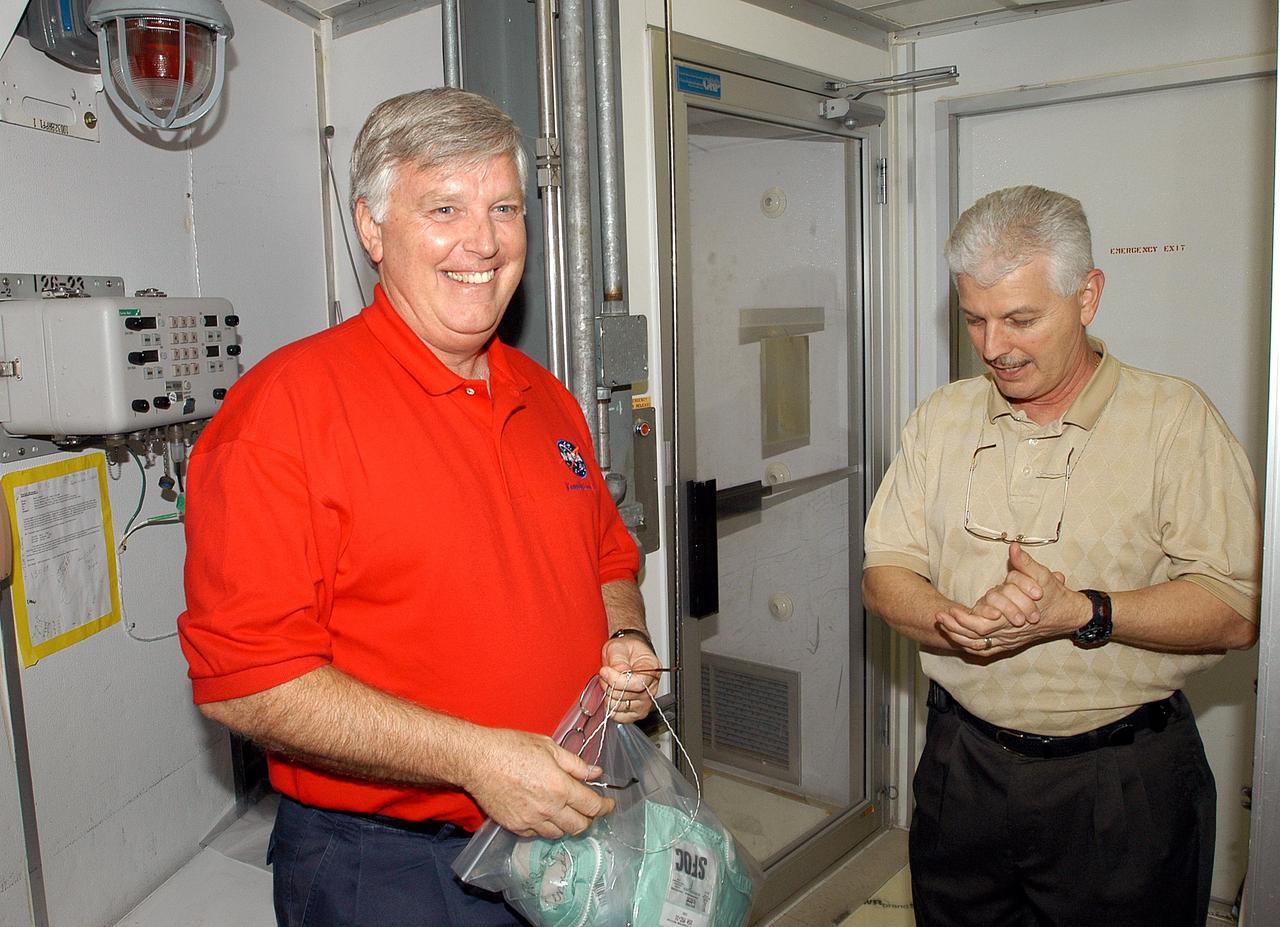
KENNEDY SPACE CENTER, FLA. - Center Director Jim Kennedy (left) takes an opportunity to learn first-hand what workers are doing to enable Return to Flight. Here he prepares to don a bunny suit in the Orbiter Processing Facility before entering the orbiter Endeavour, which is in an Orbiter Major Modification period.
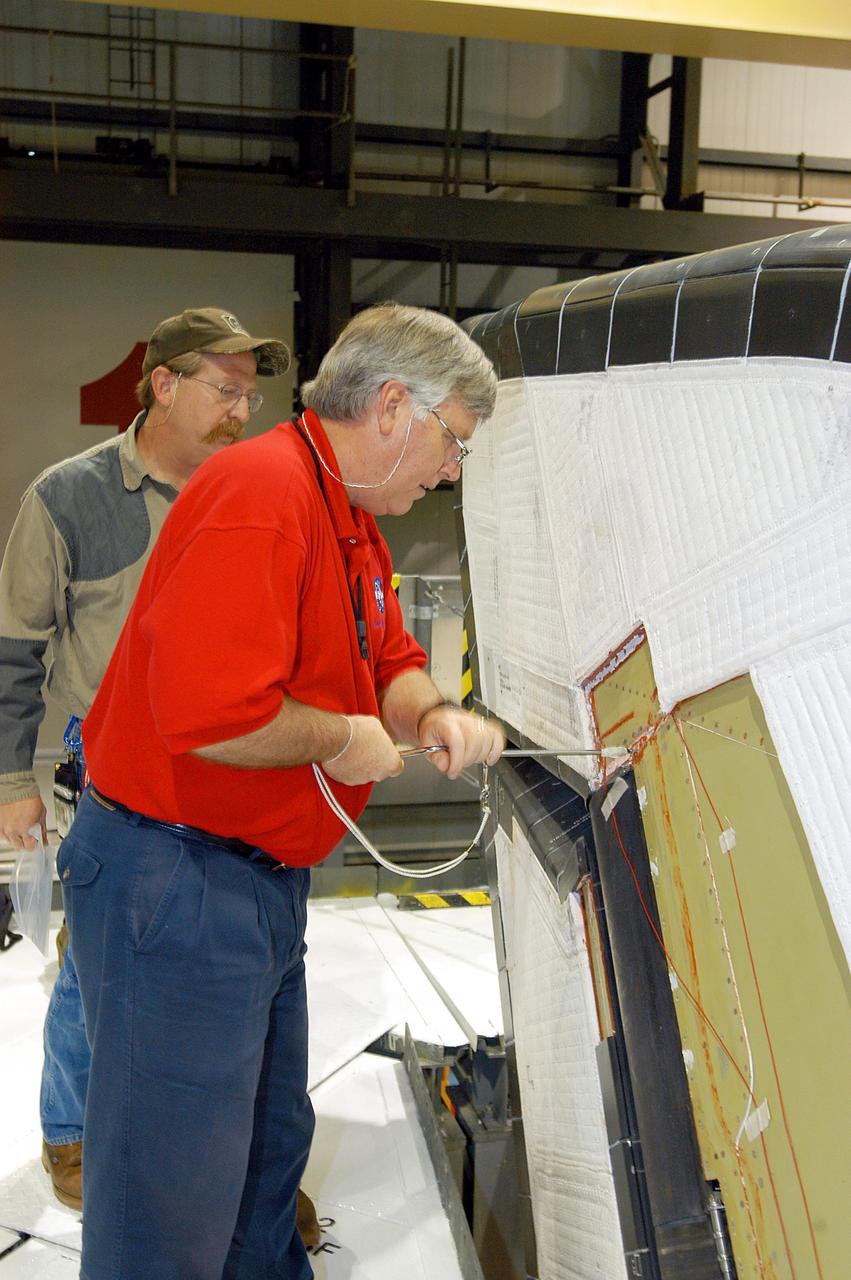
KENNEDY SPACE CENTER, FLA. - Under a worker’s watchful eyes in the Orbiter Processing Facility, Center Director Jim Kennedy (right) takes a turn on a screw on Endeavour. Kennedy is taking an opportunity to learn first-hand what workers are doing to enable Return to Flight. Endeavour is in an Orbiter Major Modification period.
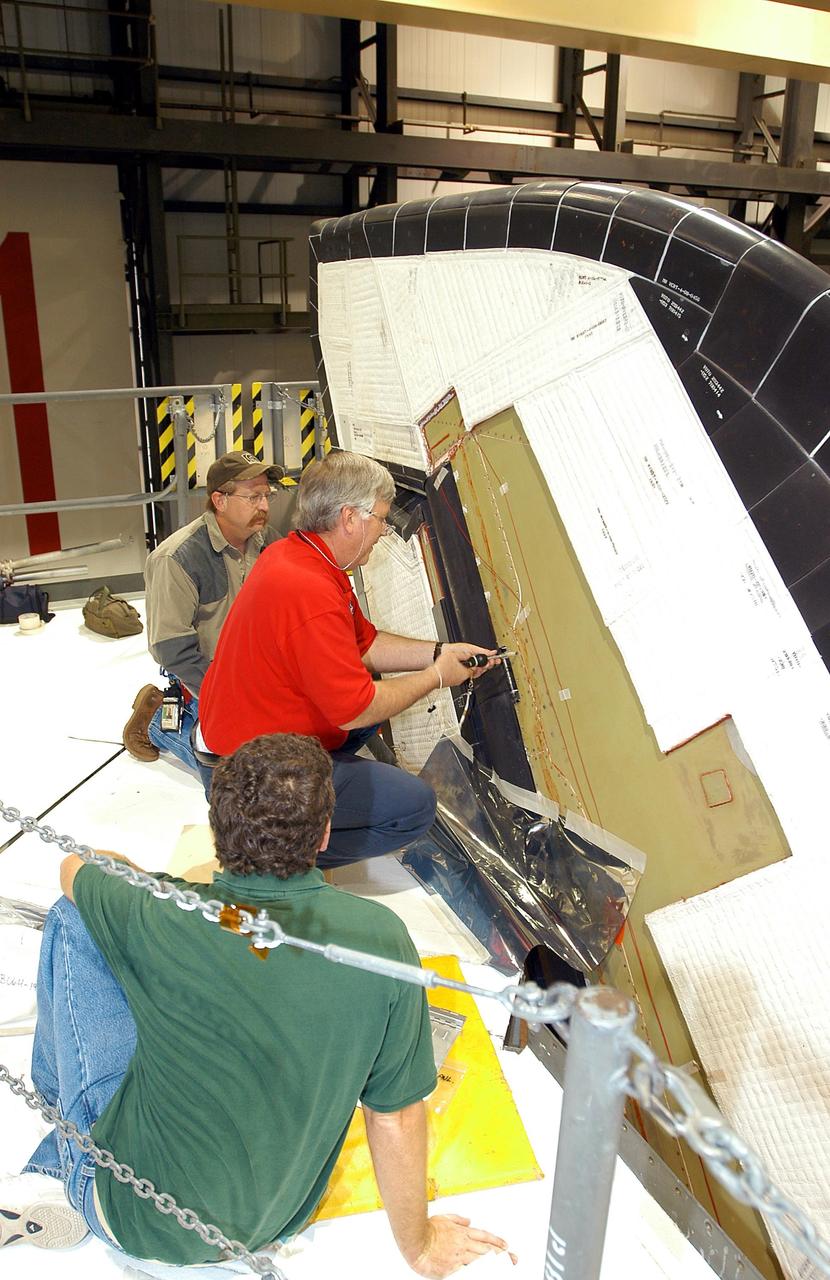
KENNEDY SPACE CENTER, FLA. - Under workers’ watchful eyes in the Orbiter Processing Facility, Center Director Jim Kennedy (center) takes a turn on a screw on Endeavour. Kennedy is taking an opportunity to learn first-hand what workers are doing to enable Return to Flight. Endeavour is in an Orbiter Major Modification period.
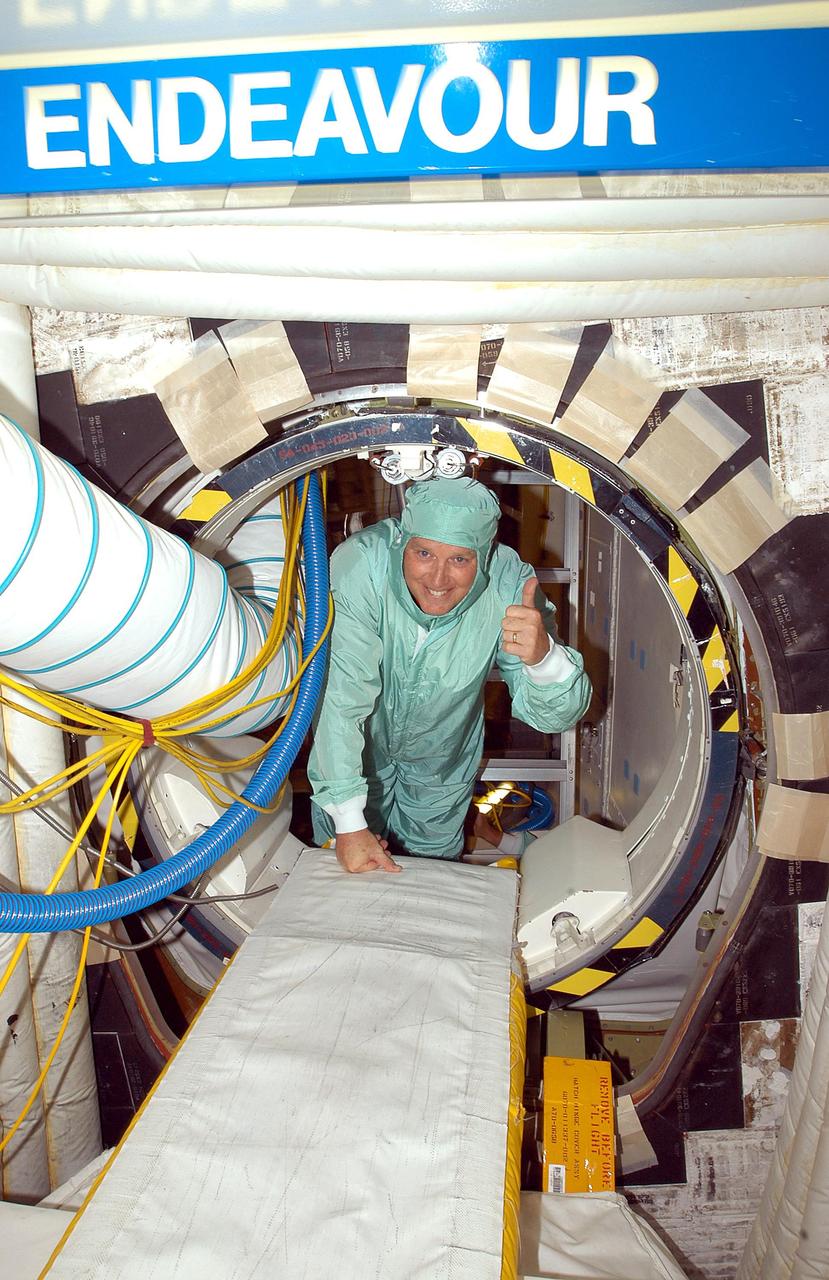
KENNEDY SPACE CENTER, FLA. - Center Director Jim Kennedy is ready to exit Endeavour after watching and talking to workers inside. Kennedy is taking an opportunity to learn first-hand what workers are doing to enable Return to Flight. Endeavour is in an Orbiter Major Modification period.
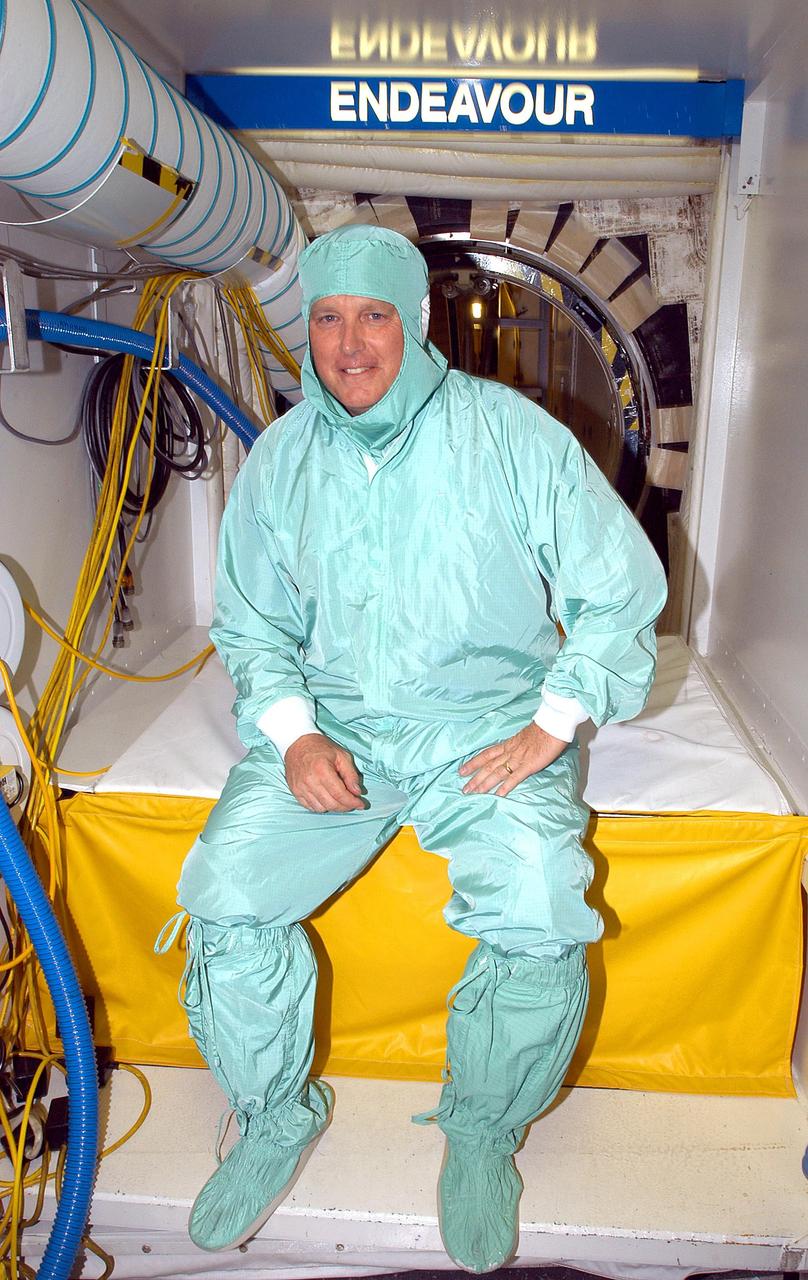
KENNEDY SPACE CENTER, FLA. - In the Orbiter Processing Facility, Center Director Jim Kennedy pauses in his “bunny suit” -- clean room apparel -- before entering the orbiter Endeavour, which is in an Orbiter Major Modification period. Kennedy is taking an opportunity to learn first-hand what workers are doing to enable Return to Flight.
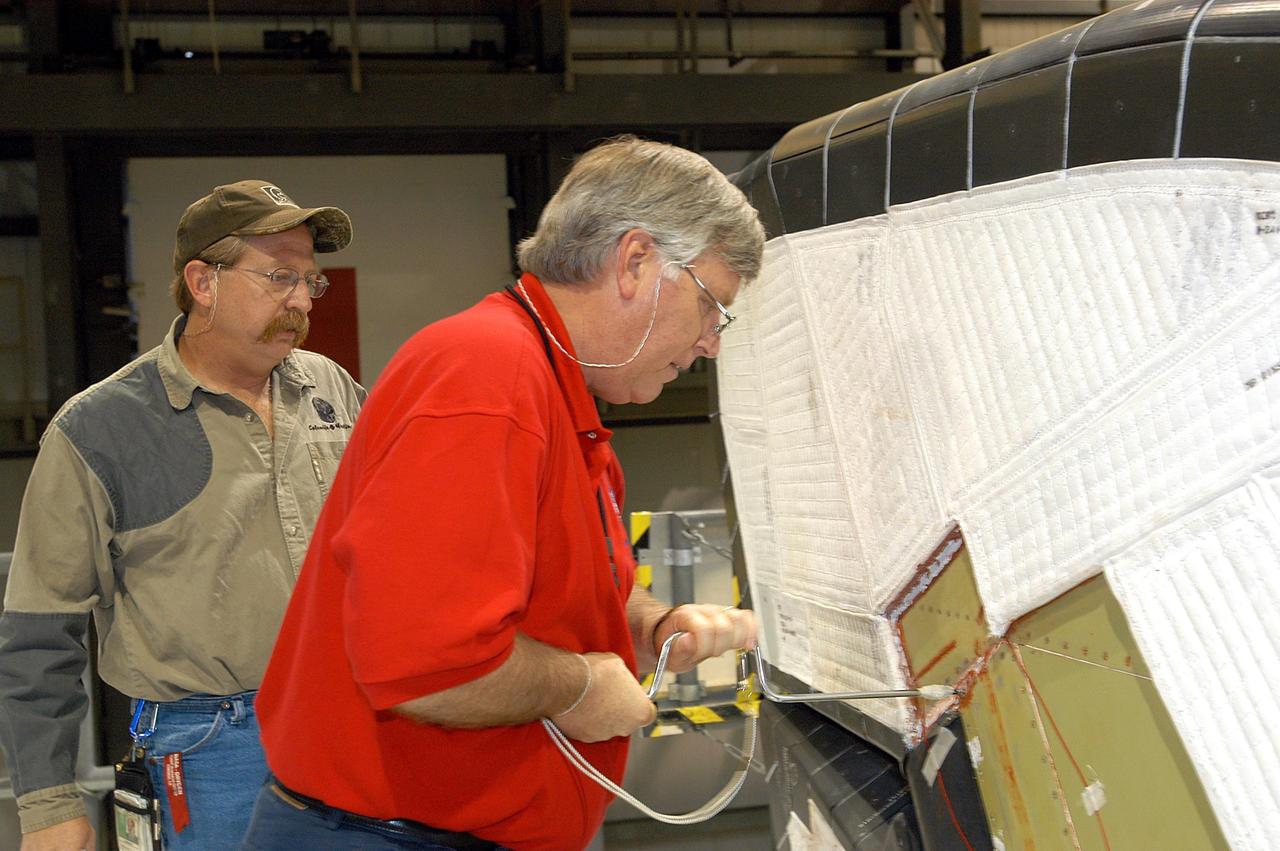
KENNEDY SPACE CENTER, FLA. - Under a worker’s watchful eyes in the Orbiter Processing Facility, Center Director Jim Kennedy (right) takes a turn on a screw on Endeavour. Kennedy is taking an opportunity to learn first-hand what workers are doing to enable Return to Flight. Endeavour is in an Orbiter Major Modification period.
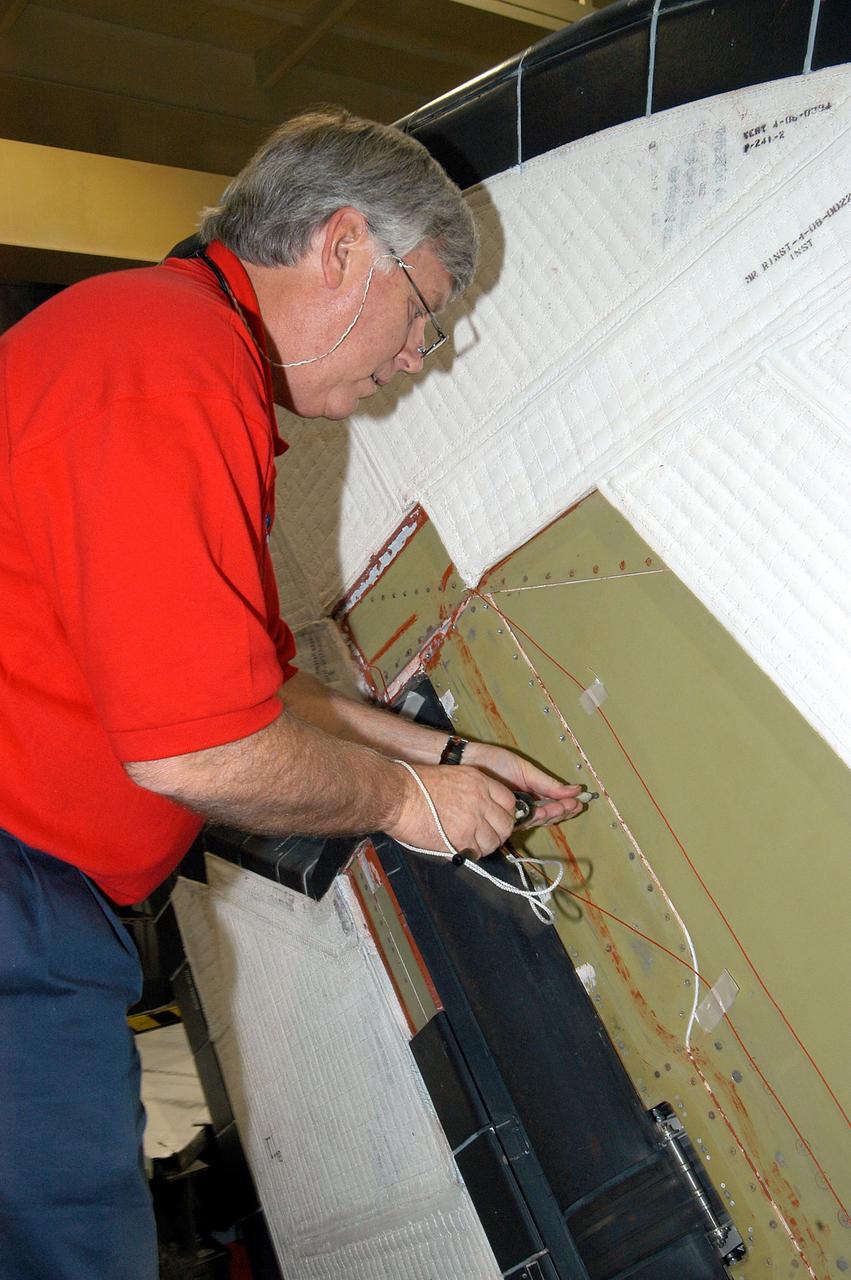
KENNEDY SPACE CENTER, FLA. - In the Orbiter Processing Facility, Center Director Jim Kennedy takes a turn on a screw on Endeavour. Kennedy is taking an opportunity to learn first-hand what workers are doing to enable Return to Flight. Endeavour is in an Orbiter Major Modification period.
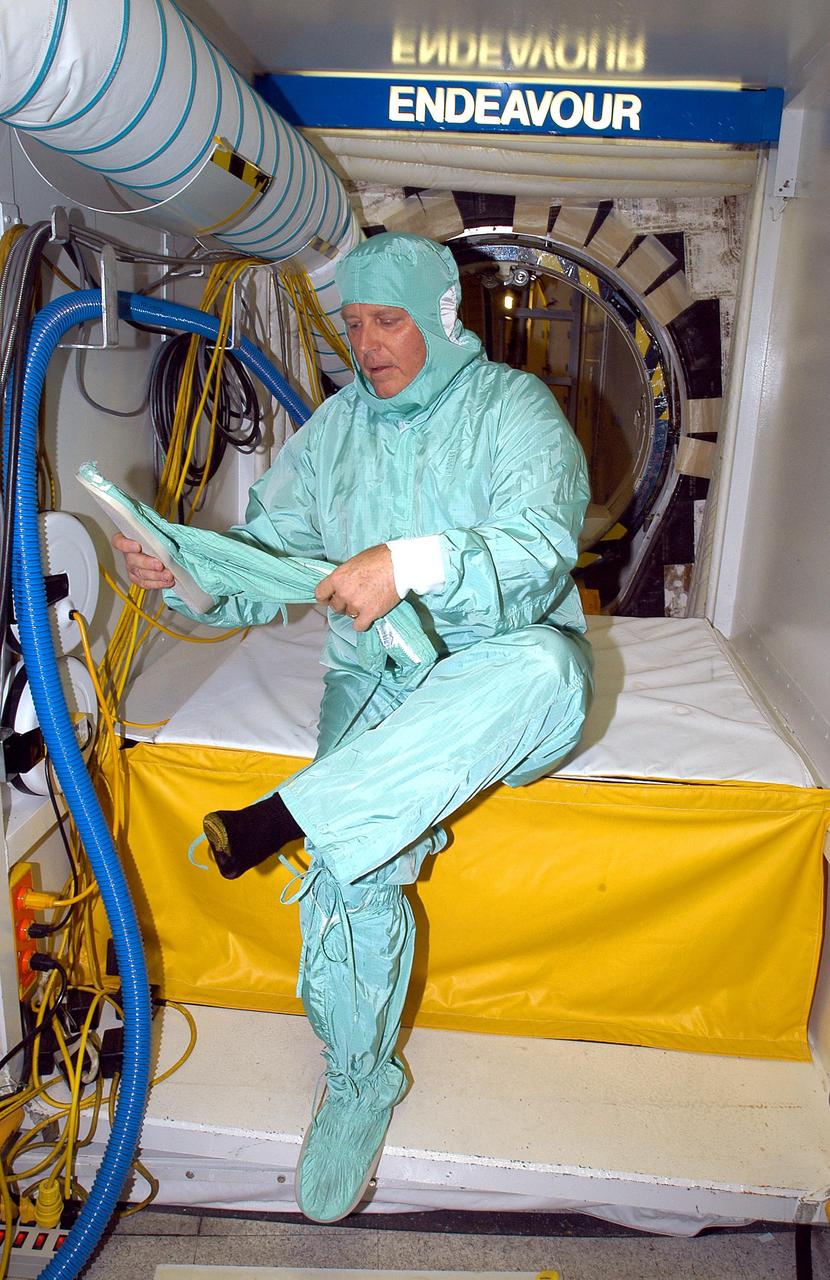
KENNEDY SPACE CENTER, FLA. - In the Orbiter Processing Facility, Center Director Jim Kennedy is ready to don the final part of the “bunny suit” before entering the orbiter Endeavour, which is in an Orbiter Major Modification period. Kennedy is taking an opportunity to learn first-hand what workers are doing to enable Return to Flight.
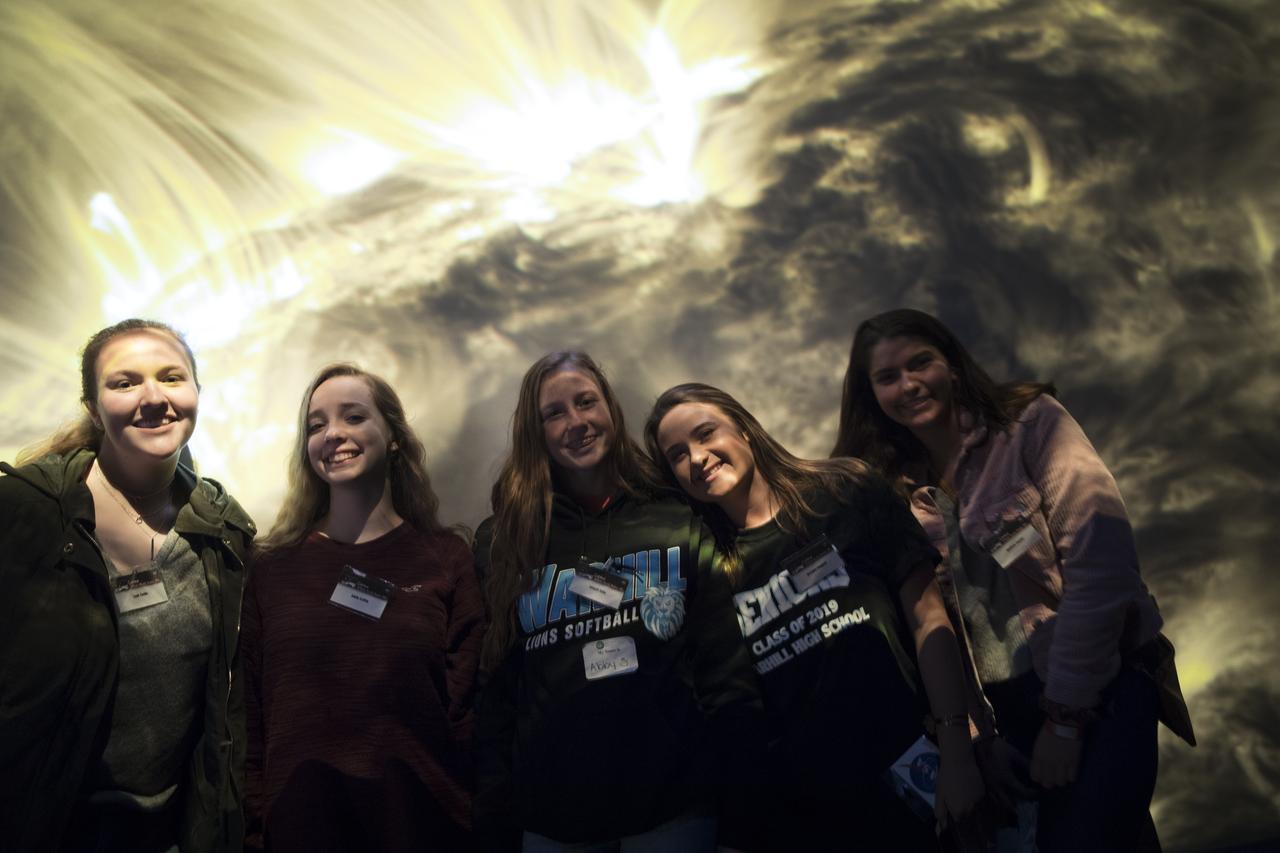
STEM Girls Night In sleepover was held at Goddard Nov 2-3, 2018 including hands-on learning, and interactive activities and networking with NASA women in STEM and other related career fields. Event was intended to reinvigorate, inspire and engage high school girls who are not fully engaged in STEM education.
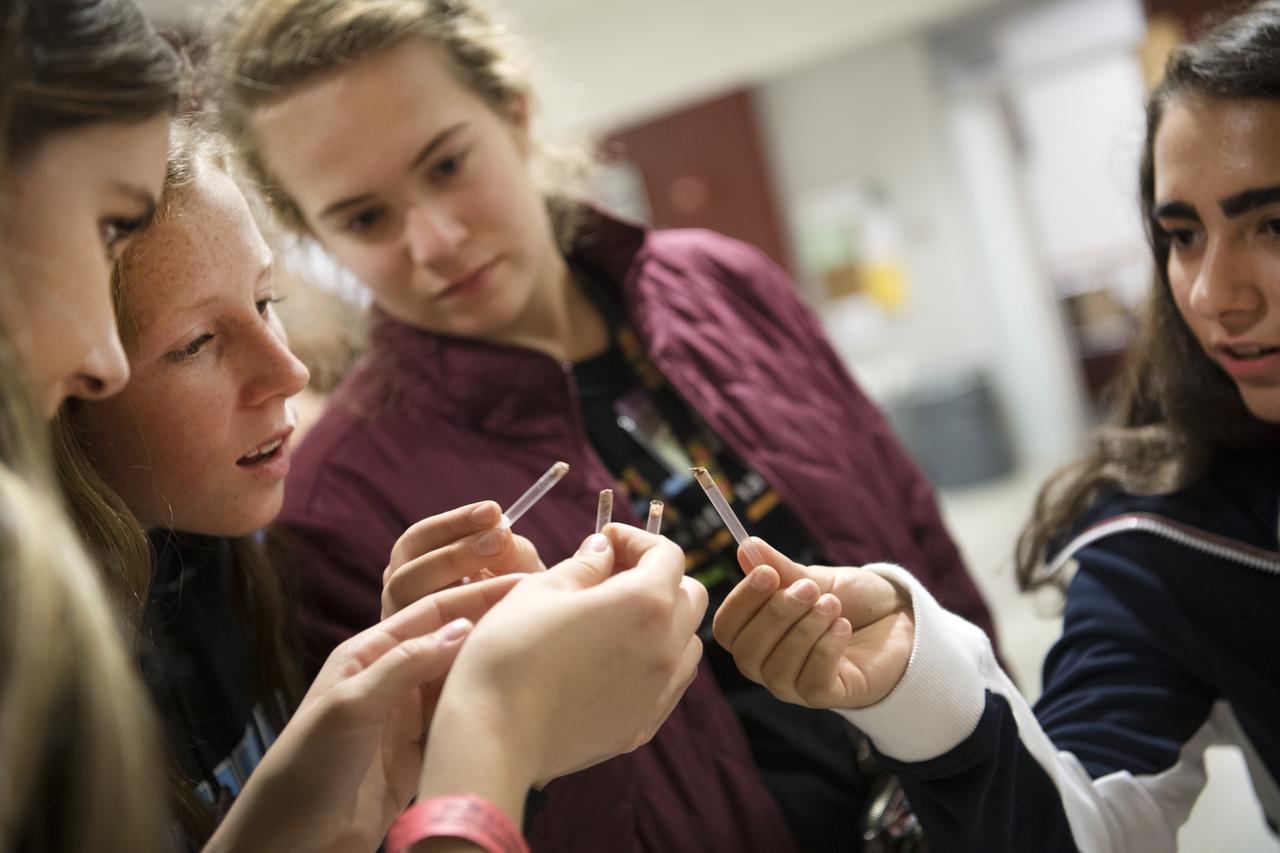
STEM Girls Night In sleepover was held at Goddard Nov 2-3, 2018 including hands-on learning, interactive activities and networking with NASA women in STEM and other related career fields. Event was intended to reinvigorate, inspire, and engage high school girls who are not fully engaged in STEM education.
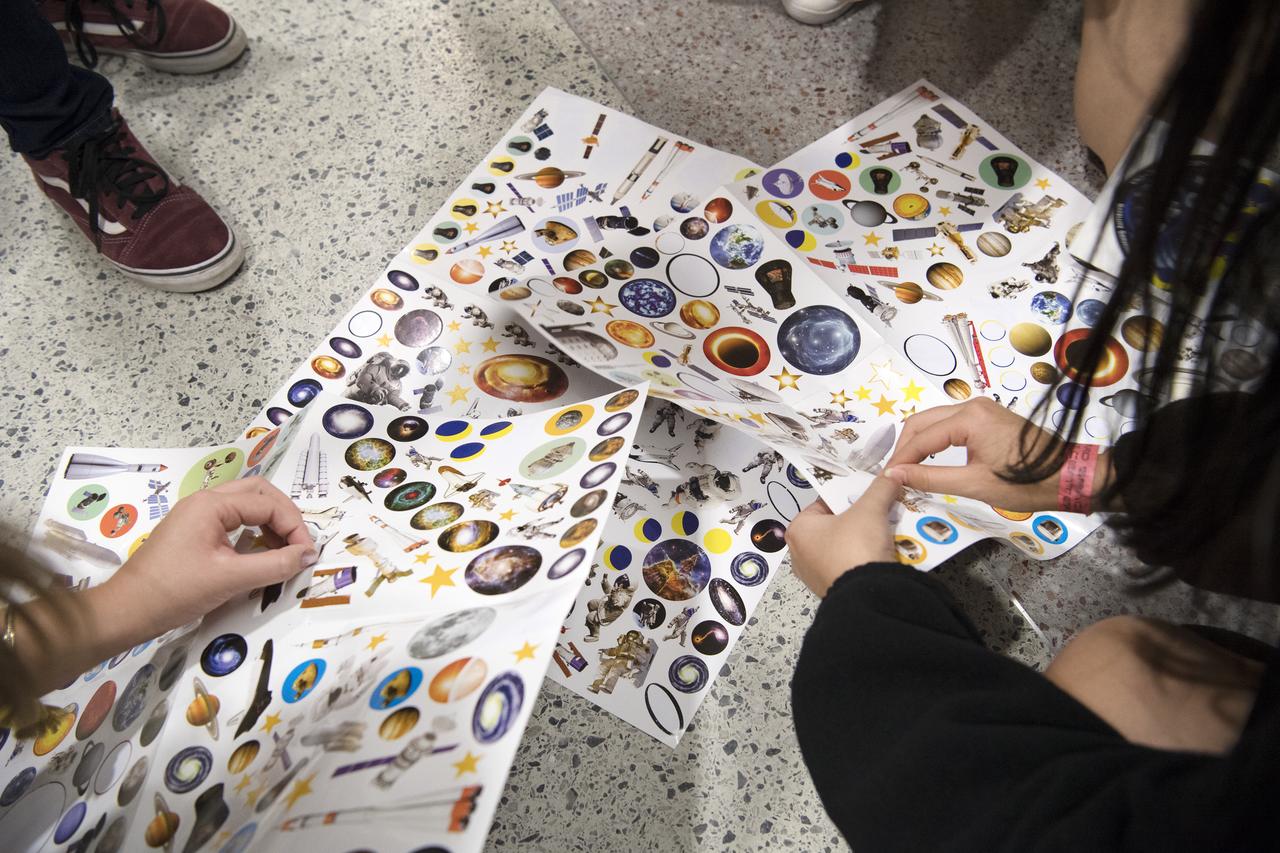
STEM Girls Night In sleepover was held at Goddard Nov 2-3, 2018 including hands-on learning, interactive activities , and networking with NASA women in STEM and other related carer fields. Event was intended to reinvigorate, inspire and engage high school girls who are not fully engaged in STEM education.
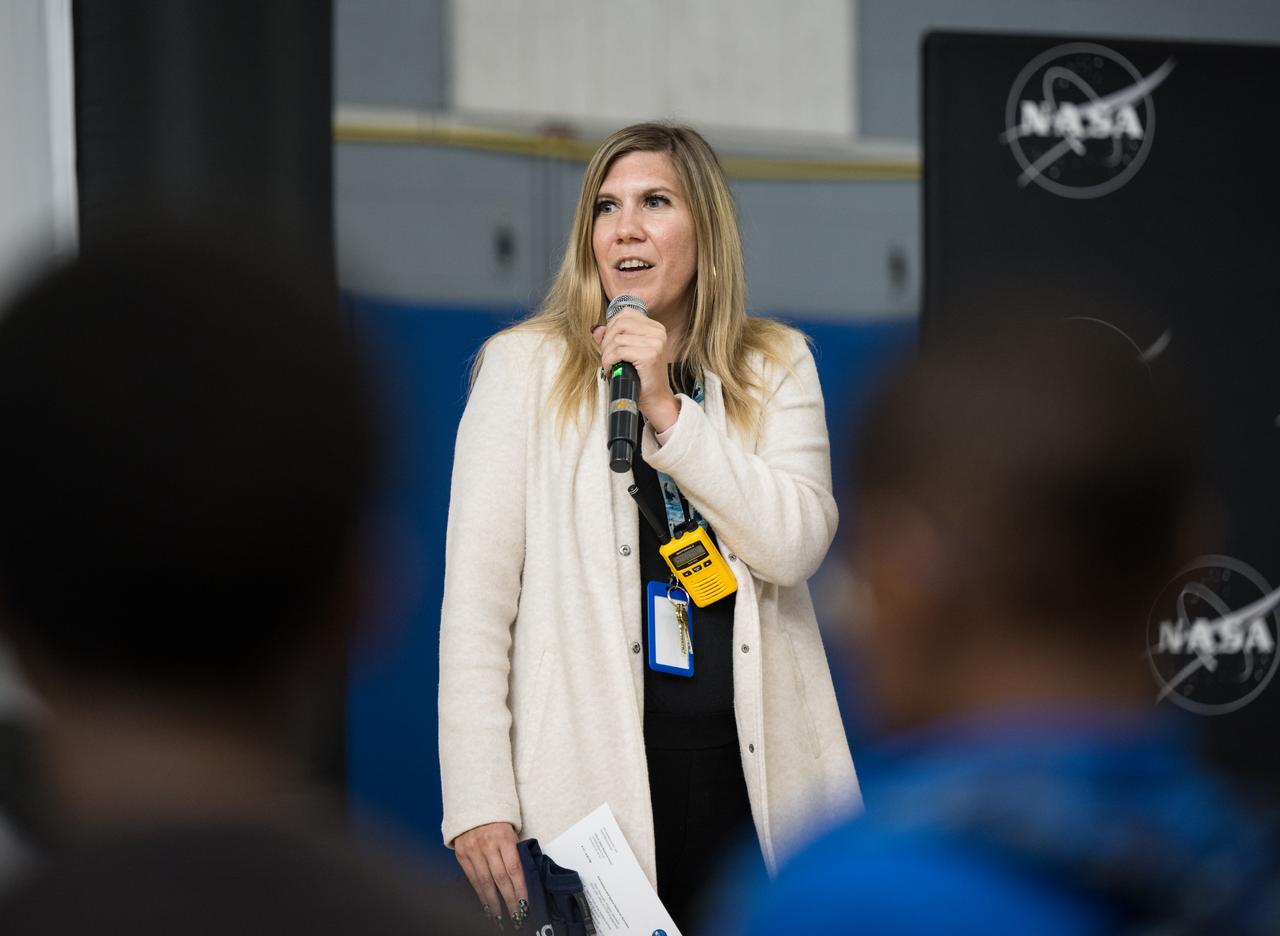
Principle of Wheatley Education Campus, Amanda Schmitt, provides remarks at a kickoff event for the 21st Century Community Learning Centers NASA and Department of Education partnership, Monday, Sept. 23, 2024 at Wheatley Education Campus in Washington. Students engaged in NASA hands-on activities and an engineering design challenge. Photo Credit: (NASA/Aubrey Gemignani)
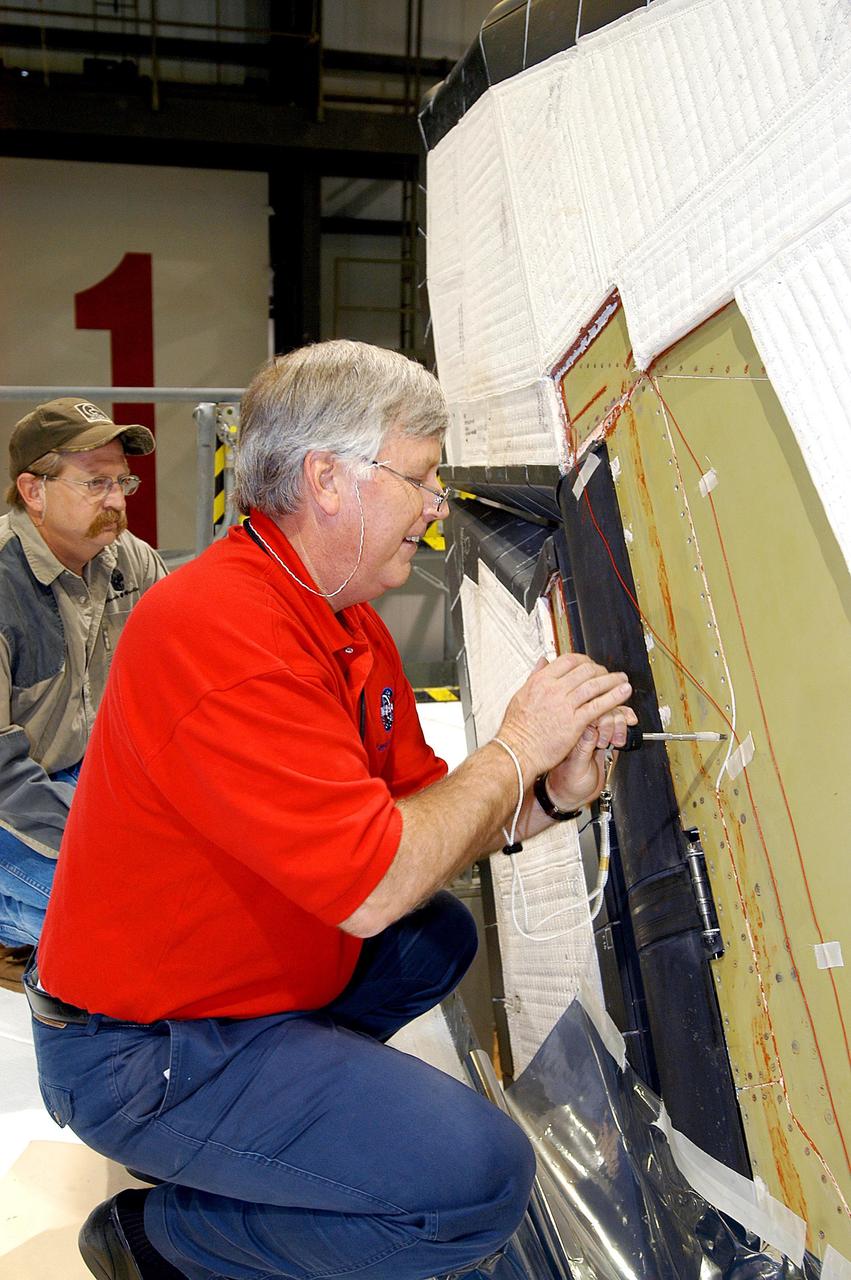
KENNEDY SPACE CENTER, FLA. - Under a worker’s watchful eyes in the Orbiter Processing Facility, Center Director Jim Kennedy (right) takes a turn on a screw on Endeavour. Kennedy is taking an opportunity to learn first-hand what workers are doing to enable Return to Flight. Endeavour is in an Orbiter Major Modification period.
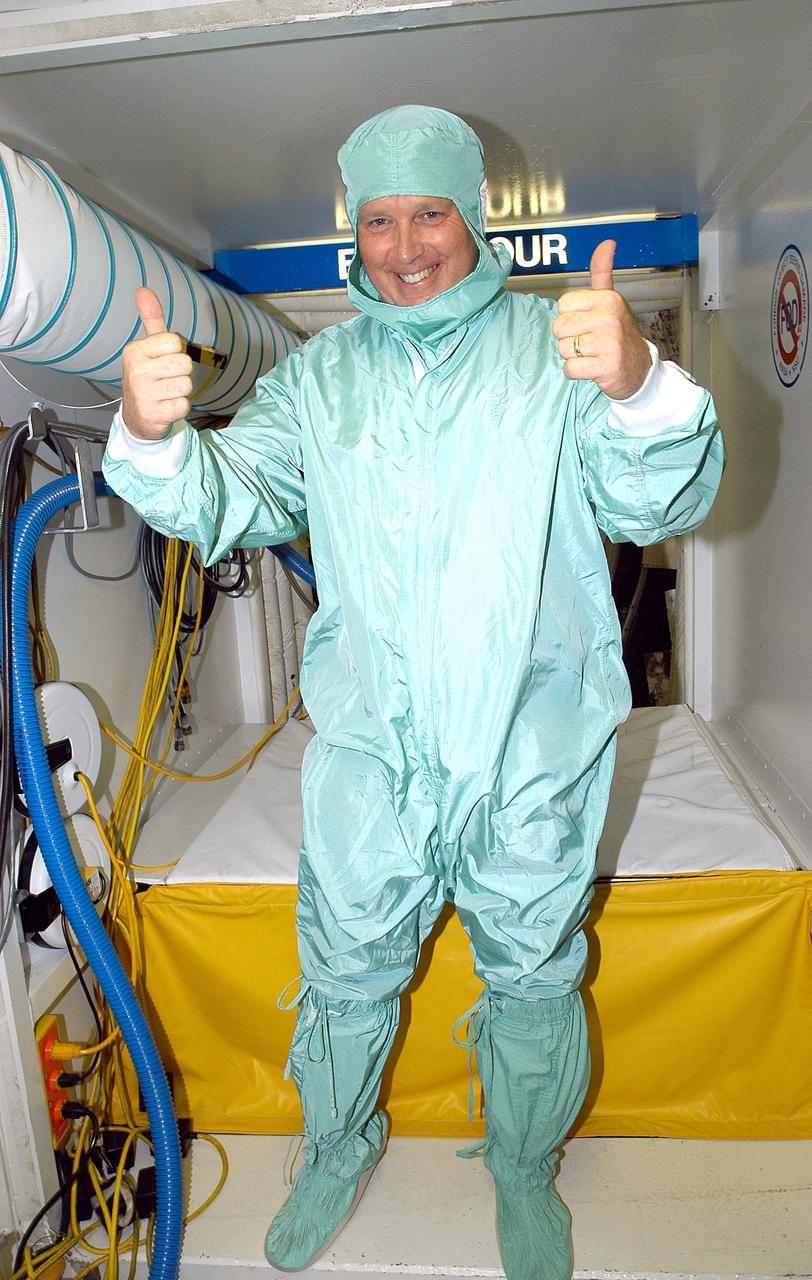
KENNEDY SPACE CENTER, FLA. - In the Orbiter Processing Facility, Center Director Jim Kennedy shows he is ready to enter the orbiter Endeavour, which is in an Orbiter Major Modification period. Kennedy is taking an opportunity to learn first-hand what workers are doing to enable Return to Flight.
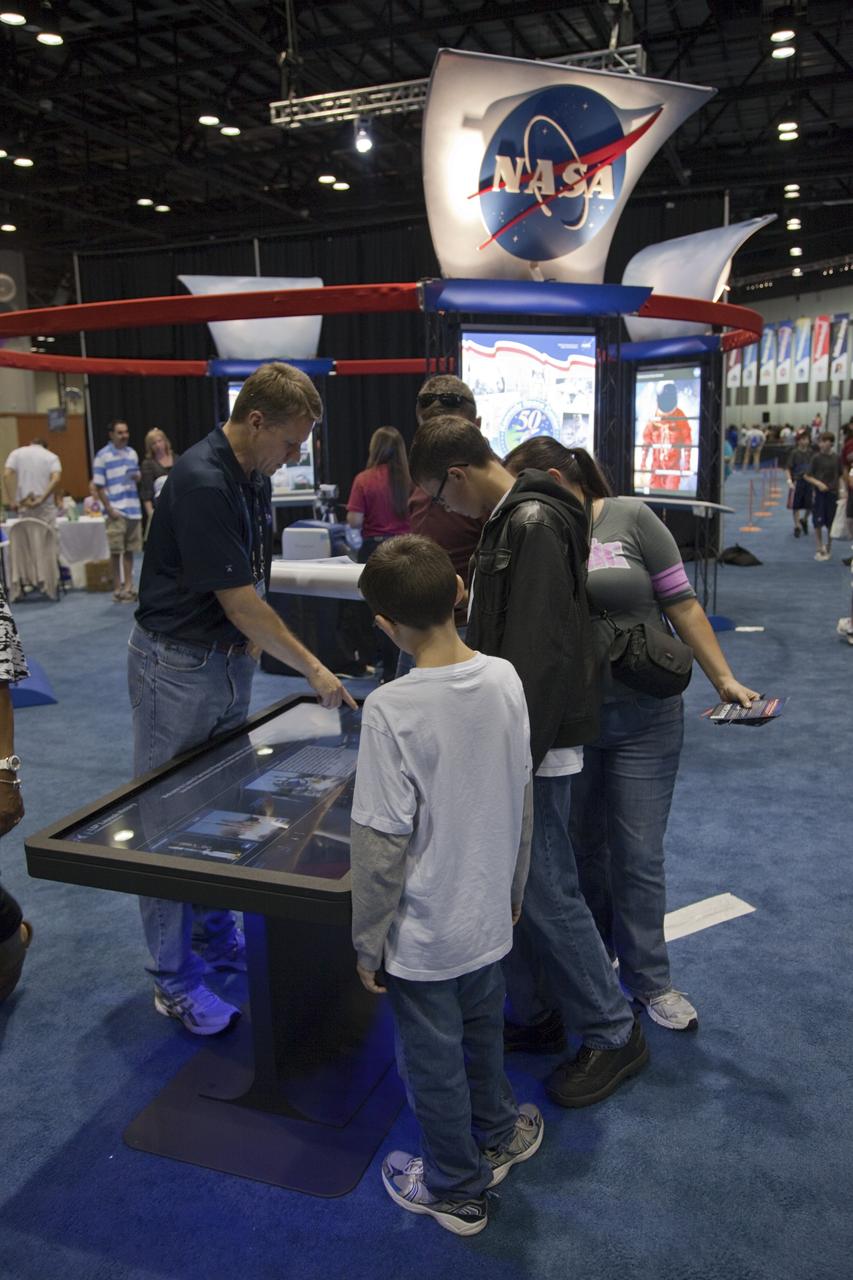
ORLANDO, Fla. -- Visitors to the NBA All-Star Jam Session at the Orange County Convention Center in Orlando, Fla., use a large touch-screen to learn more about NASA's activities and missions. Representatives from Kennedy Space Center in Florida helped attendees participate in hands-on educational activities to learn more about how science plays into sports. One of the events leading up to the NBA All-Star game being held in Orlando on Feb. 26, the NBA All-Star Jam Session is a basketball experience intended for all ages, allowing fans to compete against their friends in skills challenges and collect autographs from players and legends. Photo credit: NASA/Frankie Martin
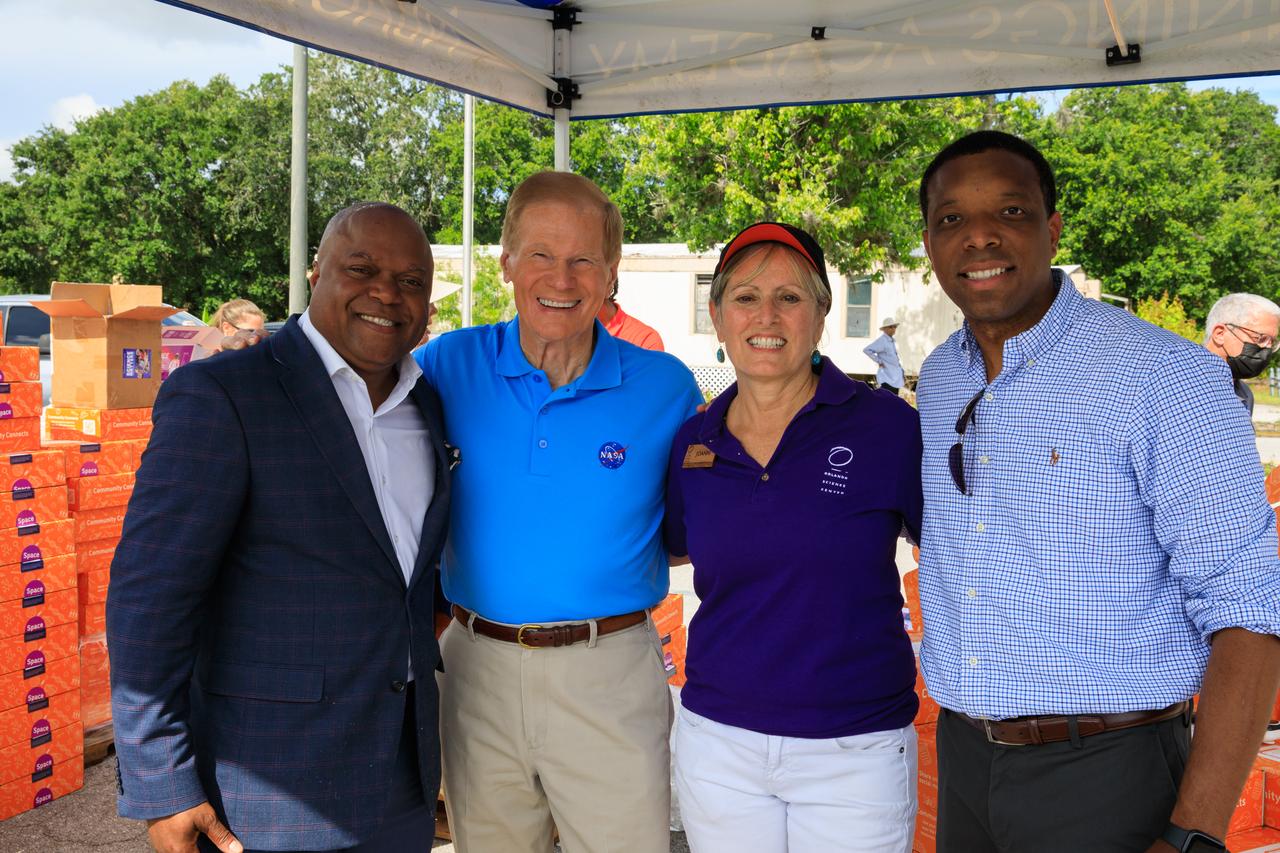
From left to right, Dr. Frederic Bertley, president and CEO, Center of Science and Industry (COSI); NASA Administrator Bill Nelson; JoAnn Newman, president and CEO, Orlando Science Center; and Stephen White, chief strategy officer, COSI helped kick off a new initiative to deliver food and hands-on science, technology, engineering, and math kits, called Learning Lunchboxes, at New Beginnings Church – The Gathering Place in Orlando, Florida on Friday, June 3. The lunchboxes are aimed at inspiring and educating youth and families about NASA’s upcoming Artemis missions, which includes landing the first woman and person of color on the Moon and helping prepare for human exploration of Mars. Partners on the initiative with NASA include COSI, the Second Harvest Food Bank, and the Orlando Science Center. The NASA Artemis Learning Lunchbox is made possible through NASA’s Teams Engaging Affiliated Museums and Informal Institutions (TEAM II) program. NASA Learning Lunchboxes provide five space-focused learning activities that showcase the diversity of STEM at NASA. COSI will distribute 30,000 NASA Learning Lunchboxes at local food banks across the country to help feed hungry lives and feed hungry minds. This innovative, community-based model will bring together other science centers and museums, afterschool providers, and community leaders to highlight the importance of STEM. This project also includes digital extension resources.
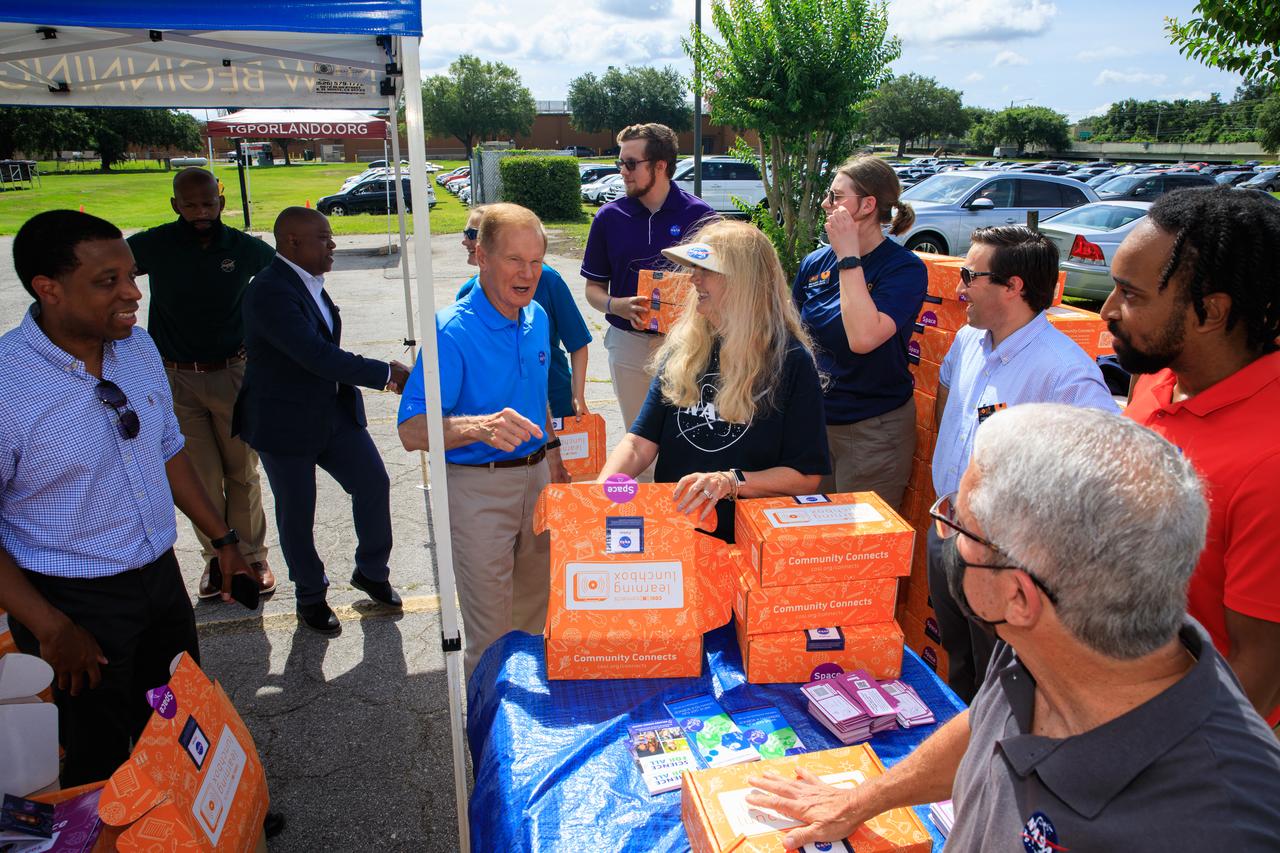
NASA Administrator Bill Nelson helped kick off a new initiative to deliver food and hands-on science, technology, engineering, and math kits, called Learning Lunchboxes, at New Beginnings Church – The Gathering Place in Orlando, Florida on Friday, June 3. The lunchboxes are aimed at inspiring and educating youth and families about NASA’s upcoming Artemis missions, which includes landing the first woman and person of color on the Moon and helping prepare for human exploration of Mars. Partners on the initiative with NASA include the Center of Science and Industry, the Second Harvest Food Bank, and the Orlando Science Center. The NASA Artemis Learning Lunchbox is made possible through NASA’s Teams Engaging Affiliated Museums and Informal Institutions (TEAM II) program. NASA Learning Lunchboxes provide five space-focused learning activities that showcase the diversity of STEM at NASA. COSI will distribute 30,000 NASA Learning Lunchboxes at local food banks across the country to help feed hungry lives and feed hungry minds. This innovative, community-based model will bring together other science centers and museums, afterschool providers, and community leaders to highlight the importance of STEM. This project also includes digital extension resources.
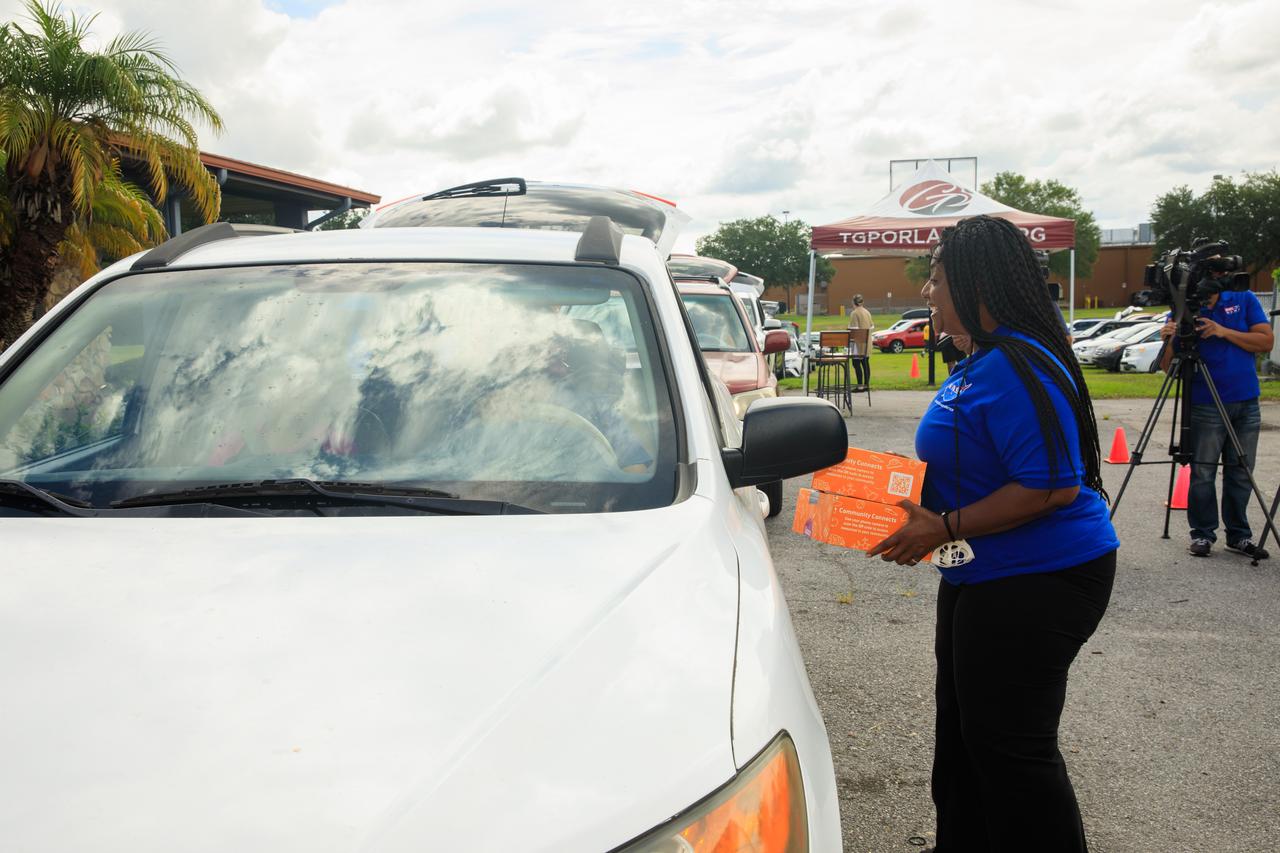
Barbara Brown, director of the Exploration Research and Technology Program at Kennedy Space Center in Florida, helped kick off a new initiative to deliver food and hands-on science, technology, engineering, and math kits, called Learning Lunchboxes, at New Beginnings Church – The Gathering Place in Orlando, Florida on Friday, June 3. The lunchboxes are aimed at inspiring and educating youth and families about NASA’s upcoming Artemis missions, which includes landing the first woman and person of color on the Moon and helping prepare for human exploration of Mars. Partners on the initiative with NASA include the Center of Science and Industry, the Second Harvest Food Bank, and the Orlando Science Center. The NASA Artemis Learning Lunchbox is made possible through NASA’s Teams Engaging Affiliated Museums and Informal Institutions (TEAM II) program. NASA Learning Lunchboxes provide five space-focused learning activities that showcase the diversity of STEM at NASA. COSI will distribute 30,000 NASA Learning Lunchboxes at local food banks across the country to help feed hungry lives and feed hungry minds. This innovative, community-based model will bring together other science centers and museums, afterschool providers, and community leaders to highlight the importance of STEM. This project also includes digital extension resources.
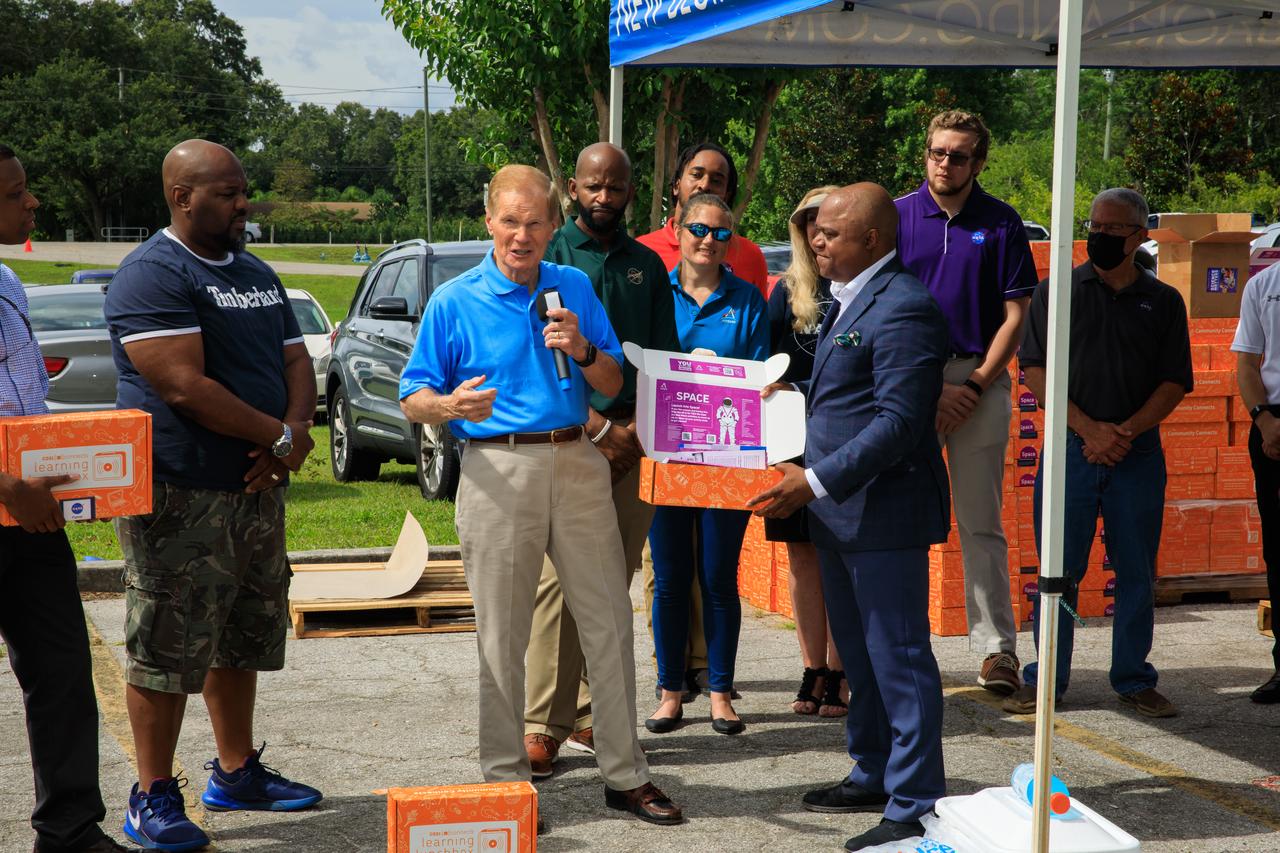
NASA Administrator Bill Nelson helped kick off a new initiative to deliver food and hands-on science, technology, engineering, and math kits, called Learning Lunchboxes, at New Beginnings Church – The Gathering Place in Orlando, Florida on Friday, June 3. The lunchboxes are aimed at inspiring and educating youth and families about NASA’s upcoming Artemis missions, which includes landing the first woman and person of color on the Moon and helping prepare for human exploration of Mars. Partners on the initiative with NASA include the Center of Science and Industry, the Second Harvest Food Bank, and the Orlando Science Center. The NASA Artemis Learning Lunchbox is made possible through NASA’s Teams Engaging Affiliated Museums and Informal Institutions (TEAM II) program. NASA Learning Lunchboxes provide five space-focused learning activities that showcase the diversity of STEM at NASA. COSI will distribute 30,000 NASA Learning Lunchboxes at local food banks across the country to help feed hungry lives and feed hungry minds. This innovative, community-based model will bring together other science centers and museums, afterschool providers, and community leaders to highlight the importance of STEM. This project also includes digital extension resources.
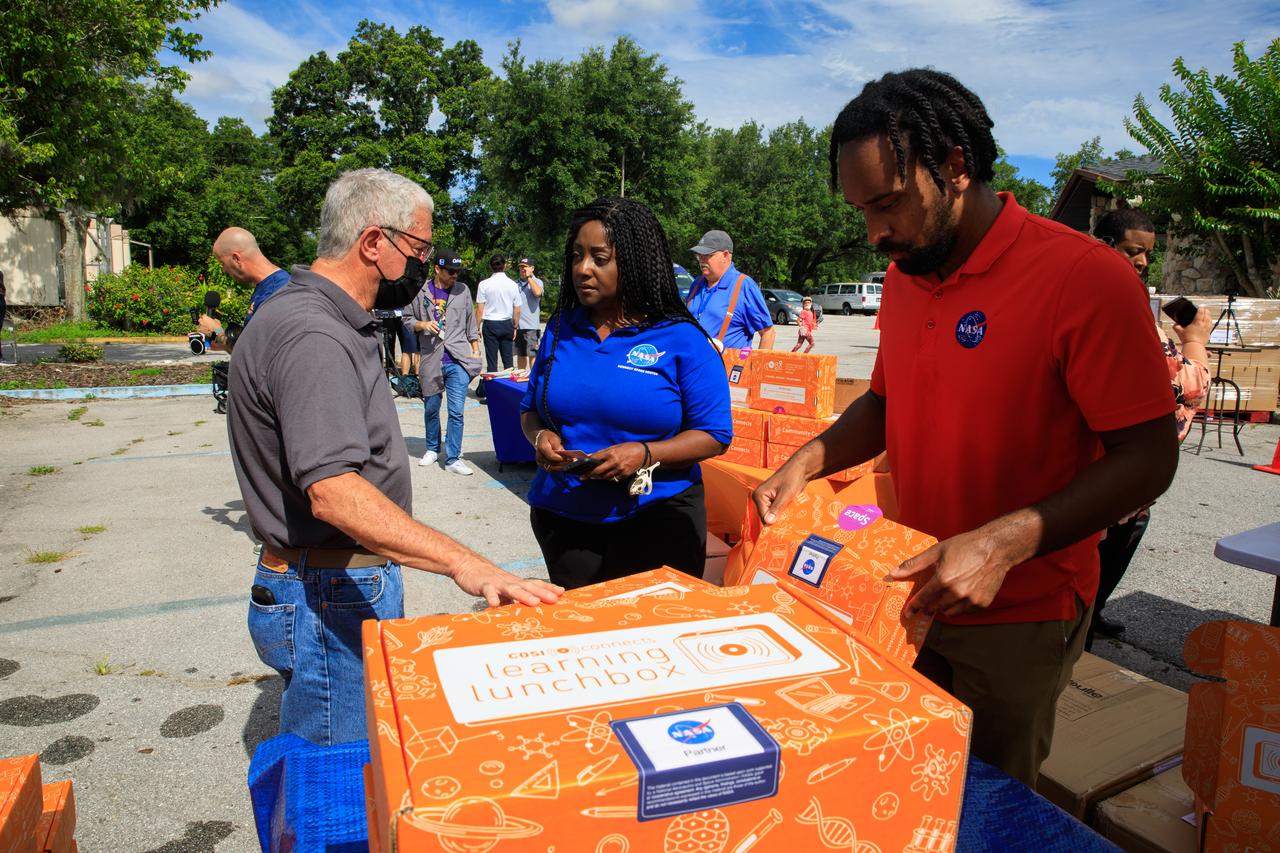
Barbara Brown (center), director of the Exploration Research and Technology Program at Kennedy Space Center in Florida, helped kick off a new initiative to deliver food and hands-on science, technology, engineering, and math kits, called Learning Lunchboxes, at New Beginnings Church – The Gathering Place in Orlando, Florida on Friday, June 3. The lunchboxes are aimed at inspiring and educating youth and families about NASA’s upcoming Artemis missions, which includes landing the first woman and person of color on the Moon and helping prepare for human exploration of Mars. Partners on the initiative with NASA include the Center of Science and Industry, the Second Harvest Food Bank, and the Orlando Science Center. The NASA Artemis Learning Lunchbox is made possible through NASA’s Teams Engaging Affiliated Museums and Informal Institutions (TEAM II) program. NASA Learning Lunchboxes provide five space-focused learning activities that showcase the diversity of STEM at NASA. COSI will distribute 30,000 NASA Learning Lunchboxes at local food banks across the country to help feed hungry lives and feed hungry minds. This innovative, community-based model will bring together other science centers and museums, afterschool providers, and community leaders to highlight the importance of STEM. This project also includes digital extension resources.
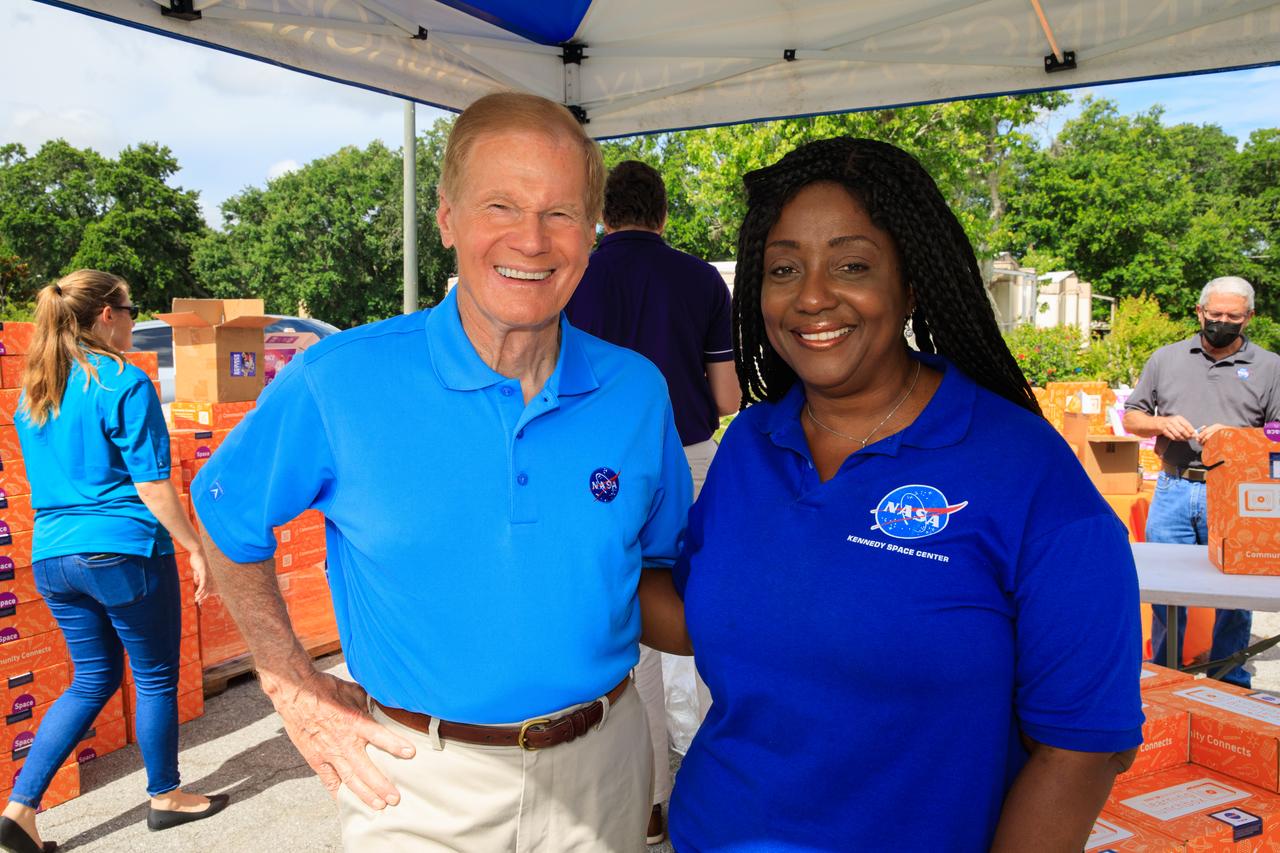
NASA Administrator Bill Nelson (left) and Barbara Brown (right), director of the Exploration Research and Technology Program at Kennedy Space Center in Florida, helped kick off a new initiative to deliver food and hands-on science, technology, engineering, and math kits, called Learning Lunchboxes, at New Beginnings Church – The Gathering Place in Orlando, Florida on Friday, June 3. The lunchboxes are aimed at inspiring and educating youth and families about NASA’s upcoming Artemis missions, which includes landing the first woman and person of color on the Moon and helping prepare for human exploration of Mars. Partners on the initiative with NASA include the Center of Science and Industry, the Second Harvest Food Bank, and the Orlando Science Center. The NASA Artemis Learning Lunchbox is made possible through NASA’s Teams Engaging Affiliated Museums and Informal Institutions (TEAM II) program. NASA Learning Lunchboxes provide five space-focused learning activities that showcase the diversity of STEM at NASA. COSI will distribute 30,000 NASA Learning Lunchboxes at local food banks across the country to help feed hungry lives and feed hungry minds. This innovative, community-based model will bring together other science centers and museums, afterschool providers, and community leaders to highlight the importance of STEM. This project also includes digital extension resources.
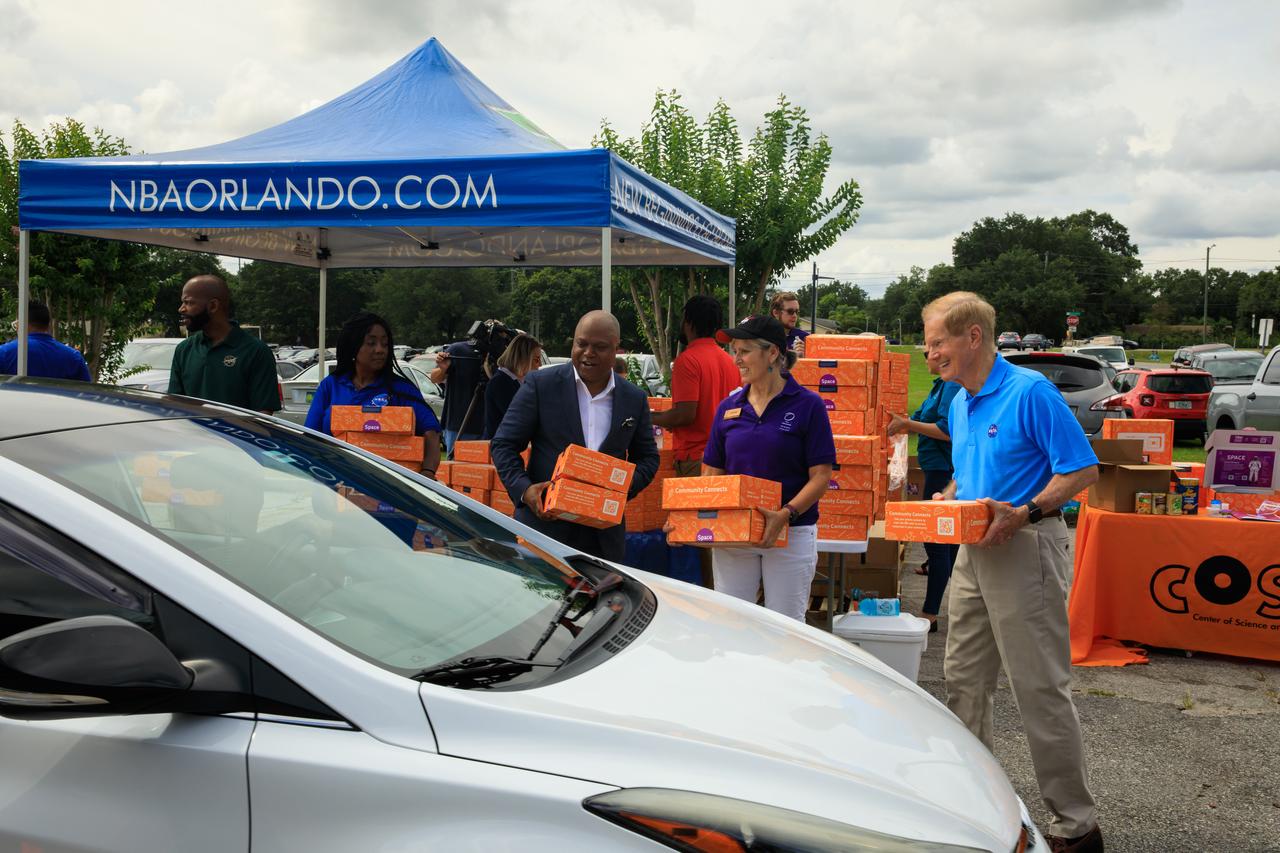
NASA Administrator Bill Nelson helped kick off a new initiative to deliver food and hands-on science, technology, engineering, and math kits, called Learning Lunchboxes, at New Beginnings Church – The Gathering Place in Orlando, Florida on Friday, June 3. The lunchboxes are aimed at inspiring and educating youth and families about NASA’s upcoming Artemis missions, which includes landing the first woman and person of color on the Moon and helping prepare for human exploration of Mars. Partners on the initiative with NASA include the Center of Science and Industry, the Second Harvest Food Bank, and the Orlando Science Center. The NASA Artemis Learning Lunchbox is made possible through NASA’s Teams Engaging Affiliated Museums and Informal Institutions (TEAM II) program. NASA Learning Lunchboxes provide five space-focused learning activities that showcase the diversity of STEM at NASA. COSI will distribute 30,000 NASA Learning Lunchboxes at local food banks across the country to help feed hungry lives and feed hungry minds. This innovative, community-based model will bring together other science centers and museums, afterschool providers, and community leaders to highlight the importance of STEM. This project also includes digital extension resources.
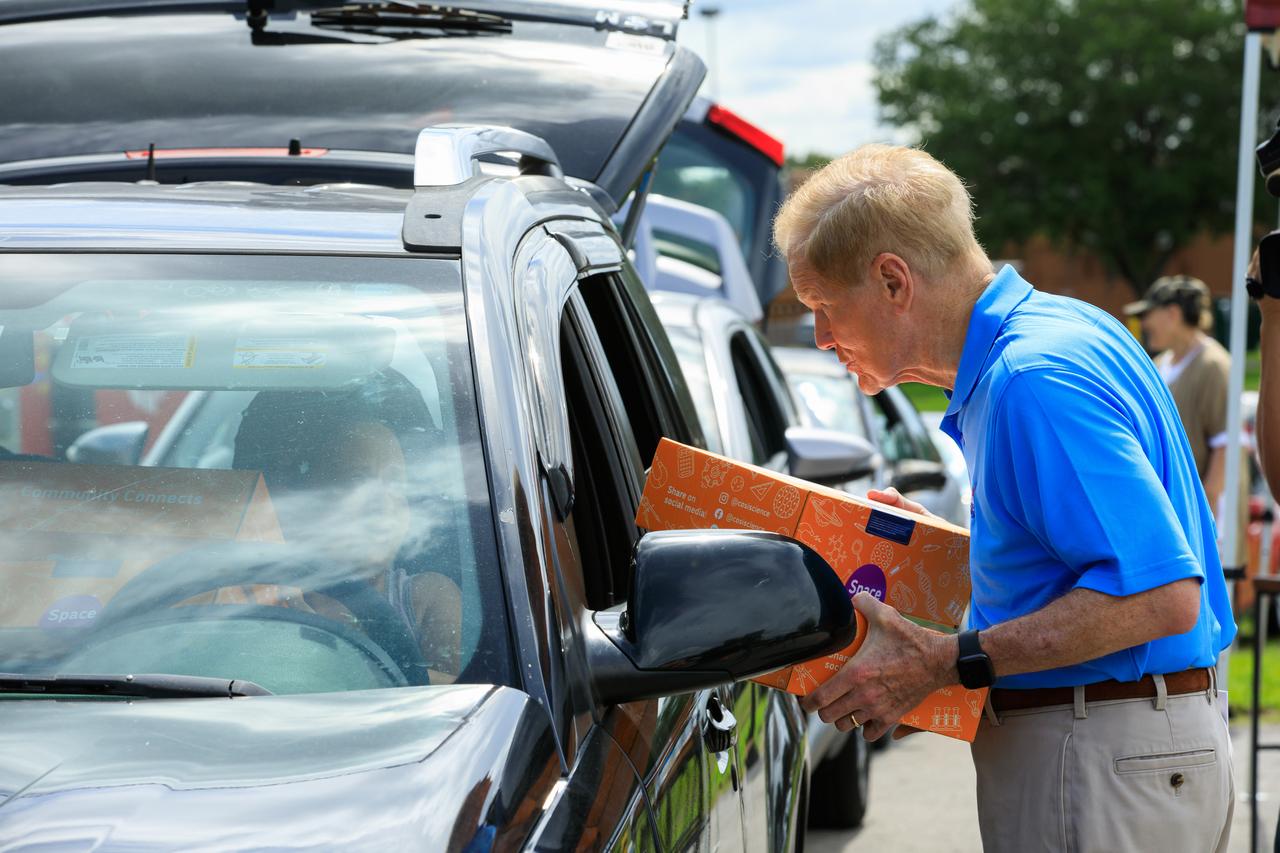
NASA Administrator Bill Nelson helped kick off a new initiative to deliver food and hands-on science, technology, engineering, and math kits, called Learning Lunchboxes, at New Beginnings Church – The Gathering Place in Orlando, Florida on Friday, June 3. The lunchboxes are aimed at inspiring and educating youth and families about NASA’s upcoming Artemis missions, which includes landing the first woman and person of color on the Moon and helping prepare for human exploration of Mars. Partners on the initiative with NASA include the Center of Science and Industry, the Second Harvest Food Bank, and the Orlando Science Center. The NASA Artemis Learning Lunchbox is made possible through NASA’s Teams Engaging Affiliated Museums and Informal Institutions (TEAM II) program. NASA Learning Lunchboxes provide five space-focused learning activities that showcase the diversity of STEM at NASA. COSI will distribute 30,000 NASA Learning Lunchboxes at local food banks across the country to help feed hungry lives and feed hungry minds. This innovative, community-based model will bring together other science centers and museums, afterschool providers, and community leaders to highlight the importance of STEM. This project also includes digital extension resources.
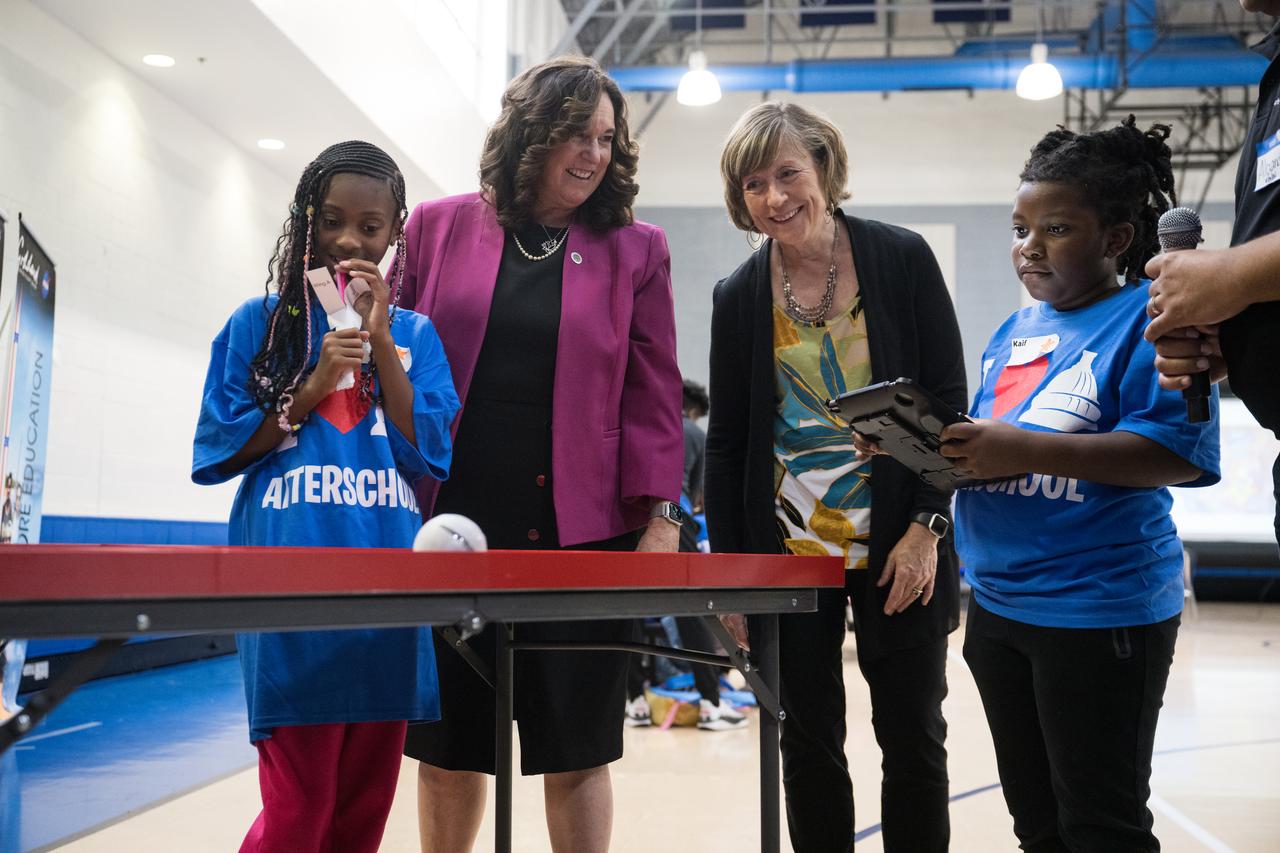
NASA Deputy Associate Administrator for NASA’s Office of STEM Engagement, Kris Brown, second from right, and U.S. Department of Education Deputy Secretary Cindy Marten, second from left, watch as a student operates a robot during a STEM event to kickoff the 21st Century Community Learning Centers NASA and U.S. Department of Education partnership, Monday, Sept. 23, 2024 at Wheatley Education Campus (EC) in Washington. Students engaged in NASA hands-on activities and an engineering design challenge. Photo Credit: (NASA/Aubrey Gemignani)
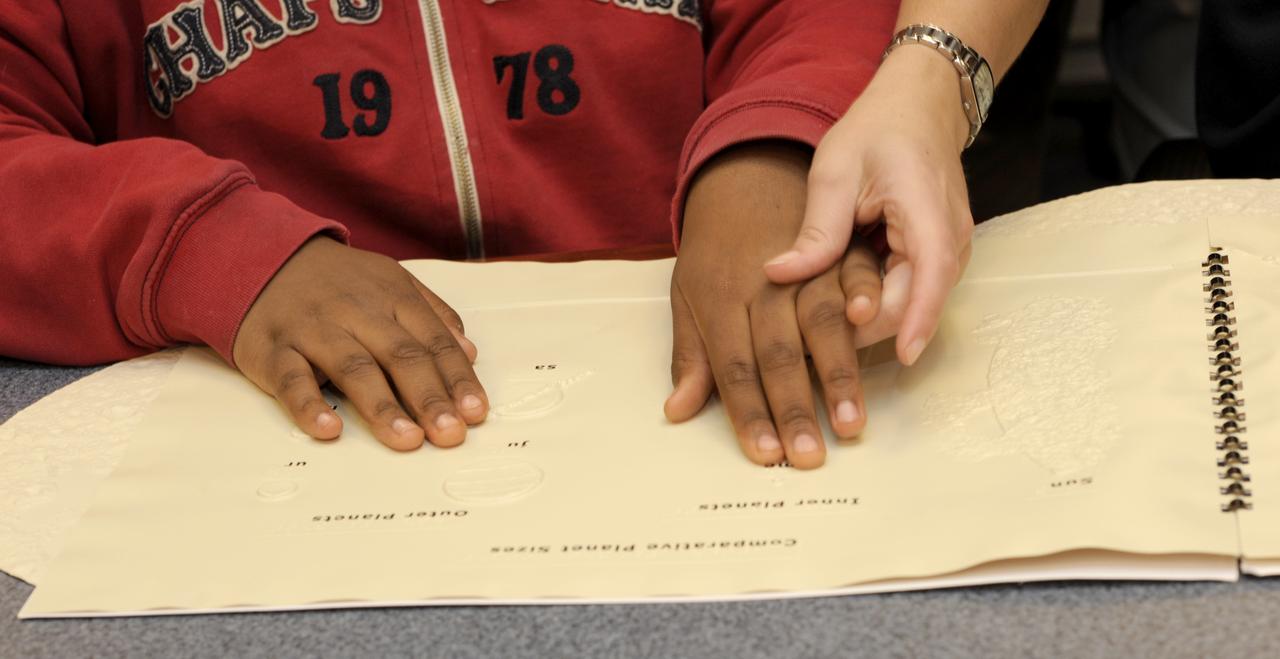
The hands of Maryland School for the Blind student Andrea Washington, are guided across a topographical map of the Solar System by science teacher Colleen Shovestull during a visit to NASA Headquarters in Washington, Thursday, Oct. 29, 2009. Seven students from the Maryland School for the Blind visited NASA and participated in activities to learn about NASA'smission, functions, and careers. Photo Credit: (NASA/Paul E. Alers)
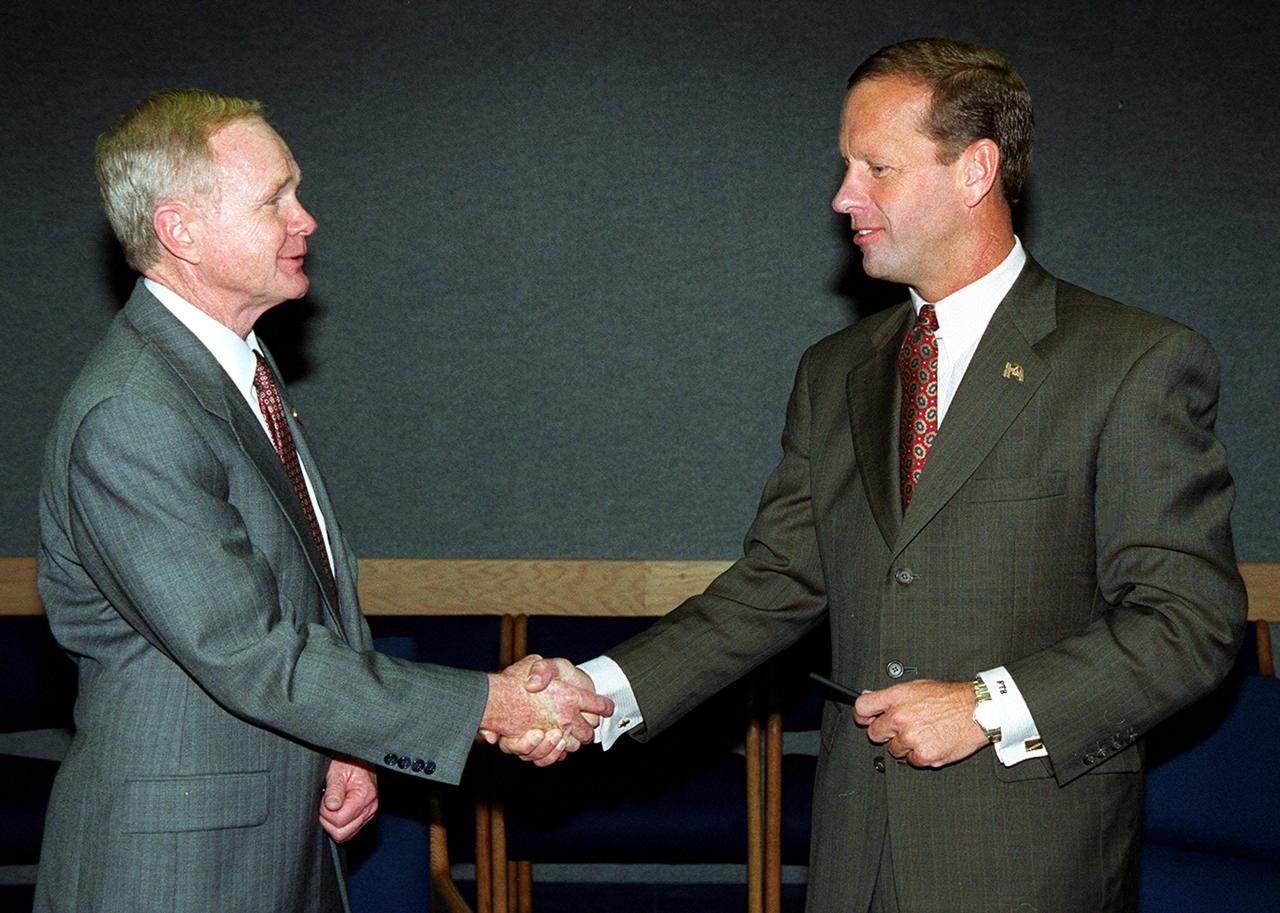
At the KSC Visitor Complex, Center Director Roy D. Bridges (left) and Florida’s Lieutenant Governor Frank T. Brogan shake hands after signing a Memorandum of Understanding (MOU). The MOU documents the intent of NASA KSC and the State of Florida to form partnerships with academic institutions in Florida for development of aerospace-related advanced training and academic/educational programs. The three-year project anticipates that the partnership and educational programs fostered will improve the lifelong learning environment for the aerospace and engineering workforce

A giant hand-made quilt in honor of space shuttle Columbia and her crew was turned over to the Columbia Preservation Room inside the Vehicle Assembly Building at NASA's Kennedy Space Center in Florida. The quilt was made by Katherine Walsh, a lifelong NASA and space program fan originally from Kentucky. From left, behind the quilt are Janet Phillips, property custodian in Kennedy's Office of Procurement; and Mike Ciannilli, Apollo, Challenger, Columbia Lessons Learned Program manager

High school and college students, and educators spent a day learning about careers in technical fields in aerospace. They engaged in hands-on activities, tours, and listening to keynote presentations and panels, interacting with NASA’s subject matter experts at Langley Research Center, Hampton Va, Wednesday, April 29, 2026. Photo Credit (NASA/Mark L. Knopp)

High school and college students, and educators spent a day learning about careers in technical fields in aerospace. They engaged in hands-on activities, tours, and listening to keynote presentations and panels, interacting with NASA’s subject matter experts at Langley Research Center, Hampton Va, Wednesday, April 29, 2026. Photo Credit (NASA/Mark L. Knopp)
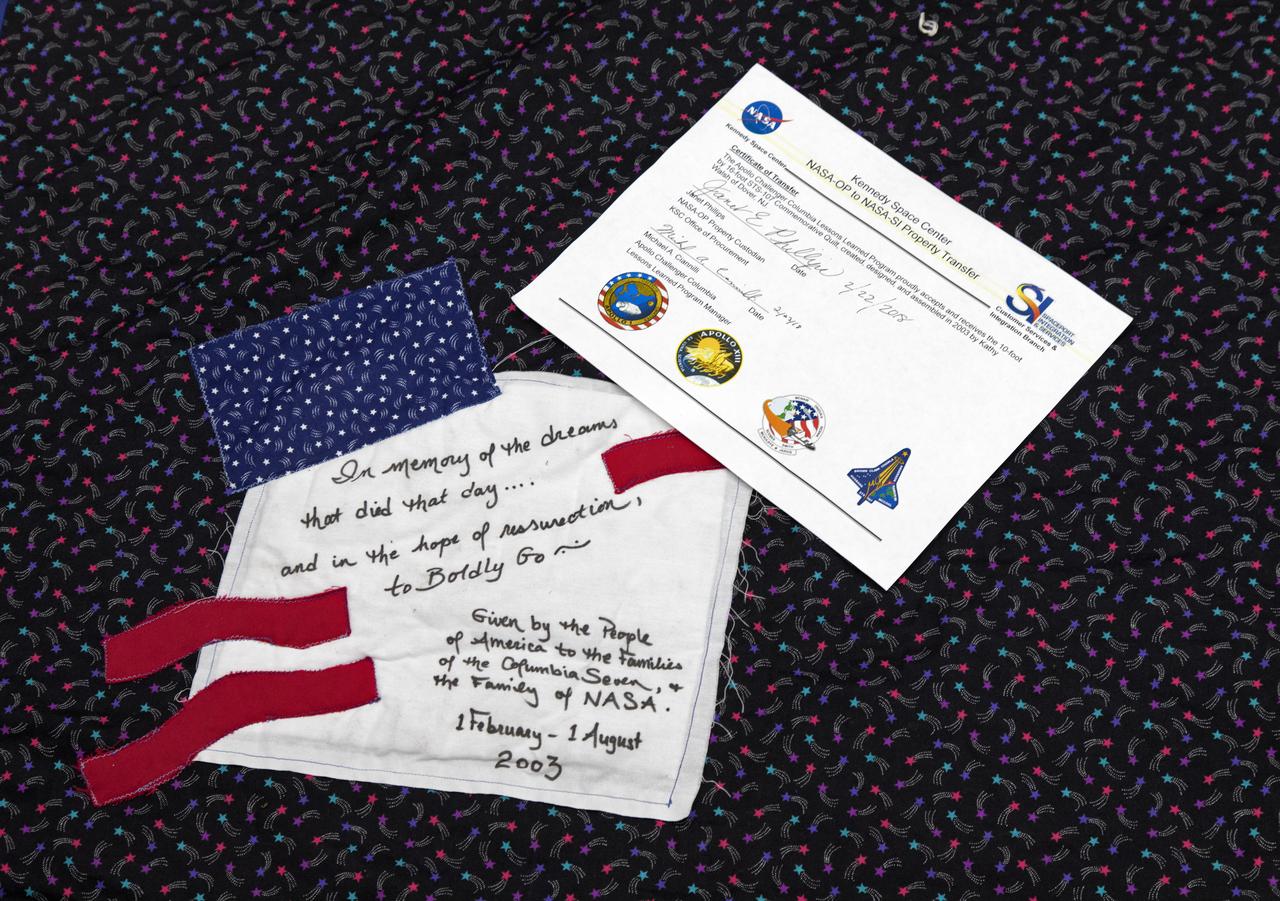
A certificate and quilt square are on display that confirms the transfer of a giant hand-made quilt in honor of space shuttle Columbia and her crew from the Office of Procurement to the Columbia Preservation Room inside the Vehicle Assembly Building at NASA's Kennedy Space Center in Florida. The quilt was made by Katherine Walsh, a lifelong NASA and space program fan originally from Kentucky. The quilt will be displayed in the preservation room with its certificate as part of NASA's Apollo, Challenger, Columbia Lessons Learned Program.
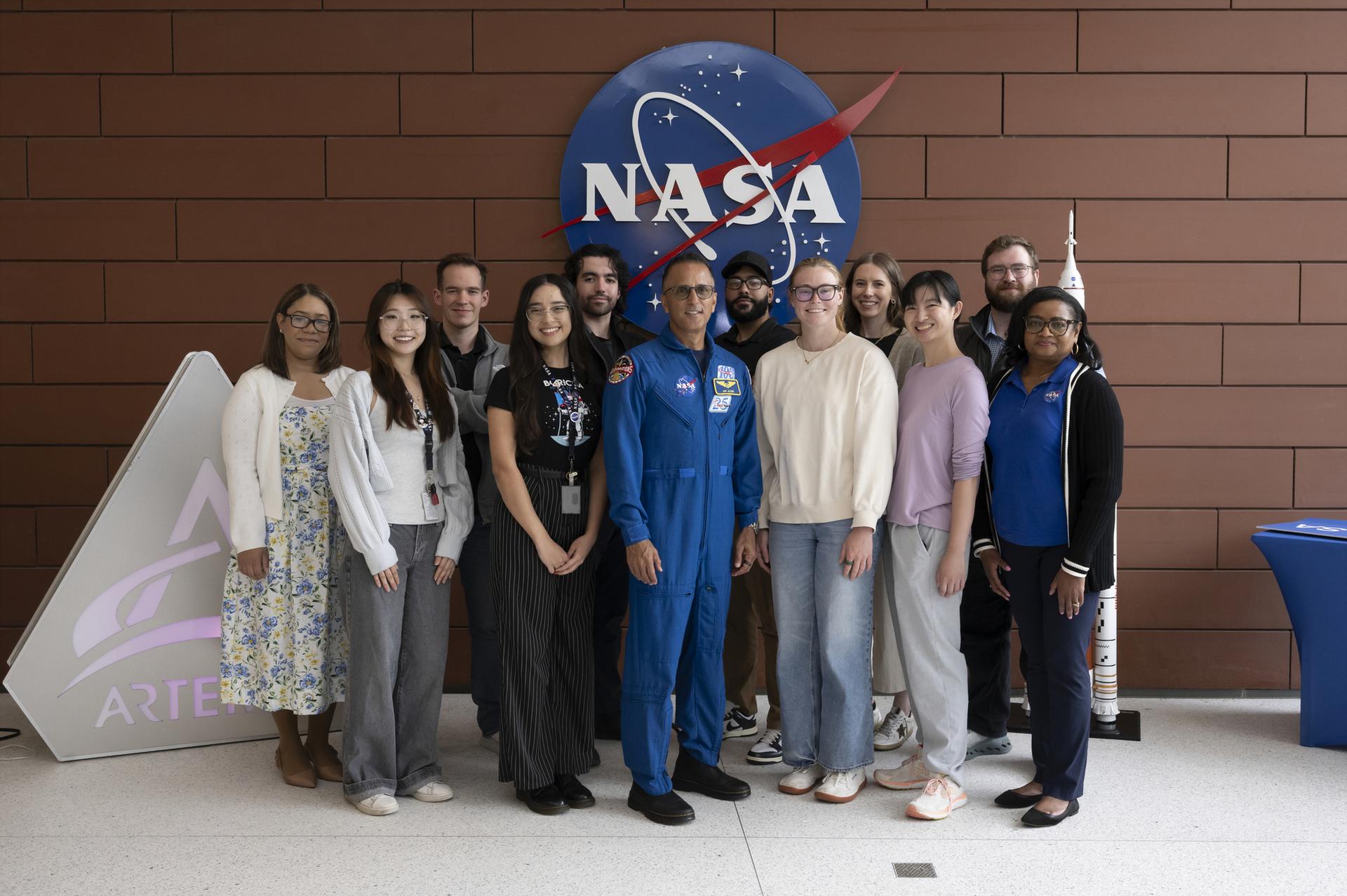
High school and college students, and educators spent a day learning about careers in technical fields in aerospace. They engaged in hands-on activities, tours, and listening to keynote presentations and panels, interacting with NASA’s subject matter experts at Langley Research Center, Hampton Va, Wednesday, April 29, 2026. Photo Credit (NASA/Ryan H. Hill)
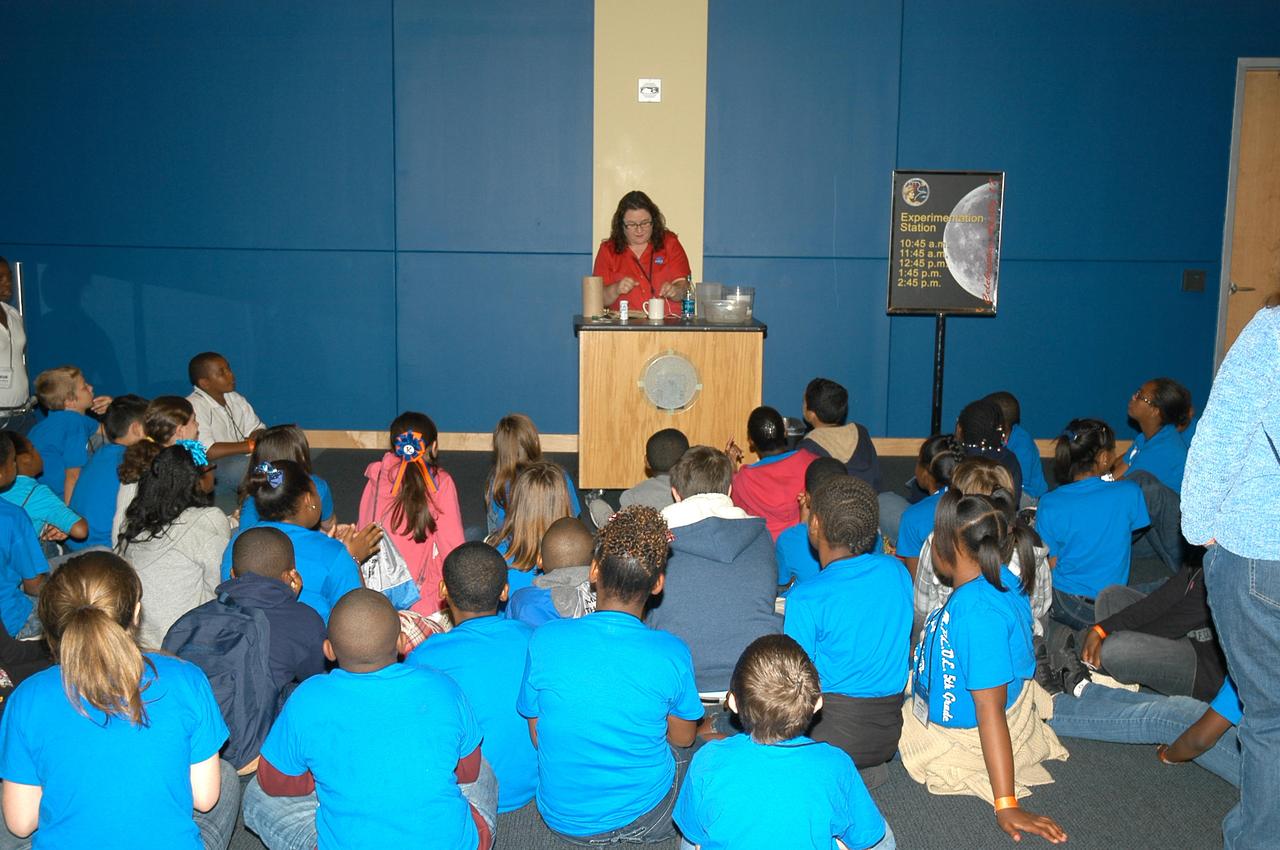
Young visitors to the INFINITY Science Center, a NASA visitors center, on Dec. 7 enjoy a Living and Working in Space presentation during activities celebrating the Apollo 17 lunar mission in 1972. Visitors were able to learn about the historic mission and to participate in hands-on activities. Apollo 17 was the final mission of America's manned lunar effort.

High school and college students, and educators spent a day learning about careers in technical fields in aerospace. They engaged in hands-on activities, tours, and listening to keynote presentations and panels, interacting with NASA’s subject matter experts at Langley Research Center, Hampton Va, Wednesday, April 29, 2026. Photo Credit (NASA/Mark L. Knopp)

High school and college students, and educators spent a day learning about careers in technical fields in aerospace. They engaged in hands-on activities, tours, and listening to keynote presentations and panels, interacting with NASA’s subject matter experts at Langley Research Center, Hampton Va, Wednesday, April 29, 2026. Photo Credit (NASA/Ryan H. Hill)

High school and college students, and educators spent a day learning about careers in technical fields in aerospace. They engaged in hands-on activities, tours, and listening to keynote presentations and panels, interacting with NASA’s subject matter experts at Langley Research Center, Hampton Va, Wednesday, April 29, 2026. Photo Credit (NASA/Ryan H. Hill)
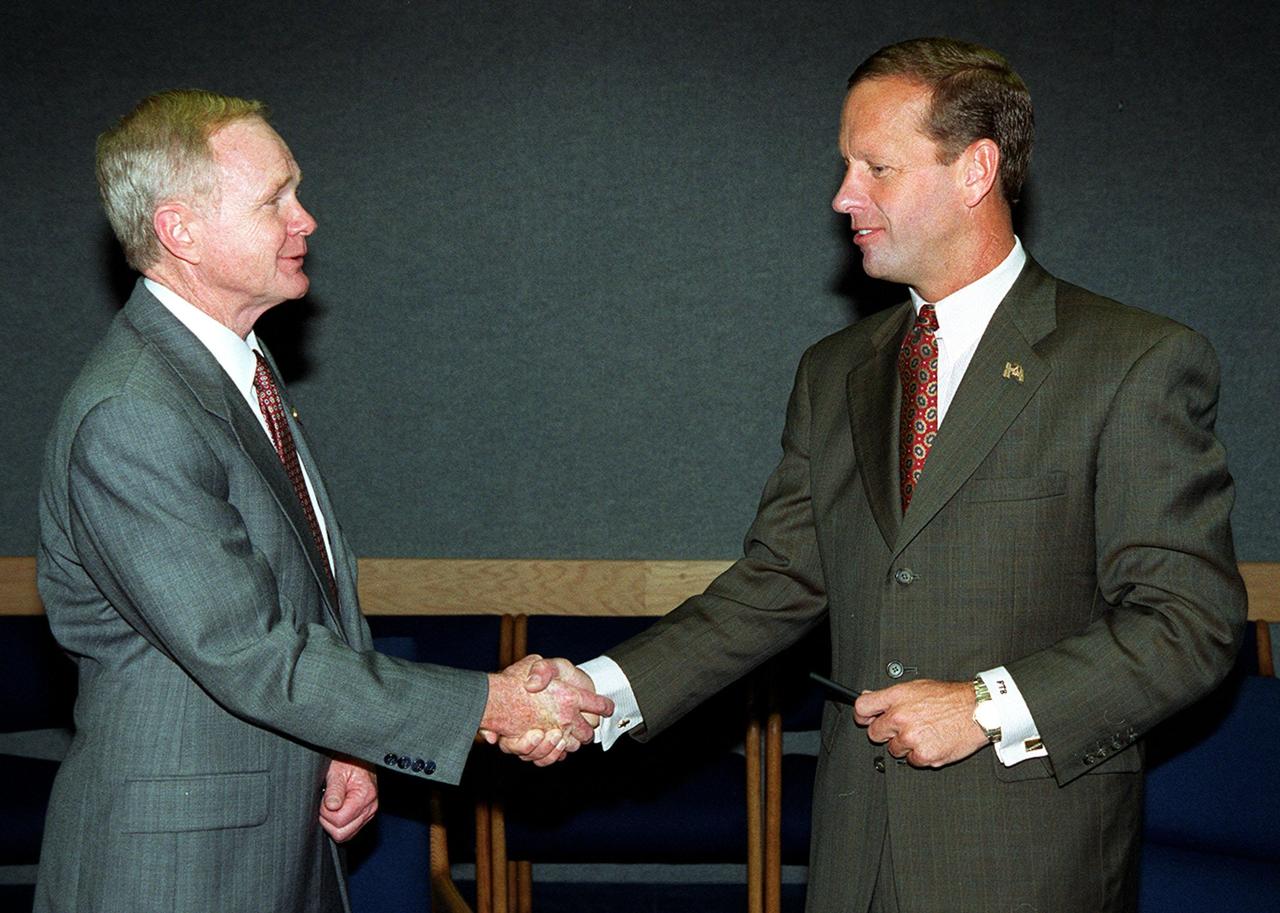
At the KSC Visitor Complex, Center Director Roy D. Bridges (left) and Florida’s Lieutenant Governor Frank T. Brogan shake hands after signing a Memorandum of Understanding (MOU). The MOU documents the intent of NASA KSC and the State of Florida to form partnerships with academic institutions in Florida for development of aerospace-related advanced training and academic/educational programs. The three-year project anticipates that the partnership and educational programs fostered will improve the lifelong learning environment for the aerospace and engineering workforce
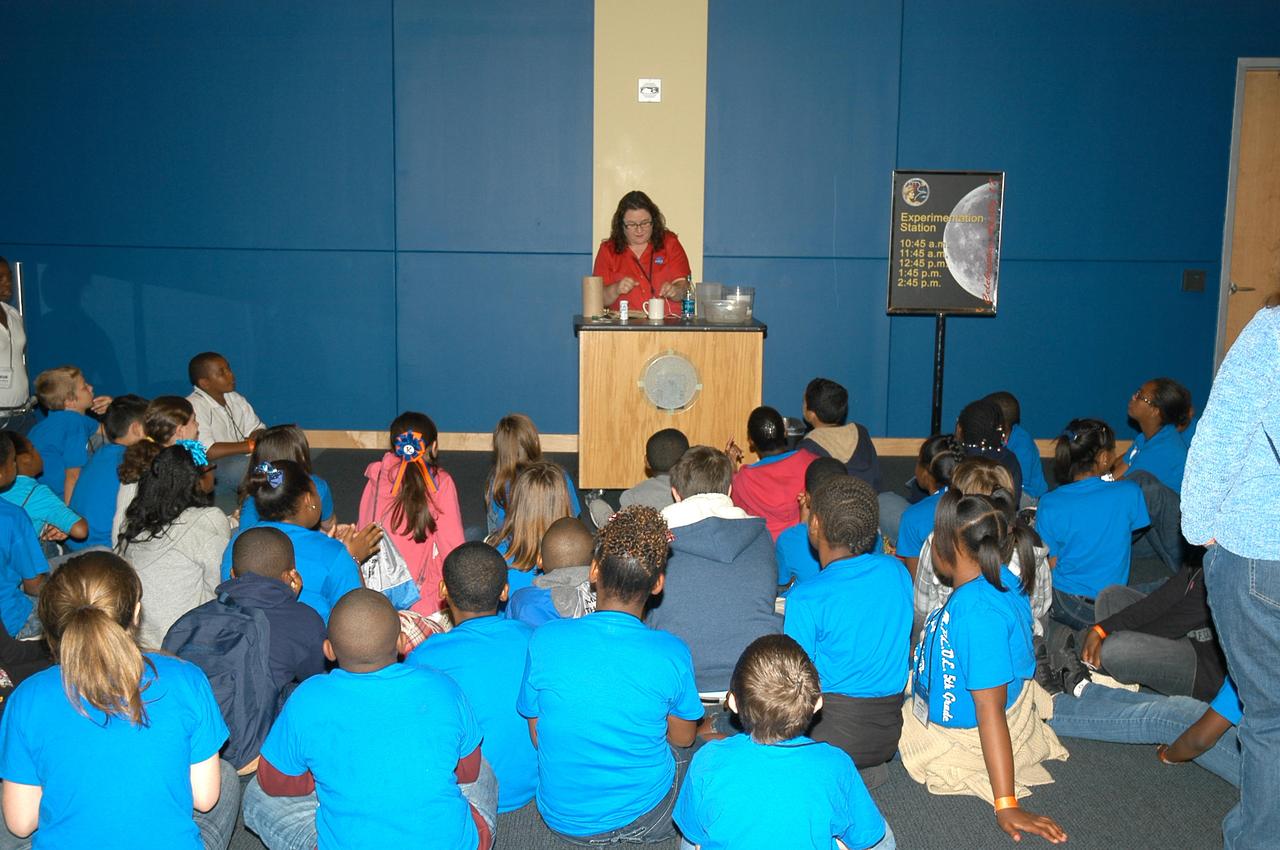
Young visitors to the INFINITY Science Center, a NASA visitors center, on Dec. 7 enjoy a Living and Working in Space presentation during activities celebrating the Apollo 17 lunar mission in 1972. Visitors were able to learn about the historic mission and to participate in hands-on activities. Apollo 17 was the final mission of America's manned lunar effort.
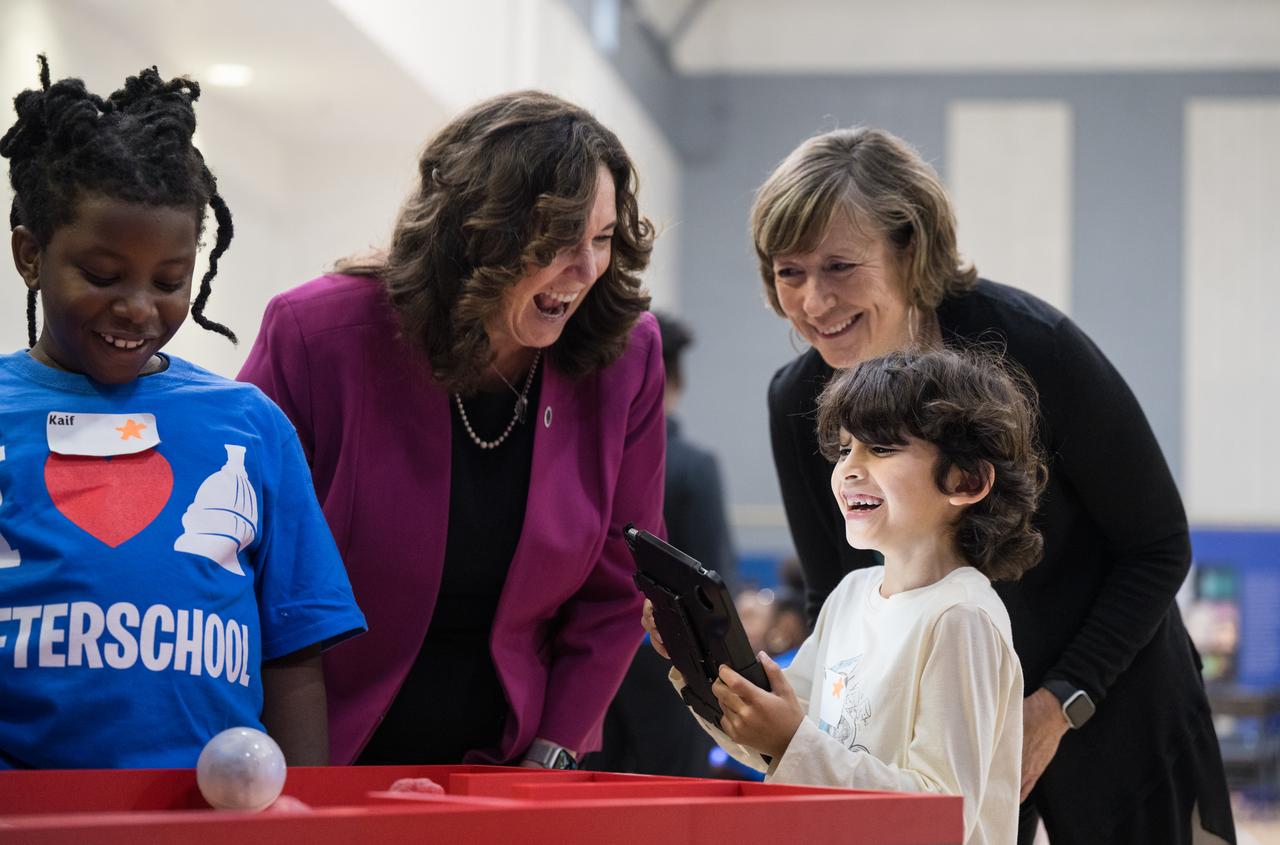
NASA Deputy Associate Administrator for NASA’s Office of STEM Engagement, Kris Brown, right, and U.S. Department of Education Deputy Secretary Cindy Marten, left, watch as a student operates a robot during a STEM event to kickoff the 21st Century Community Learning Centers NASA and U.S. Department of Education partnership, Monday, Sept. 23, 2024 at Wheatley Education Campus (EC) in Washington. Students engaged in NASA hands-on activities and an engineering design challenge. Photo Credit: (NASA/Aubrey Gemignani)

High school and college students, and educators spent a day learning about careers in technical fields in aerospace. They engaged in hands-on activities, tours, and listening to keynote presentations and panels, interacting with NASA’s subject matter experts at Langley Research Center, Hampton Va, Wednesday, April 29, 2026. Photo Credit (NASA/Mark L. Knopp)
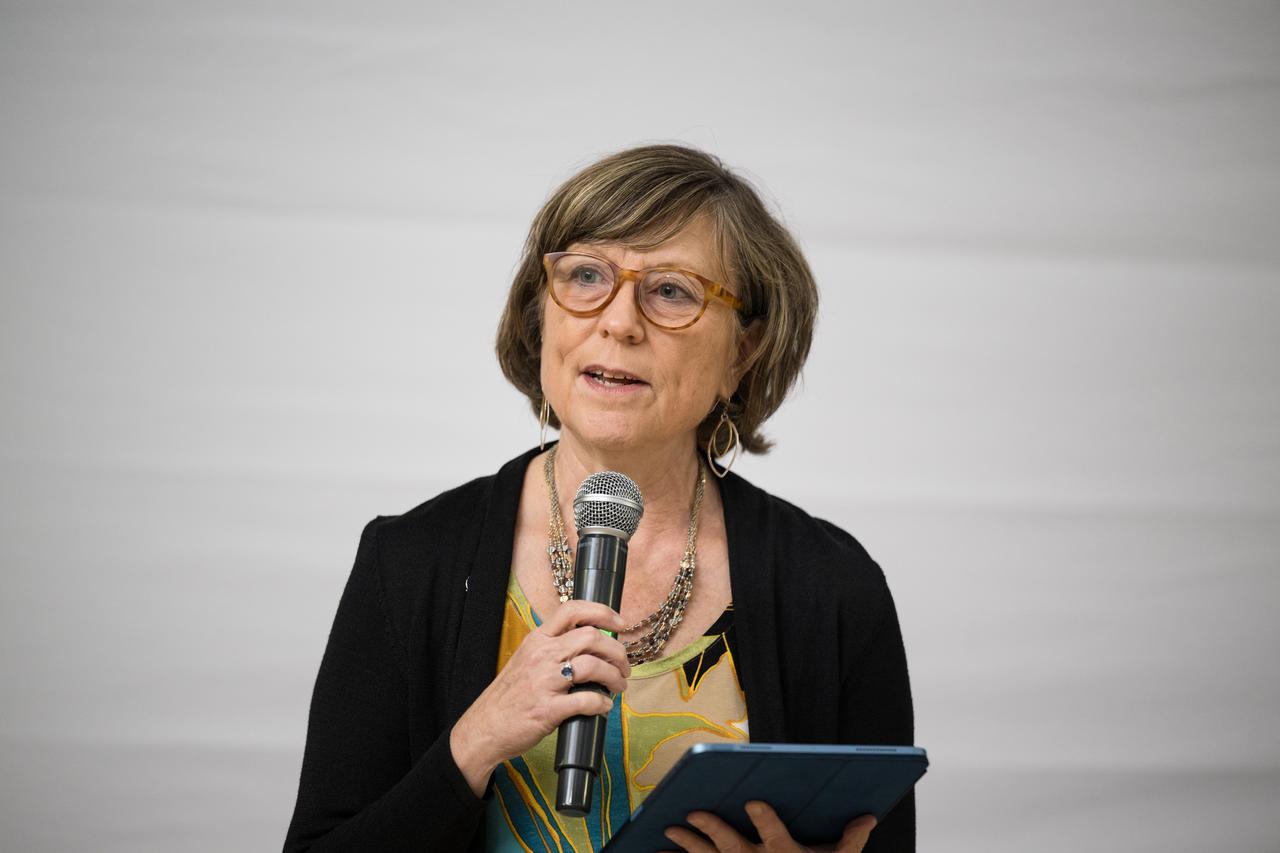
NASA Deputy Associate Administrator for NASA’s Office of STEM Engagement, Kris Brown, provides remarks at a kickoff event for the 21st Century Community Learning Centers NASA and Department of Education partnership, Monday, Sept. 23, 2024 at Wheatley Education Campus in Washington. Students engaged in NASA hands-on activities and an engineering design challenge. Photo Credit: (NASA/Aubrey Gemignani)

High school and college students, and educators spent a day learning about careers in technical fields in aerospace. They engaged in hands-on activities, tours, and listening to keynote presentations and panels, interacting with NASA’s subject matter experts at Langley Research Center, Hampton Va, Wednesday, April 29, 2026. Photo Credit (NASA/Mark L. Knopp)
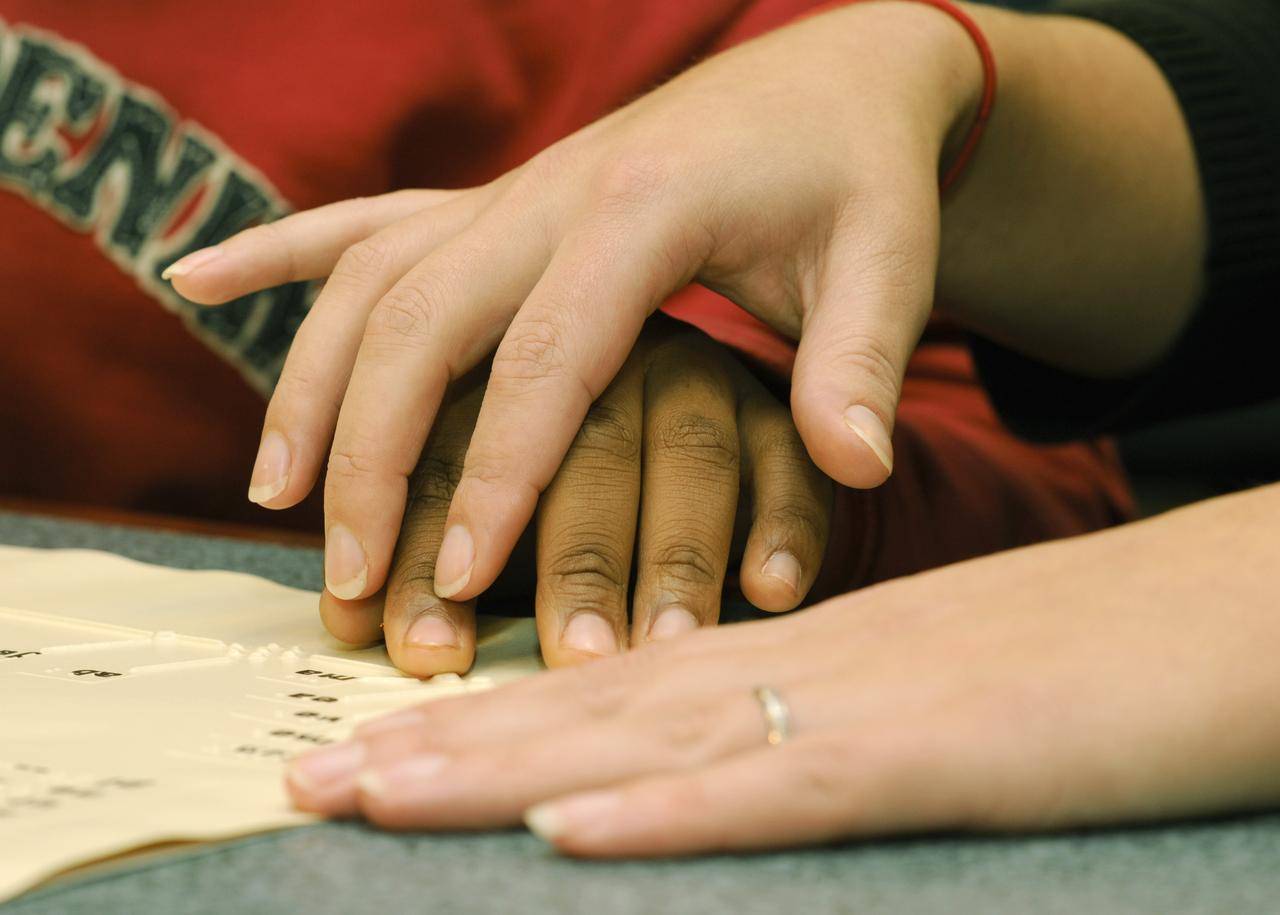
The hands of Maryland School for the Blind student Andrea Washington and science teacher Colleen Shovestull use their sense of touch on a topographical map of the solar system during a visit to NASA Headquarters in Washington, Thursday, Oct. 29, 2009. Seven students from the Maryland School for the Blind visited NASA and participated in activities to learn about NASA'smission, functions, and careers. Photo Credit: (NASA/Paul E. Alers)
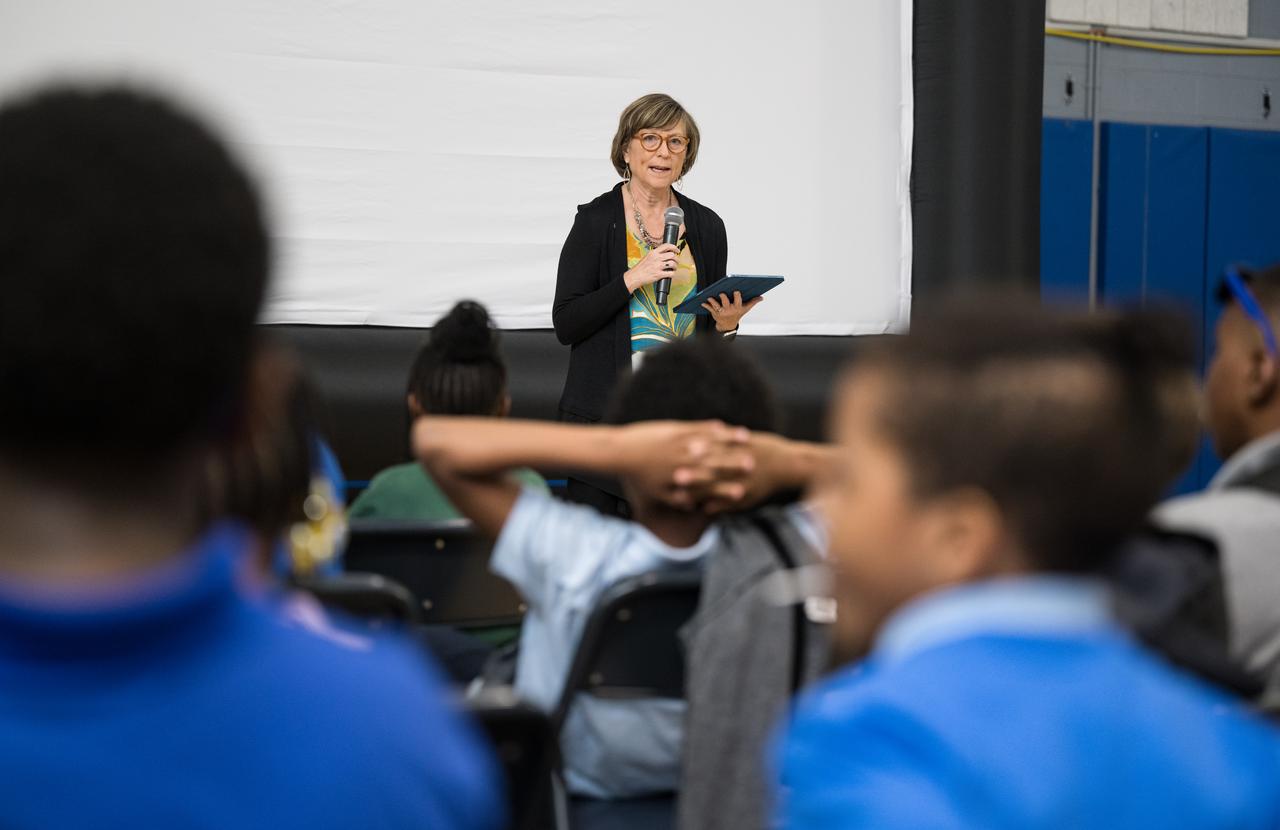
NASA Deputy Associate Administrator for NASA’s Office of STEM Engagement, Kris Brown, provides remarks at a kickoff event for the 21st Century Community Learning Centers NASA and Department of Education partnership, Monday, Sept. 23, 2024 at Wheatley Education Campus in Washington. Students engaged in NASA hands-on activities and an engineering design challenge. Photo Credit: (NASA/Aubrey Gemignani)

High school and college students, and educators spent a day learning about careers in technical fields in aerospace. They engaged in hands-on activities, tours, and listening to keynote presentations and panels, interacting with NASA’s subject matter experts at Langley Research Center, Hampton Va, Wednesday, April 29, 2026. Photo Credit (NASA/Ryan H. Hill)
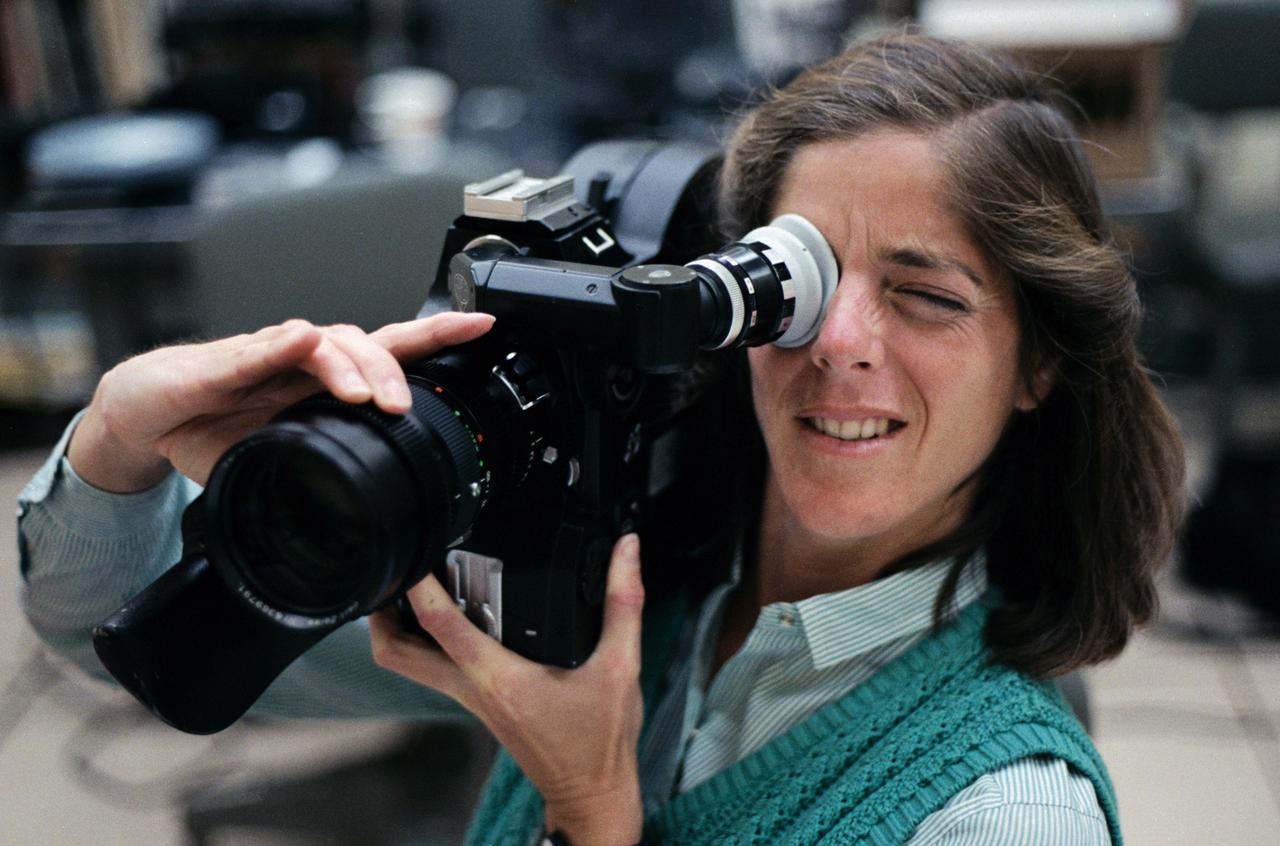
S85-40671 (18 Sept. 1985) --- The two teachers, Barbara R. Morgan and Sharon Christa McAuliffe (out of frame) have hands-on experience with an Arriflex motion picture camera following a briefing on space photography. The two began training Sept. 10, 1985 with the STS-51L crew and learning basic procedures for space travelers. The second week of training included camera training, aircraft familiarization and other activities. Morgan zeroes in on a test subject during a practice session with the Arriflex. Photo credit: NASA

High school and college students, and educators spent a day learning about careers in technical fields in aerospace. They engaged in hands-on activities, tours, and listening to keynote presentations and panels, interacting with NASA’s subject matter experts at Langley Research Center, Hampton Va, Wednesday, April 29, 2026. Photo Credit (NASA/Mark L. Knopp)
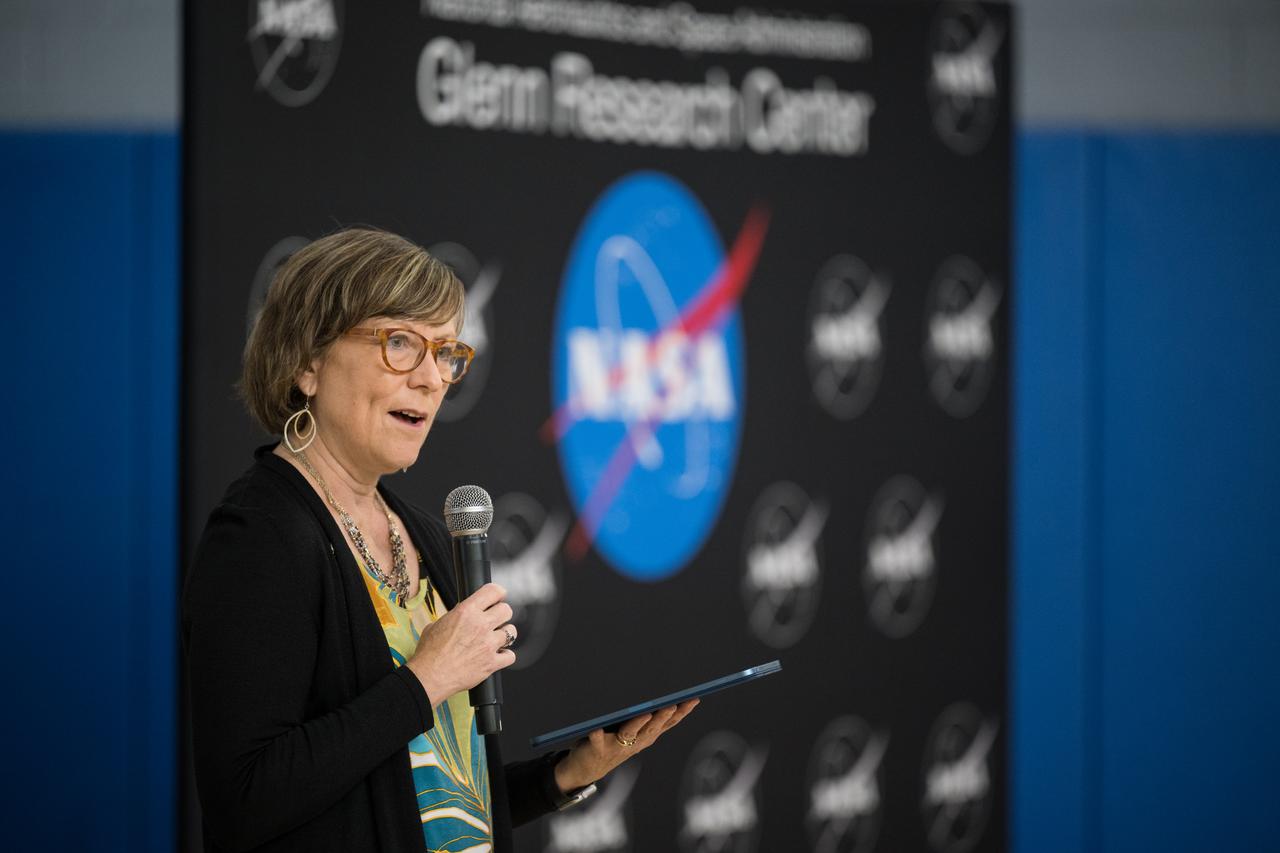
NASA Deputy Associate Administrator for NASA’s Office of STEM Engagement, Kris Brown, provides remarks at a kickoff event for the 21st Century Community Learning Centers NASA and Department of Education partnership, Monday, Sept. 23, 2024 at Wheatley Education Campus in Washington. Students engaged in NASA hands-on activities and an engineering design challenge. Photo Credit: (NASA/Aubrey Gemignani)

High school and college students, and educators spent a day learning about careers in technical fields in aerospace. They engaged in hands-on activities, tours, and listening to keynote presentations and panels, interacting with NASA’s subject matter experts at Langley Research Center, Hampton Va, Wednesday, April 29, 2026. Photo Credit (NASA/Mark L. Knopp)
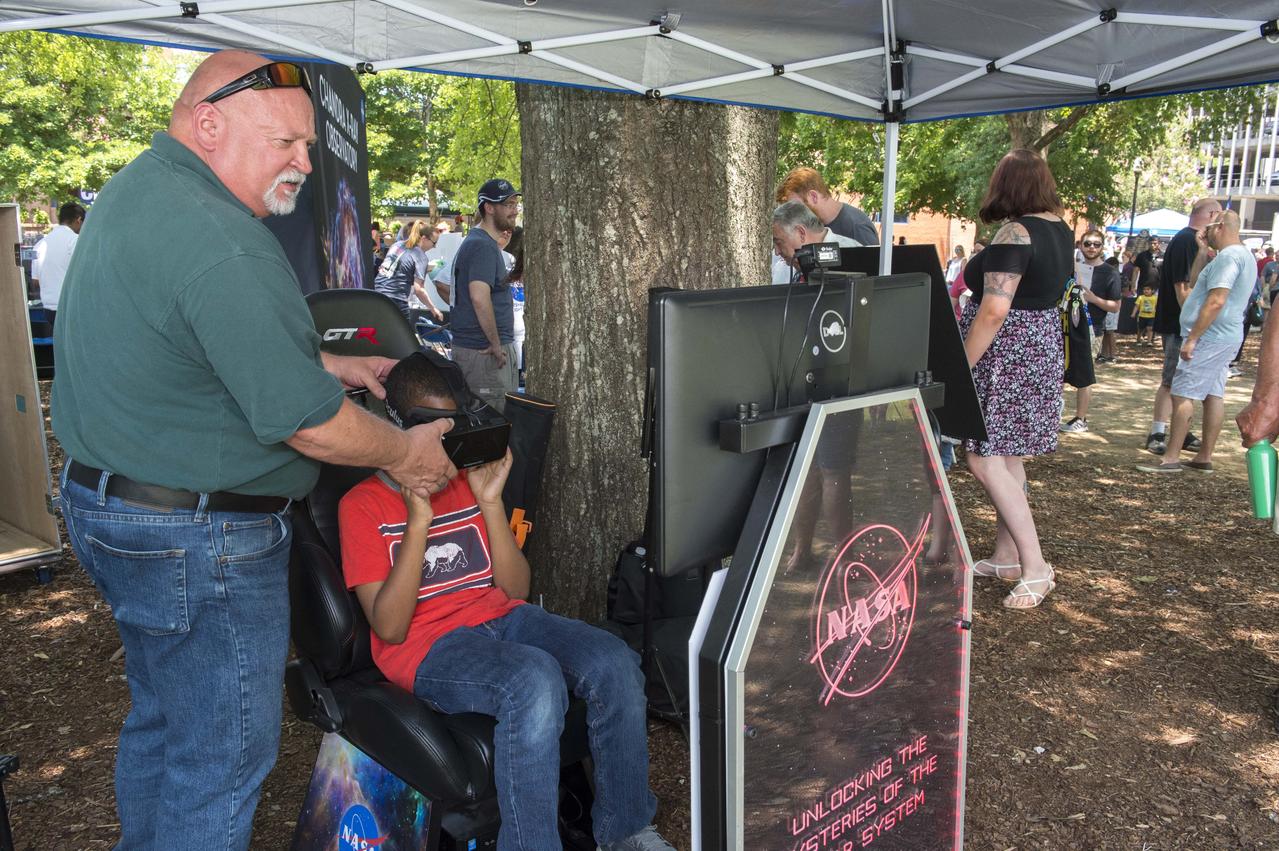
NASA in the Park on June 16 in Huntsville featured more than 60 exhibits and demonstrations by NASA experts, as well as performances by Marshall musicians, educational opportunities, games and hands-on activities for all ages. Brian Mitchell of Marshall’s Planetary Mission Planning Office gives attendees an opportunity to learn about Science missions managed by his office.
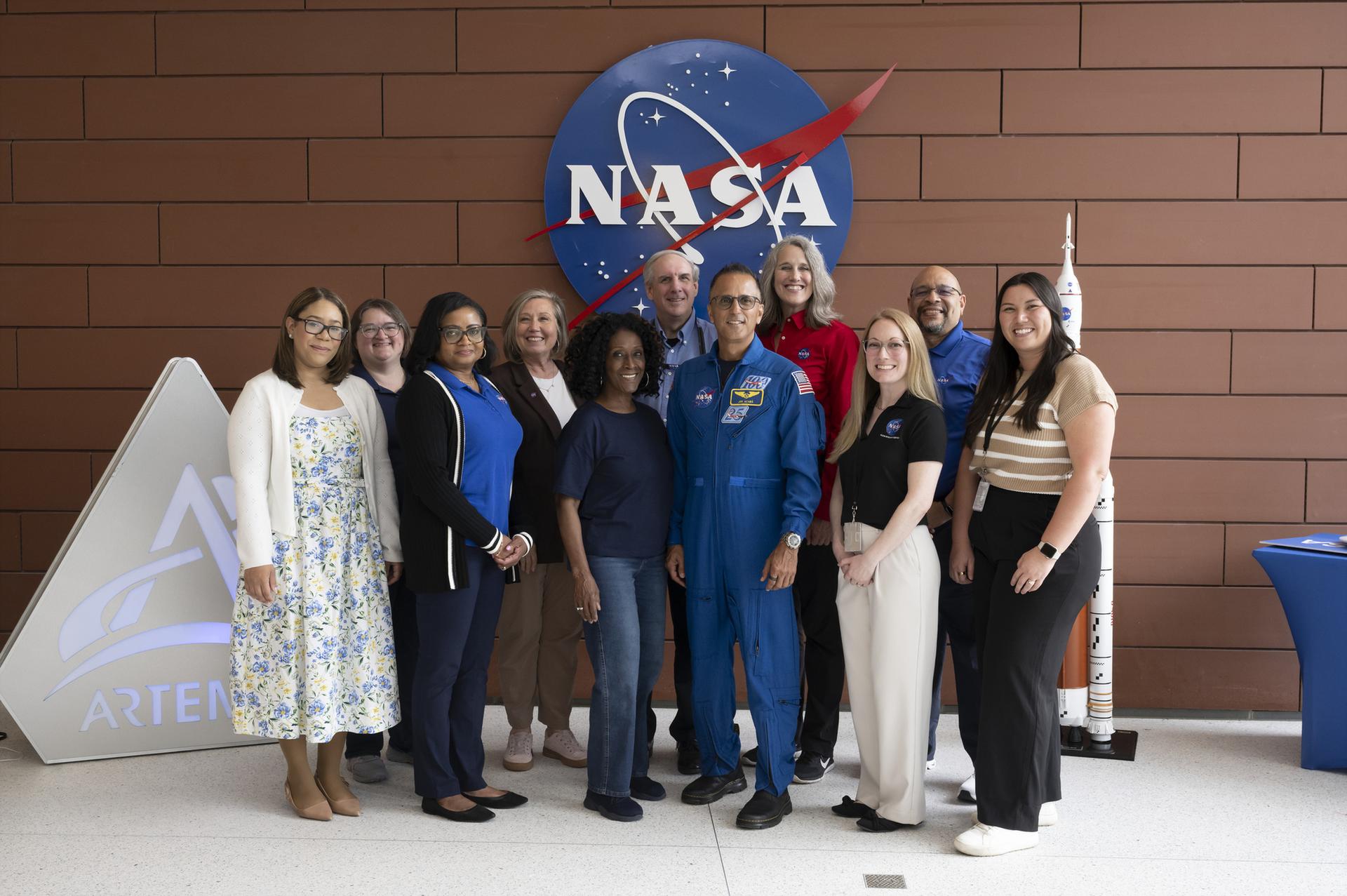
High school and college students, and educators spent a day learning about careers in technical fields in aerospace. They engaged in hands-on activities, tours, and listening to keynote presentations and panels, interacting with NASA’s subject matter experts at Langley Research Center, Hampton Va, Wednesday, April 29, 2026. Photo Credit (NASA/Ryan H. Hill)
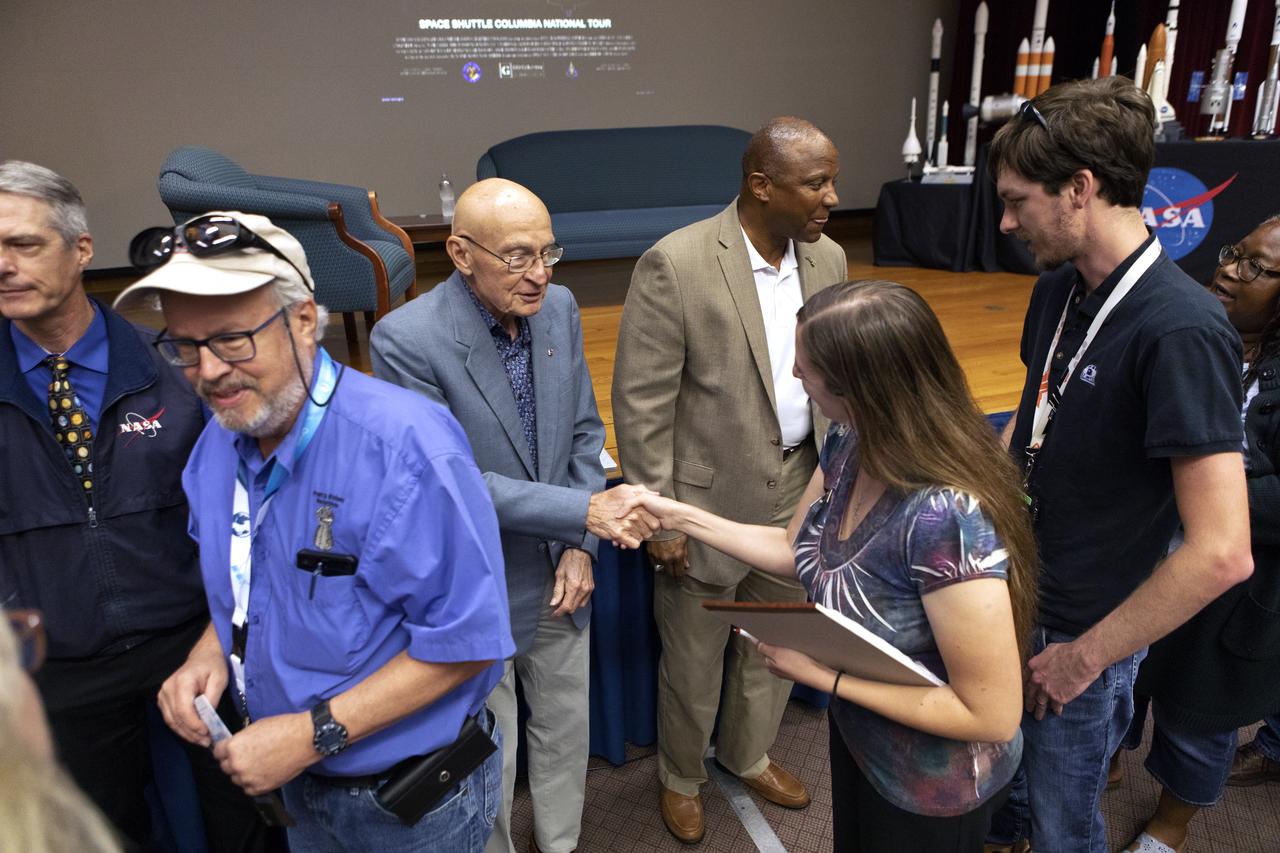
Former space shuttle launch director Bob Sieck shakes hands with an attendee of “Columbia: The Mission Continues,” in Kennedy Space Center’s Training Auditorium on April 12, 2019. Organized by the Apollo Challenger Columbia Lessons Learned Program (ACCLLP), the event is part of the Space Shuttle Columbia national tour and took place on the 38th anniversary of STS-1, the first orbital spaceflight of NASA’s Space Shuttle Program. The tour launched at Kennedy and will make its way to each of the 10 NASA centers.
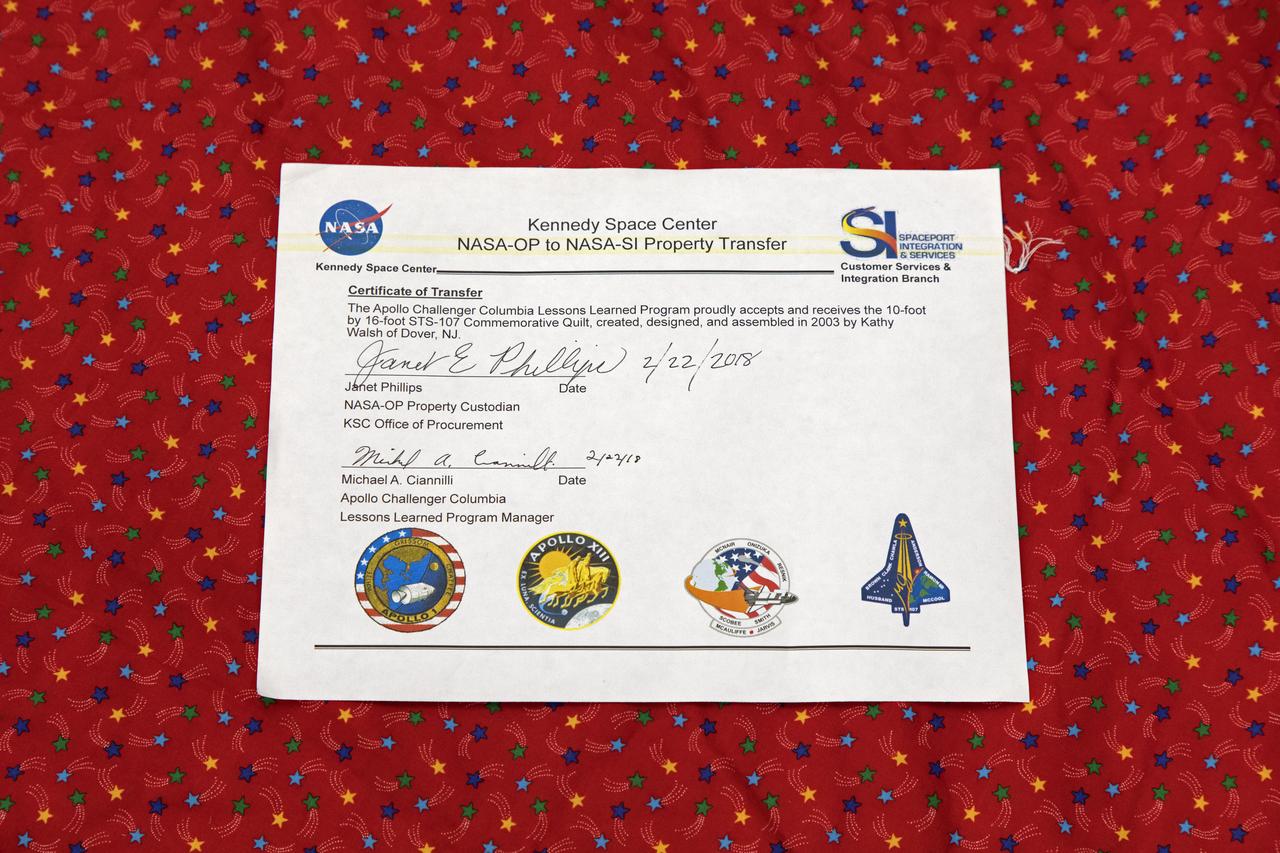
A certificate is on display that confirms the transfer of a giant hand-made quilt in honor of space shuttle Columbia and her crew from the Office of Procurement to the Columbia Preservation Room inside the Vehicle Assembly Building at NASA's Kennedy Space Center in Florida. The quilt was made by Katherine Walsh, a lifelong NASA and space program fan originally from Kentucky. The quilt will be displayed with its certificate in the preservation room as part of NASA's Apollo, Challenger, Columbia Lessons Learned Program.
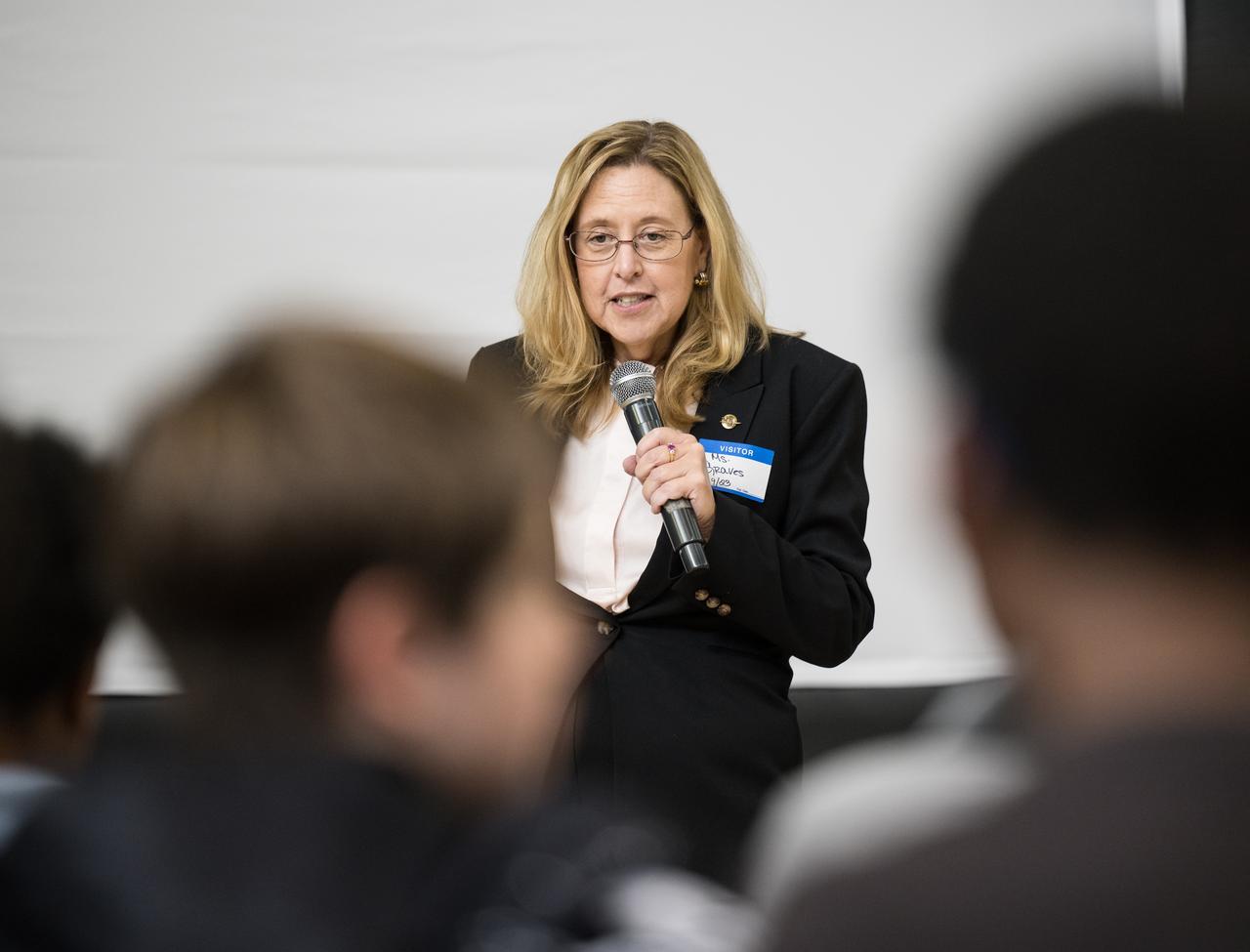
STEM Integration Manager at NASA’s Glenn Research Center (GRC) Office of STEM Engagement, Catherine Graves, provides welcome remarks at a kickoff event for the 21st Century Community Learning Centers NASA and Department of Education partnership, Monday, Sept. 23, 2024 at Wheatley Education Campus in Washington. Students engaged in NASA hands-on activities and an engineering design challenge. Photo Credit: (NASA/Aubrey Gemignani)

Mike Ciannilli, Apollo, Challenger, Columbia Lessons Learned Program manager, at right, accepts a certificate for turnover of a hand-made quilt in honor of space shuttle Columbia and her crew from Janet Phillips, property custodian in NASA Kennedy Space Center's Office of Procurement. Turnover of the quilt took place in the Columbia Preservation Room inside the Vehicle Assembly Building at Kennedy Space Center in Florida. The quilt was made by Katherine Walsh, a lifelong NASA and space program fan originally from Kentucky.

High school and college students, and educators spent a day learning about careers in technical fields in aerospace. They engaged in hands-on activities, tours, and listening to keynote presentations and panels, interacting with NASA’s subject matter experts at Langley Research Center, Hampton Va, Wednesday, April 29, 2026. Photo Credit (NASA/Mark L. Knopp)

High school and college students, and educators spent a day learning about careers in technical fields in aerospace. They engaged in hands-on activities, tours, and listening to keynote presentations and panels, interacting with NASA’s subject matter experts at Langley Research Center, Hampton Va, Wednesday, April 29, 2026. Photo Credit (NASA/Mark L. Knopp)
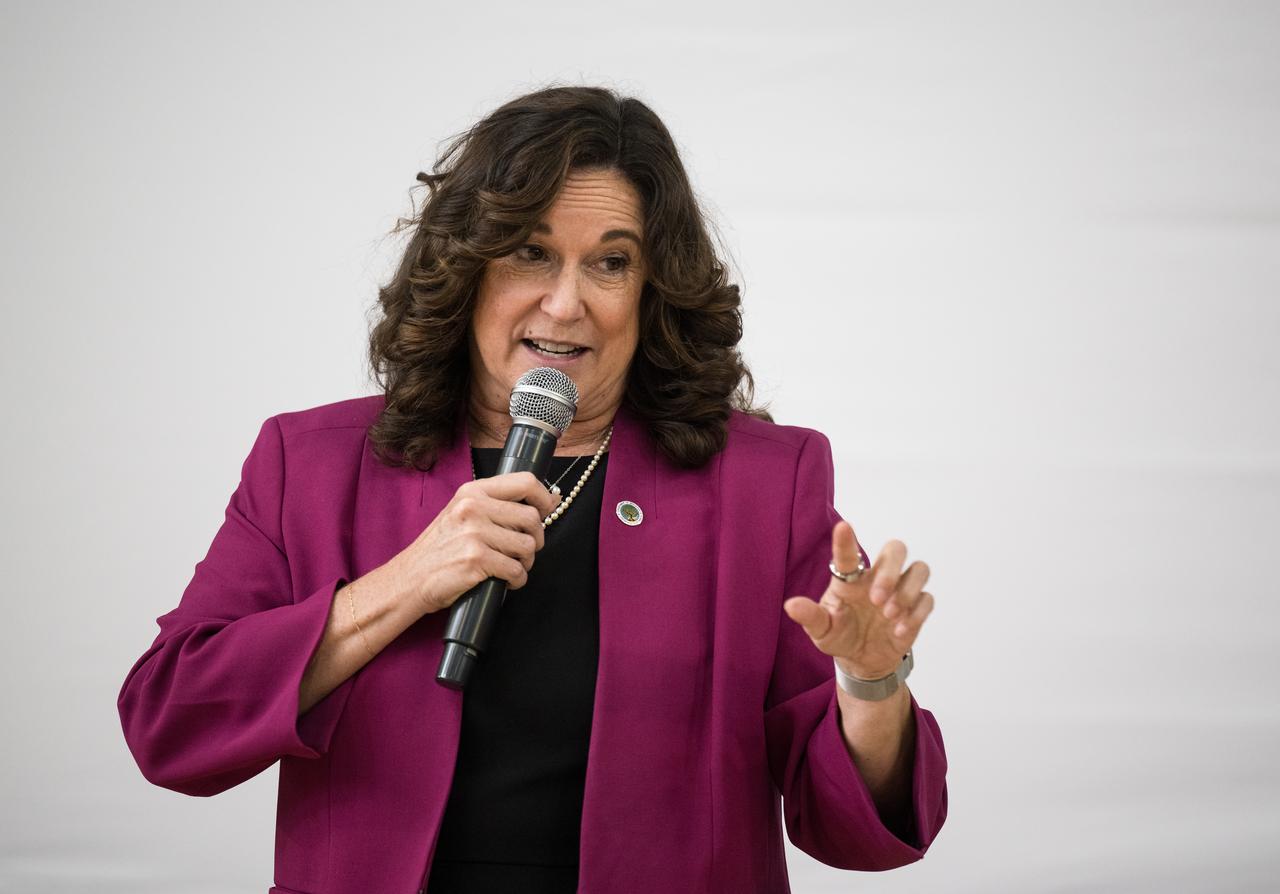
Deputy Secretary of the U.S. Department of Education, Cindy Marten, provides remarks at a kickoff event for the 21st Century Community Learning Centers NASA and Department of Education partnership, Monday, Sept. 23, 2024 at Wheatley Education Campus in Washington. Students engaged in NASA hands-on activities and an engineering design challenge. Photo Credit: (NASA/Aubrey Gemignani)
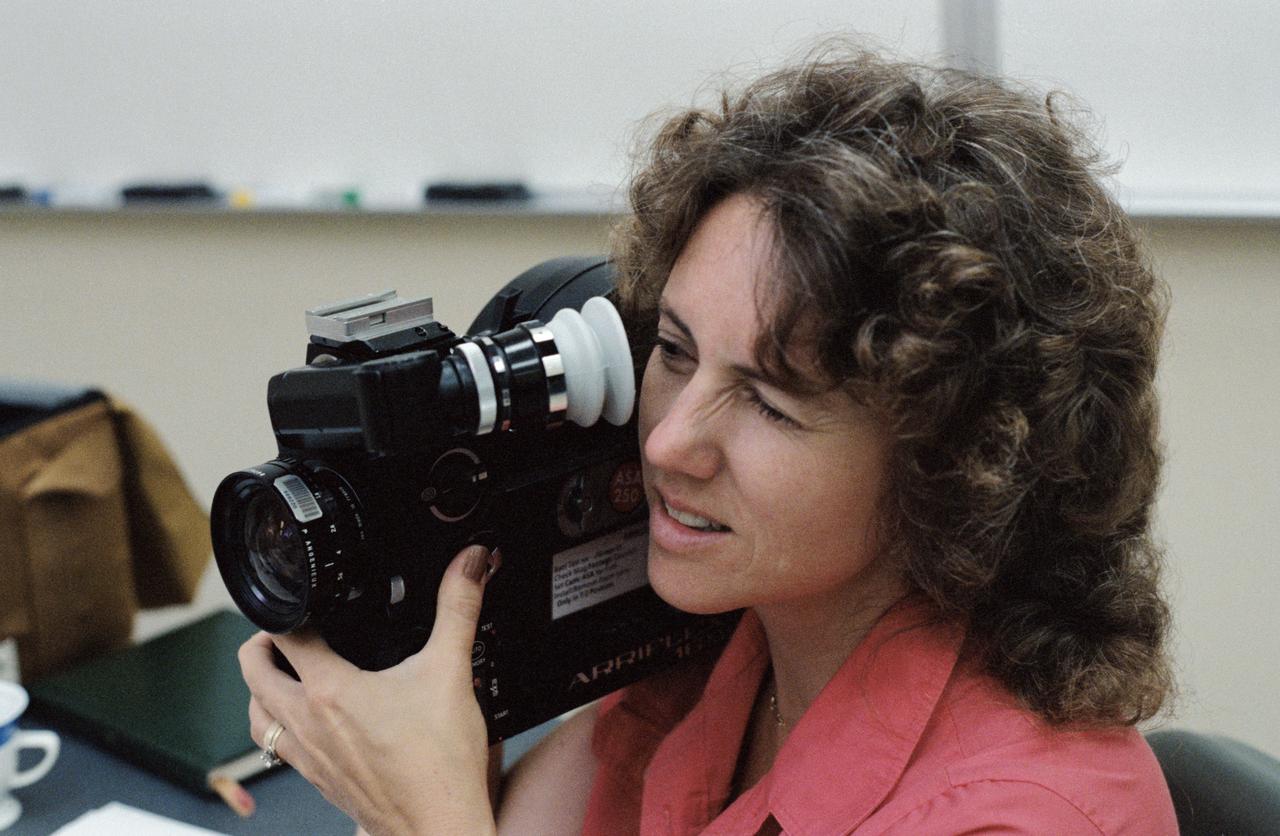
S85-40670 (18 Sept. 1985) --- The two teachers, Sharon Christa McAuliffe and Barbara R. Morgan (out of frame) have hands-on experience with an Arriflex motion picture camera following a briefing on space photography. The two began training Sept. 10, 1985 with the STS-51L crew and learning basic procedures for space travelers. The second week of training included camera training, aircraft familiarization and other activities. McAuliffe zeroes in on a test subject during a practice session with the Arriflex. Photo credit: NASA

High school and college students, and educators spent a day learning about careers in technical fields in aerospace. They engaged in hands-on activities, tours, and listening to keynote presentations and panels, interacting with NASA’s subject matter experts at Langley Research Center, Hampton Va, Wednesday, April 29, 2026. Photo Credit (NASA/Ryan H. Hill)
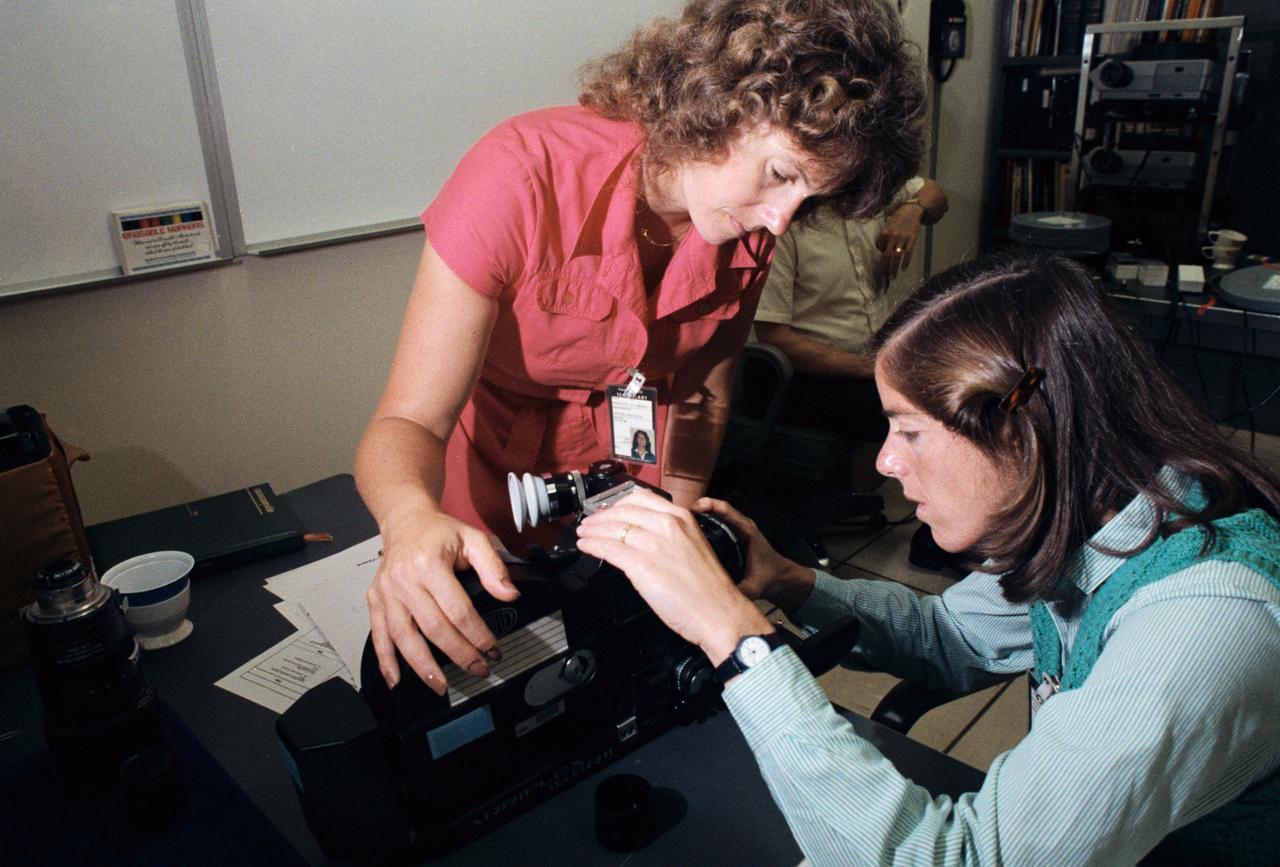
S85-40669 (18 Sept. 1985) --- The two teachers, Sharon Christa McAuliffe (left) and Barbara R. Morgan have hands-on experience with an Arriflex motion picture camera following a briefing on space photography. The two began training Sept. 10, 1985 with the STS-51L crew and learning basic procedure for space travelers. The second week of training included camera training, aircraft familiarization and other activities. Morgan adjusts a lens as a studious McAuliffe looks on. Photo credit: NASA

High school and college students, and educators spent a day learning about careers in technical fields in aerospace. They engaged in hands-on activities, tours, and listening to keynote presentations and panels, interacting with NASA’s subject matter experts at Langley Research Center, Hampton Va, Wednesday, April 29, 2026. Photo Credit (NASA/Ryan H. Hill)
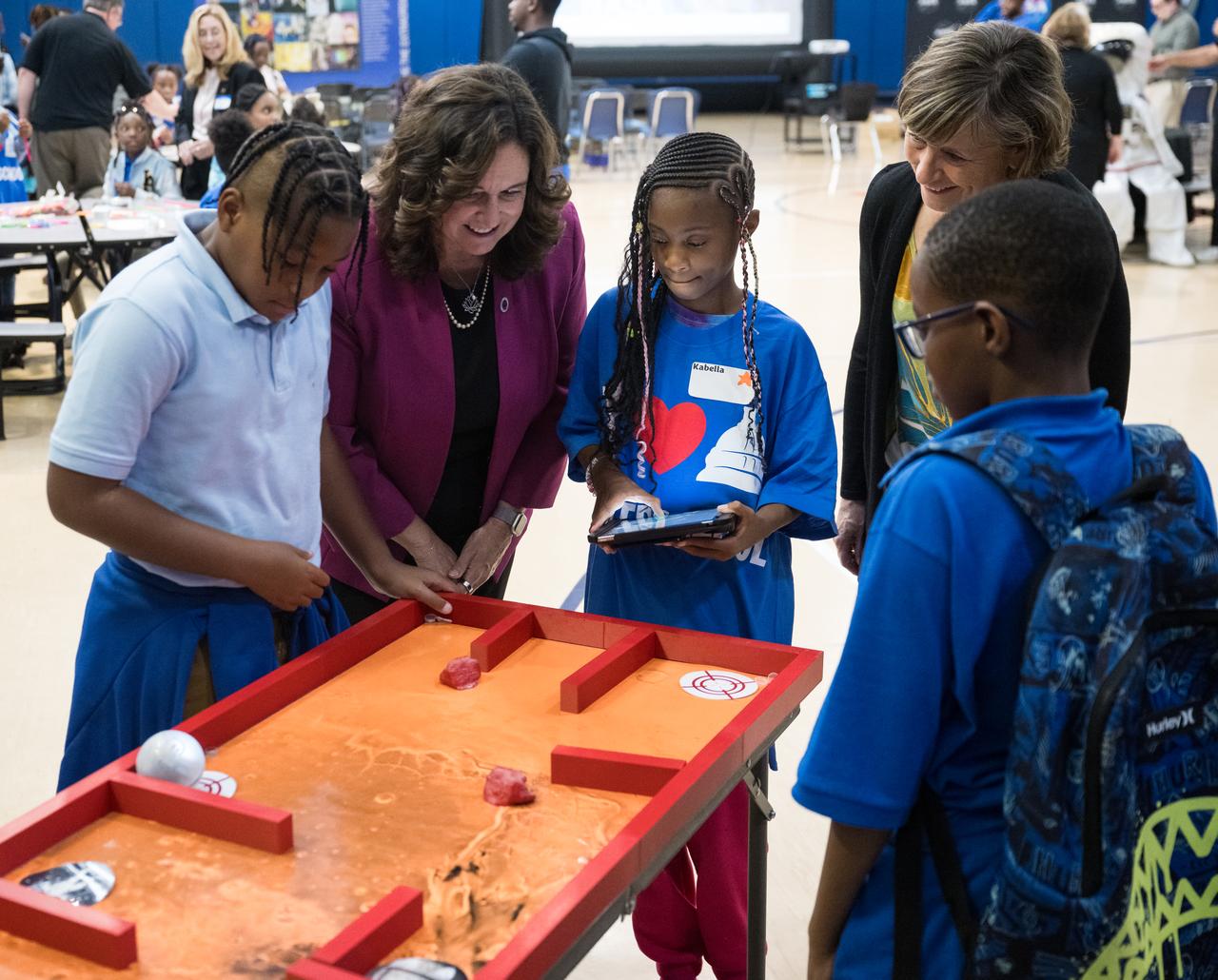
NASA Deputy Associate Administrator for NASA’s Office of STEM Engagement, Kris Brown, second from right, and U.S. Department of Education Deputy Secretary Cindy Marten, second from left, watch as a student operates a robot during a STEM event to kickoff the 21st Century Community Learning Centers NASA and U.S. Department of Education partnership, Monday, Sept. 23, 2024 at Wheatley Education Campus (EC) in Washington. Students engaged in NASA hands-on activities and an engineering design challenge. Photo Credit: (NASA/Aubrey Gemignani)
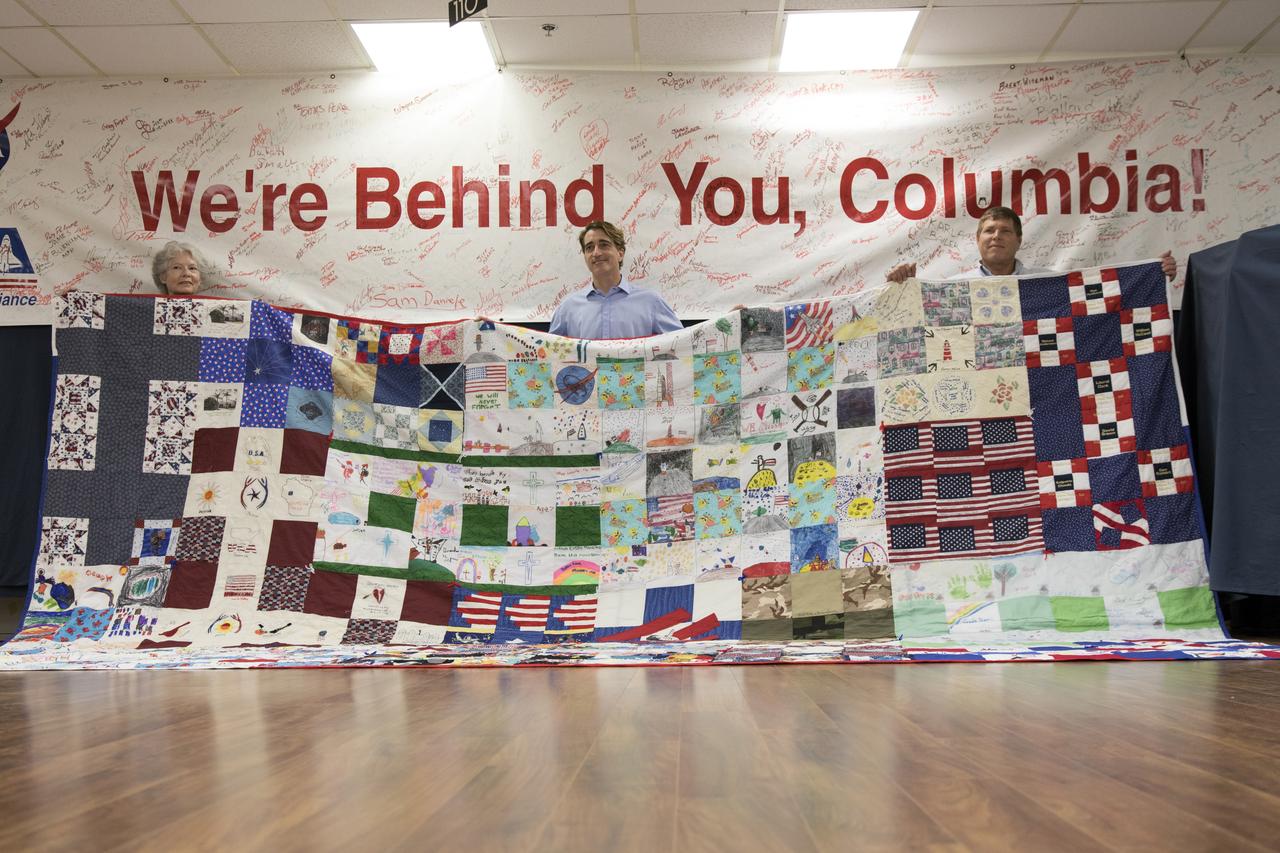
A giant hand-made quilt in honor of space shuttle Columbia and her crew was turned over to the Columbia Preservation Room inside the Vehicle Assembly Building at NASA's Kennedy Space Center in Florida. The quilt was made by Katherine Walsh, a lifelong NASA and space program fan originally from Kentucky. From left, behind the quilt are Janet Phillips, property custodian in Kennedy's Office of Procurement; Mike Ciannilli, Apollo, Challenger, Columbia Lessons Learned Program manager; and Kevin Panik, customer advocate in Spaceport Integration.
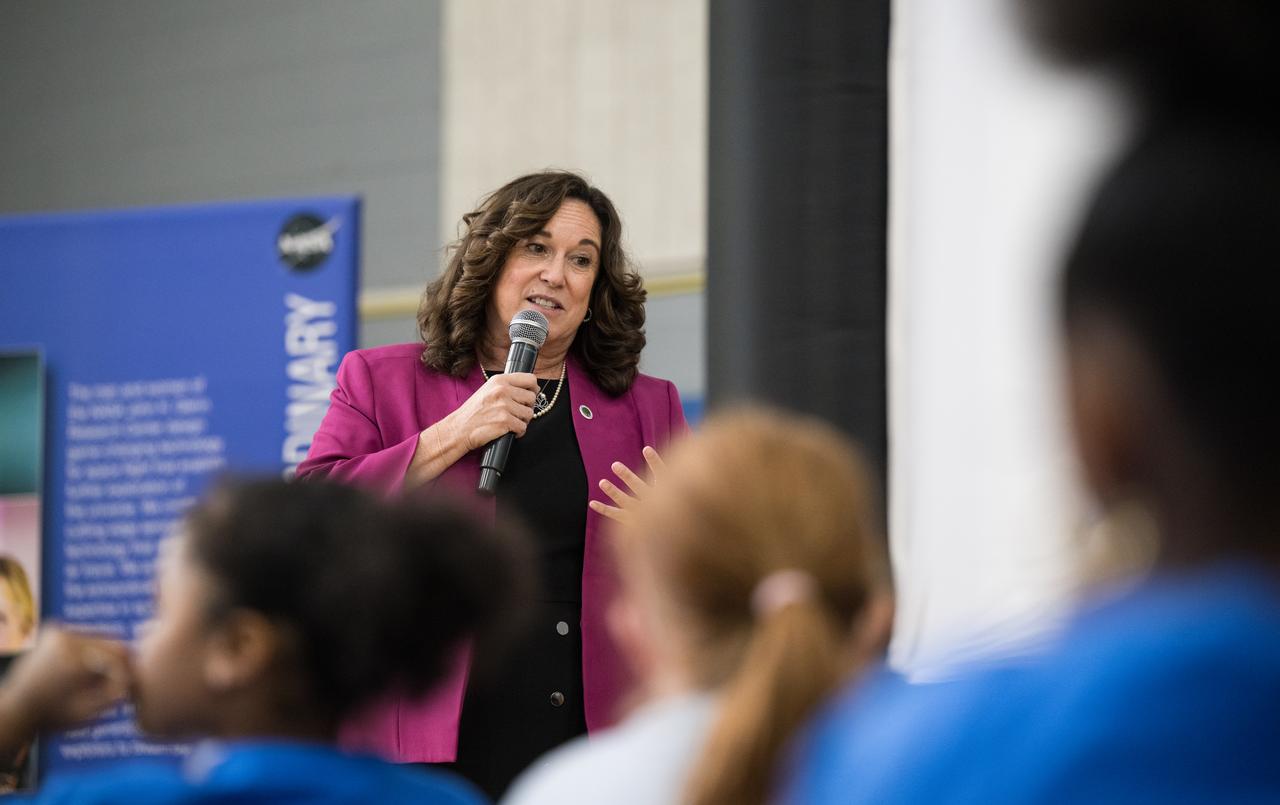
Deputy Secretary of the U.S. Department of Education, Cindy Marten, provides remarks at a kickoff event for the 21st Century Community Learning Centers NASA and Department of Education partnership, Monday, Sept. 23, 2024 at Wheatley Education Campus in Washington. Students engaged in NASA hands-on activities and an engineering design challenge. Photo Credit: (NASA/Aubrey Gemignani)

High school and college students, and educators spent a day learning about careers in technical fields in aerospace. They engaged in hands-on activities, tours, and listening to keynote presentations and panels, interacting with NASA’s subject matter experts at Langley Research Center, Hampton Va, Wednesday, April 29, 2026. Photo Credit (NASA/Mark L. Knopp)
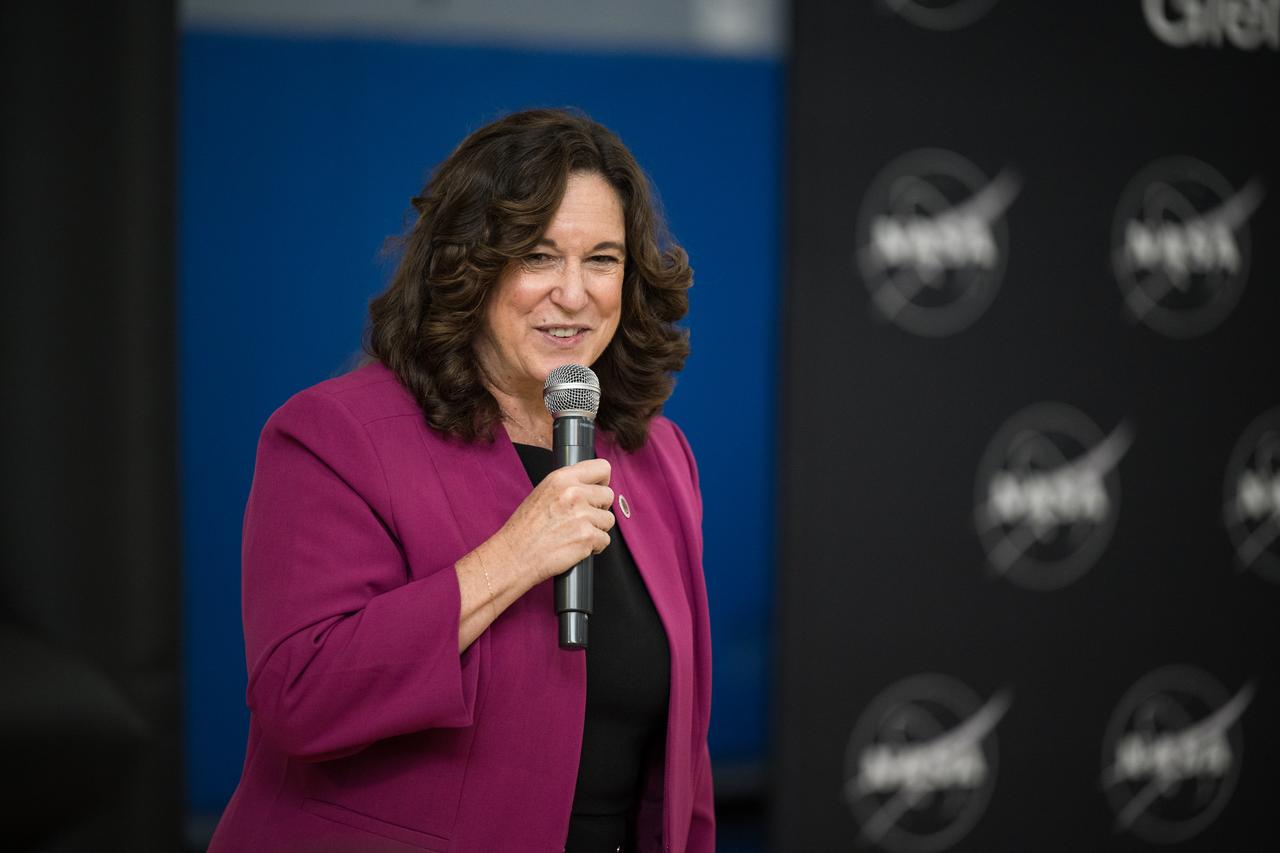
Deputy Secretary of the U.S. Department of Education, Cindy Marten, provides remarks at a kickoff event for the 21st Century Community Learning Centers NASA and Department of Education partnership, Monday, Sept. 23, 2024 at Wheatley Education Campus in Washington. Students engaged in NASA hands-on activities and an engineering design challenge. Photo Credit: (NASA/Aubrey Gemignani)
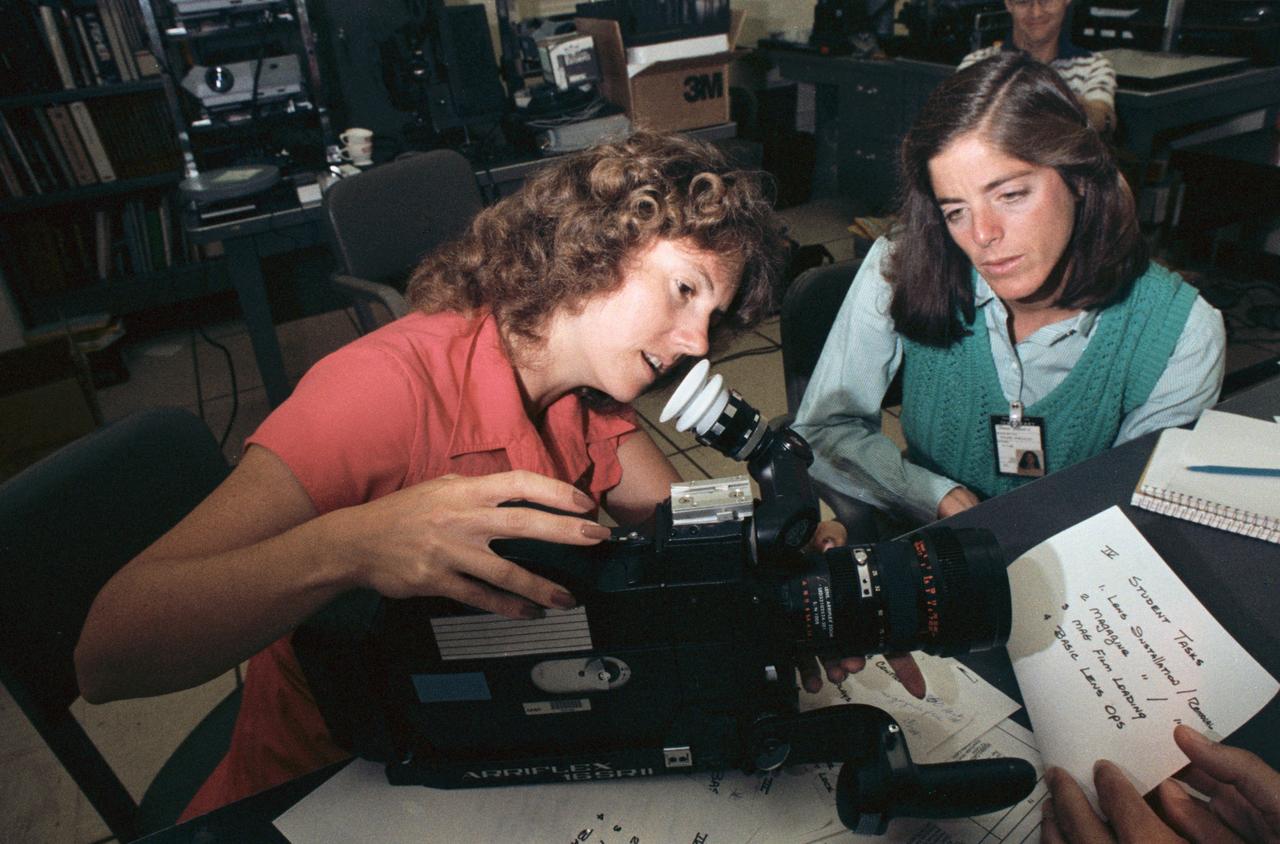
S85-40668 (18 Sept. 1985) --- The two teachers, Sharon Christa McAuliffe (left) and Barbara R. Morgan have hands-on experience with an Arriflex motion picture camera following a briefing on space photography. The two began training Sept. 10, 1985 with the STS-51L crew and learning basic procedures for space travelers. The second week of training included camera training, aircraft familiarization and other activities. Photo credit: NASA
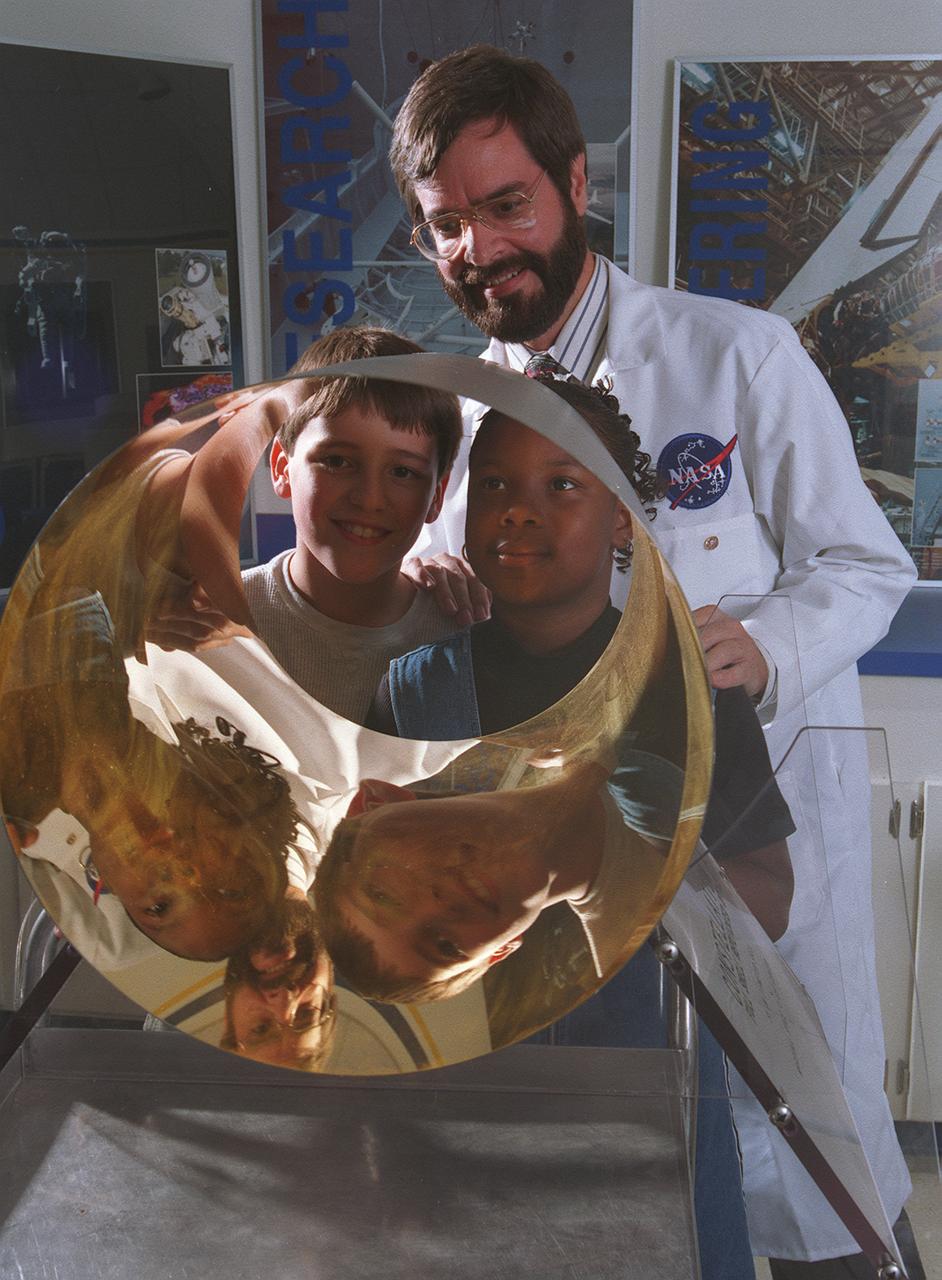
Through Marshall Space Flight Center (MSFC) Education Department, over 400 MSFC employees have volunteered to support educational program during regular work hours. Project LASER (Learning About Science, Engineering, and Research) provides support for mentor/tutor requests, education tours, classroom presentations, and curriculum development. This program is available to teachers and students living within commuting distance of the NASA/MSFC in Huntsville, Alabama (approximately 50-miles radius). This image depicts students viewing their reflections in an x-ray mirror with Marshall optic engineer Vince Huegele at the Discovery Laboratory, which is an onsite MSFC laboratory facility that provides hands-on educational workshop sessions for teachers and students learning activities.
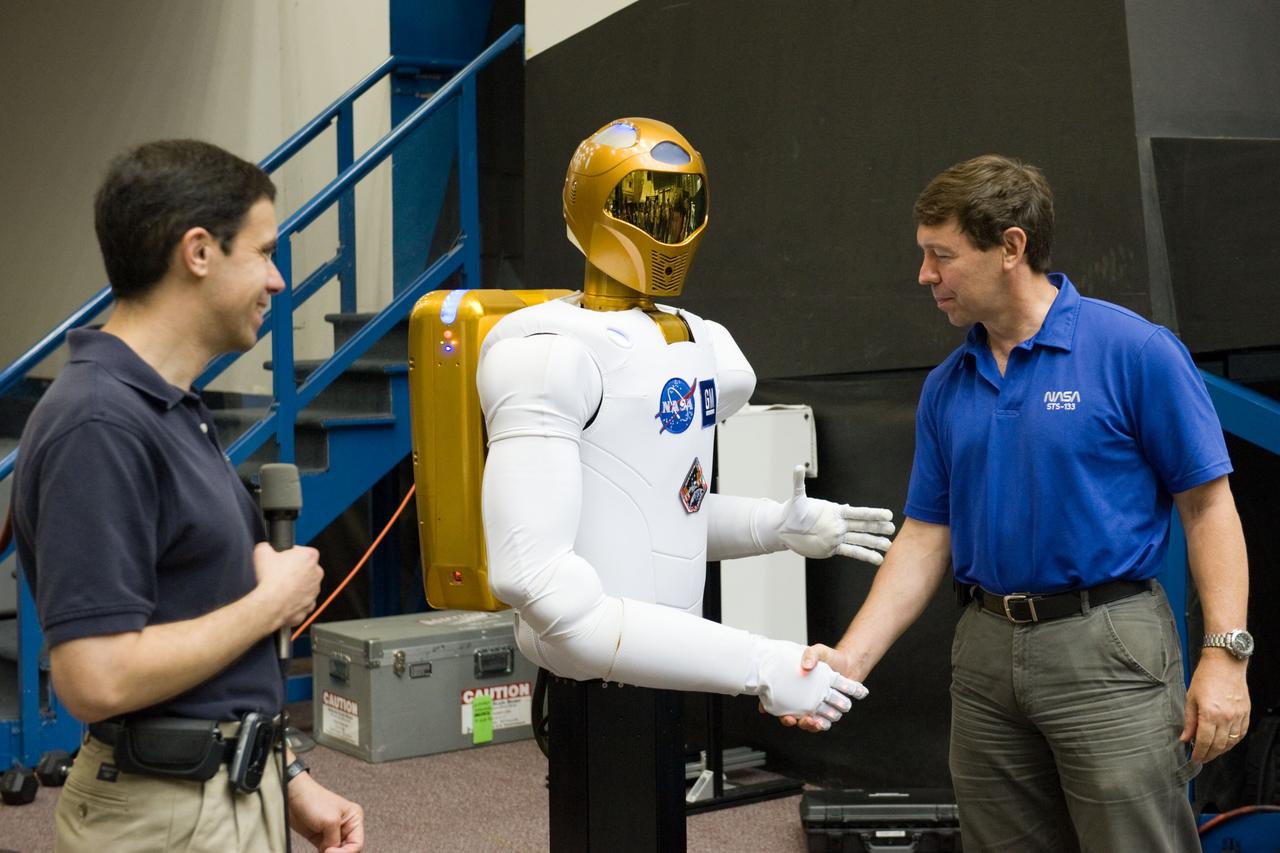
JSC2010-E-112701 (4 Aug. 2010) --- NASA astronaut Michael Barratt, STS-133 mission specialist, shakes hands with Robonaut 2 (R2) during media day in the Space Vehicle Mock-up Facility at NASA's Johnson Space Center. R2 is the first humanoid robot to travel to space and the first U.S.-built robot to visit the International Space Station. R2 will stay on the space station indefinitely to allow engineers on the ground to learn more about how humanoid robots fare in microgravity. Ron Diftler, NASA Robonaut project manager, is at left. Photo credit: NASA or National Aeronautics and Space Administration
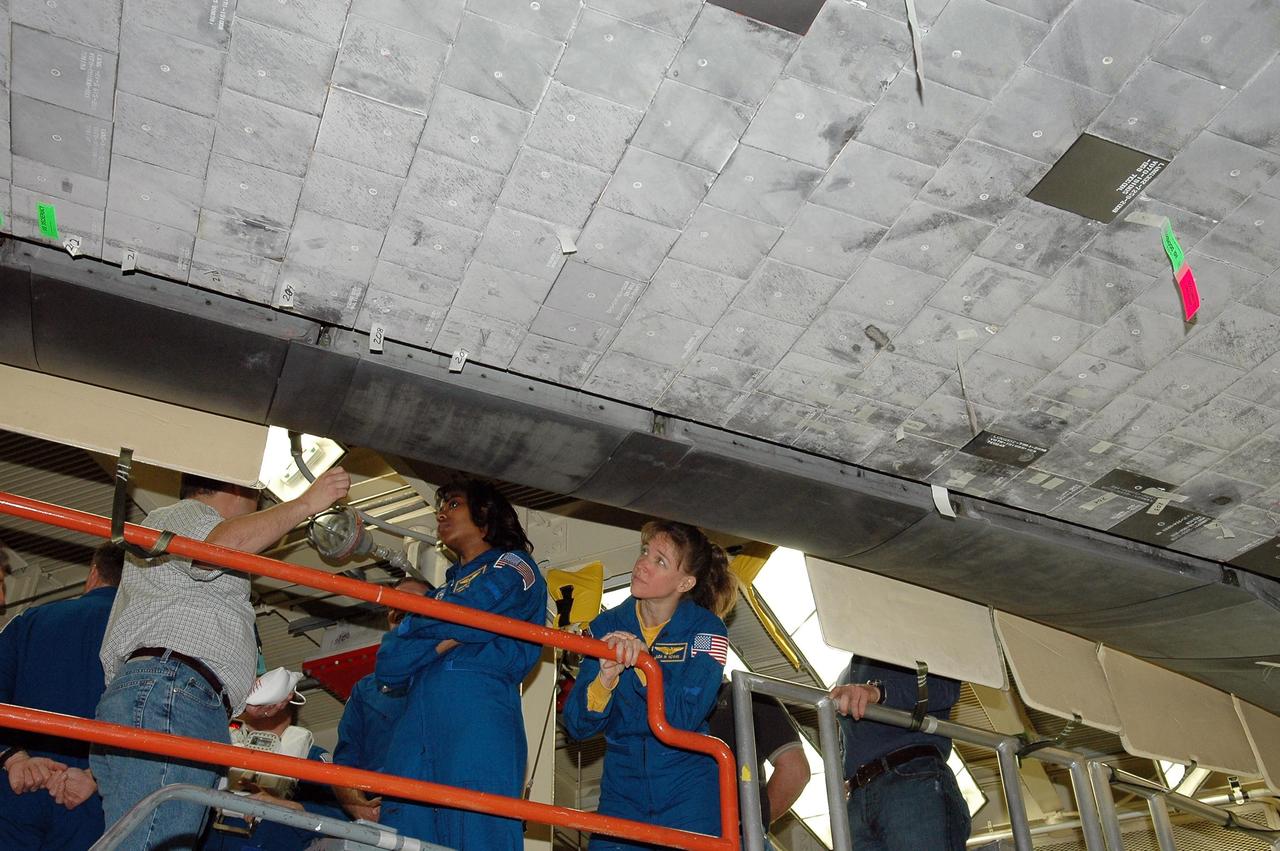
KENNEDY SPACE CENTER, FLA. - Inside the Orbiter Processing Facility bay 3 at NASA's Kennedy Space Center, STS-121 Mission Specialists Stephanie Wilson (left) and Lisa Nowak learn from technicians the work that has been done on Discovery, the launch vehicle for the mission. They and other crew members -- Commander Steven Lindsey, Pilot Mark Kelly and Mission Specialists Michael Fossum and Piers Sellers -- are at Kennedy for a crew equipment interface test, which provides hands-on experience with equipment they will use on orbit. Launch of STS-121, the second return-to-flight mission, is scheduled for no earlier than May. Photo credit: NASA/Kim Shiflett
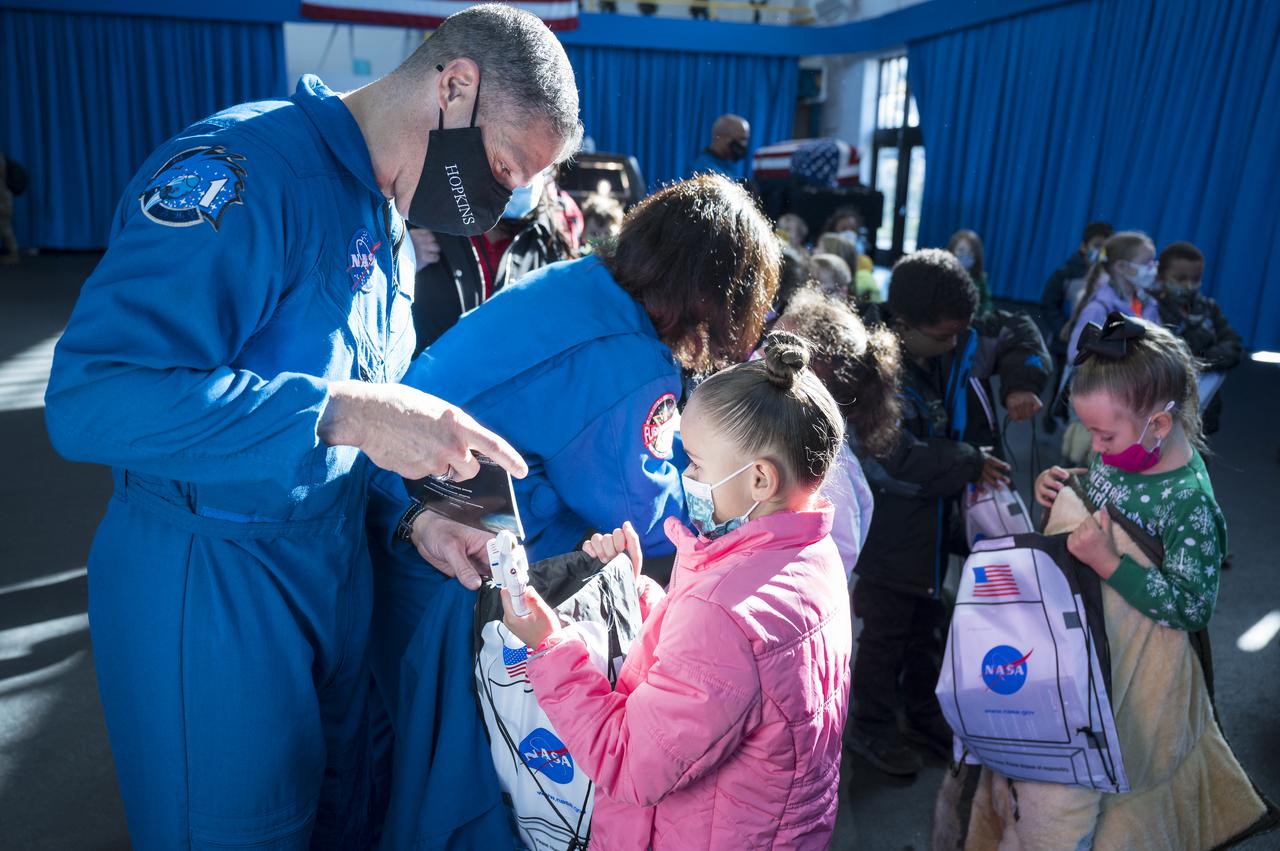
SpaceX Crew-1 NASA astronaut Mike Hopkins and Shannon Walker, hand out NASA bags to students of the Learn DC public charter school at Joint Base Anacostia-Bolling (JBAB), Friday, Nov. 19, 2021, in Washington. Hopkins, Walker, NASA astronaut Victor Glover, and Japan Aerospace Exploration Agency (JAXA) astronaut Soichi Noguchi, launched on the first crew rotation mission to the International Space Station for SpaceX’s Falcon 9 and Crew Dragon spacecraft as part of the agency’s Commercial Crew Program and spent 168 days in space across Expeditions 64 and 65. Photo Credit: (NASA/Aubrey Gemignani)
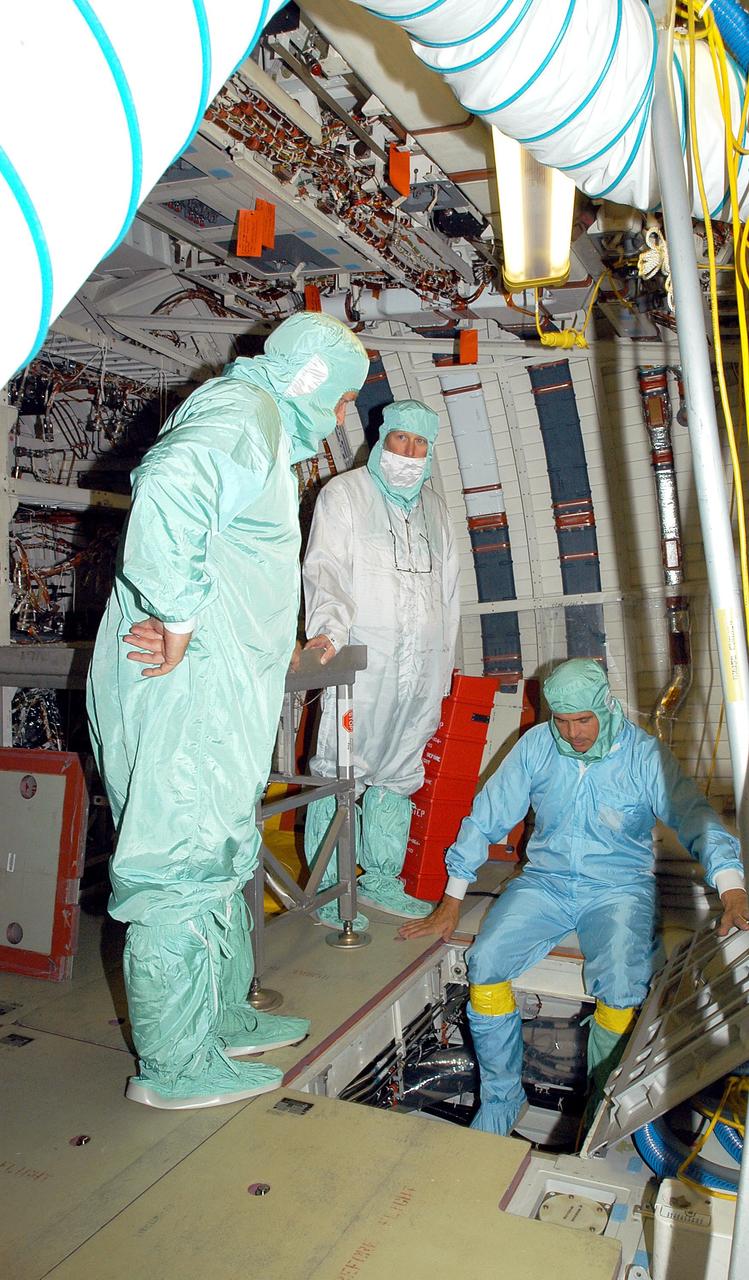
KENNEDY SPACE CENTER, FLA. - In the middeck of Endeavour, in the Orbiter Processing Facility, Center Director Jim Kennedy (far left) watches as a technician gets ready to lower himself through the LiOH door into the Environmental Control and Life Support System (ECLSS) bay. LiOH refers to lithium hydroxide, canisters of which are stored in the ECLSS bay under the middeck floor. During flight, cabin air from the cabin fan is ducted to two LiOH canisters, where carbon dioxide is removed and activated charcoal removes odors and trace contaminants. Kennedy is taking an opportunity to learn first-hand what workers are doing to enable Return to Flight. Endeavour is in an Orbiter Major Modification period.

CAPE CANAVERAL, Fla. – Inside the Educator Resource Center at NASA’s Kennedy Space Center Visitor Complex in Florida, science teacher April Lanotte displays the Museum in a Box that contains activities and learning materials for K-12 students. Lanotte, who is an Albert Einstein Distinguished Educator Fellow working in NASA’s Aeronautics Research Mission Directorate, was at Kennedy to train education specialists and Kennedy Educate to Innovate program volunteers in the new series of lessons and activities. The Museum in a Box is a program designed to teach physical science through aeronautics using hands-on activities and experiments. Photo credit: NASA_Jim Grossmann
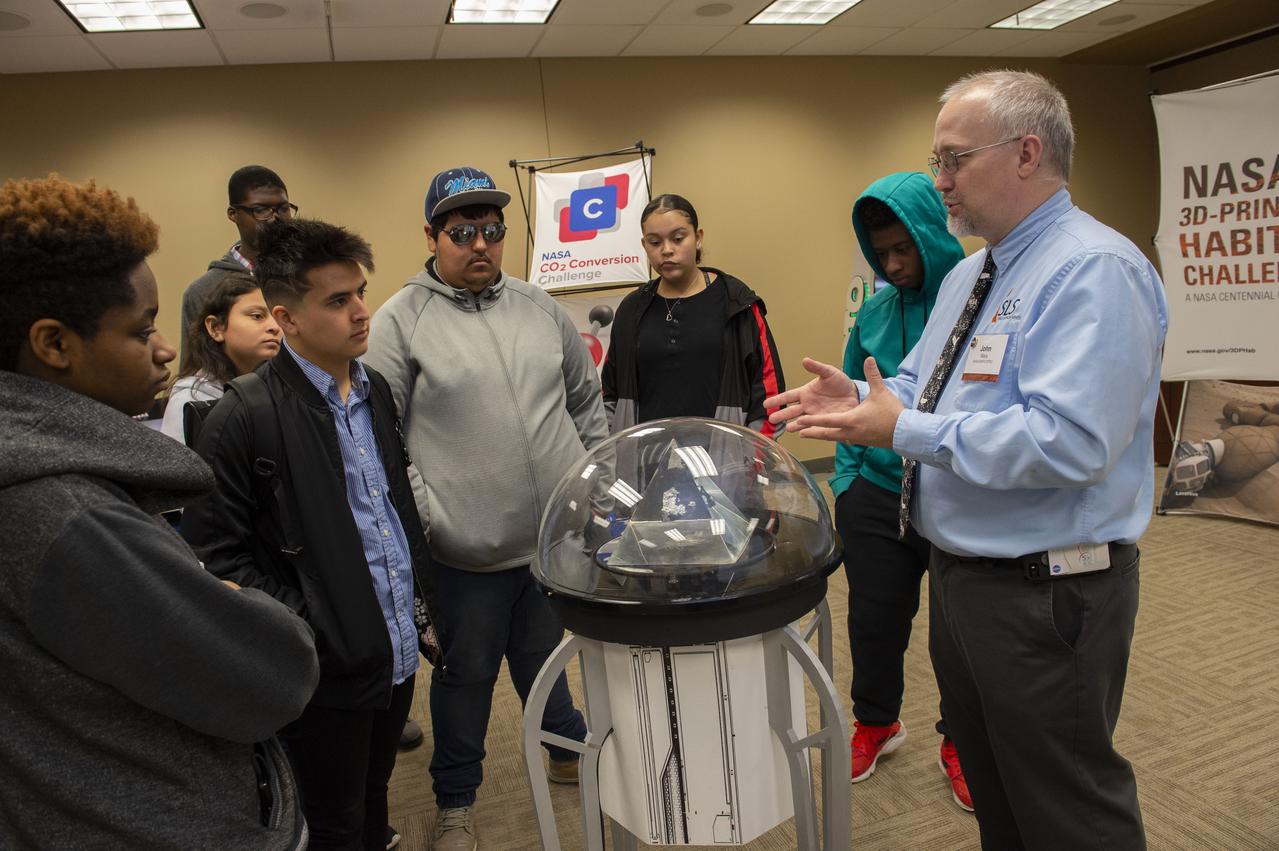
AI. SpaceFactory of New York and Pennsylvania State University of College Park print subscale habitat structures at NASA's 3D-Printed Habitat Challenge, held at the Caterpillar Edwards Demonstration & Learning Center in Edwards, Illinois, May 1-4, 2019. The habitat print is the final level of the multi-phase competition, which began in in 2015. The challenge is managed by NASA's Centennial Challenges program, and partner Bradley University of Peoria, Illinois. Marshall Space Flight Center educator john Weis, right, offers students from Manual Academic High School in Peoria, Illinois a first-hand look at a Moon rock retrieved by the Apollo 15 mission.
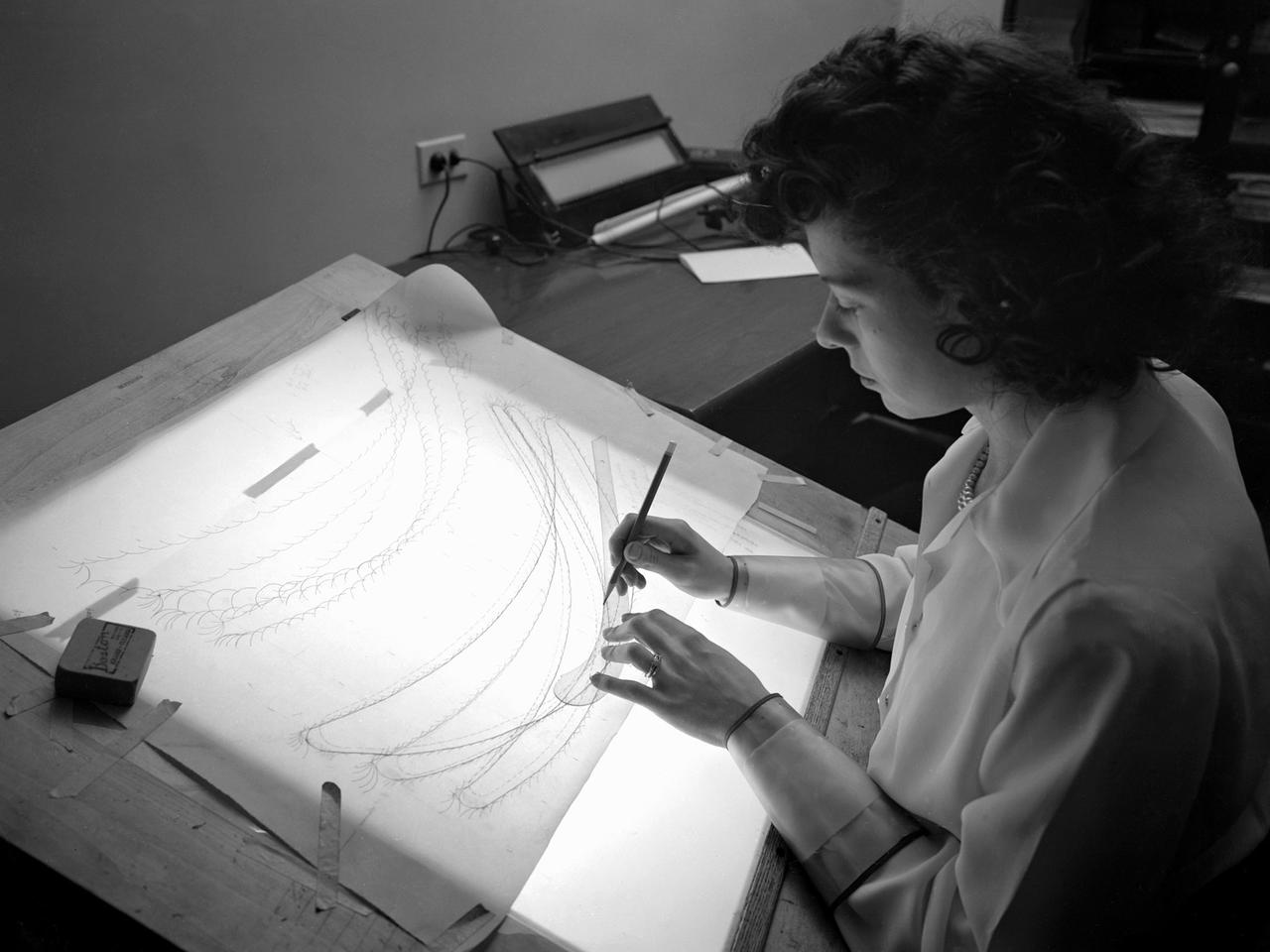
A female computer plotting compressor data in the Engine Research Building at the NACA’s Lewis Flight Propulsion Laboratory. The Computing Section was introduced during World War II to relieve short-handed research engineers of some of the tedious data-taking work. The computers made the initial computations and plotted the data graphically. The researcher then analyzed the data and either summarized the findings in a report or made modifications or ran the test again. With the introduction of mechanical computer systems in the 1950s the female computers learned how to encode the punch cards. As the data processing capabilities increased, fewer female computers were needed. Many left on their own to start families, while others earned mathematical degrees and moved into advanced positions.

STS047-31-009 (12-20 Sept 1992) --- Two NASA astronauts prepare to try their hand at a new method of eating an in-space meal as chopsticks are called upon by a third crew member. Pictured left to right, are Curtis L. Brown, Jr., pilot; payload specialist Mamoru Mohri representing Japan's National Space Development Agency (NASDA); and Robert L. Gibson, mission commander. Several months of training, as well as the eight-days of sharing research on the Spacelab-J mission, allowed the astronauts and payload specialist to learn a great deal about the two cultures.
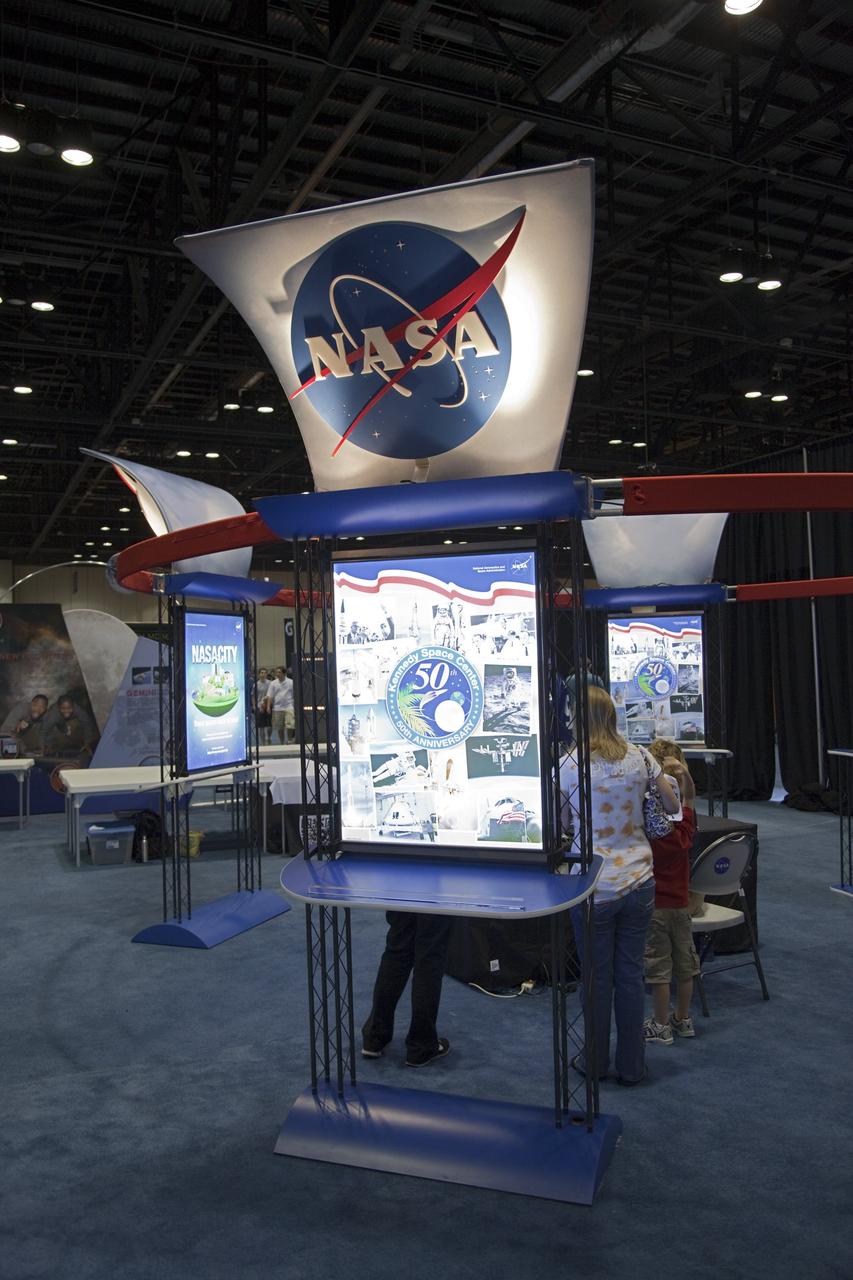
ORLANDO, Fla. -- At NASA's exhibit inside the Orange County Convention Center in Orlando, Fla., visitors to the NBA All-Star Jam Session participate in hands-on educational activities to learn more about how science plays into sports. One of the events leading up to the NBA All-Star game being held in Orlando on Feb. 26, the NBA All-Star Jam Session is a basketball experience intended for all ages, allowing fans to compete against their friends in skills challenges and collect autographs from players and legends. Photo credit: NASA/Frankie Martin
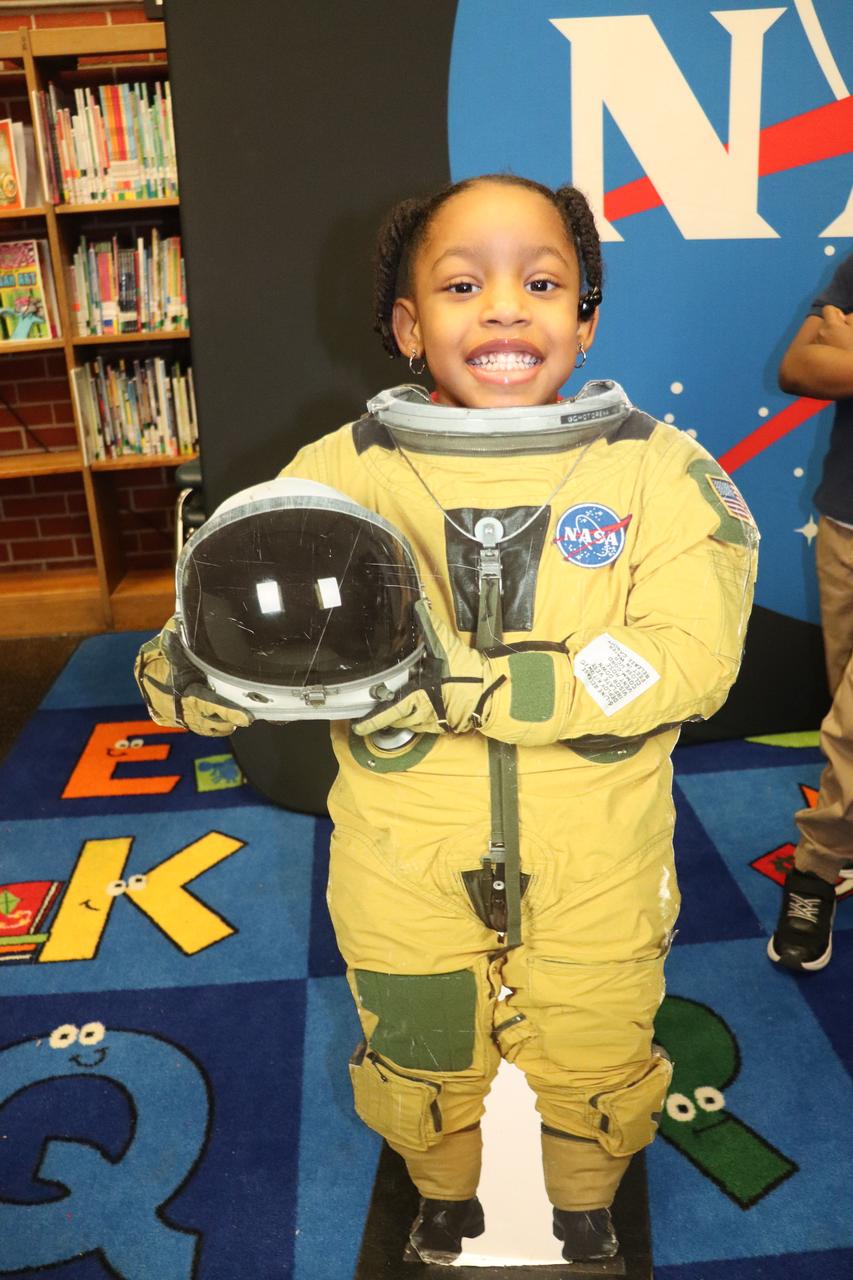
Representatives from NASA’s Stennis Space Center and NASA Shared Services Center participate in multiple related outreach events throughout Jackson, Mississippi, as part of the annual Stennis Day at the Capitol activities on Feb. 29. NASA personnel inspired the Artemis Generation with visits to Spann Elementary and Blackburn Middle schools. Activities included students learning about life as a NASA astronaut and a hands-on STEM (science, technology, engineering, and mathematics) activity. Sending the first woman and first person of color to the Moon on future Artemis missions will inspire the Artemis Generation to see themselves in space and understand the importance of STEM studies and careers. As NASA takes giant leaps to bridge disparities and break barriers in STEM, the agency’s efforts in the future workforce advances the nation’s space exploration.
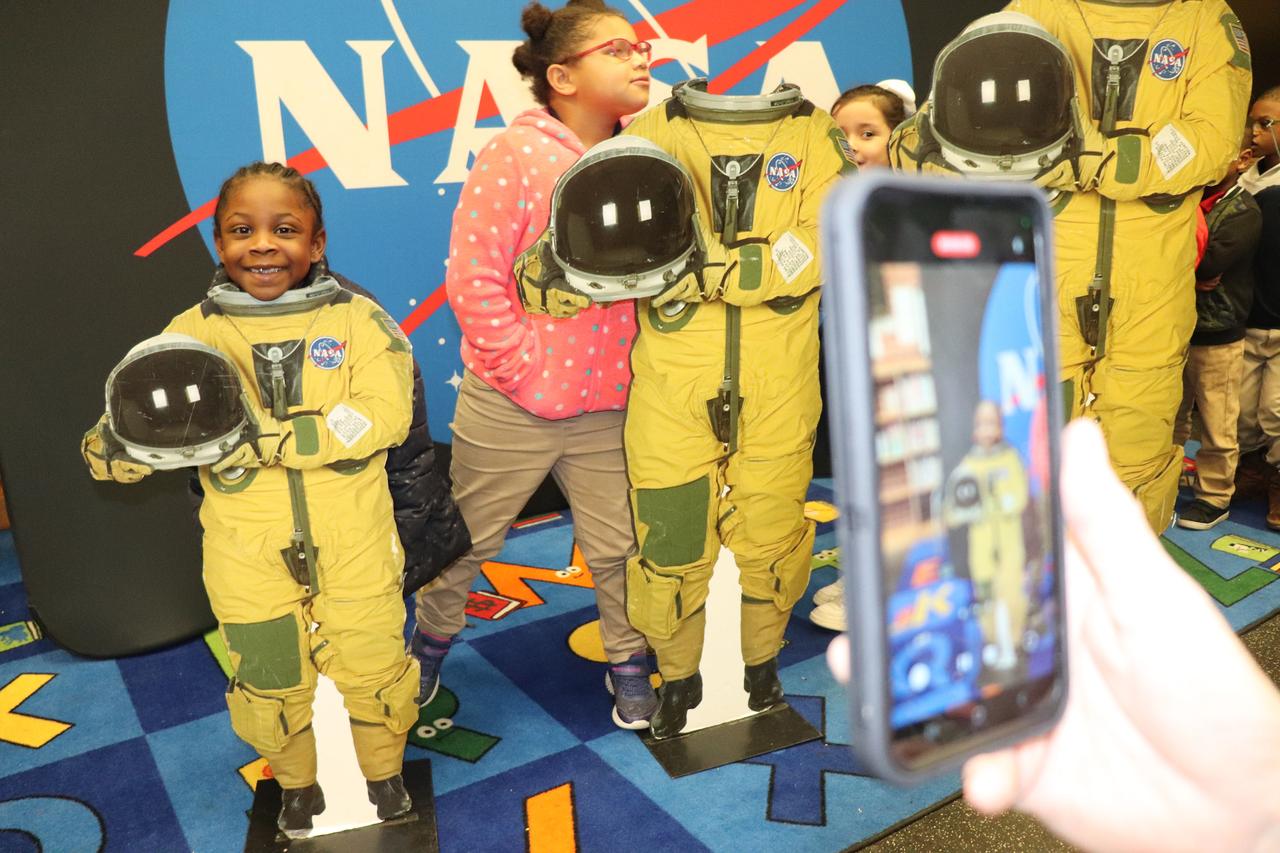
Representatives from NASA’s Stennis Space Center and NASA Shared Services Center participate in multiple related outreach events throughout Jackson, Mississippi, as part of the annual Stennis Day at the Capitol activities on Feb. 29. NASA personnel inspired the Artemis Generation with visits to Spann Elementary and Blackburn Middle schools. Activities included students learning about life as a NASA astronaut and a hands-on STEM (science, technology, engineering, and mathematics) activity. Sending the first woman and first person of color to the Moon on future Artemis missions will inspire the Artemis Generation to see themselves in space and understand the importance of STEM studies and careers. As NASA takes giant leaps to bridge disparities and break barriers in STEM, the agency’s efforts in the future workforce advances the nation’s space exploration.
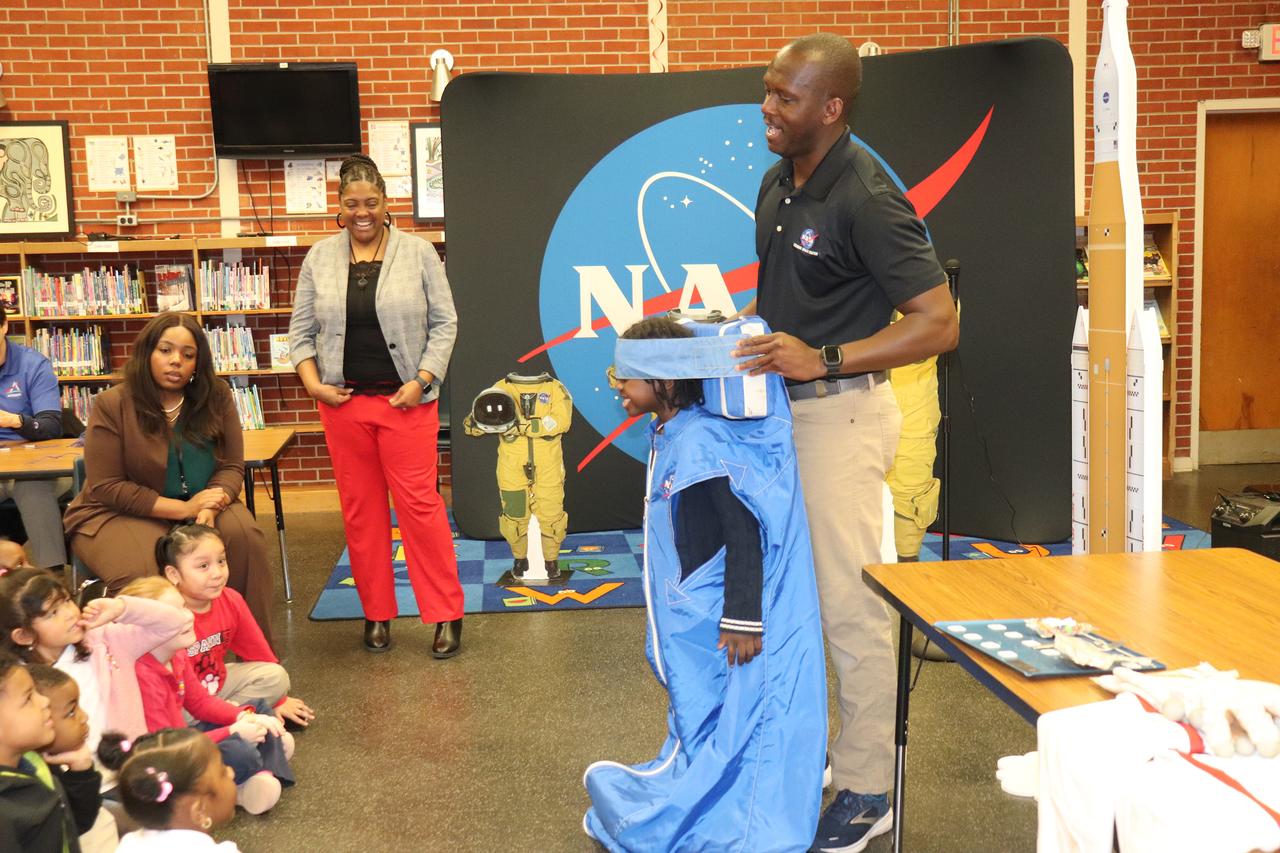
Representatives from NASA’s Stennis Space Center and NASA Shared Services Center participate in multiple related outreach events throughout Jackson, Mississippi, as part of the annual Stennis Day at the Capitol activities on Feb. 29. NASA personnel inspired the Artemis Generation with visits to Spann Elementary and Blackburn Middle schools. Activities included students learning about life as a NASA astronaut and a hands-on STEM (science, technology, engineering, and mathematics) activity. Sending the first woman and first person of color to the Moon on future Artemis missions will inspire the Artemis Generation to see themselves in space and understand the importance of STEM studies and careers. As NASA takes giant leaps to bridge disparities and break barriers in STEM, the agency’s efforts in the future workforce advances the nation’s space exploration.
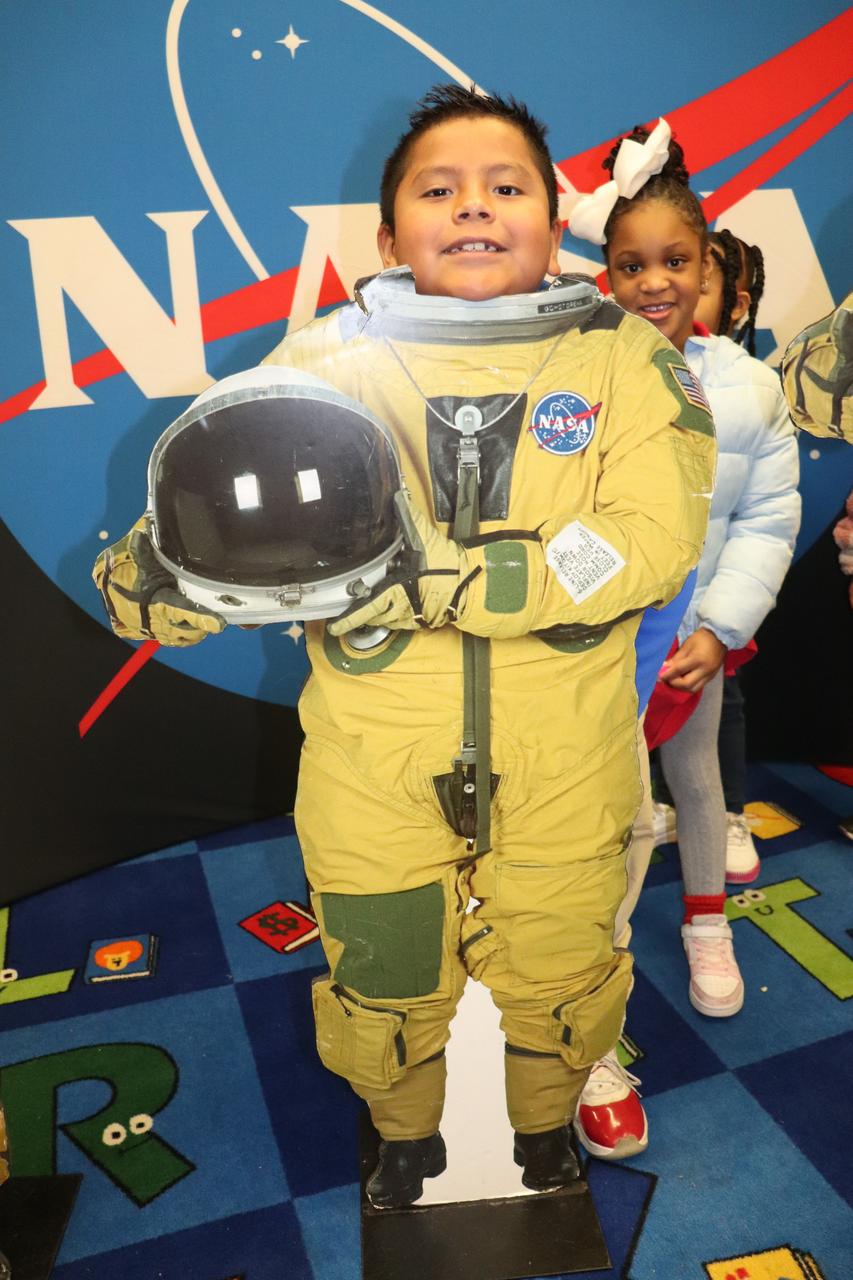
Representatives from NASA’s Stennis Space Center and NASA Shared Services Center participate in multiple related outreach events throughout Jackson, Mississippi, as part of the annual Stennis Day at the Capitol activities on Feb. 29. NASA personnel inspired the Artemis Generation with visits to Spann Elementary and Blackburn Middle schools. Activities included students learning about life as a NASA astronaut and a hands-on STEM (science, technology, engineering, and mathematics) activity. Sending the first woman and first person of color to the Moon on future Artemis missions will inspire the Artemis Generation to see themselves in space and understand the importance of STEM studies and careers. As NASA takes giant leaps to bridge disparities and break barriers in STEM, the agency’s efforts in the future workforce advances the nation’s space exploration.
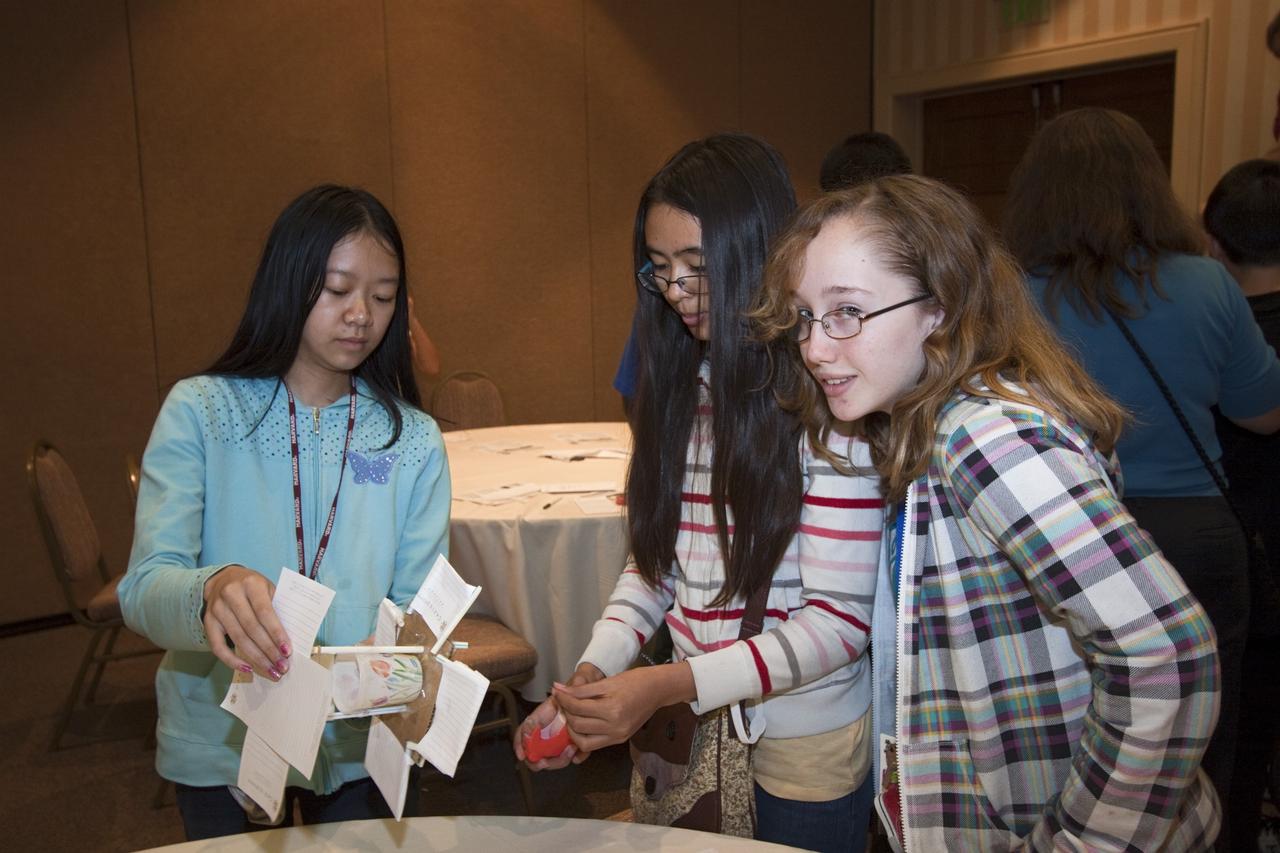
ORLANDO, Fla. – Students from Meadow Woods Middle School in Orlando take part in a hands-on activity during NASA’s Project Management PM Challenge 2012. Education specialists from NASA’s Kennedy Space Center supported the annual PM Challenge with demonstrations designed to illustrate various principles of physics. The demonstrations are designed to increase student interest and pursuit of the science, technology, engineering and mathematics STEM fields integral to producing the next generation of scientists and engineers. PM Challenge 2012 was held at the Caribe Royale Hotel and Convention Center in Orlando, Fla., on Feb. 22-23, to provide a forum for all stakeholders in the project management community to meet and share stories, lessons learned and new uses of technology in the industry. The PM Challenge is sponsored by NASA's Office of the Chief Engineer. For additional information, visit http://www.nasa.gov/offices/oce/pmchallenge/index.html. Photo credit: NASA/Jim Grossmann
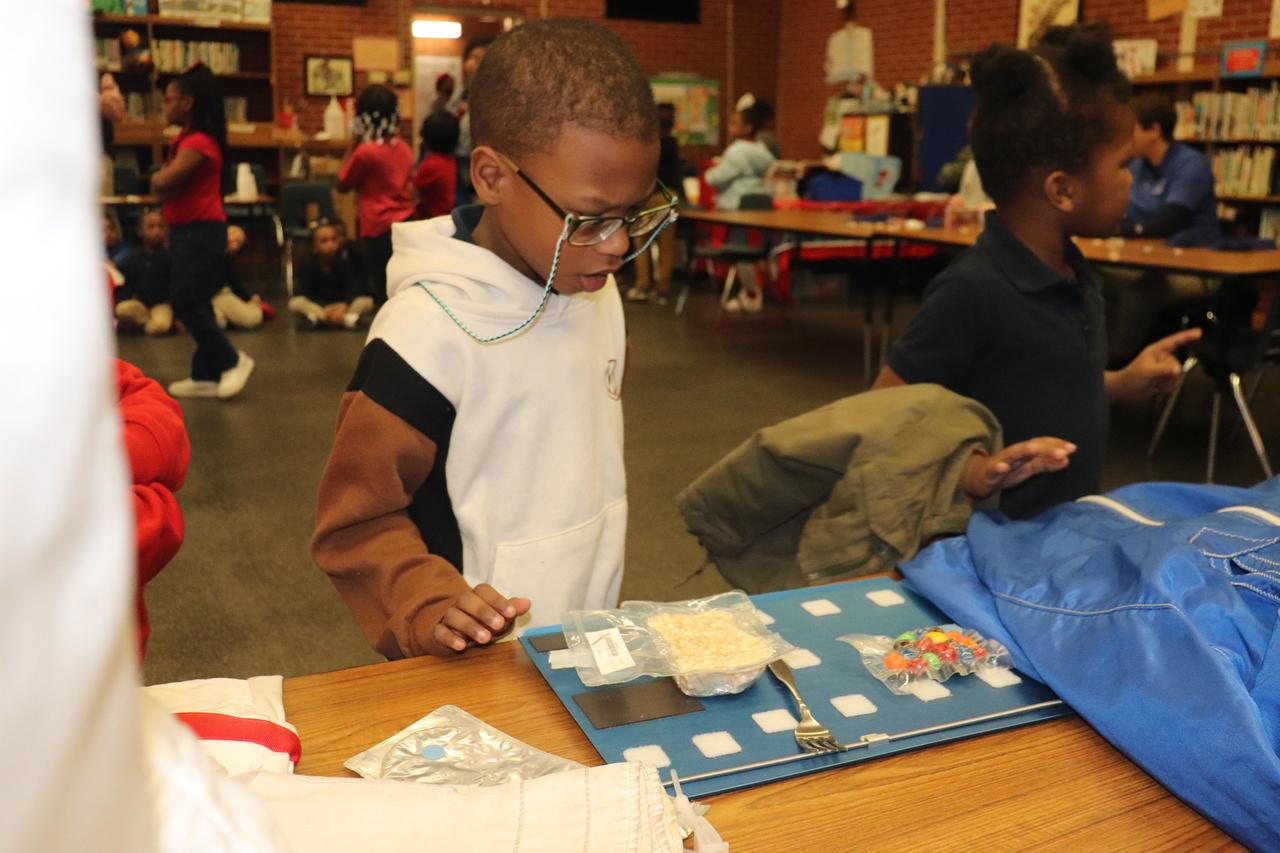
Representatives from NASA’s Stennis Space Center and NASA Shared Services Center participate in multiple related outreach events throughout Jackson, Mississippi, as part of the annual Stennis Day at the Capitol activities on Feb. 29. NASA personnel inspired the Artemis Generation with visits to Spann Elementary and Blackburn Middle schools. Activities included students learning about life as a NASA astronaut and a hands-on STEM (science, technology, engineering, and mathematics) activity. Sending the first woman and first person of color to the Moon on future Artemis missions will inspire the Artemis Generation to see themselves in space and understand the importance of STEM studies and careers. As NASA takes giant leaps to bridge disparities and break barriers in STEM, the agency’s efforts in the future workforce advances the nation’s space exploration.
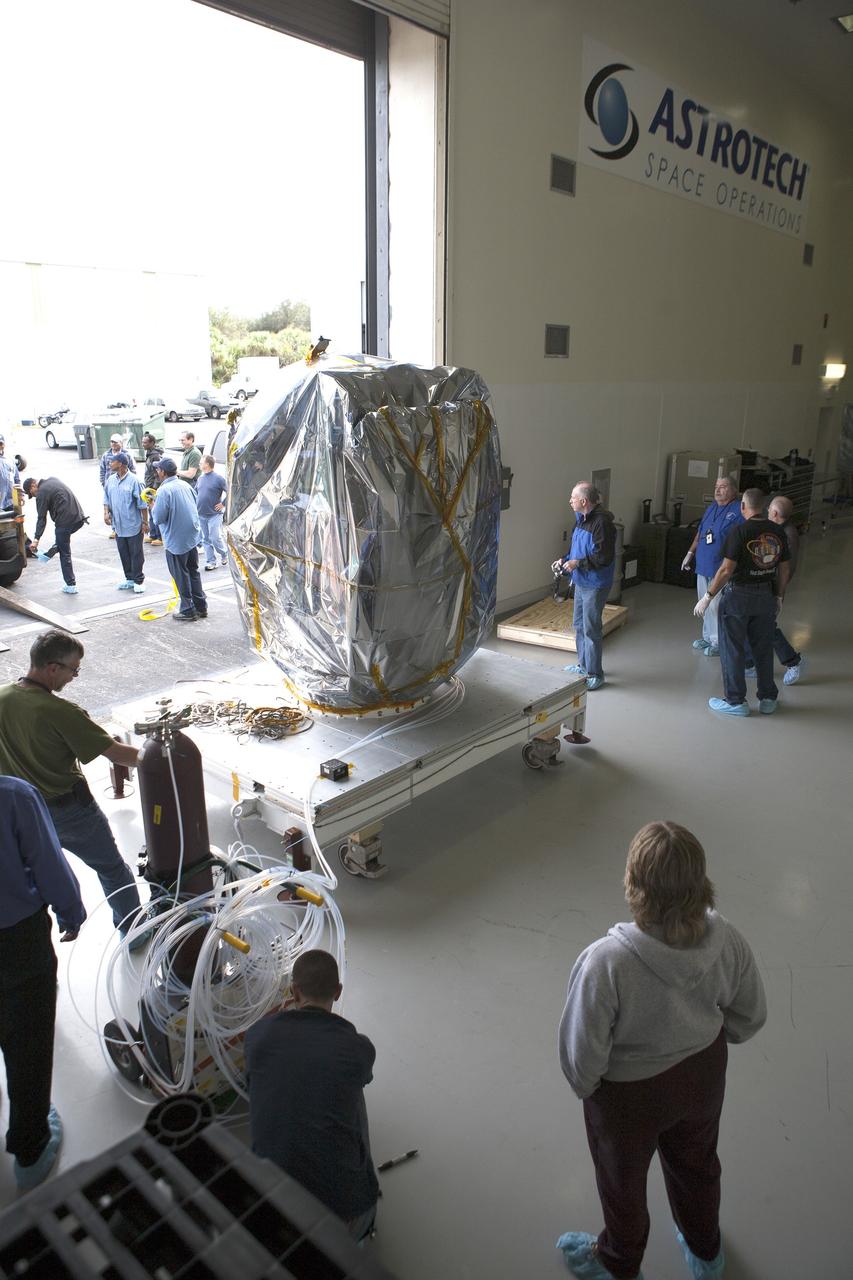
CAPE CANAVERAL, Fla. – Workers are on hand to receive NOAA’s Deep Space Climate Observatory spacecraft, or DSCOVR, wrapped in plastic and secured onto a portable work stand, into the high bay of Building 1 at the Astrotech payload processing facility in Titusville, Florida, near Kennedy Space Center. DSCOVR is a partnership between NOAA, NASA and the U.S. Air Force. DSCOVR will maintain the nation's real-time solar wind monitoring capabilities which are critical to the accuracy and lead time of NOAA's space weather alerts and forecasts. Launch is currently scheduled for January 2015 aboard a SpaceX Falcon 9 v 1.1 launch vehicle from Cape Canaveral Air Force Station, Florida. To learn more about DSCOVR, visit http://www.nesdis.noaa.gov/DSCOVR. Photo credit: NASA/Kim Shiflett
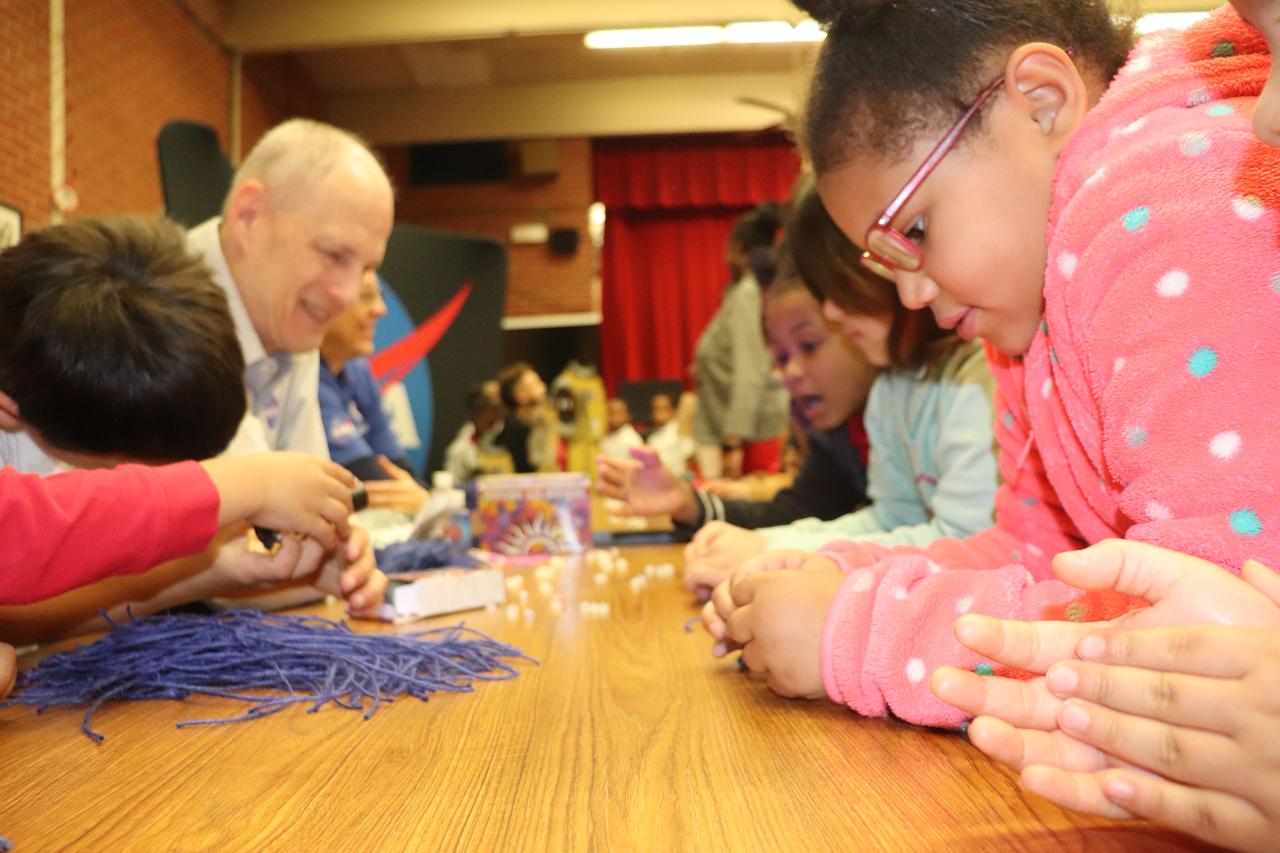
Representatives from NASA’s Stennis Space Center and NASA Shared Services Center participate in multiple related outreach events throughout Jackson, Mississippi, as part of the annual Stennis Day at the Capitol activities on Feb. 29. NASA personnel inspired the Artemis Generation with visits to Spann Elementary and Blackburn Middle schools. Activities included students learning about life as a NASA astronaut and a hands-on STEM (science, technology, engineering, and mathematics) activity. Sending the first woman and first person of color to the Moon on future Artemis missions will inspire the Artemis Generation to see themselves in space and understand the importance of STEM studies and careers. As NASA takes giant leaps to bridge disparities and break barriers in STEM, the agency’s efforts in the future workforce advances the nation’s space exploration.
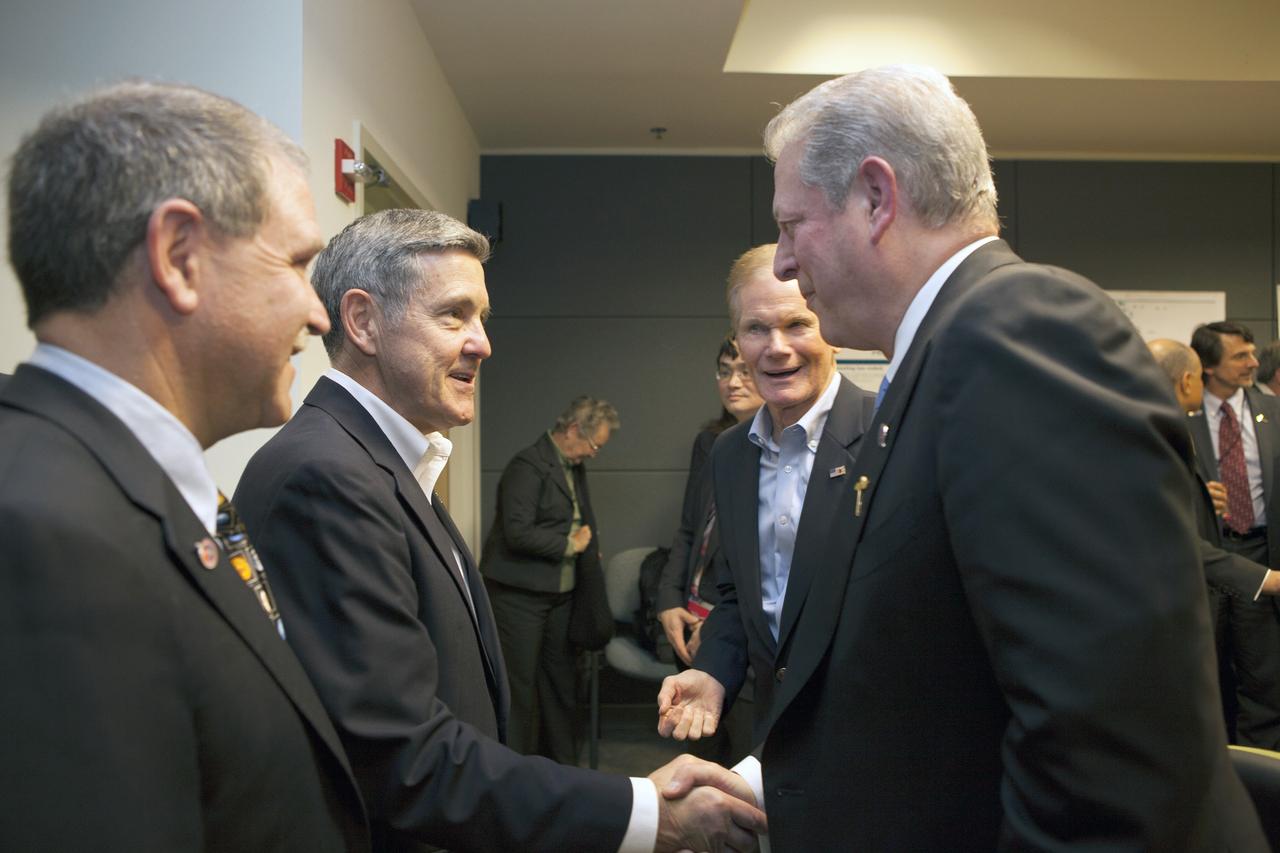
At NASA's Kennedy Space Center in Florida, former Vice President Al Gore, right, shakes the hand of Center Director Bob Cabana before a briefing on NOAA's Deep Space Climate Observatory mission, or DSCOVR. Joining them are John Grunsfeld, left, NASA associate administrator for the Science Mission Directorate, and Sen. Bill Nelson. DSCOVR will launch aboard a SpaceX Falcon 9 rocket. The mission is a partnership between NOAA, NASA and the U.S. Air Force. DSCOVR will maintain the nation's real-time solar wind monitoring capabilities which are critical to the accuracy and lead time of NOAA's space weather alerts and forecasts. To learn more about DSCOVR, visit http://www.nesdis.noaa.gov/DSCOVR. Photo credit: NASA/Kim Shiflett
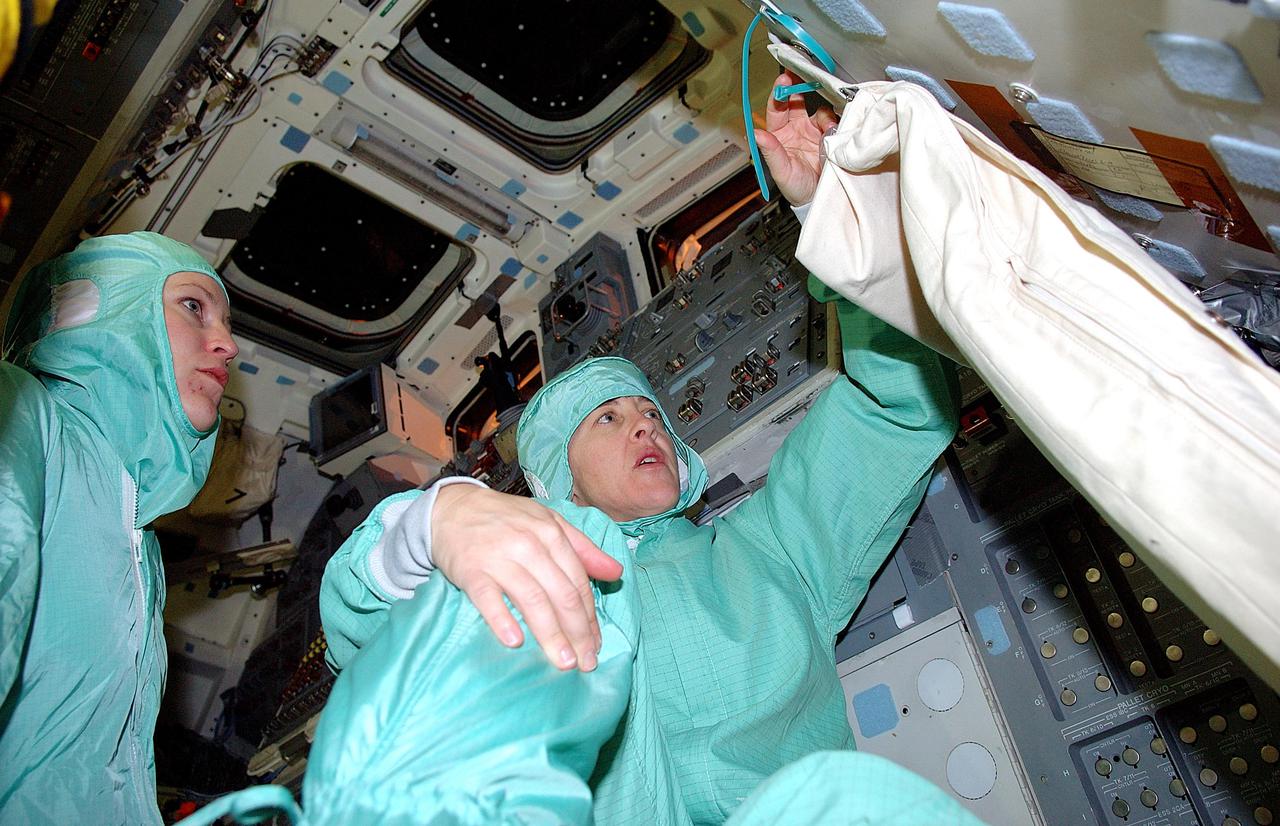
KENNEDY SPACE CENTER, FLA. - STS-114 Mission Specialist Wendy Lawrence (right) learns about equipment inside the orbiter Discovery from Reina Winters, an engineer with Johnson Space Center. STS-114 crew members are familiarizing themselves with elements in the mid-body and upper deck of Discovery as part of Crew Equipment Interface Test (CEIT) activities. During CEIT, the crew has an opportunity to get a hands-on look at the orbiter and equipment they will be working with on the mission. Return to Flight Mission STS-114 will carry the Multi-Purpose Logistics Module Raffaello, filled with supplies for the International Space Station, and a replacement Control Moment Gyroscope. Launch of STS-114 has a launch window of May 12 to June 3.
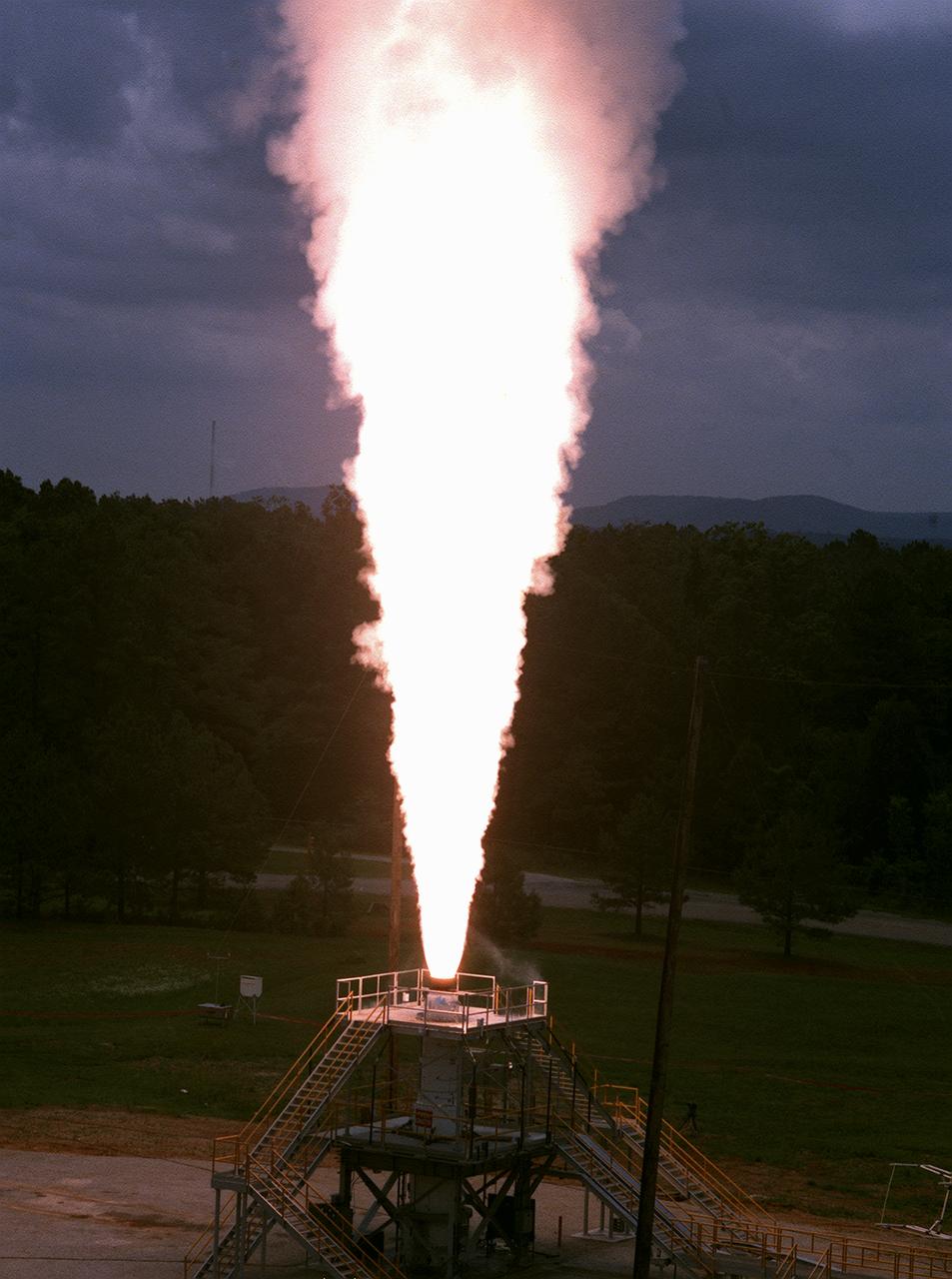
The Marshall Space Flight Center (MSFC) engineers test fired a 26-foot long, 100,000-pound-thrust solid rocket motor for 30 seconds at the MSFC east test area, the first test firing of the Modified NASA Motor (M-NASA Motor). The M-NASA Motor was fired in a newly constructed stand. The motor is 48-inches in diameter and was loaded with two propellant cartridges weighing a total of approximately 12,000 pounds. The purpose of the test was to learn more about solid rocket motor insulation and nozzle materials and to provide young engineers additional hands-on expertise in solid rocket motor technology. The test is a part of NASA's Solid Propulsion Integrity Program, that is to provide NASA engineers with the techniques, engineering tools, and computer programs to be able to better design, build, and verify solid rocket motors.
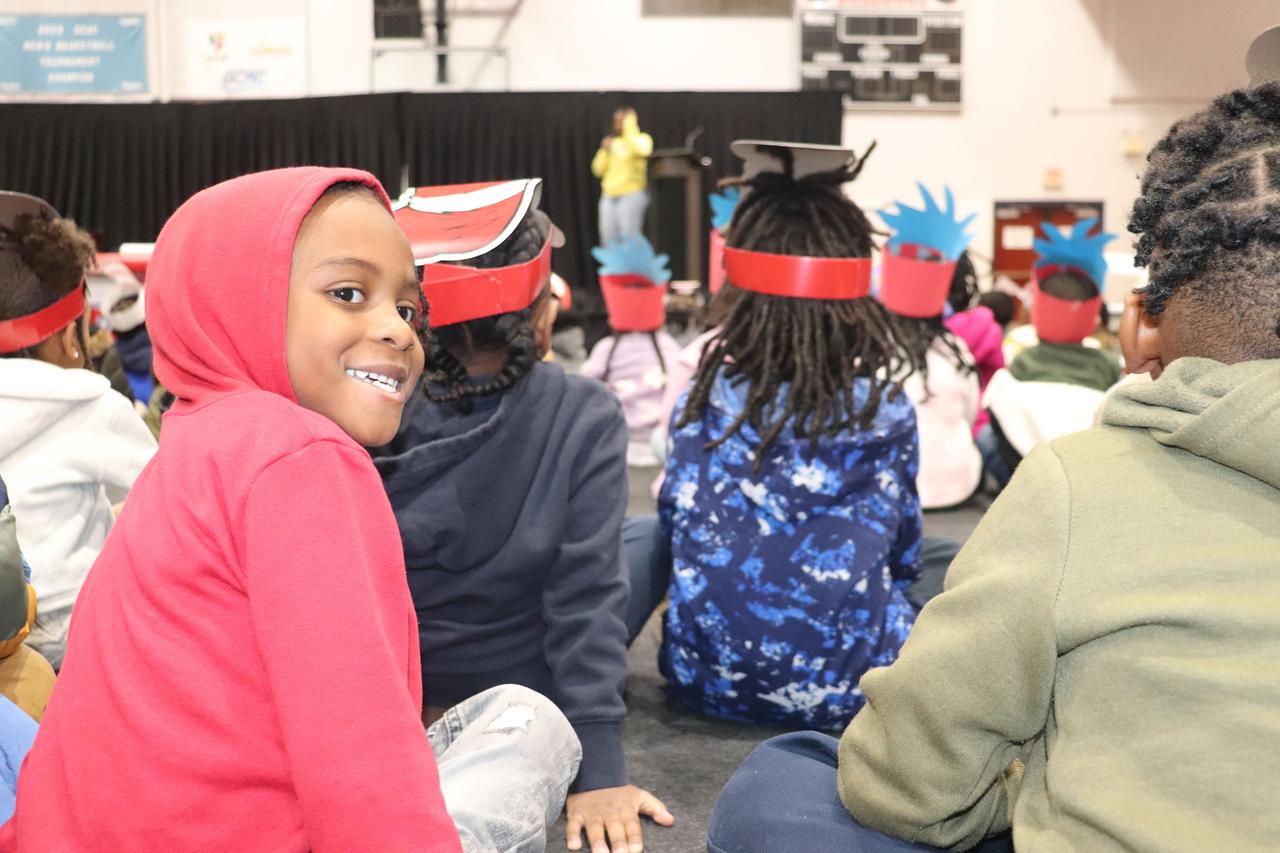
Representatives from NASA’s Stennis Space Center and NASA Shared Services Center participate in multiple related outreach events throughout Jackson, Mississippi, as part of the annual Stennis Day at the Capitol activities on Feb. 29. NASA personnel inspired the Artemis Generation with visits to Spann Elementary and Blackburn Middle schools. Activities included students learning about life as a NASA astronaut and a hands-on STEM (science, technology, engineering, and mathematics) activity. Sending the first woman and first person of color to the Moon on future Artemis missions will inspire the Artemis Generation to see themselves in space and understand the importance of STEM studies and careers. As NASA takes giant leaps to bridge disparities and break barriers in STEM, the agency’s efforts in the future workforce advances the nation’s space exploration.

The DC-8 flies low for the last time over NASA’s Armstrong Flight Research Center in Edwards, California, before it retires to Idaho State University in Pocatello, Idaho. The DC-8 will provide real-world experience to train future aircraft technicians at the college’s Aircraft Maintenance Technology Program.
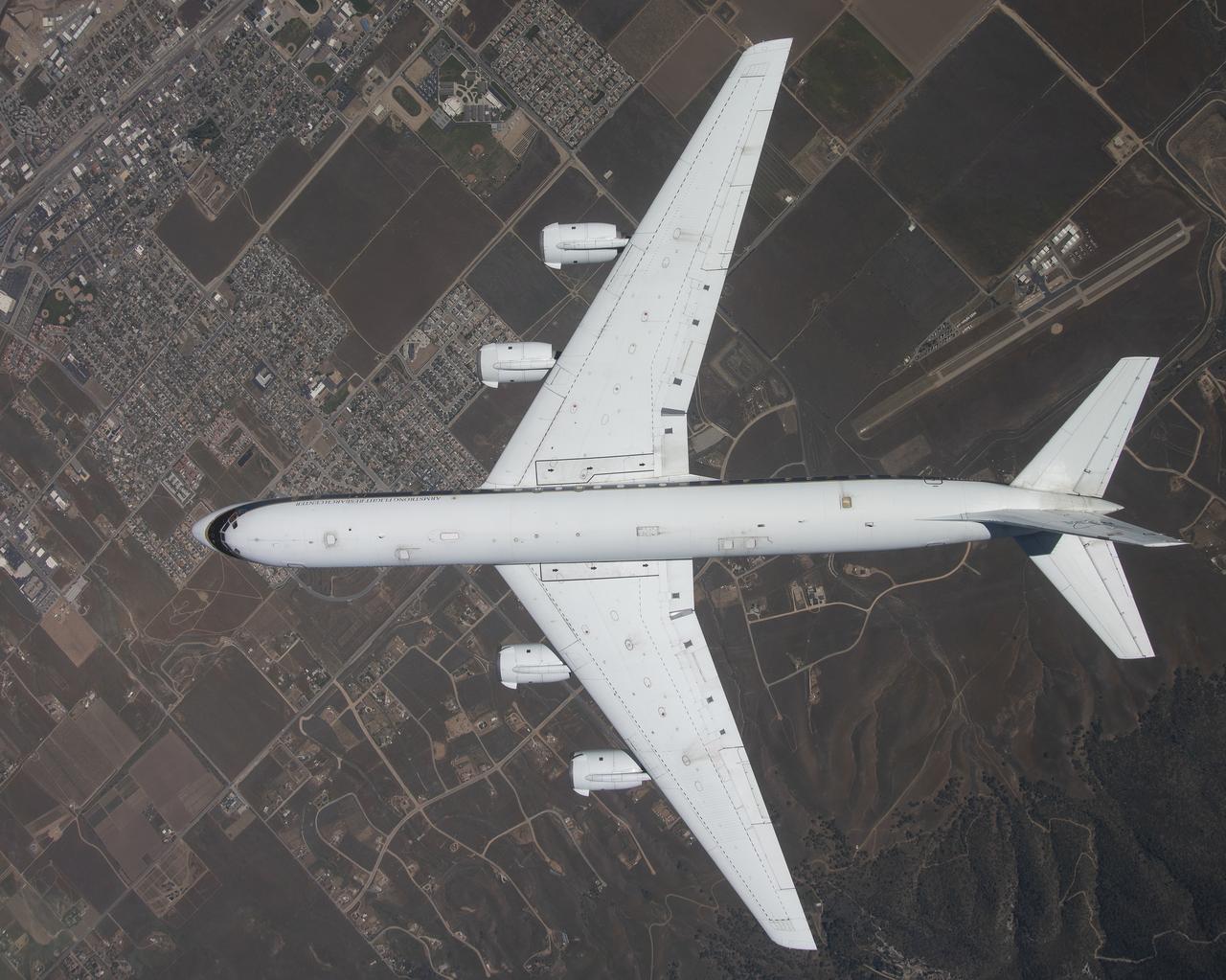
The DC-8 is shown overhead during its final flight from NASA’s Armstrong Flight Research Center Building 703 in Palmdale, California, before it retires to Idaho State University in Pocatello, Idaho. The DC-8 will provide real-world experience to train future aircraft technicians at the college’s Aircraft Maintenance Technology Program.
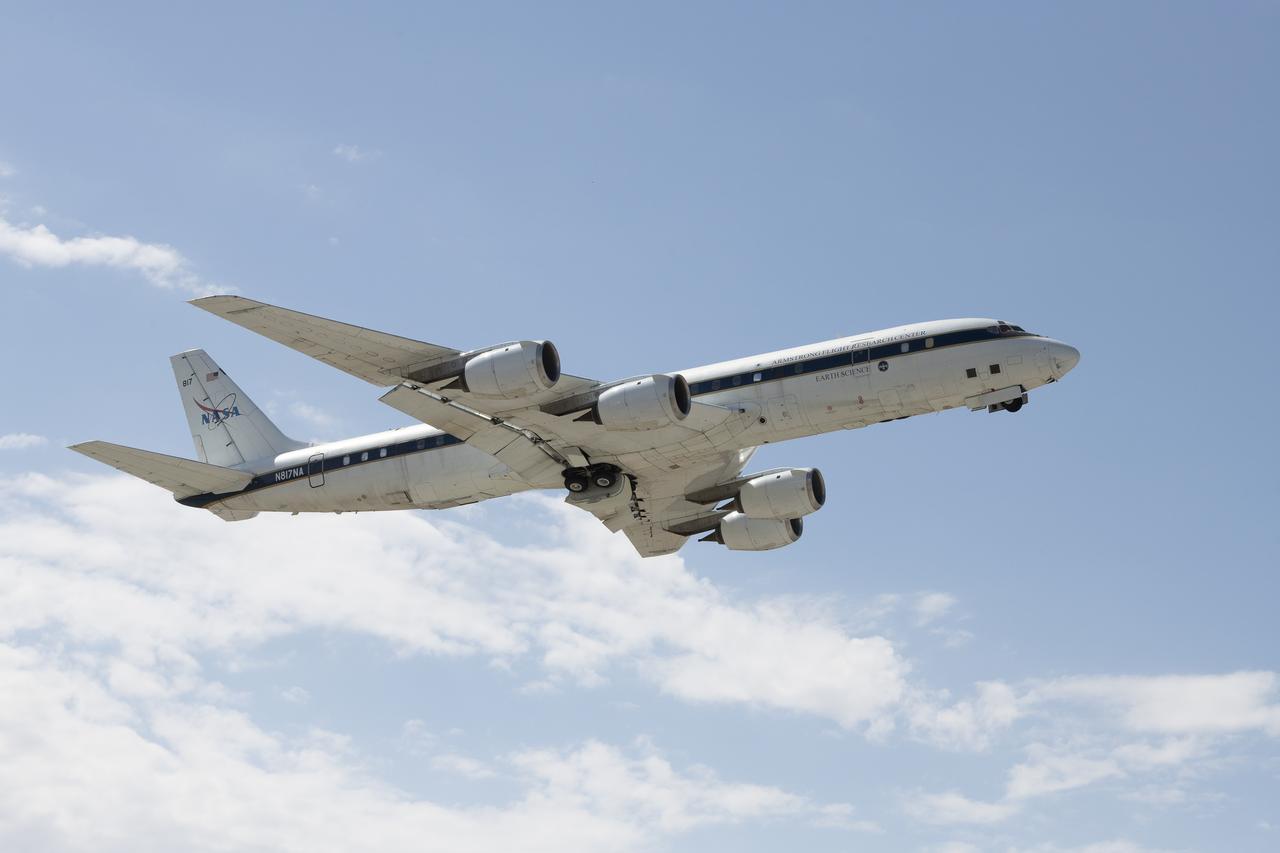
The DC-8 ascents during its final flight before it is retired from NASA’s Armstrong Flight Research Center Building 703 in Palmdale, California, to Idaho State University in Pocatello, Idaho. The DC-8 will provide real-world experience to train future aircraft technicians at the college’s Aircraft Maintenance Technology Program.