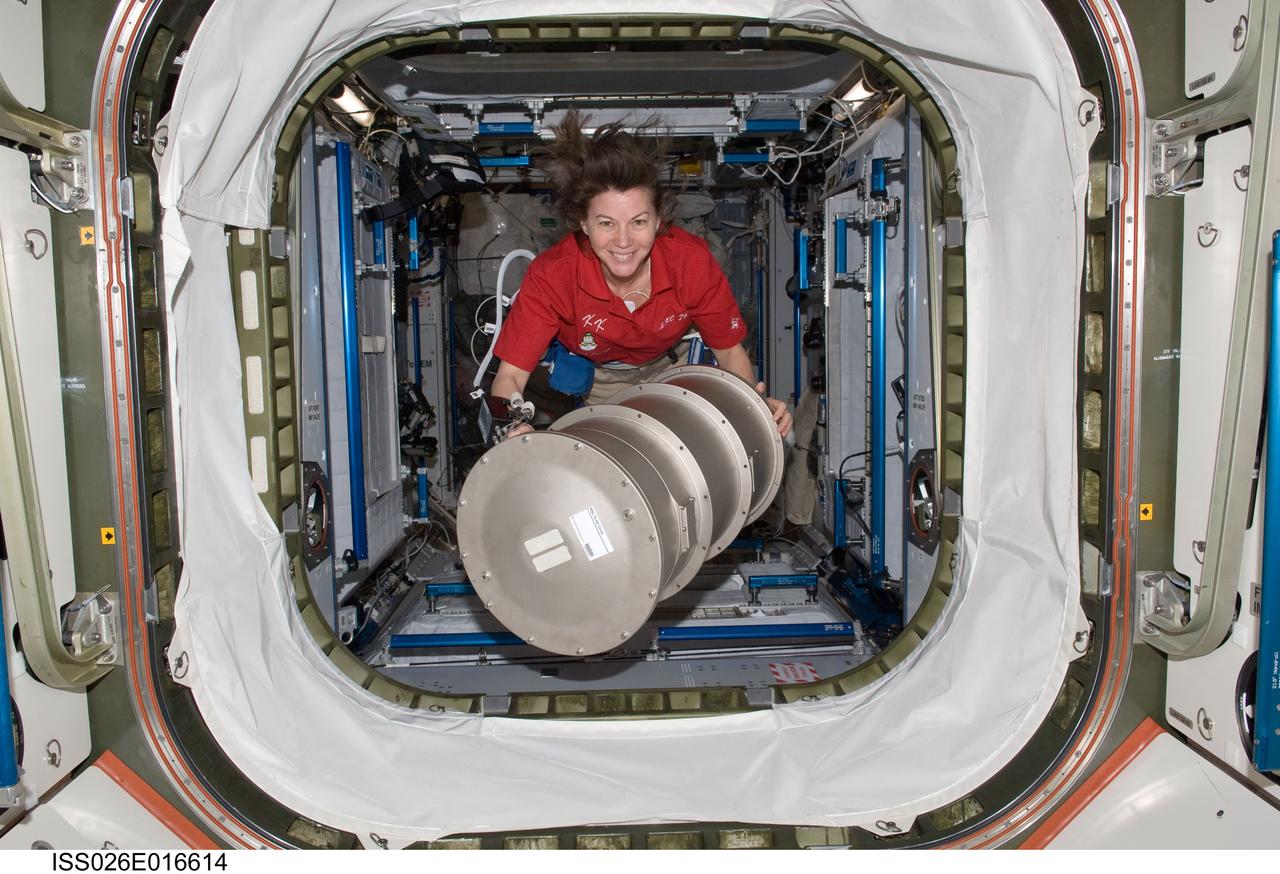
ISS026-E-016614 (7 Jan. 2011) --- NASA astronaut Catherine (Cady) Coleman, Expedition 26 flight engineer, moves Material Science Laboratory (MSL) hardware from the Harmony node to the Destiny laboratory of the International Space Station.
Coleman moves MSL Hardware
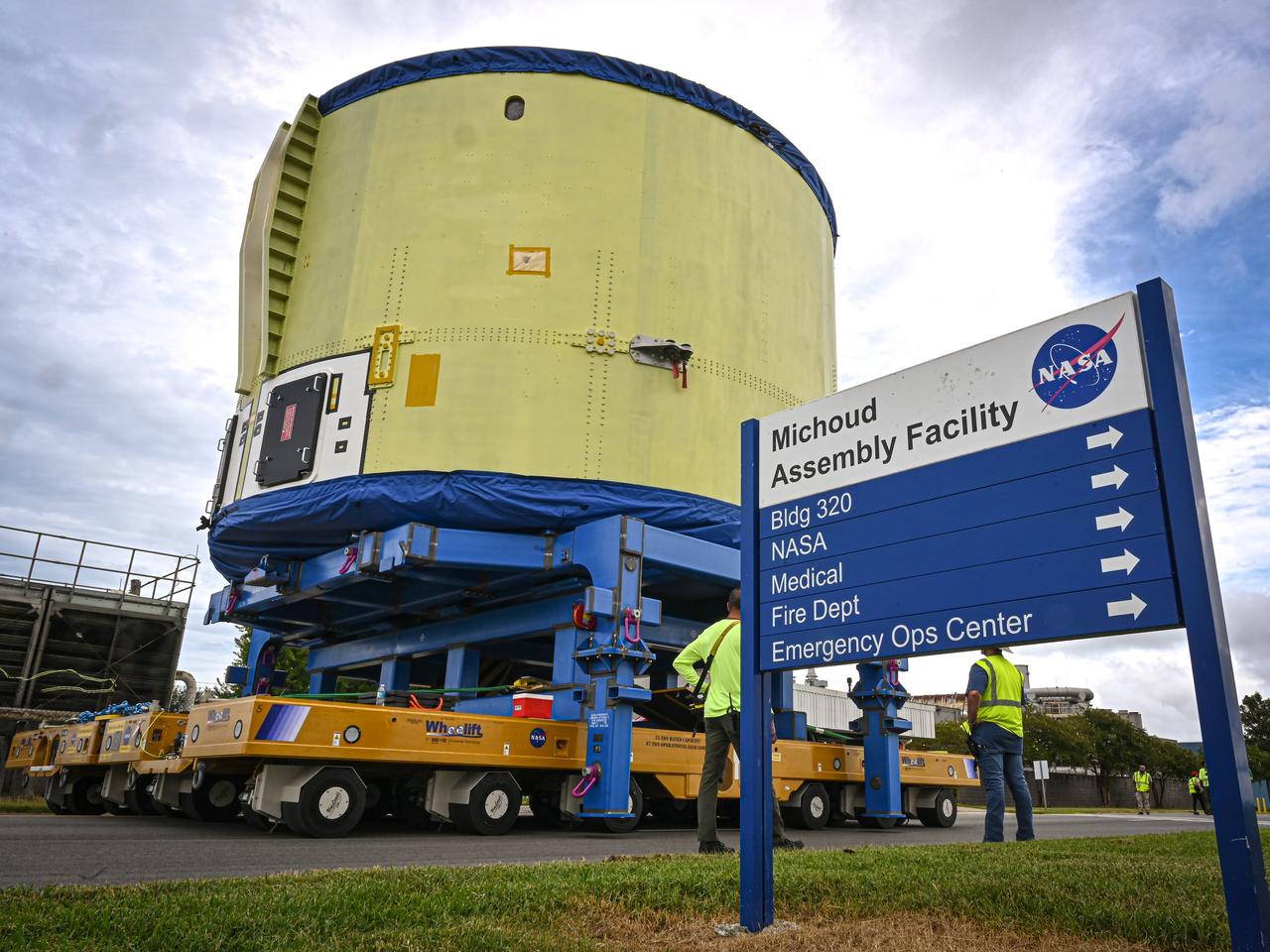
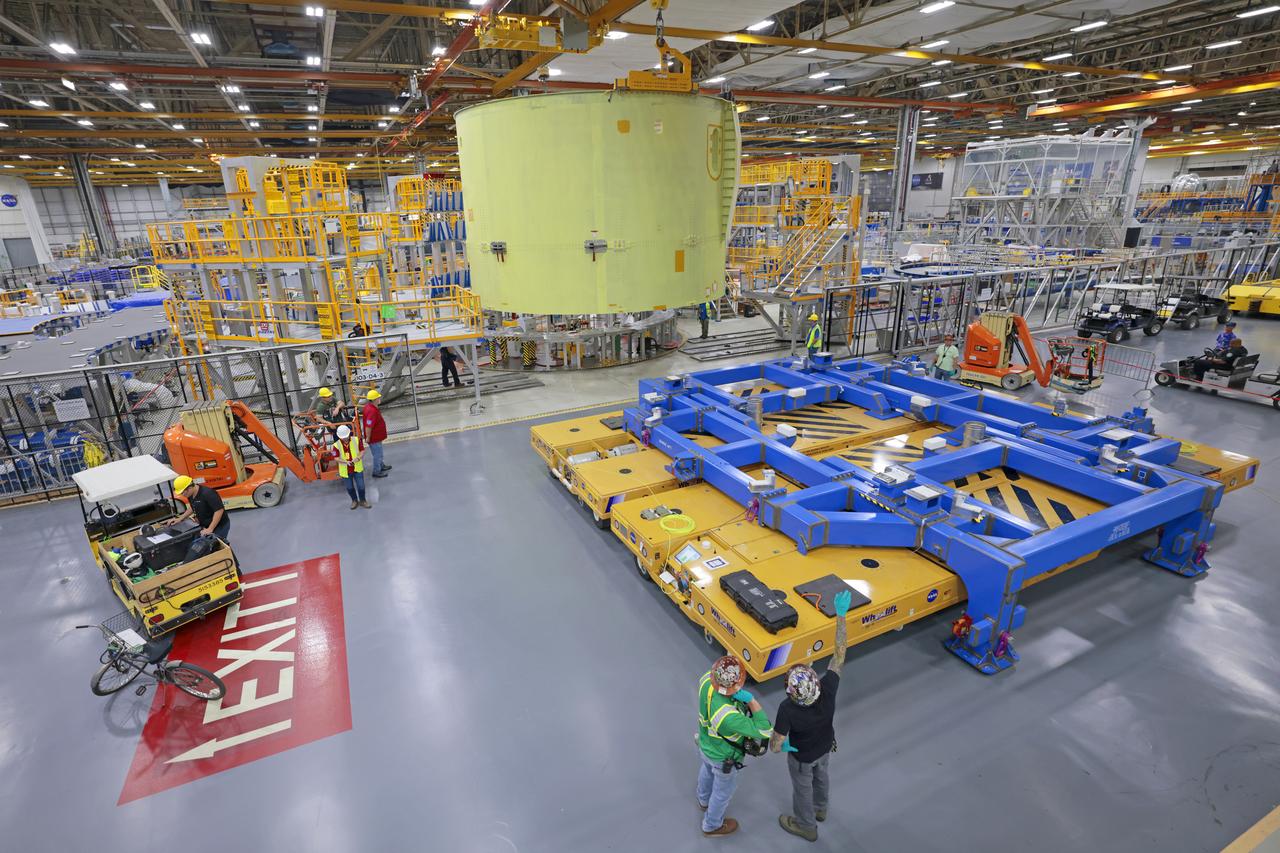
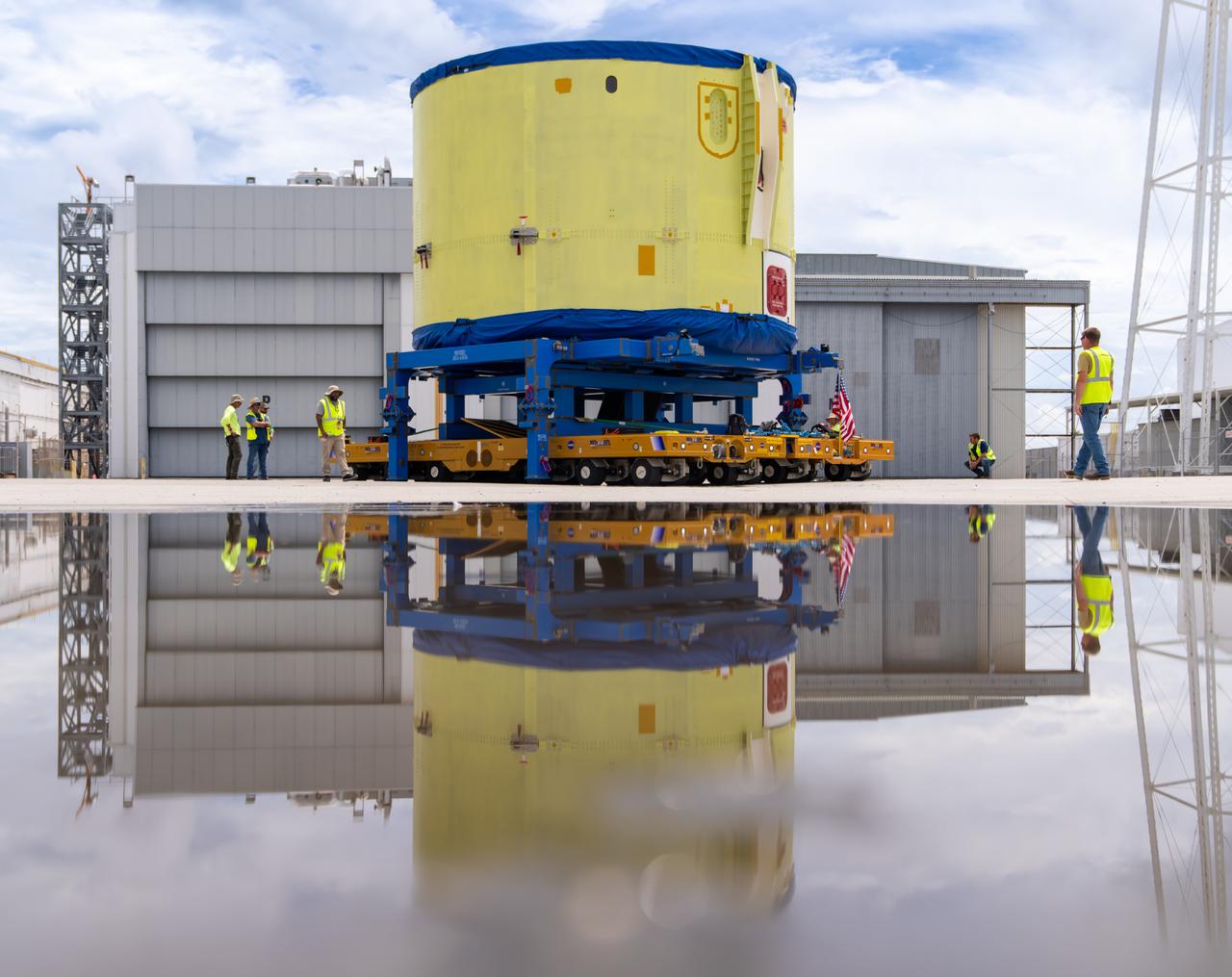
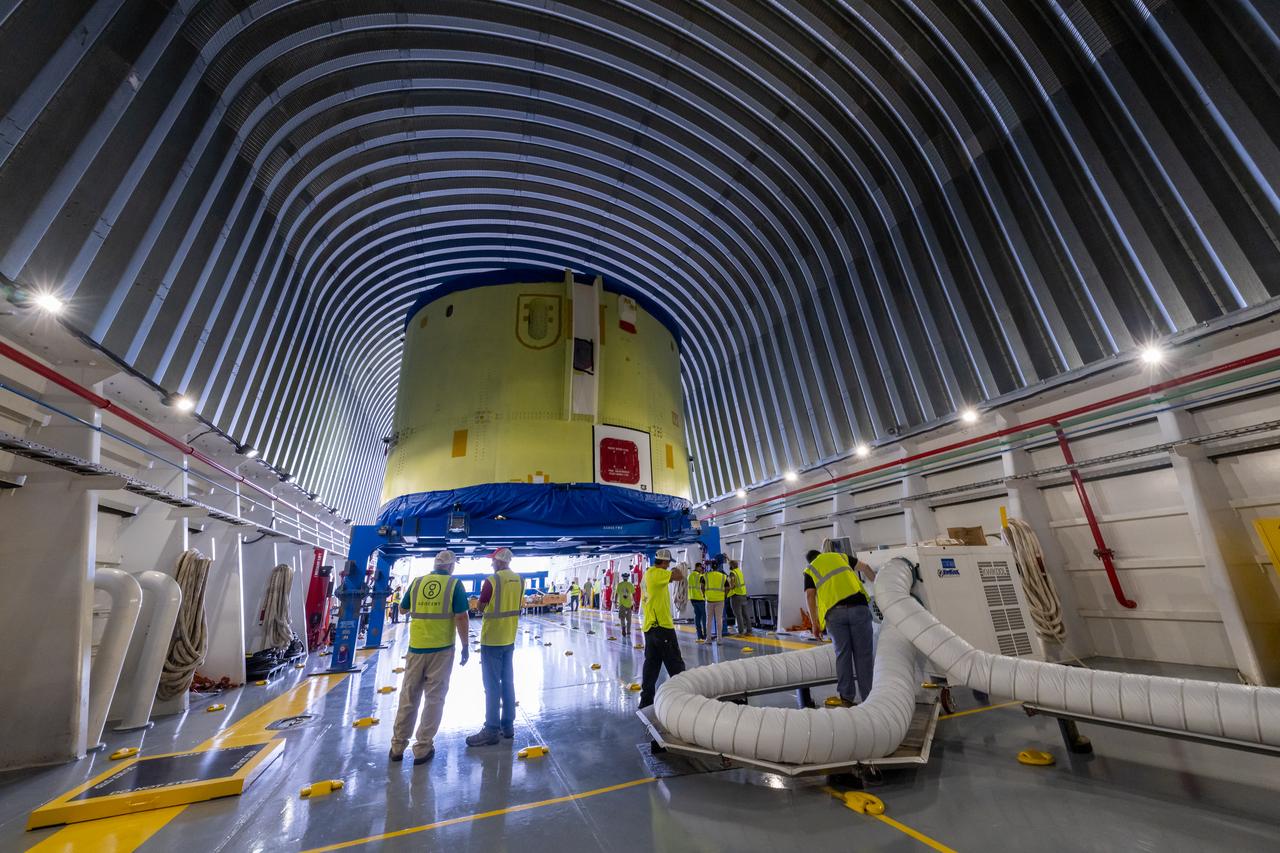
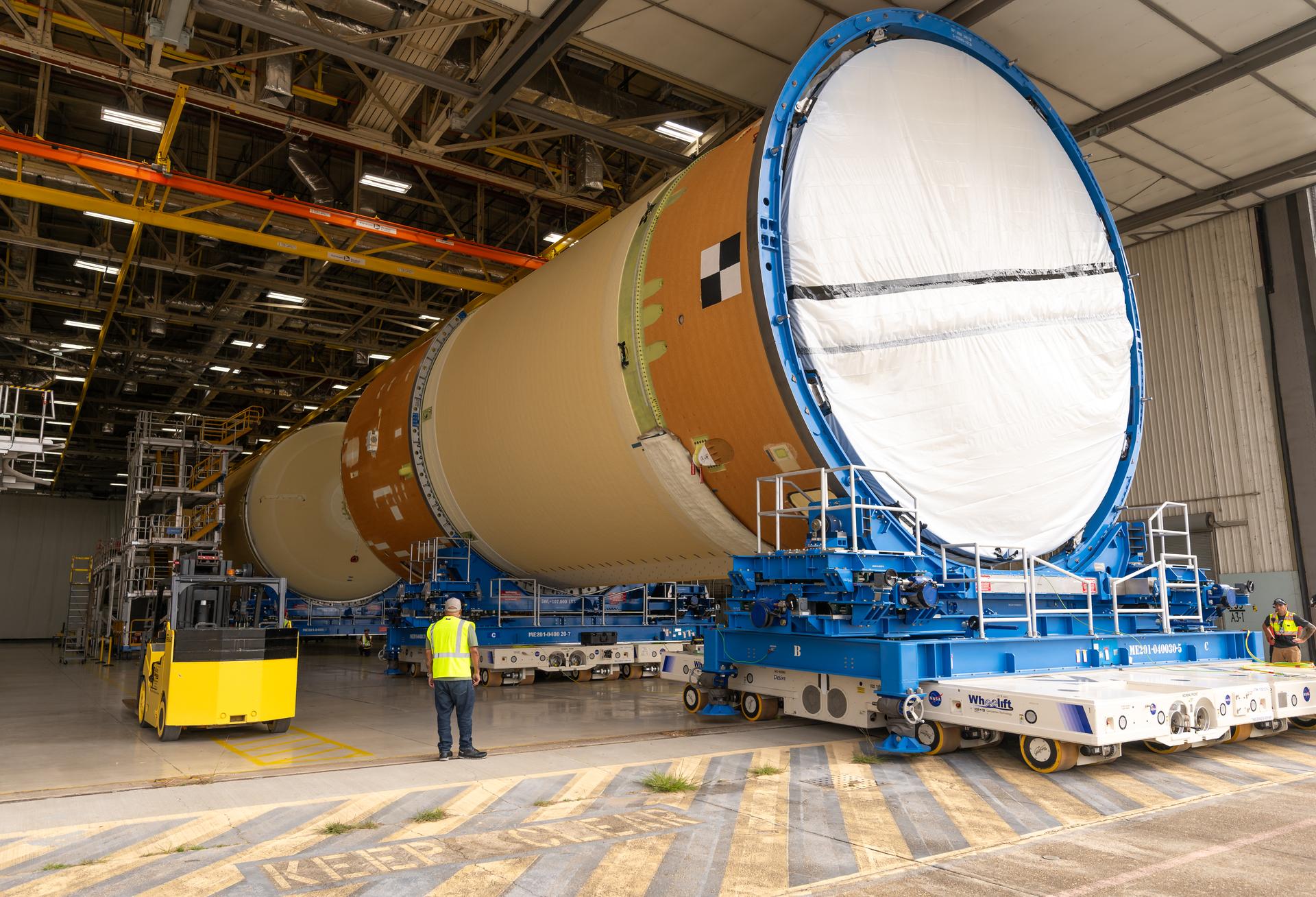
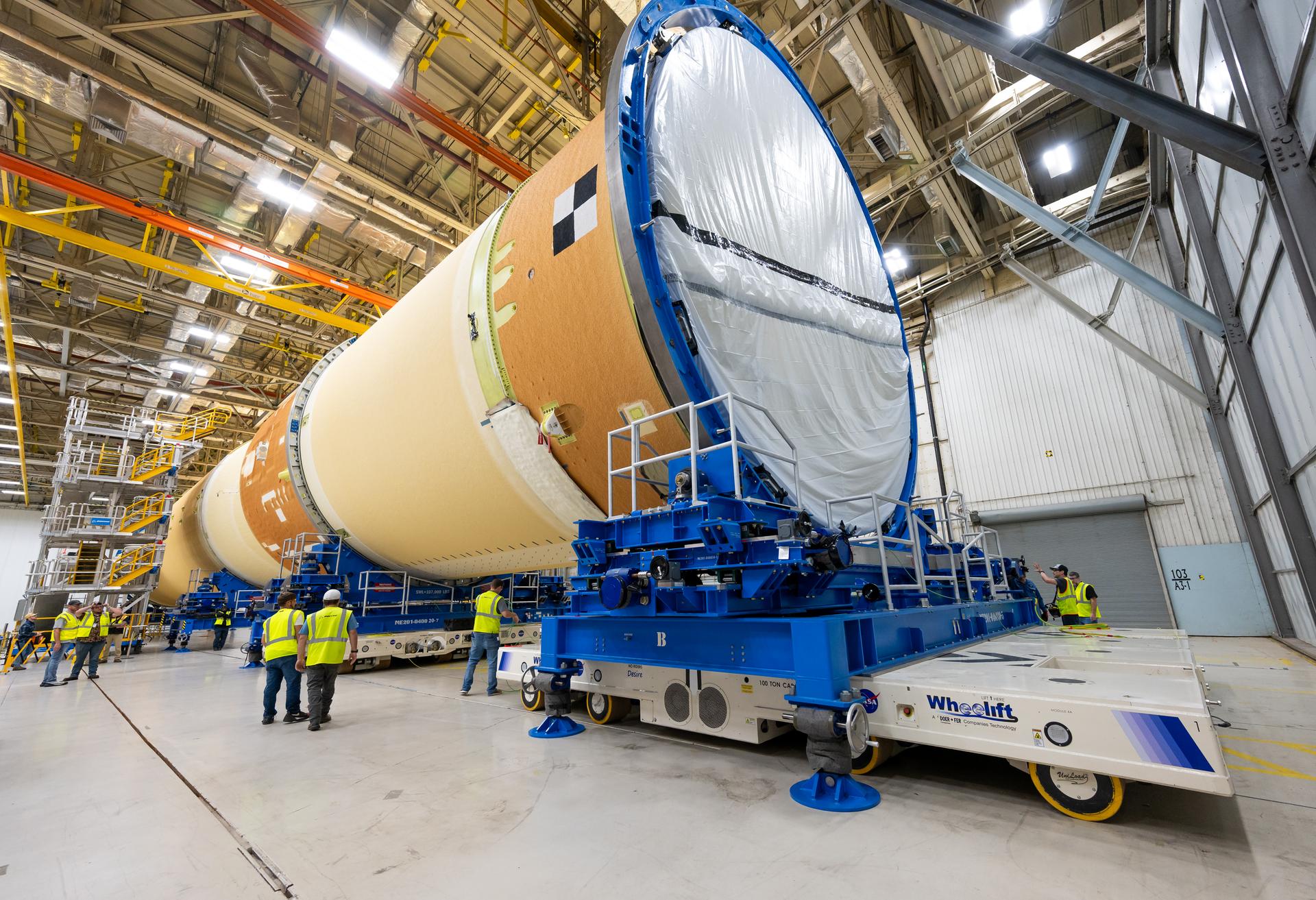
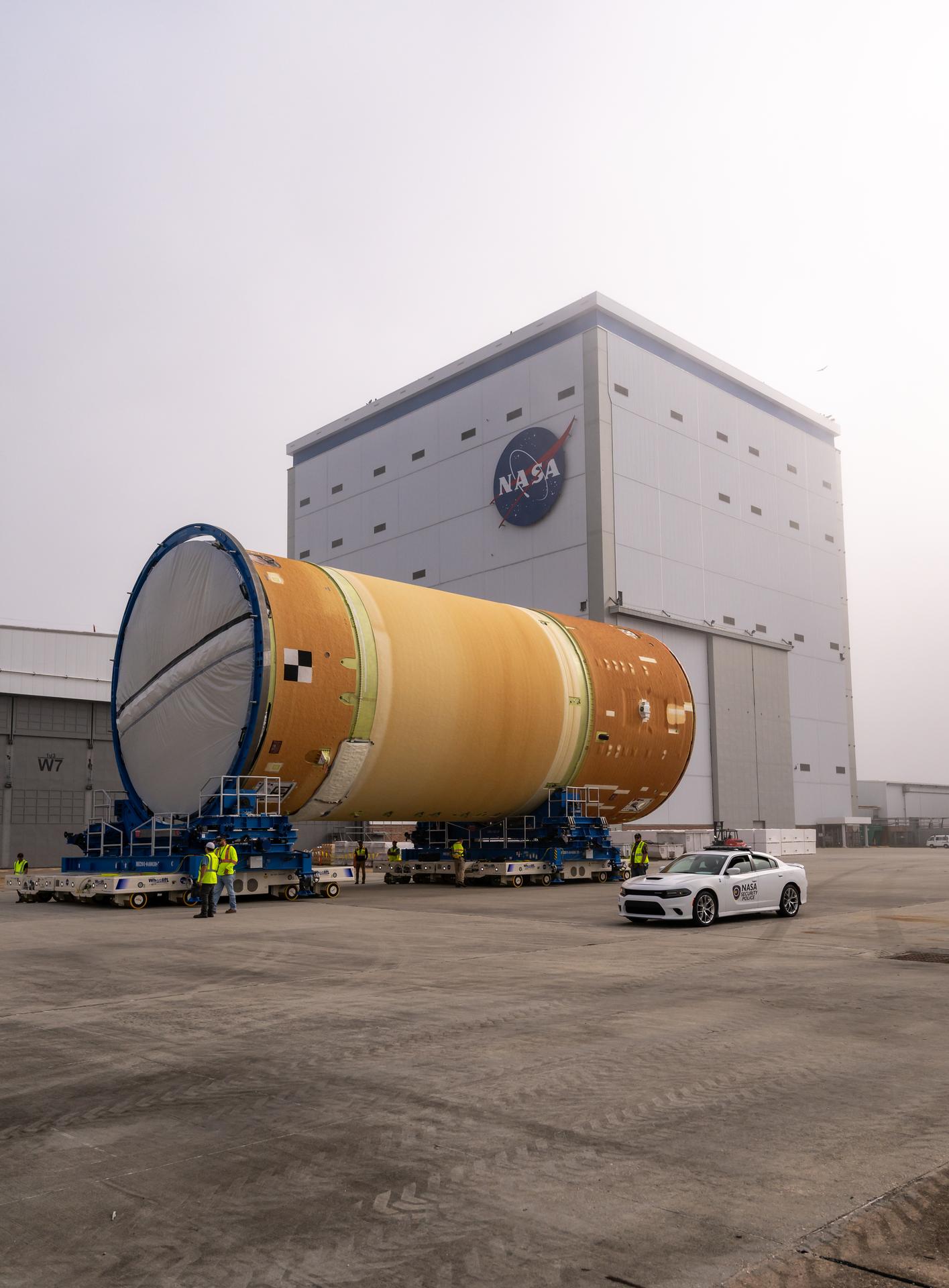
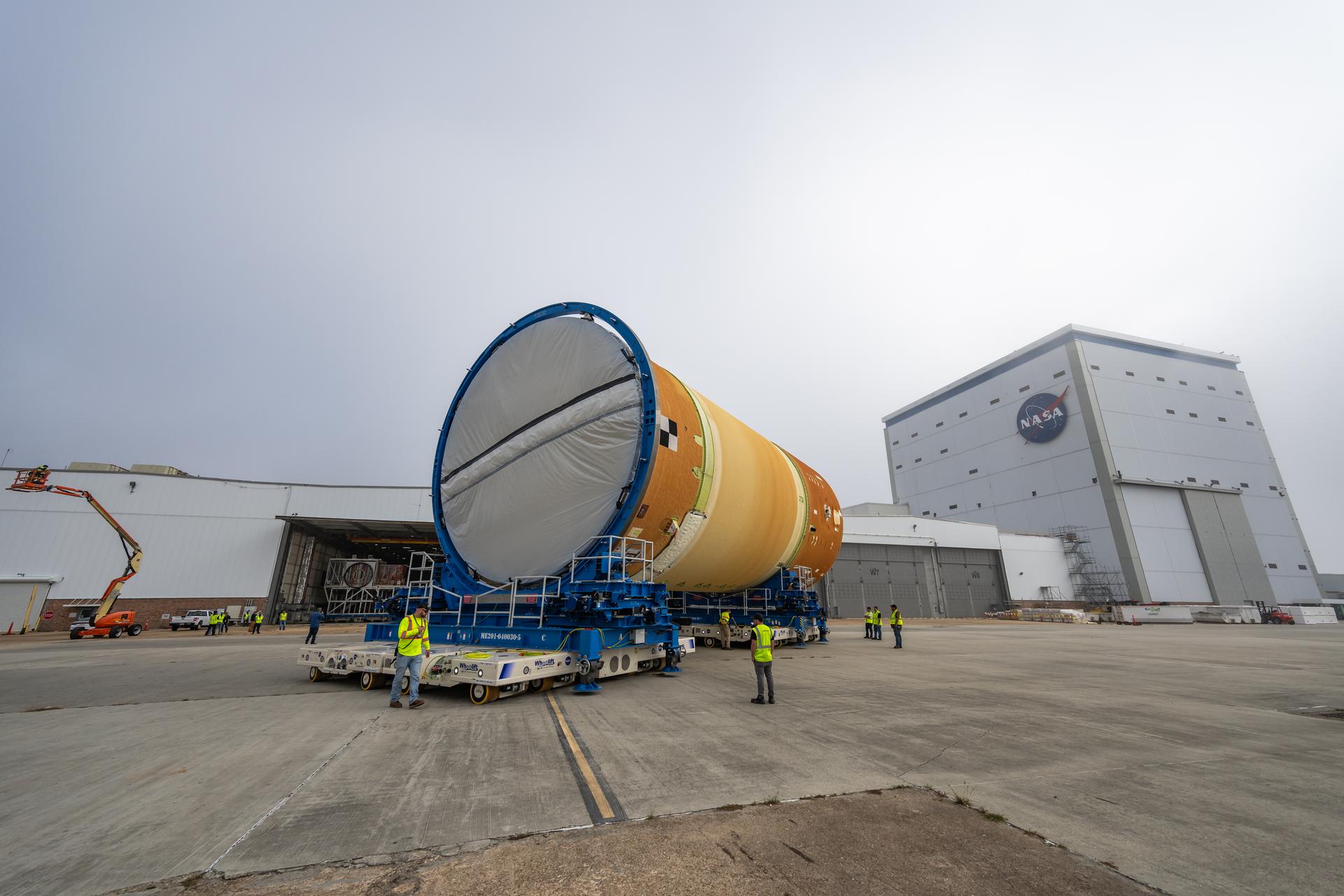
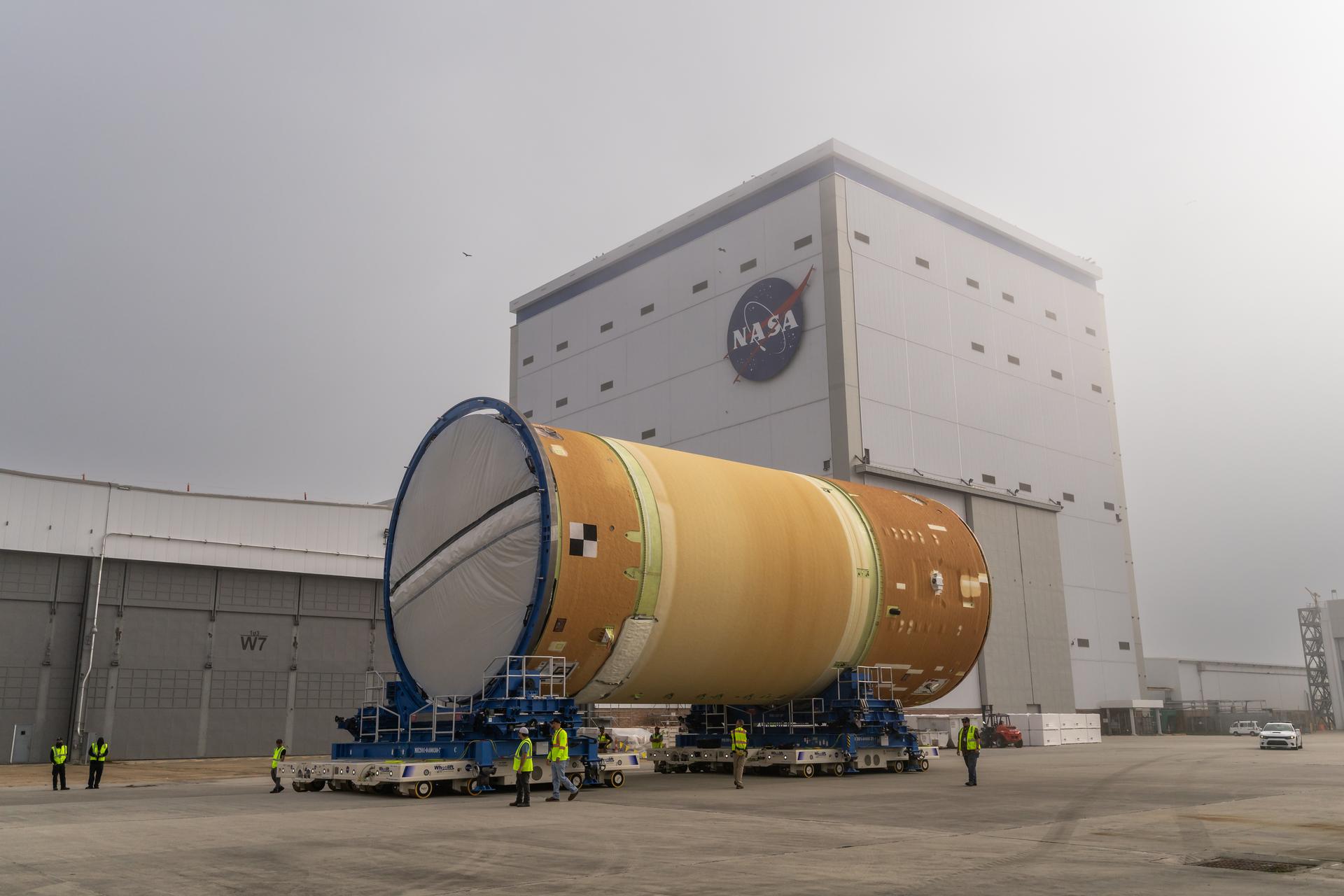
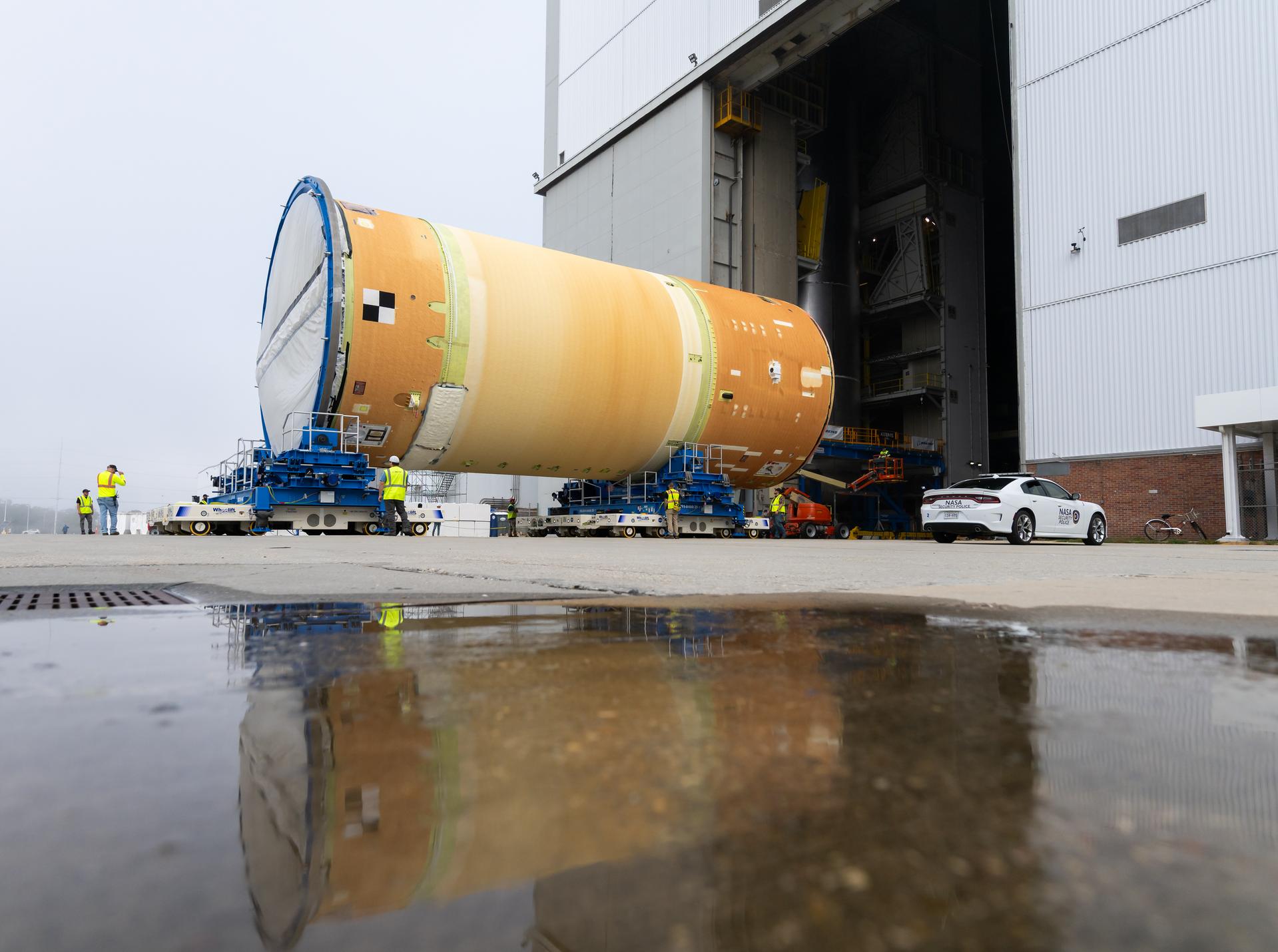
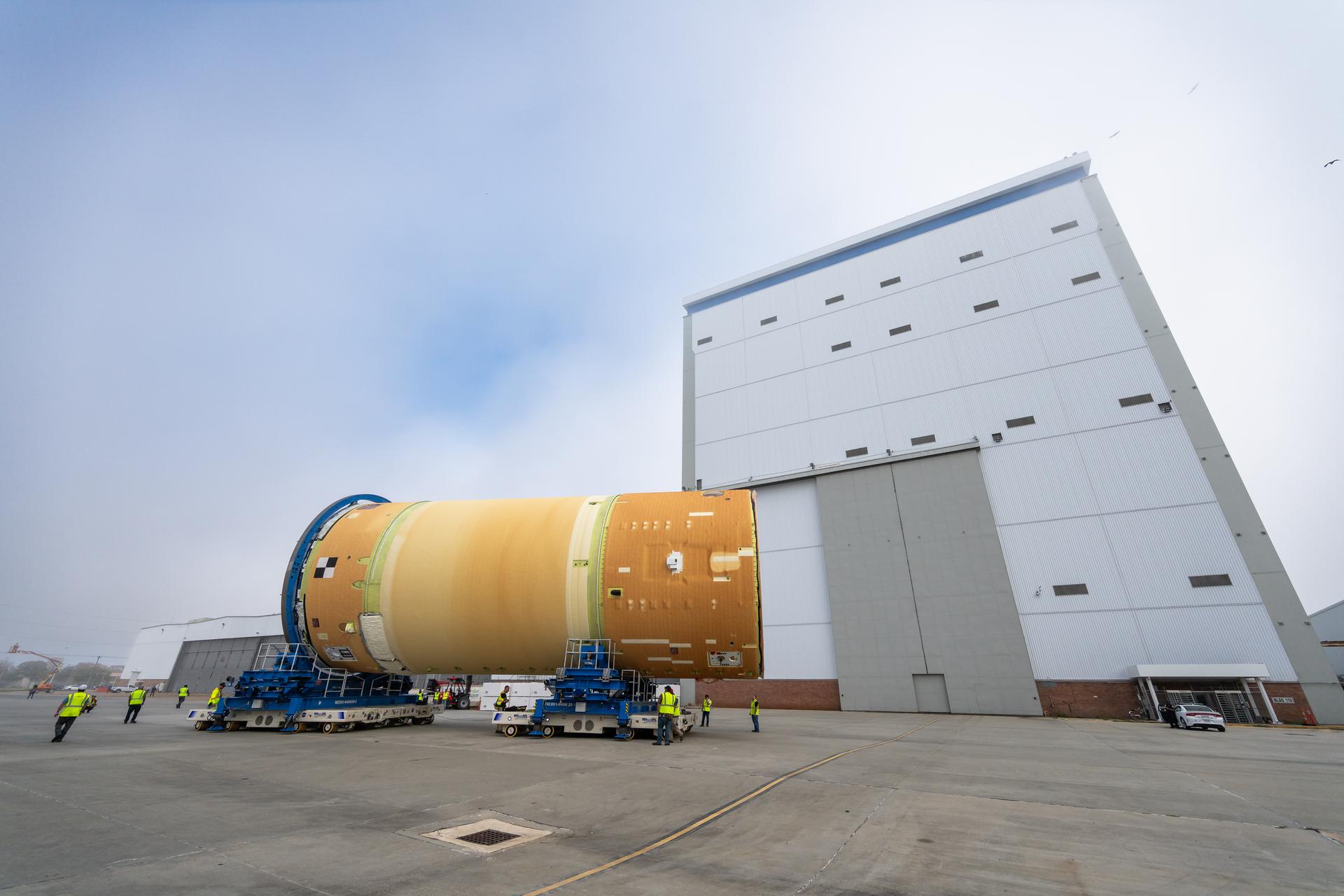
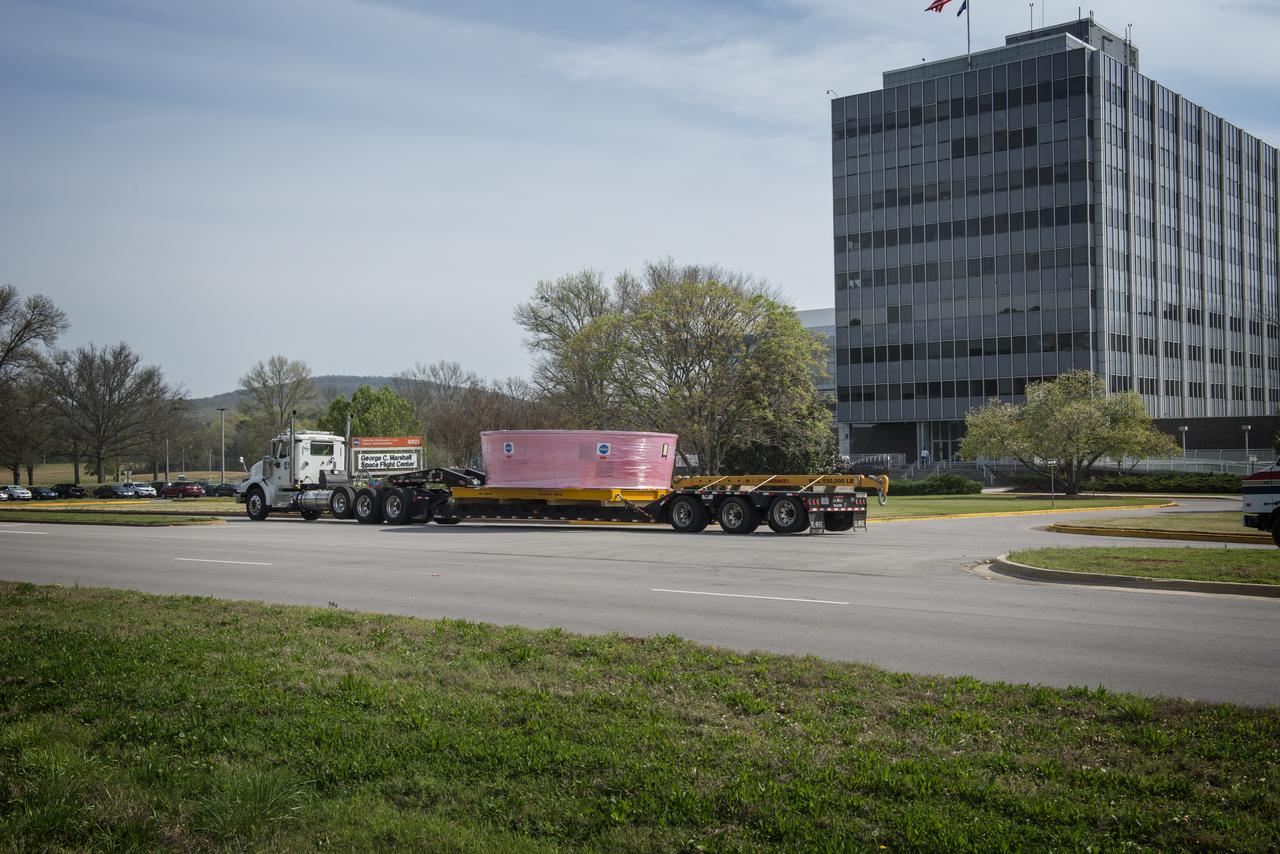
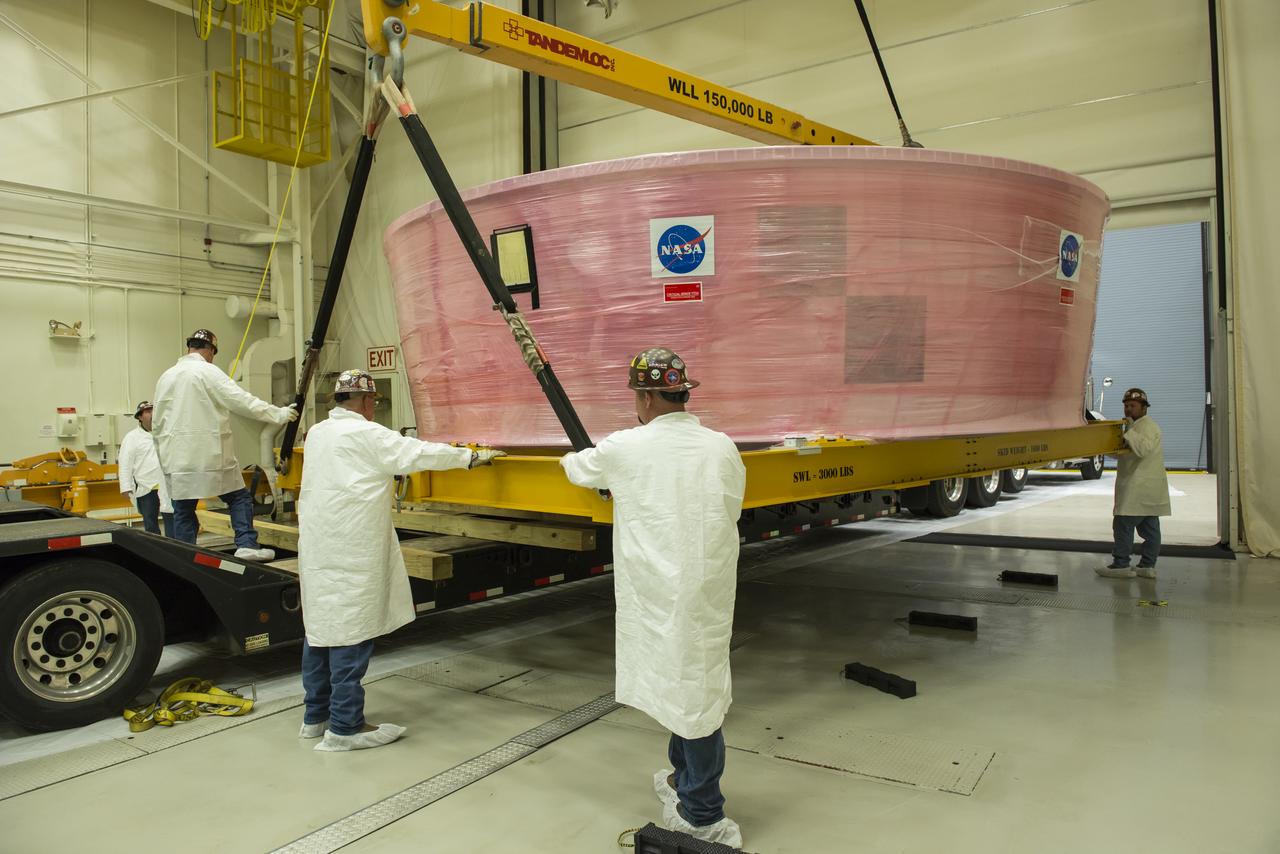
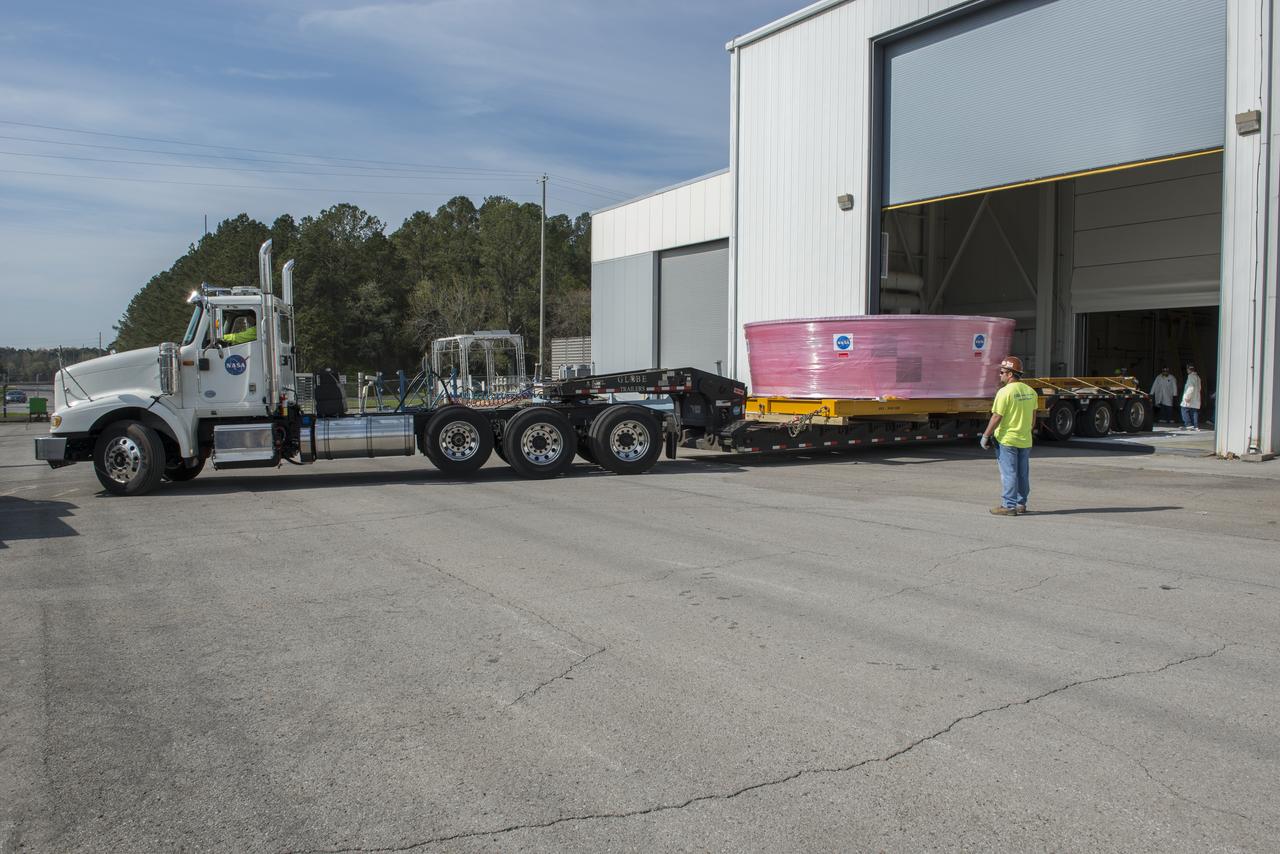
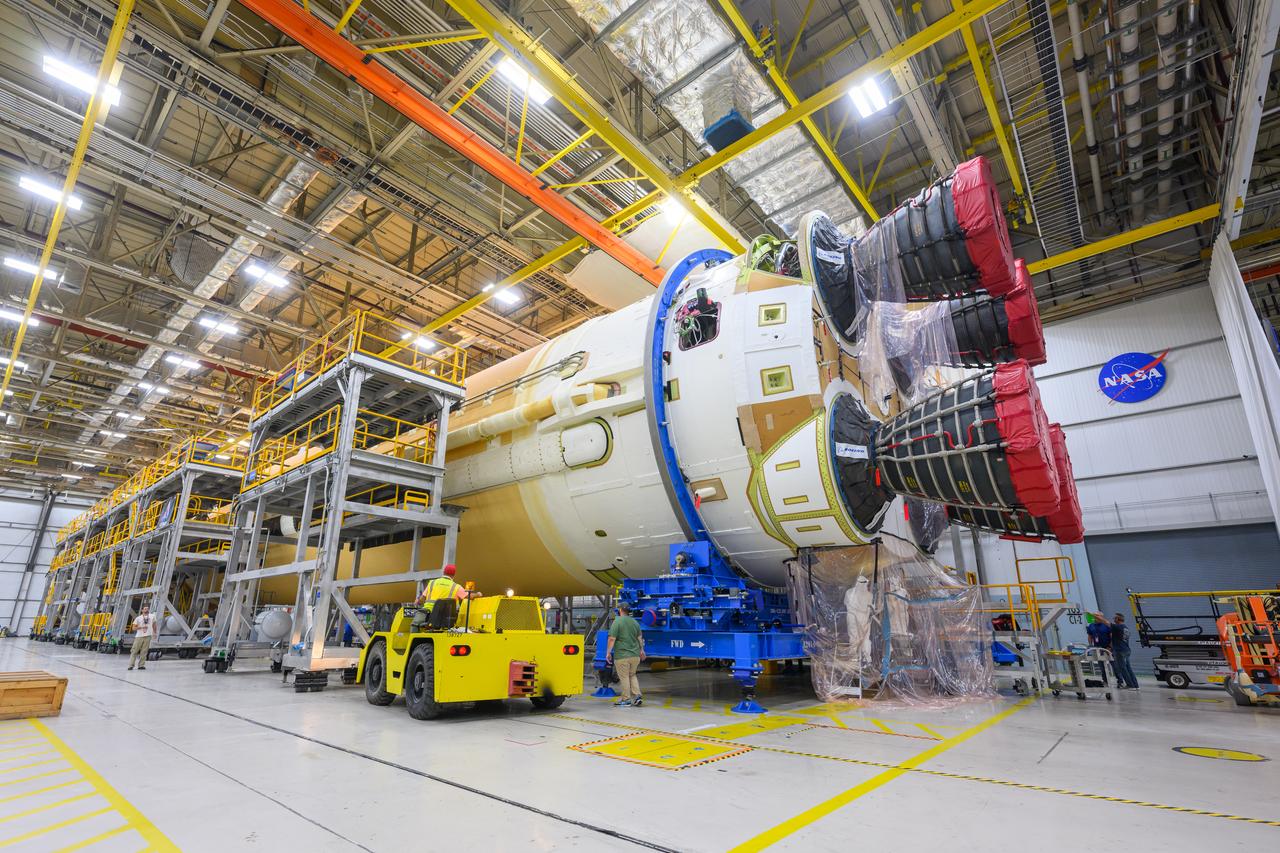
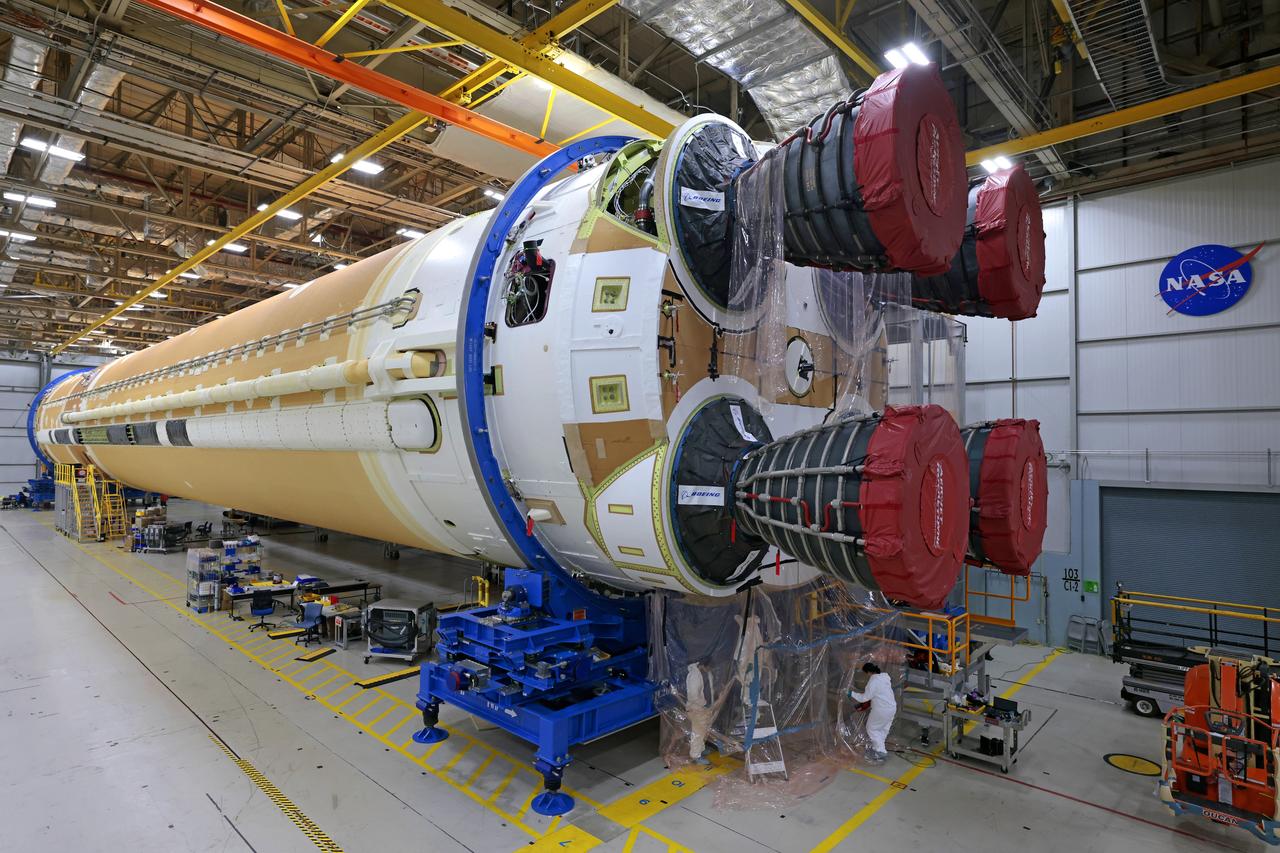
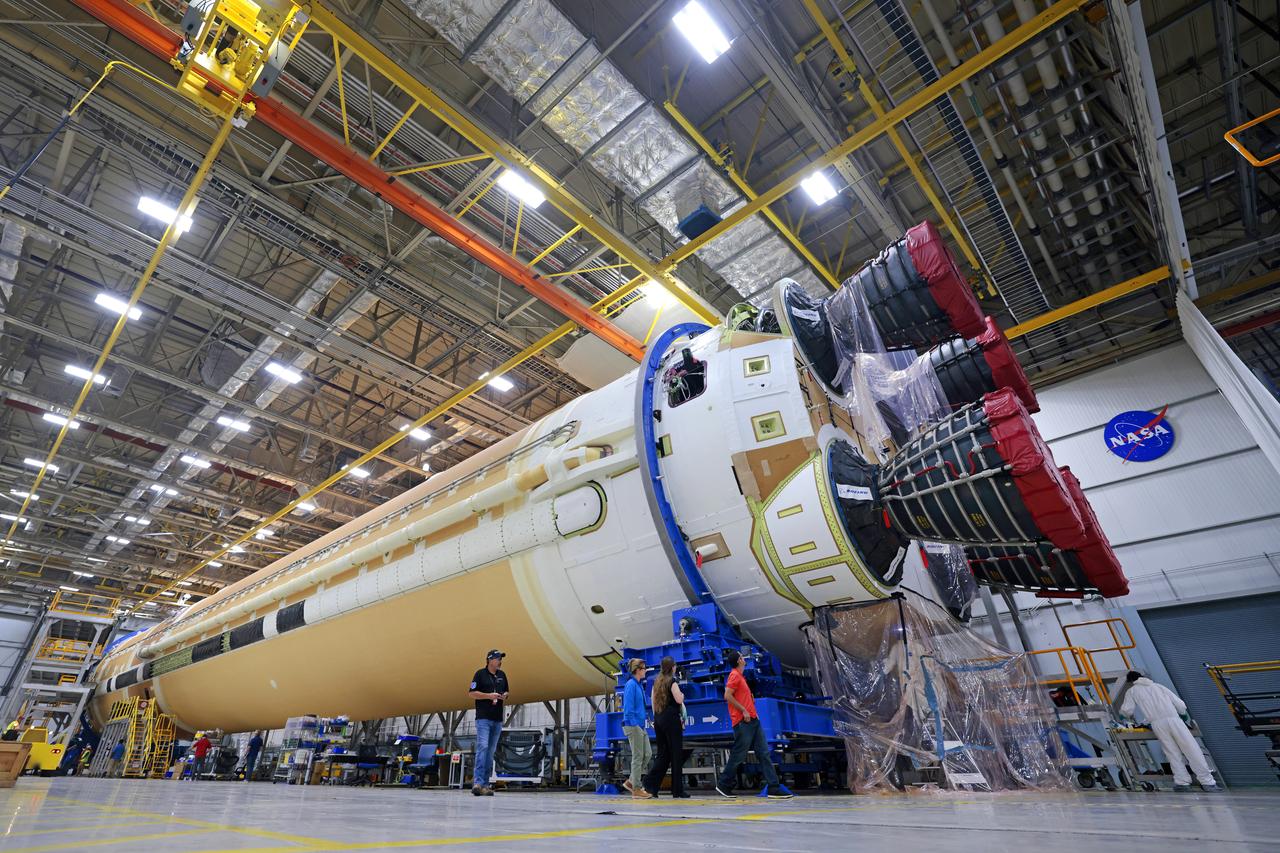
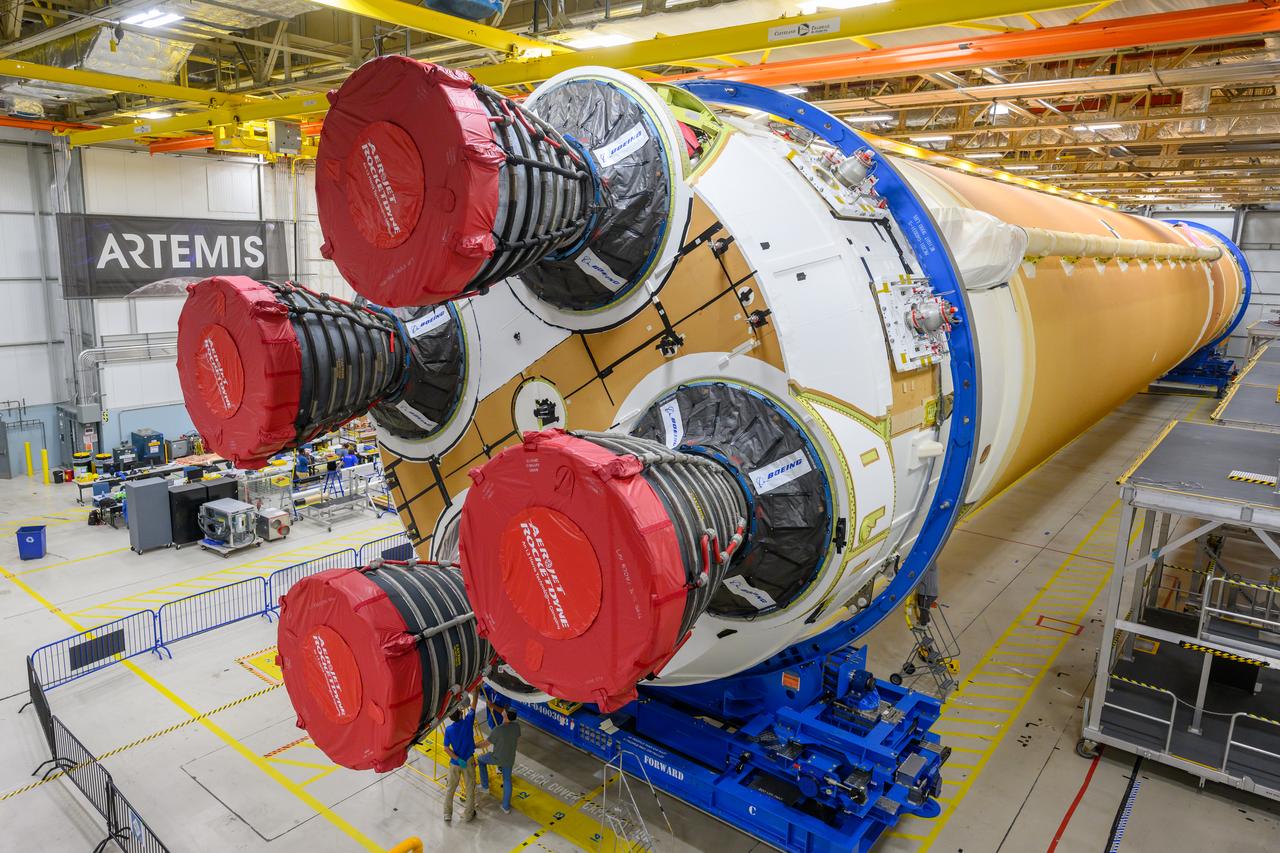
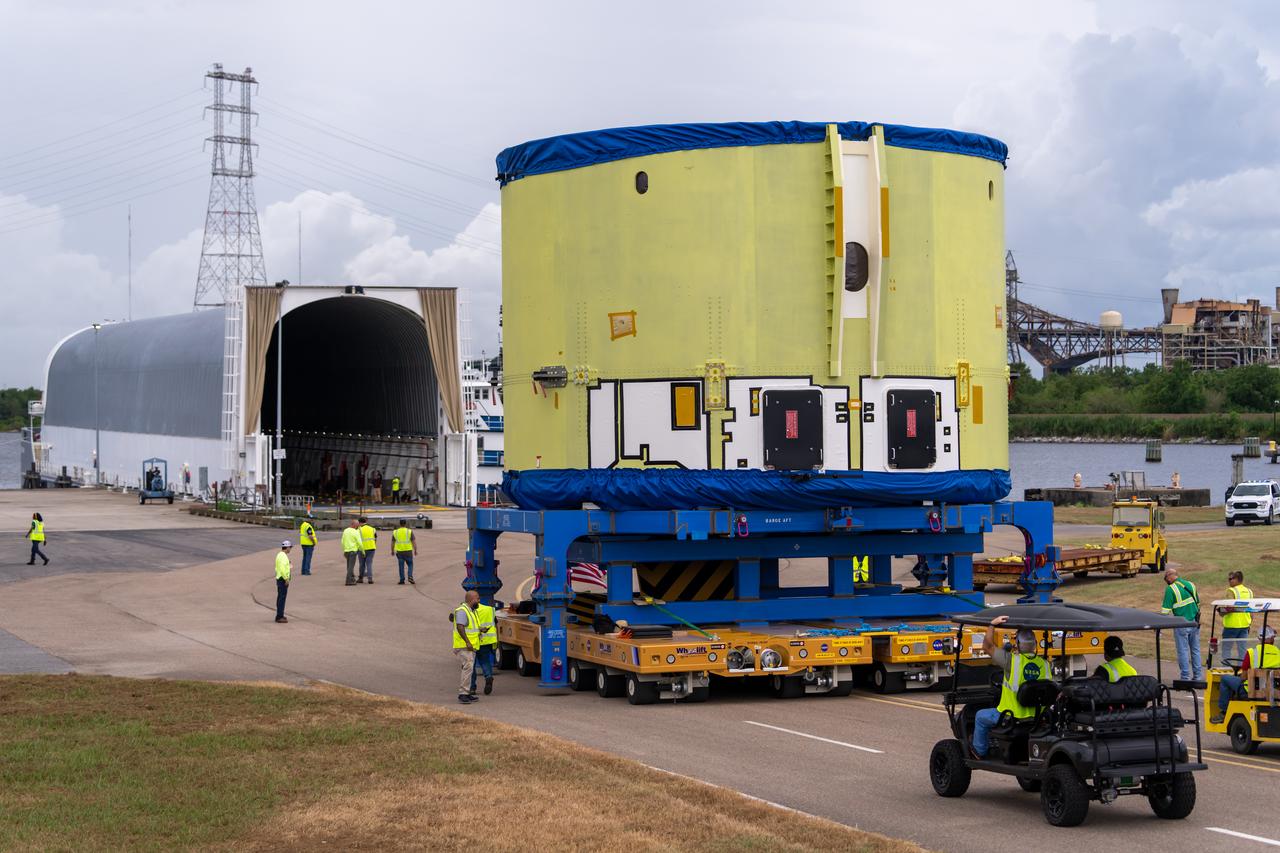
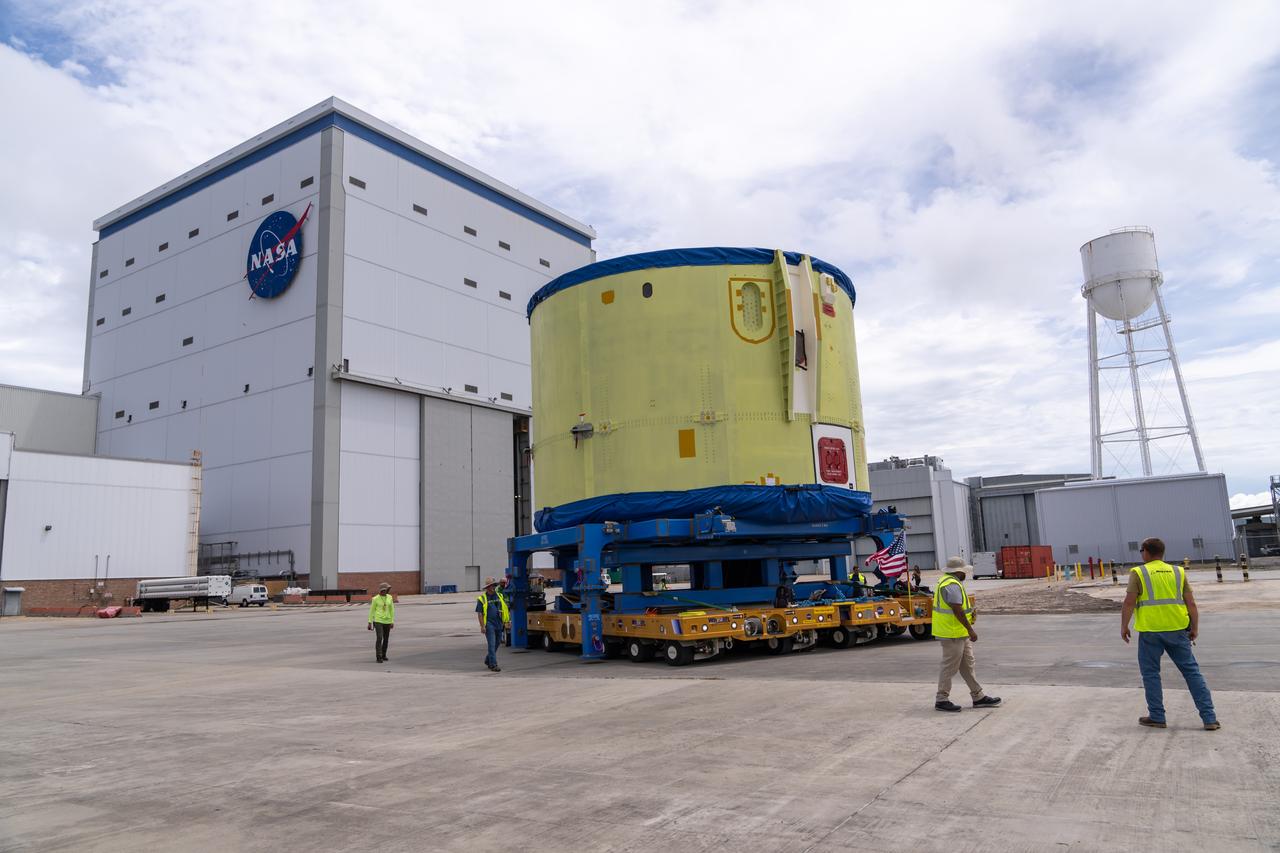
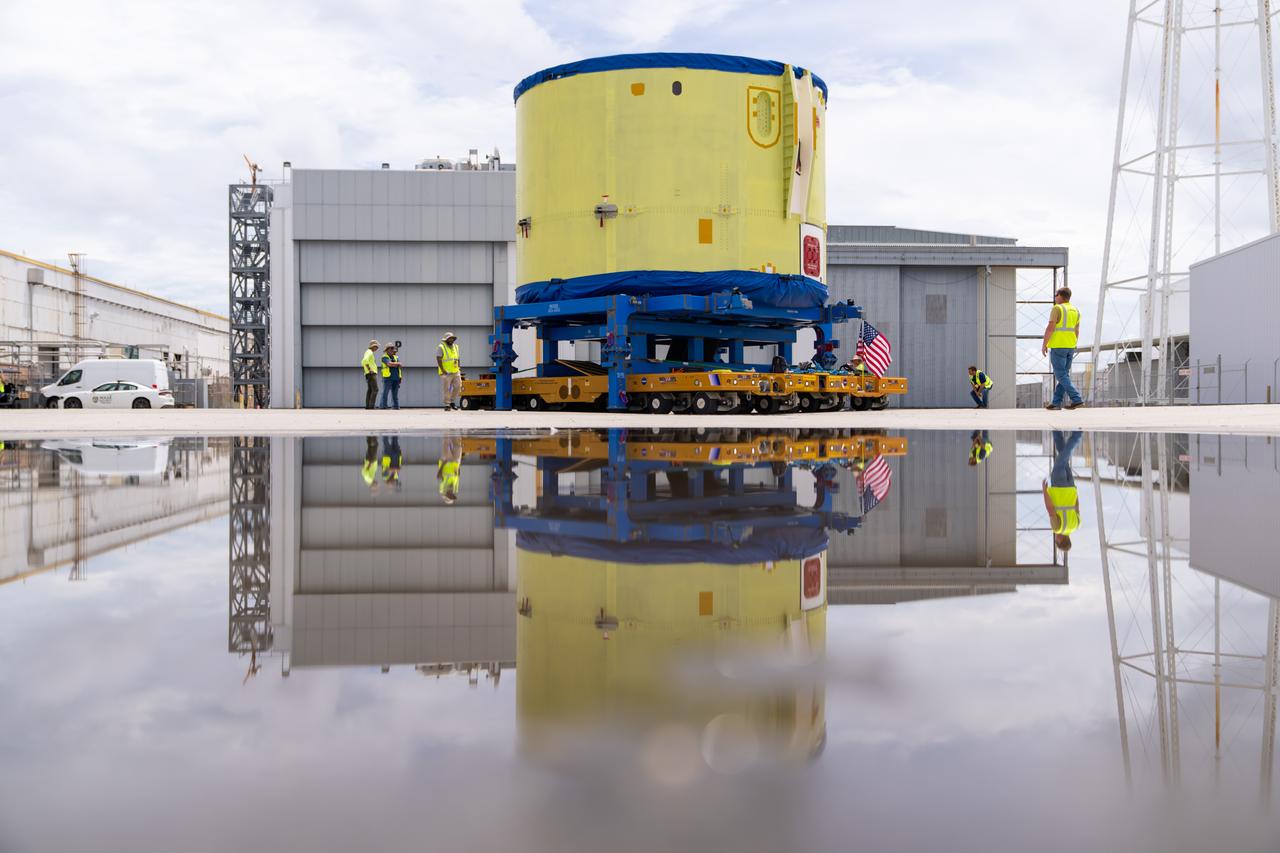
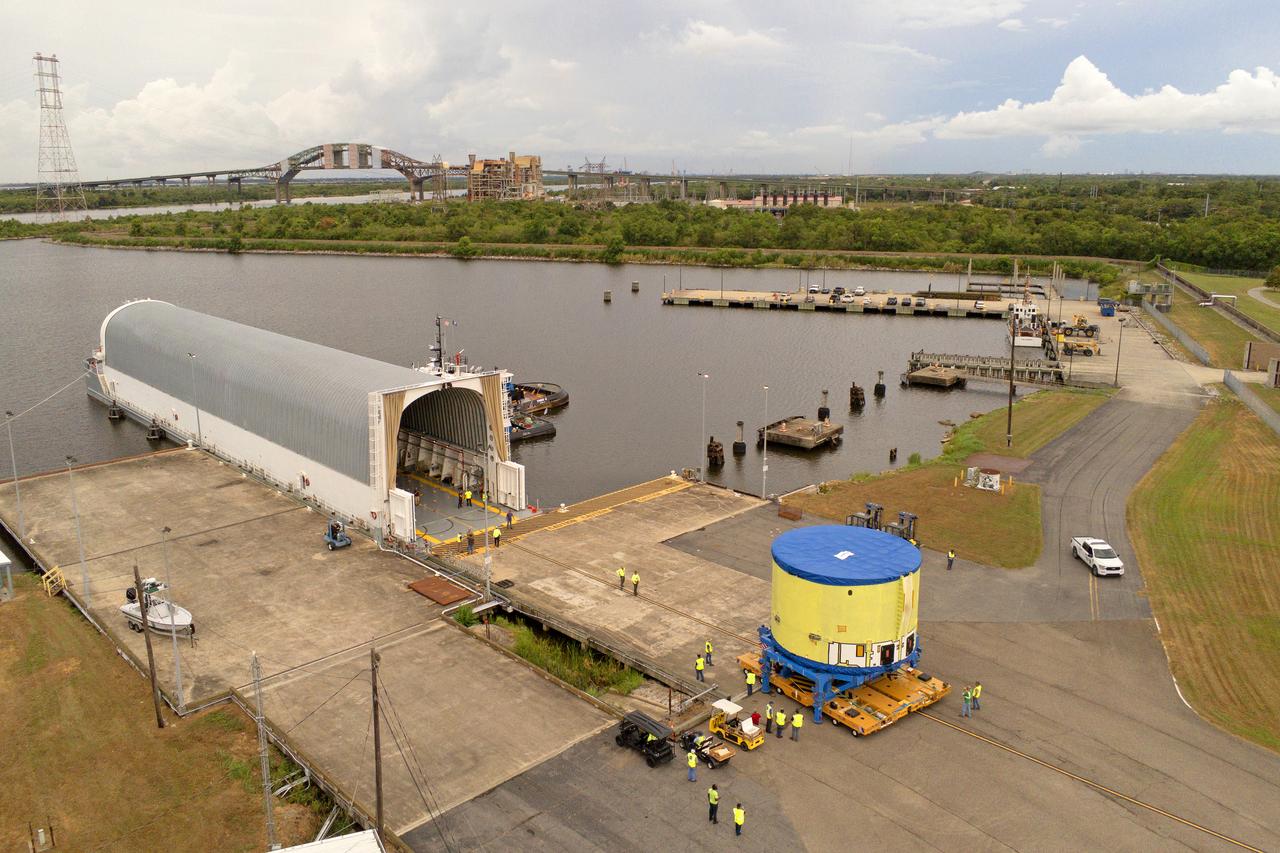
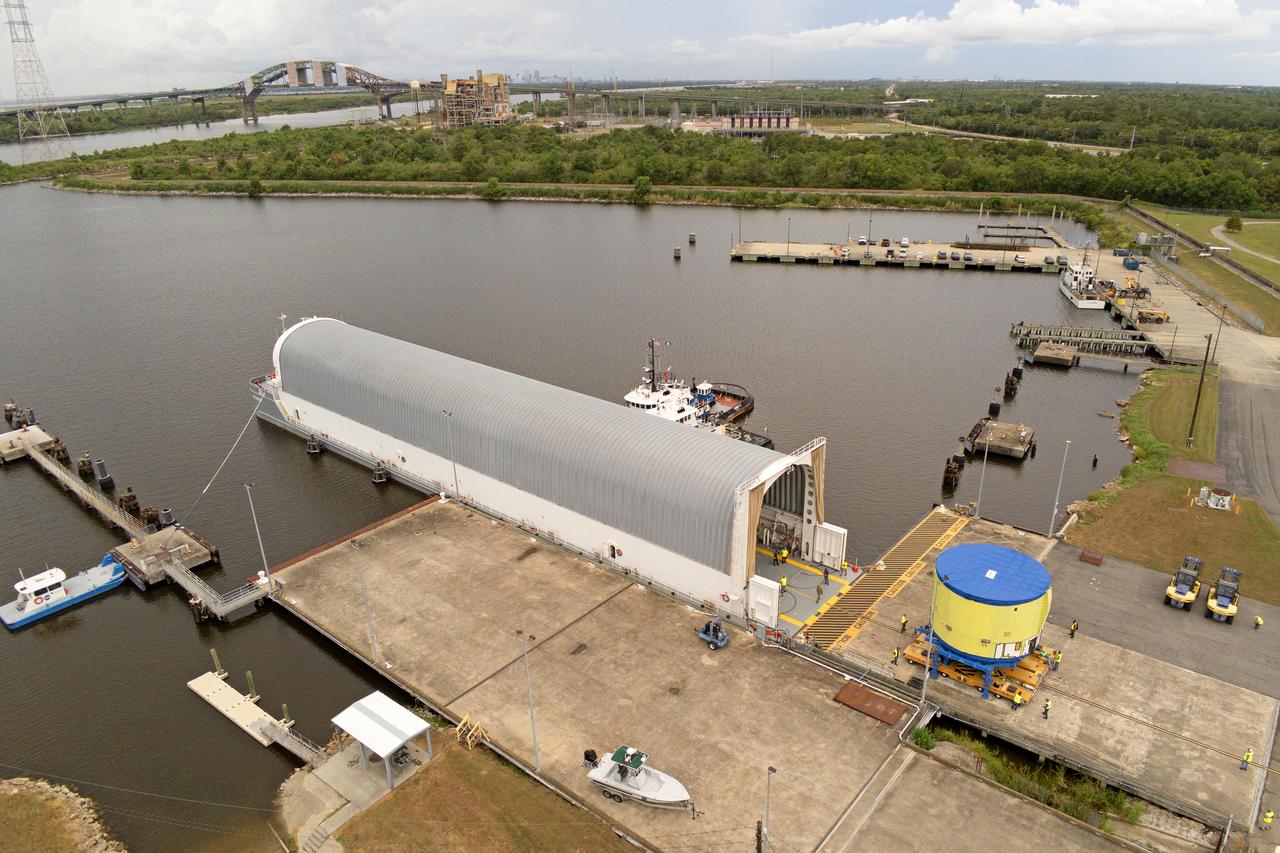
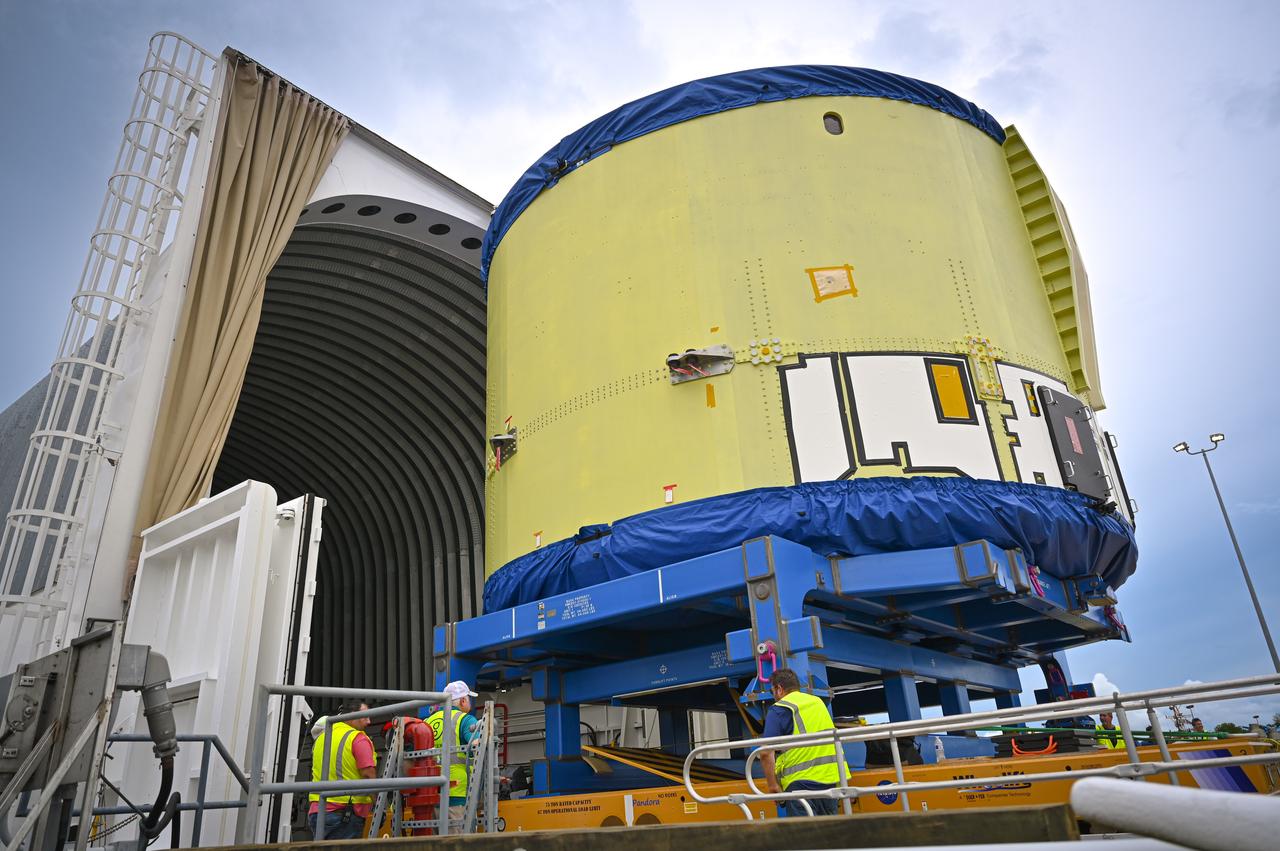
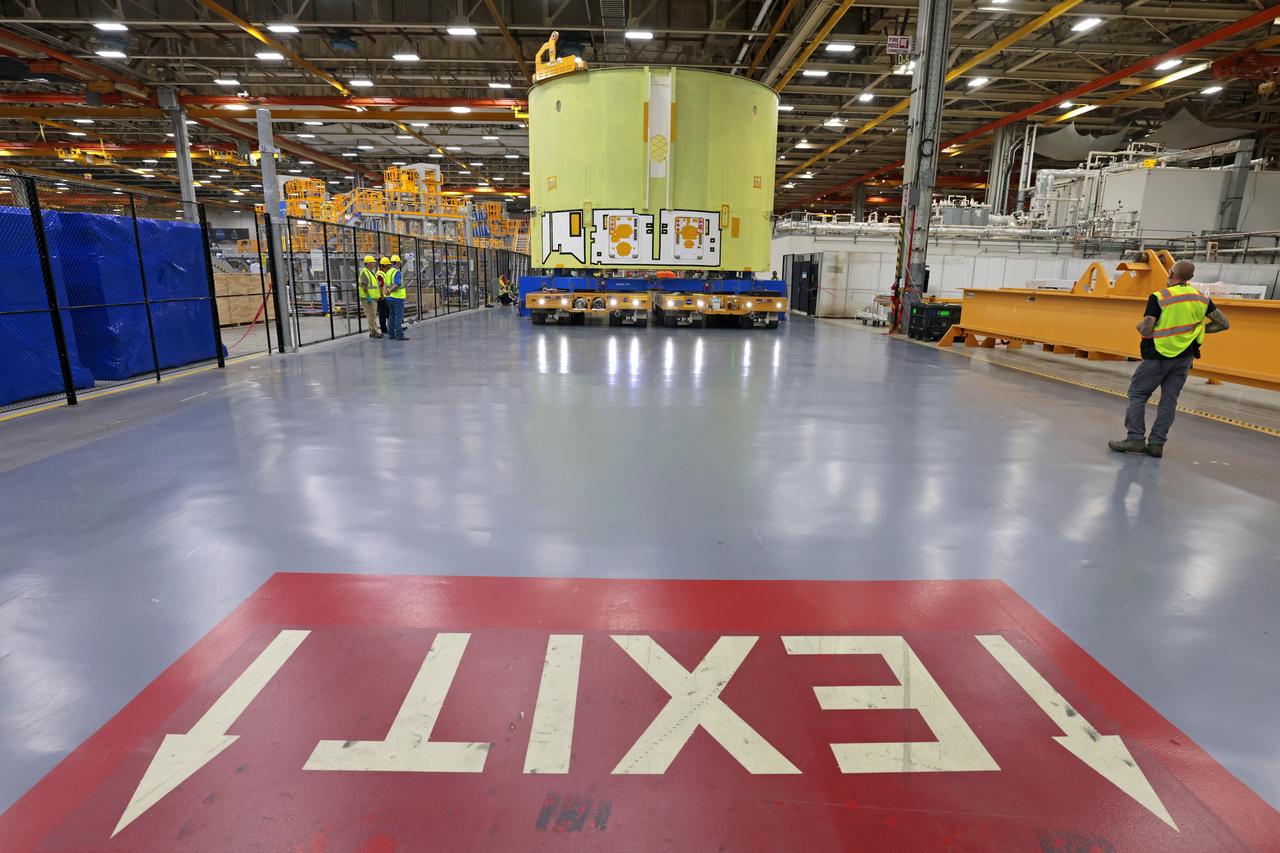
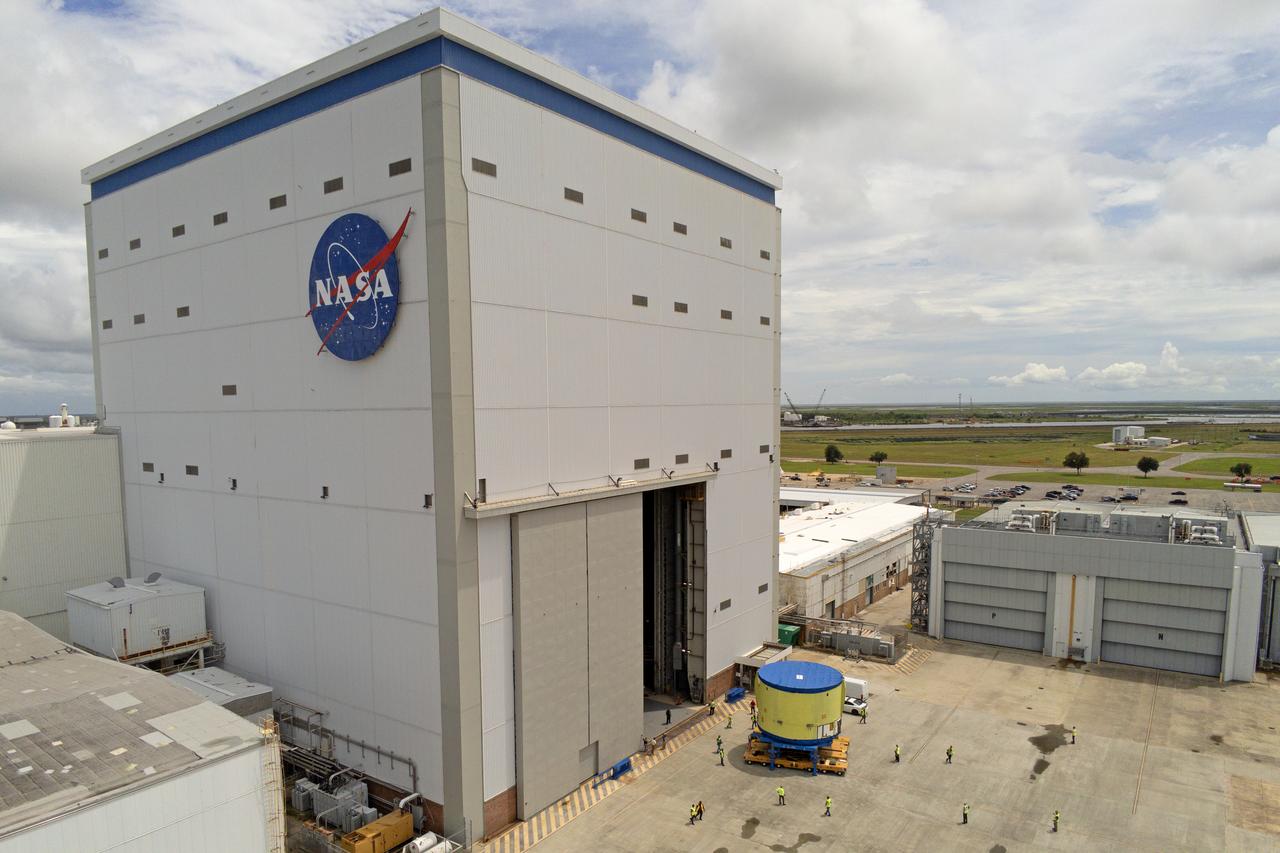
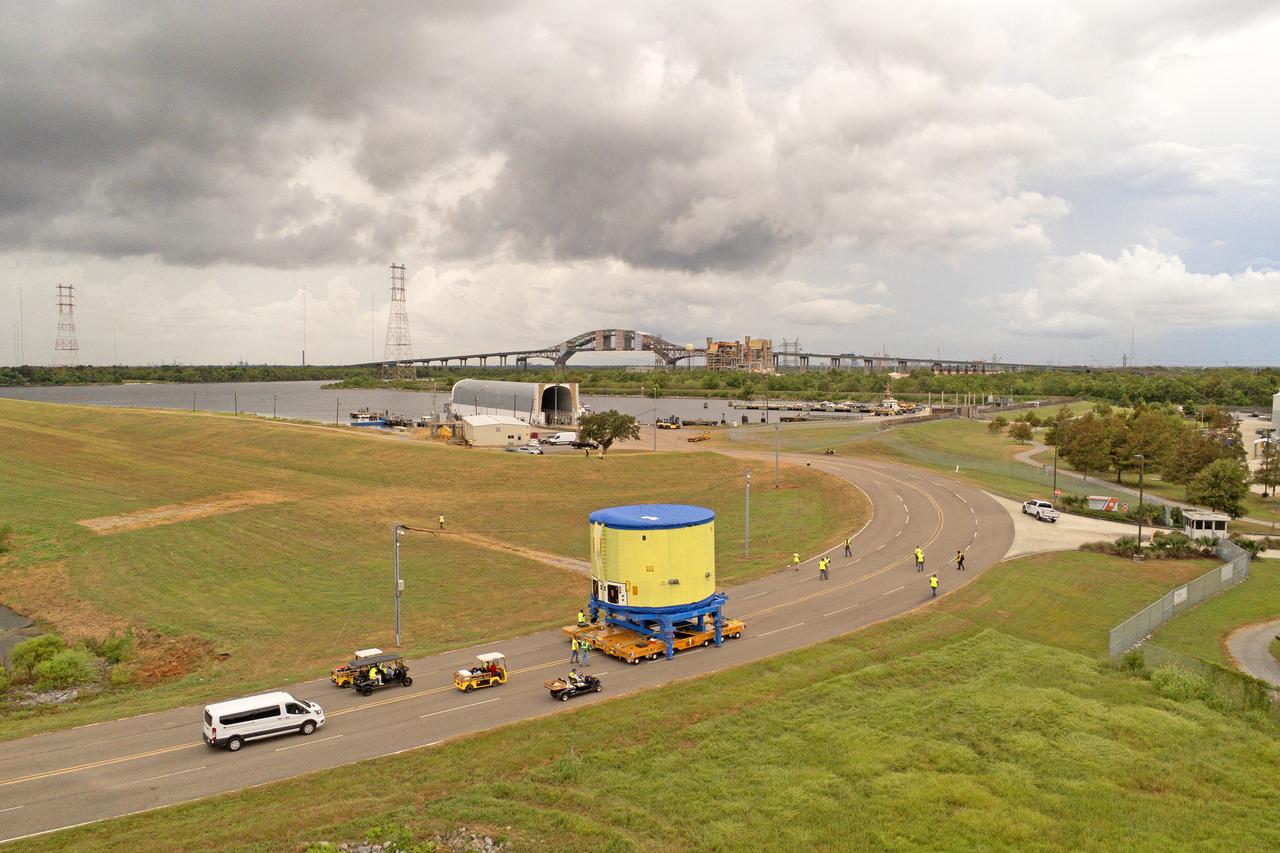
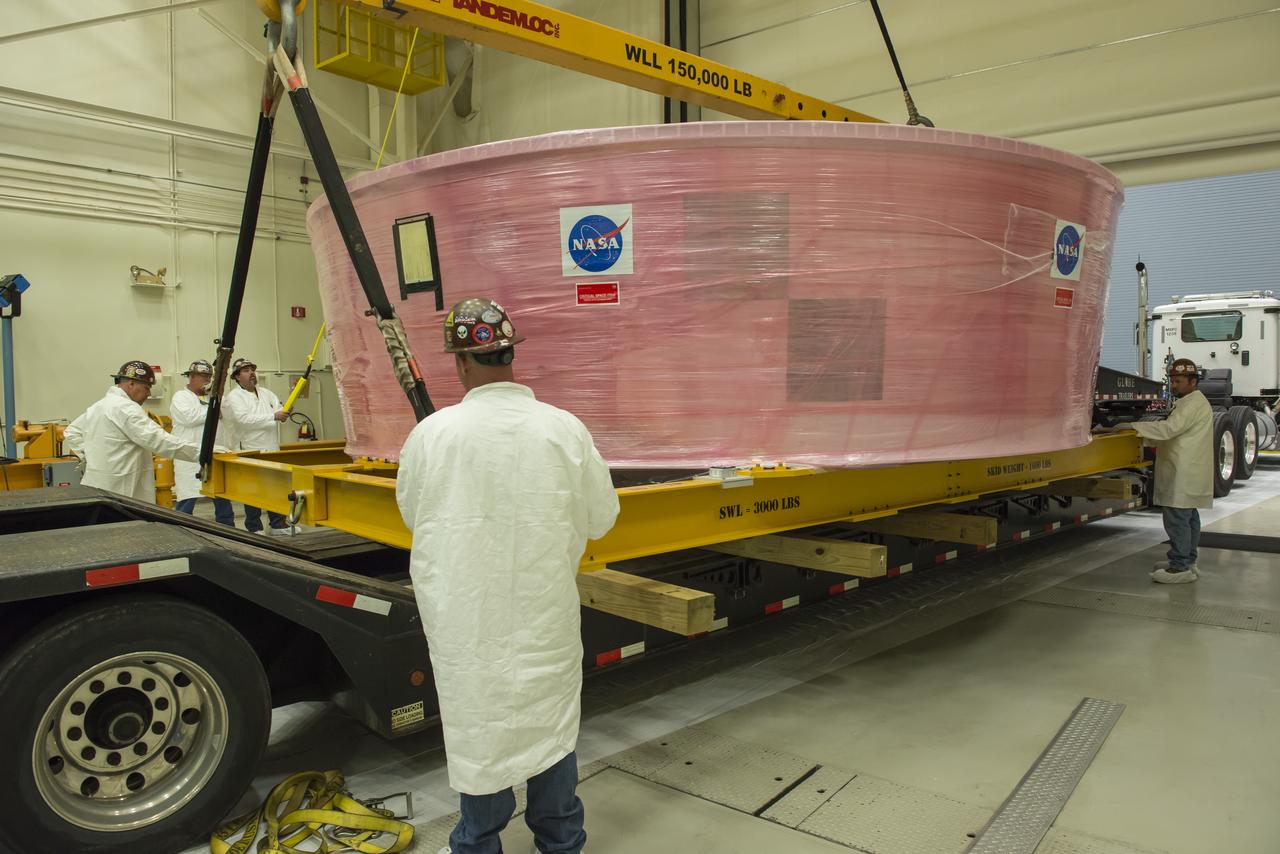
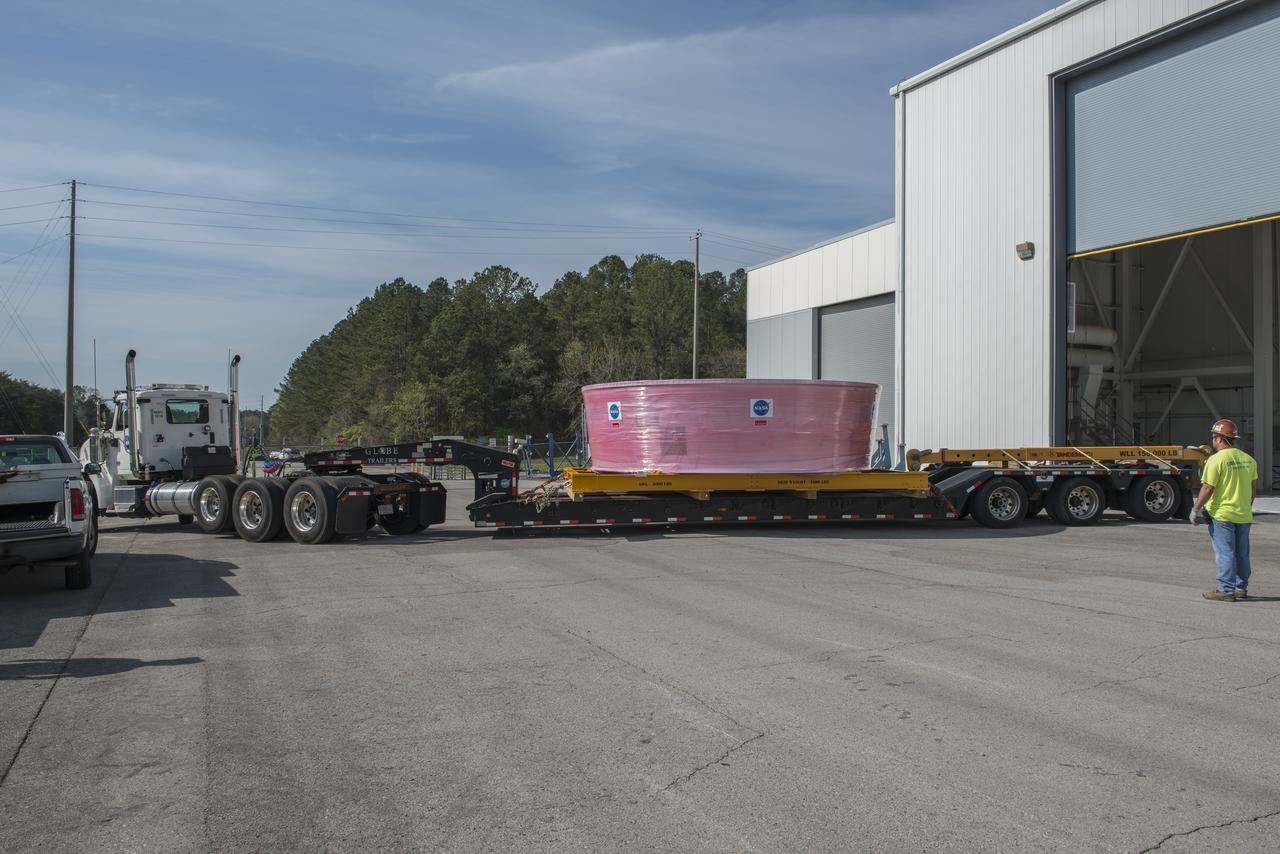
These photos show teams at NASA’s Michoud Assembly Facility in New Orleans preparing, moving, and loading the engine section of a future SLS (Space Launch System) rocket to NASA’s Pegasus barge Aug. 28. The hardware will form the bottom-most section of the SLS core stage that will power NASA’s Artemis IV mission, which will be the first mission to the Gateway space station in lunar orbit under the Artemis campaign. The barge will transport the spaceflight hardware to NASA’s Kennedy Space Center in Florida via the agency’s Pegasus barge. Once in Florida, the engine section will undergo final outfitting inside Kennedy’s Space Station Processing Facility.
NASA, Boeing Move Artemis IV Rocket Hardware to Barge
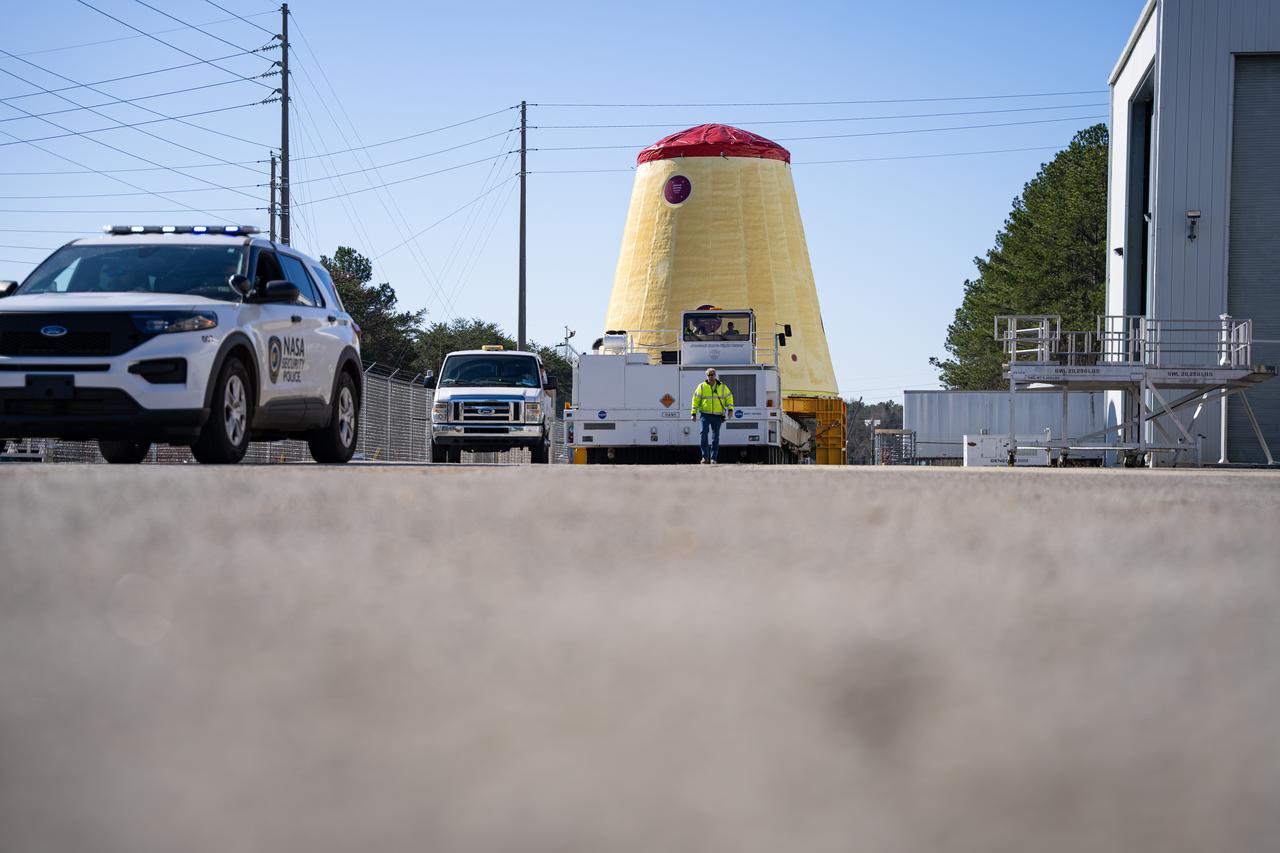
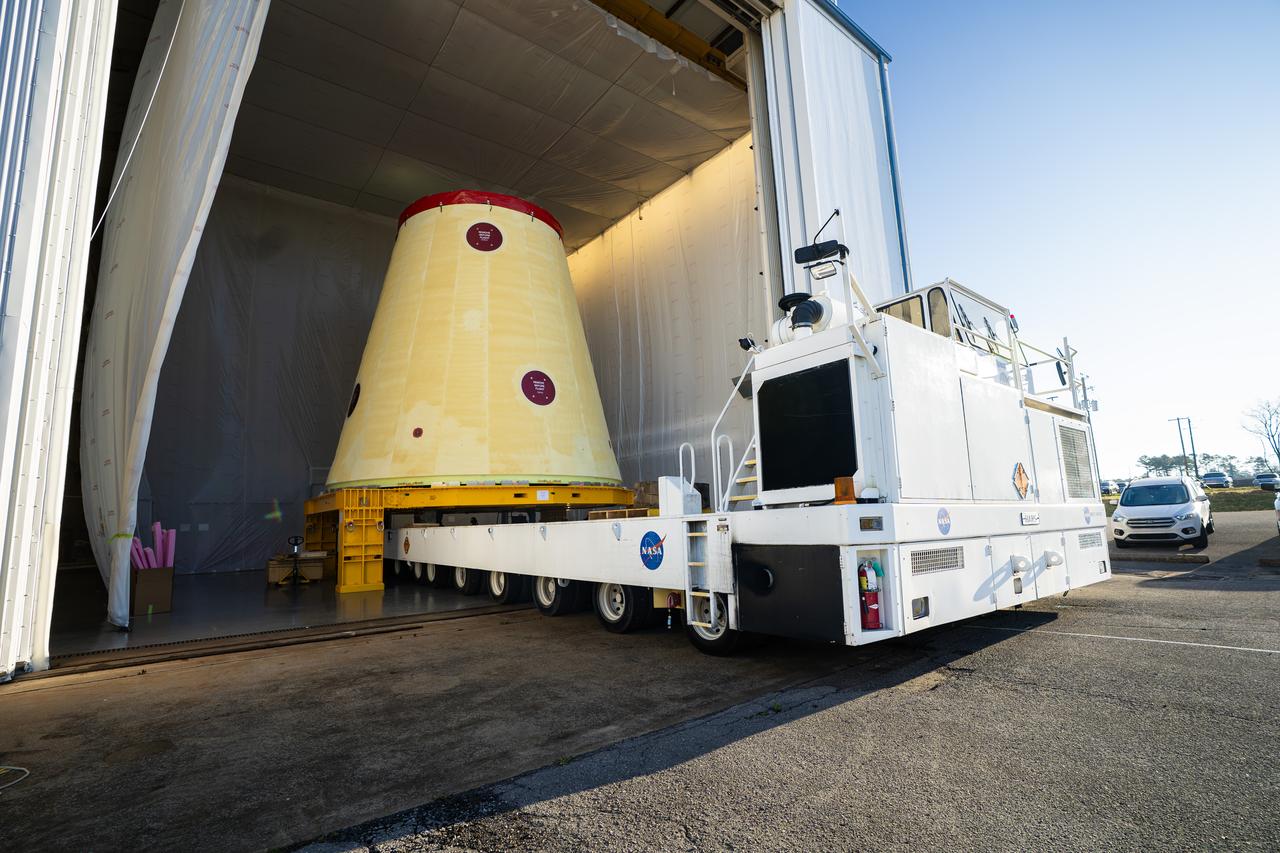
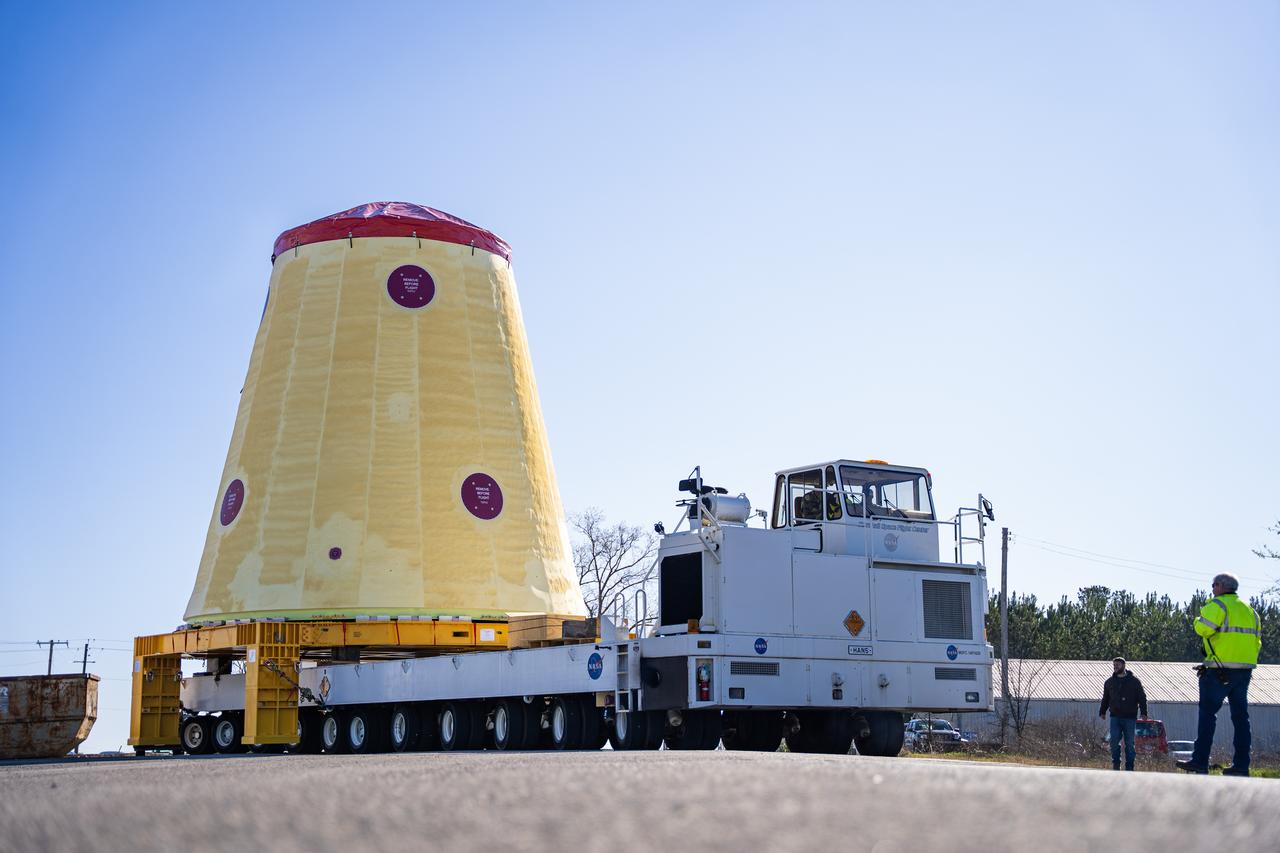
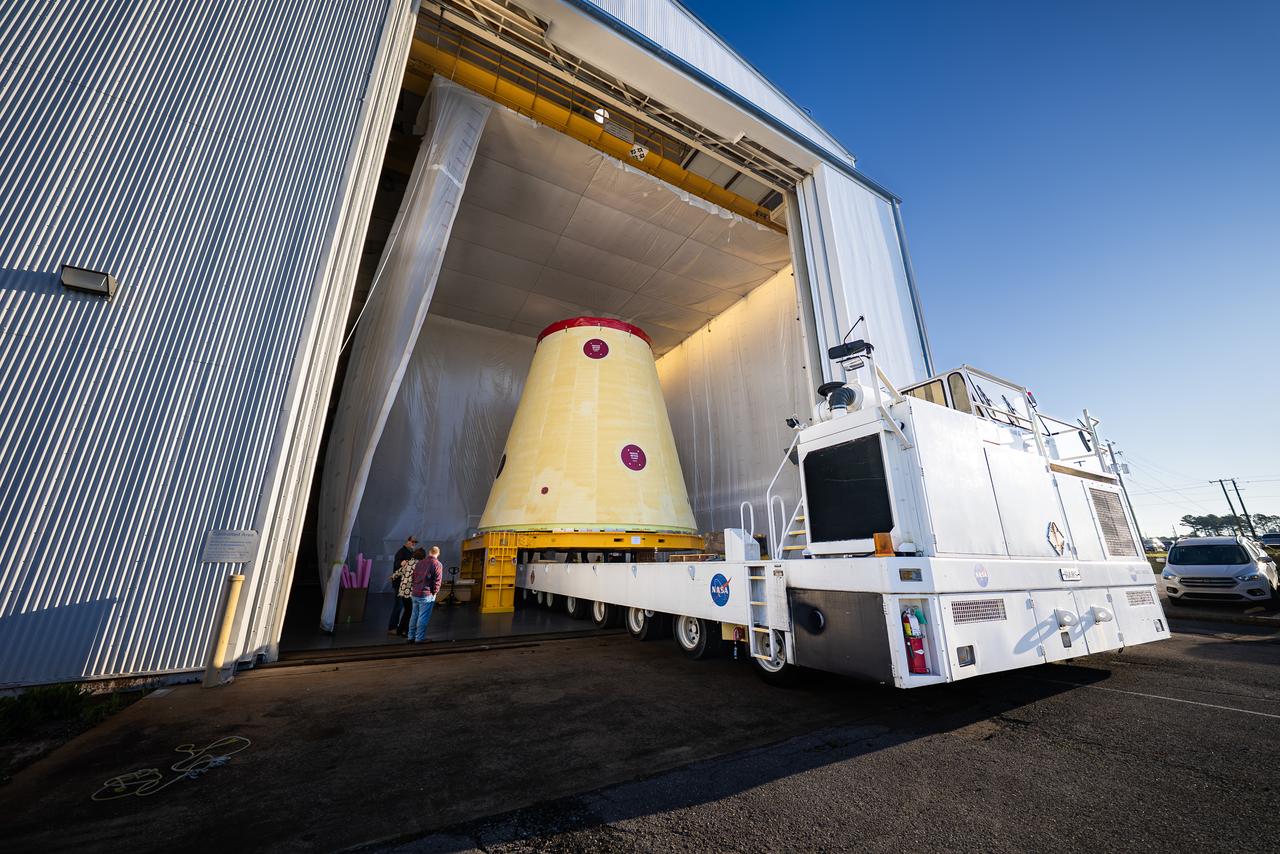
These images and videos show technicians at NASA’s Marshall Space Flight Center in Huntsville, Alabama, March 17, 2025, moving the completed launch vehicle stage adapter for Artemis III from Building 4649 to Building 4708 where it will remain until it is time to ship the hardware to NASA’s Kennedy Space Center in Florida.    The cone-shaped hardware connects the SLS (Space Launch System) rocket to the upper stage, the interim cryogenic propulsion stage, and protects the rocket’s flight computers, avionics, and electrical devices during launch and ascent during the Artemis missions.
NASA moves SLS Hardware for Artemis III at Marshall Space Flight Center
These photos show teams at NASA’s Michoud Assembly Facility in New Orleans preparing, moving, and loading the engine section of a future SLS (Space Launch System) rocket to NASA’s Pegasus barge Aug. 28. The hardware will form the bottom-most section of the SLS core stage that will power NASA’s Artemis IV mission, which will be the first mission to the Gateway space station in lunar orbit under the Artemis campaign. The barge will transport the spaceflight hardware to NASA’s Kennedy Space Center in Florida via the agency’s Pegasus barge. Once in Florida, the engine section will undergo final outfitting inside Kennedy’s Space Station Processing Facility.  Image credit: NASA/Michael DeMocker
NASA, Boeing Move Artemis IV Rocket Hardware to Barge
These photos show teams at NASA’s Michoud Assembly Facility in New Orleans preparing, moving, and loading the engine section of a future SLS (Space Launch System) rocket to NASA’s Pegasus barge Aug. 28. The hardware will form the bottom-most section of the SLS core stage that will power NASA’s Artemis IV mission, which will be the first mission to the Gateway space station in lunar orbit under the Artemis campaign. The barge will transport the spaceflight hardware to NASA’s Kennedy Space Center in Florida via the agency’s Pegasus barge. Once in Florida, the engine section will undergo final outfitting inside Kennedy’s Space Station Processing Facility.  Image credit: NASA/Michael DeMocker
NASA, Boeing Move Artemis IV Rocket Hardware to Barge
These photos and videos show teams at NASA’s Michoud Assembly Facility in New Orleans preparing, moving, and loading the engine section of a future SLS (Space Launch System) rocket to NASA’s Pegasus barge Aug. 28. The hardware will form the bottom-most section of the SLS core stage that will power NASA’s Artemis IV mission, which will be the first mission to the Gateway space station in lunar orbit under the Artemis campaign. The barge will transport the spaceflight hardware to NASA’s Kennedy Space Center in Florida via the agency’s Pegasus barge. Once in Florida, the engine section will undergo final outfitting inside Kennedy’s Space Station Processing Facility.
NASA, Boeing Move Artemis IV Rocket Hardware to Barge
These photos and videos show teams at NASA’s Michoud Assembly Facility in New Orleans preparing, moving, and loading the engine section of a future SLS (Space Launch System) rocket to NASA’s Pegasus barge Aug. 28. The hardware will form the bottom-most section of the SLS core stage that will power NASA’s Artemis IV mission, which will be the first mission to the Gateway space station in lunar orbit under the Artemis campaign. The barge will transport the spaceflight hardware to NASA’s Kennedy Space Center in Florida via the agency’s Pegasus barge. Once in Florida, the engine section will undergo final outfitting inside Kennedy’s Space Station Processing Facility.
NASA, Boeing Move Artemis IV Rocket Hardware to Barge
These photos and videos show teams at NASA’s Michoud Assembly Facility in New Orleans preparing, moving, and loading the engine section of a future SLS (Space Launch System) rocket to NASA’s Pegasus barge Aug. 28. The hardware will form the bottom-most section of the SLS core stage that will power NASA’s Artemis IV mission, which will be the first mission to the Gateway space station in lunar orbit under the Artemis campaign. The barge will transport the spaceflight hardware to NASA’s Kennedy Space Center in Florida via the agency’s Pegasus barge. Once in Florida, the engine section will undergo final outfitting inside Kennedy’s Space Station Processing Facility.
NASA, Boeing Move Artemis IV Rocket Hardware to Barge
These images and videos show technicians at NASA’s Marshall Space Flight Center in Huntsville, Alabama, March 17, 2025, moving the completed launch vehicle stage adapter for Artemis III from Building 4649 to Building 4708 where it will remain until it is time to ship the hardware to NASA’s Kennedy Space Center in Florida.    The cone-shaped hardware connects the SLS (Space Launch System) rocket to the upper stage, the interim cryogenic propulsion stage, and protects the rocket’s flight computers, avionics, and electrical devices during launch and ascent during the Artemis missions.
NASA moves SLS Hardware for Artemis III at Marshall Space Flight Center
These images and videos show technicians at NASA’s Marshall Space Flight Center in Huntsville, Alabama, March 17, 2025, moving the completed launch vehicle stage adapter for Artemis III from Building 4649 to Building 4708 where it will remain until it is time to ship the hardware to NASA’s Kennedy Space Center in Florida.    The cone-shaped hardware connects the SLS (Space Launch System) rocket to the upper stage, the interim cryogenic propulsion stage, and protects the rocket’s flight computers, avionics, and electrical devices during launch and ascent during the Artemis missions.
NASA moves SLS Hardware for Artemis III at Marshall Space Flight Center
These photos and videos show teams at NASA’s Michoud Assembly Facility in New Orleans preparing, moving, and loading the engine section of a future SLS (Space Launch System) rocket to NASA’s Pegasus barge Aug. 28. The hardware will form the bottom-most section of the SLS core stage that will power NASA’s Artemis IV mission, which will be the first mission to the Gateway space station in lunar orbit under the Artemis campaign. The barge will transport the spaceflight hardware to NASA’s Kennedy Space Center in Florida via the agency’s Pegasus barge. Once in Florida, the engine section will undergo final outfitting inside Kennedy’s Space Station Processing Facility.
NASA, Boeing Move Artemis IV Rocket Hardware to Barge
These photos and videos show teams at NASA’s Michoud Assembly Facility in New Orleans preparing, moving, and loading the engine section of a future SLS (Space Launch System) rocket to NASA’s Pegasus barge Aug. 28. The hardware will form the bottom-most section of the SLS core stage that will power NASA’s Artemis IV mission, which will be the first mission to the Gateway space station in lunar orbit under the Artemis campaign. The barge will transport the spaceflight hardware to NASA’s Kennedy Space Center in Florida via the agency’s Pegasus barge. Once in Florida, the engine section will undergo final outfitting inside Kennedy’s Space Station Processing Facility.
NASA, Boeing Move Artemis IV Rocket Hardware to Barge
These photos show teams at NASA’s Michoud Assembly Facility in New Orleans preparing, moving, and loading the engine section of a future SLS (Space Launch System) rocket to NASA’s Pegasus barge Aug. 28. The hardware will form the bottom-most section of the SLS core stage that will power NASA’s Artemis IV mission, which will be the first mission to the Gateway space station in lunar orbit under the Artemis campaign. The barge will transport the spaceflight hardware to NASA’s Kennedy Space Center in Florida via the agency’s Pegasus barge. Once in Florida, the engine section will undergo final outfitting inside Kennedy’s Space Station Processing Facility.  Image credit: NASA/Michael DeMocker
NASA, Boeing Move Artemis IV Rocket Hardware to Barge
These photos and videos show teams at NASA’s Michoud Assembly Facility in New Orleans preparing, moving, and loading the engine section of a future SLS (Space Launch System) rocket to NASA’s Pegasus barge Aug. 28. The hardware will form the bottom-most section of the SLS core stage that will power NASA’s Artemis IV mission, which will be the first mission to the Gateway space station in lunar orbit under the Artemis campaign. The barge will transport the spaceflight hardware to NASA’s Kennedy Space Center in Florida via the agency’s Pegasus barge. Once in Florida, the engine section will undergo final outfitting inside Kennedy’s Space Station Processing Facility.
NASA, Boeing Move Artemis IV Rocket Hardware to Barge
These photos show teams at NASA’s Michoud Assembly Facility in New Orleans preparing, moving, and loading the engine section of a future SLS (Space Launch System) rocket to NASA’s Pegasus barge Aug. 28. The hardware will form the bottom-most section of the SLS core stage that will power NASA’s Artemis IV mission, which will be the first mission to the Gateway space station in lunar orbit under the Artemis campaign. The barge will transport the spaceflight hardware to NASA’s Kennedy Space Center in Florida via the agency’s Pegasus barge. Once in Florida, the engine section will undergo final outfitting inside Kennedy’s Space Station Processing Facility.  Image credit: NASA/Michael DeMocker
NASA, Boeing Move Artemis IV Rocket Hardware to Barge
These photos and videos show teams at NASA’s Michoud Assembly Facility in New Orleans preparing, moving, and loading the engine section of a future SLS (Space Launch System) rocket to NASA’s Pegasus barge Aug. 28. The hardware will form the bottom-most section of the SLS core stage that will power NASA’s Artemis IV mission, which will be the first mission to the Gateway space station in lunar orbit under the Artemis campaign. The barge will transport the spaceflight hardware to NASA’s Kennedy Space Center in Florida via the agency’s Pegasus barge. Once in Florida, the engine section will undergo final outfitting inside Kennedy’s Space Station Processing Facility.
NASA, Boeing Move Artemis IV Rocket Hardware to Barge
These photos and videos show teams at NASA’s Michoud Assembly Facility in New Orleans preparing, moving, and loading the engine section of a future SLS (Space Launch System) rocket to NASA’s Pegasus barge Aug. 28. The hardware will form the bottom-most section of the SLS core stage that will power NASA’s Artemis IV mission, which will be the first mission to the Gateway space station in lunar orbit under the Artemis campaign. The barge will transport the spaceflight hardware to NASA’s Kennedy Space Center in Florida via the agency’s Pegasus barge. Once in Florida, the engine section will undergo final outfitting inside Kennedy’s Space Station Processing Facility.
NASA, Boeing Move Artemis IV Rocket Hardware to Barge
These photos and videos show teams at NASA’s Michoud Assembly Facility in New Orleans preparing, moving, and loading the engine section of a future SLS (Space Launch System) rocket to NASA’s Pegasus barge Aug. 28. The hardware will form the bottom-most section of the SLS core stage that will power NASA’s Artemis IV mission, which will be the first mission to the Gateway space station in lunar orbit under the Artemis campaign. The barge will transport the spaceflight hardware to NASA’s Kennedy Space Center in Florida via the agency’s Pegasus barge. Once in Florida, the engine section will undergo final outfitting inside Kennedy’s Space Station Processing Facility.
NASA, Boeing Move Artemis IV Rocket Hardware to Barge
These photos and videos show teams at NASA’s Michoud Assembly Facility in New Orleans preparing, moving, and loading the engine section of a future SLS (Space Launch System) rocket to NASA’s Pegasus barge Aug. 28. The hardware will form the bottom-most section of the SLS core stage that will power NASA’s Artemis IV mission, which will be the first mission to the Gateway space station in lunar orbit under the Artemis campaign. The barge will transport the spaceflight hardware to NASA’s Kennedy Space Center in Florida via the agency’s Pegasus barge. Once in Florida, the engine section will undergo final outfitting inside Kennedy’s Space Station Processing Facility.
NASA, Boeing Move Artemis IV Rocket Hardware to Barge
These images and videos show technicians at NASA’s Marshall Space Flight Center in Huntsville, Alabama, March 17, 2025, moving the completed launch vehicle stage adapter for Artemis III from Building 4649 to Building 4708 where it will remain until it is time to ship the hardware to NASA’s Kennedy Space Center in Florida.    The cone-shaped hardware connects the SLS (Space Launch System) rocket to the upper stage, the interim cryogenic propulsion stage, and protects the rocket’s flight computers, avionics, and electrical devices during launch and ascent during the Artemis missions.
NASA moves SLS Hardware for Artemis III at Marshall Space Flight Center
These images and videos show technicians at NASA’s Marshall Space Flight Center in Huntsville, Alabama, March 17, 2025, moving the completed launch vehicle stage adapter for Artemis III from Building 4649 to Building 4708, where it will remain until it is time to ship the hardware to NASA’s Kennedy Space Center in Florida.    The cone-shaped hardware connects the SLS (Space Launch System) rocket to the upper stage, the interim cryogenic propulsion stage, and protects the rocket’s flight computers, avionics, and electrical devices during launch and ascent during the Artemis missions.
NASA moves SLS Hardware for Artemis III at Marshall Space Flight Center
These photos and videos show teams at NASA’s Michoud Assembly Facility in New Orleans preparing, moving, and loading the engine section of a future SLS (Space Launch System) rocket to NASA’s Pegasus barge Aug. 28. The hardware will form the bottom-most section of the SLS core stage that will power NASA’s Artemis IV mission, which will be the first mission to the Gateway space station in lunar orbit under the Artemis campaign. The barge will transport the spaceflight hardware to NASA’s Kennedy Space Center in Florida via the agency’s Pegasus barge. Once in Florida, the engine section will undergo final outfitting inside Kennedy’s Space Station Processing Facility.
NASA, Boeing Move Artemis IV Rocket Hardware to Barge
These photos show teams at NASA’s Michoud Assembly Facility in New Orleans preparing, moving, and loading the engine section of a future SLS (Space Launch System) rocket to NASA’s Pegasus barge Aug. 28. The hardware will form the bottom-most section of the SLS core stage that will power NASA’s Artemis IV mission, which will be the first mission to the Gateway space station in lunar orbit under the Artemis campaign. The barge will transport the spaceflight hardware to NASA’s Kennedy Space Center in Florida via the agency’s Pegasus barge. Once in Florida, the engine section will undergo final outfitting inside Kennedy’s Space Station Processing Facility.  Image credit: NASA/Michael DeMocker
NASA, Boeing Move Artemis IV Rocket Hardware to Barge
These photos show teams at NASA’s Michoud Assembly Facility in New Orleans preparing, moving, and loading the engine section of a future SLS (Space Launch System) rocket to NASA’s Pegasus barge Aug. 28. The hardware will form the bottom-most section of the SLS core stage that will power NASA’s Artemis IV mission, which will be the first mission to the Gateway space station in lunar orbit under the Artemis campaign. The barge will transport the spaceflight hardware to NASA’s Kennedy Space Center in Florida via the agency’s Pegasus barge. Once in Florida, the engine section will undergo final outfitting inside Kennedy’s Space Station Processing Facility.  Image credit: NASA/Michael DeMocker
NASA, Boeing Move Artemis IV Rocket Hardware to Barge
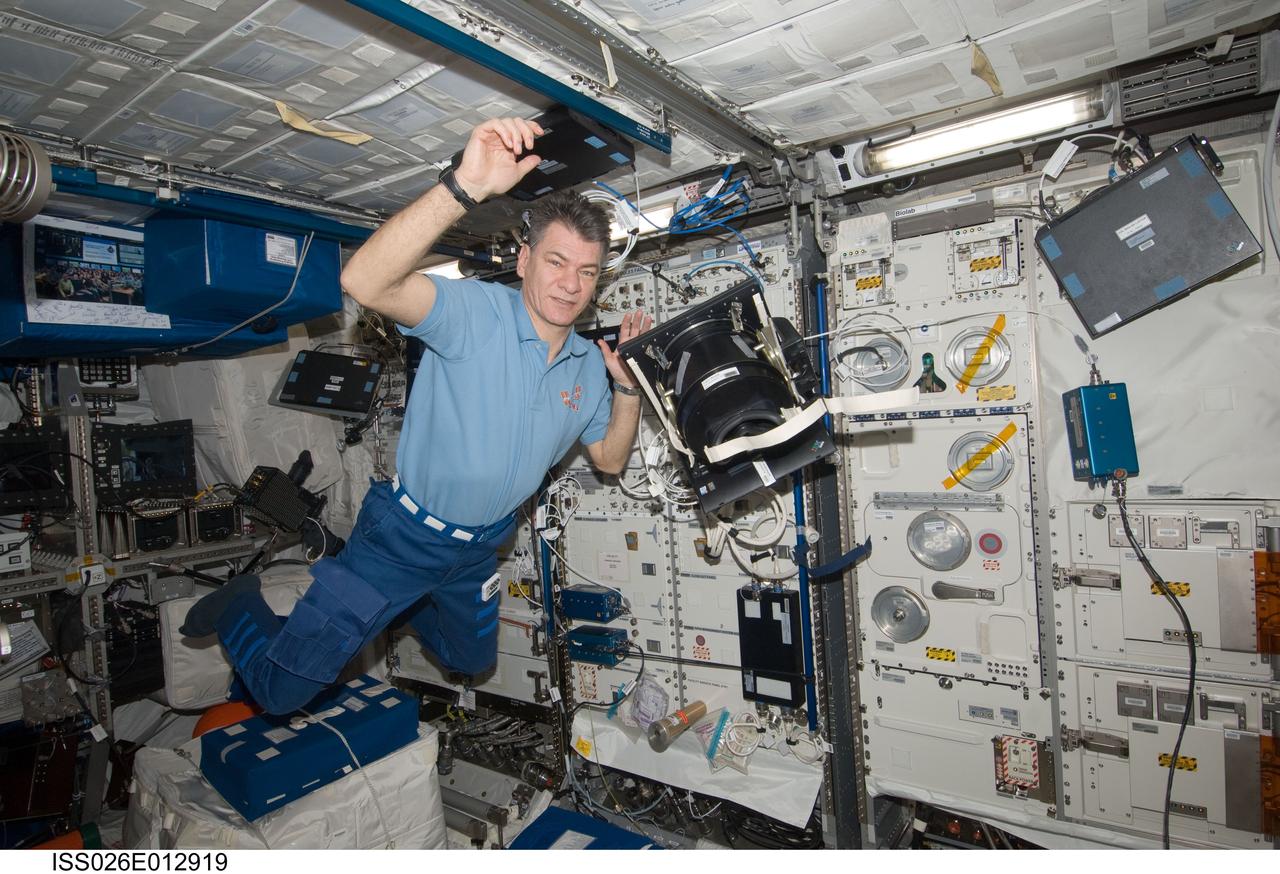
ISS026-E-012919 (20 Dec. 2010) --- European Space Agency astronaut Paolo Nespoli, Expedition 26 flight engineer,  moves the Neurospat hardware (including light shield and frame) used for the Bodies in the Space Environment (BISE) experiment, in the Columbus Module aboard the International Space Station.
Nespolia moving the Neurospat Hardware in the Columbus Module during Expedition 26
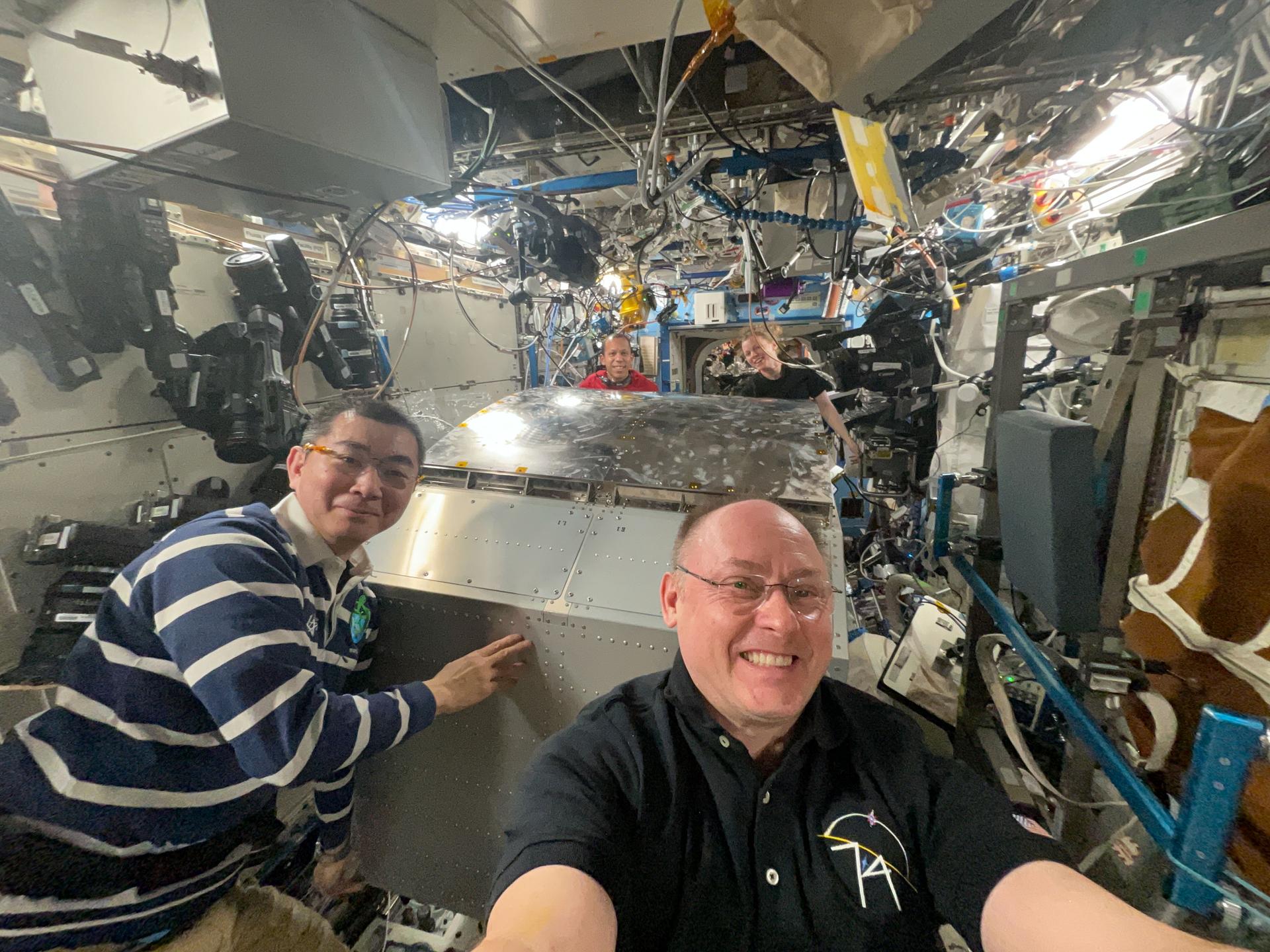
iss074e0006140 (Dec. 15, 2025) --- Four Expedition 74 crew members move heavy science hardware from the International Space Station into JAXA’s HTV-X1 cargo craft (Japan Aerospace Exploration Agency). Clockwise from bottom left are astronauts Kimiya Yui of JAXA, and Chris Williams, Zena Cardman, and Mike Fincke, all from NASA.
Four Expedition 74 crew members move heavy science hardware
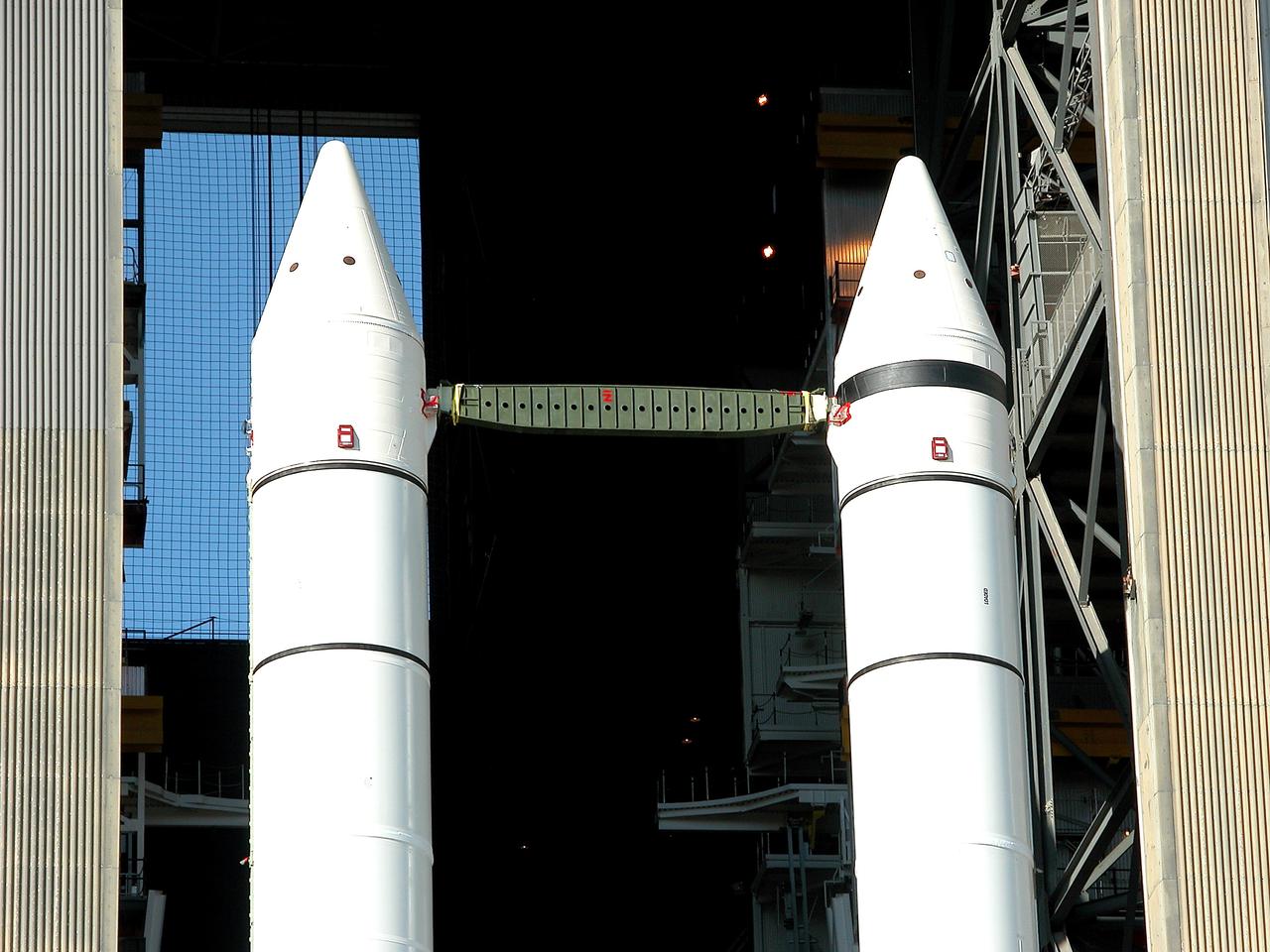
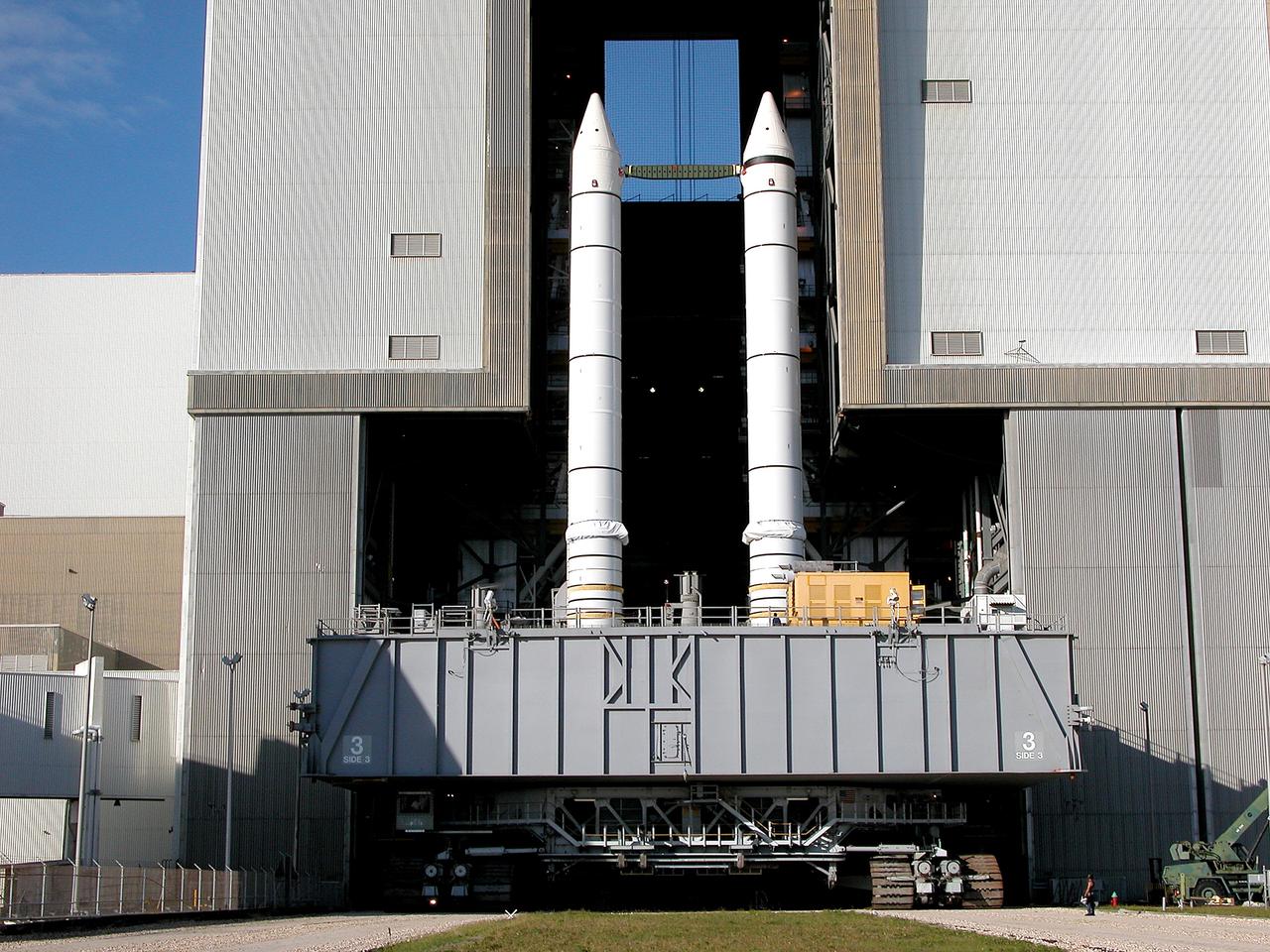
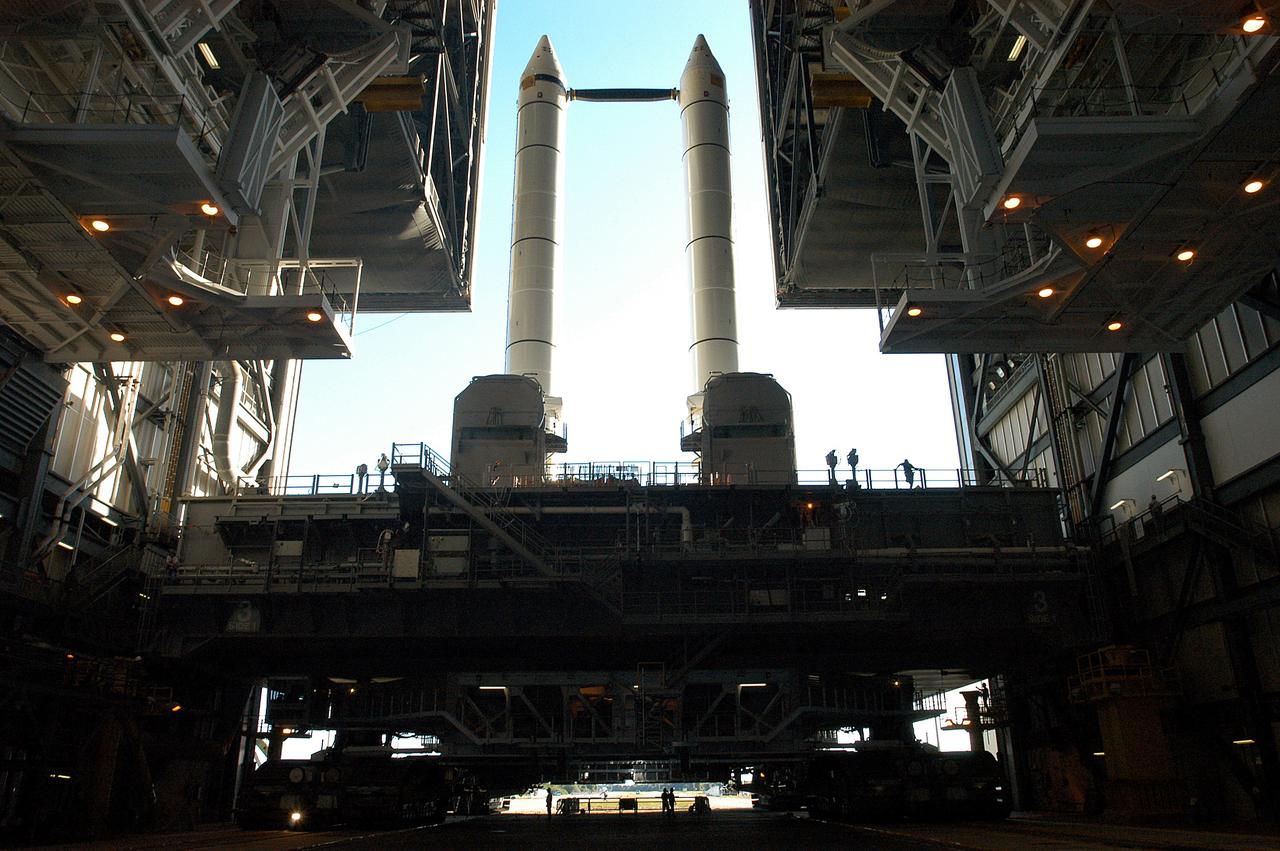
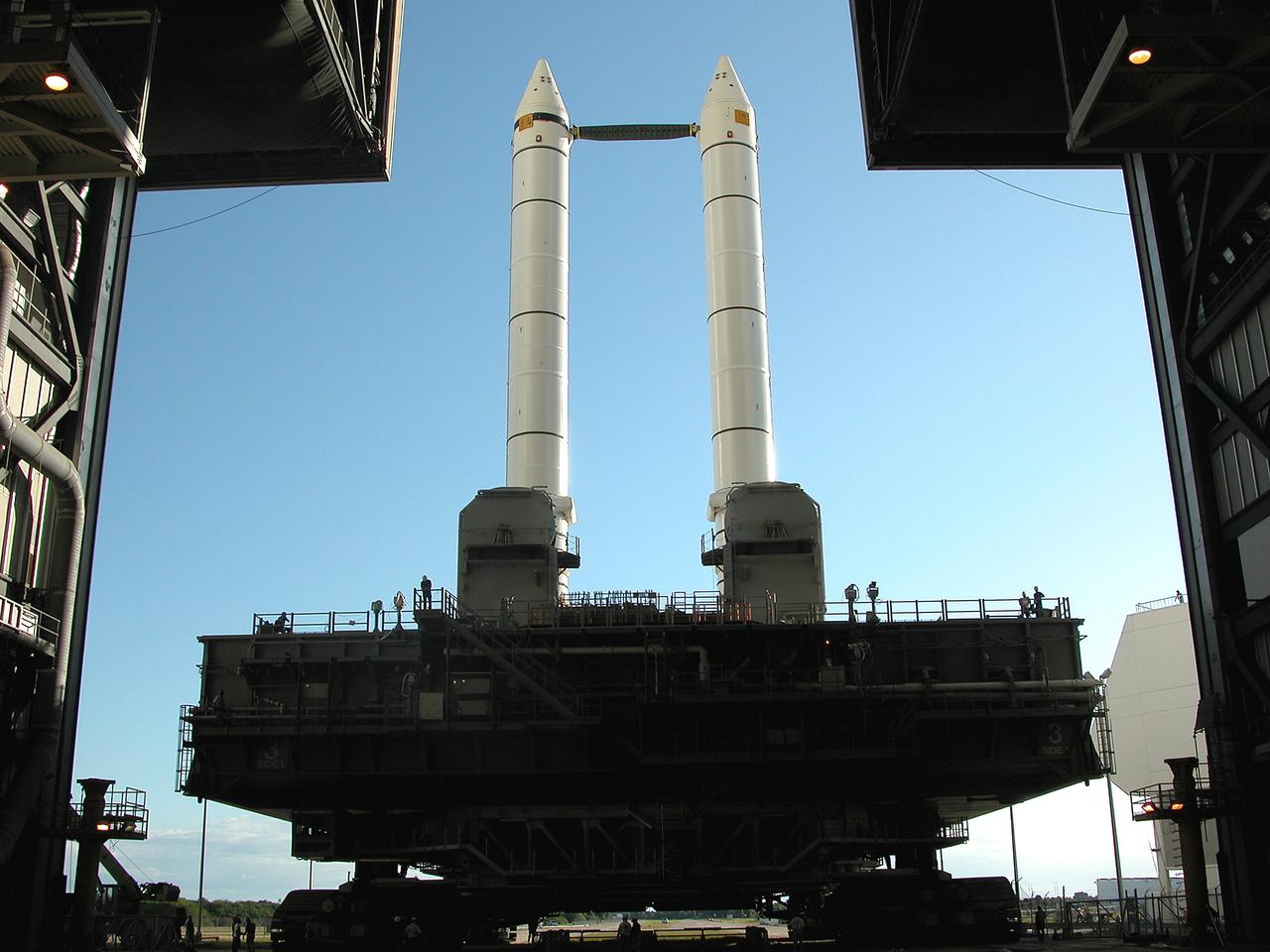
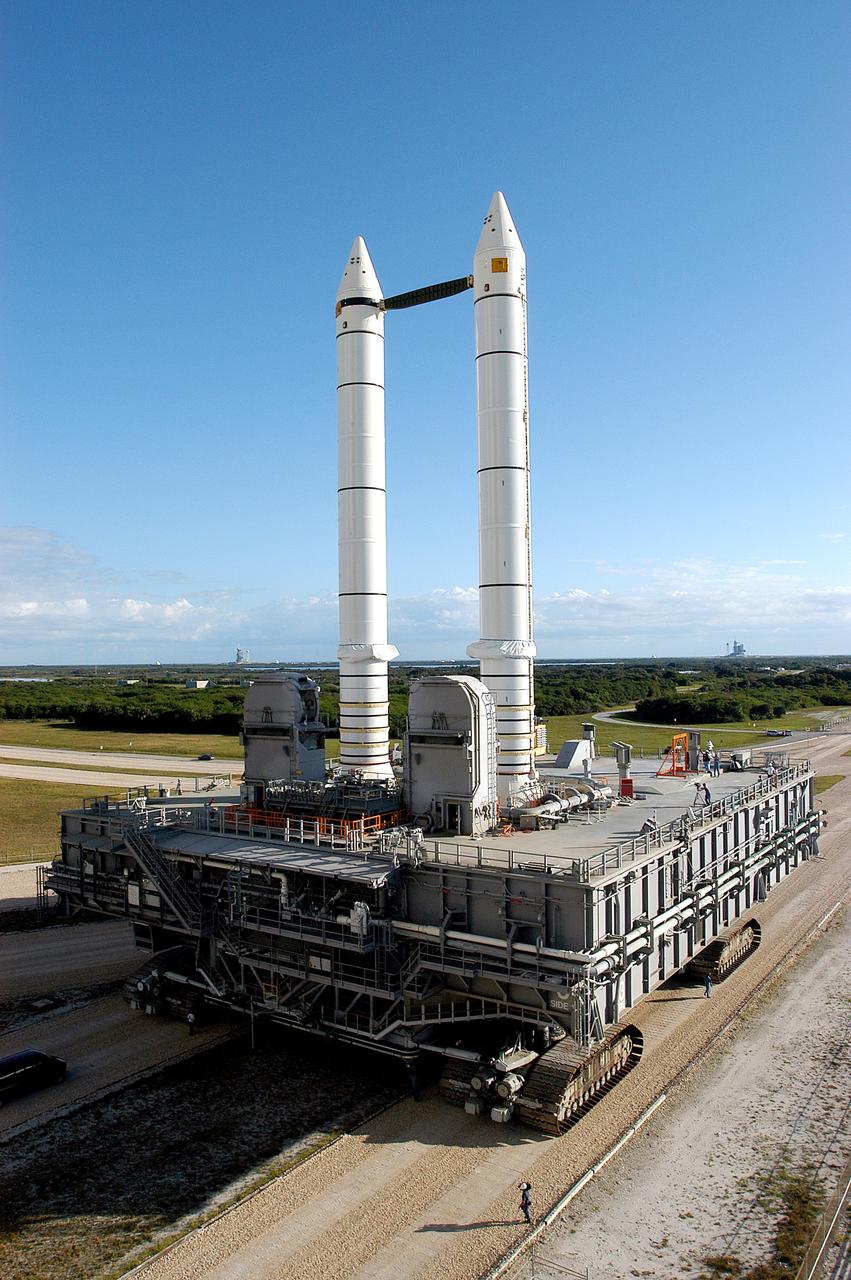
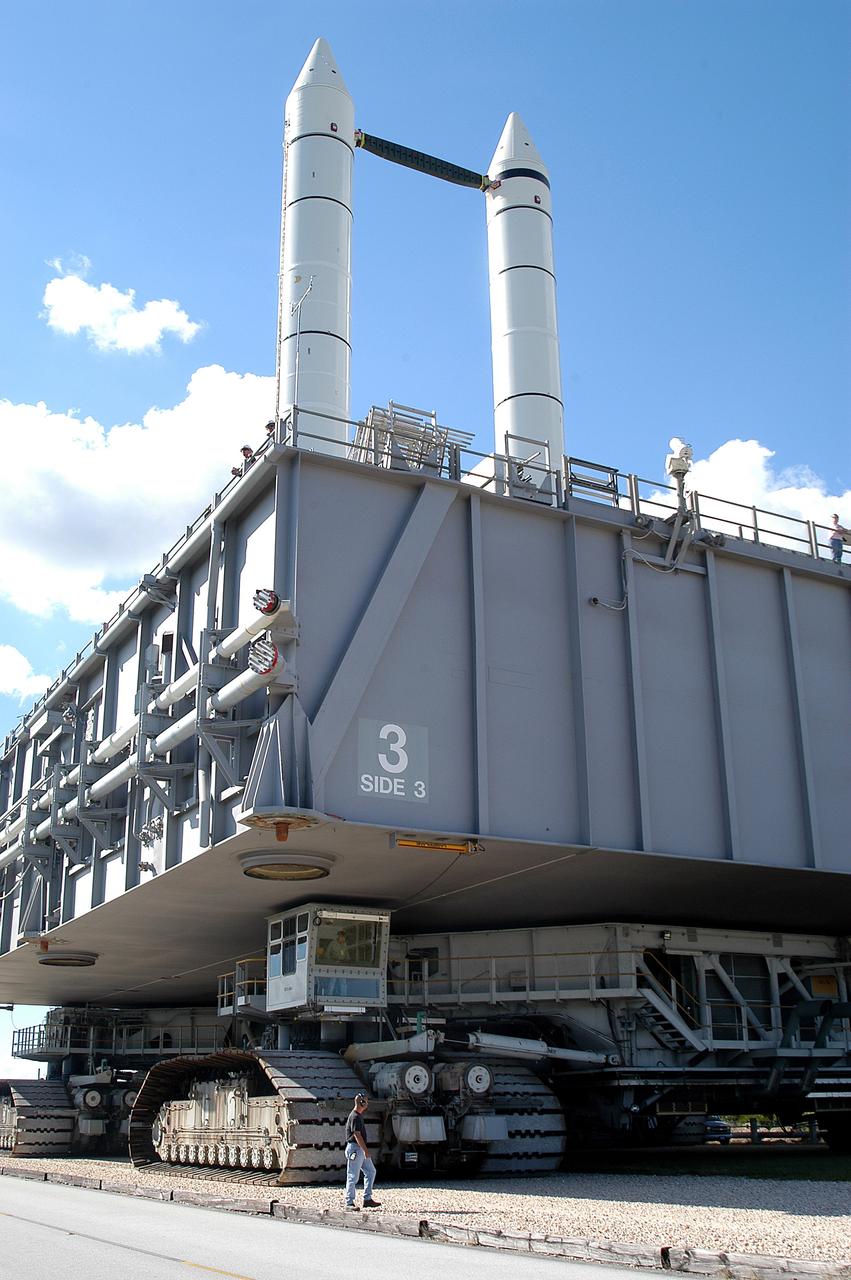
KENNEDY SPACE CENTER, FLA. -  As the crawler transporter slowly moves the Mobile Launcher Platform (MLP) out of the Vehicle Assembly Building, the two solid rocket boosters on top are framed in the doorway.  The move is in support of engineering analysis vibration tests on the crawler and MLP. The crawler is moving at various speeds up to 1 mph in an effort to achieve vibration data gathering goals as it leaves the VAB and then returns.  The boosters are braced at the top for stability.  The primary purpose of these rollout tests is to gather data to develop future maintenance requirements on the transport equipment and the flight hardware. Various parts of the MLP and crawler transporter have been instrumented with vibration data collection equipment.
KENNEDY SPACE CENTER, FLA. - As the crawler transporter slowly moves the Mobile Launcher Platform (MLP) out of the Vehicle Assembly Building, the two solid rocket boosters on top are framed in the doorway. The move is in support of engineering analysis vibration tests on the crawler and MLP. The crawler is moving at various speeds up to 1 mph in an effort to achieve vibration data gathering goals as it leaves the VAB and then returns. The boosters are braced at the top for stability. The primary purpose of these rollout tests is to gather data to develop future maintenance requirements on the transport equipment and the flight hardware. Various parts of the MLP and crawler transporter have been instrumented with vibration data collection equipment.
KENNEDY SPACE CENTER, FLA. -  As the crawler transporter slowly moves the Mobile Launcher Platform (MLP) out of the Vehicle Assembly Building, the two solid rocket boosters on top are framed in the doorway.  The move is in support of engineering analysis vibration tests on the crawler and MLP.  The crawler is moving at various speeds up to 1 mph in an effort to achieve vibration data gathering goals as it leaves the VAB and then returns.  The boosters are braced at the top for stability.  The primary purpose of these rollout tests is to gather data to develop future maintenance requirements on the transport equipment and the flight hardware. Various parts of the MLP and crawler transporter have been instrumented with vibration data collection equipment.
KENNEDY SPACE CENTER, FLA. - As the crawler transporter slowly moves the Mobile Launcher Platform (MLP) out of the Vehicle Assembly Building, the two solid rocket boosters on top are framed in the doorway. The move is in support of engineering analysis vibration tests on the crawler and MLP. The crawler is moving at various speeds up to 1 mph in an effort to achieve vibration data gathering goals as it leaves the VAB and then returns. The boosters are braced at the top for stability. The primary purpose of these rollout tests is to gather data to develop future maintenance requirements on the transport equipment and the flight hardware. Various parts of the MLP and crawler transporter have been instrumented with vibration data collection equipment.
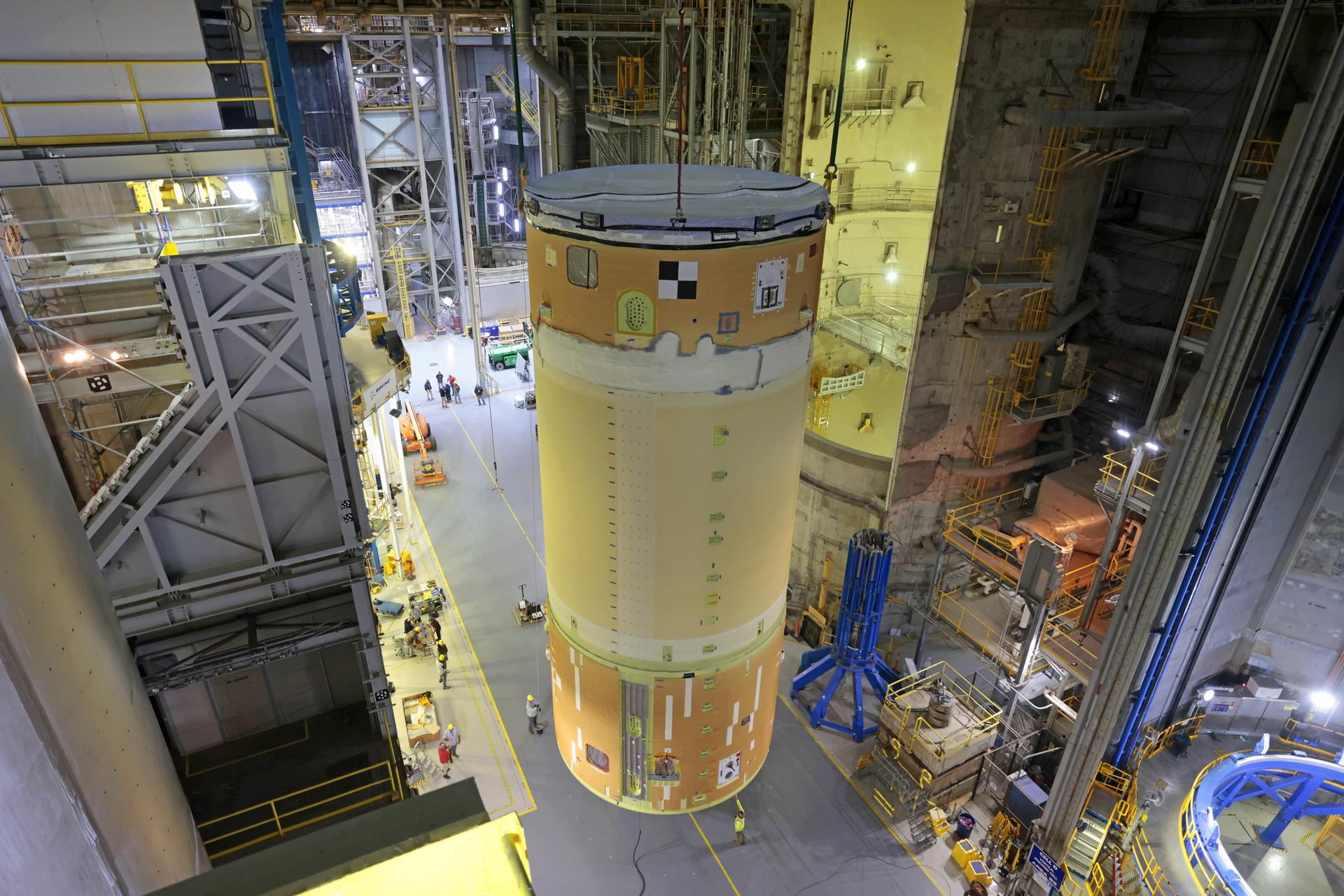
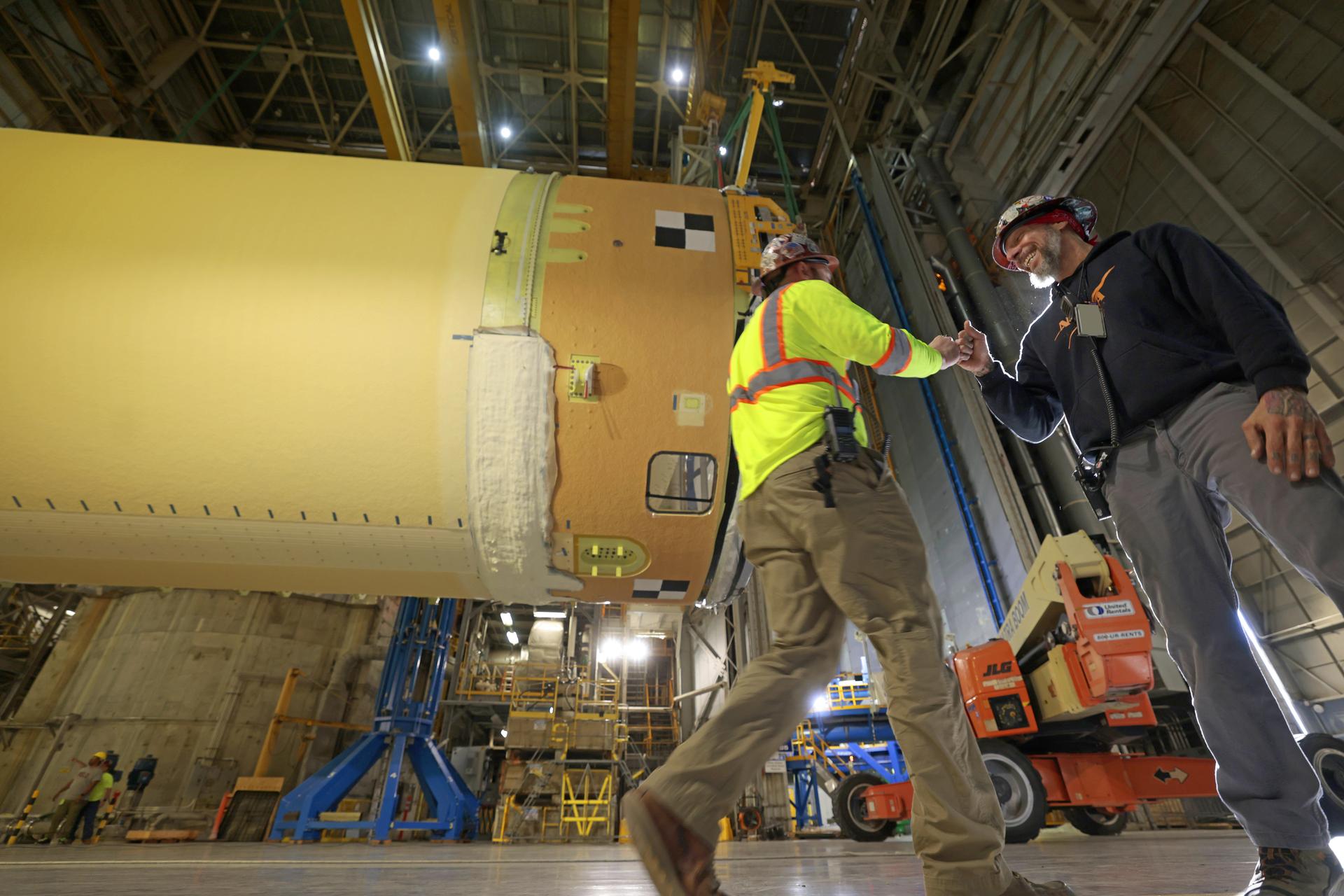
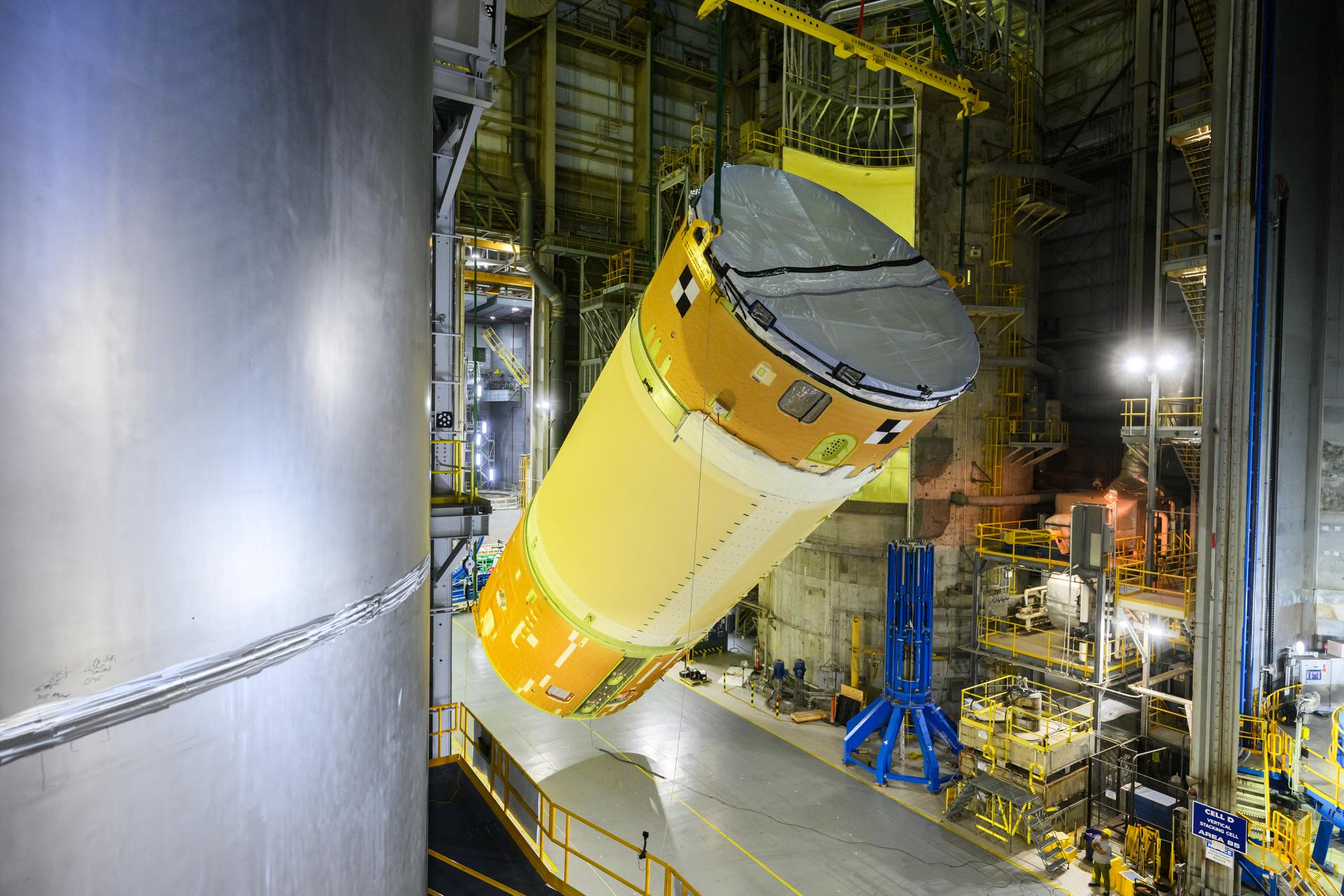
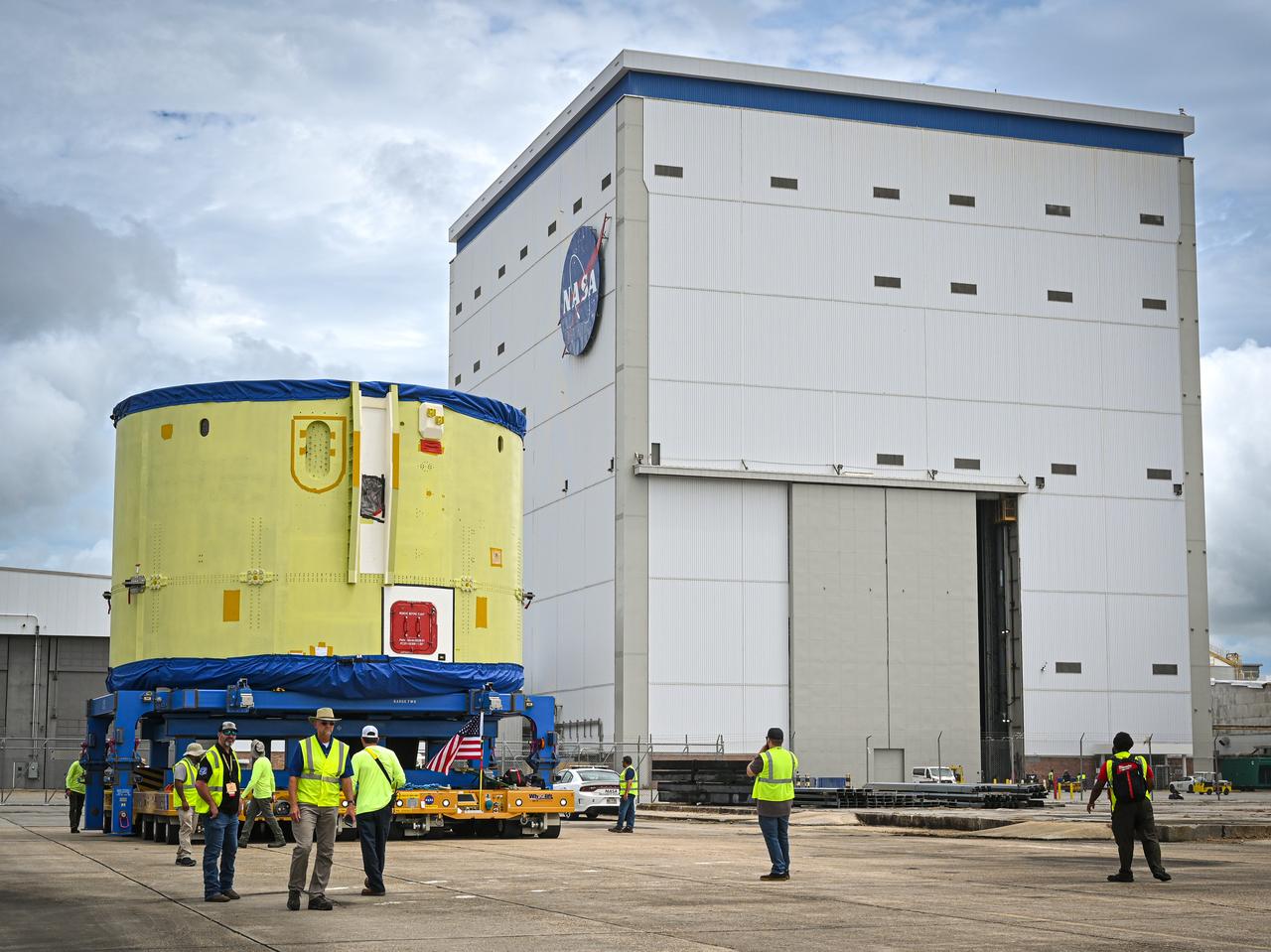
Move crews at NASA’s Michoud Assembly Facility in New Orleans, lift the forward-joined flight hardware for the agency’s SLS (Space Launch System) rocket out of a stacking cell in the vertical assembly building on Dec. 19, 2025. The forward join, which consists of the intertank, liquid oxygen tank, and forward skirt, will be used on the core stage slated for NASA’s Artemis III mission. Teams moved the flight hardware from the cell and set it atop self-propelled mobile transporters. The article was brought to the factory’s final assembly area on Dec. 27, 2025 where it will be mated to the core stage’s previously joined liquid hydrogen tank and undergo further integration.    The core stage, along with its four RS-25 engines, produce more than two million pounds of thrust to help launch NASA’s Orion spacecraft, astronauts, and supplies beyond Earth’s orbit and to the lunar surface for Artemis.
Artemis III major Join 3 moves to final integration
Move crews at NASA’s Michoud Assembly Facility in New Orleans, lift the forward-joined flight hardware for the agency’s SLS (Space Launch System) rocket out of a stacking cell in the vertical assembly building on Dec. 19, 2025. The forward join, which consists of the intertank, liquid oxygen tank, and forward skirt, will be used on the core stage slated for NASA’s Artemis III mission. Teams moved the flight hardware from the cell and set it atop self-propelled mobile transporters. The article was brought to the factory’s final assembly area on Dec. 27, 2025 where it will be mated to the core stage’s previously joined liquid hydrogen tank and undergo further integration.    The core stage, along with its four RS-25 engines, produce more than two million pounds of thrust to help launch NASA’s Orion spacecraft, astronauts, and supplies beyond Earth’s orbit and to the lunar surface for Artemis.
Artemis III major Join 3 moves to final integration
Move crews at NASA’s Michoud Assembly Facility in New Orleans, lift the forward-joined flight hardware for the agency’s SLS (Space Launch System) rocket out of a stacking cell in the vertical assembly building on Dec. 19, 2025. The forward join, which consists of the intertank, liquid oxygen tank, and forward skirt, will be used on the core stage slated for NASA’s Artemis III mission. Teams moved the flight hardware from the cell and set it atop self-propelled mobile transporters. The article was brought to the factory’s final assembly area on Dec. 27, 2025 where it will be mated to the core stage’s previously joined liquid hydrogen tank and undergo further integration.    The core stage, along with its four RS-25 engines, produce more than two million pounds of thrust to help launch NASA’s Orion spacecraft, astronauts, and supplies beyond Earth’s orbit and to the lunar surface for Artemis.
Artemis III major Join 3 moves to final integration
Move crews at NASA’s Michoud Assembly Facility in New Orleans, lift the forward-joined flight hardware for the agency’s SLS (Space Launch System) rocket out of a stacking cell in the vertical assembly building on Dec. 19, 2025. The forward join, which consists of the intertank, liquid oxygen tank, and forward skirt, will be used on the core stage slated for NASA’s Artemis III mission. Teams moved the flight hardware from the cell and set it atop self-propelled mobile transporters. The article was brought to the factory’s final assembly area on Dec. 27, 2025 where it will be mated to the core stage’s previously joined liquid hydrogen tank and undergo further integration.    The core stage, along with its four RS-25 engines, produce more than two million pounds of thrust to help launch NASA’s Orion spacecraft, astronauts, and supplies beyond Earth’s orbit and to the lunar surface for Artemis.
Artemis III major Join 3 moves to final integration
Move crews at NASA’s Michoud Assembly Facility in New Orleans, lift the forward-joined flight hardware for the agency’s SLS (Space Launch System) rocket out of a stacking cell in the vertical assembly building on Dec. 19, 2025. The forward join, which consists of the intertank, liquid oxygen tank, and forward skirt, will be used on the core stage slated for NASA’s Artemis III mission. Teams moved the flight hardware from the cell and set it atop self-propelled mobile transporters. The article was brought to the factory’s final assembly area on Dec. 27, 2025 where it will be mated to the core stage’s previously joined liquid hydrogen tank and undergo further integration.    The core stage, along with its four RS-25 engines, produce more than two million pounds of thrust to help launch NASA’s Orion spacecraft, astronauts, and supplies beyond Earth’s orbit and to the lunar surface for Artemis.
Artemis III major Join 3 moves to final integration
Move crews at NASA’s Michoud Assembly Facility in New Orleans, lift the forward-joined flight hardware for the agency’s SLS (Space Launch System) rocket out of a stacking cell in the vertical assembly building on Dec. 19, 2025. The forward join, which consists of the intertank, liquid oxygen tank, and forward skirt, will be used on the core stage slated for NASA’s Artemis III mission. Teams moved the flight hardware from the cell and set it atop self-propelled mobile transporters. The article was brought to the factory’s final assembly area on Dec. 27, 2025 where it will be mated to the core stage’s previously joined liquid hydrogen tank and undergo further integration.    The core stage, along with its four RS-25 engines, produce more than two million pounds of thrust to help launch NASA’s Orion spacecraft, astronauts, and supplies beyond Earth’s orbit and to the lunar surface for Artemis.
Artemis III major Join 3 moves to final integration
Move crews at NASA’s Michoud Assembly Facility in New Orleans, lift the forward-joined flight hardware for the agency’s SLS (Space Launch System) rocket out of a stacking cell in the vertical assembly building on Dec. 19, 2025. The forward join, which consists of the intertank, liquid oxygen tank, and forward skirt, will be used on the core stage slated for NASA’s Artemis III mission. Teams moved the flight hardware from the cell and set it atop self-propelled mobile transporters. The article was brought to the factory’s final assembly area on Dec. 27, 2025 where it will be mated to the core stage’s previously joined liquid hydrogen tank and undergo further integration.    The core stage, along with its four RS-25 engines, produce more than two million pounds of thrust to help launch NASA’s Orion spacecraft, astronauts, and supplies beyond Earth’s orbit and to the lunar surface for Artemis.
Artemis III major Join 3 moves to final integration
Move crews at NASA’s Michoud Assembly Facility in New Orleans, lift the forward-joined flight hardware for the agency’s SLS (Space Launch System) rocket out of a stacking cell in the vertical assembly building on Dec. 19, 2025. The forward join, which consists of the intertank, liquid oxygen tank, and forward skirt, will be used on the core stage slated for NASA’s Artemis III mission. Teams moved the flight hardware from the cell and set it atop self-propelled mobile transporters. The article was brought to the factory’s final assembly area on Dec. 27, 2025 where it will be mated to the core stage’s previously joined liquid hydrogen tank and undergo further integration.    The core stage, along with its four RS-25 engines, produce more than two million pounds of thrust to help launch NASA’s Orion spacecraft, astronauts, and supplies beyond Earth’s orbit and to the lunar surface for Artemis.
Artemis III major Join 3 moves to final integration
Move crews at NASA’s Michoud Assembly Facility in New Orleans, lift the forward-joined flight hardware for the agency’s SLS (Space Launch System) rocket out of a stacking cell in the vertical assembly building on Dec. 19, 2025. The forward join, which consists of the intertank, liquid oxygen tank, and forward skirt, will be used on the core stage slated for NASA’s Artemis III mission. Teams moved the flight hardware from the cell and set it atop self-propelled mobile transporters. The article was brought to the factory’s final assembly area on Dec. 27, 2025 where it will be mated to the core stage’s previously joined liquid hydrogen tank and undergo further integration.    The core stage, along with its four RS-25 engines, produce more than two million pounds of thrust to help launch NASA’s Orion spacecraft, astronauts, and supplies beyond Earth’s orbit and to the lunar surface for Artemis.
Artemis III major Join 3 moves to final integration
The Orion Stage Adapter flight hardware is prepared for the move to Redstone Airfield where the NASA Guppy aircraft will pick up the hardware and take the unit to Kennedy Space Center (KSC)
Orion Stage Adapter move to Redstone Airfield
The Orion Stage Adapter flight hardware is prepared for the move to Redstone Airfield where the NASA Guppy aircraft will pick up the hardware and take the unit to Kennedy Space Center (KSC)
Orion Stage Adapter move to Redstone Airfield
The Orion Stage Adapter flight hardware is prepared for the move to Redstone Airfield where the NASA Guppy aircraft will pick up the hardware and take the unit to Kennedy Space Center (KSC)
Orion Stage Adapter move to Redstone Airfield
The Orion Stage Adapter flight hardware is prepared for the move to Redstone Airfield where the NASA Guppy aircraft will pick up the hardware and take the unit to Kennedy Space Center (KSC)
Orion Stage Adapter move to Redstone Airfield
The Orion Stage Adapter flight hardware is prepared for the move to Redstone Airfield where the NASA Guppy aircraft will pick up the hardware and take the unit to Kennedy Space Center (KSC)
Orion Stage Adapter move to Redstone Airfield
The Orion Stage Adapter flight hardware is prepared for the move to Redstone Airfield where the NASA Guppy aircraft will pick up the hardware and take the unit to Kennedy Space Center (KSC)
Orion Stage Adapter move to Redstone Airfield
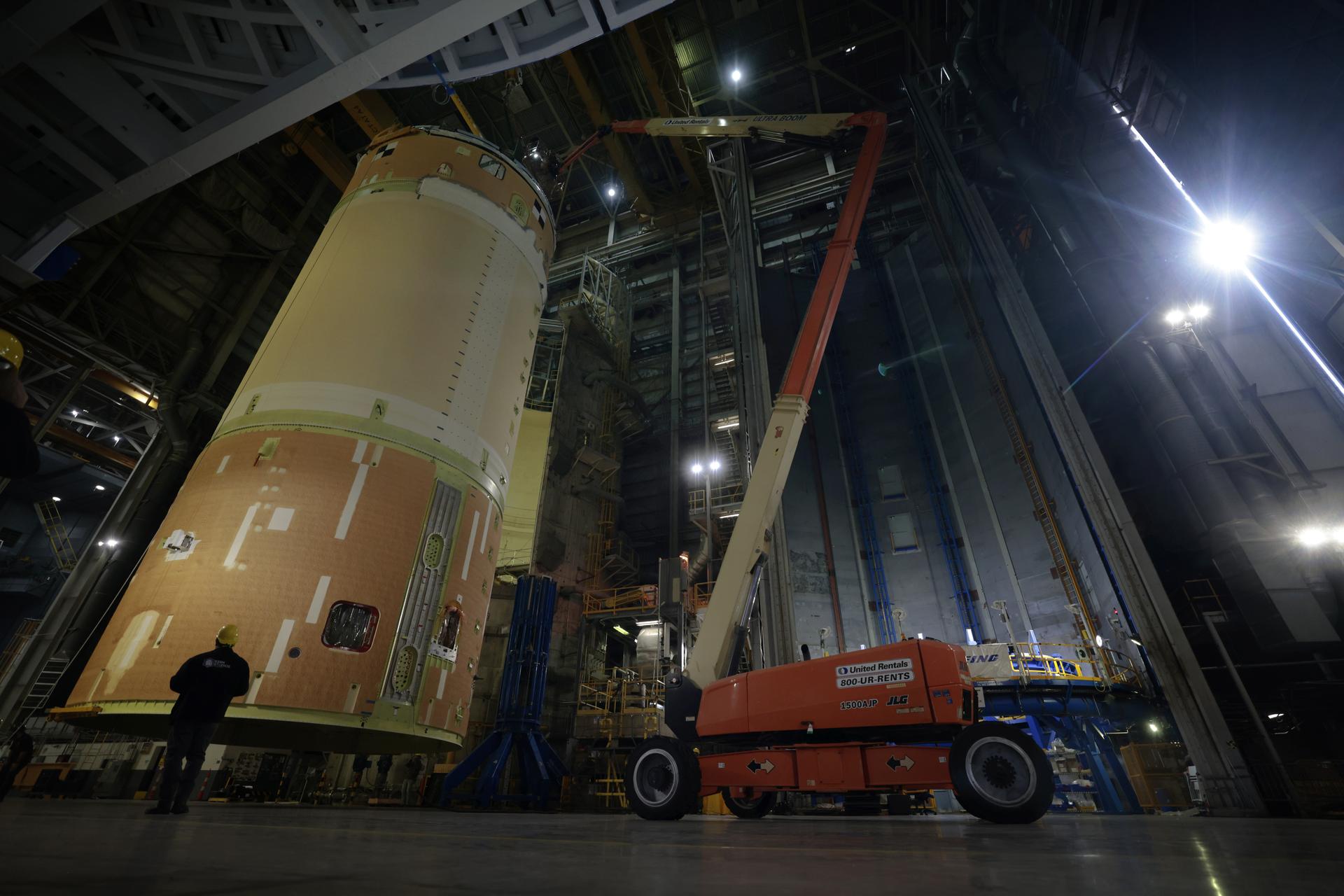
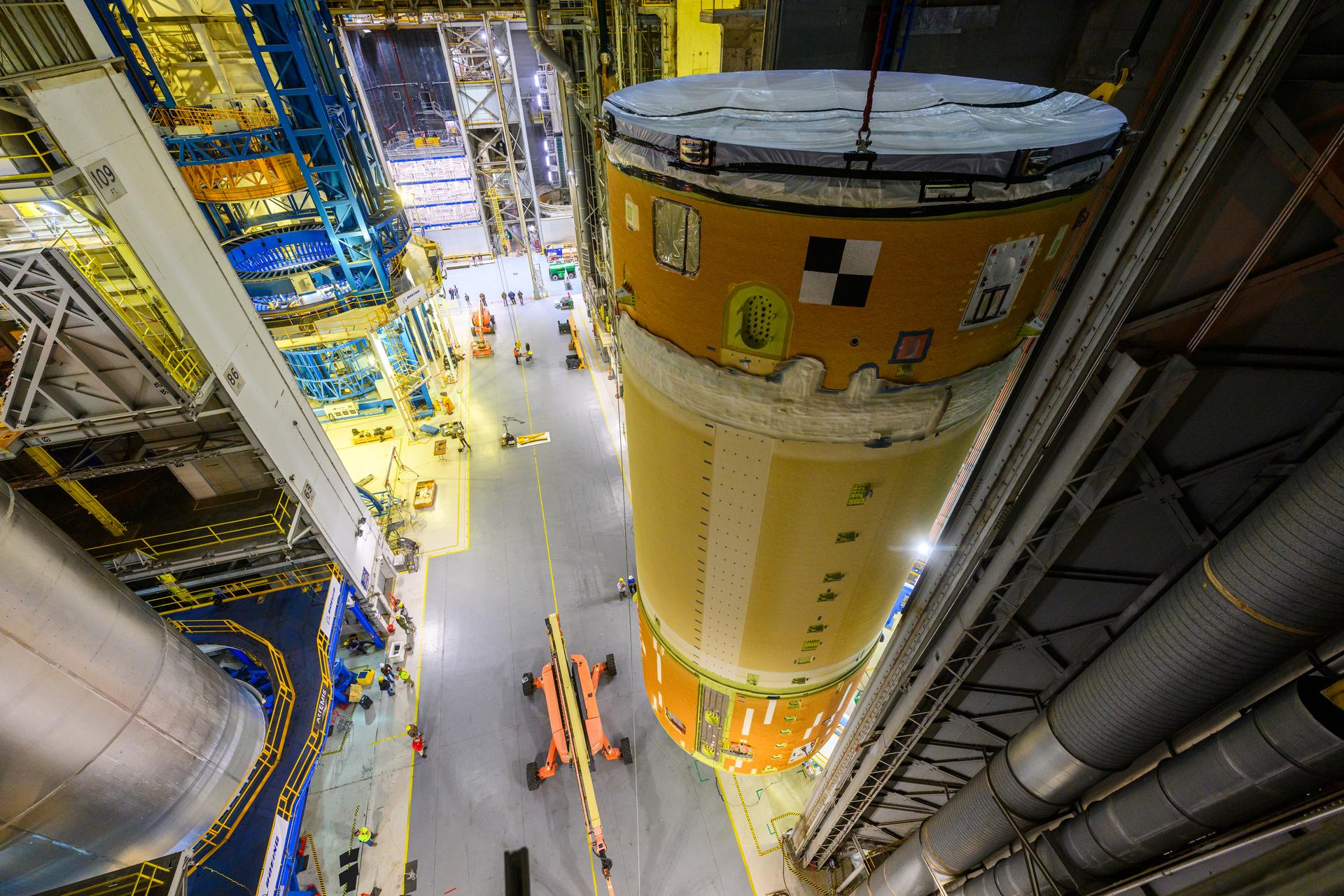
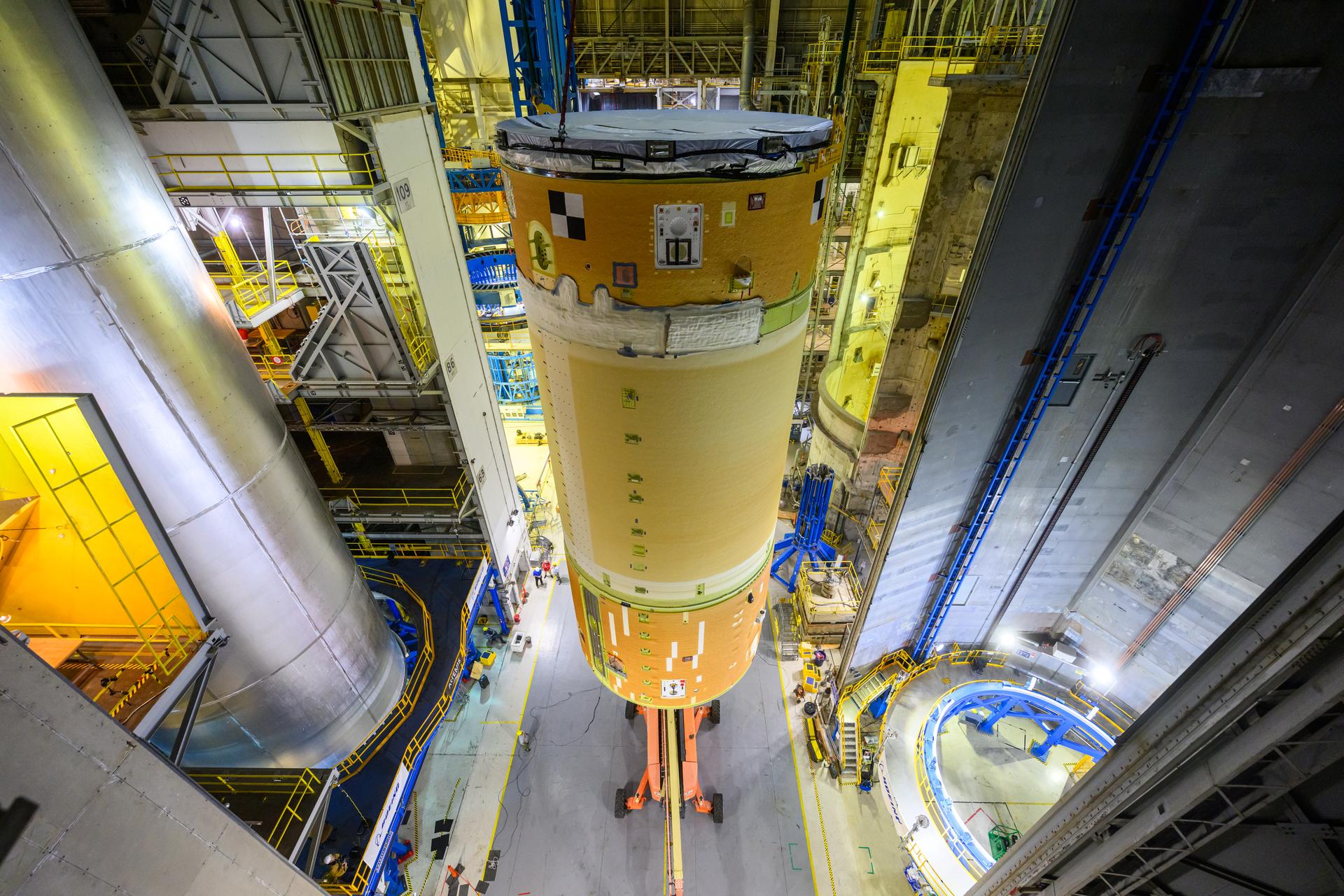
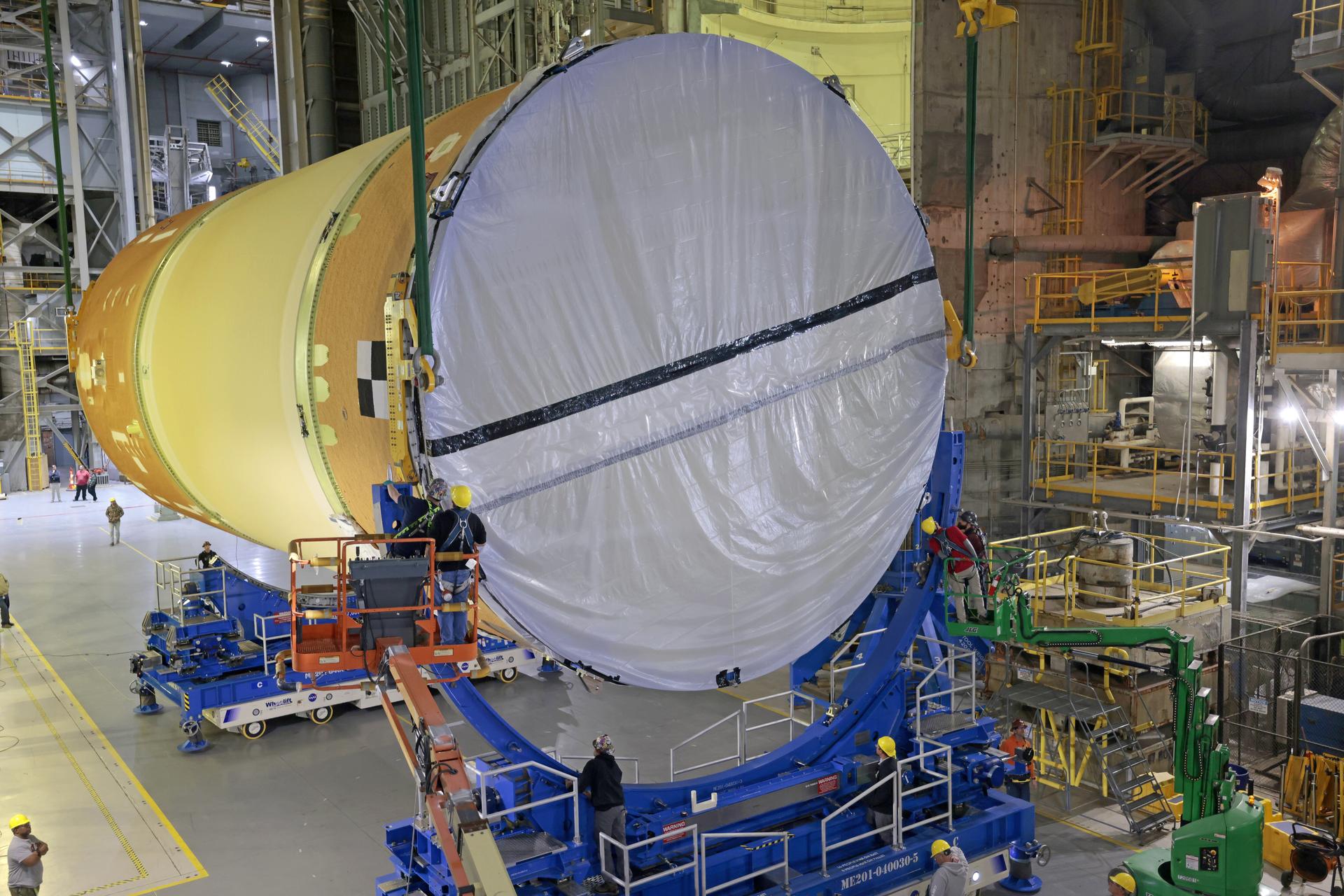
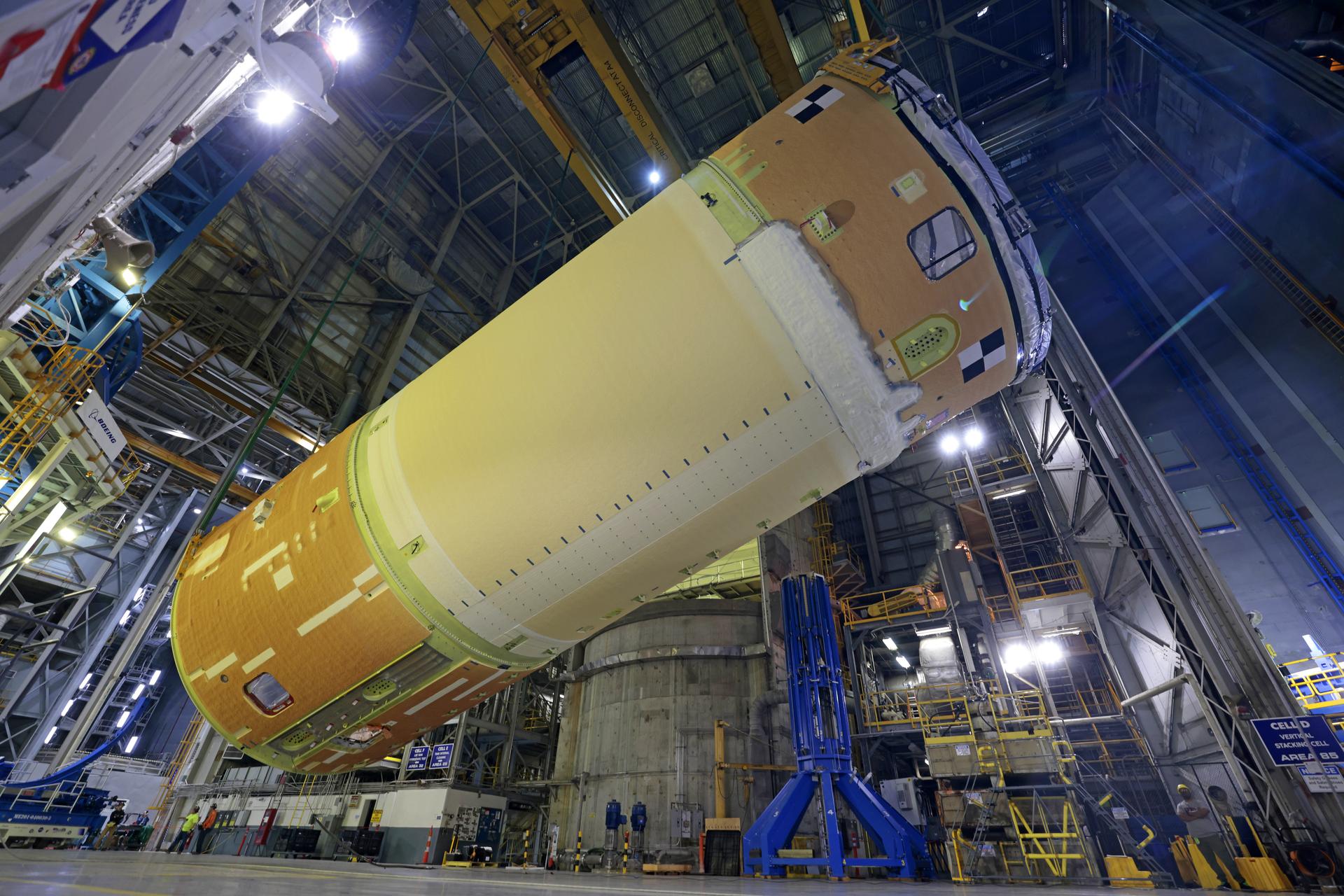
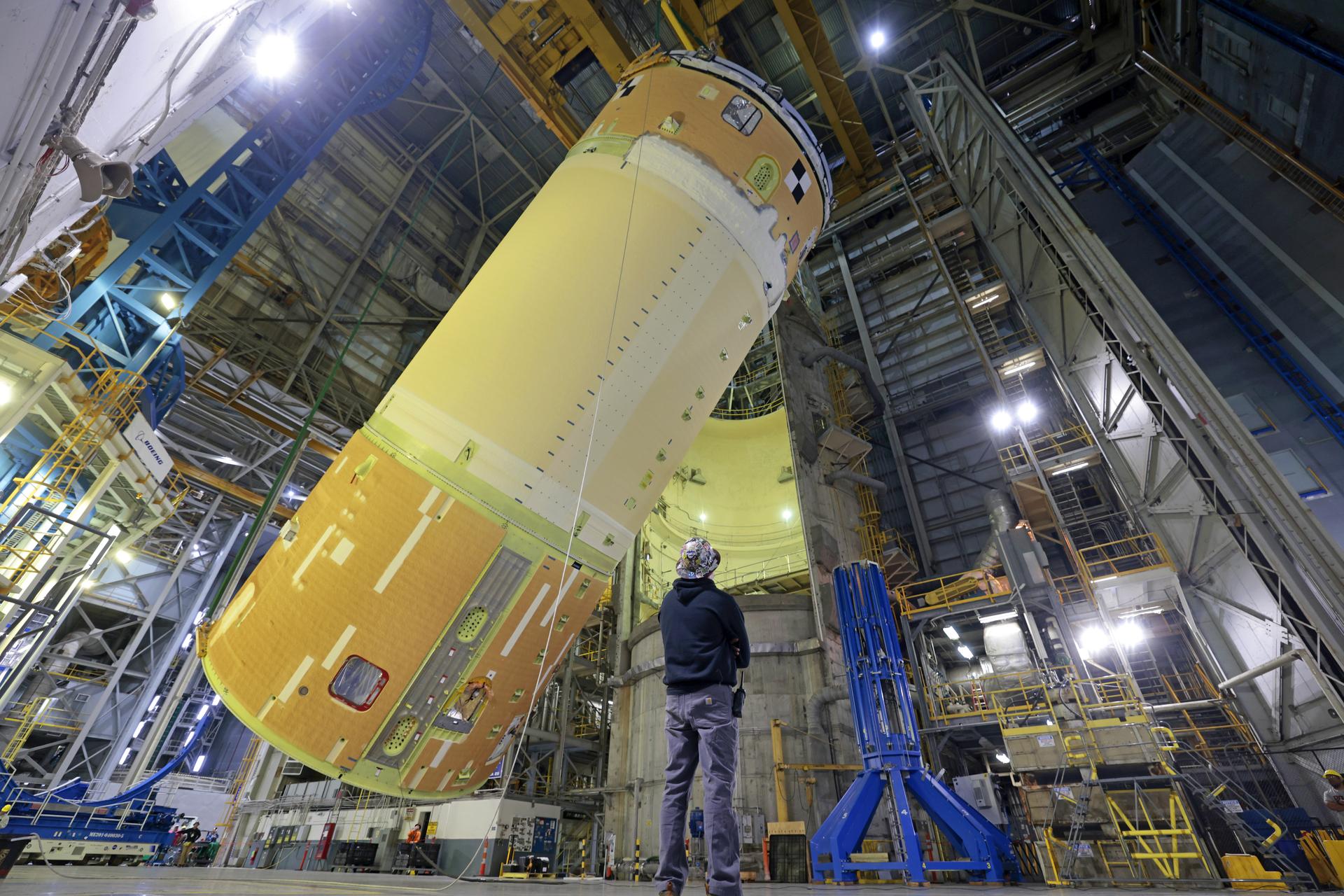
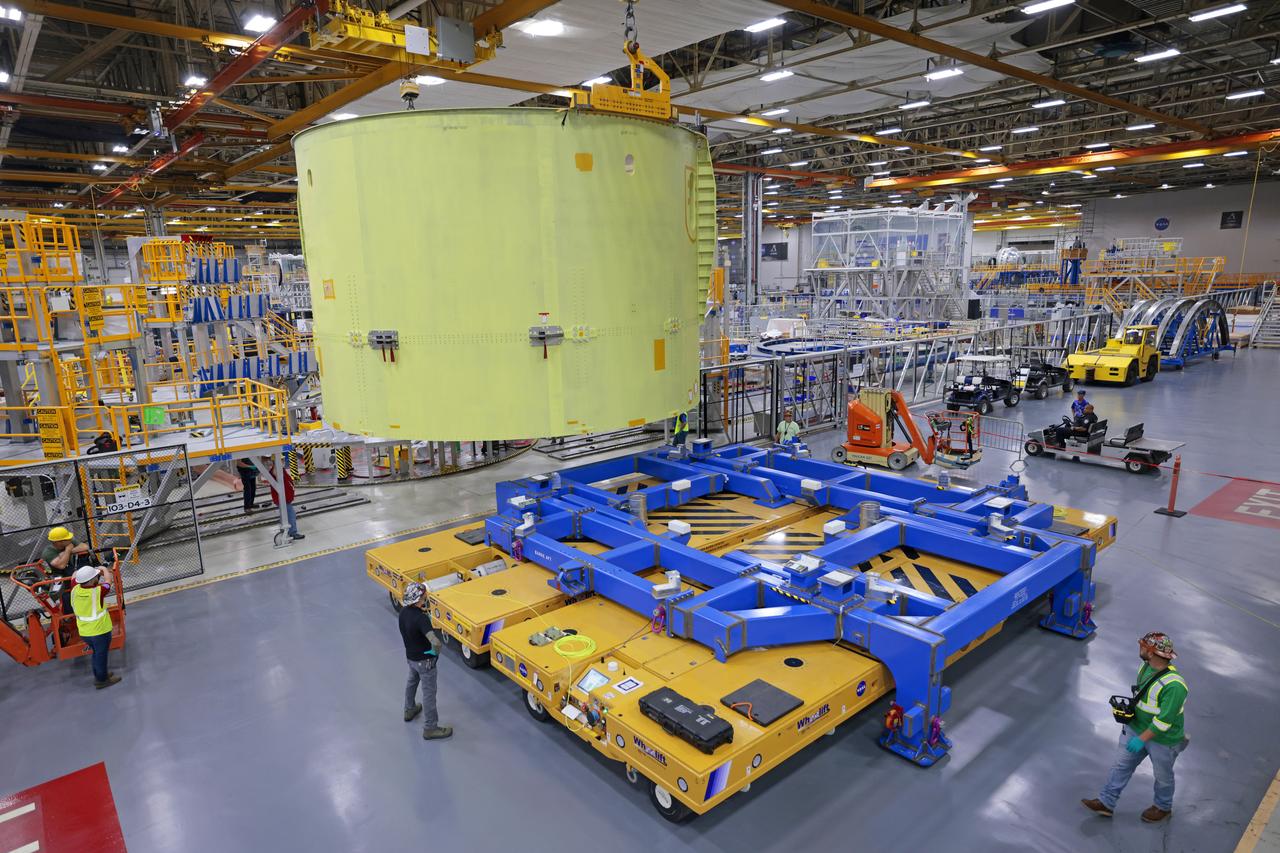
Move crews at NASA’s Michoud Assembly Facility in New Orleans, lift the forward-joined flight hardware for the agency’s SLS (Space Launch System) rocket out of a stacking cell in the vertical assembly building on Dec. 19, 2025. The forward join, which consists of the intertank, liquid oxygen tank, and forward skirt, will be used on the core stage slated for NASA’s Artemis III mission. Teams moved the flight hardware from the cell and set it atop self-propelled mobile transporters. Soon, the article will be brought to the factory’s final assembly area where it will be mated to the core stage’s previously joined liquid hydrogen tank and undergo further integration. The core stage, along with its four RS-25 engines, produce more than two million pounds of thrust to help launch NASA’s Orion spacecraft, astronauts, and supplies beyond Earth’s orbit and to the lunar surface for Artemis. Image credit: NASA/Michael DeMocker
Artemis III Core Stage Forward Join Lifts from Stacking Cell
Move crews at NASA’s Michoud Assembly Facility in New Orleans, lift the forward-joined flight hardware for the agency’s SLS (Space Launch System) rocket out of a stacking cell in the vertical assembly building on Dec. 19, 2025. The forward join, which consists of the intertank, liquid oxygen tank, and forward skirt, will be used on the core stage slated for NASA’s Artemis III mission. Teams moved the flight hardware from the cell and set it atop self-propelled mobile transporters. Soon, the article will be brought to the factory’s final assembly area where it will be mated to the core stage’s previously joined liquid hydrogen tank and undergo further integration. The core stage, along with its four RS-25 engines, produce more than two million pounds of thrust to help launch NASA’s Orion spacecraft, astronauts, and supplies beyond Earth’s orbit and to the lunar surface for Artemis. Image credit: NASA/Michael DeMocker
Artemis III Core Stage Forward Join Lifts from Stacking Cell
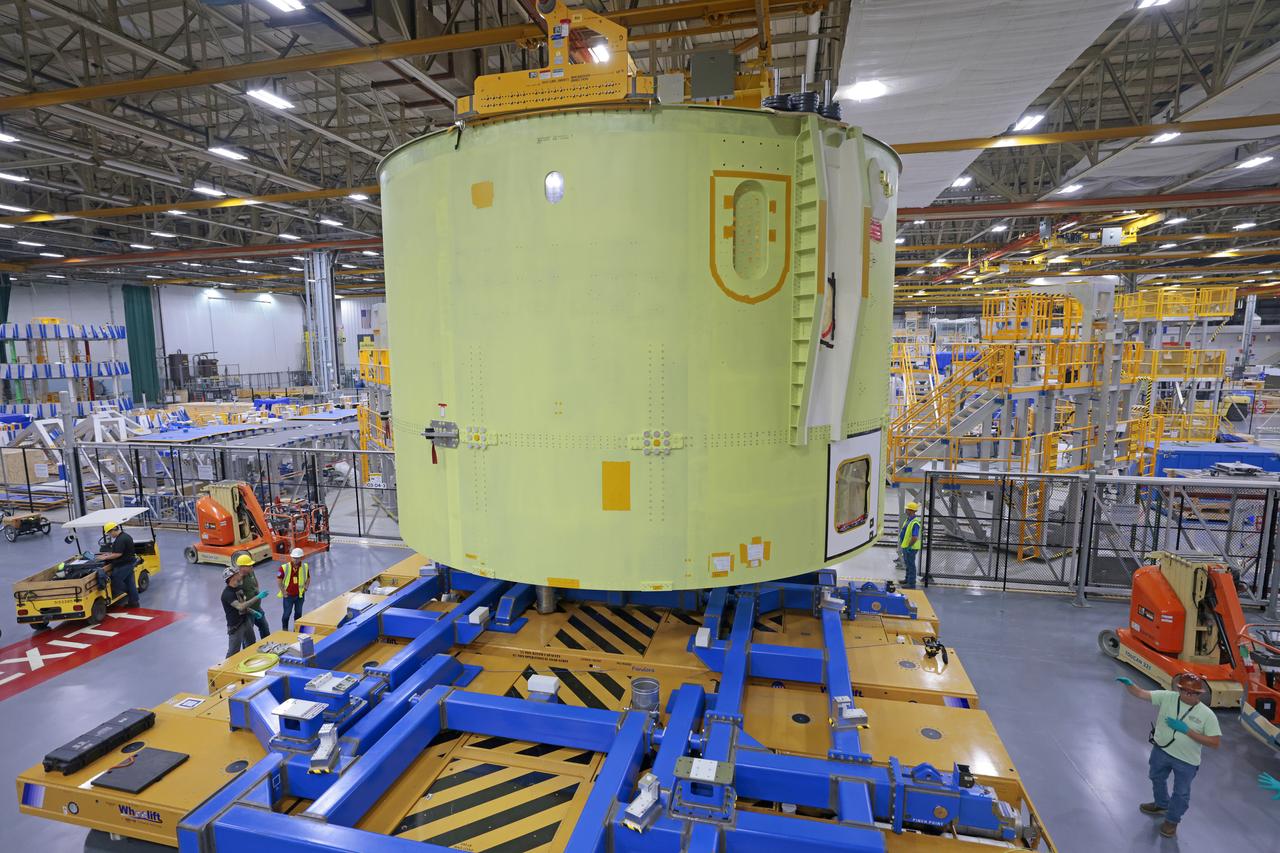
Move crews at NASA’s Michoud Assembly Facility in New Orleans, lift the forward-joined flight hardware for the agency’s SLS (Space Launch System) rocket out of a stacking cell in the vertical assembly building on Dec. 19, 2025. The forward join, which consists of the intertank, liquid oxygen tank, and forward skirt, will be used on the core stage slated for NASA’s Artemis III mission. Teams moved the flight hardware from the cell and set it atop self-propelled mobile transporters. Soon, the article will be brought to the factory’s final assembly area where it will be mated to the core stage’s previously joined liquid hydrogen tank and undergo further integration. The core stage, along with its four RS-25 engines, produce more than two million pounds of thrust to help launch NASA’s Orion spacecraft, astronauts, and supplies beyond Earth’s orbit and to the lunar surface for Artemis. Image credit: NASA/Michael DeMocker
Artemis III Core Stage Forward Join Lifts from Stacking Cell
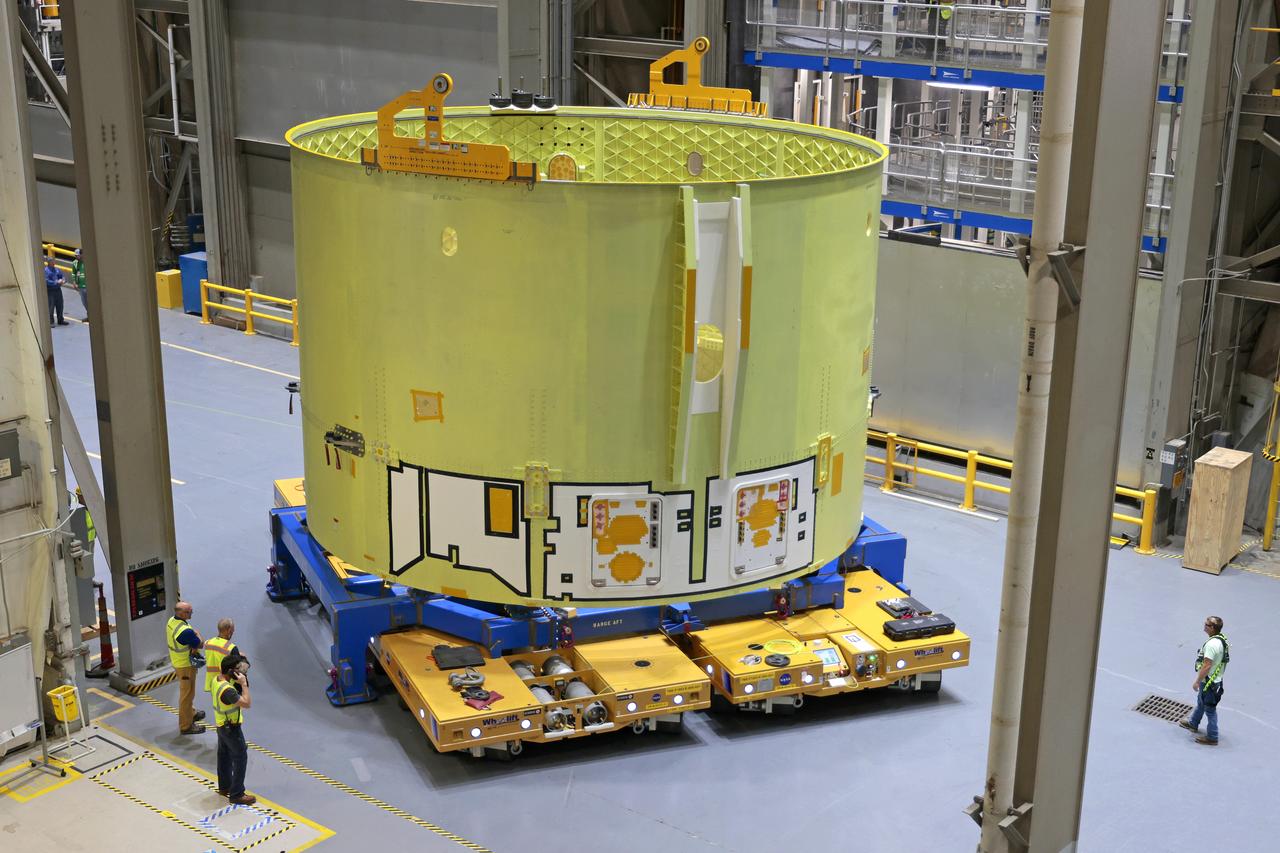
Move crews at NASA’s Michoud Assembly Facility in New Orleans, lift the forward-joined flight hardware for the agency’s SLS (Space Launch System) rocket out of a stacking cell in the vertical assembly building on Dec. 19, 2025. The forward join, which consists of the intertank, liquid oxygen tank, and forward skirt, will be used on the core stage slated for NASA’s Artemis III mission. Teams moved the flight hardware from the cell and set it atop self-propelled mobile transporters. Soon, the article will be brought to the factory’s final assembly area where it will be mated to the core stage’s previously joined liquid hydrogen tank and undergo further integration. The core stage, along with its four RS-25 engines, produce more than two million pounds of thrust to help launch NASA’s Orion spacecraft, astronauts, and supplies beyond Earth’s orbit and to the lunar surface for Artemis. Image credit: NASA/Michael DeMocker
Artemis III Core Stage Forward Join Lifts from Stacking Cell
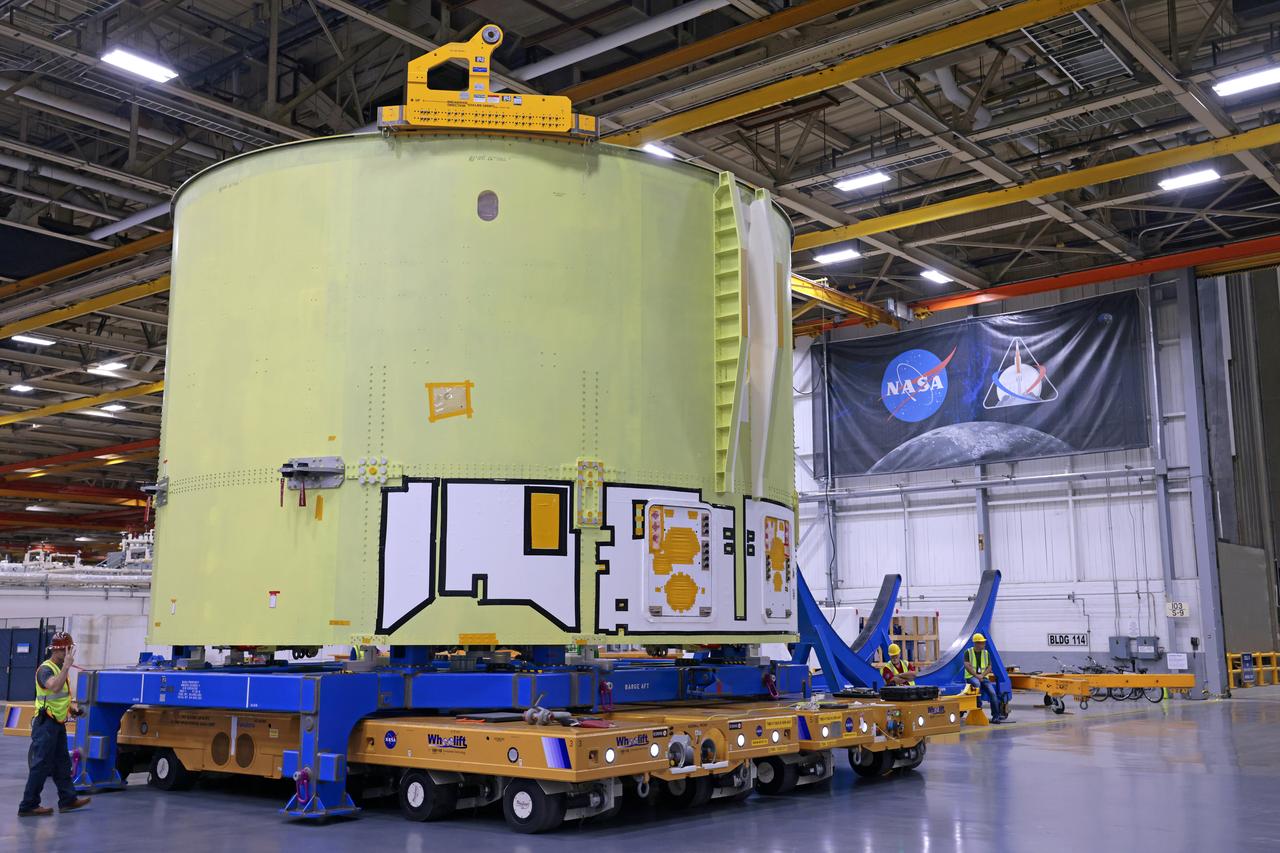
Move crews at NASA’s Michoud Assembly Facility in New Orleans, lift the forward-joined flight hardware for the agency’s SLS (Space Launch System) rocket out of a stacking cell in the vertical assembly building on Dec. 19, 2025. The forward join, which consists of the intertank, liquid oxygen tank, and forward skirt, will be used on the core stage slated for NASA’s Artemis III mission. Teams moved the flight hardware from the cell and set it atop self-propelled mobile transporters. Soon, the article will be brought to the factory’s final assembly area where it will be mated to the core stage’s previously joined liquid hydrogen tank and undergo further integration. The core stage, along with its four RS-25 engines, produce more than two million pounds of thrust to help launch NASA’s Orion spacecraft, astronauts, and supplies beyond Earth’s orbit and to the lunar surface for Artemis. Image credit: NASA/Michael DeMocker
Artemis III Core Stage Forward Join Lifts from Stacking Cell
Move crews at NASA’s Michoud Assembly Facility in New Orleans, lift the forward-joined flight hardware for the agency’s SLS (Space Launch System) rocket out of a stacking cell in the vertical assembly building on Dec. 19, 2025. The forward join, which consists of the intertank, liquid oxygen tank, and forward skirt, will be used on the core stage slated for NASA’s Artemis III mission. Teams moved the flight hardware from the cell and set it atop self-propelled mobile transporters. Soon, the article will be brought to the factory’s final assembly area where it will be mated to the core stage’s previously joined liquid hydrogen tank and undergo further integration.  The core stage, along with its four RS-25 engines, produce more than two million pounds of thrust to help launch NASA’s Orion spacecraft, astronauts, and supplies beyond Earth’s orbit and to the lunar surface for Artemis.
Artemis III Core Stage Forward Join Lifts from Stacking Cell
Move crews at NASA’s Michoud Assembly Facility in New Orleans, lift the forward-joined flight hardware for the agency’s SLS (Space Launch System) rocket out of a stacking cell in the vertical assembly building on Dec. 19, 2025. The forward join, which consists of the intertank, liquid oxygen tank, and forward skirt, will be used on the core stage slated for NASA’s Artemis III mission. Teams moved the flight hardware from the cell and set it atop self-propelled mobile transporters. Soon, the article will be brought to the factory’s final assembly area where it will be mated to the core stage’s previously joined liquid hydrogen tank and undergo further integration. The core stage, along with its four RS-25 engines, produce more than two million pounds of thrust to help launch NASA’s Orion spacecraft, astronauts, and supplies beyond Earth’s orbit and to the lunar surface for Artemis. Image credit: NASA/Michael DeMocker
Artemis III Core Stage Forward Join Lifts from Stacking Cell
Move crews at NASA’s Michoud Assembly Facility in New Orleans, lift the forward-joined flight hardware for the agency’s SLS (Space Launch System) rocket out of a stacking cell in the vertical assembly building on Dec. 19, 2025. The forward join, which consists of the intertank, liquid oxygen tank, and forward skirt, will be used on the core stage slated for NASA’s Artemis III mission. Teams moved the flight hardware from the cell and set it atop self-propelled mobile transporters. Soon, the article will be brought to the factory’s final assembly area where it will be mated to the core stage’s previously joined liquid hydrogen tank and undergo further integration.  The core stage, along with its four RS-25 engines, produce more than two million pounds of thrust to help launch NASA’s Orion spacecraft, astronauts, and supplies beyond Earth’s orbit and to the lunar surface for Artemis.
Artemis III Core Stage Forward Join Lifts from Stacking Cell
Move crews at NASA’s Michoud Assembly Facility in New Orleans, lift the forward-joined flight hardware for the agency’s SLS (Space Launch System) rocket out of a stacking cell in the vertical assembly building on Dec. 19, 2025. The forward join, which consists of the intertank, liquid oxygen tank, and forward skirt, will be used on the core stage slated for NASA’s Artemis III mission. Teams moved the flight hardware from the cell and set it atop self-propelled mobile transporters. Soon, the article will be brought to the factory’s final assembly area where it will be mated to the core stage’s previously joined liquid hydrogen tank and undergo further integration.  The core stage, along with its four RS-25 engines, produce more than two million pounds of thrust to help launch NASA’s Orion spacecraft, astronauts, and supplies beyond Earth’s orbit and to the lunar surface for Artemis.
Artemis III Core Stage Forward Join Lifts from Stacking Cell
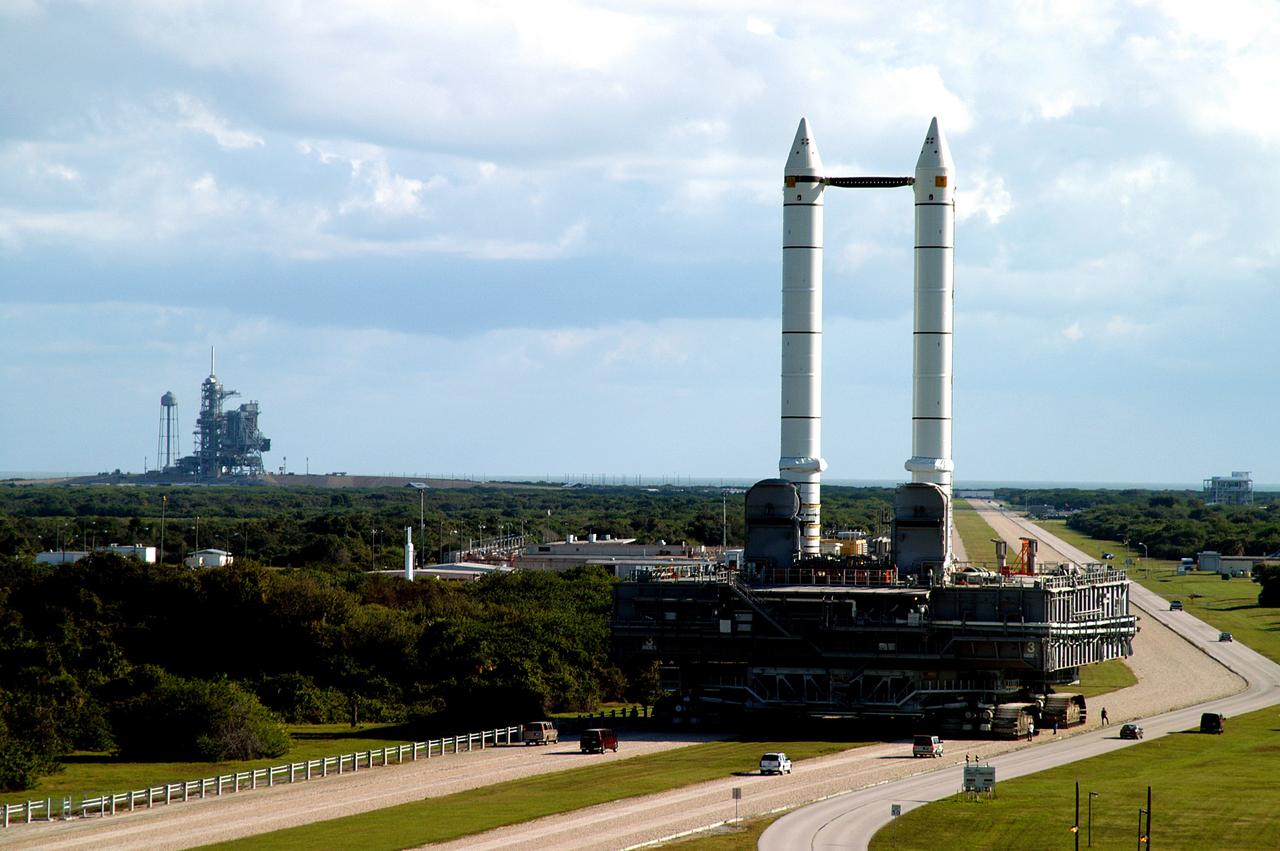
KENNEDY SPACE CENTER, FLA. -  The crawler transporter slowly moves the Mobile Launcher Platform (MLP), carrying a set of twin solid rocket boosters, along the crawlerway in support of engineering analysis vibration tests on the crawler and MLP.   In the distance, at left, is Launch Pad 39A. The crawler is moving at various speeds up to 1 mph in an effort to achieve vibration data gathering goals as it leaves the VAB and then returns.  The boosters are braced at the top for stability.  The primary purpose of these rollout tests is to gather data to develop future maintenance requirements on the transport equipment and the flight hardware. Various parts of the MLP and crawler transporter have been instrumented with vibration data collection equipment.
KENNEDY SPACE CENTER, FLA. - The crawler transporter slowly moves the Mobile Launcher Platform (MLP), carrying a set of twin solid rocket boosters, along the crawlerway in support of engineering analysis vibration tests on the crawler and MLP. In the distance, at left, is Launch Pad 39A. The crawler is moving at various speeds up to 1 mph in an effort to achieve vibration data gathering goals as it leaves the VAB and then returns. The boosters are braced at the top for stability. The primary purpose of these rollout tests is to gather data to develop future maintenance requirements on the transport equipment and the flight hardware. Various parts of the MLP and crawler transporter have been instrumented with vibration data collection equipment.
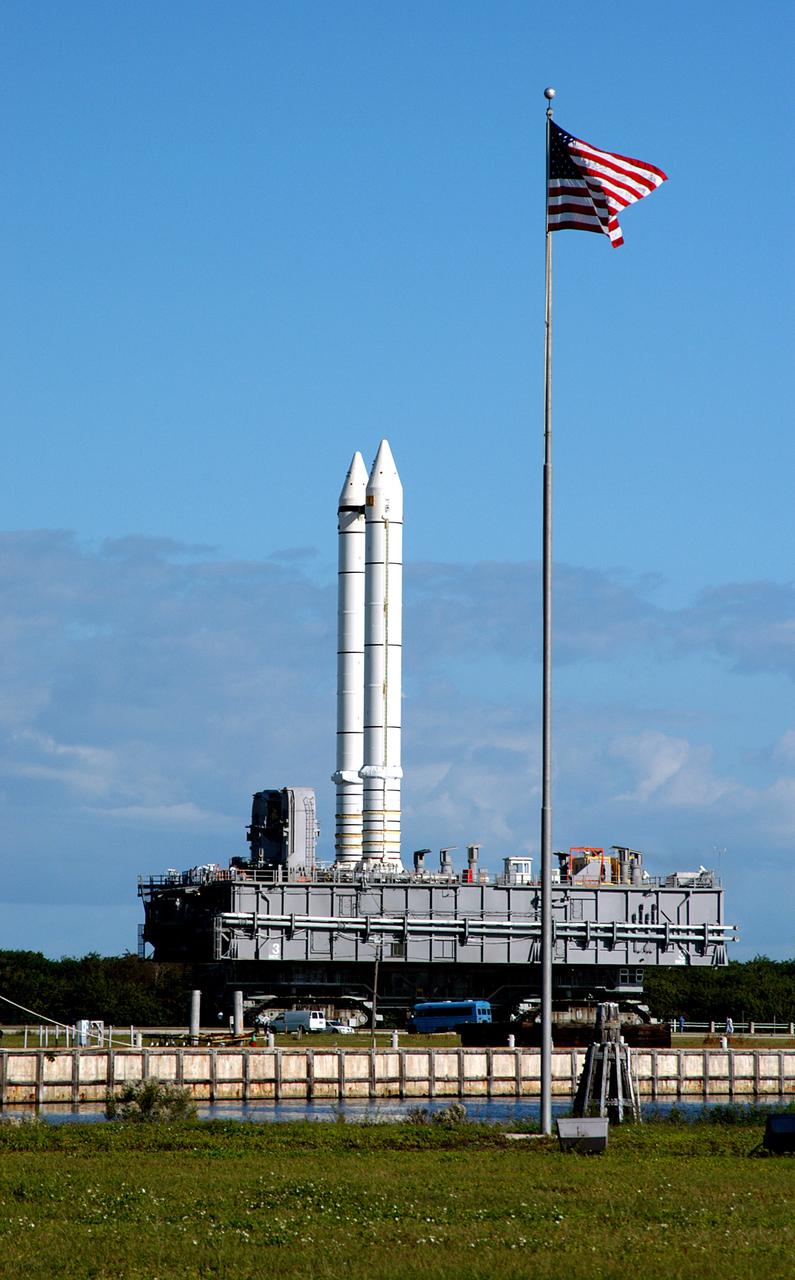
KENNEDY SPACE CENTER, FLA. - Carrying a set of twin solid rocket boosters, the crawler transporter slowly moves the Mobile Launcher Platform (MLP) past the NASA-KSC News Center where the U.S. flag flies daily.  The journey is in support of engineering analysis vibration tests on the crawler and MLP. The crawler is moving at various speeds up to 1 mph in an effort to achieve vibration data gathering goals as it leaves the VAB and then returns.  The boosters are braced at the top for stability.  The primary purpose of these rollout tests is to gather data to develop future maintenance requirements on the transport equipment and the flight hardware. Various parts of the MLP and crawler transporter have been instrumented with vibration data collection equipment.
KENNEDY SPACE CENTER, FLA. - Carrying a set of twin solid rocket boosters, the crawler transporter slowly moves the Mobile Launcher Platform (MLP) past the NASA-KSC News Center where the U.S. flag flies daily. The journey is in support of engineering analysis vibration tests on the crawler and MLP. The crawler is moving at various speeds up to 1 mph in an effort to achieve vibration data gathering goals as it leaves the VAB and then returns. The boosters are braced at the top for stability. The primary purpose of these rollout tests is to gather data to develop future maintenance requirements on the transport equipment and the flight hardware. Various parts of the MLP and crawler transporter have been instrumented with vibration data collection equipment.
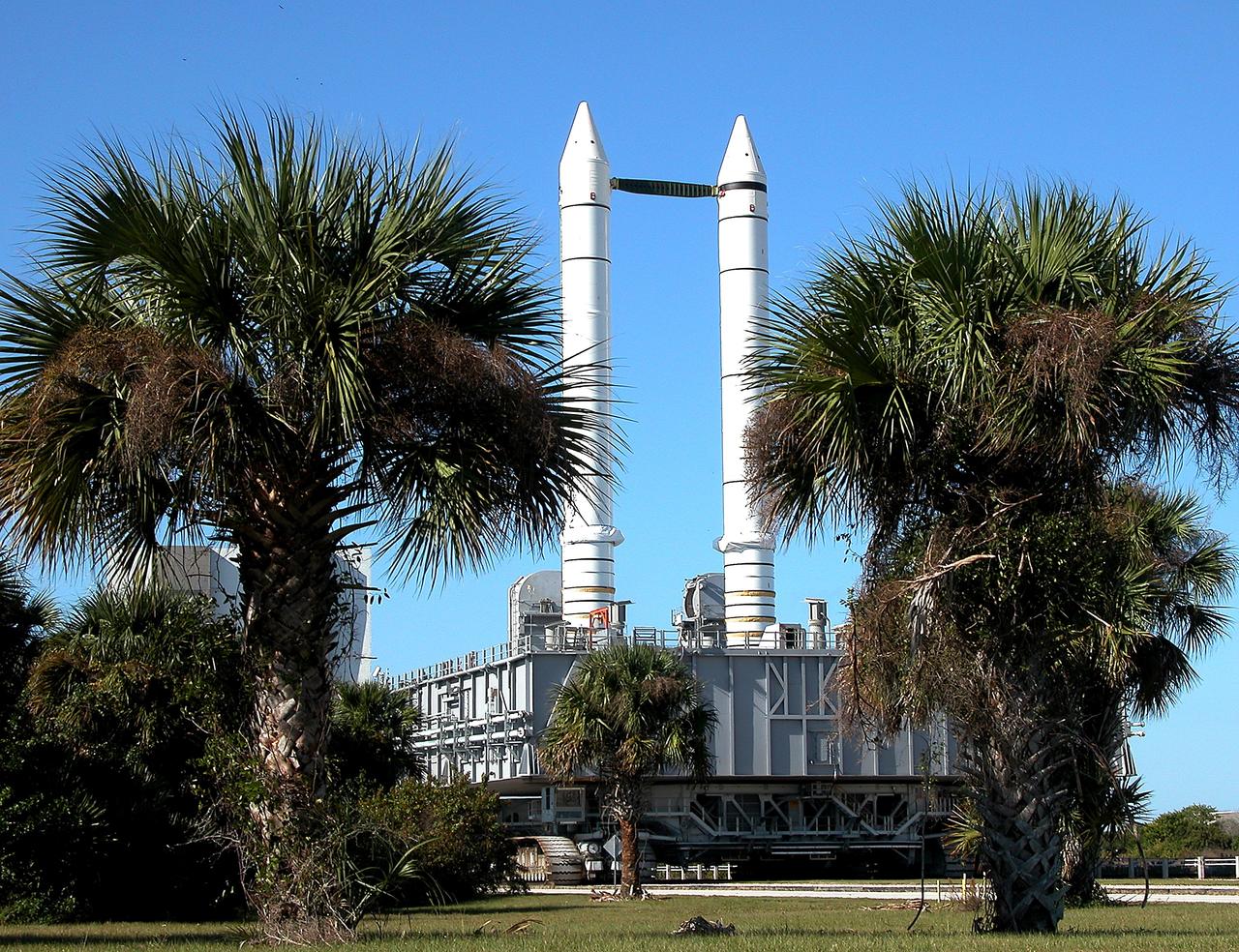
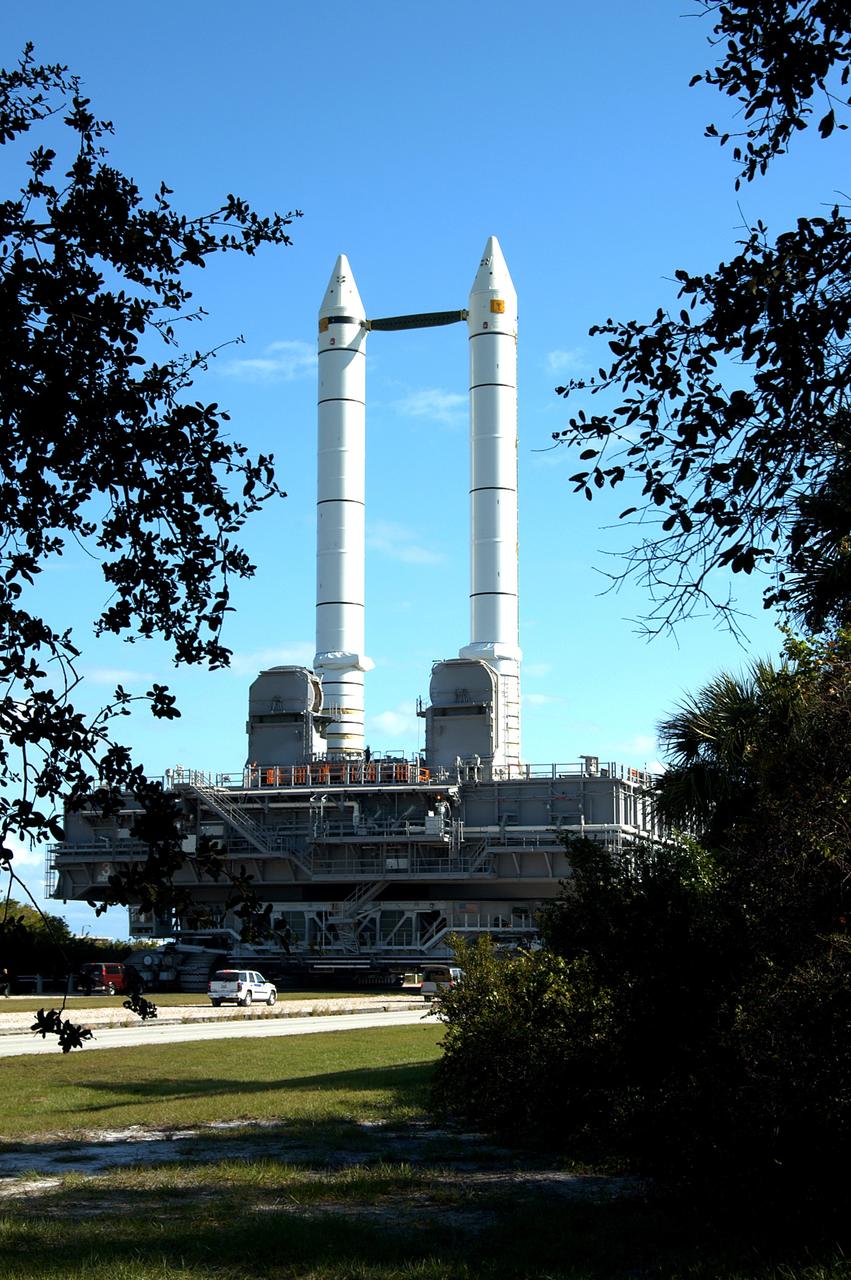
KENNEDY SPACE CENTER, FLA. -  Framed between palm trees, solid rocket boosters loom above the Mobile Launcher Platform (MLP) as the crawler transporter slowly moves it along the crawlerway.  The journey is in support of engineering analysis vibration tests on the crawler and MLP.  The crawler is moving at various speeds up to 1 mph in an effort to achieve vibration data gathering goals as it leaves the VAB and then returns.  The boosters are braced at the top for stability. The primary purpose of these rollout tests is to gather data to develop future maintenance requirements on the transport equipment and the flight hardware. Various parts of the MLP and crawler transporter have been instrumented with vibration data collection equipment.
KENNEDY SPACE CENTER, FLA. - Framed between palm trees, solid rocket boosters loom above the Mobile Launcher Platform (MLP) as the crawler transporter slowly moves it along the crawlerway. The journey is in support of engineering analysis vibration tests on the crawler and MLP. The crawler is moving at various speeds up to 1 mph in an effort to achieve vibration data gathering goals as it leaves the VAB and then returns. The boosters are braced at the top for stability. The primary purpose of these rollout tests is to gather data to develop future maintenance requirements on the transport equipment and the flight hardware. Various parts of the MLP and crawler transporter have been instrumented with vibration data collection equipment.
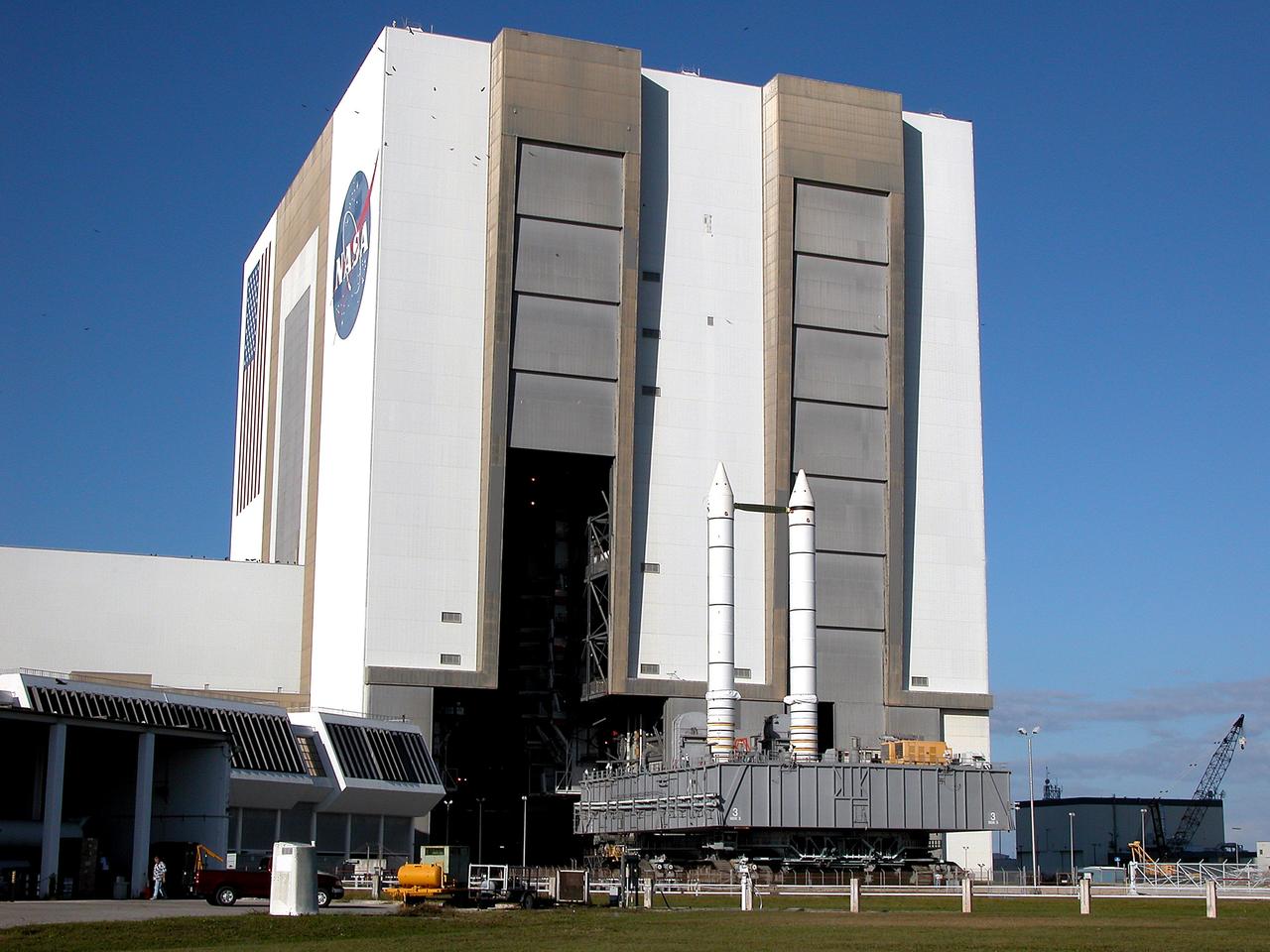
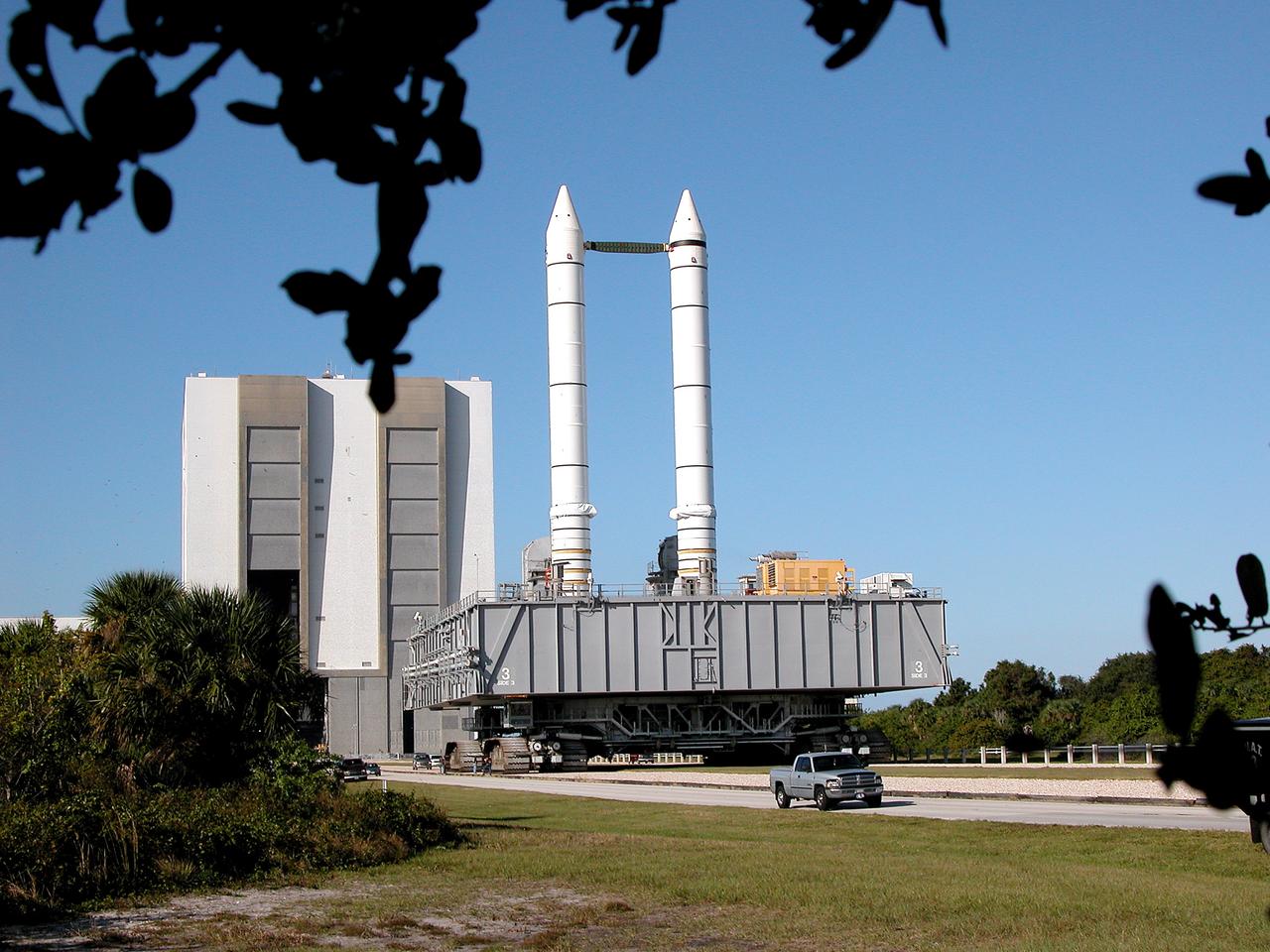
KENNEDY SPACE CENTER, FLA. -  The crawler transporter slowly moves the Mobile Launcher Platform (MLP), carrying a set of twin solid rocket boosters, away from the Vehicle Assembly Building (VAB) in support of engineering analysis vibration tests on the crawler and MLP.   The crawler is moving at various speeds up to 1 mph in an effort to achieve vibration data gathering goals as it leaves the VAB and then returns.  The boosters are braced at the top for stability.  The primary purpose of these rollout tests is to gather data to develop future maintenance requirements on the transport equipment and the flight hardware. Various parts of the MLP and crawler transporter have been instrumented with vibration data collection equipment.
KENNEDY SPACE CENTER, FLA. - The crawler transporter slowly moves the Mobile Launcher Platform (MLP), carrying a set of twin solid rocket boosters, away from the Vehicle Assembly Building (VAB) in support of engineering analysis vibration tests on the crawler and MLP. The crawler is moving at various speeds up to 1 mph in an effort to achieve vibration data gathering goals as it leaves the VAB and then returns. The boosters are braced at the top for stability. The primary purpose of these rollout tests is to gather data to develop future maintenance requirements on the transport equipment and the flight hardware. Various parts of the MLP and crawler transporter have been instrumented with vibration data collection equipment.
KENNEDY SPACE CENTER, FLA. -  The crawler transporter has slowly moved the Mobile Launcher Platform (MLP), carrying a set of twin solid rocket boosters, out of the Vehicle Assembly Building (VAB) in support of engineering analysis vibration tests on the crawler and MLP. The crawler is moving at various speeds up to 1 mph in an effort to achieve vibration data gathering goals as it leaves the VAB and then returns.  The boosters are braced at the top for stability.  The primary purpose of these rollout tests is to gather data to develop future maintenance requirements on the transport equipment and the flight hardware. Various parts of the MLP and crawler transporter have been instrumented with vibration data collection equipment.
KENNEDY SPACE CENTER, FLA. - The crawler transporter has slowly moved the Mobile Launcher Platform (MLP), carrying a set of twin solid rocket boosters, out of the Vehicle Assembly Building (VAB) in support of engineering analysis vibration tests on the crawler and MLP. The crawler is moving at various speeds up to 1 mph in an effort to achieve vibration data gathering goals as it leaves the VAB and then returns. The boosters are braced at the top for stability. The primary purpose of these rollout tests is to gather data to develop future maintenance requirements on the transport equipment and the flight hardware. Various parts of the MLP and crawler transporter have been instrumented with vibration data collection equipment.
KENNEDY SPACE CENTER, FLA. -  The crawler transporter slowly moves the Mobile Launcher Platform (MLP), carrying a set of twin solid rocket boosters, away from the Vehicle Assembly Building (VAB) in support of engineering analysis vibration tests on the crawler and MLP.   The crawler is moving at various speeds up to 1 mph in an effort to achieve vibration data gathering goals as it leaves the VAB and then returns.  The boosters are braced at the top for stability.  The primary purpose of these rollout tests is to gather data to develop future maintenance requirements on the transport equipment and the flight hardware. Various parts of the MLP and crawler transporter have been instrumented with vibration data collection equipment.
KENNEDY SPACE CENTER, FLA. - The crawler transporter slowly moves the Mobile Launcher Platform (MLP), carrying a set of twin solid rocket boosters, away from the Vehicle Assembly Building (VAB) in support of engineering analysis vibration tests on the crawler and MLP. The crawler is moving at various speeds up to 1 mph in an effort to achieve vibration data gathering goals as it leaves the VAB and then returns. The boosters are braced at the top for stability. The primary purpose of these rollout tests is to gather data to develop future maintenance requirements on the transport equipment and the flight hardware. Various parts of the MLP and crawler transporter have been instrumented with vibration data collection equipment.
KENNEDY SPACE CENTER, FLA. -  The crawler transporter slowly moves the Mobile Launcher Platform (MLP), carrying a set of twin solid rocket boosters, out of the Vehicle Assembly Building (VAB) in support of engineering analysis vibration tests on the crawler and MLP.   The crawler is moving at various speeds up to 1 mph in an effort to achieve vibration data gathering goals as it leaves the VAB and then returns.  The boosters are braced at the top for stability.  The primary purpose of these rollout tests is to gather data to develop future maintenance requirements on the transport equipment and the flight hardware. Various parts of the MLP and crawler transporter have been instrumented with vibration data collection equipment.
KENNEDY SPACE CENTER, FLA. - The crawler transporter slowly moves the Mobile Launcher Platform (MLP), carrying a set of twin solid rocket boosters, out of the Vehicle Assembly Building (VAB) in support of engineering analysis vibration tests on the crawler and MLP. The crawler is moving at various speeds up to 1 mph in an effort to achieve vibration data gathering goals as it leaves the VAB and then returns. The boosters are braced at the top for stability. The primary purpose of these rollout tests is to gather data to develop future maintenance requirements on the transport equipment and the flight hardware. Various parts of the MLP and crawler transporter have been instrumented with vibration data collection equipment.
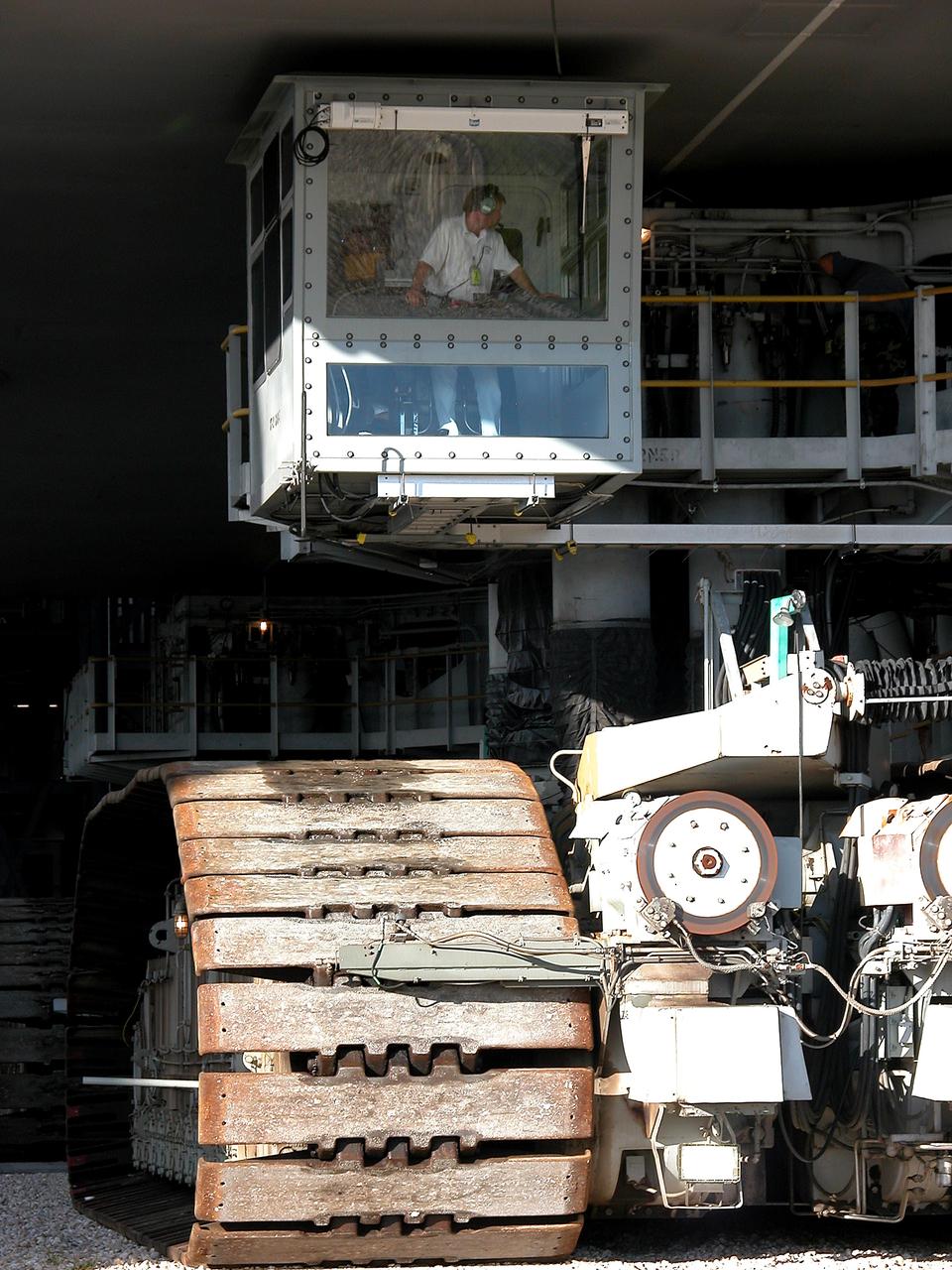
KENNEDY SPACE CENTER, FLA. -  As the crawler transporter slowly moves the Mobile Launcher Platform (MLP) out of the Vehicle Assembly Building, the driver of the front control cab can be seen.  The MLP is carrying two solid rocket boosters for engineering analysis vibration tests on the crawler and MLP.    The crawler is moving at various speeds up to 1 mph in an effort to achieve vibration data gathering goals as it leaves the VAB and then returns.  The boosters are braced at the top for stability.  The primary purpose of these rollout tests is to gather data to develop future maintenance requirements on the transport equipment and the flight hardware. Various parts of the MLP and crawler transporter have been instrumented with vibration data collection equipment.
KENNEDY SPACE CENTER, FLA. - As the crawler transporter slowly moves the Mobile Launcher Platform (MLP) out of the Vehicle Assembly Building, the driver of the front control cab can be seen. The MLP is carrying two solid rocket boosters for engineering analysis vibration tests on the crawler and MLP. The crawler is moving at various speeds up to 1 mph in an effort to achieve vibration data gathering goals as it leaves the VAB and then returns. The boosters are braced at the top for stability. The primary purpose of these rollout tests is to gather data to develop future maintenance requirements on the transport equipment and the flight hardware. Various parts of the MLP and crawler transporter have been instrumented with vibration data collection equipment.
KENNEDY SPACE CENTER, FLA. -   The crawler transporter is slowly moving the Mobile Launcher Platform (MLP), carrying a set of twin solid rocket boosters, out of the Vehicle Assembly Building (VAB) in support of engineering analysis vibration tests on the crawler and MLP. The crawler is moving at various speeds up to 1 mph in an effort to achieve vibration data gathering goals as it leaves the VAB and then returns.  The boosters are braced at the top for stability.  The primary purpose of these rollout tests is to gather data to develop future maintenance requirements on the transport equipment and the flight hardware. Various parts of the MLP and crawler transporter have been instrumented with vibration data collection equipment.
KENNEDY SPACE CENTER, FLA. - The crawler transporter is slowly moving the Mobile Launcher Platform (MLP), carrying a set of twin solid rocket boosters, out of the Vehicle Assembly Building (VAB) in support of engineering analysis vibration tests on the crawler and MLP. The crawler is moving at various speeds up to 1 mph in an effort to achieve vibration data gathering goals as it leaves the VAB and then returns. The boosters are braced at the top for stability. The primary purpose of these rollout tests is to gather data to develop future maintenance requirements on the transport equipment and the flight hardware. Various parts of the MLP and crawler transporter have been instrumented with vibration data collection equipment.
KENNEDY SPACE CENTER, FLA. -   The crawler transporter slowly moves the Mobile Launcher Platform (MLP), carrying a set of twin solid rocket boosters, along the crawlerway in support of engineering analysis vibration tests on the crawler and MLP.  The crawler is moving at various speeds up to 1 mph in an effort to achieve vibration data gathering goals as it leaves the VAB and then returns.  The boosters are braced at the top for stability.  The primary purpose of these rollout tests is to gather data to develop future maintenance requirements on the transport equipment and the flight hardware. Various parts of the MLP and crawler transporter have been instrumented with vibration data collection equipment.
KENNEDY SPACE CENTER, FLA. - The crawler transporter slowly moves the Mobile Launcher Platform (MLP), carrying a set of twin solid rocket boosters, along the crawlerway in support of engineering analysis vibration tests on the crawler and MLP. The crawler is moving at various speeds up to 1 mph in an effort to achieve vibration data gathering goals as it leaves the VAB and then returns. The boosters are braced at the top for stability. The primary purpose of these rollout tests is to gather data to develop future maintenance requirements on the transport equipment and the flight hardware. Various parts of the MLP and crawler transporter have been instrumented with vibration data collection equipment.
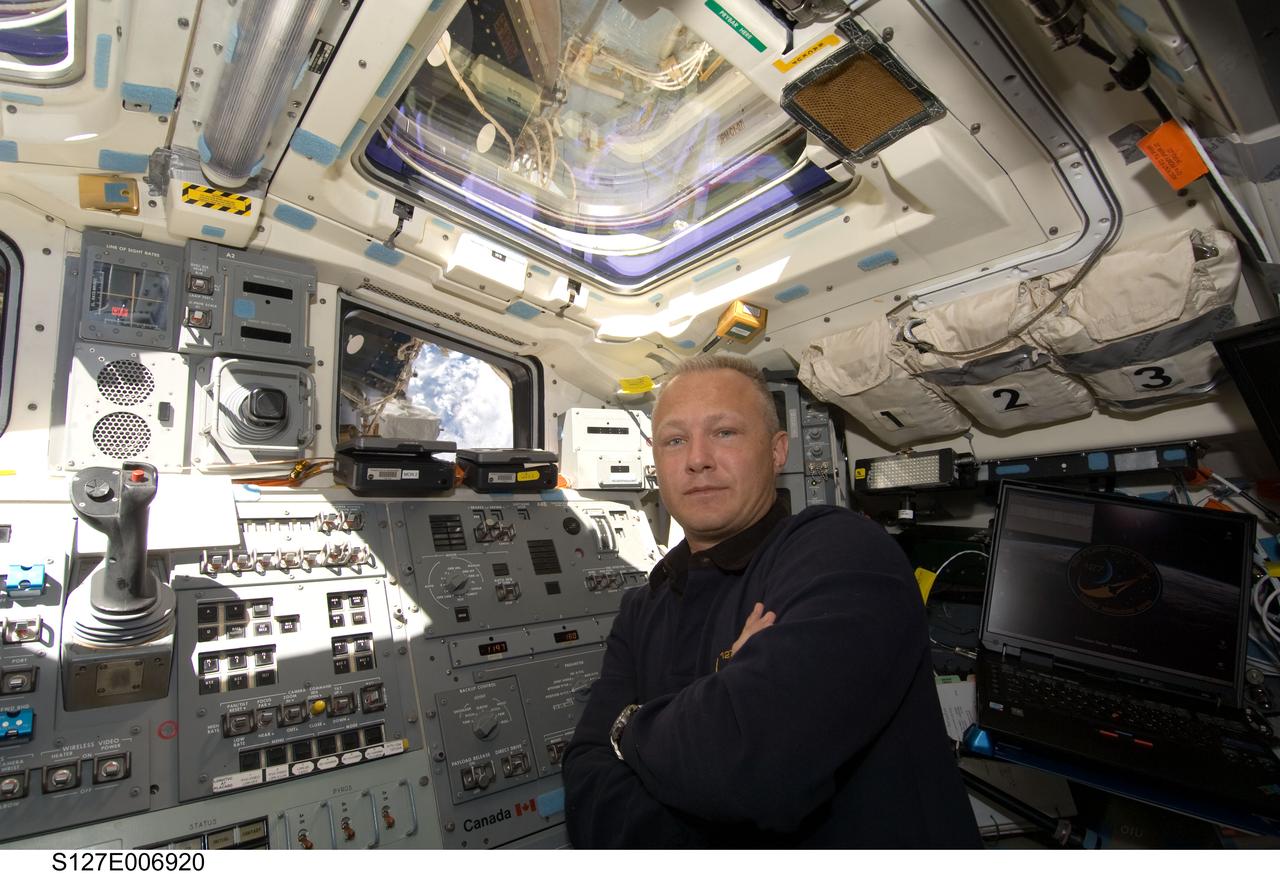
S127-E-006920 (19 July 2009) --- Astronaut Doug Hurley, pilot, is pictured at Endeavour's aft flight deck controls during flight day five operations with hardware on the International Space Station. The hardware moves will enable the second pair of spacewalkers to perform its spacewalk assignment on July 20.
Hurley in the aft FD during STS-127 / Expedition 20 Joint Operations
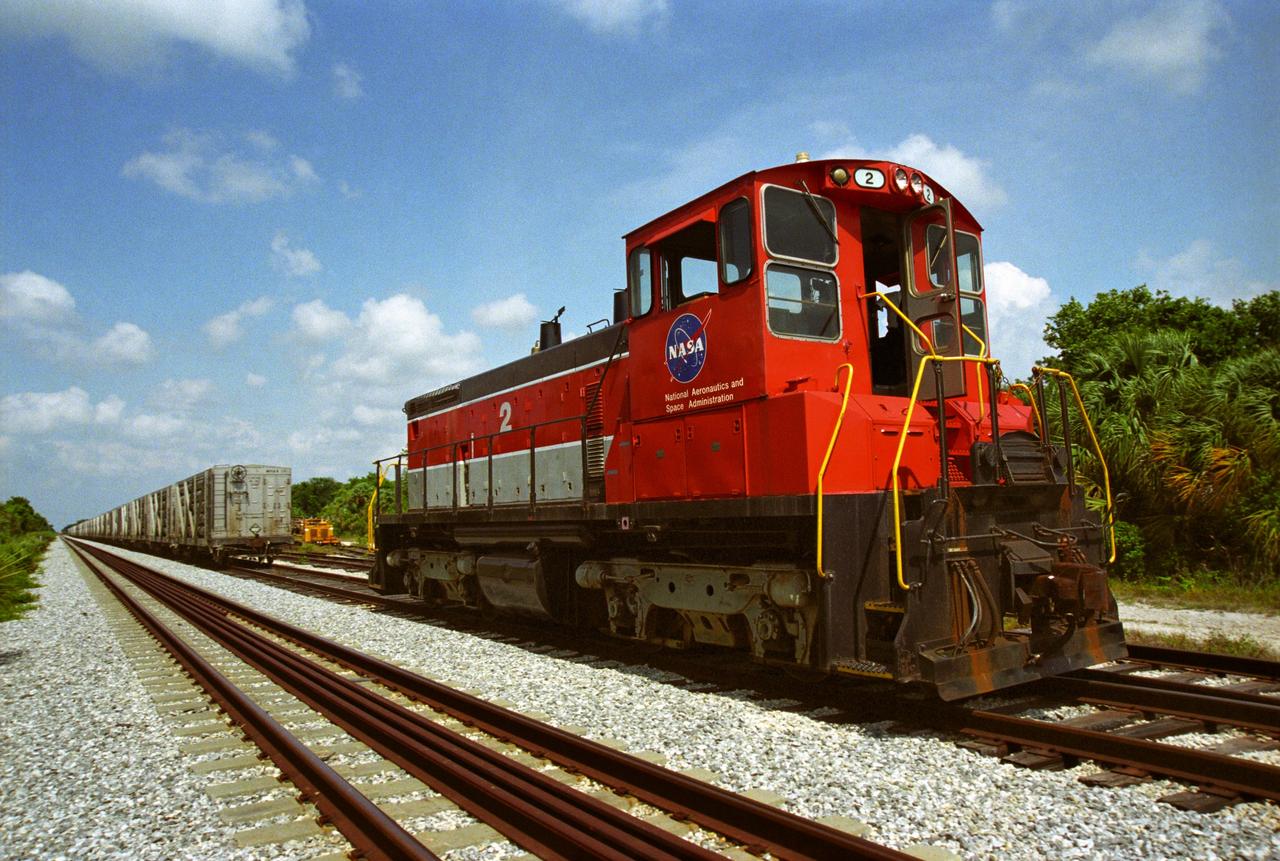
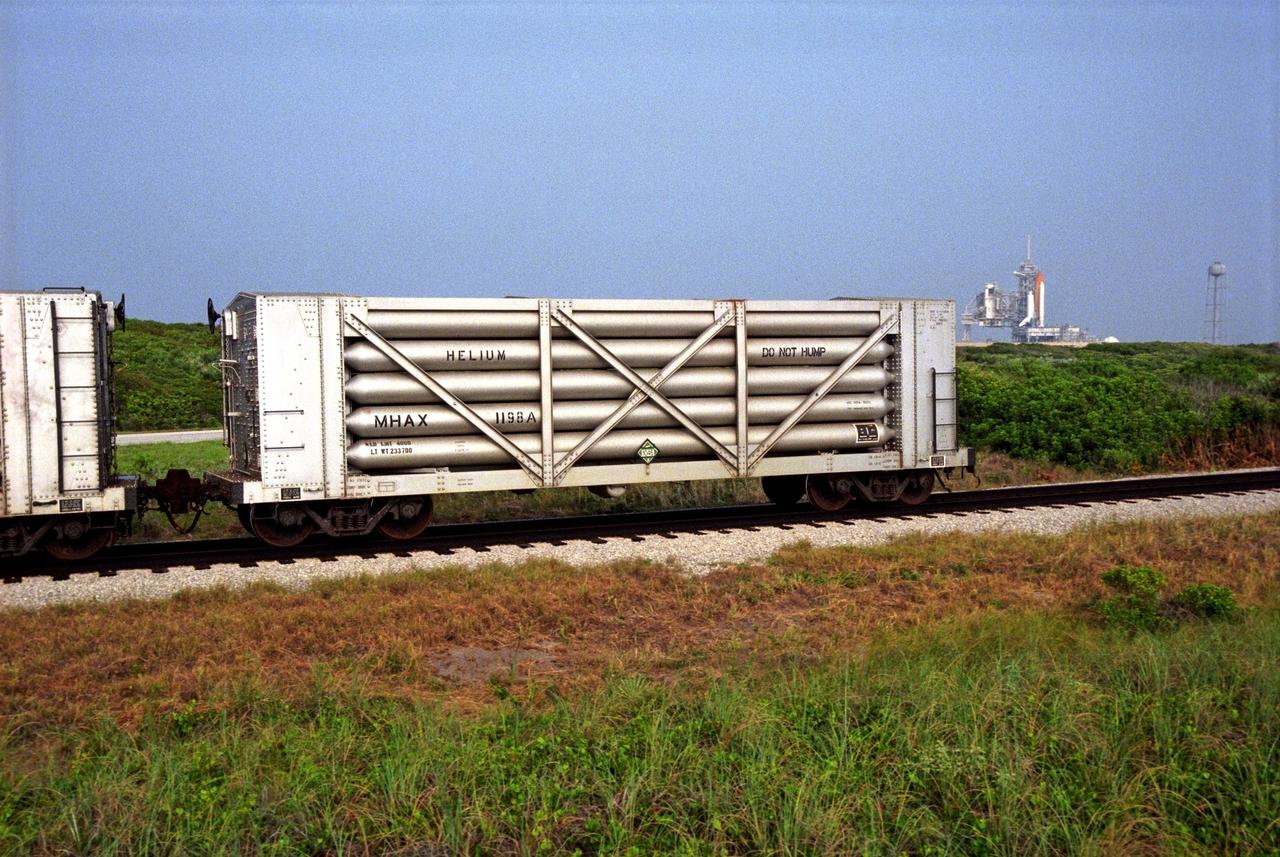
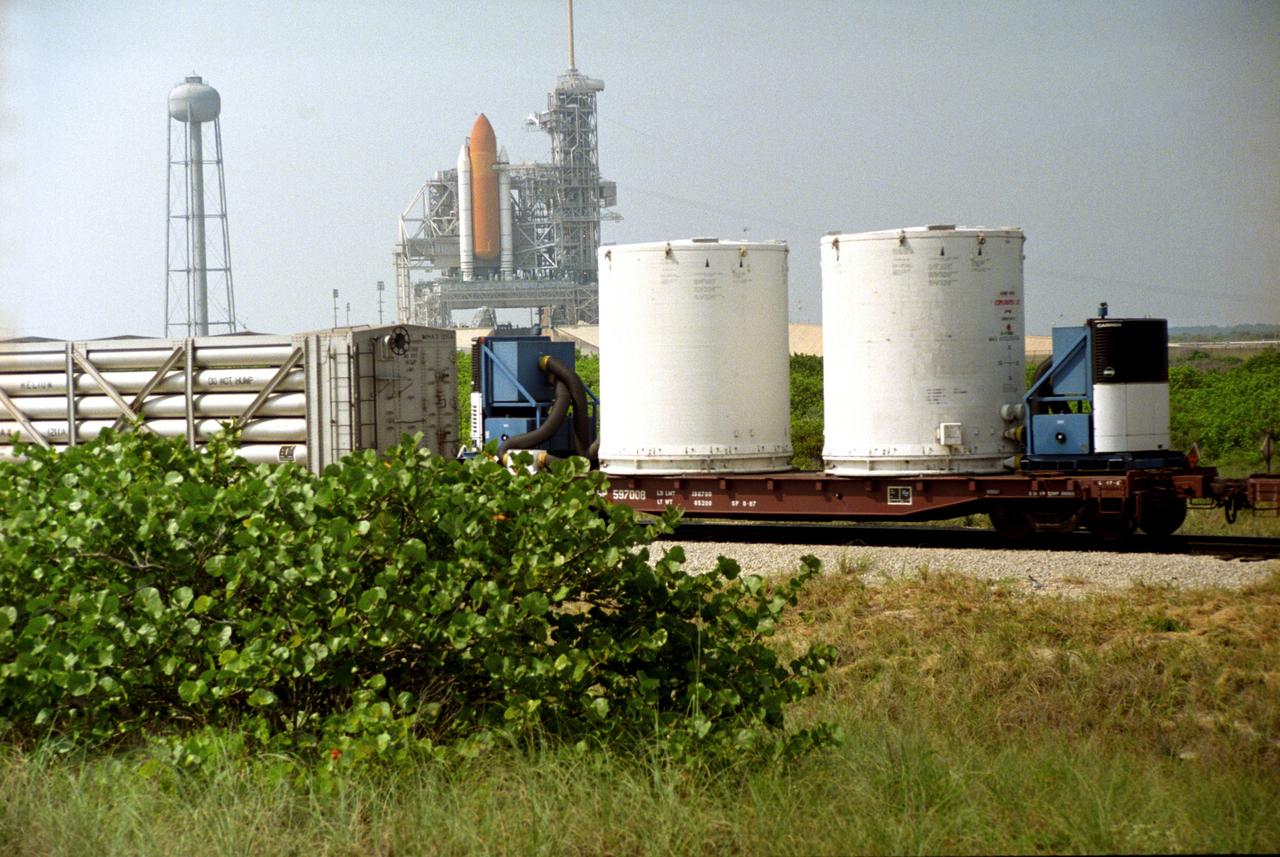
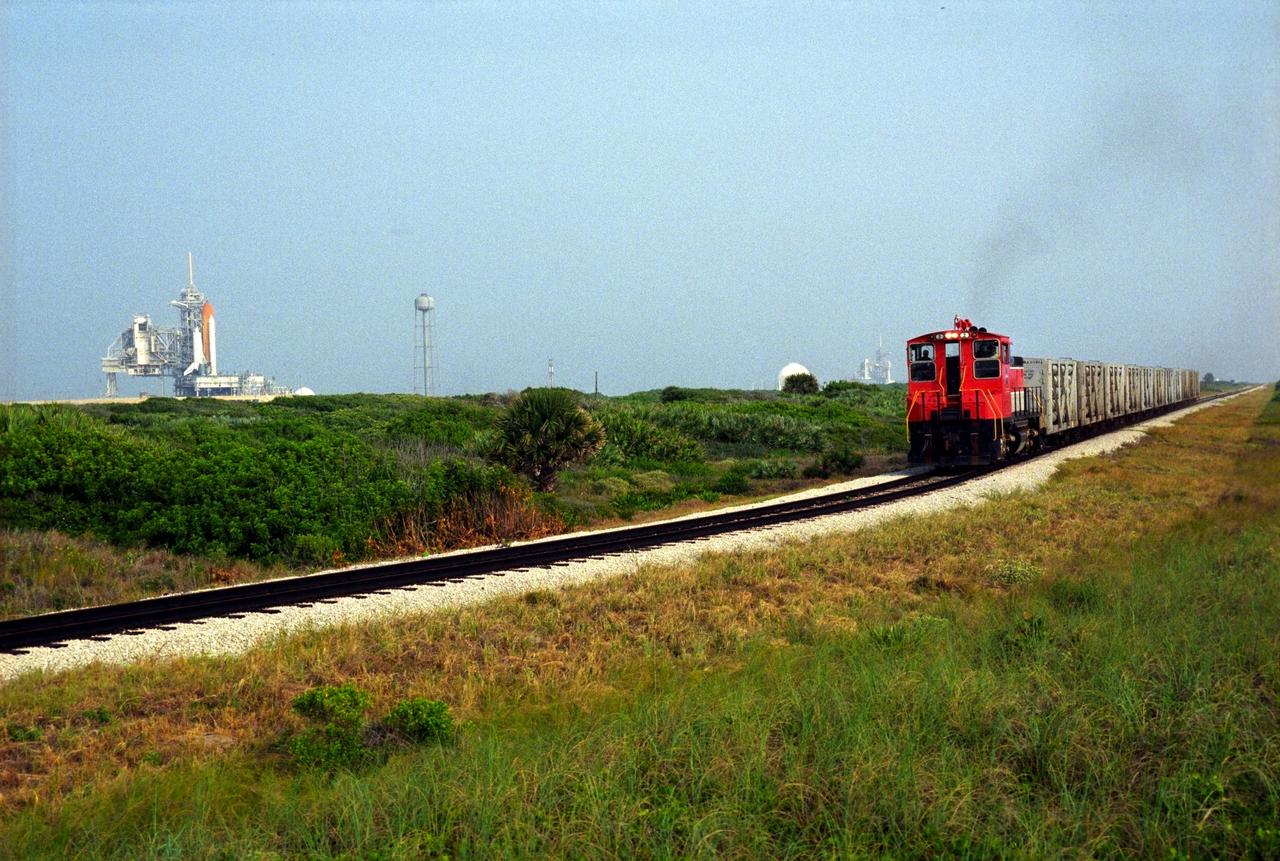
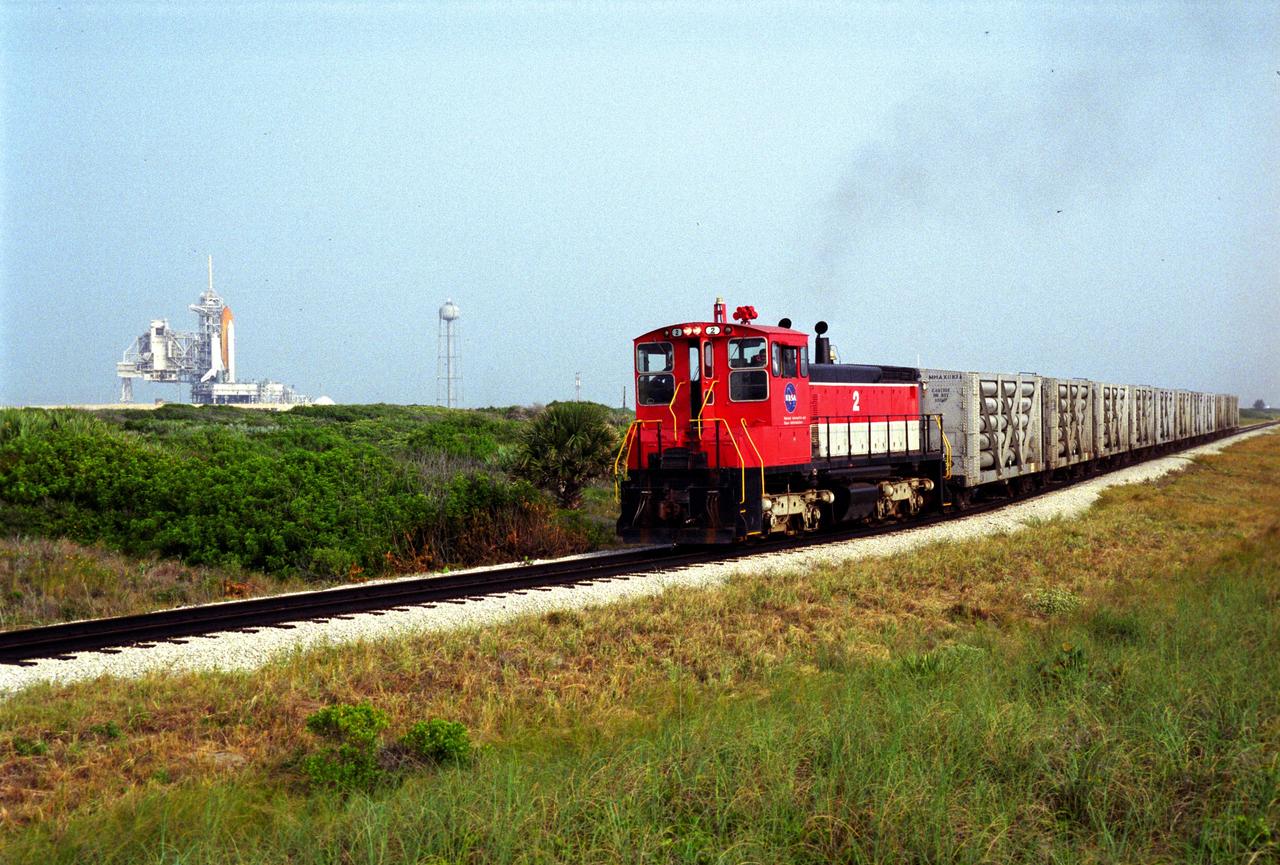
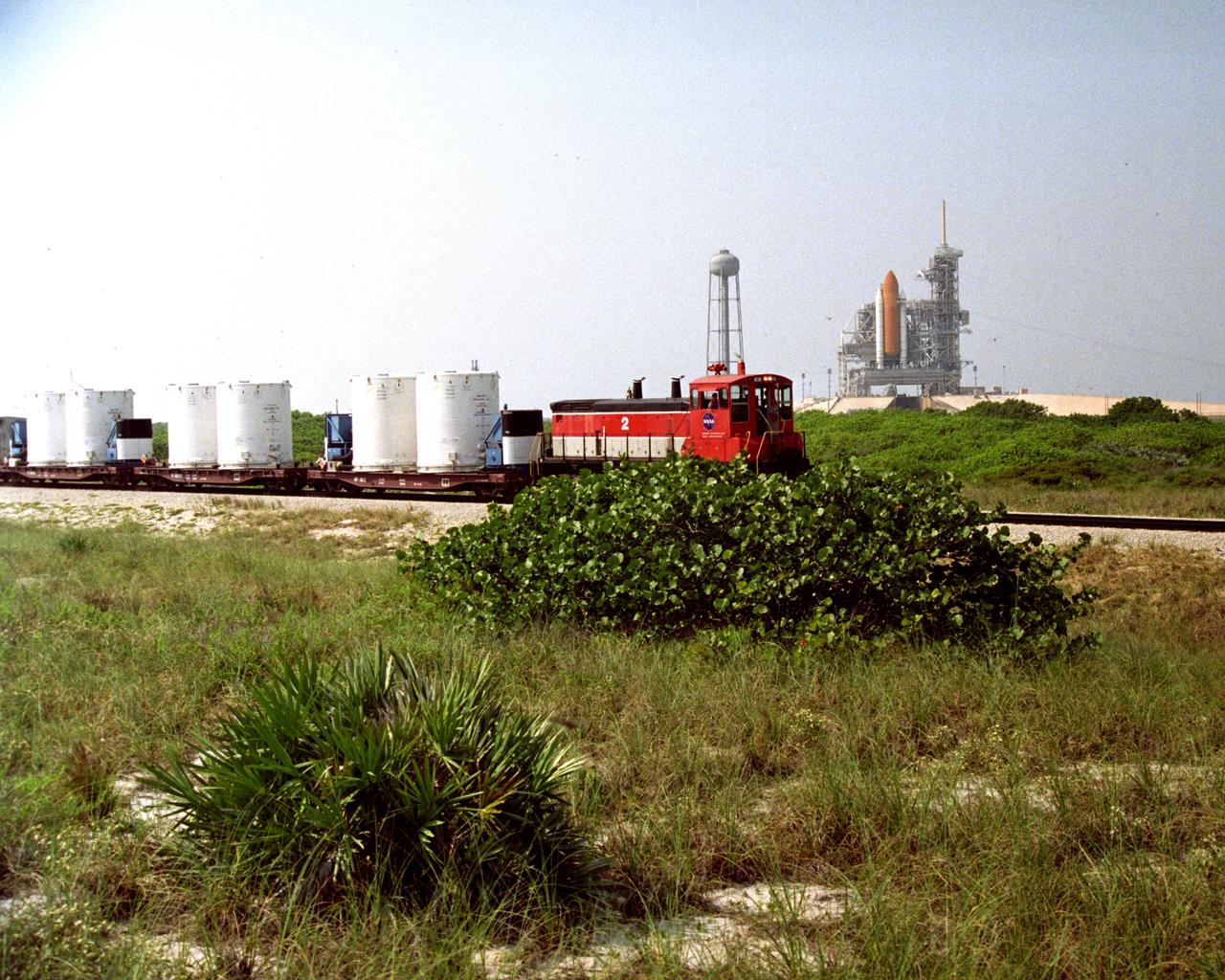
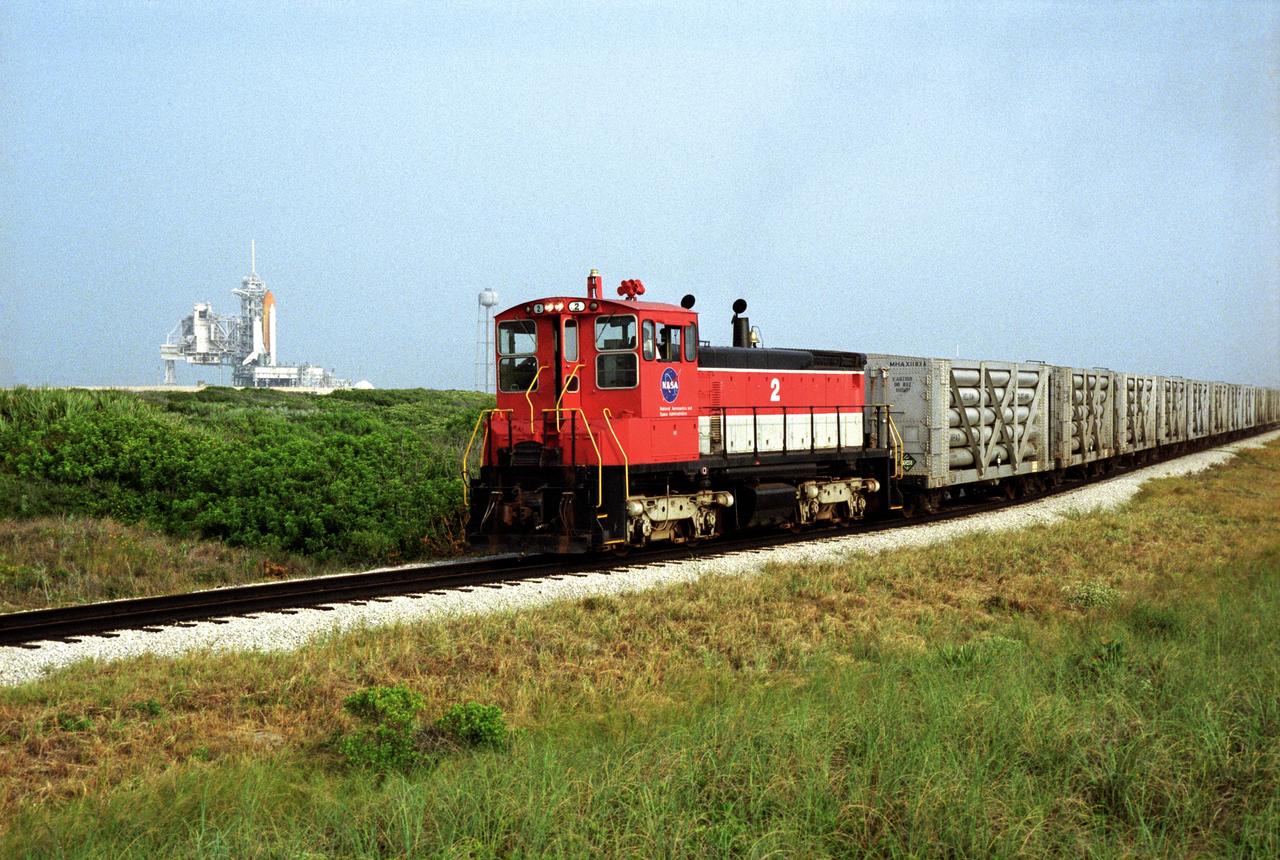
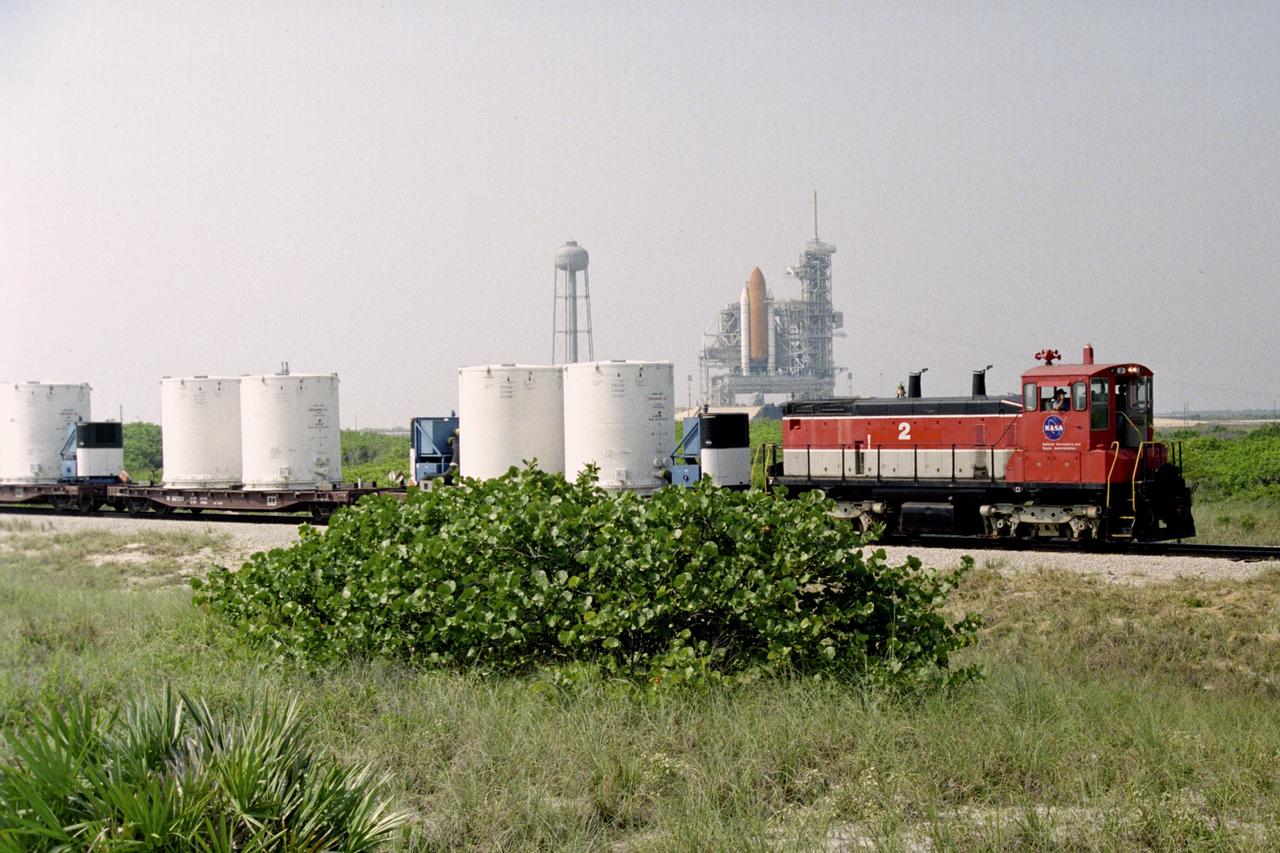
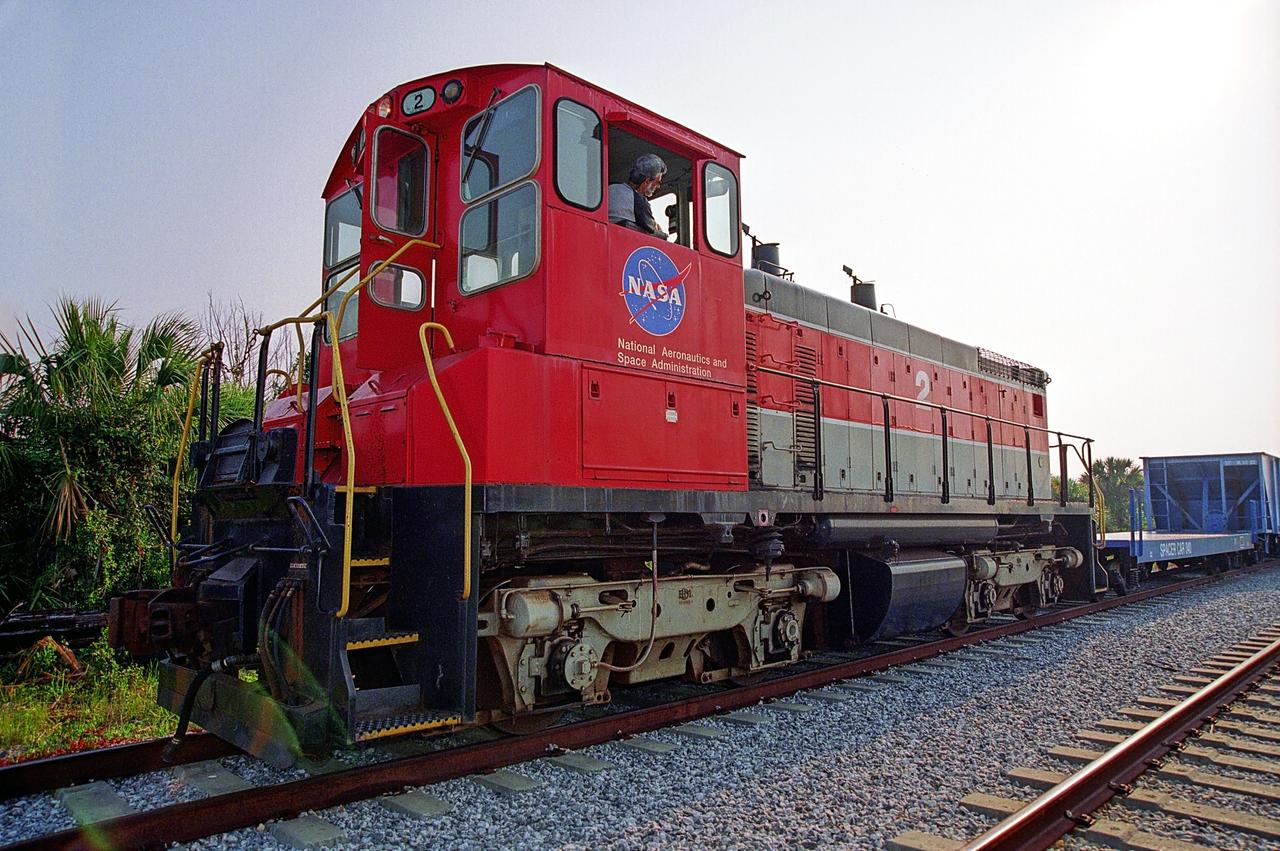
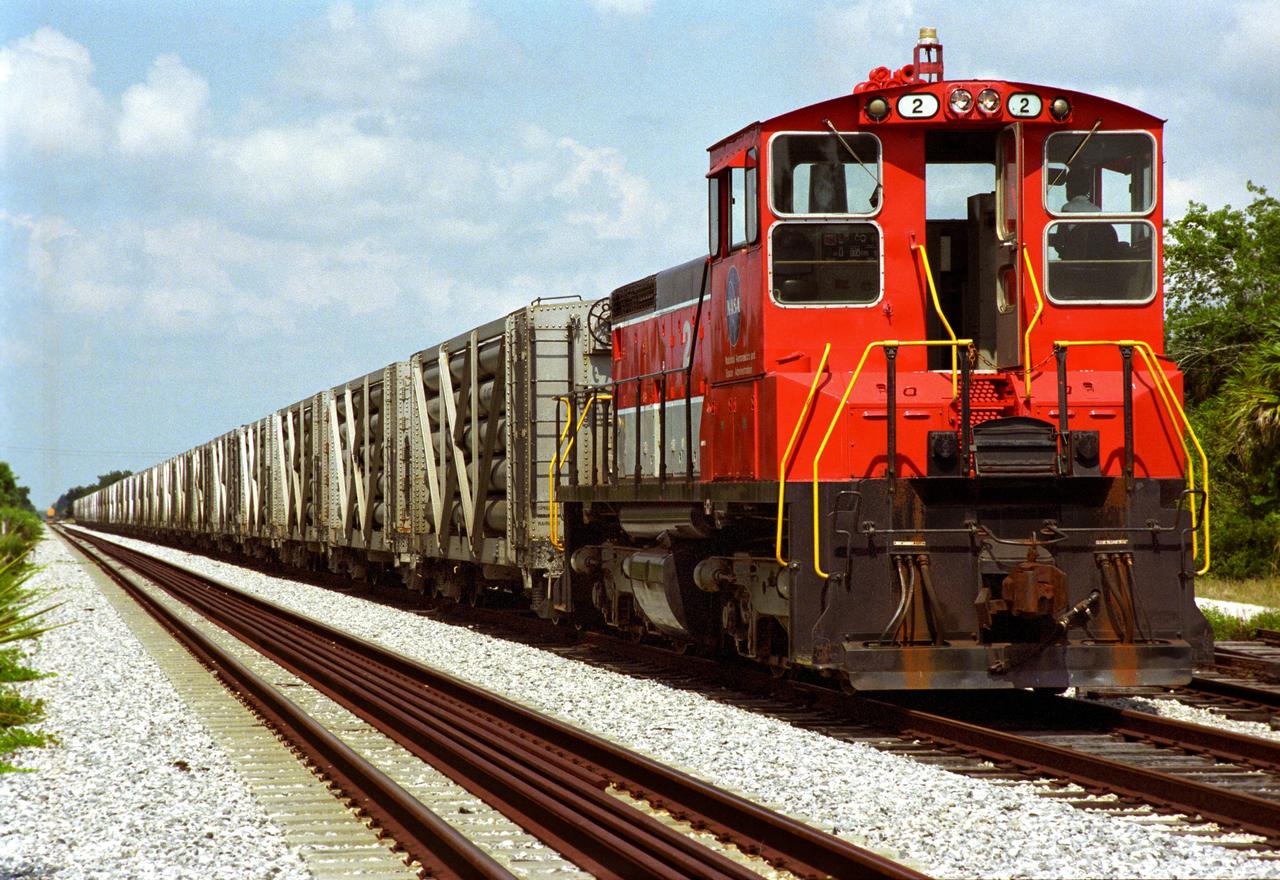
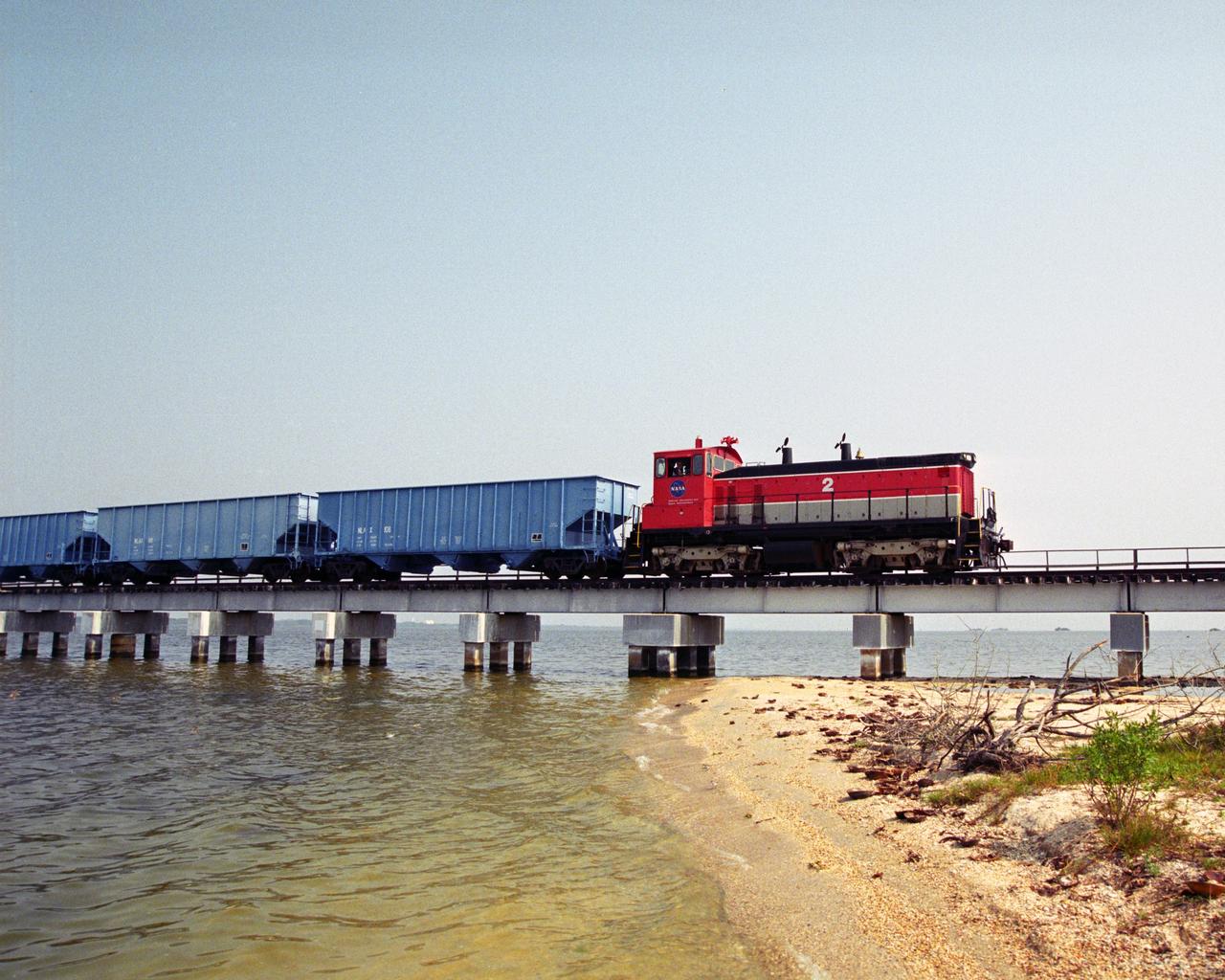
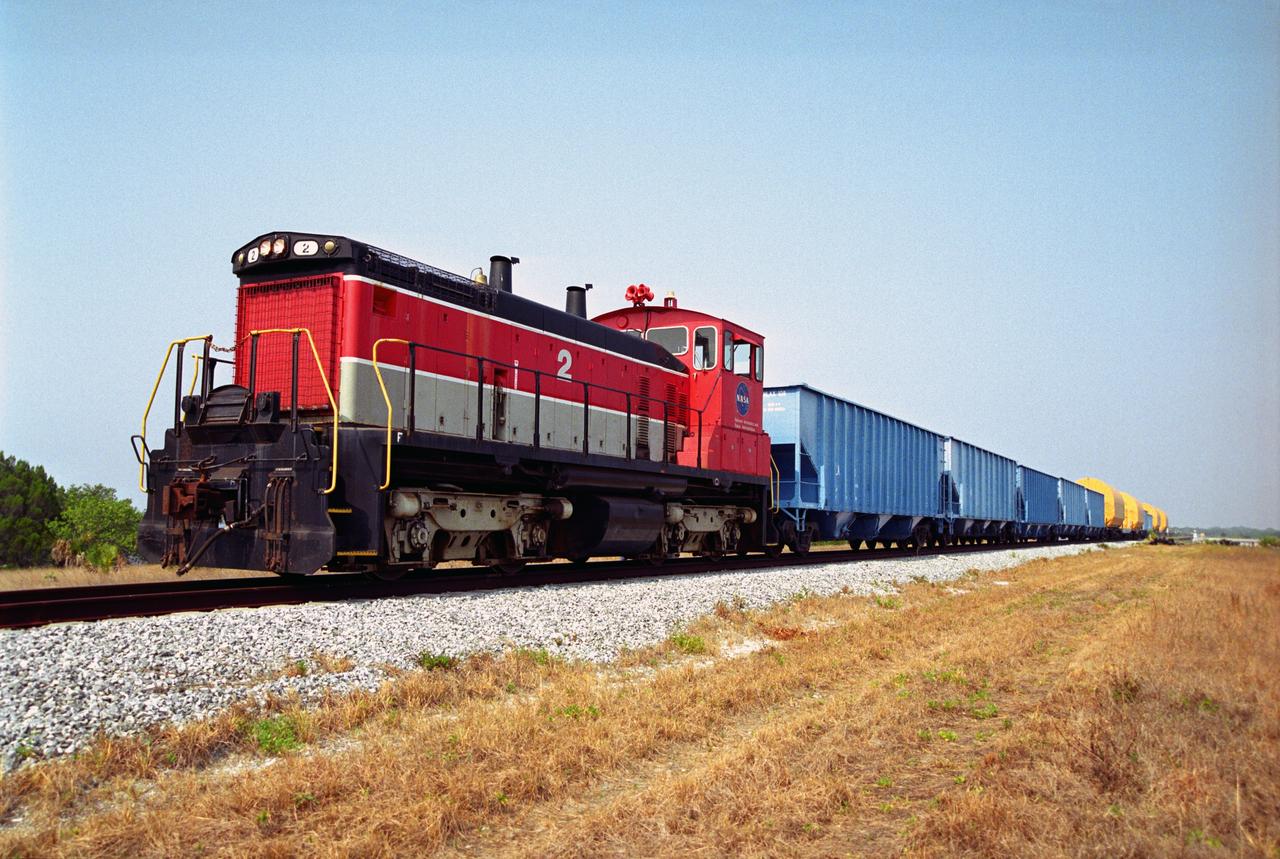
CAPE CANAVERAL, Fla. – A NASA railroad train moves past Launch Pad 39A at NASA's Kennedy Space Center in Florida. The space agency utilizes railroad operations to not only move equipment at Kennedy, but to transport hardware to and from contractor facilities across the nation. Photo credit: NASA
KSC-98PC-647
A NASA railroad train moves past Launch Pad 39A at NASA's Kennedy Space Center in Florida. The space agency utilizes railroad operations to not only move equipment at Kennedy, but to transport hardware to and from contractor facilities across the nation. Photo credit: NASA
KSC-98PC-629
CAPE CANAVERAL, Fla. – A NASA railroad train moves along the track at NASA's Kennedy Space Center in Florida. The space agency utilizes railroad operations to not only move equipment at Kennedy, but to transport hardware to and from contractor facilities across the nation. Photo credit: NASA
KSC-98PC-572
CAPE CANAVERAL, Fla. – A NASA railroad train moves past Launch Pad 39A at NASA's Kennedy Space Center in Florida. The space agency utilizes railroad operations to not only move equipment at Kennedy, but to transport hardware to and from contractor facilities across the nation. Photo credit: NASA
KSC-98PC-649
A NASA railroad train moves past Launch Pad 39A at NASA's Kennedy Space Center in Florida. The space agency utilizes railroad operations to not only move equipment at Kennedy, but to transport hardware to and from contractor facilities across the nation. Photo credit: NASA
KSC-98PC-632
A NASA railroad train moves past Launch Pad 39A at NASA's Kennedy Space Center in Florida. The space agency utilizes railroad operations to not only move equipment at Kennedy, but to transport hardware to and from contractor facilities across the nation. Photo credit: NASA
KSC-98PC-630
CAPE CANAVERAL, Fla. – A NASA railroad train moves along the track at NASA's Kennedy Space Center in Florida. The space agency utilizes railroad operations to not only move equipment at Kennedy, but to transport hardware to and from contractor facilities across the nation. Photo credit: NASA
KSC-98PC-651
CAPE CANAVERAL, Fla. – A NASA railroad train moves along the track at NASA's Kennedy Space Center in Florida. The space agency utilizes railroad operations to not only move equipment at Kennedy, but to transport hardware to and from contractor facilities across the nation. Photo credit: NASA
KSC-98PC-571
A NASA railroad train moves past Launch Pad 39A at NASA's Kennedy Space Center in Florida. The space agency utilizes railroad operations to not only move equipment at Kennedy, but to transport hardware to and from contractor facilities across the nation. Photo credit: NASA
KSC-98PC-631
CAPE CANAVERAL, Fla. – A NASA railroad train moves past Launch Pad 39A at NASA's Kennedy Space Center in Florida. The space agency utilizes railroad operations to not only move equipment at Kennedy, but to transport hardware to and from contractor facilities across the nation. Photo credit: NASA
KSC-98PC-648
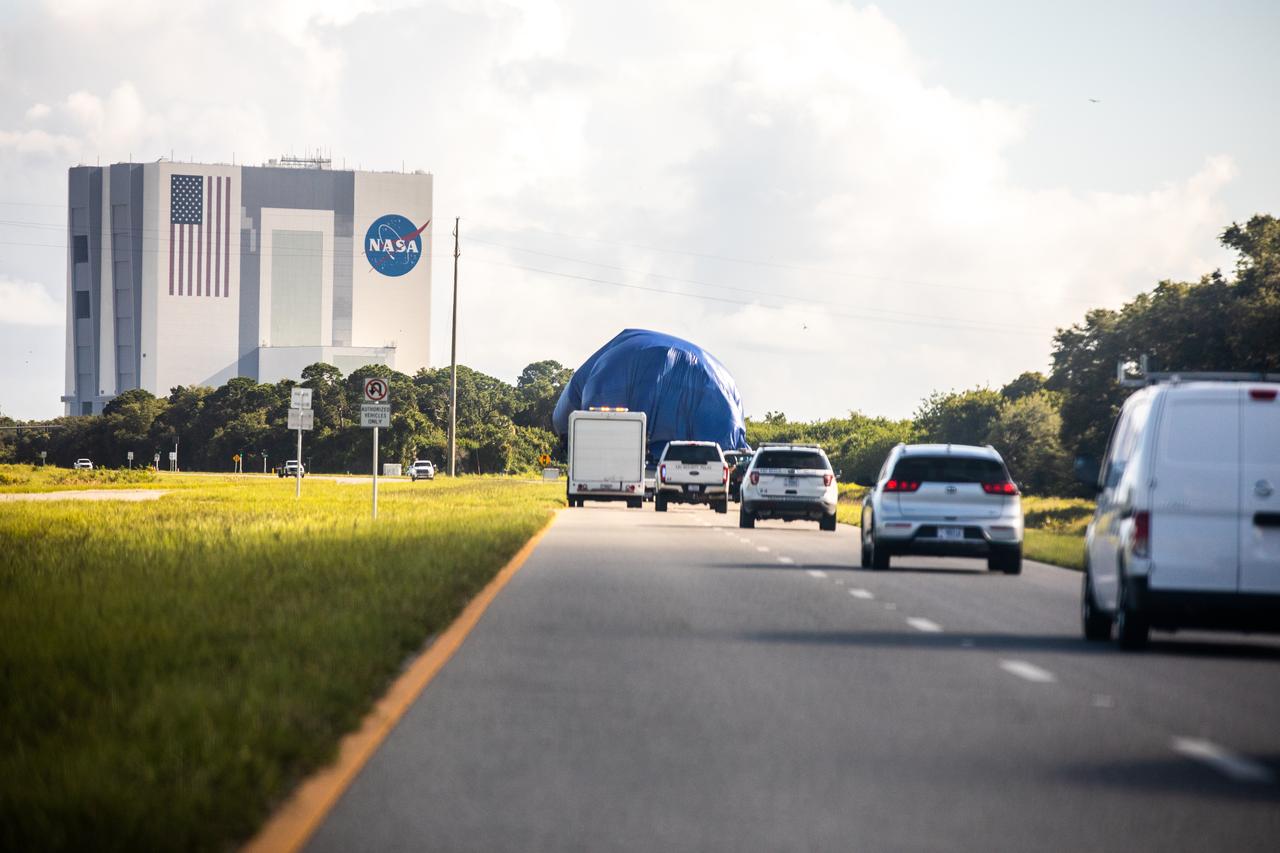
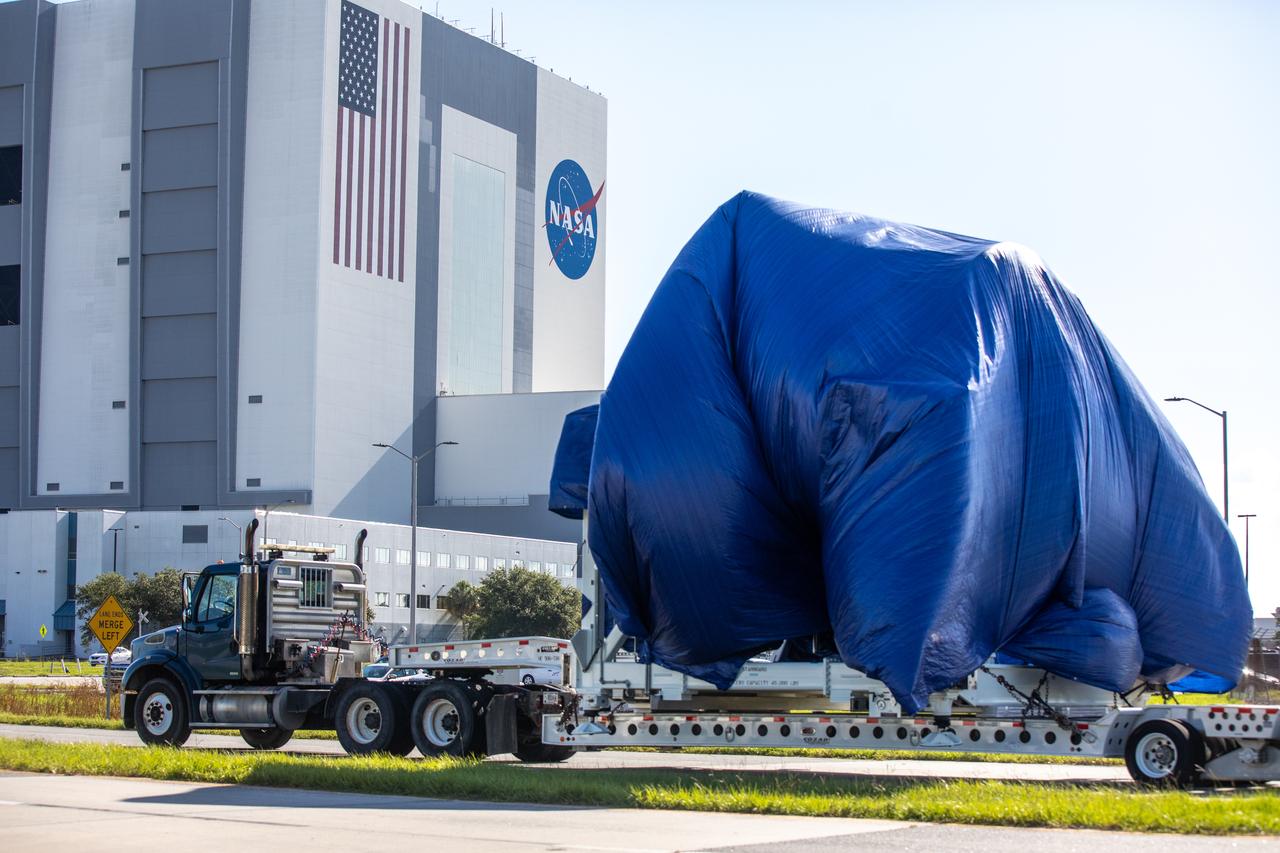
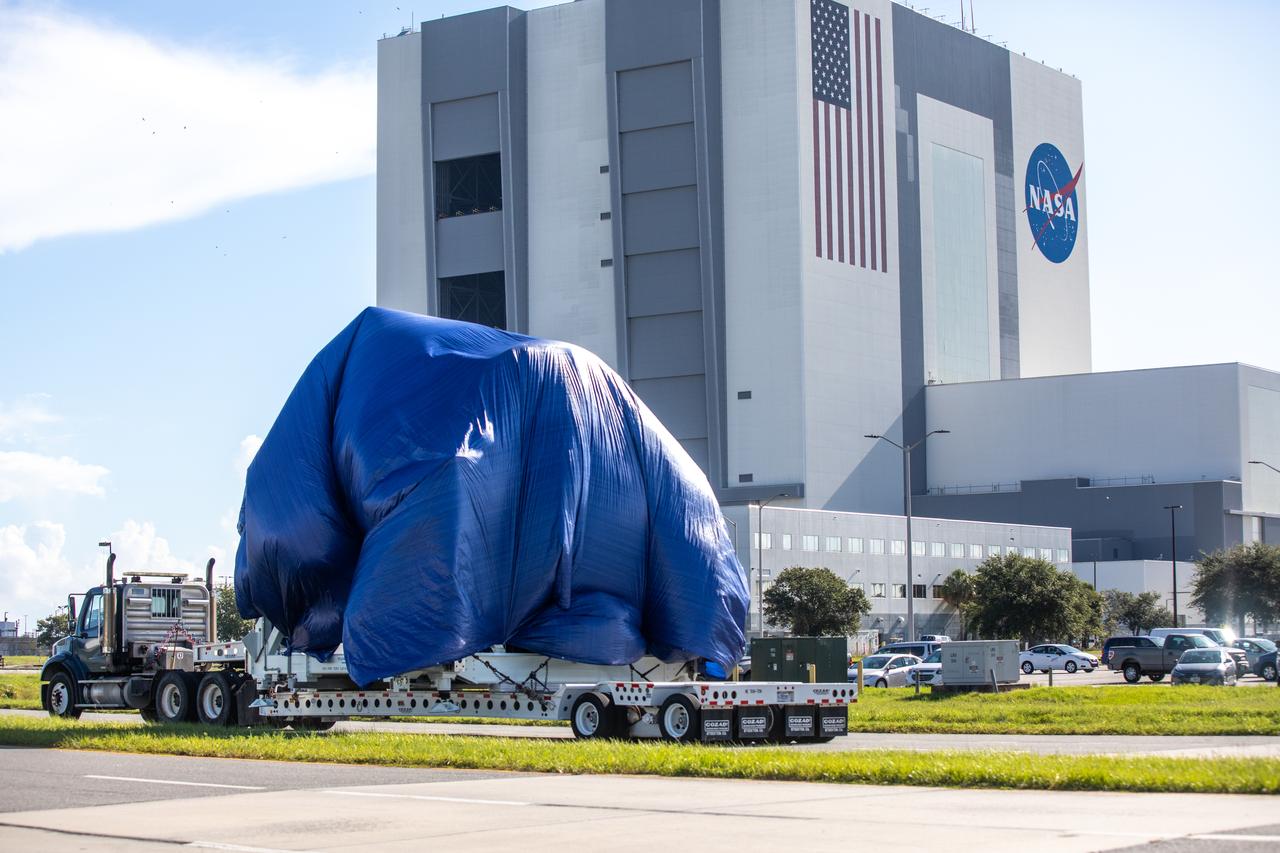
A flatbed truck, carrying the node structural test article (STA), is on its way to the Launch and Landing Facility from the Space Station Processing Facility (SSPF) at NASA’s Kennedy Space Center in Florida on July 20, 2020. In view is the iconic Vehicle Assembly Building. The Node STA was used to prove the manufacturing processes and procedures were robust for extended human spaceflight. Those same processes and procedures were then used to build Node 1, which Kennedy Center Director Bob Cabana flew to the space station on STS 88. NASA has stored the node STA in the SSPF, and it is moving to a new location to allow for more space in the facility’s high bay to support the agency’s space exploration and commercialization efforts in low-Earth orbit.
STA Node Move From SSPF
A flatbed truck, carrying the node structural test article (STA), is on its way to the Launch and Landing Facility from the Space Station Processing Facility (SSPF) at NASA’s Kennedy Space Center in Florida on July 20, 2020. In view is the iconic Vehicle Assembly Building. The Node STA was used to prove the manufacturing processes and procedures were robust for extended human spaceflight. Those same processes and procedures were then used to build Node 1, which Kennedy Center Director Bob Cabana flew to the space station on STS 88. NASA has stored the node STA in the SSPF, and it is moving to a new location to allow for more space in the facility’s high bay to support the agency’s space exploration and commercialization efforts in low-Earth orbit.
STA Node Move From SSPF
A flatbed truck, carrying the node structural test article (STA), is on its way to the Launch and Landing Facility from the Space Station Processing Facility (SSPF) at NASA’s Kennedy Space Center in Florida on July 20, 2020. In view is the iconic Vehicle Assembly Building. The Node STA was used to prove the manufacturing processes and procedures were robust for extended human spaceflight. Those same processes and procedures were then used to build Node 1, which Kennedy Center Director Bob Cabana flew to the space station on STS 88. NASA has stored the node STA in the SSPF, and it is moving to a new location to allow for more space in the facility’s high bay to support the agency’s space exploration and commercialization efforts in low-Earth orbit.
STA Node Move From SSPF
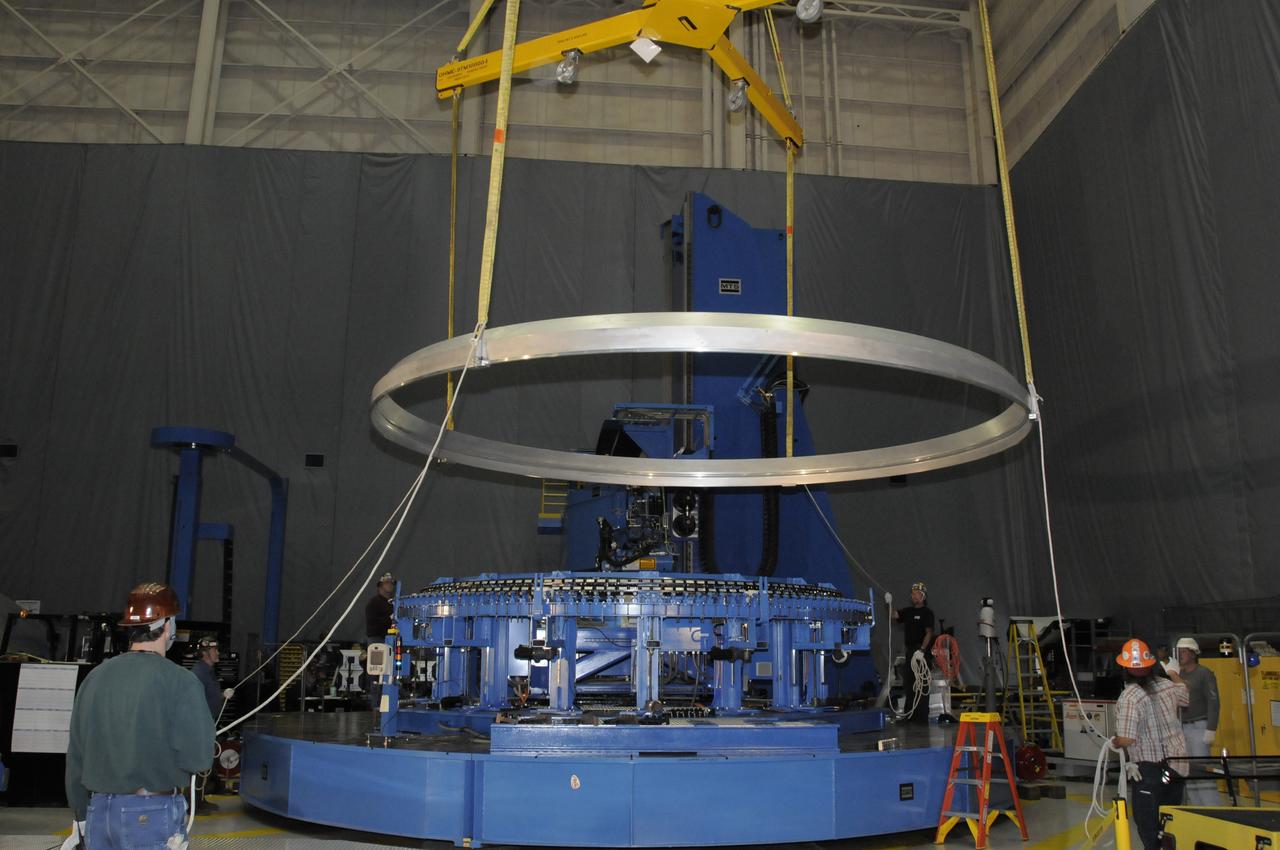
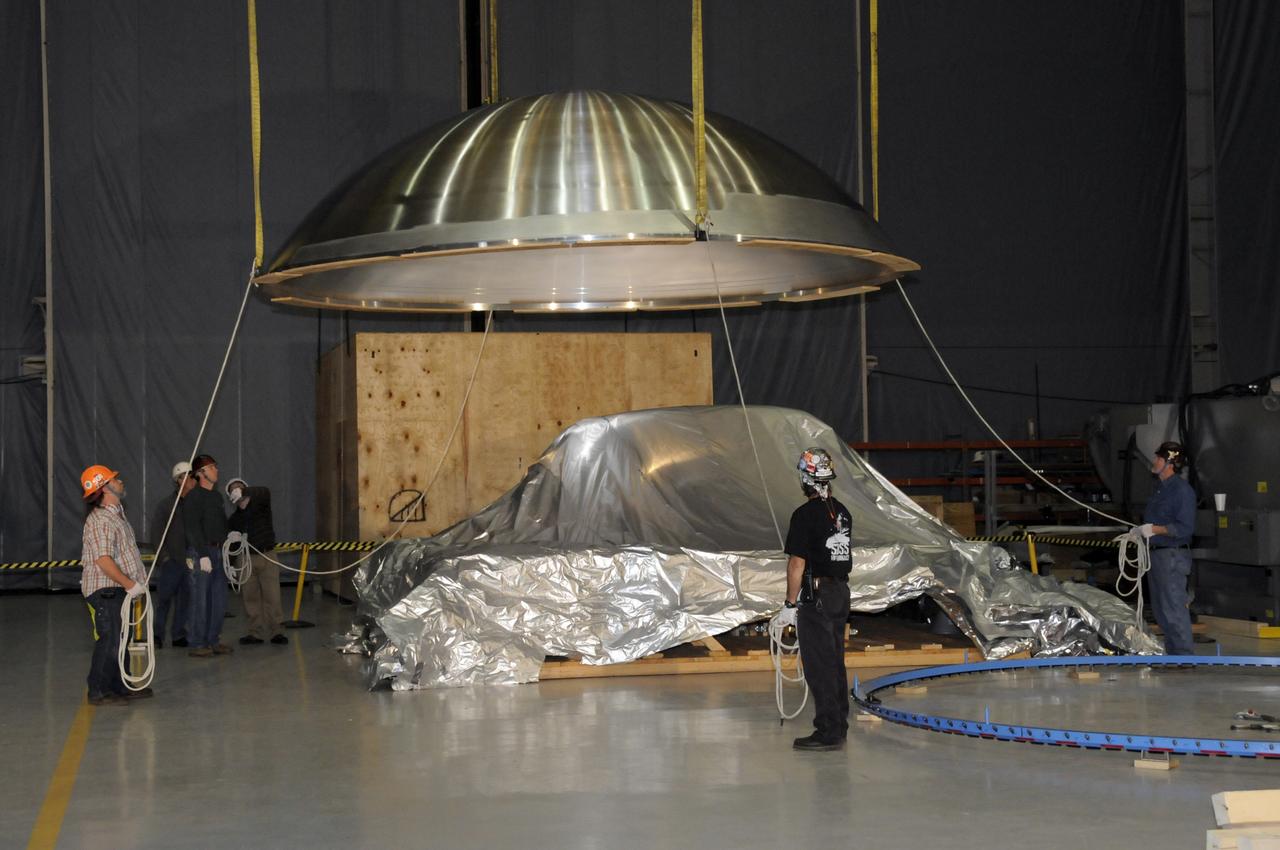
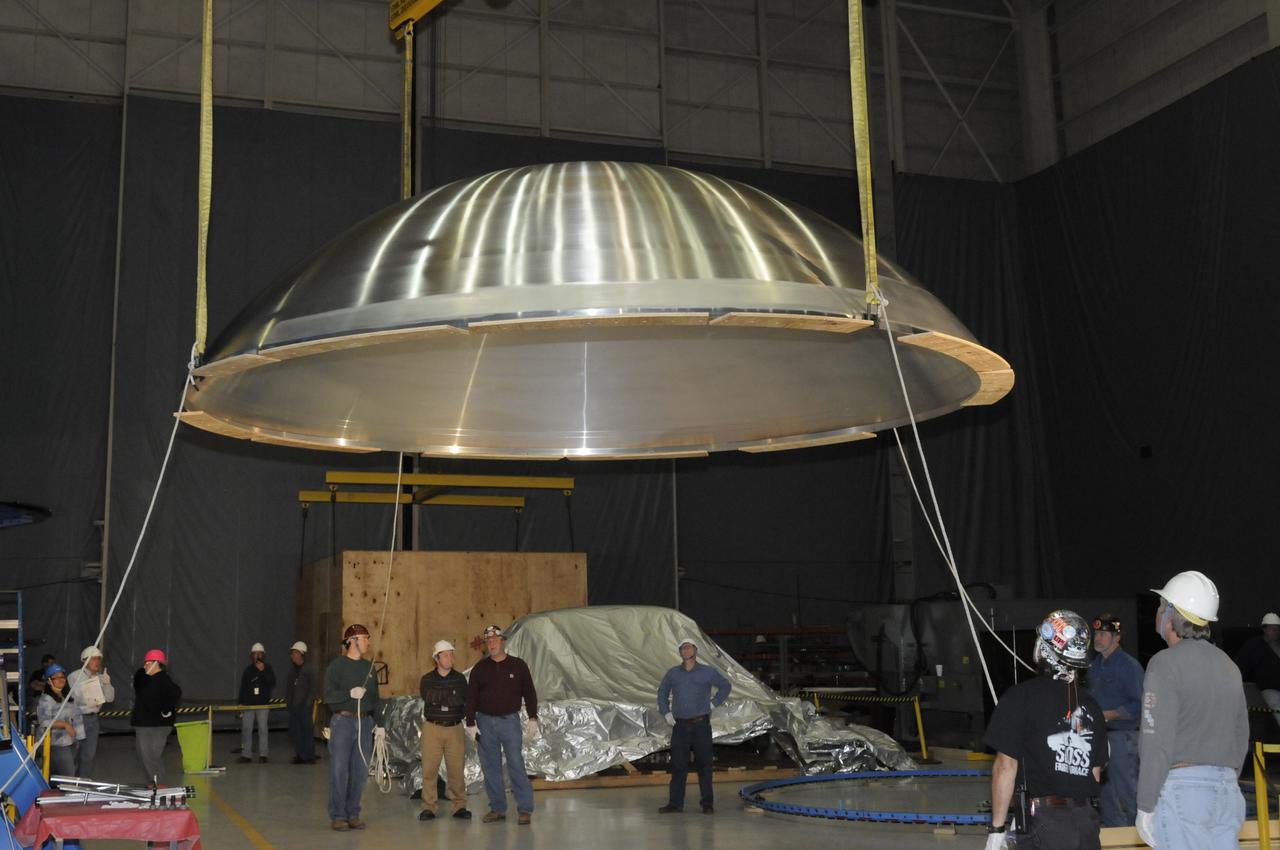
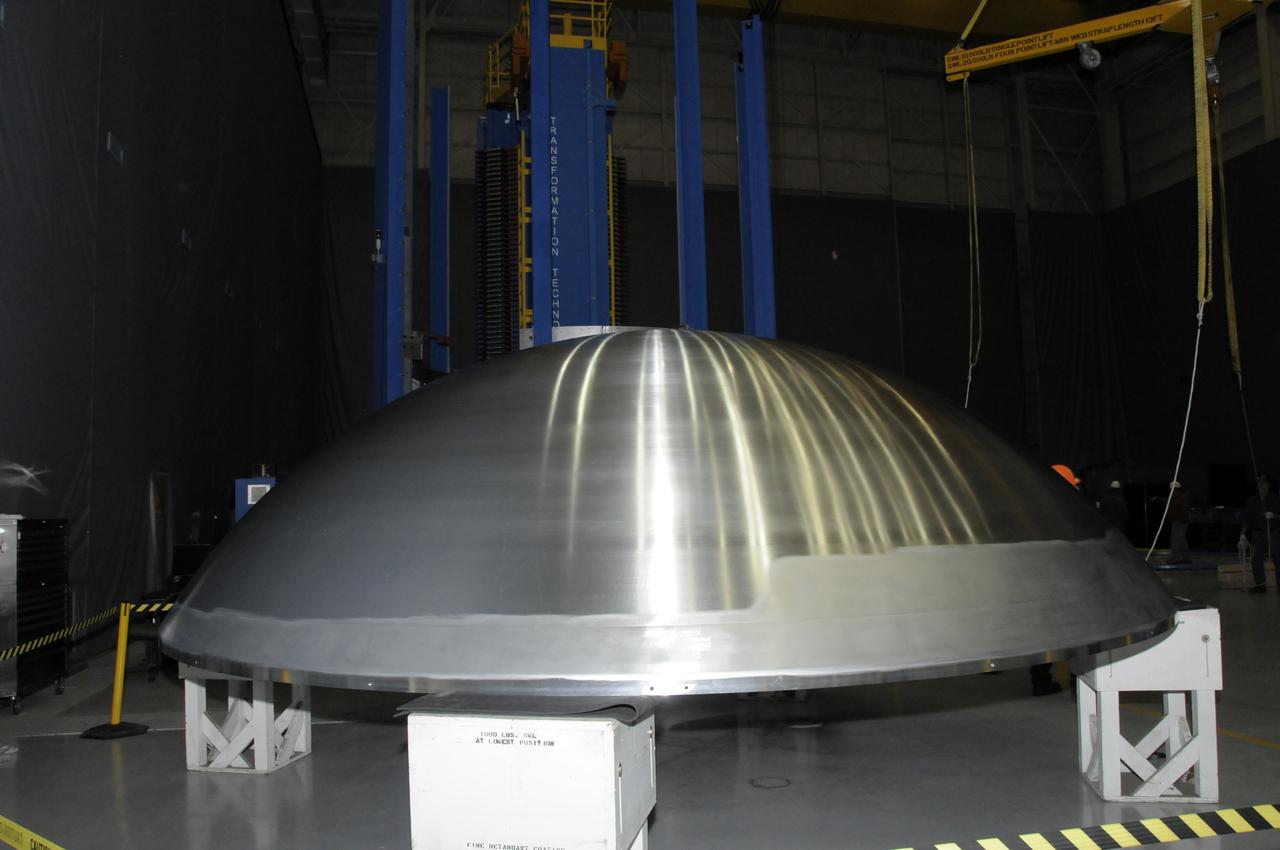
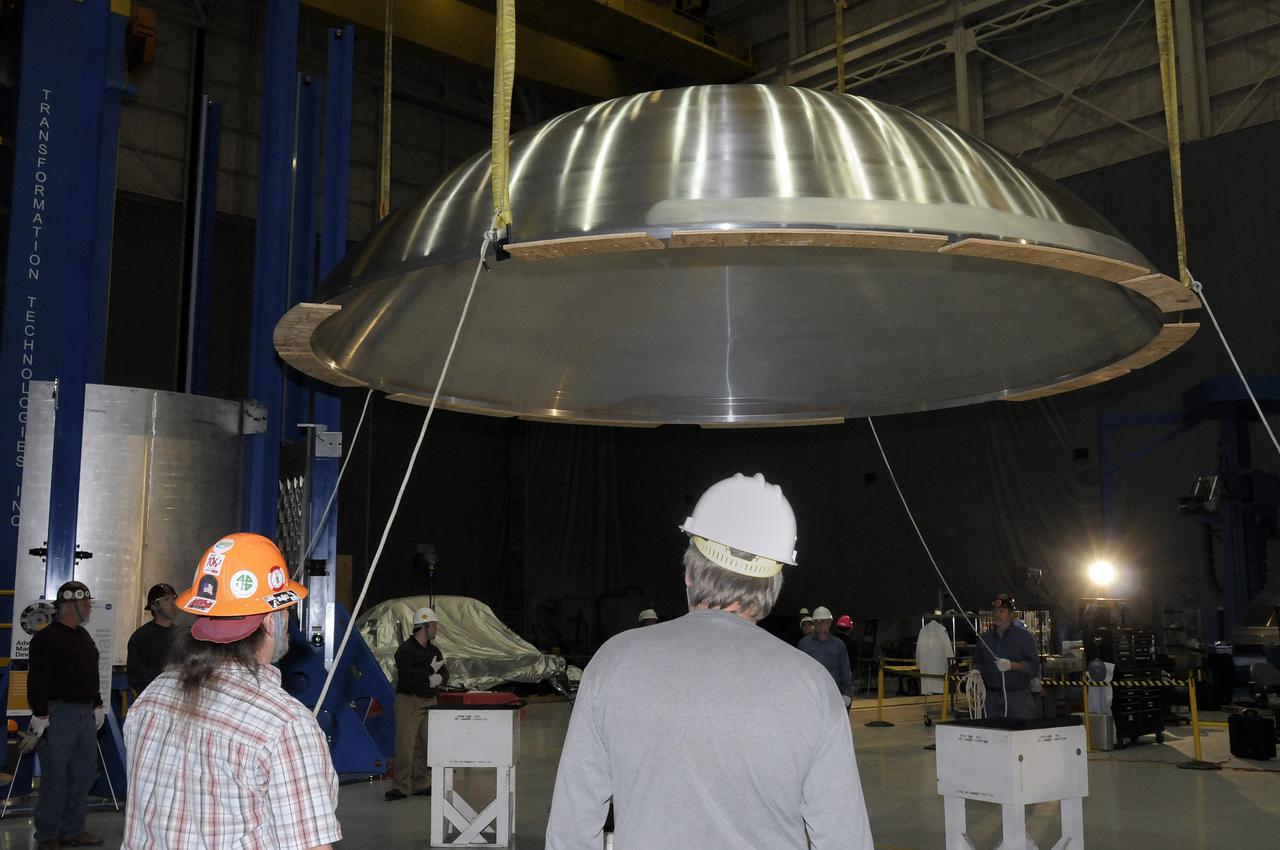
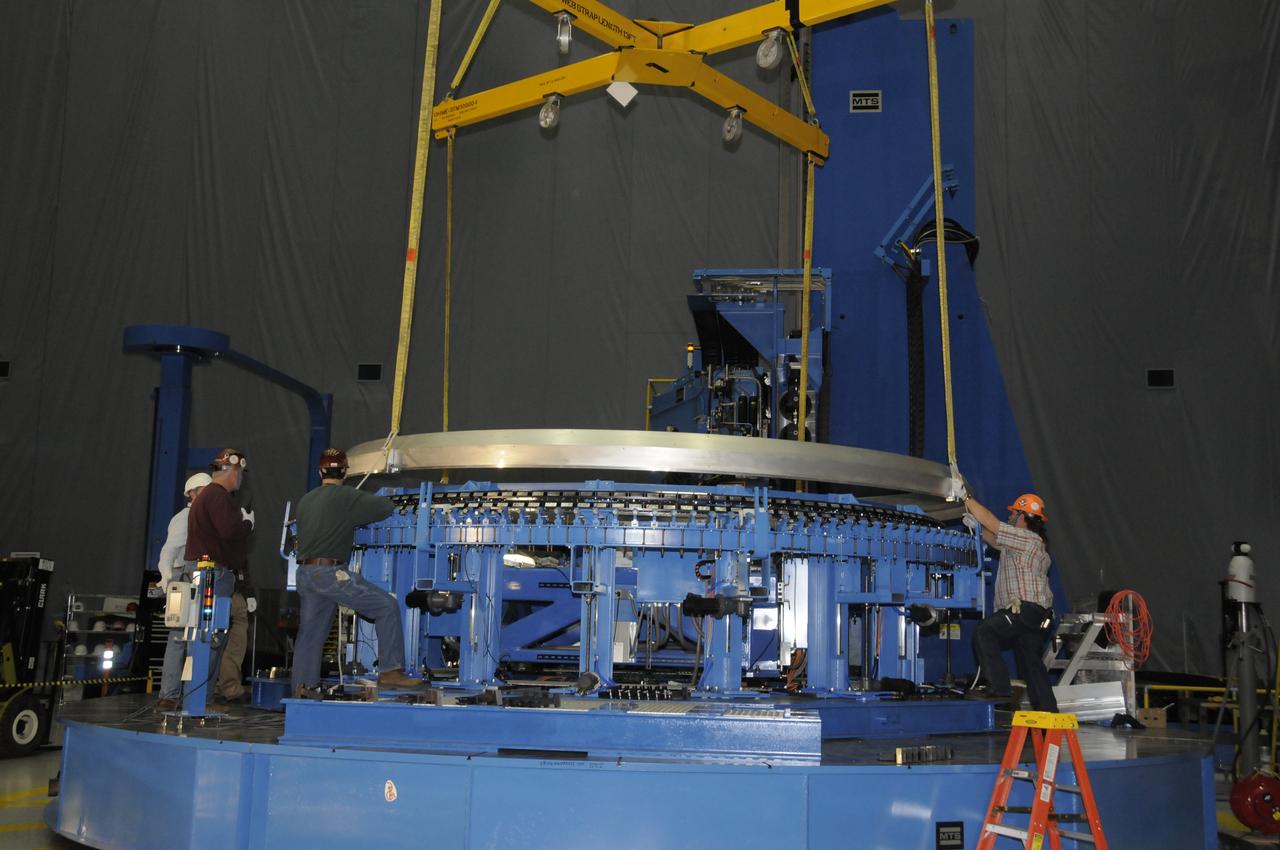
ARES HARDWARE MOVE IN BUILDING 4755 OF A Y-RING INTO THE ROBOTIC WELD TOOL & THE COMMON BULKHEAD DOME MANUFACTURING DEMONSTRATION ARTICLE ONTO THE WOODEN TOOLING STANDS ON FEBRUARY 19, 2010
1000344
ARES HARDWARE MOVE IN BUILDING 4755 OF A Y-RING INTO THE ROBOTIC WELD TOOL & THE COMMON BULKHEAD DOME MANUFACTURING DEMONSTRATION ARTICLE ONTO THE WOODEN TOOLING STANDS ON FEBRUARY 19, 2010
1000329
ARES HARDWARE MOVE IN BUILDING 4755 OF A Y-RING INTO THE ROBOTIC WELD TOOL & THE COMMON BULKHEAD DOME MANUFACTURING DEMONSTRATION ARTICLE ONTO THE WOODEN TOOLING STANDS ON FEBRUARY 19, 2010
1000346
ARES HARDWARE MOVE IN BUILDING 4755 OF A Y-RING INTO THE ROBOTIC WELD TOOL & THE COMMON BULKHEAD DOME MANUFACTURING DEMONSTRATION ARTICLE ONTO THE WOODEN TOOLING STANDS ON FEBRUARY 19, 2010
1000361
ARES HARDWARE MOVE IN BUILDING 4755 OF A Y-RING INTO THE ROBOTIC WELD TOOL & THE COMMON BULKHEAD DOME MANUFACTURING DEMONSTRATION ARTICLE ONTO THE WOODEN TOOLING STANDS ON FEBRUARY 19, 2010
1000349
ARES HARDWARE MOVE IN BUILDING 4755 OF A Y-RING INTO THE ROBOTIC WELD TOOL & THE COMMON BULKHEAD DOME MANUFACTURING DEMONSTRATION ARTICLE ONTO THE WOODEN TOOLING STANDS ON FEBRUARY 19, 2010
1000333
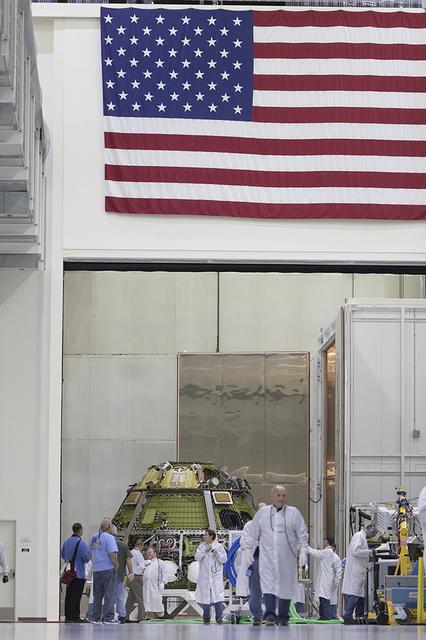
Technicians in clean-room suits attach a crane to the Orion crew module for Exploration Mission-1 for its move to the thermal chamber in the Neil Armstrong Operations and Checkout Building high bay at NASA's Kennedy Space Center in Florida. Orion will be lifted out of a test stand and lowered onto another stand to for the move. The crew module will undergo a thermal cycle test to assess the workmanship of critical hardware and structural locations. The test also demonstrates crew module subsystem operations in a thermally stressing environment to confirm no damage or anomalous hardware conditions as a result of the test. The Orion spacecraft will launch atop NASA's Space Launch System rocket on its first uncrewed integrated flight.
Orion Crew Module Move
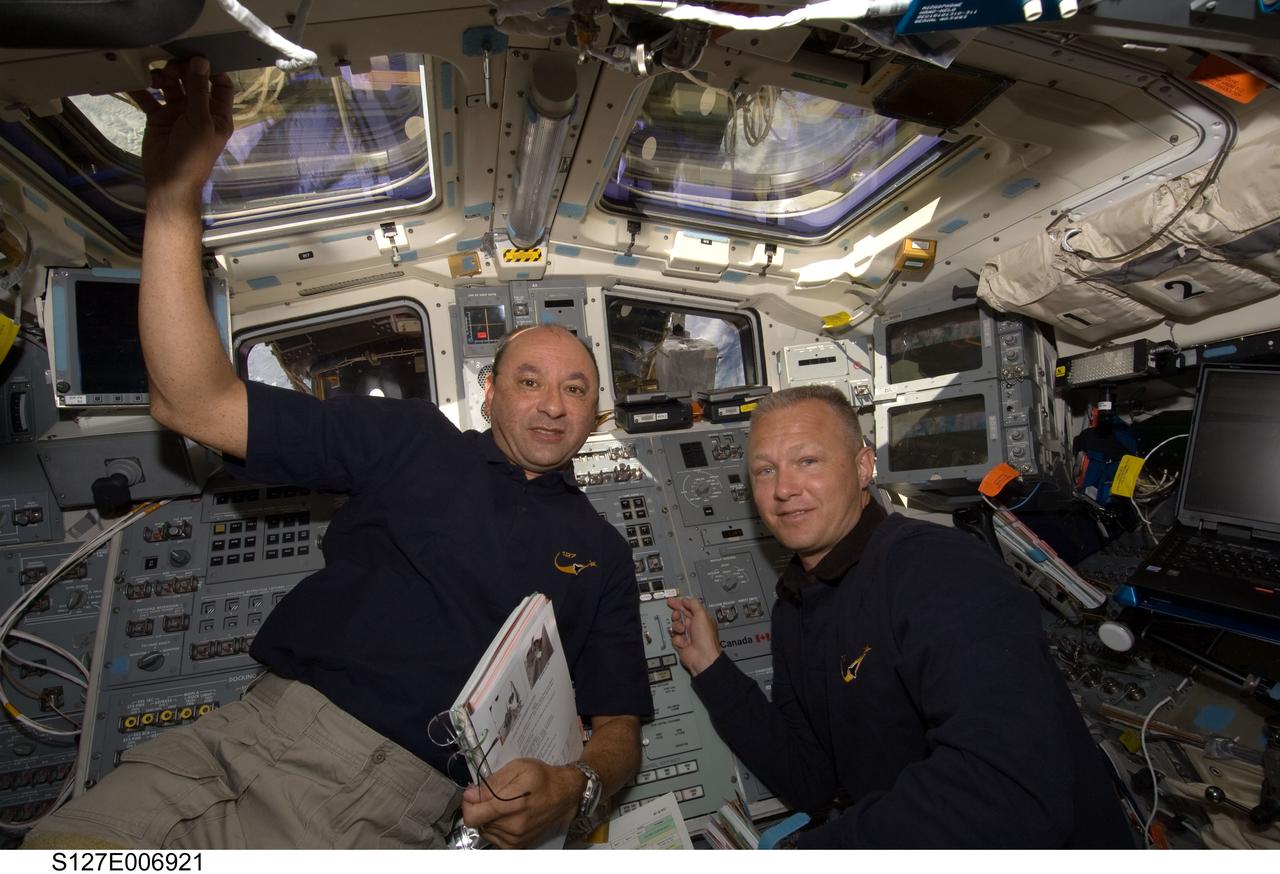
S127-E-006921 (19 July 2009) --- Astronauts   Mark Polansky (left), commander, and Doug Hurley, pilot, are pictured at Endeavour's aft flight deck controls during flight day five operations with hardware on the International Space Station. The hardware moves will enable the second pair of spacewalkers--mission specialists Dave Wolf and Tom Marshburn--to perform its spacewalk assignment on July 20.
Polansky and Hurley in the aft FD during STS-127 / Expedition 20 Joint Operations
The Orion crew module for Exploration Mission-1 was moved into the thermal chamber in the Neil Armstrong Operations and Checkout Building high bay at NASA's Kennedy Space Center in Florida. The crew module will undergo a thermal cycle test to assess the workmanship of critical hardware and structural locations. The test also demonstrates crew module subsystem operations in a thermally stressing environment to confirm no damage or anomalous hardware conditions as a result of the test. The Orion spacecraft will launch atop NASA's Space Launch System rocket on its first uncrewed integrated flight.
Orion Crew Module Move
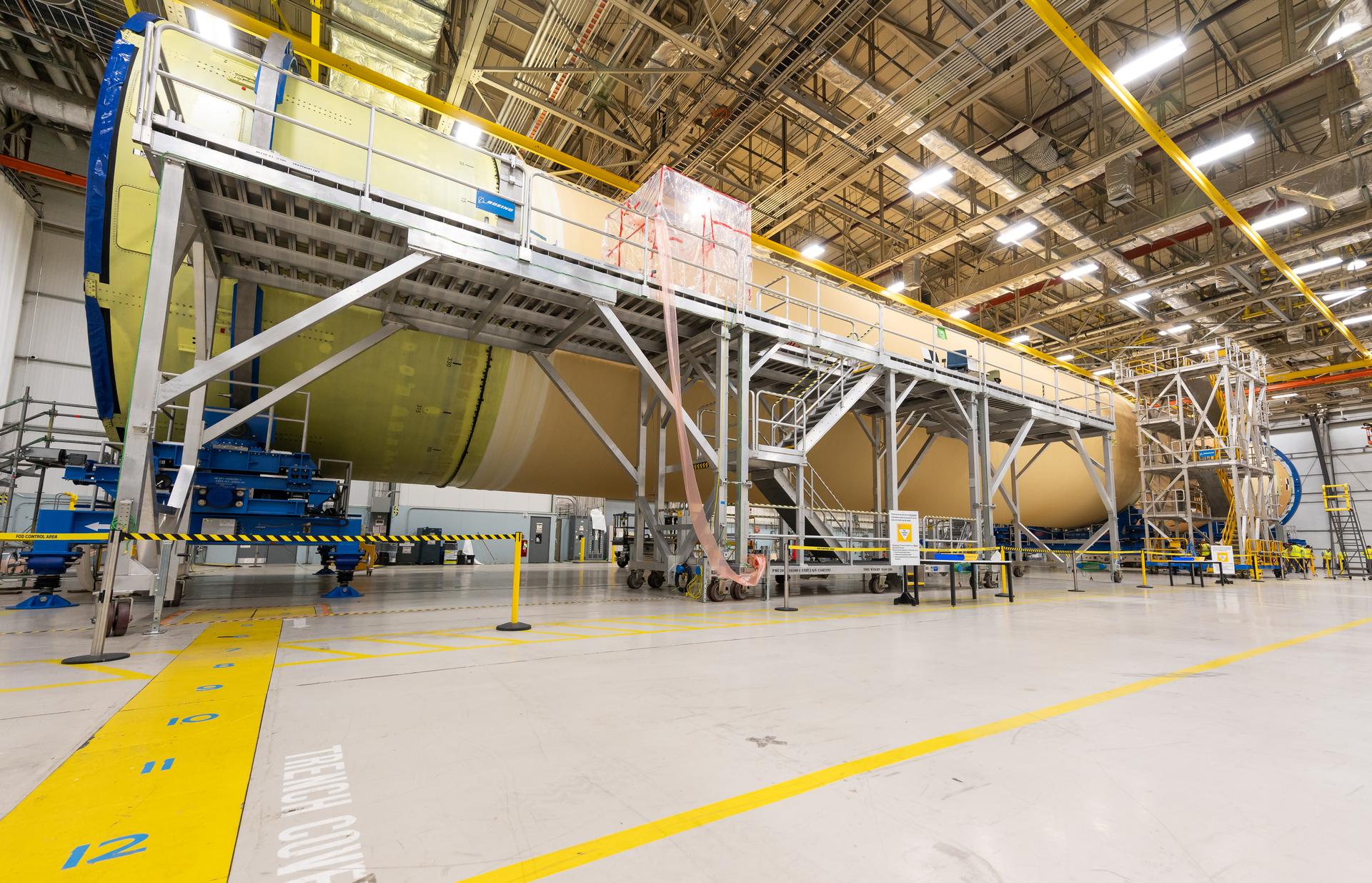
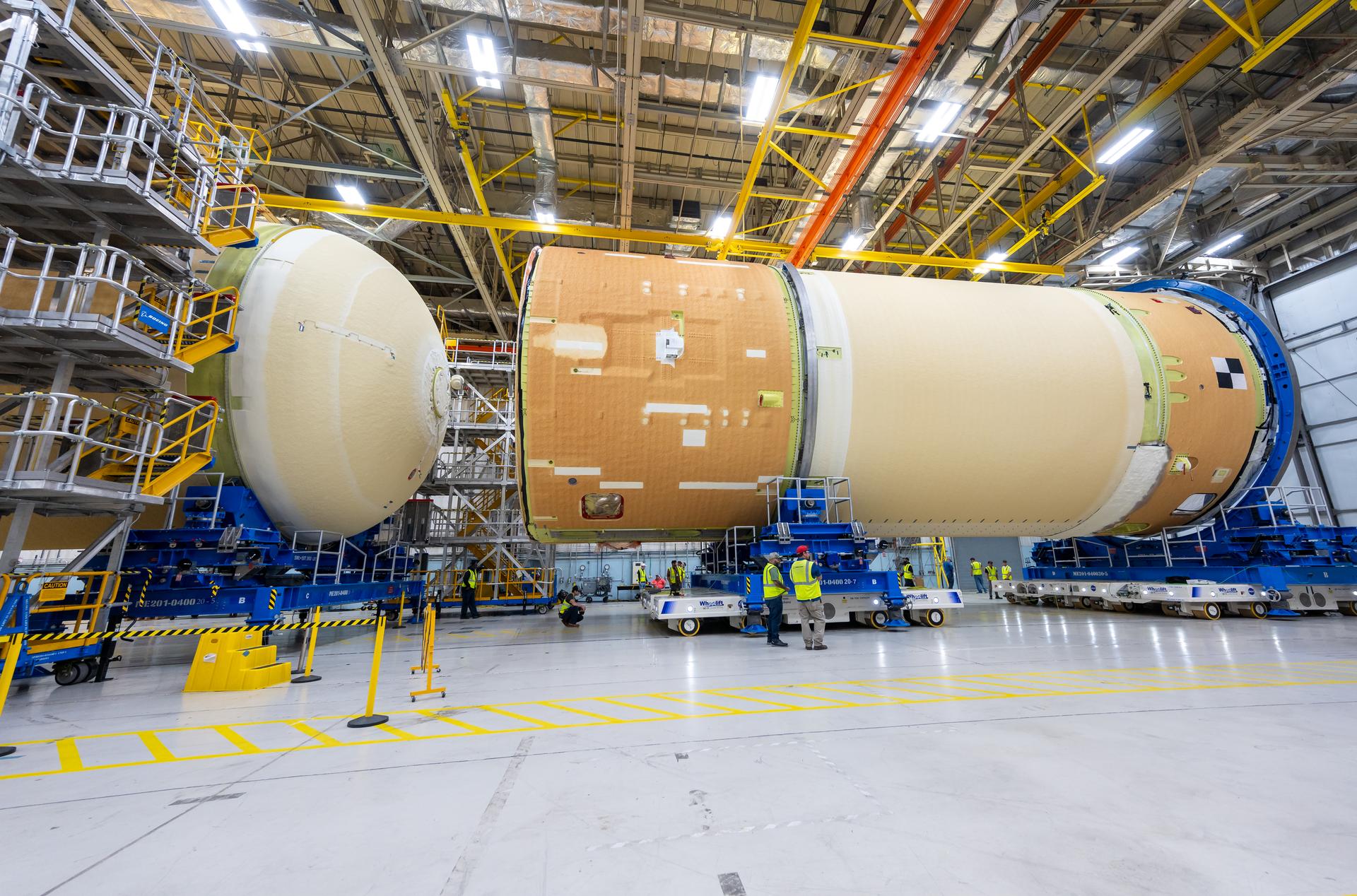
Teams at NASA’s Michoud Assembly Facility in New Orleans are preparing the core stage of the agency’s SLS (Space Launch System) for shipment to the agency’s Kennedy Space Center in Florida. The 212-foot-tall core stage and its four RS-25 engines will help power Artemis II, the first crewed mission of NASA’s Artemis campaign. Crews removed the external access stands, or scaffolding, in preparation for moving the rocket hardware to another area of the facility.
NASA Teams Prepare Artemis II Rocket Stage for Shipment
Teams at NASA’s Michoud Assembly Facility in New Orleans are preparing the core stage of the agency’s SLS (Space Launch System) for shipment to the agency’s Kennedy Space Center in Florida. The 212-foot-tall core stage and its four RS-25 engines will help power Artemis II, the first crewed mission of NASA’s Artemis campaign. Crews removed the external access stands, or scaffolding, in preparation for moving the rocket hardware to another area of the facility.
NASA Teams Prepare Artemis II Rocket Stage for Shipment
Teams at NASA’s Michoud Assembly Facility in New Orleans are preparing the core stage of the agency’s SLS (Space Launch System) for shipment to the agency’s Kennedy Space Center in Florida. The 212-foot-tall core stage and its four RS-25 engines will help power Artemis II, the first crewed mission of NASA’s Artemis campaign. Crews removed the external access stands, or scaffolding, in preparation for moving the rocket hardware to another area of the facility. Image credit: NASA/Michael DeMocker
NASA Teams Prepare Artemis II Rocket Stage for Shipment
Teams at NASA’s Michoud Assembly Facility in New Orleans are preparing the core stage of the agency’s SLS (Space Launch System) for shipment to the agency’s Kennedy Space Center in Florida. The 212-foot-tall core stage and its four RS-25 engines will help power Artemis II, the first crewed mission of NASA’s Artemis campaign. Crews removed the external access stands, or scaffolding, in preparation for moving the rocket hardware to another area of the facility. Image credit: NASA/Michael DeMocker
NASA Teams Prepare Artemis II Rocket Stage for Shipment
KENNEDY SPACE CENTER, FLA. -  The crawler transporter slowly moves the Mobile Launcher Platform (MLP), carrying a set of twin solid rocket boosters, away from the Vehicle Assembly Building (VAB) in support of engineering analysis vibration tests on the crawler and MLP.  On either side of the boosters on the horizon can be seen the two launch pads. The crawler is moving at various speeds up to 1 mph in an effort to achieve vibration data gathering goals as it leaves the VAB and then returns.  The boosters are braced at the top for stability.  The primary purpose of these rollout tests is to gather data to develop future maintenance requirements on the transport equipment and the flight hardware. Various parts of the MLP and crawler transporter have been instrumented with vibration data collection equipment.
KENNEDY SPACE CENTER, FLA. - The crawler transporter slowly moves the Mobile Launcher Platform (MLP), carrying a set of twin solid rocket boosters, away from the Vehicle Assembly Building (VAB) in support of engineering analysis vibration tests on the crawler and MLP. On either side of the boosters on the horizon can be seen the two launch pads. The crawler is moving at various speeds up to 1 mph in an effort to achieve vibration data gathering goals as it leaves the VAB and then returns. The boosters are braced at the top for stability. The primary purpose of these rollout tests is to gather data to develop future maintenance requirements on the transport equipment and the flight hardware. Various parts of the MLP and crawler transporter have been instrumented with vibration data collection equipment.
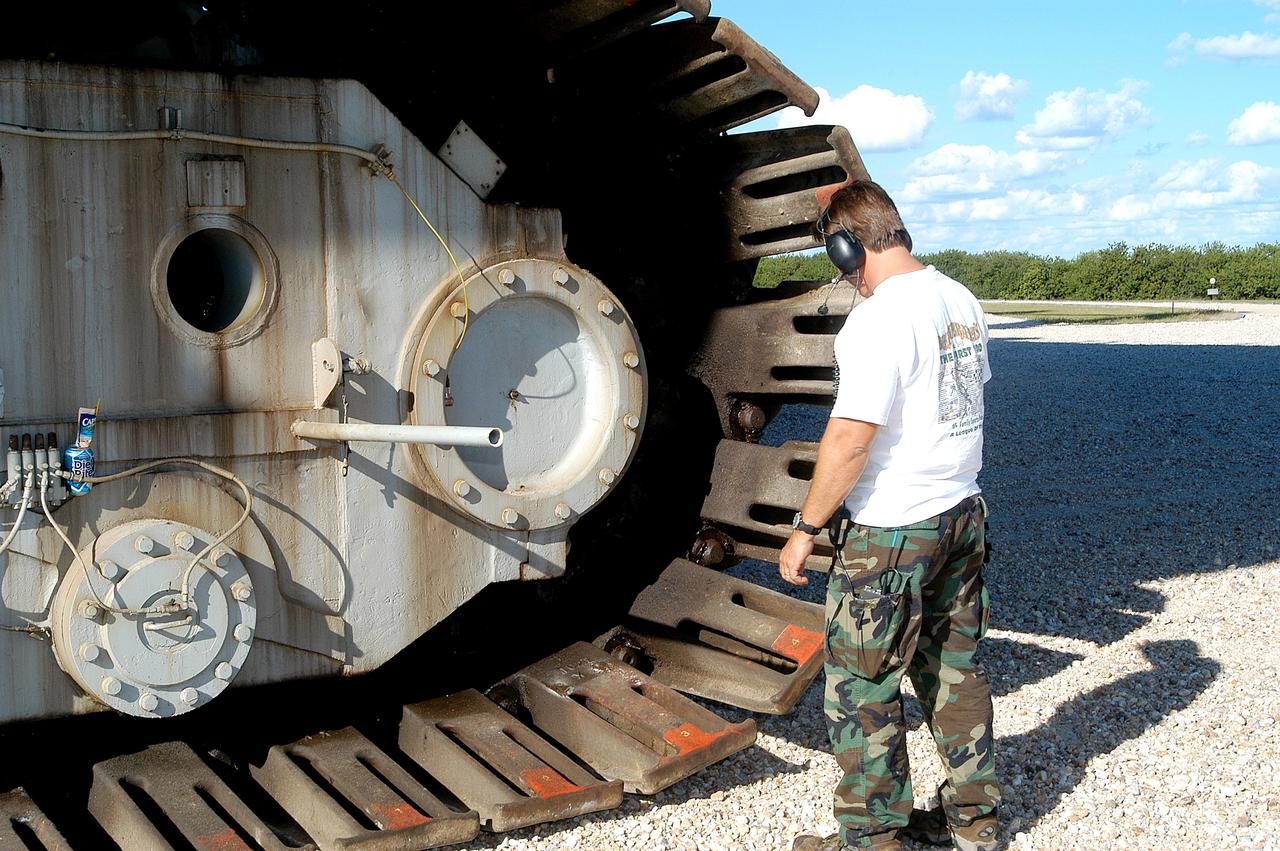
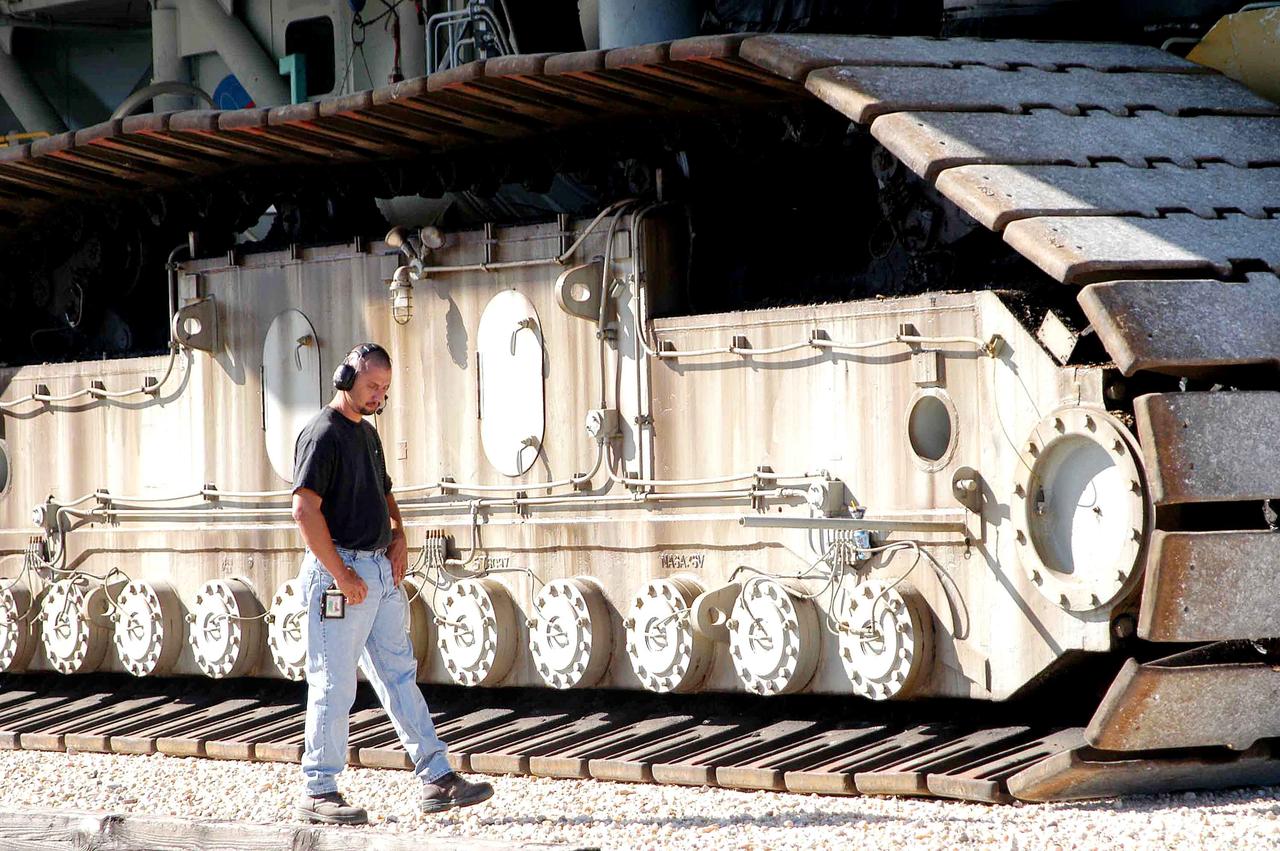
KENNEDY SPACE CENTER, FLA. - A Kennedy Space Center technician inspects the shoes on one of eight tracks of a crawler-transporter (CT).  The CT is moving Mobile Launcher Platform (MLP) number 3 with a set of twin solid rocket boosters bolted on top to the intersection in the crawlerway in support of the second engineering analysis vibration test on the crawler and MLP.  The crawler is moving at various speeds up to 1 mph in an effort to achieve vibration data gathering goals as it leaves the VAB, travels toward Launch Pad 39A and then returns. The boosters are braced at the top for stability. The primary purpose of these rollout tests is to gather data to develop future maintenance requirements on the transport equipment and the flight hardware. Various parts of the MLP and crawler transporter have been instrumented with vibration data collection equipment.
KENNEDY SPACE CENTER, FLA. - A Kennedy Space Center technician inspects the shoes on one of eight tracks of a crawler-transporter (CT). The CT is moving Mobile Launcher Platform (MLP) number 3 with a set of twin solid rocket boosters bolted on top to the intersection in the crawlerway in support of the second engineering analysis vibration test on the crawler and MLP. The crawler is moving at various speeds up to 1 mph in an effort to achieve vibration data gathering goals as it leaves the VAB, travels toward Launch Pad 39A and then returns. The boosters are braced at the top for stability. The primary purpose of these rollout tests is to gather data to develop future maintenance requirements on the transport equipment and the flight hardware. Various parts of the MLP and crawler transporter have been instrumented with vibration data collection equipment.
KENNEDY SPACE CENTER, FLA. - A Kennedy Space Center technician monitors the performance of a crawler-transporter as it moves Mobile Launcher Platform (MLP) number 3, with a set of twin solid rocket boosters bolted atop, to the intersection in the crawlerway during the second engineering analysis vibration test on the crawler and MLP.  The crawler is moving at various speeds up to 1 mph in an effort to achieve vibration data gathering goals as it leaves the VAB, travels toward Launch Pad 39A, and then returns. The boosters are braced at the top for stability. The primary purpose of these rollout tests is to gather data to develop future maintenance requirements on the transport equipment and the flight hardware. Various parts of the MLP and crawler transporter have been instrumented with vibration data collection equipment.
KENNEDY SPACE CENTER, FLA. - A Kennedy Space Center technician monitors the performance of a crawler-transporter as it moves Mobile Launcher Platform (MLP) number 3, with a set of twin solid rocket boosters bolted atop, to the intersection in the crawlerway during the second engineering analysis vibration test on the crawler and MLP. The crawler is moving at various speeds up to 1 mph in an effort to achieve vibration data gathering goals as it leaves the VAB, travels toward Launch Pad 39A, and then returns. The boosters are braced at the top for stability. The primary purpose of these rollout tests is to gather data to develop future maintenance requirements on the transport equipment and the flight hardware. Various parts of the MLP and crawler transporter have been instrumented with vibration data collection equipment.
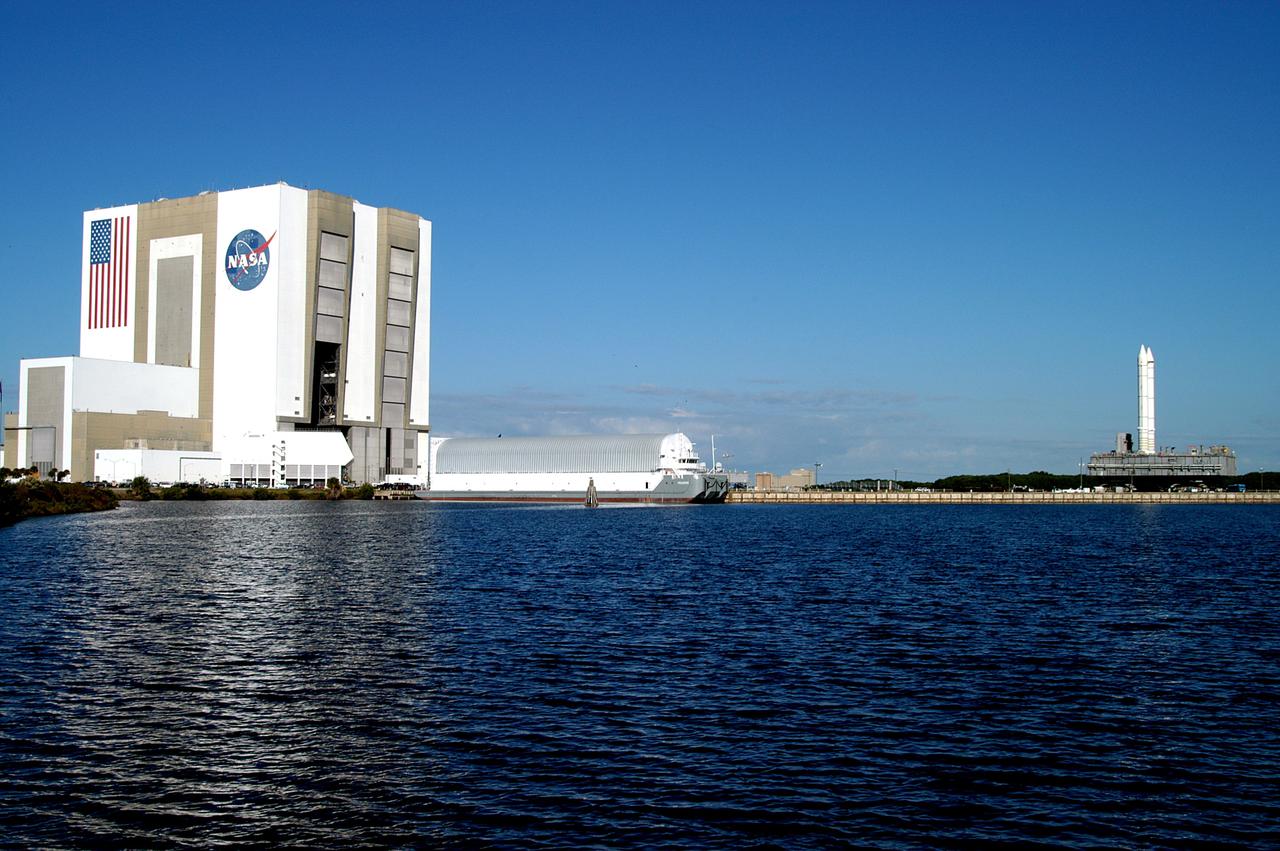
KENNEDY SPACE CENTER, FLA. - Viewed across the turn basin in the Launch Complex 39 Area, the crawler transporter slowly moves the Mobile Launcher Platform (MLP), carrying a set of twin solid rocket boosters, away from the Vehicle Assembly Building (VAB).  The journey is in support of engineering analysis vibration tests on the crawler and MLP.  The water on the right of the crawlerway is the Banana River.  The crawler is moving at various speeds up to 1 mph in an effort to achieve vibration data gathering goals as it leaves the VAB and then returns.  The boosters are braced at the top for stability.  The primary purpose of these rollout tests is to gather data to develop future maintenance requirements on the transport equipment and the flight hardware. Various parts of the MLP and crawler transporter have been instrumented with vibration data collection equipment.
KENNEDY SPACE CENTER, FLA. - Viewed across the turn basin in the Launch Complex 39 Area, the crawler transporter slowly moves the Mobile Launcher Platform (MLP), carrying a set of twin solid rocket boosters, away from the Vehicle Assembly Building (VAB). The journey is in support of engineering analysis vibration tests on the crawler and MLP. The water on the right of the crawlerway is the Banana River. The crawler is moving at various speeds up to 1 mph in an effort to achieve vibration data gathering goals as it leaves the VAB and then returns. The boosters are braced at the top for stability. The primary purpose of these rollout tests is to gather data to develop future maintenance requirements on the transport equipment and the flight hardware. Various parts of the MLP and crawler transporter have been instrumented with vibration data collection equipment.
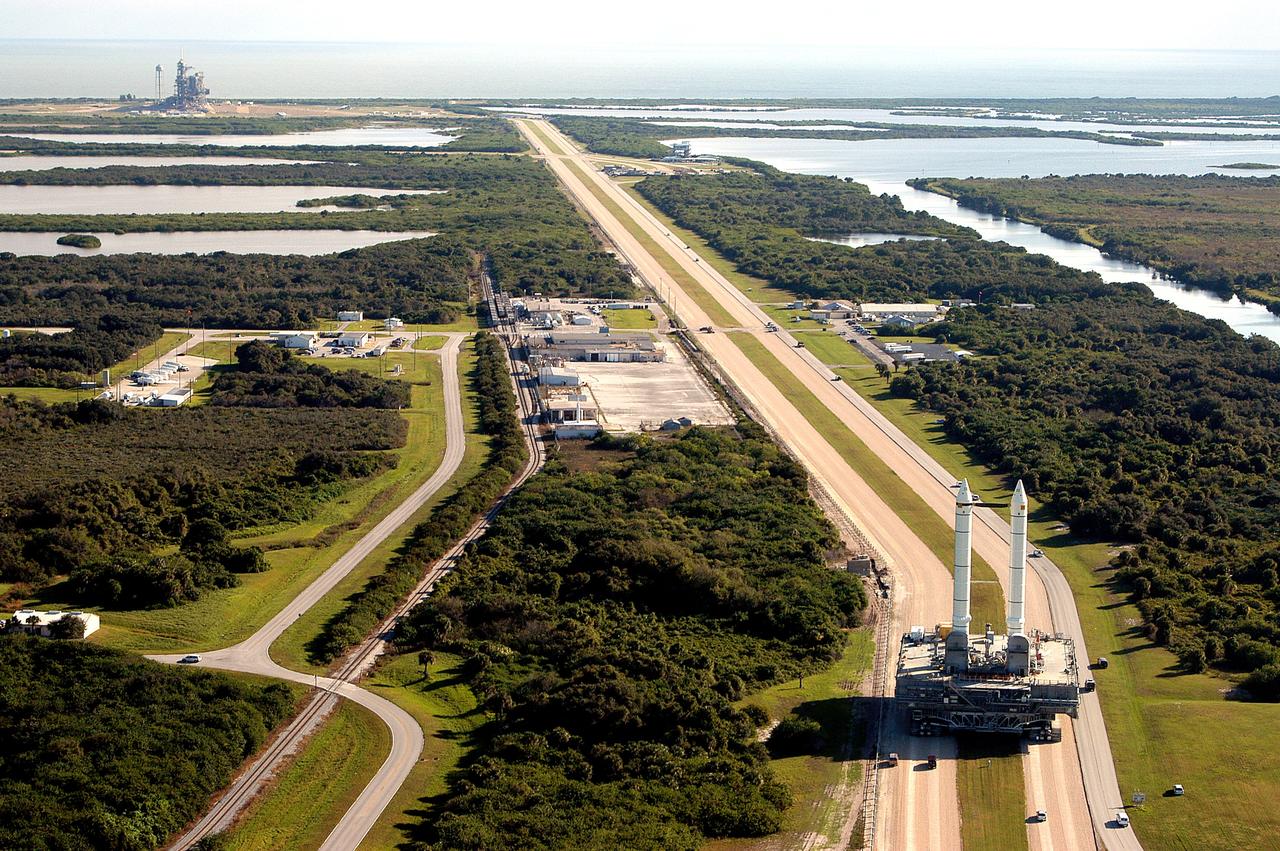
KENNEDY SPACE CENTER, FLA. -  The crawler transporter slowly moves the Mobile Launcher Platform (MLP), carrying a set of twin solid rocket boosters, away from the Vehicle Assembly Building (VAB) in support of engineering analysis vibration tests on the crawler and MLP.   In the distance, at left, is Launch Pad 39A.  The water on the right of the crawlerway is the Banana River.  The crawler is moving at various speeds up to 1 mph in an effort to achieve vibration data gathering goals as it leaves the VAB and then returns.  The boosters are braced at the top for stability.  The primary purpose of these rollout tests is to gather data to develop future maintenance requirements on the transport equipment and the flight hardware. Various parts of the MLP and crawler transporter have been instrumented with vibration data collection equipment.
KENNEDY SPACE CENTER, FLA. - The crawler transporter slowly moves the Mobile Launcher Platform (MLP), carrying a set of twin solid rocket boosters, away from the Vehicle Assembly Building (VAB) in support of engineering analysis vibration tests on the crawler and MLP. In the distance, at left, is Launch Pad 39A. The water on the right of the crawlerway is the Banana River. The crawler is moving at various speeds up to 1 mph in an effort to achieve vibration data gathering goals as it leaves the VAB and then returns. The boosters are braced at the top for stability. The primary purpose of these rollout tests is to gather data to develop future maintenance requirements on the transport equipment and the flight hardware. Various parts of the MLP and crawler transporter have been instrumented with vibration data collection equipment.
KENNEDY SPACE CENTER, FLA. - A Kennedy Space Center technician walks towards the intersection of the crawlerway beside a crawler-transporter moving Mobile Launcher Platform (MLP) number 3, with a set of twin solid rocket boosters bolted atop, during the second engineering analysis vibration test on the crawler and MLP.  The crawler is moving at various speeds up to 1 mph in an effort to achieve vibration data gathering goals as it leaves the VAB, travels toward Launch Pad 39A, and then returns. The boosters are braced at the top for stability. The primary purpose of these rollout tests is to gather data to develop future maintenance requirements on the transport equipment and the flight hardware. Various parts of the MLP and crawler transporter have been instrumented with vibration data collection equipment.
KENNEDY SPACE CENTER, FLA. - A Kennedy Space Center technician walks towards the intersection of the crawlerway beside a crawler-transporter moving Mobile Launcher Platform (MLP) number 3, with a set of twin solid rocket boosters bolted atop, during the second engineering analysis vibration test on the crawler and MLP. The crawler is moving at various speeds up to 1 mph in an effort to achieve vibration data gathering goals as it leaves the VAB, travels toward Launch Pad 39A, and then returns. The boosters are braced at the top for stability. The primary purpose of these rollout tests is to gather data to develop future maintenance requirements on the transport equipment and the flight hardware. Various parts of the MLP and crawler transporter have been instrumented with vibration data collection equipment.
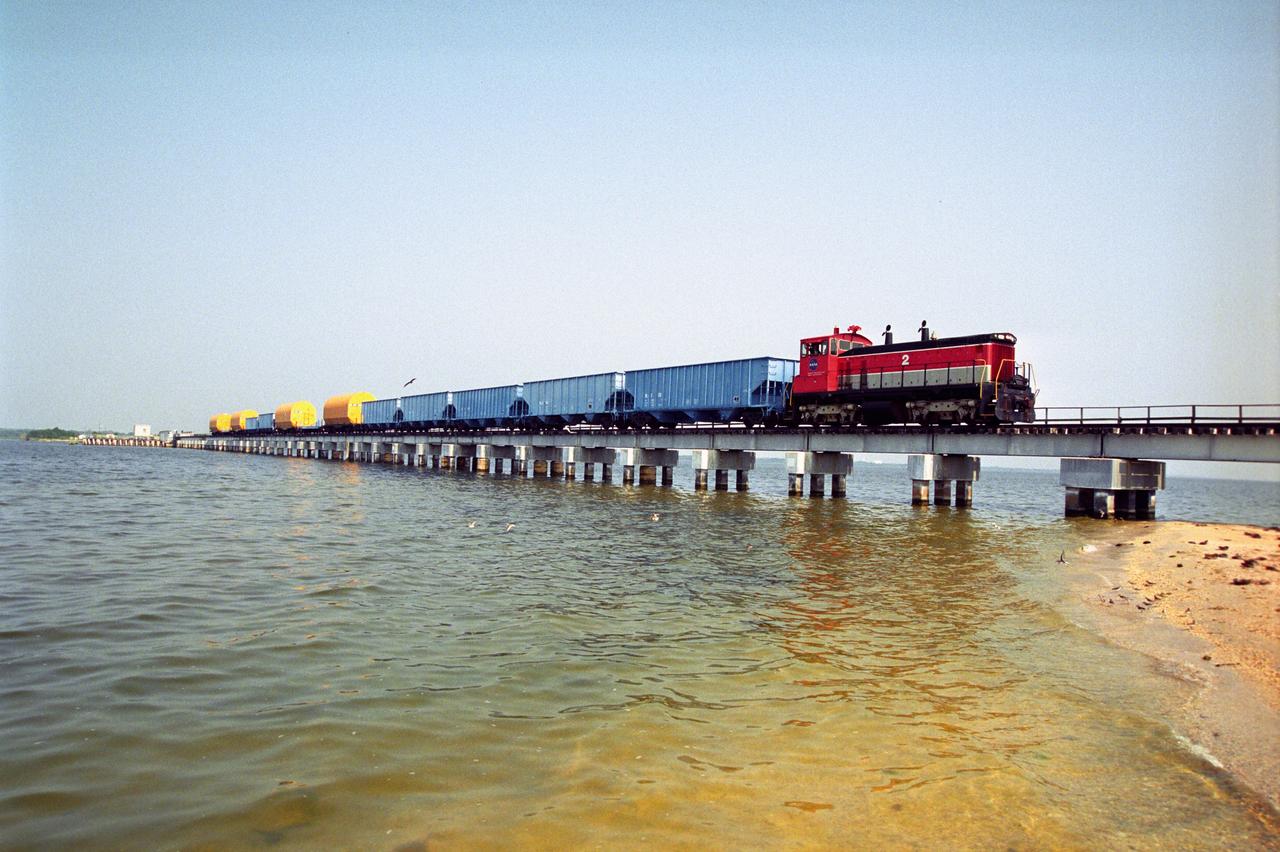
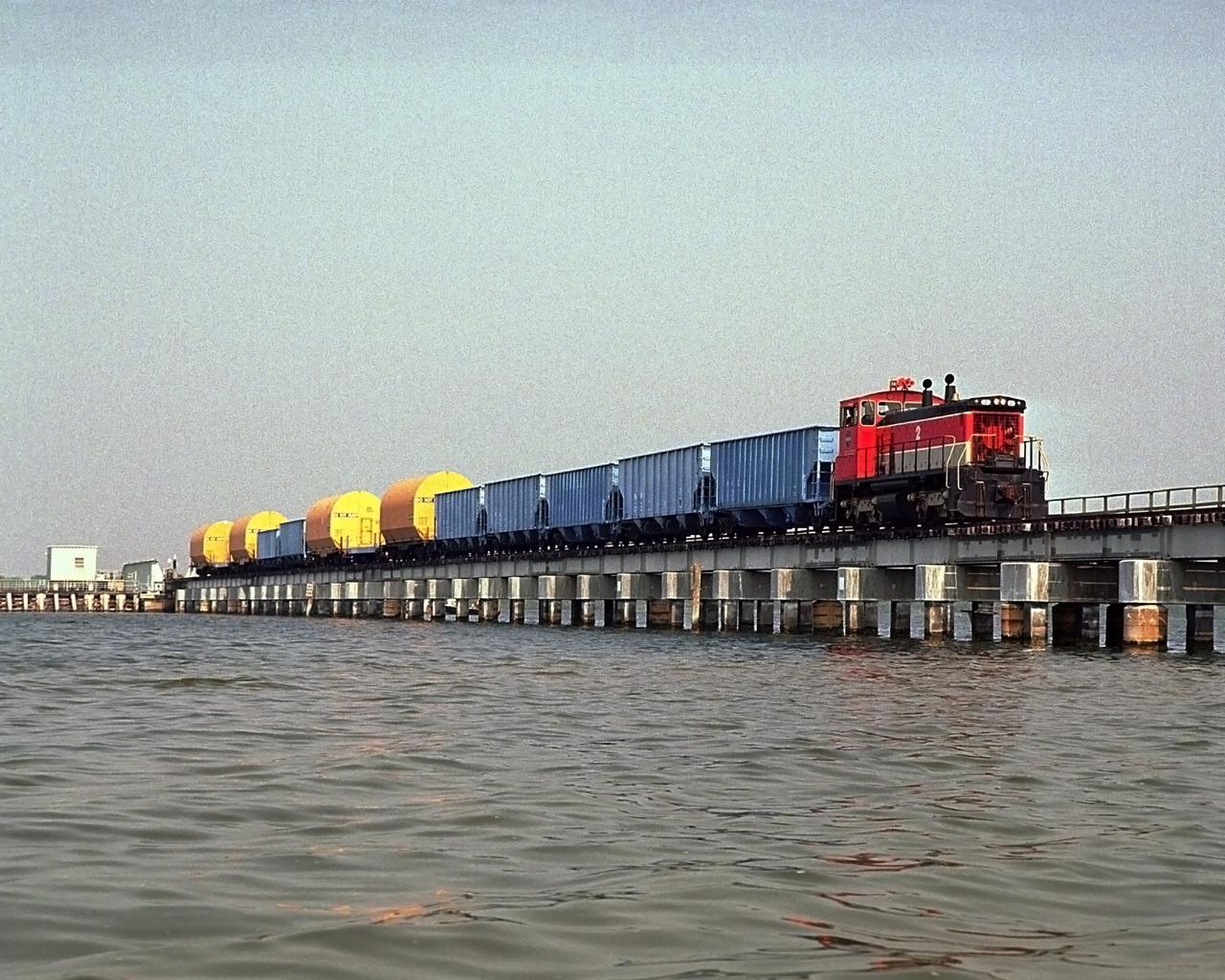
CAPE CANAVERAL, Fla. – A NASA railroad train hauling the solid rocket booster, or SRB, segments moves along the track at NASA's Kennedy Space Center in Florida. The SRB segments are under protective covers. The space agency utilizes railroad operations to not only move equipment at Kennedy, but to transport hardware to and from contractor facilities across the nation. Photo credit: NASA
KSC-98PC-653
CAPE CANAVERAL, Fla. – A NASA railroad train hauling the solid rocket booster, or SRB, segments moves along the track at NASA's Kennedy Space Center in Florida. The SRB segments are under protective covers. The space agency utilizes railroad operations to not only move equipment at Kennedy, but to transport hardware to and from contractor facilities across the nation. Photo credit: NASA
KSC-98PC-654
CAPE CANAVERAL, Fla. – A NASA railroad train hauling the solid rocket booster, or SRB, segments moves along the track at NASA's Kennedy Space Center in Florida. The SRB segments are under protective covers. The space agency utilizes railroad operations to not only move equipment at Kennedy, but to transport hardware to and from contractor facilities across the nation. Photo credit: NASA
KSC-98PC-652
CAPE CANAVERAL, Fla. – A NASA railroad train hauling the solid rocket booster, or SRB, segments moves along the track at NASA's Kennedy Space Center in Florida. The SRB segments are under protective covers. The space agency utilizes railroad operations to not only move equipment at Kennedy, but to transport hardware to and from contractor facilities across the nation. Photo credit: NASA
KSC-98PC-660
S83-39238 (1 Aug. 1983) --- The giant cluster of spaceflight hardware for NASA's eighth Space Transportation System (STS) mission begins its slow move to the launch pad at launch complex 39 at NASA's Kennedy Space Center (KSC). Following its mating to the two solid rocket boosters (SRB) and the external fuel tank (ET) in the huge vehicle assembly building (VAB), the space shuttle Challenger is slowly moved to the launch pad atop the mobile launch platform.  Photo credit: NASA
STS-8 Challenger's roll-out to launch pad