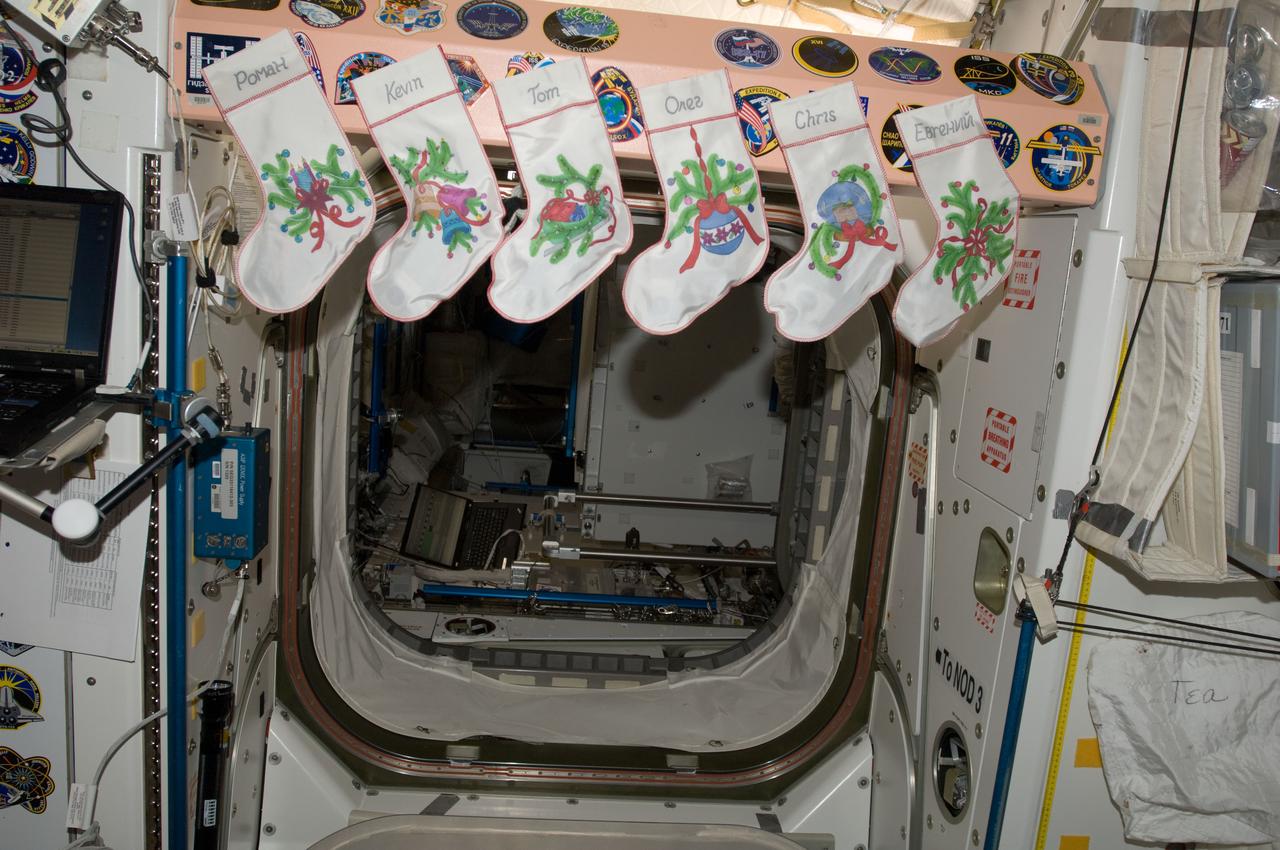
View of Expedition 34 Christmas stockings hanging at the Node 1 hatch. Photo was taken during Expedition 34.
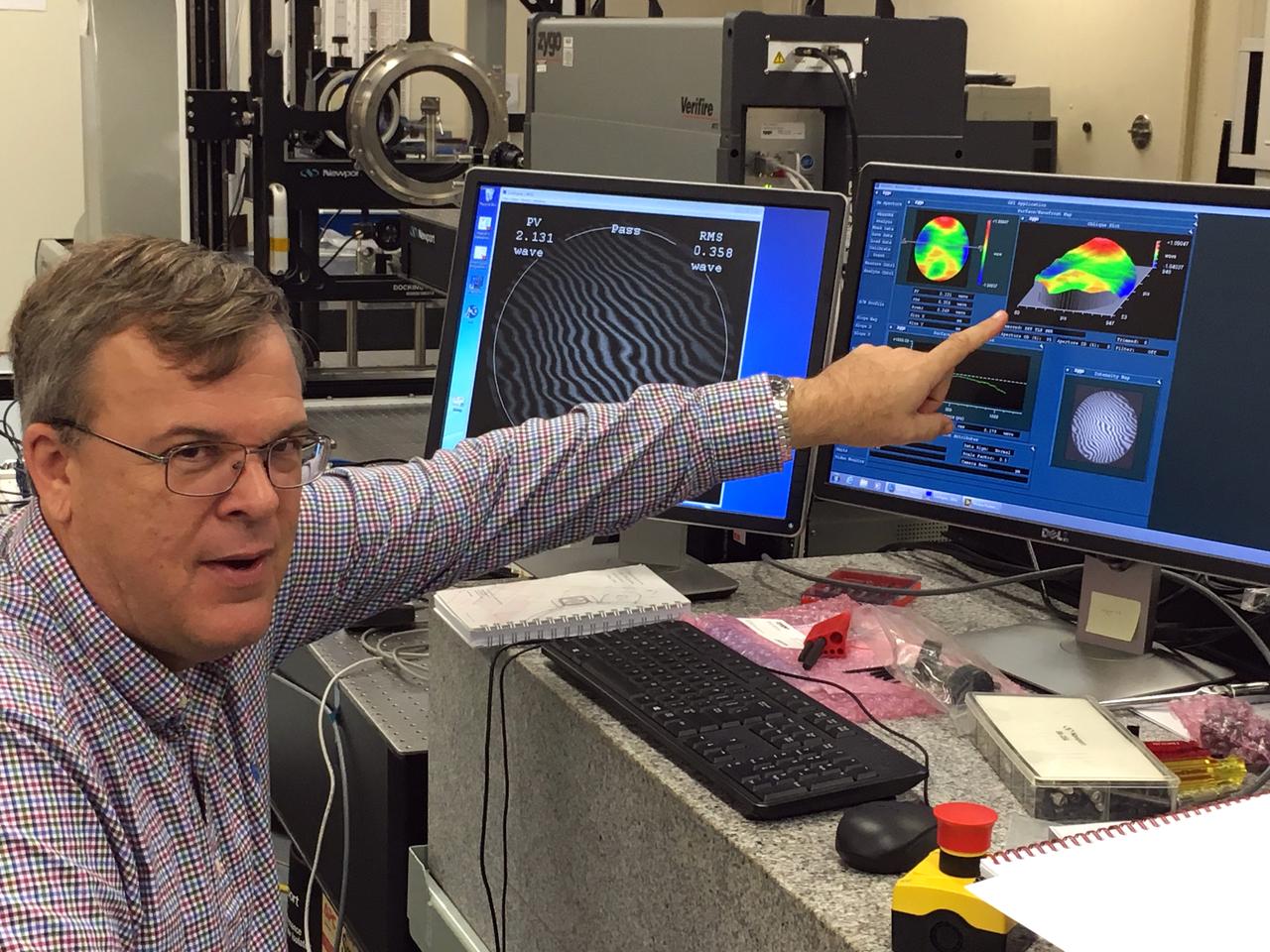
Mark Nurge, Ph.D., a physicist in the Applied Physics Lab with the Exploration Research and Technology Programs at NASA's Kennedy Space Center in Florida, looks at data during the first optical quality test on a full window stack that is ready for installation in the docking hatch of NASA's Orion spacecraft. The data from the tests will help improve the requirements for manufacturing tolerances on Orion's windows and verify how the window should perform in space. Orion is being prepared for its first integrated uncrewed flight atop NASA's Space Launch System rocket on Exploration Mission-1.
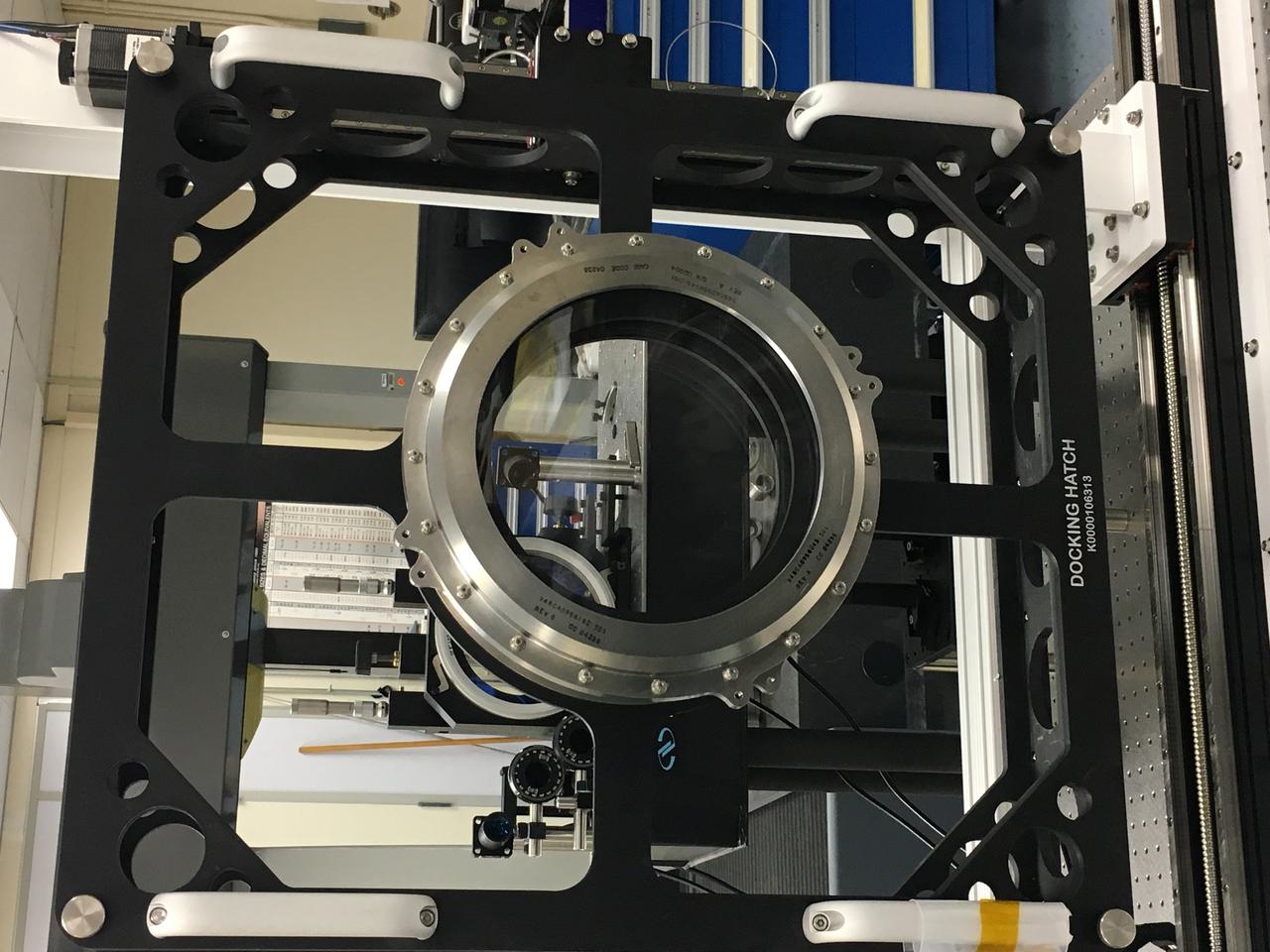
The first optical quality testing on a full window stack that is ready for installation in the docking hatch of NASA's Orion spacecraft is underway inside a laboratory in the Neil Armstrong Operations and Checkout Building at the agency's Kennedy Space Center in Florida. The test is being performed by a team from the center's Exploration Research and Technology Programs. The data from the tests will help improve the requirements for manufacturing tolerances on Orion's windows and verify how the window should perform in space. Orion is being prepared for its first integrated uncrewed flight atop NASA's Space Launch System rocket on Exploration Mission-1.
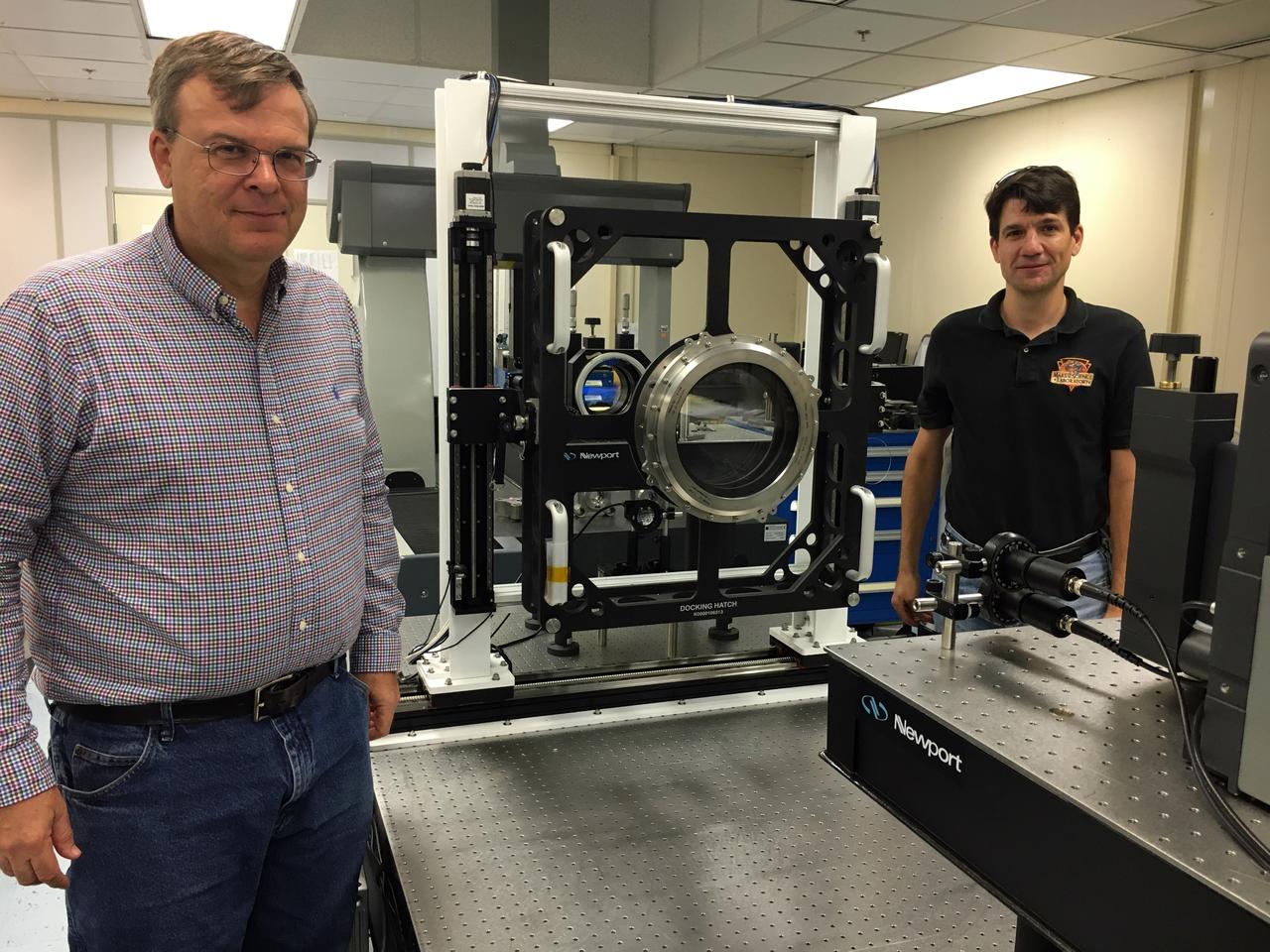
Inside a laboratory in the Neil Armstrong Operations and Checkout Building at NASA's Kennedy Space Center in Florida, Mark Nurge, Ph.D., at left, a physicist in the Applied Physics Lab with the center's Exploration Research and Technology Programs, and Bence Bartha, Ph.D., a specialist in non-destructive testing with URS Federal Services, are performing the first optical quality testing on a full window stack that is ready for installation in the docking hatch of NASA's Orion spacecraft. The data from the tests will help improve the requirements for manufacturing tolerances on Orion's windows and verify how the window should perform in space. Orion is being prepared for its first integrated uncrewed flight atop NASA's Space Launch System rocket on Exploration Mission-1.
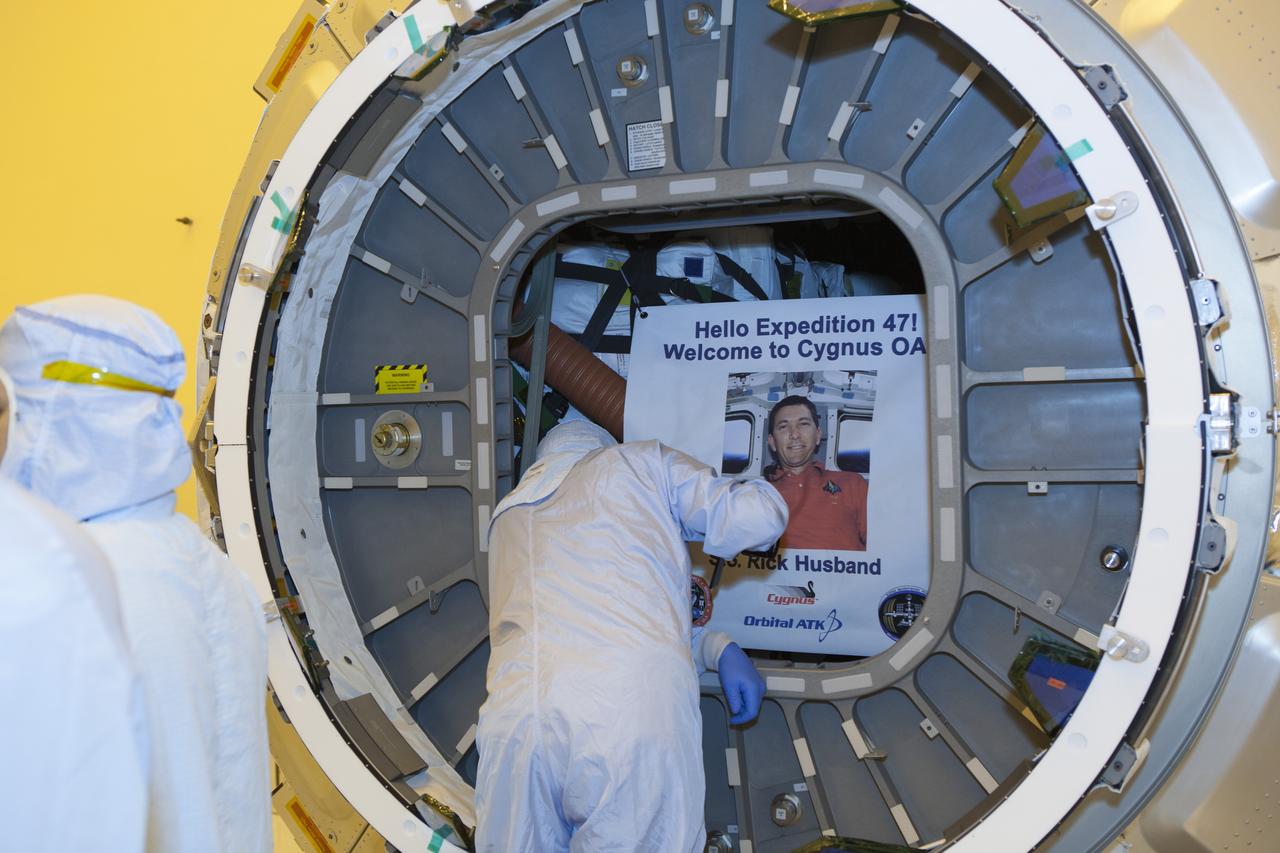
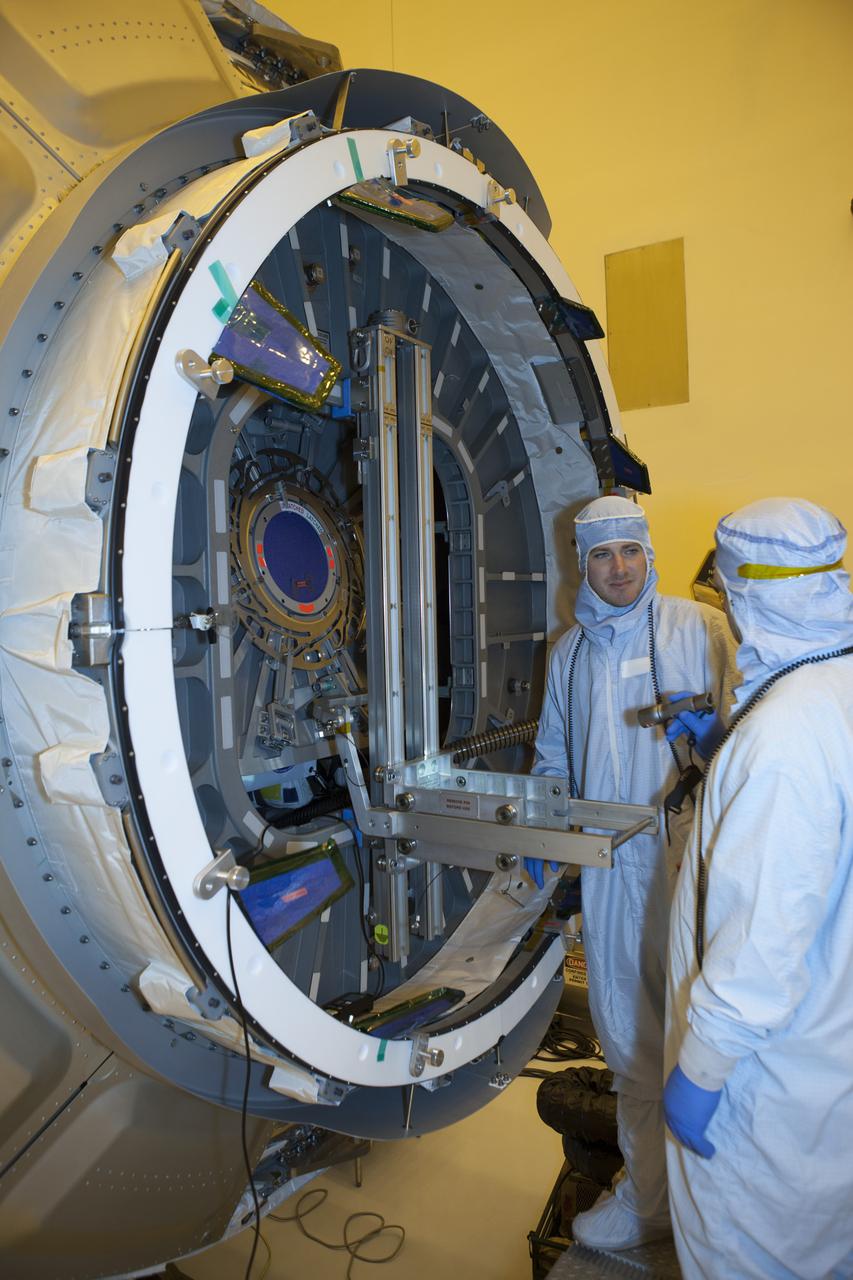
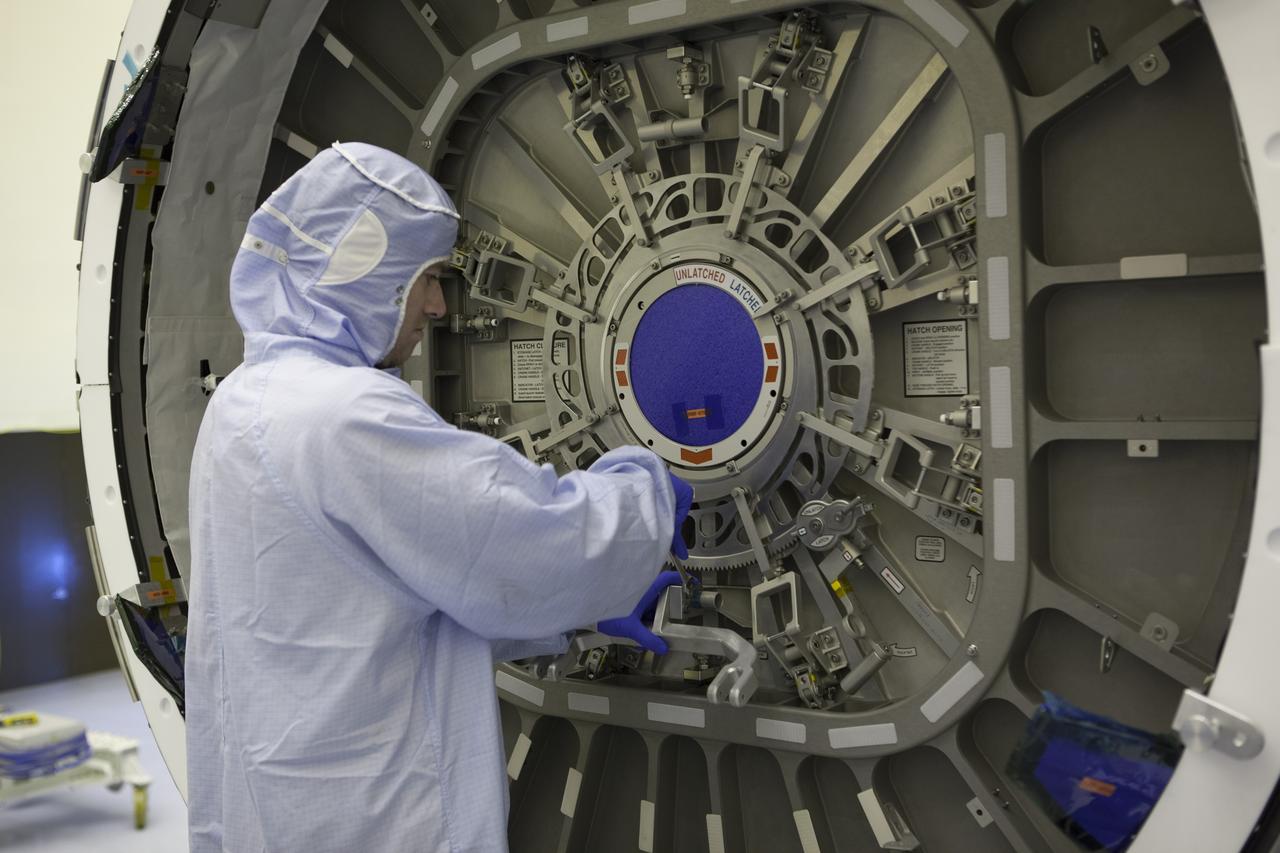
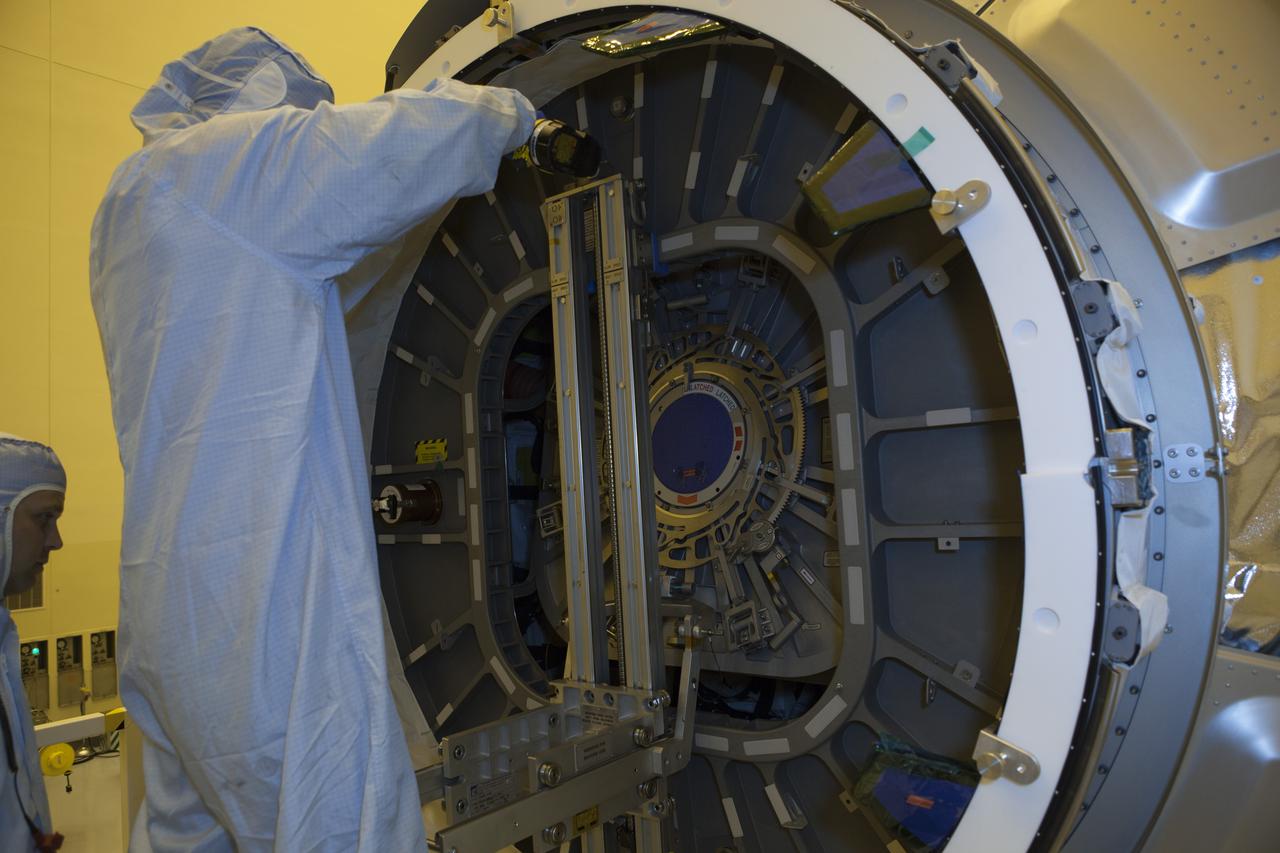
Inside the Payload Hazardous Servicing Facility at NASA's Kennedy Space Center in Florida, the hatch is closed for the upcoming flight of a Cygnus cargo vessel. The spacecraft is scheduled for the upcoming Orbital ATK Commercial Resupply Services-6 mission to deliver hardware and supplies to the International Space Station. When members of the ISS Expedition 47 crew open the hatch, they will be greeted with a sign noting the spacecraft was named SS Rick Husband in honor of the commander of the STS-107 mission. On that flight, the crew of the space shuttle Columbia was lost during re-entry on Feb. 1, 2003. The Cygnus is scheduled to lift off atop a United Launch Alliance Atlas V rocket on March 22.
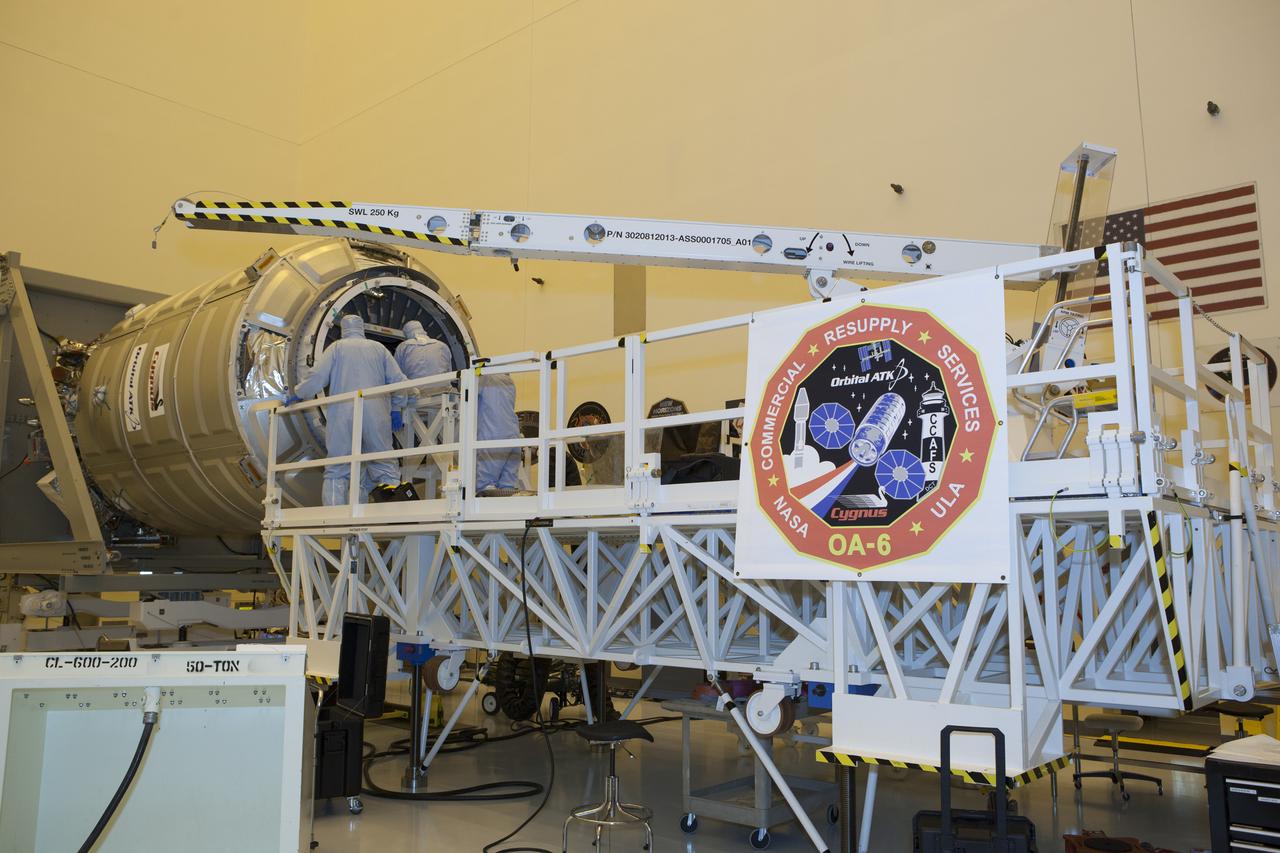
Inside the Payload Hazardous Servicing Facility at NASA's Kennedy Space Center in Florida, the hatch is closed for the upcoming flight of a Cygnus cargo vessel. The spacecraft is scheduled for the upcoming Orbital ATK Commercial Resupply Services-6 mission to deliver hardware and supplies to the International Space Station. The Cygnus is scheduled to lift off atop a United Launch Alliance Atlas V rocket on March 22.
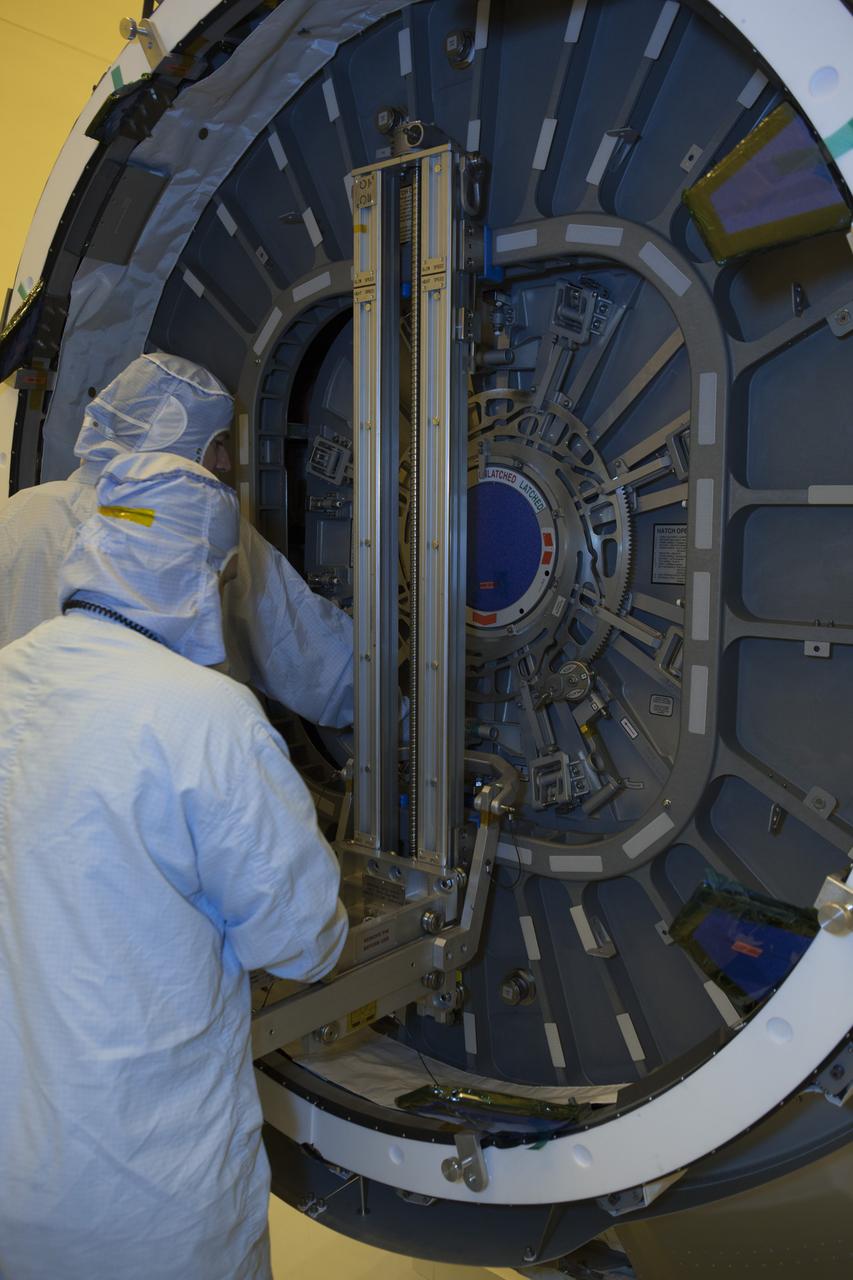
Inside the Payload Hazardous Servicing Facility at NASA's Kennedy Space Center in Florida, the hatch is closed for the upcoming flight of a Cygnus cargo vessel. The spacecraft is scheduled for the upcoming Orbital ATK Commercial Resupply Services-6 mission to deliver hardware and supplies to the International Space Station. The Cygnus is scheduled to lift off atop a United Launch Alliance Atlas V rocket on March 22.
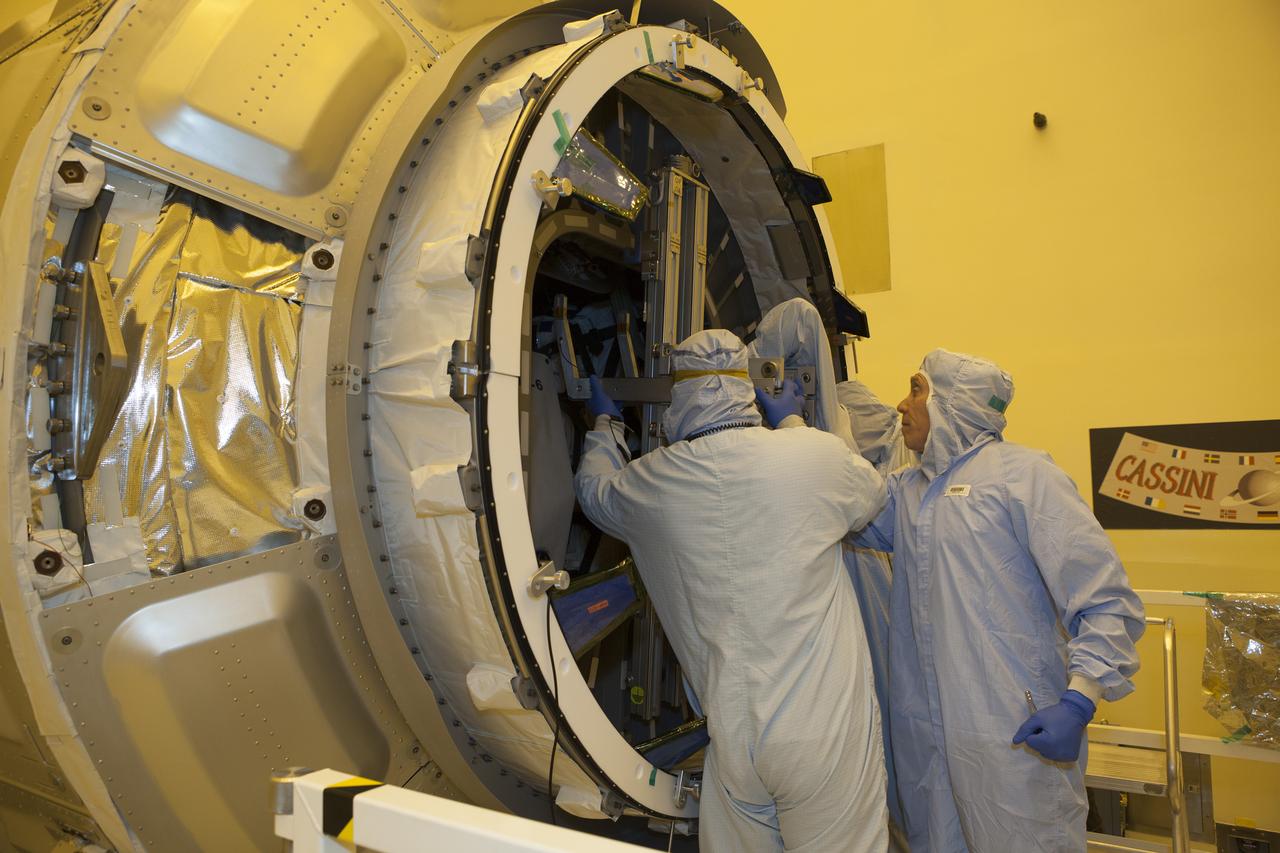
Inside the Payload Hazardous Servicing Facility at NASA's Kennedy Space Center in Florida, the hatch is closed for the upcoming flight of a Cygnus cargo vessel. The spacecraft is scheduled for the upcoming Orbital ATK Commercial Resupply Services-6 mission to deliver hardware and supplies to the International Space Station. The Cygnus is scheduled to lift off atop a United Launch Alliance Atlas V rocket on March 22.
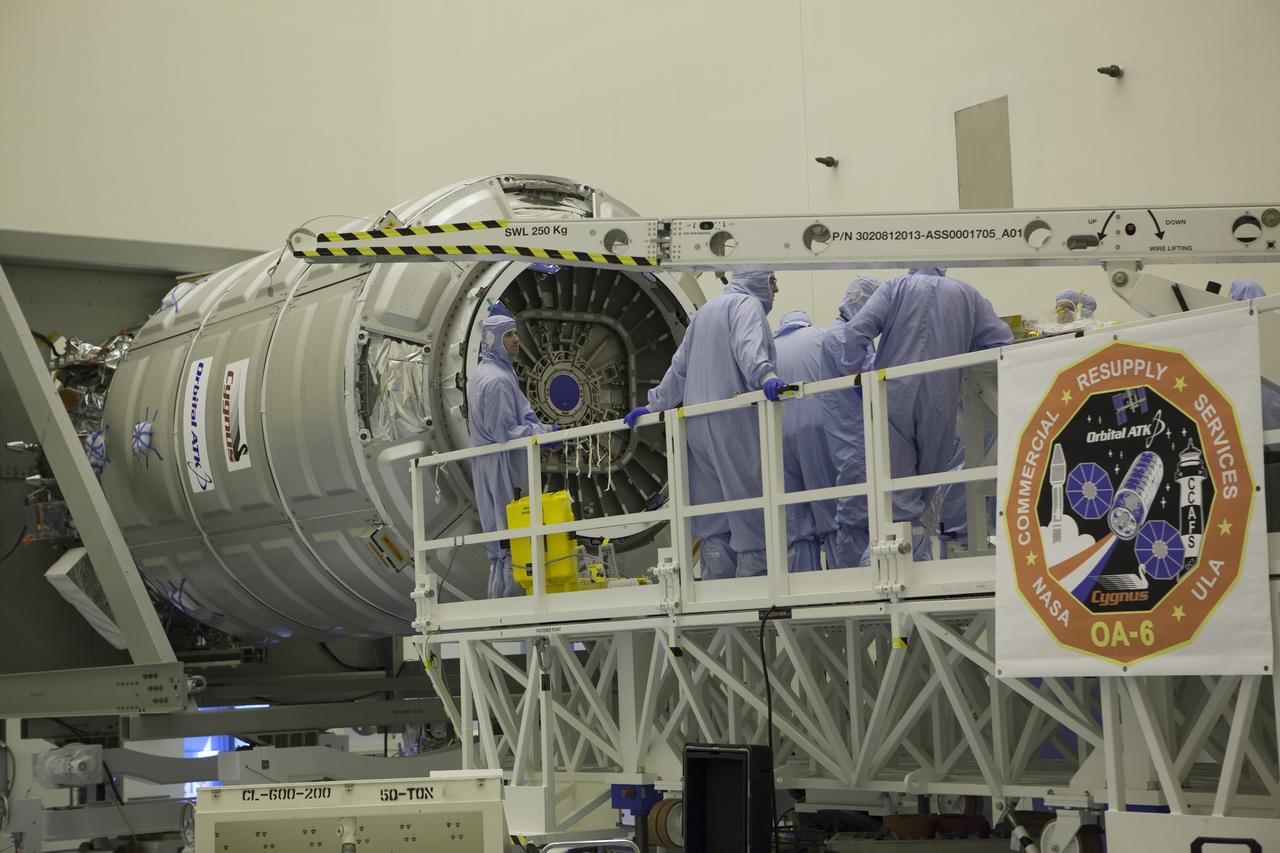
Inside the Payload Hazardous Servicing Facility at NASA's Kennedy Space Center in Florida, the hatch is closed for the upcoming flight of a Cygnus cargo vessel. The spacecraft is scheduled for the upcoming Orbital ATK Commercial Resupply Services-6 mission to deliver hardware and supplies to the International Space Station. The Cygnus is scheduled to lift off atop a United Launch Alliance Atlas V rocket on March 22.
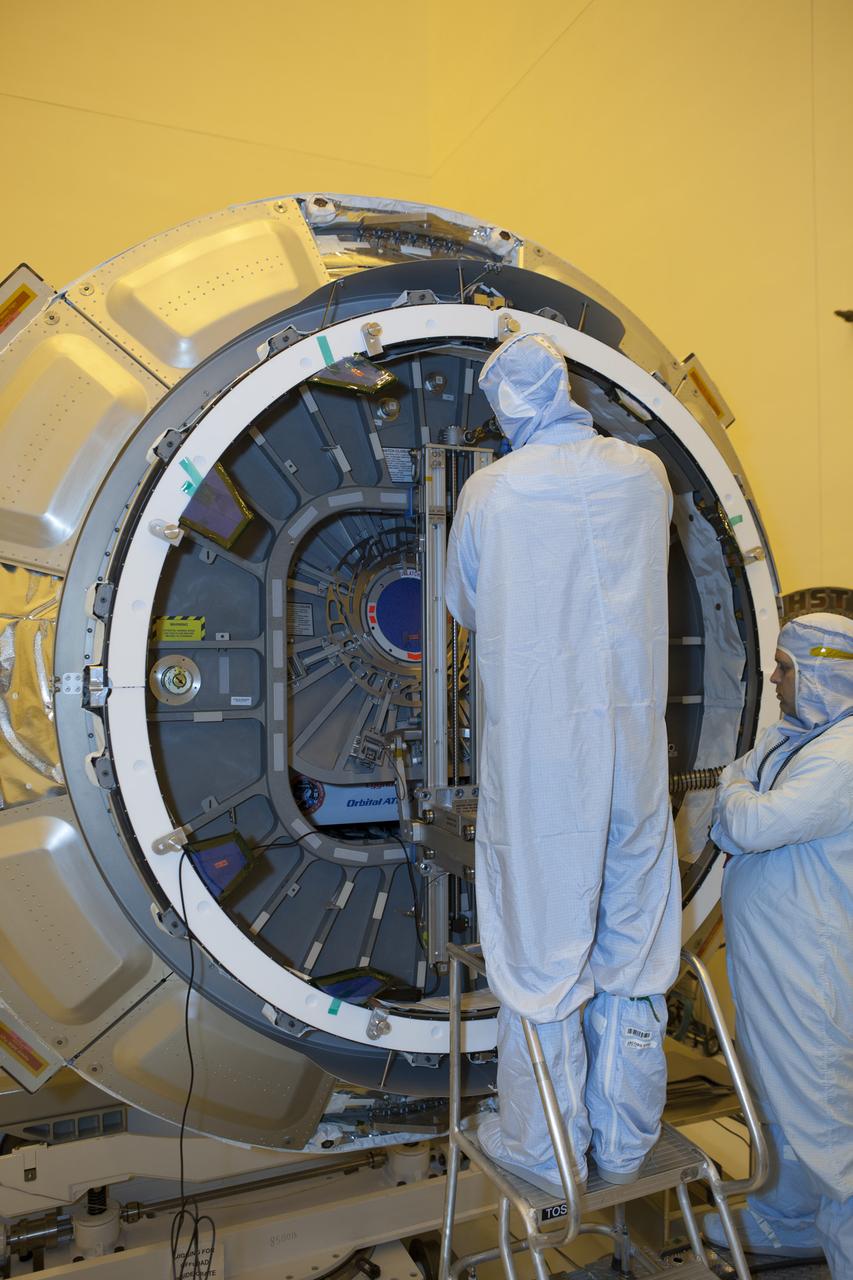
Inside the Payload Hazardous Servicing Facility at NASA's Kennedy Space Center in Florida, the hatch is closed for the upcoming flight of a Cygnus cargo vessel. The spacecraft is scheduled for the upcoming Orbital ATK Commercial Resupply Services-6 mission to deliver hardware and supplies to the International Space Station. The Cygnus is scheduled to lift off atop a United Launch Alliance Atlas V rocket on March 22.
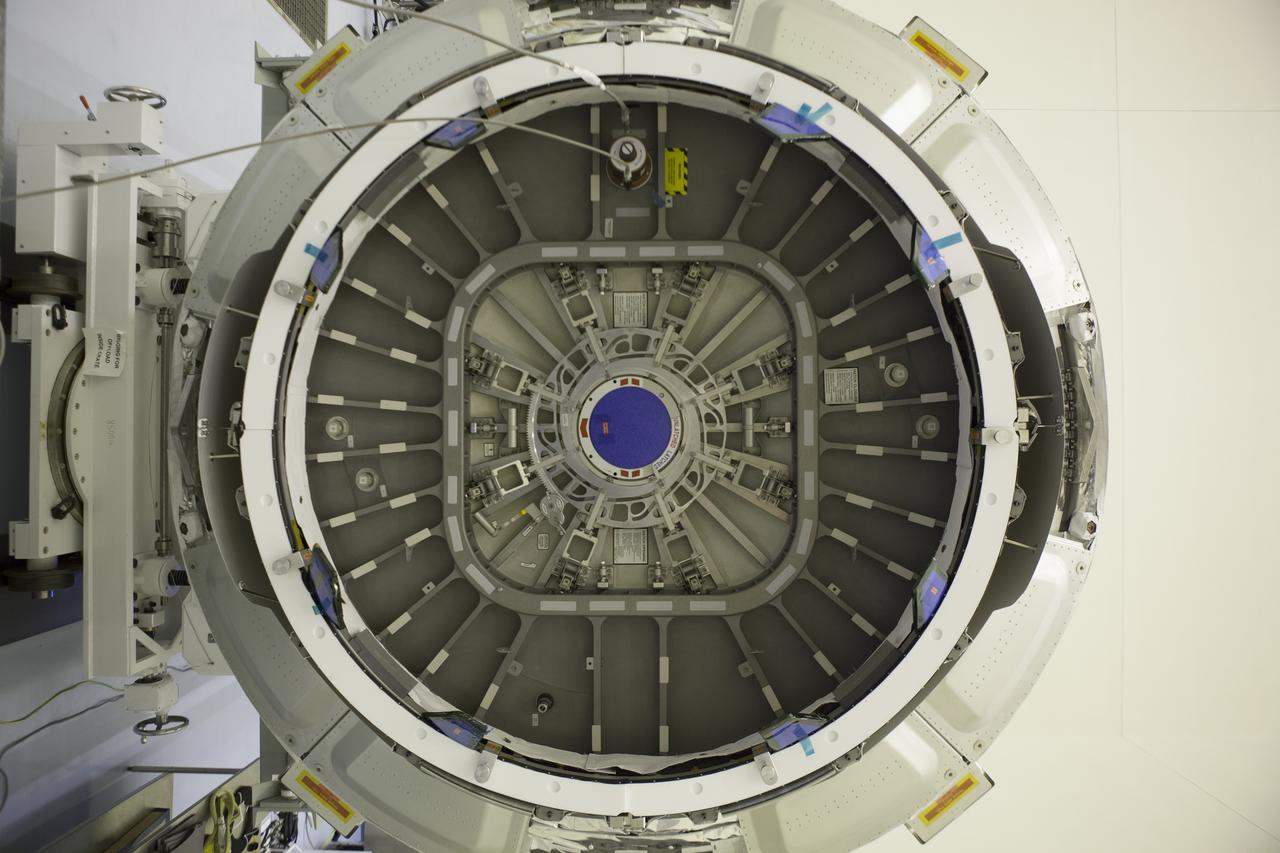
Inside the Payload Hazardous Servicing Facility at NASA's Kennedy Space Center in Florida, the hatch has been closed for the upcoming flight of a Cygnus cargo vessel. The spacecraft is scheduled for the upcoming Orbital ATK Commercial Resupply Services-6 mission to deliver hardware and supplies to the International Space Station. The Cygnus is scheduled to lift off atop a United Launch Alliance Atlas V rocket on March 22.
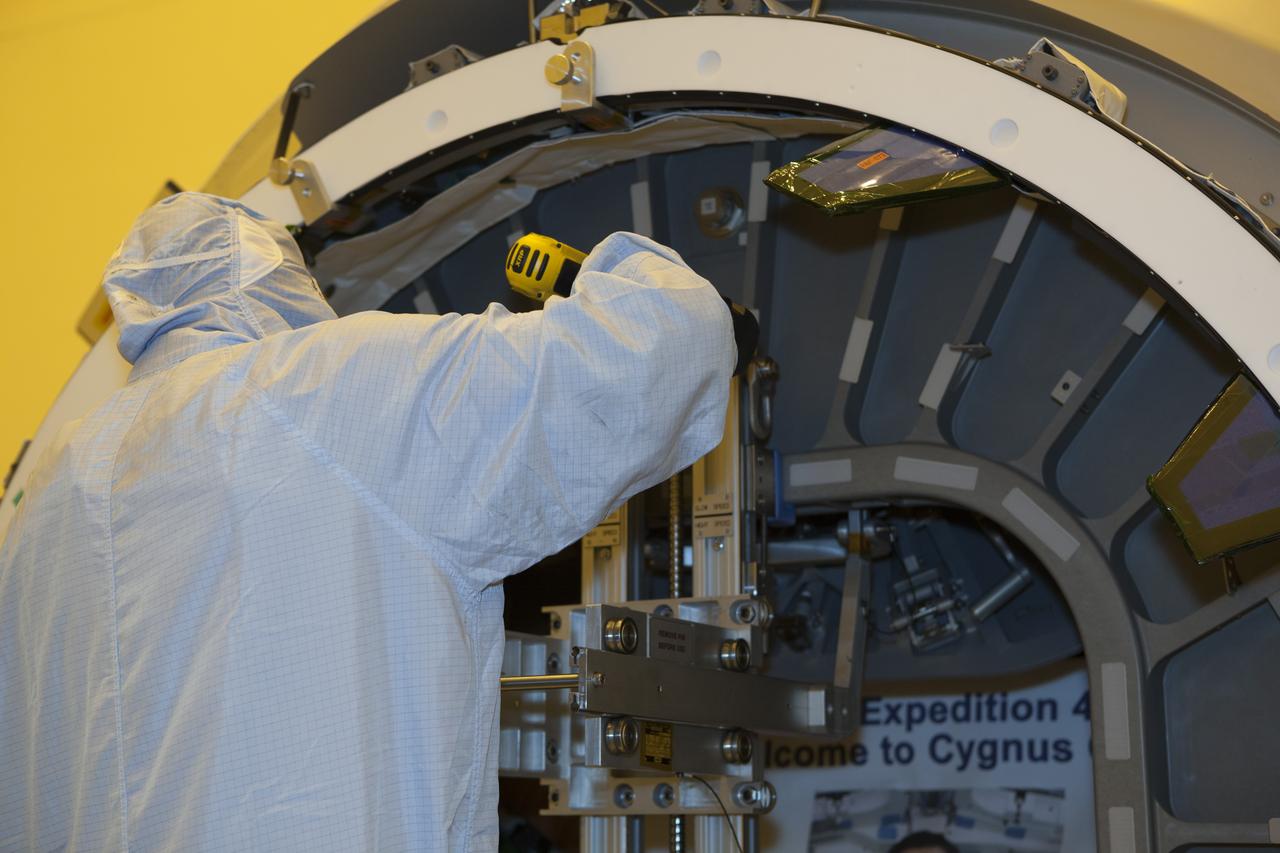
Inside the Payload Hazardous Servicing Facility at NASA's Kennedy Space Center in Florida, the hatch is closed for the upcoming flight of a Cygnus cargo vessel. The spacecraft is scheduled for the upcoming Orbital ATK Commercial Resupply Services-6 mission to deliver hardware and supplies to the International Space Station. The Cygnus is scheduled to lift off atop a United Launch Alliance Atlas V rocket on March 22.
Inside the Payload Hazardous Servicing Facility at NASA's Kennedy Space Center in Florida, the hatch is closed for the upcoming flight of a Cygnus cargo vessel. The spacecraft is scheduled for the upcoming Orbital ATK Commercial Resupply Services-6 mission to deliver hardware and supplies to the International Space Station. The Cygnus is scheduled to lift off atop a United Launch Alliance Atlas V rocket on March 22.
Inside the Payload Hazardous Servicing Facility at NASA's Kennedy Space Center in Florida, the hatch is closed for the upcoming flight of a Cygnus cargo vessel. The spacecraft is scheduled for the upcoming Orbital ATK Commercial Resupply Services-6 mission to deliver hardware and supplies to the International Space Station. The Cygnus is scheduled to lift off atop a United Launch Alliance Atlas V rocket on March 22.
Inside the Payload Hazardous Servicing Facility at NASA's Kennedy Space Center in Florida, the hatch is closed for the upcoming flight of a Cygnus cargo vessel. The spacecraft is scheduled for the upcoming Orbital ATK Commercial Resupply Services-6 mission to deliver hardware and supplies to the International Space Station. The Cygnus is scheduled to lift off atop a United Launch Alliance Atlas V rocket on March 22.
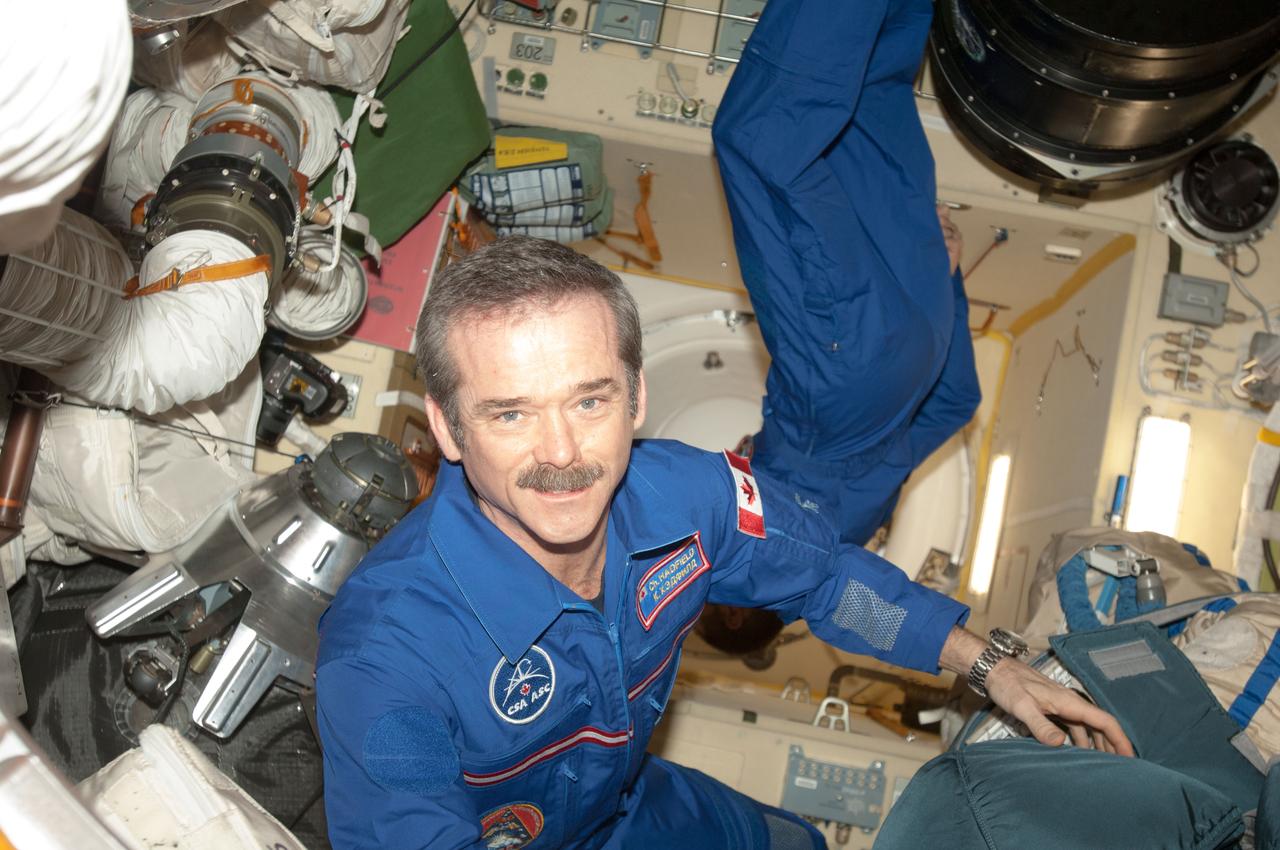
Expedition 35 commander Chris Hadfield and flight engineer Tom Marshburn (partially obscured) are photographed in the Poisk Mini-Research Module 2 (MRM2) during preparations for hatch opening with the docked Soyuz TMA-08M/34S spacecraft. Hadfield is a Canadian Space Agency (CSA) astronaut.
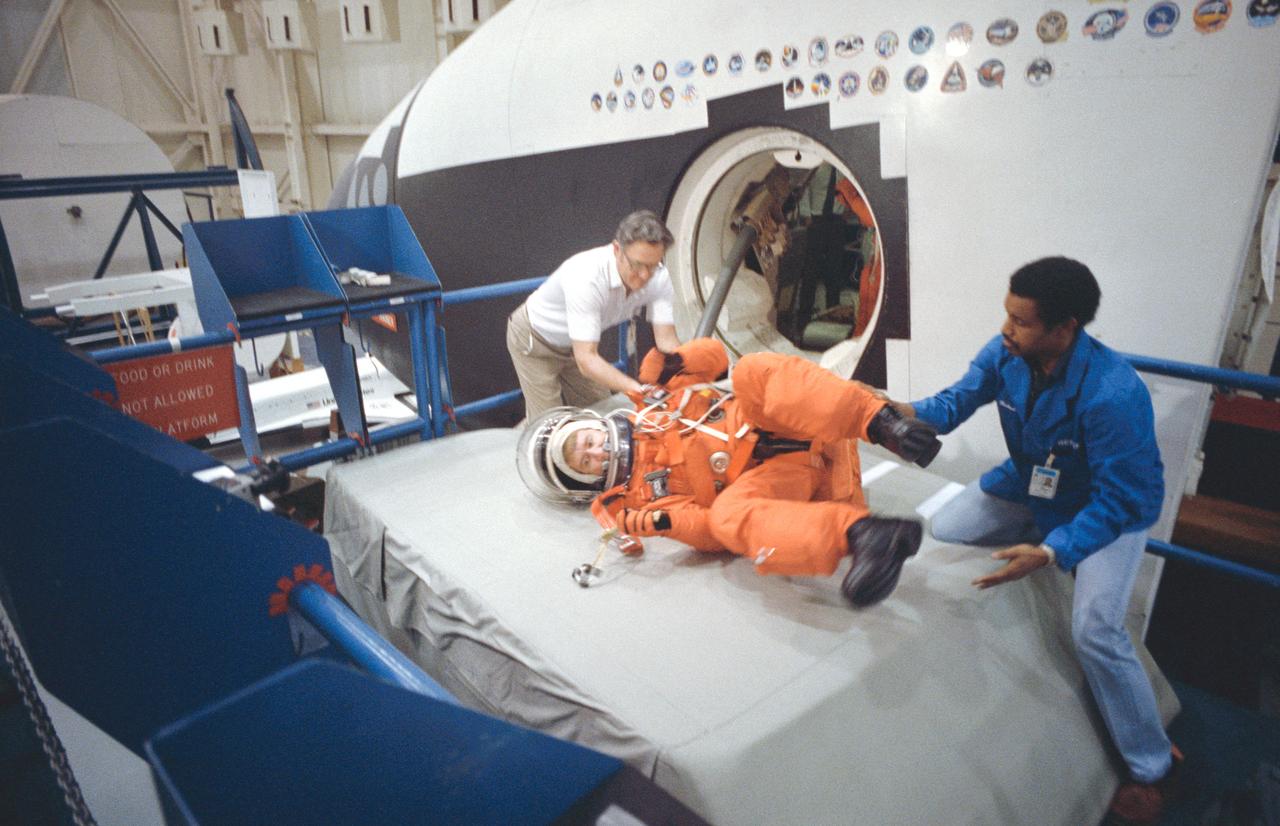
STS-38 Pilot Frank L. Culbertson, wearing launch and entry suit (LES) and launch and entry helmet (LEH), rolls through the side hatch of the crew compartment trainer (CCT) located in JSC's Mockup and Integration Laboratory (MAIL) Bldg 9A. Assisted by technicians, Culbertson practices emergency egress through the side hatch using the crew escape system (CES) pole which extends out the side hatch. The inflated safety cushion breaks Culbertson's fall as he rolls out of the side hatch.

SL4-150-5074 (February 1974) --- Scientist-astronaut Edward G. Gibson, science pilot for the Skylab 4 mission, demonstrates the effects of zero-gravity as he sails through airlock module hatch. Photo credit: NASA
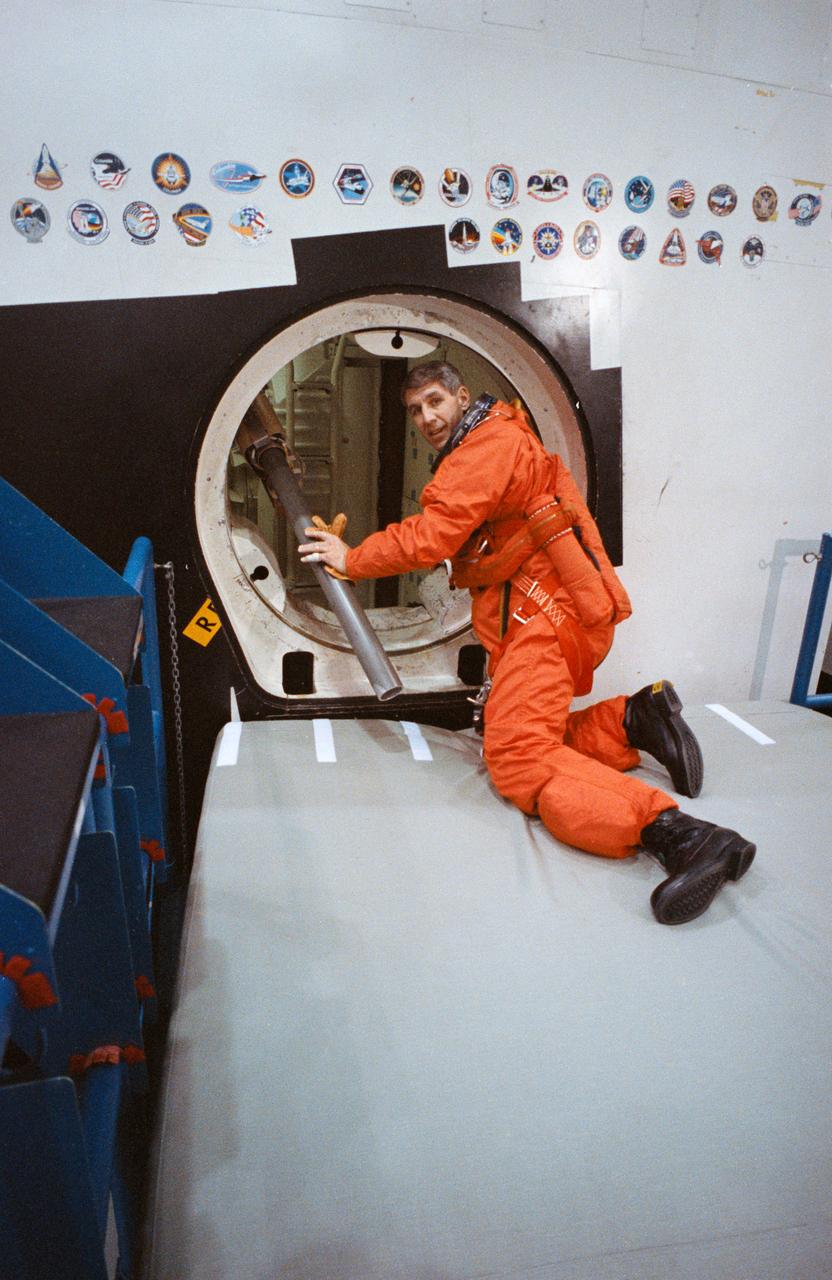
STS-38 Mission Specialist (MS) Robert C. Springer, wearing launch and entry suit (LES), climbs through the side hatch of the crew compartment trainer (CCT) located in JSC's Mockup and Integration Laboratory (MAIL) Bldg 9A. Springer will practice emergency egress through the side hatch using the crew escape system (CES) pole (at Springer's left). The inflated safety cushion under Springer will break his fall as he rolls out of the side hatch.
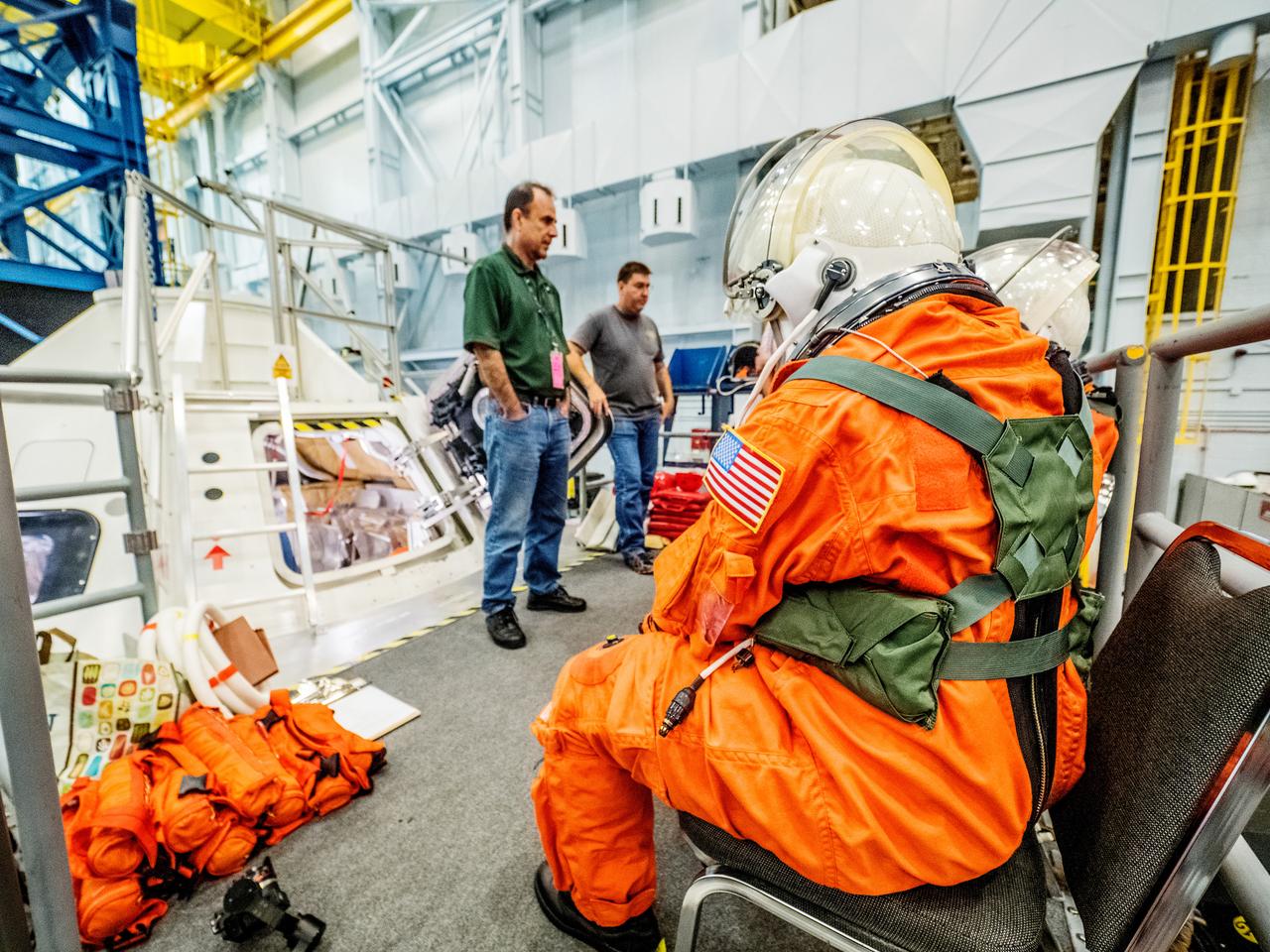
Engineers and astronauts conduct testing in a representative model of the Orion spacecraft at NASA’s Johnson Space Center in Houston on July 28, 2016 to gather the crew's feedback on the design of the docking hatch and on post-landing equipment operations. ..While the crew will primarily use the side hatch for entry and exit on Earth and the docking hatch to travel between Orion and a habitation module on long-duration deep space missions, the crew will need to be able to exit out of the docking hatch if wave heights in the Pacific Ocean upon splashdown are too high. The work is being done to help ensure all elements of Orion's design are safe and effective for the crew to use on future missions on the journey to Mars.
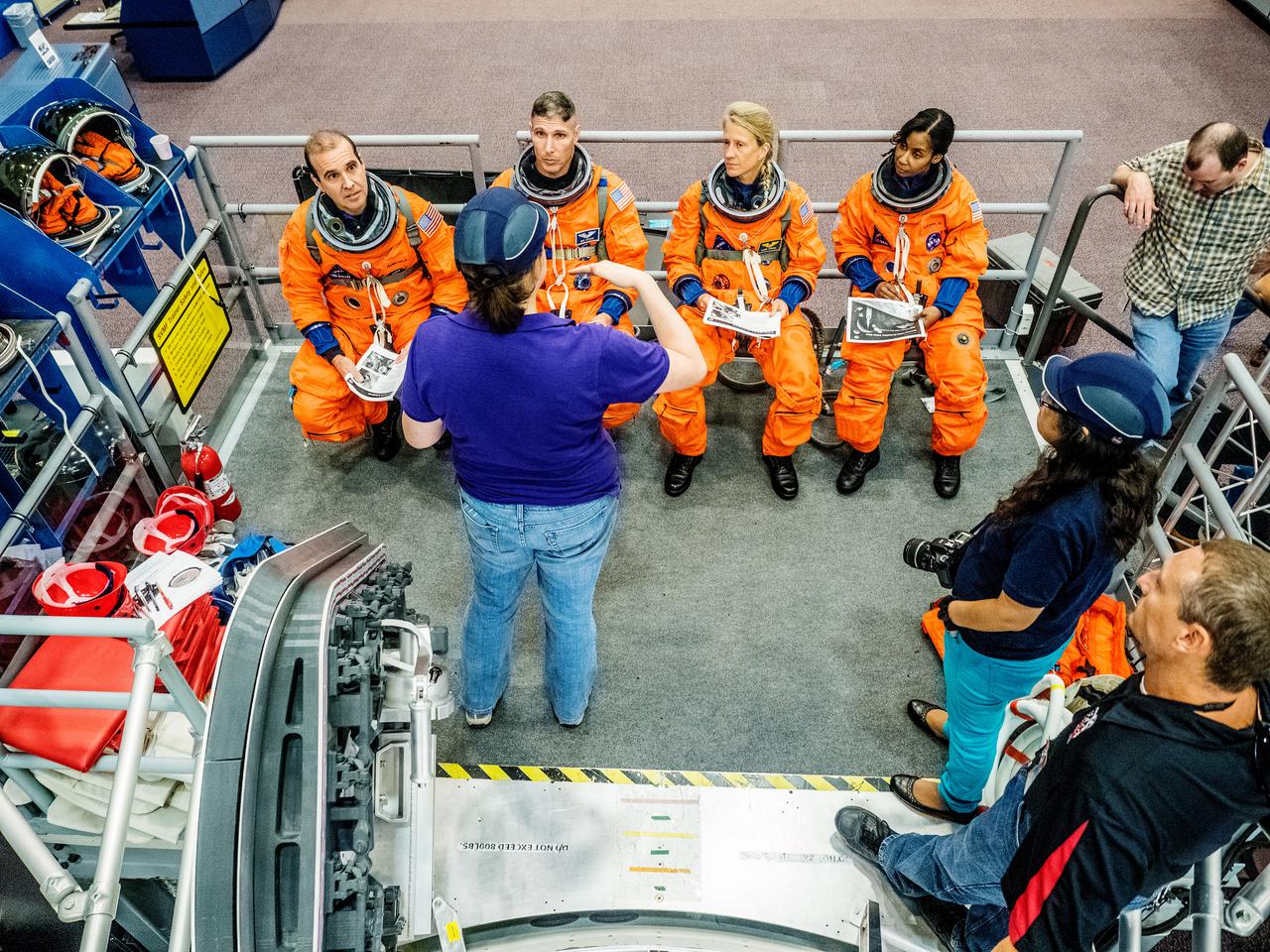
Engineers and astronauts conduct testing in a representative model of the Orion spacecraft at NASA’s Johnson Space Center in Houston on July 28, 2016 to gather the crew's feedback on the design of the docking hatch and on post-landing equipment operations. ..While the crew will primarily use the side hatch for entry and exit on Earth and the docking hatch to travel between Orion and a habitation module on long-duration deep space missions, the crew will need to be able to exit out of the docking hatch if wave heights in the Pacific Ocean upon splashdown are too high. The work is being done to help ensure all elements of Orion's design are safe and effective for the crew to use on future missions on the journey to Mars.
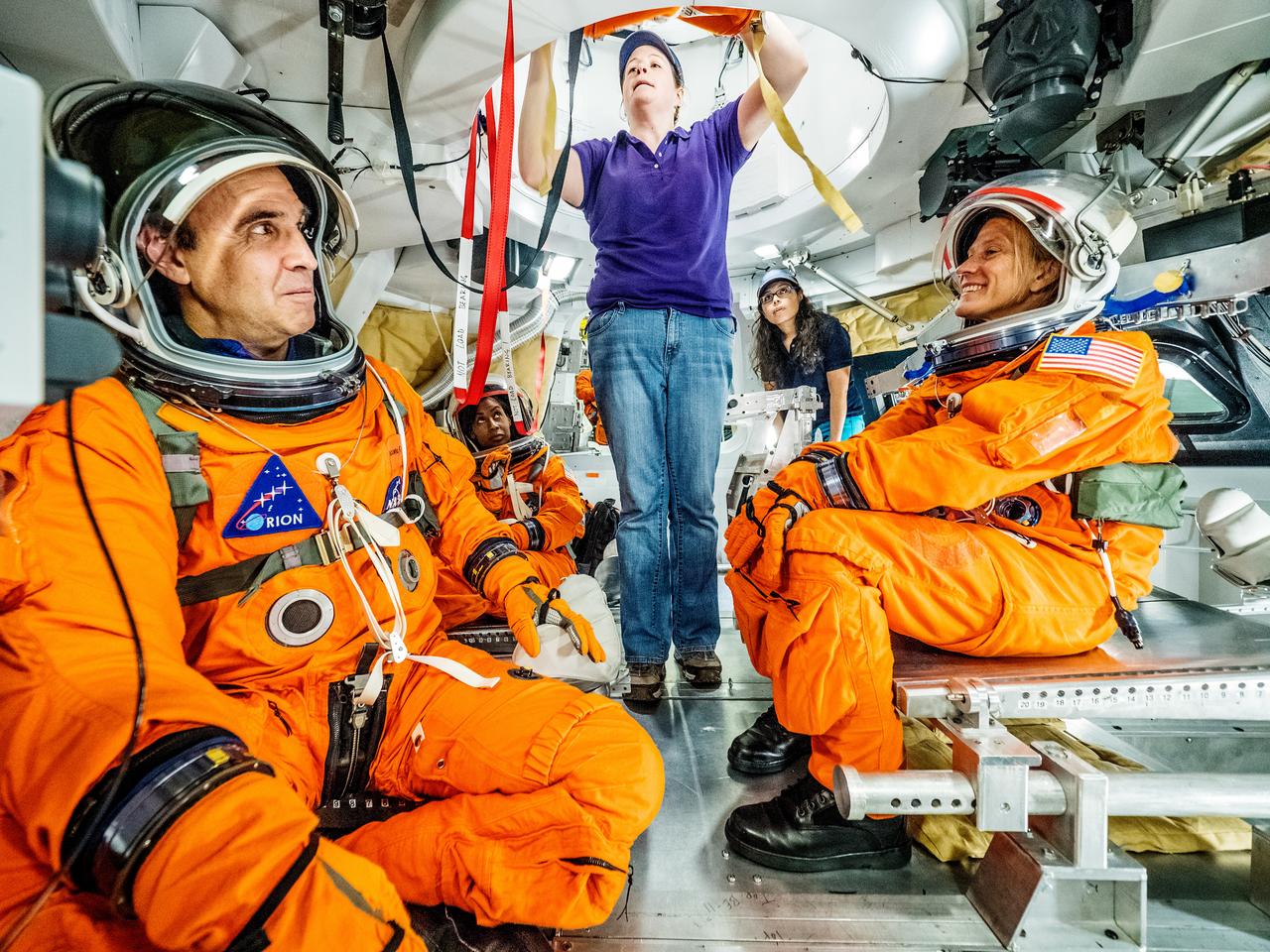
Engineers and astronauts conduct testing in a representative model of the Orion spacecraft at NASA’s Johnson Space Center in Houston on July 28, 2016 to gather the crew's feedback on the design of the docking hatch and on post-landing equipment operations. ..While the crew will primarily use the side hatch for entry and exit on Earth and the docking hatch to travel between Orion and a habitation module on long-duration deep space missions, the crew will need to be able to exit out of the docking hatch if wave heights in the Pacific Ocean upon splashdown are too high. The work is being done to help ensure all elements of Orion's design are safe and effective for the crew to use on future missions on the journey to Mars.
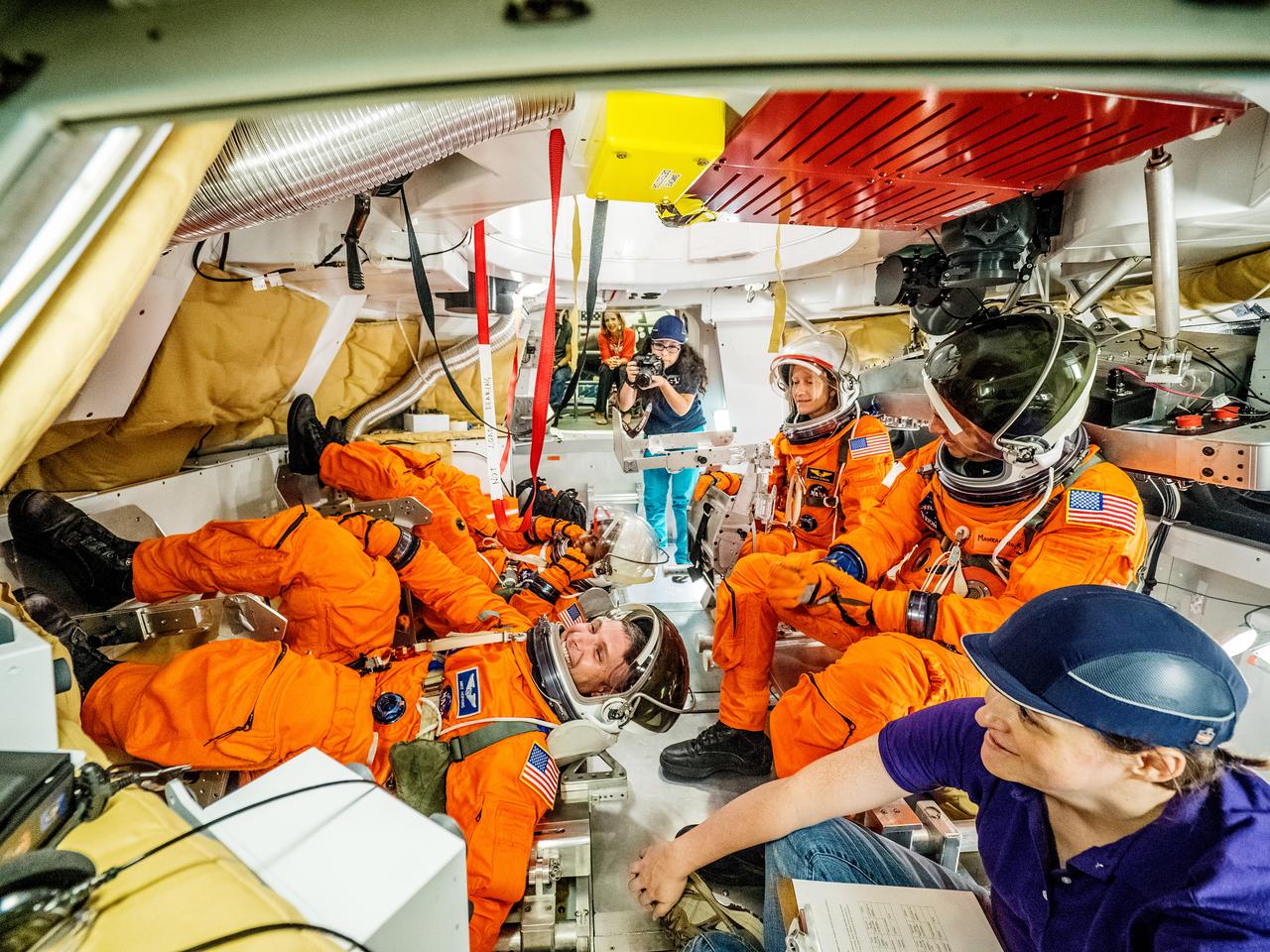
Engineers and astronauts conduct testing in a representative model of the Orion spacecraft at NASA’s Johnson Space Center in Houston on July 28, 2016 to gather the crew's feedback on the design of the docking hatch and on post-landing equipment operations. ..While the crew will primarily use the side hatch for entry and exit on Earth and the docking hatch to travel between Orion and a habitation module on long-duration deep space missions, the crew will need to be able to exit out of the docking hatch if wave heights in the Pacific Ocean upon splashdown are too high. The work is being done to help ensure all elements of Orion's design are safe and effective for the crew to use on future missions on the journey to Mars.
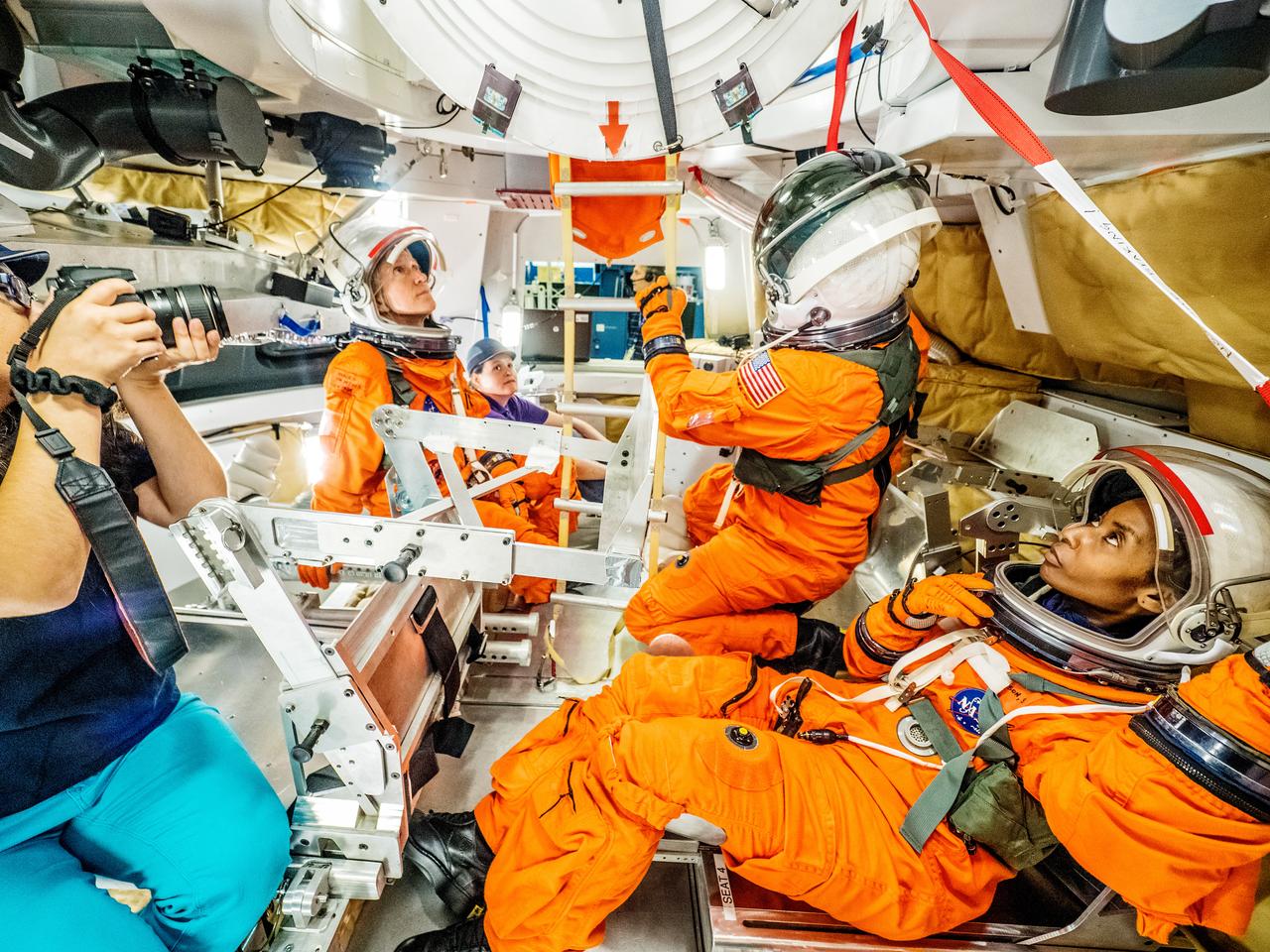
Engineers and astronauts conduct testing in a representative model of the Orion spacecraft at NASA’s Johnson Space Center in Houston on July 28, 2016 to gather the crew's feedback on the design of the docking hatch and on post-landing equipment operations. ..While the crew will primarily use the side hatch for entry and exit on Earth and the docking hatch to travel between Orion and a habitation module on long-duration deep space missions, the crew will need to be able to exit out of the docking hatch if wave heights in the Pacific Ocean upon splashdown are too high. The work is being done to help ensure all elements of Orion's design are safe and effective for the crew to use on future missions on the journey to Mars.
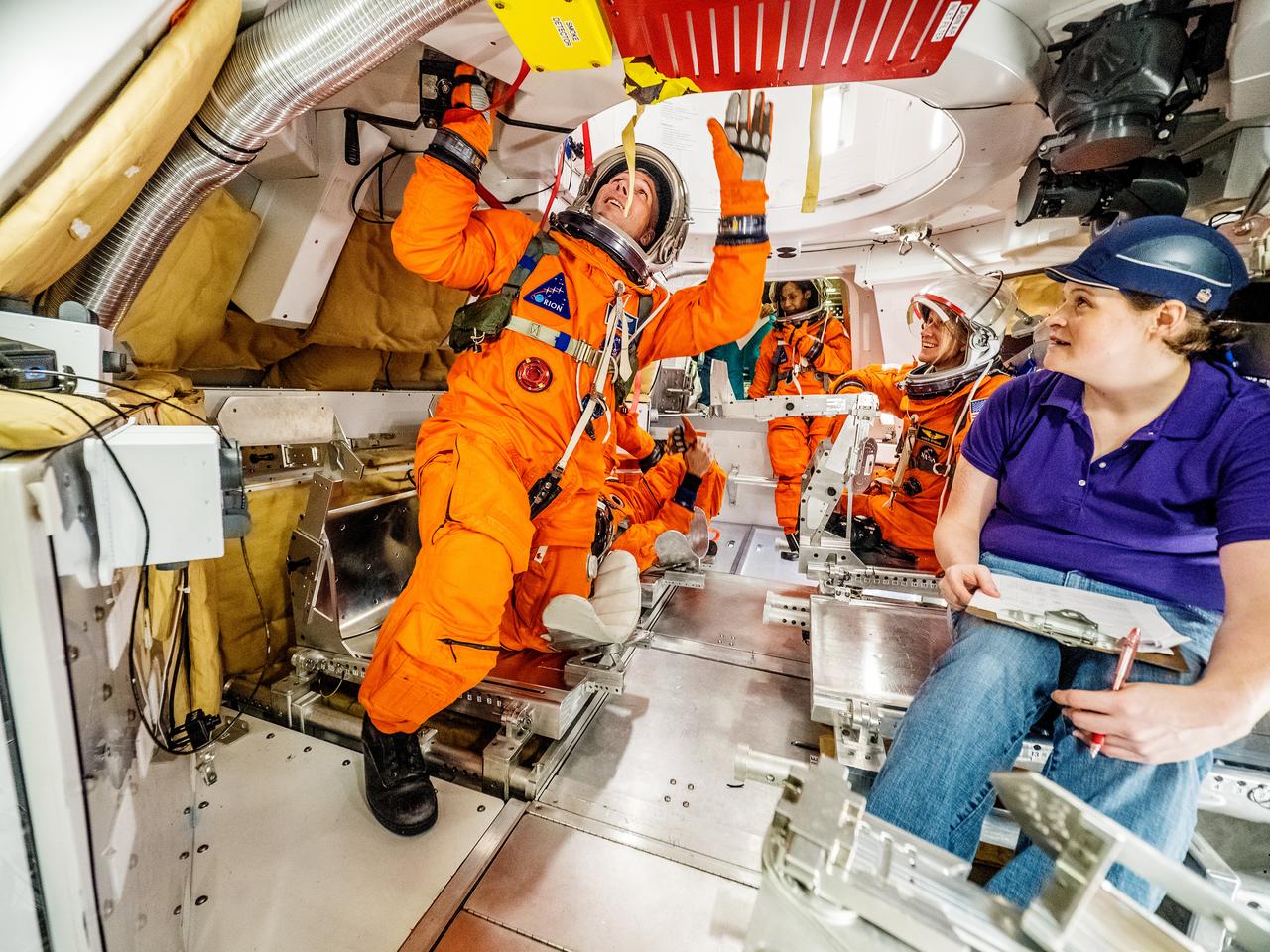
Engineers and astronauts conduct testing in a representative model of the Orion spacecraft at NASA’s Johnson Space Center in Houston on July 28, 2016 to gather the crew's feedback on the design of the docking hatch and on post-landing equipment operations. ..While the crew will primarily use the side hatch for entry and exit on Earth and the docking hatch to travel between Orion and a habitation module on long-duration deep space missions, the crew will need to be able to exit out of the docking hatch if wave heights in the Pacific Ocean upon splashdown are too high. The work is being done to help ensure all elements of Orion's design are safe and effective for the crew to use on future missions on the journey to Mars.
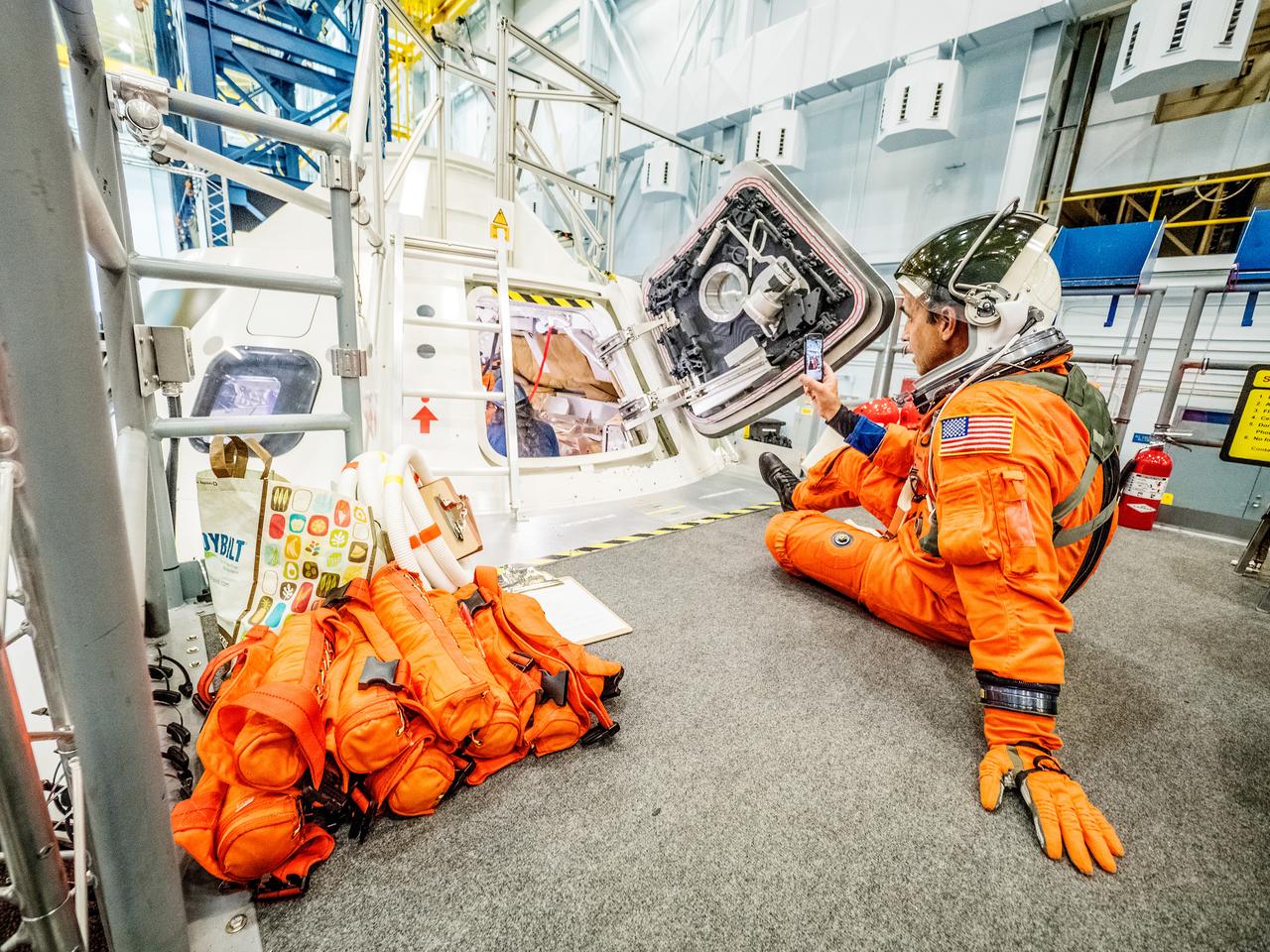
Engineers and astronauts conduct testing in a representative model of the Orion spacecraft at NASA’s Johnson Space Center in Houston on July 28, 2016 to gather the crew's feedback on the design of the docking hatch and on post-landing equipment operations. ..While the crew will primarily use the side hatch for entry and exit on Earth and the docking hatch to travel between Orion and a habitation module on long-duration deep space missions, the crew will need to be able to exit out of the docking hatch if wave heights in the Pacific Ocean upon splashdown are too high. The work is being done to help ensure all elements of Orion's design are safe and effective for the crew to use on future missions on the journey to Mars.
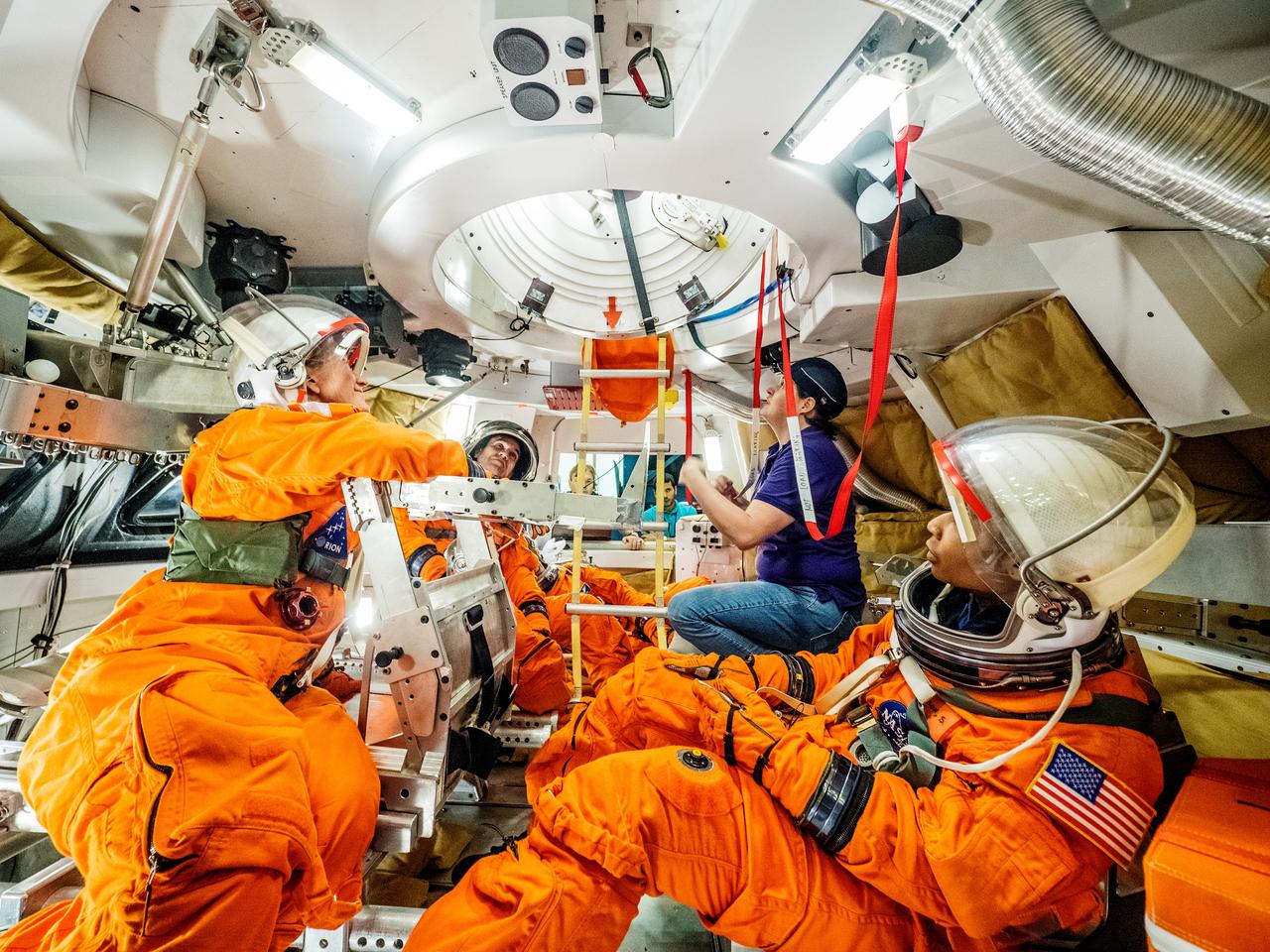
Engineers and astronauts conduct testing in a representative model of the Orion spacecraft at NASA’s Johnson Space Center in Houston on July 28, 2016 to gather the crew's feedback on the design of the docking hatch and on post-landing equipment operations. ..While the crew will primarily use the side hatch for entry and exit on Earth and the docking hatch to travel between Orion and a habitation module on long-duration deep space missions, the crew will need to be able to exit out of the docking hatch if wave heights in the Pacific Ocean upon splashdown are too high. The work is being done to help ensure all elements of Orion's design are safe and effective for the crew to use on future missions on the journey to Mars.
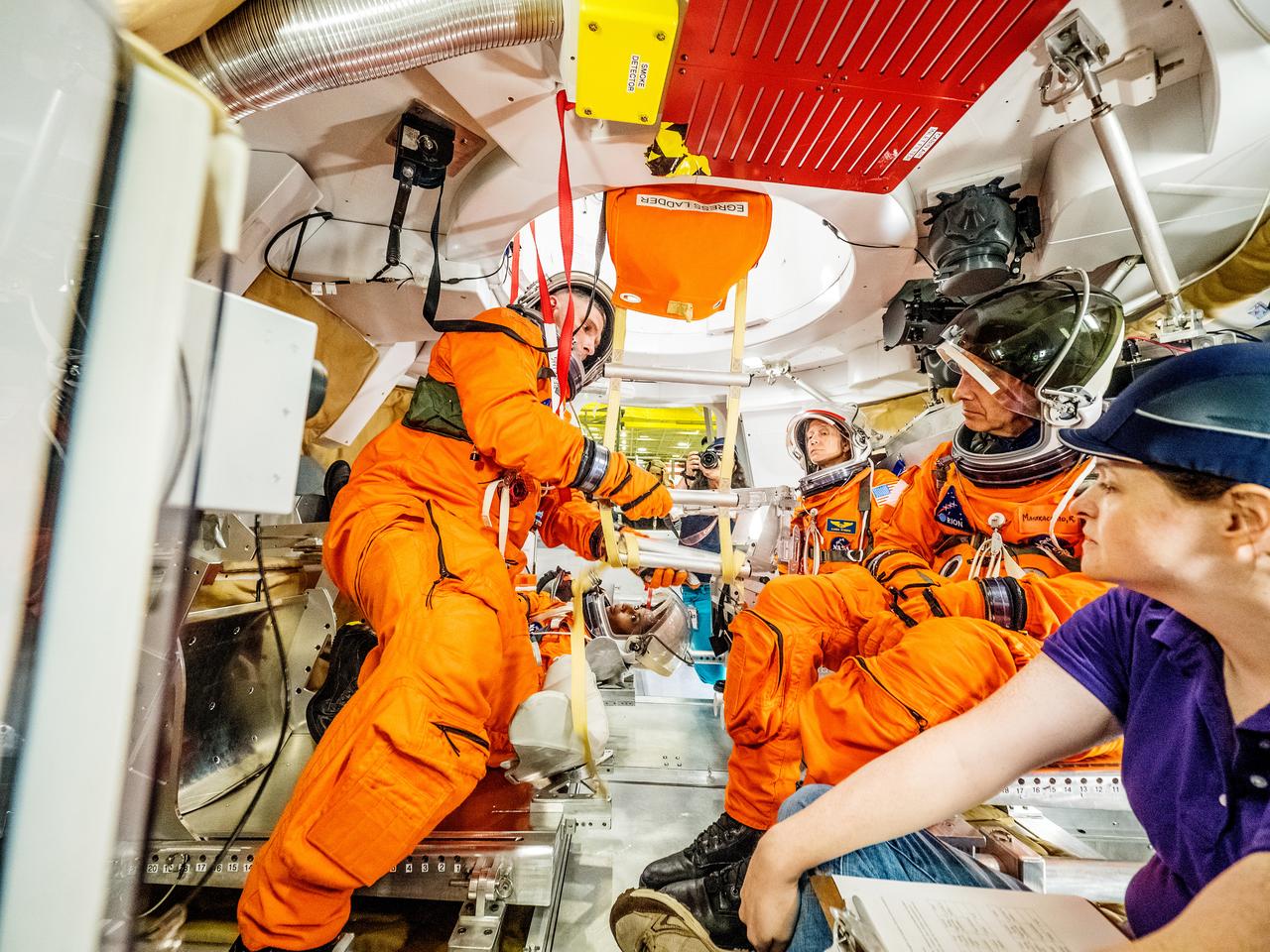
Engineers and astronauts conduct testing in a representative model of the Orion spacecraft at NASA’s Johnson Space Center in Houston on July 28, 2016 to gather the crew's feedback on the design of the docking hatch and on post-landing equipment operations. ..While the crew will primarily use the side hatch for entry and exit on Earth and the docking hatch to travel between Orion and a habitation module on long-duration deep space missions, the crew will need to be able to exit out of the docking hatch if wave heights in the Pacific Ocean upon splashdown are too high. The work is being done to help ensure all elements of Orion's design are safe and effective for the crew to use on future missions on the journey to Mars.
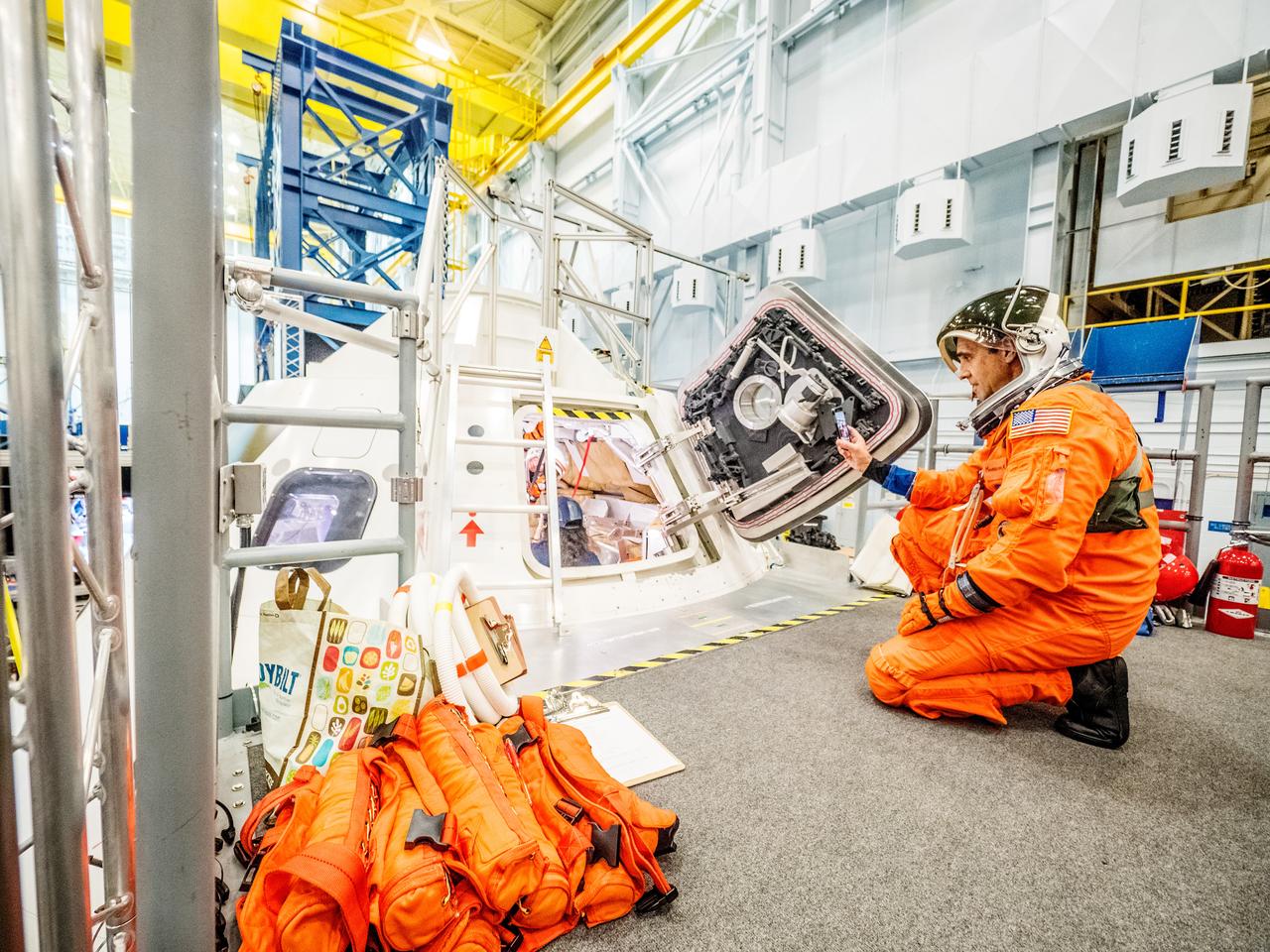
Engineers and astronauts conduct testing in a representative model of the Orion spacecraft at NASA’s Johnson Space Center in Houston on July 28, 2016 to gather the crew's feedback on the design of the docking hatch and on post-landing equipment operations. ..While the crew will primarily use the side hatch for entry and exit on Earth and the docking hatch to travel between Orion and a habitation module on long-duration deep space missions, the crew will need to be able to exit out of the docking hatch if wave heights in the Pacific Ocean upon splashdown are too high. The work is being done to help ensure all elements of Orion's design are safe and effective for the crew to use on future missions on the journey to Mars.
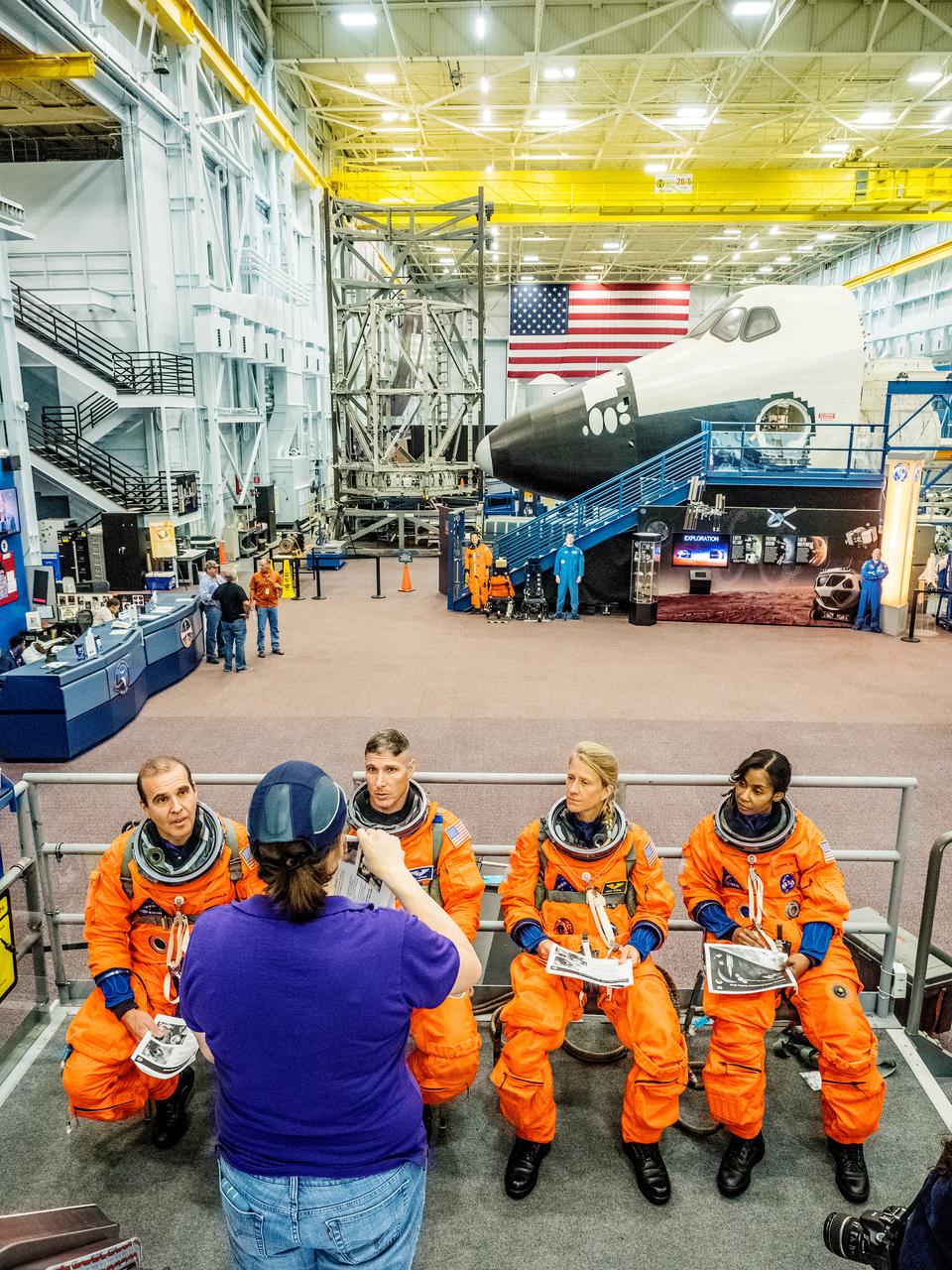
Engineers and astronauts conduct testing in a representative model of the Orion spacecraft at NASA’s Johnson Space Center in Houston on July 28, 2016 to gather the crew's feedback on the design of the docking hatch and on post-landing equipment operations. ..While the crew will primarily use the side hatch for entry and exit on Earth and the docking hatch to travel between Orion and a habitation module on long-duration deep space missions, the crew will need to be able to exit out of the docking hatch if wave heights in the Pacific Ocean upon splashdown are too high. The work is being done to help ensure all elements of Orion's design are safe and effective for the crew to use on future missions on the journey to Mars.
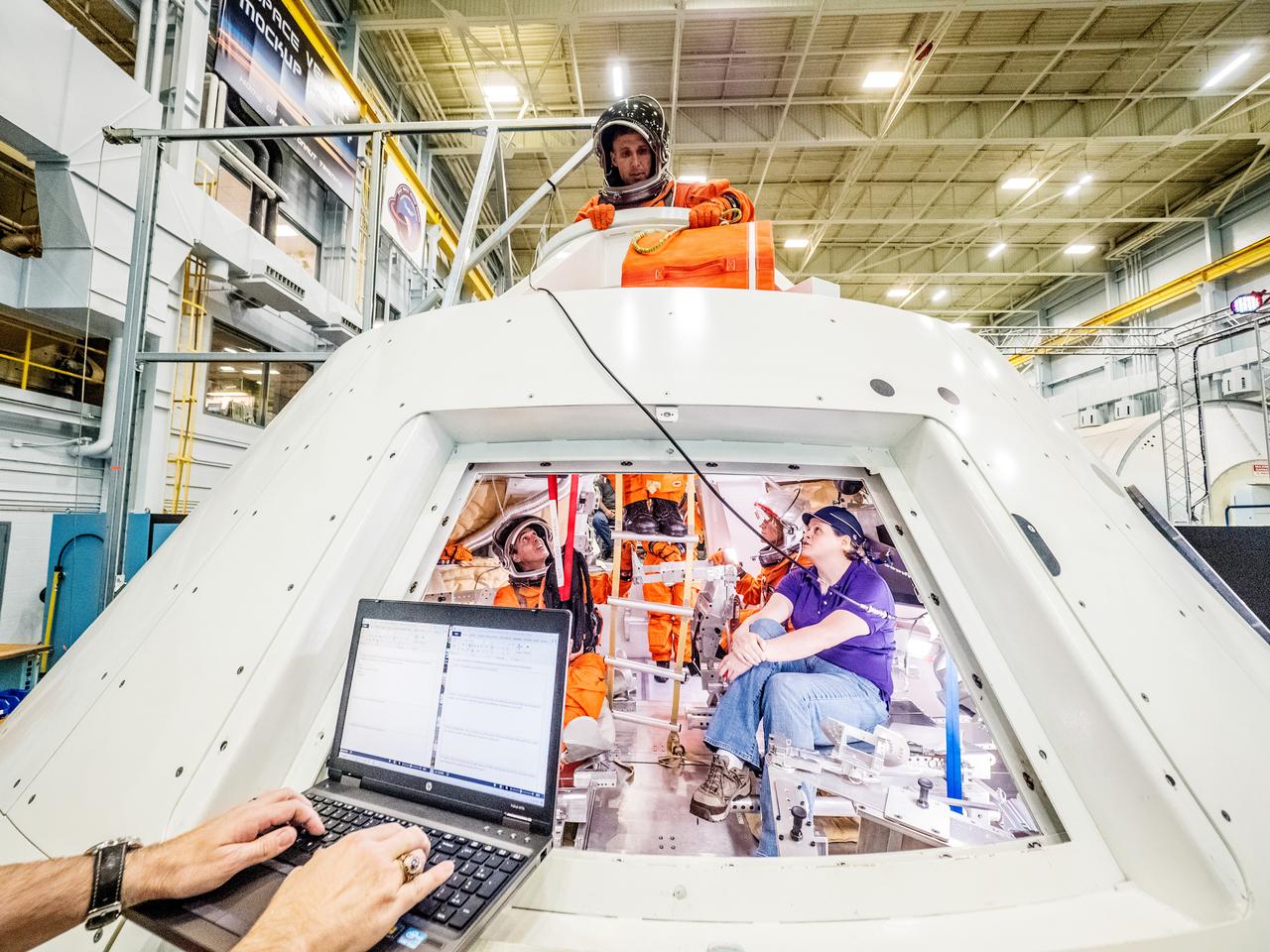
Engineers and astronauts conduct testing in a representative model of the Orion spacecraft at NASA’s Johnson Space Center in Houston on July 28, 2016 to gather the crew's feedback on the design of the docking hatch and on post-landing equipment operations. ..While the crew will primarily use the side hatch for entry and exit on Earth and the docking hatch to travel between Orion and a habitation module on long-duration deep space missions, the crew will need to be able to exit out of the docking hatch if wave heights in the Pacific Ocean upon splashdown are too high. The work is being done to help ensure all elements of Orion's design are safe and effective for the crew to use on future missions on the journey to Mars.

Engineers and astronauts conduct testing in a representative model of the Orion spacecraft at NASA’s Johnson Space Center in Houston on July 28, 2016 to gather the crew's feedback on the design of the docking hatch and on post-landing equipment operations. ..While the crew will primarily use the side hatch for entry and exit on Earth and the docking hatch to travel between Orion and a habitation module on long-duration deep space missions, the crew will need to be able to exit out of the docking hatch if wave heights in the Pacific Ocean upon splashdown are too high. The work is being done to help ensure all elements of Orion's design are safe and effective for the crew to use on future missions on the journey to Mars.
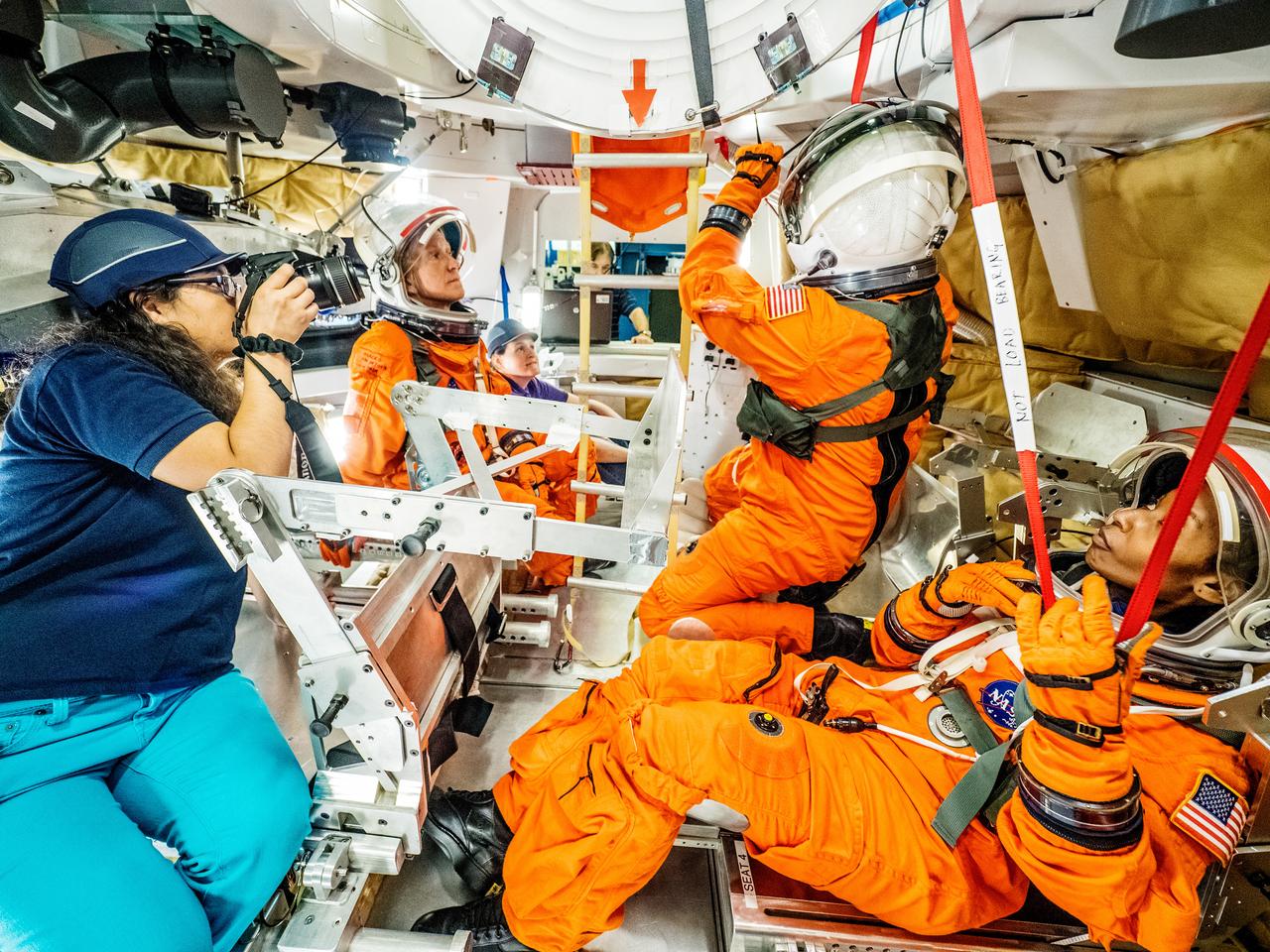
Engineers and astronauts conduct testing in a representative model of the Orion spacecraft at NASA’s Johnson Space Center in Houston on July 28, 2016 to gather the crew's feedback on the design of the docking hatch and on post-landing equipment operations. ..While the crew will primarily use the side hatch for entry and exit on Earth and the docking hatch to travel between Orion and a habitation module on long-duration deep space missions, the crew will need to be able to exit out of the docking hatch if wave heights in the Pacific Ocean upon splashdown are too high. The work is being done to help ensure all elements of Orion's design are safe and effective for the crew to use on future missions on the journey to Mars.
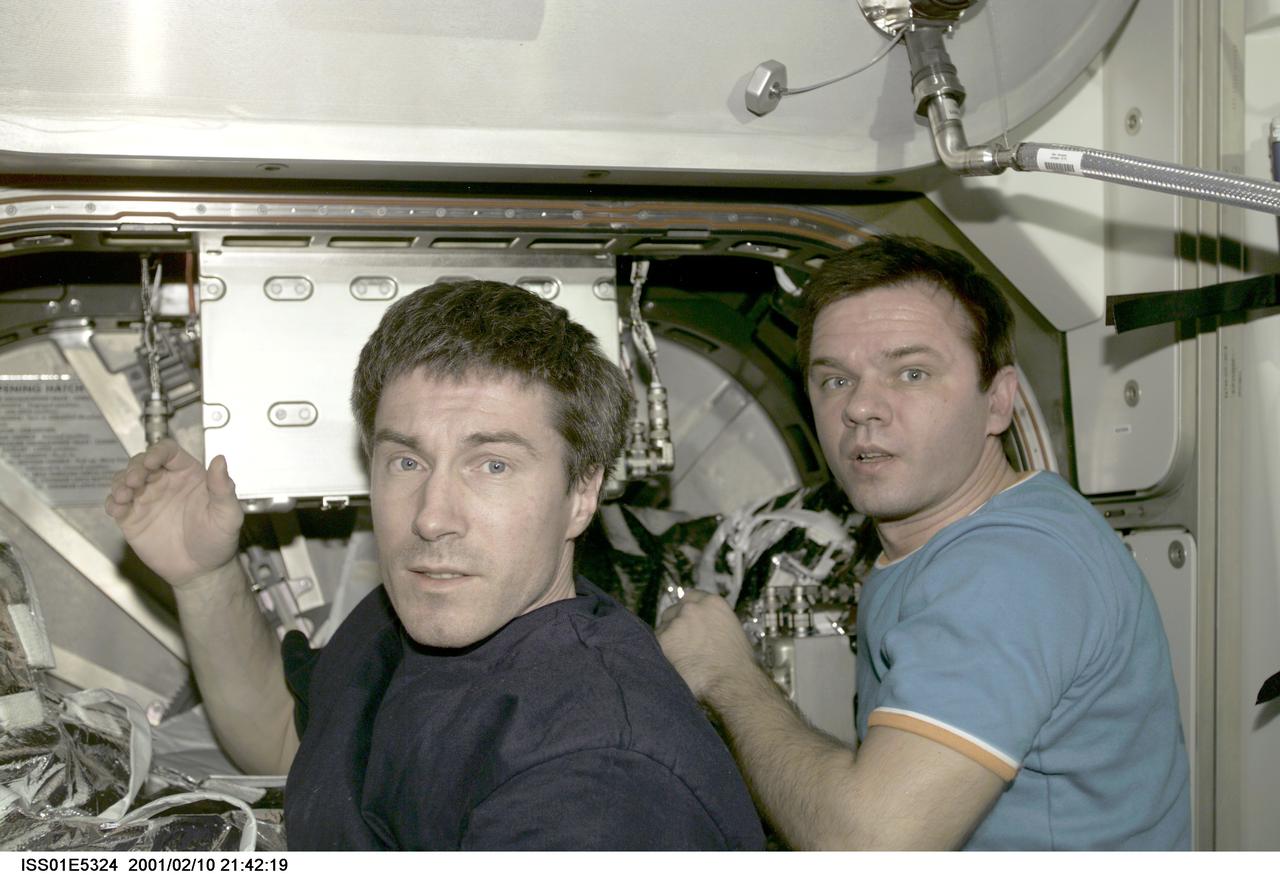
ISS-01-E-5324 (10 February 2001) --- Cosmonauts Sergei K. Krikalev (left), Expedition One flight engineer, and Yuri P. Gidzenko, Soyuz commander, are pictured at the hatch that leads from the Unity node into the newly attached Destiny laboratory. The picture was recorded with a digital still camera on the day the hatch was initially opened.
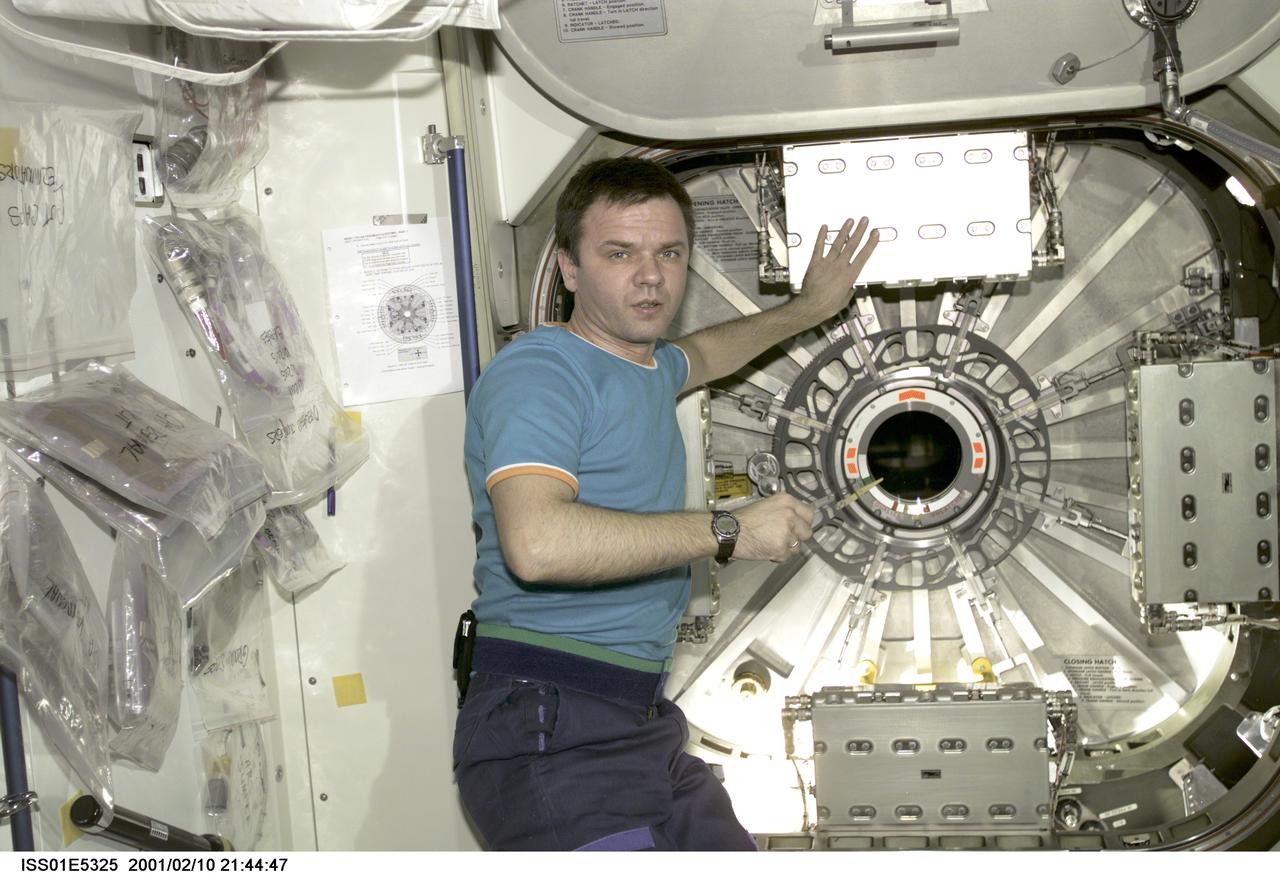
ISS01-E-5325 (10 February 2001) --- Cosmonaut Yuri P. Gidzenko, Expedition One Soyuz commander, stands near the hatch leading from the Unity node into the newly attached Destiny laboratory aboard the International Space Station (ISS). The picture was recorded with a digital still camera on the day the hatch was initially opened.
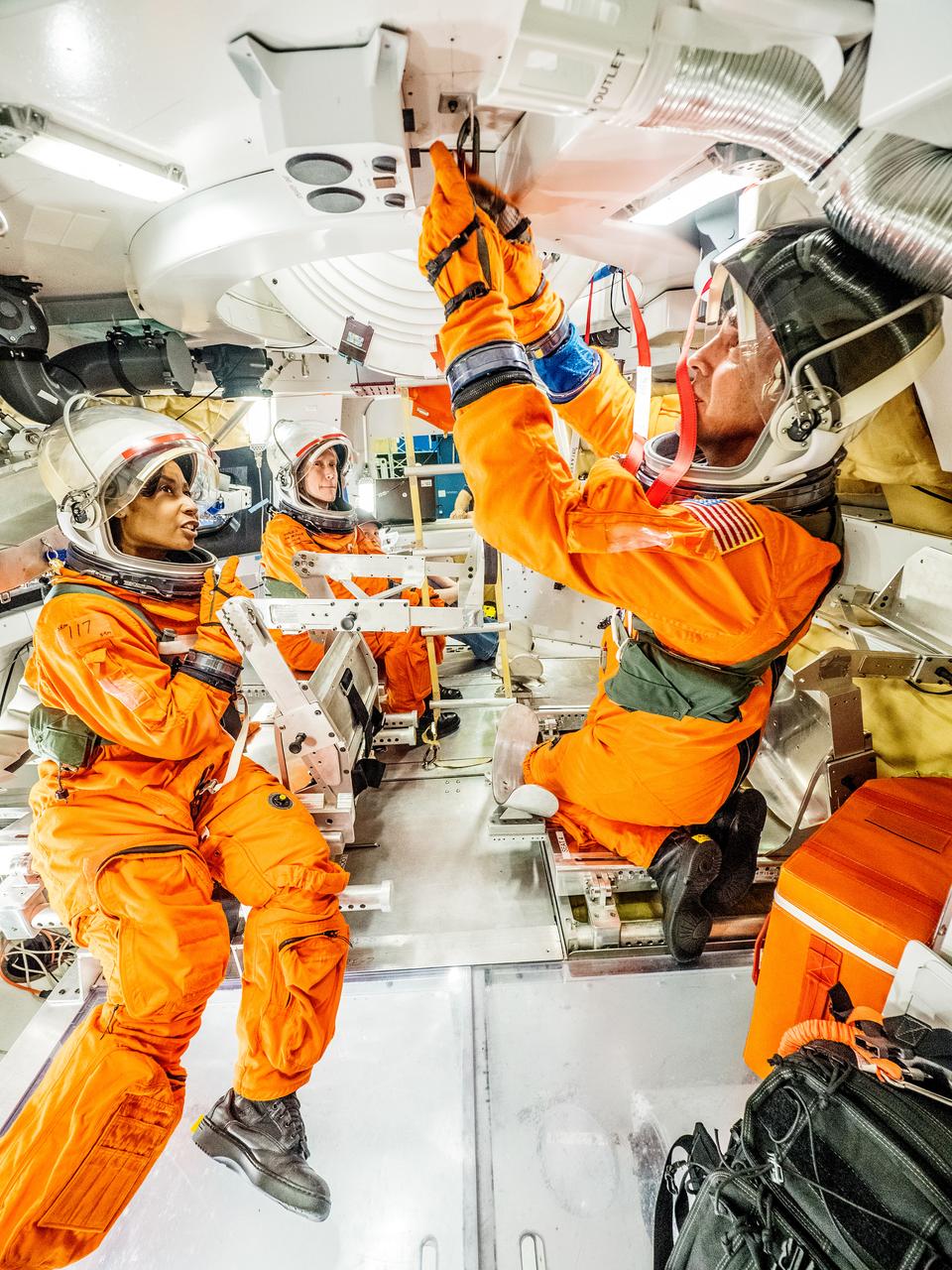
Engineers and astronauts conduct testing in a representative model of the Orion spacecraft at NASA’s Johnson Space Center in Houston on July 28, 2016 to gather the crew's feedback on the design of the docking hatch and on post-landing equipment operations. While the crew will primarily use the side hatch for entry and exit on Earth and the docking hatch to travel between Orion and a habitation module on long-duration deep space missions, the crew will need to be able to exit out of the docking hatch if wave heights in the Pacific Ocean upon splashdown are too high. The work is being done to help ensure all elements of Orion's design are safe and effective for the crew to use on future missions on the journey to Mars. Image Credit: NASA / Radislav Sinyak
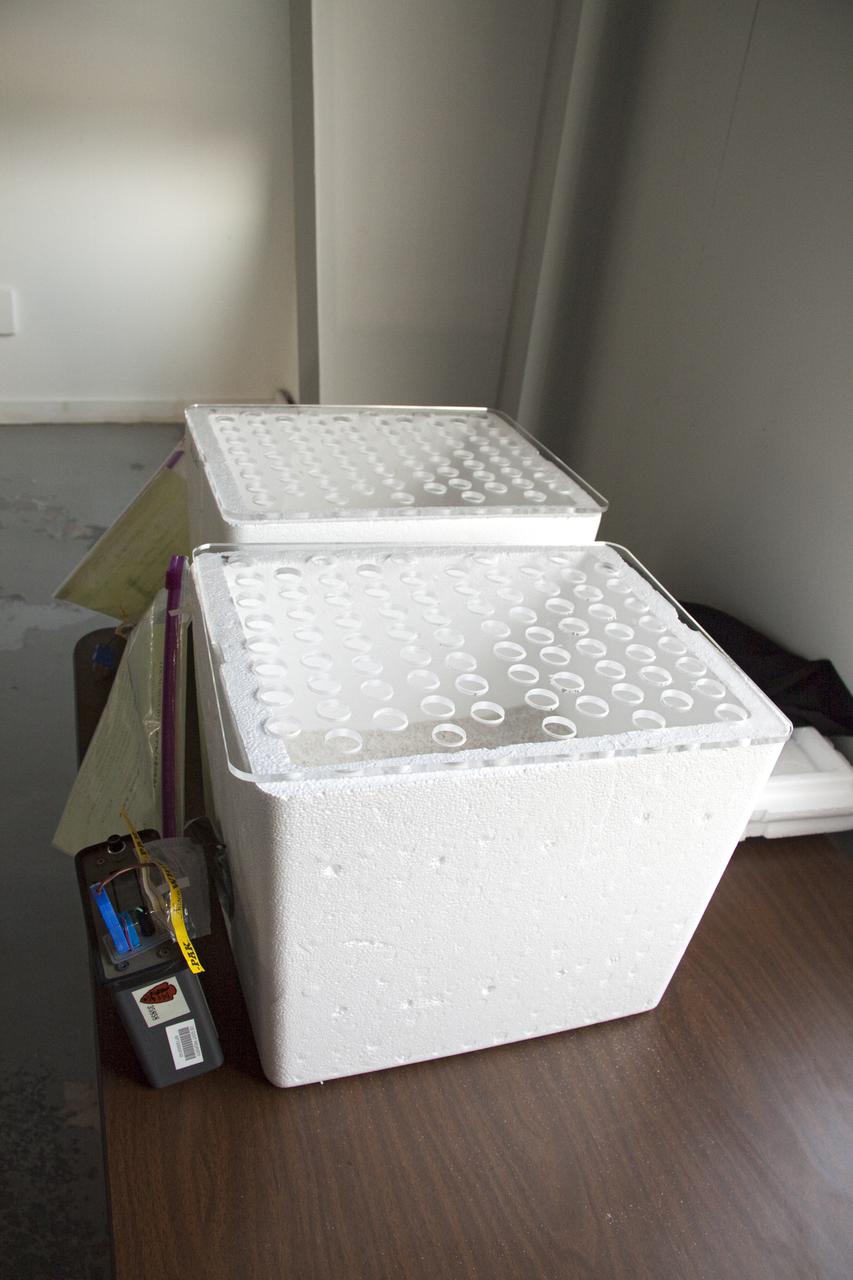
CAPE CANAVERAL, Fla. In a secure facility located at NASA's Kennedy Space Center in Florida, two Styrofoam boxes containing endangered sea turtle eggs brought from beaches along the northern U.S. Gulf Coast are being monitored in a climate-controlled room until incubation is complete. Jane Provancha, lead biologist at the hatchery is heading-up the project at Kennedy. After hatching, the turtles will be set free on a Kennedy Space Center_Canaveral National Seashore beach. The Northern Gulf Rescue Operations relocation and release work effort is supported by the U.S. Fish and Wildlife Service, the Florida Fish and Wildlife Conservation Commission, the National Park Service, NOAA, FedEx and conservationists to help minimize the risk to this year's sea turtle hatchlings from impacts of the BP Deepwater Horizon oil spill in the Gulf of Mexico. Photo credit: NASA_Troy Cryder
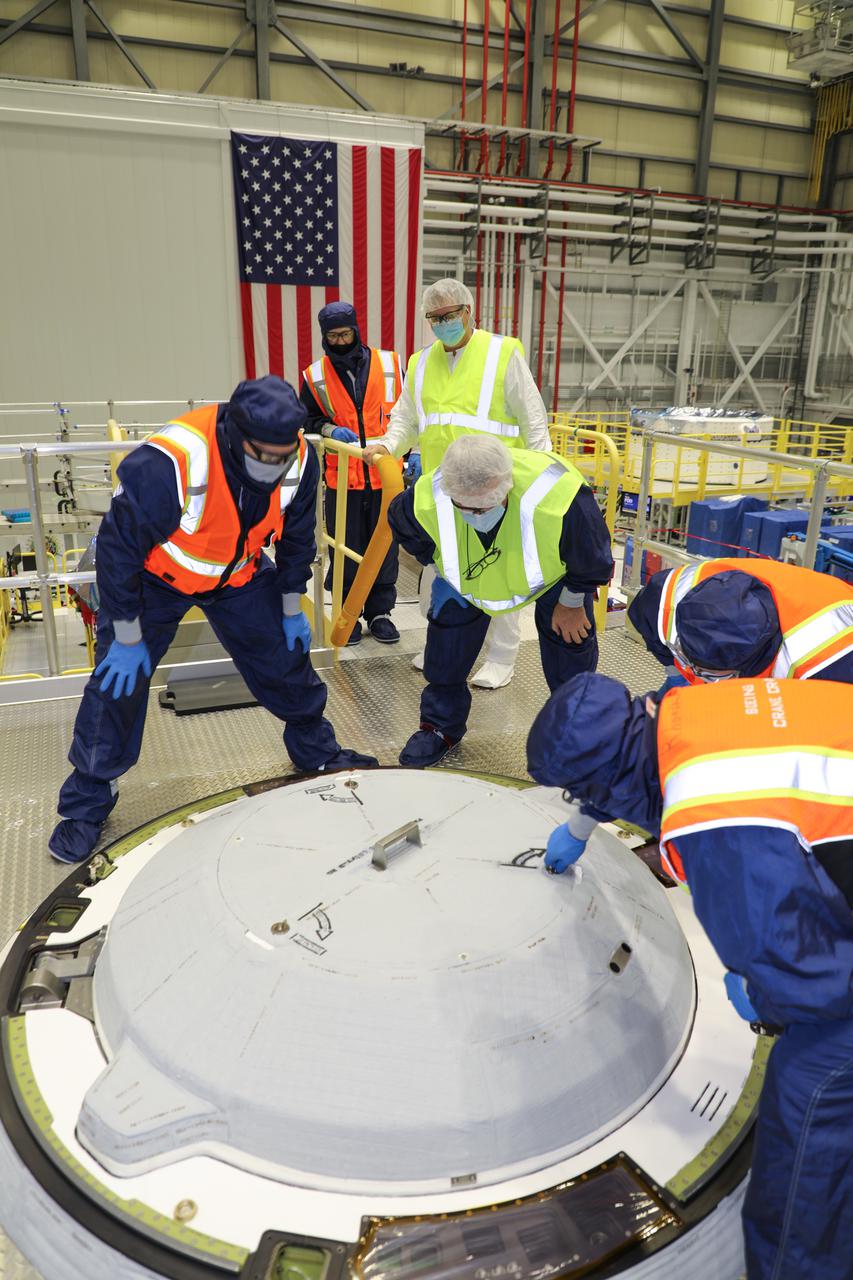
Technicians work on the NASA Docking System (NDS) hatch installation in the Commercial Crew and Cargo Processing Facility at Kennedy Space Center in Florida on Jan. 2, 2021. The NDS cover was installed on Boeing’s Starliner spacecraft in preparation for the company’s second Orbital Flight Test (OFT-2), as part of NASA’s Commercial Crew Program. The cover is designed to protect the components that connect the spacecraft to the International Space Station.
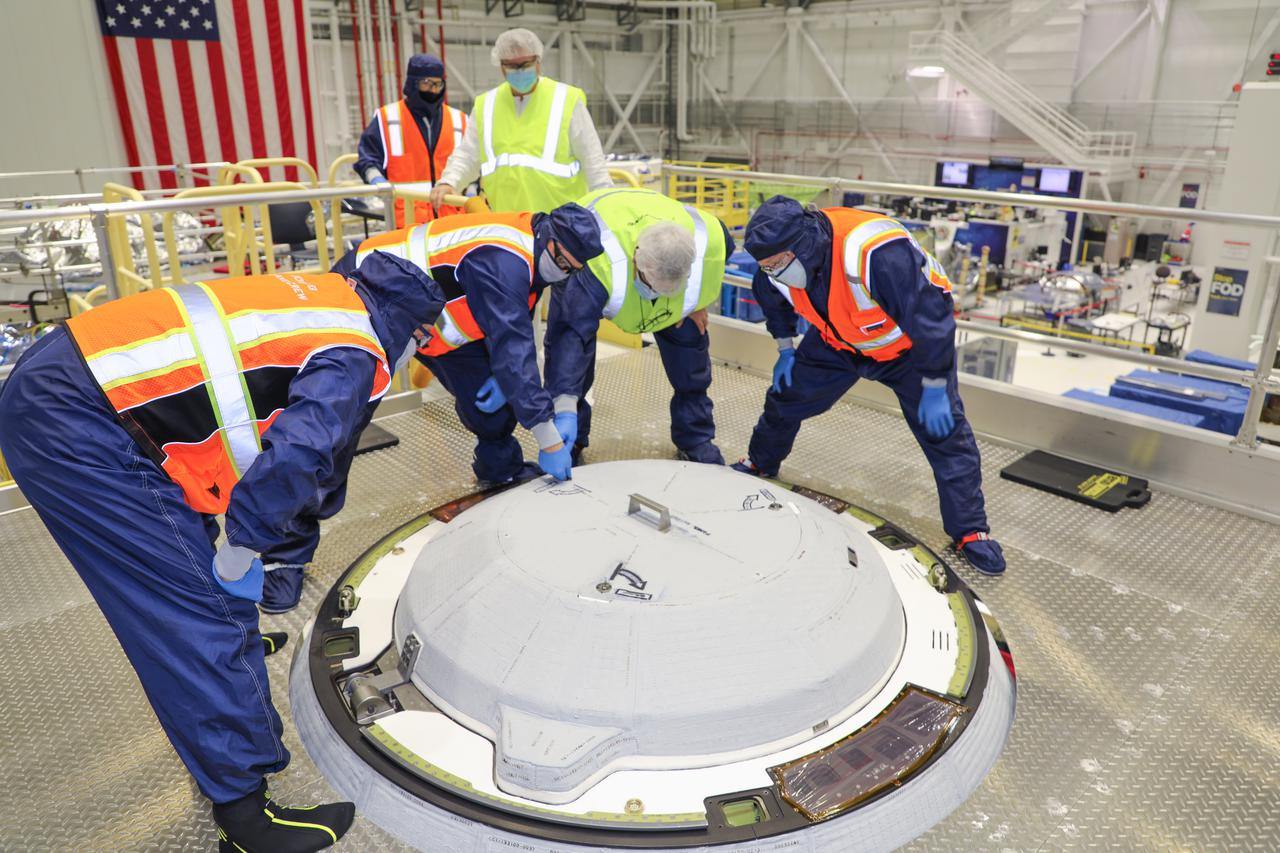
Technicians work on the NASA Docking System (NDS) cover hatch installation in the Commercial Crew and Cargo Processing Facility at Kennedy Space Center in Florida on Jan. 2, 2021. The NDS cover was installed on Boeing’s Starliner spacecraft in preparation for the company’s second Orbital Flight Test (OFT-2), as part of NASA’s Commercial Crew Program. The cover is designed to protect the components that connect the spacecraft to the International Space Station.
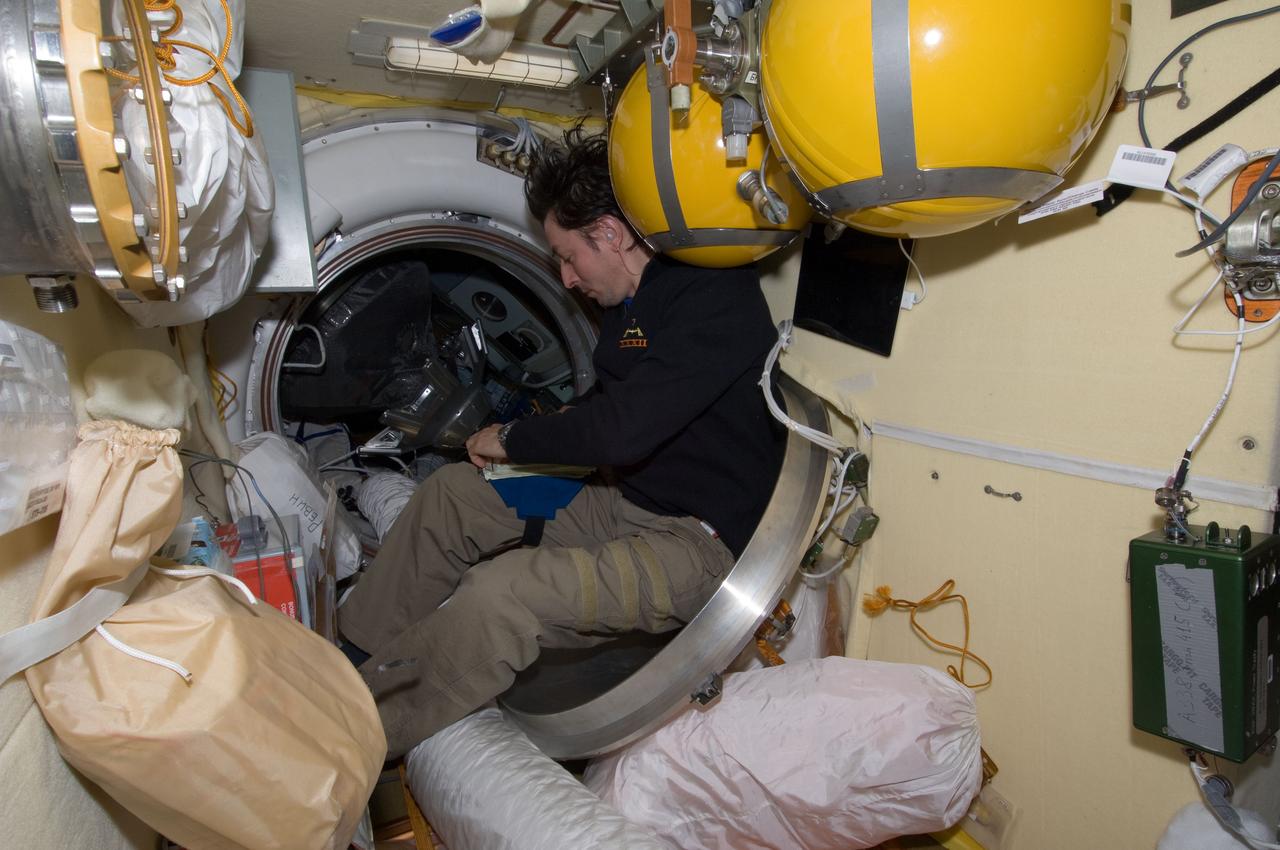
ISS032-E-020528 (19 Aug. 2012) --- Russian cosmonaut Sergei Revin, Expedition 32 flight engineer, works near a hatch on the International Space Station.
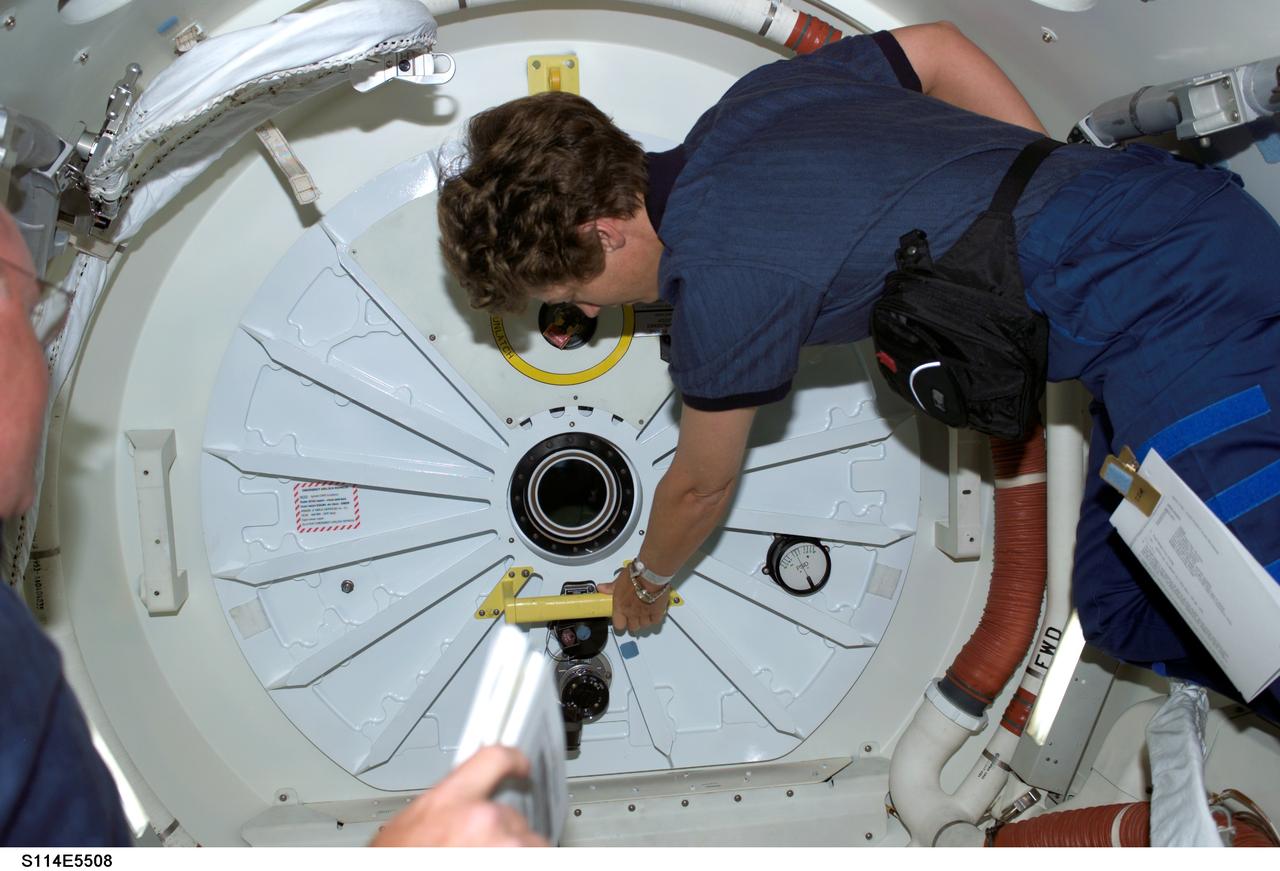
S114-E-5508 (28 July 2005) --- Astronaut Eileen M. Collins, STS-114 commander, prepares to open the hatch that will lead her and the entire Discovery crew into the International Space Station. This was just one highlight of a very busy day that earlier saw the flawless rendezvous and docking operations between the shuttle and the orbital outpost.
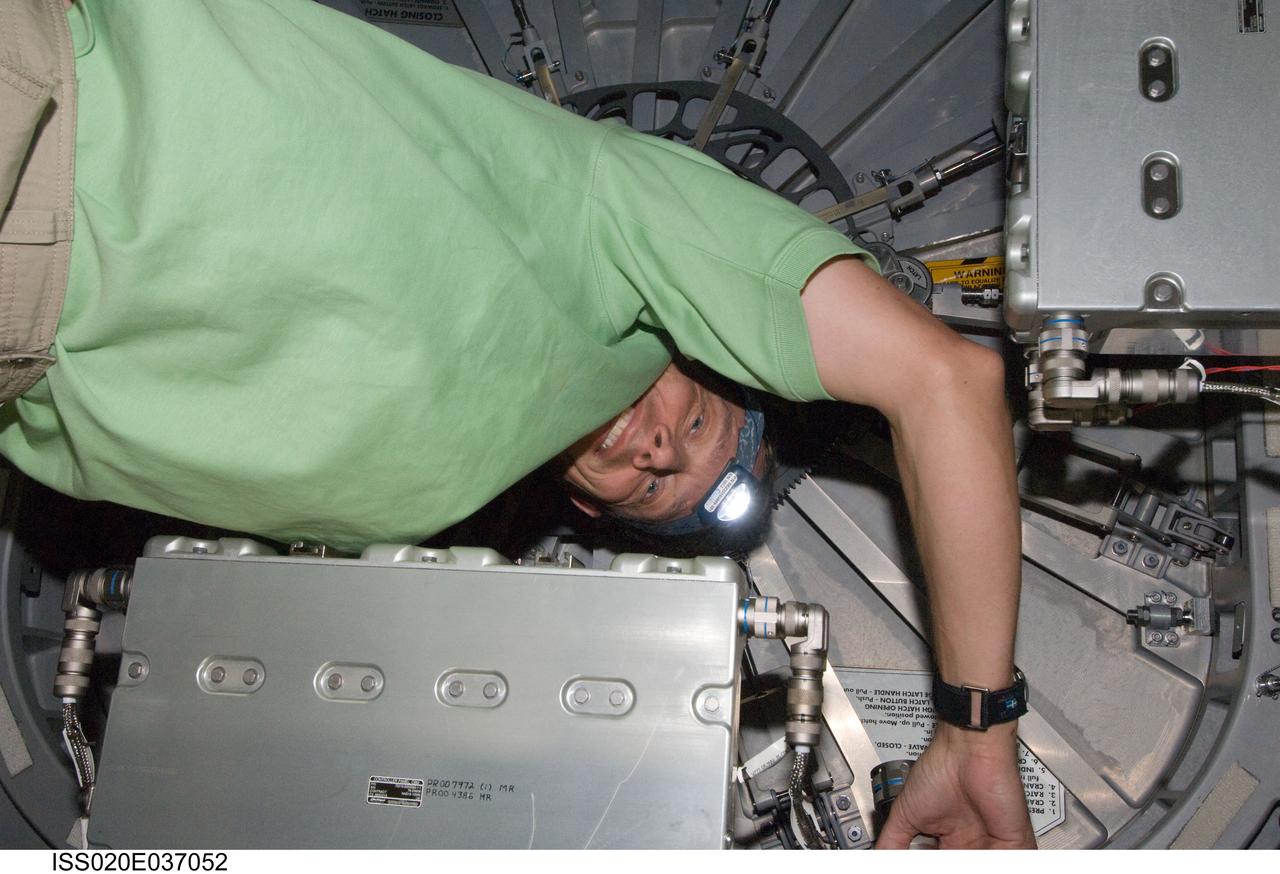
ISS020-E-037052 (31 Aug. 2009) --- European Space Agency astronaut Christer Fuglesang, STS-128 mission specialist, works near a hatch on the International Space Station while Space Shuttle Discovery remains docked with the station.
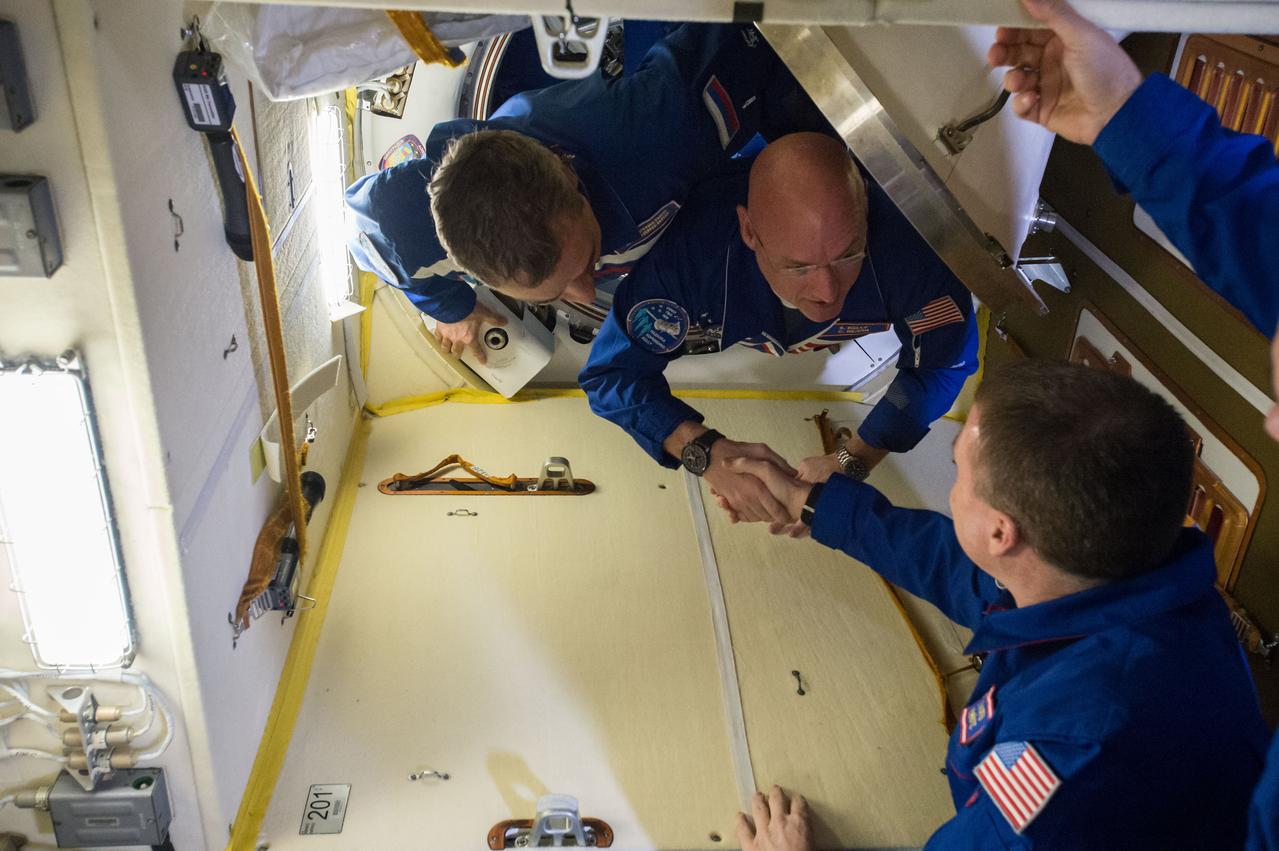
ISS043E056048 (03/28/2015) --- NASA astronaut Scott Kelly (top right) emerges through the hatch from the Soyuz spacecraft after launching from the Earth earlier to be welcomed by Expedition 43 commander and NASA astronaut Terry Virts aboard the International Space Station on Mar. 28, 2015. Russian cosmonaut Mikhail Kornienko (top left) is next out of the hatch to be welcomed aboard. These two will begin a unique one-year mission on board the station to study longer time frames in space to prepare for the journey to Mars.
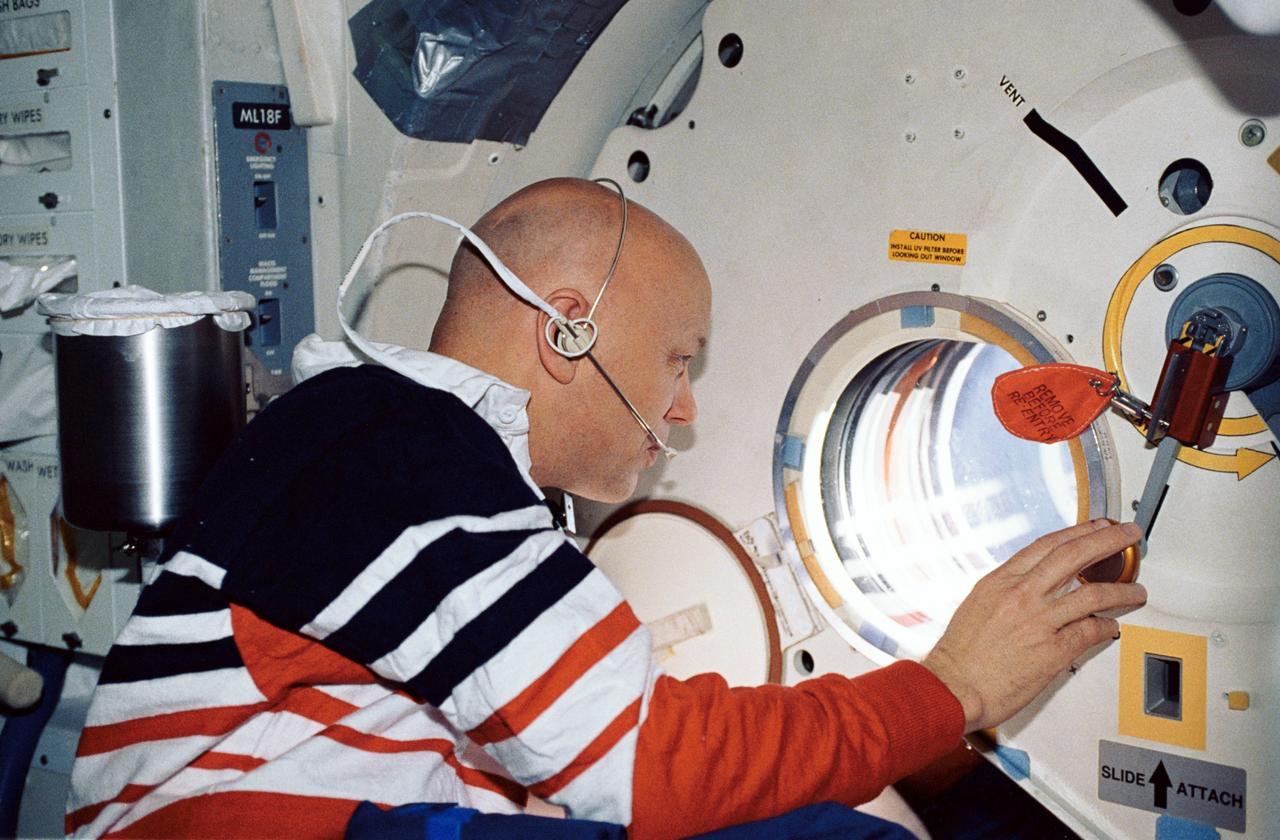
STS044-32-003 (24 Nov.-1 Dec. 1991) --- Astronaut F. Story Musgrave, STS-44 mission specialist, makes visual observations through Atlantis' hatch window. This photograph was among the first released by NASA following the eight day mission, dedicated to the Department of Defense.
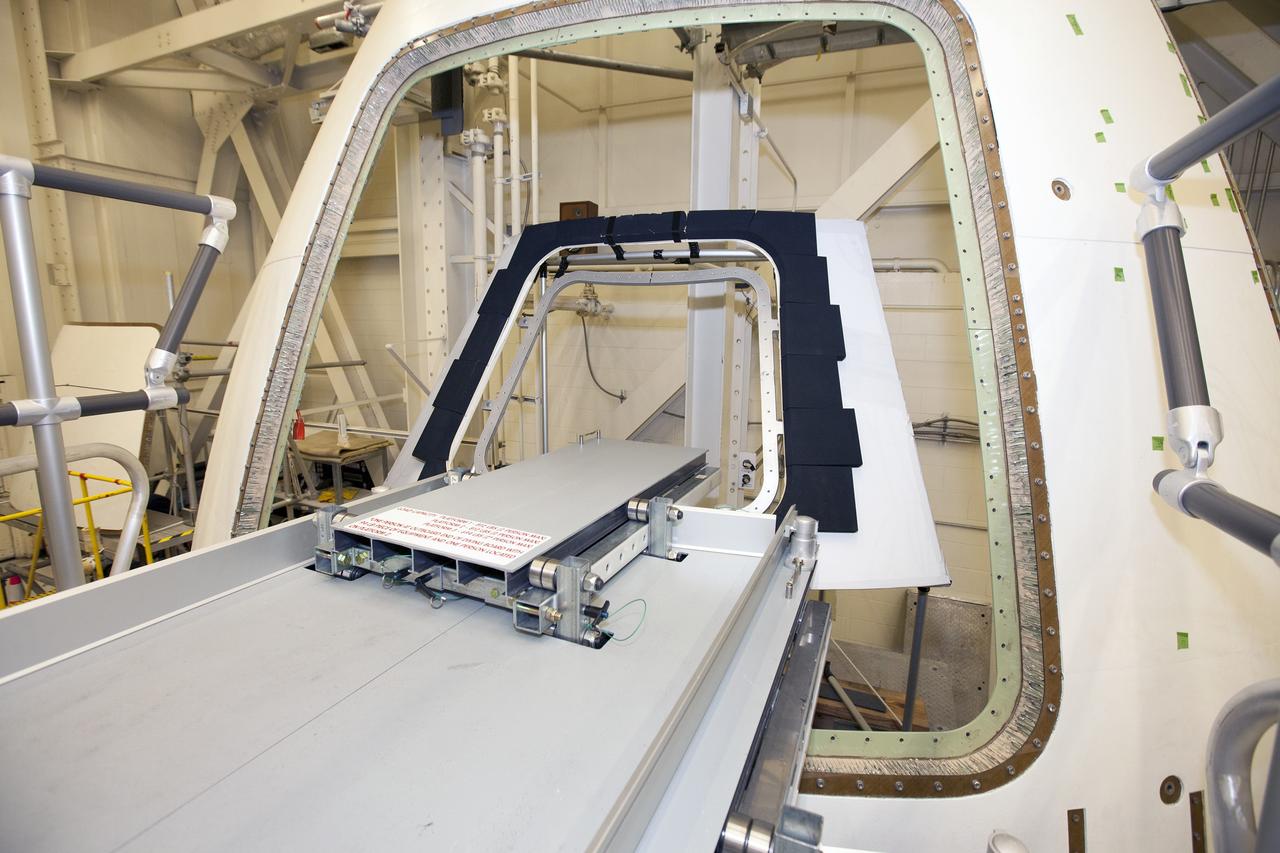
CAPE CANAVERAL, Fla. – Inside the Vehicle Assembly Building at NASA’s Kennedy Space Center in Florida, a GIZMO demonstration test is being performed on the ground test article Launch Abort System, or LAS, ogive panel and an Orion crew module simulator. An access platform and diving board have been added leading up to the mockup of the crew module hatch. The inner hatch has been removed The GIZMO is a pneumatically-balanced manipulator that will be used for installation of the hatches on the crew module and LAS for the uncrewed Exploration Flight Test-1 and Exploration Mission-1. The Ground Systems Development and Operations Program is running the test to demonstrate that the GIZMO can meet the reach and handling requirements for the task. Orion is the exploration spacecraft designed to carry astronauts to destinations not yet explored by humans, including an asteroid and Mars. It will have emergency abort capability, sustain the crew during space travel and provide safe re-entry from deep space return velocities. The first unpiloted test flight of the Orion is scheduled to launch later this year atop a Delta IV rocket and in 2017 on NASA’s Space Launch System rocket. For more information, visit http://www.nasa.gov/orion. Photo credit: NASA/Daniel Casper
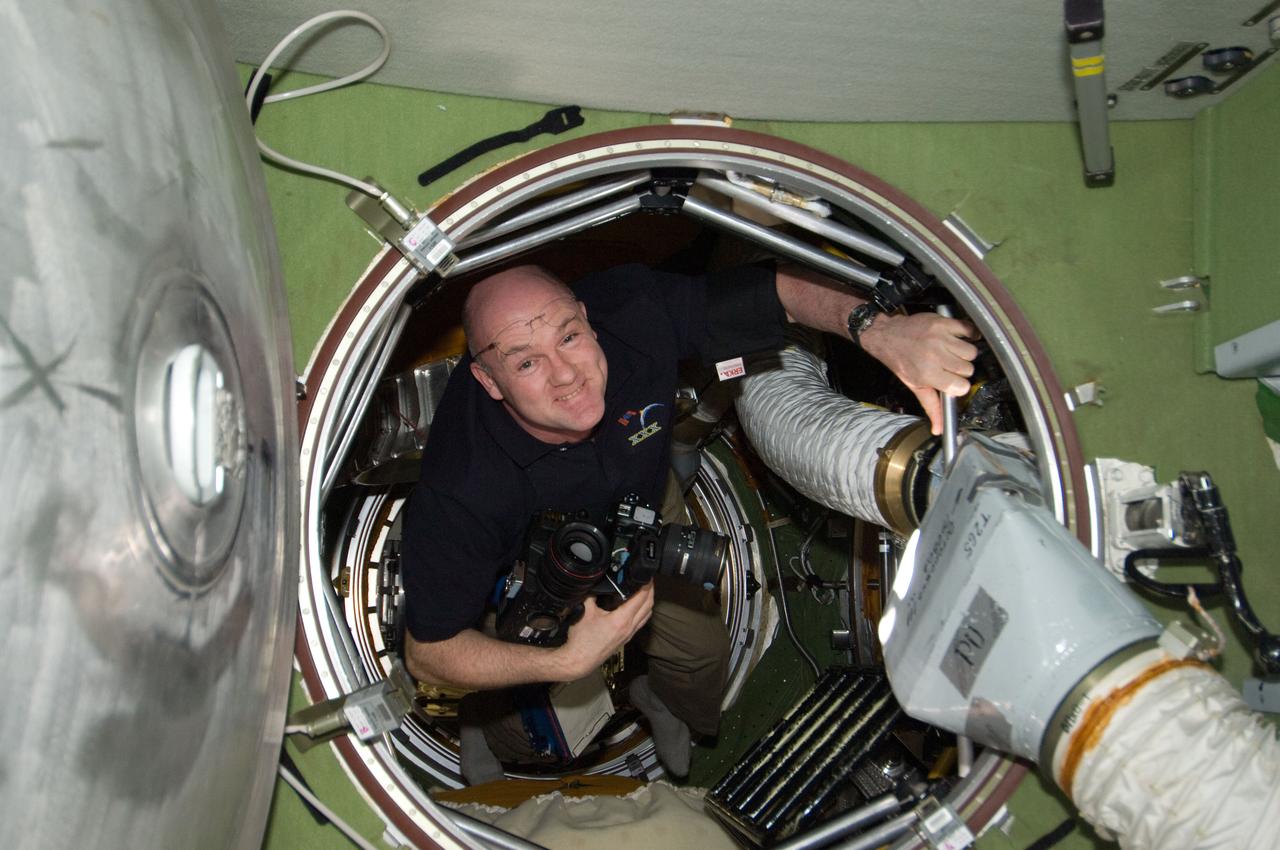
ISS030-E-238161 (19 April 2012) --- European Space Agency astronaut Andre Kuipers, Expedition 30 flight engineer, is pictured in a hatch on the International Space Station.
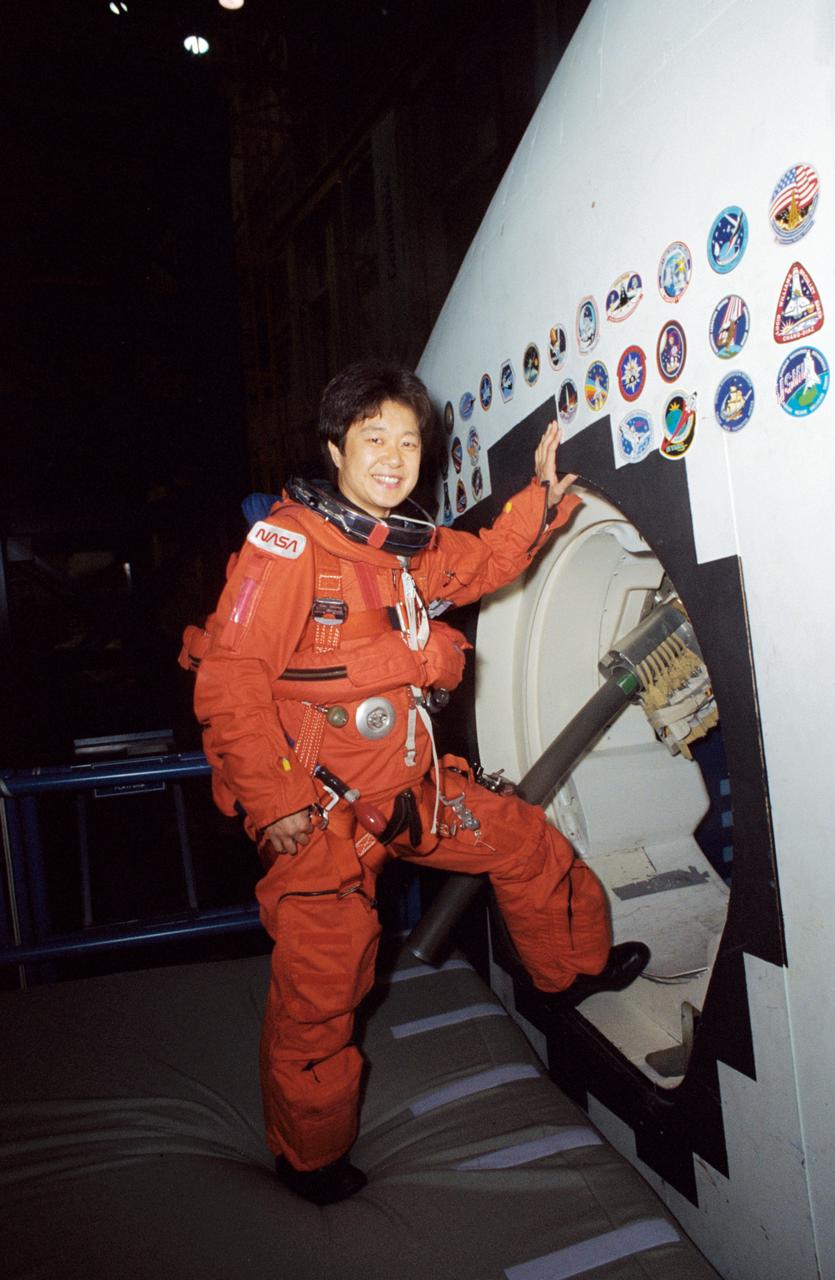
STS-65 Japanese Payload Specialist Chiaki Mukai takes a break from training at the Johnson Space Center (JSC). Wearing a training version of the orange launch and entry suit (LES), Mukai stands at the crew compartment trainer (CCT) side hatch in the Mockup and Integration Laboratory (MAIL) Bldg 9NE. Note the crew escape system (CES) pole device extending out the side hatch which would accommodate crewmembers in bailout from a troubled spacecraft. Mukai represents the National Space Development Agency (NASDA) of Japan and will serve as a payload specialist aboard Columbia, Orbiter Vehicle (OV) 102, during the STS-65 International Microgravity Laboratory 2 (IML-2) mission.

S120-E-008857 (4 Nov. 2007) --- Astronaut Peggy Whitson, Expedition 16 commander, prepares to close the hatch in the Pressurized Mating Adapter (PMA-2) of the International Space Station after the STS-120 crewmembers boarded Space Shuttle Discovery for their return trip home. Hatches were closed between the station and the shuttle at 2:03 p.m. (CST) on Nov. 4.
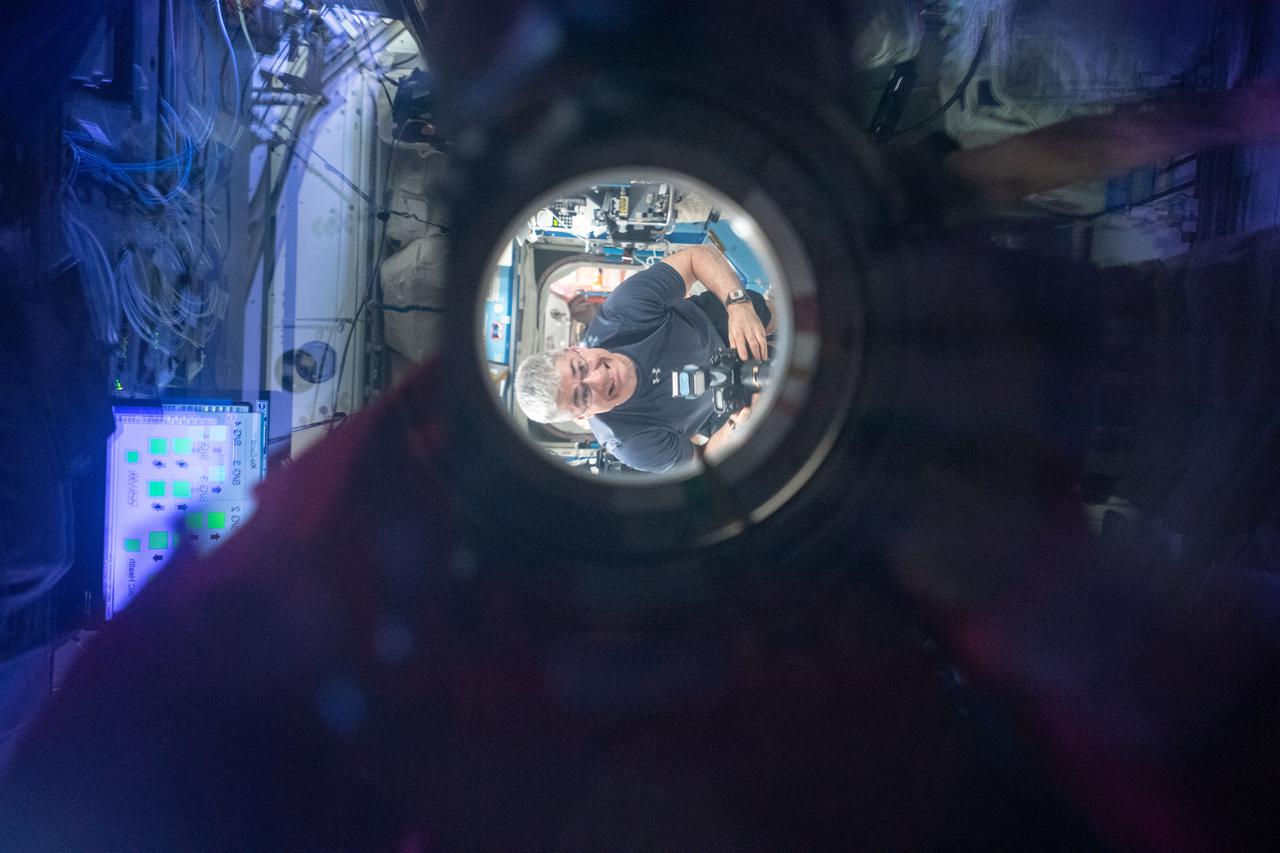
View of Mark Vande Hei through hatch window during Expedition 66.
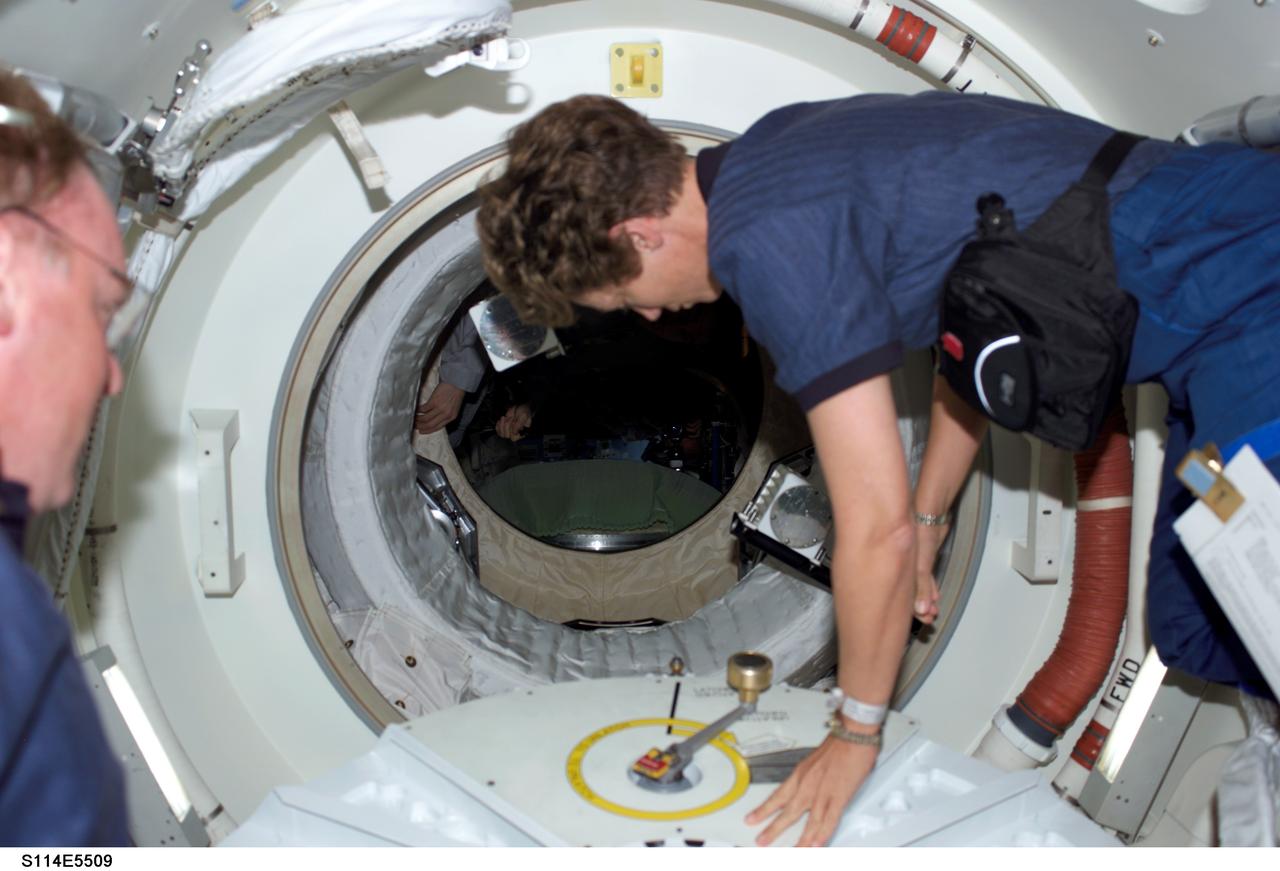
S114-E-5509 (28 July 2005) --- Astronaut Eileen M. Collins, STS-114 commander, has just opened the hatch that will lead her and the entire Discovery crew into the International Space Station. Astronaut Andrew S.W. Thomas, mission specialist, is partially visible at left edge of frame. This was just one highlight of a very busy day that earlier saw the flawless rendezvous and docking operations between the shuttle and the orbital outpost.
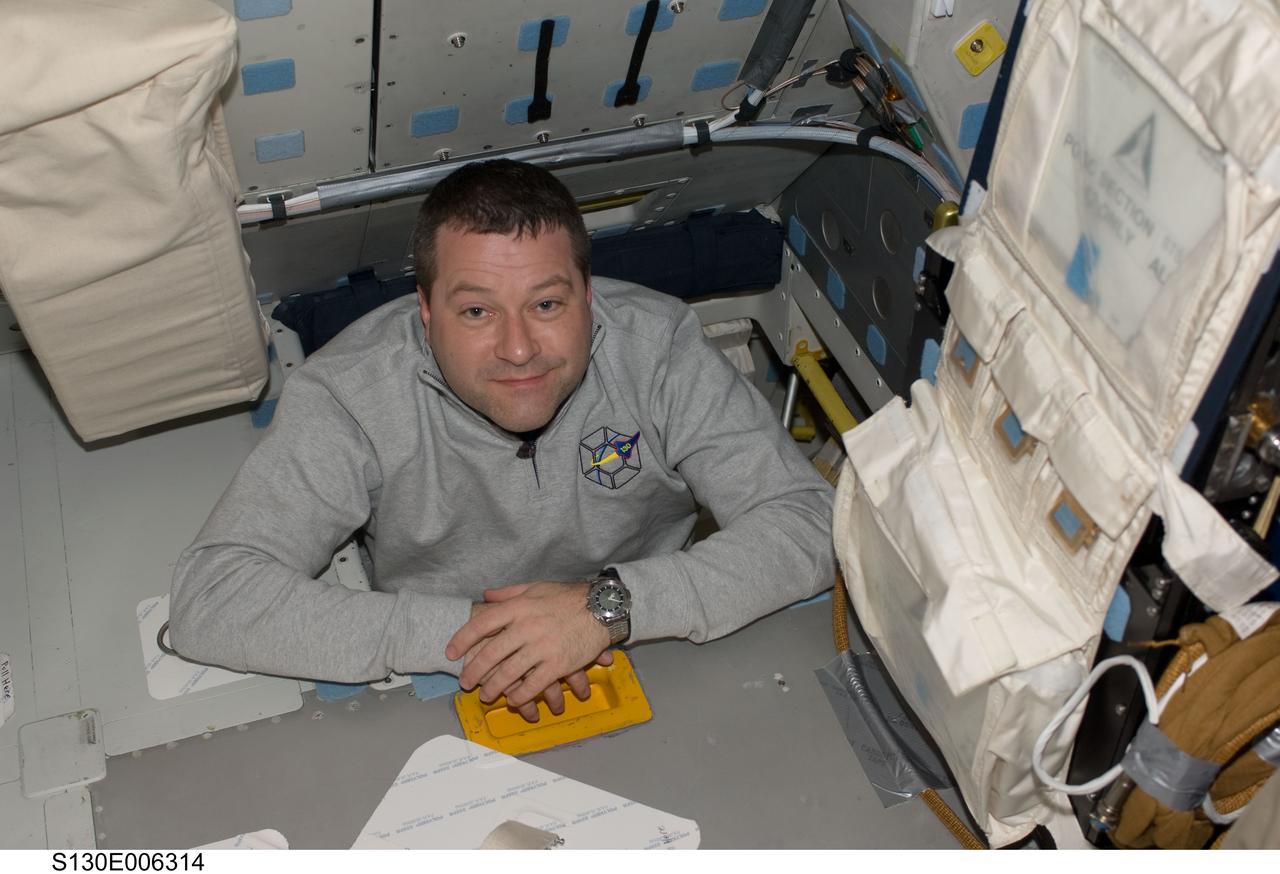
S130-E-006314 (9 Feb. 2010) --- NASA astronaut Nicholas Patrick, STS-130 mission specialist, is pictured in the hatch which connects the flight deck and middeck of space shuttle Endeavour during flight day two activities.
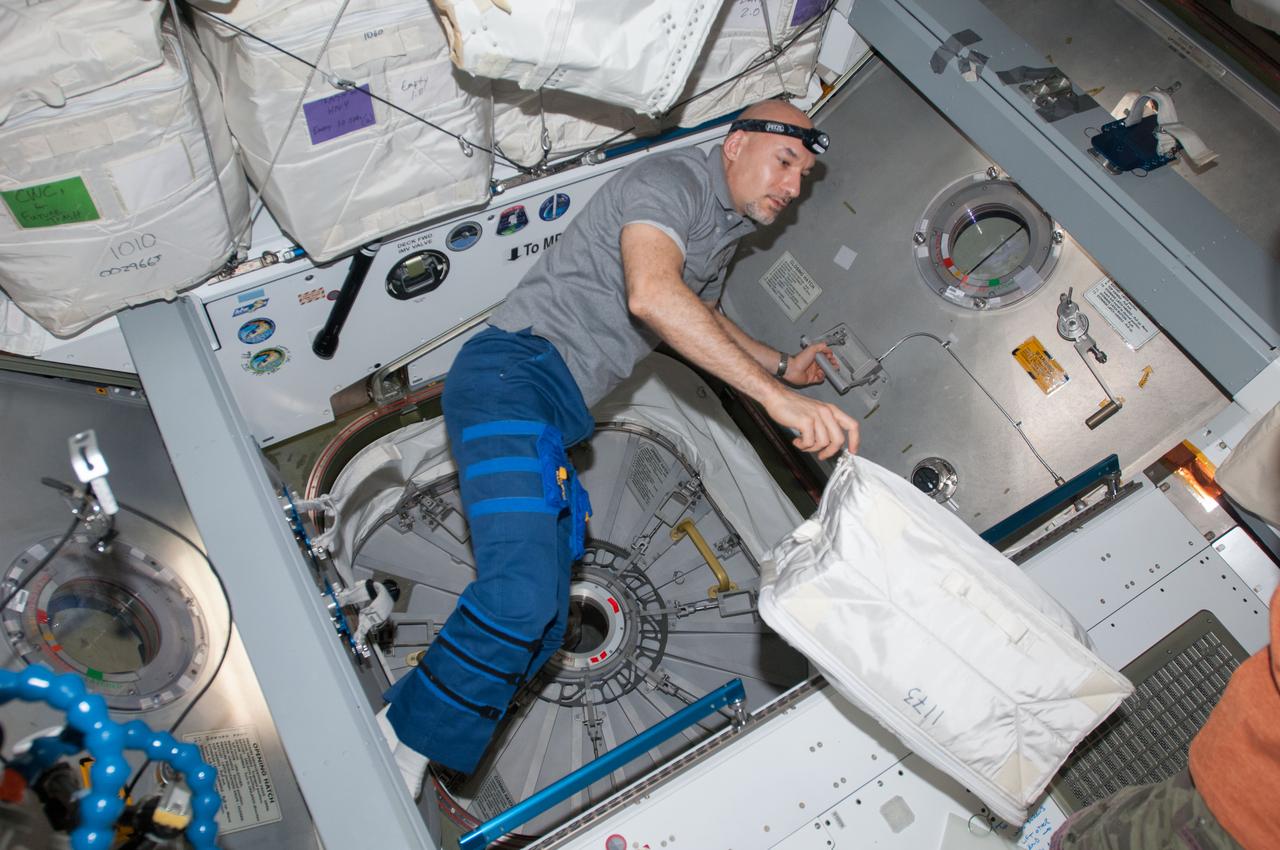
ISS036-E-030213 (9 Aug. 2013) --- European Space Agency astronaut Luca Parmitano, Expedition 36 flight engineer, prepares to open the hatch to the newly attached Japanese "Kounotori" H2 Transfer Vehicle-4 (HTV-4) docked to the International Space Station's Harmony node.
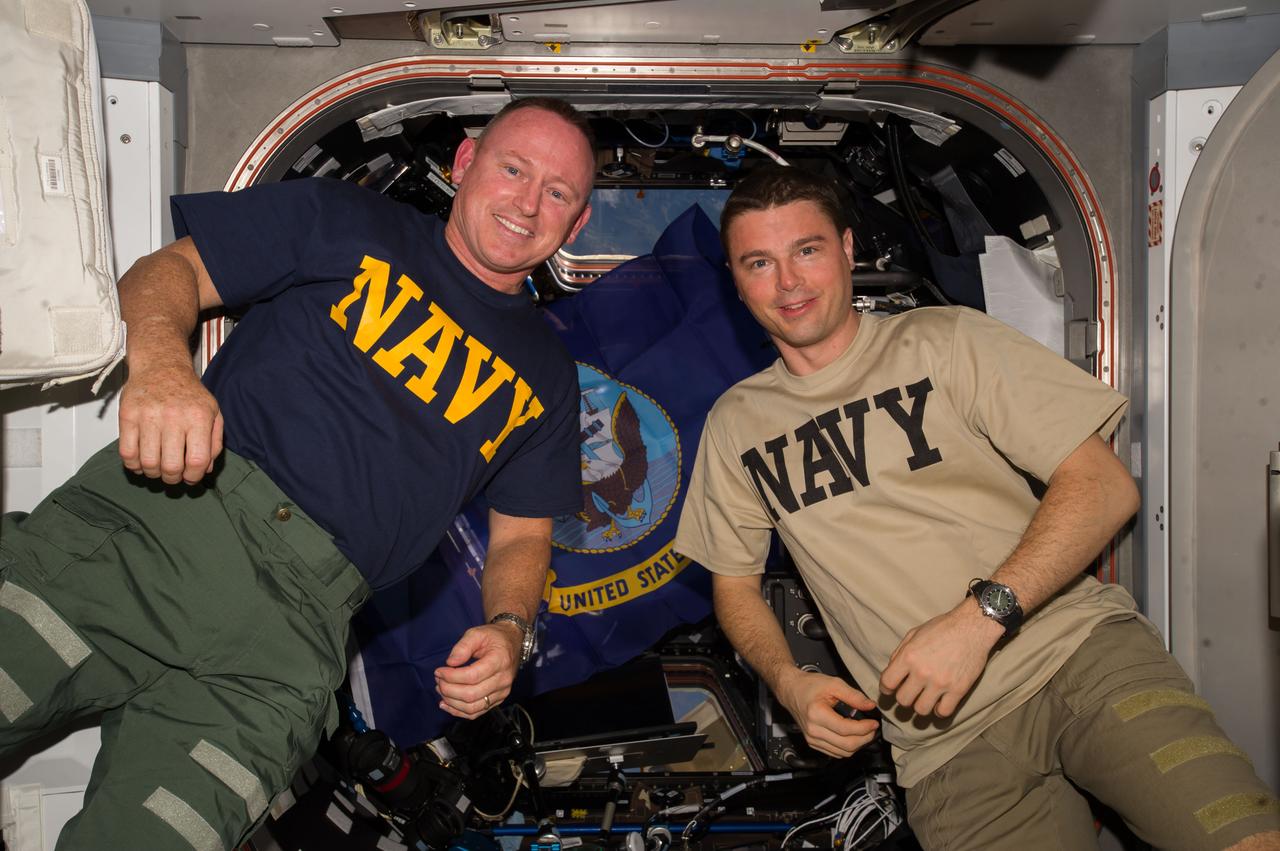
ISS041-E-046056 (28 Sept. 2014) --- NASA astronauts Barry Wilmore (Captain, U.S. Navy) (left) and Reid Wiseman (Commander, U.S. Navy), both Expedition 41 flight engineers, pose for a photo near the hatch between the Tranquility node and the Cupola of the International Space Station.
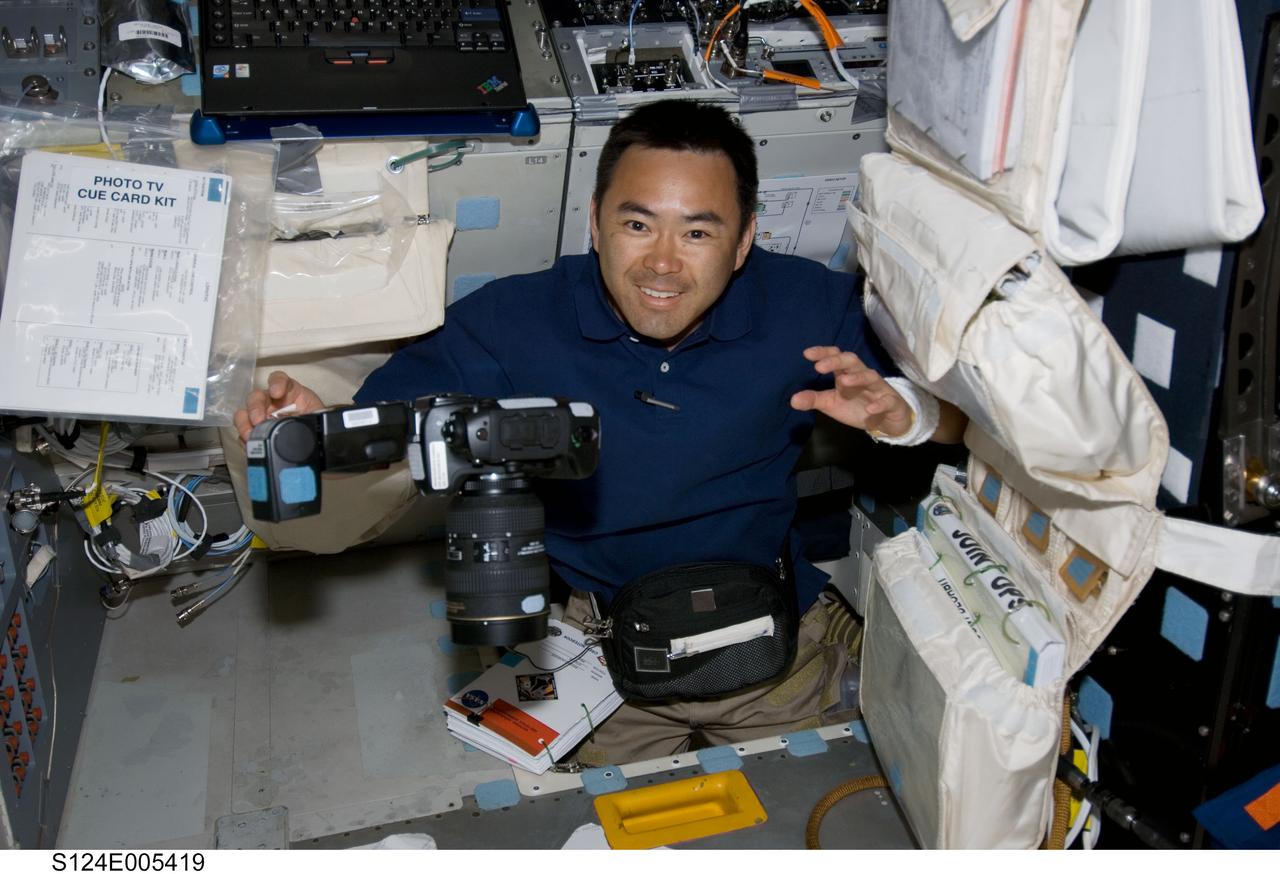
S124-E-005419 (1 June 2008) --- Japan Aerospace Exploration Agency (JAXA) astronaut Akihiko Hoshide, STS-124 mission specialist, smiles for a photo while in the hatch which connects the flight deck and middeck of Space Shuttle Discovery.
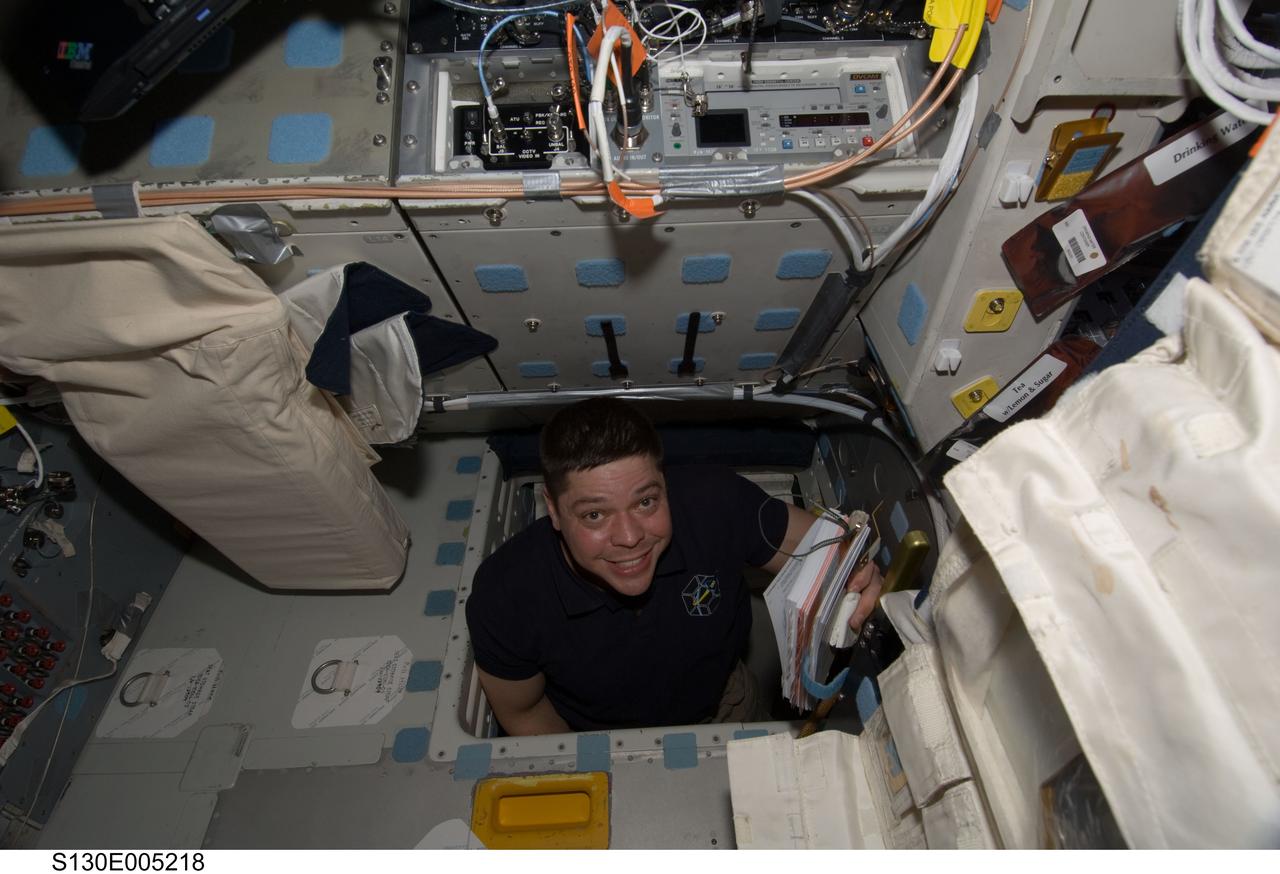
S130-E-005218 (8 Feb. 2010) --- NASA astronaut Robert Behnken, STS-130 mission specialist, smiles for the camera while in the hatch which connects the flight deck and middeck of space shuttle Endeavour during flight day one activities.
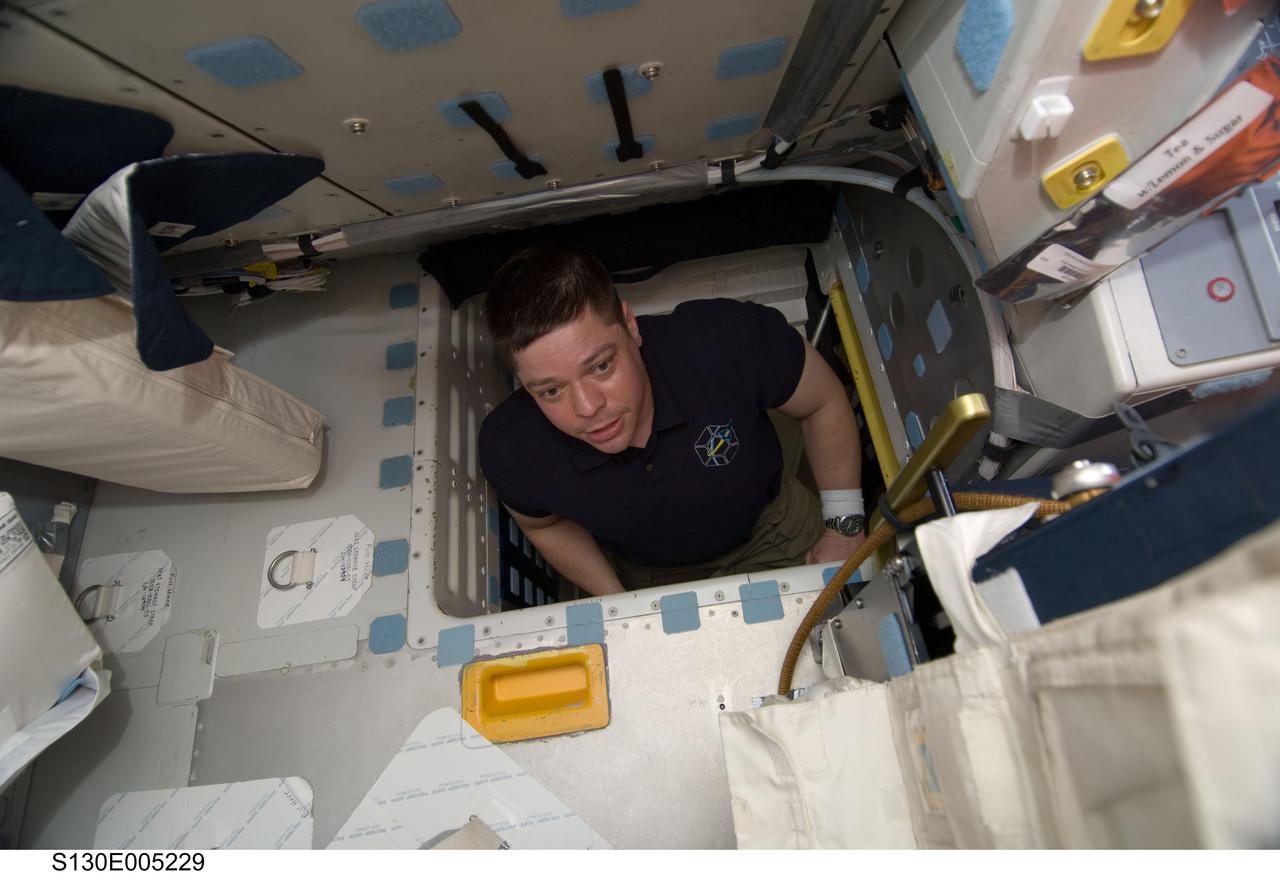
S130-E-005229 (8 Feb. 2010) --- NASA astronaut Robert Behnken, STS-130 mission specialist, is pictured in the hatch which connects the flight deck and middeck of space shuttle Endeavour during flight day one activities.
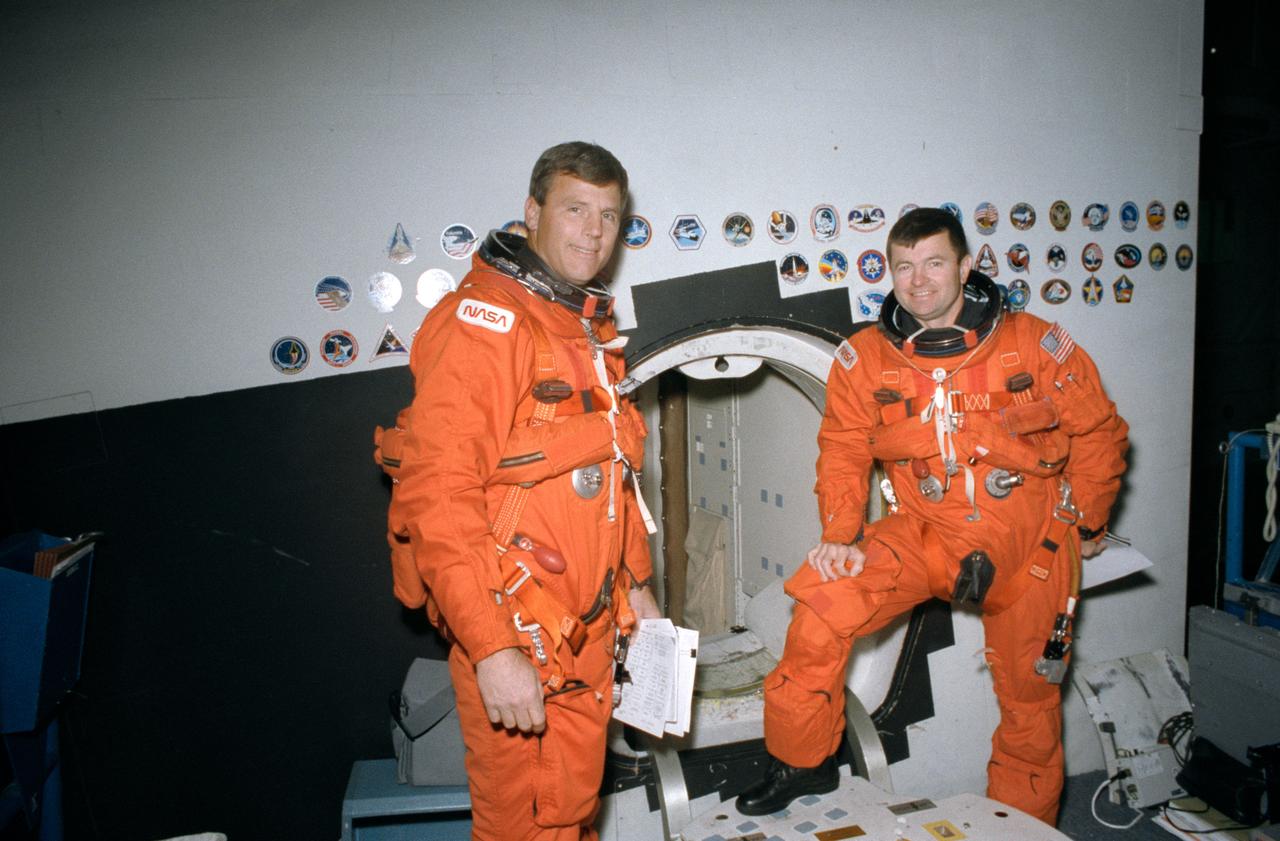
STS-56 Discovery, Orbiter Vehicle (OV) 103, Commander Kenneth Cameron (right) and Pilot Stephen S. Oswald, wearing launch and entry suits (LESs), stand at the side hatch of the crew compartment trainer (CCT), a shuttle mockup, prior to entering the mockup. Once inside the CCT, they will don their launch and entry helmets (LEHs) and participate in emergency egress (bailout) procedures. The CCT is located in JSC's Mockup and Integration Laboratory (MAIL) Bldg 9NE.
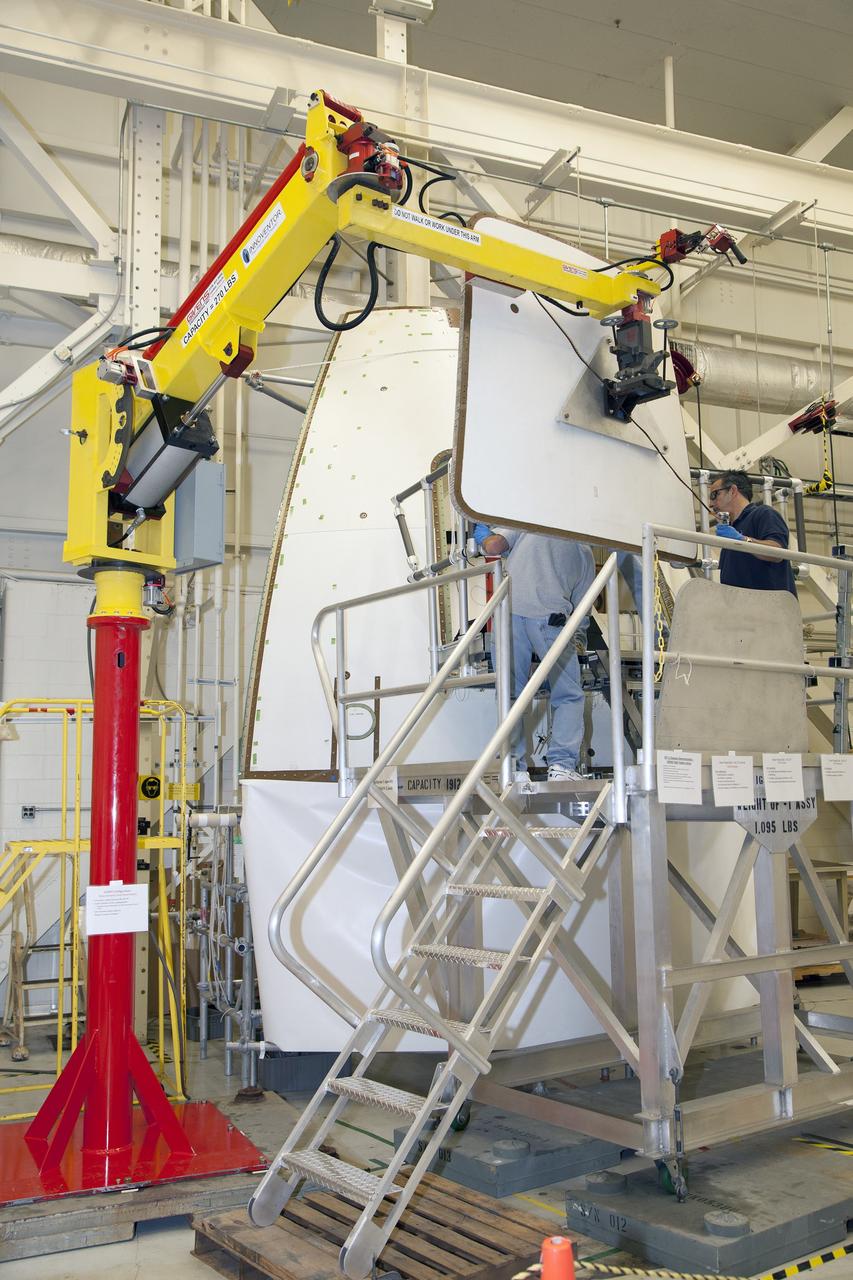
CAPE CANAVERAL, Fla. – Inside the Vehicle Assembly Building at NASA’s Kennedy Space Center in Florida, engineers and technicians are performing a GIZMO demonstration test on the ground test article Launch Abort System, or LAS, ogive panel and an Orion crew module simulator. Technicians attach the GIZMO, a pneumatically-balanced manipulator that will be used for installation of the hatches on the crew module and LAS for the uncrewed Exploration Flight Test-1 and Exploration Mission-1, onto the ogive panel mockup hatch. The Ground Systems Development and Operations Program is running the test to demonstrate that the GIZMO can meet the reach and handling requirements for the task. Orion is the exploration spacecraft designed to carry astronauts to destinations not yet explored by humans, including an asteroid and Mars. It will have emergency abort capability, sustain the crew during space travel and provide safe re-entry from deep space return velocities. The first unpiloted test flight of the Orion is scheduled to launch later this year atop a Delta IV rocket and in 2017 on NASA’s Space Launch System rocket. For more information, visit http://www.nasa.gov/orion. Photo credit: NASA/Daniel Casper
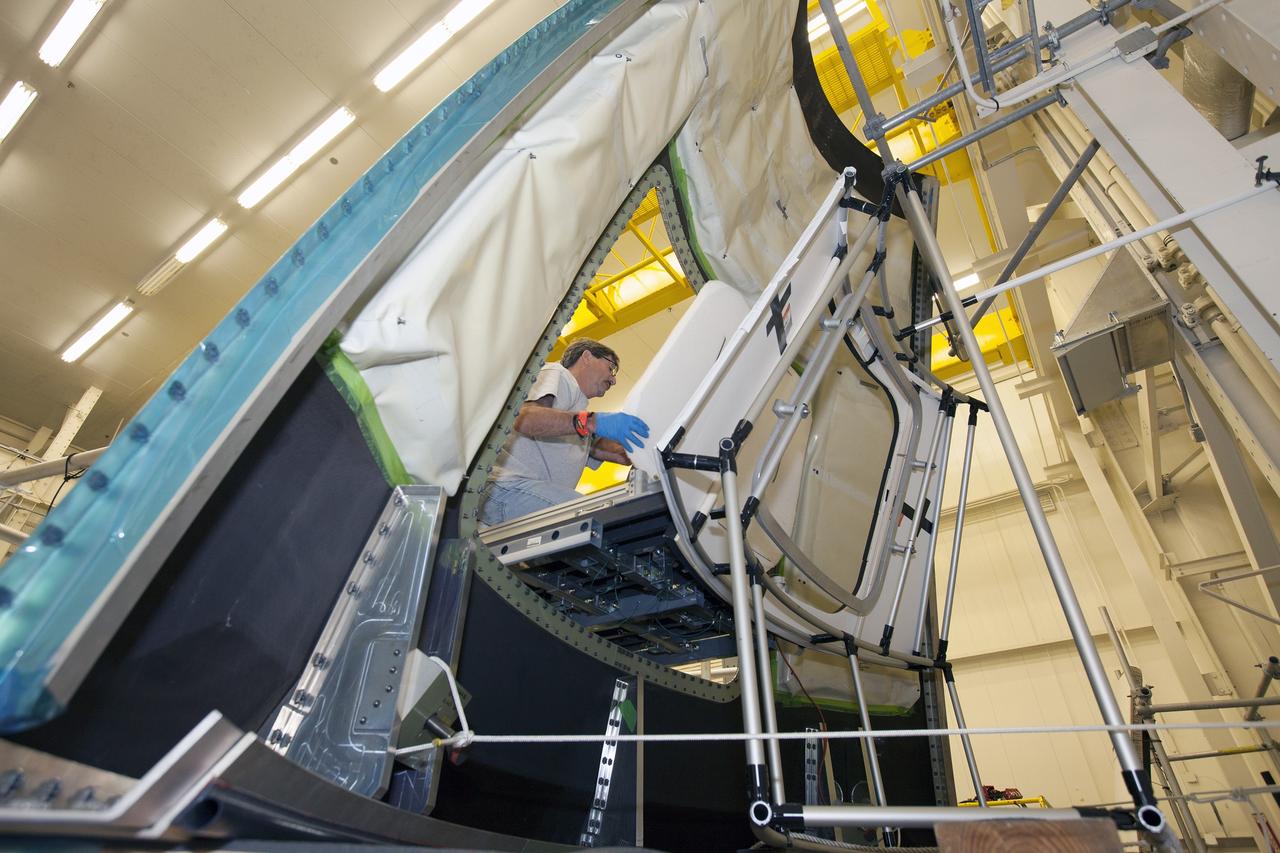
CAPE CANAVERAL, Fla. – Inside the Vehicle Assembly Building at NASA’s Kennedy Space Center in Florida, a GIZMO demonstration test is being performed on the ground test article Launch Abort System, or LAS, ogive panel and an Orion crew module simulator. A technician on an access platform and diving board removes the mockup of the crew module hatch. The GIZMO is a pneumatically-balanced manipulator that will be used for installation of the hatches on the crew module and LAS for the uncrewed Exploration Flight Test-1 and Exploration Mission-1. The Ground Systems Development and Operations Program is running the test to demonstrate that the GIZMO can meet the reach and handling requirements for the task. Orion is the exploration spacecraft designed to carry astronauts to destinations not yet explored by humans, including an asteroid and Mars. It will have emergency abort capability, sustain the crew during space travel and provide safe re-entry from deep space return velocities. The first unpiloted test flight of the Orion is scheduled to launch later this year atop a Delta IV rocket and in 2017 on NASA’s Space Launch System rocket. For more information, visit http://www.nasa.gov/orion. Photo credit: NASA/Daniel Casper
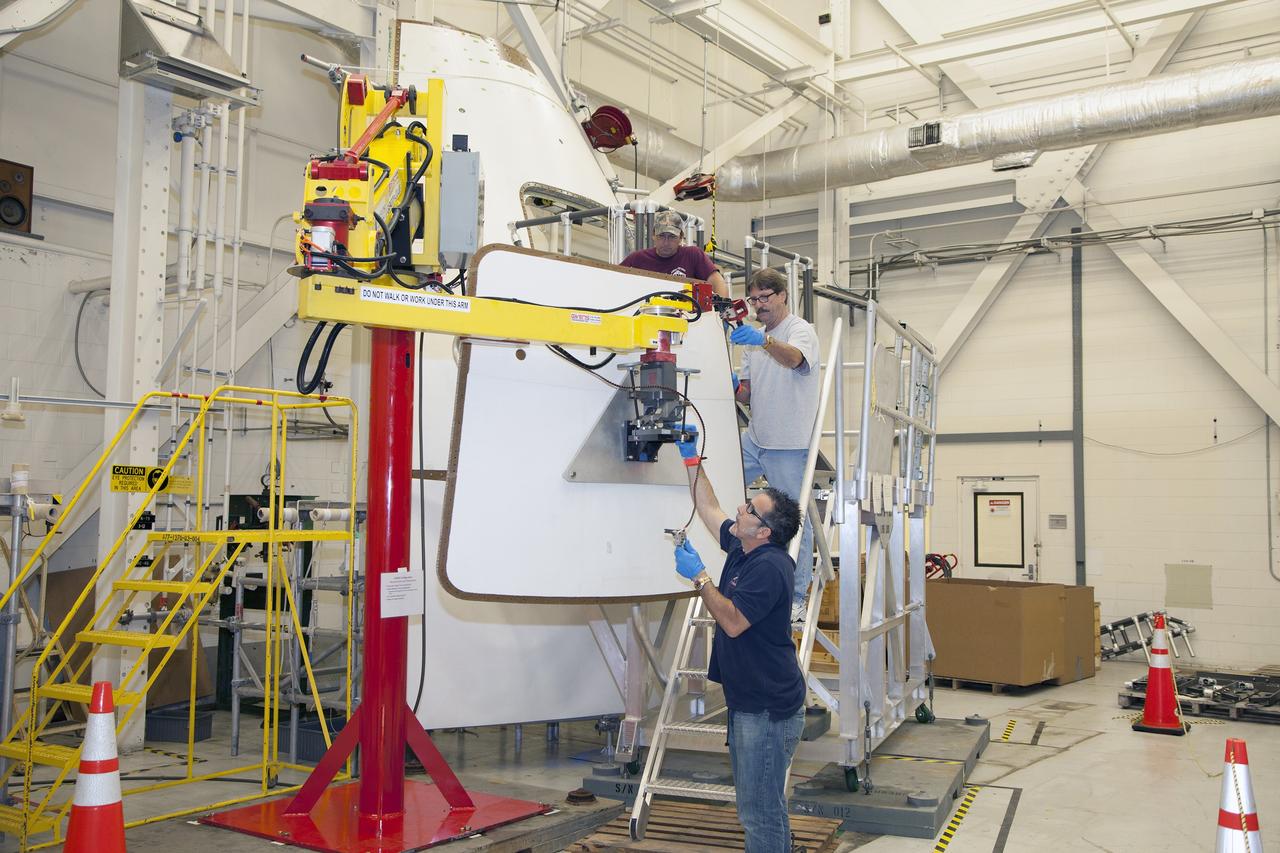
CAPE CANAVERAL, Fla. – Inside the Vehicle Assembly Building at NASA’s Kennedy Space Center in Florida, engineers and technicians are performing a GIZMO demonstration test on the ground test article Launch Abort System, or LAS, ogive panel and an Orion crew module simulator. Technicians practice lining up the GIZMO, a pneumatically-balanced manipulator that will be used for installation of the hatches on the crew module and LAS for the uncrewed Exploration Flight Test-1 and Exploration Mission-1, on the ogive panel mockup hatch. The Ground Systems Development and Operations Program is running the test to demonstrate that the GIZMO can meet the reach and handling requirements for the task. Orion is the exploration spacecraft designed to carry astronauts to destinations not yet explored by humans, including an asteroid and Mars. It will have emergency abort capability, sustain the crew during space travel and provide safe re-entry from deep space return velocities. The first unpiloted test flight of the Orion is scheduled to launch later this year atop a Delta IV rocket and in 2017 on NASA’s Space Launch System rocket. For more information, visit http://www.nasa.gov/orion. Photo credit: NASA/Daniel Casper
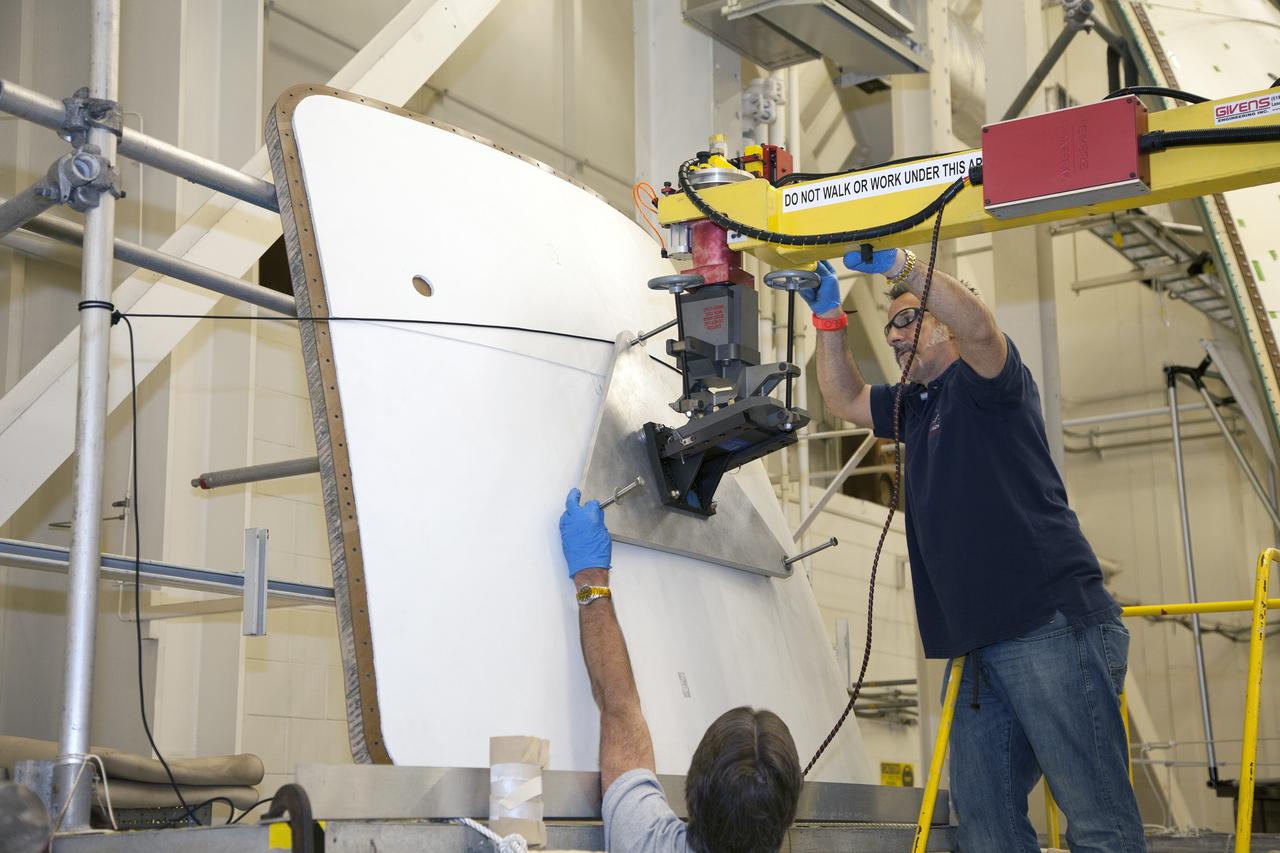
CAPE CANAVERAL, Fla. – Inside the Vehicle Assembly Building at NASA’s Kennedy Space Center in Florida, engineers and technicians are performing a GIZMO demonstration test on the ground test article Launch Abort System, or LAS, ogive panel and an Orion crew module simulator. Technicians practice lining up the GIZMO, a pneumatically-balanced manipulator that will be used for installation of the hatches on the crew module and LAS for the uncrewed Exploration Flight Test-1 and Exploration Mission-1, on the ogive panel mockup hatch. The Ground Systems Development and Operations Program is running the test to demonstrate that the GIZMO can meet the reach and handling requirements for the task. Orion is the exploration spacecraft designed to carry astronauts to destinations not yet explored by humans, including an asteroid and Mars. It will have emergency abort capability, sustain the crew during space travel and provide safe re-entry from deep space return velocities. The first unpiloted test flight of the Orion is scheduled to launch later this year atop a Delta IV rocket and in 2017 on NASA’s Space Launch System rocket. For more information, visit http://www.nasa.gov/orion. Photo credit: NASA/Daniel Casper
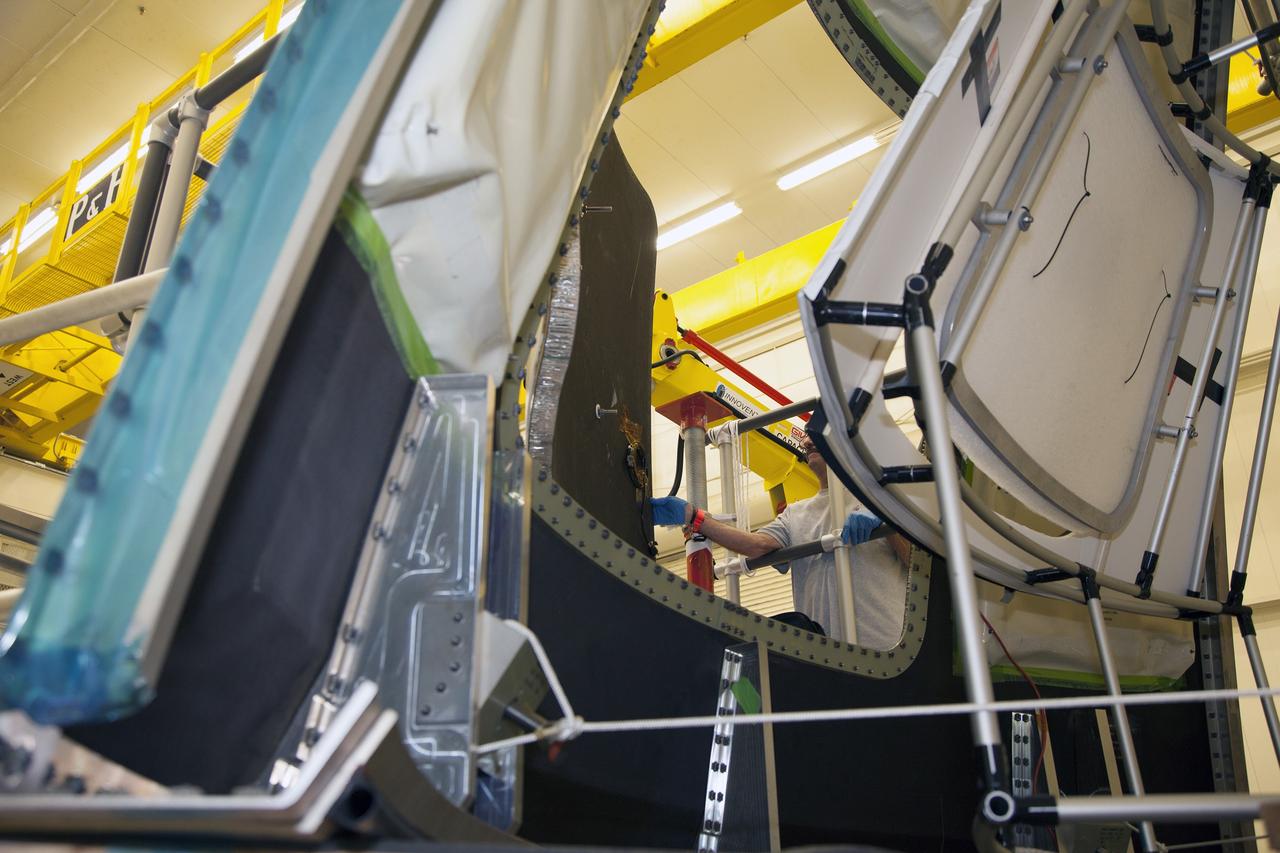
CAPE CANAVERAL, Fla. – Inside the Vehicle Assembly Building at NASA’s Kennedy Space Center in Florida, engineers and technicians are performing a GIZMO demonstration test on the ground test article Launch Abort System, or LAS, ogive panel and an Orion crew module simulator. Technicians attached the GIZMO to remove the outer ogive panel hatch on the Orion crew module simulator. The GIZMO is a pneumatically-balanced manipulator that will be used for installation of the hatches on the crew module and LAS for the uncrewed Exploration Flight Test-1 and Exploration Mission-1. The Ground Systems Development and Operations Program is running the test to demonstrate that the GIZMO can meet the reach and handling requirements for the task. Orion is the exploration spacecraft designed to carry astronauts to destinations not yet explored by humans, including an asteroid and Mars. It will have emergency abort capability, sustain the crew during space travel and provide safe re-entry from deep space return velocities. The first unpiloted test flight of the Orion is scheduled to launch later this year atop a Delta IV rocket and in 2017 on NASA’s Space Launch System rocket. For more information, visit http://www.nasa.gov/orion. Photo credit: NASA/Daniel Casper
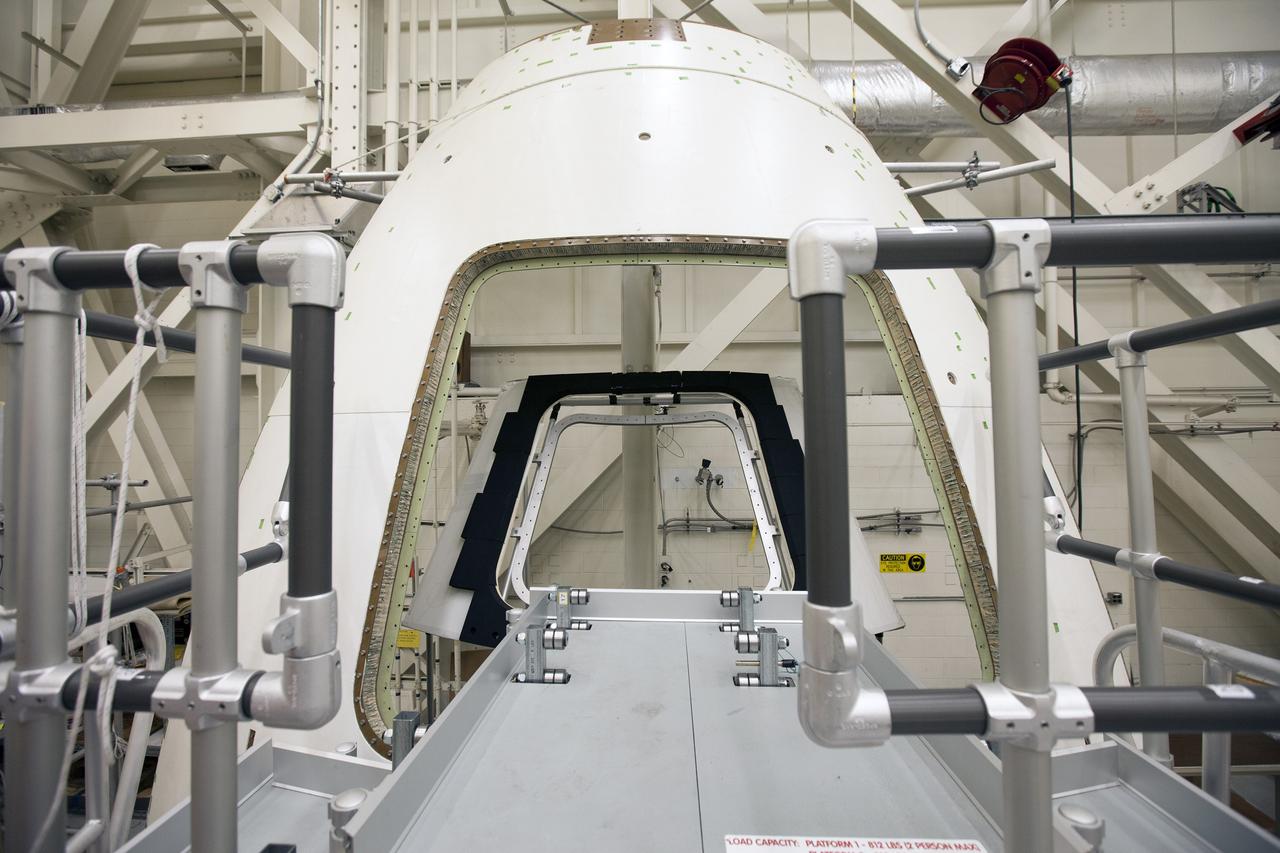
CAPE CANAVERAL, Fla. – Inside the Vehicle Assembly Building at NASA’s Kennedy Space Center in Florida, a GIZMO demonstration test is being performed on the ground test article Launch Abort System, or LAS, ogive panel and an Orion crew module simulator. An access platform has been added leading up to the mockup of the crew module. The inner hatch has been removed. The GIZMO is a pneumatically-balanced manipulator that will be used for installation of the hatches on the crew module and LAS for the uncrewed Exploration Flight Test-1 and Exploration Mission-1. The Ground Systems Development and Operations Program is running the test to demonstrate that the GIZMO can meet the reach and handling requirements for the task. Orion is the exploration spacecraft designed to carry astronauts to destinations not yet explored by humans, including an asteroid and Mars. It will have emergency abort capability, sustain the crew during space travel and provide safe re-entry from deep space return velocities. The first unpiloted test flight of the Orion is scheduled to launch later this year atop a Delta IV rocket and in 2017 on NASA’s Space Launch System rocket. For more information, visit http://www.nasa.gov/orion. Photo credit: NASA/Daniel Casper
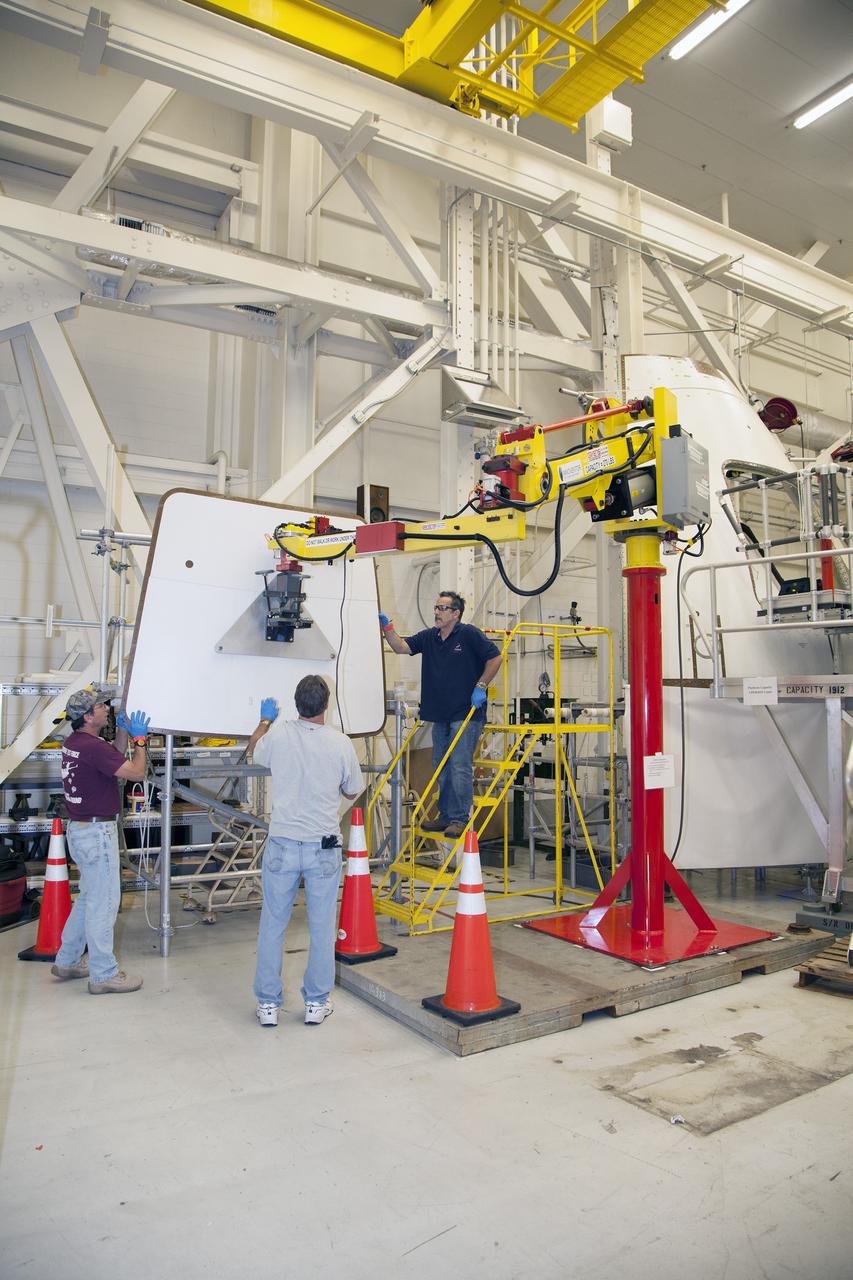
CAPE CANAVERAL, Fla. – Inside the Vehicle Assembly Building at NASA’s Kennedy Space Center in Florida, engineers and technicians are performing a GIZMO demonstration test on the ground test article Launch Abort System, or LAS, ogive panel and an Orion crew module simulator. Technicians practice lining up the GIZMO, a pneumatically-balanced manipulator that will be used for installation of the hatches on the crew module and LAS for the uncrewed Exploration Flight Test-1 and Exploration Mission-1, on the ogive panel mockup hatch. The Ground Systems Development and Operations Program is running the test to demonstrate that the GIZMO can meet the reach and handling requirements for the task. Orion is the exploration spacecraft designed to carry astronauts to destinations not yet explored by humans, including an asteroid and Mars. It will have emergency abort capability, sustain the crew during space travel and provide safe re-entry from deep space return velocities. The first unpiloted test flight of the Orion is scheduled to launch later this year atop a Delta IV rocket and in 2017 on NASA’s Space Launch System rocket. For more information, visit http://www.nasa.gov/orion. Photo credit: NASA/Daniel Casper
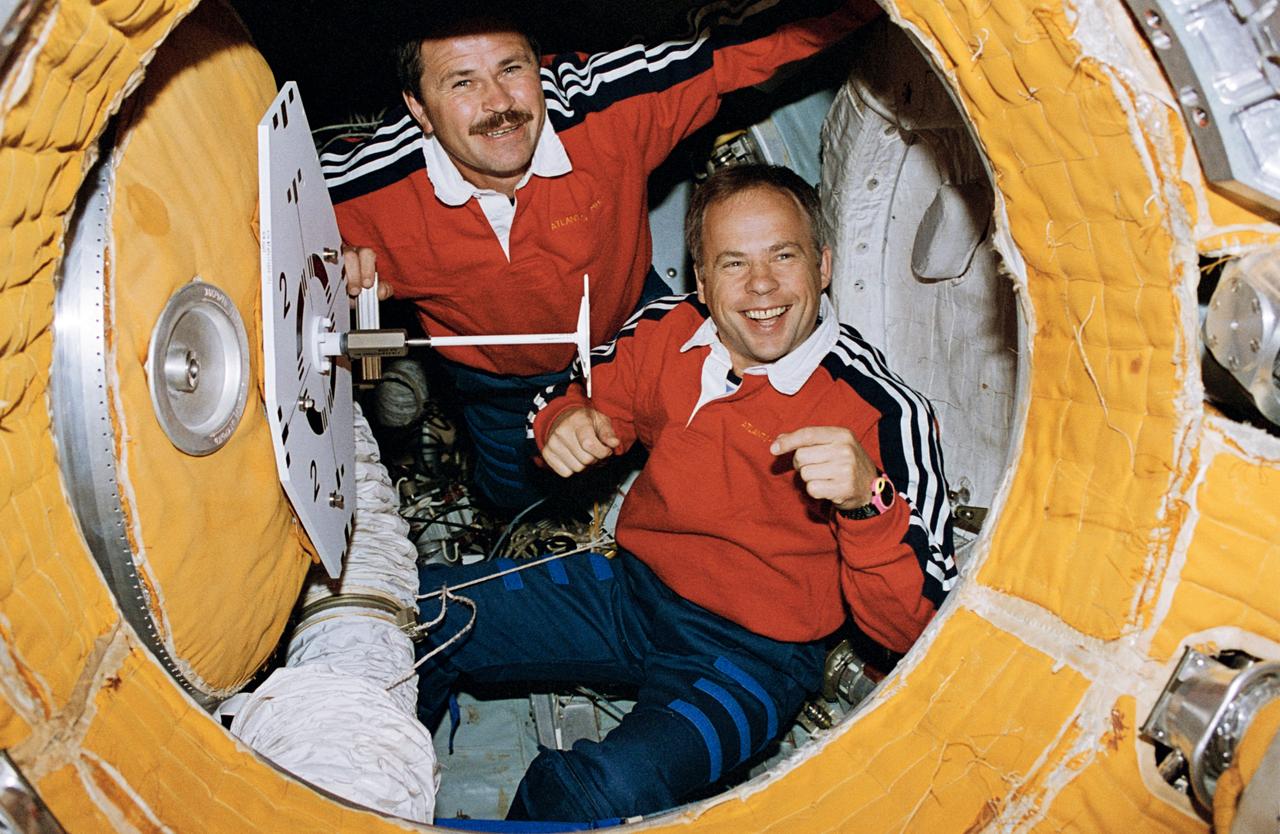
View of the Mir 19 commander Anatoly Solovyev and flight engineer Nikolai Budarin preparing to close the hatch to the docking module which leads to the Mir space station.
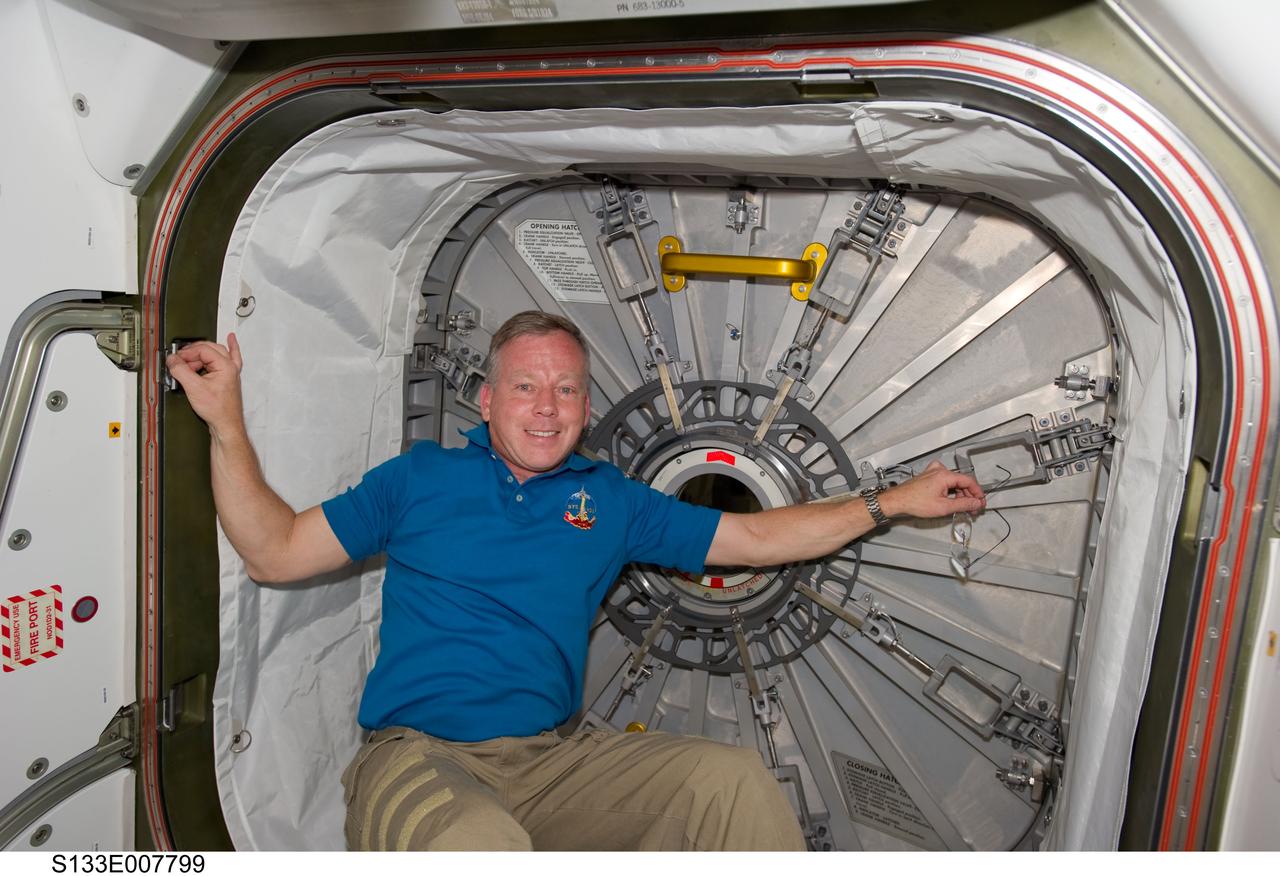
S133-E-007799 (1 March 2011) --- NASA astronaut Steve Lindsey, STS-133 commander, is pictured at the hatch of the Earth-facing port of the International Space Station’s Unity node while space shuttle Discovery remains docked with the station. On the other side of the hatch door is the newly-installed Permanent Multipurpose Module (PMM). Photo credit: NASA or National Aeronautics and Space Administration
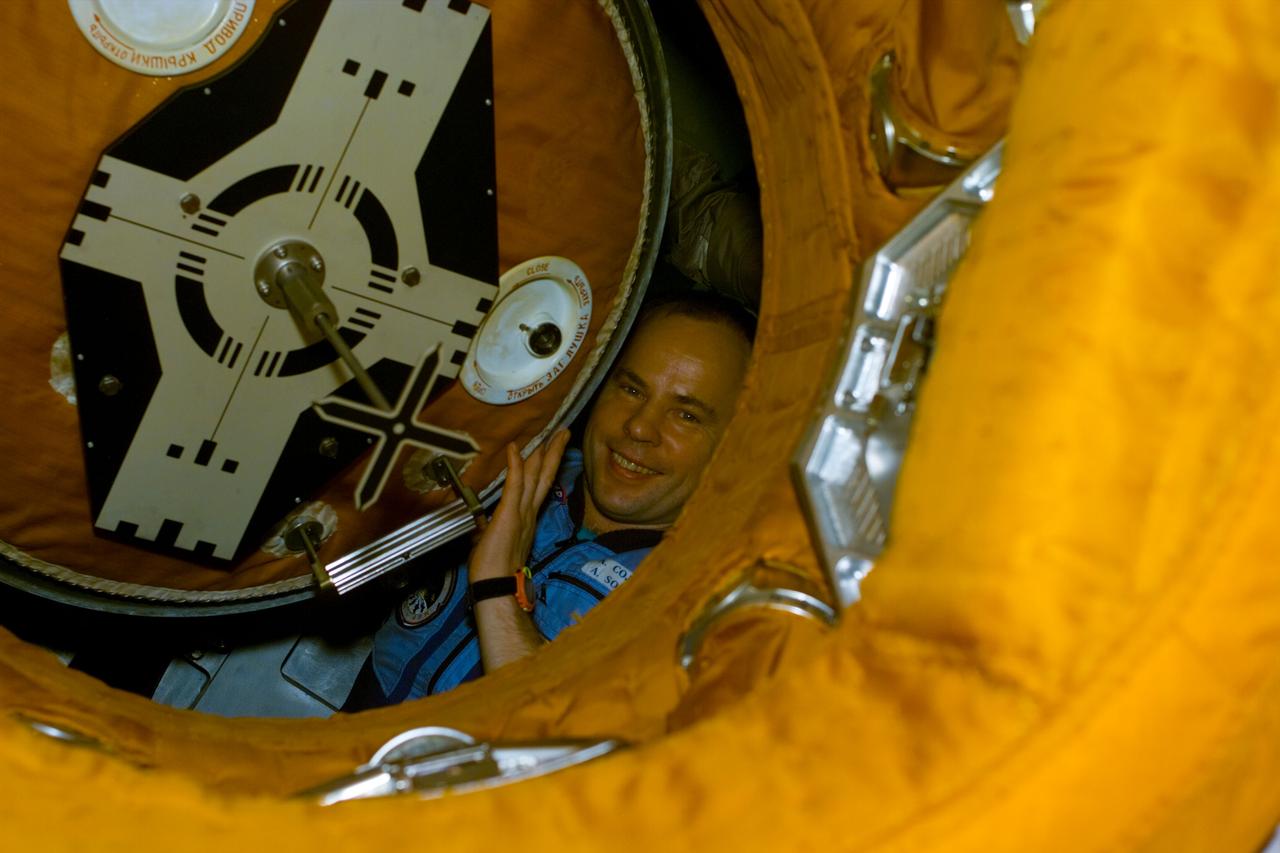
S89-E-5359 (28 Jan 1998) --- This Electronic Still Camera (ESC) image shows cosmonaut Anatoliy Y. Solovyev, Mir-24 commander, peeking through the Docking Module (DM) hatch one last time to bid his astronaut friends farewell, just moments before final hatch closure. The hatch closing brings an end to the eighth Shuttle/Mir joint docking activities. The STS-89 crew, onboard the Space Shuttle Endeavour, dropped off astronaut Andrew S. W. Thomas to replace astronaut David A. Wolf, as cosmonaut guest researcher. Thomas will be the last American astronaut to serve a tour aboard the Russian Mir Space station. This ESC view was taken on January 28, 1998, at 22:30:54 GMT.
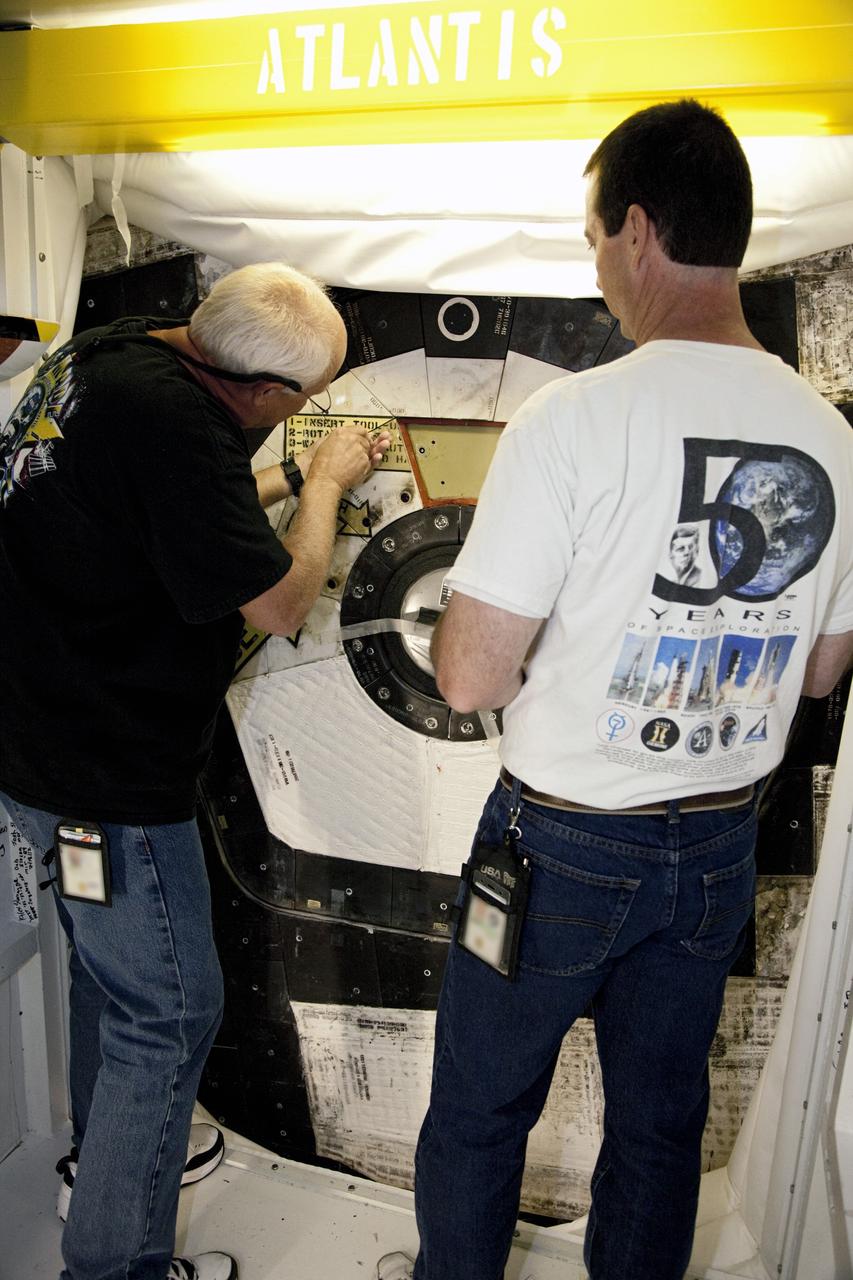
CAPE CANAVERAL, Fla. - Inside Orbiter Processing Facility-2 at NASA’s Kennedy Space Center in Florida, United Space Alliance technicians Dave Chodkowski, at left, and Gary Hamilton, close and seal space shuttle Atlantis’ crew hatch for the final time. The orbiter is undergoing final preparations for its transfer to the Kennedy Space Center Visitor complex targeted for Nov. 2. The work is part of Transition and Retirement of the remaining shuttle. Atlantis is being prepared for public display at the visitor complex. Over the course of its 26-year career, Atlantis spent 293 days in space during 33 missions. For more information, visit http://www.nasa.gov/transition. Photo credit: NASA/Frankie Martin
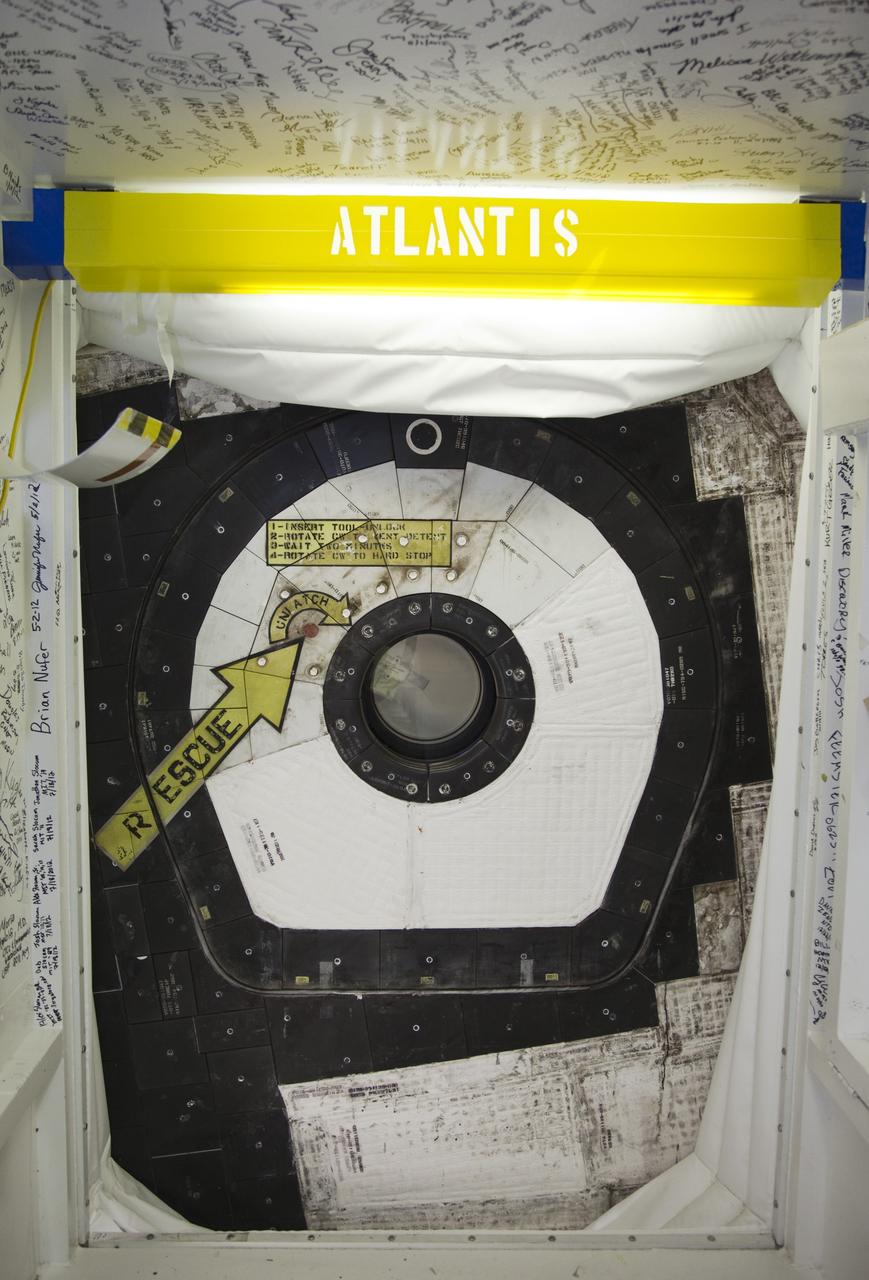
CAPE CANAVERAL, Fla. - Inside Orbiter Processing Facility-2 at NASA’s Kennedy Space Center in Florida, space shuttle Atlantis’ crew hatch has been closed and sealed for the final time. The orbiter is undergoing final preparations for its transfer to the Kennedy Space Center Visitor complex targeted for Nov. 2. The work is part of Transition and Retirement of the remaining shuttle. Atlantis is being prepared for public display at the visitor complex. Over the course of its 26-year career, Atlantis spent 293 days in space during 33 missions. For more information, visit http://www.nasa.gov/transition. Photo credit: NASA/Frankie Martin
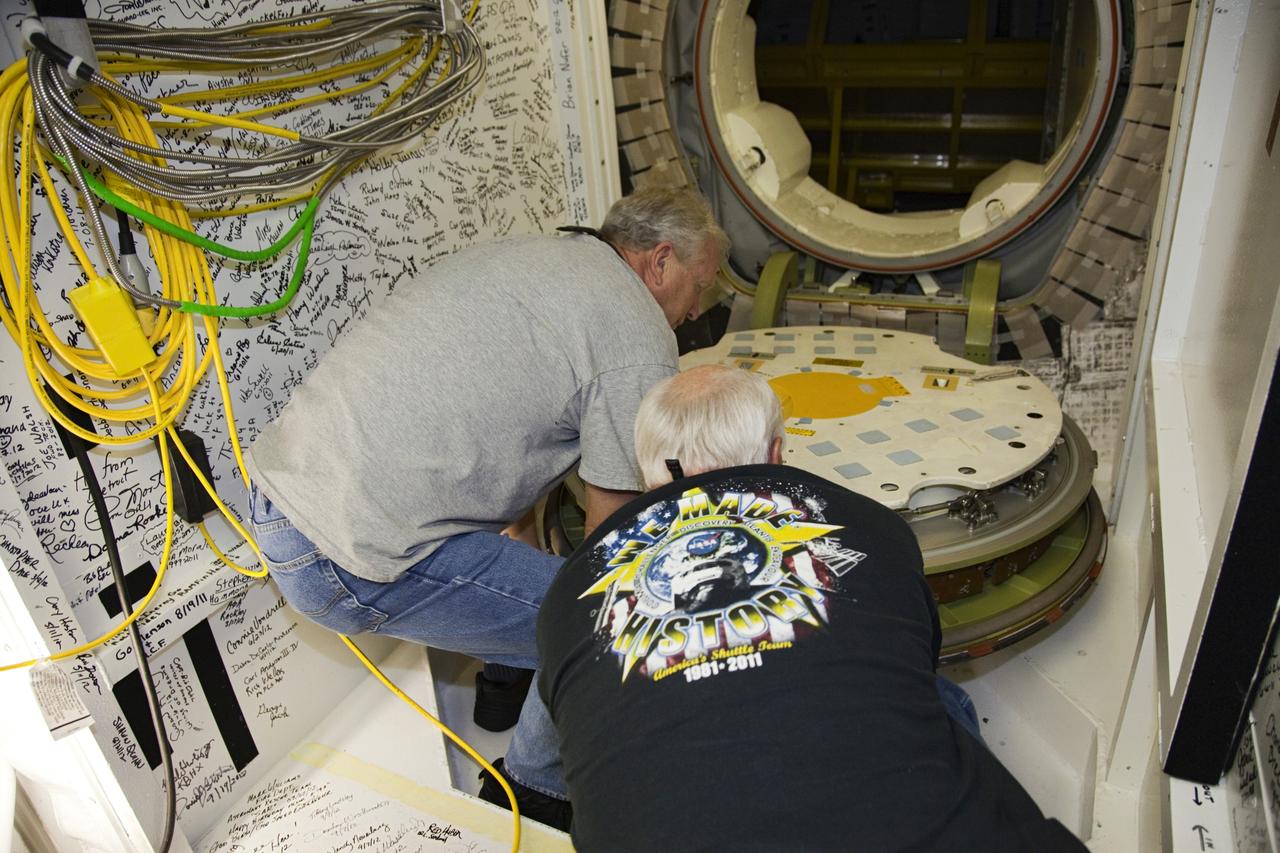
CAPE CANAVERAL, Fla. - Inside Orbiter Processing Facility-2 at NASA’s Kennedy Space Center in Florida, United Space Alliance technicians Danny Brown, at left, and Dave Chodkowski prepare to close space shuttle Atlantis’ crew hatch for the final time. The orbiter is undergoing final preparations for its transfer to the Kennedy Space Center Visitor complex targeted for Nov. 2. The work is part of Transition and Retirement of the remaining shuttle. Atlantis is being prepared for public display at the visitor complex. Over the course of its 26-year career, Atlantis spent 293 days in space during 33 missions. For more information, visit http://www.nasa.gov/transition. Photo credit: NASA/Frankie Martin
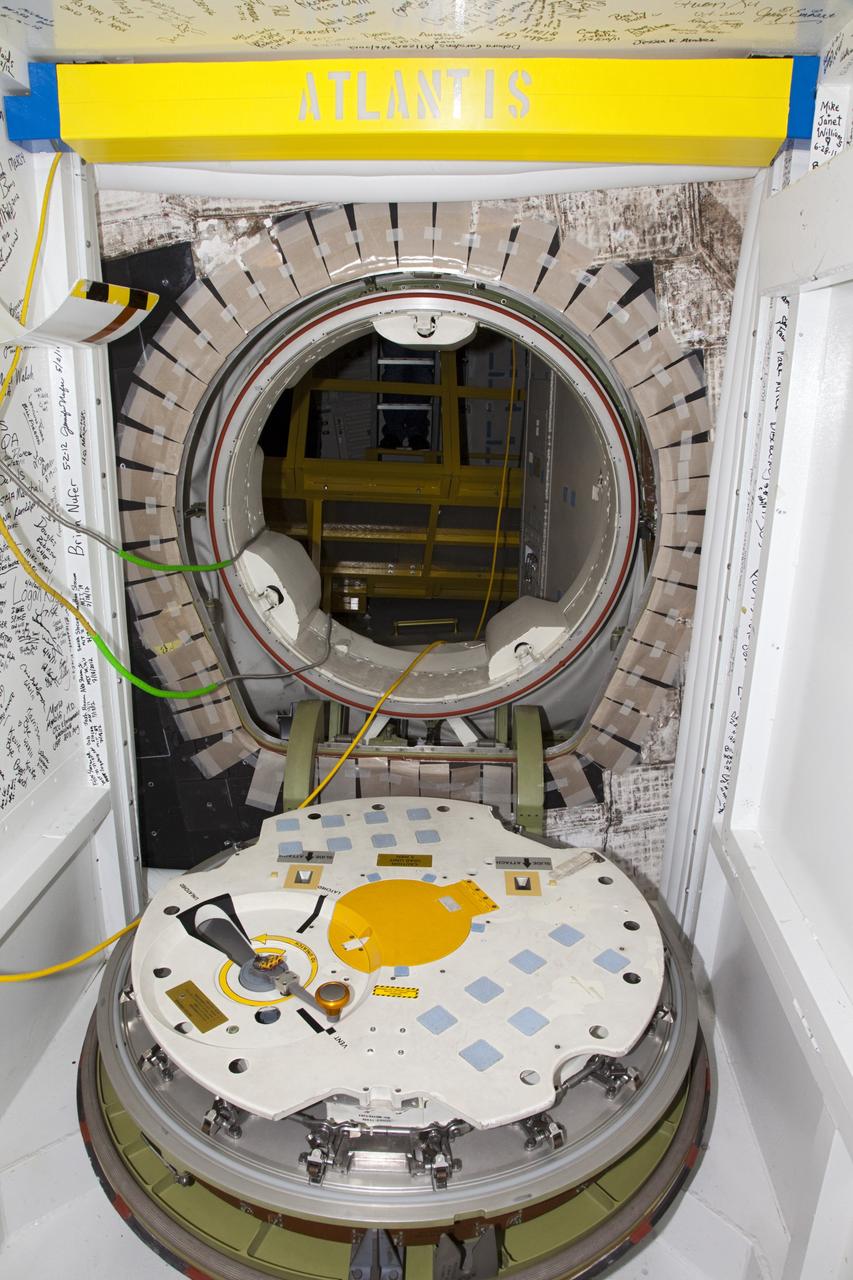
CAPE CANAVERAL, Fla. - Inside Orbiter Processing Facility-2 at NASA’s Kennedy Space Center in Florida, work will begin soon to close and seal space shuttle Atlantis’ crew hatch for the final time. The orbiter is undergoing final preparations for its transfer to the Kennedy Space Center Visitor complex targeted for Nov. 2. The work is part of Transition and Retirement of the remaining shuttle. Atlantis is being prepared for public display at the visitor complex. Over the course of its 26-year career, Atlantis spent 293 days in space during 33 missions. For more information, visit http://www.nasa.gov/transition. Photo credit: NASA/Frankie Martin
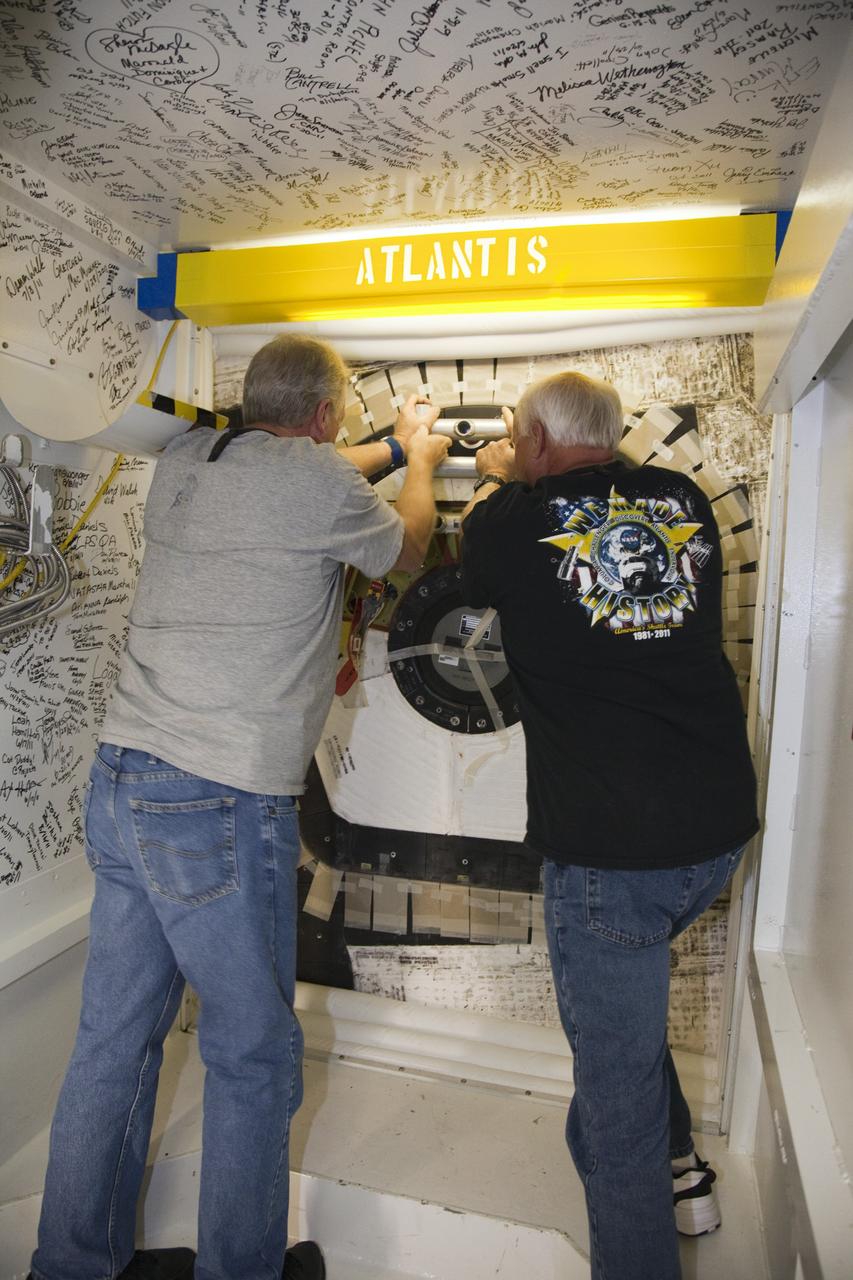
CAPE CANAVERAL, Fla. - Inside Orbiter Processing Facility-2 at NASA’s Kennedy Space Center in Florida, United Space Alliance technicians Danny Brown, at left, and Dave Chodkowski close space shuttle Atlantis’ crew hatch for the final time. The orbiter is undergoing final preparations for its transfer to the Kennedy Space Center Visitor complex targeted for Nov. 2. The work is part of Transition and Retirement of the remaining shuttle. Atlantis is being prepared for public display at the visitor complex. Over the course of its 26-year career, Atlantis spent 293 days in space during 33 missions. For more information, visit http://www.nasa.gov/transition. Photo credit: NASA/Frankie Martin
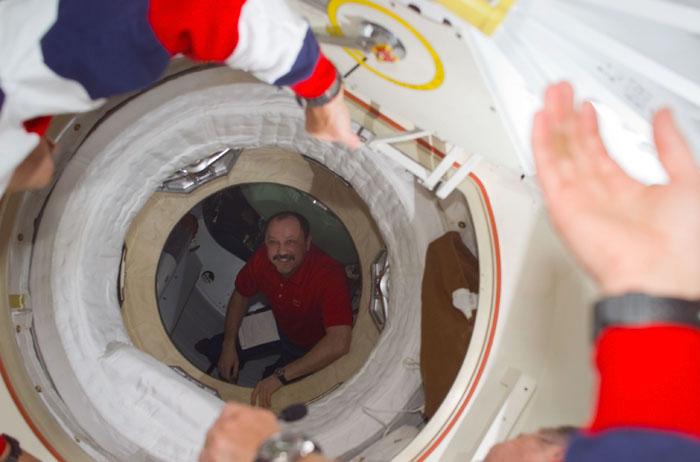
STS105-E-5094 (12 August 2001) --- Yury V. Usachev of Rosaviakosmos, Expedition Two mission commander, can be seen through the recently opened airlock hatch of Space Shuttle Discovery as he welcomes the STS-105 and Expedition Three crews. This image was taken with a digital still camera.
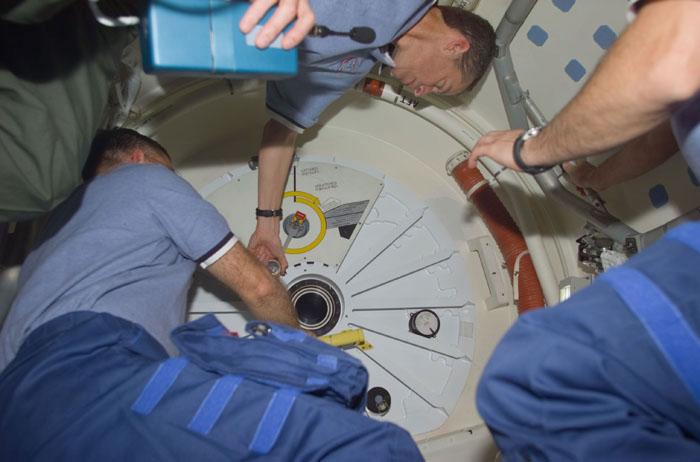
TS102-E-5089 (10 March 2001) --- Astronauts James D. Wetherbee (top) and James S. Voss, STS-102 commander and mission specialist, respectively, open hatch to the Space Station. The photograph was recorded with a digital still camera.
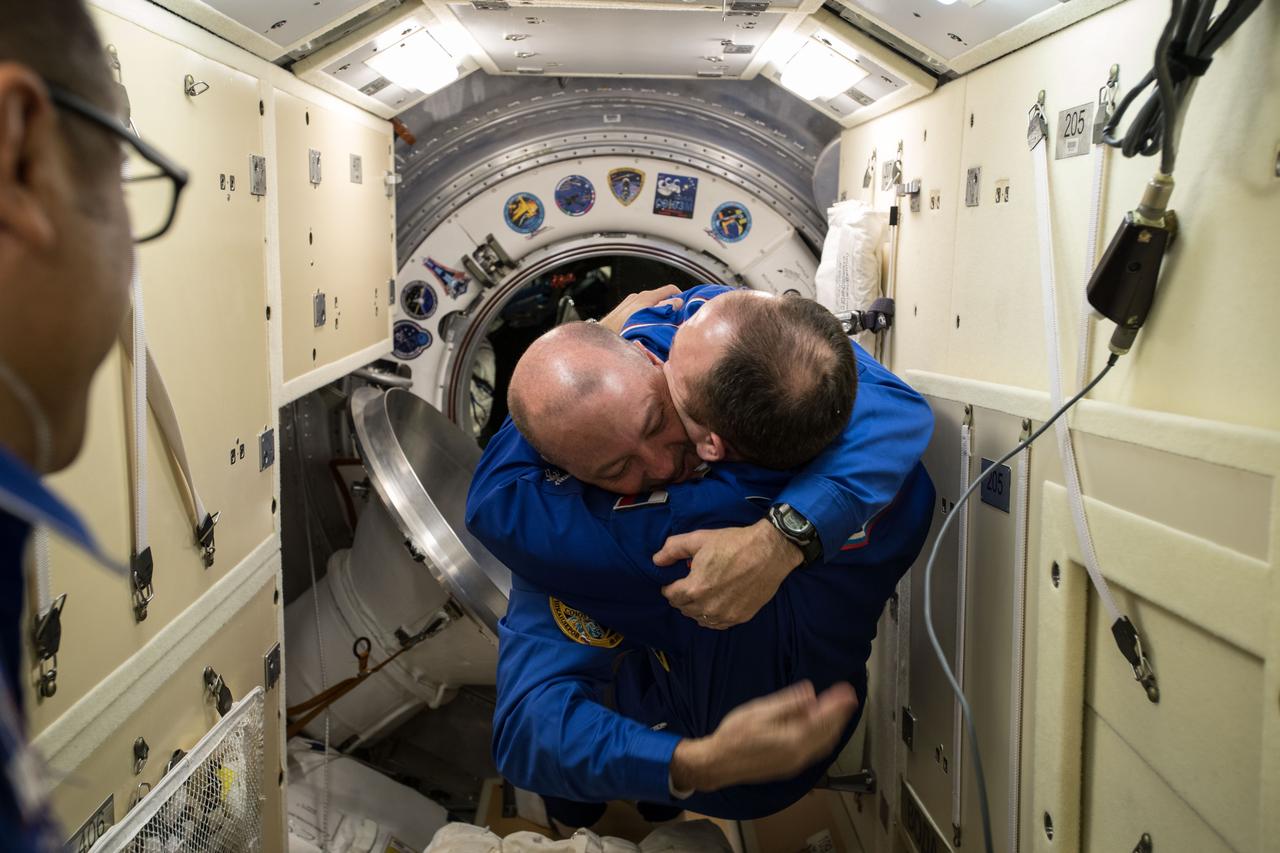
iss054e001407 (Dec. 19, 2017) --- International Space Station Commander Alexander Misurkin welcomes newly arrived Flight Engineer Scott Tingle in the Rassvet Mini-Research Module 1 following the hatch opening of the Soyuz MS-07 spacecraft.
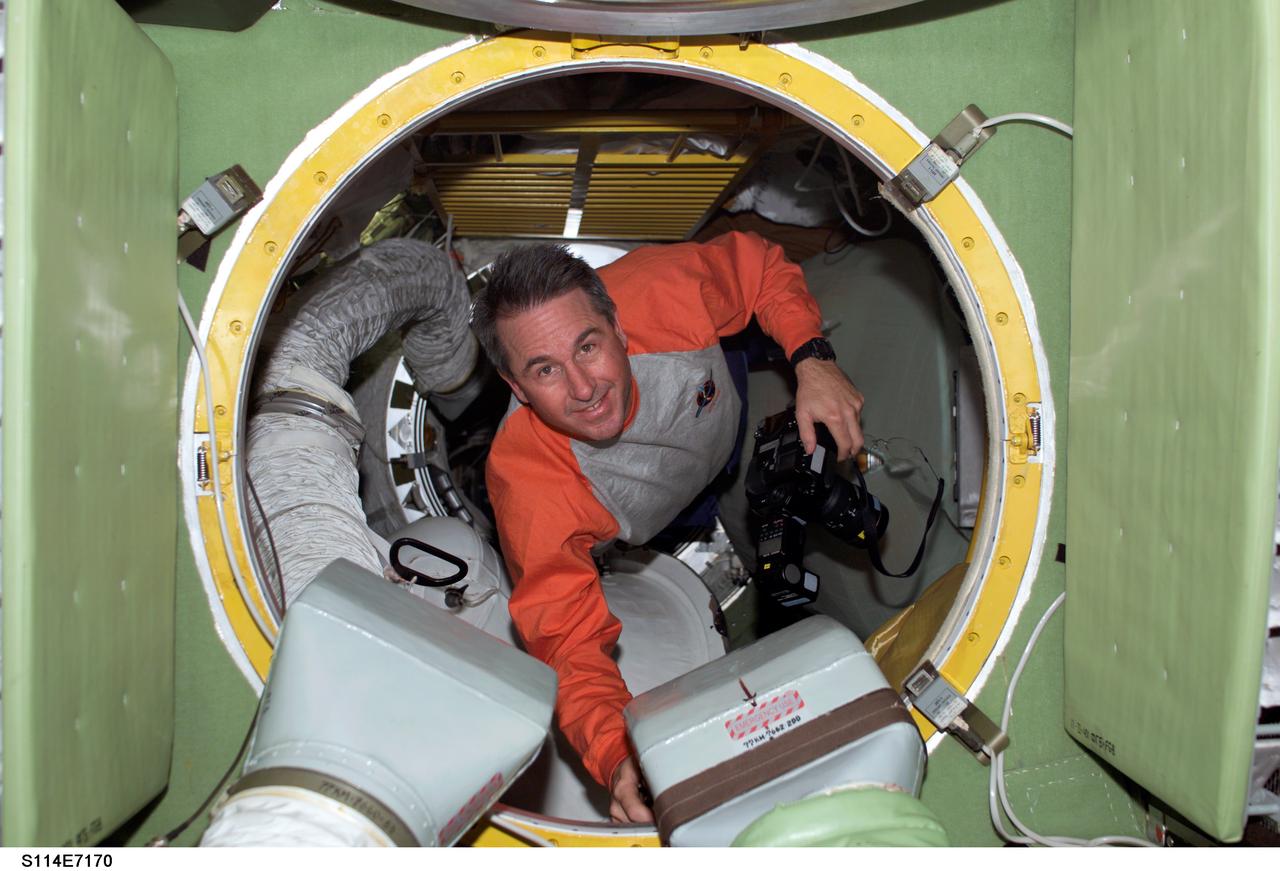
S114-E-7170 (5 August 2005) --- Astronaut Stephen K, Robinson, STS-114 mission specialist, holds a camera while floating through a hatch on the International Space Station. The crewmembers were making final preparations for Space Shuttle Discovery’s scheduled departure on August 6.

Family and friends of Expedition 51 Soyuz Commander Fyodor Yurchikhin of Roscosmos reacts as they see Yurchikhin enter the International Space Station during a live video feed of the Expedition 51 crew members a few hours after the Soyuz MS-04 spacecraft docked on Thursday, April 20, 2017 at Tsenki Conference Hall in Baikonur, Kazakhstan. Flight engineer Jack Fischer of NASA and Yurchikhin's arrival to the International Space Station comes the same day they launched from the Baikonur Cosmodrome in Kazakhstan. Photo Credit (NASA/Aubrey Gemignani)

Family of Expedition 51 Soyuz Commander Fyodor Yurchikhin of Roscosmos speak to him by phone a few hours after his Soyuz MS-04 spacecraft docked to the International Space Station (ISS) on Thursday, April 20, 2017 at Tsenki Conference Hall in Baikonur, Kazakhstan. Flight engineer Jack Fischer of NASA and Yurchikhin's arrival to the ISS comes the same day they launched from the Baikonur Cosmodrome in Kazakhstan. Photo Credit (NASA/Aubrey Gemignani)
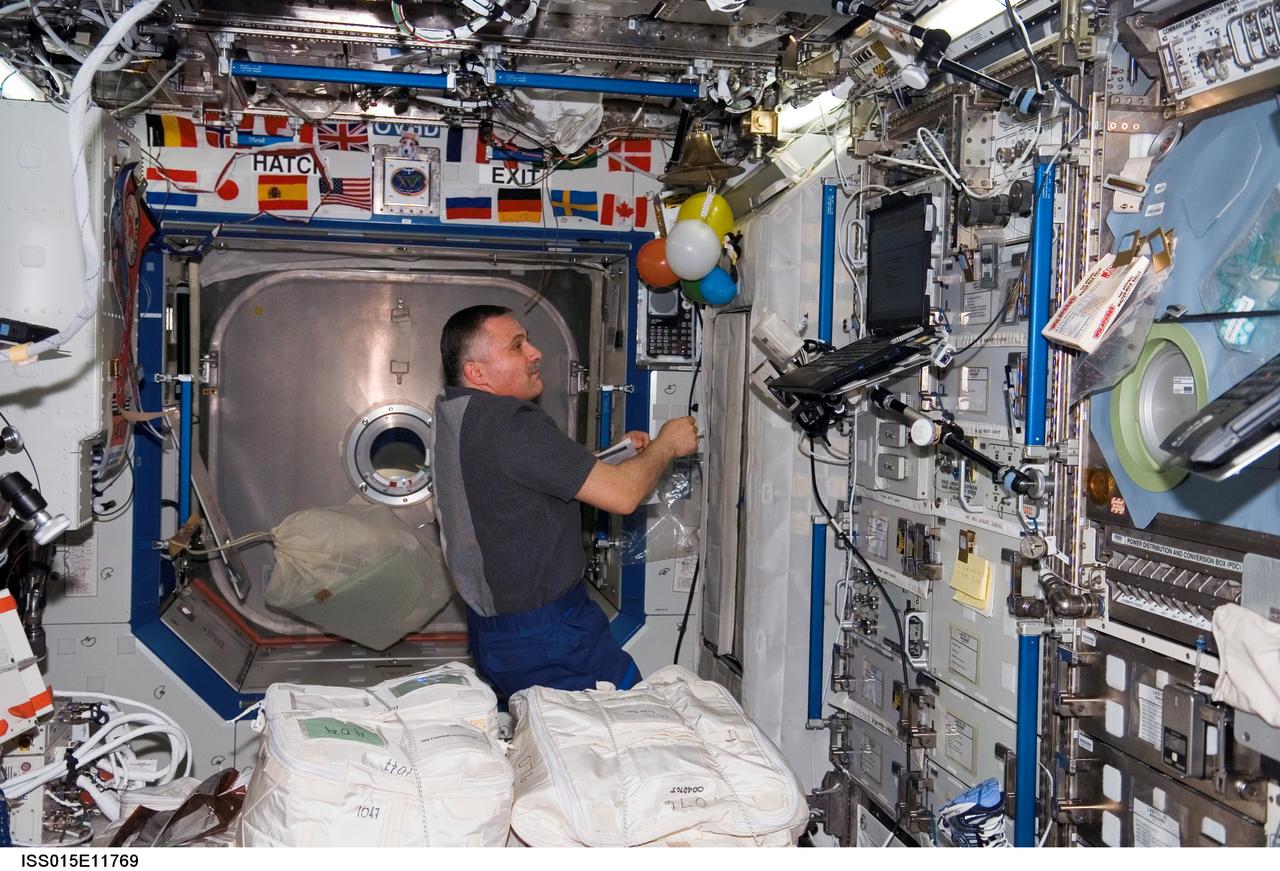
ISS015-E-11769 (10 June 2007) --- Cosmonaut Fyodor N. Yurchikhin, Expedition 15 commander representing Russia's Federal Space Agency, photographed near a hatch door in the Destiny laboratory of the International Space Station. Shortly after this image was taken, the hatches were opened between the station and Space Shuttle Atlantis.
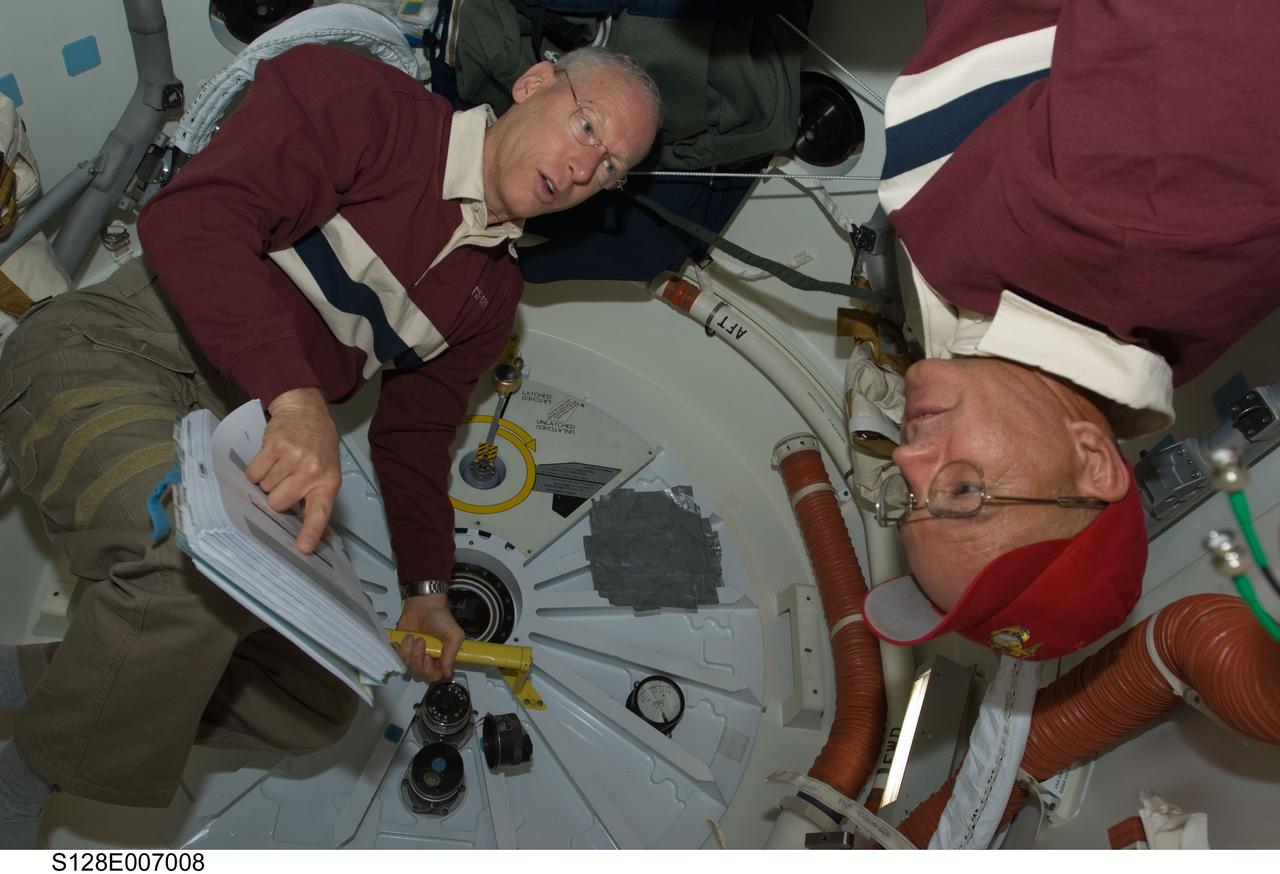
S128-E-007008 (30 Aug. 2009) --- Astronauts Rick Sturckow (right), STS-128 commander; and Patrick Forrester, mission specialist, are pictured near the hatch on the middeck of Space Shuttle Discovery after docking with the International Space Station. The two spacecraft docked at 7:54 p.m. (CDT), and the Discovery crew entered the orbital outpost at 9:59 p.m. (CDT) on Aug. 30.
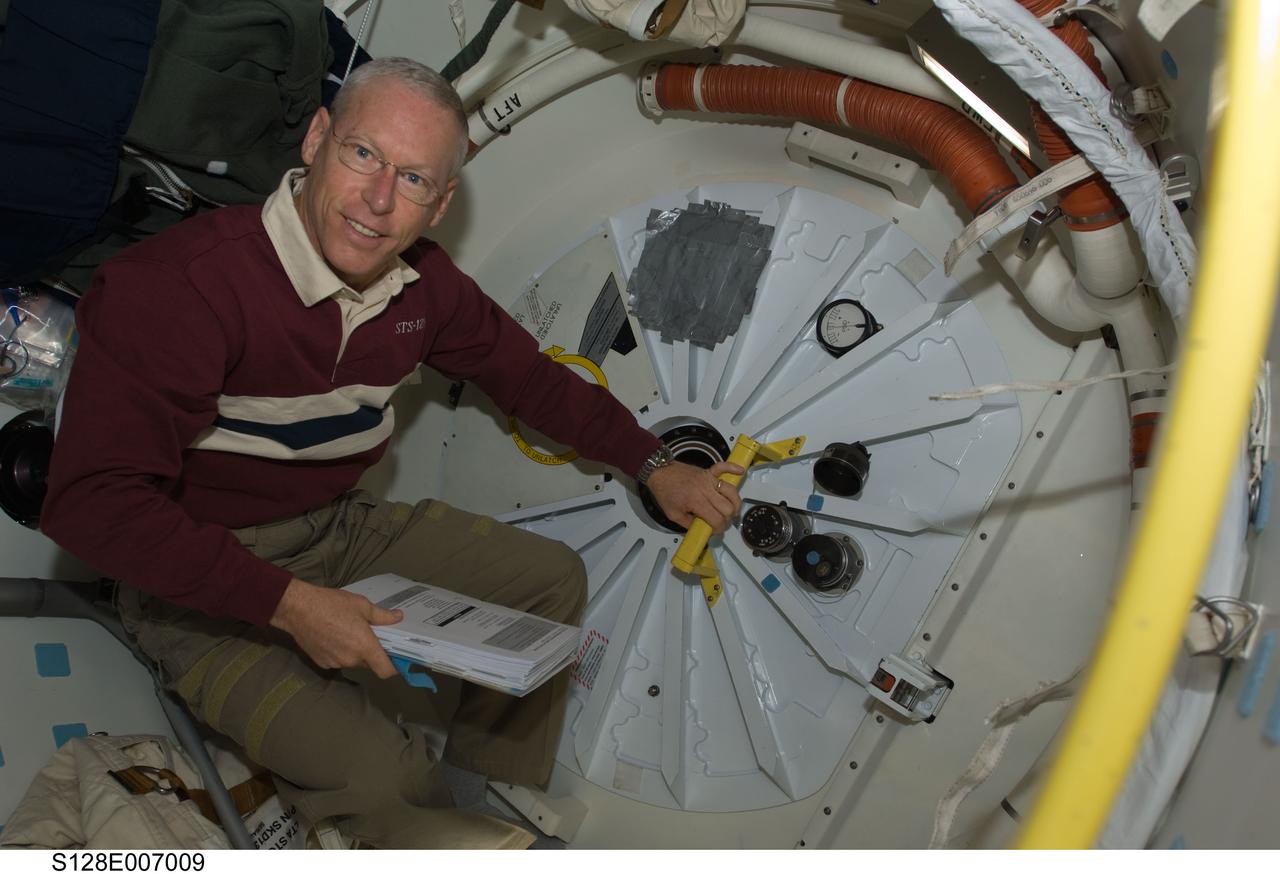
S128-E-007009 (30 Aug. 2009) --- Astronaut Patrick Forrester, STS-128 mission specialist, prepares to open the hatch that will lead the entire Space Shuttle Discovery crew into the International Space Station. The two spacecraft docked at 7:54 p.m. (CDT), and the Discovery crew entered the orbital outpost at 9:59 p.m. (CDT) on Aug. 30.
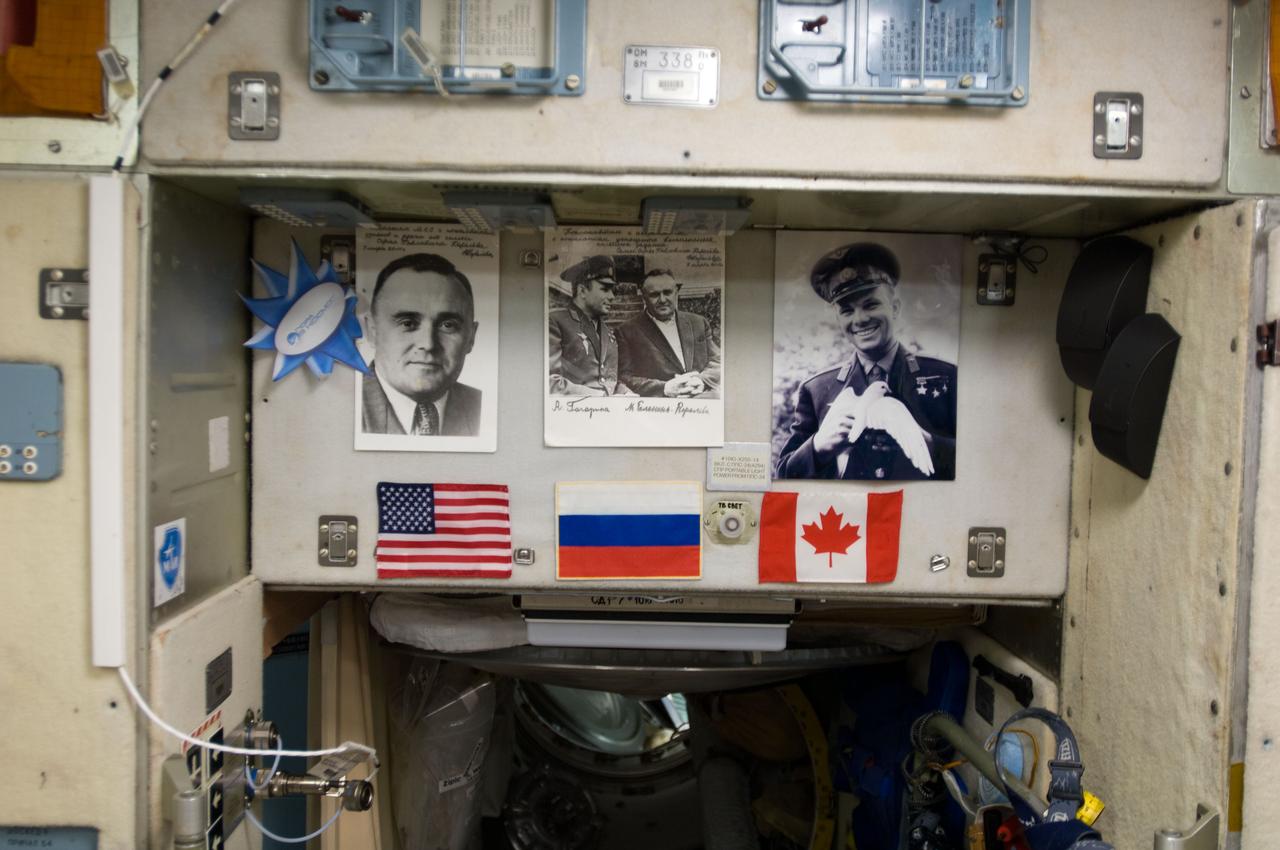
View of Yuri Alexievich Gagarin (first space traveler) photo and other photos,above Service Module (SM) hatch. The blue and white rosette on the left with the writing поÑа в коÑÐ¼Ð¾Ñ is the symbol and name of the Russian television program for children that covers cosmonautic and International Space Station (ISS) topics. Photo was taken during Expedition 34.
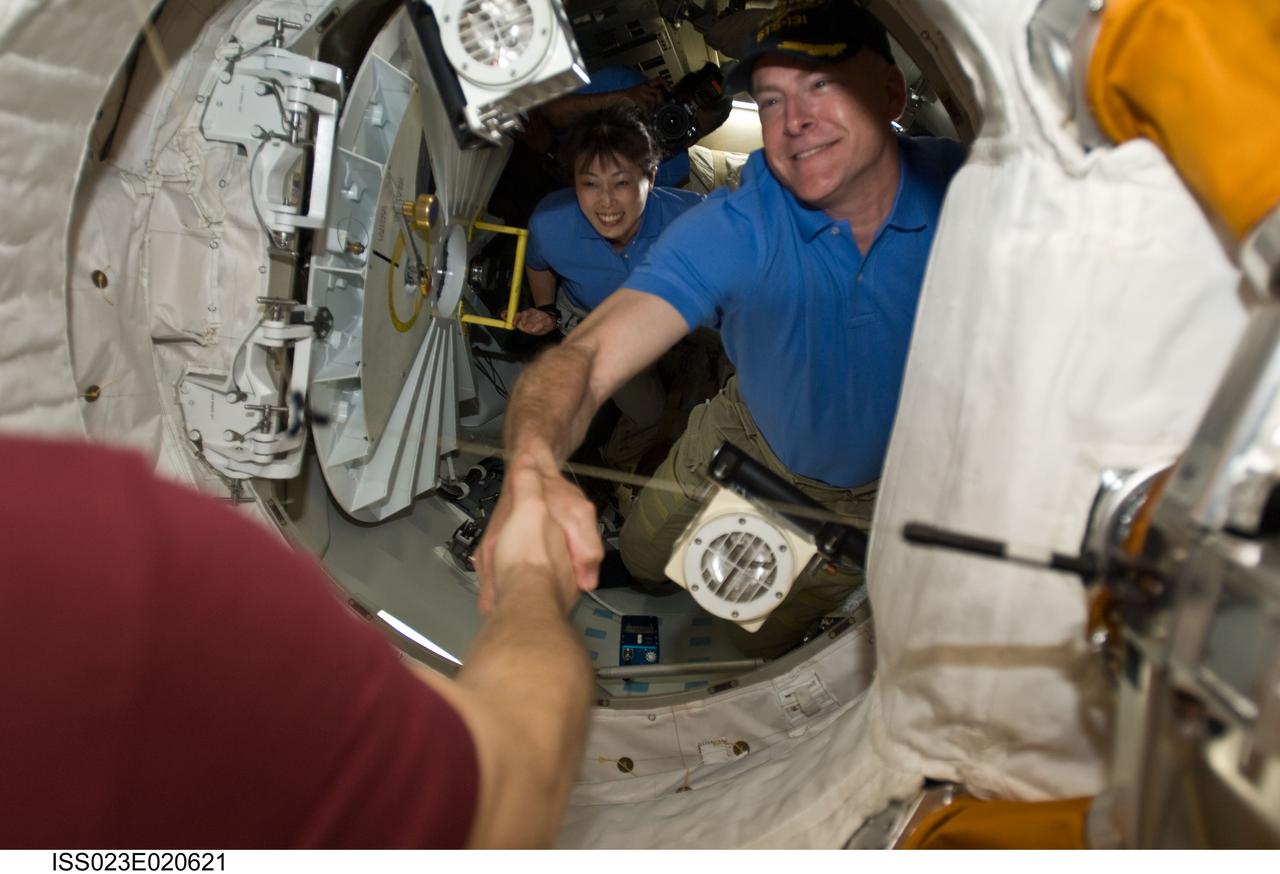
ISS023-E-020621 (7 April 2010) --- Astronaut Alan Poindexter, STS-131 mission commander who has led the Discovery crew on its mission to the International Space Station, displays a pleasant countenance as the hatches come open and two crews begin their traditional handshakes aboard the orbital outpost. Behind Poindexter is Japan Aerospace Exploration Agency astronaut Naoko Yamazaki, mission specialist.
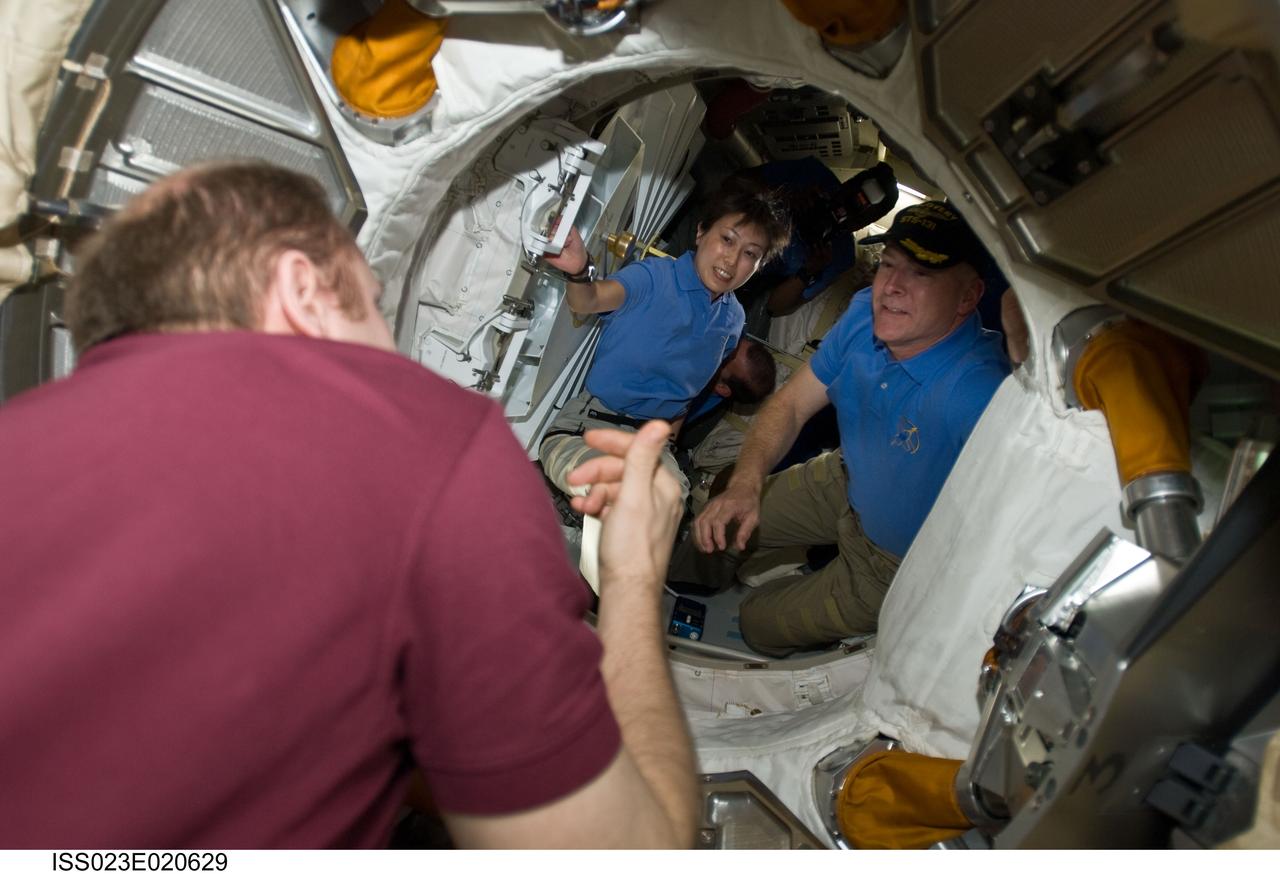
ISS023-E-020629 (7 April 2010) --- Russian cosmonaut Oleg Kotov (far left), Expedition 23 commander, prepares to greet the STS-131 crew as it comes aboard the International Space Station to spend several days in a number of busy joint activities for the two crews. Seen clearly in the hatch are astronaut Alan Poindexter, STS-131 commander, and Japan Aerospace Agency astronaut Naoko Yamazaki, mission specialist.
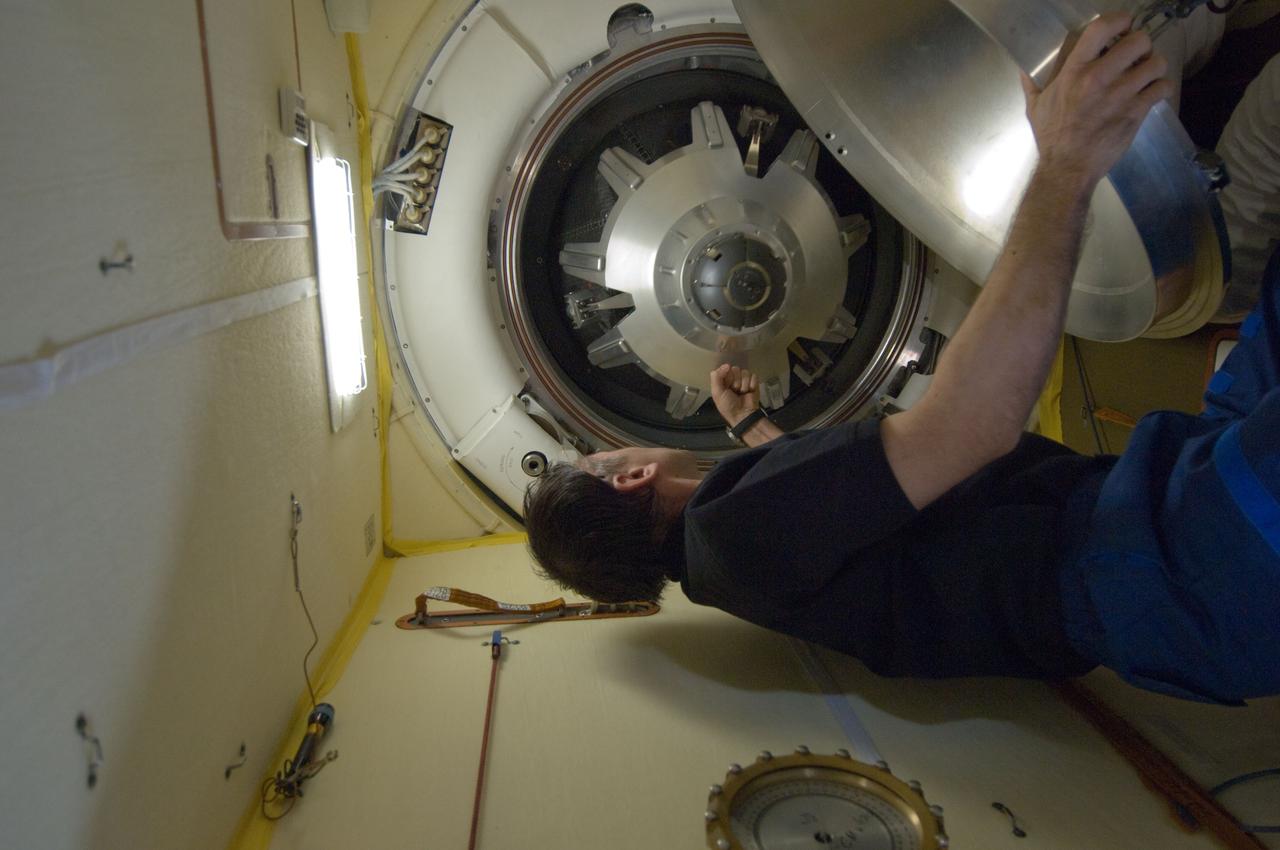
ISS033-E-016667 (25 Oct. 2012) --- Russian cosmonaut Yuri Malenchenko, Expedition 33 flight engineer, opens the hatch between the International Space Station and the Soyuz TMA-06M spacecraft as the three new Expedition 33 crew members prepare to ingress the station. Docking occurred at 8:29 a.m. (EDT) at the station’s Poisk Mini-Research Module 2 (MRM2).
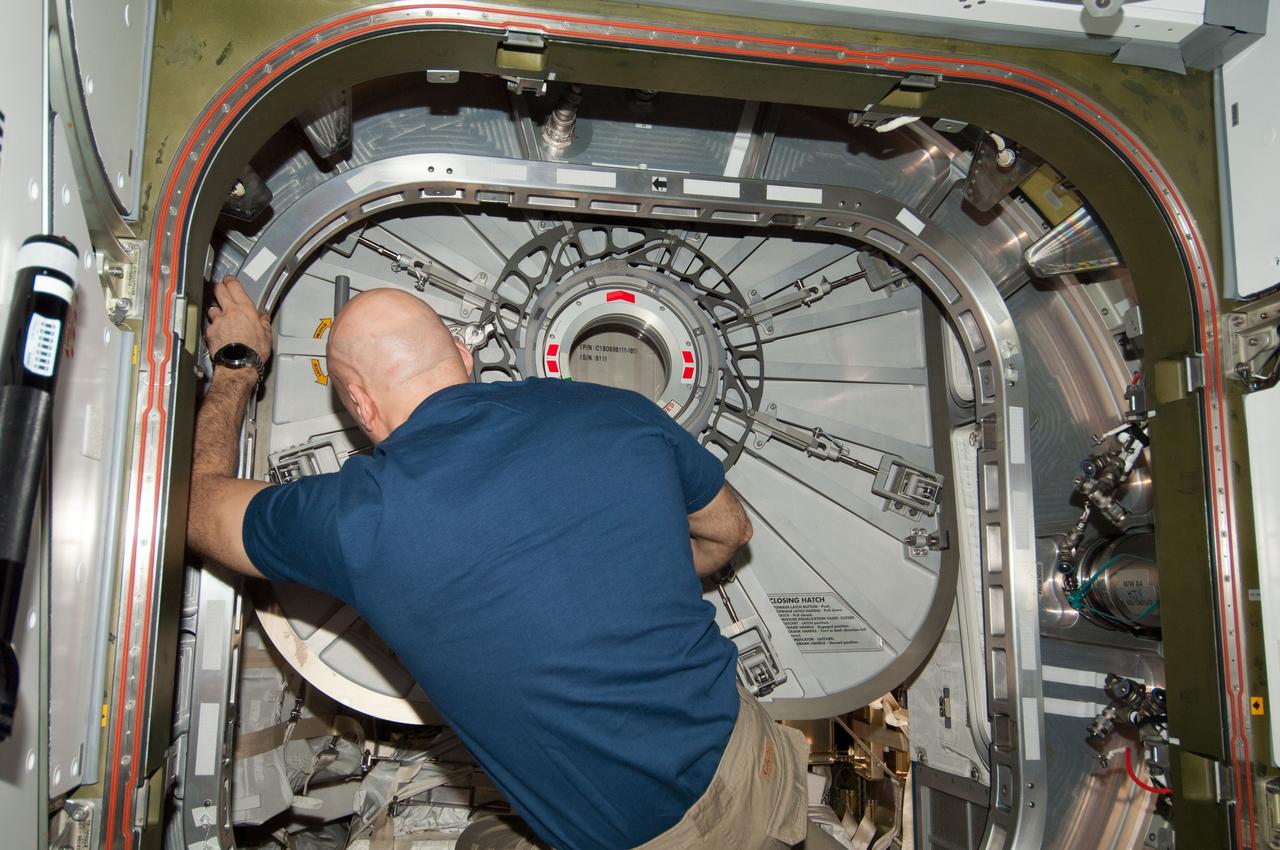
ISS036-E-039129 (3 Sept. 2013) --- European Space Agency astronaut Luca Parmitano, Expedition 36 flight engineer, closes the hatch in the vestibule between the International Space Station’s Harmony node and the Japanese "Kounotori" H2 Transfer Vehicle-4 (HTV-4) in preparation to release the HTV-4 ending its one-month stay at the space station. The automated resupply craft will be grappled by the Canadarm2, removed from the Harmony node and released for a destructive reentry into Earth’s atmosphere.
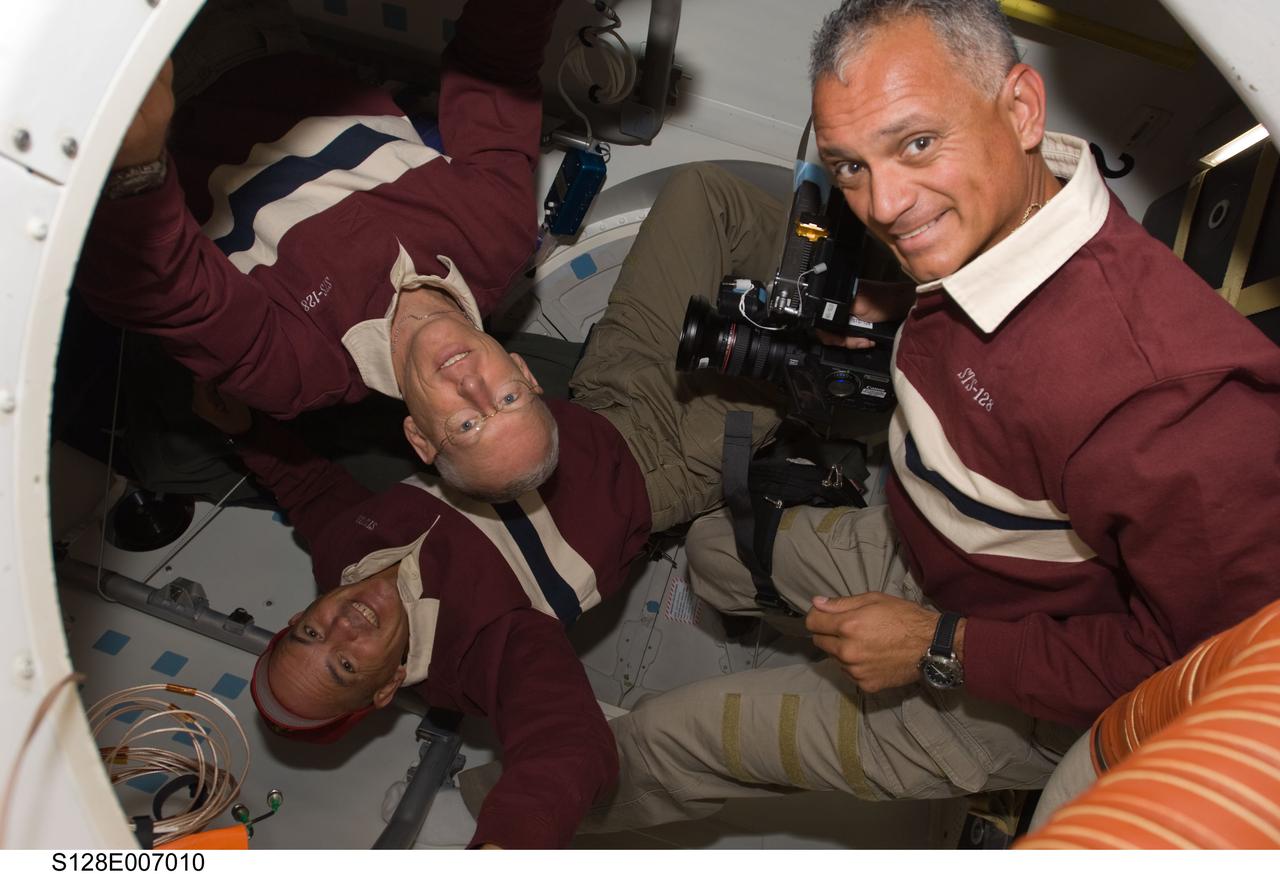
S128-E-007010 (30 Aug. 2009) --- Astronauts Rick Sturckow (bottom), STS-128 commander; John “Danny” Olivas (right) and Patrick Forrester, both mission specialists, are pictured near the hatch on the middeck of Space Shuttle Discovery after docking with the International Space Station. The two spacecraft docked at 7:54 p.m. (CDT), and the Discovery crew entered the orbital outpost at 9:59 p.m. (CDT) on Aug. 30.
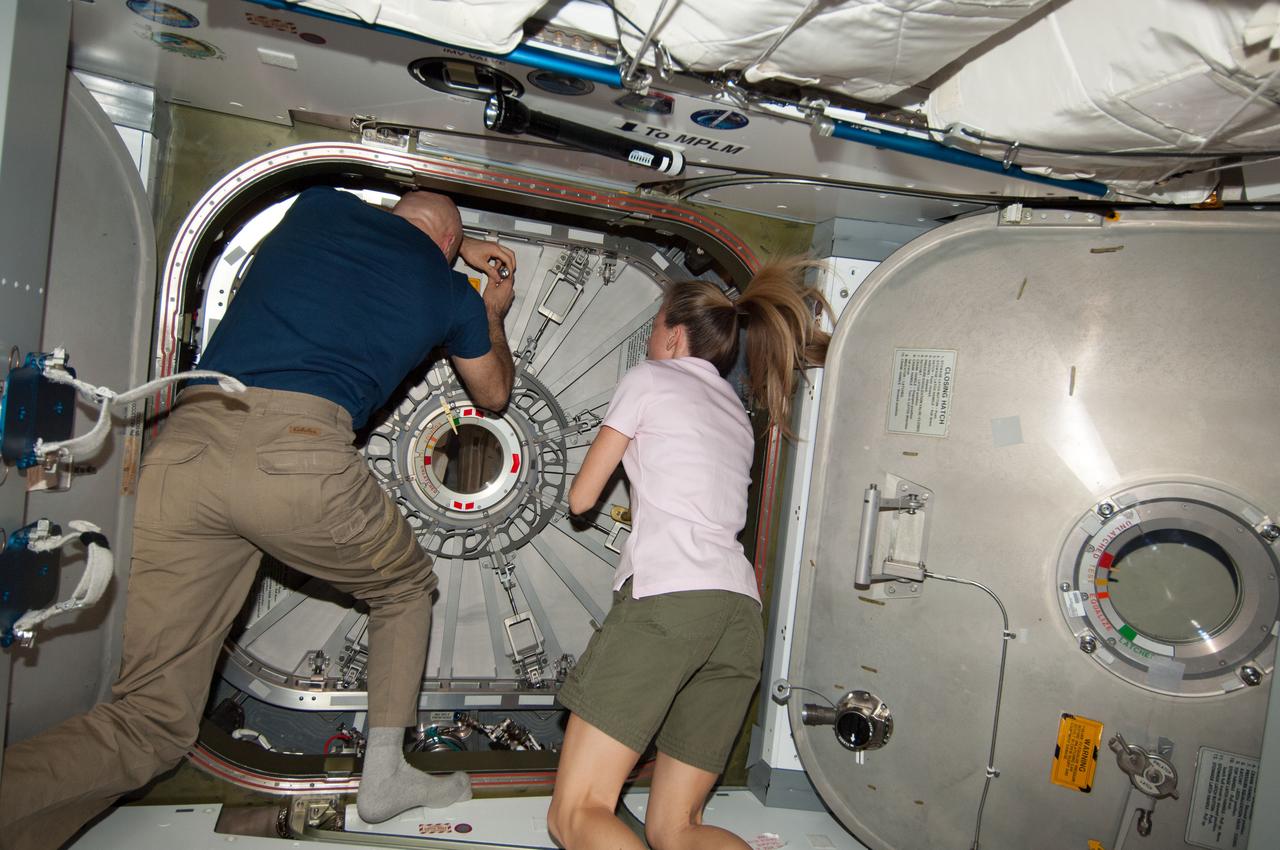
ISS036-E-039132 (3 Sept. 2013) --- European Space Agency astronaut Luca Parmitano and NASA astronaut Karen Nyberg, both Expedition 36 flight engineers, close the hatch in the vestibule between the International Space Station’s Harmony node and the Japanese "Kounotori" H2 Transfer Vehicle-4 (HTV-4) in preparation to release the HTV-4 ending its one-month stay at the space station. The automated resupply craft will be grappled by the Canadarm2, removed from the Harmony node and released for a destructive reentry into Earth’s atmosphere.
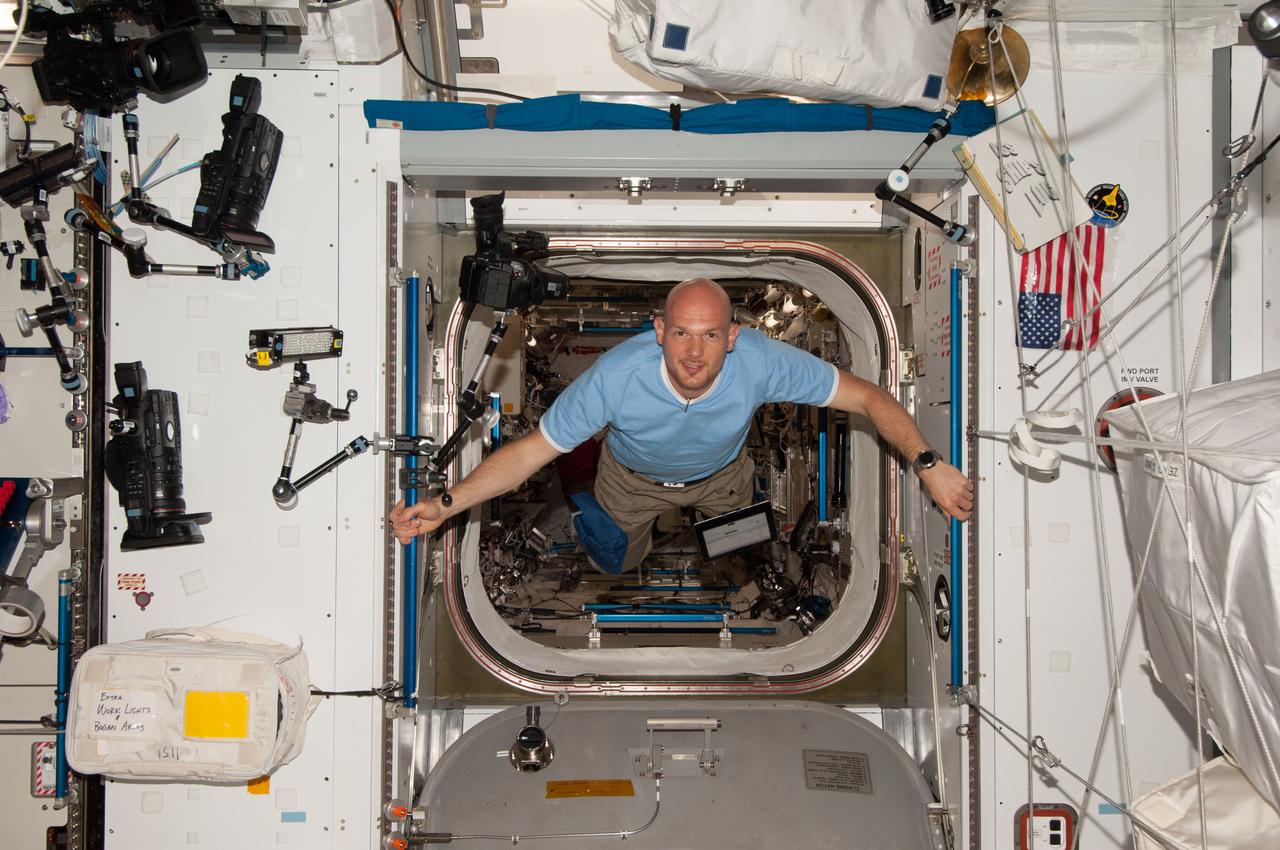
ISS040-E-006038 (30 May 2014) --- European Space Agency astronaut Alexander Gerst, Expedition 40 flight engineer, floats through the hatch between the Kibo laboratory and the Harmony node of the International Space Station.
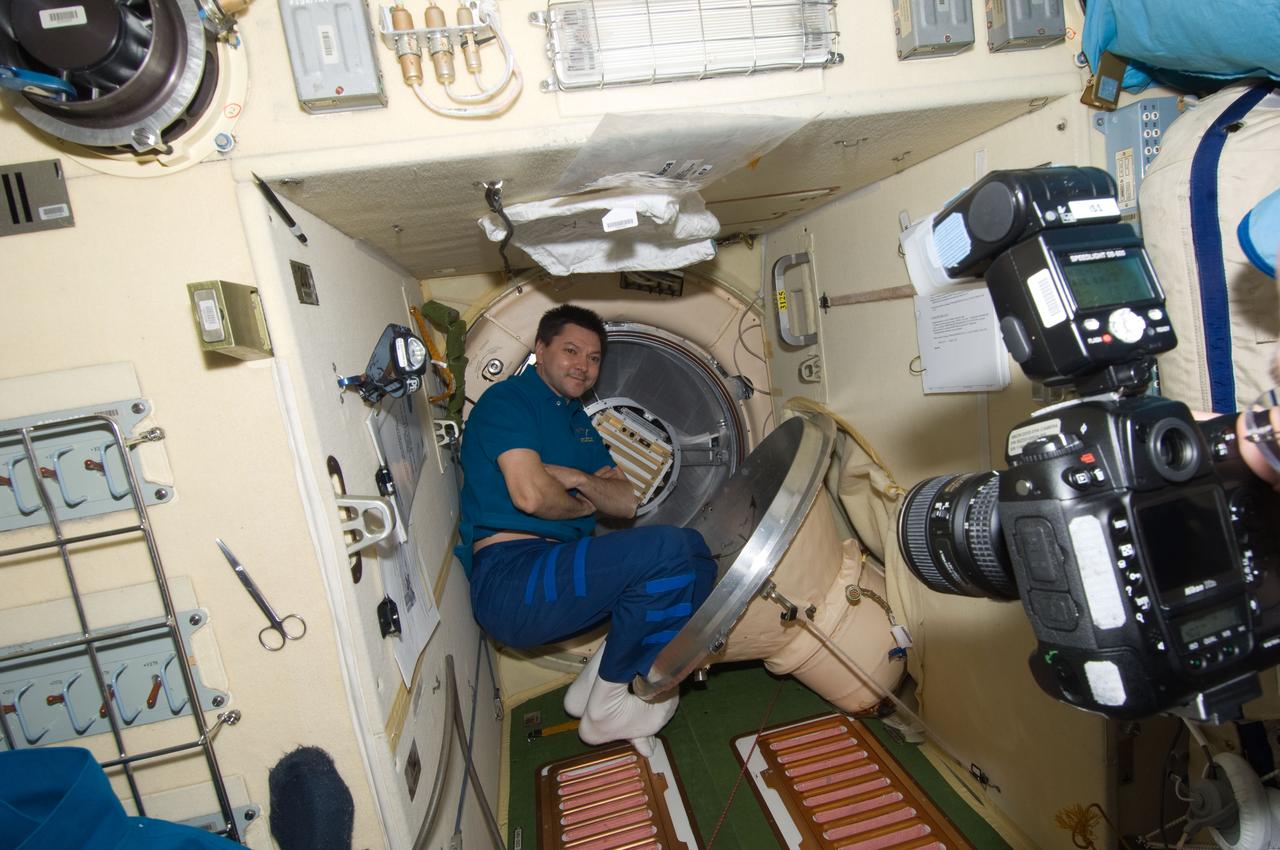
ISS030-E-155928 (19 Jan. 2012) --- Russian cosmonaut Oleg Kononenko, Expedition 30 flight engineer, is pictured near a hatch in the Pirs Docking Compartment of the International Space Station.
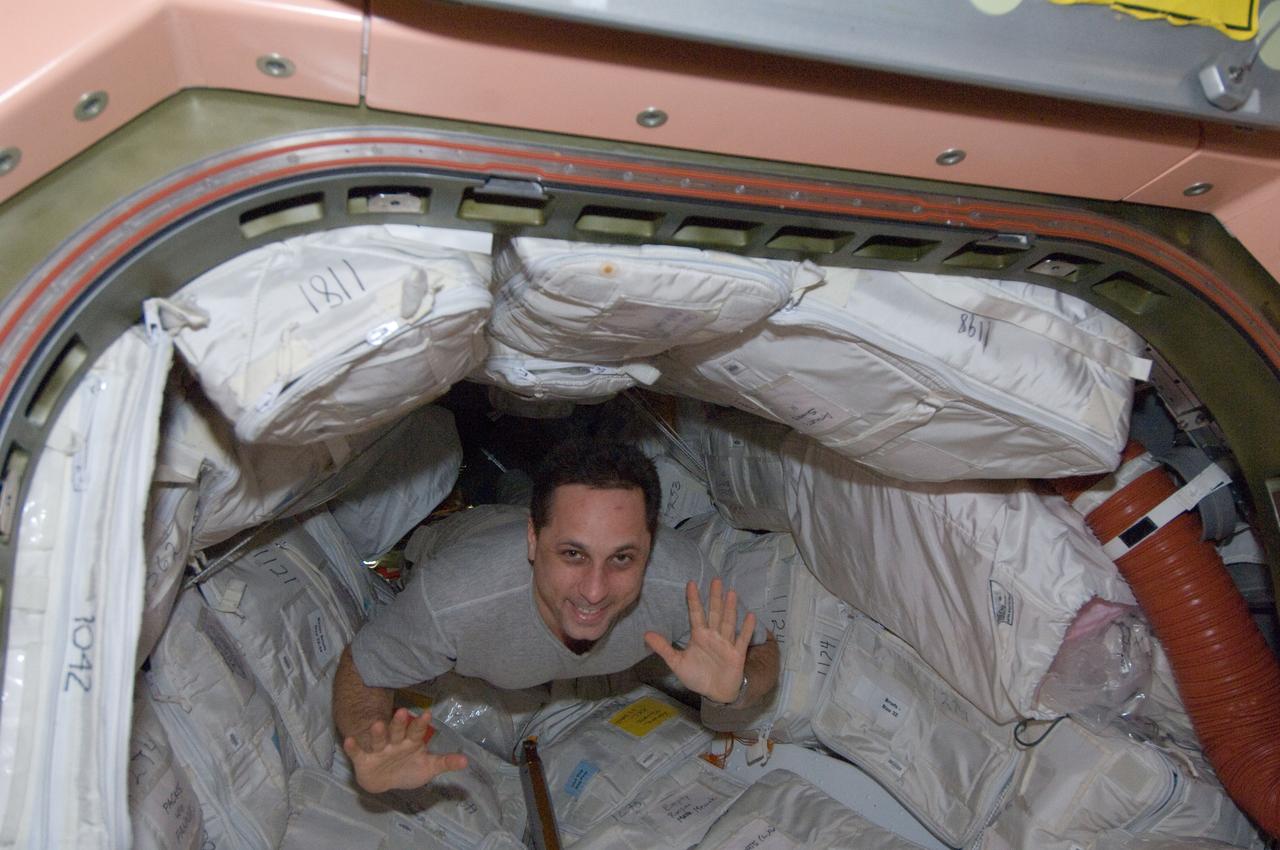
ISS030-E-033356 (27 Dec. 2011) --- Russian cosmonaut Anton Shkaplerov, Expedition 30 flight engineer, floats through a hatch into the Unity node of the International Space Station.
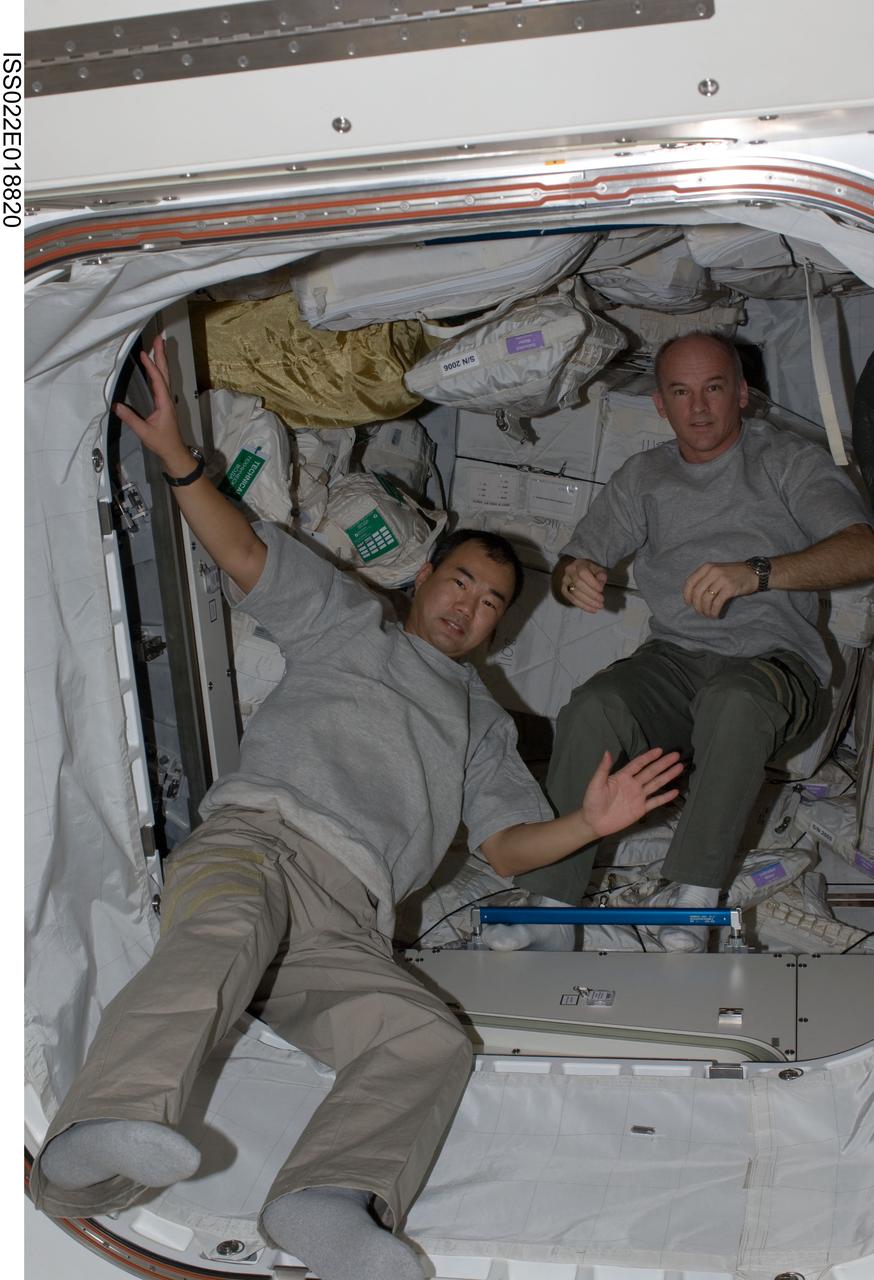
ISS022-E-018820 (3 Jan. 2010) --- NASA astronaut Jeffrey Williams (right), Expedition 22 commander; and Japan Aerospace Exploration Agency astronaut Soichi Noguchi, flight engineer, are pictured in a hatch on the International Space Station.
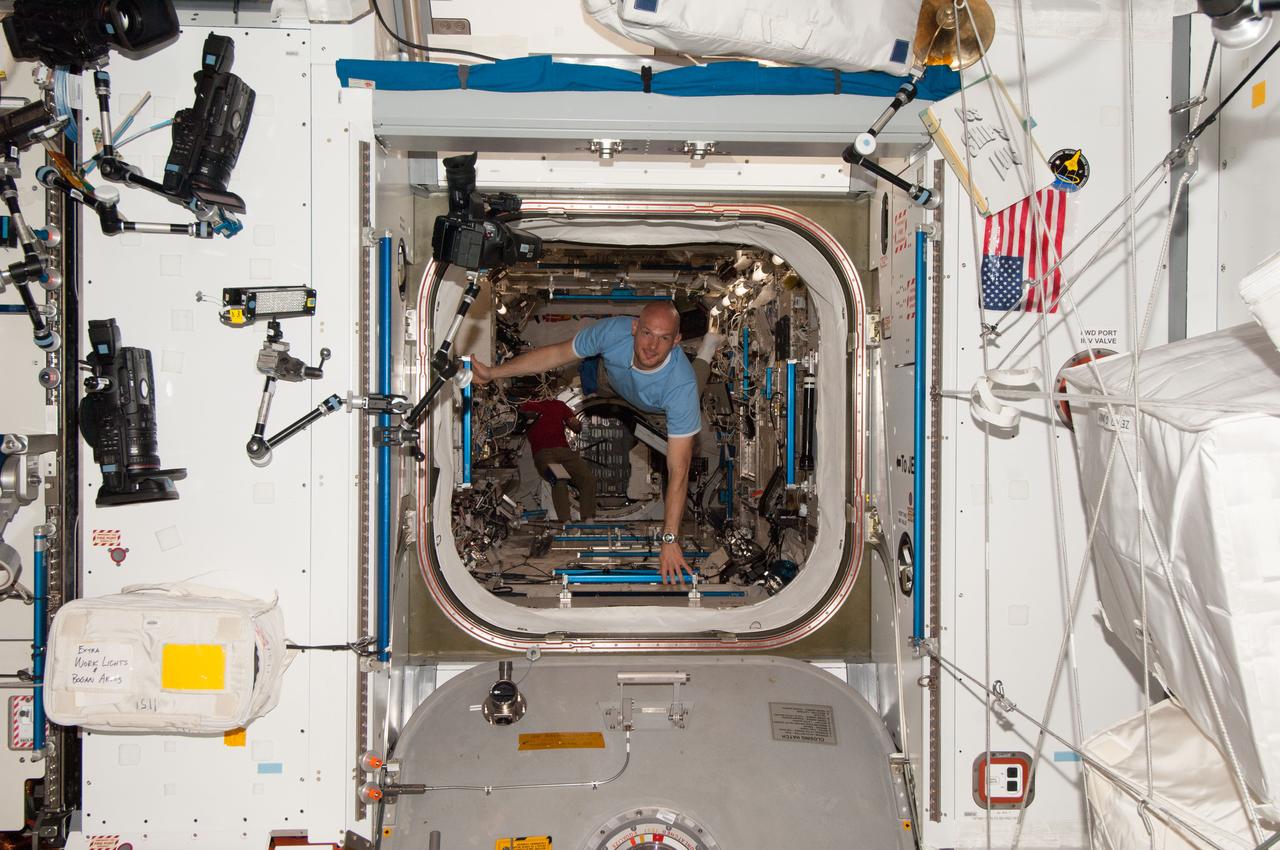
ISS040-E-006037 (30 May 2014) --- European Space Agency astronaut Alexander Gerst, Expedition 40 flight engineer, floats through the hatch between the Kibo laboratory and the Harmony node of the International Space Station.
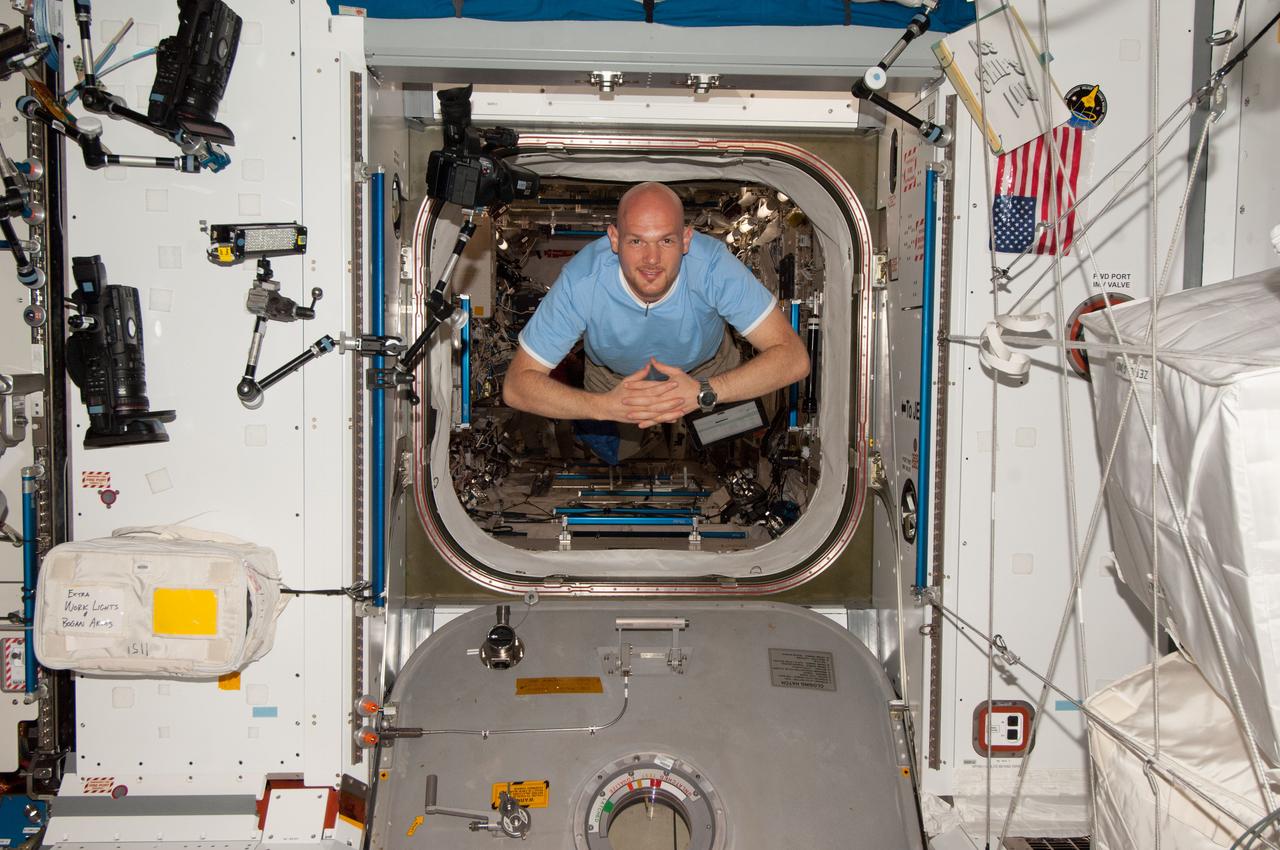
ISS040-E-006039 (30 May 2014) --- European Space Agency astronaut Alexander Gerst, Expedition 40 flight engineer, floats through the hatch between the Kibo laboratory and the Harmony node of the International Space Station.
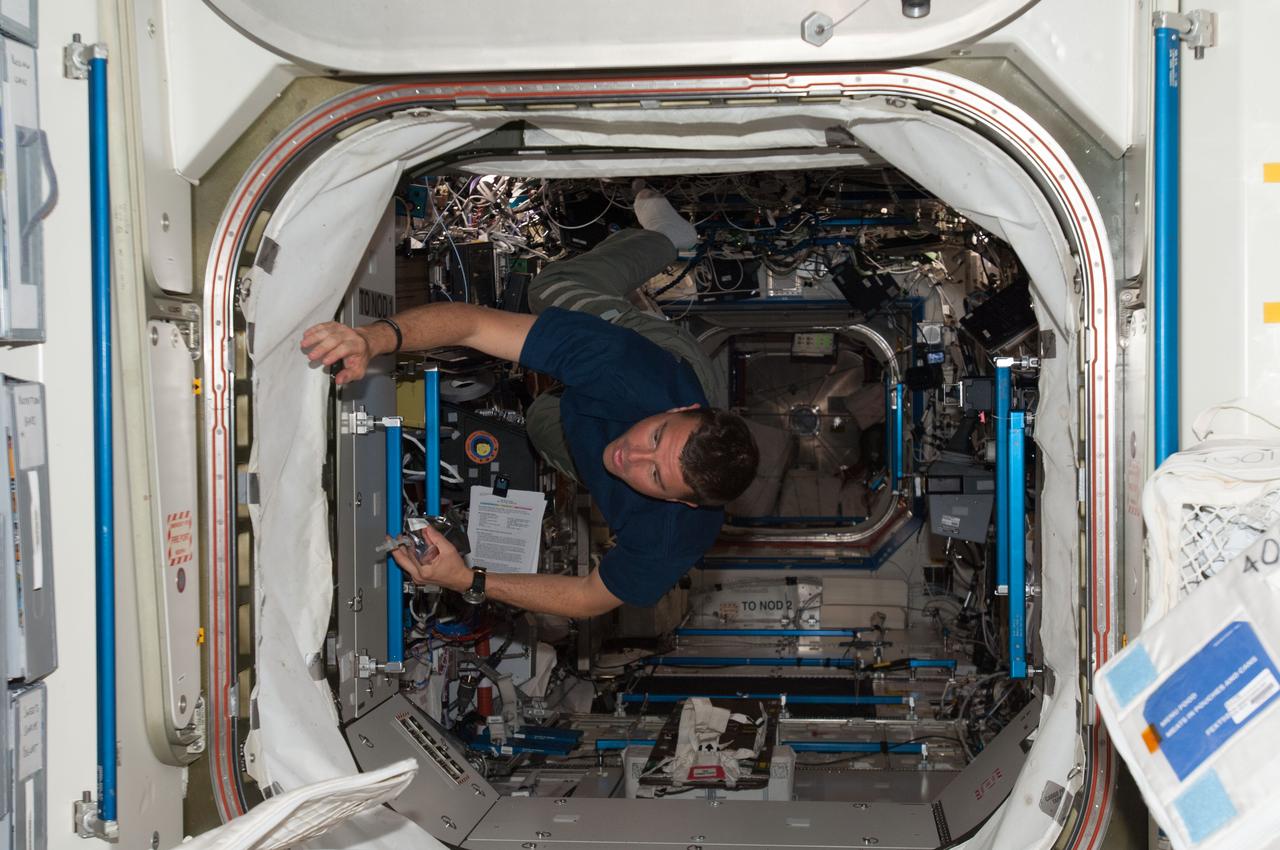
ISS040-E-006564 (30 May 2014) --- NASA astronaut Reid Wiseman, Expedition 40 flight engineer, floats through the hatch between the Destiny laboratory and the Unity node of the International Space Station.
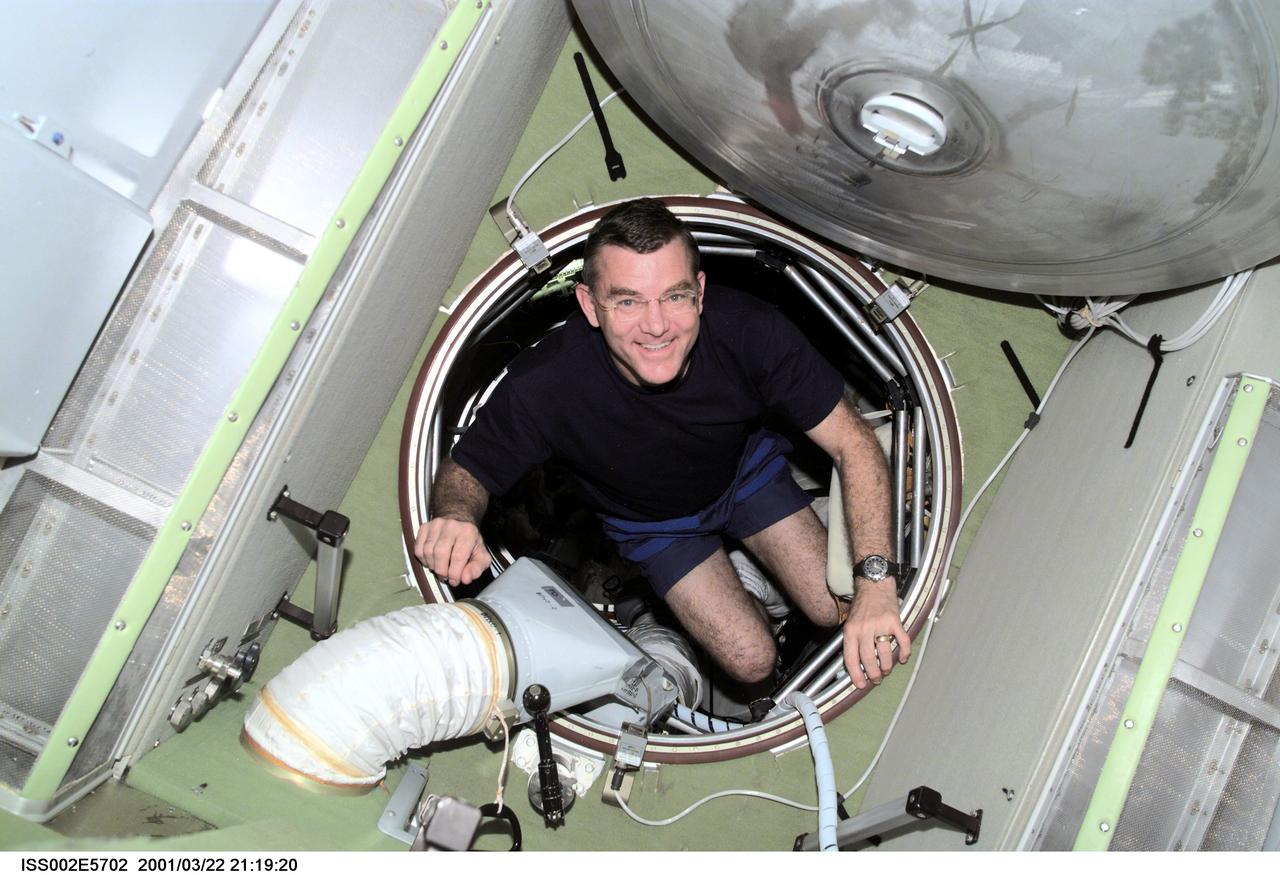
ISS002-E-5702 (22 March 2001) --- Astronaut James S. Voss, Expedition Two flight engineer, translates through the forward hatch of the Zvezda Service Module. The image was recorded with a digital still camera.
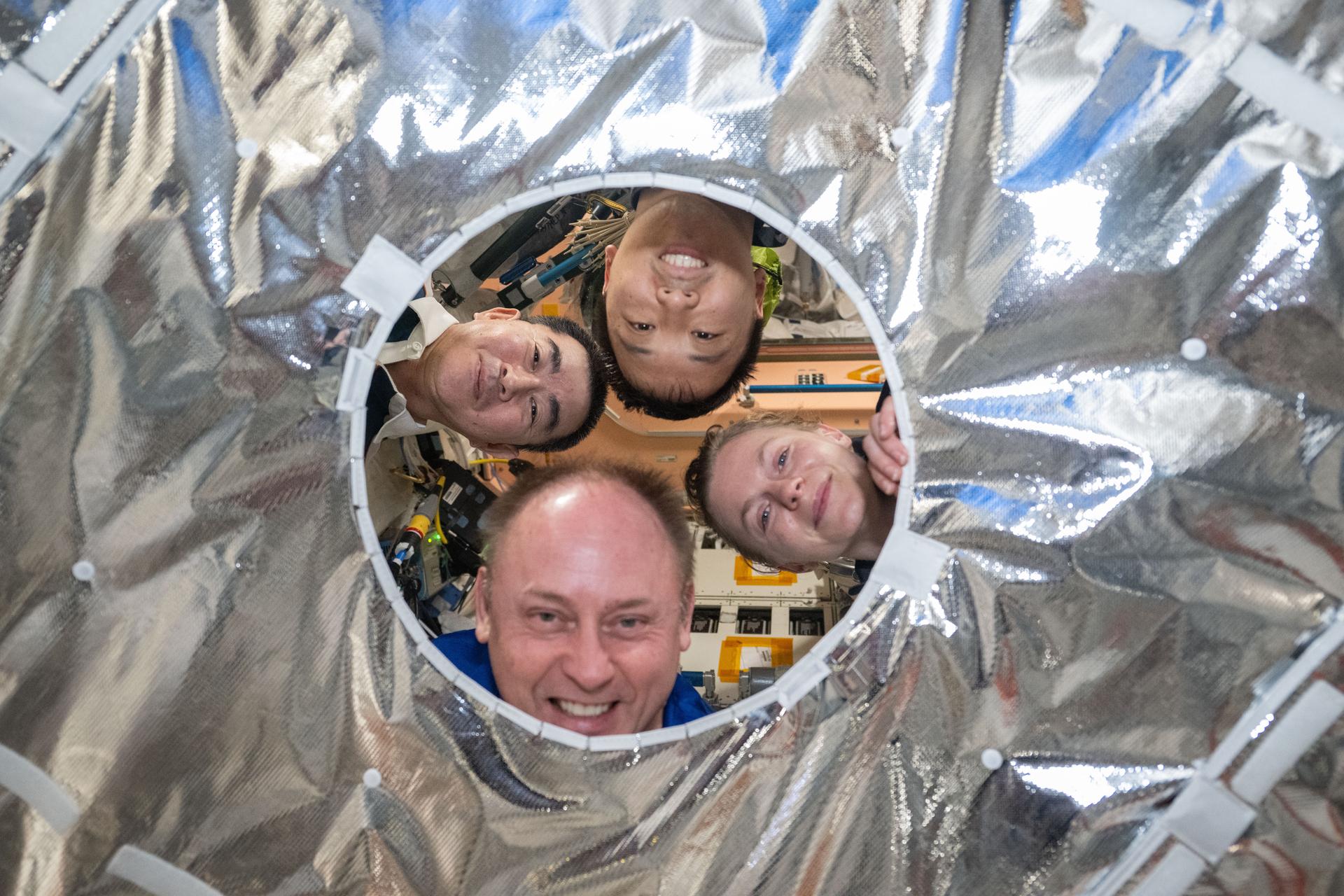
iss073e0814504 (Sept. 18, 2025) --- Four Expedition 73 flight engineers pose for a playful portrait through a circular opening in a hatch thermal cover aboard the International Space Station. The cover provides micrometeoroid and orbital debris protection while maintaining cleanliness and pressure integrity in the vestibule between Northrop Grumman's Cygnus XL cargo spacecraft and the orbital outpost. The opening allows for visual inspection of hatch alignment, access to the hatch handle or pressure equalization valve, and visibility for sensors or cameras during berthing operations. Clockwise from left, are JAXA (Japan Aerospace Exploration Agency) astronaut Kimiya Yui and NASA astronauts Jonny Kim, Zena Cardman, and Mike Fincke.
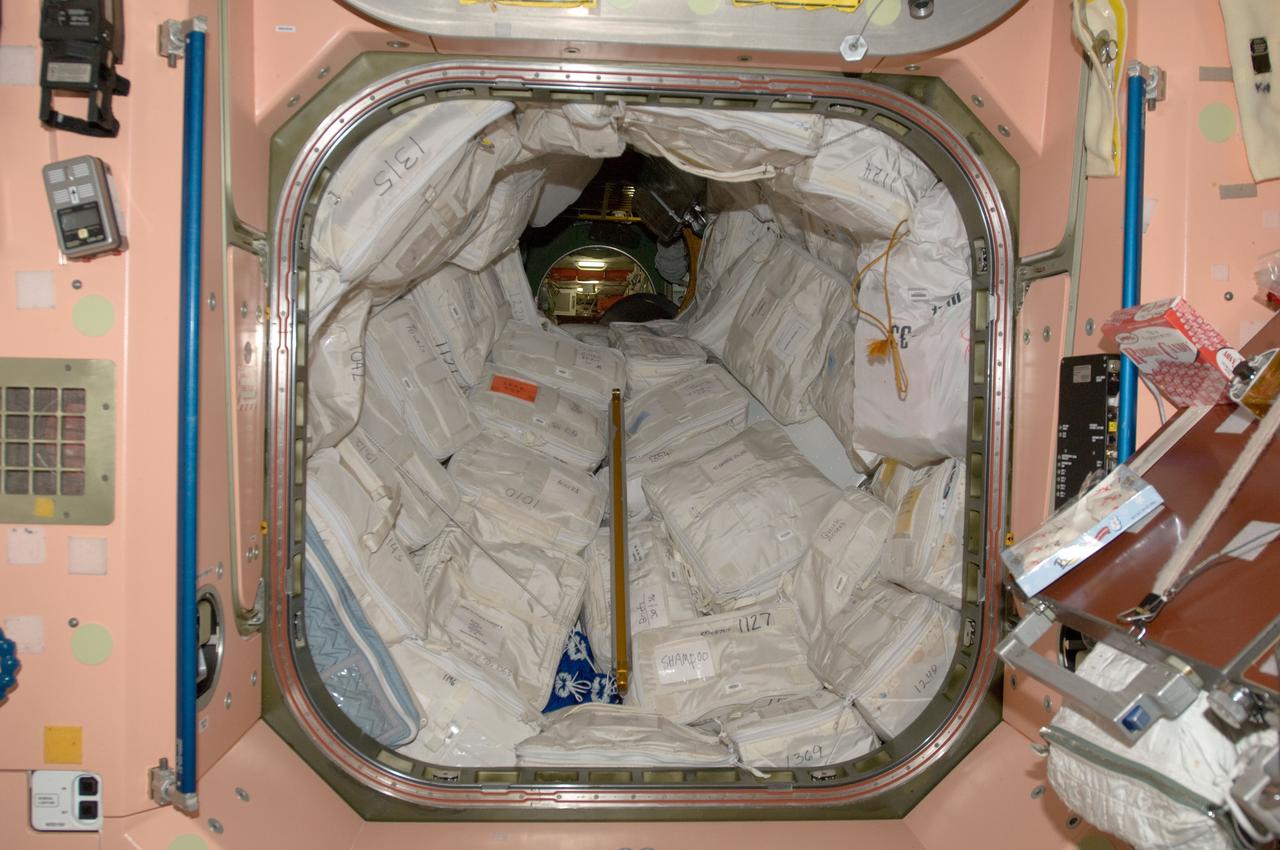
View of stowage in the aft end of the Node 1 and the hatch leading to Pressurized Mating Adapter 1 (PMA1). The PMA1 is also lined with stowed equipment. Photo was taken during Expedition 34.
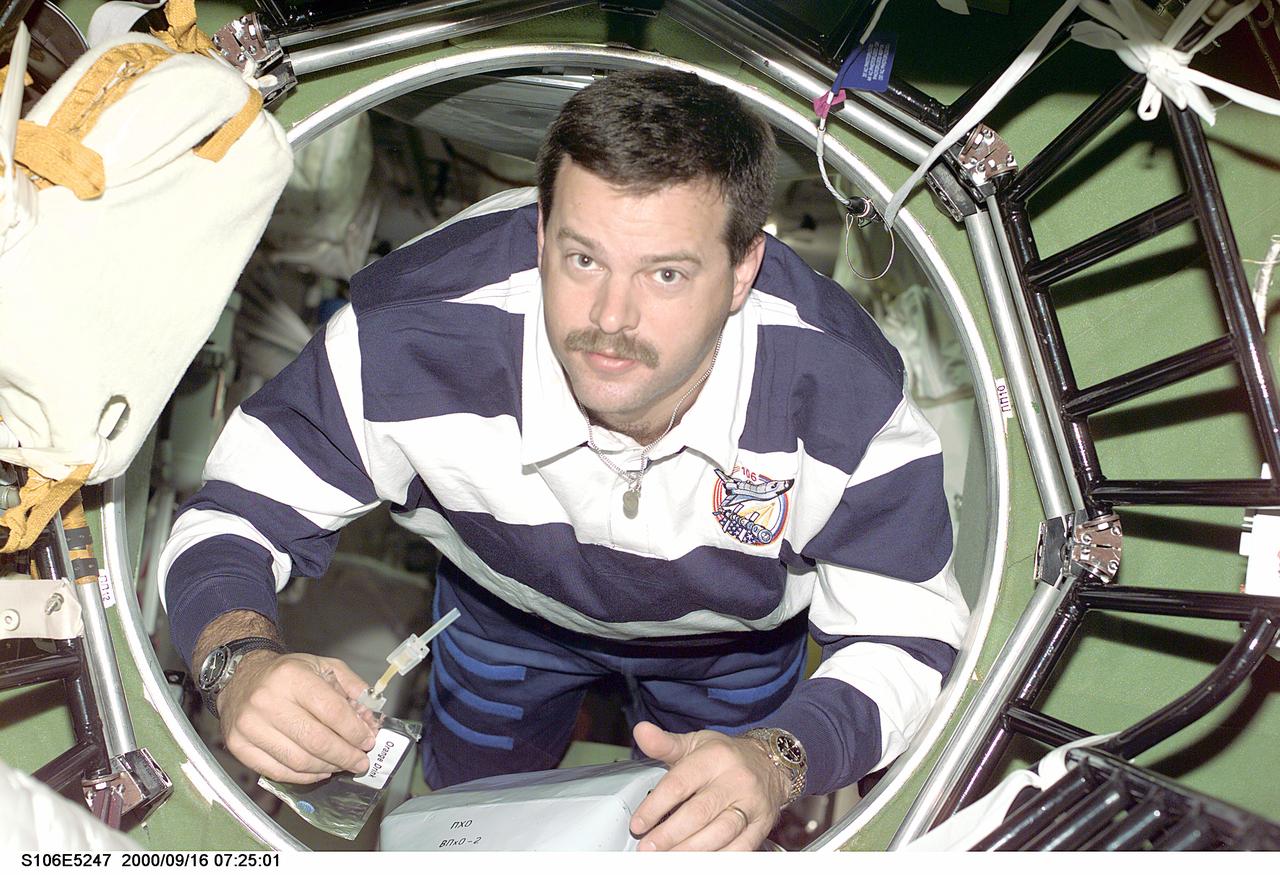
STS-106 Pilot Scott Altman moves through a hatch with a stowage bag and a drink container in the International Space Station (ISS).
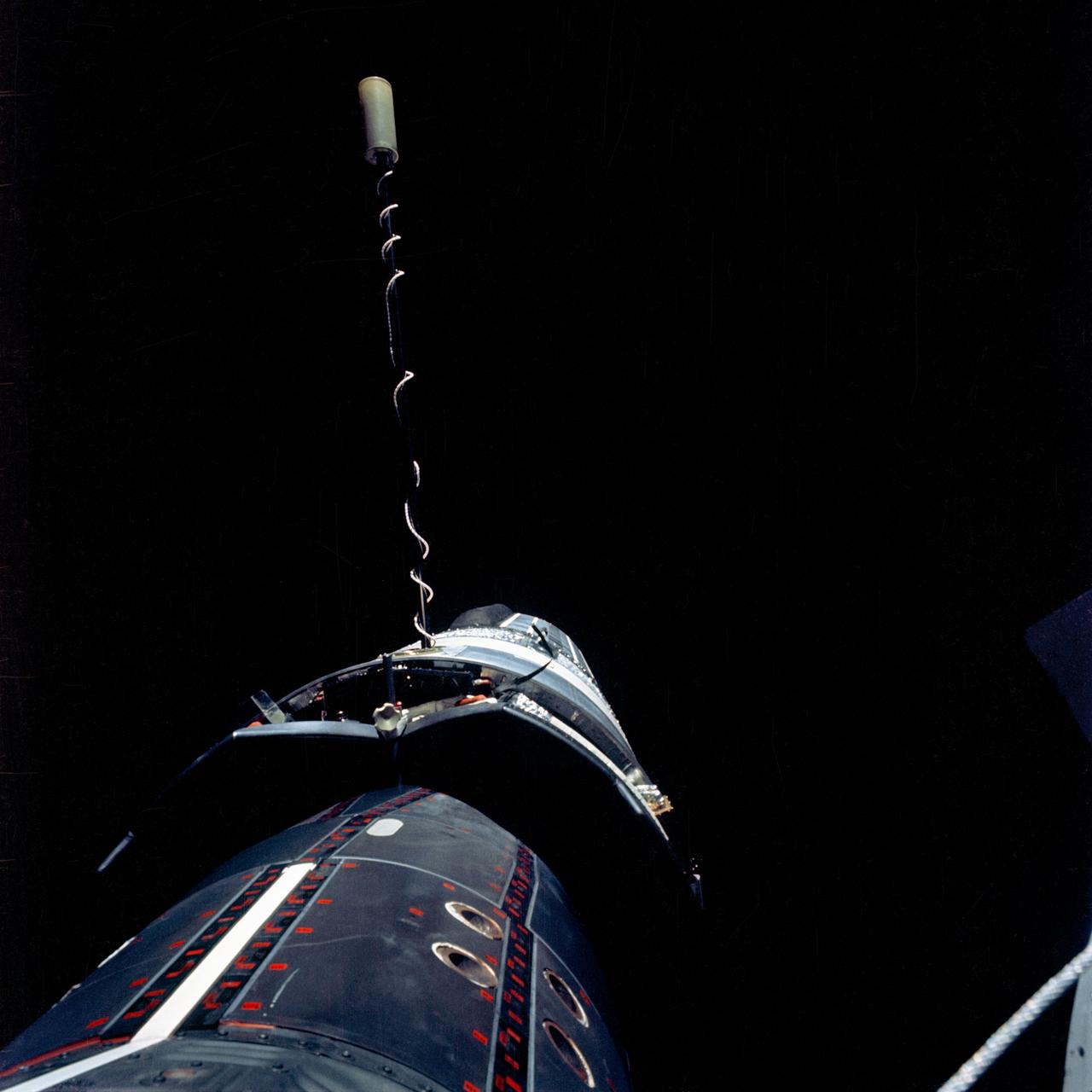
S66-54555 (14 Sept. 1966) --- The Gemini-11 spacecraft is docked to the Agena Target Vehicle in this photograph taken by astronaut Richard F. Gordon Jr., pilot, as he stood in the open hatch of the Gemini-11 spacecraft during his extravehicular activity (EVA). Note Agena's L-band antenna. Taken during Gemini-11's 29th revolution of Earth, using a modified 70mm Hasselblad camera, with Eastman Kodak, Ektachrome, MS (S.O. 368) color film. Photo credit: NASA