He Will Not Be Permanently Damaged
He or She Who Shall Be Named
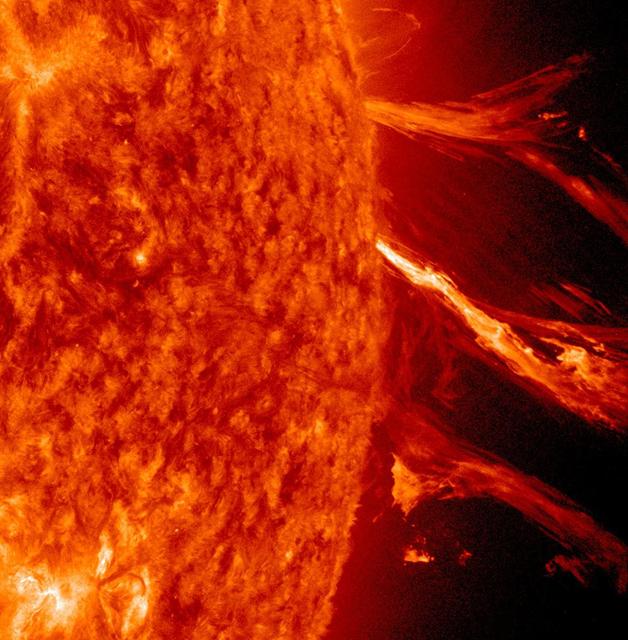
NASA image captured January 2, 2012 To view a video of this event go here: <a href="http://www.flickr.com/photos/gsfc/6648724193">www.flickr.com/photos/gsfc/6648724193</a> The Sun erupted with a good-sized solar flare and a coronal mass ejection (CME) on its far-side beyond the view of SDO, but the resulting strands of particle clouds as seen in extreme ultraviolet light still made for quite a show that lasted about three hours (Jan. 2, 2011). Note how a portion of the strands fall back to the Sun. It appears the force of the blast was unable, for some portion of the material, to overcome the pull of the Sun's magnetic fields. This blast was not directed at Earth. Credit: NASA/GSFC/SDO <b><a href="http://www.nasa.gov/audience/formedia/features/MP_Photo_Guidelines.html" rel="nofollow">NASA image use policy.</a></b> <b><a href="http://www.nasa.gov/centers/goddard/home/index.html" rel="nofollow">NASA Goddard Space Flight Center</a></b> enables NASA’s mission through four scientific endeavors: Earth Science, Heliophysics, Solar System Exploration, and Astrophysics. Goddard plays a leading role in NASA’s accomplishments by contributing compelling scientific knowledge to advance the Agency’s mission. <b>Follow us on <a href="http://twitter.com/NASA_GoddardPix" rel="nofollow">Twitter</a></b> <b>Like us on <a href="http://www.facebook.com/pages/Greenbelt-MD/NASA-Goddard/395013845897?ref=tsd" rel="nofollow">Facebook</a></b> <b>Find us on <a href="http://instagrid.me/nasagoddard/?vm=grid" rel="nofollow">Instagram</a></b>
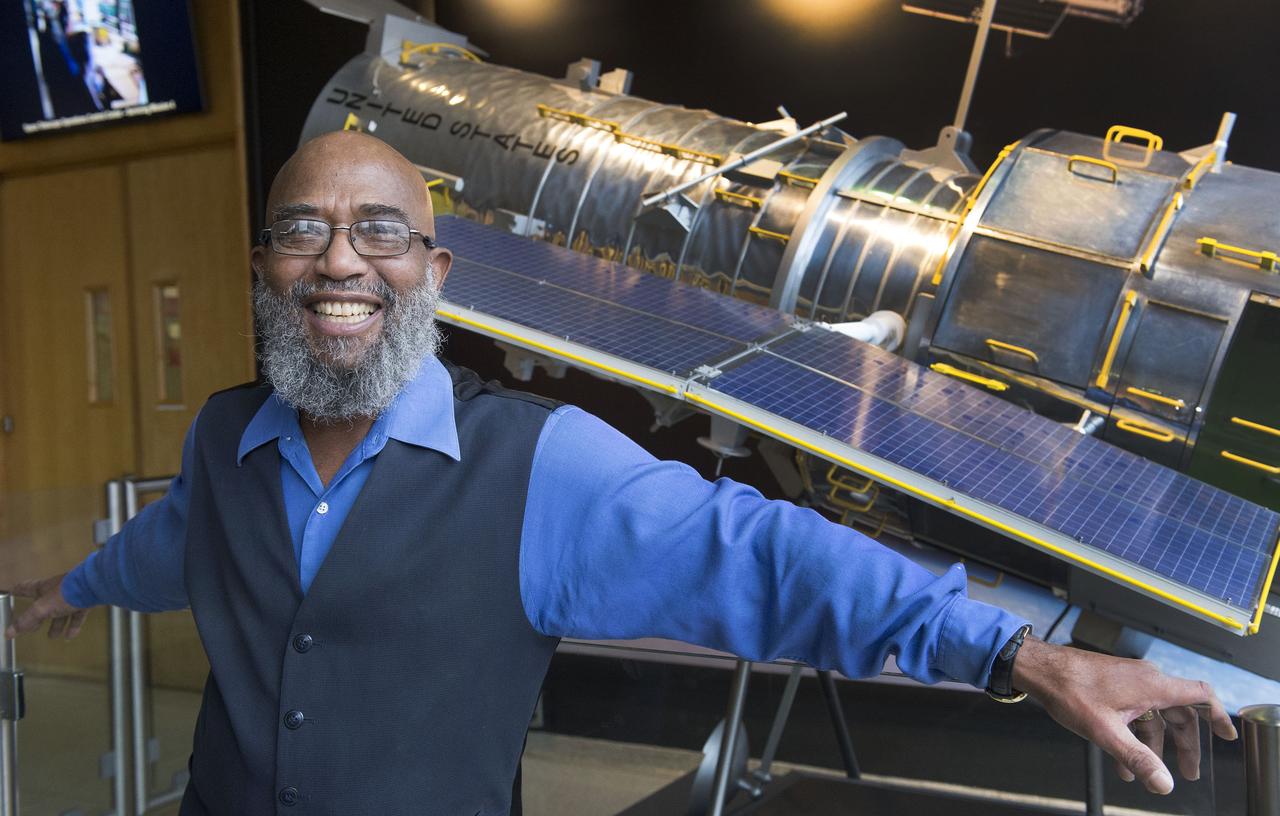
Josh White Jr. was keynote speaker for Exploring Leadership Colloquium, he performed “A Musical and Storytelling Walk Through Our Civil Rights History” at Goddard on January 19, 2017. He is a musician, vocalist, guitarist, songwriter, Tony Award-winning actor, Grammy-nominated recording artist, teacher, and social activist.
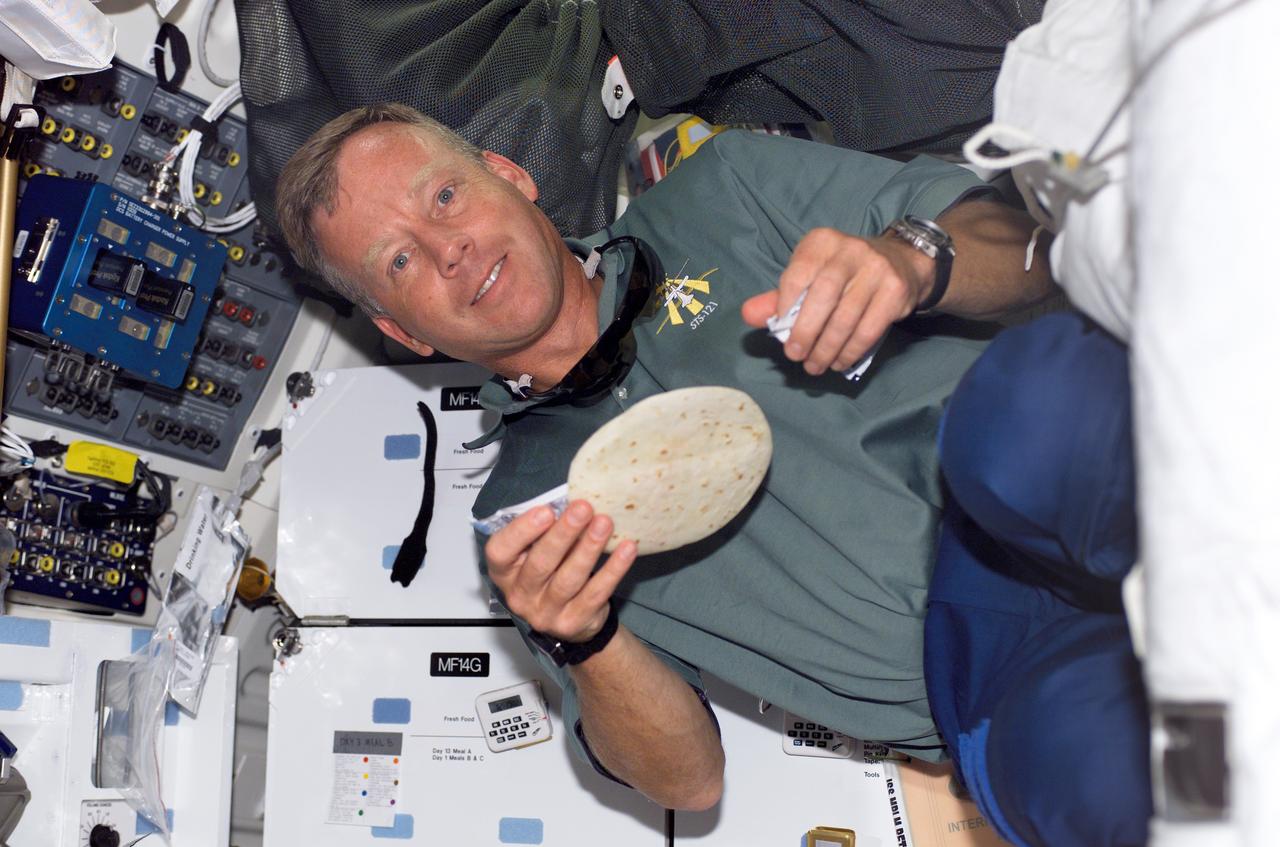
S121-E-05879 (6 July 2006) --- Astronaut Steven W. Lindsey, STS-121 commander, holds a tortilla as he prepares to eat a meal on the middeck of the Space Shuttle Discovery.
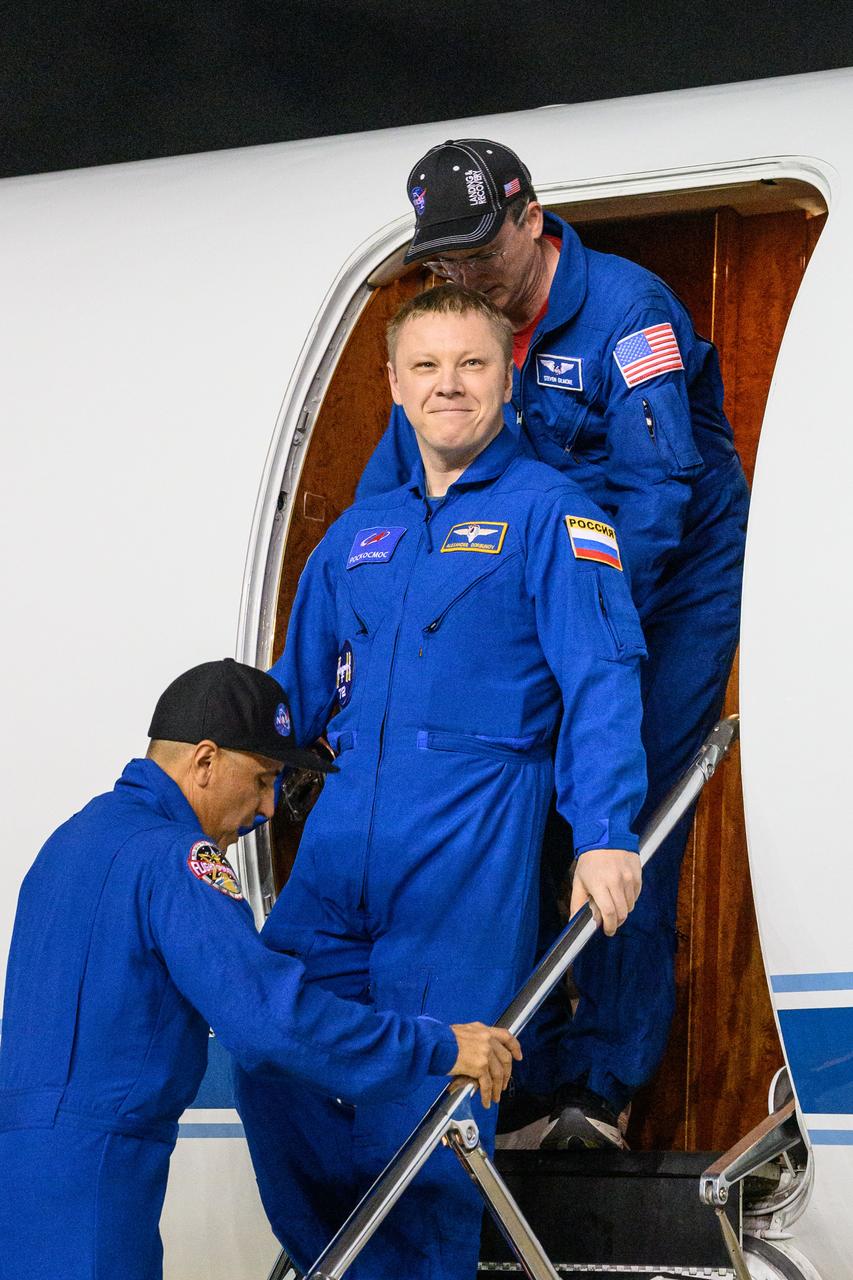
jsc2025e032668 (March 18, 2025) --- Roscosmos cosmonaut Aleksandr Gorbunov smiles as he returns to Johnson Space Center's Ellington Field in Houston after completing a long-duration science mission aboard the International Space Station. After undocking from the orbiting laboratory, NASA’s SpaceX Crew-9 splashed down at 5:57 p.m. EDT on Tuesday, March 18, in the Gulf of America near Tallahassee, Florida.
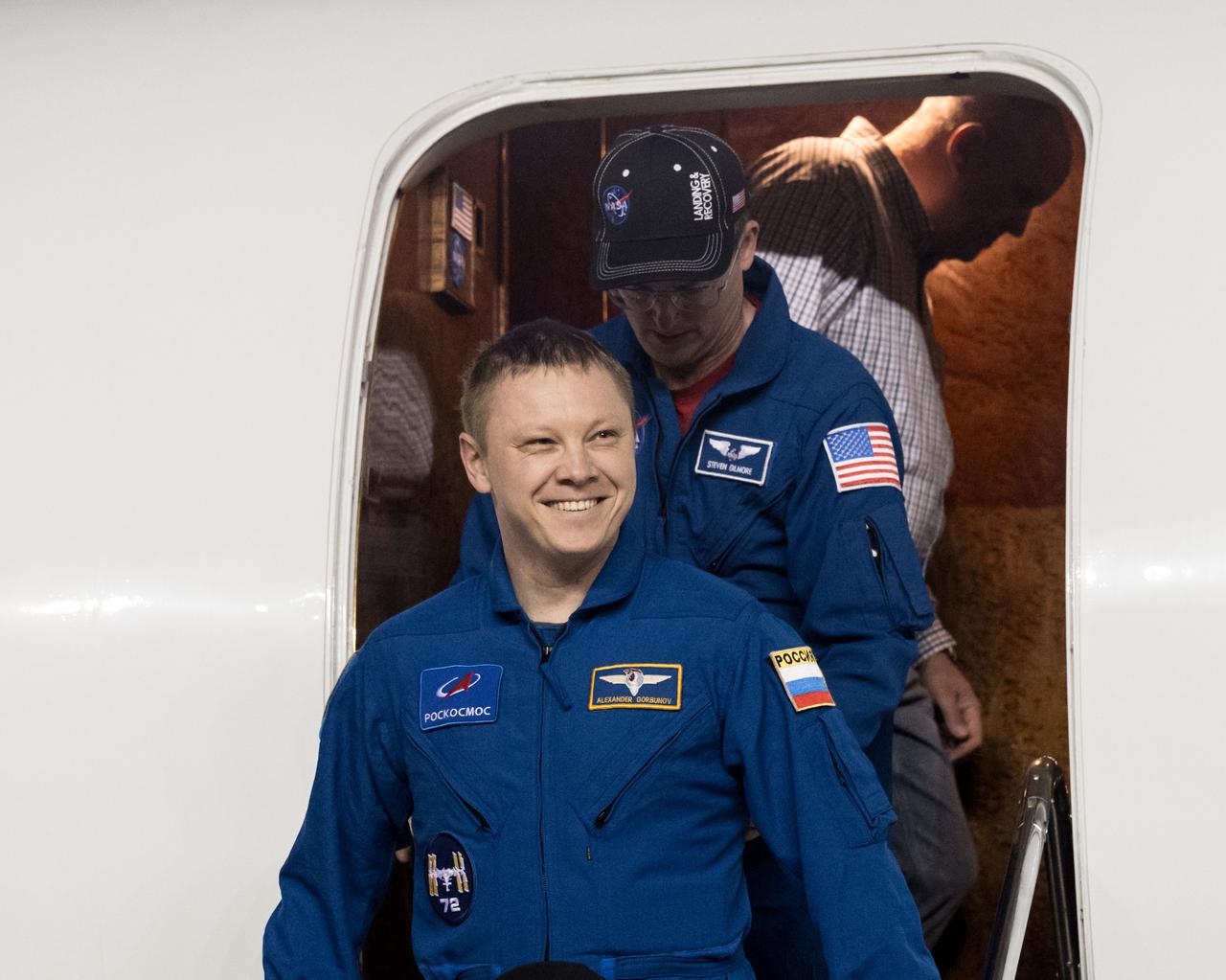
jsc2025e032537 (March 18, 2025) --- Roscosmos cosmonaut Aleksandr Gorbunov smiles as he returns to Johnson Space Center's Ellington Field in Houston after completing a long-duration science mission aboard the International Space Station. After undocking from the orbiting laboratory, NASA’s SpaceX Crew-9 splashed down at 5:57 p.m. EDT on Tuesday, March 18, in the Gulf of America near Tallahassee, Florida.
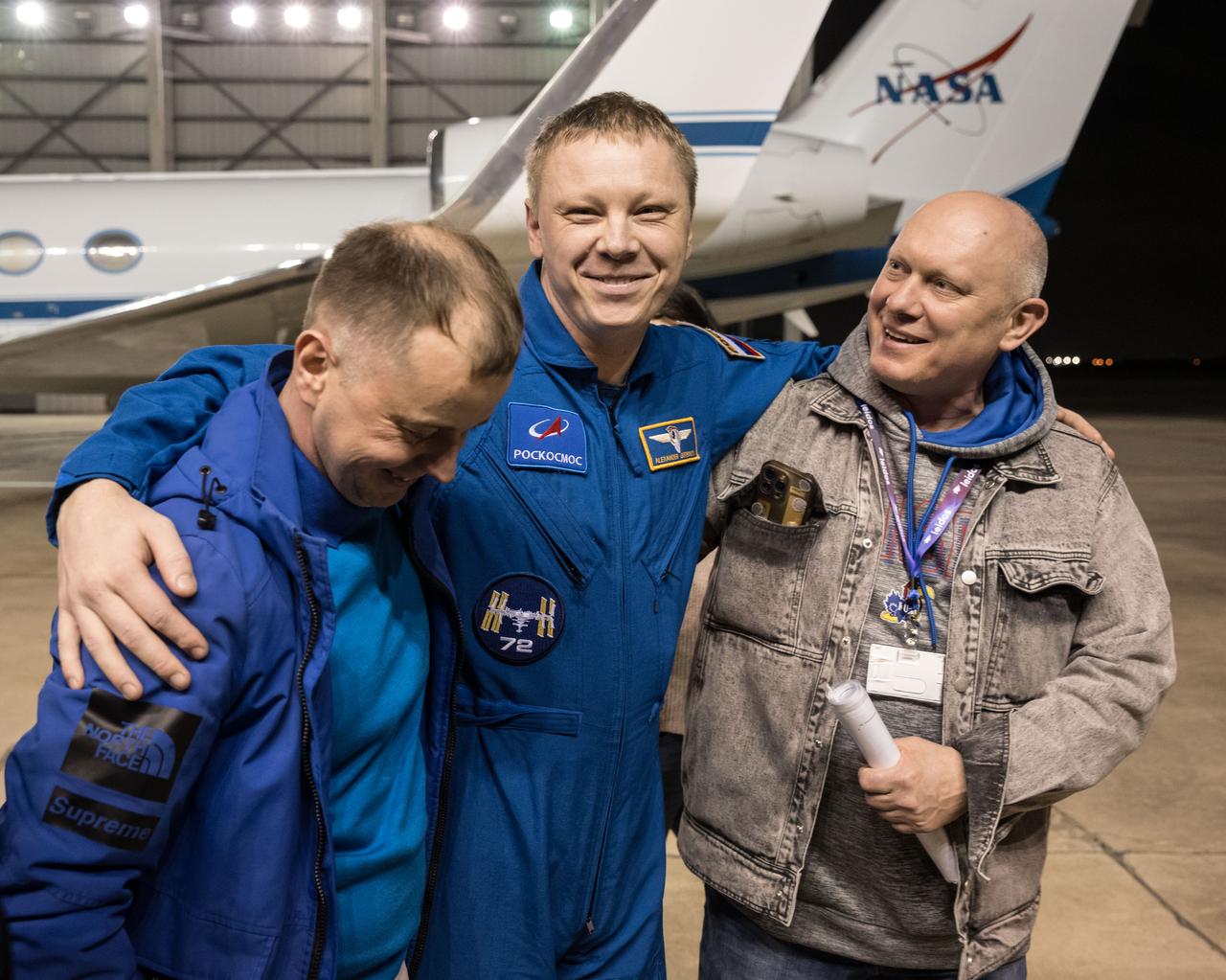
jsc2025e032538 (March 18, 2025) --- Roscosmos cosmonaut Aleksandr Gorbunov smiles as he returns to Johnson Space Center's Ellington Field in Houston after completing a long-duration science mission aboard the International Space Station. After undocking from the orbiting laboratory, NASA’s SpaceX Crew-9 splashed down at 5:57 p.m. EDT on Tuesday, March 18, in the Gulf of America near Tallahassee, Florida.

jsc2026e037785 (May 5, 2026) --- NASA astronaut Jessica Watkins (center), surrounded by training specialists, assists CSA (Canadian Space Agency) astronaut Josh Kutryk as he practices suiting up in a spacesuit in an International Space Station airlock simulator at Johnson Space Center’s (JSC) Space Vehicle Mockup Facility in Houston, Texas. Astronauts familiarize themselves with spacesuit systems and procedures and practice Quest airlock operations before conducting spacewalk training at JSC’s Neutral Buoyancy Laboratory in simulated microgravity. Credit: NASA/Josh Valcarcel

jsc2026e037778 (May 5, 2026) --- NASA astronaut Jessica Watkins assists NASA astronaut Luke Delaney as he practices suiting up in a spacesuit in an International Space Station airlock simulator at Johnson Space Center’s (JSC) Space Vehicle Mockup Facility in Houston, Texas. Astronauts familiarize themselves with spacesuit systems and procedures and practice Quest airlock operations before conducting spacewalk training at JSC’s Neutral Buoyancy Laboratory in simulated microgravity. Credit: NASA/Josh Valcarcel
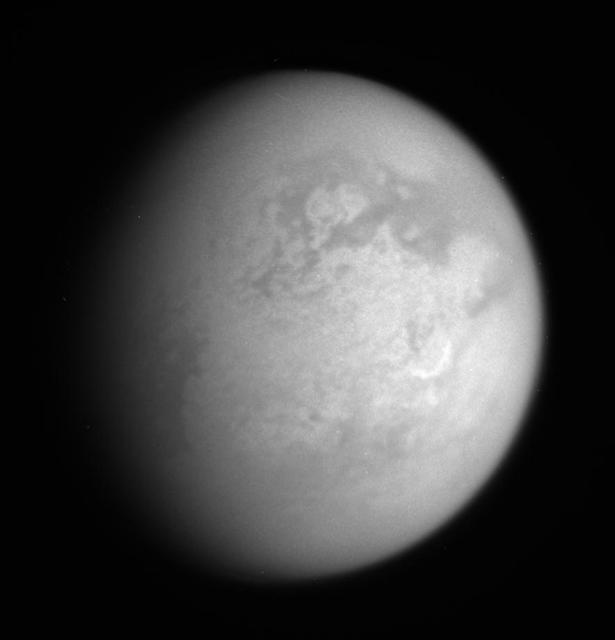
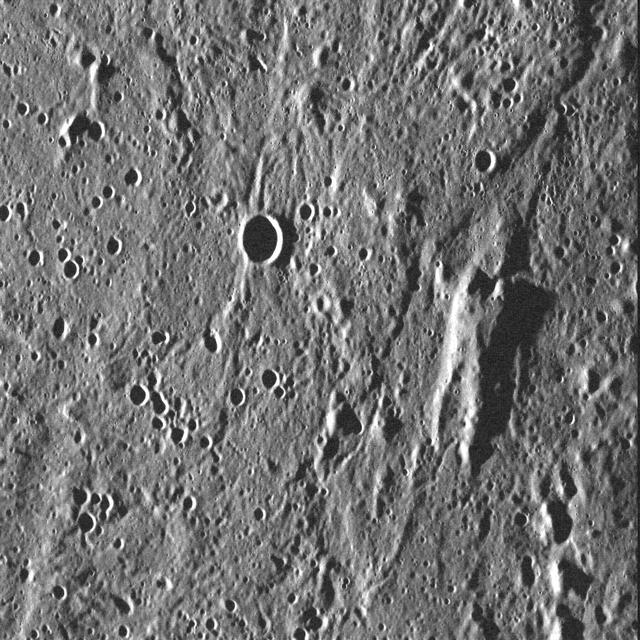
he view is centered on the bright region called Xanadu. Above center is the large crater Menrva, which is surrounded by darker materia

he eastern wall of Shalbatana Vallis has collapsed and formed a landslide that completely covered the valley floor
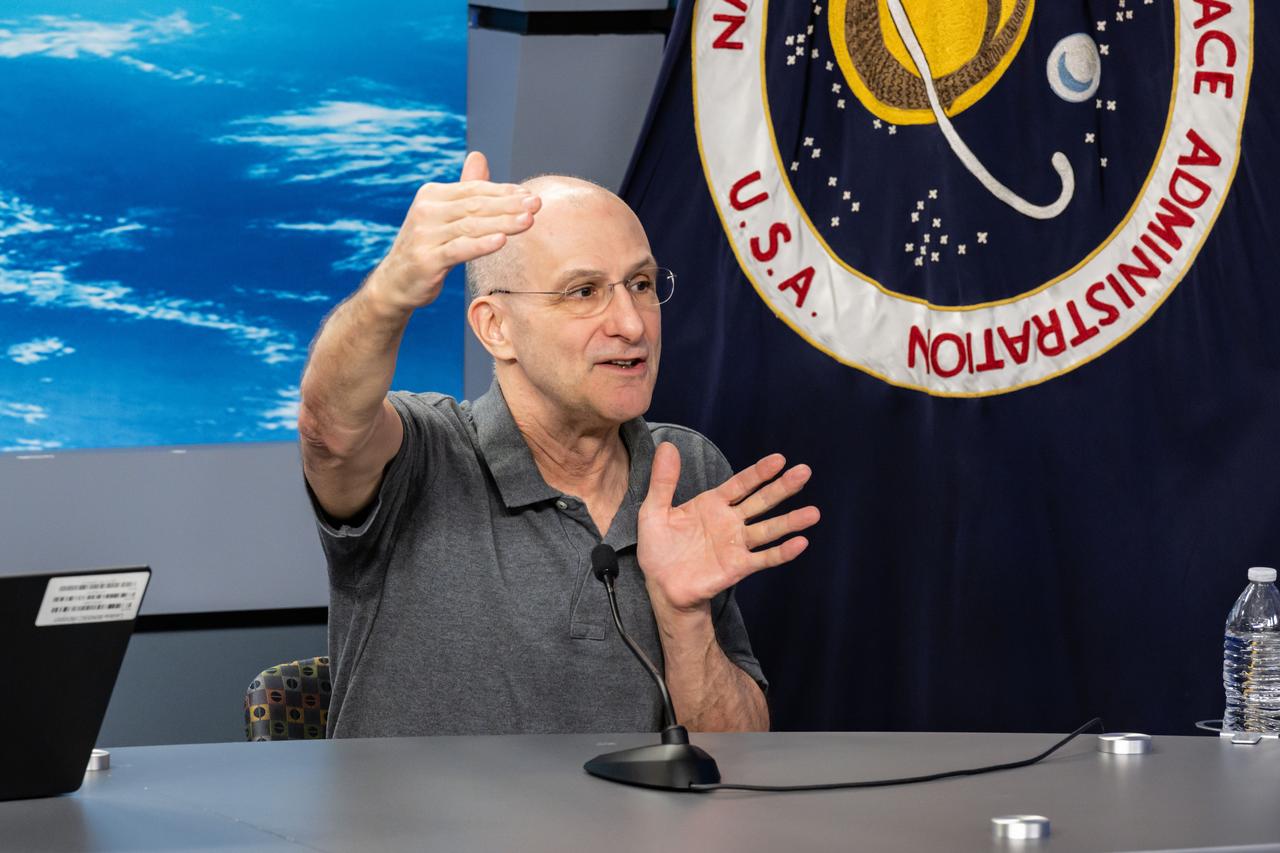
jsc2025e041765 (April 28, 2025) --- NASA astronaut Don Pettit participates in a news conference at NASA's Johnson Space Center in Houston, Texas. He discussed his mission aboard the International Space Station where he lived and worked for 220 days as an Expedition 72 Flight Engineer.
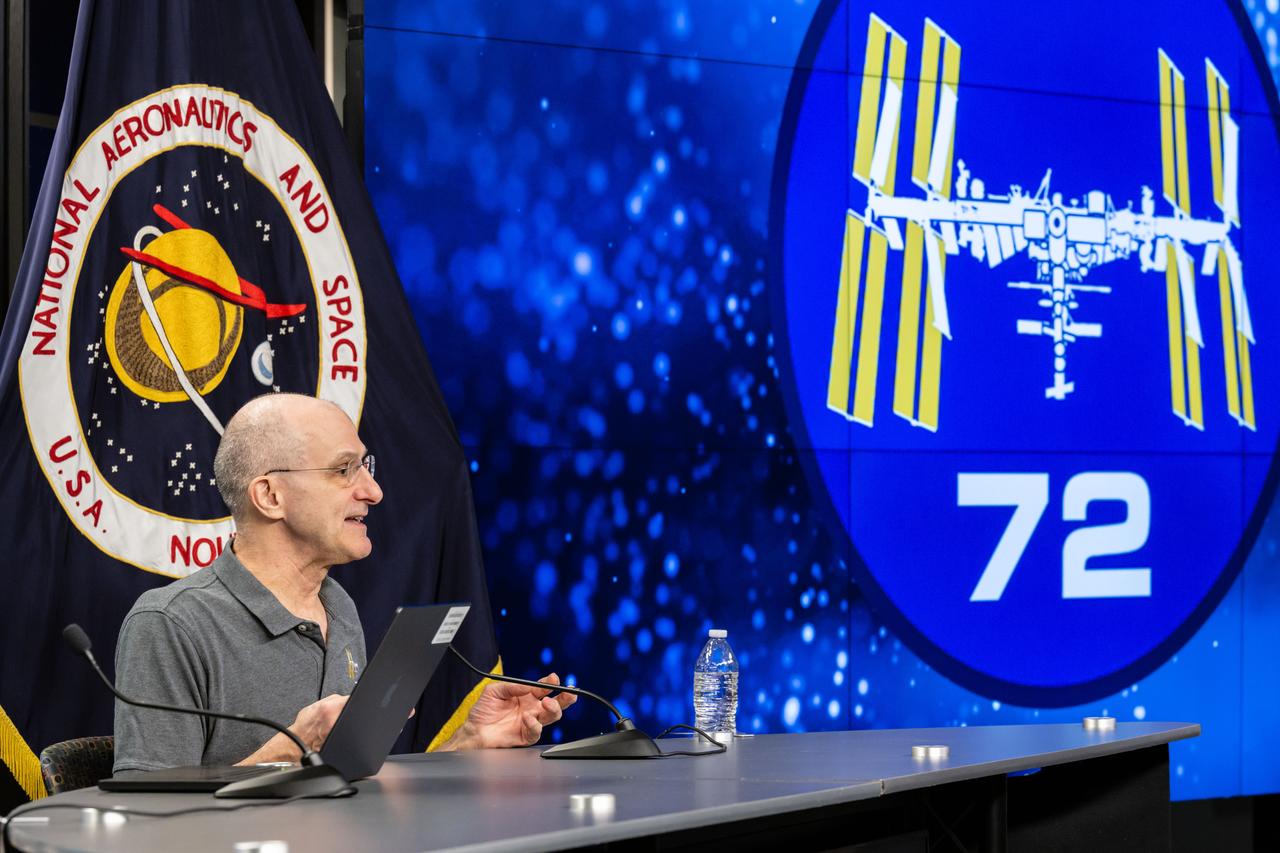
jsc2025e041770 (April 28, 2025) --- NASA astronaut Don Pettit participates in a news conference at NASA's Johnson Space Center in Houston, Texas. He discussed his mission aboard the International Space Station where he lived and worked for 220 days as an Expedition 72 Flight Engineer.
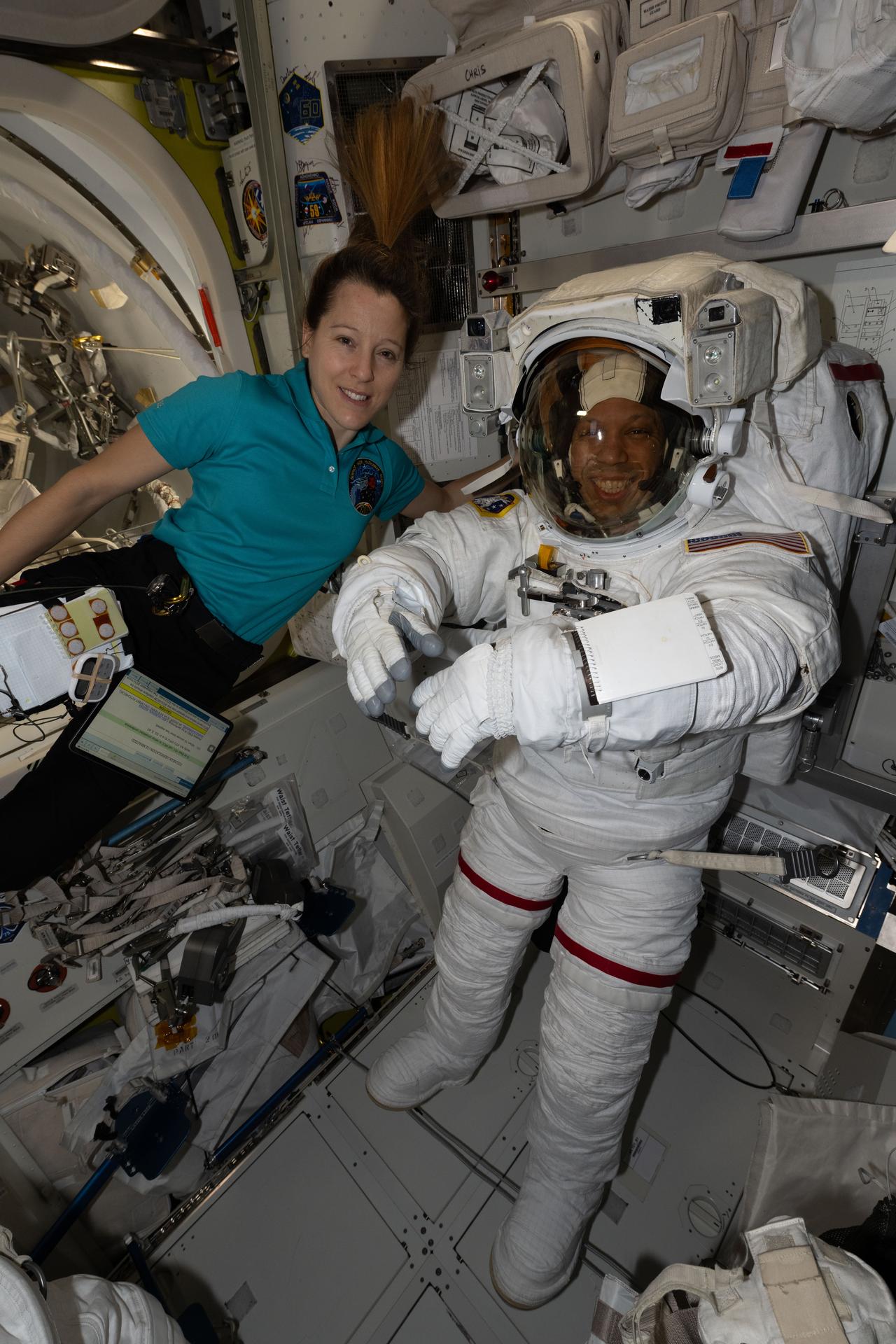
iss074e0760516 (June 23, 2026) --- Flight engineer Sophie Adenot of ESA (European Space Agency) assists flight engineer Chris Williams of NASA as he tries on his spacesuit, testing its comfort and mobility as well as its communications and life support systems inside the International Space Station’s Quest airlock. Williams was preparing for a spacewalk to replace a malfunctioning wrist joint on the Canadarm2 robotic arm, planned for June 30, 2026. Credit: NASA
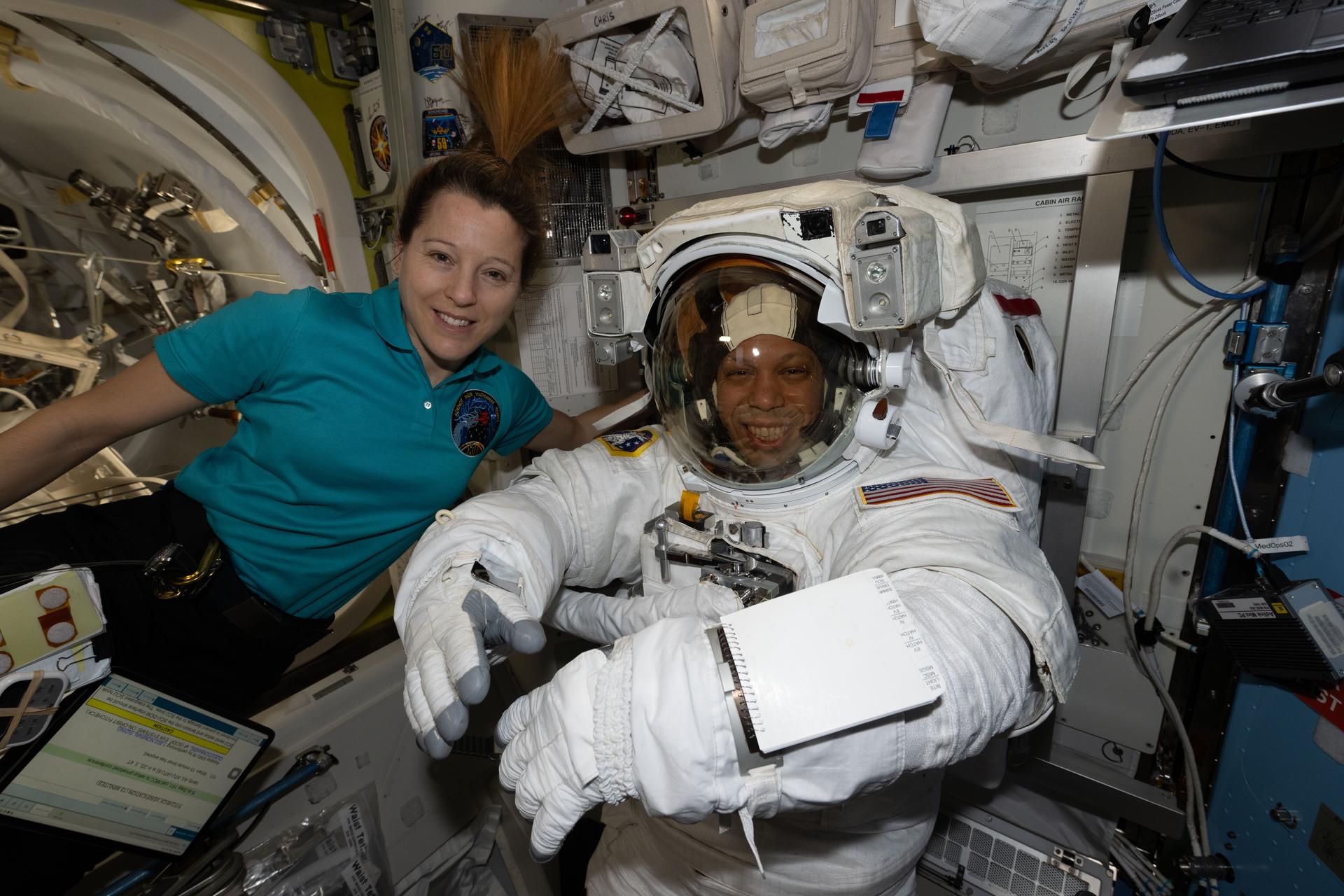
iss074e0760514 (June 23, 2026) --- Flight engineer Sophie Adenot of ESA (European Space Agency) assists flight engineer Chris Williams of NASA as he tries on his spacesuit, testing its comfort and mobility as well as its communications and life support systems inside the International Space Station’s Quest airlock. Williams was preparing for a spacewalk to replace a malfunctioning wrist joint on the Canadarm2 robotic arm, planned for June 30, 2026. Credit: NASA
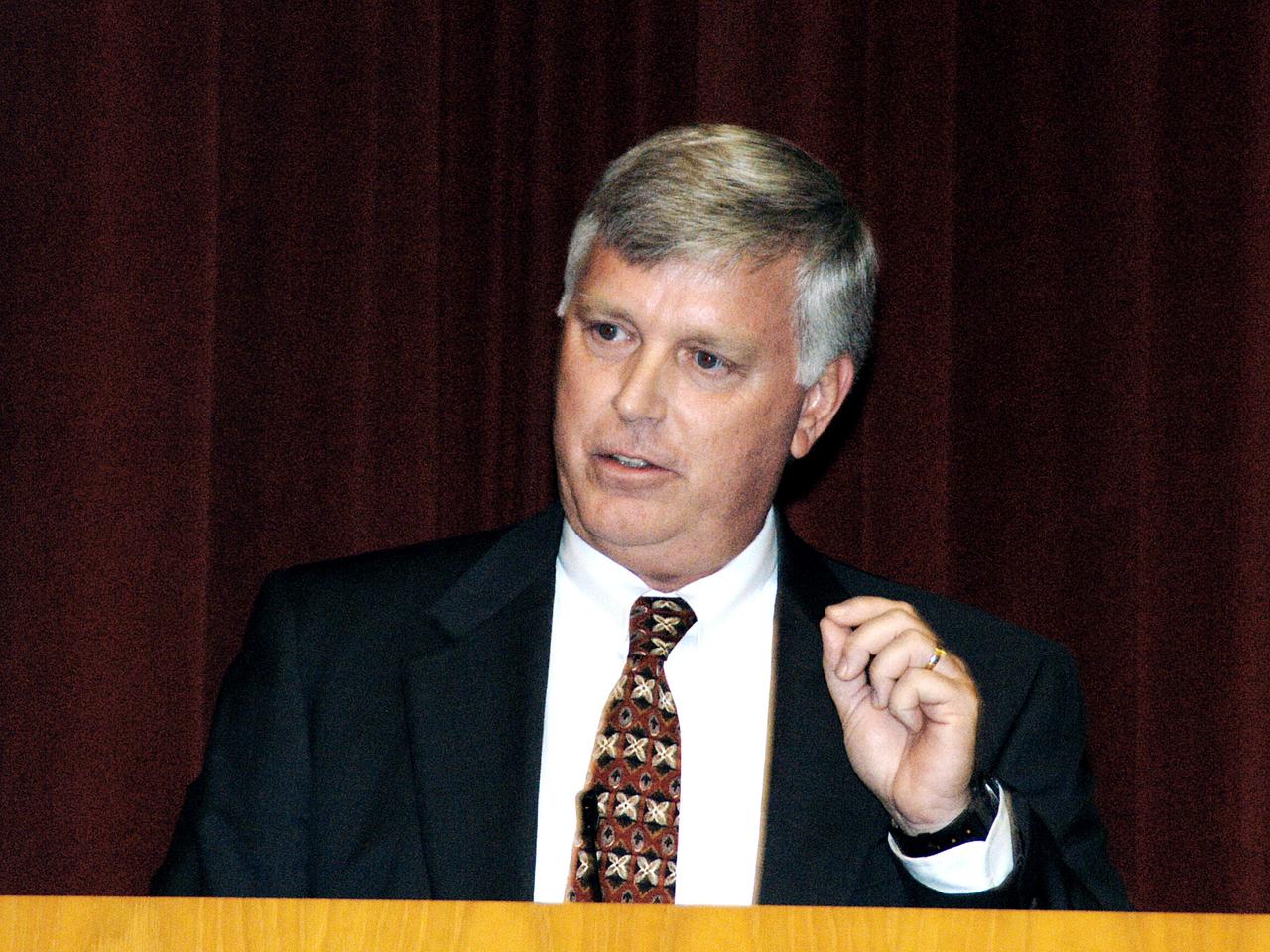
KENNEDY SPACE CENTER, FLA. - KSC Deputy Director James W. Kennedy addresses a group of KSC employees assembled in the KSC Training Auditorium. The occasion is the announcement of Kennedy as the next director of the NASA Kennedy Space Center (KSC) in Florida. He has served as KSC's deputy director since November 2002. He will succeed KSC Director Roy D. Bridges, who was appointed on June 13 to lead NASA's Langley Research Center, Hampton, Va.
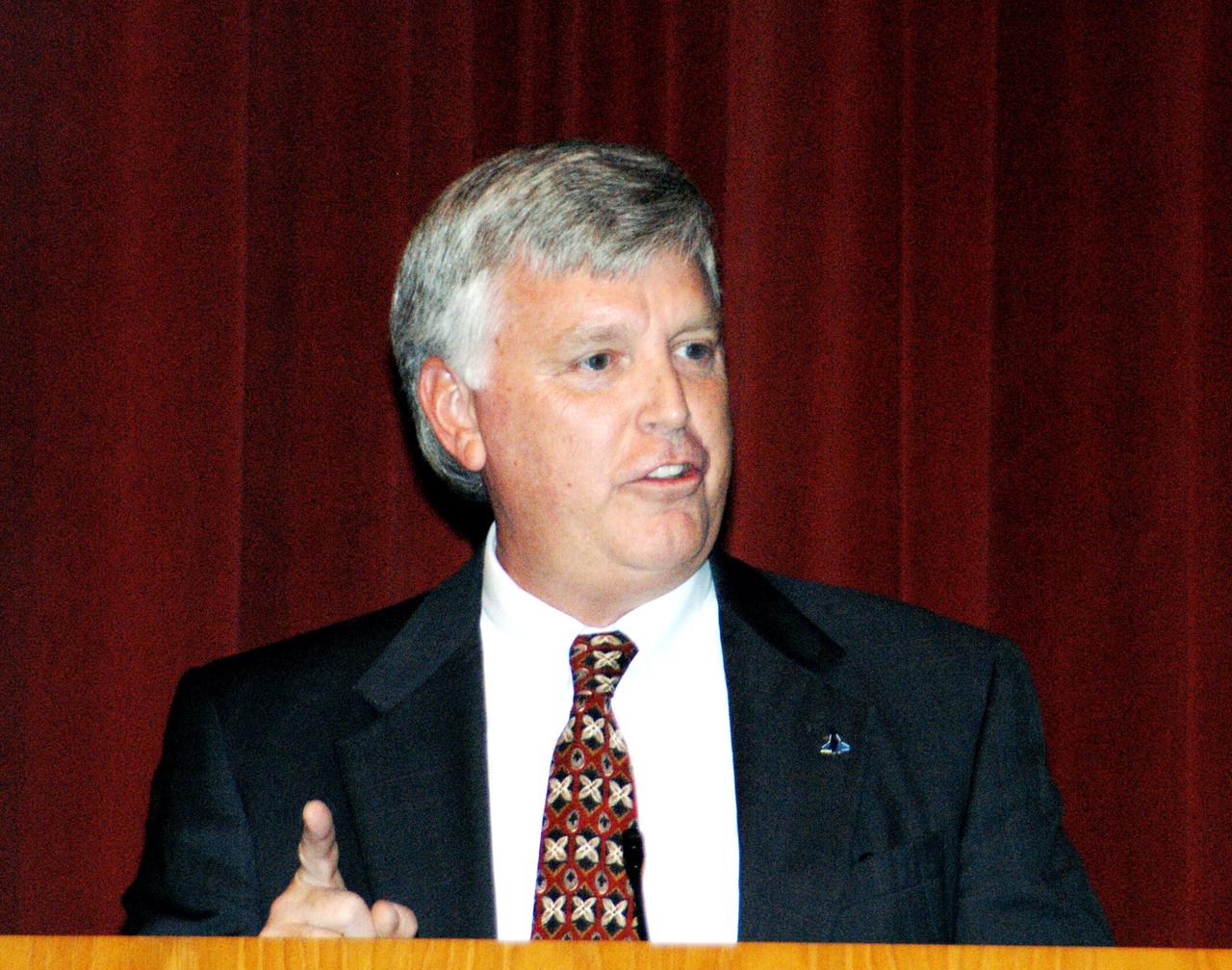
KENNEDY SPACE CENTER, FLA. - KSC Deputy Director James W. Kennedy addresses a group of KSC employees assembled in the KSC Training Auditorium. The occasion is the announcement of Kennedy as the next director of the NASA Kennedy Space Center (KSC) in Florida. He has served as KSC's deputy director since November 2002. He will succeed KSC Director Roy D. Bridges, who was appointed on June 13 to lead NASA's Langley Research Center, Hampton, Va.
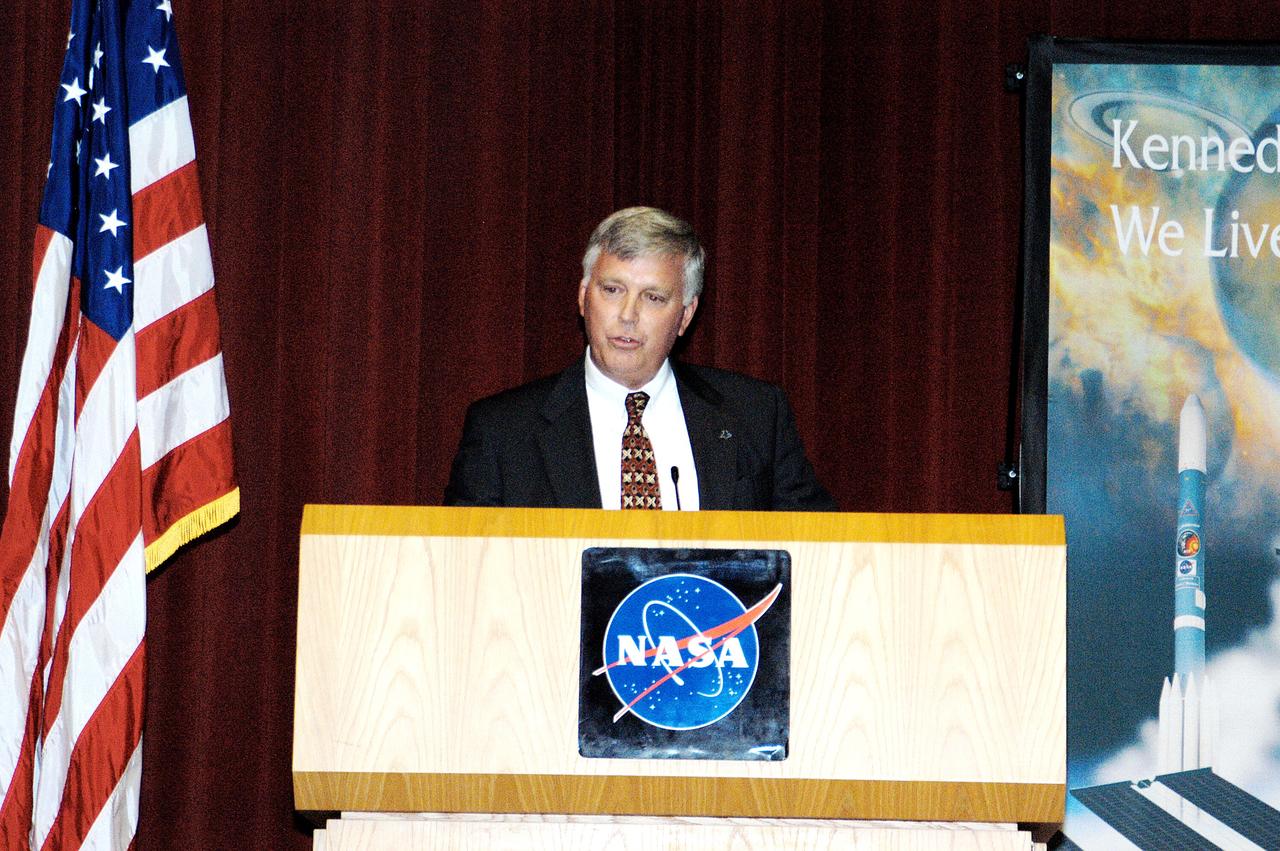
KENNEDY SPACE CENTER, FLA. - KSC Deputy Director James W. Kennedy addresses a group of KSC employees assembled in the KSC Training Auditorium. The occasion is the announcement of Kennedy as the next director of the NASA Kennedy Space Center (KSC) in Florida. He has served as KSC's deputy director since November 2002. He will succeed KSC Director Roy D. Bridges, who was appointed on June 13 to lead NASA's Langley Research Center, Hampton, Va.

This image from NASA Spitzer Space Telescope shows he Peony nebula star, a blazing ball of gas shines with the equivalent light of 3.2 million suns.
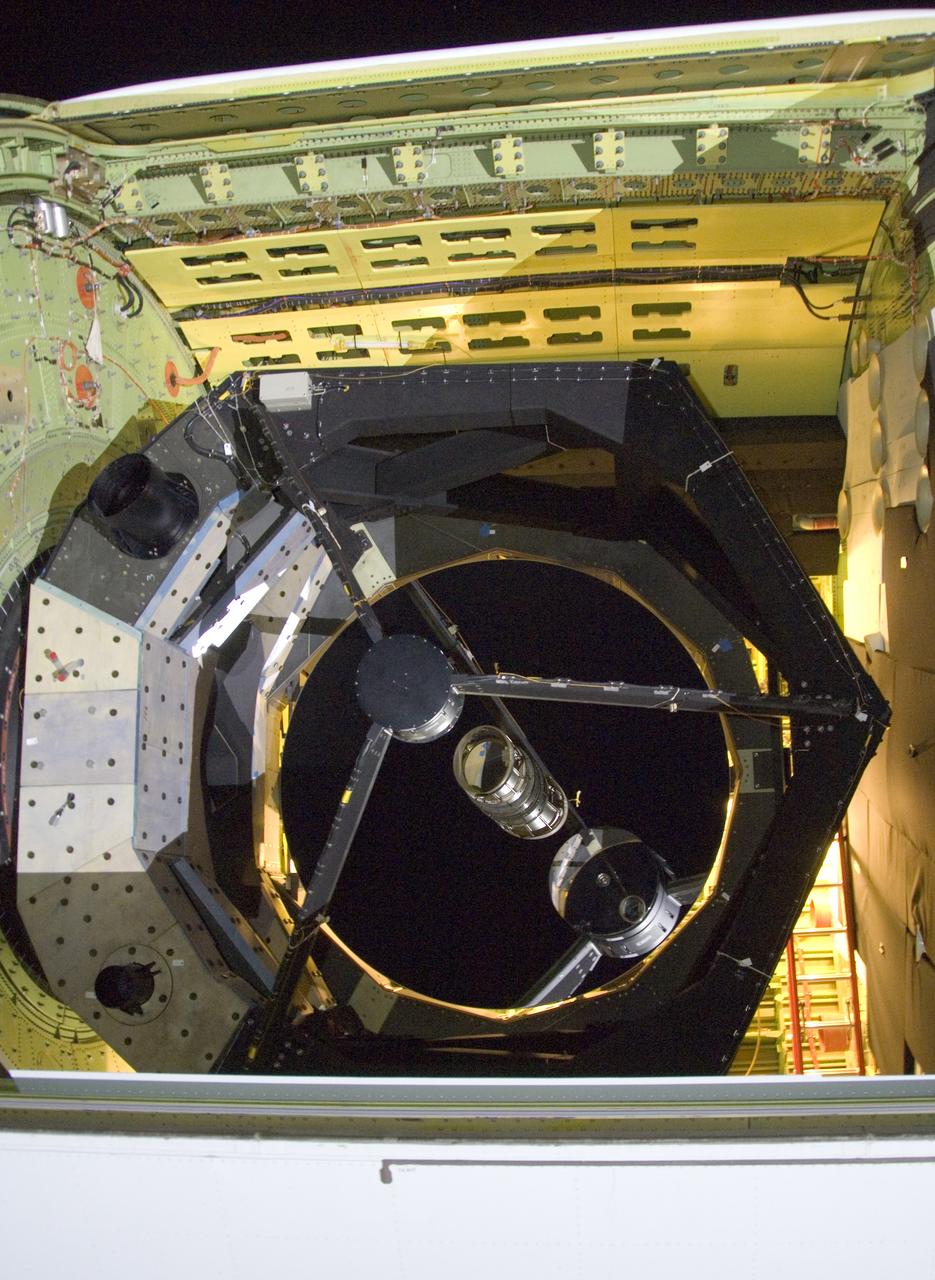
he SOFIA airborne observatory's 2.5-meter infrared telescope peers out from its cavity in the SOFIA rear fuselage during nighttime line operations testing.

jsc2026e037789 (May 5, 2026) --- NASA astronaut Jessica Watkins (center), backed up by training specialists, assists CSA (Canadian Space Agency) astronaut Josh Kutryk as he practices suiting up in a spacesuit in an International Space Station airlock simulator at Johnson Space Center’s (JSC) Space Vehicle Mockup Facility in Houston, Texas. Astronauts familiarize themselves with spacesuit systems and procedures and practice Quest airlock operations before conducting spacewalk training at JSC’s Neutral Buoyancy Laboratory in simulated microgravity. Credit: NASA/Josh Valcarcel
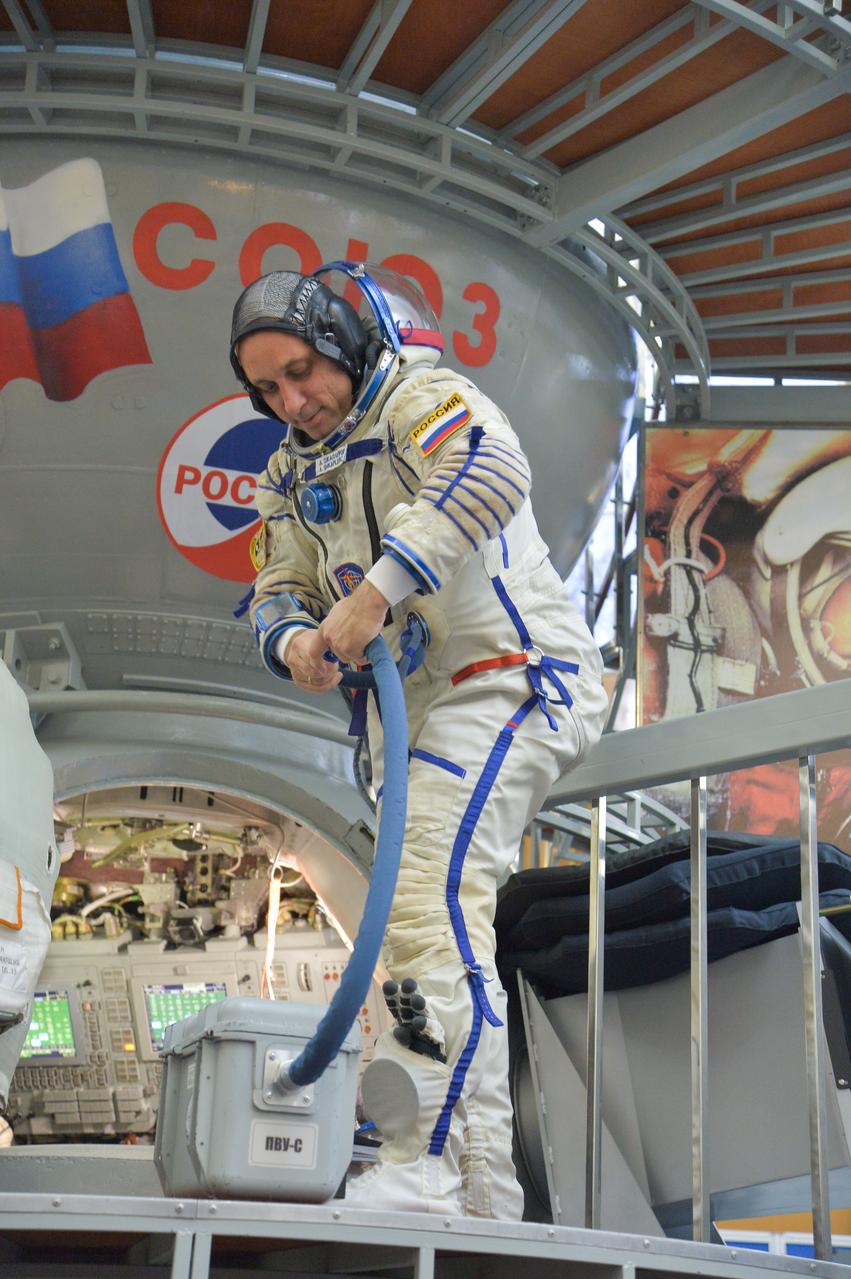
jsc2017e135211 - At the Gagarin Cosmonaut Training Center in Star City, Russia, Expedition 54-55 prime crewmember Anton Shkaplerov of the Russian Federal Space Agency (Roscosmos) disconnects a cooling system hose as he boards a Soyuz spacecraft simulator Nov. 29 as part of the crew’s final qualification exam activities. He will launch along with Scott Tingle of NASA and Norishige Kanai of the Japan Aerospace Exploration Agency (JAXA) Dec. 17 on the Soyuz MS-07 spacecraft from the Baikonur Cosmodrome in Kazakhstan for a five-month mission on the International Space Station...NASA/Elizabeth Weissinger.
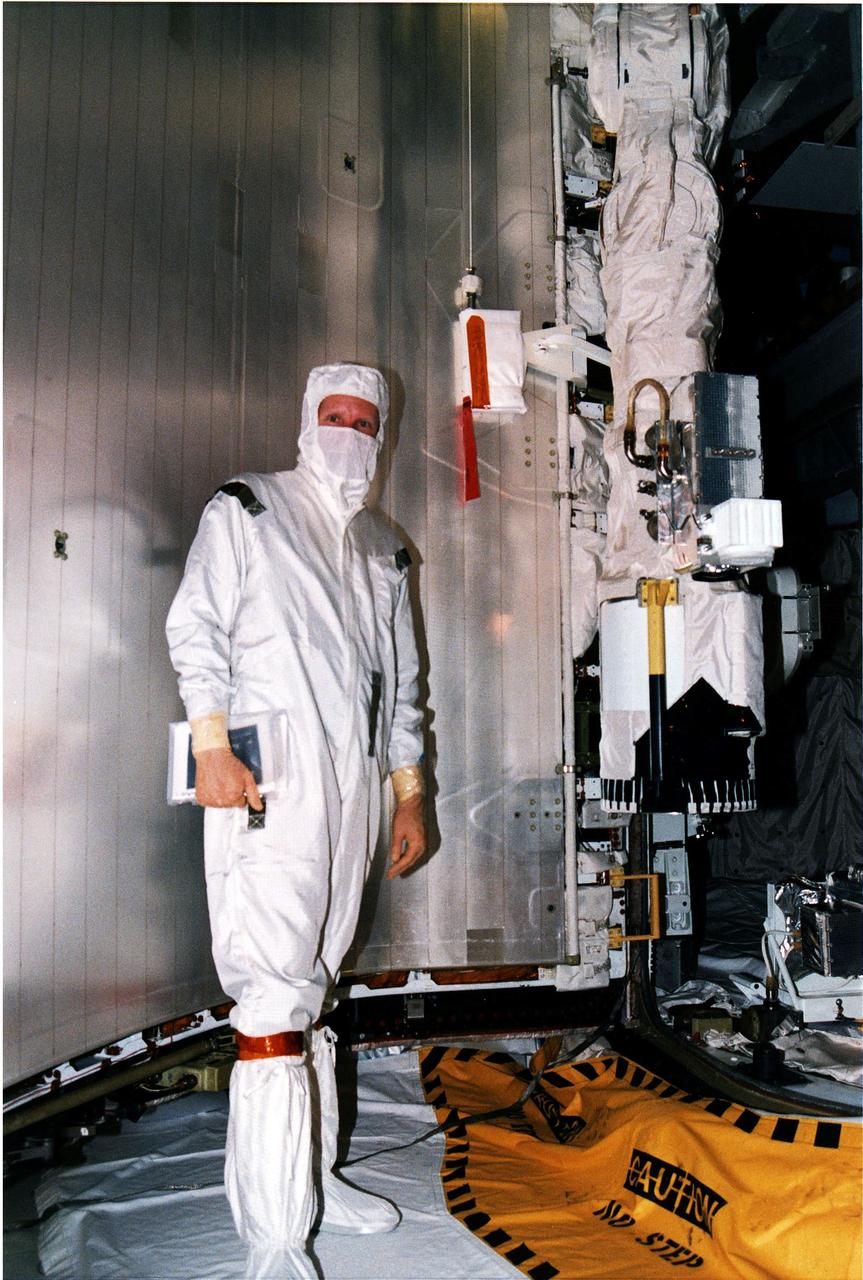
KENNEDY SPACE CENTER, FLA. - STS-82 Mission Specialist Steven A Hawley stands beside part of Discovery's Remote Manipulator System (RMS) arm, at right, which he will operate for the capture, berthing and redeployment of the Hubble Space Telescope (HST). The robotic arm also will be used as work platform for the four spacewalkers. Hawley is the prime RMS operator on the flight, which will be the second HST servicing mission. He and the other six members of the crew are making a final inspection of the payload at Launch Pad 39A before launch. STS-82 is scheduled for liftoff on Feb. 11 during a 65-minute launch window that opens at 3:56 a.m. EST.
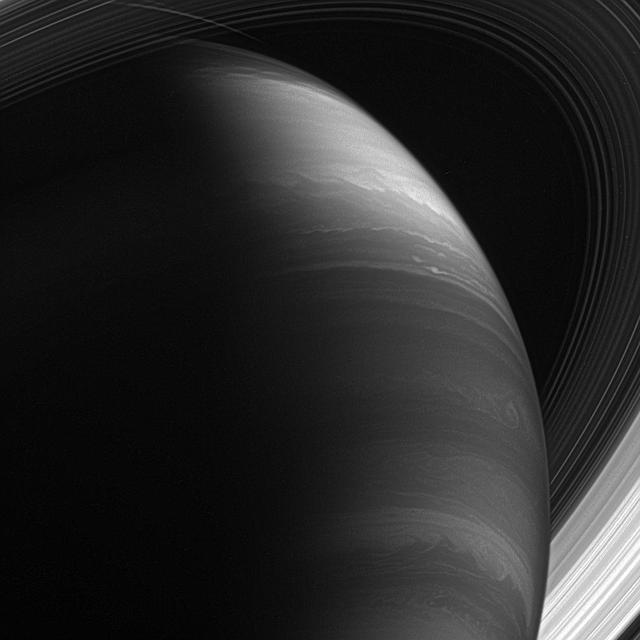
The giant planet is a moody world whose disposition appears to change with he view. Its atmosphere rages with thunderous and hurricane-like storms. Its majestic rings spin a tale of ancient collisions and cataclysm
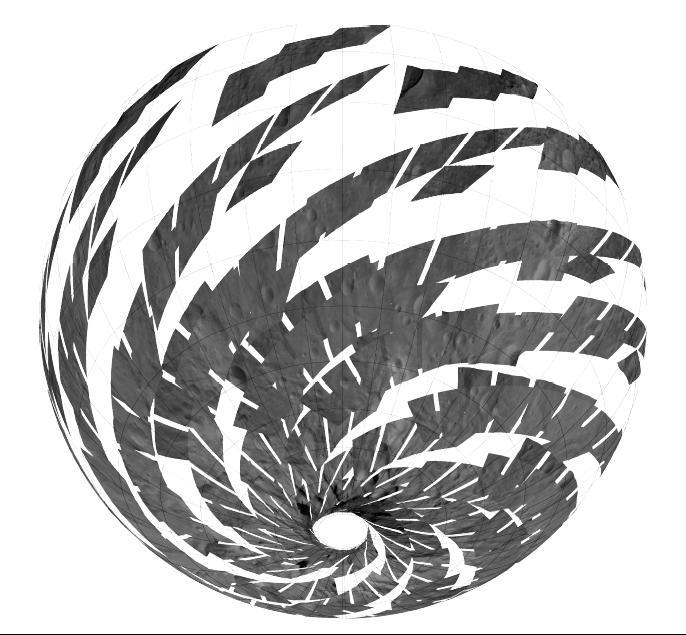
he visible and infrared mapping spectrometer aboard NASA Dawn spacecraft acquired this set of images during the high-altitude mapping orbit phase at about 420 miles 680 kilometers above the surface of asteroid Vesta.
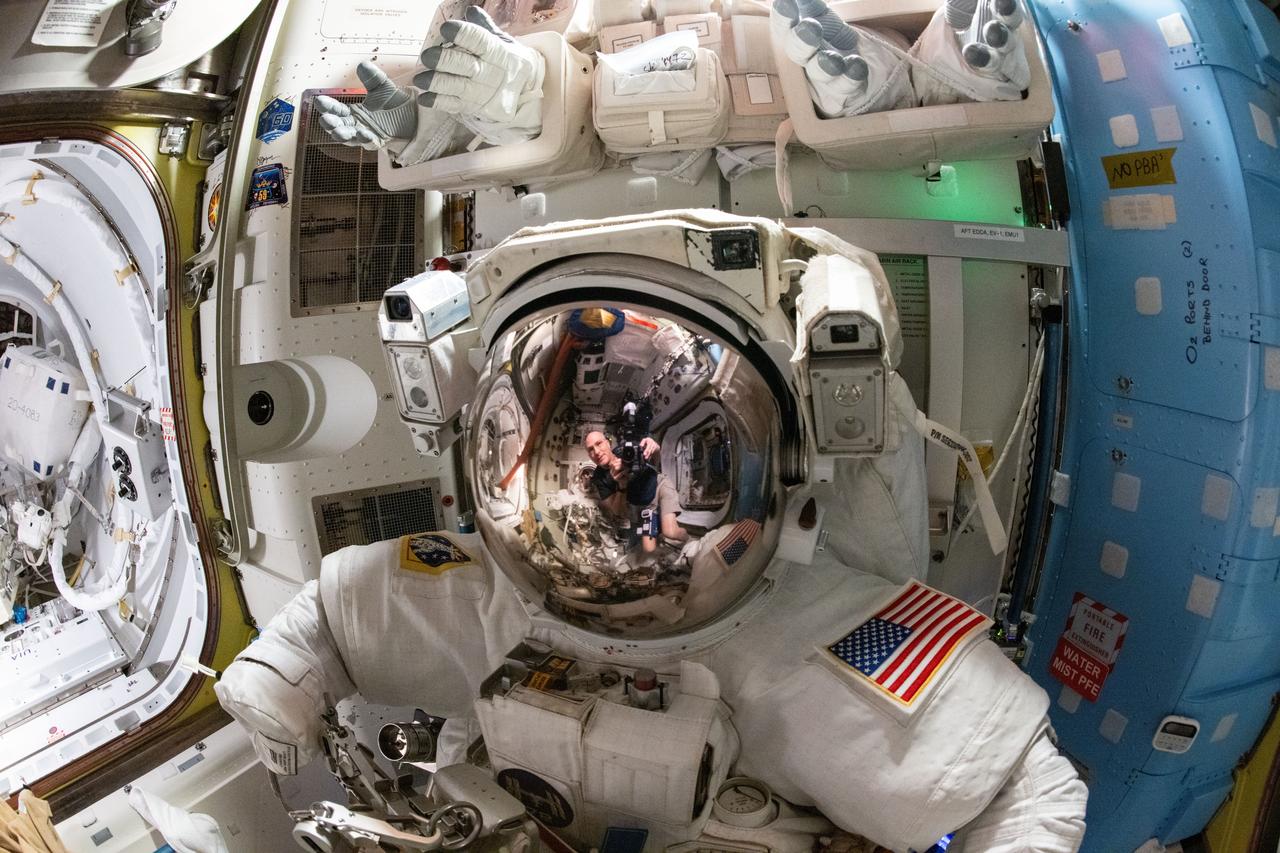
iss072e518423 (Jan. 23, 2025) --- NASA astronaut and Expedition 72 Flight Engineer Don Pettit's reflection is pictured on the helmet visor of a spacesuit in this photograph he took inside the International Space Station's Quest airlock.
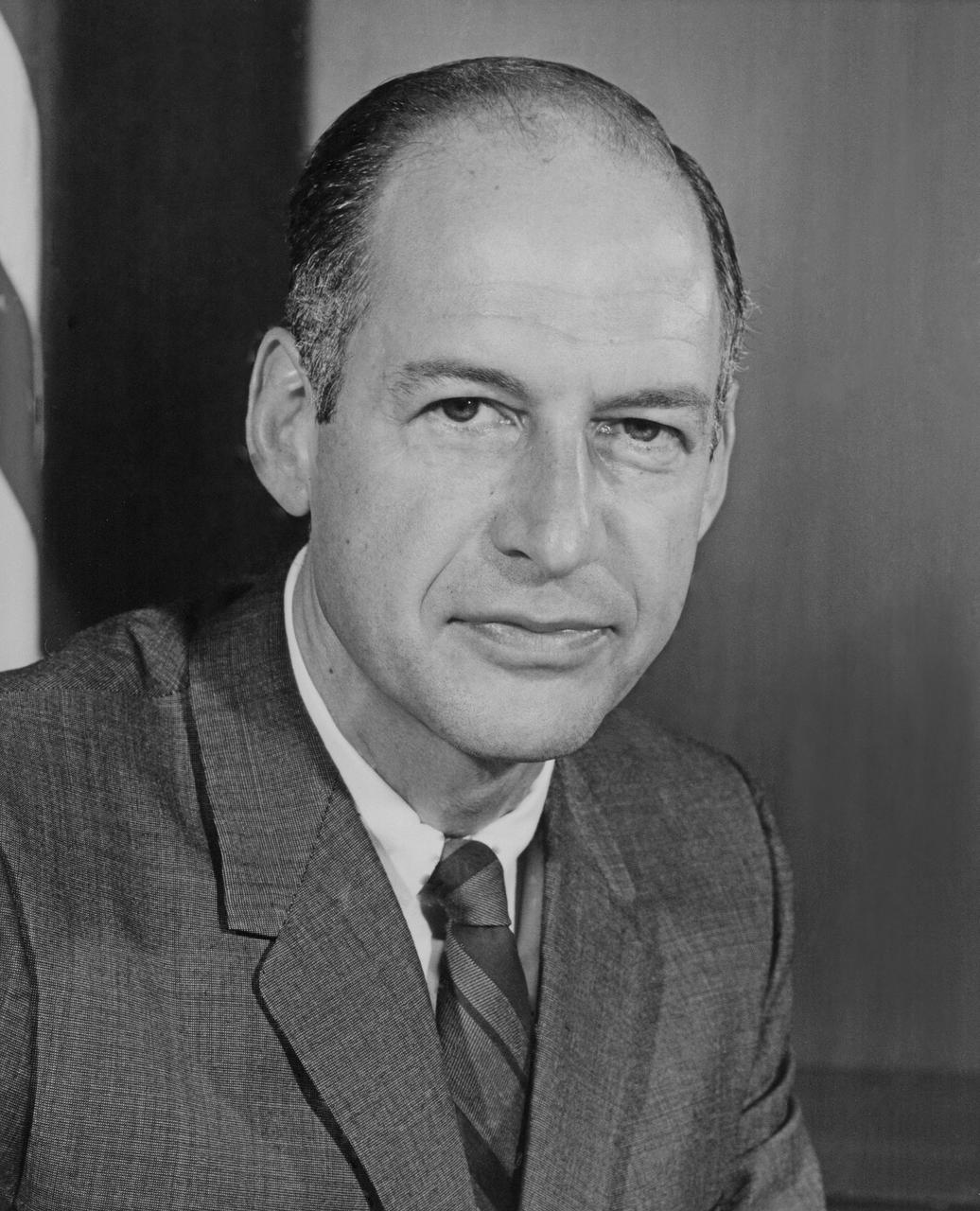
Portrait of George M. Low, he transferred to NASA headquarters in Washington, D.C., where he served as Chief of Manned Space Flight. In this capacity, he was closely involved in the planning of Projects Mercury, Gemini, and Apollo. NASA Biographies site.
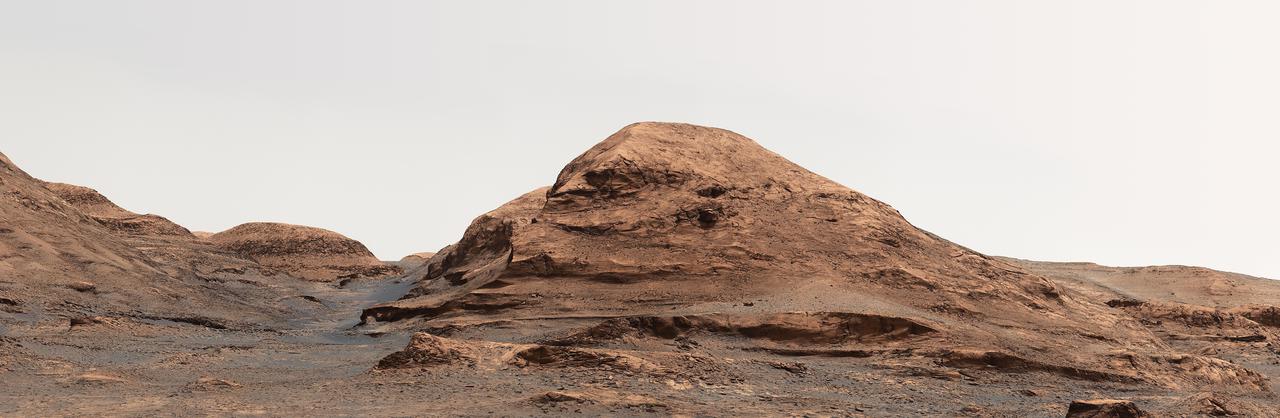
NASA's Curiosity Mars rover used its Mastcam to take an image of this hill, nicknamed "Rafael Navarro Mountain" after Rafael Navarro-González, an astrobiologist who worked on the mission until he passed away January 26, 2021. He was a member of the team working with Curiosity's Sample Analysis at Mars, or SAM, instrument. https://photojournal.jpl.nasa.gov/catalog/PIA24544
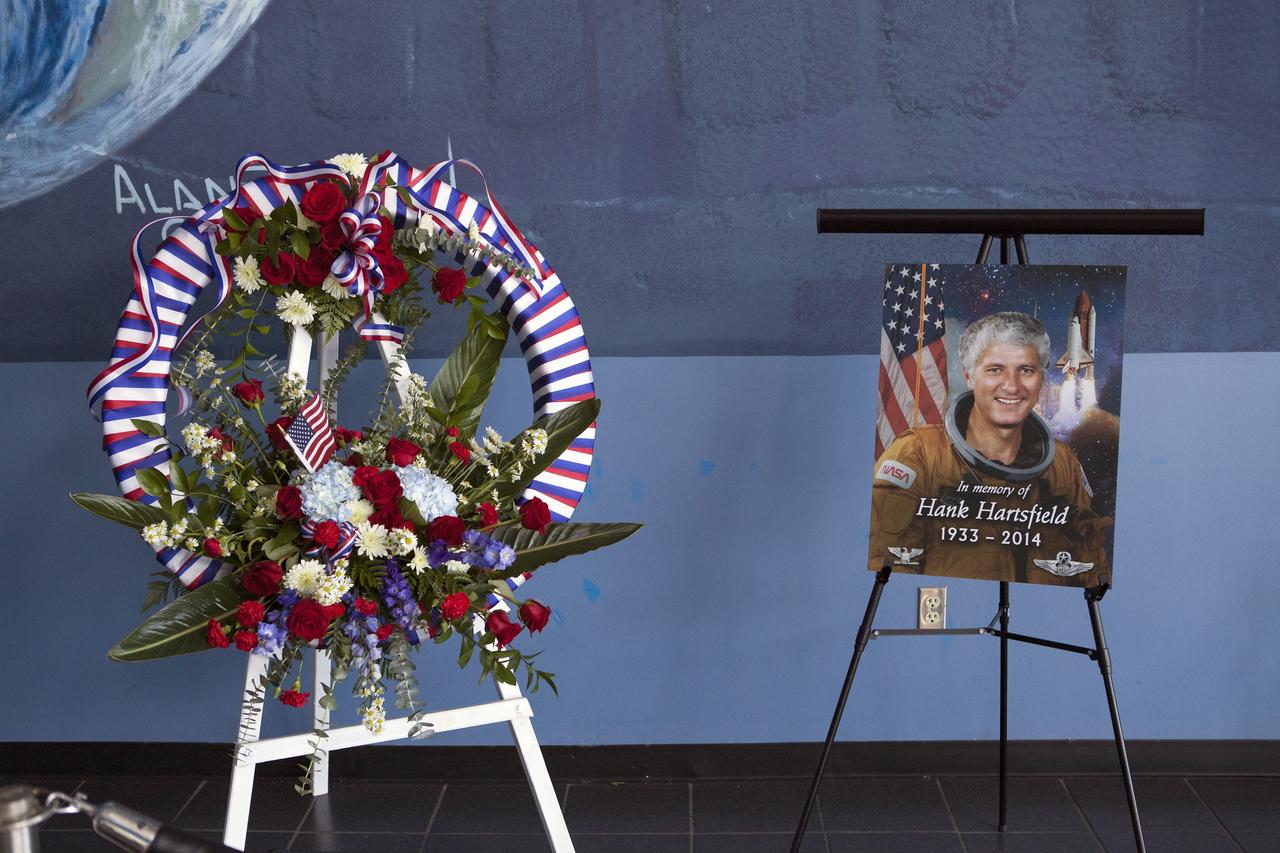
CAPE CANAVERAL, Fla. -- A wreath honoring Henry W. "Hank" Hartsfield is displayed beside his photo at the U.S. Astronaut Hall of Fame. Hartsfield commanded space shuttle Discovery's maiden mission and was a veteran of three shuttle flights. He died July 17 after an illness. He was 80 years old. Hartsfield joined NASA in 1969 and was part of the astronaut support crew for Apollo 16 and the Skylab 2, 3 and 4 missions. He logged 483 hours in space during missions STS-4, on which he served as pilot, as well as STS-41D and STS-61A, both of which he commanded. Photo credit: NASA/Dimitri Gerondidakis
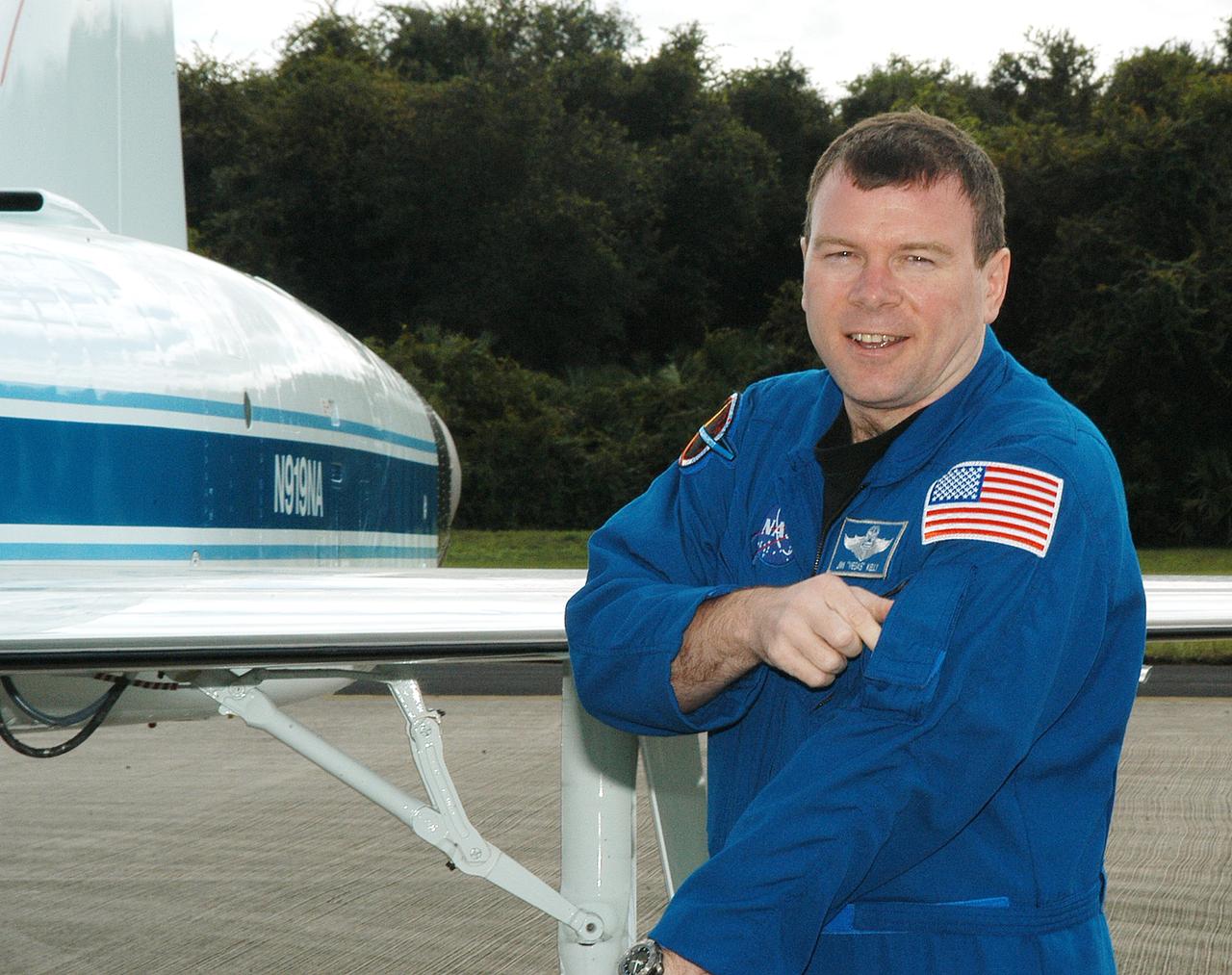
KENNEDY SPACE CENTER, FLA. - STS-114 Pilot James Kelly arrives at the KSC Shuttle Landing Facility in a T-38 jet aircraft. He and other crew members are at KSC to take part in crew equipment and orbiter familiarization.
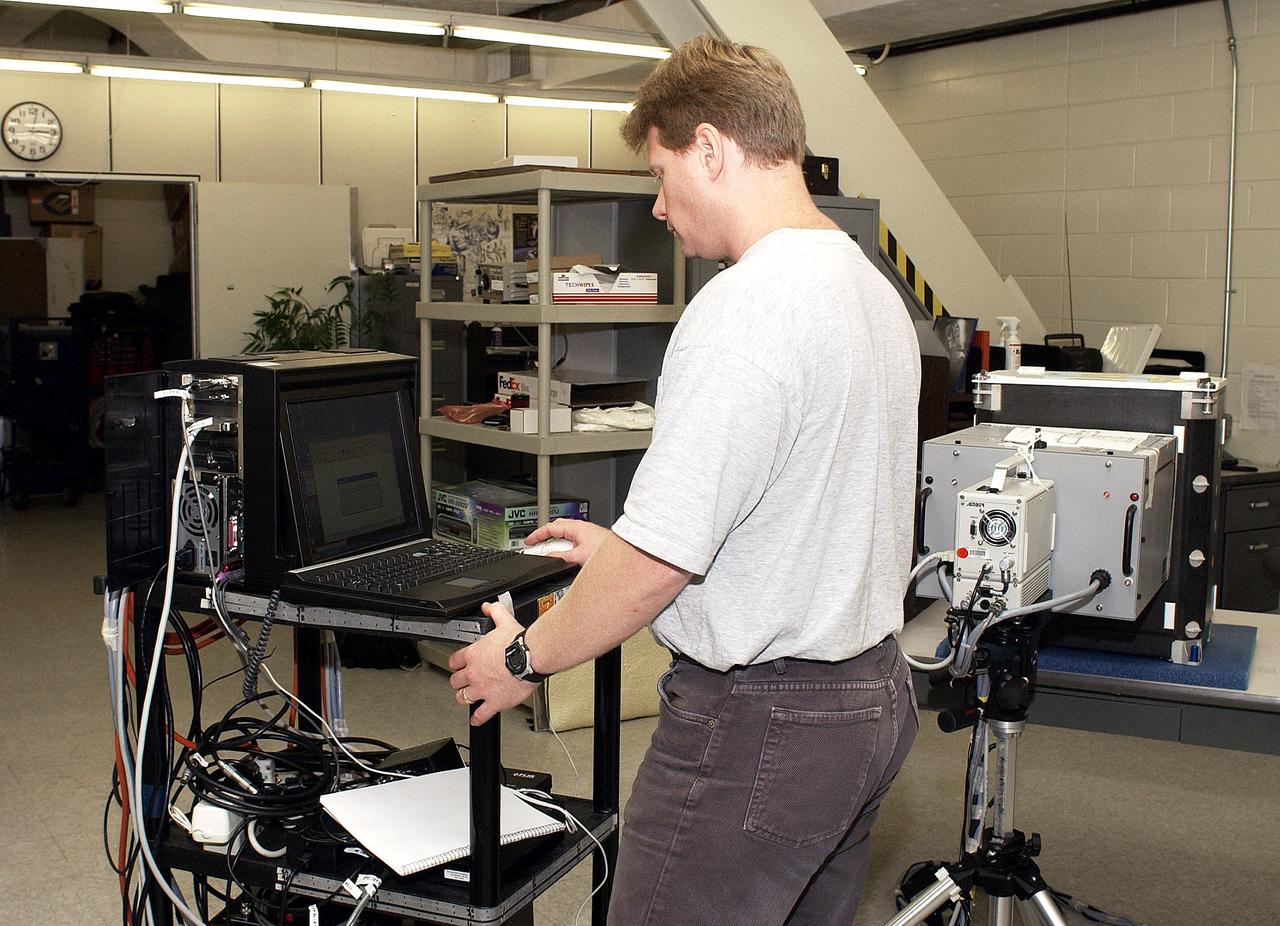
KENNEDY SPACE CENTER, FLA. - In the Vehicle Assembly Building, Jim Landy, NDE specialist, performs flash thermography on flight crew lockers. He is screening the lockers for hidden damage underneath dings and dents that might occur during handling.
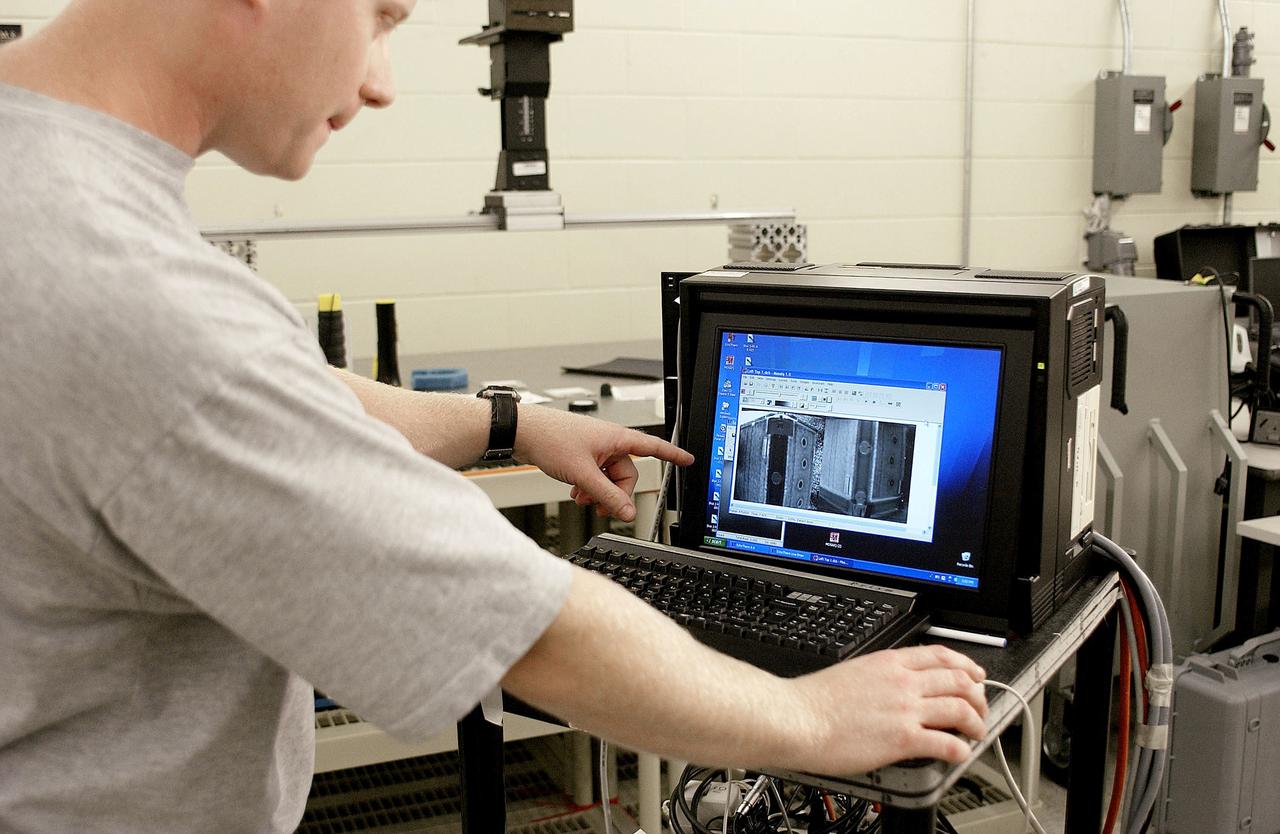
KENNEDY SPACE CENTER, FLA. - In the Vehicle Assembly Building, Jim Landy, NDE specialist, examines flight crew lockers using flash thermography. He is screening the lockers for hidden damage underneath dings and dents that might occur during handling.
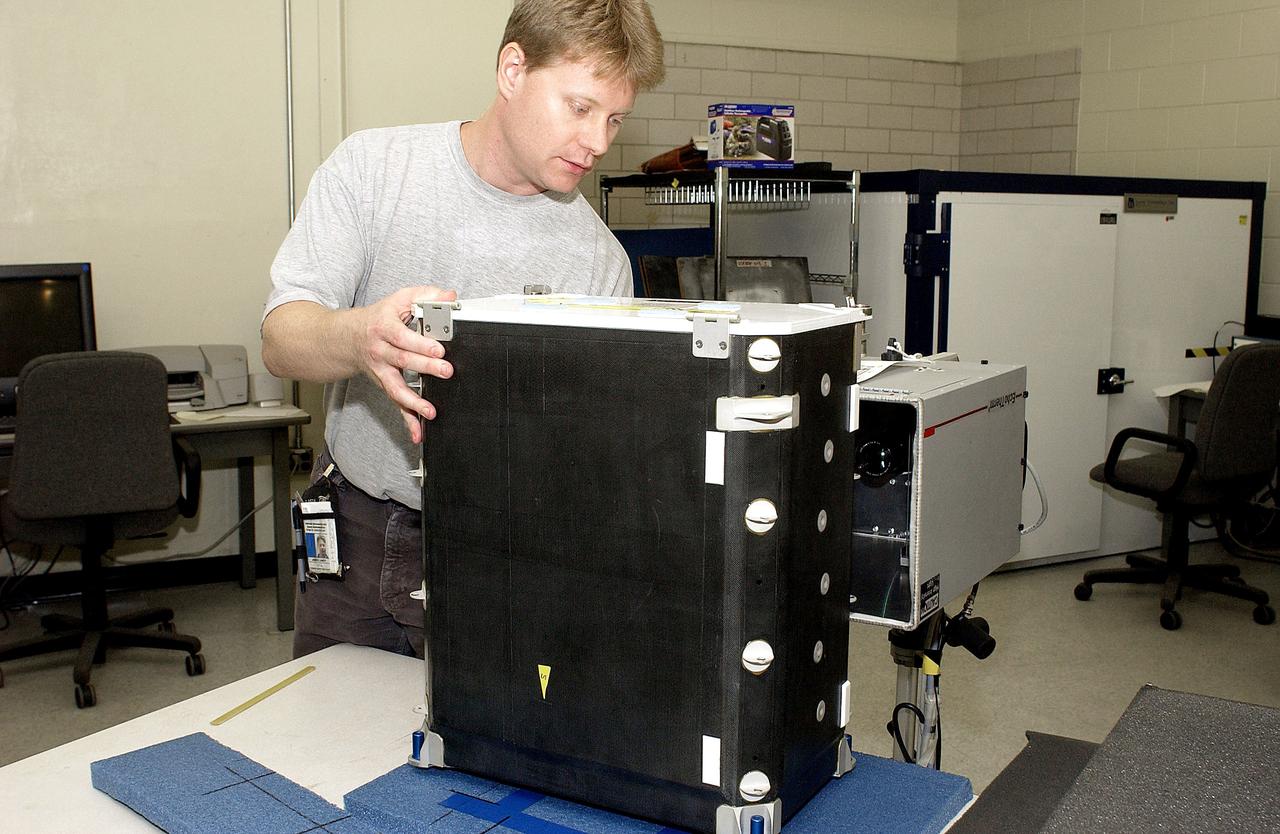
KENNEDY SPACE CENTER, FLA. - In the Vehicle Assembly Building, Jim Landy, NDE specialist, sets up a flight crew lockers for flash thermography. He is screening the lockers for hidden damage underneath dings and dents that might occur during handling.
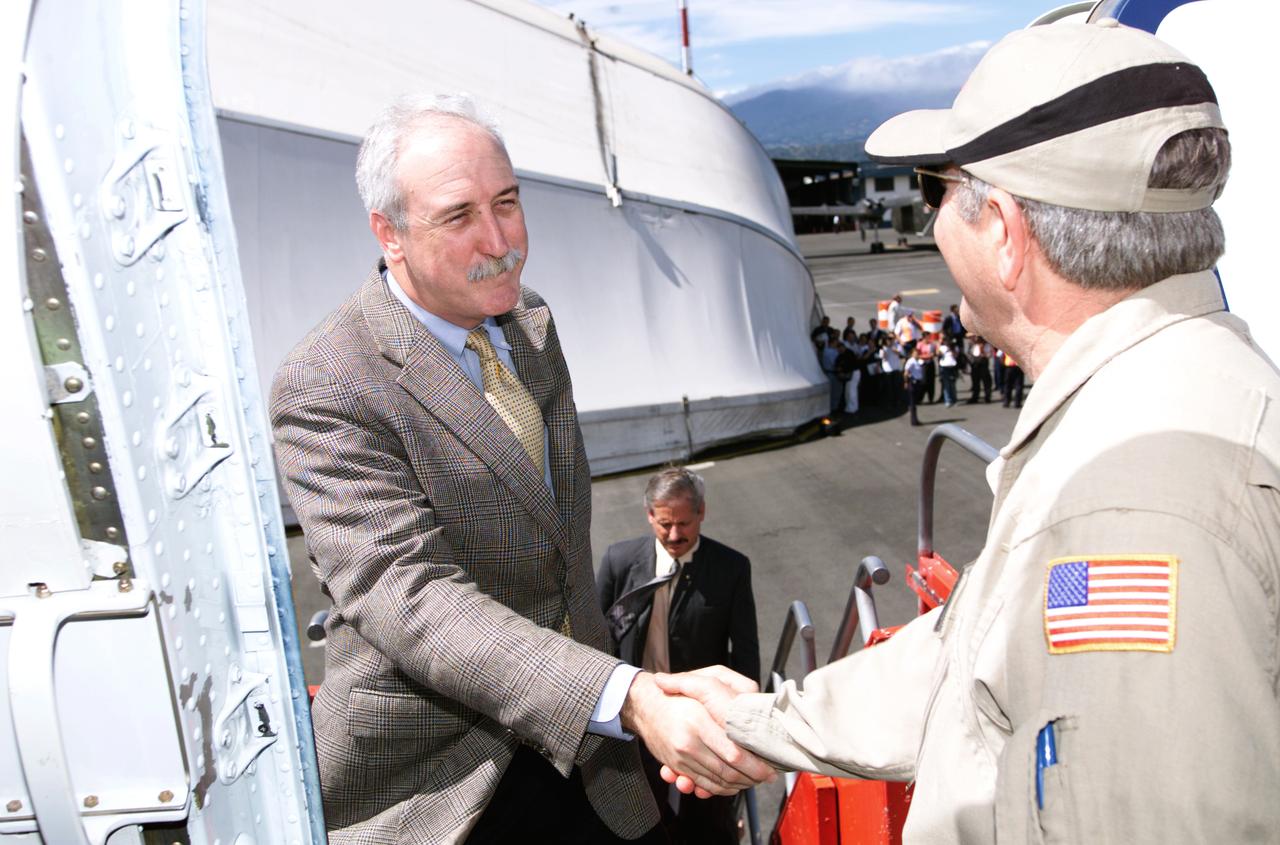
Dr. Tom Mace, NASA DFRC Director of Airborne Sciences, greets NASA Administrator Sean O'Keefe as he enters the DC-8 aircraft during a stop-off on the AirSAR 2004 Mesoamerica campaign. AirSAR 2004 Mesoamerica is a three-week expedition by an international team of scientists that will use an all-weather imaging tool, called the Airborne Synthetic Aperture Radar (AirSAR), in a mission ranging from the tropical rain forests of Central America to frigid Antarctica.

NASA Administrator Bill Nelson testifies before the Senate Appropriations’ Commerce, Justice, Science, and Related Agencies subcommittee during a fiscal year 2025 budget hearing, Thursday, May 23, 2024, at the Dirksen Senate Office Building in Washington. Photo Credit: (NASA/Bill Ingalls)

Sen. Jeanne Shaheen, D-N.H., Chair Senate Appropriations’ Commerce, Justice, Science, and Related Agencies subcommittee, left, and Sen. Jerry Moran, R-Kan. question NASA Administrator Bill Nelson during a subcommittee hearing on the fiscal year 2025 budget, Thursday, May 23, 2024, at the Dirksen Senate Office Building in Washington. Photo Credit: (NASA/Bill Ingalls)

NASA Administrator Bill Nelson testifies before the Senate Appropriations’ Commerce, Justice, Science, and Related Agencies subcommittee during a fiscal year 2025 budget hearing, Thursday, May 23, 2024, at the Dirksen Senate Office Building in Washington. Photo Credit: (NASA/Bill Ingalls)

NASA Administrator Bill Nelson testifies before the Senate Appropriations’ Commerce, Justice, Science, and Related Agencies subcommittee during a fiscal year 2025 budget hearing, Thursday, May 23, 2024, at the Dirksen Senate Office Building in Washington. Photo Credit: (NASA/Bill Ingalls)

NASA Administrator Bill Nelson testifies before the Senate Appropriations’ Commerce, Justice, Science, and Related Agencies subcommittee during a fiscal year 2025 budget hearing, Thursday, May 23, 2024, at the Dirksen Senate Office Building in Washington. Photo Credit: (NASA/Bill Ingalls)

NASA Administrator Bill Nelson testifies before the Senate Appropriations’ Commerce, Justice, Science, and Related Agencies subcommittee during a fiscal year 2025 budget hearing, Thursday, May 23, 2024, at the Dirksen Senate Office Building in Washington. Photo Credit: (NASA/Bill Ingalls)

NASA Administrator Bill Nelson testifies before the Senate Appropriations’ Commerce, Justice, Science, and Related Agencies subcommittee during a fiscal year 2025 budget hearing, Thursday, May 23, 2024, at the Dirksen Senate Office Building in Washington. Photo Credit: (NASA/Bill Ingalls)

NASA Administrator Bill Nelson testifies before the Senate Appropriations’ Commerce, Justice, Science, and Related Agencies subcommittee during a fiscal year 2025 budget hearing, Thursday, May 23, 2024, at the Dirksen Senate Office Building in Washington. Photo Credit: (NASA/Bill Ingalls)

NASA Administrator Bill Nelson testifies before the Senate Appropriations’ Commerce, Justice, Science, and Related Agencies subcommittee during a fiscal year 2025 budget hearing, Thursday, May 23, 2024, at the Dirksen Senate Office Building in Washington. Photo Credit: (NASA/Bill Ingalls)

NASA Administrator Bill Nelson testifies before the Senate Appropriations’ Commerce, Justice, Science, and Related Agencies subcommittee during a fiscal year 2025 budget hearing, Thursday, May 23, 2024, at the Dirksen Senate Office Building in Washington. Photo Credit: (NASA/Bill Ingalls)

National Science Foundation Director Sethuraman Panchanathan testifies before the Senate Appropriations’ Commerce, Justice, Science, and Related Agencies subcommittee during a fiscal year 2025 budget hearing, Thursday, May 23, 2024, at the Dirksen Senate Office Building in Washington. Photo Credit: (NASA/Bill Ingalls)

NASA Administrator Bill Nelson testifies before the Senate Appropriations’ Commerce, Justice, Science, and Related Agencies subcommittee during a fiscal year 2025 budget hearing, Thursday, May 23, 2024, at the Dirksen Senate Office Building in Washington. Photo Credit: (NASA/Bill Ingalls)

National Science Foundation Director Sethuraman Panchanathan testifies before the Senate Appropriations’ Commerce, Justice, Science, and Related Agencies subcommittee during a fiscal year 2025 budget hearing, Thursday, May 23, 2024, at the Dirksen Senate Office Building in Washington. Photo Credit: (NASA/Bill Ingalls)

National Science Foundation Director Sethuraman Panchanathan testifies before the Senate Appropriations’ Commerce, Justice, Science, and Related Agencies subcommittee during a fiscal year 2025 budget hearing, Thursday, May 23, 2024, at the Dirksen Senate Office Building in Washington. Photo Credit: (NASA/Bill Ingalls)

NASA Administrator Bill Nelson talks with Sen. Jeanne Shaheen, D-N.H., Chair Senate Appropriations’ Commerce, Justice, Science, and Related Agencies subcommittee prior to a subcommittee hearing on the fiscal year 2025 budget, Thursday, May 23, 2024, at the Dirksen Senate Office Building in Washington. Photo Credit: (NASA/Bill Ingalls)
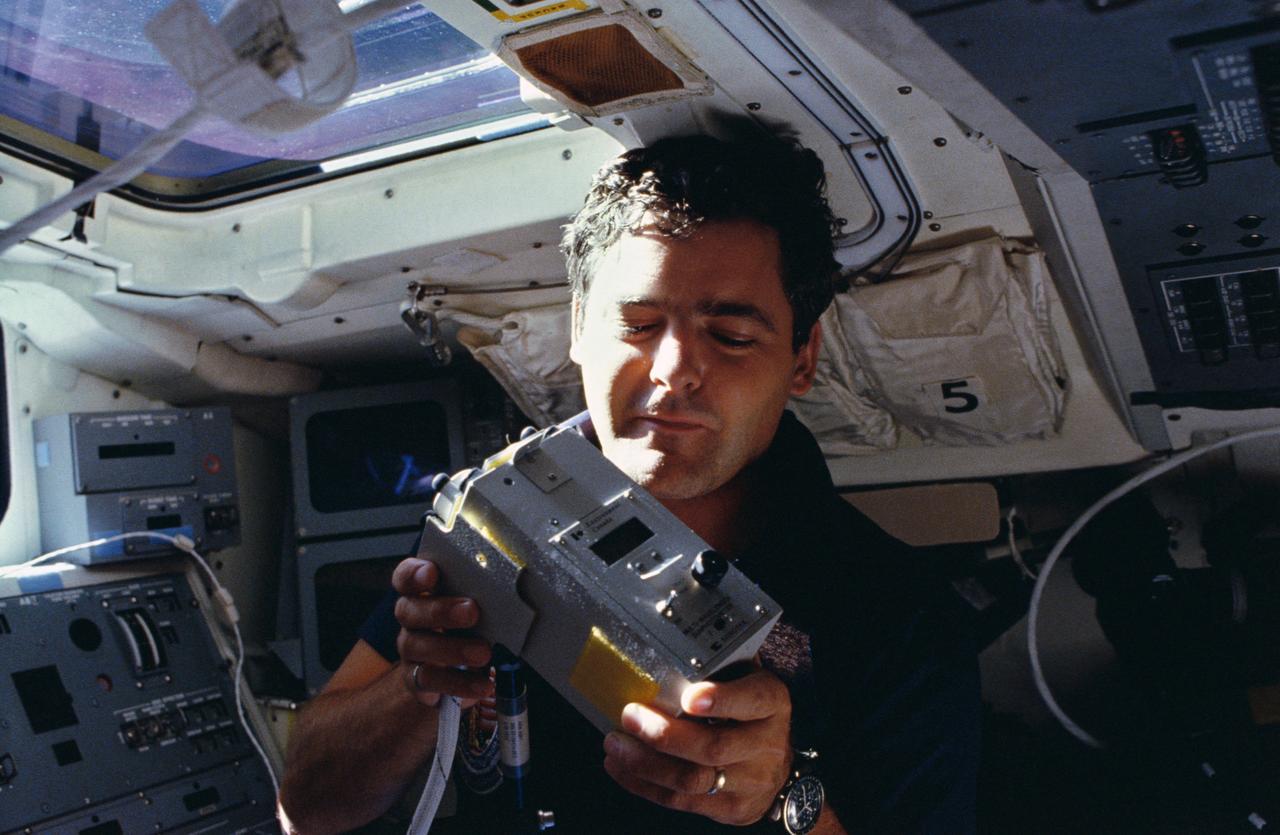
Payload specialist Marc Garneau displays a Canadian made Sunphotometer, part of a package of experiments which he is concentrating on during this mission. He is sitting on the Challenger's flight deck at the aft station.

This is a photograph that was made on October 14, 1964 of Dr. von Braun while he toured the Marned Spacecraft Center, now the Johnson Space Center in Houston, Texas. He is shown inspecting a Gemini-Agena Docking Simulator.
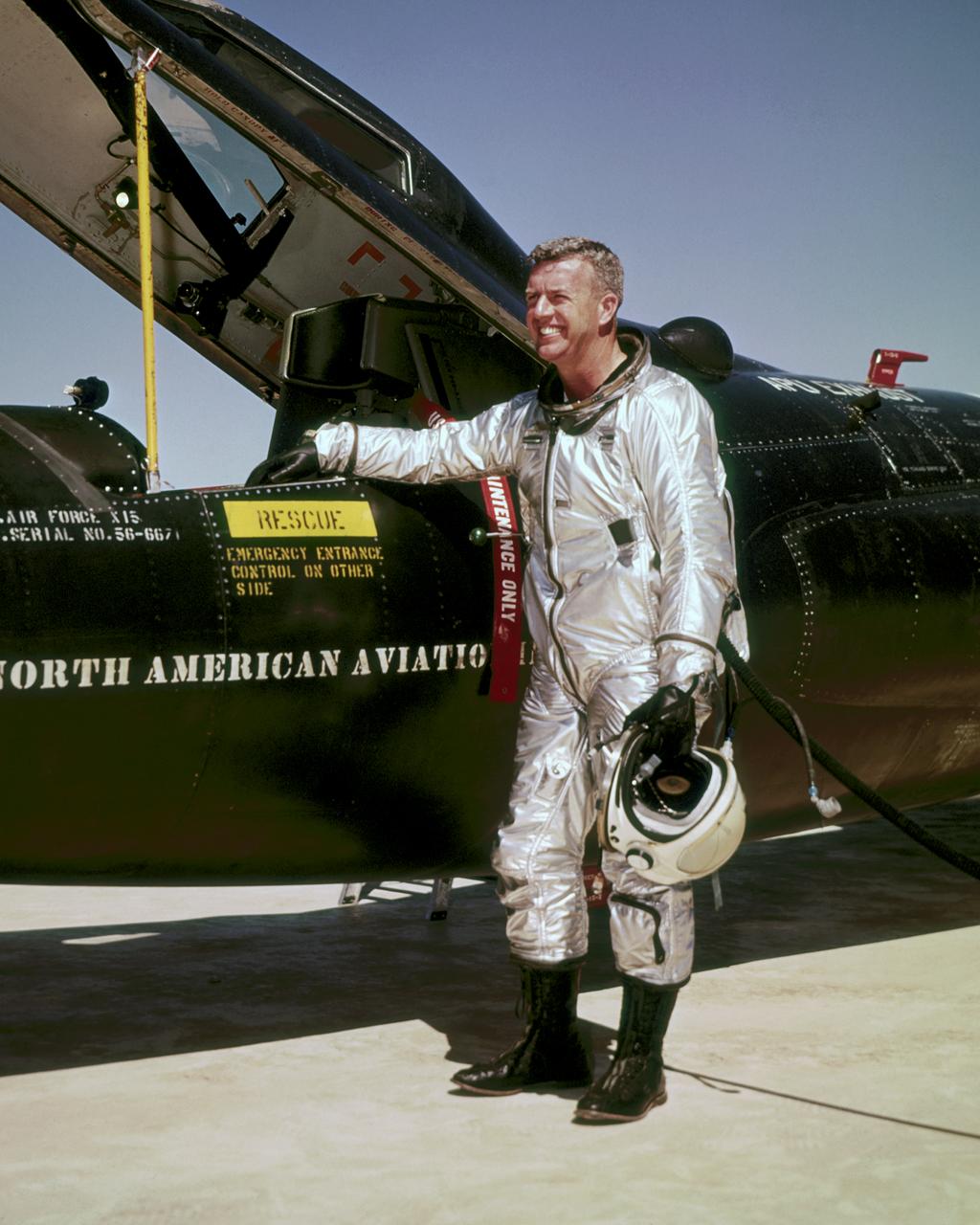
Joseph A. Walker was a Chief Research Pilot at the NASA Dryden Flight Research Center during the mid-1960s. He joined the NACA in March 1945, and served as project pilot at the Edwards flight research facility on such pioneering research projects as the D-558-1, D-558-2, X-1, X-3, X-4, X-5, and the X-15. He also flew programs involving the F-100, F-101, F-102, F-104, and the B-47. Walker made the first NASA X-15 flight on March 25, 1960. He flew the research aircraft 24 times and achieved its fastest speed and highest altitude. He attained a speed of 4,104 mph (Mach 5.92) during a flight on June 27, 1962, and reached an altitude of 354,300 feet on August 22, 1963 (his last X-15 flight). He was the first man to pilot the Lunar Landing Research Vehicle (LLRV) that was used to develop piloting and operational techniques for lunar landings. Walker was born February 20, 1921, in Washington, Pa. He lived there until graduating from Washington and Jefferson College in 1942, with a B.A. degree in Physics. During World War II he flew P-38 fighters for the Air Force, earning the Distinguished Flying Cross and the Air Medal with Seven Oak Clusters. Walker was the recipient of many awards during his 21 years as a research pilot. These include the 1961 Robert J. Collier Trophy, 1961 Harmon International Trophy for Aviators, the 1961 Kincheloe Award and 1961 Octave Chanute Award. He received an honorary Doctor of Aeronautical Sciences degree from his alma mater in June of 1962. Walker was named Pilot of the Year in 1963 by the National Pilots Association. He was a charter member of the Society of Experimental Test Pilots, and one of the first to be designated a Fellow. He was fatally injured on June 8, 1966, in a mid-air collision between an F-104 he was piloting and the XB-70.
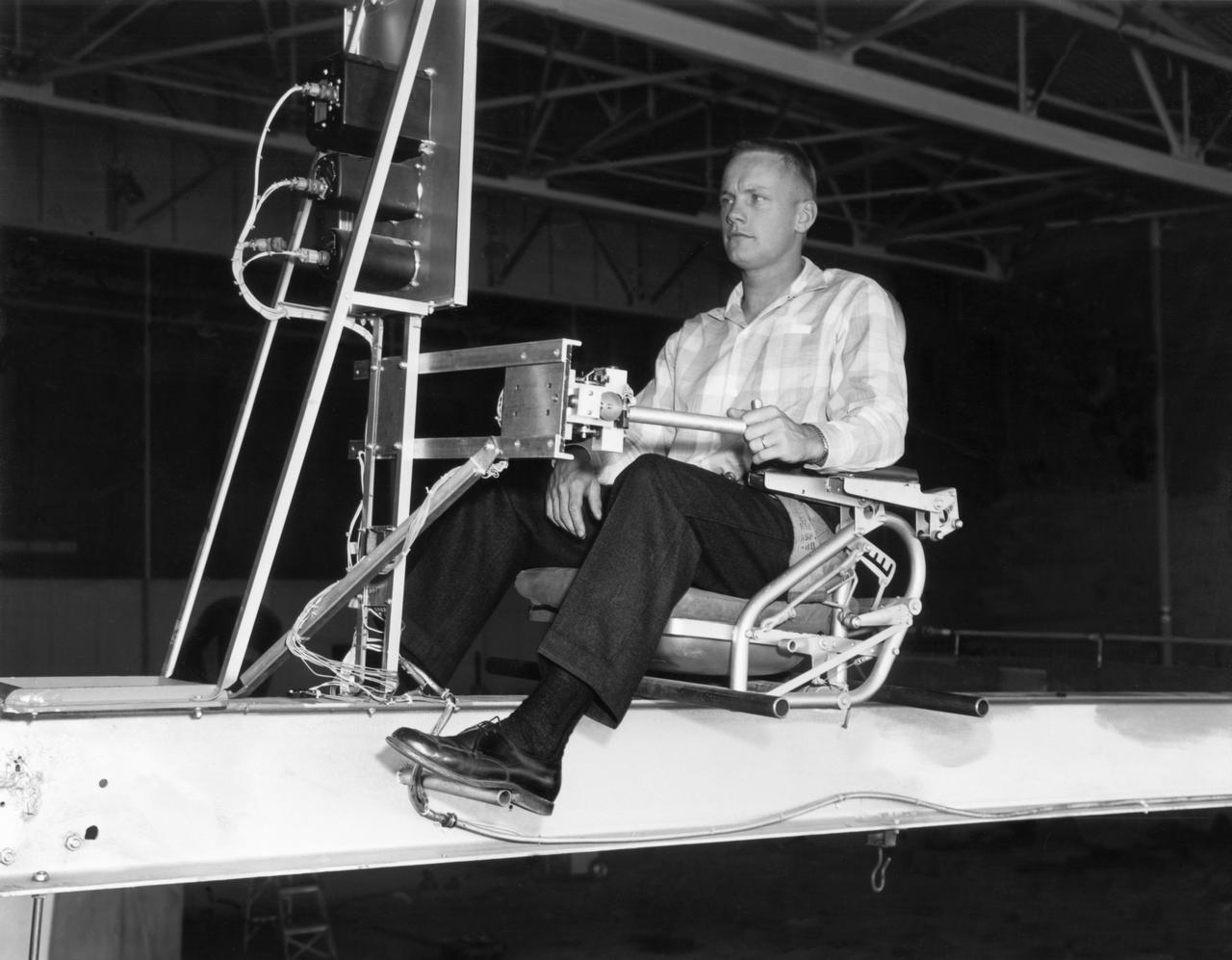
Famed astronaut Neil A. Armstrong, the first man to set foot on the moon during the historic Apollo 11 space mission in July 1969, served for seven years as a research pilot at the NACA-NASA High-Speed Flight Station, now the Dryden Flight Research Center, at Edwards, California, before he entered the space program. Armstrong joined the National Advisory Committee for Aeronautics (NACA) at the Lewis Flight Propulsion Laboratory (later NASA's Lewis Research Center, Cleveland, Ohio, and today the Glenn Research Center) in 1955. Later that year, he transferred to the High-Speed Flight Station at Edwards as an aeronautical research scientist and then as a pilot, a position he held until becoming an astronaut in 1962. He was one of nine NASA astronauts in the second class to be chosen. As a research pilot Armstrong served as project pilot on the F-100A and F-100C aircraft, F-101, and the F-104A. He also flew the X-1B, X-5, F-105, F-106, B-47, KC-135, and Paresev. He left Dryden with a total of over 2450 flying hours. He was a member of the USAF-NASA Dyna-Soar Pilot Consultant Group before the Dyna-Soar project was cancelled, and studied X-20 Dyna-Soar approaches and abort maneuvers through use of the F-102A and F5D jet aircraft. Armstrong was actively engaged in both piloting and engineering aspects of the X-15 program from its inception. He completed the first flight in the aircraft equipped with a new flow-direction sensor (ball nose) and the initial flight in an X-15 equipped with a self-adaptive flight control system. He worked closely with designers and engineers in development of the adaptive system, and made seven flights in the rocket plane from December 1960 until July 1962. During those fights he reached a peak altitude of 207,500 feet in the X-15-3, and a speed of 3,989 mph (Mach 5.74) in the X-15-1. Armstrong has a total of 8 days and 14 hours in space, including 2 hours and 48 minutes walking on the Moon. In March 1966 he was commander of the Gemini 8 or
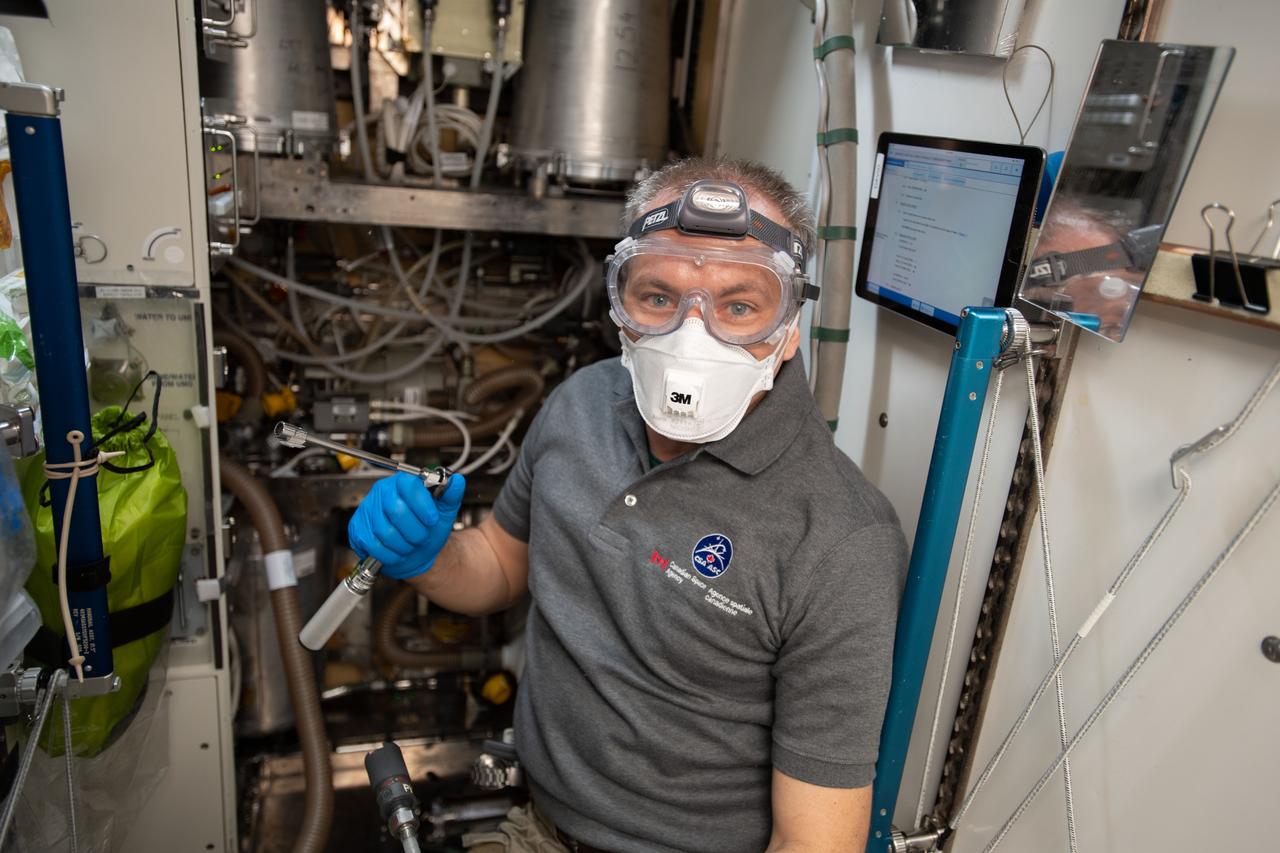
iss058e004176 (Jan. 16, 2019) --- Astronaut David Saint-Jacques of the Canadian Space Agency performs orbital plumbing work as he removes and replaces hydraulic components in the Waste and Hygiene Compartment, also known as the International Space Station's toilet located in the Tranquility module.
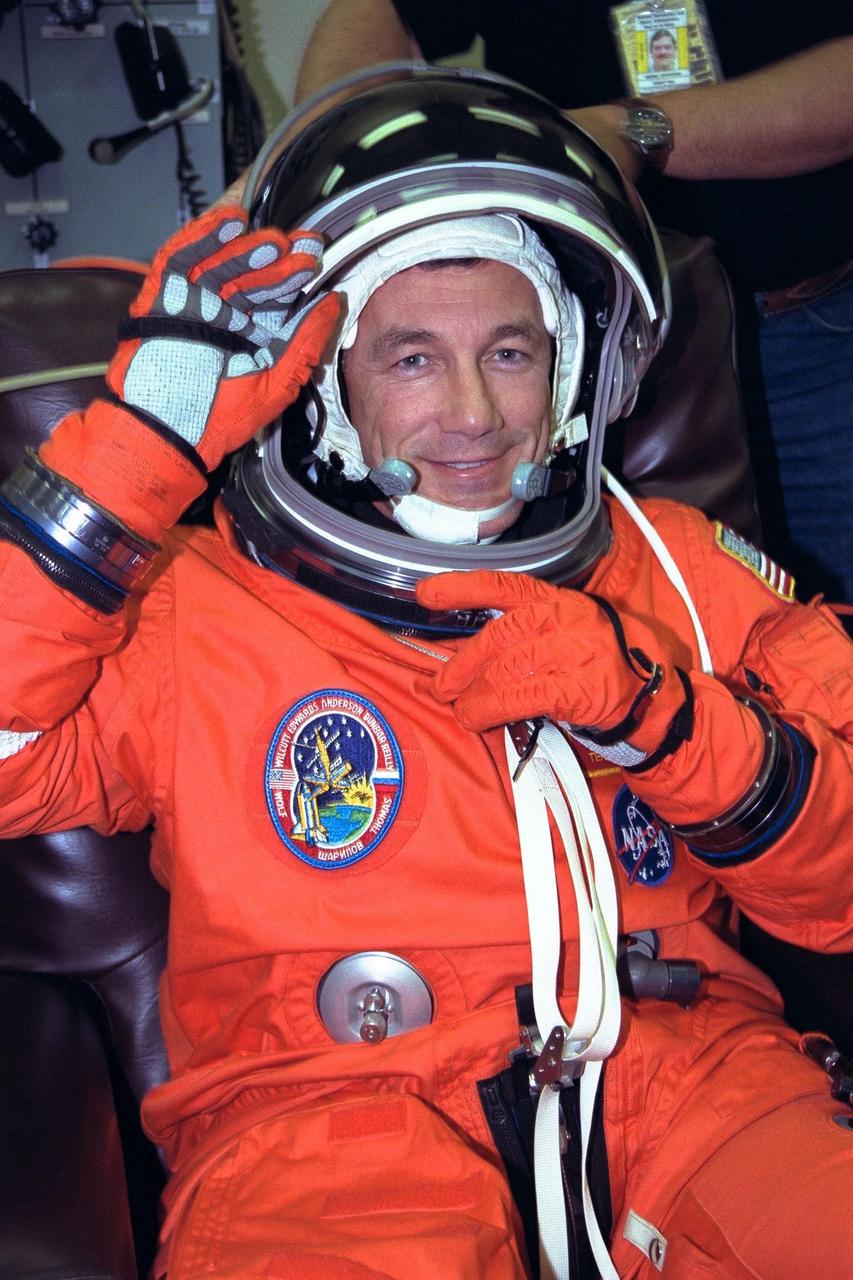
STS-89 Commander Terrence Wilcutt smiles as he completes the donning of his launch/entry suit in the Operations and Checkout (O&C) Building. A veteran of two space flights, he has logged more than 512 hours in space. He served as pilot on STS-68 and STS-79. He and six fellow crew members will soon depart the O&C and head for Launch Pad 39A, where the Space Shuttle Endeavour will lift off during a launch window that opens at 9:43 p.m. EST, Jan. 22. STS-89 is the eighth of nine planned missions to dock the Space Shuttle with Russia's Mir space station
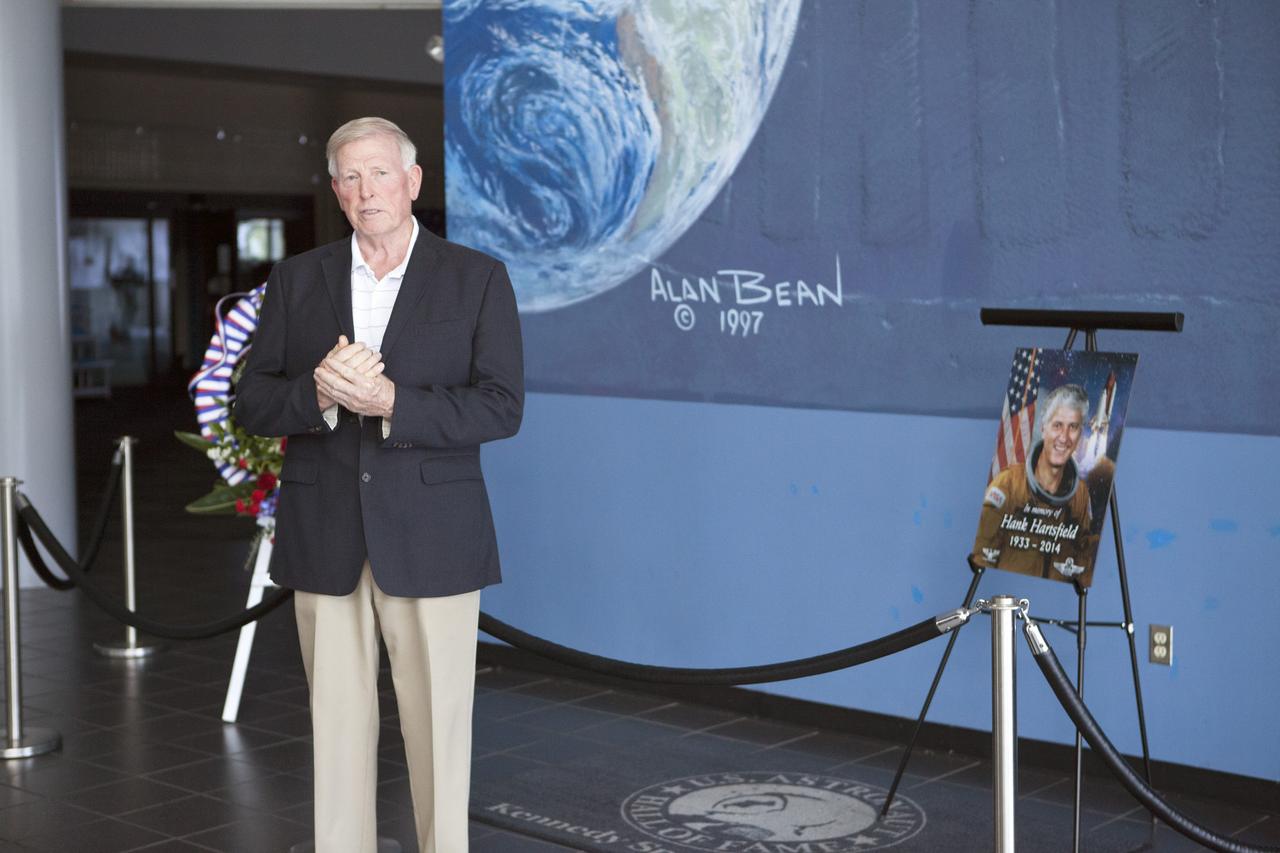
CAPE CANAVERAL, Fla. -- Former NASA astronaut Jon McBride shares his thoughts at a wreath-laying ceremony honoring Henry W. "Hank" Hartsfield at the U.S. Astronaut Hall of Fame. Hartsfield commanded space shuttle Discovery's maiden mission and was a veteran of three shuttle flights. He died July 17 after an illness. He was 80 years old. Hartsfield joined NASA in 1969 and was part of the astronaut support crew for Apollo 16 and the Skylab 2, 3 and 4 missions. He logged 483 hours in space during missions STS-4, on which he served as pilot, as well as STS-41D and STS-61A, both of which he commanded. Photo credit: NASA/Dimitri Gerondidakis
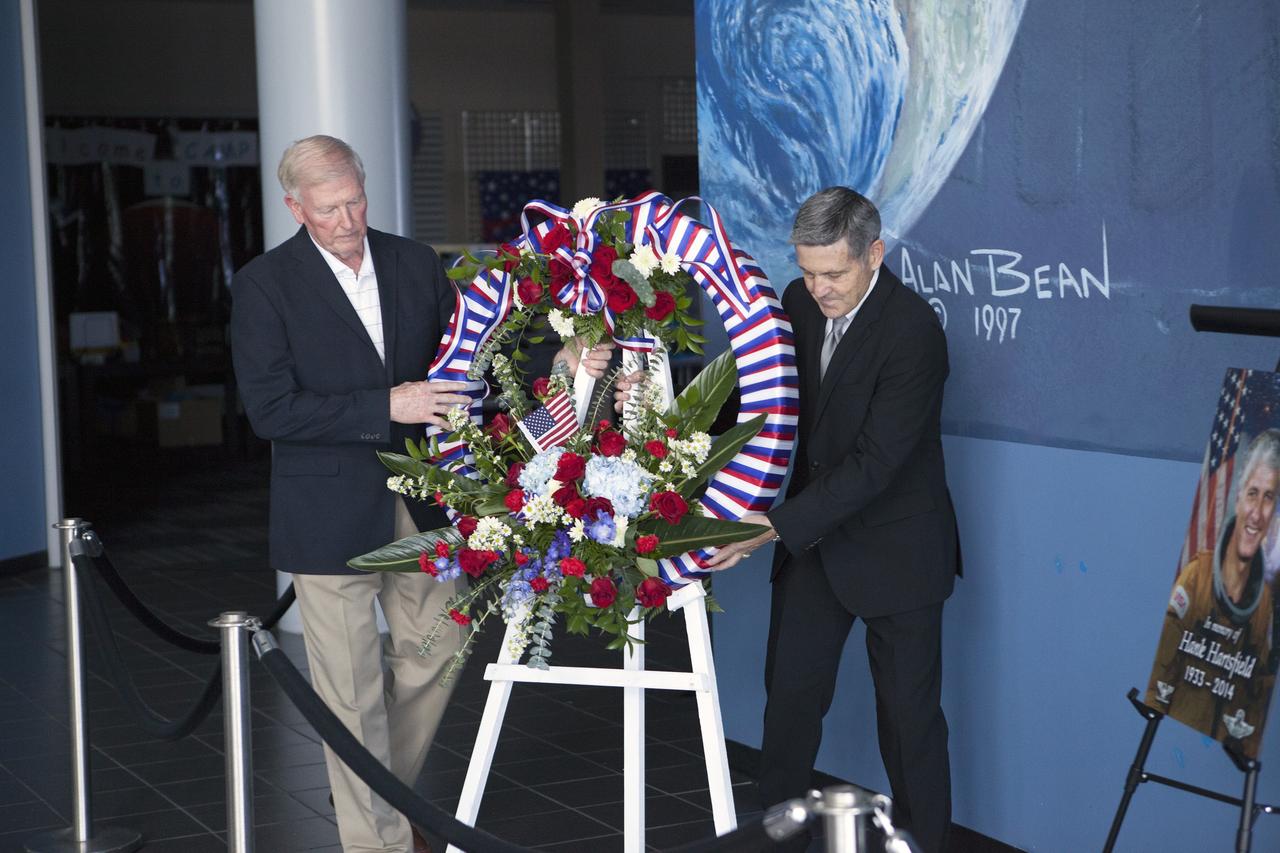
CAPE CANAVERAL, Fla. -- Former NASA astronaut Jon McBride, left, and Kennedy Space Center Director Bob Cabana place a wreath honoring Henry W. "Hank" Hartsfield at the U.S. Astronaut Hall of Fame. Hartsfield commanded space shuttle Discovery's maiden mission and was a veteran of three shuttle flights. He died July 17 after an illness. He was 80 years old. Hartsfield joined NASA in 1969 and was part of the astronaut support crew for Apollo 16 and the Skylab 2, 3 and 4 missions. He logged 483 hours in space during missions STS-4, on which he served as pilot, as well as STS-41D and STS-61A, both of which he commanded. Photo credit: NASA/Dimitri Gerondidakis
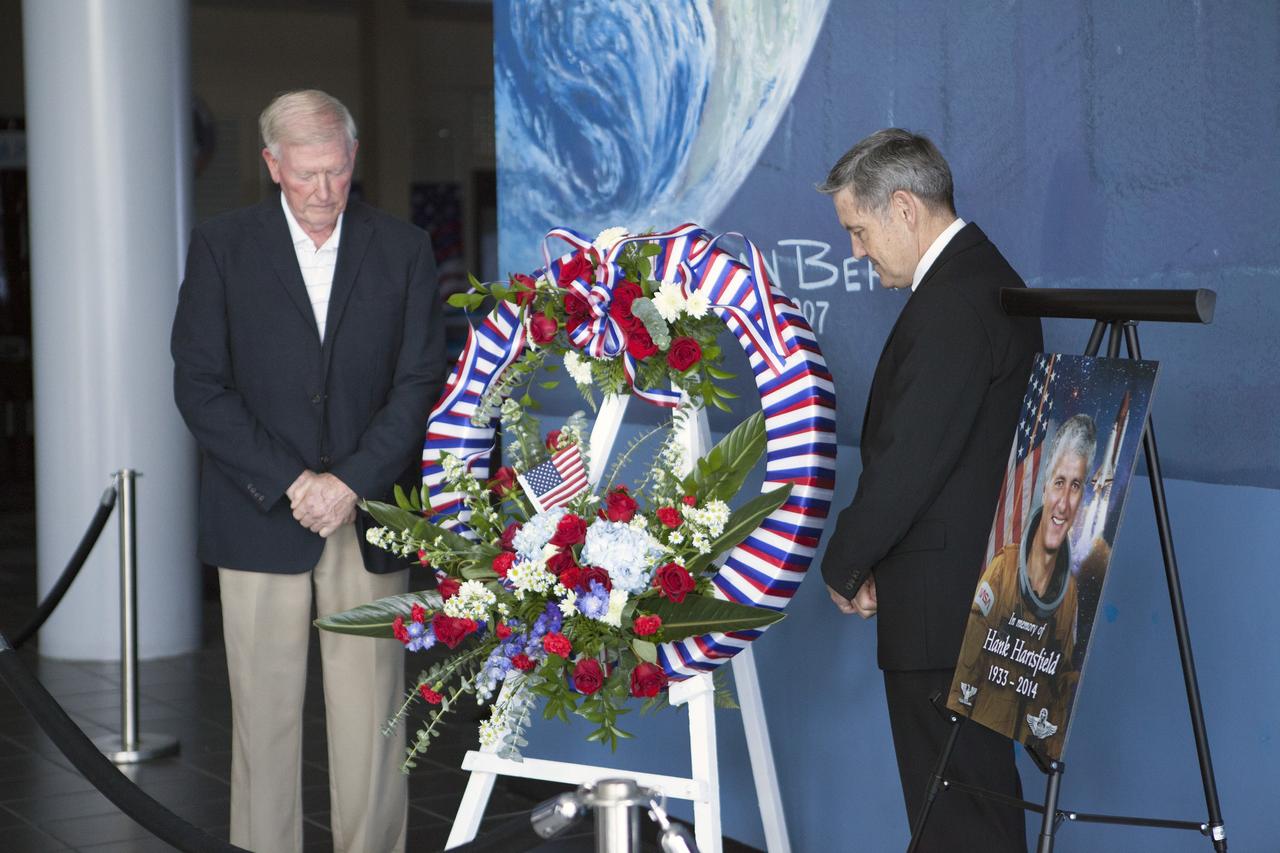
CAPE CANAVERAL, Fla. -- Former NASA astronaut Jon McBride, left, and Kennedy Space Center Director Bob Cabana pause for reflection after placing a wreath honoring Henry W. "Hank" Hartsfield at the U.S. Astronaut Hall of Fame. Hartsfield commanded space shuttle Discovery's maiden mission and was a veteran of three shuttle flights. He died July 17 after an illness. He was 80 years old. Hartsfield joined NASA in 1969 and was part of the astronaut support crew for Apollo 16 and the Skylab 2, 3 and 4 missions. He logged 483 hours in space during missions STS-4, on which he served as pilot, as well as STS-41D and STS-61A, both of which he commanded. Photo credit: NASA/Dimitri Gerondidakis
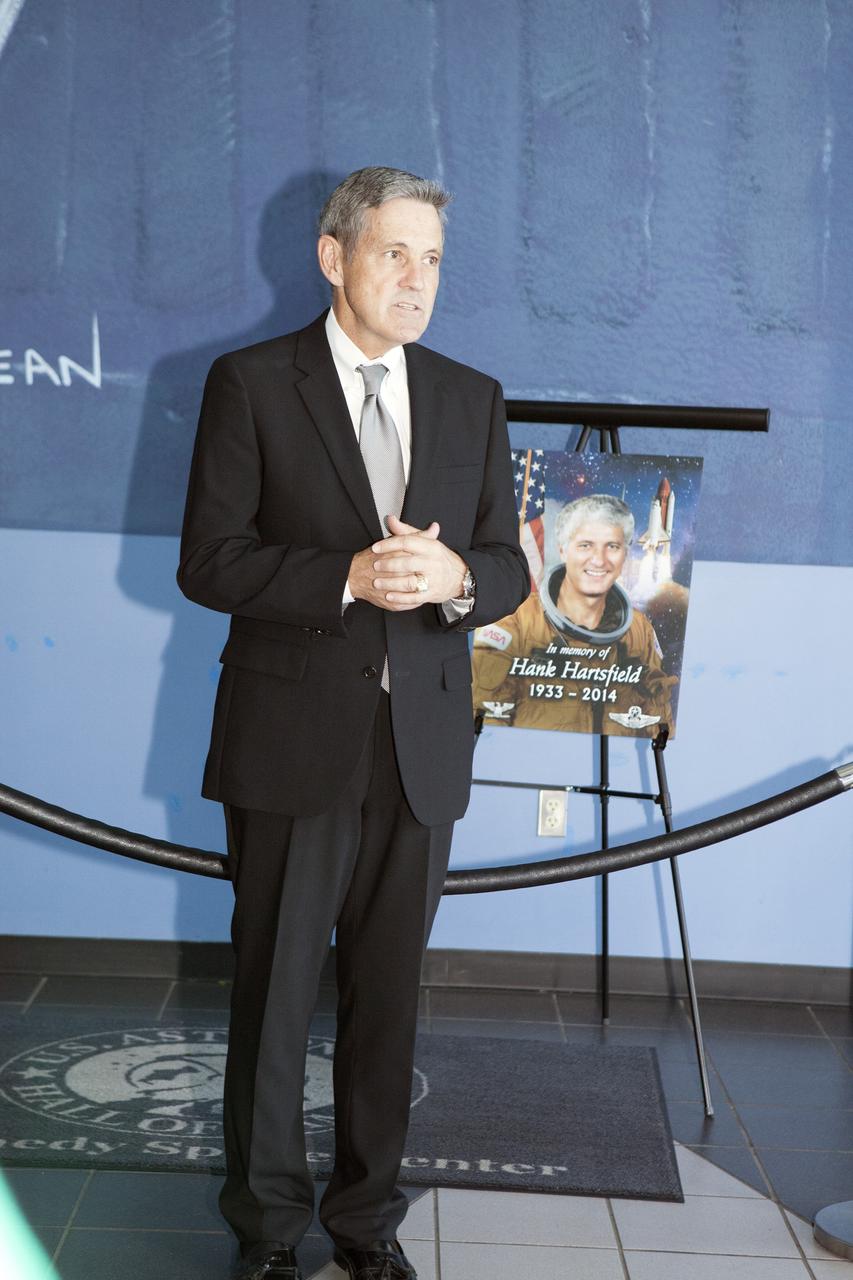
CAPE CANAVERAL, Fla. -- Kennedy Space Center Director Bob Cabana speaks at a wreath-laying ceremony honoring Henry W. "Hank" Hartsfield at the U.S. Astronaut Hall of Fame. Hartsfield commanded space shuttle Discovery's maiden mission and was a veteran of three shuttle flights. He died July 17 after an illness. He was 80 years old. Hartsfield joined NASA in 1969 and was part of the astronaut support crew for Apollo 16 and the Skylab 2, 3 and 4 missions. He logged 483 hours in space during missions STS-4, on which he served as pilot, as well as STS-41D and STS-61A, both of which he commanded. Photo credit: NASA/Dimitri Gerondidakis
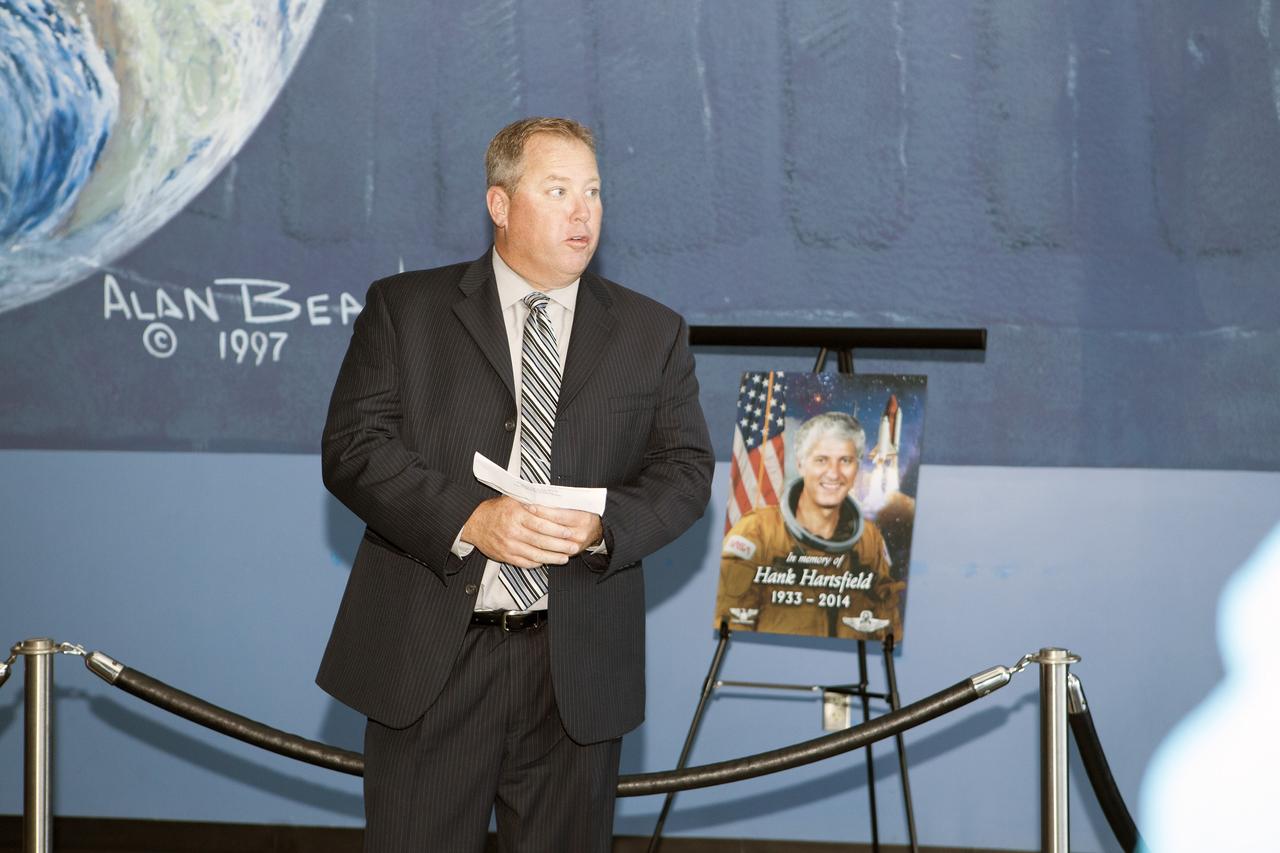
CAPE CANAVERAL, Fla. -- Therrin Protze, chief operating officer for Delaware North Parks Services at Kennedy Space Center Visitor Complex, speaks at a wreath-laying ceremony honoring Henry W. "Hank" Hartsfield at the U.S. Astronaut Hall of Fame. Hartsfield commanded space shuttle Discovery's maiden mission and was a veteran of three shuttle flights. He died July 17 after an illness. He was 80 years old. Hartsfield joined NASA in 1969 and was part of the astronaut support crew for Apollo 16 and the Skylab 2, 3 and 4 missions. He logged 483 hours in space during missions STS-4, on which he served as pilot, as well as STS-41D and STS-61A, both of which he commanded. Photo credit: NASA/Dimitri Gerondidakis
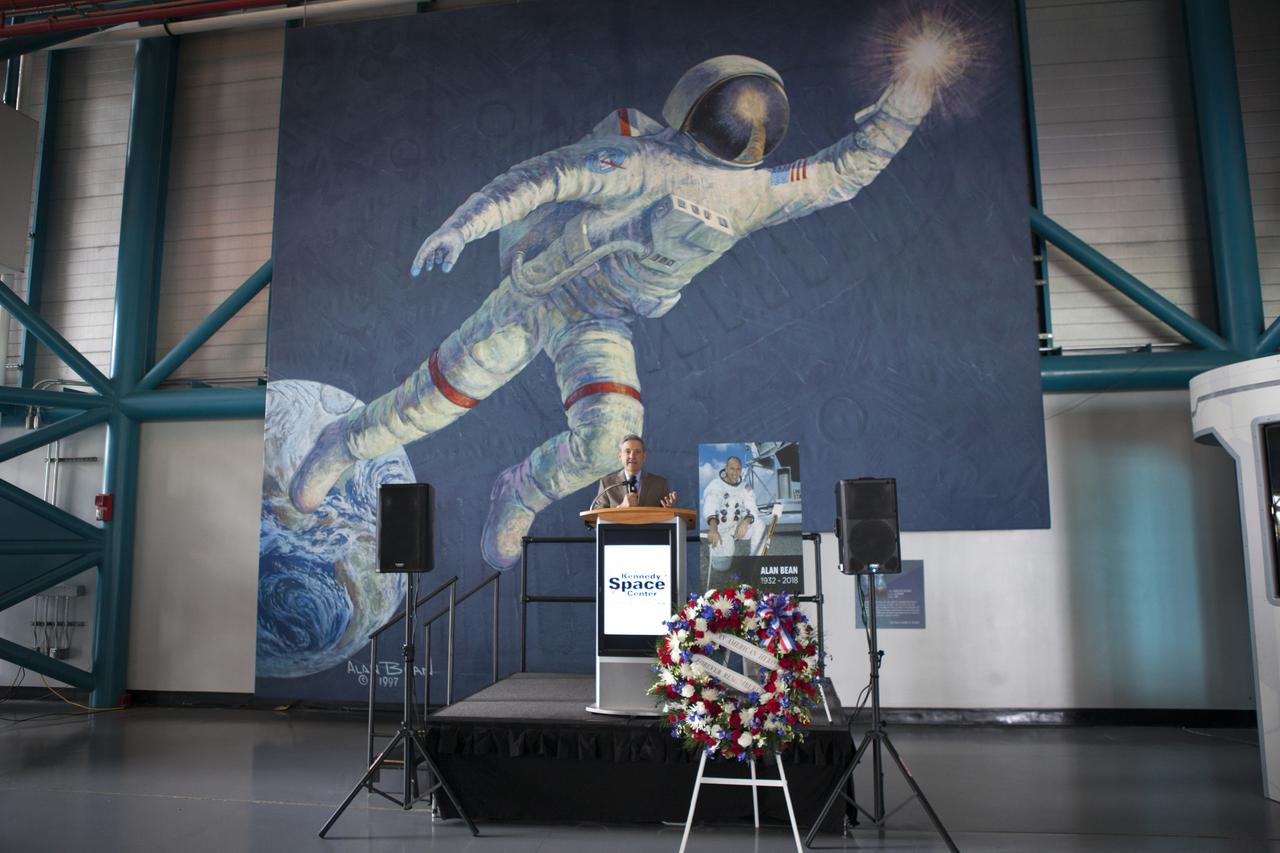
A memorial wreath placed in the Apollo-Saturn V Center of the Kennedy Space Center Visitor Complex on Wednesday, May 30, 2018, honors former NASA astronaut Alan Bean. He was the fourth person to walk on the Moon as lunar module pilot on Apollo 12 in November 1969. He went on to command the 59-day Skylab 3 mission in 1973. In the background is a large mural of a painting by Bean who became an accomplished artist after leaving NASA. He died in Houston on May 26, 2018, at the age of 86.
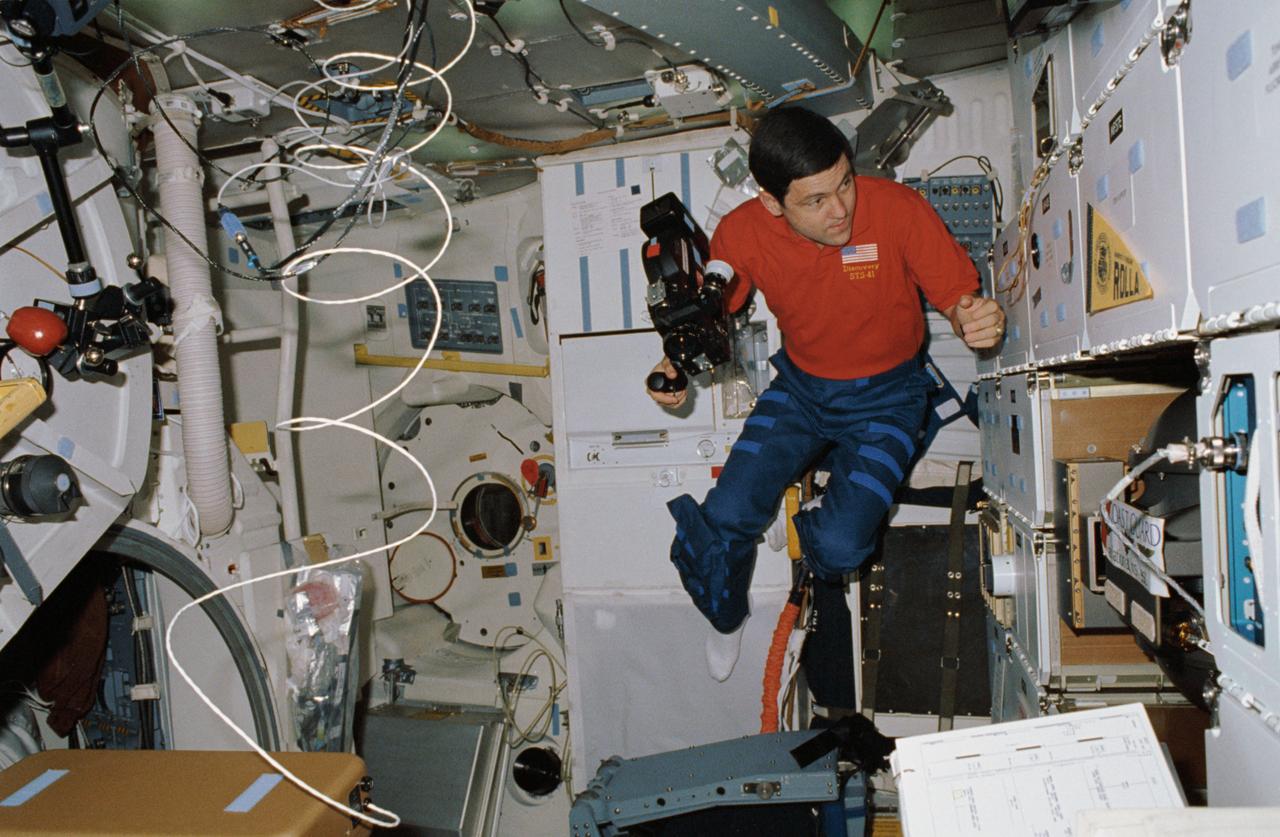
STS041-05-011 (6-10 Oct 1990) --- Astronaut Robert D. Cabana, STS-41 pilot, exhibits the weightlessness of space travel as he appears to "float" about on the middeck of Discovery. Careful inspection of the photo proves that, actually, his floating is limited, as he has anchored his left foot with a special restraint device. He apparently has chosen this vantage point to use the Arriflex motion picture camera in his right hand.
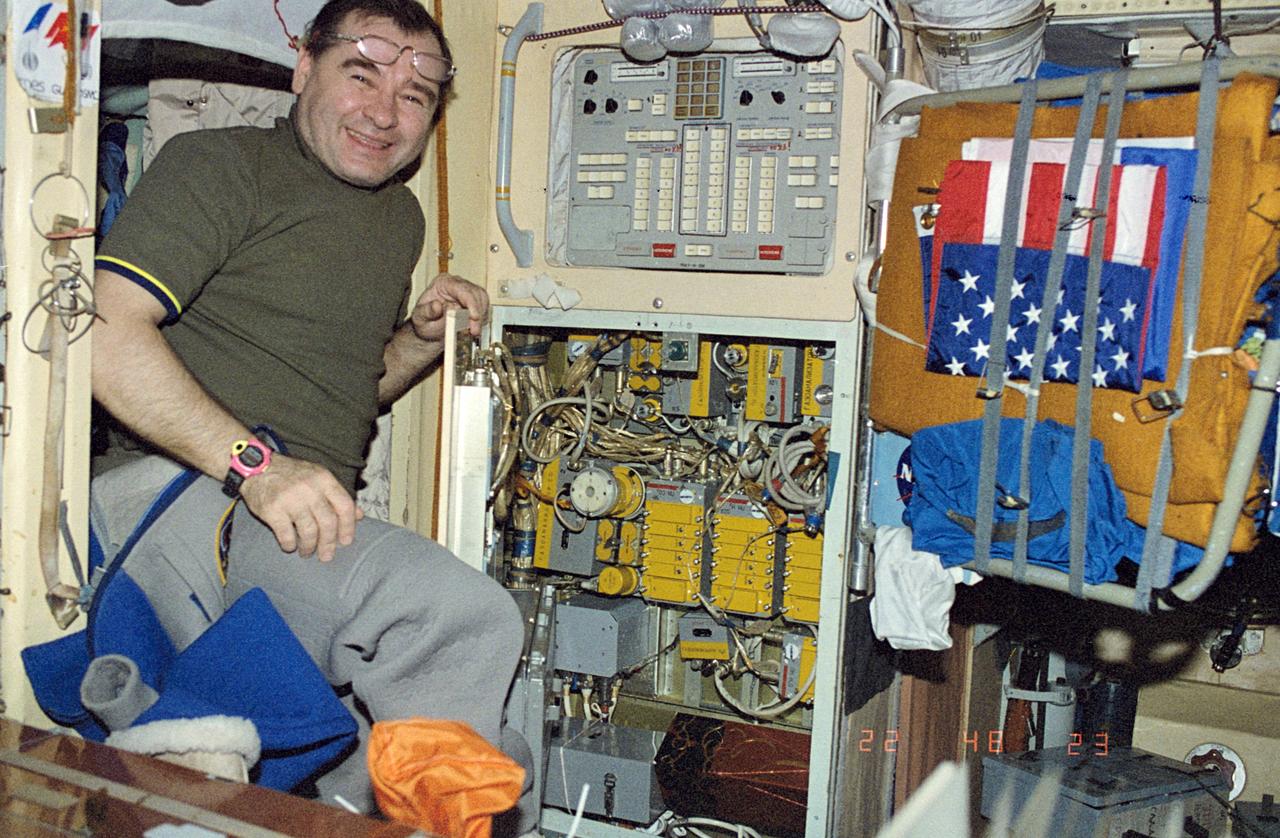
NM18-302-025 (March-July 1995) --- Onboard Mir's base block module cosmonaut Gennadiy M. Strekalov, flight engineer, prepares to check the air quality control and the propulsion system of the station. Strekalov told reporters at a July 18 press conference in Houston that even though he tried not to awaken astronaut Norman E. Thagard, who was asleep nearby, he was unable to keep from disturbing the cosmonaut researcher. He went on to point out that Thagard was always very cooperative and tolerant of such interruptions.
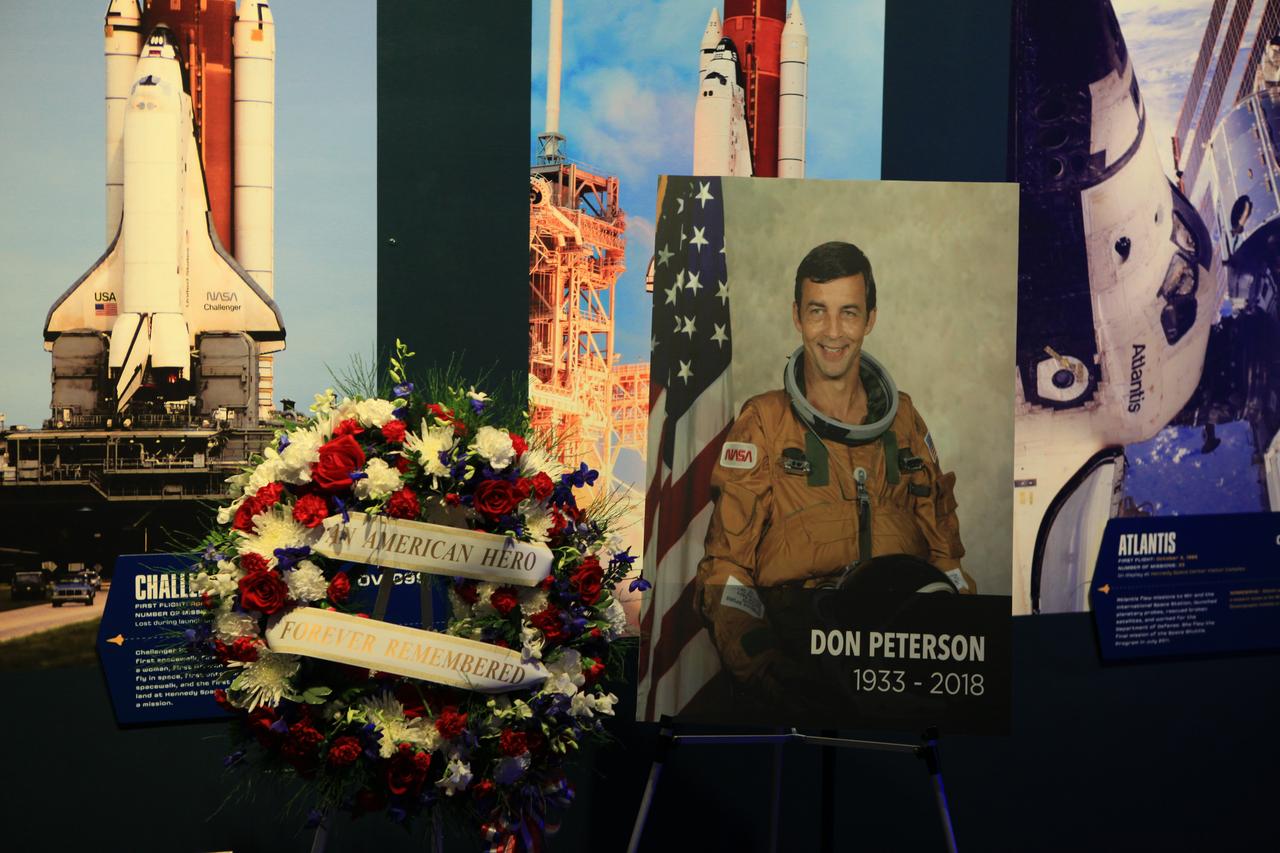
A memorial wreath placed in the Space Shuttle Atlantis exhibit at the Kennedy Space Center Visitor Complex on Wednesday, May 30, 2018, honoring former NASA astronaut Don Peterson. As a mission specialist on STS-6 in April 1983, he participated in the first spacewalk of the Space Shuttle Program. He passed away May 27, 2018, in El Lago, Texas. He was 84.
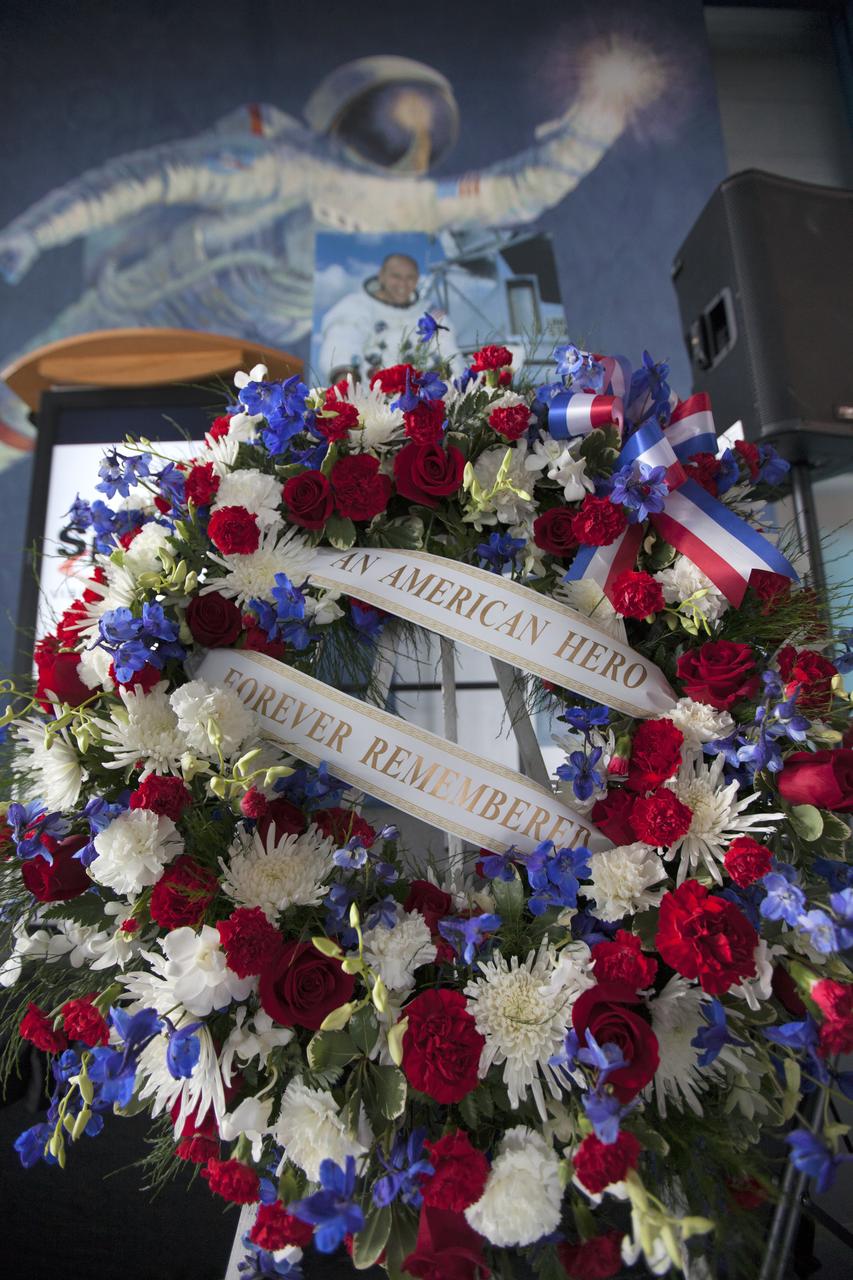
A memorial wreath placed in the Apollo-Saturn V Center of the Kennedy Space Center Visitor Complex on Wednesday, May 30, 2018, honors former NASA astronaut Alan Bean. He was the fourth person to walk on the Moon as lunar module pilot on Apollo 12 in November 1969. He went on to command the 59-day Skylab 3 mission in 1973. He died in Houston on May 26, 2018, at the age of 86.

Therrin Protze, COO at the Kennedy Space Center Visitor Complex, speaks in the Space Shuttle Atlantis exhibit during a ceremony on Wednesday, May 30, 2018, honoring former NASA astronaut Don Peterson. As a mission specialist on STS-6 in April 1983, he participated in the first spacewalk of the Space Shuttle Program. He passed away May 27, 2018, in El Lago, Texas. He was 84.
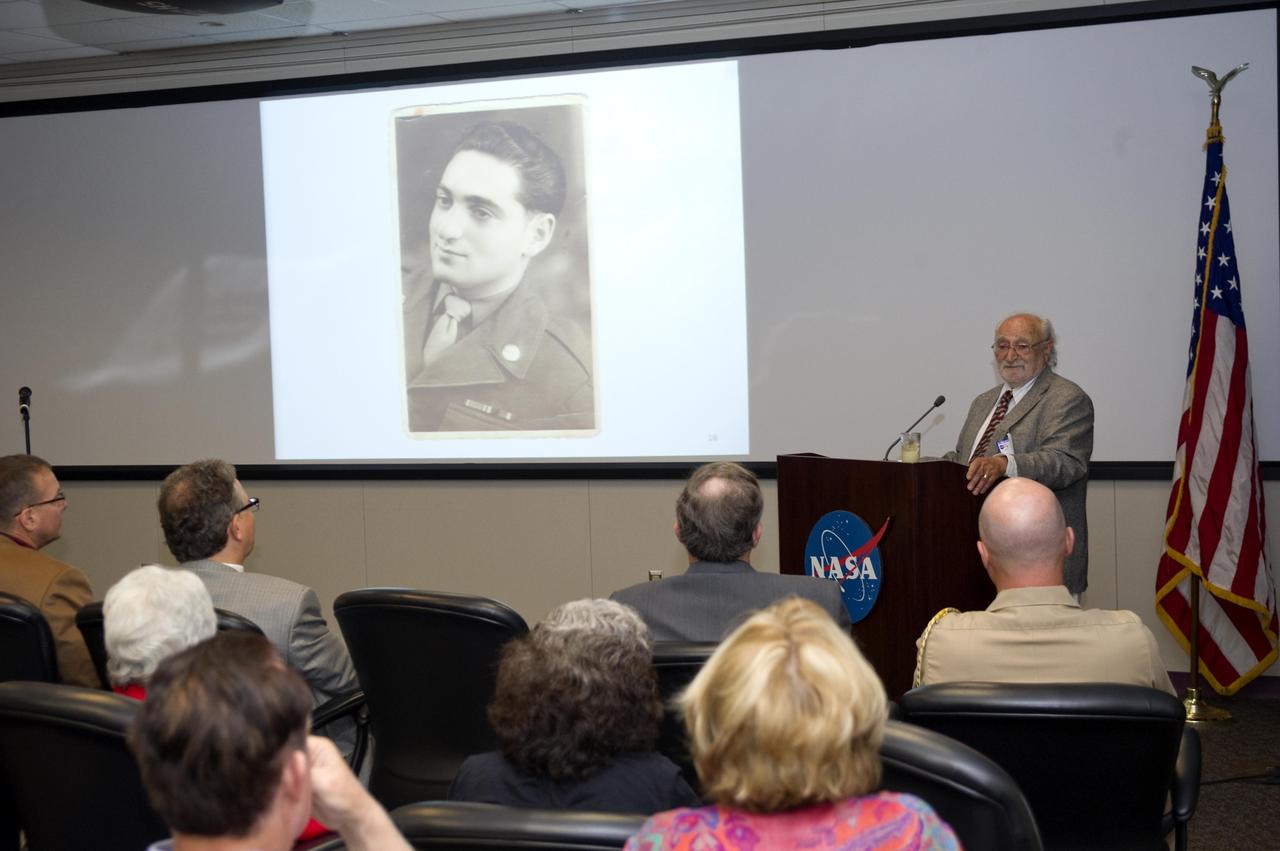
Av Szyller of Covington, La., recounts his experiences as a Jew living in occupied France in the early 1940s during a Holocaust Days of Remembrance gathering at Stennis Space Center on May 12. Szyller was arrested by Nazi soldiers but managed to escape France after several close calls. However, he lost his father and other family members in Auschwitz. Szyller, 83, returned to Europe in 1945 as a sergeant in the U.S. Army. After the war, he located to Louisiana, where he practices clinical psychology.
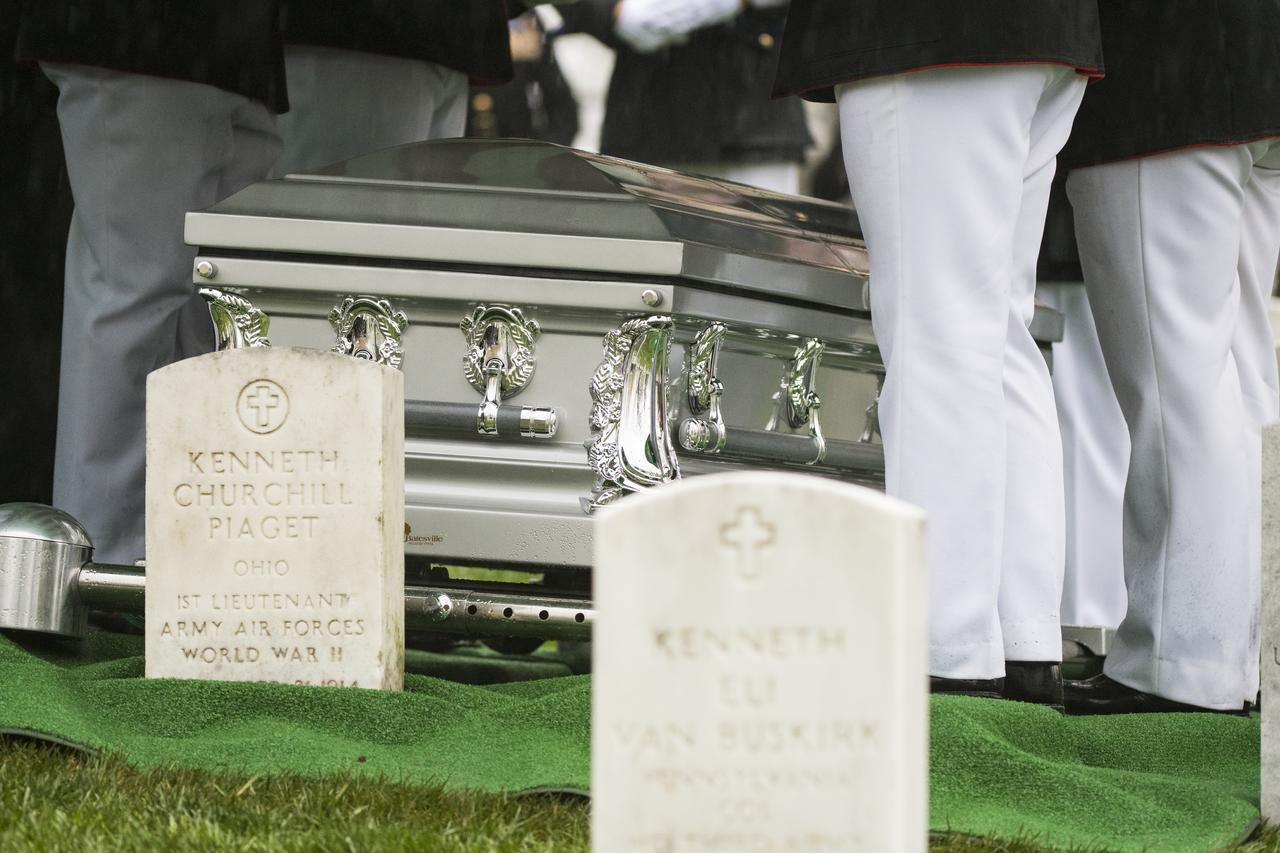
Former astronaut and U.S. Senator John Glenn's casket is seen as he is laid to rest at Arlington National Cemetery in Virginia on Thursday, April 6, 2017, the day on which he and his wife Annie were married in 1943. Glenn was the first American to orbit Earth on Feb. 20, 1962, in a five-hour flight aboard the Friendship 7 spacecraft. In 1998, he broke another record by returning to space at the age of 77 on the Space Shuttle Discovery. Photo Credit: (NASA/Aubrey Gemignani)
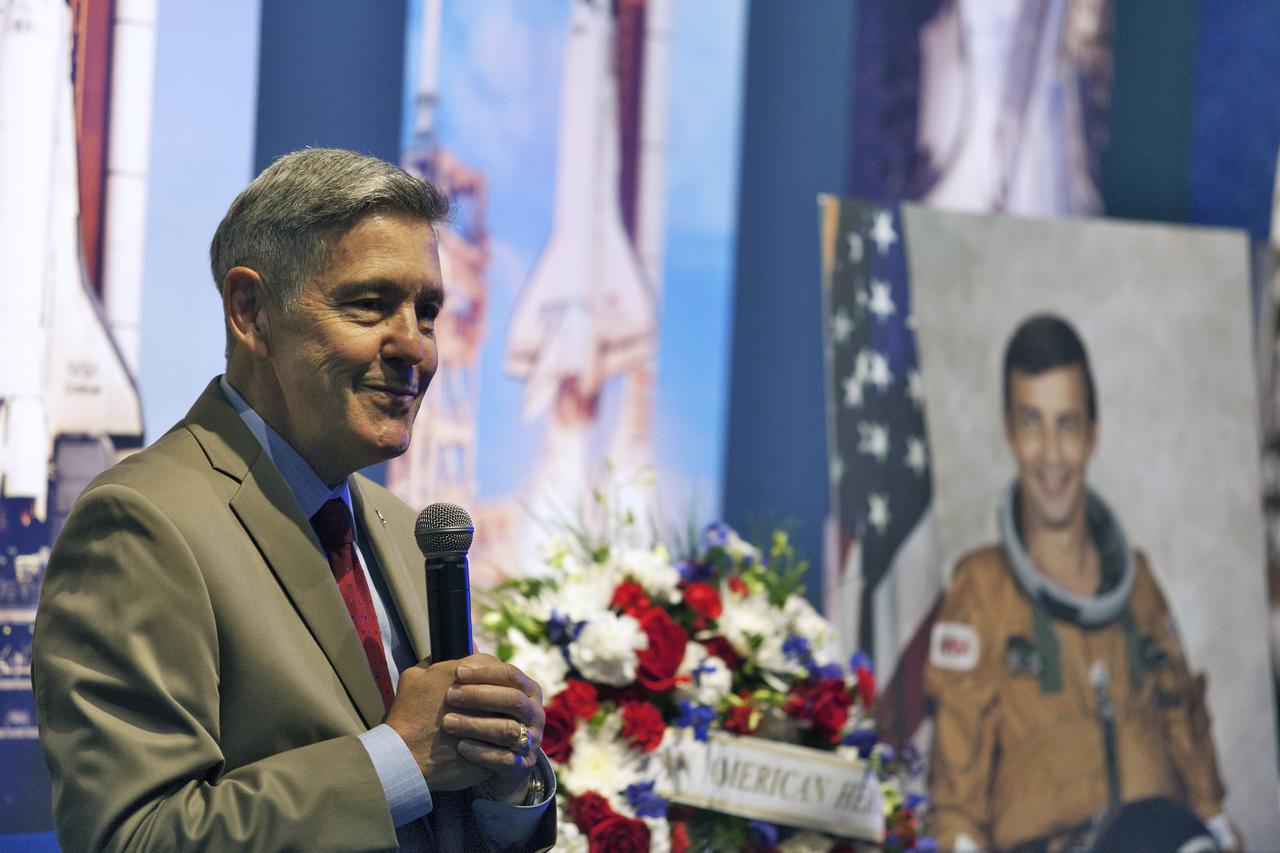
Kennedy Space Center Director Bob Cabana speaks to guests in the Space Shuttle Atlantis exhibit at the spaceport's visitor complex on Wednesday, May 30, 2018. The ceremony is honoring the memory of former NASA astronaut Don Peterson. As a mission specialist on STS-6 in April 1983, he participated in the first spacewalk of the Space Shuttle Program. He passed away May 27, 2018, in El Lago, Texas. He was 84.
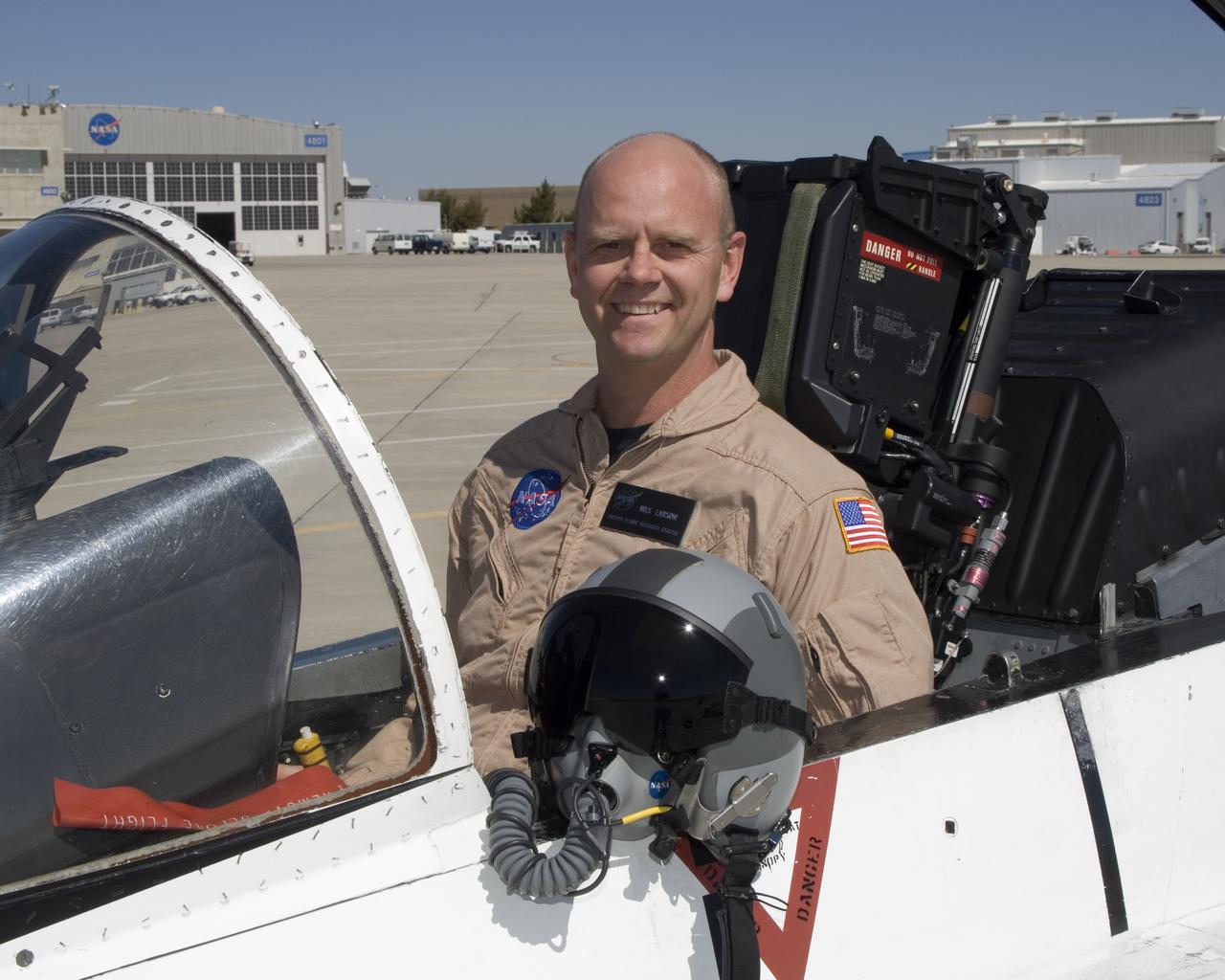
Nils Larson is a research pilot in the Flight Crew Branch of NASA's Dryden Flight Research Center, Edwards, Calif. Larson joined NASA in February 2007 and will fly the F-15, F-18, T-38 and ER-2. Prior to joining NASA, Larson was on active duty with the U.S. Air Force. He has accumulated more that 4,900 hours of military and civilian flight experience in more than 70 fixed and rotary winged aircraft. Larson completed undergraduate pilot training at Williams Air Force Base, Chandler, Ariz., in 1987. He remained at Williams as a T-37 instructor pilot. In 1991, Larson was assigned to Beale Air Force Base, Calif., as a U-2 pilot. He flew 88 operational missions from Korea, Saudi Arabia, the United Kingdom, Panama and other locations. Larson graduated from the U.S. Air Force Test Pilot School at Edwards Air Force Base, Calif., in Class 95A. He became a flight commander and assistant operations officer for the 445th squadron at Edwards. He flew the radar, avionics integration and engine tests in F-15 A-D, the early flights of the glass cockpit T-38C and airworthiness flights of the Coast Guard RU-38. He was selected to serve as an Air Force exchange instructor at the U.S. Naval Test Pilot School, Patuxent River, Md. He taught systems and fixed-wing flight test and flew as an instructor pilot in the F-18, T-2, U-6A Beaver and X-26 Schweizer sailplane. Larson commanded U-2 operations for Warner Robins Air Logistics Center's Detachment 2 located in Palmdale, Calif. In addition to flying the U-2, Larson supervised the aircraft's depot maintenance and flight test. He was the deputy group commander for the 412th Operations Group at Edwards before retiring from active duty in 2007 with the rank of lieutenant colonel. His first experience with NASA was at the Glenn Research Center, Cleveland, where he served a college summer internship working on arcjet engines. Larson is a native of Bethany, W.Va,, and received his commission from the U.S. Air Force Academy in 1986 with a

Mark Pestana is a research pilot and project manager at the NASA Dryden Flight Research Center, Edwards, Calif. He is a pilot for the Beech B200 King Air, the T-34C and the Predator B. He flies the F-18 Hornet as a co-pilot and flight test engineer. Pestana has accumulated more than 4,000 hours of military and civilian flight experience. He was also a flight engineer on the NASA DC-8 flying laboratory. Pestana was the project manager and pilot for the Hi–rate Wireless Airborne Network Demonstration flown on the NASA B200 research aircraft. He flew B200 research missions for the X-38 Space Integrated Inertial Navigation Global Positioning System experiment. Pestana also participated in several deployments of the DC-8, including Earth science expeditions ranging from hurricane research over the Caribbean Sea to ozone studies over the North Pole, atmospheric chemistry over the South Pacific, rain forest health in Central America, Rocky Mountain ice pack assessment, and volcanic and tectonic activity around the Pacific Rim. He came to Dryden as a DC-8 mission manager in June 1998 from NASA Johnson Space Center, Houston, where he served as the Earth and Space Science discipline manager for the International Space Station Program at Johnson. Pestana also served as a flight crew operations engineer in the Astronaut Office, developing the controls, displays, tools, crew accommodations and procedures for on-orbit assembly, test, and checkout of the International Space Station. He led the analysis and technical negotiations for modification of the Russian Soyuz spacecraft as an emergency crew return vehicle for space station crews. He joined the U.S. Air Force Reserve in 1991 and held various positions as a research and development engineer, intelligence analyst, and Delta II launch vehicle systems engineer. He retired from the U.S. Air Force Reserve with the rank of colonel in 2005. Prior to 1990, Pestana was on active duty with the U.S. Air Force as the director of mi
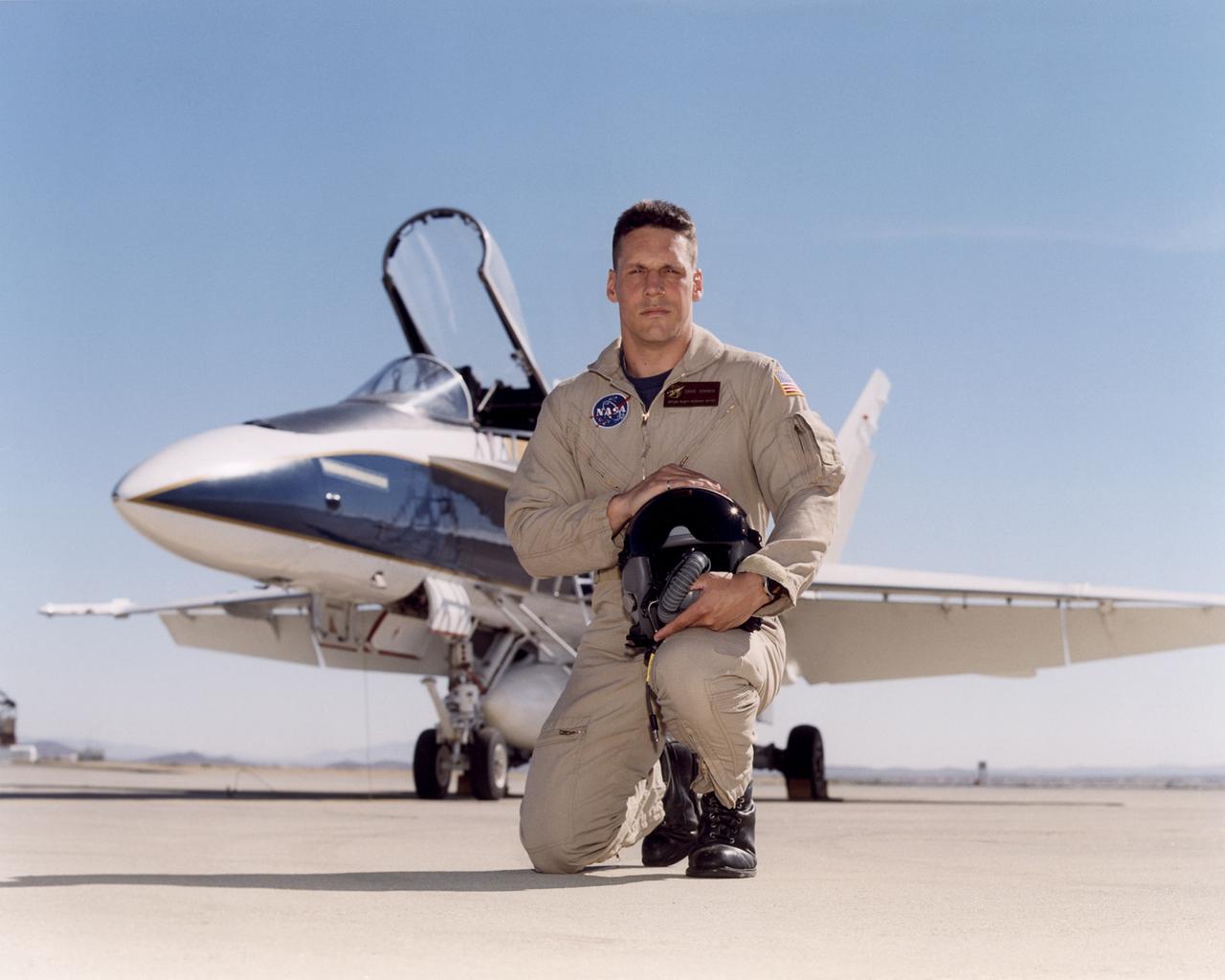
Craig R. Bomben became a pilot in the Flight Crew Branch of NASA's Dryden Flight Research Center, Edwards, Calif., in June 2001. His flying duties include a variety of research and support activities while piloting the F/A-18, DC-8, T-34C and King Air aircraft. He has more than 17 years and 3,800 hours of military and civilian flight experience in over 50 different aircraft types. Bomben came to NASA Dryden from a U.S. Navy assignment to the Personnel Exchange Program, Canada. He served as a test pilot in the Canadian Armed Forces located in Cold Lake, Alberta. He participated in numerous developmental programs to include CT-133 airborne ejection seat testing, F/A-18 weapons flutter testing and F/A-18 night vision goggles integration. Bomben performed U.S. Navy fleet service in 1995 as a strike-fighter department head. He completed two overseas deployments onboard the USS George Washington and USS Stennis. As a combat strike leader, he headed numerous multi-national missions over Iraq in support of Operation Southern Watch. Bomben graduated from the U.S. Naval Test Pilot School in 1992 and was subsequently assigned to the Naval Weapons Test Squadron at Pt. Mugu, Calif. During this tour he developed the F-14D bombsight and worked on various other F-14D and F/A-18 weapon systems developmental programs. Bomben is a 1985 graduate of Washington State University with a bachelor of science degree in electrical engineering. He graduated from naval flight training in 1987 and was recognized as a Commodore List graduate. His first assignment was to Naval Air Station Pensacola, Fla., where he was an instructor in the T-2B Buckeye. When selected to fly the F/A-18 in 1989, he joined a fleet squadron and deployed aboard the USS Forrestal. Bomben is married to the former Aissa Asuncion. They live in Lancaster, Calif., with their 3 children.
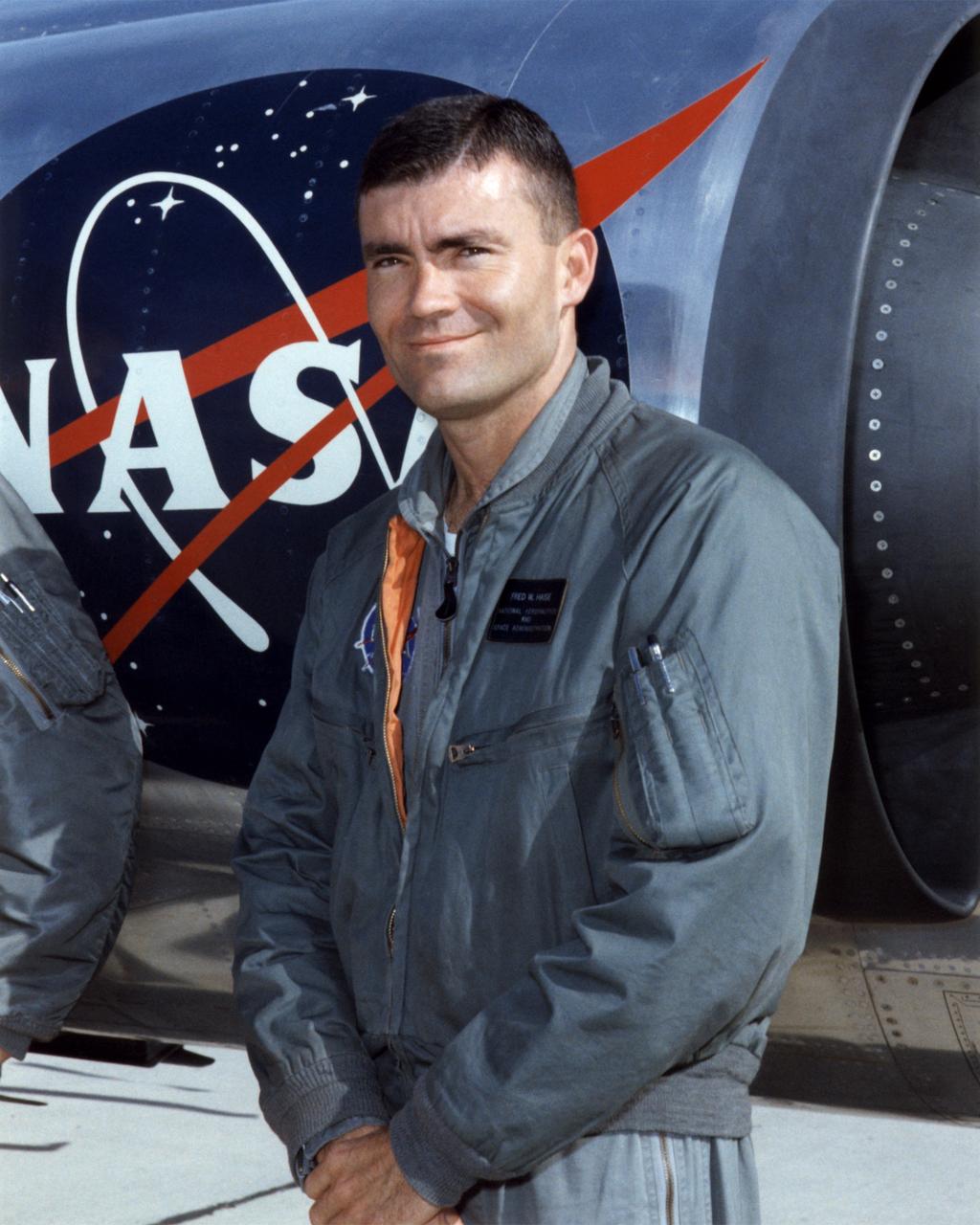
Fred W. Haise Jr. was a research pilot and an astronaut for the National Aeronautics and Space Administration from 1959 to 1979. He began flying at the Lewis Research Center in Cleveland, Ohio (today the Glenn Research Center), in 1959. He became a research pilot at the NASA Flight Research Center (FRC), Edwards, Calif., in 1963, serving NASA in that position for three years until being selected to be an astronaut in 1966 His best-known assignment at the FRC (later redesignated the Dryden Flight Research Center) was as a lifting body pilot. Shortly after flying the M2-F1 on a car tow to about 25 feet on April 22, 1966, he was assigned as an astronaut to the Johnson Space Center in Houston, Texas. While at the FRC he had also flown a variety of other research and support aircraft, including the variable-stability T-33A to simulate the M2-F2 heavyweight lifting body, some light aircraft including the Piper PA-30 to evaluate their handling qualities, the Apache helicopter, the Aero Commander, the Cessna 310, the Douglas F5D, the Lockheed F-104 and T-33, the Cessna T-37, and the Douglas C-47. After becoming an astronaut, Haise served as a backup crewmember for the Apollo 8, 11, and 16 missions. He flew on the aborted Apollo 13 lunar mission in 1970, spending 142 hours and 54 minutes in space before returning safely to Earth. In 1977, he was the commander of three free flights of the Space Shuttle prototype Enterprise when it flew its Approach and Landing Tests at Edwards Air Force Base, Calif. Meanwhile, from April 1973 to January 1976, Haise served as the Technical Assistant to the Manager of the Space Shuttle Orbiter Project. In 1979, he left NASA to become the Vice President for Space Programs with the Grumman Aerospace Corporation. He then served as President of Grumman Technical Services, an operating division of Northrop Grumman Corporation, from January 1992 until his retirement. Haise was born in Biloxi, Miss., on November 14, 1933. He underwent flight traini

S65-34635 (3 June 1965) --- Astronaut Edward H. White II, pilot on the Gemini-Titan 4 spaceflight, is shown during his egress from the spacecraft. His face is covered by a shaded visor to protect him from the unfiltered rays of the sun. White became the first American astronaut to walk in space. He remained outside the spacecraft for 21 minutes during the third revolution of the Gemini-4 mission. He wears a specially designed spacesuit for the extravehicular activity (EVA). In his right hand, he carries a Hand-Held Self-Maneuvering Unit (HHSMU) with which he controlled his movements while in space. He was attached to the spacecraft by a 25-feet umbilical line and a 23-feet tether line, both wrapped together with gold tape to form one cord. He wears an emergency oxygen supply chest pack. Astronaut James A. McDivitt is command pilot for the Gemini-4 mission. EDITOR'S NOTE: Astronaut Edward H. White II died in the Apollo/Saturn 204 fire at Cape Kennedy on Jan. 27, 1967.
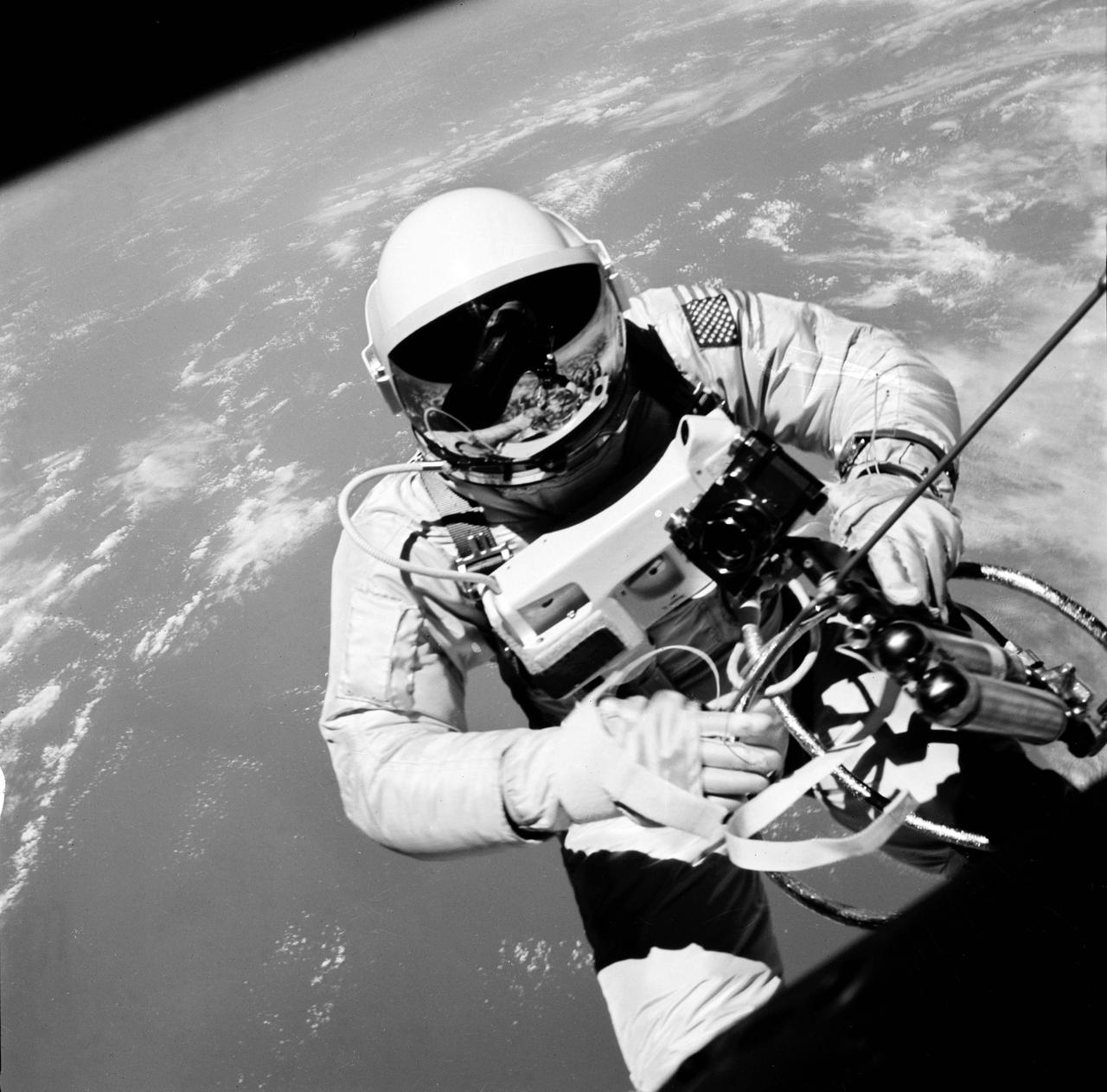
S65-30202 (3 June 1965) --- Astronaut Edward H. White II, pilot on the Gemini-Titan IV (GT-4) spaceflight, floats in the zero gravity of space outside the Gemini IV spacecraft. His face is covered by a shaded visor to protect him from the unfiltered rays of the sun. White became the first American astronaut to walk in space. He remained outside the spacecraft for 21 minutes during the third revolution of the Gemini IV mission. He wears a specially designed spacesuit for the EVA. He?s holding the Hand-Held Self-Maneuvering Unit (HHSMU), with which he controlled his movements while in space, and a camera is attached to the HHSMU. He was attached to the spacecraft by a 25-feet umbilical line and a 23-feet tether line, both wrapped together with gold tape to form one cord. He wears an emergency oxygen supply check pack. Astronaut James A. McDivitt is command pilot for the GT-4 mission. The mission was a four-day, 62-revolution flight, during which McDivitt and White performed a series of scientific and engineering experiments. (This image is black and white) Photo credit: NASA EDITOR?S NOTE: Astronaut Edward H. White II died in the Apollo/Saturn 204 fire at Cape Kennedy, Florida, on Jan. 27, 1967.
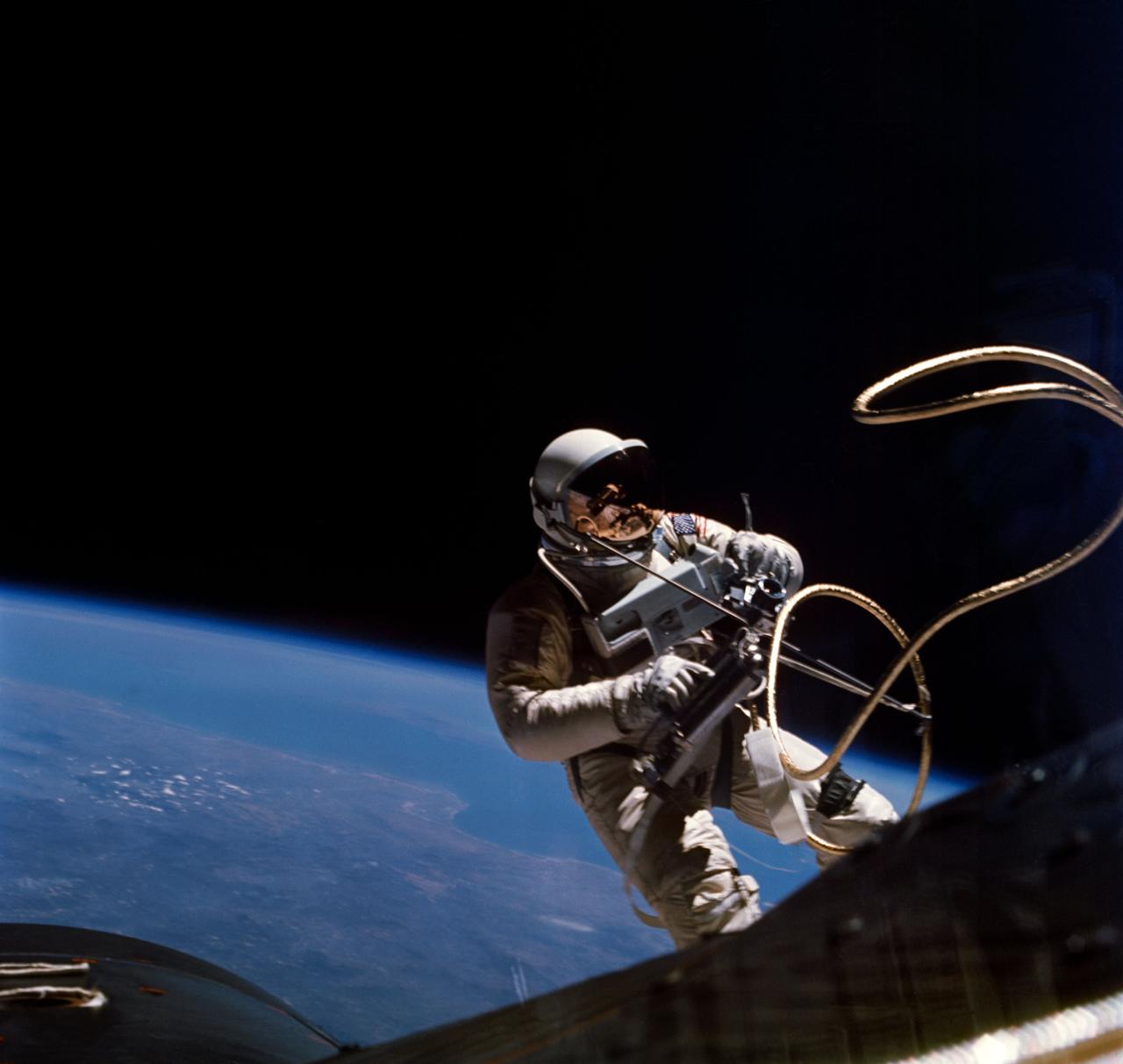
S65-30428 (3 June 1965) --- Astronaut Edward H. White II, pilot on the Gemini-Titan 4 spaceflight, is shown during his egress from the spacecraft. His face is covered by a shaded visor to protect him from the unfiltered rays of the sun. White became the first American astronaut to walk in space. He remained outside the spacecraft for 21 minutes during the third revolution of the Gemini-4 mission. He wears a specially designed spacesuit for the extravehicular activity (EVA). In his right hand, he carries a Hand-Held Self-Maneuvering Unit (HHSMU) with which he controlled his movements while in space. He was attached to the spacecraft by a 25-feet umbilical line and a 23-feet tether line, both wrapped together with gold tape to form one cord. He wears an emergency oxygen supply chest pack. Astronaut James A. McDivitt is command pilot for the Gemini-4 mission. EDITOR'S NOTE: Astronaut Edward H. White II died in the Apollo/Saturn 204 fire at Cape Kennedy on Jan. 27, 1967.
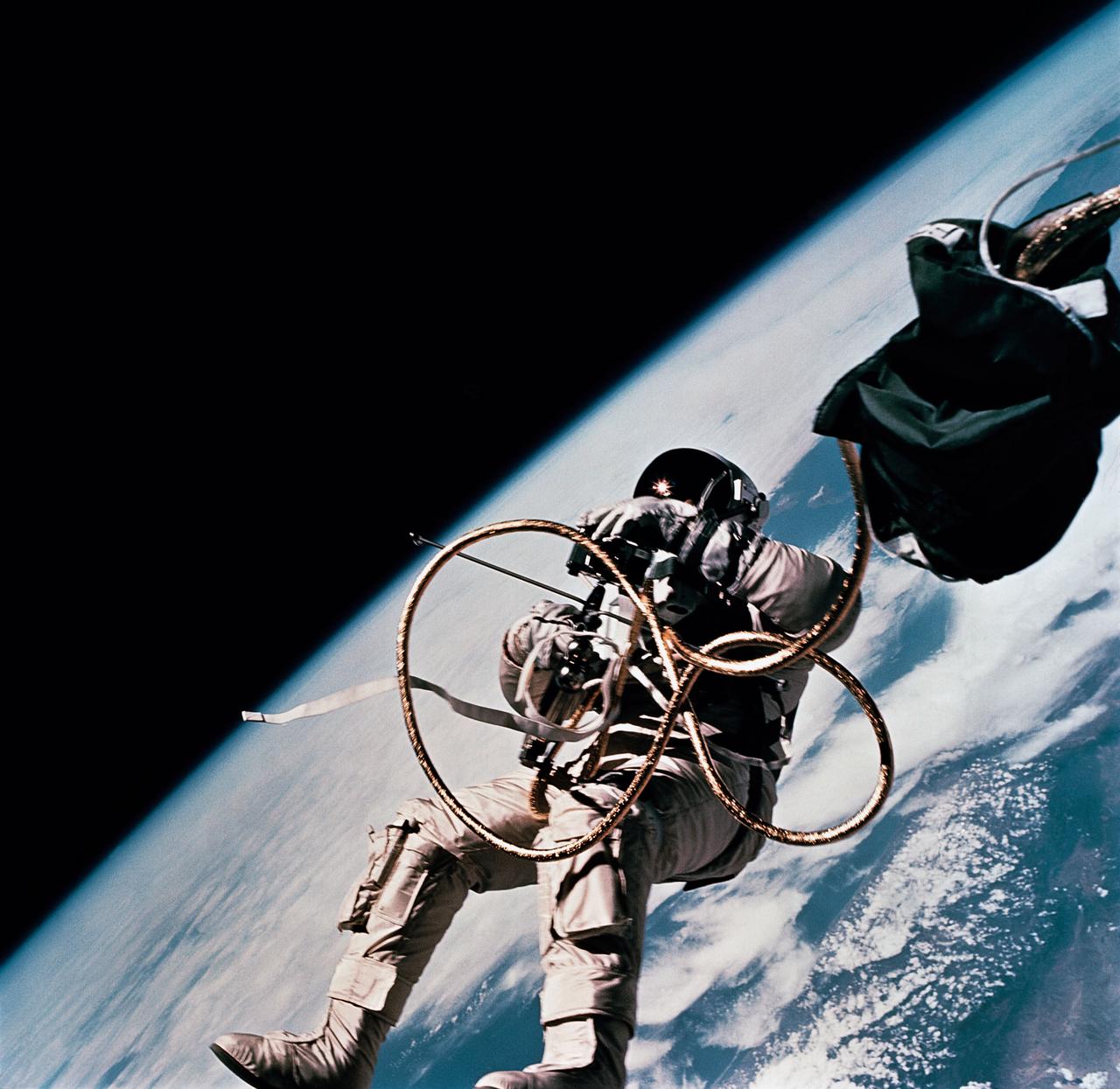
S65-30430 (3 June 1965) --- Astronaut Edward H. White II, pilot on the Gemini-Titan 4 spaceflight, is shown during his egress from the spacecraft. His face is covered by a shaded visor to protect him from the unfiltered rays of the sun. White became the first American astronaut to walk in space. He remained outside the spacecraft for 21 minutes during the third revolution of the Gemini-4 mission. He wears a specially designed spacesuit for the extravehicular activity (EVA). In his right hand, he carries a Hand-Held Self-Maneuvering Unit (HHSMU) with which he controlled his movements while in space. He was attached to the spacecraft by a 25-feet umbilical line and a 23-feet tether line, both wrapped together with gold tape to form one cord. He wears an emergency oxygen supply chest pack. Astronaut James A. McDivitt is command pilot for the Gemini-4 mission. Photo credit: NASA EDITOR'S NOTE: Astronaut Edward H. White II died in the Apollo/Saturn 204 fire at Cape Kennedy on Jan. 27, 1967.
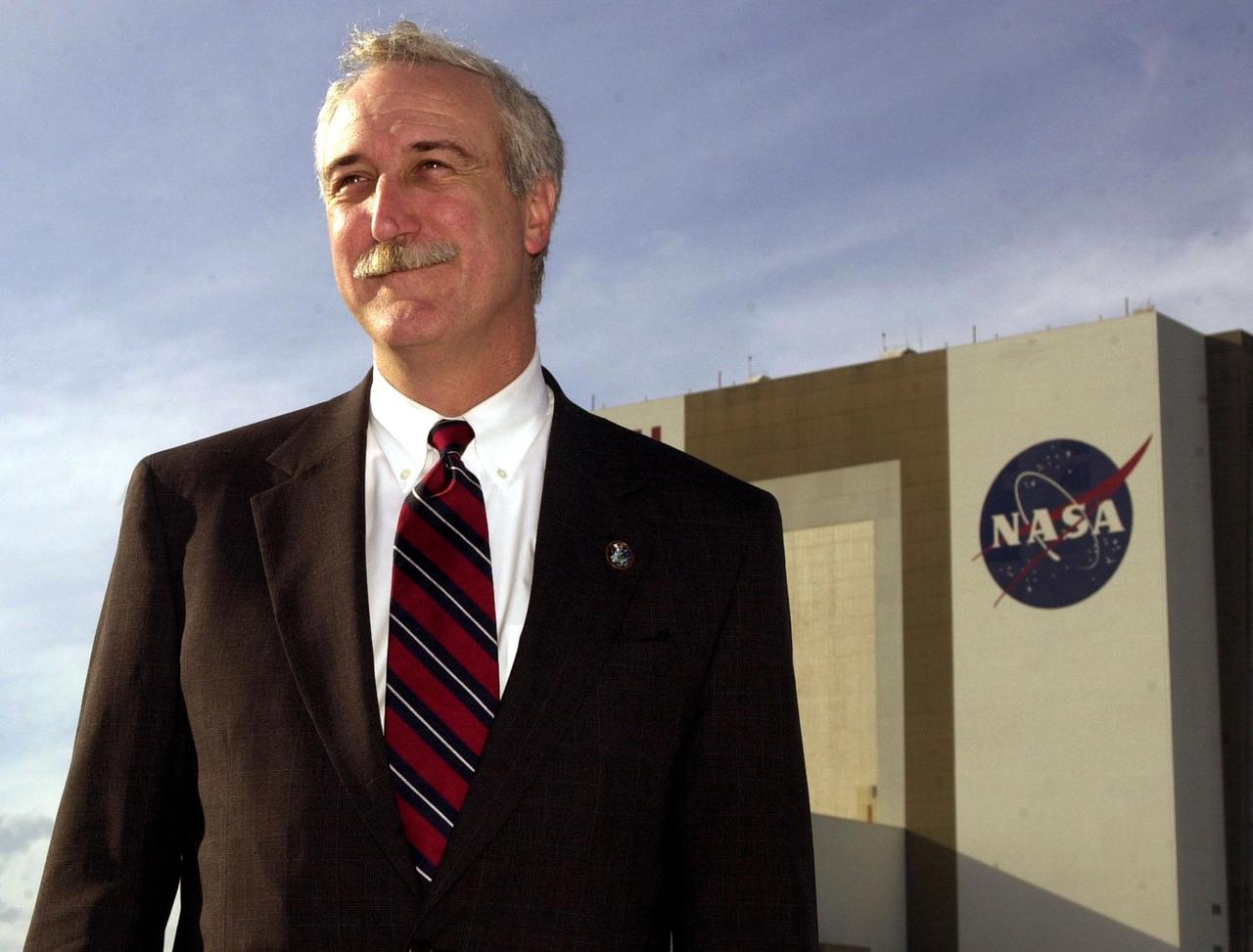
KENNEDY SPACE CENTER, Fla. - The new NASA Administrator Sean O'Keefe poses for the photographer with the Vehicle Assembly Building in the background. The administrator was at KSC on an agencywide familiarization tour of NASA field centers. He was nominated for the position as administrator in November 2001 by President George W. Bush. He was sworn in Dec. 21 as the agency's tenth chief
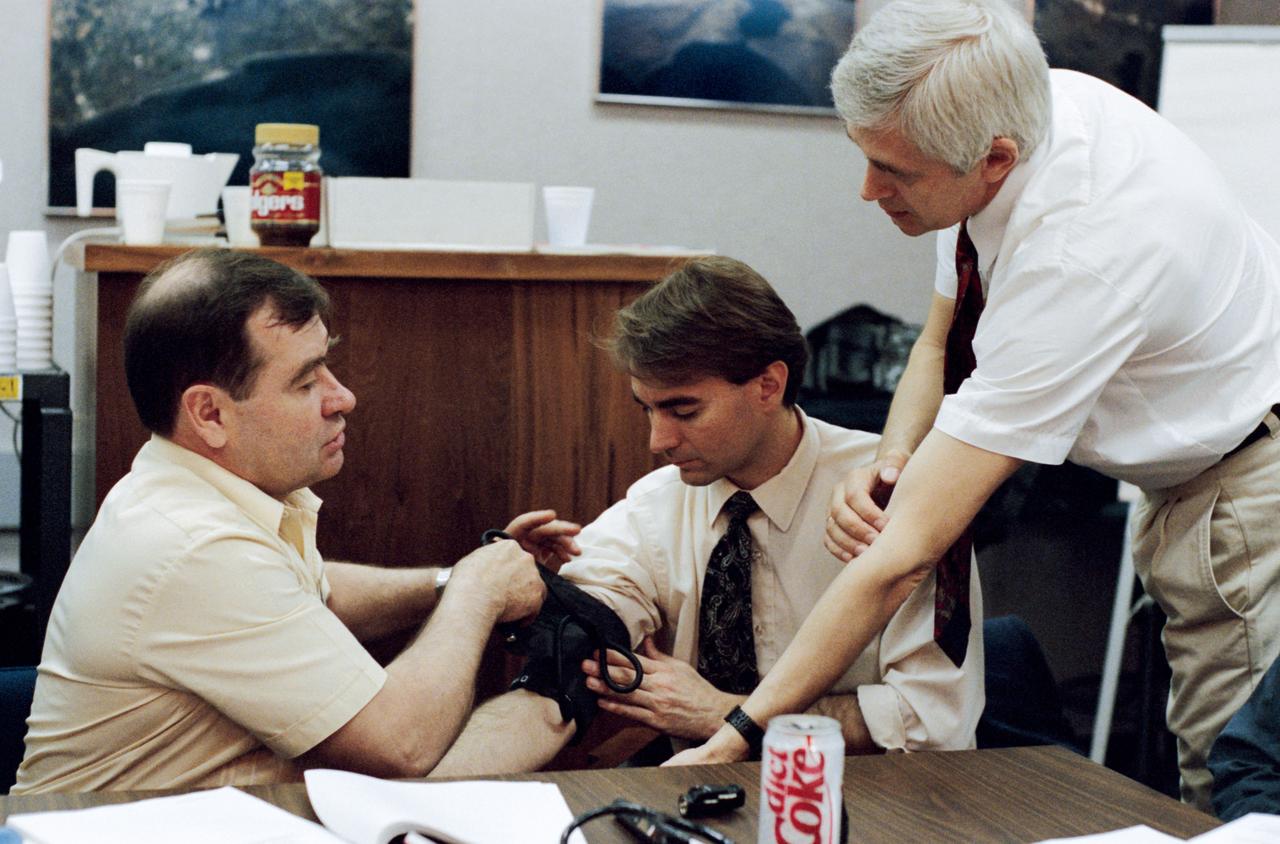
Using Dr. Dave E. Ward, a JSC physician, as a test subject, cosmonaut Gennadiy M. Strekalov (left), rehearses the taking of blood pressure. This is a service he will likely be performing a great deal next year when he boards Russia's Mir Space Station, in Earth-orbit, as Mir 18 flight engineer.
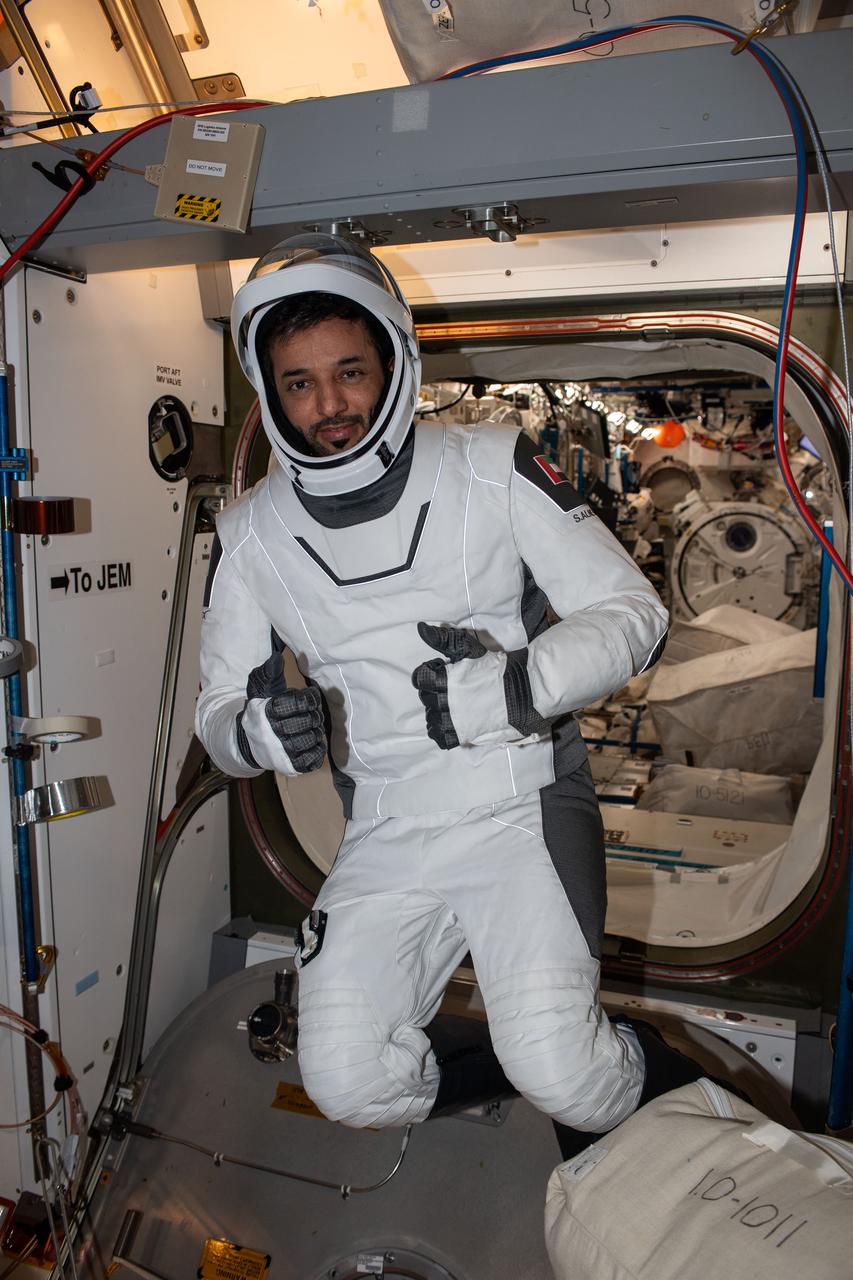
iss069e082306 (Aug. 23, 2023) --- UAE (United Arab Emirates) astronaut and Expedition 69 Flight Engineer Sultan Alneyadi is pictured in SpaceX pressure suit that he will wear when he returns to Earth aboard the company's Dragon Endeavour spacecraft in September.
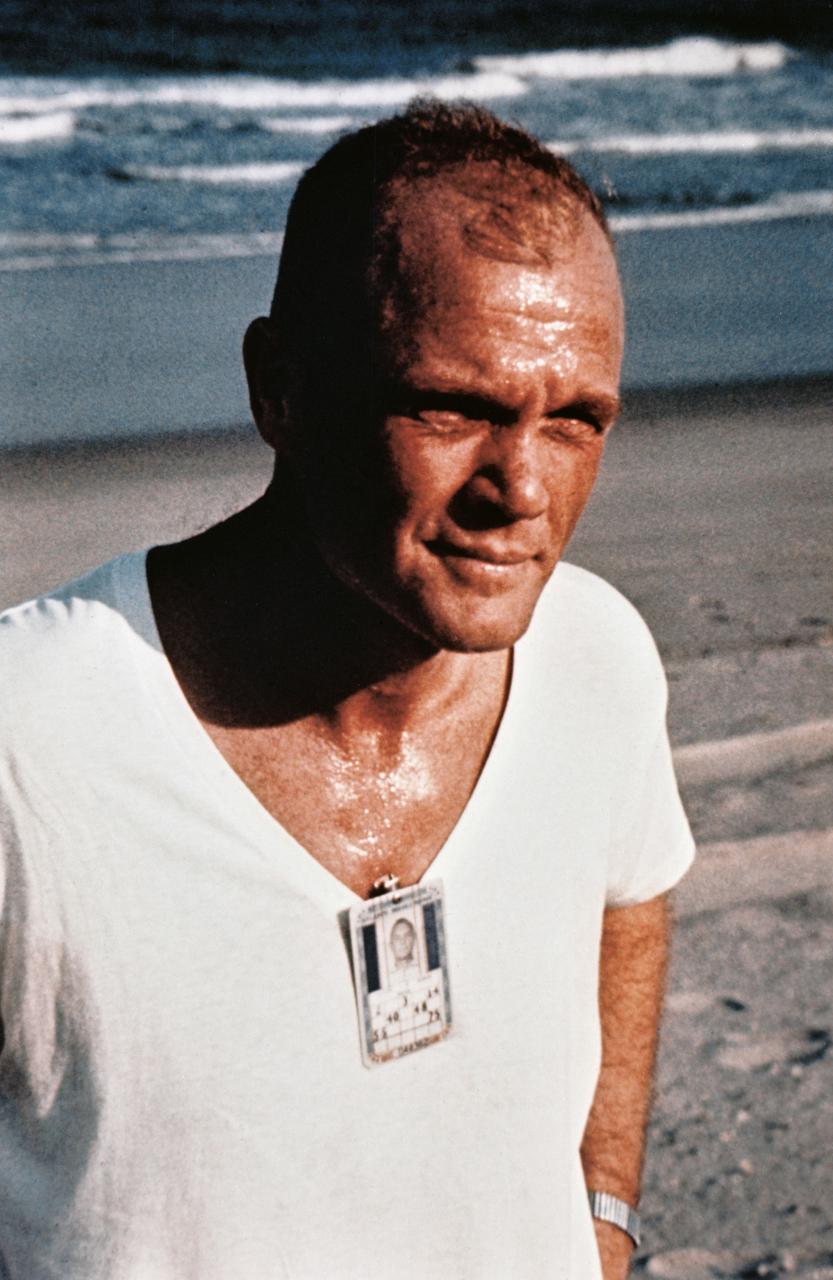
S64-14883 (1962) --- Astronaut John H. Glenn Jr., pilot of the Mercury-Atlas 6 mission, participates in a strict physical training program, as he exemplifies by frequent running. Here he pauses during an exercise period on the beach near Cape Canaveral, Florida. Photo credit: NASA
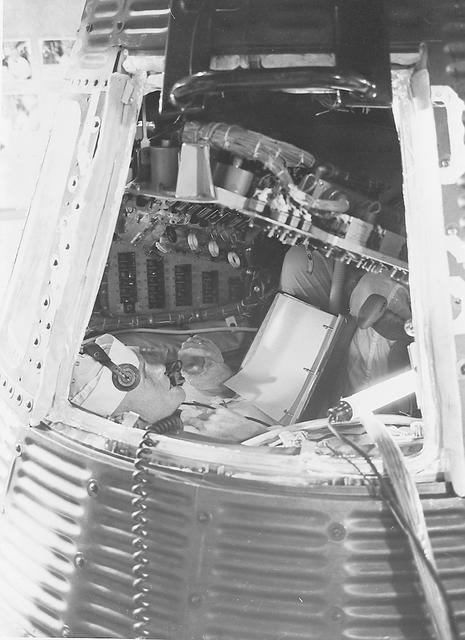
S61-03744 (July 1961) --- Astronaut John H. Glenn Jr., backup astronaut for MR-4, inspects the interior of a Mercury spacecraft on Pad 5. He is reviewing material on the checklist he is holding against the consoles in front of him. Photo credit: NASA
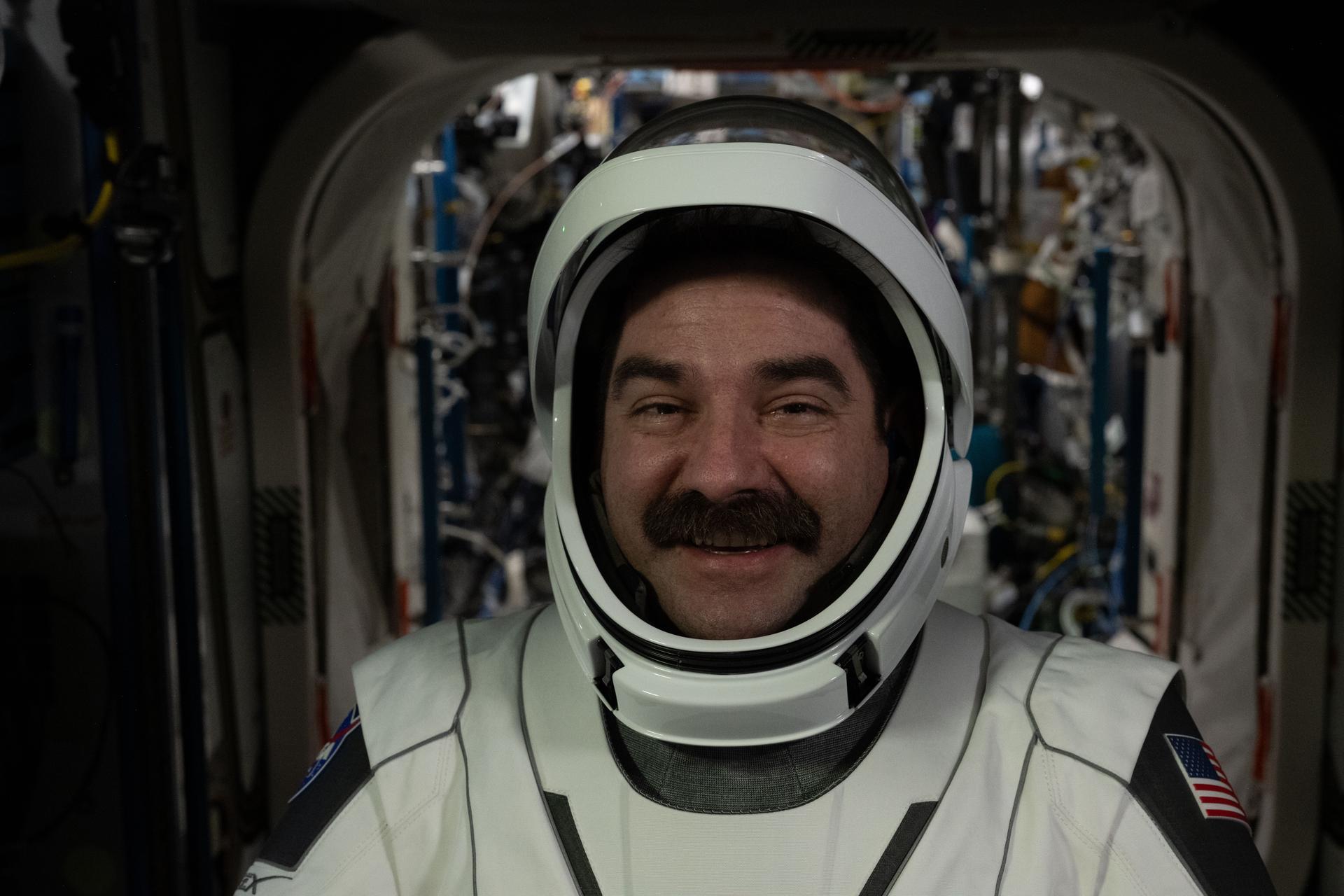
iss075e0150001 (Sept. 22, 2026) --- NASA astronaut and NASA's SpaceX Crew-12 pilot Jack Hathaway poses for a portrait while wearing the pressure suit he will wear when he departs the International Space Station inside the SpaceX Dragon spacecraft. Credit: NASA/Anil Menon
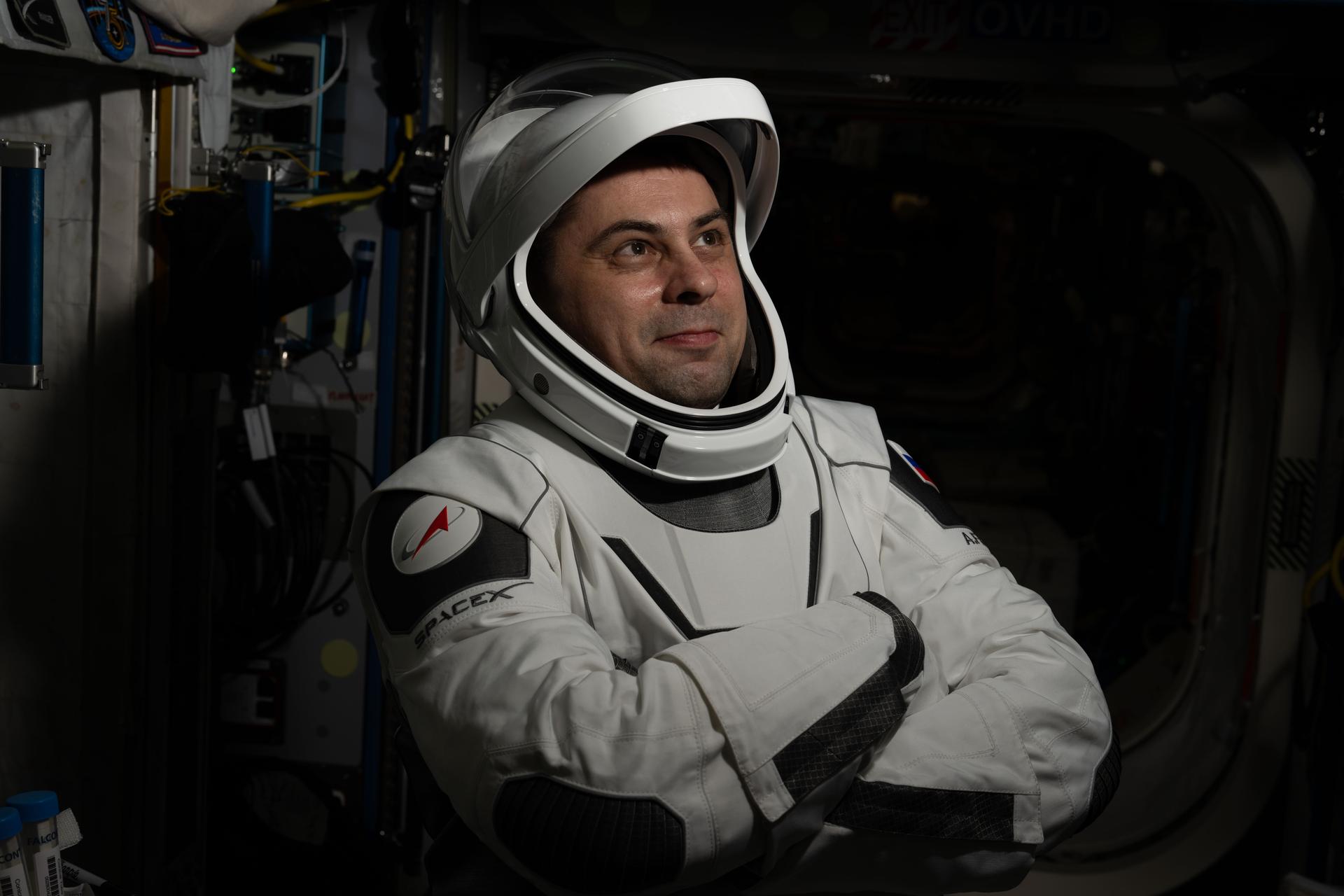
iss075e0150044 (Sept. 22, 2026) --- Roscosmos cosmonaut and NASA's SpaceX Crew-12 mission specialist Andrey Fedyaev poses for a portrait while wearing the pressure suit he will wear when he departs the International Space Station inside the SpaceX Dragon spacecraft. Credit: NASA/Anil Menon
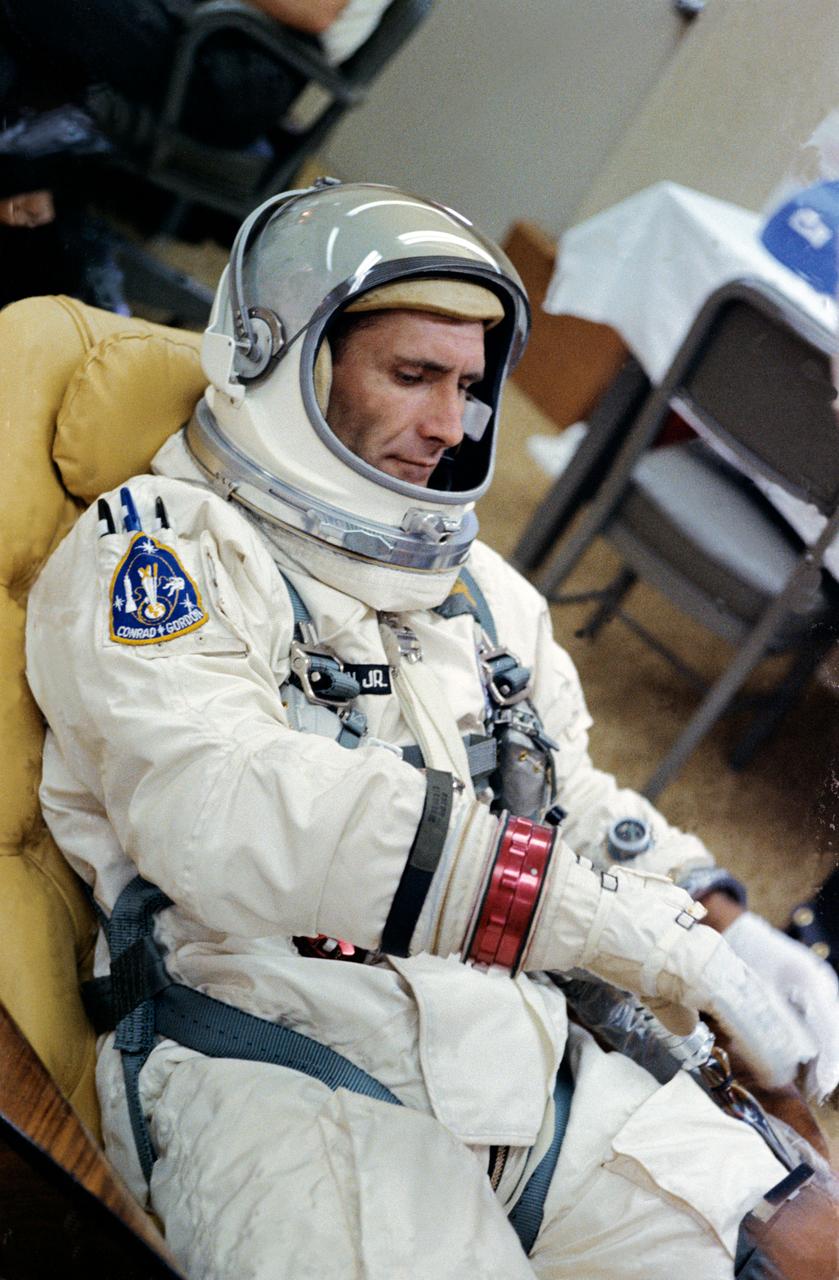
S66-50725 (12 Sept. 1966) --- Astronaut Richard F. Gordon Jr., pilot of the Gemini-11 spaceflight, reclines on a couch as he adjusts his spacesuit in the Launch Complex 16 suiting trailer during the Gemini-11 prelaunch countdown. He is already wearing the full suit and helmet. Photo credit: NASA
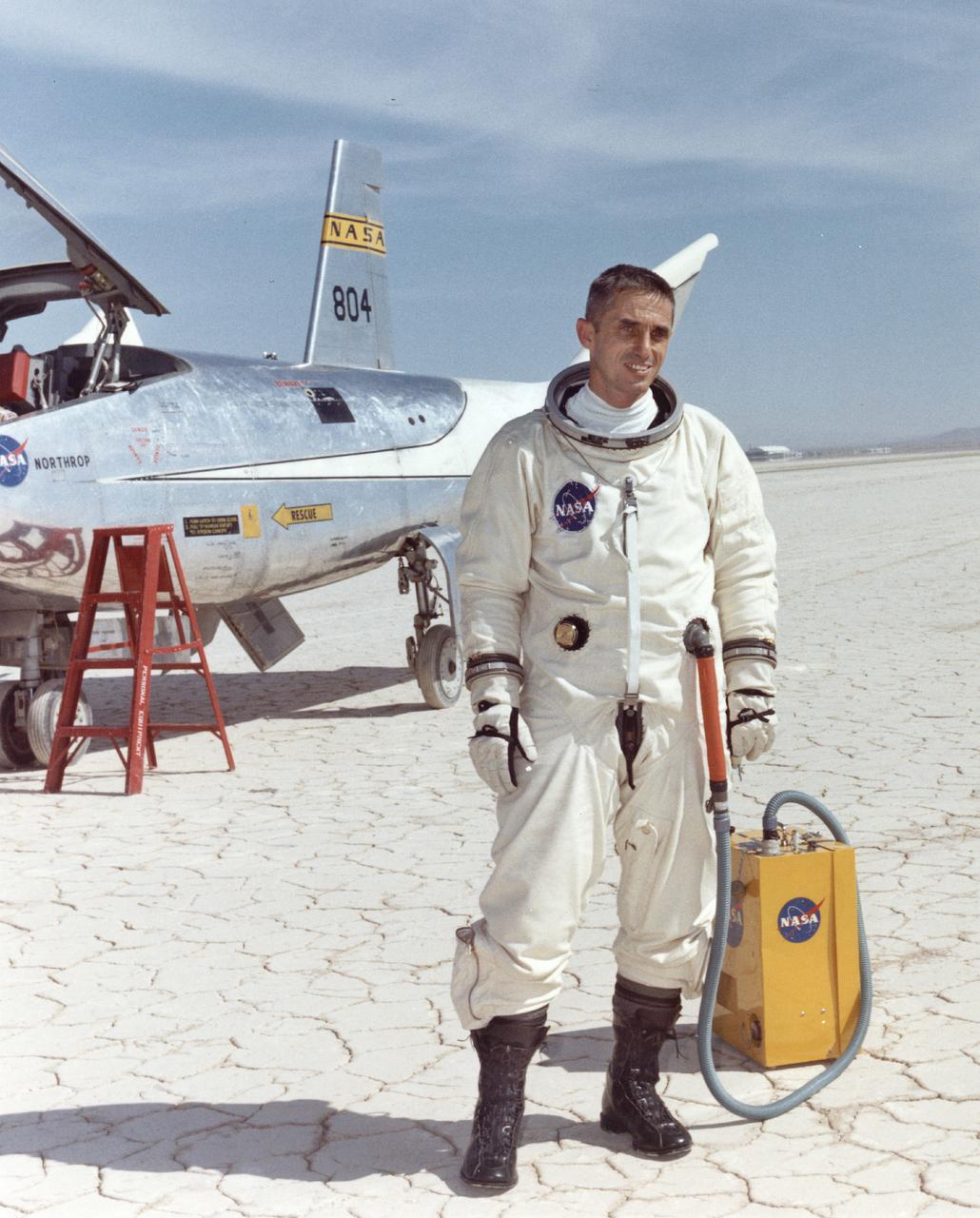
John Manke is shown here on the lakebed next to the HL-10, one of four different lifting-body vehicles he flew, including the X-24B, which he flew 16 times. His final total was 42 lifting-body flights.
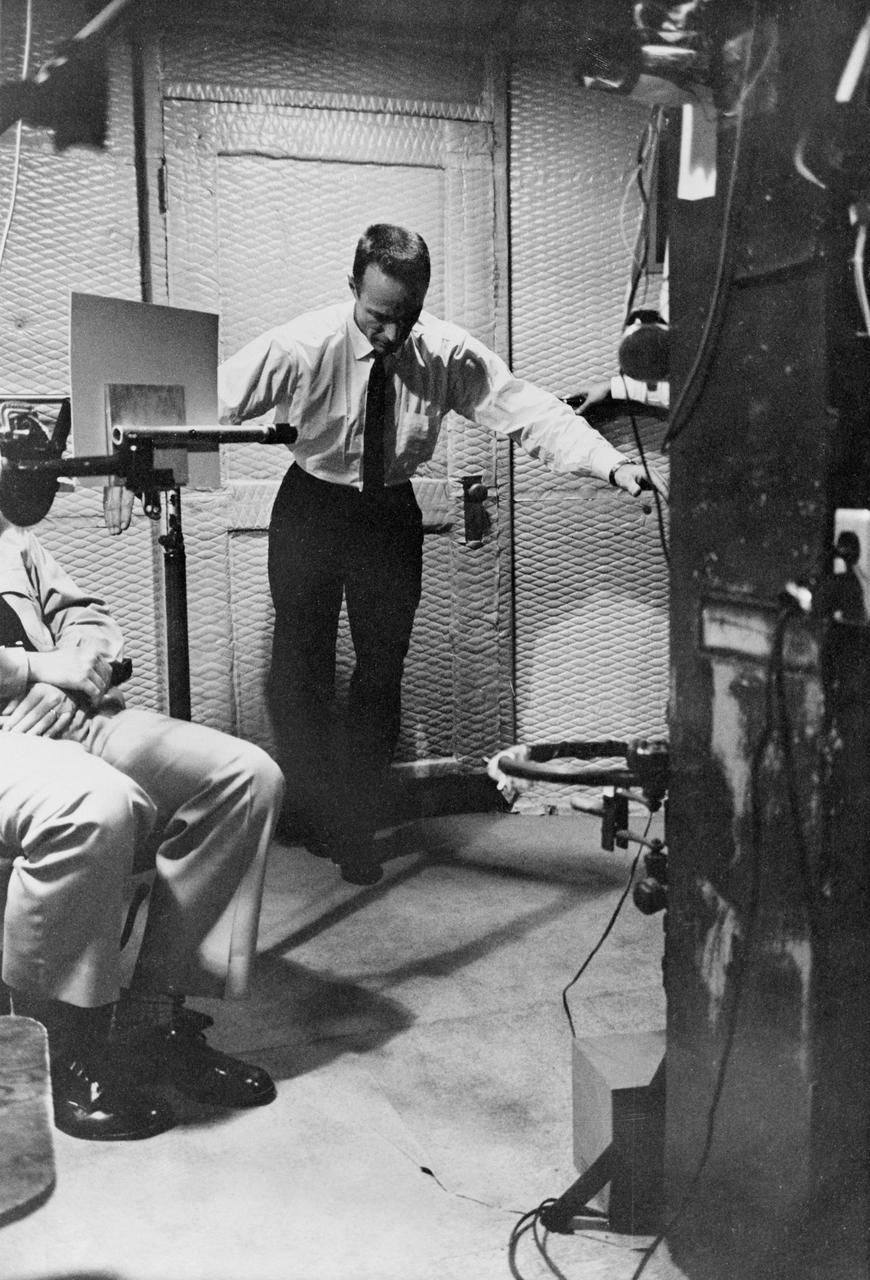
S61-04571 (1961) --- Astronaut M. Scott Carpenter's balance mechanism performance is tested as he walks a straight line by putting one foot directly in front of the other. He is performing this test at the School of Aviation Medicine, Pensicola, Florida. Photo credit: NASA
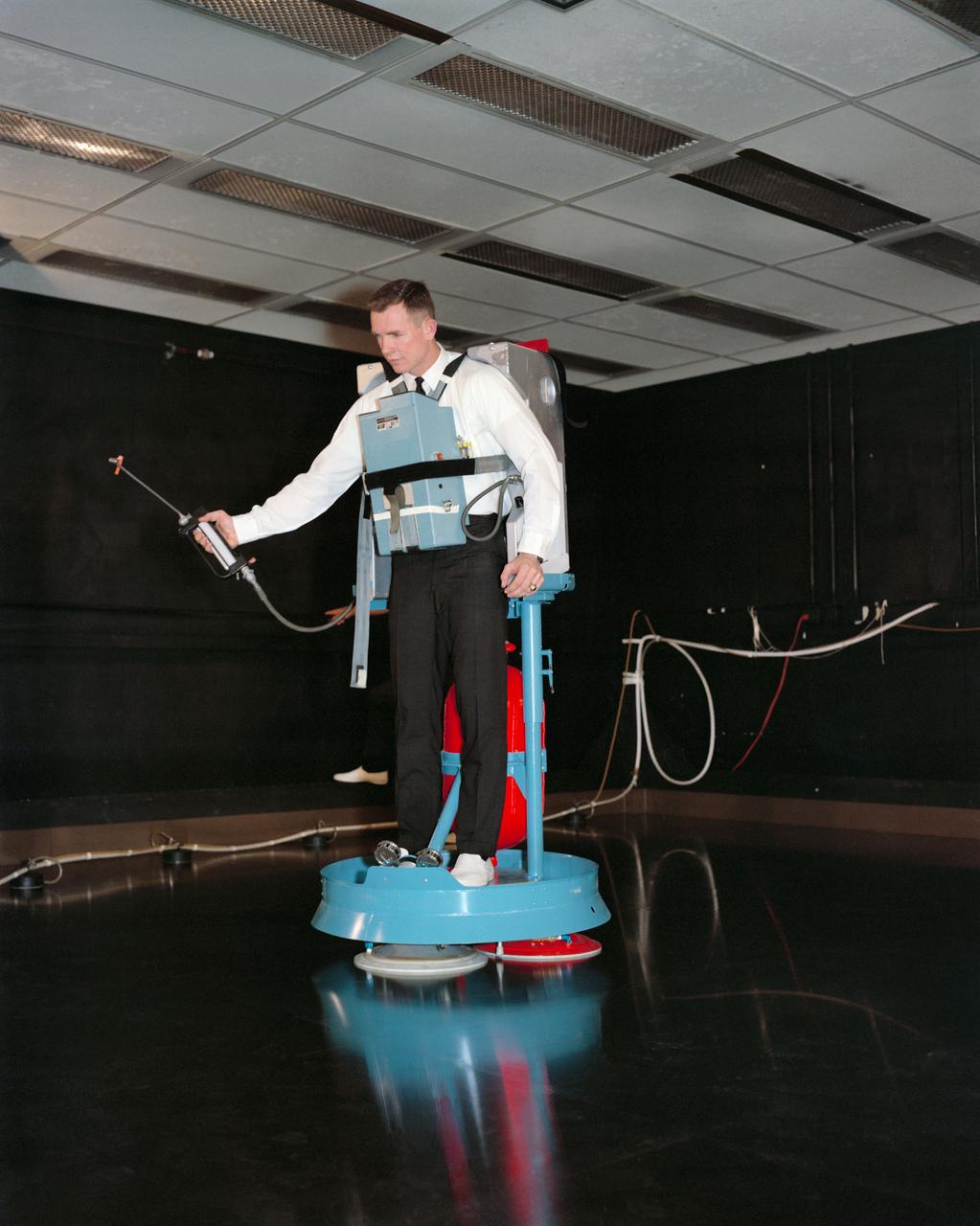
S66-19284 (1 Feb. 1966) --- Astronaut David R. Scott practicing for Gemini-8 extravehicular activity (EVA) in building 4 of the Manned Spacecraft Center on the air bearing floor. He is wearing the Hand-Held Maneuvering Unit which he will use during the EVA. Photo credit: NASA
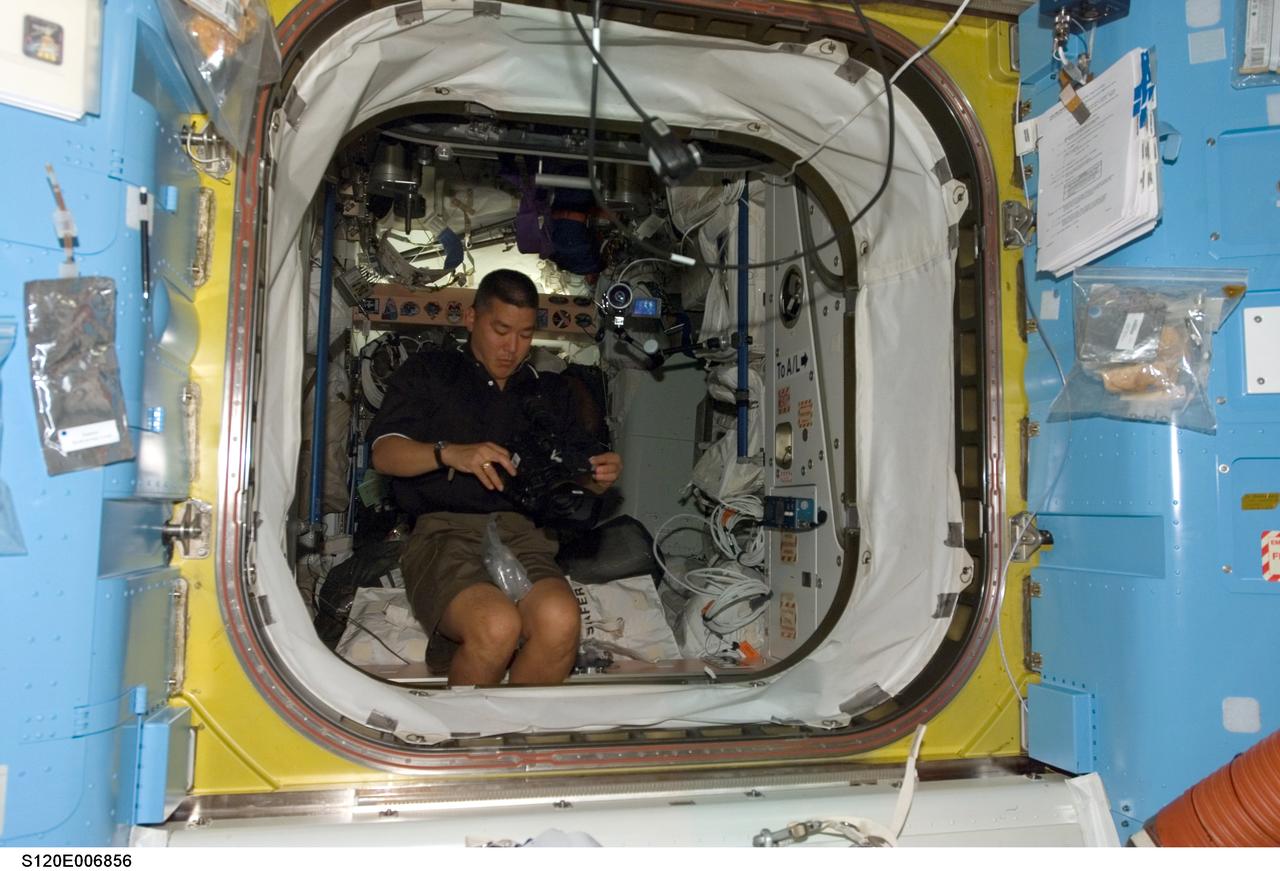
S120-E-006856 (26 Oct. 2007) --- Stepping into a busy regimen onboard the International Space Station, astronaut Daniel Tani greets the environment that he will be sharing with Expedition 16 crewmates for several months as he switches roles from STS-120 mission specialist to station flight engineer.
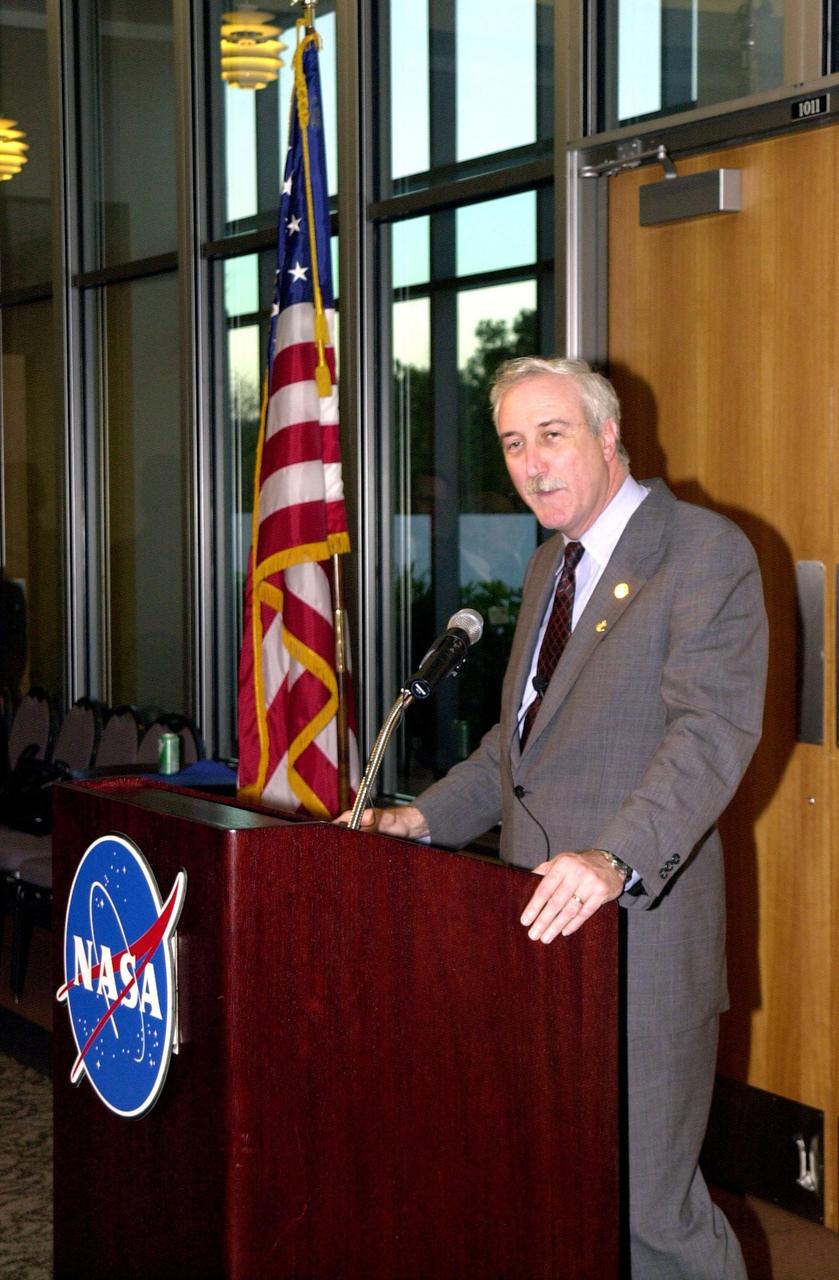
KENNEDY SPACE CENTER, Fla. - The new NASA Administrator Sean O'Keefe talks to guests at a dinner in his honor held at KSC. The administrator was at KSC on an agencywide tour of NASA field centers. He was nominated for the position as administrator in November 2001 by President George W. Bush. He was sworn in Dec. 21 as the agency's 10th chief
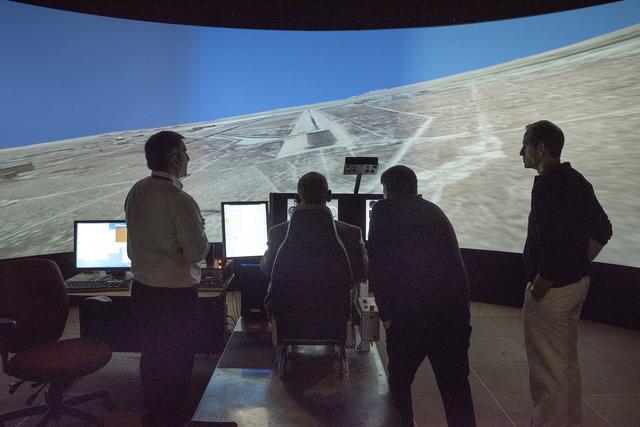
NASA Administrator Charlie Bolden, a former pilot and astronaut who flew on four shuttle missions, appeared natural at the controls of the X-57 simulator cockpit, and flew a pair of simulations where he landed on the Edwards Air Force Base runway.
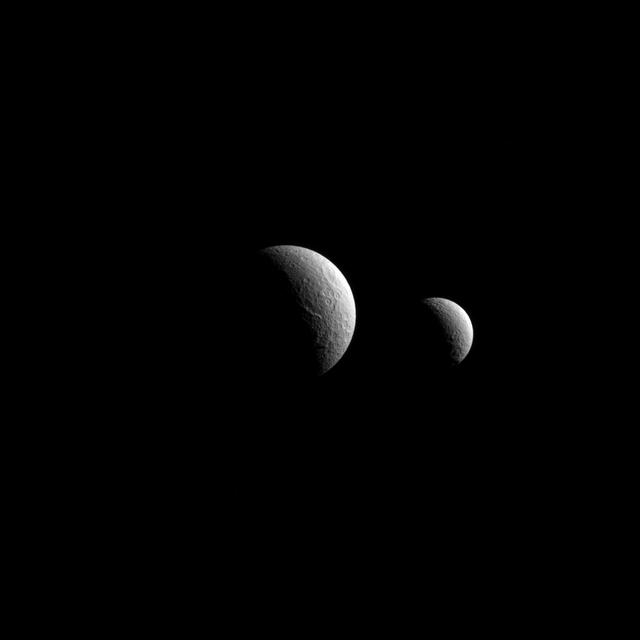
he view from NASA Cassini spacecraft looks toward the anti-Saturn sides of Tethys and Rhea. North on both moons is up. Rhea and Tethys are medium-sized moons that are large enough to have pulled themselves into round shapes.
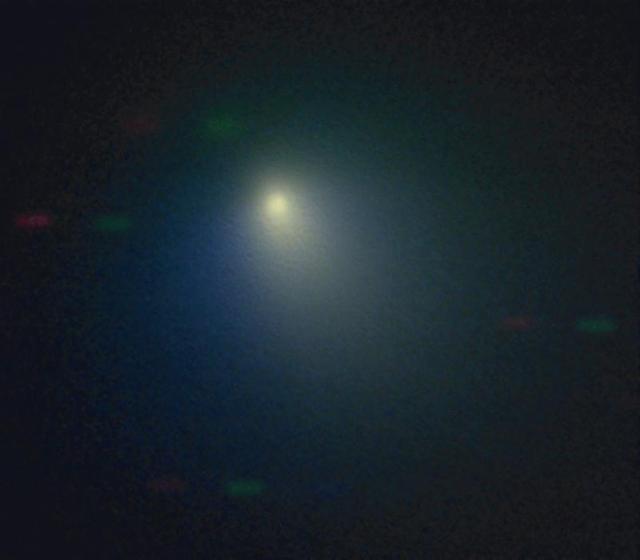
he Kitt Peak National Observatory 2.1-meter telescope observed comet Tempel 1 on April 11, 2005, when the comet was near its closest approach to the Earth. A pinkish dust jet is visible to the southwest, with the broader neutral gas coma surrounding it.
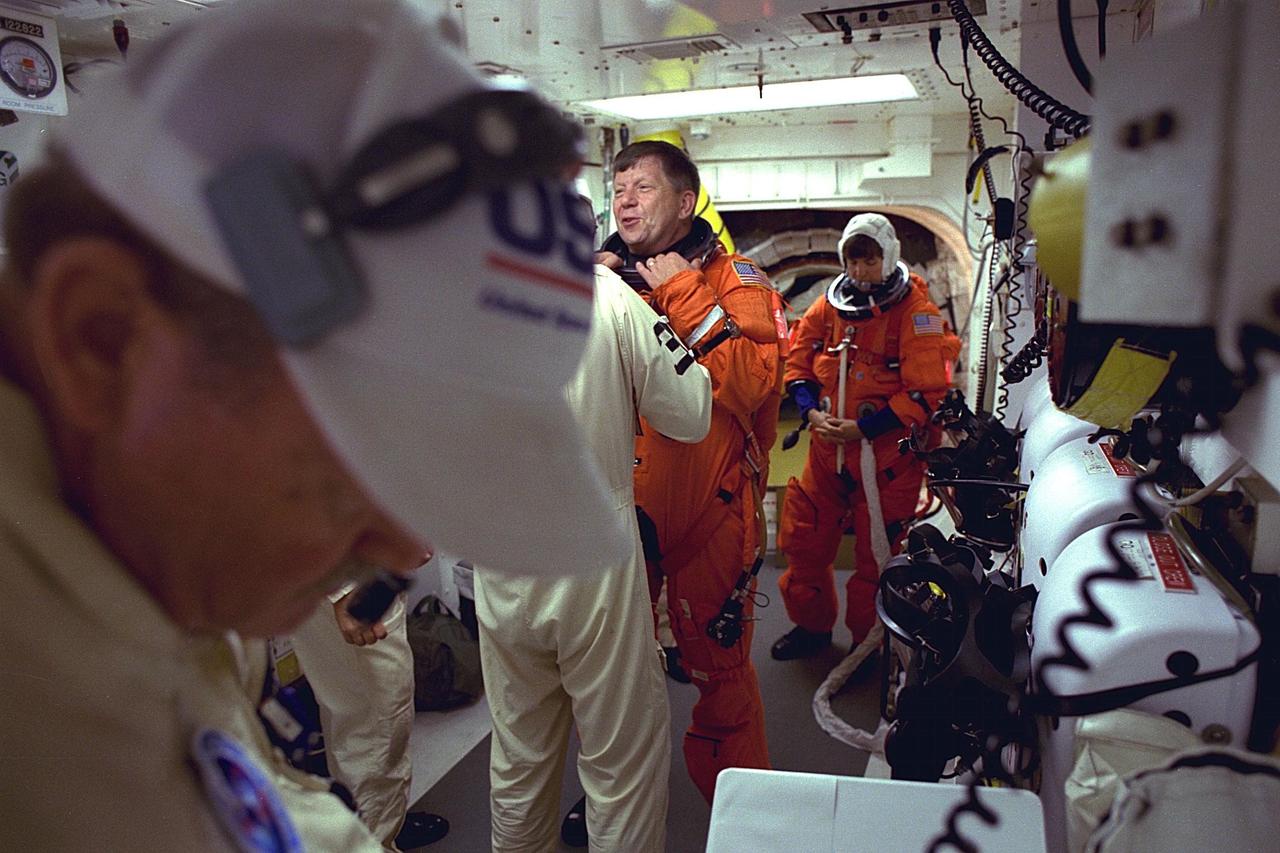
STS-94 Payload Specialist Roger K. Crouch prepares to enter the Space Shuttle Columbia at Launch Pad 39A in preparation for launch. He is the Chief Scientist of the NASA Microgravity Space and Applications Division. He also has served as a Program Scientist for previous Spacelab microgravity missions and is an expert in semiconductor crystal growth. Since Crouch has more than 25 years of experience as a materials scientist, he will be concentrating on the five physics of materials processing experiments in the Middeck Glovebox Facility on the Blue shift. He will also share the workload with Thomas by monitoring the materials furnace experiments during this time. Crouch and six fellow crew members will lift off during a launch window that opens at 1:50 p.m. EDT, July 1. The launch window will open 47 minutes early to improve the opportunity to lift off before Florida summer rain showers reach the space center
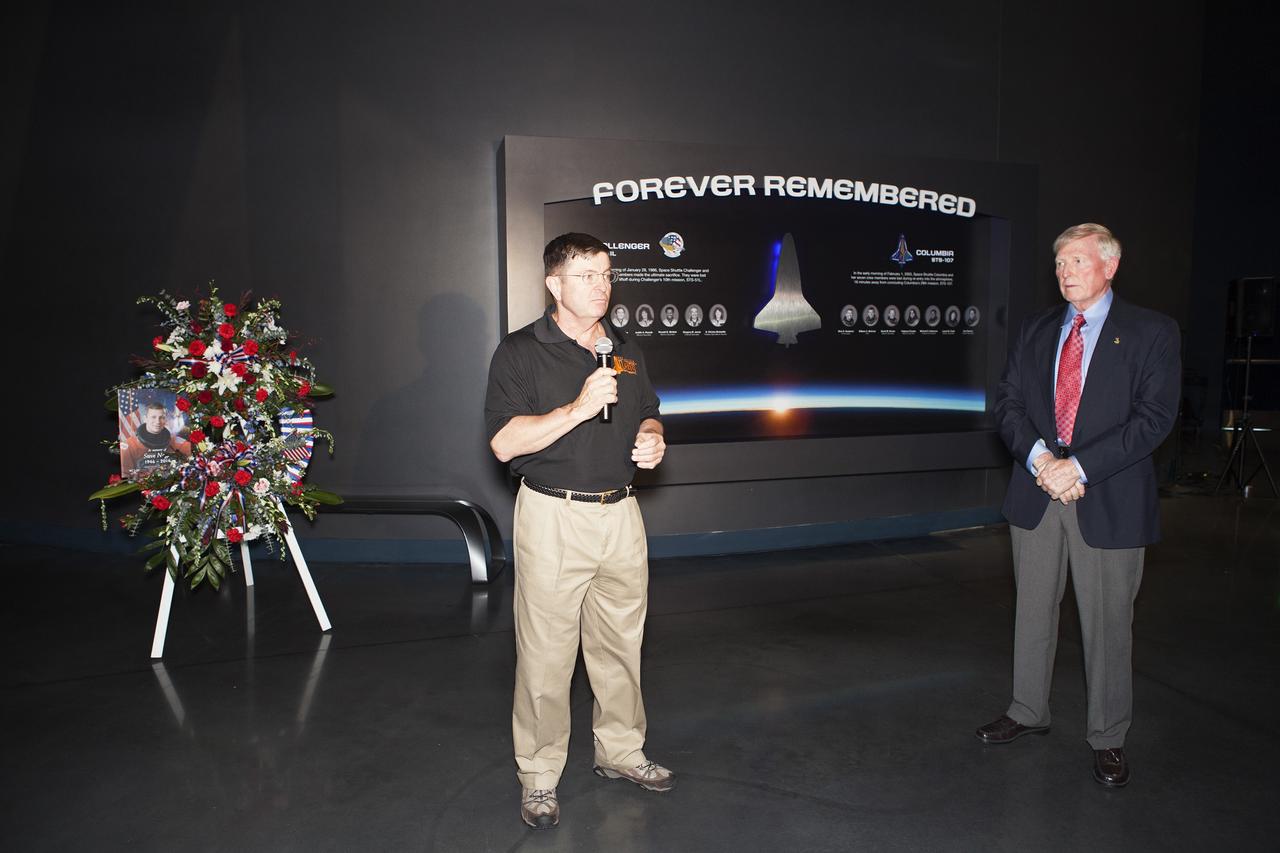
CAPE CANAVERAL, Fla. – Former NASA astronaut Jon McBride speaks at a wreath-laying ceremony honoring former NASA astronaut Steven R. Nagel at the Space Shuttle Atlantis exhibit at the Kennedy Space Center Visitor Complex in Florida. Nagel died Aug. 21 after a long illness. He was 67 years old. Nagel served as a mission specialist on his first space shuttle flight, STS-51G, in 1985. He was pilot on his second shuttle flight, STS-61A, also in 1985. He commanded his final two flights, STS-37 and STS-55, in 1991 and 1993, respectively. He logged a total of 723 hours in space. To learn more about Nagel's career, visit http://www.nasa.gov/press/2014/august/former-nasa-astronaut-steven-nagel-veteran-of-four-shuttle-flights-dies-at-67/. Photo credit: NASA/Dimitri Gerondidakis
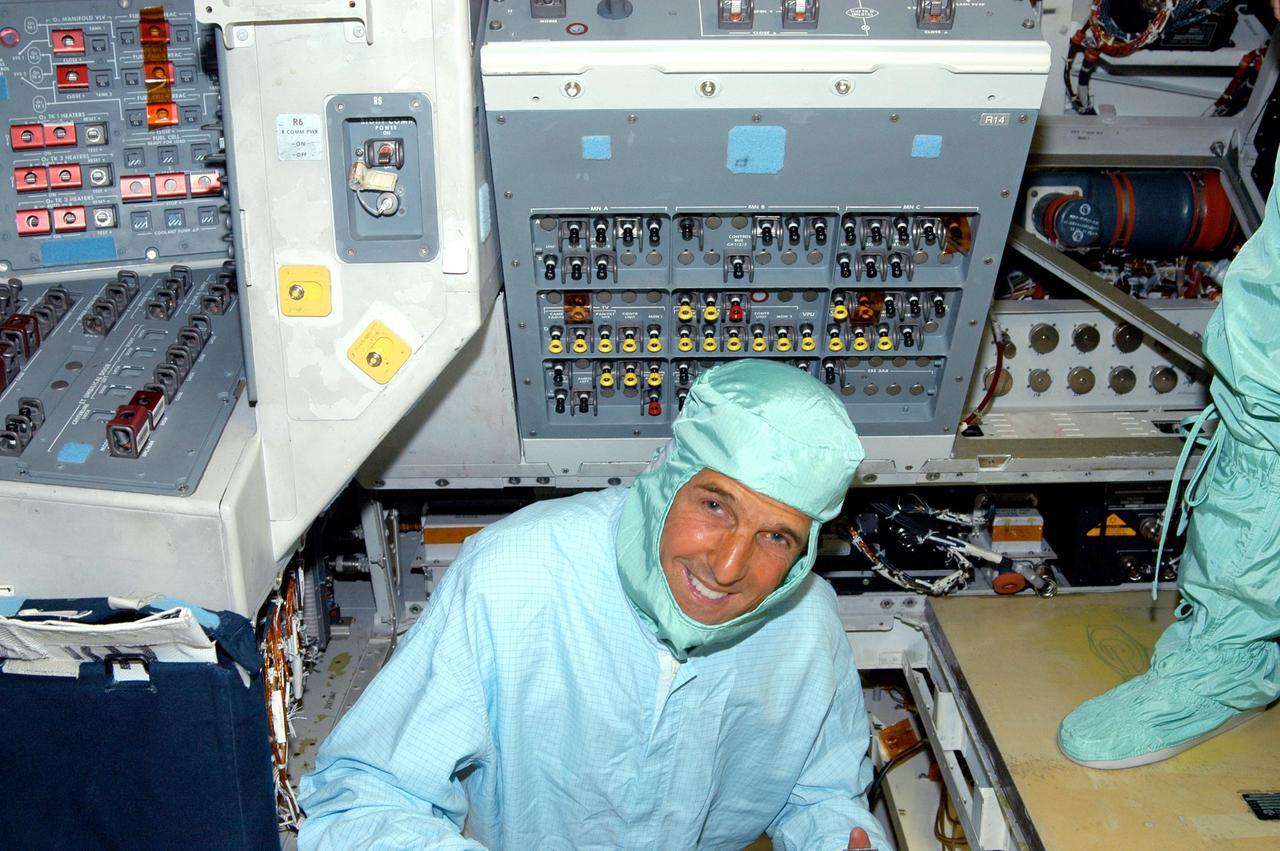
KENNEDY SPACE CENTER, FLA. - Sen. John F. Kerry, D-Mass., visits the flight deck of Space Shuttle Discovery during a tour of the Orbiter Processing Facility (OPF). The “bunny suit” he is wearing is clean room attire required for anyone coming in close proximity to Discovery, currently being prepared for flight on the next Space Shuttle mission. The tour of the OPF follows a public meeting Kerry held at the Dr. Kurt H. Debus Conference Facility at the Kennedy Space Center Visitor Complex. He said he chose to speak at KSC because it symbolizes America’s commitment to science, innovation and technology. He and Sen. John Edwards, D-N.C., are on a speaking tour prior to their appearance at the Democratic National Convention in Boston.
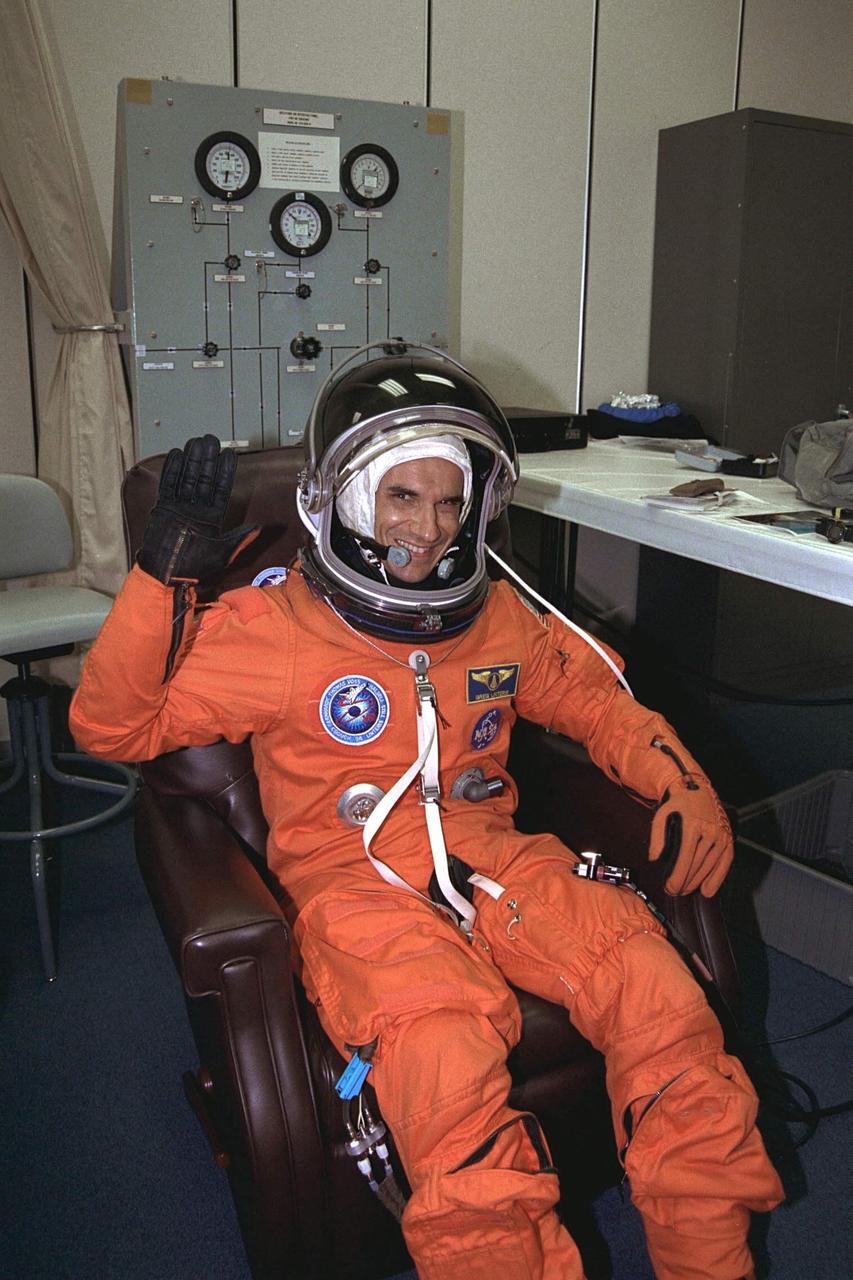
STS-94 Payload Specialist Gregory T. Linteris waves as he completes the donning of his launch/entry suit in the Operations and Checkout (O&C) Building. He holds a doctorate in mechanical and aerospace engineering. Linteris has worked at the National Institute of Standards and Technology and is the Principal Investigator on a NASA microgravity combustion experiment. As a member of the Red team, Linteris will concentrate on three combustion experiments. Two of these experiments are housed in the Combustion Module. He will also be backing up crew members on the other Microgravity Science Laboratory-1 (MSL-1) investigations. He and six fellow crew members will shortly depart the O&C and head for Launch Pad 39A, where the Space Shuttle Columbia will lift off during a launch window that opens at 1:50 p.m. EDT, July 1. The launch window was opened 47 minutes early to improve the opportunity to lift off before Florida summer rain showers reached the space center
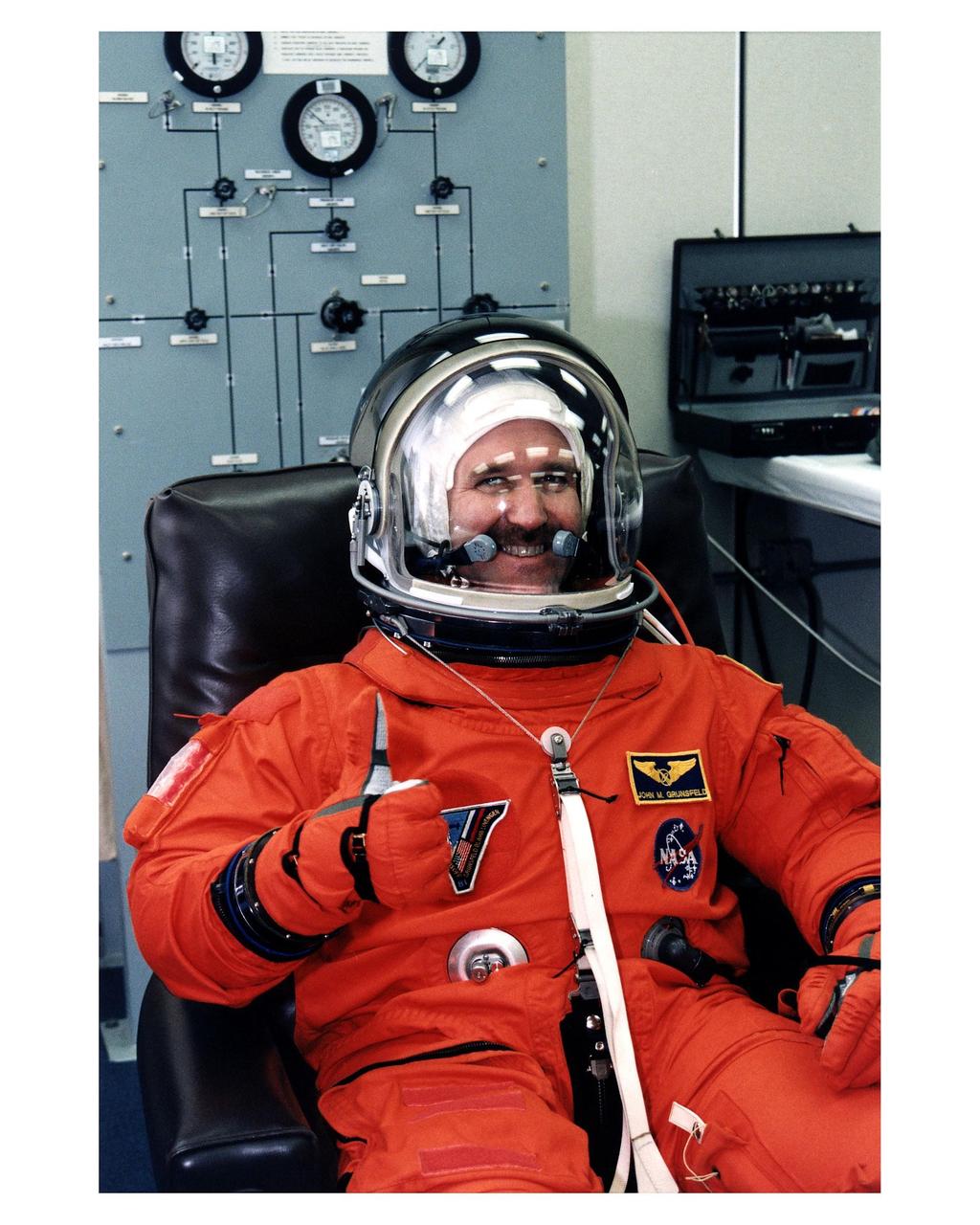
STS-81 Mission Specialist John M. Grunsfeld. gives a thumbs-up as he completes his launch/entry suitup in the Operations and Checkout (O&C) Building. He is on his second Shuttle flight and holds doctorate and master’s degrees in physics. He will be have overall responsibility for science experiments on the 7-day space flight and will watch over environmental and biological samples that will be taken on the Mir space station and returned to Earth on the Space Shuttle Atlantis. He and five crew members will shortly depart the O&C and head for Launch Pad 39B, where the Space Shuttle Atlantis will lift off during a 7-minute window that opens at 4:27 a.m. EST, January 12
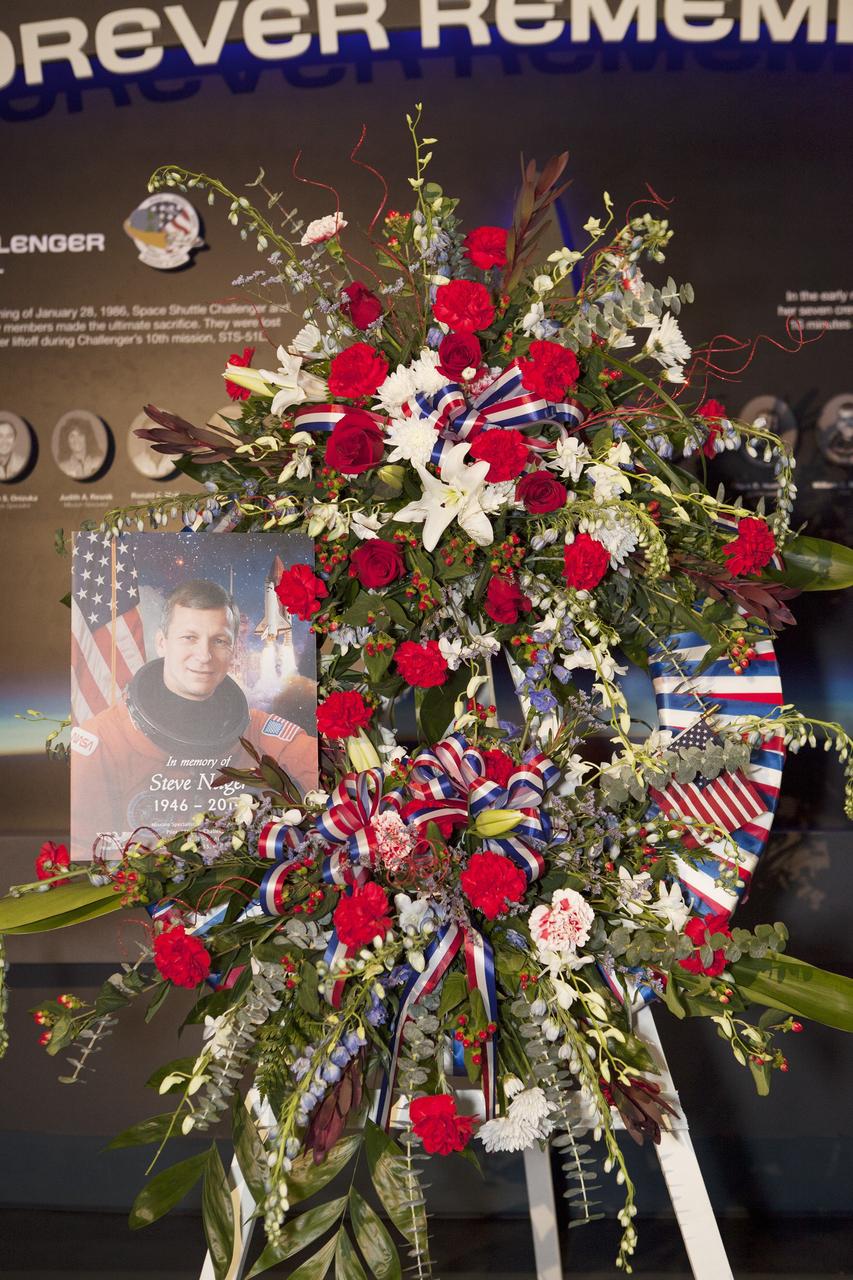
CAPE CANAVERAL, Fla. -- A wreath honoring former NASA astronaut Steven R. Nagel is displayed beside his photo at the Space Shuttle Atlantis exhibit at the Kennedy Space Center Visitor Complex in Florida. Nagel died Aug. 21 after a long illness. He was 67 years old. Nagel served as a mission specialist on his first space shuttle flight, STS-51G, in 1985. He was pilot on his second shuttle flight, STS-61A, also in 1985. He commanded his final two flights, STS-37 and STS-55, in 1991 and 1993, respectively. He logged a total of 723 hours in space. To learn more about Nagel's career, visit http://www.nasa.gov/press/2014/august/former-nasa-astronaut-steven-nagel-veteran-of-four-shuttle-flights-dies-at-67/. Photo credit: NASA/Dimitri Gerondidakis