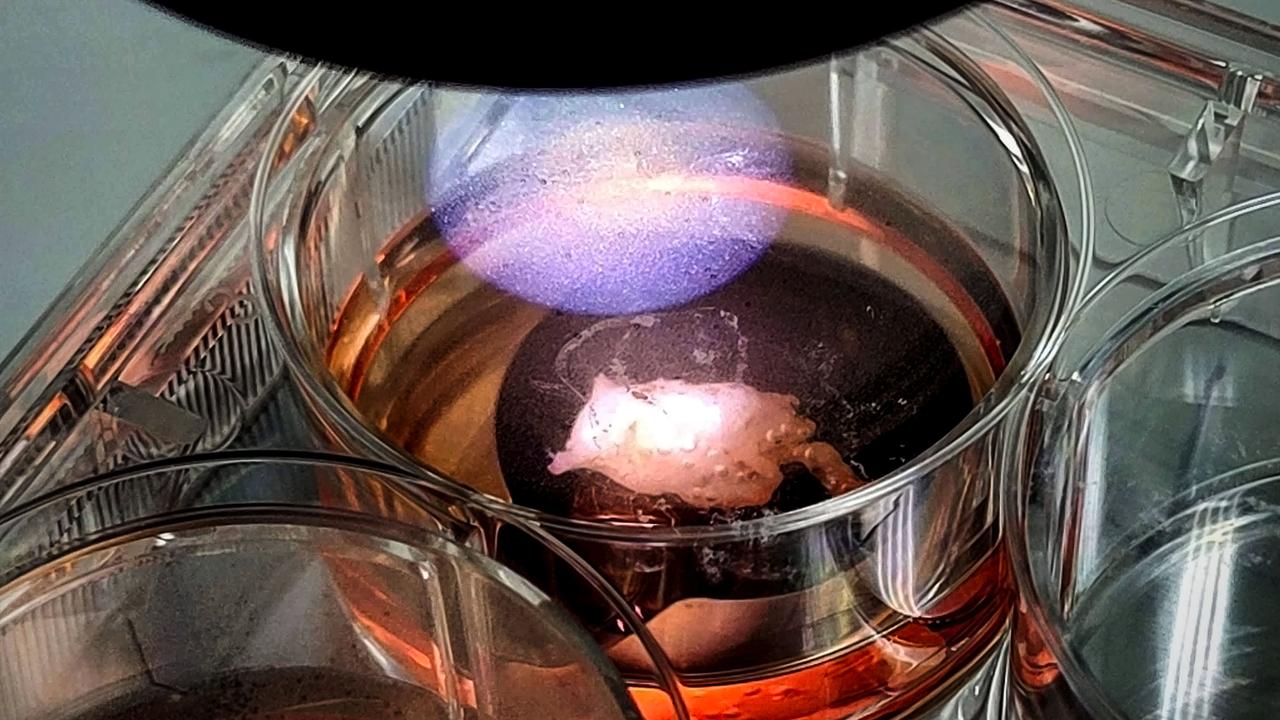
jsc2024e038395 (6/5/2024) --- Live human heart tissue bioprinted with Redwire's BioFabrication Facility aboard the International Space Station. The tissue was successfully returned to Earth in April 2024. Results of the Redwire Cardiac Bioprinting Investigation (BFF-Cardiac) could advance technologies for producing organs and tissues in lieu of donated organs for transplant. The investigation also improves 3D printing, with the goal of giving the crew the ability to print material like foods and medicines on demand for future long-duration space missions. Image courtesy of Redwire.
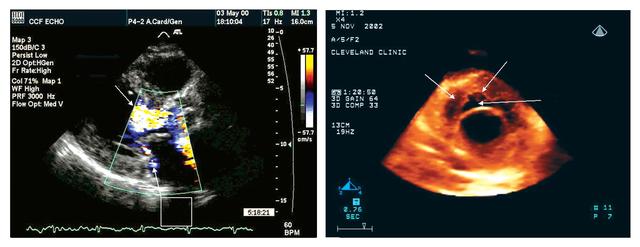
Echocardiography uses sound waves to image the heart and other organs. Developing a compact version of the latest technology improved the ease of monitoring crew member health, a critical task during long space flights. NASA researchers plan to adapt the three-dimensional (3-D) echocardiogram for space flight. The two-dimensional (2-D) echocardiogram utilized in orbit on the International Space Station (ISS) was effective, but difficult to use with precision. A heart image from a 2-D echocardiogram (left) is of a better quality than that from a 3-D device (right), but the 3-D imaging procedure is more user-friendly.
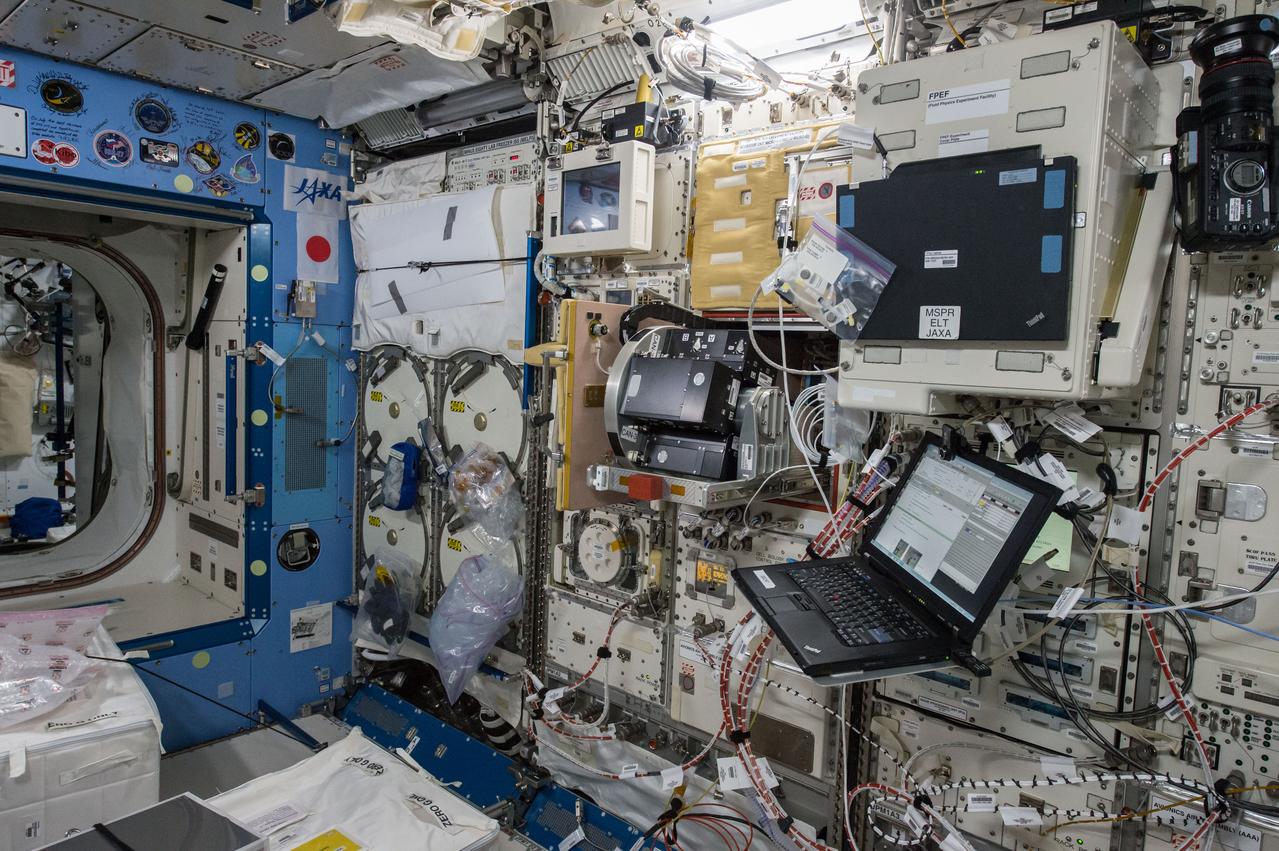
iss043e124204 (4/18/2015) --- A view of the Cell Biology Experiment Facility (CBEF) rack in the Japanese Experiment Module (JEM) aboard the International Space Station (ISS) in preparation for the Space Aging investigation. The purpose of the experiment is to study the effects of weightlessness in space flight on the aging of the C. elegans roundworm, a model organism for a range of biological studies. Microgravity causes a number of physiological changes, like heart and bone deconditioning, involving mechanisms that are poorly understood and may affect the rate at which organisms and astronauts age. The Space Aging experiment will grow millimeter-long C. elegans roundworms in microgravity and compare their health and longevity with controlled specimens on Earth.
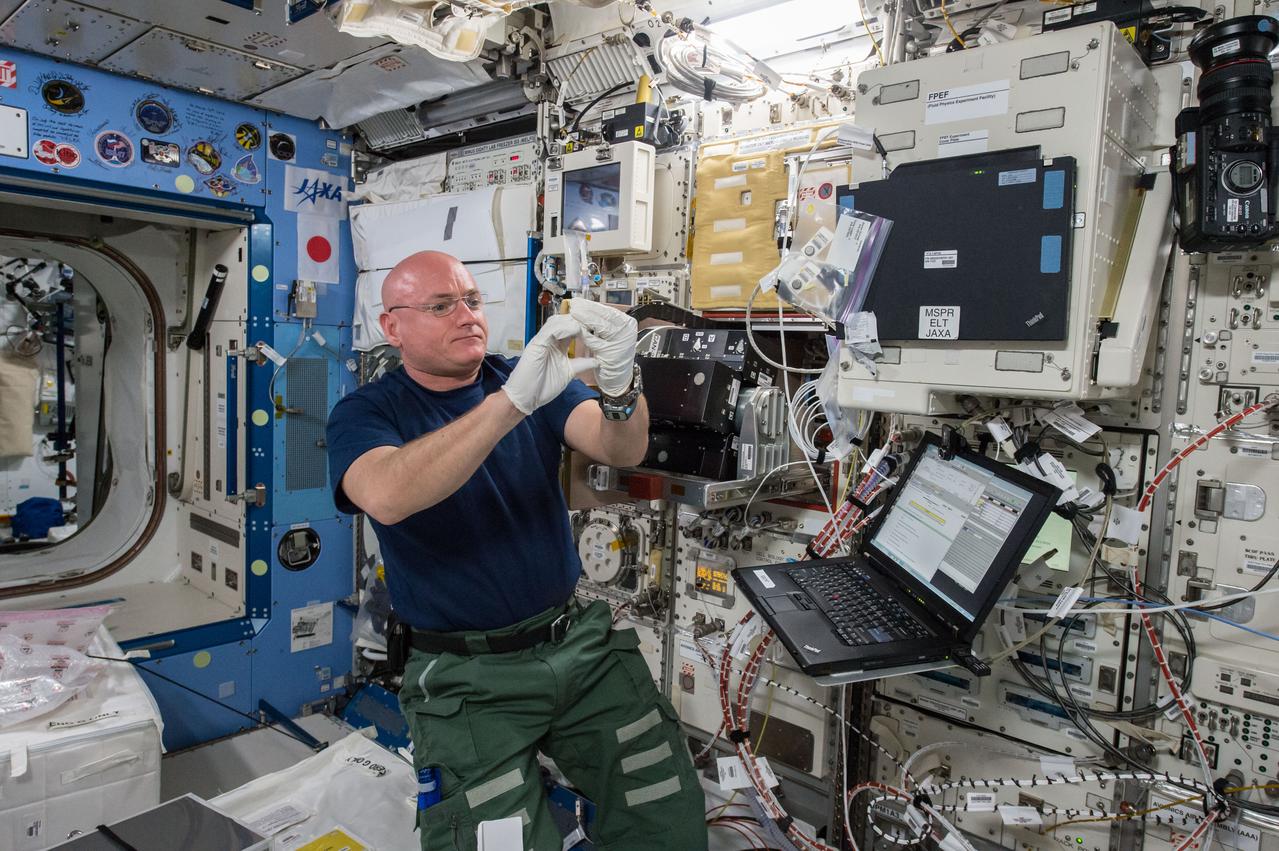
iss043e124213 (4/18/2015) --- NASA astronaut Scott Kelly is seen performing the Space Aging experiment using the Cell Biology Experiment Facility (CBEF) rack in the Japanese Experiment Module (JEM) aboard the International Space Station (ISS). The purpose of the experiment is to study the effects of weightlessness in space flight on the aging of the C. elegans roundworm, a model organism for a range of biological studies. Microgravity causes a number of physiological changes, like heart and bone deconditioning, involving mechanisms that are poorly understood and may affect the rate at which organisms and astronauts age. The Space Aging experiment will grow millimeter-long C. elegans roundworms in microgravity and compare their health and longevity with controlled specimens on Earth.
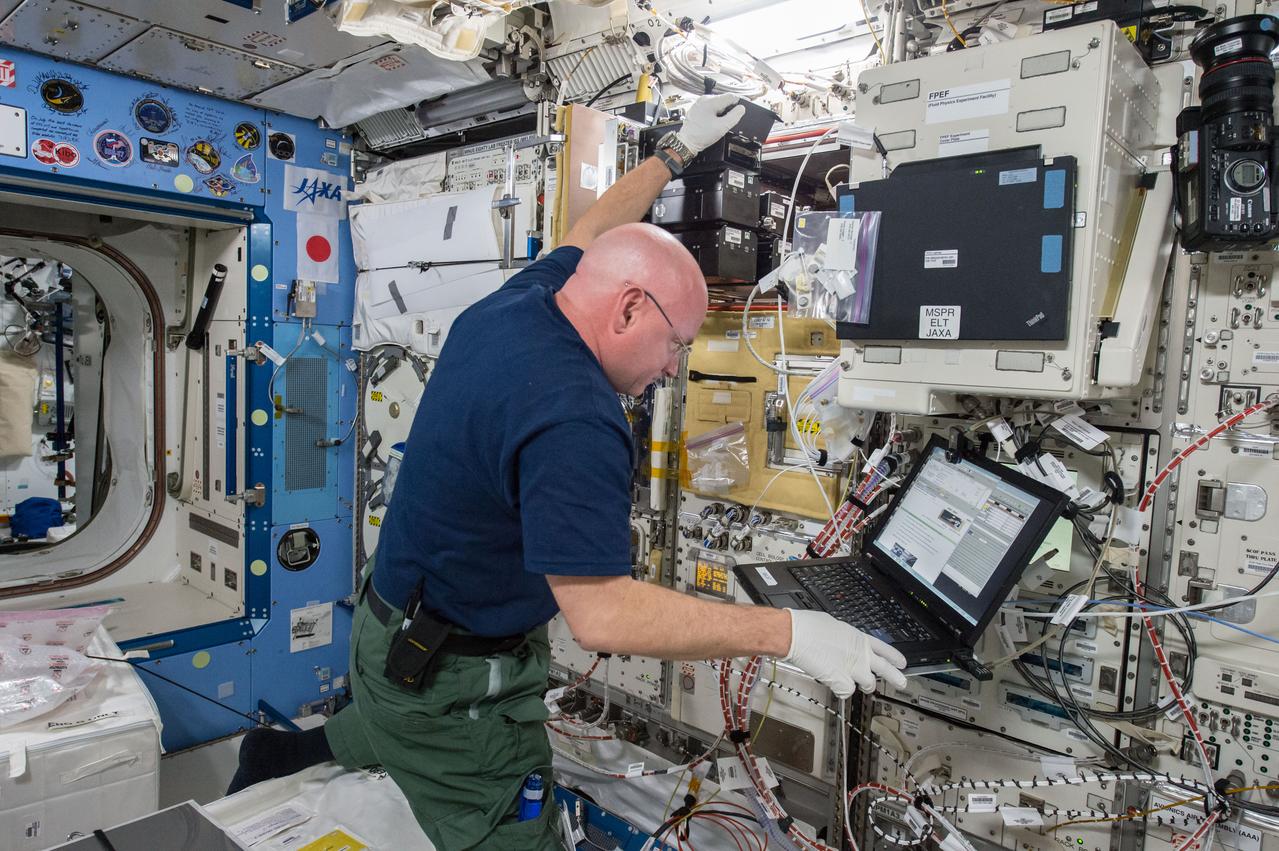
iss043e124225 (4/18/2015) --- NASA astronaut Scott Kelly is seen performing the Space Aging experiment using the Cell Biology Experiment Facility (CBEF) rack in the Japanese Experiment Module (JEM) aboard the International Space Station (ISS). The purpose of the experiment is to study the effects of weightlessness in space flight on the aging of the C. elegans roundworm, a model organism for a range of biological studies. Microgravity causes a number of physiological changes, like heart and bone deconditioning, involving mechanisms that are poorly understood and may affect the rate at which organisms and astronauts age. The Space Aging experiment will grow millimeter-long C. elegans roundworms in microgravity and compare their health and longevity with controlled specimens on Earth.
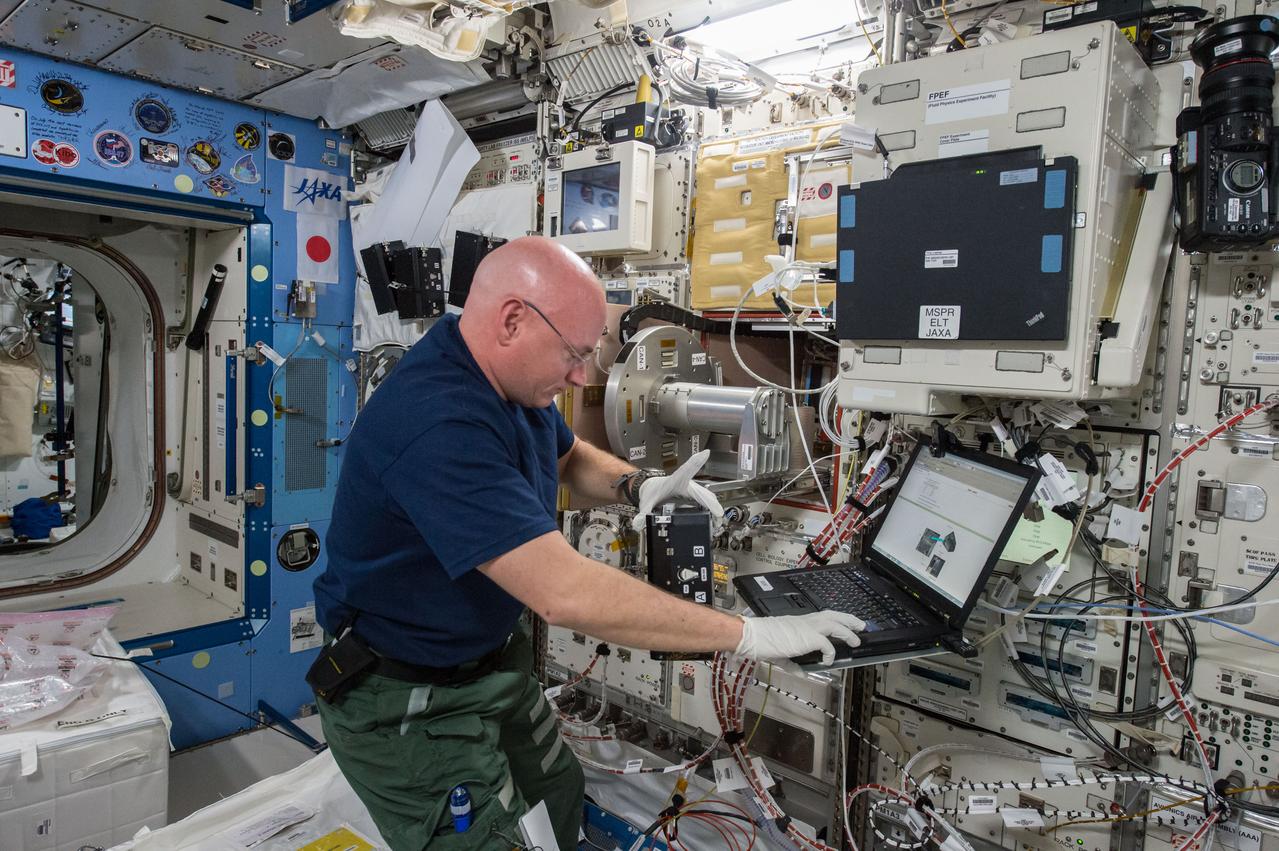
iss043e124063 (4/18/2015) --- NASA astronaut Scott Kelly is seen performing the Space Aging experiment using the Cell Biology Experiment Facility (CBEF) rack in the Japanese Experiment Module (JEM) aboard the International Space Station (ISS). The purpose of the experiment is to study the effects of weightlessness in space flight on the aging of the C. elegans roundworm, a model organism for a range of biological studies. Microgravity causes a number of physiological changes, like heart and bone deconditioning, involving mechanisms that are poorly understood and may affect the rate at which organisms and astronauts age. The Space Aging experiment will grow millimeter-long C. elegans roundworms in microgravity and compare their health and longevity with controlled specimens on Earth.
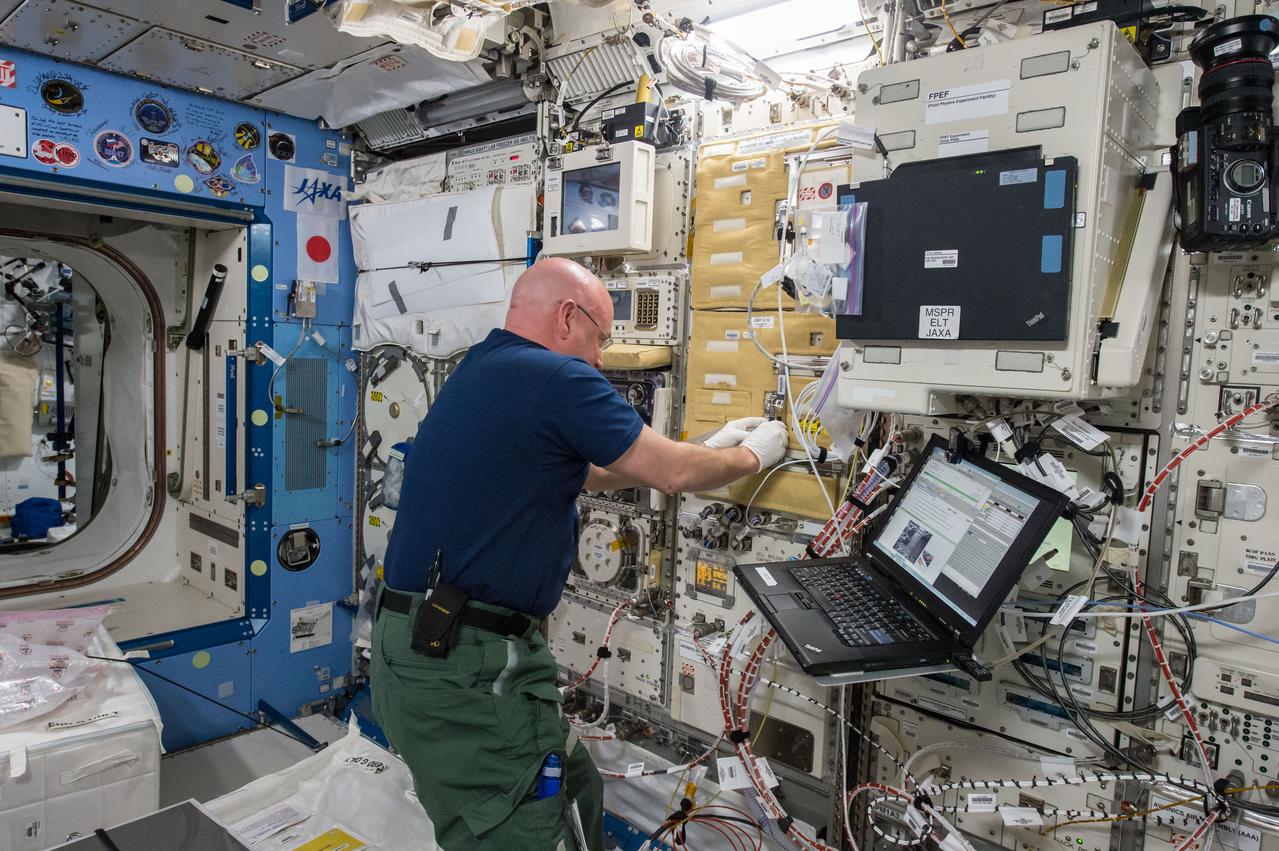
iss043e124238 (4/18/2015) --- NASA astronaut Scott Kelly is seen performing the Space Aging experiment using the Cell Biology Experiment Facility (CBEF) rack in the Japanese Experiment Module (JEM) aboard the International Space Station (ISS). The purpose of the experiment is to study the effects of weightlessness in space flight on the aging of the C. elegans roundworm, a model organism for a range of biological studies. Microgravity causes a number of physiological changes, like heart and bone deconditioning, involving mechanisms that are poorly understood and may affect the rate at which organisms and astronauts age. The Space Aging experiment will grow millimeter-long C. elegans roundworms in microgravity and compare their health and longevity with controlled specimens on Earth.
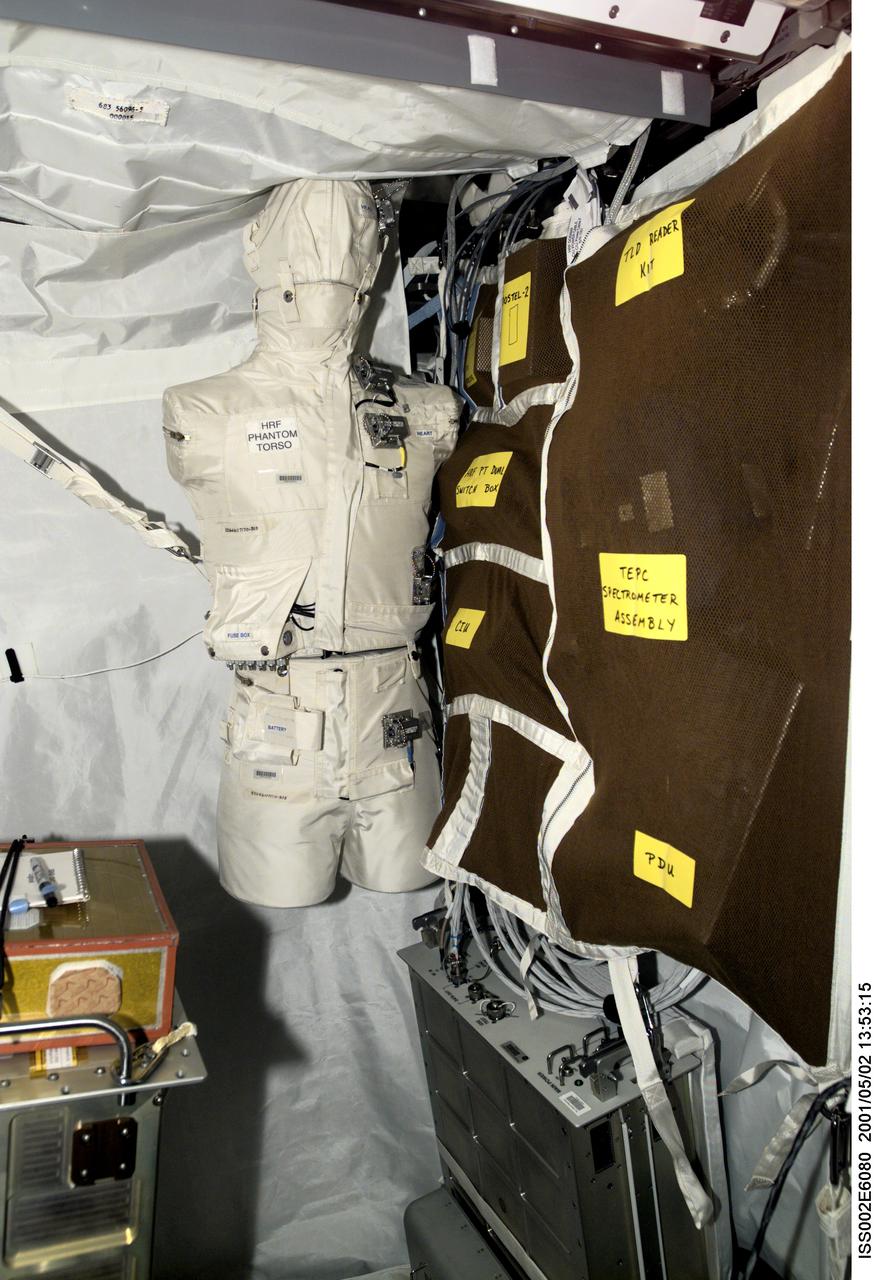
ISS002-E-6080 (2 May 2001) --- The Phantom Torso, seen here in the Human Research Facility (HRF) section of the Destiny/U.S. laboratory on the International Space Station (ISS), is designed to measure the effects of radiation on organs inside the body by using a torso that is similar to those used to train radiologists on Earth. The torso is equivalent in height and weight to an average adult male. It contains radiation detectors that will measure, in real-time, how much radiation the brain, thyroid, stomach, colon, and heart and lung area receive on a daily basis. The data will be used to determine how the body reacts to and shields its internal organs from radiation, which will be important for longer duration space flights. The experiment was delivered to the orbiting outpost during by the STS-100/6A crew in April 2001. Dr. Gautam Badhwar, NASA JSC, Houston, TX, is the principal investigator for this experiment. A digital still camera was used to record this image.
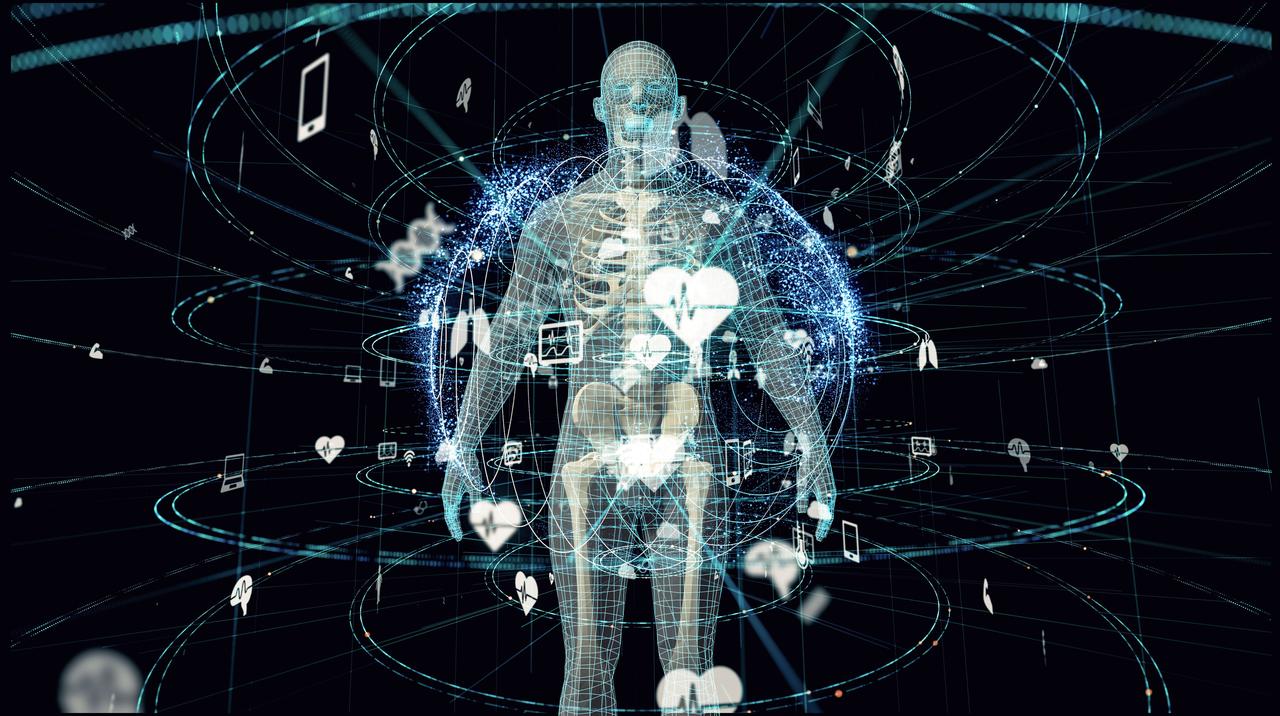
jsc2022e062020 (6/30/2022) --- Space Health will create a digital twin of the astronaut from the data collected by the Bio-Monitor and demonstrate how this could be used for autonomous health monitoring on future space missions. (Image courtesy of CSA)