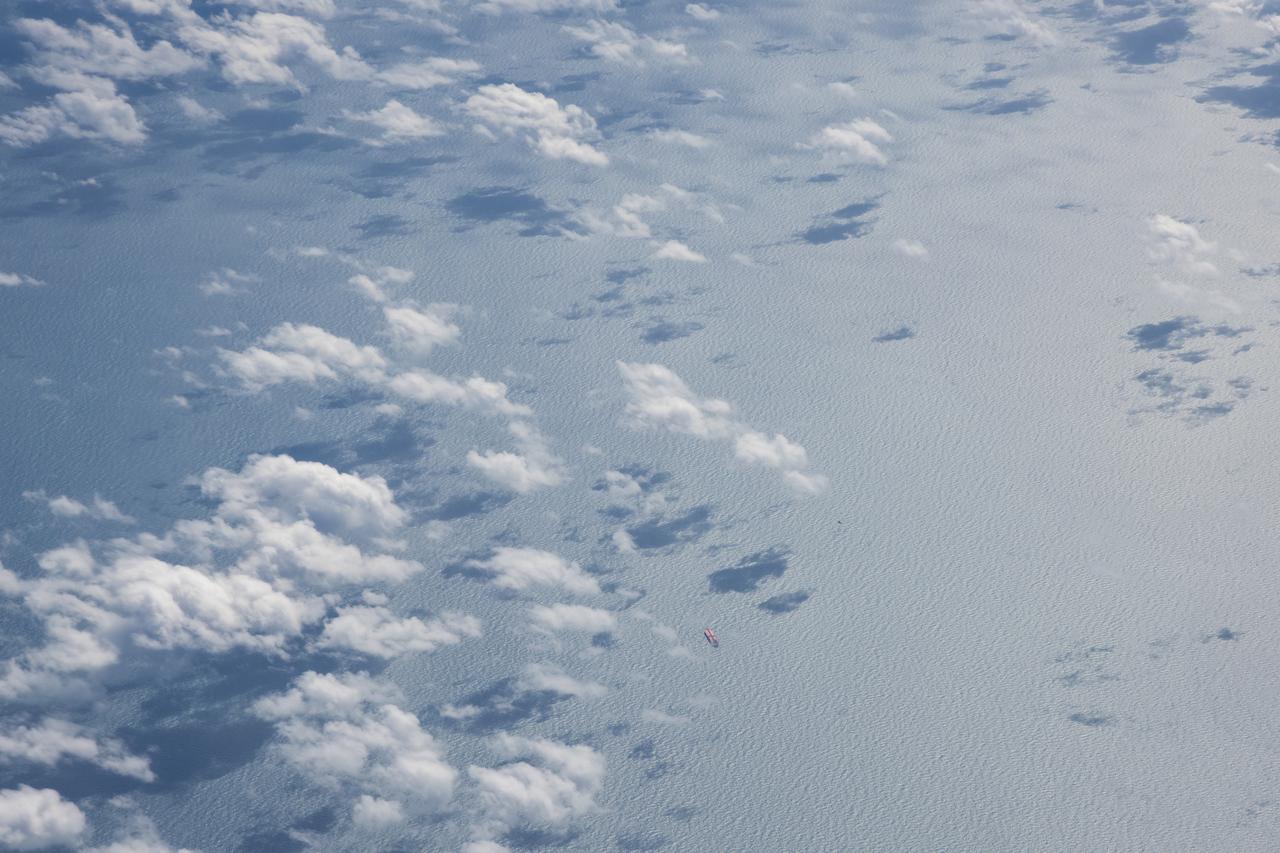
The Gulf of Mexico as seen from NASA photographer Carla Thomas at high altitude in the F/A-18 research aircraft during a flight in support of the Quiet Supersonic Flights 2018 series, or QSF18. The high altitude is necessary as part of the quiet supersonic dive maneuver, climbing to around 50,000 feet, followed by a supersonic, inverted dive. This creates sonic boom shockwaves in a way that they are quieter in a specific area.
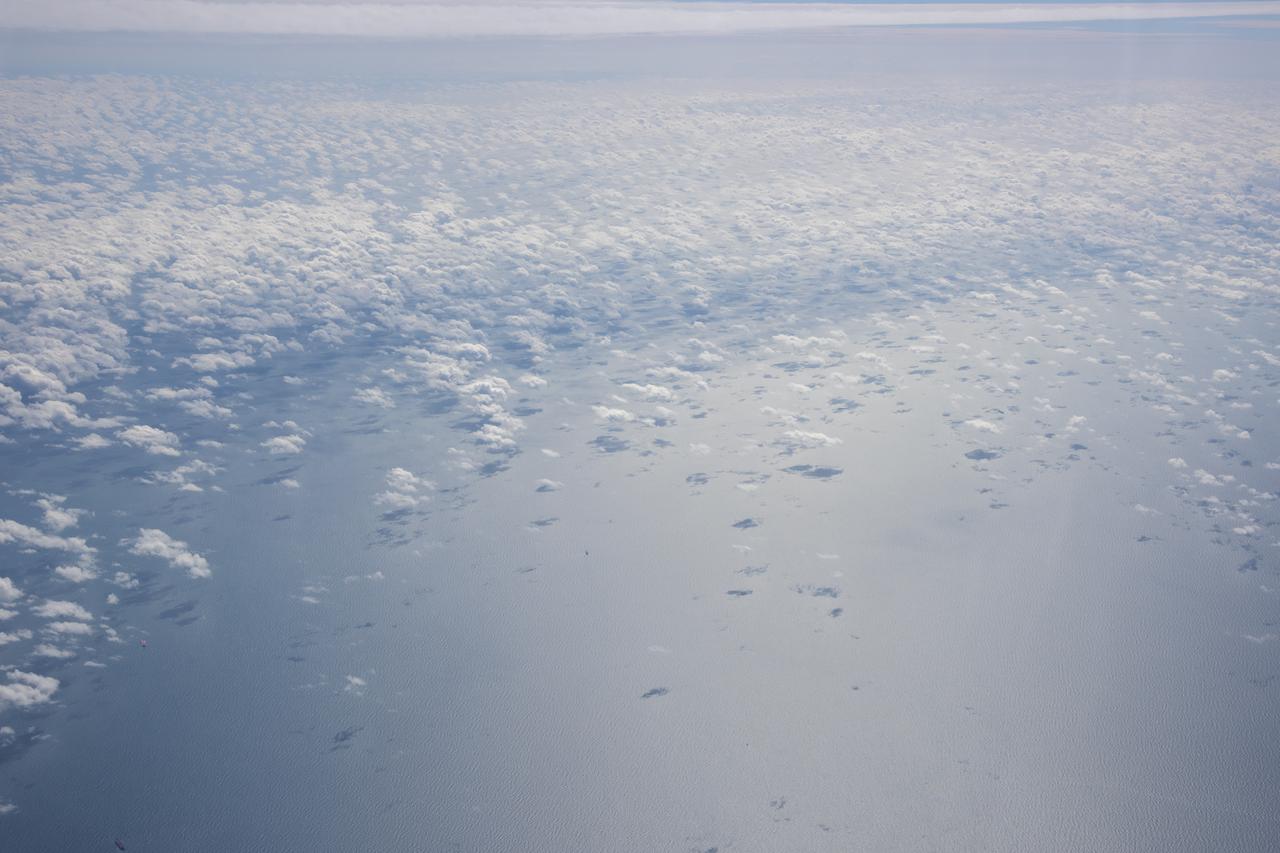
The Gulf of Mexico as seen from NASA photographer Carla Thomas at high altitude in the F/A-18 research aircraft during a flight in support of the Quiet Supersonic Flights 2018 series, or QSF18. The high altitude is necessary as part of the quiet supersonic dive maneuver, climbing to around 50,000 feet, followed by a supersonic, inverted dive. This creates sonic boom shockwaves in a way that they are quieter in a specific area.
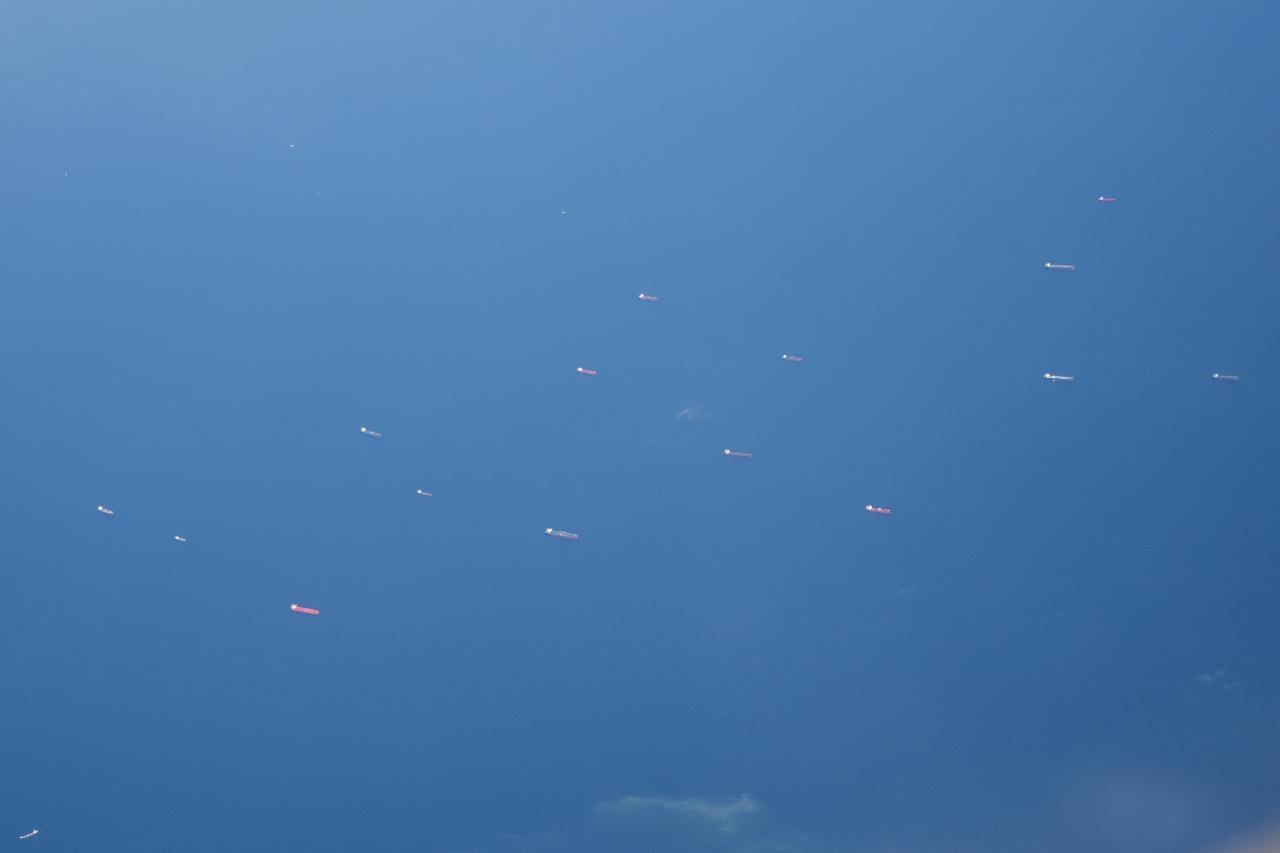
The Gulf of Mexico as seen from NASA photographer Carla Thomas at high altitude in the F/A-18 research aircraft during a flight in support of the Quiet Supersonic Flights 2018 series, or QSF18. The high altitude is necessary as part of the quiet supersonic dive maneuver, climbing to around 50,000 feet, followed by a supersonic, inverted dive. This creates sonic boom shockwaves in a way that they are quieter in a specific area.
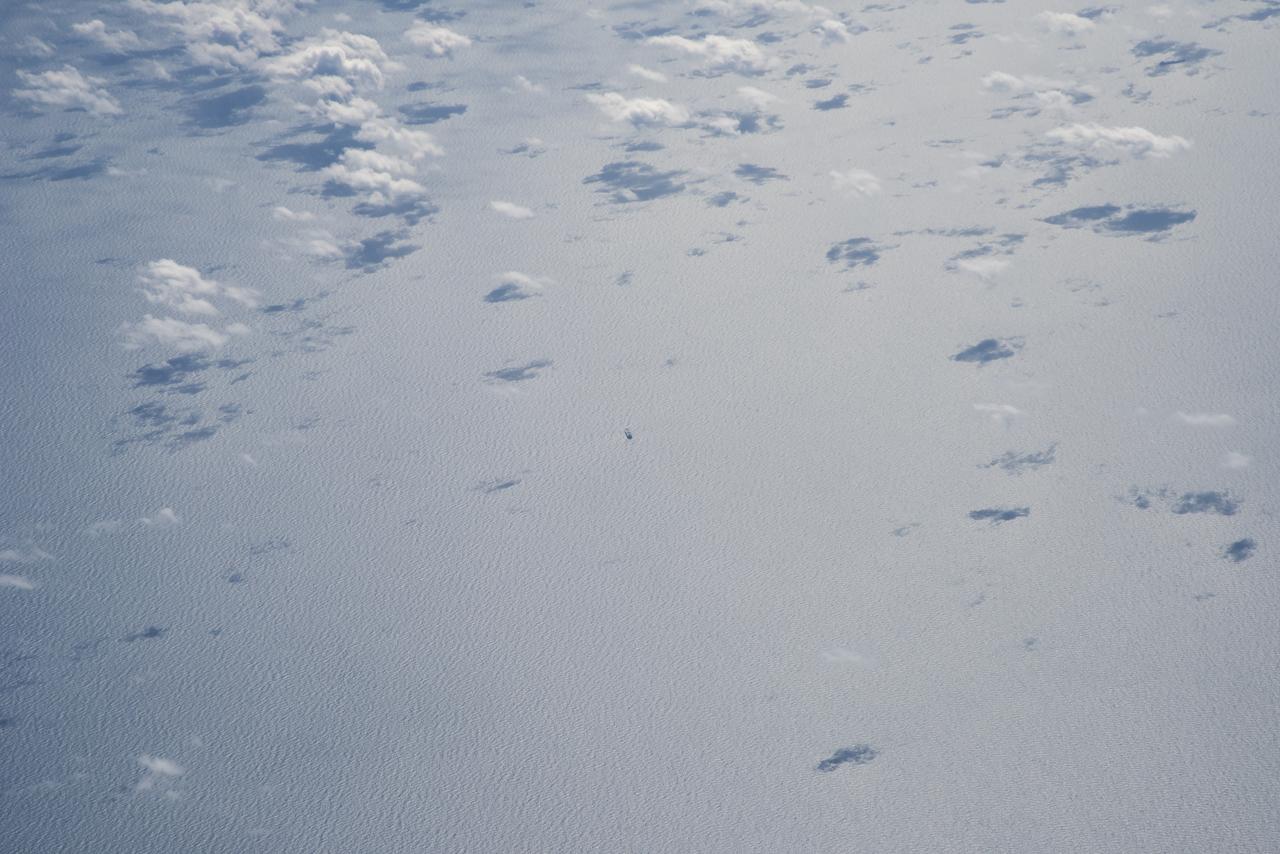
The Gulf of Mexico as seen from NASA photographer Carla Thomas at high altitude in the F/A-18 research aircraft during a flight in support of the Quiet Supersonic Flights 2018 series, or QSF18. The high altitude is necessary as part of the quiet supersonic dive maneuver, climbing to around 50,000 feet, followed by a supersonic, inverted dive. This creates sonic boom shockwaves in a way that they are quieter in a specific area.
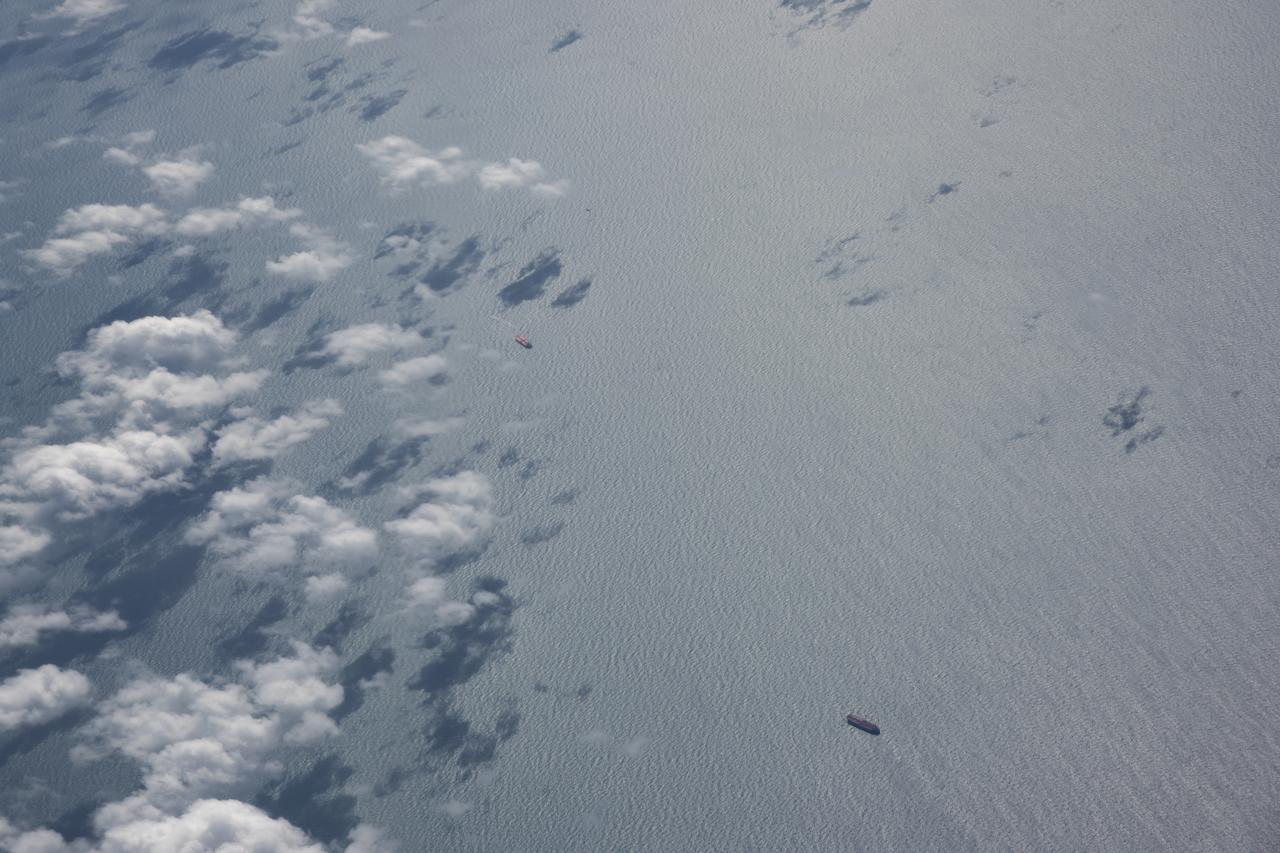
The Gulf of Mexico as seen from NASA photographer Carla Thomas at high altitude in the F/A-18 research aircraft during a flight in support of the Quiet Supersonic Flights 2018 series, or QSF18. The high altitude is necessary as part of the quiet supersonic dive maneuver, climbing to around 50,000 feet, followed by a supersonic, inverted dive. This creates sonic boom shockwaves in a way that they are quieter in a specific area.
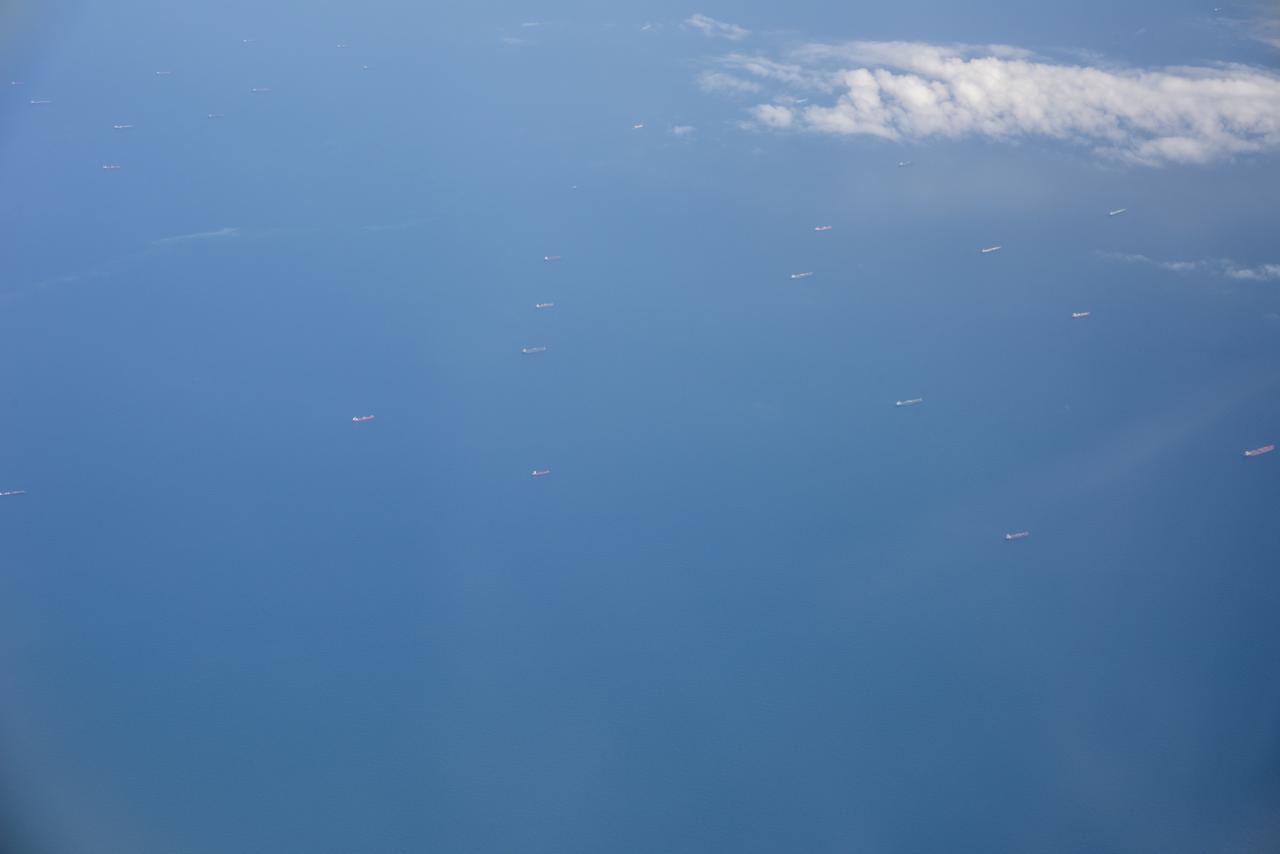
The Gulf of Mexico as seen from NASA photographer Carla Thomas at high altitude in the F/A-18 research aircraft during a flight in support of the Quiet Supersonic Flights 2018 series, or QSF18. The high altitude is necessary as part of the quiet supersonic dive maneuver, climbing to around 50,000 feet, followed by a supersonic, inverted dive. This creates sonic boom shockwaves in a way that they are quieter in a specific area.
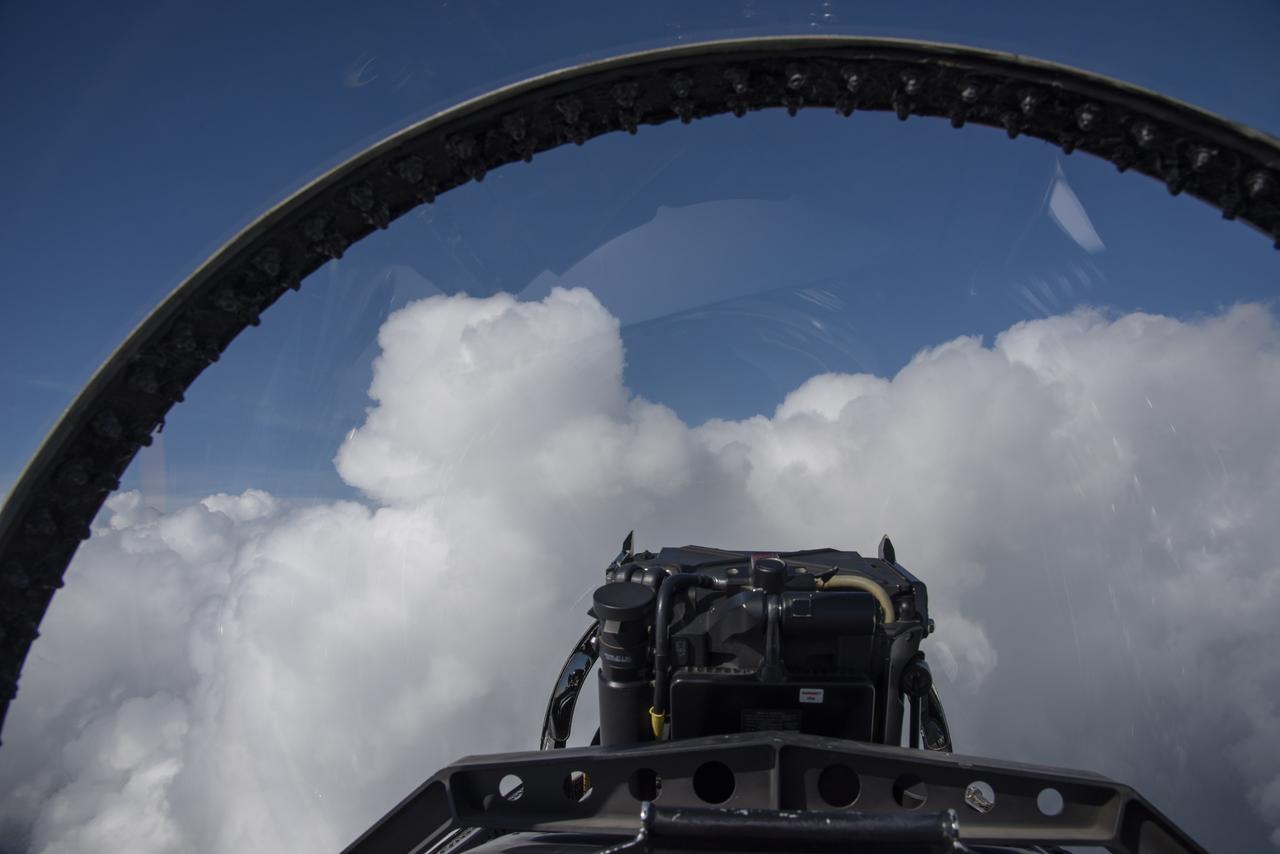
The Gulf of Mexico as seen from NASA photographer Carla Thomas at high altitude in the F/A-18 research aircraft during a flight in support of the Quiet Supersonic Flights 2018 series, or QSF18. The high altitude is necessary as part of the quiet supersonic dive maneuver, climbing to around 50,000 feet, followed by a supersonic, inverted dive. This creates sonic boom shockwaves in a way that they are quieter in a specific area.
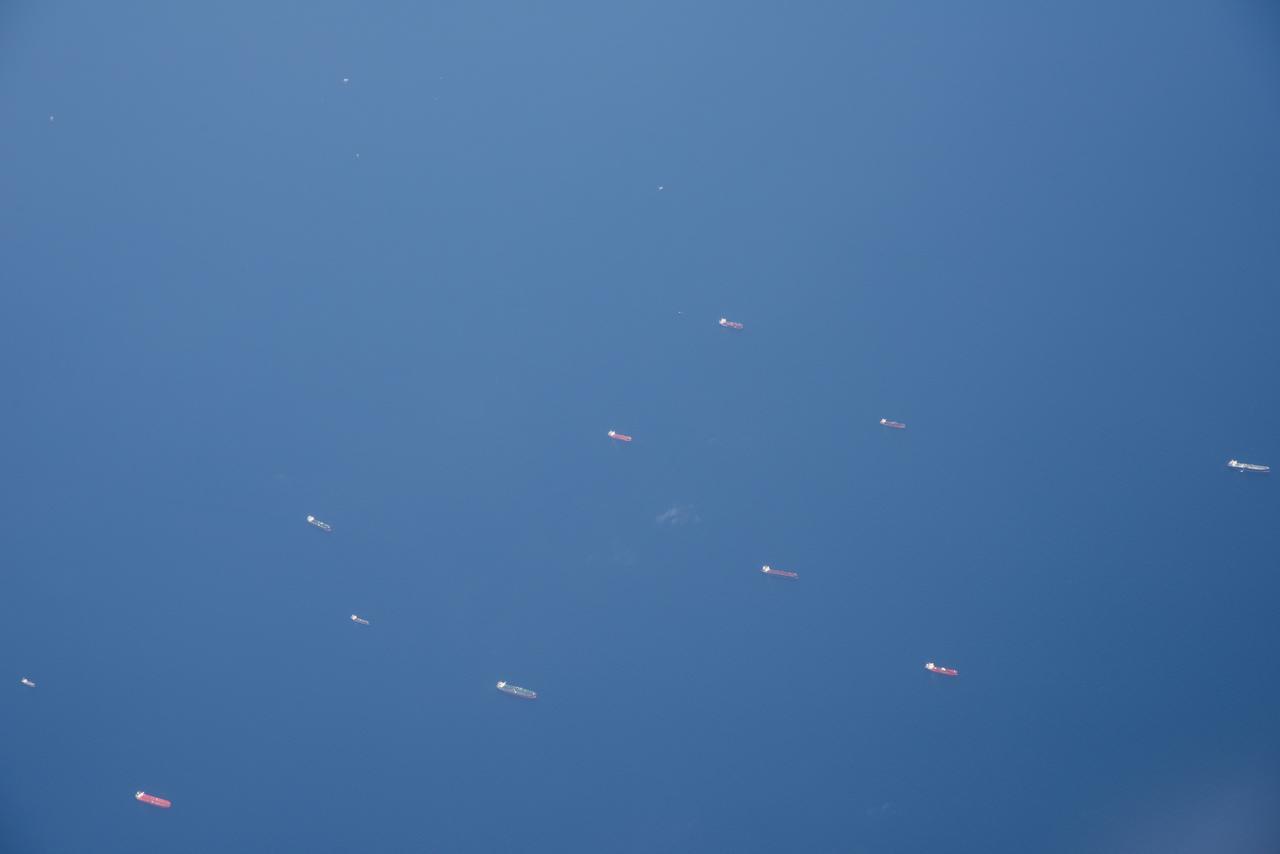
The Gulf of Mexico as seen from NASA photographer Carla Thomas at high altitude in the F/A-18 research aircraft during a flight in support of the Quiet Supersonic Flights 2018 series, or QSF18. The high altitude is necessary as part of the quiet supersonic dive maneuver, climbing to around 50,000 feet, followed by a supersonic, inverted dive. This creates sonic boom shockwaves in a way that they are quieter in a specific area.
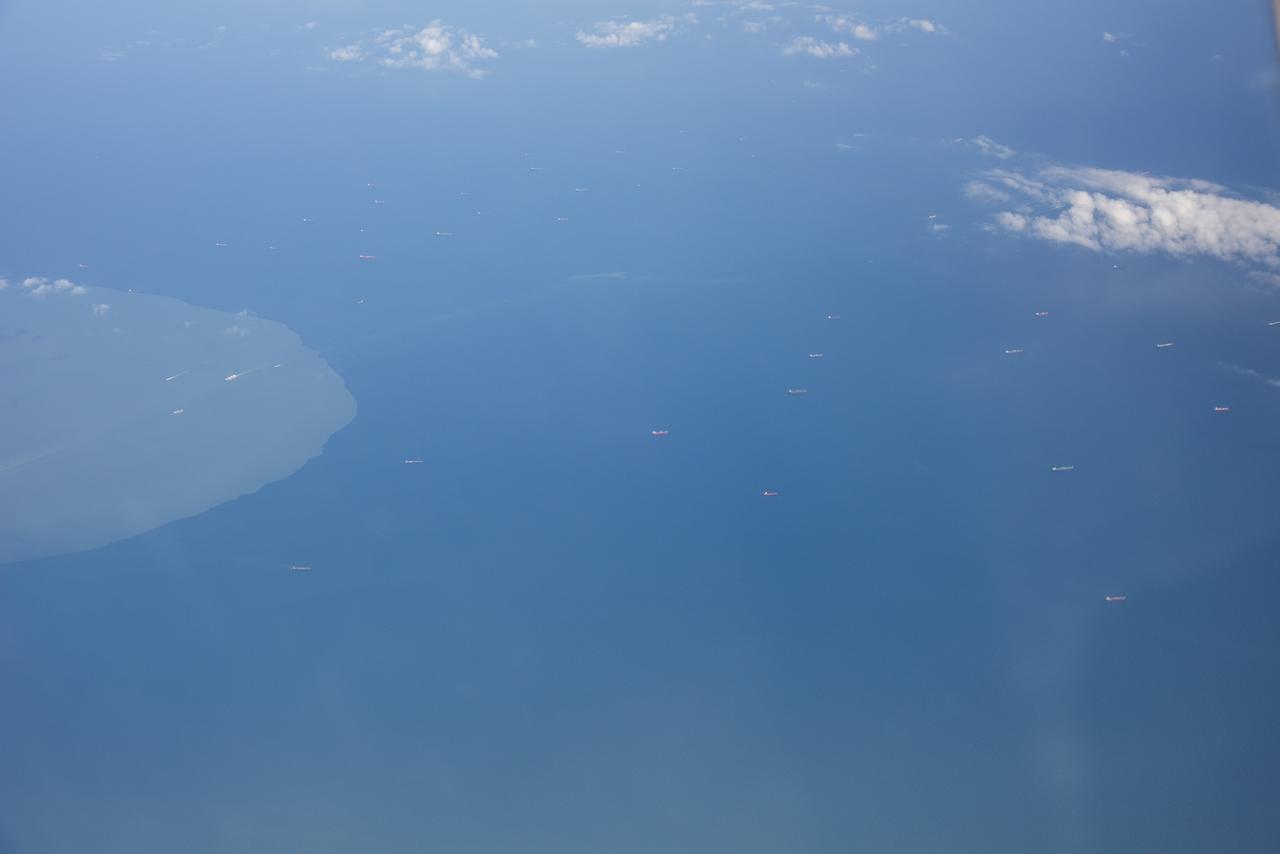
The Gulf of Mexico as seen from NASA photographer Carla Thomas at high altitude in the F/A-18 research aircraft during a flight in support of the Quiet Supersonic Flights 2018 series, or QSF18. The high altitude is necessary as part of the quiet supersonic dive maneuver, climbing to around 50,000 feet, followed by a supersonic, inverted dive. This creates sonic boom shockwaves in a way that they are quieter in a specific area.
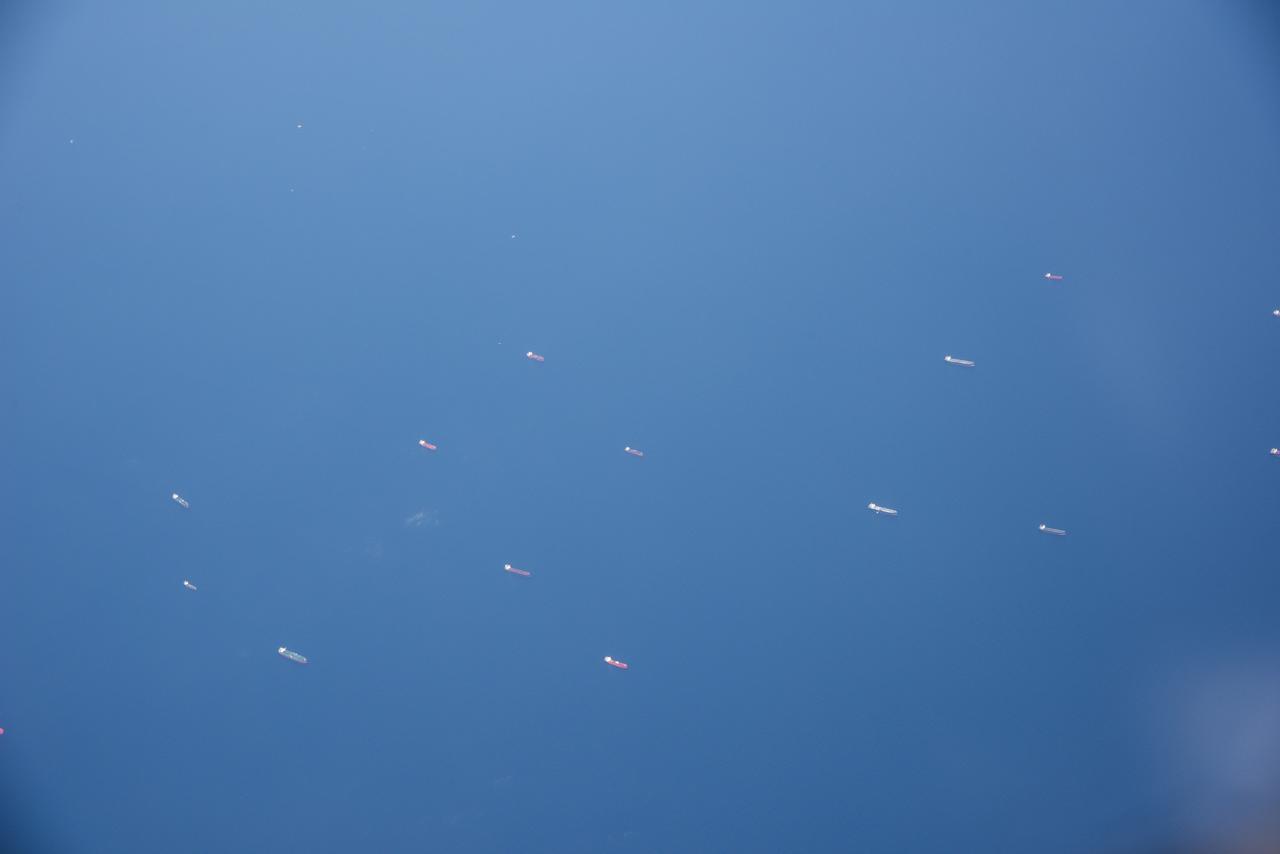
The Gulf of Mexico as seen from NASA photographer Carla Thomas at high altitude in the F/A-18 research aircraft during a flight in support of the Quiet Supersonic Flights 2018 series, or QSF18. The high altitude is necessary as part of the quiet supersonic dive maneuver, climbing to around 50,000 feet, followed by a supersonic, inverted dive. This creates sonic boom shockwaves in a way that they are quieter in a specific area.
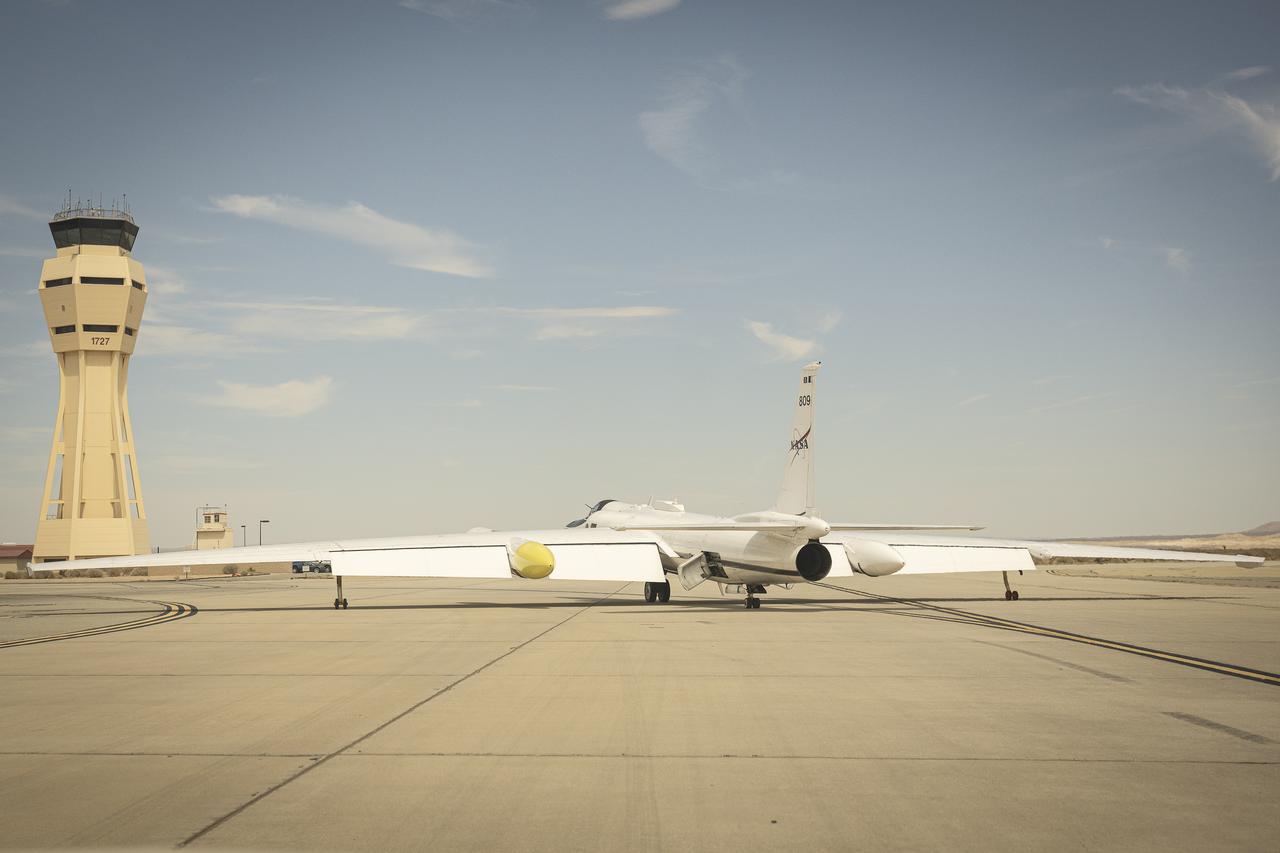
NASA Armstrong Flight Research Center’s ER-2 aircraft taxis at Edwards, California, on Thursday, Aug. 21, 2025, ahead of a high-altitude mission supporting the Geological Earth Mapping Experiment (GEMx), which requires flights of up to eight hours at approximately 65,000 feet altitude.

A NASA ER-2 high-altitude aircraft takes off from NASA’s Armstrong Flight Research Center in Edwards California on Tuesday, March 31, 2026, to support the Geological Earth Mapping Experiment (GEMx) airborne science mission.

A NASA ER-2 high-altitude aircraft takes off from NASA’s Armstrong Flight Research Center in Edwards California on Tuesday, March 31, 2026, to support the Geological Earth Mapping Experiment (GEMx) airborne science mission.
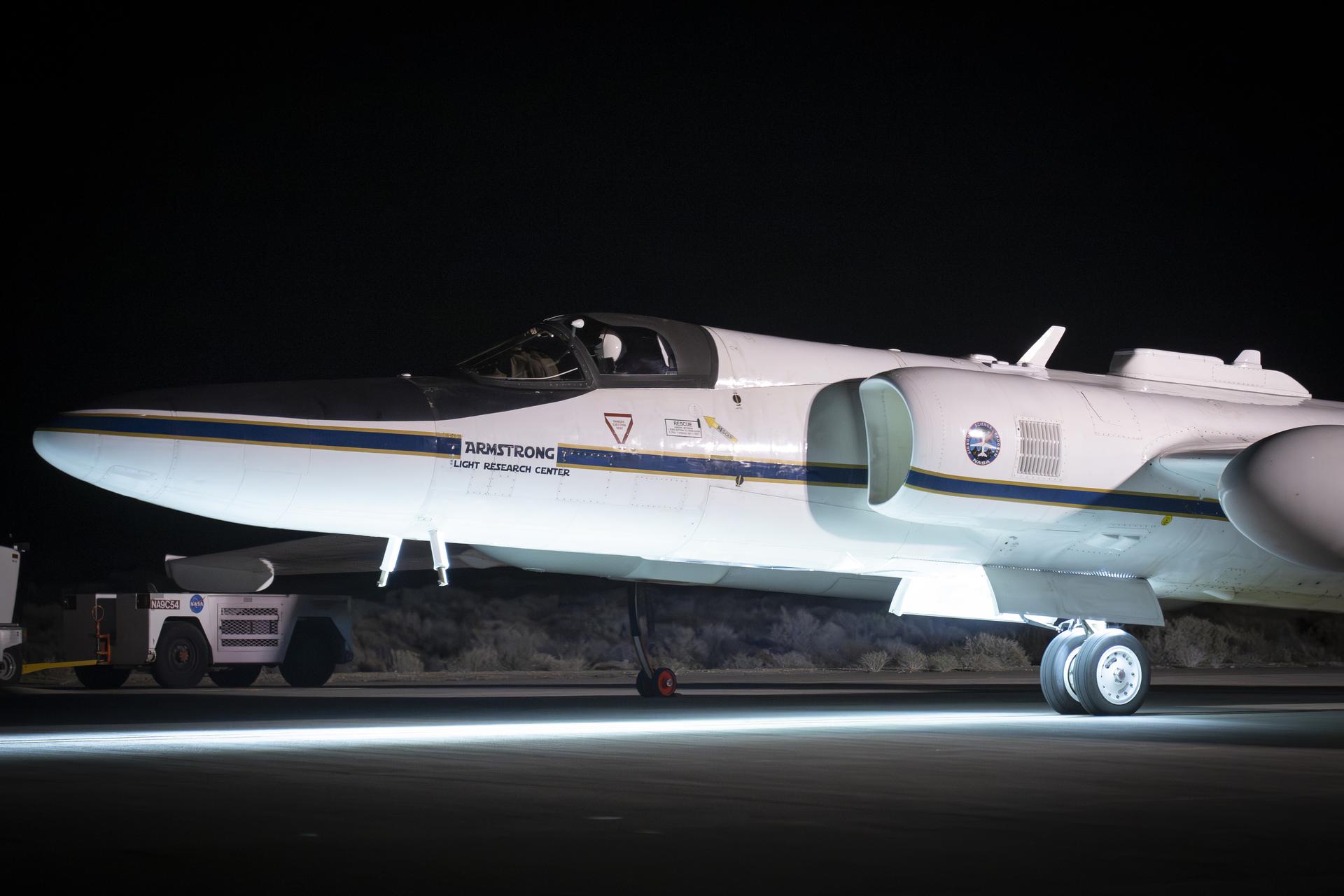
NASA’s ER-2 high-altitude aircraft prepares for a night flight with the Airborne Lunar Spectral Irradiance (air-LUSI) instrument on Monday, Feb. 2, 2026. The instrument measures Moonlight to improve accuracy of space-based sensors that forecast the weather, monitor agriculture, and study Earth’s ecosystem.

The High Altitude Lidar Observatory (HALO) instrument head, which houses the lidar instrument, is installed onto the DC-8 airborne science laboratory at NASA Armstrong Flight Research Center in Edwards, California. The gold and blue casing holds the laser, optics, detectors, and electronics, which are at the heart of the lidar.
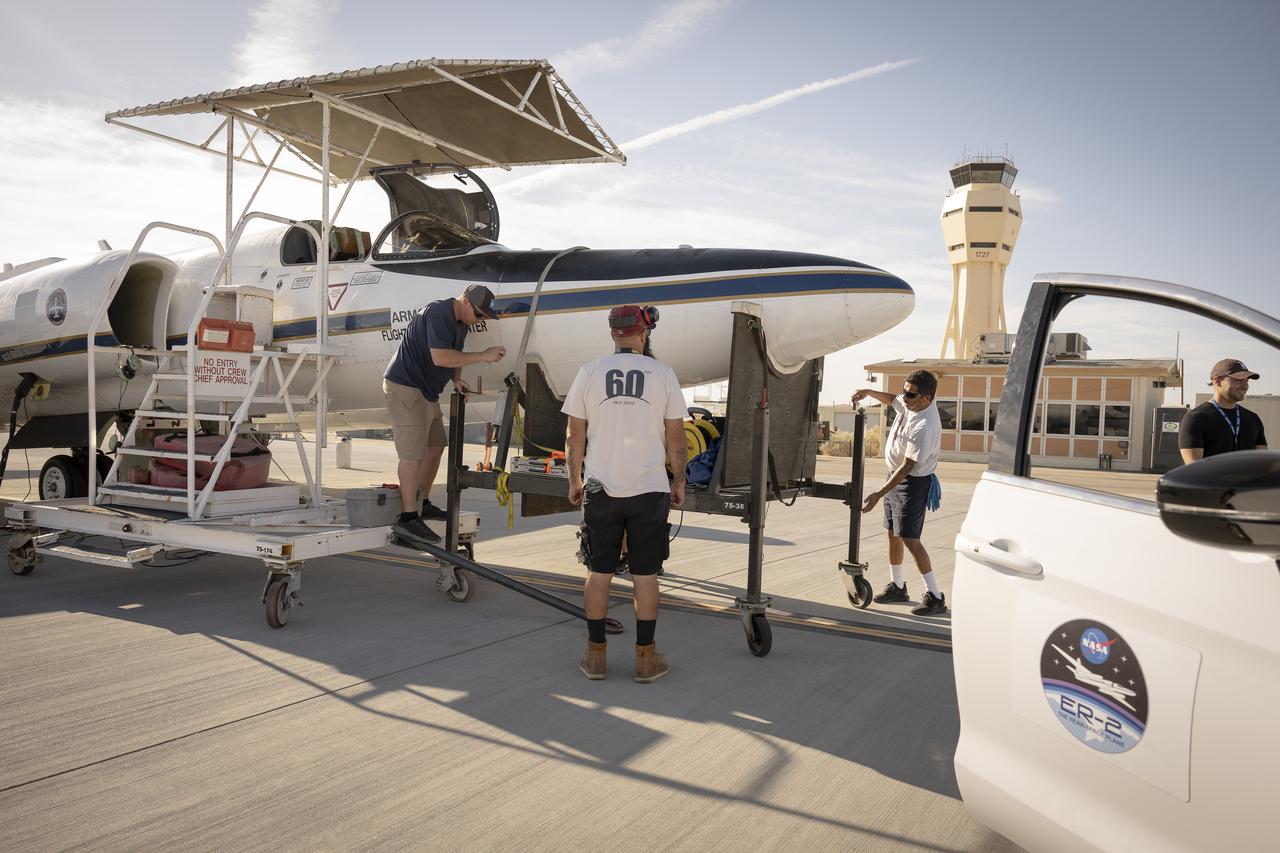
Ground crew members make final preparations on NASA Armstrong Flight Research Center’s ER-2 aircraft at Edwards, California, on Thursday, Aug. 21, 2025, ahead of a high-altitude mission for the Geological Earth Mapping Experiment (GEMx). The pilot will soon board the aircraft, which can fly at altitudes up to 70,000 feet.
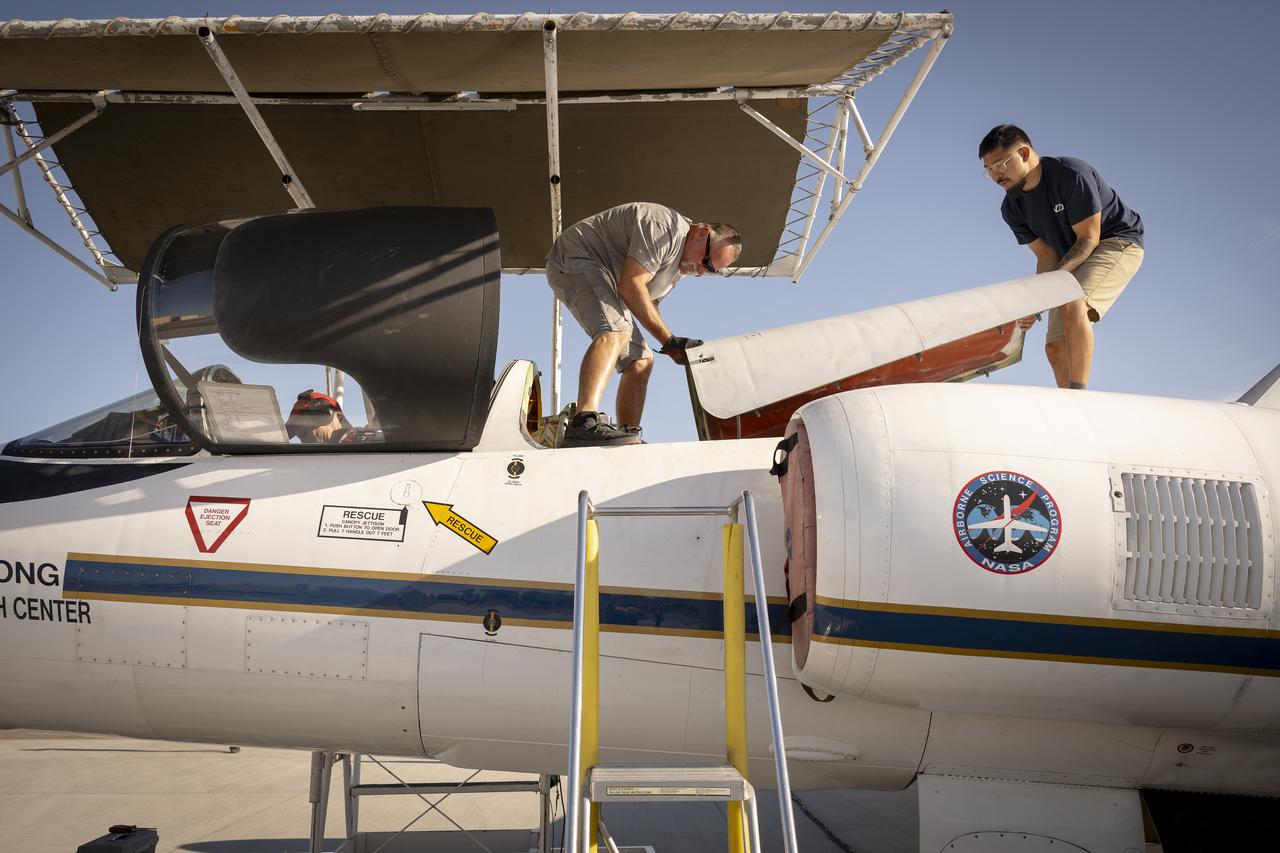
Ground crew members make final preparations on NASA Armstrong Flight Research Center’s ER-2 aircraft at Edwards, California, on Thursday, Aug. 21, 2025, ahead of a high-altitude mission for the Geological Earth Mapping Experiment (GEMx). The pilot will soon board the aircraft, which can fly at altitudes up to 70,000 feet.
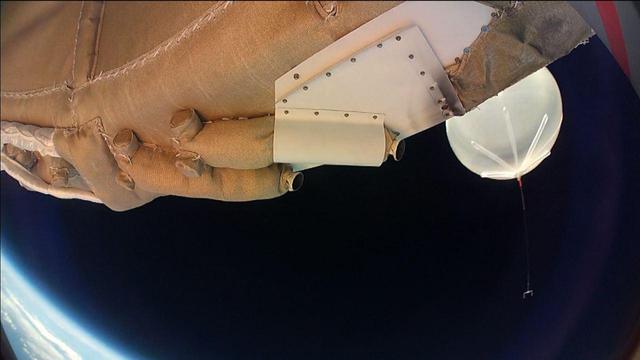
Moments into its powered flight, NASALow-density Supersonic Decelerator LDSD test vehicle captured this image of the balloon which carried it to high altitudes.

An ER-2 high-altitude Earth science aircraft banks away during a flight over the southern Sierra Nevada. NASA’s Armstrong Flight Research Center operates two of the Lockheed-built aircraft on a wide variety of environmental science, atmospheric sampling, and satellite data verification missions.
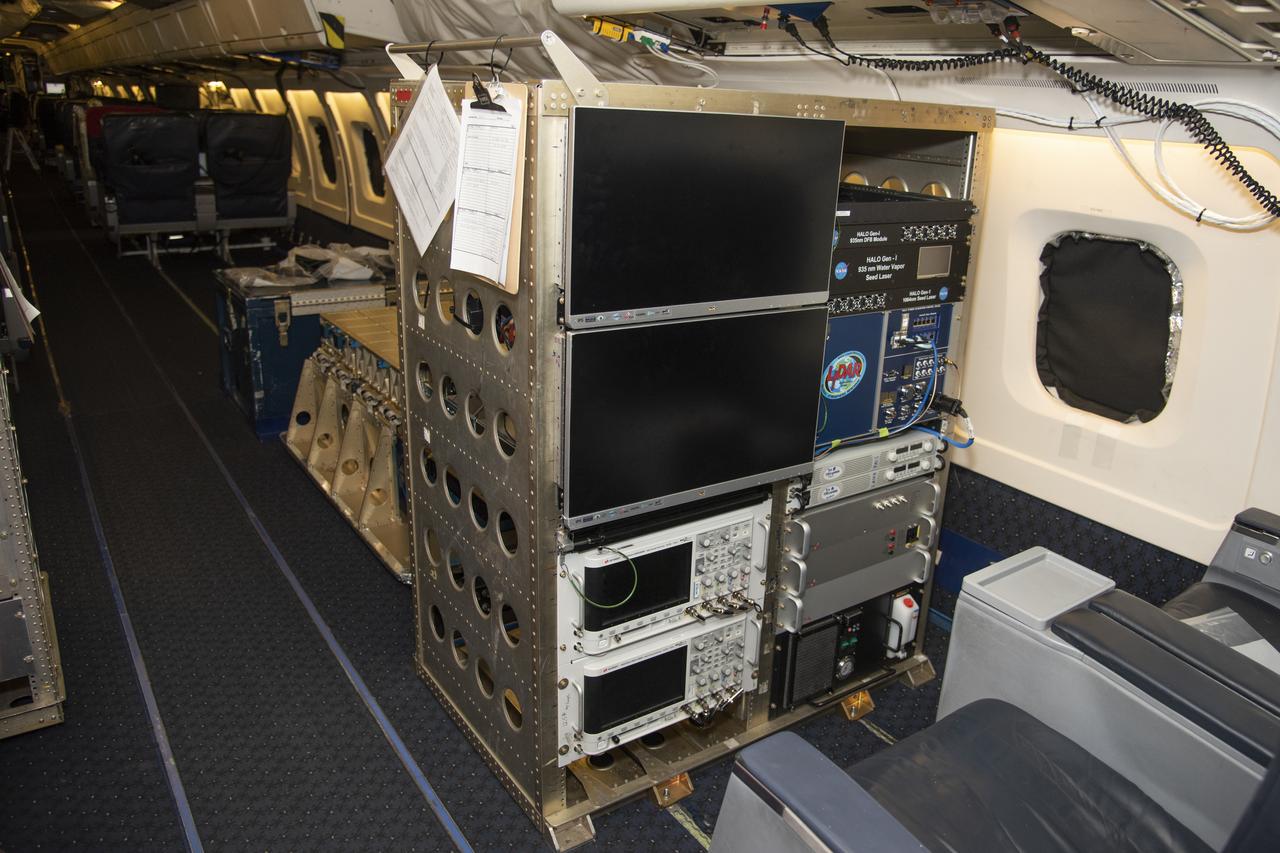
The High Altitude Lidar Observatory (HALO) system electronics and diagnostic tools are integrated onto the DC-8 airborne science laboratory at NASA Armstrong Flight Research Center in Edwards, California. The lidar system control electronics are on the right hand side of the rack. The large monitors on the left are used to display real-time images of water vapor and aerosol profiles, which are used by the science team to guide in-flight decisions and navigation. The compact HALO instrument head can be seen directly behind the electronics rack.

Mechanic Francisco Rodriguez and crew chief Darin Whittington installed the Airborne Visible/Infrared Imaging Spectrometer (AVIRIS) instrument into a NASA ER-2 high-altitude aircraft at NASA’s Armstrong Flight Research Center in Edwards, California, on Wednesday, March 11, 2026. The installation helped enabled the Geological Earth Mapping Experiment (GEMx) airborne science

Crew chief Darin Whittington and mechanic Edwin Flores watch as mechanic Francisco Rodriguez works on a mounting bolt to secure the Airborne Visible/Infrared Imaging Spectrometer (AVIRIS) instrument into a NASA ER-2 high-altitude aircraft at NASA’s Armstrong Flight Research Center in Edwards, California, on Wednesday, March 11, 2026. The installation helped enabled the Geological Earth Mapping Experiment (GEMx) airborne science mission, which began on March 31, 2026.
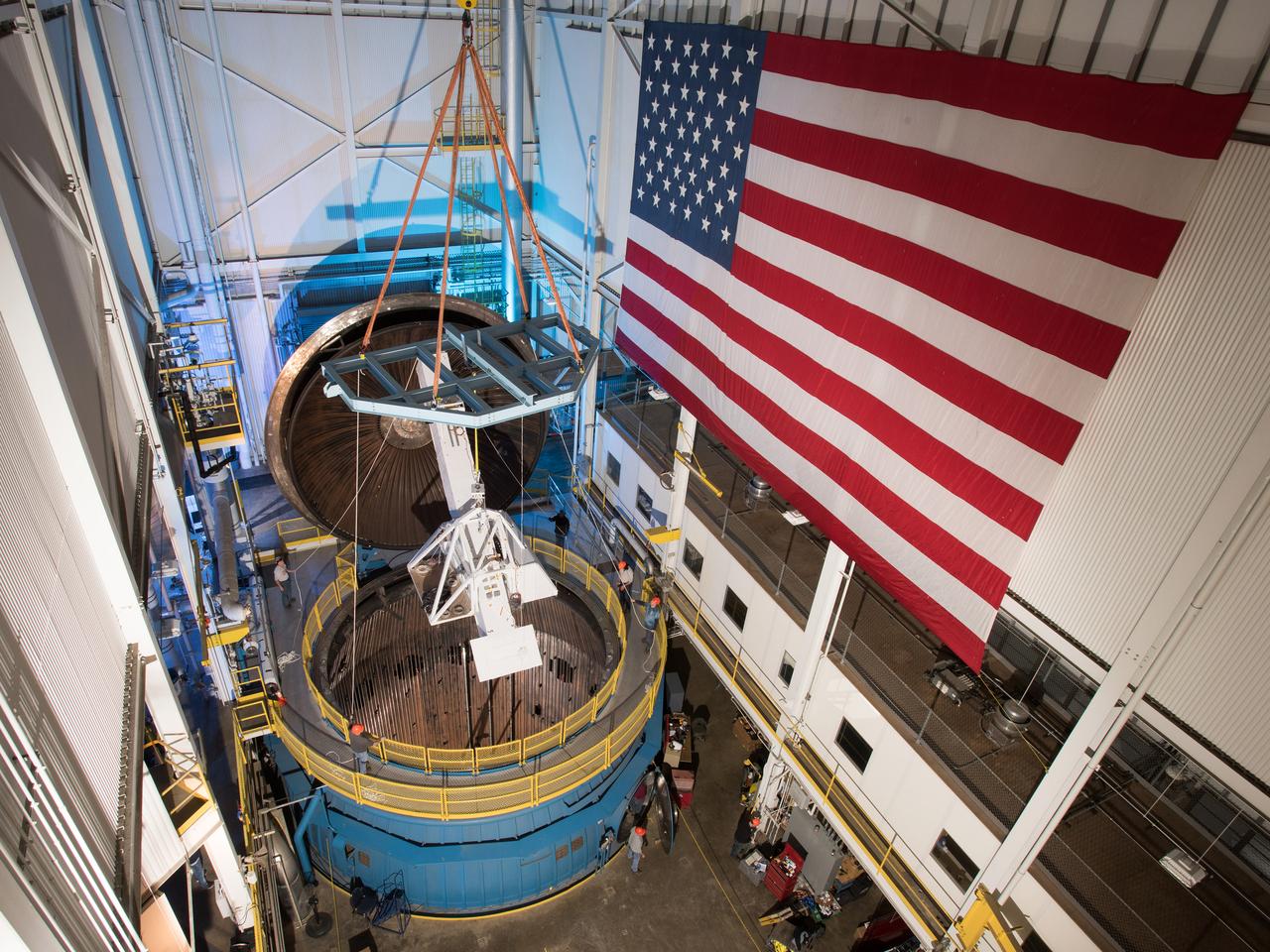
The Gamma-Ray Imager/Polarimeter for Solar flares (GRIPS) instrument is installed in the B-2 vacuum chamber for a full-instrument thermal-vacuum test in 2015. The GRIPS telescope was launched via balloon in January 2016 on a high-altitude flight over Antarctica to study the acceleration and transport of solar flare particles.
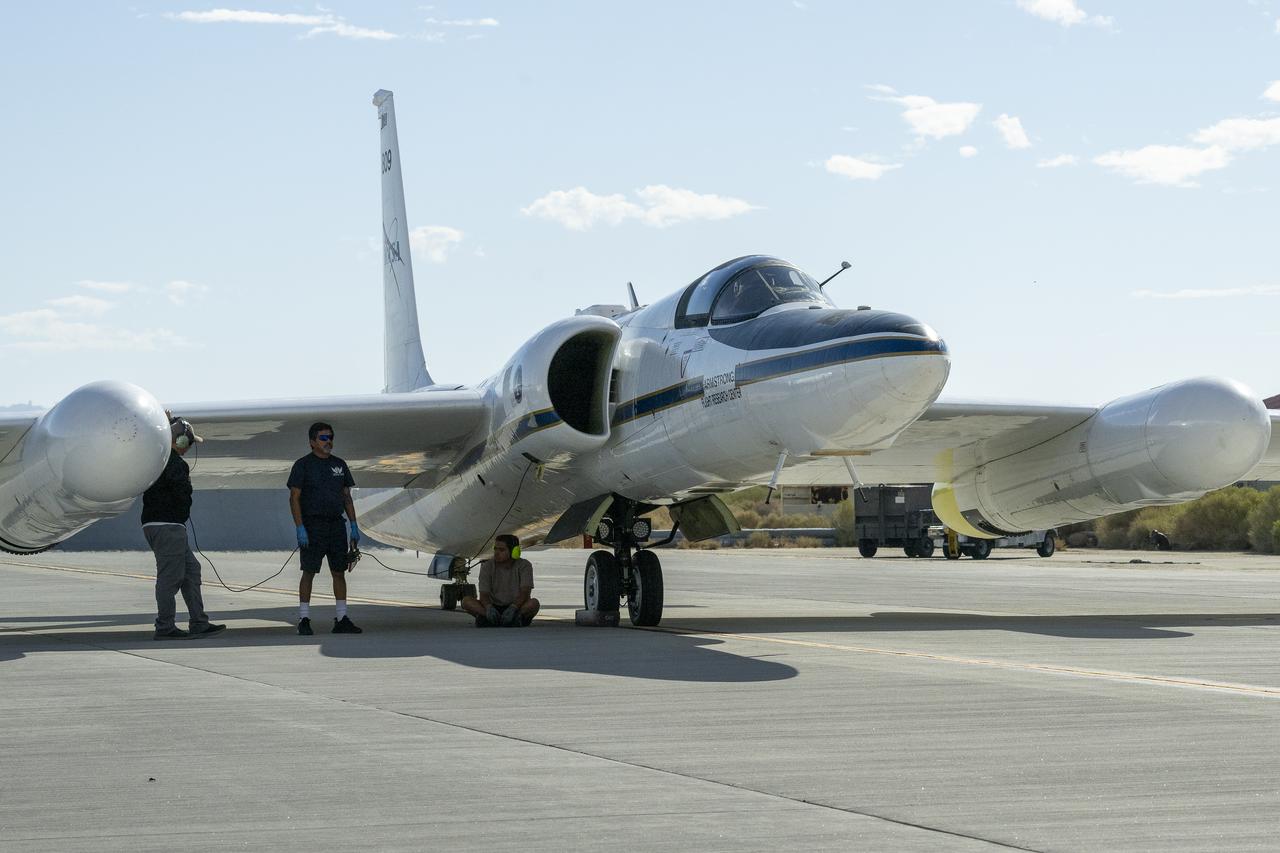
Crew members prepare NASA Armstrong Flight Research Center’s ER-2 aircraft for flight at Edwards, California, on Tuesday, Sept. 23, 2025, in support of the Geological Earth Mapping Experiment (GEMx). The high-altitude science aircraft operates between 20,000 and 70,000 feet. For this mission, pilots flew at approximately 65,000 feet, requiring them to wear specially designed pressure suits.
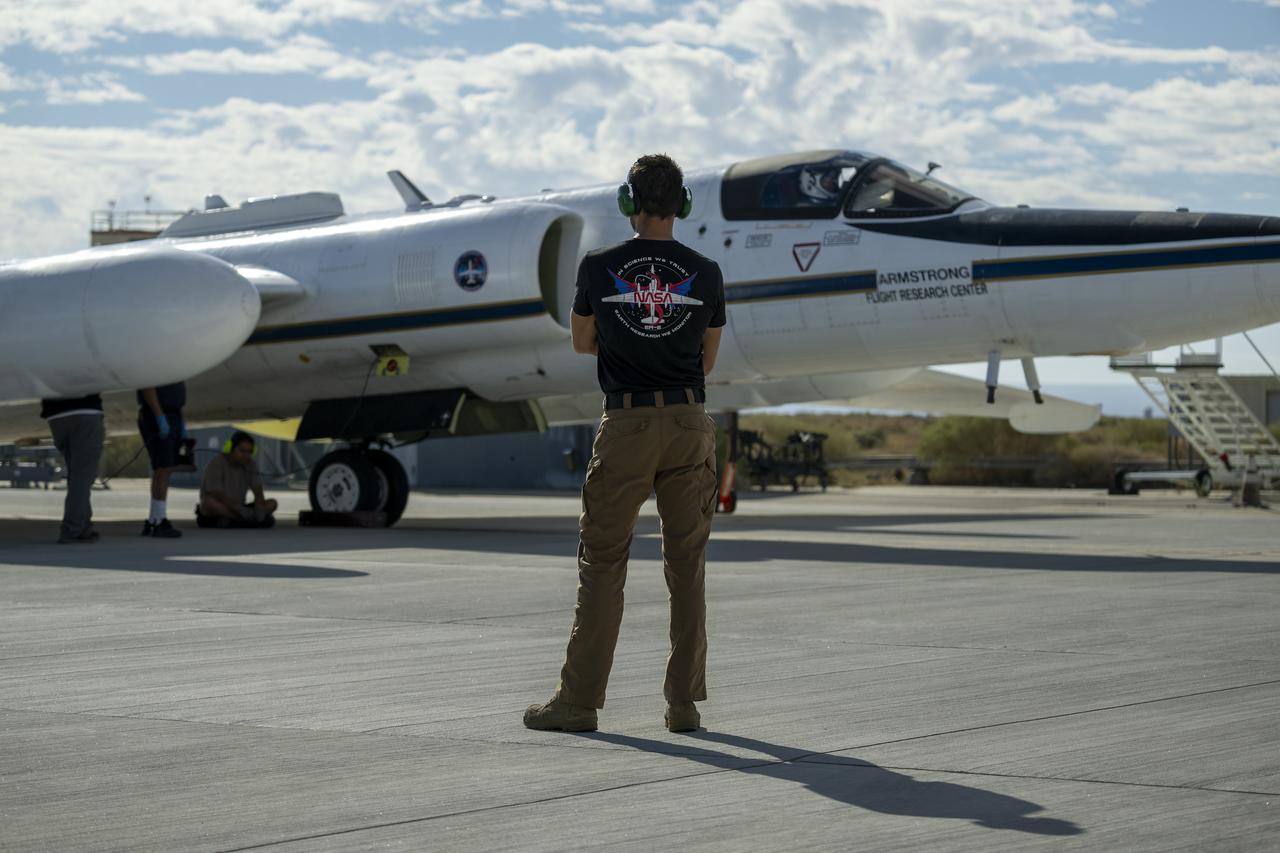
Crew members prepare NASA Armstrong Flight Research Center’s ER-2 aircraft for flight at Edwards, California, on Tuesday, Sept. 23, 2025, in support of the Geological Earth Mapping Experiment (GEMx). The high-altitude science aircraft operates between 20,000 and 70,000 feet. For this mission, pilots flew at approximately 65,000 feet, requiring them to wear specially designed pressure suits.

Suited up and ready, ER-2 pilot Kirt Stallings waits inside the transport vehicle at Edwards, California, on Thursday, Aug. 21, 2025, moments before boarding NASA’s Armstrong Flight Research Center’s ER-2 aircraft for a high-altitude mission supporting the Geological Earth Mapping Experiment (GEMx). Through the vehicle window, the aircraft can be seen being readied for flight.
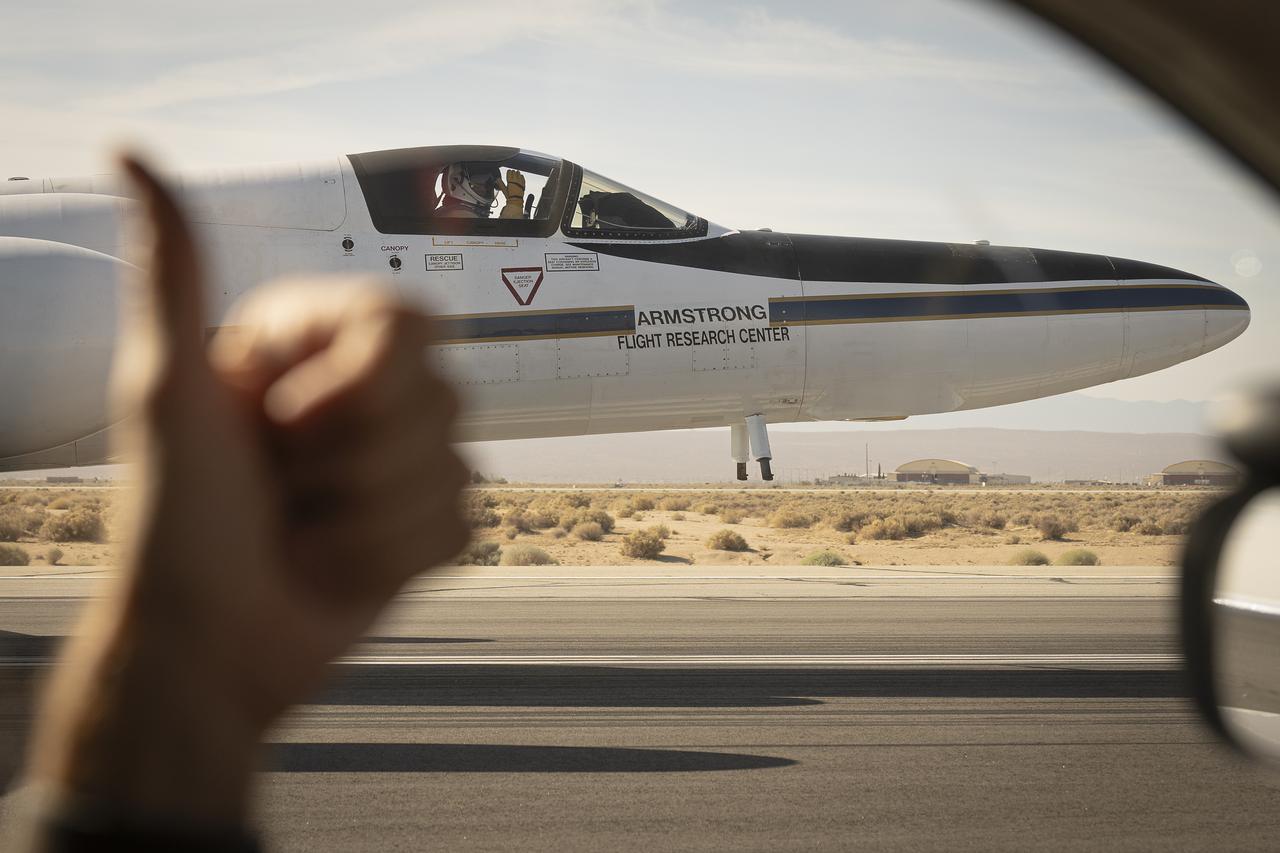
From the window of the ER-2 chase car, a crew member gives a thumbs up to the pilot as NASA Armstrong Flight Research Center’s ER-2 aircraft taxis at Edwards, California, on Thursday, Aug. 21, 2025. The gesture signals a final check before takeoff for the high-altitude mission supporting the Geological Earth Mapping Experiment (GEMx).
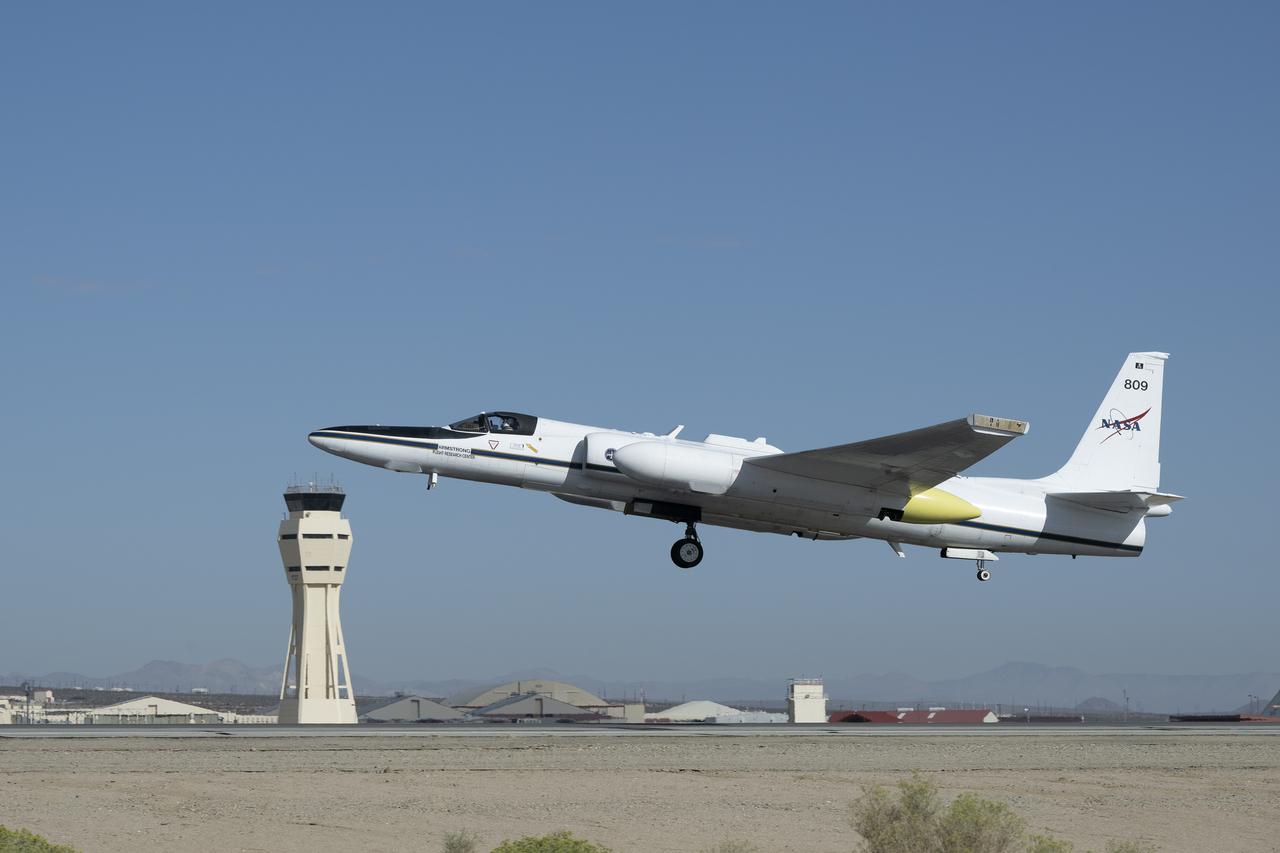
NASA Armstrong Flight Research Center’s ER-2 aircraft lifts off from Edwards, California, on Tuesday, Sept. 23, 2025, in support of the Geological Earth Mapping Experiment (GEMx). The high-altitude science aircraft operates between 20,000 and 70,000 feet. For this mission, pilots flew at approximately 65,000 feet, requiring them to wear specially designed pressure suits.
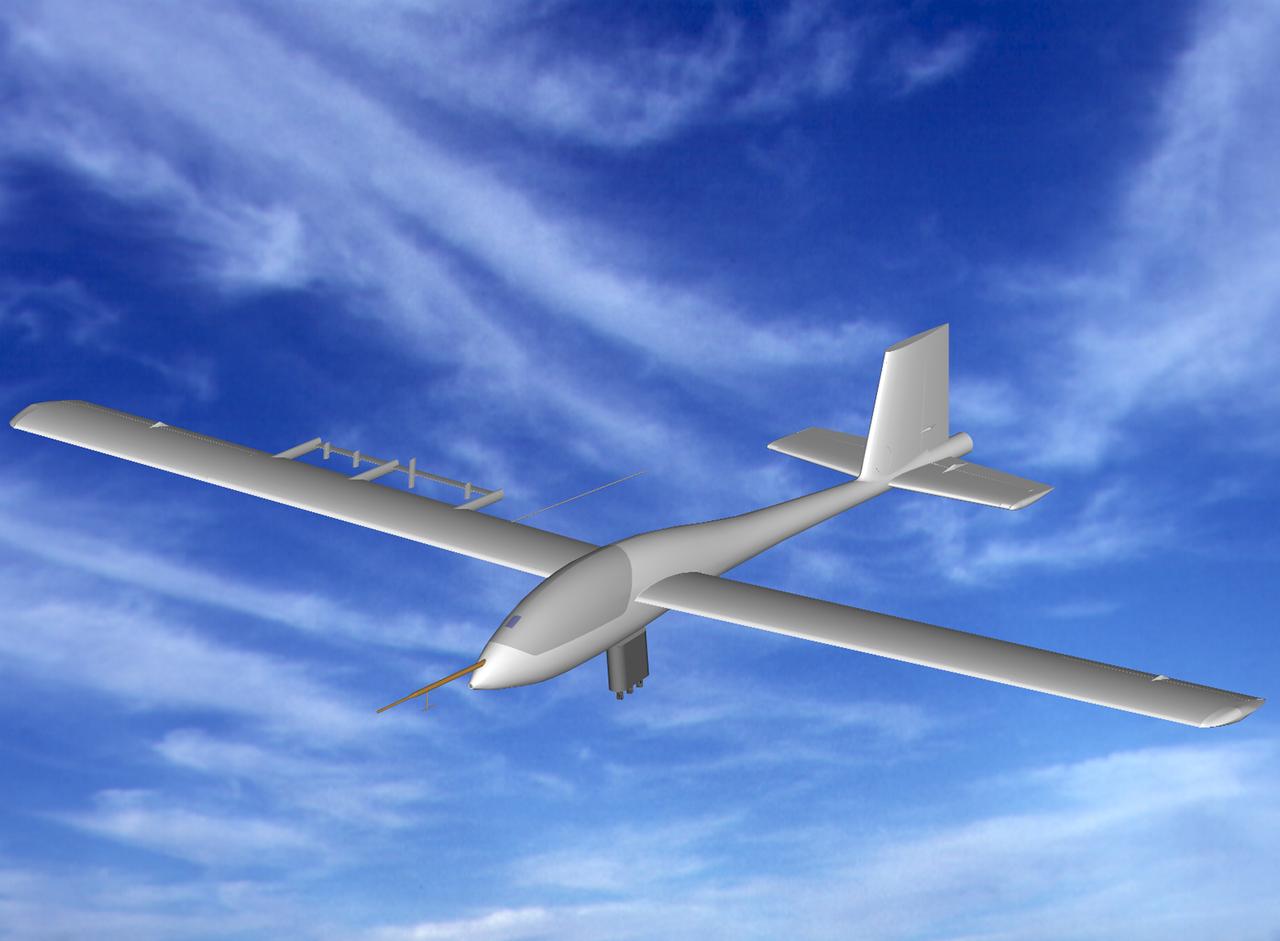
Computer generated image of Apex high-altitude research sailplane in flight
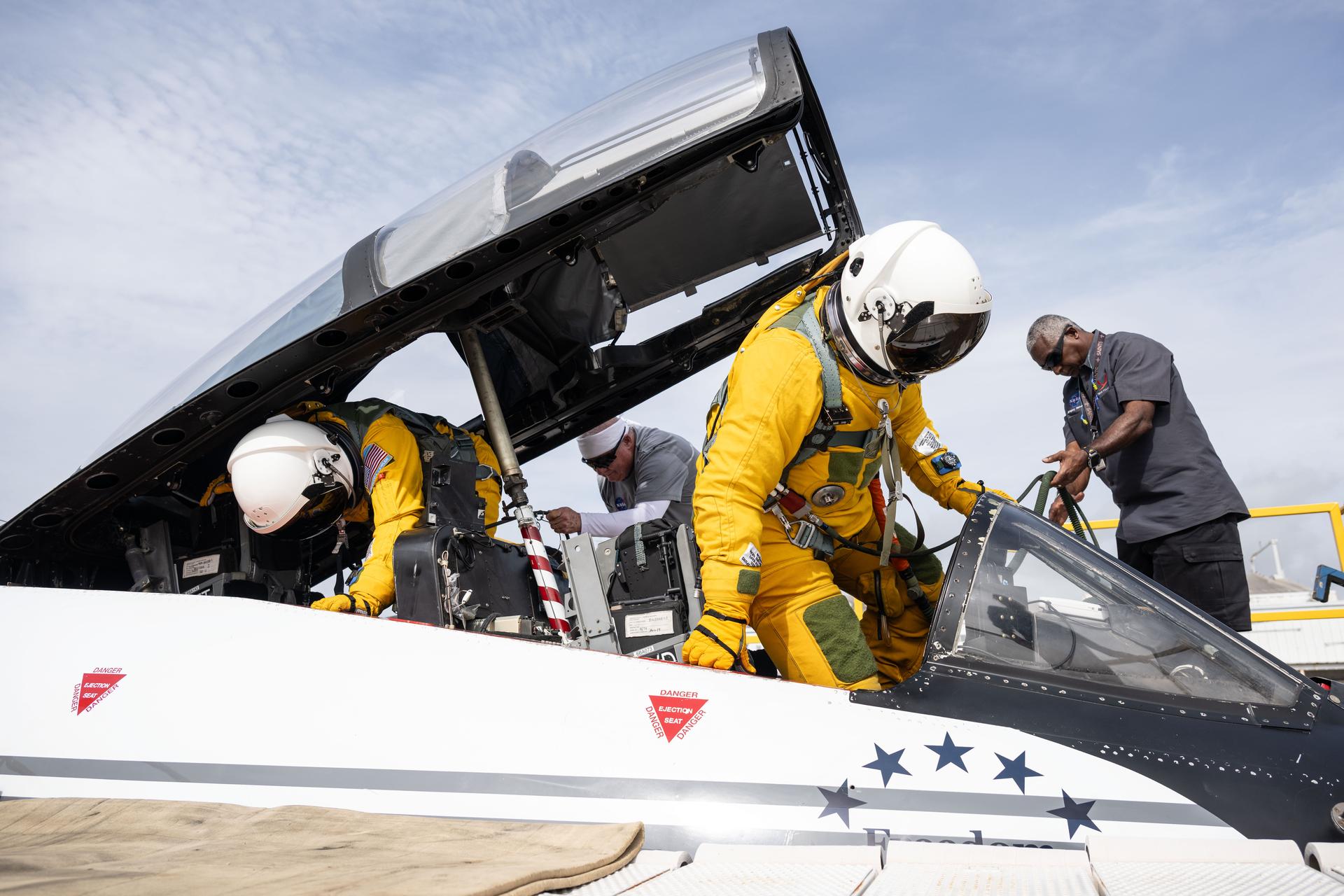
jsc2026e402155 (July 16, 2026) --- NASA astronaut candidate Rebecca Lawler prepares for a training flight aboard NASA’s WB-57 aircraft. These high-altitude flights train the crew to work in a tight environment and operate aircraft systems while in a pressure suit, preparing them for future missions to the International Space Station, Moon, or beyond. Photo: NASA/Josh Valcarcel
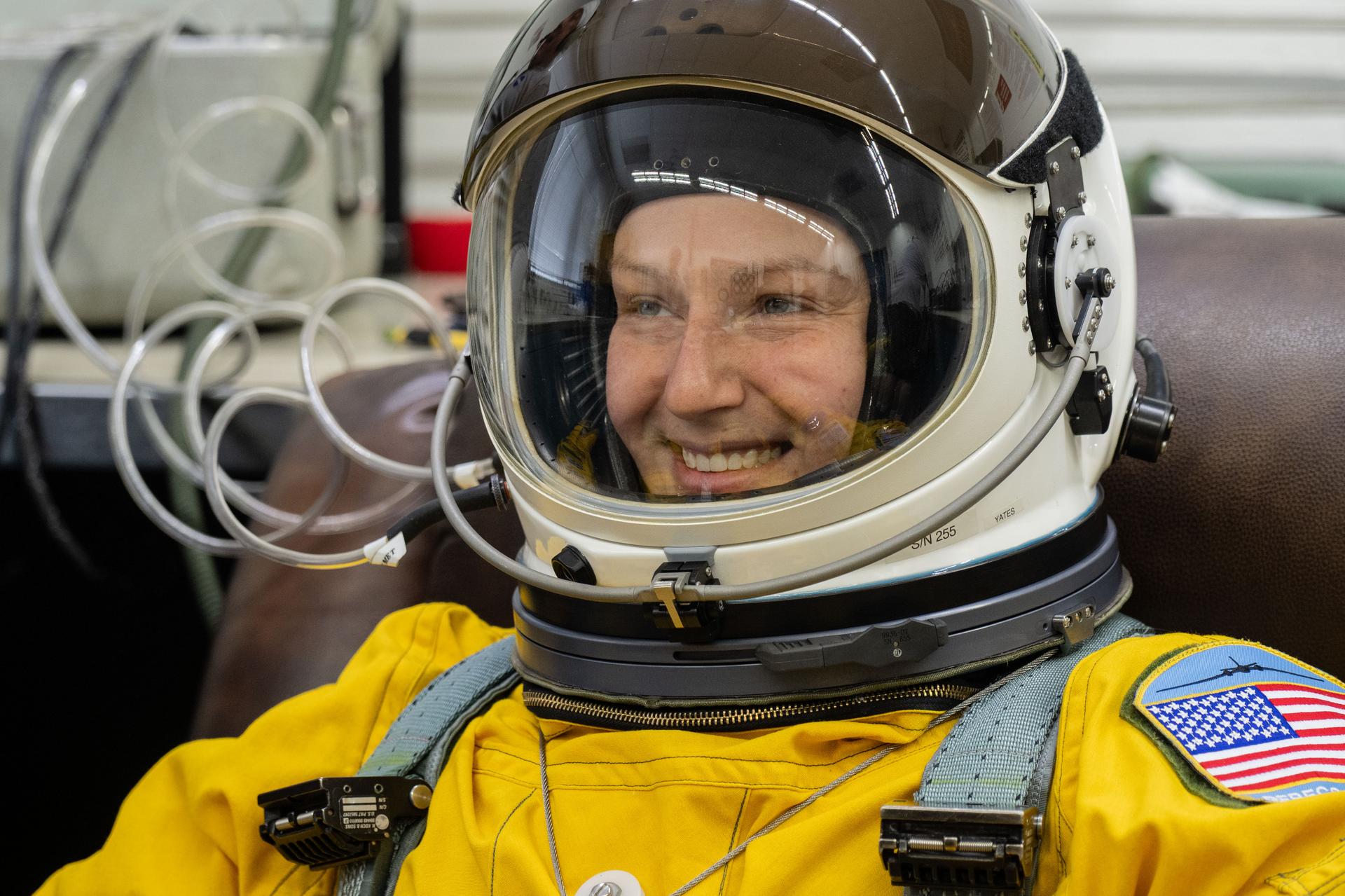
jsc2026e402144 (July 16, 2026) --- NASA astronaut candidate Rebecca Lawler prepares for a training flight aboard NASA’s WB-57 aircraft. These high-altitude flights train the crew to work in a tight environment and operate aircraft systems while in a pressure suit, preparing them for future missions to the International Space Station, Moon, or beyond. Photo: NASA/Josh Valcarcel
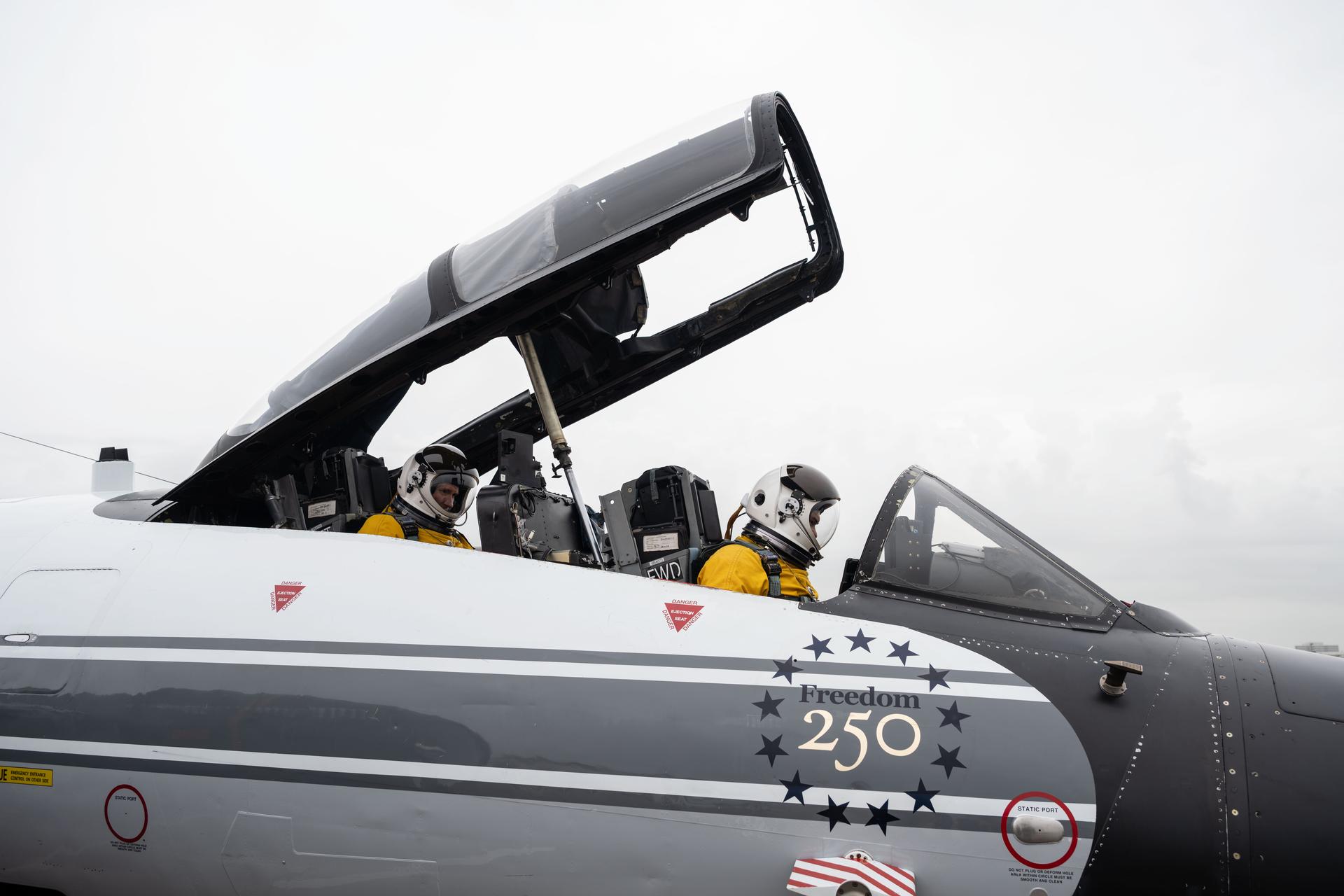
jsc2026e401991 (July 15, 2026) --- NASA astronaut candidate Adam Fuhrmann prepares for a training flight aboard NASA’s WB-57 aircraft. These high-altitude flights train the crew to work in a tight environment and operate aircraft systems while in a pressure suit, preparing them for future missions to the International Space Station, Moon, or beyond. Photo: NASA/Josh Valcarcel
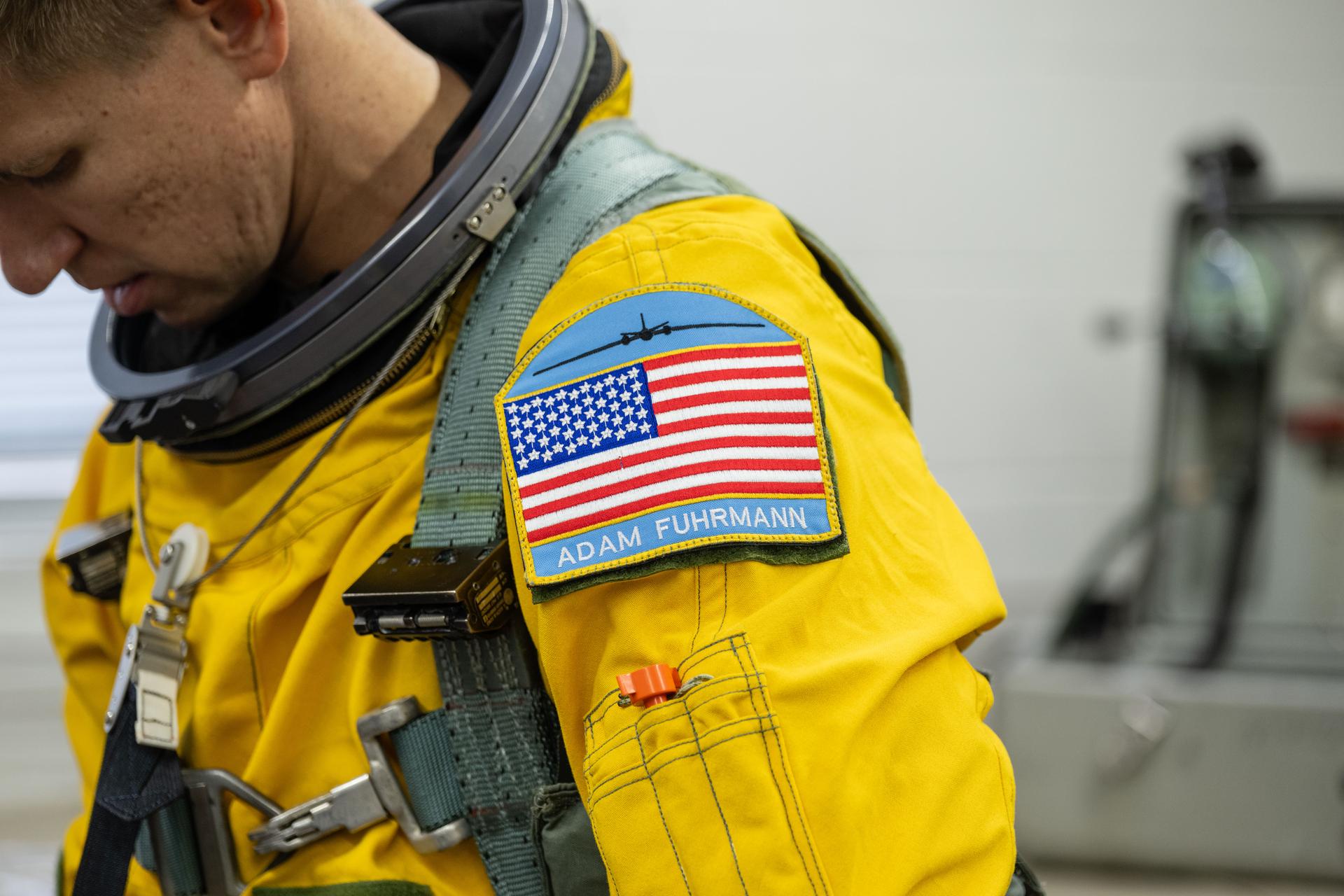
jsc2026e402008 (July 15, 2026) --- NASA astronaut candidate Adam Fuhrmann prepares for a training flight aboard NASA’s WB-57 aircraft. These high-altitude flights train the crew to work in a tight environment and operate aircraft systems while in a pressure suit, preparing them for future missions to the International Space Station, Moon, or beyond. Photo: NASA/Josh Valcarcel
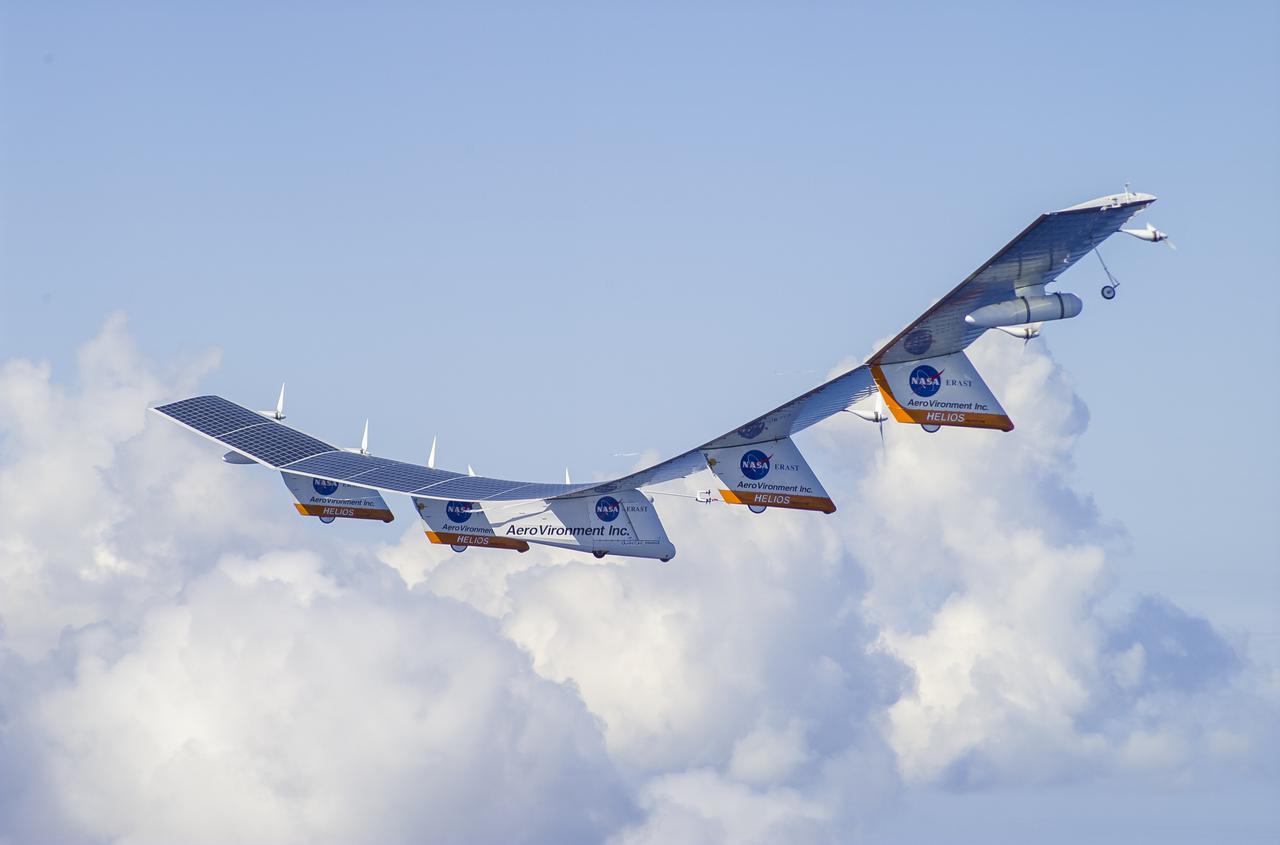
The AeroVironment Helios high-altitude, solar-powered aircraft flies in Kauai, Hawaii. Helios reached 96,300 feet altitude, the record for sustained, level flight for a winged aircraft.

ER-2 tail number 809, is one of two Airborne Science ER-2s used as science platforms by Dryden. The aircraft are platforms for a variety of high-altitude science missions flown over various parts of the world. They are also used for earth science and atmospheric sensor research and development, satellite calibration and data validation. The ER-2s are capable of carrying a maximum payload of 2,600 pounds of experiments in a nose bay, the main equipment bay behind the cockpit, two wing-mounted superpods and small underbody and trailing edges. Most ER-2 missions last about six hours with ranges of about 2,200 nautical miles. The aircraft typically fly at altitudes above 65,000 feet. On November 19, 1998, the ER-2 set a world record for medium weight aircraft reaching an altitude of 68,700 feet. The aircraft is 63 feet long, with a wingspan of 104 feet. The top of the vertical tail is 16 feet above ground when the aircraft is on the bicycle-type landing gear. Cruising speeds are 410 knots, or 467 miles per hour, at altitude. A single General Electric F118 turbofan engine rated at 17,000 pounds thrust powers the ER-2.

ER-2 tail number 806, is one of two Airborne Science ER-2s used as science platforms by Dryden. The aircraft are platforms for a variety of high-altitude science missions flown over various parts of the world. They are also used for earth science and atmospheric sensor research and development, satellite calibration and data validation. The ER-2s are capable of carrying a maximum payload of 2,600 pounds of experiments in a nose bay, the main equipment bay behind the cockpit, two wing-mounted superpods and small underbody and trailing edges. Most ER-2 missions last about six hours with ranges of about 2,200 nautical miles. The aircraft typically fly at altitudes above 65,000 feet. On November 19, 1998, the ER-2 set a world record for medium weight aircraft reaching an altitude of 68,700 feet. The aircraft is 63 feet long, with a wingspan of 104 feet. The top of the vertical tail is 16 feet above ground when the aircraft is on the bicycle-type landing gear. Cruising speeds are 410 knots, or 467 miles per hour, at altitude. A single General Electric F-118 turbofan engine rated at 17,000 pounds thrust powers the ER-2.
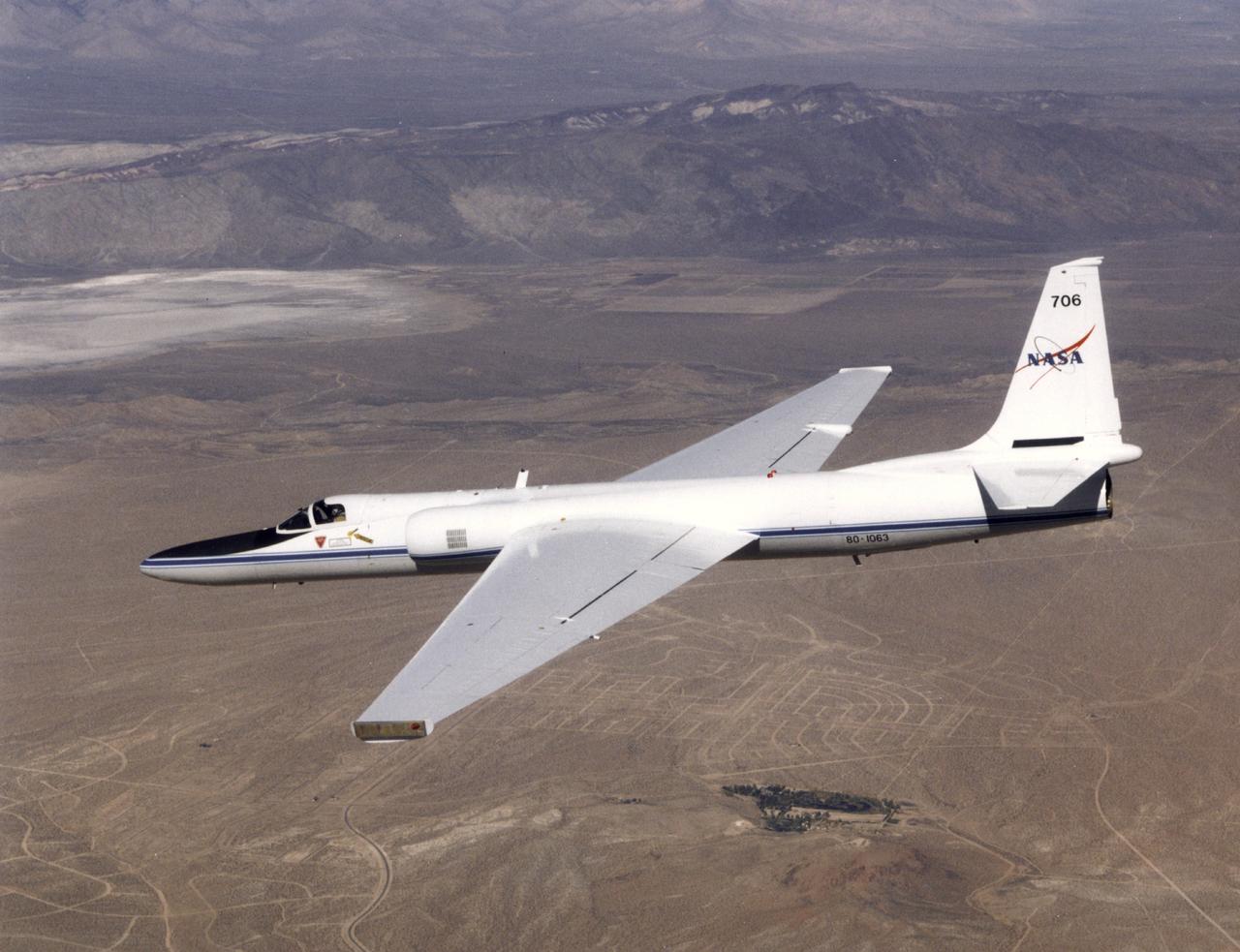
ER-2 tail number 706, was one of two Airborne Science ER-2s used as science platforms by Dryden. The aircraft were platforms for a variety of high-altitude science missions flown over various parts of the world. They were also used for earth science and atmospheric sensor research and development, satellite calibration and data validation.

ER-2 tail number 706, was one of two Airborne Science ER-2s used as science platforms by Dryden. The aircraft were platforms for a variety of high-altitude science missions flown over various parts of the world. They were also used for earth science and atmospheric sensor research and development, satellite calibration and data validation.
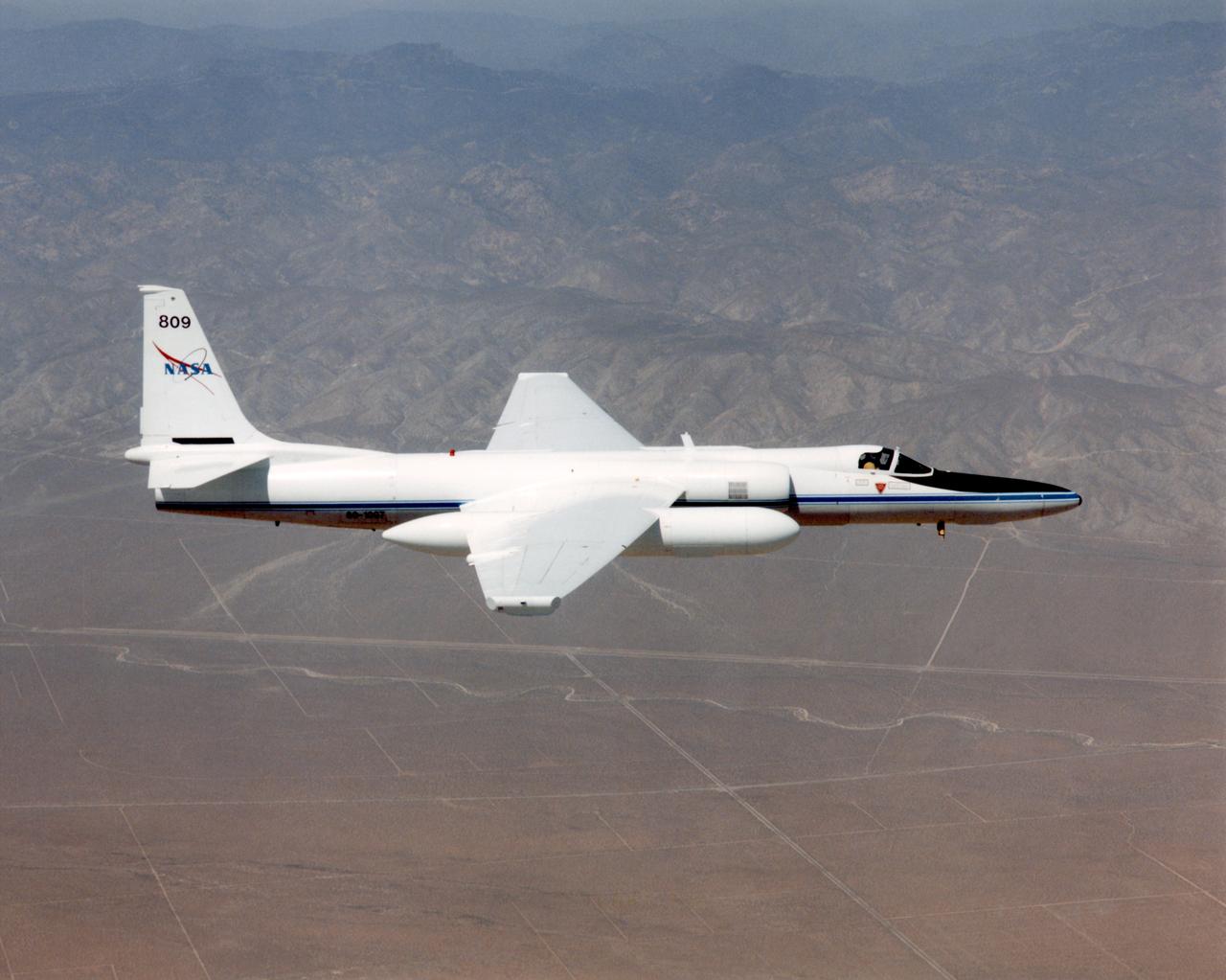
ER-2C tail number 809, was one of two Airborne Science ER-2Cs used as science platforms by Dryden. The aircraft were platforms for a variety of high-altitude science missions flown over various parts of the world. They were also used for earth science and atmospheric sensor research and development, satellite calibration and data validation. The ER-2Cs were capable of carrying a maximum payload of 2,600 pounds of experiments in a nose bay, the main equipment bay behind the cockpit, two wing-mounted superpods and small underbody and trailing edges. Most ER-2C missions lasted about six hours with ranges of about 2,200 nautical miles. The aircraft typically flew at altitudes above 65,000 feet. On November 19, 1998, the ER-2C set a world record for medium weight aircraft reaching an altitude of 68,700 feet. The aircraft was 63 feet long, with a wingspan of 104 feet. The top of the vertical tail was 16 feet above ground when the aircraft was on the bicycle-type landing gear. Cruising speeds were 410 knots, or 467 miles per hour, at altitude. A single General Electric F-118 turbofan engine rated at 17,000 pounds thrust powers the ER-2C.
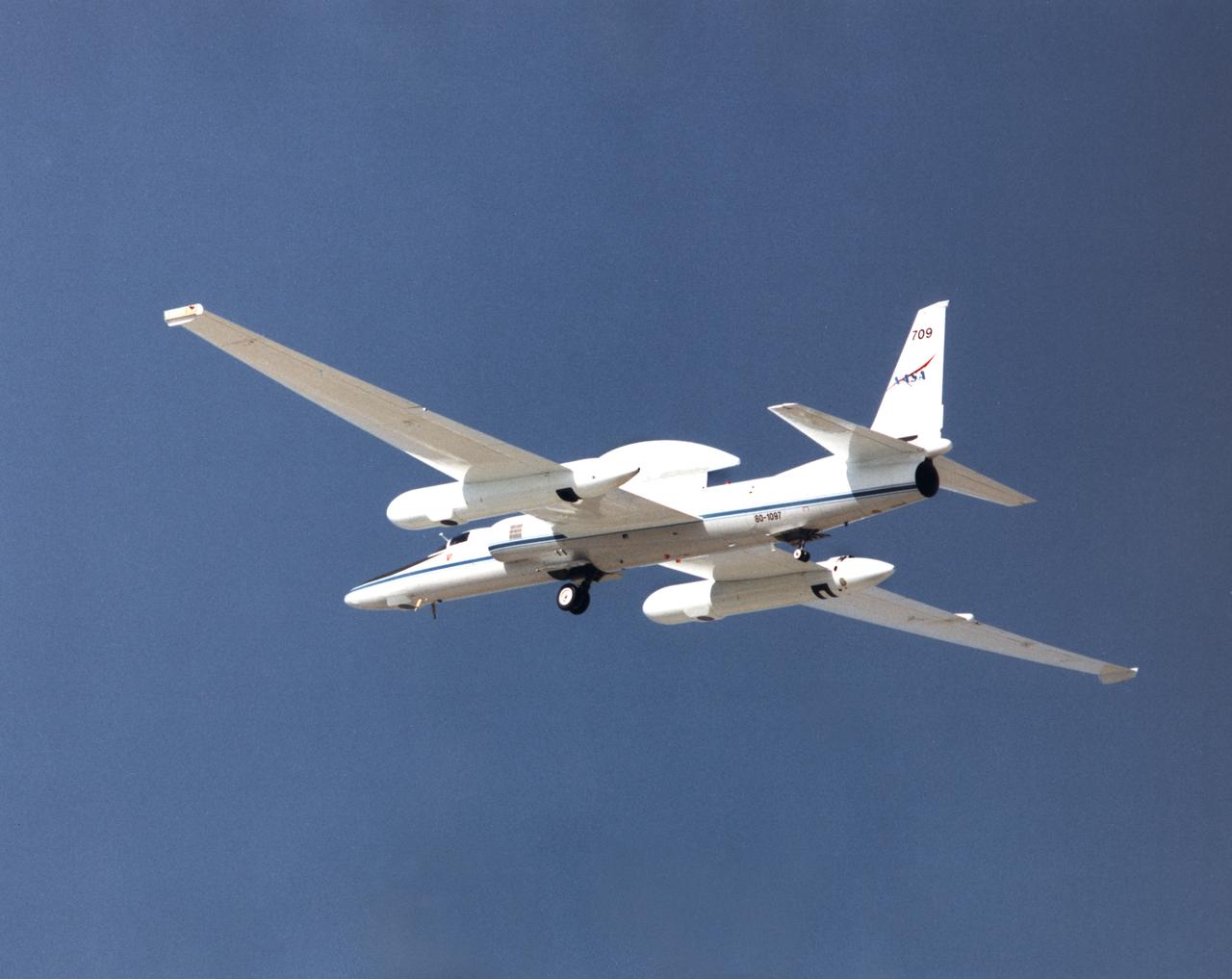
ER-2 tail number 709, was one of two Airborne Science ER-2s used as science platforms by Dryden. The aircraft were platforms for a variety of high-altitude science missions flown over various parts of the world. They were also used for earth science and atmospheric sensor research and development, satellite calibration and data validation.

ER-2 tail number 806, is one of two Airborne Science ER-2s used as science platforms by Dryden. The aircraft are platforms for a variety of high-altitude science missions flown over various parts of the world. They are also used for earth science and atmospheric sensor research and development, satellite calibration and data validation. The ER-2s are capable of carrying a maximum payload of 2,600 pounds of experiments in a nose bay, the main equipment bay behind the cockpit, two wing-mounted superpods and small underbody and trailing edges. Most ER-2 missions last about six hours with ranges of about 2,200 nautical miles. The aircraft typically fly at altitudes above 65,000 feet. On November 19, 1998, the ER-2 set a world record for medium weight aircraft reaching an altitude of 68,700 feet. The aircraft is 63 feet long, with a wingspan of 104 feet. The top of the vertical tail is 16 feet above ground when the aircraft is on the bicycle-type landing gear. Cruising speeds are 410 knots, or 467 miles per hour, at altitude. A single General Electric F-118 turbofan engine rated at 17,000 pounds thrust powers the ER-2.
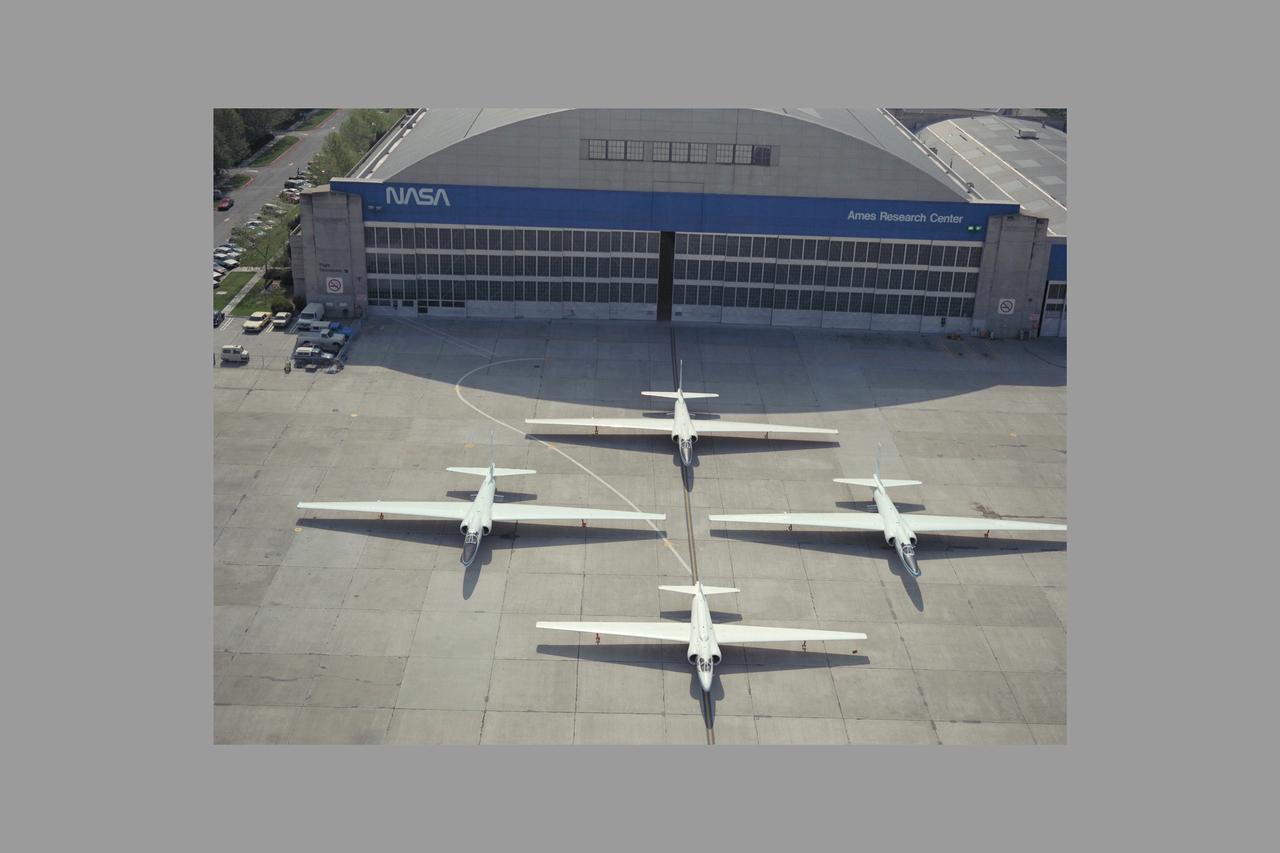
High Altitude MTPE Aircraft on flight line in front of N-211 hangar - three ER-2 and retiring U-2
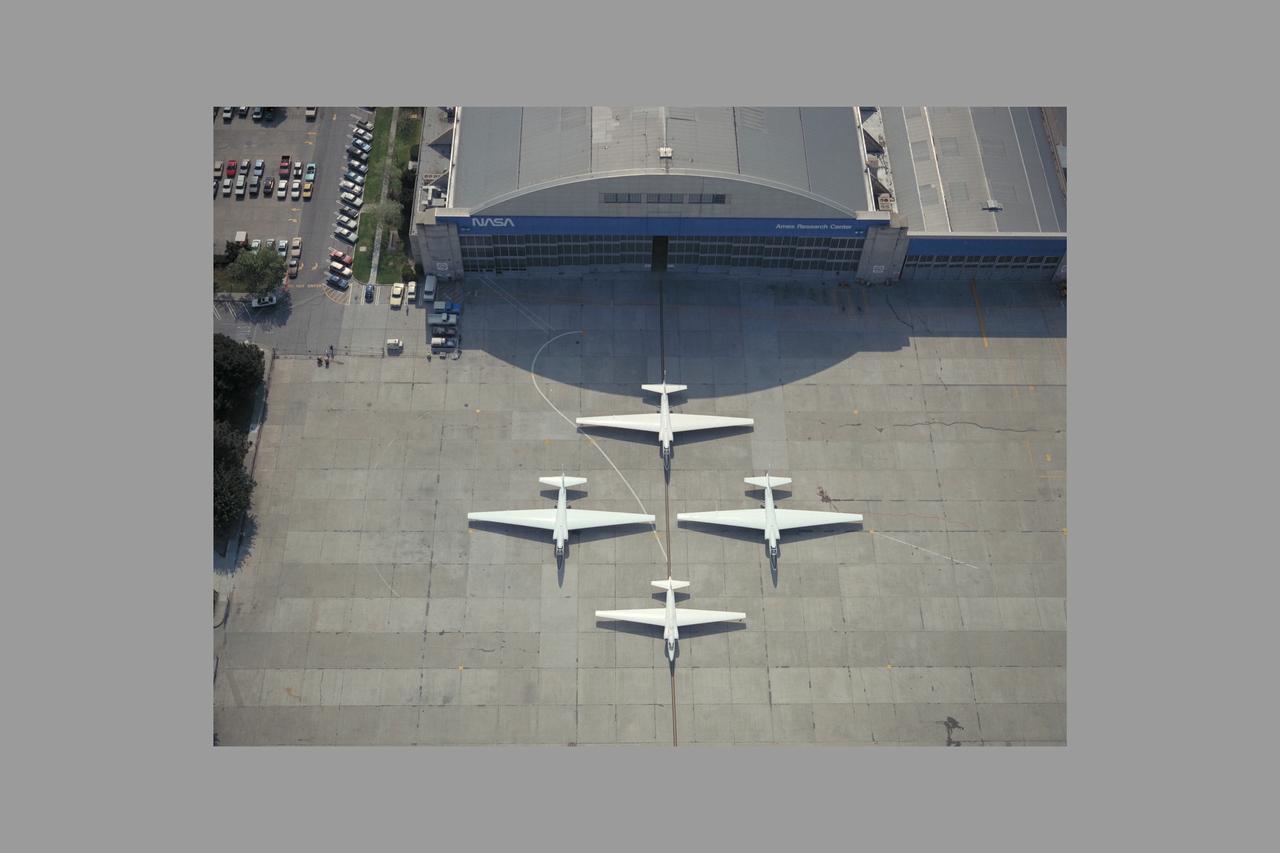
High Altitude MTPE Aircraft on flight line in front of N-211 hangar - three ER-2 and retiring U-2
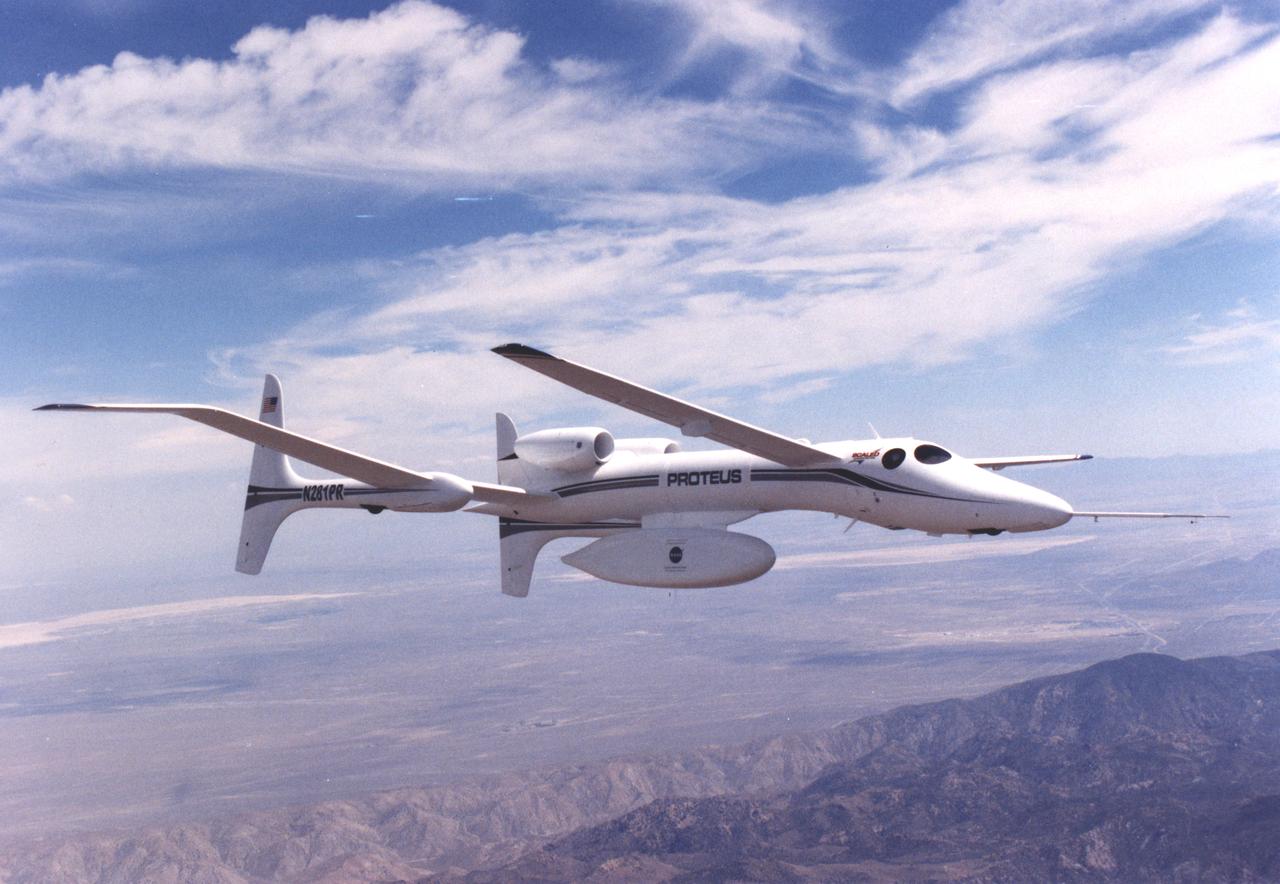
The uniquely shaped Proteus high-altitude aircraft soars over California’s Mojave Desert during a July 1999 flight.
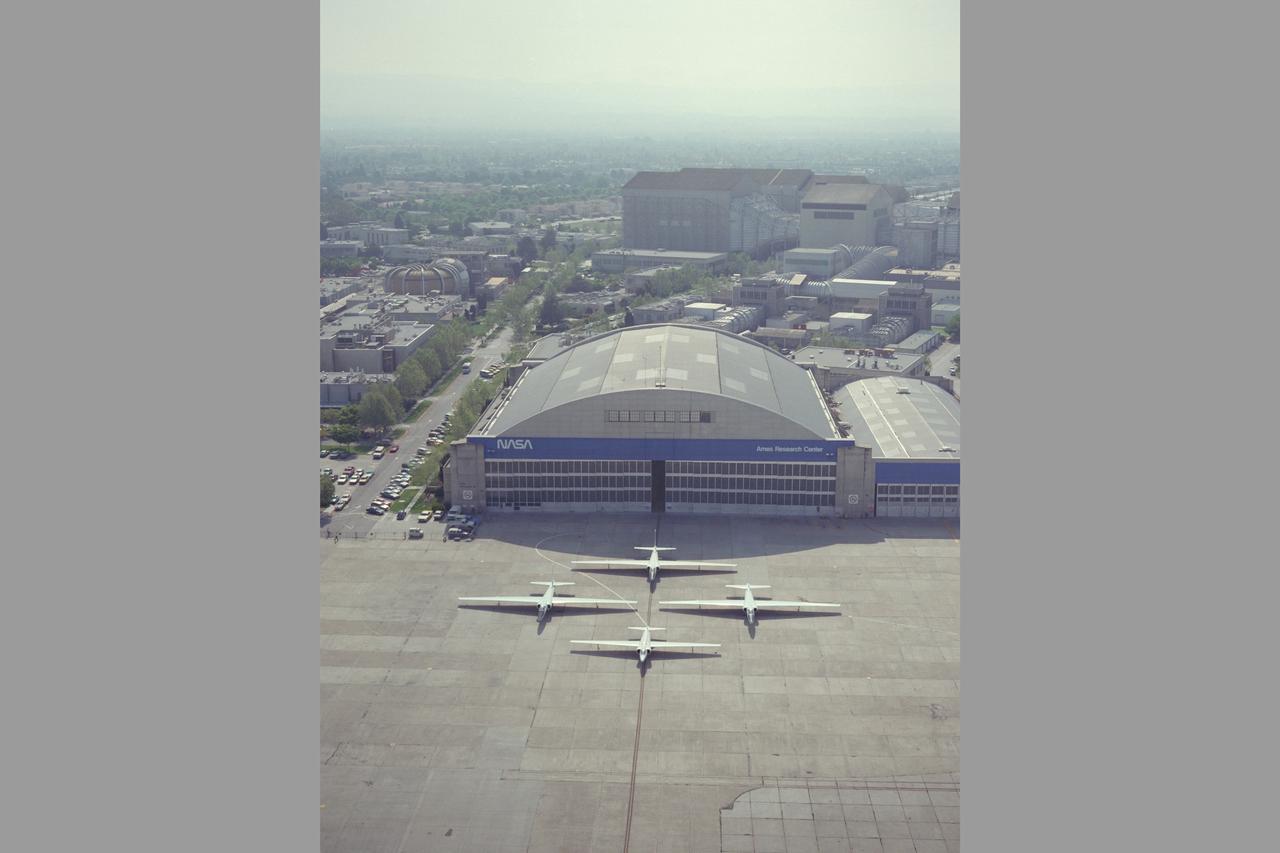
High Altitude MTPE Aircraft on flight line in front of N-211 hangar - three ER-2 and retiring U-2
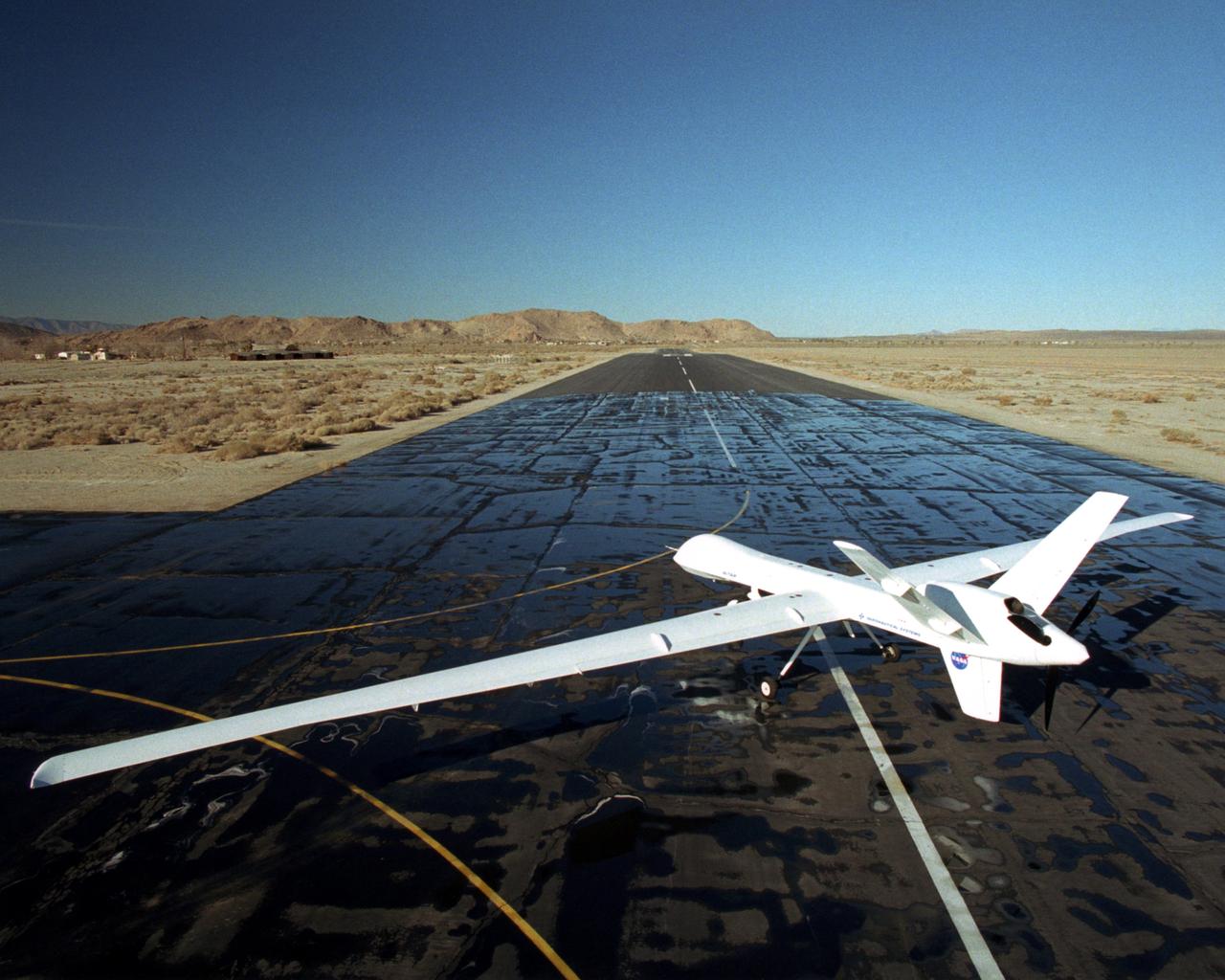
The long, narrow wings of NASA's Altair are designed to allow the unmanned aerial vehicle (UAV) to maintain long-duration flight at high altitudes.
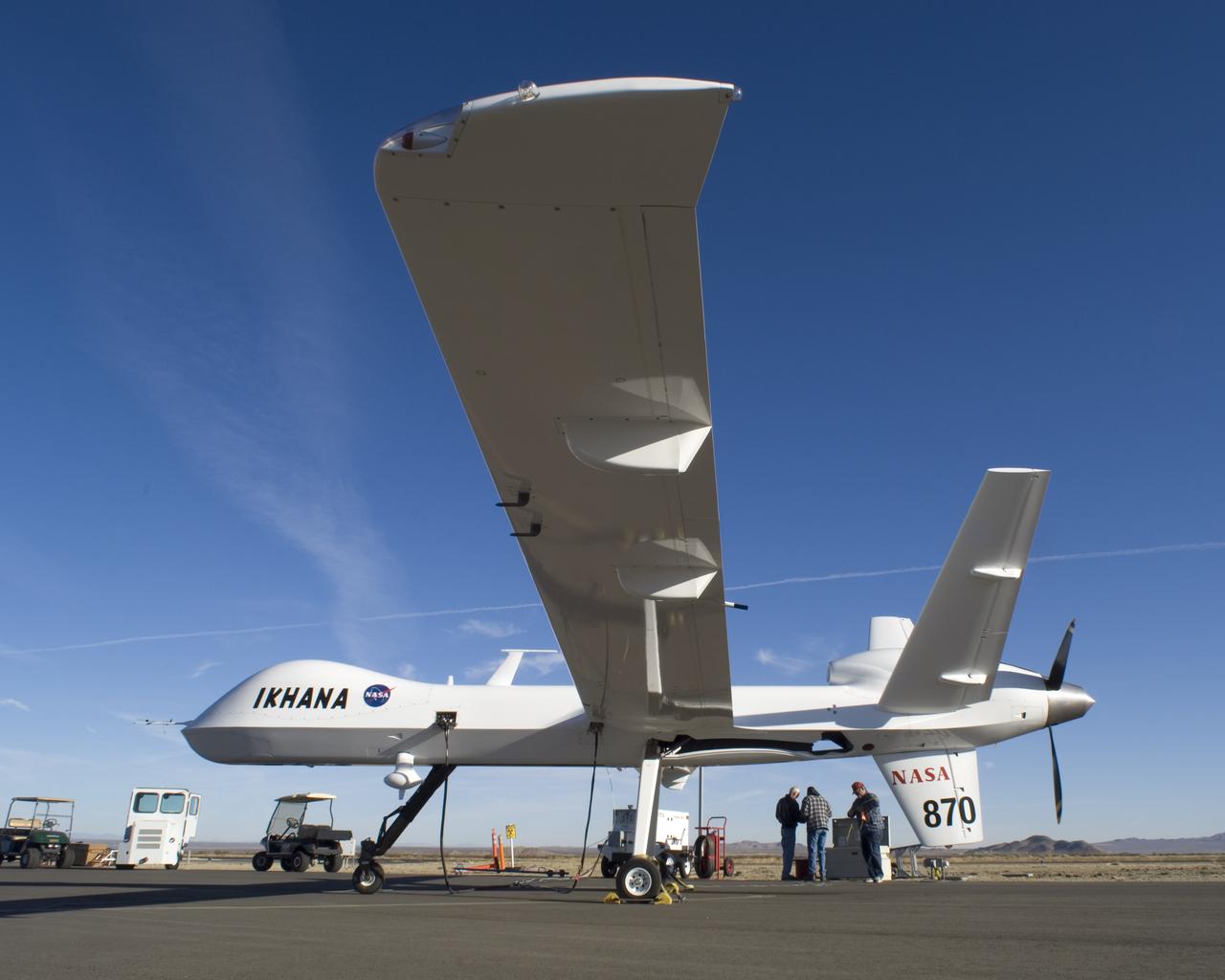
Bearing NASA tail number 870, NASA's Ikhana unmanned aircraft is a civil version of the Predator B designed for high-altitude, long-endurance science flights.
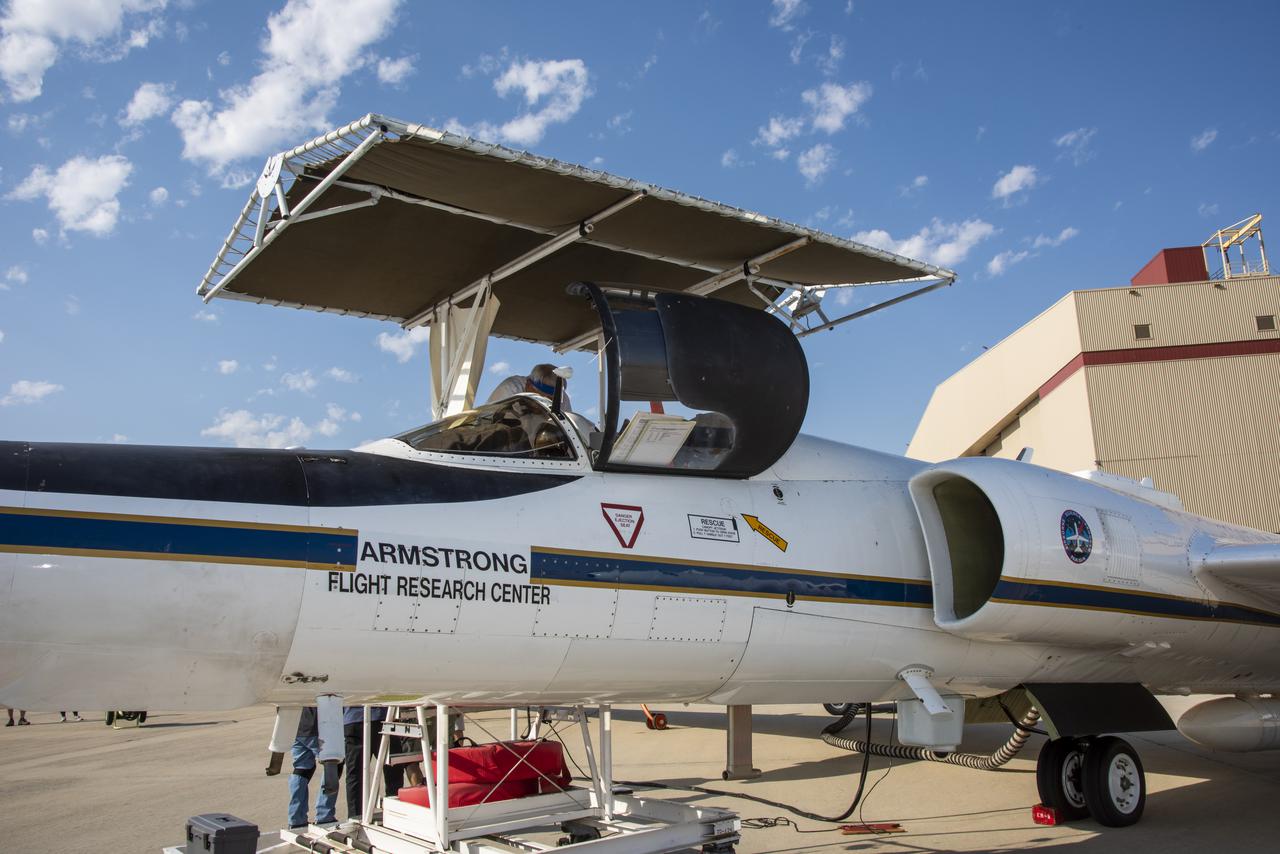
NASA's Armstrong Flight Research Center ER-2 #809 high-altitude aircraft prepared for Dynamics and Chemistry of the Summer Stratosphere (DCOTSS) science flights in Palmdale, CA on June 17, 2021
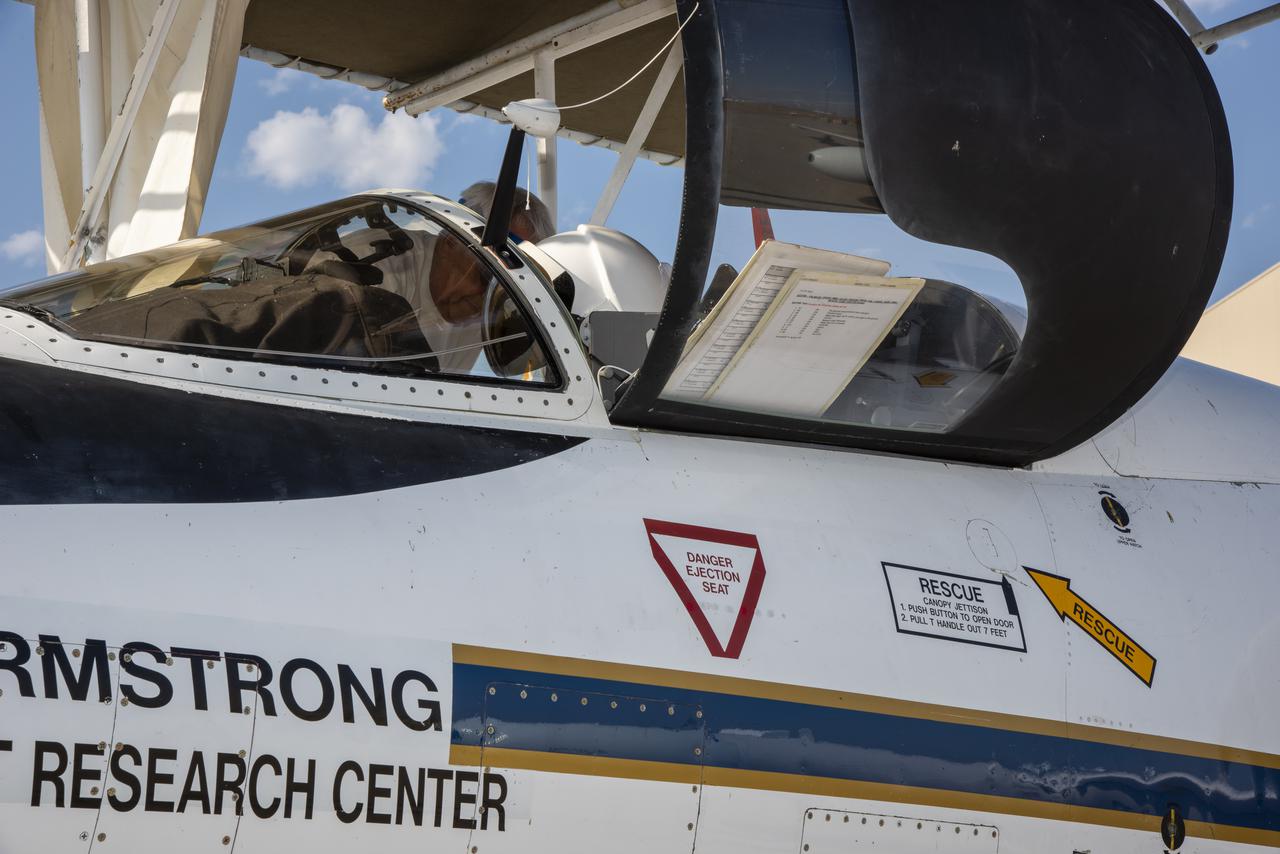
NASA's Armstrong Flight Research Center ER-2 #809 high-altitude aircraft prepared for Dynamics and Chemistry of the Summer Stratosphere (DCOTSS) science flights in Palmdale, CA on June 17, 2021.
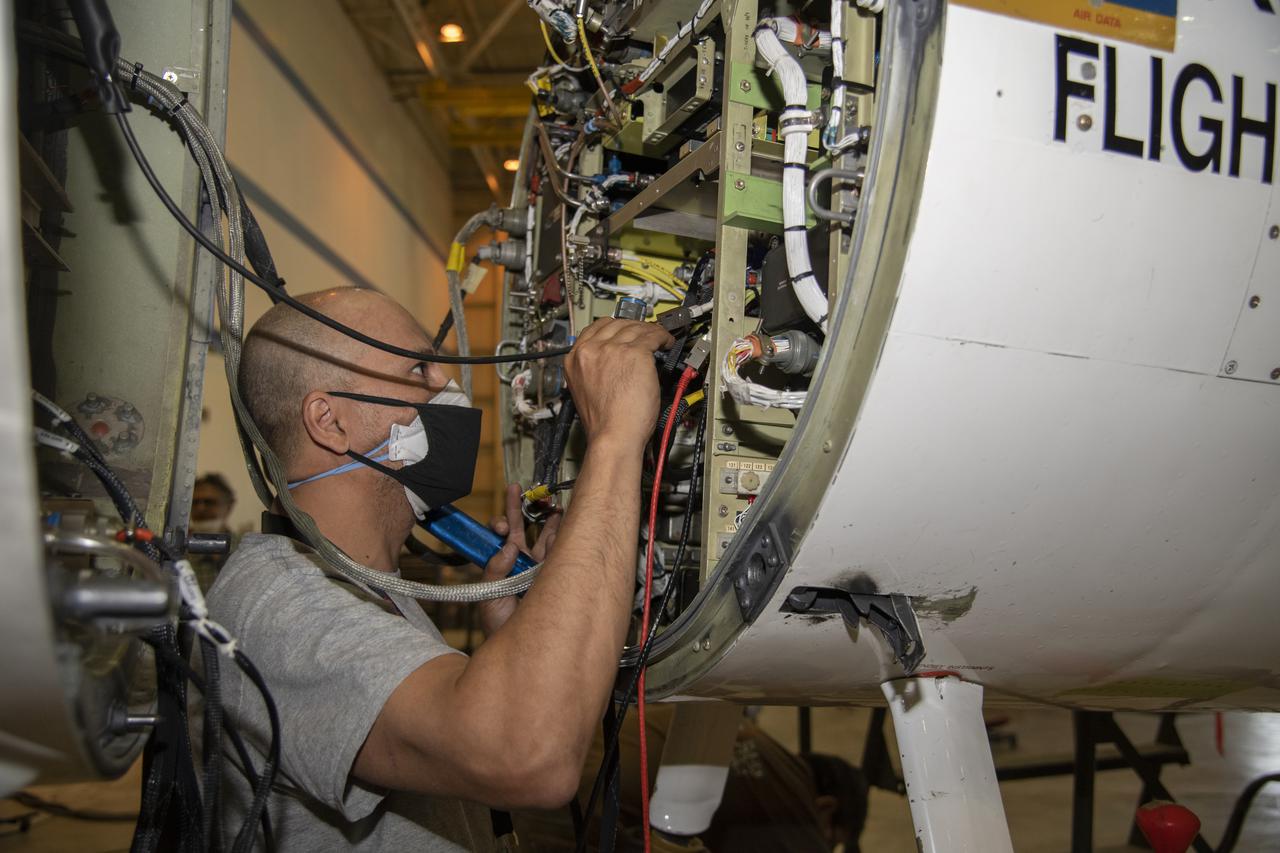
NASA’s Armstrong Flight Research Center ER-2 #809 high-altitude aircraft maintained by avionics technician Gregory Bantalin for Dynamics and Chemistry of the Summer Stratosphere (DCOTSS) science flights.
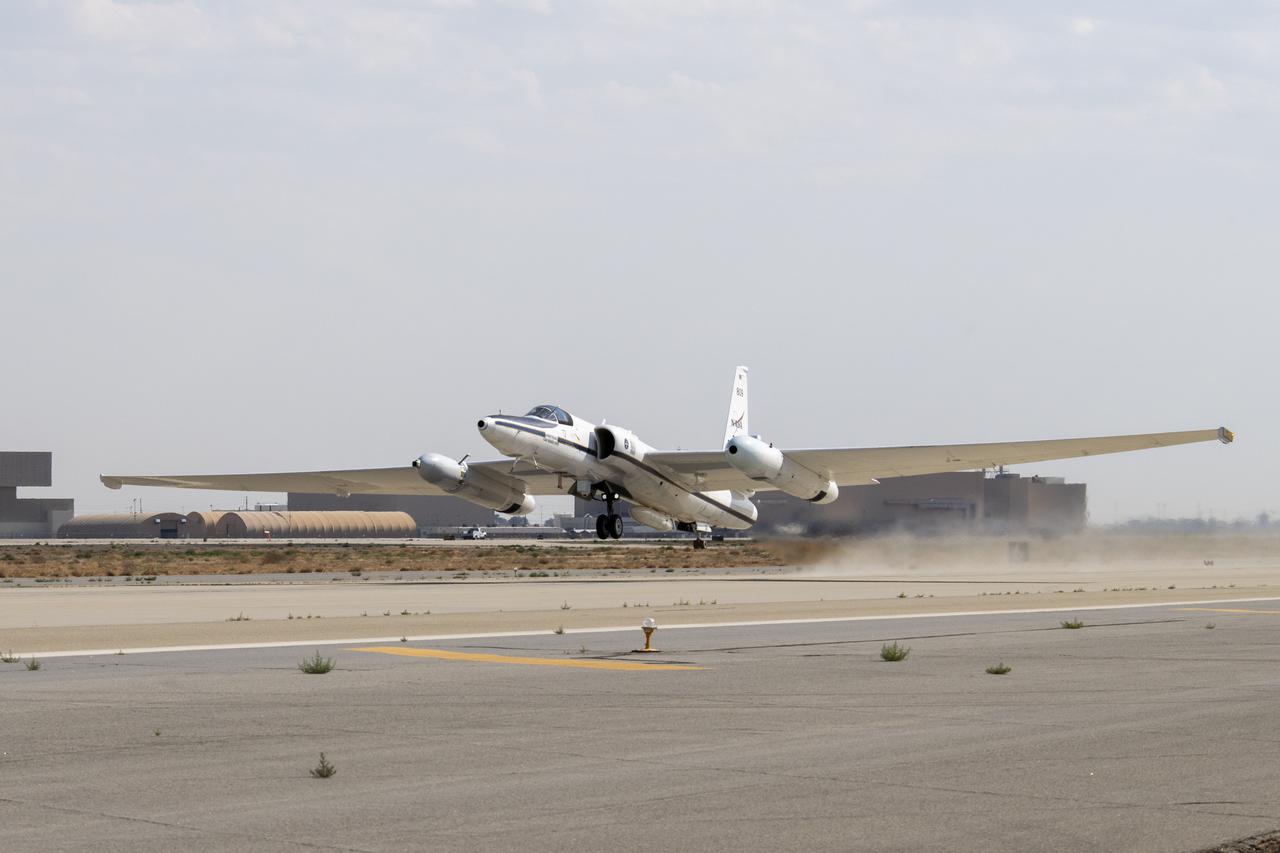
NASA’s Armstrong Flight Research Center ER-2 #809 high-altitude aircraft taking off for Dynamics and Chemistry of the Summer Stratosphere (DCOTSS) science flights in Palmdale, CA on June 17, 2021.
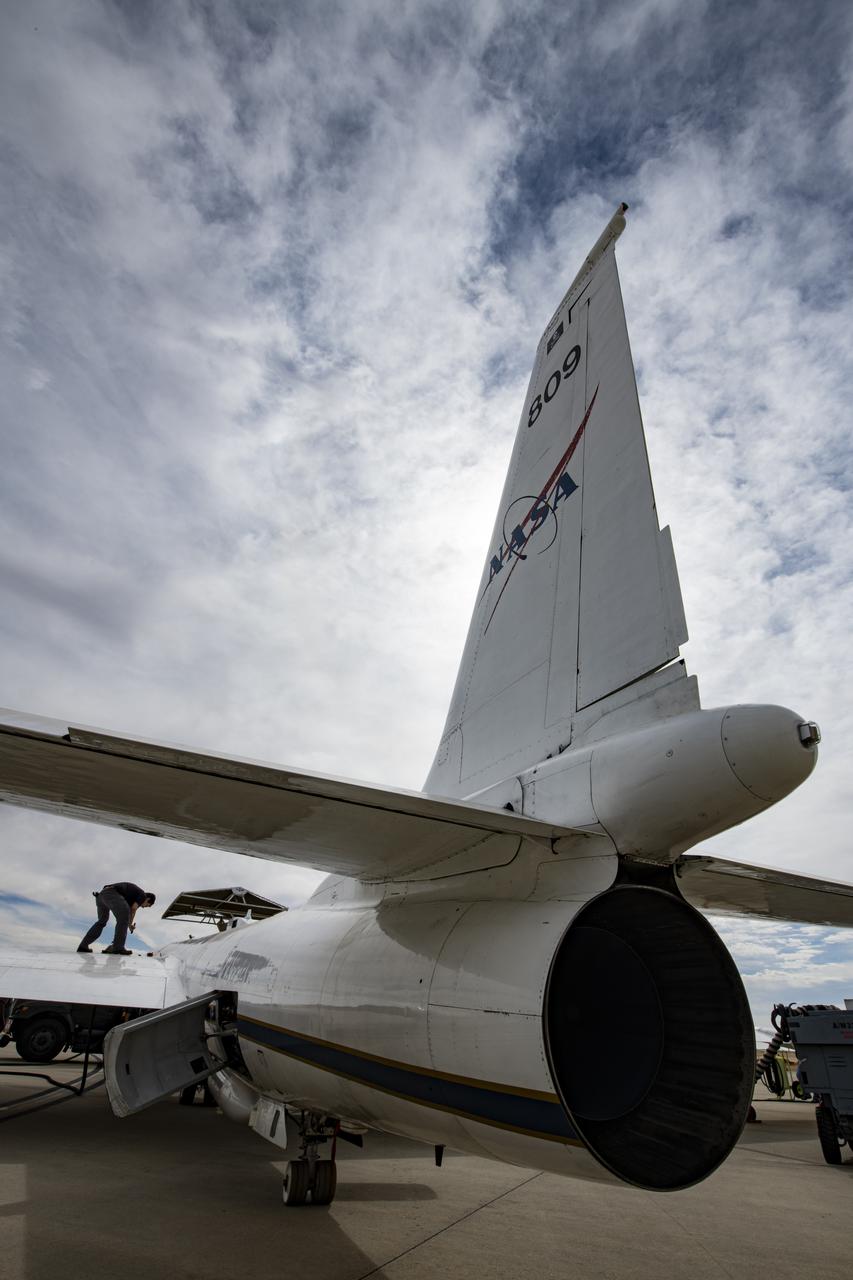
NASA's Armstrong Flight Research Center ER-2 #809 high-altitude aircraft prepped for Dynamics and Chemistry of the Summer Stratosphere (DCOTSS) science flights in Palmdale, CA.
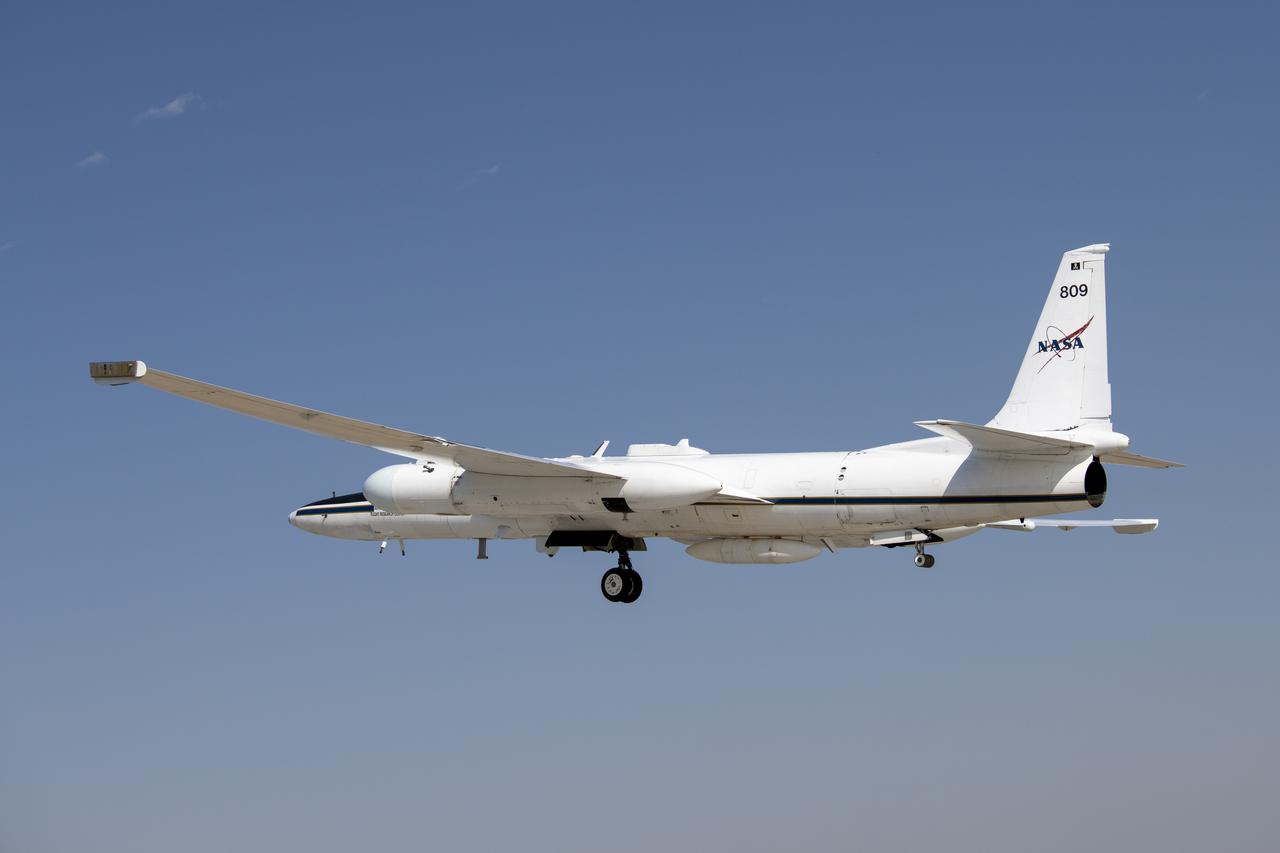
NASA's Armstrong Flight Research Center operates ER-2 #809 high-altitude aircraft for Dynamics and Chemistry of the Summer Stratosphere (DCOTSS) science flights on June 17, 2021.
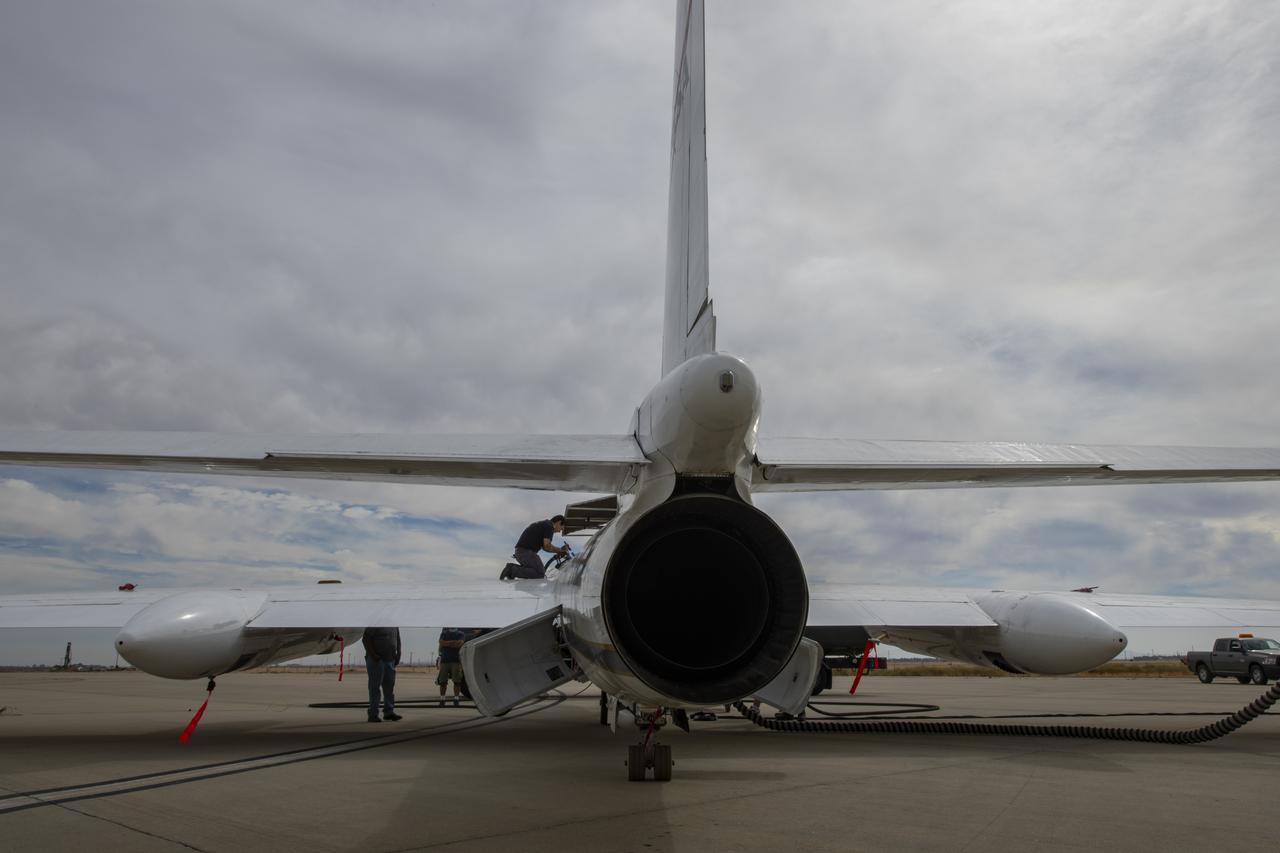
NASA's Armstrong Flight Research Center ER-2 #809 high-altitude aircraft prepped for Dynamics and Chemistry of the Summer Stratosphere (DCOTSS) science flights in Palmdale, CA.
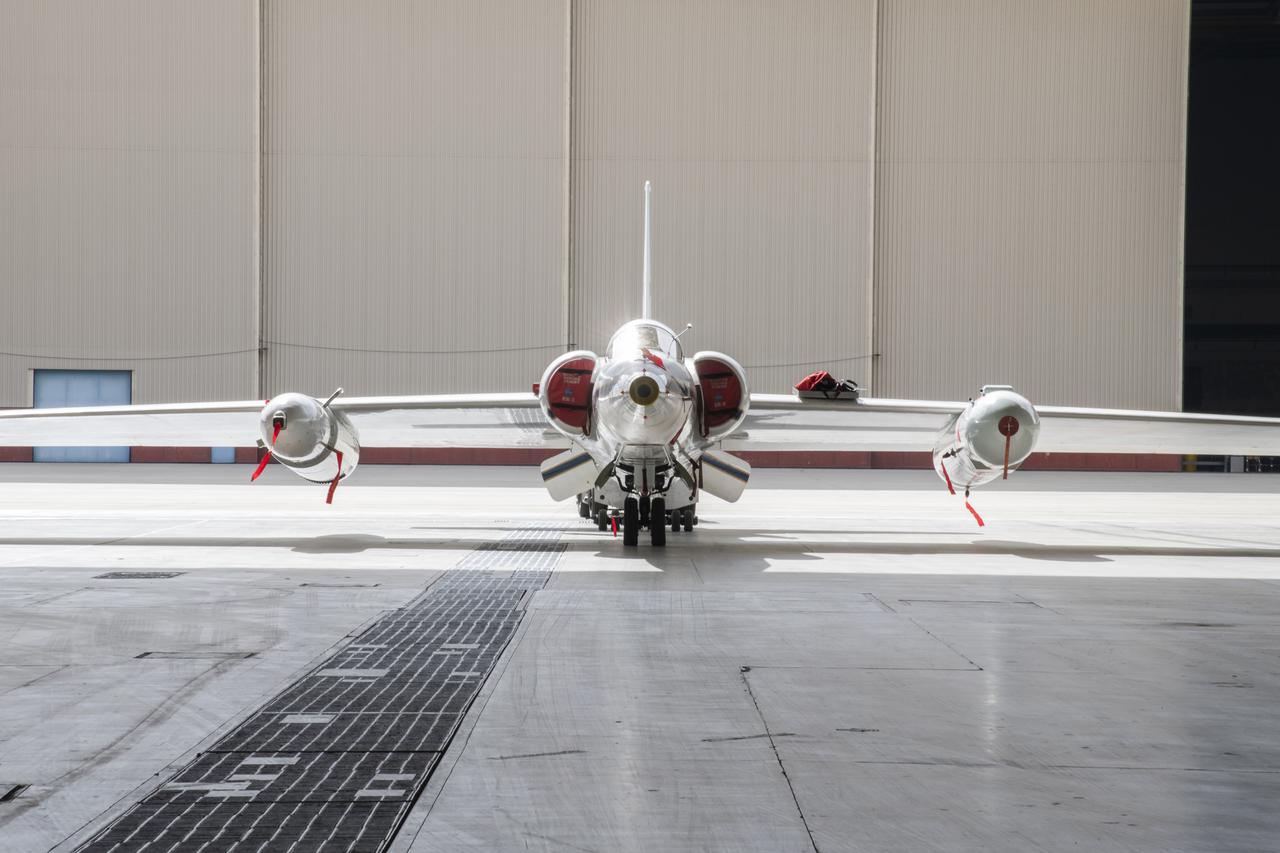
NASA’s Armstrong Flight Research Center ER-2 #809 high-altitude aircraft prepped for Dynamics and Chemistry of the Summer Stratosphere (DCOTSS) science flights in Palmdale, CA.
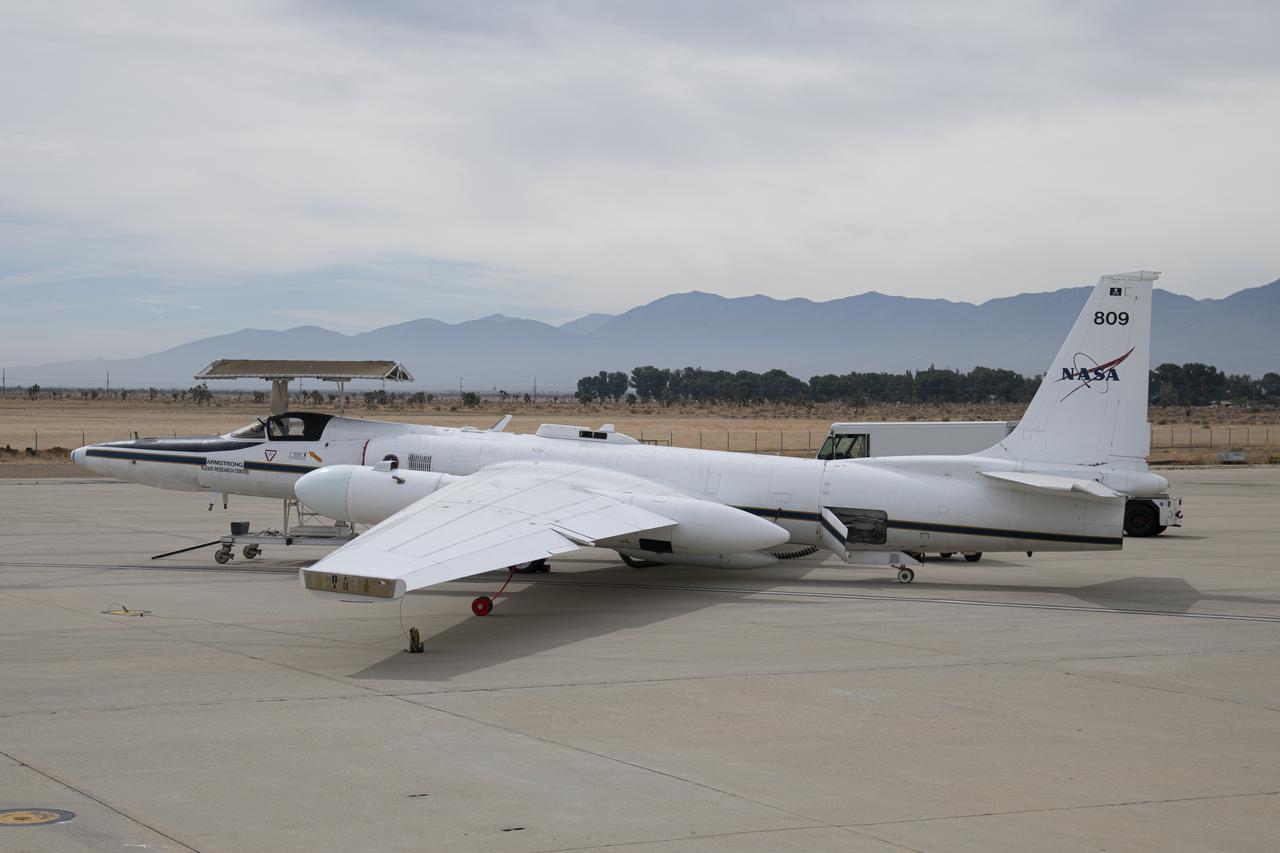
NASA's Armstrong Flight Research Center ER-2 #809 high-altitude aircraft prepped for Dynamics and Chemistry of the Summer Stratosphere (DCOTSS) science flights in Palmdale, CA.
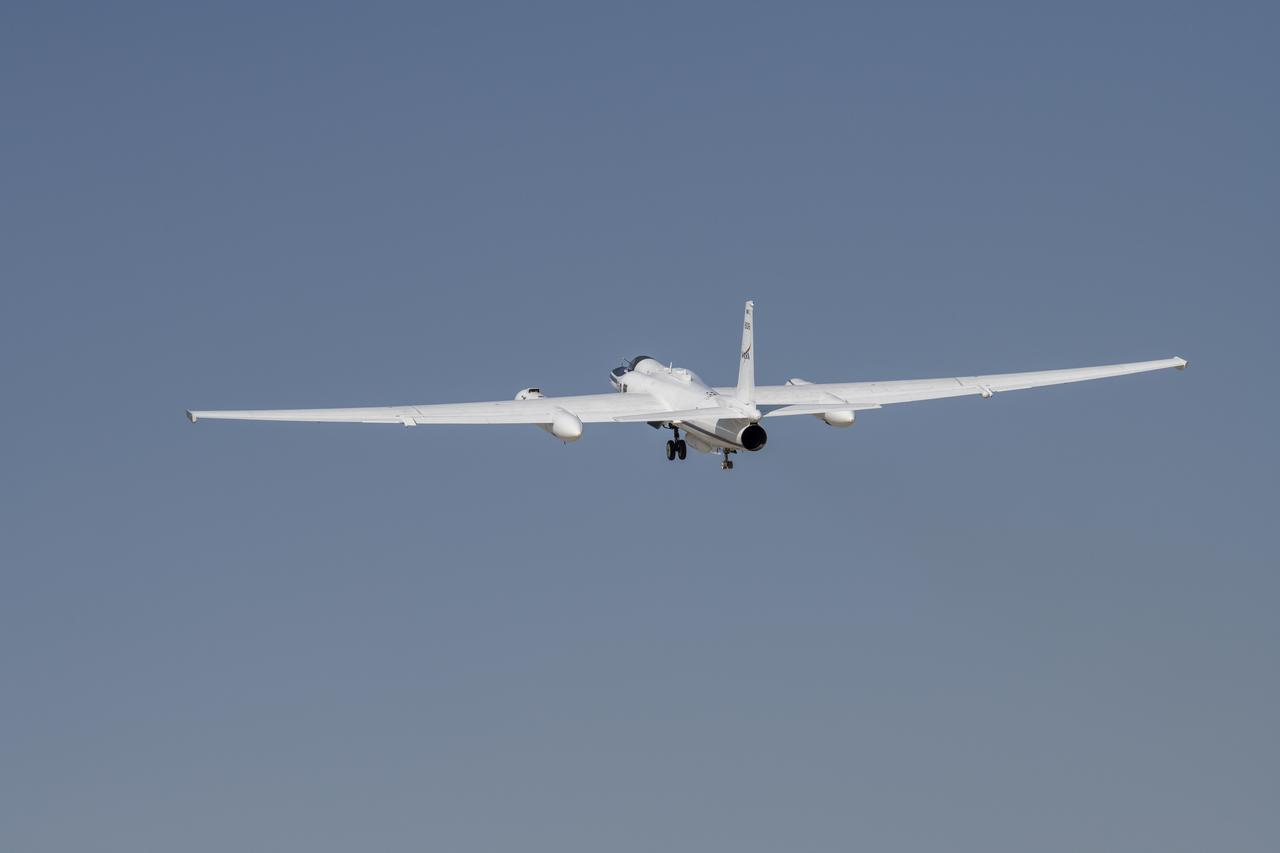
NASA’s Armstrong Flight Research Center operates ER-2 #809 high-altitude aircraft for Dynamics and Chemistry of the Summer Stratosphere (DCOTSS) science flights on June 17, 2021.

CAPE CANAVERAL, Fla. -- Inside the Space Life Sciences Laboratory near NASA’s Kennedy Space Center in Florida, the Mars Simulation Chamber is being prepared for the Microorganisms in the Stratosphere, or MIST, mission support. The chamber allows MIST scientists and engineers to simulate the stratosphere prior to high altitude flight experiments. The MIST mission will fly a small biological payload in low altitudes aboard a blimp in July to measure microbial survival and cellular responses to exposure in the upper atmosphere. Later in the year, the MIST mission will deploy samples at even high altitudes in the stratosphere using scientific balloons. Photo credit: NASA/Daniel Casper
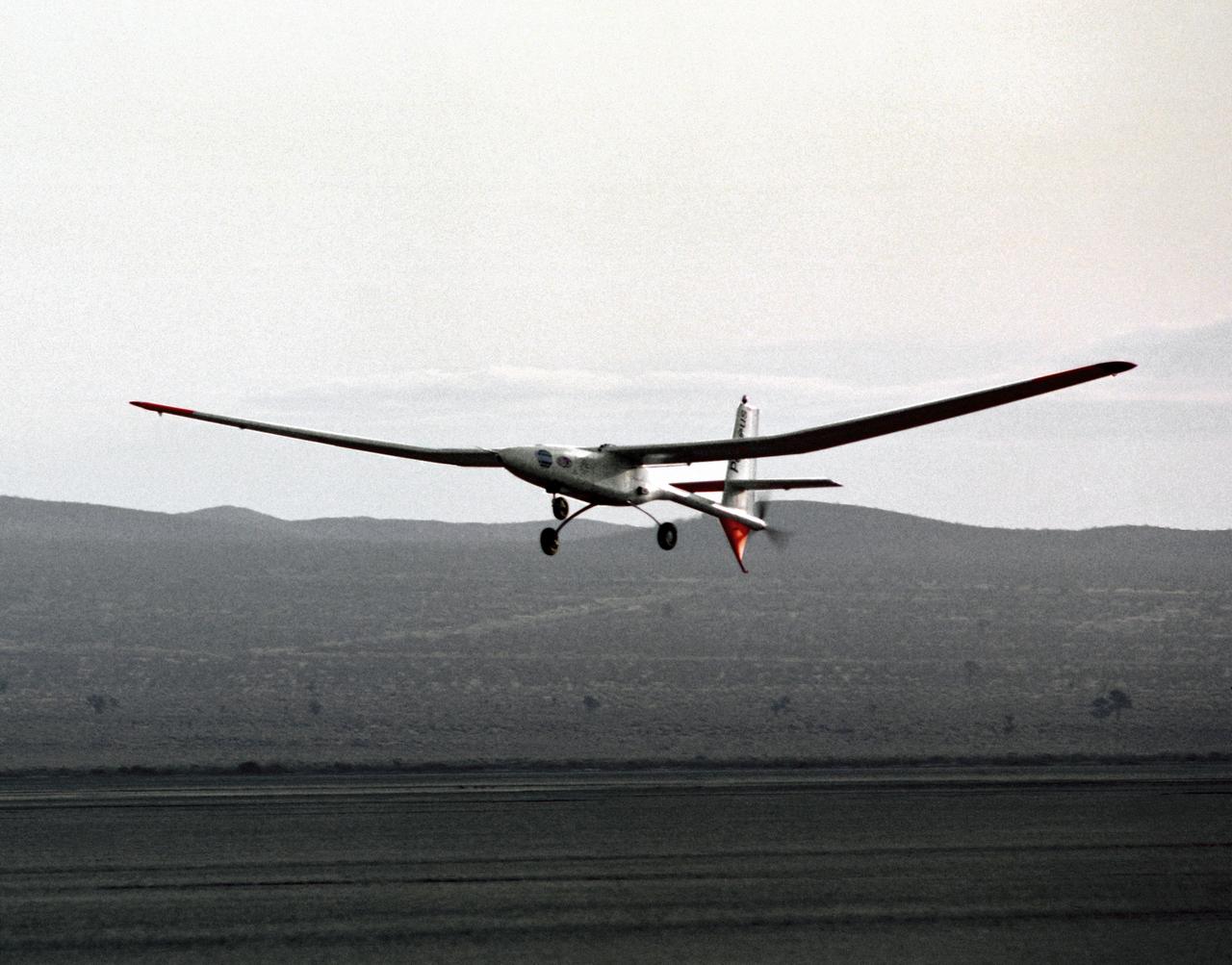
The Perseus proof-of-concept vehicle flies over Rogers Dry Lake at the Dryden Flight Research Center, Edwards, California, to test basic design concepts for the remotely-piloted, high-altitude vehicle.
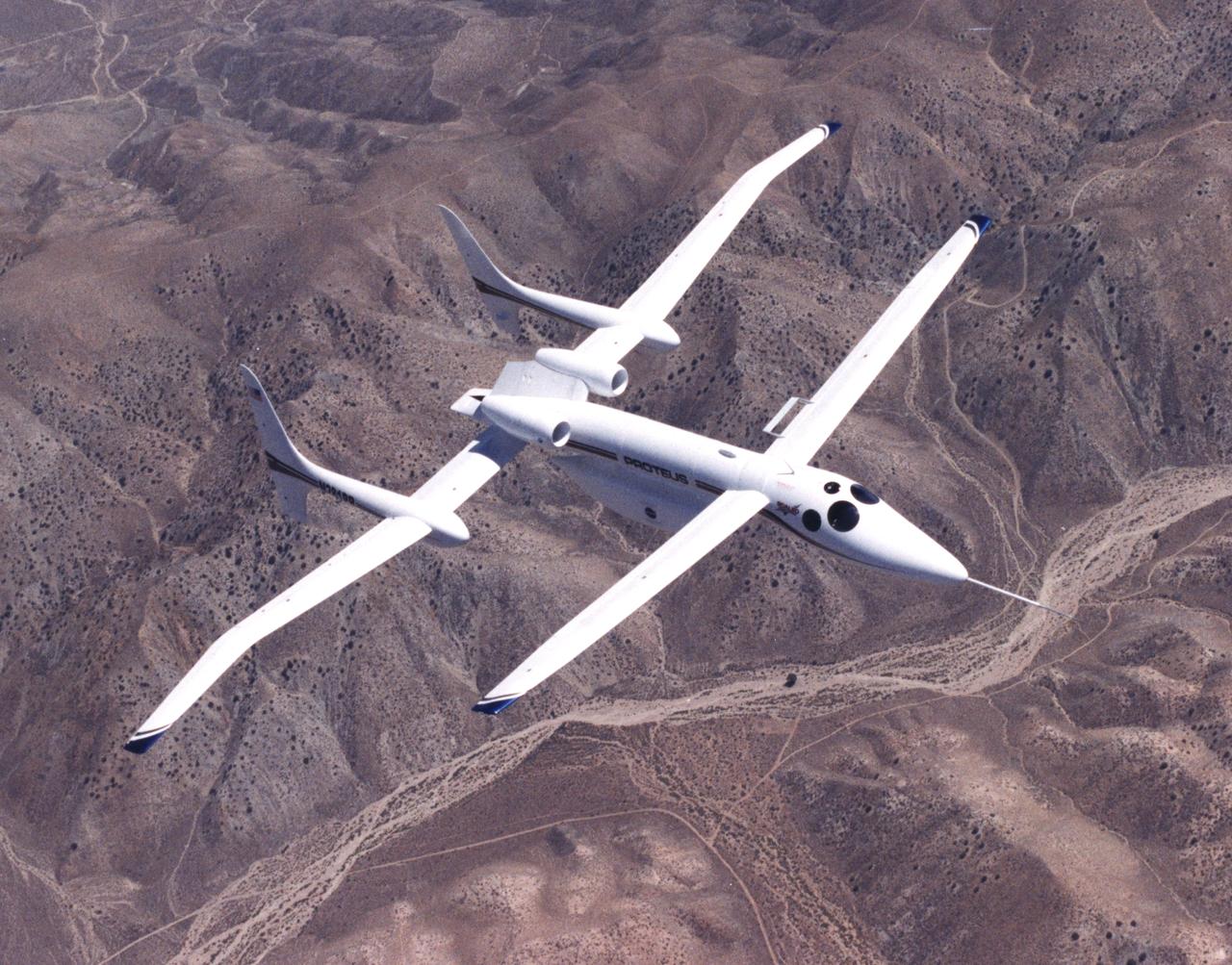
The unusual design of the Proteus high-altitude aircraft, incorporating a gull-wing shape for its main wing and a long, slender forward canard, is clearly visible in this view of the aircraft in flight over the Mojave Desert in California.
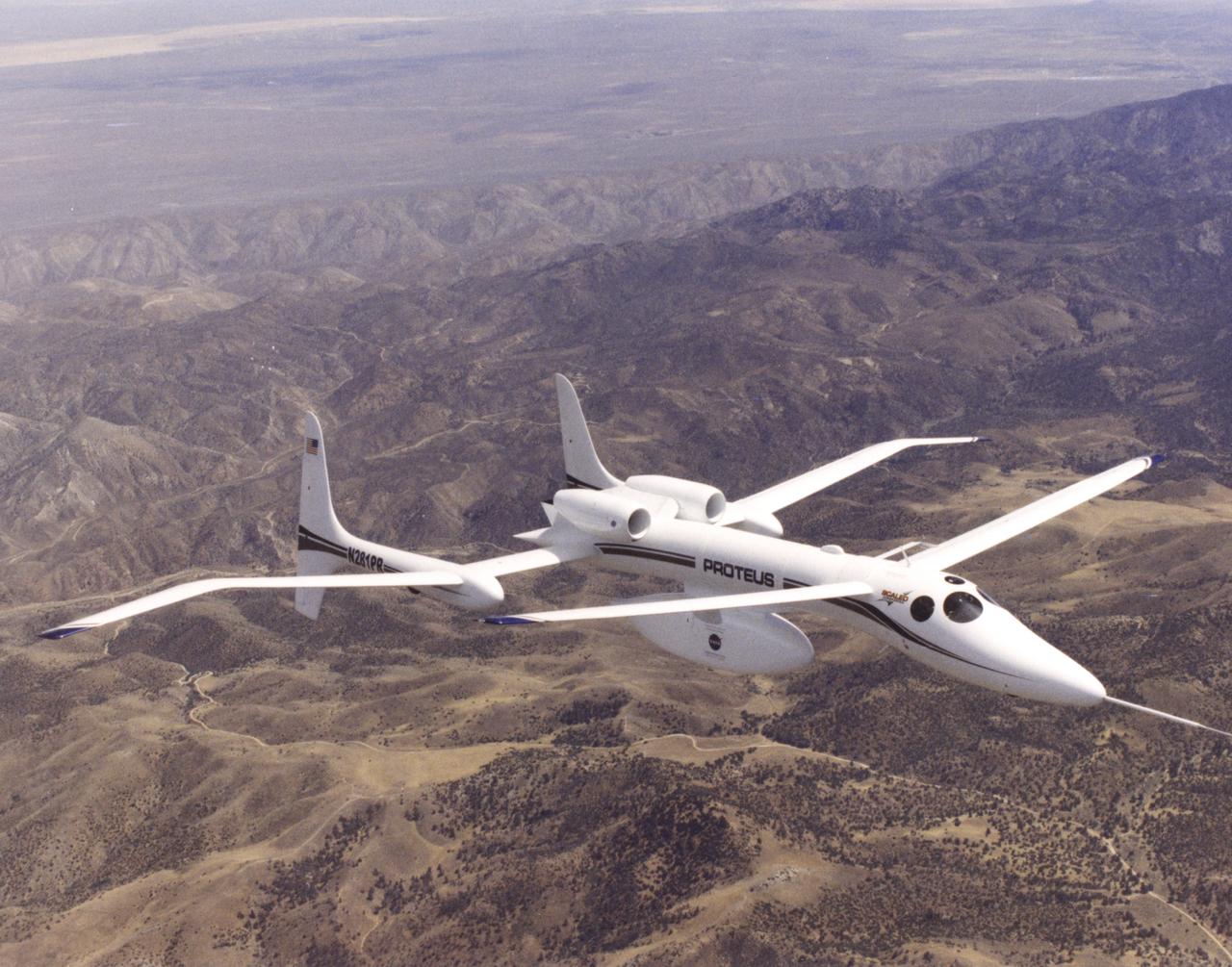
The unusual design of the Proteus high-altitude aircraft, incorporating a gull-wing shape for its main wing and a long, slender forward canard, is clearly visible in this view of the aircraft in flight over the Mojave Desert in California.
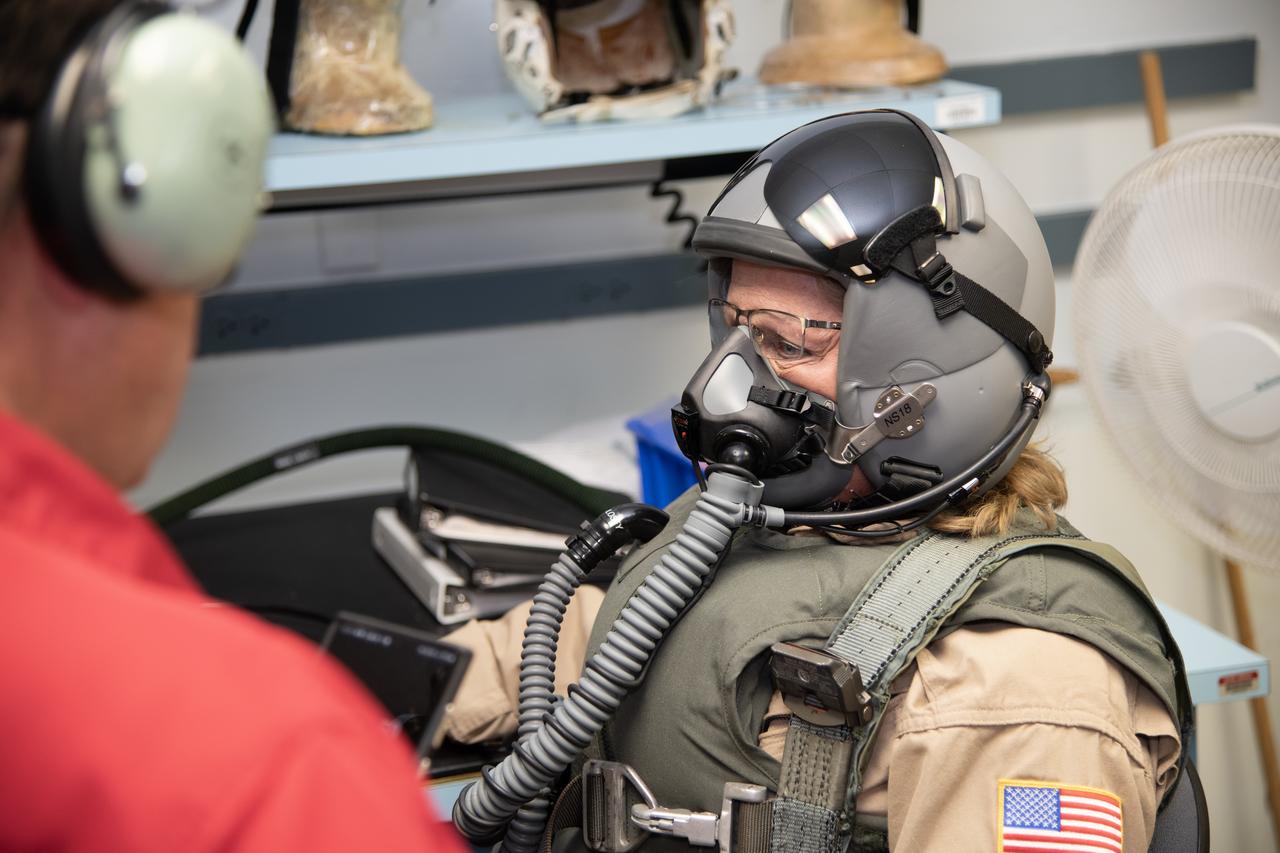
NASA Armstrong videographer Lori Losey undergoes pressure breathing training in San Antonio, Texas. NASA Armstrong aircrews are preparing for high altitude flight tests of the X-59.
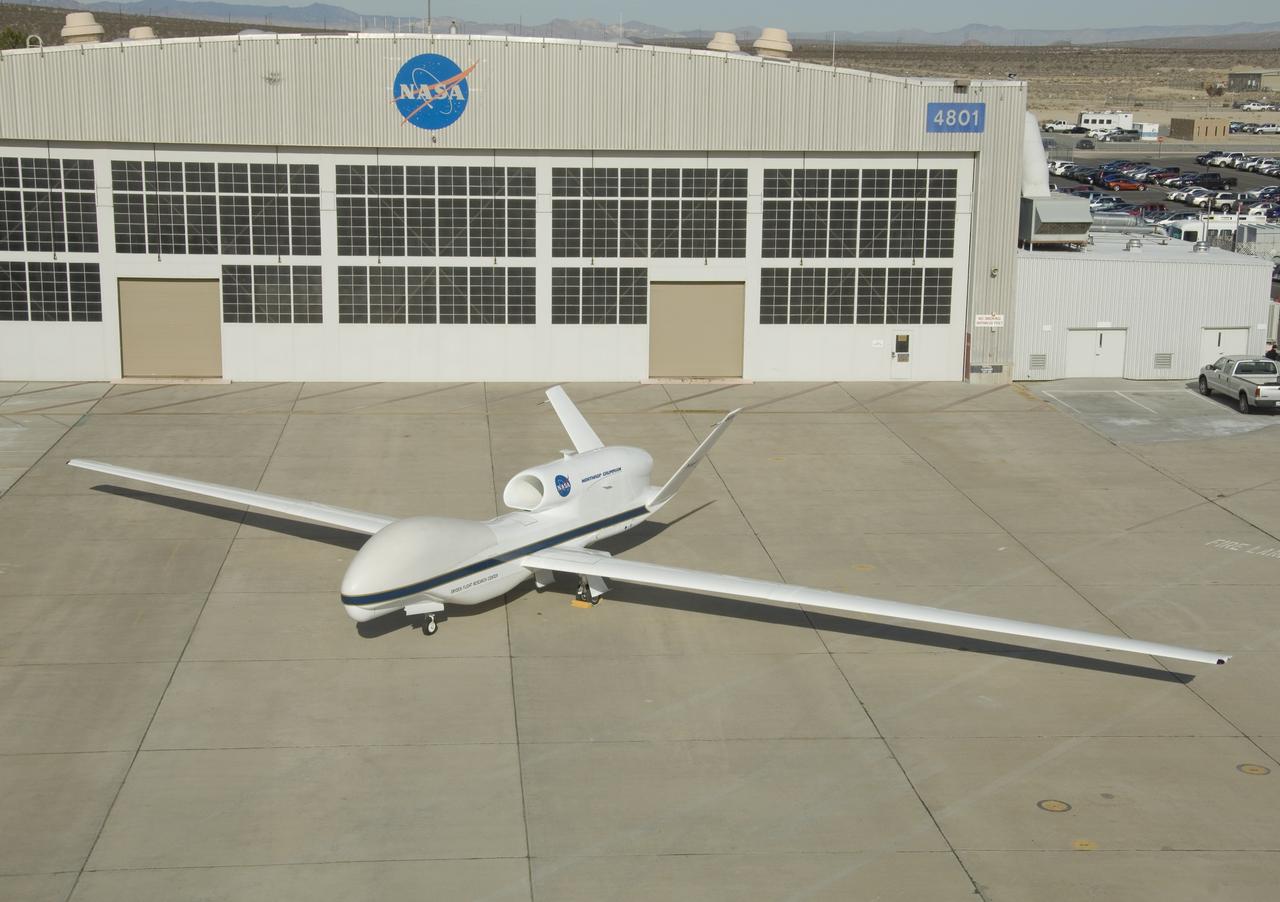
One of NASA's two Global Hawk high-altitude unmanned science aircraft displays its contours outside its hangar at NASA's Dryden Flight Research Center.
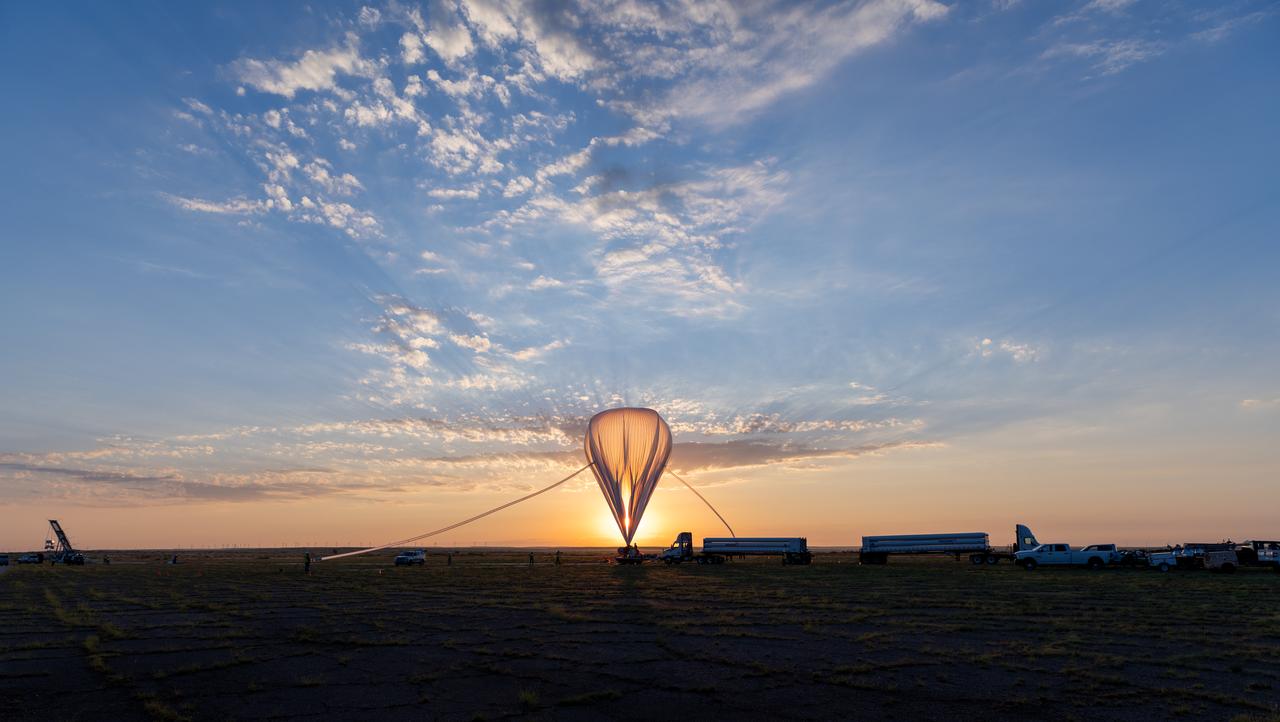
The Scientific balloon eclipses the sun as it fills with helium, and the High Altitude Student Platform awaits launch. On August 28, 2024, the student-run mission launched from a 4-million-cubic-foot balloon for its second flight.
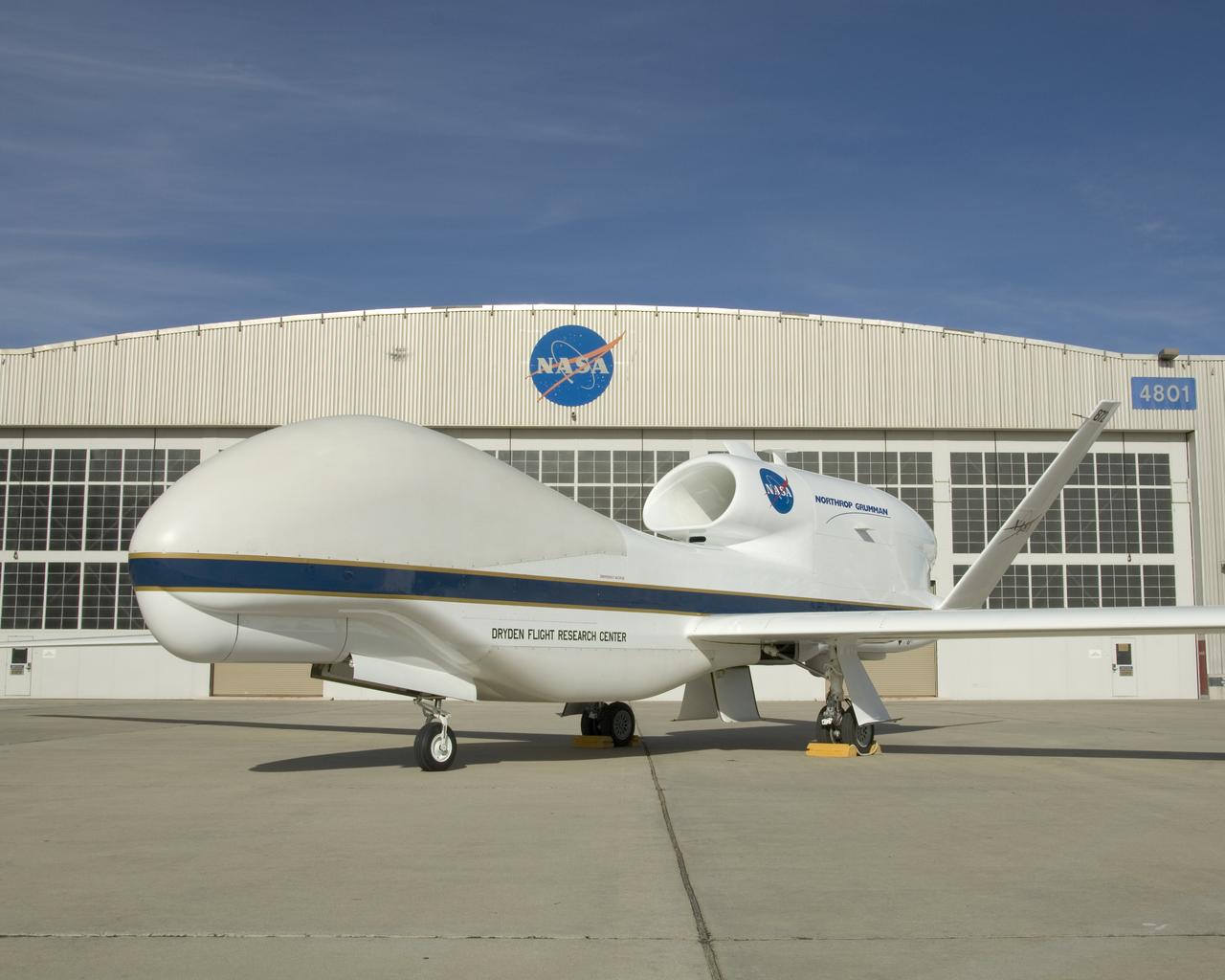
One of NASA's two Global Hawk unmanned high-altitude aircraft shows off its blue-and-white livery in front of its hangar at NASA's Dryden Flight Research Center.
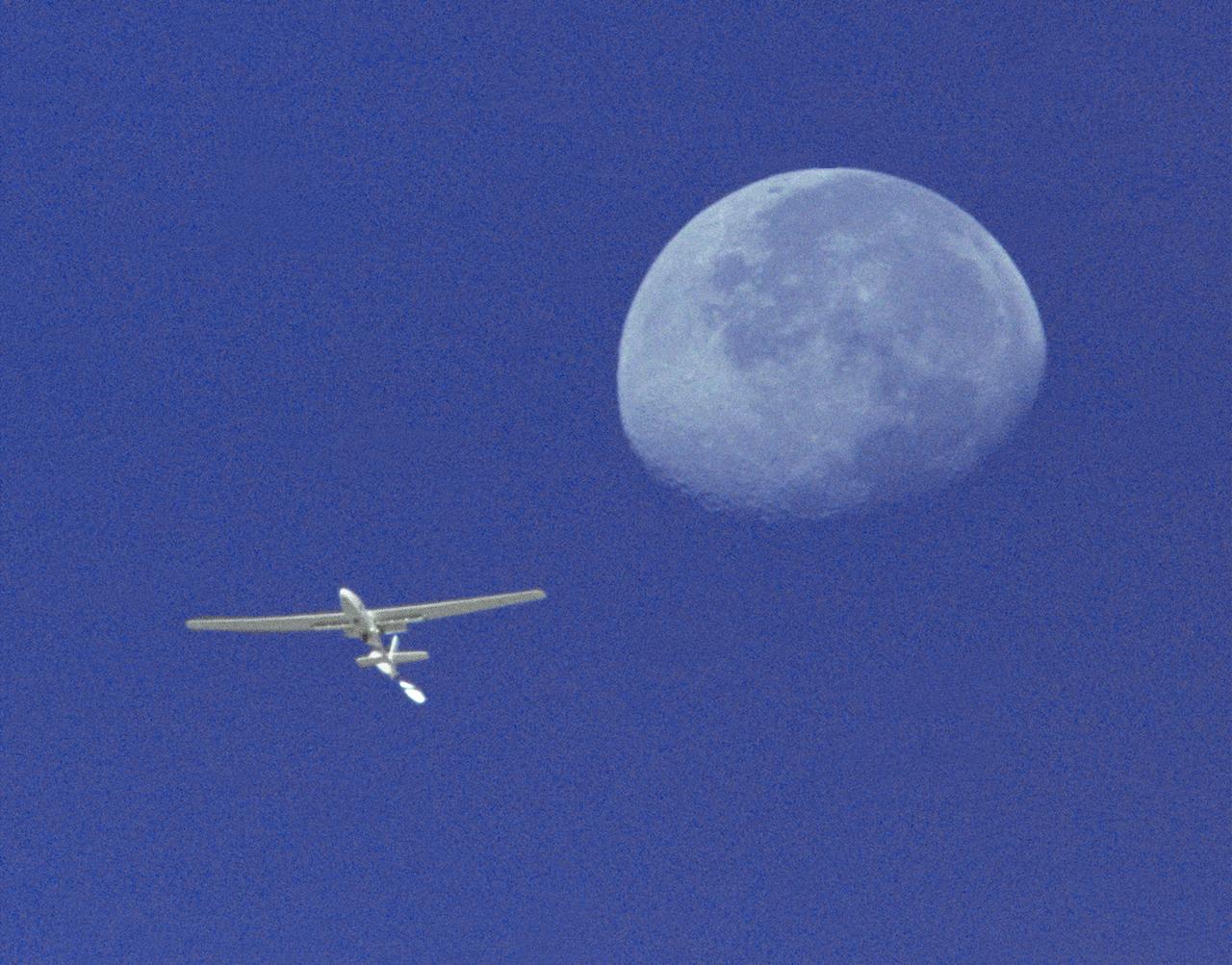
The Perseus A, a remotely-piloted, high-altitude research aircraft, is seen here framed against the moon and sky during a research mission at the Dryden Flight Research Center, Edwards, California in August 1994.

The flight operations crew for NASA’s QSF18 flight series debriefs following a flight with the F/A-18 research aircraft. The flight included a quiet supersonic dive maneuver at high altitudes off the coast to produce a sonic boom out over the ocean, with the intention of producing quieter “thumps” on land.
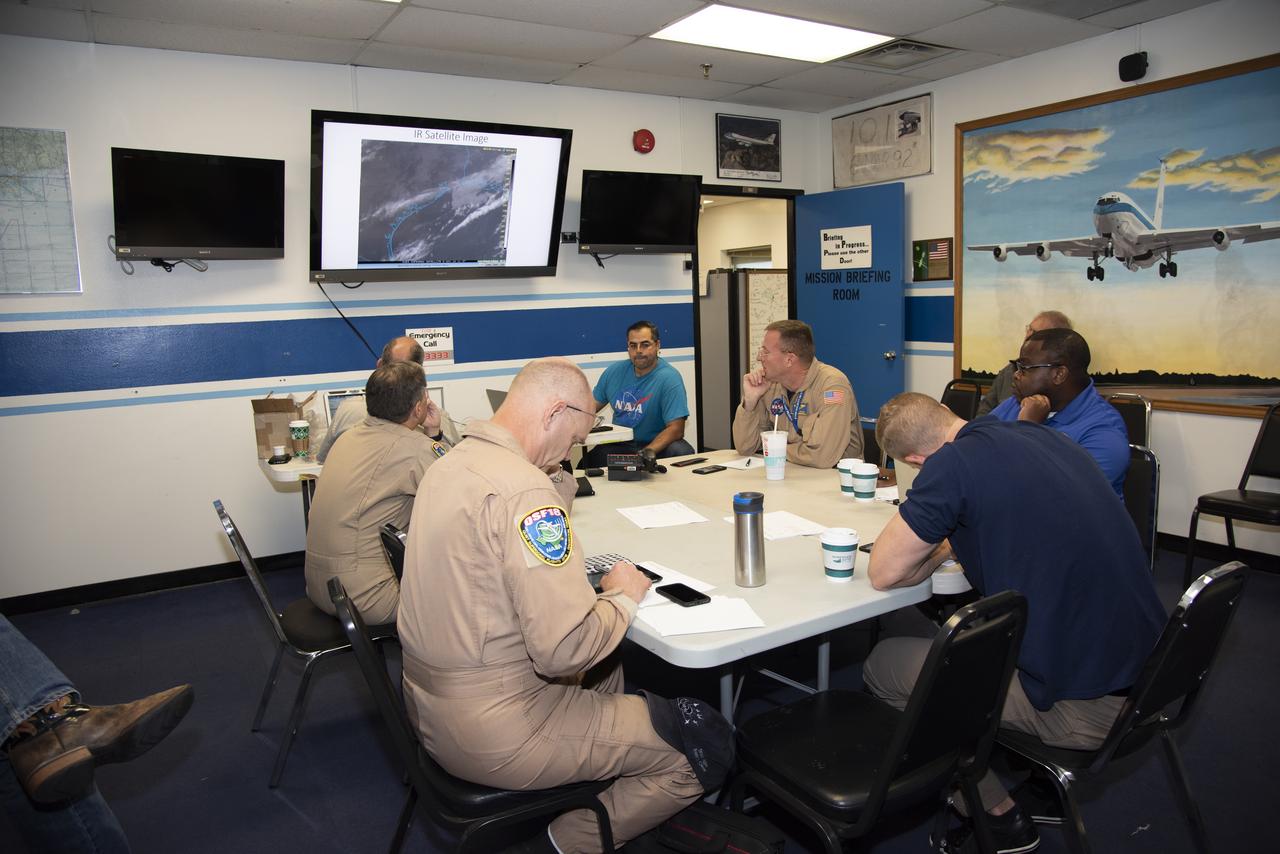
The flight operations crew for NASA’s QSF18 flight series debriefs following a flight with the F/A-18 research aircraft. The flight included a quiet supersonic dive maneuver at high altitudes off the coast to produce a sonic boom out over the ocean, with the intention of producing quieter “thumps” on land.
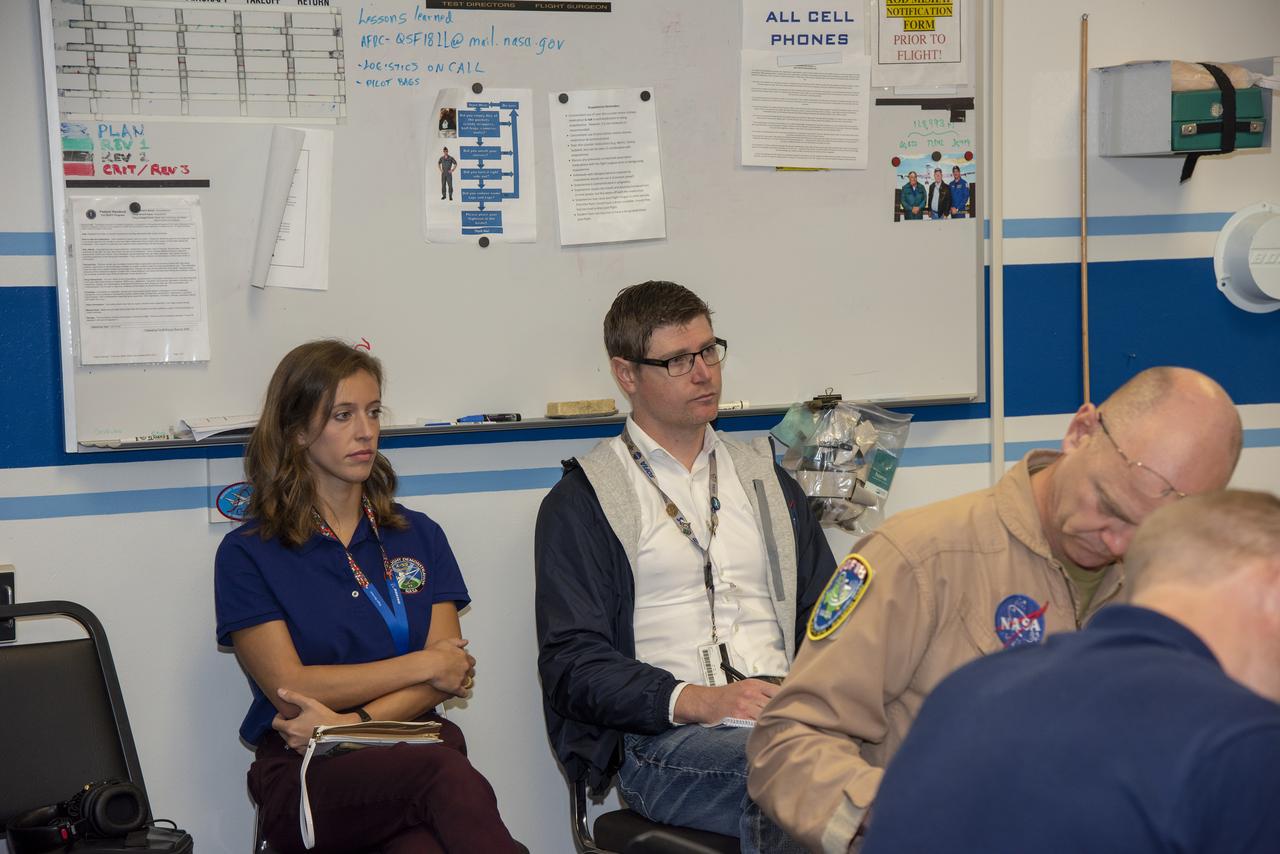
The flight operations crew for NASA’s QSF18 flight series debriefs following a flight with the F/A-18 research aircraft. The flight included a quiet supersonic dive maneuver at high altitudes off the coast to produce a sonic boom out over the ocean, with the intention of producing quieter “thumps” on land.
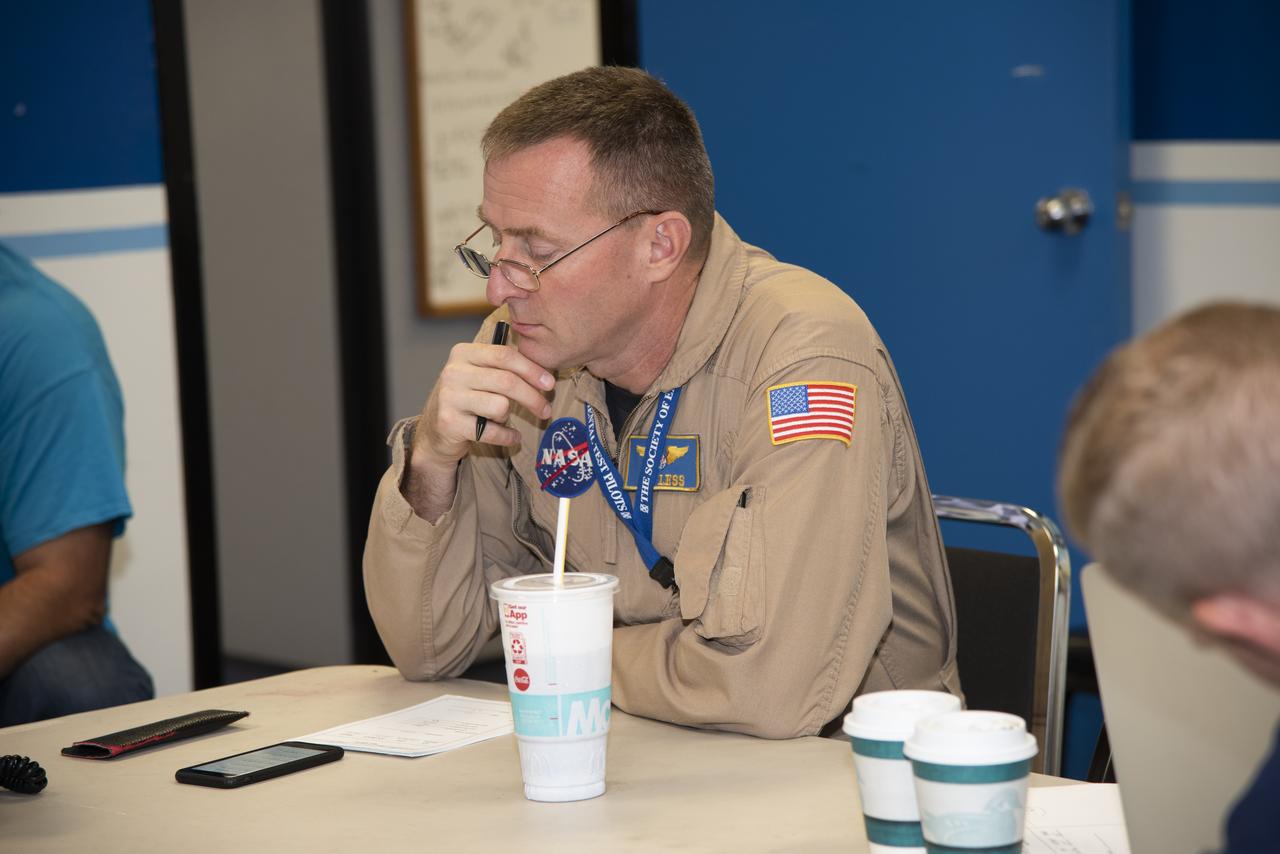
The flight operations crew for NASA’s QSF18 flight series debriefs following a flight with the F/A-18 research aircraft. The flight included a quiet supersonic dive maneuver at high altitudes off the coast to produce a sonic boom out over the ocean, with the intention of producing quieter “thumps” on land.
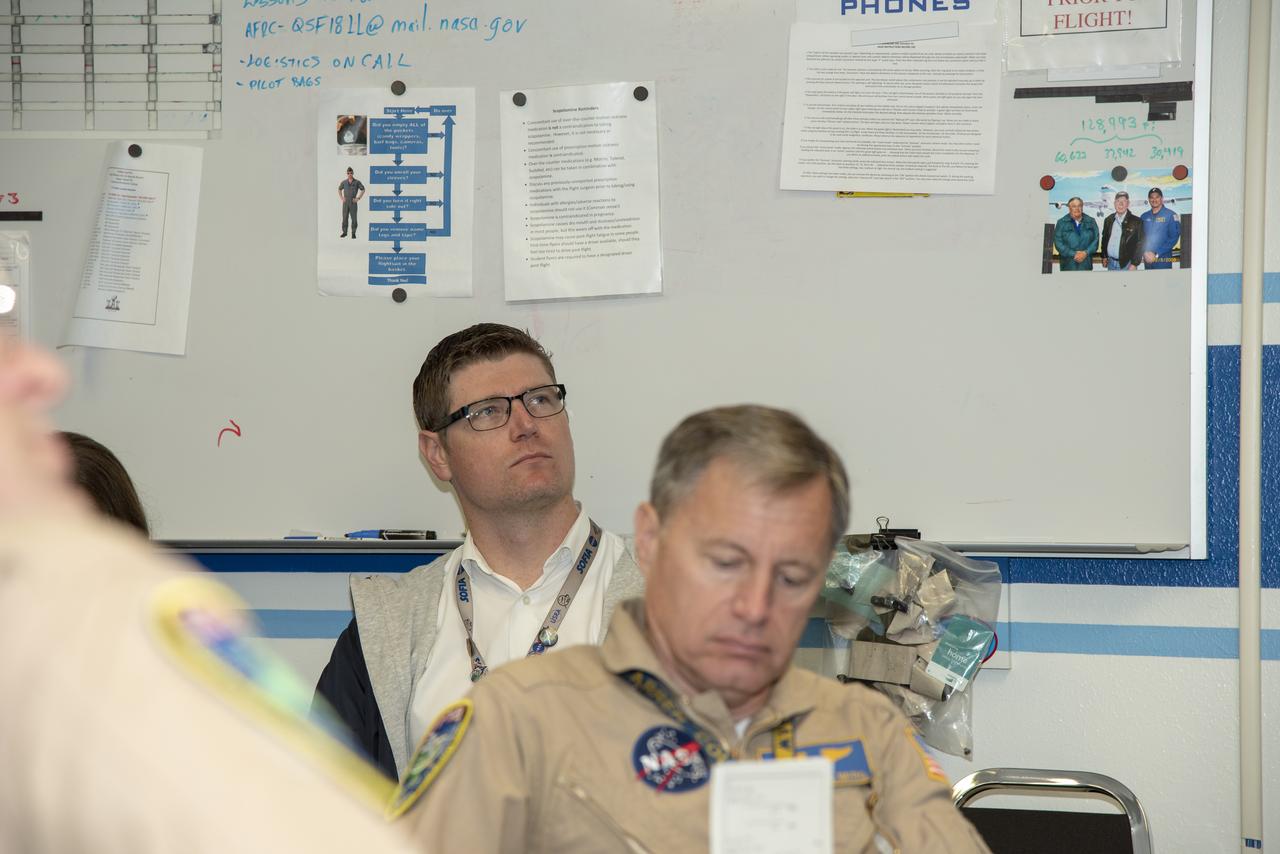
The flight operations crew for NASA's QSF18 flight series debriefs following a flight with the F/A-18 research aircraft. The flight included a quiet supersonic dive maneuver at high altitudes off the coast to produce a sonic boom out over the ocean, with the intention of producing quieter "thumps" on land.
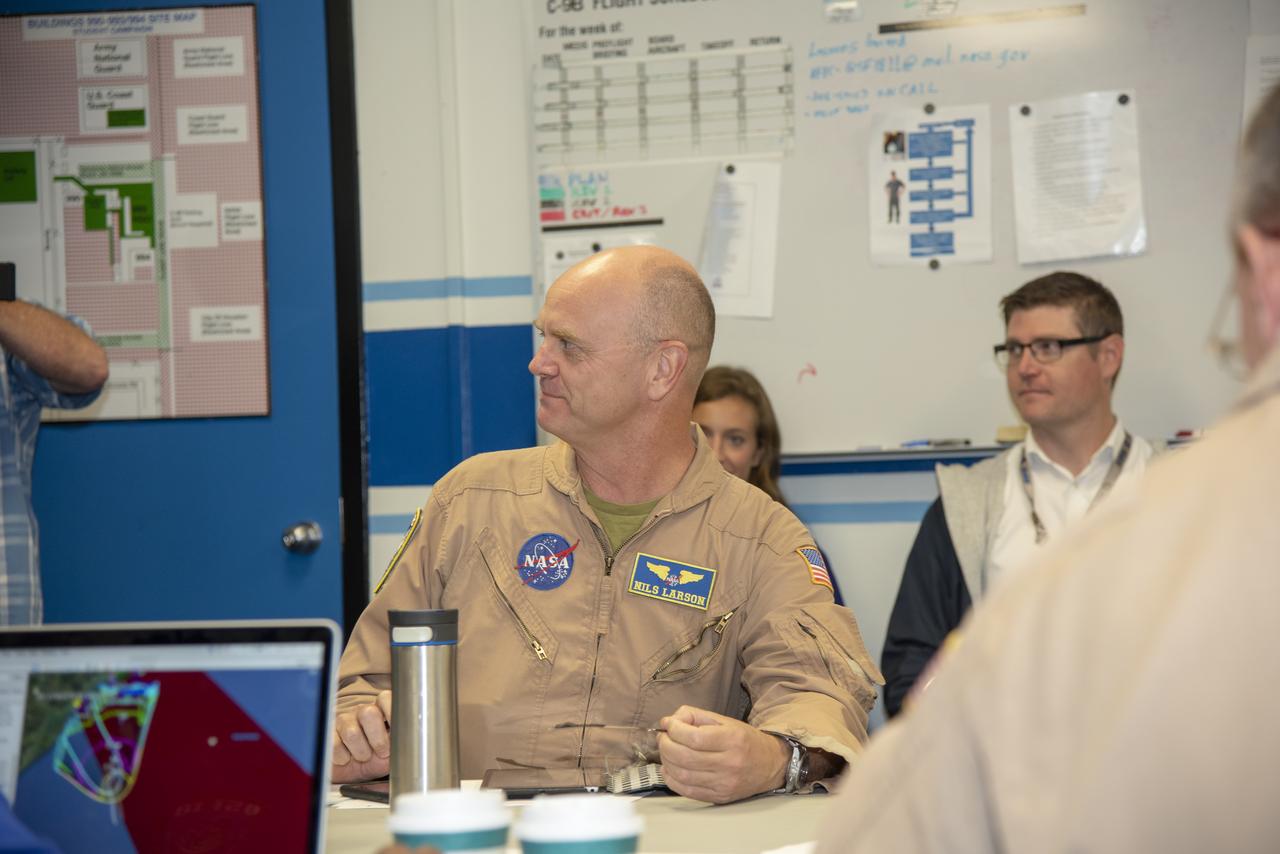
The flight operations crew for NASA’s QSF18 flight series debriefs following a flight with the F/A-18 research aircraft. The flight included a quiet supersonic dive maneuver at high altitudes off the coast to produce a sonic boom out over the ocean, with the intention of producing quieter “thumps” on land.
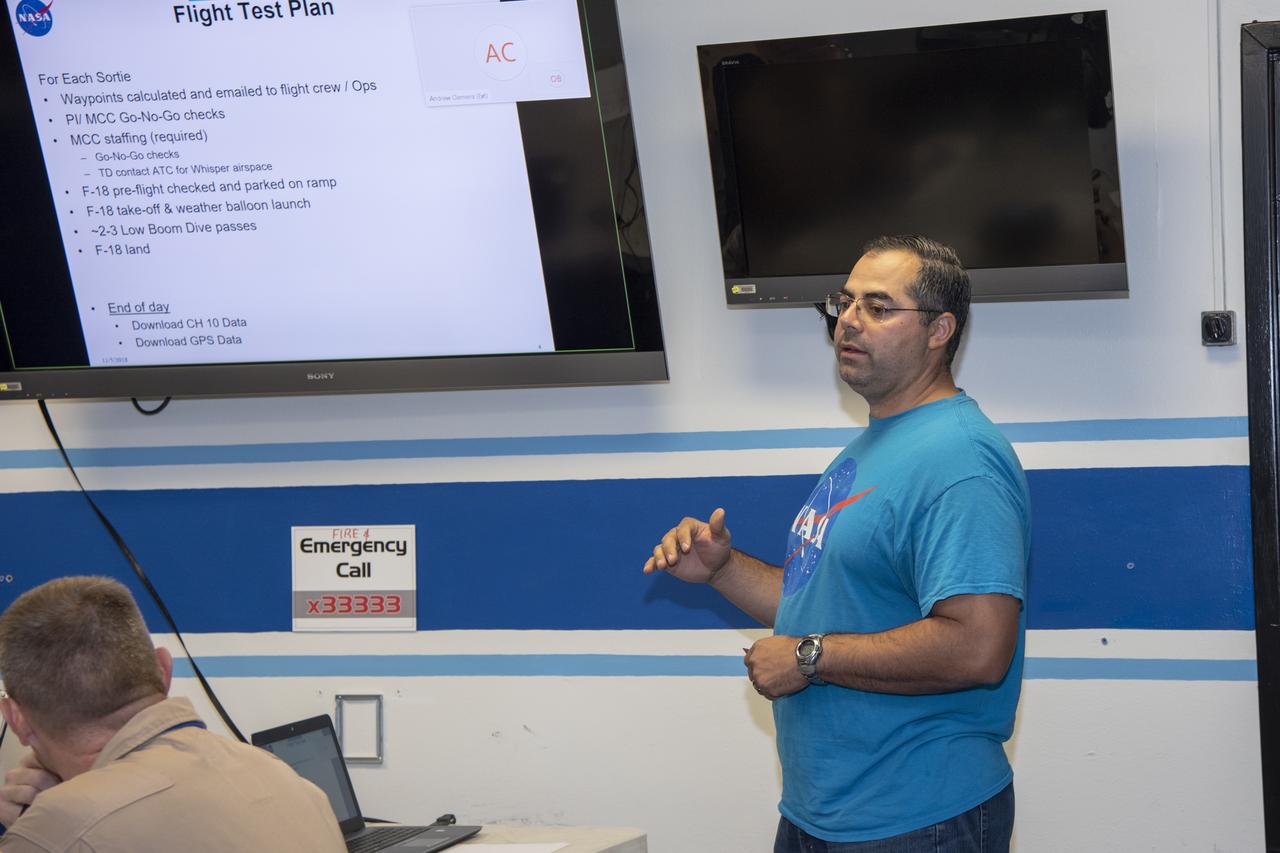
The flight operations crew for NASA’s QSF18 flight series debriefs following a flight with the F/A-18 research aircraft. The flight included a quiet supersonic dive maneuver at high altitudes off the coast to produce a sonic boom out over the ocean, with the intention of producing quieter “thumps” on land.
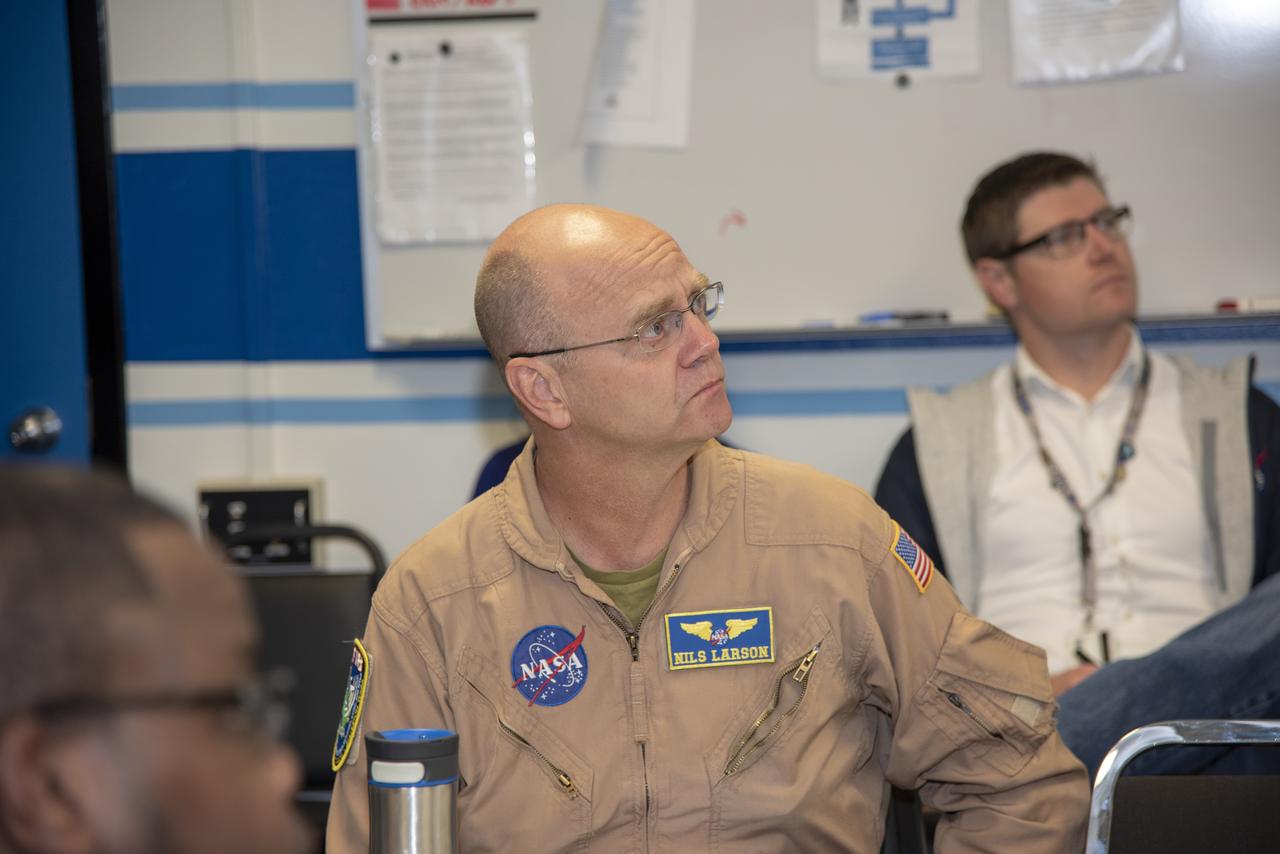
The flight operations crew for NASA’s QSF18 flight series debriefs following a flight with the F/A-18 research aircraft. The flight included a quiet supersonic dive maneuver at high altitudes off the coast to produce a sonic boom out over the ocean, with the intention of producing quieter “thumps” on land.

The flight operations crew for NASA's QSF18 flight series debriefs following a flight with the F/A-18 research aircraft. The flight included a quiet supersonic dive maneuver at high altitudes off the coast to produce a sonic boom out over the ocean, with the intention of producing quieter "thumps" on land.
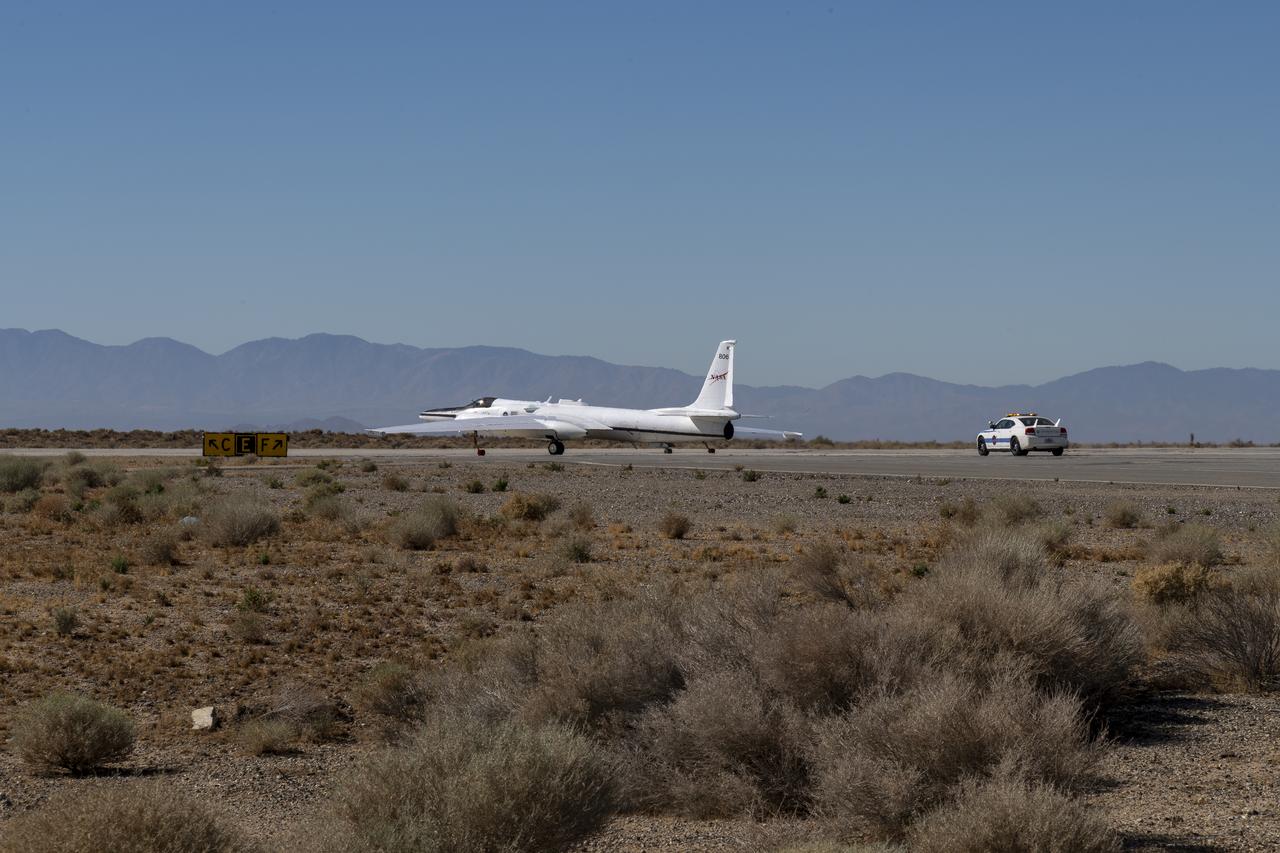
The ER-2 conducted over 80 flight hours in service of the Plankton, Aerosol, Cloud, ocean Ecosystem Postlaunch Airborne eXperiment (PACE-PAX) mission. The ER-2 is uniquely qualified to conduct the high-altitude scientific flights that this project required, and is based at NASA’s Armstrong Flight Research Center in Edwards, California.
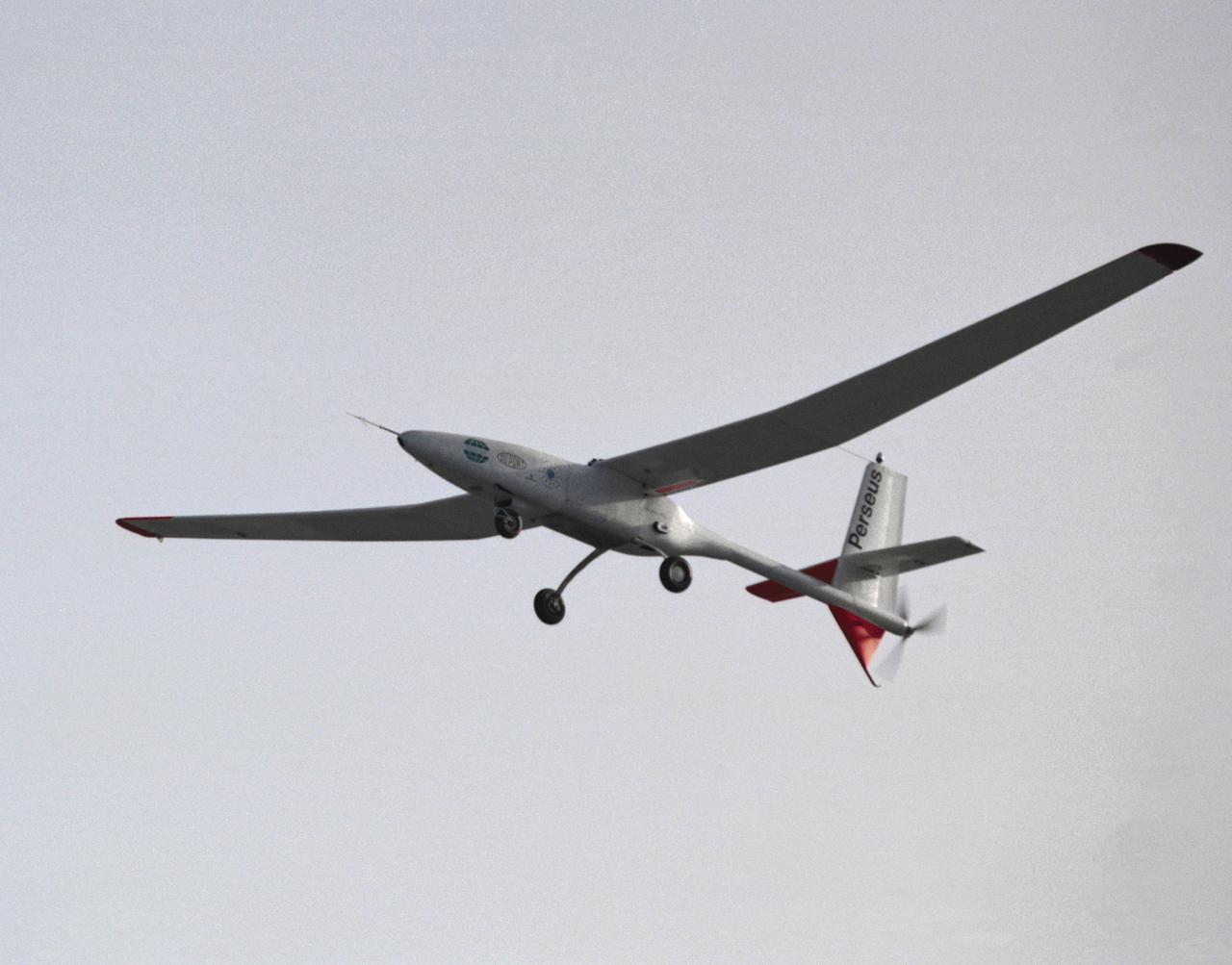
The Perseus proof-of-concept vehicle in flight at the Dryden Flight Research Center, Edwards, California in 1991. Perseus is one of several remotely-piloted aircraft designed for high-altitude, long-endurance scientific sampling missions being evaluated under the ERAST program.
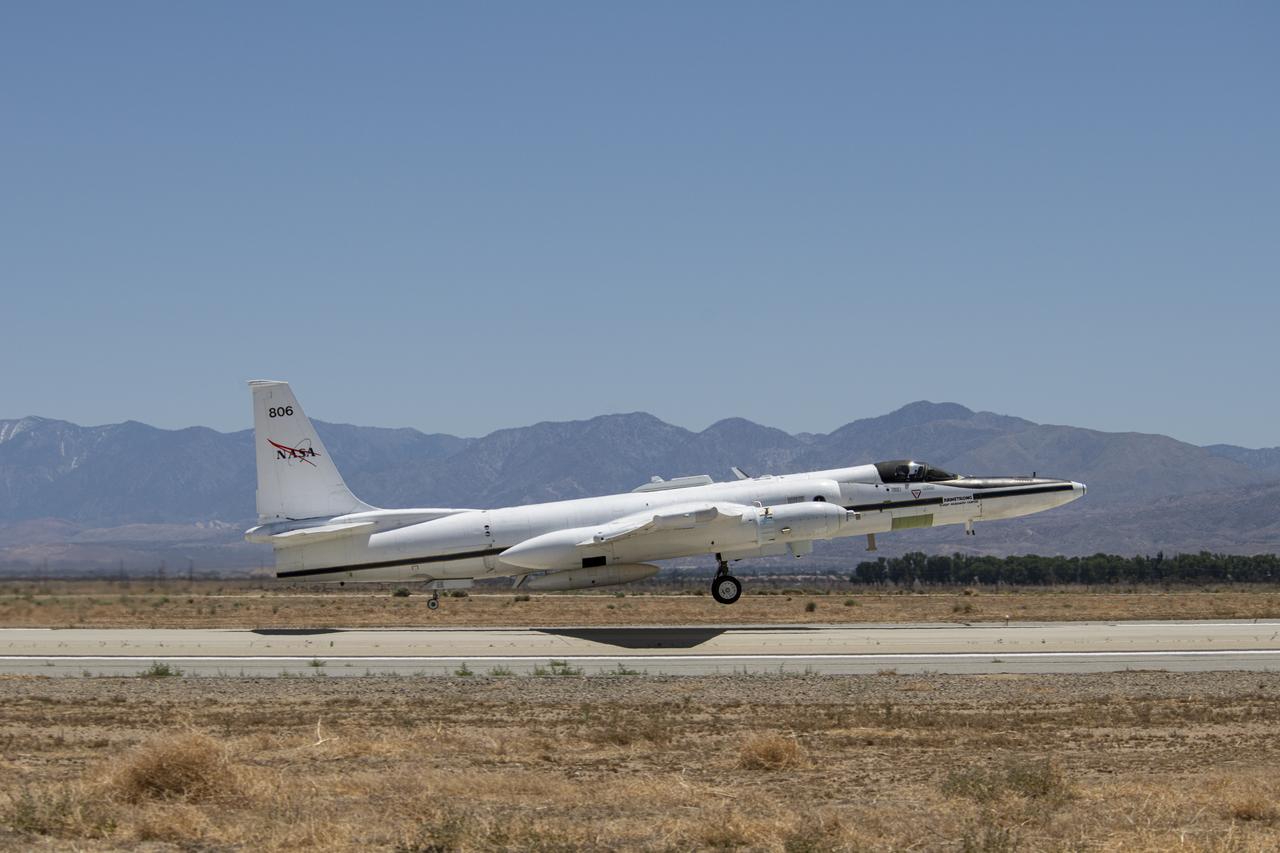
NASA's ER-2 high altitude aircraft takes off from Armstrong Flight Research Center Building 703 in Palmdale, California to perform a check flight for the the Dynamics and Chemistry of the Summer Stratosphere, or DCOTSS, 2022 campaign on May 13, 2022.
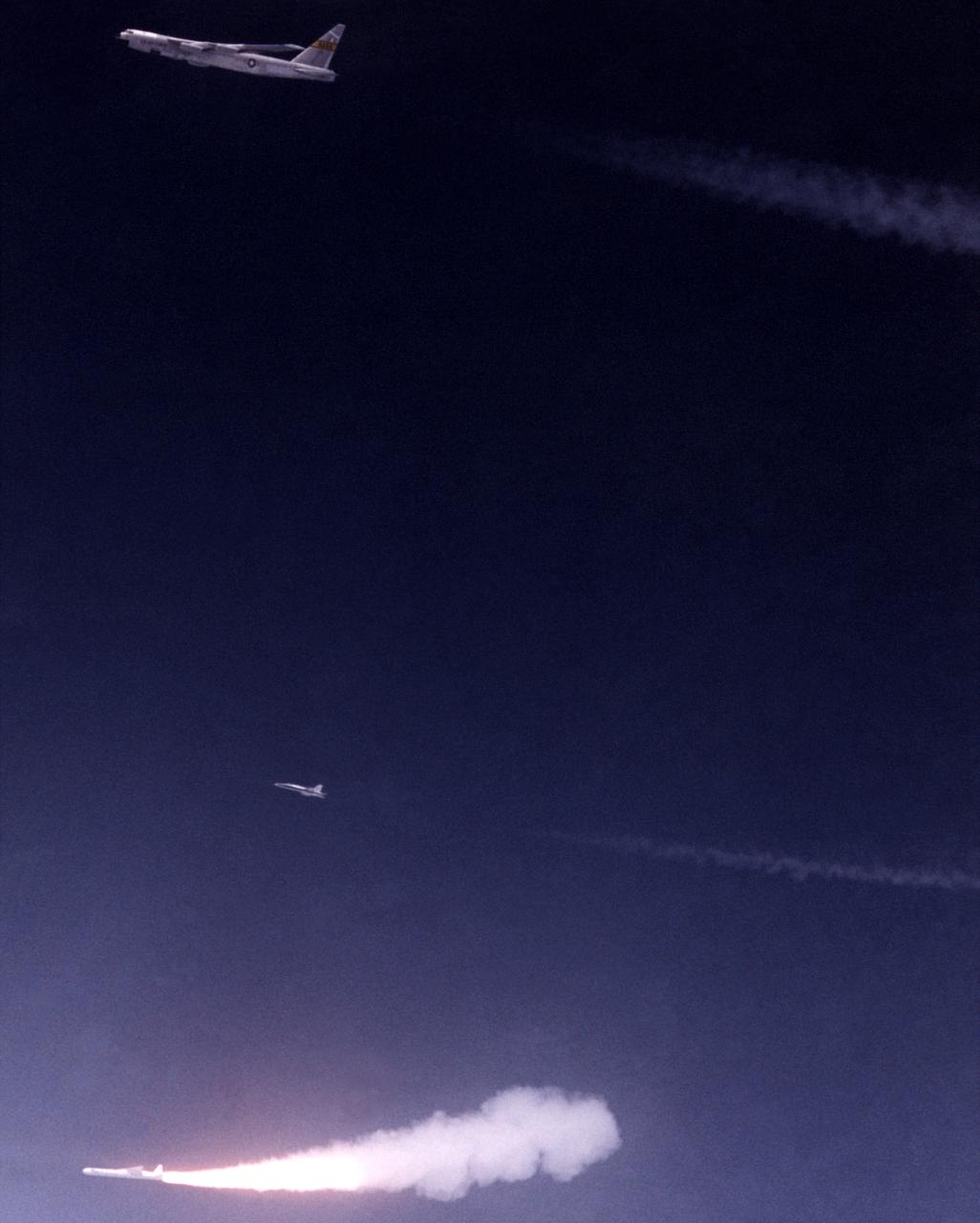
Against the midnight blue of a high-altitude sky, Orbital Sciences’ Pegasus winged rocket booster ignites after being dropped from NASA’s B-52 mothership on a July 1991 flight. A NASA chase plane for the flight is also visible above the rocket and below the B-52.

These photos and videos show NASA astronauts Bob Hines and Raja Chari practicing landing procedures in the Rocky Mounts of Colorado in April 2025. The astronauts were participating in a NASA-specific course at the HAATS (High-Altitude Army National Guard Aviation Training Site) in Gypsum, Colorado. NASA and the Colorado Army National Guard are using military helicopters to develop a foundational lunar lander simulated flight training course to help astronauts practice flight and landing procedures for the Moon. For more information, contact NASA Marshall’s Office of Communications at 256-544-0034.
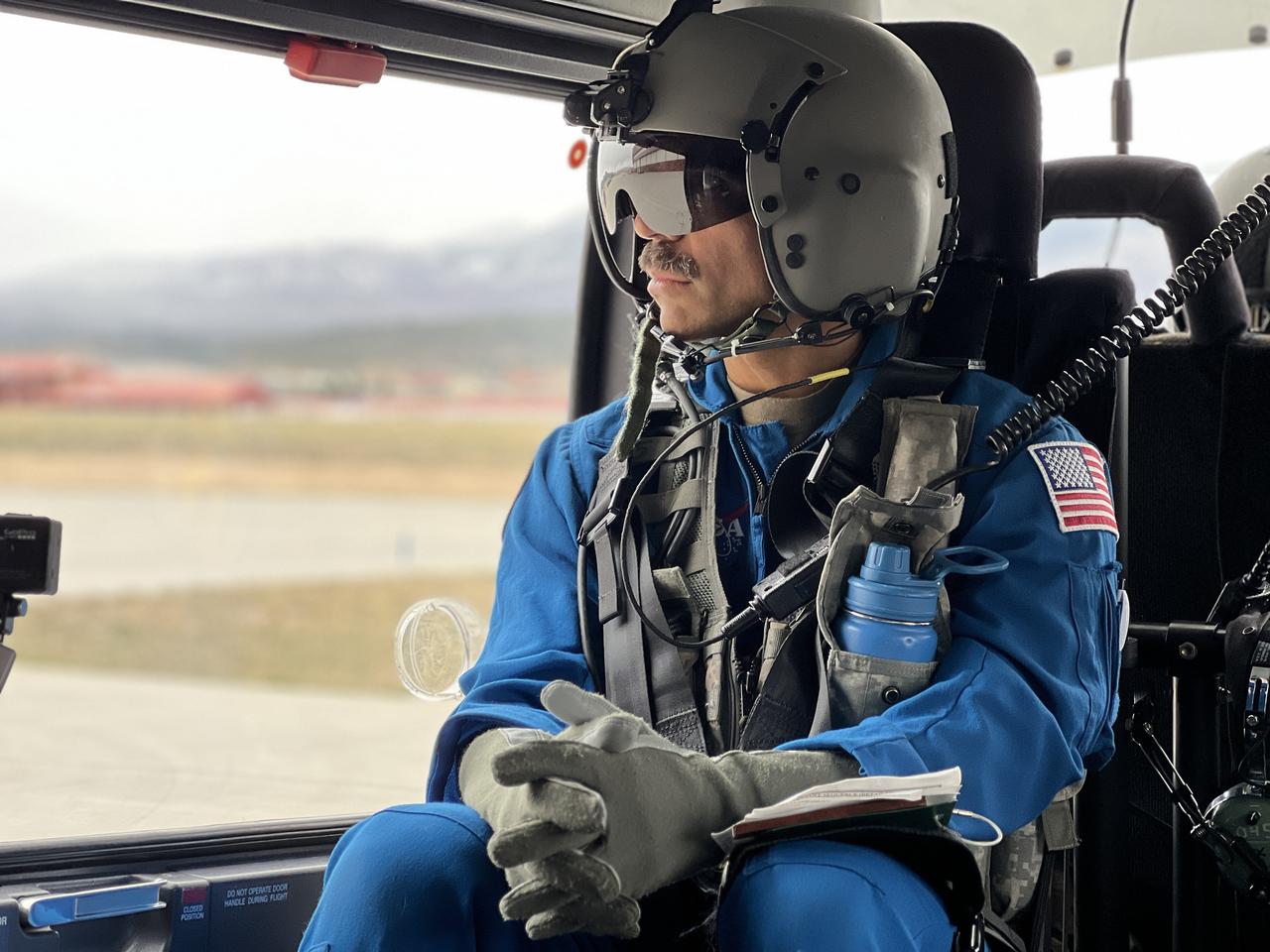
These photos and videos show NASA astronauts Bob Hines and Raja Chari practicing landing procedures in the Rocky Mounts of Colorado in April 2025. The astronauts were participating in a NASA-specific course at the HAATS (High-Altitude Army National Guard Aviation Training Site) in Gypsum, Colorado. NASA and the Colorado Army National Guard are using military helicopters to develop a foundational lunar lander simulated flight training course to help astronauts practice flight and landing procedures for the Moon. For more information, contact NASA Marshall’s Office of Communications at 256-544-0034.
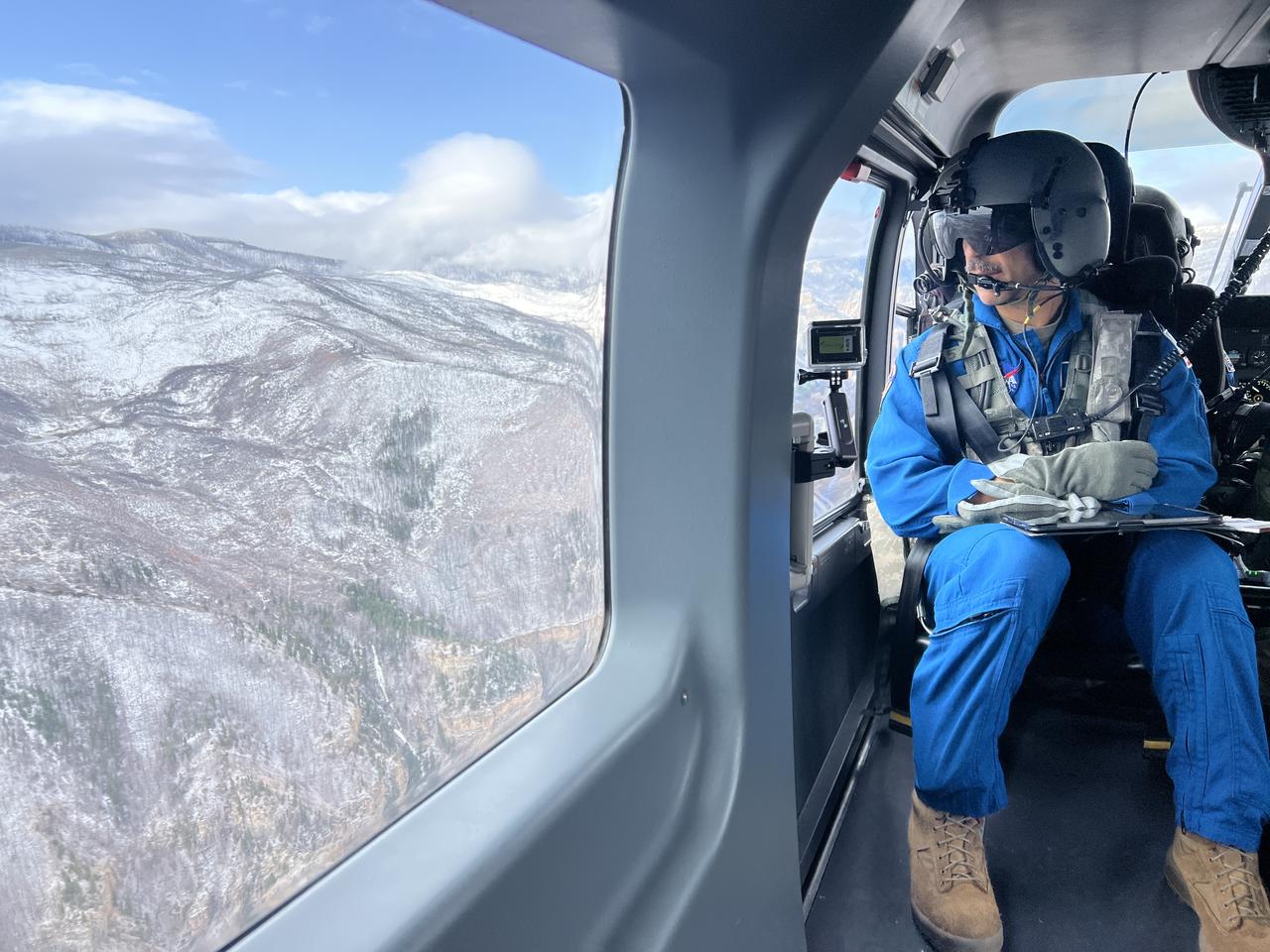
These photos and videos show NASA astronauts Bob Hines and Raja Chari practicing landing procedures in the Rocky Mounts of Colorado in April 2025. The astronauts were participating in a NASA-specific course at the HAATS (High-Altitude Army National Guard Aviation Training Site) in Gypsum, Colorado. NASA and the Colorado Army National Guard are using military helicopters to develop a foundational lunar lander simulated flight training course to help astronauts practice flight and landing procedures for the Moon. For more information, contact NASA Marshall’s Office of Communications at 256-544-0034.
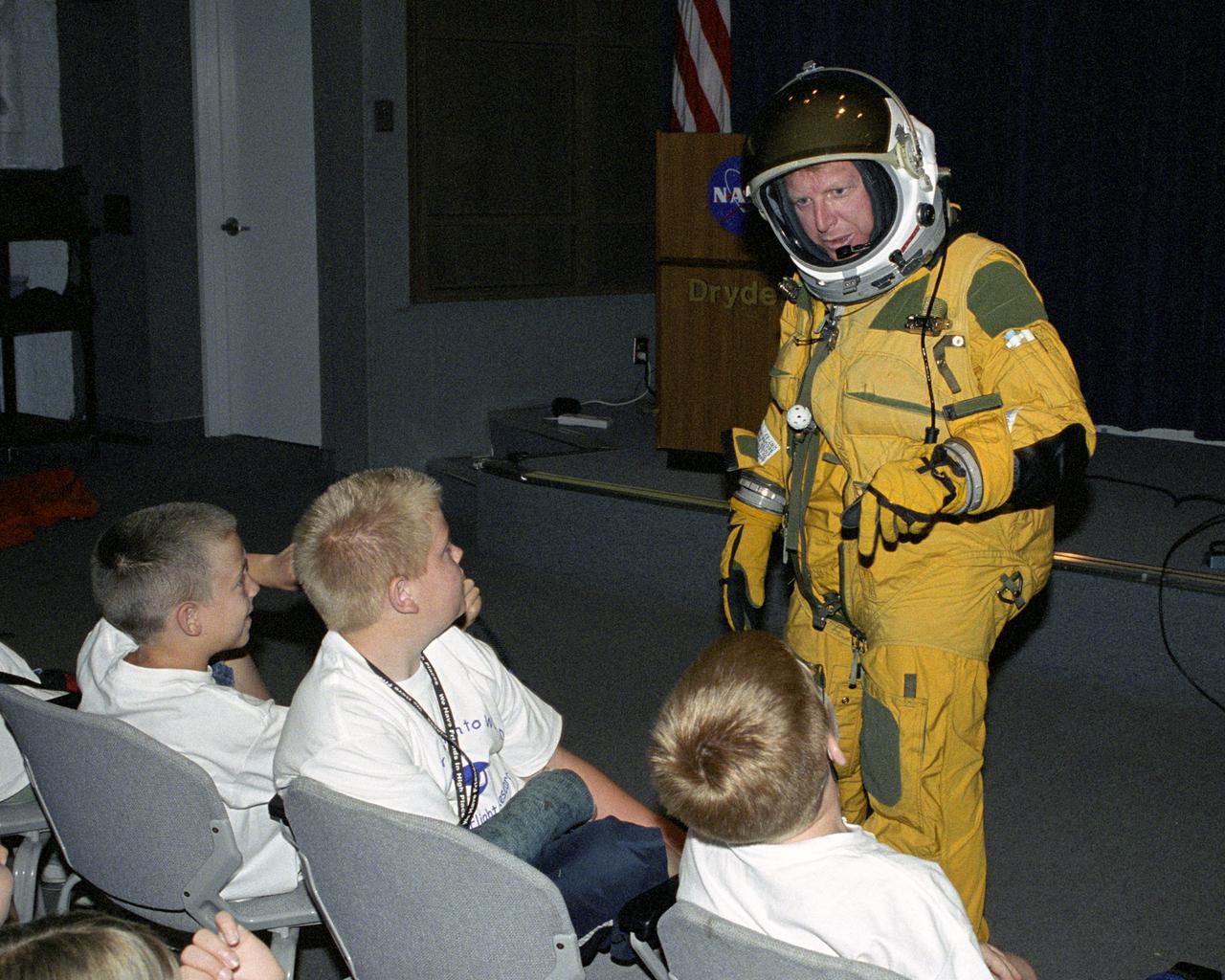
NASA Dryden historian Christian Gelzer explains functions of the high-altitude pressure suit he is wearing to (left to right) Brandon Blankenship and Garrett Clay of Lancaster and Eddie Patterson of Tehachapi during Take Your Children to Work Day activities at NASA Dryden Flight Research Center June 22.
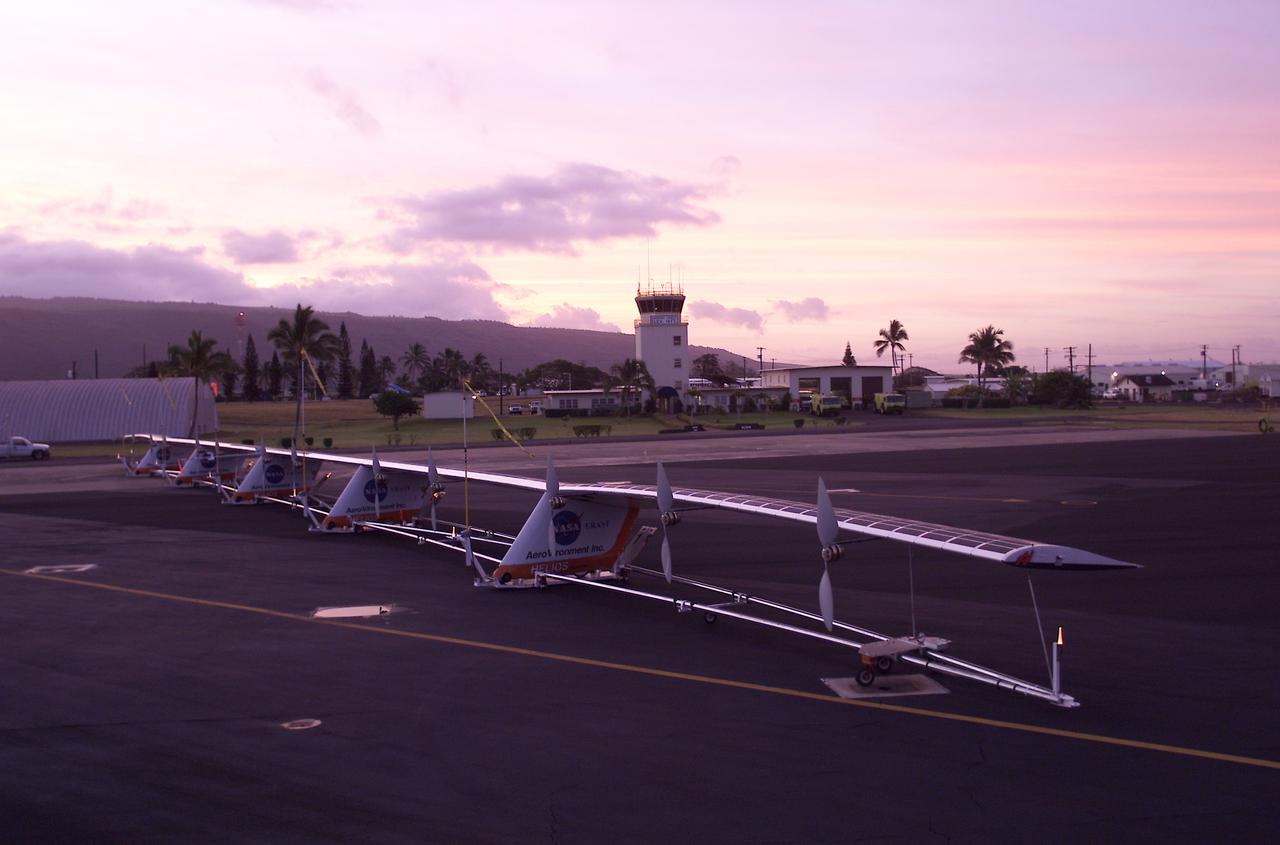
The 247-foot length of the Helios prototype wing is in evidence as the high-altitude, solar-powered flying wing rests on its ground dolly during pre-flight tests at the U.S. Navy's Pacific Missile Range Facility on Kaua'i, Hawaii.
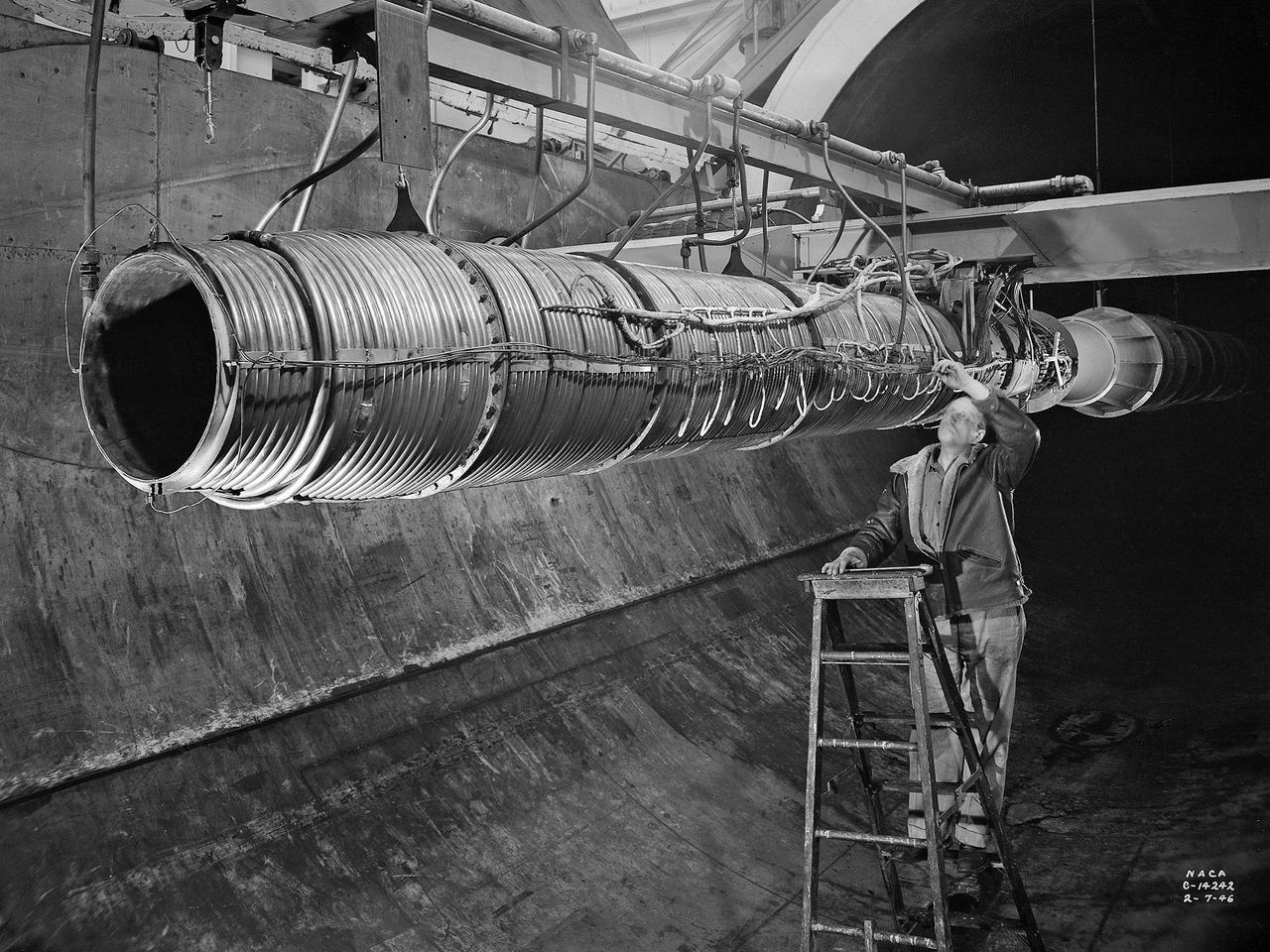
A 20-inch diameter ramjet installed in the Altitude Wind Tunnel at the National Advisory Committee for Aeronautics (NACA) Lewis Flight Propulsion Laboratory. The Altitude Wind Tunnel was used in the 1940s to study early ramjet configurations. Ramjets provide a very simple source of propulsion. They are basically a tube which takes in high-velocity air, ignites it, and then expels the expanded airflow at a significantly higher velocity for thrust. Ramjets are extremely efficient and powerful but can only operate at high speeds. Therefore a turbojet or rocket was needed to launch the vehicle. This NACA-designed 20-inch diameter ramjet was installed in the Altitude Wind Tunnel in May 1945. The ramjet was mounted under a section of wing in the 20-foot diameter test section with conditioned airflow ducted directly to the engine. The mechanic in this photograph was installing instrumentation devices that led to the control room. NACA researchers investigated the ramjet’s overall performance at simulated altitudes up to 47,000 feet. Thrust measurements from these runs were studied in conjunction with drag data obtained during small-scale studies in the laboratory’s small supersonic tunnels. An afterburner was attached to the ramjet during the portions of the test program. The researchers found that an increase in altitude caused a reduction in the engine’s horsepower. They also determined the optimal configurations for the flameholders, which provided the engine’s ignition source.
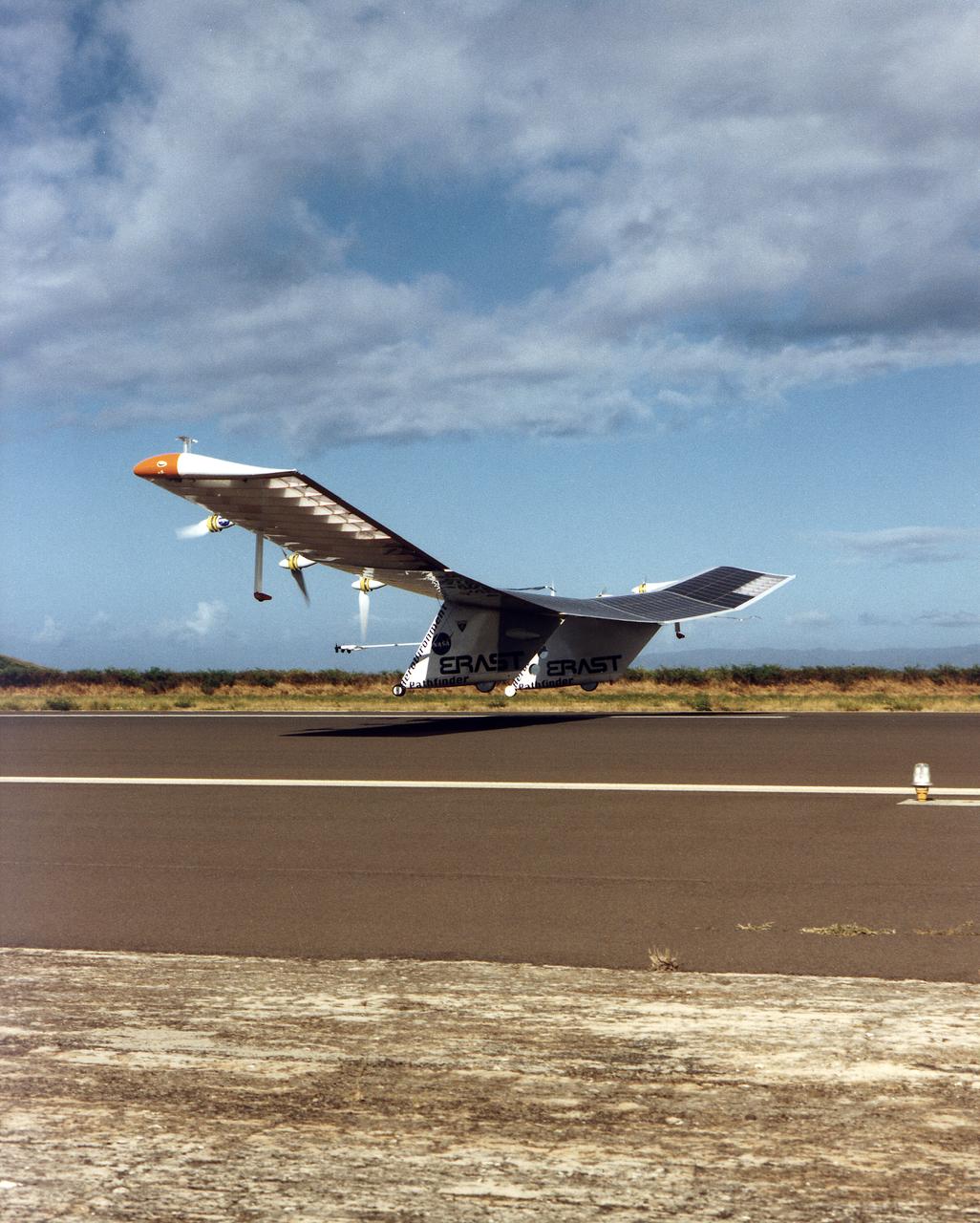
The Pathfinder aircraft has set a new unofficial world record for high-altitude flight of over 71,500 feet for solar-powered aircraft at the U.S. Navy's Pacific Missile Range Facility, Kauai, Hawaii. Pathfinder was designed and manufactured by AeroVironment, Inc, of Simi Valley, California, and was operated by the firm under a jointly sponsored research agreement with NASA's Dryden Flight Research Center, Edwards, California. Pathfinder's record-breaking flight occurred July 7, 1997. The aircraft took off at 11:34 a.m. PDT, passed its previous record altitude of 67,350 feet at about 5:45 p.m. and then reached its new record altitude at 7 p.m. The mission ended with a perfect nighttime landing at 2:05 a.m. PDT July 8. The new record is the highest altitude ever attained by a propellor-driven aircraft. Before Pathfinder, the altitude record for propellor-driven aircraft was 67,028 feet, set by the experimental Boeing Condor remotely piloted aircraft.
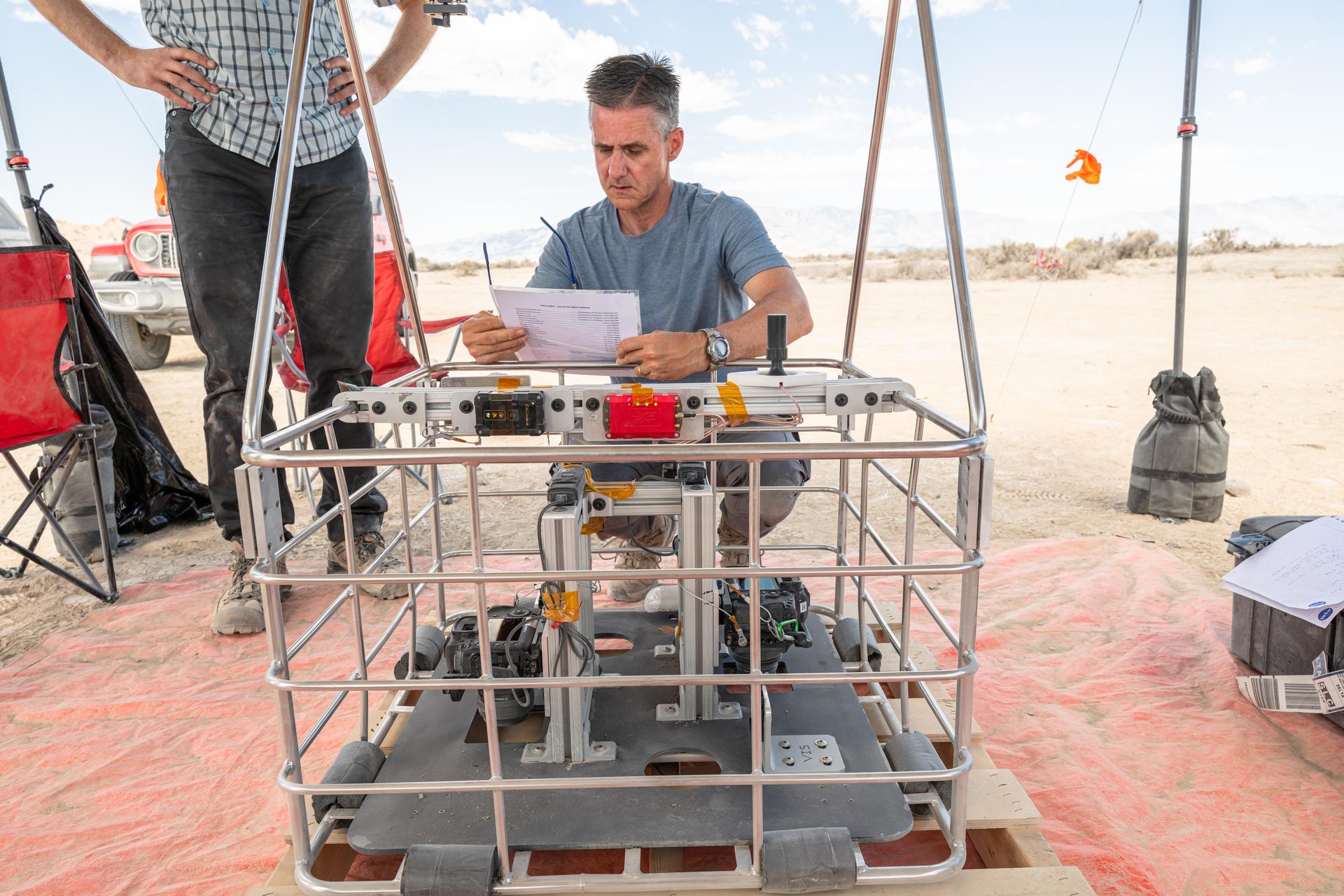
Brent Bos, a research physicist at NASA’s Goddard Space Flight Center in Greenbelt, Maryland, does a pre-flight check of a basket of instruments before one of the 10 high-altitude test flights at Crater Island, Utah. This area was the site of a series of tests (June 23-25, 2026) of the camera system that will one day fly aboard NASA’s DAVINCI mission probe to Venus.
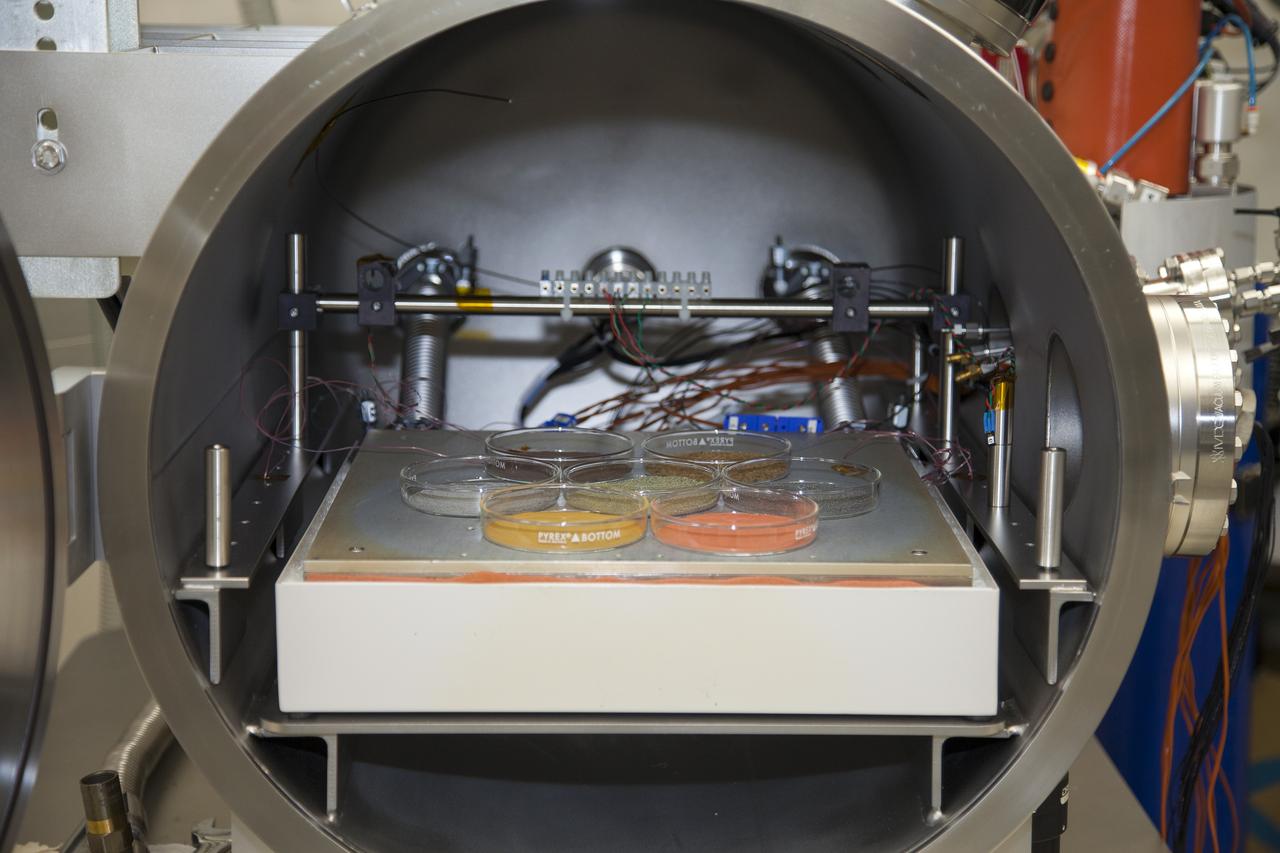
CAPE CANAVERAL, Fla. -- Inside the Space Life Sciences Laboratory near NASA’s Kennedy Space Center in Florida, the Mars Simulation Chamber is being prepared for the Microorganisms in the Stratosphere, or MIST, mission support. The chamber allows MIST scientists and engineers to simulate the stratosphere prior to high altitude flight experiments. The MIST mission will fly a small biological payload aboard a blimp in July to measure microbial survival and cellular responses to exposure in the upper atmosphere. Later in the year, the MIST mission will deploy samples at even higher altitudes in the stratosphere using scientific balloons. Photo credit: NASA/Daniel Casper
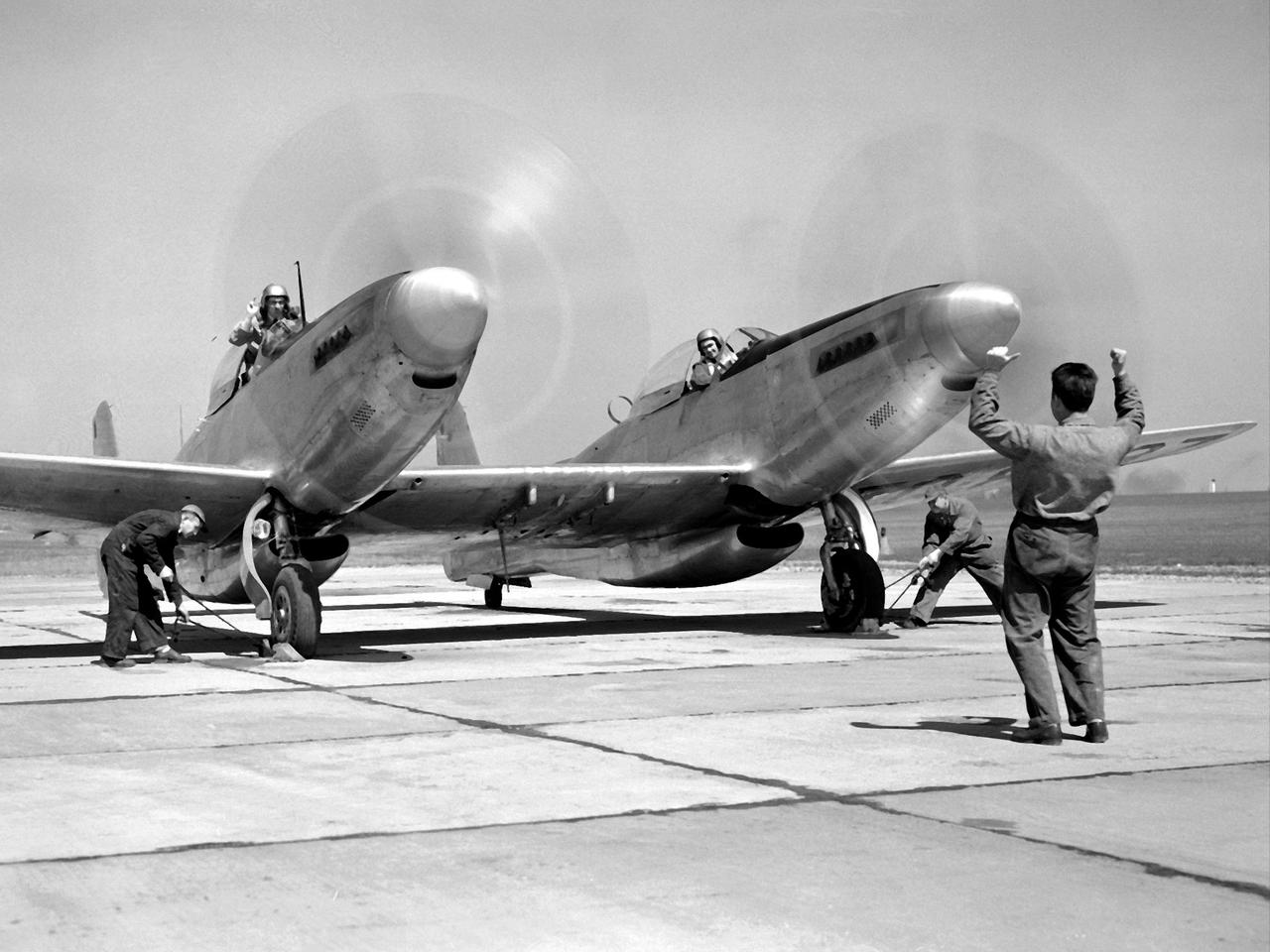
Pilot William Swann, right cockpit, prepares the North American XF-82 Twin Mustang for flight at the National Advisory Committee for Aeronautics (NACA) Lewis Flight Propulsion Laboratory. The aircraft was one of only two prototypes built by North American in October 1945 and powered by Packard Merlin V-1650 piston engines. Over 270 of the F-82 long-distance pursuit fighters were produced during the 1940s. The Mustang’s unique two-pilot configuration allowed one pilot to rest during the long missions and thus be ready for action upon arrival. The NACA took possession of this XF-82 in October 1947. NACA Lewis used the XF-82 as a test bed for ramjet flight tests. Ramjets are continually burning tubes that use the compressed atmospheric air to produce thrust. Ramjets are extremely efficient at high speeds, but rely on some sort of booster to attain that high speed. NACA Lewis undertook an extensive ramjet program in the 1940s that included combustion studies in the Altitude Wind Tunnel, a number of flight tests, and missile drops from aircraft. The 16-inch diameter ramjet missile was fixed to the XF-82 Mustang’s wing and dropped from high altitudes off of Wallops Island. The tests determined the ramjet’s performance and operational characteristics in the transonic range.
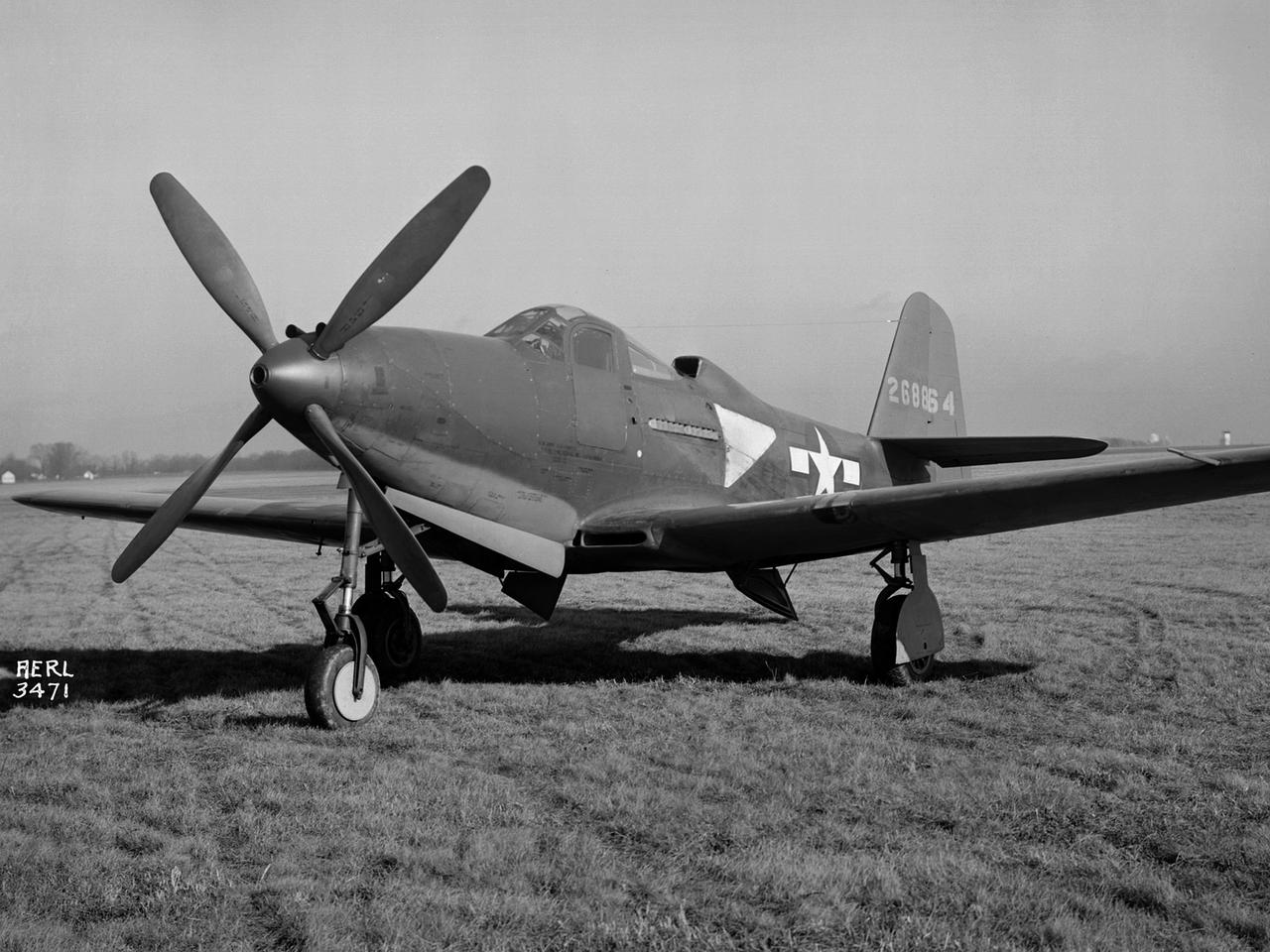
The Army Air Forces lent the National Advisory Committee for Aeronautics (NACA) Aircraft Engine Research Laboratory a Bell P–63A King Cobra in October 1943 to complement the lab's extensive efforts to improve the Allison V–1710 engine. The V–1710-powered P–63A was a single-seat fighter that could reach speeds of 410 miles per hour and an altitude of 43,000 feet. The fighter, first produced in 1942, was an improvement on Bell’s P–39, but persistent performance problems at high altitudes prevented its acceptance by the Air Corps. Instead many of the P–63s were transferred to the Soviet Union. Almost every test facility at the NACA’s engine lab was used to study the Allison V–1710 engine and its supercharger during World War II. Researchers were able to improve the efficiency, capacity and pressure ratio of the supercharger. They found that improved cooling significantly reduced engine knock in the fuel. Once the researchers were satisfied with their improvements, the new supercharger and cooling components were installed on the P–63A. The Flight Research Division first established the aircraft’s normal flight performance parameters such as speed at various altitudes, rate of climb, and peak altitude. Ensuing flights established the performance parameters of the new configuration in order to determine the improved performance. The program increased V–1710’s horsepower from 1650 to 2250.

AS04-01-580 (9 Nov. 1967) --- Earth as viewed from 10,000 miles. In 1969, the Apollo 4 (Spacecraft 017/Saturn 501) unmanned test flight made a great ellipse around Earth as a test of the translunar motors and of the high speed entry required of a manned flight returning from the moon. A 70mm camera was programmed to look out a window toward Earth, and take a series of photographs from "high apogee". Coastal Brazil, Atlantic Ocean, West Africa, Antarctica, looking west. This photograph was made when the Apollo 4 spacecraft, still attached to the S-IVB (third) stage, was orbiting Earth at an altitude of 9,544 miles.
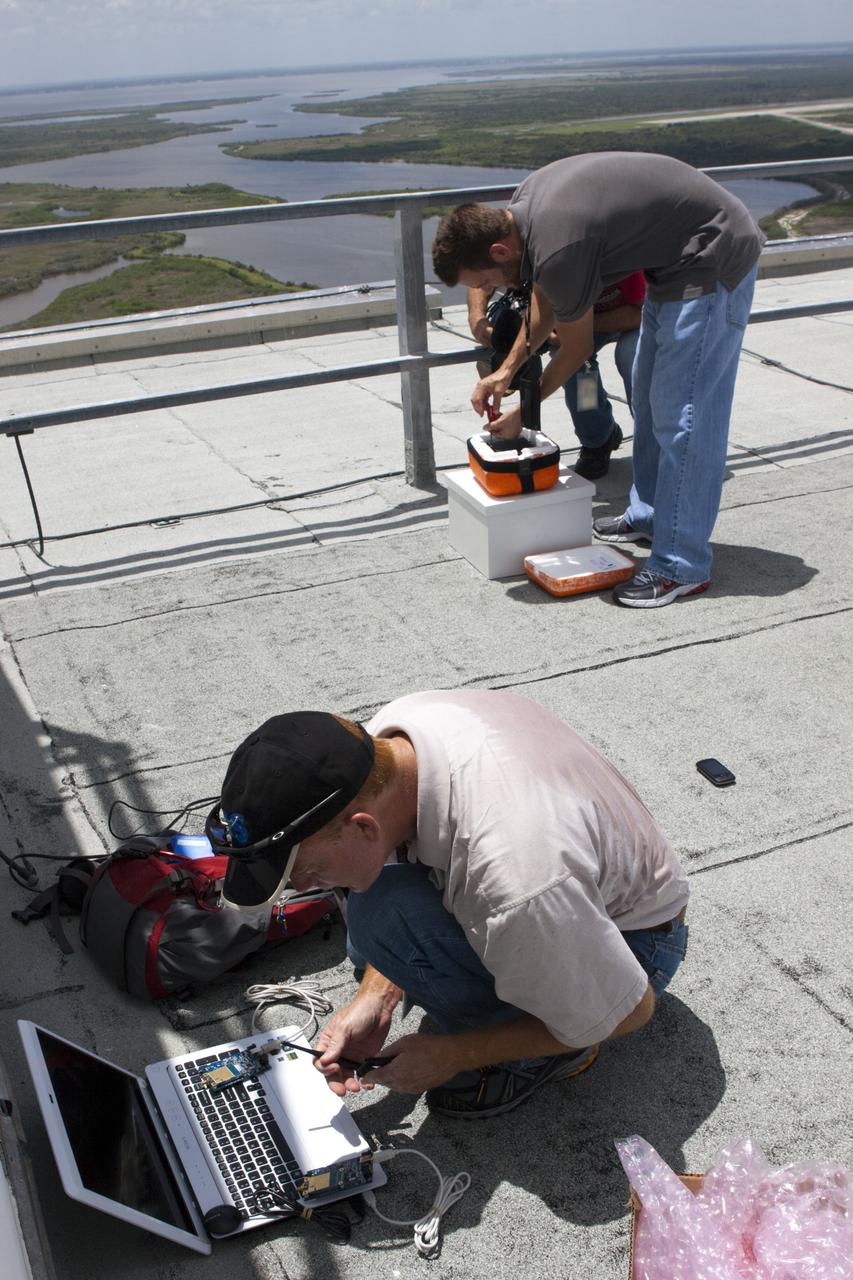
CAPE CANAVERAL, Fla. – Karl Stolleis, left and Nick Pack prepare an instrument package for testing as part of a high-altitude balloon flight for the Rocket University program. The test flight was used to evaluate the stability of an instrumented capsule as it fell to Earth before its parachute opened. Rocket University is a program of courses, workshops, labs and projects offered to engineering and research pros of all stripes to keep their skills fresh and broaden their experiences. Photo credit: NASA/Jim Grossmann
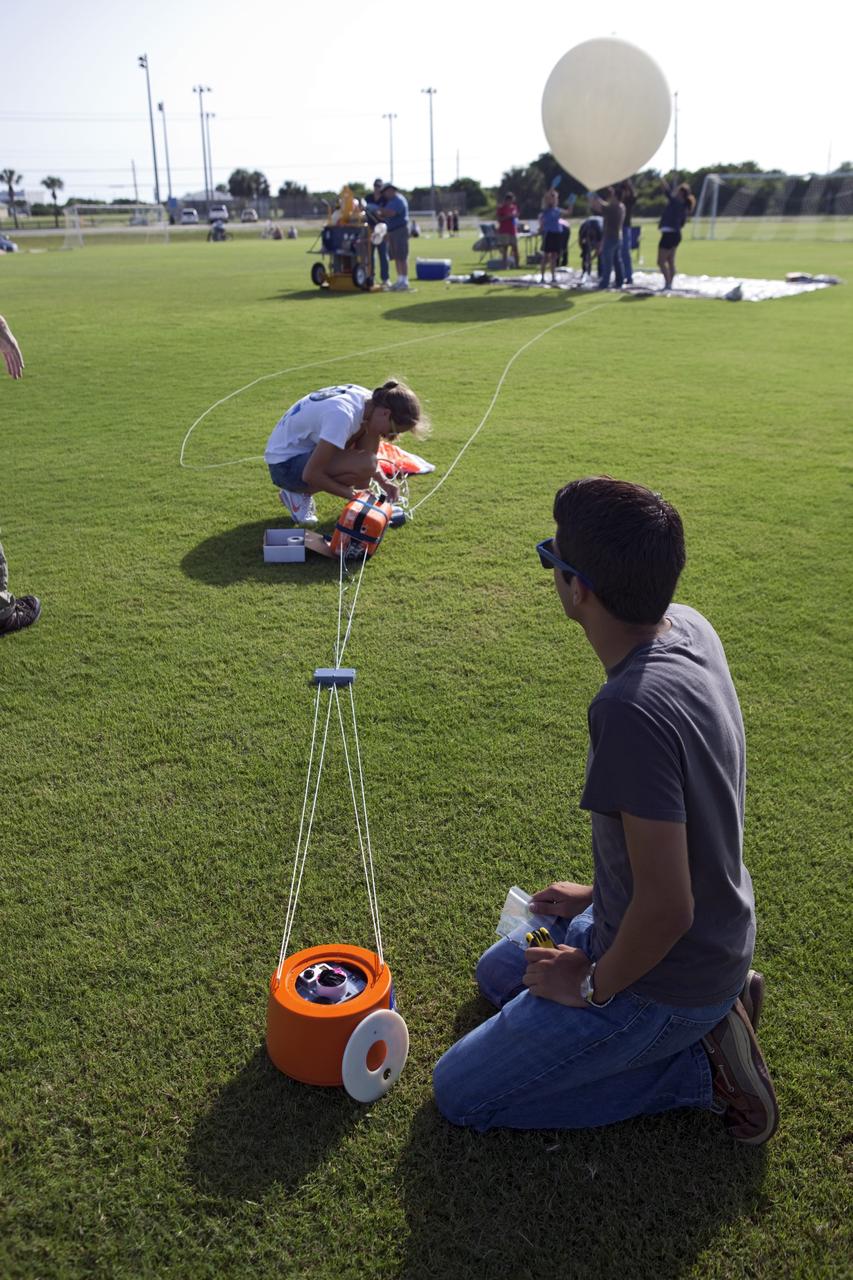
CAPE CANAVERAL, Fla. – Alejandro Azocar, foreground, and Page Attany, Rocket University participants, prepare an instrument package to launch on a high-altitude balloon flight. The test flight was used to evaluate the stability of an instrumented capsule as it fell to Earth before its parachute opened. Rocket University is a program of courses, workshops, labs and projects offered to engineering and research pros of all stripes to keep their skills fresh and broaden their experiences. Photo credit: NASA/Jim Grossmann
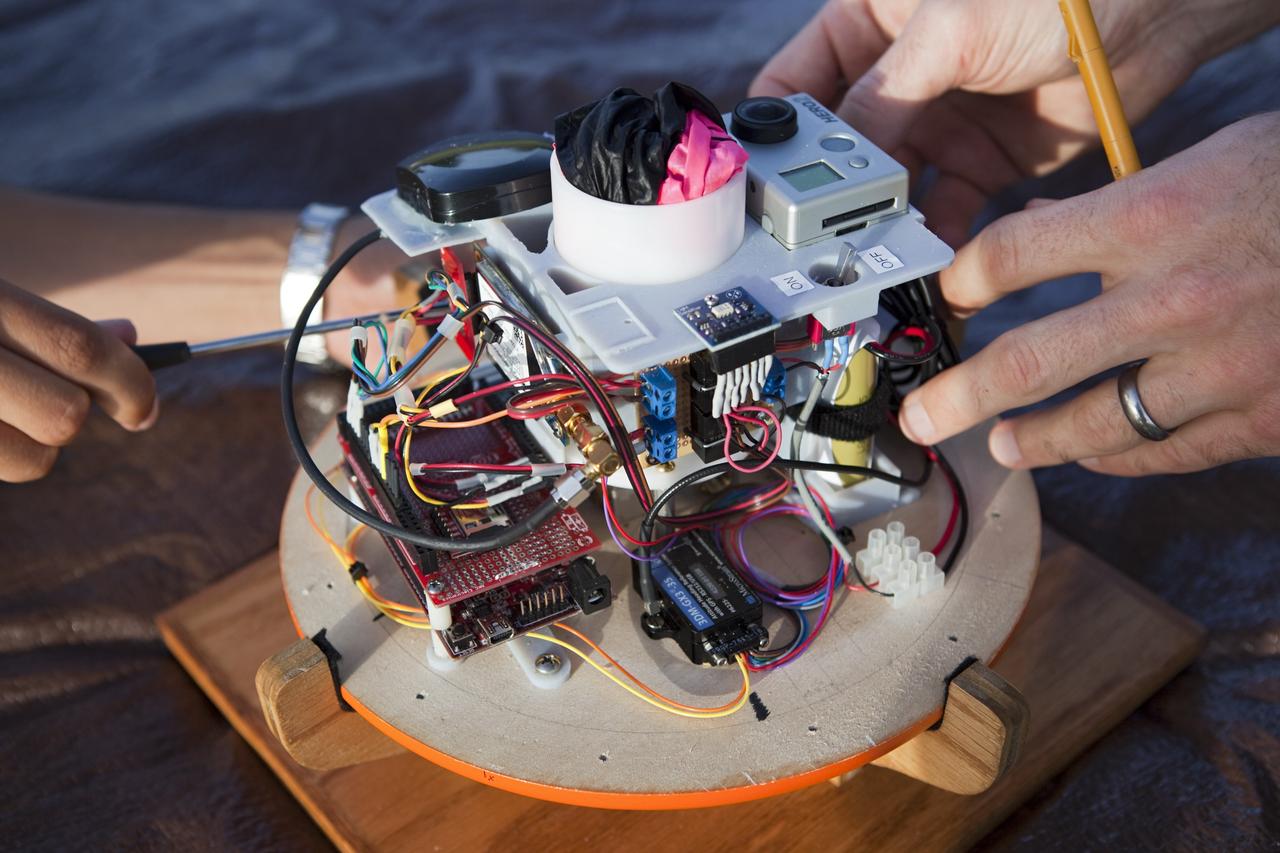
CAPE CANAVERAL, Fla. – The instrument package built by Rocket University participants for a high-altitude balloon flight. The test flight was used to evaluate the stability of an instrumented capsule as it fell to Earth before its parachute opened. Rocket University is a program of courses, workshops, labs and projects offered to engineering and research pros of all stripes to keep their skills fresh and broaden their experiences. Photo credit: NASA/Jim Grossmann
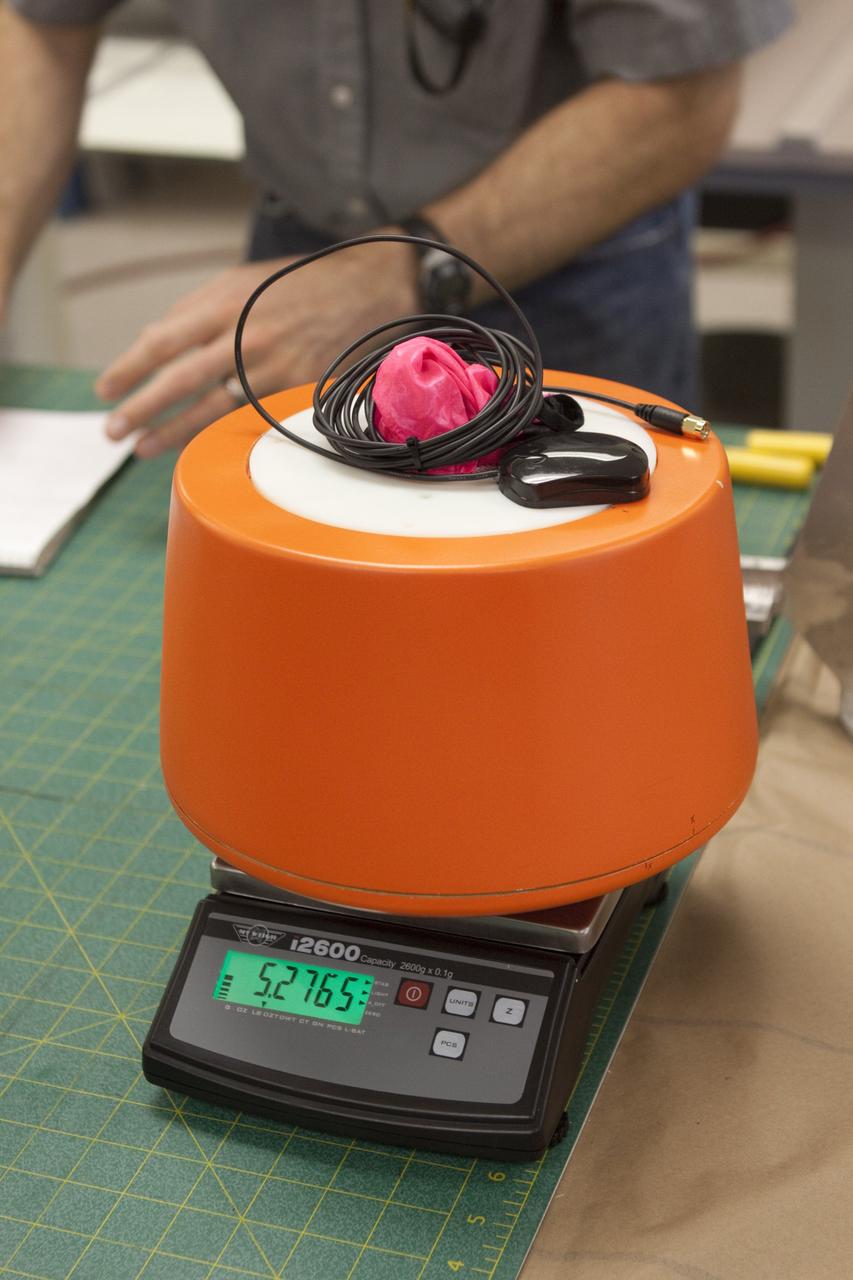
CAPE CANAVERAL, Fla. – The instrument package and capsule built by Rocket University participants for a high-altitude balloon flight. The test flight was used to evaluate the stability of an instrumented capsule as it fell to Earth before its parachute opened. Rocket University is a program of courses, workshops, labs and projects offered to engineering and research pros of all stripes to keep their skills fresh and broaden their experiences. Photo credit: NASA/Jim Grossmann

CAPE CANAVERAL, Fla. – Karl Stolleis prepares an instrument package for testing as part of a high-altitude balloon flight for the Rocket University program. The test flight was used to evaluate the stability of an instrumented capsule as it fell to Earth before its parachute opened. Rocket University is a program of courses, workshops, labs and projects offered to engineering and research pros of all stripes to keep their skills fresh and broaden their experiences. Photo credit: NASA/Jim Grossmann
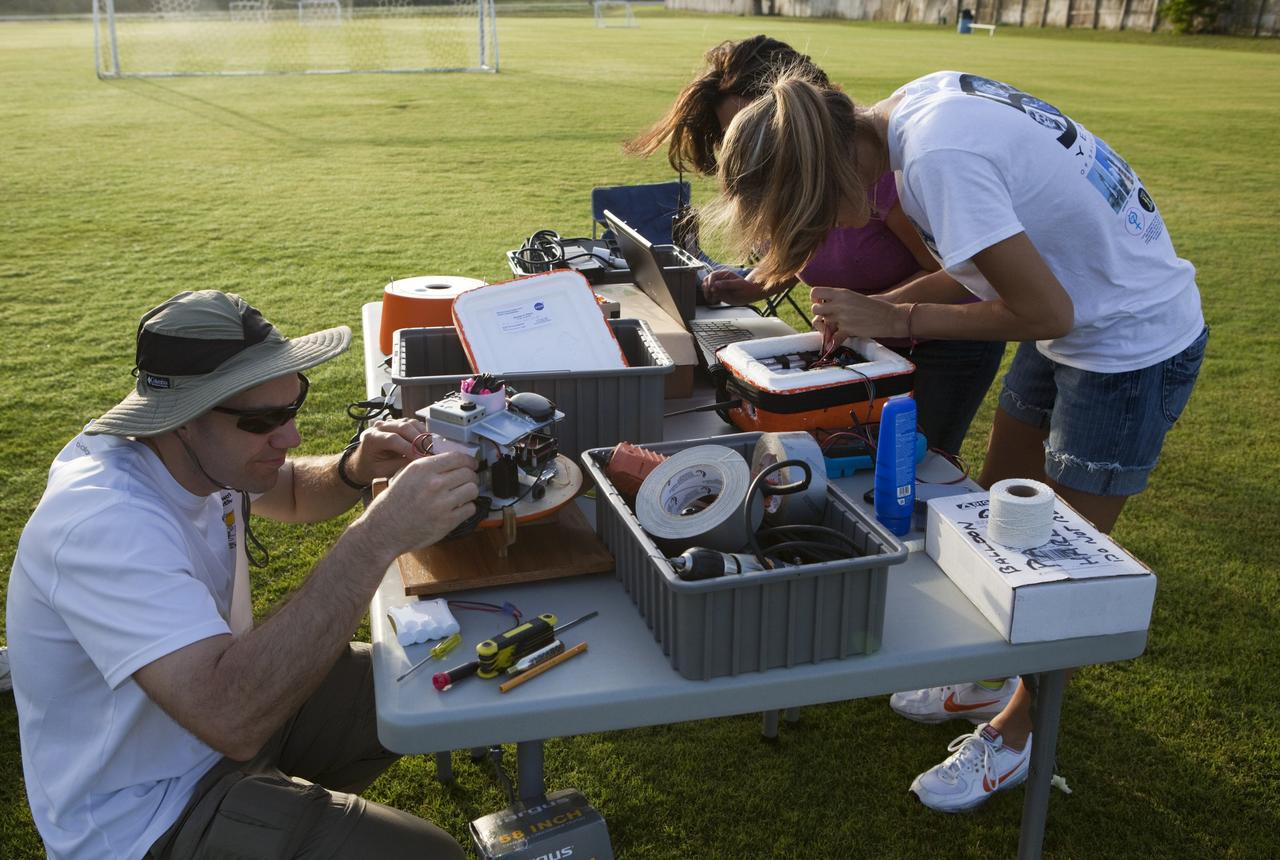
CAPE CANAVERAL, Fla. – Ron Sterick, left to right, Nicole Otermat and Page Attany, participants in the Rocket University program, prepare an instrument package to launch on a high-altitude balloon flight. The test flight was used to evaluate the stability of an instrumented capsule as it fell to Earth before its parachute opened. Rocket University is a program of courses, workshops, labs and projects offered to engineering and research pros of all stripes to keep their skills fresh and broaden their experiences. Photo credit: NASA/Jim Grossmann
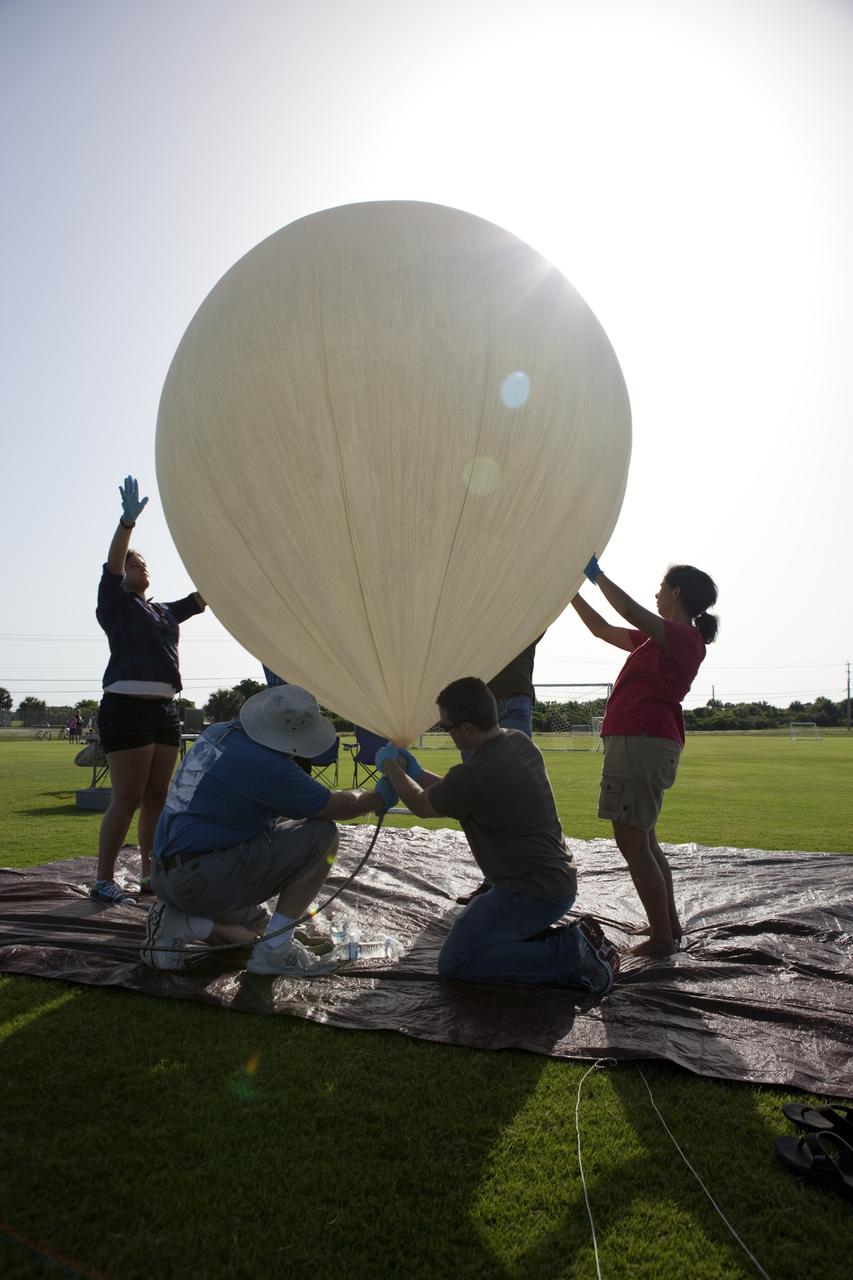
CAPE CANAVERAL, Fla. – Rocket University participants prepare to launch a high-altitude balloon flight and instrument package. The test flight was used to evaluate the stability of an instrumented capsule as it fell to Earth before its parachute opened. Rocket University is a program of courses, workshops, labs and projects offered to engineering and research pros of all stripes to keep their skills fresh and broaden their experiences. Photo credit: NASA/Jim Grossmann
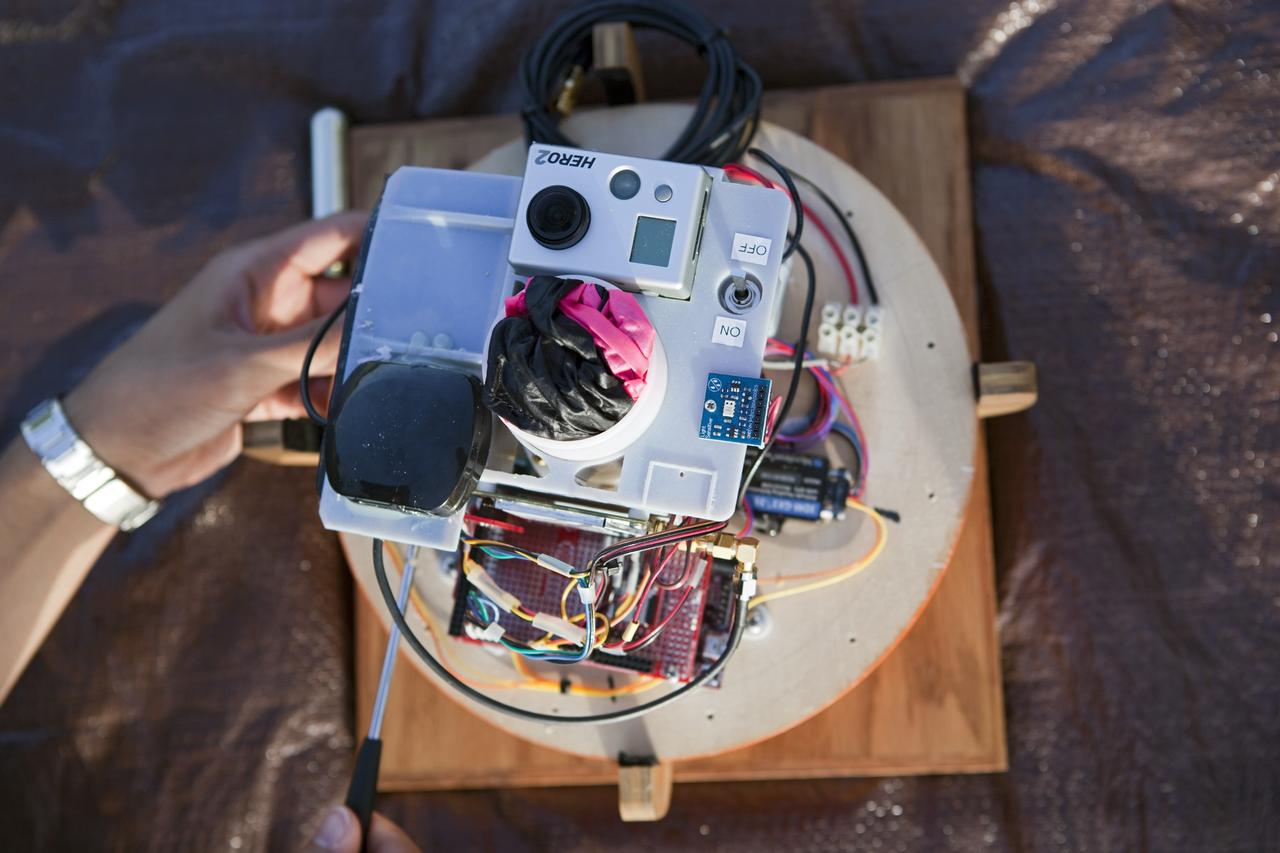
CAPE CANAVERAL, Fla. – The instrument package built by Rocket University participants for a high-altitude balloon flight. The test flight was used to evaluate the stability of an instrumented capsule as it fell to Earth before its parachute opened. Rocket University is a program of courses, workshops, labs and projects offered to engineering and research pros of all stripes to keep their skills fresh and broaden their experiences. Photo credit: NASA/Jim Grossmann
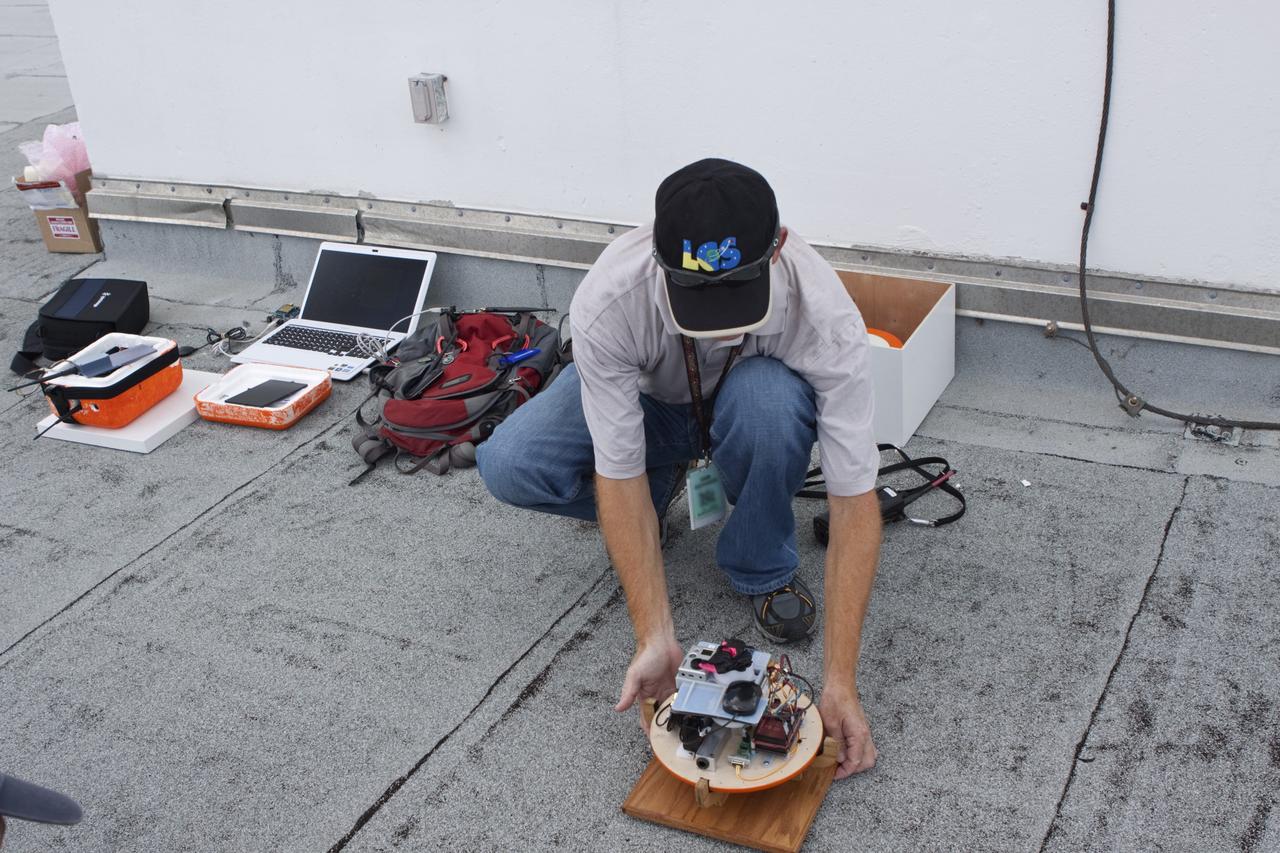
CAPE CANAVERAL, Fla. – Karl Stolleis prepares an instrument package for testing as part of a high-altitude balloon flight for the Rocket University program. The test flight was used to evaluate the stability of an instrumented capsule as it fell to Earth before its parachute opened. Rocket University is a program of courses, workshops, labs and projects offered to engineering and research pros of all stripes to keep their skills fresh and broaden their experiences. Photo credit: NASA/Jim Grossmann