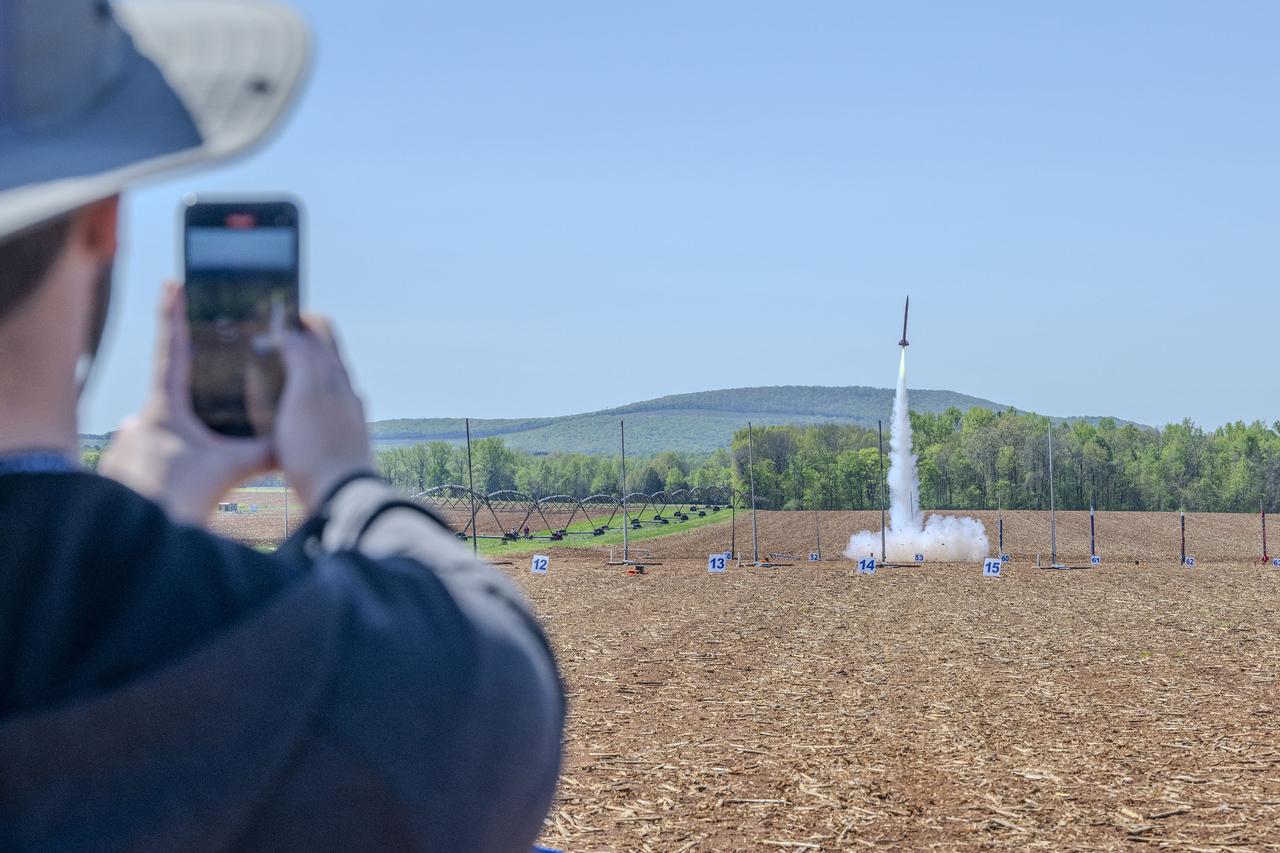
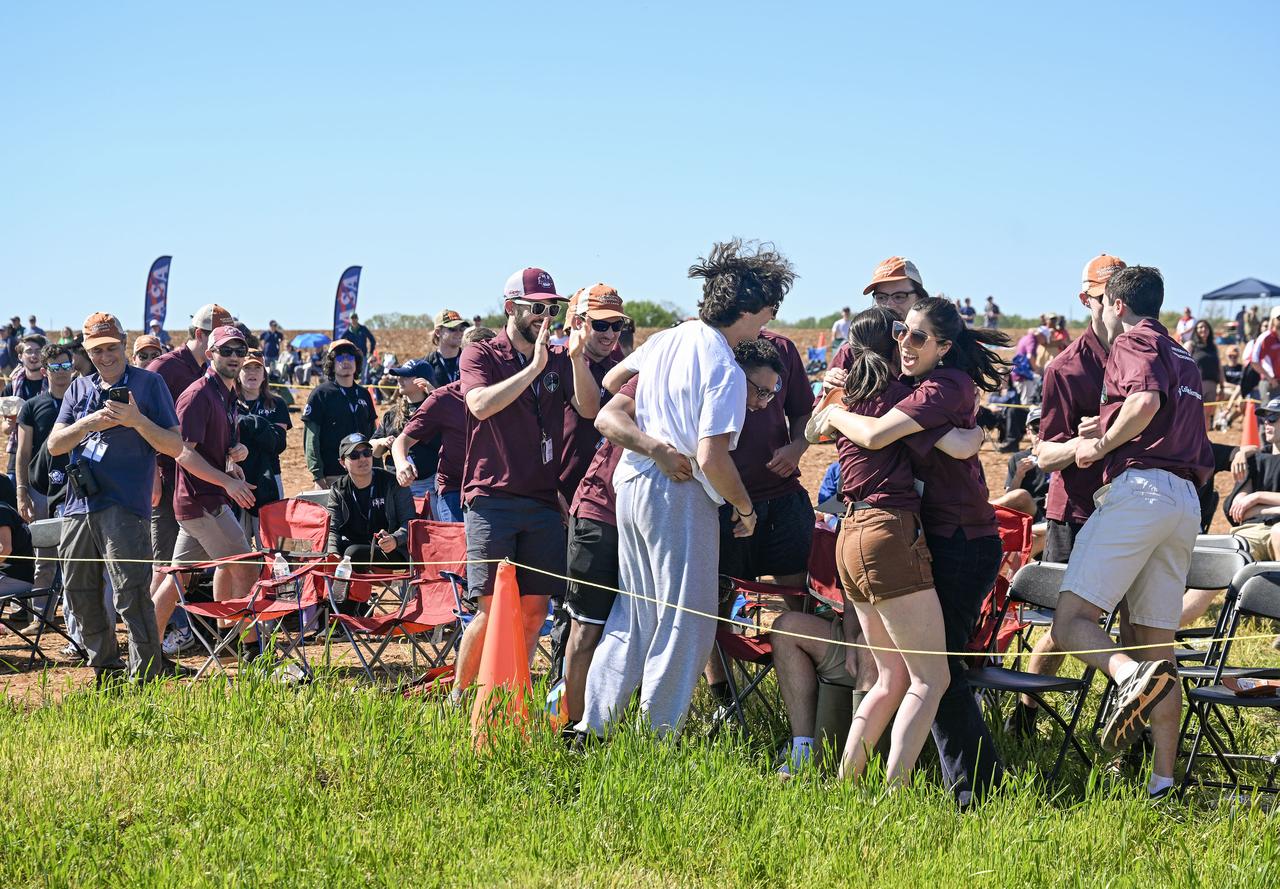
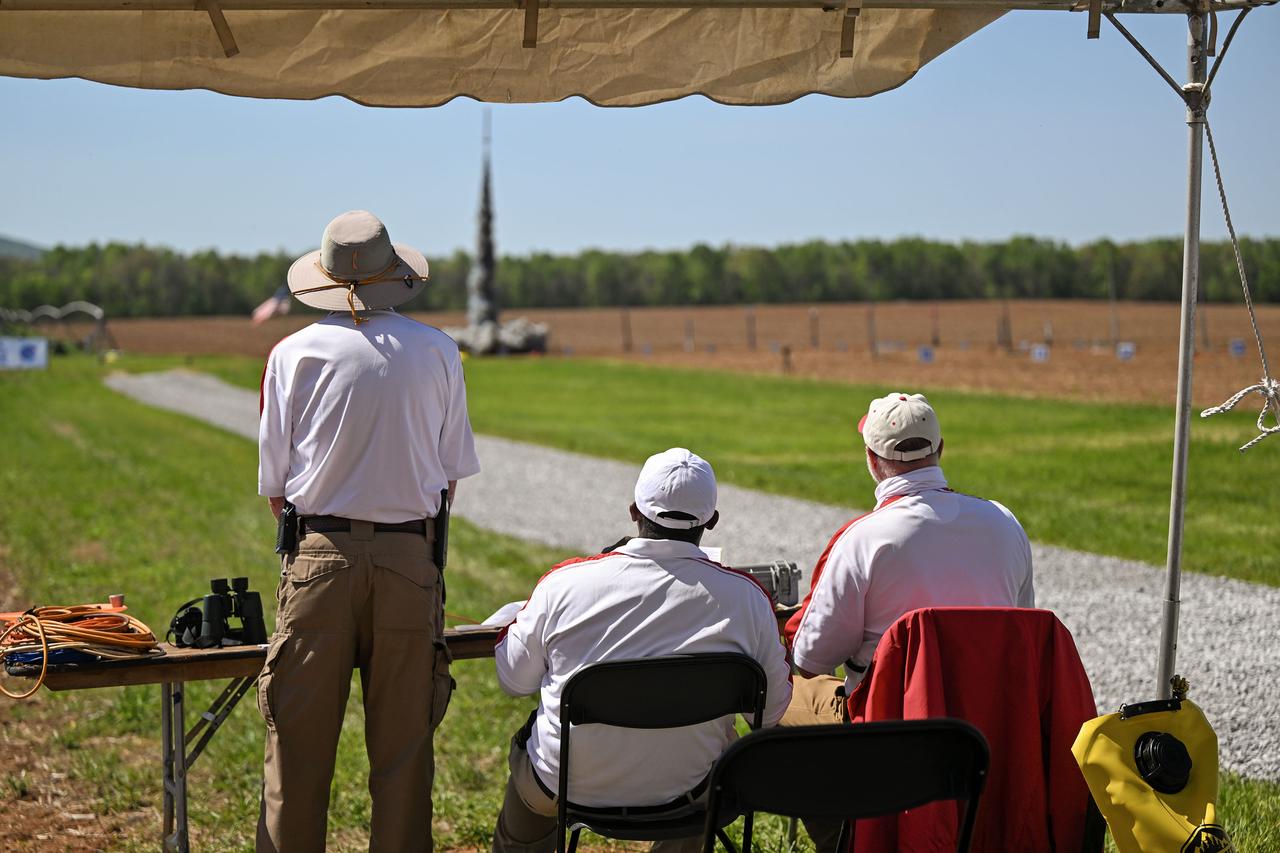
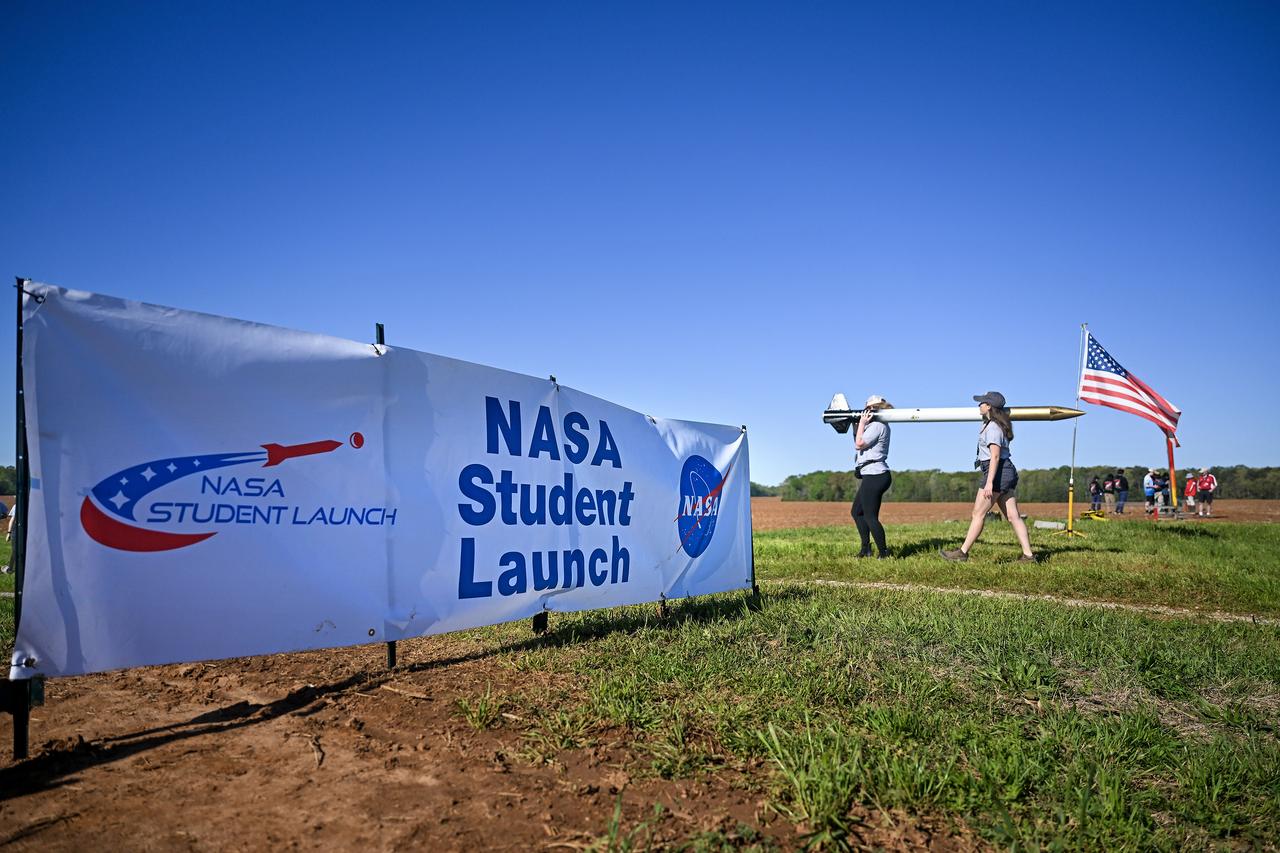
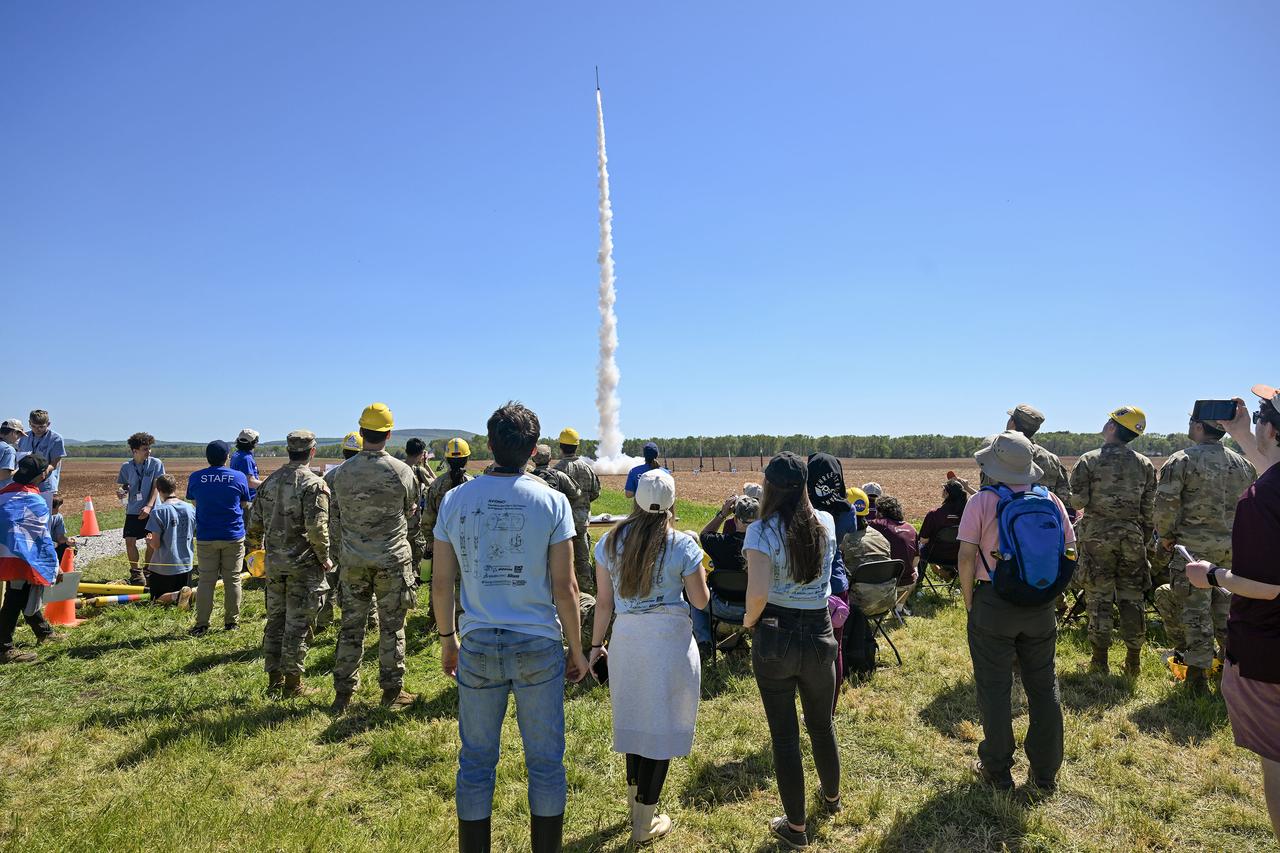
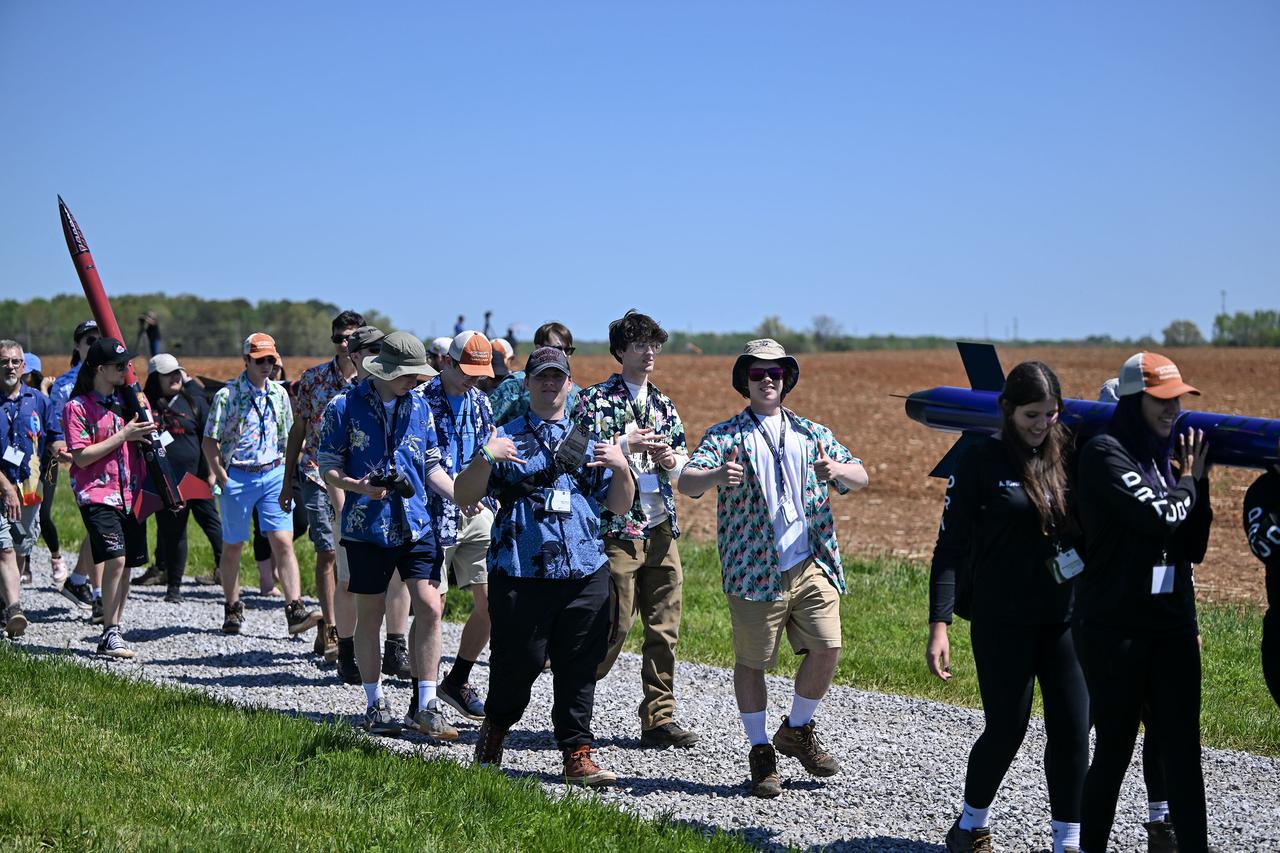
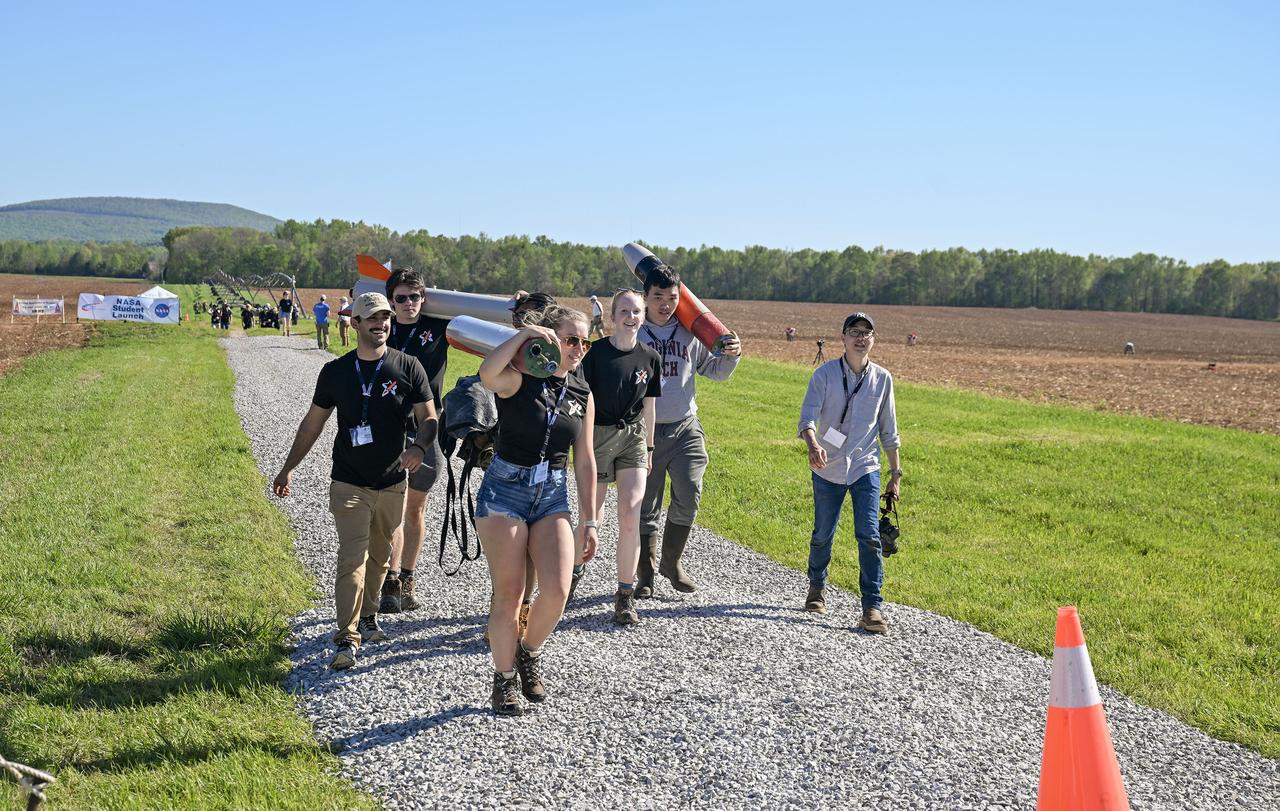
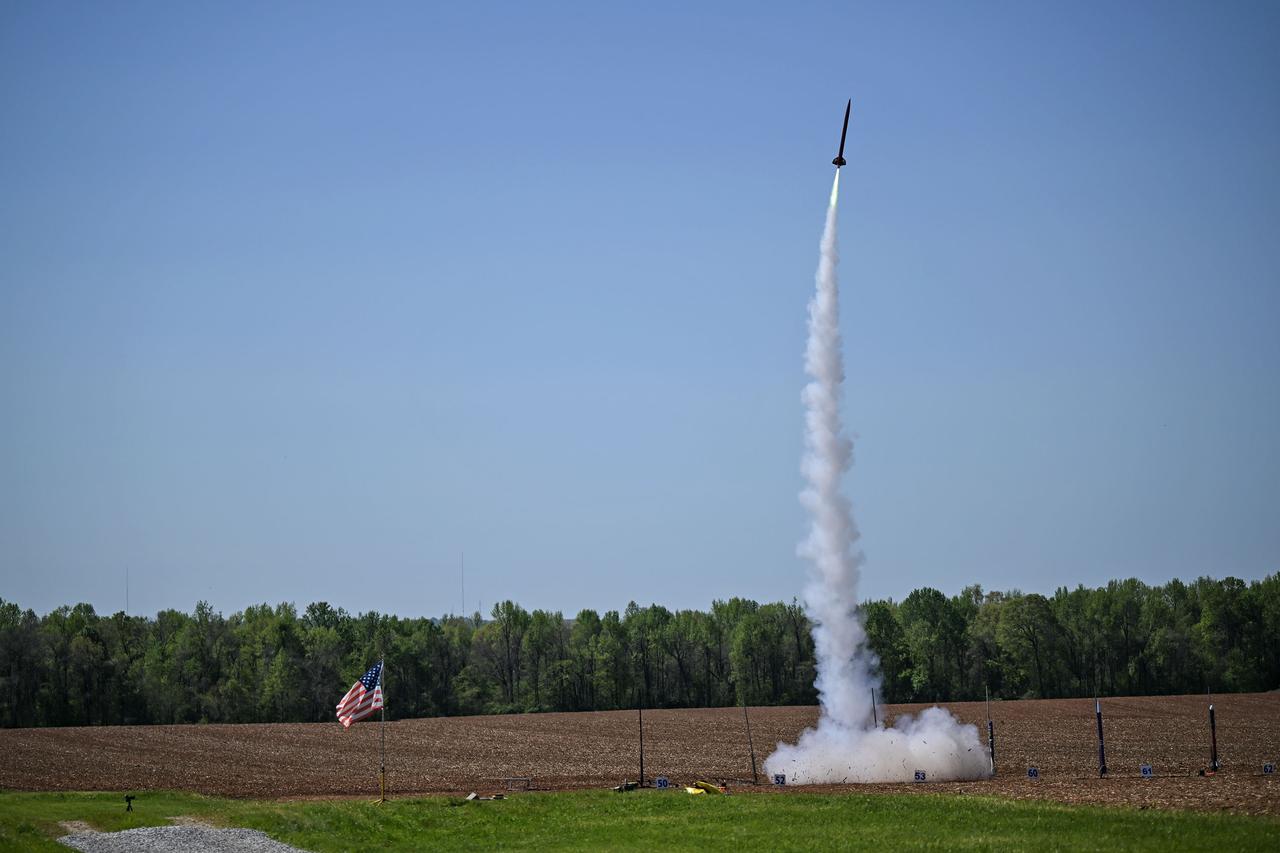
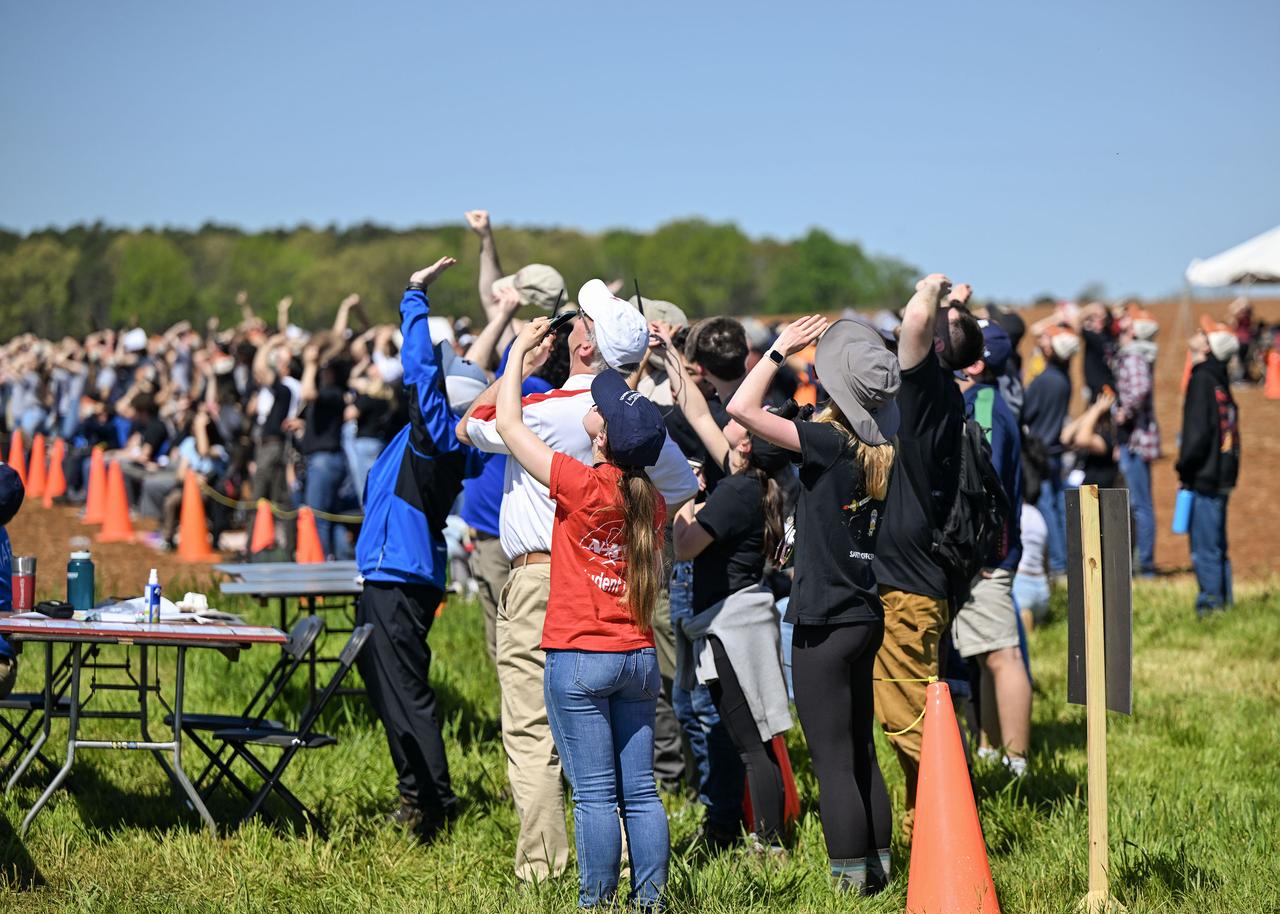
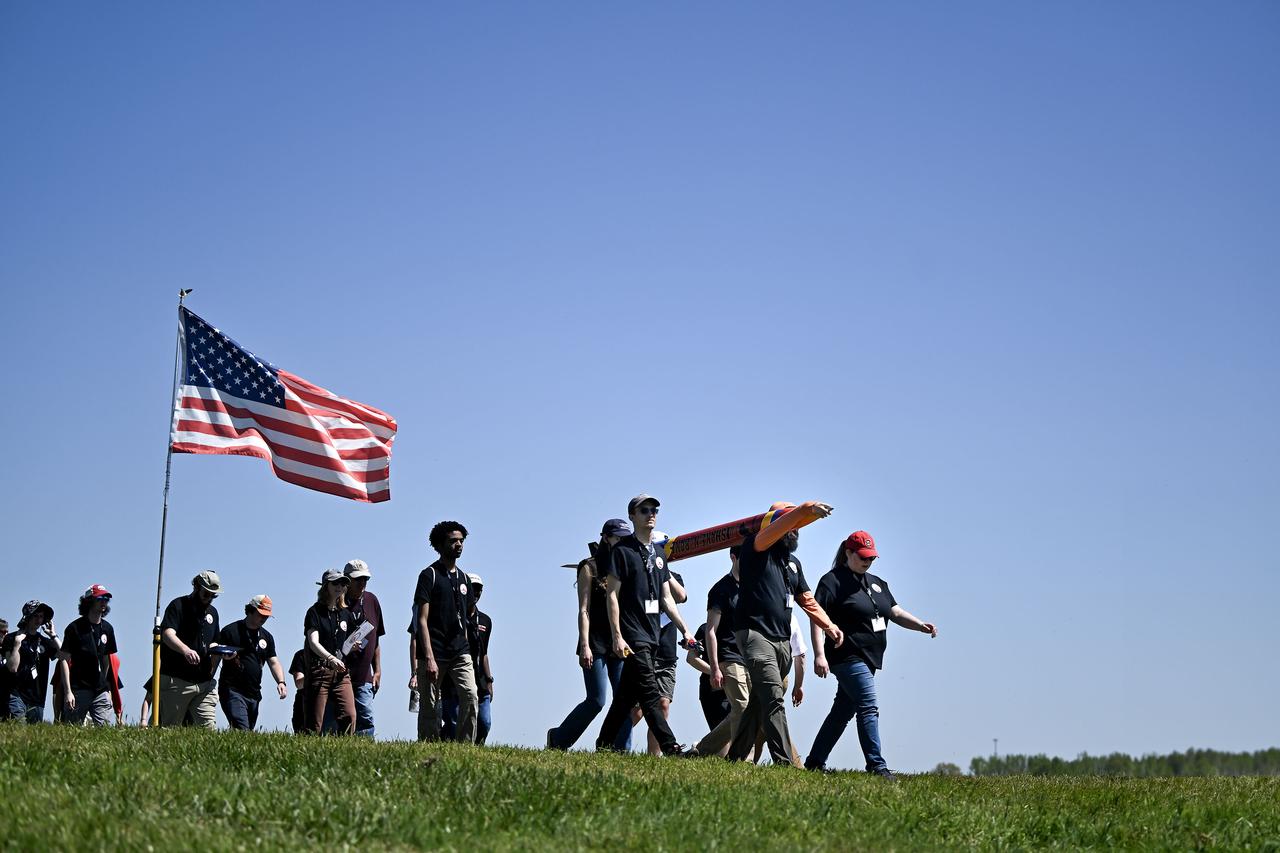
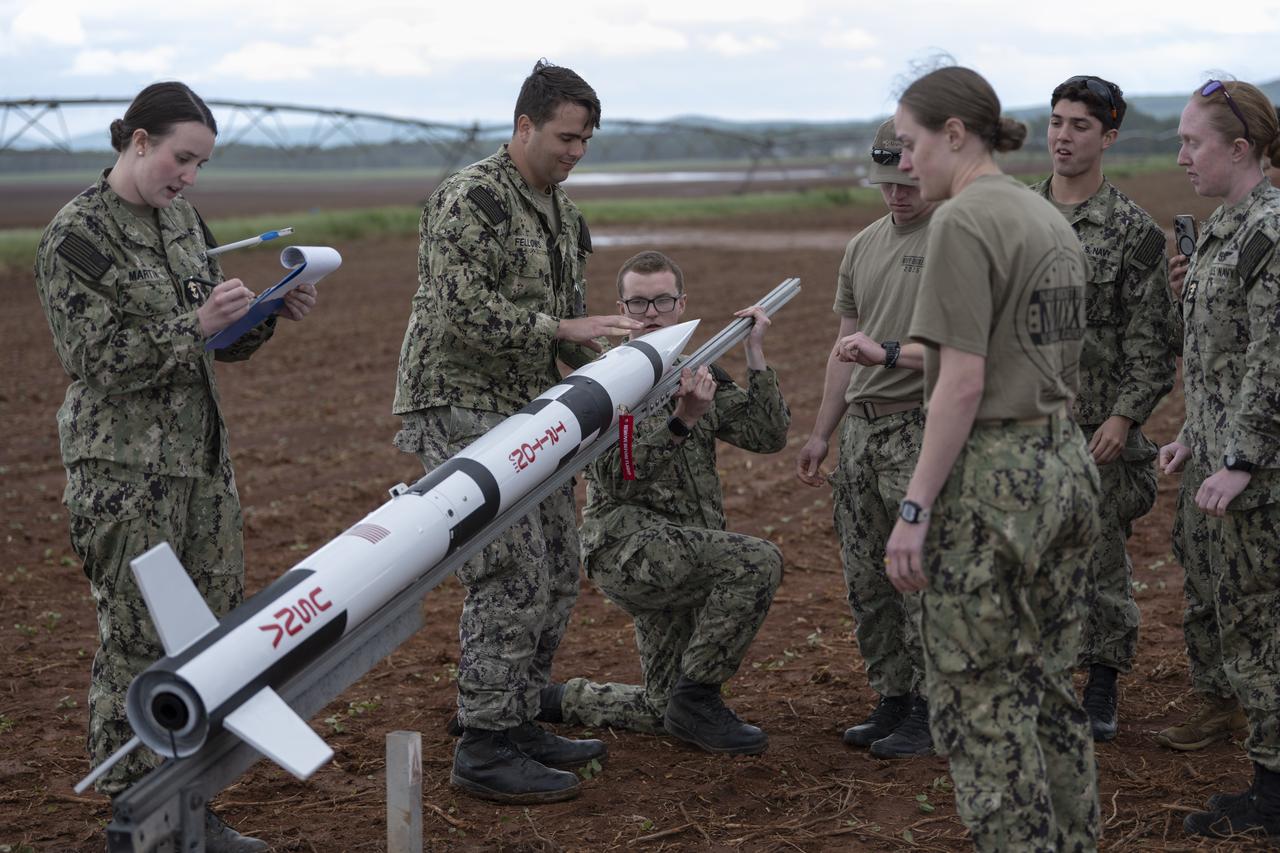
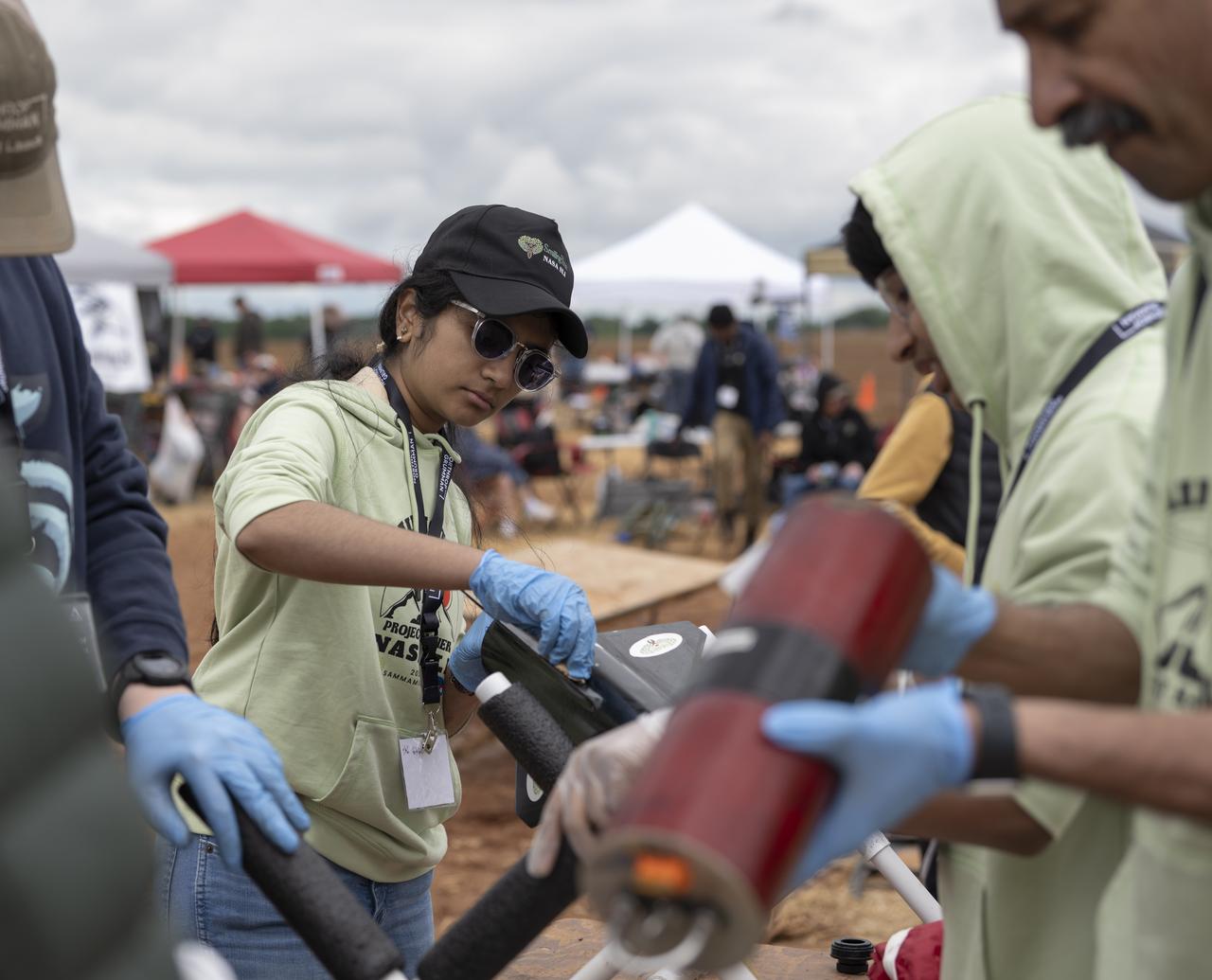
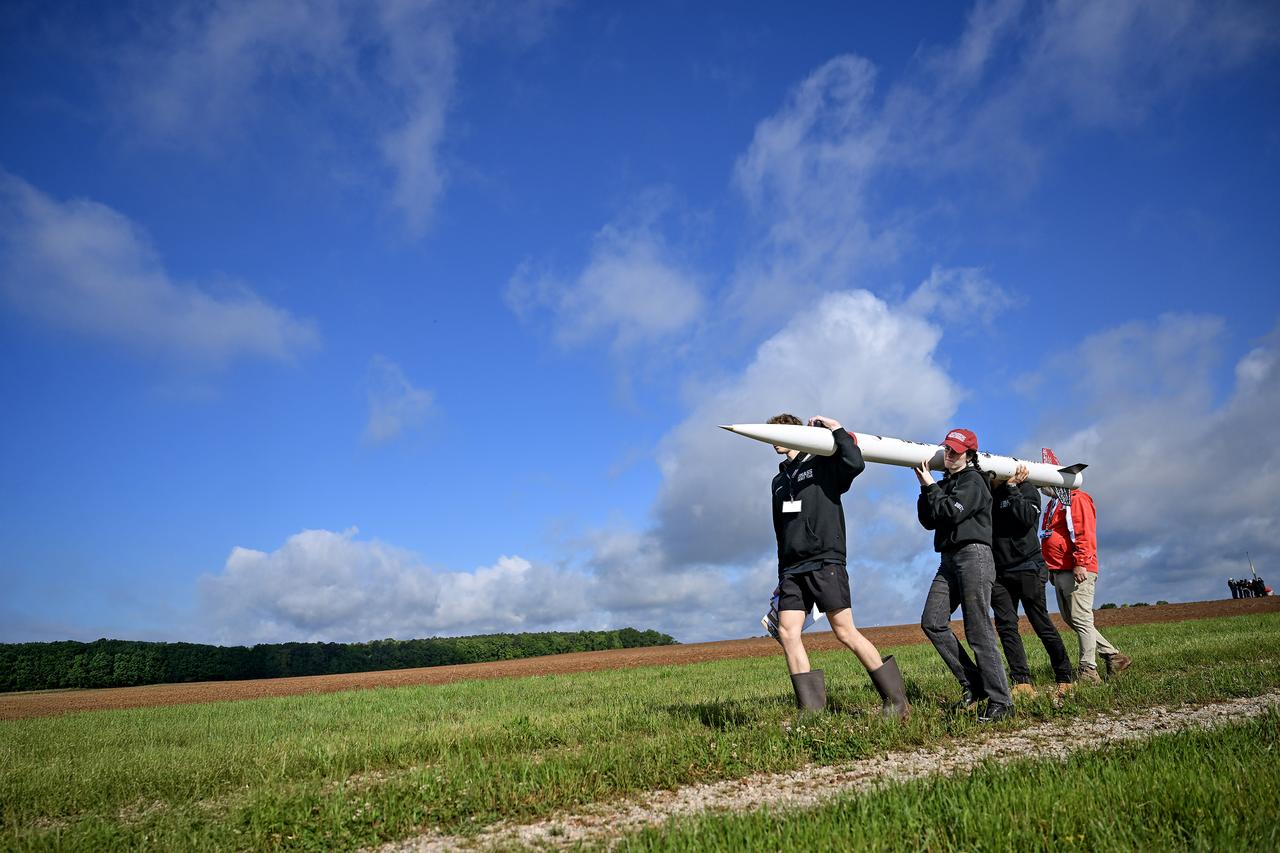
Students from the University of Massachusetts Amherst team carry their high-powered  rocket toward the launch pad at NASA’s 2025 Student Launch launch day competition in Toney, Alabama, on May 4, 2025. More than 980 middle school, high school, and college students from across the nation launched more than 40 high-powered amateur rockets just north of NASA’s Marshall Space Flight Center in Huntsville, Alabama. This year marked the 25th anniversary of the competition. To compete, students follow the NASA engineering design lifecycle by going through a series of reviews for nine months leading up to launch day. Each year, a payload challenge is issued to the university teams, and this year’s task focused on communication.  Teams were required to have “reports” from STEMnauts, non-living objects inside their rocket, that had to relay real-time data to the student team’s mission control. This Artemis Student Challenge took inspiration from the agency’s Artemis missions, where NASA will send astronauts to explore the Moon for scientific discovery, economic benefit, and to build the foundation for the first crewed missions to Mars. To learn more, visit: www.nasa.gov/studentlaunch.
25 Years of NASA Student Launch
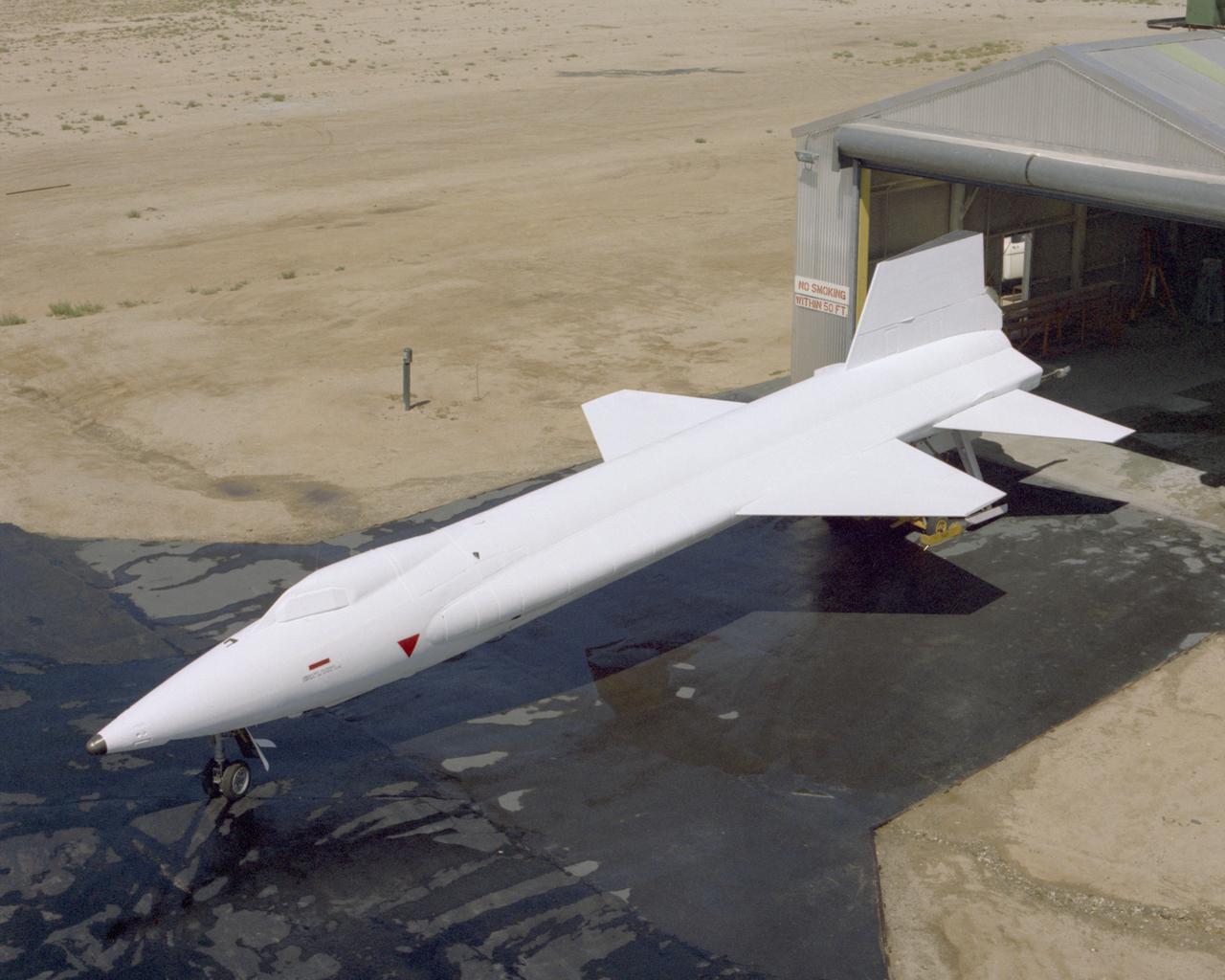
X-15A-2 is rolled out of the paint shop after having the full scale ablative applied. In June 1967, the X-15A-2 rocket-powered research aircraft received a full-scale ablative coating to protect the craft from the high temperatures associated with hypersonic flight (above Mach 5). This pink eraser-like substance, applied to the X-15A-2 aircraft (56-6671), was then covered with a white sealant coat before flight. This coating would help the #2 aircraft reach the record speed of 4,520 mph (Mach 6.7).
X-15A-2 is rolled out of the paint shop after having the full scale ablative applied
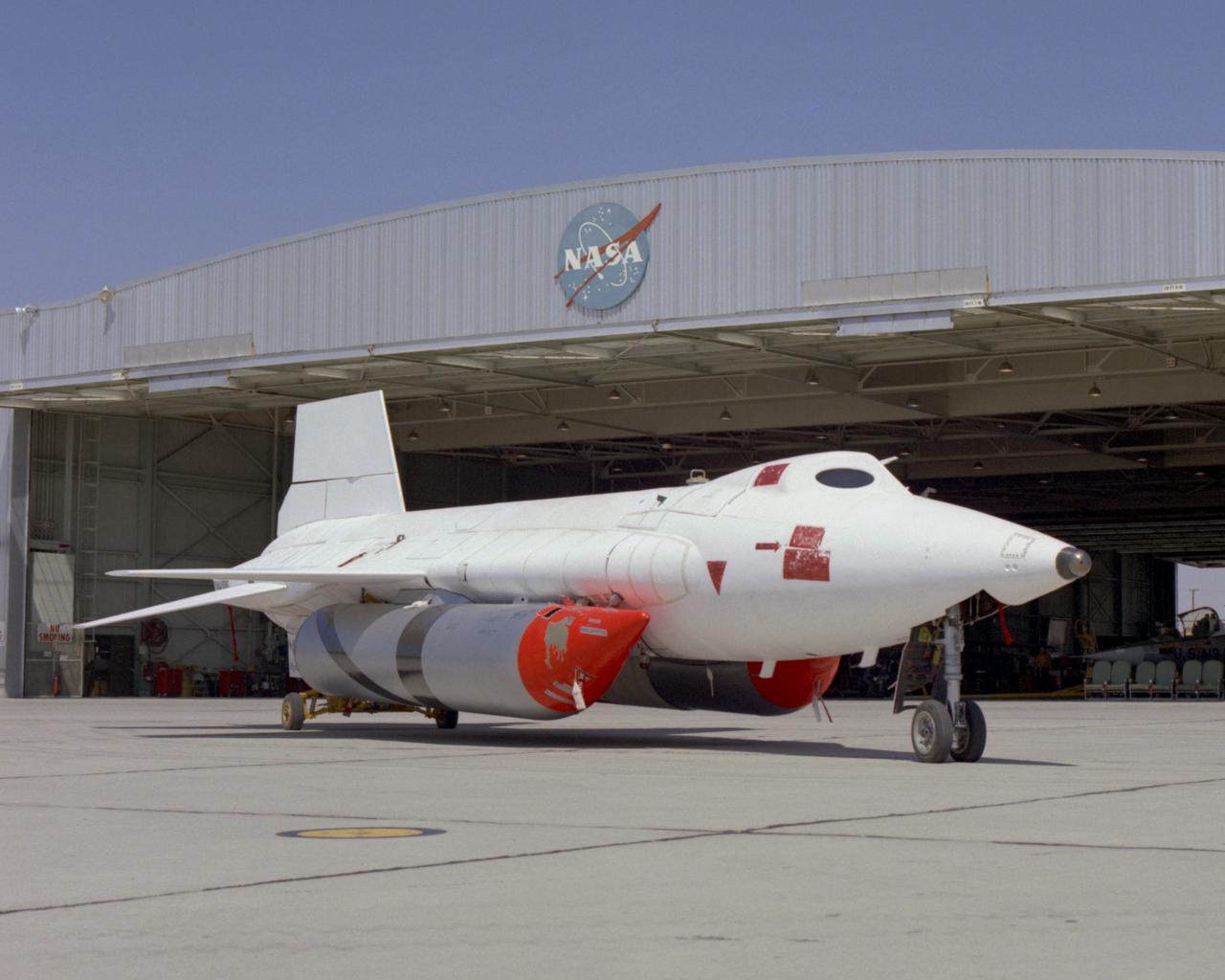
X-15A-2 with full scale ablative and external tanks installed parked in front of hangar. In June 1967, the X-15A-2 rocket-powered research aircraft received a full-scale ablative coating to protect the craft from the high temperatures associated with hypersonic flight (above Mach 5). This pink eraser-like substance, applied to the X-15A-2 aircraft (56-6671), was then covered with a white sealant coat before flight. This coating would help the #2 aircraft reach the record speed of 4,520 mph (Mach 6.7).
X-15A-2 with full scale ablative and external tanks installed parked in front of hangar
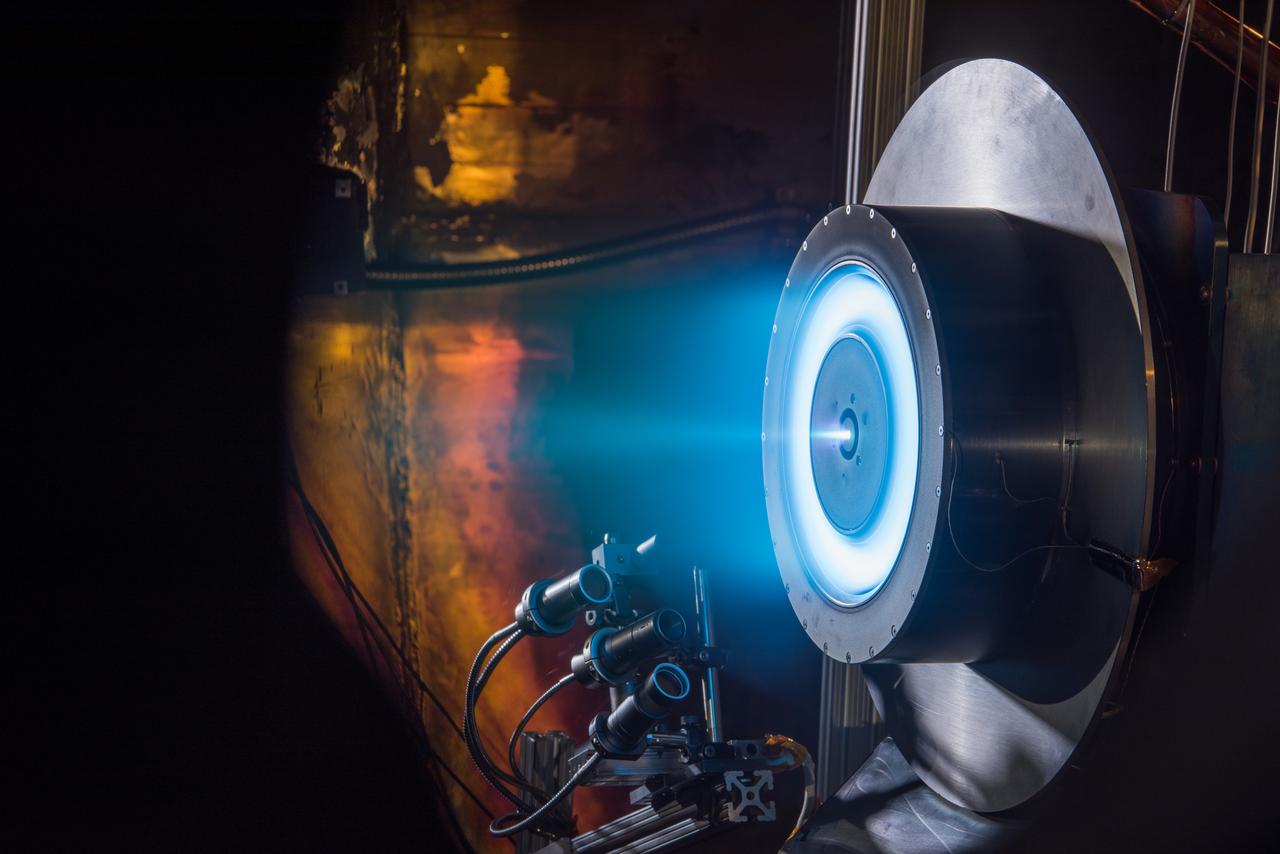
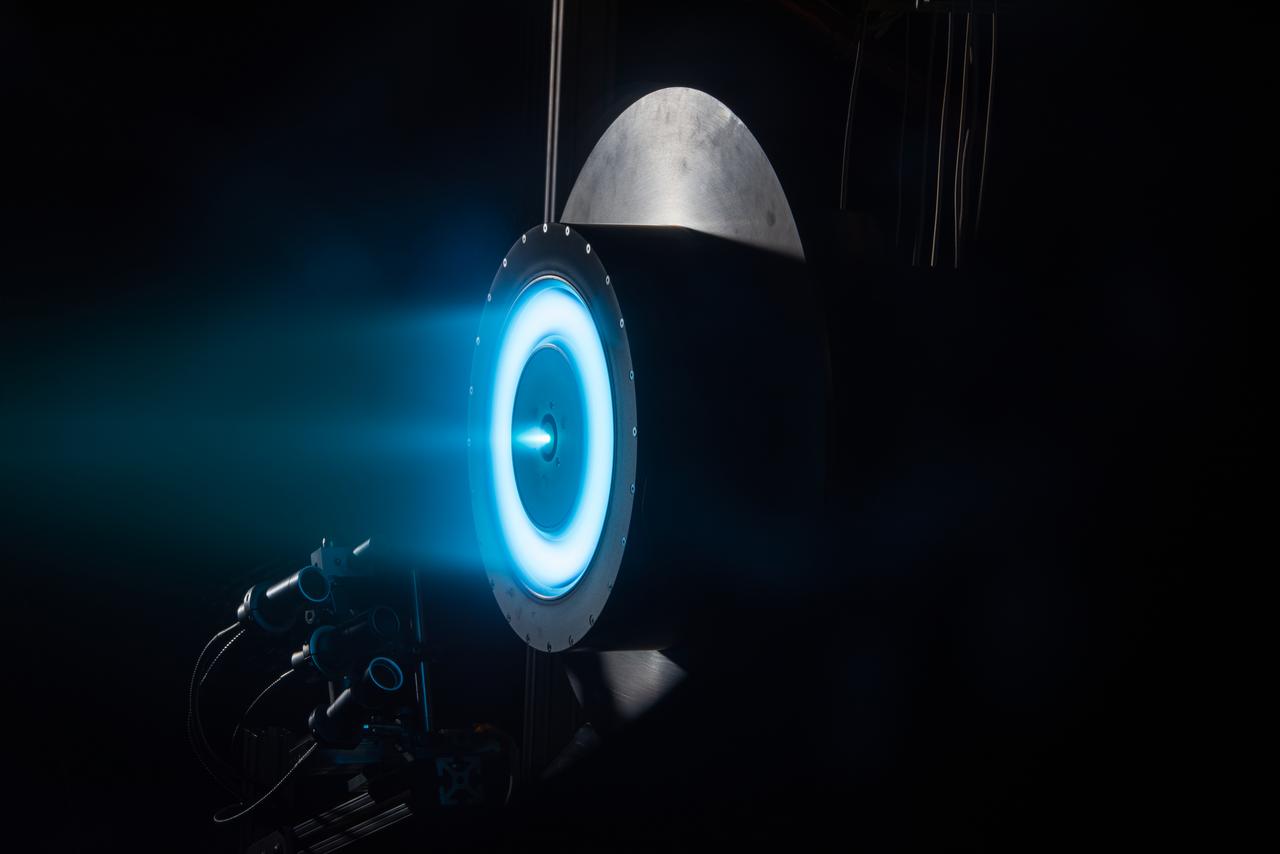
Hall Effect Rocket with Magnetic Shielding Technology Development Unit 1 with Large Radiator working in conjunction with High Power 300 volt Silicon Carbide Power Processing Unit
Hall Effect Rocket
Hall Effect Rocket with Magnetic Shielding Technology Development Unit 1 with Large Radiator working in conjunction with High Power 300 Volt Silicon Carbide Power Processing Unit
GRC-2015-C-01182
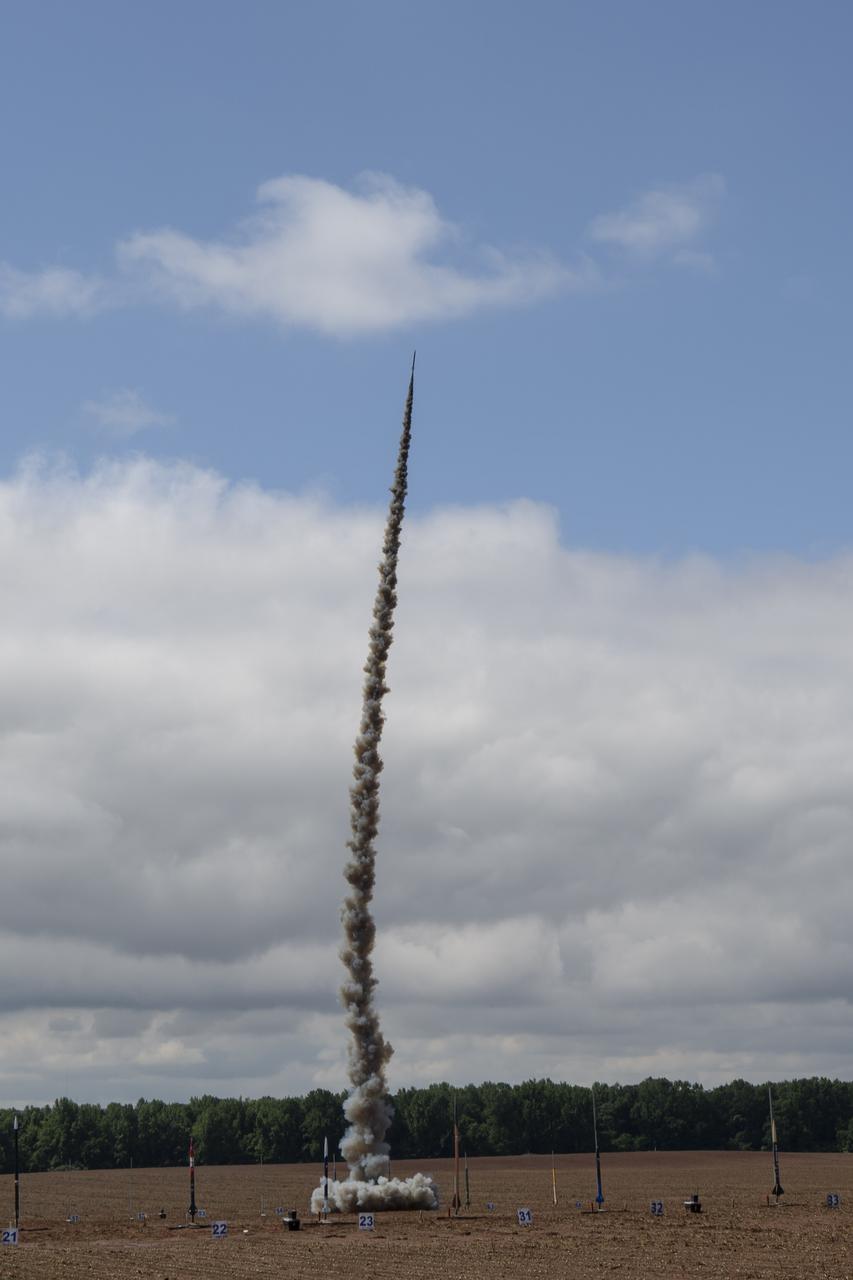
Over 1,000 middle school, high school, and collegiate students from across the U.S. and Puerto Rico launched high-powered, amateur rockets on April 13, just north of NASA’s Marshall Space Flight Center in Huntsville, Alabama, as part of the agency’s annual Student Launch rocketry competition.
2024 Student Launch
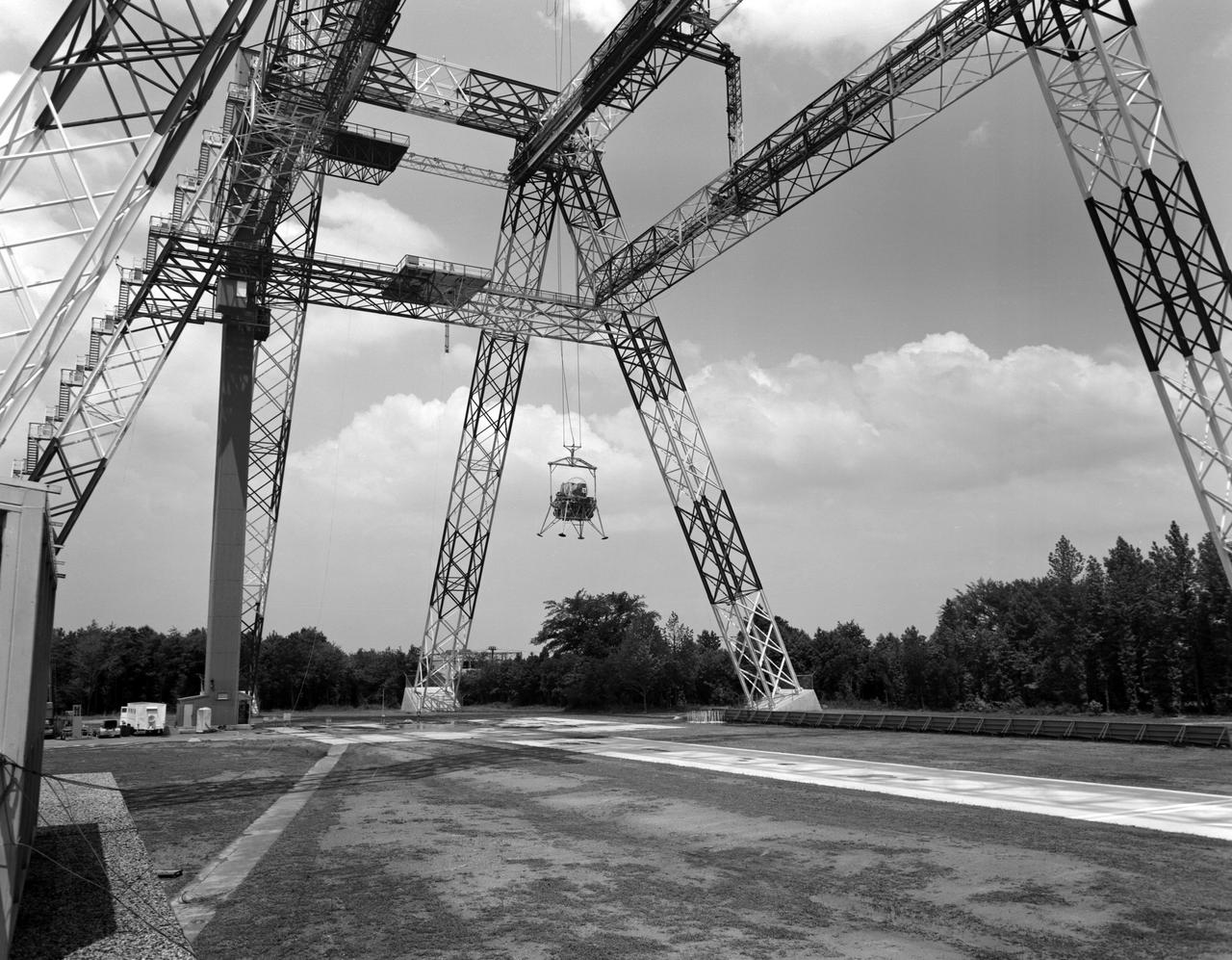
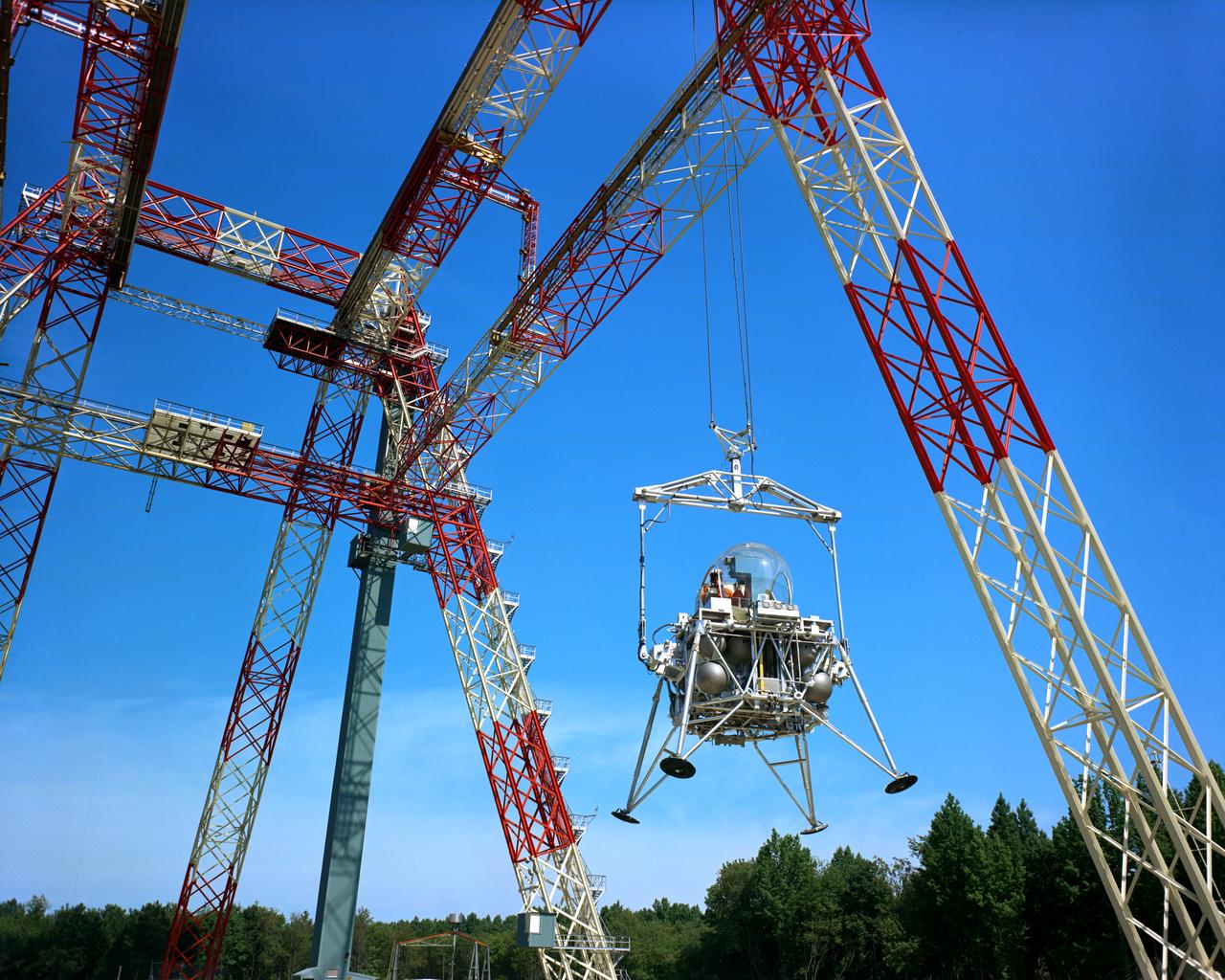
The Lunar Landing Research Facility at Langley Research Center has been put into operation. The facility, 250 feet high and 400 feet long, provides a controlled laboratory in which NASA scientists will work with research pilots to explore and develop techniques for landing a rocket-powered vehicle on the Moon, where the gravity is only one sixth as strong as on Earth. The Lunar Landing Research Facility, a controlled laboratory for exploring and developing techniques for landing a rocket-powered vehicle on the Moon, has been put into operation at the Langley Research Center. The $3.5 million facility includes a rocket-powered piloted flight test vehicle which is operated· while partially supported from a 250-foot high, 400-foot long gantry structure to simulate the one-sixth earth gravity of the Moon in research to obtain data on the problems of lunar landing. Excerpt from Langley Researcher July 2, 1965
Lunar Landing Research Facility (LLRF) in operation
The Lunar Landing Research Facility at Langley Research Center has been put into operation. The facility, 250 feet high and 400 feet long, provides a controlled laboratory in which NASA scientists will work with research pilots to explore and develop techniques for landing a rocket-powered vehicle on the Moon, where the gravity is only one sixth as strong as on Earth. The Lunar Landing Research Facility, a controlled laboratory for exploring and developing techniques for landing a rocket-powered vehicle on the Moon, has been put into operation at the Langley Research Center. The $3.5 million facility includes a rocket-powered piloted flight test vehicle which is operated· while partially supported from a 250-foot high, 400-foot long gantry structure to simulate the one-sixth earth gravity of the Moon in research to obtain data on the problems of lunar landing. Excerpt from Langley Researcher July 2, 1965
Lunar Landing Faciltiy
t actually IS rocket science! Student Launch is a 9-month long challenge that tasks student teams from across the U.S. to design, build, test, and launch a high-powered rocket carrying a scientific or engineering payload. It is a hands-on, research-based, engineering activity and culminates each year with a final launch in Huntsville, Alabama home of NASA’s Marshall Space Flight Center. The activity offers multiple challenges reaching a broad audience colleges and universities as well as middle and high school aged students across the nation.
The 2024 NASA Student Launch took place April 10-14 at the VBC and Bragg Farm
t actually IS rocket science! Student Launch is a 9-month long challenge that tasks student teams from across the U.S. to design, build, test, and launch a high-powered rocket carrying a scientific or engineering payload. It is a hands-on, research-based, engineering activity and culminates each year with a final launch in Huntsville, Alabama home of NASA’s Marshall Space Flight Center. The activity offers multiple challenges reaching a broad audience colleges and universities as well as middle and high school aged students across the nation.
The 2024 NASA Student Launch took place April 10-14 at the VBC and Bragg Farm
t actually IS rocket science! Student Launch is a 9-month long challenge that tasks student teams from across the U.S. to design, build, test, and launch a high-powered rocket carrying a scientific or engineering payload. It is a hands-on, research-based, engineering activity and culminates each year with a final launch in Huntsville, Alabama home of NASA’s Marshall Space Flight Center. The activity offers multiple challenges reaching a broad audience colleges and universities as well as middle and high school aged students across the nation.
The 2024 NASA Student Launch took place April 10-14 at the VBC and Bragg Farm
t actually IS rocket science! Student Launch is a 9-month long challenge that tasks student teams from across the U.S. to design, build, test, and launch a high-powered rocket carrying a scientific or engineering payload. It is a hands-on, research-based, engineering activity and culminates each year with a final launch in Huntsville, Alabama home of NASA’s Marshall Space Flight Center. The activity offers multiple challenges reaching a broad audience colleges and universities as well as middle and high school aged students across the nation.
The 2024 NASA Student Launch took place April 10-14 at the VBC and Bragg Farm
t actually IS rocket science! Student Launch is a 9-month long challenge that tasks student teams from across the U.S. to design, build, test, and launch a high-powered rocket carrying a scientific or engineering payload. It is a hands-on, research-based, engineering activity and culminates each year with a final launch in Huntsville, Alabama home of NASA’s Marshall Space Flight Center. The activity offers multiple challenges reaching a broad audience colleges and universities as well as middle and high school aged students across the nation.
The 2024 NASA Student Launch took place April 10-14 at the VBC and Bragg Farm
t actually IS rocket science! Student Launch is a 9-month long challenge that tasks student teams from across the U.S. to design, build, test, and launch a high-powered rocket carrying a scientific or engineering payload. It is a hands-on, research-based, engineering activity and culminates each year with a final launch in Huntsville, Alabama home of NASA’s Marshall Space Flight Center. The activity offers multiple challenges reaching a broad audience colleges and universities as well as middle and high school aged students across the nation.
The 2024 NASA Student Launch took place April 10-14 at the VBC and Bragg Farm
t actually IS rocket science! Student Launch is a 9-month long challenge that tasks student teams from across the U.S. to design, build, test, and launch a high-powered rocket carrying a scientific or engineering payload. It is a hands-on, research-based, engineering activity and culminates each year with a final launch in Huntsville, Alabama home of NASA’s Marshall Space Flight Center. The activity offers multiple challenges reaching a broad audience colleges and universities as well as middle and high school aged students across the nation.
The 2024 NASA Student Launch took place April 10-14 at the VBC and Bragg Farm
t actually IS rocket science! Student Launch is a 9-month long challenge that tasks student teams from across the U.S. to design, build, test, and launch a high-powered rocket carrying a scientific or engineering payload. It is a hands-on, research-based, engineering activity and culminates each year with a final launch in Huntsville, Alabama home of NASA’s Marshall Space Flight Center. The activity offers multiple challenges reaching a broad audience colleges and universities as well as middle and high school aged students across the nation.
The 2024 NASA Student Launch took place April 10-14 at the VBC and Bragg Farm
t actually IS rocket science! Student Launch is a 9-month long challenge that tasks student teams from across the U.S. to design, build, test, and launch a high-powered rocket carrying a scientific or engineering payload. It is a hands-on, research-based, engineering activity and culminates each year with a final launch in Huntsville, Alabama home of NASA’s Marshall Space Flight Center. The activity offers multiple challenges reaching a broad audience colleges and universities as well as middle and high school aged students across the nation.
The 2024 NASA Student Launch took place April 10-14 at the VBC and Bragg Farm
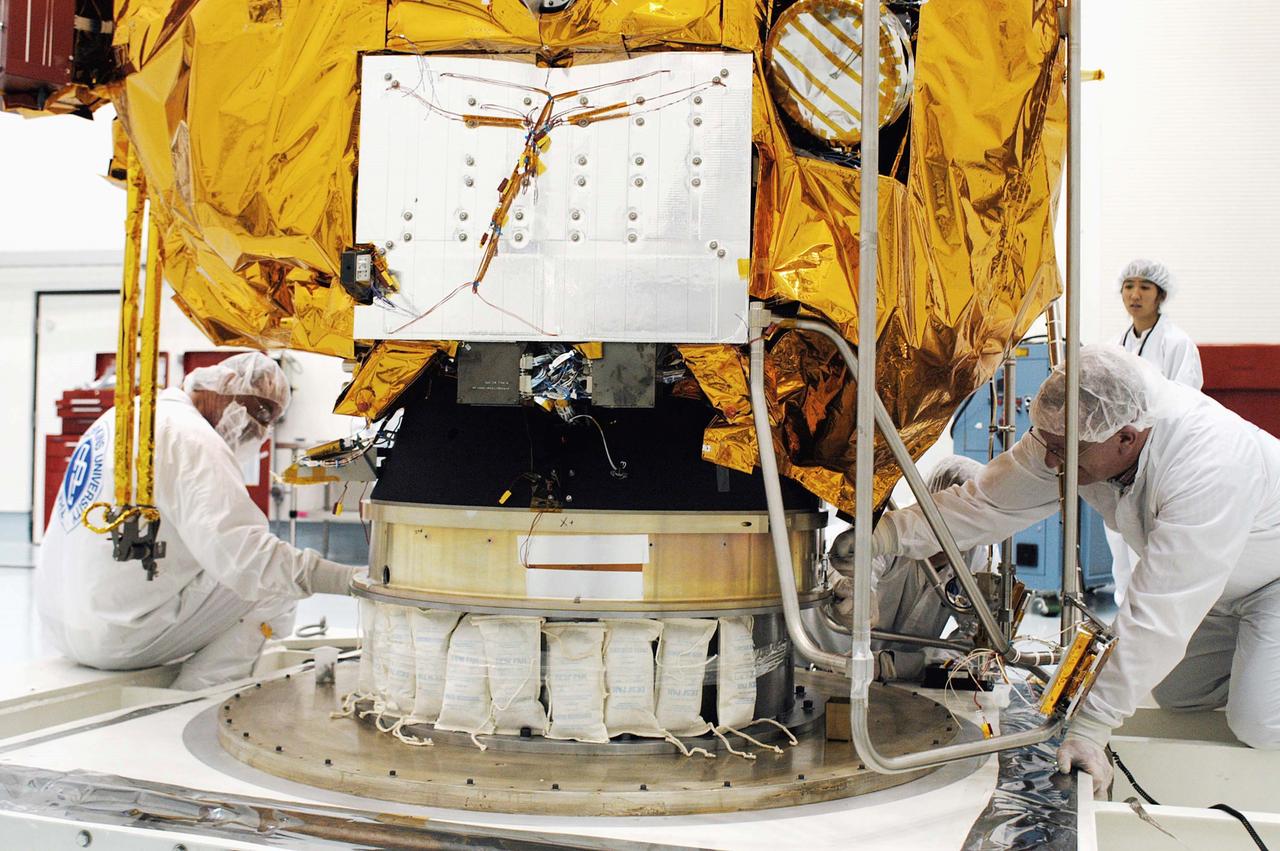
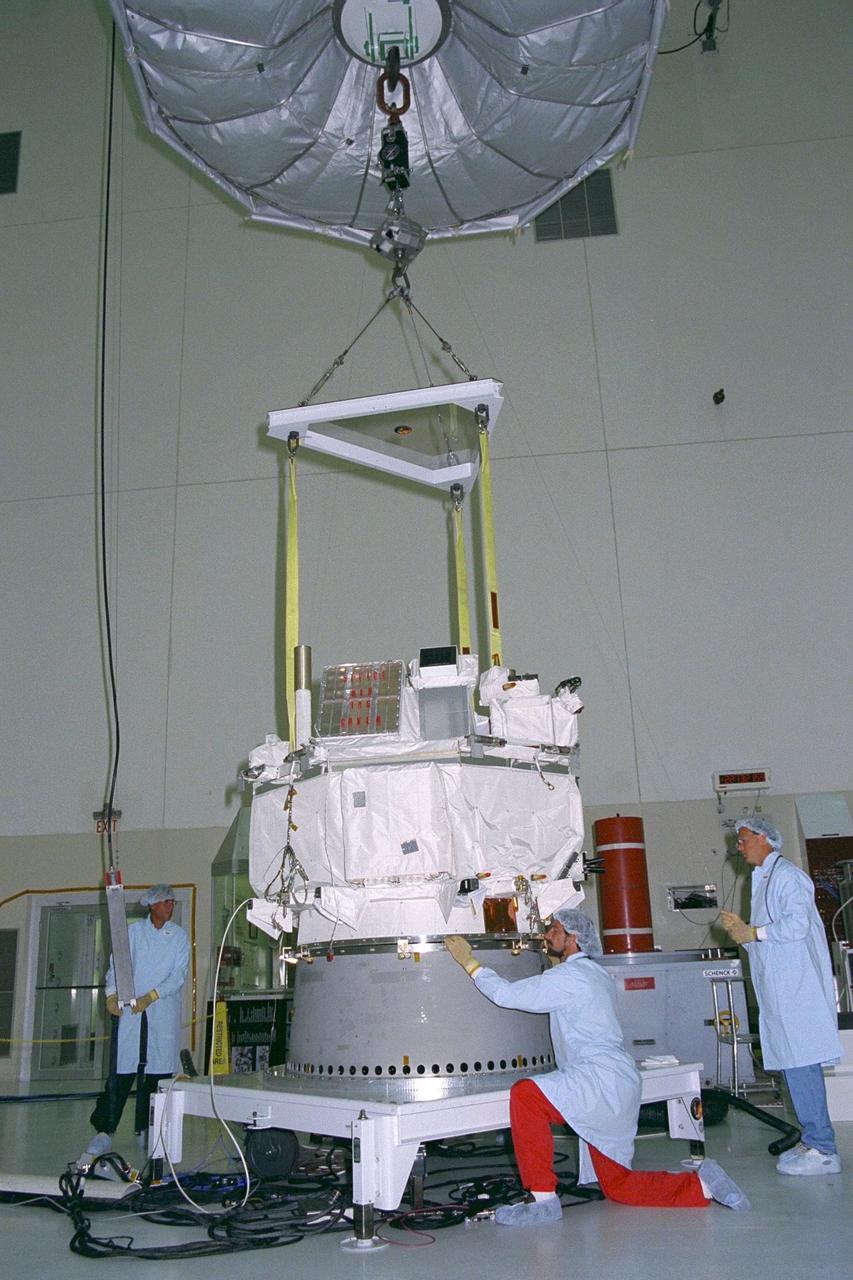
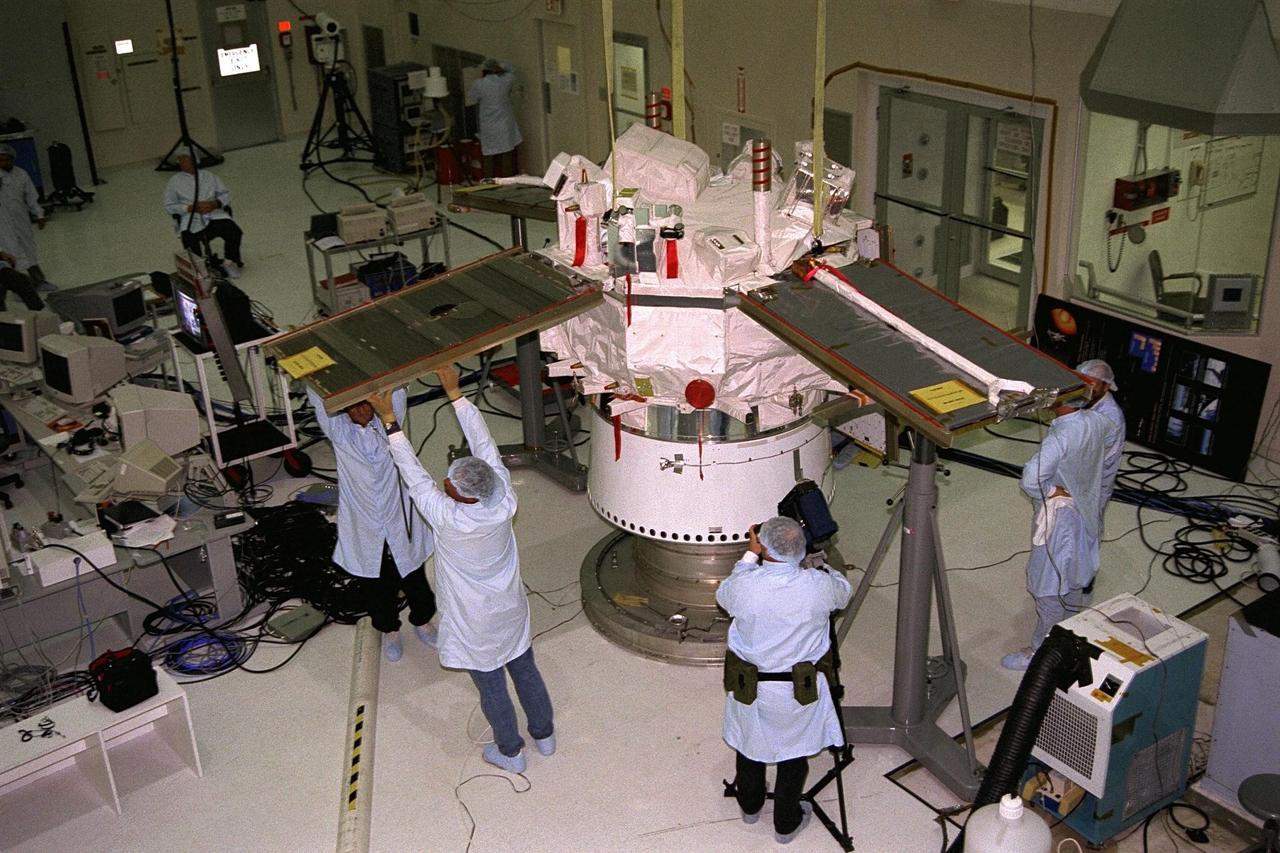
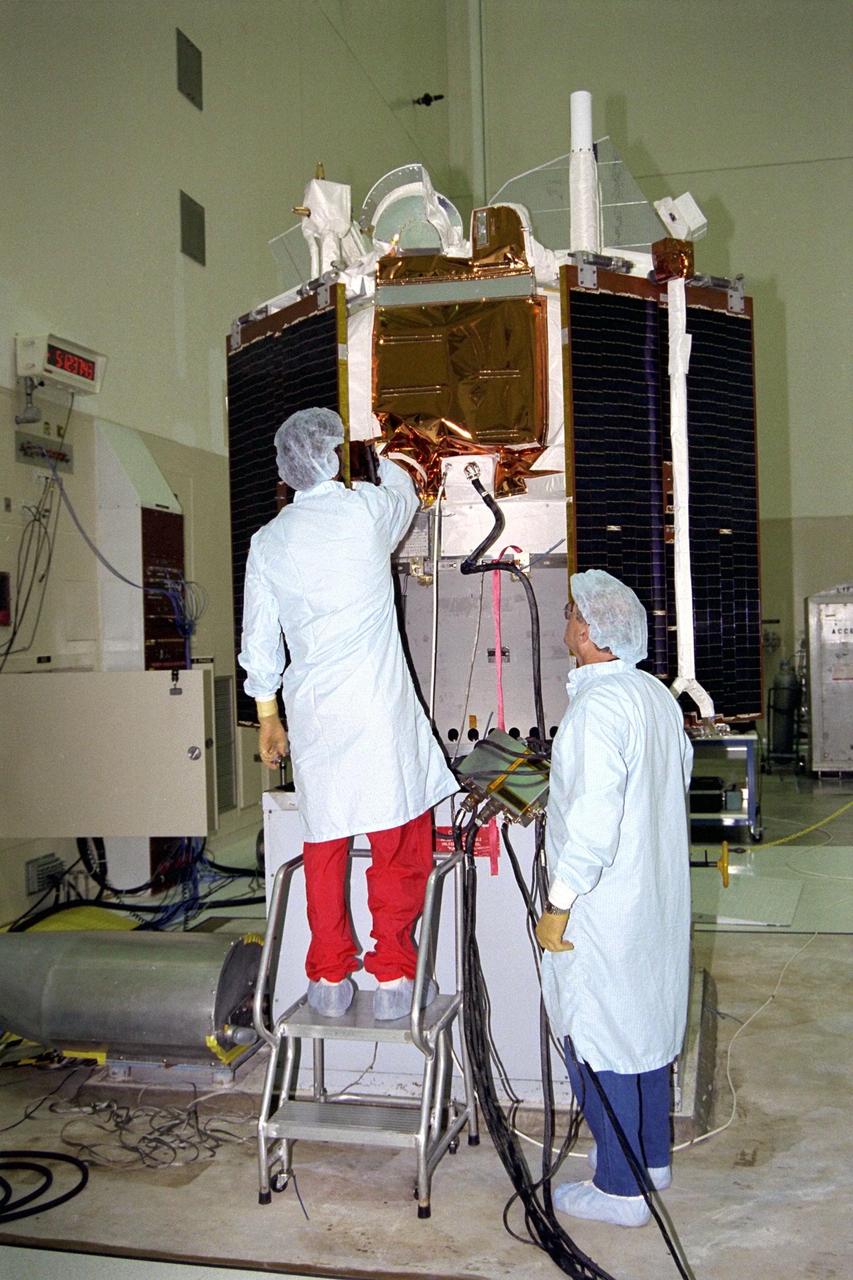
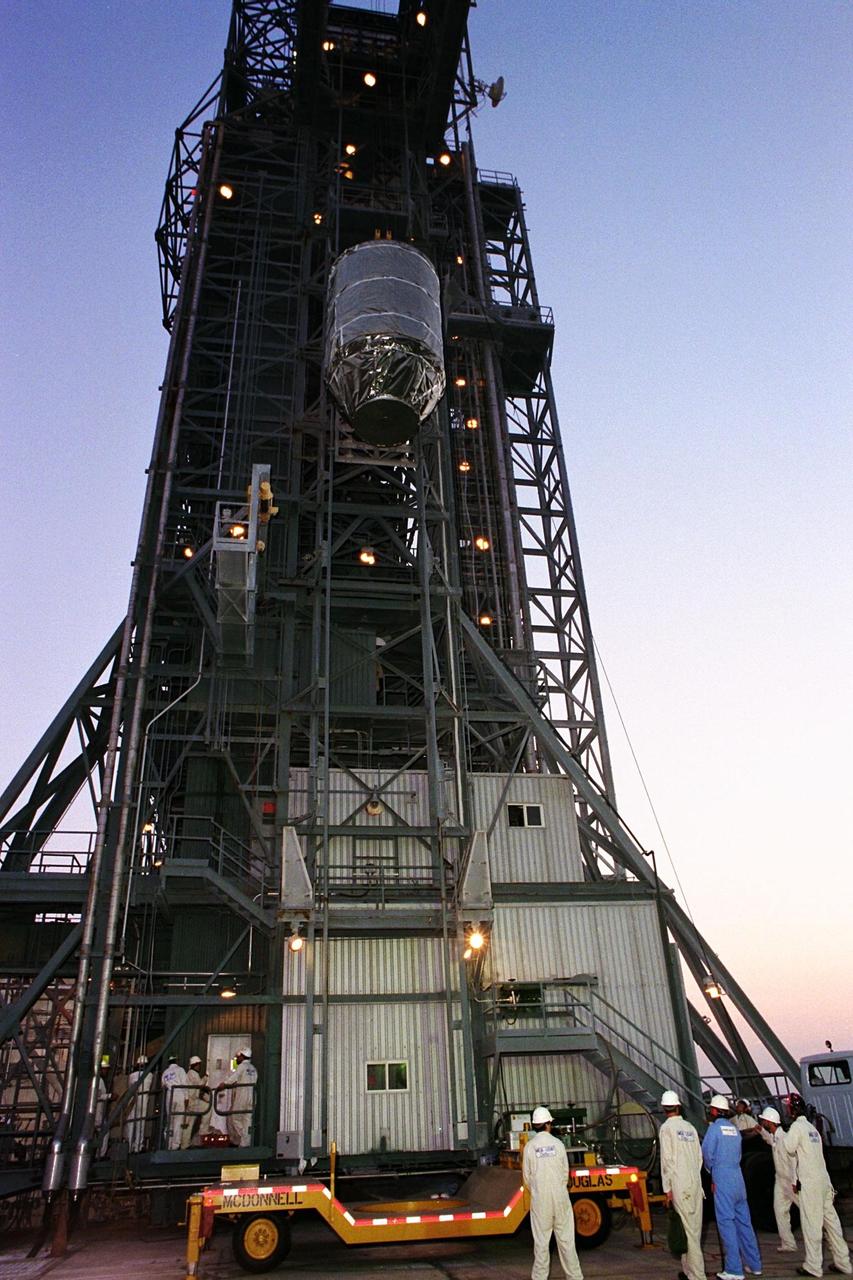
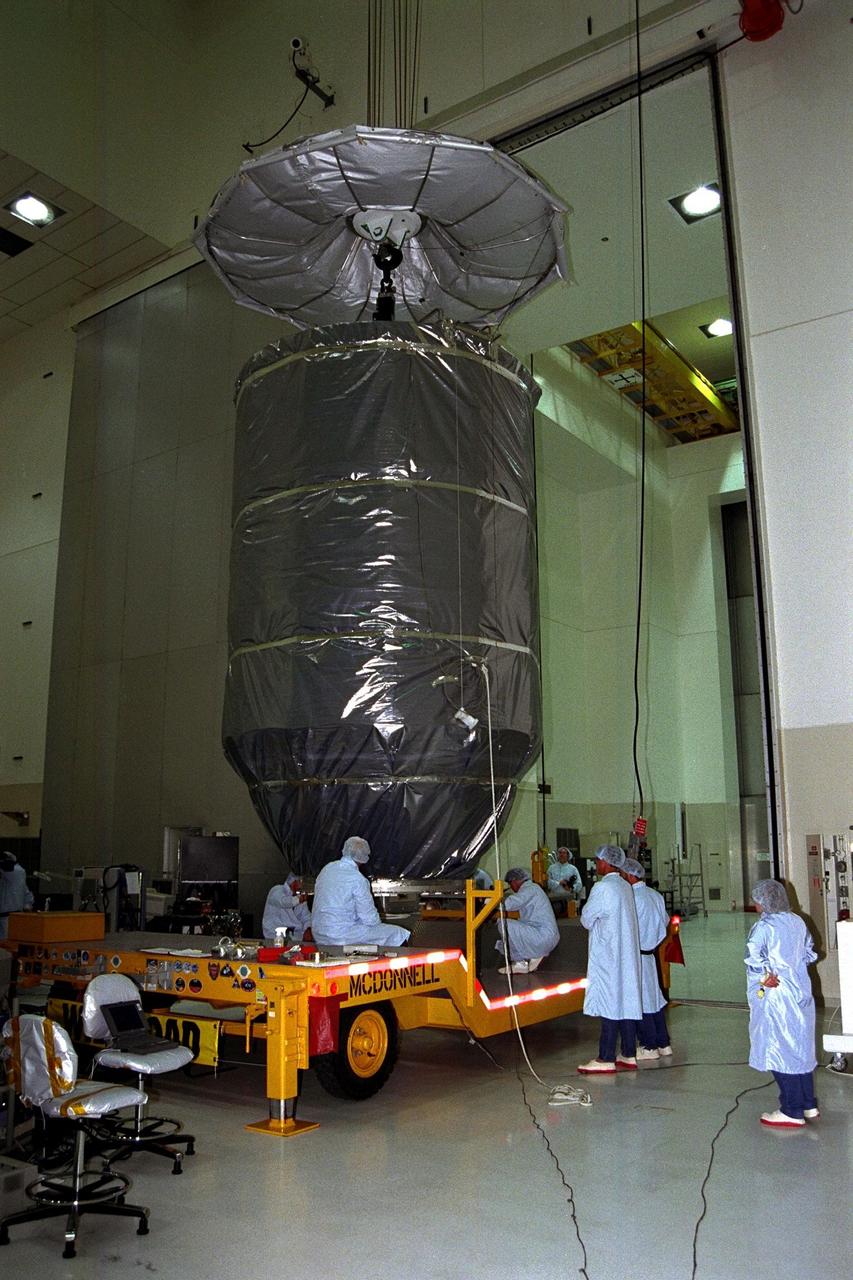
KENNEDY SPACE CENTER, FLA. -  At the Astrotech Space Operations processing facilities near KSC, workers move NASA’s MESSENGER spacecraft into a high bay clean room.  Employees of the Johns Hopkins University Applied Physics Laboratory, builders of the spacecraft, will perform an initial state-of-health check.  Then processing for launch can begin, including checkout of the power systems, communications systems and control systems.  The thermal blankets will also be attached for flight.  MESSENGER - short for MErcury Surface, Space ENvironment, GEochemistry and Ranging - will be launched May 11 on a six-year mission aboard a Boeing Delta II rocket.  Liftoff is targeted for 2:26 a.m. EDT on Tuesday, May 11.
KENNEDY SPACE CENTER, FLA. - At the Astrotech Space Operations processing facilities near KSC, workers move NASA’s MESSENGER spacecraft into a high bay clean room. Employees of the Johns Hopkins University Applied Physics Laboratory, builders of the spacecraft, will perform an initial state-of-health check. Then processing for launch can begin, including checkout of the power systems, communications systems and control systems. The thermal blankets will also be attached for flight. MESSENGER - short for MErcury Surface, Space ENvironment, GEochemistry and Ranging - will be launched May 11 on a six-year mission aboard a Boeing Delta II rocket. Liftoff is targeted for 2:26 a.m. EDT on Tuesday, May 11.
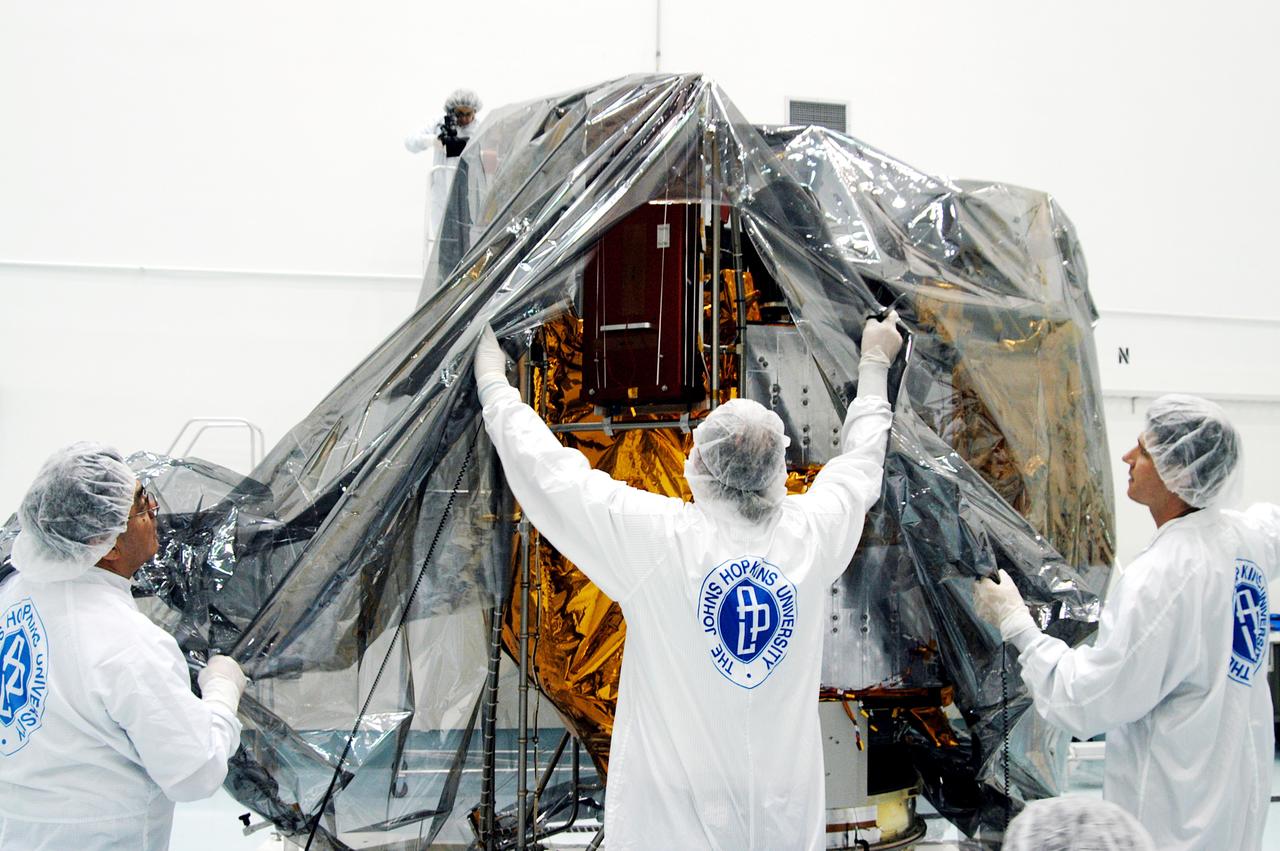
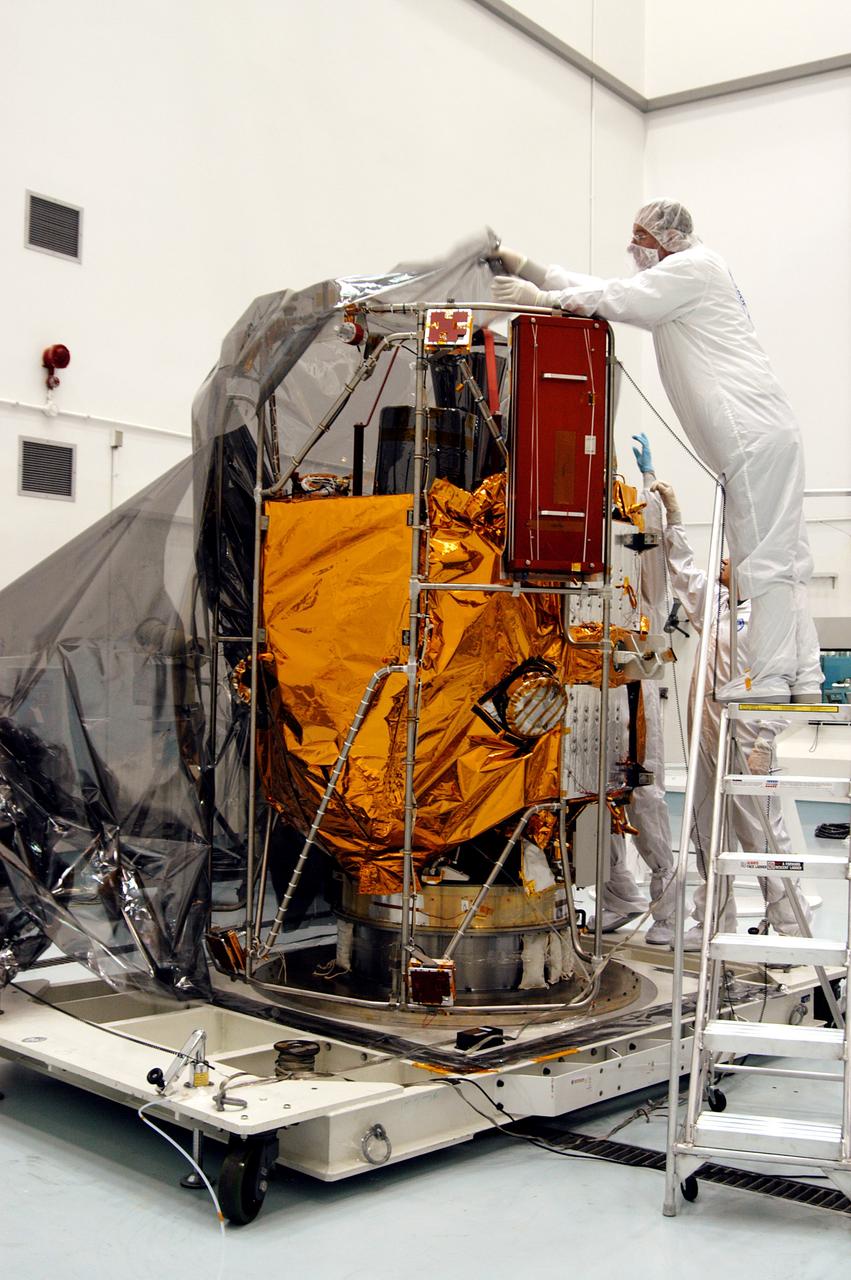
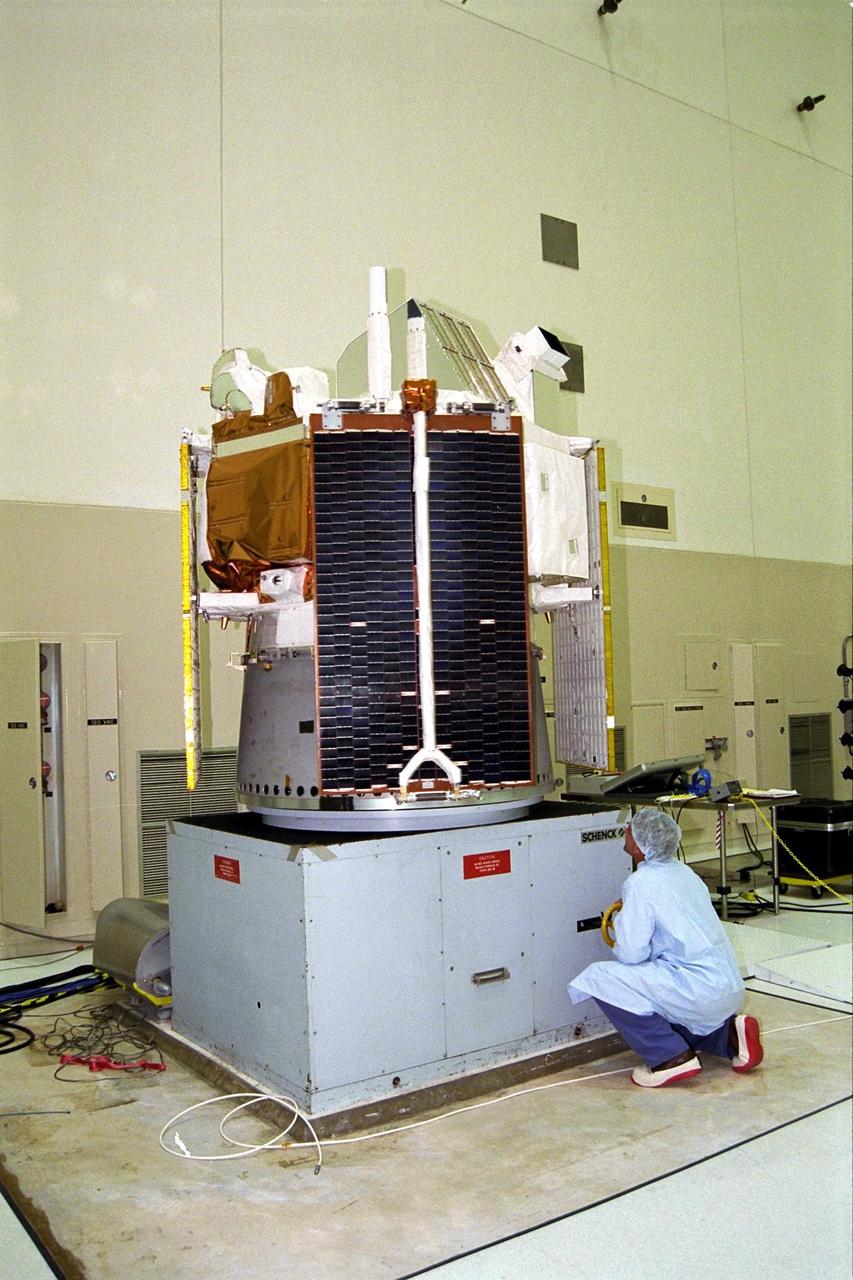
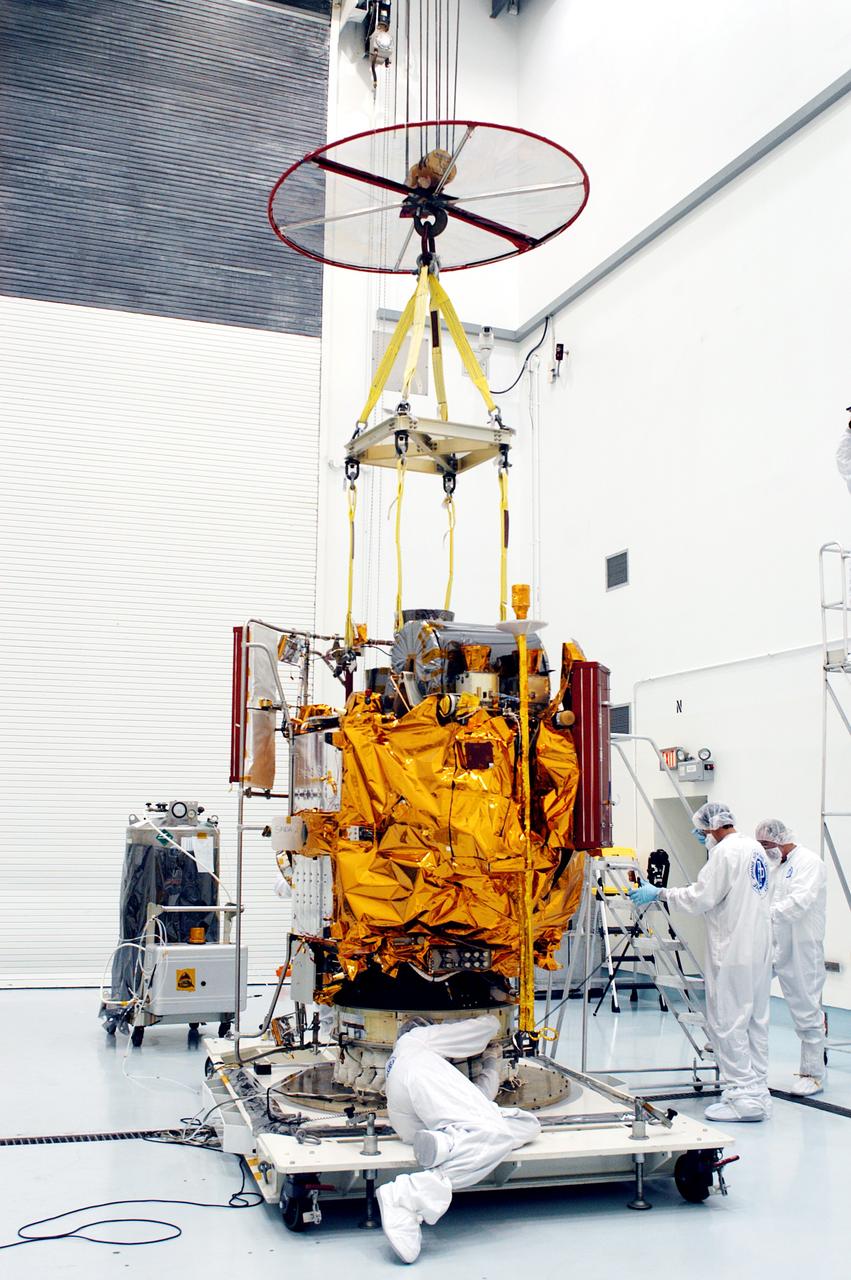
KENNEDY SPACE CENTER, FLA. -  In the high bay clean room at the Astrotech Space Operations processing facilities near KSC, workers remove the protective cover from NASA’s MESSENGER spacecraft.  Employees of the Johns Hopkins University Applied Physics Laboratory, builders of the spacecraft, will perform an initial state-of-health check.  Then processing for launch can begin, including checkout of the power systems, communications systems and control systems.  The thermal blankets will also be attached for flight.  MESSENGER - short for MErcury Surface, Space ENvironment, GEochemistry and Ranging - will be launched May 11 on a six-year mission aboard a Boeing Delta II rocket.  Liftoff is targeted for 2:26 a.m. EDT on Tuesday, May 11.
KENNEDY SPACE CENTER, FLA. - In the high bay clean room at the Astrotech Space Operations processing facilities near KSC, workers remove the protective cover from NASA’s MESSENGER spacecraft. Employees of the Johns Hopkins University Applied Physics Laboratory, builders of the spacecraft, will perform an initial state-of-health check. Then processing for launch can begin, including checkout of the power systems, communications systems and control systems. The thermal blankets will also be attached for flight. MESSENGER - short for MErcury Surface, Space ENvironment, GEochemistry and Ranging - will be launched May 11 on a six-year mission aboard a Boeing Delta II rocket. Liftoff is targeted for 2:26 a.m. EDT on Tuesday, May 11.
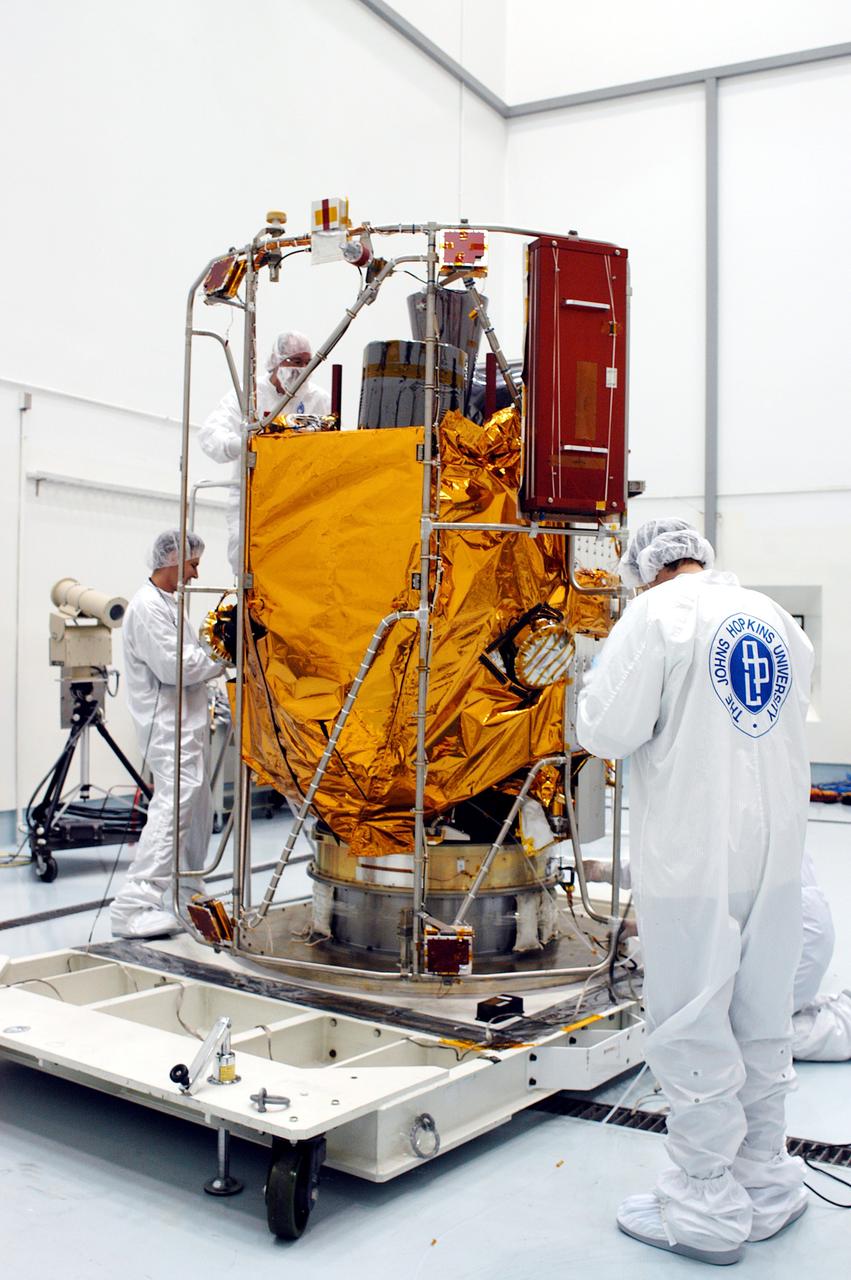
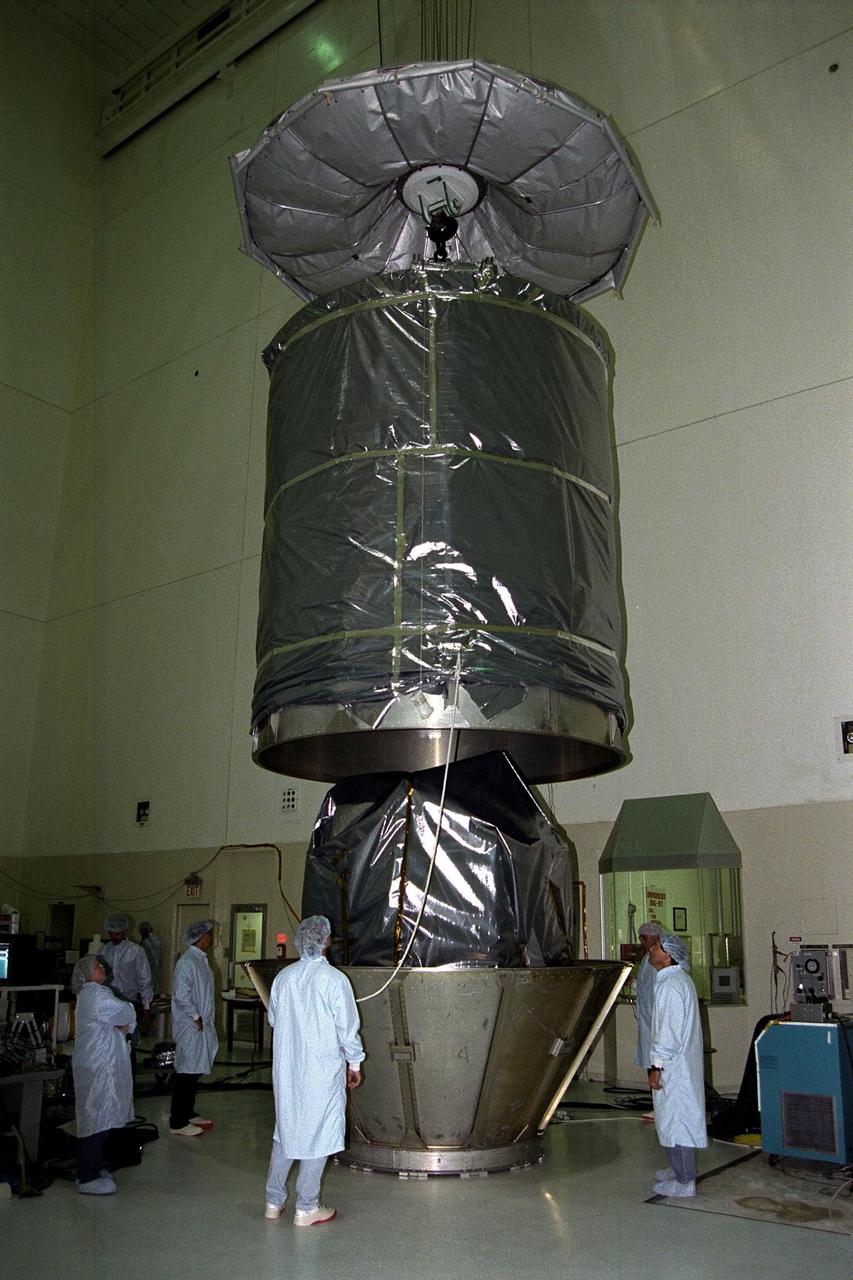
KENNEDY SPACE CENTER, FLA. -  In the high bay clean room at the Astrotech Space Operations processing facilities near KSC, NASA’s MESSENGER spacecraft is revealed.  Employees of the Johns Hopkins University Applied Physics Laboratory, builders of the spacecraft, will perform an initial state-of-health check.  Then processing for launch can begin, including checkout of the power systems, communications systems and control systems.  The thermal blankets will also be attached for flight.  MESSENGER - short for MErcury Surface, Space ENvironment, GEochemistry and Ranging - will be launched May 11 on a six-year mission aboard a Boeing Delta II rocket.  Liftoff is targeted for 2:26 a.m. EDT on Tuesday, May 11.
KENNEDY SPACE CENTER, FLA. - In the high bay clean room at the Astrotech Space Operations processing facilities near KSC, NASA’s MESSENGER spacecraft is revealed. Employees of the Johns Hopkins University Applied Physics Laboratory, builders of the spacecraft, will perform an initial state-of-health check. Then processing for launch can begin, including checkout of the power systems, communications systems and control systems. The thermal blankets will also be attached for flight. MESSENGER - short for MErcury Surface, Space ENvironment, GEochemistry and Ranging - will be launched May 11 on a six-year mission aboard a Boeing Delta II rocket. Liftoff is targeted for 2:26 a.m. EDT on Tuesday, May 11.
KENNEDY SPACE CENTER, FLA. -  In the high bay clean room at the Astrotech Space Operations processing facilities near KSC, workers remove the protective cover from NASA’s MESSENGER spacecraft.  Employees of the Johns Hopkins University Applied Physics Laboratory, builders of the spacecraft, will perform an initial state-of-health check.  Then processing for launch can begin, including checkout of the power systems, communications systems and control systems.  The thermal blankets will also be attached for flight.  MESSENGER - short for MErcury Surface, Space ENvironment, GEochemistry and Ranging - will be launched May 11 on a six-year mission aboard a Boeing Delta II rocket.  Liftoff is targeted for 2:26 a.m. EDT on Tuesday, May 11.
KENNEDY SPACE CENTER, FLA. - In the high bay clean room at the Astrotech Space Operations processing facilities near KSC, workers remove the protective cover from NASA’s MESSENGER spacecraft. Employees of the Johns Hopkins University Applied Physics Laboratory, builders of the spacecraft, will perform an initial state-of-health check. Then processing for launch can begin, including checkout of the power systems, communications systems and control systems. The thermal blankets will also be attached for flight. MESSENGER - short for MErcury Surface, Space ENvironment, GEochemistry and Ranging - will be launched May 11 on a six-year mission aboard a Boeing Delta II rocket. Liftoff is targeted for 2:26 a.m. EDT on Tuesday, May 11.
KENNEDY SPACE CENTER, FLA. -  In the high bay clean room at the Astrotech Space Operations processing facilities near KSC, workers prepare NASA’s MESSENGER spacecraft for transfer to a work stand.  There employees of the Johns Hopkins University Applied Physics Laboratory, builders of the spacecraft, will perform an initial state-of-health check.  Then processing for launch can begin, including checkout of the power systems, communications systems and control systems.  The thermal blankets will also be attached for flight.  MESSENGER - short for MErcury Surface, Space ENvironment, GEochemistry and Ranging - will be launched May 11 on a six-year mission aboard a Boeing Delta II rocket.  Liftoff is targeted for 2:26 a.m. EDT on Tuesday, May 11.
KENNEDY SPACE CENTER, FLA. - In the high bay clean room at the Astrotech Space Operations processing facilities near KSC, workers prepare NASA’s MESSENGER spacecraft for transfer to a work stand. There employees of the Johns Hopkins University Applied Physics Laboratory, builders of the spacecraft, will perform an initial state-of-health check. Then processing for launch can begin, including checkout of the power systems, communications systems and control systems. The thermal blankets will also be attached for flight. MESSENGER - short for MErcury Surface, Space ENvironment, GEochemistry and Ranging - will be launched May 11 on a six-year mission aboard a Boeing Delta II rocket. Liftoff is targeted for 2:26 a.m. EDT on Tuesday, May 11.
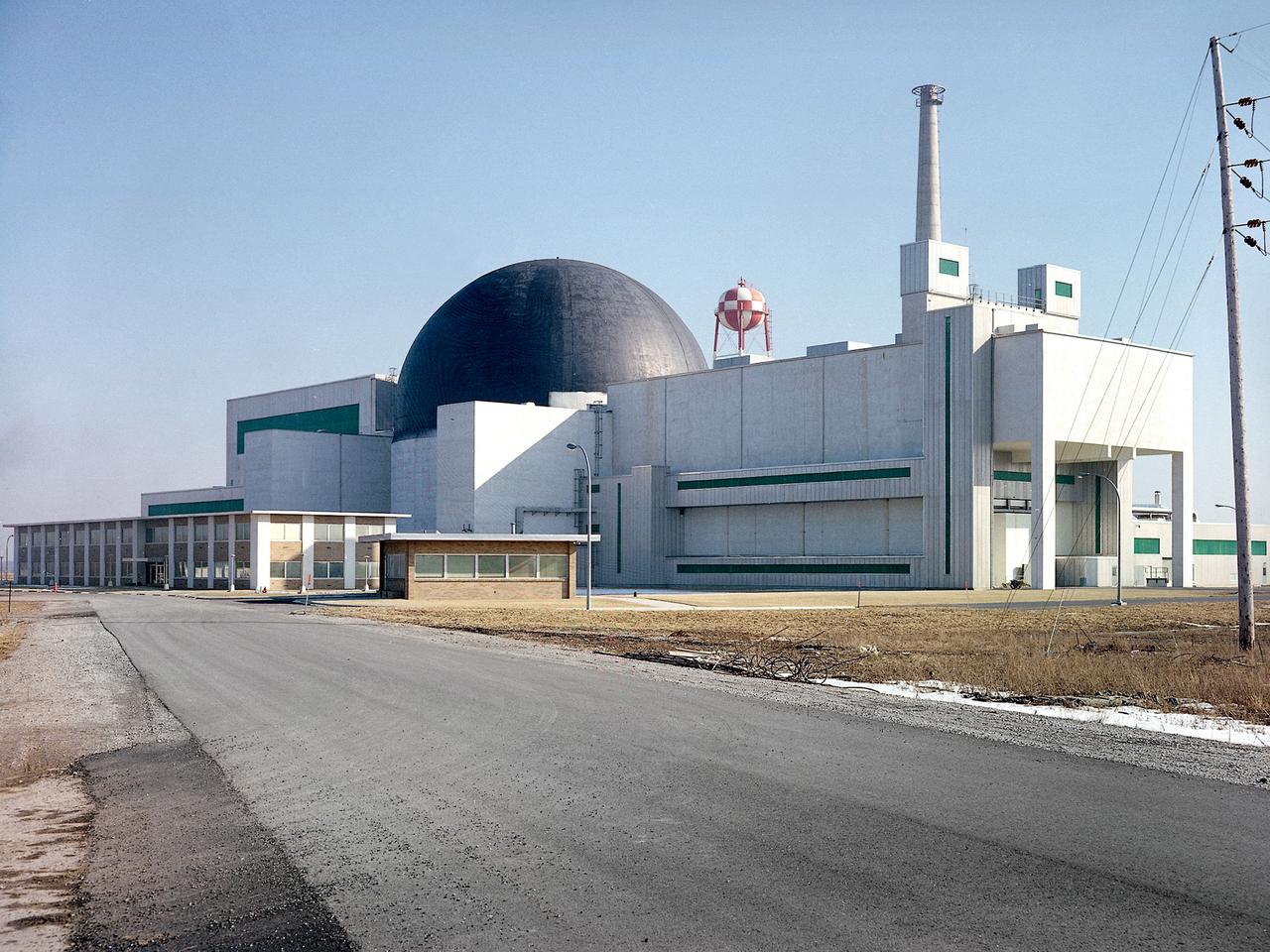
Exterior view of the Space Power Facility at the National Aeronautics and Space Administration’s (NASA) Plum Brook Station in Sandusky, Ohio. The $28.4-million facility, which began operations in 1969, is the largest high vacuum chamber ever built. The chamber is 100 feet in diameter and 120 feet high. It produces a vacuum deep enough to simulate the conditions at 300 miles altitude. The facility can sustain a high vacuum; simulate solar radiation via a 4-megawatt quartz heat lamp array, solar spectrum by a 400-kilowatt arc lamp, and cold environments. The Space Power Facility was originally designed to test nuclear power sources for spacecraft during long durations in a space atmosphere, but it was never used for that purpose.     The facility’s first test in 1970 involved a 15 to 20-kilowatt Brayton Cycle Power System for space applications. Three different methods of simulating solar heat were employed during the Brayton tests. The facility was also used for jettison tests of the Centaur Standard Shroud. The shroud was designed for the new Titan-Centaur rocket that was scheduled to launch the Viking spacecraft to Mars. The new shroud was tested under conditions that simulated the time from launch to the separation of the stages.  Test programs at the facility include high-energy experiments, shroud separation tests, Mars Lander system tests, deployable Solar Sail tests and International Space Station hardware tests.
Space Power Facility at NASA’s Plum Brook Station
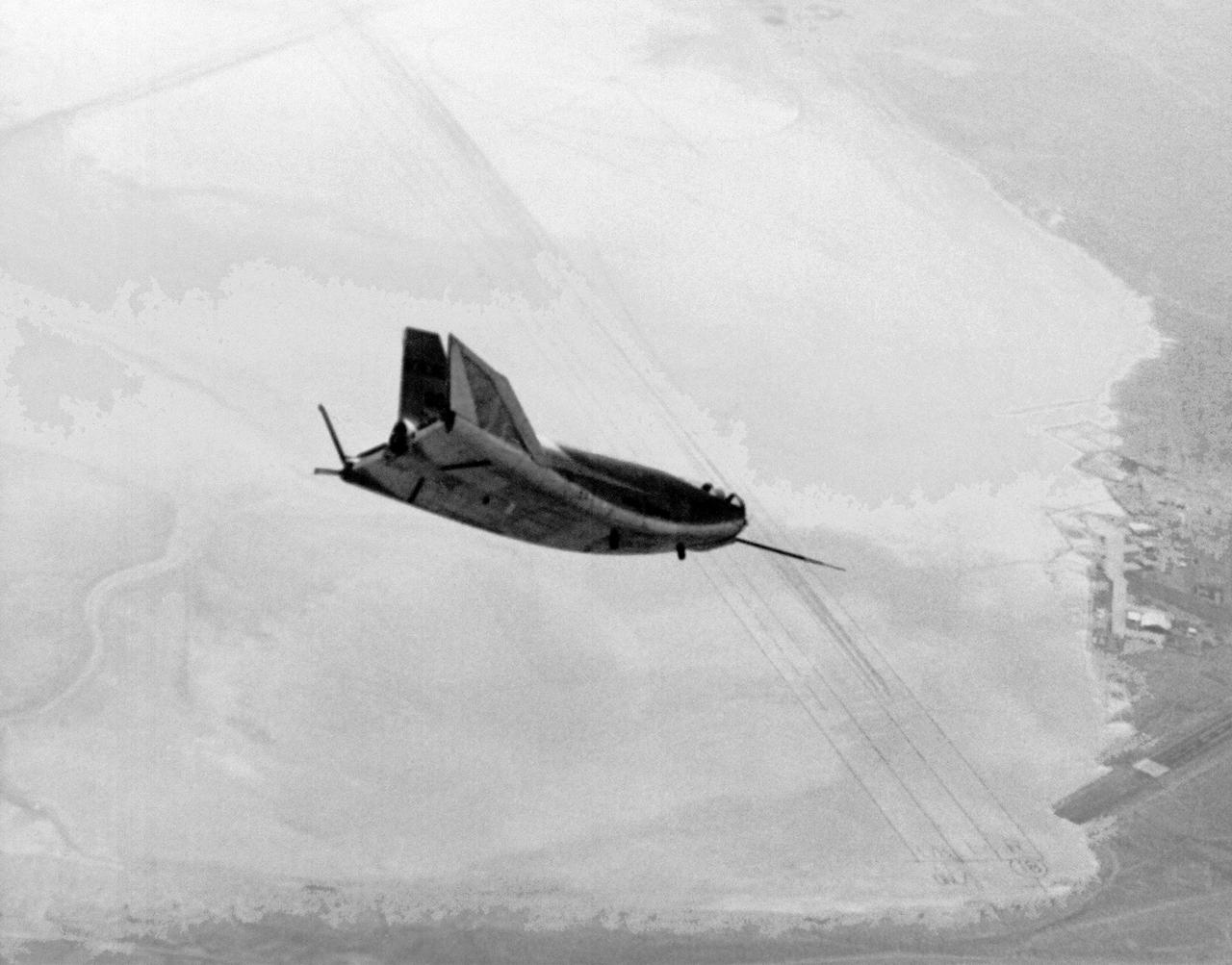
The HL-10 Lifting Body is seen here in flight over Rogers Dry lakebed. Like the other lifting bodies, the HL-10 made a steep descent toward the lakebed, followed by a high-speed landing. This was due to the vehicle's low lift-over-drag ratio. The first 11 flights of the HL-10 were unpowered, flown to check the vehicle's handling and stability before rocket-powered flights began using the XLR-11 rocket engine.
E-21089
Over 600 middle school, high school, and college students from across the nation launched 30 high-powered rockets just north of NASA’s Marshall Space Flight Center in Huntsville, Alabama. This year marked the 26th anniversary of the competition. To compete, students follow the NASA engineering design lifecycle by going through a series of reviews for nine months leading up to launch day.  Each year, a payload challenge is issued to the university teams, and this year’s task took inspiration from the agency’s Artemis missions, where NASA will send astronauts to explore the Moon for scientific discovery, economic benefit, and to build the foundation for the first crewed missions to Mars. Teams were challenged build and fly a STEMnaut Habitat for Agricultural Utilization Study (HAUS) that safely houses four  STEMnauts, non-living objects representing astronauts. The habitat had to include equipment capable of both collecting and testing soil samples to support agricultural research operations.
NASA Student Launch 2026
Over 600 middle school, high school, and college students from across the nation launched 30 high-powered rockets just north of NASA’s Marshall Space Flight Center in Huntsville, Alabama. This year marked the 26th anniversary of the competition. To compete, students follow the NASA engineering design lifecycle by going through a series of reviews for nine months leading up to launch day.  Each year, a payload challenge is issued to the university teams, and this year’s task took inspiration from the agency’s Artemis missions, where NASA will send astronauts to explore the Moon for scientific discovery, economic benefit, and to build the foundation for the first crewed missions to Mars. Teams were challenged build and fly a STEMnaut Habitat for Agricultural Utilization Study (HAUS) that safely houses four  STEMnauts, non-living objects representing astronauts. The habitat had to include equipment capable of both collecting and testing soil samples to support agricultural research operations.
NASA Student Launch 2026
Over 600 middle school, high school, and college students from across the nation launched 30 high-powered rockets just north of NASA’s Marshall Space Flight Center in Huntsville, Alabama. This year marked the 26th anniversary of the competition. To compete, students follow the NASA engineering design lifecycle by going through a series of reviews for nine months leading up to launch day.  Each year, a payload challenge is issued to the university teams, and this year’s task took inspiration from the agency’s Artemis missions, where NASA will send astronauts to explore the Moon for scientific discovery, economic benefit, and to build the foundation for the first crewed missions to Mars. Teams were challenged build and fly a STEMnaut Habitat for Agricultural Utilization Study (HAUS) that safely houses four  STEMnauts, non-living objects representing astronauts. The habitat had to include equipment capable of both collecting and testing soil samples to support agricultural research operations.
NASA Student Launch 2026
Over 600 middle school, high school, and college students from across the nation launched 30 high-powered rockets just north of NASA’s Marshall Space Flight Center in Huntsville, Alabama. This year marked the 26th anniversary of the competition. To compete, students follow the NASA engineering design lifecycle by going through a series of reviews for nine months leading up to launch day.  Each year, a payload challenge is issued to the university teams, and this year’s task took inspiration from the agency’s Artemis missions, where NASA will send astronauts to explore the Moon for scientific discovery, economic benefit, and to build the foundation for the first crewed missions to Mars. Teams were challenged build and fly a STEMnaut Habitat for Agricultural Utilization Study (HAUS) that safely houses four  STEMnauts, non-living objects representing astronauts. The habitat had to include equipment capable of both collecting and testing soil samples to support agricultural research operations.
NASA Student Launch 2026
Over 600 middle school, high school, and college students from across the nation launched 30 high-powered rockets just north of NASA’s Marshall Space Flight Center in Huntsville, Alabama. This year marked the 26th anniversary of the competition. To compete, students follow the NASA engineering design lifecycle by going through a series of reviews for nine months leading up to launch day.  Each year, a payload challenge is issued to the university teams, and this year’s task took inspiration from the agency’s Artemis missions, where NASA will send astronauts to explore the Moon for scientific discovery, economic benefit, and to build the foundation for the first crewed missions to Mars. Teams were challenged build and fly a STEMnaut Habitat for Agricultural Utilization Study (HAUS) that safely houses four  STEMnauts, non-living objects representing astronauts. The habitat had to include equipment capable of both collecting and testing soil samples to support agricultural research operations.
NASA Student Launch 2026
Over 600 middle school, high school, and college students from across the nation launched 30 high-powered rockets just north of NASA’s Marshall Space Flight Center in Huntsville, Alabama. This year marked the 26th anniversary of the competition. To compete, students follow the NASA engineering design lifecycle by going through a series of reviews for nine months leading up to launch day.  Each year, a payload challenge is issued to the university teams, and this year’s task took inspiration from the agency’s Artemis missions, where NASA will send astronauts to explore the Moon for scientific discovery, economic benefit, and to build the foundation for the first crewed missions to Mars. Teams were challenged build and fly a STEMnaut Habitat for Agricultural Utilization Study (HAUS) that safely houses four  STEMnauts, non-living objects representing astronauts. The habitat had to include equipment capable of both collecting and testing soil samples to support agricultural research operations.
NASA Student Launch 2026
Over 600 middle school, high school, and college students from across the nation launched 30 high-powered rockets just north of NASA’s Marshall Space Flight Center in Huntsville, Alabama. This year marked the 26th anniversary of the competition. To compete, students follow the NASA engineering design lifecycle by going through a series of reviews for nine months leading up to launch day.  Each year, a payload challenge is issued to the university teams, and this year’s task took inspiration from the agency’s Artemis missions, where NASA will send astronauts to explore the Moon for scientific discovery, economic benefit, and to build the foundation for the first crewed missions to Mars. Teams were challenged build and fly a STEMnaut Habitat for Agricultural Utilization Study (HAUS) that safely houses four  STEMnauts, non-living objects representing astronauts. The habitat had to include equipment capable of both collecting and testing soil samples to support agricultural research operations.
NASA Student Launch 2026
Over 600 middle school, high school, and college students from across the nation launched 30 high-powered rockets just north of NASA’s Marshall Space Flight Center in Huntsville, Alabama. This year marked the 26th anniversary of the competition. To compete, students follow the NASA engineering design lifecycle by going through a series of reviews for nine months leading up to launch day.  Each year, a payload challenge is issued to the university teams, and this year’s task took inspiration from the agency’s Artemis missions, where NASA will send astronauts to explore the Moon for scientific discovery, economic benefit, and to build the foundation for the first crewed missions to Mars. Teams were challenged build and fly a STEMnaut Habitat for Agricultural Utilization Study (HAUS) that safely houses four  STEMnauts, non-living objects representing astronauts. The habitat had to include equipment capable of both collecting and testing soil samples to support agricultural research operations.
NASA Student Launch 2026
Over 600 middle school, high school, and college students from across the nation launched 30 high-powered rockets just north of NASA’s Marshall Space Flight Center in Huntsville, Alabama. This year marked the 26th anniversary of the competition. To compete, students follow the NASA engineering design lifecycle by going through a series of reviews for nine months leading up to launch day.  Each year, a payload challenge is issued to the university teams, and this year’s task took inspiration from the agency’s Artemis missions, where NASA will send astronauts to explore the Moon for scientific discovery, economic benefit, and to build the foundation for the first crewed missions to Mars. Teams were challenged build and fly a STEMnaut Habitat for Agricultural Utilization Study (HAUS) that safely houses four  STEMnauts, non-living objects representing astronauts. The habitat had to include equipment capable of both collecting and testing soil samples to support agricultural research operations.
NASA Student Launch 2026
Over 600 middle school, high school, and college students from across the nation launched 30 high-powered rockets just north of NASA’s Marshall Space Flight Center in Huntsville, Alabama. This year marked the 26th anniversary of the competition. To compete, students follow the NASA engineering design lifecycle by going through a series of reviews for nine months leading up to launch day.  Each year, a payload challenge is issued to the university teams, and this year’s task took inspiration from the agency’s Artemis missions, where NASA will send astronauts to explore the Moon for scientific discovery, economic benefit, and to build the foundation for the first crewed missions to Mars. Teams were challenged build and fly a STEMnaut Habitat for Agricultural Utilization Study (HAUS) that safely houses four  STEMnauts, non-living objects representing astronauts. The habitat had to include equipment capable of both collecting and testing soil samples to support agricultural research operations.
NASA Student Launch 2026
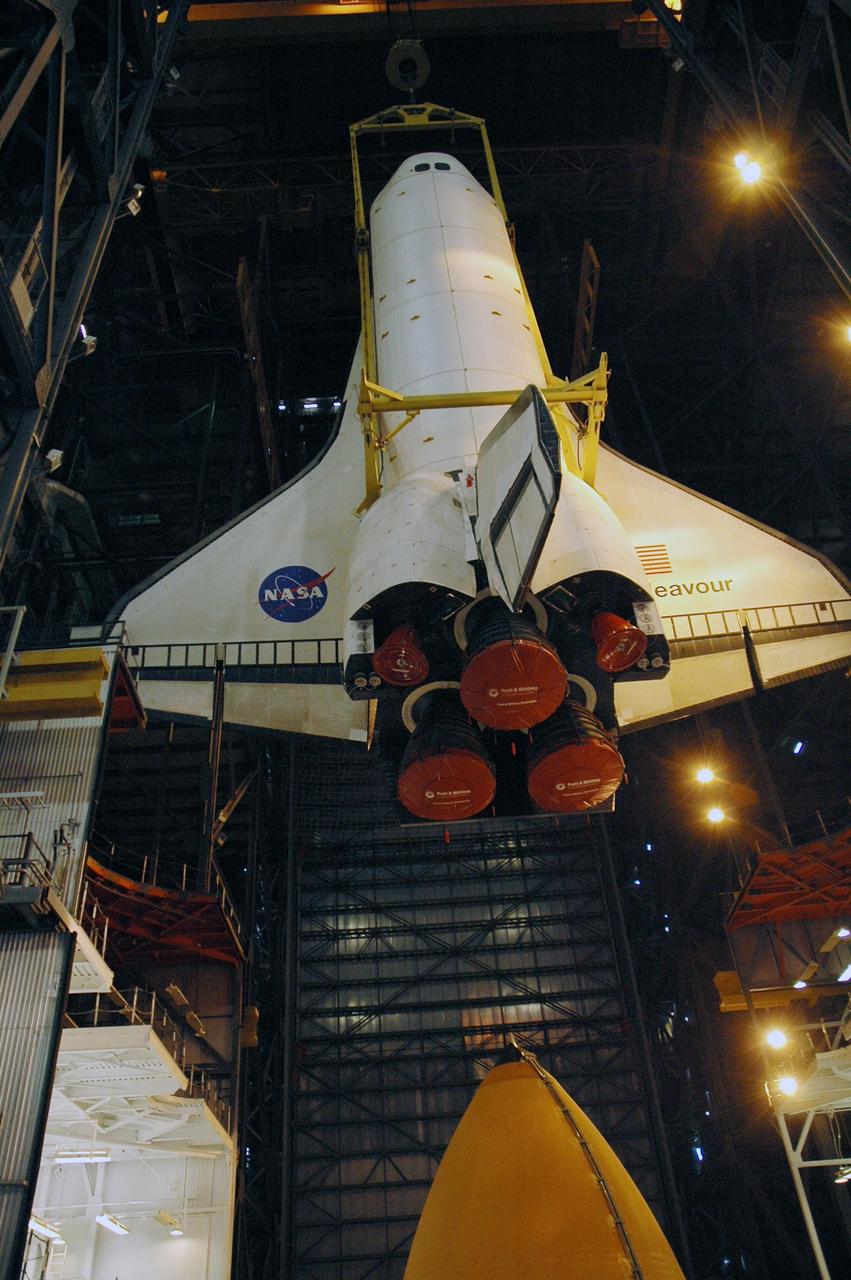
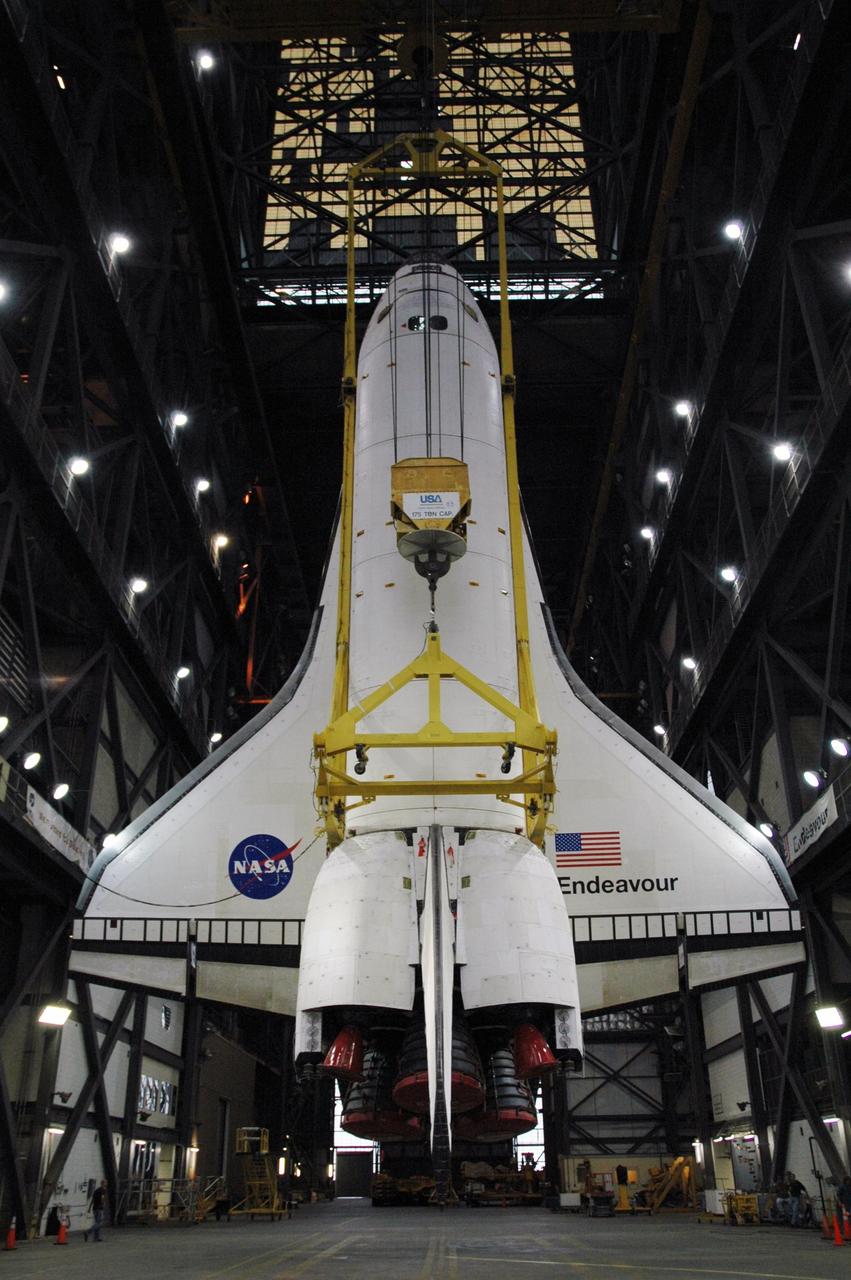
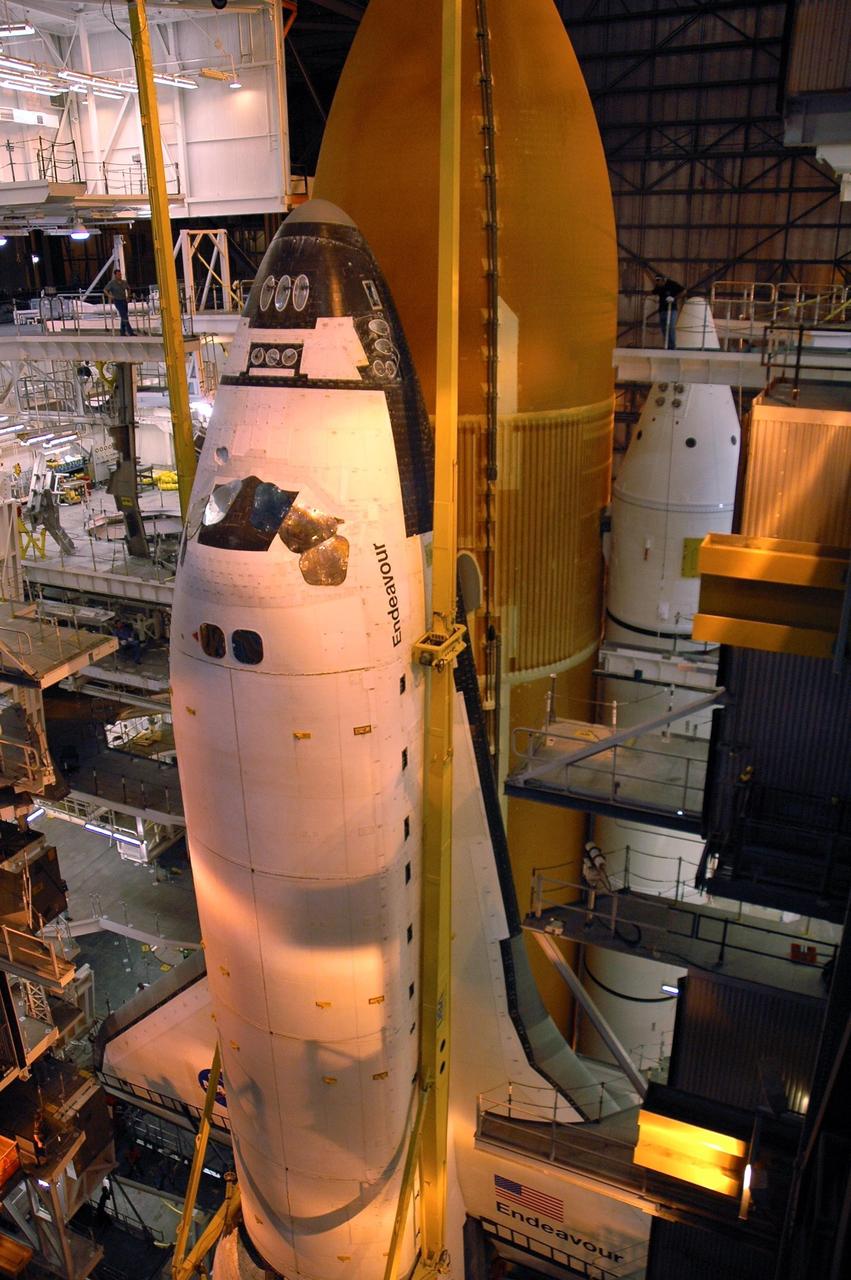
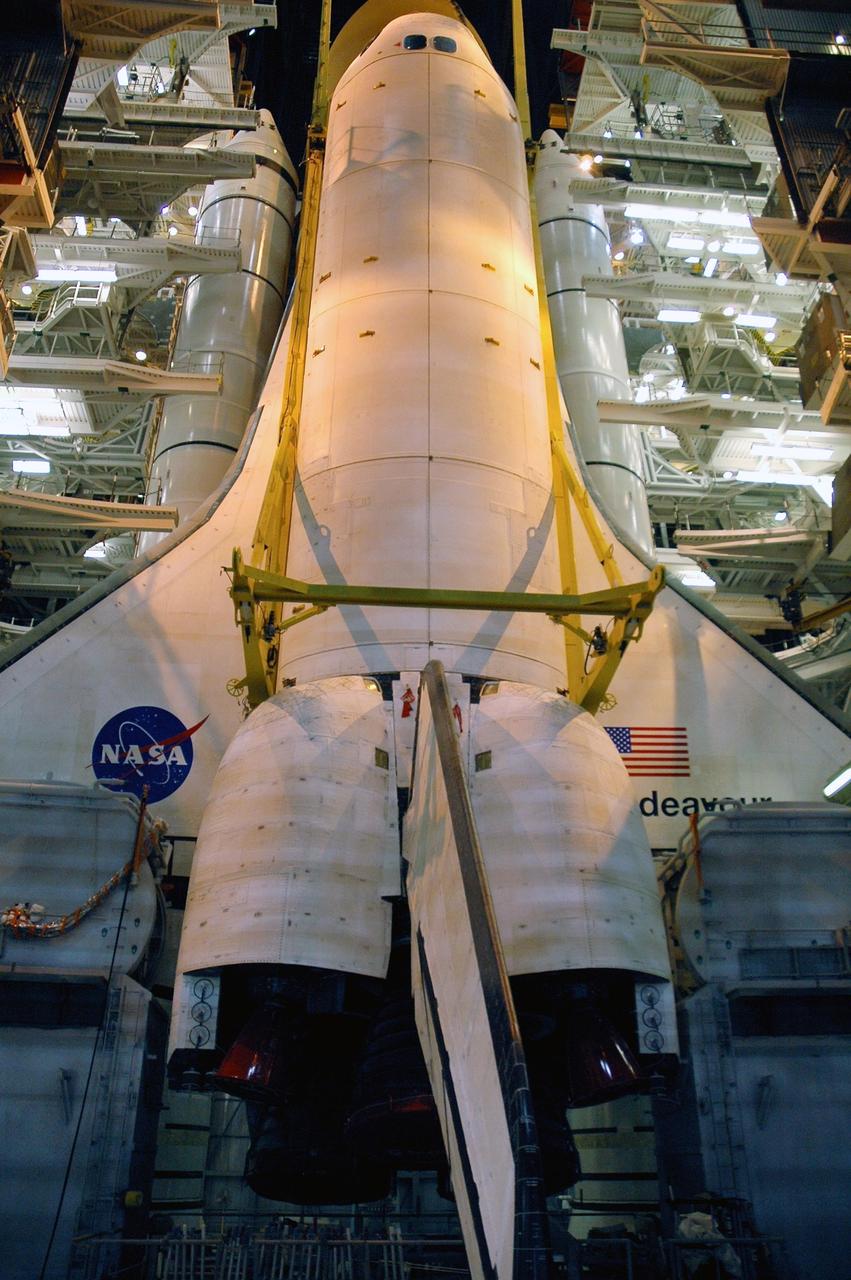
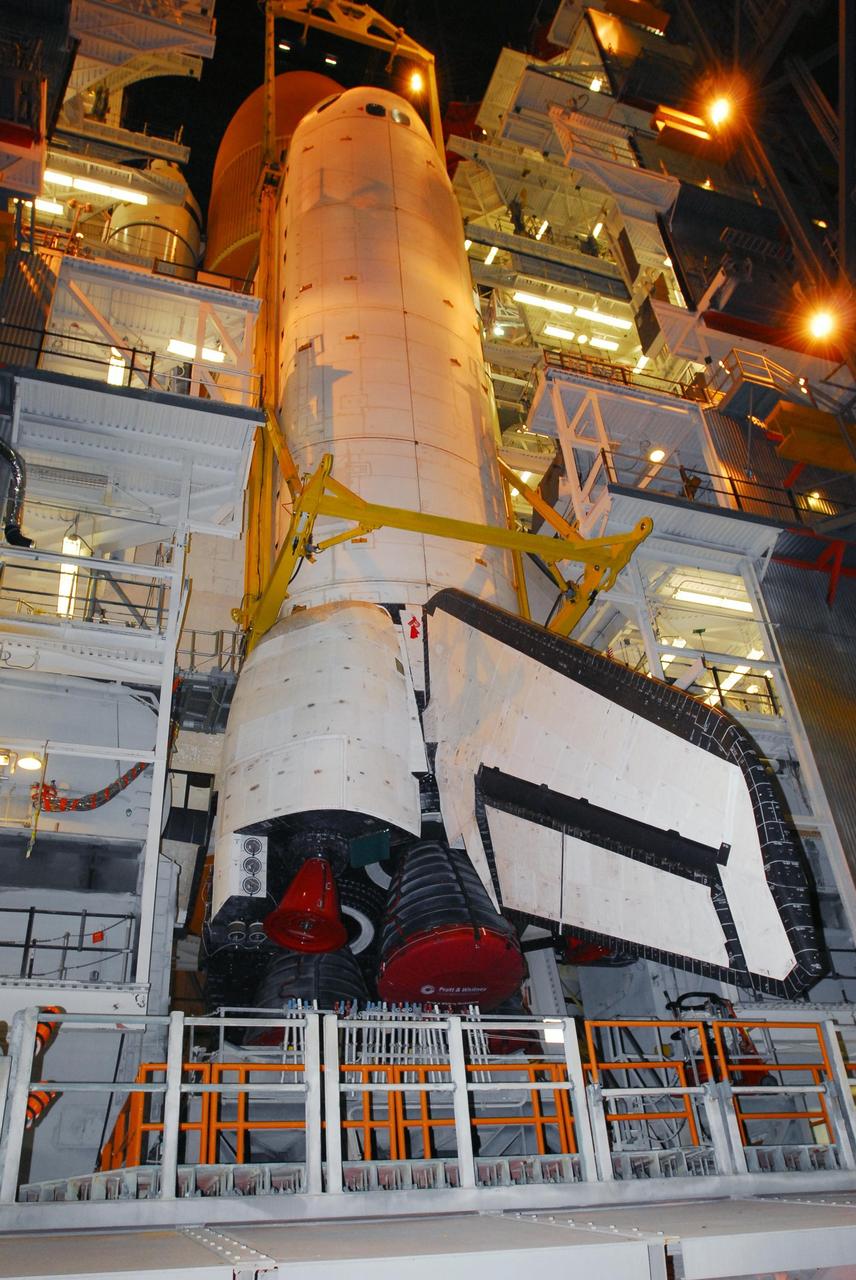
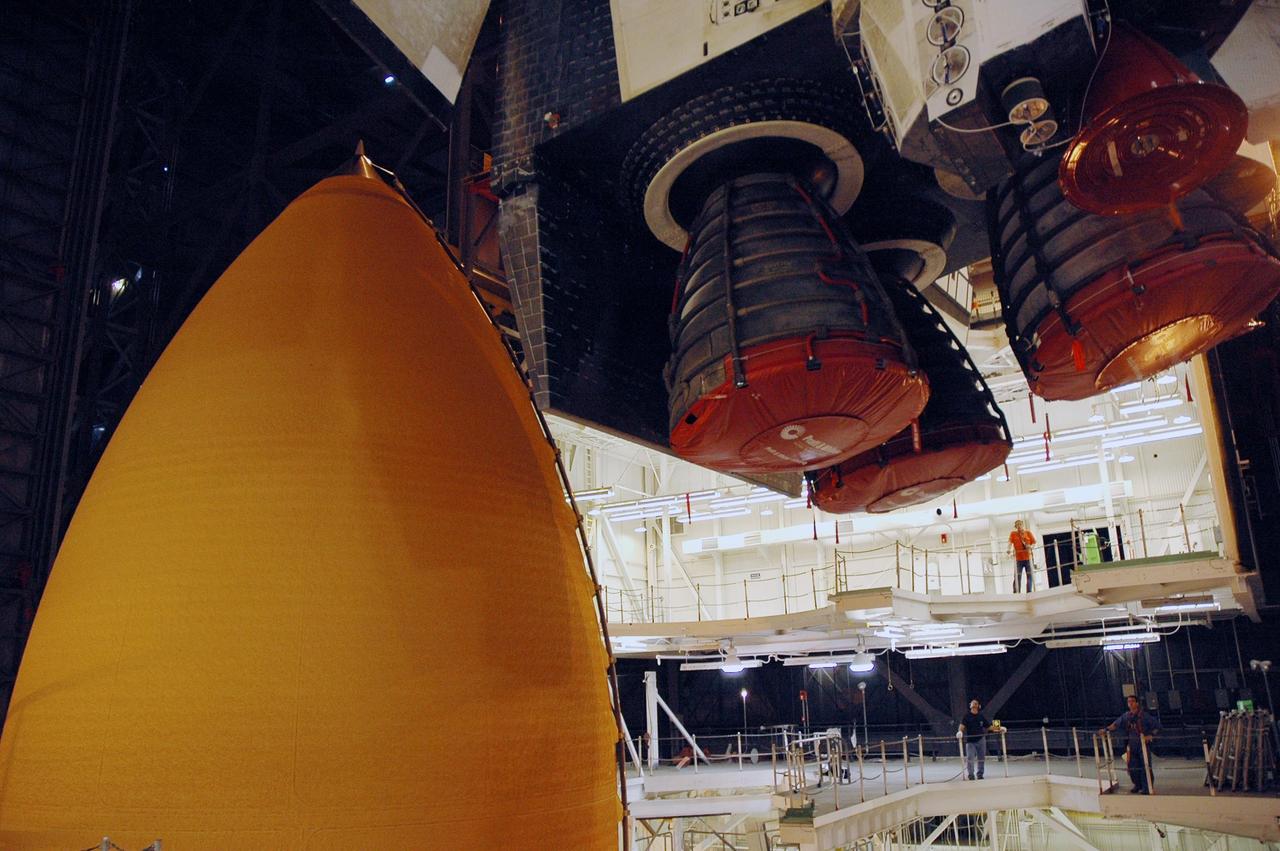
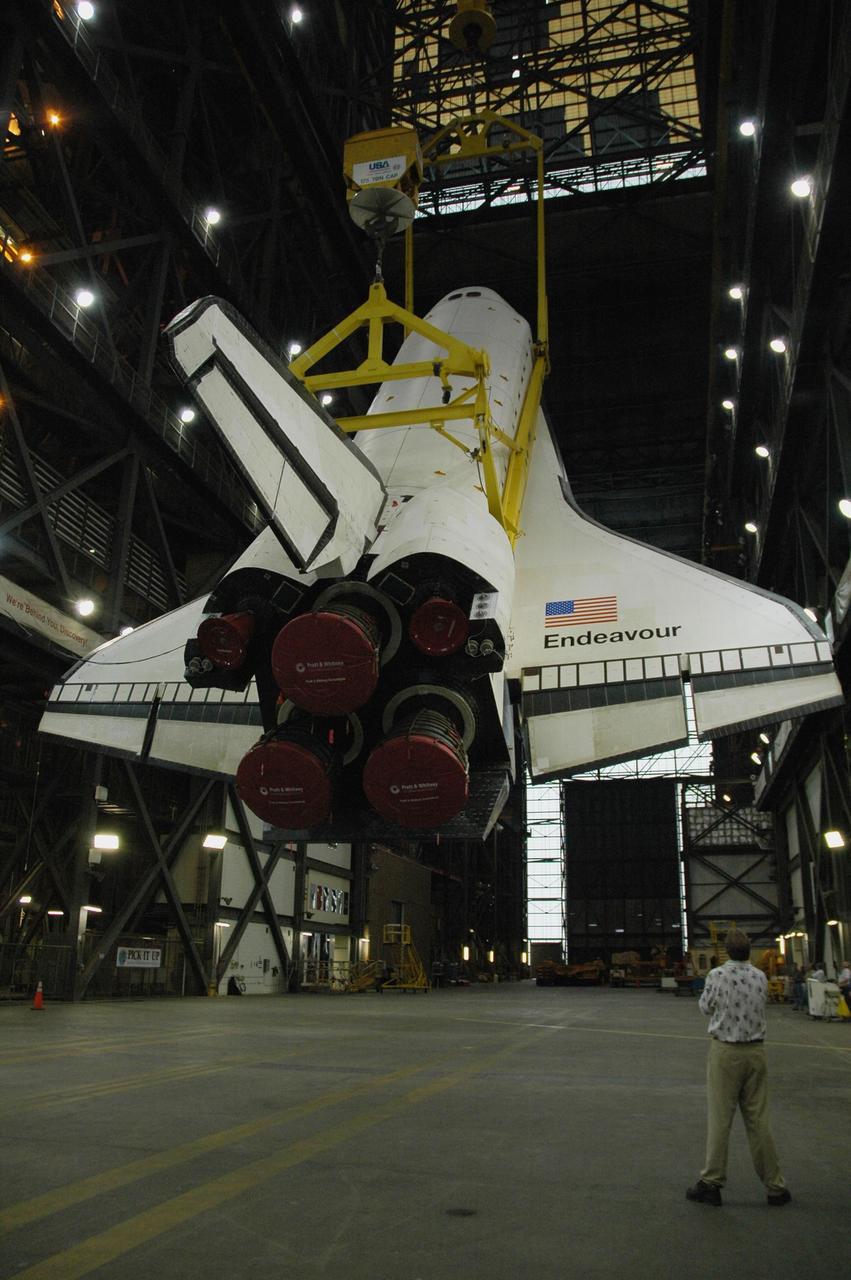
KENNEDY SPACE CENTER, FLA.  --  The orbiter Endeavour is lowered into high bay 1 of the Vehicle Assembly Building for stacking with the external tank (seen at the bottom) and solid rocket boosters on the mobile launcher platform.  Endeavour will be launched on mission STS-118, its first flight in more than four years. The shuttle has undergone extensive modifications, including the addition of safety upgrades already added to shuttles Discovery and Atlantis. Endeavour also features new hardware, such as the Station-to-Shuttle Power Transfer System that will allow the docked shuttle to draw electrical power from the station and extend its visits to the orbiting lab.  Endeavour is targeted for launch on Aug. 7.     Photo credit: NASA/Troy Cryder
KSC-07pd1773
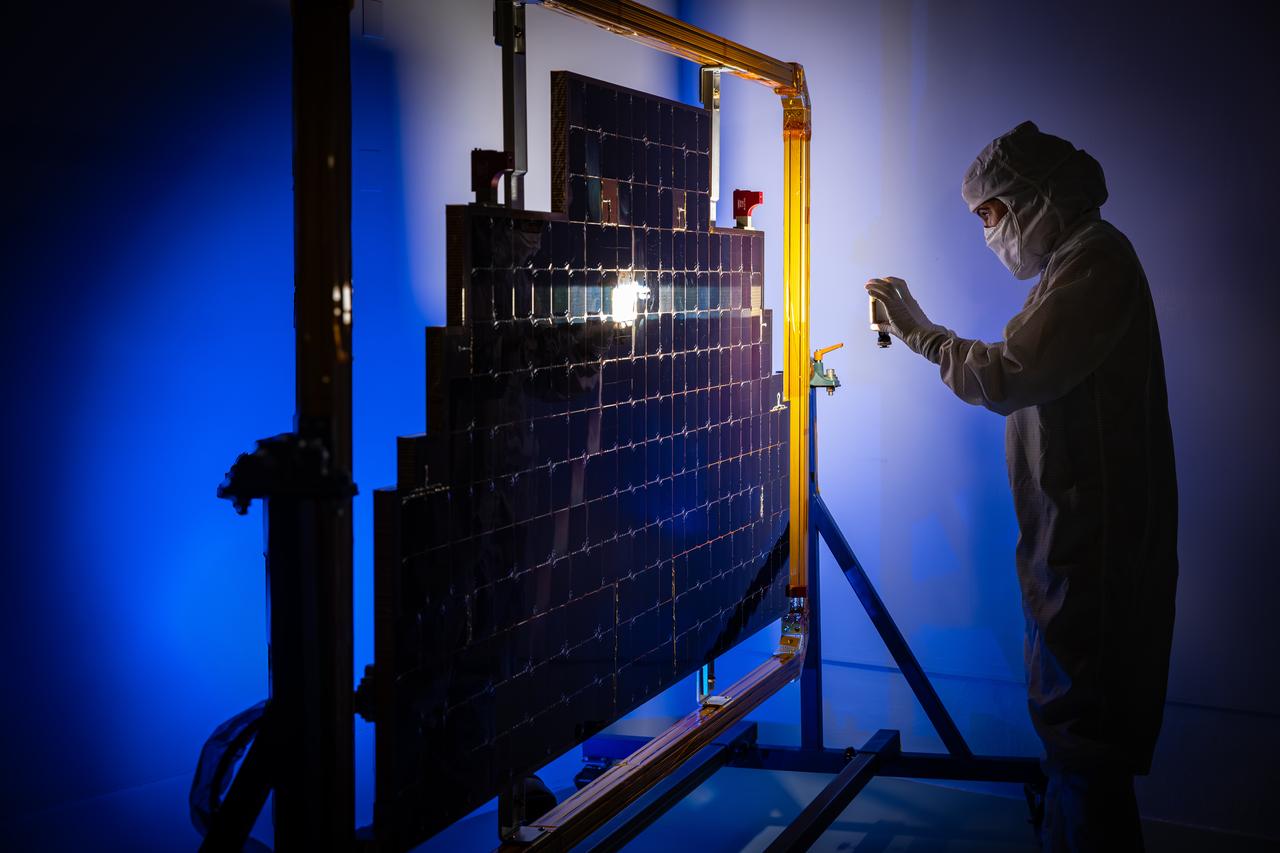
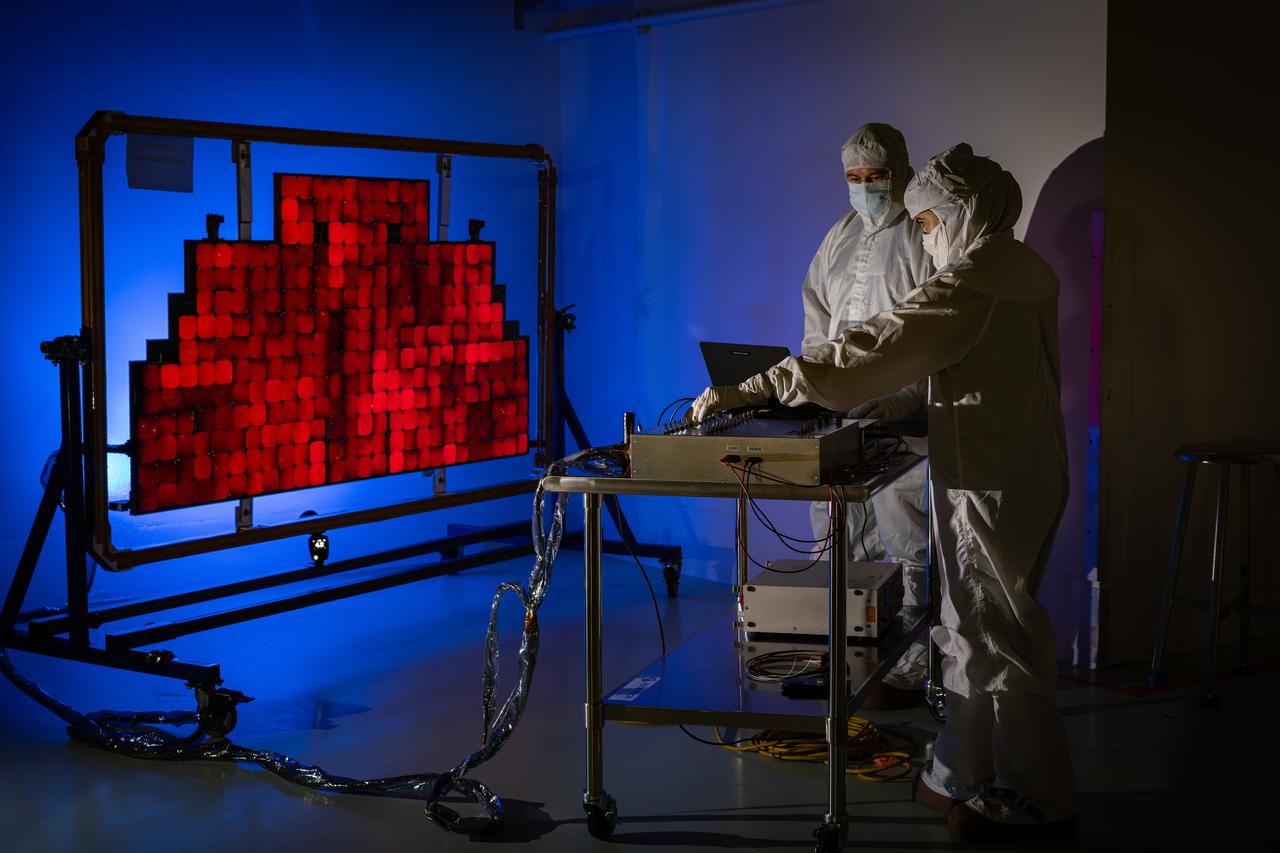
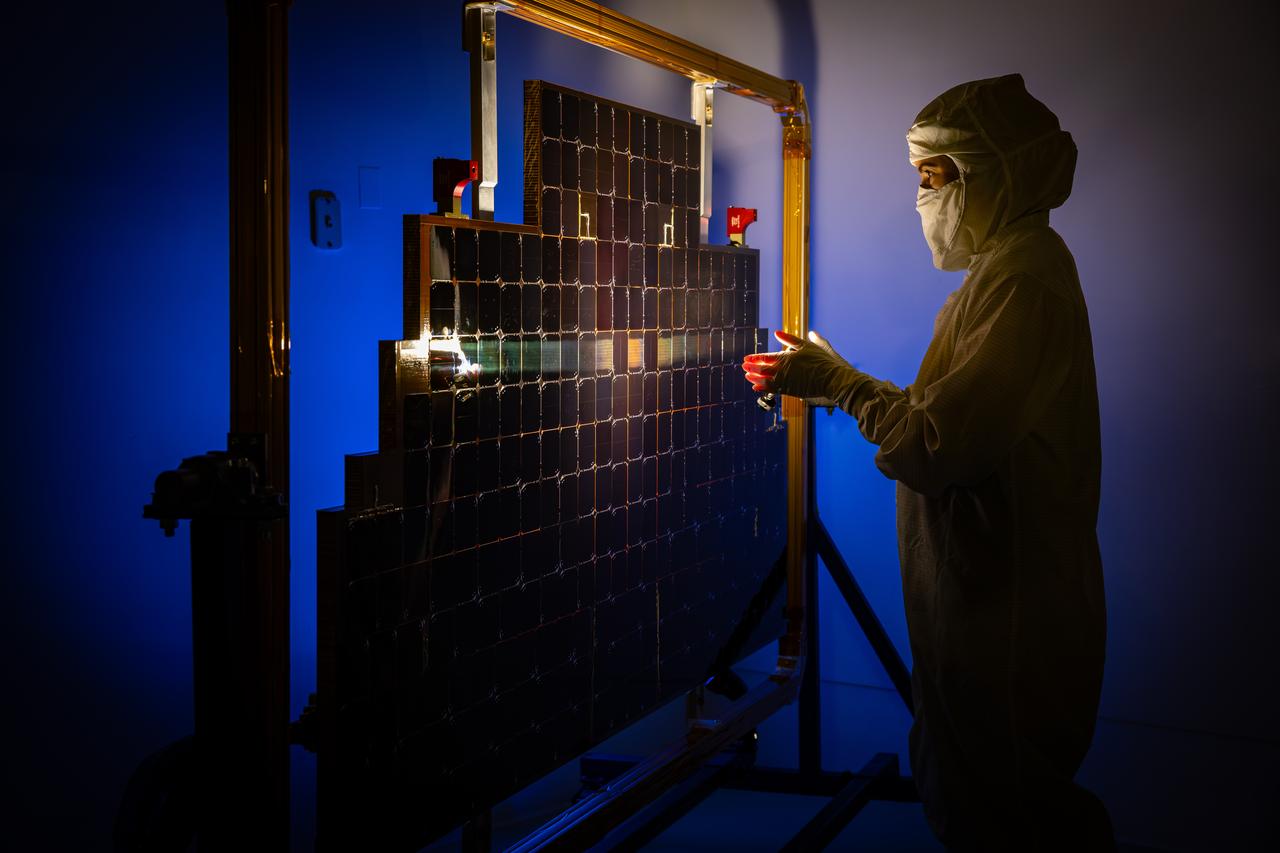
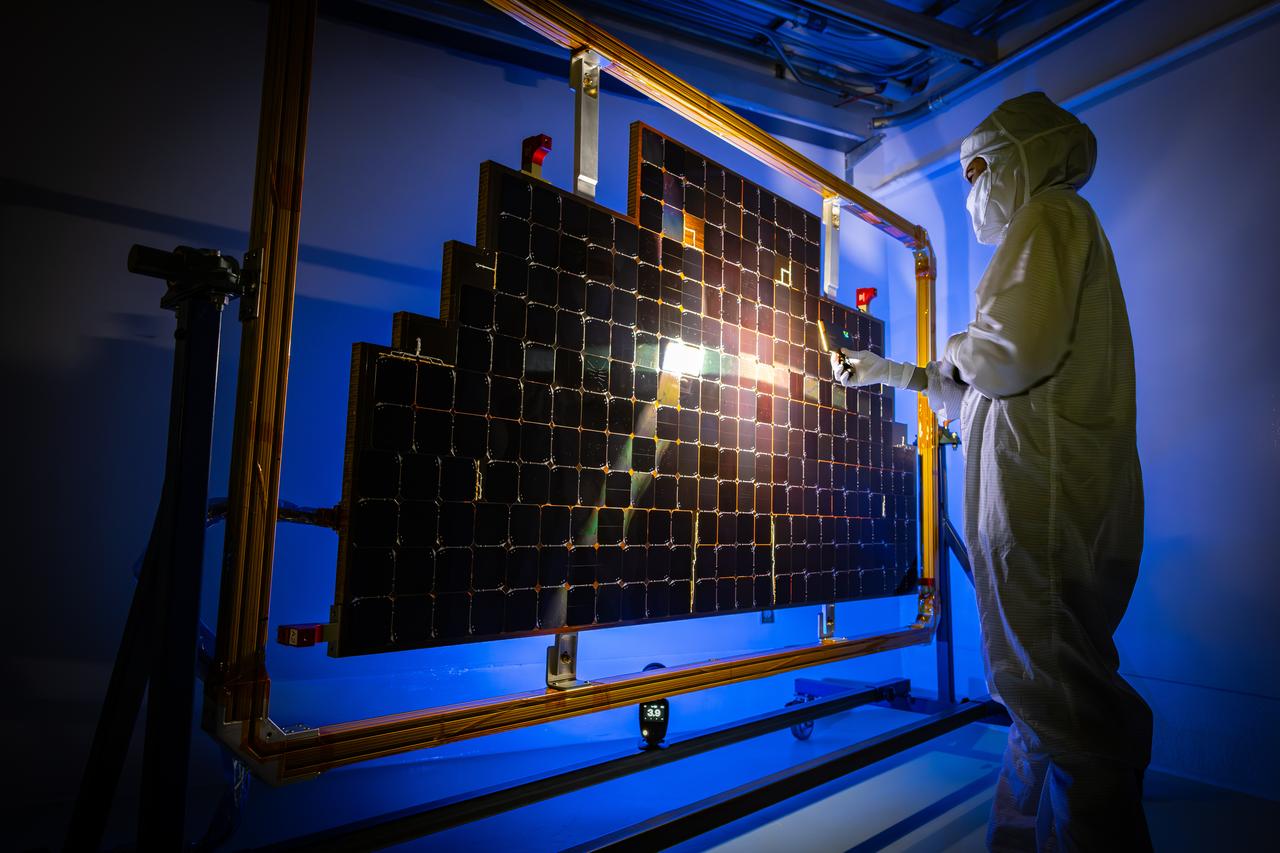
Technicians conduct an illumination test by flashing a bright light that simulates the Sun into the solar array for NASA’s IMAP (Interstellar Mapping and Acceleration Probe) observatory inside the high bay at the Astrotech Space Operations Facility near the agency’s Kennedy Space Center in Florida on Friday, June 20, 2025. The IMAP solar array converts sunlight into approximately 500 watts of power, and IMAP’s spin axis, which comes through the center of the solar arrays, points sunward to provide constant power. Launch is targeted for no earlier than September 2025 aboard a SpaceX Falcon 9 rocket from Launch Complex 39A at NASA Kennedy.
IMAP Solar Array Checkout
Technicians conduct an illumination test by flashing a bright light that simulates the Sun into the solar array for NASA’s IMAP (Interstellar Mapping and Acceleration Probe) observatory inside the high bay at the Astrotech Space Operations Facility near the agency’s Kennedy Space Center in Florida on Friday, June 20, 2025. The IMAP solar array converts sunlight into approximately 500 watts of power, and IMAP’s spin axis, which comes through the center of the solar arrays, points sunward to provide constant power. Launch is targeted for no earlier than September 2025 aboard a SpaceX Falcon 9 rocket from Launch Complex 39A at NASA Kennedy.
IMAP Solar Array Checkout
Technicians conduct an illumination test by flashing a bright light that simulates the Sun into the solar array for NASA’s IMAP (Interstellar Mapping and Acceleration Probe) observatory inside the high bay at the Astrotech Space Operations Facility near the agency’s Kennedy Space Center in Florida on Friday, June 20, 2025. The IMAP solar array converts sunlight into approximately 500 watts of power, and IMAP’s spin axis, which comes through the center of the solar arrays, points sunward to provide constant power. Launch is targeted for no earlier than September 2025 aboard a SpaceX Falcon 9 rocket from Launch Complex 39A at NASA Kennedy.
IMAP Solar Array Checkout
Technicians conduct an illumination test by flashing a bright light that simulates the Sun into the solar array for NASA’s IMAP (Interstellar Mapping and Acceleration Probe) observatory inside the high bay at the Astrotech Space Operations Facility near the agency’s Kennedy Space Center in Florida on Friday, June 20, 2025. The IMAP solar array converts sunlight into approximately 500 watts of power, and IMAP’s spin axis, which comes through the center of the solar arrays, points sunward to provide constant power. Launch is targeted for no earlier than September 2025 aboard a SpaceX Falcon 9 rocket from Launch Complex 39A at NASA Kennedy.
IMAP Solar Array Checkout
Technicians conduct an illumination test by flashing a bright light that simulates the Sun into the solar array for NASA’s IMAP (Interstellar Mapping and Acceleration Probe) observatory inside the high bay at the Astrotech Space Operations Facility near the agency’s Kennedy Space Center in Florida on Friday, June 20, 2025. The IMAP solar array converts sunlight into approximately 500 watts of power, and IMAP’s spin axis, which comes through the center of the solar arrays, points sunward to provide constant power. Launch is targeted for no earlier than September 2025 aboard a SpaceX Falcon 9 rocket from Launch Complex 39A at NASA Kennedy.
IMAP Solar Array Checkout
Technicians conduct an illumination test by flashing a bright light that simulates the Sun into the solar array for NASA’s IMAP (Interstellar Mapping and Acceleration Probe) observatory inside the high bay at the Astrotech Space Operations Facility near the agency’s Kennedy Space Center in Florida on Friday, June 20, 2025. The IMAP solar array converts sunlight into approximately 500 watts of power, and IMAP’s spin axis, which comes through the center of the solar arrays, points sunward to provide constant power. Launch is targeted for no earlier than September 2025 aboard a SpaceX Falcon 9 rocket from Launch Complex 39A at NASA Kennedy.
IMAP Solar Array Checkout
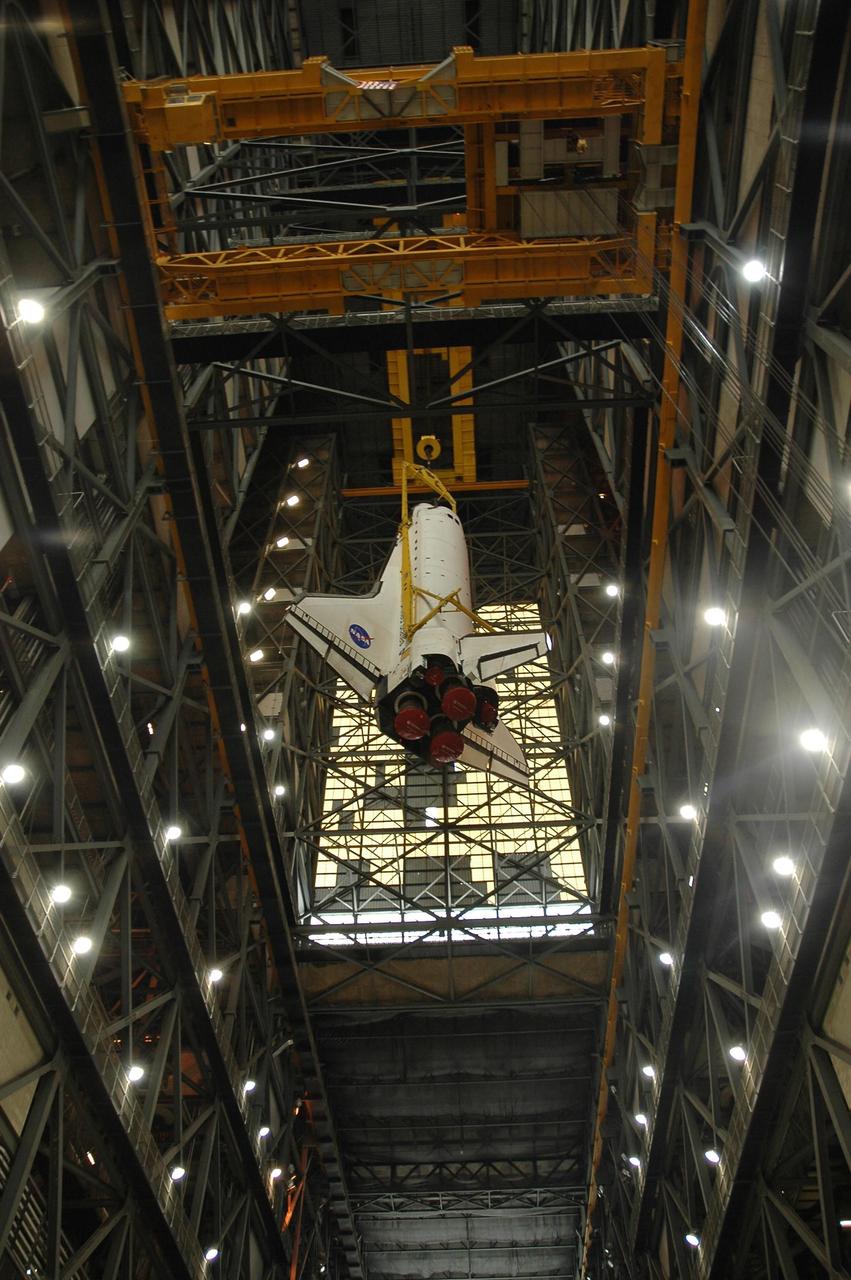
KENNEDY SPACE CENTER, FLA. --  Lifted high in the upper levels of the Vehicle Assembly Building, the orbiter Endeavour is being lowered into high bay 1 for stacking with the external tank (seen at the bottom) and solid rocket boosters on the mobile launcher platform.  Endeavour will be launched on mission STS-118, its first flight in more than four years. The shuttle has undergone extensive modifications, including the addition of safety upgrades already added to shuttles Discovery and Atlantis. Endeavour also features new hardware, such as the Station-to-Shuttle Power Transfer System that will allow the docked shuttle to draw electrical power from the station and extend its visits to the orbiting lab.  Endeavour is targeted for launch on Aug. 7.     Photo credit: NASA/Troy Cryder
KSC-07pd1772
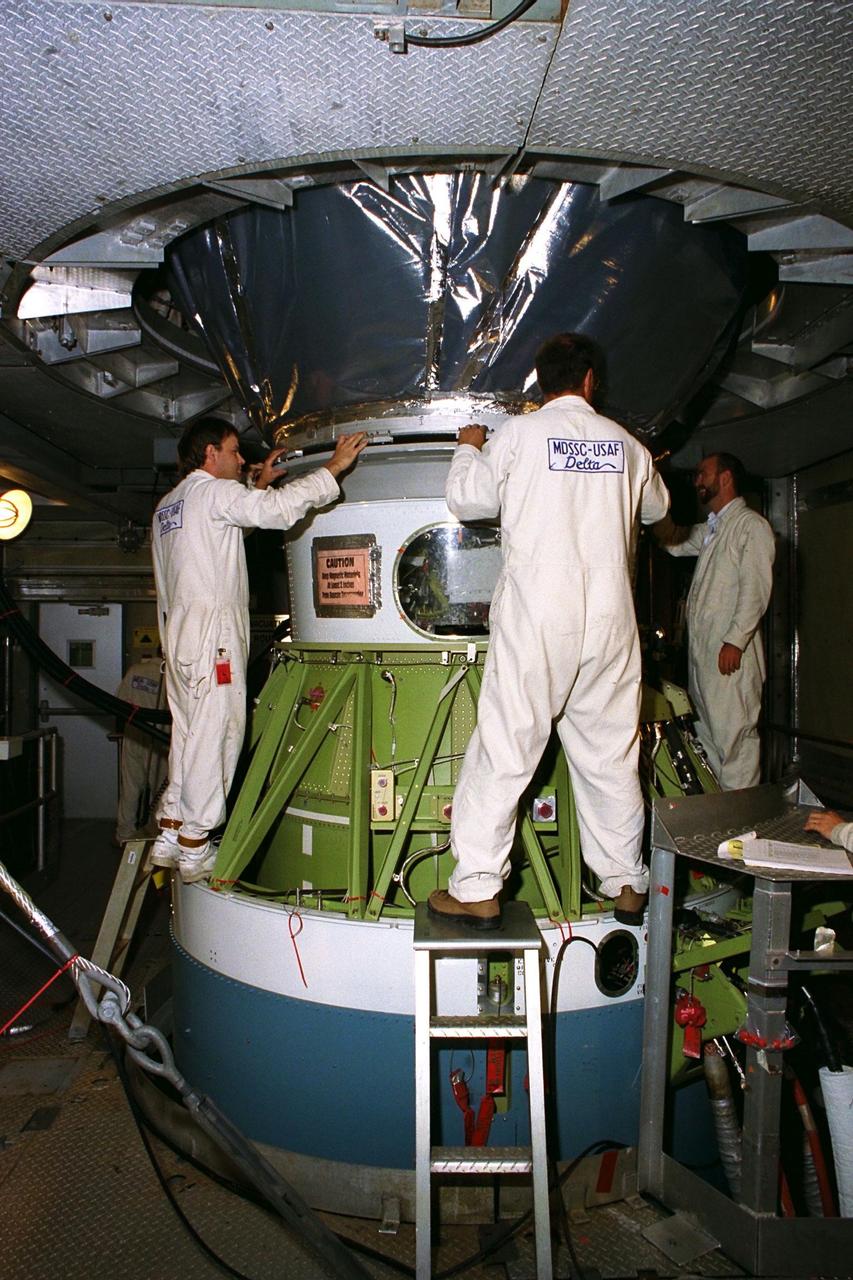
Applied Physics Laboratory engineers and  technicians from Johns Hopkins University assist in leveling and orienting the Advanced  Composition Explorer (ACE) as it is seated on a platform for solar array installation in  KSC’s Spacecraft Assembly and Encapsulation Facility-II. Scheduled for launch on a  Delta II rocket from Cape Canaveral Air Station on Aug. 25, ACE will study low-energy  particles of solar origin and high-energy galactic particles. The ACE observatory has six  high-resolution particle detection sensors and three monitoring instruments. The  collecting power of instrumentation aboard ACE is at least 100 times more sensitive than  anything previously flown to collect similar data by NASA
KSC-97PC1078
Extension of the solar panels is tested on the Advanced Composition Explorer (ACE) spacecraft in KSC’s Spacecraft Assembly and Encapsulation Facility-II (SAEF-II). Scheduled for launch on a Delta II rocket from Cape Canaveral Air Station on Aug. 25, ACE will study low-energy particles of solar origin and high-energy galactic particles. The collecting power of instruments aboard ACE is 10 to 1,000 times greater than anything previously flown to collect similar data by NASA
KSC-97PC1230
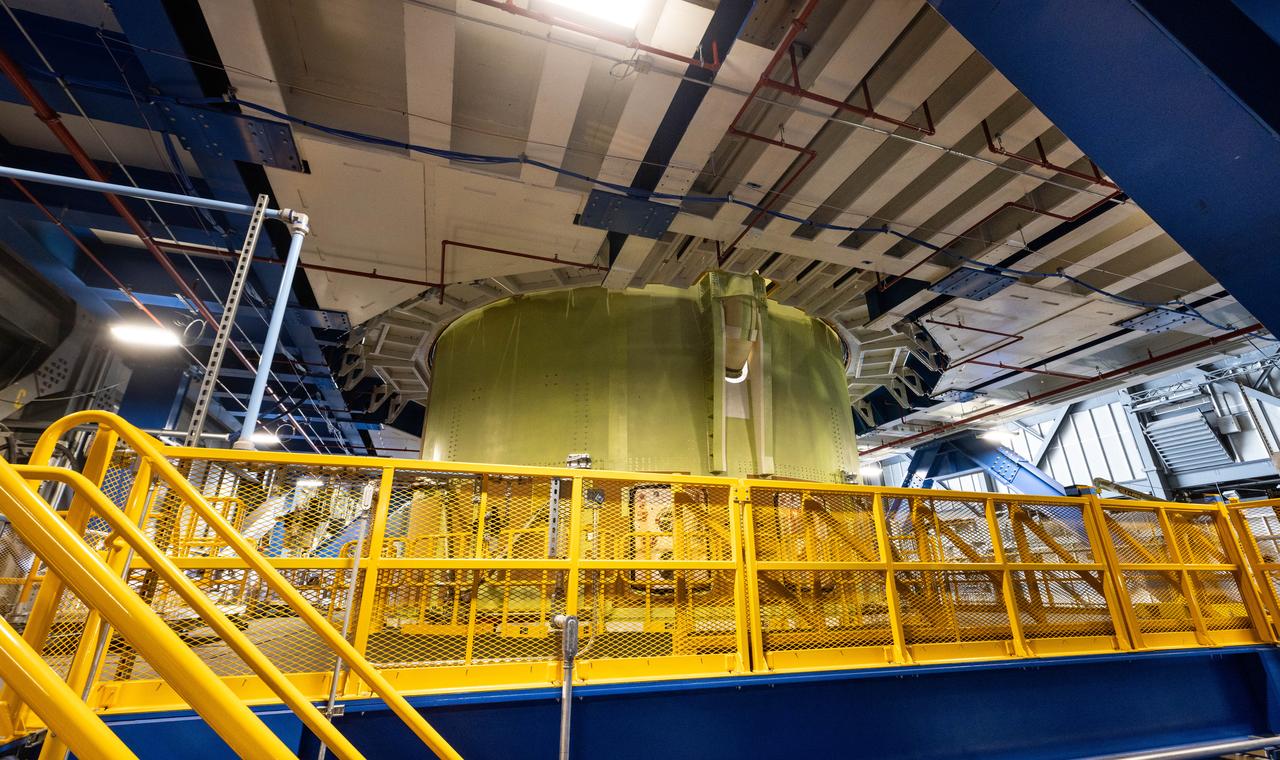
Teams from Kennedy lift NASA’s integrated Artemis III SLS (Space Launch System) core stage engine section with its boat-tail inside the center’s Vehicle Assembly Building at NASA’s Kennedy Space Center in Florida on Wednesday, Aug. 13, 2025. Shown inside the facility’s High Bay 2 for processing, the engine section is one the most complex and intricate parts of the rocket stage that will help power the Artemis missions to the Moon. 
Artemis III Engine Section 3 Boat Tail in HB2
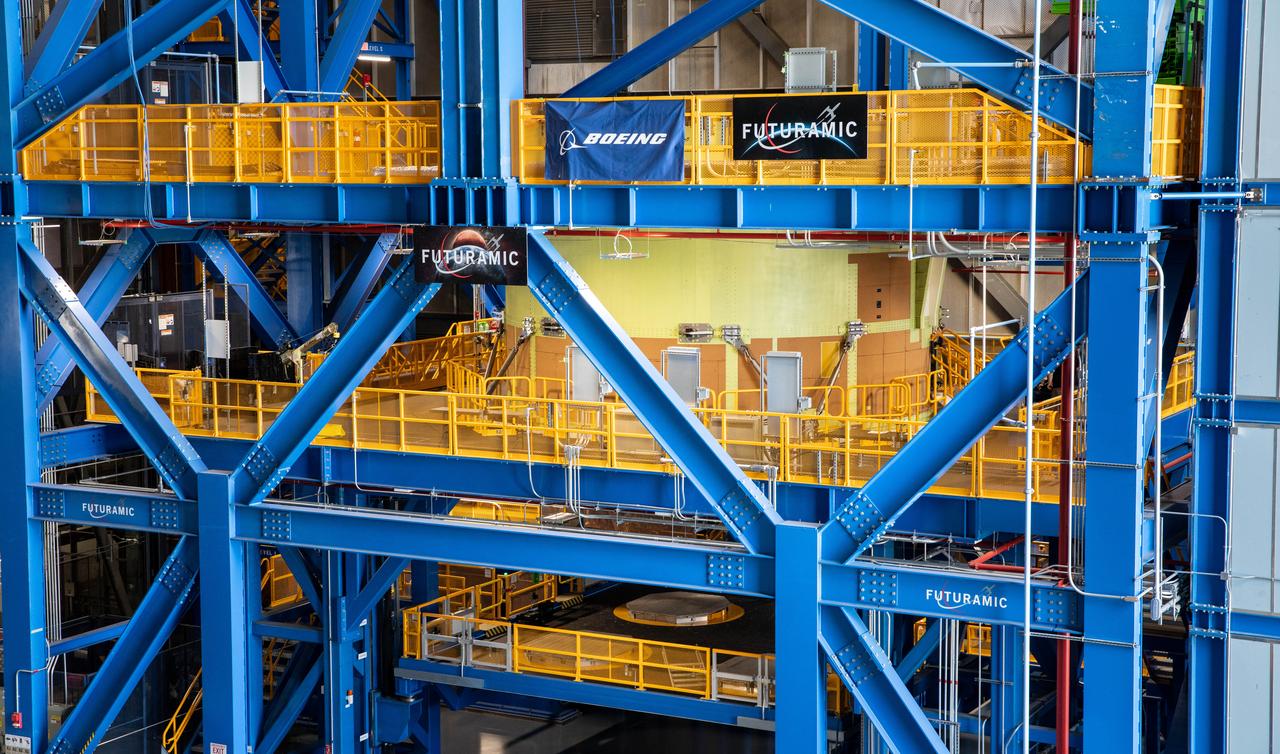
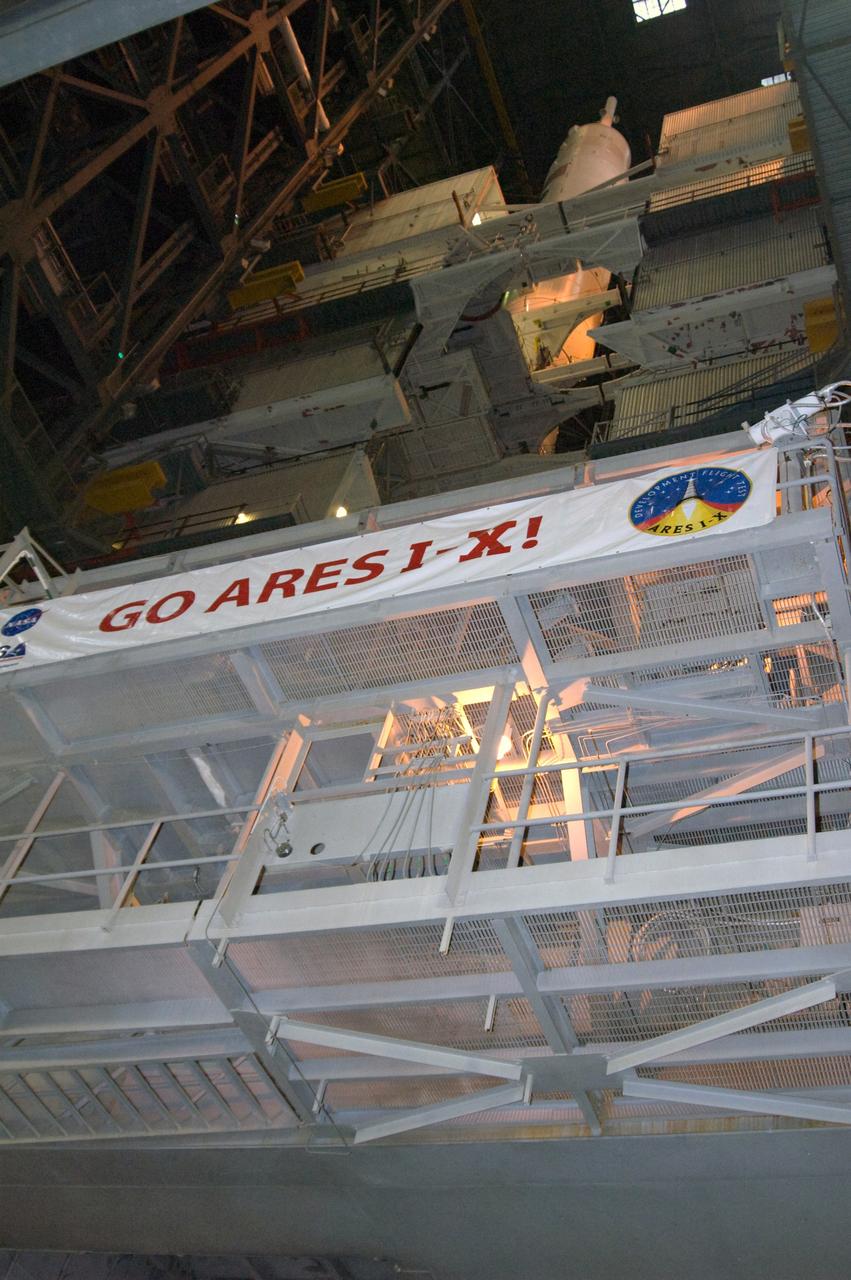
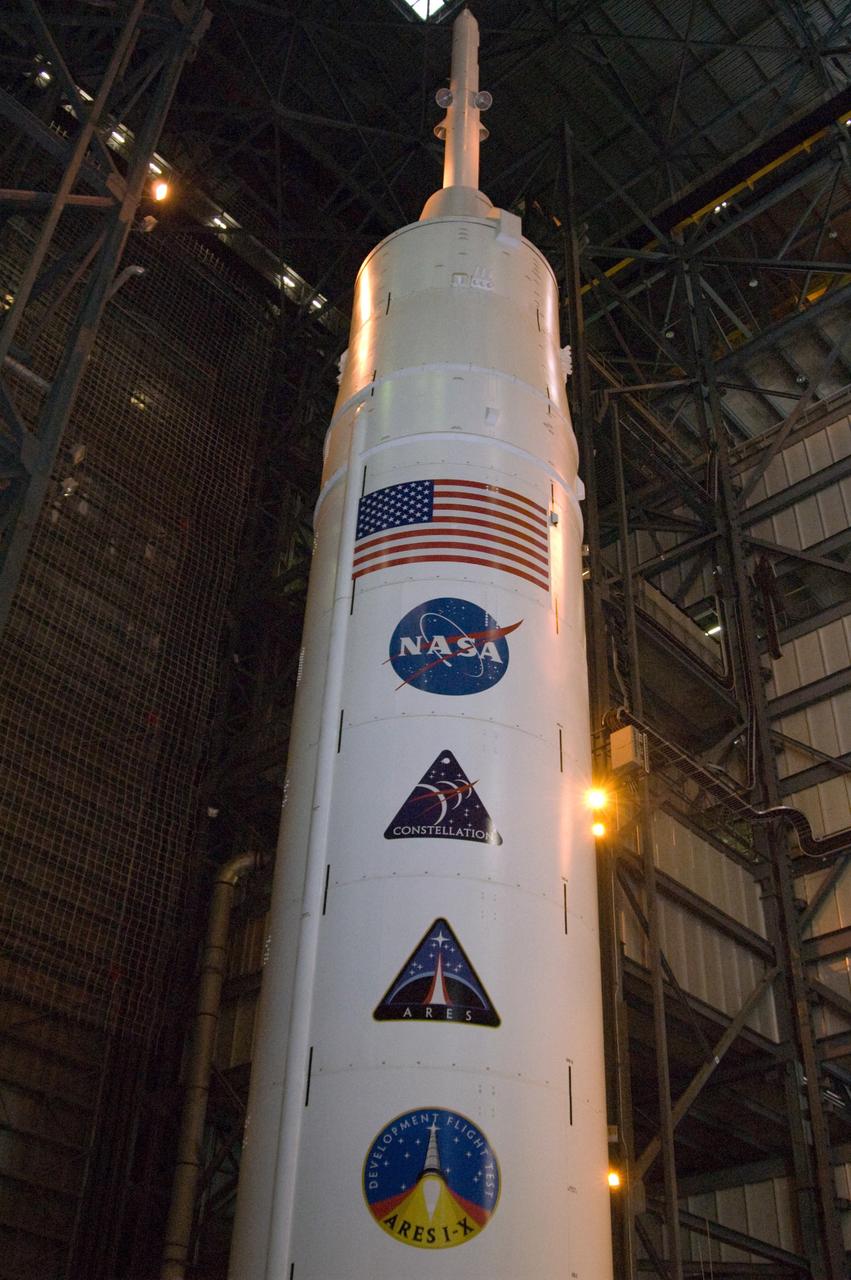
CAPE CANAVERAL, Fla. – In NASA Kennedy Space Center's Vehicle Assembly Building High Bay 3, NASA's Ares I-X rocket is ready to undergo its first power-up.  Part of the Constellation Program, the Ares I-X is the test vehicle for the Ares I, which is the essential core of a space transportation system that eventually will carry crewed missions back to the moon, on to Mars and out into the solar system. The Ares I-X flight test is targeted for  Oct. 31.  Photo credit: NASA/Cory Huston
KSC-2009-5081
The Advanced Composition Explorer (ACE) spacecraft is placed atop its launch vehicle at Launch Complex 17A. Scheduled for launch on a Delta II rocket from Cape Canaveral Air Station on Aug. 24, ACE will study low-energy particles of solar origin and high-energy galactic particles. The collecting power of instruments aboard ACE is 10 to 1,000 times greater than anything previously flown to collect similar data by NASA
KSC-97PC1240
The Advanced Composition Explorer (ACE) spacecraft undergoes a spin test in KSC’s Spacecraft Assembly and Encapsulation Facility-II (SAEF-II). Scheduled for launch on a Delta II rocket from Cape Canaveral Air Station on Aug. 25, ACE will study low-energy particles of solar origin and high-energy galactic particles. The collecting power of instruments aboard ACE is 10 to 1,000 times greater than anything previously flown to collect similar data by NASA
KSC-97PC1227
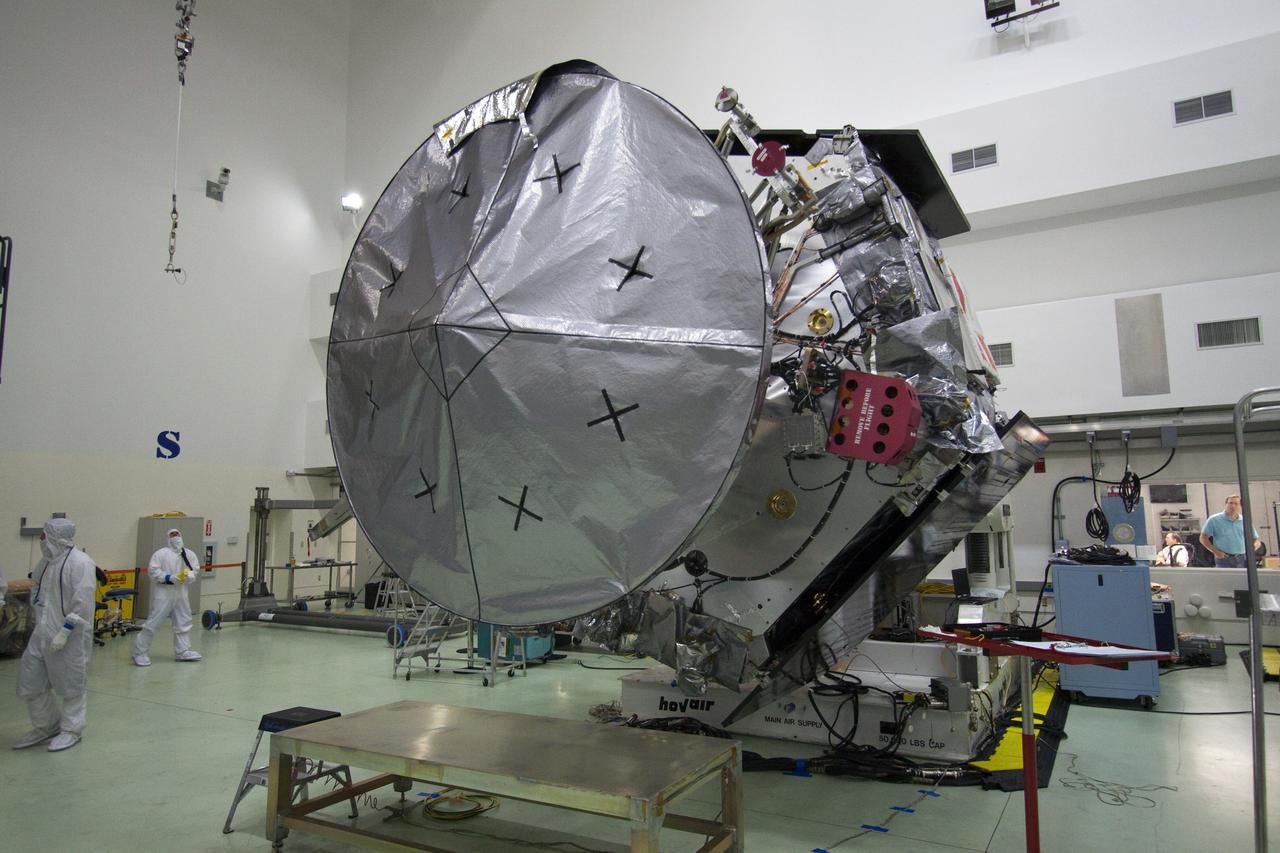
CAPE CANAVERAL, Fla. -- Technicians at Astrotech's payload processing facility in Titusville, Fla. have installed the high-gain antenna to NASA's Juno spacecraft. Juno is scheduled to launch aboard an Atlas V rocket from Cape Canaveral, Fla. Aug. 5.The solar-powered spacecraft will orbit Jupiter's poles 33 times to find out more about the gas giant's origins, structure, atmosphere and magnetosphere and investigate the existence of a solid planetary core. For more information visit, www.nasa.gov/juno. Photo credit: NASA/Jack Pfaller
KSC-2011-3108
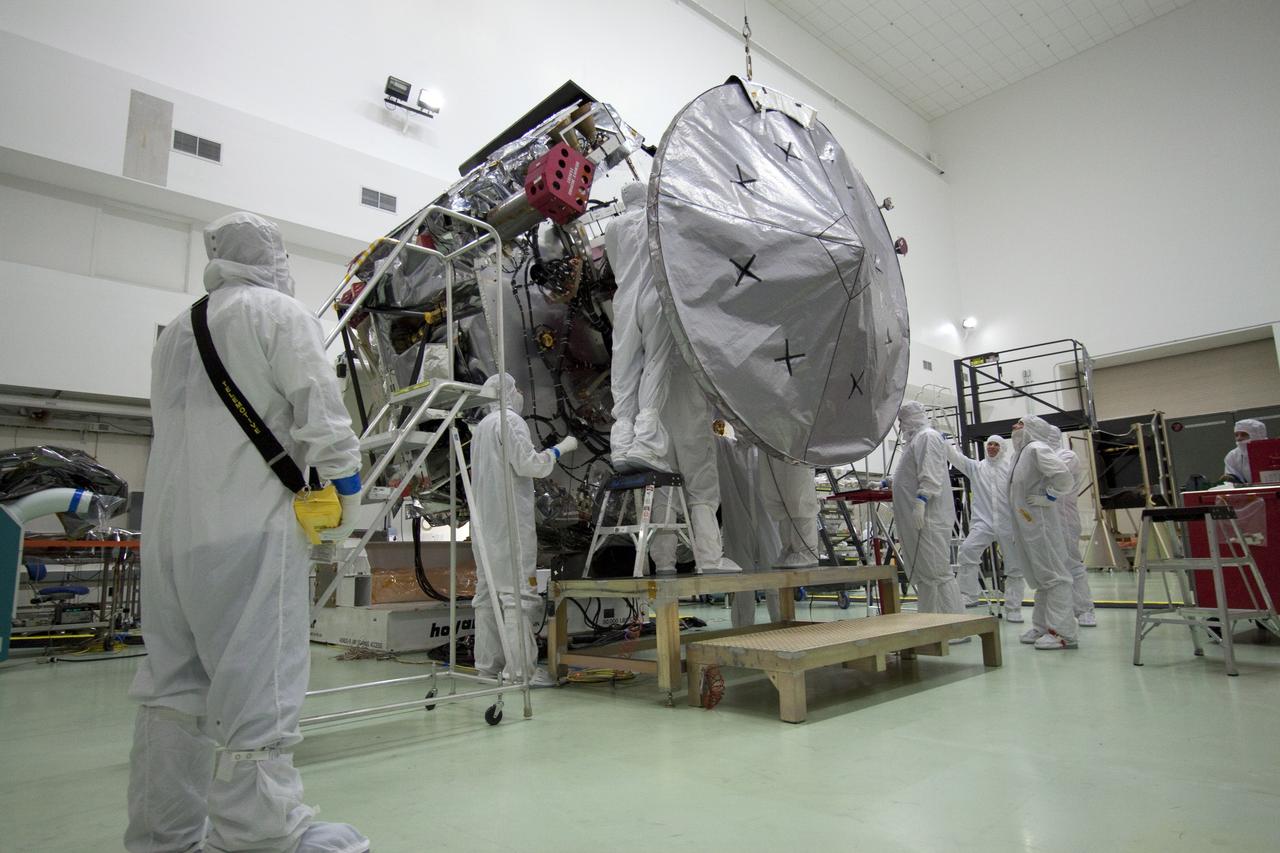
CAPE CANAVERAL, Fla. -- Technicians at Astrotech's payload processing facility in Titusville, Fla. install the high-gain antenna to NASA's Juno spacecraft. Juno is scheduled to launch aboard an Atlas V rocket from Cape Canaveral, Fla. Aug. 5.The solar-powered spacecraft will orbit Jupiter's poles 33 times to find out more about the gas giant's origins, structure, atmosphere and magnetosphere and investigate the existence of a solid planetary core. For more information visit, www.nasa.gov/juno. Photo credit: NASA/Jack Pfaller
KSC-2011-3107
Teams from Kennedy lift NASA’s integrated Artemis III SLS (Space Launch System) core stage engine section with its boat-tail inside the center’s Vehicle Assembly Building at NASA’s Kennedy Space Center in Florida on Wednesday, Aug. 13, 2025. Shown inside the facility’s High Bay 2 for processing, the engine section is one the most complex and intricate parts of the rocket stage that will help power the Artemis missions to the Moon. 
Artemis III Engine Section 3 Boat Tail in HB2
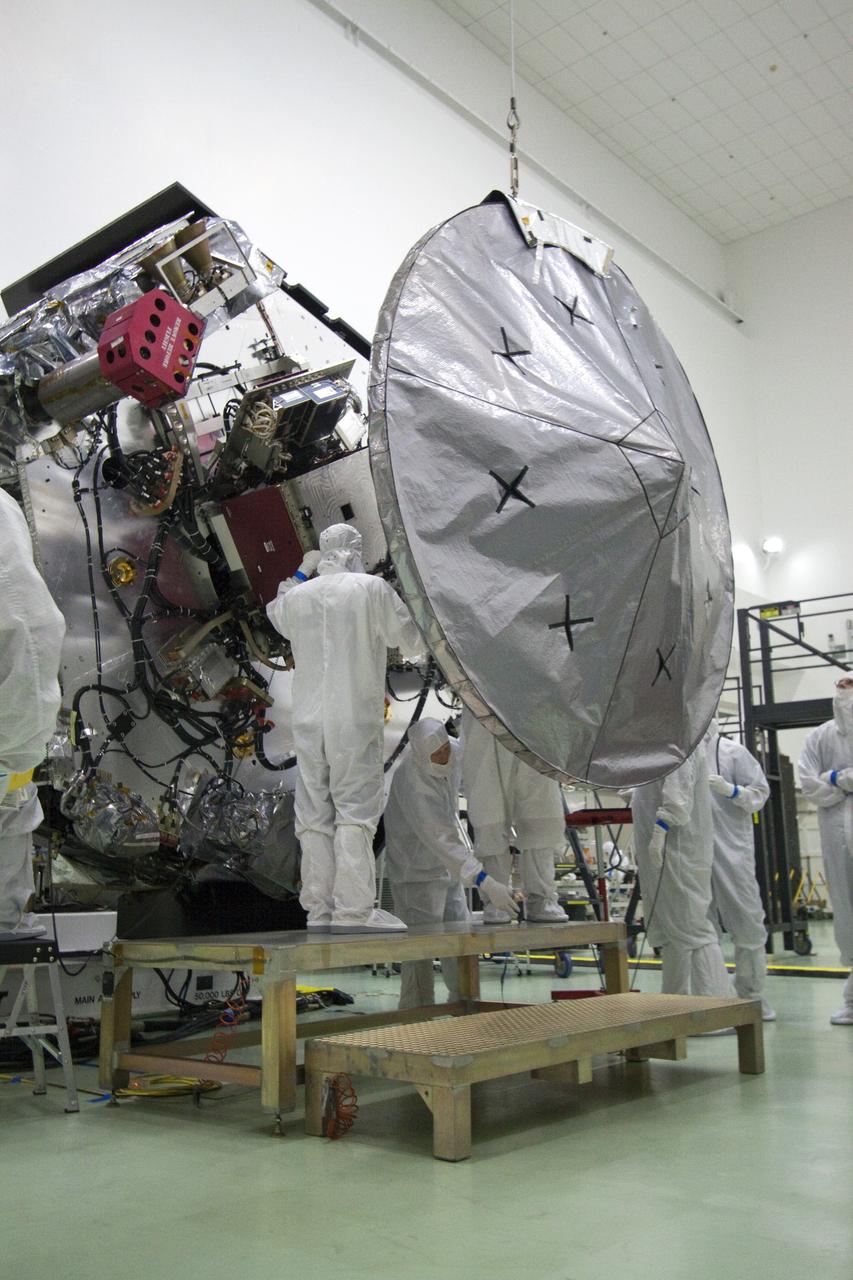
CAPE CANAVERAL, Fla. -- Technicians at Astrotech's payload processing facility in Titusville, Fla. install the high-gain antenna to NASA's Juno spacecraft. Juno is scheduled to launch aboard an Atlas V rocket from Cape Canaveral, Fla. Aug. 5.The solar-powered spacecraft will orbit Jupiter's poles 33 times to find out more about the gas giant's origins, structure, atmosphere and magnetosphere and investigate the existence of a solid planetary core. For more information visit, www.nasa.gov/juno. Photo credit: NASA/Jack Pfaller
KSC-2011-3106
The Advanced Composition Explorer (ACE) spacecraft is placed atop its launch vehicle at Launch Complex 17A. Scheduled for launch on a Delta II rocket from Cape Canaveral Air Station on Aug. 24, ACE will study low-energy particles of solar origin and high-energy galactic particles. The collecting power of instruments aboard ACE is 10 to 1,000 times greater than anything previously flown to collect similar data by NASA
KSC-97PC1238
The Advanced Composition Explorer (ACE) spacecraft undergoes a spin test in KSC’s Spacecraft Assembly and Encapsulation Facility-II (SAEF-II). Scheduled for launch on a Delta II rocket from Cape Canaveral Air Station on Aug. 25, ACE will study low-energy particles of solar origin and high-energy galactic particles. The collecting power of instruments aboard ACE is 10 to 1,000 times greater than anything previously flown to collect similar data by NASA
KSC-97PC1228
In KSC’s Spacecraft Assembly and Encapsulation Facility-II (SAEF-II), the Advanced Composition Explorer (ACE) spacecraft is encapsulated and placed into the transporter which will move it to Launch Complex 17A. Scheduled for launch on a Delta II rocket from Cape Canaveral Air Station on Aug. 24, ACE will study low-energy particles of solar origin and high-energy galactic particles. The collecting power of instruments aboard ACE is 10 to 1,000 times greater than anything previously flown to collect similar data by NASA
KSC-97PC1232
CAPE CANAVERAL, Fla. – In NASA Kennedy Space Center's Vehicle Assembly Building High Bay 3, NASA's Ares I-X rocket undergoes its first power-up.  Part of the Constellation Program, the Ares I-X is the test vehicle for the Ares I, which is the essential core of a space transportation system that eventually will carry crewed missions back to the moon, on to Mars and out into the solar system. The Ares I-X flight test is targeted for  Oct. 31.  Photo credit: NASA/Cory Huston
KSC-2009-5085
Teams from Kennedy lift NASA’s integrated Artemis III SLS (Space Launch System) core stage engine section with its boat-tail inside the center’s Vehicle Assembly Building at NASA’s Kennedy Space Center in Florida on Wednesday, Aug. 13, 2025. Shown inside the facility’s High Bay 2 for processing, the engine section is one the most complex and intricate parts of the rocket stage that will help power the Artemis missions to the Moon. 
Artemis II Engine Section 3 Boat Tail in HB2
Teams from Kennedy lift NASA’s integrated Artemis III SLS (Space Launch System) core stage engine section with its boat-tail inside the center’s Vehicle Assembly Building at NASA’s Kennedy Space Center in Florida on Wednesday, Aug. 13, 2025. Shown inside the facility’s High Bay 2 for processing, the engine section is one the most complex and intricate parts of the rocket stage that will help power the Artemis missions to the Moon. 
Artemis III Engine Section 3 Boat Tail in HB2
In KSC’s Spacecraft Assembly and Encapsulation Facility-II (SAEF-II), the Advanced Composition Explorer (ACE) spacecraft is encapsulated and placed into the transporter which will move it to Launch Complex 17A. Scheduled for launch on a Delta II rocket from Cape Canaveral Air Station on Aug. 24, ACE will study low-energy particles of solar origin and high-energy galactic particles. The collecting power of instruments aboard ACE is 10 to 1,000 times greater than anything previously flown to collect similar data by NASA
KSC-97PC1234
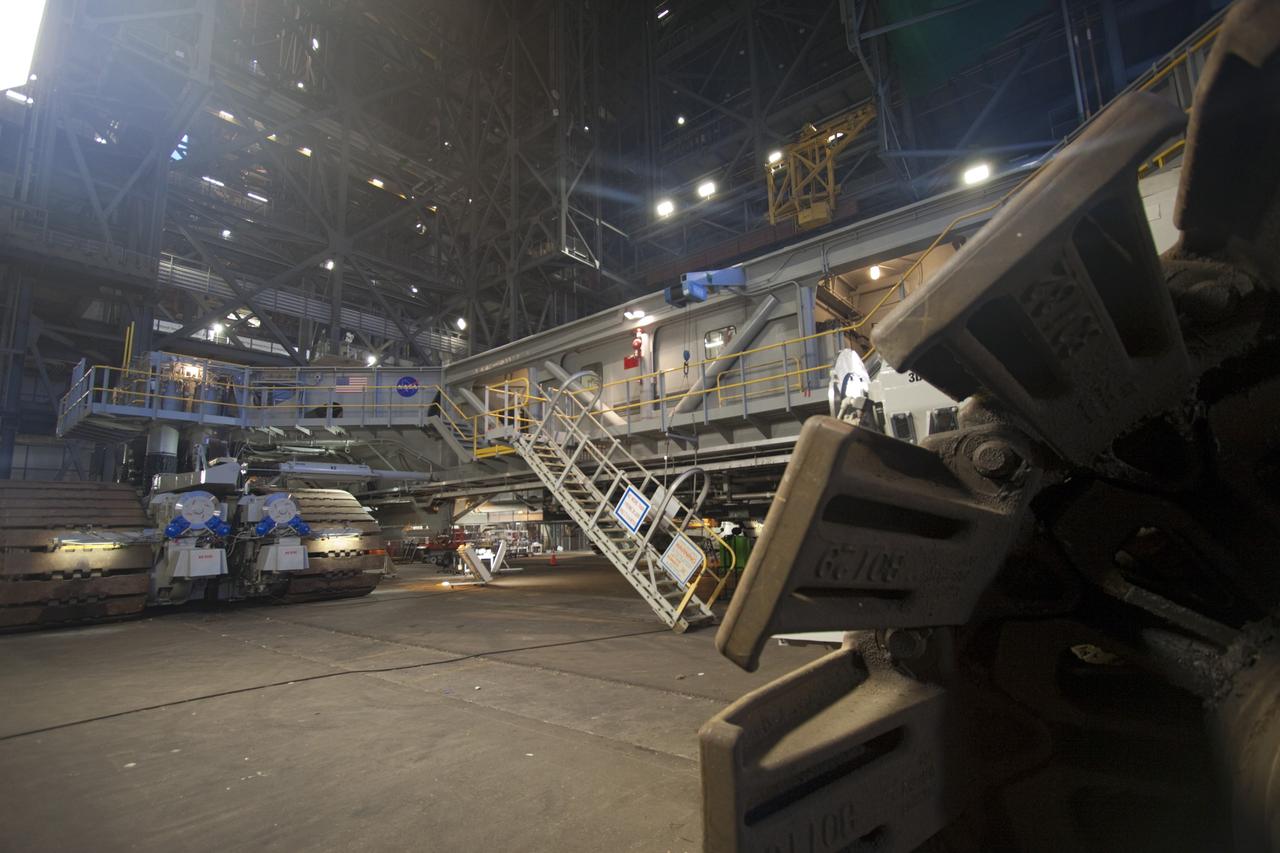
CAPE CANAVERAL, Fla. -- At NASA's Kennedy Space Center in Florida, crawler-transporter No. 2 has been undergoing modifications inside high bay 2 of the Vehicle Assembly Building in preparation to carry the space agency's Space Launch System heavy-lift rocket to the launch pad.      NASA's Ground Systems Development and Operations Program is leading the 20-year life-extension project for the crawler. A pair of behemoth machines called crawler-transporters has carried the load of taking rockets and spacecraft to the launch pad for more than 40 years at NASA’s Kennedy Space Center in Florida. Each the size of a baseball infield and powered by locomotive and large electrical power generator engines, the crawler-transporters will stand ready to keep up the work for the next generation of launch vehicles projects to lift astronauts into space. For more information, visit http://www.nasa.gov/exploration/systems/ground/index.html Photo credit: NASA/Jim Grossmann
KSC-2012-6163
KENNEDY SPACE CENTER, FLA. --  The orbiter Endeavour is lifted into the upper levels of the Vehicle Assembly Building.  It will be moved laterally over a crossbeam and lowered into high bay 1 for stacking with the external tank and solid rocket boosters on the mobile launcher platform.tank and solid rocket boosters on the mobile launcher platform.  Endeavour will be launched on mission STS-118, its first flight in more than four years. The shuttle has undergone extensive modifications, including the addition of safety upgrades already added to shuttles Discovery and Atlantis. Endeavour also features new hardware, such as the Station-to-Shuttle Power Transfer System that will allow the docked shuttle to draw electrical power from the station and extend its visits to the orbiting lab.  Endeavour is targeted for launch on Aug. 7.     Photo credit: NASA/Troy Cryder
KSC-07pd1769
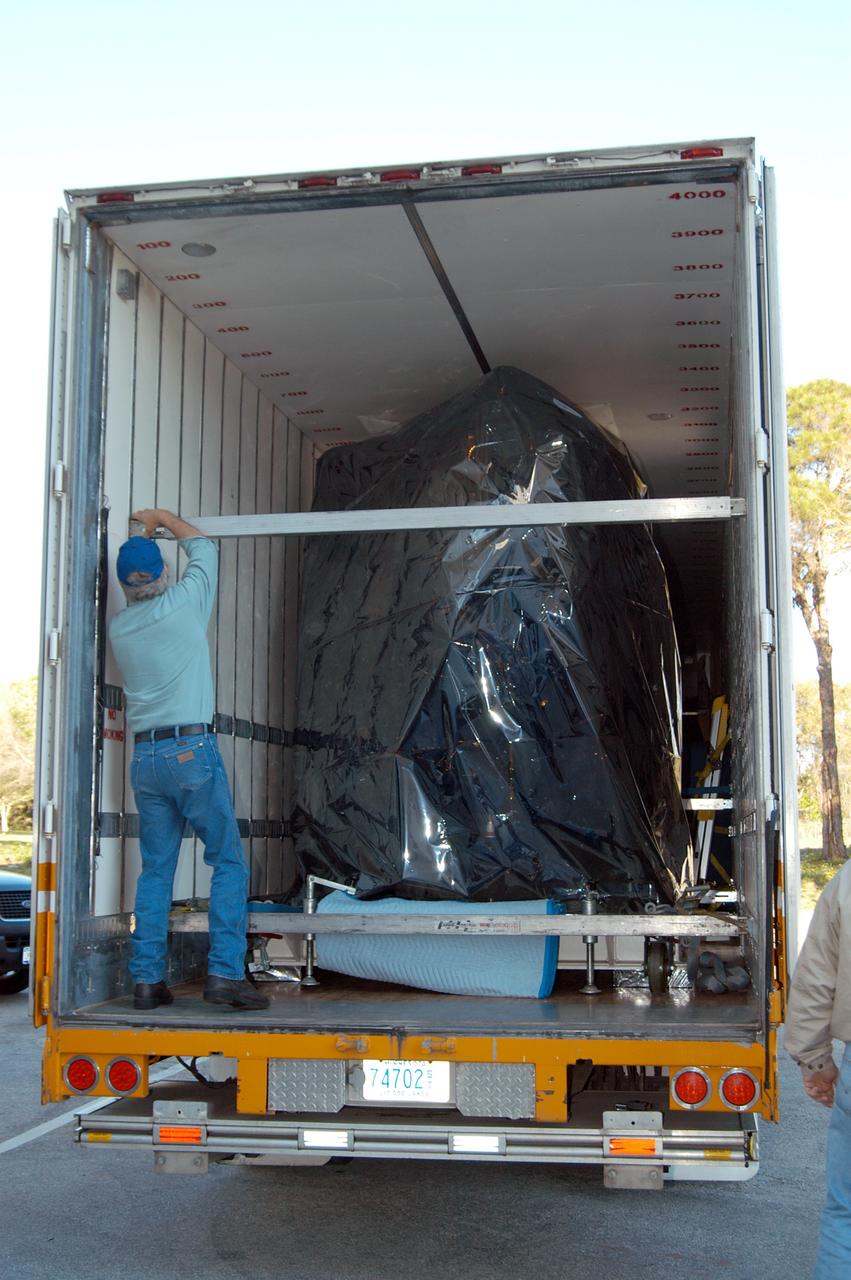
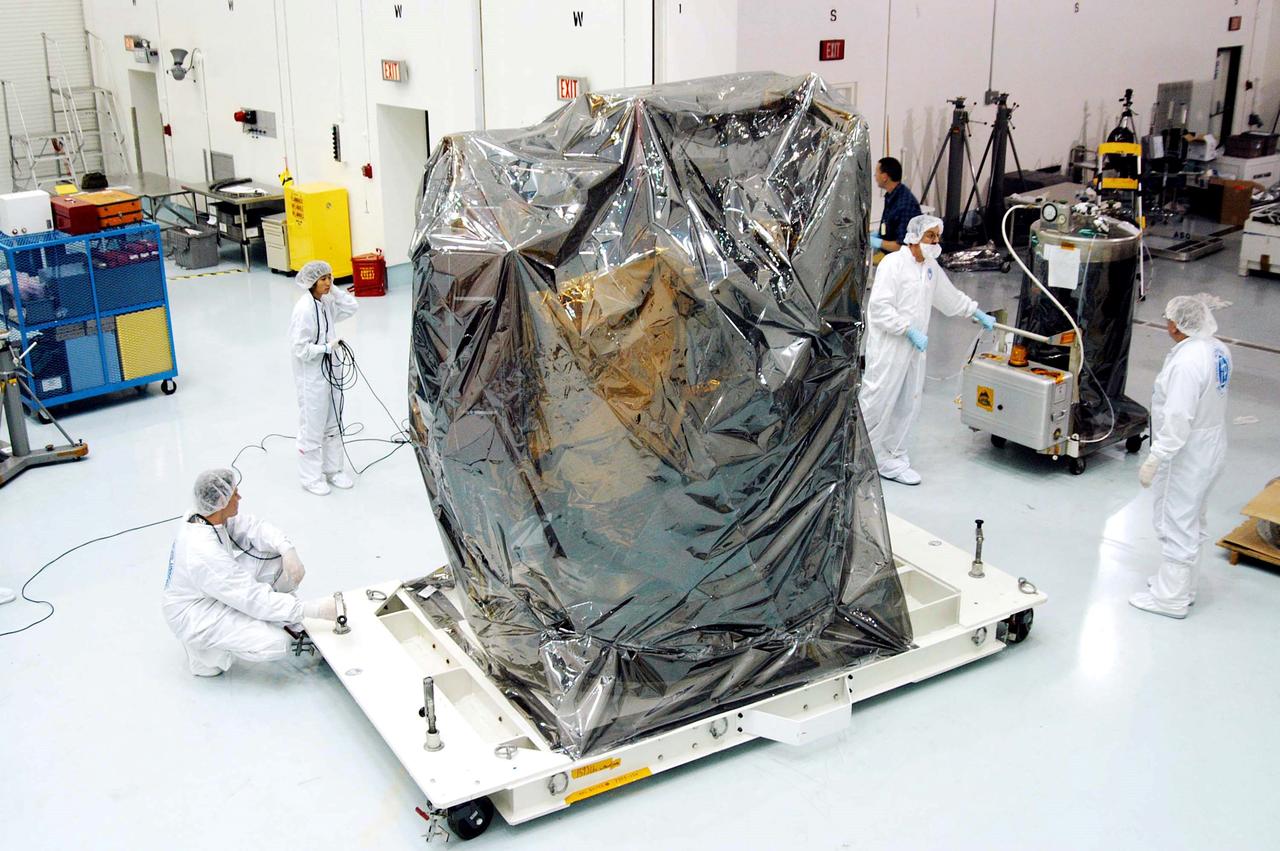
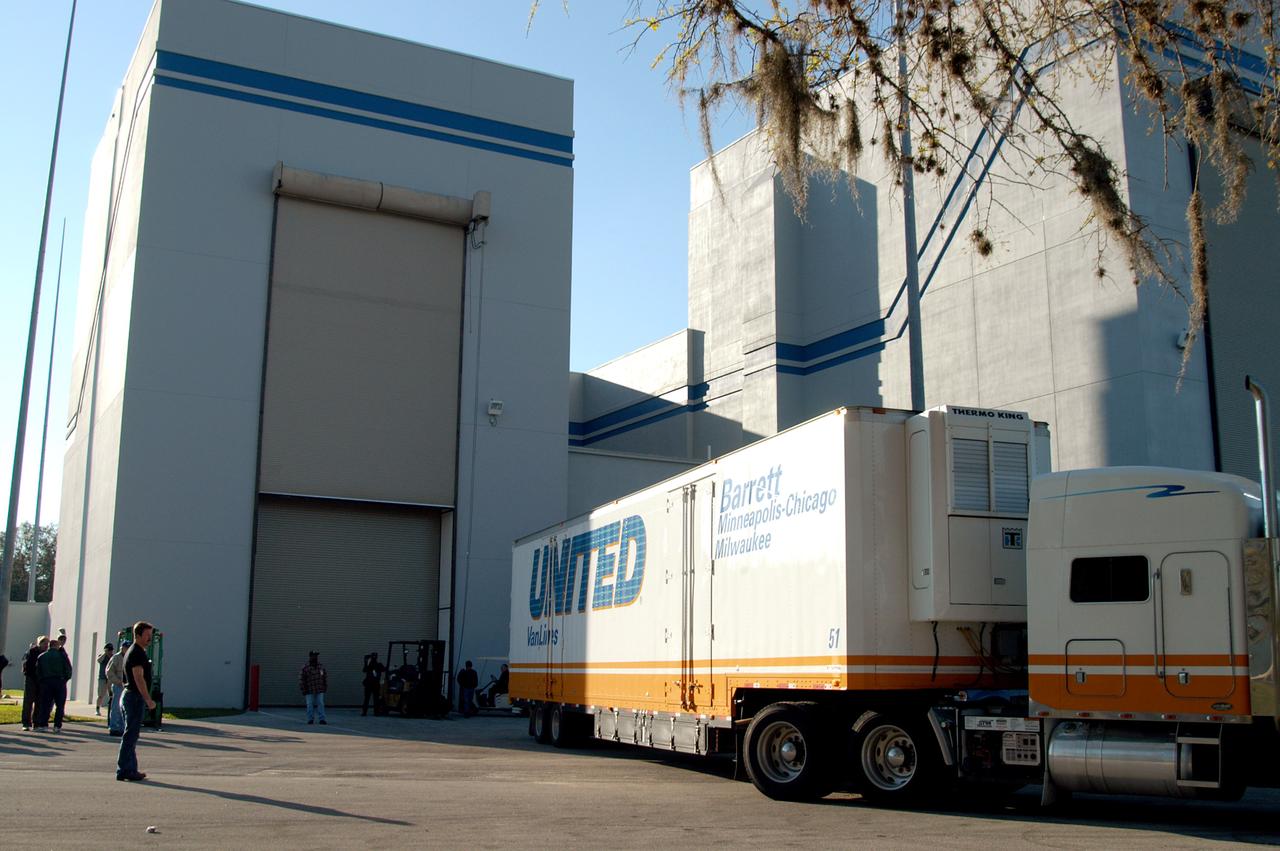
KENNEDY SPACE CENTER, FLA. -  Doors are open on the air-conditioned transportation van that carried NASA’s MESSENGER spacecraft from NASA’s Goddard Space Flight Center in Greenbelt, Md., to the Astrotech Space Operations processing facilities near KSC.  After offloading, MESSENGER - short for MErcury Surface, Space ENvironment, GEochemistry and Ranging - will be taken into a high bay clean room and employees of the Johns Hopkins University Applied Physics Laboratory, builders of the spacecraft, will perform an initial state-of-health check.  Then processing for launch can begin, including checkout of the power systems, communications systems and control systems.  The thermal blankets will also be attached for flight.  MESSENGER will be launched May 11 on a six-year mission aboard a Boeing Delta II rocket.  Liftoff is targeted for 2:26 a.m. EDT on Tuesday, May 11.
KENNEDY SPACE CENTER, FLA. - Doors are open on the air-conditioned transportation van that carried NASA’s MESSENGER spacecraft from NASA’s Goddard Space Flight Center in Greenbelt, Md., to the Astrotech Space Operations processing facilities near KSC. After offloading, MESSENGER - short for MErcury Surface, Space ENvironment, GEochemistry and Ranging - will be taken into a high bay clean room and employees of the Johns Hopkins University Applied Physics Laboratory, builders of the spacecraft, will perform an initial state-of-health check. Then processing for launch can begin, including checkout of the power systems, communications systems and control systems. The thermal blankets will also be attached for flight. MESSENGER will be launched May 11 on a six-year mission aboard a Boeing Delta II rocket. Liftoff is targeted for 2:26 a.m. EDT on Tuesday, May 11.
KENNEDY SPACE CENTER, FLA. -  In the high bay clean room at the Astrotech Space Operations processing facilities near KSC, workers get ready to remove the protective cover from NASA’s MESSENGER spacecraft.  Employees of the Johns Hopkins University Applied Physics Laboratory, builders of the spacecraft, will perform an initial state-of-health check.  Then processing for launch can begin, including checkout of the power systems, communications systems and control systems.  The thermal blankets will also be attached for flight.  MESSENGER - short for MErcury Surface, Space ENvironment, GEochemistry and Ranging - will be launched May 11 on a six-year mission aboard a Boeing Delta II rocket.  Liftoff is targeted for 2:26 a.m. EDT on Tuesday, May 11.
KENNEDY SPACE CENTER, FLA. - In the high bay clean room at the Astrotech Space Operations processing facilities near KSC, workers get ready to remove the protective cover from NASA’s MESSENGER spacecraft. Employees of the Johns Hopkins University Applied Physics Laboratory, builders of the spacecraft, will perform an initial state-of-health check. Then processing for launch can begin, including checkout of the power systems, communications systems and control systems. The thermal blankets will also be attached for flight. MESSENGER - short for MErcury Surface, Space ENvironment, GEochemistry and Ranging - will be launched May 11 on a six-year mission aboard a Boeing Delta II rocket. Liftoff is targeted for 2:26 a.m. EDT on Tuesday, May 11.
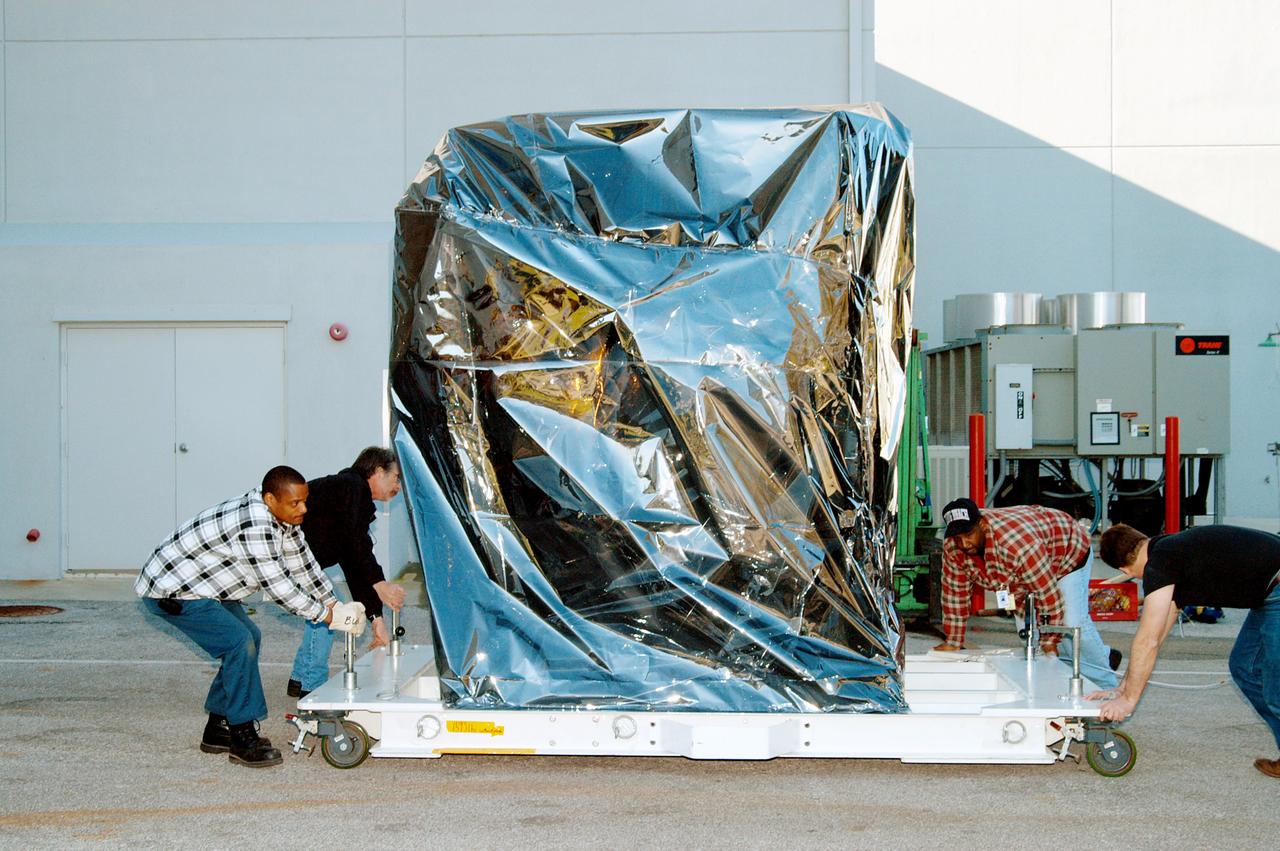
KENNEDY SPACE CENTER, FLA. -  At the Astrotech Space Operations processing facilities near KSC, workers check the moveable pallet holding NASA’s MESSENGER spacecraft.  MESSENGER - short for MErcury Surface, Space ENvironment, GEochemistry and Ranging - will be taken into a high bay clean room and employees of the Johns Hopkins University Applied Physics Laboratory, builders of the spacecraft, will perform an initial state-of-health check.  Then processing for launch can begin, including checkout of the power systems, communications systems and control systems.  The thermal blankets will also be attached for flight.  MESSENGER will be launched May 11 on a six-year mission aboard a Boeing Delta II rocket.  Liftoff is targeted for 2:26 a.m. EDT on Tuesday, May 11.
KENNEDY SPACE CENTER, FLA. - At the Astrotech Space Operations processing facilities near KSC, workers check the moveable pallet holding NASA’s MESSENGER spacecraft. MESSENGER - short for MErcury Surface, Space ENvironment, GEochemistry and Ranging - will be taken into a high bay clean room and employees of the Johns Hopkins University Applied Physics Laboratory, builders of the spacecraft, will perform an initial state-of-health check. Then processing for launch can begin, including checkout of the power systems, communications systems and control systems. The thermal blankets will also be attached for flight. MESSENGER will be launched May 11 on a six-year mission aboard a Boeing Delta II rocket. Liftoff is targeted for 2:26 a.m. EDT on Tuesday, May 11.
KENNEDY SPACE CENTER, FLA. -  In the high bay clean room at the Astrotech Space Operations processing facilities near KSC, workers prepare to attach an overhead crane to NASA’s MESSENGER spacecraft.  The spacecraft will be moved to a work stand where employees of the Johns Hopkins University Applied Physics Laboratory, builders of the spacecraft, will perform an initial state-of-health check.  Then processing for launch can begin, including checkout of the power systems, communications systems and control systems.  The thermal blankets will also be attached for flight.  MESSENGER - short for MErcury Surface, Space ENvironment, GEochemistry and Ranging - will be launched May 11 on a six-year mission aboard a Boeing Delta II rocket.  Liftoff is targeted for 2:26 a.m. EDT on Tuesday, May 11.
KENNEDY SPACE CENTER, FLA. - In the high bay clean room at the Astrotech Space Operations processing facilities near KSC, workers prepare to attach an overhead crane to NASA’s MESSENGER spacecraft. The spacecraft will be moved to a work stand where employees of the Johns Hopkins University Applied Physics Laboratory, builders of the spacecraft, will perform an initial state-of-health check. Then processing for launch can begin, including checkout of the power systems, communications systems and control systems. The thermal blankets will also be attached for flight. MESSENGER - short for MErcury Surface, Space ENvironment, GEochemistry and Ranging - will be launched May 11 on a six-year mission aboard a Boeing Delta II rocket. Liftoff is targeted for 2:26 a.m. EDT on Tuesday, May 11.
KENNEDY SPACE CENTER, FLA. -  At the Astrotech Space Operations processing facilities near KSC, NASA’s MESSENGER spacecraft from NASA’s Goddard Space Flight Center in Greenbelt, Md., is offloaded.  MESSENGER - short for MErcury Surface, Space ENvironment, GEochemistry and Ranging - will be taken into a high bay clean room and employees of the Johns Hopkins University Applied Physics Laboratory, builders of the spacecraft, will perform an initial state-of-health check.  Then processing for launch can begin, including checkout of the power systems, communications systems and control systems.  The thermal blankets will also be attached for flight.  MESSENGER will be launched May 11 on a six-year mission aboard a Boeing Delta II rocket.  Liftoff is targeted for 2:26 a.m. EDT on Tuesday, May 11.
KENNEDY SPACE CENTER, FLA. - At the Astrotech Space Operations processing facilities near KSC, NASA’s MESSENGER spacecraft from NASA’s Goddard Space Flight Center in Greenbelt, Md., is offloaded. MESSENGER - short for MErcury Surface, Space ENvironment, GEochemistry and Ranging - will be taken into a high bay clean room and employees of the Johns Hopkins University Applied Physics Laboratory, builders of the spacecraft, will perform an initial state-of-health check. Then processing for launch can begin, including checkout of the power systems, communications systems and control systems. The thermal blankets will also be attached for flight. MESSENGER will be launched May 11 on a six-year mission aboard a Boeing Delta II rocket. Liftoff is targeted for 2:26 a.m. EDT on Tuesday, May 11.
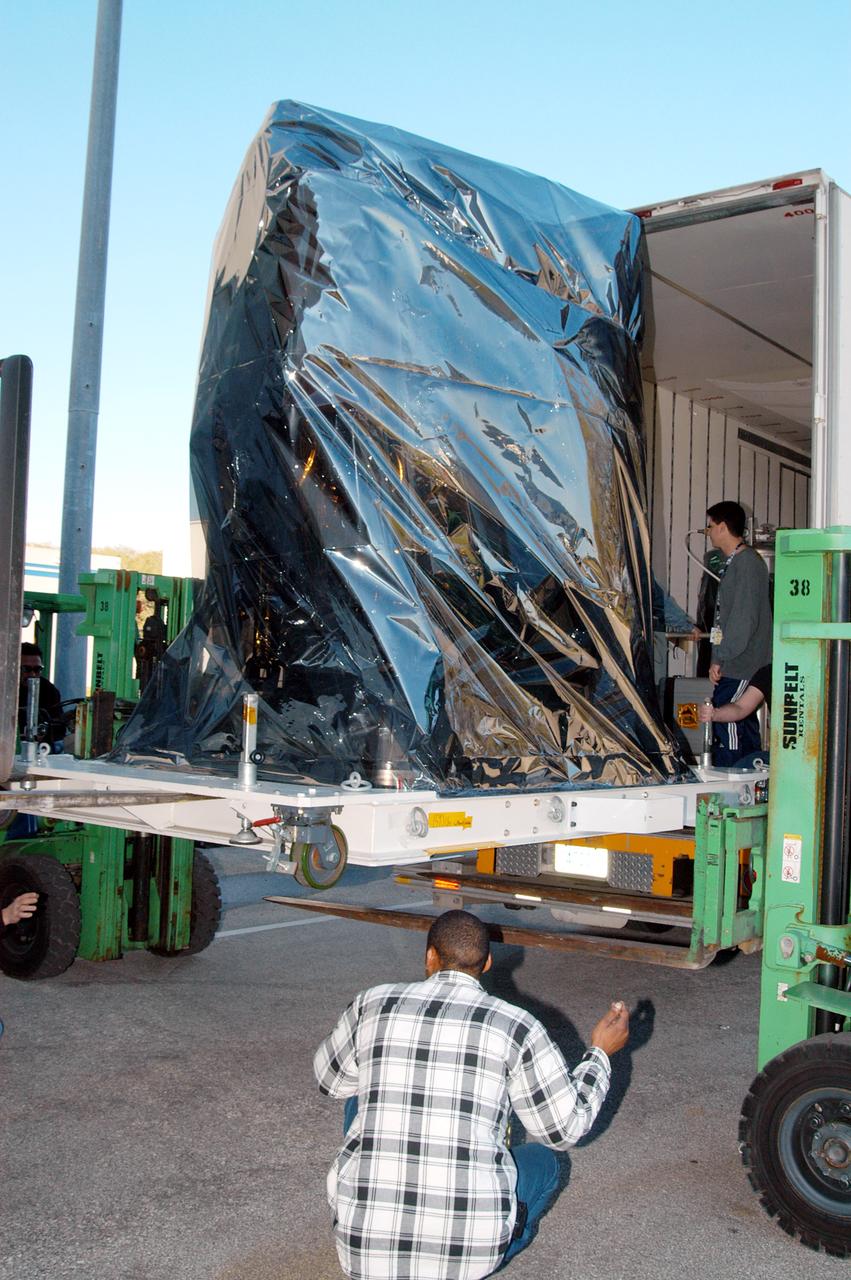
KENNEDY SPACE CENTER, FLA. -  Shipped in an air-conditioned transportation van from NASA’s Goddard Space Flight Center in Greenbelt, Md., NASA’s MESSENGER spacecraft, the first Mercury orbiter, arrives at the Astrotech Space Operations processing facilities near KSC.    MESSENGER - short for MErcury Surface, Space ENvironment, GEochemistry and Ranging - will be offloaded and taken into a high bay clean room.  After the spacecraft is removed from its shipping container, employees of the Johns Hopkins University Applied Physics Laboratory, builders of the spacecraft, will perform an initial state-of-health check.  Then processing for launch can begin, including checkout of the power systems, communications systems and control systems.  The thermal blankets will also be attached for flight.  MESSENGER will be launched May 11 on a six-year mission aboard a Boeing Delta II rocket.  Liftoff is targeted for 2:26 a.m. EDT on Tuesday, May 11.
KENNEDY SPACE CENTER, FLA. - Shipped in an air-conditioned transportation van from NASA’s Goddard Space Flight Center in Greenbelt, Md., NASA’s MESSENGER spacecraft, the first Mercury orbiter, arrives at the Astrotech Space Operations processing facilities near KSC. MESSENGER - short for MErcury Surface, Space ENvironment, GEochemistry and Ranging - will be offloaded and taken into a high bay clean room. After the spacecraft is removed from its shipping container, employees of the Johns Hopkins University Applied Physics Laboratory, builders of the spacecraft, will perform an initial state-of-health check. Then processing for launch can begin, including checkout of the power systems, communications systems and control systems. The thermal blankets will also be attached for flight. MESSENGER will be launched May 11 on a six-year mission aboard a Boeing Delta II rocket. Liftoff is targeted for 2:26 a.m. EDT on Tuesday, May 11.
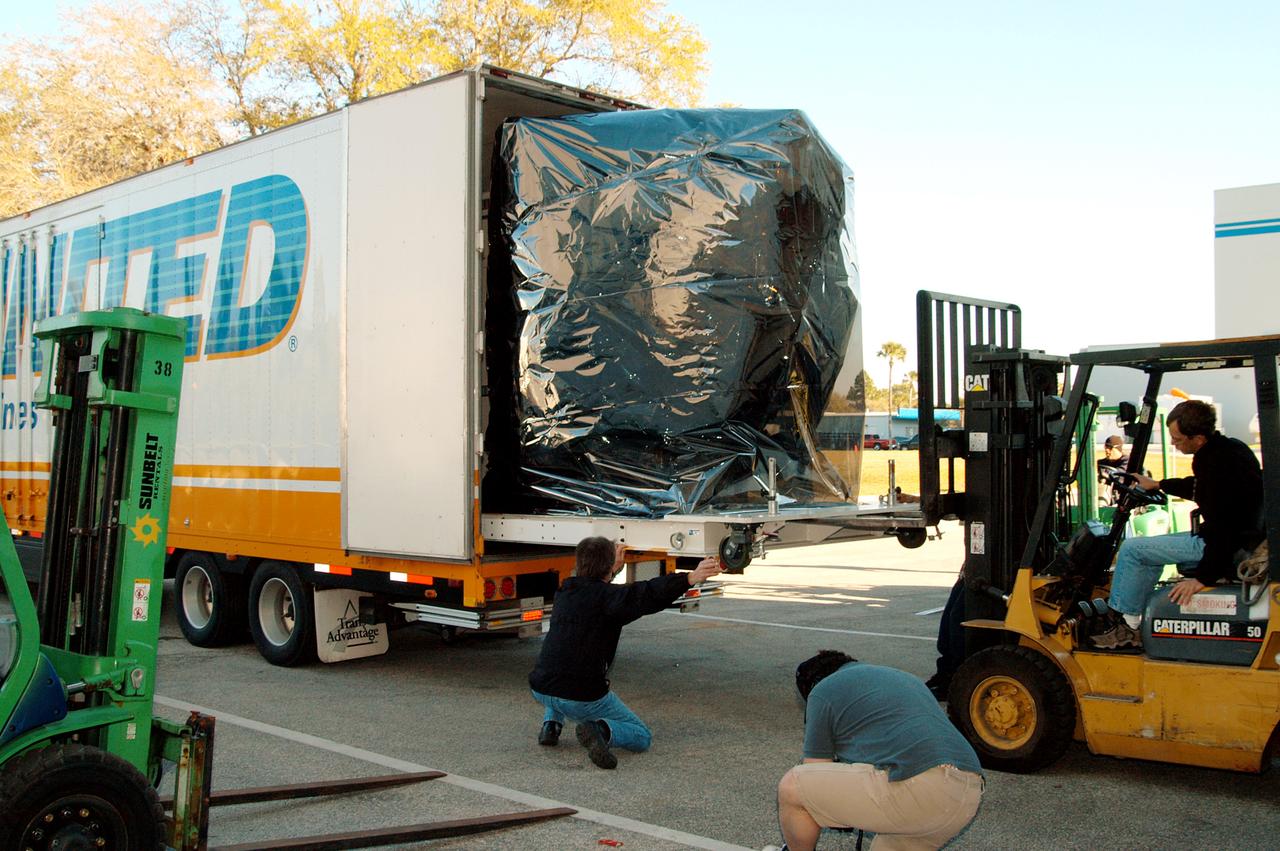
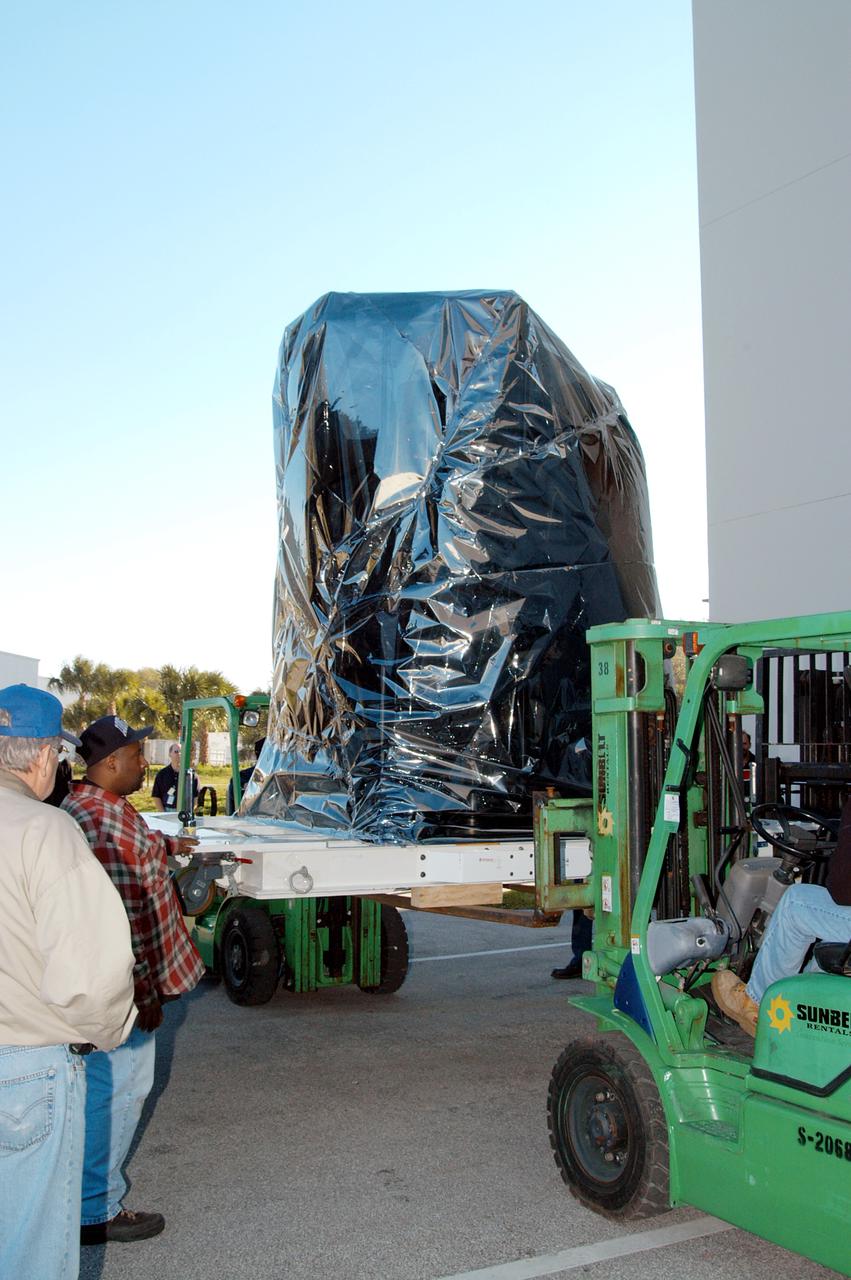
KENNEDY SPACE CENTER, FLA. -  At the Astrotech Space Operations processing facilities near KSC, a lift helps offload NASA’s MESSENGER spacecraft shipped from NASA’s Goddard Space Flight Center in Greenbelt, Md.  MESSENGER - short for MErcury Surface, Space ENvironment, GEochemistry and Ranging - will be taken into a high bay clean room and employees of the Johns Hopkins University Applied Physics Laboratory, builders of the spacecraft, will perform an initial state-of-health check.  Then processing for launch can begin, including checkout of the power systems, communications systems and control systems.  The thermal blankets will also be attached for flight.  MESSENGER will be launched May 11 on a six-year mission aboard a Boeing Delta II rocket.  Liftoff is targeted for 2:26 a.m. EDT on Tuesday, May 11.
KENNEDY SPACE CENTER, FLA. - At the Astrotech Space Operations processing facilities near KSC, a lift helps offload NASA’s MESSENGER spacecraft shipped from NASA’s Goddard Space Flight Center in Greenbelt, Md. MESSENGER - short for MErcury Surface, Space ENvironment, GEochemistry and Ranging - will be taken into a high bay clean room and employees of the Johns Hopkins University Applied Physics Laboratory, builders of the spacecraft, will perform an initial state-of-health check. Then processing for launch can begin, including checkout of the power systems, communications systems and control systems. The thermal blankets will also be attached for flight. MESSENGER will be launched May 11 on a six-year mission aboard a Boeing Delta II rocket. Liftoff is targeted for 2:26 a.m. EDT on Tuesday, May 11.
KENNEDY SPACE CENTER, FLA. -  In the high bay clean room at the Astrotech Space Operations processing facilities near KSC, workers attach an overhead crane to NASA’s MESSENGER spacecraft.  The spacecraft will be moved to a work stand where employees of the Johns Hopkins University Applied Physics Laboratory, builders of the spacecraft, will perform an initial state-of-health check.  Then processing for launch can begin, including checkout of the power systems, communications systems and control systems.  The thermal blankets will also be attached for flight.  MESSENGER - short for MErcury Surface, Space ENvironment, GEochemistry and Ranging - will be launched May 11 on a six-year mission aboard a Boeing Delta II rocket.  Liftoff is targeted for 2:26 a.m. EDT on Tuesday, May 11.
KENNEDY SPACE CENTER, FLA. - In the high bay clean room at the Astrotech Space Operations processing facilities near KSC, workers attach an overhead crane to NASA’s MESSENGER spacecraft. The spacecraft will be moved to a work stand where employees of the Johns Hopkins University Applied Physics Laboratory, builders of the spacecraft, will perform an initial state-of-health check. Then processing for launch can begin, including checkout of the power systems, communications systems and control systems. The thermal blankets will also be attached for flight. MESSENGER - short for MErcury Surface, Space ENvironment, GEochemistry and Ranging - will be launched May 11 on a six-year mission aboard a Boeing Delta II rocket. Liftoff is targeted for 2:26 a.m. EDT on Tuesday, May 11.
KENNEDY SPACE CENTER, FLA. -  At the Astrotech Space Operations processing facilities near KSC, a lift begins lowering NASA’s MESSENGER spacecraft onto the ground.  MESSENGER - short for MErcury Surface, Space ENvironment, GEochemistry and Ranging - will be taken into a high bay clean room and employees of the Johns Hopkins University Applied Physics Laboratory, builders of the spacecraft, will perform an initial state-of-health check.  Then processing for launch can begin, including checkout of the power systems, communications systems and control systems.  The thermal blankets will also be attached for flight.  MESSENGER will be launched May 11 on a six-year mission aboard a Boeing Delta II rocket.  Liftoff is targeted for 2:26 a.m. EDT on Tuesday, May 11.
KENNEDY SPACE CENTER, FLA. - At the Astrotech Space Operations processing facilities near KSC, a lift begins lowering NASA’s MESSENGER spacecraft onto the ground. MESSENGER - short for MErcury Surface, Space ENvironment, GEochemistry and Ranging - will be taken into a high bay clean room and employees of the Johns Hopkins University Applied Physics Laboratory, builders of the spacecraft, will perform an initial state-of-health check. Then processing for launch can begin, including checkout of the power systems, communications systems and control systems. The thermal blankets will also be attached for flight. MESSENGER will be launched May 11 on a six-year mission aboard a Boeing Delta II rocket. Liftoff is targeted for 2:26 a.m. EDT on Tuesday, May 11.
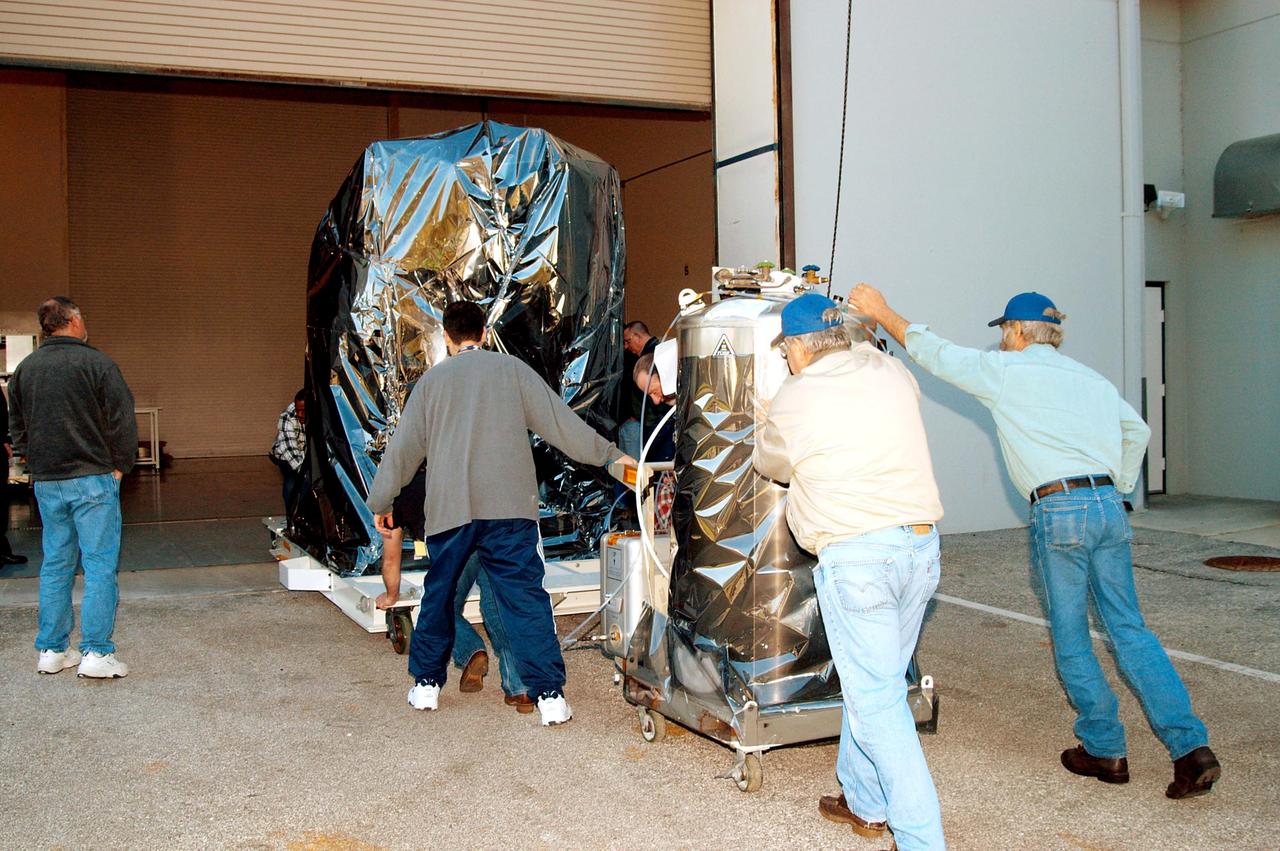
KENNEDY SPACE CENTER, FLA. -  At the Astrotech Space Operations processing facilities near KSC, workers begin moving NASA’s MESSENGER spacecraft into the building  MESSENGER - short for MErcury Surface, Space ENvironment, GEochemistry and Ranging - is being taken into a high bay clean room where employees of the Johns Hopkins University Applied Physics Laboratory, builders of the spacecraft, will perform an initial state-of-health check.  Then processing for launch can begin, including checkout of the power systems, communications systems and control systems.  The thermal blankets will also be attached for flight.  MESSENGER will be launched May 11 on a six-year mission aboard a Boeing Delta II rocket.  Liftoff is targeted for 2:26 a.m. EDT on Tuesday, May 11.
KENNEDY SPACE CENTER, FLA. - At the Astrotech Space Operations processing facilities near KSC, workers begin moving NASA’s MESSENGER spacecraft into the building MESSENGER - short for MErcury Surface, Space ENvironment, GEochemistry and Ranging - is being taken into a high bay clean room where employees of the Johns Hopkins University Applied Physics Laboratory, builders of the spacecraft, will perform an initial state-of-health check. Then processing for launch can begin, including checkout of the power systems, communications systems and control systems. The thermal blankets will also be attached for flight. MESSENGER will be launched May 11 on a six-year mission aboard a Boeing Delta II rocket. Liftoff is targeted for 2:26 a.m. EDT on Tuesday, May 11.
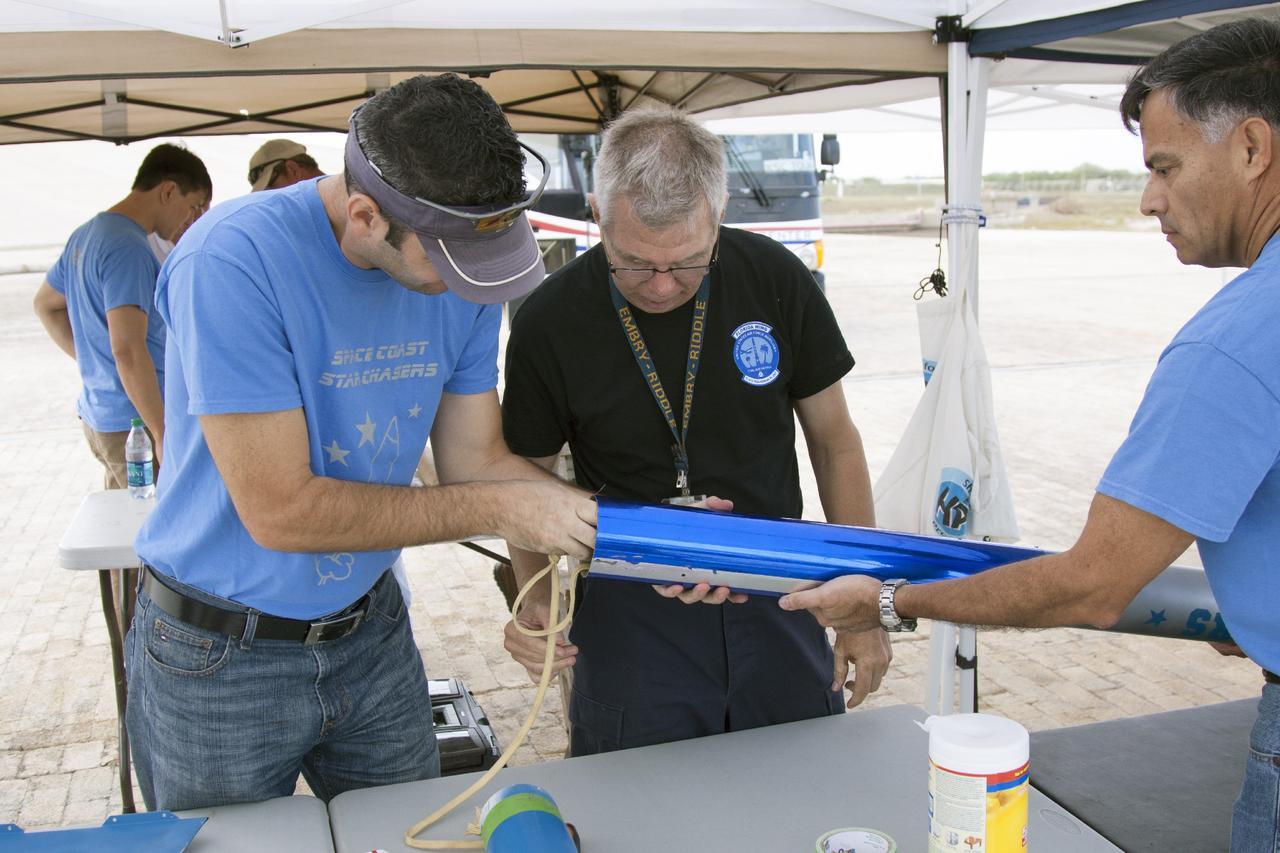
CAPE CANAVERAL, Fla. -- At NASA's Kennedy Space Center in Florida, from the left, Leandro James, rocket avionics lead, Gary Dahlke, high powered rocket subject matter expert, and Julio Najarro of Mechanical Systems make final adjustments to a small rocket prior to launch as part of Rocket University. The launch will test systems designed by the student engineers.      As part of Rocket University, the engineers are given an opportunity to work a fast-track project to develop skills in developing spacecraft systems of the future. As NASA plans for future spaceflight programs to low-Earth orbit and beyond, teams of engineers at Kennedy are gaining experience in designing and flying launch vehicle systems on a small scale. Four teams of five to eight members from Kennedy are designing rockets complete with avionics and recovery systems. Launch operations require coordination with federal agencies, just as they would with rockets launched in support of a NASA mission. Photo credit: NASA/Jim Grossmann
KSC-2013-4342
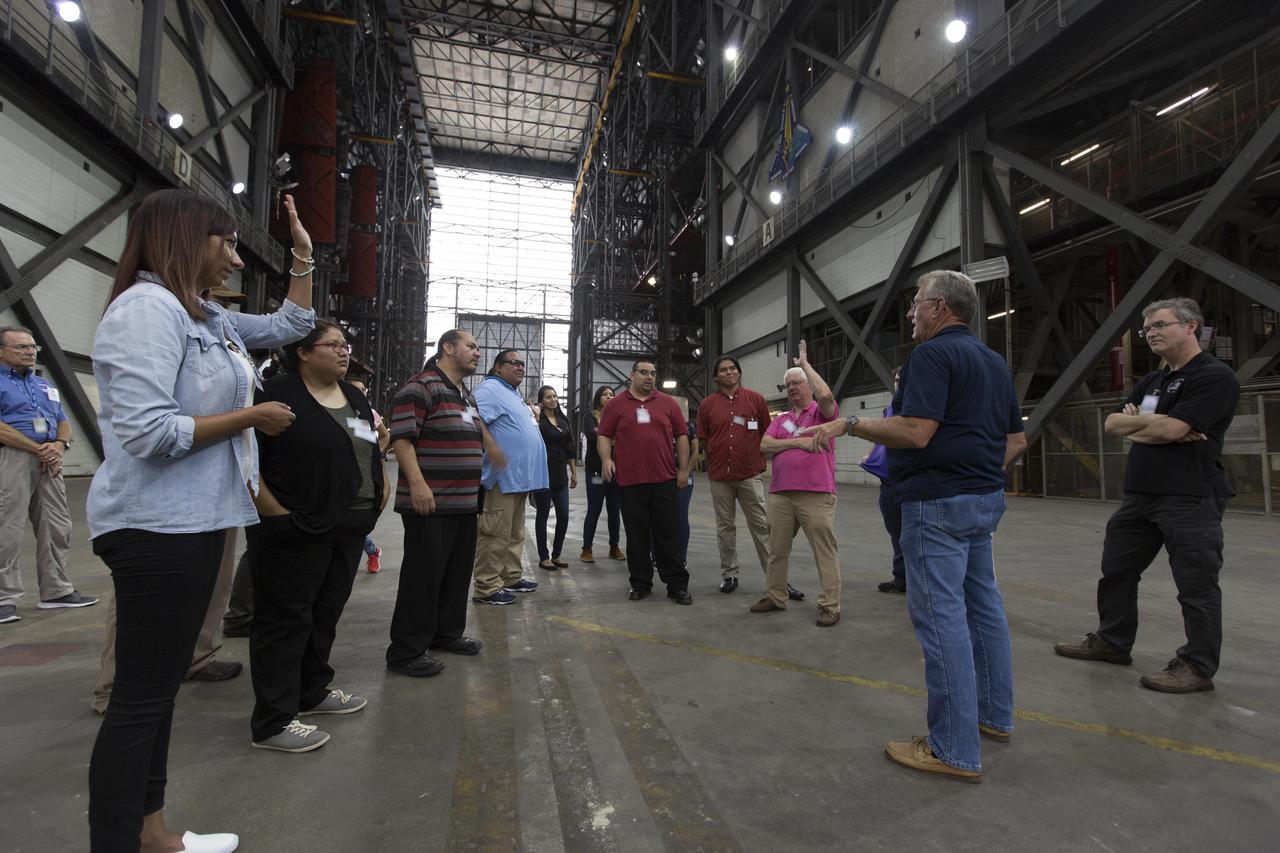
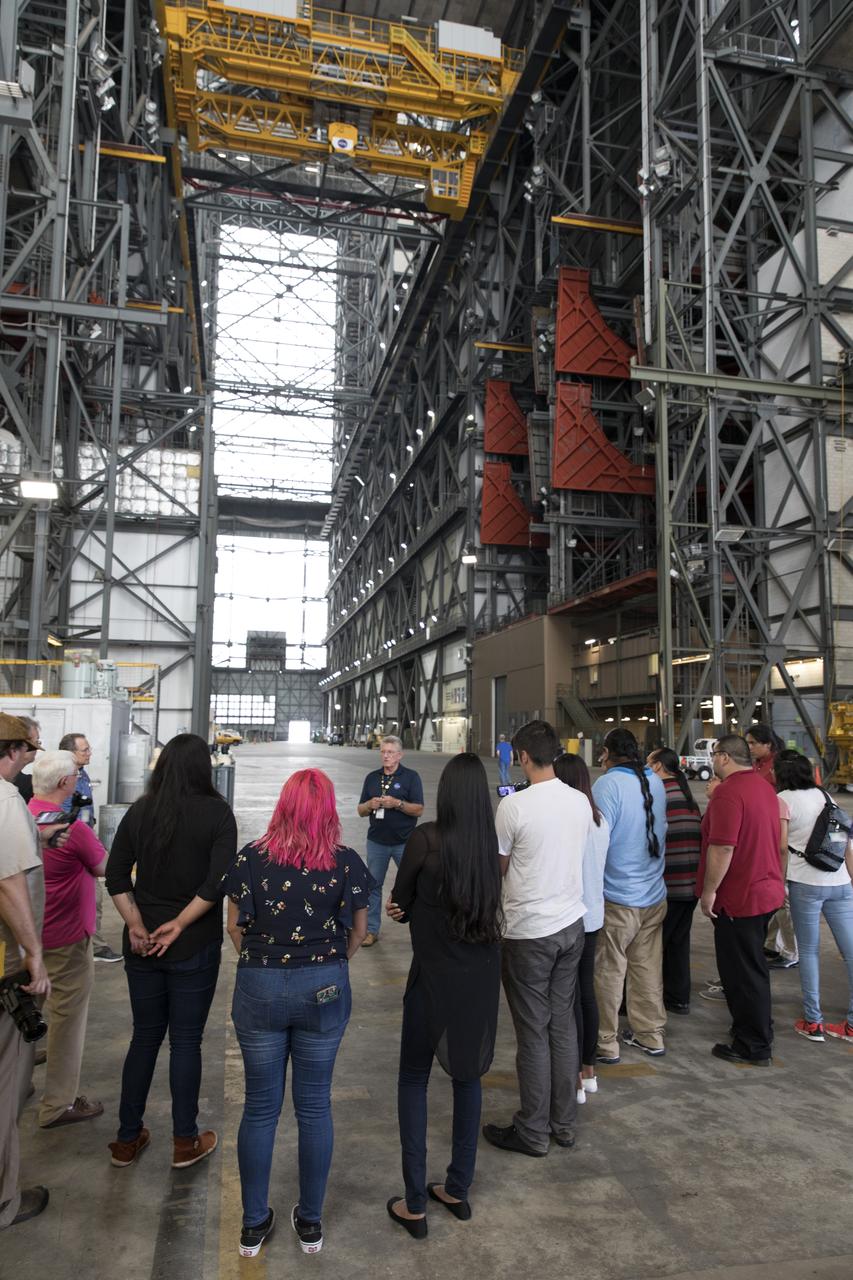
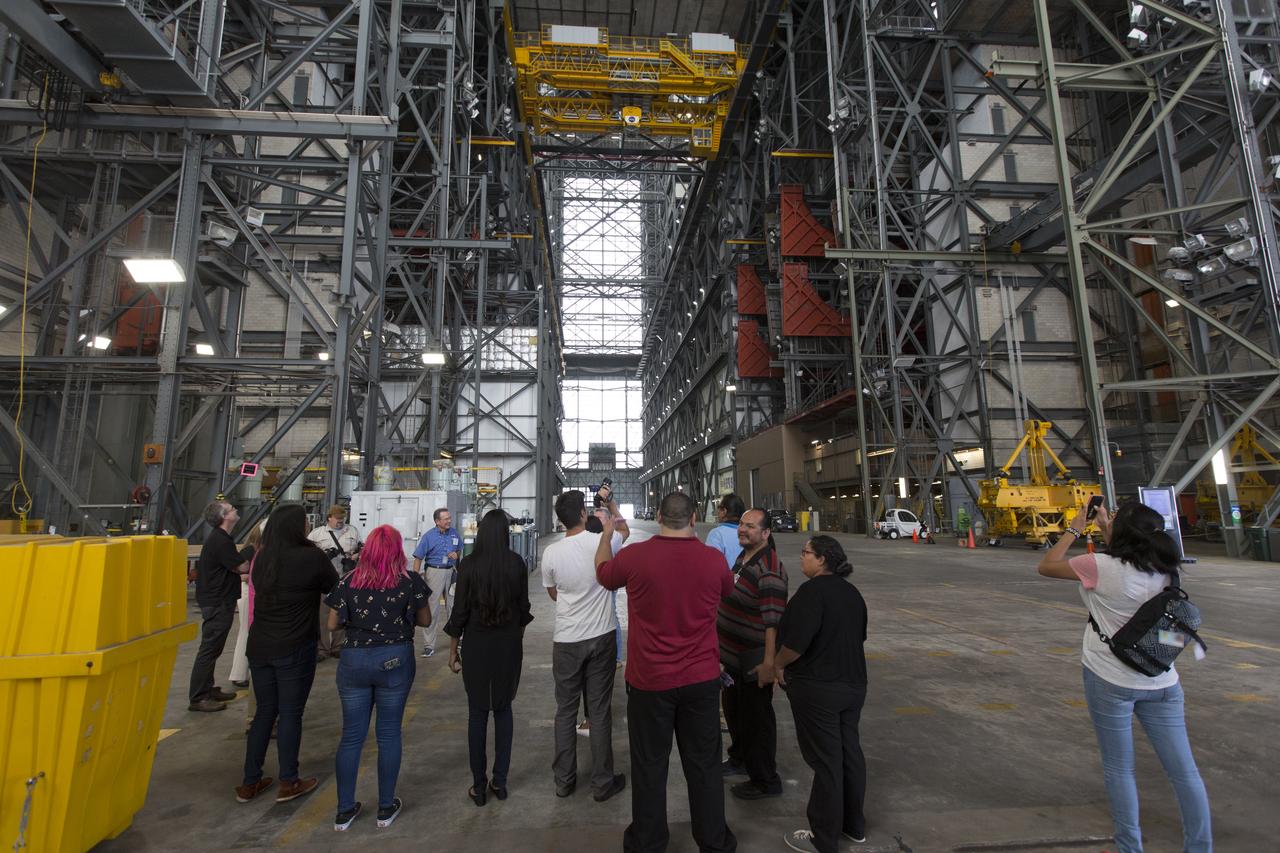
A group of 19 college students recently visited NASA's Kennedy Space Center as winners of the First Nations Launch competition in Wisconsin. They were part of teams that successfully flew high-powered rockets, earning them an opportunity to visit the Florida spaceport. During their visit, they toured the Vehicle Assembly Building, Launch Control Center and the Kennedy visitor complex. The competition is supported by NASA and the Wisconsin Space Grant Consortium. It provides an opportunity for students attending tribal colleges or universities, or who are members of a campus American Indian Science and Engineering Society, or AISES, chapter to design, build and launch a rocket at a competition in Kansasville, Wisconsin.
2017 First Nations Launch Competition Winners visit Kennedy Spac
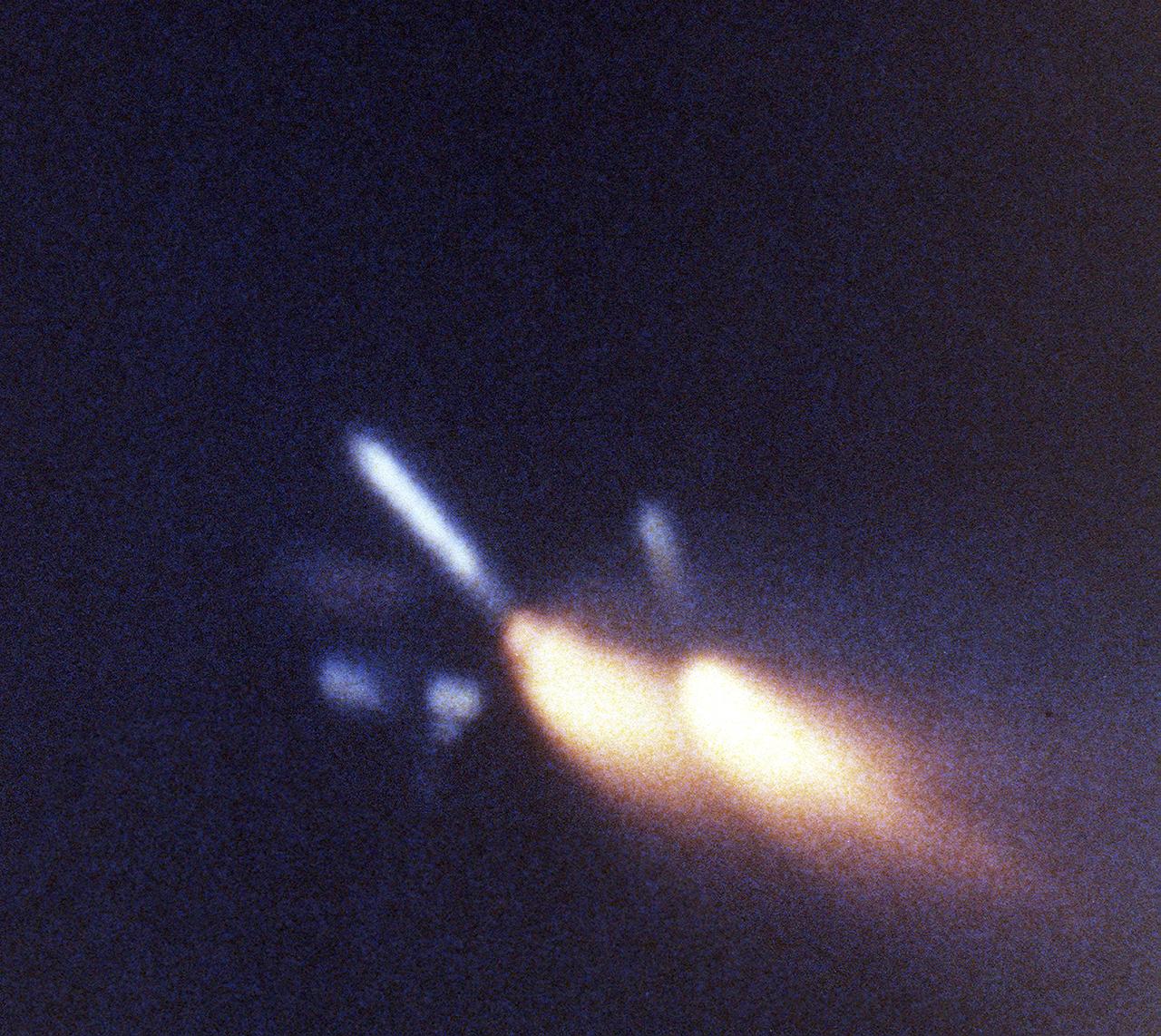
This view, taken by a motion picture tracking camera for the STS-3 mission, shows both left and right solid rocket boosters (SRB's) at the moment of separation from the external tank (ET). After impact to the ocean, they were retrieved and refurbished for reuse. The Shuttle's SRB's and solid rocket motors (SRM's) are the largest ever built and the first designed for refurbishment and reuse. Standing nearly 150-feet high, the twin boosters provide the majority of thrust for the first two minutes of flight, about 5.8 million pounds. That is equivalent to 44 million horsepower, or the combined power of 400,000 subcompact cars.
Space Shuttle Projects
A group of 19 college students recently visited NASA's Kennedy Space Center as winners of the First Nations Launch competition in Wisconsin. They were part of teams that successfully flew high-powered rockets, earning them an opportunity to visit the Florida spaceport. During their visit, they toured the Vehicle Assembly Building, Launch Control Center and the Kennedy visitor complex. The competition is supported by NASA and the Wisconsin Space Grant Consortium. It provides an opportunity for students attending tribal colleges or universities, or who are members of a campus American Indian Science and Engineering Society, or AISES, chapter to design, build and launch a rocket at a competition in Kansasville, Wisconsin.
2017 First Nations Launch Competition Winners visit Kennedy Spac
A group of 19 college students recently visited NASA's Kennedy Space Center as winners of the First Nations Launch competition in Wisconsin. They were part of teams that successfully flew high-powered rockets, earning them an opportunity to visit the Florida spaceport. During their visit, they toured the Vehicle Assembly Building, Launch Control Center and the Kennedy visitor complex. The competition is supported by NASA and the Wisconsin Space Grant Consortium. It provides an opportunity for students attending tribal colleges or universities, or who are members of a campus American Indian Science and Engineering Society, or AISES, chapter to design, build and launch a rocket at a competition in Kansasville, Wisconsin.
2017 First Nations Launch Competition Winners visit Kennedy Spac
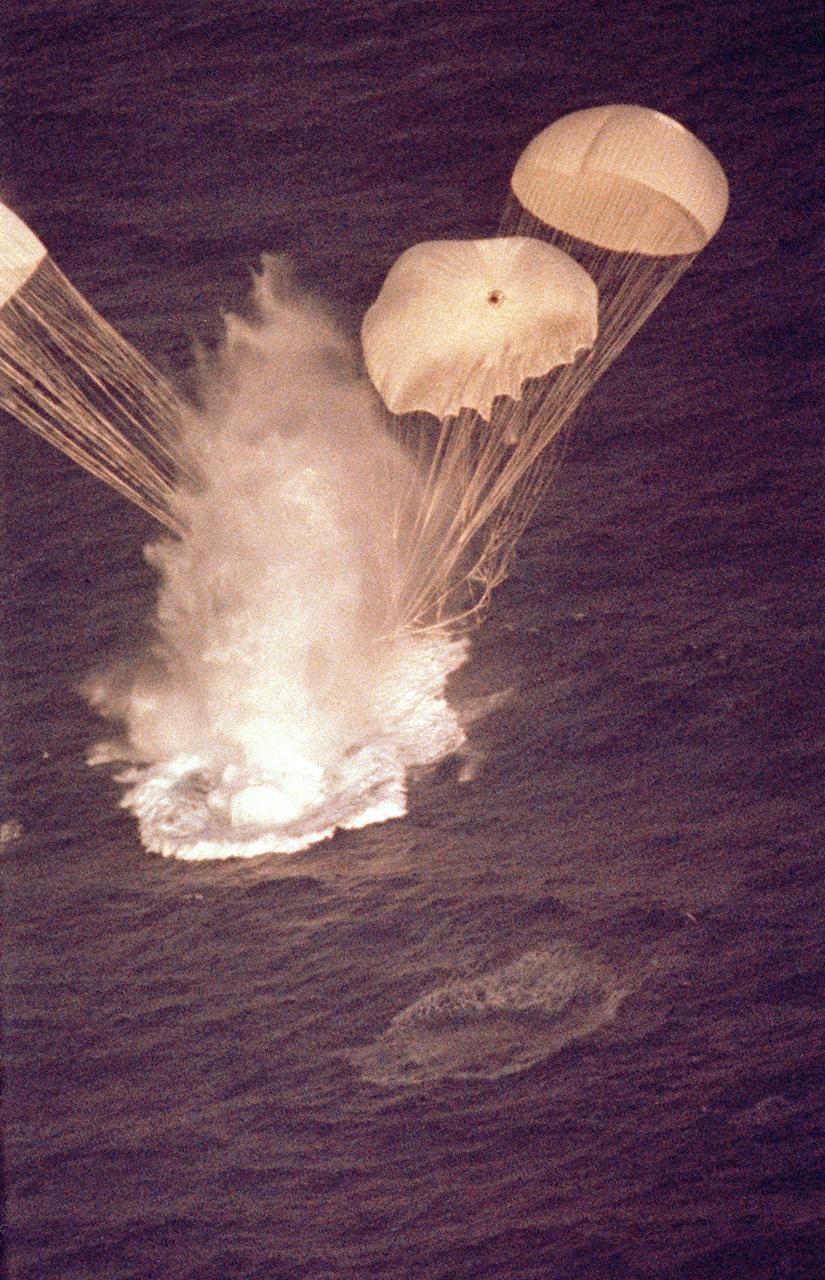
he left solid rocket booster (SRB) for the STS-5 mission is shown in this photograph at the moment of splashdown after its separation from the external tank. This view was photographed from a Cast Glance aircraft. After impact to the ocean, it was retrieved and refurbished for reuse. The Shuttle's SRB's and solid rocket motors (SRM's) are the largest ever built and the first designed for refurbishment and reuse. Standing nearly 150-feet high, the twin boosters provide the majority of thrust for the first two minutes of flight, about 5.8 million pounds. That is equivalent to 44 million horsepower, or the combined power of 400,000 subcompact cars.
Space Shuttle Projects
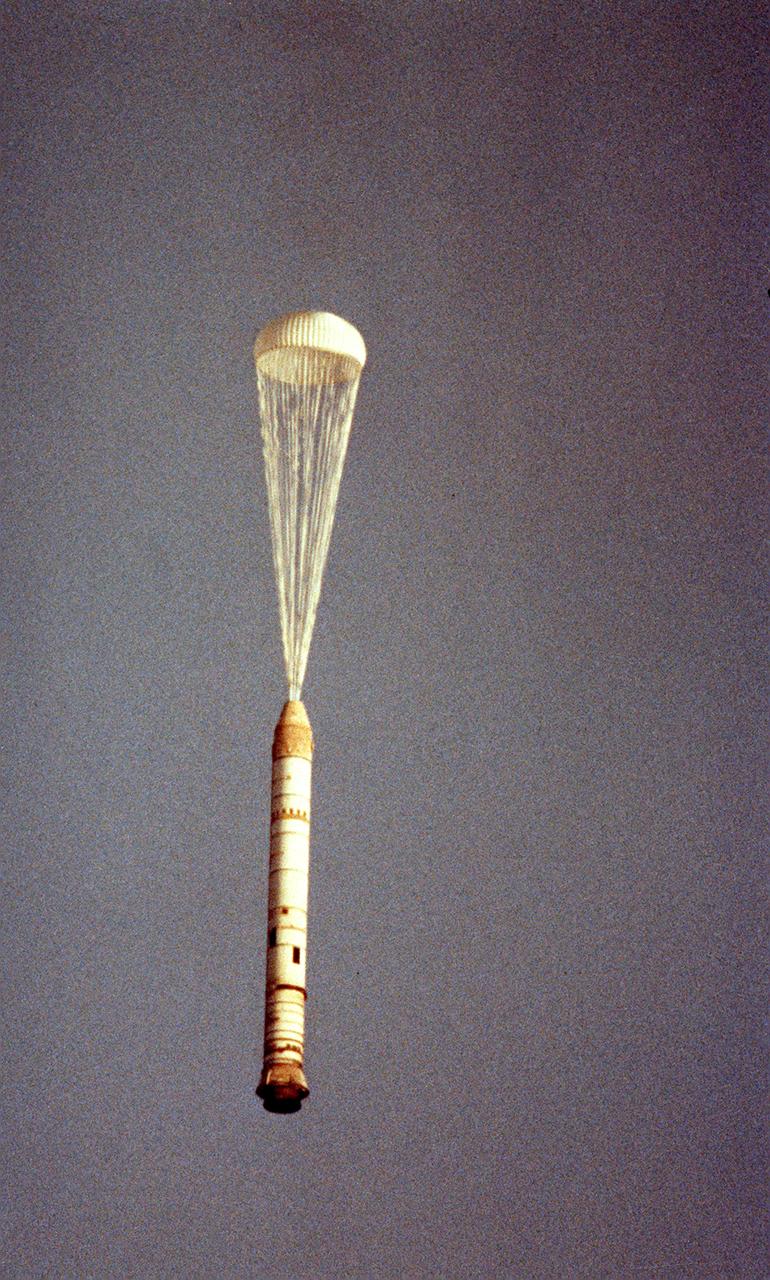
The right solid rocket booster (SRB) for the STS-5 mission, with one chute opened, falls after its separation from the external tank (ET). This view was photographed from a Cast Glance aircraft. After impact to the ocean, it was retrieved and refurbished for reuse. The Shuttle's SRB's and solid rocket motors (SRM's) are the largest ever built and the first designed for refurbishment and reuse. Standing nearly 150-feet high, the twin boosters provide the majority of thrust for the first two minutes of flight, about 5.8 million pounds. That is equivalent to 44 million horsepower, or the combined power of 400,000 subcompact cars.
Space Shuttle Projects
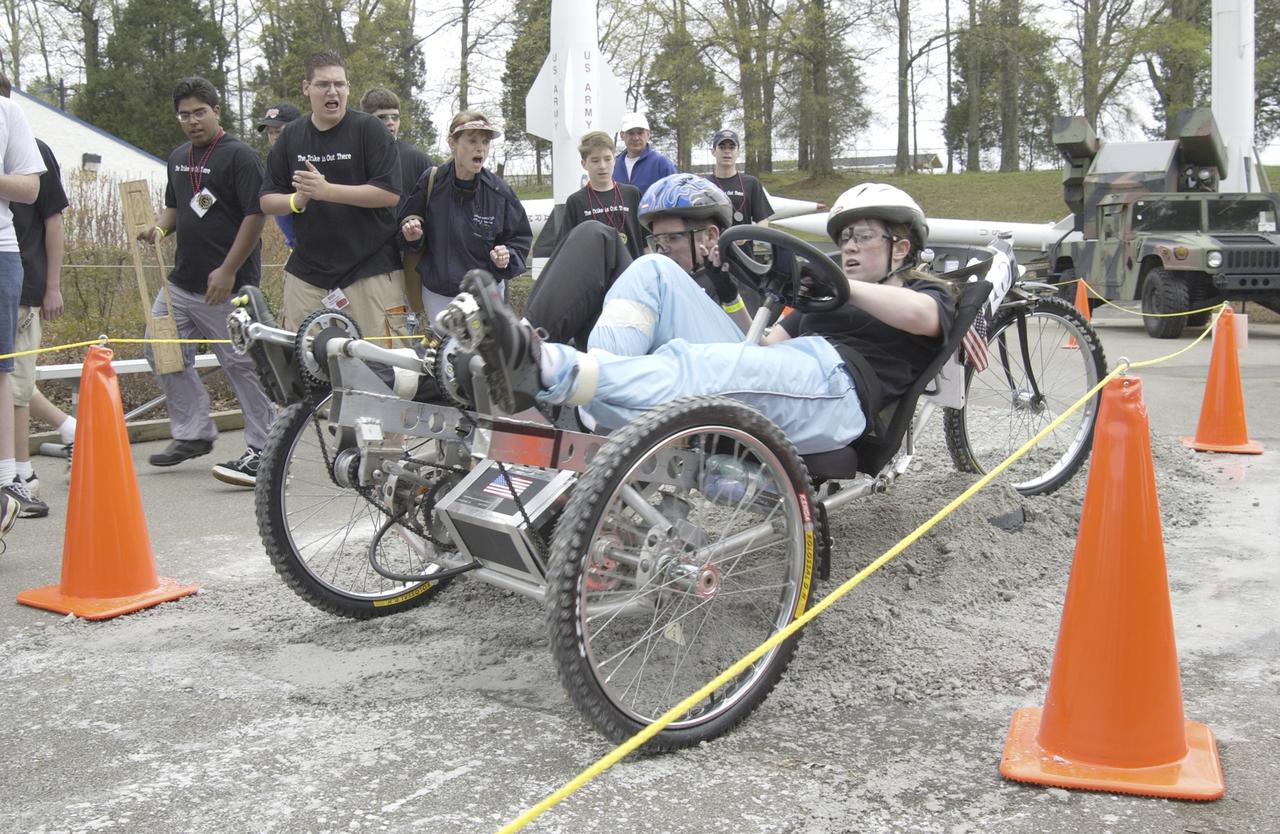
Students from across the United States and as far away as Puerto Rico and South America came to Huntsville, Alabama for the 9th annual Great Moonbuggy Race at the U.S. Space Rocket Center. Seventy-seven teams, representing high schools and colleges from 21 states, Puerto Rico, and Columbia, raced human powered vehicles over a lunar-like terrain. In this photograph, the New Orleans area schools team #2 from New Orleans, Louisiana maneuvers through an obstacle course. The team captured second place in the high school division competition. Vehicles powered by two team members, one male and one female, raced one at a time over a half-mile obstacle course of simulated moonscape terrain. The competition is inspired by the development, some 30 years ago, of the Lunar Roving Vehicle (LRV), a program managed by the Marshall Space Flight Center. The LRV team had to design a compact, lightweight, all-terrain vehicle that could be transported to the Moon in the small Apollo spacecraft. The Great Moonbuggy Race challenges students to design and build a human powered vehicle so they will learn how to deal with real-world engineering problems, similar to those faced by the actual NASA LRV team.
Around Marshall
A Centaur second-stage rocket is lowered into the vacuum tank inside the Space Power Chambers at NASA’s Lewis Research Center. Centaur was to be paired with an Atlas booster to send the Surveyor spacecraft to the moon as a precursor to the Apollo landings. Lewis was assigned responsibility for the Centaur Program after the failure of its first developmental flight in May 1962. Lewis’ Altitude Wind Tunnel was converted into two large test chambers—the Space Power Chambers. The facility’s vacuum chamber, seen here, allowed the Centaur to be stood up vertically and subjected to atmospheric conditions-- pressures, temperature, and radiation--similar to those it would encounter in space.    The Centaur for these tests was delivered to Cleveland in a C‒130 aircraft on September 27, 1963. The rocket was set up in the facility’s high bay where Lewis technicians and General Dynamics consultants updated its flight systems to match the upcoming Atlas-Centaur‒4 mission. Months were spent reharnessing the Centaur’s electronics, learning about the systems, and being taught how to handle flight hardware. By early spring 1964, the extensive setup of both the spacecraft and the chamber was finally completed. On March 19 the Centaur was rolled out from the shop, hoisted high into the air by a crane, and lowered into the waiting space tank.    Researchers were able to verify that the Centaur’s electronics and electrical systems functioned reliably in a space environment.
Centaur Rocket Lowered into Vacuum Tank
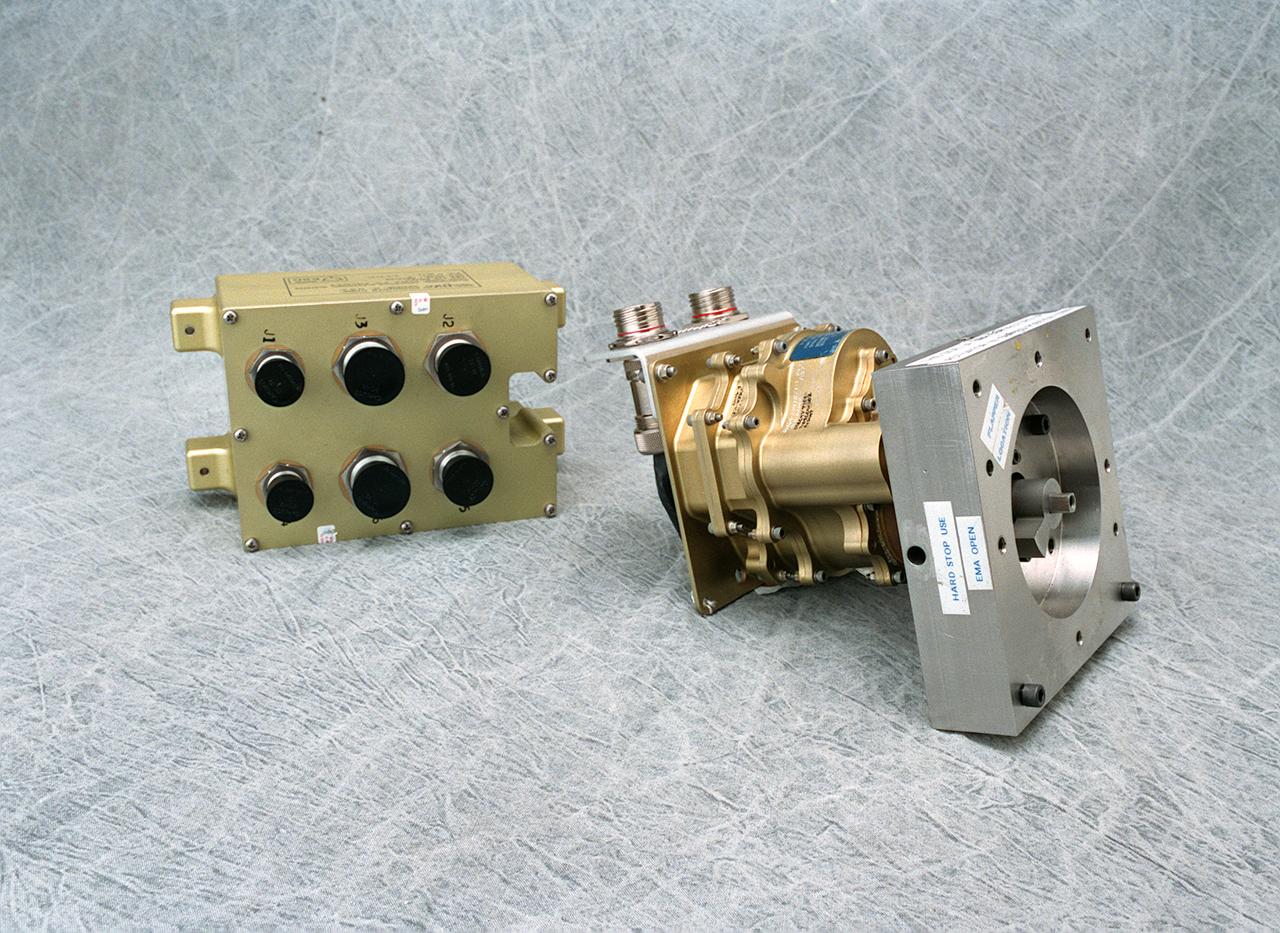
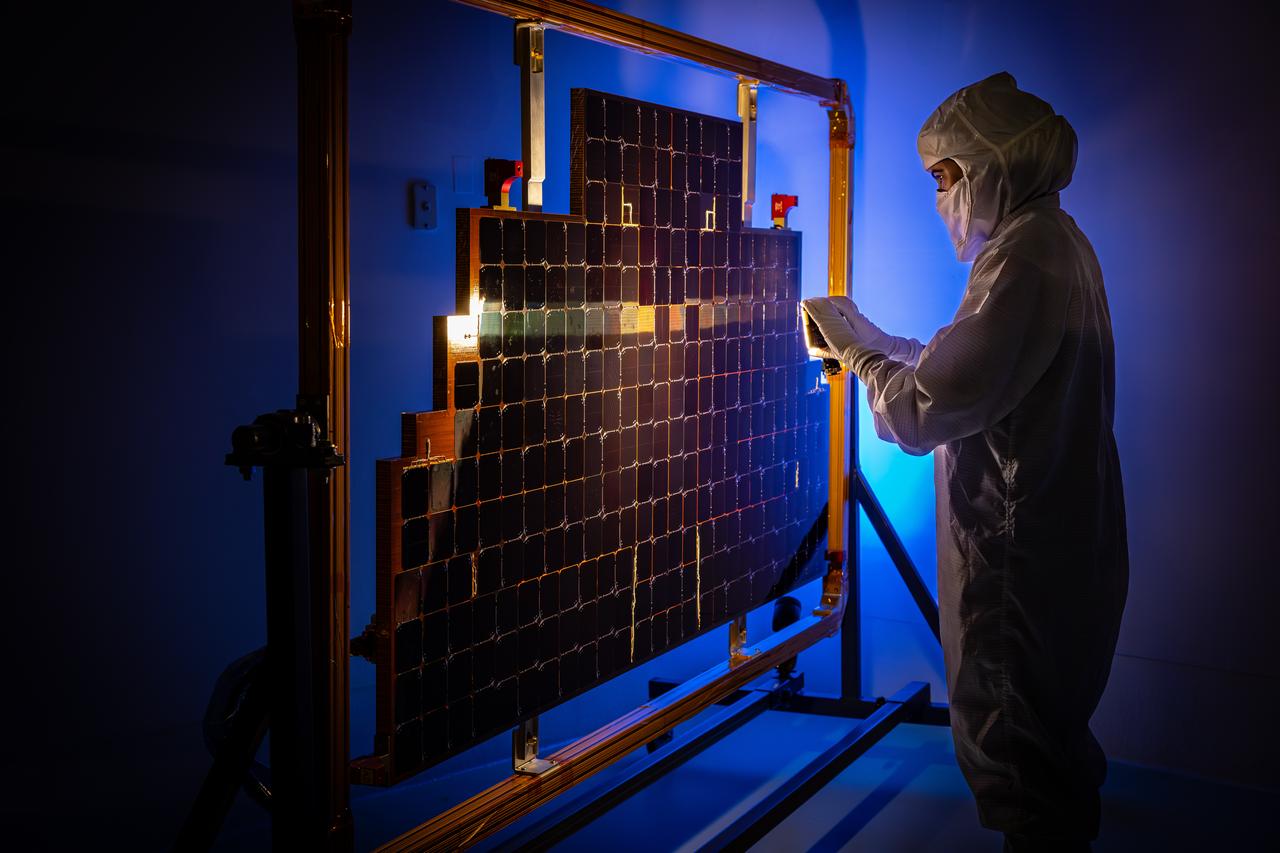
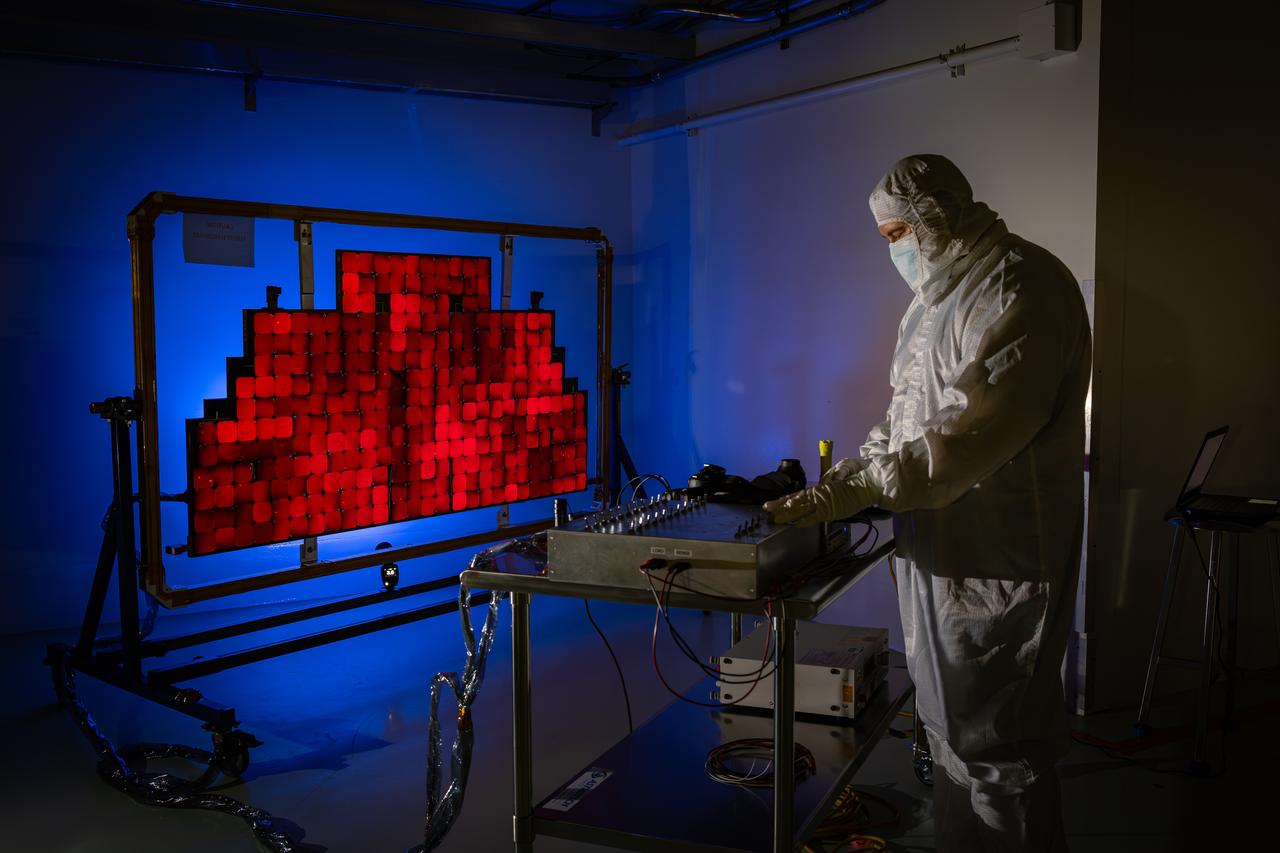
The electro-mechanical actuator, a new electronics technology, is an electronic system that provides the force needed to move valves that control the flow of propellant to the engine. It is proving to be advantageous for the main propulsion system plarned for a second generation reusable launch vehicle. Hydraulic actuators have been used successfully in rocket propulsion systems. However, they can leak when high pressure is exerted on such a fluid-filled hydraulic system. Also, hydraulic systems require significant maintenance and support equipment. The electro-mechanical actuator is proving to be low maintenance and the system weighs less than a hydraulic system. The electronic controller is a separate unit powering the actuator. Each actuator has its own control box. If a problem is detected, it can be replaced by simply removing one defective unit. The hydraulic systems must sustain significant hydraulic pressures in a rocket engine regardless of demand. The electro-mechanical actuator utilizes power only when needed. A goal of the Second Generation Reusable Launch Vehicle Program is to substantially improve safety and reliability while reducing the high cost of space travel. The electro-mechanical actuator was developed by the Propulsion Projects Office of the Second Generation Reusable Launch Vehicle Program at the Marshall Space Flight Center.
Research Technology
Over than 980 middle school, high school, and college students from across the nation launched more than 40 high-powered rockets just north of NASA’s Marshall Space Flight Center in Huntsville, Alabama. This year marked the 25th anniversary of the competition. To compete, students follow the NASA engineering design lifecycle by going through a series of reviews for nine months leading up to launch day.   Each year, a payload challenge is issued to the university teams, and this year’s task took inspiration from the agency’s Artemis missions, where NASA will send astronauts to explore the Moon for scientific discovery, economic benefit, and to build the foundation for the first crewed missions to Mars. Teams were challenged to include “reports” from STEMnauts, non-living objects representing astronauts. The STEMnaut “crew” had to relay real-time data to the student team’s mission control, just as the Artemis astronaut crew will do as they explore the lunar surface.    To learn more, visit: www.nasa.gov/studentlaunch.
2025 Student Launch Challenge
Over than 980 middle school, high school, and college students from across the nation launched more than 40 high-powered rockets just north of NASA’s Marshall Space Flight Center in Huntsville, Alabama. This year marked the 25th anniversary of the competition. To compete, students follow the NASA engineering design lifecycle by going through a series of reviews for nine months leading up to launch day.   Each year, a payload challenge is issued to the university teams, and this year’s task took inspiration from the agency’s Artemis missions, where NASA will send astronauts to explore the Moon for scientific discovery, economic benefit, and to build the foundation for the first crewed missions to Mars. Teams were challenged to include “reports” from STEMnauts, non-living objects representing astronauts. The STEMnaut “crew” had to relay real-time data to the student team’s mission control, just as the Artemis astronaut crew will do as they explore the lunar surface.    To learn more, visit: www.nasa.gov/studentlaunch.
2025 Student Launch Challenge
Over than 980 middle school, high school, and college students from across the nation launched more than 40 high-powered rockets just north of NASA’s Marshall Space Flight Center in Huntsville, Alabama. This year marked the 25th anniversary of the competition. To compete, students follow the NASA engineering design lifecycle by going through a series of reviews for nine months leading up to launch day.   Each year, a payload challenge is issued to the university teams, and this year’s task took inspiration from the agency’s Artemis missions, where NASA will send astronauts to explore the Moon for scientific discovery, economic benefit, and to build the foundation for the first crewed missions to Mars. Teams were challenged to include “reports” from STEMnauts, non-living objects representing astronauts. The STEMnaut “crew” had to relay real-time data to the student team’s mission control, just as the Artemis astronaut crew will do as they explore the lunar surface.    To learn more, visit: www.nasa.gov/studentlaunch.
2025 Student Launch Challenge
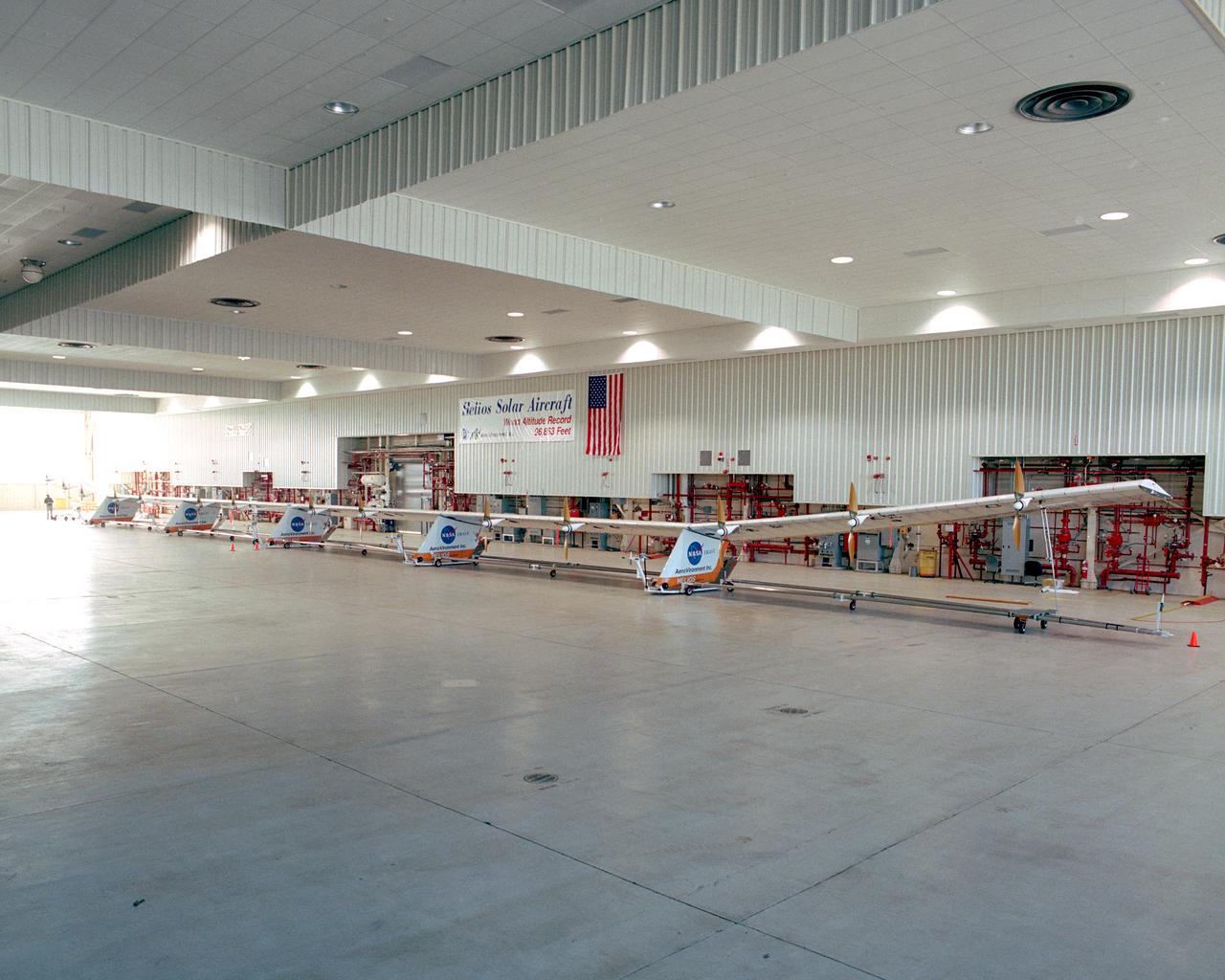
The Helios Prototype flying wing stretches almost the full length of the 300-foot-long hangar at NASA's Dryden Flight Research Center, Edwards, California. The 247-foot span solar-powered aircraft, resting on its ground maneuvering dolly, was on display for a visit of NASA Administrator Sean O'Keefe and other NASA officials on January 31, 2002. The unique solar-electric flying wing reached an altitude of 96,863 feet during an almost 17-hour flight near Hawaii on August 13, 2001, a world record for sustained horizontal flight by a non-rocket powered aircraft. Developed by AeroVironment, Inc., under NASA's Environmental Research Aircraft and Sensor Technology (ERAST) project, the Helios Prototype is the forerunner of a planned fleet of slow-flying, long duration, high-altitude uninhabited aerial vehicles (UAV) which can serve as "atmospheric satellites," performing Earth science missions or functioning as telecommunications relay platforms in the stratosphere.
EC02-0031-6
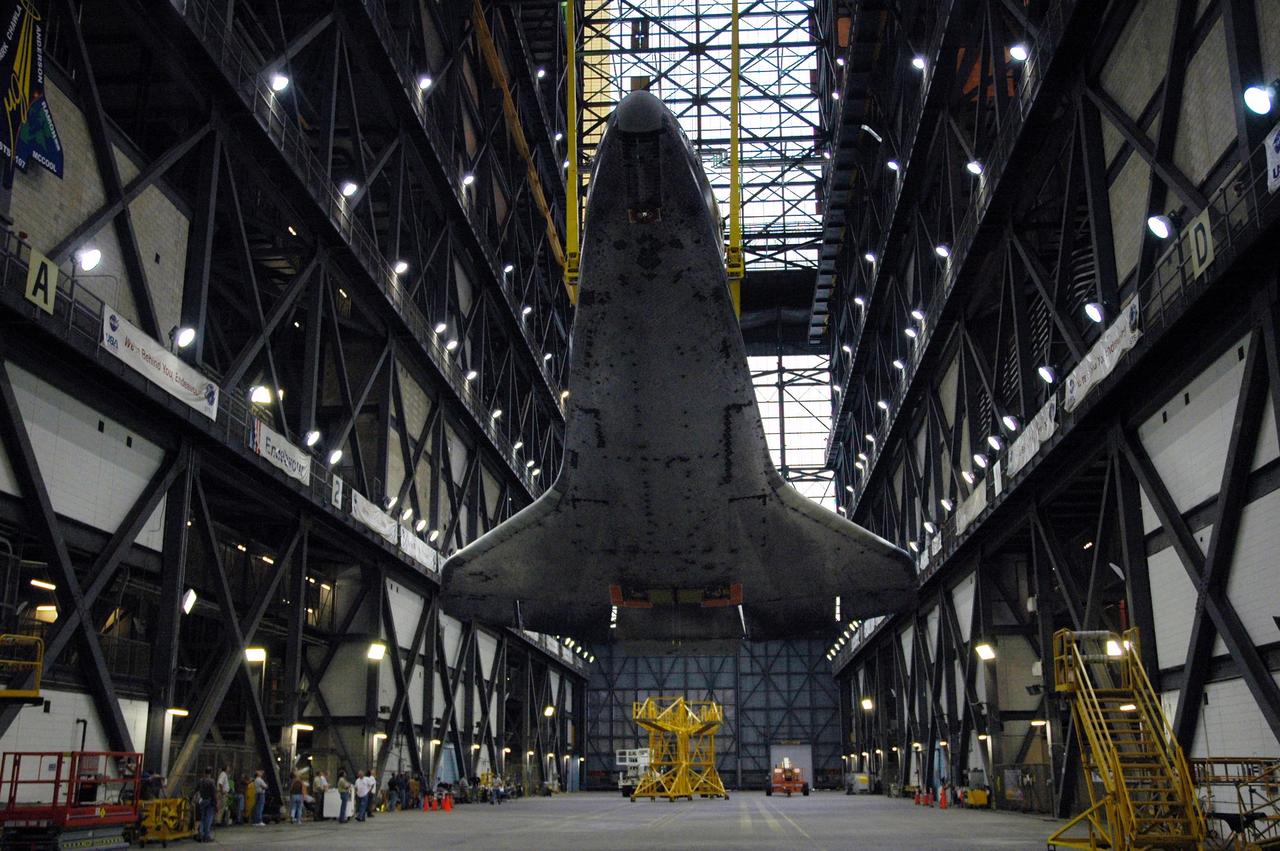
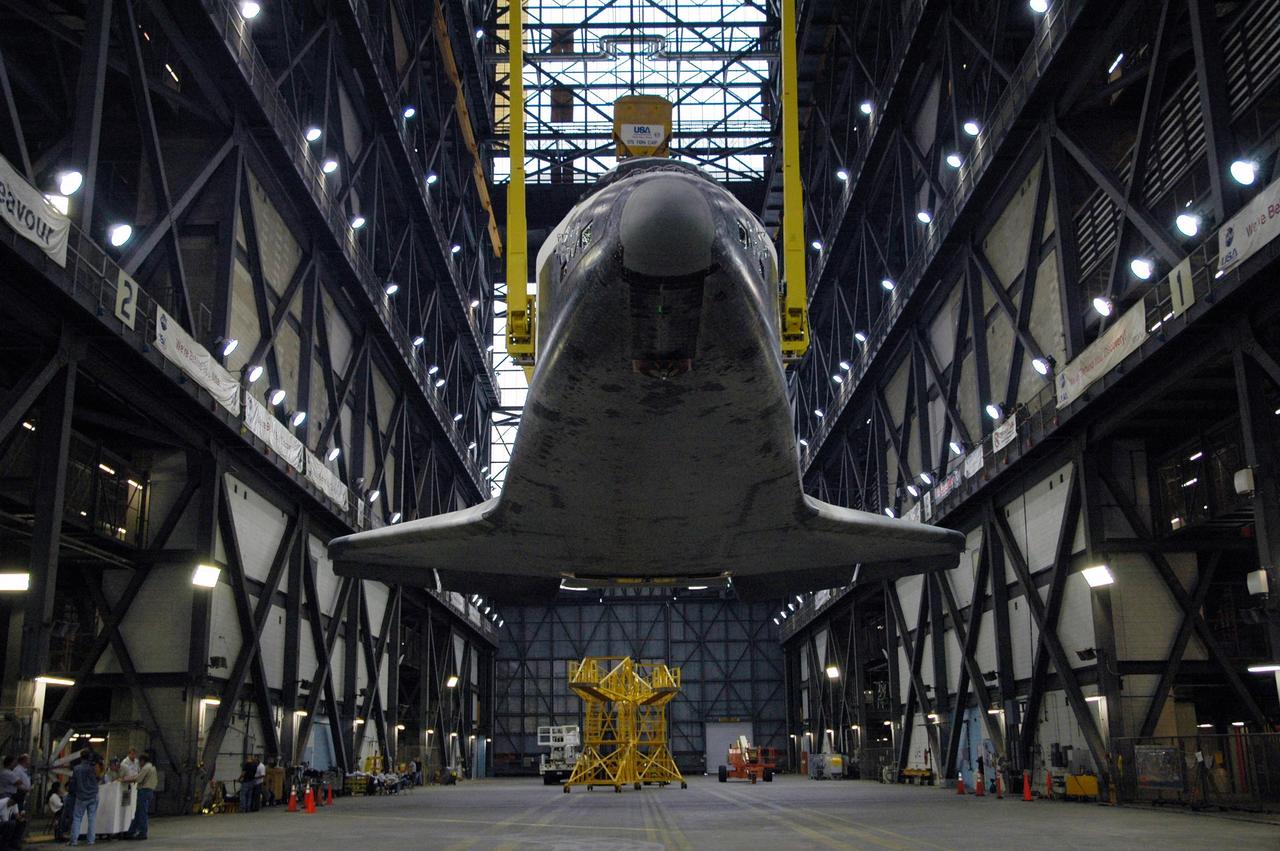
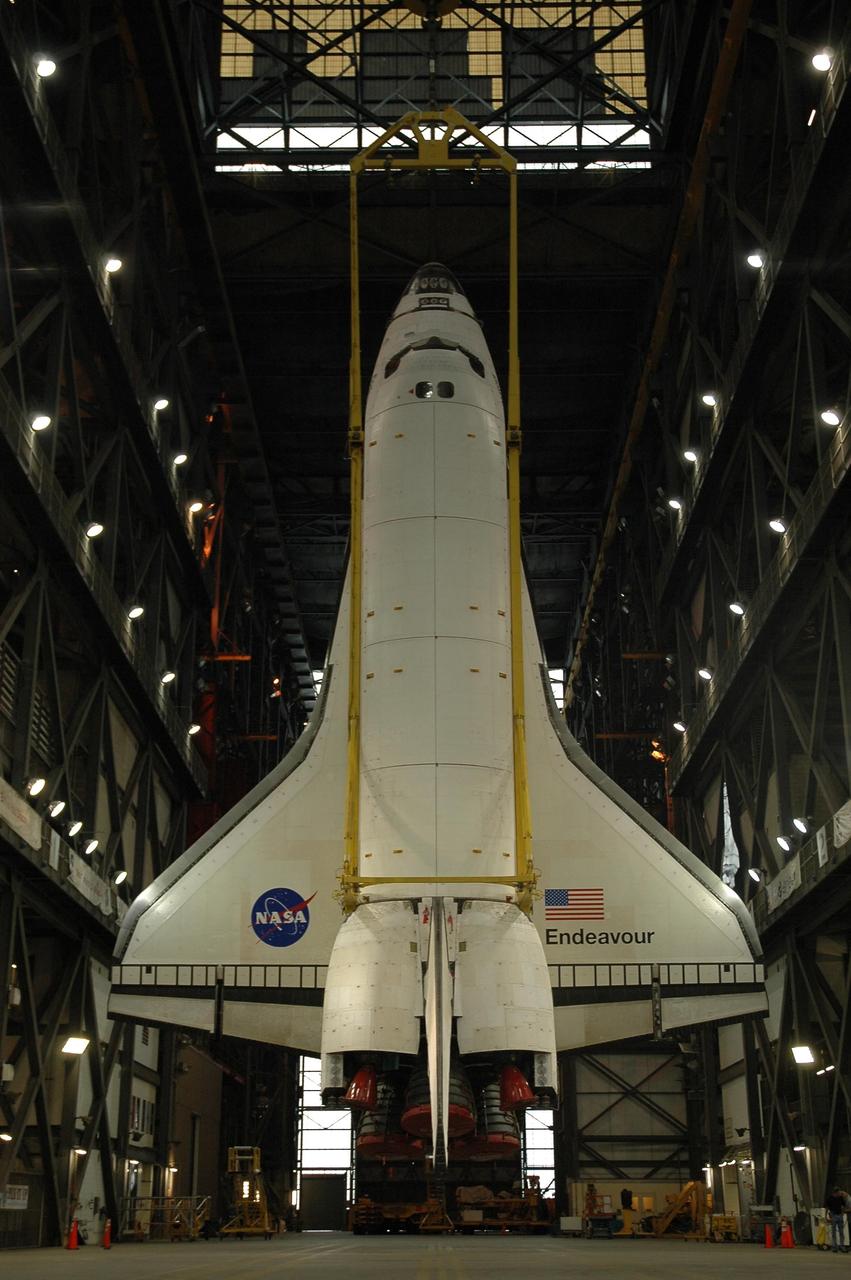
KENNEDY SPACE CENTER, FLA. --   The orbiter Endeavour hangs vertically above the transfer aisle of the Vehicle Assembly Building.  It will be lifted into the upper levels of the VAB, moved to high bay 1 and stacked with the e1ternal tank and solid rocket boosters on the mobile launcher platform.  Endeavour will be launched on mission STS-118, its first flight in more than four years. The shuttle has undergone e1tensive modifications, including the addition of safety upgrades already added to shuttles Discovery and Atlantis. Endeavour also features new hardware, such as the Station-to-Shuttle Power Transfer System that will allow the docked shuttle to draw electrical power from the station and e1tend its visits to the orbiting lab.  Endeavour is targeted for launch on Aug. 7.     Photo credit: NASA/Charisse Nahser
KSC-07pd1756
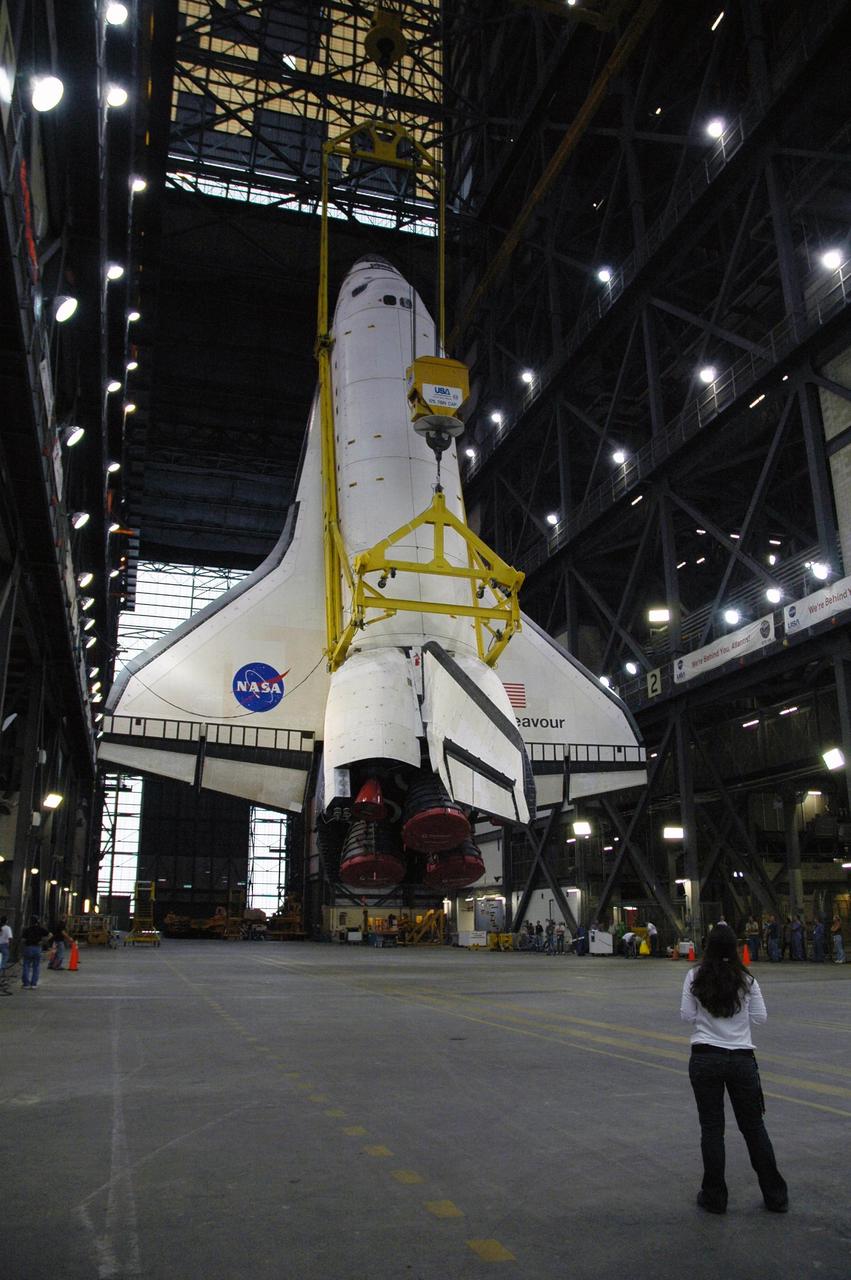
KENNEDY SPACE CENTER, FLA. --  The orbiter Endeavour is lifted into the upper levels of the Vehicle Assembly Building.  It will be moved laterally over a crossbeam and lowered into high bay 1 for stacking with the external tank and solid rocket boosters on the mobile launcher platform.  Endeavour will be launched on mission STS-118, its first flight in more than four years. The shuttle has undergone extensive modifications, including the addition of safety upgrades already added to shuttles Discovery and Atlantis. Endeavour also features new hardware, such as the Station-to-Shuttle Power Transfer System that will allow the docked shuttle to draw electrical power from the station and extend its visits to the orbiting lab.  Endeavour is targeted for launch on Aug. 7.     Photo credit: NASA/Troy Cryder
KSC-07pd1770
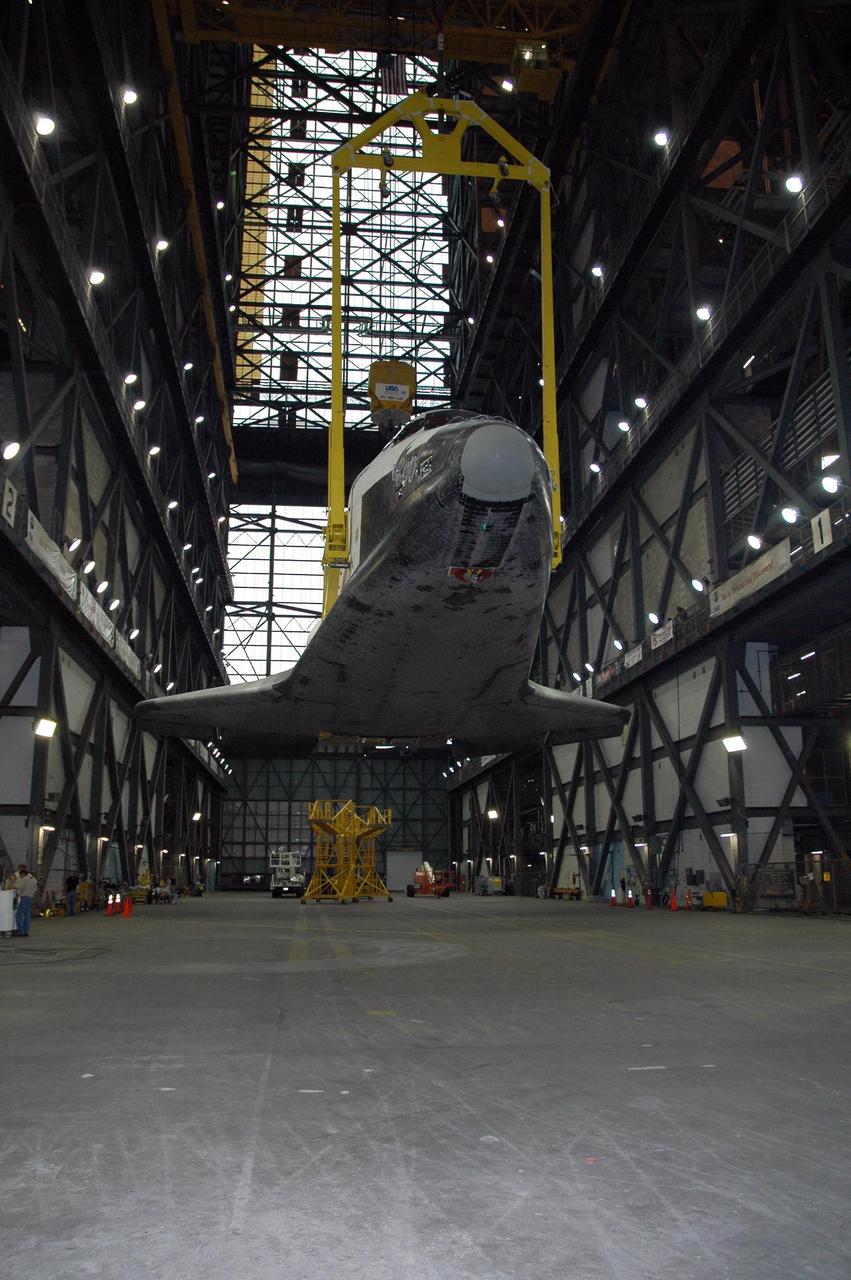
KENNEDY SPACE CENTER, FLA. --   The orbiter Endeavour hangs above the transfer aisle of the Vehicle Assembly Building.  The attached sling will raise it to vertical and lift it into the upper levels of the VAB. Then it will be moved to high bay 1 and stacked with the e1ternal tank and solid rocket boosters on the mobile launcher platform.  Endeavour will be launched on mission STS-118, its first flight in more than four years. The shuttle has undergone e1tensive modifications, including the addition of safety upgrades already added to shuttles Discovery and Atlantis. Endeavour also features new hardware, such as the Station-to-Shuttle Power Transfer System that will allow the docked shuttle to draw electrical power from the station and e1tend its visits to the orbiting lab.  Endeavour is targeted for launch on Aug. 7.     Photo credit: NASA/Charisse Nahser
KSC-07pd1753
KENNEDY SPACE CENTER, FLA. --   Hanging above the transfer aisle of the Vehicle Assembly Building, the orbiter Endeavour is raised to vertical.  It will be lifted into the upper levels of the VAB, moved to high bay 1 and stacked with the e1ternal tank and solid rocket boosters on the mobile launcher platform.  Endeavour will be launched on mission STS-118, its first flight in more than four years. The shuttle has undergone e1tensive modifications, including the addition of safety upgrades already added to shuttles Discovery and Atlantis. Endeavour also features new hardware, such as the Station-to-Shuttle Power Transfer System that will allow the docked shuttle to draw electrical power from the station and e1tend its visits to the orbiting lab.  Endeavour is targeted for launch on Aug. 7.     Photo credit: NASA/Charisse Nahser
KSC-07pd1752
KENNEDY SPACE CENTER, FLA. --  In high bay 1 of the Vehicle Assembly Building, the orbiter Endeavour is lowered past the external tank toward the mobile launcher platform.  Seen at right of the external tank is one of the white solid rocket boosters. The components will be mated for launch.  Endeavour will be launched on mission STS-118, its first flight in more than four years. The shuttle has undergone extensive modifications, including the addition of safety upgrades already added to shuttles Discovery and Atlantis. Endeavour also features new hardware, such as the Station-to-Shuttle Power Transfer System that will allow the docked shuttle to draw electrical power from the station and extend its visits to the orbiting lab.  Endeavour is targeted for launch on Aug. 7.     Photo credit: NASA/Troy Cryder
KSC-07pd1775
KENNEDY SPACE CENTER, FLA. --   In high bay 1 of the Vehicle Assembly Building, the orbiter Endeavour is lowered onto the mobile launcher platform.  The orbiter blocks the view of the external tank; on either side of the orbiter are the white solid rocket boosters.  The components will be mated for launch.  Endeavour will be launched on mission STS-118, its first flight in more than four years. The shuttle has undergone extensive modifications, including the addition of safety upgrades already added to shuttles Discovery and Atlantis. Endeavour also features new hardware, such as the Station-to-Shuttle Power Transfer System that will allow the docked shuttle to draw electrical power from the station and extend its visits to the orbiting lab.  Endeavour is targeted for launch on Aug. 7.     Photo credit: NASA/Troy Cryder
KSC-07pd1776
KENNEDY SPACE CENTER, FLA. --   In high bay 1 of the Vehicle Assembly Building, platforms surround Endeavour to complete stacking of the orbiter, external tank and solid rocket boosters, barely visible behind the platforms.  Endeavour will be launched on mission STS-118, its first flight in more than four years. The shuttle has undergone extensive modifications, including the addition of safety upgrades already added to shuttles Discovery and Atlantis. Endeavour also features new hardware, such as the Station-to-Shuttle Power Transfer System that will allow the docked shuttle to draw electrical power from the station and extend its visits to the orbiting lab.  Endeavour is targeted for launch on Aug. 7.     Photo credit: NASA/George Shelton
KSC-07pd1778
KENNEDY SPACE CENTER, FLA. --  The orbiter Endeavour hangs vertically above the transfer aisle of the Vehicle Assembly Building.  It will be lifted into the upper levels of the Vehicle Assembly Building , moved laterally over a crossbeam to high bay 1 and stacked with the external tank and solid rocket boosters on the mobile launcher platform.  Endeavour will be launched on mission STS-118, its first flight in more than four years. The shuttle has undergone extensive modifications, including the addition of safety upgrades already added to shuttles Discovery and Atlantis. Endeavour also features new hardware, such as the Station-to-Shuttle Power Transfer System that will allow the docked shuttle to draw electrical power from the station and extend its visits to the orbiting lab.  Endeavour is targeted for launch on Aug. 7.     Photo credit: NASA/Troy Cryder
KSC-07pd1766
KENNEDY SPACE CENTER, FLA. --  The orbiter Endeavour hangs above the transfer aisle of the Vehicle Assembly Building.  The attached sling will raise it to vertical and lift it into the upper levels of the VAB. Then it will be moved to high bay 1 and stacked with the e1ternal tank and solid rocket boosters on the mobile launcher platform.  Endeavour will be launched on mission STS-118, its first flight in more than four years. The shuttle has undergone e1tensive modifications, including the addition of safety upgrades already added to shuttles Discovery and Atlantis. Endeavour also features new hardware, such as the Station-to-Shuttle Power Transfer System that will allow the docked shuttle to draw electrical power from the station and e1tend its visits to the orbiting lab.  Endeavour is targeted for launch on Aug. 7.     Photo credit: NASA/Charisse Nahser
KSC-07pd1751
KENNEDY SPACE CENTER, FLA. --  The orbiter Endeavour is lifted into the upper levels of the Vehicle Assembly Building. It will be moved laterally over a crossbeam and lowered into high bay 1 for stacking with the external tank and solid rocket boosters on the mobile launcher platform. Endeavour will be launched on mission STS-118, its first flight in more than four years. The shuttle has undergone extensive modifications, including the addition of safety upgrades already added to shuttles Discovery and Atlantis. Endeavour also features new hardware, such as the Station-to-Shuttle Power Transfer System that will allow the docked shuttle to draw electrical power from the station and extend its visits to the orbiting lab. Endeavour is targeted for launch on Aug. 7. Photo credit: NASA/Troy Cryder
KSC-07pd1771
KENNEDY SPACE CENTER, FLA. --  Hanging vertically above the transfer aisle of the Vehicle Assembly Building, the orbiter Endeavour is being lifted into the upper levels of the Vehicle Assembly Building.  It will be moved laterally over a crossbeam and lowered into high bay 1 for stacking with the external tank and solid rocket boosters on the mobile launcher platform.  Endeavour will be launched on mission STS-118, its first flight in more than four years. The shuttle has undergone extensive modifications, including the addition of safety upgrades already added to shuttles Discovery and Atlantis. Endeavour also features new hardware, such as the Station-to-Shuttle Power Transfer System that will allow the docked shuttle to draw electrical power from the station and extend its visits to the orbiting lab.  Endeavour is targeted for launch on Aug. 7.     Photo credit: NASA/Troy Cryder
KSC-07pd1768
KENNEDY SPACE CENTER, FLA. --   The orbiter Endeavour hangs nearly vertical above the transfer aisle of the Vehicle Assembly Building.  It will be lifted into the upper levels of the VAB, moved to high bay 1 and stacked with the e1ternal tank and solid rocket boosters on the mobile launcher platform.  Endeavour will be launched on mission STS-118, its first flight in more than four years. The shuttle has undergone e1tensive modifications, including the addition of safety upgrades already added to shuttles Discovery and Atlantis. Endeavour also features new hardware, such as the Station-to-Shuttle Power Transfer System that will allow the docked shuttle to draw electrical power from the station and e1tend its visits to the orbiting lab.  Endeavour is targeted for launch on Aug. 7.     Photo credit: NASA/Charisse Nahser
KSC-07pd1755
KENNEDY SPACE CENTER, FLA.  --  The main engines on the orbiter Endeavour (upper right) are seen as Endeavour is lowered into high bay 1 of the Vehicle Assembly Building for stacking with the external tank (seen at left) and solid rocket boosters on the mobile launcher platform.  Endeavour will be launched on mission STS-118, its first flight in more than four years. The shuttle has undergone extensive modifications, including the addition of safety upgrades already added to shuttles Discovery and Atlantis. Endeavour also features new hardware, such as the Station-to-Shuttle Power Transfer System that will allow the docked shuttle to draw electrical power from the station and extend its visits to the orbiting lab.  Endeavour is targeted for launch on Aug. 7.     Photo credit: NASA/Troy Cryder
KSC-07pd1774
KENNEDY SPACE CENTER, FLA. --   Hanging above the transfer aisle of the Vehicle Assembly Building, the orbiter Endeavour is raised to vertical.  It will be lifted into the upper levels of the VAB, moved to high bay 1 and stacked with the e1ternal tank and solid rocket boosters on the mobile launcher platform.  Endeavour will be launched on mission STS-118, its first flight in more than four years. The shuttle has undergone e1tensive modifications, including the addition of safety upgrades already added to shuttles Discovery and Atlantis. Endeavour also features new hardware, such as the Station-to-Shuttle Power Transfer System that will allow the docked shuttle to draw electrical power from the station and e1tend its visits to the orbiting lab.  Endeavour is targeted for launch on Aug. 7.     Photo credit: NASA/Charisse Nahser
KSC-07pd1754
KENNEDY SPACE CENTER, FLA. --  In high bay 1 of the Vehicle Assembly Building, the Space Shuttle Endeavour is complete as the orbiter joins its external tank and solid rocket boosters on the mobile launcher platform.  The components will be mated for launch.   Endeavour will be launched on mission STS-118, its first flight in more than four years. The shuttle has undergone extensive modifications, including the addition of safety upgrades already added to shuttles Discovery and Atlantis. Endeavour also features new hardware, such as the Station-to-Shuttle Power Transfer System that will allow the docked shuttle to draw electrical power from the station and extend its visits to the orbiting lab.  Endeavour is targeted for launch on Aug. 7.     Photo credit: NASA/Troy Cryder
KSC-07pd1777