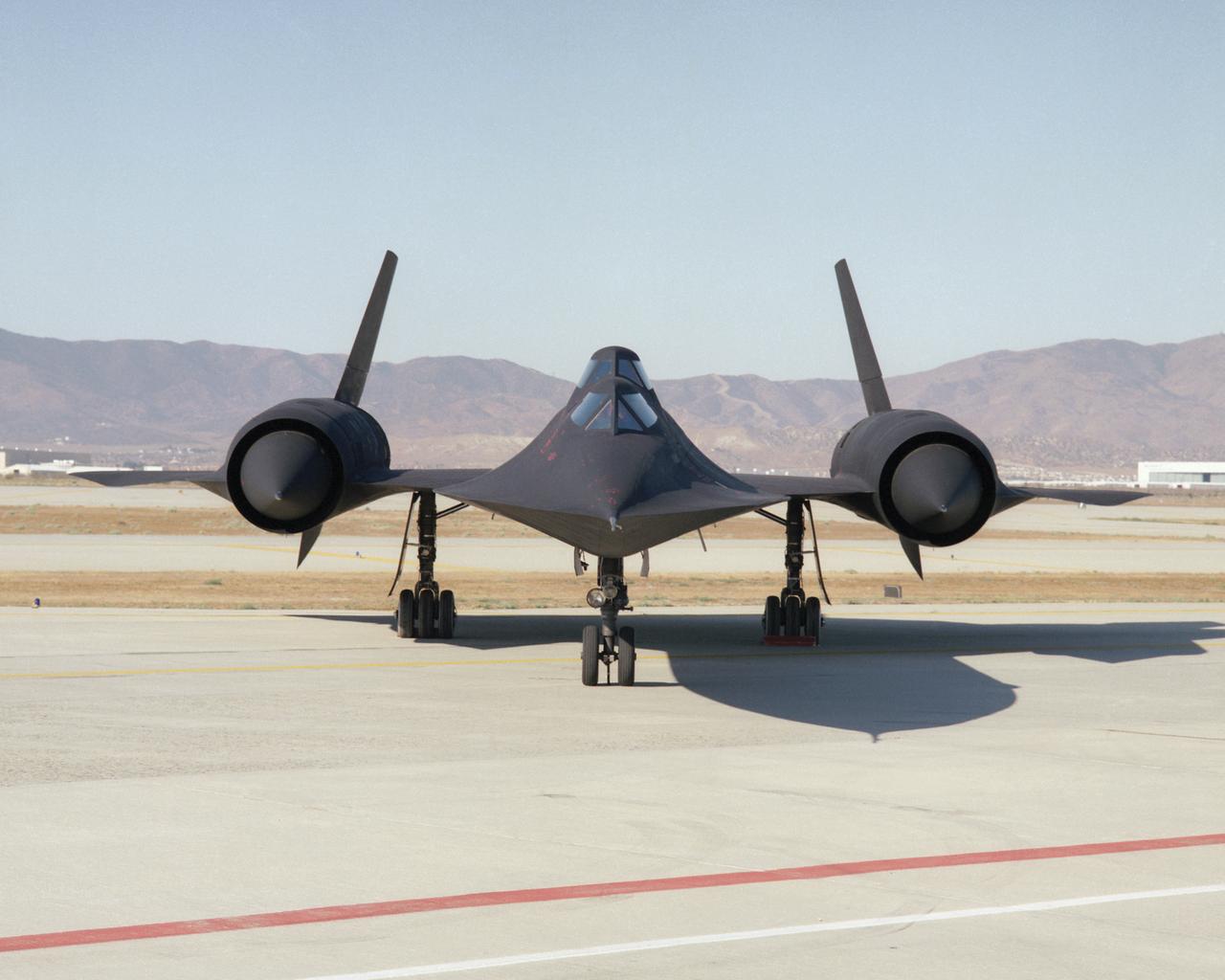
This photo shows a head-on view of NASA's SR-71B, used for pilot proficiency and training, on the ramp at the Air Force's Plant 42 in Palmdale, California, shortly before delivery to the Ames-Dryden Flight Research Facility (later, Dryden Flight Research Center) at Edwards, California. NASA operated two of these unique aircraft, an SR-71A, for high-speed, high altitude research, and this SR- 71B pilot trainer for most of the decade of the 1990s. The "B" model is special because of its raised rear cockpit, which provided a second pilot position so a trainer and an experienced pilot could both see what was going on during flights. The SR-71 was designed and built by the Lockheed Skunk Works, now the Lockheed Martin Skunk Works. Studies have shown that less than 20 percent of the total thrust used to fly at Mach 3 is produced by the basic engine itself. The balance of the total thrust is produced by the unique design of the engine inlet and "moveable spike" system at the front of the engine nacelles, and by the ejector nozzles at the exhaust which burn air compressed in the engine bypass system. Data from the SR-71 high speed research program will be used to aid designers of future supersonic/hypersonic aircraft and propulsion systems, including a high speed civil transport.
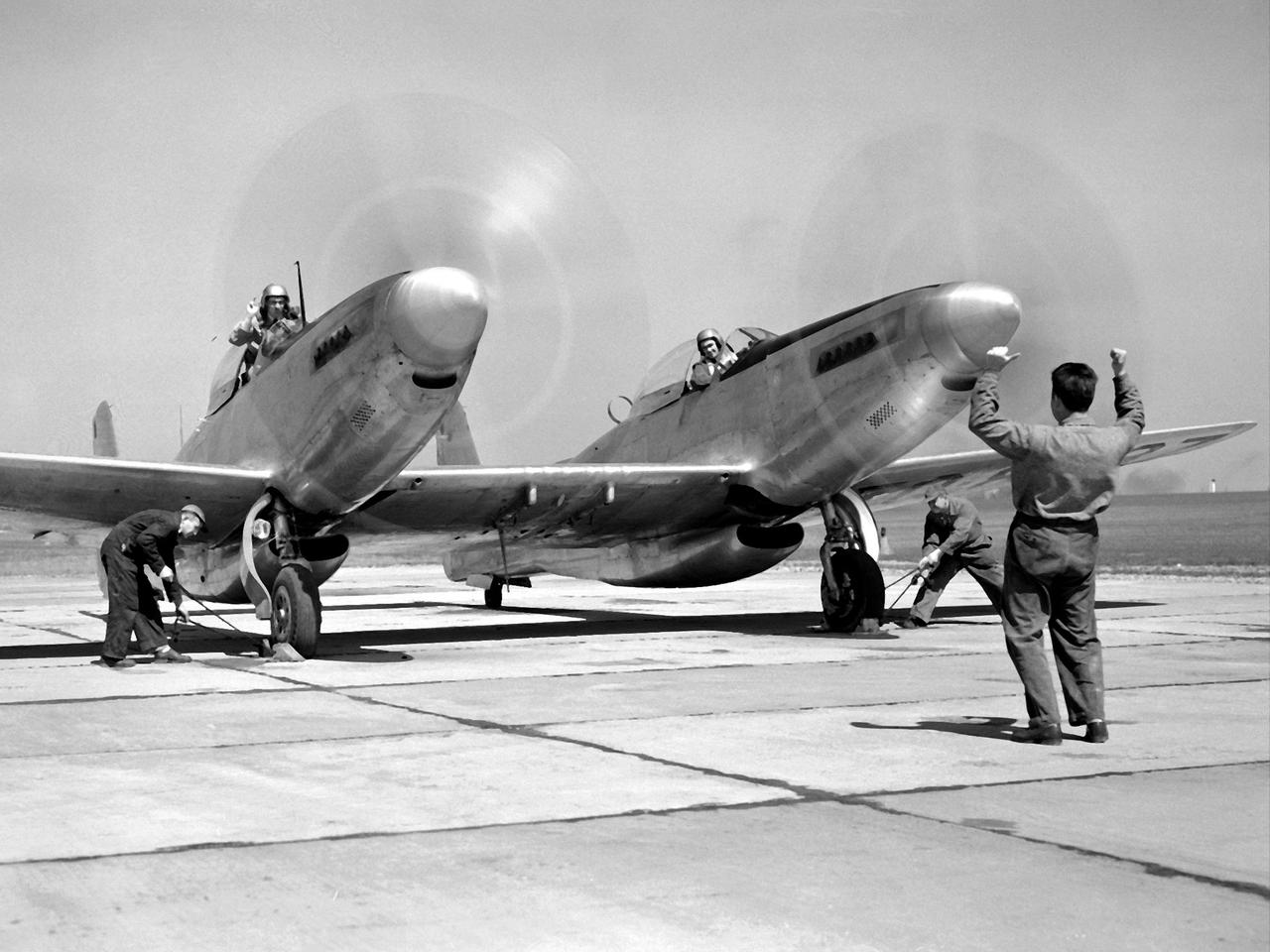
Pilot William Swann, right cockpit, prepares the North American XF-82 Twin Mustang for flight at the National Advisory Committee for Aeronautics (NACA) Lewis Flight Propulsion Laboratory. The aircraft was one of only two prototypes built by North American in October 1945 and powered by Packard Merlin V-1650 piston engines. Over 270 of the F-82 long-distance pursuit fighters were produced during the 1940s. The Mustang’s unique two-pilot configuration allowed one pilot to rest during the long missions and thus be ready for action upon arrival. The NACA took possession of this XF-82 in October 1947. NACA Lewis used the XF-82 as a test bed for ramjet flight tests. Ramjets are continually burning tubes that use the compressed atmospheric air to produce thrust. Ramjets are extremely efficient at high speeds, but rely on some sort of booster to attain that high speed. NACA Lewis undertook an extensive ramjet program in the 1940s that included combustion studies in the Altitude Wind Tunnel, a number of flight tests, and missile drops from aircraft. The 16-inch diameter ramjet missile was fixed to the XF-82 Mustang’s wing and dropped from high altitudes off of Wallops Island. The tests determined the ramjet’s performance and operational characteristics in the transonic range.

AS04-01-580 (9 Nov. 1967) --- Earth as viewed from 10,000 miles. In 1969, the Apollo 4 (Spacecraft 017/Saturn 501) unmanned test flight made a great ellipse around Earth as a test of the translunar motors and of the high speed entry required of a manned flight returning from the moon. A 70mm camera was programmed to look out a window toward Earth, and take a series of photographs from "high apogee". Coastal Brazil, Atlantic Ocean, West Africa, Antarctica, looking west. This photograph was made when the Apollo 4 spacecraft, still attached to the S-IVB (third) stage, was orbiting Earth at an altitude of 9,544 miles.
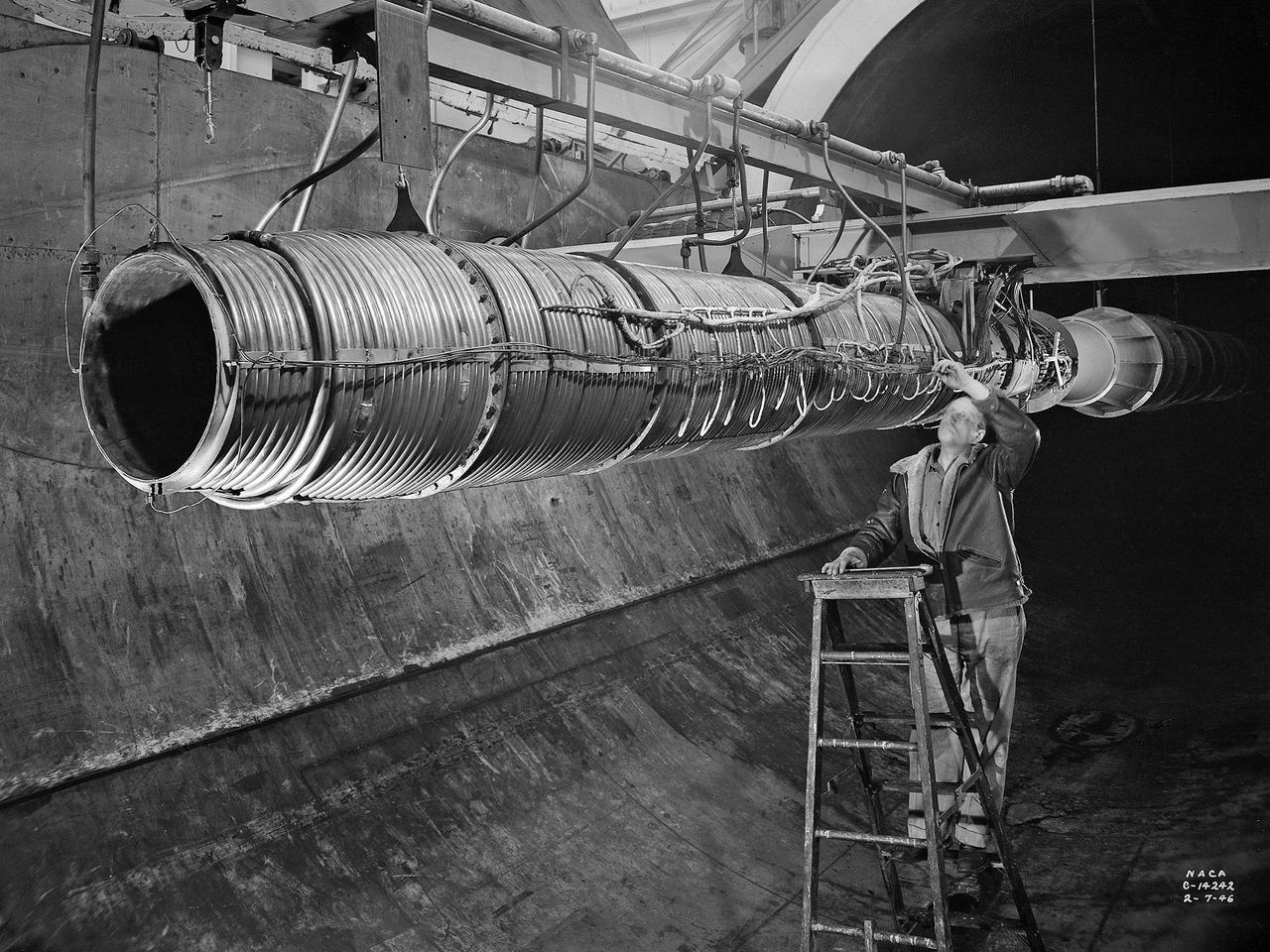
A 20-inch diameter ramjet installed in the Altitude Wind Tunnel at the National Advisory Committee for Aeronautics (NACA) Lewis Flight Propulsion Laboratory. The Altitude Wind Tunnel was used in the 1940s to study early ramjet configurations. Ramjets provide a very simple source of propulsion. They are basically a tube which takes in high-velocity air, ignites it, and then expels the expanded airflow at a significantly higher velocity for thrust. Ramjets are extremely efficient and powerful but can only operate at high speeds. Therefore a turbojet or rocket was needed to launch the vehicle. This NACA-designed 20-inch diameter ramjet was installed in the Altitude Wind Tunnel in May 1945. The ramjet was mounted under a section of wing in the 20-foot diameter test section with conditioned airflow ducted directly to the engine. The mechanic in this photograph was installing instrumentation devices that led to the control room. NACA researchers investigated the ramjet’s overall performance at simulated altitudes up to 47,000 feet. Thrust measurements from these runs were studied in conjunction with drag data obtained during small-scale studies in the laboratory’s small supersonic tunnels. An afterburner was attached to the ramjet during the portions of the test program. The researchers found that an increase in altitude caused a reduction in the engine’s horsepower. They also determined the optimal configurations for the flameholders, which provided the engine’s ignition source.
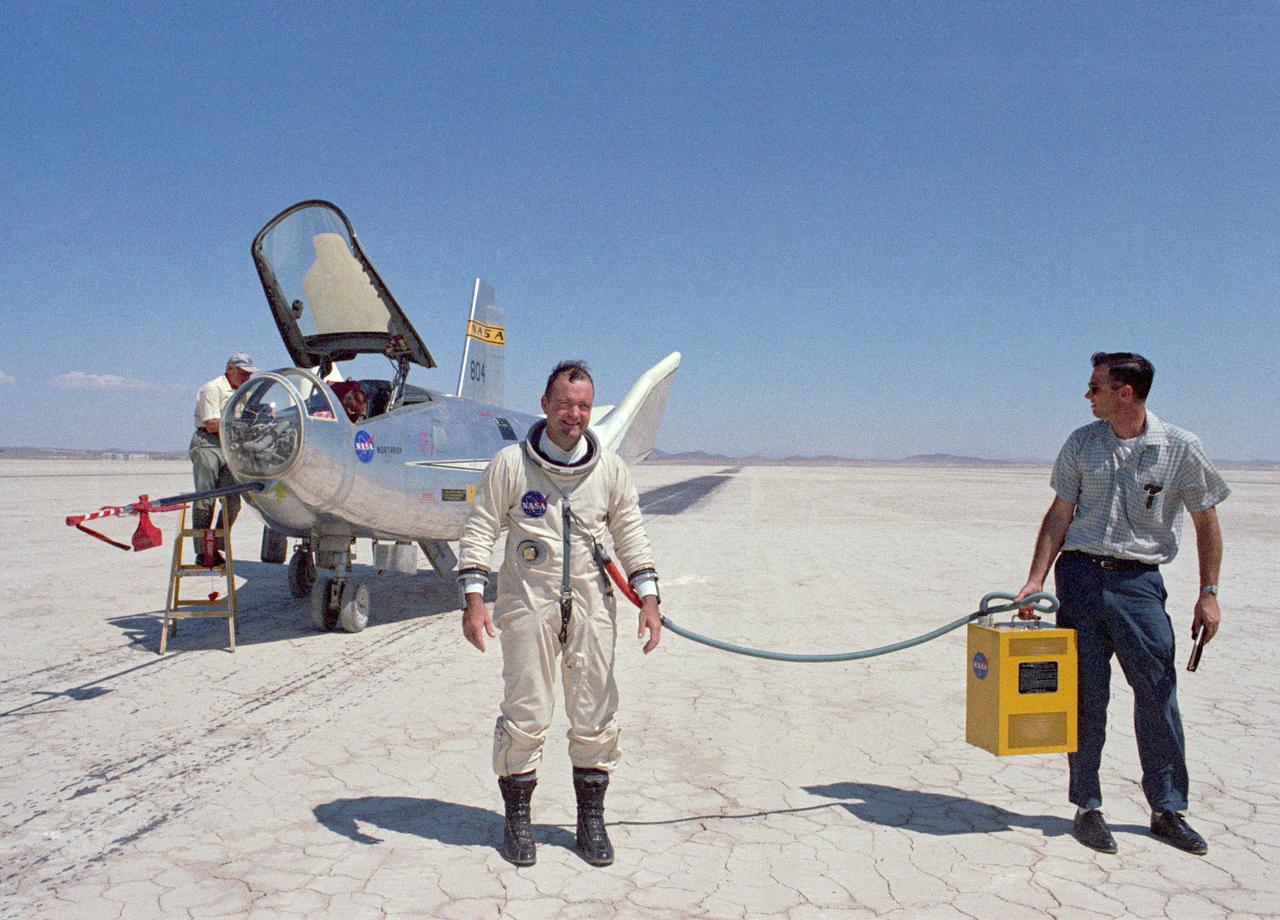
NASA research pilot Bill Dana after his fourth free flight (1 glide and 3 powered) in the HL-10. This particular flight reached a maximum speed of Mach 1.45. Dana made a total of nine HL-10 flights (1 glide and 8 powered), and his lifting body experience as a whole included several car tow and 1 air tow flights in the M2-F1; 4 glide and 15 powered flights in the M2-F3; and 2 powered flights in the X-24B. He is wearing a pressure suit for protection against the cockpit depressurizing at high altitudes. The air conditioner box held by the ground crewman provides cool air to prevent overheating.
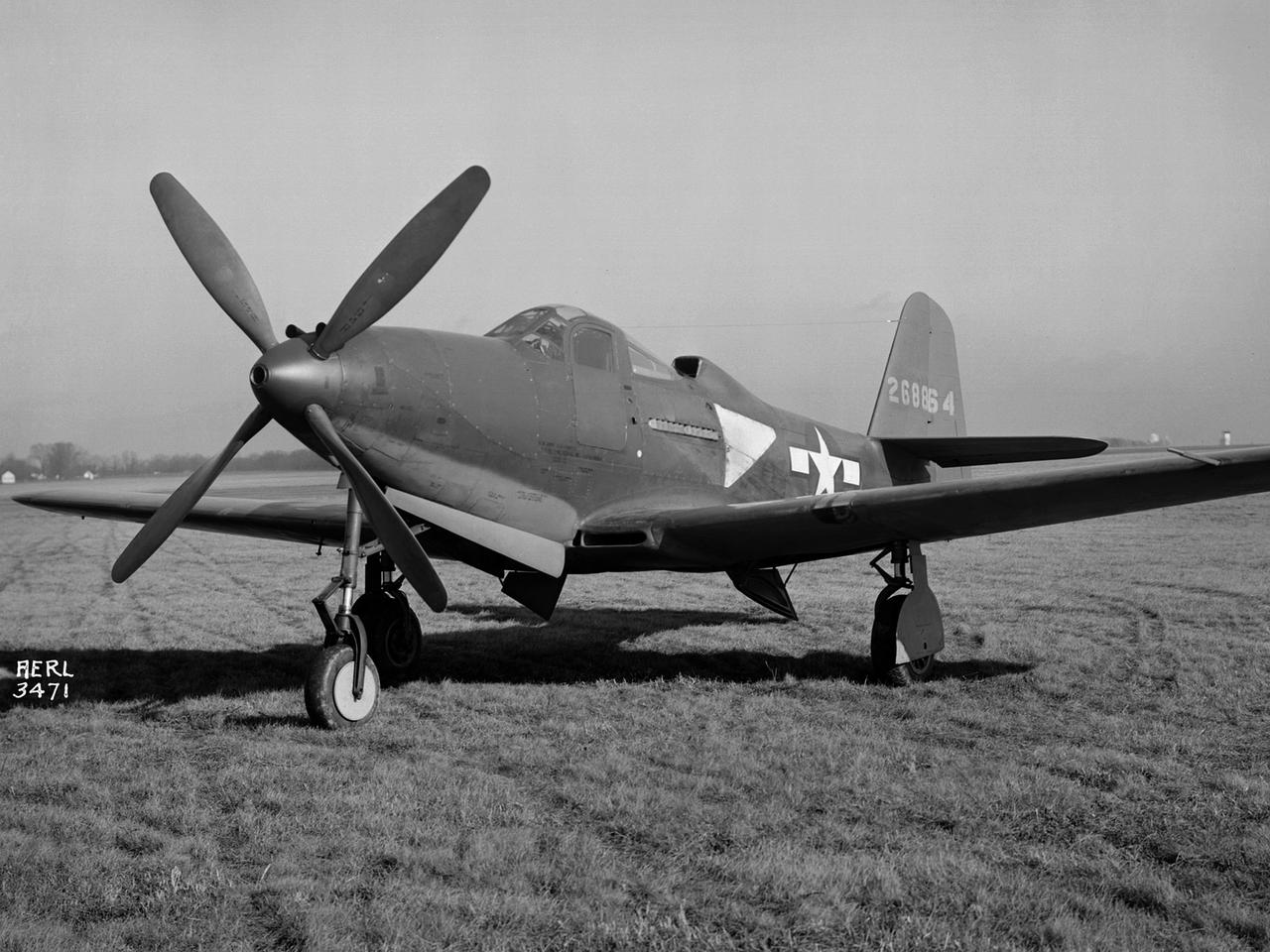
The Army Air Forces lent the National Advisory Committee for Aeronautics (NACA) Aircraft Engine Research Laboratory a Bell P–63A King Cobra in October 1943 to complement the lab's extensive efforts to improve the Allison V–1710 engine. The V–1710-powered P–63A was a single-seat fighter that could reach speeds of 410 miles per hour and an altitude of 43,000 feet. The fighter, first produced in 1942, was an improvement on Bell’s P–39, but persistent performance problems at high altitudes prevented its acceptance by the Air Corps. Instead many of the P–63s were transferred to the Soviet Union. Almost every test facility at the NACA’s engine lab was used to study the Allison V–1710 engine and its supercharger during World War II. Researchers were able to improve the efficiency, capacity and pressure ratio of the supercharger. They found that improved cooling significantly reduced engine knock in the fuel. Once the researchers were satisfied with their improvements, the new supercharger and cooling components were installed on the P–63A. The Flight Research Division first established the aircraft’s normal flight performance parameters such as speed at various altitudes, rate of climb, and peak altitude. Ensuing flights established the performance parameters of the new configuration in order to determine the improved performance. The program increased V–1710’s horsepower from 1650 to 2250.
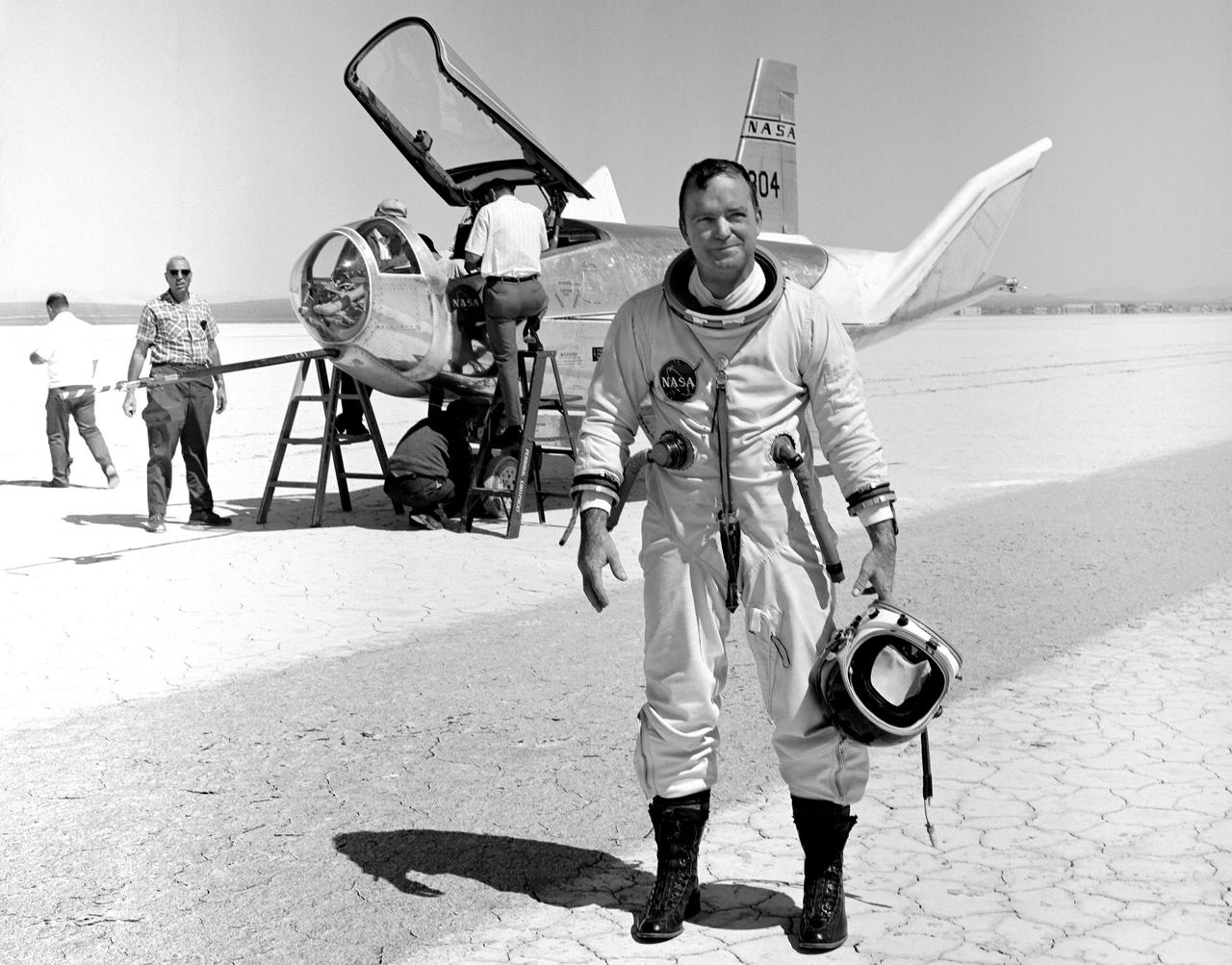
NASA research pilot Bill Dana stands in front of the HL-10 Lifting Body following his first glide flight on April 25, 1969. Dana later retired as Chief Engineer at NASA's Dryden Flight Research Center, (called the NASA Flight Research Center in 1969). Prior to his lifting body assignment, Dana flew the X-15 research airplane. He flew the rocket-powered aircraft 16 times, reaching a top speed of 3,897 miles per hour and a peak altitude of 310,000 feet (almost 59 miles high).
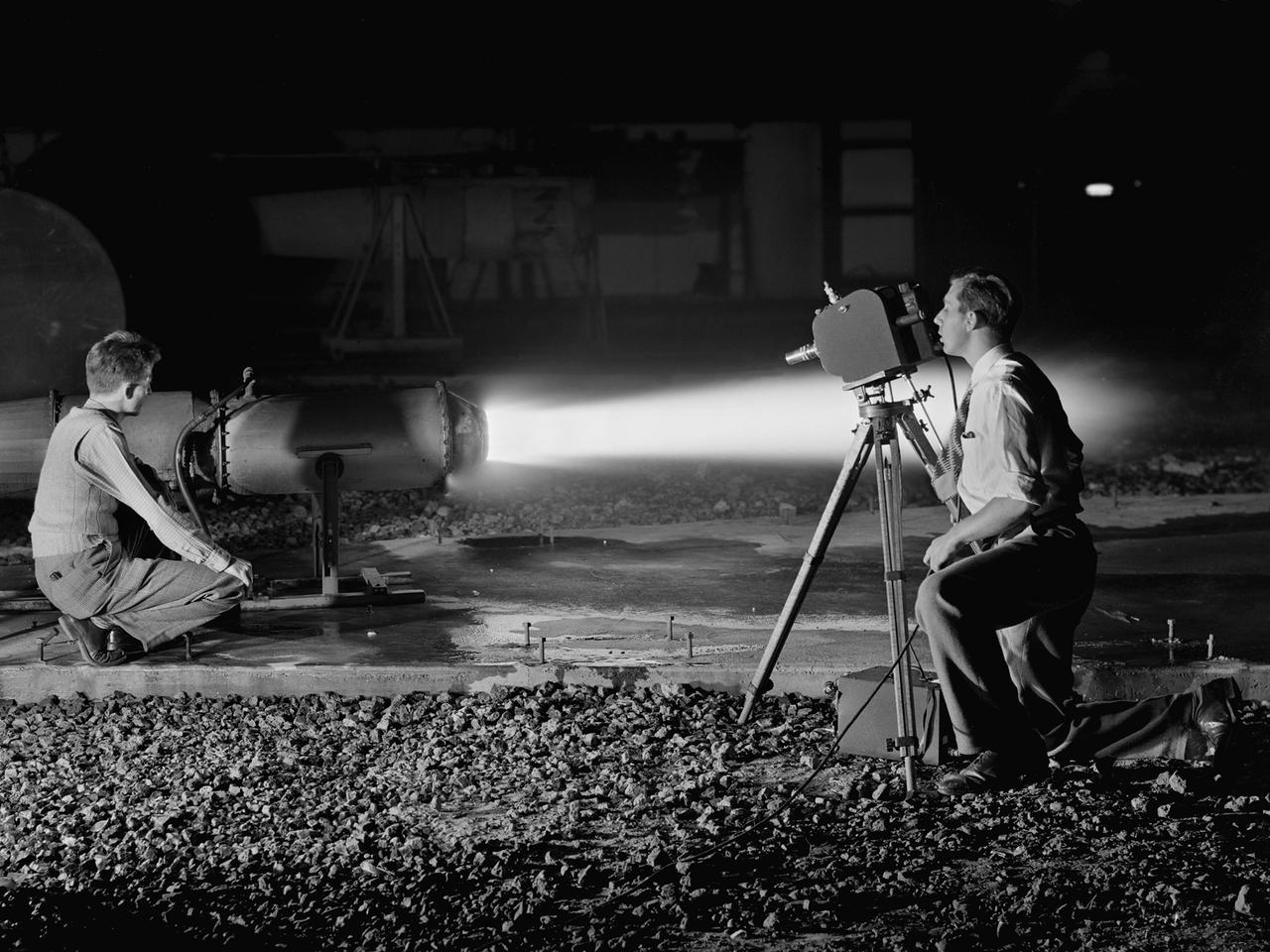
A National Advisory Committee for Aeronautics (NACA) photographer films the test of a ramjet engine at the Lewis Flight Propulsion Laboratory. The laboratory had an arsenal of facilities to test the engines and their components, and immersed itself in the study of turbojet and ramjet engines during the mid-1940s. Combustion, fuel injection, flameouts, and performance at high altitudes were of particular interest to researchers. They devised elaborate schemes to instrument the engines in order to record temperature, pressure, and other data. Many of the tests were also filmed so Lewis researchers could visually review the combustion performance along with the data. The photographer in this image was using high-speed film to document a thrust augmentation study at Lewis’ Jet Static Propulsion Laboratory. The ramjet in this photograph was equipped with a special afterburner as part of a general effort to improve engine performance. Lewis’ Photo Lab was established in 1942. The staff was expanded over the next few years as more test facilities became operational. The Photo Lab’s staff and specialized equipment have been key research tools for decades. They accompany pilots on test flights, use high-speed cameras to capture fleeting processes like combustion, and work with technology, such as the Schlieren camera, to capture supersonic aerodynamics. In addition, the group has documented construction projects, performed publicity work, created images for reports, and photographed data recording equipment.
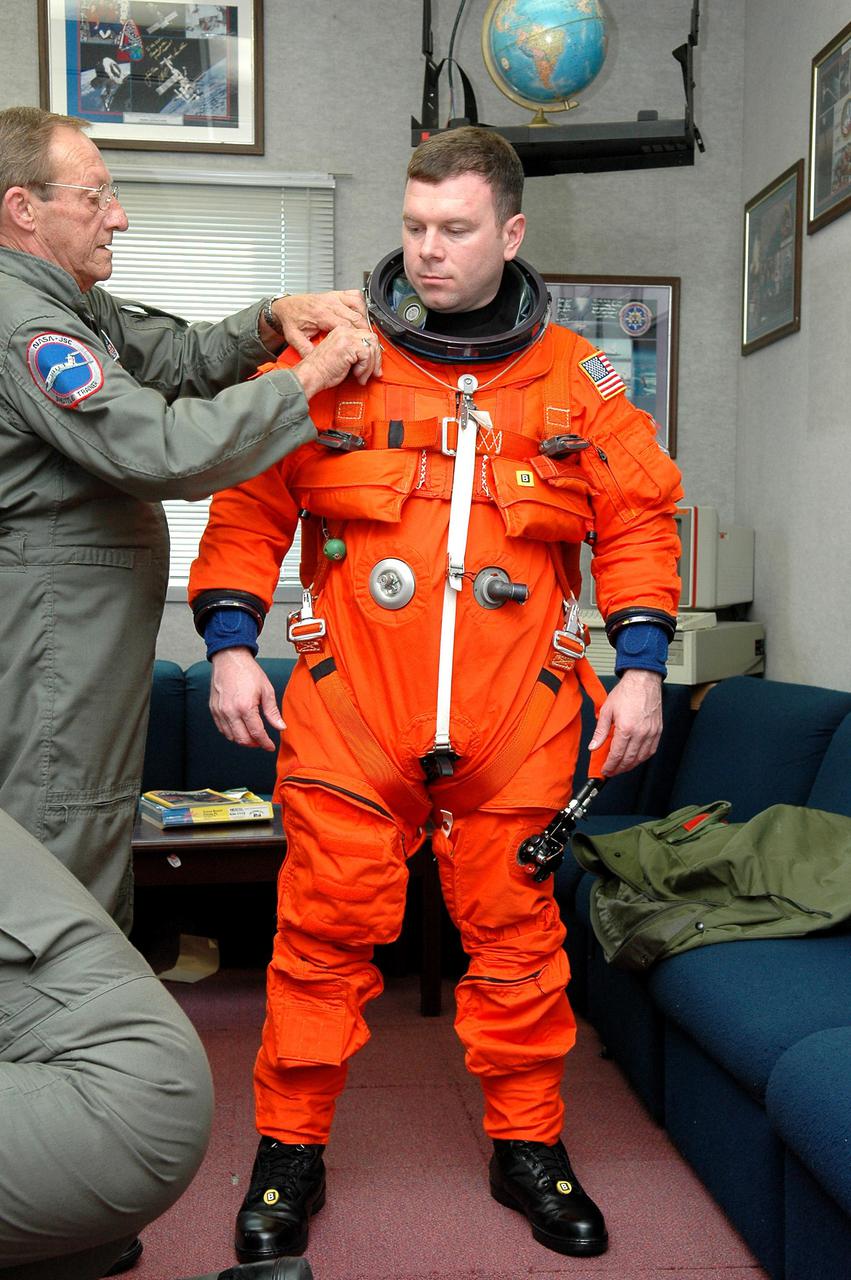
KENNEDY SPACE CENTER, FLA. - STS-114 Pilot James Kelly suits up for practice flights on a Shuttle Training Aircraft (STA) used by Shuttle flight crews to practice landing the orbiter. The STA is a modified Grumman American Aviation-built Gulfstream II executive jet that was modified to simulate an orbiter’s cockpit, motion and visual cues, and handling qualities. In flight, the STA duplicates the orbiter’s atmospheric descent trajectory from approximately 35,000 feet altitude to landing on a runway. The orbiter differs in at least one major aspect from conventional aircraft; it is unpowered during re-entry and landing so its high-speed glide must be perfectly executed the first time. There is no go-around capability. The orbiter touchdown speed is 213 to 226 miles per hour. There are two STAs, based in Houston. STS-114 is the first Return to Flight mission, scheduled to launch July 13 in a window that extends through July 31.

KENNEDY SPACE CENTER, FLA. - At the Shuttle Landing Facility, the Shuttle Training Aircraft (STA) waits for the STS-121 pilot and commander to begin their practice flights. The STA is a modified Grumman American Aviation-built Gulf Stream II jet that was modified to simulate an orbiter’s cockpit, motion and visual cues, and handling qualities. In flight, the STA duplicates the orbiter’s atmospheric descent trajectory from approximately 35,000 feet altitude to landing on a runway. Because the orbiter is unpowered during re-entry and landing, its high-speed glide must be perfectly executed the first time. Space Shuttle Discovery is scheduled to launch July 1 on mission STS-121. Photo credit: NASA/Kim Shiflett
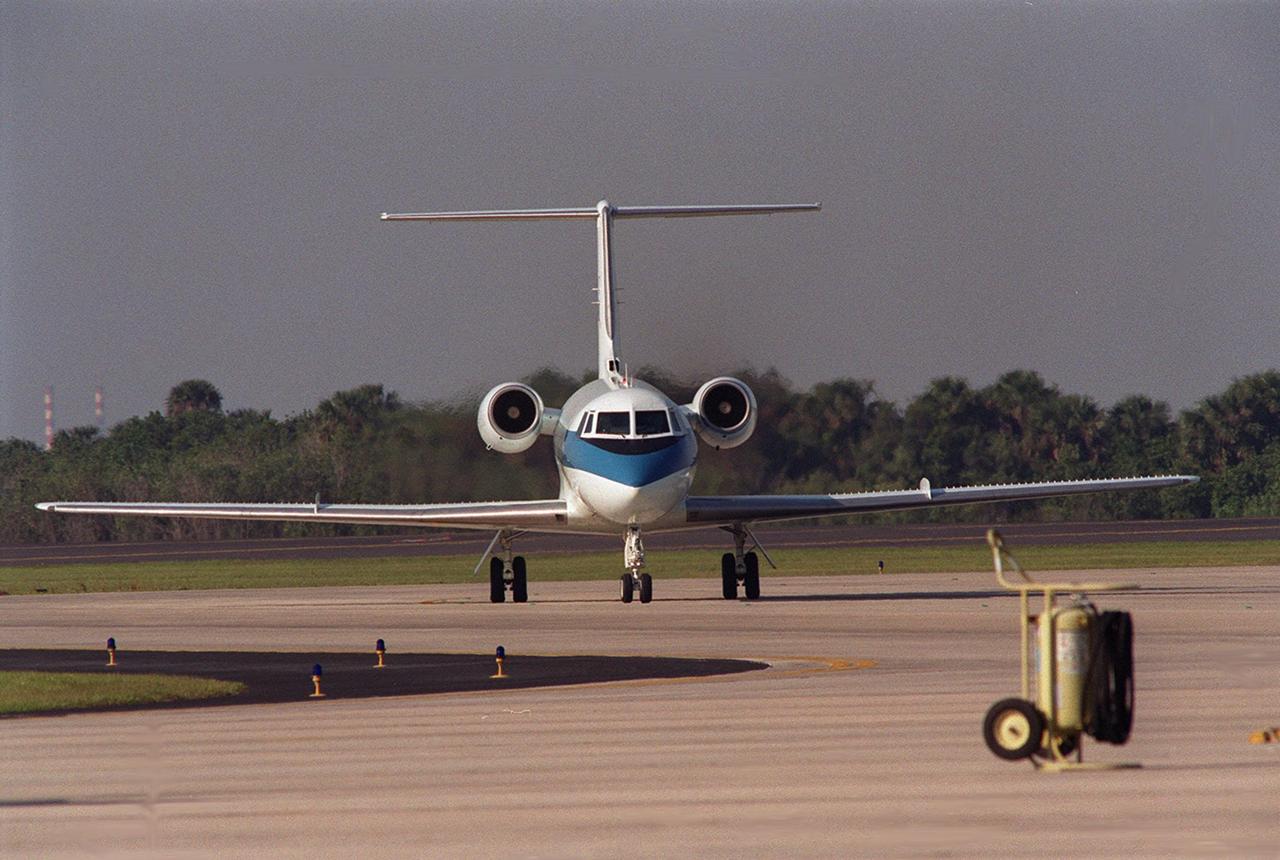
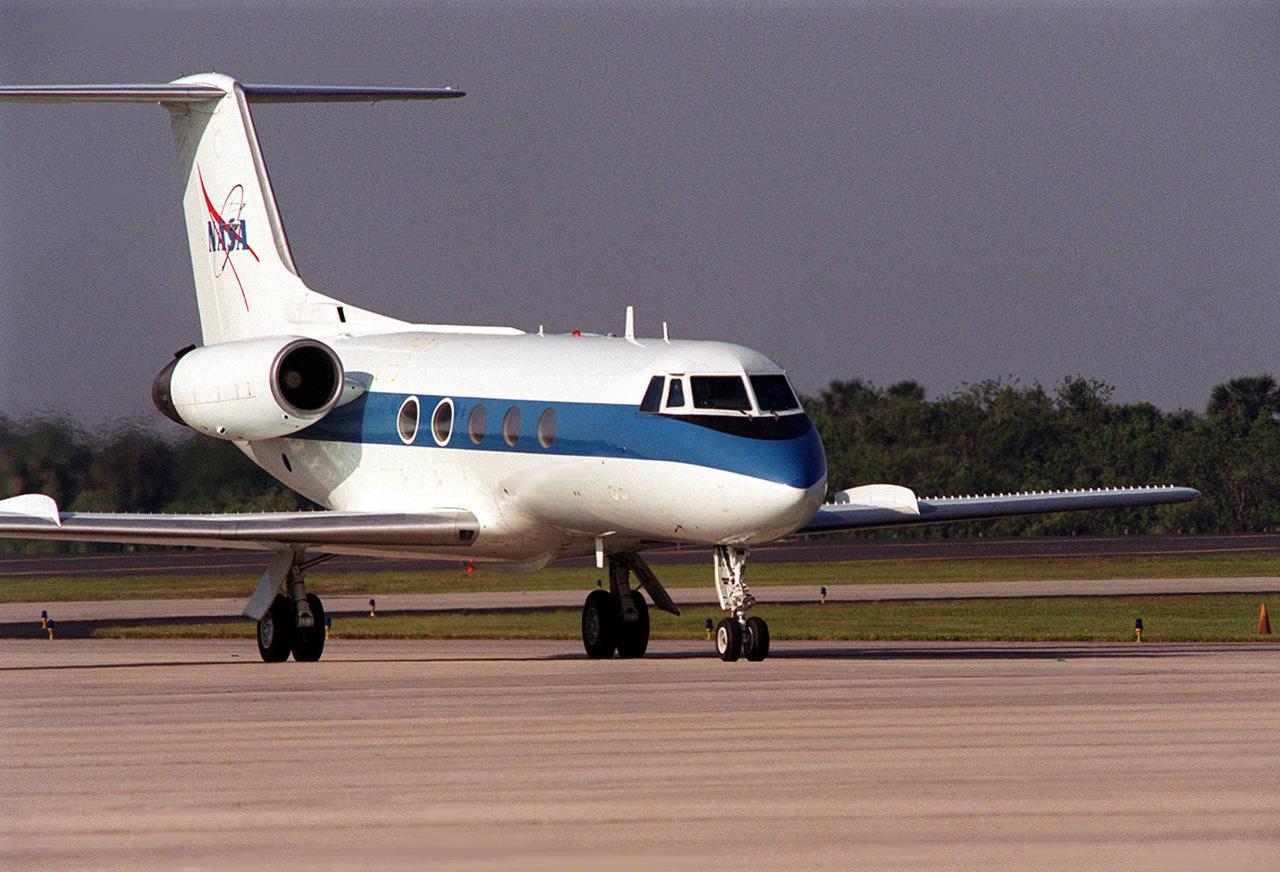
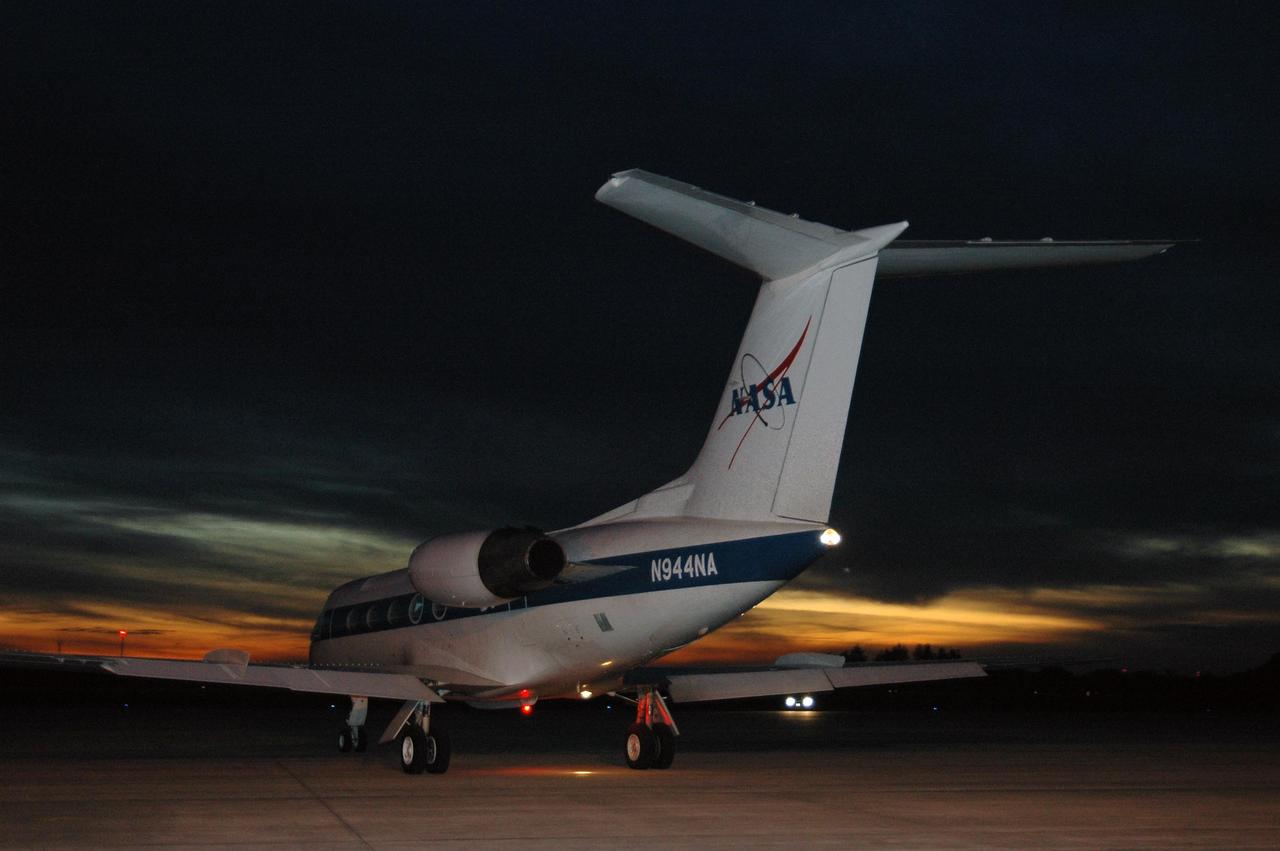
A Shuttle Training Aircraft (STA) taxis into the parking area of KSC's Shuttle Landing Facility. The STA is a modified Grumman American Aviation-built Gulfstream II executive jet that was modified to simulate an orbiter's cockpit, motion and visual cues, and handling qualities. It is used by Shuttle flight crews to practice landing the orbiter. In flight, the STA duplicates the orbiter's atmospheric descent trajectory from approximately 35,000 feet altitude to landing on a runway. The orbiter differs in at least one major aspect from conventional aircraft; it is unpowered during re-entry and landing so its high-speed glide must be perfectly executed the first time there is no go-around capability. The orbiter touchdown speed is 213 to 226 miles (343 to 364 kilometers) per hour. There are two STAs, based in Houston
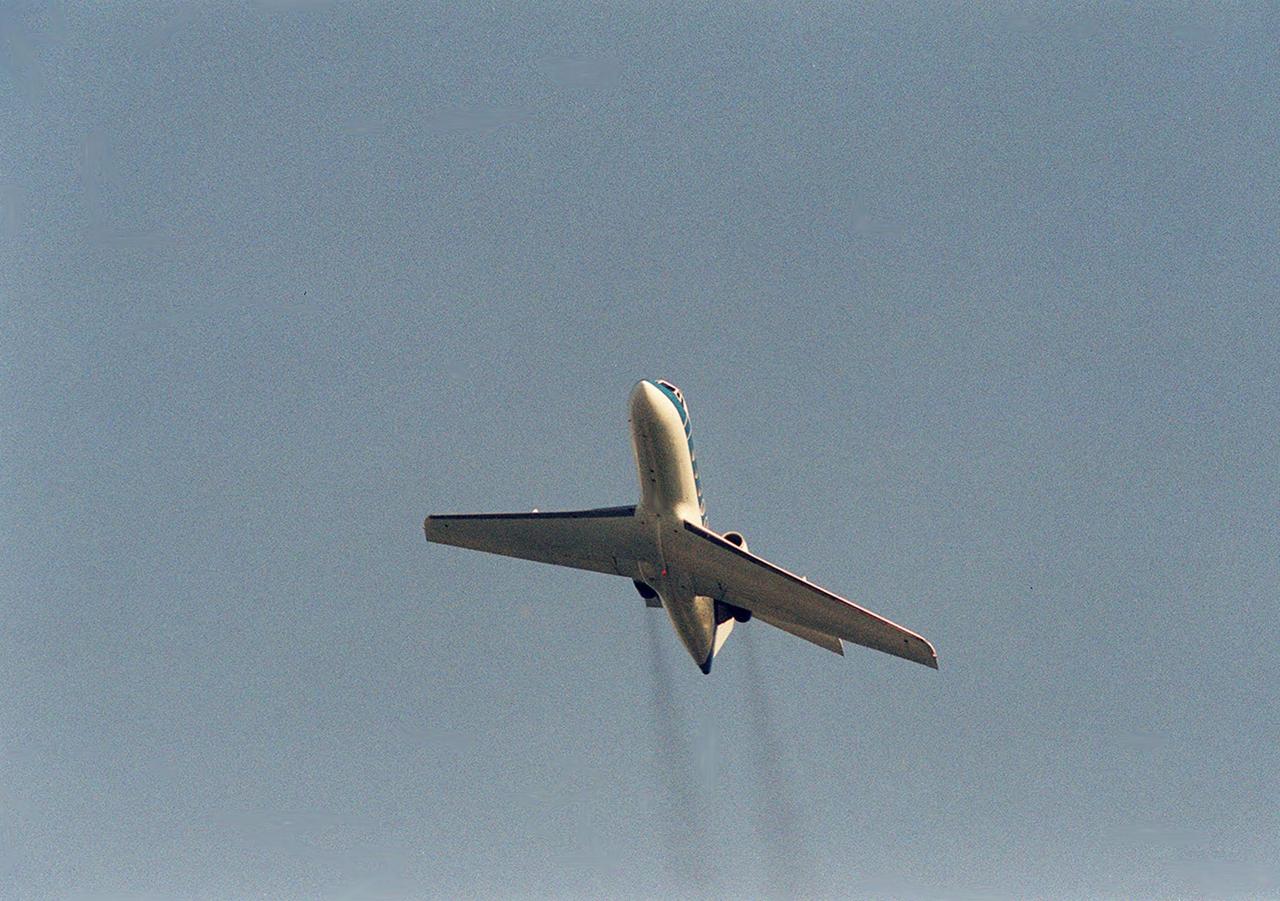
A Shuttle Training Aircraft (STA) soars into the blue sky above Kennedy Space Center. The STA is a modified Grumman American Aviation-built Gulfstream II executive jet that was modified to simulate an orbiter's cockpit, motion and visual cues, and handling qualities. It is used by Shuttle flight crews to practice landing the orbiter. In flight, the STA duplicates the orbiter's atmospheric descent trajectory from approximately 35,000 feet altitude to landing on a runway. The orbiter differs in at least one major aspect from conventional aircraft; it is unpowered during re-entry and landing so its high-speed glide must be perfectly executed the first time there is no go-around capability. The orbiter touchdown speed is 213 to 226 miles (343 to 364 kilometers) per hour. There are two STAs, based in Houston

A Shuttle Training Aircraft (STA) taxis down the runway at KSC's Shuttle Landing Facility. The STA is a modified Grumman American Aviation-built Gulfstream II executive jet that was modified to simulate an orbiter's cockpit, motion and visual cues, and handling qualities. It is used by Shuttle flight crews to practice landing the orbiter. In flight, the STA duplicates the orbiter's atmospheric descent trajectory from approximately 35,000 feet altitude to landing on a runway. The orbiter differs in at least one major aspect from conventional aircraft; it is unpowered during re-entry and landing so its high-speed glide must be perfectly executed the first time there is no go-around capability. The orbiter touchdown speed is 213 to 226 miles (343 to 364 kilometers) per hour. There are two STAs, based in Houston
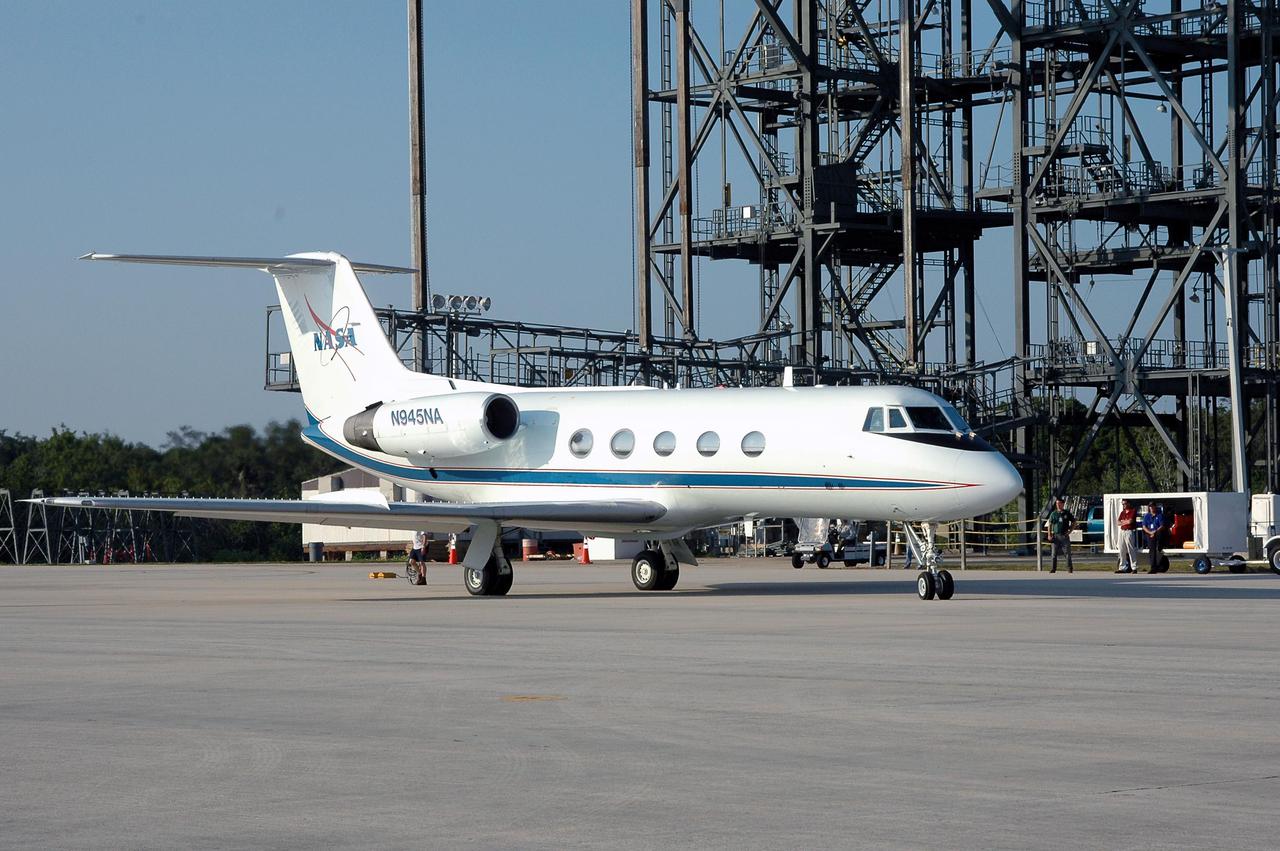
KENNEDY SPACE CENTER, FLA. - A Shuttle Training Aircraft (STA) is ready for STS-114 Commander Eileen Collins to begin practice landing the orbiter. The STA is a modified Grumman American Aviation-built Gulfstream II executive jet that was modified to simulate an orbiter’s cockpit, motion and visual cues, and handling qualities. In flight, the STA duplicates the orbiter’s atmospheric descent trajectory from approximately 35,000 feet altitude to landing on a runway. The orbiter differs in at least one major aspect from conventional aircraft; it is unpowered during re-entry and landing so its high-speed glide must be perfectly executed the first time. There is no go-around capability. The orbiter touchdown speed is 213 to 226 miles per hour. There are two STAs, based in Houston. STS-114 is the first Return to Flight mission, scheduled to launch July 13 in a window that extends through July 31.
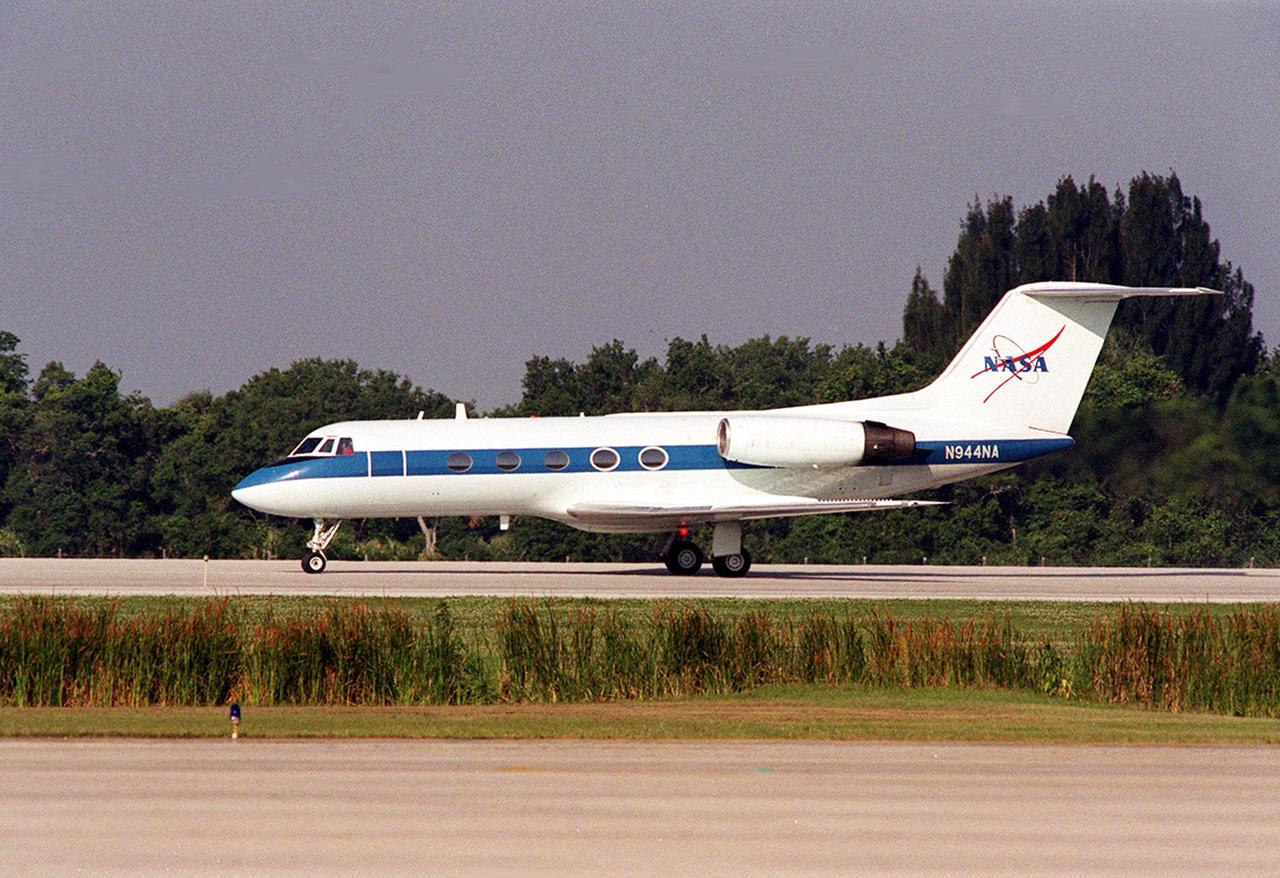
A Shuttle Training Aircraft (STA) taxis down the runway at KSC's Shuttle Landing Facility. The STA is a modified Grumman American Aviation-built Gulfstream II executive jet that was modified to simulate an orbiter's cockpit, motion and visual cues, and handling qualities. It is used by Shuttle flight crews to practice landing the orbiter. In flight, the STA duplicates the orbiter's atmospheric descent trajectory from approximately 35,000 feet altitude to landing on a runway. The orbiter differs in at least one major aspect from conventional aircraft; it is unpowered during re-entry and landing so its high-speed glide must be perfectly executed the first time there is no go-around capability. The orbiter touchdown speed is 213 to 226 miles (343 to 364 kilometers) per hour. There are two STAs, based in Houston
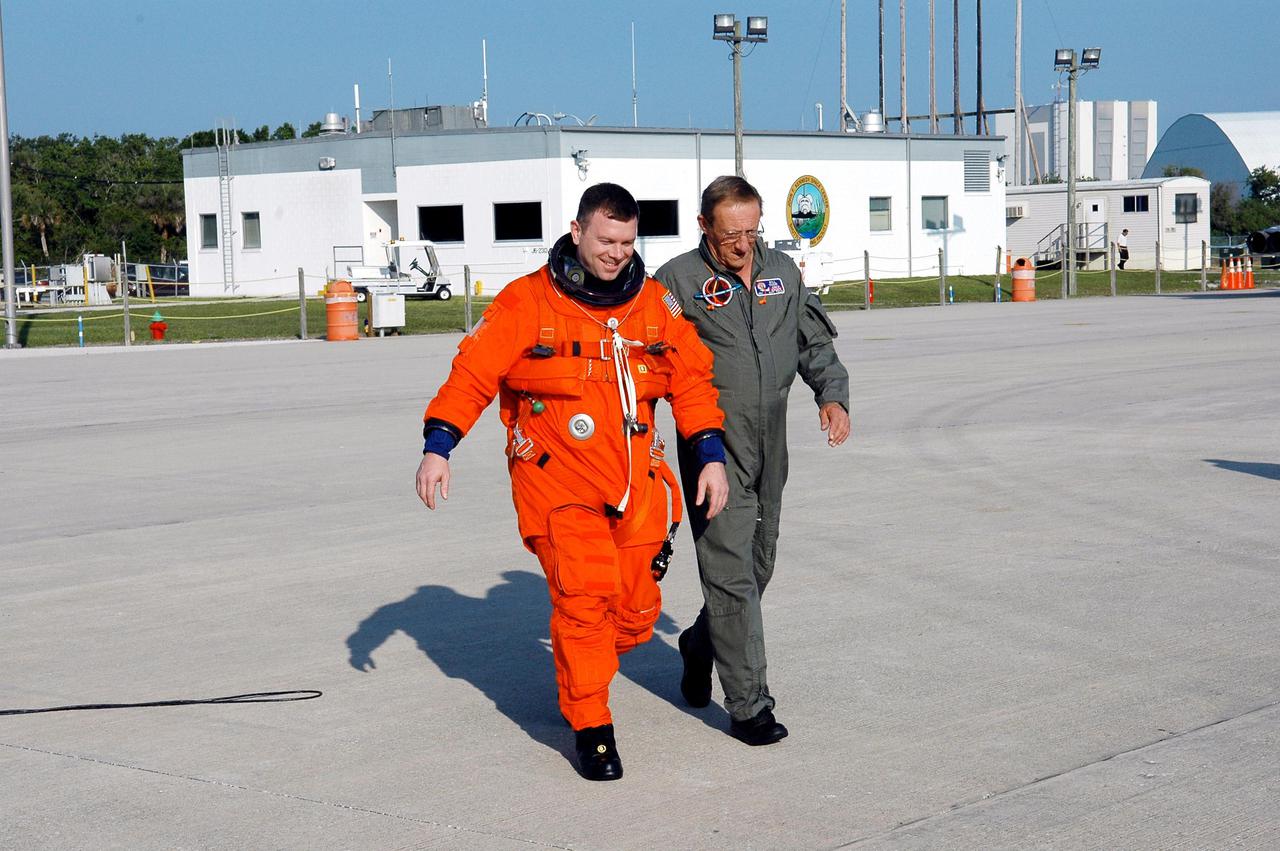
KENNEDY SPACE CENTER, FLA. - STS-114 Pilot James Kelly walks across the Shuttle Landing Facility to a Shuttle Training Aircraft (STA) to practice landing the orbiter. The STA is a modified Grumman American Aviation-built Gulfstream II executive jet that was modified to simulate an orbiter’s cockpit, motion and visual cues, and handling qualities. In flight, the STA duplicates the orbiter’s atmospheric descent trajectory from approximately 35,000 feet altitude to landing on a runway. The orbiter differs in at least one major aspect from conventional aircraft; it is unpowered during re-entry and landing so its high-speed glide must be perfectly executed the first time. There is no go-around capability. The orbiter touchdown speed is 213 to 226 miles per hour. There are two STAs, based in Houston. STS-114 is the first Return to Flight mission, scheduled to launch July 13 in a window that extends through July 31.
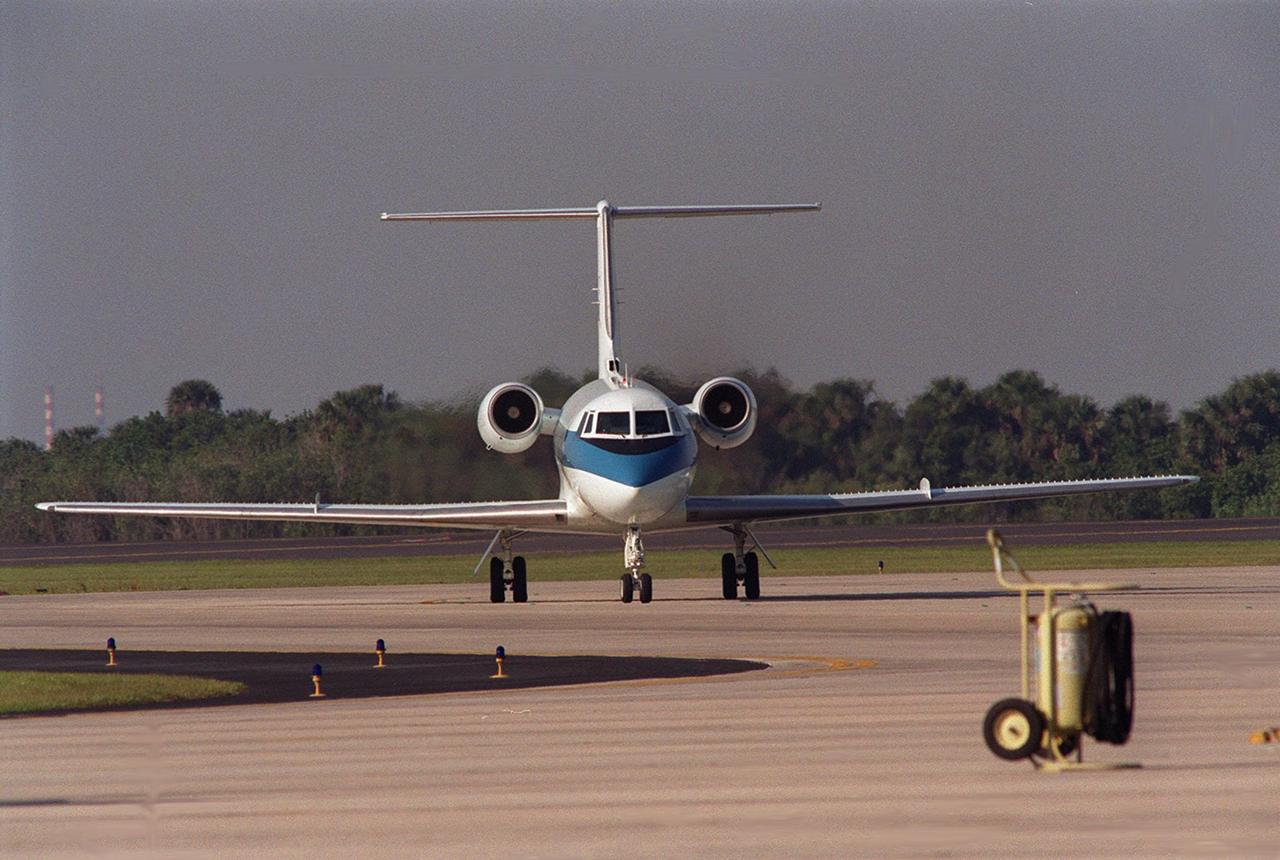
A Shuttle Training Aircraft (STA) taxis into the parking area of KSC's Shuttle Landing Facility. The STA is a modified Grumman American Aviation-built Gulfstream II executive jet that was modified to simulate an orbiter's cockpit, motion and visual cues, and handling qualities. It is used by Shuttle flight crews to practice landing the orbiter. In flight, the STA duplicates the orbiter's atmospheric descent trajectory from approximately 35,000 feet altitude to landing on a runway. The orbiter differs in at least one major aspect from conventional aircraft; it is unpowered during re-entry and landing so its high-speed glide must be perfectly executed the first time there is no go-around capability. The orbiter touchdown speed is 213 to 226 miles (343 to 364 kilometers) per hour. There are two STAs, based in Houston

A Shuttle Training Aircraft (STA) taxis into the parking area of KSC's Shuttle Landing Facility. The STA is a modified Grumman American Aviation-built Gulfstream II executive jet that was modified to simulate an orbiter's cockpit, motion and visual cues, and handling qualities. It is used by Shuttle flight crews to practice landing the orbiter. In flight, the STA duplicates the orbiter's atmospheric descent trajectory from approximately 35,000 feet altitude to landing on a runway. The orbiter differs in at least one major aspect from conventional aircraft; it is unpowered during re-entry and landing so its high-speed glide must be perfectly executed the first time there is no go-around capability. The orbiter touchdown speed is 213 to 226 miles (343 to 364 kilometers) per hour. There are two STAs, based in Houston
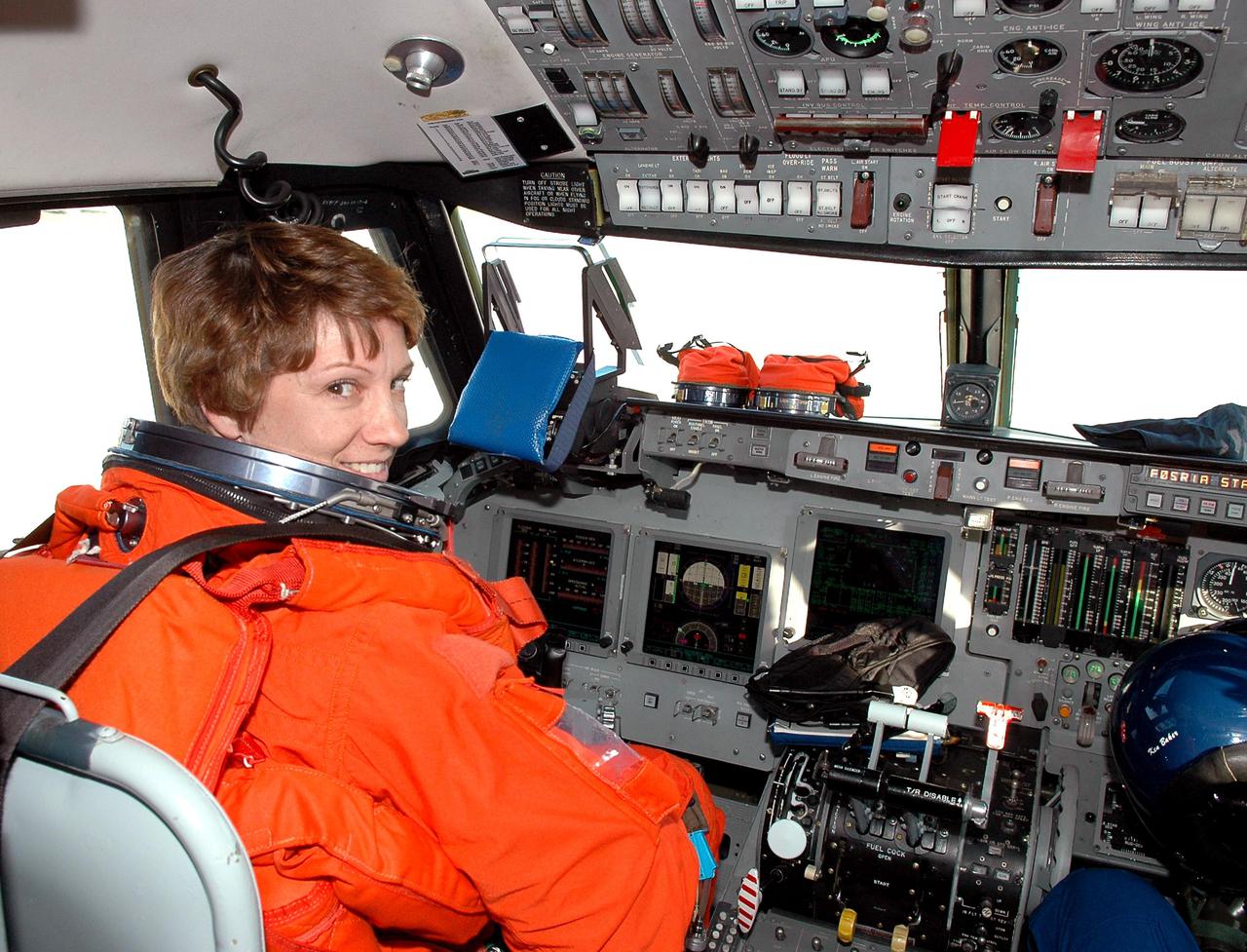
KENNEDY SPACE CENTER, FLA. - STS-114 Commander Eileen Collins is strapped into the command seat of a Shuttle Training Aircraft (STA) to practice landing the orbiter. The STA is a modified Grumman American Aviation-built Gulfstream II executive jet that was modified to simulate an orbiter’s cockpit, motion and visual cues, and handling qualities. In flight, the STA duplicates the orbiter’s atmospheric descent trajectory from approximately 35,000 feet altitude to landing on a runway. The orbiter differs in at least one major aspect from conventional aircraft; it is unpowered during re-entry and landing so its high-speed glide must be perfectly executed the first time. There is no go-around capability. The orbiter touchdown speed is 213 to 226 miles per hour. There are two STAs, based in Houston. STS-114 is the first Return to Flight mission, scheduled to launch July 13 in a window that extends through July 31.

A Shuttle Training Aircraft (STA) soars into the blue sky above Kennedy Space Center. The STA is a modified Grumman American Aviation-built Gulfstream II executive jet that was modified to simulate an orbiter's cockpit, motion and visual cues, and handling qualities. It is used by Shuttle flight crews to practice landing the orbiter. In flight, the STA duplicates the orbiter's atmospheric descent trajectory from approximately 35,000 feet altitude to landing on a runway. The orbiter differs in at least one major aspect from conventional aircraft; it is unpowered during re-entry and landing so its high-speed glide must be perfectly executed the first time there is no go-around capability. The orbiter touchdown speed is 213 to 226 miles (343 to 364 kilometers) per hour. There are two STAs, based in Houston
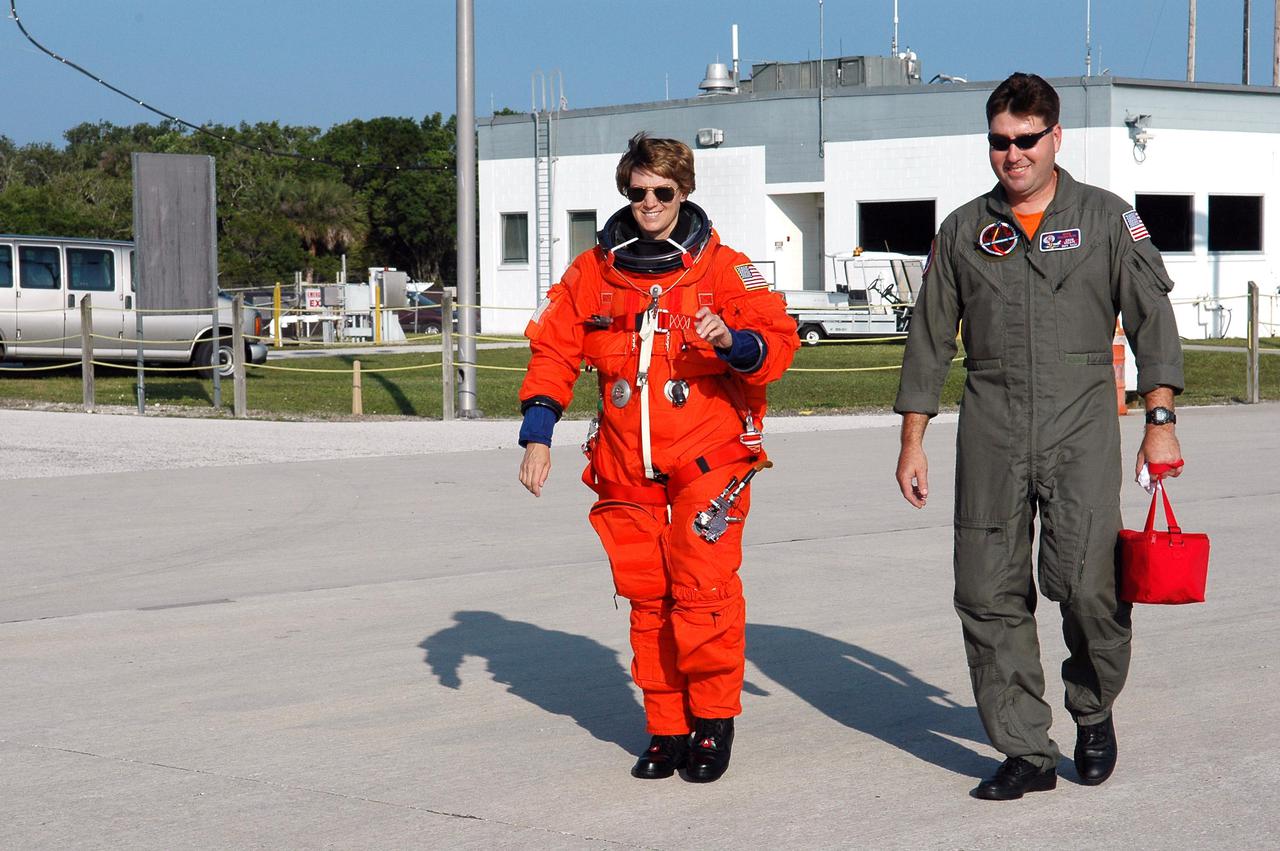
KENNEDY SPACE CENTER, FLA. - STS-114 Commander Eileen Collins walks across the Shuttle Landing Facility to a Shuttle Training Aircraft (STA) to practice landing the orbiter. The STA is a modified Grumman American Aviation-built Gulfstream II executive jet that was modified to simulate an orbiter’s cockpit, motion and visual cues, and handling qualities. In flight, the STA duplicates the orbiter’s atmospheric descent trajectory from approximately 35,000 feet altitude to landing on a runway. The orbiter differs in at least one major aspect from conventional aircraft; it is unpowered during re-entry and landing so its high-speed glide must be perfectly executed the first time. There is no go-around capability. The orbiter touchdown speed is 213 to 226 miles per hour. There are two STAs, based in Houston. STS-114 is the first Return to Flight mission, scheduled to launch July 13 in a window that extends through July 31.
A Shuttle Training Aircraft (STA) taxis into the parking area of KSC's Shuttle Landing Facility. The STA is a modified Grumman American Aviation-built Gulfstream II executive jet that was modified to simulate an orbiter's cockpit, motion and visual cues, and handling qualities. It is used by Shuttle flight crews to practice landing the orbiter. In flight, the STA duplicates the orbiter's atmospheric descent trajectory from approximately 35,000 feet altitude to landing on a runway. The orbiter differs in at least one major aspect from conventional aircraft; it is unpowered during re-entry and landing so its high-speed glide must be perfectly executed the first time there is no go-around capability. The orbiter touchdown speed is 213 to 226 miles (343 to 364 kilometers) per hour. There are two STAs, based in Houston
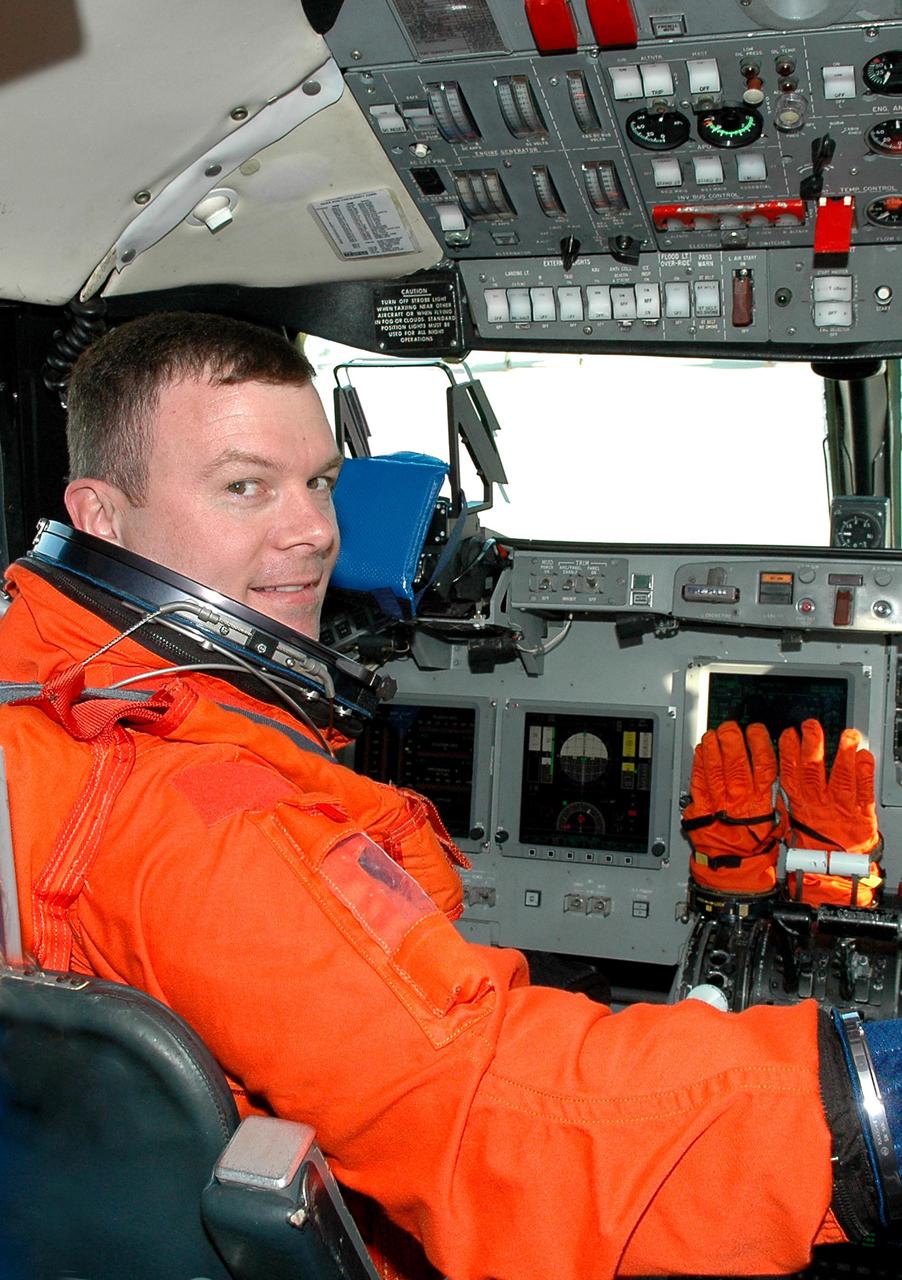
KENNEDY SPACE CENTER, FLA. - STS-114 Pilot James Kelly settles into the command seat of a Shuttle Training Aircraft (STA) to practice landing the orbiter. The STA is a modified Grumman American Aviation-built Gulfstream II executive jet that was modified to simulate an orbiter’s cockpit, motion and visual cues, and handling qualities. In flight, the STA duplicates the orbiter’s atmospheric descent trajectory from approximately 35,000 feet altitude to landing on a runway. The orbiter differs in at least one major aspect from conventional aircraft; it is unpowered during re-entry and landing so its high-speed glide must be perfectly executed the first time. There is no go-around capability. The orbiter touchdown speed is 213 to 226 miles per hour. There are two STAs, based in Houston. STS-114 is the first Return to Flight mission, scheduled to launch July 13 in a window that extends through July 31.
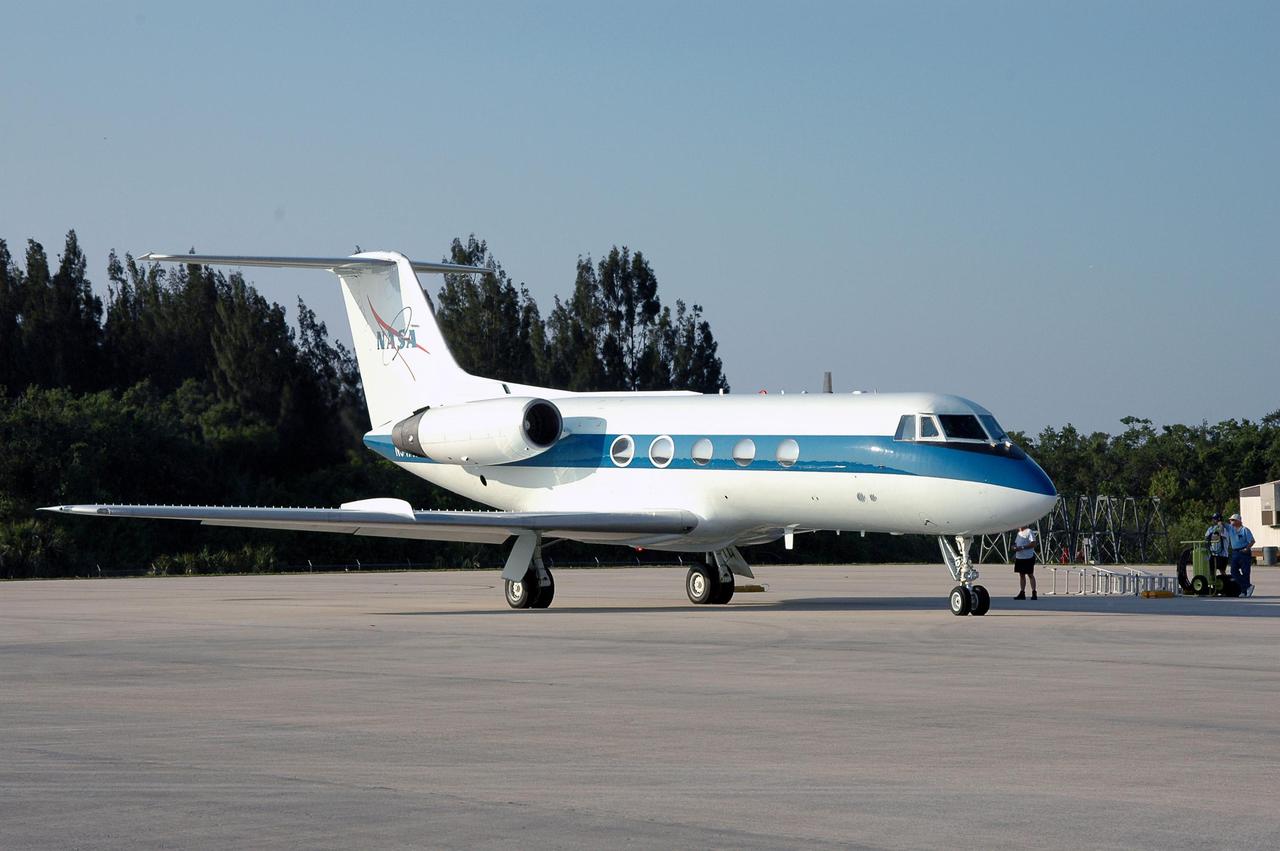
KENNEDY SPACE CENTER, FLA. - A Shuttle Training Aircraft (STA) is ready for STS-114 Pilot James Kelly to begin practice landing the orbiter. The STA is a modified Grumman American Aviation-built Gulfstream II executive jet that was modified to simulate an orbiter’s cockpit, motion and visual cues, and handling qualities. In flight, the STA duplicates the orbiter’s atmospheric descent trajectory from approximately 35,000 feet altitude to landing on a runway. The orbiter differs in at least one major aspect from conventional aircraft; it is unpowered during re-entry and landing so its high-speed glide must be perfectly executed the first time. There is no go-around capability. The orbiter touchdown speed is 213 to 226 miles per hour. There are two STAs, based in Houston. STS-114 is the first Return to Flight mission, scheduled to launch July 13 in a window that extends through July 31.
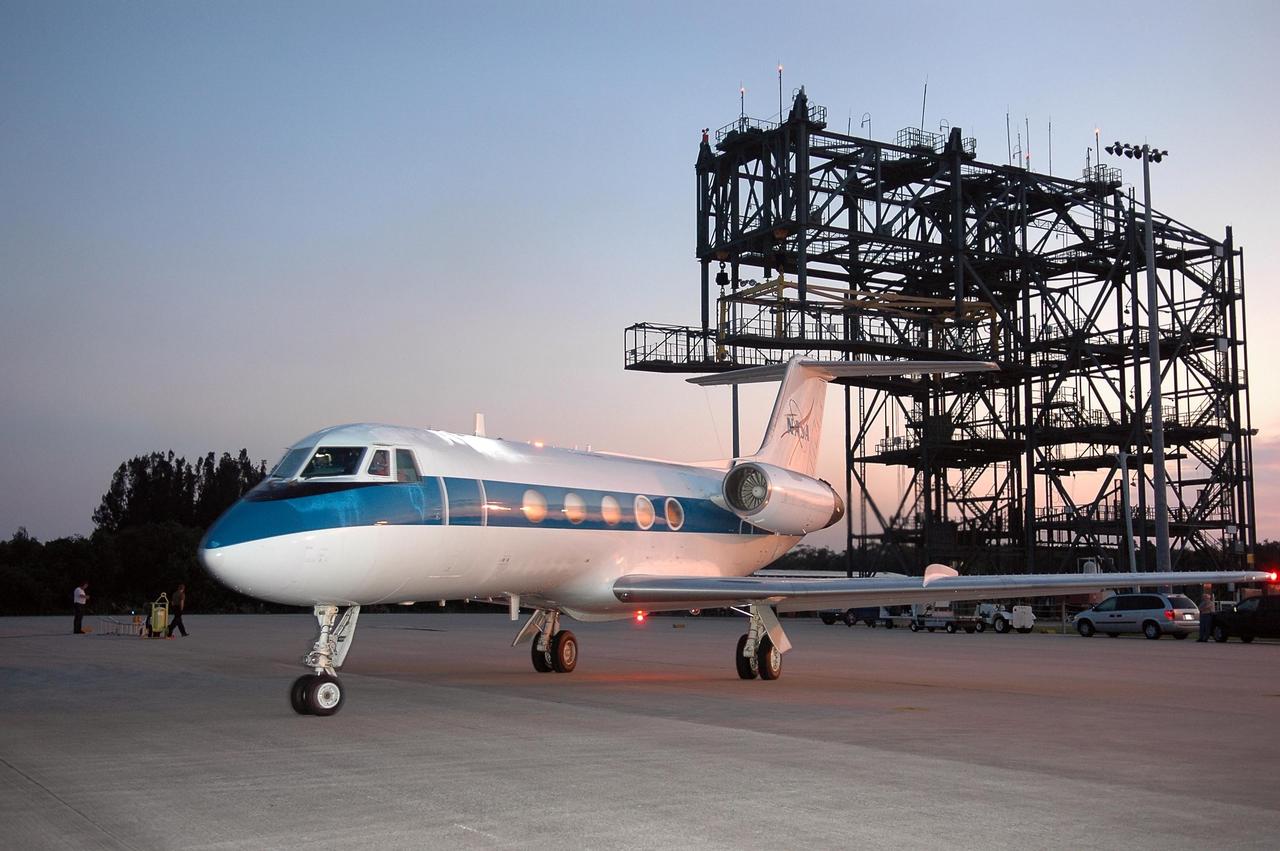
KENNEDY SPACE CENTER, FLA. - In the early dawn, STS-121 Pilot Mark Kelly is ready for takeoff from the Shuttle Training Facility to practice landing a shuttle in preparation for the July 1 launch of Space Shuttle Discovery. The STA is a Grumman American Aviation-built Gulf Stream II jet that was modified to simulate an orbiter’s cockpit, motion and visual cues, and handling qualities. In flight, the STA duplicates the orbiter’s atmospheric descent trajectory from approximately 35,000 feet altitude to landing on a runway. Because the orbiter is unpowered during re-entry and landing, its high-speed glide must be perfectly executed the first time. Photo credit: NASA/Kim Shiflett

One of the two primary coolers at the Propulsion Systems Laboratory at the National Advisory Committee for Aeronautics (NACA) Lewis Flight Propulsion Laboratory. Engines could be run in simulated altitude conditions inside the facility’s two 14-foot-diameter and 24-foot-long test chambers. The Propulsion Systems Laboratory was the nation’s only facility that could run large full-size engine systems in controlled altitude conditions. At the time of this photograph, construction of the facility had recently been completed. Although not a wind tunnel, the Propulsion Systems Laboratory generated high-speed airflow through the interior of the engine. The air flow was pushed through the system by large compressors, adjusted by heating or refrigerating equipment, and de-moisturized by air dryers. The exhaust system served two roles: reducing the density of the air in the test chambers to simulate high altitudes and removing hot gases exhausted by the engines being tested. It was necessary to reduce the temperature of the extremely hot engine exhaust before the air reached the exhauster equipment. As the air flow exited through exhaust section of the test chamber, it entered into the giant primary cooler seen in this photograph. Narrow fins or vanes inside the cooler were filled with water. As the air flow passed between the vanes, its heat was transferred to the cooling water. The cooling water was cycled out of the system, carrying with it much of the exhaust heat.
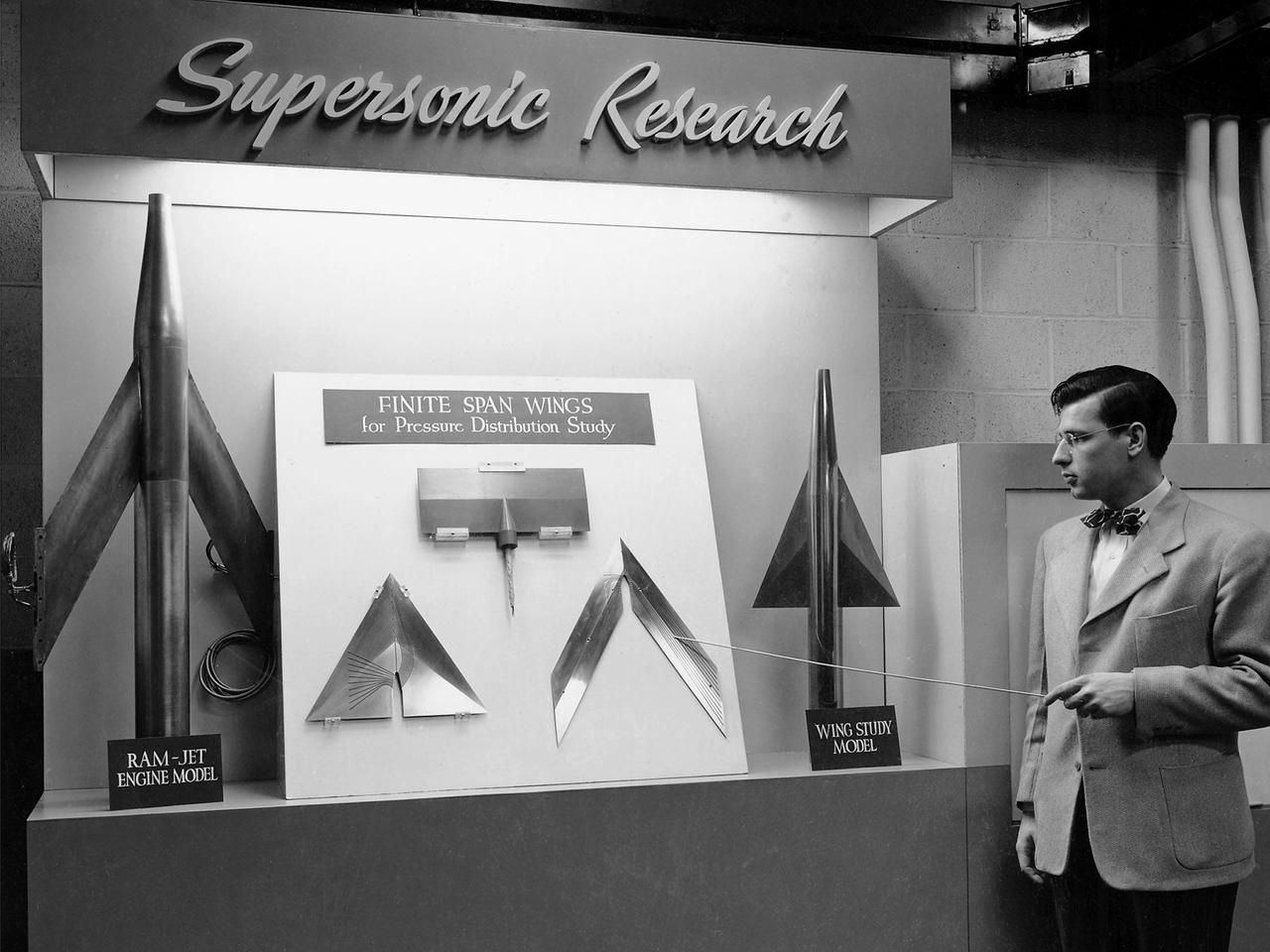
On March 22, 1946, 250 members of the Institute of Aeronautical Science toured the NACA’s Aircraft Engine Research Laboratory. NACA Chairman Jerome Hunsaker and Secretary John Victory were on hand to brief the attendees in the Administration Building before the visited the lab’s test facilities. At each of the twelve stops, researchers provided brief presentations on their work. Topics included axial flow combustors, materials for turbine blades, engine cooling, icing prevention, and supersonic flight. The laboratory reorganized itself in October 1945 as World War II came to an end to address newly emerging technologies such as the jet engine, rockets, and high-speed flight. While design work began on what would eventually become the 8- by 6-Foot Supersonic Wind Tunnel, NACA Lewis quickly built several small supersonic tunnels. These small facilities utilized the Altitude Wind Tunnel’s massive air handling equipment to generate high-speed airflow. The display seen in this photograph was set up in the building that housed the first of these wind tunnels. Eventually the building would contain three small supersonic tunnels, referred to as the “stack tunnels” because of the vertical alignment. The two other tunnels were added to this structure in 1949 and 1951. The small tunnels were used until the early 1960s to study the aerodynamic characteristics of supersonic inlets and exits.
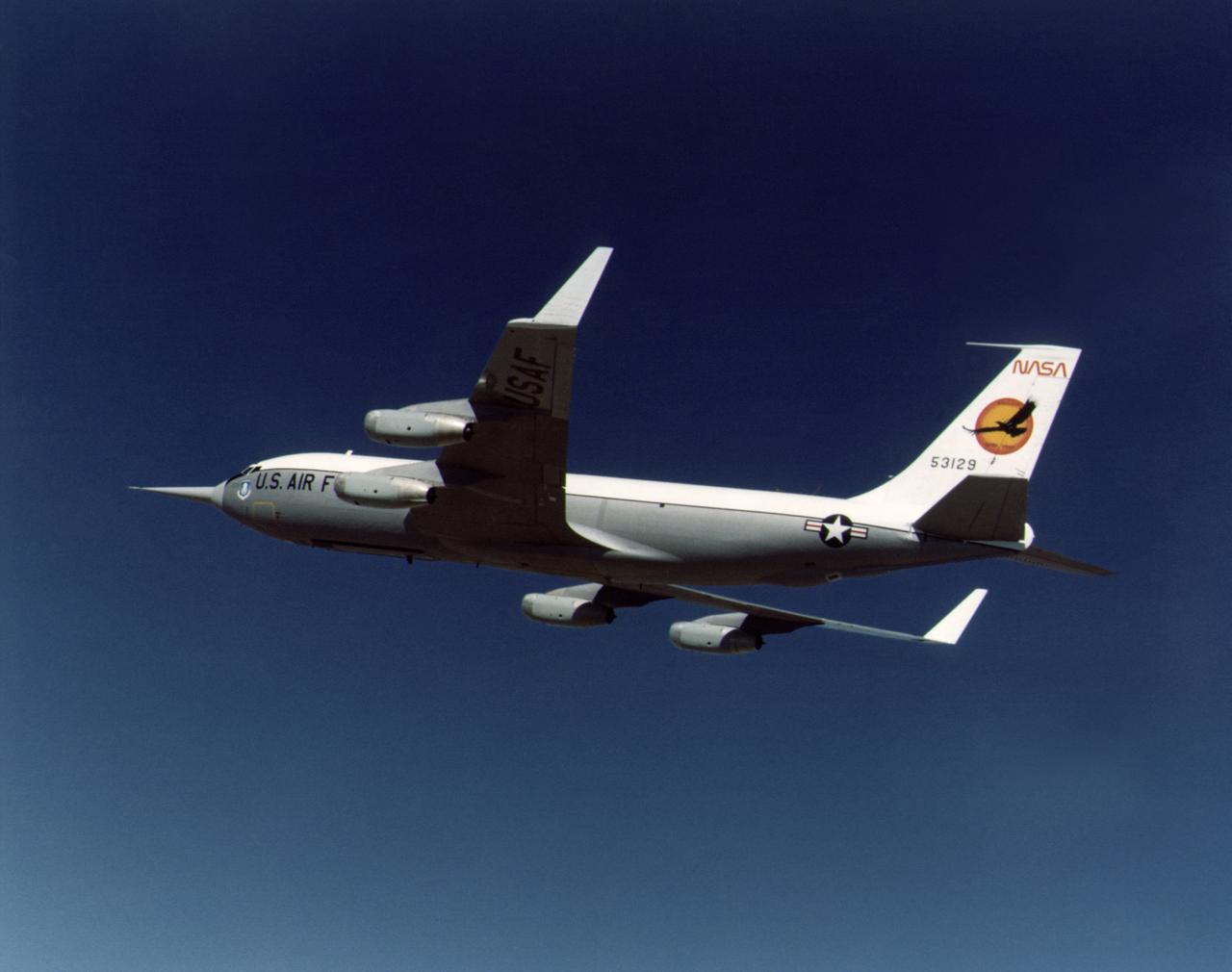
During the 1970s, the focus at Dryden shifted from high-speed and high-altitude flight to incremental improvements in technology and aircraft efficiency. One manifestation of this trend occurred in the winglet flight research carried out on a KC-135 during 1979 and 1980. Richard Whitcomb at the Langley Research Center had originated the idea of adding small vertical fins to an aircraft's wing tips. His wind tunnel tests indicated that winglets produced a forward thrust, which reduced the strength of the vortices generated by an aircraft's wing tips and resulted in a reduction of drag and an increase in aircraft range. Whitcomb, who had previously developed the area rule concept and the supercritical wing, selected the best winglet shape for flight tests on a KC-135 tanker. When the tests were completed, the data showed that the winglets provided a 7 percent improvement in range over the standard KC-135. The obvious economic advantage at a time of high fuel costs caused winglets to be adopted on business jets, airliners, and heavy military transports.
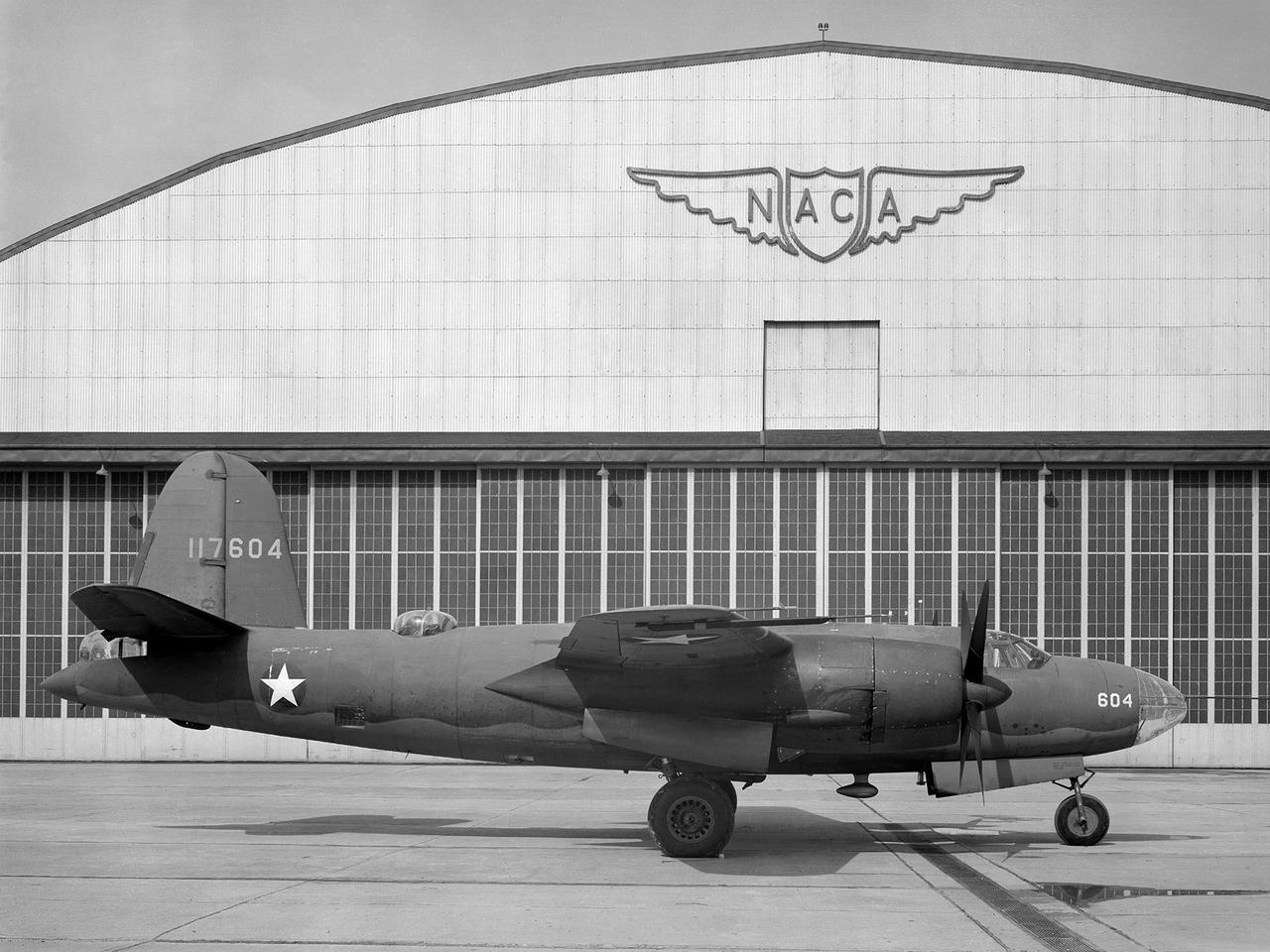
The Aircraft Engine Research Laboratory’s first aircraft, a Martin B–26B Marauder, parked in front of the Flight Research Building in September 1943. The military loaned the B–26B to the National Advisory Committee for Aeronautics (NACA) to augment the lab’s studies of the Wright Aeronautical R–2800 engines. The military wanted to improve the engine cooling in order to increase the bomber’s performance. On March 17, 1943, the B–26B performed the very first research flight at the NACA’s new engine laboratory. The B–26B received its “Widowmaker” nickname during the rushed effort to transition the new aircraft from design to production and into the sky. During World War II, however, the B–26B proved itself to be a capable war machine. The U.S. lost fewer Marauders than any other type of bomber employed in the war. The B–26B was originally utilized at low altitudes in the Pacific but had its most success at high altitudes over Europe. The B–26B’s flight tests in Cleveland during 1943 mapped the R-2800 engine’s behavior at different altitudes and speeds. The researchers were then able to correlate engine performance in ground facilities to expected performance at different altitudes. They found that air speed, cowl flap position, angle of attack, propeller thrust, and propeller speed influenced inlet pressure recovery and exhaust distribution. The flight testing proceeded quickly, and the B–26B was transferred elsewhere in October 1943.
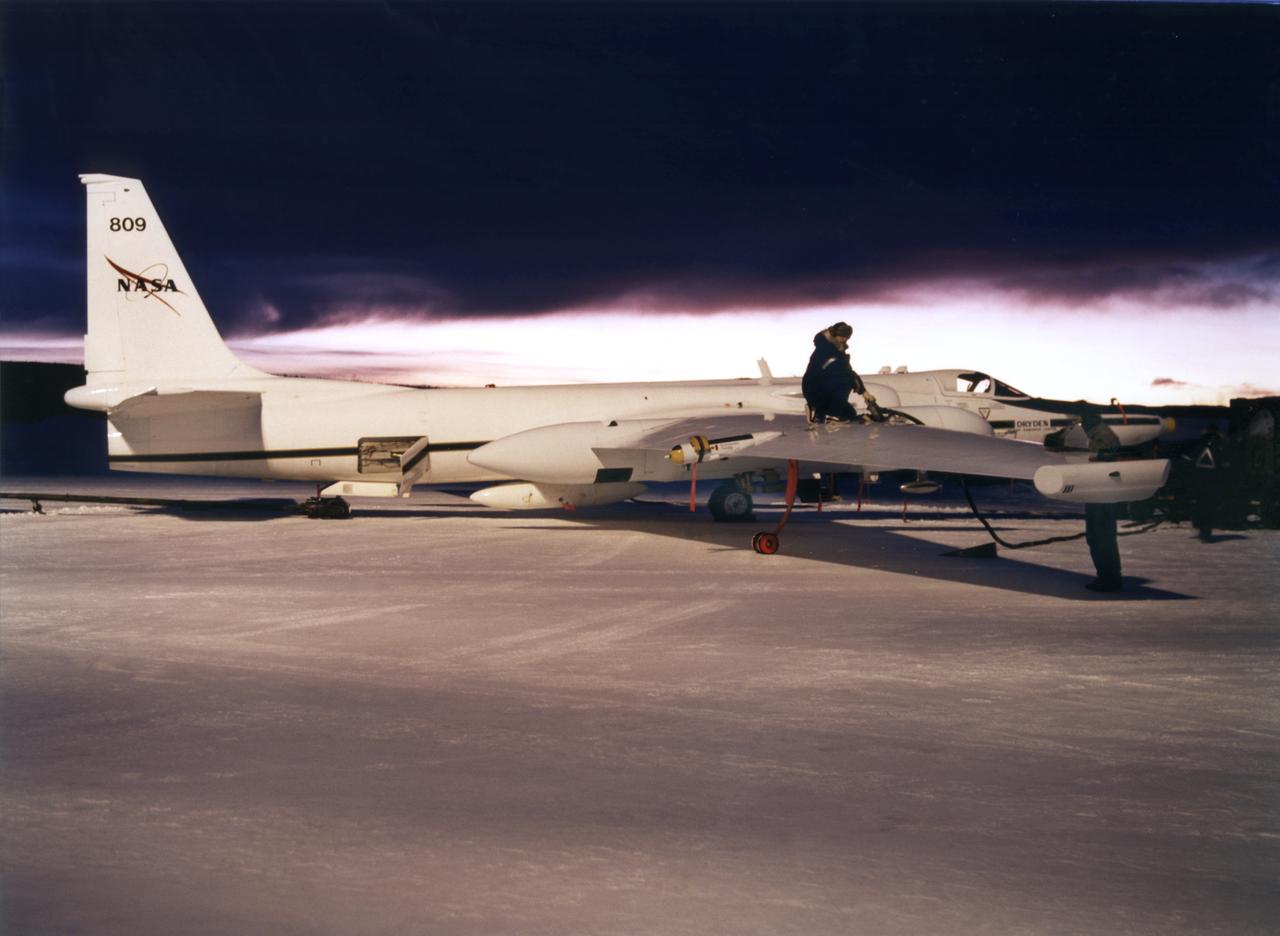
ER-2s bearing tail numbers 806 and 809 are used as airborne science platforms by NASA's Dryden Flight Research Center. The aircraft are platforms for a variety of high-altitude science missions flown over various parts of the world. They are also used for earth science and atmospheric sensor research and development, satellite calibration and data validation. The ER-2s are capable of carrying a maximum payload of 2,600 pounds of experiments in a nose bay, the main equipment bay behind the cockpit, two wing-mounted superpods and small underbody and trailing edges. Most ER-2 missions last about six hours with ranges of about 2,200 nautical miles. The aircraft typically fly at altitudes above 65,000 feet. On November 19, 1998, an ER-2 set a world record for medium weight aircraft reaching an altitude of 68,700 feet. The aircraft is 63 feet long, with a wingspan of 104 feet. The top of the vertical tail is 16 feet above ground when the aircraft is on the bicycle-type landing gear. Cruising speeds are 410 knots, or 467 miles per hour, at altitude. A single General Electric F-118 turbofan engine rated at 17,000 pounds thrust powers the ER-2.
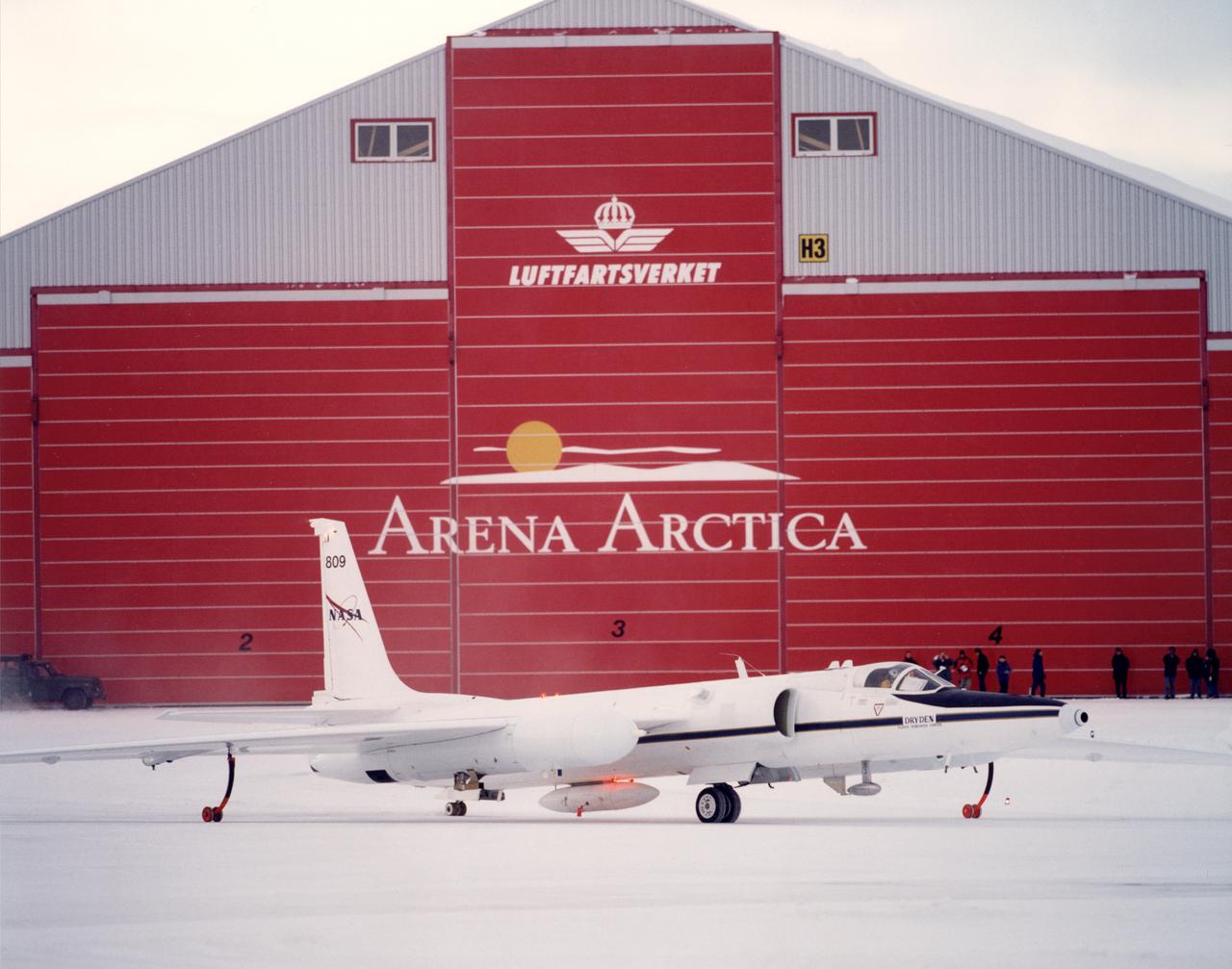
ER-2s bearing tail numbers 806 and 809 are used as airborne science platforms by NASA's Dryden Flight Research Center. The aircraft are platforms for a variety of high-altitude science missions flown over various parts of the world. They are also used for earth science and atmospheric sensor research and development, satellite calibration and data validation. The ER-2s are capable of carrying a maximum payload of 2,600 pounds of experiments in a nose bay, the main equipment bay behind the cockpit, two wing-mounted superpods and small underbody and trailing edges. Most ER-2 missions last about six hours with ranges of about 2,200 nautical miles. The aircraft typically fly at altitudes above 65,000 feet. On November 19, 1998, an ER-2 set a world record for medium weight aircraft reaching an altitude of 68,700 feet. The aircraft is 63 feet long, with a wingspan of 104 feet. The top of the vertical tail is 16 feet above ground when the aircraft is on the bicycle-type landing gear. Cruising speeds are 410 knots, or 467 miles per hour, at altitude. A single General Electric F-118 turbofan engine rated at 17,000 pounds thrust powers the ER-2.

ER-2s bearing tail numbers 806 and 809 are used as airborne science platforms by NASA's Dryden Flight Research Center. The aircraft are platforms for a variety of high-altitude science missions flown over various parts of the world. They are also used for earth science and atmospheric sensor research and development, satellite calibration and data validation. The ER-2s are capable of carrying a maximum payload of 2,600 pounds of experiments in a nose bay, the main equipment bay behind the cockpit, two wing-mounted superpods and small underbody and trailing edges. Most ER-2 missions last about six hours with ranges of about 2,200 nautical miles. The aircraft typically fly at altitudes above 65,000 feet. On November 19, 1998, an ER-2 set a world record for medium weight aircraft reaching an altitude of 68,700 feet. The aircraft is 63 feet long, with a wingspan of 104 feet. The top of the vertical tail is 16 feet above ground when the aircraft is on the bicycle-type landing gear. Cruising speeds are 410 knots, or 467 miles per hour, at altitude. A single General Electric F-118 turbofan engine rated at 17,000 pounds thrust powers the ER-2.
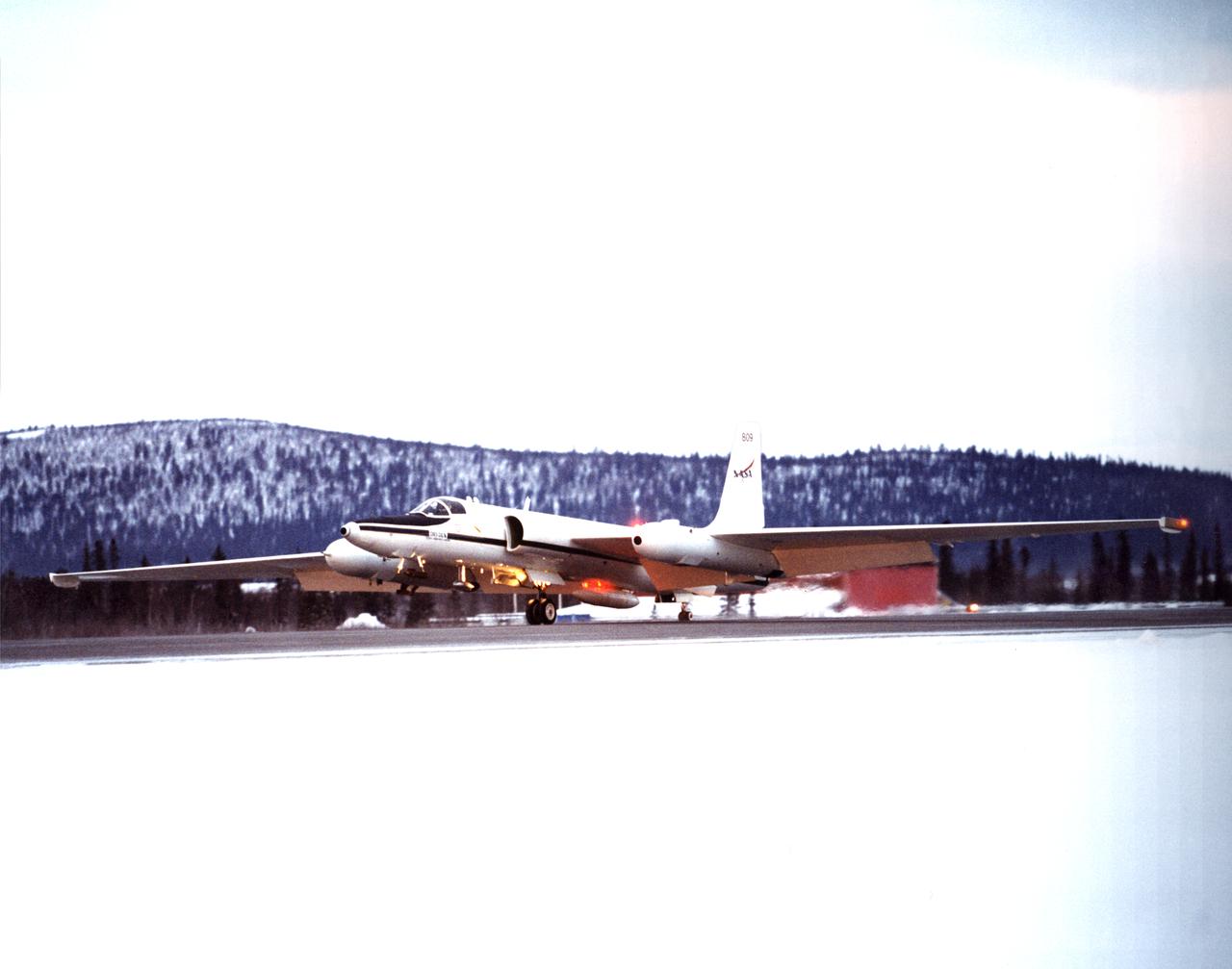
ER-2s bearing tail numbers 806 and 809 are used as airborne science platforms by NASA's Dryden Flight Research Center. The aircraft are platforms for a variety of high-altitude science missions flown over various parts of the world. They are also used for earth science and atmospheric sensor research and development, satellite calibration and data validation. The ER-2s are capable of carrying a maximum payload of 2,600 pounds of experiments in a nose bay, the main equipment bay behind the cockpit, two wing-mounted superpods and small underbody and trailing edges. Most ER-2 missions last about six hours with ranges of about 2,200 nautical miles. The aircraft typically fly at altitudes above 65,000 feet. On November 19, 1998, an ER-2 set a world record for medium weight aircraft reaching an altitude of 68,700 feet. The aircraft is 63 feet long, with a wingspan of 104 feet. The top of the vertical tail is 16 feet above ground when the aircraft is on the bicycle-type landing gear. Cruising speeds are 410 knots, or 467 miles per hour, at altitude. A single General Electric F-118 turbofan engine rated at 17,000 pounds thrust powers the ER-2.
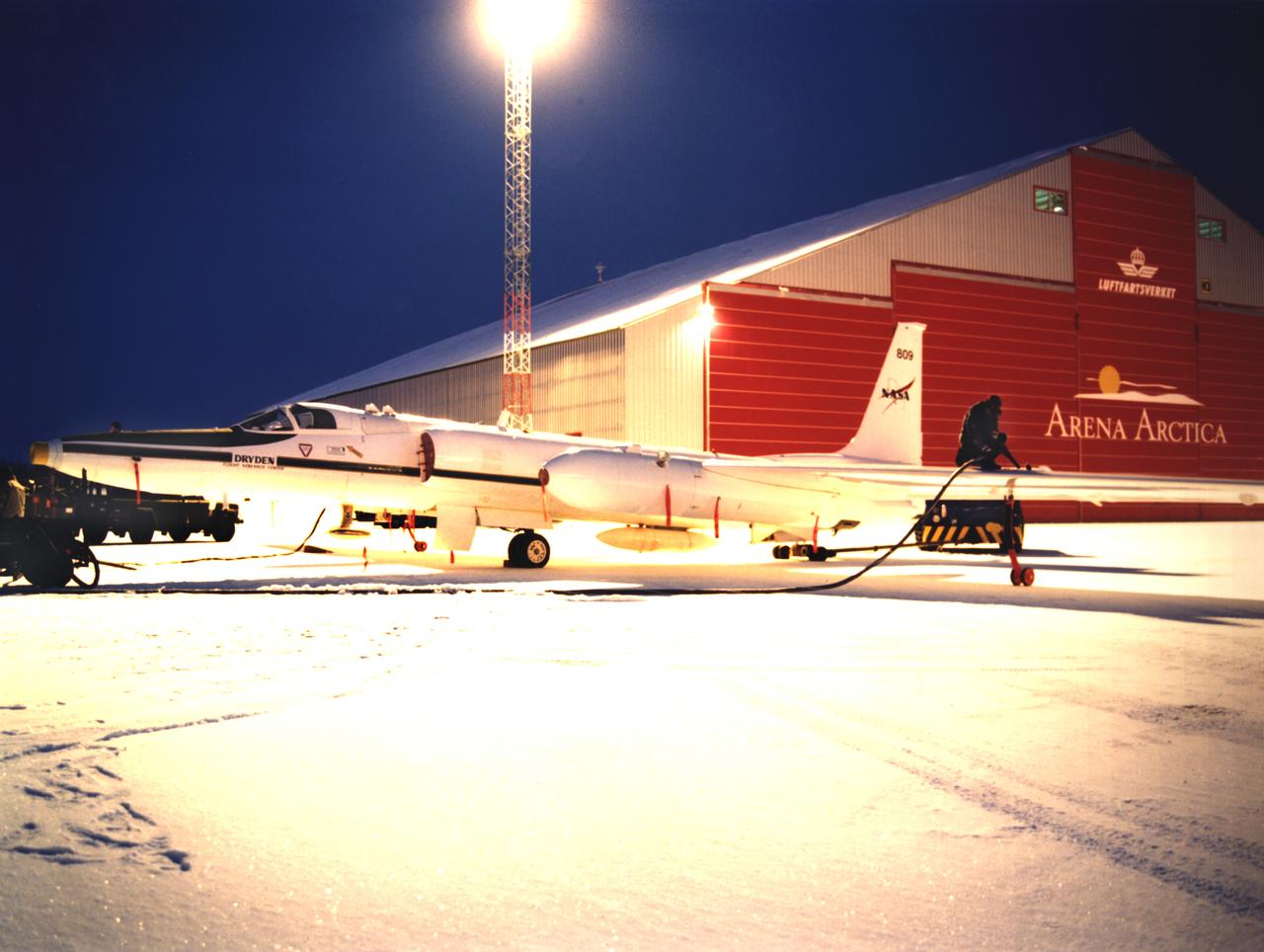
ER-2s bearing tail numbers 806 and 809 are used as airborne science platforms by NASA's Dryden Flight Research Center. The aircraft are platforms for a variety of high-altitude science missions flown over various parts of the world. They are also used for earth science and atmospheric sensor research and development, satellite calibration and data validation. The ER-2s are capable of carrying a maximum payload of 2,600 pounds of experiments in a nose bay, the main equipment bay behind the cockpit, two wing-mounted superpods and small underbody and trailing edges. Most ER-2 missions last about six hours with ranges of about 2,200 nautical miles. The aircraft typically fly at altitudes above 65,000 feet. On November 19, 1998, an ER-2 set a world record for medium weight aircraft reaching an altitude of 68,700 feet. The aircraft is 63 feet long, with a wingspan of 104 feet. The top of the vertical tail is 16 feet above ground when the aircraft is on the bicycle-type landing gear. Cruising speeds are 410 knots, or 467 miles per hour, at altitude. A single General Electric F-118 turbofan engine rated at 17,000 pounds thrust powers the ER-2.
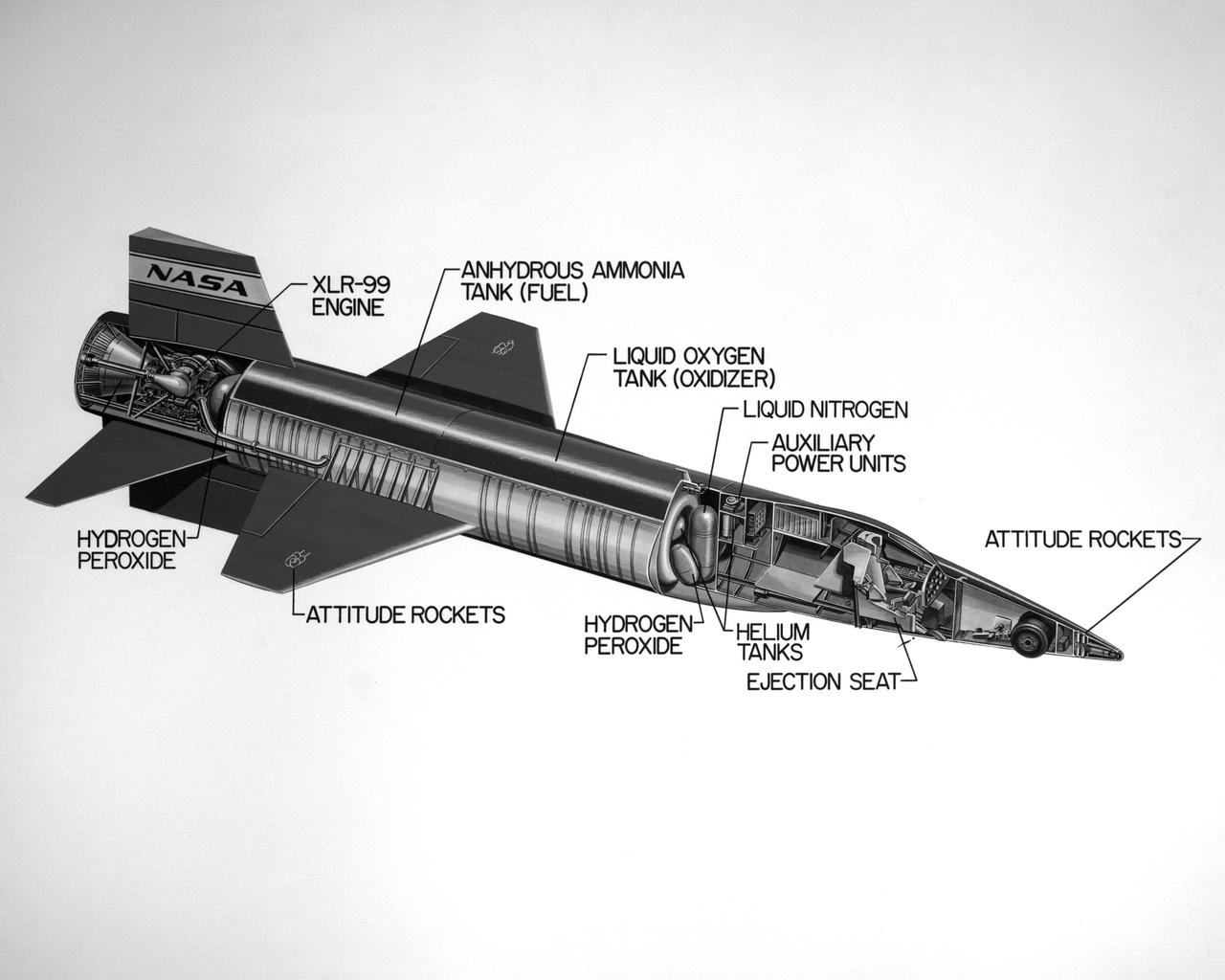
Cutaway drawing of the North American X-15.
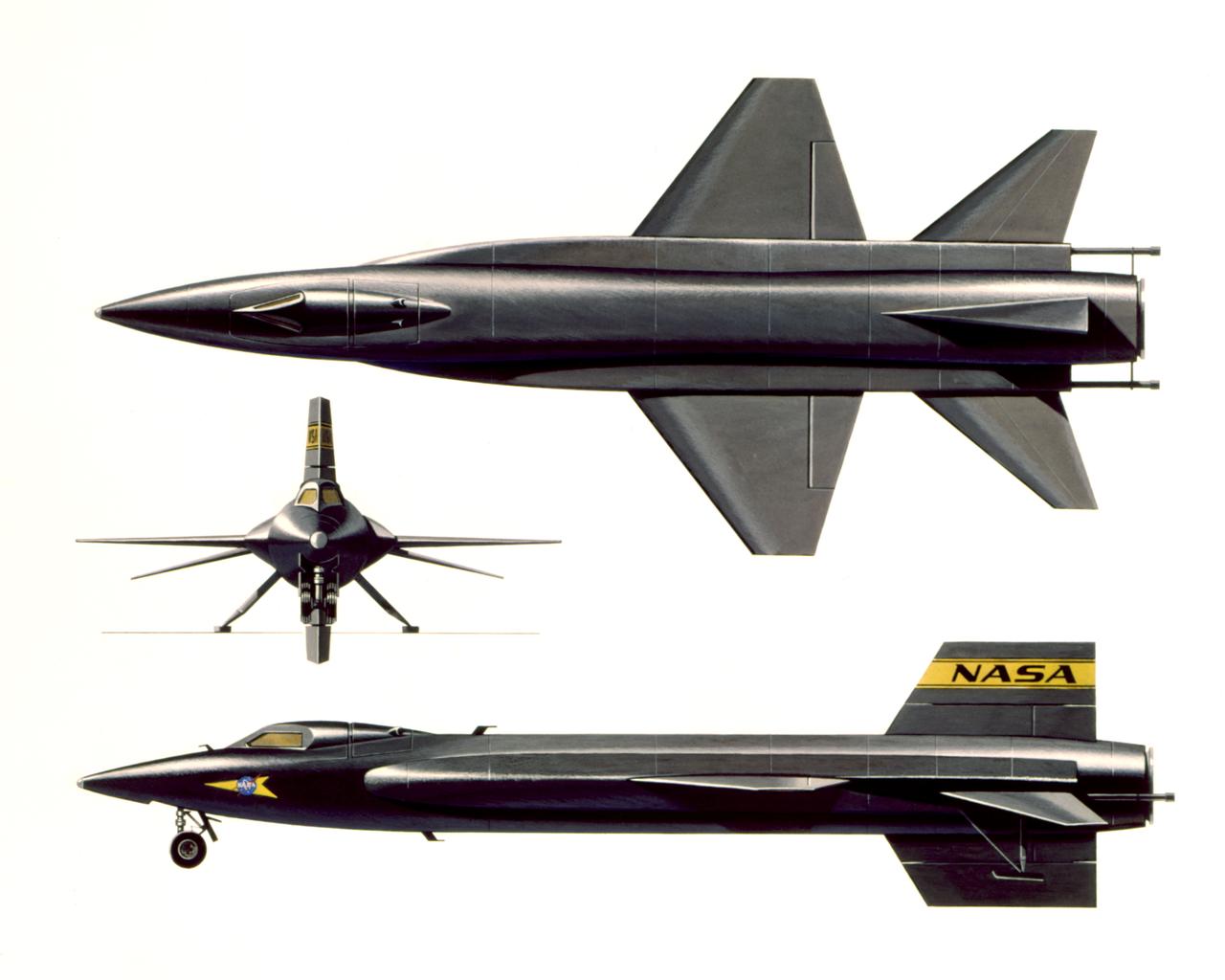
Three view art of the North American X-15.

Southwestern US, with Las Vegas, NV in foreground, taken by X-15 Hycon HR-236 Camera during flt. 2-39-70 on June 27, 1965.
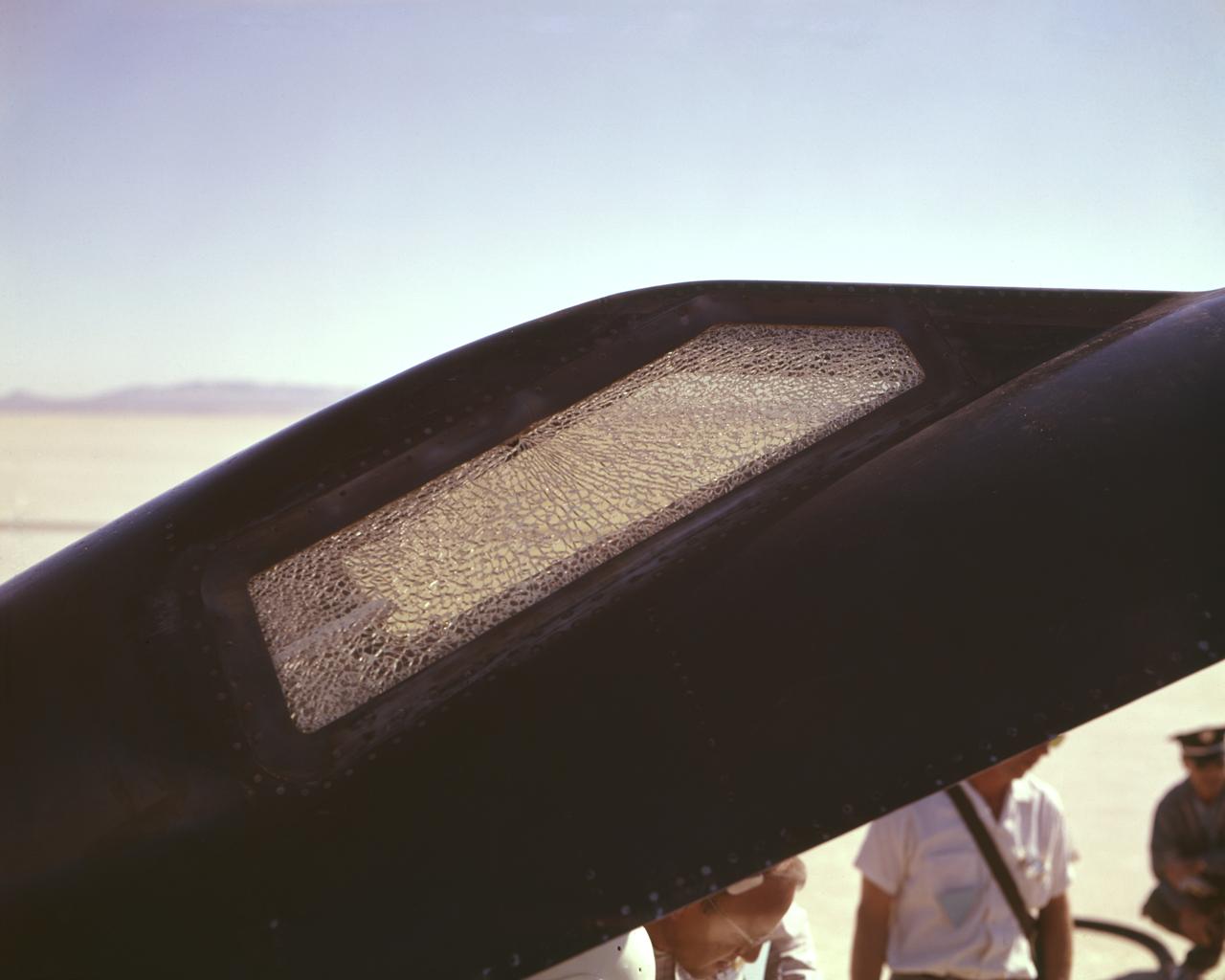
Cracked canopy glass on right side of X-15 #2 after flt. 2-21-37 on Nov. 9 1961. Robert White-pilot. First flight to mach 6.
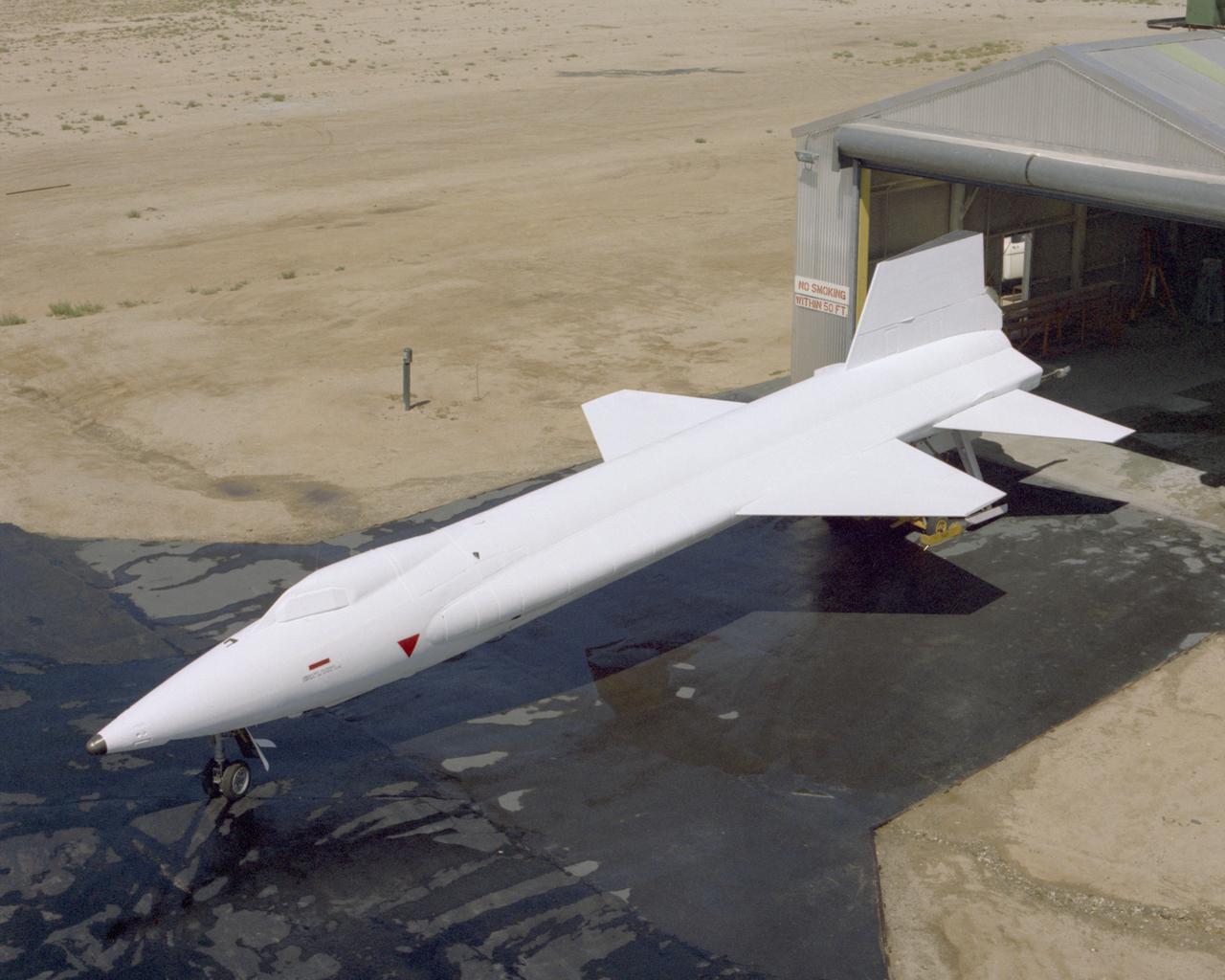
X-15A-2 is rolled out of the paint shop after having the full scale ablative applied. In June 1967, the X-15A-2 rocket-powered research aircraft received a full-scale ablative coating to protect the craft from the high temperatures associated with hypersonic flight (above Mach 5). This pink eraser-like substance, applied to the X-15A-2 aircraft (56-6671), was then covered with a white sealant coat before flight. This coating would help the #2 aircraft reach the record speed of 4,520 mph (Mach 6.7).
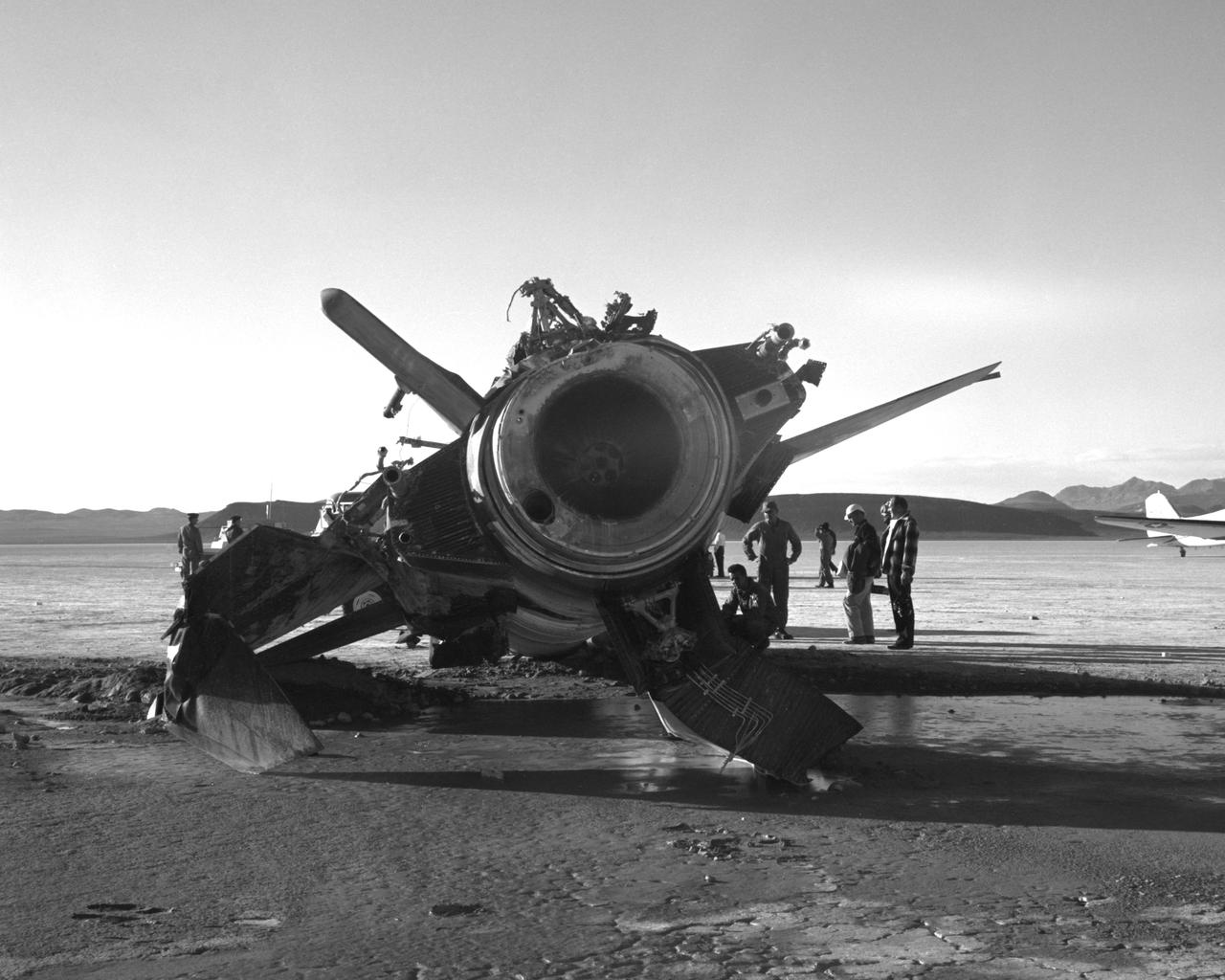
NASA research pilot Jack McKay was injured in a crash landing of the X-15 #2 on November 9, 1962. Following the launch from the B-52 to begin flight 2-31-52, he started the X-15's rocket engine, only to discover that it produced just 30 percent of its maximum thrust. He had to make a high-speed emergency landing on Mud Lake, NV, without flaps but with a significant amount of fuel still in the aircraft. As the X-15 slid across the lakebed, the left skid collapsed; the aircraft turned sideways and flipped onto its back. McKay suffered back injuries but was eventually able to resume X-15 pilot duties, making 22 more flights. The X-15 was sent back to North American Aviation and rebuilt into the X-15A-2.
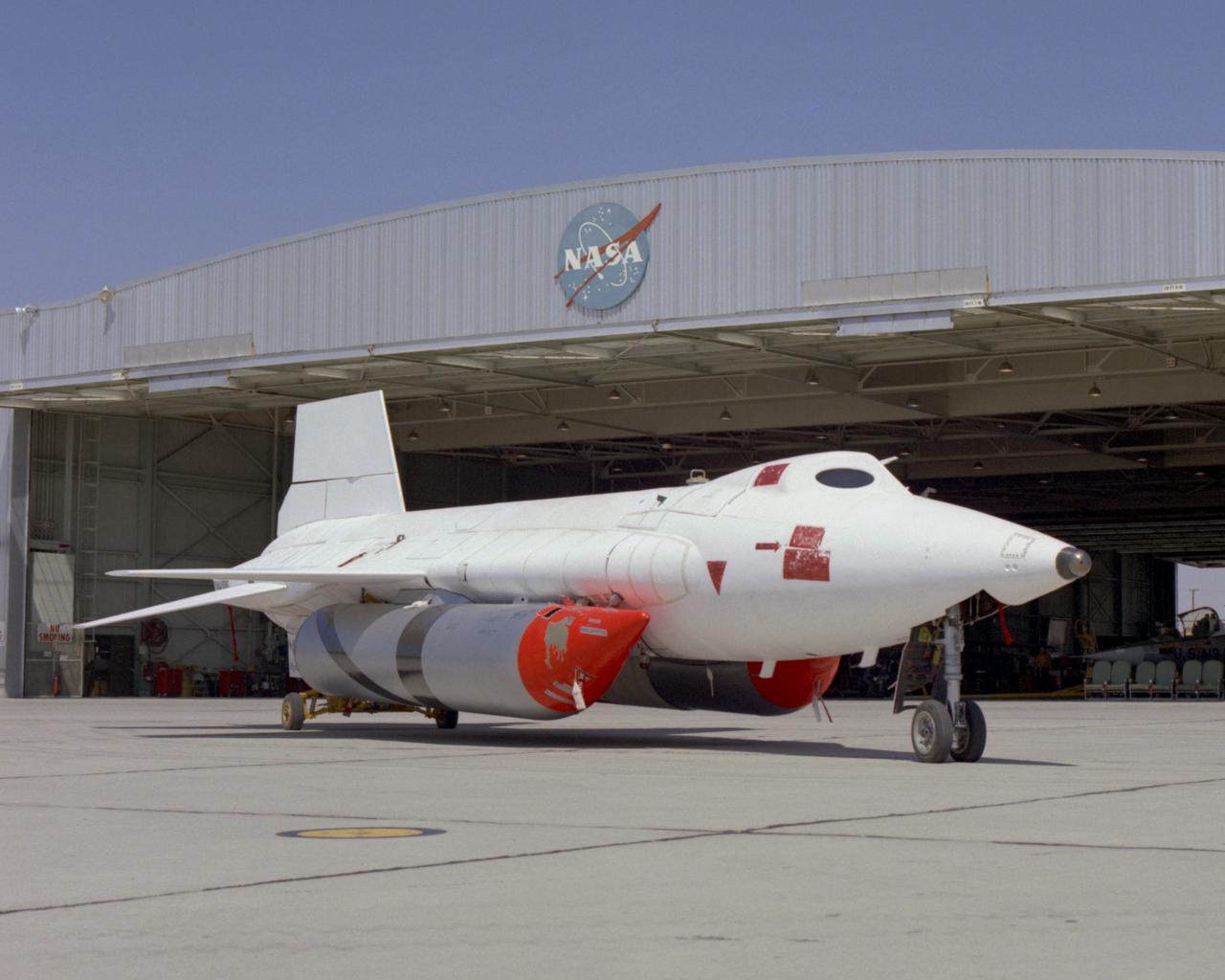
X-15A-2 with full scale ablative and external tanks installed parked in front of hangar. In June 1967, the X-15A-2 rocket-powered research aircraft received a full-scale ablative coating to protect the craft from the high temperatures associated with hypersonic flight (above Mach 5). This pink eraser-like substance, applied to the X-15A-2 aircraft (56-6671), was then covered with a white sealant coat before flight. This coating would help the #2 aircraft reach the record speed of 4,520 mph (Mach 6.7).
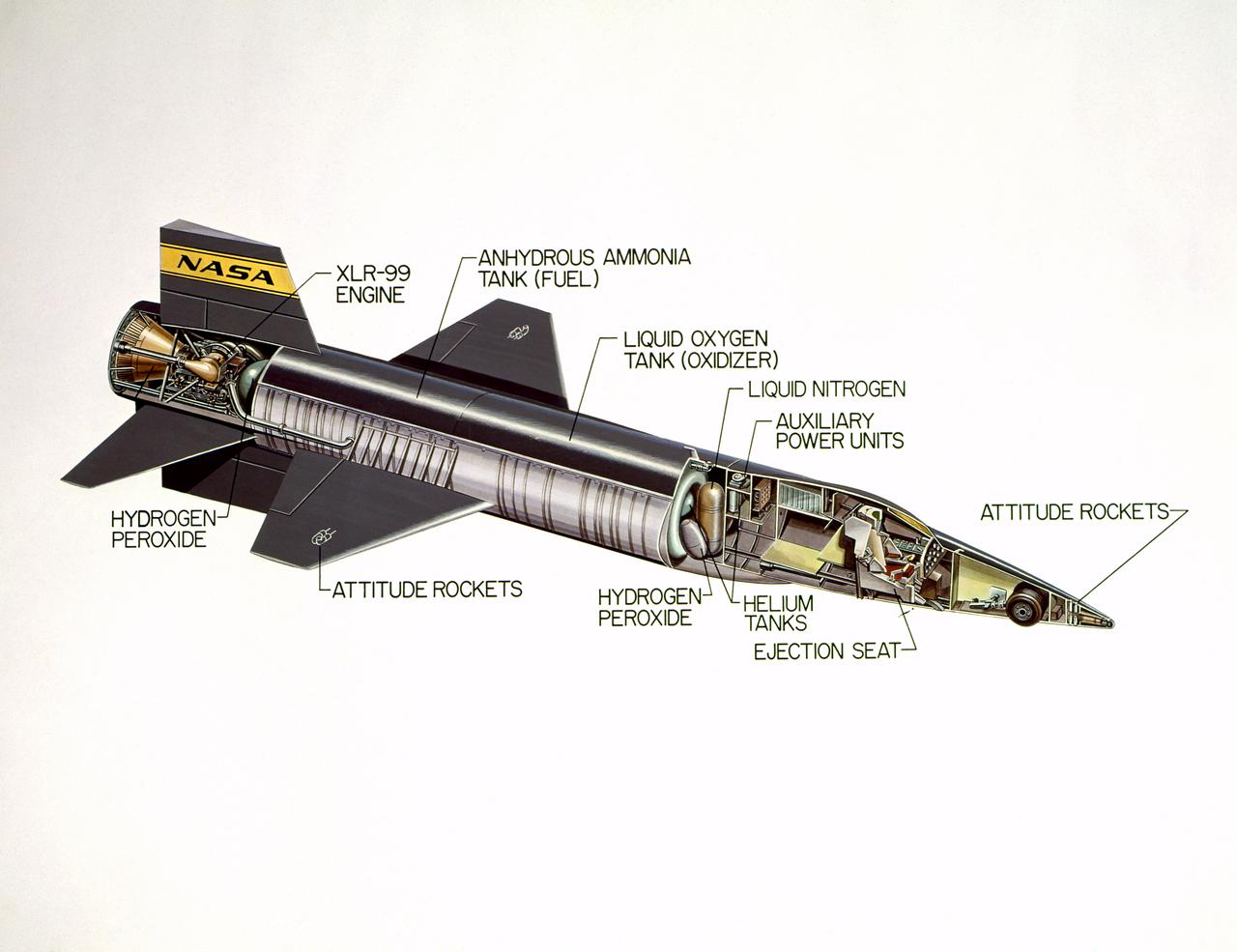
Cutaway drawing of the North American X-15.
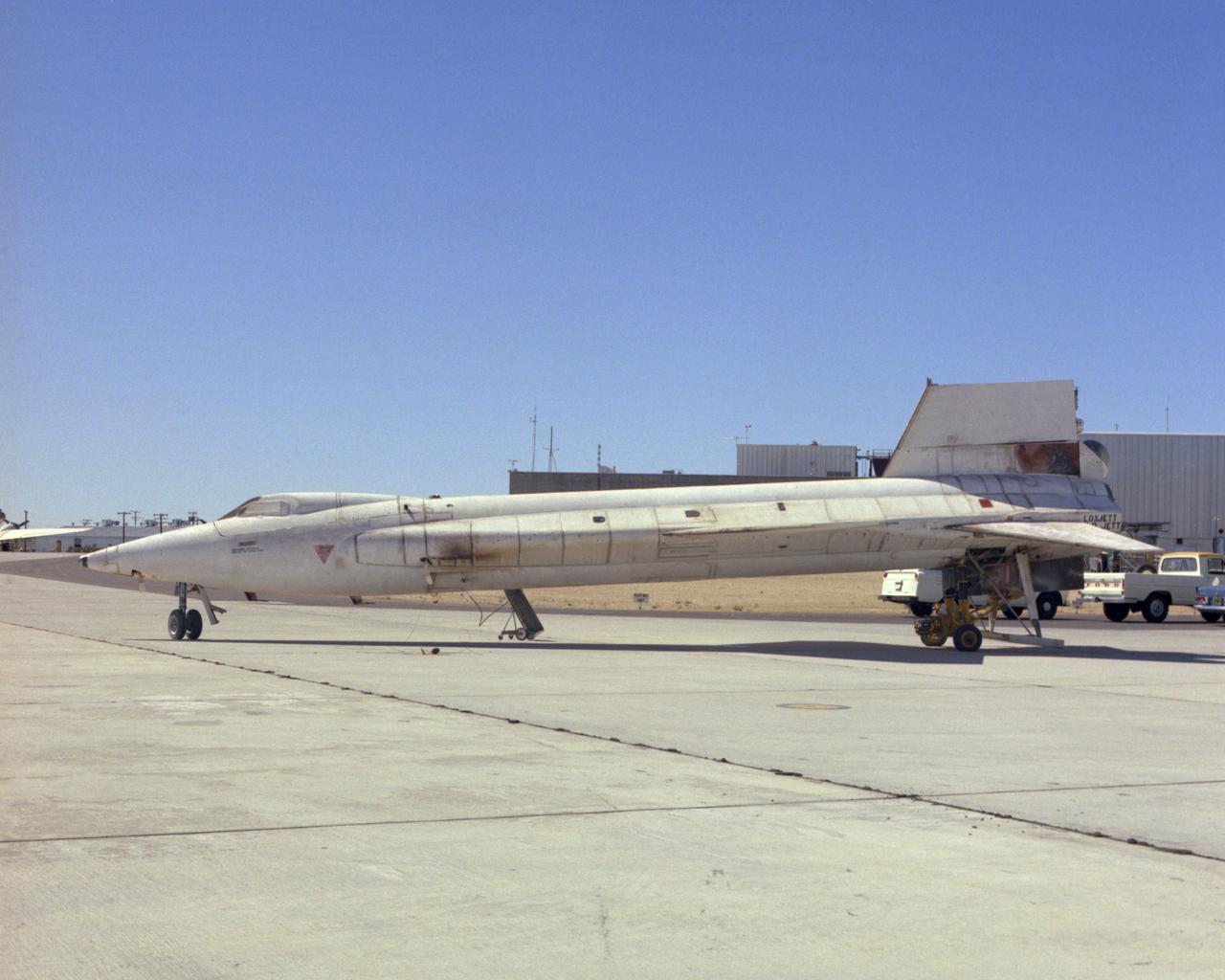
X-15A-2 post flight photo showing heat damage from Mach 6.7 flight on 3 Oct 67. Flt. 2-53-97; pilot-Pete Knight.
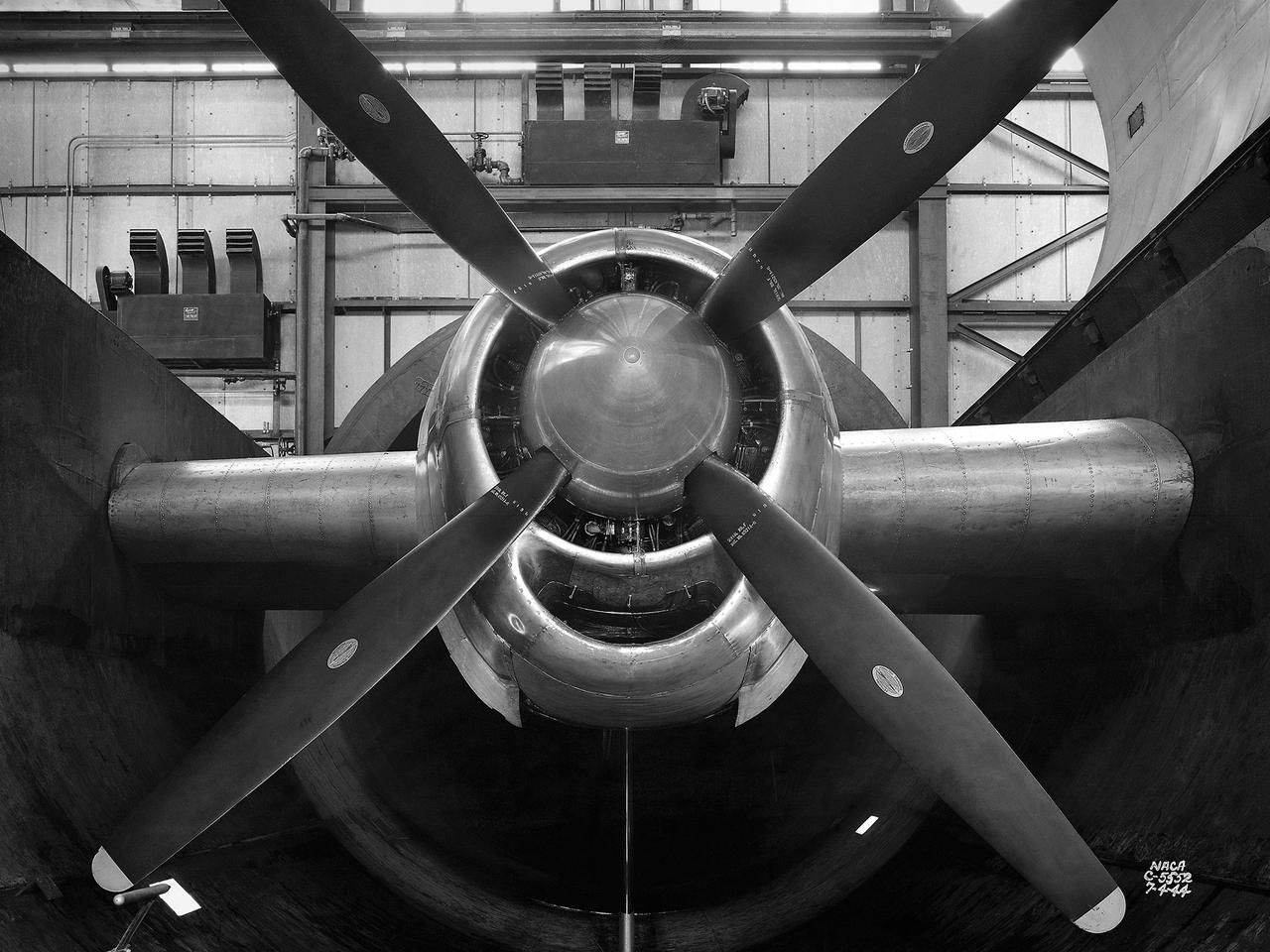
The resolution of the Boeing B-29 Superfortress’ engine cooling problems was one of the Aircraft Engine Research Laboratory’s (AERL) key contributions to the World War II effort. The B-29 leapfrogged previous bombers in size, speed, and altitude capabilities. The B–29 was intended to soar above anti-aircraft fire and make pinpoint bomb drops onto strategic targets. Four Wright Aeronautical R-3350 engines powered the massive aircraft. The engines, however, frequently strained and overheated due to payload overloading. This resulted in a growing number of engine fires that often resulted in crashes. The military asked the NACA to tackle the overheating issue. Full-scale engine tests on a R–3350 engine in the Prop House demonstrated that a NACA-designed impeller increased the fuel injection system’s flow rate. Single-cylinder studies resolved a valve failure problem by a slight extension of the cylinder head, and researchers in the Engine Research Building combated uneven heating with a new fuel injection system. Investigations during the summer of 1944 in the Altitude Wind Tunnel, which could simulate flight conditions at high altitudes, led to reduction of drag and improved air flow by reshaping the cowling inlet and outlet. The NACA modifications were then flight tested on a B-29 bomber that was brought to the AERL.
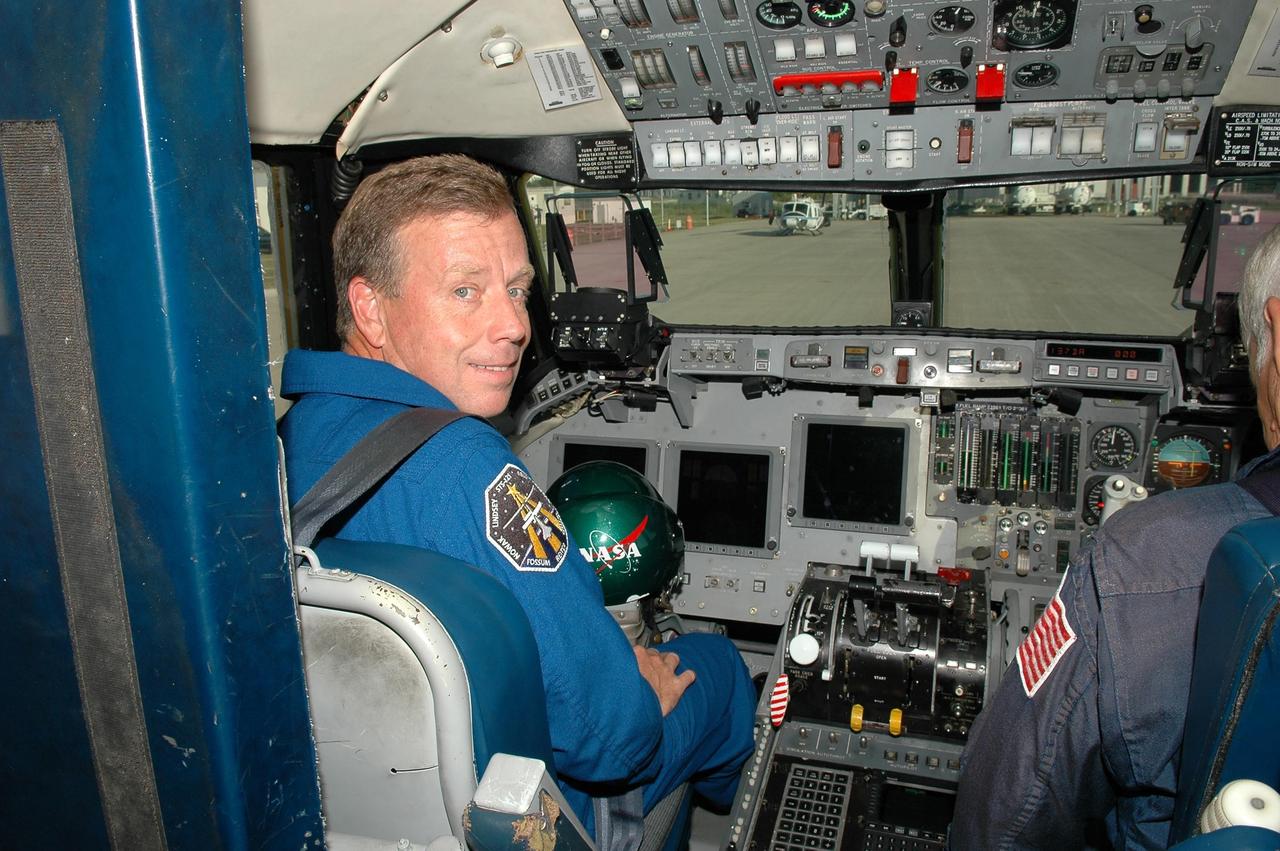
KENNEDY SPACE CENTER, FLA. - At the Shuttle Landing Facility, STS-121 Commander Steven Lindsey gets ready for a training flight in a Shuttle Training Aircraft (STA). He will be practicing landing the orbiter using the STA, which is a modified Grumman American Aviation-built Gulf Stream II jet that was modified to simulate an orbiter’s cockpit, motion and visual cues, and handling qualities. In flight, the STA duplicates the orbiter’s atmospheric descent trajectory from approximately 35,000 feet altitude to landing on a runway. Because the orbiter is unpowered during re-entry and landing, its high-speed glide must be perfectly executed the first time. Space Shuttle Discovery is scheduled to launch July 1 on mission STS-121. Photo credit: NASA/Kim Shiflett
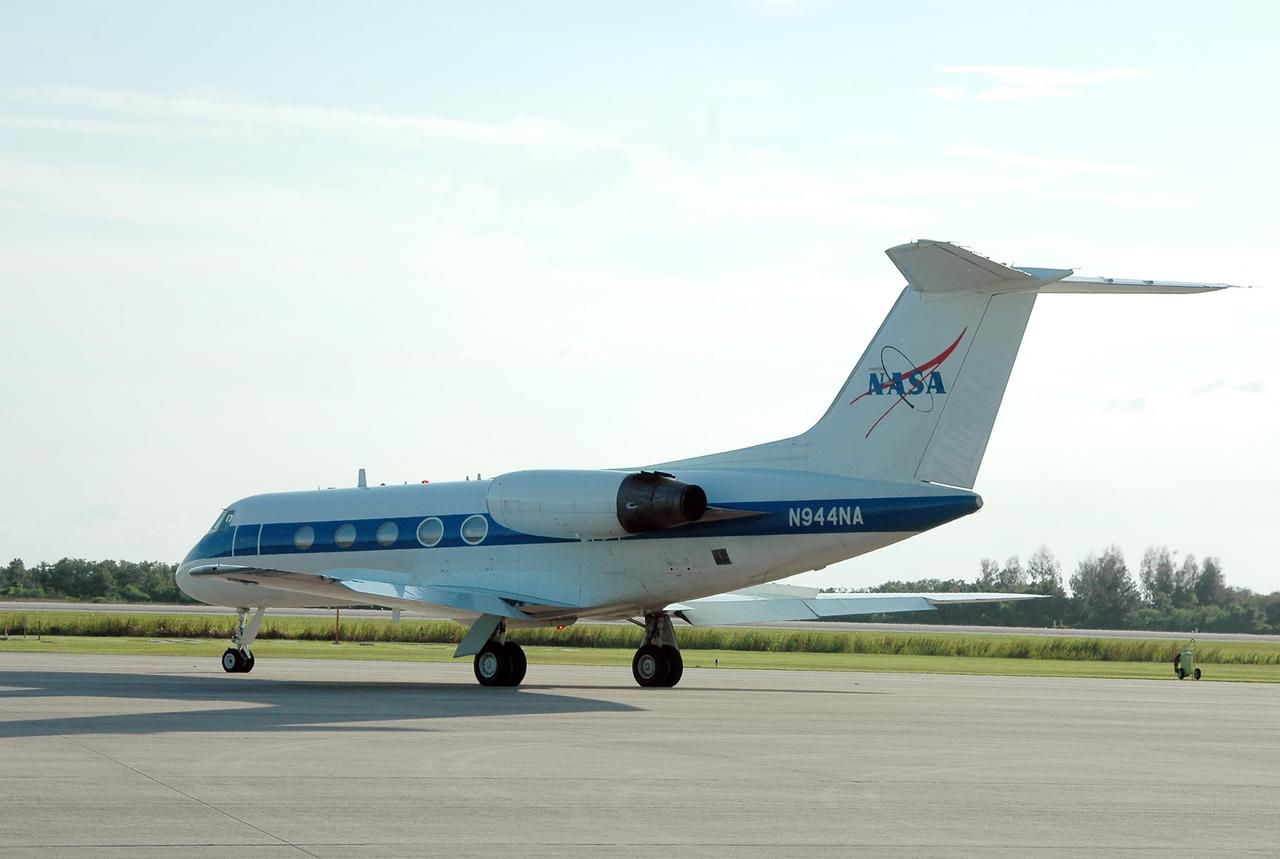
KENNEDY SPACE CENTER, FLA. - At the Shuttle Landing Facility, the Shuttle Training Aircraft (STA) taxis to the runway with the STS-121 pilot and commander in the cockpit for practice flights. The STA is a modified Grumman American Aviation-built Gulf Stream II jet that was modified to simulate an orbiter’s cockpit, motion and visual cues, and handling qualities. In flight, the STA duplicates the orbiter’s atmospheric descent trajectory from approximately 35,000 feet altitude to landing on a runway. Because the orbiter is unpowered during re-entry and landing, its high-speed glide must be perfectly executed the first time. Space Shuttle Discovery is scheduled to launch July 1 on mission STS-121. Photo credit: NASA/Kim Shiflett
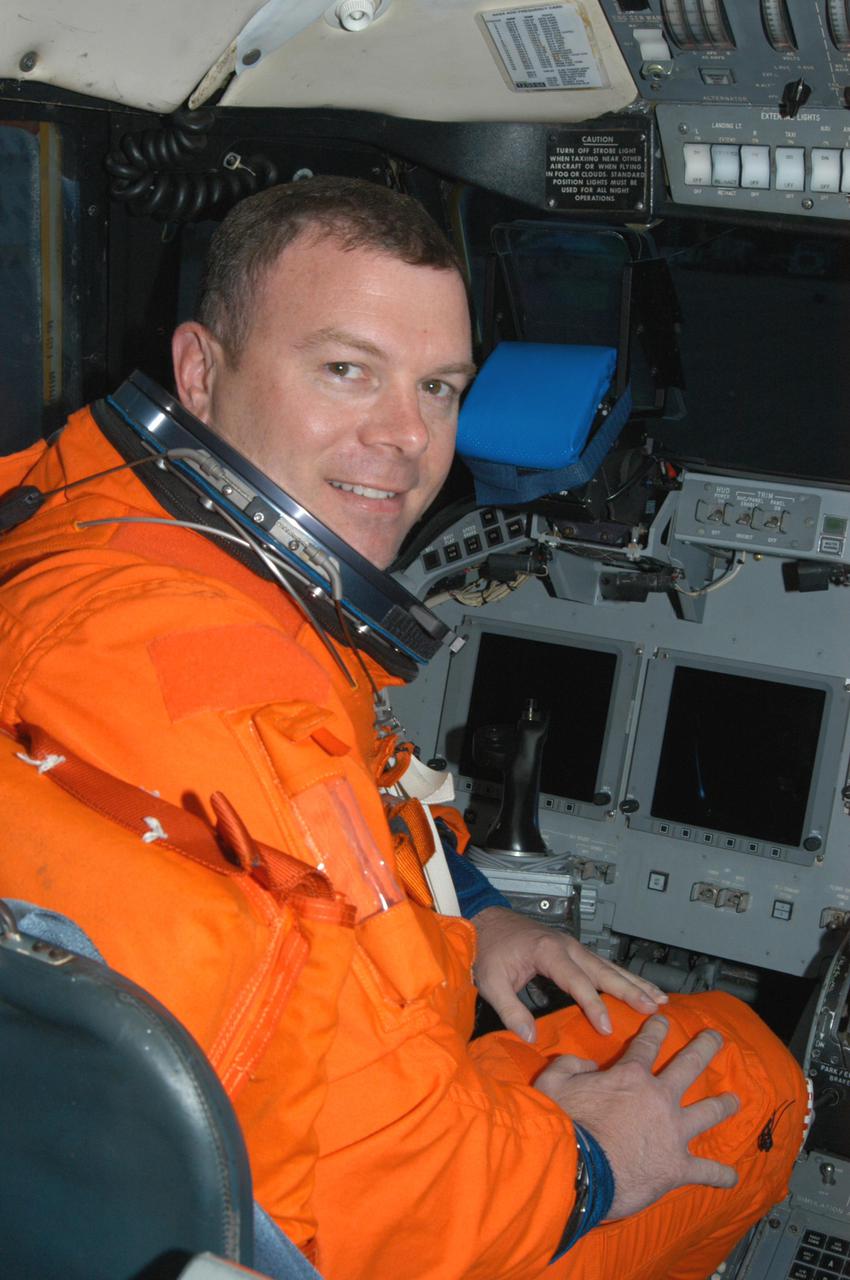
KENNEDY SPACE CENTER, FLA. - At the Shuttle Landing Facility on NASA Kennedy Space Center, STS-114 Pilot James Kelly sits in the cockpit of the Shuttle Training Aircraft (STA) after landing. He and Mission Commander Eileen Collins have been practicing night landings in preparation for the mission. The STA is a modified Grumman American Aviation-built Gulf Stream II executive jet that was modified to simulate an orbiter’s cockpit, motion and visual cues, and handling qualities. In flight, the STA duplicates the orbiter’s atmospheric descent trajectory from approximately 35,000 feet altitude to landing on a runway. Because the orbiter is unpowered during re-entry and landing, its high-speed glide must be perfectly executed the first time. Return to Flight Mission STS-114 is scheduled to launch aboard Space Shuttle Discovery with a crew of seven at 10:39 a.m. EDT on July 26. Landing is expected on Aug. 7.

KENNEDY SPACE CENTER, FLA. -- At the Shuttle Landing Facility on NASA’s Kennedy Space Center, Return to Flight STS-114 Pilot James Kelly and Mission Commander Eileen Collins join support personnel after completing practice runs on the Shuttle Training Aircraft (STA). Kelly and Collins are practicing landing the orbiter using the STA, which is a modified Grumman American Aviation-built Gulf Stream II executive jet that was modified to simulate an orbiter’s cockpit, motion and visual cues, and handling qualities. In flight, the STA duplicates the orbiter’s atmospheric descent trajectory from approximately 35,000 feet altitude to landing on a runway. Because the orbiter is unpowered during re-entry and landing, its high-speed glide must be perfectly executed the first time. Mission STS-114 is scheduled to launch aboard Space Shuttle Discovery with a crew of seven on July 13 at 3:51 p.m. from Launch Pad 39B.
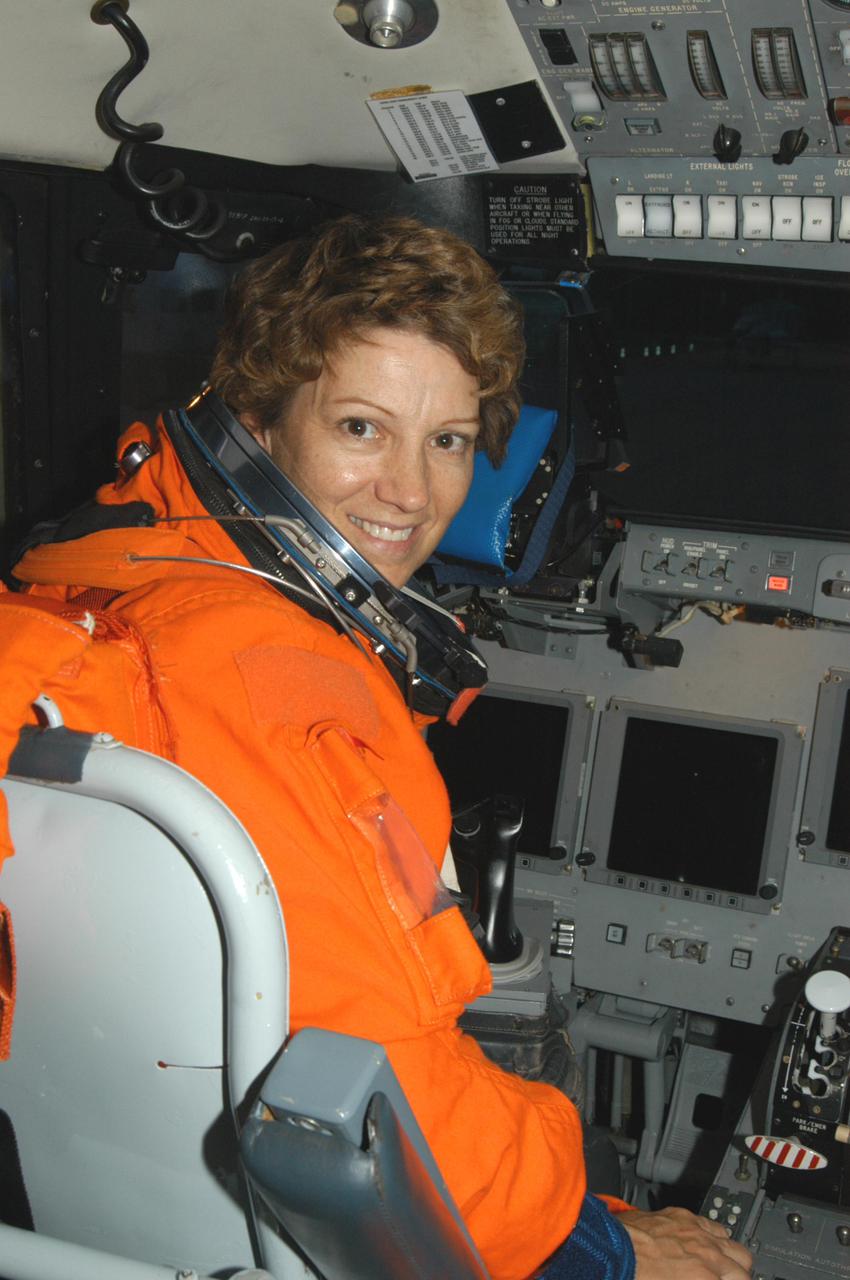
KENNEDY SPACE CENTER, FLA. - At the Shuttle Landing Facility on NASA Kennedy Space Center, STS-114 Mission Commander Eileen Collins sits in the cockpit of the Shuttle Training Aircraft (STA) after landing. She and Pilot James Kelly have been practicing night landings in preparation for the mission. The STA is a modified Grumman American Aviation-built Gulf Stream II executive jet that was modified to simulate an orbiter’s cockpit, motion and visual cues, and handling qualities. In flight, the STA duplicates the orbiter’s atmospheric descent trajectory from approximately 35,000 feet altitude to landing on a runway. Because the orbiter is unpowered during re-entry and landing, its high-speed glide must be perfectly executed the first time. Return to Flight Mission STS-114 is scheduled to launch aboard Space Shuttle Discovery with a crew of seven at 10:39 a.m. EDT on July 26. Landing is expected on Aug. 7.
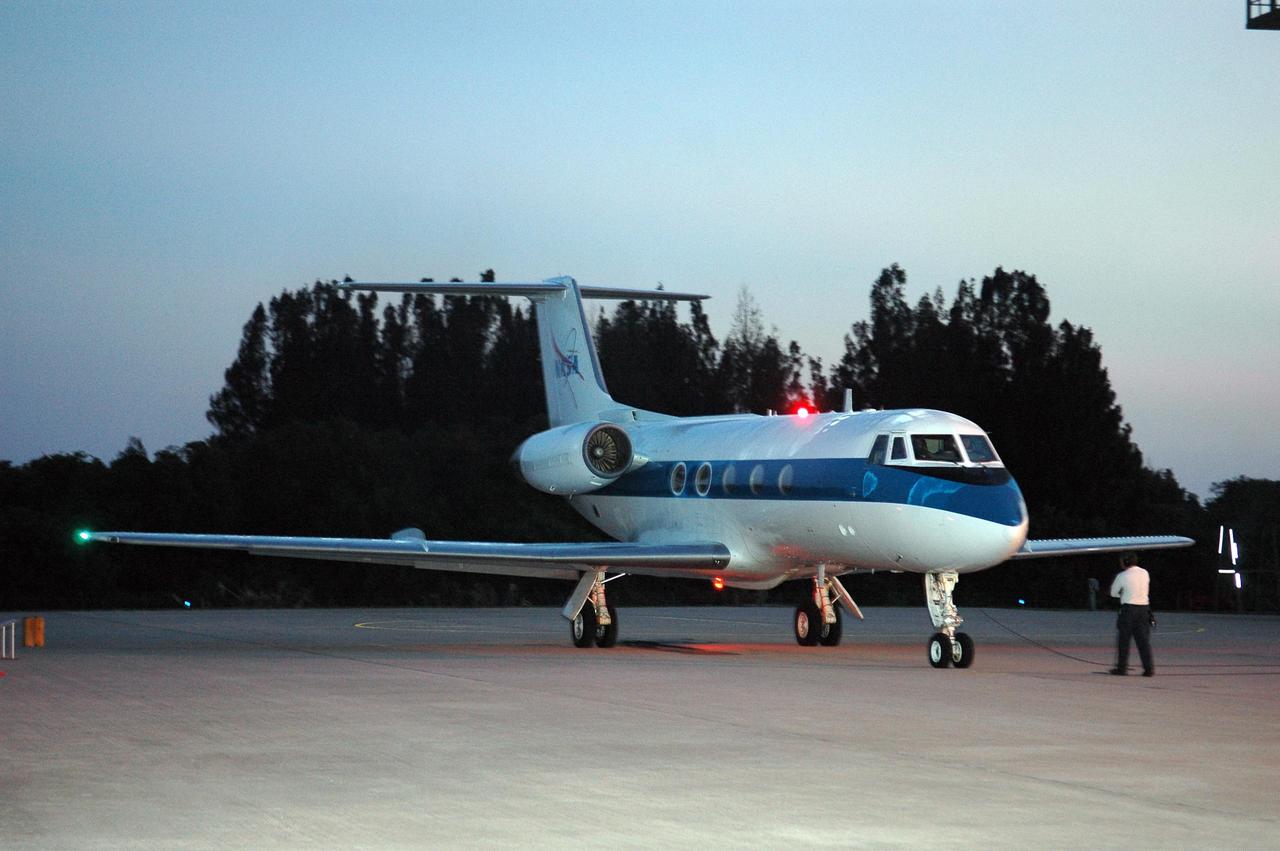
KENNEDY SPACE CENTER, FLA. - As dawn washes the sky in pink, STS-121 Commander Steven Lindsey is ready for his first flight in the Shuttle Training Aircraft today to practice landing a shuttle in preparation for the July 1 launch of Space Shuttle Discovery. The STA is a Grumman American Aviation-built Gulf Stream II jet that was modified to simulate an orbiter’s cockpit, motion and visual cues, and handling qualities. In flight, the STA duplicates the orbiter’s atmospheric descent trajectory from approximately 35,000 feet altitude to landing on a runway. Because the orbiter is unpowered during re-entry and landing, its high-speed glide must be perfectly executed the first time. Photo credit: NASA/Kim Shiflett
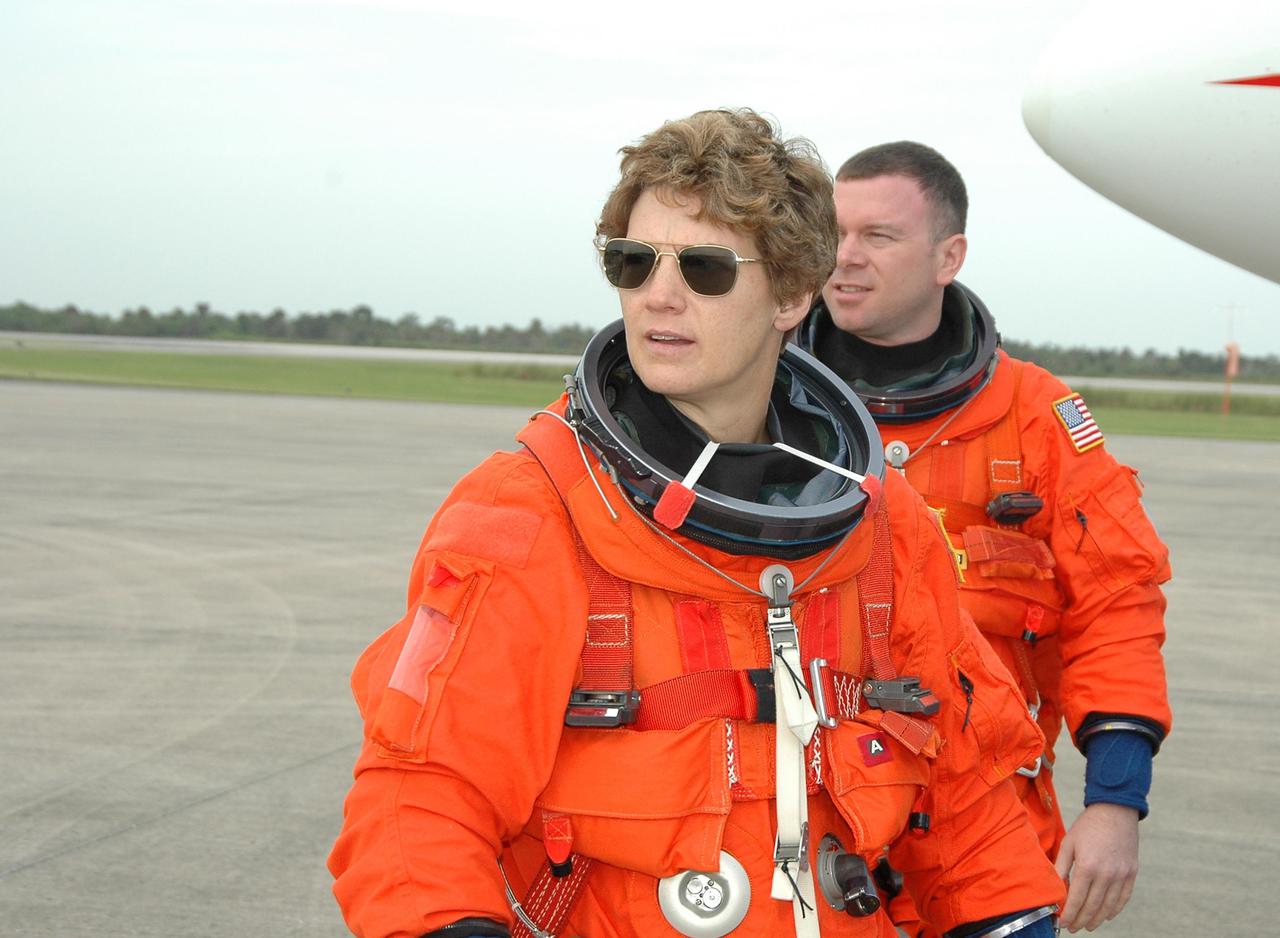
KENNEDY SPACE CENTER, FLA. -- Eileen Collins, mission commander on Return to Flight STS-114, and Pilot James Kelly walk away from the Shuttle Training Aircraft (STA) at the Shuttle Landing Facility on NASA’s Kennedy Space Center. They are practicing landing the orbiter using the STA, which is a modified Grumman American Aviation-built Gulf Stream II executive jet that was modified to simulate an orbiter’s cockpit, motion and visual cues, and handling qualities. In flight, the STA duplicates the orbiter’s atmospheric descent trajectory from approximately 35,000 feet altitude to landing on a runway. Because the orbiter is unpowered during re-entry and landing, its high-speed glide must be perfectly executed the first time. Mission STS-114 is scheduled to launch aboard Space Shuttle Discovery with a crew of seven on July 13 at 3:51 p.m. from Launch Pad 39B.
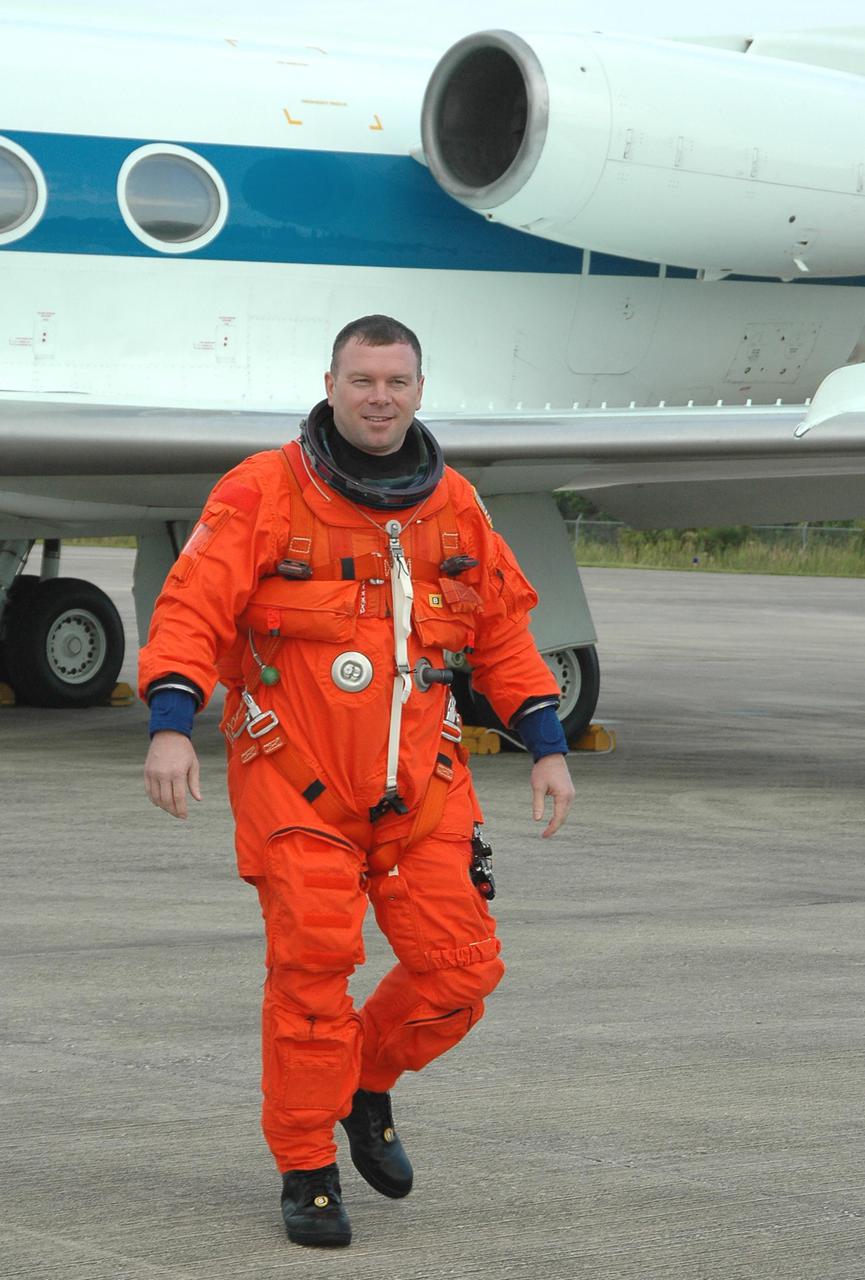
KENNEDY SPACE CENTER, FLA. -- James Kelly, pilot on Return to Flight mission STS-114, walks away from the Shuttle Training Aircraft (STA) at the Shuttle Landing Facility on NASA’s Kennedy Space Center. He and Mission Commander Eileen Collins are practicing landing the orbiter using the STA, which is a modified Grumman American Aviation-built Gulf Stream II executive jet that was modified to simulate an orbiter’s cockpit, motion and visual cues, and handling qualities. In flight, the STA duplicates the orbiter’s atmospheric descent trajectory from approximately 35,000 feet altitude to landing on a runway. Because the orbiter is unpowered during re-entry and landing, its high-speed glide must be perfectly executed the first time. Mission STS-114 is scheduled to launch aboard Space Shuttle Discovery with a crew of seven on July 13 at 3:51 p.m. from Launch Pad 39B.
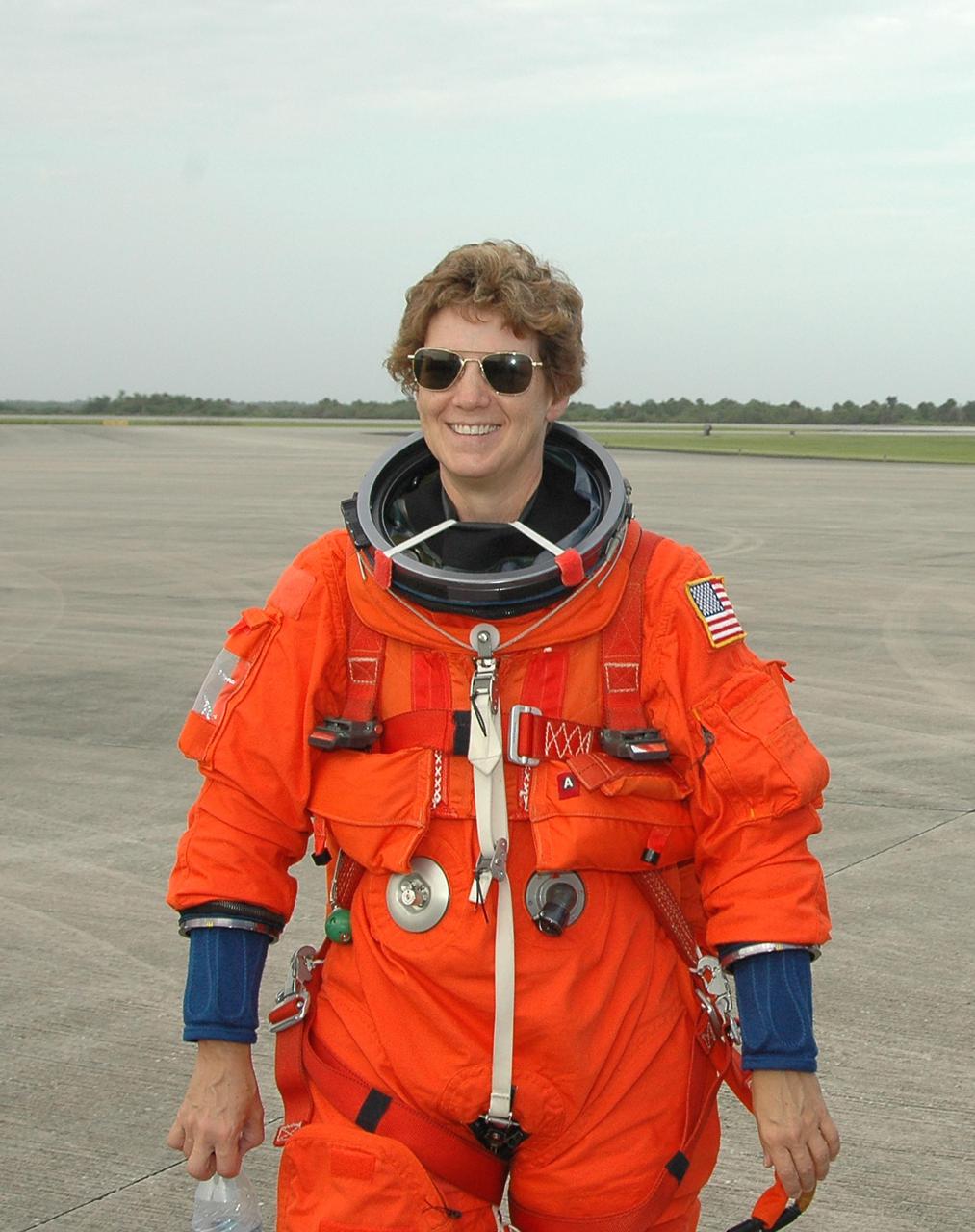
KENNEDY SPACE CENTER, FLA. -- At the Shuttle Landing Facility on NASA’s Kennedy Space Center, Return to Flight STS-114 Mission Commander Eileen Collins completes practice runs on the Shuttle Training Aircraft (STA). She and Pilot James Kelly are practicing landing the orbiter using the STA, which is a modified Grumman American Aviation-built Gulf Stream II executive jet that was modified to simulate an orbiter’s cockpit, motion and visual cues, and handling qualities. In flight, the STA duplicates the orbiter’s atmospheric descent trajectory from approximately 35,000 feet altitude to landing on a runway. Because the orbiter is unpowered during re-entry and landing, its high-speed glide must be perfectly executed the first time. Mission STS-114 is scheduled to launch aboard Space Shuttle Discovery with a crew of seven on July 13 at 3:51 p.m. from Launch Pad 39B.
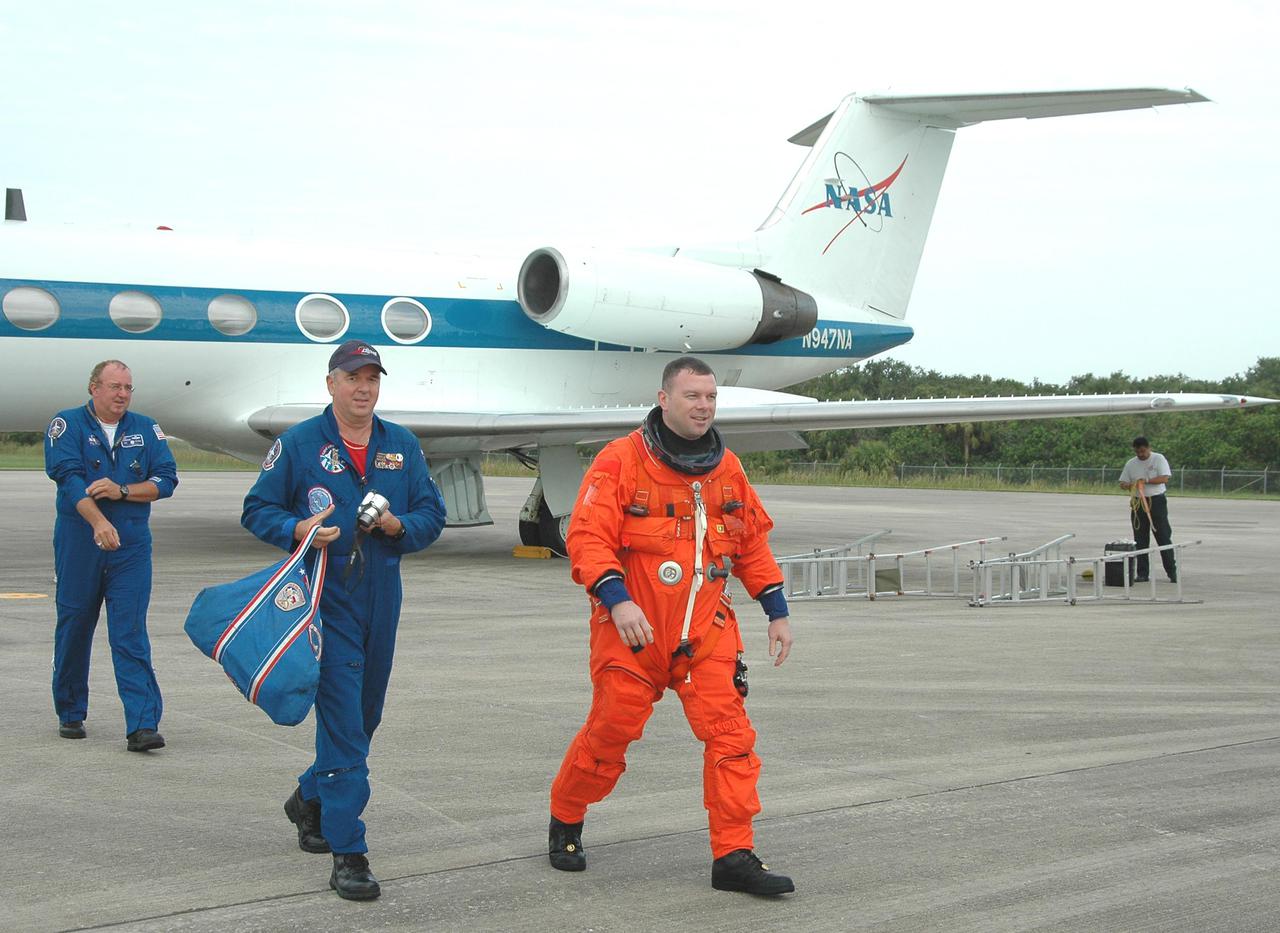
KENNEDY SPACE CENTER, FLA. -- James Kelly (at right), pilot on Return to Flight mission STS-114, walks away from the Shuttle Training Aircraft (STA) at the Shuttle Landing Facility on NASA’s Kennedy Space Center. He and Mission Commander Eileen Collins are practicing landing the orbiter using the STA, which is a modified Grumman American Aviation-built Gulf Stream II executive jet that was modified to simulate an orbiter’s cockpit, motion and visual cues, and handling qualities. In flight, the STA duplicates the orbiter’s atmospheric descent trajectory from approximately 35,000 feet altitude to landing on a runway. Because the orbiter is unpowered during re-entry and landing, its high-speed glide must be perfectly executed the first time. Mission STS-114 is scheduled to launch aboard Space Shuttle Discovery with a crew of seven on July 13 at 3:51 p.m. from Launch Pad 39B.
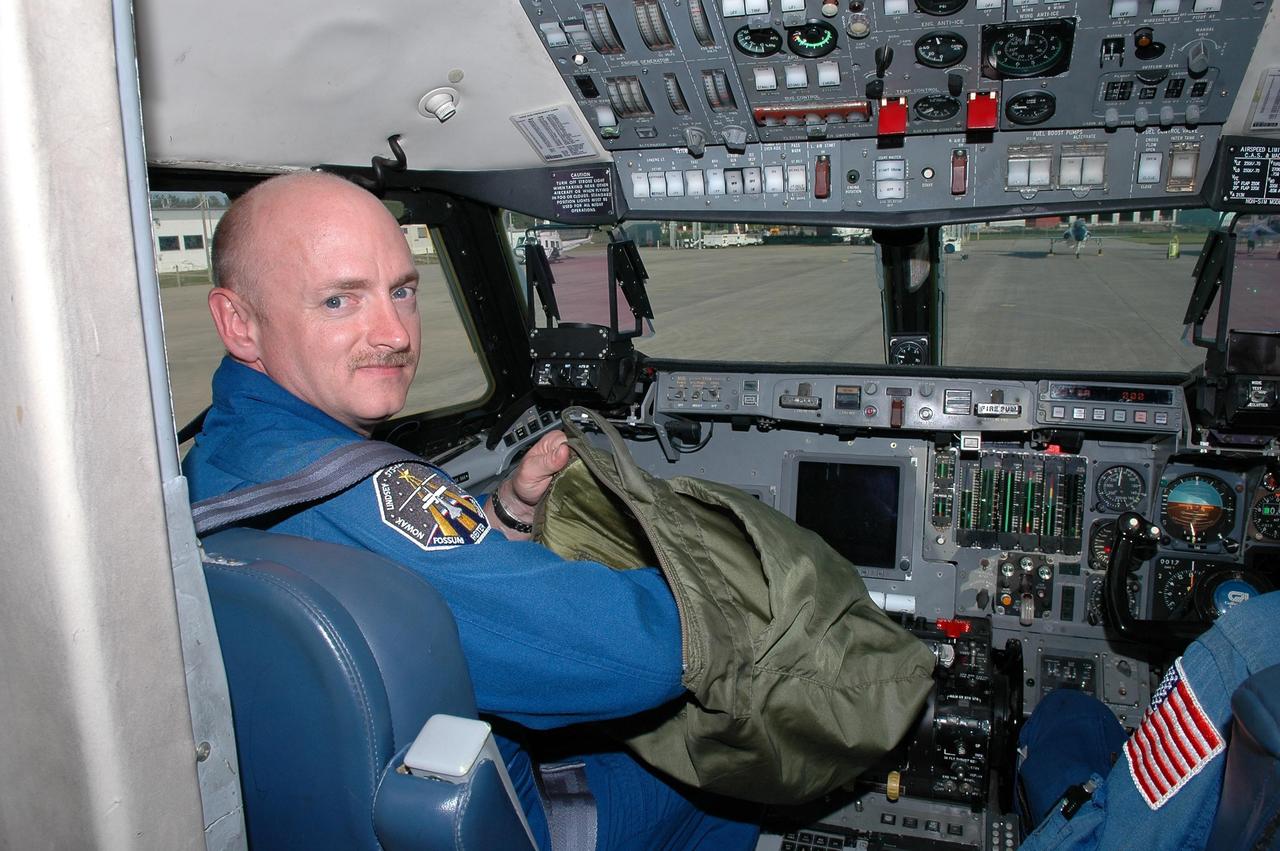
KENNEDY SPACE CENTER, FLA. - At the Shuttle Landing Facility, STS-121 Pilot Mark Kelly gets ready for a training flight in a Shuttle Training Aircraft (STA). He will be practicing landing the orbiter using the STA, which is a modified Grumman American Aviation-built Gulf Stream II jet that was modified to simulate an orbiter’s cockpit, motion and visual cues, and handling qualities. In flight, the STA duplicates the orbiter’s atmospheric descent trajectory from approximately 35,000 feet altitude to landing on a runway. Because the orbiter is unpowered during re-entry and landing, its high-speed glide must be perfectly executed the first time. Space Shuttle Discovery is scheduled to launch July 1 on mission STS-121. Photo credit: NASA/Kim Shiflett
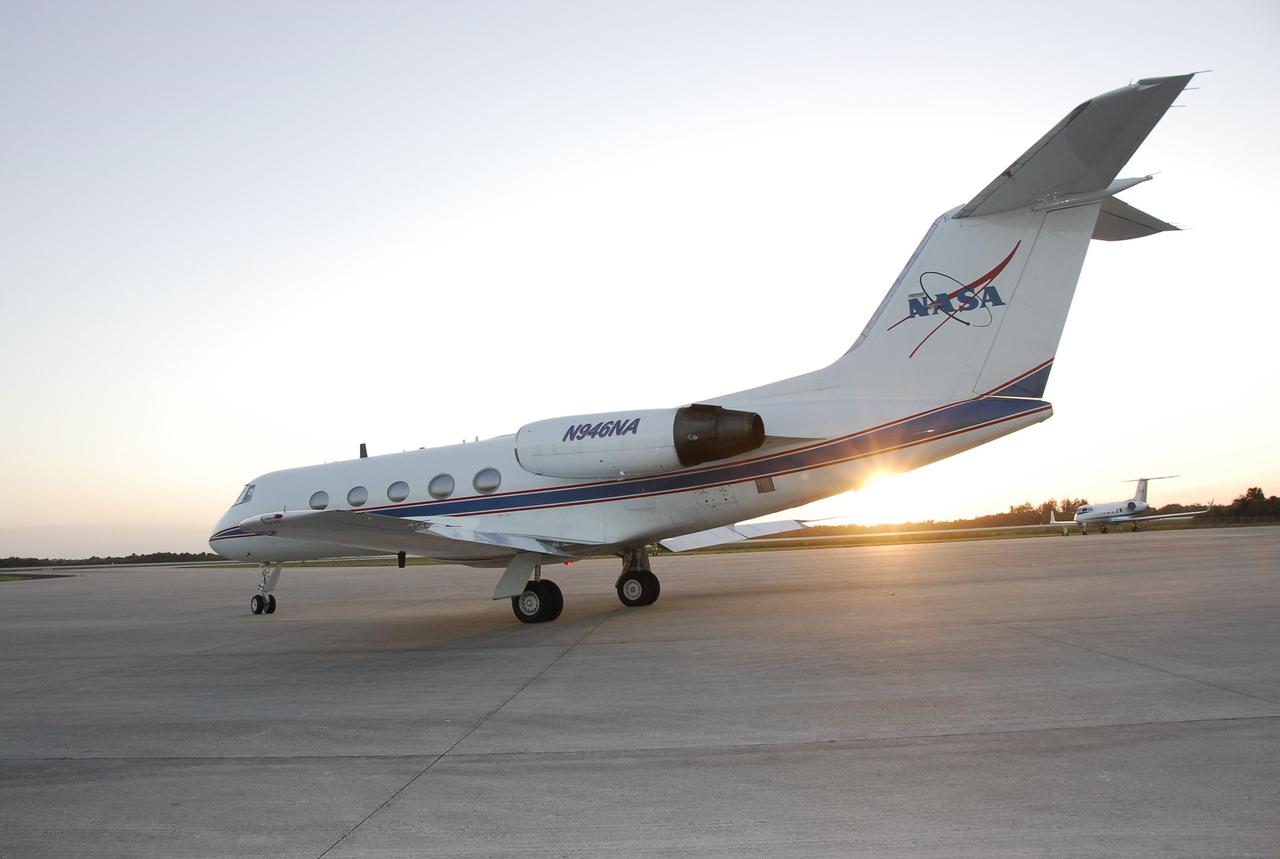
KENNEDY SPACE CENTER, FLA. -- On the Shuttle Landing Facility at NASA's Kennedy Space Center, the shuttle training aircraft, or STA, is ready for flight with STS-122 Commander Steve Frick and Pilot Alan Poindexter at the controls. They are practicing shuttle landings in the STA before the Feb. 7 launch of space shuttle Atlantis. The STA is a Grumman American Aviation-built Gulf Stream II jet that was modified to simulate an orbiter's cockpit, motion and visual cues, and handling qualities. In flight, the STA duplicates the orbiter's atmospheric descent trajectory from approximately 35,000 feet altitude to landing on a runway. Because the orbiter is unpowered during re-entry and landing, its high-speed glide must be perfectly executed the first time. Photo credit: NASA/Kim Shiflett
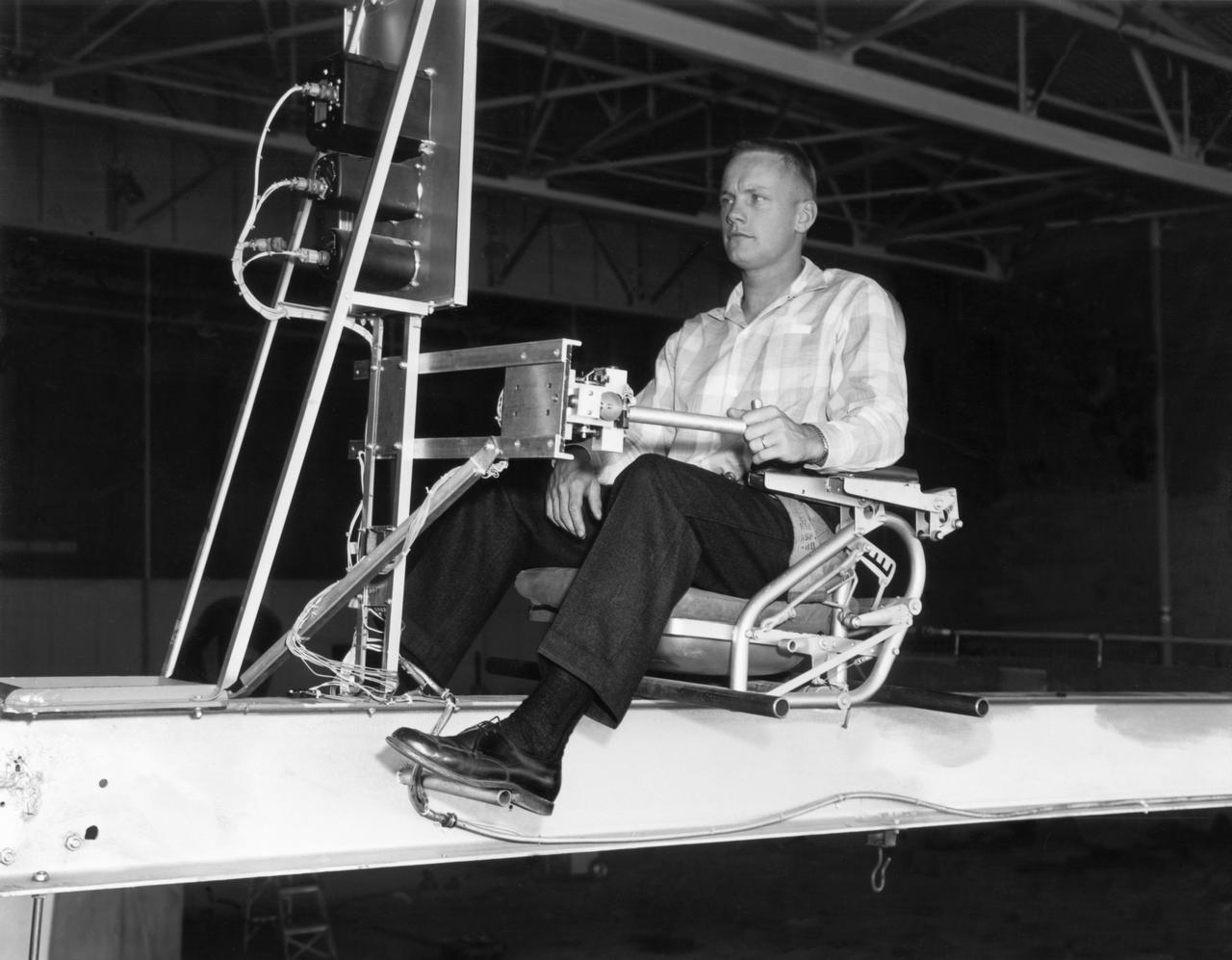
Famed astronaut Neil A. Armstrong, the first man to set foot on the moon during the historic Apollo 11 space mission in July 1969, served for seven years as a research pilot at the NACA-NASA High-Speed Flight Station, now the Dryden Flight Research Center, at Edwards, California, before he entered the space program. Armstrong joined the National Advisory Committee for Aeronautics (NACA) at the Lewis Flight Propulsion Laboratory (later NASA's Lewis Research Center, Cleveland, Ohio, and today the Glenn Research Center) in 1955. Later that year, he transferred to the High-Speed Flight Station at Edwards as an aeronautical research scientist and then as a pilot, a position he held until becoming an astronaut in 1962. He was one of nine NASA astronauts in the second class to be chosen. As a research pilot Armstrong served as project pilot on the F-100A and F-100C aircraft, F-101, and the F-104A. He also flew the X-1B, X-5, F-105, F-106, B-47, KC-135, and Paresev. He left Dryden with a total of over 2450 flying hours. He was a member of the USAF-NASA Dyna-Soar Pilot Consultant Group before the Dyna-Soar project was cancelled, and studied X-20 Dyna-Soar approaches and abort maneuvers through use of the F-102A and F5D jet aircraft. Armstrong was actively engaged in both piloting and engineering aspects of the X-15 program from its inception. He completed the first flight in the aircraft equipped with a new flow-direction sensor (ball nose) and the initial flight in an X-15 equipped with a self-adaptive flight control system. He worked closely with designers and engineers in development of the adaptive system, and made seven flights in the rocket plane from December 1960 until July 1962. During those fights he reached a peak altitude of 207,500 feet in the X-15-3, and a speed of 3,989 mph (Mach 5.74) in the X-15-1. Armstrong has a total of 8 days and 14 hours in space, including 2 hours and 48 minutes walking on the Moon. In March 1966 he was commander of the Gemini 8 or
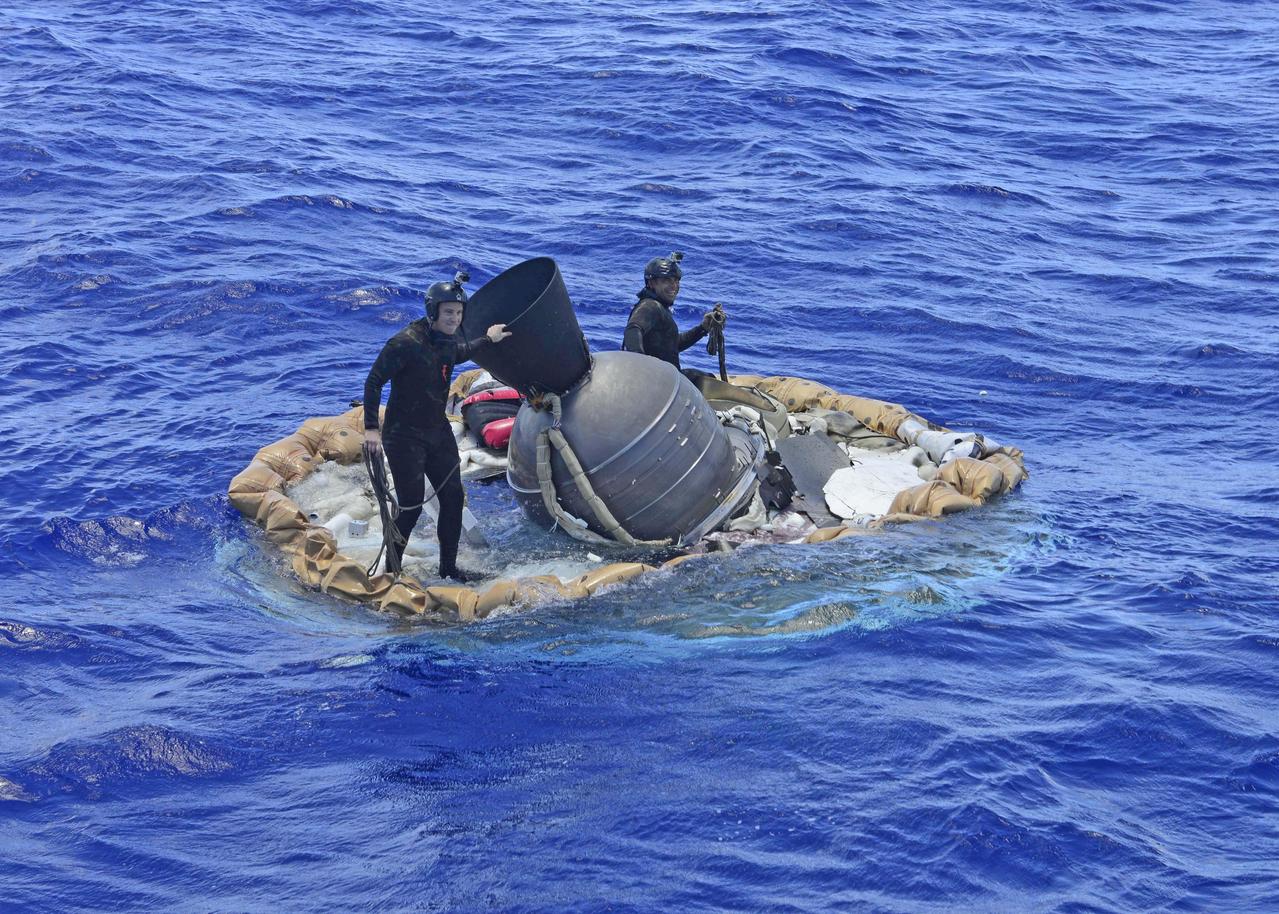
Two members of the U.S. Navy's Mobile Diving Salvage Unit (MDSU) 1 Explosive Ordnance Detachment work on recovering the test vehicle for NASA's Low-Density Supersonic Decelerator (LDSD) project. The saucer-shaped LDSD craft splashed down at 11:49 a.m. HST (2:49 PDT/5:49 p.m. EDT) Monday, June 8, 2015, in the Pacific Ocean off the west coast of the Kauai, Hawaii, after a four-hour experimental flight test that investigated new technologies for landing future robotic and human Mars missions. During the flight test, a Supersonic Inflatable Aerodynamic Decelerator (SIAD) and a supersonic parachute were deployed. The SIAD operated as expected, dramatically slowing the test vehicle's velocity. When the parachute was deployed into the supersonic slipstream, it appeared to blossom to full inflation prior to the emergence of a tear which then propagated and destroyed the parachute's canopy. As a result, the saucer's splashdown in the Pacific Ocean was hard, resulting in fracturing parts of the structure. Memory cards containing comprehensive test data -- including high-speed, high-resolution imagery recorded during the flight -- were successfully recovered. Also recovered were the test vehicle and its components, the supersonic parachute, the ballute used to deploy the parachute, and a large weather balloon that initially carried the saucer to an altitude of 120,000 feet. http://photojournal.jpl.nasa.gov/catalog/PIA19684
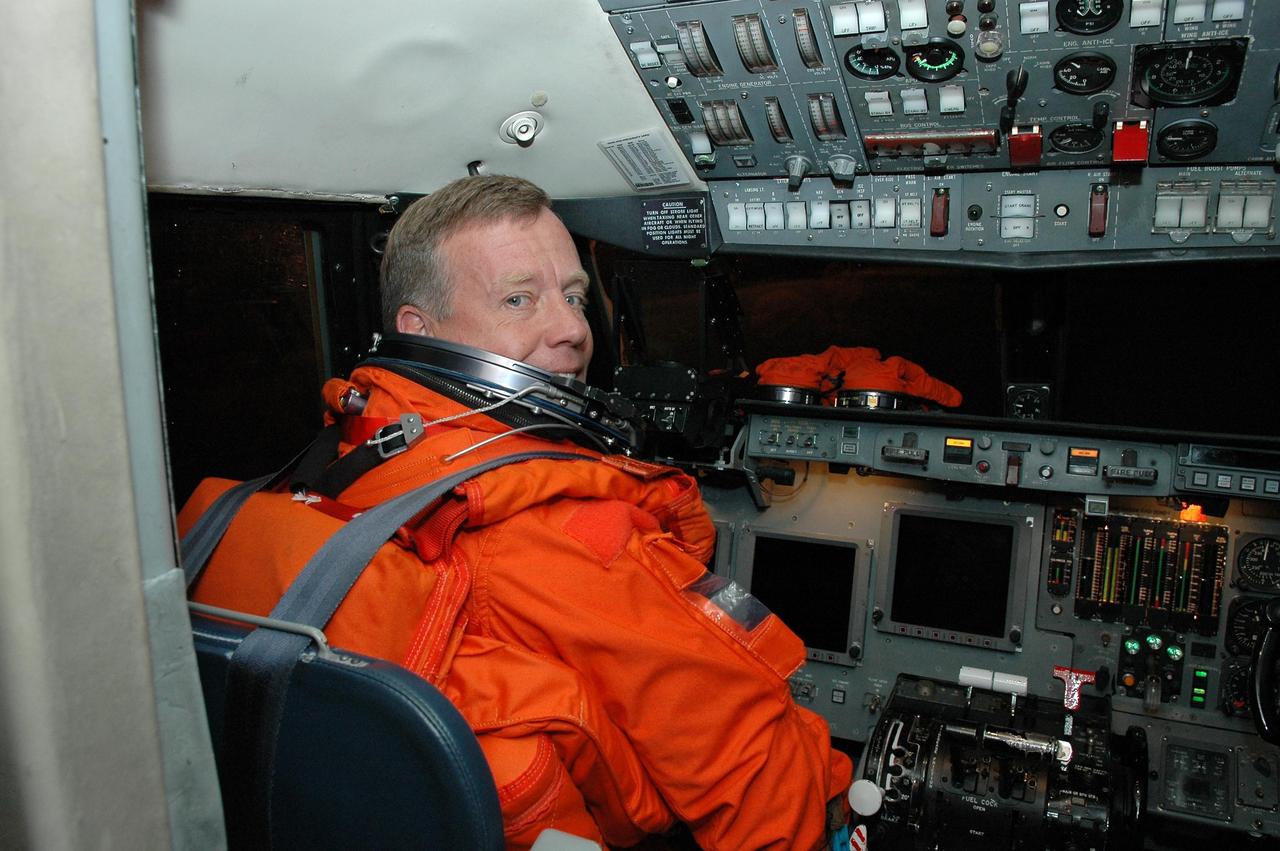
KENNEDY SPACE CENTER, FLA. - Inside the Shuttle Training Aircraft (STA), STS-121 Commander Steven Lindsey settles into his seat in the cockpit. Lindsey and Pilot Mark Kelly will be making practice landings in preparation for the July 1 launch of Space Shuttle Discovery. The STA is a Grumman American Aviation-built Gulf Stream II jet that was modified to simulate an orbiter’s cockpit, motion and visual cues, and handling qualities. In flight, the STA duplicates the orbiter’s atmospheric descent trajectory from approximately 35,000 feet altitude to landing on a runway. Because the orbiter is unpowered during re-entry and landing, its high-speed glide must be perfectly executed the first time. Photo credit: NASA/Kim Shiflett
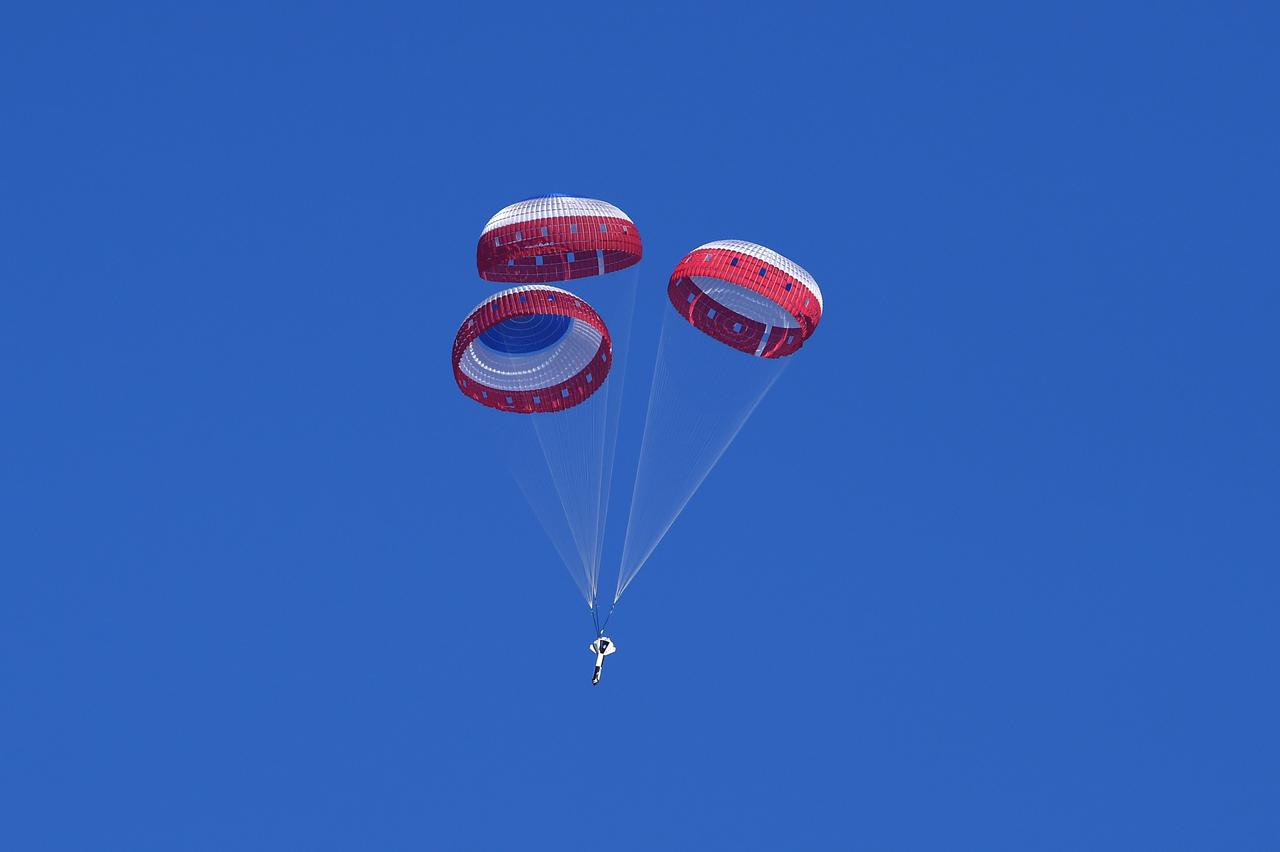
Boeing conducted the first in a series of reliability tests of its CST-100 Starliner flight drogue and main parachute system by releasing a long, dart-shaped test vehicle from a C-17 aircraft over Yuma, Arizona. Two more tests are planned using the dart module, as well as three similar reliability tests using a high fidelity capsule simulator designed to simulate the CST-100 Starliner capsule’s exact shape and mass. In both the dart and capsule simulator tests, the test spacecraft are released at various altitudes to test the parachute system at different deployment speeds, aerodynamic loads, and or weight demands. Data collected from each test is fed into computer models to more accurately predict parachute performance and to verify consistency from test to test.
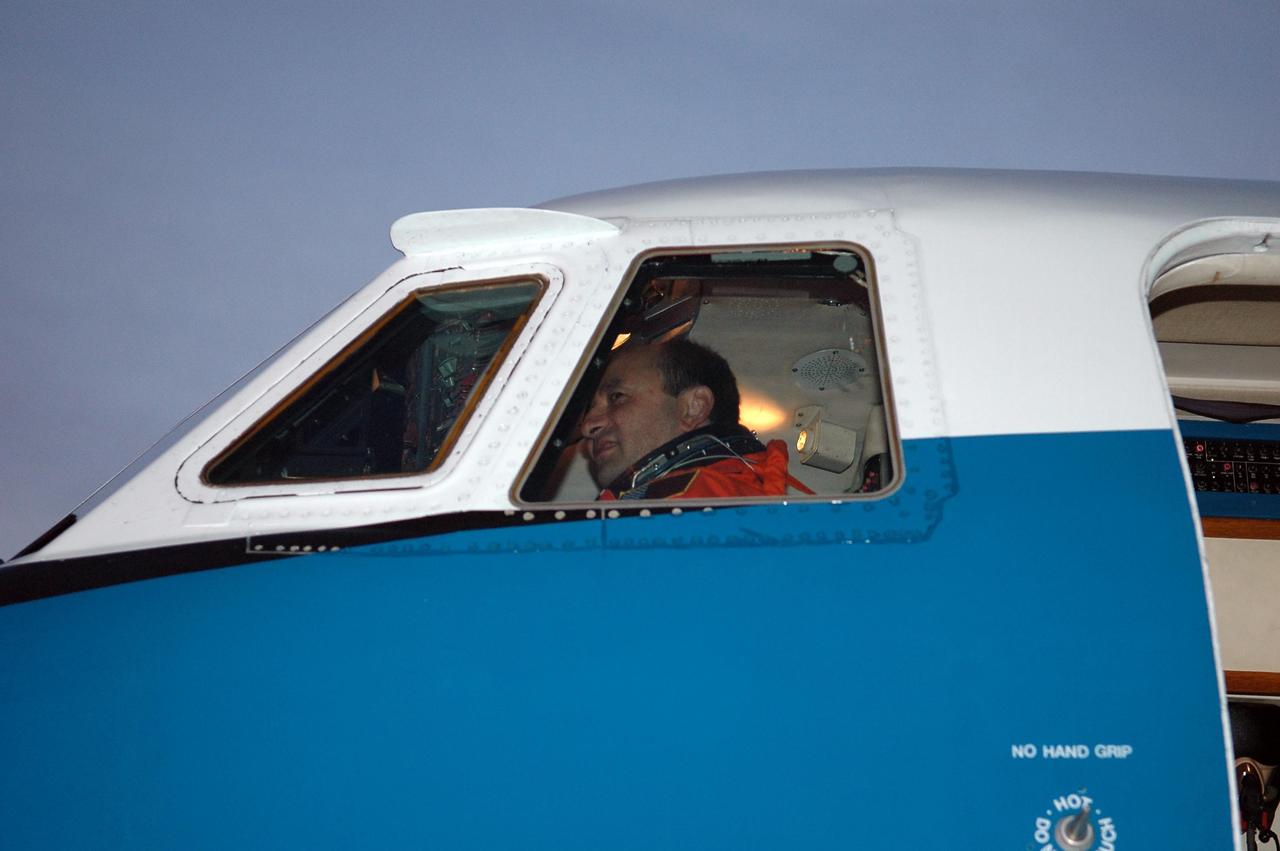
KENNEDY SPACE CENTER, FLA. -- At the Shuttle Landing Facility, STS-116 Commander Mark Polansky is in the pilot's seat of the shuttle training aircraft (STA), getting ready to practice landing the orbiter. The mission crew is at KSC for the terminal countdown demonstration test, which are prelaunch preparations that include a simulated launch countdown. STA practice is part of the TCDT. The STA is a Grumman American Aviation-built Gulf Stream II jet that was modified to simulate an orbiter's cockpit, motion and visual cues, and handling qualities. In flight, the STA duplicates the orbiter's atmospheric descent trajectory from approximately 35,000 feet altitude to landing on a runway. Because the orbiter is unpowered during re-entry and landing, its high-speed glide must be perfectly executed the first time. Photo credit: NASA/Kim Shiflett
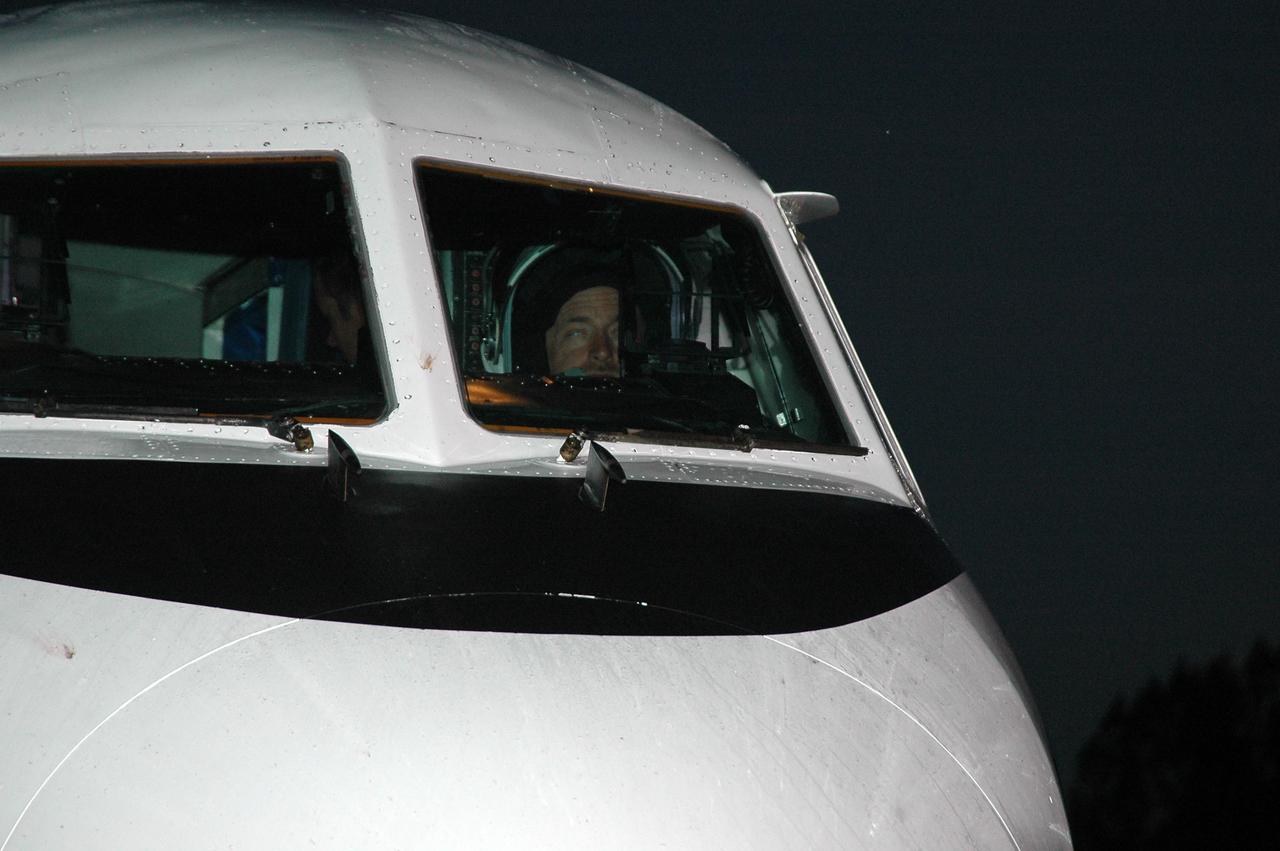
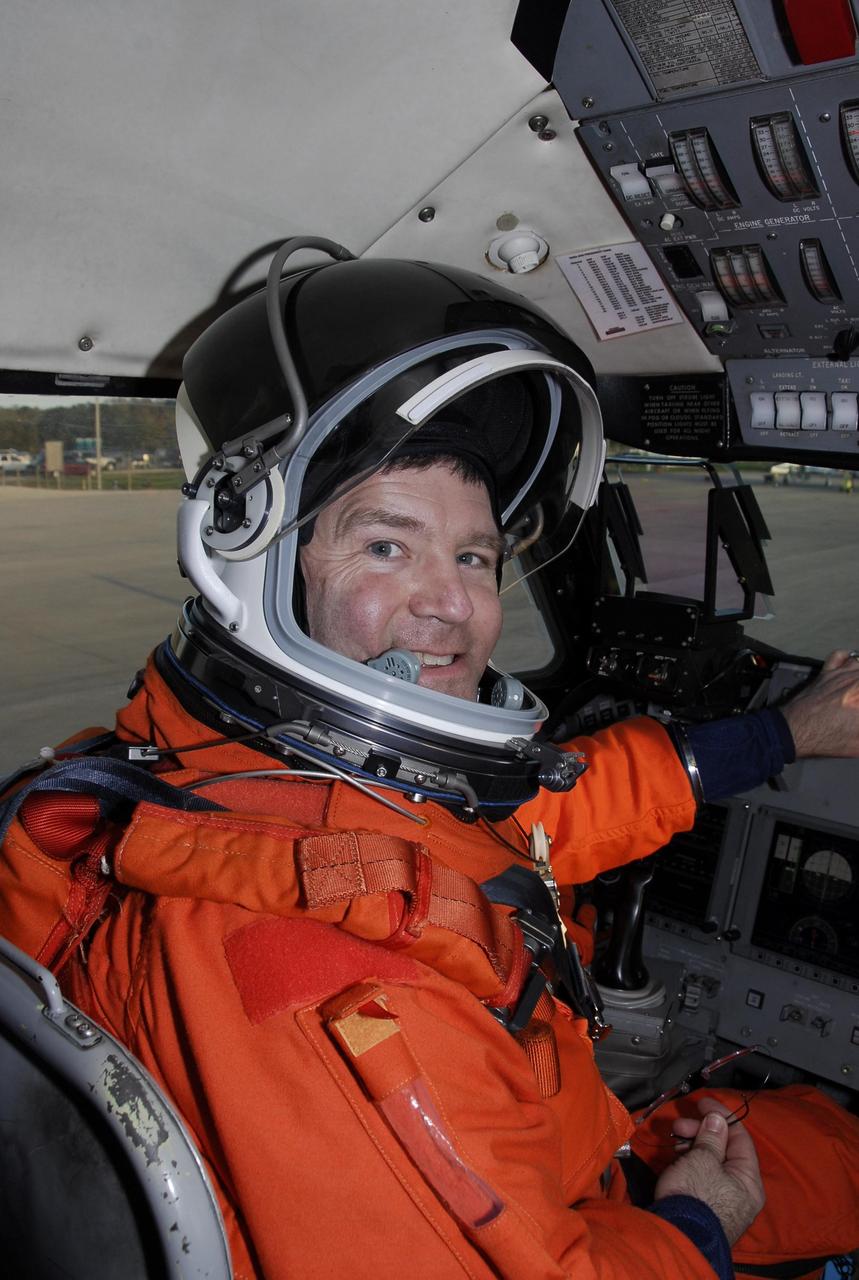
KENNEDY SPACE CENTER, FLA. - In the cockpit of the Shuttle Training Aircraft (STA), STS-121 Pilot Mark Kelly is ready for takeoff from the Shuttle Landing Facility. Kelly and Commander Steven Lindsey will be making practice landings in preparation for the July 1 launch of Space Shuttle Discovery. The STA is a Grumman American Aviation-built Gulf Stream II jet that was modified to simulate an orbiter’s cockpit, motion and visual cues, and handling qualities. In flight, the STA duplicates the orbiter’s atmospheric descent trajectory from approximately 35,000 feet altitude to landing on a runway. Because the orbiter is unpowered during re-entry and landing, its high-speed glide must be perfectly executed the first time. Photo credit: NASA/Kim Shiflett
KENNEDY SPACE CENTER, FLA. -- Dressed in his launch and entry suit, STS-122 Commander Steve Frick is seated in the shuttle training aircraft, or STA, at NASA's Kennedy Space Center. Frick and Pilot Alan Poindexter are practicing shuttle landings in the STA before the Feb. 7 launch of space shuttle Atlantis. The STA is a Grumman American Aviation-built Gulf Stream II jet that was modified to simulate an orbiter's cockpit, motion and visual cues, and handling qualities. In flight, the STA duplicates the orbiter's atmospheric descent trajectory from approximately 35,000 feet altitude to landing on a runway. Because the orbiter is unpowered during re-entry and landing, its high-speed glide must be perfectly executed the first time. Photo credit: NASA/Kim Shiflett
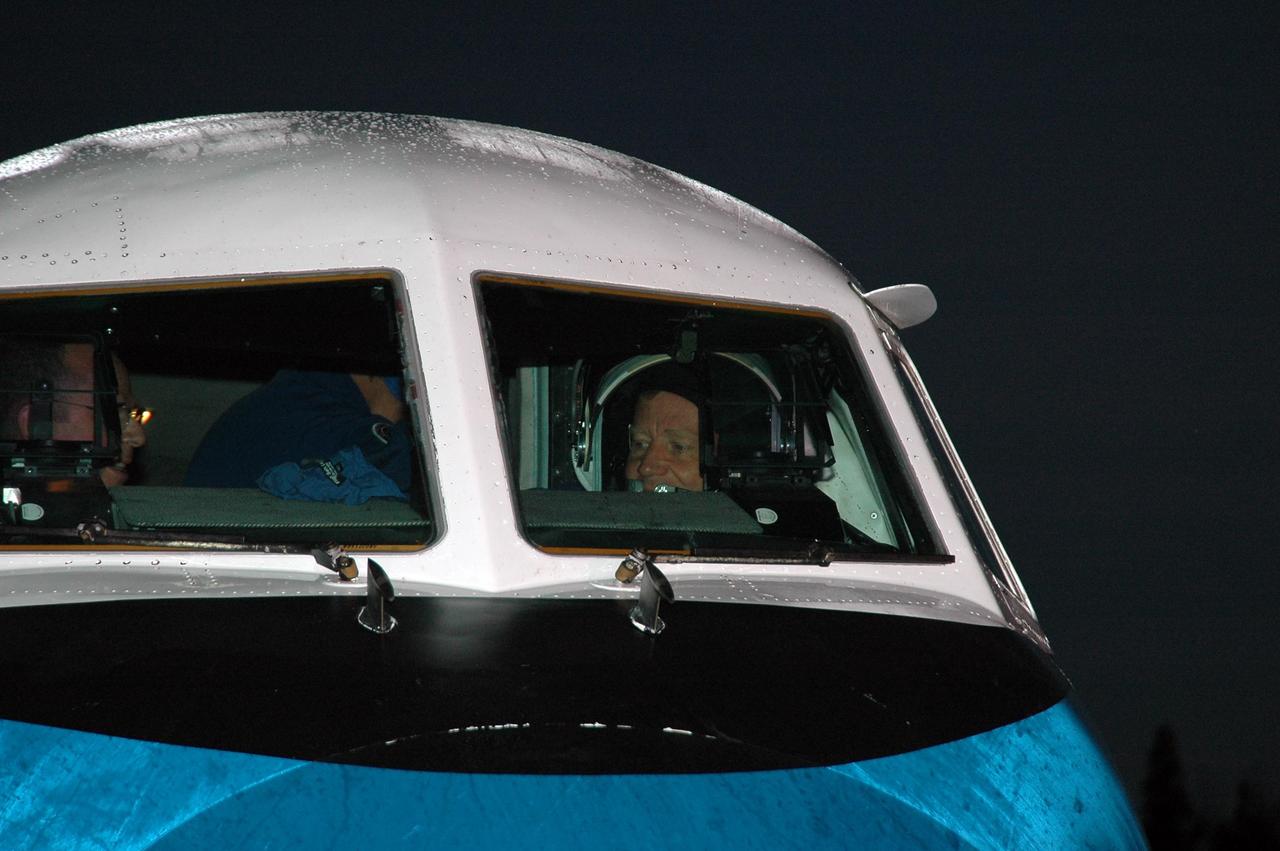
KENNEDY SPACE CENTER, FLA. - In the cockpit of the Shuttle Training Aircraft (STA), STS-121 Commander Steven Lindsey is ready for takeoff from the Shuttle Landing Facility. Lindsey and Pilot Mark Kelly will be making practice landings in preparation for the July 1 launch of Space Shuttle Discovery. The STA is a Grumman American Aviation-built Gulf Stream II jet that was modified to simulate an orbiter’s cockpit, motion and visual cues, and handling qualities. In flight, the STA duplicates the orbiter’s atmospheric descent trajectory from approximately 35,000 feet altitude to landing on a runway. Because the orbiter is unpowered during re-entry and landing, its high-speed glide must be perfectly executed the first time. Photo credit: NASA/Kim Shiflett
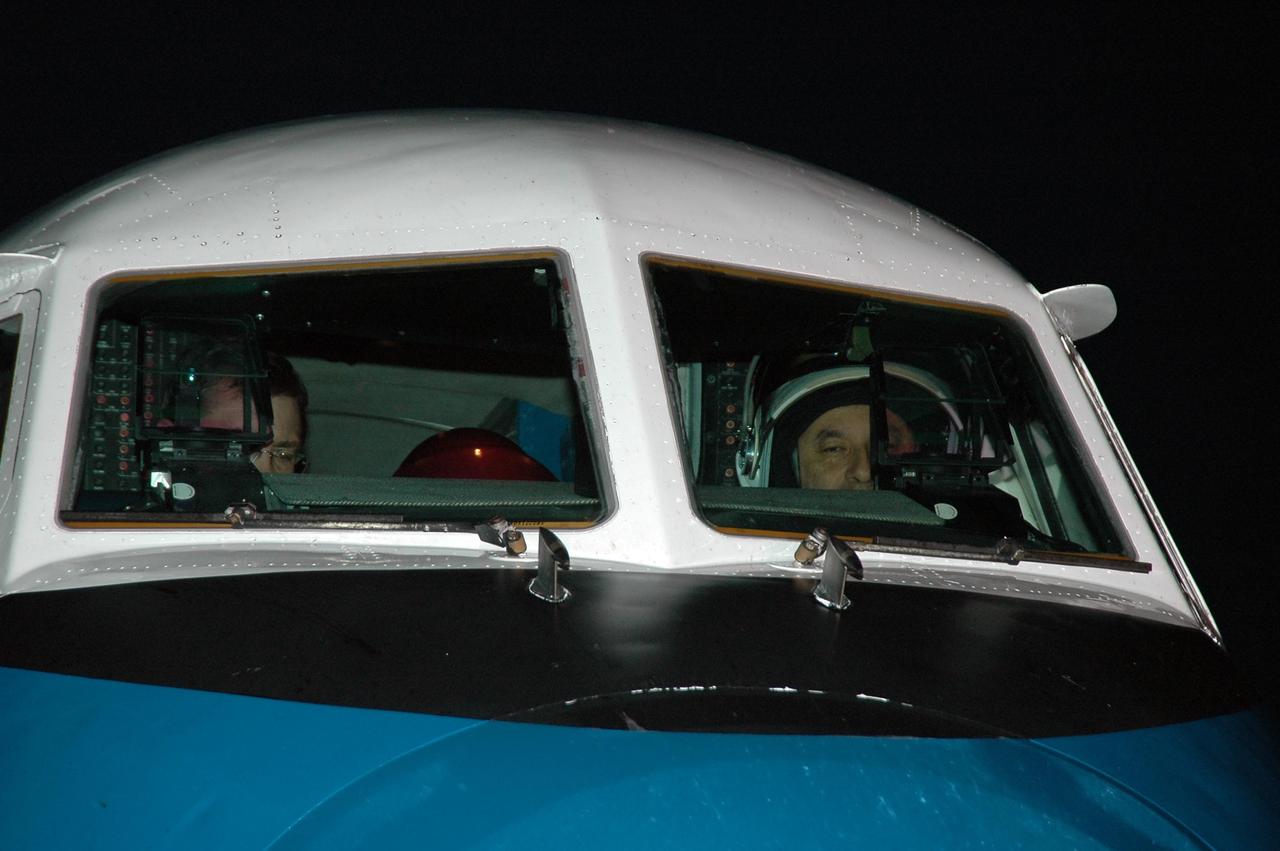
KENNEDY SPACE CENTER, FLA. -- Inside the shuttle training aircraft at the Shuttle Landing Facility, STS-116 Pilot William Oefelein (left) and Commander Mark Polansky are seated in the cockpit, getting ready to practice landing the orbiter. The mission crew is at KSC for the terminal countdown demonstration test, which are prelaunch preparations that include a simulated launch countdown. STA practice is part of the TCDT. The STA is a Grumman American Aviation-built Gulf Stream II jet that was modified to simulate an orbiter's cockpit, motion and visual cues, and handling qualities. In flight, the STA duplicates the orbiter's atmospheric descent trajectory from approximately 35,000 feet altitude to landing on a runway. Because the orbiter is unpowered during re-entry and landing, its high-speed glide must be perfectly executed the first time. Photo credit: NASA/Kim Shiflett
KENNEDY SPACE CENTER, FLA. -- At the Shuttle Landing Facility, the shuttle training aircraft taxis onto the runway. Inside are STS-116 Pilot William Oefelein and Commander Mark Polansky, who are flying the aircraft to practice landing the orbiter. The mission crew is at KSC for the terminal countdown demonstration test, which are prelaunch preparations that include a simulated launch countdown. STA practice is part of the TCDT. The STA is a Grumman American Aviation-built Gulf Stream II jet that was modified to simulate an orbiter's cockpit, motion and visual cues, and handling qualities. In flight, the STA duplicates the orbiter's atmospheric descent trajectory from approximately 35,000 feet altitude to landing on a runway. Because the orbiter is unpowered during re-entry and landing, its high-speed glide must be perfectly executed the first time. Photo credit: NASA/Kim Shiflett
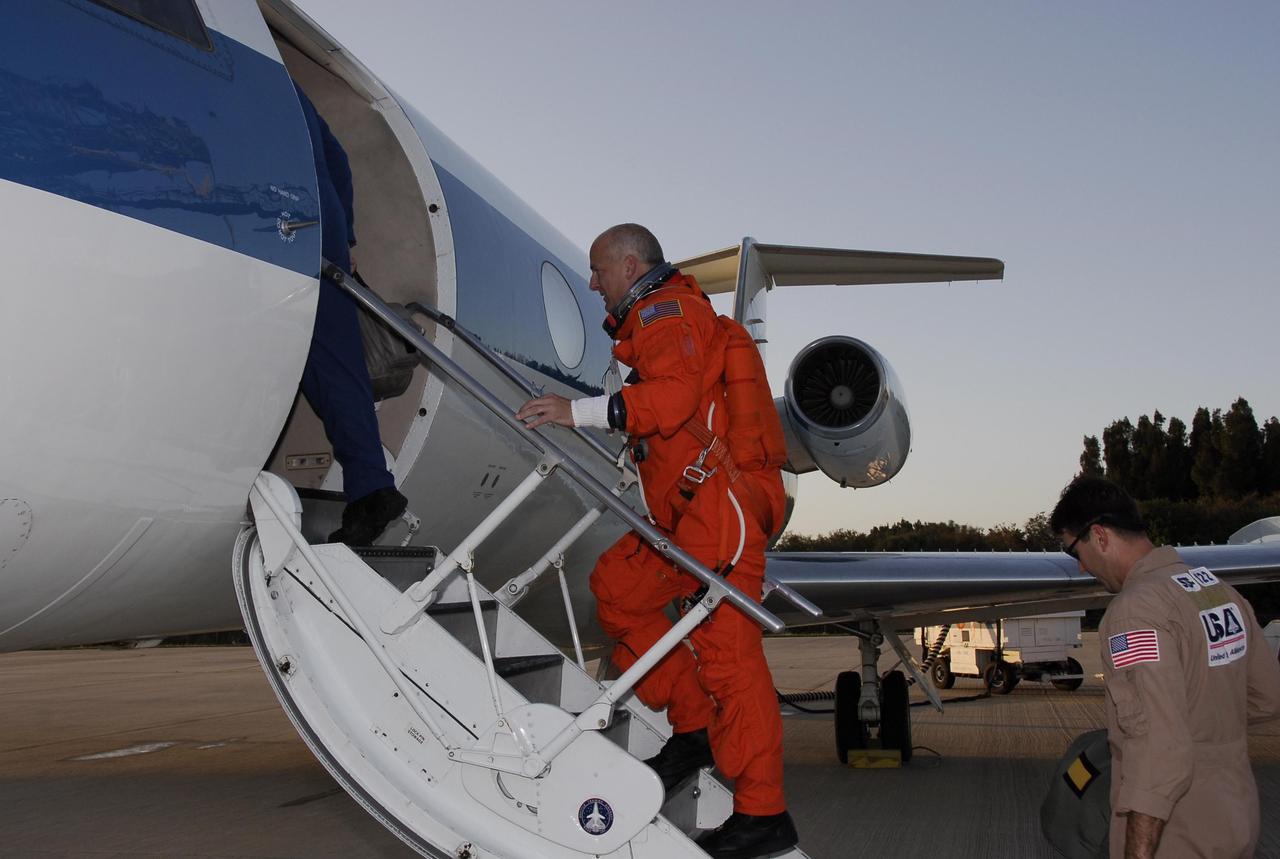
KENNEDY SPACE CENTER, FLA. -- Dressed in his launch and entry suit, STS-122 Pilot Alan Poindexter enters the shuttle training aircraft, or STA, at NASA's Kennedy Space Center. Poindexter and Commander Steve Frick are practicing shuttle landings in the STA before the Feb. 7 launch of space shuttle Atlantis. The STA is a Grumman American Aviation-built Gulf Stream II jet that was modified to simulate an orbiter's cockpit, motion and visual cues, and handling qualities. In flight, the STA duplicates the orbiter's atmospheric descent trajectory from approximately 35,000 feet altitude to landing on a runway. Because the orbiter is unpowered during re-entry and landing, its high-speed glide must be perfectly executed the first time. Photo credit: NASA/Kim Shiflett
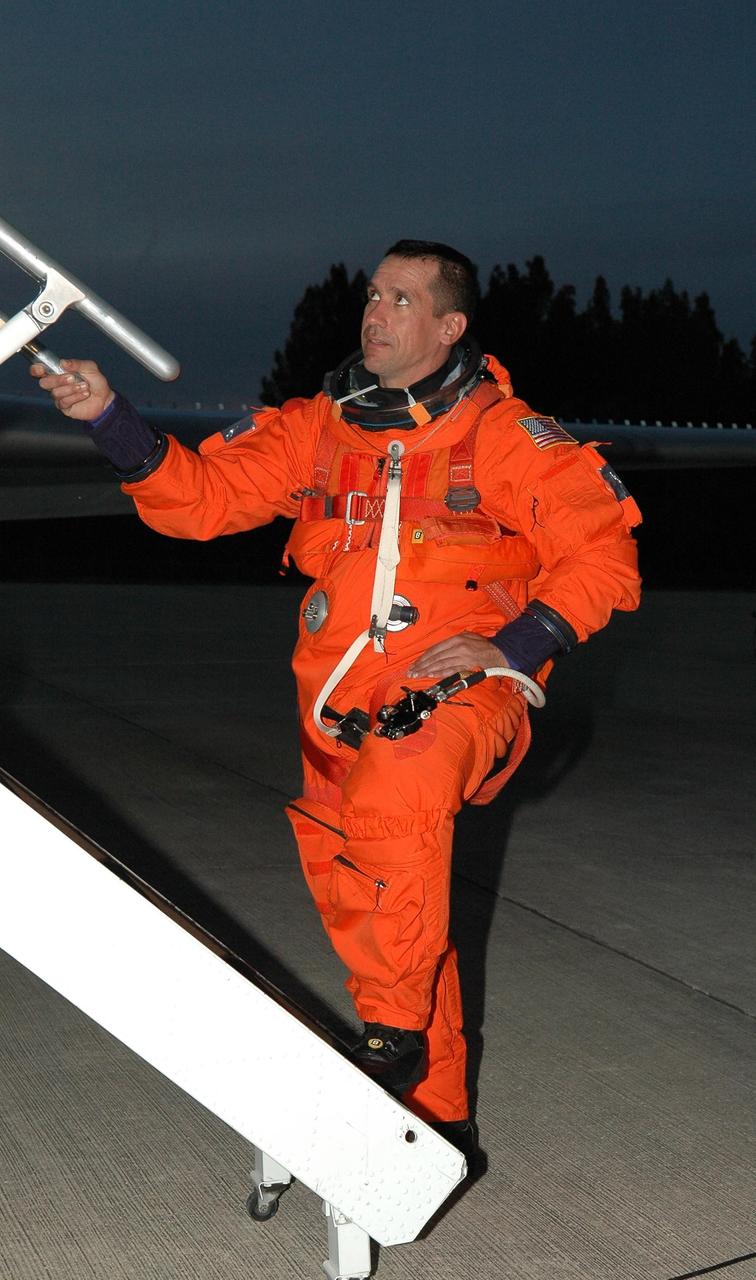
KENNEDY SPACE CENTER, FLA. -- At the Shuttle Landing Facility, STS-116 Pilot William Oelefein steps on the stairs to the shuttle training aircraft (STA) to practice landing the orbiter. The mission crew is at KSC for the terminal countdown demonstration test, which are prelaunch preparations that include a simulated launch countdown. STA practice is part of the TCDT. The STA is a Grumman American Aviation-built Gulf Stream II jet that was modified to simulate an orbiter's cockpit, motion and visual cues, and handling qualities. In flight, the STA duplicates the orbiter's atmospheric descent trajectory from approximately 35,000 feet altitude to landing on a runway. Because the orbiter is unpowered during re-entry and landing, its high-speed glide must be perfectly executed the first time. Photo credit: NASA/Kim Shiflett
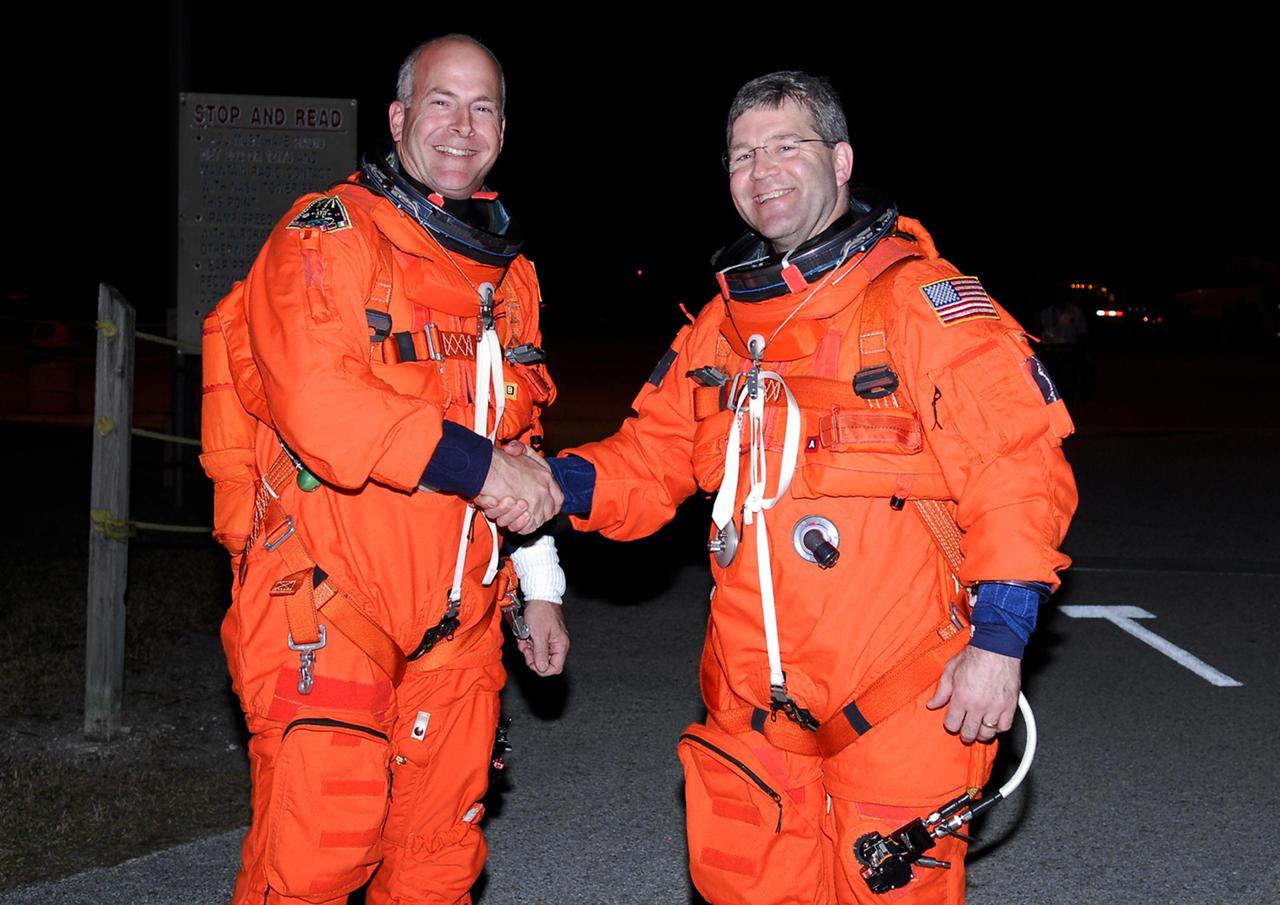
KENNEDY SPACE CENTER, FLA. -- STS-122 Pilot Alan Poindexter (left) and Commander Steve Frick congratulate each other on successful completion of practice shuttle landings in the shuttle training aircraft. before the Feb. 7 launch of space shuttle Atlantis. The STA is a Grumman American Aviation-built Gulf Stream II jet that was modified to simulate an orbiter's cockpit, motion and visual cues, and handling qualities. In flight, the STA duplicates the orbiter's atmospheric descent trajectory from approximately 35,000 feet altitude to landing on a runway. Because the orbiter is unpowered during re-entry and landing, its high-speed glide must be perfectly executed the first time. Photo credit: NASA/Kim Shiflett
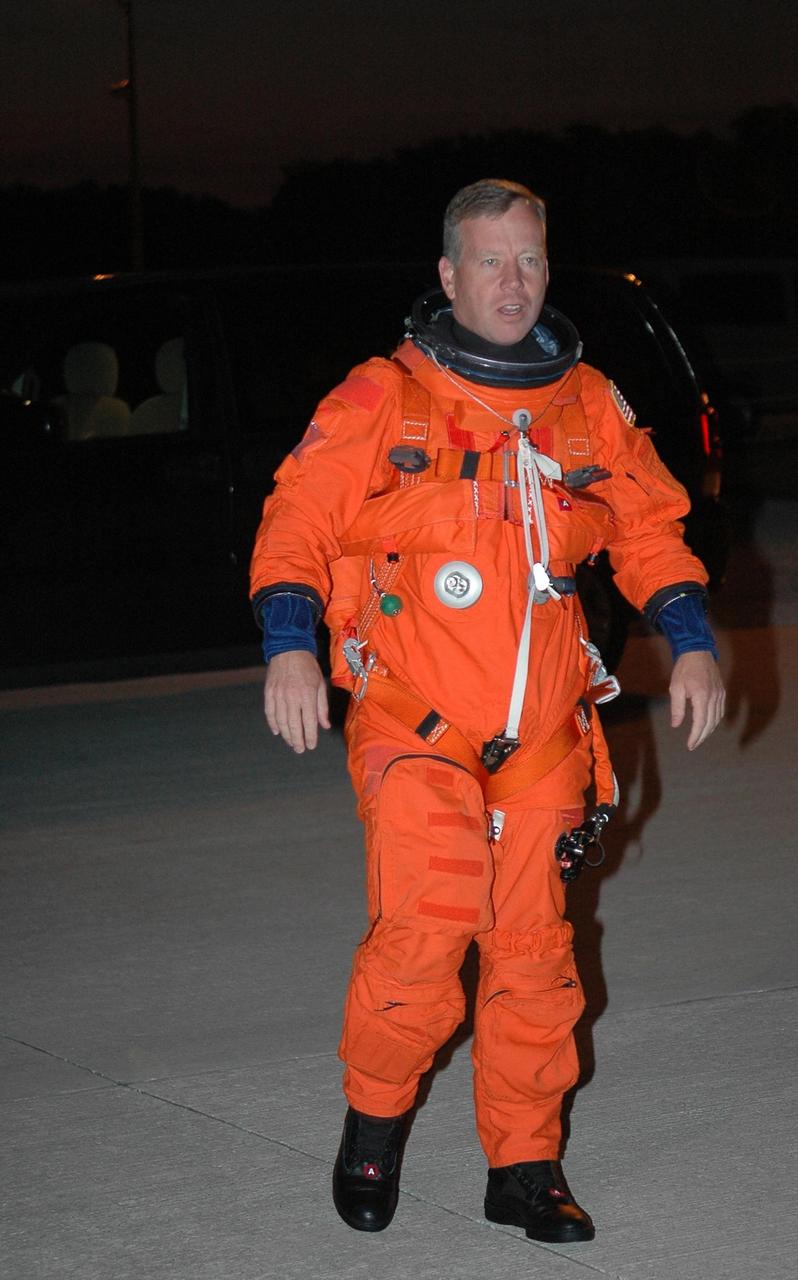
KENNEDY SPACE CENTER, FLA. - In the pre-dawn hours, STS-121 Commander Steven Lindsey walks across the Shuttle Landing Facility to the Shuttle Training Aircraft (STA). Lindsey and Pilot Mark Kelly will be making practice landings in preparation for the July 1 launch of Space Shuttle Discovery. The STA is a Grumman American Aviation-built Gulf Stream II jet that was modified to simulate an orbiter’s cockpit, motion and visual cues, and handling qualities. In flight, the STA duplicates the orbiter’s atmospheric descent trajectory from approximately 35,000 feet altitude to landing on a runway. Because the orbiter is unpowered during re-entry and landing, its high-speed glide must be perfectly executed the first time. Photo credit: NASA/Kim Shiflett
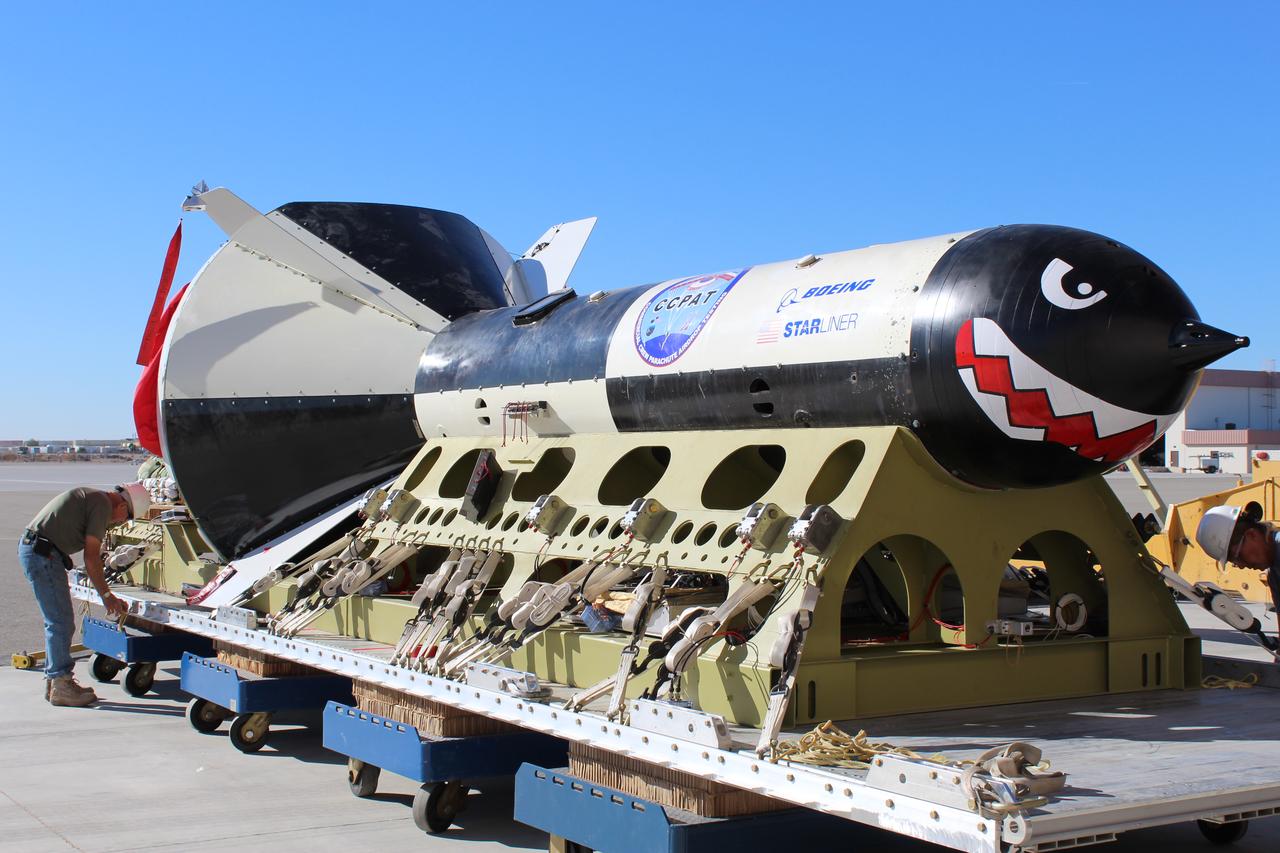
Boeing conducted the first in a series of reliability tests of its CST-100 Starliner flight drogue and main parachute system by releasing a long, dart-shaped test vehicle from a C-17 aircraft over Yuma, Arizona. Two more tests are planned using the dart module, as well as three similar reliability tests using a high fidelity capsule simulator designed to simulate the CST-100 Starliner capsule’s exact shape and mass. In both the dart and capsule simulator tests, the test spacecraft are released at various altitudes to test the parachute system at different deployment speeds, aerodynamic loads, and or weight demands. Data collected from each test is fed into computer models to more accurately predict parachute performance and to verify consistency from test to test.
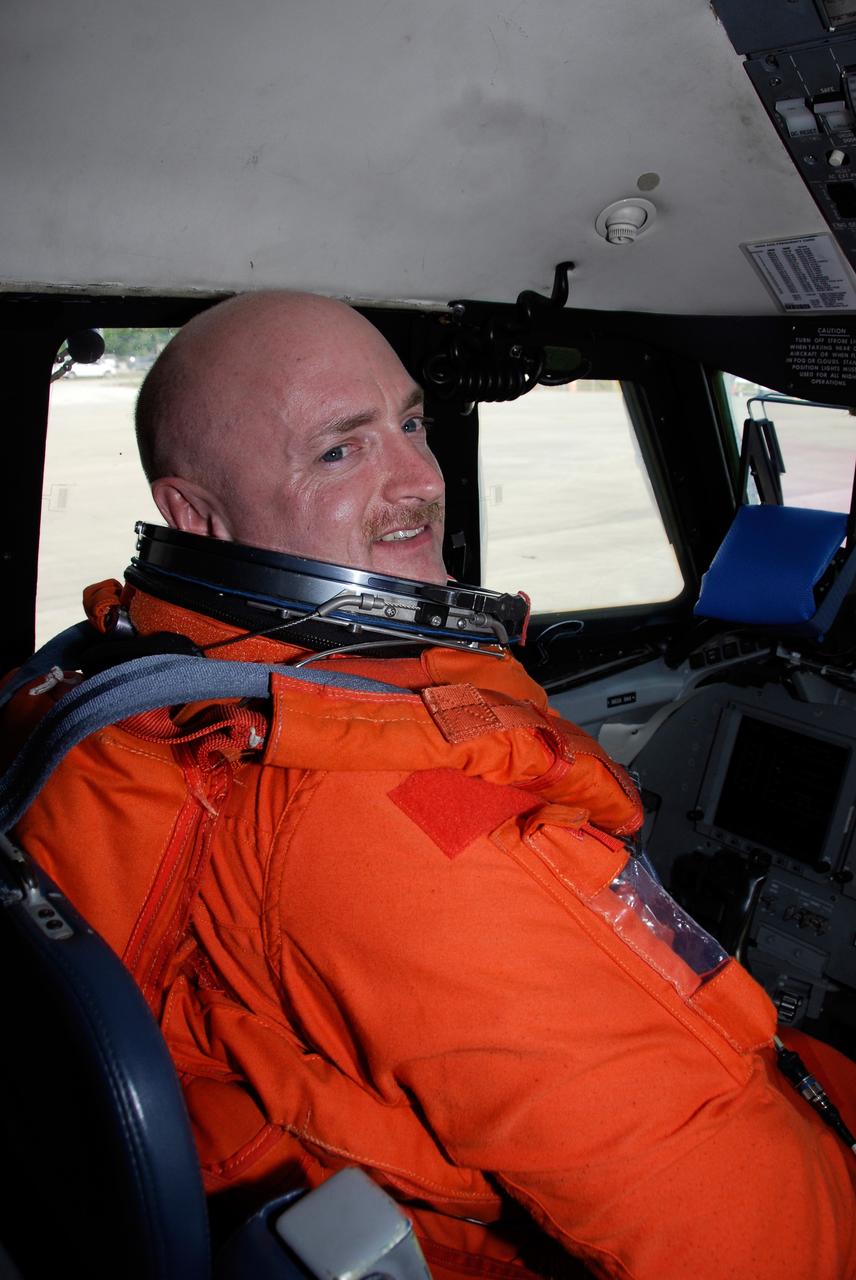
CAPE CANAVERAL, Fla. -- STS-124 Commander Mark Kelly sits in the cockpit of NASA's Shuttle Training Aircraft, or STA, preparing to practice space shuttle landings. The STA is a Grumman American Aviation-built Gulf Stream II jet that was modified to simulate an orbiter's cockpit, motion and visual cues, and handling qualities. In flight, the STA duplicates the orbiter's atmospheric descent trajectory from approximately 35,000 feet altitude to landing on a runway. Because the orbiter is unpowered during re-entry and landing, its high-speed glide must be perfectly executed the first time. The crew for space shuttle Discovery's STS-124 mission is at Kennedy for a full launch dress rehearsal, known as the terminal countdown demonstration test, or TCDT. Providing astronauts and ground crews with an opportunity to participate in various simulated countdown activities, TCDT includes equipment familiarization and emergency training. Discovery's launch is targeted for May 31. Photo credit: NASA/Kim Shiflett
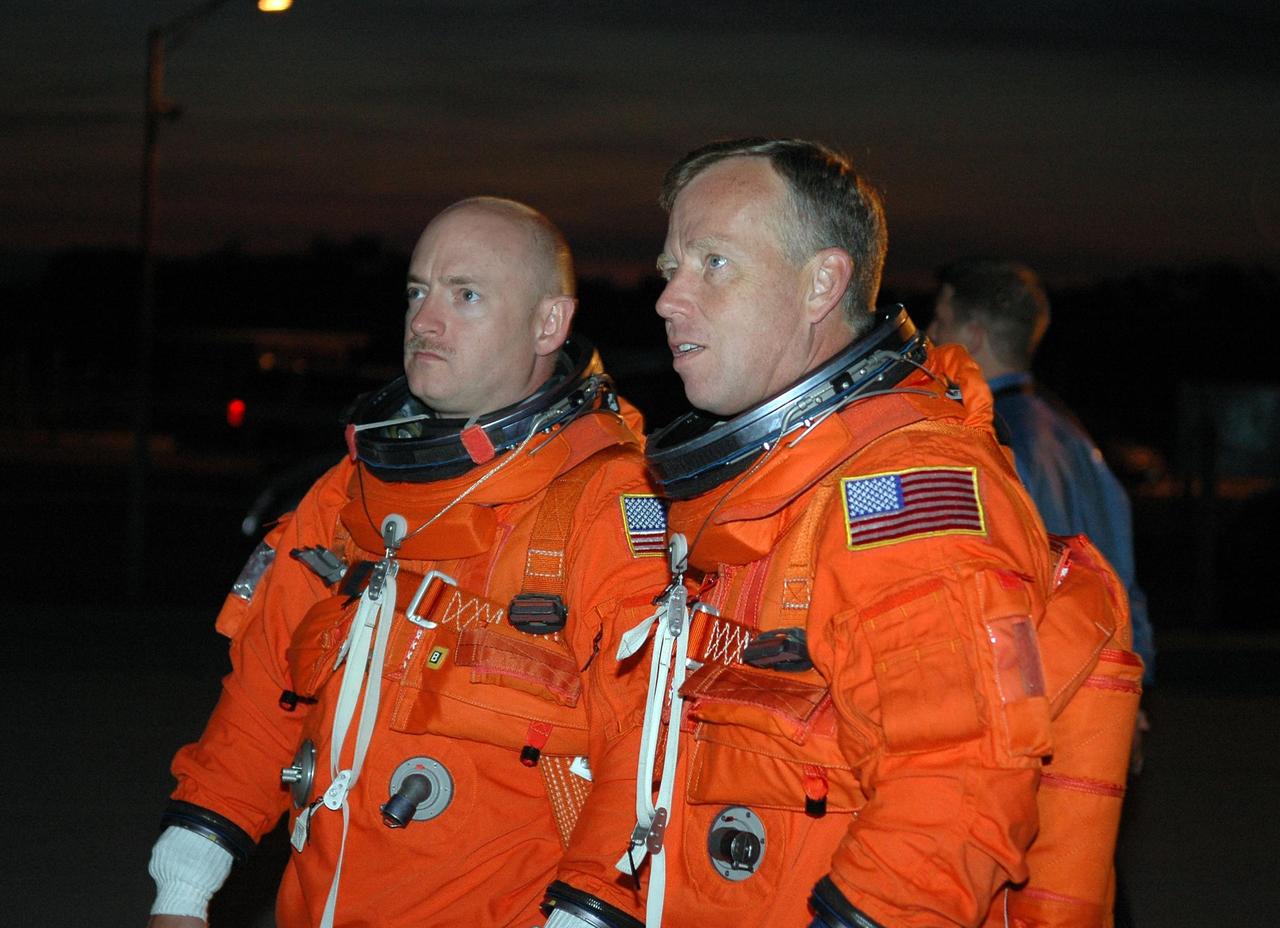
KENNEDY SPACE CENTER, FLA. - In the pre-dawn hours, STS-121 Pilot Mark Kelly (left) and Commander Steven Lindsey look at the Shuttle Training Aircraft (STA) they will be flying to practice landings in preparation for the July 1 launch of Space Shuttle Discovery. The STA is a Grumman American Aviation-built Gulf Stream II jet that was modified to simulate an orbiter’s cockpit, motion and visual cues, and handling qualities. In flight, the STA duplicates the orbiter’s atmospheric descent trajectory from approximately 35,000 feet altitude to landing on a runway. Because the orbiter is unpowered during re-entry and landing, its high-speed glide must be perfectly executed the first time. Photo credit: NASA/Kim Shiflett
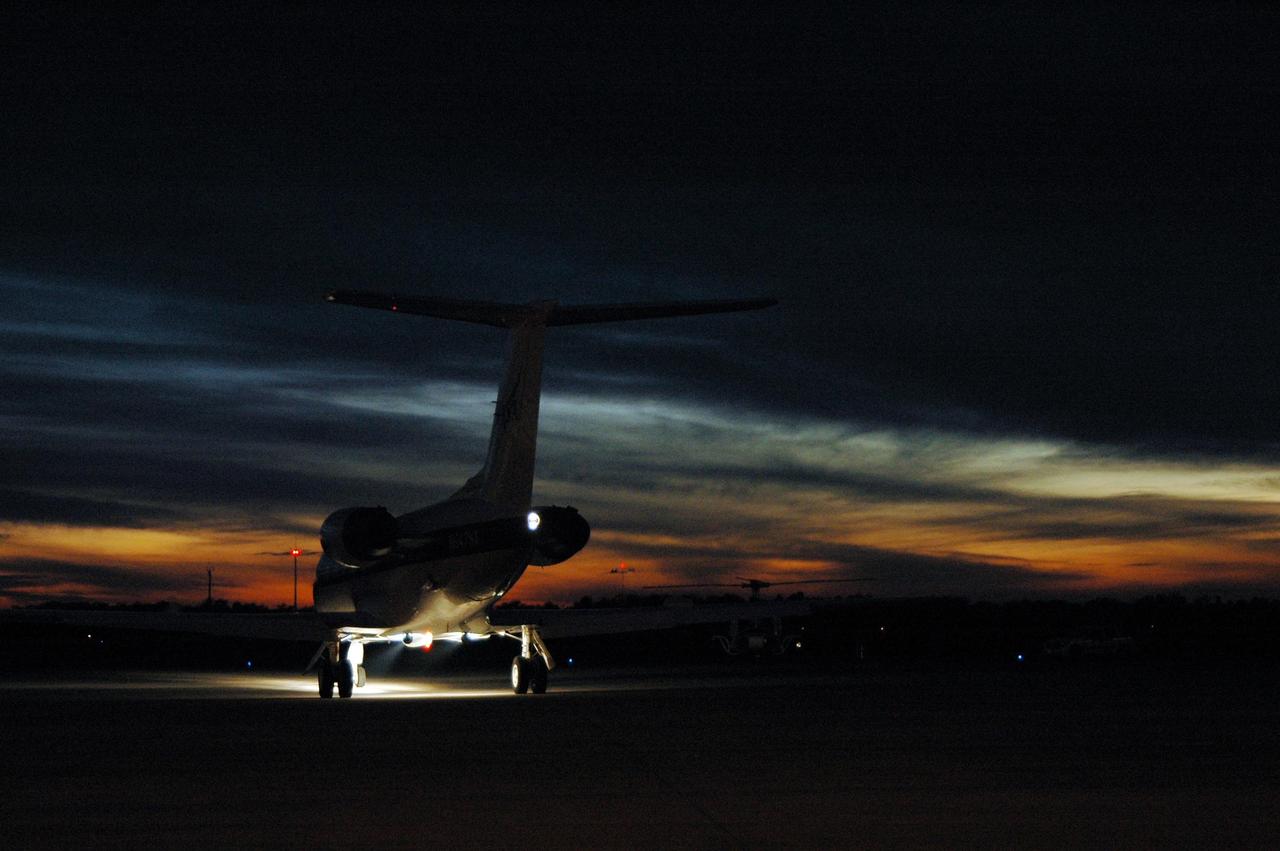
KENNEDY SPACE CENTER, FLA. -- At the Shuttle Landing Facility, the shuttle training aircraft taxis onto the runway. Inside are STS-116 Pilot William Oefelein and Commander Mark Polansky, who are flying the aircraft to practice landing the orbiter. The mission crew is at KSC for the terminal countdown demonstration test, which are prelaunch preparations that include a simulated launch countdown. STA practice is part of the TCDT. The STA is a Grumman American Aviation-built Gulf Stream II jet that was modified to simulate an orbiter's cockpit, motion and visual cues, and handling qualities. In flight, the STA duplicates the orbiter's atmospheric descent trajectory from approximately 35,000 feet altitude to landing on a runway. Because the orbiter is unpowered during re-entry and landing, its high-speed glide must be perfectly executed the first time. Photo credit: NASA/Kim Shiflett
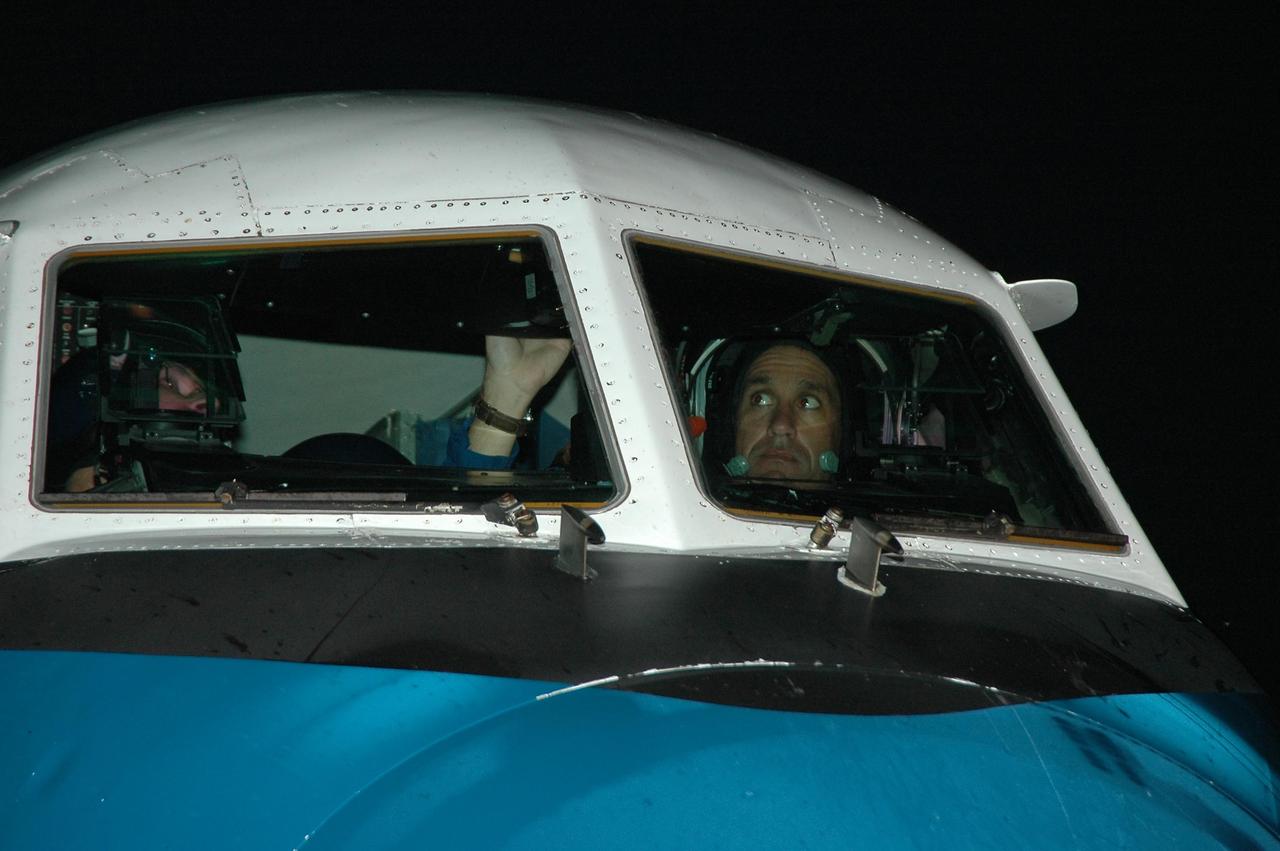
KENNEDY SPACE CENTER, FLA. -- Seated in the cockpit of the shuttle training aircraft at the Shuttle Landing Facility, STS-116 Pilot William Oefelein (left) and Commander Mark Polansky are getting ready to practice landing the orbiter. The mission crew is at KSC for the terminal countdown demonstration test, which are prelaunch preparations that include a simulated launch countdown. STA practice is part of the TCDT. The STA is a Grumman American Aviation-built Gulf Stream II jet that was modified to simulate an orbiter's cockpit, motion and visual cues, and handling qualities. In flight, the STA duplicates the orbiter's atmospheric descent trajectory from approximately 35,000 feet altitude to landing on a runway. Because the orbiter is unpowered during re-entry and landing, its high-speed glide must be perfectly executed the first time. Photo credit: NASA/Kim Shiflett
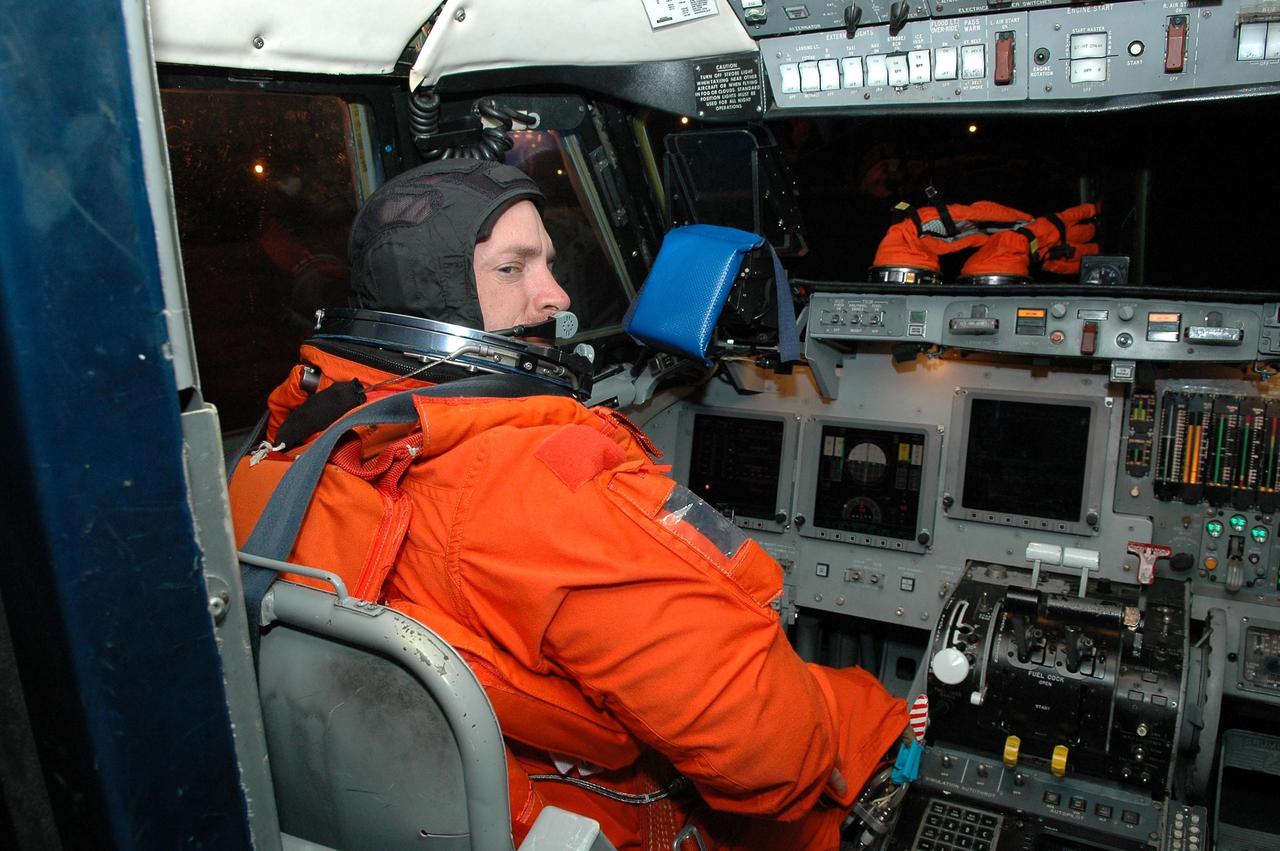
KENNEDY SPACE CENTER, FLA. - Inside the Shuttle Training Aircraft (STA), STS-121 Pilot Mark Kelly takes control in the cockpit. Kelly and Commander Steven Lindsey will be making practice landings in preparation for the July 1 launch of Space Shuttle Discovery. The STA is a Grumman American Aviation-built Gulf Stream II jet that was modified to simulate an orbiter’s cockpit, motion and visual cues, and handling qualities. In flight, the STA duplicates the orbiter’s atmospheric descent trajectory from approximately 35,000 feet altitude to landing on a runway. Because the orbiter is unpowered during re-entry and landing, its high-speed glide must be perfectly executed the first time. Photo credit: NASA/Kim Shiflett
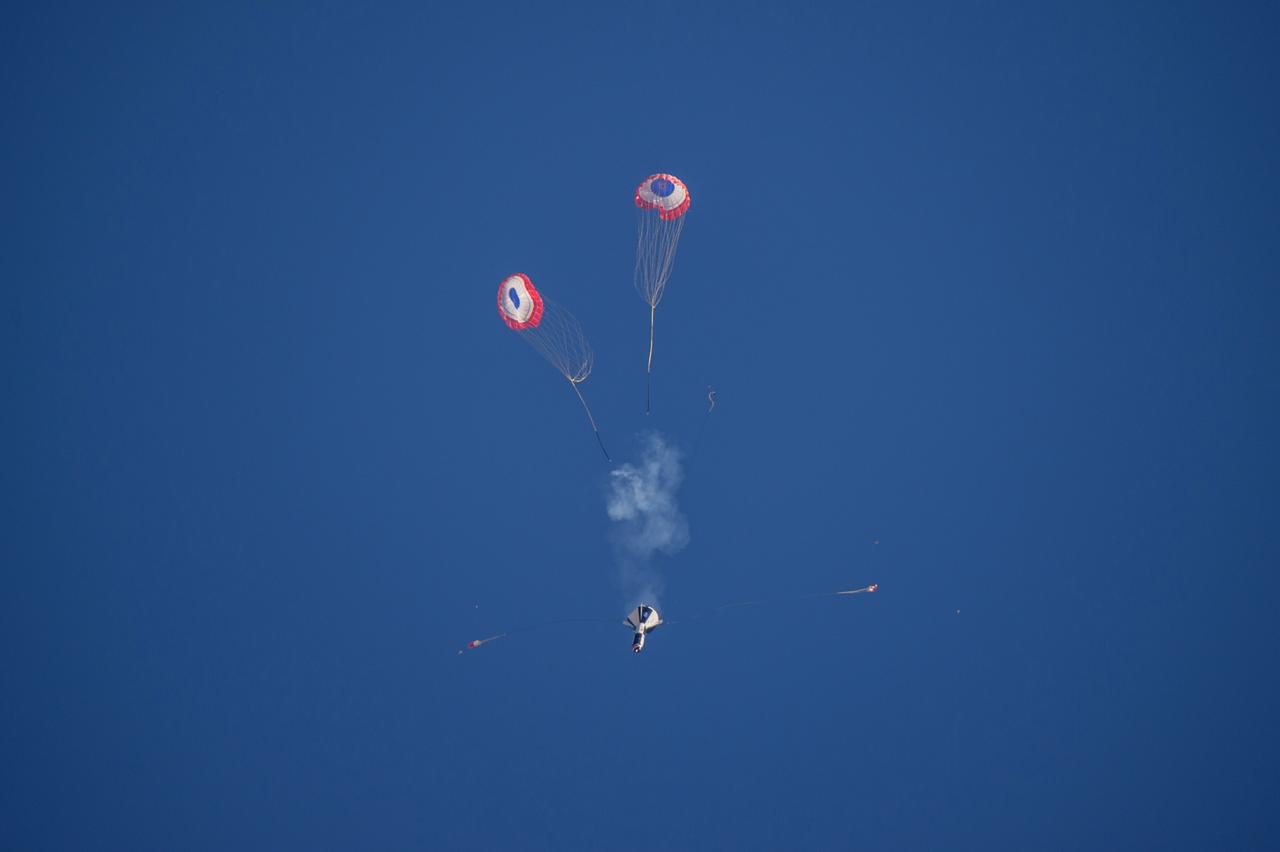
Boeing conducted the first in a series of reliability tests of its CST-100 Starliner flight drogue and main parachute system by releasing a long, dart-shaped test vehicle from a C-17 aircraft over Yuma, Arizona. Two more tests are planned using the dart module, as well as three similar reliability tests using a high fidelity capsule simulator designed to simulate the CST-100 Starliner capsule’s exact shape and mass. In both the dart and capsule simulator tests, the test spacecraft are released at various altitudes to test the parachute system at different deployment speeds, aerodynamic loads, and or weight demands. Data collected from each test is fed into computer models to more accurately predict parachute performance and to verify consistency from test to test.
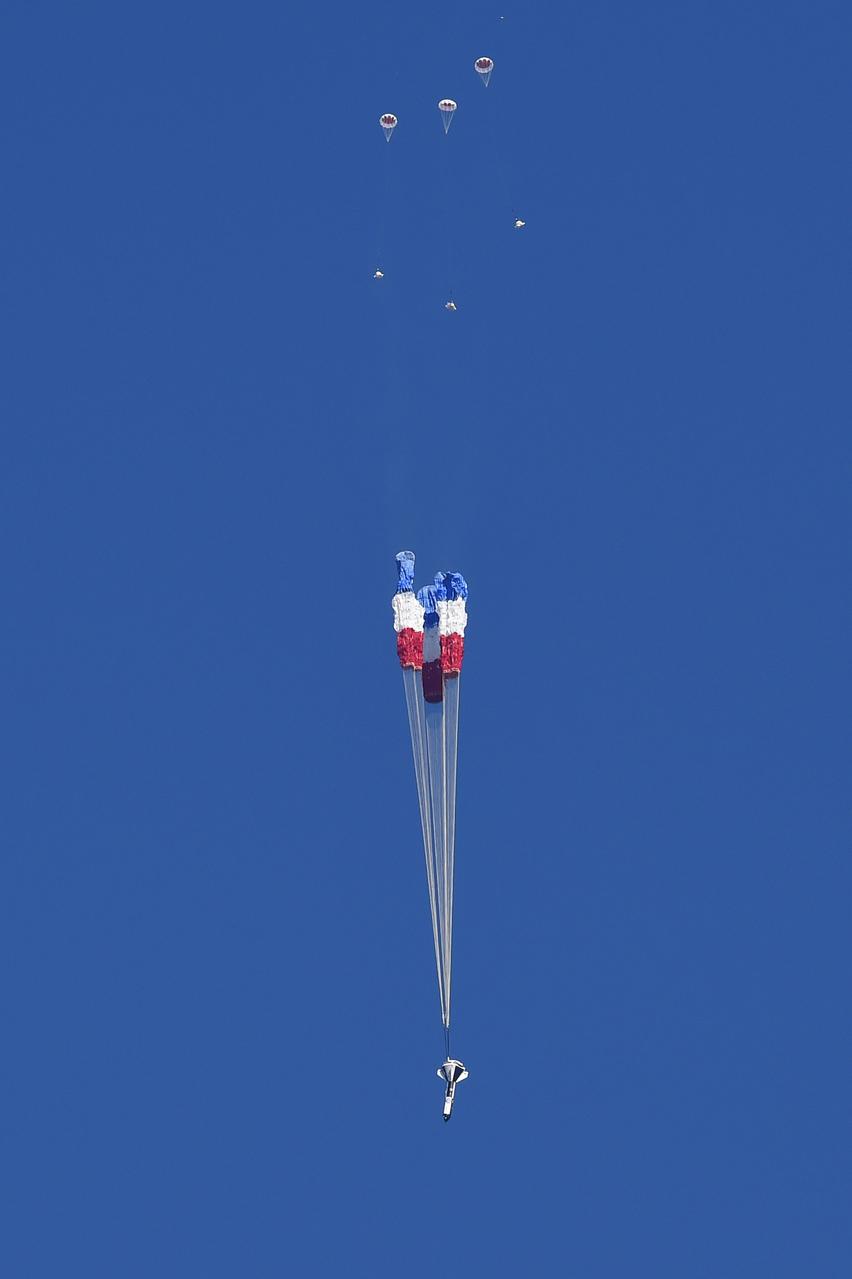
Boeing conducted the first in a series of reliability tests of its CST-100 Starliner flight drogue and main parachute system by releasing a long, dart-shaped test vehicle from a C-17 aircraft over Yuma, Arizona. Two more tests are planned using the dart module, as well as three similar reliability tests using a high fidelity capsule simulator designed to simulate the CST-100 Starliner capsule’s exact shape and mass. In both the dart and capsule simulator tests, the test spacecraft are released at various altitudes to test the parachute system at different deployment speeds, aerodynamic loads, and or weight demands. Data collected from each test is fed into computer models to more accurately predict parachute performance and to verify consistency from test to test.
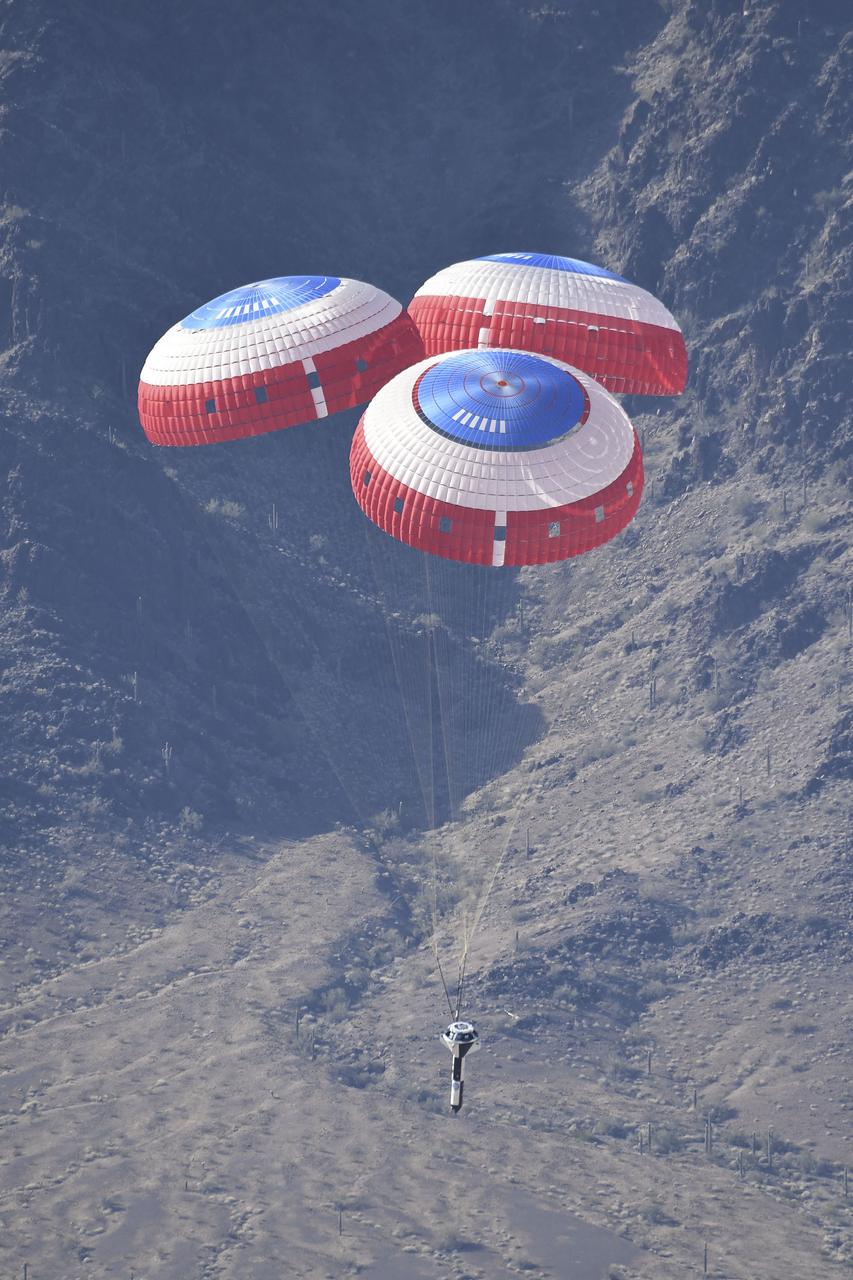
Boeing conducted the first in a series of reliability tests of its CST-100 Starliner flight drogue and main parachute system by releasing a long, dart-shaped test vehicle from a C-17 aircraft over Yuma, Arizona. Two more tests are planned using the dart module, as well as three similar reliability tests using a high fidelity capsule simulator designed to simulate the CST-100 Starliner capsule’s exact shape and mass. In both the dart and capsule simulator tests, the test spacecraft are released at various altitudes to test the parachute system at different deployment speeds, aerodynamic loads, and or weight demands. Data collected from each test is fed into computer models to more accurately predict parachute performance and to verify consistency from test to test.
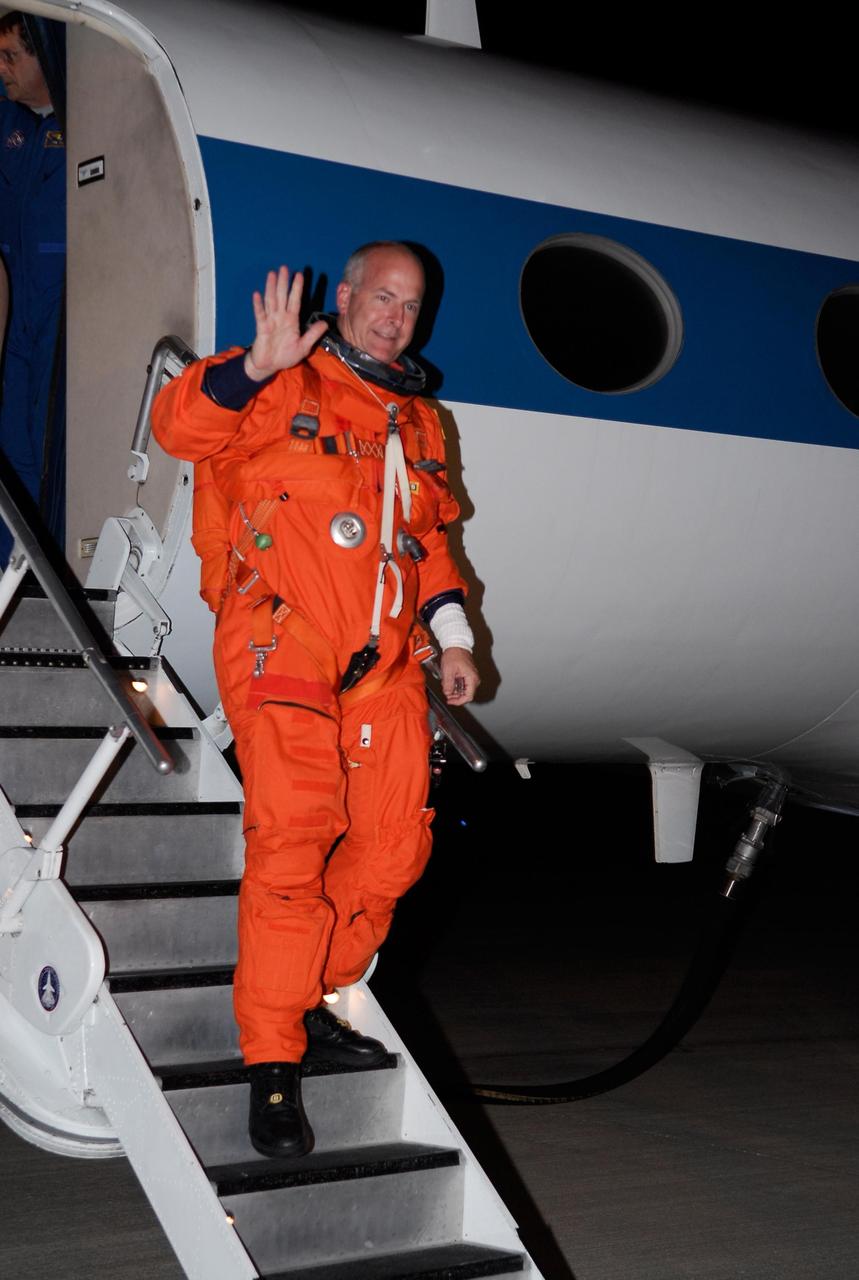
KENNEDY SPACE CENTER, FLA. -- STS-122 Pilot Alan Poindexter returns to the Shuttle Landing Facility at NASA's Kennedy Space Center after practicing shuttle landings in the shuttle training aircraft before the Feb. 7 launch of space shuttle Atlantis. The STA is a Grumman American Aviation-built Gulf Stream II jet that was modified to simulate an orbiter's cockpit, motion and visual cues, and handling qualities. In flight, the STA duplicates the orbiter's atmospheric descent trajectory from approximately 35,000 feet altitude to landing on a runway. Because the orbiter is unpowered during re-entry and landing, its high-speed glide must be perfectly executed the first time. Photo credit: NASA/Kim Shiflett
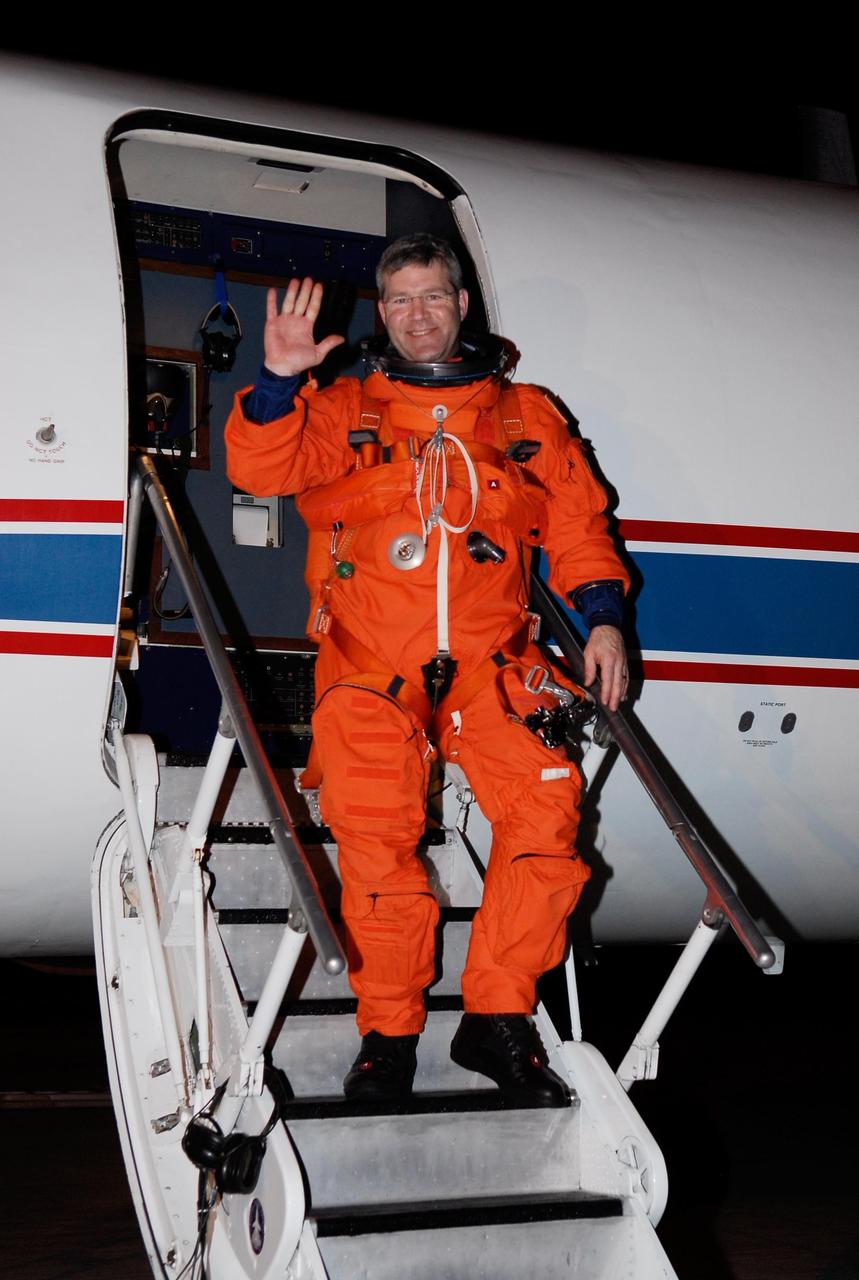
KENNEDY SPACE CENTER, FLA. -- STS-122 Commander Steve Frick returns to the Shuttle Landing Facility at NASA's Kennedy Space Center after practicing shuttle landings in the shuttle training aircraft before the Feb. 7 launch of space shuttle Atlantis. The STA is a Grumman American Aviation-built Gulf Stream II jet that was modified to simulate an orbiter's cockpit, motion and visual cues, and handling qualities. In flight, the STA duplicates the orbiter's atmospheric descent trajectory from approximately 35,000 feet altitude to landing on a runway. Because the orbiter is unpowered during re-entry and landing, its high-speed glide must be perfectly executed the first time. Photo credit: NASA/Kim Shiflett
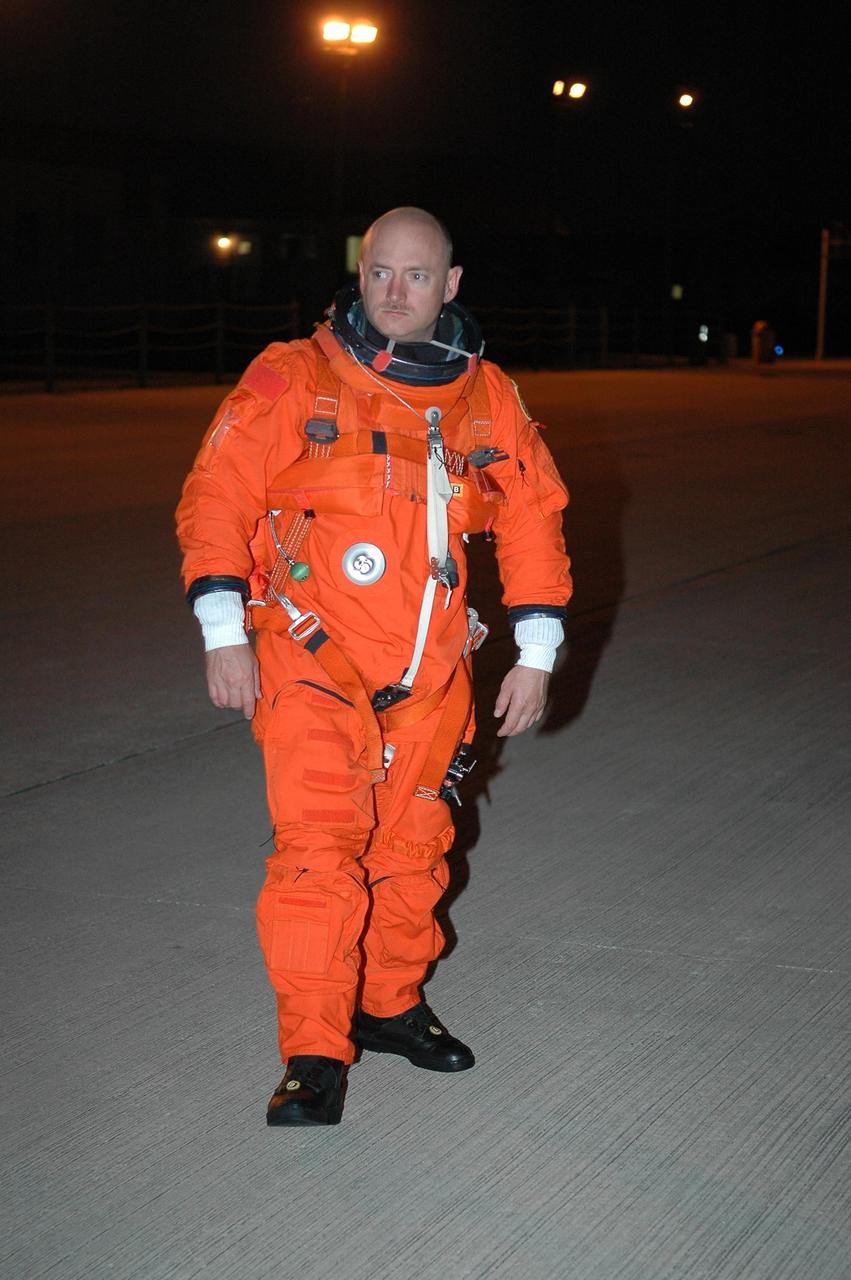
KENNEDY SPACE CENTER, FLA. - In the pre-dawn hours, STS-121 Pilot Mark Kelly heads across the Shuttle Landing Facility to the Shuttle Training Aircraft (STA). Kelly and Commander Steven Lindsey will be making practice landings in preparation for the July 1 launch of Space Shuttle Discovery. The STA is a Grumman American Aviation-built Gulf Stream II jet that was modified to simulate an orbiter’s cockpit, motion and visual cues, and handling qualities. In flight, the STA duplicates the orbiter’s atmospheric descent trajectory from approximately 35,000 feet altitude to landing on a runway. Because the orbiter is unpowered during re-entry and landing, its high-speed glide must be perfectly executed the first time. Photo credit: NASA/Kim Shiflett

KENNEDY SPACE CENTER, FLA. -- At the Shuttle Landing Facility, STS-116 Commander Mark Polansky climbs the steps to the shuttle training aircraft (STA) to practice landing the orbiter. The mission crew is at KSC for the terminal countdown demonstration test, which are prelaunch preparations that include a simulated launch countdown. STA practice is part of the TCDT. The STA is a Grumman American Aviation-built Gulf Stream II jet that was modified to simulate an orbiter's cockpit, motion and visual cues, and handling qualities. In flight, the STA duplicates the orbiter's atmospheric descent trajectory from approximately 35,000 feet altitude to landing on a runway. Because the orbiter is unpowered during re-entry and landing, its high-speed glide must be perfectly executed the first time. Photo credit: NASA/Kim Shiflett
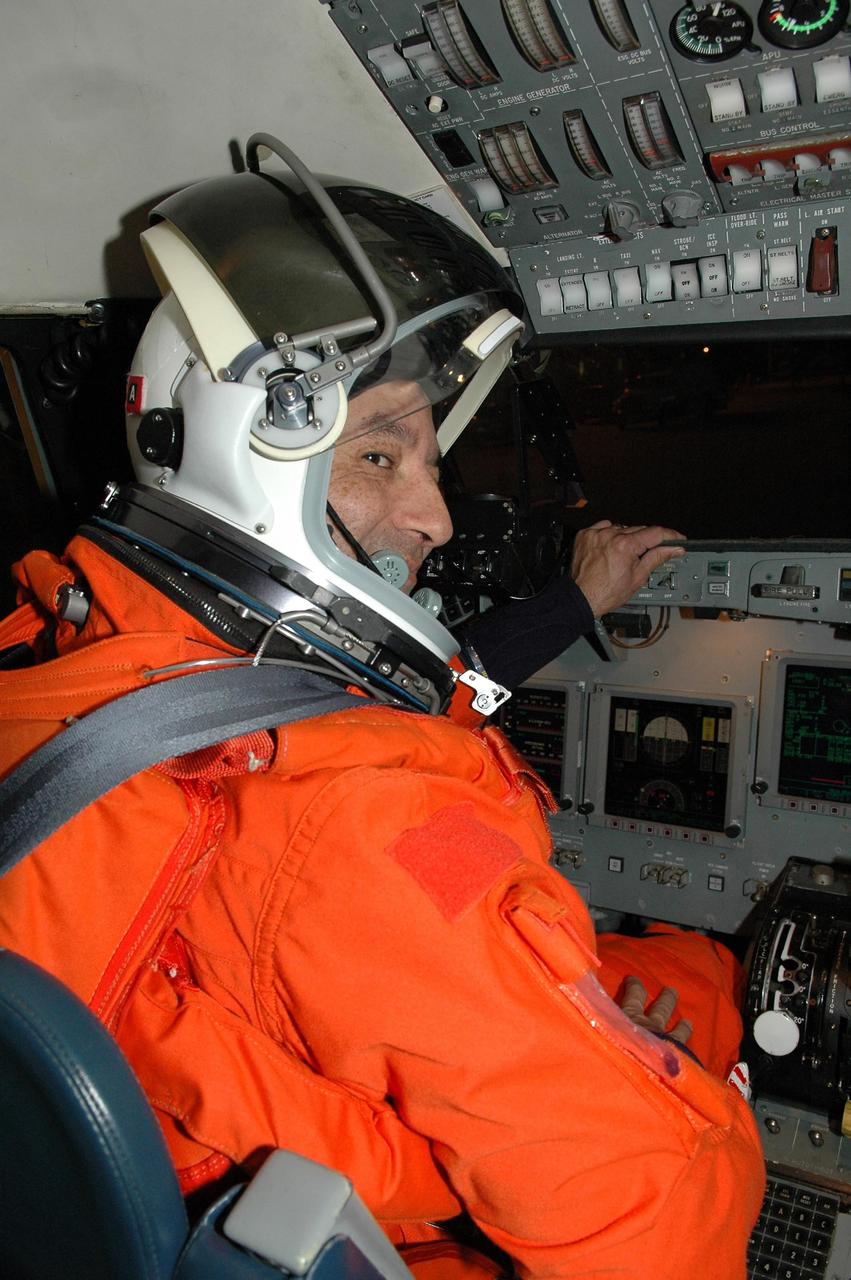
KENNEDY SPACE CENTER, FLA. -- At the Shuttle Landing Facility, STS-116 Commander Mark Polansky is in the pilot's seat of the shuttle training aircraft (STA), getting ready to practice landing the orbiter. The mission crew is at KSC for the terminal countdown demonstration test, which are prelaunch preparations that include a simulated launch countdown. STA practice is part of the TCDT. The STA is a Grumman American Aviation-built Gulf Stream II jet that was modified to simulate an orbiter's cockpit, motion and visual cues, and handling qualities. In flight, the STA duplicates the orbiter's atmospheric descent trajectory from approximately 35,000 feet altitude to landing on a runway. Because the orbiter is unpowered during re-entry and landing, its high-speed glide must be perfectly executed the first time. Photo credit: NASA/Kim Shiflett
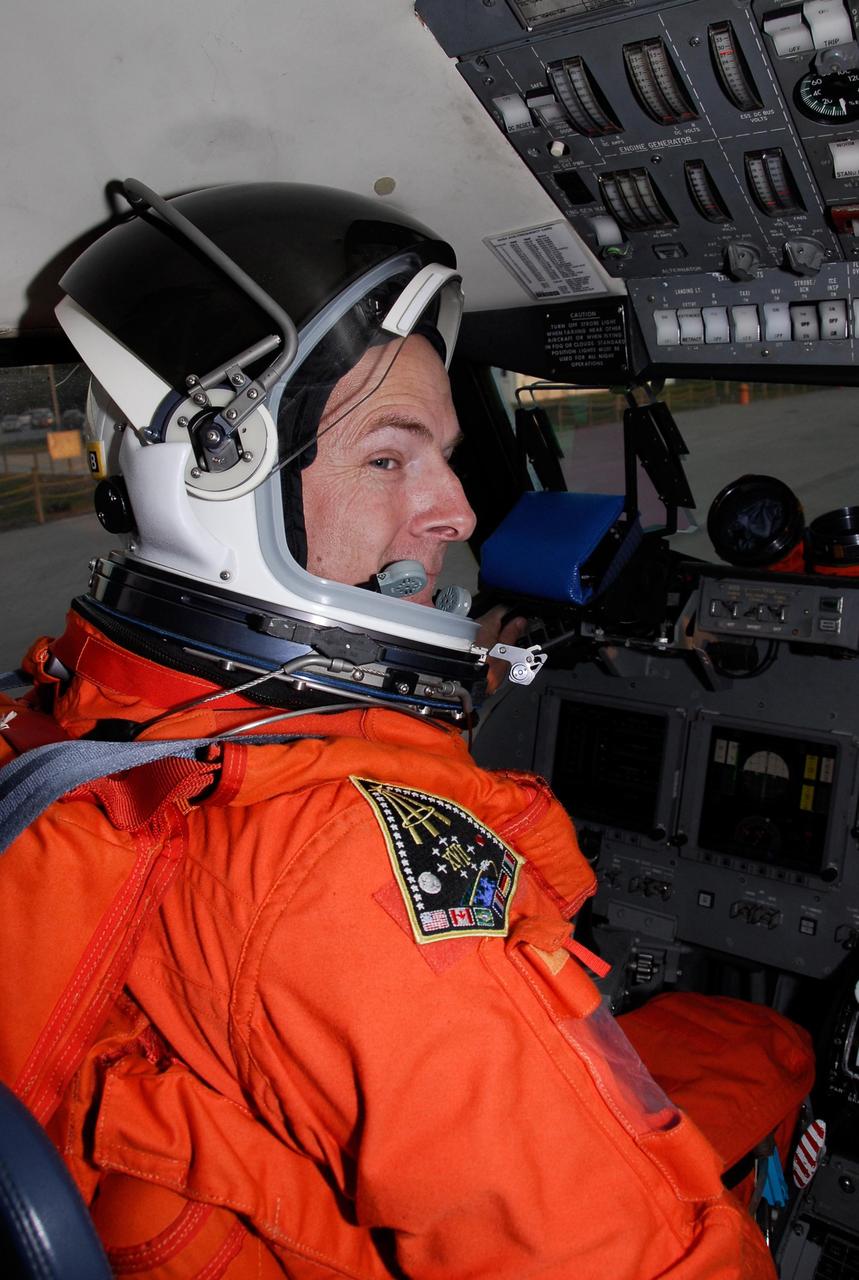
KENNEDY SPACE CENTER, FLA. -- Dressed in his launch and entry suit, STS-122 Pilot Alan Poindexter is seated in the shuttle training aircraft, or STA, at NASA's Kennedy Space Center. Poindexter and Commander Steve Frick are practicing shuttle landings in the STA before the Feb. 7 launch of space shuttle Atlantis. The STA is a Grumman American Aviation-built Gulf Stream II jet that was modified to simulate an orbiter's cockpit, motion and visual cues, and handling qualities. In flight, the STA duplicates the orbiter's atmospheric descent trajectory from approximately 35,000 feet altitude to landing on a runway. Because the orbiter is unpowered during re-entry and landing, its high-speed glide must be perfectly executed the first time. Photo credit: NASA/Kim Shiflett
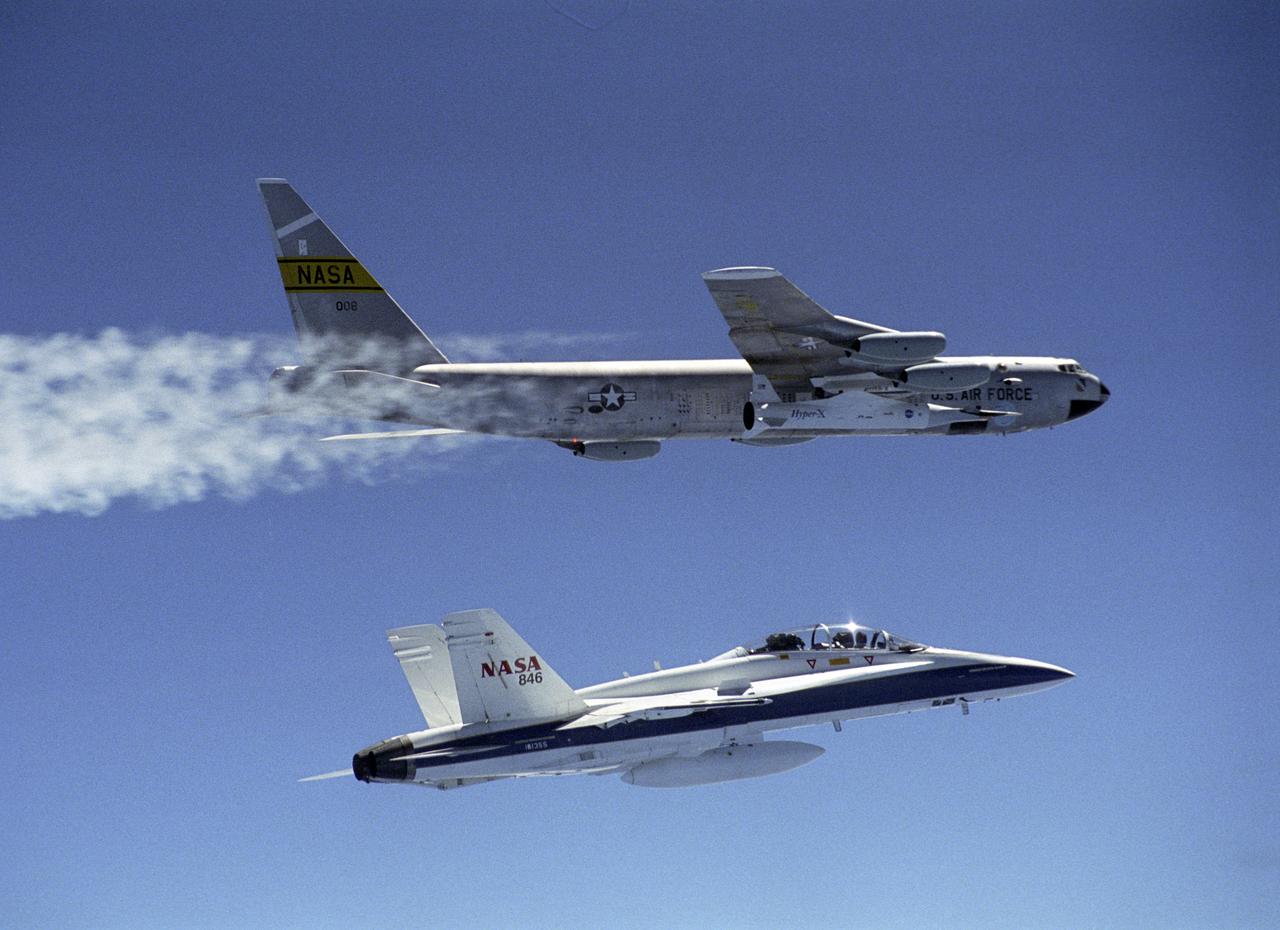
The second X-43A hypersonic research aircraft, attached to a modified Pegasus booster rocket and followed by a chase F-18, was taken to launch altitude by NASA's B-52B launch aircraft from the NASA Dryden Flight Research Center at Edwards Air Force Base, Calif., on March 27, 2004. About an hour later the Pegasus booster was released from the B-52 to accelerate the X-43A to its intended speed of Mach 7. In a combined research effort involving Dryden, Langley, and several industry partners, NASA demonstrated the value of its X-43A hypersonic research aircraft, as it became the first air-breathing, unpiloted, scramjet-powered plane to fly freely by itself. The March 27 flight, originating from NASA's Dryden Flight Research Center, began with the Agency's B-52B launch aircraft carrying the X-43A out to the test range over the Pacific Ocean off the California coast. The X-43A was boosted up to its test altitude of about 95,000 feet, where it separated from its modified Pegasus booster and flew freely under its own power. Two very significant aviation milestones occurred during this test flight: first, controlled accelerating flight at Mach 7 under scramjet power, and second, the successful stage separation at high dynamic pressure of two non-axisymmetric vehicles. To top it all off, the flight resulted in the setting of a new aeronautical speed record. The X-43A reached a speed of over Mach 7, or about 5,000 miles per hour faster than any known aircraft powered by an air-breathing engine has ever flown.
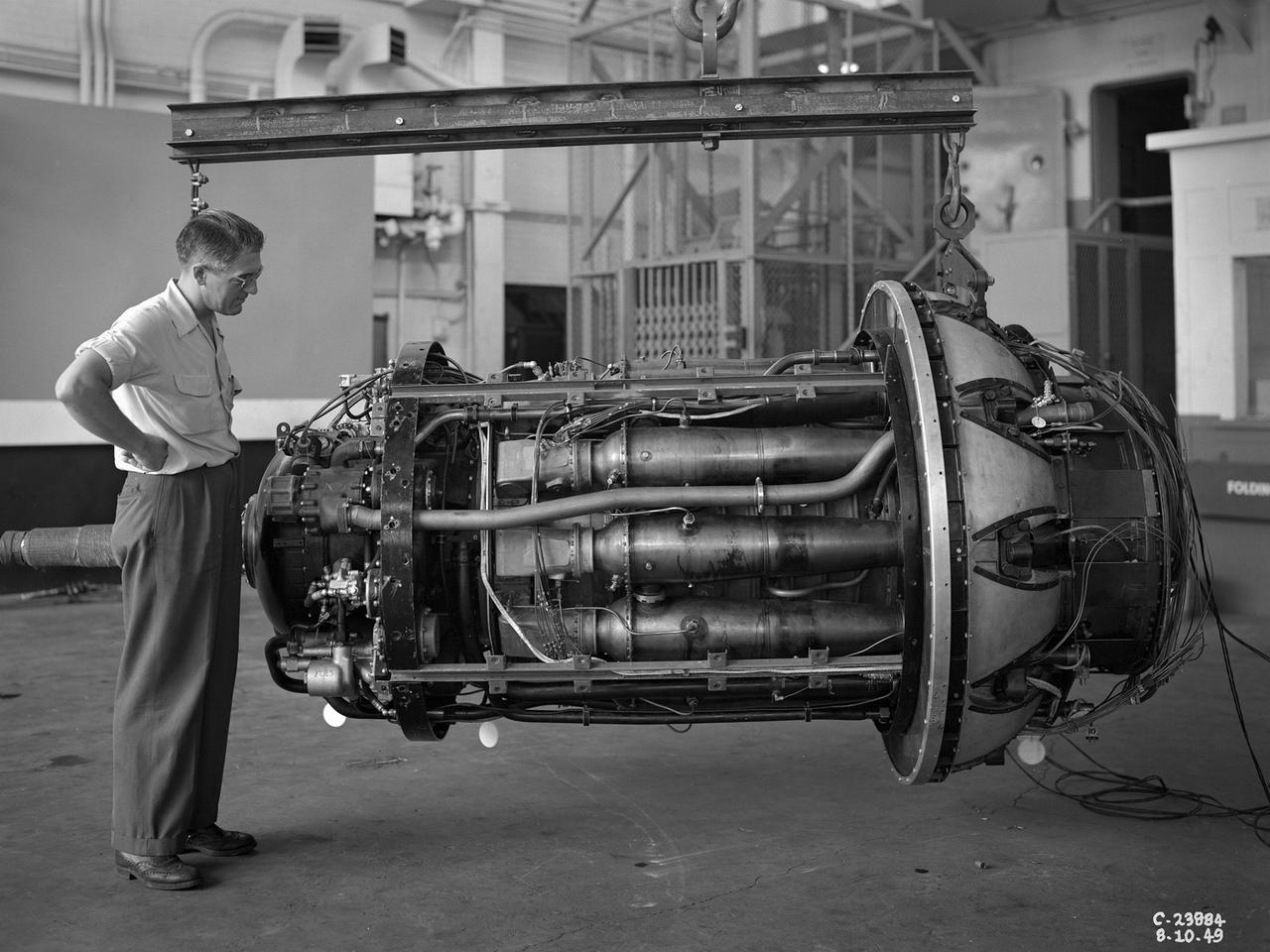
A 3670-horsepower Armstrong-Siddeley Python turboprop being prepared for tests in the Altitude Wind Tunnel at the National Advisory Committee for Aeronautics (NACA) Lewis Flight Propulsion Laboratory. In 1947 Lewis researcher Walter Olsen led a group of representatives from the military, industry, and the NACA on a fact finding mission to investigate the technological progress of British turbojet manufacturers. Afterwards several British engines, including the Python, were brought to Cleveland for testing in Lewis’s altitude facilities. The Python was a 14-stage axial-flow compressor turboprop with a fixed-area nozzle and contra-rotating propellers. Early turboprops combined the turbojet and piston engine technologies. They could move large quantities of air so required less engine speed and thus less fuel. This was very appealing to the military for some applications. The military asked the NACA to compare the Python’s performance at sea to that at high altitudes. The NACA researchers studied the Python in the Altitude Wind Tunnel from July 1949 through January 1950. It was the first time the tunnel was used to study an engine with the sole purpose of learning about, not improving it. They analyzed the engine’s dynamic response using a frequency response method at altitudes between 10,000 to 30,000 feet. Lewis researchers found that they could predict the dynamic response characteristics at any altitude from the data obtained from any other specific altitude. This portion of the testing was completed during a single test run.
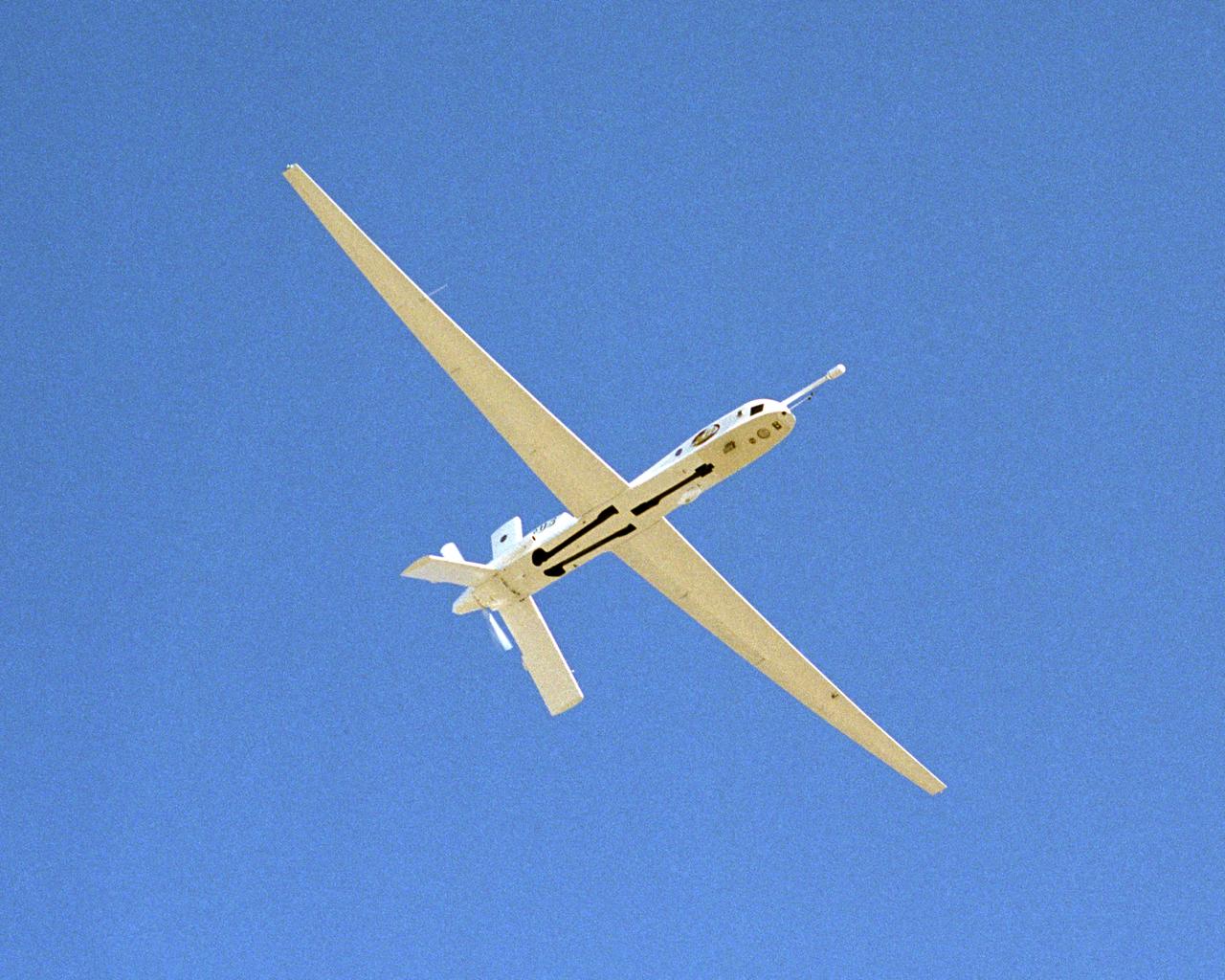
A NASA team studying the causes of electrical storms and their effects on our home planet achieved a milestone on August 21, 2002, completing the study's longest-duration research flight and monitoring four thunderstorms in succession. Based at the Naval Air Station Key West, Florida, researchers with the Altus Cumulus Electrification Study (ACES) used the Altus II remotely piloted aircraft to study thunderstorms in the Atlantic Ocean off Key West and the west of the Everglades. The ACES lightning study used the Altus II twin turbo uninhabited aerial vehicle, built by General Atomics Aeronautical Systems, Inc. of San Diego. The Altus II was chosen for its slow flight speed of 75 to 100 knots (80 to 115 mph), long endurance, and high-altitude flight (up to 65,000 feet). These qualities gave the Altus II the ability to fly near and around thunderstorms for long periods of time, allowing investigations to be conducted over the entire life cycle of storms. The vehicle has a wing span of 55 feet and a payload capacity of over 300 lbs. With dual goals of gathering weather data safely and testing the adaptability of the uninhabited aircraft, the ACES study is a collaboration among the Marshall Space Flight Center, the University of Alabama in Huntsville, NASA's Goddard Space Flight Center in Greenbelt, Maryland, Pernsylvania State University in University Park, and General Atomics Aeronautical Systems, Inc.
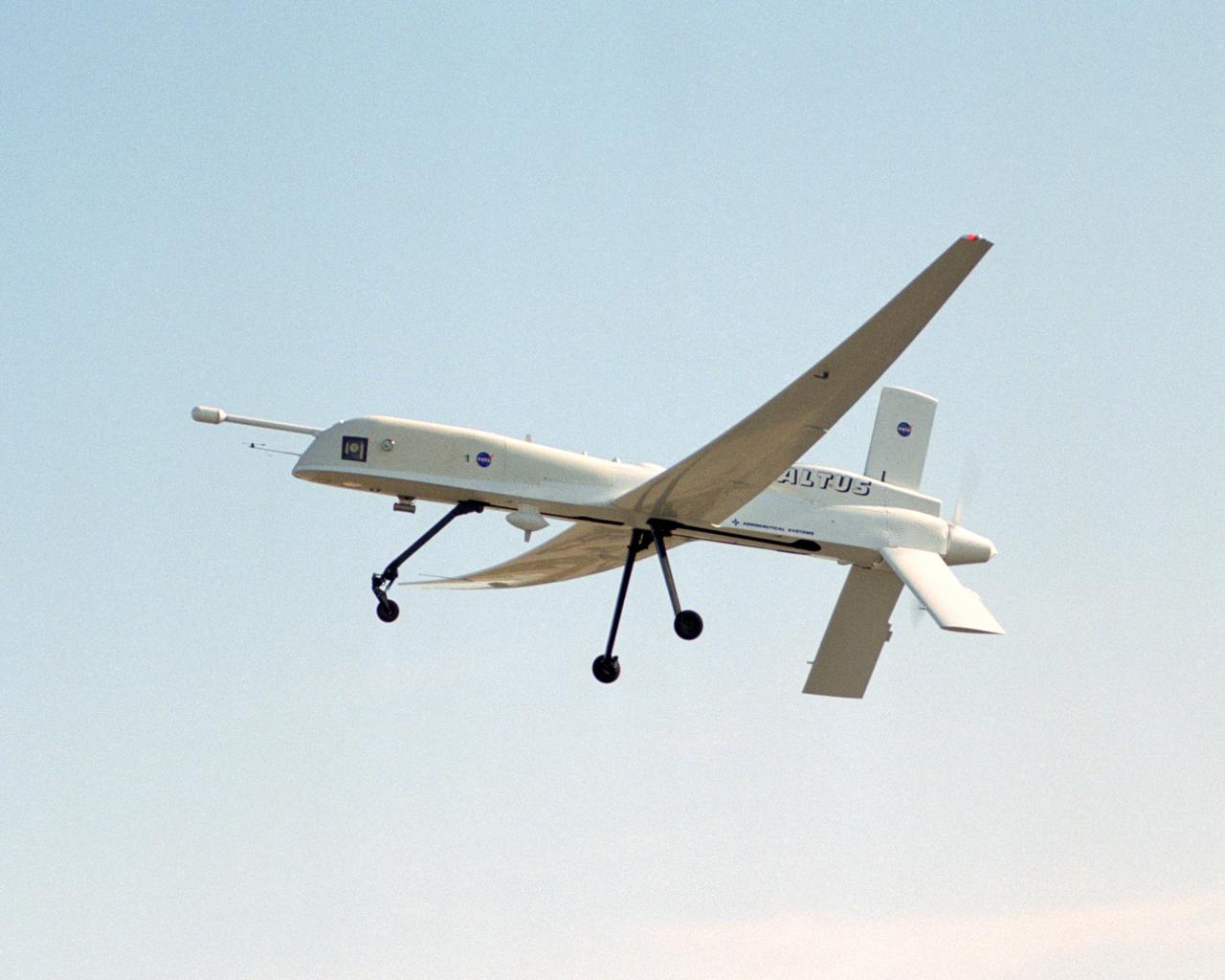
A NASA team studying the causes of electrical storms and their effects on our home planet achieved a milestone on August 21, 2002, completing the study's longest-duration research flight and monitoring four thunderstorms in succession. Based at the Naval Air Station Key West, Florida, researchers with the Altus Cumulus Electrification Study (ACES) used the Altus II remotely-piloted aircraft to study thunderstorms in the Atlantic Ocean off Key West and the west of the Everglades. The ACES lightning study used the Altus II twin turbo uninhabited aerial vehicle, built by General Atomics Aeronautical Systems, Inc. of San Diego. The Altus II was chosen for its slow flight speed of 75 to 100 knots (80 to 115 mph), long endurance, and high-altitude flight (up to 65,000 feet). These qualities gave the Altus II the ability to fly near and around thunderstorms for long periods of time, allowing investigations to be to be conducted over the entire life cycle of storms. The vehicle has a wing span of 55 feet and a payload capacity of over 300 lbs. With dual goals of gathering weather data safely and testing the adaptability of the uninhabited aircraft, the ACES study is a collaboration among the Marshall Space Flight Center, the University of Alabama in Huntsville, NASA,s Goddard Space Flight Center in Greenbelt, Maryland, Pernsylvania State University in University Park, and General Atomics Aeronautical Systems, Inc.

The ALOFT mission, Airborne Lightning Observatory for Fly’s eye simulator and Terrestrial gamma ray flashes, is a collaboration between NASA and the University of Bergen, Norway. NASA Armstrong Flight Research Center’s ER-2 aircraft flies just above the height of thunderclouds over the Floridian and Caribbean coastlines to collect data about lightning glows and terrestrial gamma ray flashes. Scientists expect to collect more accurate data than ever before that can advance the study of high-energy radiation emissions from thunderstorms.

The ALOFT mission, Airborne Lightning Observatory for Fly’s eye simulator and Terrestrial gamma ray flashes, is a collaboration between NASA and the University of Bergen, Norway. NASA Armstrong Flight Research Center’s ER-2 aircraft flies just above the height of thunderclouds over the Floridian and Caribbean coastlines to collect data about lightning glows and terrestrial gamma ray flashes. Scientists expect to collect more accurate data than ever before that can advance the study of high-energy radiation emissions from thunderstorms.
The ALOFT mission, Airborne Lightning Observatory for Fly’s eye simulator and Terrestrial gamma ray flashes, is a collaboration between NASA and the University of Bergen, Norway. NASA Armstrong Flight Research Center’s ER-2 aircraft flies just above the height of thunderclouds over the Floridian and Caribbean coastlines to collect data about lightning glows and terrestrial gamma ray flashes. Scientists expect to collect more accurate data than ever before that can advance the study of high-energy radiation emissions from thunderstorms.

The ALOFT mission, Airborne Lightning Observatory for Fly’s eye simulator and Terrestrial gamma ray flashes, is a collaboration between NASA and the University of Bergen, Norway. NASA Armstrong Flight Research Center’s ER-2 aircraft flies just above the height of thunderclouds over the Floridian and Caribbean coastlines to collect data about lightning glows and terrestrial gamma ray flashes. Scientists expect to collect more accurate data than ever before that can advance the study of high-energy radiation emissions from thunderstorms.
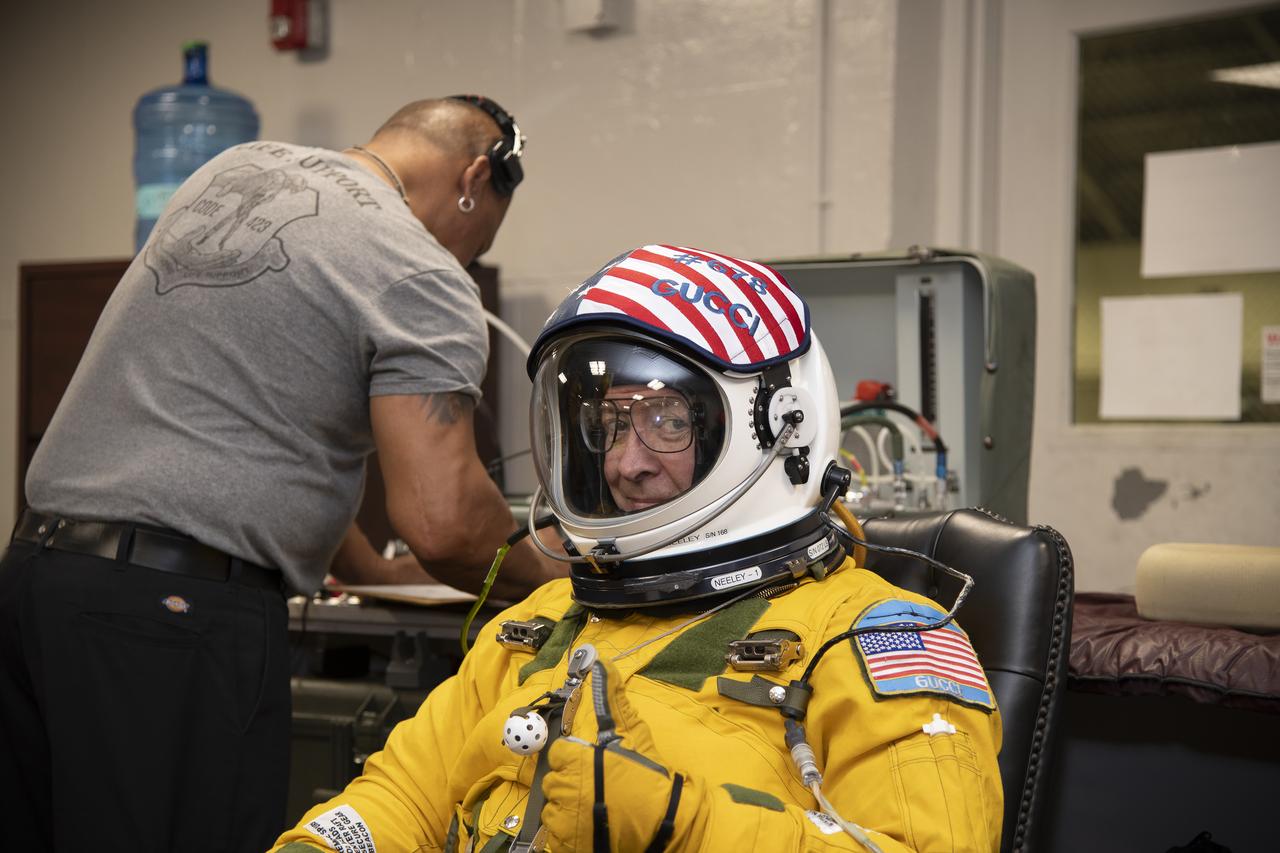
The ALOFT mission, Airborne Lightning Observatory for Fly’s eye simulator and Terrestrial gamma ray flashes, is a collaboration between NASA and the University of Bergen, Norway. NASA Armstrong Flight Research Center’s ER-2 aircraft flies just above the height of thunderclouds over the Floridian and Caribbean coastlines to collect data about lightning glows and terrestrial gamma ray flashes. Scientists expect to collect more accurate data than ever before that can advance the study of high-energy radiation emissions from thunderstorms.
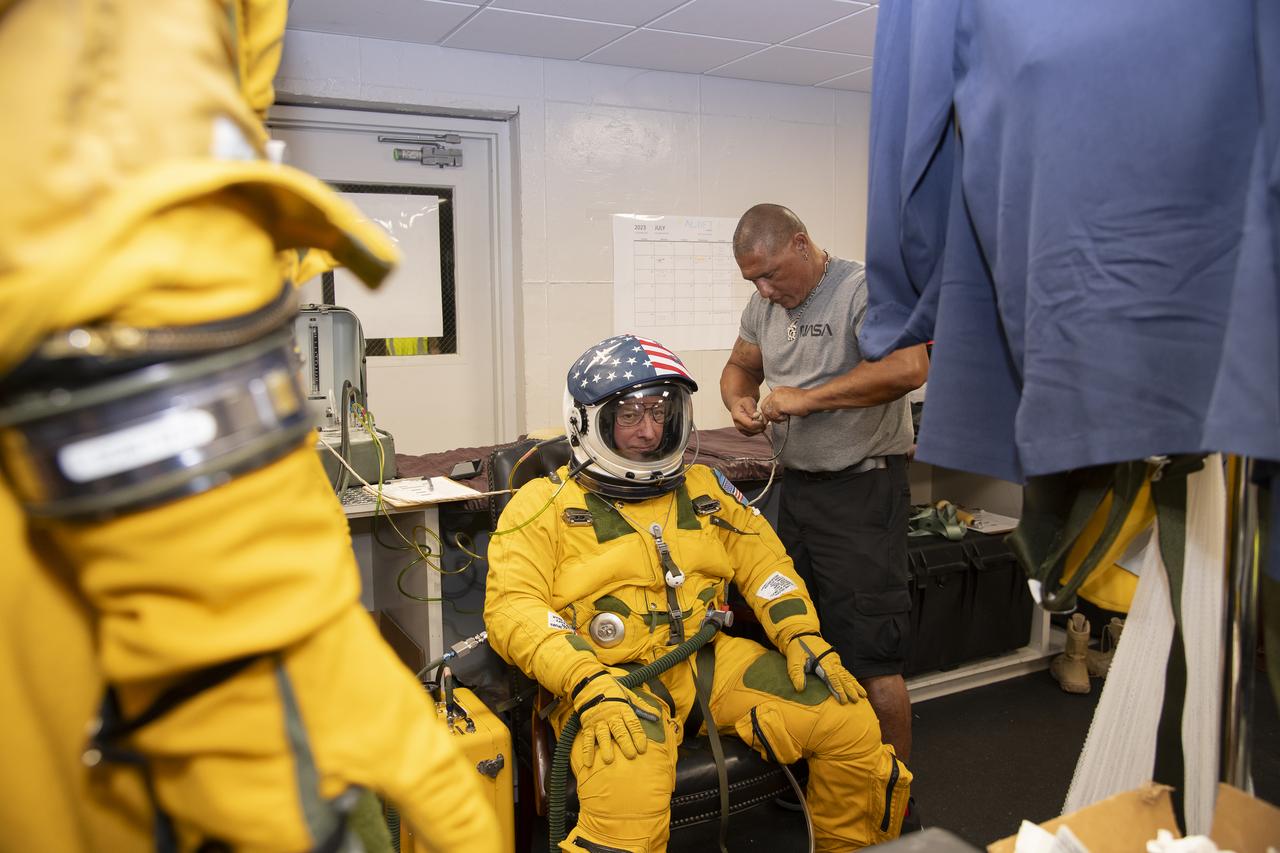
The ALOFT mission, Airborne Lightning Observatory for Fly’s eye simulator and Terrestrial gamma ray flashes, is a collaboration between NASA and the University of Bergen, Norway. NASA Armstrong Flight Research Center’s ER-2 aircraft flies just above the height of thunderclouds over the Floridian and Caribbean coastlines to collect data about lightning glows and terrestrial gamma ray flashes. Scientists expect to collect more accurate data than ever before that can advance the study of high-energy radiation emissions from thunderstorms.

The ALOFT mission, Airborne Lightning Observatory for Fly’s eye simulator and Terrestrial gamma ray flashes, is a collaboration between NASA and the University of Bergen, Norway. NASA Armstrong Flight Research Center’s ER-2 aircraft flies just above the height of thunderclouds over the Floridian and Caribbean coastlines to collect data about lightning glows and terrestrial gamma ray flashes. Scientists expect to collect more accurate data than ever before that can advance the study of high-energy radiation emissions from thunderstorms.
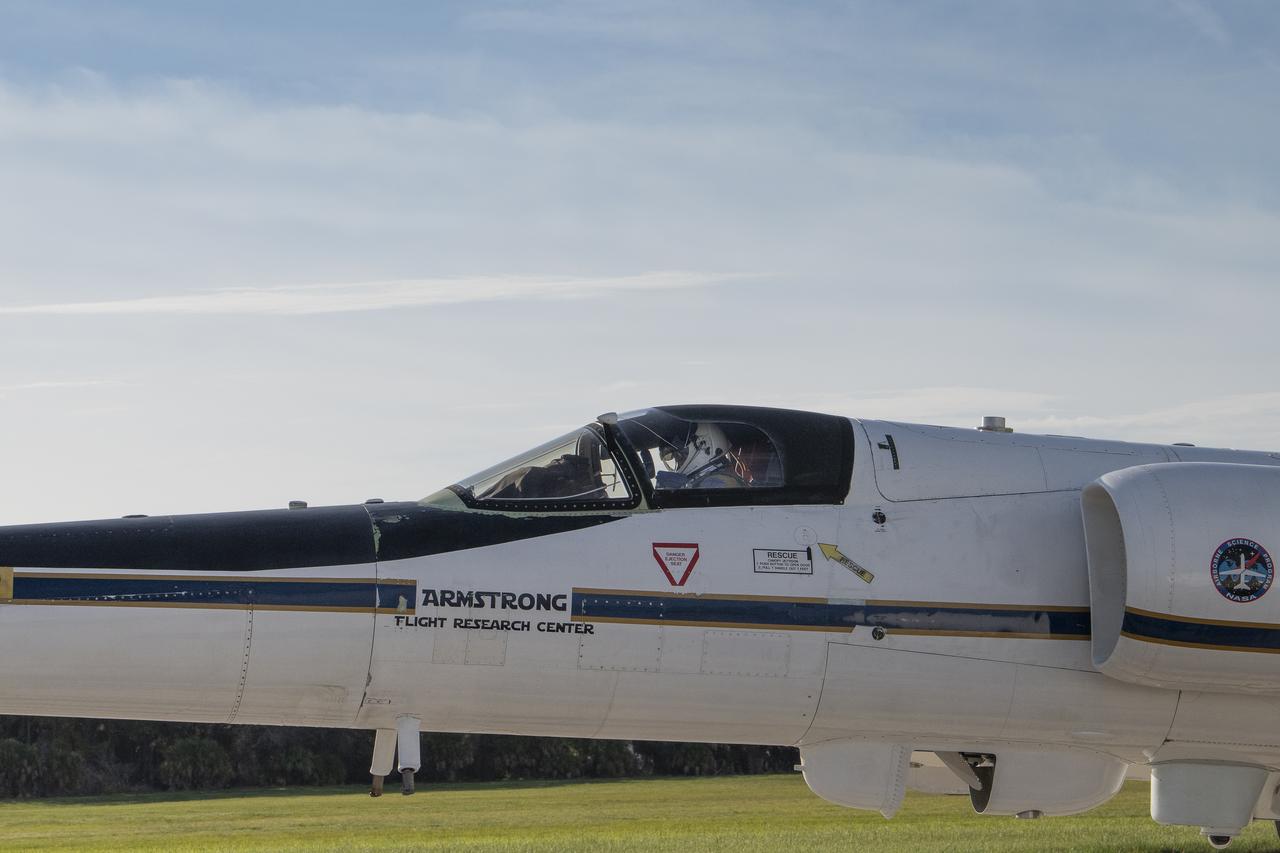
The ALOFT mission, Airborne Lightning Observatory for Fly’s eye simulator and Terrestrial gamma ray flashes, is a collaboration between NASA and the University of Bergen, Norway. NASA Armstrong Flight Research Center’s ER-2 aircraft flies just above the height of thunderclouds over the Floridian and Caribbean coastlines to collect data about lightning glows and terrestrial gamma ray flashes. Scientists expect to collect more accurate data than ever before that can advance the study of high-energy radiation emissions from thunderstorms.
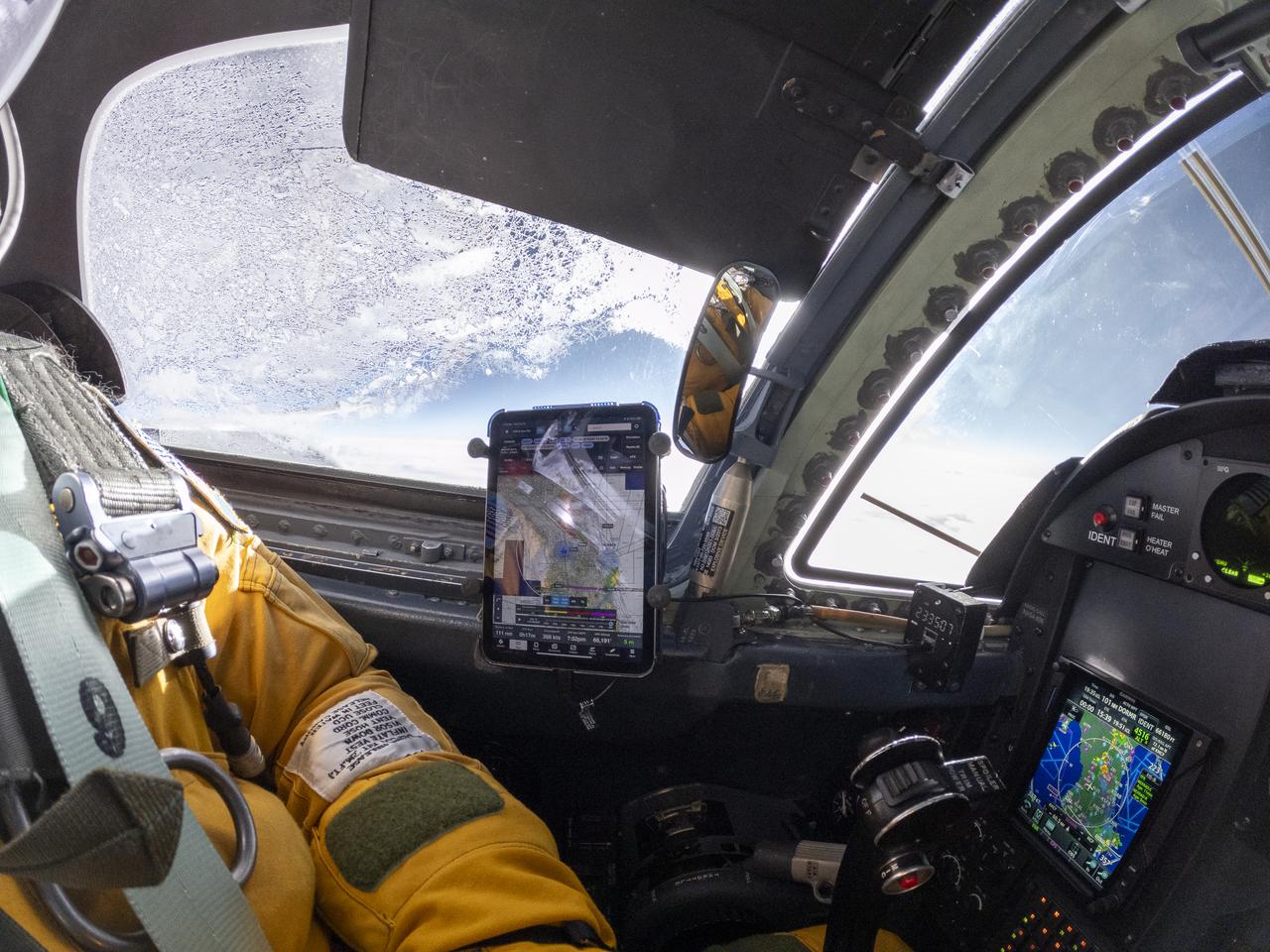
The ALOFT mission, Airborne Lightning Observatory for Fly’s eye simulator and Terrestrial gamma ray flashes, is a collaboration between NASA and the University of Bergen, Norway. NASA Armstrong Flight Research Center’s ER-2 aircraft flies just above the height of thunderclouds over the Floridian and Caribbean coastlines to collect data about lightning glows and terrestrial gamma ray flashes. Scientists expect to collect more accurate data than ever before that can advance the study of high-energy radiation emissions from thunderstorms.
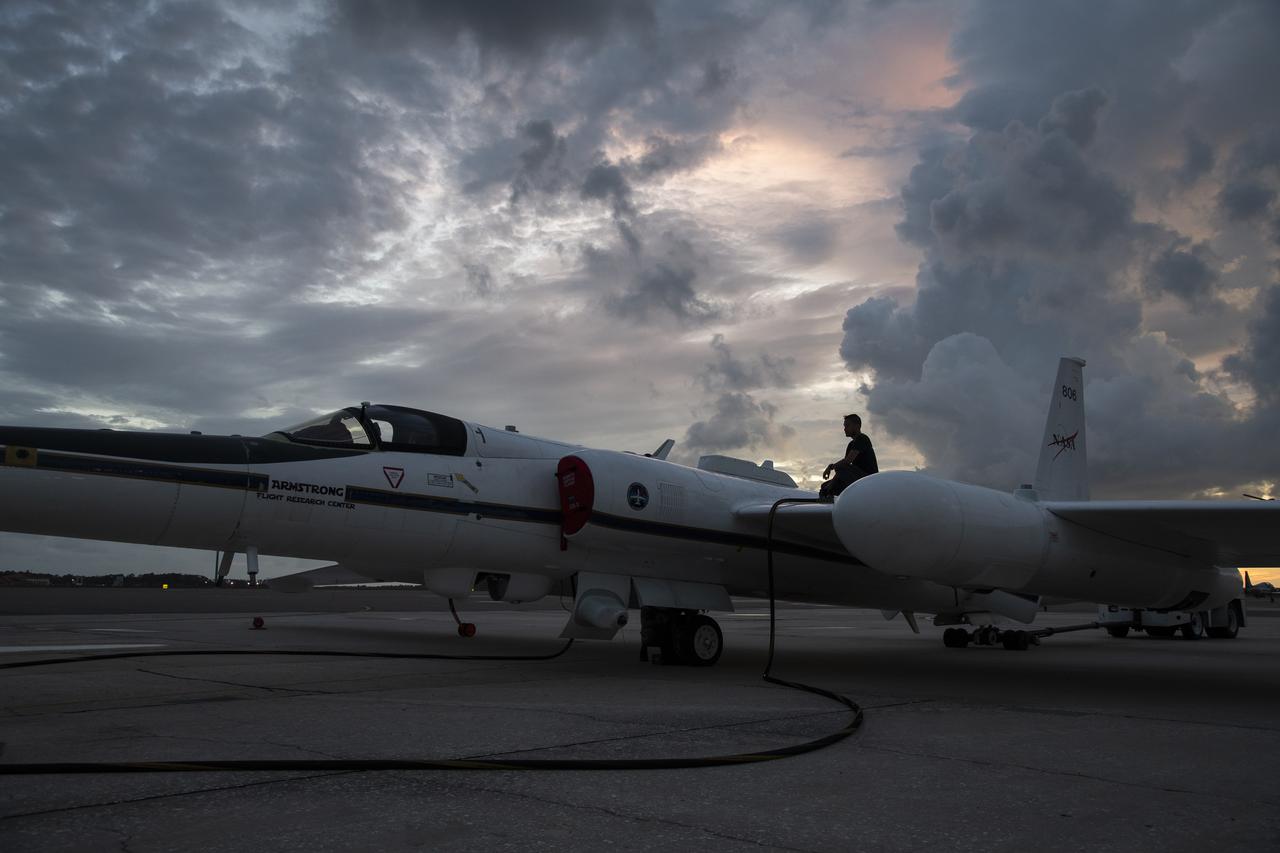
The ALOFT mission, Airborne Lightning Observatory for Fly’s eye simulator and Terrestrial gamma ray flashes, is a collaboration between NASA and the University of Bergen, Norway. NASA Armstrong Flight Research Center’s ER-2 aircraft flies just above the height of thunderclouds over the Floridian and Caribbean coastlines to collect data about lightning glows and terrestrial gamma ray flashes. Scientists expect to collect more accurate data than ever before that can advance the study of high-energy radiation emissions from thunderstorms.
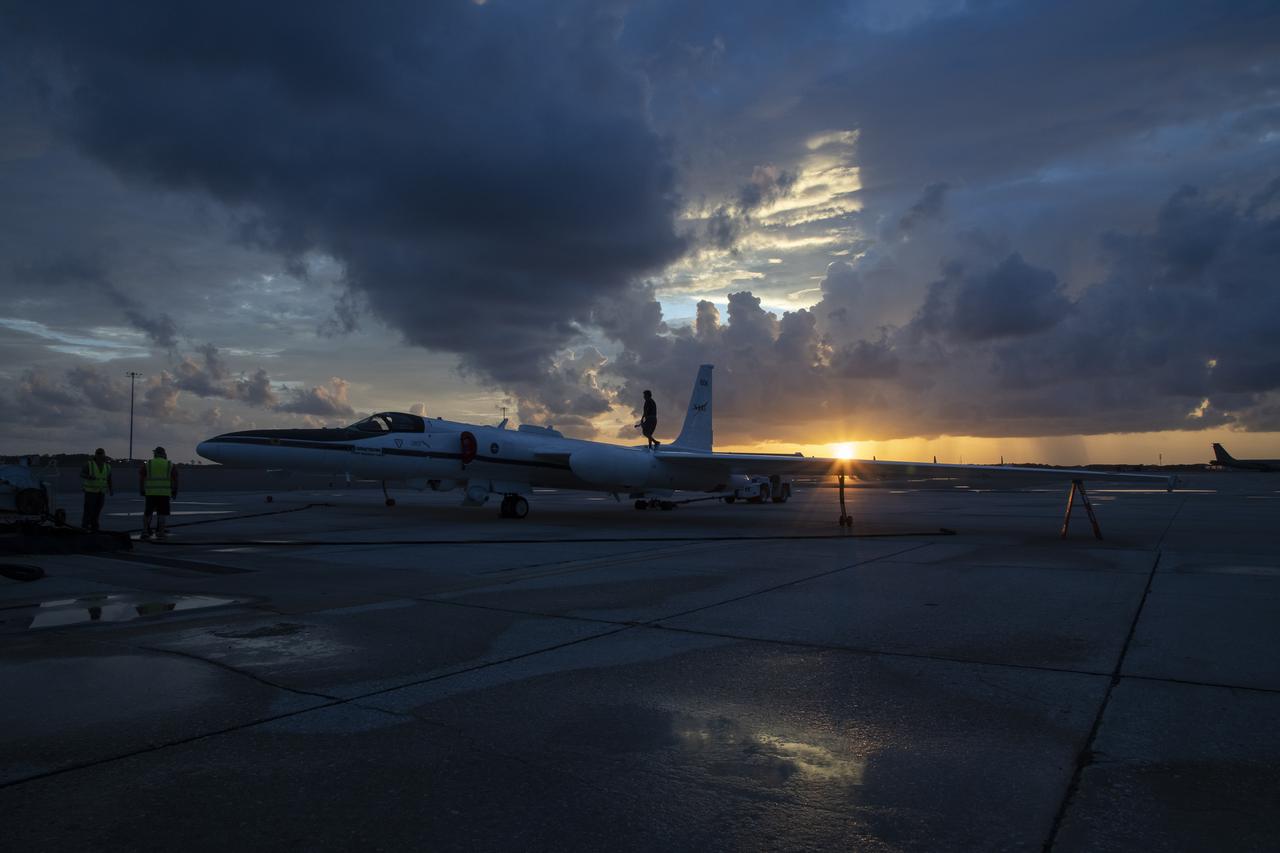
The ALOFT mission, Airborne Lightning Observatory for Fly’s eye simulator and Terrestrial gamma ray flashes, is a collaboration between NASA and the University of Bergen, Norway. NASA Armstrong Flight Research Center’s ER-2 aircraft flies just above the height of thunderclouds over the Floridian and Caribbean coastlines to collect data about lightning glows and terrestrial gamma ray flashes. Scientists expect to collect more accurate data than ever before that can advance the study of high-energy radiation emissions from thunderstorms.