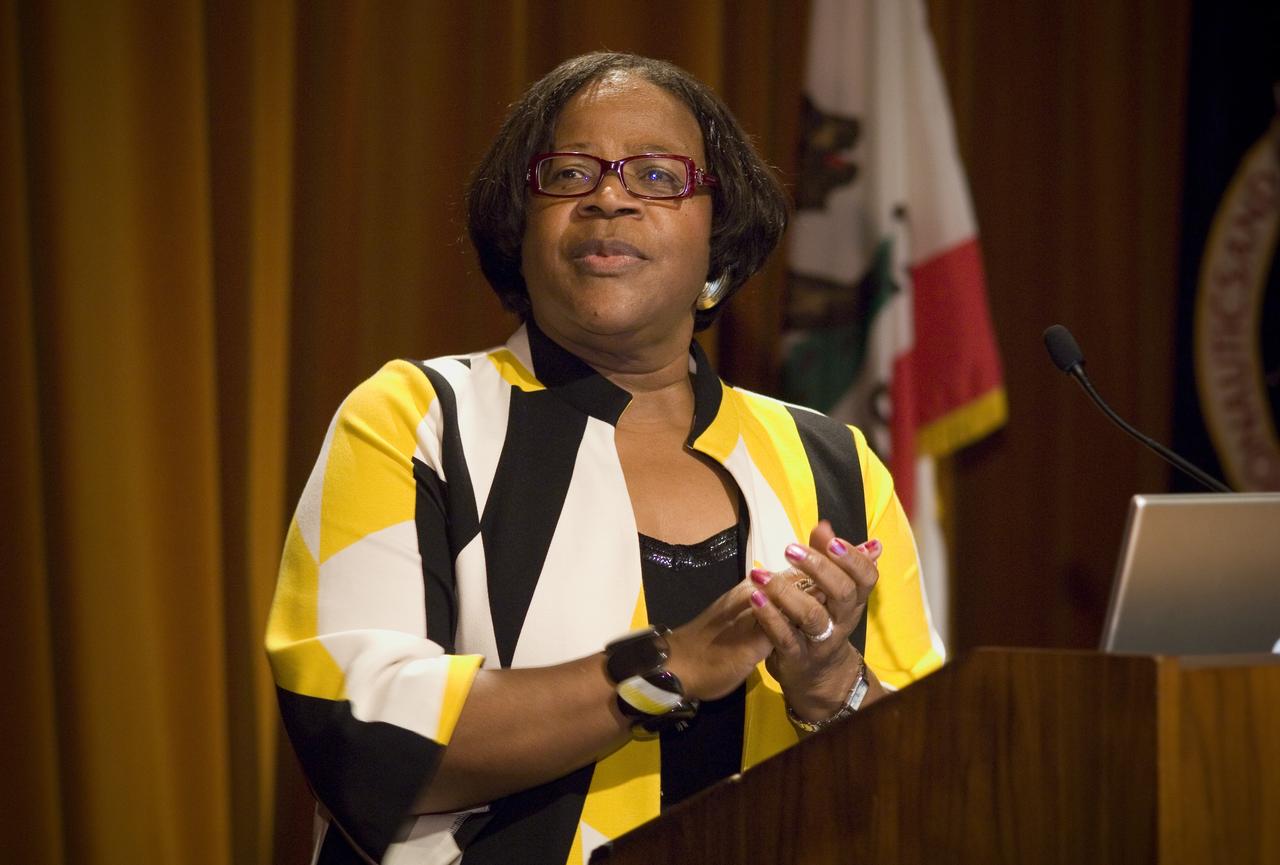
Summer Internship for 2008 closing ceremony: Keynote Speaker Dr Mabel Matthews, Higher Education Manager
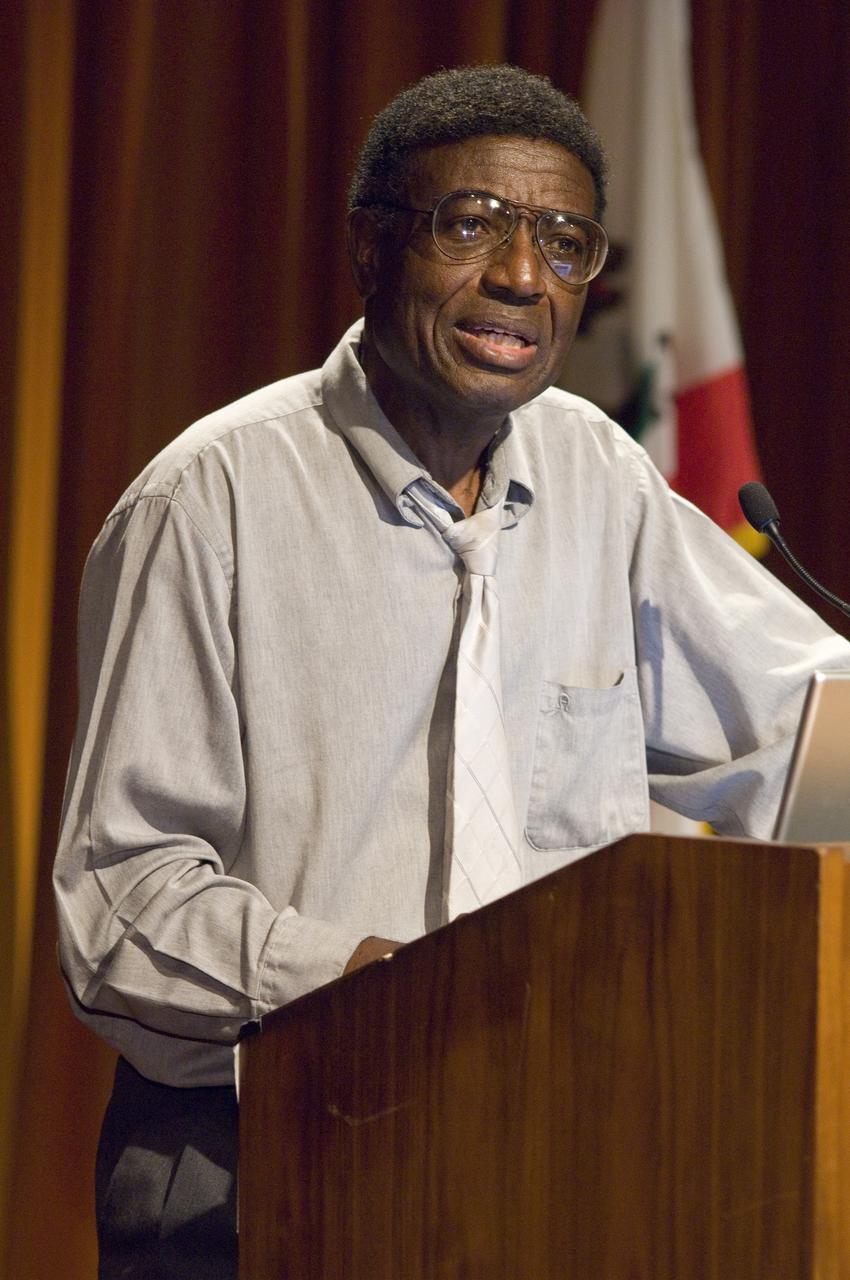
Summer Internship for 2008 closing ceremony: Dr Ben Oni, Higher Education Program Coordinator introduces the Keynote Speaker.
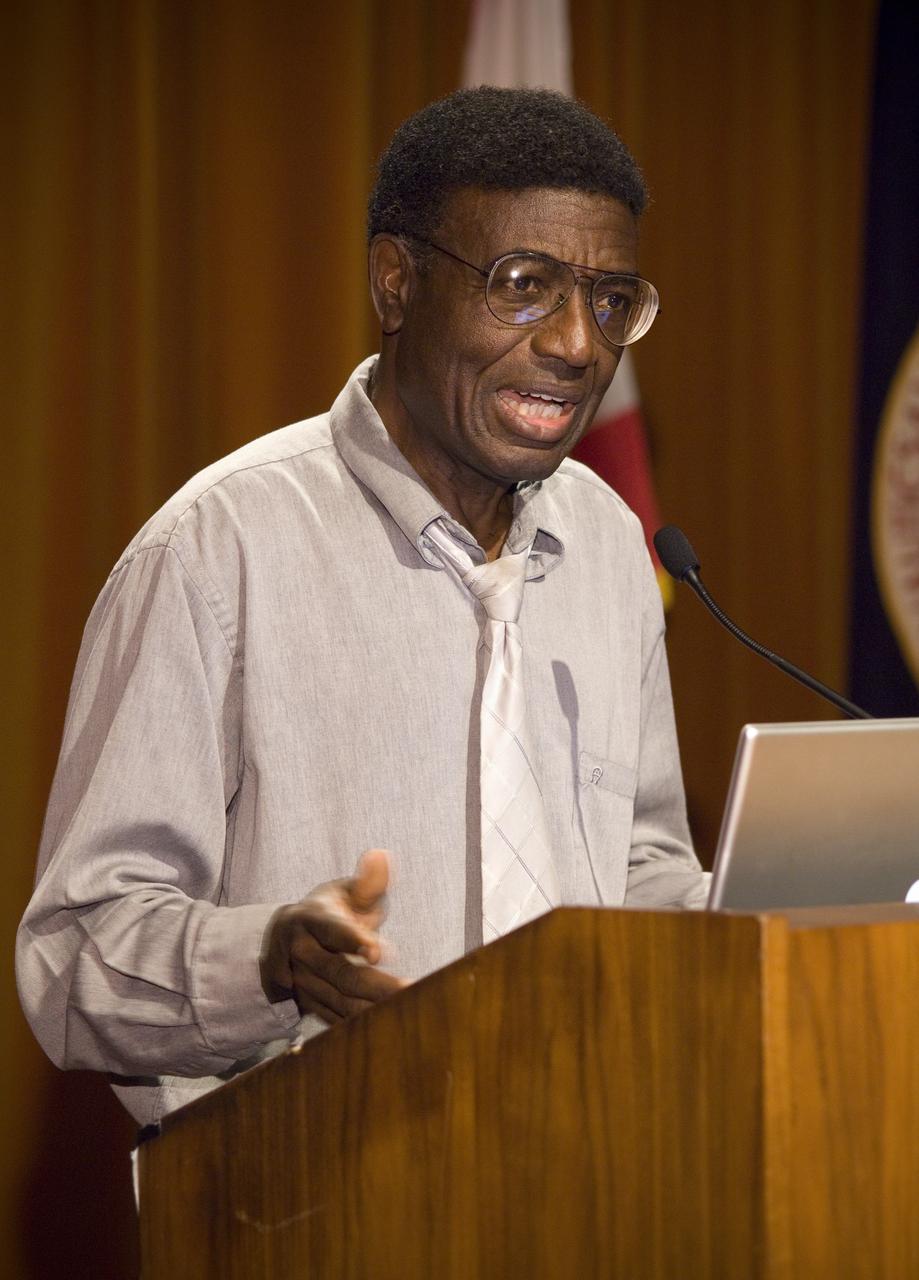
Summer Internship for 2008 closing ceremony: Dr Ben Oni, Higher Education Program Coordinator introduces the Keynote Speaker.
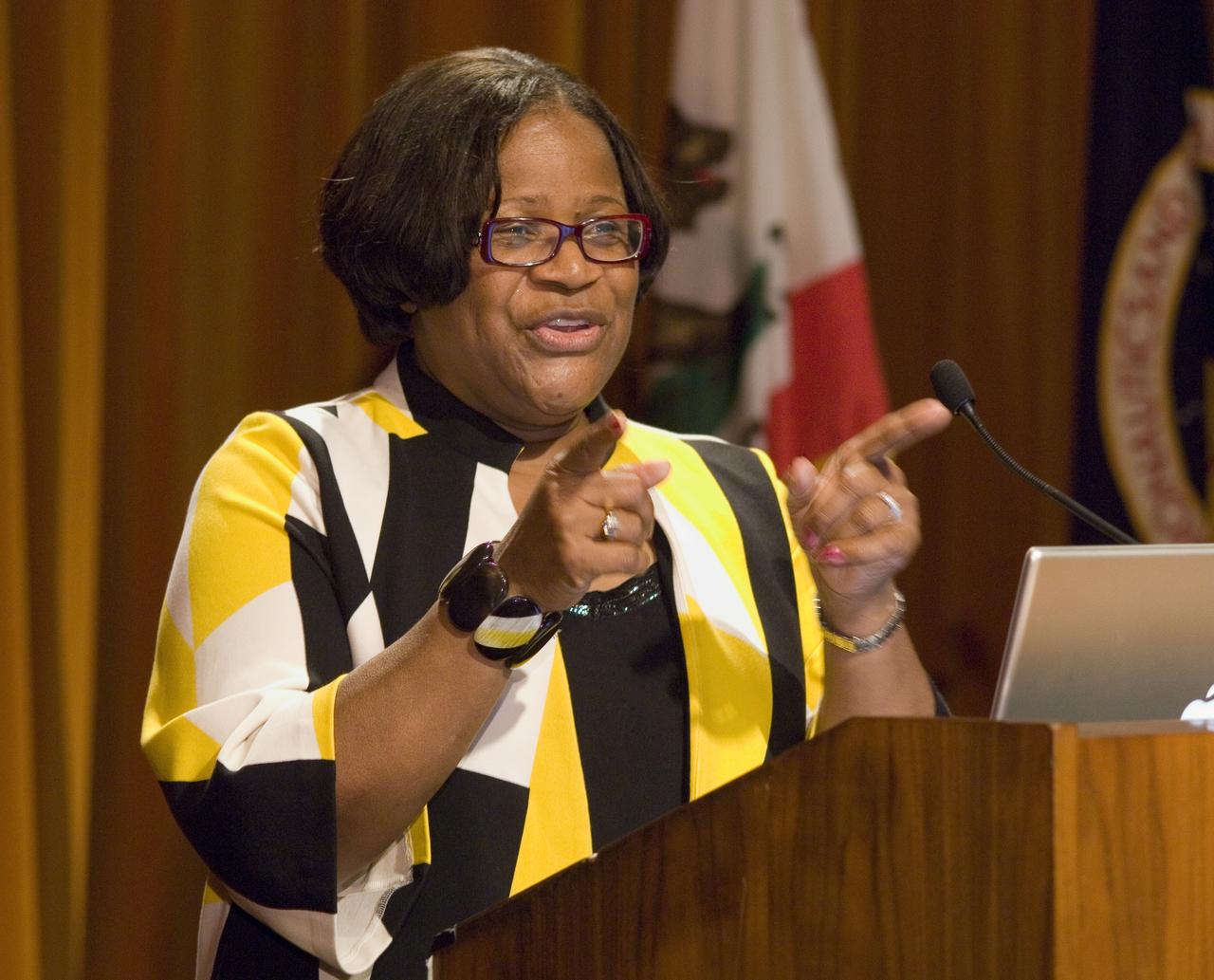
Summer Internship for 2008 closing ceremony: Keynote Speaker Dr Mabel Matthews, Higher Education Manager
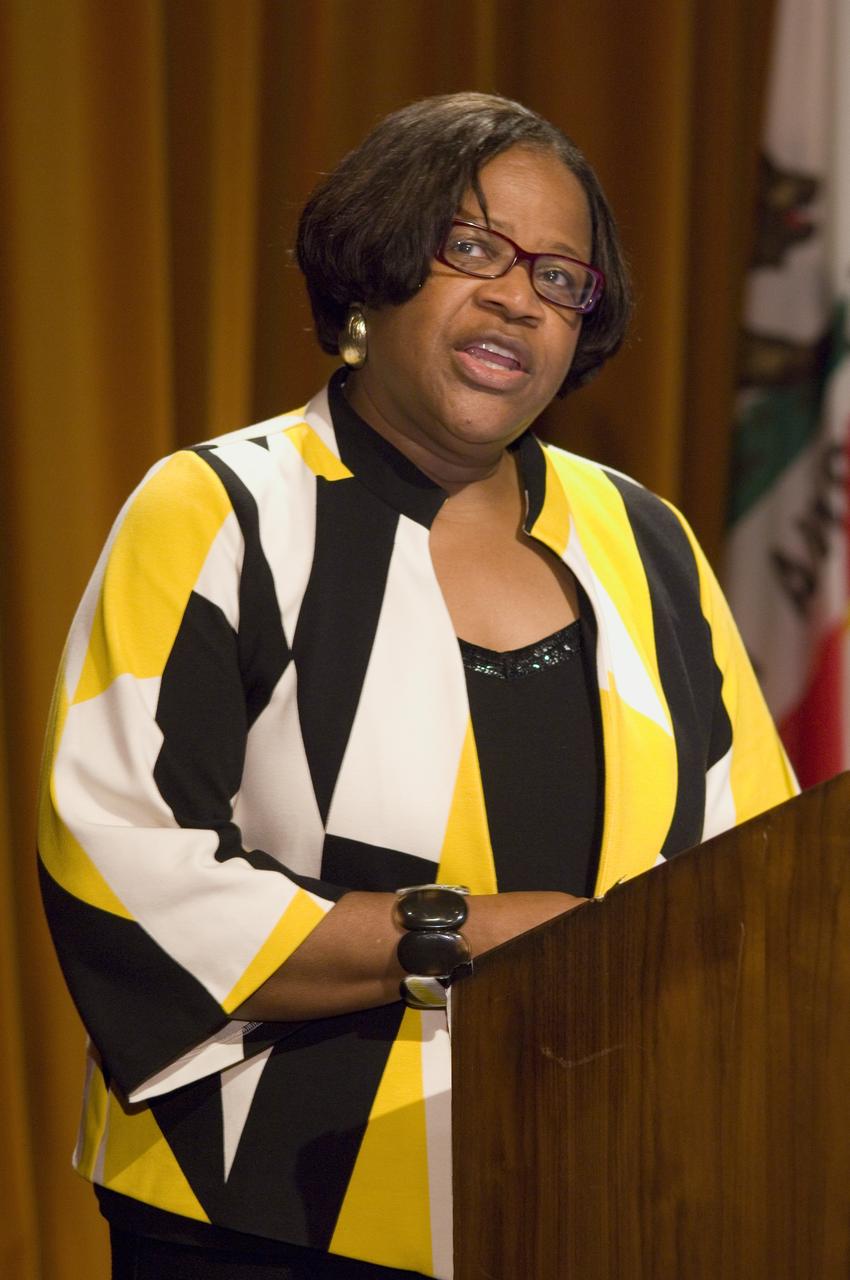
Summer Internship for 2008 closing ceremony: Keynote Speaker Dr Mabel Matthews, Higher Education Manager

Eric Fingerhut, head of Education at Battelle, former chancellor of Ohio's Higher Education System, talks during the during the NASA Future Forum Inspiration and Education Panel at The Ohio State University on Monday, Feb. 20, 2012, in Columbus, Ohio. The NASA Future Forum features panel discussions on the importance of education to our nation's future in space, the benefit of commercialized space technology to our economy and lives here on Earth, and the shifting roles for the public, commercial and international communities in space. Photo Credit: (NASA/Bill Ingalls)
The arnual conference for the Educator Resource Center Network (ERCN) Coordinators was held at Glenn Research Center at Lewis Field in Cleveland, Ohio. The conference included participants from NASA's Educator Resource Centers located throughout the country. The Microgravity Science Division at Glenn sponsored a Microgravity Day for all the conference participants. This image is from a digital still camera; higher resolution is not available.
The arnual conference for the Educator Resource Center Network (ERCN) Coordinators was held at Glenn Research Center at Lewis Field in Cleveland, Ohio. The conference included participants from NASA's Educator Resource Centers located throughout the country. The Microgravity Science Division at Glenn sponsored a Microgravity Day for all the conference participants. This image is from a digital still camera; higher resolution is not available.
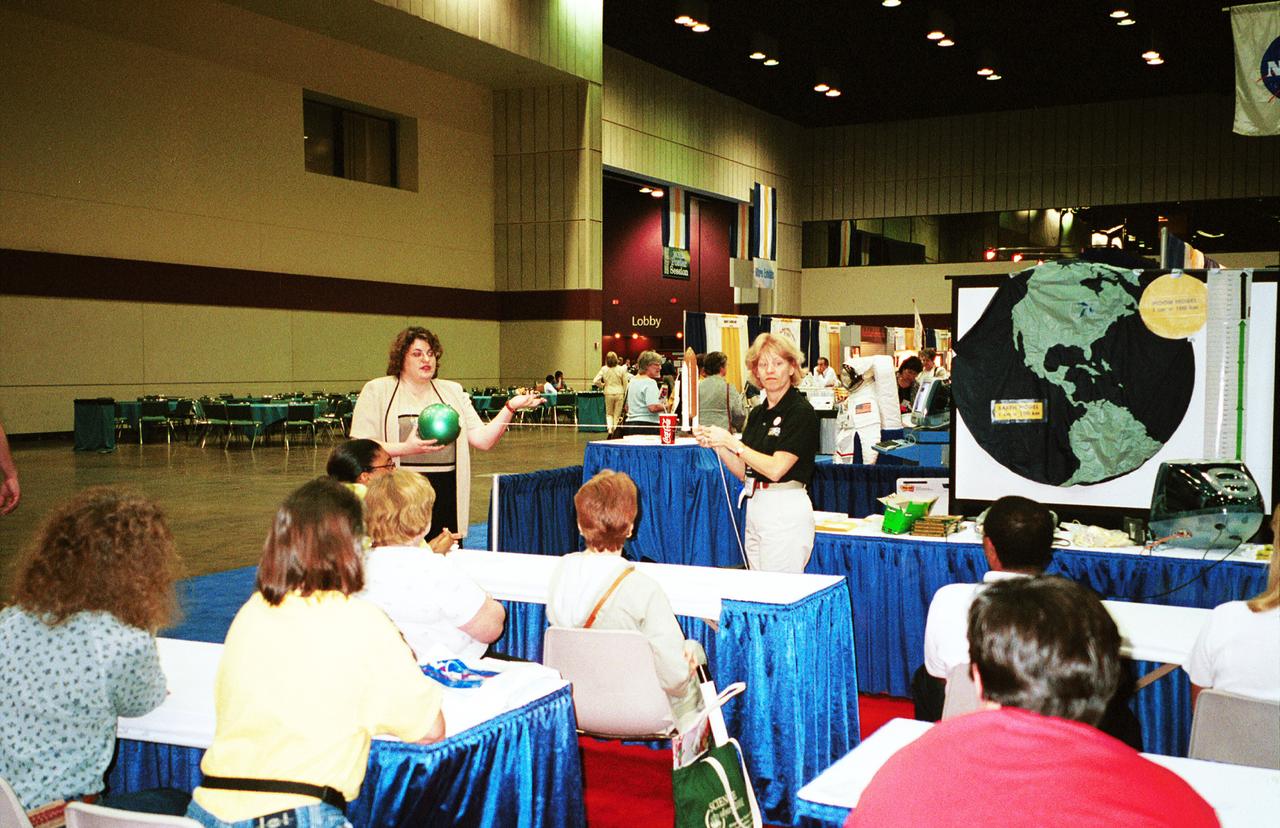
One of NASA's newest education publications made its debut at the arnual National Council of Teachers of Mathematics (NCTM) conference held in Orlando, Florida April 5-7. How High Is It? An Educator's Guide with Activities Focused on Scale Models of Distances was presented by Carla Rosenberg of the National Center for Microgravity Research at Glenn Research Center. Rosenberg, an author of the Guide, led teachers in several hands-on activities from the Guide. This image is from a digital still camera; higher resolution is not available.
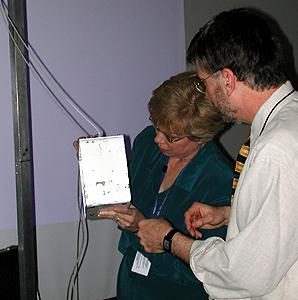
The arnual conference for the Educator Resource Center Network (ERCN) Coordinators was held at Glenn Research Center at Lewis Field in Cleveland, Ohio. The conference included participants from NASA's Educator Resource Centers located throughout the country. The Microgravity Science Division at Glenn sponsored a Microgravity Day for all the conference participants. Dr. Wil Roberson and Marge Lehky prepare a demonstration with the mini-drop tower. This image is from a digital still camera; higher resolution is not available.
The arnual conference for the Educator Resource Center Network (ERCN) Coordinators was held at Glenn Research Center at Lewis Field in Cleveland, Ohio. The conference included participants from NASA's Educator Resource Centers located throughout the country. The Microgravity Science Division at Glenn sponsored a Microgravity Day for all the conference participants. This image is from a digital still camera; higher resolution is not available.
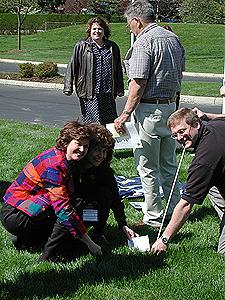
One of NASA's newest education publications made its debut at the arnual National Council of Teachers of Mathematics (NCTM) conference held in Orlando, Florida April 5-7. How High Is It? An Educator's Guide with Activities Focused on Scale Models of Distances was presented by Carla Rosenberg of the National Center for Microgravity Research at Glenn Research Center. Rosenberg, an author of the Guide, led teachers in several hands-on activities from the Guide. This image is from a digital still camera; higher resolution is not available.
The arnual conference for the Educator Resource Center Network (ERCN) Coordinators was held at Glenn Research Center at Lewis Field in Cleveland, Ohio. The conference included participants from NASA's Educator Resource Centers located throughout the country. The Microgravity Science Division at Glenn sponsored a Microgravity Day for all the conference participants. Dr. Wil Roberson and Marge Lehky prepare a demonstration with the mini-drop tower. This image is from a digital still camera; higher resolution is not available.
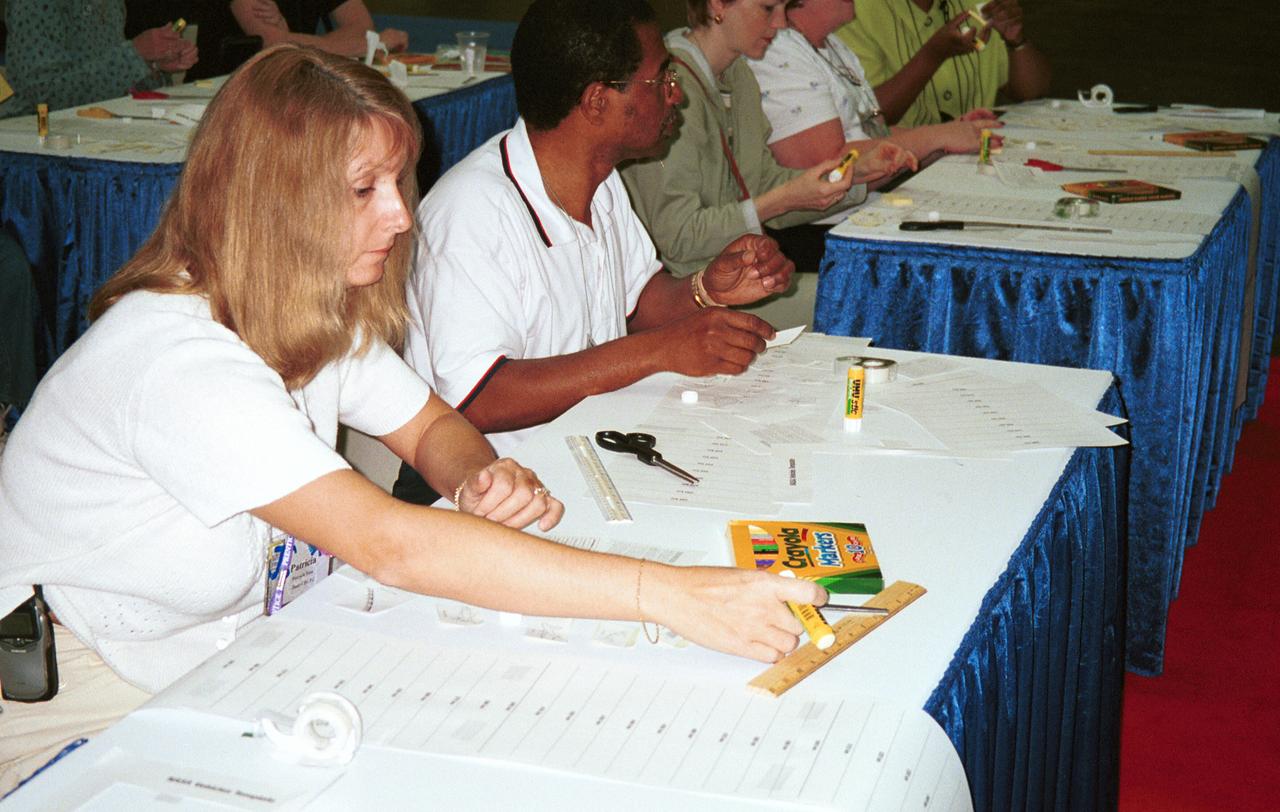
One of NASA's newest education publications made its debut at the arnual National Council of Teachers of Mathematics (NCTM) conference held in Orlando, Florida April 5-7. How High Is It? An Educator's Guide with Activities Focused on Scale Models of Distances was presented by Carla Rosenberg of the National Center for Microgravity Research at Glenn Research Center. Rosenberg, an author of the Guide, led teachers in several hands-on activities from the Guide. This image is from a digital still camera; higher resolution is not available.
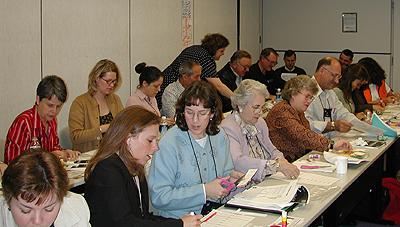
The arnual conference for the Educator Resource Center Network (ERCN) Coordinators was held at Glenn Research Center at Lewis Field in Cleveland, Ohio. The conference included participants from NASA's Educator Resource Centers located throughout the country. The Microgravity Science Division at Glenn sponsored a Microgravity Day for all the conference participants. This image is from a digital still camera; higher resolution is not available.
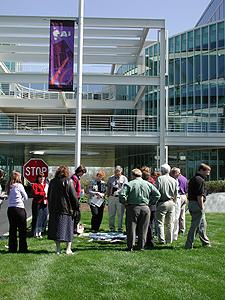
The arnual conference for the Educator Resource Center Network (ERCN) Coordinators was held at Glenn Research Center at Lewis Field in Cleveland, Ohio. The conference included participants from NASA's Educator Resource Centers located throughout the country. The Microgravity Science Division at Glenn sponsored a Microgravity Day for all the conference participants. This image is from a digital still camera; higher resolution is not available.
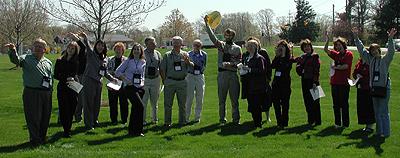
The arnual conference for the Educator Resource Center Network (ERCN) Coordinators was held at Glenn Research Center at Lewis Field in Cleveland, Ohio. The conference included participants from NASA's Educator Resource Centers located throughout the country. The Microgravity Science Division at Glenn sponsored a Microgravity Day for all the conference participants. This image is from a digital still camera; higher resolution is not available.
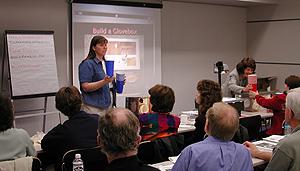
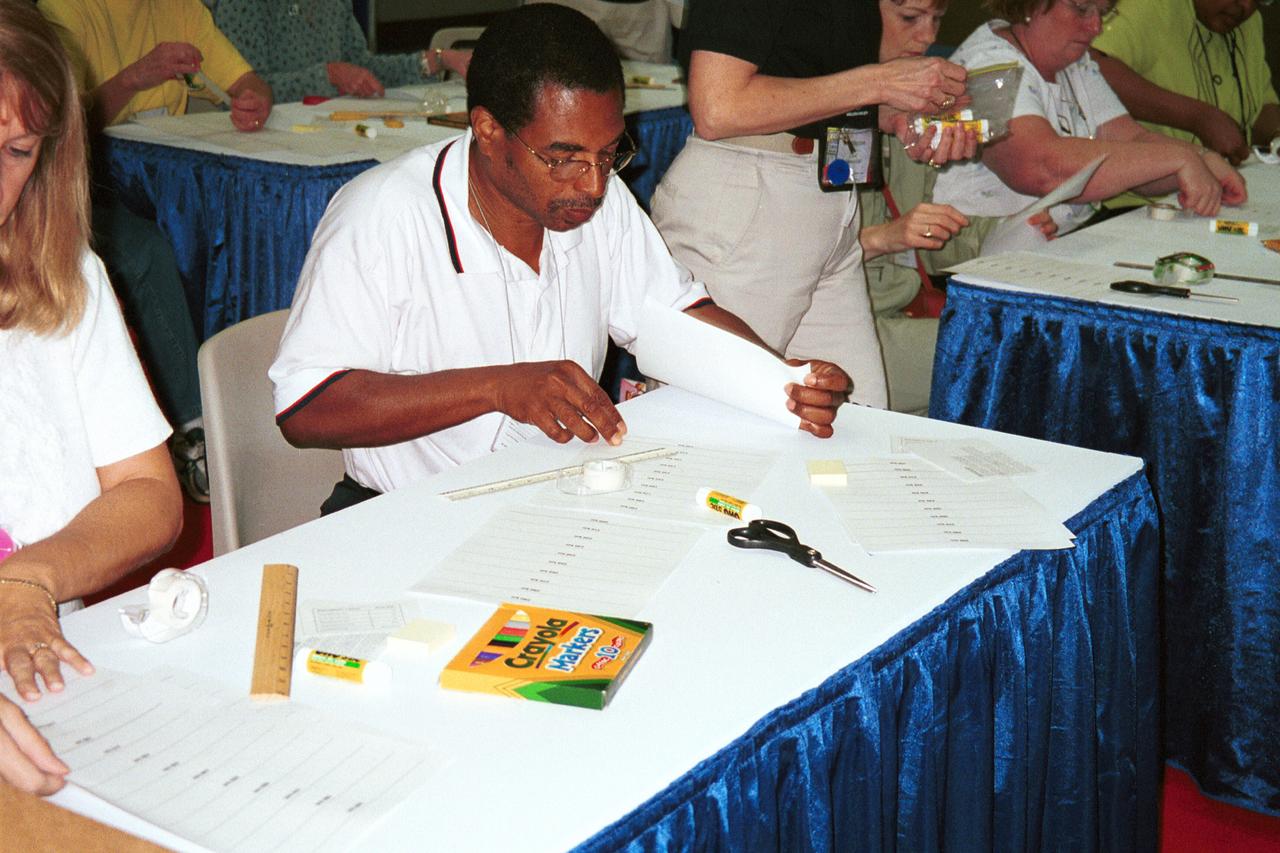
The arnual conference for the Educator Resource Center Network (ERCN) Coordinators was held at Glenn Research Center at Lewis Field in Cleveland, Ohio. The conference included participants from NASA's Educator Resource Centers located throughout the country. The Microgravity Science Division at Glenn sponsored a Microgravity Day for all the conference participants. Twila Schneider of Infinity Technology, a NASA contractor, explains the basics of building a glovebox mockup from a copier paper box. This image is from a digital still camera; higher resolution is not available.

One of NASA's newest education publications made its debut at the arnual National Council of Teachers of Mathematics (NCTM) conference held in Orlando, Florida April 5-7. How High Is It? An Educator's Guide with Activities Focused on Scale Models of Distances was presented by Carla Rosenberg of the National Center for Microgravity Research at Glenn Research Center. Rosenberg, an author of the Guide, led teachers in several hands-on activities from the Guide. This image is from a digital still camera; higher resolution is not available.
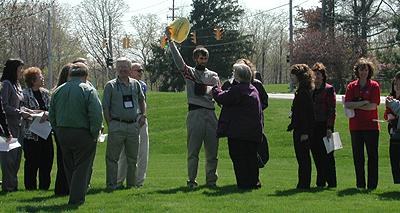
The arnual conference for the Educator Resource Center Network (ERCN) Coordinators was held at Glenn Research Center at Lewis Field in Cleveland, Ohio. The conference included participants from NASA's Educator Resource Centers located throughout the country. The Microgravity Science Division at Glenn sponsored a Microgravity Day for all the conference participants. This image is from a digital still camera; higher resolution is not available.
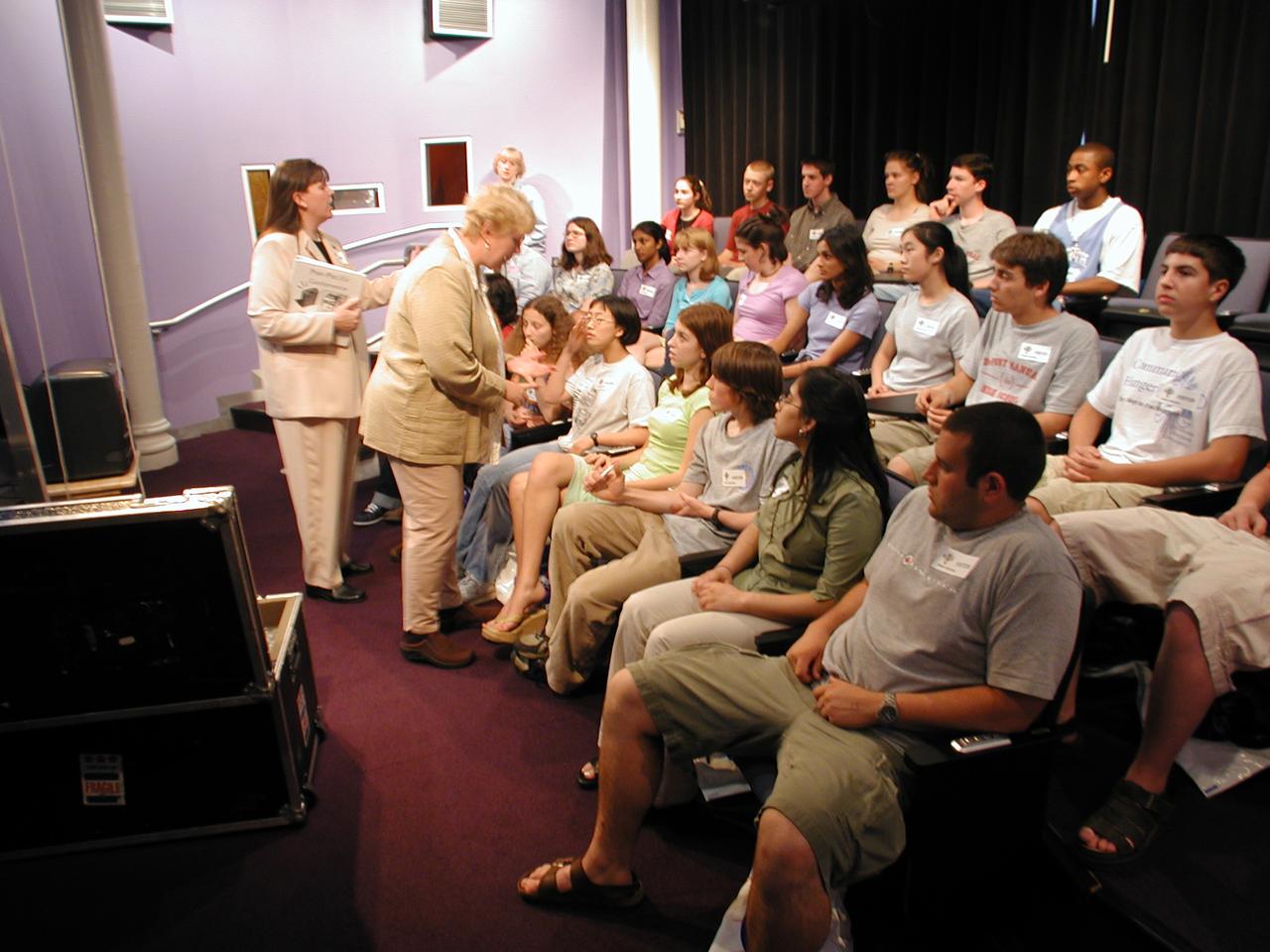
Students from DuPont Manual High School in Louisville, Kentucky participated in a video-teleconference during the Pan-Pacific Basin Workshop on Microgravity Sciences held in Pasadena, California. The event originated at the California Science Center in Los Angeles. The DuPont Manual students patched in to the event through the distance learning lab at the Louisville Science Center. Education coordinator Twila Schneider (left) of Infinity Technology and NASA materials engineer Chris Cochrane prepare students for the on-line workshop. This image is from a digital still camera; higher resolution is not available.
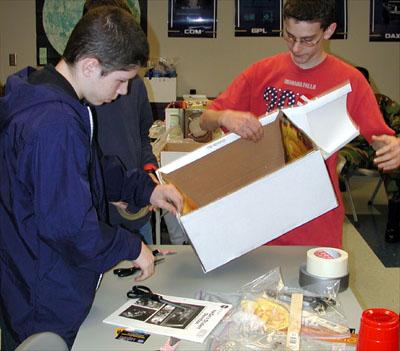
Students in the Young Astronaut Program at the Coca-Cola Space Science Center in Columbus, GA, constructed gloveboxes using the new NASA Student Glovebox Education Guide. The young astronauts used cardboard copier paper boxes as the heart of the glovebox. The paper boxes transformed into gloveboxes when the students pasted poster-pictures of an actual NASA microgravity science glovebox inside and outside of the paper boxes. The young astronauts then added holes for gloves and removable transparent top covers, which completed the construction of the gloveboxes. This image is from a digital still camera; higher resolution is not available.
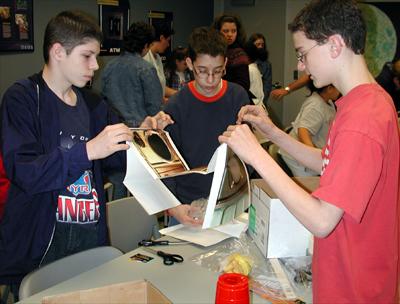
Students in the Young Astronaut Program at the Coca-Cola Space Science Center in Columbus, GA, constructed gloveboxes using the new NASA Student Glovebox Education Guide. The young astronauts used cardboard copier paper boxes as the heart of the glovebox. The paper boxes transformed into gloveboxes when the students pasted poster-pictures of an actual NASA microgravity science glovebox inside and outside of the paper boxes. The young astronauts then added holes for gloves and removable transparent top covers, which completed the construction of the gloveboxes. This image is from a digital still camera; higher resolution is not available.
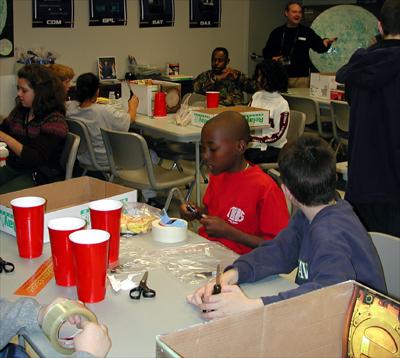
Students in the Young Astronaut Program at the Coca-Cola Space Science Center in Columbus, GA, constructed gloveboxes using the new NASA Student Glovebox Education Guide. The young astronauts used cardboard copier paper boxes as the heart of the glovebox. The paper boxes transformed into gloveboxes when the students pasted poster-pictures of an actual NASA microgravity science glovebox inside and outside of the paper boxes. The young astronauts then added holes for gloves and removable transparent top covers, which completed the construction of the gloveboxes. This image is from a digital still camera; higher resolution is not available.
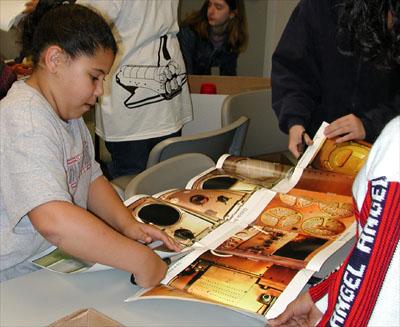
Students in the Young Astronaut Program at the Coca-Cola Space Science Center in Columbus, GA, constructed gloveboxes using the new NASA Student Glovebox Education Guide. The young astronauts used cardboard copier paper boxes as the heart of the glovebox. The paper boxes transformed into gloveboxes when the students pasted poster-pictures of an actual NASA microgravity science glovebox inside and outside of the paper boxes. The young astronauts then added holes for gloves and removable transparent top covers, which completed the construction of the gloveboxes. This image is from a digital still camera; higher resolution is not available.
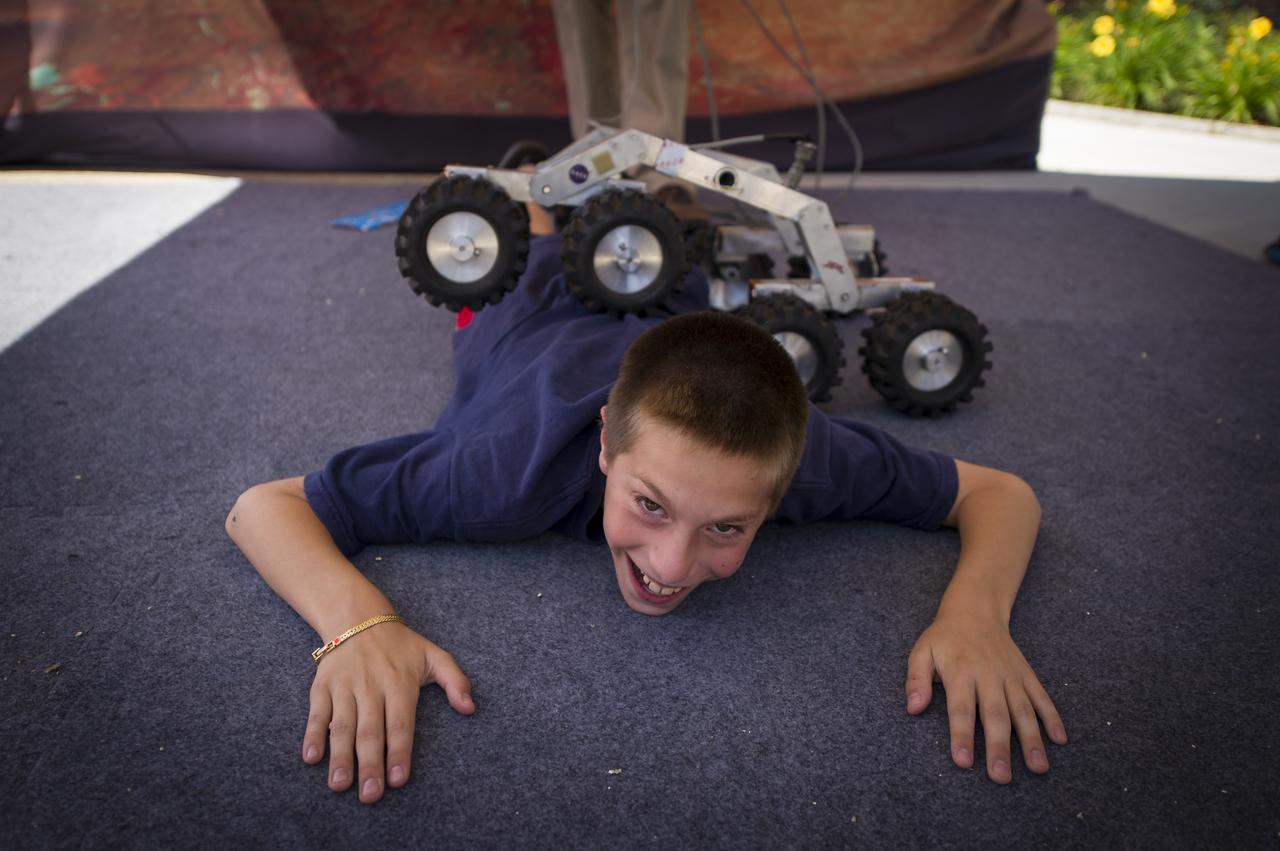
A visitor to the Worcester Polytechnic Institute (WPI) "TouchTomorrow" education and outreach event helps demonstrate how a NASA rover design enables the rover to climb over obstacles higher than it's own body on Saturday, June 16, 2012 at WPI in Worcester, Mass. The event was held in tandem with the NASA-WPI Sample Return Robot Centennial Challenge. The NASA-WPI challenge tasked robotic teams to build autonomous robots that can identify, collect and return samples. NASA needs autonomous robotic capability for future planetary exploration. Photo Credit: (NASA/Bill Ingalls)
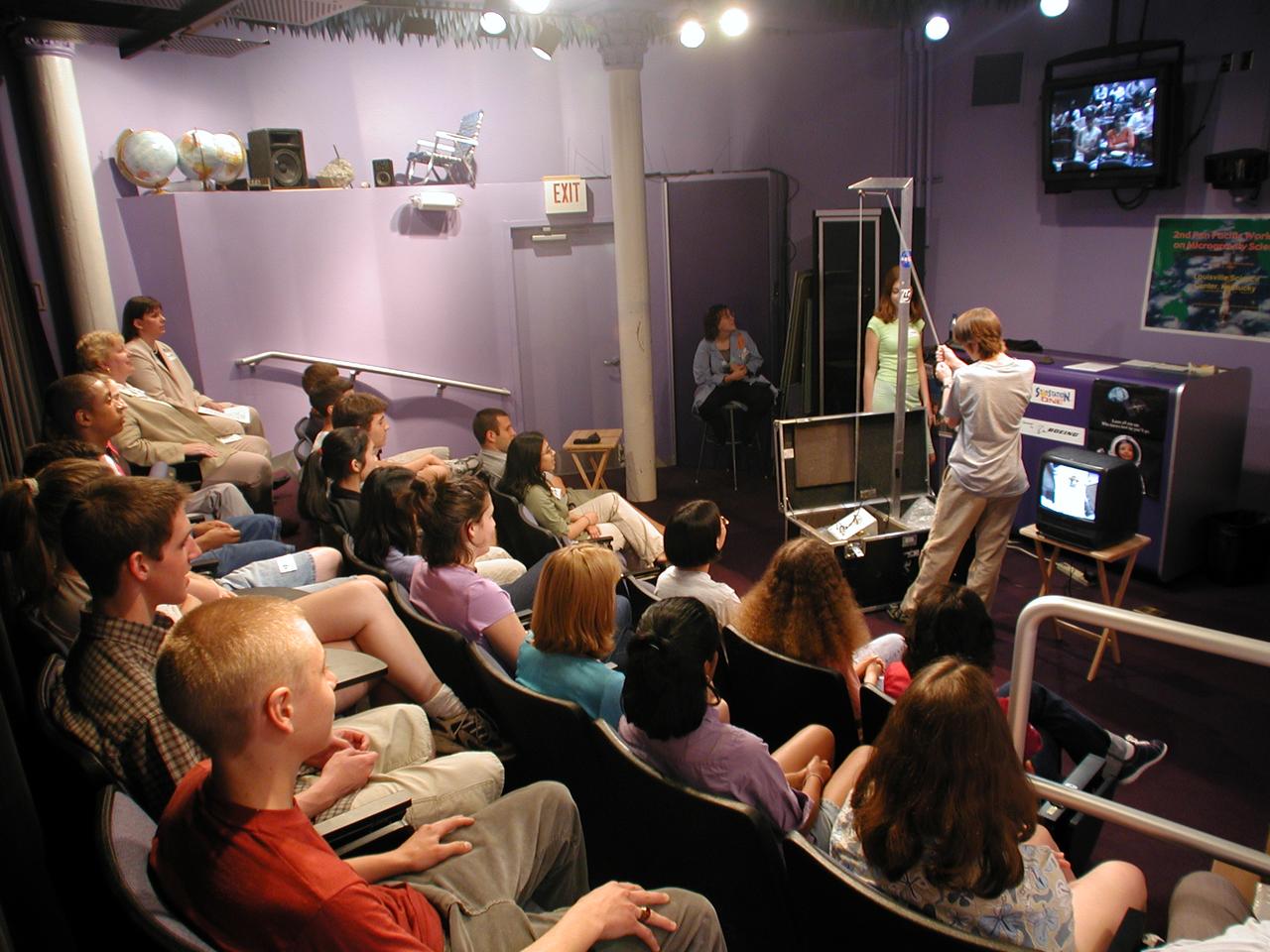
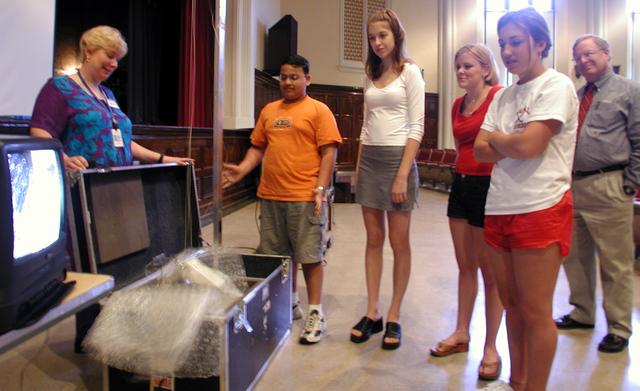
John Henson (grade 12) and Suzi Bryce (grade 10) from DuPont Manual High School in Louisville, Kentucky, conduct a drop with NASA's Microgravity Demonstrator. A camera and a TV/VCR unit let students play back recordings of how different physical devices behave differently during freefall as compared to 1-g. The activity was part of the education outreach segment of the Pan-Pacific Basin Workshop on Microgravity Sciences held in Pasadena, California. The event originated at the California Science Center in Los Angeles. The DuPont Manual students patched in to the event through the distance learning lab at the Louisville Science Center. This image is from a digital still camera; higher resolution is not available.
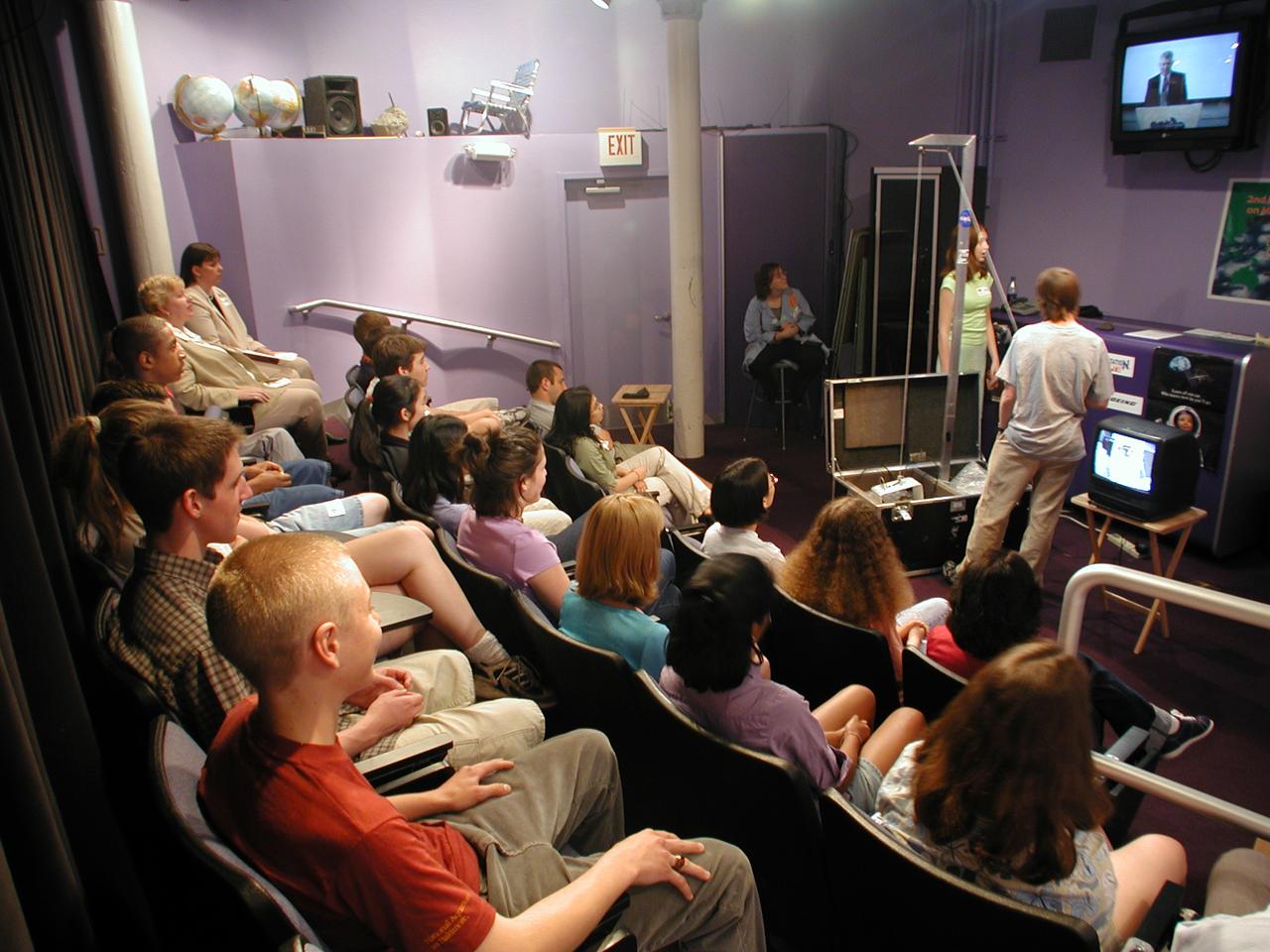
John Henson (grade 12) and Suzi Bryce (grade 10) conducted the drop from DuPont Manual High School in Louisville, Kentucky, conduct a drop with NASA's Microgravity Demonstrator. A camera and a TV/VCR unit let students play back recordings of how different physical devices behave differently during freefall as compared to 1-g. The activity was part of the education outreach segment of the Pan-Pacific Basin Workshop on Microgravity Sciences held in Pasadena, California. The event originated at the California Science Center in Los Angeles. The DuPont Manual students patched in to the event through the distance learning lab at the Louisville Science Center. This image is from a digital still camera; higher resolution is not available.
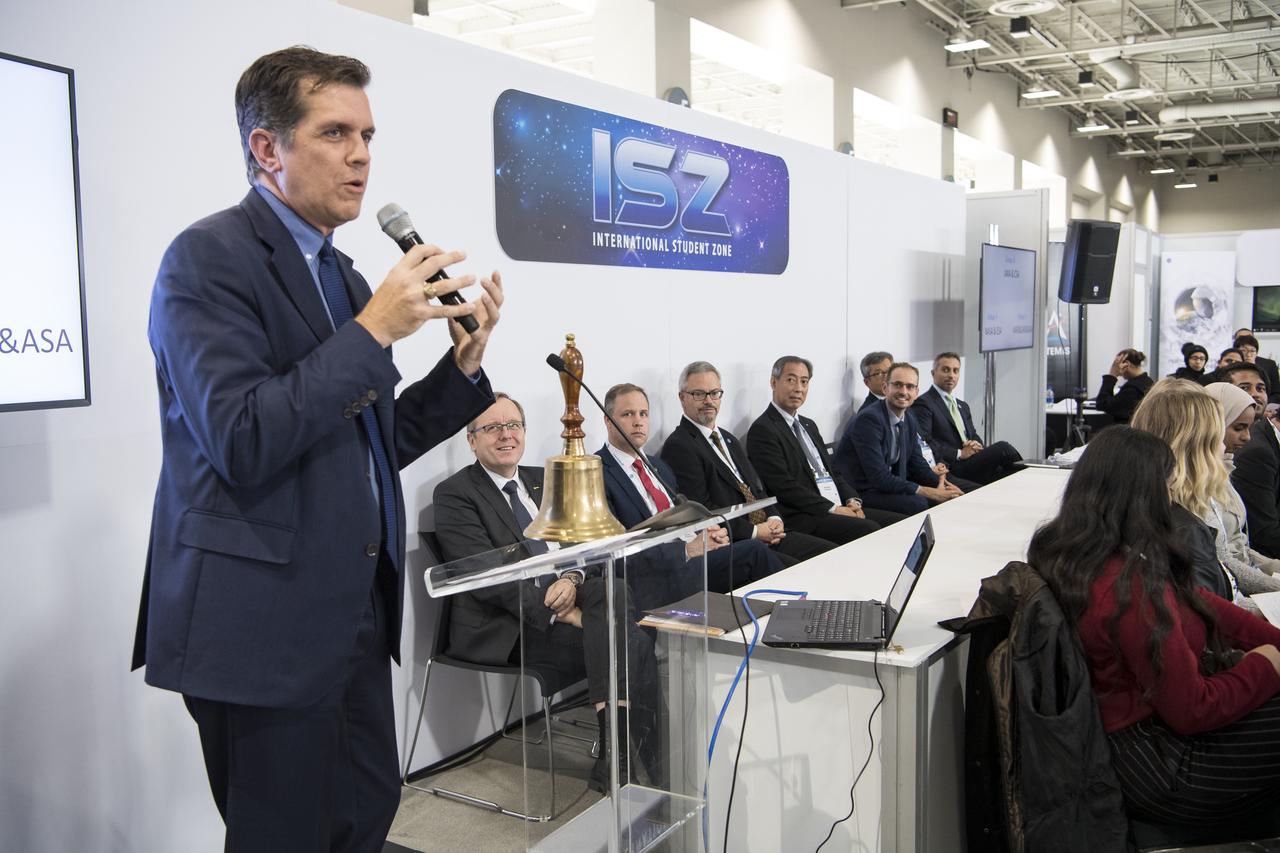
NASA Associate Administrator for STEM Engagement, Mike Kincaid, introduces the heads of agencies that will be participating in an interactive session with students, from left to right, Dr. Johann-Dietrich Worner, director general of the European Space Agency (ESA); NASA Administrator Jim Bridenstine; Sylvain Laporte, president of the Canadian Space Agency (CSA); Dr. Hiroshi Yamakawa, president of the Japan Aerospace Exploration Agency (JAXA); Anthony Murfett, deputy head fo the Australian Space Agency (ASA); Jeong Joo Park, Vice President fo the Korean Aerospace Research Institute (KARI); and H.E. Dr. Ahmad bin Abdulla Humaid Belhoul Al Falasi, Minister of State for Higher Education and Advanced Skills and Chairman of the UAE Space Agency (UAESA), during the 70th International Astronautical Congress, Monday, Oct. 21, 2019 at the Walter E. Washington Convention Center in Washington. Photo credit: (NASA/Aubrey Gemignani)
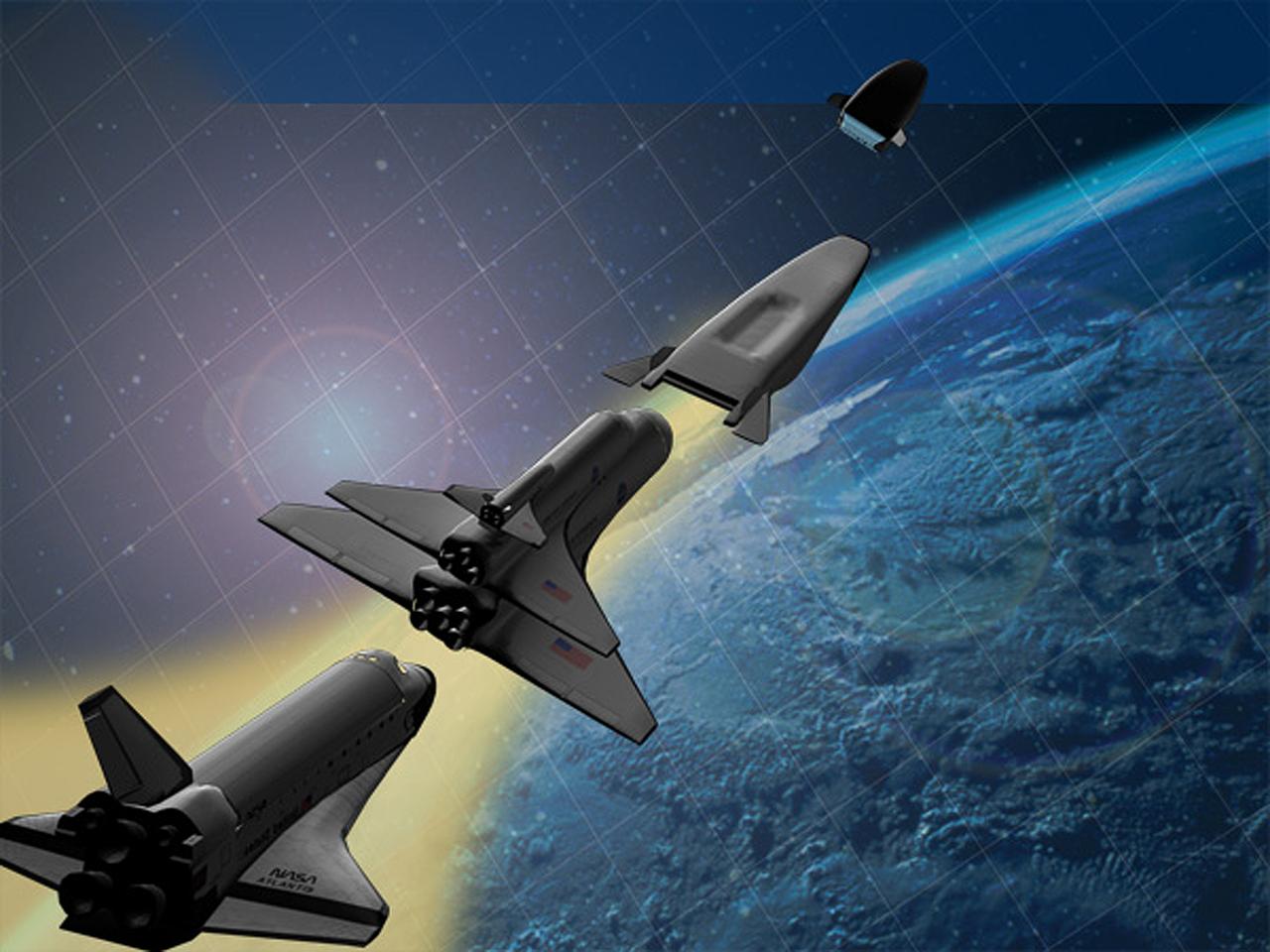
NASA's Marshall Space Flight Center in Huntsville, Alabama, manages the Space Launch Initiative (SLI), NASA's priority developmental program focused on empowering America's leadership in space. SLI includes commercial, higher education, and defense partnerships and contracts to offer widespread participation in both the risk and success of developing our nation's next-generation reusable launch vehicle. This photo depicts an artist's concept of a future second-generation launch vehicle. For the SLI, architecture definition includes all components of the next-generation reusable launch system: Earth-to-orbit vehicles (the Space Shuttle is the first generation earth-to-orbit vehicle), crew transfer vehicles, transfer stages, ground processing systems, flight operations systems, and development of business case strategies. Three contractor teams have each been funded to develop potential second- generation reusable launch system architectures: The Boeing Company of Seal Beach, California; Lockheed Martin Corporation of Denver, Colorado along with a team including Northrop Grumman of El Segundo, California; and Orbital Sciences Corporation of Dulles, Virginia.
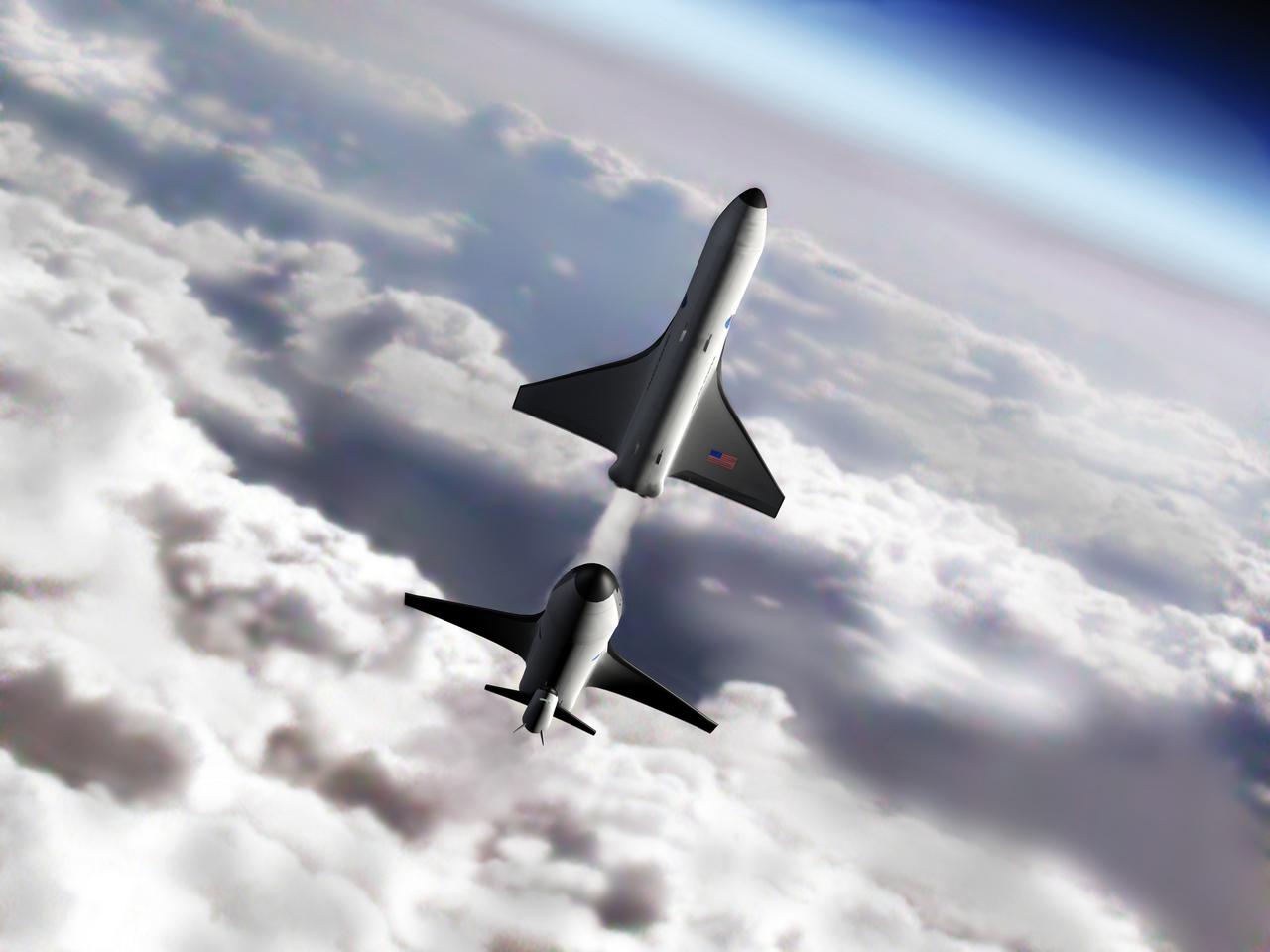
NASA's Marshall Space Flight Center in Huntsville, Alabama, manages the Space Launch Initiative (SLI), NASA's priority developmental program focused on empowering America's leadership in space. SLI includes commercial, higher education and defense partnerships and contracts to offer widespread participation in both the risk and success of developing our nation's next-generation reusable launch vehicle. This photo depicts an artist's concept of a future second-generation launch vehicle during separation of stages. For SLI, architecture definition includes all components of the next-generation reusable launch system: Earth-to-orbit vehicles (the Space Shuttle is the first-generation earth-to-orbit vehicle), crew transfer vehicles, transfer stages, ground processing systems, flight operations systems, and development of business case strategies. Three contractor teams have each been funded to develop potential second generation reusable launch system architectures: The Boeing Company of Seal Beach, California; Lockheed Martin Corporation of Denver, Colorado; a team including Northrop Grumman of El Segundo, California; and Orbital Sciences Corporation of Dulles, Virginia.
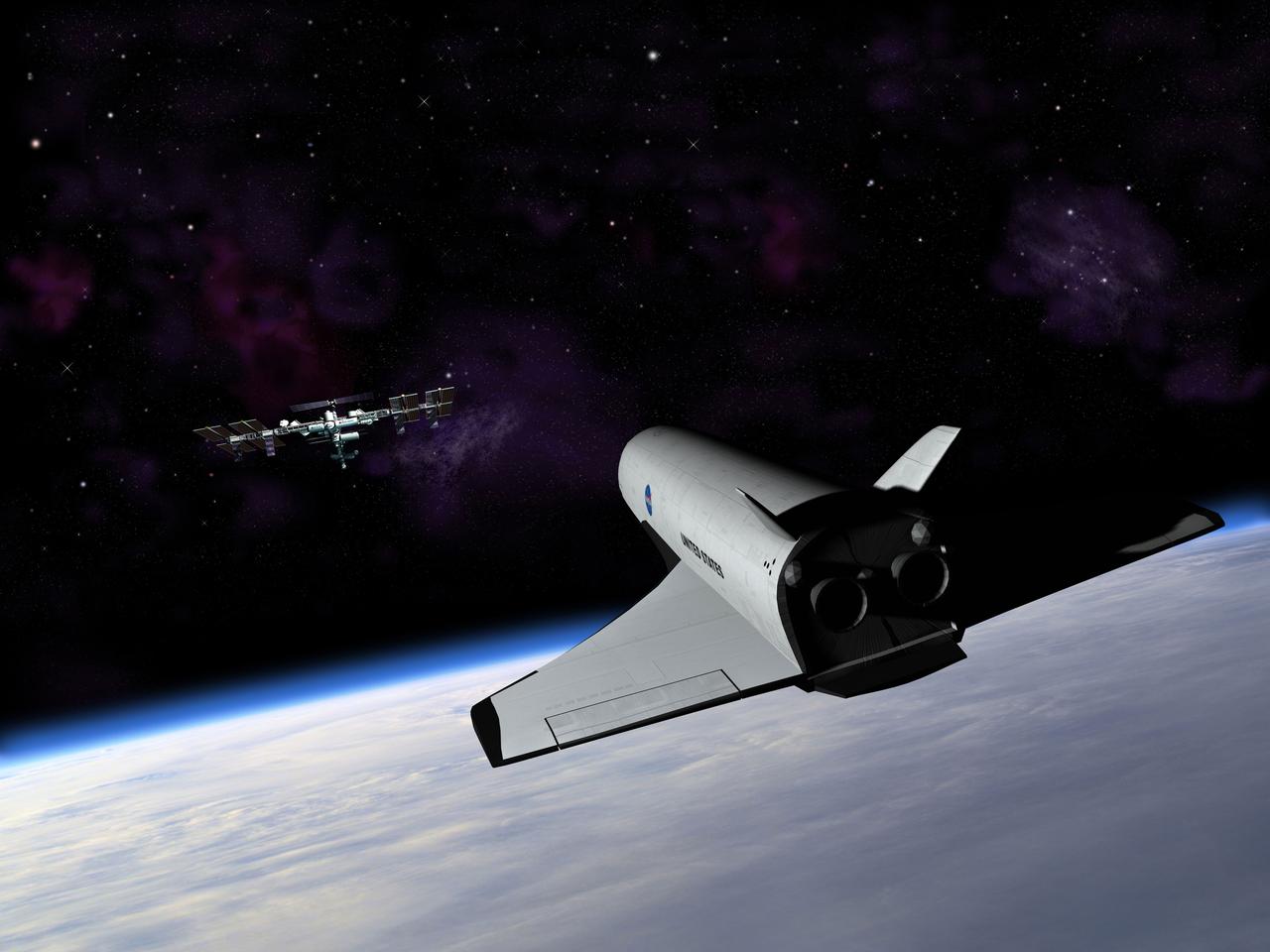
NASA's Marshall Space Flight Center in Huntsville, Alabama, manages the Space Launch Initiative (SLI), NASA's priority developmental program focused on empowering America's leadership in space. SLI includes commercial, higher education, and Defense partnerships and contracts to offer widespread participation in both the risk and success of developing our nation's next-generation reusable launch vehicle. This photo depicts an artist's concept of a future second-generation launch vehicle enroute to the International Space Station. For the SLI, architecture definition includes all components of the next-generation reusable launch system: Earth-to-orbit vehicles (the Space Shuttle is the first generation earth-to-orbit vehicle), crew transfer vehicles, transfer stages, ground processing systems, flight operations systems, and development of business case strategies. Three contractor teams have each been funded to develop potential second-generation reusable launch system architectures: The Boeing Company of Seal Beach, California; Lockheed Martin Corporation of Denver, Colorado along with a team including Northrop Grumman of El Segundo, California; and Orbital Sciences Corporation of Dulles, Virginia.
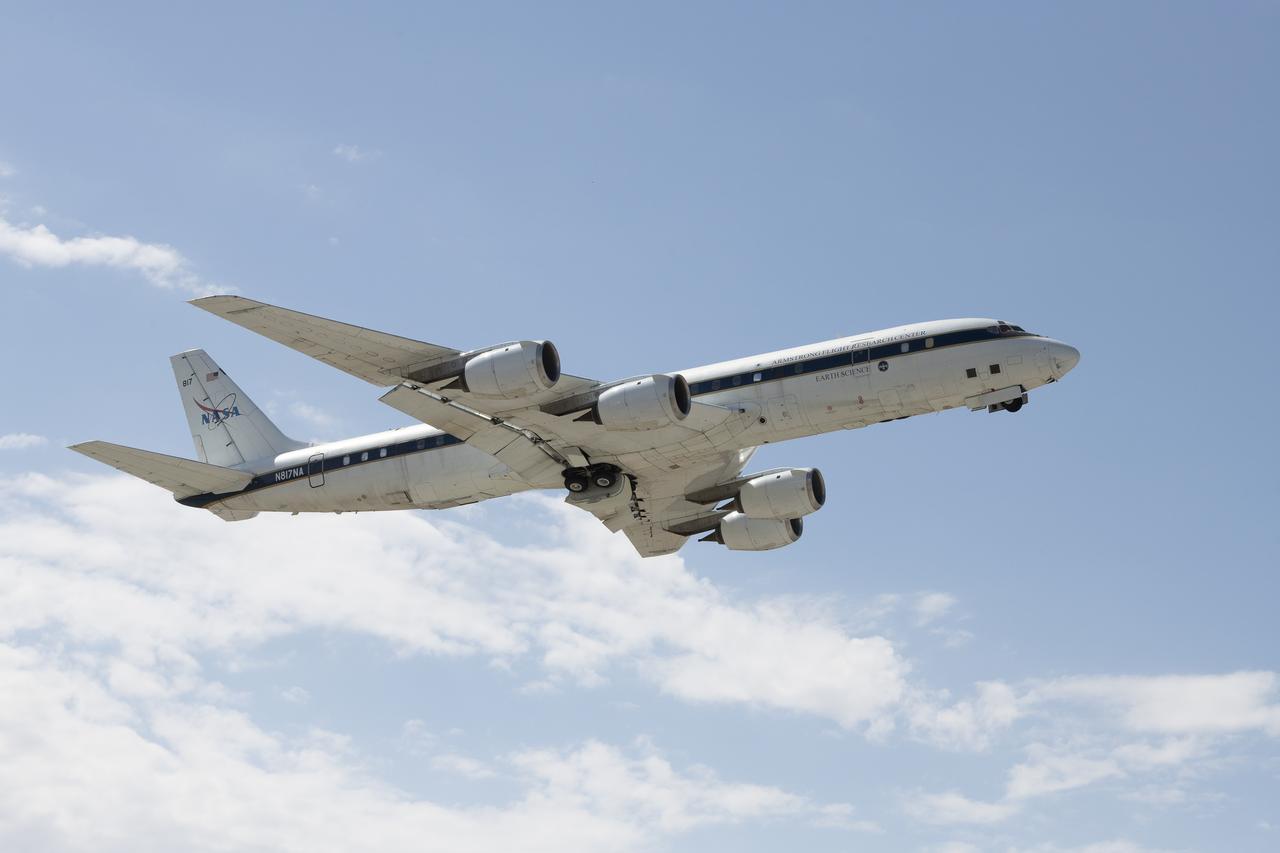
The DC-8 ascents during its final flight before it is retired from NASA’s Armstrong Flight Research Center Building 703 in Palmdale, California, to Idaho State University in Pocatello, Idaho. The DC-8 will provide real-world experience to train future aircraft technicians at the college’s Aircraft Maintenance Technology Program.
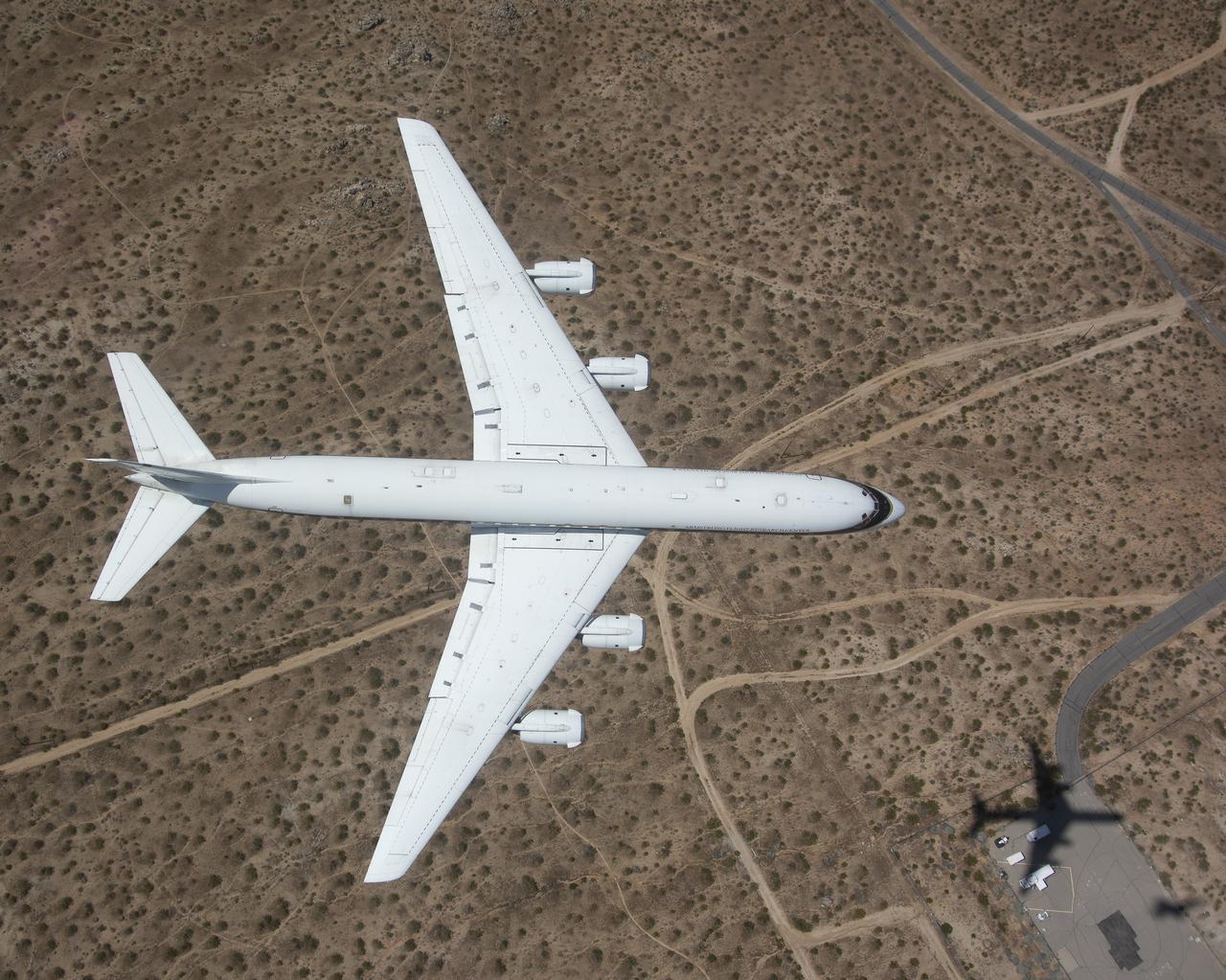
The DC-8 flies for the last time from NASA’s Armstrong Flight Research Center Building 703 in Palmdale, California, to Idaho State University in Pocatello, Idaho. The DC-8 will provide real-world experience to train future aircraft technicians at the college’s Aircraft Maintenance Technology Program.
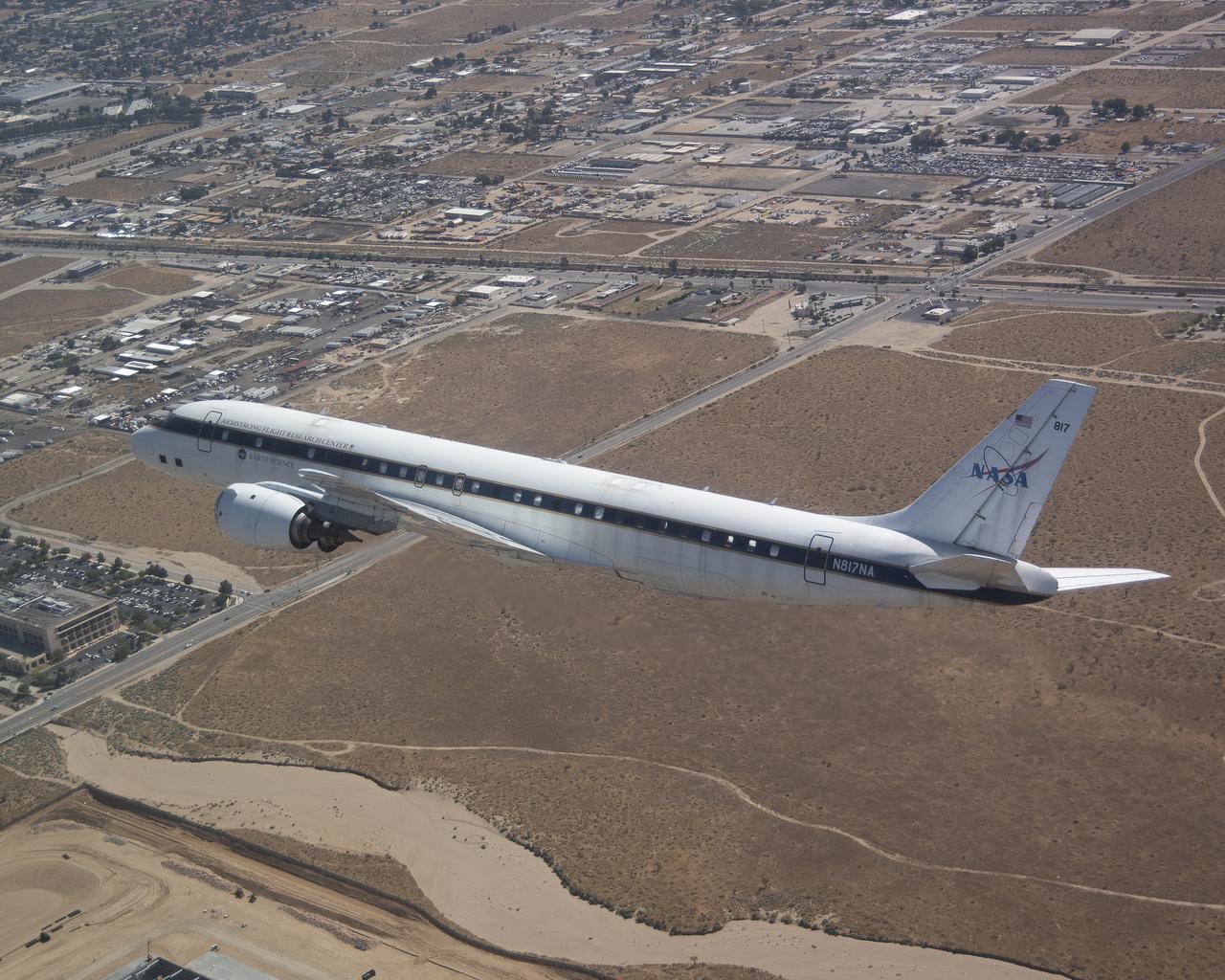
The DC-8 flies low over the Antelope Valley during its final flight before it is retired from NASA’s Armstrong Flight Research Center Building 703 in Palmdale, California, to Idaho State University in Pocatello, Idaho. The DC-8 will provide real-world experience to train future aircraft technicians at the college’s Aircraft Maintenance Technology Program.

The DC-8 flies low for the last time over NASA’s Armstrong Flight Research Center in Edwards, California, before it retires to Idaho State University in Pocatello, Idaho. The DC-8 will provide real-world experience to train future aircraft technicians at the college’s Aircraft Maintenance Technology Program.
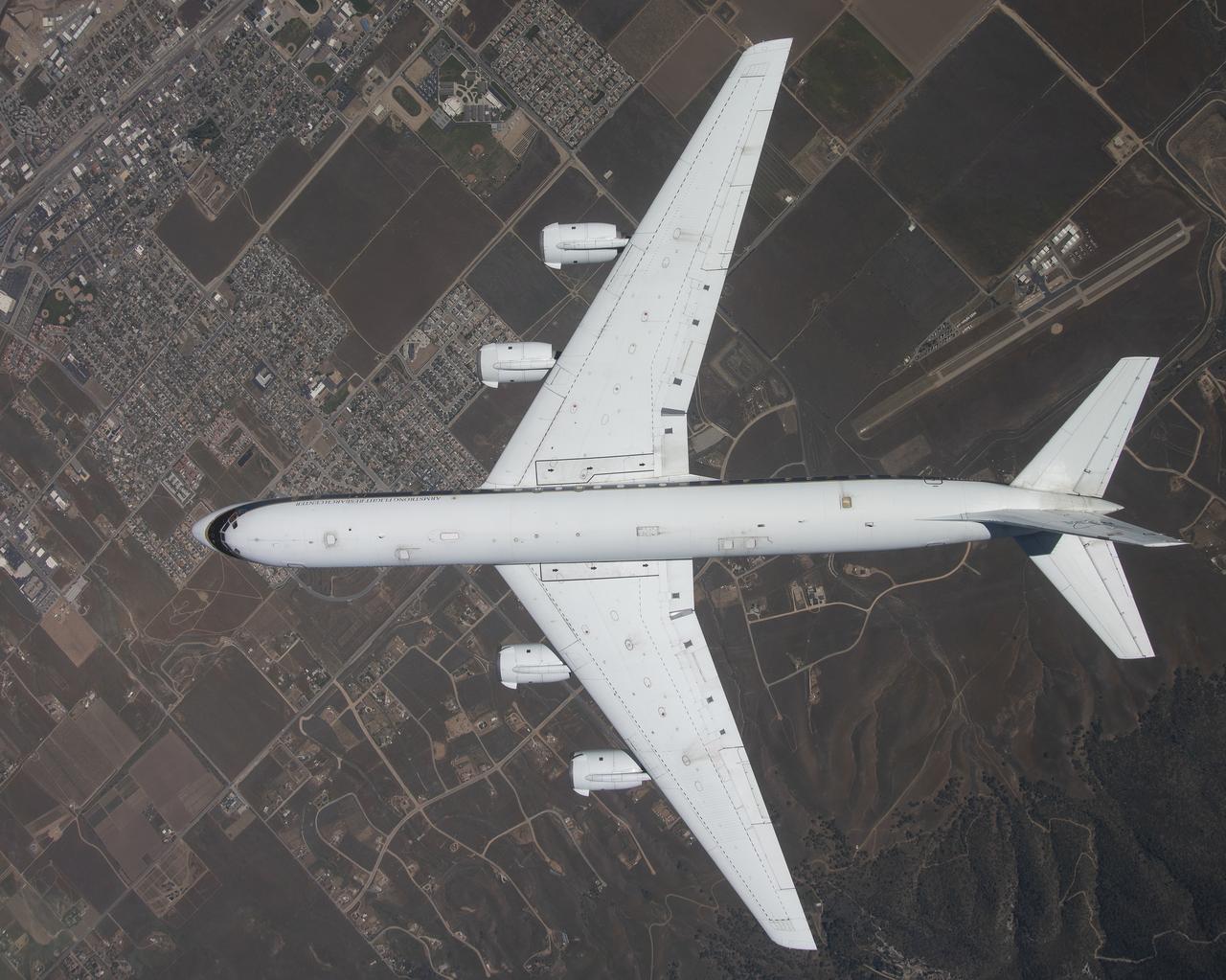
The DC-8 is shown overhead during its final flight from NASA’s Armstrong Flight Research Center Building 703 in Palmdale, California, before it retires to Idaho State University in Pocatello, Idaho. The DC-8 will provide real-world experience to train future aircraft technicians at the college’s Aircraft Maintenance Technology Program.
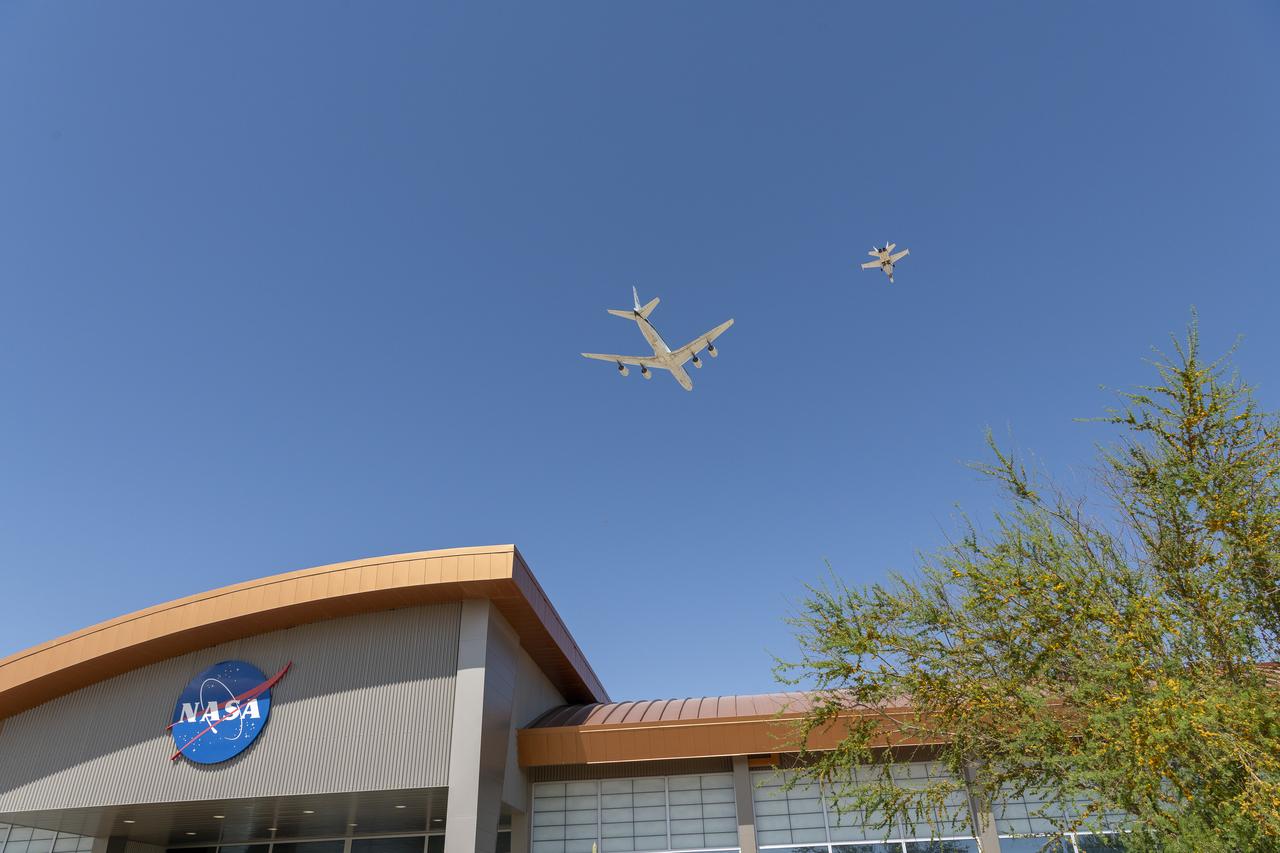
The DC-8 flies low for the last time over NASA’s Armstrong Flight Research Center in Edwards, California, before it retires to Idaho State University in Pocatello, Idaho. The DC-8 will provide real-world experience to train future aircraft technicians at the college’s Aircraft Maintenance Technology Program.
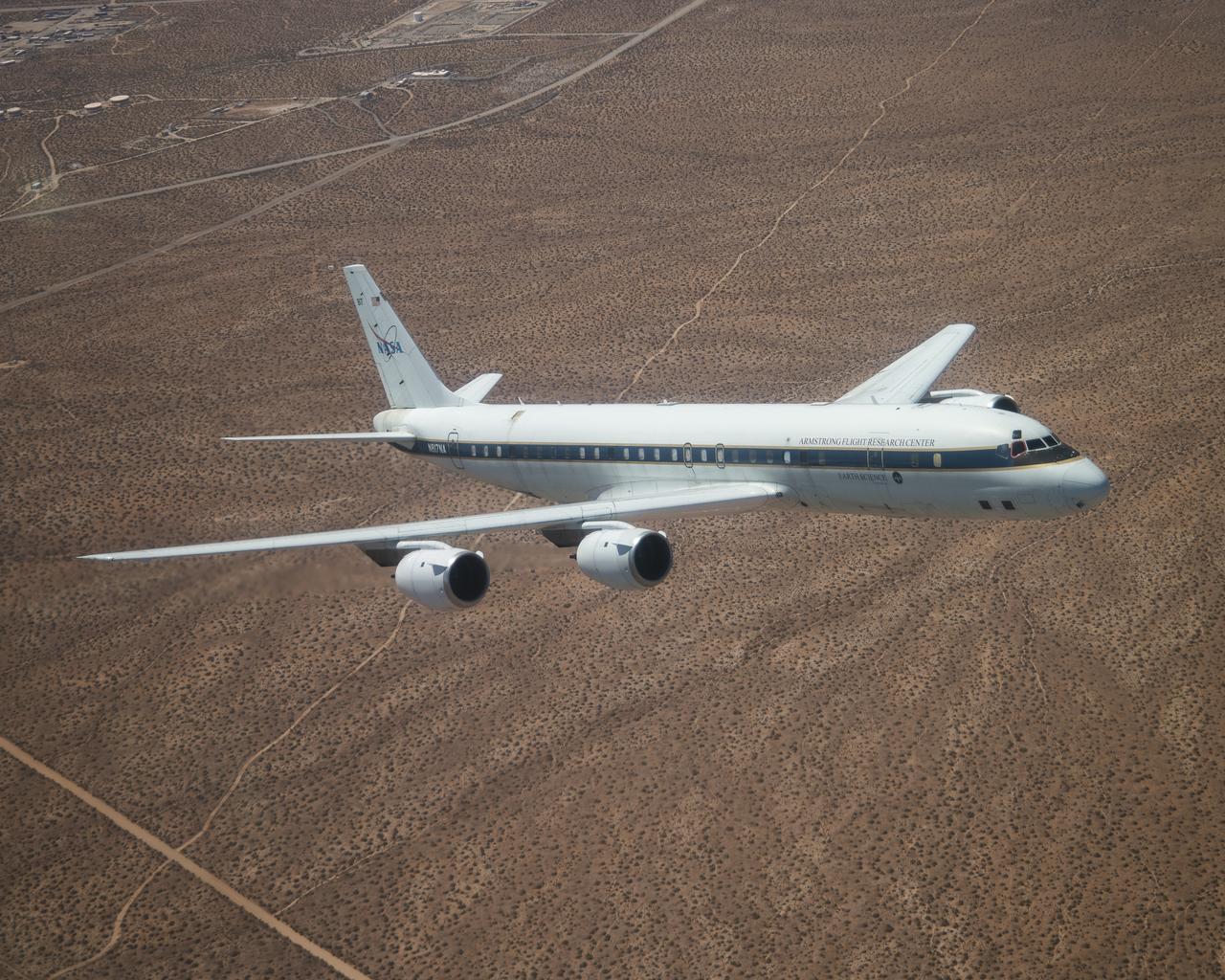
The DC-8 flies for the last time from NASA’s Armstrong Flight Research Center Building 703 in Palmdale, California, before it retires to Idaho State University in Pocatello, Idaho. The DC-8 will provide real-world experience to train future aircraft technicians at the college’s Aircraft Maintenance Technology Program.
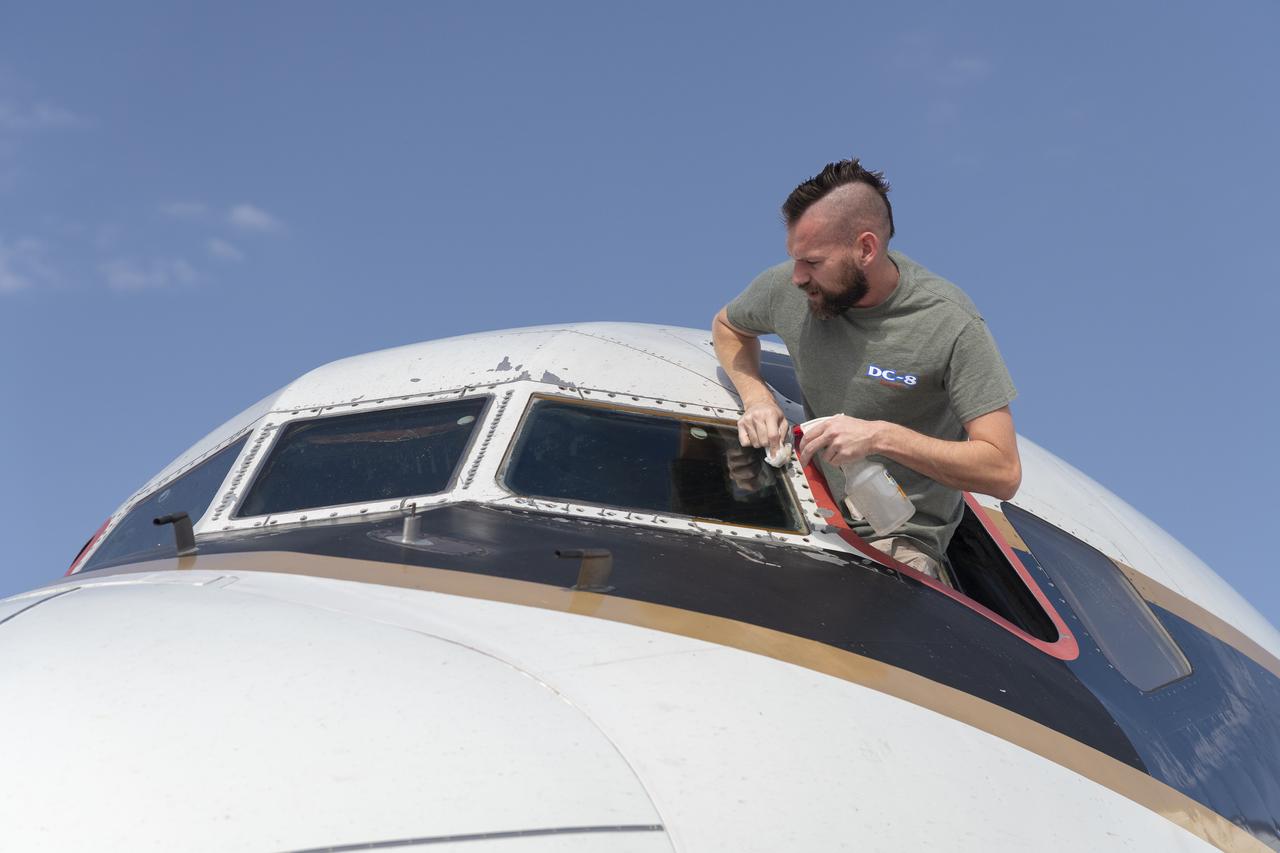
Avionics lead Kelly Jellison wipes the windshield of the DC-8 aircraft prior to its final flight before it is retired from NASA’s Armstrong Flight Research Center Building 703 in Palmdale, California, to Idaho State University in Pocatello, Idaho. The DC-8 will provide real-world experience to train future aircraft technicians at the college’s Aircraft Maintenance Technology Program.
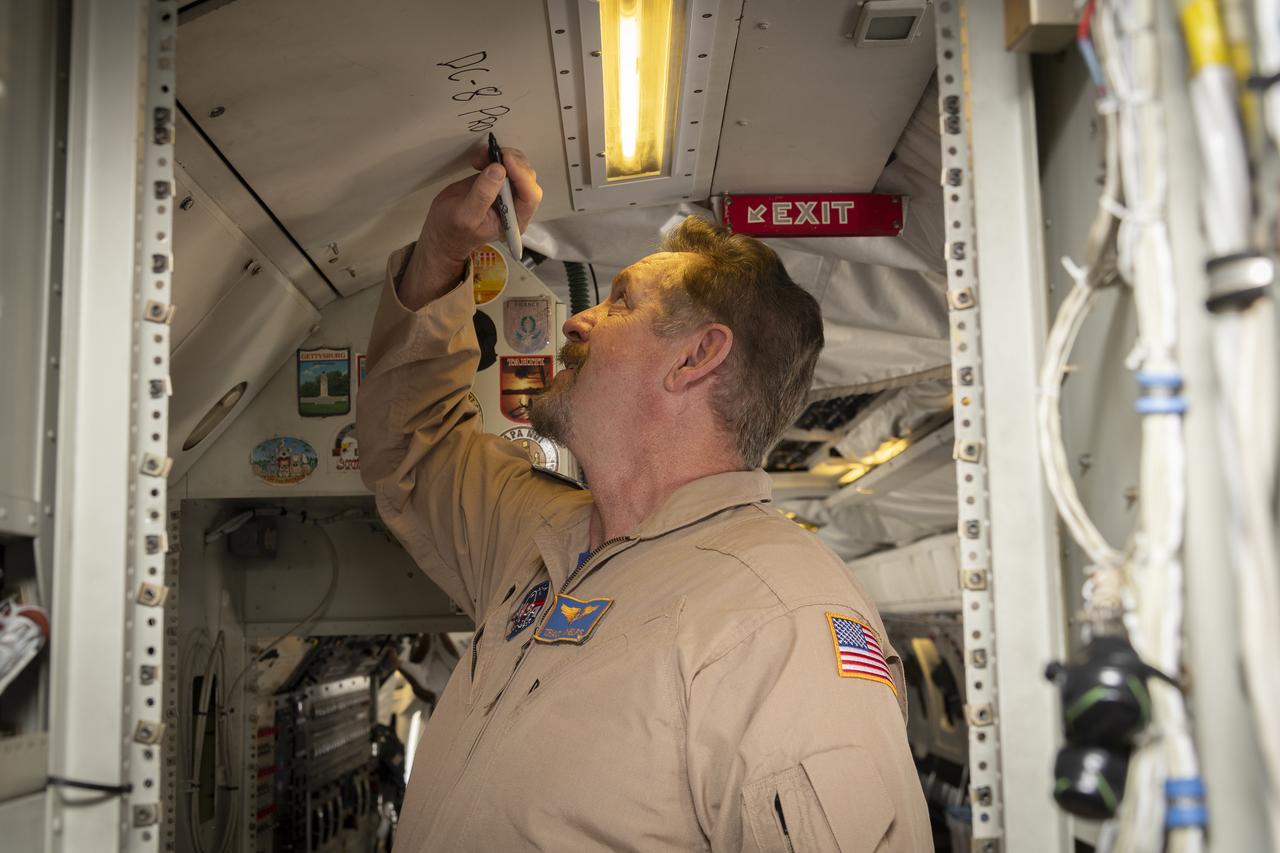
Aerospace engineer and research pilot Tracy Phelps signs the ceiling inside the DC-8 aircraft. Phelps piloted the aircraft’s final flight before it is retired from NASA’s Armstrong Flight Research Center Building 703 in Palmdale, California, to Idaho State University in Pocatello, Idaho. The DC-8 will provide real-world experience to train future aircraft technicians at the college’s Aircraft Maintenance Technology Program.
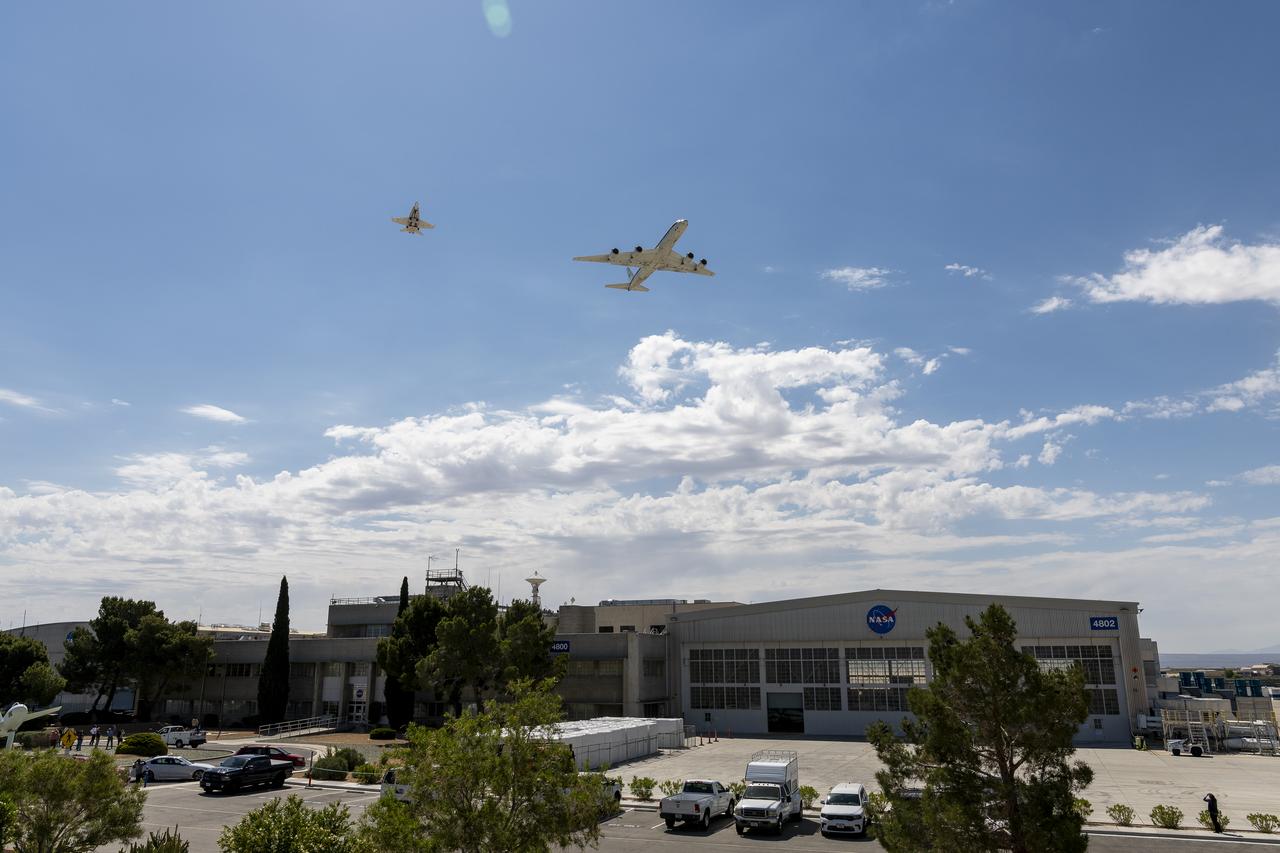
The DC-8 flies for the last time from NASA’s Armstrong Flight Research Center Building 703 in Palmdale, California, before it retires to Idaho State University in Pocatello, Idaho. The DC-8 will provide real-world experience to train future aircraft technicians at the college’s Aircraft Maintenance Technology Program.
NASA launched a Terrier-Improved Malemute suborbital sounding rocket carrying the RockSat-X payload with university and community college student experiments at 6:04 a.m. EDT Wednesday, Aug. 12, from NASA’s Wallops Flight Facilityin Virginia. More than 60 students and instructors from across the continental United States, Hawaii and Puerto Rico were on hand to witness the launch of their experiments. The payload flew to an altitude of about 97 miles and descended via parachute into the Atlantic Ocean off the coast of Wallops. Payload recovery operations began after lift-off. Developed by students from seven higher education programs, the experiments flew through the RockSat-X program in conjunction with the Colorado Space Grant Consortium. Participating institutions in this flight are the University of Colorado, Boulder; Northwest Nazarene University, Nampa, Idaho; the University of Puerto Rico; the University of Nebraska, Lincoln; Virginia Tech University, Blacksburg; Capitol Technology University, Laurel, Maryland; and University of Hawai'i Community Colleges at the Honolulu, Kapi'olani, Kaua'i, and Windward campuses. The next launch scheduled from Wallops is a NASA Black Brant IX suborbital sounding rocket carrying several technology development instruments. The launch is scheduled between 7 and 7:41 p.m. Sept. 29. The backup launch days are Sept. 30 through Oct. 12. <b><a href="http://www.nasa.gov/audience/formedia/features/MP_Photo_Guidelines.html" rel="nofollow">NASA image use policy.</a></b> <b><a href="http://www.nasa.gov/centers/goddard/home/index.html" rel="nofollow">NASA Goddard Space Flight Center</a></b> enables NASA’s mission through four scientific endeavors: Earth Science, Heliophysics, Solar System Exploration, and Astrophysics. Goddard plays a leading role in NASA’s accomplishments by contributing compelling scientific knowledge to advance the Agency’s mission. <b>Follow us on <a href="http://twitter.com/NASAGoddardPix" rel="nofollow">Twitter</a></b> <b>Like us on <a href="http://www.facebook.com/pages/Greenbelt-MD/NASA-Goddard/395013845897?ref=tsd" rel="nofollow">Facebook</a></b> <b>Find us on <a href="http://instagrid.me/nasagoddard/?vm=grid" rel="nofollow">Instagram</a></b>