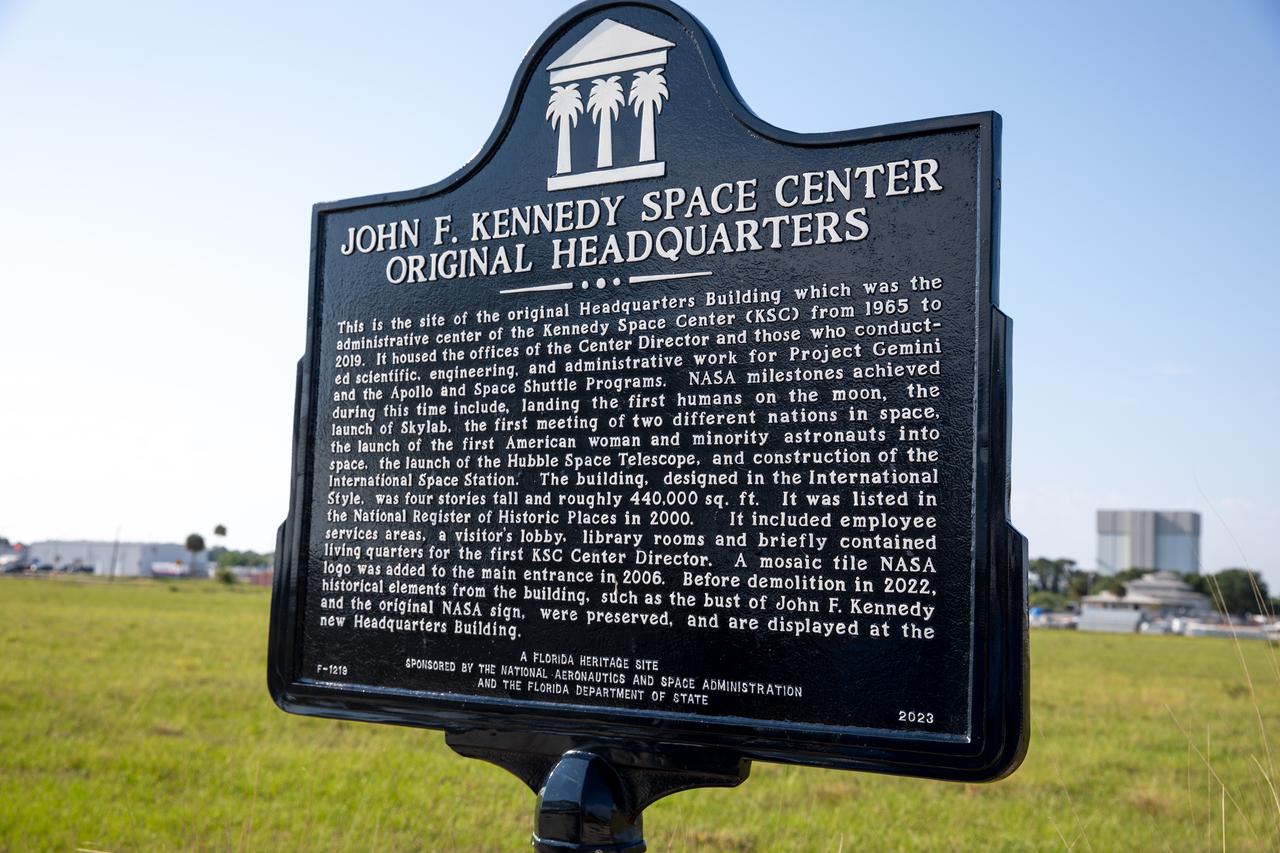
A large bronze historical marker plaque is unveiled Tuesday, May 28, 2024, at the location of NASA Kennedy Space Center’s original headquarters building. Approved in April 2023 as part of the State of Florida’s Historical Markers program in celebration of National Historic Preservation Month, the marker commemorates the early days of space exploration and is displayed permanently just west of the seven-story, 200,000 square foot Central Campus Headquarters Building, which replaced the old building in 2019.
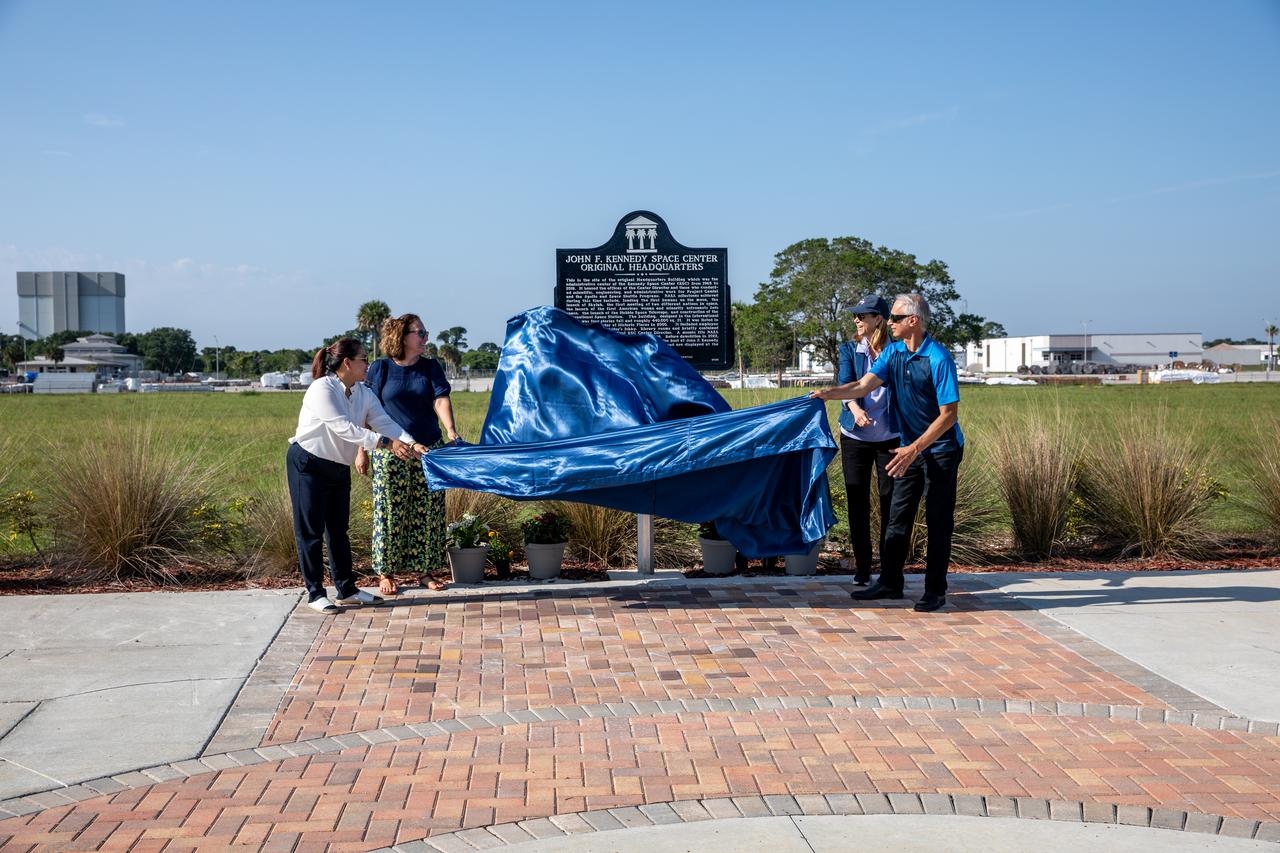
From the left, NASA Kennedy Space Center’s, Maui Dalton, project manager, engineering; Katherine Zeringue, cultural resources manager; Janet Petro, NASA Kennedy Space Center director; and Ismael Otero, project manager, engineering, unveil a large bronze historical marker plaque at the location of NASA Kennedy’s original headquarters building on Tuesday, May 28, 2024. Approved in April 2023 as part of the State of Florida’s Historical Markers program in celebration of National Historic Preservation Month, the marker commemorates the early days of space exploration and is displayed permanently just west of the seven-story, 200,000 square foot Central Campus Headquarters Building, which replaced the old building in 2019.
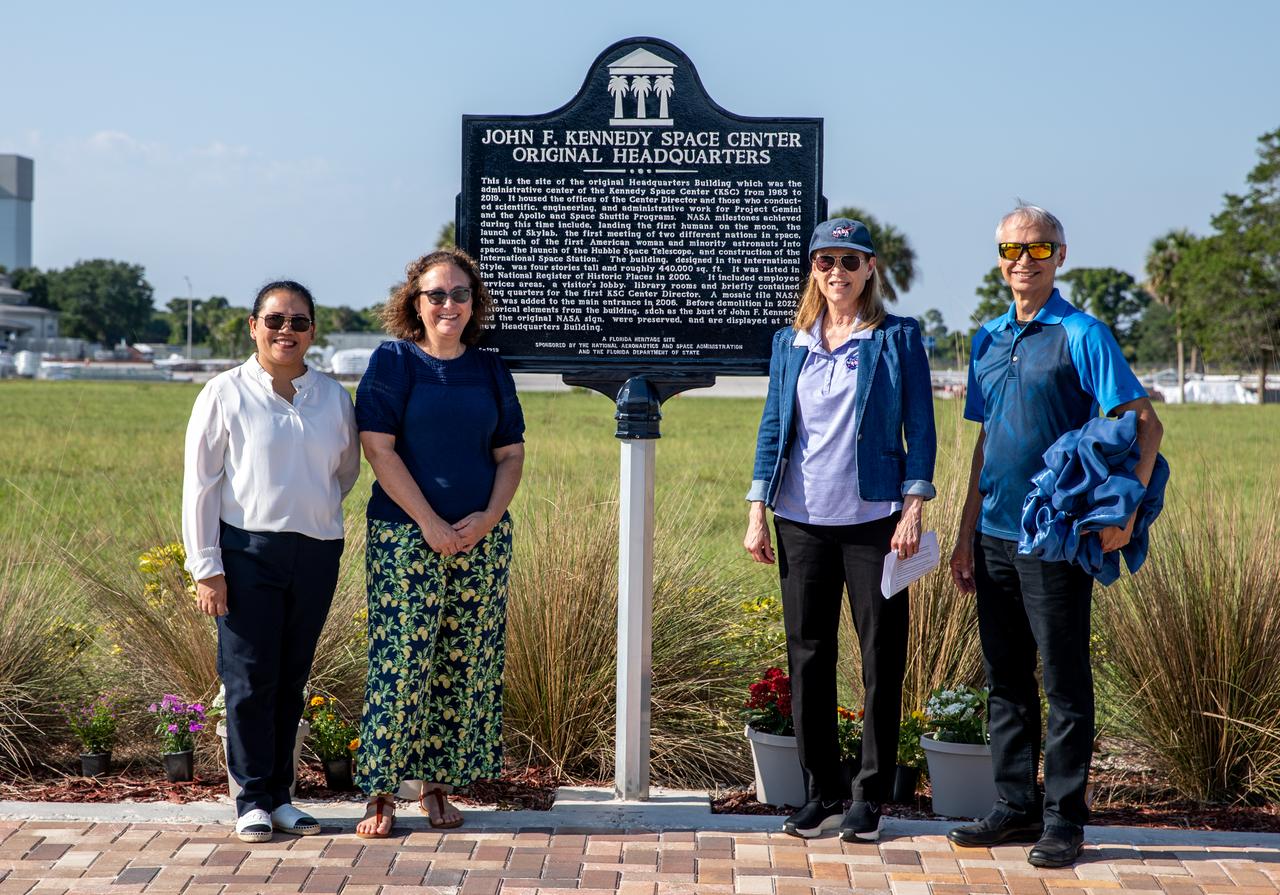
From the left, NASA Kennedy Space Center’s, Maui Dalton, project manager, engineering; Katherine Zeringue, cultural resources manager; Janet Petro, NASA Kennedy Space Center director; and Ismael Otero, project manager, engineering, present a large bronze historical marker plaque at the location of NASA Kennedy’s original headquarters building on Tuesday, May 28, 2024. Approved in April 2023 as part of the State of Florida’s Historical Markers program in celebration of National Historic Preservation Month, the marker commemorates the early days of space exploration and is displayed permanently just west of the seven-story, 200,000 square foot Central Campus Headquarters Building, which replaced the old building in 2019.
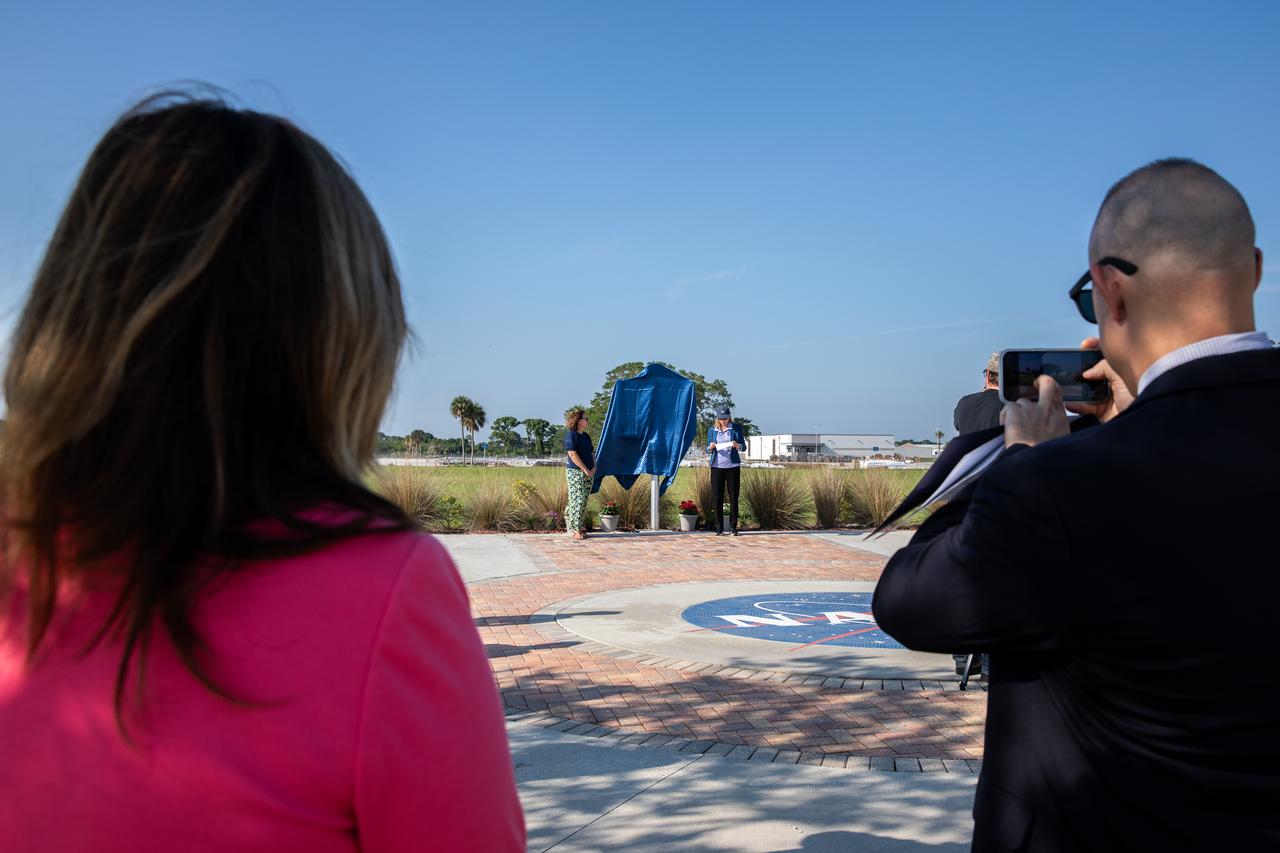
From the left, Katherine Zeringue, cultural resources manager, NASA’s Kennedy Space Center, is joined by Janet Petro, NASA Kennedy Space Center director, at a ceremony attended by NASA employees held Tuesday, May 28, 2024, to unveil a large bronze historical marker plaque at the location of NASA Kennedy’s original headquarters building. Approved in April 2023 as part of the State of Florida’s Historical Markers program in celebration of National Historic Preservation Month, the marker commemorates the early days of space exploration and is displayed permanently just west of the seven-story, 200,000 square foot Central Campus Headquarters Building, which replaced the old building in 2019.
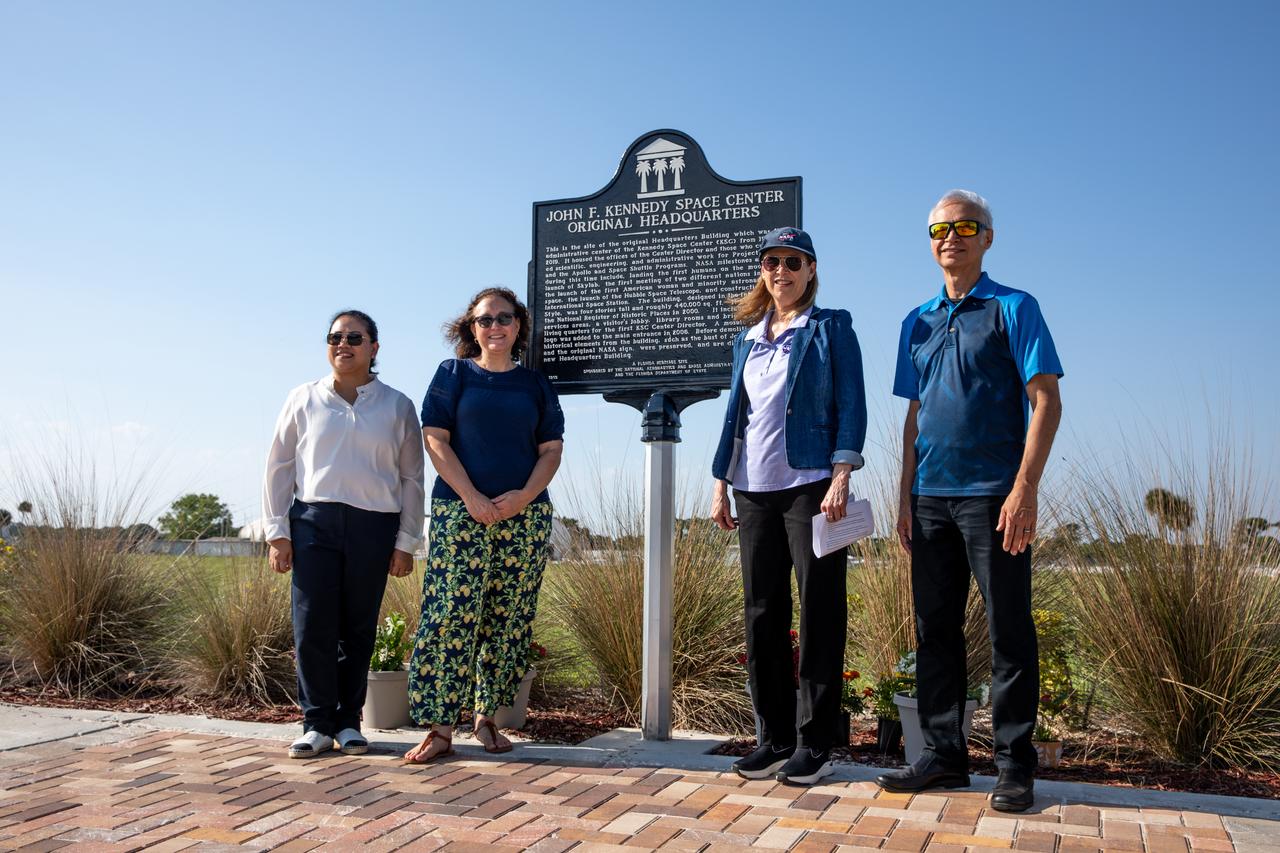
From the left, NASA Kennedy Space Center’s, Maui Dalton, project manager, engineering; Katherine Zeringue, cultural resources manager; Janet Petro, NASA Kennedy Space Center director; and Ismael Otero, project manager, engineering, present a large bronze historical marker plaque at the location of NASA Kennedy’s original headquarters building on Tuesday, May 28, 2024. Approved in April 2023 as part of the State of Florida’s Historical Markers program in celebration of National Historic Preservation Month, the marker commemorates the early days of space exploration and is displayed permanently just west of the seven-story, 200,000 square foot Central Campus Headquarters Building, which replaced the old building in 2019.
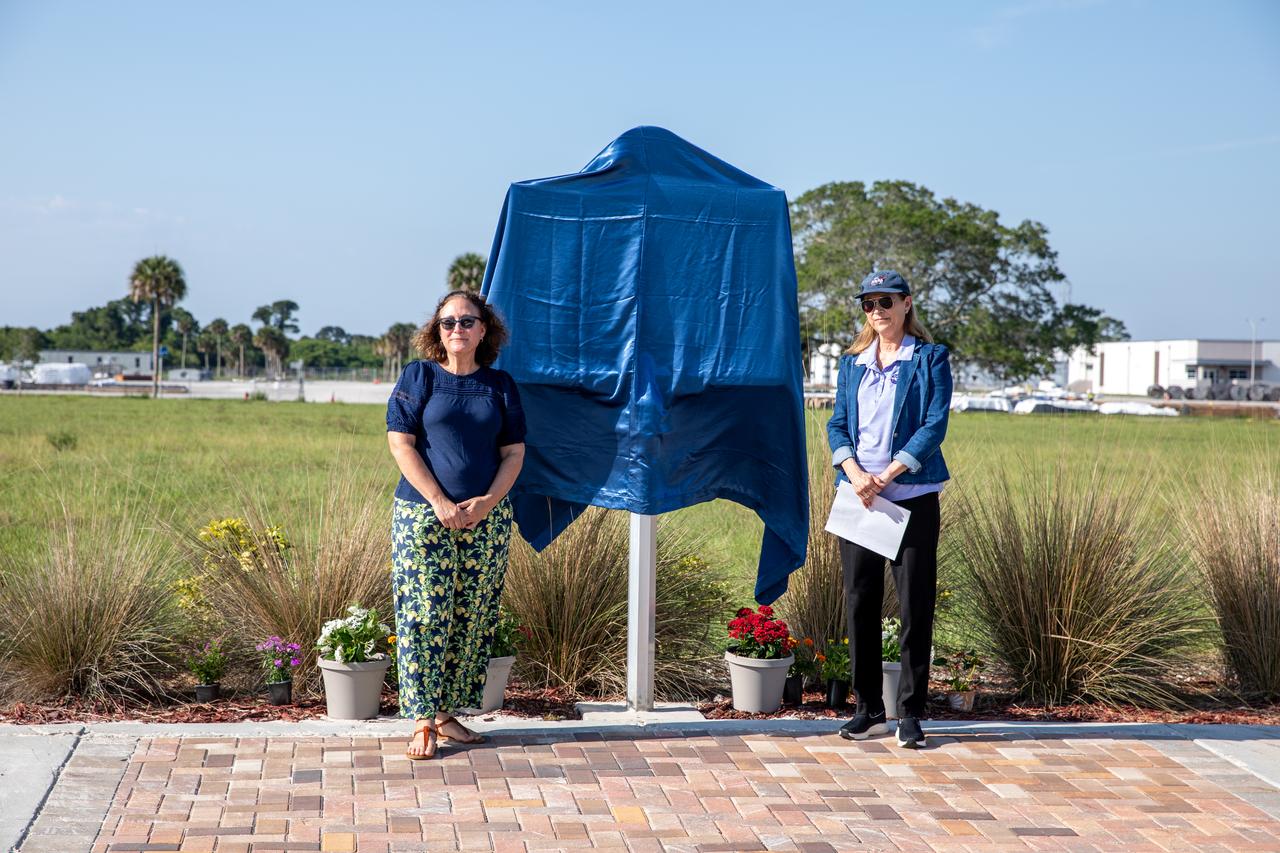
From the left, Katherine Zeringue, cultural resources manager, NASA’s Kennedy Space Center, is joined by Janet Petro, NASA Kennedy Space Center director, at a ceremony held Tuesday, May 28, 2024, to unveil a large bronze historical marker plaque at the location of NASA Kennedy’s original headquarters building. Approved in April 2023 as part of the State of Florida’s Historical Markers program in celebration of National Historic Preservation Month, the marker commemorates the early days of space exploration and is displayed permanently just west of the seven-story, 200,000 square foot Central Campus Headquarters Building, which replaced the old building in 2019.
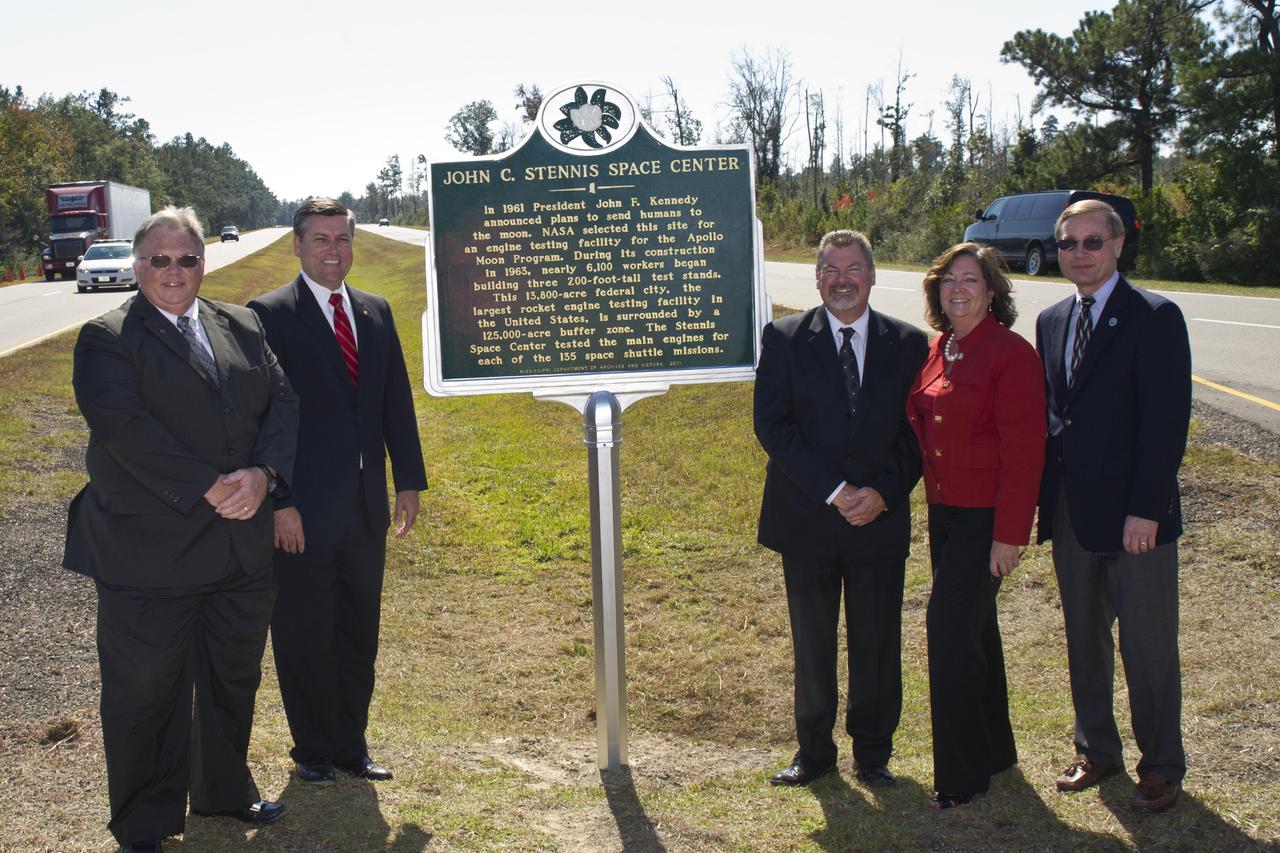
Stennis Space Center Director Patrick Scheuermann (second from left) stands at the historical marker erected by the state of Mississippi in honor of the 50th anniversary of the NASA facility. Joining Scheuermann are: (l to r) Ron Magee, Al Watkins, Tish Williams and Ken P'Pool.
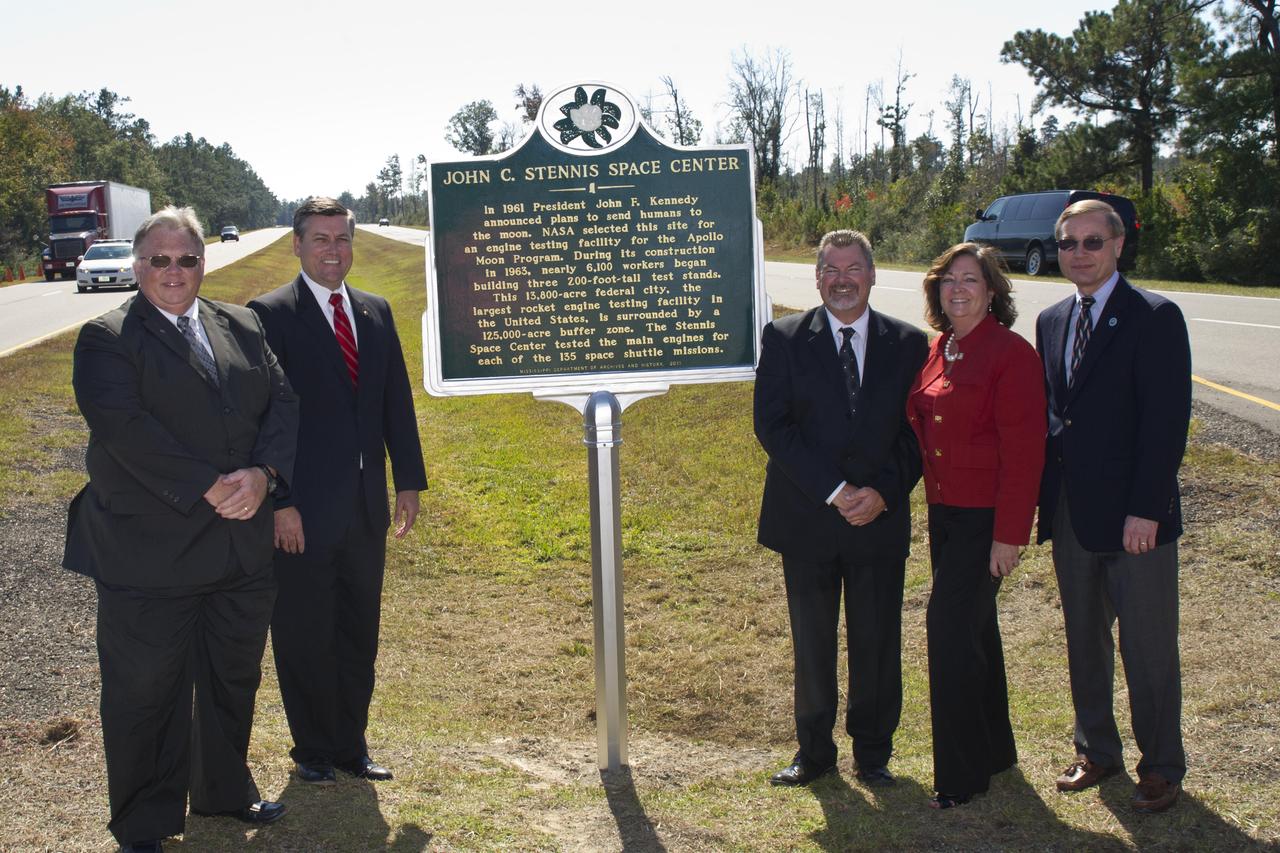
Stennis Space Center Director Patrick Scheuermann (second from left) stands at the historical marker erected by the state of Mississippi in honor of the 50th anniversary of the NASA facility. Joining Scheuermann are: (l to r) Ron Magee, Al Watkins, Tish Williams and Ken P'Pool.
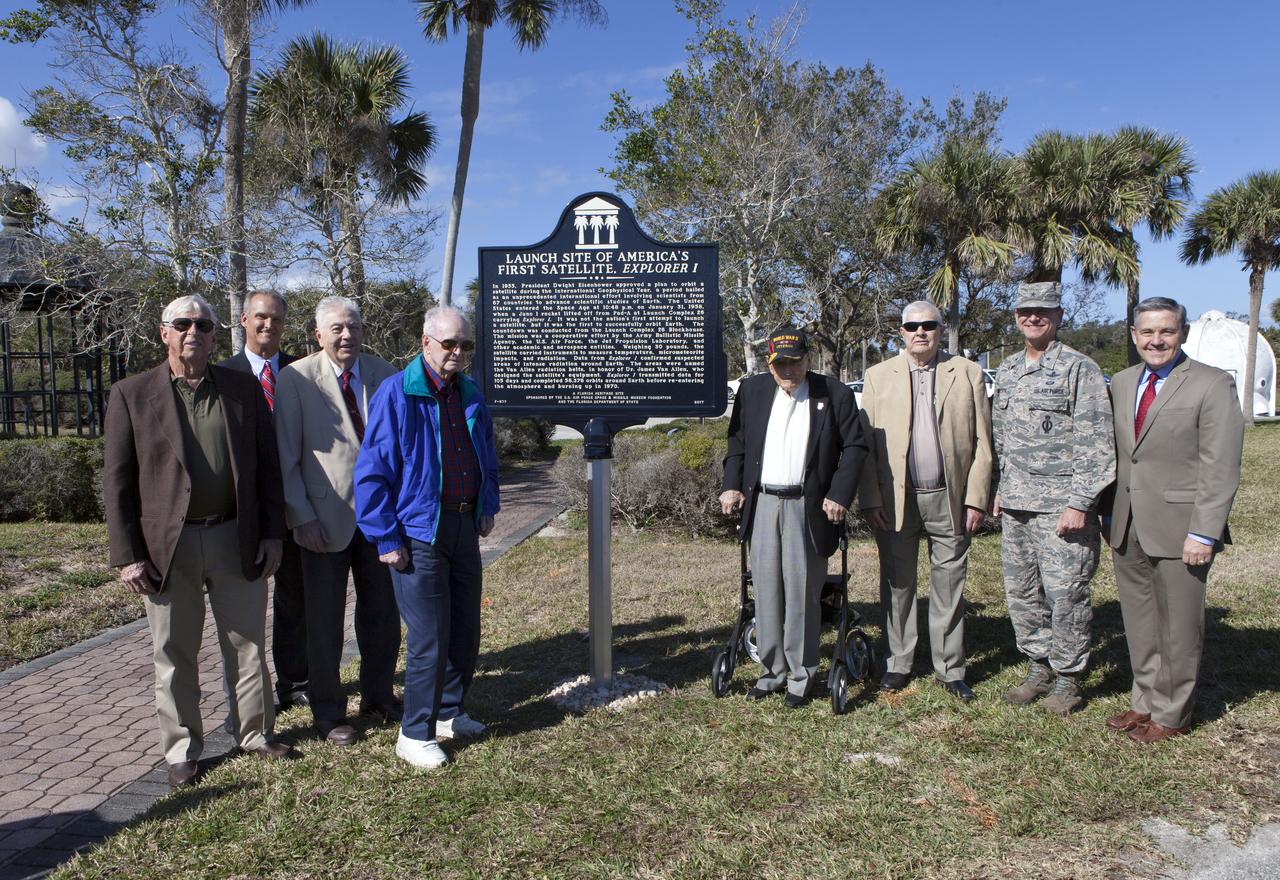
Launch team members who supported the launch of America's first satellite, Explorer 1, pose at a newly unveiled historical marker with Ray Sands, chairman of the Air Force Space and Missile Foundation -- sponsor of the marker, Brig. Gen. Wayne Monteith, 45th Space Wing commander and director of the Eastern Range, and Kennedy Space Center Director Bob Cabana. The event tool place at the site of the launch 60 years ago, Space Launch Complex 26 at Cape Canaveral Air Force Station.
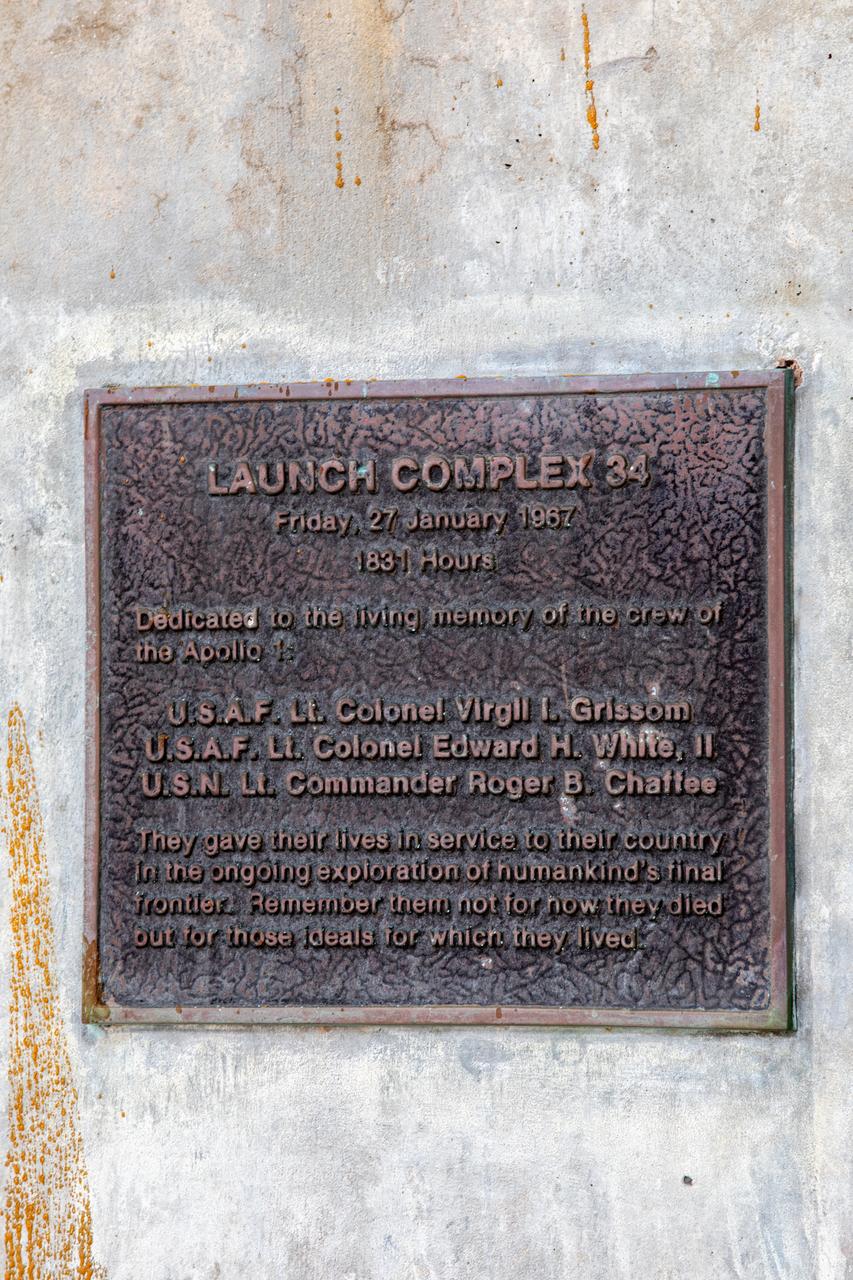
A close-up view of the historic marker on the launch pedestal still standing at Launch Complex 34 at Cape Canaveral Space Force Station in Florida on July 22, 2020. Work will soon begin to perform environmental contamination removal on the pedestal and the ground area surrounding the launch complex.
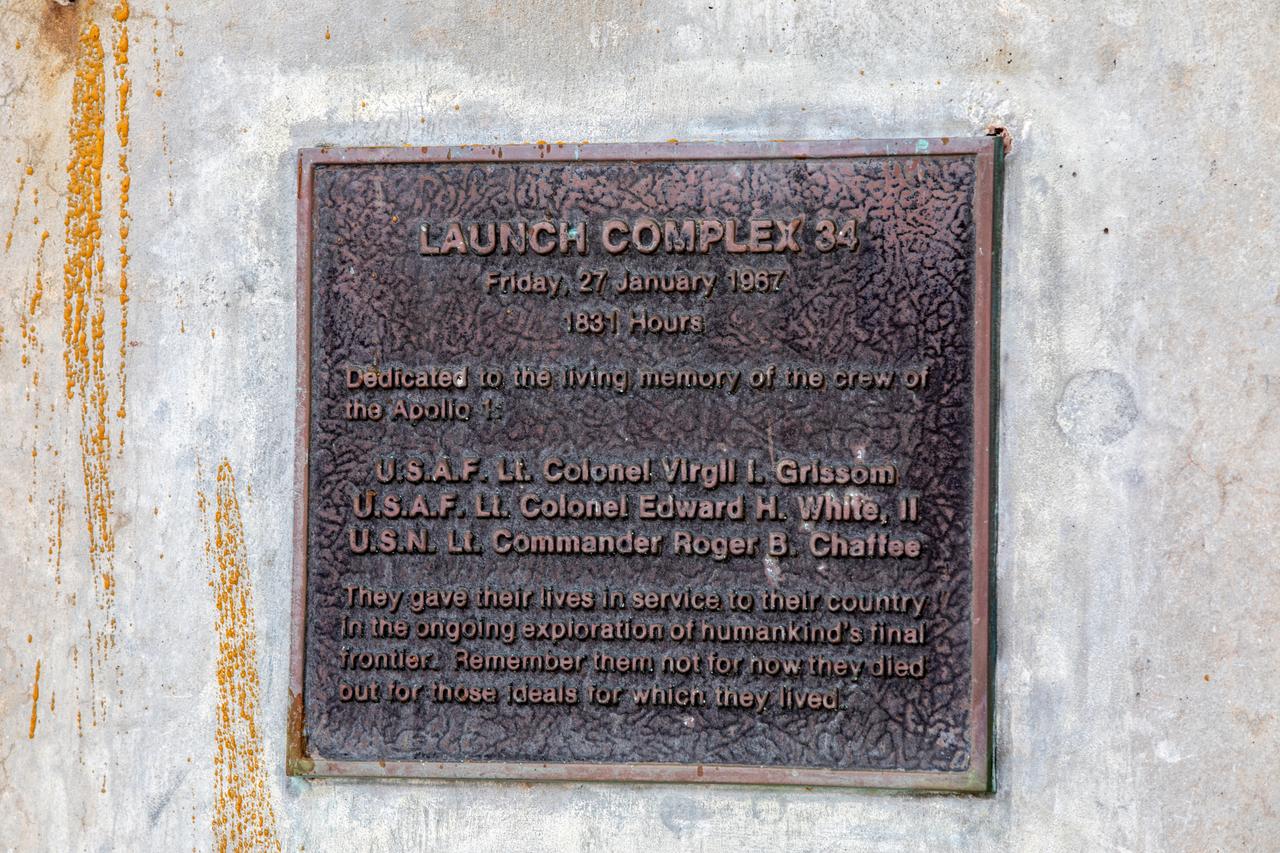
A close-up view of the historic marker on the launch pedestal still standing at Launch Complex 34 at Cape Canaveral Space Force Station in Florida on July 22, 2020. Work will soon begin to perform environmental contamination removal on the pedestal and the ground area surrounding the launch complex.
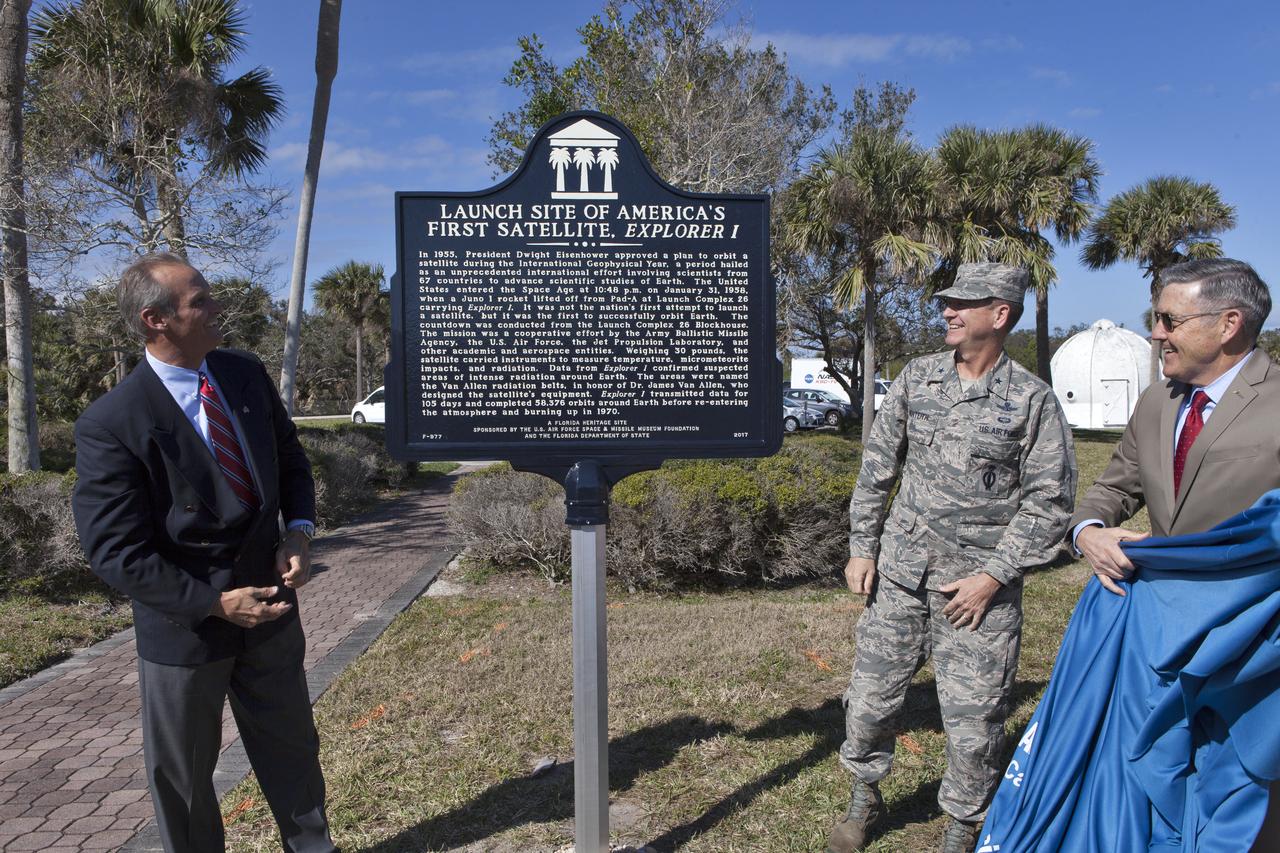
During a ceremony at Cape Canaveral Air Force Station's Space Launch Complex 26 a historical marker is unveiled noting the launch of America's first satellite, Explorer 1. From the left, Ray Sands, chairman of the Air Force Space and Missile Foundation -- sponsor of the marker, Brig. Gen. Wayne Monteith, 45th Space Wing commander and director of the Eastern Range and Kennedy Space Center Director Bob Cabana. The Explorer 1 satellite was launched atop a Jupiter C rocket on Jan. 31, 1958. During operation, the satellite's cosmic ray detector discovered radiation belts around Earth which were named for Dr. James Van Allen, principal investigator for the satellite.
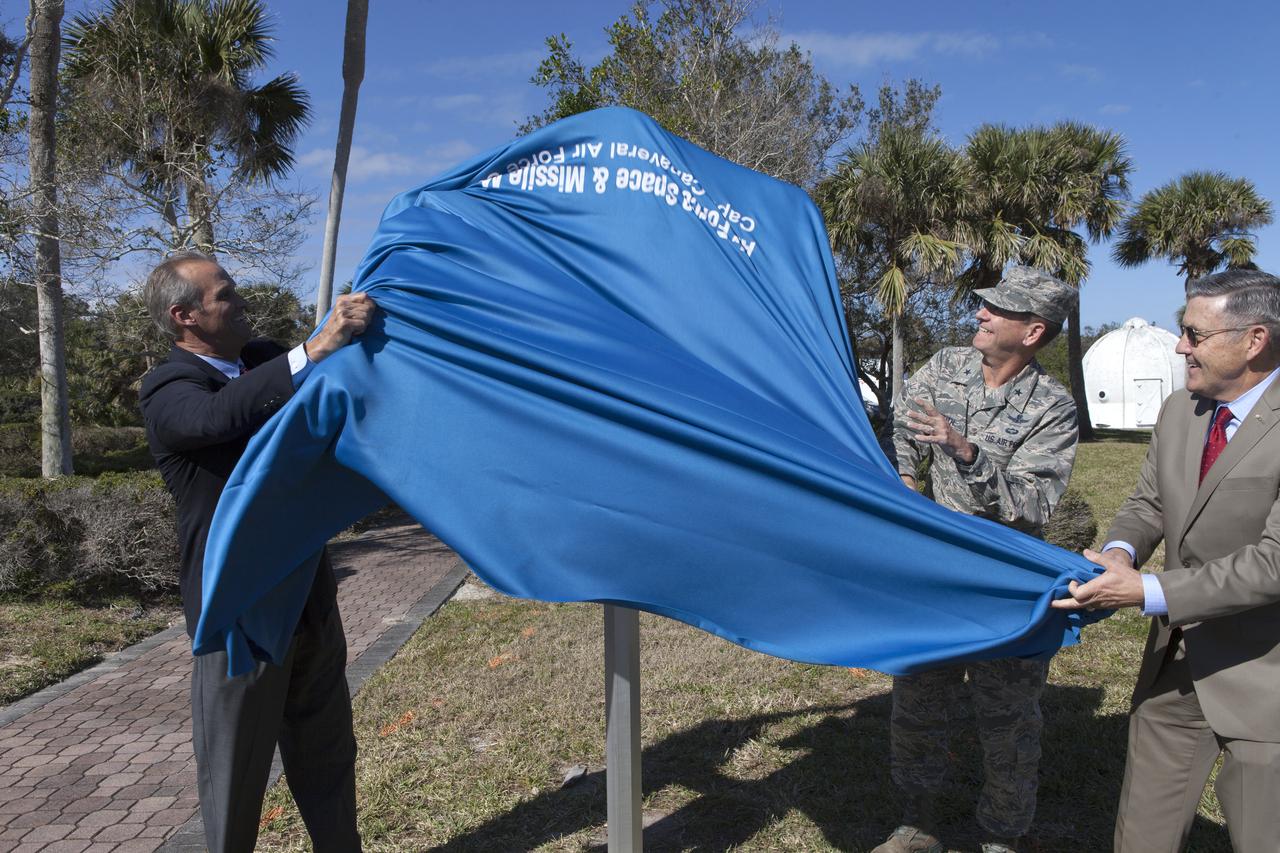
During a ceremony at Cape Canaveral Air Force Station's Space Launch Complex 26 a historical marker is unveiled noting the launch of America's first satellite, Explorer 1. From the left, Ray Sands, chairman of the Air Force Space and Missile Foundation -- sponsor of the marker, Brig. Gen. Wayne Monteith, 45th Space Wing commander and director of the Eastern Range and Kennedy Space Center Director Bob Cabana. The Explorer 1 satellite was launched atop a Jupiter C rocket on Jan. 31, 1958. During operation, the satellite's cosmic ray detector discovered radiation belts around Earth which were named for Dr. James Van Allen, principal investigator for the satellite.
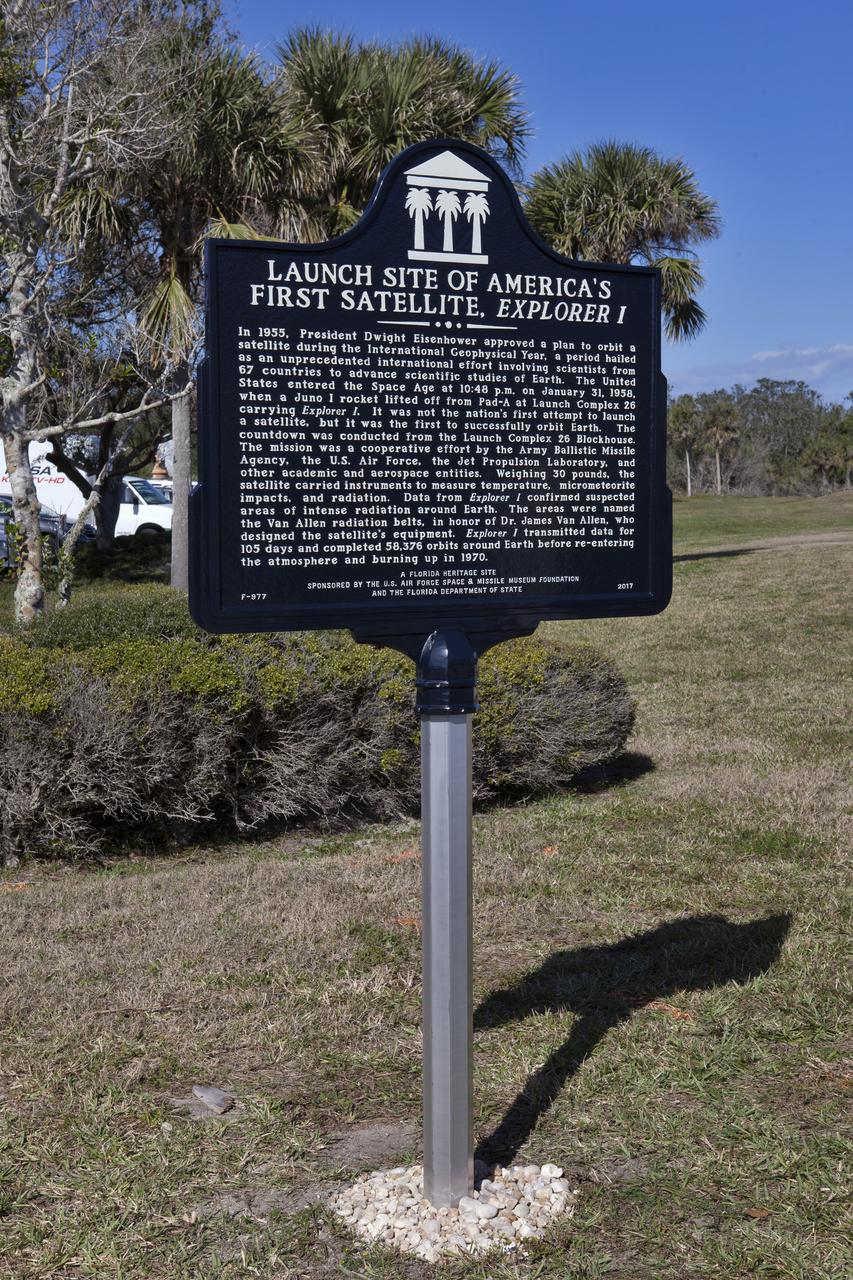
During a ceremony at Cape Canaveral Air Force Station's Space launch Complex 26 a historical marker has been unveiled noting the launch of America's first satellite, Explorer 1. The satellite was launched atop a Jupiter C rocket on Jan. 31, 1958. During operation, the satellite's cosmic ray detector discovered radiation belts around Earth which were named for Dr. James Van Allen, principal investigator for the satellite.
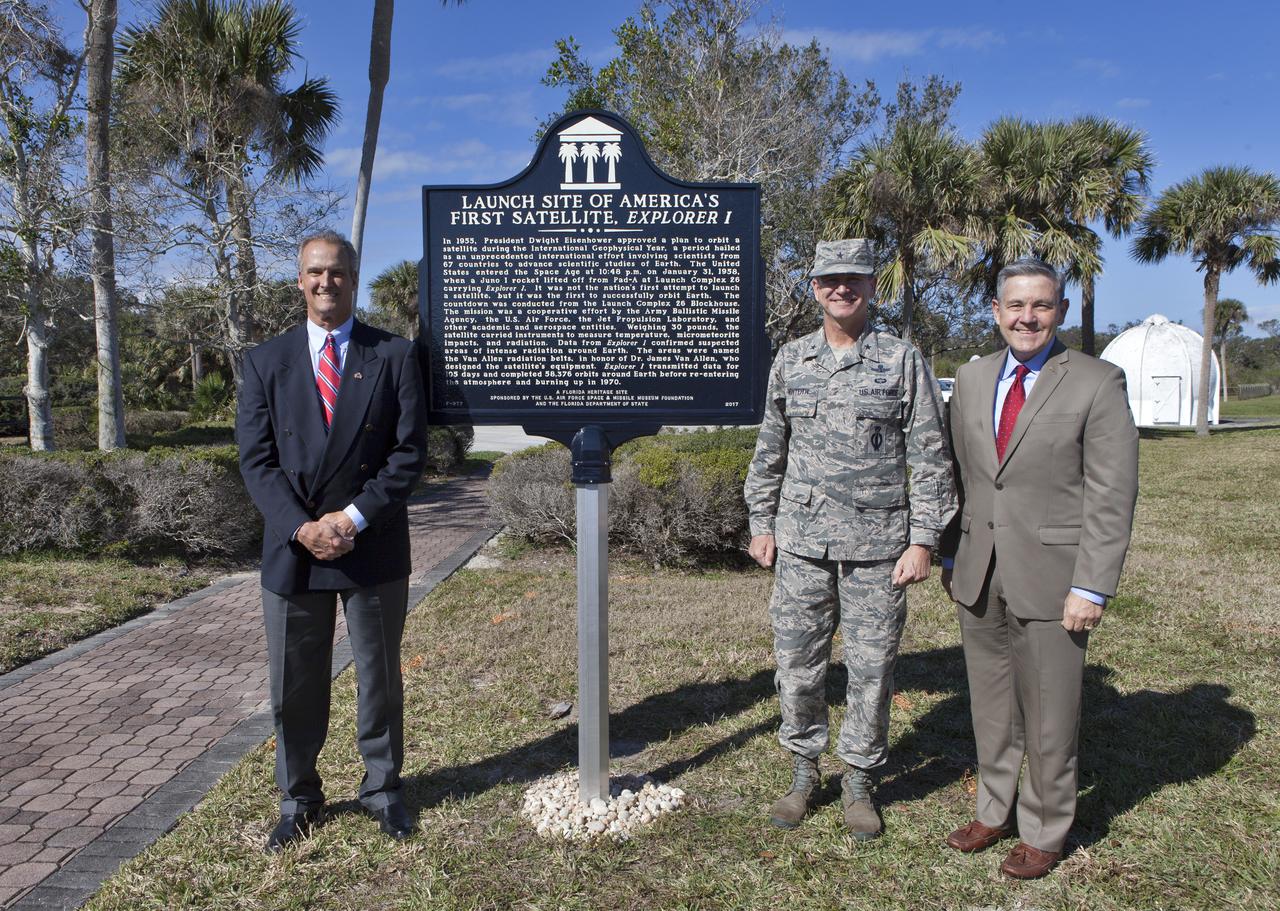
During a ceremony at Cape Canaveral Air Force Station's Space Launch Complex 26 a historical marker has been unveiled noting the launch of America's first satellite, Explorer 1. From the left, Ray Sands, chairman of the Air Force Space and Missile Foundation -- sponsor of the marker, Brig. Gen. Wayne Monteith, 45th Space Wing commander and director of the Eastern Range and Kennedy Space Center Director Bob Cabana. The Explorer 1 satellite was launched atop a Jupiter C rocket on Jan. 31, 1958. During operation, the satellite's cosmic ray detector discovered radiation belts around Earth which were named for Dr. James Van Allen, principal investigator for the satellite.