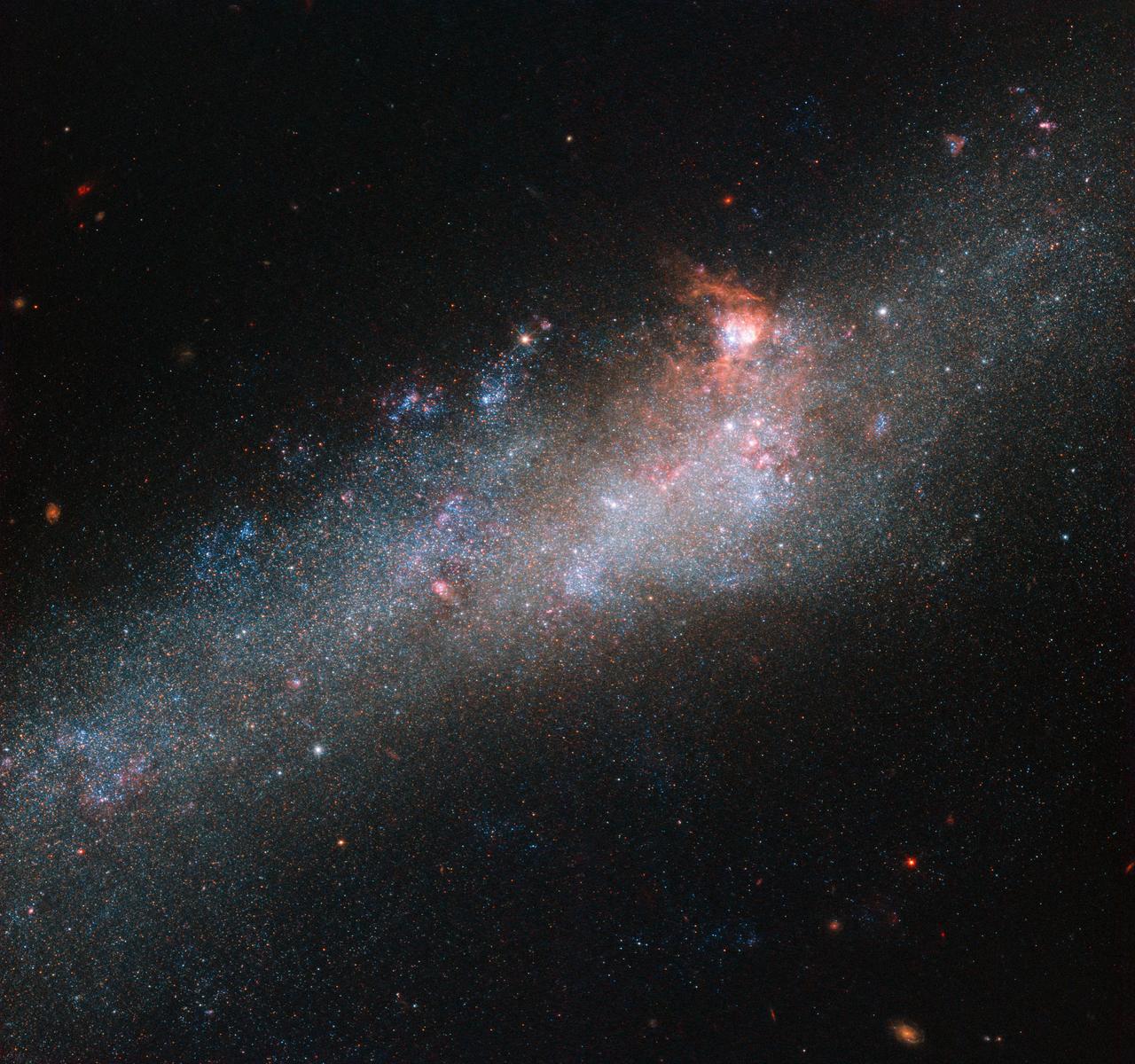
The star of this NASA/ESA Hubble Space Telescope image is a galaxy known as NGC 4656, located in the constellation of Canes Venatici (The Hunting Dogs). However, it also has a somewhat more interesting and intriguing name: the Hockey Stick Galaxy! The reason for this is a little unclear from this partial view, which shows the bright central region, but the galaxy is actually shaped like an elongated, warped stick, stretching out through space until it curls around at one end to form a striking imitation of a celestial hockey stick. This unusual shape is thought to be due to an interaction between NGC 4656 and a couple of near neighbors, NGC 4631 (otherwise known as The Whale Galaxy) and NGC 4627 (a small elliptical). Galactic interactions can completely reshape a celestial object, shifting and warping its constituent gas, stars, and dust into bizarre and beautiful configurations. Credit: ESA/Hubble & NASA <b><a href="http://www.nasa.gov/audience/formedia/features/MP_Photo_Guidelines.html" rel="nofollow">NASA image use policy.</a></b> <b><a href="http://www.nasa.gov/centers/goddard/home/index.html" rel="nofollow">NASA Goddard Space Flight Center</a></b> enables NASA’s mission through four scientific endeavors: Earth Science, Heliophysics, Solar System Exploration, and Astrophysics. Goddard plays a leading role in NASA’s accomplishments by contributing compelling scientific knowledge to advance the Agency’s mission. <b>Follow us on <a href="http://twitter.com/NASAGoddardPix" rel="nofollow">Twitter</a></b> <b>Like us on <a href="http://www.facebook.com/pages/Greenbelt-MD/NASA-Goddard/395013845897?ref=tsd" rel="nofollow">Facebook</a></b> <b>Find us on <a href="http://instagrid.me/nasagoddard/?vm=grid" rel="nofollow">Instagram</a></b>
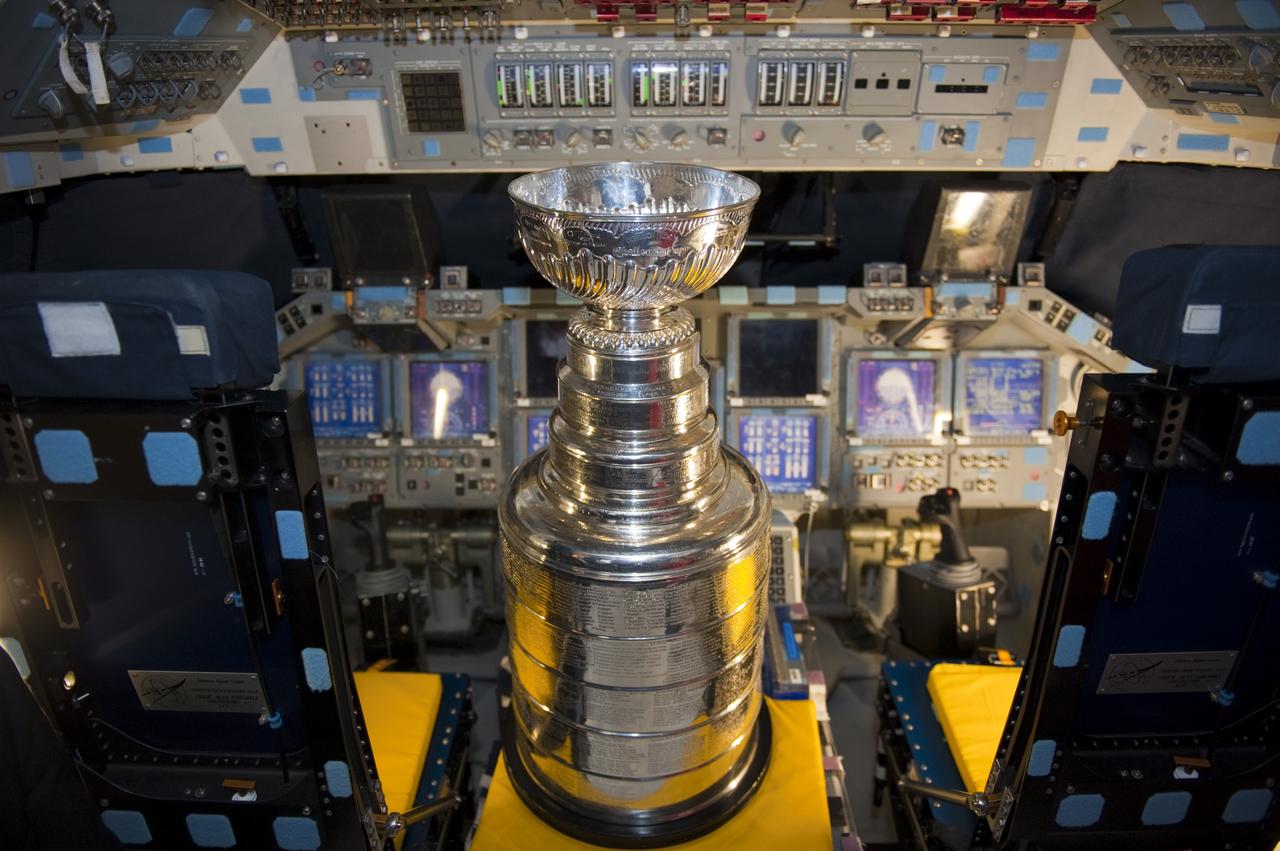
CAPE CANAVERAL, Fla. -- In Orbiter Processing Facility-2 at NASA's Kennedy Space Center in Florida, Lord Stanley’s Cup sits in the flight deck of space shuttle Atlantis. The Stanley Cup was awarded to the Boston Bruins after winning the 2011 National Hockey League (NHL) Championship. Jeremy Jacobs, chairman and chief executive officer of Delaware North Companies and owner of the Boston Bruins, brought the cup for Kennedy and Delaware North employees to view and take photographs of. The Stanley Cup is 34 1/4 inches tall, weighs 34 1/2 pounds and is more than 100 years old. Atlantis is being prepared for public display in 2013 at the Kennedy Space Center Visitor Complex. For more information, visit http://www.nasa.gov/shuttle. Photo credit: NASA/Kim Shiflett
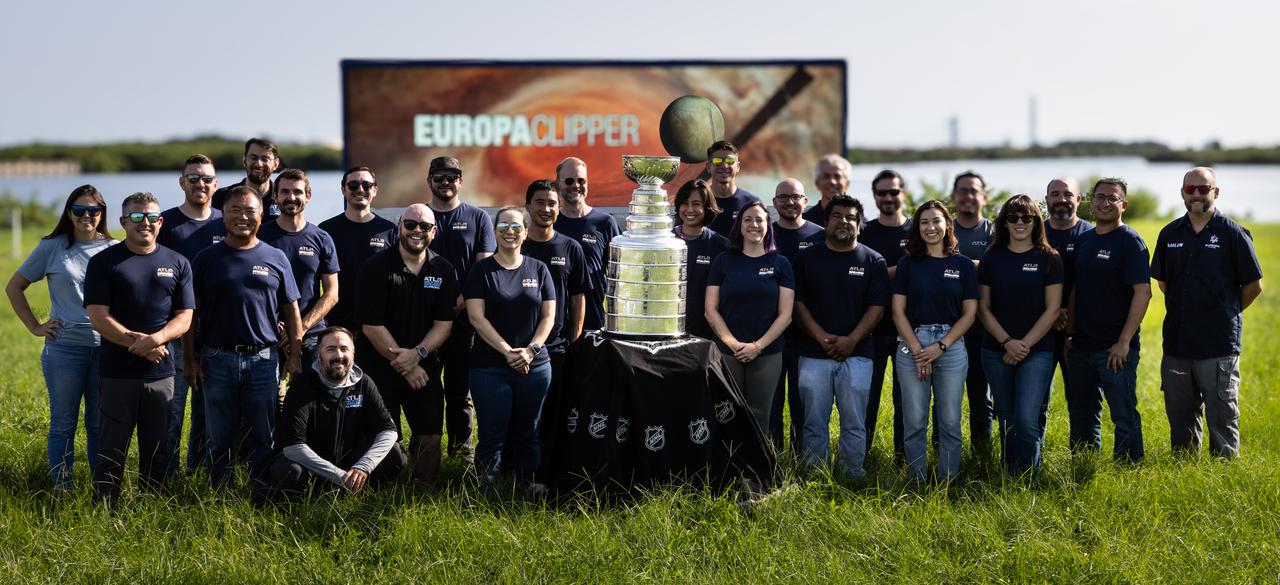
Earlier this year, the Florida Panthers won their first NHL championship and brought victory to the state of Florida. As part of its championship tour, the Stanley Cup made a visit to NASA’s Kennedy Space Center. Here, members of NASA’s Europa Clipper team pose with the National Hockey League’s Stanley Cup trophy in front of the countdown clock near the NASA News Center at Kennedy on Tuesday, Sept. 17, 2024. Europa Clipper will soon begin its Jupiter to explore if places below Europa’s surface could support life.
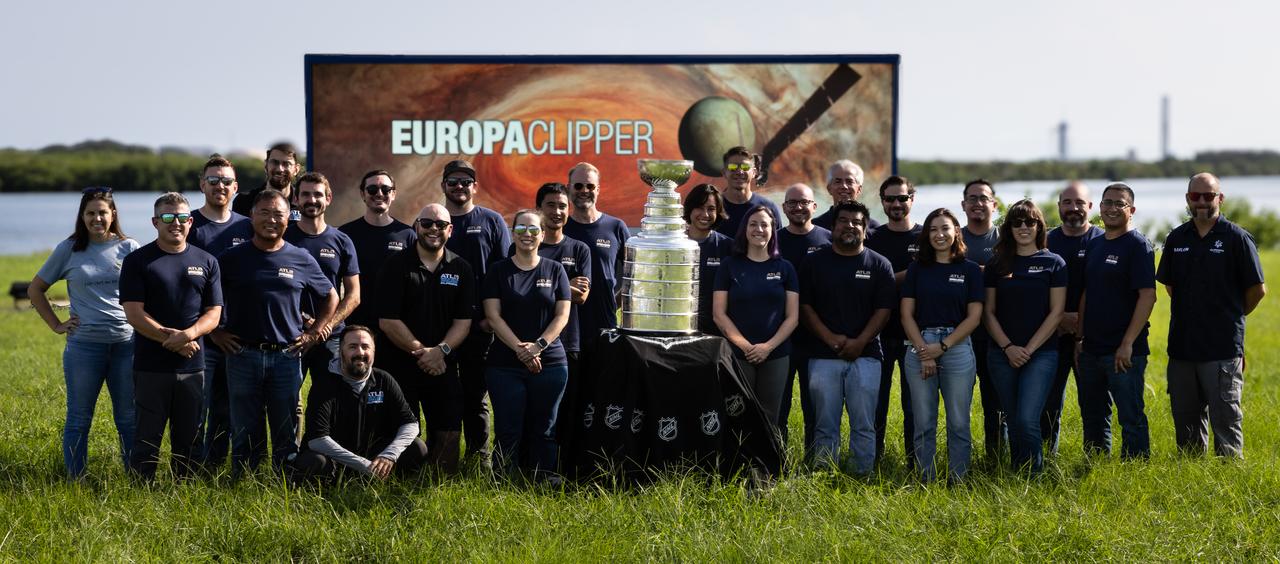
Earlier this year, the Florida Panthers won their first NHL championship and brought victory to the state of Florida. As part of its championship tour, the Stanley Cup made a visit to NASA’s Kennedy Space Center. Here, members of NASA’s Europa Clipper team pose with the National Hockey League’s Stanley Cup trophy in front of the countdown clock near the NASA News Center at Kennedy on Tuesday, Sept. 17, 2024. Europa Clipper will soon begin its Jupiter to explore if places below Europa’s surface could support life.
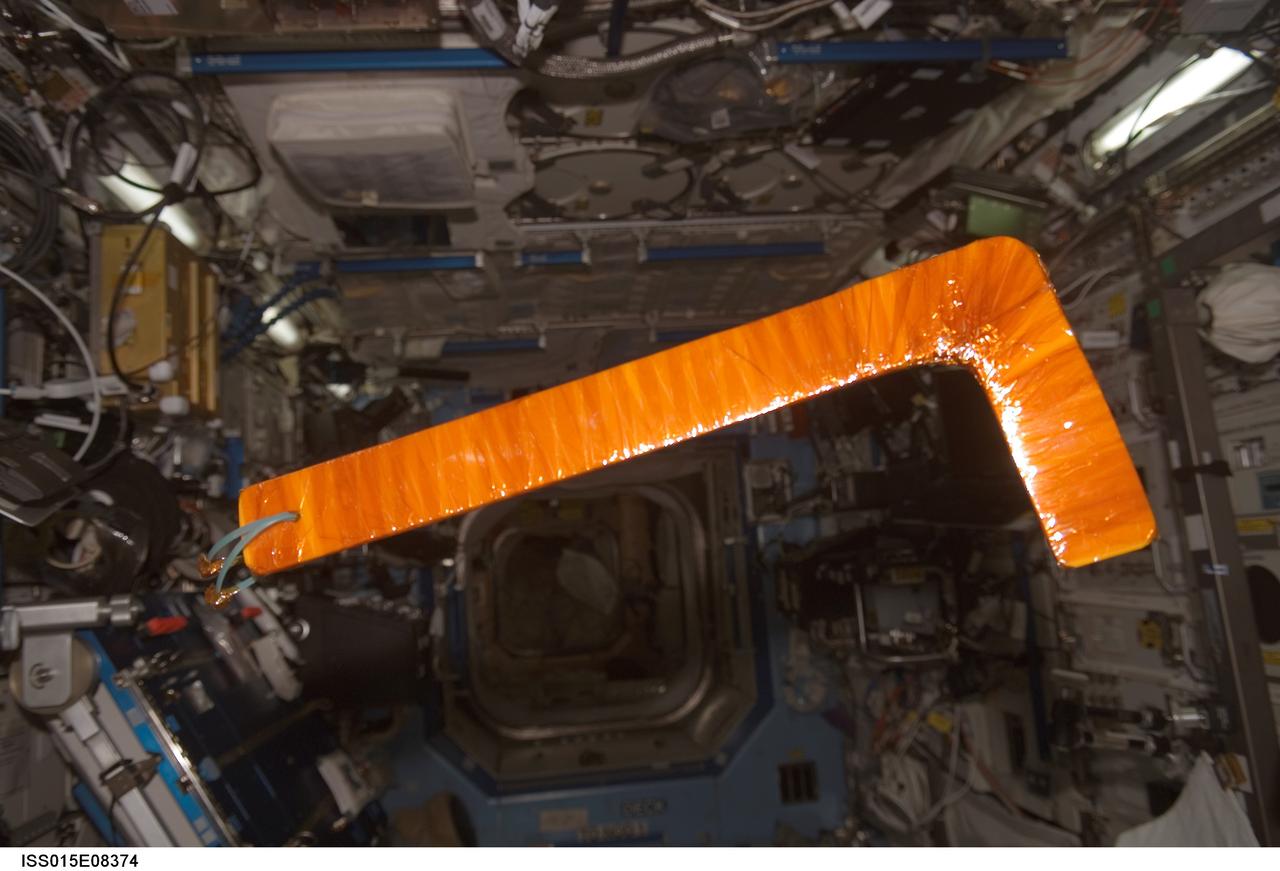
ISS015-E-08374 (17 May 2007) --- A view of a hockey-stick-shaped tool wrapped in insulating tape and floating freely in the Destiny laboratory of the International Space Station, scheduled for possible use during STS-117 extravehicular activity (EVA) as construction resumes on the International Space Station.
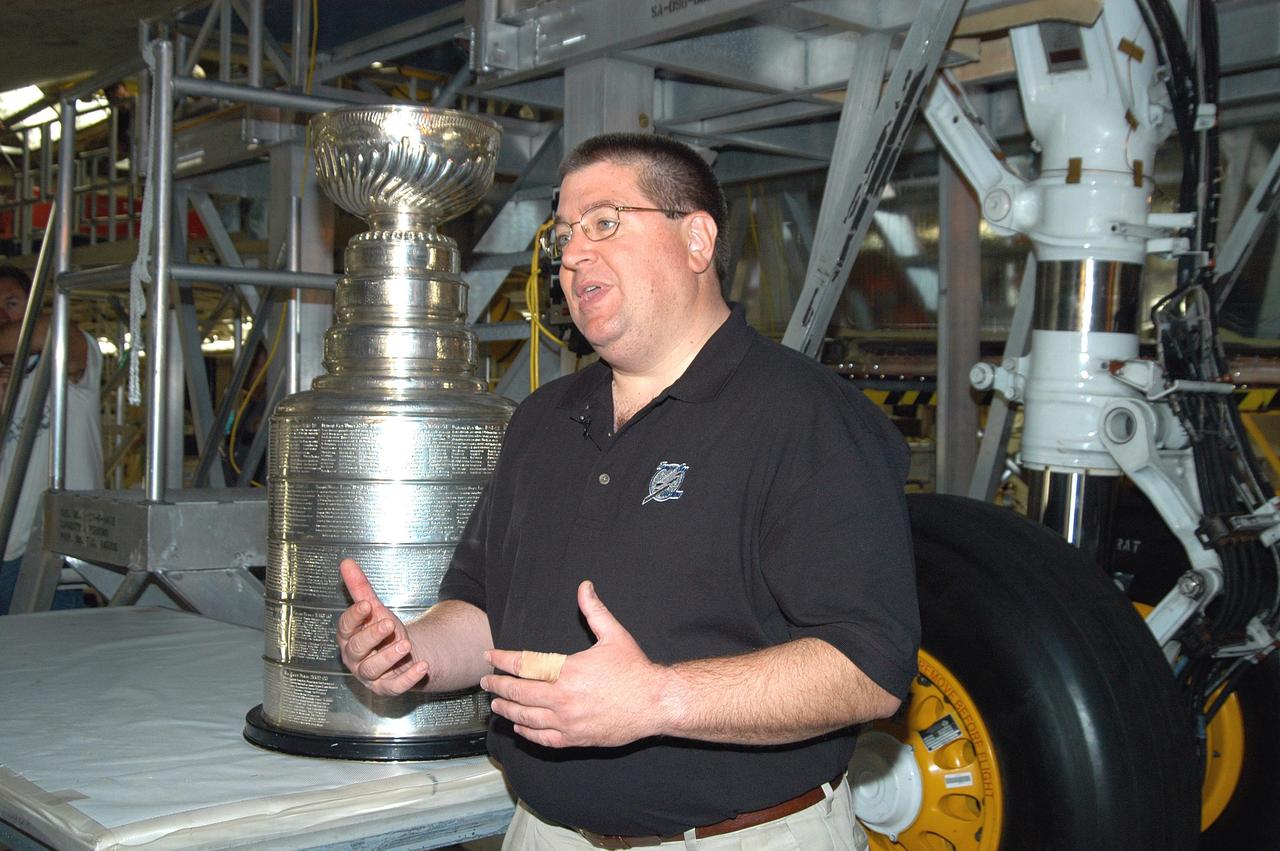
KENNEDY SPACE CENTER, FLA. - Jay Feaster, general manager of the National Hockey League 2004 Champions Tampa Bay Lightning, stands next to the Stanley Cup, which he brought to KSC while on a tour. The cup stands next to the orbiter Discovery in the Orbiter Processing Facility. The cup was also briefly available for viewing by employees in the KSC Training Auditorium. The Stanley Cup weighs 35 pounds and is more than 100 years old. The Lightning will be added to the cup in September.
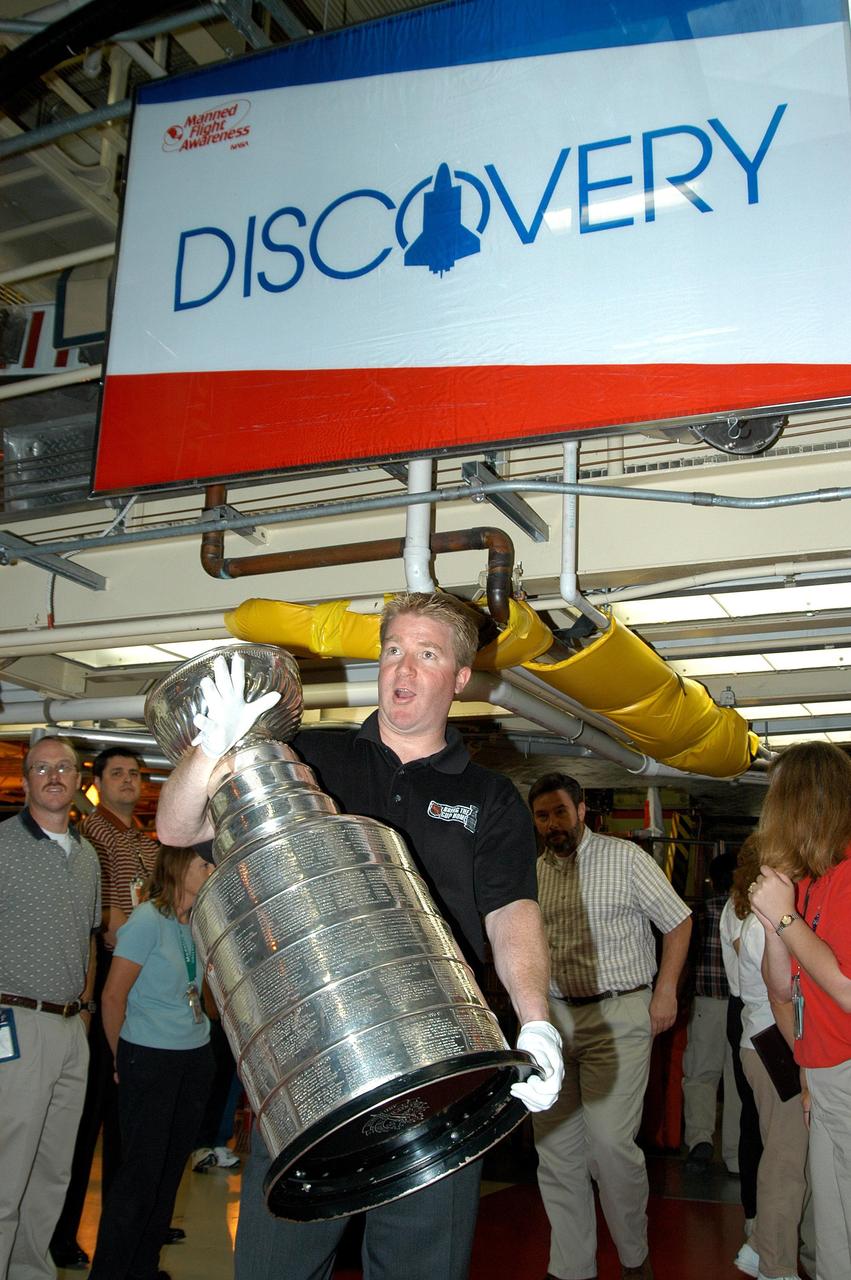
KENNEDY SPACE CENTER, FLA. - In the Orbiter Processing Facility, Mike Bolt holds the Stanley Cup, won this year by the National Hockey League’s Tampa Bay Lightning. Bolt is the Stanley Cup keeper. The cup was also briefly available for viewing by employees in the KSC Training Auditorium. Jay Feaster, general manager of the Tampa Bay Lightning, brought the cup to KSC while on a tour. The Stanley Cup weighs 35 pounds and is more than 100 years old. The Lightning will be added to the cup in September.
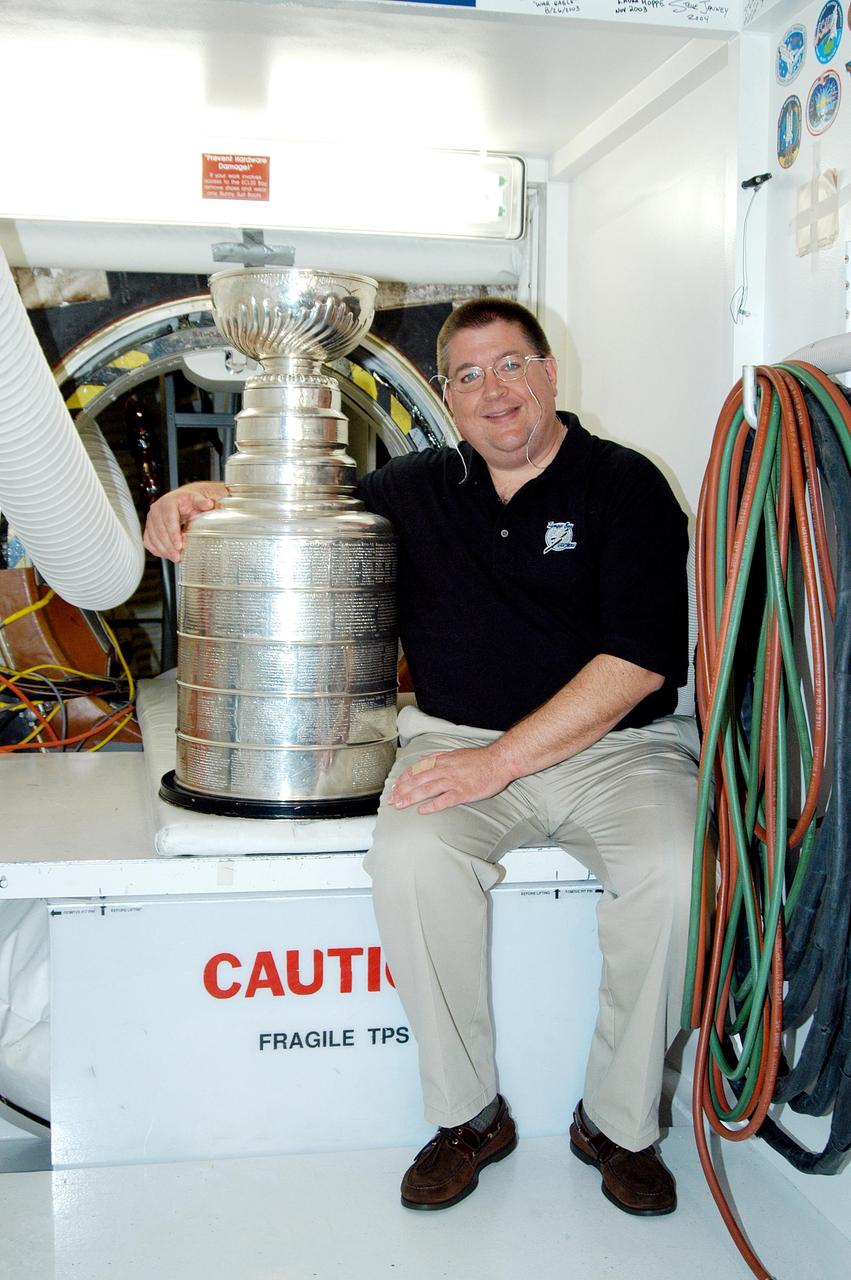
KENNEDY SPACE CENTER, FLA. - In the Orbiter Processing Facility, Jay Feaster, general manager of the National Hockey League 2004 Champions Tampa Bay Lightning, sits next to the Stanley Cup in front of the open hatch into Discovery. The cup was also briefly available for viewing by employees in the KSC Training Auditorium. Feaster brought the cup to KSC while on a tour. The Stanley Cup weighs 35 pounds and is more than 100 years old. The Lightning will be added to the cup in September.
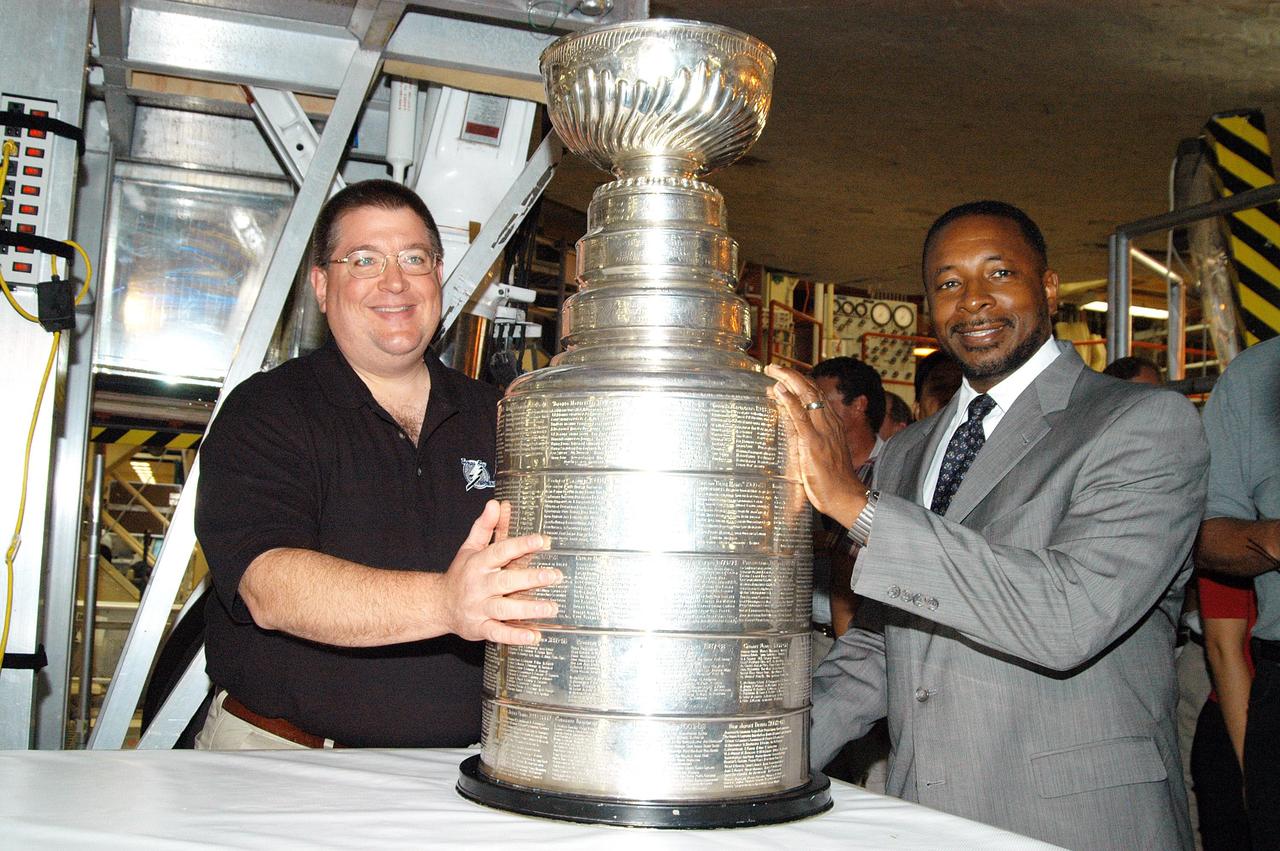
KENNEDY SPACE CENTER, FLA. - In the Orbiter Processing Facility, Jay Feaster, general manager of the National Hockey League 2004 Champions Tampa Bay Lightning, displays the Stanley Cup. At right is KSC Deputy Director Woodrow Whitlow. The cup was also briefly available for viewing by employees in the KSC Training Auditorium. Feaster brought the cup to KSC while on a tour. The Stanley Cup weighs 35 pounds and is more than 100 years old. The Lightning will be added to the cup in September.
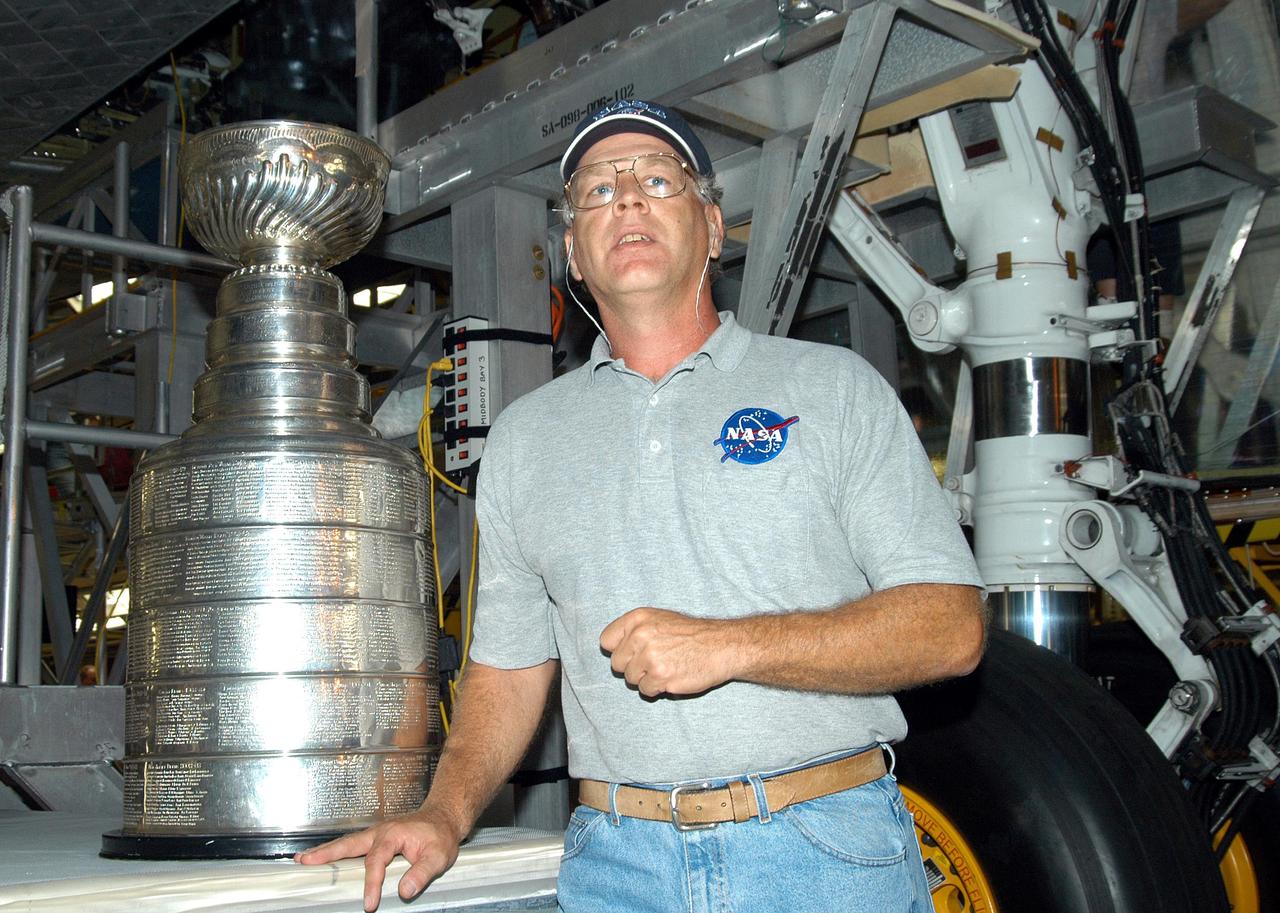
KENNEDY SPACE CENTER, FLA. - Jack Legere, NASA Quality Assurance specialist for the Shuttle Program, displays the Stanley Cup to employees in the Orbiter Processing Facility. Behind him is Discovery. Jay Feaster, general manager of the National Hockey League 2004 Champions Tampa Bay Lightning, brought the cup to KSC while on a tour. The cup was also briefly available for viewing by employees in the KSC Training Auditorium. The Stanley Cup weighs 35 pounds and is more than 100 years old. The Lightning will be added to the cup in September.
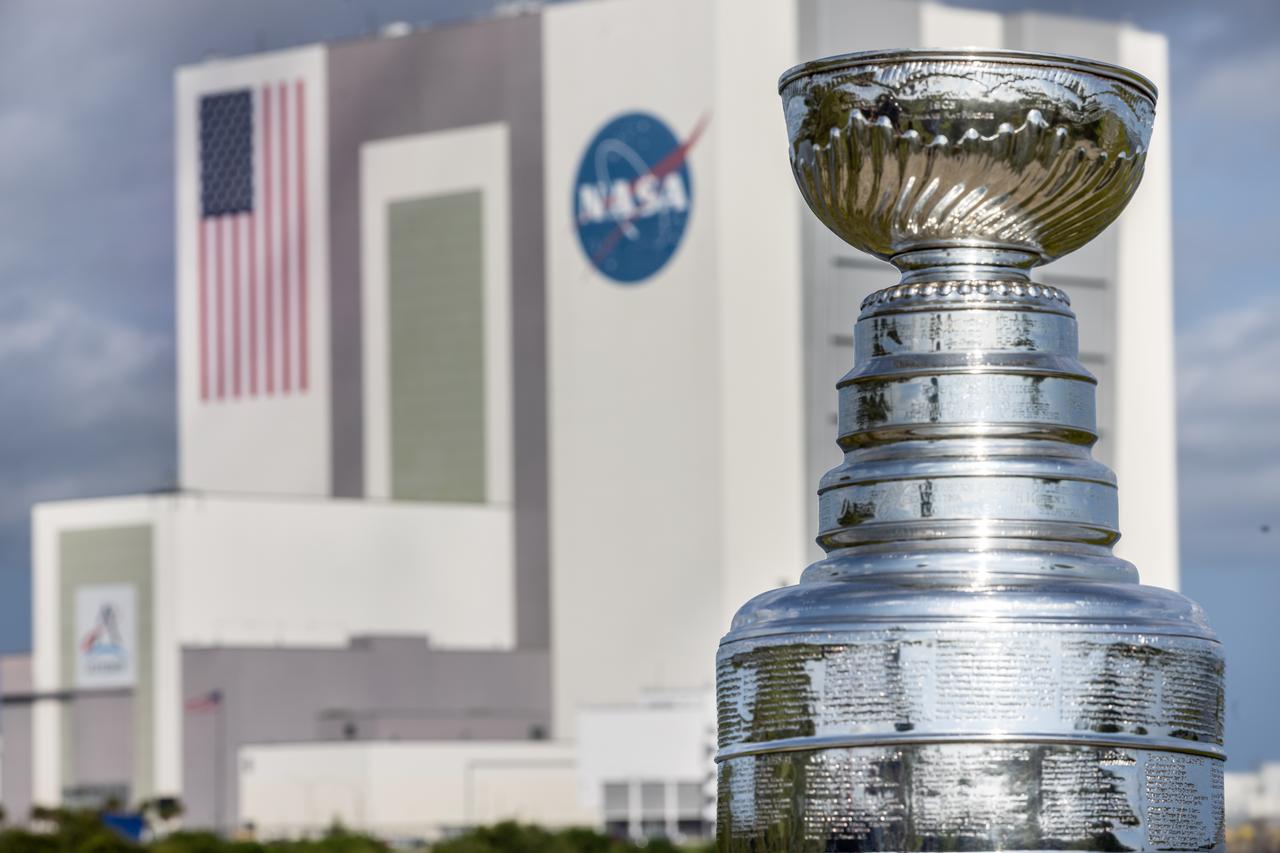
Earlier this year, the Florida Panthers won their first NHL championship and brought victory to the state of Florida. As part of its championship tour, the Stanley Cup made a visit to NASA’s Kennedy Space Center. Pictured here is the silver Stanley Cup with NASA’s iconic Vehicle Assembly Building, which currently houses components of the agency’s Artemis II mission, shown in the background at the Kennedy Space Center on Tuesday Sept. 17, 2024.
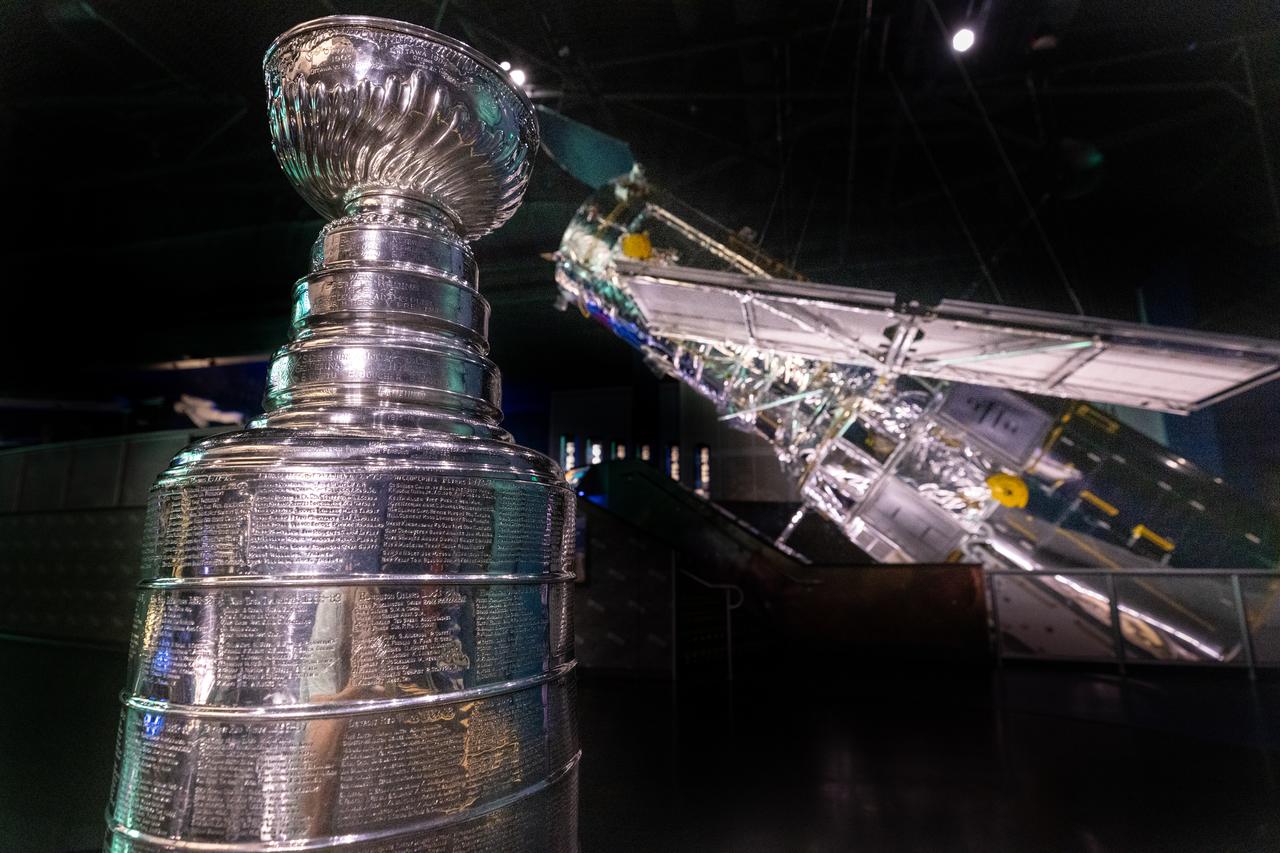
Earlier this year, the Florida Panthers won their first NHL championship and brought victory to the state of Florida. As part of its championship tour, the Stanley Cup made a visit to NASA’s Kennedy Space Center. Pictured here is the shining silver Stanley Cup in the foreground with a large-scale mockup of the Hubble Space Telescope in the background at the Kennedy Space Center Visitor’s Complex on Tuesday Sept. 17, 2024.
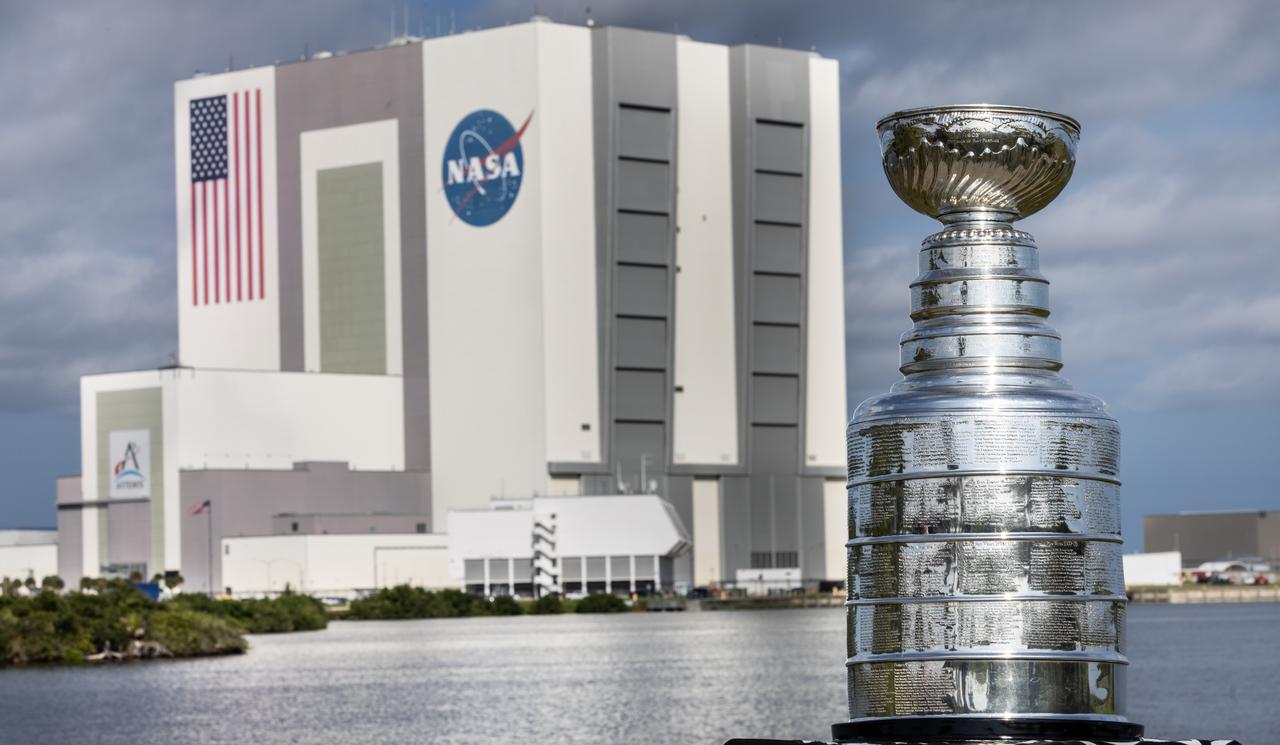
Earlier this year, the Florida Panthers won their first NHL championship and brought victory to the state of Florida. As part of its championship tour, the Stanley Cup made a visit to NASA’s Kennedy Space Center. Pictured here is the silver Stanley Cup with NASA’s iconic Vehicle Assembly Building, which currently houses components of the agency’s Artemis II mission, shown in the background at the Kennedy Space Center on Tuesday Sept. 17, 2024.
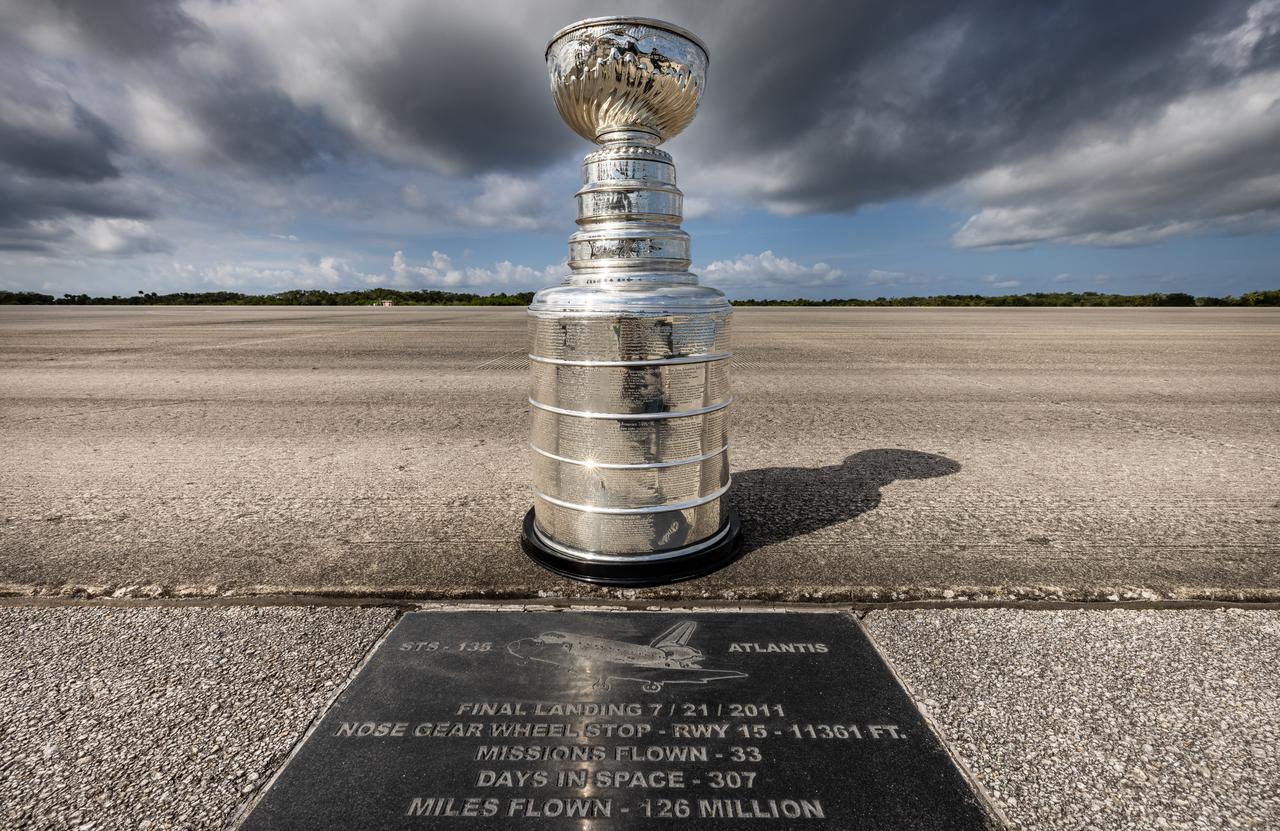
Earlier this year, the Florida Panthers won their first NHL championship and brought victory to the state of Florida. As part of its championship tour, the Stanley Cup made a visit to Kennedy Space Center. Pictured here is the Stanley Cup on the runway of the Launch and Landing Facility, formerly the Shuttle Landing Facility at NASA’s Kennedy Space Center on Tuesday Sept. 17, 2024. The trophy is beside the Space Shuttle Atlantis landmark, a commemorative plaque marking the landing spot of the last shuttle flight that occurred in July 2011.
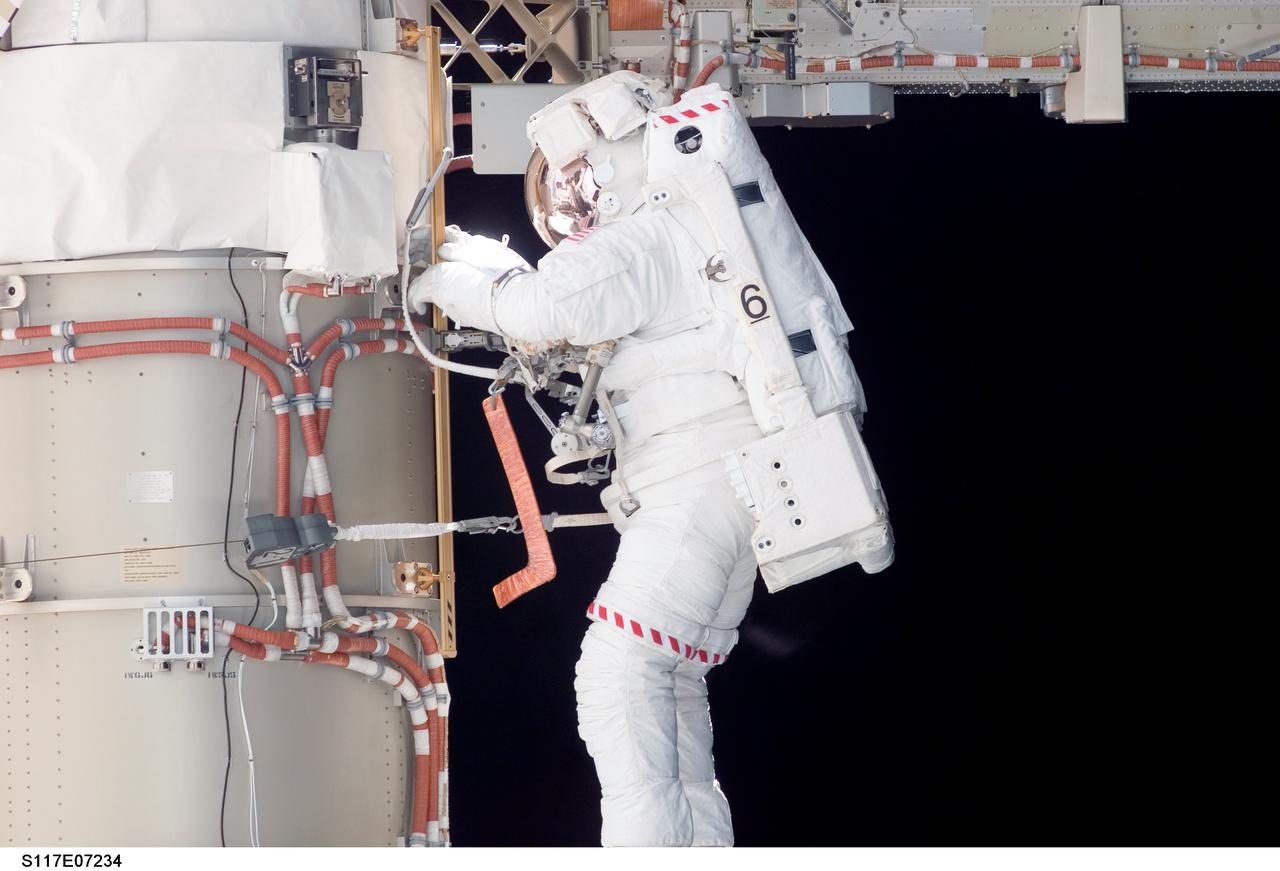
S117-E-07234 (13 June 2007) --- Astronauts Steven Swanson and Patrick Forrester (out of frame), both STS-117 mission specialists, participate in the mission's second planned session of extravehicular activity (EVA), as construction resumes on the International Space Station. Among other tasks, Forrester and Swanson removed all of the launch locks holding the 10-foot-wide solar alpha rotary joint in place and began the solar array retraction. Tethered to his Extravehicular Mobility Unit (EMU) spacesuit, a hockey-stick-shaped tool wrapped in insulating tape, is visible in front of Swanson.
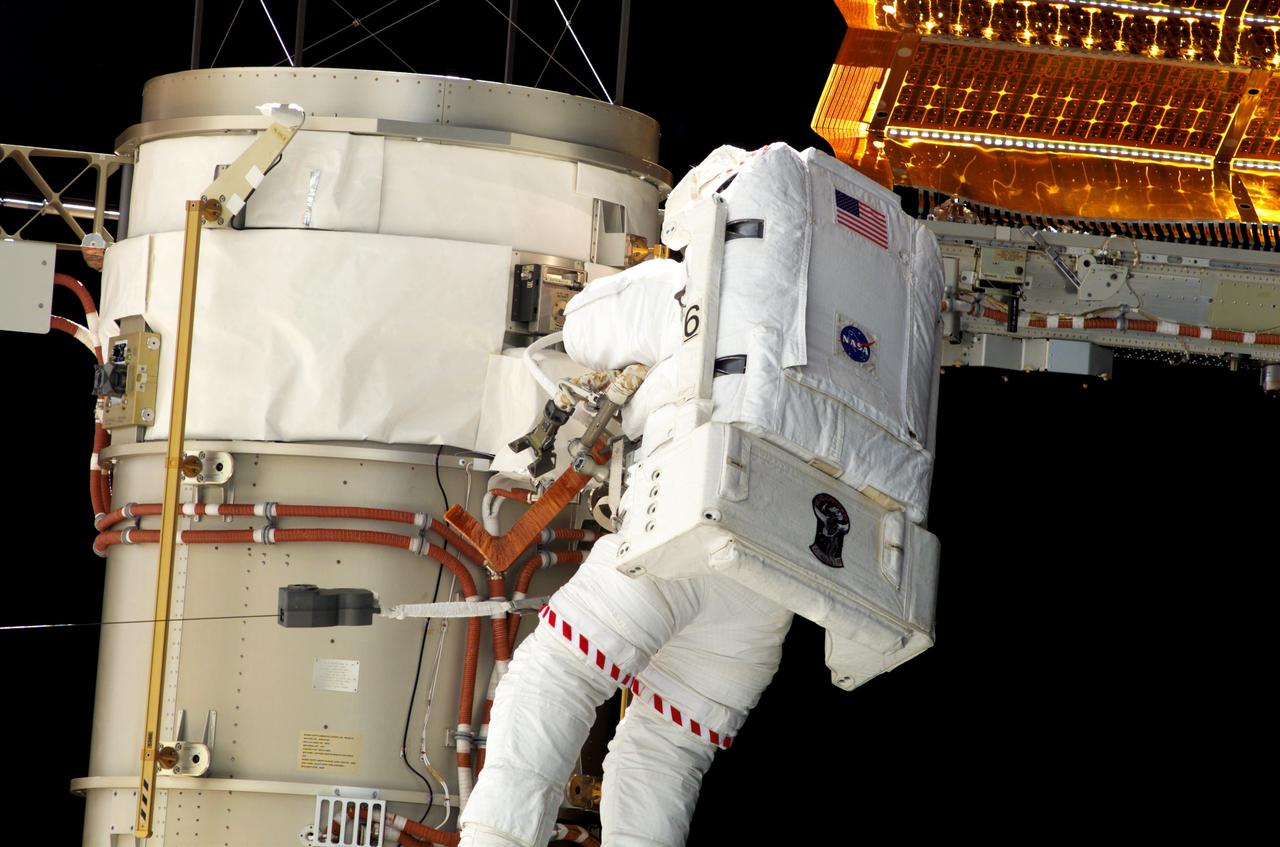
S117-E-07233 (13 June 2007) --- Astronauts Steven Swanson and Patrick Forrester (out of frame), both STS-117 mission specialists, participate in the mission's second planned session of extravehicular activity (EVA), as construction resumes on the International Space Station. Among other tasks, Forrester and Swanson removed all of the launch locks holding the 10-foot-wide solar alpha rotary joint in place and began the solar array retraction. Tethered to his Extravehicular Mobility Unit (EMU) spacesuit, a hockey-stick-shaped tool wrapped in insulating tape, is visible in front of Swanson.
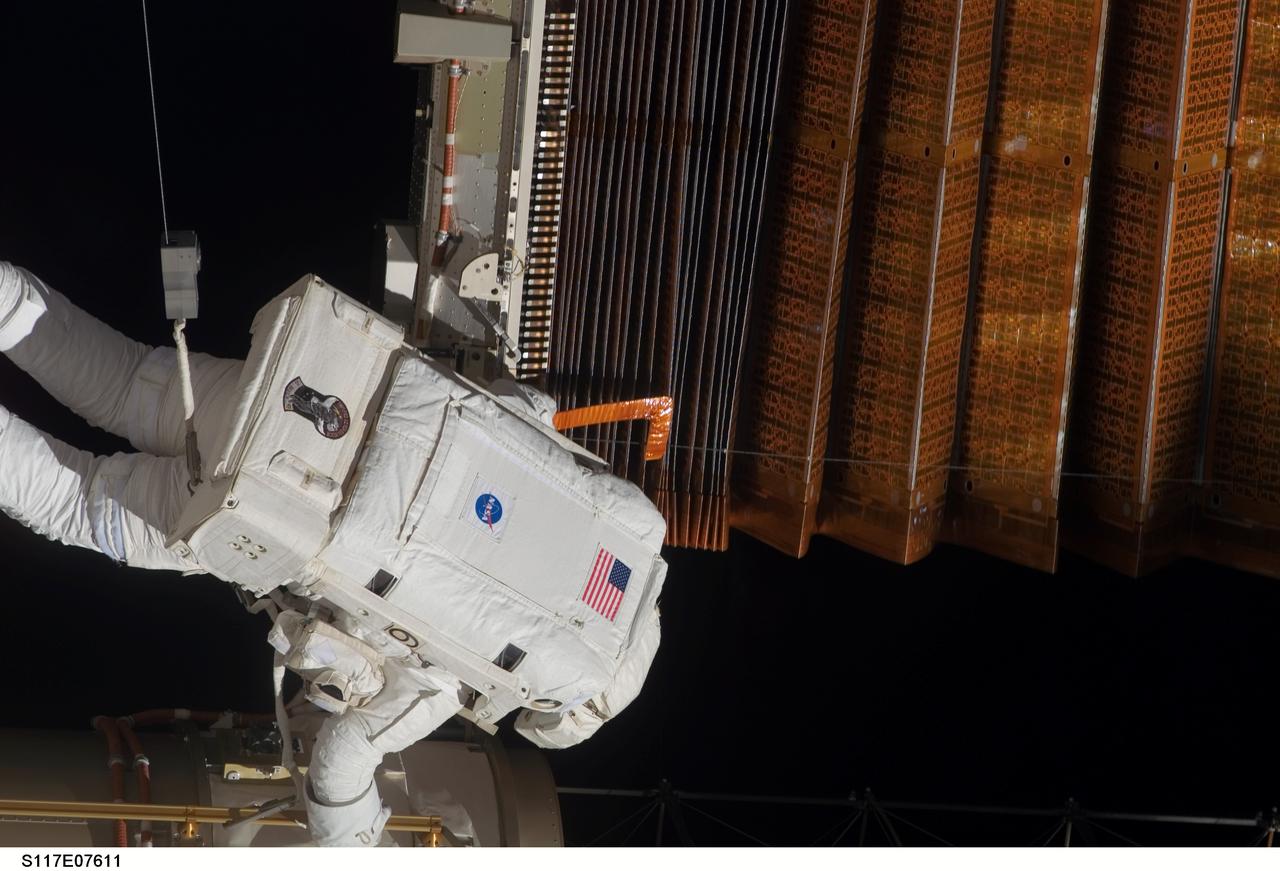
S117-E-07611 (15 June 2007) --- Astronaut John "Danny" Olivas uses a homemade "hockey stick" tool to fluff a solar array panel during the 7-hour and 58-minute spacewalk he performed with astronaut Jim Reilly on June 15. The two mission specialists had several tasks to perform, all of which they completed successfully. After working on separate tasks, the two astronauts joined forces with their colleagues inside the shuttle and station and flight controllers in Houston to complete the delicate process of folding an older solar array so that it can be moved from its temporary location to its permanent home during a shuttle mission this fall.
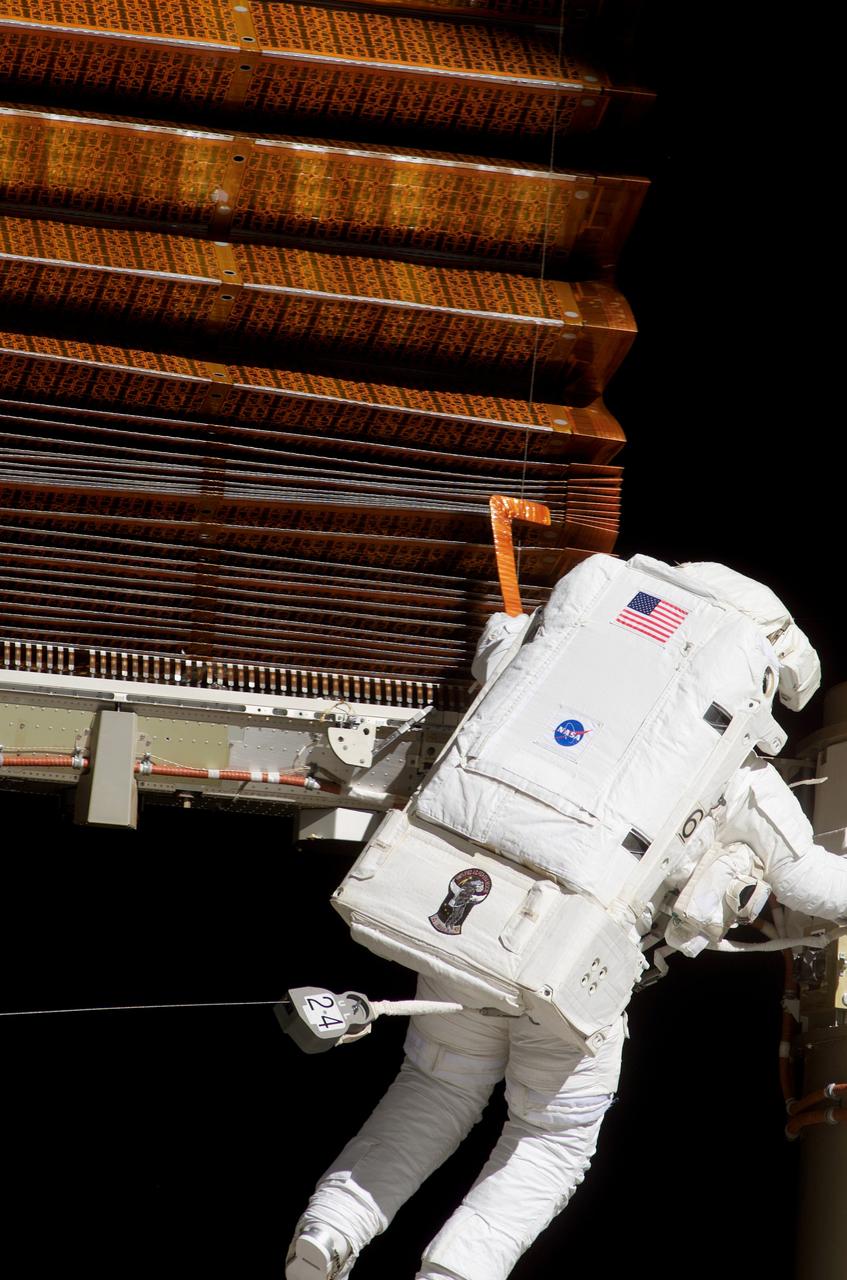
S117-E-07612 (15 June 2007) --- Astronaut John "Danny" Olivas uses a homemade "hockey stick" tool to fluff a solar array panel during the 7-hour and 58-minute spacewalk he performed with astronaut Jim Reilly on June 15. The two mission specialists had several tasks to perform, all of which they completed successfully. After working on separate tasks, the two astronauts joined forces with their colleagues inside the shuttle and station and flight controllers in Houston to complete the delicate process of folding an older solar array so that it can be moved from its temporary location to its permanent home during a shuttle mission this fall.
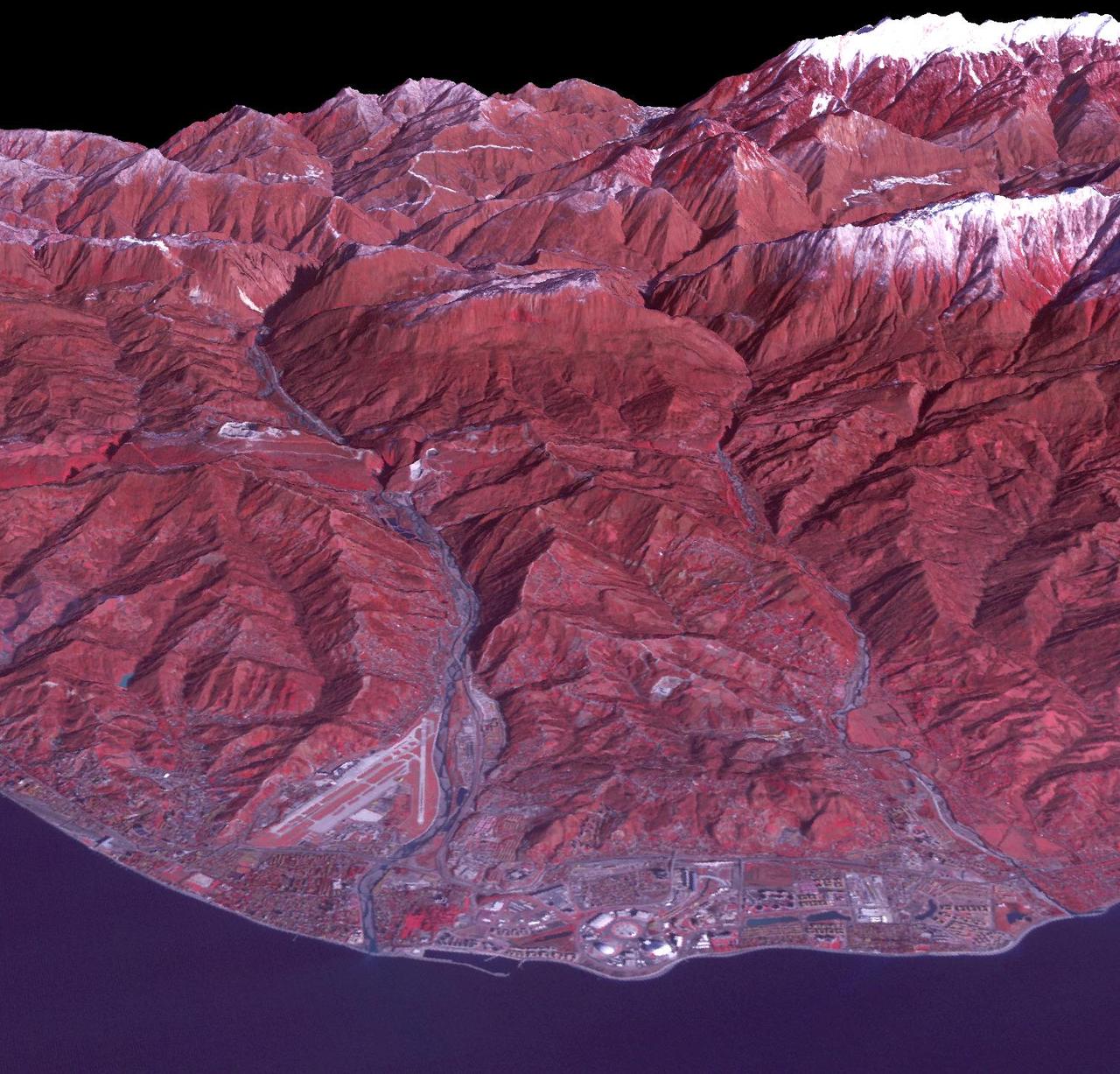
Sochi, Russia Winter Olympic Sites (Coastal Cluster) The Black Sea resort of Sochi, Russia, is the warmest city ever to host the Winter Olympic Games, which open on Feb. 7, 2014, and run through Feb. 23. This north-looking image, acquired on Jan. 4, 2014, by the Advanced Spaceborne Thermal Emission and Reflection Radiometer (ASTER) instrument on NASA's Terra spacecraft, shows the Sochi Olympic Park Coastal Cluster -- the circular area on the shoreline in the bottom center of the image -- which was built for Olympic indoor sports. Even curling has its own arena alongside multiple arenas for hockey and skating. The Olympic alpine events will take place at the Mountain Cluster, located in a snow-capped valley at the top right of the image. Sochi itself, a city of about 400,000, is not visible in the picture. It's farther west (left) along the coast, past the airport at bottom left. In the image, red indicates vegetation, white is snow, buildings are gray and the ocean is dark blue. The area imaged is about 15 miles (24 kilometers) from west to east (left to right) at the coastline and 25 miles (41 kilometers) from front to back. Height is exaggerated 1.5 times. The image was created from the ASTER visible and near-infrared bands, draped over ASTER-derived digital elevation data. With its 14 spectral bands from the visible to the thermal infrared wavelength region and its high spatial resolution of 15 to 90 meters (about 50 to 300 feet), ASTER images Earth to map and monitor the changing surface of our planet. ASTER is one of five Earth-observing instruments launched Dec. 18, 1999, on Terra. The instrument was built by Japan's Ministry of Economy, Trade and Industry. A joint U.S./Japan science team is responsible for validation and calibration of the instrument and data products. The broad spectral coverage and high spectral resolution of ASTER provides scientists in numerous disciplines with critical information for surface mapping and monitoring of dynamic conditions and temporal change. Example applications are: monitoring glacial advances and retreats; monitoring potentially active volcanoes; identifying crop stress; determining cloud morphology and physical properties; wetlands evaluation; thermal pollution monitoring; coral reef degradation; surface temperature mapping of soils and geology; and measuring surface heat balance. The U.S. science team is located at NASA's Jet Propulsion Laboratory, Pasadena, Calif. The Terra mission is part of NASA's Science Mission Directorate, Washington, D.C. More information about ASTER is available at <a href="http://asterweb.jpl.nasa.gov/" rel="nofollow">asterweb.jpl.nasa.gov/</a>. Image credit: NASA/GSFC/METI/ERSDAC/JAROS, and U.S./Japan ASTER Science Team <b><a href="http://www.nasa.gov/audience/formedia/features/MP_Photo_Guidelines.html" rel="nofollow">NASA image use policy.</a></b> <b><a href="http://www.nasa.gov/centers/goddard/home/index.html" rel="nofollow">NASA Goddard Space Flight Center</a></b> enables NASA’s mission through four scientific endeavors: Earth Science, Heliophysics, Solar System Exploration, and Astrophysics. Goddard plays a leading role in NASA’s accomplishments by contributing compelling scientific knowledge to advance the Agency’s mission. <b>Follow us on <a href="http://twitter.com/NASAGoddardPix" rel="nofollow">Twitter</a></b> <b>Like us on <a href="http://www.facebook.com/pages/Greenbelt-MD/NASA-Goddard/395013845897?ref=tsd" rel="nofollow">Facebook</a></b> <b>Find us on <a href="http://instagram.com/nasagoddard?vm=grid" rel="nofollow">Instagram</a></b>