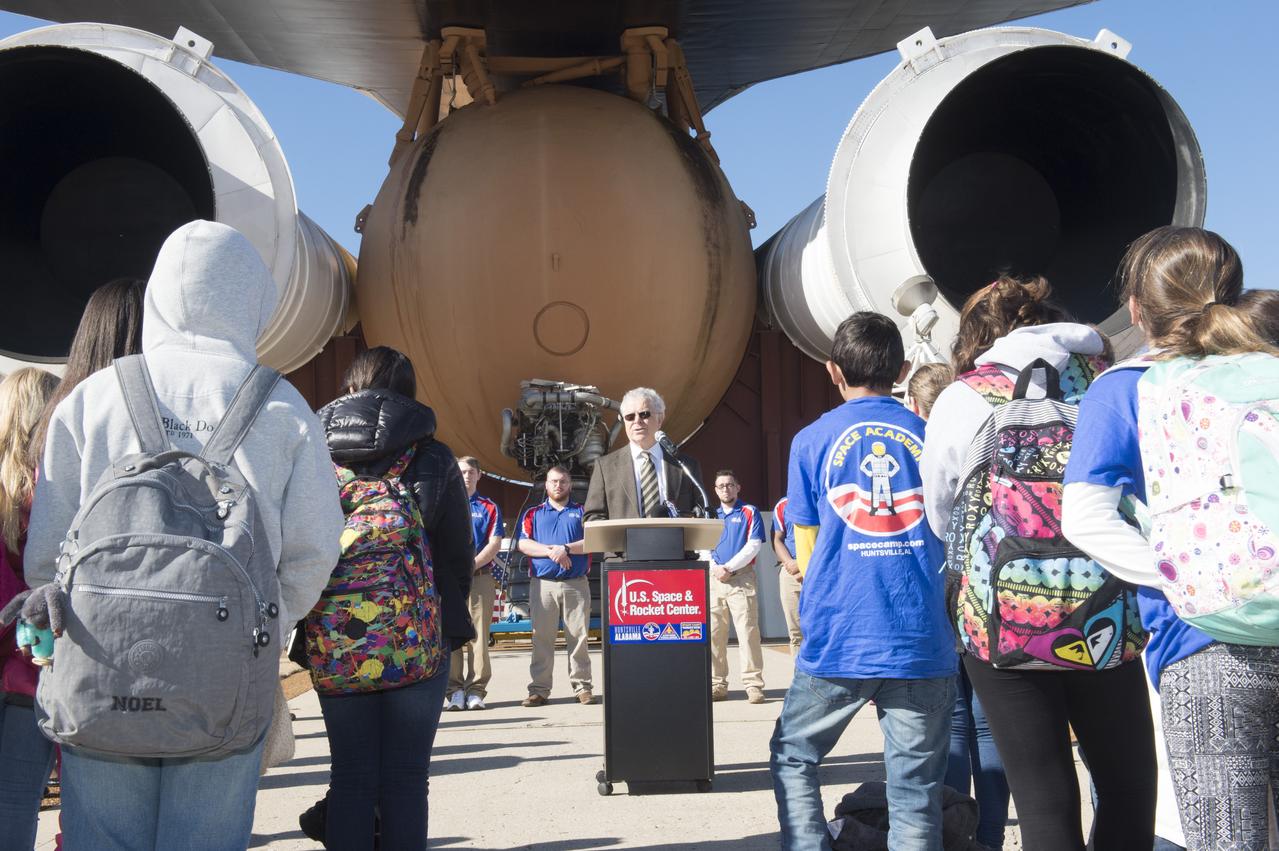
HOMER HICKAM MAKES COMMENTS AT USSRC DAY OF REMEMBRANCE EVENT, 2016
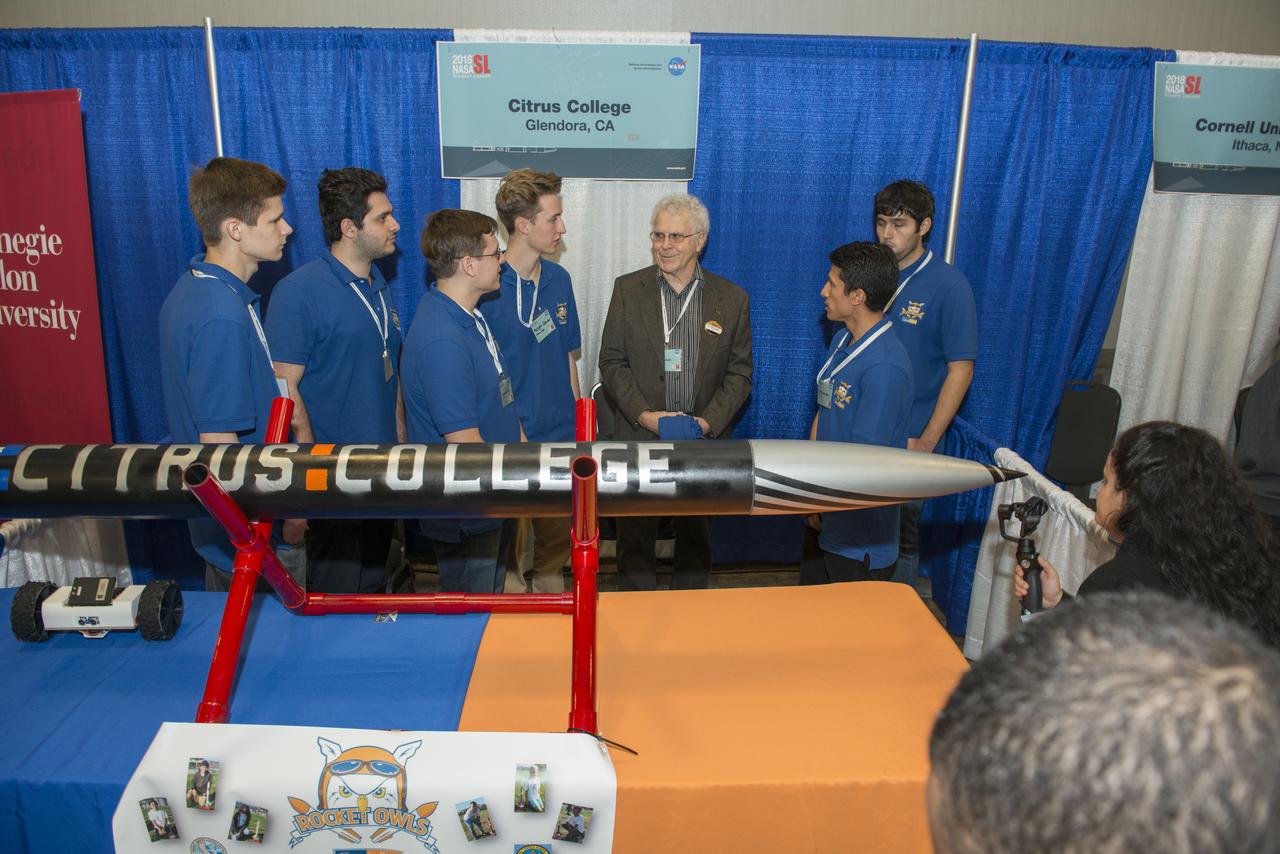
Students from 23 states display their rockets and talk about what they did to make them fly at the NASA Student Launch Rocket Fair on Friday, April 6. Over 800 students traveled to Huntsville, Alabama, to participate in a week of activities as part of NASA Student Launch. Retired NASA engineer and author Homer Hickam meets with the team from Citrus College.
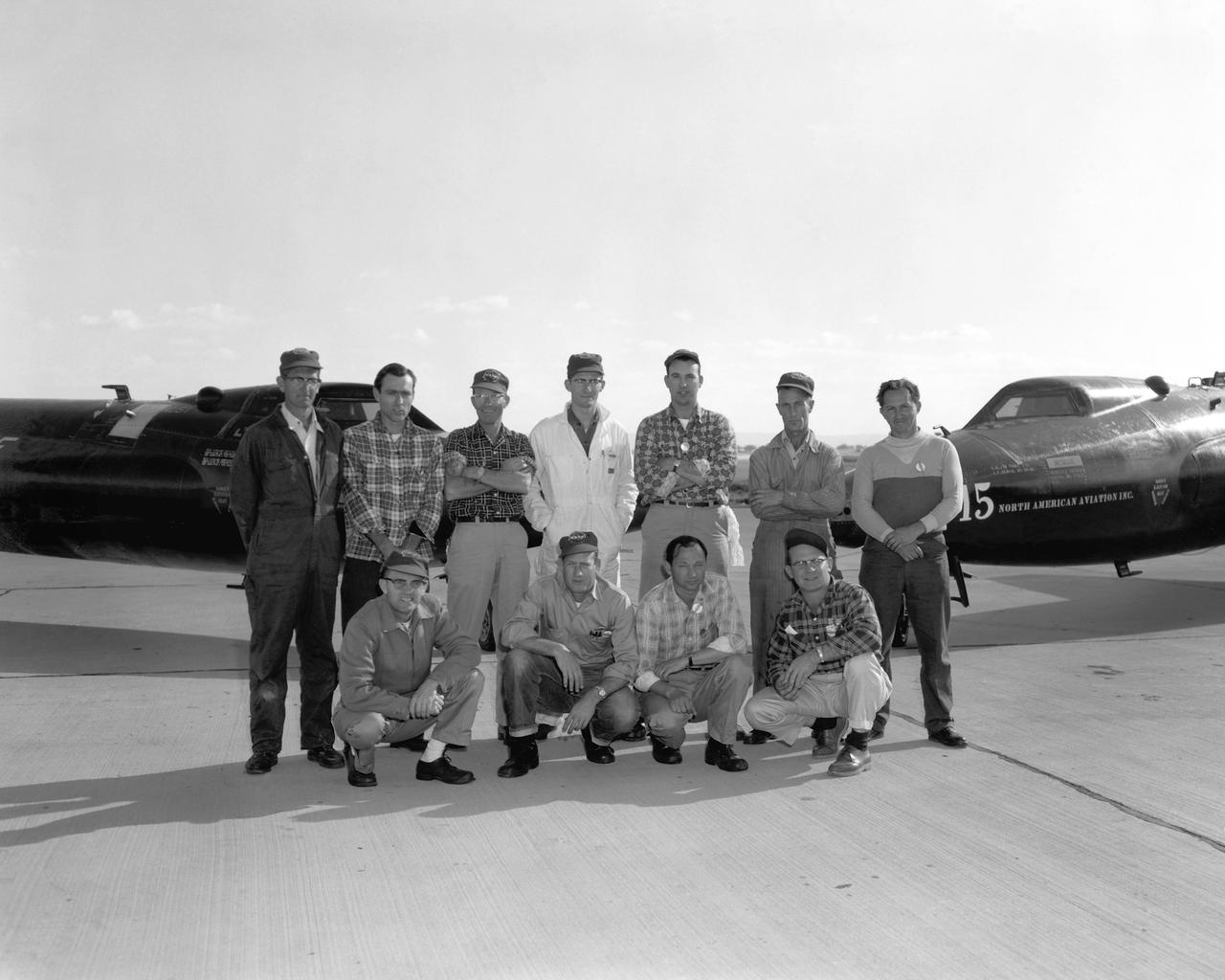
X-15 personnel. A photo commemorating all three X-15's being flown during the same week. Back Row, left to right: John "Bill" Lovett, John E. Huntington, Homer Hall, Robert E. "Bob" Allen, Lorenzo "Larry" Barnett, Charles "Charlie" Russell, Sylvester Weeks Kneeling, left to right: Gilbert "Gil" Kincaid, George E. Trott, Joseph "Joe" Huxman, Willard Glasscock
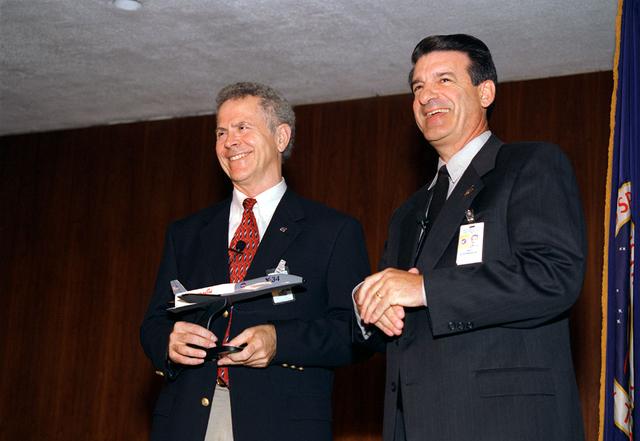
Author of Rocket Boys Homer Hickam, Jr. (left) and Marshall Space Flight Center Director Art Stephenson during a conference at Morris Auditorium. Homer Hickam worked at MSFC during the Apollo project years. As a young man, Mr. Hickam always dreamed of becoming a rocket scientist and following in the footsteps fo Wernher von Braun. Years later he would see his dream realized and had written Rocket Boys commemorating his life and the people at MSFC.
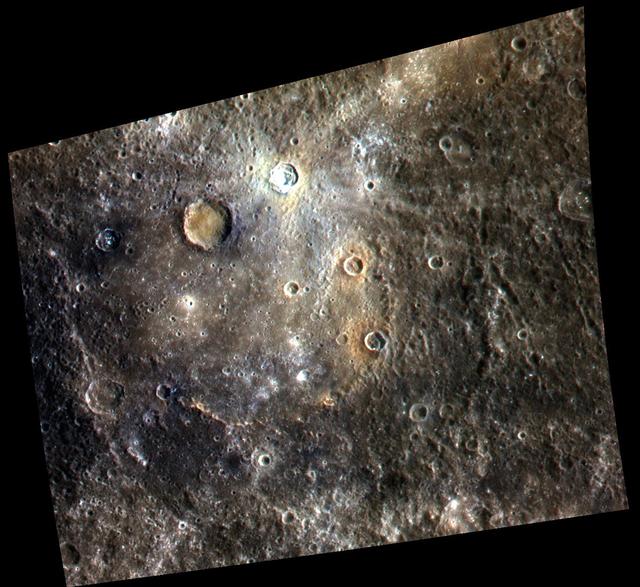

NASA image acquired September 3, 2011 Dominici crater, the very bright crater to the top of this image, exhibits bright rays and contains hollows. This crater lies upon the peak ring of Homer Basin, a very degraded peak ring basin that has been filled by volcanism. This image contains several examples of craters that have excavated materials from depth that are spectrally distinct from the surface volcanic layers, providing windows into the subsurface. MESSENGER scientists are estimating the approximate depths of these spectrally distinct materials by applying knowledge of how impacts excavate material during the cratering process. The 1000, 750, and 430 nm bands of the Wide Angle Camera are displayed in red, green, and blue, respectively. This image was acquired as a high-resolution targeted observation. Targeted observations are images of a small area on Mercury's surface at resolutions much higher than the 250-meter/pixel (820 feet/pixel) morphology base map or the 1-kilometer/pixel (0.6 miles/pixel) color base map. It is not possible to cover all of Mercury's surface at this high resolution during MESSENGER's one-year mission, but several areas of high scientific interest are generally imaged in this mode each week. The MESSENGER spacecraft is the first ever to orbit the planet Mercury, and the spacecraft's seven scientific instruments and radio science investigation are unraveling the history and evolution of the Solar System's innermost planet. Visit the Why Mercury? section of this website to learn more about the key science questions that the MESSENGER mission is addressing. During the one-year primary mission, MDIS is scheduled to acquire more than 75,000 images in support of MESSENGER's science goals. Credit: NASA/Johns Hopkins University Applied Physics Laboratory/Carnegie Institution of Washington <b><a href="http://www.nasa.gov/audience/formedia/features/MP_Photo_Guidelines.html" rel="nofollow">NASA image use policy.</a></b> <b><a href="http://www.nasa.gov/centers/goddard/home/index.html" rel="nofollow">NASA Goddard Space Flight Center</a></b> enables NASA’s mission through four scientific endeavors: Earth Science, Heliophysics, Solar System Exploration, and Astrophysics. Goddard plays a leading role in NASA’s accomplishments by contributing compelling scientific knowledge to advance the Agency’s mission. <b>Follow us on <a href="http://twitter.com/NASA_GoddardPix" rel="nofollow">Twitter</a></b> <b>Like us on <a href="http://www.facebook.com/pages/Greenbelt-MD/NASA-Goddard/395013845897?ref=tsd" rel="nofollow">Facebook</a></b> <b>Find us on <a href="http://instagrid.me/nasagoddard/?vm=grid" rel="nofollow">Instagram</a></b>

CAPE CANAVERAL, Fla. – Independent inventor Peter Homer, left, founder of Flagsuit LLC, inserts a glove which he designed into a glove box for a demonstration of its dexterity and flexibility during the 2009 Astronaut Glove Challenge, part of NASA’s Centennial Challenges Program, at the Astronaut Hall of Fame near NASA’s Kennedy Space Center in Florida. Homer was the winner of the competition held in 2007. The nationwide competition focused on developing improved pressure suit gloves for astronauts to use while working in space. During the challenge, inventors tested the gloves to measure dexterity and strength during operation in a glove box which simulates the vacuum of space. Centennial Challenges is NASA’s program of technology prizes for the citizen-inventor. The winning prize for the Glove Challenge is $250,000 provided by the Centennial Challenges Program. Photo credit: NASA/Kim Shiflett
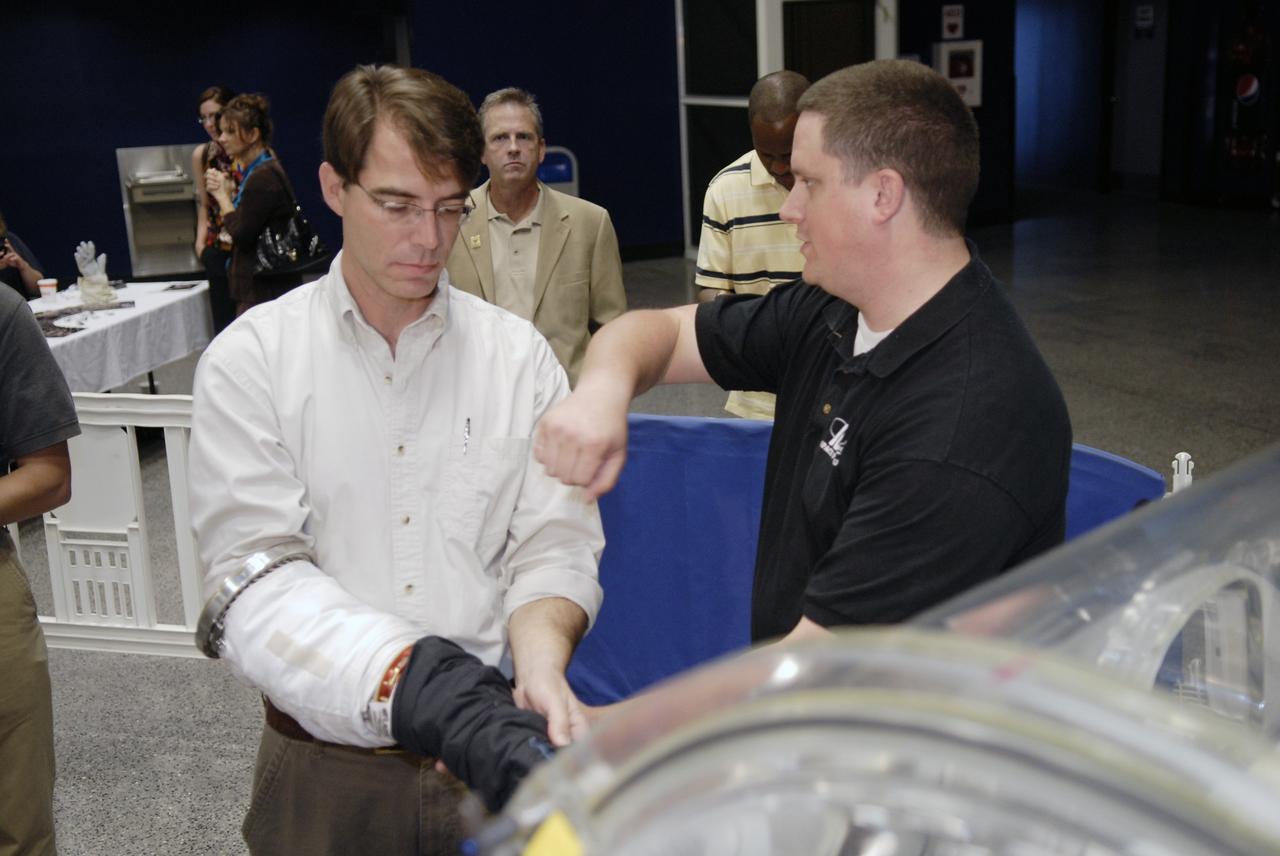
CAPE CANAVERAL, Fla. – Independent inventor Peter Homer, founder of Flagsuit LLC, submits a glove which he designed to a dexterity and flexibility test during the 2009 Astronaut Glove Challenge, part of NASA’s Centennial Challenges Program, at the Astronaut Hall of Fame near NASA’s Kennedy Space Center in Florida. Homer was the winner of the competition held in 2007. The nationwide competition focused on developing improved pressure suit gloves for astronauts to use while working in space. During the challenge, inventors tested the gloves to measure dexterity and strength during operation in a glove box which simulates the vacuum of space. Centennial Challenges is NASA’s program of technology prizes for the citizen-inventor. The winning prize for the Glove Challenge is $250,000 provided by the Centennial Challenges Program. Photo credit: NASA/Kim Shiflett

CAPE CANAVERAL, Fla. – Independent inventor Peter Homer, founder of Flagsuit LLC, inserts a glove which he designed into a glove box for a dexterity and flexibility test during the 2009 Astronaut Glove Challenge, part of NASA’s Centennial Challenges Program, at the Astronaut Hall of Fame near NASA’s Kennedy Space Center in Florida. Homer was the winner of the competition held in 2007. The nationwide competition focused on developing improved pressure suit gloves for astronauts to use while working in space. During the challenge, inventors tested the gloves to measure dexterity and strength during operation in a glove box which simulates the vacuum of space. Centennial Challenges is NASA’s program of technology prizes for the citizen-inventor. The winning prize for the Glove Challenge is $250,000 provided by the Centennial Challenges Program. Photo credit: NASA/Kim Shiflett
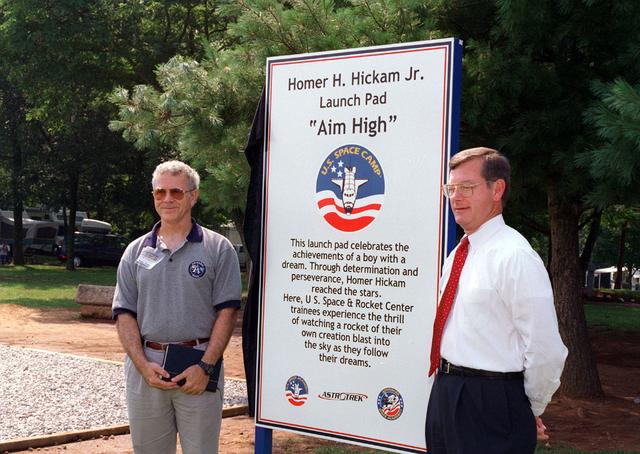
Noted author and previous Marshall Space Flight Center employee Mr. Homer Hickam Jr. poses in front of a placque commemorating his achievement in realizing his dreams of becoming a rocket scientist. The dedication site is located at the U. S. Space and Rocket Center in Huntsville, AL, and is used by amature rocket builders attending the Space Camp to launch their self-made rockets like Mr. Hickam did as a youth growing up in rural West Virginia. Posing with Mr. Hickam is the Madison County Commissioner Mr. Mike Gillispie.
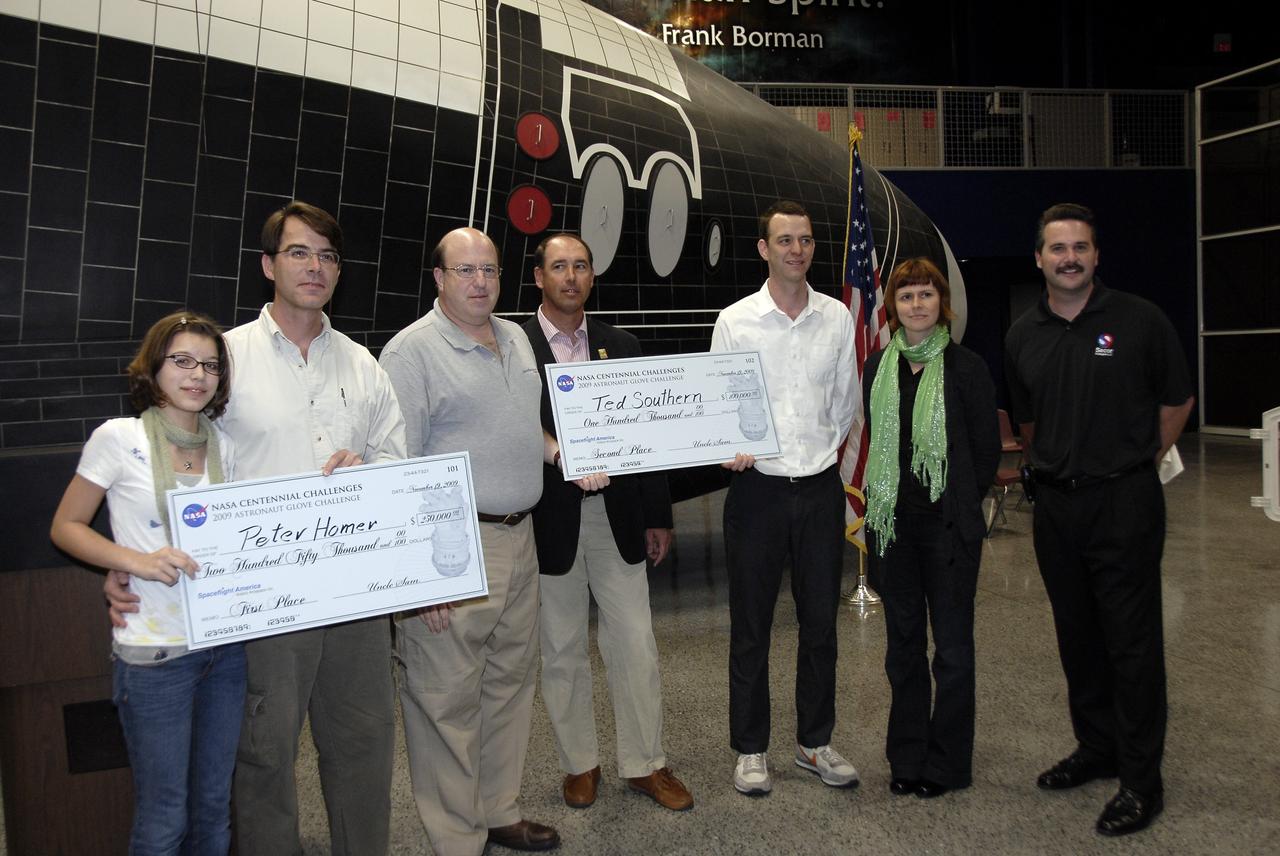
CAPE CANAVERAL, Fla. - At the Astronaut Hall of Fame near NASA’s Kennedy Space Center in Florida, the winners of the 2009 Astronaut Glove Challenge, part of NASA’s Centennial Challenges Program, pose for a group photograph with their friends, family and the event organizers. From left are Caroline Homer and her father, Peter Homer, winner of the $250,000 first prize; Alan Hayes, chairman of Volanz Aerospace Inc.; Andy Petro, manager of NASA Centennial Challenges; Ted Southern, winner of the $100,000 second prize; his friend and glove tester Amy Miller; and Paul Secor, Secor Strategies LLC. The nationwide competition focused on developing improved pressure suit gloves for astronauts to use while working in space. During the challenge, the gloves were submitted to burst tests, joint force tests and tests to measure their dexterity and strength during operation in a glove box which simulates the vacuum of space. Centennial Challenges is NASA’s program of technology prizes for the citizen-inventor. The winning prize for the Glove Challenge is $250,000 provided by the Centennial Challenges Program. Photo credit: NASA/Kim Shiflett
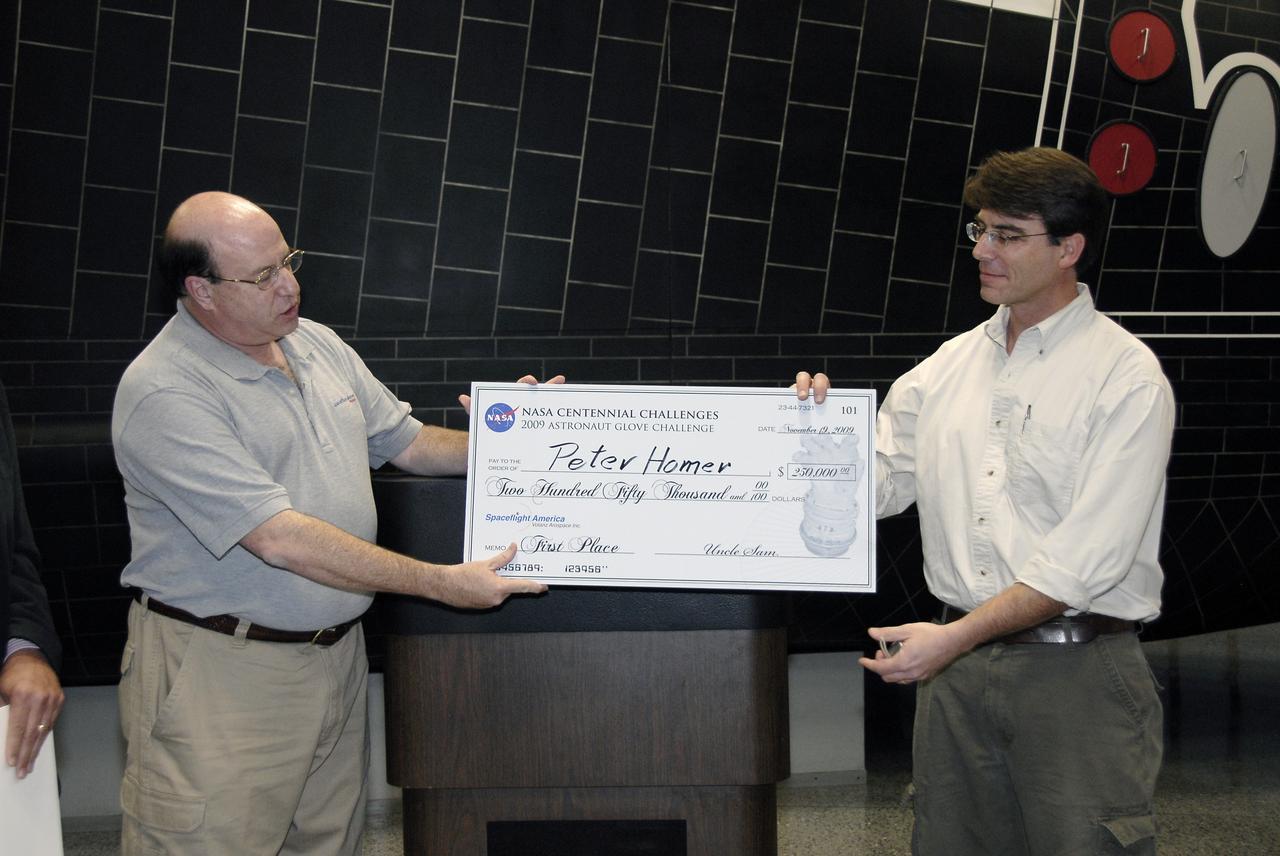
CAPE CANAVERAL, Fla. – Alan Hayes, left, chairman of Volanz Aerospace Inc., presents Peter Homer of Southwest Harbor, Maine, with the first place prize of $250,000 at the 2009 Astronaut Glove Challenge, part of NASA’s Centennial Challenges Program, at the Astronaut Hall of Fame near NASA’s Kennedy Space Center in Florida. The nationwide competition focused on developing improved pressure suit gloves for astronauts to use while working in space. During the challenge, the gloves were submitted to burst tests, joint force tests and tests to measure their dexterity and strength during operation in a glove box which simulates the vacuum of space. Centennial Challenges is NASA’s program of technology prizes for the citizen-inventor. The winning prize for the Glove Challenge is $250,000 provided by the Centennial Challenges Program. Photo credit: NASA/Kim Shiflett
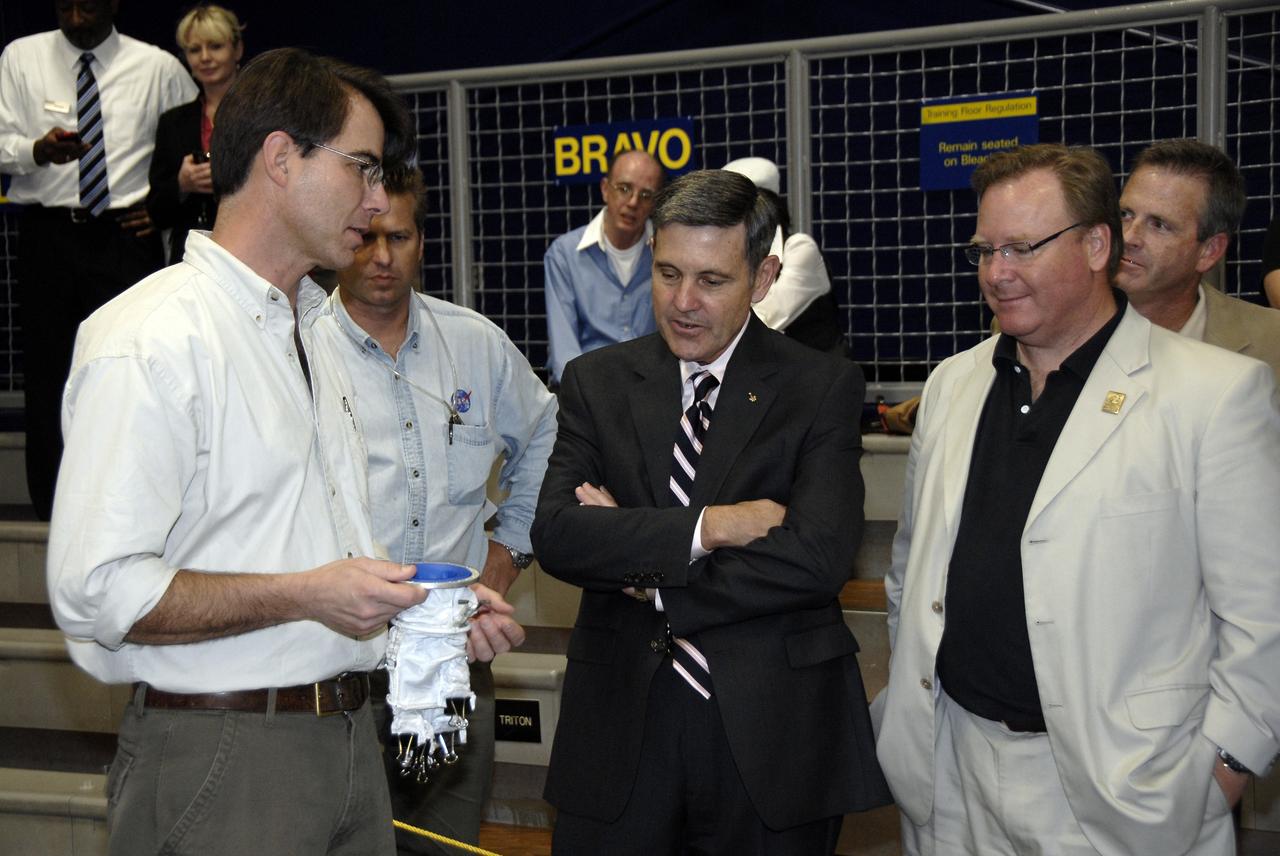
CAPE CANAVERAL, Fla. - At the Astronaut Hall of Fame near NASA’s Kennedy Space Center in Florida, first-prize winner Peter Homer, left, of Southwest Harbor, Maine, talks with Kennedy Director Bob Cabana and Doug Comstock, director of the NASA Innovative Partnerships Program, about his winning glove design in the 2009 Astronaut Glove Challenge, part of NASA’s Centennial Challenges Program. The nationwide competition focused on developing improved pressure suit gloves for astronauts to use while working in space. During the challenge, the gloves were submitted to burst tests, joint force tests and tests to measure their dexterity and strength during operation in a glove box which simulates the vacuum of space. Centennial Challenges is NASA’s program of technology prizes for the citizen-inventor. The winning prize for the Glove Challenge is $250,000 provided by the Centennial Challenges Program. Photo credit: NASA/Kim Shiflett
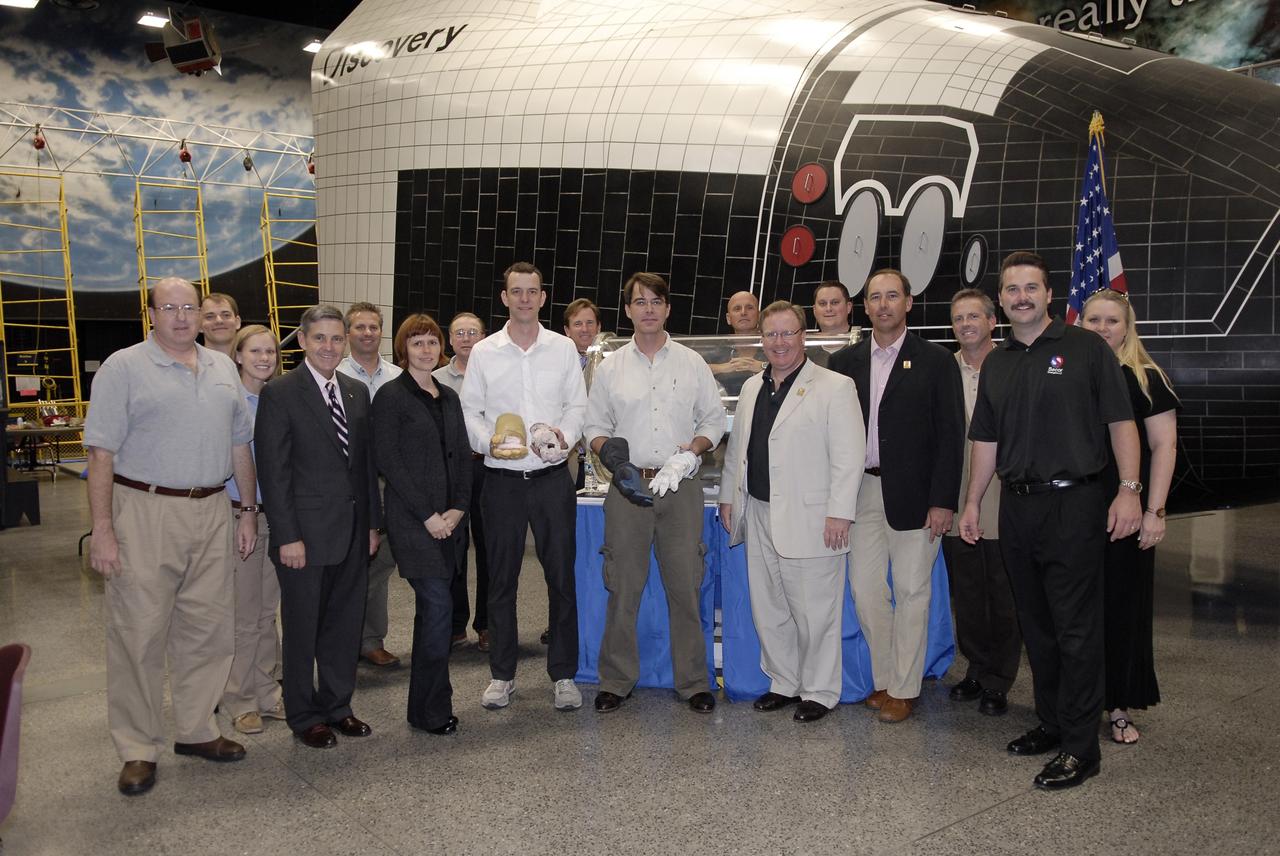
CAPE CANAVERAL, Fla. – At the Astronaut Hall of Fame near NASA’s Kennedy Space Center in Florida, participants in the 2009 Astronaut Glove Challenge, part of NASA’s Centennial Challenges Program, pose for a group portrait. In the center of the front row are the winners, Ted Southern of Brooklyn, N.Y., at left, and Peter Homer of Southwest Harbor, Maine. The nationwide competition focused on developing improved pressure suit gloves for astronauts to use while working in space. During the challenge, the gloves were submitted to burst tests, joint force tests and tests to measure their dexterity and strength during operation in a glove box which simulates the vacuum of space. Centennial Challenges is NASA’s program of technology prizes for the citizen-inventor. The winning prize for the Glove Challenge is $250,000 provided by the Centennial Challenges Program. Photo credit: NASA/Kim Shiflett