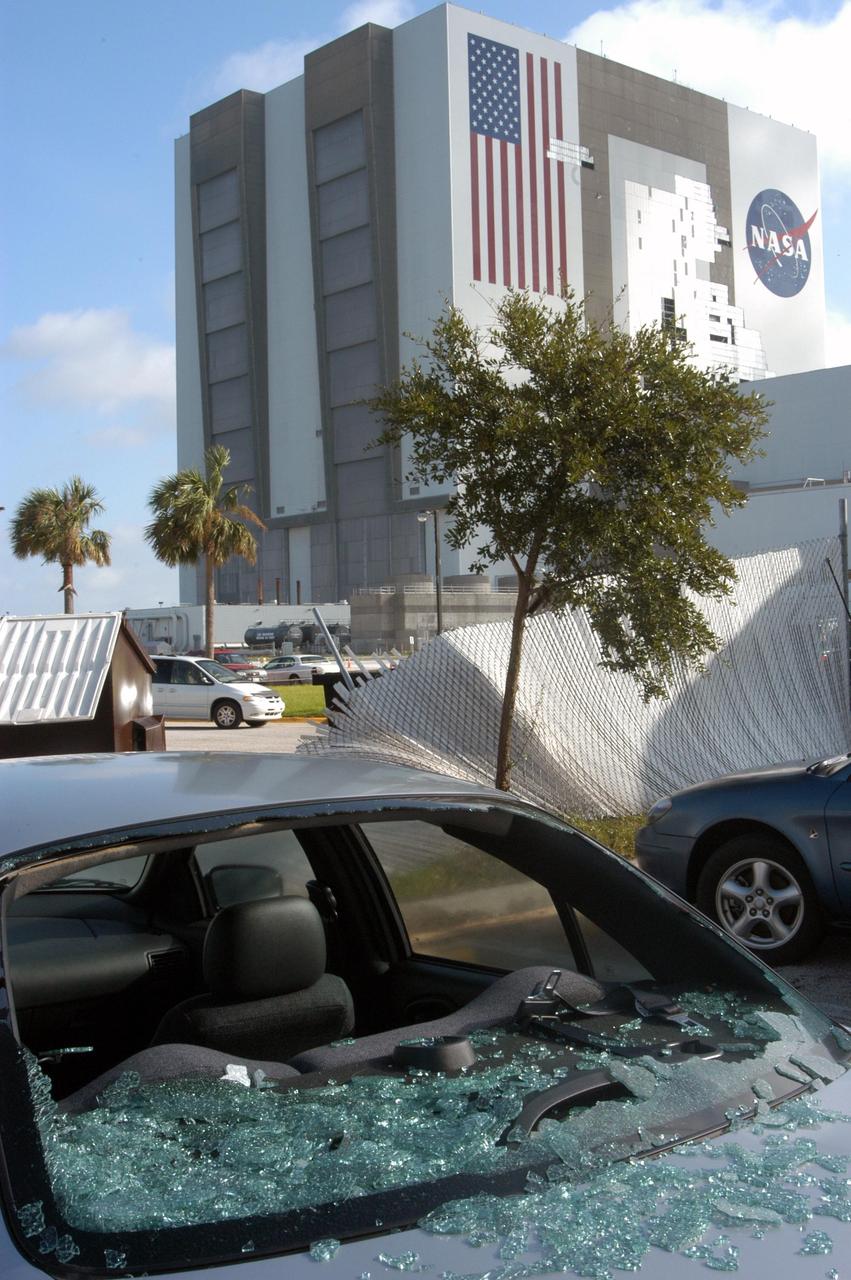
KENNEDY SPACE CENTER, FLA. - In a parking lot near the Vehicle Assembly Building (background), this car lost its rear window to the category 3 Hurricane Jeanne that barreled through Central Florida Sept. 25-26. Behind it is a fence mangled by the storm. Hurricane Jeanne was the fourth hurricane in 6 weeks to batter the state.
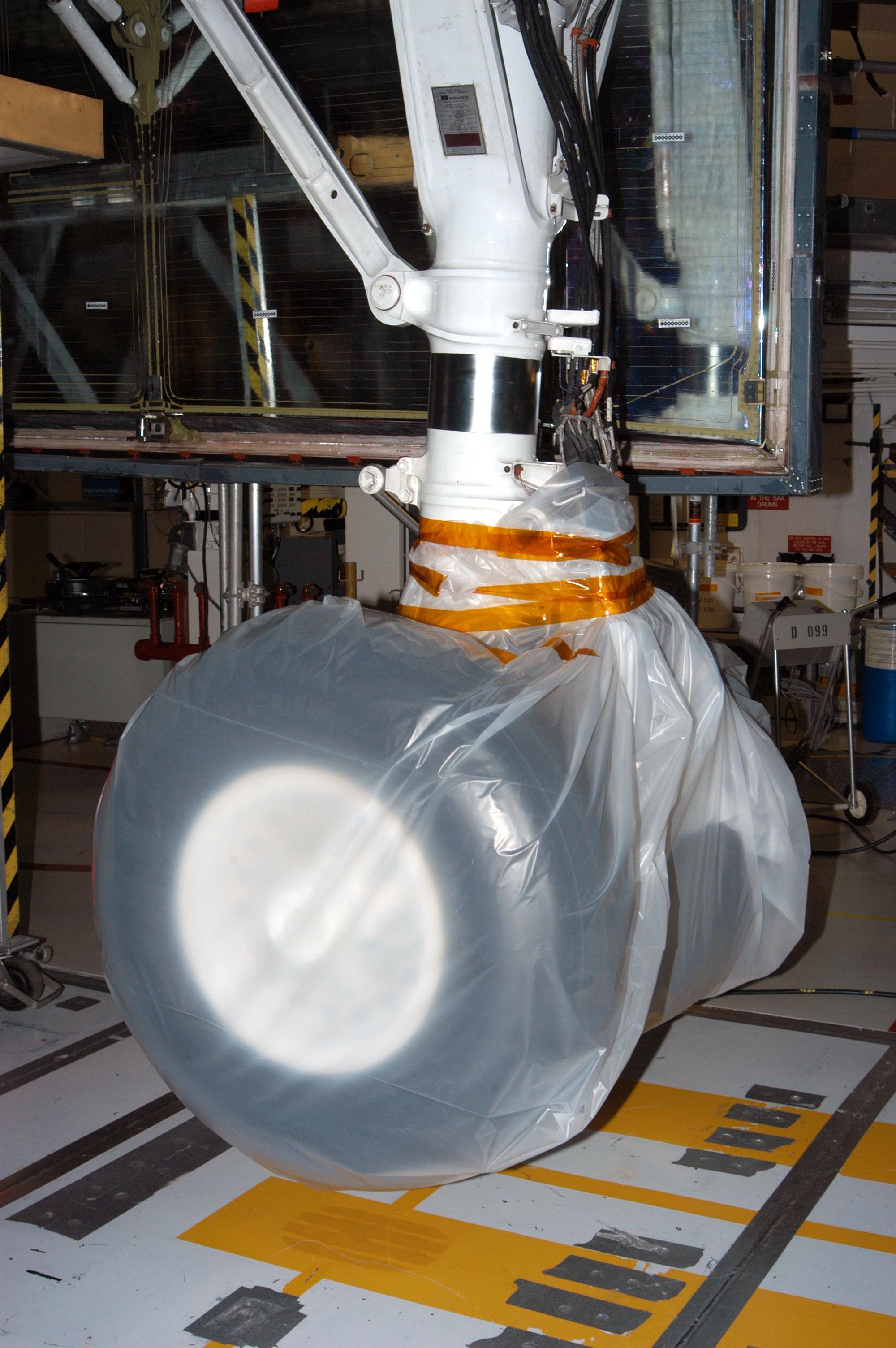
KENNEDY SPACE CENTER, FLA. - In the Orbiter Processing Facility, the wheel on Atlantis is covered in plastic that protected it from possible damage by Hurricane Jeanne. The storm ravaged Central Florida for 21 hours as it crossed the shoreline on the east coast Sept. 25-26. This was the fourth hurricane in 6 weeks to batter the state.
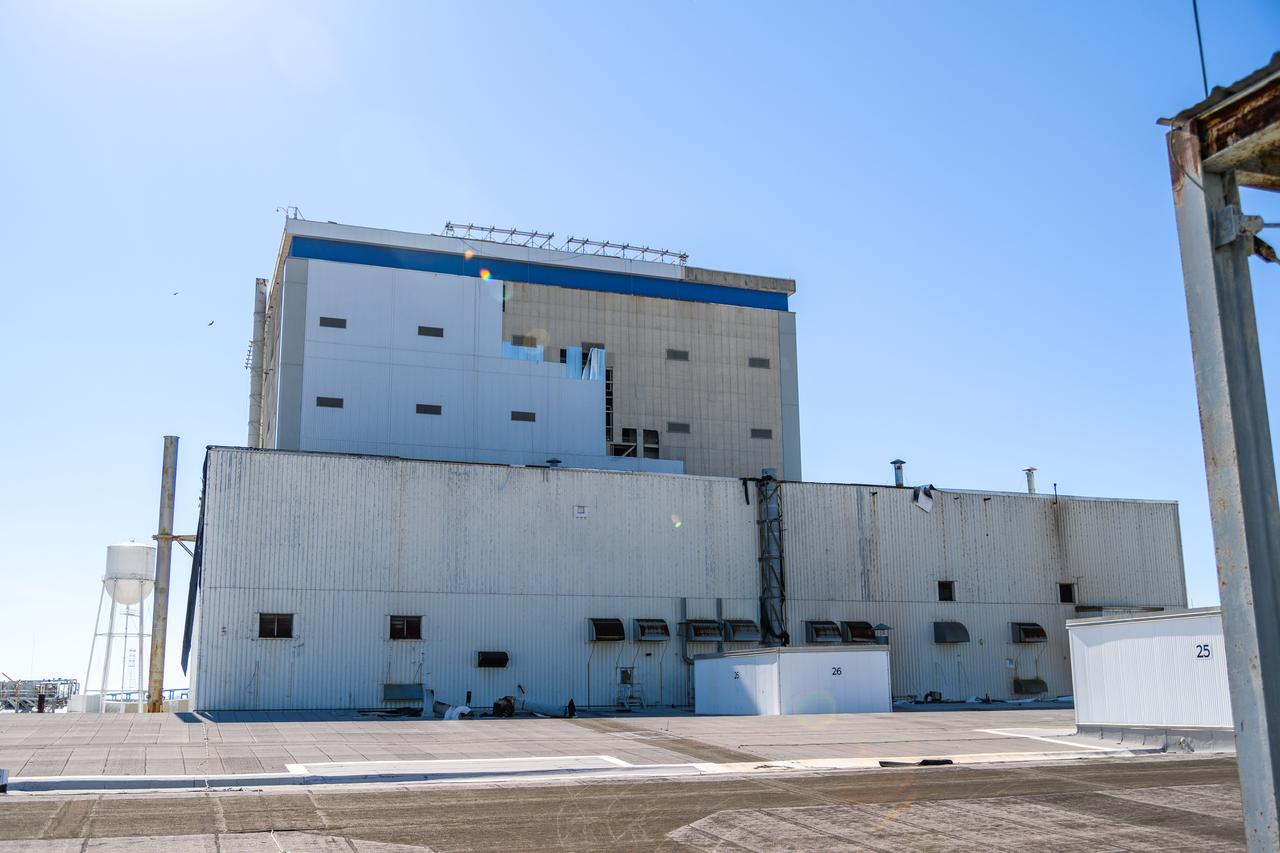
Hurricane Zeta damage to NASA’s Michoud Assembly Facility – East side of Bldg. 110 the Vertical Assembly Building (VAB).
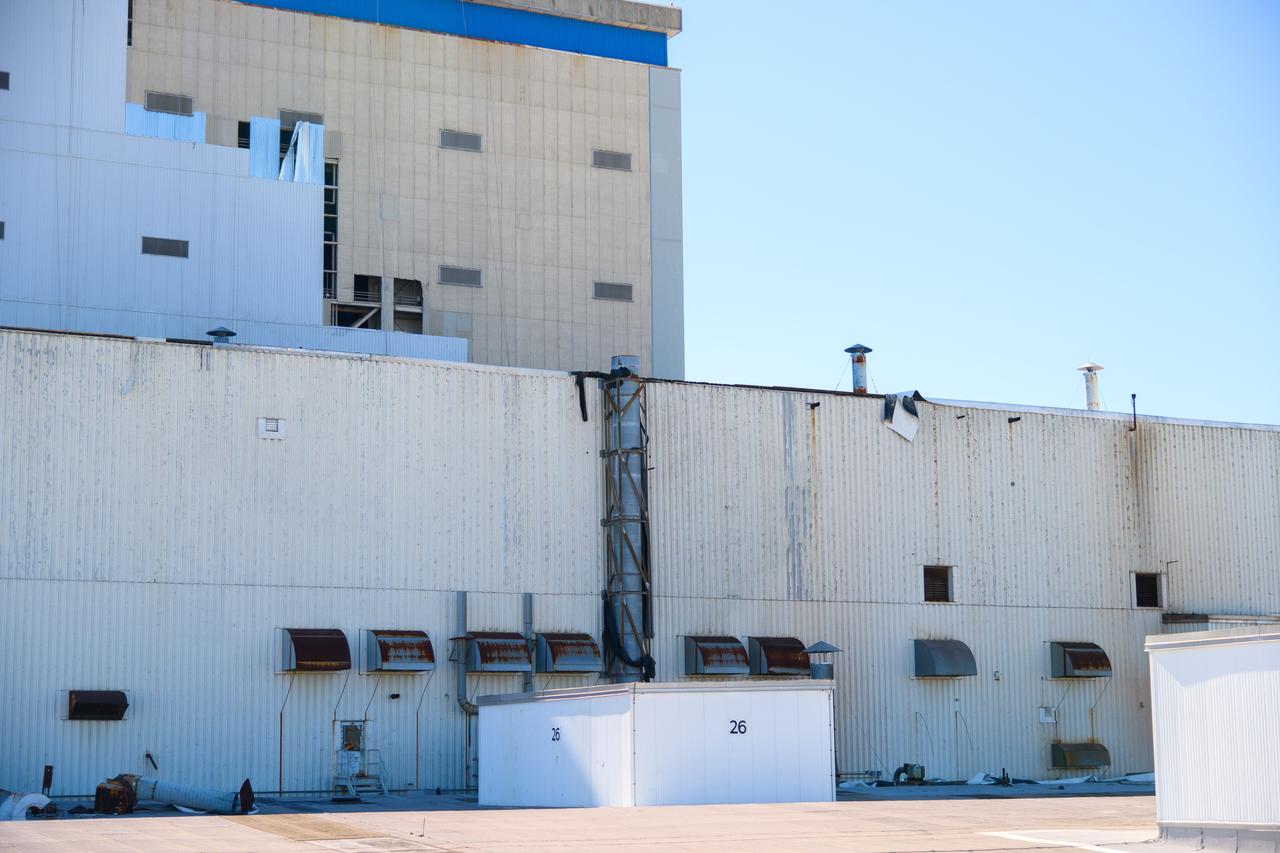
Hurricane Zeta damage to NASA’s Michoud Assembly Facility – East side of Bldg. 110 the Vertical Assembly Building (VAB).
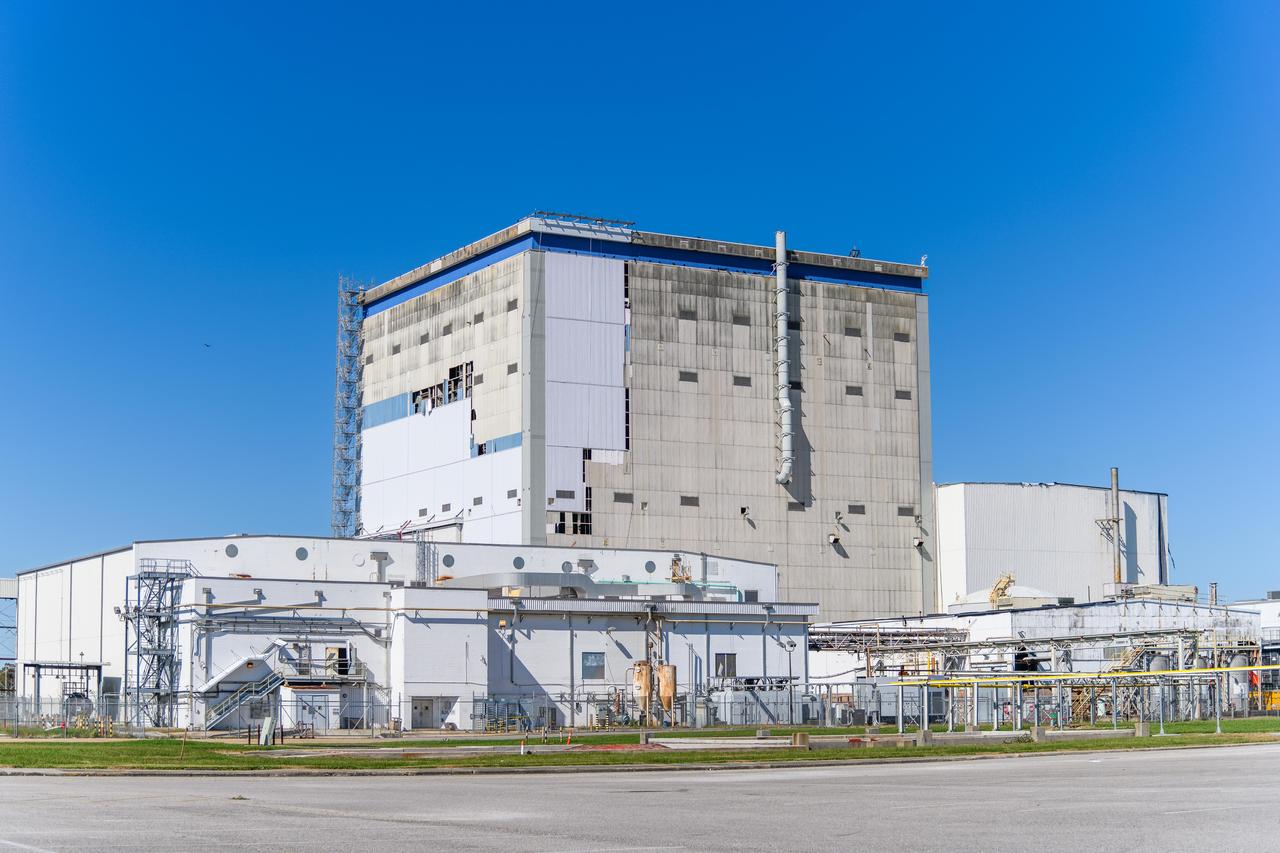
Hurricane Zeta damage to NASA’s Michoud Assembly Facility – South side of Bldg. 110 the Vertical Assembly Building (VAB).
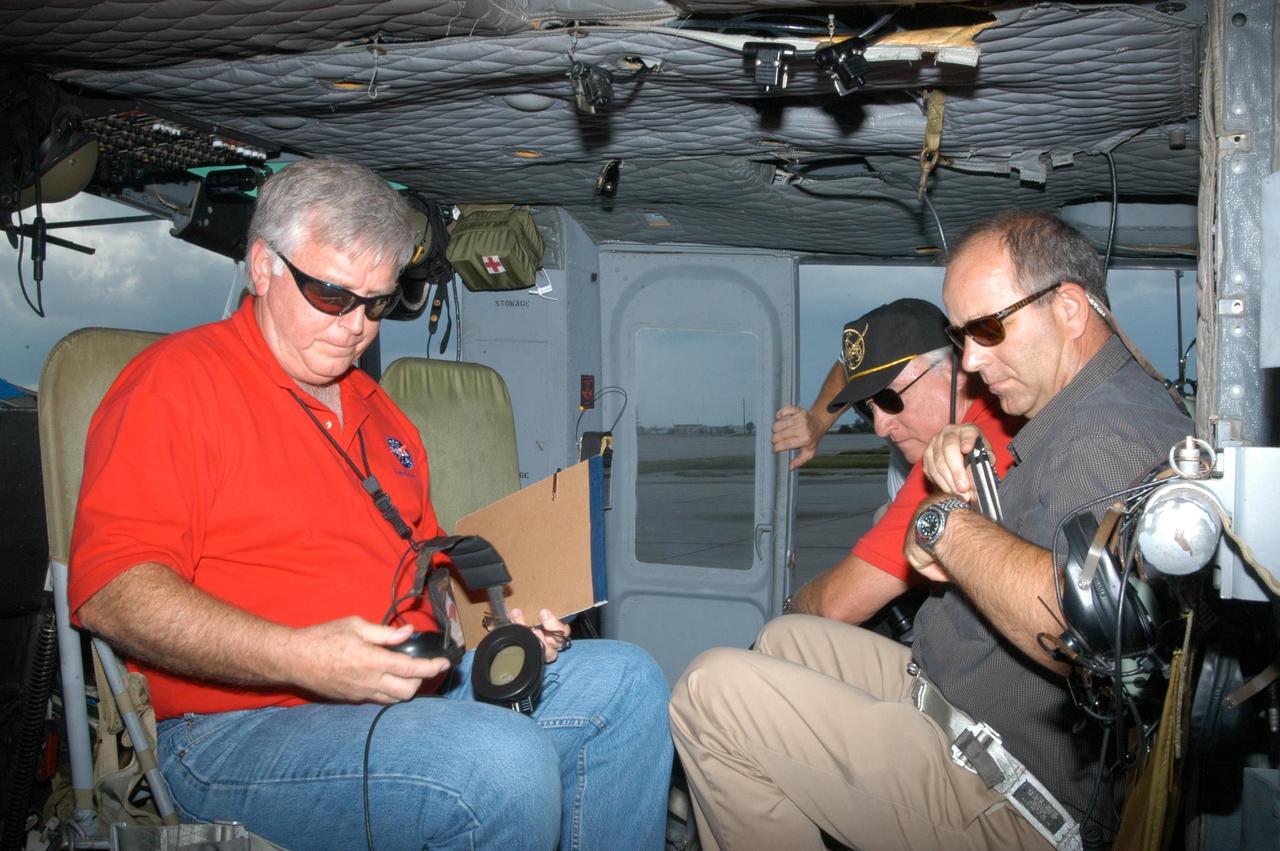
KENNEDY SPACE CENTER, FLA. - Center Director James Kennedy (left) is aboard a helicopter to observe damage from Hurricane Jeanne. A category 3 storm, Jeanne barreled through Central Florida Sept. 25-26, the fourth hurricane in 6 weeks to batter the state.
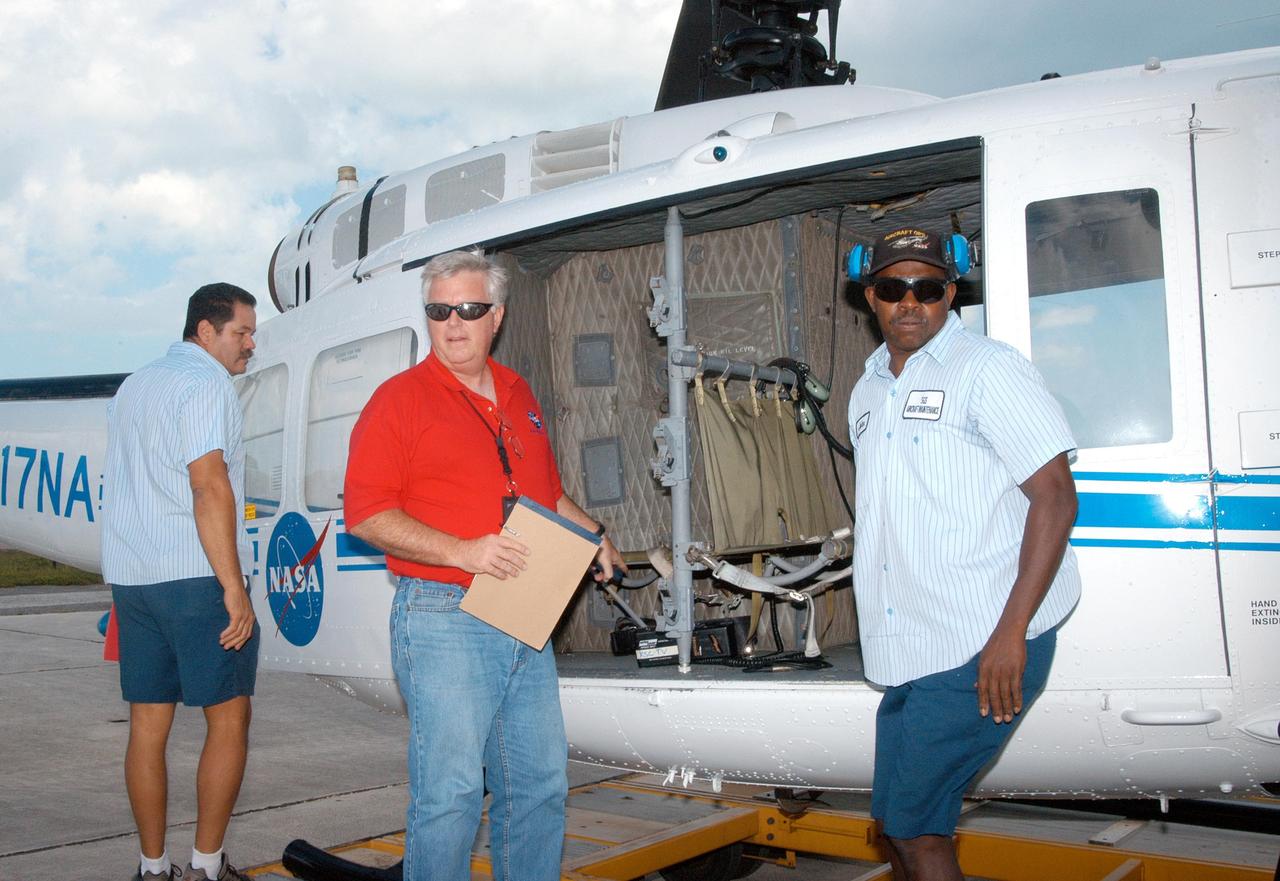
KENNEDY SPACE CENTER, FLA. - Center Director James Kennedy (center) prepares to board a helicopter to observe damage from Hurricane Jeanne. A category 3 storm, Jeanne barreled through Central Florida Sept. 25-26, the fourth hurricane in 6 weeks to batter the state.
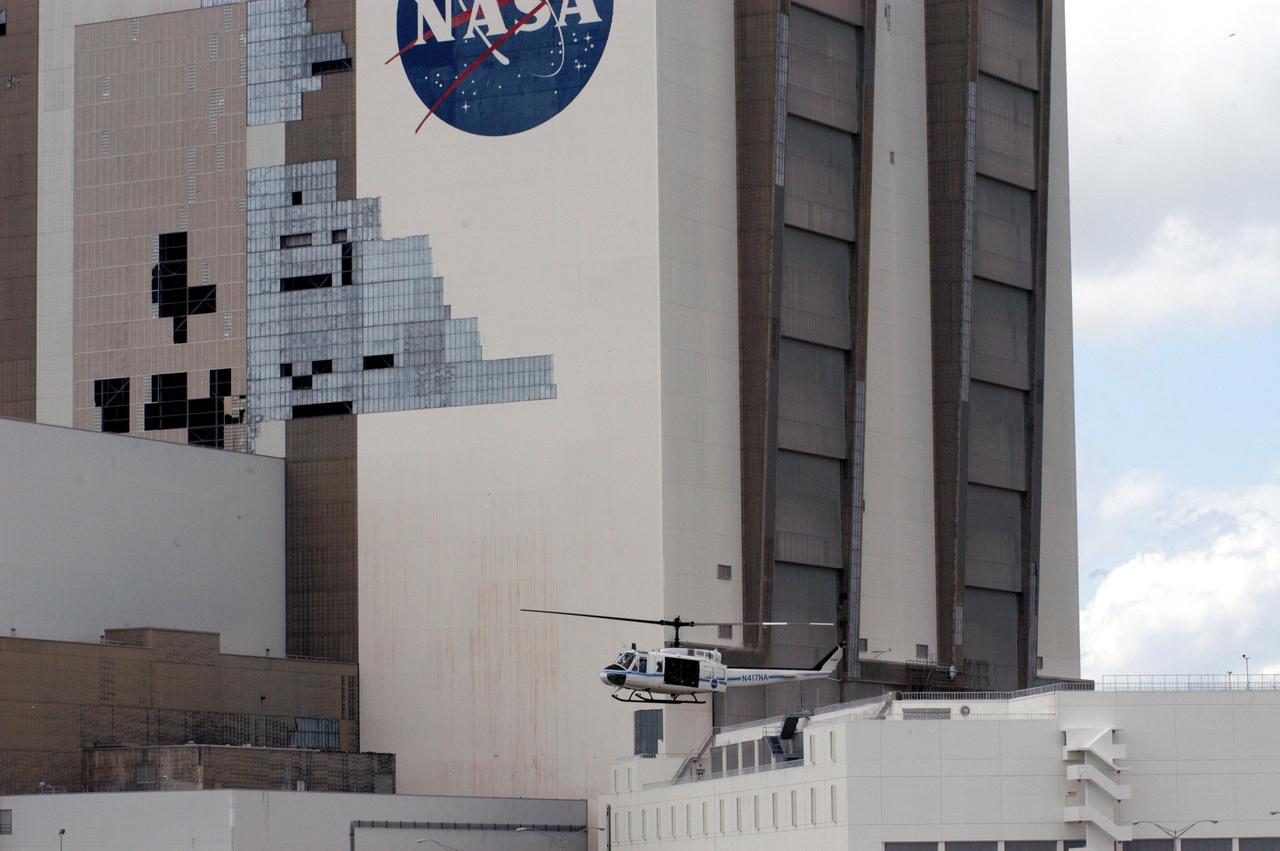
KENNEDY SPACE CENTER, FLA. - A helicopter moves past the Vehicle Assembly Building at KSC following the category 3 Hurricane Jeanne. The storm barreled through Central Florida Sept. 25-26 from the southeast. The VAB had lost 850 panels from the south wall during Hurricane Frances. Twenty-five additional panels were pulled off the east wall by the winds from Jeanne. This was the fourth hurricane in 6 weeks to batter the state.
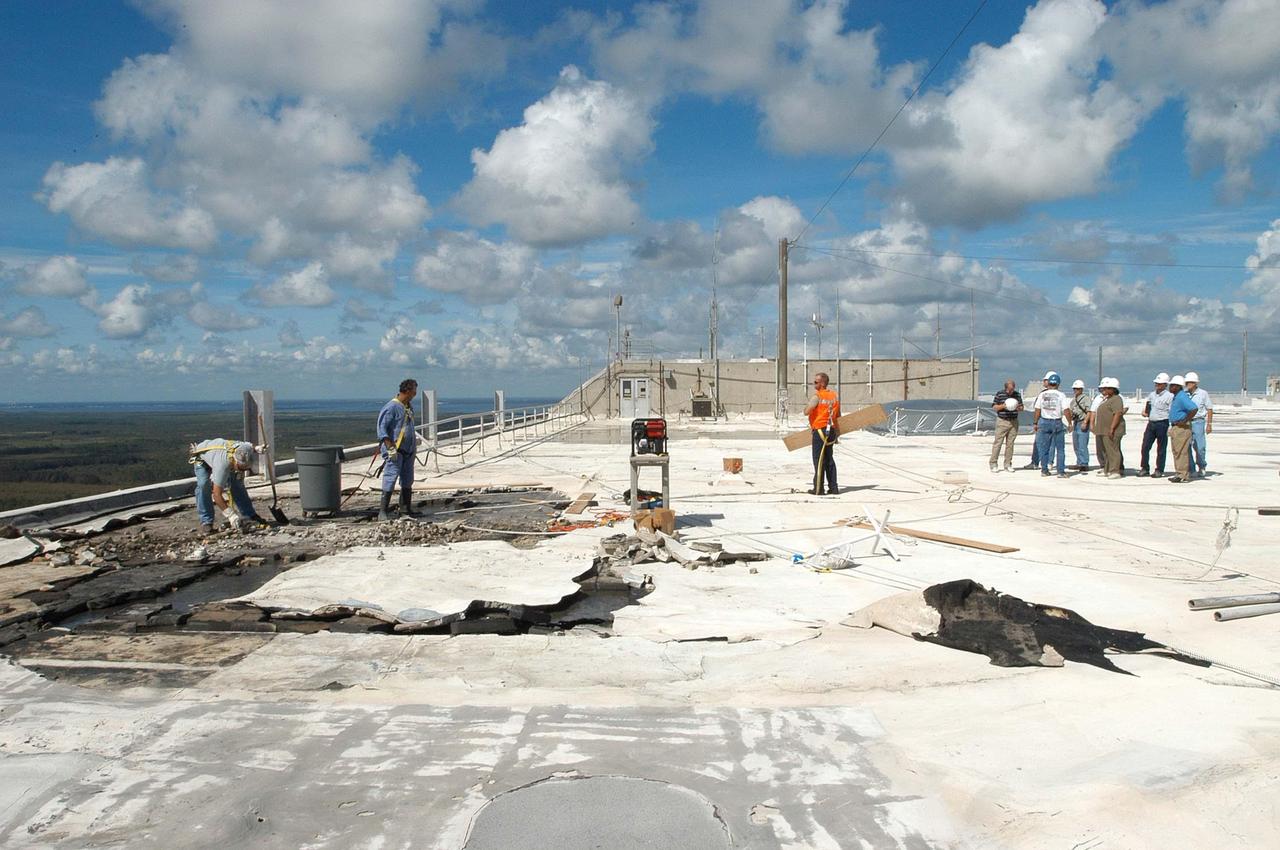
KENNEDY SPACE CENTER, FLA. - Members of a hurricane assessment team from Johnson Space Center and Marshall Space Flight Center look at damage on the roof of the Vehicle Assembly Building (VAB) a week after Hurricane Frances hit the east coast of Central Florida and Kennedy Space Center. The VAB lost 820, 4- x 16-foot panels from the side walls, or more than 52,000 square feet of its surface.
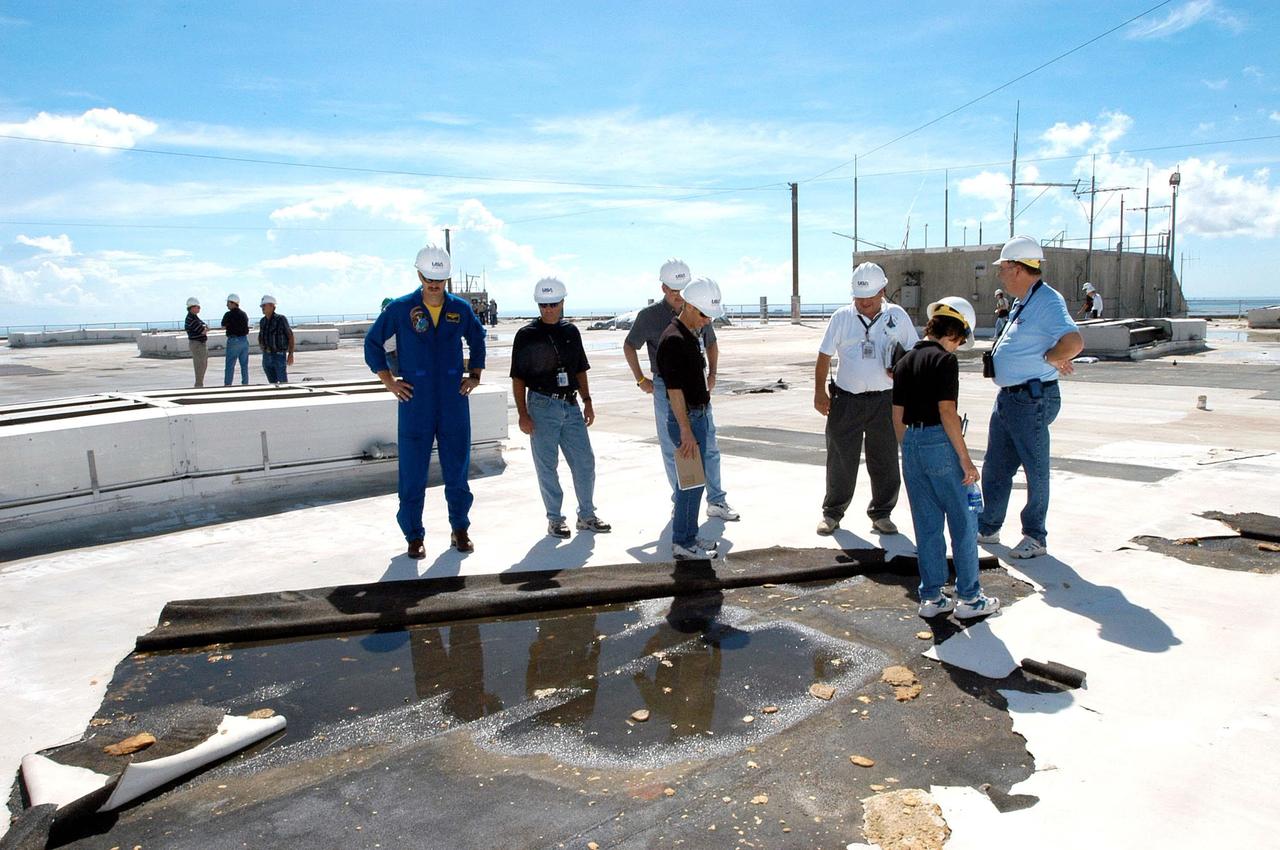
KENNEDY SPACE CENTER, FLA. - Members of a hurricane assessment team from Johnson Space Center and Marshall Space Flight Center look at damage on the roof of the Vehicle Assembly Building (VAB) a week after Hurricane Frances hit the east coast of Central Florida and Kennedy Space Center. The VAB lost 820, 4- x 16-foot panels from the side walls, or more than 52,000 square feet of its surface. One team member is astronaut Scott Altmann, at far left.
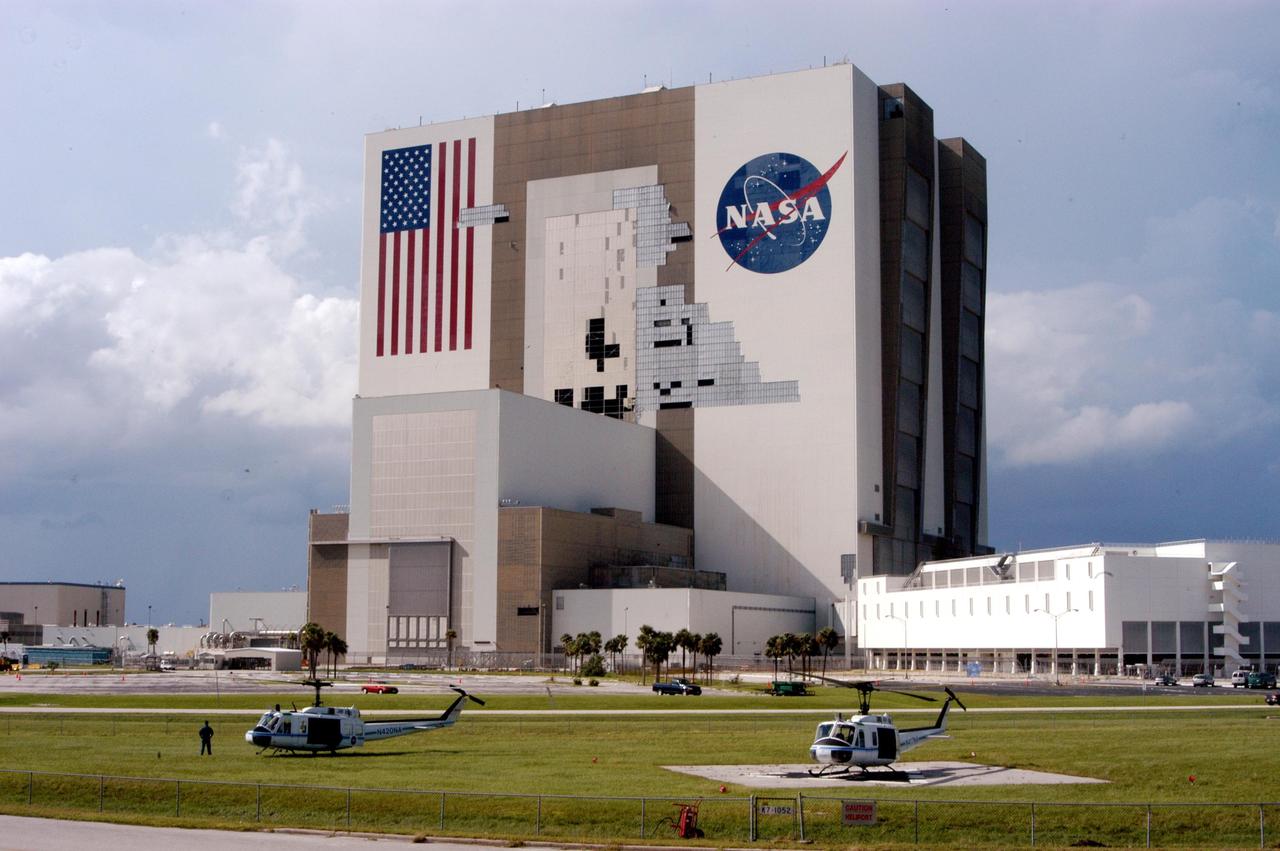
KENNEDY SPACE CENTER, FLA. - A view of the Vehicle Assembly Building at KSC shows damage inflicted by both Hurricane Frances and the category 3 Hurricane Jeanne. The storm barreled through Central Florida Sept. 25-26 from the southeast. The VAB had lost 850 panels from the south wall during Hurricane Frances. Twenty-five additional panels were pulled off the east wall by the winds from Jeanne. This was the fourth hurricane in 6 weeks to batter the state.
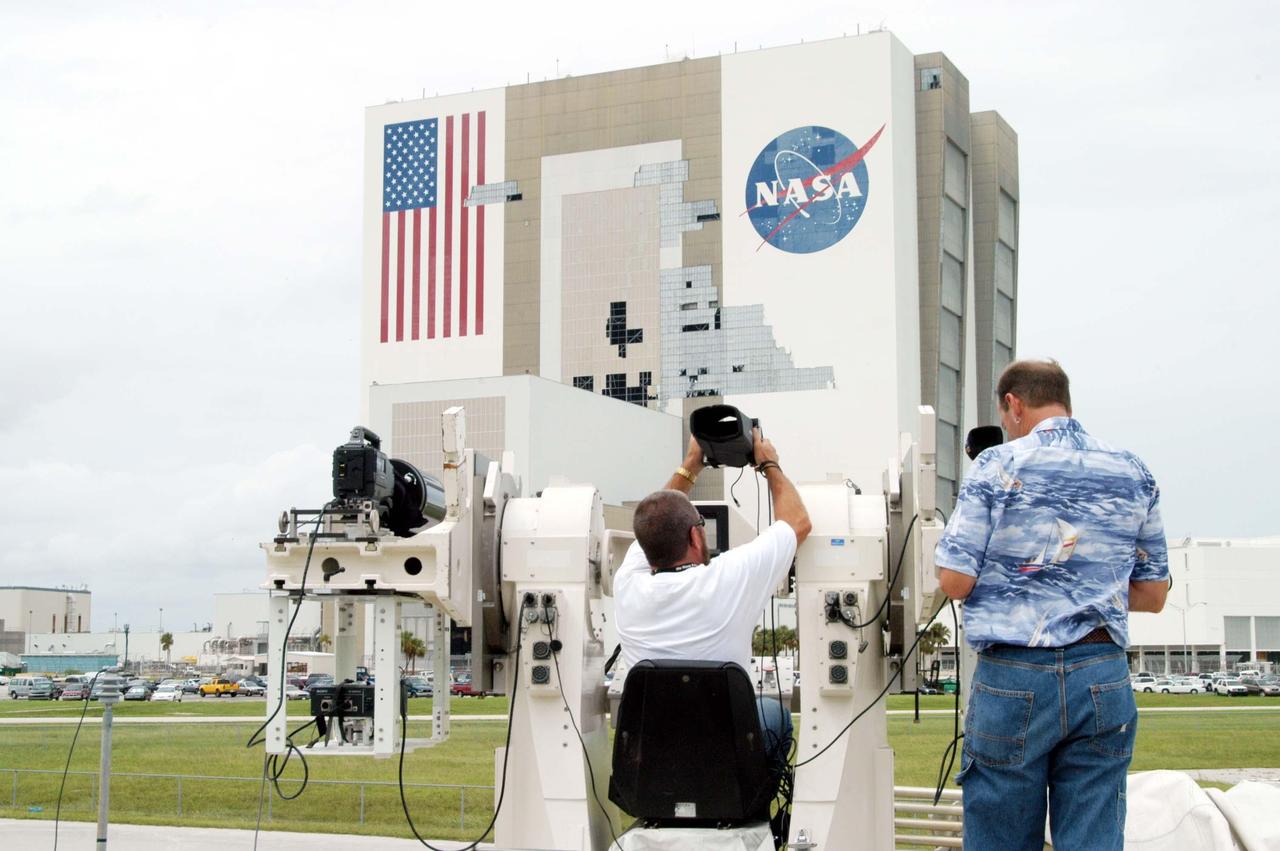
KENNEDY SPACE CENTER, FLA. - KSC videographer Glenn Benson and photographer Kenny Allen photograph damage incurred on the south wall of the Vehicle Assembly Building (VAB) that sustained damage from Hurricane Frances as it passed over Central Florida during the Labor Day weekend. The maximum wind at the surface from Hurricane Frances was 94 mph from the northeast at 6:40 a.m. on Sunday, September 5. It was recorded at a weather tower located on the east shore of the Mosquito Lagoon near the Cape Canaveral National Seashore. The highest sustained wind at KSC was 68 mph. The VAB lost 820, 4- x 16-foot panels or more than 52,000 square feet of its surface. There was damage to the roof as well.
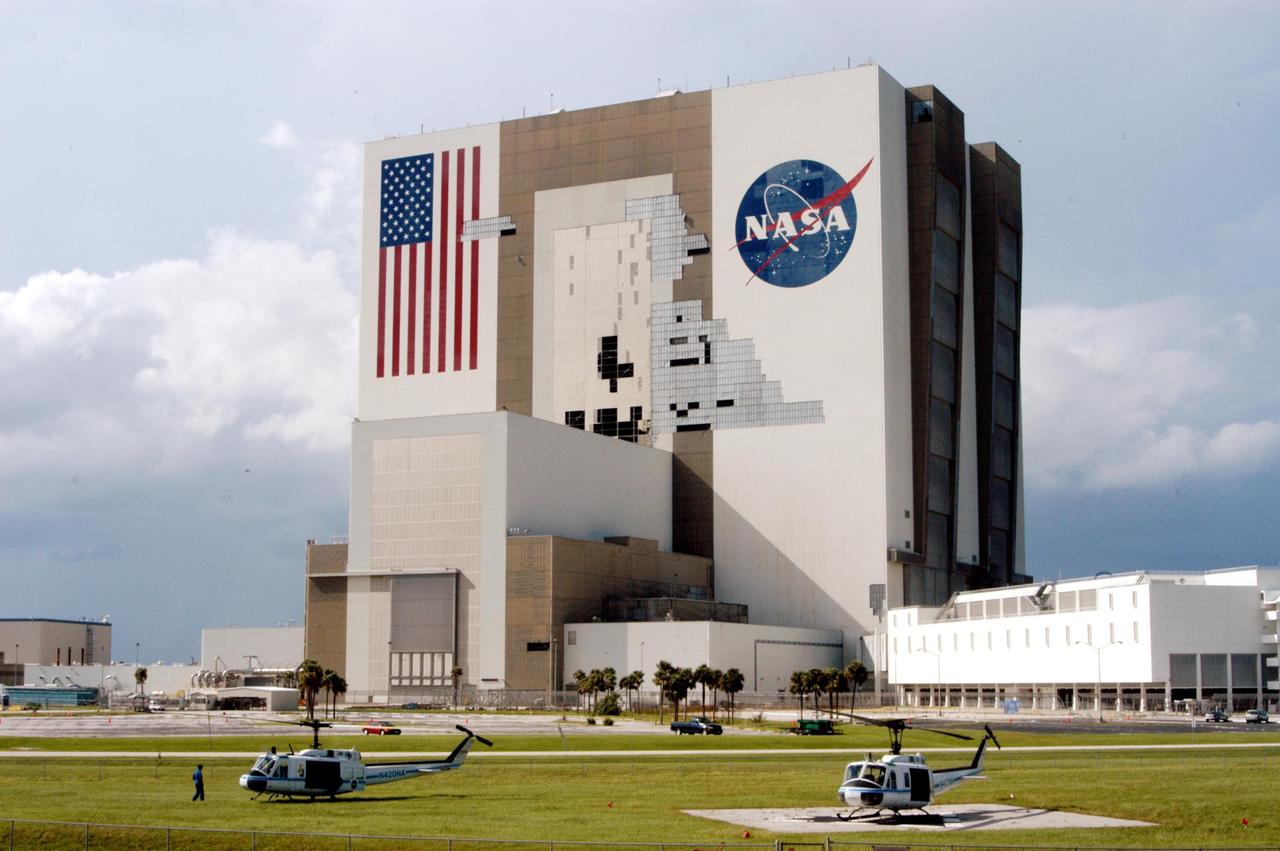
KENNEDY SPACE CENTER, FLA. - This view shows damage to the Vehicle Assembly Building at KSC following the category 3 Hurricane Jeanne. In the foreground are helicopters that were used for observation flights around the Center. The storm barreled through Central Florida Sept. 25-26 from the southeast. The VAB had lost 850 panels from the south wall during Hurricane Frances. Twenty-five additional panels were pulled off the east wall by the winds from Jeanne. This was the fourth hurricane in 6 weeks to batter the state.
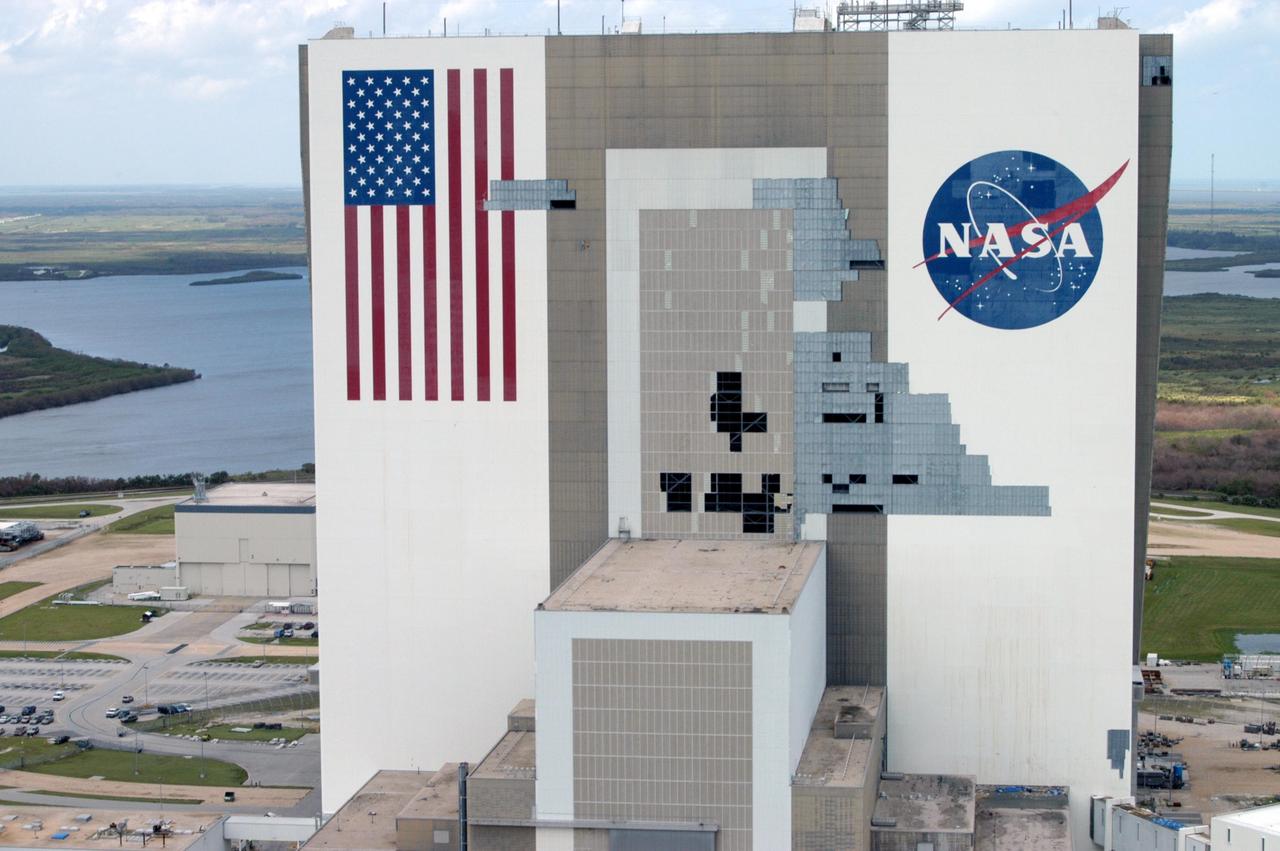
KENNEDY SPACE CENTER, FLA. - This view taken from a helicopter shows damage to the Vehicle Assembly Building at KSC following the category 3 Hurricane Jeanne. The storm barreled through Central Florida Sept. 25-26 from the southeast. The VAB had lost 850 panels from the south wall during Hurricane Frances. Twenty-five additional panels were pulled off the east wall by the winds from Jeanne. This was the fourth hurricane in 6 weeks to batter the state.
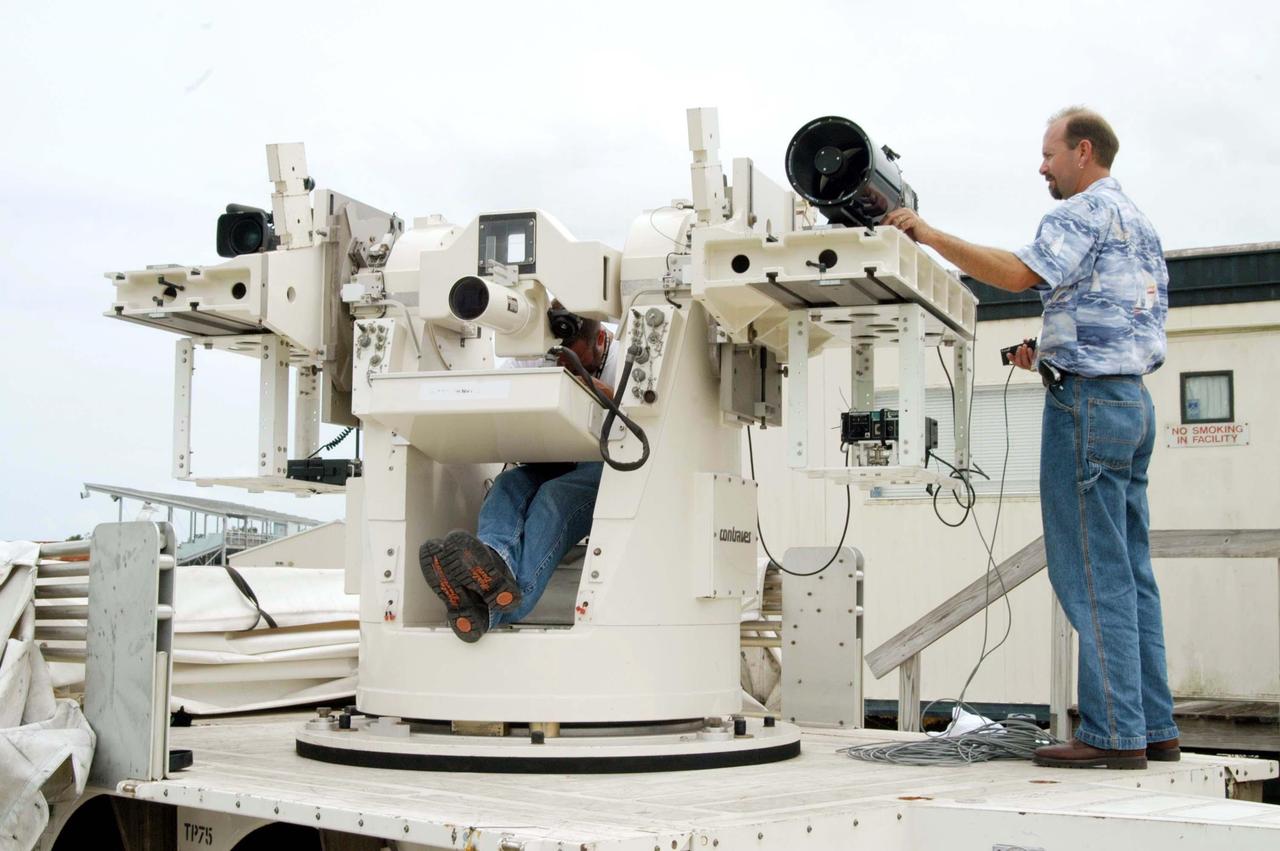
KENNEDY SPACE CENTER, FLA. - KSC videographer Glenn Benson adjusts a high definition camera being used to photograph the south wall of the Vehicle Assembly Building (VAB) that sustained damage from Hurricane Frances as it passed over Central Florida during the Labor Day weekend. The maximum wind at the surface from Hurricane Frances was 94 mph from the northeast at 6:40 a.m. on Sunday, September 5. It was recorded at a weather tower located on the east shore of the Mosquito Lagoon near the Cape Canaveral National Seashore. The highest sustained wind at KSC was 68 mph. The VAB lost 820, 4- x 16-foot panels or more than 52,000 square feet of its surface. There was damage to the roof as well.
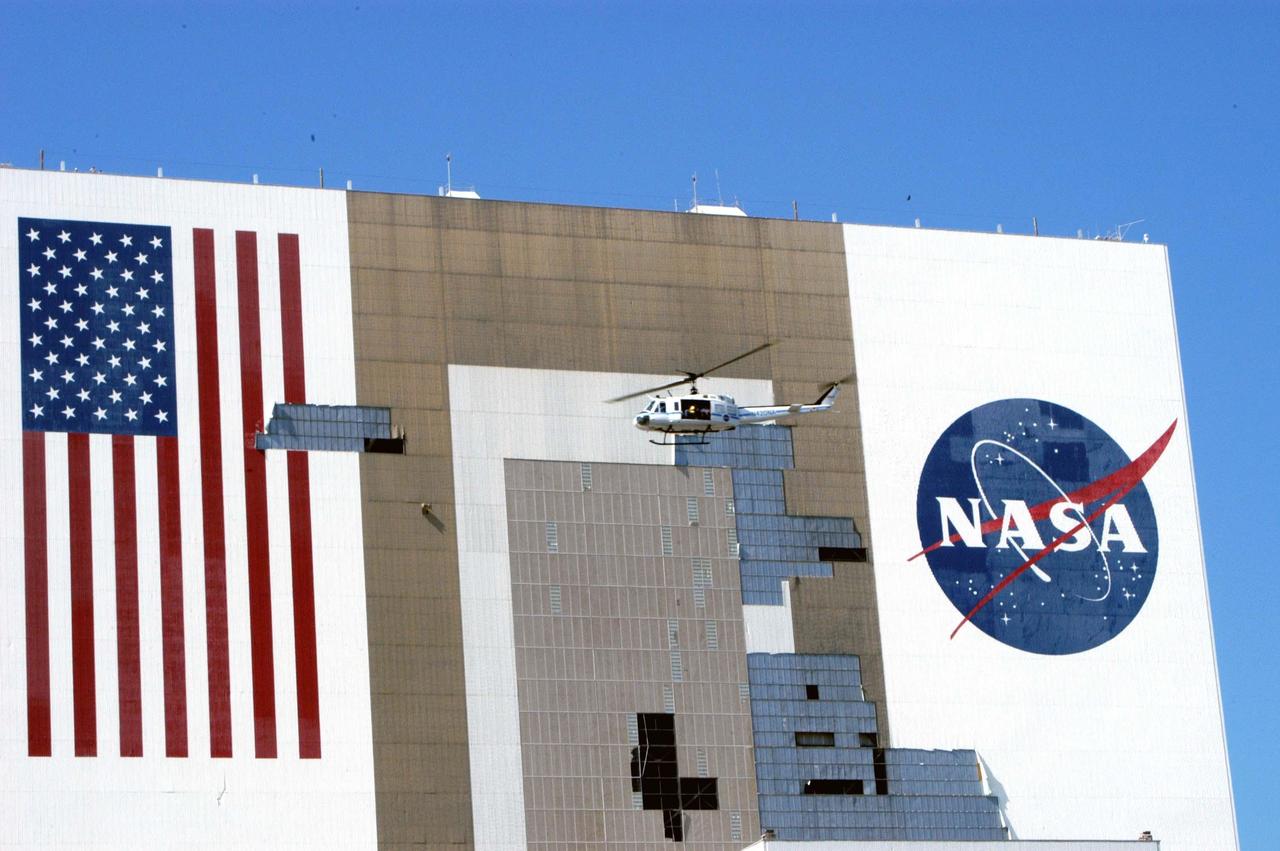
KENNEDY SPACE CENTER, FLA. - The helicopter carrying NASA Administrator Sean O’Keefe and KSC Director of Spaceport Services Scott Kerr passes by the Vehicle Assembly Building (VAB) to observe the damage inflicted by Hurricane Frances over the Labor Day weekend. The VAB lost approximately 850 tiles on the south wall, seen here. O’Keefe and NASA Associate Administrator of Space Operations Mission Directorate William Readdy are visiting KSC to survey the damage sustained by KSC facilities from the hurricane. The storm also caused significant damage to the Thermal Protection System Facility and Processing Control Center. Additionally, the Operations and Checkout Building, Vertical Processing Facility, Hangar AE, Hangar S and Hangar AF Small Parts Facility each received substantial damage. However, well-protected and unharmed were NASA’s three Space Shuttle orbiters -- Discovery, Atlantis and Endeavour - along with the Shuttle launch pads, all of the critical flight hardware for the orbiters and the International Space Station, and NASA’s Swift spacecraft that is awaiting launch in October.
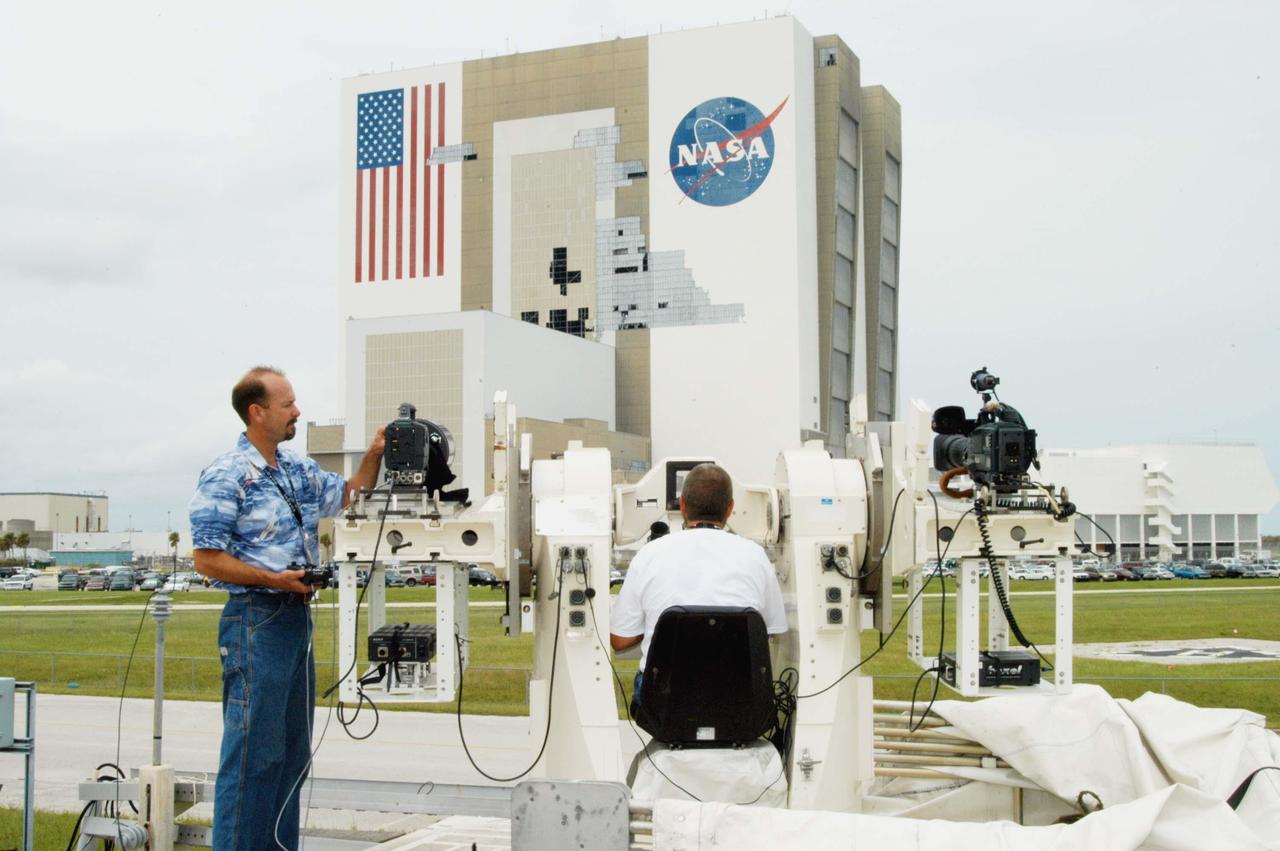
KENNEDY SPACE CENTER, FLA. - KSC videographer Glenn Benson adjusts a high definition camera being used to photograph the south wall of the Vehicle Assembly Building that sustained damage from Hurricane Frances as it passed over Central Florida during the Labor Day weekend. The maximum wind at the surface from Hurricane Frances was 94 mph from the northeast at 6:40 a.m. on Sunday, September 5. It was recorded at a weather tower located on the east shore of the Mosquito Lagoon near the Cape Canaveral National Seashore. The highest sustained wind at KSC was 68 mph. The VAB lost 820, 4- x 16-foot panels or more than 52,000 square feet of its surface. There was damage to the roof as well.
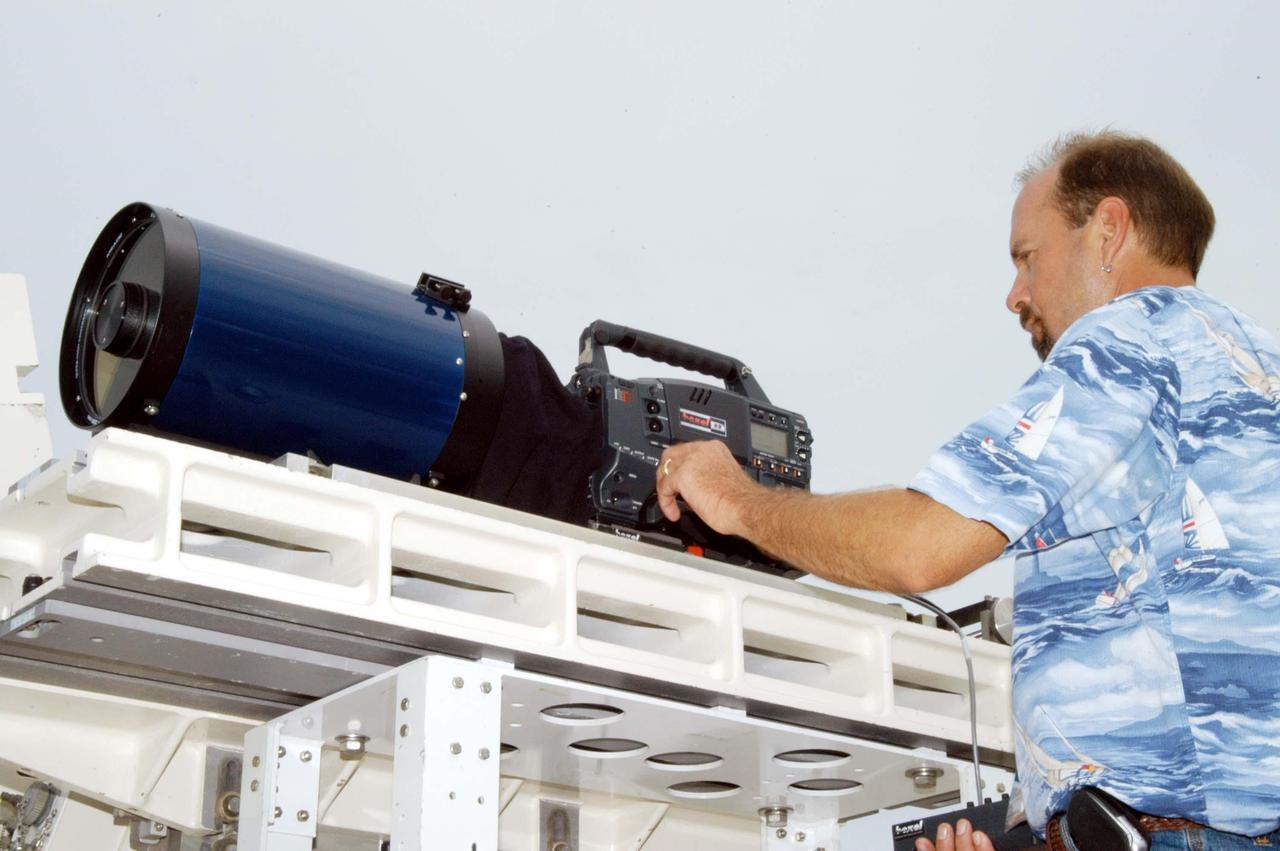
KENNEDY SPACE CENTER, FLA. - KSC videographer Glenn Benson adjusts a high definition camera being used to photograph the south wall of the Vehicle Assembly Building that sustained damage from Hurricane Frances as it passed over Central Florida during the Labor Day weekend. The maximum wind at the surface from Hurricane Frances was 94 mph from the northeast at 6:40 a.m. on Sunday, September 5. It was recorded at a weather tower located on the east shore of the Mosquito Lagoon near the Cape Canaveral National Seashore. The highest sustained wind at KSC was 68 mph. The VAB lost 820, 4- x 16-foot panels or more than 52,000 square feet of its surface. There was damage to the roof as well.
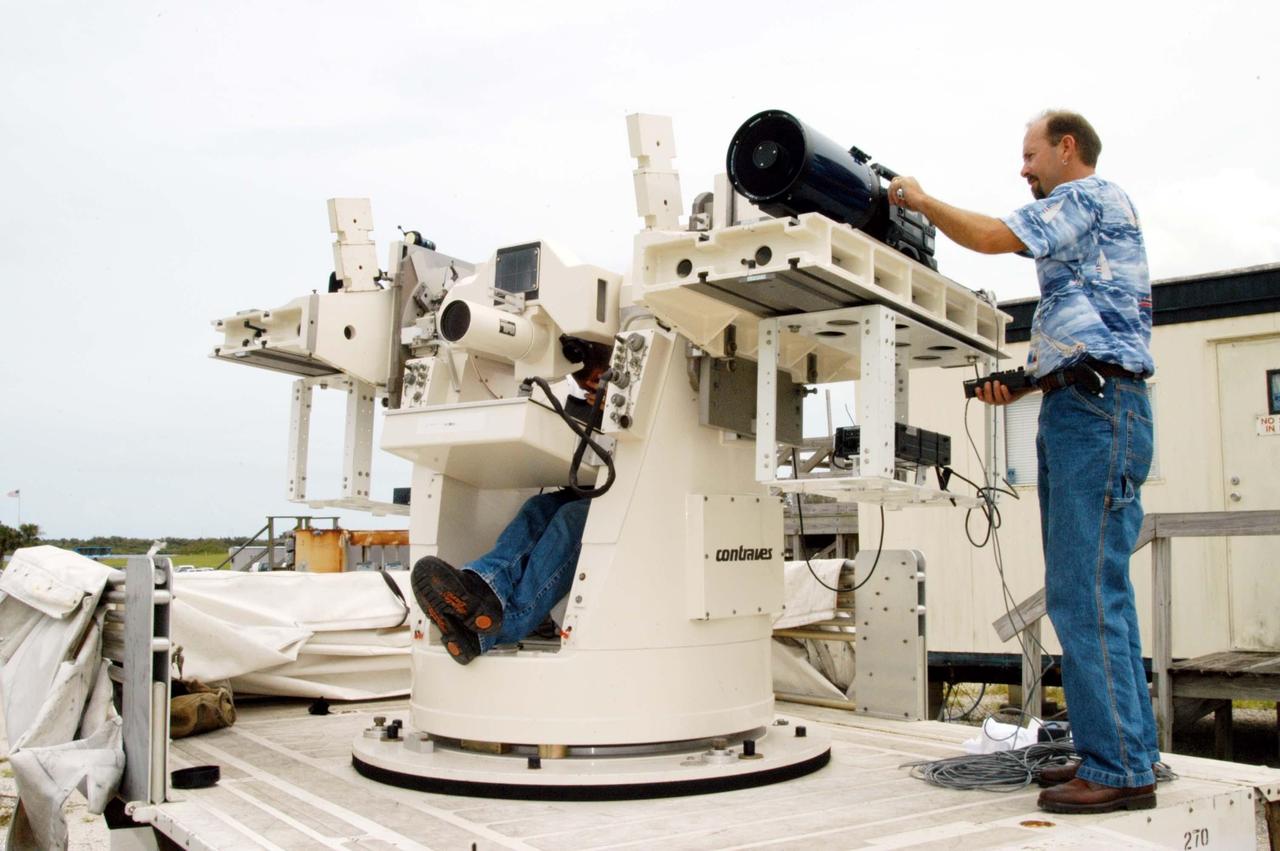
KENNEDY SPACE CENTER, FLA. - KSC videographer Glenn Benson adjusts a high definition camera being used to photograph the south wall of the Vehicle Assembly Building that sustained damage from Hurricane Frances as it passed over Central Florida during the Labor Day weekend. The maximum wind at the surface from Hurricane Frances was 94 mph from the northeast at 6:40 a.m. on Sunday, September 5. It was recorded at a weather tower located on the east shore of the Mosquito Lagoon near the Cape Canaveral National Seashore. The highest sustained wind at KSC was 68 mph. The VAB lost 820, 4- x 16-foot panels or more than 52,000 square feet of its surface. There was damage to the roof as well.
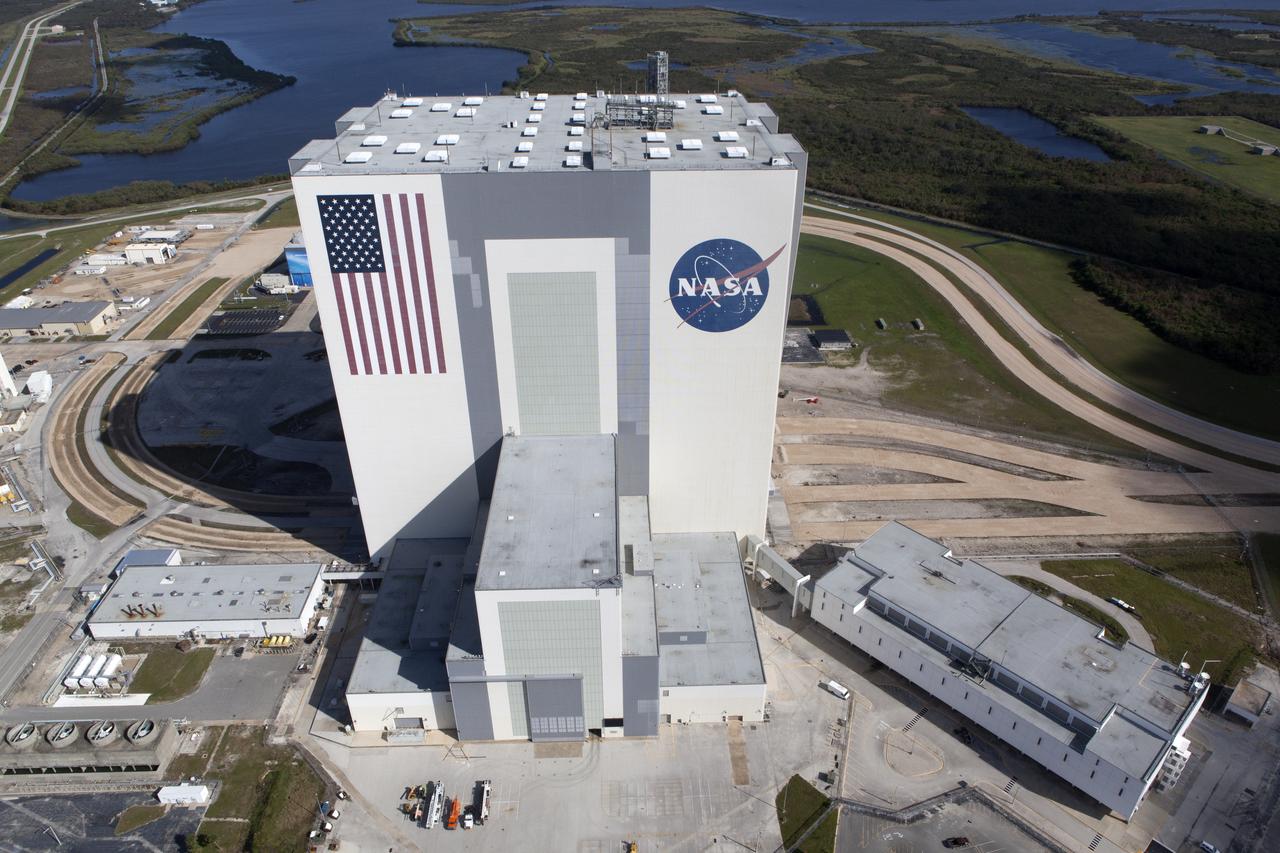
The Vehicle Assembly Building (VAB), Launch Control Center (LCC), and Launch Complex 39 surrounding areas are seen during an aerial survey of NASA's Kennedy Space Center in Florida on September 12, 2017. The survey was performed to identify structures and facilities that may have sustained damage from Hurricane Irma as the storm passed Kennedy on September 10, 2017. NASA closed the center ahead of the storm's onset and only a small team of specialists known as the Rideout Team was on the center as the storm approached and passed.
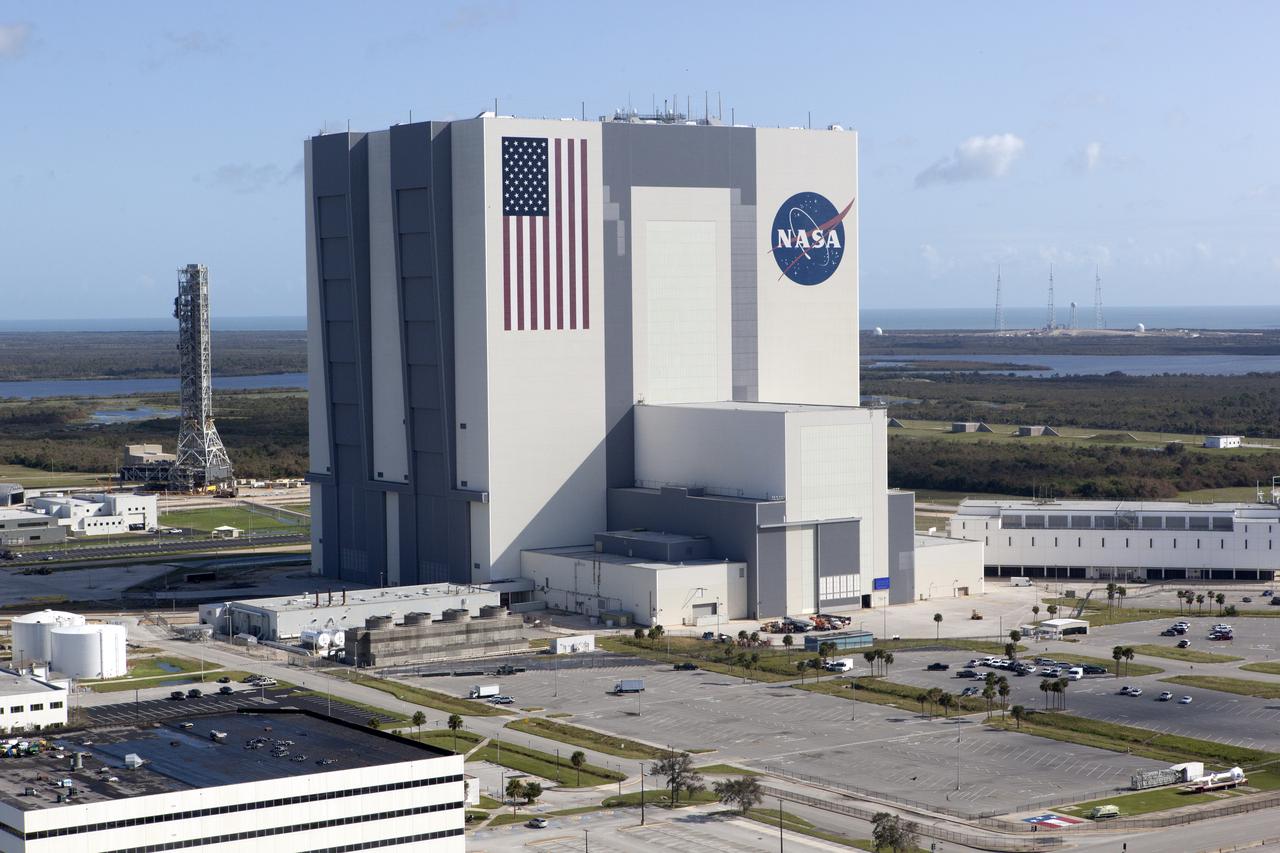
The Mobile Launcher (ML), Vehicle Assembly Building (VAB), Launch Control Center (LCC), and Launch Complex 39 surrounding areas are seen during an aerial survey of NASA's Kennedy Space Center in Florida on September 12, 2017. The survey was performed to identify structures and facilities that may have sustained damage from Hurricane Irma as the storm passed Kennedy on September 10, 2017. NASA closed the center ahead of the storm's onset and only a small team of specialists known as the Rideout Team was on the center as the storm approached and passed.
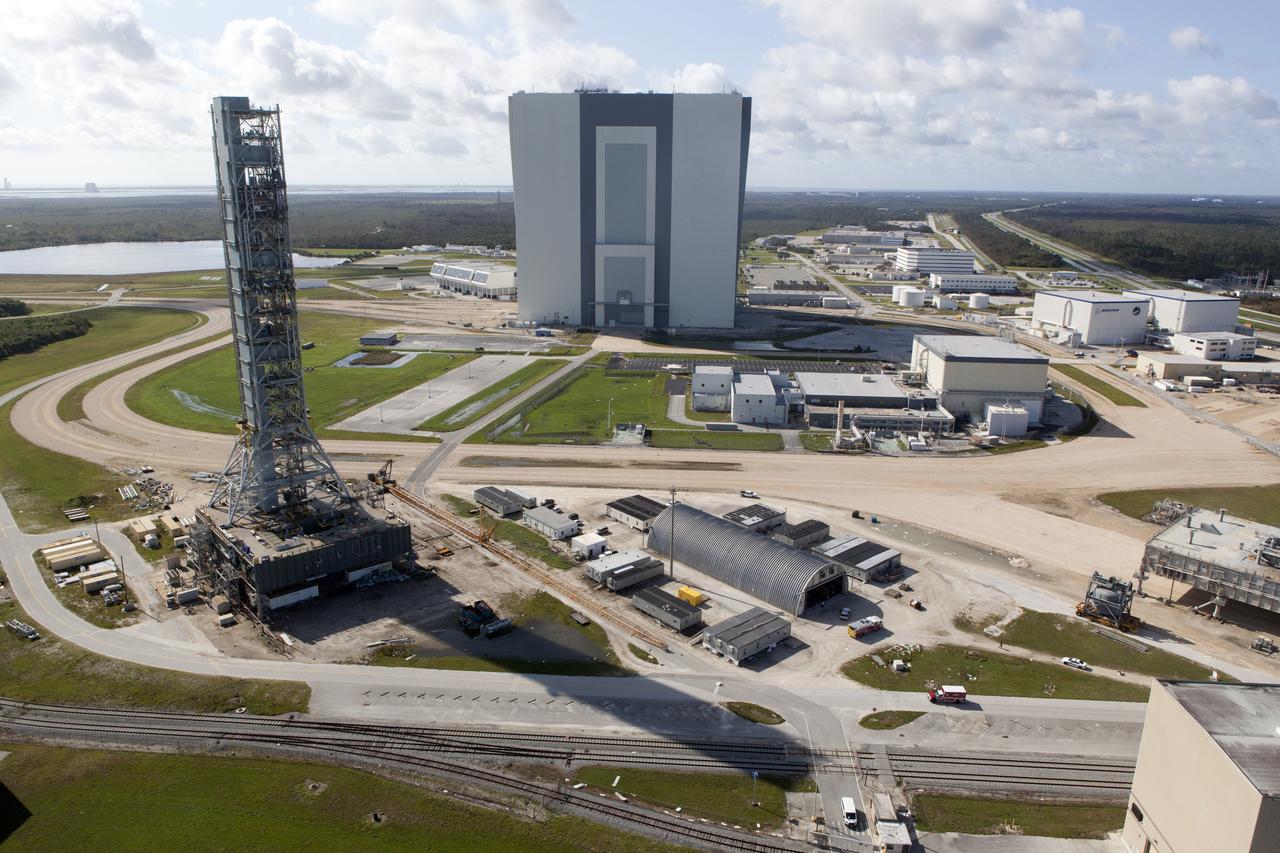
The Mobile Launcher (ML), Launch Control Center (LCC), Vehicle Assembly Building (VAB), and Launch Complex 39 surrounding areas are seen during an aerial survey of NASA's Kennedy Space Center in Florida on September 12, 2017. The survey was performed to identify structures and facilities that may have sustained damage from Hurricane Irma as the storm passed Kennedy on September 10, 2017. NASA closed the center ahead of the storm's onset and only a small team of specialists known as the Rideout Team was on the center as the storm approached and passed.
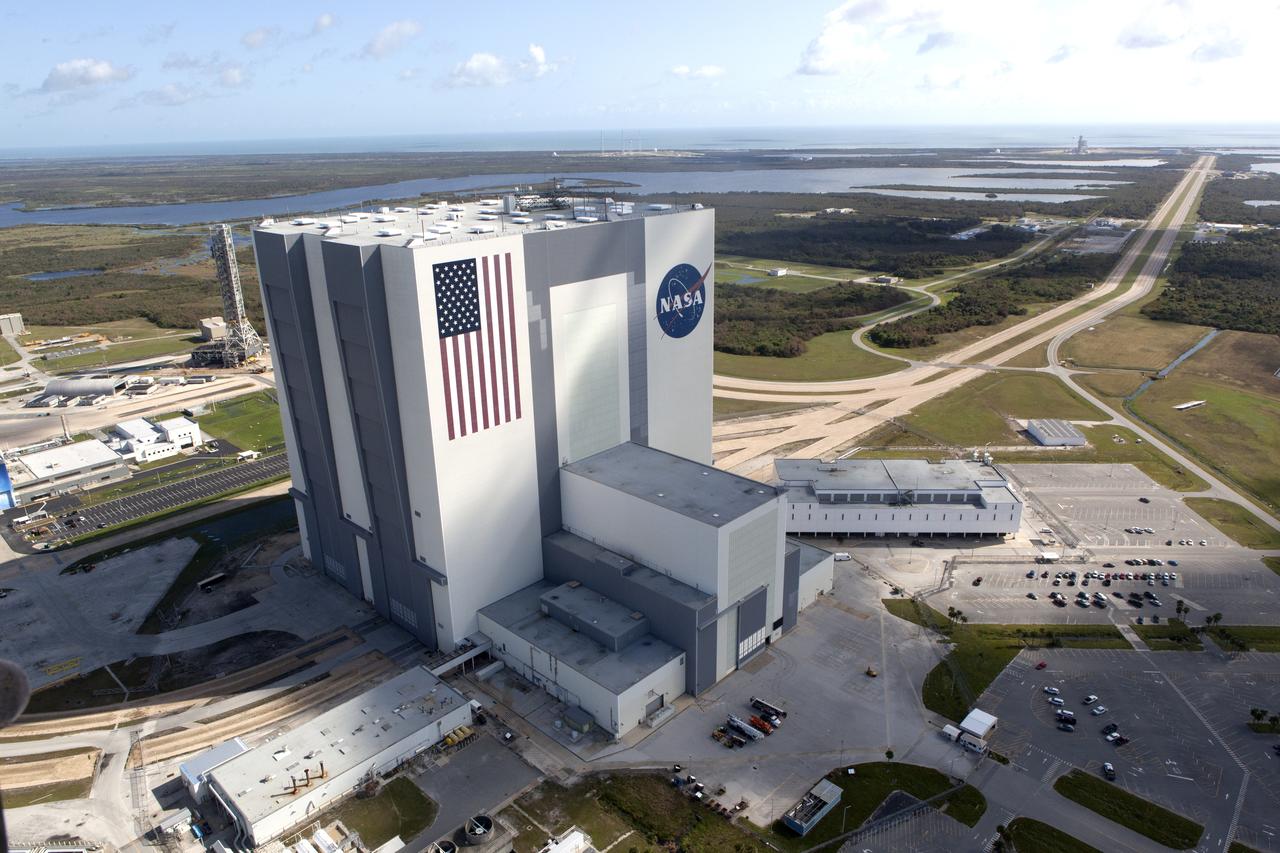
The Mobile Launcher (ML), Vehicle Assembly Building (VAB), Launch Control Center (LCC), and Launch Complex 39 surrounding areas are seen during an aerial survey of NASA's Kennedy Space Center in Florida on September 12, 2017. The survey was performed to identify structures and facilities that may have sustained damage from Hurricane Irma as the storm passed Kennedy on September 10, 2017. NASA closed the center ahead of the storm's onset and only a small team of specialists known as the Rideout Team was on the center as the storm approached and passed.
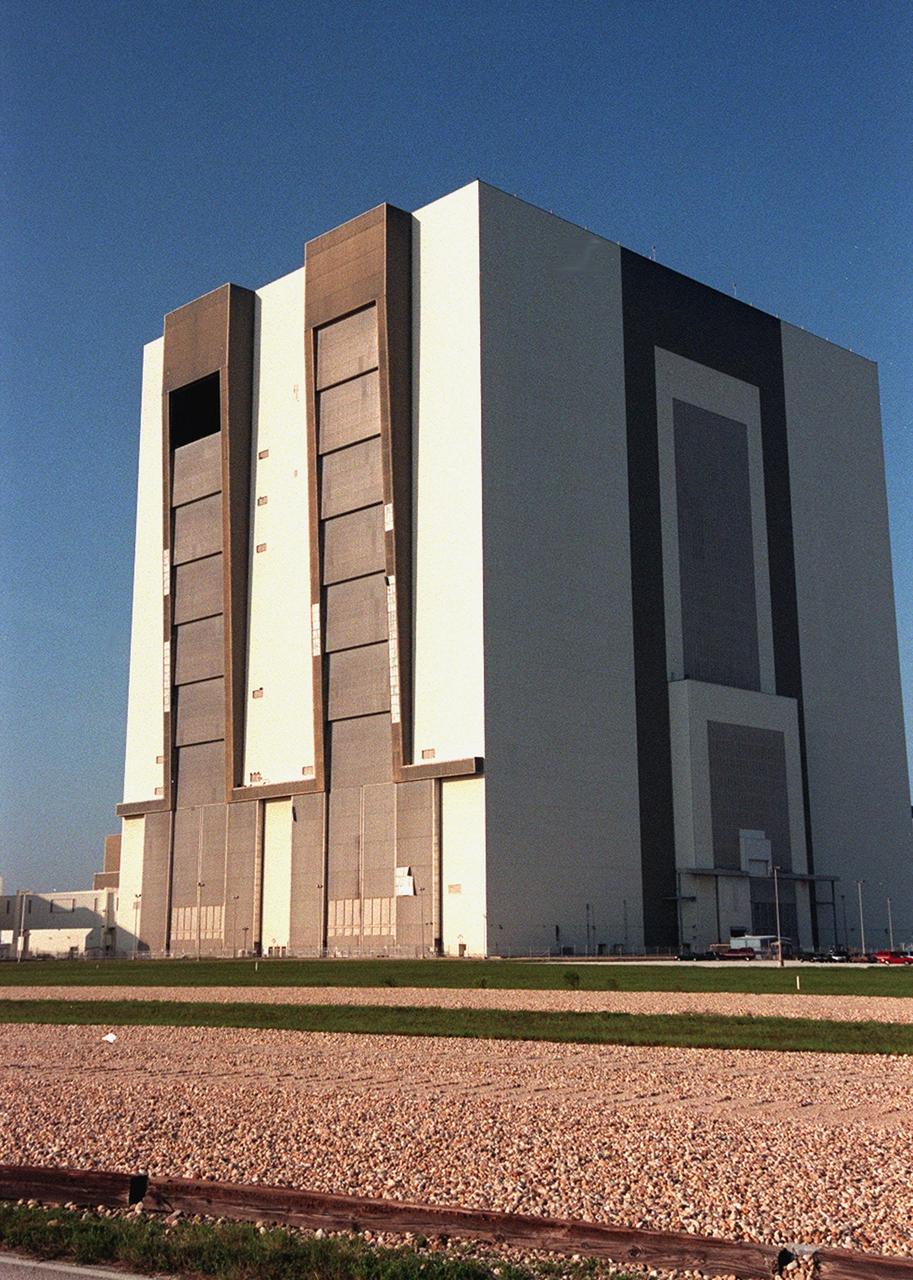
The east side of the Vehicle Assembly Building (VAB) at Kennedy Space Center shows missing panels around the leaves of the upper door, the effect of the high winds from Hurricane Floyd as it passed along the East Coast of Florida, Sept. 14-15. At a weather tower located between Shuttle Launch Pad 39A and Launch Complex 41, the highest winds recorded during the superstorm were 91 mph from the NNW at 4:50 a.m. on Wednesday, Sept. 15. The maximum sustained winds were recorded at 66 mph. The highest amount of rain recorded at KSC was 2.82 inches as the eye of Hurricane Floyd passed 121 miles east of Cape Canaveral at 4 a.m. Wednesday. A preliminary review of conditions at the Kennedy Space Center was positive after the worst of Hurricane Floyd passed. There appeared to be no major damage to NASA assets, including the launch pads, the four Space Shuttle Orbiters, and flight hardware
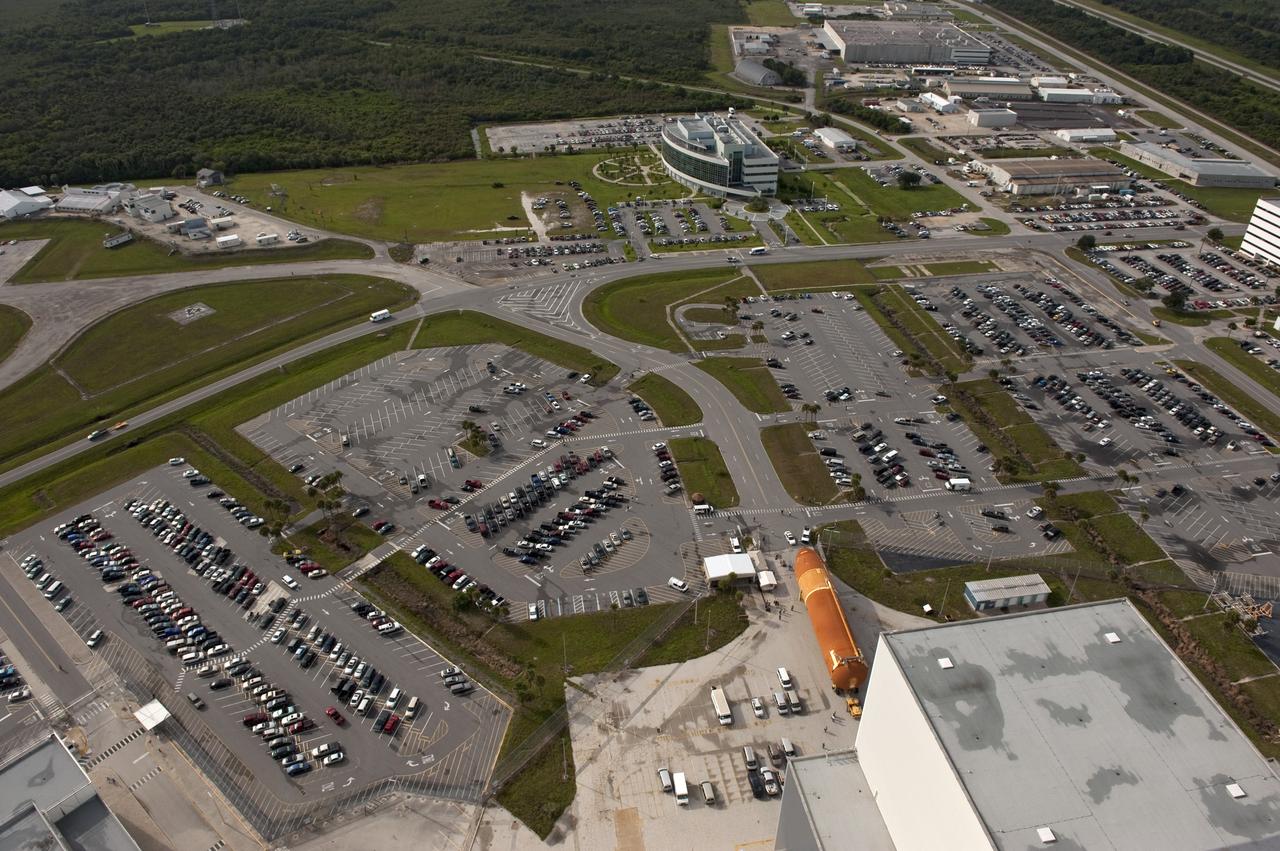
CAPE CANAVERAL, Fla. -- This overhead view shows the Space Shuttle Program's last external fuel tank, ET-122 (right), as it is being transported to the Vehicle Assembly Building (VAB) at NASA's Kennedy Space Center in Florida. The tank traveled 900 miles by sea, carried in the Pegasus Barge, from NASA's Michoud Assembly Facility in New Orleans. Once inside the VAB, it eventually will be attached to space shuttle Endeavour for the STS-134 mission to the International Space Station targeted to launch Feb. 2011. STS-134 currently is scheduled to be the last mission in the shuttle program. The tank, which is the largest element of the space shuttle stack, was damaged during Hurricane Katrina in August 2005 and restored to flight configuration by Lockheed Martin Space Systems Company employees. Photo credit: NASA/Kevin O'Connell
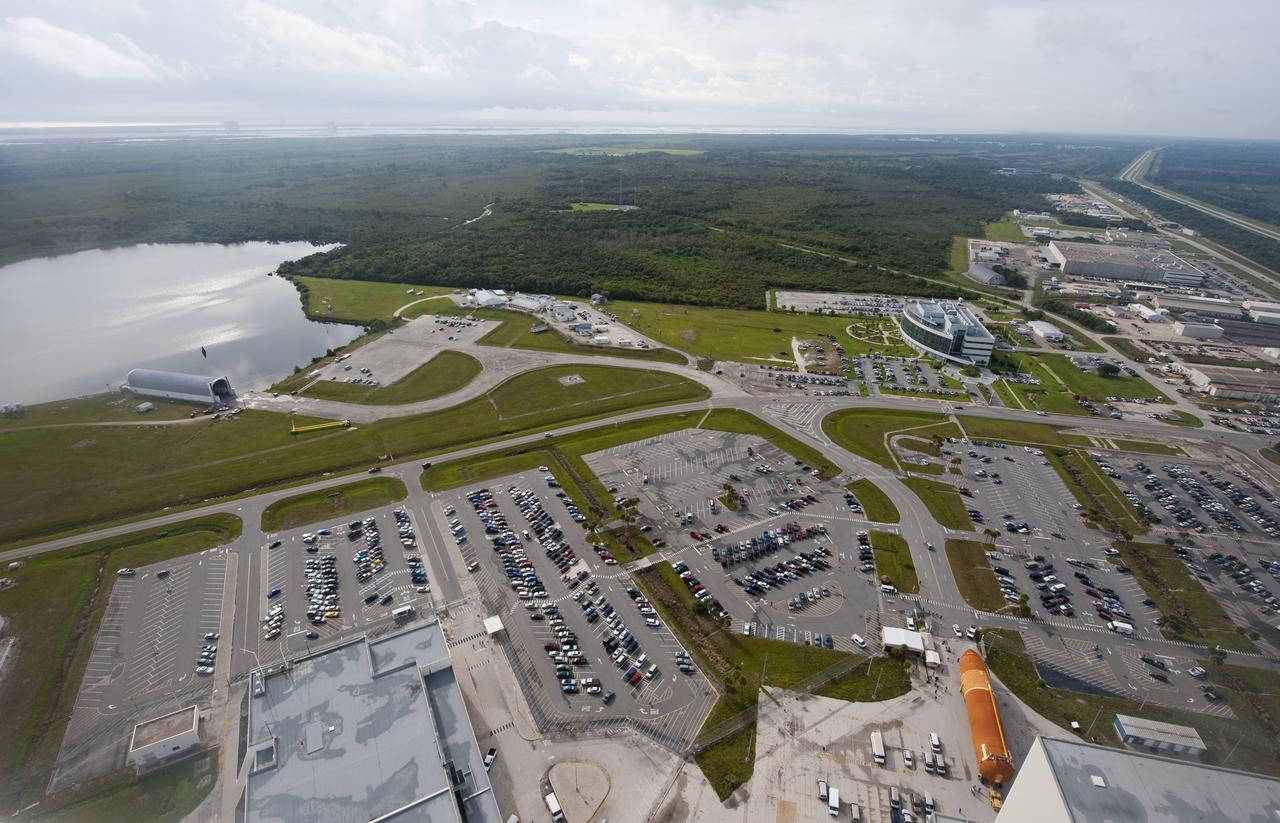
CAPE CANAVERAL, Fla. -- This overhead view shows the Space Shuttle Program's last external fuel tank, ET-122 (right), as it is being transported to the Vehicle Assembly Building (VAB) at NASA's Kennedy Space Center in Florida. The tank traveled 900 miles by sea, carried in the Pegasus Barge, from NASA's Michoud Assembly Facility in New Orleans. Once inside the VAB, it eventually will be attached to space shuttle Endeavour for the STS-134 mission to the International Space Station targeted to launch Feb. 2011. STS-134 currently is scheduled to be the last mission in the shuttle program. The tank, which is the largest element of the space shuttle stack, was damaged during Hurricane Katrina in August 2005 and restored to flight configuration by Lockheed Martin Space Systems Company employees. Photo credit: NASA/Kevin O'Connell
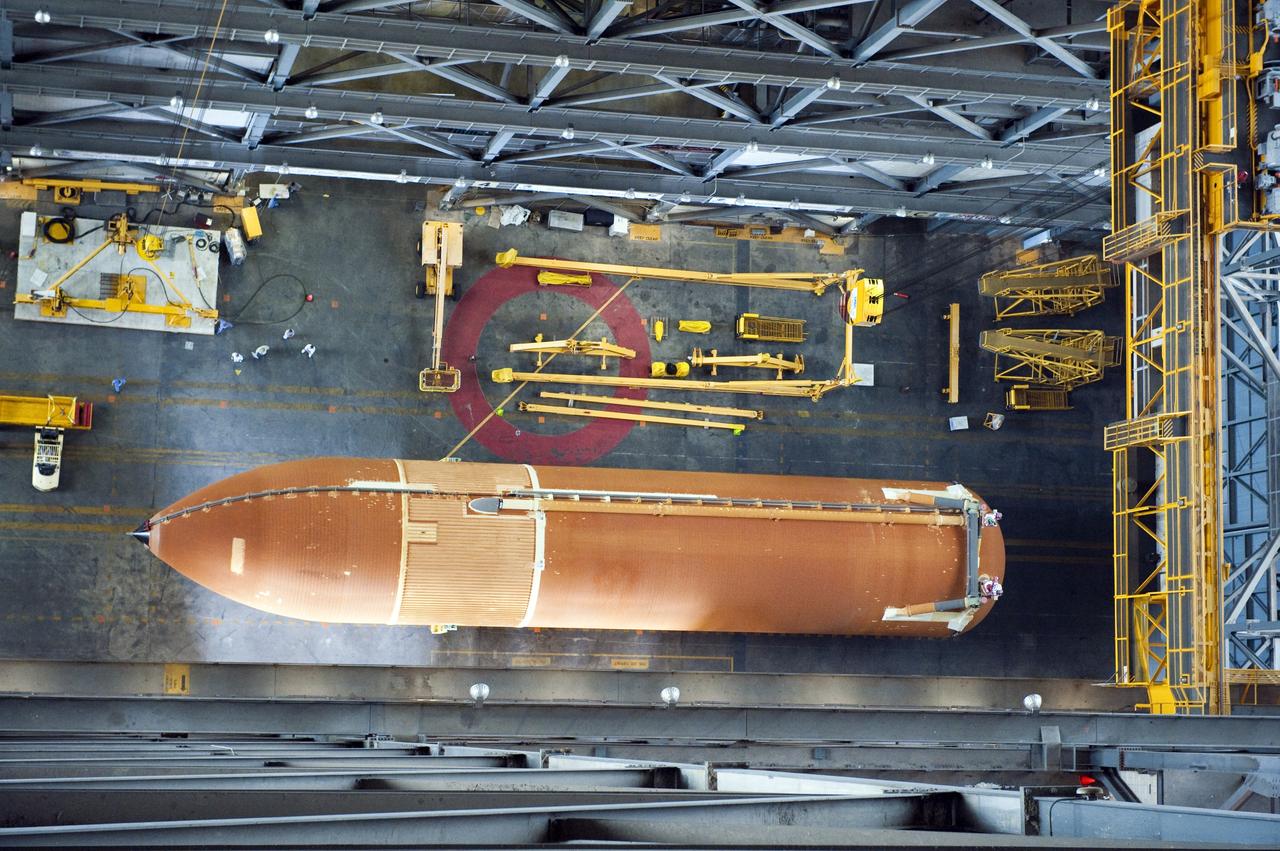
CAPE CANAVERAL, Fla. -- At NASA's Kennedy Space Center in Florida, this overhead image shows the Space Shuttle Program's last external fuel tank, ET-122, after it was delivered to the transfer aisle of the Vehicle Assembly Building (VAB). The tank traveled 900 miles by sea, carried in the Pegasus Barge, from NASA's Michoud Assembly Facility in New Orleans. Once inside the VAB, it eventually will be attached to space shuttle Endeavour for the STS-134 mission to the International Space Station targeted to launch Feb. 2011. STS-134 currently is scheduled to be the last mission in the shuttle program. The tank, which is the largest element of the space shuttle stack, was damaged during Hurricane Katrina in August 2005 and restored to flight configuration by Lockheed Martin Space Systems Company employees. Photo credit: NASA/Kevin O'Connell

CAPE CANAVERAL, Fla. -- This overhead view shows the path taken by the Space Shuttle Program's last external fuel tank, ET-122, from the Pegasus Barge (background) to the Vehicle Assembly Building (VAB) at NASA's Kennedy Space Center in Florida. The tank traveled 900 miles by sea, carried in the Pegasus Barge, from NASA's Michoud Assembly Facility in New Orleans. Once inside the VAB, it eventually will be attached to space shuttle Endeavour for the STS-134 mission to the International Space Station targeted to launch Feb. 2011. STS-134 currently is scheduled to be the last mission in the shuttle program. The tank, which is the largest element of the space shuttle stack, was damaged during Hurricane Katrina in August 2005 and restored to flight configuration by Lockheed Martin Space Systems Company employees. Photo credit: NASA/Kevin O'Connell
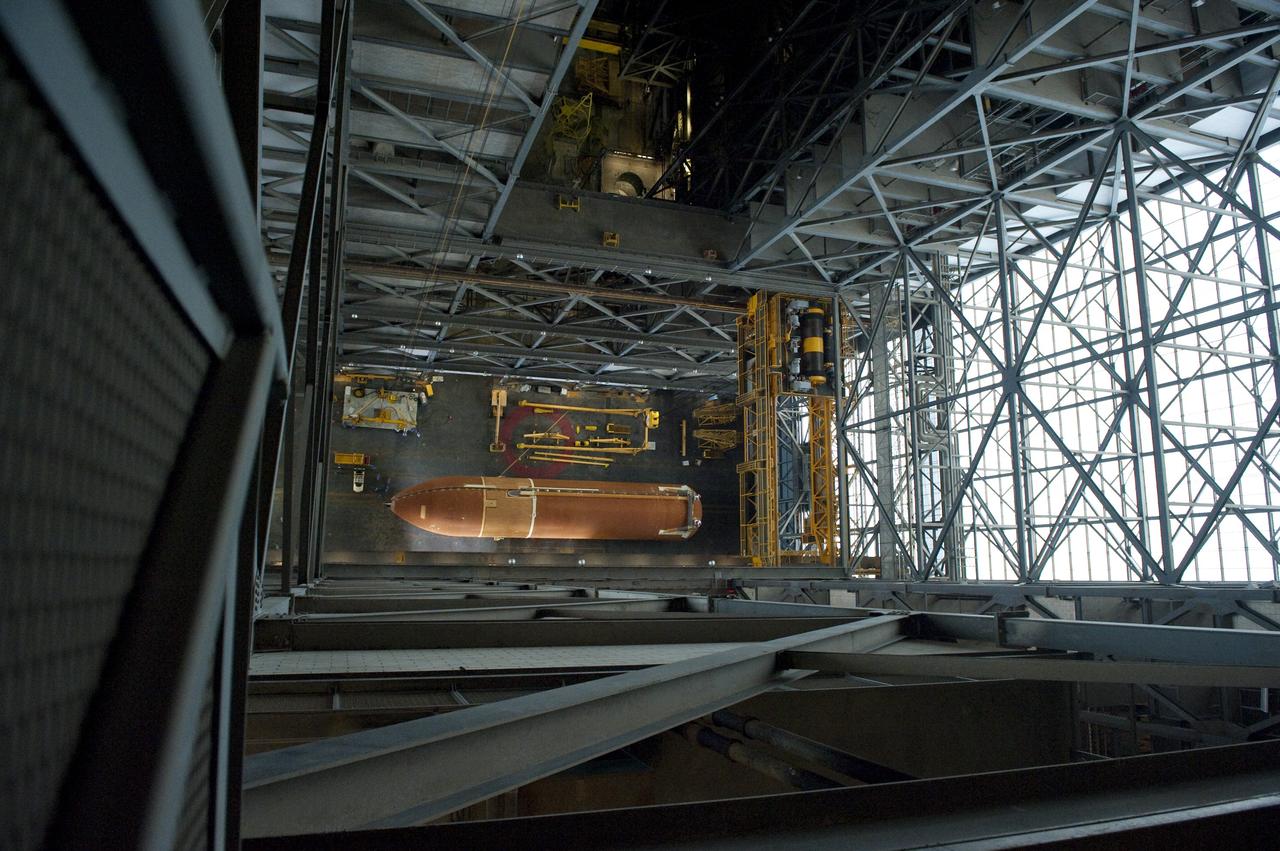
CAPE CANAVERAL, Fla. -- At NASA's Kennedy Space Center in Florida, this overhead image shows the Space Shuttle Program's last external fuel tank, ET-122, after it was delivered to the transfer aisle of the Vehicle Assembly Building (VAB). The tank traveled 900 miles by sea, carried in the Pegasus Barge, from NASA's Michoud Assembly Facility in New Orleans. Once inside the VAB, it eventually will be attached to space shuttle Endeavour for the STS-134 mission to the International Space Station targeted to launch Feb. 2011. STS-134 currently is scheduled to be the last mission in the shuttle program. The tank, which is the largest element of the space shuttle stack, was damaged during Hurricane Katrina in August 2005 and restored to flight configuration by Lockheed Martin Space Systems Company employees. Photo credit: NASA/Kevin O'Connell
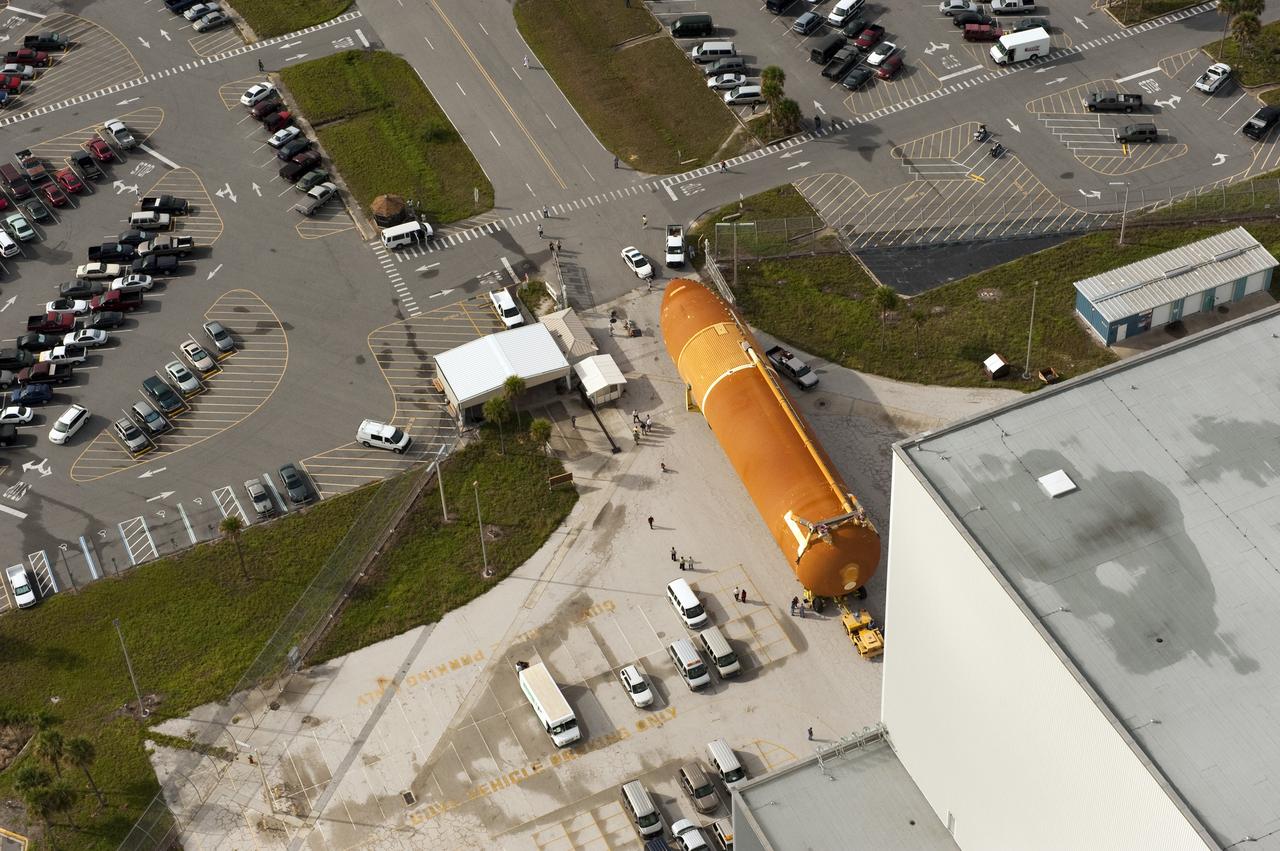
CAPE CANAVERAL, Fla. -- This overhead view shows the Space Shuttle Program's last external fuel tank, ET-122, as it is being transported to the Vehicle Assembly Building (VAB) at NASA's Kennedy Space Center in Florida. The tank traveled 900 miles by sea, carried in the Pegasus Barge, from NASA's Michoud Assembly Facility in New Orleans. Once inside the VAB, it eventually will be attached to space shuttle Endeavour for the STS-134 mission to the International Space Station targeted to launch Feb. 2011. STS-134 currently is scheduled to be the last mission in the shuttle program. The tank, which is the largest element of the space shuttle stack, was damaged during Hurricane Katrina in August 2005 and restored to flight configuration by Lockheed Martin Space Systems Company employees. Photo credit: NASA/Kevin O'Connell
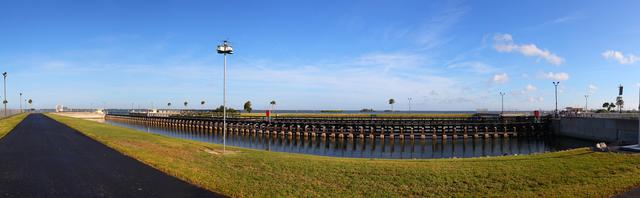
CAPE CANAVERAL, Fla. -- This panoramic image shows the Pegasus Barge carrying the Space Shuttle Program's last external fuel tank, ET-122, through the Port Canaveral locks on its way to the Turn Basin at NASA's Kennedy Space Center in Florida. Once docked, the tank will be offloaded from the barge and transported to the Vehicle Assembly Building (VAB). The tank traveled 900 miles by sea, carried in the barge, from NASA's Michoud Assembly Facility in New Orleans. Once inside the VAB, it eventually will be attached to space shuttle Endeavour for the STS-134 mission to the International Space Station targeted to launch Feb. 2011. STS-134 currently is scheduled to be the last mission in the shuttle program. The tank, which is the largest element of the space shuttle stack, was damaged during Hurricane Katrina in August 2005 and restored to flight configuration by Lockheed Martin Space Systems Company employees. Photo credit: NASA/Frankie Martin
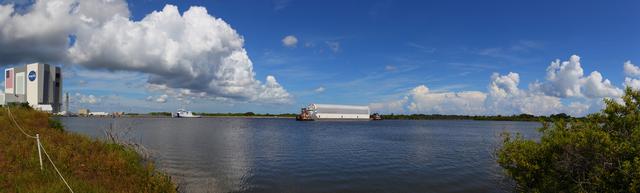
CAPE CANAVERAL, Fla. -- This panoramic image shows tug boats maneuvering the Pegasus Barge carrying the Space Shuttle Program's last external fuel tank, ET-122, through the Turn Basin at NASA's Kennedy Space Center in Florida. Once docked, the tank will be offloaded from the barge and transported to the Vehicle Assembly Building (VAB). NASA's Liberty Star solid rocket booster retrieval ship is also seen (left) docked at the Turn Basin. The tank traveled 900 miles by sea, carried in the barge, from NASA's Michoud Assembly Facility in New Orleans. Once inside the VAB, it eventually will be attached to space shuttle Endeavour for the STS-134 mission to the International Space Station targeted to launch Feb. 2011. STS-134 currently is scheduled to be the last mission in the shuttle program. The tank, which is the largest element of the space shuttle stack, was damaged during Hurricane Katrina in August 2005 and restored to flight configuration by Lockheed Martin Space Systems Company employees. Photo credit: NASA/Frankie Martin
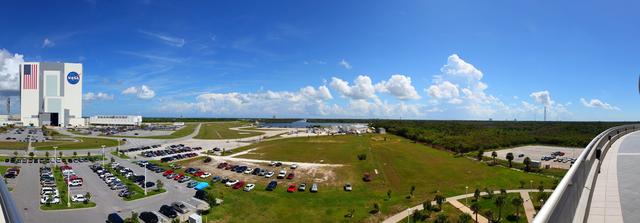
CAPE CANAVERAL, Fla. -- This panoramic image shows the Launch Complex 39 area at NASA's Kennedy Space Center in Florida. In the far background is the Pegasus Barge carrying the Space Shuttle Program's last external fuel tank, ET-122, into Kennedy's Turn Basin. Once docked, the tank will be offloaded from the barge and transported to the Vehicle Assembly Building (VAB). NASA's Liberty Star solid rocket booster retrieval ship also is docked at the Turn Basin. The tank traveled 900 miles by sea, carried in the barge, from NASA's Michoud Assembly Facility in New Orleans. Once inside the VAB, it eventually will be attached to space shuttle Endeavour for the STS-134 mission to the International Space Station targeted to launch Feb. 2011. STS-134 currently is scheduled to be the last mission in the shuttle program. The tank, which is the largest element of the space shuttle stack, was damaged during Hurricane Katrina in August 2005 and restored to flight configuration by Lockheed Martin Space Systems Company employees. Photo credit: NASA/Frankie Martin
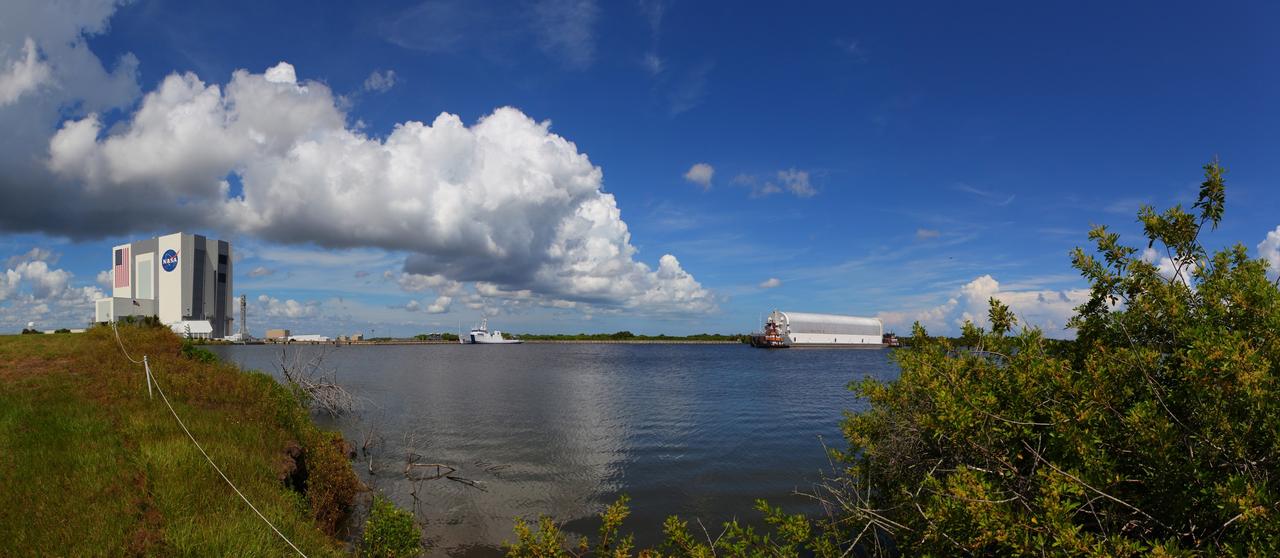
CAPE CANAVERAL, Fla. -- This panoramic image shows tug boats maneuvering the Pegasus Barge carrying the Space Shuttle Program's last external fuel tank, ET-122, through the Turn Basin at NASA's Kennedy Space Center in Florida. Once docked, the tank will be offloaded from the barge and transported to the Vehicle Assembly Building (VAB). NASA's Liberty Star solid rocket booster retrieval ship is seen (left) docked at the Turn Basin. The tank traveled 900 miles by sea, carried in the barge, from NASA's Michoud Assembly Facility in New Orleans. Once inside the VAB, it eventually will be attached to space shuttle Endeavour for the STS-134 mission to the International Space Station targeted to launch Feb. 2011. STS-134 currently is scheduled to be the last mission in the shuttle program. The tank, which is the largest element of the space shuttle stack, was damaged during Hurricane Katrina in August 2005 and restored to flight configuration by Lockheed Martin Space Systems Company employees. Photo credit: NASA/Frankie Martin

CAPE CANAVERAL, Fla. -- This panoramic image was taken from the balcony of the Operations Support Building II, located in the Launch Complex 39 area at NASA's Kennedy Space Center in Florida. In the far background is the Pegasus Barge carrying the Space Shuttle Program's last external fuel tank, ET-122, into Kennedy's Turn Basin. Once docked, the tank will be offloaded from the barge and transported to the Vehicle Assembly Building (VAB). NASA's Liberty Star solid rocket booster retrieval ship also is docked at the Turn Basin. The tank traveled 900 miles by sea, carried in the barge, from NASA's Michoud Assembly Facility in New Orleans. Once inside the VAB, it eventually will be attached to space shuttle Endeavour for the STS-134 mission to the International Space Station targeted to launch Feb. 2011. STS-134 currently is scheduled to be the last mission in the shuttle program. The tank, which is the largest element of the space shuttle stack, was damaged during Hurricane Katrina in August 2005 and restored to flight configuration by Lockheed Martin Space Systems Company employees. Photo credit: NASA/Frankie Martin