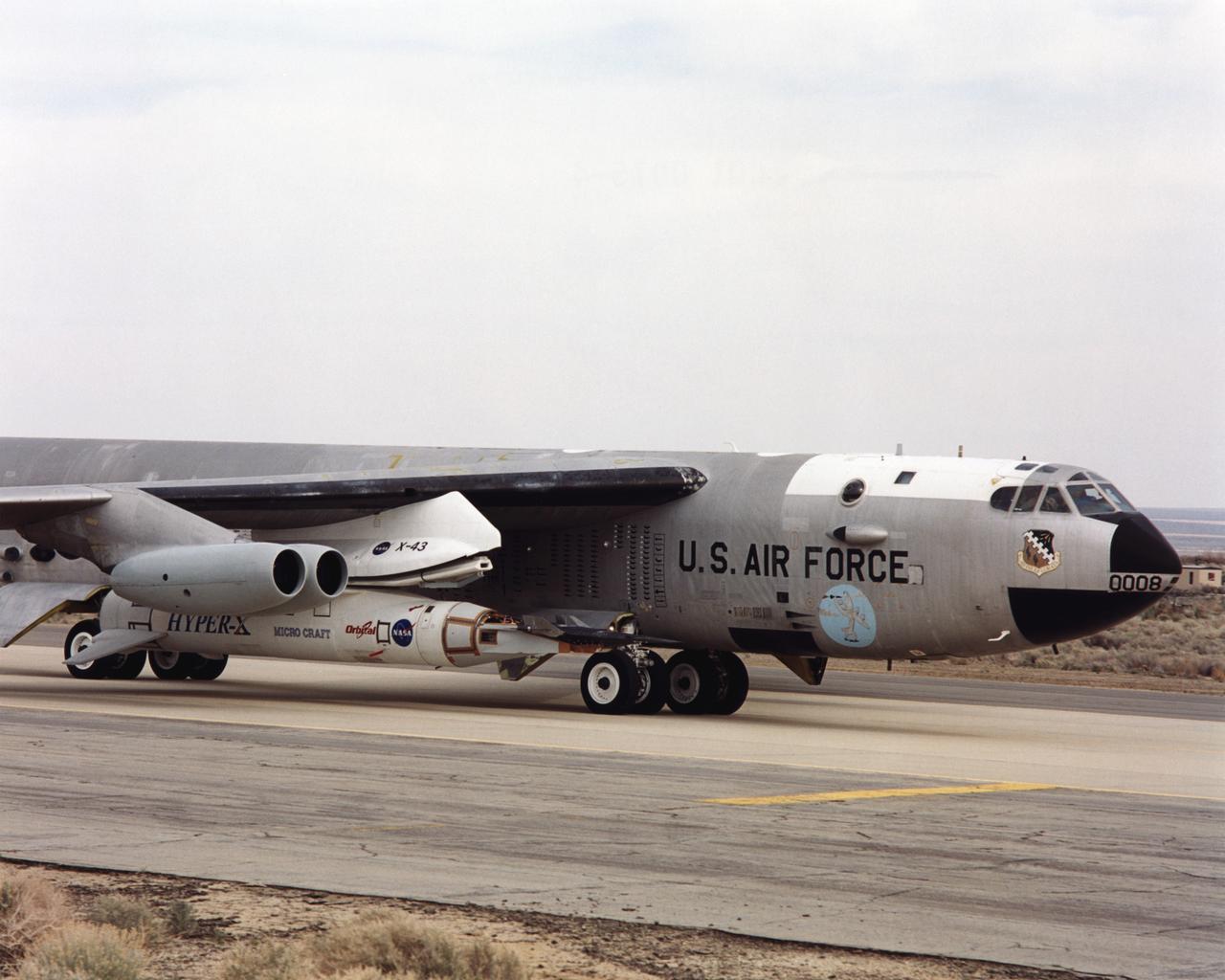
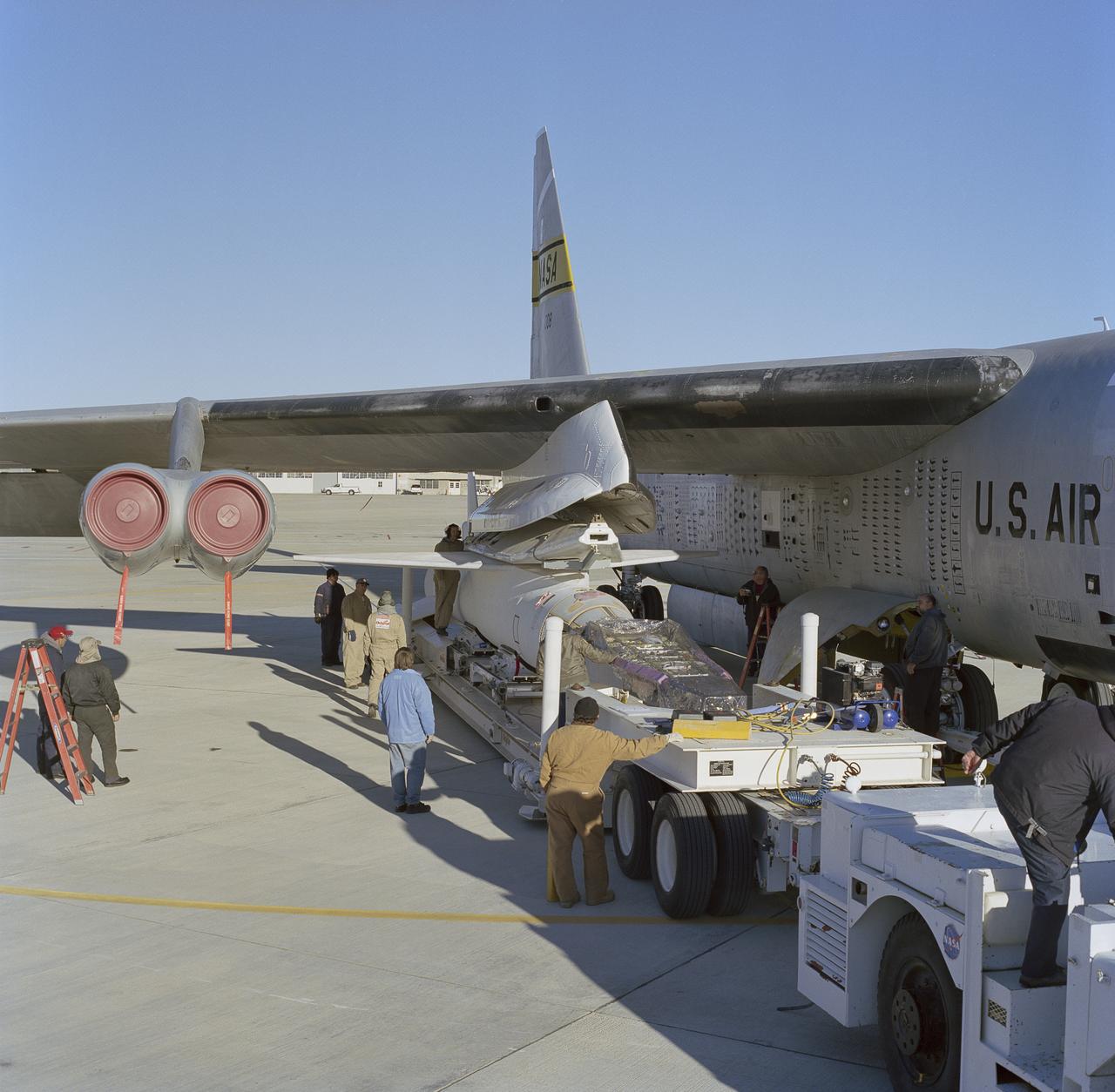
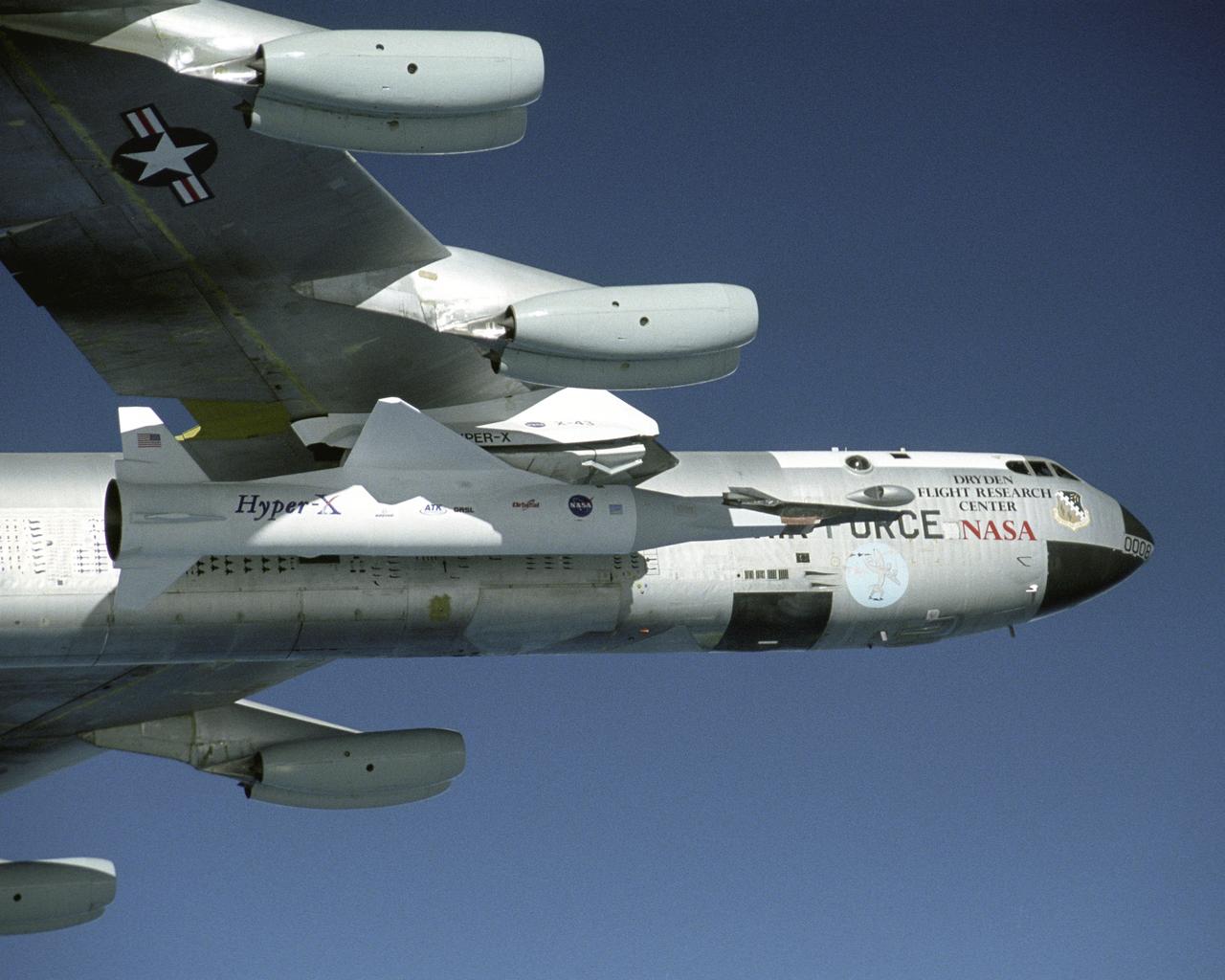
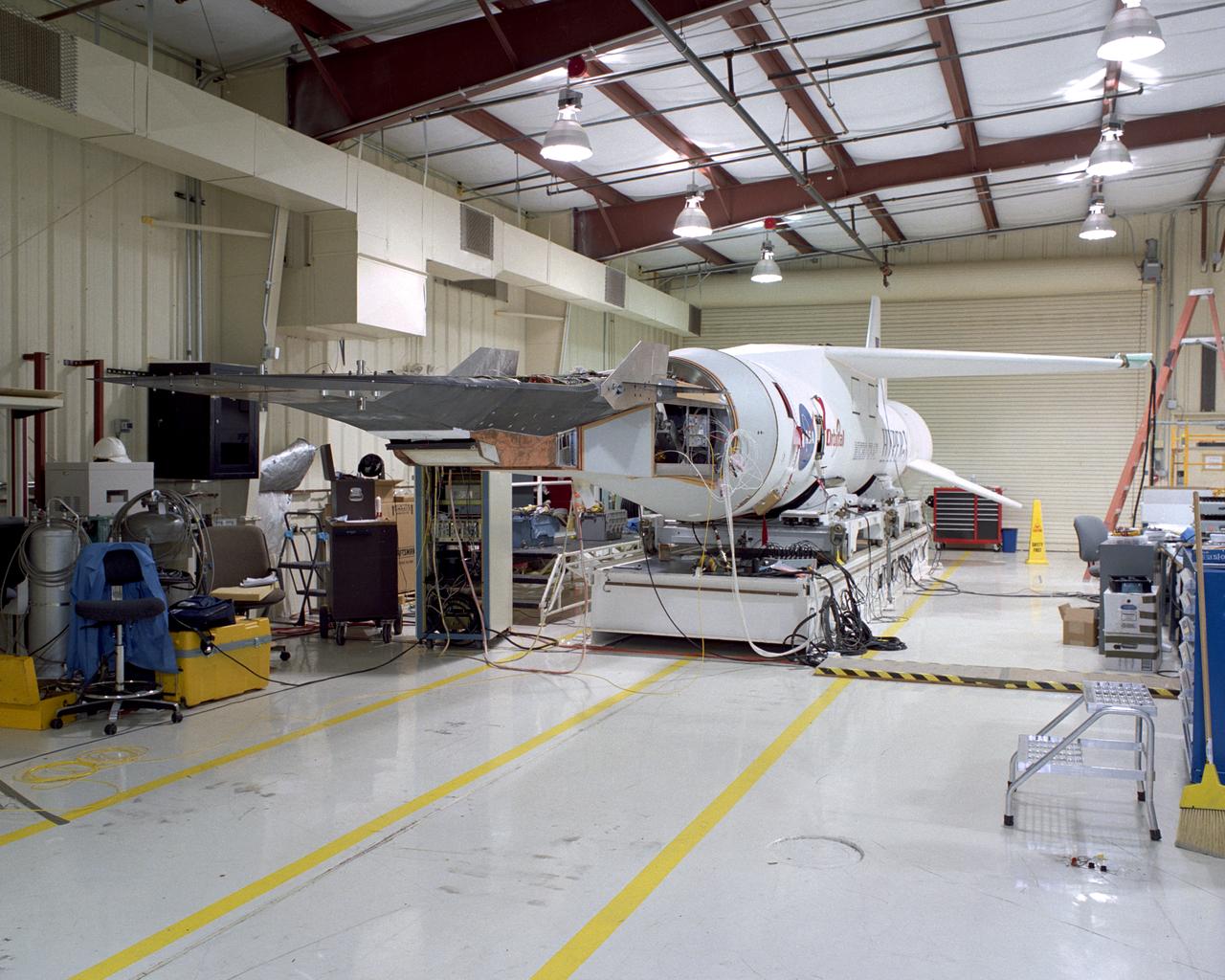
The first of three X-43A hypersonic research aircraft was mated to its modified Pegasus® booster rocket in late January at NASA's Dryden Flight Research Center, Edwards, Calif.
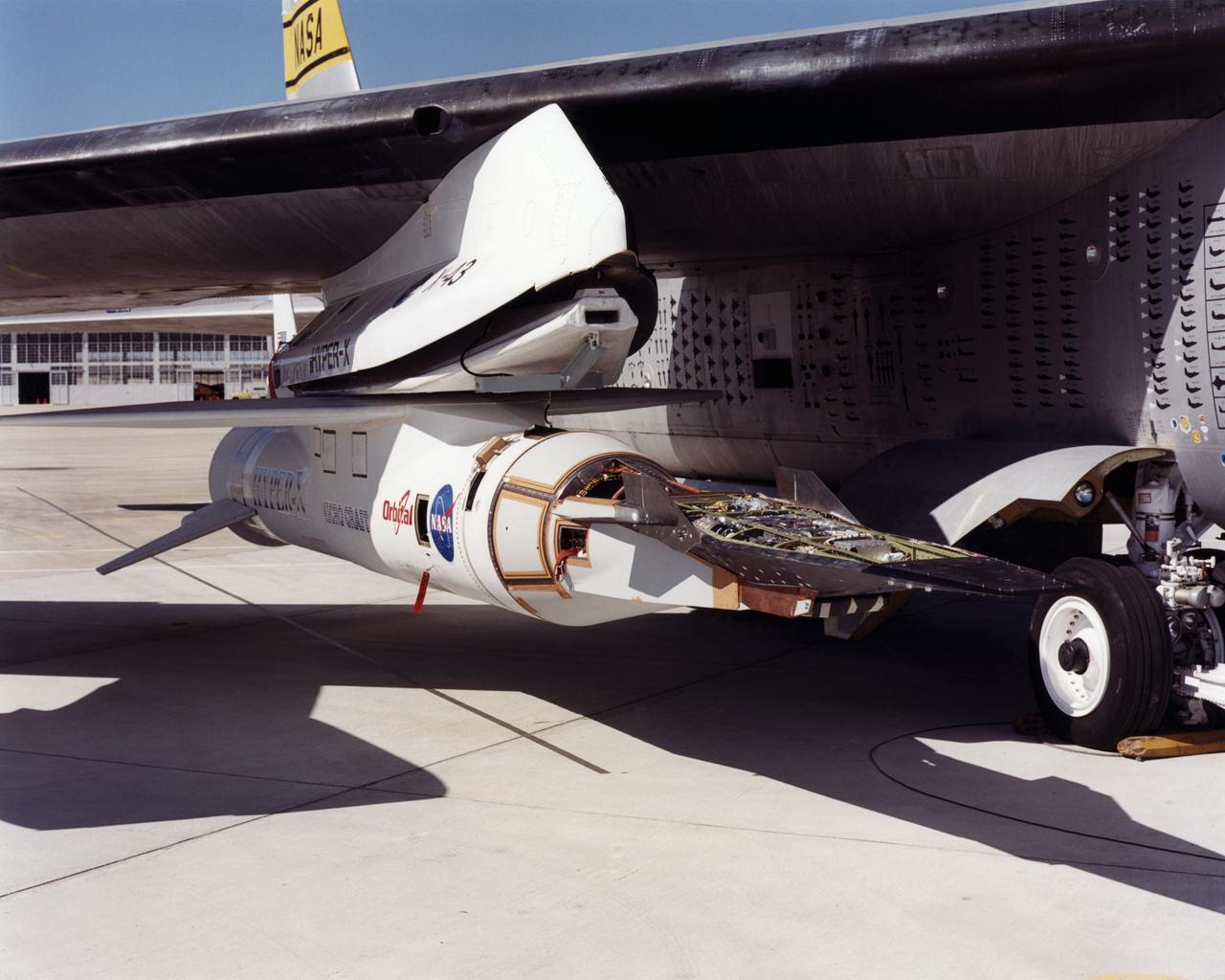
X-43A hypersonic research aircraft mated to its modified Pegasus® booster rocket.
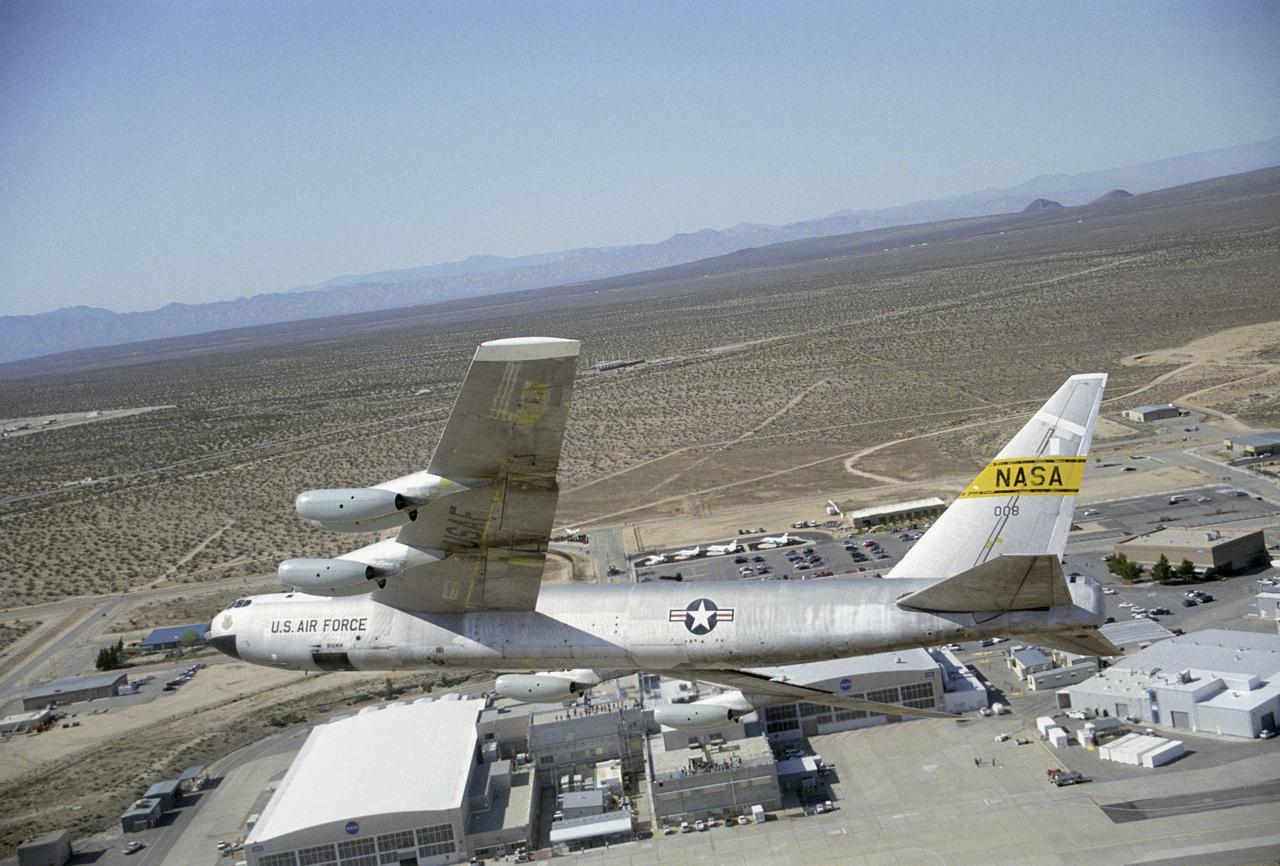
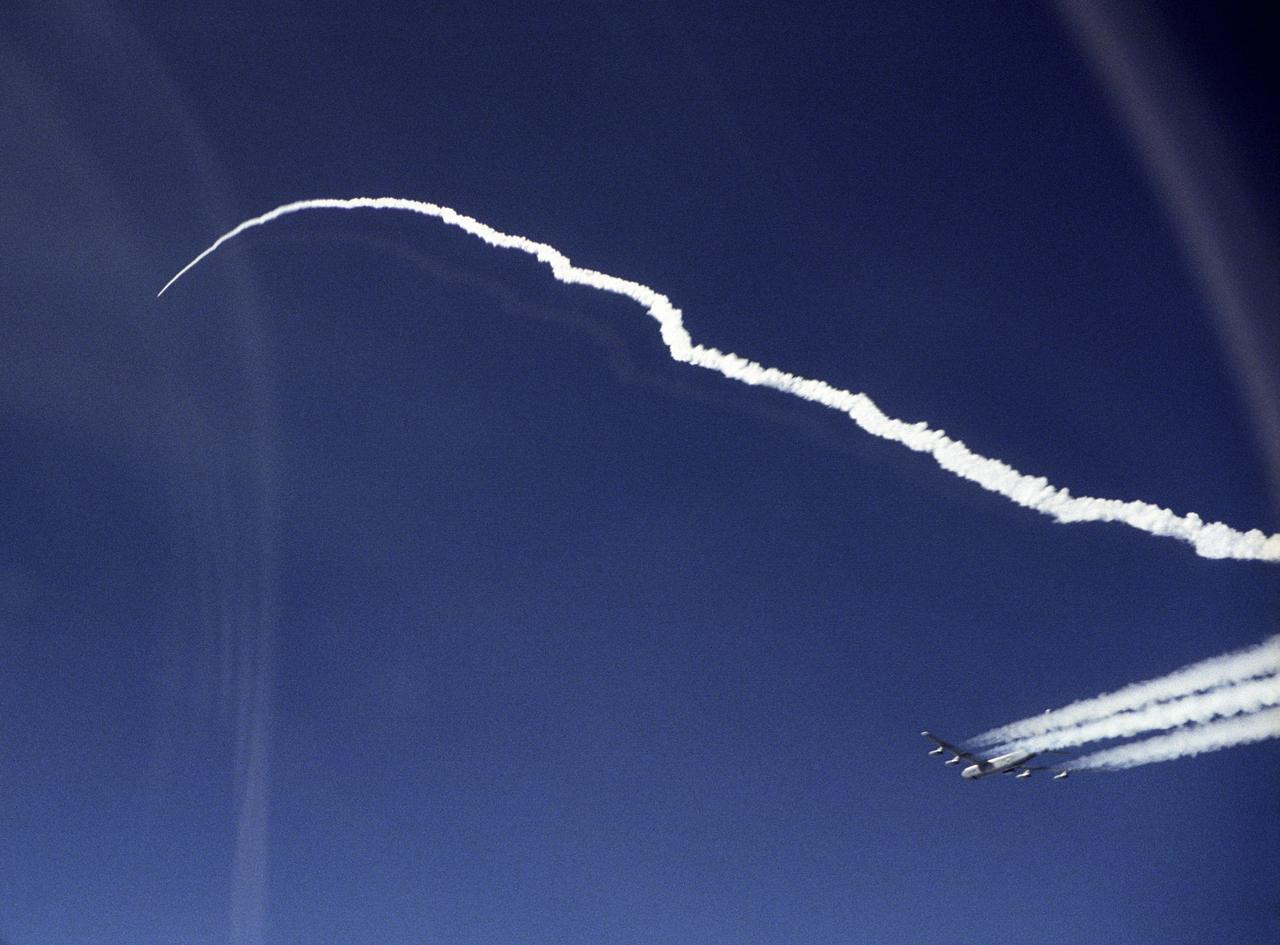
NASA's B-52B aircraft over the Dryden Flight Research Center after the successful launch of the second X-43A hypersonic research vehicle.
NASA's B-52B aircraft over the Dryden Flight Research Center after the successful launch of the second X-43A hypersonic research vehicle
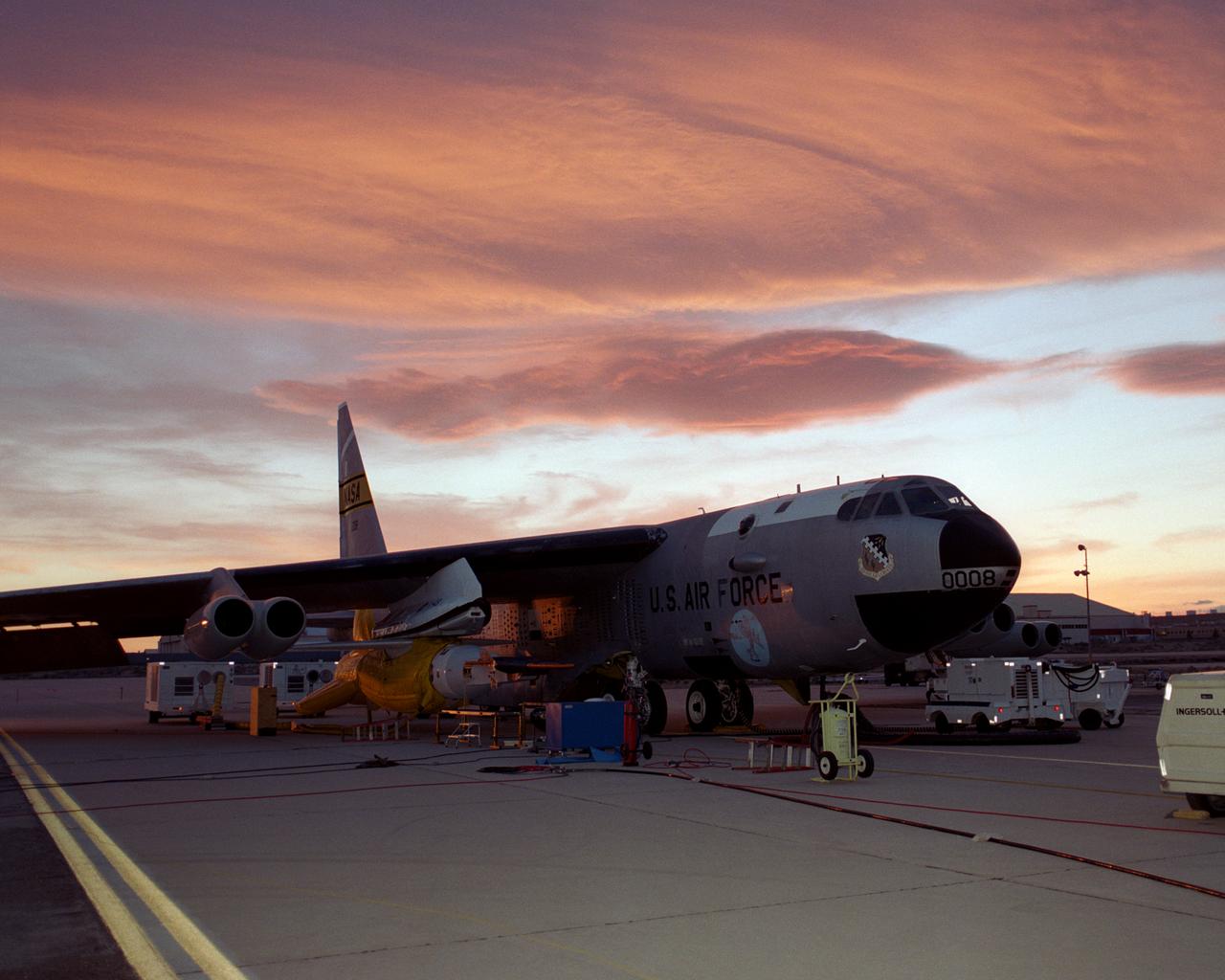
NASA's B-52B launch aircraft at sunset with the second X-43A hypersonic research vehicle attached to a modified Pegasus rocket under its right wing.
NASA's B-52B launch aircraft at sunset with the second X-43A hypersonic research vehicle attached to a modified Pegasus rocket under its right wing
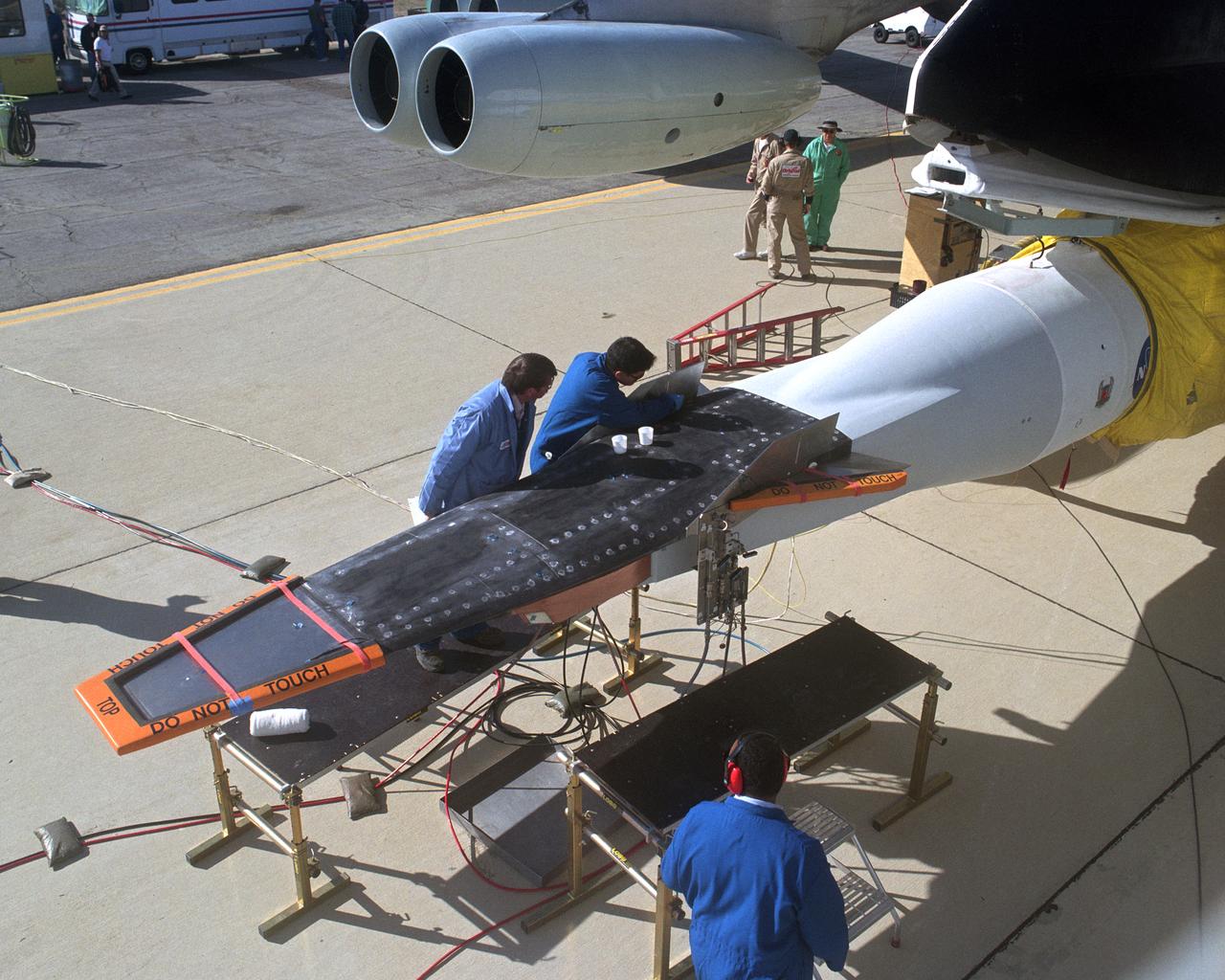
The second X-43A hypersonic research vehicle, mounted under the right wing of the B-52B launch aircraft, viewed from the B-52 cockpit. The crew is working on closing out the research vehicle, preparing it for flight.
The second X-43A hypersonic research vehicle, mounted under the right wing of the B-52B launch aircraft, viewed from the B-52 cockpit
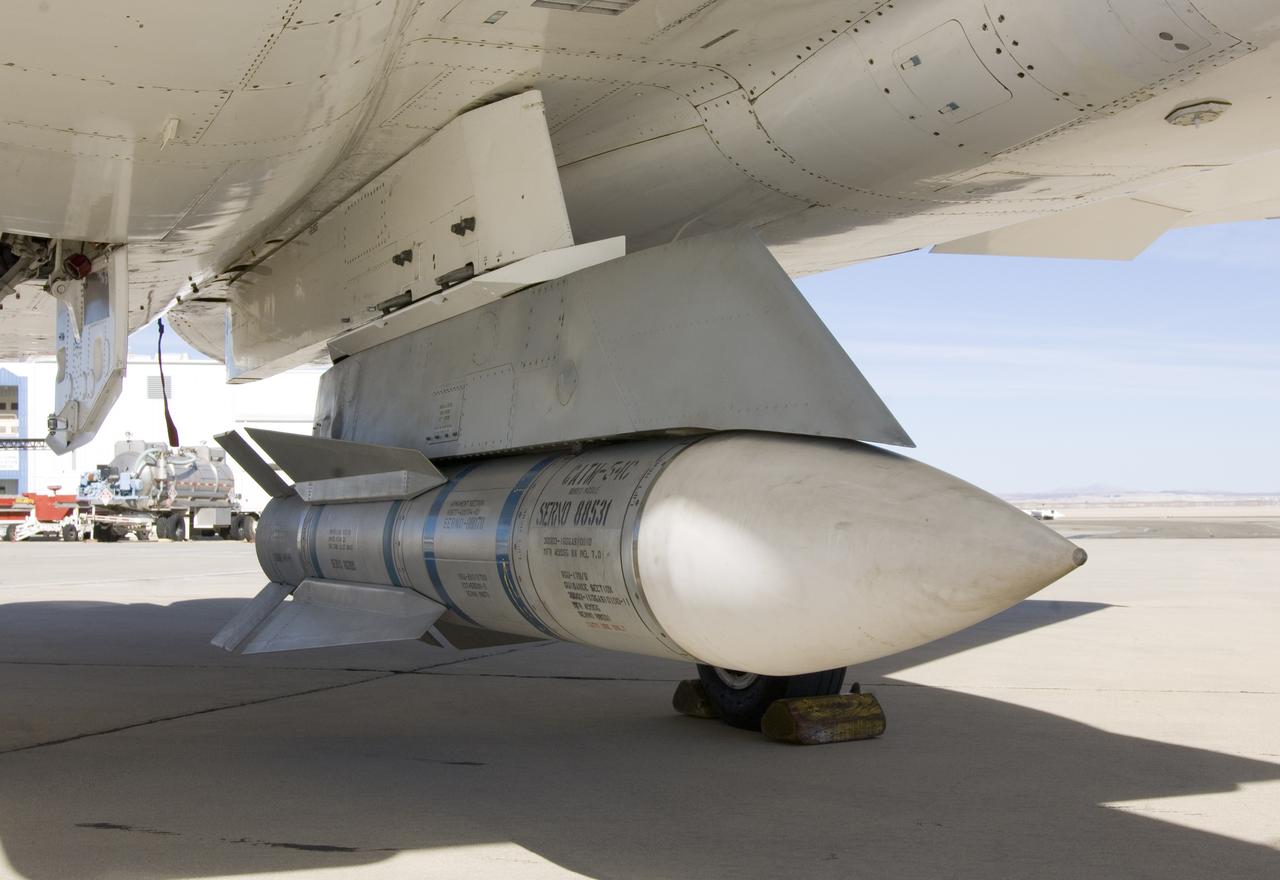
Surplus Navy Phoenix missiles like this one mounted on the centerline pylon of NASA's F-15B research aircraft may be used to acquire hypersonic flight test data.
Surplus Phoenix missiles like this one mounted on the centerline pylon of NASA's F-15B research aircraft may be used to acquire hypersonic flight test data.
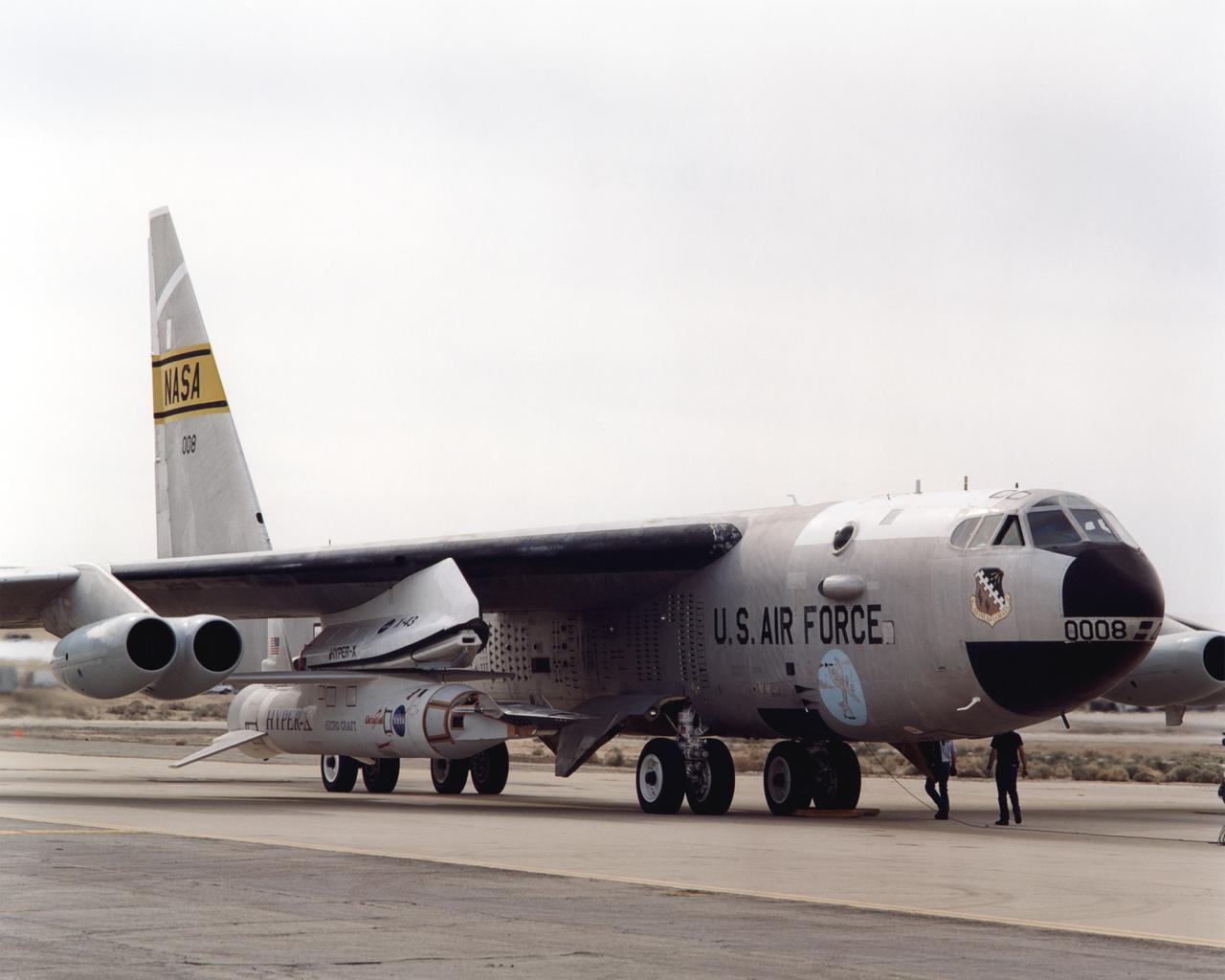
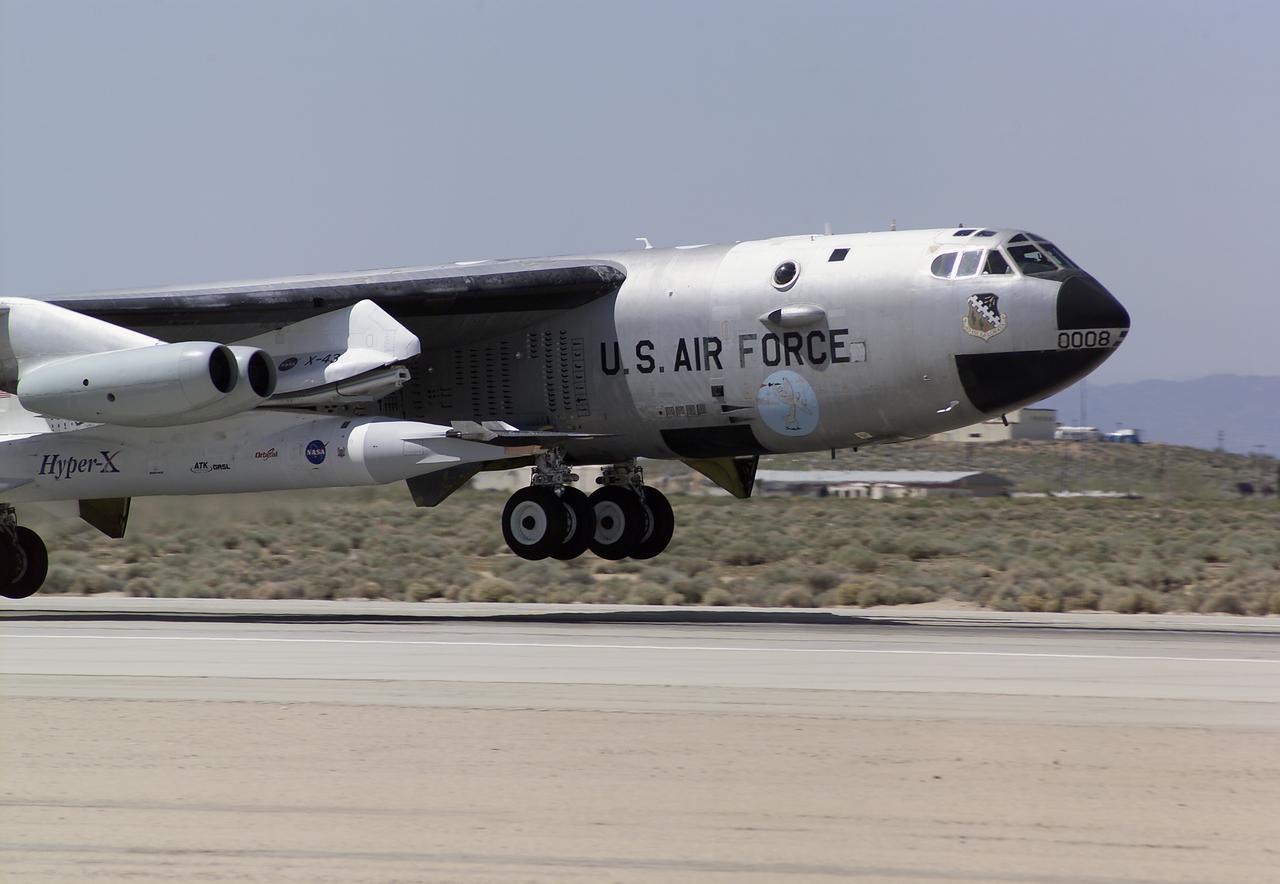
The X-43A hypersonic research aircraft and its modified Pegasus® booster rocket are nestled under the wing of NASA's NB-52B carrier aircraft during pre-flight systems testing at the Dryden Flight Research Center, Edwards, Calif. The combined systems test was one of the last major milestones in the Hyper-X research program before the first X-43A flight. The X-43A flights will be the first actual flight tests of an aircraft powered by a revolutionary supersonic-combustion ramjet ("scramjet") engine capable of operating at hypersonic speeds (above Mach 5, or five times the speed of sound). The 12-foot, unpiloted research vehicle was developed and built by MicroCraft Inc., Tullahoma, Tenn., under NASA contract. The booster was built by Orbital Sciences Corp., Dulles, Va. After being air-launched from NASA's venerable NB-52 mothership, the booster will accelerate the X-43A to test speed and altitude. The X-43A will then separate from the rocket and fly a pre-programmed trajectory, conducting aerodynamic and propulsion experiments until it descends into the Pacific Ocean. Three research flights are planned, two at Mach 7 and one at Mach 10.
The X-43A hypersonic research aircraft and its modified Pegasus® booster rocket nestled under the wing of NASA's NB-52B carrier aircraft during pre-flight systems testing
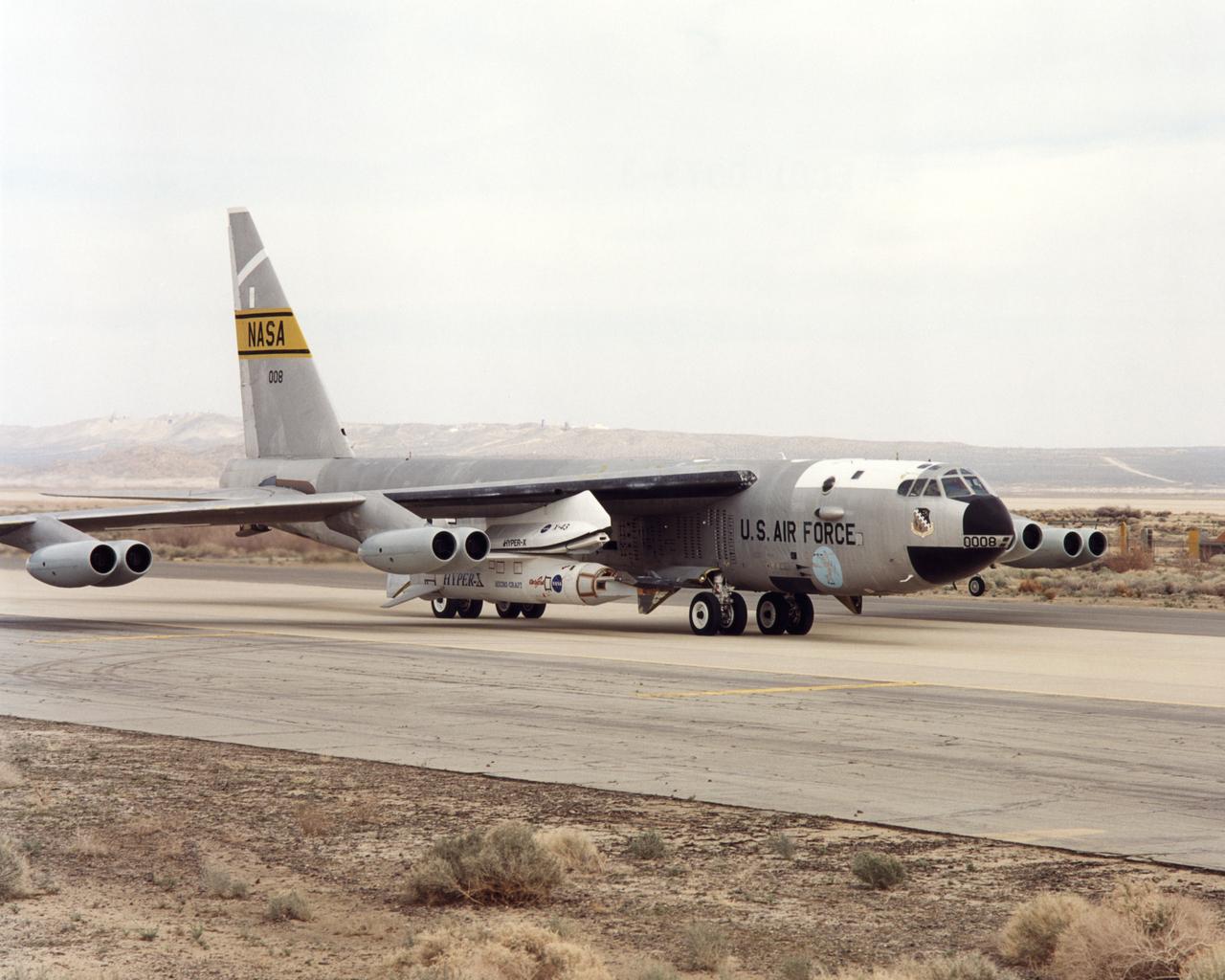
As part of a combined systems test conducted by NASA Dryden Flight Research Center, NASA's NB-52B carrier aircraft rolls down a taxiway at Edwards Air Force Base with the X-43A hypersonic research aircraft and its modified Pegasus® booster rocket attached to a pylon under its right wing. The taxi test was one of the last major milestones in the Hyper-X research program before the first X-43A flight. The X-43A flights will be the first actual flight tests of an aircraft powered by a revolutionary supersonic-combustion ramjet ("scramjet") engine capable of operating at hypersonic speeds (above Mach 5, or five times the speed of sound). The 12-foot, unpiloted research vehicle was developed and built by MicroCraft Inc., Tullahoma, Tenn., under NASA contract. The booster was built by Orbital Sciences Corp., Dulles, Va. After being air-launched from NASA's venerable NB-52 mothership, the booster will accelerate the X-43A to test speed and altitude. The X-43A will then separate from the rocket and fly a pre-programmed trajectory, conducting aerodynamic and propulsion experiments until it descends into the Pacific Ocean. Three research flights are planned, two at Mach 7 and one at Mach 10.
NASA's NB-52B carrier aircraft rolls down a taxiway with the X-43A hypersonic research aircraft and its modified Pegasus® booster rocket attached to a pylon under its right wing.
NASA's NB-52B carrier aircraft rolls down a taxiway at Edwards Air Force Base with the X-43A hypersonic research aircraft and its modified Pegasus® booster rocket slung from a pylon under its right wing. Part of a combined systems test conducted by NASA's Dryden Flight Research Center at Edwards, the taxi test was one of the last major milestones in the Hyper-X research program before the first X-43A flight. The X-43A flights will be the first actual flight tests of an aircraft powered by a revolutionary supersonic-combustion ramjet ("scramjet") engine capable of operating at hypersonic speeds (above Mach 5, or five times the speed of sound). The 12-foot, unpiloted research vehicle was developed and built by MicroCraft Inc., Tullahoma, Tenn., under NASA contract. The booster was built by Orbital Sciences Corp., Dulles, Va.,After being air-launched from NASA's venerable NB-52 mothership, the booster will accelerate the X-43A to test speed and altitude. The X-43A will then separate from the rocket and fly a pre-programmed trajectory, conducting aerodynamic and propulsion experiments until it descends into the Pacific Ocean. Three research flights are planned, two at Mach 7 and one at Mach 10, with the first tentatively scheduled for late spring to early summer, 2001.
NASA's NB-52B carrier aircraft rolls down a taxiway with the X-43A hypersonic research aircraft and its modified Pegasus® booster rocket slung from a pylon under its right wing
The first of three X-43A hypersonic research aircraft and its modified Pegasus® booster rocket recently underwent combined systems testing while mounted to NASA's NB-52B carrier aircraft at the Dryden Flight Research Center, Edwards, Calif. The combined systems test was one of the last major milestones in the Hyper-X research program before the first X-43A flight. The X-43A flights will be the first actual flight tests of an aircraft powered by a revolutionary supersonic-combustion ramjet ("scramjet") engine capable of operating at hypersonic speeds (above Mach 5, or five times the speed of sound). The 12-foot, unpiloted research vehicle was developed and built by MicroCraft Inc., Tullahoma, Tenn., under NASA contract. The booster was built by Orbital Sciences Corp., Dulles, Va.,After being air-launched from NASA's venerable NB-52 mothership, the booster will accelerate the X-43A to test speed and altitude. The X-43A will then separate from the rocket and fly a pre-programmed trajectory, conducting aerodynamic and propulsion experiments until it descends into the Pacific Ocean. Three research flights are planned, two at Mach 7 and one at Mach 10.
The X-43A hypersonic research aircraft and its modified Pegasus® booster rocket recently underwent combined systems testing while mounted to NASA's NB-52B carrier aircraft
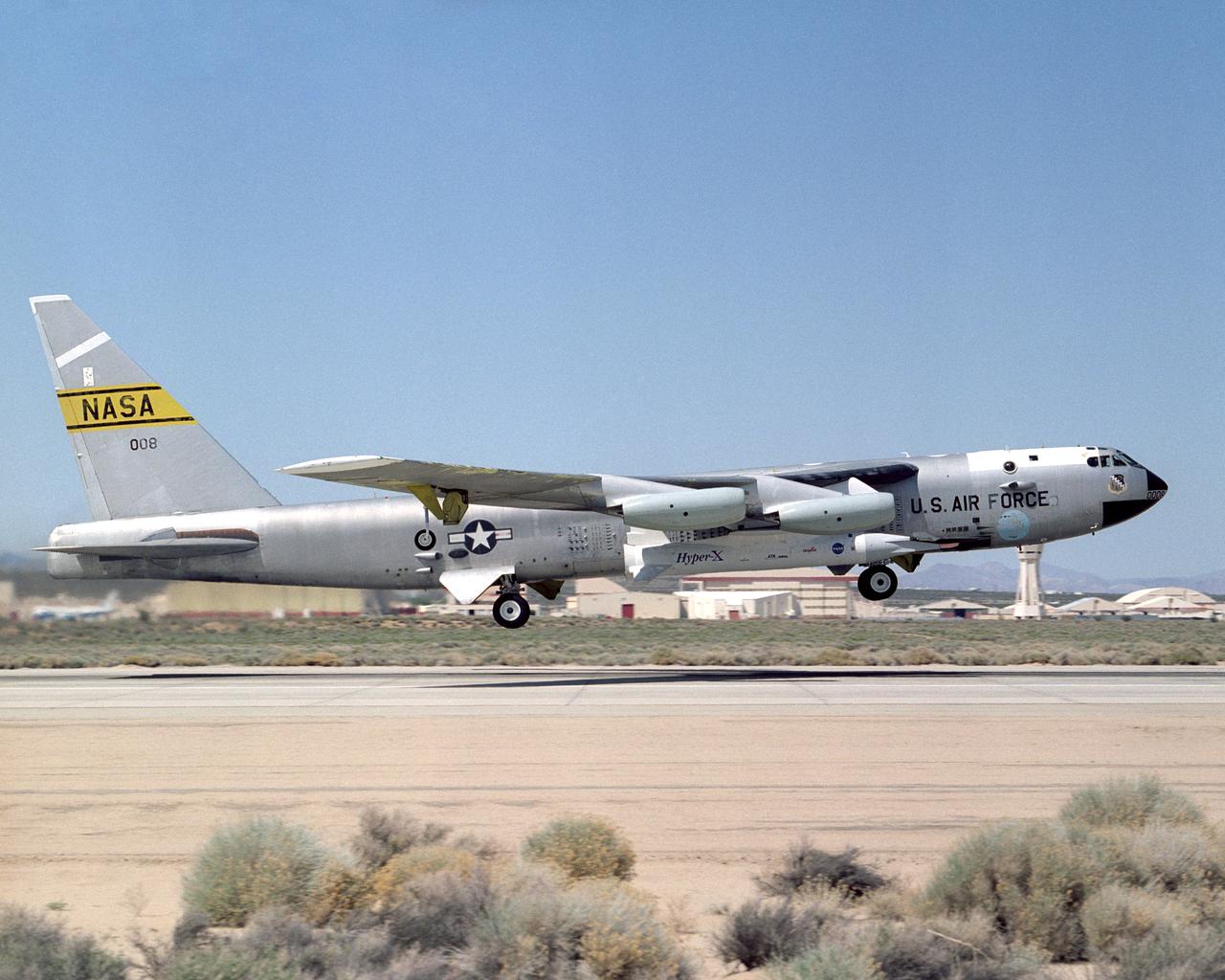
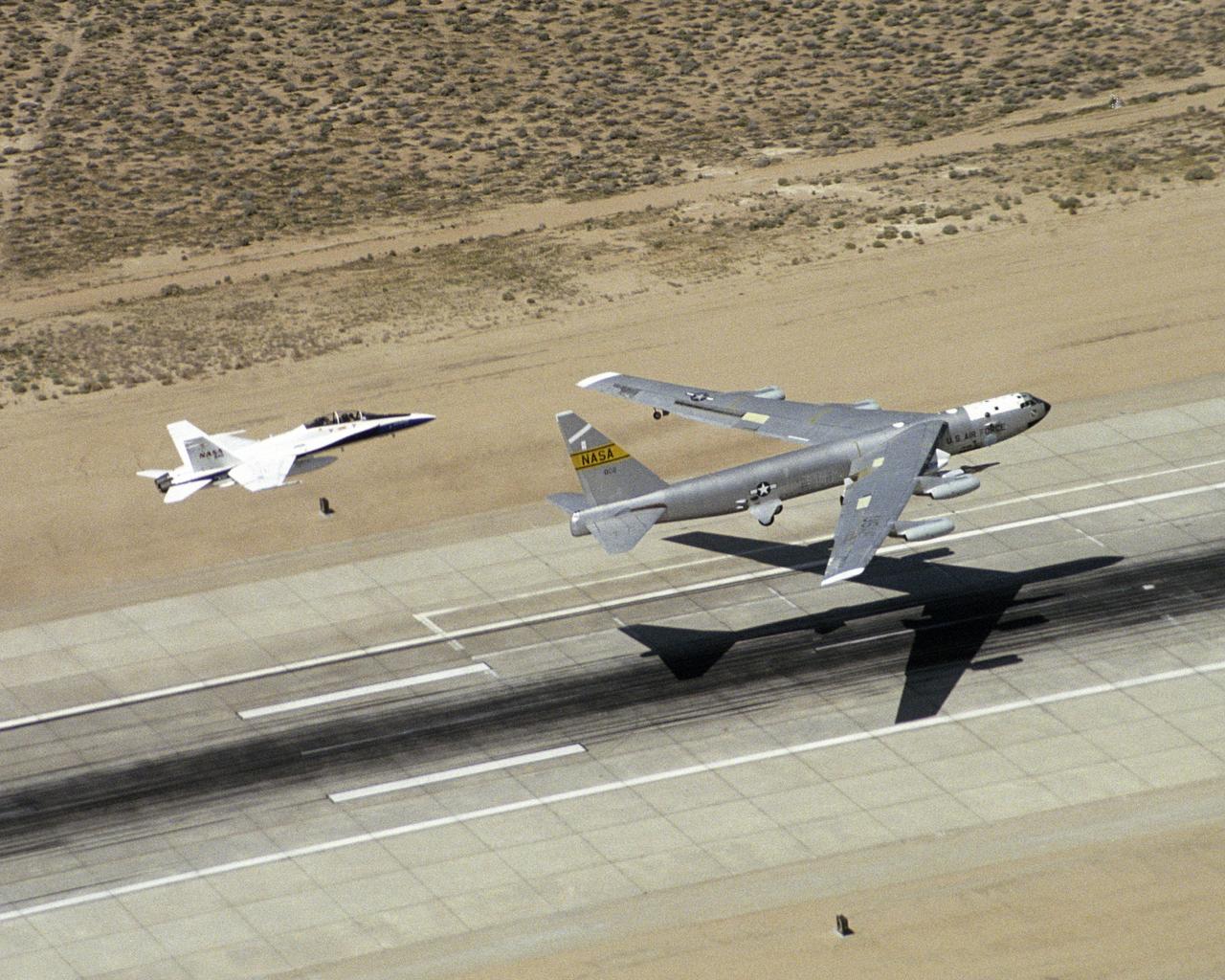
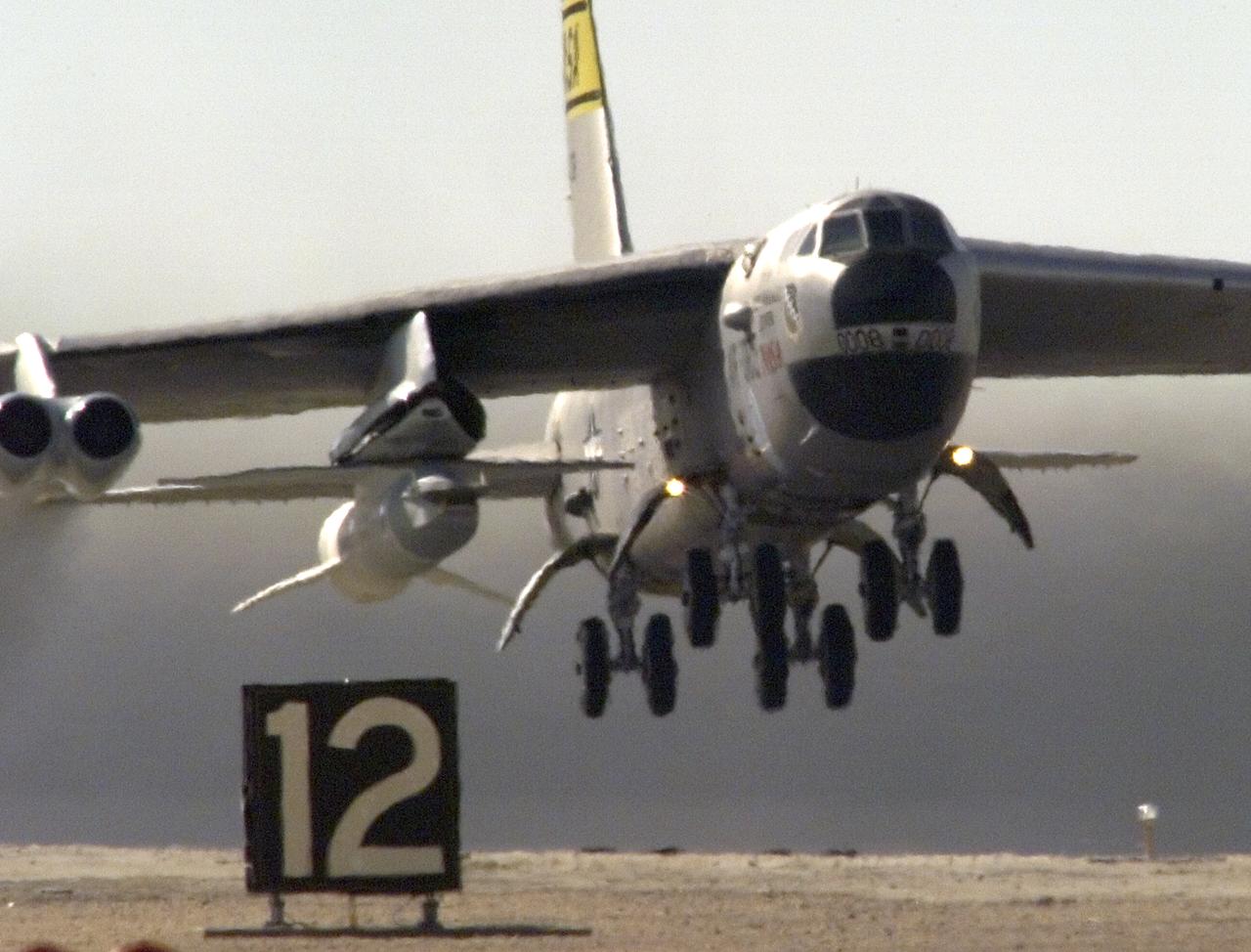
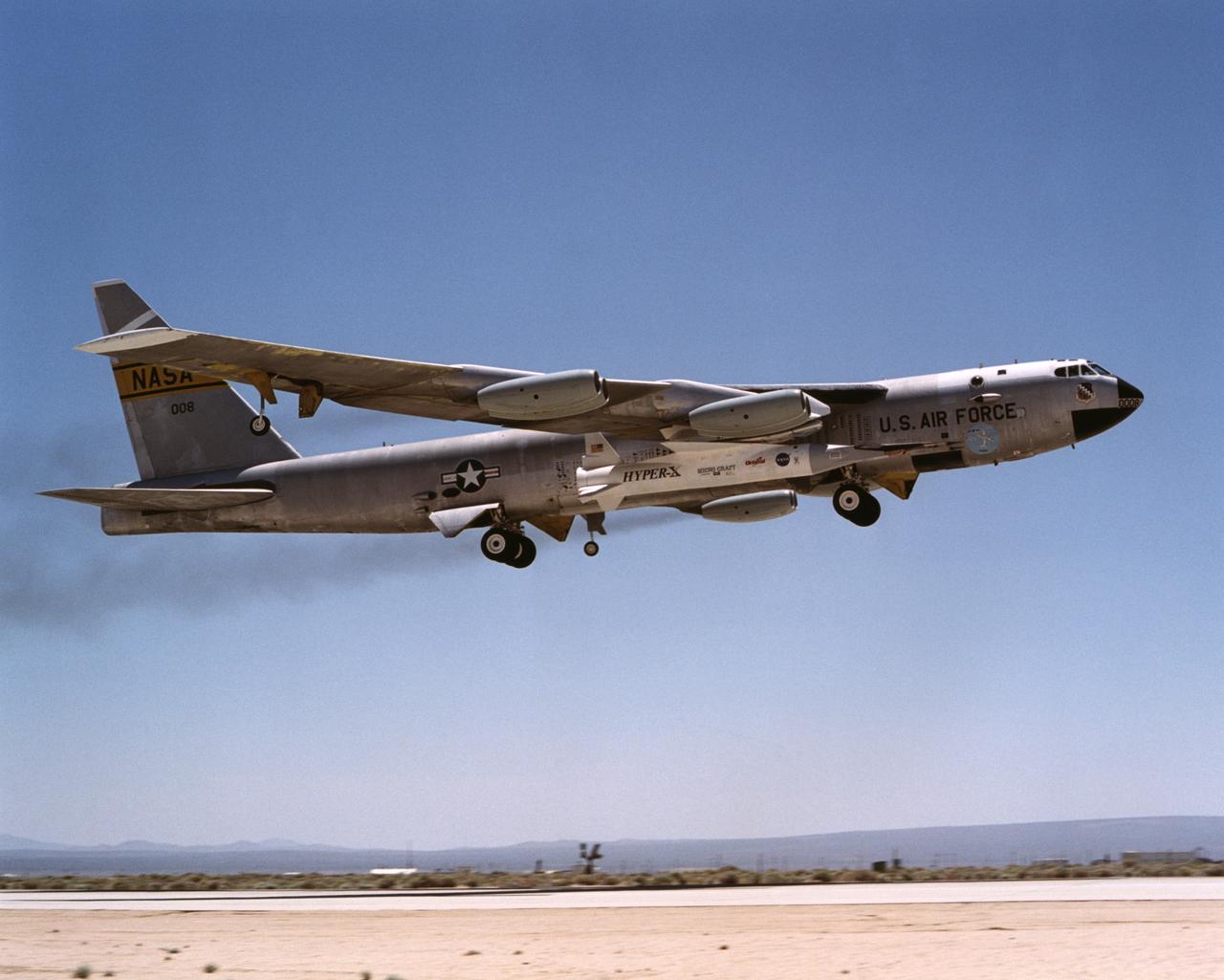
The second X-43A hypersonic research aircraft and its modified Pegasus booster rocket left the runway, carried aloft by NASA's B-52B launch aircraft from the NASA Dryden Flight Research Center at Edwards Air Force Base, Calif., on March 27, 2004. About an hour later the Pegasus booster was launched from the B-52 to accelerate the X-43A to its intended speed of Mach 7.
NASA's B-52B launch aircraft takes off carrying the second X-43A hypersonic research vehicle attached to a modified Pegasus rocket, on March 27, 2004
The second X-43A hypersonic research aircraft and its modified Pegasus booster rocket left the runway, carried aloft by NASA's B-52B launch aircraft from the NASA Dryden Flight Research Center at Edwards Air Force Base, Calif., on March 27, 2004. About an hour later the Pegasus booster was launched from the B-52 to accelerate the X-43A to its intended speed of Mach 7.
NASA's B-52B launch aircraft takes off carrying the second X-43A hypersonic research vehicle attached to a modified Pegasus rocket, on March 27, 2004
The second X-43A hypersonic research aircraft and its modified Pegasus booster rocket left the runway, carried aloft by NASA's B-52B launch aircraft from the NASA Dryden Flight Research Center at Edwards Air Force Base, Calif., on March 27, 2004. About an hour later the Pegasus booster was launched from the B-52 to accelerate the X-43A to its intended speed of Mach 7.
NASA's B-52B launch aircraft takes off carrying the second X-43A hypersonic research vehicle attached to a modified Pegasus rocket, on March 27, 2004
The third X-43A hypersonic research aircraft and its modified Pegasus booster rocket left the runway, carried aloft by NASA's B-52B launch aircraft from the NASA Dryden Flight Research Center at Edwards Air Force Base, California, on November 16, 2004. About an hour later the Pegasus booster was launched from the B-52 to accelerate the X-43A to its intended speed of Mach 10.
NASA's B-52B launch aircraft takes off carrying the third X-43A hypersonic research vehicle attached to a modified Pegasus rocket, on November 16, 2004
The second X-43A hypersonic research aircraft and its modified Pegasus booster rocket left the runway, carried aloft by NASA's B-52B launch aircraft from the NASA Dryden Flight Research Center at Edwards Air Force Base, Calif., on March 27, 2004. About an hour later the Pegasus booster was launched from the B-52 to accelerate the X-43A to its intended speed of Mach 7.
NASA's B-52B launch aircraft takes off carrying the second X-43A hypersonic research vehicle attached to a modified Pegasus rocket, on March 27, 2004
The first of three X-43A hypersonic research aircraft and its modified Pegasus® booster rocket recently underwent combined systems testing while mounted to NASA's NB-52B carrier aircraft at the Dryden Flight Research Center, Edwards, California. The combined systems test was one of the last major milestones in the Hyper-X research program before the first X-43A flight. One of the major goals of the Hyper-X program is flight validation of airframe-integrated, air-breathing propulsion system, which so far have only been tested in ground facilities, such as wind tunnels. The X-43A flights will be the first actual flight tests of an aircraft powered by a revolutionary supersonic-combustion ramjet ("scramjet") engine capable of operating at hypersonic speeds above Mach 5 (five times the speed of sound). The X-43A design uses the underbody of the aircraft to form critical elements of the engine. The forebody shape helps compress the intake airflow, while the aft section acts as a nozzle to direct thrust. The 12-foot, unpiloted research vehicle was developed and built by MicroCraft Inc., Tullahoma, Tenn., under NASA contract. The booster, built by Orbital Sciences Corp., Dulles, Va., will accelerate the X-43A after the X-43A/booster "stack" is air-launched from NASA's venerable NB-52 mothership. The X-43A will separate from the rocket at a predetermined altitude and speed and fly a pre-programmed trajectory, conducting aerodynamic and propulsion experiments until it descends into the Pacific Ocean. Three research flights are planned, two at Mach 7 and one at Mach 10.
The X-43A hypersonic research aircraft and its modified Pegasus® booster rocket mounted to NASA's NB-52B carrier aircraft at the Dryden Flight Research Center, Edwards, California
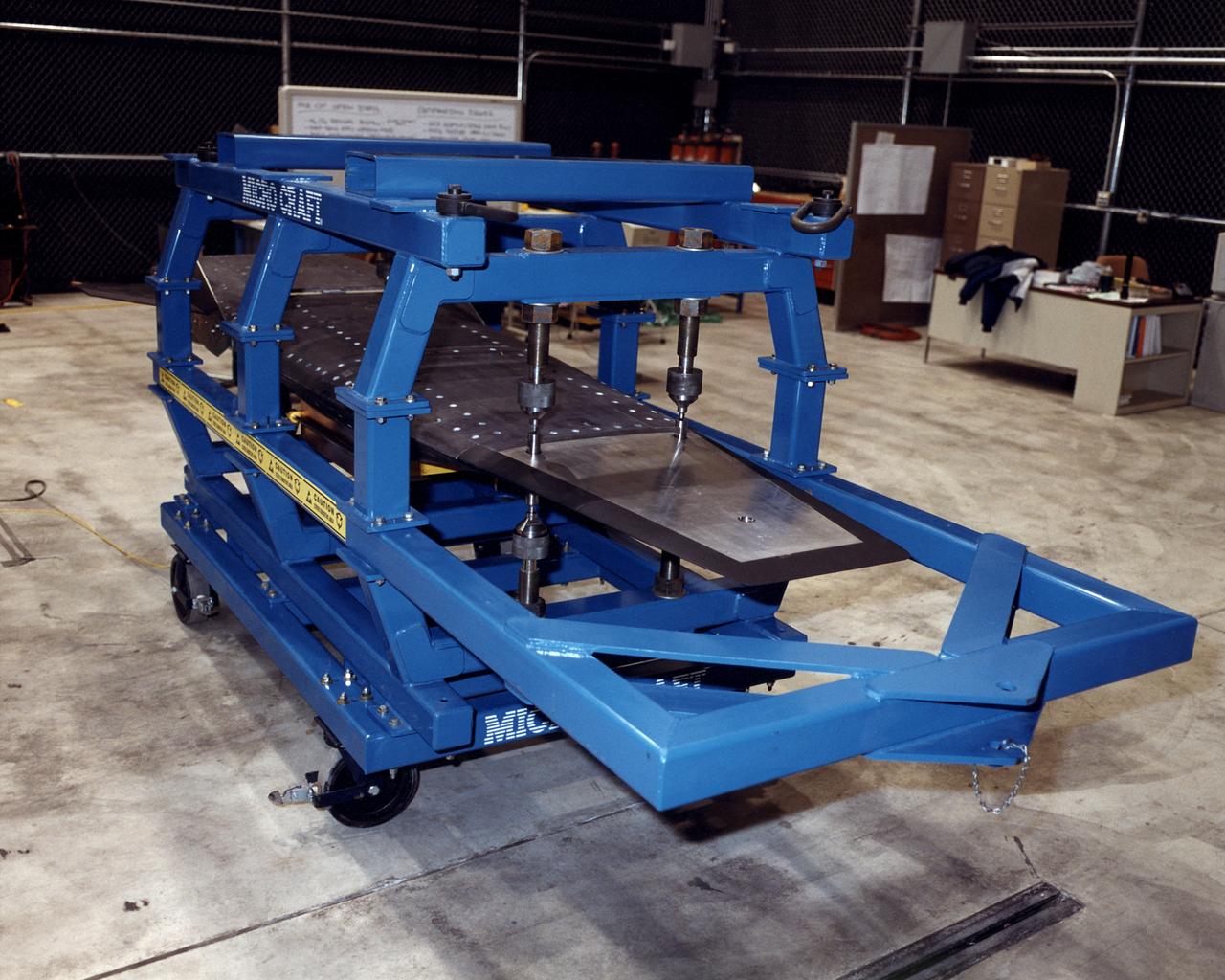
The second of three X-43A hypersonic research aircraft, shown here in its protective shipping jig, arrived at NASA's Dryden Flight Research Center, Edwards, California, on January 31, 2001. The arrival of the second X-43A from its manufacturer, MicroCraft, Inc., of Tullahoma, Tenn., followed by only a few days the mating of the first X-43A and its specially-designed adapter to the first stage of a modified Pegasus® booster rocket. The booster, built by Orbital Sciences Corp., Dulles, Va., will accelerate the 12-foot-long, unpiloted research aircraft to a predetermined altitude and speed after the X-43A/booster "stack" is air-launched from NASA's venerable NB-52 mothership. The X-43A will then separate from the rocket and fly a pre-programmed trajectory, conducting aerodynamic and propulsion experiments until it impacts into the Pacific Ocean. Three research flights are planned, two at Mach 7 and one at Mach 10 (seven and 10 times the speed of sound respectively) with the first tentatively scheduled for early summer, 2001. The X-43A is powered by a revolutionary supersonic-combustion ramjet ("scramjet") engine, and will use the underbody of the aircraft to form critical elements of the engine. The forebody shape helps compress the intake airflow, while the aft section acts as a nozzle to direct thrust. The X-43A flights will be the first actual flight tests of an aircraft powered by an air-breathing scramjet engine.
The second X-43A hypersonic research aircraft, shown here in its protective shipping jig, arrives at NASA's Dryden Flight Research Center
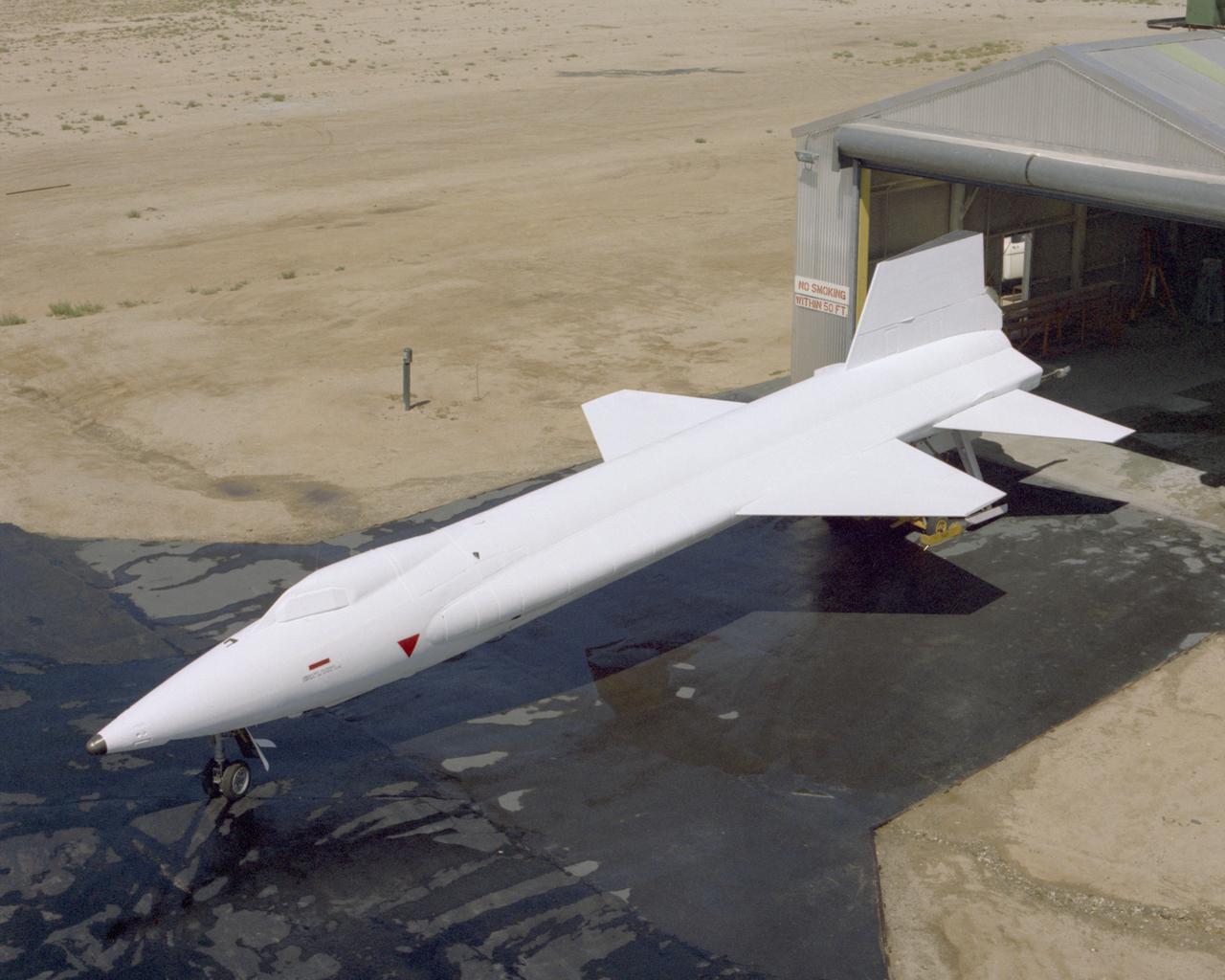
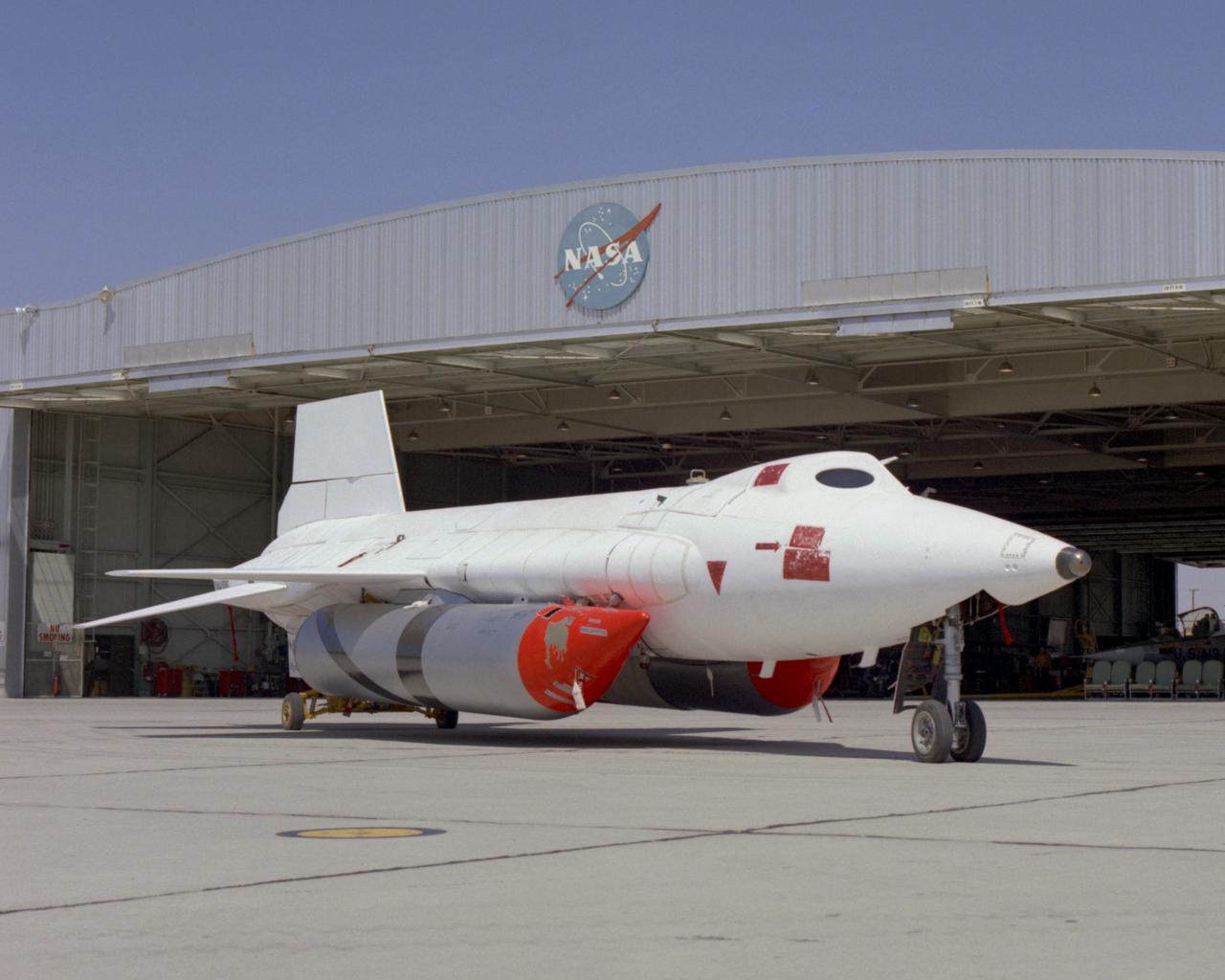
X-15A-2 with full scale ablative and external tanks installed parked in front of hangar. In June 1967, the X-15A-2 rocket-powered research aircraft received a full-scale ablative coating to protect the craft from the high temperatures associated with hypersonic flight (above Mach 5). This pink eraser-like substance, applied to the X-15A-2 aircraft (56-6671), was then covered with a white sealant coat before flight. This coating would help the #2 aircraft reach the record speed of 4,520 mph (Mach 6.7).
X-15A-2 with full scale ablative and external tanks installed parked in front of hangar
X-15A-2 is rolled out of the paint shop after having the full scale ablative applied. In June 1967, the X-15A-2 rocket-powered research aircraft received a full-scale ablative coating to protect the craft from the high temperatures associated with hypersonic flight (above Mach 5). This pink eraser-like substance, applied to the X-15A-2 aircraft (56-6671), was then covered with a white sealant coat before flight. This coating would help the #2 aircraft reach the record speed of 4,520 mph (Mach 6.7).
X-15A-2 is rolled out of the paint shop after having the full scale ablative applied
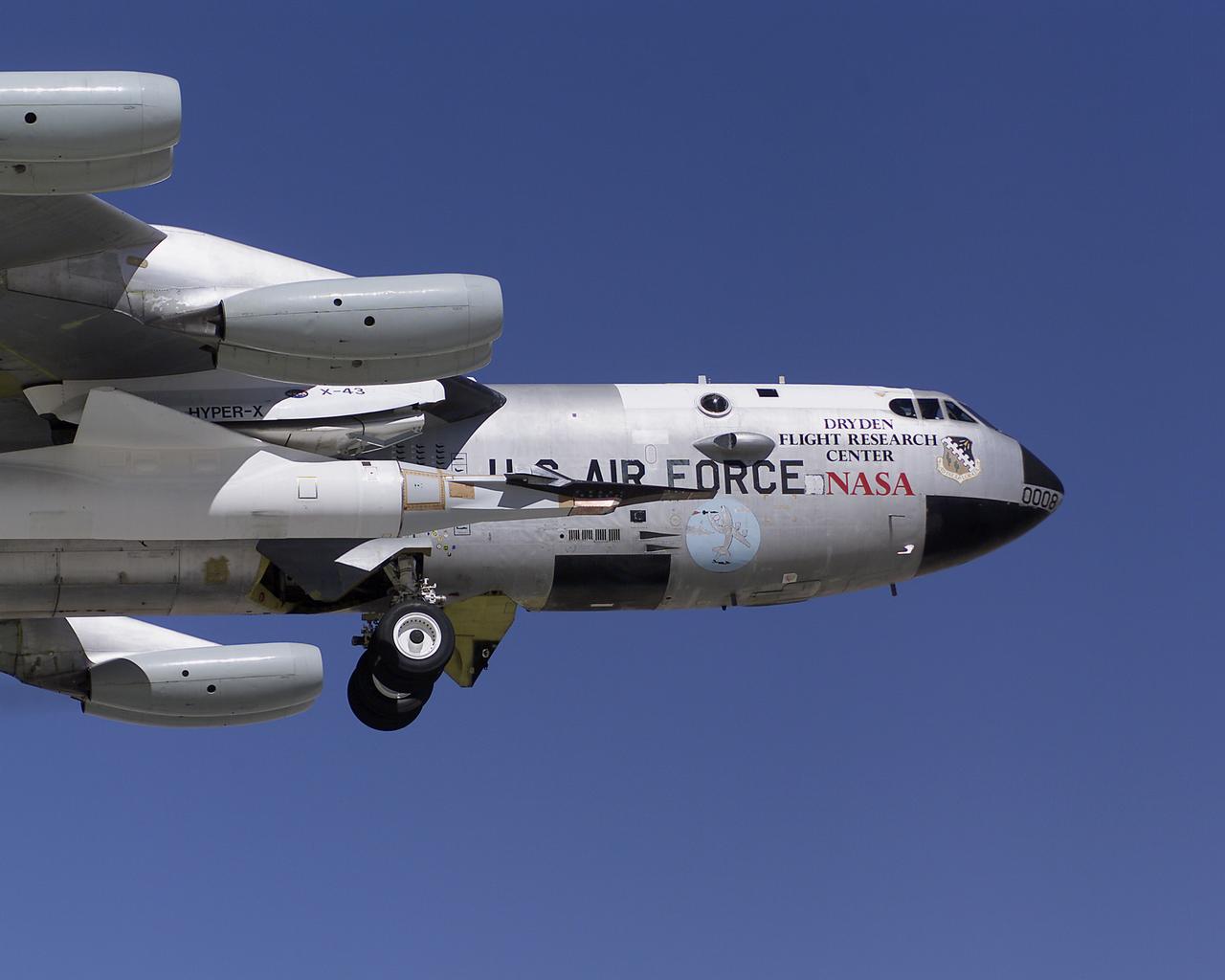
The Pegasus booster rocket, carrying the X-43A hypersonic aircraft, is mounted beneath NASA’s B-52B wing. A dry run, known as a captive carry mission, was conducted to monitor the research hardware in flight for any challenges. The January 2004 X-43A flight was based at NASA’s Armstrong Flight Research Center in Edwards, California.
NASA B-52B Carries Pegasus Booster, X-43A Aircraft
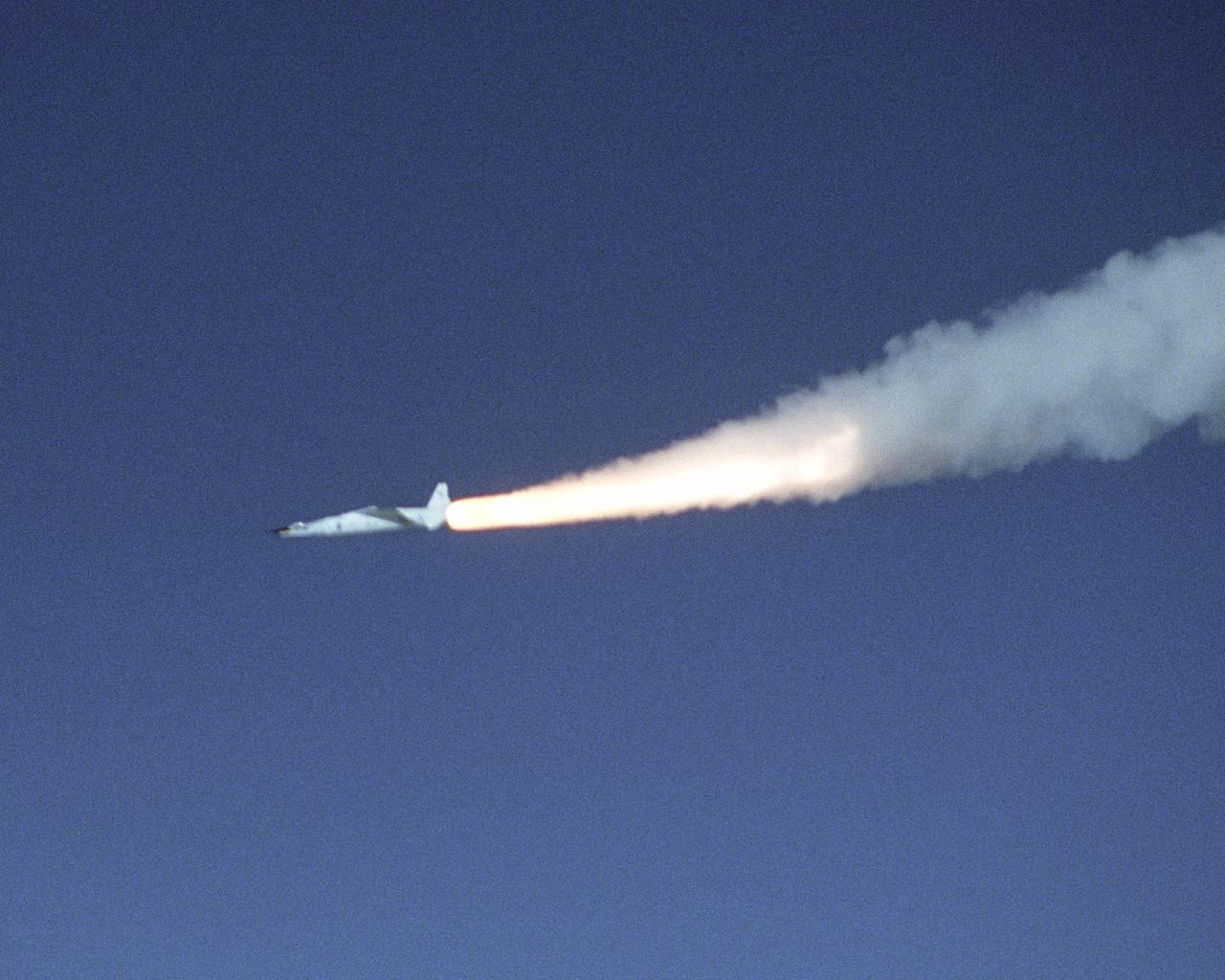
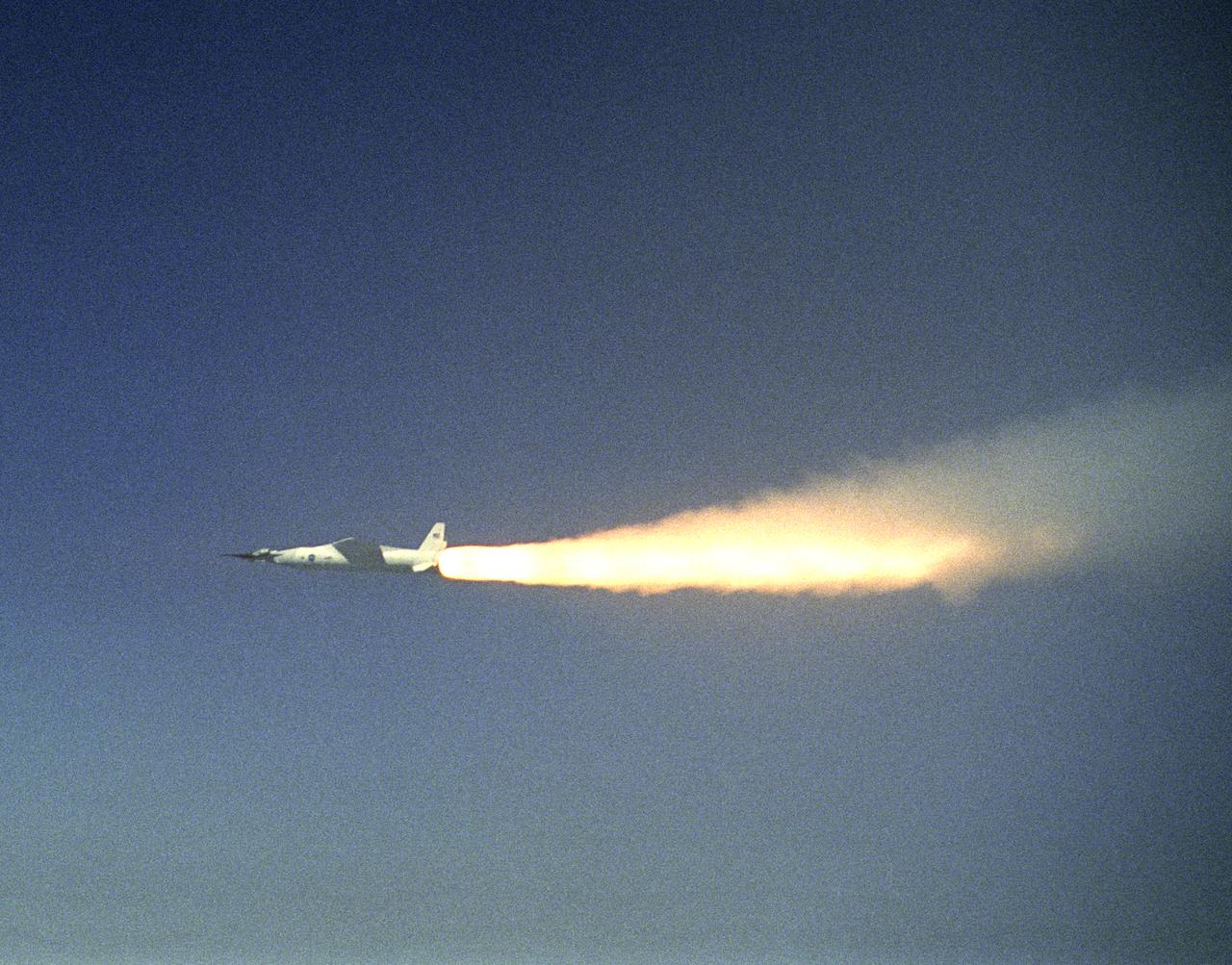
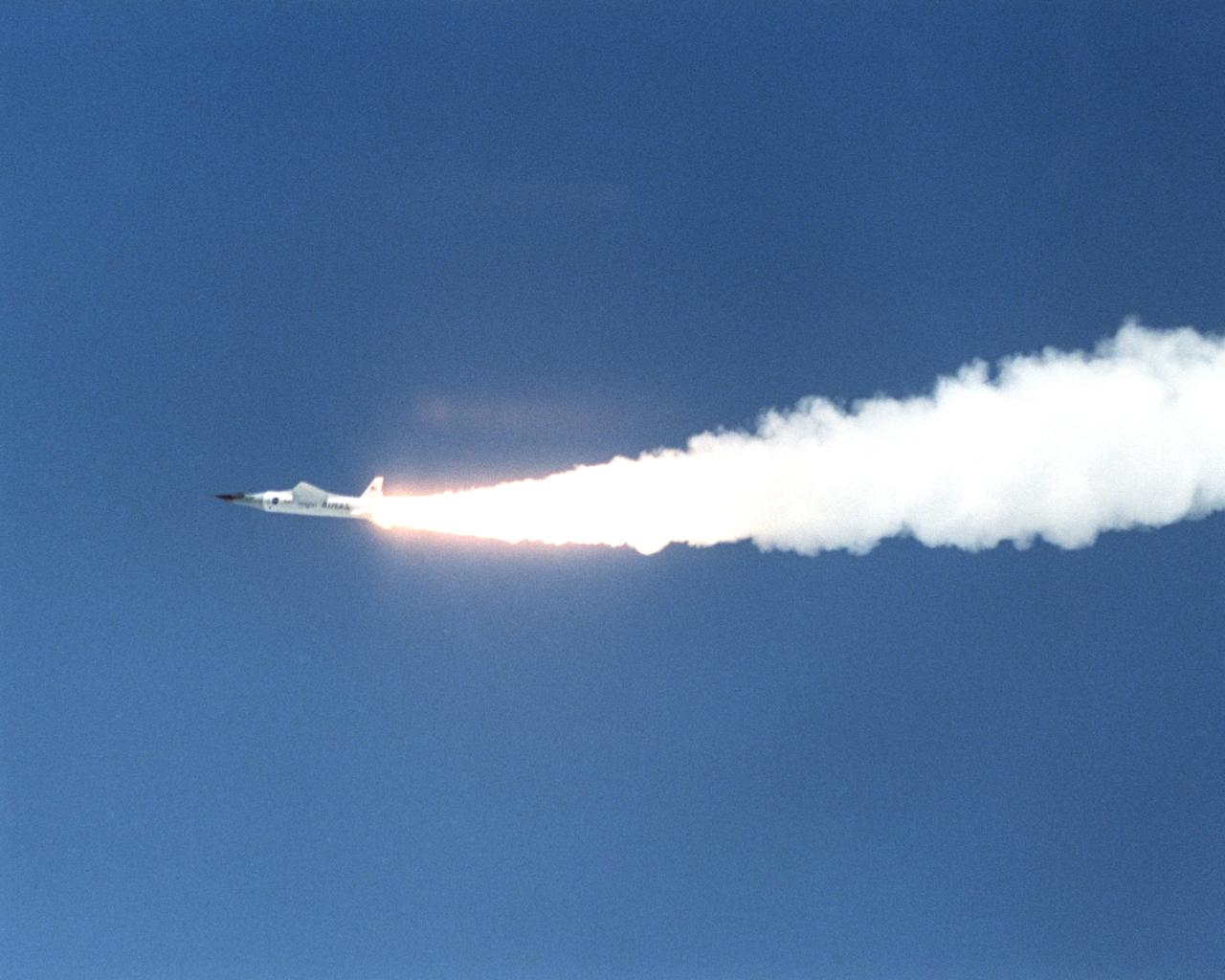
The second X-43A hypersonic research aircraft and its modified Pegasus booster rocket accelerate after launch from NASA's B-52B launch aircraft over the Pacific Ocean on March 27, 2004. The mission originated from the NASA Dryden Flight Research Center at Edwards Air Force Base, Calif. Minutes later the X-43A separated from the Pegasus booster and accelerated to its intended speed of Mach 7.
he second X-43A and its modified Pegasus booster rocket accelerate after launch from NASA's B-52B launch aircraft over the Pacific Ocean
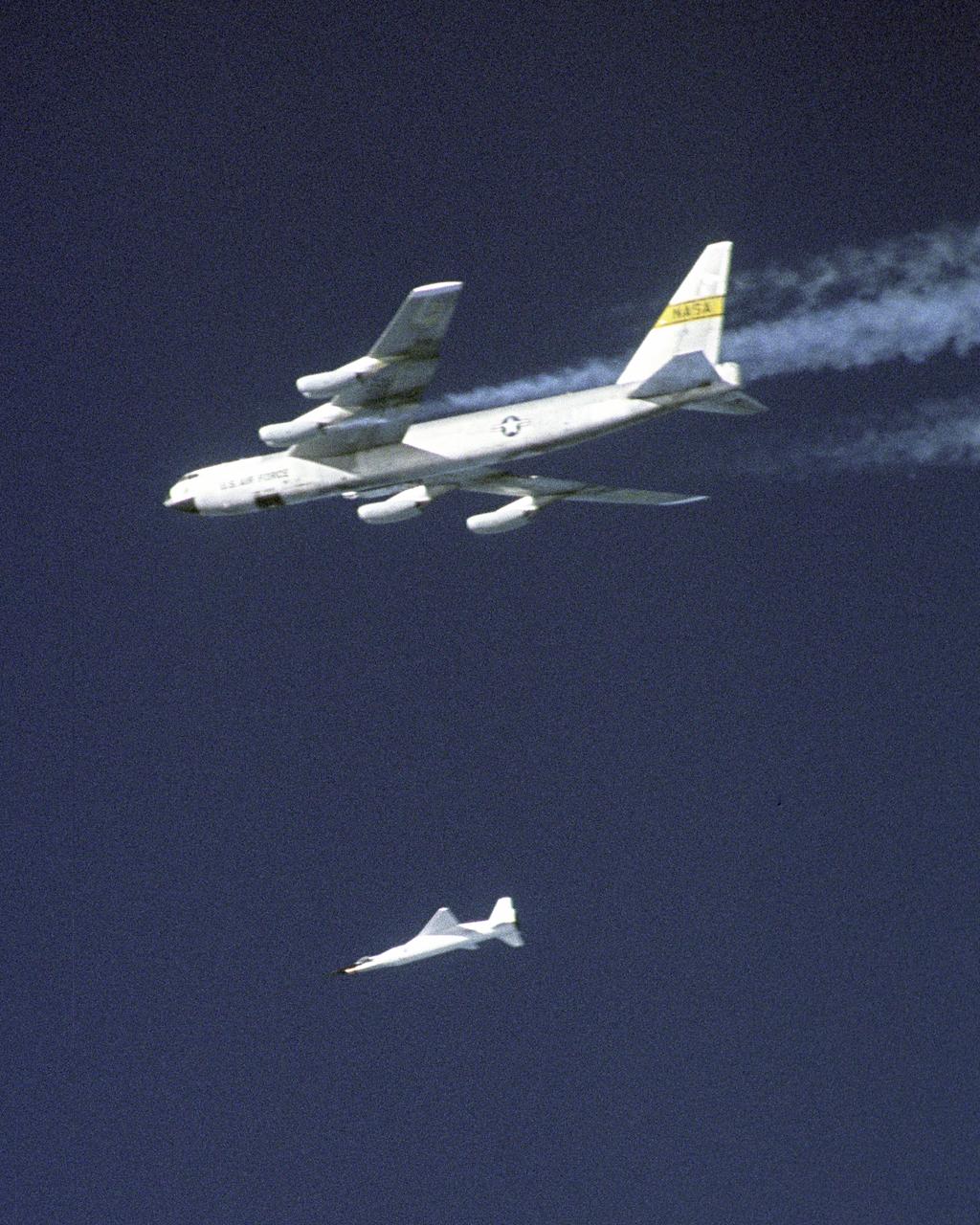
The third X-43A hypersonic research aircraft and its modified Pegasus booster rocket drop away from NASA's B-52B launch aircraft over the Pacific Ocean on November 16, 2004. The mission originated from the NASA Dryden Flight Research Center at Edwards Air Force Base, California. Moments later the Pegasus booster ignited to accelerate the X-43A to its intended speed of Mach 10.
A modified Pegasus rocket drops away after release from NASA's B-52B before accelerating the X-43A over a Pacific Ocean test range on Nov. 16, 2004
The third X-43A hypersonic research aircraft and its modified Pegasus booster rocket accelerate after launch from NASA's B-52B launch aircraft over the Pacific Ocean on November 16, 2004. The mission originated from the NASA Dryden Flight Research Center at Edwards Air Force Base, California. Minutes later the X-43A separated from the Pegasus booster and accelerated to its intended speed of Mach 10.
A modified Pegasus rocket ignites moments after release from the B-52B, beginning the acceleration of the X-43A over the Pacific Ocean on Nov. 16, 2004
The third X-43A hypersonic research aircraft, attached to a modified Pegasus booster rocket, was taken to launch altitude by NASA's B-52B launch aircraft from the NASA Dryden Flight Research Center at Edwards Air Force Base, California, on November 16, 2004. About an hour later the Pegasus booster was released from the B-52 to accelerate the X-43A to its intended speed of Mach 10.
NASA's B-52B launch aircraft cruises to a test range over the Pacific Ocean carrying the third X-43A vehicle attached to a Pegasus rocket on November 16, 2004
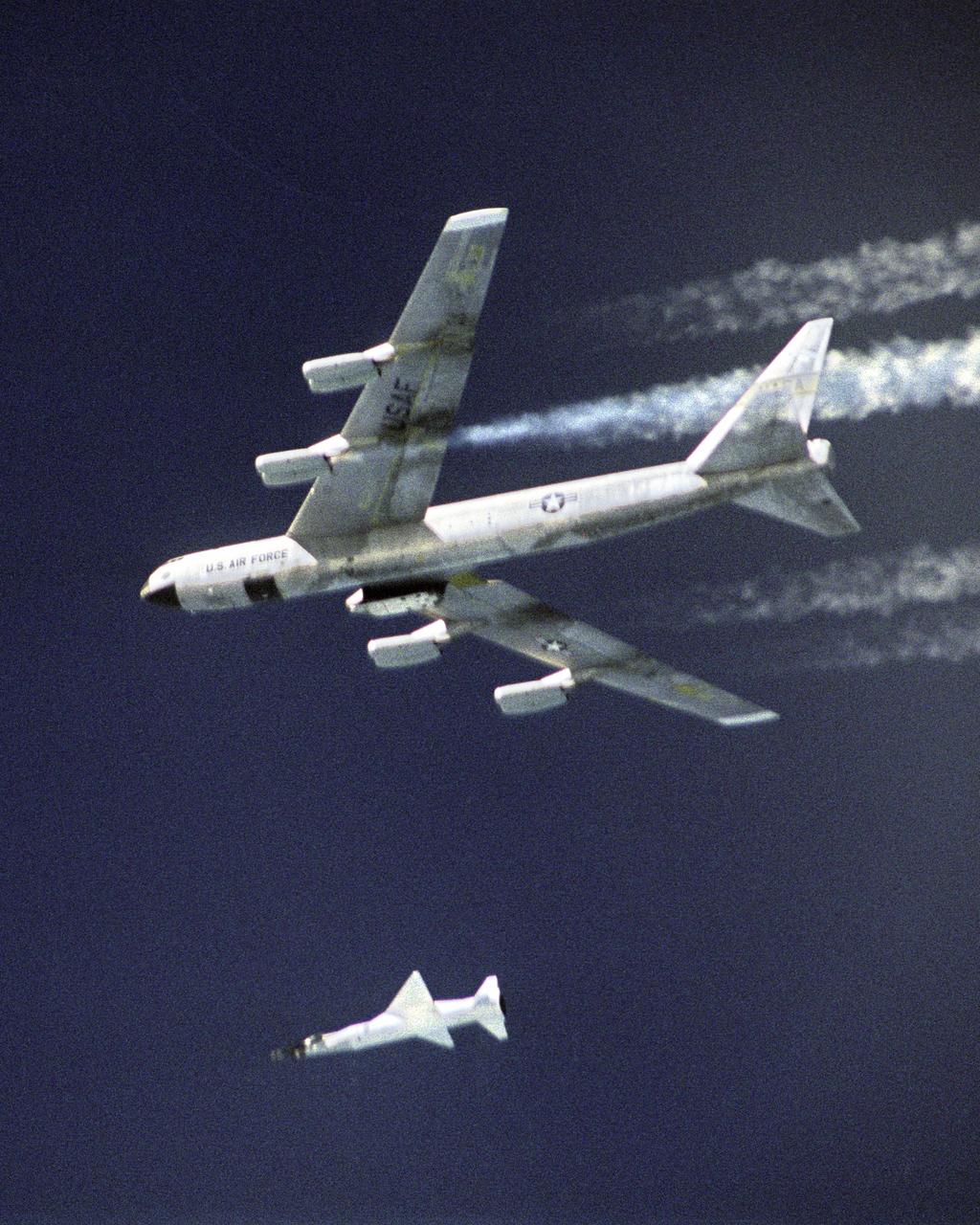
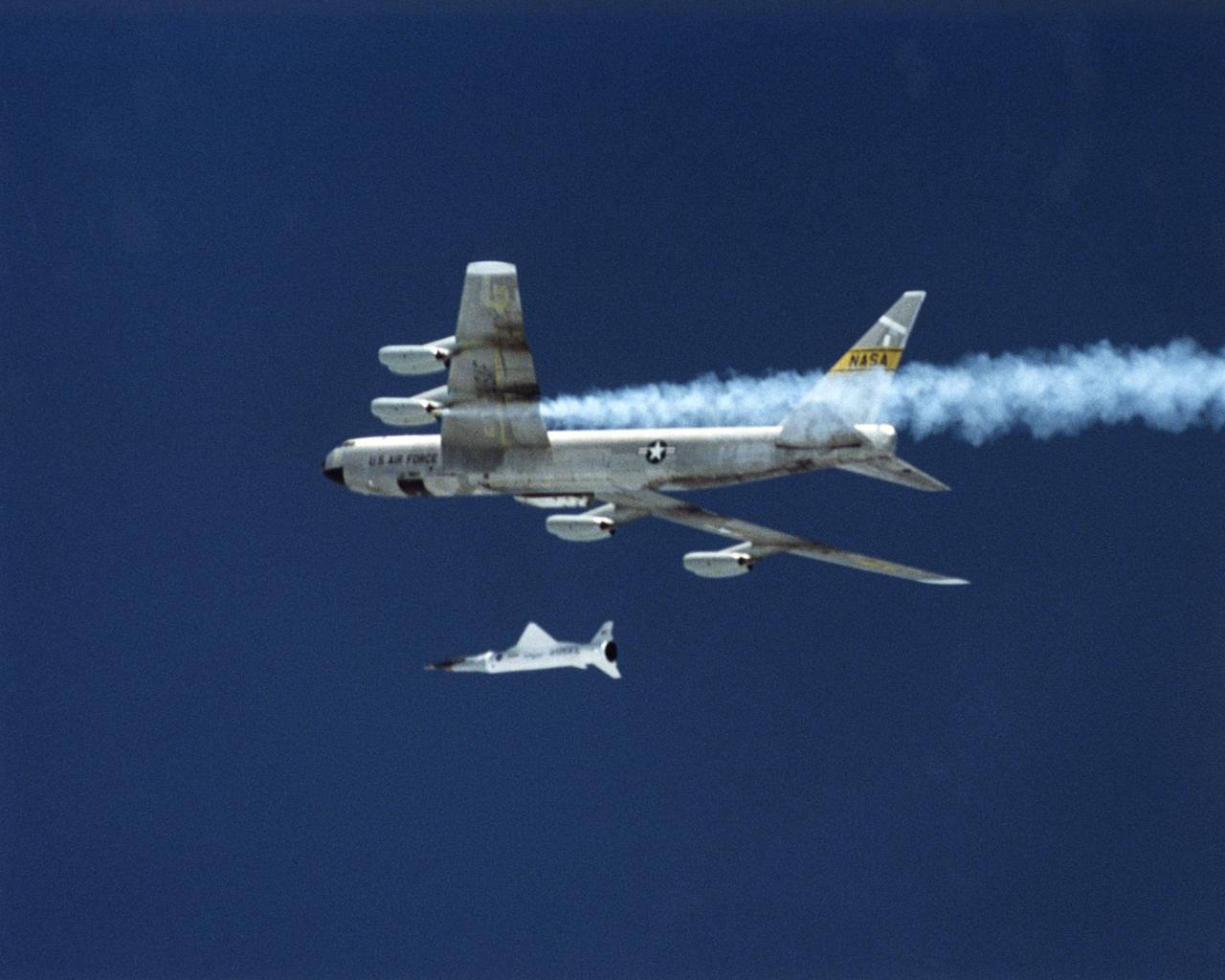
The second X-43A hypersonic research aircraft and its modified Pegasus booster rocket drop away from NASA's B-52B launch aircraft over the Pacific Ocean on March 27, 2004. The mission originated from the NASA Dryden Flight Research Center at Edwards Air Force Base, Calif. Moments later the Pegasus booster ignited to accelerate the X-43A to its intended speed of Mach 7.
A modified Pegasus rocket drops steadily away after release from NASA's B-52B, before accelerating the X-43A over the Pacific Ocean on March 27, 2004
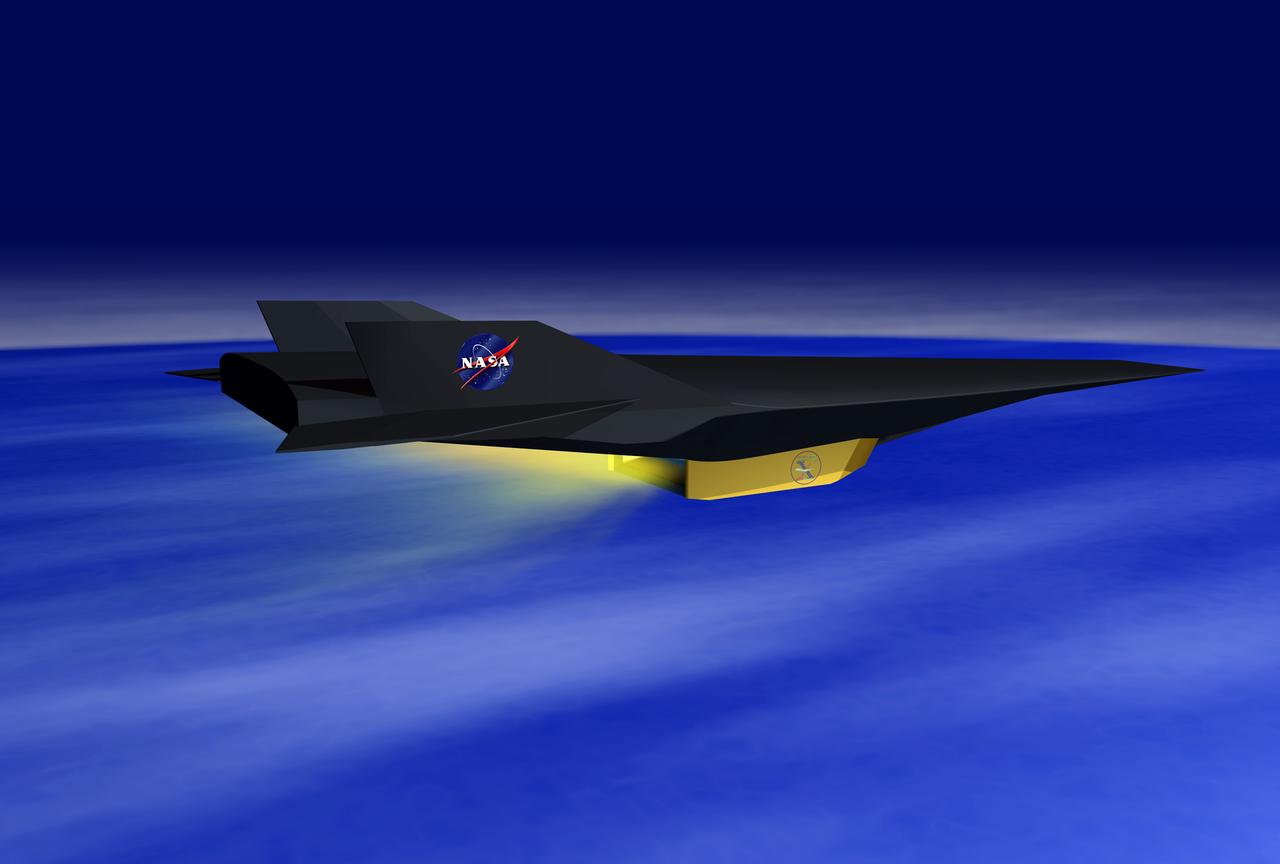
This image (captured from animation video) illustrates the X-43A research vehicle alone after separation from the Pegasus booster. (LaRC Photo # EL-2000-00531)
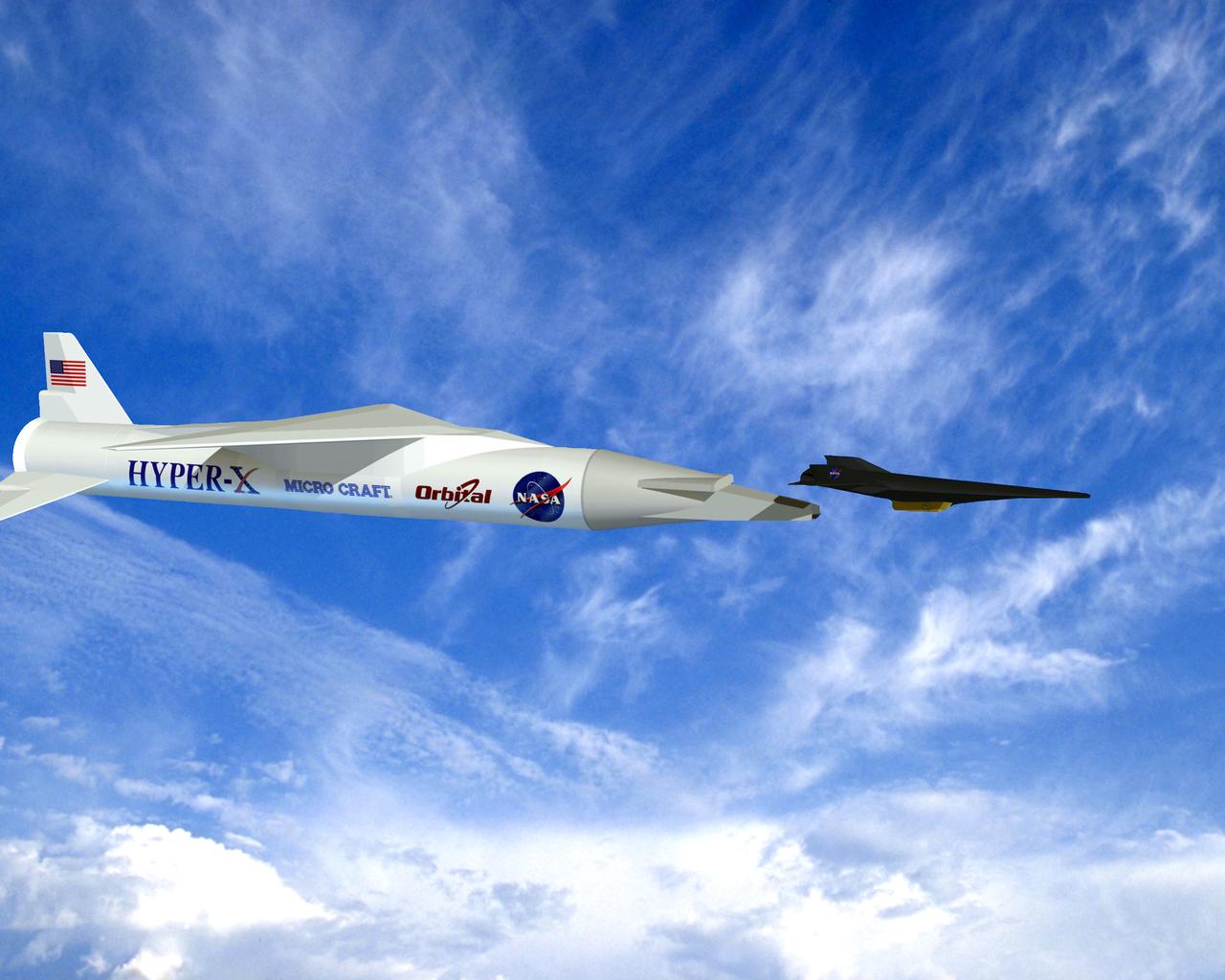
This image (captured from animation video) illustrates the separation of the X-43A research vehicle from the Pegasus booster. (LaRC Photo # EL-2000-00532)
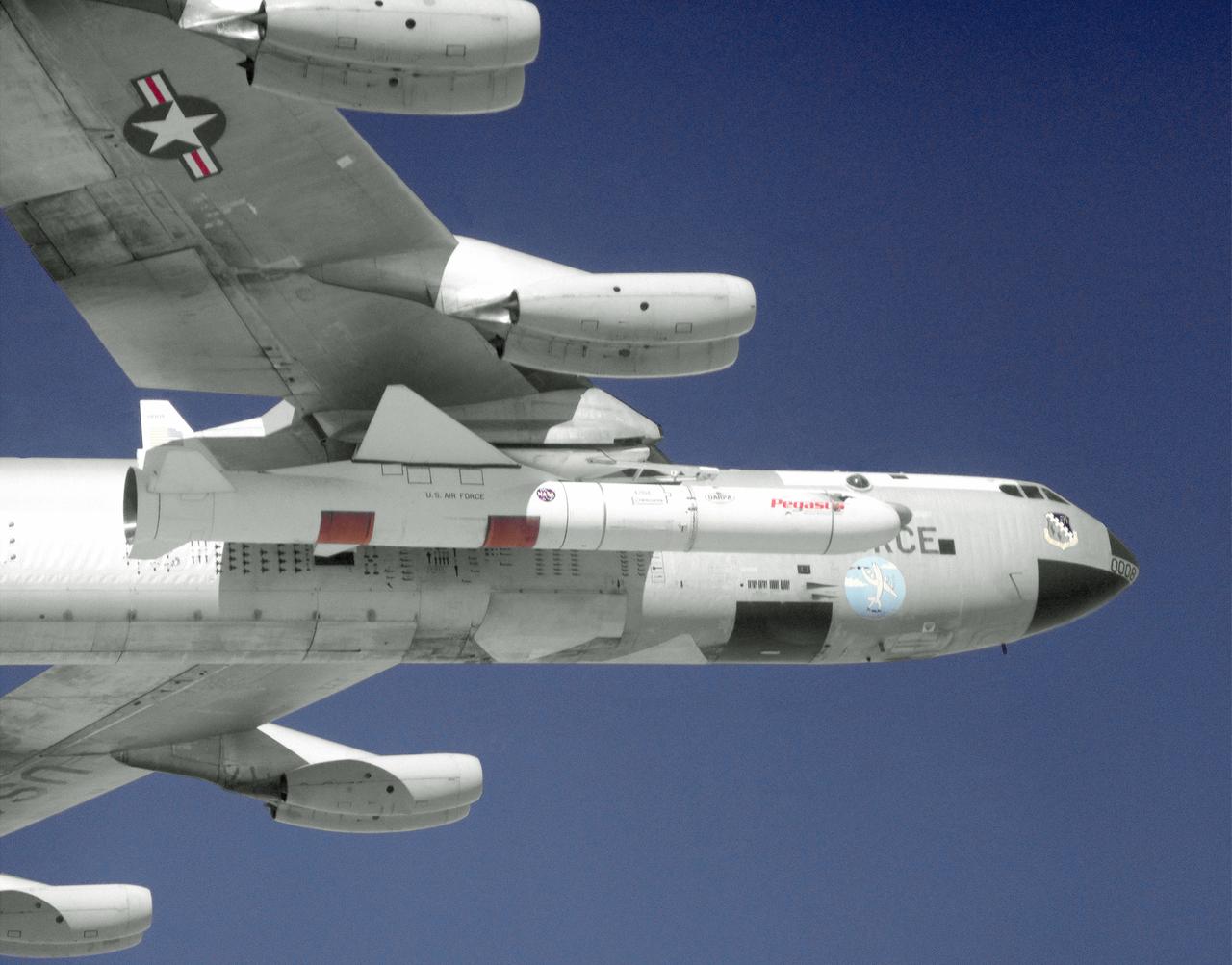
The Pegasus air-launched space booster is carried aloft under the right wing of NASA's B-52 carrier aircraft on its first captive flight from the Dryden Flight Research Center, Edwards, California. The first of two scheduled captive flights was completed on November 9, 1989. Pegasus is used to launch satellites into low-earth orbits cheaply. In 1997, a Pegasus rocket booster was also modified to test a hypersonic experiment (PHYSX). An experimental "glove," installed on a section of its wing, housed hundreds of temperature and pressure sensors that sent hypersonic flight data to ground tracking facilities during the experiment’s flight.
Pegasus Mated to B-52 Mothership - First Flight
Final preparations are underway for NASA’s B-52B to carry the Pegasus booster rocket and the hypersonic X-43A aircraft during a flight test. A dry run, known as a captive carry mission, was conducted to monitor the research hardware in flight for any challenges. The January 2004 X-43A flight was based at NASA’s Armstrong Flight Research Center in Edwards, California.
NASA B-52B Carries Pegasus Booster, X-43A Aircraft
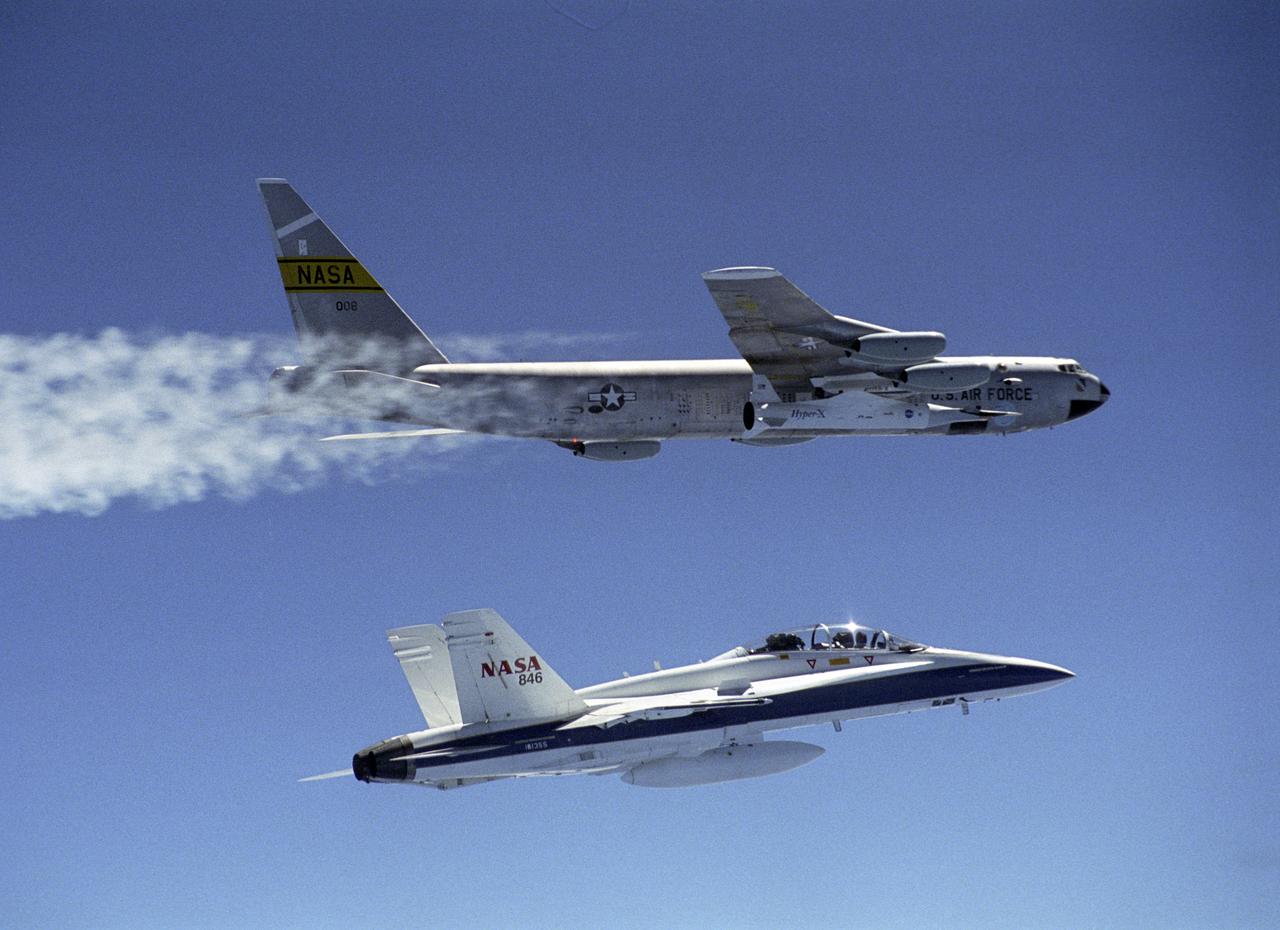
The second X-43A hypersonic research aircraft, attached to a modified Pegasus booster rocket and followed by a chase F-18, was taken to launch altitude by NASA's B-52B launch aircraft from the NASA Dryden Flight Research Center at Edwards Air Force Base, Calif., on March 27, 2004. About an hour later the Pegasus booster was released from the B-52 to accelerate the X-43A to its intended speed of Mach 7. In a combined research effort involving Dryden, Langley, and several industry partners, NASA demonstrated the value of its X-43A hypersonic research aircraft, as it became the first air-breathing, unpiloted, scramjet-powered plane to fly freely by itself. The March 27 flight, originating from NASA's Dryden Flight Research Center, began with the Agency's B-52B launch aircraft carrying the X-43A out to the test range over the Pacific Ocean off the California coast. The X-43A was boosted up to its test altitude of about 95,000 feet, where it separated from its modified Pegasus booster and flew freely under its own power.  Two very significant aviation milestones occurred during this test flight: first, controlled accelerating flight at Mach 7 under scramjet power, and second, the successful stage separation at high dynamic pressure of two non-axisymmetric vehicles. To top it all off, the flight resulted in the setting of a new aeronautical speed record. The X-43A reached a speed of over Mach 7, or about 5,000 miles per hour faster than any known aircraft powered by an air-breathing engine has ever flown.
NASA's B-52B launch aircraft cruises to a test range over the Pacific Ocean carrying the second X-43A vehicle attached to a Pegasus rocket on March 27, 2004
The second X-43A hypersonic research aircraft and its modified Pegasus booster rocket accelerate after launch from NASA's B-52B launch aircraft over the Pacific Ocean on March 27, 2004. The mission originated from the NASA Dryden Flight Research Center at Edwards Air Force Base, Calif. Minutes later the X-43A separated from the Pegasus booster and accelerated to its intended speed of Mach 7. In a combined research effort involving Dryden, Langley, and several industry partners, NASA demonstrated the value of its X-43A hypersonic research aircraft, as it became the first air-breathing, unpiloted, scramjet-powered plane to fly freely by itself. The March 27 flight, originating from NASA's Dryden Flight Research Center, began with the Agency's B-52B launch aircraft carrying the X-43A out to the test range over the Pacific Ocean off the California coast. The X-43A was boosted up to its test altitude of about 95,000 feet, where it separated from its modified Pegasus booster and flew freely under its own power.  Two very significant aviation milestones occurred during this test flight: first, controlled accelerating flight at Mach 7 under scramjet power, and second, the successful stage separation at high dynamic pressure of two non-axisymmetric vehicles. To top it all off, the flight resulted in the setting of a new aeronautical speed record. The X-43A reached a speed of over Mach 7, or about 5,000 miles per hour faster than any known aircraft powered by an air-breathing engine has ever flown.
A modified Pegasus rocket ignites moments after release from the B-52B, beginning the acceleration of the X-43A over the Pacific Ocean on March 27, 2004
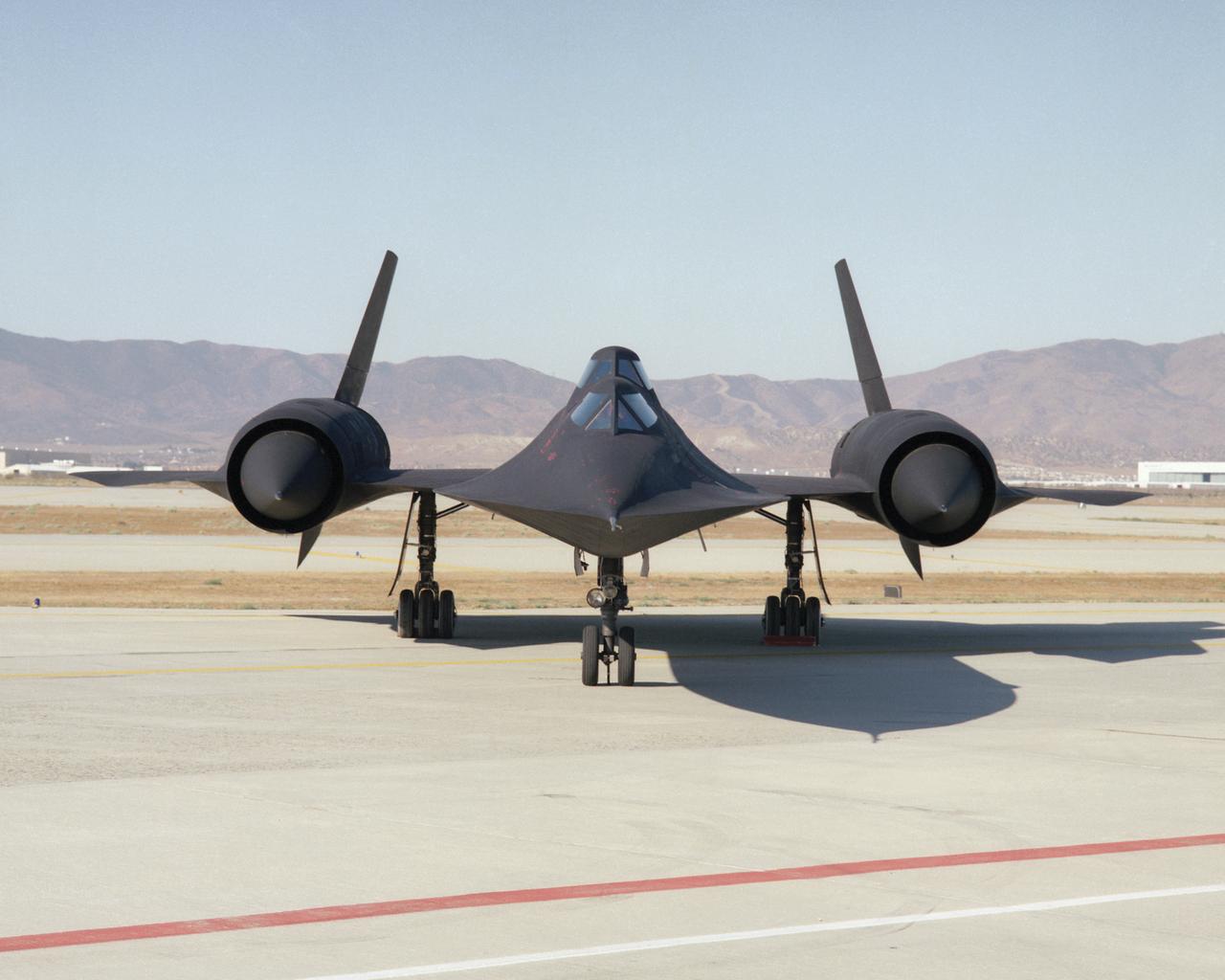
This photo shows a head-on view of NASA's SR-71B, used for pilot proficiency and training, on the ramp at the Air Force's Plant 42 in Palmdale, California, shortly before delivery to the Ames-Dryden Flight Research Facility (later, Dryden Flight Research Center) at Edwards, California. NASA operated two of these unique aircraft, an SR-71A, for high-speed, high altitude research, and this SR- 71B pilot trainer for most of the decade of the 1990s. The "B" model is special because of its raised rear cockpit, which provided a second pilot position so a trainer and an experienced pilot could both see what was going on during flights.  The SR-71 was designed and built by the Lockheed Skunk Works, now the Lockheed Martin Skunk Works. Studies have shown that less than 20 percent of the total thrust used to fly at Mach 3 is produced by the basic engine itself. The balance of the total thrust is produced by the unique design of the engine inlet and "moveable spike" system at the front of the engine nacelles, and by the ejector nozzles at the exhaust which burn air compressed in the engine bypass system.  Data from the SR-71 high speed research program will be used to aid designers of future supersonic/hypersonic aircraft and propulsion systems, including a high speed civil transport.
This photo shows a head-on view of NASA's SR-71B on the ramp at the Air Force's Plant 42 in Palmdale, California, shortly before delivery to DFRC
The first X-43A hypersonic research aircraft and its modified Pegasus booster rocket were carried aloft by NASA's NB-52B carrier aircraft from Dryden Flight Research Center at Edwards Air Force Base, Calif., on June 2, 2001 for the first of three high-speed free flight attempts. About an hour and 15 minutes later the Pegasus booster was released from the B-52 to accelerate the X-43A to its intended speed of Mach 7. Before this could be achieved, the combined Pegasus and X-43A "stack" lost control about eight seconds after ignition of the Pegasus rocket motor. The mission was terminated and explosive charges ensured the Pegasus and X-43A fell into the Pacific Ocean in a cleared Navy range area. A NASA investigation board is being assembled to determine the cause of the incident. Work continues on two other X-43A vehicles, the first of which could fly by late 2001. Central to the X-43A program is its integration of an air-breathing "scramjet" engine that could enable a variety of high-speed aerospace craft, and promote cost-effective access to space. The 12-foot, unpiloted research vehicle was developed and built for NASA by MicroCraft Inc., Tullahoma, Tenn. The booster was built by Orbital Sciences Corp. at Chandler, Ariz.
Ignition of the Pegasus rocket moments after release from the B-52 signaled acceleration of the X-43A/Pegasus combination over the Pacific Ocean
The first X-43A hypersonic research aircraft and its modified Pegasus booster rocket were carried aloft by NASA's NB-52B carrier aircraft from Dryden Flight Research Center at Edwards Air Force Base, Calif., on June 2, 2001 for the first of three high-speed free flight attempts. About an hour and 15 minutes later the Pegasus booster was released from the B-52 to accelerate the X-43A to its intended speed of Mach 7. Before this could be achieved, the combined Pegasus and X-43A "stack" lost control about eight seconds after ignition of the Pegasus rocket motor. The mission was terminated and explosive charges ensured the Pegasus and X-43A fell into the Pacific Ocean in a cleared Navy range area. A NASA investigation board is being assembled to determine the cause of the incident. Work continues on two other X-43A vehicles, the first of which could fly by late 2001. Central to the X-43A program is its integration of an air-breathing "scramjet" engine that could enable a variety of high-speed aerospace craft, and promote cost-effective access to space. The 12-foot, unpiloted research vehicle was developed and built for NASA by MicroCraft Inc., Tullahoma, Tenn. The booster was built by Orbital Sciences Corp. at Chandler, Ariz.
The X-43A/Pegasus combination dropped into the Pacific Ocean after losing control early in the first free-flight attempt
The first X-43A hypersonic research aircraft and its modified Pegasus booster rocket were carried aloft by NASA's NB-52B carrier aircraft from Dryden Flight Research Center at Edwards Air Force Base, Calif., on June 2, 2001 for the first of three high-speed free flight attempts. About an hour and 15 minutes later the Pegasus booster was released from the B-52 to accelerate the X-43A to its intended speed of Mach 7. Before this could be achieved, the combined Pegasus and X-43A "stack" lost control about eight seconds after ignition of the Pegasus rocket motor. The mission was terminated and explosive charges ensured the Pegasus and X-43A fell into the Pacific Ocean in a cleared Navy range area. A NASA investigation board is being assembled to determine the cause of the incident. Work continues on two other X-43A vehicles, the first of which could fly by late 2001. Central to the X-43A program is its integration of an air-breathing "scramjet" engine that could enable a variety of high-speed aerospace craft, and promote cost-effective access to space. The 12-foot, unpiloted research vehicle was developed and built for NASA by MicroCraft Inc., Tullahoma, Tenn. The booster was built by Orbital Sciences Corp. at Chandler, Ariz.
X-43A departs NASA Dryden Flight Research Center for first free-flight attempt
The first X-43A hypersonic research aircraft and its modified Pegasus booster rocket were carried aloft by NASA's NB-52B carrier aircraft from Dryden Flight Research Center at Edwards Air Force Base, Calif., on June 2, 2001 for the first of three high-speed free flight attempts. About an hour and 15 minutes later the Pegasus booster was released from the B-52 to accelerate the X-43A to its intended speed of Mach 7. Before this could be achieved, the combined Pegasus and X-43A "stack" lost control about eight seconds after ignition of the Pegasus rocket motor. The mission was terminated and explosive charges ensured the Pegasus and X-43A fell into the Pacific Ocean in a cleared Navy range area. A NASA investigation board is being assembled to determine the cause of the incident. Work continues on two other X-43A vehicles, the first of which could fly by late 2001. Central to the X-43A program is its integration of an air-breathing "scramjet" engine that could enable a variety of high-speed aerospace craft, and promote cost-effective access to space. The 12-foot, unpiloted research vehicle was developed and built for NASA by MicroCraft Inc., Tullahoma, Tenn. The booster was built by Orbital Sciences Corp. at Chandler, Ariz.
Moments after release from NASA's B-52 carrier aircraft, the X-43A/Pegasus "stack" is seen before ignition of the Pegasus rocket motor on
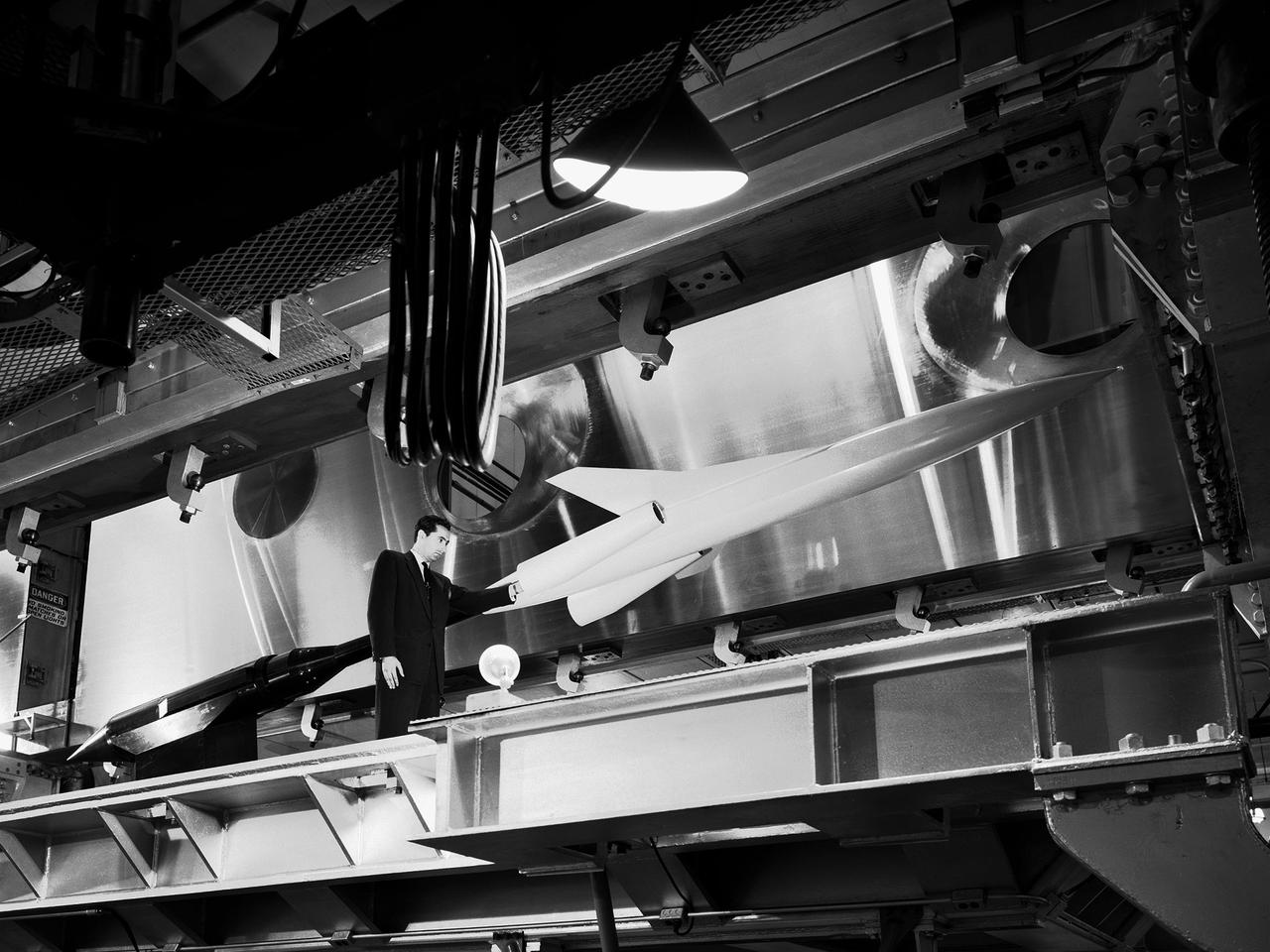
A researcher examines a model being installed in the test section of the 10- by 10-Foot Supersonic Wind Tunnel during the 1957 Inspection of the National Advisory Committee for Aeronautics (NACA) Lewis Flight Propulsion Laboratory. The NACA held its annual Inspection at one of its three research laboratories. Representatives from the military, aeronautical industry, universities, and the press were invited to the laboratory to be briefed on the NACA’s latest research efforts and tour the state- of- the- art test facilities. Over 1700 people visited the NACA Lewis in Cleveland, Ohio during the October 7 - 10, 1957 Inspection.     NACA researchers Leonard Obery, seen here, James Connors, Leonard, Stitt, David Bowditch gave presentations on high Mach number turbojets at the 10- by 10 tunnel. It had been only 15 years since a jet aircraft had first flown in the US. Since then the sound barrier had been broken and speeds of Mach 2.5 had been achieved. In the late 1950s NACA researchers sought to create an engine that could achieve Mach 4. This type of engine would require an extremely long inlet and nozzle which would have to be capable of adjusting their diameter for different speeds. A Mach 4 engine would require new composite materials to withstand the severe conditions, modified airframes to hold the longer engines, and high temperature seals and lubricants. The 10- by 10-foot tunnel, which had only been in operation for a year and a half, would play a critical role in these studies.     NACA researchers at other facilities discussed high energy aircraft fuels and rocket propellants, aircraft noise reduction, hypersonic flight, nuclear propulsion, and high temperature materials.
Missile on Display at the 1957 NACA Lewis Inspection
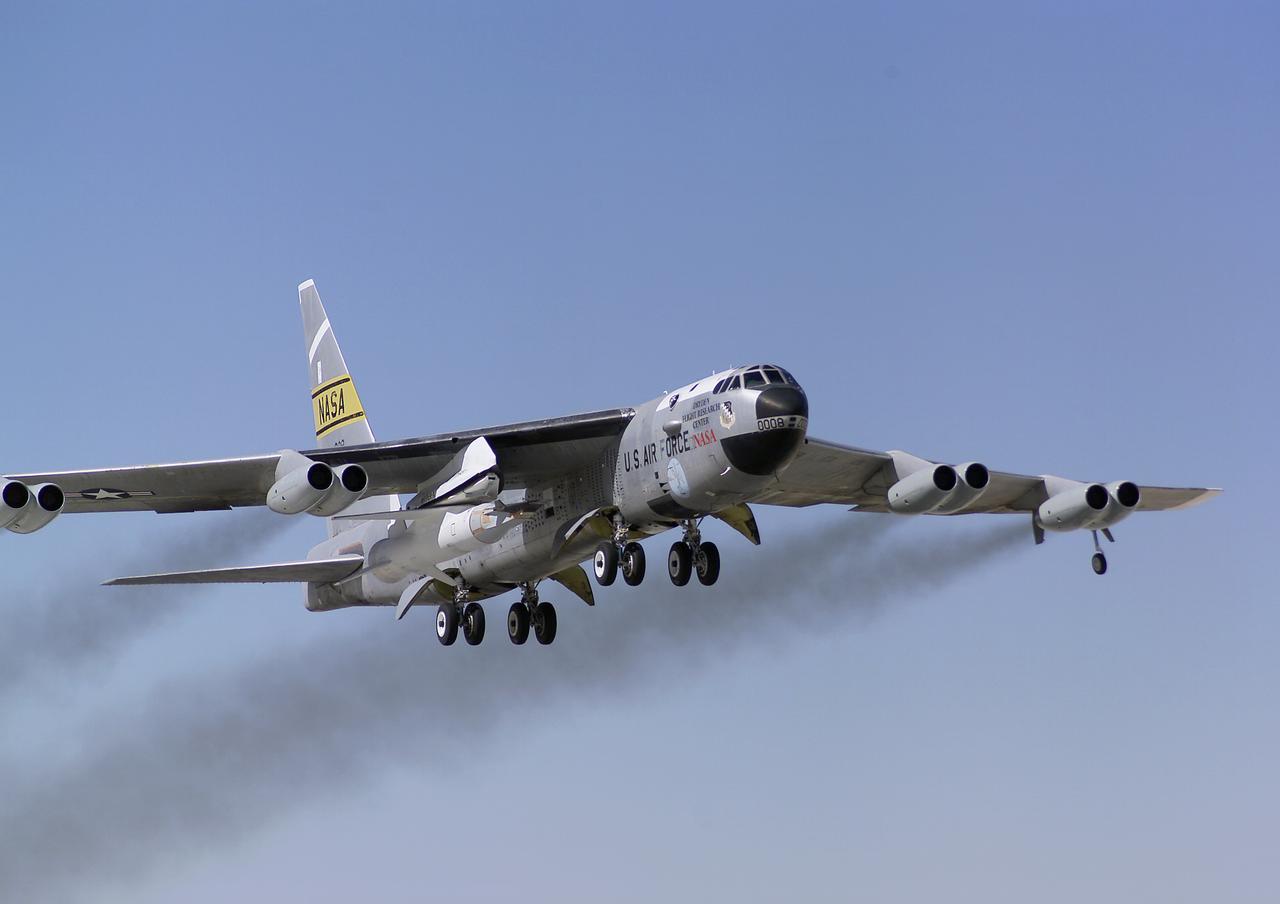
Attached to the same B-52B mothership that once launched X-15 research aircraft in the 1960s, NASA's third X-43A performed a captive carry evaluation flight from Edwards Air Force Base, California on September 27, 2004. The X-43 remained mated to the B-52 throughout this mission, intended to check its readiness for launch scheduled later in the fall.
NASA's B-52B launch aircraft takes off carrying the third X-43A hypersonic research vehicle on a captive carry evaluation flight September 27, 2004
Attached to the same B-52B mothership that once launched X-15 research aircraft in the 1960s, NASA's third X-43A performed a captive carry evaluation flight from Edwards Air Force Base, California on September 27, 2004. The X-43 remained mated to the B-52 throughout this mission, intended to check its readiness for launch scheduled later in the fall.
NASA's B-52B launch aircraft takes off carrying the third X-43A hypersonic research vehicle on a captive carry evaluation flight September 27, 2004
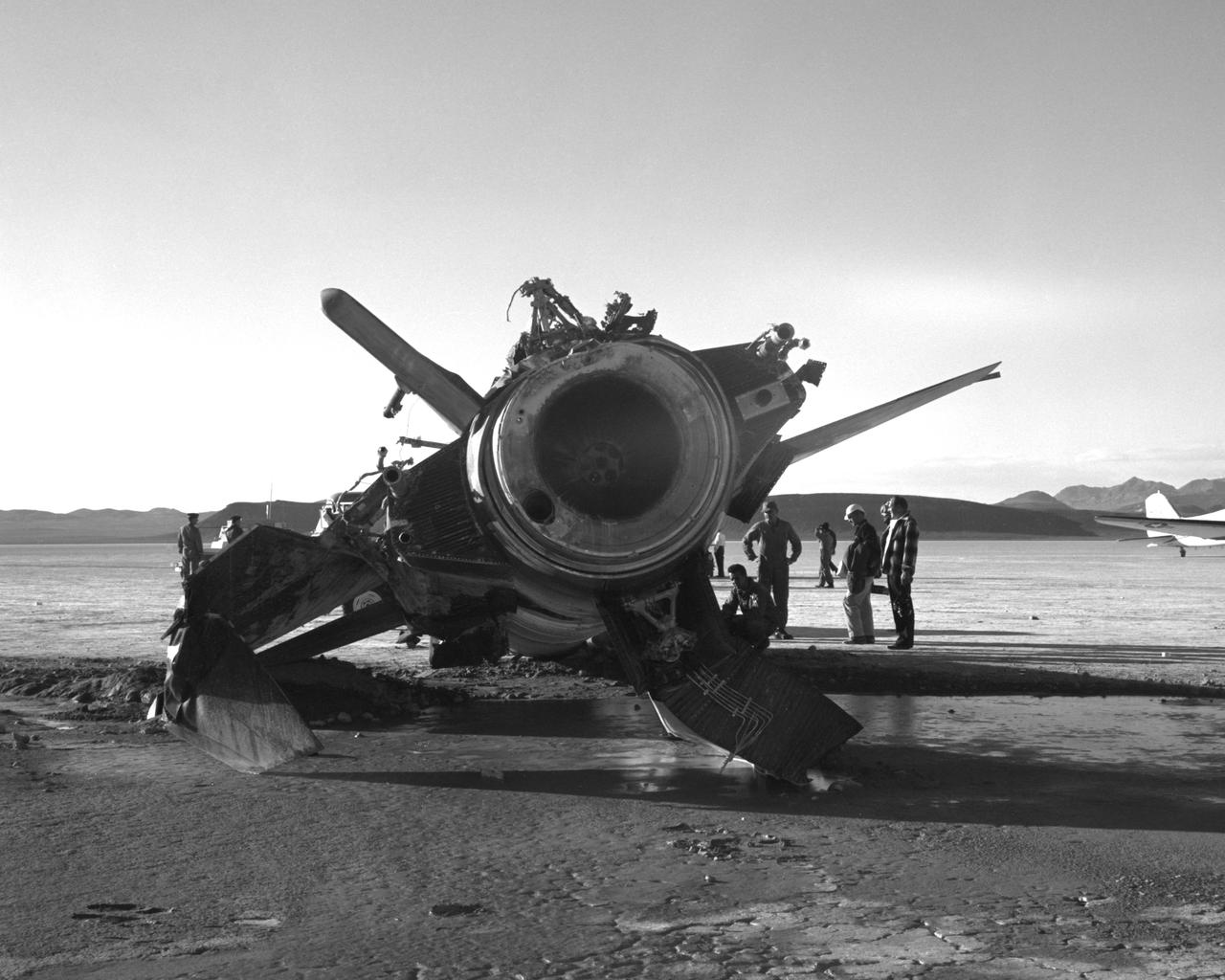
NASA research pilot Jack McKay was injured in a crash landing of the X-15 #2 on November 9, 1962. Following the launch from the B-52 to begin flight 2-31-52, he started the X-15's rocket engine, only to discover that it produced just 30 percent of its maximum thrust. He had to make a high-speed emergency landing on Mud Lake, NV, without flaps but with a significant amount of fuel still in the aircraft. As the X-15 slid across the lakebed, the left skid collapsed; the aircraft turned sideways and flipped onto its back. McKay suffered back injuries but was eventually able to resume X-15 pilot duties, making 22 more flights. The X-15 was sent back to North American Aviation and rebuilt into the X-15A-2.
X-15 #2 landing accident at Mud Lake, Nevada on November 9, 1962 after flight 2-31-52
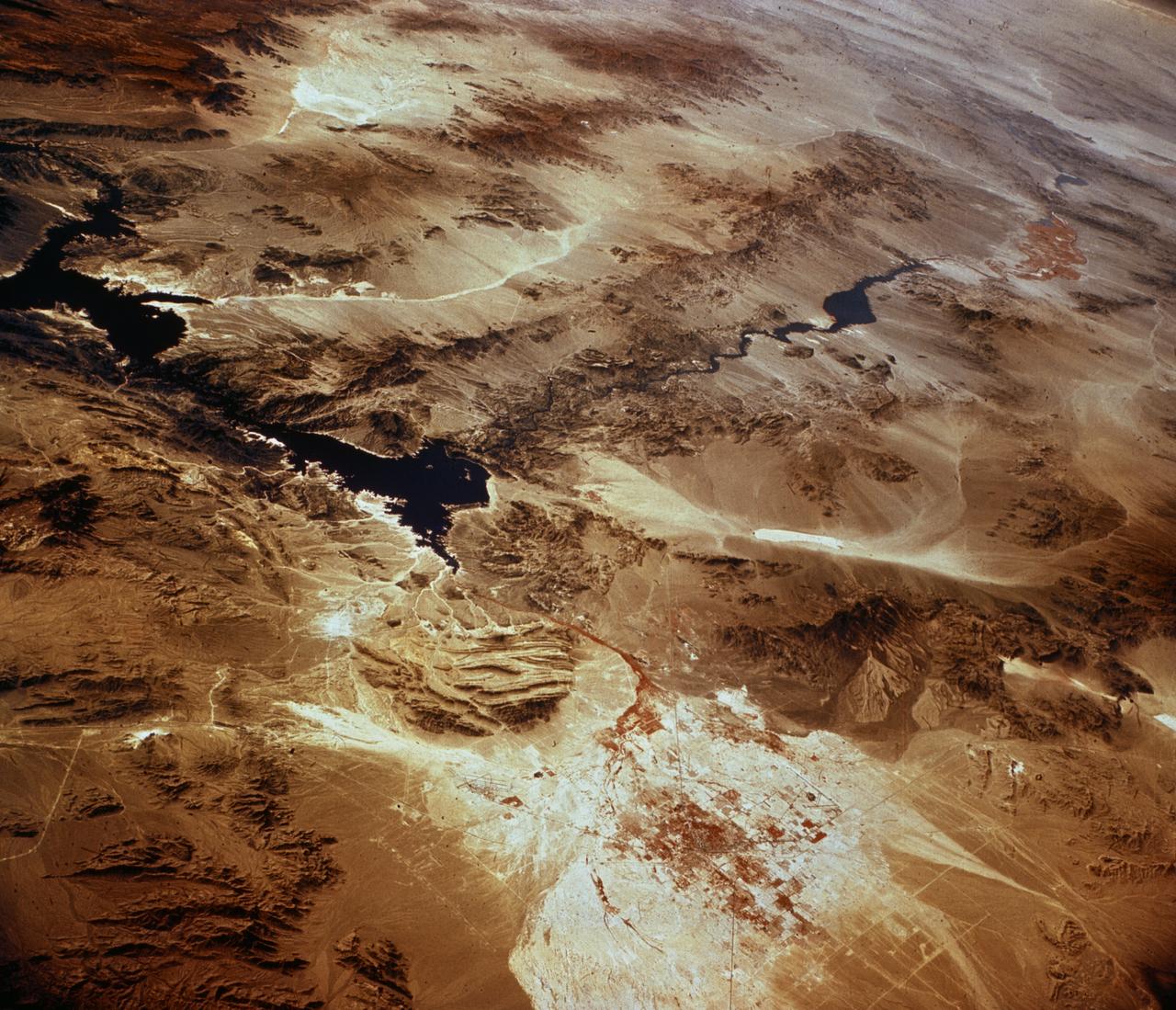
Southwestern US, with Las Vegas, NV in foreground, taken by X-15 Hycon HR-236 Camera during flt. 2-39-70 on June 27, 1965.
Southwestern US, with Las Vegas, NV in foreground, taken by X-15 Hycon HR-236 Camera during flt. 2-39-70 on June 27, 1965
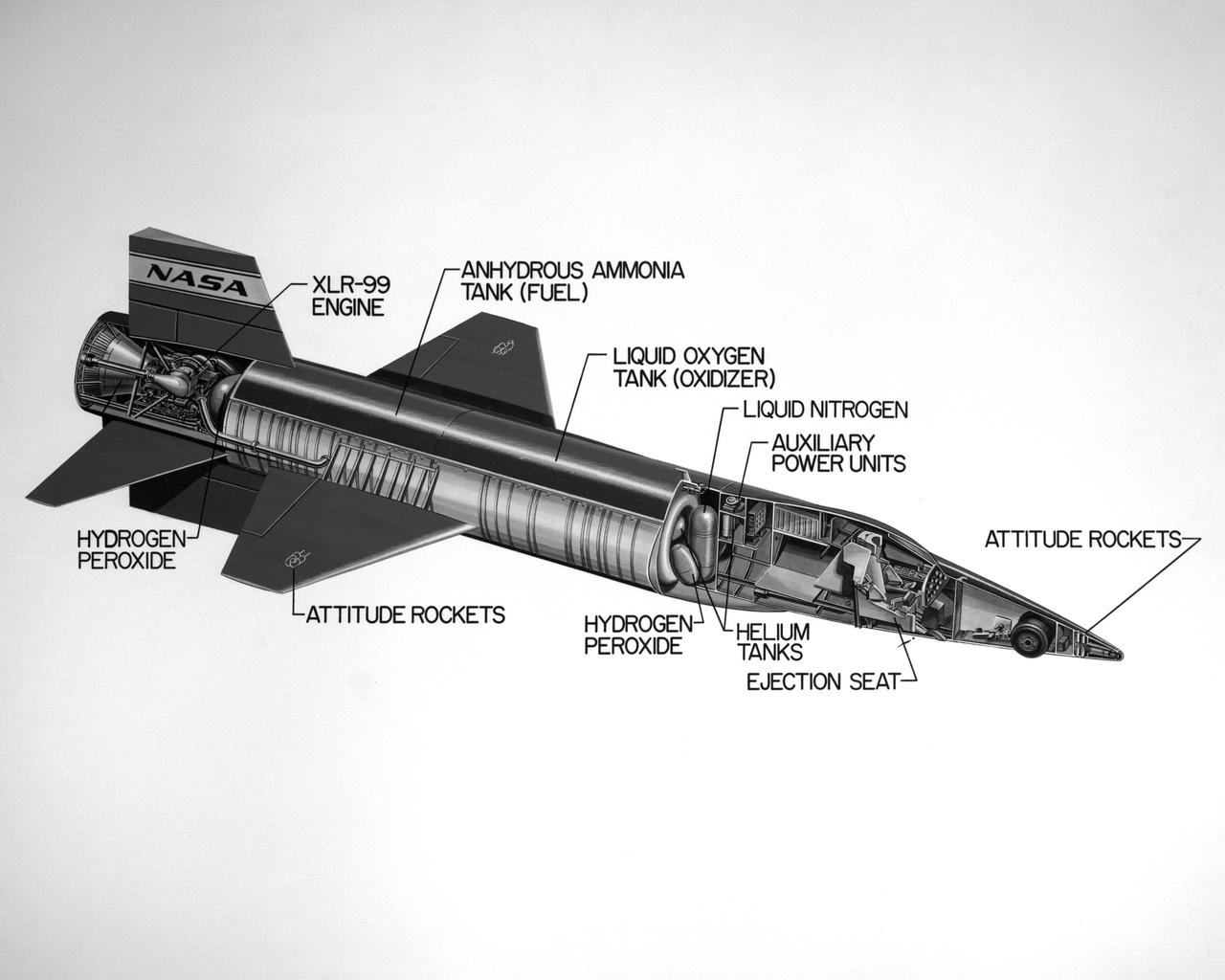
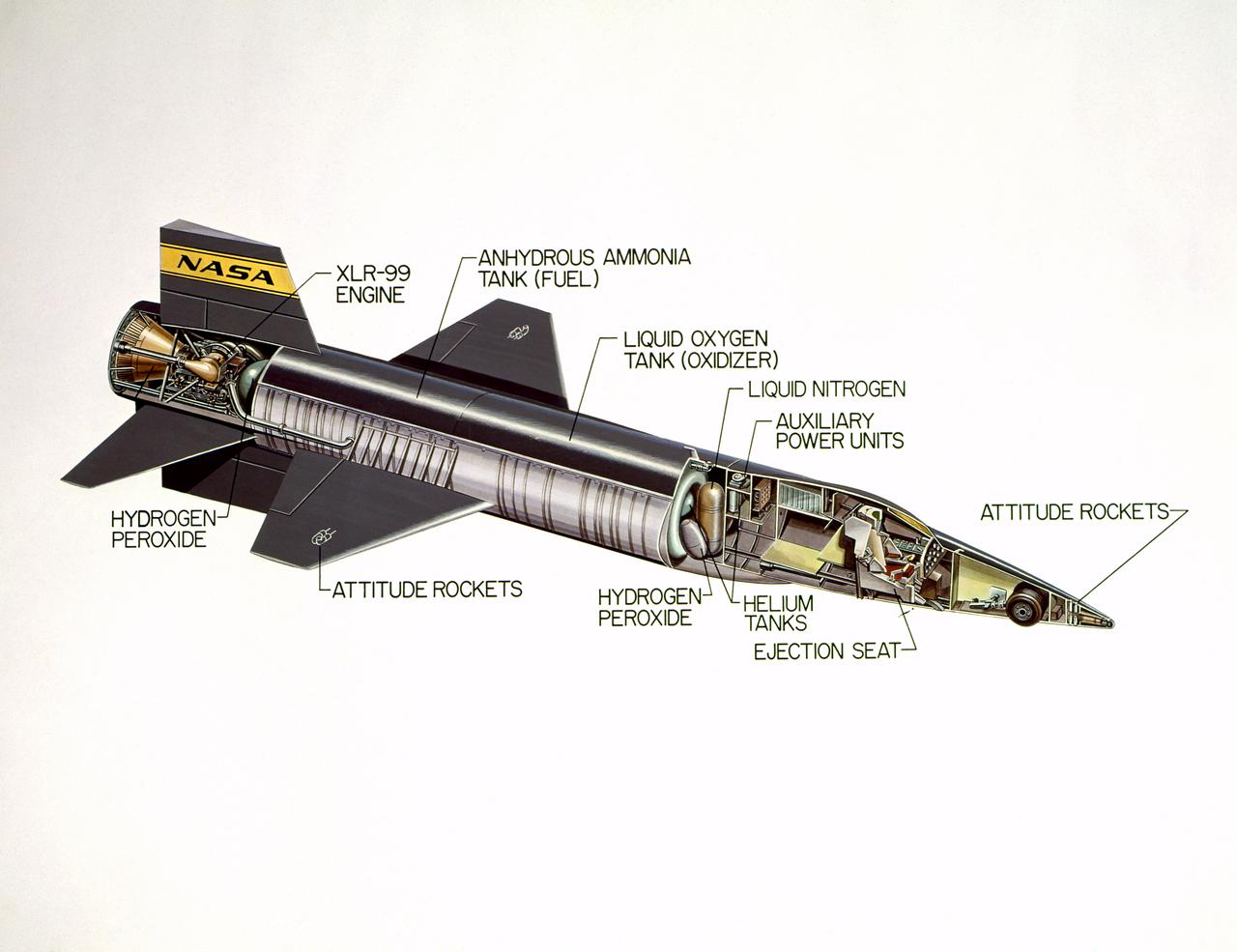
Cutaway drawing of the North American X-15.
Cutaway drawing of the North American X-15
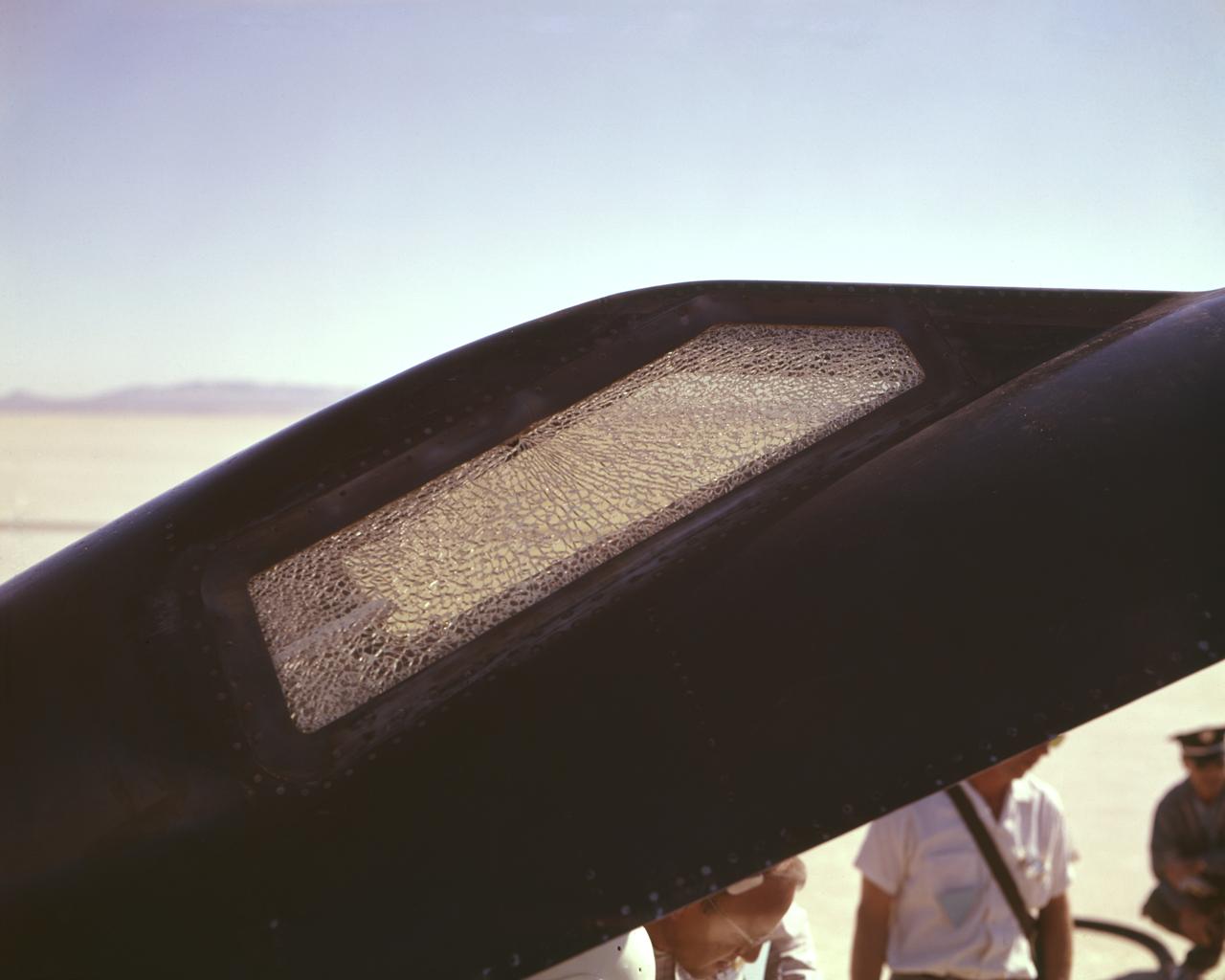
Cracked canopy glass on right side of X-15 #2 after flt. 2-21-37 on Nov. 9 1961. Robert White-pilot. First flight to mach 6.
Cracked canopy glass on right side of X-15 #2 after flt. 2-21-37 on Nov. 9 1961. Robert White-pilot. First flight to mach 6
Cutaway drawing of the North American X-15.
Cutaway drawing of the North American X-15
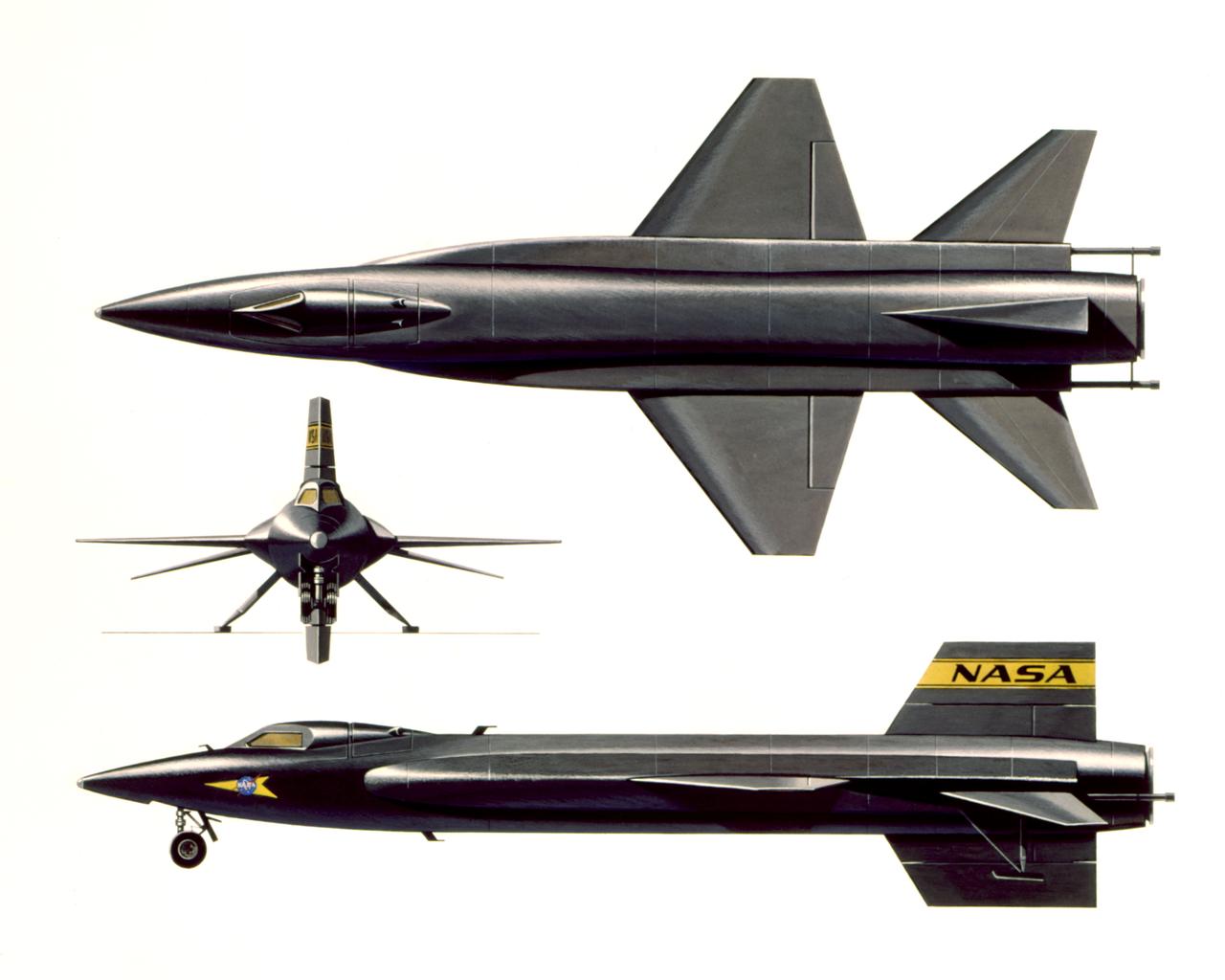
Three view art of the North American X-15.
Three view art of the North American X-15
X-15A-2 post flight photo showing heat damage from Mach 6.7 flight on 3 Oct 67. Flt. 2-53-97; pilot-Pete Knight.
X-15A-2 post flight photo showing heat damage from Mach 6.7 flight on 3 Oct 67. Flt. 2-53-97; pilot-Pete Knight