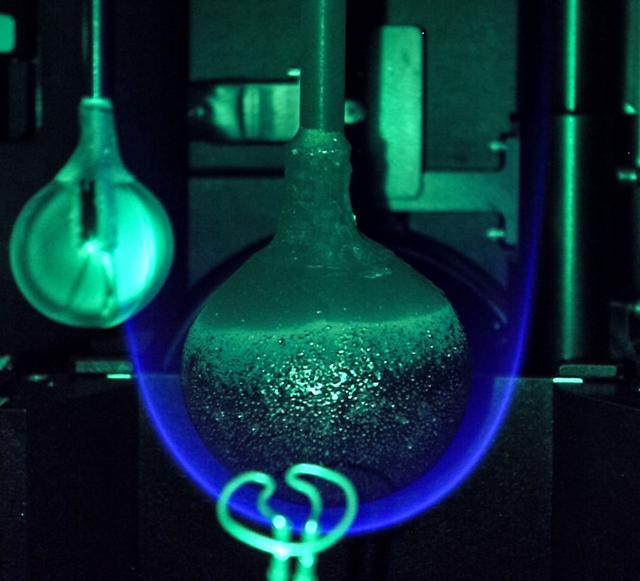
jsc2024e021222 (3/21/2024) --- Solid Fuel Ignition and Extinction (SoFIE) insert supports the Growth and Extinction Limit (GEL) investigation test image taken in the Combustion Integrated Rack (CIR). This image was taken just prior to flame extinction while the green LED was flashing on. The LED allows the fuel surface to be seen during the burn, so that several important parameters can be evaluated, such as how far the flame is from the fuel and how much the fuel is heating up. The igniter wire appears in the camera view, but it is in the foreground and not near the flame. In the background on the left, an unburned acrylic sphere waits for its turn to be tested on another day.
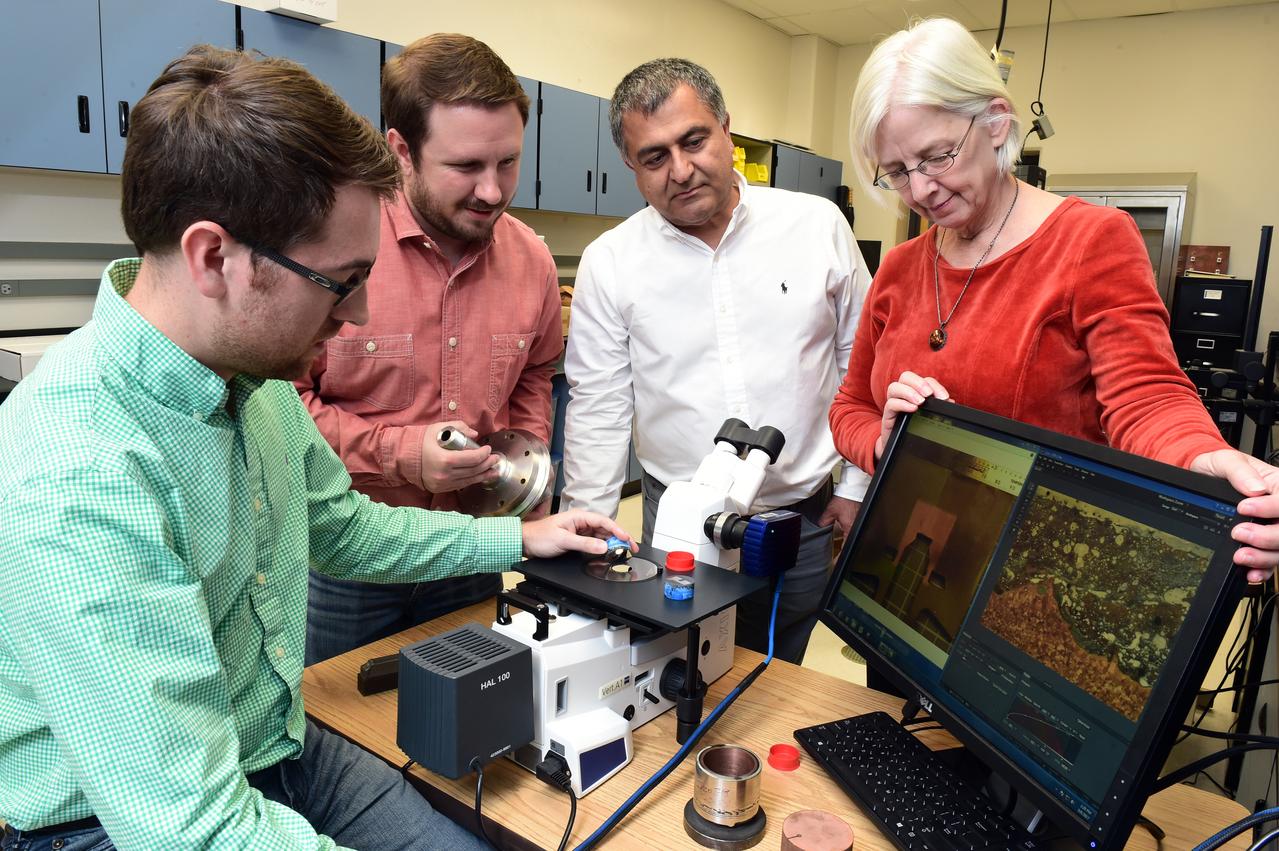
Majid Babai along with Dr. Judy Schneider, and graduate students Chris Hill and Ryan Anderson examine a cross section of the prototype rocket engine igniter created by an innovative bi-metallic 3-D printing advanced manufacturing process under a microscope.
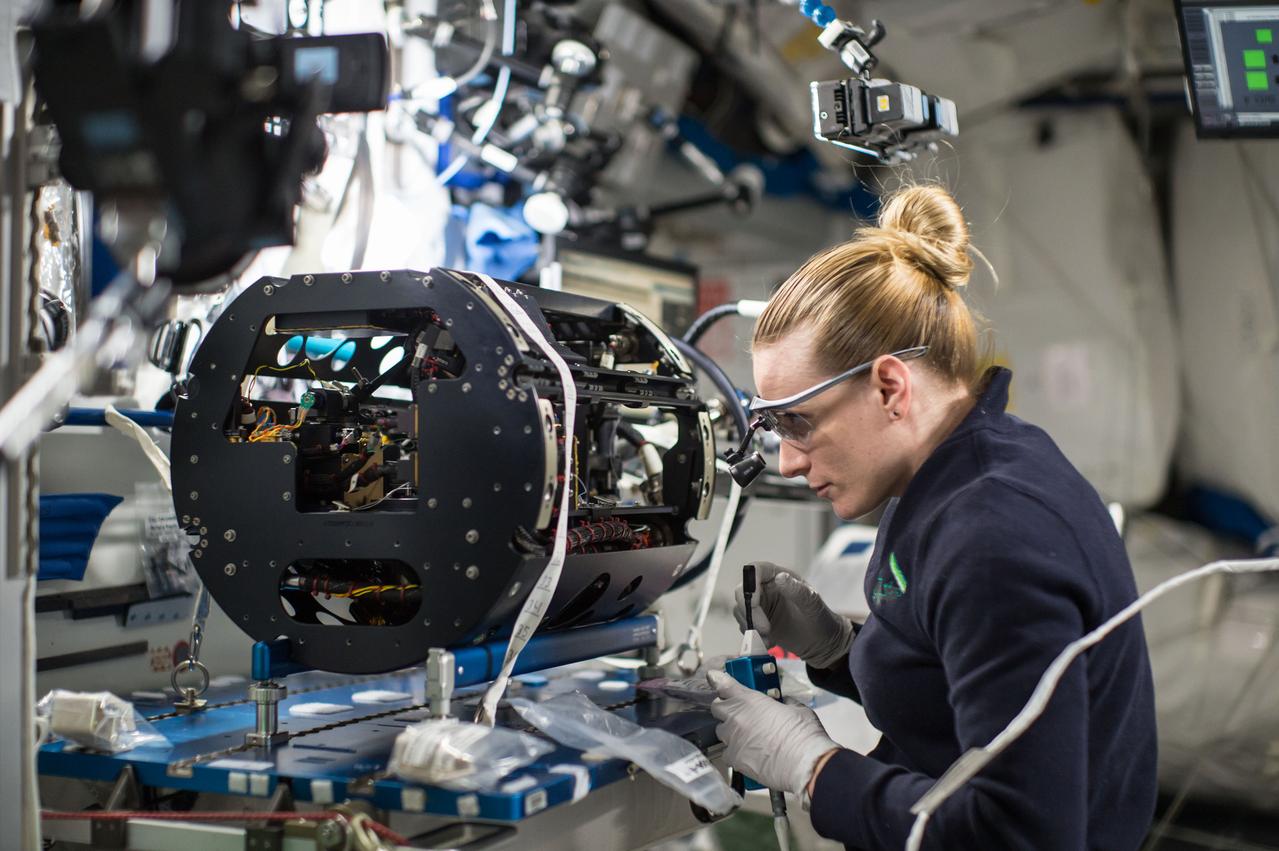
iss049e003808 (9/15/2016) --- NASA astronaut Kate Rubins is photographed replacing two Multi-user Droplet Combustion Apparatus (MDCA) Igniter Tips as part of the Combustion Integration Rack (CIR) Igniter Replacement operations. The CIR is used to perform combustion experiments in microgravity. The CIR can be reconfigured easily on orbit to accommodate a variety of combustion experiments. It consists of an optics bench, a combustion chamber, a fuel and oxidizer management system, environmental management systems, and interfaces for science diagnostics and experiment specific equipment.
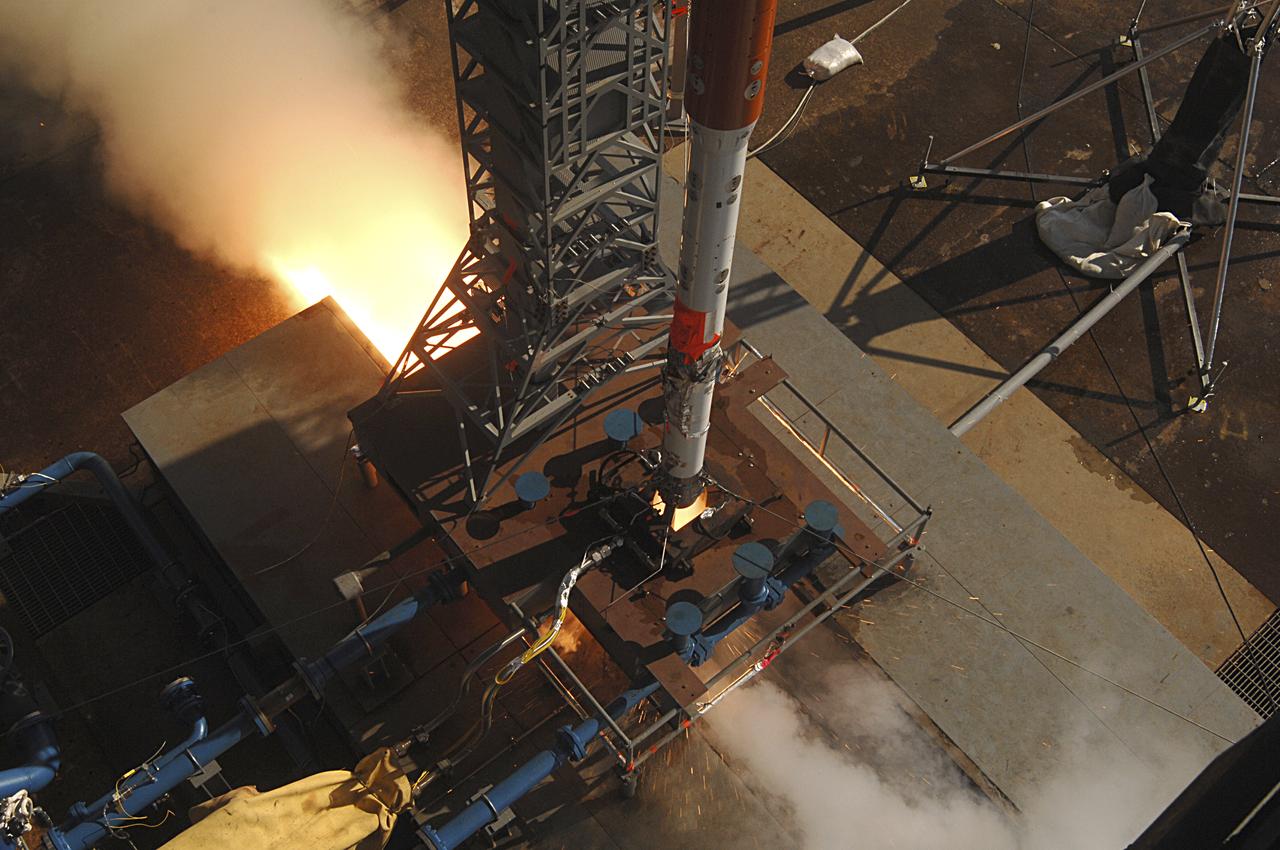
Project 8019 Vertical Ares Scale Model Acoustic Test (ASMAT) Ignition Over Pressure (IOP) Test #3, 11/18/2010 P8019_VERT 03-016
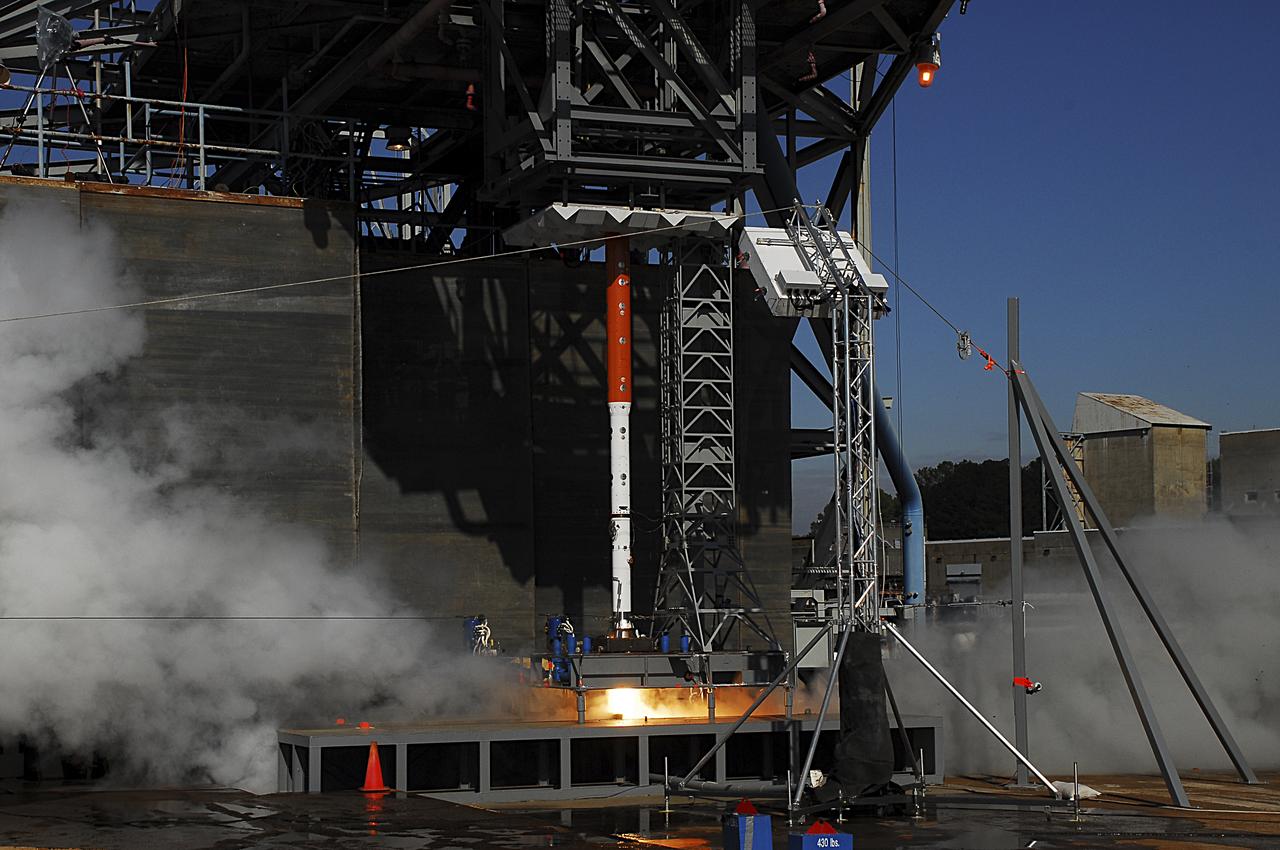
Project 8019 Vertical Ares Scale Model Acoustic Test (ASMAT) Ignition Over Pressure (IOP) Test #3, 11/18/2010 P8019_VERT 03-078
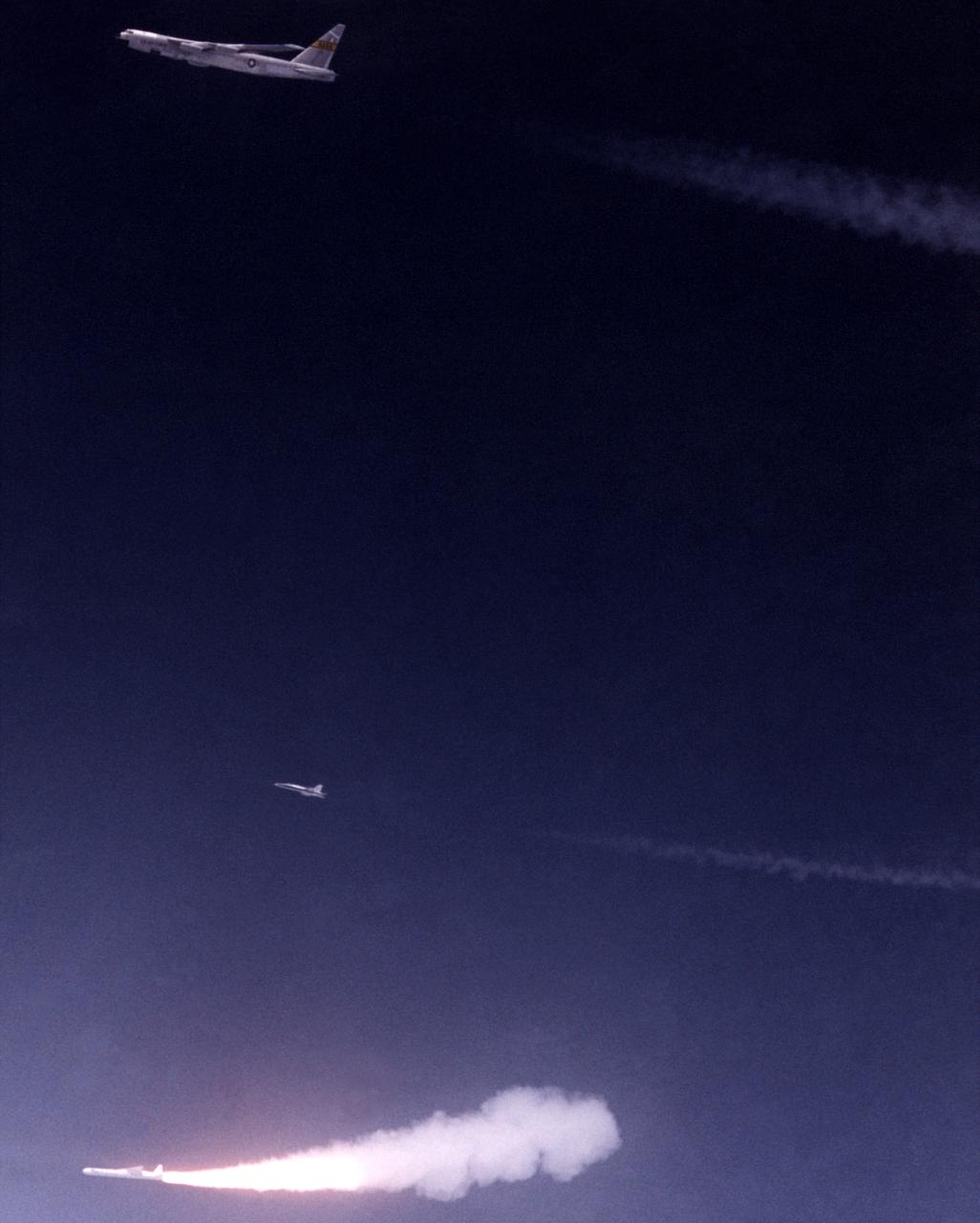
Against the midnight blue of a high-altitude sky, Orbital Sciences’ Pegasus winged rocket booster ignites after being dropped from NASA’s B-52 mothership on a July 1991 flight. A NASA chase plane for the flight is also visible above the rocket and below the B-52.
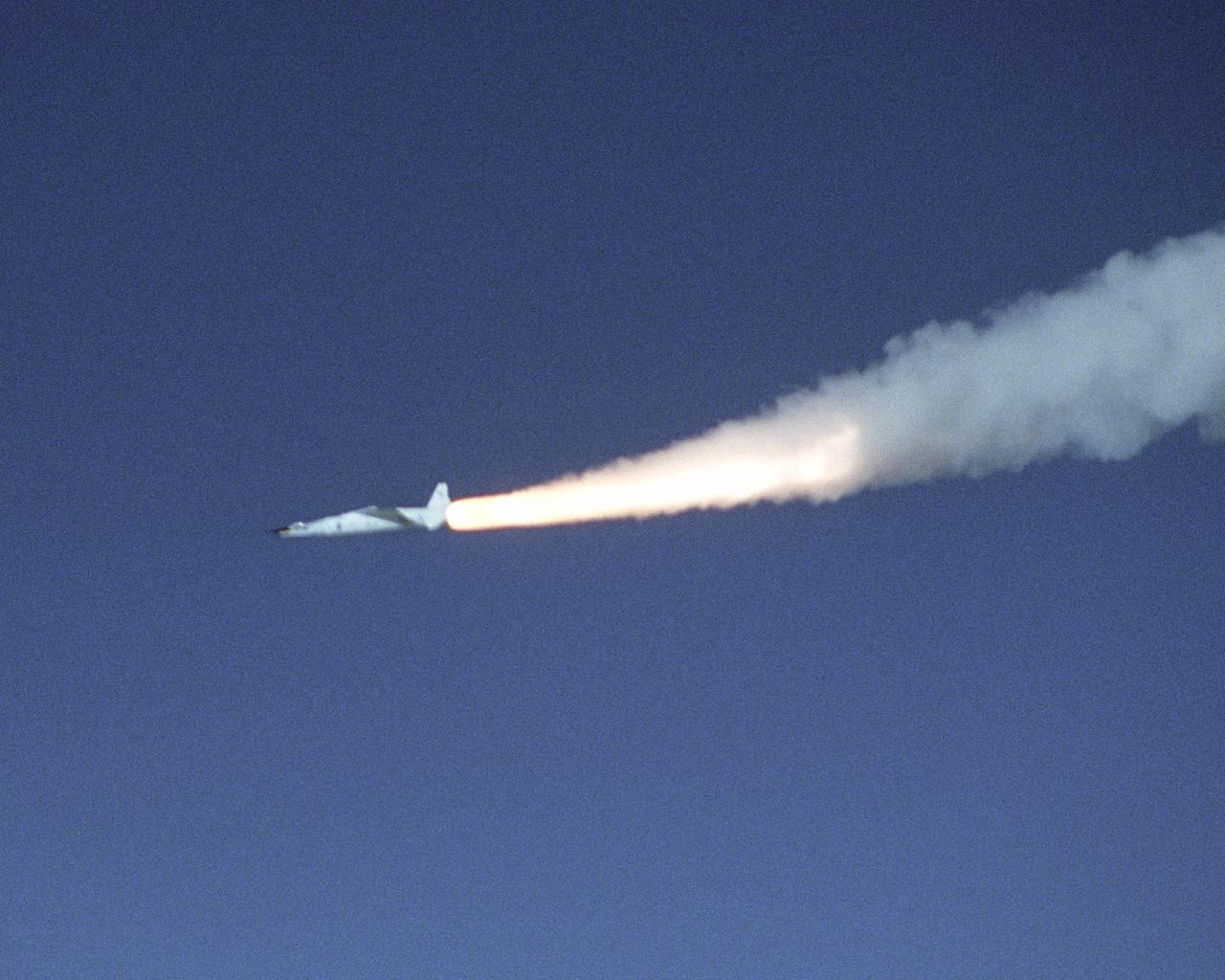
The third X-43A hypersonic research aircraft and its modified Pegasus booster rocket accelerate after launch from NASA's B-52B launch aircraft over the Pacific Ocean on November 16, 2004. The mission originated from the NASA Dryden Flight Research Center at Edwards Air Force Base, California. Minutes later the X-43A separated from the Pegasus booster and accelerated to its intended speed of Mach 10.

Ignited by lightning strikes during a record-breaking heat wave, the Biscuit Fire became Oregon largest wildfire of the past century. NASA Terra spacecraft acquired these image between mid July and early September 2002.
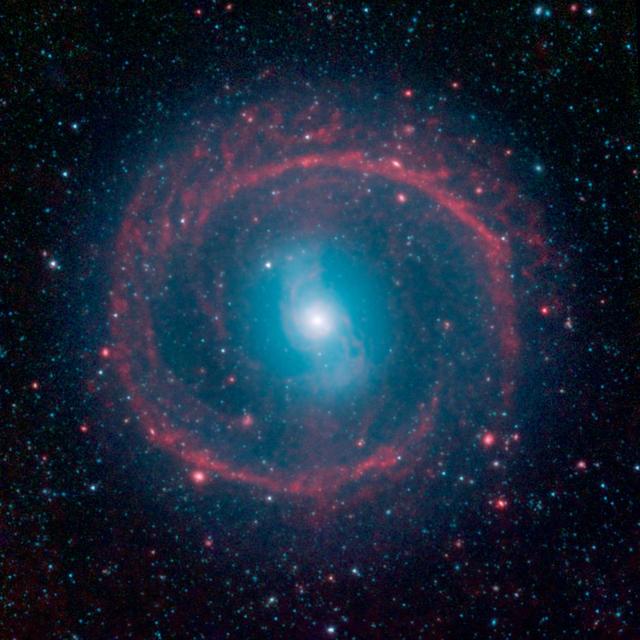
This image from NASA Spitzer Space Telescope shows where the action is taking place in galaxy NGC 1291. The outer ring, colored red, is filled with new stars that are igniting and heating up dust that glows with infrared light.
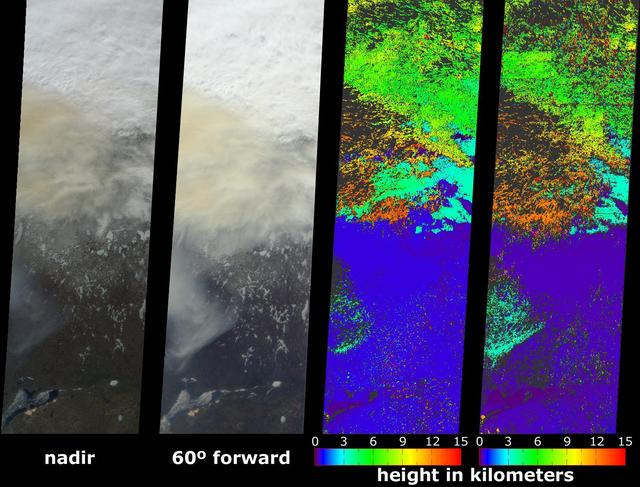
A look at smoke from the Chisholm forest fire, which ignited on May 23, 2001 about 160 kilometers north of Edmonton in Alberta, Canada, as seen by NASA Terra spacecraft.
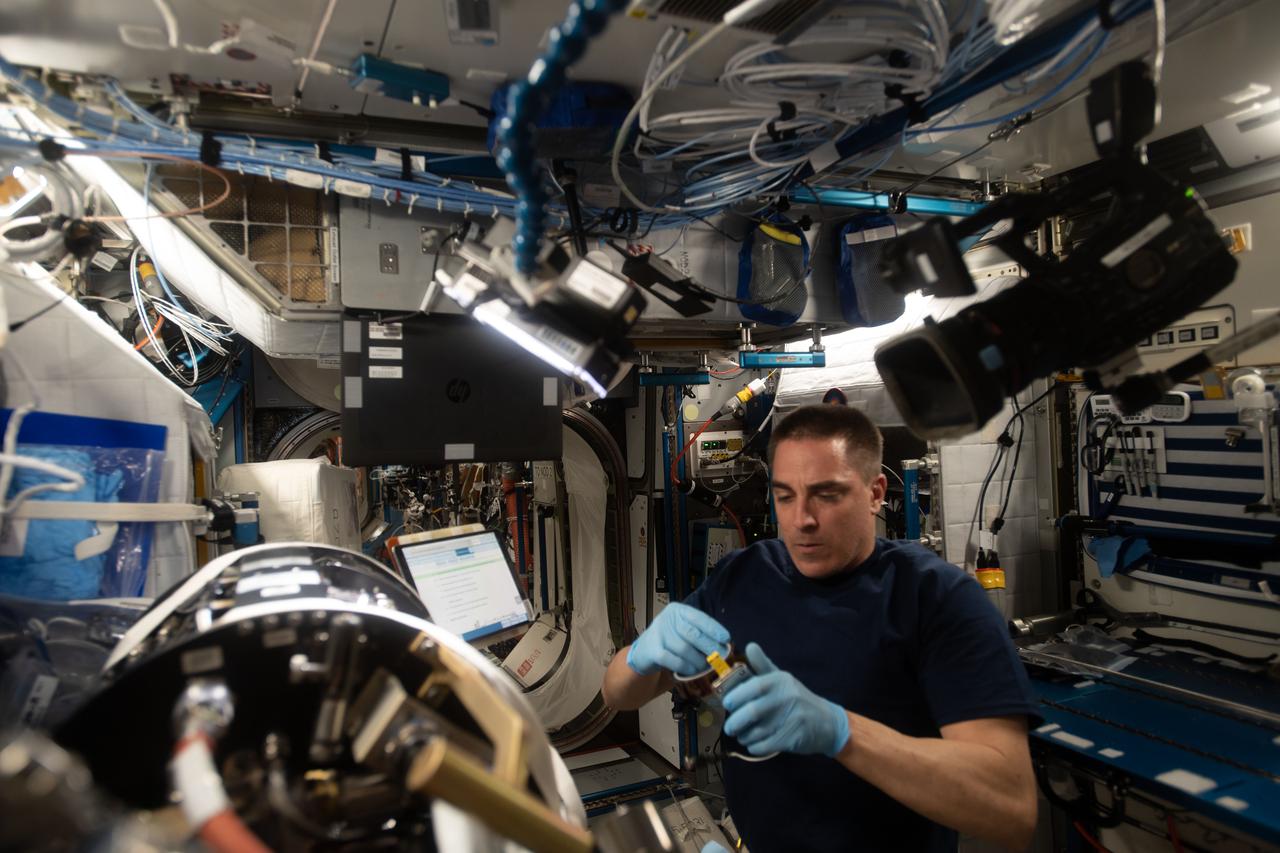
iss063e078755 (Aug. 27, 2020) --- NASA astronaut and Expedition 63 Commander Chris Cassidy replaces components inside the Combustion Integrated Rack to support a series of ongoing flame and fuel studies known as Advanced Combustion via Microgravity Experiments (ACME).

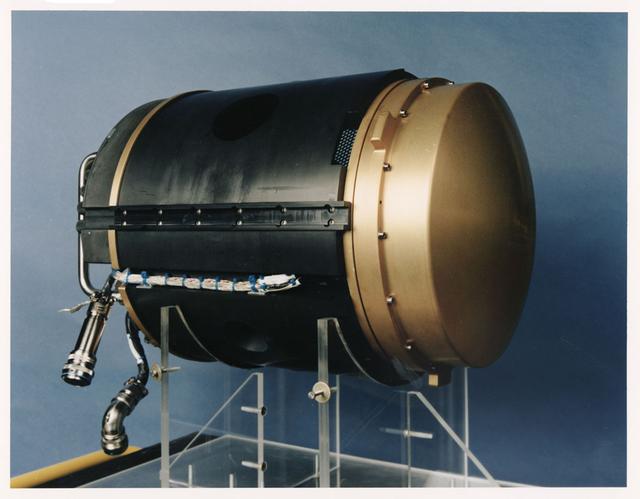
MICRO RESONAUT IGNITION DEVICE
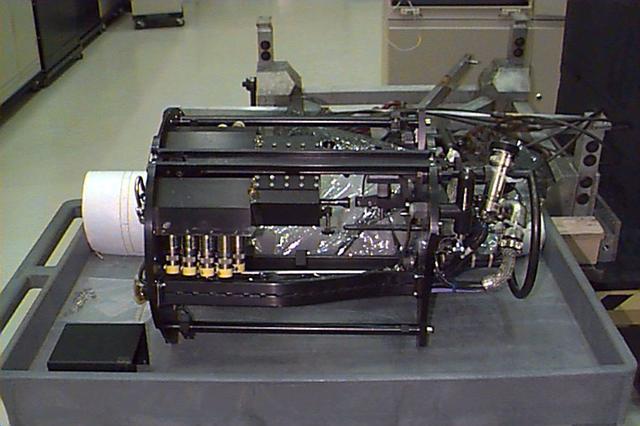
The Laminar Soot Processes (LSP) Experiment Mounting Structure (EMS) was used to conduct the LSP experiment on Combustion Module-1. The EMS was inserted into the nozzle on the EMS and ignited by a hot wire igniter. The flame and its soot emitting properties were studied.
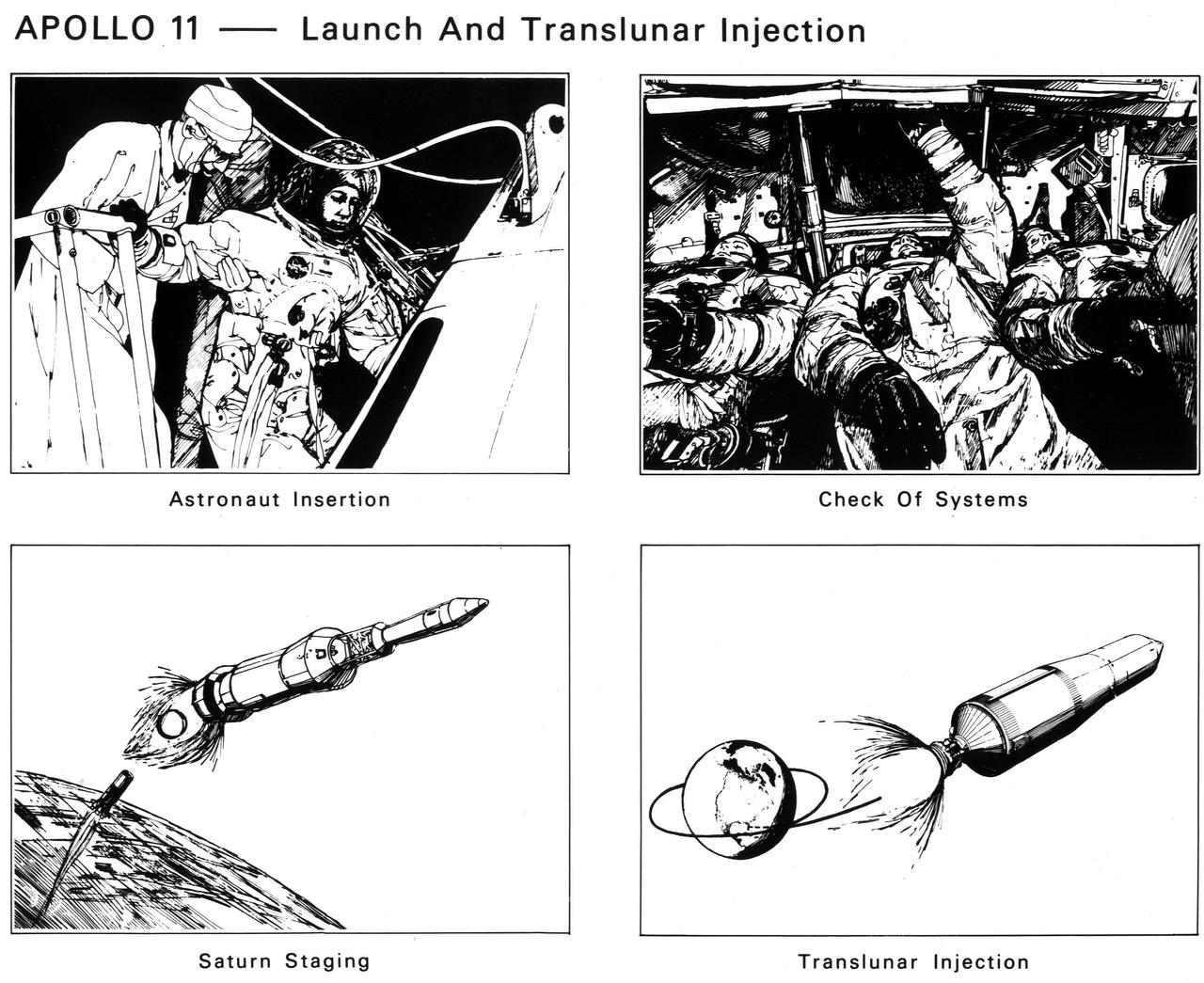
The astronauts enter the spacecraft. After launch and Saturn V first-stage burnout and jettison, the S-II second stage ignites. The crew checks spacecraft systems in Earth orbit before the S-IVB third stage ignites the second time to send Apollo 11 to the Moon
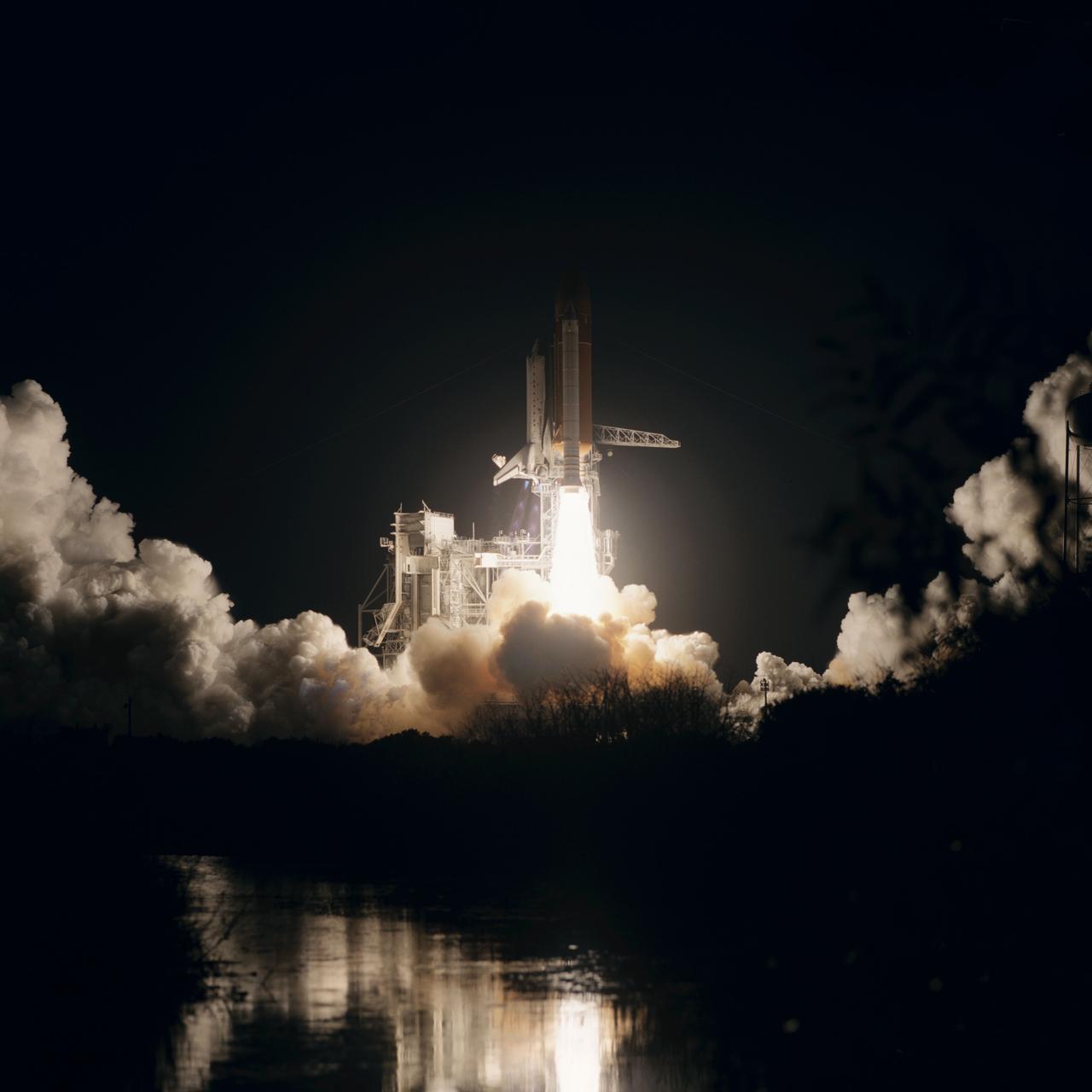
Launch of the Shuttle Discovery and begining of STS 51-I mission. View of the pre-dawn launch shows a reflection of the ignition in the river across from the launch complex (223); Clouds of smoke from the launch reflect the light of the ignited engines in this view of the pre-dawn launch (224).
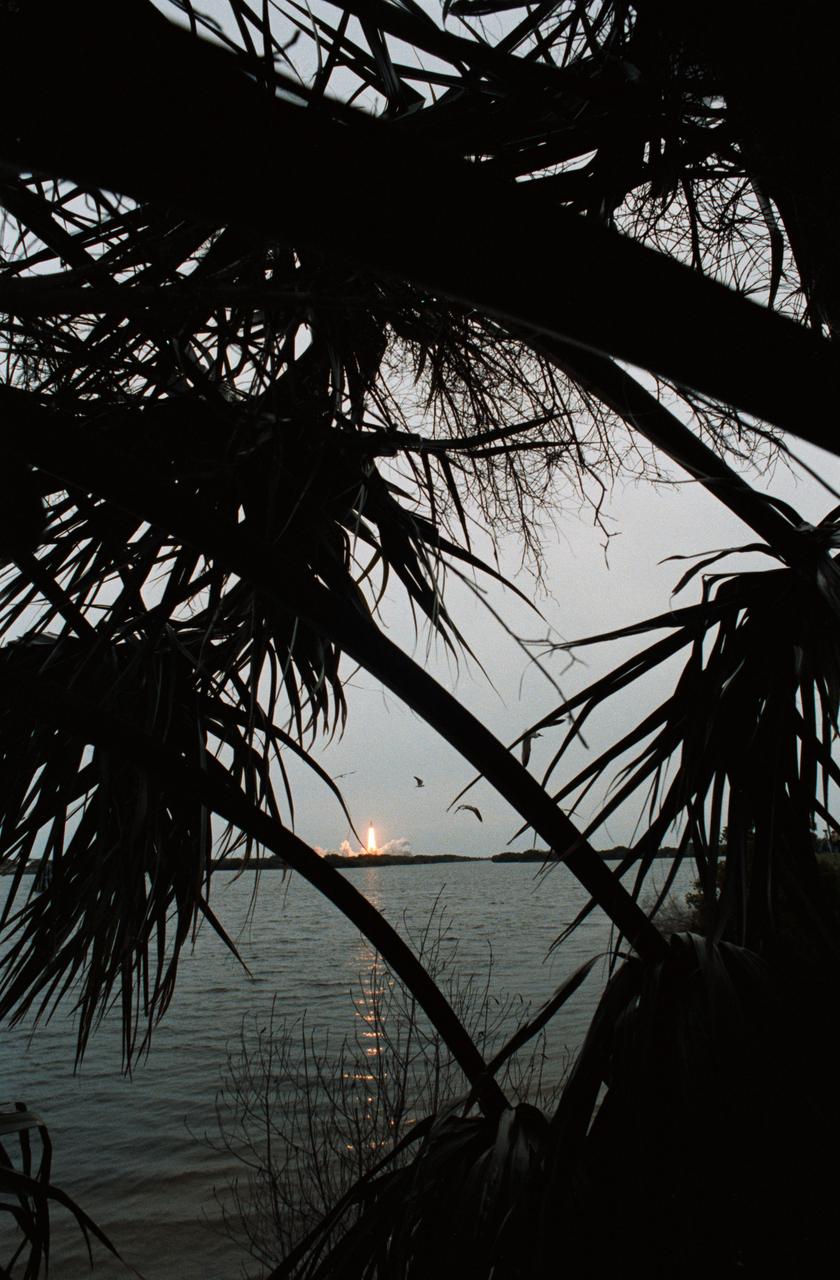
Just below center of this scene is a distant representation of a large ignition as the Shuttle Discovery lifts off from a Kennedy Space Center (KSC) launch pad. The ignition can be seen through the fronds of the trees. Birds in flight frame the light spot representing the orbiter as it launches.

X33 COMBUSTION WARE IGNITION FULL SCALE PROTOYPE TEST RIG
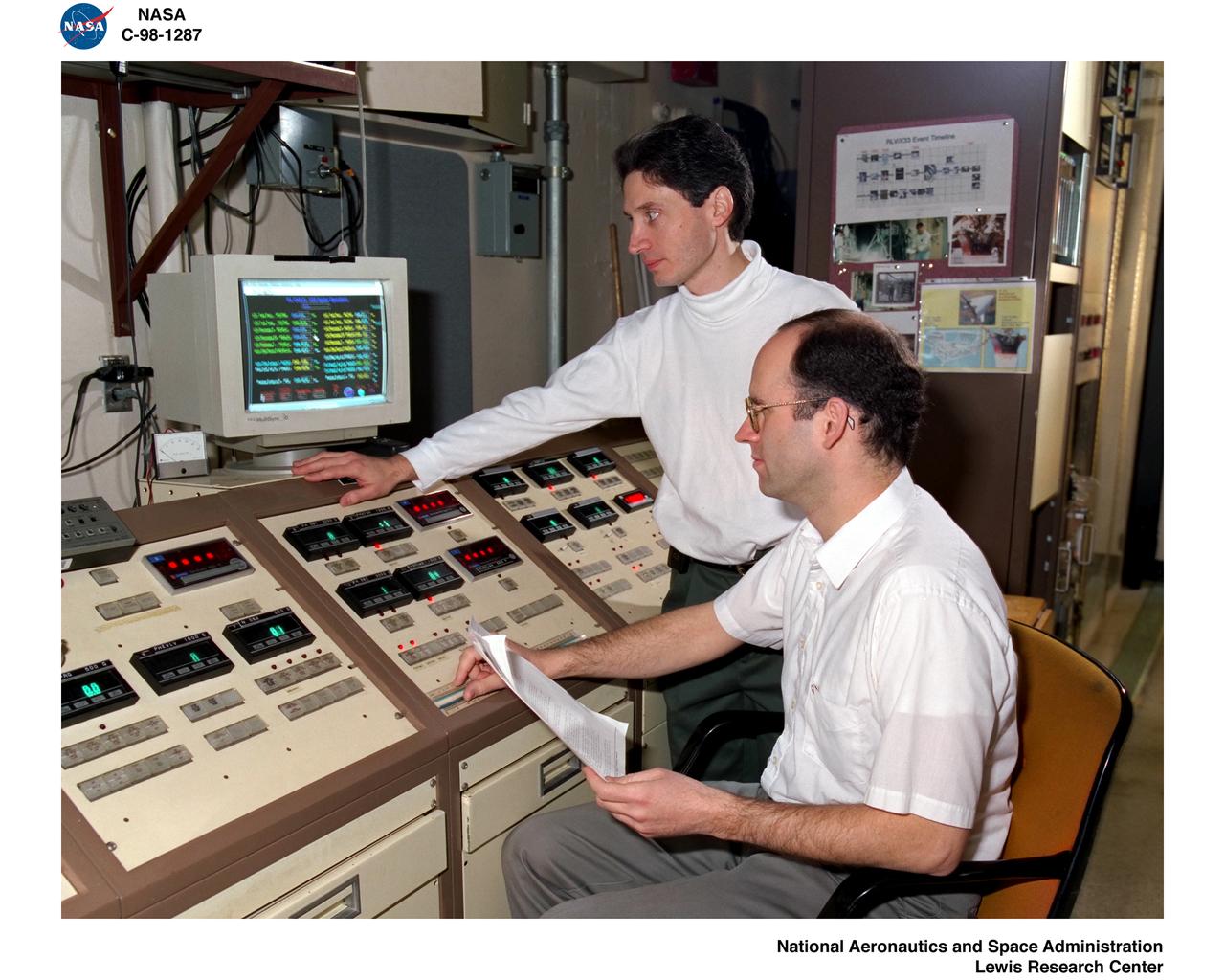
X33 COMBUSTION WARE IGNITION FULL SCALE PROTOYPE TEST RIG
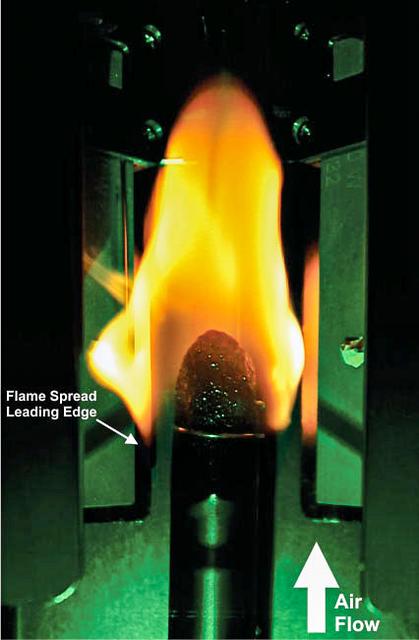
jsc2024e053517 (8/8/2024) --- A plexiglass rod burns in microgravity for the Solid Fuel Ignition and Extinction - Material Ignition and Suppression Test (SoFIE-MIST) investigation. Once each rod is ignited, the flame spreads upstream from the ignition end of the rod. As tests progress, the flame spreads along the rod, consuming oxygen. Once the oxygen concentration drops low enough, the flame extinguishes due to natural oxygen depletion. Data to measure the oxygen concentration, flow rate, and heat loss is obtained at the three test pressures. SoFIE-MIST aims to improve understanding of early fire growth behavior and validate models for material flammability, helping to inform the selection of safer materials for future space facilities and determine the best methods for extinguishing fires in space. .
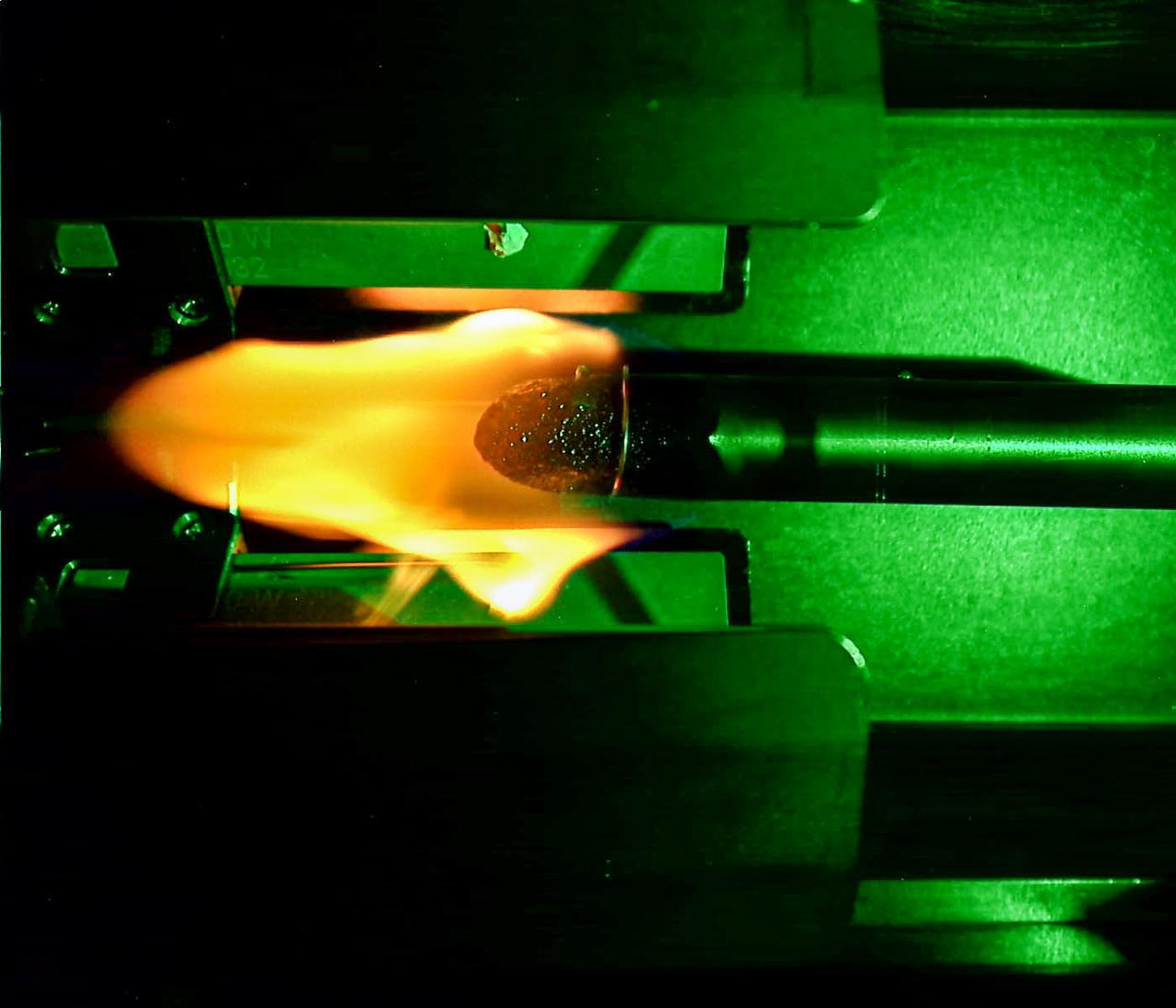
jsc2024e053516 (8/8/2024) --- A plexiglass rod burns in microgravity for the Solid Fuel Ignition and Extinction - Material Ignition and Suppression Test (SoFIE-MIST) investigation. Once each rod is ignited, the flame spreads upstream from the ignition end of the rod. As tests progress, the flame spreads along the rod, consuming oxygen. Once the oxygen concentration drops low enough, the flame extinguishes due to natural oxygen depletion. Data to measure the oxygen concentration, flow rate, and heat loss is obtained at the three test pressures. SoFIE-MIST aims to improve understanding of early fire growth behavior and validate models for material flammability, helping to inform the selection of safer materials for future space facilities and determine the best methods for extinguishing fires in space.
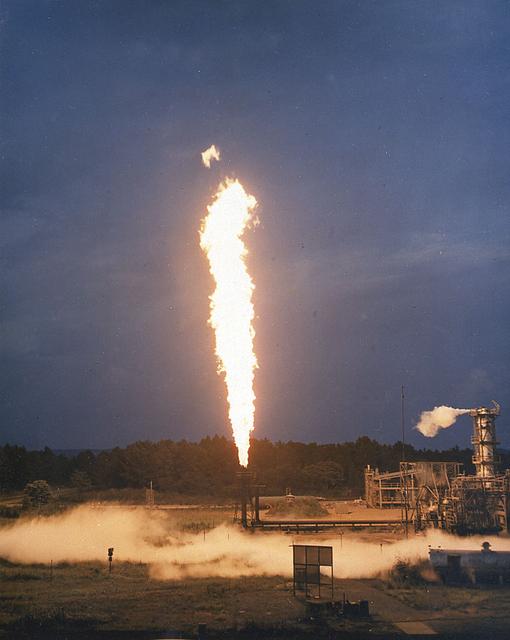
Marshall Space Flight Center's rocket development has always included component testing. Pictured here is a Cell 114-B burn stack. The C114-B is part of the gas generators used to test heat exchanges for the F-1 engine. On the initial firing of the C114-B the spark ignition would not light. The rocket propellant mixed with the liquid oxygen gelled creating a bomb. After several attempts at ignition, the spark ignited and blew up the stand. Subsequent testings were completed on newly constructed stands and no further mishaps were reported.
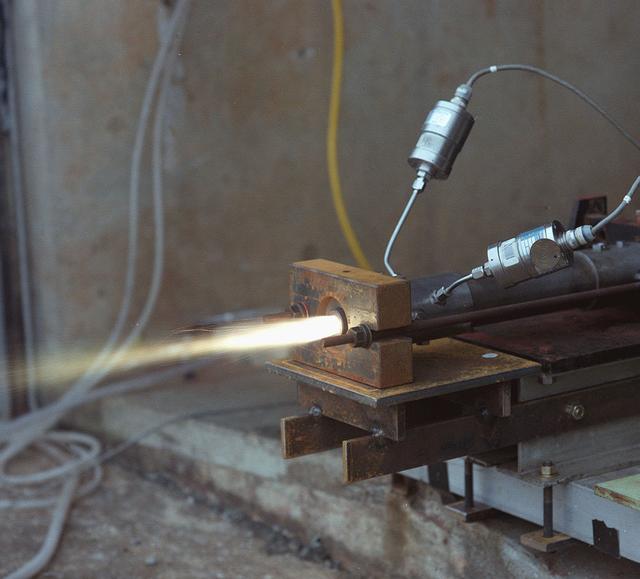
Fuels used in the 11 inch and 24 inch lab-scale hybrid motors are ignited at Marshall's test cell 104.
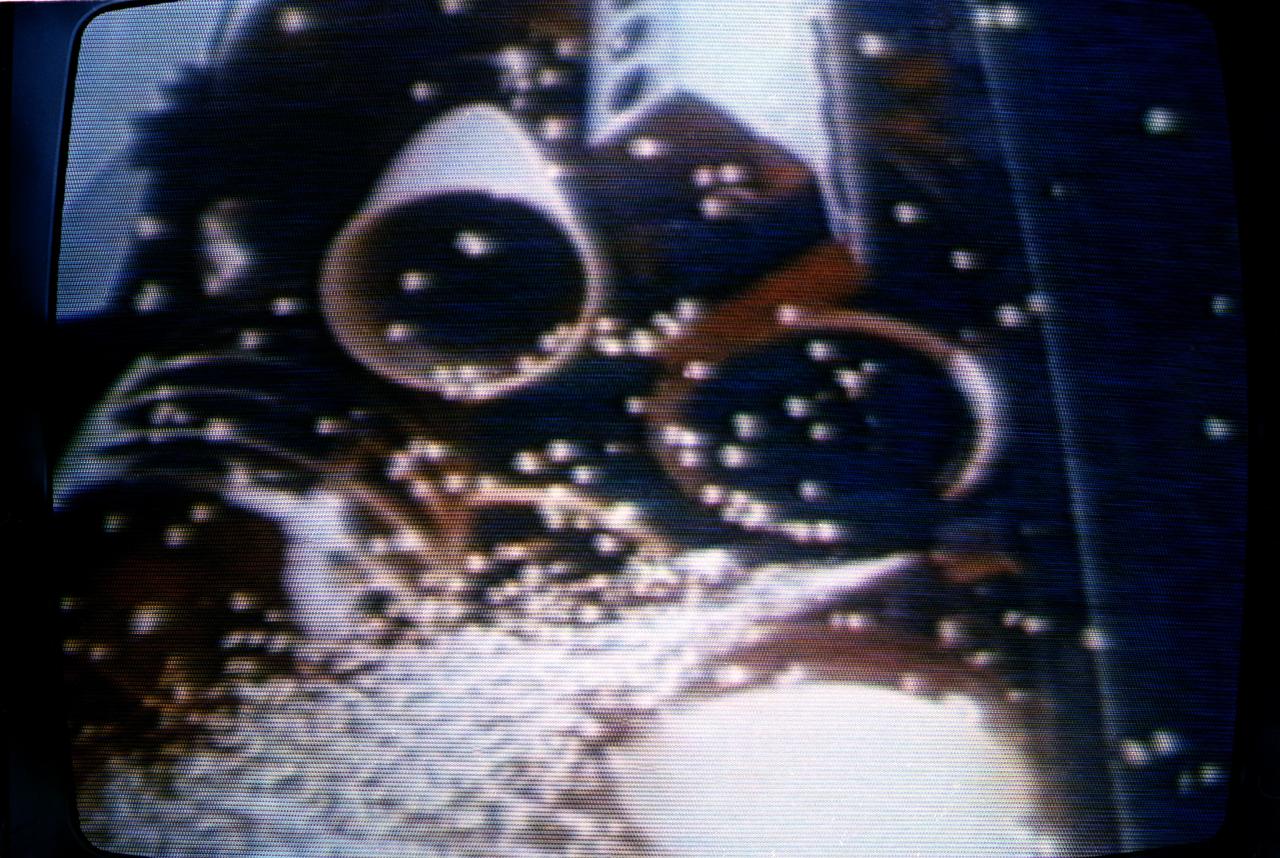
S84-36146 (12 April 1981) --- This close-up television view captures the flames of the space shuttle Columbia’s three main engines just seconds before launch and the beginning of the STS-1 mission. Photo credit: NASA or National Aeronautics and Space Administration

TRANSITION FROM IGNITION TO FLAME GROWTH UNDER EXTERNAL RADIATION IN THREE DIMENSIONS TIGER-3D TEST RESULTS FROM THE JAPAN MICROGRAVITY CENTER JAMIC

TRANSITION FROM IGNITION TO FLAME GROWTH UNDER EXTERNAL RADIATION IN THREE DIMENSIONS TIGER-3D TEST RESULTS FROM THE JAPAN MICROGRAVITY CENTER JAMIC
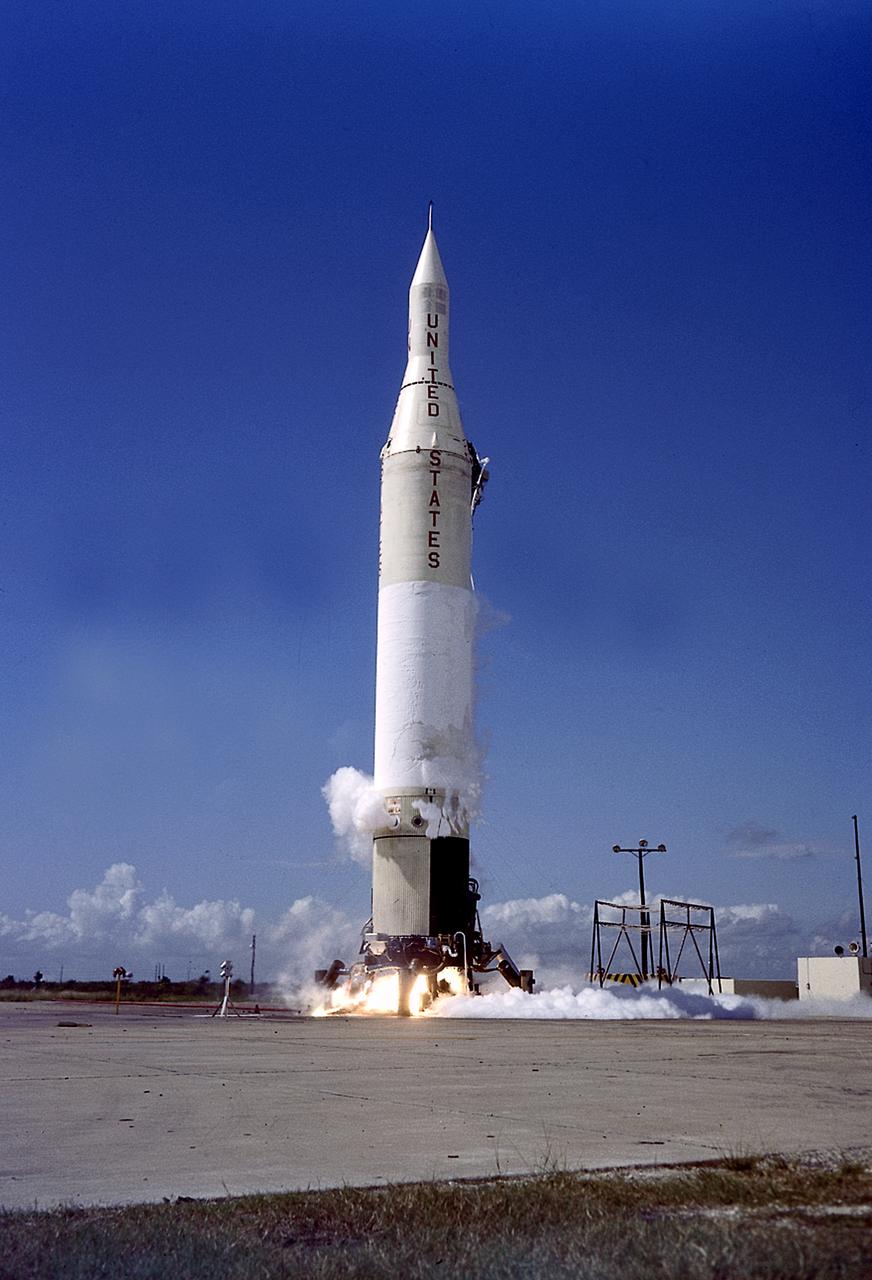
The ignition of Juno II (AM-19A). Juno II (AM-19) successfully placed a physics and astronomy satellite, Explorer VII, in orbit on October 13, 1959.
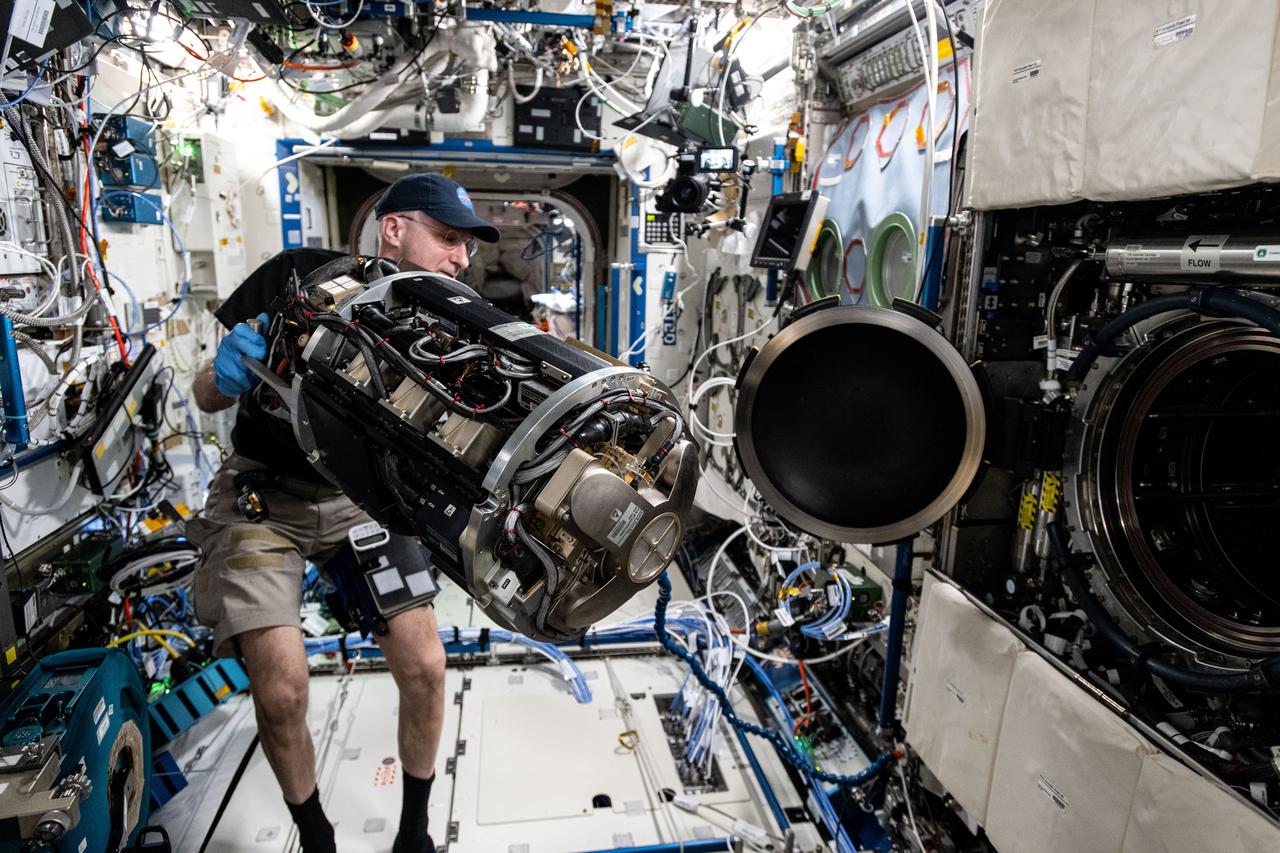
iss072e747148 (March 18, 2025) --- NASA astronaut and Expedition 72 Flight Engineer Don Pettit inserts research hardware into the Combustion Integrated Rack located inside the International Space Station's Destiny laboratory module. Pettit was configuring the SoFIE-MIST, or the Solid Fuel Ignition and Extinction - Material Ignition and Suppression Test, investigation that is exploring the flammability of materials in microgravity to improve spacecraft fire safety.
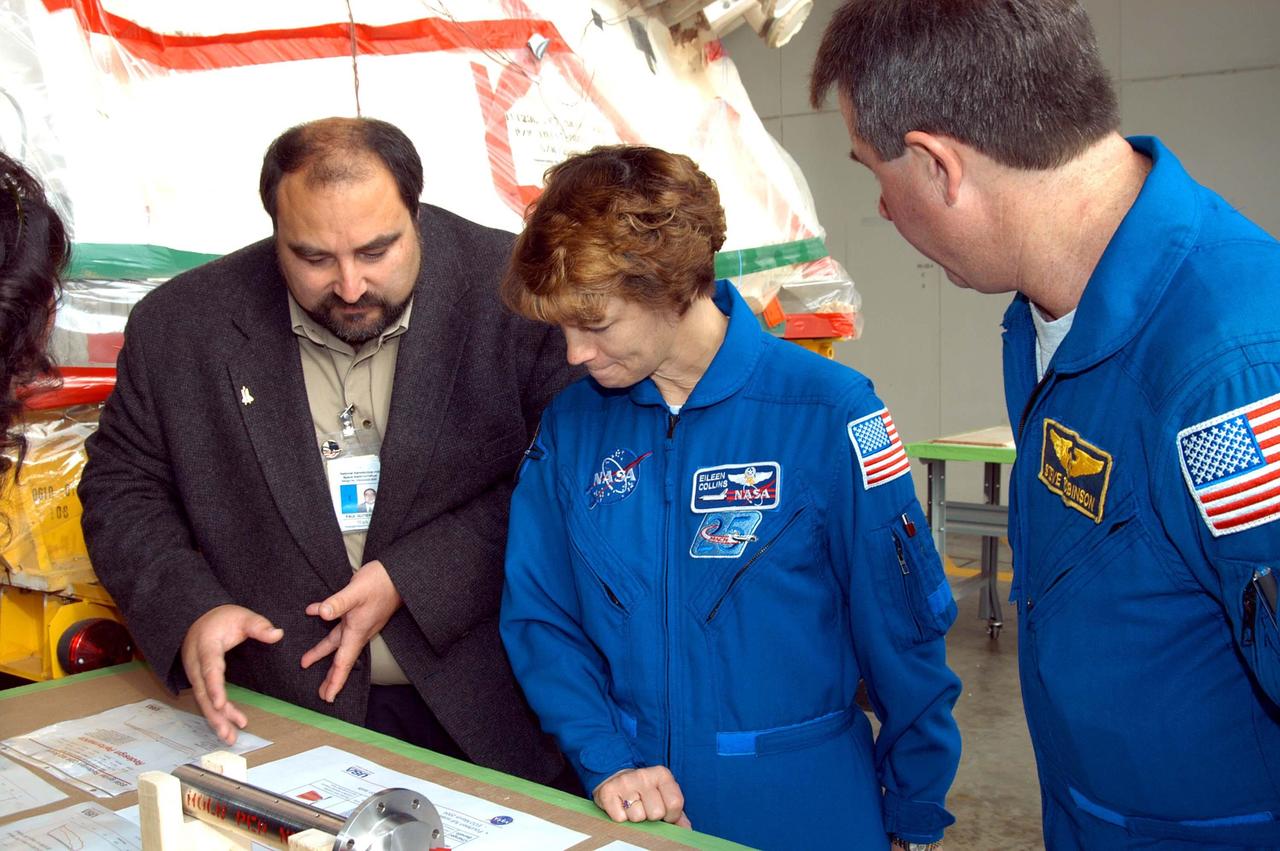
KENNEDY SPACE CENTER, FLA. - At the SRB Assembly and Refurbishment Facility, STS-114 Eileen Collins (center) and Mission Specialist Stephen Robinson look on the table at a mockup of a booster separation motor (BSM) igniter and expanded views of the BSM and igniter. At left is Paul Gutierrez, SRB associate program manager with United Space Alliance. The crew is at KSC for familiarization with Shuttle and mission equipment. The STS-114 mission is Logistics Flight 1, which is scheduled to deliver supplies and equipment, plus the external stowage platform, to the International Space Station.
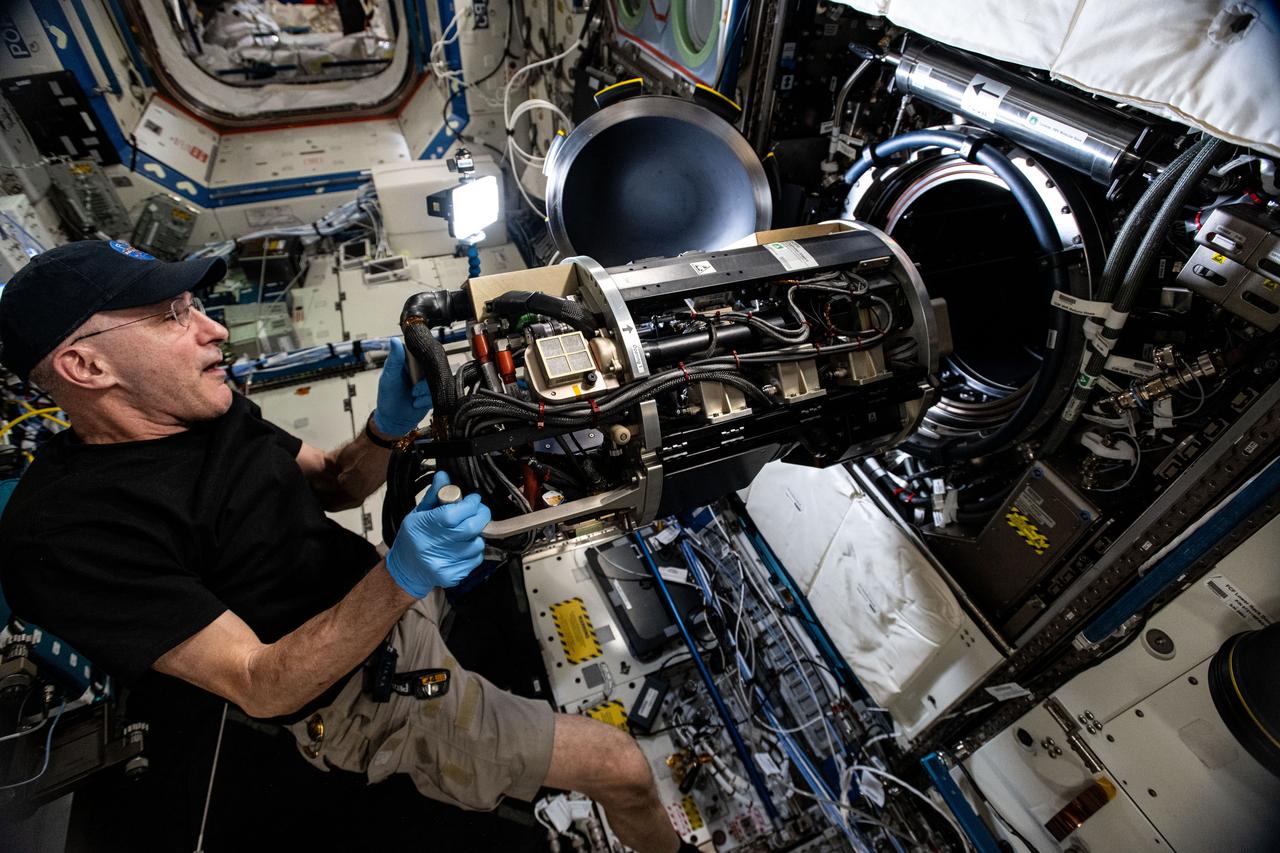
iss072e747154 (March 18, 2025) --- NASA astronaut and Expedition 72 Flight Engineer Don Pettit inserts research hardware into the Combustion Integrated Rack located inside the International Space Station's Destiny laboratory module. Pettit was configuring the SoFIE-MIST, or the Solid Fuel Ignition and Extinction - Material Ignition and Suppression Test, investigation that is exploring the flammability of materials in microgravity to improve spacecraft fire safety.
Structure Of Flame Balls At Low Lewis-numbers (SOFBALL) Experiment Mounting Structure (EMS) was used to conduct the SOFBALL experiment on Combustion Module-1. The EMS was inserted into the CM-1 combustion chamber. The chamber was filled with a lean fuel/oxidizer mixture and a spark igniter on the EMS ignited the gas. Very small, weak flames, in the shape of spheres, were formed and studied.
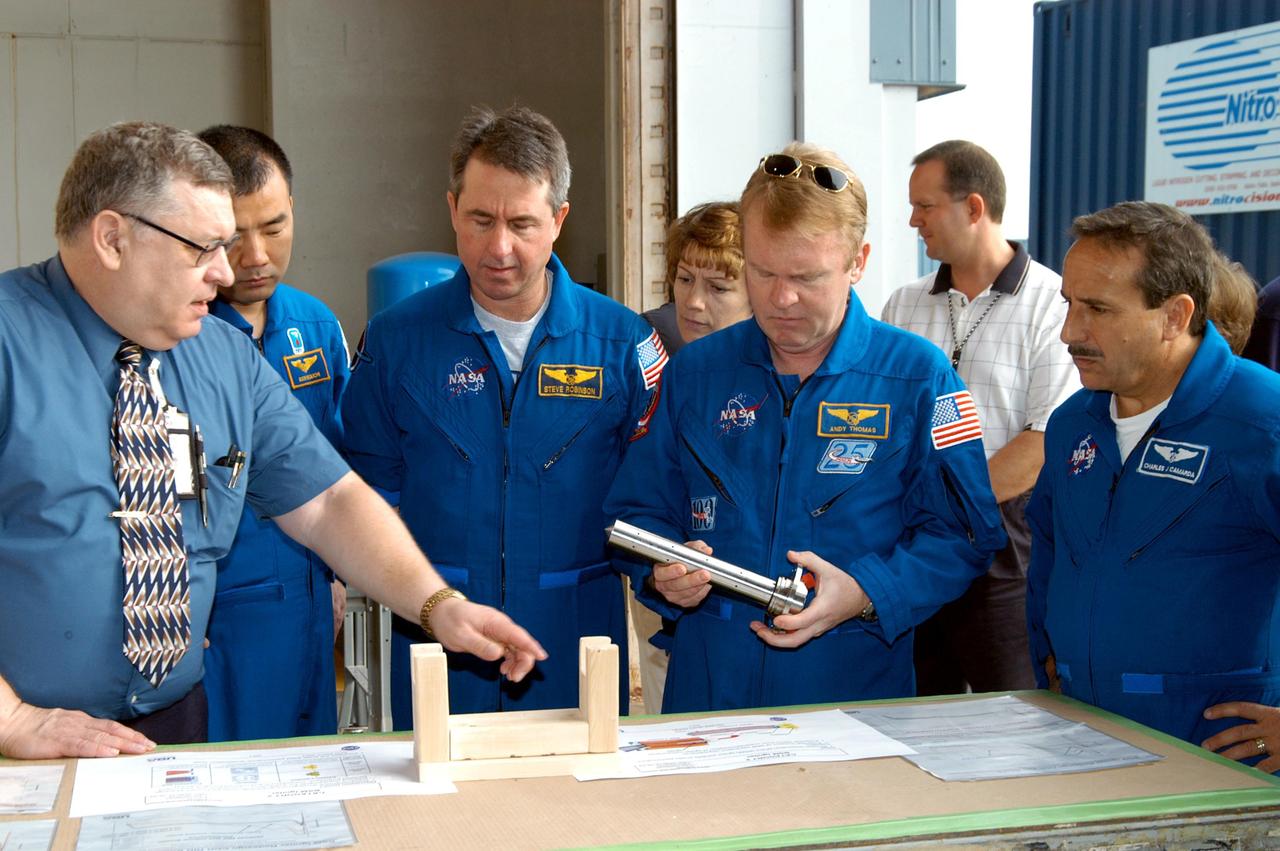
KENNEDY SPACE CENTER, FLA. - - In the SRB Assembly and Refurbishment Facility, some of the STS-114 crew listen to Mike Leppert, Manufacturing Operations project lead with United Space Alliance, talk about a booster separation motor (BSM) igniter. Pictures on the table give expanded views of the BSM and igniter. Next to Leppart, from left, are Mission Specialists Soichi Noguchi and Stephen Robinson; Commander Eileen Collins; and Mission Specialists Andrew Thomas (holding a mockup of an igniter) and Charles Camarda. Noguchi is with the Japanese Aerospace and Exploration Agency. The crew is at KSC for familiarization with Shuttle and mission equipment. The STS-114 mission is Logistics Flight 1, which is scheduled to deliver supplies and equipment, plus the external stowage platform, to the International Space Station.

KENNEDY SPACE CENTER, FLA. - In the SRB Assembly and Refurbishment Facility, STS-114 crew members take a close look at a mock-up of a booster separation motor (BSM) igniter and expanded views of the BSM and igniter on the table. From left are Mission Specialists Soichi Noguchi, Stephen Robinson and Andrew Thomas (holding the igniter); Commander Eileen Collins; and Mission Specialist Charles Camarda. At far right is Paul Gutierrez, SRB associate program manager with United Space Alliance. Not pictured is Mission Specialist Wendy Lawrence. Noguchi is with the Japanese Aerospace and Exploration Agency. The crew is at KSC for familiarization with Shuttle and mission equipment. The STS-114 mission is Logistics Flight 1, which is scheduled to deliver supplies and equipment, plus the external stowage platform, to the International Space Station.
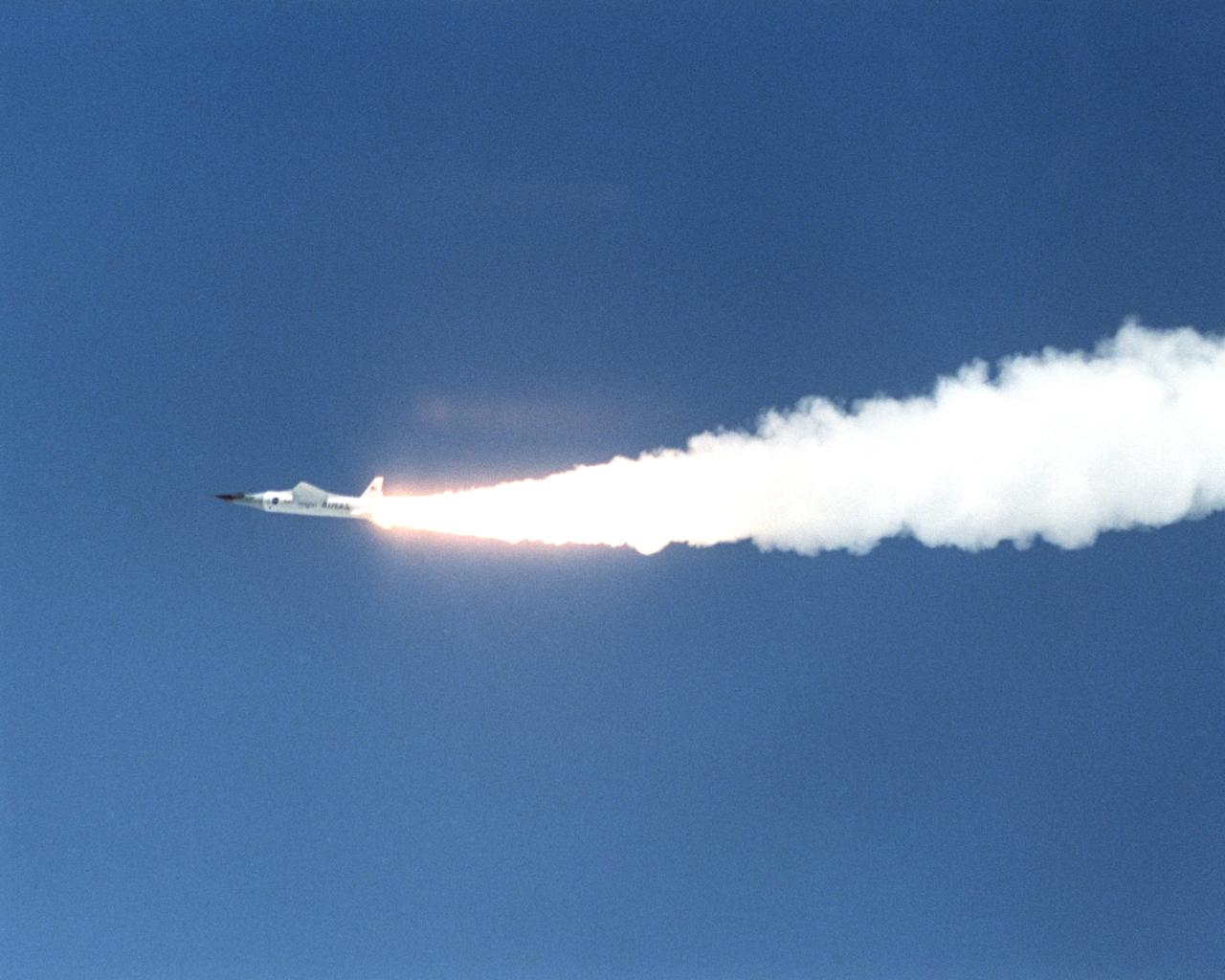
The first X-43A hypersonic research aircraft and its modified Pegasus booster rocket were carried aloft by NASA's NB-52B carrier aircraft from Dryden Flight Research Center at Edwards Air Force Base, Calif., on June 2, 2001 for the first of three high-speed free flight attempts. About an hour and 15 minutes later the Pegasus booster was released from the B-52 to accelerate the X-43A to its intended speed of Mach 7. Before this could be achieved, the combined Pegasus and X-43A "stack" lost control about eight seconds after ignition of the Pegasus rocket motor. The mission was terminated and explosive charges ensured the Pegasus and X-43A fell into the Pacific Ocean in a cleared Navy range area. A NASA investigation board is being assembled to determine the cause of the incident. Work continues on two other X-43A vehicles, the first of which could fly by late 2001. Central to the X-43A program is its integration of an air-breathing "scramjet" engine that could enable a variety of high-speed aerospace craft, and promote cost-effective access to space. The 12-foot, unpiloted research vehicle was developed and built for NASA by MicroCraft Inc., Tullahoma, Tenn. The booster was built by Orbital Sciences Corp. at Chandler, Ariz.
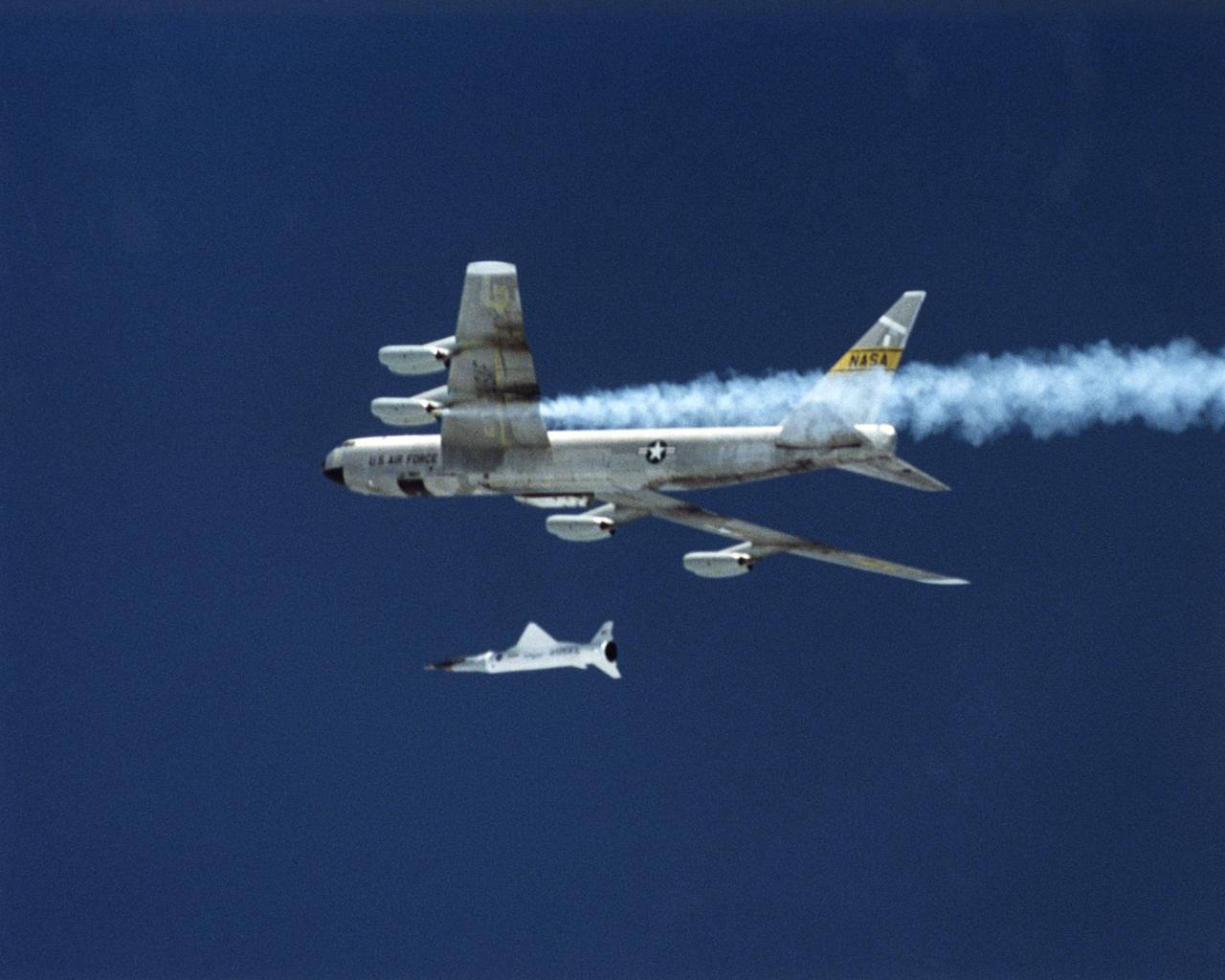
The first X-43A hypersonic research aircraft and its modified Pegasus booster rocket were carried aloft by NASA's NB-52B carrier aircraft from Dryden Flight Research Center at Edwards Air Force Base, Calif., on June 2, 2001 for the first of three high-speed free flight attempts. About an hour and 15 minutes later the Pegasus booster was released from the B-52 to accelerate the X-43A to its intended speed of Mach 7. Before this could be achieved, the combined Pegasus and X-43A "stack" lost control about eight seconds after ignition of the Pegasus rocket motor. The mission was terminated and explosive charges ensured the Pegasus and X-43A fell into the Pacific Ocean in a cleared Navy range area. A NASA investigation board is being assembled to determine the cause of the incident. Work continues on two other X-43A vehicles, the first of which could fly by late 2001. Central to the X-43A program is its integration of an air-breathing "scramjet" engine that could enable a variety of high-speed aerospace craft, and promote cost-effective access to space. The 12-foot, unpiloted research vehicle was developed and built for NASA by MicroCraft Inc., Tullahoma, Tenn. The booster was built by Orbital Sciences Corp. at Chandler, Ariz.
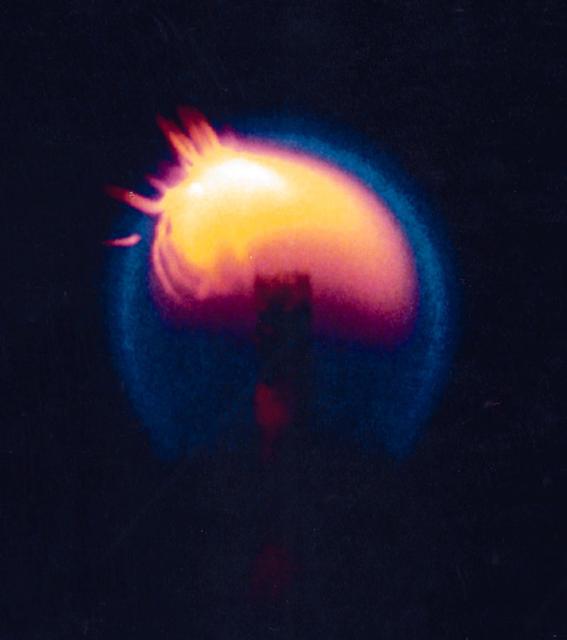
This photograph from CFM shows a candle flame burning over time in microgravity, it shows pieces of wax or soot moving through the flame about 25 seconds after ignition.
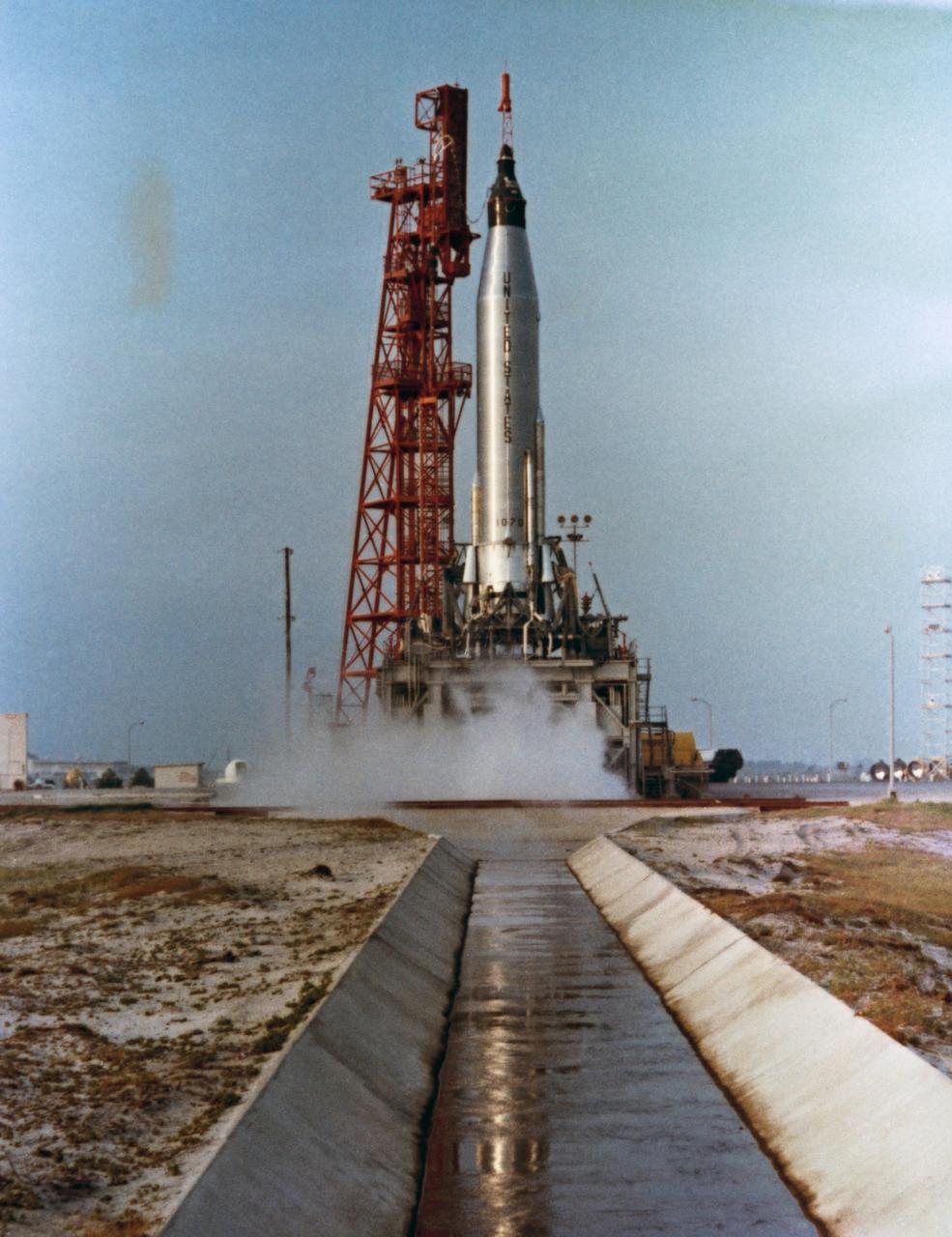
The MA-7 Booster ignites on the pad and is seconds away from actual liftoff. Aboard the spacecraft is Astronaut M. Scott Carpenter, the U.S. second man to orbit the Earth. CAPE CANAVERAL, FL CN
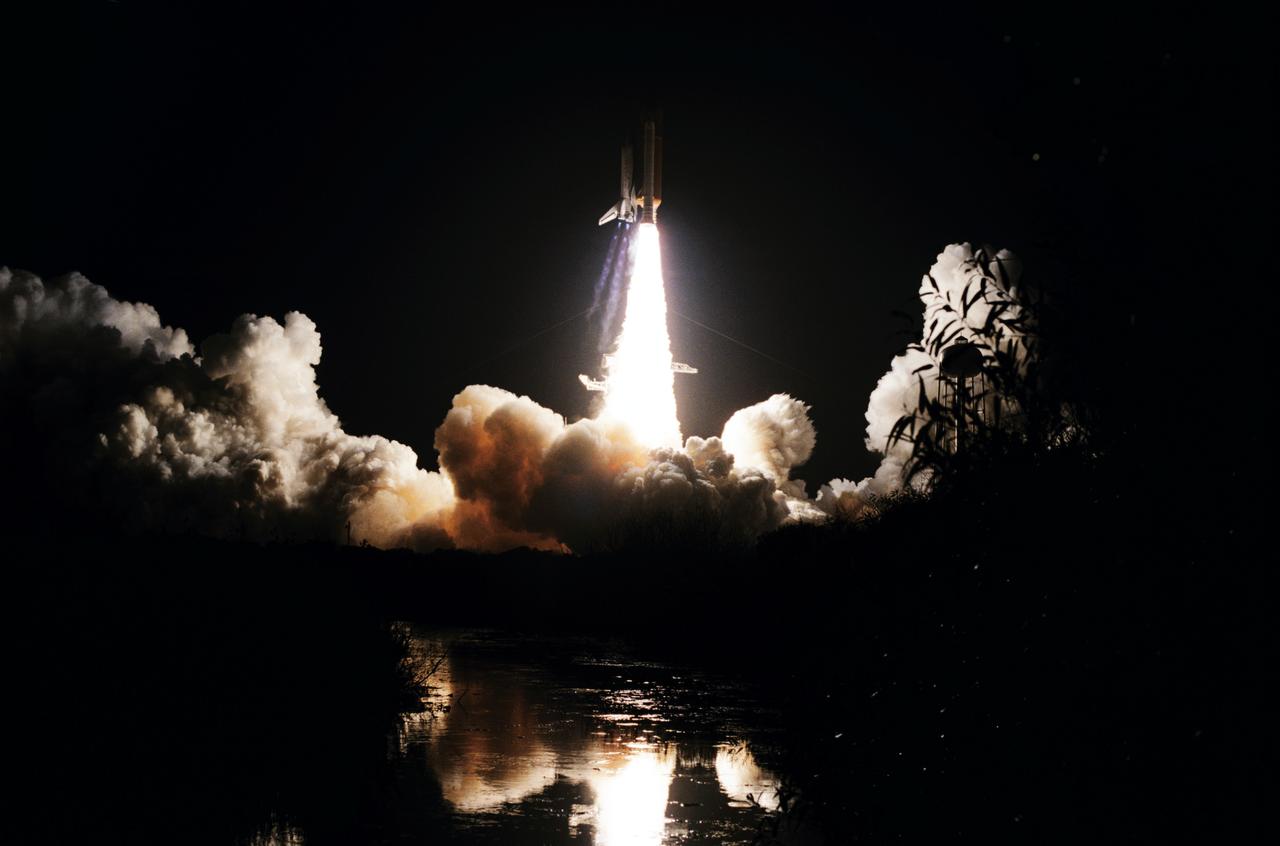
51I-S-223 (27 August 1985) --- Launch of the Space Shuttle Discovery and beginning of STS-51I mission. View of the pre-dawn launch shows a reflection of the ignition in the river across from the launch complex.
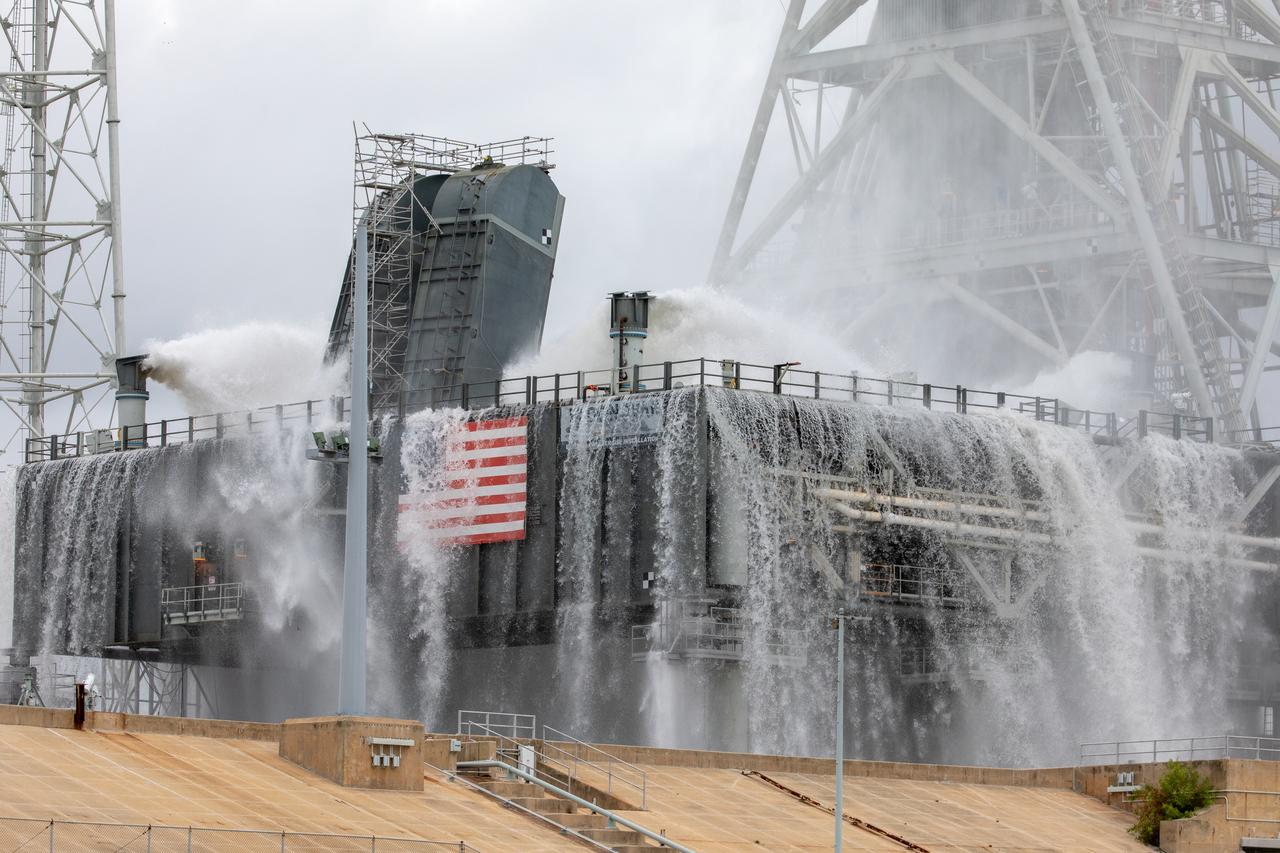
A flow test of the Ignition Overpressure Protection and Sound Suppression water deluge system is underway on the mobile launcher at Launch Pad 39B at NASA's Kennedy Space Center in Florida, on July 25, 2019. The testing is part of a series of tests that Exploration Ground System is doing to verify the system is ready for the new Space Launch System rocket. Modifications were made to the pad after a previous wet flow test, increasing the performance of the system. During the launch of Artemis 1 and subsequent missions, this water deluge system will release about 450,000 gallons of water across the mobile launcher and Flame Deflector to reduce the extreme heat and energy generated by the rocket during ignition and liftoff.
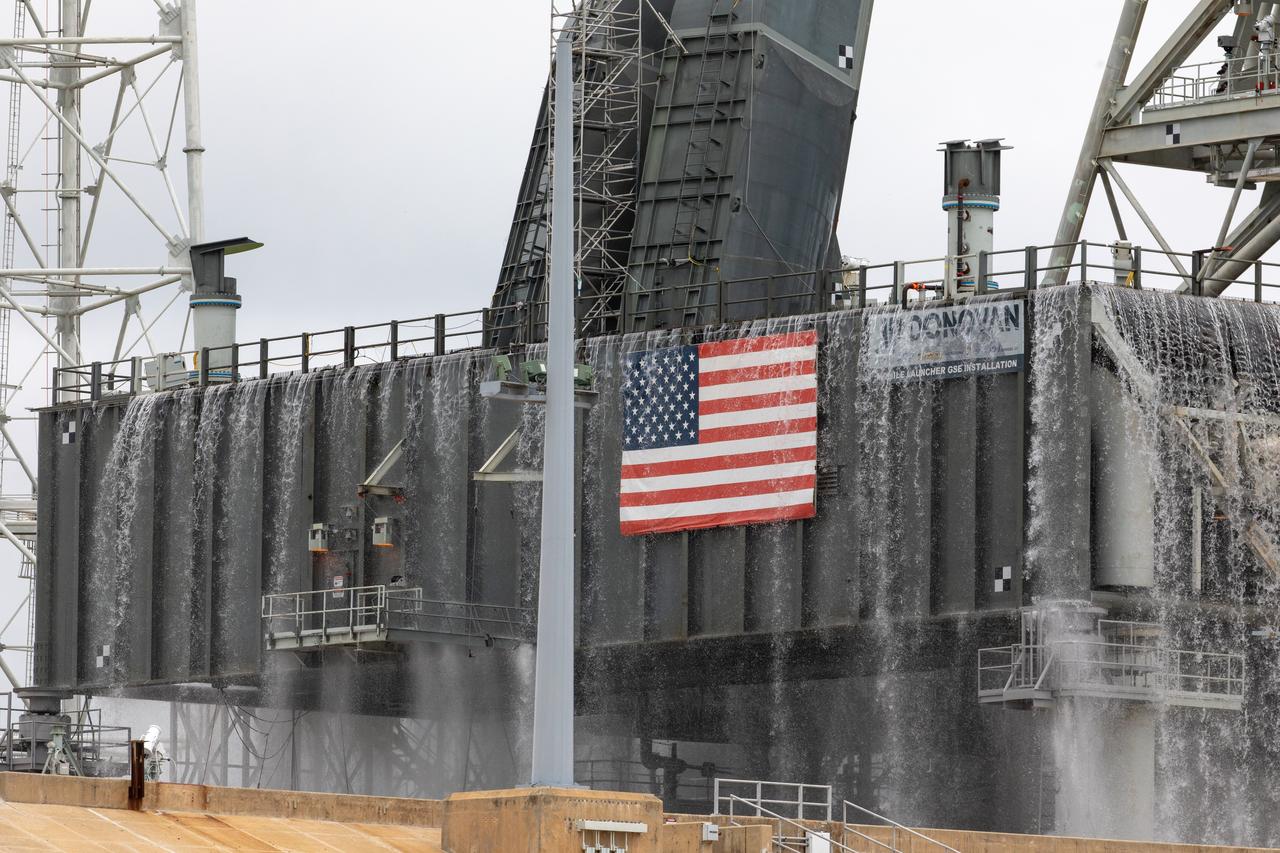
A flow test of the Ignition Overpressure Protection and Sound Suppression water deluge system is underway on the mobile launcher at Launch Pad 39B at NASA's Kennedy Space Center in Florida, on July 25, 2019. The testing is part of a series of tests that Exploration Ground System is doing to verify the system is ready for the new Space Launch System rocket. Modifications were made to the pad after a previous wet flow test, increasing the performance of the system. During the launch of Artemis 1 and subsequent missions, this water deluge system will release about 450,000 gallons of water across the mobile launcher and Flame Deflector to reduce the extreme heat and energy generated by the rocket during ignition and liftoff.
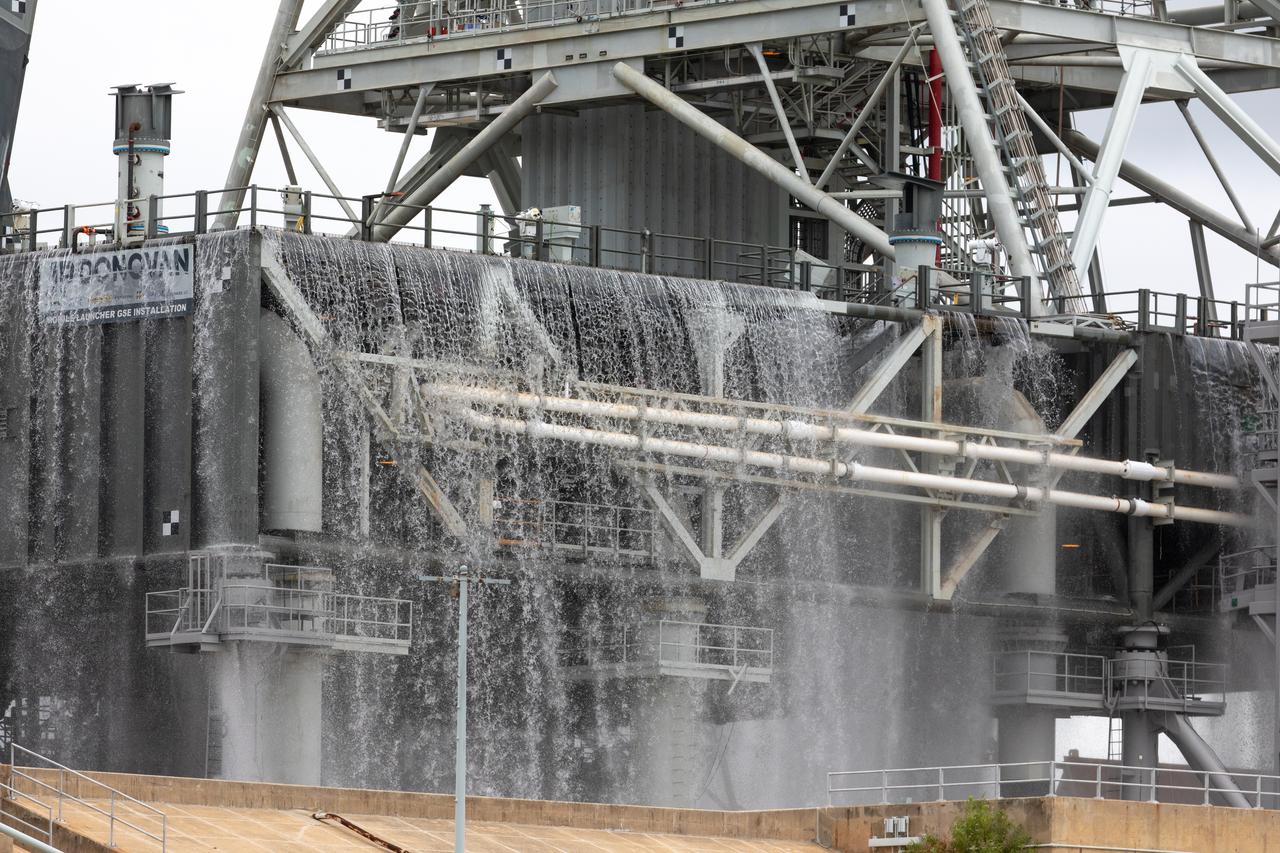
A flow test of the Ignition Overpressure Protection and Sound Suppression water deluge system is underway on the mobile launcher at Launch Pad 39B at NASA's Kennedy Space Center in Florida, on July 25, 2019. The testing is part of a series of tests that Exploration Ground System is doing to verify the system is ready for the new Space Launch System rocket. Modifications were made to the pad after a previous wet flow test, increasing the performance of the system. During the launch of Artemis 1 and subsequent missions, this water deluge system will release about 450,000 gallons of water across the mobile launcher and Flame Deflector to reduce the extreme heat and energy generated by the rocket during ignition and liftoff.
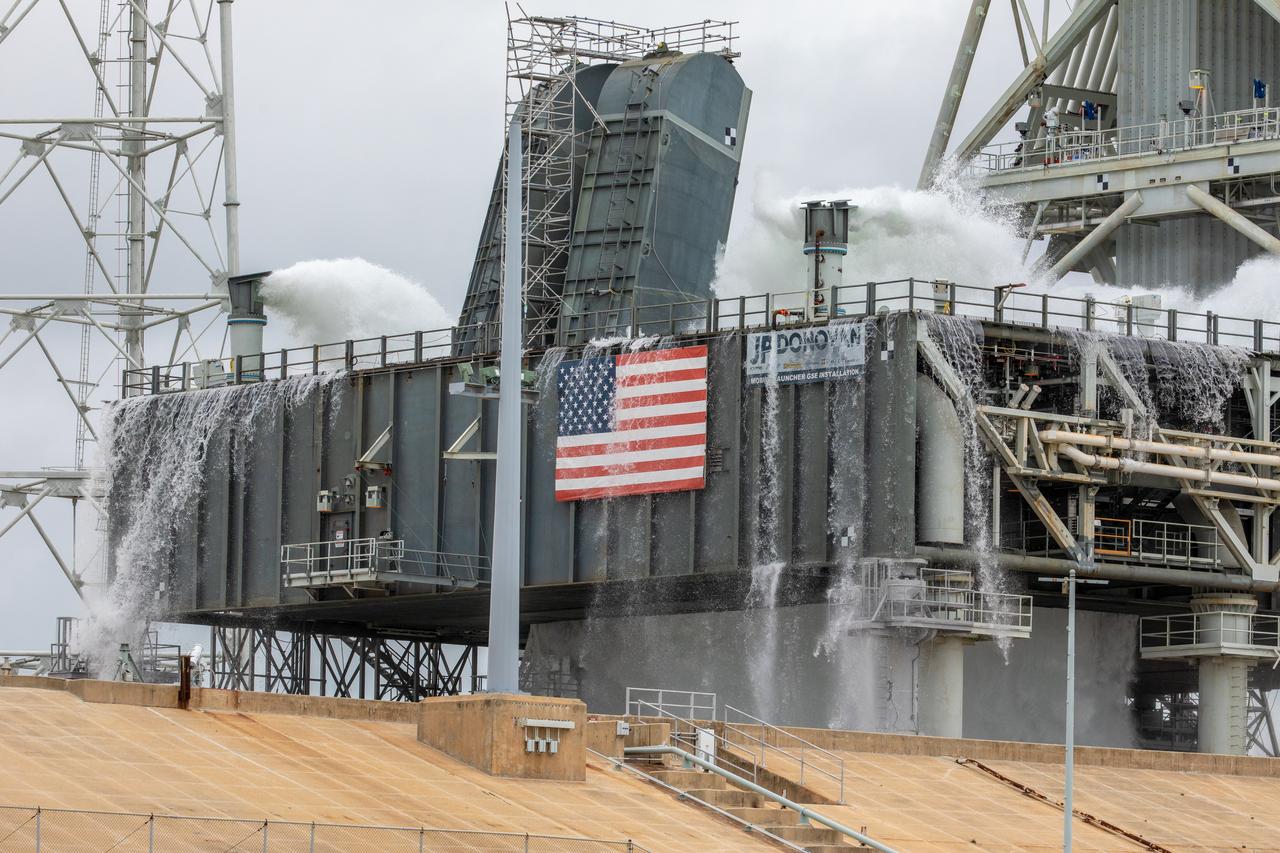
A flow test of the Ignition Overpressure Protection and Sound Suppression water deluge system begins on the mobile launcher at Launch Pad 39B at NASA's Kennedy Space Center in Florida, on July 25, 2019. The testing is part of a series of tests that Exploration Ground System is doing to verify the system is ready for the new Space Launch System rocket. Modifications were made to the pad after a previous wet flow test, increasing the performance of the system. During the launch of Artemis 1 and subsequent missions, this water deluge system will release about 450,000 gallons of water across the mobile launcher and Flame Deflector to reduce the extreme heat and energy generated by the rocket during ignition and liftoff.
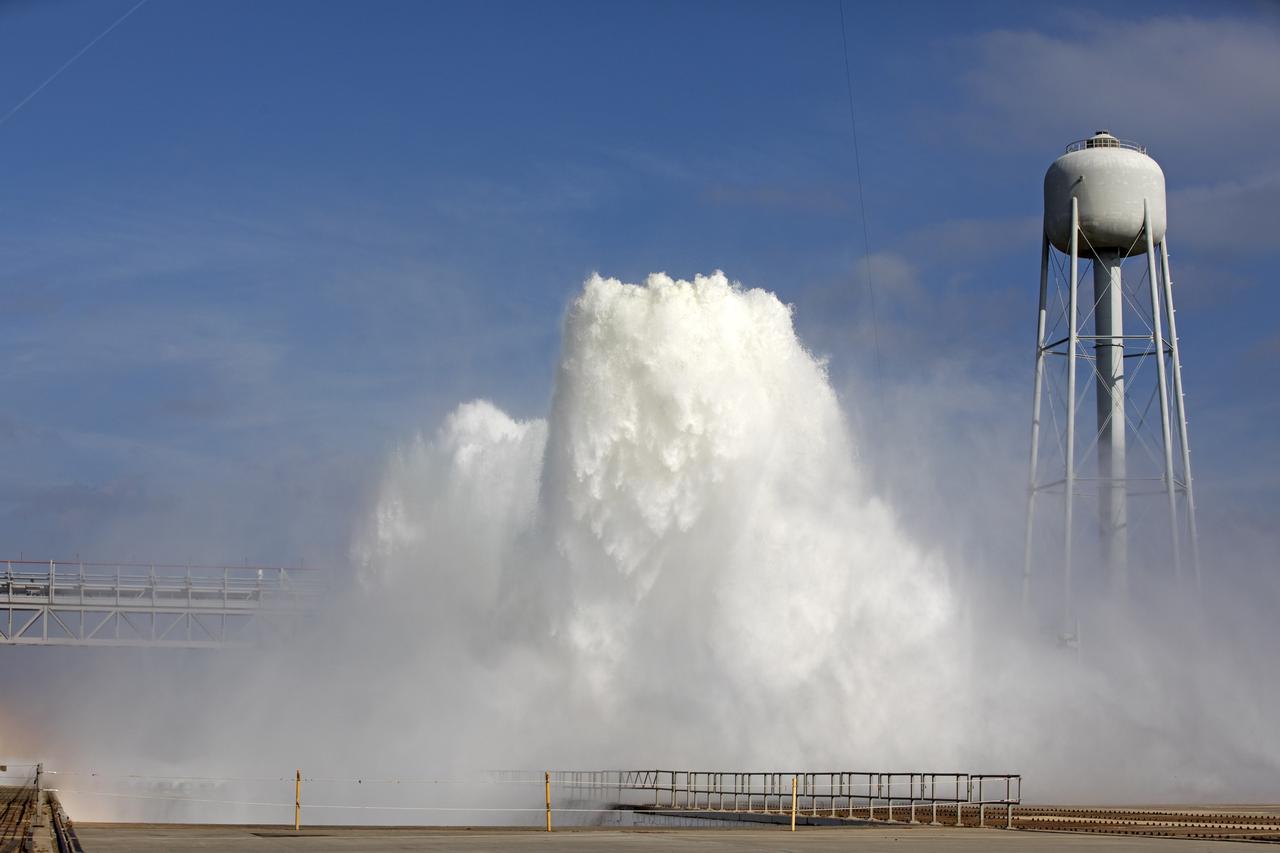
About 450,000 gallons of water flowed at high speed from a holding tank through new and modified piping and valves, the flame trench, flame deflector nozzles and mobile launcher interface risers during a wet flow test at Launch Pad 39B at NASA's Kennedy Space Center in Florida. At peak flow, the water reached about 100 feet in the air above the pad surface. The test was a milestone to confirm and baseline the performance of the Ignition Overpressure/Sound Suppression system. During launch of NASA's Space Launch System rocket and Orion spacecraft, the high-speed water flow will help protect the vehicle from the extreme acoustic and temperature environment during ignition and liftoff.

A flow test of the Ignition Overpressure Protection and Sound Suppression water deluge system is underway on the mobile launcher at Launch Pad 39B at NASA's Kennedy Space Center in Florida, on July 25, 2019. The testing is part of a series of tests that Exploration Ground System is doing to verify the system is ready for the new Space Launch System rocket. Modifications were made to the pad after a previous wet flow test, increasing the performance of the system. During the launch of Artemis 1 and subsequent missions, this water deluge system will release about 450,000 gallons of water across the mobile launcher and Flame Deflector to reduce the extreme heat and energy generated by the rocket during ignition and liftoff.

About 450,000 gallons of water flowed at high speed from a holding tank through new and modified piping and valves, the flame trench, flame deflector nozzles and mobile launcher interface risers during a wet flow test at Launch Pad 39B at NASA's Kennedy Space Center in Florida. At peak flow, the water reached about 100 feet in the air above the pad surface. The test was a milestone to confirm and baseline the performance of the Ignition Overpressure/Sound Suppression system. During launch of NASA's Space Launch System rocket and Orion spacecraft, the high-speed water flow will help protect the vehicle from the extreme acoustic and temperature environment during ignition and liftoff.
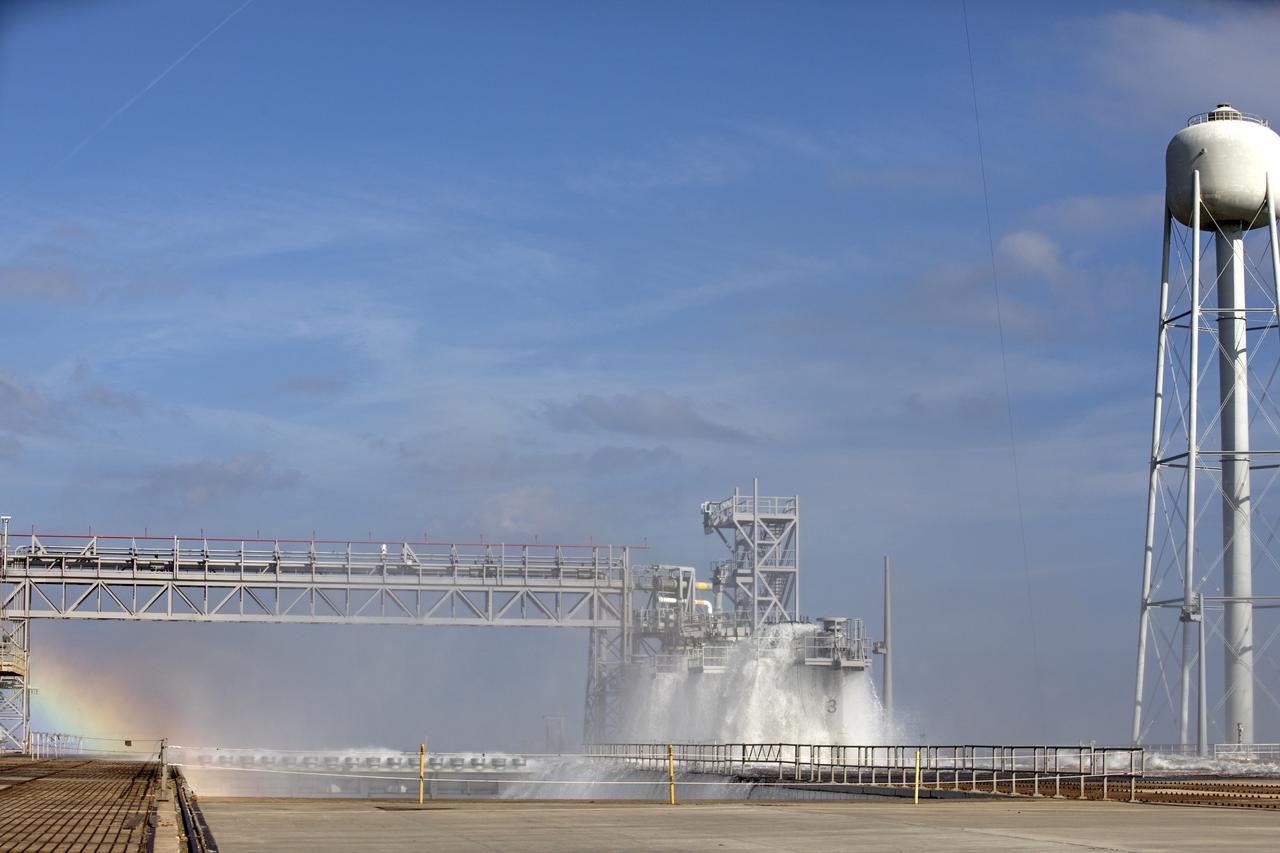
About 450,000 gallons of water flowed at high speed from a holding tank through new and modified piping and valves, the flame trench, flame deflector nozzles and mobile launcher interface risers during a wet flow test at Launch Pad 39B at NASA's Kennedy Space Center in Florida. At peak flow, the water reached about 100 feet in the air above the pad surface. The test was a milestone to confirm and baseline the performance of the Ignition Overpressure/Sound Suppression system. During launch of NASA's Space Launch System rocket and Orion spacecraft, the high-speed water flow will help protect the vehicle from the extreme acoustic and temperature environment during ignition and liftoff.
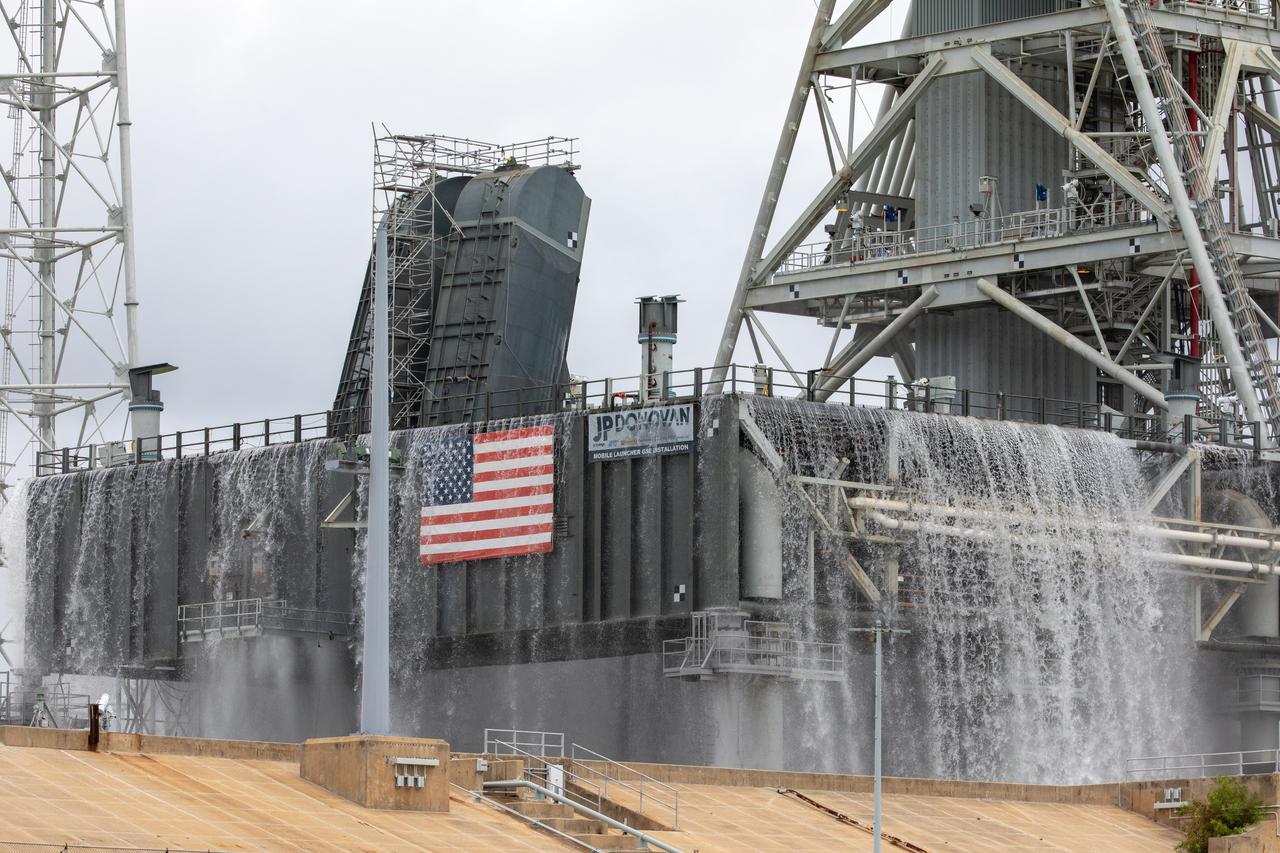
A flow test of the Ignition Overpressure Protection and Sound Suppression water deluge system is underway on the mobile launcher at Launch Pad 39B at NASA's Kennedy Space Center in Florida, on July 25, 2019. The testing is part of a series of tests that Exploration Ground System is doing to verify the system is ready for the new Space Launch System rocket. Modifications were made to the pad after a previous wet flow test, increasing the performance of the system. During the launch of Artemis 1 and subsequent missions, this water deluge system will release about 450,000 gallons of water across the mobile launcher and Flame Deflector to reduce the extreme heat and energy generated by the rocket during ignition and liftoff.

About 450,000 gallons of water flowed at high speed from a holding tank through new and modified piping and valves, the flame trench, flame deflector nozzles and mobile launcher interface risers during a wet flow test at Launch Pad 39B at NASA's Kennedy Space Center in Florida. At peak flow, the water reached about 100 feet in the air above the pad surface. The test was a milestone to confirm and baseline the performance of the Ignition Overpressure/Sound Suppression system. During launch of NASA's Space Launch System rocket and Orion spacecraft, the high-speed water flow will help protect the vehicle from the extreme acoustic and temperature environment during ignition and liftoff.
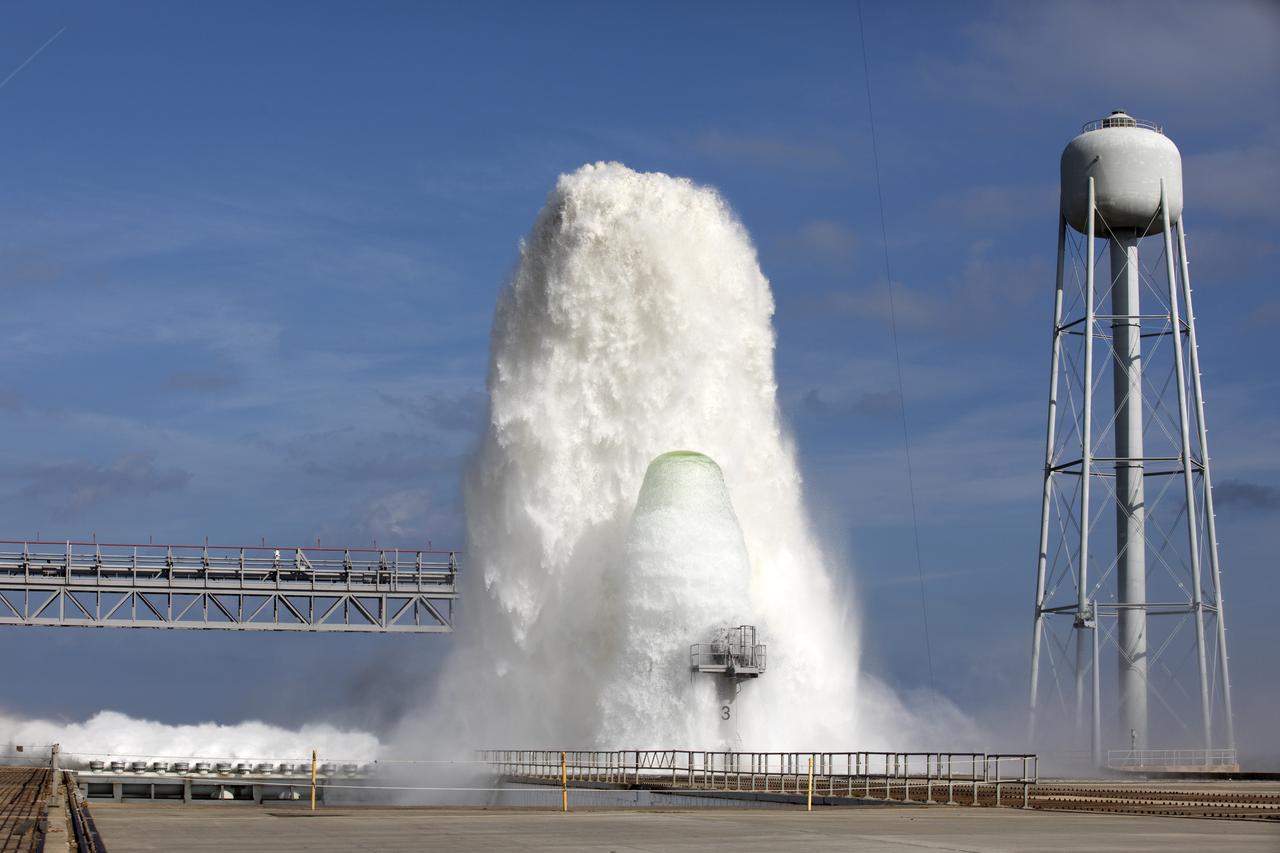
About 450,000 gallons of water flowed at high speed from a holding tank through new and modified piping and valves, the flame trench, flame deflector nozzles and mobile launcher interface risers during a wet flow test at Launch Pad 39B at NASA's Kennedy Space Center in Florida. At peak flow, the water reached about 100 feet in the air above the pad surface. The test was a milestone to confirm and baseline the performance of the Ignition Overpressure/Sound Suppression system. During launch of NASA's Space Launch System rocket and Orion spacecraft, the high-speed water flow will help protect the vehicle from the extreme acoustic and temperature environment during ignition and liftoff.
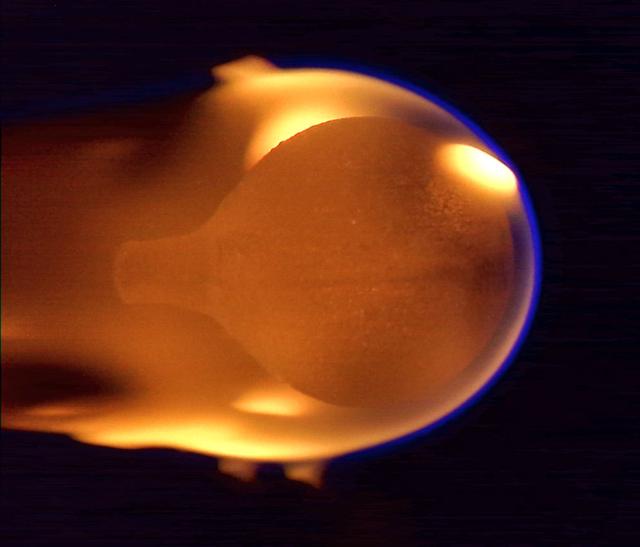
jsc2023e002281 (1/13/2023) --- The Solid Fuel Ignition and Extinction (SoFIE) Growth and Extinction Limits (GEL) experiment successfully conducted its first test in the Combustion Integrated Rack (CIR) aboard the International Space Station (ISS) on January 13th. This image shows a 4-cm diameter sphere of acrylic burning in microgravity. The atmosphere started at 17.5% oxygen in nitrogen and air flow is from right to left at 20 cm/s. The flame appears near the end of the burn, having engulfed the entire sphere after growing from a small ignition point on the right side. Image courtesy of NASA.
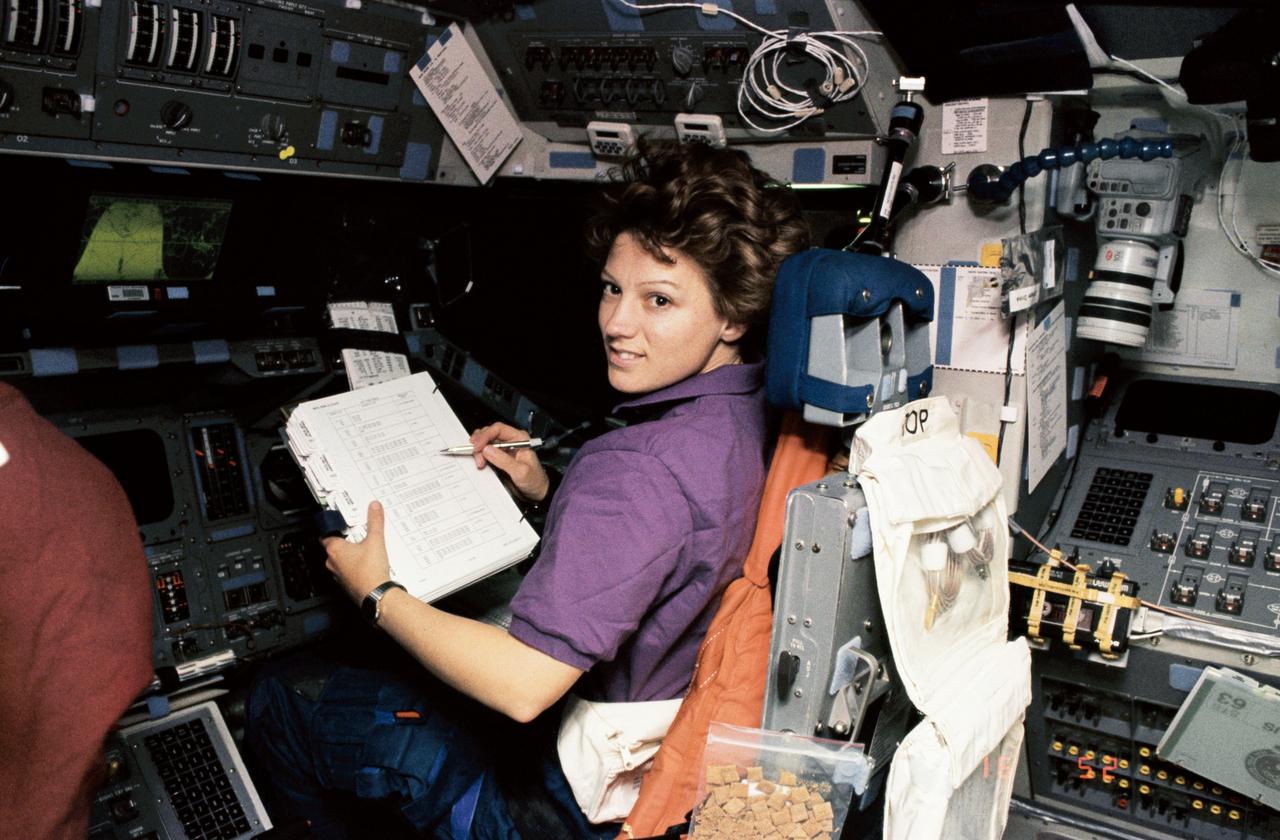
STS063-312-020 (3-11 Feb. 1995) --- Astronaut Eileen M. Collins, pilot, at the pilot's station during "hotfiring" procedure to clear leaking thruster prior to rendezvous with Russia's Mir Space Station. Others onboard the Space Shuttle Discovery were astronauts James D. Wetherbee, mission commander; Bernard A. Harris, Jr., payload commander; mission specialists C. Michael Foale and Janice E. Voss, and cosmonaut Vladimir G. Titov. This is one of 16 still photographs released by the NASA Johnson Space Center (JSC) Public Affairs Office (PAO) on February 14, 1995.
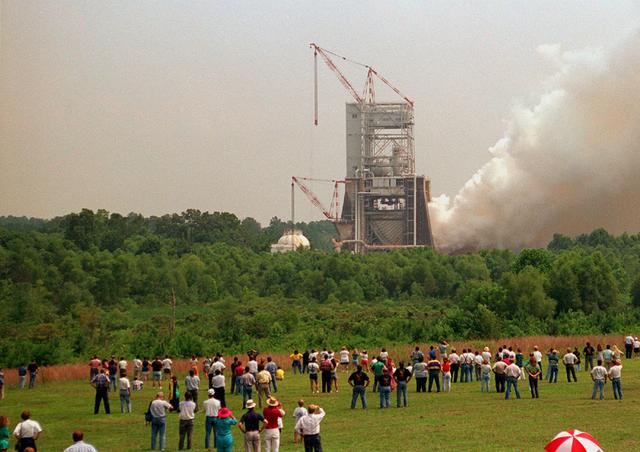
On the 25th Anniversary of the Apollo-11 space launch, Marshall celebrated with a test firing of the Space Shuttle Main Engine at the Technology Test Bed (SSME-TTB). This drew a large crowd who stood in the fields around the test site and watched as plumes of white smoke verified ignition.
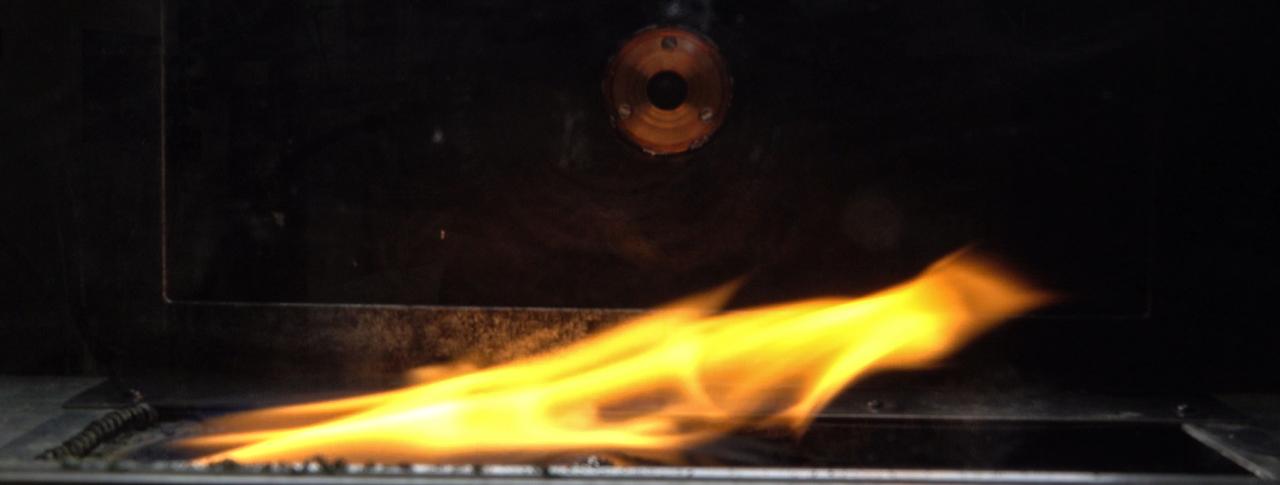
jsc2024e044215 (7/10/2024) --- Side view of spread flame in ground-based test for the Solid Fuel Ignition and Extinction - Oscillatory Flow on Flame Spread (SoFIE-OFFS) investigation. SoFIE-OFFS examines how intermittent or non-steady flame behavior impacts fire spread on Earth. Image courtesy of Worcester Polytechnic Institute.
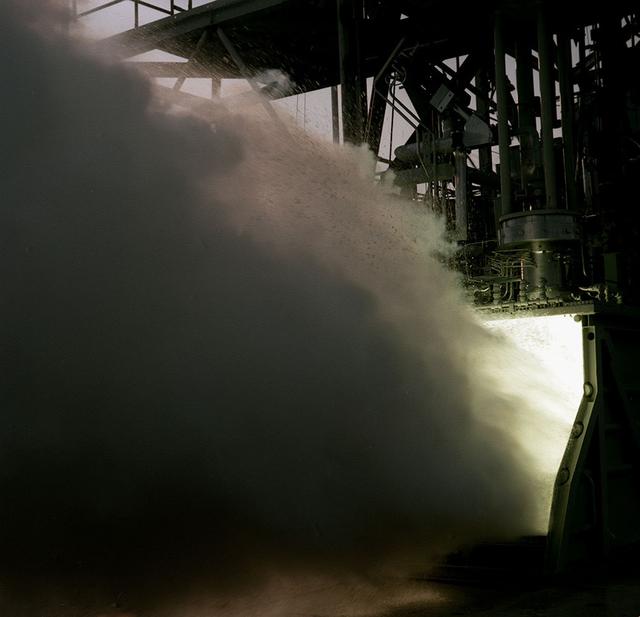
This photodepicts a 15 K Fastrac motor ignition test performed at Marshall Test Stand-116. The Fastrac motor is an alternative low-cost engine which is being developed and tested at Marshall. This engine was to eventually be used on an X-34 launchvehicle. The X-34 program was cancelled in 2001.
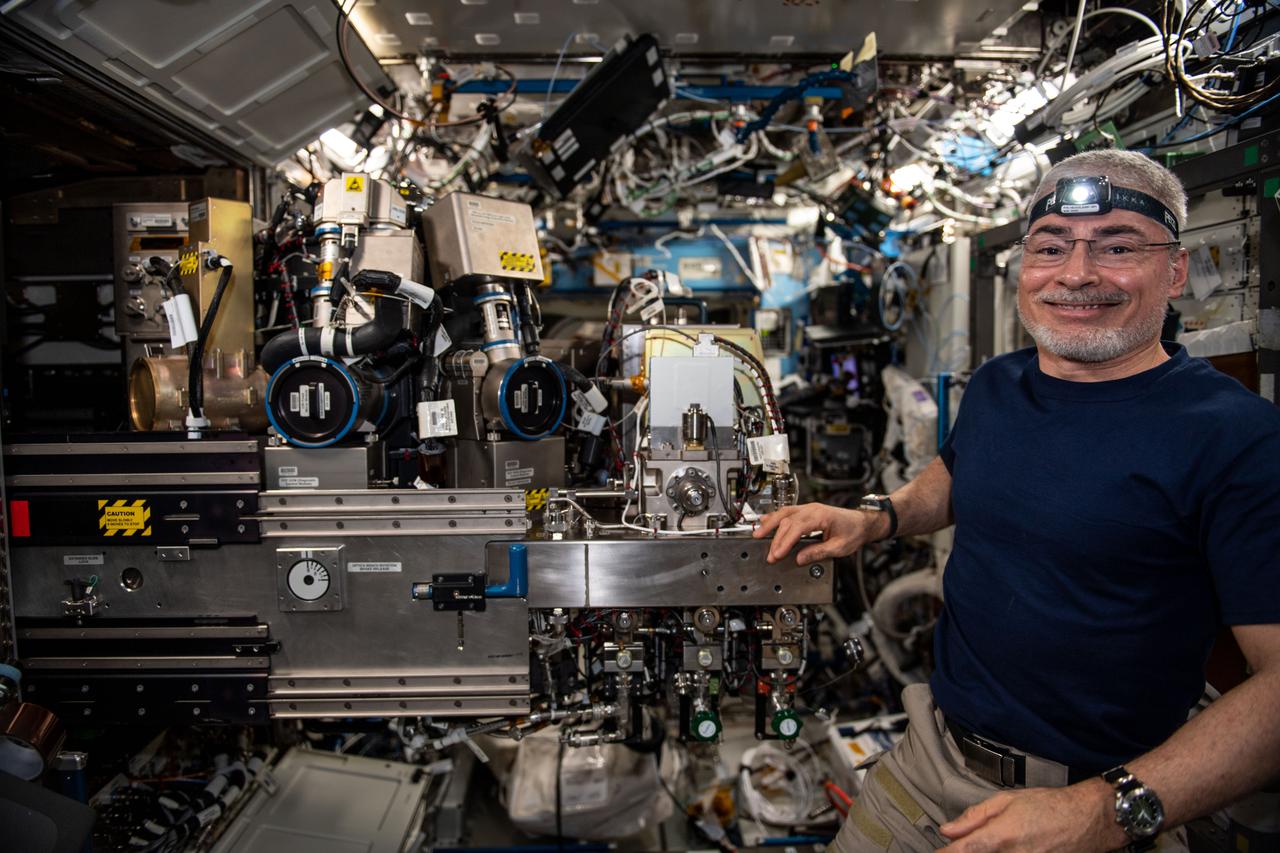
iss066e139638 (Feb. 10, 2022) --- NASA astronaut and Expedition 66 Flight Engineer Mark Vande Hei configures the Combustion Integrated Rack in the U.S. Destiny laboratory module to support a pair of fire safety experiments known as SoFIE, or Solid Fuel Ignition and Extinction.
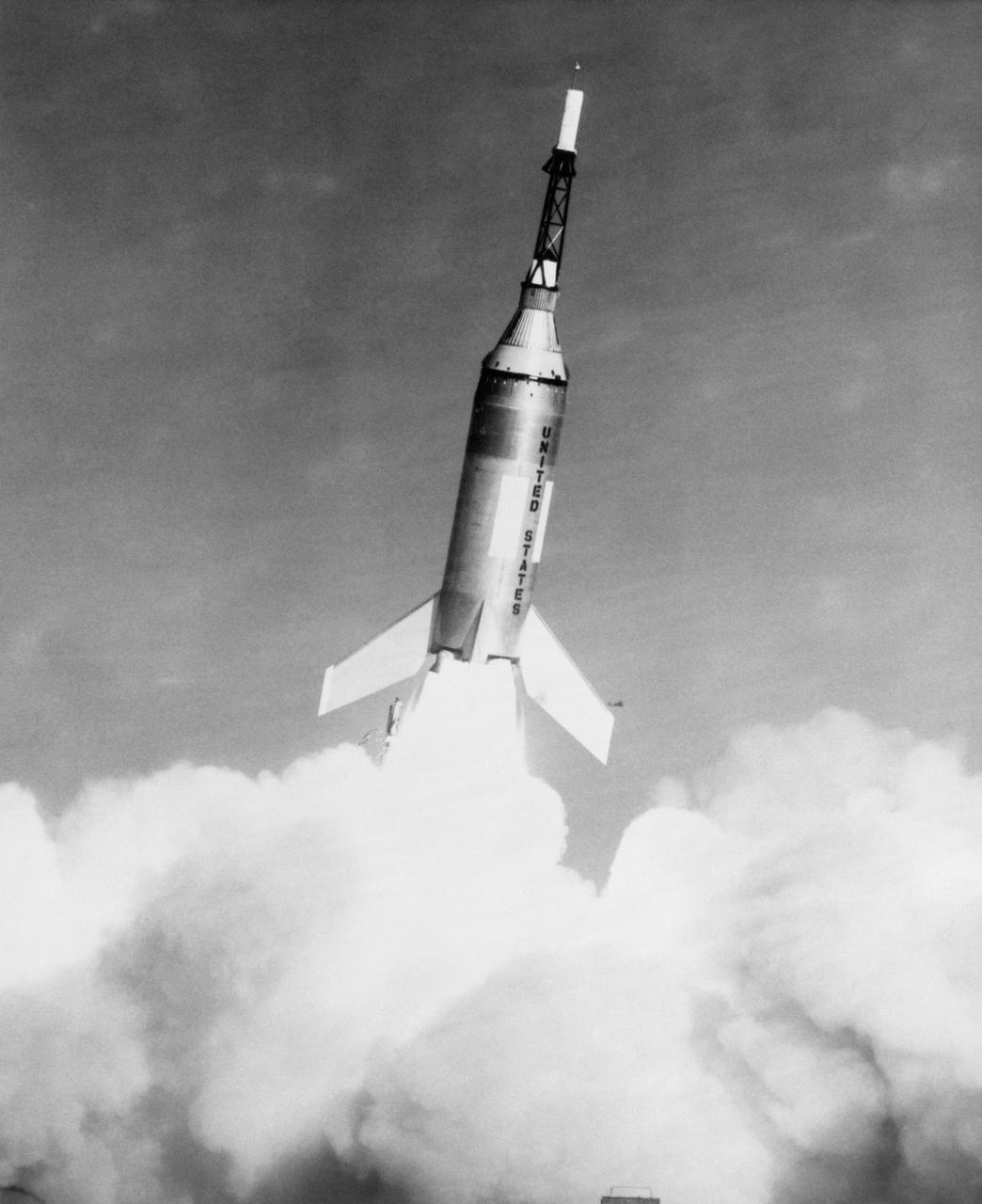
G61-00030 (4 Nov. 1959) --- Launch of Little Joe-2 from Wallops Island carrying Mercury spacecraft test article. The suborbital test flight of the Mercury capsule was to test the escape system. Vehicle functioned perfectly, but escape rocket ignited several seconds too late. Photo credit: NASA

KENNEDY SPACE CENTER, FLA. -- A remote camera captures ignition of the Delta II rocket carrying the Gravity Probe B spacecraft from Space Launch Complex 2 on Vandenberg AFB, Calif., at 9:57:24 a.m. PDT.
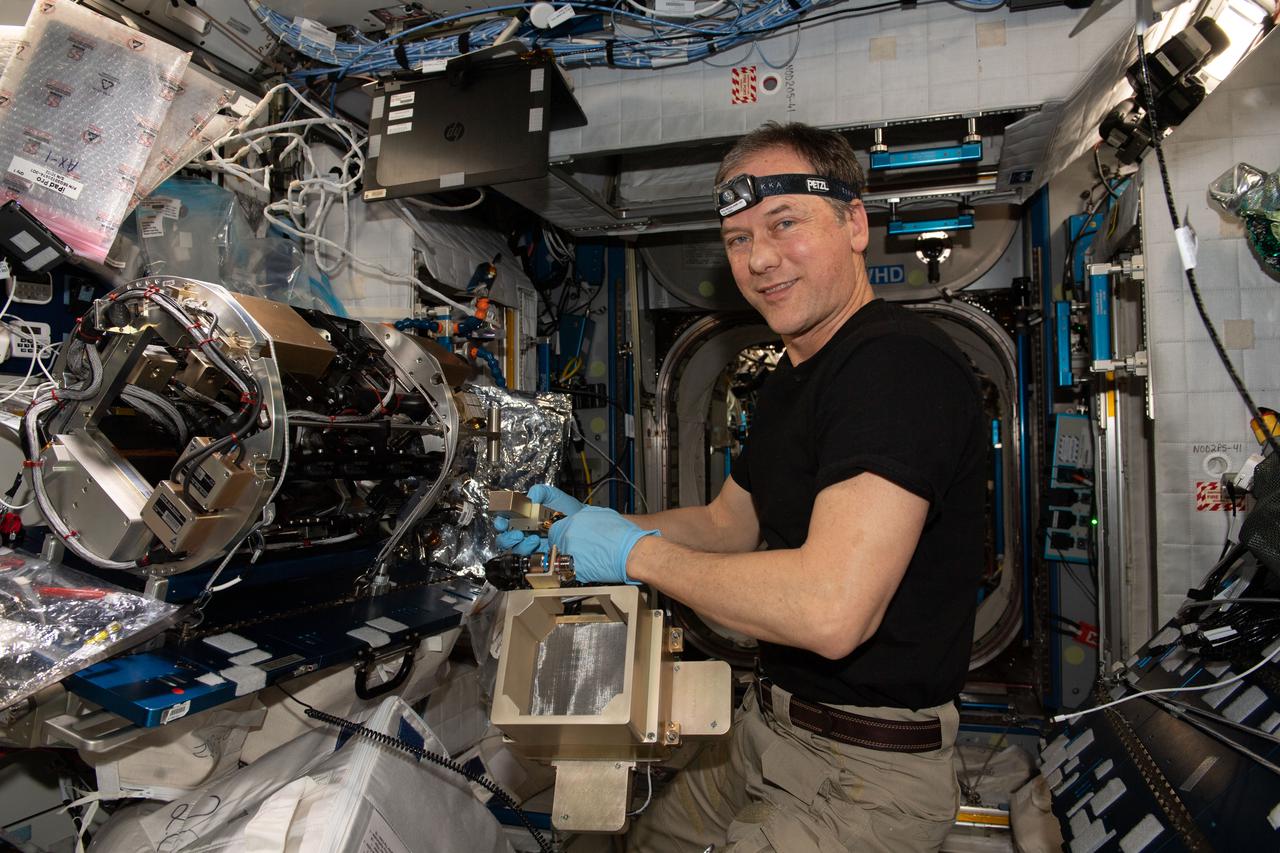
iss067e003872 (April 6, 2022) --- NASA astronaut and Expedition 67 Commander Thomas Marshburn configures the Combustion Integrated Rack's combustion chamber for the Solid Fuel Ignition and Extinction study to investigate material flammability and ways to improve fire safety in space.
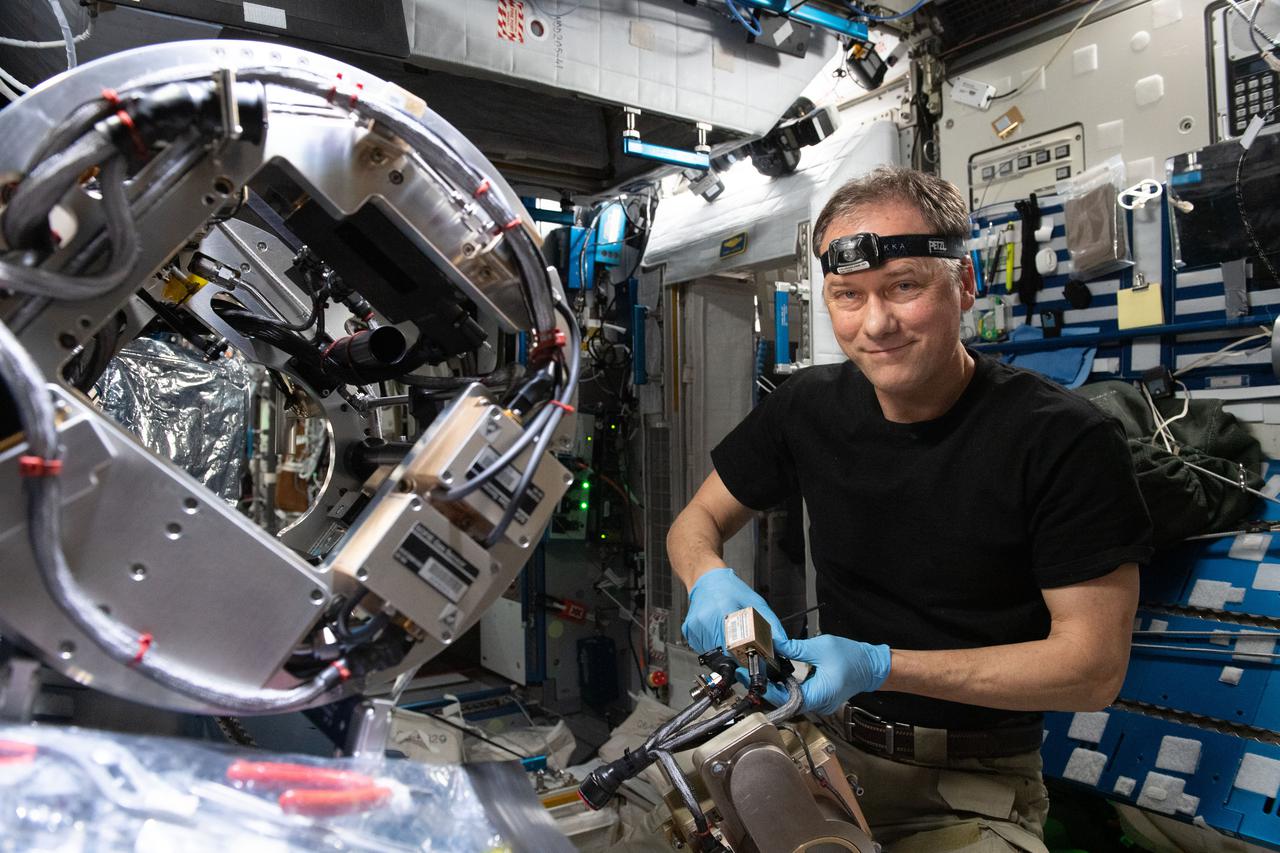
iss067e003895 (April 6, 2022) --- NASA astronaut and Expedition 67 Commander Thomas Marshburn configures the Combustion Integrated Rack's combustion chamber for the Solid Fuel Ignition and Extinction study to investigate material flammability and ways to improve fire safety in space.
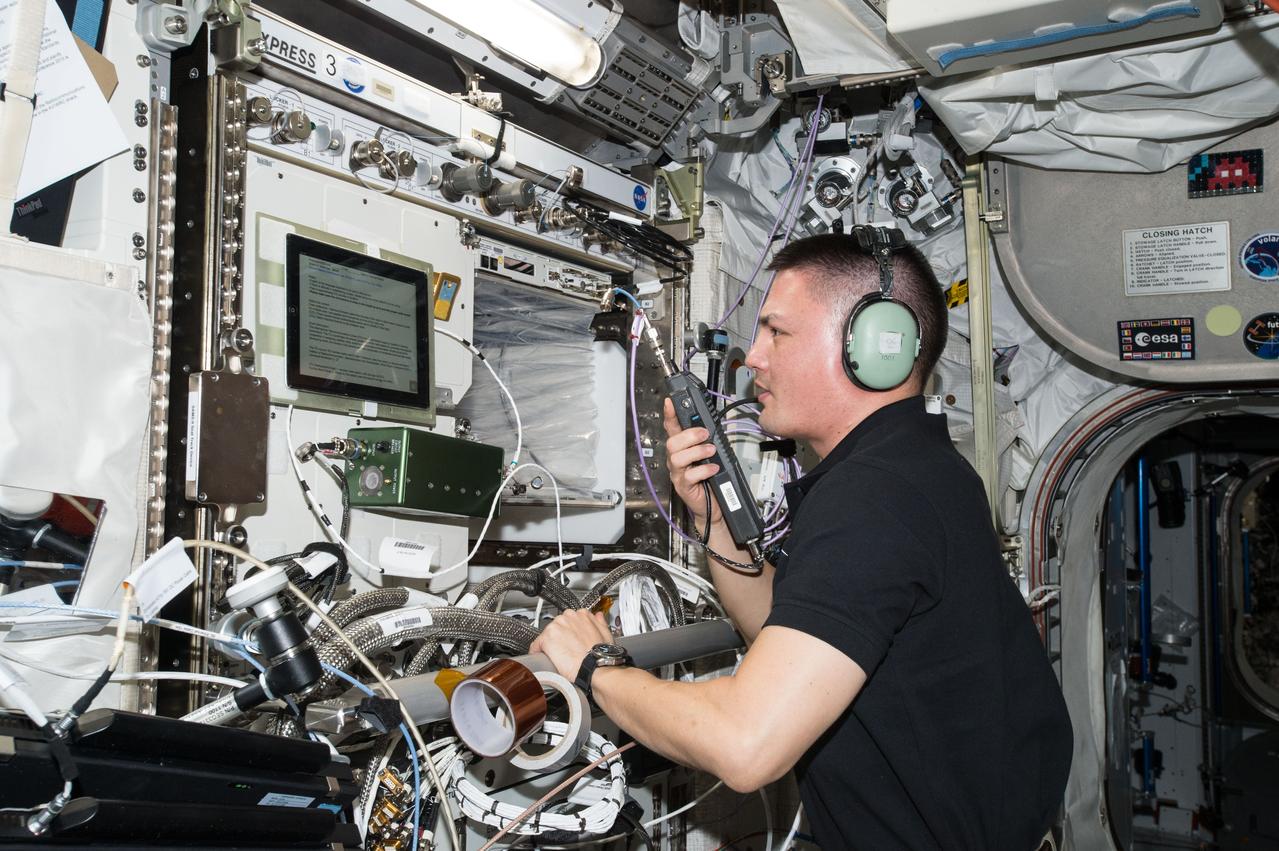
ISS045E089495 (11/04/2015) --- NASA astronaut Kjell Lindgren uses a HAM radio to speak with operators down on Earth. The International Space Station is equipped with amateur radio equipment allowing astronauts to share the excitement of space exploration, inspire and ignite interest among students and others on the ground.
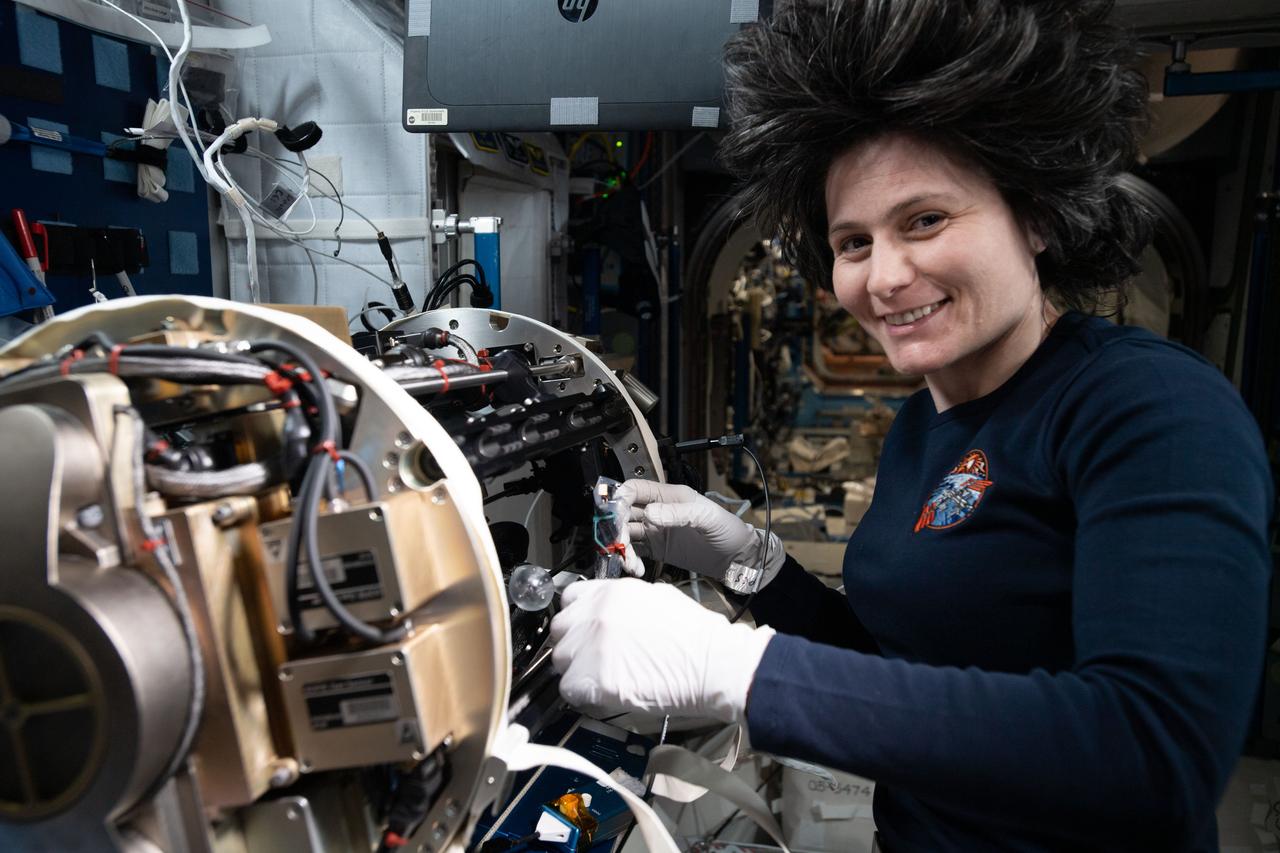
iss067e367893 (Sept. 15, 2022) --- ESA (European Space Agency) astronaut and Expedition 67 Flight Engineer Samantha Cristoforetti works inside the International Space Station's Unity module reconfiguring components for the Solid Fuel Ignition and Extinction investigation that explores fire growth and fire safety techniques in space.
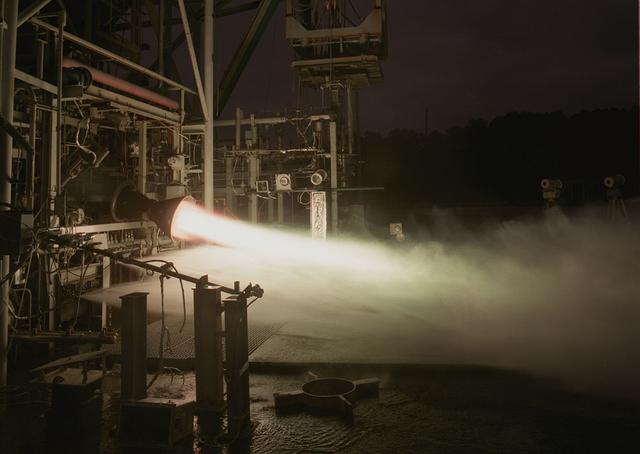
This is a photo of an X-34 40K Fastrac II duration test performed at the Marshall Space Flight Center test stand 116 (TS116) in June 1997. Engine ignition is started with Tea-Gas which makes the start burn green. The X-34 program was cancelled in 2001.
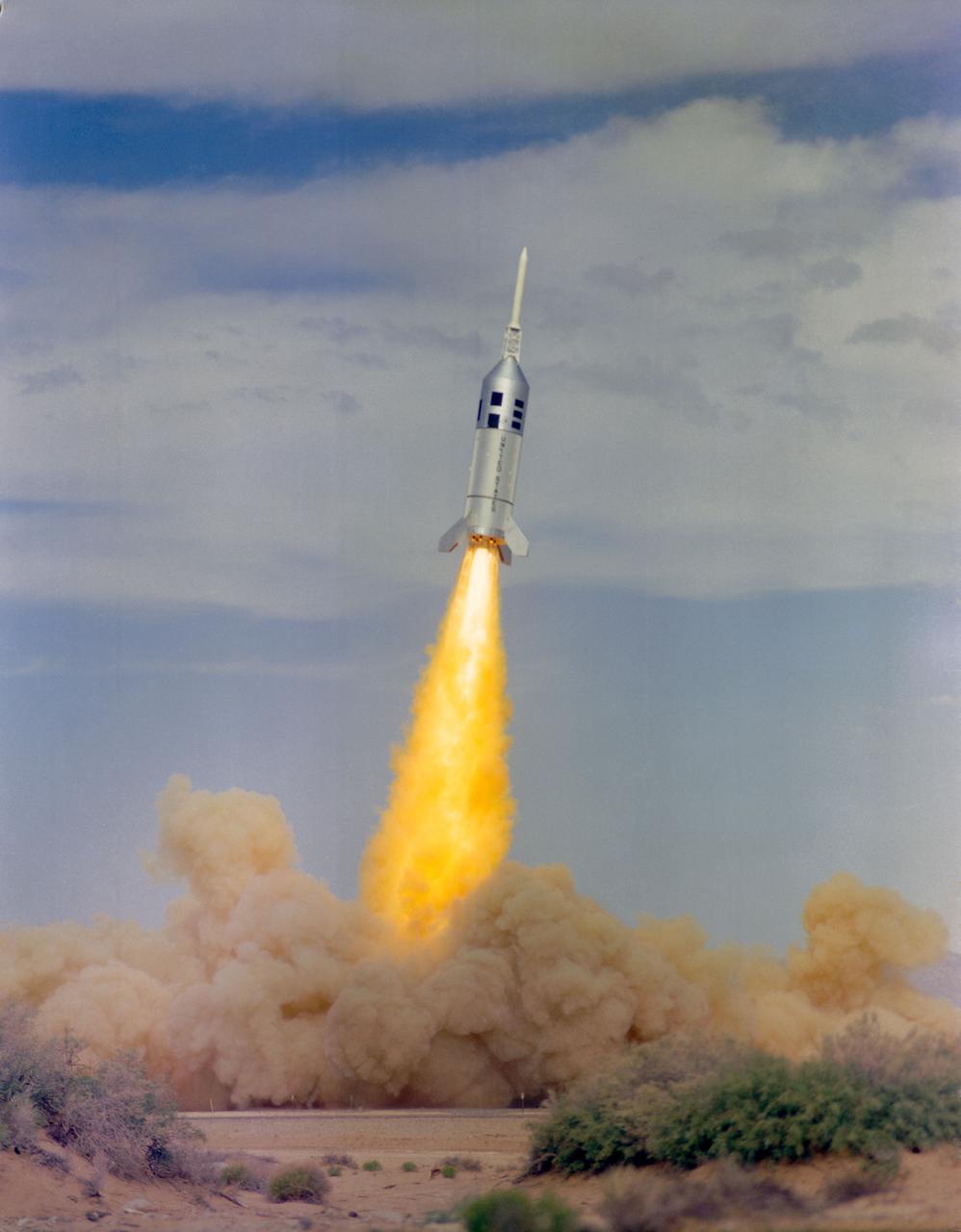
S63-15701 (28 August 1963) --- All seven motors of Little Joe II, ignited simultaneously at launch, with a total thrust of about 310,000 pounds. A maximum height of 24,000 feet was attained as Little Joe II traveled 47,000 feet north on the White Sands Test Range.
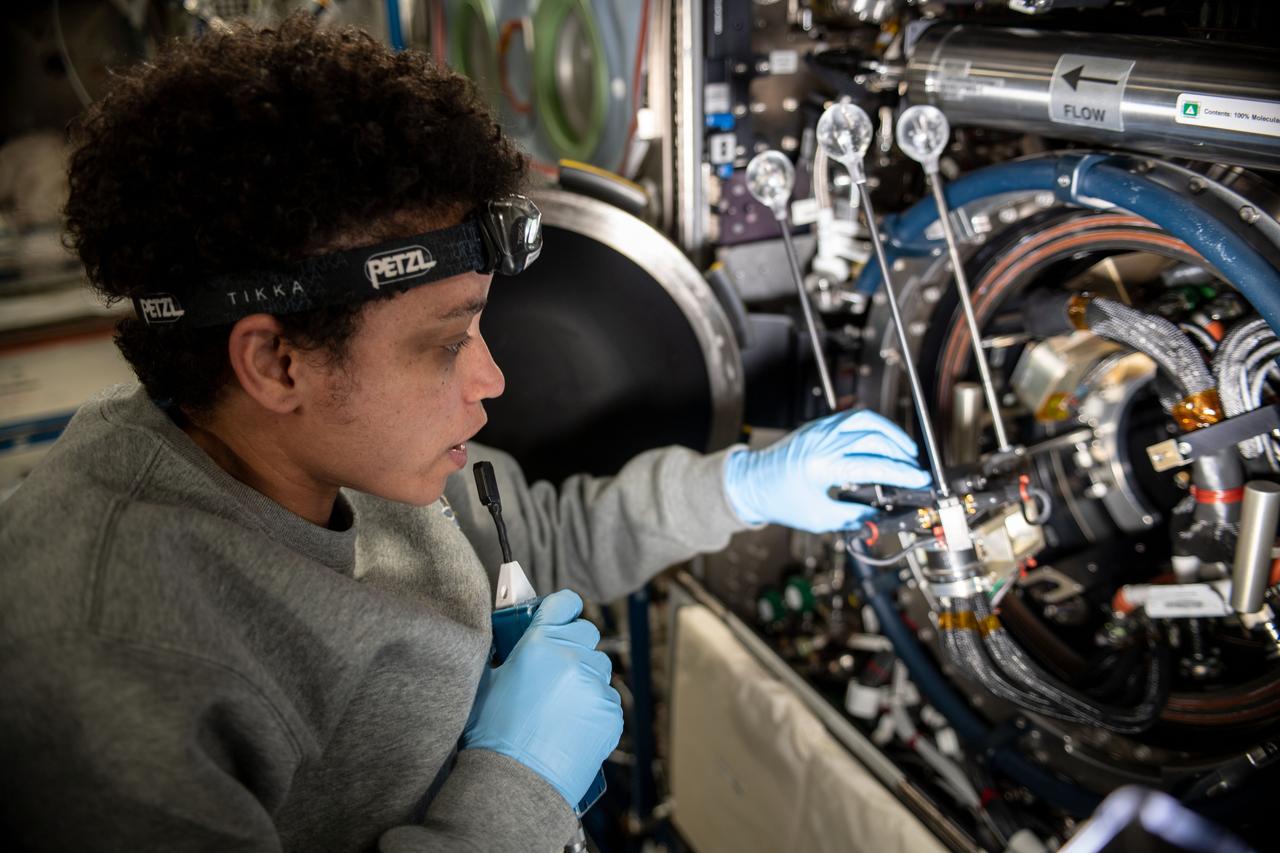
iss067e170237 (June 24, 2022) --- Expedition 67 Flight Engineer and NASA astronaut Jessica Watkins services components that support the Solid Fuel Ignition and Extinction (SOFIE) fire safety experiment inside the International Space Station's Combustion Integrated Rack.
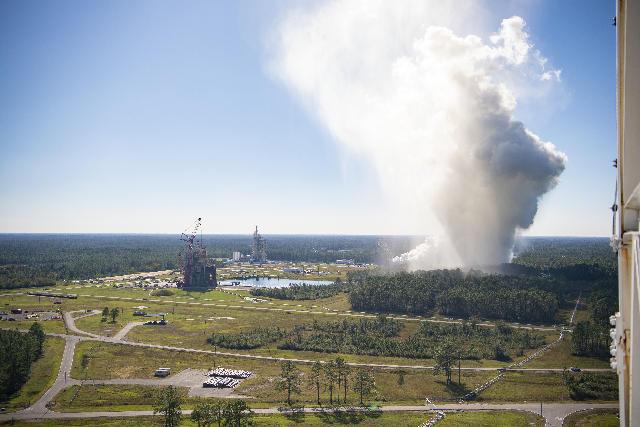
The RS-25 certification test series begins Oct. 17. When the liquid hydrogen and liquid oxygen propellants mix and ignite, an extremely high temperature exhaust, of up to 6,000-degrees Fahrenheit, mixes with water to form steam that exits the flame deflector and rises into the atmosphere, forming a cloud that subsequently cools.

B60-00364 (4 Nov. 1959) --- Launch of Little Joe-2 from Wallops Island carrying Mercury spacecraft test article. The suborbital test flight of the Mercury capsule was to test the escape system. Vehicle functioned perfectly, but escape rocket ignited several seconds too late. Photo credit: NASA
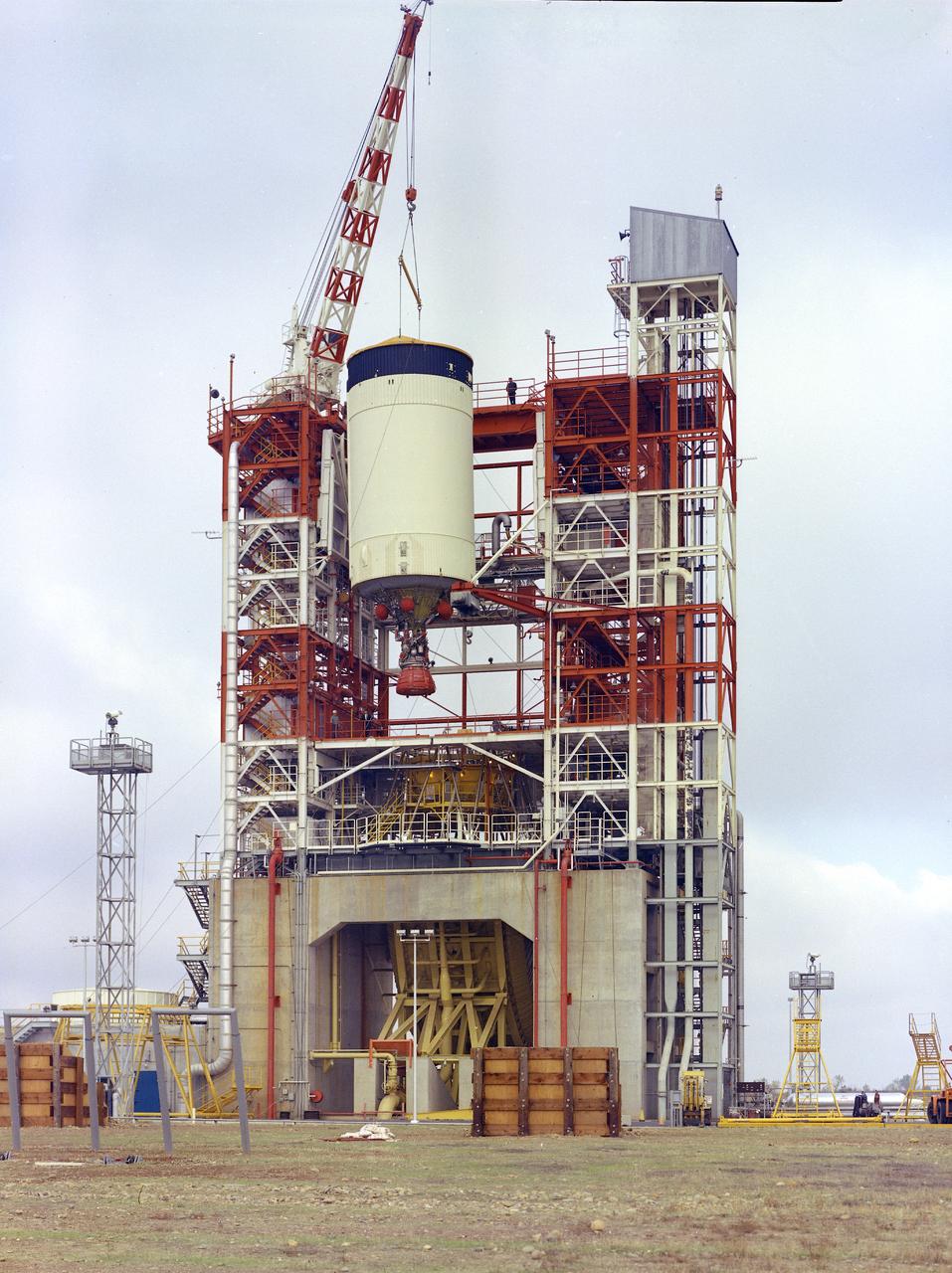
This image depicts the Saturn V S-IVB (third) stage for the Apollo 10 mission being removed from the Beta Test Stand 1 after its acceptance test at the Douglas Aircraft Company's Sacramento Test Operations (SACTO) facility. After the S-II (second) stage dropped away, the S-IVB (third) stage was ignited and burned for about two minutes to place itself and the Apollo spacecraft into the desired Earth orbit. At the proper time during this Earth parking orbit, the S-IVB stage was re-ignited to speed the Apollo spacecraft to escape velocity injecting it and the astronauts into a moon trajectory. Developed and manufactured by the Douglas Aircraft Company in California, the S-IVB stage measures about 21.5 feet in diameter, about 58 feet in length, and powered by a single 200,000-pound-thrust J-2 engine with a re-start capability. The S-IVB stage was also used on the second stage of the Saturn IB launch vehicle.
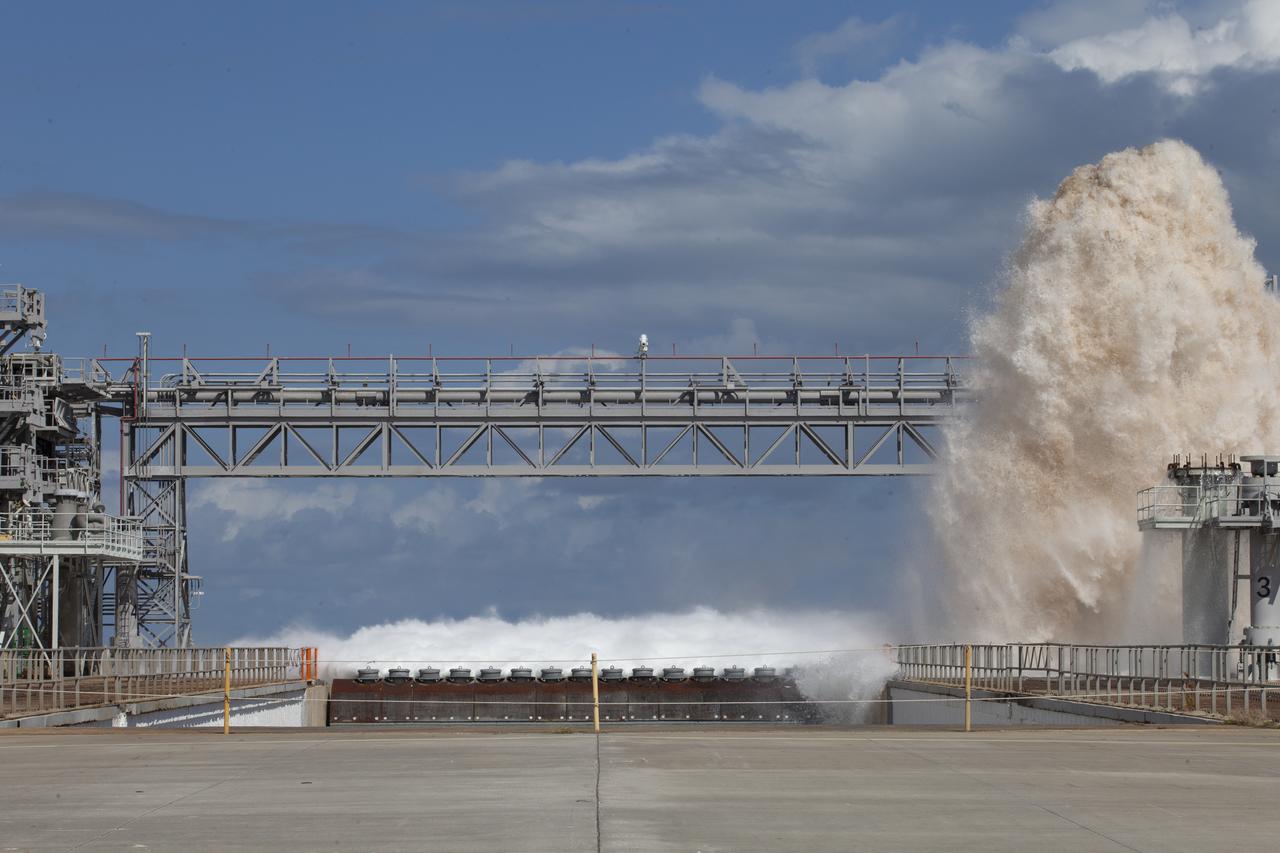
A flow test of the Ignition Overpressure Protection and Sound Suppression water deluge system is in progress at Launch Pad 39B at NASA's Kennedy Space Center in Florida, on Oct. 15, 2018. At peak flow, the water reaches about 100 feet in the air above the pad surface. It flows at high speed from a holding tank through new and modified piping and valves, the flame trench, flame deflector nozzles and mobile launcher interface risers. The testing is part of Exploration Ground System's preparation for the new Space Launch System rocket. Modifications were made to the pad after a previous wet flow test, increasing the performance of the system. During the launch of Exploration Mission-1 and subsequent missions, this water deluge system will release about 450,000 gallons of water across the mobile launcher and Flame Deflector to reduce the extreme heat and energy generated by the rocket during ignition and liftoff.
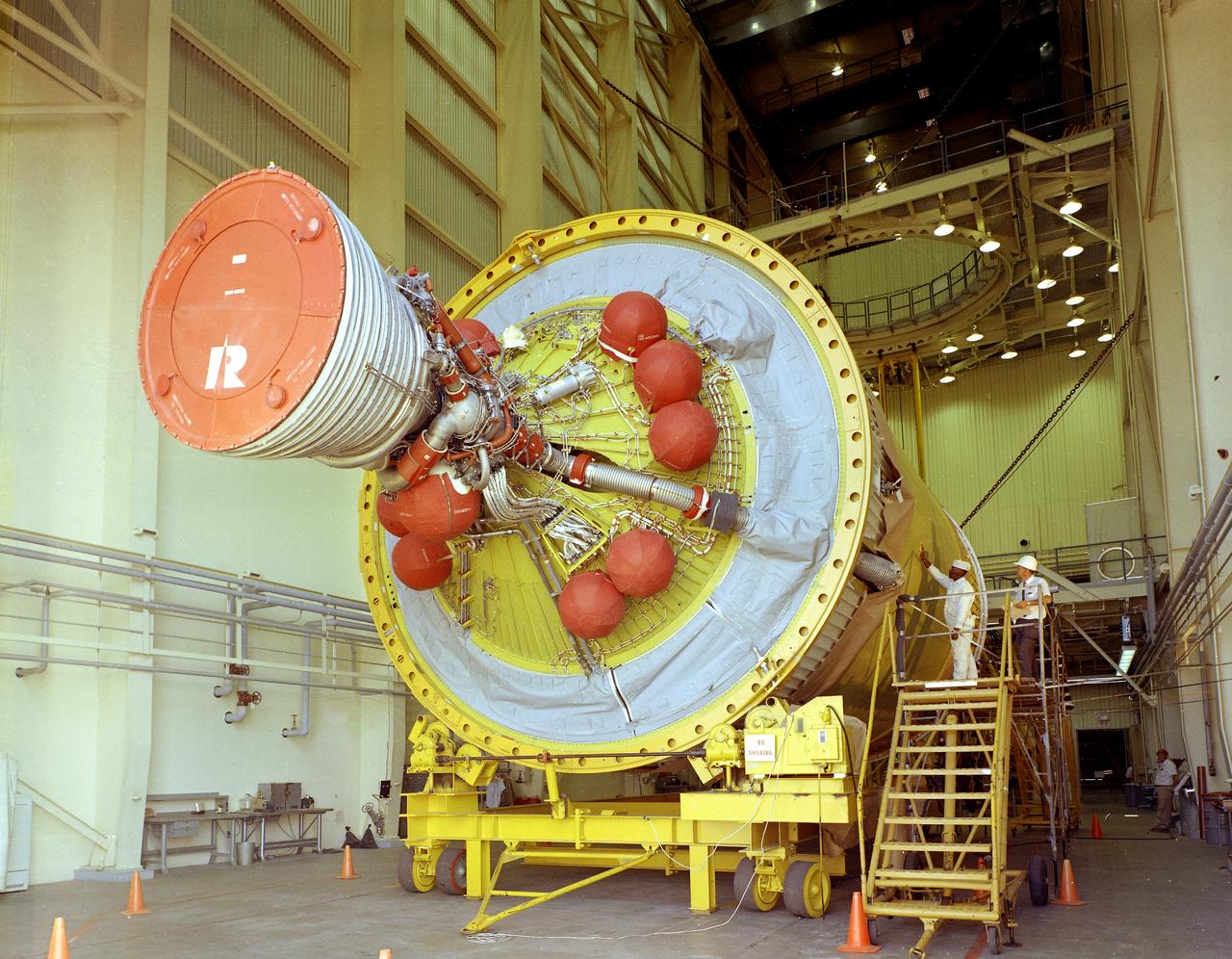
After the S-II (second) stage dropped away, the S-IVB (third) stage ignited and burned for about two minutes to place itself and the Apollo spacecraft into the desired Earth orbit. At the proper time during this Earth parking orbit, the S-IVB stage was re-ignited to speed the Apollo spacecraft to escape velocity, injecting it and the astronauts into a moon trajectory. Developed and manufactured by the Douglas Aircraft Company in Huntington, California, the S-IVB stage measures about 21.5 feet in diameter, about 58 feet in length and is powered by a single 200,000-pound-thrust J-2 engine with a re-start capability. The S-IVB stage was also used on the second stage of the Saturn IB launch vehicle. The fully-assembled S-IVB (third) stage for the AS-503 (Apollo 8 mission) launch vehicle is pictured in the Douglas' vertical checkout building.
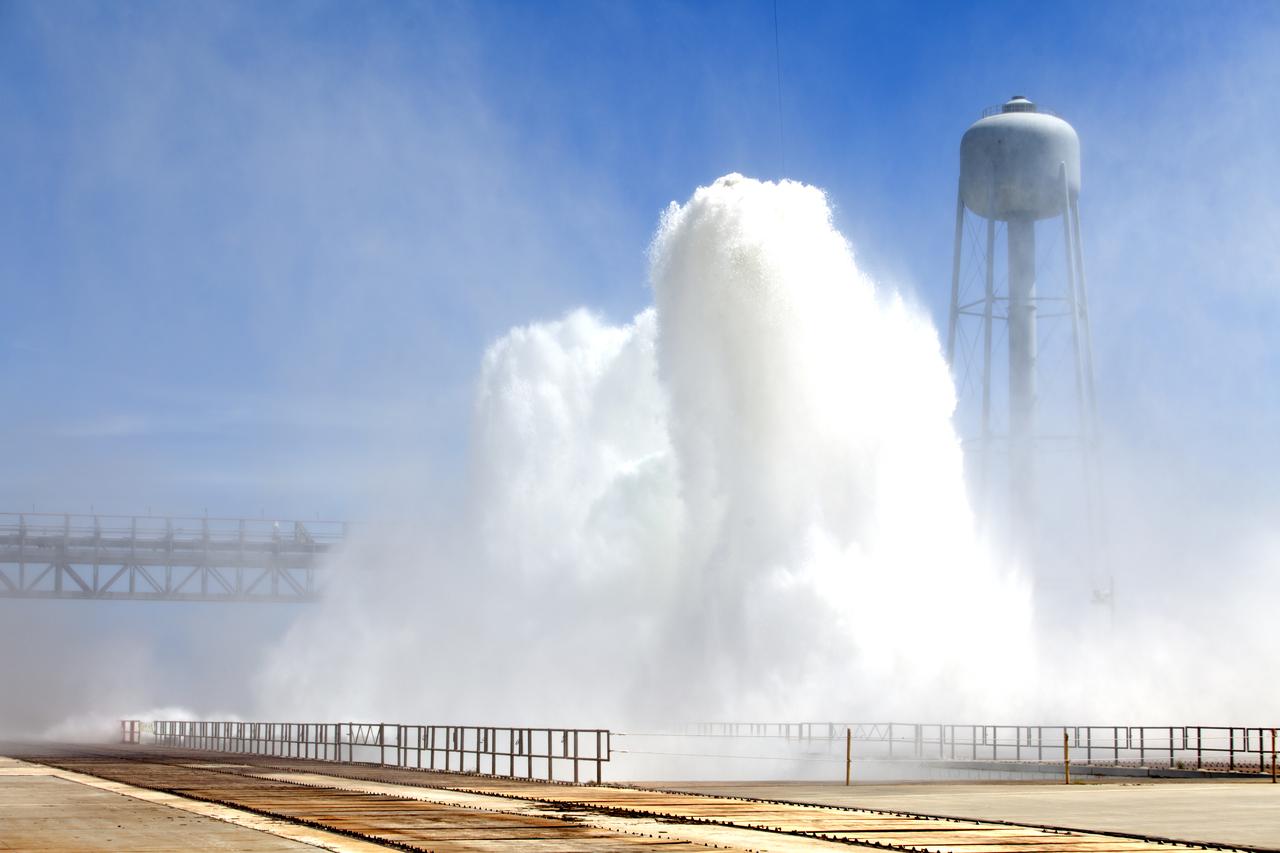
About 450,000 gallons of water flow at high speed from a holding tank through new and modified piping and valves, the flame trench, flame deflector nozzles and mobile launcher interface risers during a wet flow test on May 24, 2018, at Launch Pad 39B at NASA's Kennedy Space Center in Florida. At peak flow, the water reached about 100 feet in the air above the pad surface. The test was performed by Exploration Ground Systems to confirm the performance of the Ignition Overpressure/Sound Suppression system. During launch of NASA's Space Launch System rocket and Orion spacecraft, the high-speed water flow will help protect the vehicle from the extreme acoustic and temperature environment during ignition and liftoff.
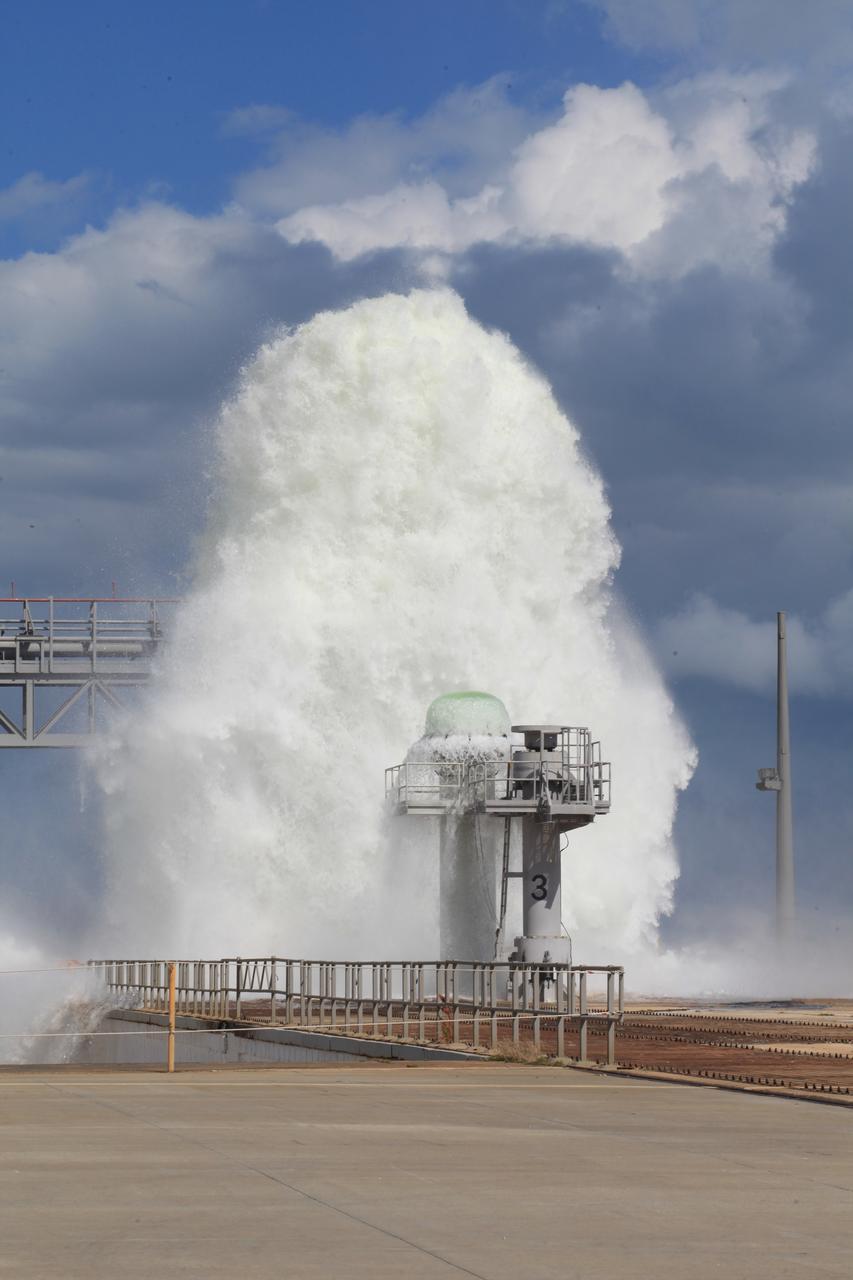
A flow test of the Ignition Overpressure Protection and Sound Suppression water deluge system is in progress at Launch Pad 39B at NASA's Kennedy Space Center in Florida, on Oct. 15, 2018. At peak flow, the water reaches about 100 feet in the air above the pad surface. It flows at high speed from a holding tank through new and modified piping and valves, the flame trench, flame deflector nozzles and mobile launcher interface risers. The testing is part of Exploration Ground System's preparation for the new Space Launch System rocket. Modifications were made to the pad after a previous wet flow test, increasing the performance of the system. During the launch of Exploration Mission-1 and subsequent missions, this water deluge system will release about 450,000 gallons of water across the mobile launcher and Flame Deflector to reduce the extreme heat and energy generated by the rocket during ignition and liftoff.
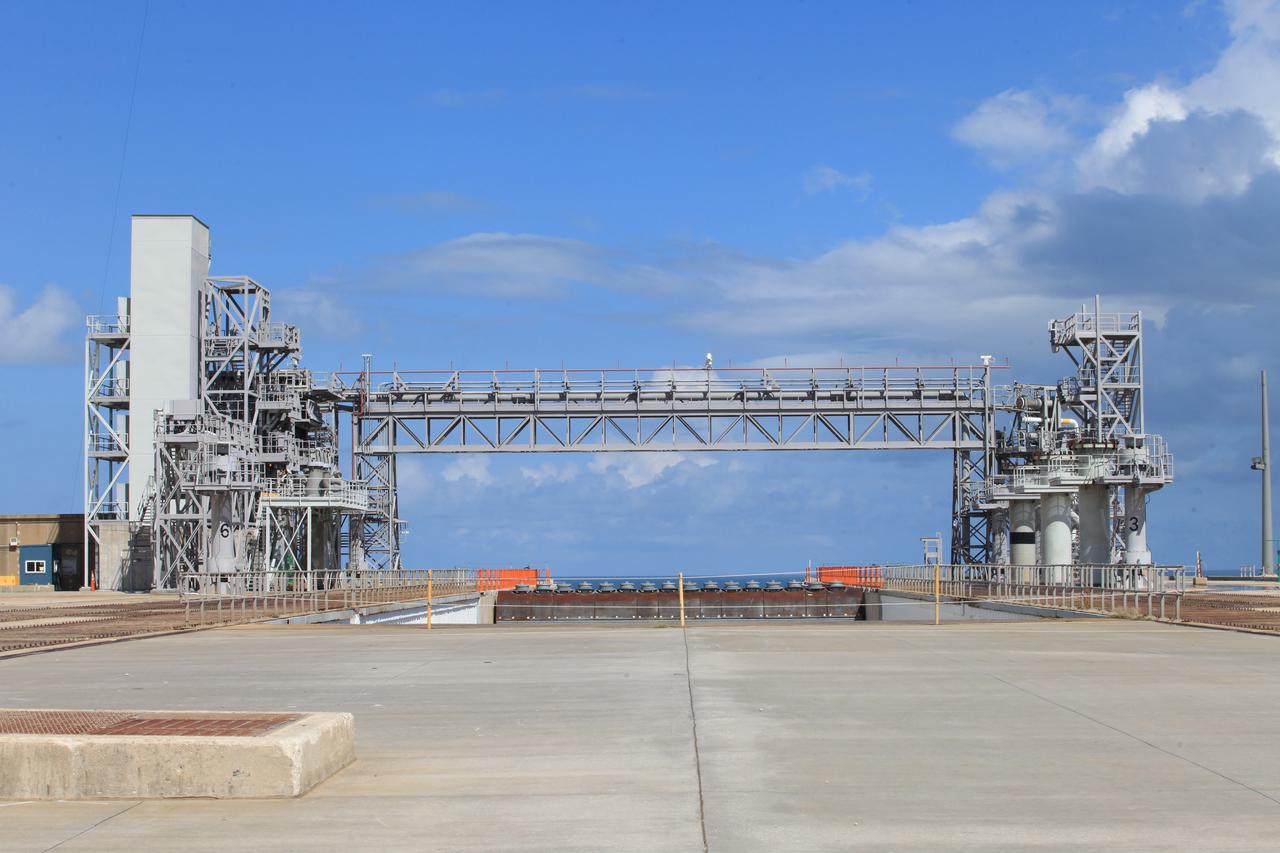
A flow test of the Ignition Overpressure Protection and Sound Suppression water deluge system begins at Launch Pad 39B at NASA's Kennedy Space Center in Florida, on Oct. 15, 2018. At peak flow, the water will reach about 100 feet in the air above the pad surface. The testing is part of Exploration Ground System's preparation for the new Space Launch System rocket. Modifications were made to the pad after a previous wet flow test, increasing the performance of the system. During the launch of Exploration Mission-1 and subsequent missions, this water deluge system will release about 450,000 gallons of water across the mobile launcher and Flame Deflector to reduce the extreme heat and energy generated by the rocket during ignition and liftoff.
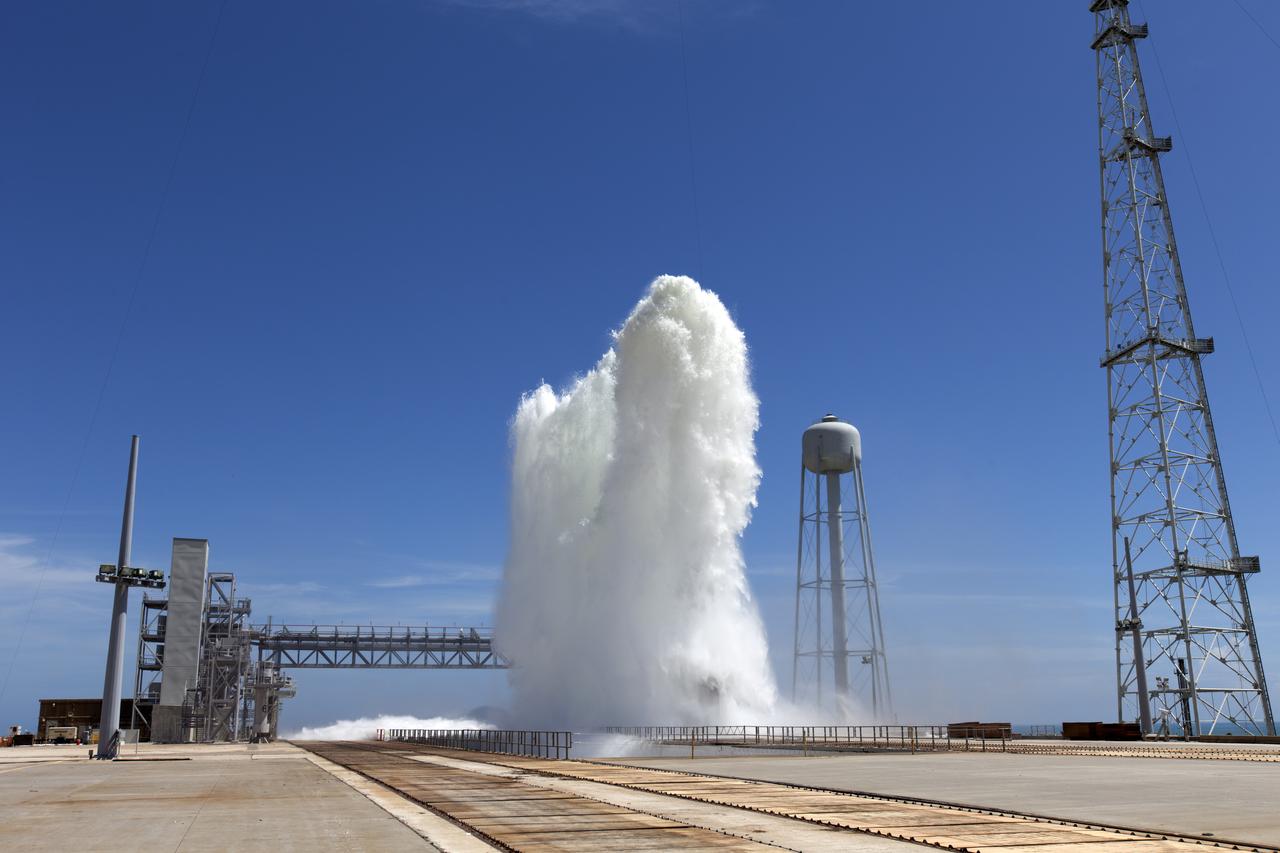
About 450,000 gallons of water flow at high speed from a holding tank through new and modified piping and valves, the flame trench, flame deflector nozzles and mobile launcher interface risers during a wet flow test on May 24, 2018, at Launch Pad 39B at NASA's Kennedy Space Center in Florida. At peak flow, the water reached about 100 feet in the air above the pad surface. The test was performed by Exploration Ground Systems to confirm the performance of the Ignition Overpressure/Sound Suppression system. During launch of NASA's Space Launch System rocket and Orion spacecraft, the high-speed water flow will help protect the vehicle from the extreme acoustic and temperature environment during ignition and liftoff.
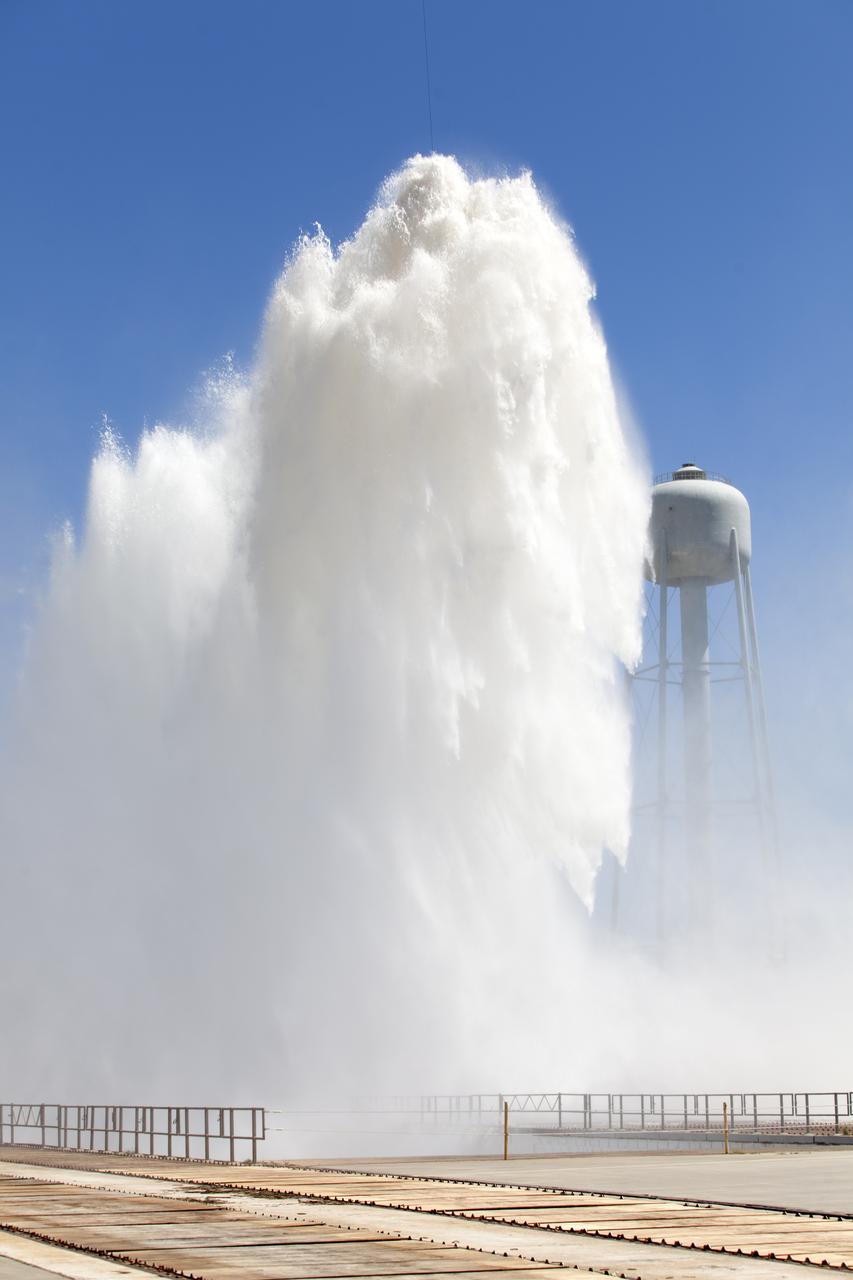
About 450,000 gallons of water flow at high speed from a holding tank through new and modified piping and valves, the flame trench, flame deflector nozzles and mobile launcher interface risers during a wet flow test on May 24, 2018, at Launch Pad 39B at NASA's Kennedy Space Center in Florida. At peak flow, the water reached about 100 feet in the air above the pad surface. The test was performed by Exploration Ground Systems to confirm the performance of the Ignition Overpressure/Sound Suppression system. During launch of NASA's Space Launch System rocket and Orion spacecraft, the high-speed water flow will help protect the vehicle from the extreme acoustic and temperature environment during ignition and liftoff.

About 450,000 gallons of water flow at high speed from a holding tank through new and modified piping and valves, the flame trench, flame deflector nozzles and mobile launcher interface risers during a wet flow test on May 24, 2018, at Launch Pad 39B at NASA's Kennedy Space Center in Florida. At peak flow, the water reached about 100 feet in the air above the pad surface. The test was performed by Exploration Ground Systems to confirm the performance of the Ignition Overpressure/Sound Suppression system. During launch of NASA's Space Launch System rocket and Orion spacecraft, the high-speed water flow will help protect the vehicle from the extreme acoustic and temperature environment during ignition and liftoff.
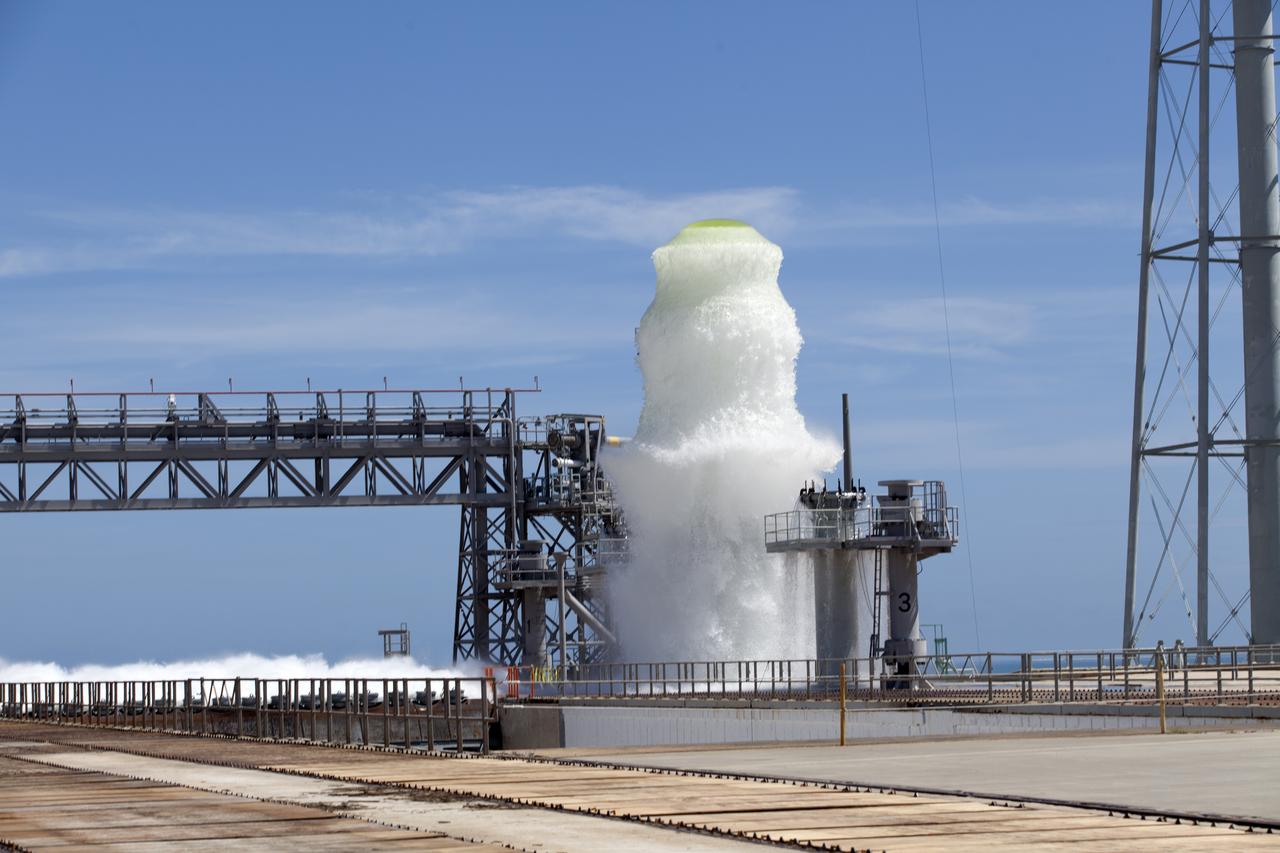
About 450,000 gallons of water flow at high speed from a holding tank through new and modified piping and valves, the flame trench, flame deflector nozzles and mobile launcher interface risers during a wet flow test on May 24, 2018, at Launch Pad 39B at NASA's Kennedy Space Center in Florida. At peak flow, the water reached about 100 feet in the air above the pad surface. The test was performed by Exploration Ground Systems to confirm the performance of the Ignition Overpressure/Sound Suppression system. During launch of NASA's Space Launch System rocket and Orion spacecraft, the high-speed water flow will help protect the vehicle from the extreme acoustic and temperature environment during ignition and liftoff.

A flow test of the Ignition Overpressure Protection and Sound Suppression water deluge system is in progress at Launch Pad 39B at NASA's Kennedy Space Center in Florida, on Oct. 15, 2018. At peak flow, the water reaches about 100 feet in the air above the pad surface. It flows at high speed from a holding tank through new and modified piping and valves, the flame trench, flame deflector nozzles and mobile launcher interface risers. The testing is part of Exploration Ground System's preparation for the new Space Launch System rocket. Modifications were made to the pad after a previous wet flow test, increasing the performance of the system. During the launch of Exploration Mission-1 and subsequent missions, this water deluge system will release about 450,000 gallons of water across the mobile launcher and Flame Deflector to reduce the extreme heat and energy generated by the rocket during ignition and liftoff.

A flow test of the Ignition Overpressure Protection and Sound Suppression water deluge system is in progress at Launch Pad 39B at NASA's Kennedy Space Center in Florida, on Oct. 15, 2018. At peak flow, the water reaches about 100 feet in the air above the pad surface. It flows at high speed from a holding tank through new and modified piping and valves, the flame trench, flame deflector nozzles and mobile launcher interface risers. The testing is part of Exploration Ground System's preparation for the new Space Launch System rocket. Modifications were made to the pad after a previous wet flow test, increasing the performance of the system. During the launch of Exploration Mission-1 and subsequent missions, this water deluge system will release about 450,000 gallons of water across the mobile launcher and Flame Deflector to reduce the extreme heat and energy generated by the rocket during ignition and liftoff.
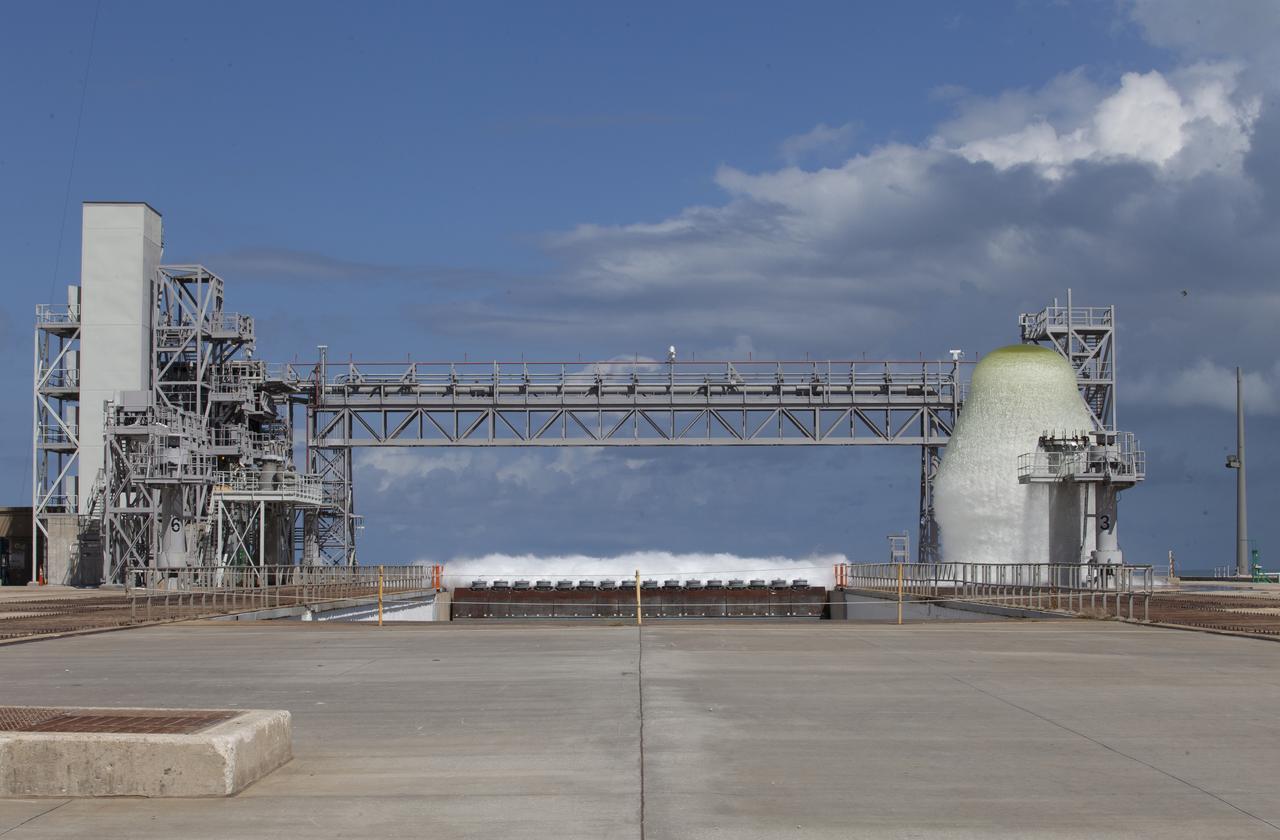
A flow test of the Ignition Overpressure Protection and Sound Suppression water deluge system is in progress at Launch Pad 39B at NASA's Kennedy Space Center in Florida, on Oct. 15, 2018. At peak flow, the water will reach about 100 feet in the air above the pad surface. It will flow at high speed from a holding tank through new and modified piping and valves, the flame trench, flame deflector nozzles and mobile launcher interface risers. The testing is part of Exploration Ground System's preparation for the new Space Launch System rocket. Modifications were made to the pad after a previous wet flow test, increasing the performance of the system. During the launch of Exploration Mission-1 and subsequent missions, this water deluge system will release about 450,000 gallons of water across the mobile launcher and Flame Deflector to reduce the extreme heat and energy generated by the rocket during ignition and liftoff.

A flow test of the Ignition Overpressure Protection and Sound Suppression water deluge system is in progress at Launch Pad 39B at NASA's Kennedy Space Center in Florida, on Oct. 15, 2018. At peak flow, the water reaches about 100 feet in the air above the pad surface. It flows at high speed from a holding tank through new and modified piping and valves, the flame trench, flame deflector nozzles and mobile launcher interface risers. The testing is part of Exploration Ground System's preparation for the new Space Launch System rocket. Modifications were made to the pad after a previous wet flow test, increasing the performance of the system. During the launch of Exploration Mission-1 and subsequent missions, this water deluge system will release about 450,000 gallons of water across the mobile launcher and Flame Deflector to reduce the extreme heat and energy generated by the rocket during ignition and liftoff.

A flow test of the Ignition Overpressure Protection and Sound Suppression water deluge system is in progress at Launch Pad 39B at NASA's Kennedy Space Center in Florida, on Oct. 15, 2018. At peak flow, the water reaches about 100 feet in the air above the pad surface. It flows at high speed from a holding tank through new and modified piping and valves, the flame trench, flame deflector nozzles and mobile launcher interface risers. The testing is part of Exploration Ground System's preparation for the new Space Launch System rocket. Modifications were made to the pad after a previous wet flow test, increasing the performance of the system. During the launch of Exploration Mission-1 and subsequent missions, this water deluge system will release about 450,000 gallons of water across the mobile launcher and Flame Deflector to reduce the extreme heat and energy generated by the rocket during ignition and liftoff.
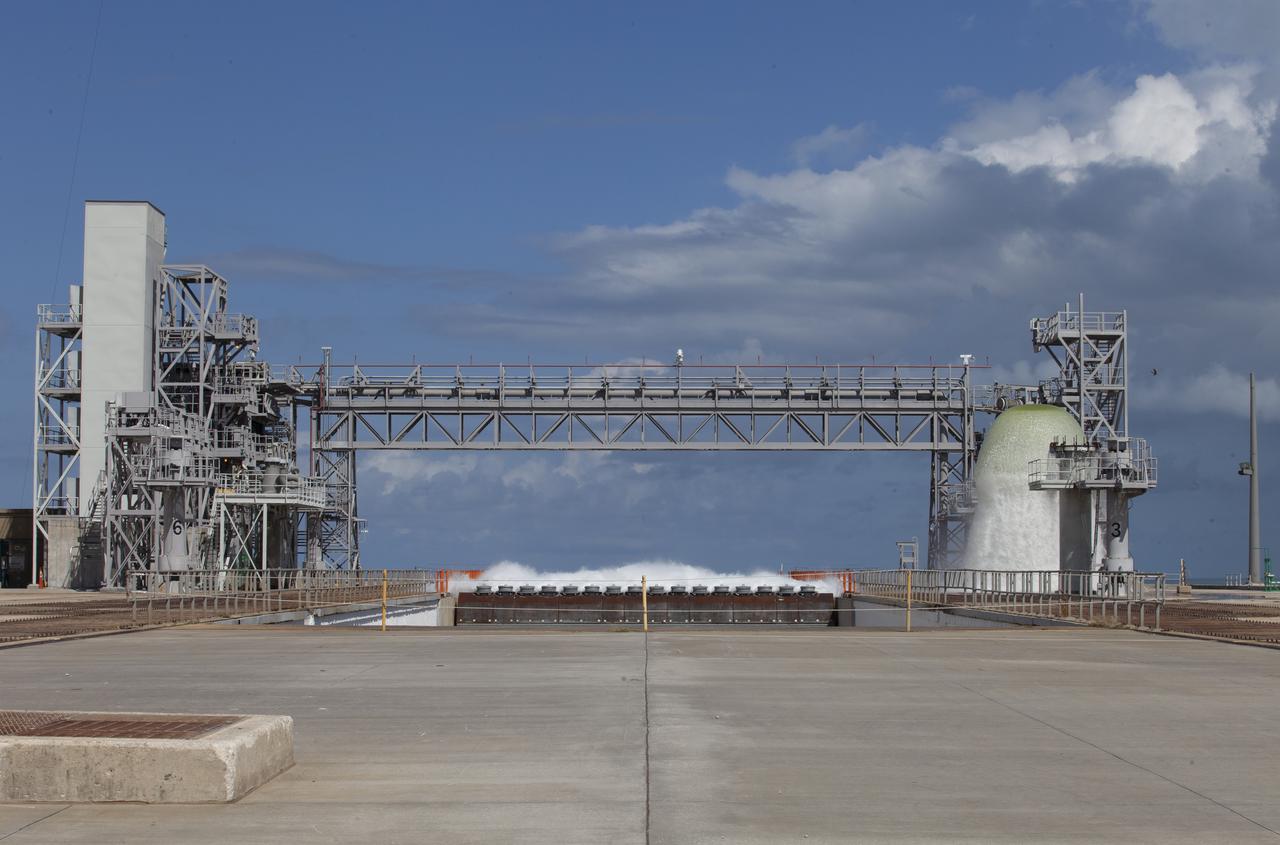
A flow test of the Ignition Overpressure Protection and Sound Suppression water deluge system begins at Launch Pad 39B at NASA's Kennedy Space Center in Florida, on Oct. 15, 2018. At peak flow, the water will reach about 100 feet in the air above the pad surface. It will flow at high speed from a holding tank through new and modified piping and valves, the flame trench, flame deflector nozzles and mobile launcher interface risers. The testing is part of Exploration Ground System's preparation for the new Space Launch System rocket. Modifications were made to the pad after a previous wet flow test, increasing the performance of the system. During the launch of Exploration Mission-1 and subsequent missions, this water deluge system will release about 450,000 gallons of water across the mobile launcher and Flame Deflector to reduce the extreme heat and energy generated by the rocket during ignition and liftoff.
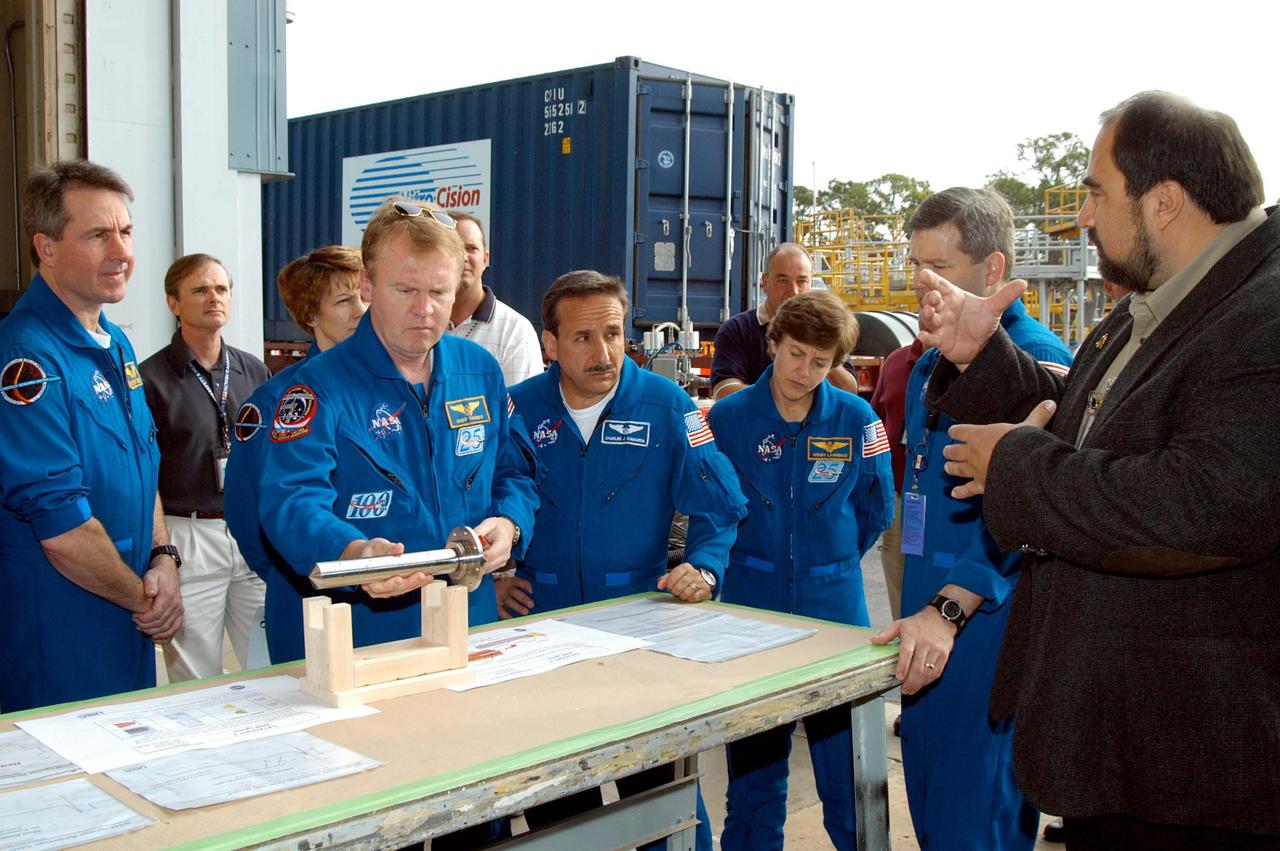
KENNEDY SPACE CENTER, FLA. - Some of the STS-114 crew listen to Paul Gutierrez (right), SRB associate program manager with United Space Alliance, in the SRB Assembly and Refurbishment Facility. They are looking at a booster separation motor (BSM) igniter. Starting from left are Mission Specialist Stephen Robinson; Commander Eileen Collins; Mission Specialists Andrew Thomas (holding the igniter), Charles Camarda and Wendy Lawrence; and Pilot James Kelly. Not seen is Mission Specialist Soichi Noguchi, who is with the Japanese Aerospace and Exploration Agency. The crew is at KSC for familiarization with Shuttle and mission equipment. The STS-114 mission is Logistics Flight 1, which is scheduled to deliver supplies and equipment, plus the external stowage platform, to the International Space Station.
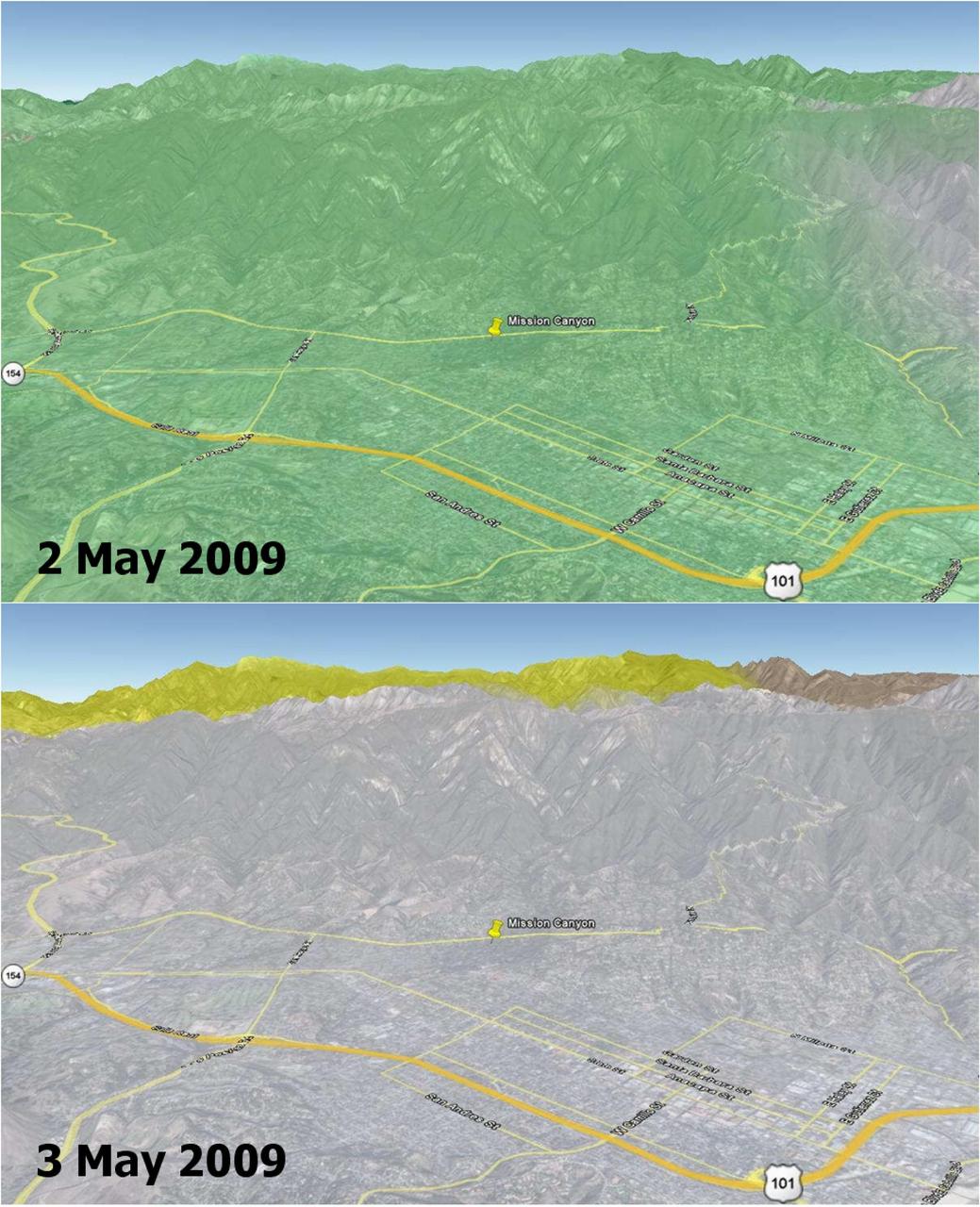
Wildfires are a recurring natural hazard faced by Californians. In Santa Barbara County, a wildfire, called the Jesusita fire, ignited on May 5, 2009 in the Cathedral Peak area northwest of Mission Canyon. As of midday May 8, the fire, which was 10-percent contained, had scorched 3,500 acres, damaged or destroyed 75 structures, and had forced the evacuation of tens of thousands of residents. This image shows soil moisture change in the top soil layer (2-inches deep) on 2 and 3 May 2009, as measured by the NASA QuikSCAT satellite scatterometer (radar). Rainwater increased the amount of moisture in the soil by a moderate 4 percent (represented by the green color) on May 2, which rapidly dried up on the next day (0 percent, as depicted by the grey color on May 3). Son Nghiem of JPL is leading a science team to develop wildfire applications using QuikScat data. “Information critical to assessing the conditions leading to wildfires can be obtained from NASA’s SeaWinds scatterometer, a stable and accurate radar aboard the QuikScat satellite,” says Dr. Son Nghiem, a JPL scientist in remote sensing. This is accomplished by using QuikScat data to map moisture changes in the topsoil. As such, QuikScat can detect rainwater that actually reaches the land surface and accumulates on it, rather than raindrops in the air. While rain radars may detect a significant rain rate, rainwater may evaporate in part before reaching the surface. For example, in the case of dry thunderstorm (known as virga), raindrops disappear on the way down, leaving the land dry, while the associated lightning ignites fires. For the case of the current fire in Santa Barbara, QuikScat detected a moderate increase of 4 percent in soil moisture on May 2, while rain radar data seemed to indicate a significant and extensive rain. The next day, QuikScat revealed that whatever rainwater that had accumulated earlier quickly dried up over the whole area. The maximum temperature in Santa Barbara approached 90 degrees Fahrenheit and broke the record set in 1984. An important characteristic of QuikScat measurements is that they represent the average conditions over the whole area, rather than some disparate data collected at a few localized points. The rapid dry-up in Santa Barbara together with high temperatures and high winds led to the devastating Jesusita fire. http://photojournal.jpl.nasa.gov/catalog/PIA12006
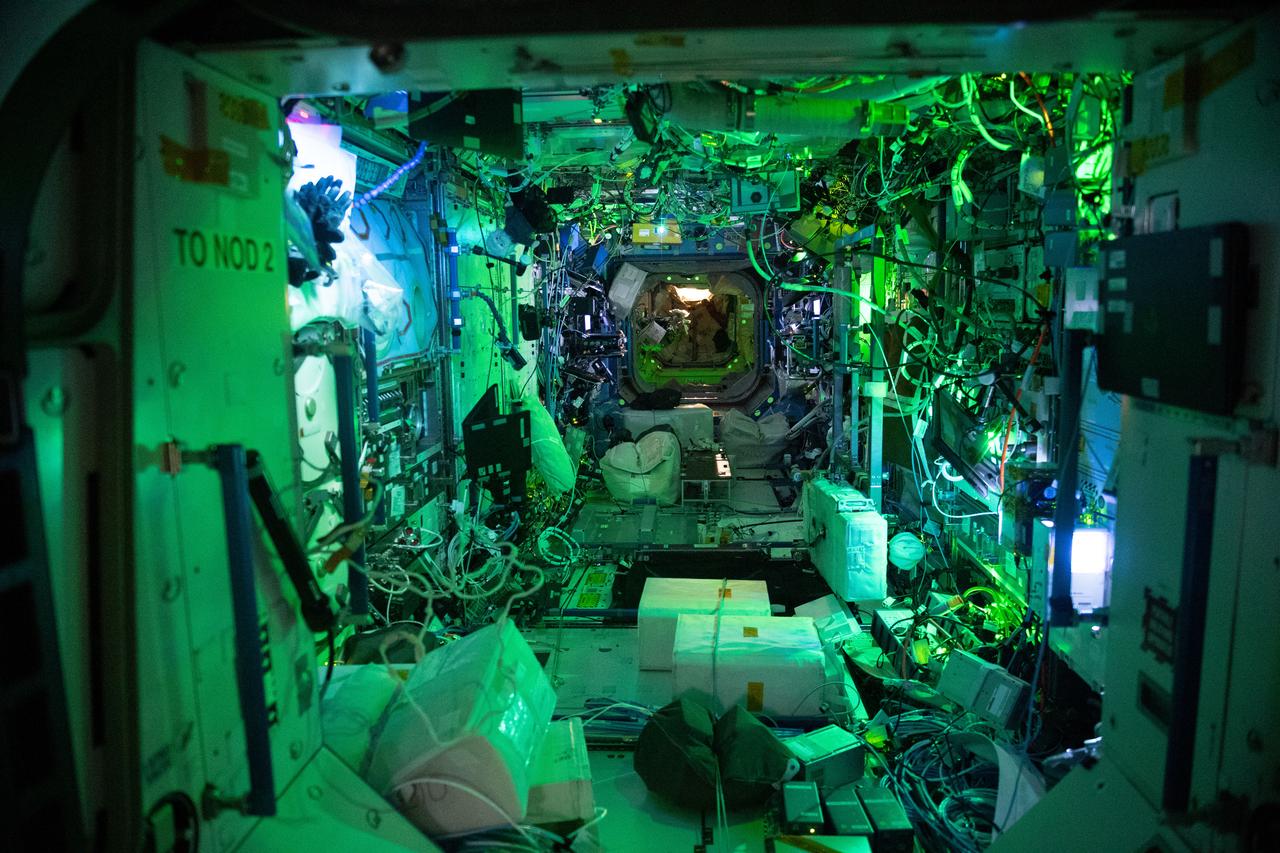
iss068e022293 (Nov. 14, 2022) --- An interior view of the Destiny U.S. Laboratory at night under ambient light with the main lights turned off. The Destiny module supports a variety of life and physical sciences, technology demonstrations, and educational events. In 2022, hardware for the Solid Fuel Ignition and Extinction (SOFIE) facility was installed inside Destiny's Combustion Integrated Rack opening opportunities for new combustion studies.
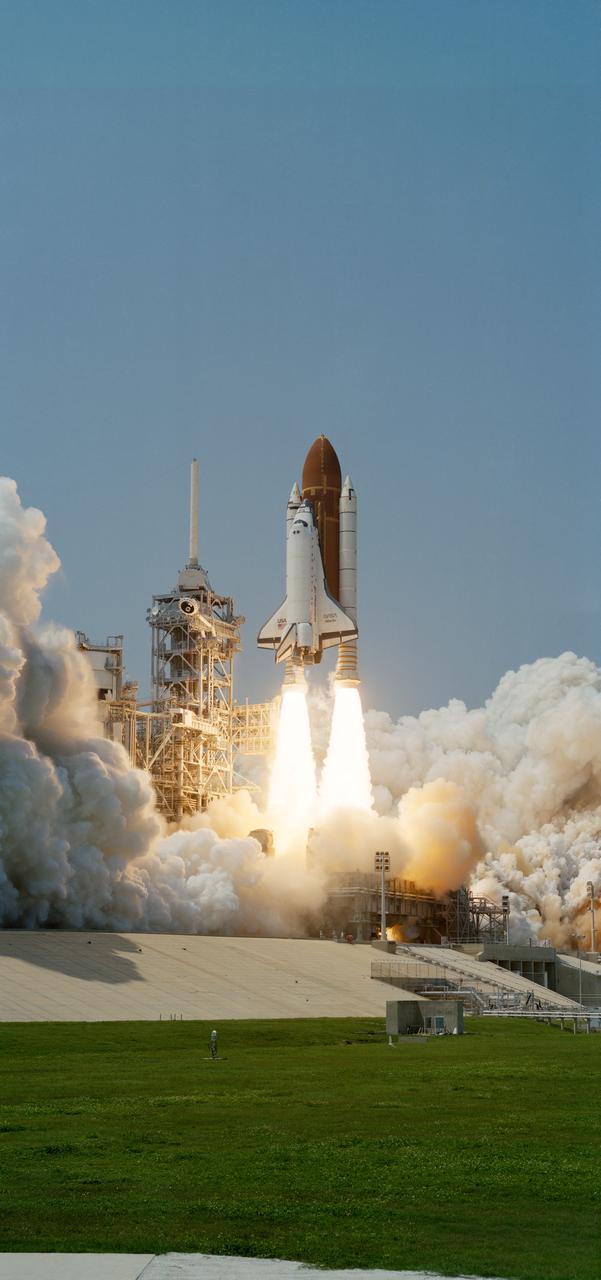
STS030-S-109 (4 May 1989) --- Moments after ignition, Space Shuttle Atlantis heads for a four-day mission in Earth-orbit with five astronaut crew members aboard. Onboard were astronauts David M. Walker, Ronald. J. Grabe, Norman E. Thagard, Mary L. Cleave and Mark C. Lee. Launch occurred at 2:46:58 p.m. (EDT), May 4, 1989.
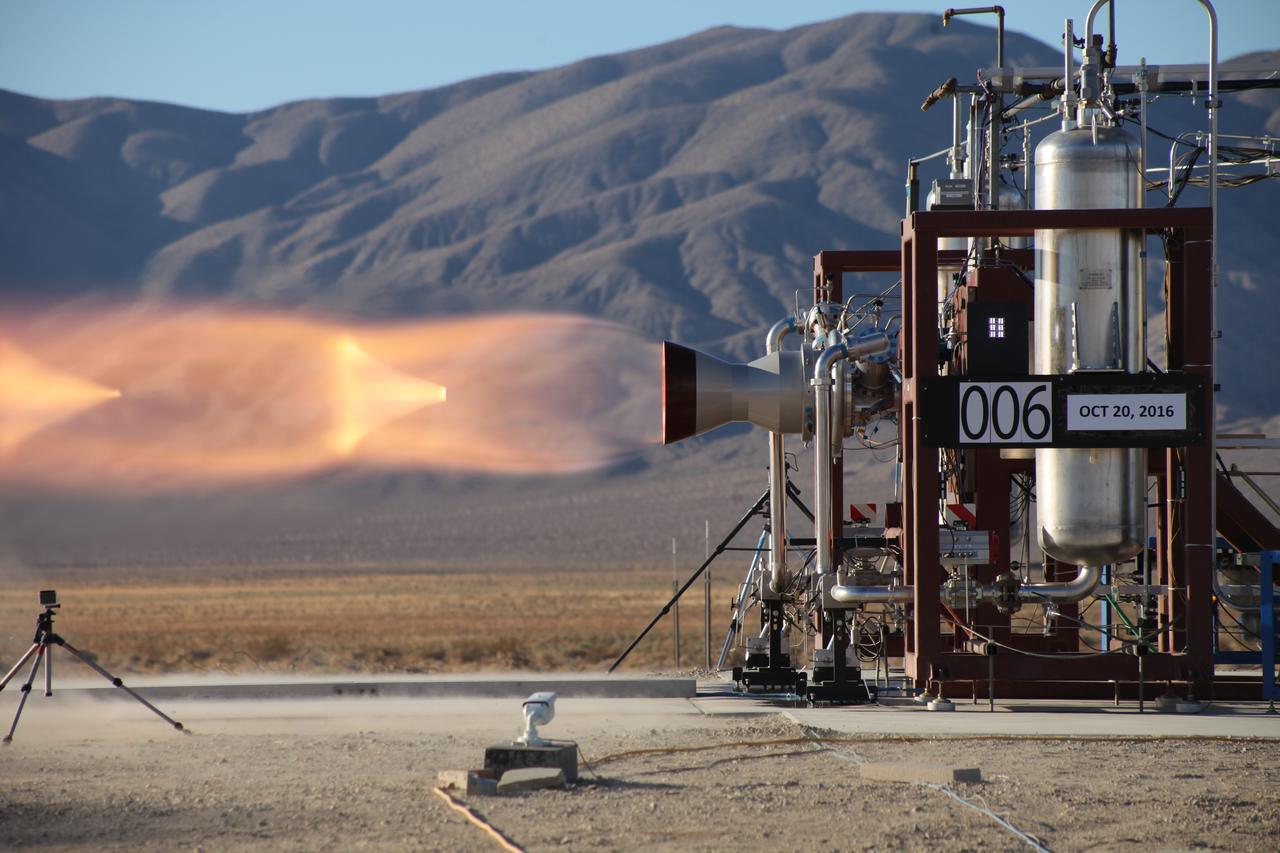
A launch abort engine built by Aerojet Rocketdyne is hot-fired during tests in the Mojave Desert in California. The engine produces up to 40,000 pounds of thrust and burns hypergolic propellants. The engines have been designed and built for use on Boeing’s CST-100 Starliner spacecraft in sets of four. In an emergency at the pad or during ascent, the engines would ignite to push the Starliner and its crew out of danger.
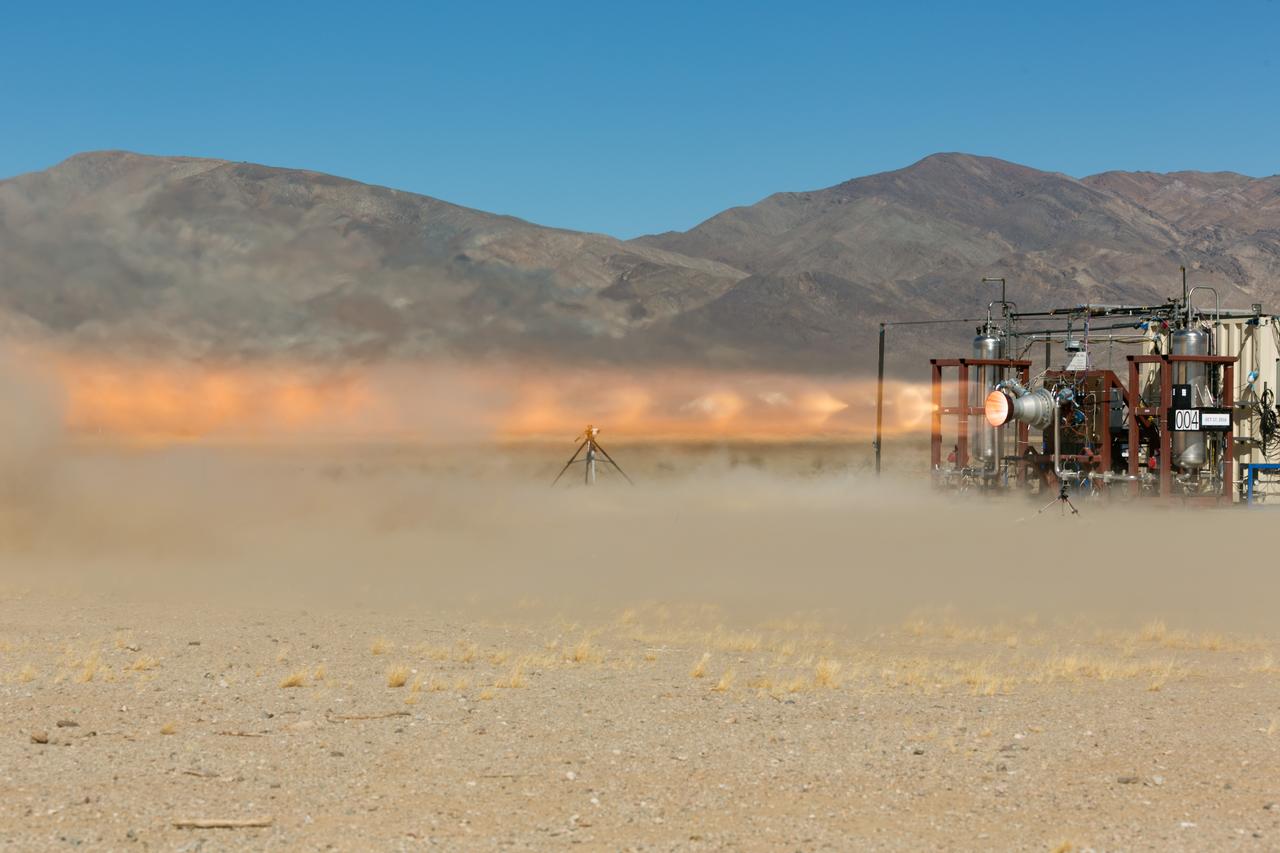
A launch abort engine built by Aerojet Rocketdyne is hot-fired during tests in the Mojave Desert in California. The engine produces up to 40,000 pounds of thrust and burns hypergolic propellants. The engines have been designed and built for use on Boeing’s CST-100 Starliner spacecraft in sets of four. In an emergency at the pad or during ascent, the engines would ignite to push the Starliner and its crew out of danger.
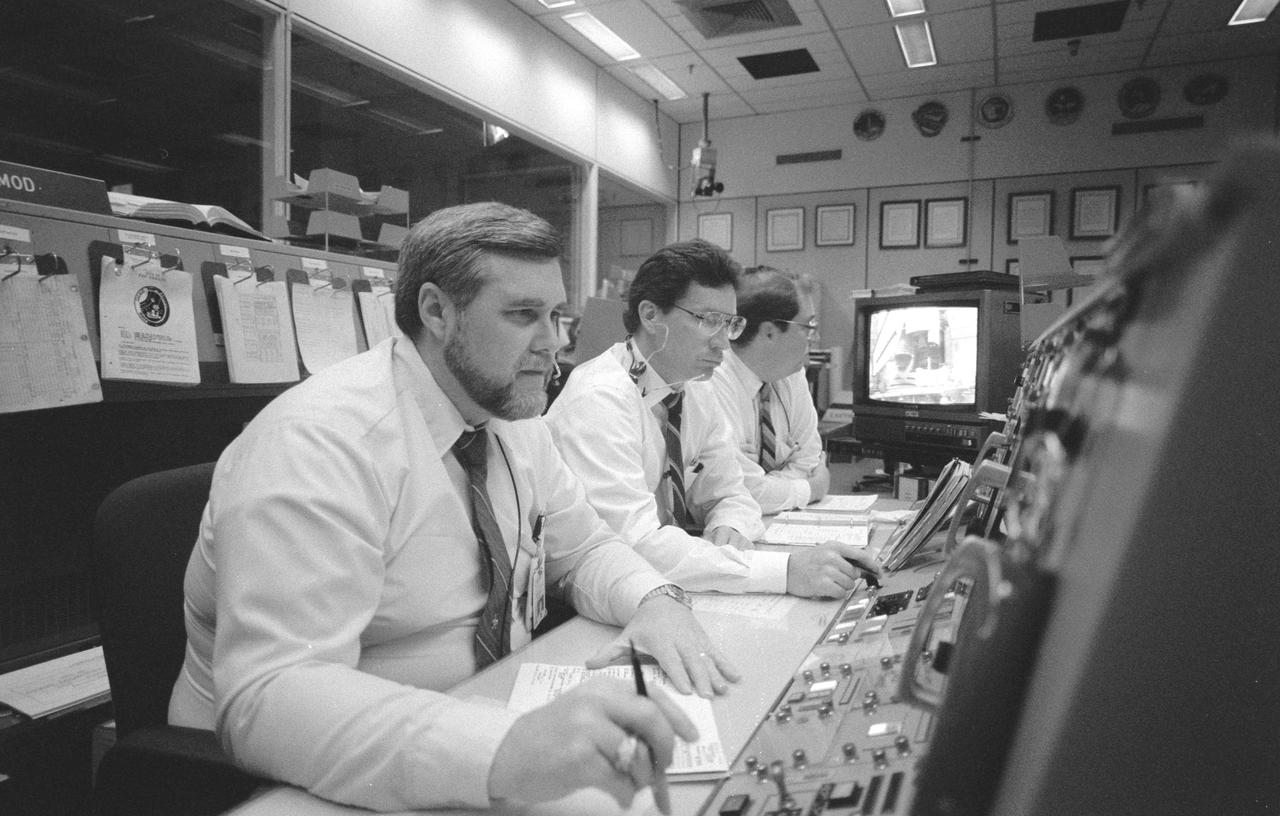
Only moments away from ignition, Atlantis, Orbiter Vehicle (OV) 104, and its five member crew are the subjects of concern drawing serious countenance in this scene in the Flight Control Room (FCR) of JSC's Mission Control Center (MCC) Bldg 30. Ascent Flight Director Alan L. Briscoe, monitors the Kennedy Space Center pre-launch activity from the flight director (FD) console, along with Ronald D. Dittemore (center) and N. Wayne Hale, Jr.
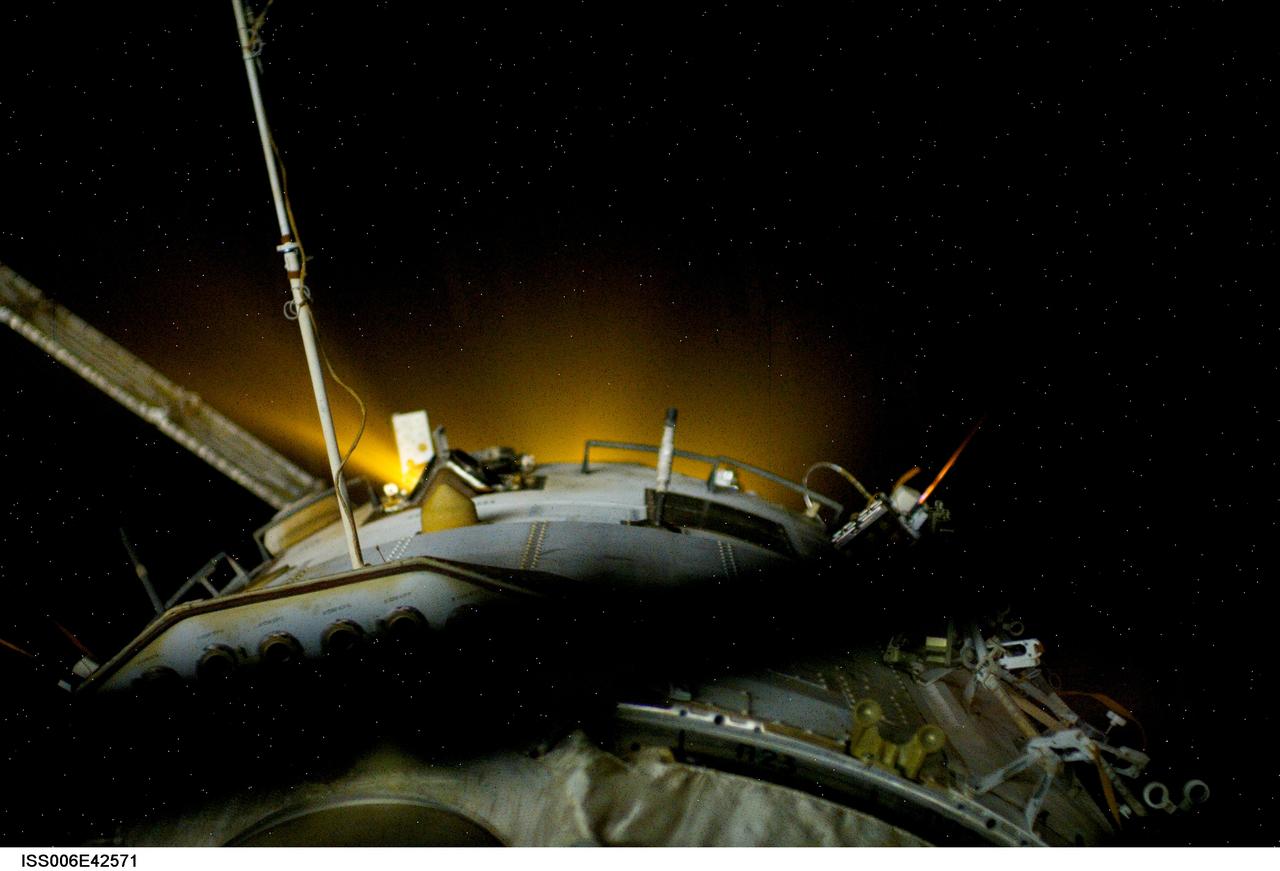
ISS006-E-42571 (4 April 2003) --- This view features a reboost of the International Space Station (ISS) in action. Ground controllers at Mission Control Moscow ignited the thrusters of a Progress rocket docked to the station’s Zvezda Service Module. The 14-minute firing raised the average altitude of the station by about 3 km. One of the Expedition 6 crewmembers captured this picture of the yellow-glowing thrusters from a window in the Service Module.
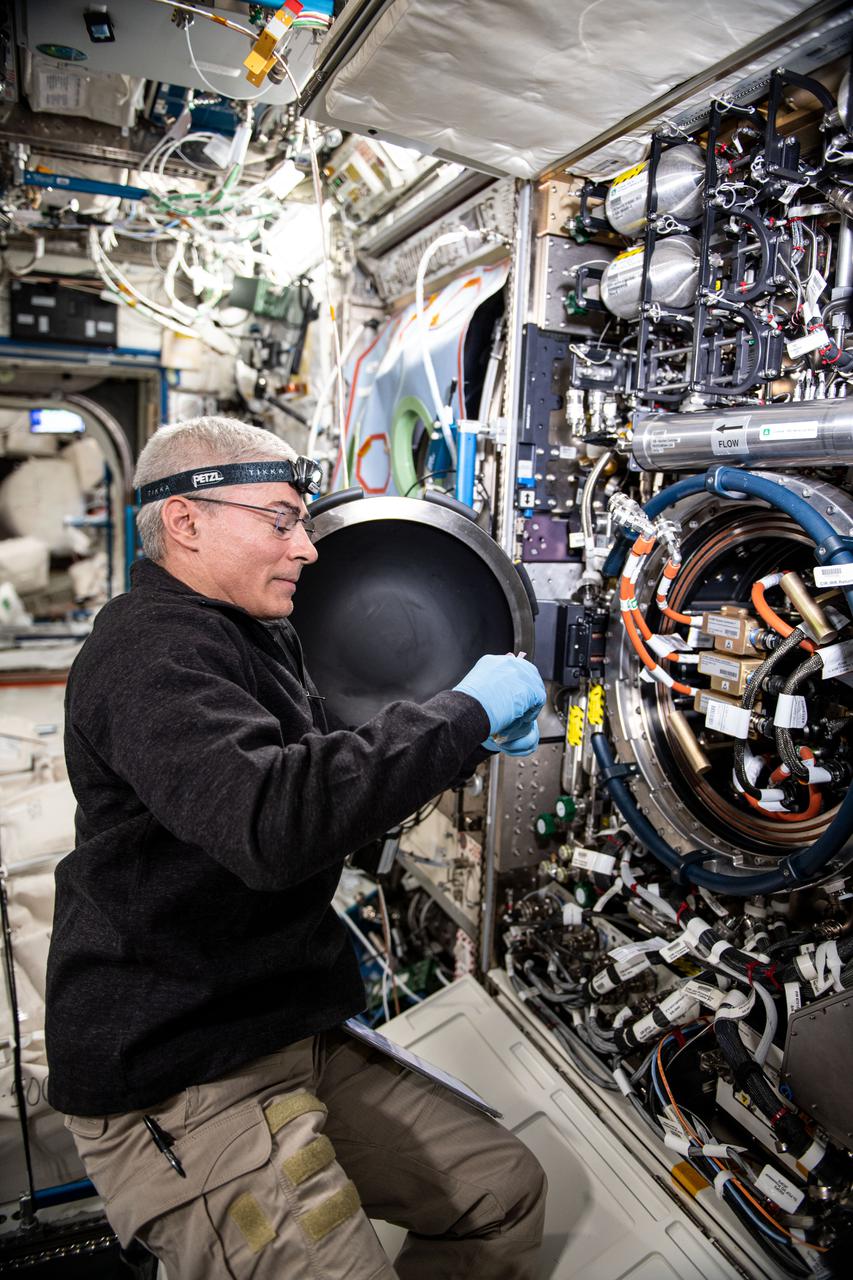
iss065e369687 (Sept. 8, 2021) ----NASA astronaut and Expedition 65 Flight Engineer Mark Vande Hei replaces an igniter inside the U.S. Destiny laboratory module's Combustion Integrated Rack for the ACME series of space combustion studies. ACME, or the Advanced Combustion via Microgravity Experiments, is a set of six independent studies of gaseous flames that seeks to improve fuel efficiency and reduce pollutants on Earth, and improve spacecraft fire prevention by focusing on decreasing the flammability of materials.
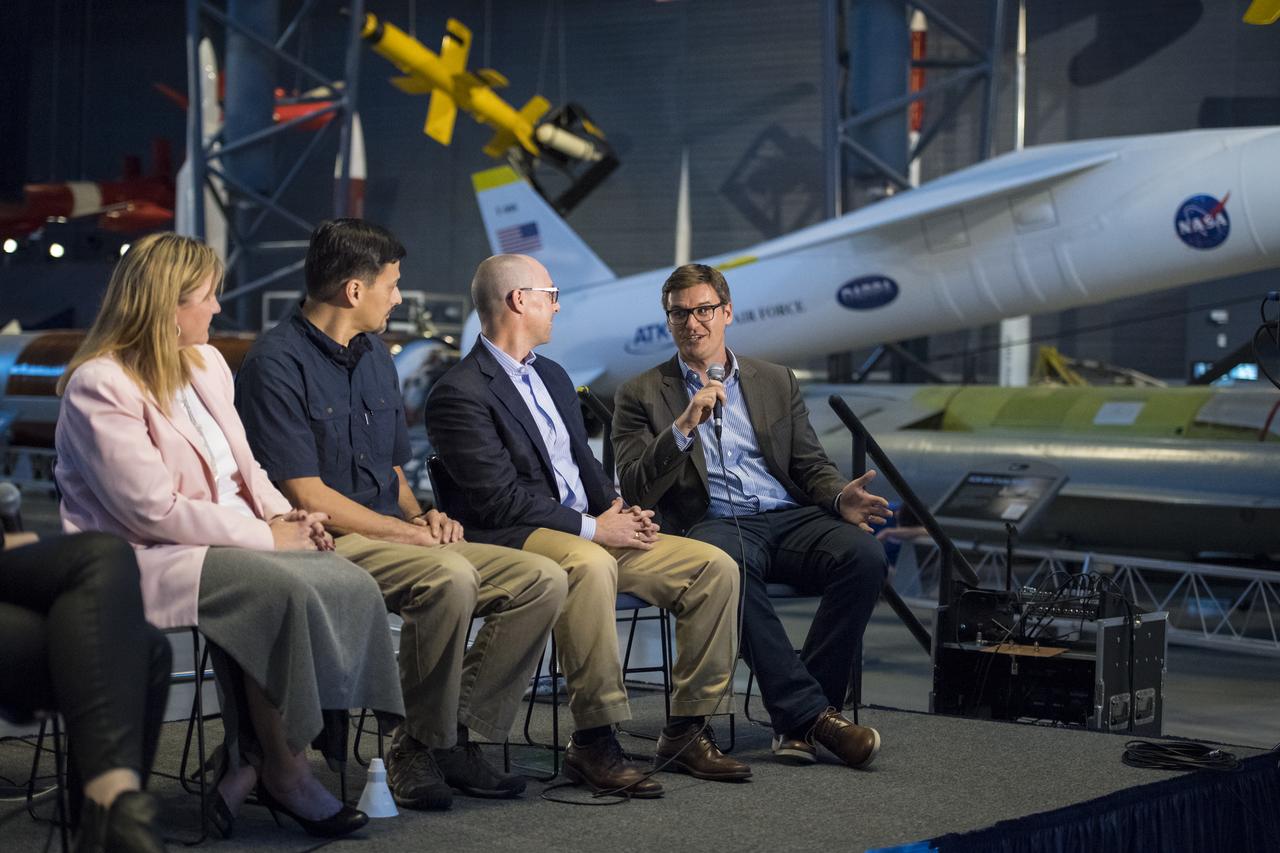
Paul Scott, interim executive director, The American Society of Mechanical Engineers (ASME), speaks on a panel on "igniting NOVA K-12 engineering and maker education", at a pop-up makerspace hosted by Future Engineers with support from NASA and ASME, at the Steven F. Udvar-Hazy Center, Thursday, September 21, 2017 in Chantilly, Virginia. Participants were able to create digital 3D models using Autodesk Tinkercad and watch objects being printed with Makerbot 3D printers. Photo Credit: (NASA/Aubrey Gemignani)

KENNEDY SPACE CENTER, FLA. - At the SRB Assembly and Refurbishment Facility, STS-114 Mission Specialist Soichi Noguchi looks at a mockup of a booster separation motor (BSM) igniter. Noguchi is with the Japanese Aerospace and Exploration Agency. The crew is at KSC for familiarization with Shuttle and mission equipment. The STS-114 mission is Logistics Flight 1, which is scheduled to deliver supplies and equipment, plus the external stowage platform, to the International Space Station.
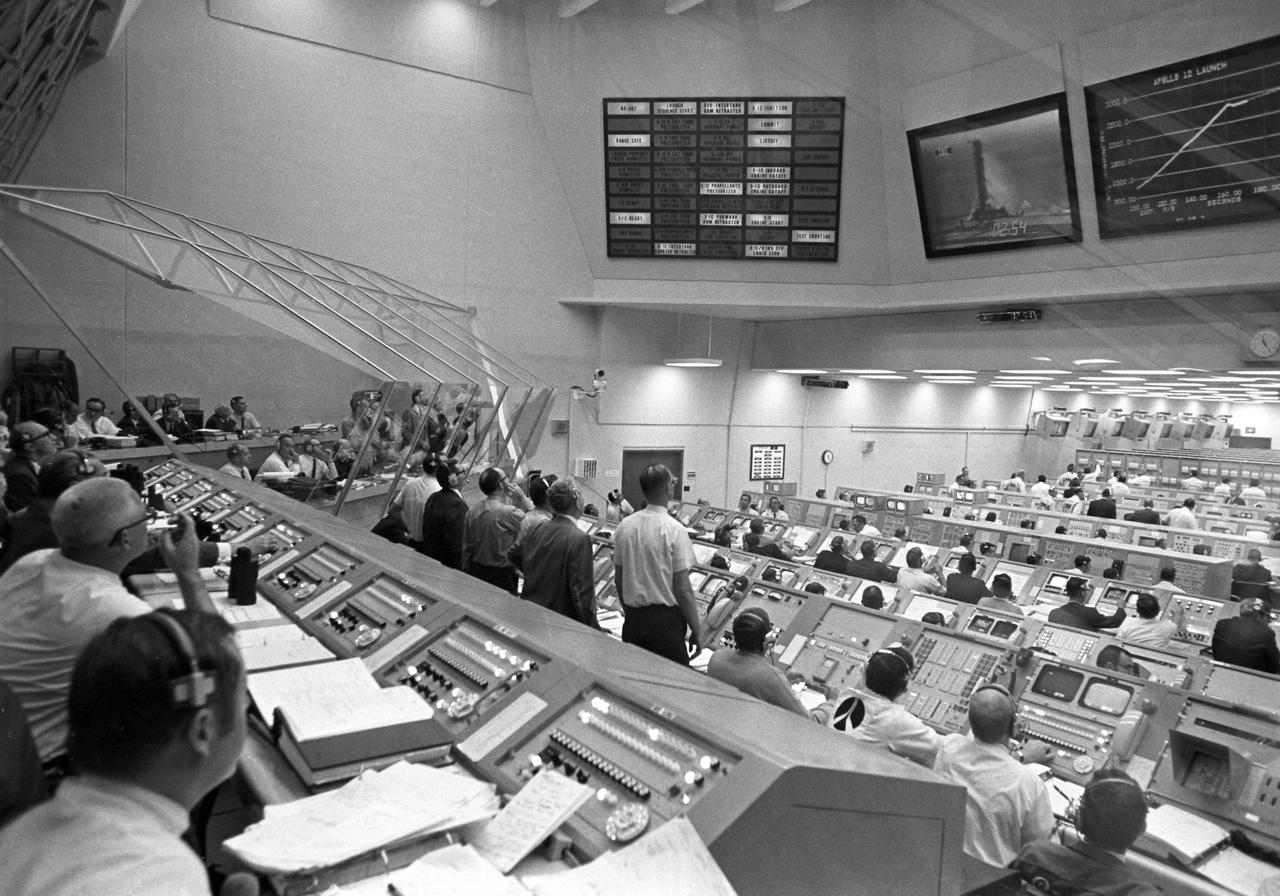
CAPE CANAVERAL, Fla. -- Personnel within Firing Room 2 of the LCC follow the early moments of the Apollo 12 launch on their overhead data display boards. When this view was taken, the vehicle’s second stage engines had ignited, carrying the Apollo 12 spacecraft to an altitude of more than 229,000 feet and more that 50 miles downrange. Photo credit: NASA
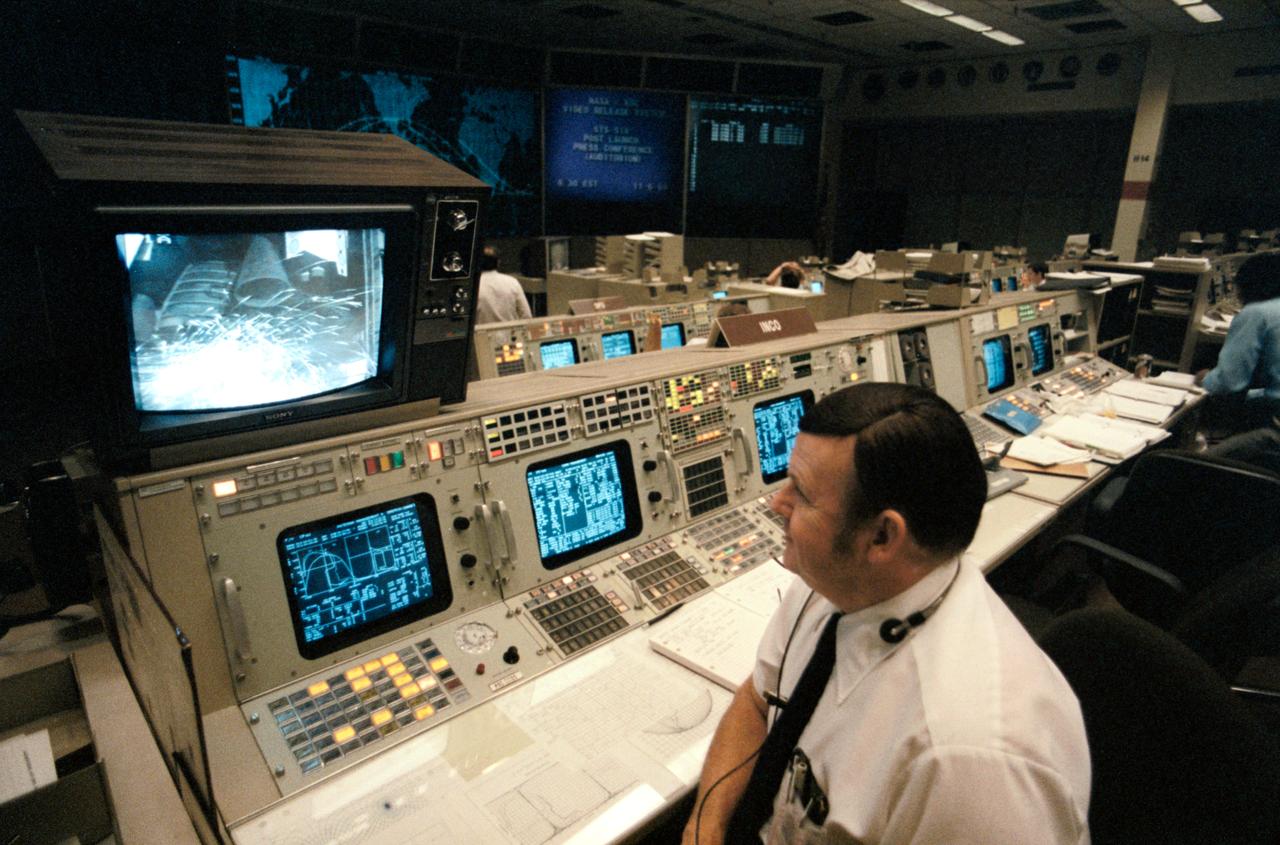
51A-90016 (8 Nov 1984) --- J. E. Conner, on duty at the integrated communcations officer console in the second floor Flight Control Room (FCR) of the Johnson Space Center's (JSC) Mission Control Center (MCC), watches engine ignition of Discovery on a nearby TV monitor. Moments later, the Houston FCR took over control of the scheduled eight day mission 51-A.
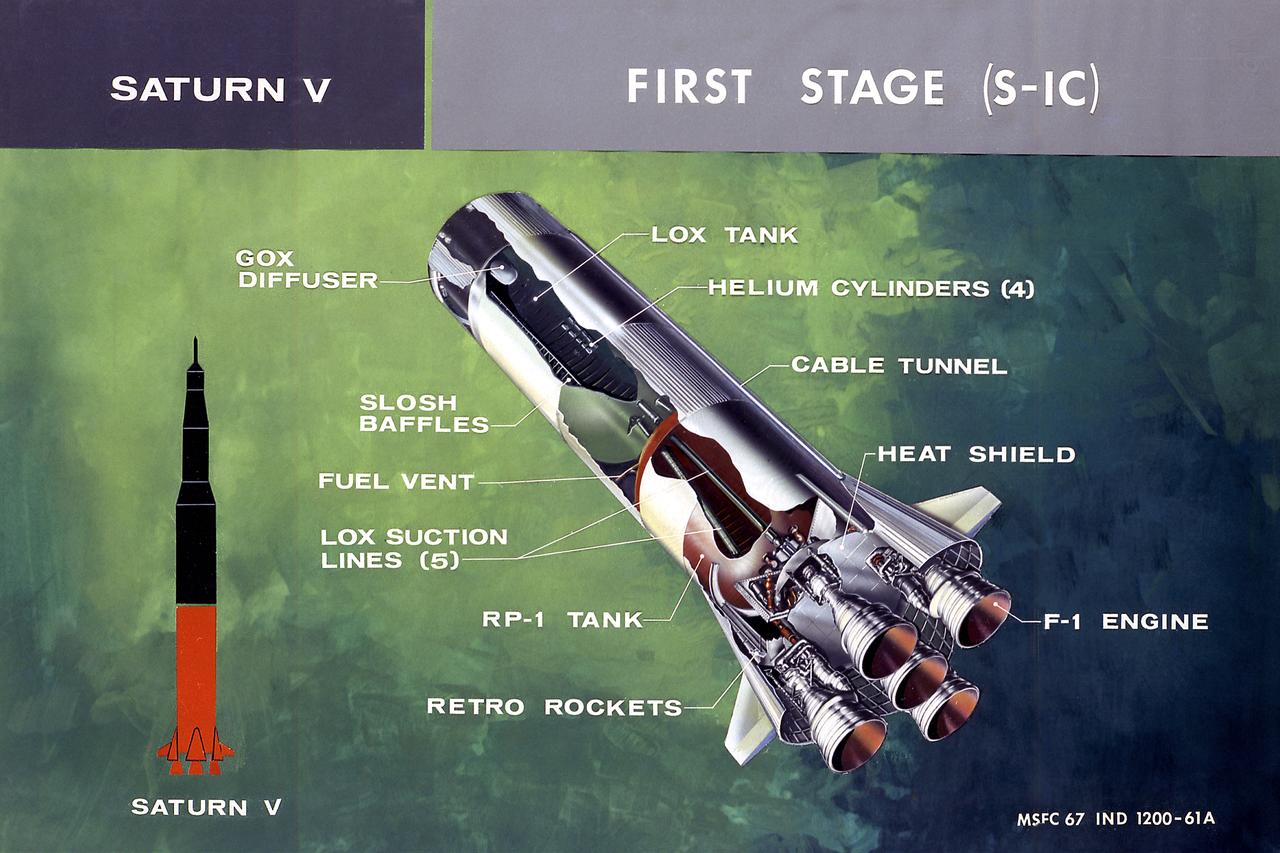
This illustration shows a cutaway drawing with callouts of the major components for the S-IC (first) stage of the Saturn V launch vehicle. The S-IC stage is 138 feet long and 33 feet in diameter, producing more than 7,500,000 pounds of thrust through five F-1 engines powered by liquid oxygen and kerosene. Four of the engines are mounted on an outer ring and gimball for control purposes. The fifth engine is rigidly mounted in the center. When ignited, the roar produced by the five engines equals the sound of 8,000,000 hi-fi sets.

S68-56001 (21 Dec. 1968) --- The Apollo 8 (Spacecraft 103/Saturn 503) space vehicle is launched from Pad A, Launch Complex 39, Kennedy Space Center, at 7:51 a.m. (EST), Dec. 21, 1968. The crew of the Apollo 8 lunar orbit mission is astronauts Frank Borman, commander; James A. Lovell Jr., command module pilot; and William A. Anders, lunar module pilot. Apollo 8 was the first manned Saturn V launch. (Just after ignition)
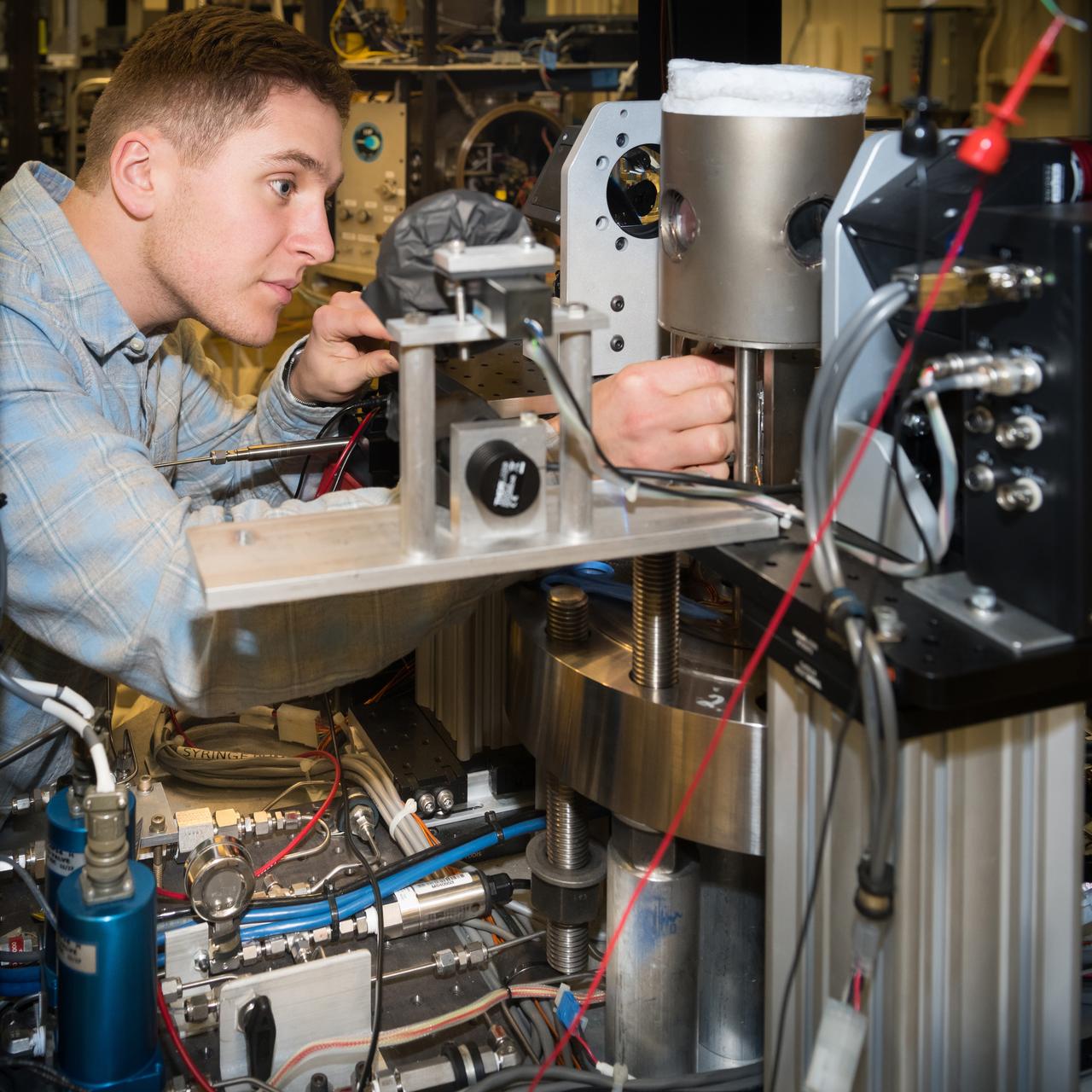
High Pressure Microgravity Combustion Experiment, HPMC, subjects liquid fuel droplets to high pressures and temperatures to study the ignition process in engine conditions, with a goal of improving fuel efficiency. In this configuration, the experiment is capable of testing droplet combustion at up to 100 atm of pressure, testing the droplet deployment system, which inserts the fuel droplet into the experiment.
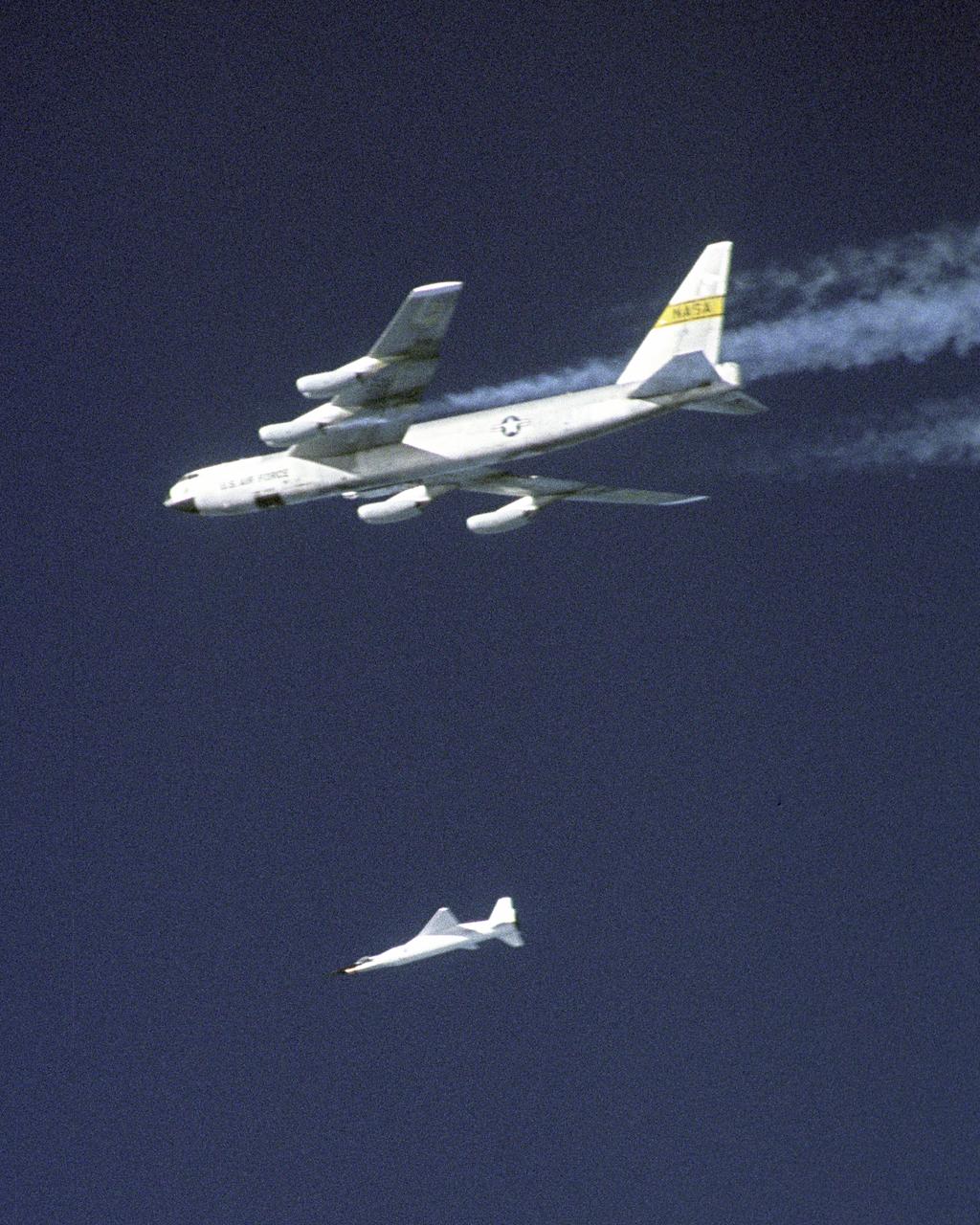
The third X-43A hypersonic research aircraft and its modified Pegasus booster rocket drop away from NASA's B-52B launch aircraft over the Pacific Ocean on November 16, 2004. The mission originated from the NASA Dryden Flight Research Center at Edwards Air Force Base, California. Moments later the Pegasus booster ignited to accelerate the X-43A to its intended speed of Mach 10.
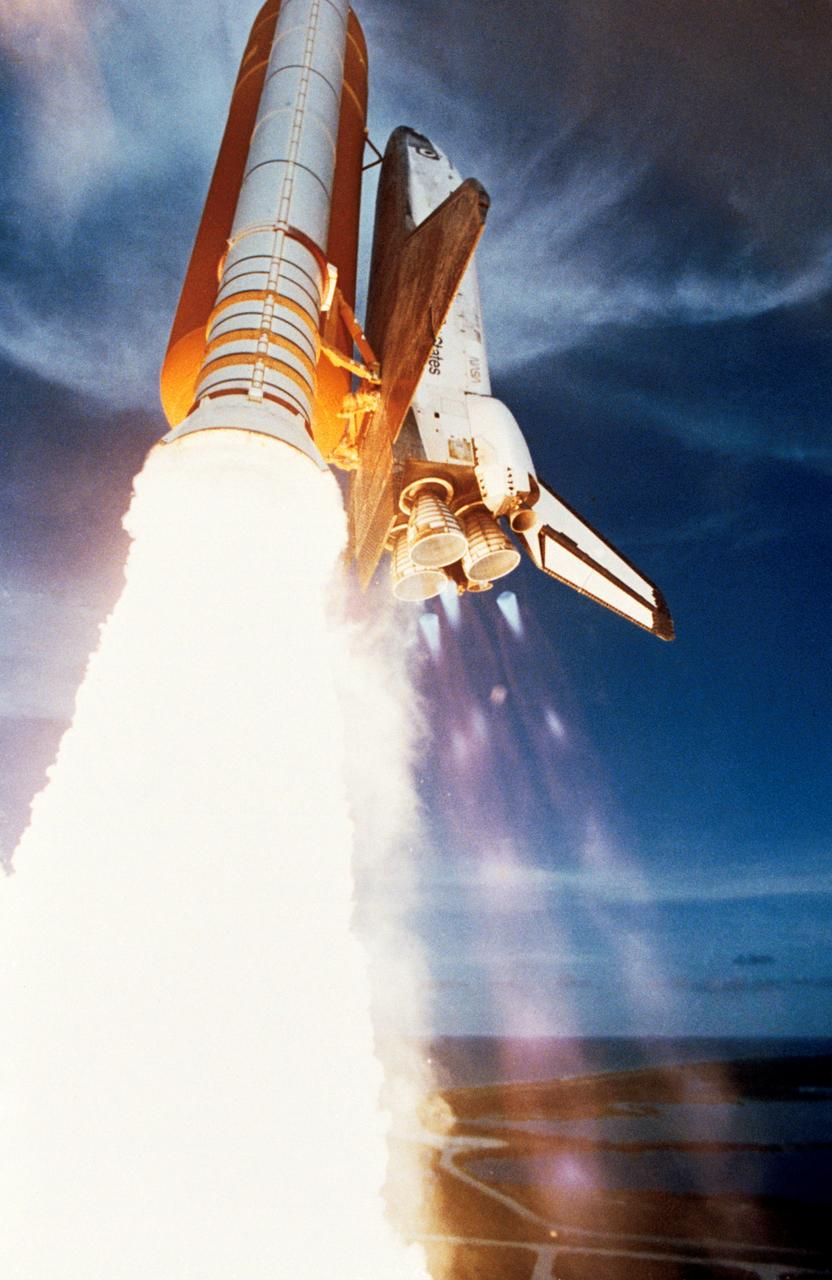
51F-S-157 (29 July 1985) --- Just moments following ignition, the Space Shuttle Challenger, mated to its two solid rocket boosters and an external fuel tank, soars toward a week-long mission in Earth orbit. Note the diamond shock effect in the vicinity of the three main engines. Launch occurred at 5:00 p.m. (EDT), July 29, 1985.
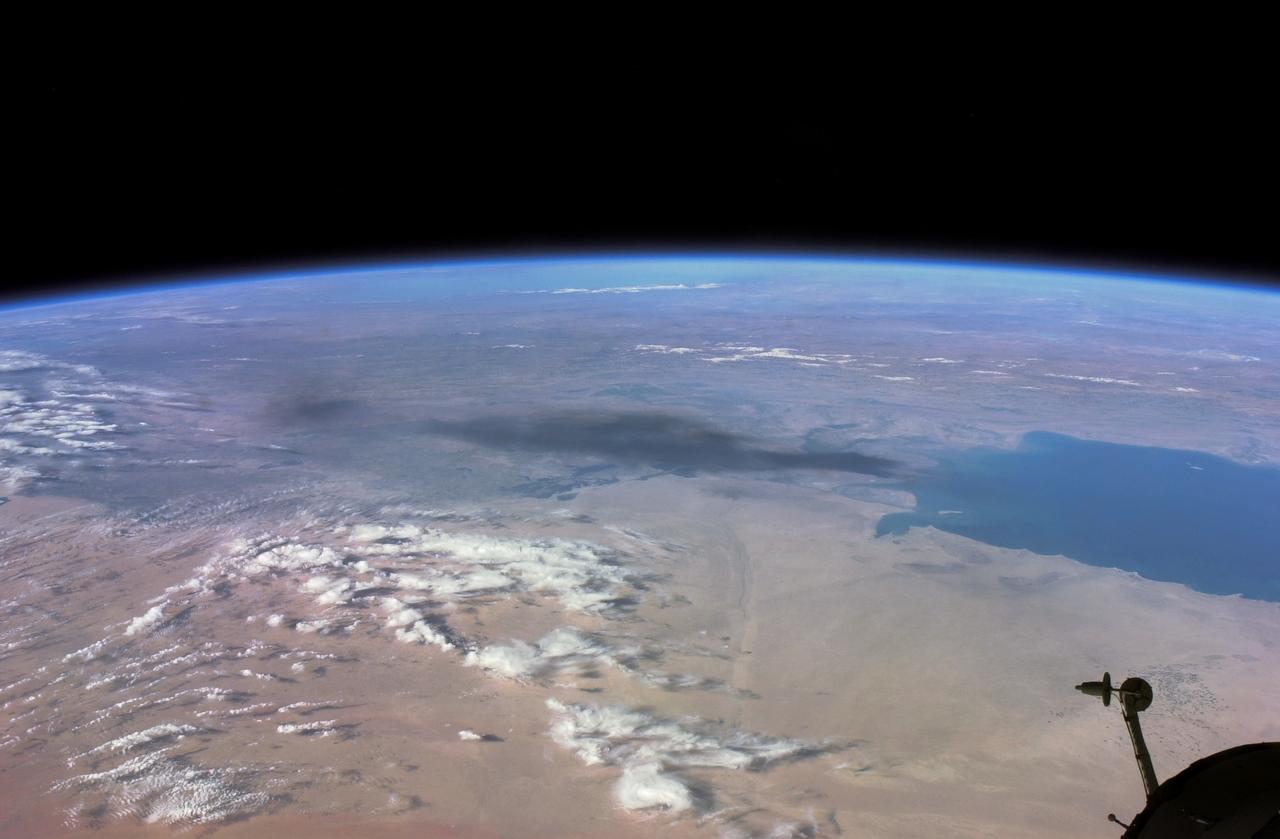
ISS008-E-18935 (24 March 2004) --- This photo of a large black smoke plume from an oil fire was taken by an Expedition 8 crewmember on the International Space Station as the Station orbited northeastward across Saudi Arabia. According to a front-page story in the New York Times, an oil pipeline near the channel of Shatt al Arab in southeastern Iraq on the Persian Gulf ruptured the day before. The resulting oil spill ignited and its smoke can here be seen to extend over 100 miles northwestward into southern Iraq.